/


Автор: A. Duca G. Chirică L. Toderaş I. Teleuță
Теги: flora fauna cartea roșie conservarea naturii protecția mediului
ISBN: 978-9975-67-998-5
Год: 2015


Текст
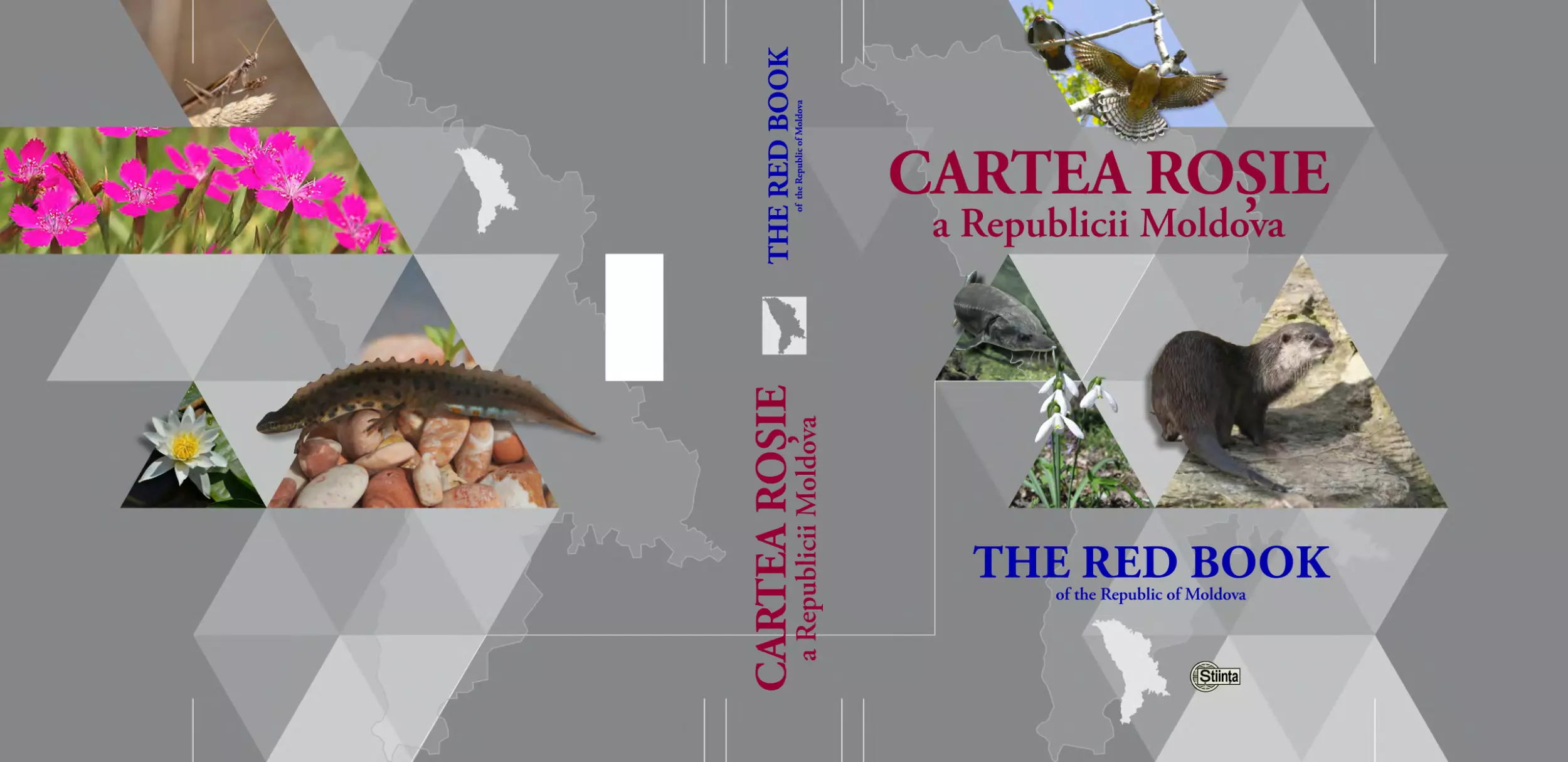
CARTEA ROSIE
a Republicii Moldova
THE RED BOOK
of the Republic of Moldova
MINISTERUL MEDIULUI AL REPUBLICII MOLDOVA
ACADEMIA DE STIINJE A MOLDOVEI
GRADINA BOTANICA & INSTITUTUL DE ZOOLOGIE
CARTEA
ROSIE
A REPUBLICII
MOLDOVA
THE
RED
BOOK
OF THE REPUBLIC OF
MOLDOVA
Stiin|a, 2015
CZU 502.7(478) (03)
С 27
Proiectul este finanJat de Fondul Ecologic National.
Comisia Najionala a Carjii Rosii:
Valeriu Munteanu, ministru al mediului, presedintele Comisiei;
Ion Toderas, academician, director al Institutului de Zoologie al ASM, vicepresedinte al Comisiei;
Lilia Eladii, consultant, Ministerul Mediului, secretar al Comisiei.
Membrii Comisiei: Tudor Cozari, dr. hab. in biologie, UST; Ion Dediu, membru corespondent, sef laborator, Institutul de Eco-
logie si Geografie al ASM; Valeriu Derjanschi, dr. hab. in biologie, cercetator stiinpfic principal, Institutul de Zoologie al ASM;
lachim Gumaniuc, dr. in biologie, sef catedra, UASM; Andrei Munteanu, dr. in biologie, cercetator stiinpfic principal, Institutul
de Zoologie al ASM; Gheorghe Postolache, dr. hab. in biologie, sef laborator, Gradina Botanica a ASM; Ala Rotaru, sef direcpe,
Ministerul Mediului; Vasile Salaru, membru corespondent, sef laborator, USM; Ion Talmaci, vicedirector, Institutul de Cercetari
si Amenajari Silvice; Alexandru Teleuja, dr. in agricultura, director al Gradinii Botanice a ASM; Marin Usatai, dr. hab. in biolo-
gie, sef laborator, Institutul de Zoologie al ASM.
Colegiul de redac|ie:
Gheorghe Duca, acad., presedinte al ASM, presedinte;
Lazar Chirica, dr. in geografie, vicepresedinte;
Ion Toderas, acad., director al Institutului de Zoologie al ASM, coordonator (compartimentul „Animale”);
Alexandru Teleuja, dr. in agricultura, director al Gradinii Botanice a ASM, coordonator (compartimentul „Plante”).
Membrii Colegiului: Valentina Cantemir, dr. in biologie, cercetator stiinpfic coordonator, Gradina Botanica a ASM; Mircea
Ciobanu, redactor-sef, I.E.P. Stiin$a\ Tudor Cozari, dr. hab. in biologie, UST; Ion Dediu, membru corespondent, sef laborator,
Institutul de Ecologie si Geografie al ASM; Valeriu Derjanschi, dr. hab. in biologie, cercetator stiinpfic principal, Institutul de
Zoologie al ASM; Victor Donea, dr. in biologie, sef direcpe, Ministerul Agriculturii; Veaceslav Ghendov, dr. in biologie, sef
laborator, Gradina Botanica a ASM; Andrei Munteanu, dr. in biologie, cercetator stiinpfic principal, Institutul de Zoologie al
ASM; Gheorghe Postolache, dr. hab. in biologie, sef laborator, Gradina Botanica a ASM; Alecu Renija, presedinte al Miscarii
Ecologiste din Moldova; Vasile Salaru, membru corespondent, sef laborator, USM; Marin Usatai, dr. hab. in biologie, sef labo-
rator, Institutul de Zoologie al ASM.
Intreprinderea Editorial-Poligrafica §tiinja,
str. Academiei, nr. 3; MD-2028, Chisinau, Republica Moldova;
tel.: (+373 22) 73-96-16; fax: (+373 22) 73-96-27;
e-mail: prini@stiinta.asm.md; prini_stiinta@yahoo.com
www.stiinta.asm.md
Toate drepturile asupra edipei „Cartea Rosie a Republicii Moldova” aparpn I.E.P. Stiinfa.
Descrierea CIP a Camerei Nationale a Cartii
> >
Cartea Rope a Republicii Moldova = The Red Book of the Republic of Moldova/
Min. Mediului al Rep. Moldova, Acad, de §tiinp a Moldovei, Gradina Botanica & Inst, de
Zoologie; Comisia Nap: Valeriu Munteanu [et al.]; col. red.: Gheorghe Duca (presedinte) [et al.]
- Ed. a 3-a. - Ch.: I.E.P. tyiinfa, 2015 (Combinatul Poligr.). - 492 p.
Tip. paral.: lb. rom., engl. - Apare cu sprijinul financiar al Fondului Ecologic Nap
ISBN 978-9975-67-998-5
502.7(478) (03)
ISBN 978-9975-67-998-5
© Gradina Botanica a Academiei de Stiinje a Moldovei, 2015
© Institutul de Zoologie al Academiei de Stiinje a Moldovei, 2015
© Intreprinderea Editorial-Poligrafica Stiinja, 2015
CUPRINS/CONTENTS
Cuvant-inainte/Foreword.....................5
Prefapi/Preface.............................7
Se mne conventionale/Conventional signs....10
I. PLANTE & FUNGI/PLANTS & FUNGI
MAGNOLIOPHYTA (Magnoliopsida)..............12
MAGNOLIOPHYTA (Liliopsida)................115
PINOPHYTA.................................168
PTERIDOPHYTA..............................170
BRYOPHYTA.................................185
ALGE/ALGAE................................193
FUNGI (Basidiomycota).....................202
FUNGI (Ascomycota)........................217
II. ANIMALE/ANIMALS
MAMIFERE/MAMMALS..........................234
PASARI/BIRDS..............................266
REPTILE/REPTILES..........................331
AMFIBIENI/AMPHIBIANS......................341
PESTI/FISHES..............................351
CICLOSTOMATE/CICLOSTOMATES................376
INSECTE/INSECTS...........................378
COLEMBOLE/COLLEMBOLA......................461
CRUSTACEE/CRUSTACEANS.....................463
BIVALVE/BIVALVES..........................465
Indici/Indices; Bibliografie/Bibliography.469
CUVANT-INAINTE
FOREWORD
Asigurarea unei dezvoltari durabile si constituirea „eco-
nomic! verzi” in contextul menjinerii echilibrului ecolo-
gic si, implicit, asigurarea pastrarii biodiversitajii repre-
zinta obiectivul de neamanat al umanitajii, de care de-
pinde propriu-zis supraviejuirea acesteia.
Degradarea mediului ambiant, epuizarea resurselor na-
turale, diminuarea progresiva a diversitajii si producti-
vitajii biologice au devenit unele dintre cele mai strin-
gente probleme atat in plan global, cat si in plan regio-
nal si local.
Valorificarea rajionala si conservarea biodiversitajii sunt
decisive in atingerea Obiectivelor de Dezvoltare ale Mi-
leniului, atat sub aspectul asigurarii durabilitajii mediu-
lui, cat si in scopul eradicarii saraciei. Aceste obiective
majore sunt specificate in Planul strategic pentru biodi-
versitate 2011-2020 (inclusiv tintele Aichi pentru bio-
diversitate), in Strategia najionala de mediu pentru anii
2014-2023 si in Strategia privind diversitatea biologica
a Republicii Moldova pentru anii 2015-2020. In aceste
documente au fost stabilite acjiuni concrete si urgente,
in vederea stoparii pierderii si degradarii biodiversitajii
prin utilizarea durabila a resurselor biologice; a reduce-
rii presingului asupra ecosistemelor naturale si a compo-
nentelor biodiversitajii; precum si acjiuni orientate spre
menjinerea habitatelor naturale si protecjia speciilor ra-
re si periclitate.
Necesitatea intreprinderii acjiunilor urgente si eficiente
pentru conservarea, pro tej area si restabilirea ecosisteme-
lor si, in particular, a speciilor de plante, fungi si anima-
te rare, ameninjate cu disparijia, este stipulate si intr-o
serie de convenjii si acorduri internajionale la care Re-
publica Moldova este parte, dar si in legislajia najionala:
Legea privind protecjia mediului inconjurator (1993),
Legea regnului animal (1995), Legea regnului vegetal
(2007), Legea privind fondul ariilor naturale protejate
de stat (1998) etc.
In contextul prezentei lucrari, о importanja aparte о are
adoptarea, in 2006, a Legii cu privire la Cartea Rosie a
Republicii Moldova, care reglementeaza relajiile in do-
meniul protecjiei, folosinjei si restabilirii speciilor de
plante, fungi si animale disparute, critic periclitate, peri-
clitate, vulnerabile, rare si nedeterminate, in scopul pre-
venirii disparijiei si asigurarii conservarii fondului lor
The ensurance of a sustainable development and build-
ing of „the green economy” in the context of maintain-
ing ecological balance and, implicitly, conserving biodi-
versity, represents a stringent objective of humanity on
which its survival depends.
The degradation of the environment, the exhaustion of
natural resources and the progressive decline of biologic
diversity and productivity have become one of the most
important problems at the global as well as at the region-
al and national levels.
The rational use and conservation of biodiversity are de-
cisive in achieving the Millennium Development Goals
with respect to both aspects - the ensurance of envi-
ronmental sustainability and the eradication of poverty.
These two major goals are specified in the Strategic plan
for conserving global biodiversity for 2011—2020 (in-
cluding Aichi Biodiversity Targets), and in the Nation-
al Environmental Strategy for 2014-2023 and in the
Strategy for biological diversity of the Republic of Mol-
dova for 2015-2020. These documents stipulate most
urgent and concrete measures to stop biodiversity loss
and degradation through the sustainable use of biologi-
cal resources, the reduction of human impacts on natu-
ral ecosystems and biodiversity components, the main-
taining of natural habitats and the protection of rare and
endangered species.
The necessity of undertaking urgent and efficient action
on conservation, protection and restoration of ecosys-
tems and particularly of the rare species of plants, fungi
and animals threatened by extinction, is also stipulated
in a series of international conventions and agreements
ratified by the Republic of Moldova, as well as in the na-
tional legislation and in particular: The Environmental
Protection Law (1993), The Law of the Animal King-
dom (1995), The Law of the Vegetal Kingdom (2007),
The Law of State-Protected Areas (1998) etc.
In the context of the present publication, a special im-
portance is given to the adoption, in 2006, of the Law
on the Red Book of the Republic of Moldova, which regu-
lates relationships in the area of the protection, the use
and restoration of the extinct, critically endangered, vul-
nerable, rare and unknown species of plants, fungi and
animals, in order to prevent their disappearance and to
genetic. Ea stabileste atribujiile autoritajilor publice de
toate nivelurile si ale institujiilor stiinjifice in domeniu.
Aceasta lege stipuleaza, in special, necesitatea evaluarii
periodice a starii ecologice a speciilor floristice si faunis-
tice si, respectiv, elaborarea noilor edijii ale Carpi Ro-
sii a Republicii Moldova, care ar prezenta dinamica lor
— informatie extrem de importanta pentru luarea deci-
ziilor de conservare a speciilor si protecjie a habitatelor
lor naturale.
Actuala edifie a Carpi Rosii a fbst elaborata in cores-
pundere cu prevederile legii si in urma reevaluarii starii
ecologice actuale a speciilor de plante, fungi si anima-
te, efectuate in ultimul timp de colaboratorii Gradinii
Botanice, ai Institutului de Zoologie, ai Institutului
de Ecologie §i Geografie ale Academiei de §tiinje a
Moldovei, ai universitaplor §i ai altor centre §tiinjifice
din Jara.
Speram ca aceasta carte va contribui nu numai la о bu-
na percepere a starii dramatice a unei parji a biodiversi-
tajii jarii noastre, ci si la facilitarea elaborarii masurilor
concrete si eficiente de conservare a speciilor de plante,
fungi si animate incluse in edijia de faja, precum si a for-
mularii documentelor politice in domeniu.
ensure the conservation of genetic resources. The docu-
ment establishes the main responsibilities of public au-
thorities at all levels, including those of the scientific in-
stitutions in this area. The law stipulates, in particular,
the necessity for periodic assessment of the flora and fau-
na status, and, respectively, the ellaboration of new edi-
tions of the Red Book which should present their dy-
namics — extremely important information for deci-
sion-making regarding their conservation as well as the
protection of their natural habitats.
The present edition of the Red Book was prepared as per
the stipulations of the law, after an extensive work on
the reassessment of the current ecologie condition of the
species of plants, fungi and animals which was recently
conducted by the specialists from the Botanical Garden,
Institute of Zoology and Institute of Ecology and Geog-
raphy of the Academy of Science of Moldova, from uni-
versities and other scientific centers in the country.
We hope that this book will make its contribution not
only to a better understanding of the dramatic condi-
tion of a part of the biodiversity in our country, but it
will also facilitate designing concrete and efficient meas-
ures for further conservation of the species of plants,
fungi and animals specified here, as well as the formulat-
ing of new policy documents in this domain.
Valeriu MUNTEANU,
Ministrul Mediului
Acad. Gheorghe DUCA,
Presedintele Academiei de
Stiinje a Moldovei
Valeriu MUNTEANU, Acad. Gheorghe DUCA,
Minister of the Environ- President of the Academy
ment of Sciences of Moldova
PREFATA
PREFACE
Actualmente, este recunoscut faptul ca diversitatea bi-
ologica reprezinta о bogatie naturala care sta la baza
functionarii ecosistemelor, a asigurarii serviciilor ecosis-
temice esentiale pentru bunastarea umana si contribu-
ie la dezvoltarea economica a societatii. In acest context,
problema conservarii diversitajii biologice, fiind consi-
derate una extrem de importanta pentru societatea con-
temporana, depaseste limitele intereselor stiinjifice obis-
nuite si se plaseaza in campul obiectivelor strategice, ur-
gente si prioritare ale activitajilor practice pentru toate
statele lumii si institujiile internajionale.
Astfel, unul dintre obiectivele strategice de ocrotire si
conservare a biodiversitajii, considerat si ca instrument
indispensabil in realizarea scopurilor de atenuare a presi-
unii antropice asupra lumii vii, atat la nivel global, cat si
la nivel regional si national, este elaborarea Listelor spe-
ciilor de plante, fungi si animate periclitate sau pe cale de
disparitie si editarea Carpi Rosii de catre fiecare Jara in
parte, precum si pentru diferite regiuni sau continente.
Necesitatea mentinerii si publicarii periodice a acestor
Carti Rosii a fost specificate si in Planul strategic pentru
conservarea biodiversitajii globale pentru anii 2011—
2020, aprobat la cea de-а 10-a Conferinta a Partilor la
Conventia ONU pentru Diversitatea Biologica (CDB).
Listele Rosii si Carpie Rosii servesc drept suport stiinp-
fic pentru elaborarea masurilor concrete si a regimului
de protecjie a speciilor de plante, fungi si animale rare
si aflate pe calea disparitiei. Totodata, ele constituie ba-
za necesara pentru elaborarea actelor legislative si nor-
mative, pentru responsabilizarea guvernelor si a tuturor
partilor interesate in vederea realizarii prevederilor con-
venpilor najionale si internaponale in domeniu, pentru
constientizarea publicului larg si implicarea societapi ci-
vile in rezolvarea problemelor de mediu, pentru educajia
ecologica, contribuind astfel la promovarea principiilor
dezvoltarii durabile si ale economiei verzi.
Tendinja diminuarii rapide a numarului de specii spon-
tane in plan global se menpne in trend ascendent (expo-
nential). Dupa cum afirma scriitoarea americana Elisa-
beth Colbert in „А sasea disparipe. О istorie nenatura-
la” (The Sixth Extinction: An Unnatural History) — carte
mentionata in anul 2015 cu Premiul Pulitzer -, jumata-
te din toate speciile floristice si faunistice de pe pamant
At the present it is a recognized fact that biological di-
versity represents a natural resource which constitutes
the basis of the ecosystems’ functioning , safeguarding
ecosystemic services, essential for human welfare and
contributing to the economic development of society.
In this context, the issue of biological diversity conser-
vation, considered extremely important for contempo-
rary society, surpasses the limits of the traditional scien-
tific interests and takes its rightful place among the ur-
gent and primary strategic objectives of practical activi-
ties of various international institutions and of all states
on the planet.
The strategic objective of protection and conservation of
biodiversity, considered an indispensable instrument for
reaching the goal of alleviating anthropic pressure on
the living world at the global, regional and national lev-
els, requires preparing the Lists of rare and endangered
species of flora and fauna, and the publication of the Red
Book by every country, as well as preparing such books
for various regions and continents.
The necessity of periodical updating and publishing of
these Red Books is specified in The Strategic Plan for
global Biodiversity Conservation for 2011-2020, ap-
proved at the 10th conference of the Parties to the Unit-
ed Nations Convention for Biological Diversity (CBD).
The Red Lists and Red Books serve as a scientific sup-
port for designing concrete measures of the protection
regime of the rare and endangered plants, fungi and an-
imals species. At the same time they constitute a neces-
sary basis for formulating legal and other regulatory nor-
mative documents, for increasing awareness and respon-
sibility of the governments and of all parties interested in
the implementation of the national decisions and inter-
national conventions in this domain, in order to increase
public awareness and the involvement of civil society in
the solving of environmental problems, thus contribut-
ing to environmental education and promoting princi-
ples of sustainable development and green economy.
The tendency toward rapid decline of the numbers of
spontaneous species at a global level is growing expo-
nentially.
As the American writer Elisabeth Colbert affirms in The
Sixth Extinction: An Unnatural History — a book reward-
pot sa dispara spre sfarsitul acestui secol, cauza principa-
ls fiind incalzirea globala, suprapopulajia si agricultura
moderna, fenomene ce contribuie atat la distrugerea flo-
rei si faunei in direct, cat si la degradarea habitatelor lor
naturale. Aceasta se confirma si in Raportul „Viziunea
globala asupra diversitatii biologice” {GlobalBiodiversity
Outlook, 2010), in care sunt prezentate datele concrete
privind tendintele schimbarii/modificarii diversitatii bi-
ologice, ale impacturilor antropice si ale degradarii con-
tinue a florei si faunei.
>
Fenomenul cresterii rapide a numarului de specii de
plante, fungi si animale pe cale de disparijie se atesta si in
Republica Moldova. Astfel, daca in prima edijie a Carpi
Rosii (1978) au fost incluse 26 de specii de plante supe-
rioare si 29 de specii de animale vertebrate vulnerabile,
periclitate si critic periclitate, iar in edijia a II-а a Carpi
Rosii (2001) sunt cuprinse deja 126 de specii de plante si
116 specii de animale pe cale de disparipe, atunci in edi-
pa de faja a Carpi Rosii sunt descrise 208 specii de plan-
te si fungi si 219 specii de animale.
Cresterea spectaculoasa a numarului de specii aflate in
pericol de extincpe si incluse in edijia a III-а a Carpi Ro-
sii, faja de edipile precedente, se explica prin mai mulp
factori. In primul rand, pentru pregatirea acestei edijii
au fost efectuate cercetari pe teren mult mai riguroase
si mai sistematice de evaluate obiectiva a starii ecologice
reale a speciilor de plante, fungi si animale. In al doilea
rand, trebuie sa recunoastem ca masurile si activitajile de
protecjie a speciilor, precum si reconstrucpa ecologica a
habitatelor lor degradate, de cele mai multe ori, au fost
ineficiente sau au lipsit in totalitate. Trebuie de menpo-
nat si faptul ca in prima edijie a Carpi Rosii au fost in-
cluse numai plantele superioare si animalele vertebrate,
adica la plante lipseau muschii, lichenii, ferigile, algele,
lipsea regnul ciupercilor, iar la animale nu au fost inclu-
se nevertebratele.
Criteriile de raritate a speciilor de plante, fungi si anima-
le incluse in prezenta edijie a Carpi Rosii au fost stabilite
in conformitate cu cele ale Listei Rosii a Uniunii Inter-
nationale a Conservarii Naturii (Versiunea 3.1: IUCN,
2002) si cu principiile de utilizare a criteriilor Listei Ro-
sii a IUCN (Versiunea 3.0: IUCN, 2003). Editia de fa-
pi, ca si editiile precedente ale Cartii Rosii a Republicii
Moldova, cuprinde speciile de plante, fungi si animale
din urmatoarele categorii de raritate: vulnerabile (VU),
periclitate (EN) si critic periclitate (CR). Gradul de rari-
tate a fiecarei specii este indicat printr-un semn conven-
tional distinct.
Fiind vorba de un registru de specii floristice si faunistice
foarte neomogen, dar si pnand cont ca о lista sistematica
clasica nu e suficient de operationala in acest caz, autorii
si institutele de profil au luat decizia ca ordinea prezen-
tarii speciilor sa fie urmatoarea: a) la plante si fungi: filu-
murile sunt aranjate in ordine involutiva; in cadrul cla-
selor familiile se prezinta in ordine alfabetica, iar in ca-
drul familiilor speciile se distribuie tot in ordine alfabe-
tica; b) la animale: filumurile, clasele, ordinele si familii-
ed in 2015 with the Pulitzer Prize -, half of the flora and
fauna species on Earth might disappear by the end of
this century, the main cause of this being global warm-
ing, overpopulation and modern agriculture, phenom-
ena which directly contribute to the destruction of the
flora and fauna and to the degradation of their natu-
ral habitats. This is also confirmed in the report Glob'
al Biodiversity Outlook 2010, which presents actual da-
ta concerning the tendencies of biologic diversity status
changes, as well as of the changes produced by human
impacts, showing a continuous flora and fauna degra-
dation.
The phenomenon of rapid increase of the numbers of
endangered flora and fauna species is also registered in
the Republic of Moldova. Thus, while the first edition
of the Red Book (1978) included 26 species of superior
plants and 29 species of vulnerable vertebrates, endan-
gered and critically endangered species, the second edi-
tion of the Red Book (2001) comprised 126 species of
plants and 116 species of animals, and the present edi-
tion of the Red Book includes already 208 species of
plants and fungi, and 219 species of animals.
The spectacular increase of the number of endangered
species included in the third edition of the Red Book
can be explained by the following. First of all, the pro-
cessing of the information in this edition is based on
much more rigorous and systematic field investigations,
which resulted in an assessment of the real ecologie con-
dition of the species of plants and animals. Secondly, we
should recognize that measures undertaken up to now
to protect flora and fauna species or to rehabilitate their
degraded habitats have been inefficient, or totally ab-
sent. We must also mention that the first edition of the
Red Book included only superior plants and vertebrates,
leaving out the moss, lichens, fern, algae species as well
as the mushroom reign, whereas the section devoted to
the animal species have left out the invertebrates.
The rarity criteria of the species of plants, fungi and an-
imals included in the present edition of the Red Book
have been formulated in conformity with those in the
Red List of the International Union of Nature Conser-
vation (Version 3.1: IUCN , 2002) and with the prin-
ciples of application of these criteria in the Red List of
UICN (Version 3.0: IUCN , 2003). The present edition,
like the older editions of The Red Book of the Republic of
Moldova, contains the species of plants, fungi and ani-
mals corresponding to the following rarity criteria: vul-
nerable (VU), endangered (EN), critically endangered
(CR). The degree of rarity of each species is indicated by
a distinct conventional sign.
Considering the fact that the flora and fauna species reg-
ister is very diversified, and a classical systematic list is
insufficiently operational, the authors and the involved
institutions have decided that the order in which the
species will be presented should be the following:
a) for the plants: the phylums are arranged in an involu-
tive order; they are presented alphabetically within the
Ie se prezinta in ordine involutiva, iar in cadrul familiilor
speciile sunt dispuse in ordine alfabetica.
Denumirea stiinjifica in limba latina a fiecarei specii es-
te dublata - acolo unde exista - de denumirea popula-
ra in limba romana. Fiecare specie este descrisa conform
unui algoritm unic: Statutul (gradul de periclitare), Ras-
pandirea, Habitatul, Aspectul cantitativ, Factorii limita-
tivi, Particularitajile biologice si ecologice, Cultivarea/
Reproducerea in captivitate, Starea de protecjie, Masu-
rile de protecjie, Surse de informape. Este prezentata fo-
tografia speciei si indicata localizarea pe harta a zonelor
unde a fost consemnata existenja acesteia.
In conformitate cu algoritmul sus-menjionat al descri-
erii speciilor, in prezenta edijie a Carpi Rosii, la com-
partimentul Plante si fungi, dintre cele 208 specii, 150
sunt angiosperme, 1 - gimnosperme, 14 - pteridofite,
7 - briofite, 8 - alge, 14 - basidiomycote, 14 - ascomyco-
te, adica cu 88 de specii mai mult decat in edijia a II-а a
Carpi Rosii, iar la compartimentul Animale, dintre ce-
le 219 specii, 30 sunt mamifere, 62 - pasari, 9 - reptile,
9 - amfibieni, 23 - pesti, 1 - ciclostomate, 80 - insec-
te, 1 — colembole, 1 — crustacee, 3 — bivalve, ceea ce in-
seamna ca exista cu 103 specii mai mult decat in edijia a
II-а a Carpi Rosii.
La sfarsitul volumului, pentru о orientare operativa a ci-
titorului, a fost plasat un indice alfabetic al speciilor in
limba latina si unul cu denumirile in limba romana. Ca
si in edijia anterioara, toate textele ce descriu speciile
sunt prezentate, inclusiv, in versiunea engleza.
family classes, while the species are distributed alpha-
betically within the family species;
b) for the animals: the phylums, classes, orders and fam-
ilies are presented involutedly, while within the families
the species are arranged in an alphabetical order.
The scientific denomination of each species in Latin is
doubled - where it exists - by the popular denomination
in the Romanian language. Each species is described ac-
cording to a unique algorithm: the Status (the degree in
which the species are endangered), the Spreading, the
Habitat, the Quantitative Aspect, the Limitative Ele-
ments, the Biologic and Ecologie Peculiarities, the Cul-
tivation/ Growth in Captivity, the Protection Status, the
Protection Measures, the Information Sources. A photo-
graph of the species is included, and the location where
the population of the species was spotted is indicated on
the map.
According to the species description algorithm men-
tioned above, the present edition of the Red Book in-
cludes 208 Plant species, of which 150 are angiosperms,
1 - gymnosperms, 14 - pteridophytes, 7 - bryophytes,
8 - algae, 14 - basidiomycots, 14 - ascomycots, which
constitutes 88 species more than in the second edition of
the Red Book. The Book also includes 219 Animal spe-
cies, among which 30 are mammals, 62 — birds, 9 — rep-
tilian, 9 - amphibian, 23 - fish, 1 - cyclostomatous, 80
— insects, 1 — colemboles, 1 — crustaceans, 3 — bivales,
103 species more than in the second edition.
For facilitating the reading at the end of the Book, we
have included an alphabetic index of the species in Lat-
in with the denominations in Romanian. As in the pre-
vious edition, all texts describing the species include a
presentation in English.
Acad. Ion TODERA§,
Directorul Institutului de Zoologie
Dr. Alexandru TELEUTA,
Directorul Gradinii Botanice (Institut)
M. coresp. Ion DEDIU,
Director onorific al Institutului de Ecologie §i
Geografie
Acad. Ion TODERA§,
Manager of the Institute of Zoology
Dr. Alexandru TELEUTA,
Manager of the Botanical Garden (Institute)
M. coresp. Ion DEDIU,
Honorary Manager of the Institute of Ecology and
Geography
SEMNE CONVENTIONALE
CONVENTIONAL SIGNS
Specie vulnerabila
Vulnerable species
Arealul contemporan si limi-
tele lui
Present area and its limits
Specie periclitata
Endangered species
Specie critic periclitata
Critically endangered species
4 Arealul contemporan al pes-
tilor de rau
Present area of river fishes
Locurile izolate de inregis-
trare actuate
Current isolated places of registra-
tion
Locurile de inregistrare in
О
trecut
Places of registration in the past
Locurile de inregistrare
a indivizilor ce au patruns
in zbor
Registration places of individuals
that penetrated in flight
Partea I. PLANTE & FUNGI
Parti. PLANTS & FUNGI
Autor-coordonator:
Alexandru Teleu|a, doctor in agriculture
Autori:
Eugen Alexandrov, doctor in biologie
Adam Begu, doctor habilitatin biologie
Vasile Buca|el, doctor in biologie
Valentina Cantemir, doctor in biologie
Nina Ciocarlan, doctor in biologie
Maricica Colfun, doctor in biologie
Veaceslav Ghendov, doctor in biologie
Gheorghe Ginju, doctor in biologie
Stela Ginju, doctor in biologie
Olga lonifa, doctor in biologie
Tatiana Izverscaia, doctor in biologie
Natalia Jardan, doctor in biologie
Stefan Lazu, doctor in biologie
Stefan Manic, doctor in biologie
Svetlana Manole, doctor in biologie
Pavel Pinzaru, doctor in biologie
Gheorghe Postolache, doctor habilitatin biologie
Tatiana Sirbu, doctor in biologie
Galina Sabanova, doctor in biologie
Vasile Salaru, membru corespondent al ASM
Victor Salaru, doctor habilitat in biologie
Ana Stefirja, doctor habilitatin biologie
Ghenadie Titica, doctorand
Elena Tofan-Dorofeev, doctorand
Valentina Jimbali, doctor in biologie
Laurenfia Ungureanu, doctor habilitatin biologie
MAGNOLIOPHYTA
MAGNOLIOPSIDA
Familia Apiaceae
Laserpitium latifolium L. - Zmeoaica-latifolie
Physocaulis nodosus (L.) Tausch - Fizocaulis-noduros
Pimpinella titanophila Woronow - Petringei-microfili
Seselipeucedanifolium Bess. - Zmeoaie-peucedanifolie
Familia Asclepiadaceae
Vincetoxicum fuscatum (Hornem.) Reichenb. fil. - Randuni|a-brunie
(iarba-fiarelor)
Familia Asteraceae
Achillea ochroleuca Ehrh. - Alunica-palid-galbena
Centaurea angelescui Grint. - Albastri|a-Angelescu
Centaurea salonitana Vis. - Albastrita-saloniana
Centaurea thirkei Sch. Bip. - Albastri|a-Tirke
Hieracium laevigatum Willd. -Vulturica-lucioasa
Jurinea stoechadifolia (Bieb.) DC. - lurinee-integrifolie
Scorzonera austriaca Willd. - Laptiuca-austriaca
Scorzonera mollis Bieb. - Laptiuca-moale
Serratula bulgarica Acht. et Stoj. - Galbinare-bulgareasca
Serratula coronata L. - Galbinare-coronata
Serratula lycopifolia (Vill.) A. Kerner - Galbinare-licopifolie
Familia Berberidaceae
Gymnospermium odessanum (DC.) Takht. - Leontica-de-Odesa
Familia Betulaceae
Alnusglutinosa (L.) Gaertn. - Arin-negru
Alnus incana (L.) Moench - Arin-alb
Familia Boraginaceae
Rindera umbellata (Waldst. et Kit.) Bunge - Rindera-umbelata
Familia Brassicaceae
Alyssum gmelinii Jord. - Ciucusoara-Gmelin
Crambe tataria Sebeok - Odolean-tataresc
Dentaria glandulosa Waldst. et Kit. - Coltisor-glandulos
Dentaria quinquefolia Bieb. - Coltisor-pentafoliolat
Lunaria rediviva L. - Lopa|ea-renascenta
Schivereckia podolica (Bess.) Andrz. ex DC. - Siverechie-podoliana
Familia Caryophyllaceae
Bufonia parviflora Griseb. - Bufonie-parviflora
Dianthus deltoides L. - Garofita-triunghiulara
Dianthuspallidiflorus Ser. - Garofita-palidiflora
Dianthuspolymorphus Bieb. - Garofita-polimorfa
Eremogone biebersteinii (Schlecht.) Holub - Nisipari|a-Bieberstein
Eremogone cephalotes (Bieb.) Fenzl - Nisiparita-capitata
Eremogone rigida (Bieb.) Fenzl - Nisiparita-rigida
Gypsophila pallasii Ikonn. - Gipsorita-palas
Herniaria glabra L. - Feciorica-glabra
Minuartia glomerata (Bieb.) Degen. - Mierluta-glomerata
Paronychia cephalotes (Bieb.) Bess. - Paronichie-capitata
Silene italica (L.) Pers. - Cercel-italian
Silenesupina Bieb. - Cercel-pitulat
Silene viridiflora L. - Cercel-verziflor
Viscaria atropurpurea Griseb. - Lipicioasa-purpurie
Familia Celastraceae
Euonymus nanus Bieb. - Vonicer-pitic
Familia Cistaceae
Helianthemum canum (L.) Hornem. - Malaoaie-carunta
Familia Convolvulaceae
Convolvulus cantabrica L.- Volbura-cantabriana
Convolvulus lineatus L. - Volbura-liniata
Familia Corylaceae
Carpinus orientalis Mill. - Carpen-oriental (carpini^a)
Familia Crassulaceae
Sempervivum ruthenicum Schnittsp. et C.B. Lehm. - Nevastuica-
ruseasca
Familia Fabaceae
Astragalus pastellianus Pollini - Astragal-pastelian
Astragaluspubiflorus DC. - Astragal-pubiflor
Genista tetragona Bess. - Drobisor-tetramuchiat
Genistella sagittalis (L) Gams - Grozama-sagitata
Lembotropis nigricans (L.) Griseb. - Bobitel-nigrescent
Medicago rigidula (L.) All. - Lucerna-rigidiuscula
Securigera elegans Pane - Coroniste-eleganta
Trifolium pannonicum Jacq. -Trifoi-panonian
Familia Geraniaceae
Erodium ciconium (L.) L'Her. - Pliscul-berzei
Familia Hypericaceae
Hypericum montanum L. - Sunatoare-montana
Hypericum tetrapterum Fries - Sunatoare-aripata
Familia Lamiaceae
Melittissarmatica Klok. - Dumbravnic
Nepetaparviflora Bieb. - Catusnica-microflora
Scutellaria supina L. - Migrau-pitulat
Thymus calcareus Klok. et Bess.-Schost. - Cimbru-de-calcare
Familia Linaceae
Linum linearifolium Javorka - In-linearifoliu
Familia Monotropaceae
Monotropa hypophegea Wallr. - Sugatoare-glabra
Monotropa hypopitys L. - Sugatoare comuna
Familia Nymphaeaceae
Nymphaea alba L. - Nimfa-alba
Familia Onagraceae
Chamerion dodonaei (Vill.) Holub - Rascoage-Dodoneus
Familia Paeoniaceae
Paeonia peregrina Mill. - Bujor-strain
Familia Plantaginaceae
Plantago schwarzenbergiana Schur - Patlagina-Schwarzenberg
Familia Polygalaceae
Polygala vulgaris L. - Amareala comuna
Familia Pyrolaceae
Orthilia secunda (L.) House - Merisor-secund
Pyrola rotundifolia L. - Brabanoi
Familia Ranunculaceae
Aconitum eulophum Rchb. - Omag-galben
Aconitum lasiostomum Rchb. et Bess. - Omag-lasiostom
Adonis wolgensis Stev. - Ruscu|a-volgeana
Caltha palustris L. - Bulbuc-palustru (calcea-calului)
Delphinium fissum Waldst. et Kit. - Nem|isor-fisurat
Hepatica nobilis Mill. - Popalnic-nobil
Pulsatillagrandis\Nend.- Deditel-mare
Pulsatilla patens (L.) Mill. - Dedi|el-patent
Ranunculus lingua L. - Boglar-lingulat
Thalictrum foetidum L. - Rutisor-fetid
Familia Rosaceae
Cotoneaster melanocarpus Fisch, ex Blytt - Barcoace
Crataegus pentagyna Waldst. et Kit. - Paducel-pentagin
Padus avium Mill. - Malin comun
Potentilla astracanica Jacq. - Scrantitoare-astrahanica
Pyrus elaeagnifolia Pall. - Par-eleagnifoliu
Rosa frutetorum Bess. - Maces-frutetos
Rosa pygmaea Bieb. - Maces-pitic
Sorbus domestica L. - Scorus-domestic
Familia Rutaceae
Dictamnus gymnostylis Stev. - Frasinel
Familia Saxifragaceae
Saxifraga tridactylites L. - Prescurice-tridigitata
Familia Scrophulariaceae
Digitalis lanata Ehrh. - Dege{el-lanos
Pedicularis kaufmannii Pinzg. - Darie-Kaufman
Familia Solonaceae
Scopolia carniolica Jacq. - Scopolie-carniolica (mutulica)
Familia Thymelaeaceae
Daphne mezereum L. -Tulichina-mortala
Familia Trapaceae
Trapa natans L. - Cornaci-natant
Familia Valerianaceae
Valeriana tuberosa L. - Odolean-tuberos
Familia Vitaceae
Vitis sylvesths C.C. Gmel. - Vi|a-de-padure
л Laserpitium latifolium l.
Ж ZMEOAICA-LATIFOLIE
PLANTE / Magnoliophyta
Foto: © P. Pinzaru
| STATUTUL. Specie critic periclita-
ta [Critically Endangered (CR)].
RASPANDIREA. In Republica Moldo-
va se intalneste in com. Mihaileni,
Cotiujeni (padurea „Rososeni”),
com. Caracusenii Vechi (Briceni) si
inpreajmacom. Ocnija (Ocnija). (1,
2) Specie europeana (montan-sub-
alpina). Peste hotarele jarii este ras-
pandita in Peninsula Scandinava
(partea de sud), Europa Atlantica si
Centrala, in regiunea mediteraneea-
na (Bale.).
HABITATUL. Lizierele si poienile; pa-
durile de stejar-pedunculat cu cires.
Specie caracteristica pentru vegeta-
jia din clasa Trifolio-Geranietea.
ASPECTUL CANTITATIV. Greste solitar
si in grupuri mici, pana la 10 exem-
£ STATUS. Critically endangered spe-
cies.
DISTRIBUTION. In the Republic of Moldo-
va it can be met in the communes of Mi-
haileni, Cotiujeni (forest „Rososeni”), Ca-
racusenii Vechi (Briceni) and in the
surroundings of the commune of Oc-
nita (Ocnita). (1, 2) A European spe-
cies (mountain-subalpine). Outside the
country it is spread in Scandinavia (the
southern part), Atlantic and Central Eu-
rope, in the Mediterranean region (the
Balk.).
HABITAT. Edges of the forests and glades;
forests of European oak with cherry-tree.
This is the species typical for the vegeta-
tion of the class Trifolio-Geranietea.
plare, pe suprafeje foarte restran-
se. (2)
FACTORII LIMITATIVE Populate re-
stranse; cositul poienilor pana la ma-
turizarea plantei.
PARTICULARITAJILE BIOLOGICE SI ECO-
LOGICE. Specie hemicriptofita, am-
fitoleranta, euriterma. Prefera soluri
cu reaejie slab acid-neutra. Inflores-
te in iulie—august; fructifica in au-
gust—septembrie. Reproducerea are
loc prin seminje. (3)
CULTIVAREA. Plantele objinute in
condijii ex-situ infloresc in al 7-lea
an de vegetajie.
STAREA DE PROTECJIE. Specie ocroti-
ta de lege. (4) Teritorial este proteja-
ta in cadrul Rezervajiei naturale sil-
vice „Rososeni”.
QUANTITATIVE ASPECT. It grows solitari-
ly and in small groups of up to 10 speci-
mens on very limited areas. (2)
LIMITATION FACTORS. Small populations;
mowing of glades before the plants be-
come mature.
BIOLOGICAL AND ECOLOGICAL CHARACTE-
RISTICS. A hemicryptophyte, an amphi-
tolerant and eurytherm species. It pre-
fers soils with light acid-neutral reaction.
Blooms in July-August and fructifies in
August-September. Propagates by seeds.
(3)
CULTIVATION. The plants obtained in ex-
situ conditions are blooming in the sev-
enth year of vegetation.
MASURILE DE PROTECTIE. Monitori-
zarea populajiilor existente; interzi-
cerea colectarii pentru ierbar; culti-
varea ex-situ a plantei pentru objine-
rea seminjelor si reintroducerea in
habitatul caracteristic.
Surse de informafie
1. Savulescu, Rayss, 1934; 2. Pinzaru, 1995;
3. Pinzaru, Sirbu, 2014; 4. Legislatia ecolo-
gica..., 1999.
P. Pinzaru, V. Cantemir
PROTECTION STATUS. The species is pro-
tected by law. (4) Territorially protect-
ed in the Natural Forestry Reservation
„Rososeni”.
PROTECTION MEASURES. Monitoring of
existent populations; prohibiting of
plant collection for herbaria; cultivation
in ex-situ conditions for seed production
and re-introduction in its specific habi-
tat.
Information sources
1. Savulescu, Rayss, 1934; 2. Pinzaru, 1995;
3. Pinzaru, Sirbu, 2014; 4. Legislatia ecolo-
gica..., 1999.
P Pinzaru, V. Cantemir
Physocaulis nodosus (L.) Tausch (=Scandix nodosa L., Chaerophyllum
nodosum (L.) Crantz, Myrrhoides nodosa (L.)
FIZOCAULISNODUROS Cannon)
Clasa Magnoliopsida
Familia Apiaceae
| STATUTUL Specie critic periclita-
ta [Critically Endangered (CR)].
RASPANDIREA. In Republica Moldo-
va se intalneste in apropierea s. Bra-
tianovca (Hancesti) si a stapei Zloji
(Cimislia). Specia se afla la limita de
nord a arealului. Peste hotarele ja-
rii creste in partea de est a regiunii
mediteraneene, in Europa Centrala
(Romania), Crimeea, Caucaz, Asia
Mica si Mijlocie (munp), Iran, fiind
introdusa in Franca si Marea Brita-
nie. (1,2)
HABITATUL. Poienile si lizierele in pa-
durea cu stejar-pufos.
ASPECTUL CANTITATIV. Creste, de re-
gula, in grupuri difuze, cu abunden-
ja 1-2. Populapa existenta reprezin-
ta un numar semnificativ de peste
s STATUS. Critically endangered spe-
cies.
DISTRIBUTION. In the Republic of Moldo-
va it can be met on the outskirts of the
village of Bratianovca (Hancesti) and of
the Zloti station (Cimislia). The species is
located at the northern limit of the nat-
ural habitat. Outside the country it can
be met in the eastern part of the Medi-
terranean region, in Central Europe (Ro-
mania), the Crimea, the Caucasus, Asia
Minor and Middle Asia (in mountains),
Iran, being introduced in France and the
Great Britain. (1, 2)
HABITAT. Glades and edges of forests with
Hungarian oak.
500 de exemplare mature pe о su-
prafaja de cca 1 ha.
FACTORII LIMITATIVI. Aflarea lalimita
arealului; izolarea populapilor; ac-
tivitaple recreative; unica populate
gasita recent.
PARTICULARITAJILE BIOLOGICE SI ECO-
LOGICE. Planta anuala, terofita, efe-
mera. Infloreste in mai; fructifica
in iunie. Se inmuljeste prin semin-
;e. Productivitatea semincera inalta.
Mezofila.
CULTIVAREA. Nu se practica.
STAREA DE PROTECJIE. Specie ocroti-
ta de lege. Teritorial este protejata in
rezervajiile peisagistice „Carbuna” si
„Sarata Galbena”. (3)
MASURILE DE PROTECJIE. Includerea
in Lista speciilor protejate de stat;
QUANTITATIVE ASPECT. Usually, the spe-
cies grows in discrete groups of 1-2. The
existent population is composed of a sig-
nificant number of more than 500 adult
specimens on the area of about 1 ha.
LIMITATION FACTORS. Location at the limit
of the natural habitat; recreational activ-
ities; a single population found recently.
BIOLOGICAL AND ECOLOGICAL CHARACTE-
RISTICS. An annual, ephemeral plant, a
therophyte. Blooms in May and fructifies
in June. The species propagates by seeds.
It has high seeds productivity. Mesophy-
lous.
CULTIVATION. Not practiced.
monitorizarea starii populajiei exis-
tente; evidenperea si luarea sub pro-
tecjie a locurilor noi; conservarea si
multiplicarea speciei in condipi ex-
situ si repatrierea ei in habitatele na-
turale.
Surse de informape
1. Cannon, 1968; 2. Виноградова, 2004;
3. Пынзару, 2013.
T. Izverscaia, V. Ghendov
PROTECTION STATUS. The species is pro-
tected by law. Territorially protected in
the landscape reservations „Carbuna”
and „Sarata Galbena”. (3)
PROTECTION MEASURES. Inclusion in the
List of species protected by the state;
monitoring of the status of existing pop-
ulations; identification and protection of
new places of vegetation; ex-situ conser-
vation, the species propagation in ex-situ
conditions and its repatriation to the nat-
ural habitats.
Information sources
1. Cannon, 1968; 2. Виноградова, 2004;
3. Пынзару, 2013.
T. Izverscaia, V. Ghendov
Pimpinella titanophila Woronow (=R tragium Vill. subsp.
titanophila (Woronow) Tutin)
PETRINGEI-MICROFILI
PLANTE / Magnoliophyta
Foto: © V. Ghendov
| STATUTU L. Specie periclitata [En-
dangered (EN)].
RASPANDIREA. In Republica Mol-
dova se intalneste in apropierea
or. Grigoriopol, com. Taslac, Butor,
s. Crasnogorca, Andriasevca Nona
(UATSN). Specia se afla la limita de
vest a arealului. Peste hotarele jarii
creste in partea centrala si cea de est
ale Europei de Vest, in Crimeea, Ca-
ucaz. (1,2)
HABITATUL. Locurile uscate; pajisti-
le xerice pietroase; versanjii insoriji;
pajistile stepice.
ASPECTUL CANTITATIV. Creste solitar
sau in grupuri a cate 3-4 exemplare;
rareori formeaza palcuri de 1-2 m
in diametru, alcatuind populafii mici
pe suprafeje de 1—2 ha.
Z|Z STATUS. Endangered species.
DISTRIBUTION. In the Republic of
Moldova it can be met near the town of
Grigoriopol, the communes of Taslac
and Butor, the villages of Crasnogorca
and Andriasevca Nona (Transnistrian
region). The species is located at the west-
ern limit of its natural habitat. Outside
the country it grows in the central and
eastern part of Western Europe, Crimea
and the Caucasus. (1, 2)
HABITAT. Dry places; xeric stony pastures;
sunny slopes; steppe pastures.
QUANTITATIVE ASPECT. The species grows
solitarily or in small groups of 3-4 spec-
imens; rarely it forms clusters of 1-2 m
FACTORII LIMITATIVI. Condijiile ex-
treme la limita arealului; populaji-
ile izolate; biotopul restrans speci-
fic, stancos, calcaros; distrugerea si
ruderalizarea habitatelor naturale;
impadurirea pantelor calcaroase cu
specii alohtone {Robinia pseudaca-
cia, Pinus sp. s.a.); exploatarea carie-
relor; activitaple recreative.
PARTICULARITAJILE BIOLOGICE SI ECO-
LOGICE. Planta perena, hemicriptofi-
ta. Infloreste in iunie-iulie (septem-
brie); fructifica in iulie—septembrie.
Se inmuljeste prin seminje. Specie
xerofila, calcifila.
CULTIVAREA. Nu exista informajii.
STAREA DE PROTECJIE. Specie ocroti-
ta de lege. Teritorial este protejata in
in the diameter, thus, making up small
populations on the area of 1-2 ha.
LIMITATION FACTORS. Extreme conditions
at the limit of the natural habitat; isolat-
ed populations; a limited, specific, cliffy,
calcareous biotope; destruction and rud-
eralisation of the natural habitats; af-
forestation of calcareous slopes with al-
lochtonous species (Robinia pseudacacia,
species of genus Pinus etc.); exploitation
of open-cast mines; recreational activi-
ties.
BIOLOGICAL AND ECOLOGICAL CHARACTE-
RISTICS. A perennial hemicryptophyte.
Blooms in June-July (September) and
fructifies in July-September. The species
Sectorul reprezentativ cu vegetape
de stepa „Andriasevca Nona”.
MASURILE DE PROTECTIE. Includerea
in Lista speciilor protejate de stat;
ocrotirea locurilor de crestere a spe-
ciei; monitorizarea starii populapi-
lor; evidenperea si luarea sub pro-
tecpe a locurilor noi; conservarea
speciei ex-situ.
Surse de informafie
1. Tutin, 1968; 2. Цвелев, 2004(1).
T. Izverscaia, V. Ghendov, G. Sabanova
propagates by seeds. Xerophylous and
calciphilous.
CULTIVATION. No information.
PROTECTION STATUS. The species is protect-
ed by law. Protected territorially in the
Representative Sector with the Steppe
Vegetation „Andriasevca Nona”.
PROTECTION MEASURES. Inclusion in the
List of species protected by the state; pro-
tection of places of the species vegeta-
tion; monitoring at the status of the pop-
ulations; identification and protection of
new places of the species vegetation; the
species ex-situ conservation.
Information sources
1. Tutin, 1968; 2. Цвелев, 2004(1).
T. Izverscaia, V. Ghendov, G. Sabanova
Seseli peucedanifolium Bess.
ZMEOAIE-PEUCEDANIFOLIE
Clasa Magnoliopsida
Familia Apiaceae
| STATUTUL Specie vulnerabila [Vul-
nerable (VU)].
RASPANDIREA. In Republica Mol-
dova este raspandita in com. Rosi-
etici (s. Cenusa), com. Stefanesti
(s. Prodanestii Vechi), com. Proda-
nesti (Floresti), s. Rogojeni (Solda-
nesti), or. Rezina, com. Trebujeni
(s. Trebujeni, Butuceni, Morova-
ia) (Orhei), com. Ciorescu (s. Fau-
resti) (mun. Chisinau), or. Rabnija,
s. Stroiesti, Beloci, Molochisul Ma-
re, Haraba, Plopi, Harjau, Sarajei,
Pacalovo, Smalena, Andreevca, Tas-
lac, or. Grigoriopol (UATSN). (1,2)
Specie endemica. Peste hotarele ja-
rii se intalneste in Romania (Podisul
Babadag) si Ucraina (Podisul Podo-
liei in bazinul mijlociu al Nistrului).
Ш STATUS. Vulnerable species.
* DISTRIBUTION. In the Republic of
Moldova it is spread in the communes
of Rosietici (the village of Cenusa), Ste-
fanesti (the village of Prodanestii Vechi),
Prodanesti (Floresti), the village of Ro-
gojeni (Soldanesti), the town of Rezina,
the commune of Trebujeni (villages Tre-
bujeni, Butuceni, Morovaia) (Orhei), the
commune of Ciorescu (the village of Fau-
resti) (the municipality of Chisinau), the
town of Rabnita, the villages of Stroiesti,
Beloci, Molochisul Mare, Haraba, Plopi,
Harjau, Saratei, Pacalovo, Smalena, An-
dreevca, Taslac, the town of Grigoriopol
(Transnistrian region). (1, 2) An endemic
species. Outside the country it can be
found in Romania (the Babadag Plateau)
HABITATUL. Calcarele nude ale sar-
majianului mediu sau solul rendzi-
nic, bogat in pietris calcaros. Specie
caracteristica pentru vegetajia din
alianja Genisto tetragonae-Seselion
peucedanifolii.
ASPECTUL CANTITATIV. Formeaza fi-
tocenoze relativ mari, cu abunden-
{a 1-3. (1)
FACTORII LIMITATIVI. Extragerea cal-
carului.
PARTICULARITAJILE BIOLOGICE SI ECO-
LOGICE. Planta terofit-hemicriptofita
(bianuala sau de 3 ani), dupa prima
fructificare plantele pier. Specie xe-
rofila, calcifila, termofila. Infloreste
in iulie-august; fructifica in august-
septembrie. Se inmuljeste prin se-
minje. (2, 3)
and Ukraine (the Podolian Plateau in the
middle basin of the Nistru river).
HABITAT. The species grows on bare lime-
stones of the middle Sarmatian period or
on rendzina soils, rich in calcareous grav-
el. The species is typical for the vegeta-
tion of the alliance Genisto tetragonae-
Seselion peucedanifolii.
QUANTITATIVE ASPECT. It creates relative-
ly big plant communities with the num-
ber of 1-3. (1)
LIMITATION FACTORS. Extraction of lime-
stone.
BIOLOGICAL AND ECOLOGICAL CHARACTE-
RISTICS. A therophyte-hemicryptophyte
(biannual or of 3 years), after the first
fruits the plants perish. A xerophilous,
CULTIVAREA. In condijii ex-situ poate
trece la ciclul vital anual.
STAREA DE PROTECJIE. Specie ocroti-
ta de lege. (4) Teritorial este proteja-
ta in Parcul National „Orhei”.
MASURILE DE PROTECJIE. Evitarea ex-
tragerii calcarului in locurile de cres-
tere.
Surse de informafie
1. Pinzaru, 1997, 2000; 2. Пынзару, Рущук,
2008; 3. Pinzaru, Sirbu, 2014; 4. Legislatia
ecologica..., 1999.
P. Pinzaru
calciphylous and thermophylous spe-
cies. Blooms in July-August and fructi-
fies in August-September. Propagates by
seeds. (2, 3)
CULTIVATION. In ex-situ conditions it can
passes into the annual life cycle.
PROTECTION STATUS. Tie species is pro-
tected by law. (4) Territorially protected
in the National Park „Orhei”.
PROTECTION MEASURES. Avoidance of the
extraction of limestone in the places of
the plants growth.
Information sources
1. Pinzaru, 1997, 2000; 2. Пынзару, Рущук,
2008; 3. Pinzaru, Sirbu, 2014; 4. Legislatia
ecologica..., 1999.
P. Pinzaru
Vincetoxicum fuscatum (Hornem.) Reichenb. fil.
RANDUNITABRUNIE (IARBAFIARELOR)
PLANTE / Magnoliophyta
Foto: © I/. Cantemir, P. Evseenkov (detaliu)
| STATUTUL. Specie critic periclita-
ta [Critically Endangered (CR)].
RASPANDIREA. In Republica Moldo-
va unicul loc de crestere este atestat
in com. Caslija-Prut (Cahul). Peste
hotarele jarii este raspandita in Eu-
ropa de Sud-Est. Element pontico-
balcanic.
HABITATUL. Colinele stepice; locurile
pietroase si uscate.
ASPECTUL CANTITATIV. Numarulplan-
telor este foarte redus. In local de
crestere vegeteaza 3-5 exemplare in
faza generativa.
FACTORII LIMITATIVI. Se afla la limi-
ta nord-vestica a arealului; habitate
cu populajii foarte restranse.
PARTICULARITAJILE BIOLOGICE SI ECO-
LOGICE. Planta perena, hemicripto-
£ STATUS. Critically endangered spe-
cies.
DISTRIBUTION. In the Republic of Mol-
dova the only growing place was attest-
ed in the commune of Caslita-Prut (Ca-
hul). Outside the country it is spread in
the South-Eastern Europe. A Ponto-Bal-
kan element.
HABITAT. Steppe hills; stony and dry pla-
ces.
QUANTITATIVE ASPECT. The number of
plants is very small. In growing plac-
es 3-5 specimens vegetate in generative
phase.
fita, heliofila, xerofila, moderat ter-
mofila, prefera soluri cu reacjie slab
acid-neutra. Infloreste si fructifica
in mai-iunie. Reproducerea are loc
prin seminje si vegetativ. (1)
CULTIVAREA. Nu creste in condijii
ex-situ.
STAREA DE PROTECJIE. Specie ocroti-
ta de lege, inclusa in: Lista Rosie a
Europei; Cartea Rosie aplantelor vas-
culare din Romania. (2)
MASURILE DE PROTECJIE. Cultivarea
in gradini botanice si repatrierea in
habitatele tipice speciei; intensifica-
rea controlului asupra starii popu-
lajiilor; conservarea seminjelor in
banci de gene. Este propusa inclu-
derea in Lista speciilor protejate de
stat.
LIMITATION FACTORS. Located at the
north-western limit of the habitat; hab-
itats with very small populations.
BIOLOGICAL AND ECOLOGICAL CHARACTE-
RISTICS. A perennial plant, hemicrypto-
phyte, heliophilous, xerophilous, moder-
ately thermophilous, it prefers soils with
light acid-neutral reaction. Blooms and
fructifies in May-June. Propagates by
seed and vegetatively. (1)
CULTIVATION. It does not grow in ex-situ
conditions.
PROTECTION STATUS. The species is pro-
tected by law, included in the Europe-
an Red List and Rhe Red Book of vascular
plants in Romania. (2)
Surse de informatie
1. Negru et al., 2002; 2. Dihoru, Negrean,
2009.
V. Cantemir, S. Manole
PROTECTION MEASURES. Cultivation in
botanical gardens and repatriation in
typical habitats of the species; increasing
the control of population status; conser-
vation of seeds in gene banks. It has been
proposed to include it in the List of spe-
cies protected by the state.
Information sources
1. Negru et al., 2002; 2. Dihoru, Negrean,
2009.
V. Cantemir, S. Manole
Achillea ochroleuca Ehrh. (=A. kitaibeliana Soo, A. pectinata Willd.,
alunicA-palid-galbena nonLam)
Clasa Magnoliopsida
Familia Asteraceae
| STATUTUL. Specie critic periclita-
ta [Critically Endangered (CR)].
RASPANDIREA. In Republica Moldo-
va in anii 1930-1950 a fost intalnita
in s. Crejoaia (Anenii Noi), or. Tara-
clia, s. Dermengi (Taraclia), or. Vul-
canesti, com. Baurci (UTAG), or. Ca-
hul, com. Gavanoasa (Cahul), com.
Troijcoe (Cimislia). In prezent cres-
te in apropiereas. Ciumai (Taraclia),
com. Bugeac (UTAG), s. Andria-
sevca Nona (UATSN). Specia se afla
la limita de nord a arealului. Pes-
te hotarele jarii este raspandita in
Peninsula Balcanica, in sud-estul
Europei Centrale, sud-vestul Ucrai-
nei. (1,2)
HABITATUL. Colinele stepizate. (3)
Ш STATUS. Critically endangered species.
* DISTRIBUTION. In the Republic of
Moldova during 1930-1950, the species
has been met in the village of Cretoaia
(Anenii Noi), the town of Taraclia, the
village of Dermengi (Taraclia), the town
of Vulcanesti, the commune of Baur-
ci (ATU Gagauzia), the town of Cahul,
the commune of Gavanoasa (Cahul), the
commune of Troitcoe (Cimislia). Cur-
rently, the species can be met on the out-
skirts of the commune of Ciumai (Ta-
raclia), the commune of Bugeac (ATU
Gagauzia), the village of the Andriasev-
ca Nona (Transnistrian region). The spe-
cies is located at the northern limit of
its natural habitat. Outside the country
it is spread on the Balkan Peninsula, in
ASPECTUL CANTITATIV. Creste pe un
sector cu suprafaja de cca 2 ha; for-
meaza palcuri mici de 1-2 m2.
FACTORII LIMITATIVI. Condijiile ex-
treme la limita arealului; distrugerea
si ruderalizarea locurilor de crestere.
PARTICULARITAJILE BIOLOGICE SI ECO-
LOGICE. Planta perena, hemicriptofi-
ta. Infloreste in mai—iunie; fructifica
in iulie—august. Se inmuljeste prin
seminje si vegetativ. Specie xerofila.
Planta decorativa, medicinala, aro-
matica, furajera, tananta.
CULTIVAREA. Creste in colecjia de
plante decorative si medicinale a
Gradinii Botanice a ASM.
STAREA DE PROTECJIE. Specie ocro-
tita de lege. Teritorial este protejata
in cadrul Rezervajiei naturale „Bu-
south-eastern regions of Central Europe
and south-western Ukraine. (1,2)
HABITAT. Steppe hills. (3)
QUANTITATIVE ASPECT. Tie species grows
on an area of about 2 ha; it forms clusters
on the area of 1-2 m2.
LIMITATION FACTORS. Extreme conditions
at the habitat limits; destruction and
ruderalisation of vegetation places.
BIOLOGICAL AND ECOLOGICAL CHARACTE-
RISTICS. A perennial plant, hemicry-
ptophyte. Blooms in May-June and fruc-
tifies in July-August. The species propa-
gates by seeds or vegetatively. A xerophy-
lous species. The plant is decorative, me-
dicinal, aromatic, forage and tanning.
geac”, in sectoarele reprezentative cu
vegetajie de stepa „Andriasevca No-
na” si „Ciumai”.
MASURILE DE PROTECJIE. Includerea
in Lista speciilor protejate de stat;
monitorizarea starii populajiilor si
evidenperea noilor locuri de creste-
re.
Surse de informafie
1. Richardson, 1993; 2. Цвелев, 1994; 3. Ша-
банова etal., 2014.
T. Izverscaia, V. Ghendov, N. Ciocarlan
CULTIVATION. Grows in the collection
of decorative and medicinal plants of
the Botanic Garden of the Academy of
Sciences of Moldova.
PROTECTION STATUS. The species is pro-
tected by law. Territorially protected in
the Natural Reservation „Bugeac”, in the
representative sectors with steppe vegeta-
tion „Andriasevca Nona” and „Ciumai”.
PROTECTION MEASURES. Inclusion in the
List of species protected by the state; mon-
itoring of the status of populations and
identification of new places of the species
growth.
Information sources
1. Richardson, 1993; 2. Цвелев, 1994;
3. Шабанова et al., 2014.
T. Izverscaia, V. Ghendov, N. Ciocarlan
Centaurea angelescui Grint.
ALBASTRITA-ANGELESCU
9
PLANTE / Magnoliophyta
Foto: © V. Cantemir
| STATUTUL. Specie critic periclita-
ta [Critically Endangered (CR)].
RASPANDIREA. In Republica Moldo-
va se intalneste la vest de com. Ga-
vanoasa (Cahul), com. Chioselia
(Cantemir), in trupurile de padure
Pelinei si Flamanda. Arealul speciei
cuprinde sud-estul Europei. Ende-
mit european. (1)
HABITATUL. Padurile subaride de ste-
jar-pufos, lizierele, marginile poie-
nilor, precum si sub coronamentul
plantajiilor de salcam-alb din apro-
pierea locurilor naturale de crestere.
ASPECTUL CANTITATIV. Este raspandi-
ta pe о suprafaja de cca 500 m2, un-
de se intalneste solitar sau in grupuri
mici, cate 6-9 exemplare generative
si juvenile.
£ STATUS. Critically endangered spe-
cies.
DISTRIBUTION. In the Republic of Moldo-
va it can be met to the west of the com-
mune of Gavanoasa (Cahul), the com-
mune of Chioselia (Cantemir), in the for-
ests of Pelinei and Flamanda. The range
of the species includes south-eastern Eu-
rope. An European endemyte. (1)
HABITAT. Subarid forests of Hungari-
an oak, at the fringe of the forests, glade
edges, under the canopy of Robinia pseu-
doacacia plantations near by its natural
growing places.
QUANTITATIVE ASPECT. Is spread over on
an area of about 500 m2, where it can be
FACTORII LIMITATIVI. Se afla la limita
nord-estica a arealului; degradarea
padurilor de stejar-pufos; modifica-
rea habitatelor plantelor; pasunatul
in padure; cositul.
PARTICULARITAJILE BIOLOGICE SI ECO-
LOGICE. Hemicriptofita europea-
na (mediteraneeana), xeromezofila,
mezoterma. Infloreste de la mijlocul
lunii mai pana la inceputul lui iulie;
fructifica in iulie-august. Se inmul-
jeste prin seminje. (2)
CULTIVAREA. Creste in condijii
ex-situ in colecjia Gradinii Botanice
a ASM.
STAREA DE PROTECJIE. Specie ocroti-
ta de lege, inclusa in Cartea Rosie a
Republicii Moldova (ed. a II-а). Te-
ritorial este protejata in cadrul Re-
found solitarily or in small groups of 6-9
generative and juvenile specimens.
LIMITATION FACTORS. Situated at the
north-eastern limit of the habitat; degra-
dation of Hungarian oak forests; modi-
fication of plant habitats; grazing in the
forest; mowing.
BIOLOGICAL AND ECOLOGICAL CHARACTE-
RISTICS. An European (Mediterranean)
hemicryptophyte, a xeromesophylous
and mesothermal species. Blooms from
mid-May to early July and fructifies in
July-August. Propagates by seeds. (2)
CULTIVATION. Grows ex-situ in the collec-
tion of the Botanic Garden of the Acade-
my of Sciences of Moldova.
zervajiei naturale silvice „Flamanda”
si in Rezervajia peisagistica „Chio-
selia”. E cuprinsa in Cartea Rosie de
plante vasculare a Romaniei. (3)
MASURILE DE PROTECJIE. Respectarea
regimului de protecjie; conservarea
seminjelor in banci de gene; eviden-
perea locurilor noi de crestere.
Surse de informafie
1. Nicolaeva, 2001 (3); 2. Negru et al., 2002;
3. Dihoru, Negrean, 2009.
V. Cantemir
PROTECTION STATUS. The species is pro-
tected by law, included in The Red Book of
the Republic of Moldova (second edition).
Territorially protected in the Natural
Forest Reservation „Flamanda” and the
Landscape Reservation „Chioselia”. In-
cluded in The Red Book of vascular plants
in Romania. (3)
PROTECTION MEASURES. Compliance with
the protection regime; conservation of
seeds in gene banks; identification of new
growth sites.
Information sources
1. Nicolaeva, 2001 (3); 2. Negru et aL, 2002;
3. Dihoru, Negrean, 2009.
VC Cantemir
Centaurea salonitana №
albastritA-saloniana
Clasa Magnoliopsida
Familia Asteraceae
| STATUTUL. Specie critic periclita-
ta [Critically Endangered (CR)].
RASPANDIREA. In Republica Moldo-
va se intalneste numai in preajma
com. Goian (UATSN). (1) Specie
pontico-balcanica. Peste hotarele ja-
rii este raspandita in Peninsula Bal-
canica, Europa Centrala (Romania)
si О rientala (Ucraina, Crimeea), in
Caucaz.
HABITATUL. Colinele calcaroase, pie-
troase, stepizate. Specie caracteristi-
ca pentru vegetajia din alianja Festu-
cion valesiacae. (1)
ASPECTUL CANTITATIV. Formeaza un
grup de plante ре о suprafaja de cir-
ca 200 m2.
FACTORII LIMITATIVI. Nu sunt infor-
majii.
Surse de informatie
1. Pinzaru et al., 2002; 2. Pinzaru, Sirbu,
2014.
P. Pinzaru, T. Sirbu
PARTICULARITAJILE BIOLOGICE SI
ECOLOGICE. Specie hemicriptofi-
ta, xeromezofila, moderat termo-
fila, calcifila, stepica. Infloreste in
iulie-august; fructifica in august-
septembrie. Se inmuljeste prin se-
minje. (2)
CULTIVAREA. Nu exista informajii.
STAREA DE PROTECJIE. Specie ocroti-
ta de lege. Teritorial este protejata in
cadrul Rezervajiei stiinjifice „lagor-
lac”.
MASURILE DE PROTECJIE. Se propune
cultivarea ex-situ, pentru reintrodu-
cerea speciei si in alte locuri ale habi-
tatului dat; evitarea colectarilor pen-
tru ierbar din spapul de crestere.
Ш STATUS. Critically endangered spe-
cies.
DISTRIBUTION. In the Republic of Moldo-
va it can be met only on the outskirts of
the commune of Goian (Transnistrian
region). (1) A Ponto-Balkan species. Out-
side the country it is spread on the Bal-
kan Peninsula, in Central Europe (Ro-
mania) and Eastern Europe (Ukraine,
Crimea), the Caucasus.
HABITAT. Calcareous, rocky hills with
steppe vegetation. The species is charac-
teristic for the vegetation of the alliance
Festucion valesiacae, (1)
QUANTITATIVE ASPECT. The plants can
be found in groups covering an area of
about 200 m2.
LIMITATION FACTORS. No information.
BIOLOGICAL AND ECOLOGICAL CHARACTE-
RISTICS. A hemicryptophyte, xerome-
sophilous, moderately thermophilous,
calcifilous and steppe species. Blooms in
July-August and fructifies in August-
September. Propagated by seeds. (2)
CULTIVATION. No information.
PROTECTION STATUS. The species is pro-
tected by law. Territorially protected in
the Scientific Reservation „lagorlac”.
PROTECTION MEASURES. Ex-situ cultiva-
tion is proposed for the reintroduction
in other places of the habitat; prohibition
of the collecting of plants at the growth
places for herbaria purposes.
Information sources
1. Pinzaru et al., 2002; 2. Pinzaru, Sirbu,
2014.
P Pinzaru, T. Sirbu
A
Centaurea thirkei Sch. Bip.
ALBASTRITATIRKE
PLANTE / Magnoliophyta
Foto: © V. Cantemir
| STATUTUL. Specie critic periclita-
ta [Critically Endangered (CR)].
RASPANDIREA. In Republica Moldo-
va specia se afla la limita nord-esti-
ca a arealului. Creste in apropierea
com. Selemet (Cimislia). (1) Peste
hotarele farii este raspandita in Bul-
garia, Romania, Asia Mica (regiuni-
le de nord-vest).
HABITATUL. Padurile subaride de ste-
jar-pufos, la altitudinea de 200 m,
pe cernoziomuri; sub coronamentul
plantajiilor artificiale create in taie-
rile de padure. (2)
ASPECTULCANTITATIV. Este raspandi-
ta pe un sector de padure cu supra-
faja de aproximativ 1 ha. Recent, in
unicul loc de crestere au fost inre-
gistrate 5 populajii, in unele din ele
lE STATUS. Critically endangered spe-
cies.
DISTRIBUTION. In the Republic of Moldo-
va the species is at the north-eastern lim-
it of the habitat. It grows near the com-
mune of Selemet (Cimislia) (1). Abroad,
it is common in Bulgaria, Romania and
Asia Minor (the north-western region).
HABITAT. Arid forests with Hungarian
oak, at the altitude of 200 m, on black
soils; under the canopy of trees replanted
in forests cutting areas. (2)
QUANTITATIVE ASPECT. Spread on a forest
site with an area of about 1 ha. Recent-
ly, in the only place of growth five popu-
lations were recorded, in some of them
predominau exemplarele generative,
cate 70-80 la 1 m2.
FACTORII LIMITATIVI. Schimbarea re-
gimului hidrotermic si de lumina in
locul de crestere din cauza taierii pa-
durii; injelenirea solului; limita de
areal.
PARTICULARITAJILE BIOLOGICE SI ECO-
LOGICE. Hemicriptofita eurasiatica
(mediteraneeana); specie xeromezo-
fila, moderat termofila, rezistenta la
seceta. Infloreste in mai; fructifica in
iunie-iulie. Se inmuljeste prin se-
minje si vegetativ.
CULTIVAREA. Recent a fost planta-
ta pe teritoriul Gradinii Botanice a
ASM.
STAREA DE PROTECJIE. Teritorial este
protejata in cadrul Rezervajiei natu-
generative specimens prevailed, 70-80
specimens per Im2.
LIMITATION FACTORS. Change of hydro-
thermal and light regime in growing
places as a result of deforestation; turn-
ing the soil into a virgin one; limits of the
habitat.
BIOLOGICAL AND ECOLOGICAL CHARACTE-
RISTICS. An Eurasian (Mediterranean)
hemicryptophyte, a xeromesophylous
species, moderately termophilous, resis-
tant to drought. Blooms in May and
fructifies in June-July. Propagates by
seed and vegetatively.
CULTIVATION. Recently it was planted in
the Botanic Garden of the Academy of
Sciences of Moldova.
rale silvice „Hartopul Moisei”. Spe-
cie ocrotita de lege, inclusa in: Gzr-
tea Rosie a Republicii Moldova (ed. a
II-а); Cartea Rosie a Romaniei. (3)
MASURILE DE PROTECJIE. Respecta-
rea stricta a regimului stabilit pen-
tru Rezervapa „Hartopul Moisei” si
monitorizarea stabilitajii populajiei
speciei.
Surse de informatie
1. Кононов et aL, 1966; 2. Nicolaeva, Cante-
mir, 2001; 3. Dihoru, Negrean, 2009.
VC Cantemir
PROTECTION STATUS. Territorially protec-
ted in the Natural Forest Reservation
„Hartopul Moisei”. The species is pro-
tected by law, included in: The Red Book
of the Republic of Moldova (second edi-
tion); The Red Book of Romania. (3)
PROTECTION MEASURES. Strict observation
of the regime established for the Reserva-
tion „Hartopul Moisei” and monitoring
of the stability of the species population.
Information sources
1. Кононов et aL, 1966; 2. Nicolaeva, Can-
temir, 2001; 3. Dihoru, Negrean, 2009.
V. Cantemir
д Hieraciutn laevigatum Willd.
VULTURICALUCIOASA
Clasa Magnoliopsida
Familia Asteraceae
Surse de informatie
1. Negru et aL, 2002; 2. Шляков, 1989.
О. lonifa
| STATUTUL. Specie critic periclita-
ta [Critically Endangered (CR)].
RASPANDIREA. In Republica Moldo-
va creste in apropierea com. Lozo-
va (Straseni). Peste hotarele |arii este
raspandita in Europa, regiunea me-
diteraneeana si in Caucaz. (2)
HABITATUL. Poienile si liziera padu-
rilor de gorun cu tei si frasin; tufari-
surile; solurile cenusii-inchis de pa-
dure.
ASPECTUL CANTITATIV. Formeaza pal-
curi mici, cu suprafaja de 1-2 m2, in
limitele carora la 1 m2 revin cate 3-6
plante.
FACTORII LIMITATIVI. Dereglarea con-
dijiilor de crestere cauzata de defri-
sari; gospodarirea neadecvata a pa-
durii si cositul.
PARTICULARITAJILE BIOLOGICE SI ECO-
LOGICE. Planta perena. Hemicripto-
fita eurasiatica. Mezofila, mezoter-
ma, prefera soluri cu reacjie acid-ne-
utra. (1) Infloreste in iulie-august;
fructifica in septembrie. Se inmul-
jeste prin seminje. Specie anemoco-
ra.
CULTIVAREA. Nu se practica.
STAREA DE PROTECJIE. Specie ocro-
tita de lege. Teritorial este protejata
in cadrul Rezervajiei stiinjifice ,,Co-
dru”.
MASURILE DE PROTECJIE. Respecta-
rea regimului stabilit pe teritoriul re-
zervajiei stiinjifice; evidenjierea lo-
curilor noi de crestere si luarea lor
sub ocrotire; includerea in Lista spe-
ciilor protejate de stat.
Ш STATUS. Critically endangered spe-
cies.
DISTRIBUTION. In the Republic of Moldo-
va it grows near the commune of Lozo-
va (Straseni). Outside the country it is
spread in Europe, the Mediterranean re-
gion and the Caucasus. (2)
HABITAT. Glades and edges of forests of
sessile oak with lime tree and ash; brush-
wood; dark-gray forest soils.
QUANTITATIVE ASPECT. It creates small
clusters on the area of 1-2 m2, with a
density of 3-6 plants per square meter.
LIMITATION FACTORS. Disturbance of
growth conditions caused by deforesta-
tion; inappropriate forest management
and mowing.
BIOLOGICAL AND ECOLOGICAL CHARACTE-
RISTICS. A perennial plant. An Eurasian
hemicryptophyte. The species is meso-
philous, mesothermal, prefers soils of
acid-neutral reaction. (1) Blooms in July-
August; it fructifies in September. Propa-
gates by seeds. An anemochorous species.
CULTIVATION. Not practiced.
PROTECTION STATUS. The species is pro-
tected by law. Territorially protected in
the Scientific Reservation „Codru”.
PROTECTION MEASURES. Protection re-
gime of the species in the scientific reser-
vation; identification of new sites of
growth and their protection; inclusion in
the List of species protected by the state.
Information sources
1. Negru et al., 2002; 2. Шляков, 1989.
О. Ionita
Jurinea stoechadifolia (Bieb.) DC. (=Serratula stoechadifolia Bieb.)
IURINEE-INTEGRIFOLIE
PLANTE / Magnoliophyta
Foto: © V. Ghendov
| STATUTUL. Specie vulnerabila [Vul-
nerable (VU)].
RASPANDIREA. In Republica Moldo-
va se intalneste in rn. Floresti, Rezi-
na, Orhei, Soldanesti, Anenii Noi si
in Rabnija (UATSN). Specia se afla
la limita de nord a arealului. Peste
hotarele jarii este raspandita in Cau-
caz, in sudul Campiei Est-Europe-
ne, in Crimeea, Romania, Bulgaria.
Endemit pontic. (1)
HABITATUL. Coastele calcaroase sar-
majiene ale bazinului fl. Nistru si ale
afluenjilor lui in fitocenoze petrofi-
te.
ASPECTUL CANTITATIV. Creste in gru-
puri mici sau formeaza palcuri mari,
cu abundenja 3-4; acoperirea — de la
sif STATUS. Vulnerable species.
DISTRIBUTION. In the Republic of
Moldova it can be met in the districts of
Floresti, Rezina, Orhei, Soldanesti, Ane-
nii Noi and in Rabnita (Transnistrian re-
gion). The species is located at the north-
ern limit of its spreading area. Outside
the country it is spread in the Caucasus,
in the south of the East-European Plain,
in Crimea, Romania and Bulgaria. A
Pontic endemyte. (1)
HABITAT. Sarmatian calcareous cliffs of
the Nistru river’s basin and its confluents
in petrophy te phytocoenosis.
QUANTITATIVE ASPECT. It grows in small
groups or forms large discrete groups of
10 pana la 90%. Efectivul populaji-
ilor este stabil. (4)
FACTORII LIMITATIVI. Condijiile extre-
me la limita arealului; habitatele spe-
cifice reduse; impadurirea pantelor
calcaroase; exploatarea carierelor.
PARTICULARITAJILE BIOLOGICE SI ECO-
LOGICE. Planta perena, hemicripto-
fita. Infloreste in iulie-august; fruc-
tifica in august—septembrie. Se in-
muljeste prin seminje. Specie xero-
fila, calcifila. Planta decorativa, me-
lifera.
CULTIVAREA. Creste in condijii ex-situ
in colecjia de plante decorative a
Gradinii Botanice a ASM.
STAREA DE PROTECJIE. Specie ocroti-
ta de lege, inclusa in Cartea Rosie a
Republicii Moldova (ed. a Il-a). (2)
3-4; with the coverage of 10 to 90%. The
number of populations is stable. (4)
LIMITATION FACTORS. Extreme conditions
at the limit of its spreading area; reduced
specific habitats; afforestation of calcareous
slopes; exploitation of open-cast mines.
BIOLOGICAL AND ECOLOGICAL CHARACTE-
RISTICS. A perennial plant, hemicrypto-
phyte. Blooms in July-August and fruc-
tifies in August-September. Propagates
by seeds. A xerophylous and calciphilous
species. The plant is decorative and mel-
liferous.
CULTIVATION. Grows in ex-situ conditions
in the collection of decorative plants of
the Botanic Garden of the Academy of
Sciences of Moldova.
Teritorial este protejata in Rezerva-
jia stiinjifica „lagorlac”, in rezervaji-
ile peisagistice „Trebujeni”, „fapo-
va”, in cadrul Monumentului natu-
rii botanic „Haraba”. (3)
MASURILE DE PROTECJIE. Monitori-
zarea populajiilor in ariile protejate
existente.
Surse de informafie
1. Чернева, 1994; 2. Sabanova, 2001(9);
3. Pinzaru et al., 2002; 4. Шабанова et al.,
2011.
V. Ghendov, T. Izverscaia, G. Sabanova
PROTECTION STATUS. The species is protect-
ed by law, included in The Red Book of the
Republic of Moldova (second edition). (2)
Territorially protected in the Scientific
Reservation „lagorlac”, the landscape res-
ervations „Trebujeni”, „Tapova”, in the
Botanic Nature Monument „Haraba”. (3)
PROTECTION MEASURES. Monitoring of
the populations in the existent protect-
ed areas.
Information sources
1. Чернева, 1994; 2. Sabanova, 2001(9);
3. Pinzaru et al., 2002; 4. Шабанова et al.,
2011.
V. Ghendov, T. Izverscaia, G. Sabanova
д Scorzonera austriaca Willd.
LAPTIUCA-AUSTRIACA
| STATUTUL. Specie critic periclita-
ta [Critically Endangered (CR)].
RASPANDIREA. In Republica Mol-
dova creste langa com. Zgardesti
(Telenesti), in valea r. Ciulucul Mij-
lociu, in imprejurimile or. Cahul,
com. Doibani (Dubasari, UATSN).
Peste hotarele jarii se intalneste in
Siberia, nordul Asiei Centrale, Eu-
ropa Centrala si de Est, in regiunea
mediteraneeana.
HABITATUL. Pantele stepizate, petro-
fite; luncile.
ASPECTULCANTITATIV. In locurile evi-
denjiate creste solitar sau in grupuri
mici, a cate 2-3 indivizi.
FACTORII LIMITATIVI. Degradarea sec-
toarelor de stepa; valorificarea si re-
Ш STATUS. Critically endangered spe-
cies.
DISTRIBUTION. In the Republic of Moldo-
va it grows near the commune of Zgard-
esti (Telenesti), in the valley of the Mid-
dle Ciuluc river, in the surroundings
of the town of Cahul, the commune of
Doibani (Dubasari, the Transnistrian re-
gion). Outside the country, it can be met
in Siberia, in the north of Central Asia,
Central and Eastern Europe, in the Med-
iterranean region.
HABITAT. Steppe and stony slopes; flood-
plains.
ducerea suprafejelor acestora; cosi-
tul; pasunatul supraaglomerat.
PARTICULARITAJILE BIOLOGICE SI ECO-
LOGICE. Planta perena. Hemicrip-
tofita eurasiatica (mediteraneeana).
Specie xeromezofila, moderat ter-
mofila, prefera soluri cu reacjie slab
acid-neutra. (2) Infloreste in aprilie-
mai; fructifica in iunie-iulie. Se in-
muljeste prin seminje.
CULTIVAREA. Nu se practica.
STAREA DE PROTECJIE. Teritorial este
protejata in cadrul Rezervajiei stiin-
jifice „lagorlac”. Specie ocrotita de
lege, inclusa in: Lista Rosie a plante-
lor superioare din Romania; Cartea
Rosie a Ucrainei. (1,3)
MASURILE DE PROTECJIE. Conserva-
rea locurilor de crestere; respectarea
QUANTITATIVE ASPECT. In evidenced pla-
ces it grows solitarily or in small groups
of 2-3 specimens.
LIMITATION FACTORS. Degradation of
steppe sites; development and reduction
of steppe areas; mowing; excessive gra-
zing.
BIOLOGICAL AND ECOLOGICAL CHARACTE-
RISTICS. A perennial plant. Eurasian
(Mediterranean) hemicryptophyte. The
species is xeromesophilous, moderate-
ly thermophilous, prefers soils with light
acid-neutral reaction. (2) Blooms in
April-May and fructifies in June-July.
Propagates by seeds.
CULTIVATION. Not practiced.
riguroasa a regimului de rezervajie;
cultivarea ex-situ si repopularea ha-
bitatului natural; pastrarea seminje-
lor in banci de gene.
Surse de informatie
1. Oltean et aL, 1994; 2. Negru et aL, 2002;
3. Остап ко, 2009.
O. lonifa
PROTECTION STATUS. Territorially protect-
ed in the Scientific Reservation „lago-
rlac”. The species is protected by law, in-
cluded in: the Red List of higher plants of
Romania; The Red Book of Ukraine. (1, 3)
PROTECTION MEASURES. Conservation of
growing sites; strict reservation regime;
ex-situ cultivation and restocking the
natural habitat; preservation of seeds in
gene banks.
Information sources
1. Oltean et aL, 1994; 2. Negru et aL, 2002;
3. Остап ко, 2009.
O. Ionita
Scorzonera mollis Bieb.
LAPTIUCA-MOALE
PLANTE / Magnoliophyta
Clasa Magnoliopsida
Familia Asteraceae
Foto:© 0. Ionita
| STATUTUL Specie vulnerabila [Vul-
nerable (VU)].
RASPANDIREA. In Republica Moldo-
va se intalneste in com. Vinogradov-
ca (Taraclia), com. Serpeni (Anenii
Noi), com. Piatra (Orhei), com. Ba-
cioc (Grigoriopol), com. Giurgiu-
lesti, Caslita-Prut, Slobozia Mare,
Valeni, Baurci-Moldoveni (Cahul).
Peste hotarele jarii este raspandita
in regiunea mediteraneeana (Bale.),
in sud-estul Europei, Asia Mica si in
Caucaz. (1)
HABITATUL. Pantele abrupte ale albi-
ei vechi a r. Prut; sectoarele aride de
stepa; pantele calcaroase.
ASPECTUL CANTITATIV. Greste solitar
sau in grupuri mici, cate 2-4 exempla-
re la 1 m2.
sif STATUS. Vulnerable species.
DISTRIBUTION. In the Republic
of Moldova it can be met in the com-
munes of Vinogradovca (Taraclia), Ser-
peni (Anenii Noi), Piatra (Orhei), Bacioc
(Grigoriopol), Giurgiulesti, Caslita-Prut,
Slobozia Mare, Valeni, Baurci-Mold-
oveni (Cahul). Outside the country it
is spread in the Mediterranean region
(Balk.), the south-east of Europe, Asia
Minor and in the Caucasus. (1)
HABITAT. Steep slopes of the old bed of
the Prut river; arid steppe sites; calcare-
ous slopes.
QUANTITATIVE ASPECT. Tie species grows
solitarily or in small groups with a densi-
ty of 2-4 specimens per 1 m2.
FACTORII LIMITATIVI. Valorificarea sec-
toarelor de stepa; populajiile restran-
se, puternic fragmentate, cu numar
redus de indivizi.
PARTICULARITAJILE BIOLOGICE SI ECO-
LOGICE. Planta perena. Hemicripto-
fita ponto-balcanica. Specie heliofi-
la, xeromezofila, moderat termofila,
prefera solurile cu reaejie slab acid-
neutra. (2) Infloreste in aprilie-mai.
Entomofila. Fructifica incepand din
iunie. Planta anemocora. Se inmul-
jeste prin seminje.
CULTIVAREA. In condipi ex-situ nu se
cultiva.
STAREA DE PROTECJIE. Specie ocroti-
ta de lege, inclusa in Cartea Rosie a
plantelor vasculare din Romania. (3)
Teritorial este protejata in aria cu
LIMITATION FACTORS. Development of
steppe sites; small and highly fragment-
ed populations, with a small number of
specimens.
BIOLOGICAL AND ECOLOGICAL CHARACTE-
RISTICS. A perennial plant. Ponto-Bal-
kan hemicryptophyte. A heliophilous,
xeromesophilous, moderately thermo-
philous species that prefers soils with
light acid-neutral reaction. (2) It blooms
in April-May and fructifies in June.
An anemochorous and entomophylous
plant. Propagates by seeds.
CULTIVATION. Not cultivated in condi-
tions ex-situ.
PROTECTION STATUS. Tie species is pro-
tected by law, included in The Red List of
management multifunctional — sec-
tor reprezentativ cu vegetajie de ste-
pa in sudul Bugeacului, in impreju-
rimile com. Ciumai.
MASURILE DE PROTECJIE. Ocrotirea
sectoarelor de stepa; monitorizarea
starii populapilor si efectuarea unui
studiu numeric al acestora.
Surse de informafie
1. Цвелев, 1989; 2. Negru et al., 2002; 3. Di-
horu, Negrean, 2009.
О. I on if a
vascular plants of Romania. (3) Territorial-
ly protected in the area of multifunction-
al management - the representative site
with steppe vegetation in southern Bu-
geac, being situated in the surroundings
of the commune of Ciumai.
PROTECTION MEASURES. Protection of
steppe sites; monitoring of the status of
populations and performing a study for
the determination of species quantity.
Information sources
1. Цвелев, 1989; 2. Negru et aL, 2002; 3. Di-
horu, Negrean, 2009.
O. Ionita
Serratula bulgarica
Acht. et Stoj. (Serratula caput-najae Zahar.)
GALBINARE-BULGAREASCA
Clasa Magnoliopsida
Familia Asteraceae
| STATUTUL. Specie critic periclita-
ta [Critically Endangered (CR)].
RASPANDIREA. In Republica Mol-
dova a fost colectata din apropierea
com. Batar (Cimislia). Se afla la li-
mita de nord-est a arealului. Peste
hotarele jarii este raspandita in sud-
estul Romaniei si in nord-estul Bul-
gariei. Subendemit balcanic. (1,3)
HABITATUL. Poienile si lizierele; locu-
rile umede si mlastinoase; pajistile
slab saraturate.
ASPECTUL CANTITATIV. In 1978 a fost
evidenjiat unicul loc de crestere, re-
prezentat printr-un grup mic, de 7-9
exemplare. Incercarile recente de a
regasi aceasta specie nu s-au soldat
cu succes.
Ш STATUS. Critically endangered spe-
cies.
DISTRIBUTION. In the Republic of Mol-
dova it was seen near the commune of
Batar (Cimislia). Located at the north-
east edge of its range. Abroad, it is
spread in south-eastern Romania and
north-eastern Bulgaria. A Balkan sub-
endemyte. (1,3)
HABITAT. Glades and forest borders; hu-
mid and swampy places; meadows with
low level of salinity.
QUANTITATIVE ASPECT. In 1978 was re-
vealed the only place of growth, rep-
resented by a small group of 7-9 speci-
FACTORII LIMITATIVI. Distrugerea si
antropopresia sectoarelor de padu-
re in care creste planta; cositul si pa-
sunatul poienilor silvice; arealul re-
s trans.
PARTICULARITAJILE BIOLOGICE SI ECO-
LOGICE. Planta perena. Hemicrip-
tofita. Specie mezofila, mezoterma,
prefera soluri cu reacjie slab acid-
neutra. Infloreste in mai-iunie. (2)
Se inmuljeste prin seminte si vege-
tativ prin rozetele de pe rizomi. (3)
Anemocora, zoocora. Mezohalofila.
Planta decorativa.
CULTIVAREA. In condijii ex-situ nu se
cultiva.
STAREA DE PROTECJIE. Specie ocro-
tita de lege, inclusa in: Cartea Ro-
sie a plantelor vasculare din Roma-
mens. Recent attempts to find this spe-
cies failed.
LIMITATION FACTORS. Anthropic pressure
and destruction of forest sectors in which
the plant grows; mowing and grazing of
forest clearings; restricted area.
BIOLOGICAL AND ECOLOGICAL CHARACTE-
RISTICS. A perennial plant. Hemi-
cryptophyte. A mesophilous, mesother-
mal, species that prefers soils with light
acid-neutral reaction. Blooms in May-
June. (2) Propagates by seeds, vegetative-
ly and by root rosette. (3) An anemochore
and zoochore plant, mesohalophylous.
Decorative plant.
nian Cartea Rosie a Bulgariei. (3,
4)
MASURILE DE PROTECJIE. Organiza-
rea activitajilor de ocrotire a locului
de crestere; respectarea riguroasa a
regimului de protecjie a speciilor ra-
re; monitorizarea starii populapilor.
Surse de informatie
1. Гочу, 1979; 2. Negru et aL, 2002; 3. Diho-
ru, Negrean, 2009; 4. Tzonev, 2011.
O. lonifa
CULTIVATION. Not cultivated in condi-
tions ex-situ.
PROTECTION STATUS. The species is pro-
tected by law, included in: The Red Book
of vascular plants in Romanian The Red
Book of Bulgaria. (3, 4)
PROTECTION MEASURES. Organization of
the protection of growing sites; strict
compliance with the protection regime
of rare species; monitoring of the popu-
lation status.
Information sources
1. Гочу, 1979; 2. Negru et al., 2002; 3. Diho-
ru, Negrean, 2009; 4. Tzonev, 2011.
O. Ionita
Serratula coronata l
GALBINARECORONATA
Clasa Magnoliopsida
Familia Asteraceae
PLANTE / Magnoliophyta
Foto:© O. Ionita
| STATUTUL. Specie periclitata [En-
dangered (EN)].
RASPANDIREA. In Republica Moldo-
va se intalneste in com. Caracusenii
Vechi (Briceni), com. Lozova (Stra-
seni), com. Codreni si Lipoveni (Ci-
mislia). Peste hotarele jarii este ras-
pandita in Caucaz, sudul Siberiei de
Vest si de Est, in Oriental Indepartat
(partea de sud), Asia Mijlocie (par-
tea de nord), in Europa Centrala si
de Sud-Est. (1)
HABITATUL. Poienile silvice si taietu-
rile; raristile de padure si tufarisuri-
le.
ASPECTUL CANTITATIV. Formeaza gru-
puri mici, cu suprafaja de 1-2 m2,
carorale revin 5-7 exemplare la 1 m2.
=i STATUS. Endangered species.
DISTRIBUTION. In the Republic of
Moldova it can found in the commune
of Caracusenii Vechi (Briceni), the com-
munes of Lozova (Straseni), Codreni and
Lipoveni (Cimislia). Abroad, it is spread
in the Caucasus, in the south of West and
East Siberia, in the Far East (the south-
ern part), Central Asia (the northern
part), the Central and South-Eastern Eu-
rope. (1)
HABITAT. Forest glades and cutting areas;
forest clearings and bush thickets.
QUANTITATIVE ASPECT. The species forms
small groups covering the area of 1-2 m2
with a density of 5-7 specimens per 1 m2.
FACTORII LIMITATIVI. Defrisarea sec-
toarelor de padure; cositul si pasu-
natul poienilor silvice.
PARTICULARITAJILE BIOLOGICE SI ECO-
LOGICE. Planta perena. Hemicriptofi-
ta eurasiatica (continentala). Specie
mezofila, moderat termofila, prefera
soluri cu reacjie slab acid-neutra. (3)
Infloreste in august—septembrie;
fructifica in septembrie.
CULTIVAREA. Nu se practica.
STAREA DE PROTECJIE. Specie ocrotita
de lege, inclusa in Lista Rosie a plan-
telor superioare din Romania. (2)
Teritorial este protejata in cadrul
Rezervajiei stiinjifice „Codru” si in
Rezervajia peisagistica „Carbuna”.
MASURILE DE PROTECJIE. Monitori-
zarea speciei in locurile de crestere
LIMITATION FACTORS. Deforestation; mo-
wing and grazing in forest glades.
BIOLOGICAL AND ECOLOGICAL CHARACTE-
RISTICS. A perennial plant. Eurasian (con-
tinental) hemicryptophyte. The species is
mesophilous, moderately thermophil-
ous, it prefers light acid-neutral soils. (3)
Blooms in August-September and fruc-
tifies in September.
CULTIVATION. Not practiced.
PROTECTION STATUS. The species is pro-
tected by law, included in the Red List of
higher plants of Romania. (2) Territorial-
ly protected in the Scientific Reservation
„Codru” and in the Landscape Reserva-
tion „Carbuna”.
si restricjionarea activitajilor umane
in aceste zone; respectarea riguroasa
a regimului de rezervajie.
Surse de informatie
1. Мордак, 1994; 2. Oltean et al., 1994;
3. Negru et al., 2002.
O. lonifa
PROTECTION MEASURES. Monitoring of
the species in its growing places and re-
stricting human activities in these areas;
strict compliance with the reservation re-
gime.
Information sources
1. Мордак, 1994; 2. Oltean et al., 1994;
3. Negru et al., 2002.
O. Ionita
д Serratula lycopifolia (Vill.) A. Kerner
GALBINARELICOPIFOLIE
| STATUTUL. Specie periclitata [En-
dangered (EN)].
RASPANDIREA. In Republica Moldo-
va creste in apropierea com. Gordi-
nesti (Edine|). Peste hotarele |arii es-
te raspandita in Europa Centrala si
de Est, Balcanii de Vest. (2)
HABITATUL. Pantele stancoase, calca-
roase; poienile stepizate; raristile de
paduri; tufarisurile.
ASPECTUL CANTITATIV. Creste in gru-
puri pe о suprafaja de 2-5 m2, cu
abundenja 2-3 si inaljimea de pana
la 80 cm.
FACTORII LIMITATIVI. Degradarea ha-
bitatelor; deteriorarea structurii co-
munitajilor ierboase ca urmare a ba-
tatoririi prin calcare, a pasunatului
etc.
PARTICULARITAJILE BIOLOGICE SI ECO-
LOGICE. Planta perena. Hemicripto-
fita ponto-panonica. Specie xerome-
zofila, mezoterma, prefera soluri cu
reacpe slab acid-neutra. (3) Inflores-
te in mai-iunie. Este polenizata de
insecte. Fructifica in iulie. Se inmul-
jeste prin seminje.
CULTIVAREA. Nu se practica.
STAREA DE PROTECTIE. Teritorial este
protejata in cadrul Rezervajiei pei-
sagistice „La Castel”. Specie ocrotita
de lege, inclusa in Lista Rosie a plan-
telor superioare din Romania. (1)
MASURILE DE PROTECJIE. Monitori-
zarea si protej area unicului loc de
crestere a speciei — teritoriul Rezer-
vajiei peisagistice „La Castel”, in va-
lea r. Racovaj; respectarea regimu-
lui de ocrotire a sectorului rezerva-
jiei peisagistice; depistarea locurilor
noi de crestere.
Surse de informatie
1. Oltean et al., 1994; 2. Cantemir et aL,
2001; 3. Negru etaL, 2002.
O. lonifa
Ш STATUS. Endangered species.
DISTRIBUTION. In the Republic of
Moldova it grows near the commune of
Gordinesti (Edinet). Outside the coun-
try it is spread in Central and Eastern Eu-
rope, in the Western Balkans. (2)
HABITAT. Rocky slopes, calcareous; steppe
meadows; clearings of forests; shrubs.
QUANTITATIVE ASPECT. Grows in groups
on the surface of 2-5 m2 and the height
up to 80 cm, with abundance 2-3.
LIMITATION FACTORS. Habitat degrada-
tion; damage of herbaceous community
structure as a result of trampling, graz-
ing etc.
BIOLOGICAL AND ECOLOGICAL CHARACTE-
RISTICS. A perennial plant. Ponto-Pan-
nonian hemicryptophyte. The species is
xeromesophilous, mesothermal, it prefers
soils with light acid-neutral reaction. (3)
Blooms in May-June and fructifies in Ju-
ly. Pollinated by insects. Propagated by
seeds.
CULTIVATION. Not practiced.
PROTECTION STATUS. Territorially protec-
ted in the Landscape Reservation „La
Castel”. The species is protected by law,
included in the Red List of higher plants
of Romania. (1)
PROTECTION MEASURES. Monitoring and
protection of the single growing place of
the species in the Landscape Reservation
„La Castel”, in Racovat river valley; com-
pliance with the protection regime of the
site of the landscape reservation; finding
of new growing places.
Information sources
1. Oltean et al., 1994; 2. Cantemir et al.,
2001;3. Negru etaL,2002.
O. Ionita
д Gymnospermium odessanum <dc > таш.
Ж LEONTICADEODESA
PLANTE / Magnoliophyta
Foto: © Gh. Postolache
| STATUTUL. Specie critic periclita-
ta [Critically Endangered (CR)].
RASPANDIREA. In Republica Moldo-
va creste in apropierea s. Hagimus
(Causeni). Peste hotarele jarii se in-
talneste in Ucraina si Romania.
HABITATUL. Padurea de stejar-pedun-
culat cu scumpie.
ASPECTUL CANTITATIV. Populatia din
apropierea s. Hagimus ocupa 5 ari.
In anul 2013 au fost inregistraji 200
de fitoindivizi, iar in 2014 - 450. Pe
1 m2 au fost atestate 60 de plante flo-
rifere si 150 juvenile.
FACTORII LIMITATIVI. Distrugerea
plantelor de catre erbivore.
PARTICULARITAJILE BIOLOGICE SI ECO-
LOGICE. Specie perena. Geofita. Ci-
clul de vegetatie incepe la sfarsitul
£ STATUS. Critically endangered spe-
cies.
DISTRIBUTION. In the Republic of Mol-
dova it grows on the outskirts of the vil-
lage of Hagimus (Causeni). Outside the
country it is present in Ukraine and Ro-
mania.
HABITAT. European oak forest with smo-
ke-tree.
QUANTITATIVE ASPECT. The population
from near by Hagimus village occupies
500 square meters. In 2013 about 200
specimens were registered, and in 2014 -
450. On 1 m2 60 floriferous and 150 ju-
venile specimens were recorded.
lunii martie si dureaza pana la in-
ceputul lui mai. Infloreste din mar-
tie pana la inceputul lui aprilie. Este
polenizata de insecte. Se inmulteste
prin seminte si vegetativ. Plante-
le infloresc incepand cu anul al trei-
lea. (1)
CULTIVAREA. A fost plantata in Gra-
dina Botanica a ASM. Tubercu-
lii recoltati si saditi la sfarsitul pe-
rioadei de vegetatie incoltesc, iar
semintele germineaza.
STAREA DE PROTECTIE. Specie ocroti-
ta de lege, inclusa in Cartea Rosie a
Republicii Moldova (ed. a II-а). Te-
ri torial este protejata in cadrul Ariei
naturale „Misilindra” (2), iar ex-situ
— in Gradina Botanica a ASM.
>
LIMITATION FACTORS. Destruction of plants
by herbivores.
BIOLOGICAL AND ECOLOGICAL CHARACTE-
RISTICS. A perennial species. Geophyte.
The vegetative cycle begins in the end
of March and lasts till the beginning of
May. Blooms from March until the be-
ginning of April. Pollinated by insects.
Propagates by seeds and vegetatively.
Plants are blooming since their third year
of vegetation. (1)
CULTIVATION. Planted in the Botanic Gar-
den of the Academy of Sciences of Mol-
dova. Tubers harvested and planted at
the end of the vegetative period take
roots, and seeds germinate.
MASURILE DE PROTECTIE. Precizarea
hotarelor populatiei; organizarea zo-
nei-bufer; intreprinderea unor ma-
suri mai stricte de ocrotire.
Surse de informatie
1. Istrati, 2001 (2); 2. Postolache, Cebotaren-
co, 2008.
Gh. Postolache
PROTECTION STATUS. The species is pro-
tected by law, included in The Red Book of
the Republic of Moldova (second edition).
Territorially protected in the Natural
Area „Misilindra” (2), whereas ex-situ -
in the Botanic Garden of the Academy of
Sciences of Moldova.
PROTECTION MEASURES. Improvement of
the population’s limits; establishment of
a buffer-zone; undertaking of more re-
stricted measures of protection.
Information sources
1. Istrati, 2001 (2); 2. Postolache, Cebotaren-
co, 2008.
Gh. Postolache
Alnus glutinosa (L.) Gaertn.
ARIN-NEGRU
Clasa Magnoliopsida
Familia Betulaceae
| STATUTUL. Specie periclitata [En-
dangered (EN)].
RASPANDIREA. Se intalneste sporadic
in nordul si centrul Republicii Moldo-
va, in luncile fl. Nistru si r. Prut. Pes-
te hotarele jarii creste in regiunea me-
diteraneeana, Europa, Crimeea, Cau-
caz, Asia Mica, Siberia de Vest. (2, 3)
HABITATUL. Locurile umede din lun-
cile raurilor, cu apele freatice la su-
prafaja.
ASPECTUL CANTITATIV. Creste izo-
lat sau in grupuri de 2-3 pana la 12
exemplare. (1)
FACTORII LIMITATIVI. Schimbarea re-
gimului hidrologic al Prutului si
Nistrului in urma efectuarii lucrari-
lor de ameliorare si a realizarii con-
>
H STATUS. Endangered species.
DISTRIBUTION. It occurs sporadical-
ly in the north and centre of the Repub-
lic of Moldova, in the floodplains of the
rivers Nistru and Prut. Outside the coun-
try it grows in the Mediterranean region,
Europe, the Crimea, the Caucasus, Asia
Minor and West Siberia. (2, 3)
HABITAT. Humid sites in the floodplains
of rivers, with phreatic waters on the sur-
face.
QUANTITATIVE ASPECT. It grows isolated or
in groups of 2-3 up to 12 specimens. (1)
LIMITATION FACTORS. Changes in hydro-
logical regime of the rivers Prut and Nis-
tru as a result of ameliorative works and
strucjiilor hidrotehnice; gestionarea
neadecvata a padurilor.
PARTICULARITAJILE BIOLOGICE SI ECO-
LOGICE. Arbore. Infloreste in martie—
aprilie, polenizarea este anemofila.
Se inmuljeste prin seminje si pe ca-
le vegetativa - prin marcotaj si buta-
sire. Pe radacini poarta nodozitap cu
bacterii fixatoare de azot. (1) Planta
decorativa, medicinala.
CULTIVAREA. Creste in Gradina Bota-
nicaaASM.
STAREA DE PROTECJIE. Specie ocro-
tita de lege, inclusa in Cartea Ro-
sie a Republicii Moldova (ed. a Il-a).
Teritorial este protejata in cadrul re-
zervajiilor peisagistice „Holosnija”,
„Cosauji”, „Rudi-Arionesti”, in Re-
zervajia naturala silvica „Nemjeni”
building of hydro-technical construc-
tions; inappropriate forest management.
BIOLOGICAL AND ECOLOGICAL CHARACTE-
RISTICS. It is a tree. Blooms in March-
April, is an anemophilous plant. Propa-
gates by seeds and vegetatively - by lay-
ering and sprouts. On the roots it bears
tubers with nitrogen-fixing bacteria. (1)
Decorative and medicinal plant.
CULTIVATION. It grows in the Botanic Gar-
den of the A.S.M.
PROTECTION STATUS. The species is pro-
tected by law, included in The Red Book of
the Republic of Moldova (ed. II). Territo-
rially protected in the landscape reserva-
tions „Holosnita”, „Cosauti”, „Rudi-Ar-
ionesti”, in the Natural Forest Reservation
si in cadrul Monumentului naturii
geologic si paleontologic „Falia tec-
tonica” de langa com. Naslavcea (fa-
sia forestiera Stanca).
MASURILE DE PROTECJIE. Stabilirea
regimului de protecjie in padurea
solitara Buzdugan (com. Valea Ma-
re); monitorizarea starii populap-
ei existente si evidenperea locurilor
noi de crestere; inmulprea speciei in
condipi ex-situ si repatrierea ei in ha-
bitatele naturale.
Surse de informafie
1. Nicolaeva, Ginju, 2001; 2. Ball, 1993;
3. Цвелев, 2004(2).
Gh. Ginju
„Nemteni” and in the Nature Geological
and Paleontological Monument „Falia tec-
tonica” on the outskirts of the commune of
Naslavcea (forest belt Stanca).
MEASURES OF PROTECTION. Establishment
of the protection regime in the solitary
forest Buzdugan (the commune of Valea
Mare); monitoring the status of the exist-
ent population and identification of new
sites of growth of the species; propaga-
tion of the species in ex-situ conditions
and its repatriation to the natural habi-
tats.
Information sources
1. Nicolaeva, Ginju, 2001; 2. Ball, 1993;
3. Цвелев, 2004(2).
Gh. Ginju
д Almis incana (L.) Moench
ARIN-ALB
Clasa Magnoliopsida
Familia Betulaceae
PLANTE / Magnoliophyta
Foto: © G. Okatov, T. Винокурова (detaliu)
| STATUTUL. Specie critic periclita-
ta [Critically Endangered (CR)].
RASPANDIREA. In Republica Moldo-
va se intalneste in apropierea or. Lip-
cani si com. Drepcauji (Edinej),
com. Viisoara (Giodeni), com. Gro-
zesti (Ungheni). Peste hotarele jarii
este raspandita in Siberia Apusea-
na, Caucaz, Europa, America de
Nord. (1,2)
HABITATUL. Padurile de lunca de sal-
cie cu plop; stajiunile cu umiditate
excesiva.
ASPECTUL CANTITATIV. Creste izolat
sau in grupuri mici, care pot forma
desisuri. Date despre efectivul speci-
ei nu sunt cunoscute.
FACTORII LIMITATIVI. Modificarea re-
gimului hidrologic al luncii Prutu-
sif STATUS. Critically endangered spe-
cies.
DISTRIBUTION. In the Republic of Moldo-
va it can be met in areas of the town Lip-
cani and in the communes of Drepca-
uti (Edinet), Viisoara (Giodeni), Gro-
zesti (Ungheni). Outside the coun-
try it is present in West Siberia, the
Caucasus, Europe and North Ame-
rica. (1, 2)
HABITAT. Floodplain willow grove with
poplar trees; sites with excessive humid-
ity.
QUANTITATIVE ASPECT. It grows isolated
or in small groups that can form brush-
lui in procesul dezvoltarii ei natura-
le, precum si construirea lacului de
acumulare de la Costesti; lucrarile
de gestionare neadecvata a paduri-
lor.
PARTICULARITAJILE BIOLOGICE SI ECO-
LOGICE. Mega- si microfanerofita eur-
asiatica; specie mezohigrofila, mi-
croterma; creste pe soluri cu reac-
jie acid-neutra. Infloreste pana la
infrunzire in martie-inceputul lui
aprilie; fructifica la sfarsitul lui oc-
tombrie-inceputul lui noiembrie.
Se reproduce prin seminje si vege-
tativ.
CULTIVAREA. In condijii ex-situ cres-
te in Gradina Botanica a ASM. (3)
STAREA DE PROTECJIE. Specie ocroti-
ta de lege, inclusa in Cartea Rosie a
woods. Data on the species number is not
available.
LIMITATION FACTORS. Changes in hydro-
logical regime of the floodplain of Prut
river during the process of its natural de-
velopment, as well as the construction of
the water storage basin Costesti; inappro-
priate forest management works.
BIOLOGICAL AND ECOLOGICAL CHARACTE-
RISTICS. An Euroasian mega- and mi-
cro-phanerophyte species, a mesohy-
grophilous, microthermal species; it
grows on soils with acid-neutral reac-
tion. Blooms before the leaves emerge in
March-beginning of April and fructifies
in late October-early November. Propa-
gates by seeds and vegetatively.
Republicii Moldova (ed. a II-а). Te-
ritorial este protejata in cadrul Re-
zervajiei stiinjifice „Padurea Dom-
neasca”.
MASURILE DE PROTECJIE. Organiza-
rea ocrotirii in locurile de crestere;
protej area arborilor in timpul lucra-
rilor de ingrijire a padurilor.
Surse de informafie
1. Ткаченко, Николаева, 1963; 2. Редкие
виды флоры Молдавии, 1982; 3. Nicolae-
va, 2001(1).
Д/. Teleufa
CULTIVATION. In ex-situ conditions it is
cultivated in the Botanic Garden of the
Academy of Sciences of Moldova. (3)
PROTECTION STATUS. The species is pro-
tected by law, included in The Red Book of
the Republic of Moldova (second edition).
Territorially protected in the Scientific
Reservation „Padurea Domneasca”.
PROTECTION MEASURES. Protection of si-
tes of growth; protection of trees during
the tending works in forests.
Information sources
1. Ткаченко, Николаева, 1963; 2. Редкие
виды флоры Молдавии, 1982; 3. Nicolae-
va, 2001(1).
Al. Teleuta
Rindera umbellata (Waldst. et Kit.) Bunge (-Cynoglossum umbellatum
„ „ Waldst. et Kit.)
RINDERA-UMBELATA
Clasa Magnoliopsida
Fa m i I ia Boraginaceae
| STATUTUL. Specie critic periclita-
ta [Critically Endangered (CR)].
RASPANDIREA. In Republica Mol-
dova a fost semnalata in: or. Cahul
si Ceadar-Lunga, com. Harbovaf
(Anenii Noi), com. Ciucur-Mingir
(Cimislia), com. Cairaclia, Vinogra-
dovca (Taraclia), com. Calugar (Fa-
lesti). Toata informapa se refera la
anii ’30-40 ai sec. XX. Cercetari-
le recente nu au confirmat prezen-
ja acestei specii in localitajile men-
jionate, cauza fiind probabil dispari-
pa ei. Peste hotarele jarii este raspan-
dita in Serbia, Romania, Ucraina de
Sud-Vest. (1,2) Relict terpar. (3)
HABITATUL.Stepelecu colilie si paius-
de-stepa; poienile si lizierele in fito-
cenozele padurilor de stejar-pufos.
Ш STATUS. Critically endangered spe-
cies.
DISTRIBUTION. In the Republic of Mol-
dova the species has been registered in
the towns of Cahul and Ceadar-Lunga,
the commune of Harbovat (Anenii Noi),
the commune of Ciucur-Mingir (Ci-
mislia), the communes of Cairaclia and
Vinogradovca (Taraclia), the commune
of Calugar (Falesti). All information re-
fers to the 30’s- 40’s of the 20th centu-
ry. Recent research has not confirmed the
species’ presence in the above mentioned
locations, most probably it has disap-
peared. Outside the country it is spread
in Serbia, Romania and in south-western
Ukraine. (1, 2) A tertiary relict. (3)
ASPECTUL CANTITATIV. Materialele ier-
barizate ale acestei specii se refera la
anii ’30-’40 ai sec. XX. Cercetari-
le recente nu au confirmat prezenja
acestui taxon pe teritoriul jarii.
FACTORII LIMITATIVI. Desjelenirea te-
renurilor de stepa si impadurirea po-
ienilor.
PARTICULARITAJILE BIOLOGICE SI ECO-
LOGICE. Planta perena. Infloreste in
mai; fructifica spre sfarsitul lui iu-
nie. Specie xerofila. Planta decorati-
va, melifera.
CULTIVAREA. Nu exista informapi.
STAREA DE PROTECJIE. Specie ocroti-
ta de lege, inclusa in Cartea Rosie a
Republicii Moldova (ed. a Il-a). (3)
MASURILE DE PROTECJIE. Identifica-
rea sectoarelor de stepa unde s-a pas-
HABITAT. Steppes with feather grass and
Volga fescue; clearings and edges in phy-
tocoenosis of Hungarian oak forests.
QUANTITATIVE ASPECT. Tie herbaria with
materials of the species refers to the 30’s-
40’s of the 20th century. Recent research-
es have not confirmed the presence of
this taxon in the country.
LIMITATION FACTORS. Development of
steppe lands and afforestation of glades.
BIOLOGICAL AND ECOLOGICAL CHARACTE-
RISTICS. A perennial plant. Blooms in
May and fructifies by the end of June. A
xerophylous species. The plant is decora-
tive and melliferous.
CULTIVATION. No information.
trat specia; evidenperea si luarea sub
protecpe a locurilor noi; conserva-
rea si multiplicarea speciei in condi-
pi ex-situ si repatrierea ei in habita-
tele naturale.
Surse de informatie
1. Ferguson, 1972; 2. Доброчаева, 1981;
3. Gheideman, 2001 (4).
T. Izverscaia, V. Ghendov, G. Sabanova
PROTECTION STATUS. The species is pro-
tected by law, included in The Red Book of
the Republic of Moldova (ed. II). (3)
PROTECTION MEASURES. Identification of
steppe sectors where the species has been
kept safe; identification and protection of
new places; the species conservation and
propagation in ex-situ conditions and its
repatriation to the natural habitats.
Information sources
1. Ferguson, 1972; 2. Доброчаева, 1981;
3. Gheideman, 2001 (4).
T. Izverscaia, V. Ghendov, G. Sabanova
Alyssum gmelinii Jord.
CIUCUSOARA-GMELIN
9
Clasa Magnoliopsida
Fa m i I i a Brassicaceae
PLANTE / Magnoliophyta
Foto: © H. Дегтярёв
| STATUTUL Specie vulnerabila [Vul-
nerable (VU)].
RASPANDIREA. In Republica Mol-
dova se intalneste in com. Varva-
reuca (s. Starceni), com. Rosie-
tici (s. Rosieticii Vechi), com. Pro-
danesti (s. Capresti, Prodanesti)
(Floresti), com. Rogojeni (Solda-
nesti), or. Rezina, com. Trebujeni
(s. Butuceni) (Orhei), com. Us-
tia, Holercani (Dubasari), com.
Rascov, or. Grigoriopol, com. Go-
ian (UATSN). (1,2) Specie central-
european-pontica. Este raspandita
in Europa Centrala, Bulgaria, Ucrai-
na, Rusia (partea europeana).
HABITATUL. Pantele calcaroase, inso-
rite. Specie caracteristica pentru ve-
getajia din ordinul Thymo-Hyssope-
ASPECTUL CANTITATIV. Se intalneste
in grupuri mici sau sporadic. (1)
FACTORII LIMITATIVI. Extragerea cal-
carului; habitate tipice restranse.
PARTICULARITAJILE BIOLOGICE SI ECO-
LOGICE. Planta camefita, xerofila,
calcifila. Infloreste in aprilie-mai;
fructifica in mai. Se inmuljeste prin
seminje. (1,2)
CULTIVAREA. Nu exista informajii.
STAREA DE PROTECJIE. Specie ocroti-
ta de lege. Teritorial este protejata in
cadrul Rezervajiei stiinjifice „lagor-
lac” si in Parcul National „Orhei”.
MASURILE DE PROTECJIE. Includerea
in Lista speciilor protejate de stat. Se
propune luarea sub ocrotire, ca mo-
nument botanic, a pantei calcaroa-
se din partea dreapta a afluentului
Rant, situata pe teritoriul com. Star-
ceni (Floresti), si a defileului aflu-
entului Cernija din com. Rogojeni
(Soldanesti).
Surse de informatie
1. Pinzaru et al., 2002; 2. Pinzaru, Sirbu,
2014.
P. Pinzaru
sif STATUS. Vulnerable species.
DISTRIBUTION. In the Republic of
Moldova it can be met in the communes of
Varvareuca (the village of Starceni), Rosi-
etici (village Rosieticii Vechi), Prodanesti
(villages Capresti, Prodanesti) (Floresti),
the commune of Rogojeni (Soldanesti),
the town of Rezina, the commune of
Trebujeni (the village of Butuceni) (Or-
hei), the communes of Ustia, Holer-
cani (Dubasari), the commune of Ras-
cov, the town Grigoriopol, the commune
of Goian (Transnistrian region). (1,
2) A Central-European-Pontic species.
Spread in Central Europe, Bulgaria,
Ukraine and Russia (European part).
HABITAT. Sunny and calcareous slopes.
The species is typical for the vegetation of
the order Thymo-Hyssopetalia.
QUANTITATIVE ASPECT. Met in small
groups or sporadically. (1)
LIMITATION FACTORS. Extraction of lime-
stone; limited typical habitat.
BIOLOGICAL AND ECOLOGICAL CHARACTE-
RISTICS. It is a chamaephyte, a xerophy-
lous and a calciphilous plant. Blooms in
April-May and fructifies in May. Propa-
gates by seeds. (1, 2)
CULTIVATION. No information.
PROTECTION STATUS. The species is pro-
tected by law. Territorially protected in
the Scientific Reservation „lagorlac” and
in the National Park Orhei.
PROTECTION MEASURES. Inclussion in the
List of species protected by the state. Pro-
posed to be taken under protection as a
botanical monument of the calcareous
slope on the right side of the Rant riv-
er located in the commune of Starceni
(Floresti) and in the canyon of the Cer-
nita, tributary of the commune of Rogo-
jeni (Soldanesti).
Information sources
1. Pinzaru et aL, 2002; 2. Pinzaru, Sirbu,
2014.
P. Pinzaru
д Crambe tataria Sebeok
ODOLEANTATARESC
Clasa Magnoliopsida
Fa m i I i a Brassicaceae
| STATUTUL. Specie periclitata [En-
dangered (EN)].
RASPANDIREA. In Republica Moldo-
va se intalneste in majoritatea distric-
telor geobotanice, insa rar. Peste ho-
tarele jarii este raspandita in Siberia
Apuseana, regiunile precaucaziene,
Daghestan, Europa de Sud. (1)
HABITATUL. Sectoarele de stepa cu
specii de colilie; pantele cu expozijie
si inclinare diferite, mai rar pe pan-
tele pietroase si calcaroase; padurile
de garnep
ASPECTUL CANTITATIV. In toate locu-
rile de crestere cunoscute se intal-
neste izolat sau cate 5-10 exemplare.
Populajiile sunt reprezentate de in-
divizi de varsta diferita.
и STATUS. Endangered species.
DISTRIBUTION. In the Republic of
Moldova it can be met in most geo-bo-
tanical districts, but rarely. Outside the
country it is spread in West Siberia, the
North Caucasus, Dagestan and South-
ern Europe. (1)
HABITAT. Steppe sites with the species of
feather grass; slopes with different ex-
position and inclination, more rarely on
stony and calcareous slopes; subarid oak
grove.
QUANTITATIVE ASPECT. In all known sites
of growth it can be met isolated or in
groups of 5-10 specimens. Populations
FACTORII LIMITATIVI. Reducerea su-
prafejei biotopilor in urma activita-
jii antropice; mai cu seama valorifi-
carea stepelor si pasunatul.
PARTICULARITAJILE BIOLOGICE SI ECO-
LOGICE. Hemicriptofita pontica. Spe-
cie xerofila, moderat termofila. In-
floreste in aprilie-mai; fructifica in
iunie—iulie. Se inmuljeste prin se-
minje. (2)
CULTIVAREA. Creste pe sectorul de
stepa din cadrul Gradinii Botanice
a ASM.
STAREA DE PROTECJIE. Specie ocroti-
ta de lege. Teritorial este protejata in
aria cu management multifunctio-
nal - sector reprezentativ cu vegeta-
ble de stepa in nordul Bugeacului — si
in Rezervajia naturala de plante me-
are represented by specimens of differ-
ent ages.
LIMITATION FACTORS. Reduction of the
biotope area as a result of human activi-
ty, especially the development of steppes
and grazing.
BIOLOGICAL AND ECOLOGICAL CHARACTE-
RISTICS. A pontic hemicryptophyte spe-
cies. A xerophylous, moderately thermo-
philous species. Blooms in April—May
and fructifies in June-July. Propagates
by seeds. (2)
CULTIVATION. The species grows in the
steppe sector of the Botanic Garden of
the Academy of Sciences of Moldova.
dicinale „Bugeac”. Specia este pre-
zenta in Cartea Rosie a Ucrainei. (3)
MASURILE DE PROTECJIE. Identifica-
rea si ocrotirea locurilor de crestere
a speciei; respectarea regimului de
protecjie si controlul asupra starii
populafiei in ariile naturale proteja-
te de stat.
Surse de informafie
1. Sabanova, 2001(5); 2. Negru et al., 2002;
3. Червона книга УкраТни, 2009.
А/. Teleufa
PROTECTION STATUS. The species is pro-
tected by law. Territorially protected in
the area of multifunctional management
- representative site with steppe vegeta-
tion in the north of Bugeac - and in the
Natural Reservation of Medicinal Plants
„Bugeac”. The species is included in The
Red Book of Ukraine. (3)
PROTECTION MEASURES. Identification and
protection of the species sites of growth;
observation of the protection regime and
control over the status of population in
natural areas protected by the state.
Information sources
1. Sabanova, 2001(5); 2. Negru et al., 2002;
3. Червона книга УкраТни, 2009.
А/. Teleuta
Dentaria glandulosa Waldst. et Kit.
COLTISOR-GLANDULOS
PLANTE / Magnoliophyta
Clasa Magnoliopsida
Familia Brassicaceae
Foto: © V. Ghendov
| STATUTUL Specie vulnerabila [Vul-
nerable (VU)].
RASPANDIREA. In Republica Moldo-
va vegeteaza in rn. Ungheni, Cala-
rasi si Straseni. Specia se afla la limita
de sud a arealului. Peste hotarele ja-
rii se intalneste in Carpaji, Podolia,
regiunea Marii Negre, Europa Cen-
trala, Peninsula Balcanica. (1,2)
HABITATUL. Padurile revene umbroa-
se de gorun cu fag, arjar si carpen;
solurile cenusii si brune.
ASPECTUL CANTITATIV. Creste in gru-
puri, formand palcuri cu suprafa-
ja de 1-10 m2 (abundenja 3-4).
Schimbari ale numarului si vitali-
tajii plantelor n-au fost inregistra-
te. (3)
STATUS. Vulnerable species.
DISTRIBUTION. In the Republic of
Moldova it grows in the rayons of Un-
gheni, Calarasi and Straseni. The spe-
cies is located at the southern limit of its
spreading area. Outside the country it is
present in the Carpathians, Podolia, the
Black Sea region, Central Europe, in the
Balkan Peninsula. (1, 2)
HABITAT. Humid shady forests of sessile
oak with beech, maple and hornbeam;
grayish and brown soils.
QUANTITATIVE ASPECT. It grows forming
small discrete groups on an area of 1-
10 m2 (in groups of 3-4). Changes in
the species number and vitality have not
been registered. (3)
FACTORII LIMITATIVI. Condijiile ex-
treme la limita arealului; nisa ecolo-
gies limitata; batatorirea; strivirea,
rarirea excesiva a arboretului.
PARTICULARITAJILE BIOLOGICE SI ECO-
LOGICE. Planta hemiefemeroida. Ci-
clul vegetal se desfasoara primavara
timpuriu. Infloreste in martie-mai;
fructifica in mai—iunie. Se inmuljes-
te, mai ales, pe cale vegetativa, prin
formarea de noi exemplare din seg-
mented umflate ale rizomului, mai
rar prin seminje. (3)
CULTIVAREA. Nu exista informajii.
STAREA DE PROTECJIE. Specie ocrotita
de lege. Protejata teritorial in Rezer-
vajia stiinjifica „Plaiul Fagului”, in
Rezervajia peisagistica „Capriana—
Scoreni” si in cadrul Monumentu-
LIMITATION FACTORS. Extreme conditions
at the limit of its spreading area; limit-
ed ecological niche; soil compaction,
destruction; excessive thinning of tree
stands.
BIOLOGICAL AND ECOLOGICAL CHARACTE-
RISTICS. A hemi-ephemeral plant. The
vegetation cycle occurs in early spring.
Blooms in March-May and fructifies
in May-June. The species propagates,
mainly vegetatively - by forming new
specimens of inflated segments of rhi-
zome, rarely by seeds. (3)
CULTIVATION. No information.
PROTECTION STATUS. The species is pro-
tected bylaw. Territorially protected in the
Scientific Reservation „Plaiul Fagului”,
lui naturii botanic „Harjauca—Sipo-
teni”, in Rezervajia naturala silvica
„Sadova”. (4)
MASURILE DE PROTECJIE. Respectarea
regimului de ocrotire a plantelor si a
locurilor de crestere; controlul asu-
pra starii populajiilor; conservarea
speciei ex-situ.
Surse de informafie
1. Котов, 1979; 2. Jones, Akeroyd, 1993;
3. Istrati, Ghendov, 2001 (1); 4. Pinzaru et al.,
2002.
К Ghendov, M. Colfun
in the Landscape Reservation „Capri-
ana-Scoreni”, as well as in the Botan-
ic Nature Monument „Harjauca-Sipo-
teni”, in the Forest Natural Reservation
„Sadova”. (4)
PROTECTION MEASURES. Observation of
the protection regime for the species and
places of its vegetation; control over the
populations status; the species conserva-
tion in ex-situ conditions.
Information sources
1. Котов, 1979; 2. Jones, Akeroyd, 1993;
3. Istrati, Ghendov, 2001 (1); 4. Pinzaru et al.,
2002.
К Ghendov, M. Coltun
a Dentaria quinquefolia Bieb. (=Cardamine quinquefolia (Bieb.) Schmalh.)
COLTISORPENTAFOLIOLAT
» 9
Clasa Magnoliopsida
Fa m i I i a Brassicaceae
| STATUTUL. Specie periclitata[En-
dangered (EN)].
RASPANDIREA. In Republica Moldo-
va se intalneste foarte rar in zona
Codrilor, in apropierea com. Rade-
nii Vechi, Cornesti (Ungheni), com.
Bahmut si Sadova (Calarasi). Specie
cu areal disjunct, european-caucazi-
an. Peste hotarele jarii este raspandi-
ta in partea de sud-est a Europei, in
Caucaz, Asia Mica, Iran. (2) Relict
terjiar. Taxon cu tendinja de micso-
rare a arealului.
HABITATULPadurilerevene de gorun,
mai ales, cu fag, arjar si carpen. (3)
ASPECTULCANTITATIV. Creste in gru-
puri izolate, a cate 5-7 exemplare,
preponderent mature.
H STATUS. Endangered species.
DISTRIBUTION. In the Republic of
Moldova it can be met rarely in areas of
Codrii region, on the outskirts of the com-
munes of Radenii Vechi, Cornesti (Un-
gheni), the communes of Bahmut and Sa-
dova (Calarasi). A species with a disjoint-
ed European-Caucasian habitat. Outside
the country is spread in the south-east of
Europe, in the Caucasus, Asia Minor and
Iran. (2) A tertiary relict. A taxon with a
decreasing habitat trend.
HABITAT. Humid forests of sessile oak,
particularly with beech, maple and horn-
beam. (3)
FACTORII LIMITATIVI. Nisa ecologica
limitata, din cauza defrisarii paduri-
lor; rarirea excesiva a arboretelor; ac-
tivitajile recreative.
PARTICULARITATILE BIOLOGICE SI ECO-
LOGICE. Planta perena, hemiefeme-
roida. Infloreste in mai. Se inmuljes-
te prin seminje si prin divizarea rizo-
mului. Fructifica in iunie; seminjele
incoljesc primavara. (1) Posibilita-
tea redusa de inmuljire si propagate.
Specie mezofila. Planta decorativa.
CULTIVAREA. Nu se practica.
STAREA DE PROTECJIE. Specie ocroti-
ta de lege, inclusa in Cartea Rosie a
Republicii Moldova (ed. a Il-a). (3)
Protejata teritorial numai in cadrul
Rezervajiei stiinjifice „Plaiul Fagu-
lui”. (4)
QUANTITATIVE ASPECT. Tie species grows
in isolated groups of 5-7 specimens,
mainly adults.
LIMITATION FACTORS. Limited ecological
niche as a result of forest cuttings; exces-
sive thinning of forest stands; recreation-
al activities.
BIOLOGICAL AND ECOLOGICAL CHARACTE-
RISTICS. A perennial, hemi-ephemer-
al plant. Blooms in May. Propagates by
seeds and by the division of the rhizome.
The species fructifies in June, the seeds
germinate in spring. (1) The capacities
of propagation and distribution are re-
duced. A mesophylous species. A deco-
rative plant.
CULTIVATION. Not practiced.
MASURILE DE PROTECJIE. Monitoriza-
rea starii populajiilor existente; evi-
denjierea si ocrotirea locurilor noi
de crestere; protecjia strict necesara
a speciei in habitatele naturale, de-
oarece cultivarea ei este anevoioasa.
Surse de informafie
1. Алексеев et al., 1971; 2. Котов, 1979;
3. Istrati, 2001 (1); 4. Chirtoaca et al., 2005.
T. Izverscaia
PROTECTION STATUS. The species is pro-
tected by law, included in The Red Book of
the Republic of Moldova (ed. II). (3) Ter-
ritorially protected only in the Scientific
Reservation „Plaiul Fagului”. (4)
PROTECTION MEASURES. Monitoring of
the status of existing populations; iden-
tification and protection of new places of
vegetation; the absolute necessity of the
species protection in natural habitats, be-
cause its cultivation is difficult.
Information sources
1. Алексеев et aL, 1971; 2. Котов, 1979;
3. Istrati, 2001 (1); 4. Chirtoaca et al., 2005.
T. Izverscaia
Clasa Magnoliopsida
Familia Brassicaceae
Lunaria rediviva l
lopAtea-renascentA
PLANTE / Magnoliophyta
Foto: © P. Pinzaru
I STATUTUL.Speciepericlitata[En-
dangered (EN)].
RASPANDIREA. in Republica Moldo-
va sunt cunoscute cateva locuri de
crestere in spapul dintre or. Cor-
nesti si com. Radenii Vechi (Un-
gheni). Peste hotarele farii se intal-
neste in Europa. Specie cu areal dis-
junctiv. (1,2)
HABITATUL. Asociapile de paduri re-
vene de fag si stejar cu arfar si car-
pen. Vegeteaza in stapuni umbrite.
ASPECTUL CANTITATIV. Creste in gru-
puri mici, cate 5-10 plante. Formea-
za populapi mai mari, cu abunden-
fa de 3-4. Pe langa exemplarele ge-
nerative cresc plante juvenile. Efec-
tivul speciei pe teritoriul farii este
mic, dar stabil.
zi STATUS. Endangered species.
DISTRIBUTION. In the Republic of
Moldova a few growing places are known
between the city of Cornesti and the
commune of Radenii Vechi (Ungheni).
Outside the country it can be found in
Europe. A species with a disjunctive hab-
itat. (1, 2)
HABITAT. Association of humid beech and
oak forests with maple and hornbeam. It
vegetates in shady conditions.
QUANTITATIVE ASPECT. It grows in small
groups of 5-10 plants. It creates bigger
groups with the number of 3-4. Gener-
ative and juvenile plants grow together.
FACTORII LIMITATIVI. Afectarea bioto-
pilor; culesul florilor de catre popu-
late.
PARTICULARITAJILE BIOLOGICE SI ECO-
LOGICE. Planta mezofila, sciofila. Las-
tarii se dezvolta in martie-aprilie.
Infloreste la sfarsitul lui mai-ince-
putul lunii iunie; florile pot fi ob-
servate pana in august. Fructifica in
iulie-august; diseminare anemoco-
ra. Inmulprea are loc prin seminfe si
prin divizarea rizomului. (3)
CULTIVAREA. Creste in condipi ex-situ
in Gradina Botanica a ASM.
STAREA DE PROTECJIE. Specie ocroti-
ta de lege, inclusa in Cartea Rosie a
Republicii Moldova (ed. a II-а). Te-
ritorial este protejata in cadrul Re-
zervapei stiinpfice „Plaiul Fagului”.
The number of species in the Republic of
Moldova is small but stable.
LIMITATION FACTORS. Damage of bioto-
pes; collecting of flowers by population.
BIOLOGICAL AND ECOLOGICAL CHARACTE-
RISTICS. A mesophilous and sciophi-
lous plant. It sprouto in March-April.
Blooms in May-June; flowers can be
found till August. It fructifies in July-
August; the dissemination is anemo-
chore. Propagates by seeds and by rhi-
zome division. (3)
CULTIVATION. Grows ex-situ in the Botan-
ic Garden of the Academy of Sciences of
Moldova.
MASURILE DE PROTECJIE. Respectarea
riguroasa a regimului de rezervape
in locurile de crestere a speciei; in-
terzicerea culesului florilor; conser-
varea seminfelor in banci de gene.
Surse de informatie
1. Витко et aL, 1986; 2. Vitko, 2001 (4); 3. Ne-
gru et aL, 2002.
V. Cantemir
PROTECTION STATUS. The species is pro-
tected by law, included in The Red Book of
the Republic of Moldova (second edition).
Territorially protected in the Scientific
Reservation „Plaiul Fagului”.
PROTECTION MEASURES. Strict compli-
ance with the reservation regime in the
growing places of the species; prohibition
of the picking the flowers; conservation
of seeds in gene banks.
Information sources
1. Витко et aL, 1986; 2. Vitko, 2001 (4); 3. Ne-
gru et aL, 2002.
V. Cantemir
Schivereckia podolica (Bess.) Andrz. ex DC. (=Alysum podolicum Bess.)
siverechie-podolianA
9
Clasa Magnoliopsida
Fa m i I i a Brassicaceae
| STATUTUL Specie vulnerabila [Vul-
nerable (VU)].
RASPANDIREA. in Republica Moldo-
va se intalneste in rn. Edinef, Ras-
cani, Falesti, Briceni, Giodeni, Soro-
ca, Rezina, Orhei, Camenca si Rab-
nifa. Specia se afla la limita de sud
a arealului. Peste hotarele farii cres-
te in Romania, in parple centrala si
de sud ale Europei de Est. (1,2) Spe-
cie relicta cu areal disjunct. Endemit
pontic-podolian.
HABITATUL. Stancile calcaroase; fisu-
rile stancilor.
ASPECTUL CANTITATIV. Creste in gru-
puri, cu suprafafa de cca 0,5 m2. Po-
pulapile locale sunt numeroase, cu
structura stabila.
Ш STATUS. Vulnerable species.
DISTRIBUTION. In the Republic of
Moldova it can be met in the rayons
of Edinet, Rascani, Falesti, Briceni,
Giodeni, Soroca, Rezina, Orhei, Camen-
ca and Rabnita. The species is located at
the southern limit of its natural habitat.
Outside the country it grows in Roma-
nia, in the central and southern regions
of Eastern Europe. (1, 2) A relict spe-
cies with an inconsistent habitat. A Pon-
to-Podolian endemic species.
HABITAT. Calcareous cliffs; fissures of
cliffs.
QUANTITATIVE ASPECT. Grows in groups on
an area of about 0,5 m2. The local popula-
tions are numerous with a stable structure.
FACTORII LIMITATIVI. Aflarea la limita
arealului; ecologia restransa a habi-
tatului specific; schimbarea regimu-
lui de iluminare; impactul antropic.
PARTICULARITAJILE BIOLOGICE SI ECO-
LOGICE. Planta perena, formeaza per-
nife din Frunze bazale. Efemeroida.
Infloreste in aprilie-mai; fructifica
in mai—iunie. Se inmulfeste prin se-
minfe si prin stoloni subterani. Spe-
cie xerofila, calcifila. Planta decora-
tiva, fixatoare, melifera.
CULTIVAREA. Nu se practica.
STAREA DE PROTECJIE. Specie ocro-
tita de lege, inclusa in: Anexa I a
Convenpei de la Berna, 1979; Car-
tea Rosie a Republicii Moldova (ed. a
Il-a). (3) Teritorial este protejata in
cadrul rezervapilor peisagistice „Tre-
LIMITATION FACTORS. Location at the li-
mit of natural habitat; restricted ecology
of the specific habitat; changes in the il-
lumination regime; anthropic influence.
BIOLOGICAL AND ECOLOGICAL CHARACTE-
RISTICS. A perennial plant, it forms cush-
ions of basal leaves. An ephemeral plant.
The species blooms in April-May and
fructifies in May-June. Propagates by
seeds and by subterranean stolons. A
xerophylous, calciphylous species. The
plant is decorative, nitrogen-fixing and
melliferous.
CULTIVATION. Not practiced.
PROTECTION STATUS. The species is protect-
ed by law, included in: the Annex I of the
Berne Convention, 1979; The Red Book of
bujeni”, „Valea Adanca”, „Gluboka-
ia Dolina”, ,/japova”, „La Castel”;
reprezinta un obiect al monumen-
telor naturii din domeniul geologi-
ei si paleontologiei: „Recifele Bran-
zeni”, „Defileul Buzdugeni”, ,,De-
fileul Trinca”, „Defileul Fetesti”,
„Stanca Mare”, „Defileul Duruitoa-
rea”, „Defileul Varatic”. (4)
MASURILE DE PROTECJIE. Monitori-
zarea starii populapilor cunoscute;
conservarea speciei ex-situ.
Surse de informafie
1. Котов, 1979; 2. Chater, 1993(2); 3. Ghei-
deman, 2001 (5); 4. Pinzaru et al., 2002.
T. Izverscaia, V. Ghendov, G. Sabanova
the Republic of Moldova (ed. II). (3) Ter-
ritorially protected in the landscape res-
ervations „Trebujeni”, „Valea Adanca”,
„Glubokaia Dolina”, „Tapova”, „La Cas-
tel”; the species is an object of nature geo-
logical and paleontological monuments:
„The Branzeni Reefs”, „The Buzdugeni
Gorge”, „The Trinca Gorge”, „The Fetesti
Gorge”, „Stanca Mare”, „The Duruitoa-
rea Gorge”, „The Varatic Gorge”. (4)
PROTECTION MEASURES. Monitoring of
the status of the known populations; the
species ex-situ conservation.
Information sources
1. Котов, 1979; 2. Chater, 1993(2); 3. Ghei-
deman, 2001 (5); 4. Pinzaru et aL, 2002.
T. Izverscaia, V. Ghendov, G. Sabanova
Bufonia parviflora Griseb. (=B. tenuifolia auct., non L.)
BUFONIEPARVIFLORA
PLANTE / Magnoliophyta
Foto: © V. Ghendov
| STATUTUL. Specie critic periclita-
ta [Critically Endangered (CR)].
RASPANDIREA. in Republica Moldo-
va se intalneste in apropierea com.
Satul Nou, Ciucur-Mingir (Ci-
mislia), com. Congaz, Cioc-Maidan
(UTAG), com. Albota de Jos (Tara-
clia). Specia se afla la limita de nord-
vest a arealului. Peste hotarele fa-
rii creste in sudul Ucrainei, Penin-
sula Balcanica, Asia Mica, Iran. (1,
2)
HABITATUL. Colinele erodate si ab-
rupte loessoide; asociafiile de vari-
ante xerice ale stepei Bugeacului cu
predominarea speciilor Festuca vale-
siaca si Botriochloa ischaemum. (3)
ASPECTUL CANTITATIV. Creste solitar
sau formeaza palcuri difuze de pana
lE STATUS. Critically endangered spe-
cies.
DISTRIBUTION. In the Republic of Moldo-
va it can be met on the outskirts of the
communes of Satul Nou, Ciucur-Min-
gir (Cimislia), Congaz, Cioc-Maidan
(ATU Gagauzia), the commune of Albo-
ta de Jos (Taraclia). The species is located
at the north-western limit of the natural
habitat. Outside the country it is spread
in the south of Ukraine, the Balkan Pen-
insula, Asia Minor and Iran. (1, 2)
HABITAT. Eroded and steep loess hills; as-
sociations of xeric variations of Bugeac
steppe with the predominance of the spe-
cies Festuca valesiaca and Botriochloa is-
chaemum. (3)
la 2—3 m2, cu abundenfa 1-2. Cea
mai numeroasa populate se afla in
apropierea com. Cioc-Maidan, un-
de au fost semnalate peste 500 de
exemplare. Suprafafa totala a popu-
lapilor inregistrate este de circa 1 ha.
FACTORII LIMITATIVI. Condipile ex-
treme la limita arealului; planta ra-
ra cu posibilitap reduse de inmulpre
si propagate, fiind vorba de о specie
anuala; impadurirea sectoarelor de
stepa; pasunatul excesiv.
PARTICULARITAJILE BIOLOGICE SI ECO-
LOGICE. Planta anuala. Infloreste in
iunie—iulie; fructifica abundent in
iulie-august. Se inmulfeste prin se-
minje. Xerofila.
QUANTITATIVE ASPECT. The species grows
solitarily or forms clusters in the area of
up to 2-3 m2 with the number of 1-2. The
most numerous populations are located
on the outskirts of the commune of Cioc-
Maidan, where more than 500 speci-
mens have been registered. The total ar-
ea of registered populations is about 1 ha.
LIMITATION FACTORS. Extreme conditions
at the limit of the natural habitat; a ra-
re plant with reduced capacities of prop-
agation and distribution, being an annu-
al species; afforestation of steppe sectors;
excessive grazing.
BIOLOGICAL AND ECOLOGICAL CHARACTE-
RISTICS. An annual plant. Blooms in
June-July and fructifies abundantly in
CULTIVAREA. A fost transferata in sec-
torul de stepa al Gradinii Botanice
a ASM.
STAREA DE PROTECJIE. Specie ocroti-
ta de lege.
MASURILE DE PROTECJIE. Includerea
in Lista speciilor protejate de stat;
evidenperea si luarea sub protecpe
a locurilor noi; monitorizarea popu-
lapilor existente; conservarea speci-
ei ex-situ.
Surse de informatie
1. Halliday, 1993(1); 2. Цвелев, 2004(5);
3. Шабанова et aL, 2014.
T. Izverscaia
July-August. The species propagates by
seeds. A xerophylous plant.
CULTIVATION. Transferred to the steppe
sector of the Botanic Garden of the Acad-
emy of Sciences of Moldova.
PROTECTION STATUS. The species is pro-
tected by law.
PROTECTION MEASURES. Inclusion in the
List of species protected by the state;
identification and protection of new
places of vegetation; monitoring of the
existing populations; ex-situ conserva-
tion of the species.
Information sources
1. Halliday, 1993(1); 2. Цвелев, 2004(5);
3. Шабанова et al., 2014.
1. Izverscaia
a Dianthus deltoides l.
GAROFITA-TRIUNGHIULARA
9
Clasa Magnoliopsida
Fa m i I i a Caryophyllaceae
| STATUTUL. Specie critic periclita-
ta [Critically Endangered (CR)].
RASPANDIREA. in Republica Moldo-
va se intalneste in apropierea com.
Petruseni (Rascani) si com. Micle-
useni (Straseni). Specia se afla la li-
mita de sud a arealului. Peste hota-
rele farii creste in Europa Atlanti-
ca, Centrala si de Est, in Siberia. A
fbst introdusa in Caucaz, Extremal
Orient, China, Japonia, America de
Nord. (1,2)
HABITATUL. Sub coronamentul pa-
durilor de stejar.
ASPECTUL CANTITATIV. De la data co-
lectarii (30.08.1966) in apropierea
com. Petruseni nu a mai fast sem-
nalata, iar in anul 2012 a fast evi-
denpata unica populate existenta in
Ш STATUS. Critically endangered spe-
cies.
DISTRIBUTION. In the Republic of Mol-
dova it is present on the outskirts of the
communes of Petruseni (Rascani) and
Micleuseni (Straseni). The species is lo-
cated at the southern limit of its natu-
ral habitat. Outside the country it can
be met in the Atlantic, Central and East-
ern Europe, in Siberia. Introduced in the
Caucasus, the Far East, China, Japan,
and North America. (1, 2)
HABITAT. Under the canopy of oak forests.
QUANTITATIVE ASPECT. The species has not
been registered on the outskirts of the
community of Petruseni since the col-
apropierea com. Micleuseni (Stra-
seni), compusa din 40 de exemplare
in faza de inflorire.
FACTORII LIMITATIVI. Aflarea la limita
arealului; activitatea antropica; cule-
sul plantelor de catre populate; pa-
sunatul.
PARTICULARITAJILE BIOLOGICE SI ECO-
LOGICE. Planta perena, hemicriptofi-
ta. Infloreste in iunie-iulie; fructifi-
ca in august—septembrie. Se inmul-
feste prin seminfe si vegetativ prin
divizarea rizomului. Specie mezofi-
la. Planta decorativa, furajera, me-
dicinala, melifera, confine cantitap
sporite de saponina.
CULTIVAREA. Se cultiva ex-situ in co-
lecfia de plante decorative a Gradinii
Botanice a ASM.
>
lection date (30.08.1966). The single ex-
isting population, composed of 40 spec-
imens in blooming phase, was registered
in areas of the commune of Micleuseni
(Straseni) in 2012.
LIMITATION FACTORS. Location at the limit
of the natural habitat; anthropic activity;
collecting plants by population; grazing.
BIOLOGICAL AND ECOLOGICAL CHARACTE-
RISTICS. A perennial, hemicryptophyt-
ic plant. Blooms in June-July and fruc-
tifies in August-September. Propagates
by seeds and by rhizome division. Is a
mesophilous species. The plant is decora-
tive, forage, medicinal and melliferous. It
contains a high content of saponin.
STAREA DE PROTECJIE. Specie ocroti-
ta de lege.
MASURILE DE PROTECJIE. Monitori-
zarea starii populapilor existente;
ocrotirea locurilor de crestere a spe-
ciei; evidenperea si protecpa locu-
rilor noi de crestere; multiplicarea
speciei in condipi ex-situ si repatri-
erea ei in habitatele naturale.
Surse de informafie
1. Tutin, Walters, 1993; 2. Кузьмина, 2004.
T. Izverscaia, T. Sirbu
CULTIVATION. Cultivated ex-situ in the col-
lection of decorative plants of the Botan-
ic Garden of the Academy of Sciences of
Moldova.
PROTECTION STATUS. The species is pro-
tected by law.
PROTECTION MEASURES. Monitoring of
the status of existing populations; pro-
tection of the species vegetation plac-
es; identification and protection of new
places of the species growth; propagation
of the species in ex-situ conditions and its
repatriation to the natural habitats.
Information sources
1. Tutin, Walters, 1993; 2. Кузьмина, 2004.
1. Izverscaia, T. Sirbu
Dianthus pallidiflorus Ser. (=D. maeoticus Klok.)
GAROFITAPALIDIFLORA
PLANTE / Magnoliophyta
Foto:© T. Винокурова
| STATUTUL. Specie critic periclita-
ta [Critically Endangered (CR)].
RASPANDIREA. in Republica Moldo-
va se intalneste in apropierea com.
Bugeac (UTAG). Peste hotarele fa-
rii creste in Europa Centrala si de
Sud-Est, in Crimeea si Caucaz. (1,
2)
HABITATUL. Colinele cu vegetape de
stepa primara in care predomina
speciile din genul Stipa si Festuca va-
lesiaca.
ASPECTUL CANTITATIV. Creste solitar
sau formeaza grupuri mici, izolate
a cate 2-3 exemplare, cu abunden-
fa 1. (3) Numarul total de indivizi in
populate nu este cunoscut.
FACTORII LIMITATIVI. Reducerea si
ruderalizarea habitatelor prin des-
£ STATUS. Critically endangered spe-
cies.
DISTRIBUTION. In the Republic of Moldo-
va it can be met on the outskirts of the
commune of Bugeac (ATU Gagauzia).
Outside the country it grows in Central
and South-Eastern Europe, in Crimea
and the Caucasus. (1, 2)
HABITAT. Hills covered with primary
steppe vegetation mostly of the species of
genus Stipa and Festuca valesiaca.
QUANTITATIVE ASPECT. It grows solitarily
or in isolated clusters of 2-3 specimens
with the number of 1. (3) The total num-
ber of specimens in the population is un-
known.
feleniri; impadurirea sectoarelor de
stepa; pasunatul excesiv; culegerea
plantelor; populapa izolata; posibi-
litaple reduse de inmulpre si propa-
gate; capacitatea scazuta de concu-
renfa.
PARTICULARITAJILE BIOLOGICE SI ECO-
LOGICE. Planta perena, hemicripto-
fita. Infloreste in iulie-august; fruc-
tifica in august. Se inmulfeste nu-
mai prin seminfe. Productivitatea
de seminte este scazuta. Specie xero-
fila. Planta decorativa.
CULTIVAREA. Nu se practica.
STAREA DE PROTECJIE. Specie ocroti-
ta de lege. Protejata teritorial in Re-
zervapa naturala de plante medici-
nale „Bugeac”.
LIMITATION FACTORS. Reduction and ru-
deralisation of the habitat as a the result
of the development of new lands; affores-
tation of steppe sectors; excessive graz-
ing, plants collection; isolated popula-
tion; reduced capacities of propagation
and distribution; reduced capacity of
concurrence.
BIOLOGICAL AND ECOLOGICAL CHARACTE-
RISTICS. A perennial and hemicrypto-
phytic plant. Blooms in July-August and
fructifies in August. The species propa-
gates by seeds only. The productivity of
seeds is reduced. A xerophylous species.
The plant is decorative.
CULTIVATION. Not practiced.
MASURILE DE PROTECJIE. Evidenpe-
rea si luarea sub protecpe a locurilor
noi de crestere; conservarea si multi-
plicarea speciei in condipi ex-situ si
repatrierea ei in habitatele naturale.
Surse de informatie
1. Tutin, Walters, 1993; 2. Кузьмина, 2004;
3. Шабанова et aL, 2014.
1. Izverscaia
PROTECTION STATUS. The species is pro-
tected by law. Territorially protected in
the Natural Reservation of Medicinal
Plants „Bugeac”.
PROTECTION MEASURES. Identification
and protection of new places of the spe-
cies growth; conservation and propaga-
tion of the species in ex-situ conditions
and its repatriation to the natural habi-
tats.
Information sources
1. Tutin, Walters, 1993; 2. Кузьмина, 2004;
3. Шабанова et aL, 2014.
T. Izverscaia
д Dianthus polymorphic Bieb. (=D. diutinus Kit., D. platyodon Klok.)
GAROFITAPOLIMORFA
9
Clasa Magnoliopsida
Fa m i I i a Caryophyllaceae
| STATUTUL. Specie critic periclita-
ta [Critically Endangered (CR)].
RASPANDIREA. in Republica Moldo-
va se intalneste in apropierea s. An-
driasevca Nona (UATSN). Peste ho-
tarele farii creste in Europa Centrala
(sud-est) si de Est (centra si sad), in
Crimeea, Caucaz (nord), Asia Mij-
locie (vest). (1,2)
HABITATUL. Colinele cu vegetape de
stepa in care predomina Stipa pen-
nata, Stipa pulcherrima, Stipa ucrai-
nica si Festuca valesiaca,
ASPECTULCANTITATIV. Unica popula-
te gasita recent (mai 2013) cuprin-
de peste 500 de exemplare mature si
juvenile. Creste in grupuri difuze,
mici, cu abundenfa 1. Suprafafa to-
tala a populafiei locale constituie cca
1 000 m2.
FACTORII LIMITATIVI. Fragmentarea
sectoarelor de stepa primara; im-
padurirea colinelor stepice; culesul
plantelor de catre populate; pasu-
natul.
PARTICULARITAJILE BIOLOGICE SI ECO-
LOGICE. Planta perena, hemicripto-
fita. Infloreste in mai-septembrie;
fructifica in iunie—iulie. Se inmul-
feste prin seminfe. Specie xerofila.
Planta decorativa.
CULTIVAREA. Nu se practica.
STAREA DE PROTECJIE. Specie ocroti-
ta de lege. Protejata teritorial in Sec-
torul reprezentativ cu vegetape de
stepa „Andriasevca Nona”.
MASURILE DE PROTECJIE. Includerea
in Lista speciilor protejate de stat;
elaborarea masurilor de gestionare
durabila a invelisului ierbos stepizat
in Sectorul reprezentativ cu vege-
tape de stepa „Andriasevca Nona”;
evidenperea si luarea sub protecpe a
locurilor noi; conservarea si multi-
plicarea speciei in condipi ex-situ si
repatrierea ei in habitatele naturale.
Surse de informafie
1. Tutin, Walters, 1993; 2. Кузьмина, 2004.
T. Izverscaia, V. Ghendov
Ш STATUS. Critically endangered spe-
cies.
DISTRIBUTION. In the Republic of Mol-
dova it grows on the outskirts of the vil-
lage of Andriasevca Nona (Transnistrian
region). Outside the country it is spread
in Central Europe (in the south-east), in
Eastern Europe (in the center and the
south), in Crimea, the Caucasus (in the
north), Middle Asia (in the west). (1, 2)
HABITAT. Hills covered with steppe vege-
tation with the predominance of Stipa
pennata, Stipa pulcherrima, Stipa ucrai-
nica and Festuca valesiaca.
QUANTITATIVE ASPECT. The single popu-
lation that was recently identified (May
2013) includes more than 500 adult and
juvenile specimens. Grows in clusters
with the number of 1. The total area of
local population is about 1 000 m2.
LIMITATION FACTORS. Fragmentation of
the sectors of primary steppe; afforesta-
tion of steppe hills; plant collecting by
population; grazing.
BIOLOGICAL AND ECOLOGICAL CHARACTE-
RISTICS. A perennial, hemicryptophitic
plant. Blooms in May-September and
fructifies in June-July. Propagates by
seeds. A xerophylous species. The plant
is decorative.
CULTIVATION. Not practiced.
PROTECTION STATUS. The species is pro-
tected by law. Territorially protected in
the Representative Sector of Steppe Veg-
etation „Andriasevca Nona”.
PROTECTION MEASURES. Inclusion in the
List of species protected by the state; de-
veloping measures for sustainable man-
agement of the steppe grassy cover in the
Representative Sector of Steppe Vegeta-
tion „Andriasevca Nona”; identification
and protection of new places of the spe-
cies growth; the species ex-situ conserva-
tion; propagation of the species in ex-situ
conditions and its repatriation to the nat-
ural habitats.
Information sources
1. Tutin, Walters, 1993; 2. Кузьмина, 2004.
1. Izverscaia, V. Ghendov
Clasa Magnoliopsida
Familia Caryophyllaceae
Foto: © V. Ghendov
Eretnogone biebersteinii (Schlecht.) Holub {-Arenaria biebersteinii
Schlecht., A. procera Spreng.,
NISIPARITA-BIEBERSTEIN A. graminifolia auct., non Ard., Eremogone
procera auct., non Spreng.)
PLANTE / Magnoliophyta
| STATUTUL. Specie critic periclita-
ta [Critically Endangered (CR)].
RASPANDIREA. in Republica Moldo-
va se intalneste in apropierea or. Du-
basari, or. Grigoriopol, s. Andriasev-
ca Nona (UATSN), com. Balcea-
na (Hancesti), com. Cobusca No-
na (Anenii Noi), com. Vinogrado-
vca (Taraclia). Specia se afla la limita
de sud a arealului. Peste hotarele farii
creste in Europa Centrala (sud-est) si
de Est, in Siberia de Vest (sud), Asia
Mijlocie (nord-vest). (1,3)
HABITATUL Colinele insorite, nisi-
pos-lutoase cu vegetape de stepa in
care predomina Stipa lessingiana si
S. capillata\ pante pietroase si calca-
roase. (4)
ASPECTUL CANTITATIV. Creste in gru-
puri difuze mici, formate din 3-6
exemplare, cu abundenp 1. Efecti-
vul speciei este in scadere din cauza
antropopresiei crescande asupra ha-
bitatelor naturale.
FACTORII LIMITATIVI. Aflarea la limita
arealului; activitatea antropica; cule-
sul plantelor de catre populate; pa-
sunatul.
PARTICULARITAJILE BIOLOGICE SI ECO-
LOGICE. Planta perena, hemicriptofi-
ta. Infloreste in mai—iunie; fructifica
in iunie—iulie. Se inmulfeste prin se-
minfe, care se formeaza in cantitap
reduse. Specie xerofila. Planta deco-
rativa.
CULTIVAREA. Nu se practica.
STAREA DE PROTECJIE. Specie ocroti-
ta de lege. Protejata teritorial in sec-
toare reprezentative cu vegetape de
stepa „Ciumai”, „Andriasevca No-
na”. (2)
MASURILE DE PROTECJIE. Includerea
in Lista speciilor protejate de stat;
ocrotirea locurilor de crestere a spe-
ciei; evidenperea si luarea sub pro-
tecpe a locurilor noi; conservarea
speciei ex-situ.
Surse de informafie
1. Chater, Halliday, 1993; 2. Жилкина, Tpec-
кина, 2003; 3. Иконников, 2004(2); 4. Ша-
банова et al., 2014.
T. Izverscaia
slf STATUS. Critically endangered species.
DISTRIBUTION. In the Republic of
Moldova it can be met on the outskirts of
the town of Dubasari, the town of Grig-
oriopol, the village of Andriasevca Nona
(Transnistrian region), the commune of
Balceana (Hancesti), the commune of
Cobusca Nona (Anenii Noi), the com-
mune of Vinogradovca (Taraclia). The
species is located at the southern limit of
its natural habitat. Outside the country
it grows in Central Europe (in the south-
east) and Eastern Europe, in Western Si-
beria (in the south), Middle Asia (in the
north-west). (1, 3)
HABITAT. Sunny, sandy-clayish hills, cov-
ered with the steppe vegetation predomi-
nated by Stipa lessingiana and 5. capillata\
stony and calcareous slopes. (4)
QUANTITATIVE ASPECT. The species grows
in clusters, formed of 3-6 specimens with
the number of 1. The species number is
decreasing as the consequence of the in-
creasing of human factor influence on
the natural habitats.
LIMITATION FACTORS. The species location
at the limit of its natural habitat; the an-
thropic activity; plants collecting by pop-
ulation; grazing.
BIOLOGICAL AND ECOLOGICAL CHARACTE-
RISTICS. A perennial, hemicryptophytic
plant. Blooms in May-June and fructi-
fies in June-July. The species propagates
by seeds produced in small quantities. A
xerophylous species. The plant is decora-
tive.
CULTIVATION. Not practiced.
PROTECTION STATUS. The species is pro-
tected by law. Territorially protected
in the representative sectors with the
steppe vegetation „Ciumai”, „Andriasev-
ca Nona”. (2)
PROTECTION MEASURES. Inclusion in the
List of species protected by the state; pro-
tection of the species growing places; iden-
tification and protection of new growing
places; the species ex-situ conservation.
Information sources
1. Chater, Halliday, 1993; 2. Жилкина, Tpec-
кина, 2003; 3. Иконников, 2004(2); 4. Ша-
банова et al., 2014.
T. Izverscaia
д Eretnogone cephalotes (Bieb.) Fenzl (=Arenaria cephalotes Bieb.)
NISIPARITA-CAPITATA
9
Я
| STATUTUL. Specie critic periclita-
ta [Critically Endangered (CR)].
RASPANDIREA. in Republica Moldo-
va se intalneste in apropierea com.
Bugeac (UTAG), com. Ciucur-
Mingir (Cimislia). Peste hotarele fa-
rii este raspandita in partea de sud a
Ucrainei. Endemit pontic. (1, 3)
HABITATUL. Variante antropice ale
comunitaplor de stepa primara in
care predomina Festuca valesiaca si
speciile din genul Stipa.
ASPECTUL CANTITATIV. Numarul total
de plante n-a fost stabilit. tn locurile
de crestere cunoscute se intalnesc in-
divizi solitari sau grupuri a cate 2-3
(10) exemplare. (2, 4)
FACTORII LIMITATIVI. Distrugerea si
ruderalizarea locurilor de crestere a
>
Ш STATUS. Critically endangered spe-
cies.
DISTRIBUTION. In the Republic of Moldo-
va it can be met on the outskirts of the
commune of Bugeac (ATU Gagauzia),
the commune of Ciucur-Mingir (Cimis-
lia). Outside the country it is spread in
the southern part of Ukraine. A Pontic
endemyte. (1, 3)
HABITAT. Anthropic varieties of the com-
munities of primary steppe, dominated
by Festuca valesiaca and species of the ge-
nus Stipa.
QUANTITATIVE ASPECT. The total num-
ber of plants was not determined. In the
known growing places, the solitary speci-
speciei; populapile izolate si relativ
sarace; pasunatul intensiv.
PARTICULARITAJILE BIOLOGICE SI ECO-
LOGICE. Planta perena, hemicriptofi-
ta. Infloreste in iunie-iulie. Fructe-
le se maturizeaza spre sfarsitul luni-
lor iulie-august. Se inmulfeste prin
seminje. Specie xerofila. Planta de-
corativa.
CULTIVAREA. Nu exista informapi.
STAREA DE PROTECJIE. Specie ocroti-
ta de lege, inclusa in Cartea Rosie a
Republicii Moldova (ed. a Il-a). (2)
Protejata teritorial in Rezervapa na-
turala de plante medicinale „Bu-
geac”.
MASURILE DE PROTECJIE. Evidenp-
erea si ocrotirea unor locuri noi de
crestere a speciei; monitorizarea sta-
mens or groups of 2-3 (10) specimens can
be met. (2, 4)
LIMITATION FACTORS. The destruction and
ruderalisation of the species growing
places; isolated and relatively limited
populations; excessive grazing.
BIOLOGICAL AND ECOLOGICAL CHARACTE-
RISTICS. A perennial, hemicryptophyte.
Blooms in June—July. The fruits ripen by
the end of July-August. Propagates by
seeds. A xerophylous species. The plant
is decorative.
CULTIVATION. No information.
PROTECTION STATUS. The species is pro-
tected by law. Included in The Red Book
of the Republic of Moldova (ed. II). (2) Ter-
rii populapilor cunoscute; conserva-
rea si multiplicarea speciei in condi-
pi ex-situ si repatrierea ei in habita-
tele naturale.
Surse de informatie
1. Chater, Halliday, 1993; 2. Sabanova,
2001(6); 3. Иконников, 2004(2); 4. Ша-
банова etal., 2014.
T. Izverscaia, V. Ghendov, G. Sabanova
ritorially protected in the Natural Reser-
vation of Medicinal Plants „Bugeac”.
PROTECTION MEASURES. Identification
and protection of new places of vegeta-
tion; monitoring of the status of known
populations; the species ex-situ conser-
vation; the species propagation in ex-situ
conditions and its repatriation to the na-
tural habitats.
Information sources
1. Chater, Halliday, 1993; 2. Sabanova,
2001(6); 3. Иконников, 2004(2); 4. Ша-
банова etaL, 2014.
T. Izverscaia, V. Ghendov, G. Sabanova
Eremogone rigida (Bieb.) Fenzl (=Arenaria rigida Bieb.)
NISIPARITA-RIGIDA
9
PLANTE / Magnoliophyta
Foto: © V. Ghendov
| STATUTUL. Specie critic periclita-
ta [Critically Endangered (CR)].
RASPANDIREA. in Republica Moldo-
va se intalneste in rn. Cimislia, Leo-
va, Taraclia, Cahul si UTAG. Specia
se afla la limita de nord-vest a are-
alului. Peste hotarele farii este ras-
pandita in Europa Centrala (Bulga-
ria, partea de sud-est a Romaniei) si
de Est (regiunea centrala si litoralul
Marii Negre). (1,3)
HABITATUL Versanpi insorip; pajisti-
le stepice.
ASPECTUL CANTITATIV. Populafii dis-
persate si sarace. Pe teritoriul Rezer-
vapei naturale de plante medicinale
„Bugeac”, numarul plantelor in po-
pulate a crescut si uneori formeaza
palcuri de cca 5-7 m in diametru,
£ STATUS. Critically endangered spe-
cies.
DISTRIBUTION. In the Republic of Mol-
dova it can be met in the rayons of Ci-
mislia, Leova, Taraclia, Cahul and
ATU Gagauzia. The species is locat-
ed at the north-western limit of the spe-
cies natural habitat. Outside the country
it is spread in Central Europe (Bulgaria,
south-eastern regions of Romania) and
Eastern Europe (central regions and the
Black Sea coast). (1, 3)
HABITAT. Sunny slopes; steppe pastures.
QUANTITATIVE ASPECT. Scattered and li-
mited populations. On the territory of
the Natural Reservation of Medicinal
Plants „Bugeac”, the number of plants
suprafafa totala constituind peste
2 ha.
FACTORII LIMITATIVI. Condipile ex-
treme la limita arealului; valorifica-
rea habitatelor; pasunatul intensiv;
ruderalizarea stepelor.
PARTICULARITAJILE BIOLOGICE SI ECO-
LOGICE. Planta perena, hemicripto-
fita. Infloreste in iunie-iulie; fruc-
tifica in iulie—august. Se inmulfeste
prin seminfe. Specie xerofila. Planta
decorativa.
CULTIVAREA. Nu exista informapi.
STAREA DE PROTECJIE. Specie ocroti-
ta de lege, inclusa in Cartea Rosie a
Republicii Moldova (ed. a Il-a). (2)
Protejata teritorial in ariile cu mana-
gement multifimcponal - sector cu
vegetape de stepa din nordul Bugea-
in the population has increased and, in
some cases, it forms clusters with the di-
ameter of about 5—7 m, with a total area
of more than 2 ha.
LIMITATION FACTORS. Extreme conditions
at the limit of the natural habitat; devel-
opment of the habitats; excessive grazing;
steppe ruderalisation.
BIOLOGICAL AND ECOLOGICAL CHARACTE-
RISTICS. A perennial, hemicryptophyte.
Blooms in June-July and fructifies in Ju-
ly-August. Propagates by seeds. A xero-
phylous species. The plant is decorative.
CULTIVATION. No information.
PROTECTION STATUS. The species is protec-
ted by law, included in The Red Book of the
Republic of Moldova (ed. II). (2) Territori-
cului (com. Dezghingea), in sudul
Bugeacului (s. Ciumai) si in Rezer-
vapa naturala de plante medicinale
„Bugeac”.
MASURILE DE PROTECJIE. Ocrotirea
locurilor de crestere; evidenperea
si protecpa locurilor noi de creste-
re; monitorizarea starii populapilor;
multiplicarea speciei in condipi ex-
situ si repatrierea ei in habitatele din
locapile cunoscute anterior.
Surse de informatie
1. Chater, Halliday, 1993; 2. Sabanova,
2001 (7); 3. Иконников, 2004(2).
T. Izverscaia, V. Ghendov, G. Sabanova
ally protected in areas with multifunction-
al management - sectors with steppe vege-
tation in the north of Bugeac (Dezghingea
commune), in the south of Bugeac (Ciu-
mai village) and in the Natural Reserva-
tion of Medicinal Plants „Bugeac”.
PROTECTION MEASURES. Protection of the
species growing places; identification
and protection of the new places of the
species vegetation; monitoring of the
populations status; the species propaga-
tion in ex-situ conditions and its repatria-
tion to the natural habitats.
Information sources
1. Chater, Halliday, 1993; 2. Sabanova,
2001 (7); 3. Иконников, 2004(2).
1. Izverscaia, V. Ghendov, G. Sabanova
Gypsophila pallasii
Ikonn. (=G. glomerata auct., non Adam)
GIPSORITA-PALAS
9
Clasa Magnoliopsida
Fa m i I i a Caryophyllaceae
| STATUTUL. Specie vulnerabila [Vul-
nerable (VU)].
RASPANDIREA. In Republica Mol-
dova creste in apropierea com. Vi-
nogradovca, Musaitu (Taraclia),
or. Comrat, or. Vulcanesti, com.
Etulia, Bugeac (UTAG), com. Casli-
fa-Prut, Colibasi, Valeni, Slobozia
Mare, Giurgiulesti (Cahul), com.
Ciucur-Mingir (Cimislia). Specia
se afla la limita de nord a arealului.
Peste hotarele farii este raspandita in
Peninsula Balcanica, Crimeea, Cau-
caz. (1, 2)
HABITATUL. Versanjii insorip cu
vegetatie pioniera; pajistile stepice
in asociatii cu speciile din Stipa, Fes-
tuca valesiaca si Botriochloa ischae-
mum. Prefera substratul de loess. (4)
STATUS. Vulnerable species.
DISTRIBUTION. In the Republic of
Moldova the species grows on the out-
skirts of the communes of Vinogradovca,
Musaitu (Taraclia), the towns of Com-
rat, Vulcanesti, the communes of Etulia,
Bugeac (ATU Gagauzia), the communes
of Caslita-Prut, Colibasi, Valeni, Slobo-
zia Mare, Giurgiulesti (Cahul), the com-
mune of Ciucur-Mingir (Cimislia). The
species is located at the northern limit
of its natural habitat. Outside the coun-
try it is spread on the Balkan Peninsula,
Crimea and the Caucasus. (1, 2)
HABITAT. Sunny slopes covered with pi-
oneer vegetation; steppe pastures in as-
sociation with the species of genus Stipa,
ASPECTUL CANTITATIV. Creste in gru-
puri mici a cate 10-20 de exemplare,
cu abundenja 1 (2) sau solitar.
FACTORII LIMITATIVI. Condipile ex-
treme la limita arealului; distrugerea
locurilor de crestere in urma activi-
tapi antropice; pasunatul excesiv.
PARTICULARITAJILE BIOLOGICE SI ECO-
LOGICE. Planta perena. Infloreste in
iunie-august; fructifica spre sfarsitul
lui iulie—septembrie. Se inmulfeste
prin seminfe. Specie stenotopa, xe-
rofila. (3) Planta decorativa.
CULTIVAREA. Creste in sectorul de
plante decorative al Gradinii Bota-
nice a ASM.
STAREA DE PROTECJIE. Specie ocroti-
ta de lege. Protejata teritorial in aria
cu management multifuncponal -
Festuca valesiaca and Botriochloa ischae-
mum. It prefers a substratum of loess. (4)
QUANTITATIVE ASPECT. The species grows
in small groups of 10-20 specimens, with
the number of 1(2) or solitarily.
LIMITATION FACTORS. Extreme conditions
at the limit of the natural habitat; the de-
struction of places of the species growth
as a result of human activity; excessive
grazing.
BIOLOGICAL AND ECOLOGICAL CHARACTE-
RISTICS. A perennial plant. Blooms in
June-August and fructifies by the end
of July-September. Propagates by seeds.
The species is stenotopic, xerophylous. (3)
The plant is decorative.
sector reprezentativ cu vegetape de
stepa in sudul Bugeacului (s. Ciu-
mai) — si in Rezervapa naturala „Bu-
geac”.
MASURILE DE PROTECJIE. Includerea
in Lista speciilor protejate de stat;
respectarea regimului de ocrotire a
speciei; controlul riguros asupra sta-
rii populapei.
Surse de informafie
1. Barkoudah et aL, 1993; 2. Иконников,
2004(1); 3. Изверская, 2011; 4. Шабанова
etaL, 2014.
T. Izverscaia
CULTIVATION. It grows in the sector of dec-
orative plants in the Botanic Garden of
the Academy of Sciences of Moldova.
PROTECTION STATUS. The species is pro-
tected by law. Territorially protected in
the area of multifunctional management
— a representative sector of the steppe
vegetation in the south of Bugeac (Ciu-
mai village) - and in the Natural Reser-
vation „Bugeac”.
PROTECTION MEASURES. Inclusion in the
List of species protected by the state; ob-
servation of the species protection regime;
strict control of the population status.
Information sources
1. Barkoudah et aL, 1993; 2. Иконников,
2004(1); 3. Изверская, 2011; 4. Шабанова
etaL, 2014.
T. Izverscaia
д Herniaria glabra L. (=H. suavis Klok.)
Ж FECIORICAGLABRA
PLANTE / Magnoliophyta
Foto: © V. Ghendov
| STATUTUL. Specie critic periclita-
ta [Critically Endangered (CR)].
RASPANDIREA. in Republica Moldo-
va este semnalata in apropierea com.
Beleavinp (Briceni), com. Fetesti,
Zabriceni, Trinca (Edinef), com.
yanjareni (Anenii Noi). Peste hota-
rele farii creste in Scandinavia, Eu-
ropa Atlantica, Centrala si de Est, in
regiunea mediteraneeana, Asia Mica
si Mijlocie, Caucaz, Siberia de Vest,
Africa de Nord, hind introdusa in
Crimeea si in alte regiuni. (1,2)
HABITATUL. Sectoarele cu vegetape
de stepa; lizierele padurilor de stejar
cu cires; stancariile.
ASPECTUL CANTITATIV. Formeaza gru-
puri mici sau palcuri ре о suprafa-
fa de pana la 1—2 m2, cu abunden-
tal(3).
FACTORII LIMITATIVI. Reducerea si ru-
deralizarea habitatelor prin desfele-
niri; impadurirea sectoarelor de ste-
pa si a pantelor calcaroase; exploata-
rea carierelor; pasunatul excesiv; po-
pulapile izolate.
PARTICULARITAJILE BIOLOGICE SI ECO-
LOGICE. Planta anuala, bienala sau
perena. Infloreste in mai—august;
fructifica in iunie-septembrie. Se
inmulfeste prin seminfe. Specie me-
zoxerofila. Planta decorativa, medi-
cinala, furajera, tehnica, toxica.
CULTIVAREA. Creste in colecpa de
plante medicinale a Gradinii Bota-
nice a ASM.
У
STAREA DE PROTECJIE. Specie ocroti-
ta de lege. Protejata teritorial nu-
mai in cadrul Rezervapei peisagisti-
ce „Fetesti”.
MASURILE DE PROTECJIE. Includerea
in Lista speciilor protejate de stat;
evidenperea si luarea sub protecpe
a locurilor noi; multiplicarea speciei
in condipi ex-situ si repatrierea ei in
habitatele naturale.
Surse de informatie
1. Brummitt et aL, 1993; 2. Цвелев, 2004(4).
T. Izverscaia
STATUS. Critically endangered spe-
cies.
DISTRIBUTION. In the Republic of Mol-
dova the species is registered on the out-
skirts of the commune of Beleavinti (Bri-
ceni), the communes of Fetesti, Zabri-
ceni, Trinca (Edinet), and the commune
of Tantareni (Anenii Noi). Outside the
country it is spread in Scandinavia, the
Atlantic Europe, Central and Eastern Eu-
rope, in the Mediterranean region, Minor
and Middle Asia, the Caucasus, Western
Siberia, Northern Africa, being intro-
duced in Crimea and other regions. (1,2)
HABITAT. Sectors with steppe vegetation;
edges of oak forests with cherry treed;
cliffs.
QUANTITATIVE ASPECT. The species forms
small groups or clusters on the area of
1-2 m2, with the number of 1(3).
LIMITATION FACTORS. The reduction and
ruderalisation of the habitats through
their development; afforestation of steppe
sectors and calcareous slopes; exploita-
tion of open-cast mines; excessive graz-
ing; isolated populations.
BIOLOGICAL AND ECOLOGICAL CHARACTE-
RISTICS. An annual, biannual or peren-
nial plant. Blooms in May-August and
fructifies in June-September. Propagates
by seeds. A mesoxerophylous. The plant
is decorative, medicinal, forage, techni-
cal and toxic.
CULTIVATION. Grows in the collection of
medicinal plants of the Botanic Garden
of the Academy of Sciences of Moldova.
PROTECTION STATUS. The species is pro-
tected by law. Territorially protected only
in the Landscape Reservation „Fetesti”.
PROTECTION MEASURES. Inclusion in the
List of species protected by the state;
identification and protection of new
growing places; the species propagation
in ex-situ conditions and its repatriation
to the natural habitats.
Information sources
1. Brummitt et aL, 1993; 2. Цвелев, 2004(4).
д Minuartia glomerata (Bieb.) Degen. (=Arenaria glomerata Bieb.)
MIERLUTA-GLOMERATA
9
Clasa Magnoliopsida
Fa m i I i a Caryophyllaceae
| STATUTUL. Specie critic periclita-
ta [Critically Endangered (CR)].
RASPANDIREA. in Republica Moldo-
va se intalneste in apropierea com.
Slobozia Mare (Cahul). Specia se
afla la limita de nord a arealului. Pes-
te hotarele farii creste in partea de
sud-est a Europei Centrale si cea de
sud-vest a Europei de Est, in Crime-
ea (sud), Peninsula Balcanica, Cau-
caz. (1, 2)
HABITATUL. Sectoarele de stepa sub-
desertica de pe malurile abrupte ale
r. Prut; pe solurile nisipoase si loes-
soide. (3)
ASPECTUL CANTITATIV. Creste solitar
sau formeaza grupuri izolate mici a
cate 2-5 exemplare, cu abundenfa 1.
Ш STATUS. Critically endangered spe-
cies.
DISTRIBUTION. In the Republic of Moldo-
va it can be met on the outskirts of the
commune of Slobozia Mare (Cahul). The
species is located at the northern limit
of its natural habitat. Outside the coun-
try it grows in the south-eastern regions
of Central Europe, in south-western re-
gions of Eastern Europe, the Crimea (in
the south), the Balkan Peninsula and the
Caucasus. (1, 2)
HABITAT. Sectors of sub desert steppe
on the steep coasts of the Prut river; on
sandy and loessial soils. (3)
FACTORII LIMITATIVI. Condifiile ex-
treme la limita arealului; populapi-
le izolate si foarte sarace; distrugerea
locurilor de crestere in urma activi-
tapi antropice; exploatarea cariere-
lor de nisip; pasunatul intensiv.
PARTICULARITAJILE BIOLOGICE SI ECO-
LOGICE. Planta anuala, terofita. in-
floreste in mai—iunie; fructifica in
iunie-iulie. Se inmulfeste prin se-
minfe. Productivitatea de seminte
scazuta. Specie mezoxerofila. Plan-
ta decorativa.
CULTIVAREA. Nu se practica.
STAREA DE PROTECJIE. Specie ocroti-
ta de lege.
MASURILE DE PROTECJIE. Ocrotirea
locurilor de crestere a speciei; evi-
denperea si luarea sub protecpe a lo-
QUANTITATIVE ASPECT. It grows solitari-
ly or forms small isolated groups of 2-5
specimens, with the number of 1.
LIMITATION FACTORS. Extreme conditions
at the limit of the habitat; isolated and
very limited populations; destruction of
vegetation places as a result of anthropic
activity; exploitation of sandy open-cast
mines; excessive grazing.
BIOLOGICAL AND ECOLOGICAL CHARACTE-
RISTICS. An annual, therophyte. Blooms
in May-June and fructifies in June-July.
Propagates by seeds. The productivity of
seeds is reduced. A mesoxerophylous spe-
cies. The plant is decorative.
curilor noi; conservarea si multipli-
carea speciei ex-situ si repatrierea ei
in habitatele naturale; eventual re-
popularea cu seminje provenite din
teritoriile adiacente.
Surse de informatie
1. Halliday, 1993(2); 2. Цвелев, 2004(6);
3. Шабанова et aL, 2014.
T. Izverscaia
CULTIVATION. Not practiced.
PROTECTION STATUS. The species is pro-
tected by law.
PROTECTION MEASURES. Protection of the
species vegetation places; identification
and protection of new vegetation places;
conservation, the species ex-situ propa-
gation and its repatriation to the natu-
ral habitats; possible repopulation with
seeds of adjacent territories.
Information sources
1. Halliday, 1993(2); 2. Цвелев, 2004(6);
3. Шабанова et aL, 2014.
T. Izverscaia
Clasa Magnoliopsida
Familia Caryophyllaceae
Foto: © V. Ghendov
Paronychia cephalotes (Bieb.) Bess. (=Illecebrum cephalotes Bieb.,
w Paronychia taurica Borhidi & Sikura)
PARONICHIE-CAPITATA
PLANTE / Magnoliophyta
| STATUTUL. Specie critic periclita-
ta [Critically Endangered (CR)].
RASPANDIREA. in Republica Mol-
dova se intalneste langa com. Bu-
tuceni, Trebujeni, s. Morovaia (Or-
hei), com. Rascov (UATSN). Specia
se afla la limita de nord a arealului.
Peste hotarele farii creste in Peninsu-
la Balcanica, in partea de sud-vest a
Campiei Est-Europene, in Crimeea,
Caucaz, Asia Mica. (1,3)
HABITATUL. Stancile dezgolite din
partea superioara a versanplor; fisu-
rile stancilor.
ASPECTUL CANTITATIV. Creste in gru-
puri mici, dispersate. Cea mai nu-
meroasa populate a acestei specii, de
peste 1 000 de plante mature pe о su-
prafafa de cca 2 ha, a fost inregistra-
STATUS. Critically endangered spe-
cies.
DISTRIBUTION. In the Republic of Moldo-
va it can be met on the outskirts of the
communes of Butuceni, Trebujeni, the
village of Morovaia (Orhei) and the com-
mune of Rascov (Transnistrian region).
The species is located at the northern
limit of the natural habitat. Outside the
country it can be met in the Balkan Pen-
insula, in the South-Western part of the
East-European Plain, the Crimea, the
Caucasus and Asia Minor. (1, 3)
HABITAT. Bare cliffs on the upper parts of
slopes; fissures of cliffs.
QUANTITATIVE ASPECT. Grows in small dis-
crete groups. The most numerous popu-
ta in apropierea s. Morovaia. A do-
ua populate semnificativa se afla lan-
ga com. Butuceni, ocupand un sector
cu suprafafa de 500 m2. Cercetarile
recente nu au confirmat prezenfa po-
pulapei langa com. Rascov.
FACTORII LIMITATIVI. Condipile ex-
treme la limita arealului; biotopul
restrans specific, stances, calcaros;
populapile izolate.
PARTICULARITAJILE BIOLOGICE SI ECO-
LOGICE. Planta perena. Infloreste in
mai-iunie. Se inmulfeste prin se-
minfe.
CULTIVAREA. Nu se practica.
STAREA DE PROTECJIE. Specie ocroti-
ta de lege, inclusa in Cartea Rosie a
Republicii Moldova (ed. a Il-a). (2)
lation, of more than 1 000 adult plants
on the area of about 2 ha, has been reg-
istered near the village of Morovaia. The
second significant population is located
near the commune of Butuceni, which
occupies the area of 500 m2. Recent re-
search has not confirmed the presence of
the population in the commune of Ras-
cov.
LIMITATION FACTORS. Extreme conditions
at the limit of the habitat; specifically
limited biotope, stony and calcareous bi-
otope; isolated populations.
BIOLOGICAL AND ECOLOGICAL CHARACTE-
RISTICS. A perennial plant. Blooms in
May-June. Propagates by seeds.
CULTIVATION. Not practiced.
Protejata teritorial numai in cadrul
Rezervapei peisagistice „Trebujeni”.
MASURILE DE PROTECJIE. Monitoriza-
rea starii populapilor; evidenperea
si proteepa locurilor noi de crestere;
conservarea speciei ex-situ,
Surse de informafie
1. Chater, Akeroyd, 1993; 2. Sabanova,
2001 (12); 3. Цвелев, 2004(7).
T. Izverscaia, V. Ghendov, G. Sabanova
PROTECTION STATUS. The species is pro-
tected by law, included in The Red Book of
the Republic of Moldova (ed. II). (2) Terri-
torially protected only in the Landscape
Reservation „Trebujeni”.
PROTECTION MEASURES. Monitoring of
the status of populations; identification
and protection of new places of vegeta-
tion; the species ex-situ conservation.
Information sources
1. Chater, Akeroyd, 1993; 2. Sabanova,
2001 (12); 3. Цвелев, 2004(7).
T. Izverscaia, V. Ghendov, G. Sabanova
Silene italica
CERCEL ITALIAN
(L.) Pers. (=Cucubalus italicus L., Silene nemoralis auct.,
non Waldst. et Kit.)
Clasa Magnoliopsida
Fa m i I i a Caryophyllaceae
| STATUTUL. Specie critic periclita-
ta [Critically Endangered (CR)].
RASPANDIREA. in Republica Moldo-
va se intalneste in apropierea com.
Sadova (Calarasi). Semnalata de ca-
tre I. Paczoski (1) in or. Otaci (Oc-
nifa). Specia se afla la limita de nord
a arealului. Peste hotarele farii cres-
te in regiunea mediteraneeana, in
partea de sud a Europei Centrale, in
Crimeea si Asia Mica. (2, 3)
HABITATUL. Sub coronamentul lumi-
nos de stejaret cu tei, frasin si car-
pen; luminisurile, poienile, lizierele.
ASPECTUL CANTITATIV. Creste solitar
sau in grupuri mici din cateva exem-
plare mature.
FACTORII LIMITATIVI. Conditiile ex-
treme la limita arealului; nisa ecolo-
1 >
Ш STATUS. Critically endangered spe-
cies.
DISTRIBUTION. In the Republic of Moldo-
va it can be met on the outskirts of the
commune of Sadova (Calarasi). The spe-
cies has been registered by I. Paczoski (1)
in the town of Otaci (Ocnita). The spe-
cies is located at the northern limit of its
natural habitat. Outside the country it
grows in the Mediterranean region, in
the southern part of Central Europe, in
Crimea and Asia Minor. (2, 3)
HABITAT. Under the luminous crown
of the oak forest with linden, ash and
hornbeam trees; in clearings, edges and
glades.
gica limitata, din cauza defrisarii pa-
durilor; rarirea excesiva a arborete-
lor natural fundamentale de varsta;
colectarea plantelor; activitajile re-
creative.
PARTICULARITAJILE BIOLOGICE SI ECO-
LOGICE. Planta perena, hemicriptofi-
ta. Infloreste in mai; fructifica in iu-
nie. Se inmulfeste prin seminfe. Pro-
ductivitatea de seminte sporita. Spe-
cie mezofila. Planta decorativa, me-
lifera, medicinala, furajera.
CULTIVAREA. Nu se practica.
STAREA DE PROTECJIE. Specie ocroti-
ta de lege.
MASURILE DE PROTECJIE. Ocrotirea
locurilor de crestere a speciei; mo-
nitorizarea starii populapilor cunos-
cute; evidenperea si luarea sub pro-
QUANTITATIVE ASPECT. It grows solitarily
or in small groups of several adult spec-
imens.
LIMITATION FACTORS. Extreme conditions
at the habitat limit; ecological niche lim-
ited because of deforestations; excessive
thinning of natural fundamental mature
forest stands; plants collecting; recrea-
tional activities.
BIOLOGICAL AND ECOLOGICAL CHARACTE-
RISTICS. A perennial plant, hemicrypto-
phyte. Blooms in May and fructifies in
June. The species propagates by seeds.
The productivity of seeds is high. A meso-
phylous plant. The plant is decorative,
melliferous, medicinal and forage.
tecpe a locurilor noi; conservarea
si multiplicarea speciei in condipi
ex-situ si repatrierea ei in habitatele
forestiere naturale.
Surse de informatie
1. Пачоский, 1912; 2. Chater et al., 1993;
3. Цвелев, 2004(8).
T. Izverscaia
CULTIVATION. Not practiced.
PROTECTION STATUS. The species is pro-
tected by law.
PROTECTION MEASURES. Protection of the
species vegetation places; monitoring
of the status of the known populations;
identification and protection of new
places of the species vegetation; the spe-
cies conservation and propagation in
ex-situ conditions and its repatriation to
the natural forest habitats.
Information sources
1. Пачоский, 1912; 2. Chater et al., 1993;
3. Цвелев, 2004(8).
T. Izverscaia
Silene supina
Bieb. (=S. spergulifolia auct. non (Desf.) Bieb.)
CERCEL-PITULAT
PLANTE / Magnoliophyta
Foto: © V. Ghendov
| STATUTU L. Specie periclitata [En-
dangered (EN)].
RASPANDIREA. in Republica Mol-
dova se intalneste in apropierea
s. Lunga Nona (Dubasari), or. Gri-
goriopol, com. Taslac, s. Crasno-
gorca (Grigoriopol), com. Delacau
(Anenii Noi). (2) Peste hotarele farii
creste in Peninsula Balcanica, Cam-
pia Est-Europeana, Crimeea, Cau-
caz si in Asia Mica. (1,3)
HABITATUL. Pantele calcaroase inso-
ri te cu vegetape petrofila.
ASPECTUL CANTITATIV. Creste in pal-
curi de cca 1-2 m2, formate din cate-
va exemplare generative si vegetati-
ve. Suprafafa to tala a populapilor es-
te de cca 5 ha. Daca locul de creste-
re va suferi modificari, efectivul spe-
ciei poate sa se diminueze cantitativ.
FACTORII LIMITATIVI. Nisa ecologica
ingusta; populapile izolate; distru-
gerea si ruderalizarea habitatelor na-
turale; exploatarea carierelor; impa-
durirea pantelor calcaroase cu specii
alohtone (Robinia pseudacacia, Pi-
nus nigra s.a.); schimbarea regimu-
lui de iluminare a habitatelor; pasu-
natul intensiv; activitaple recreative.
PARTICULARITAJILE BIOLOGICE SI ECO-
LOGICE. Subarbust. Infloreste in mai-
iunie, rareori in septembrie; fructifi-
ca in iunie—septembrie. Se inmulfes-
te prin seminfe. Specie xerofila, cal-
cifila. Planta decorativa.
CULTIVAREA. Nu se practica.
STAREA DE PROTECJIE. Specie ocroti-
ta de lege.
MASURILE DE PROTECJIE. Includerea
in Lista speciilor protejate de stat;
monitorizarea starii populapilor;
evidenperea si luarea sub protecpe a
locurilor noi; conservarea speciei ex-
situ.
Surse de informafie
1. Chater et aL, 1993; 2. Pinzaru et aL, 2002;
3. Цвелев, 2004(8).
T. Izverscaia
si STATUS. Endangered species.
DISTRIBUTION. In the Republic of
Moldova it can be met on the outskirts
of the village of Lunga Nona (Duba-
sari), the town of Grigoriopol, the com-
mune of Taslac, the village of Crasnogor-
ca (Grigoriopol), the commune of Dela-
cau (Anenii Noi). (2) Outside the coun-
try it grows on the Balkan Peninsula, the
East-European Plain, Crimea, the Cau-
casus and Asia Minor. (1, 3)
HABITAT. Calcareous sunny slopes cov-
ered with petrofilous vegetation.
QUANTITATIVE ASPECT. Grows in clusters
on about 1—2 m2, formed of some gen-
erative and vegetative specimens. The to-
tal area of populations is of about 5 ha. If
the vegetation places changes, the species
number can decrease.
LIMITATION FACTORS. A narrow ecological
niche; isolated populations; destruction
and ruderalisation of the natural habi-
tats; exploitation of open-cast mines; af-
forestation of calcareous slopes with al-
lochtonous species (Robinia pseudacacia,
Pinus nigra etc.); changes of the illumi-
nation regime of the habitats; excessive
grazing; recreational activities.
BIOLOGICAL AND ECOLOGICAL CHARACTE-
RISTICS. A sub-shrub. Blooms in May-
June, rarely in September and fructifies
in June-September. The species propa-
gates by seeds. A xerophilous, calciphi-
lous species. The plant is decorative.
CULTIVATION. Not practiced.
PROTECTION STATUS. The species is pro-
tected by law.
PROTECTION MEASURES. Inclusion in the
List of species protected by the state;
monitoring of the status of the popula-
tions; identification and protection of
new places of the species vegetation; the
species ex-situ conservation.
Information sources
1. Chater et aL, 1993; 2. Pinzaru et aL, 2002;
3. Цвелев, 2004(8).
Silene viridiflora l
CERCEL-VERZIFLOR
Clasa Magnoliopsida
Fa m i I i a Caryophyllaceae
| STATUTUL. Specie critic periclita-
ta [Critically Endangered (CR)].
RASPANDIREA. in Republica Moldo-
va se intalneste in apropierea com.
Lozova (Straseni), com. Loganesti
(Hancesti). Primadataafostsemnala-
ta de catreTr. Savulescu siT. Rayss (1)
in padurea Tigheci. Specia se afla la
limita de nord-est a arealului. Peste
hotarele farii creste in partea de sud-
est a Europei Centrale, in Crimeea
(zona litorala), regiunea meditera-
neeana. (2, 4)
HABITATUL. Poienile, lizierele si lu-
minisurile din stejaretele revene na-
tural fundamentale.
ASPECTUL CANTITATIV. Creste solitar
sau in grupuri mici a cate 3-4 exem-
plare. Numarul total de plante nu a
fost stabilit.
FACTORII LIMITATIVI. Condipile ex-
treme la limita arealului; habita-
tele specifice reduse ca rezultat al
activitatii de gospodarire a paduri-
lor; populapile izolate; pasunatul in-
tensiv al poienilor si lizierelor; acti-
vitaple recreative.
PARTICULARITAJILE BIOLOGICE SI ECO-
LOGICE. Planta perena, hemicripto-
fita. Infloreste in iunie-iulie; fruc-
tifica in iulie-august. Se inmulfes-
te prin seminfe. Productivitatea de
seminte scazuta. Specie xeromezofi-
la. Planta decorativa.
CULTIVAREA. Nu exista informapi.
STAREA DE PROTECJIE. Specie ocroti-
ta de lege. Protejata teritorial in ca-
drul Rezervapei stiinpfice „Codru”,
al Rezervapei naturale de plante me-
dicinale „Loganesti”. (3)
MASURILE DE PROTECJIE. Includerea
in Lista speciilor protejate de stat;
evidenperea si luarea sub protecpe a
locurilor noi; conservarea si multi-
plicarea speciei in condipi ex-situ si
repatrierea ei in habitatele naturale.
Surse de informafie
1. Savulescu, Rayss, 1926; 2. Chater et aL,
1993; 3. Pinzaru et aL, 2002; 4. Цвелев,
2004(8).
T. Izverscaia
Ш STATUS. Critically endangered spe-
cies.
DISTRIBUTION. In the Republic of Mol-
dova it can be met on the outskirts of
the commune of Lozova (Straseni), the
commune of Loganesti (Hancesti). For
the first time it has been registered by
Tr. Savulescu and T. Rayss (1) in the
Tigheci forest. The species is located at
the north-eastern limit of its natural hab-
itat. Outside the country it grows in the
south-eastern part of Central Europe, in
Crimea (littoral zone) and in the Medi-
terranean region. (2, 4)
HABITAT. Clearings, edges and glades in
the natural fundamental humid oak for-
ests.
QUANTITATIVE ASPECT. It grows solitarily
or in small groups of 3-4 specimens. The
total number of plants has not been de-
termined.
LIMITATION FACTORS. Extreme conditions
at the habitat limit; reduced specific hab-
itats as a result of forest management;
isolated populations; excessive grazing of
clearings and edges; recreational activi-
ties.
BIOLOGICAL AND ECOLOGICAL CHARACTE-
RISTICS. A perennial hemicryptophyte.
Blooms in June-July and fructifies in Ju-
ly-August. Propagates by seeds. The pro-
ductivity of seeds is decreased. A xero-
mesophilous species. The plant is deco-
rative.
CULTIVATION. No information.
PROTECTION STATUS. The species is pro-
tected by law. Territorially protected in
the Scientific Reservation „Codru” and
in the Natural Reservation of Medicinal
Plants „Loganesti”. (3)
PROTECTION MEASURES. Inclusion in the
List of species protected by the state; iden-
tification and protection of new places of
the species vegetation; the species conser-
vation and propagation in ex-situ condi-
tions and its repatriation to the natural
habitats.
Information sources
1. Savulescu, Rayss, 1926; 2. Chater et aL,
1993; 3. Pinzaru et aL, 2002; 4. Цвелев,
2004(8).
T. Izverscaia
л Vtscarta atropurpurea
“ lipicioasA-purpurie
Griseb. (Lychnis viscaria L. subsp.
atropurpurea (Griseb.) Chater)
PLANTE / Magnoliophyta
Clasa Magnoliopsida
Foto: © V. Ghendov
| STATUTUL. Specie critic periclita-
ta [Critically Endangered (CR)].
RASPANDIREA. in Republica Moldo-
va se intalneste in apropierea com.
Miresti (Hancesti), com. Siscani,
s. Paruceni (Nisporeni), s. Stejareni
(Straseni). Specia se afla la limita de
nord-est a arealului. Peste hotare-
le farii creste in Peninsula Balcani-
ca, Europa Centrala (Romania). (2,
3)
HABITATUL. Poienile, lizierele, lumi-
nijurile; sub coronamentul luminos
in stejarete revene.
ASPECTUL CANTITATIV. Creste solitar
sau in grupuri mici dispersate, cu
abundenfa 1-3, formand palcuri de
2—3 m2. In locurile de crestere actu-
ale au fost inregistrate exemplare ve-
£ STATUS. Critically endangered spe-
cies.
DISTRIBUTION. In the Republic of Mol-
dova it can be met on the outskirts of
the commune of Miresti (Hancesti),
the commune of Siscani, the village of
Paruceni (Nisporeni) and the village of
Stejareni (Straseni). The species is locat-
ed at the north-eastern limit of its natural
habitat. Outside the country it is spread
in the Balkan Peninsula and Central Eu-
rope (Romania). (2, 3)
HABITAT. Clearings, edges, glades; under
the luminous canopy of wet oak forests.
QUANTITATIVE ASPECT. It grows solitarily
or in small dispersed groups of 1-3, form-
ing clusters of 2-3 m2. Vegetative and
getative si generative. Efectivul spe-
ciei in Rezervatia stiinpfica „Codru”
este stabil si enumera circa 700 de
indivizi.
FACTORII LIMITATIVI. Condipile ex-
treme la limita arealului; activitatea
antropica; culesul plantelor de catre
populate; pasunatul poienilor si li-
zierelor.
PARTICULARITAJILE BIOLOGICE SI ECO-
LOGICE. Planta perena si hemicripto-
fita. Infloreste in mai-iunie; fructifi-
ca in iunie-iulie. Se inmulfeste prin
seminfe. Productivitatea de semin-
fe ridicata. Specie xeromezofila. (1)
Planta decorativa, melifera, furajera.
CULTIVAREA. Nu exista informapi.
generative specimens have been regis-
tered in the actual vegetation places. The
species number in the Scientific Reserva-
tion „Codru” is stable and contains about
700 specimens.
LIMITATION FACTORS. Extreme conditi-
ons at the habitat limit; human activity;
plant collecting by population; grazing
on clearings and edges.
BIOLOGICAL AND ECOLOGICAL CHARACTE-
RISTICS. A perennial, hemicryptophyt-
ic plant. Blooms in May-June and fruc-
tifies in June-July. Propagates by seeds.
It has high capacity of seeds production.
It is a xeromesophilous species. (1) The
plant is decorative, melliferous and fit for
forage.
STAREA DE PROTECJIE. Specie ocroti-
ta de lege. Protejata teritorial in ca-
drul Rezervapei stiinpfice „Codru”.
MASURILE DE PROTECJIE. Includerea
in Lista speciilor protejate de stat;
evidenperea si luarea sub protecpe
a locurilor noi de crestere; conserva-
rea si multiplicarea speciei in condi-
pi ex-situ si repatrierea ei in habita-
tele naturale.
Surse de informatie
1. Изверская, 1989; 2. Chater, 1993(1);
3. Иконников, 2004.
T. Izverscaia
CULTIVATION. No information.
PROTECTION STATUS. The species is pro-
tected by law. Territorially protec-
ted in the Scientific Reservation „Cod-
ru”.
PROTECTION MEASURES. Inclusion in the
List of species protected by the state; iden-
tification and protection of new places of
the species vegetation; the species ex-situ
conservation, the species propagation in
ex-situ conditions and its repatriation to
the natural habitats.
Information sources
1. Изверская, 1989; 2. Chater, 1993(1);
3. Иконников, 2004.
T. Izverscaia
Euonytnus nanus Bieb.
VONICER-PITIC
Clasa Magnoliopsida
Fa m i I ia Celastraceae
| STATUTUL Specie vulnerabila [Vul-
nerable (VU)].
RASPANDIREA. in Republica Mol-
dova vegeteaza in rn. Ungheni, Ca-
larasi, Orhei, Straseni, Dubasari,
Giodeni, Soldanesti, Causeni si in
UATSN. Specia se afla la limita de
sud a arealului. Peste hotarele fa-
rii se intalneste in Mongolia, Chi-
na, Ucraina, Crimeea, Caucazul de
Nord, Polonia, Romania. (1,3)
HABITATUL. Padurile revene de stejar
cu apar si carpen si padurile de lun-
ca; solurile umede aluviale si cenusii
de padure.
ASPECTULCANTITATIV. Creste in pal-
curi de cca 6-8 m2. Abundenfa spe-
ciei este de la 2 pana la 3-4.
FACTORII LIMITATIVI. Condipile ex-
treme la limita arealului; taierea pa-
durilor.
PARTICULARITAJILE BIOLOGICE SI ECO-
LOGICE. Semiarbust sempervirescent,
cu inalpmea de 10-30 cm. Inflores-
te in mai; fructele se formeaza foarte
rar. Se inmulfeste, mai ales, prin in-
radacinarea lastarilor repenp si prin
lastarii din radacina. Specie mezofi-
la, cu rezistenfa la umbrire. (2) Plan-
ta decorativa.
CULTIVAREA. in condipi ex-situ atin-
ge inalpmea de pana la 80 cm, inflo-
reste si fructifica abundent in colec-
pa de plante medicinale a Gradinii
Botanice a ASM.
>
STAREA DE PROTECJIE. Specie ocroti-
ta de lege, inclusa in Cartea Rosie a
Republicii Moldova (ed. a Il-a). (2)
Protejata teritorial in cadrul rezer-
vapilor stiinpfice „Plaiul Fagului”,
„Padurea Domneasca”, in Rezerva-
pa peisagistica „Capriana—Scoreni”,
in cadrul Monumentului naturii bo-
tanic „Harjauca-Sipoteni”.
MASURILE DE PROTECJIE. Respecta-
rea regimului de ocrotire in locuri-
le de crestere; protej area de catre stat
a sectoarelor din padurea Voinova si
a celor de langa com. Onesti (Stra-
seni).
Surse de informatie
1. Tutin, 1968(1); 2. Istrati, Ghendov,
2001 (2); 3. Цвелев, 2004(3).
V. Ghendov
Ш STATUS. Vulnerable species.
DISTRIBUTION. In the Republic of
Moldova it grows in the rayons of Un-
gheni, Calarasi, Orhei, Straseni, Duba-
sari, Giodeni, Soldanesti, Causeni and
the Transnistrian region. The species is
located at the southern limit of its sprea-
ding area. Outside the country it can
be met in Mongolia, China, Ukraine,
Crimea, the Northern Caucasus, Poland
and Romania. (1, 3)
HABITAT. Wet oak forests with maple and
hornbeam and floodplain forests; humid
alluvial and forest grayish soils.
QUANTITATIVE ASPECT. Grows in small
discrete groups of about 6-8 m2. The
species number varies from 2 to 3-4.
LIMITATION FACTORS. Extreme conditions
at the limit of its spreading area; cutting
of forests.
BIOLOGICAL AND ECOLOGICAL CHARACTE-
RISTICS. A sempervirent subshrub with
the height of 10-30 cm. Blooms in May;
fructifies rarely. Propagates, mainly, by
rooting decumbent sprouts and by suck-
ers. A mesophylous species, resistant to
shade. (2) The plant is decorative.
CULTIVATION. In ex-situ conditions it can
reach a height of 80 cm. The species blooms
and fructifies abundantly in the collection
of medicinal plants of the Botanic Garden
of the Academy of Sciences of Moldova.
PROTECTION STATUS. The species is pro-
tected by law, included in The Red Book
of the Republic of Moldova (ed. II). (2)
Territorially protected in of the scientif-
ic reservations „Plaiul Fagului”, „Padurea
Domneasca”, in the Landscape Reserva-
tion „Capriana-Scoreni”, in the Botan-
ic Nature Monument „Harjauca-Sipo-
teni”
PROTECTION MEASURES. Protection re-
gime for the species vegetation plac-
es; state protection of the sites in the
forest of Voinova and of sites on the
outskirts of the commune of Onesti
(Straseni).
Information sources
1. Tutin, 1968(1); 2. Istrati, Ghendov,
2001 (2); 3. Цвелев, 2004(3).
V. Ghendov
A Helianthemum canum (L.) Hornem.
MALAOAIECARUNTA
PLANTE / Magnoliophyta
Foto:© P. Pinzaru
| STATUTUL. Specievulnerabila [Vul-
nerable (VU)].
RASPANDIREA. in Republica Moldo-
va creste in com. Varvareuca (s. Star-
ceni), com. Rosietici (s. Cenusa, Ro-
sieticii Vechi), com. Stefanesti, Pro-
danesti (s. Capresti) (Floresti), com.
Rogojeni (Soldanesti), com. Ordasei
(Telenesti), com. Trebujeni (s. Tre-
bujeni, Butuceni, Morovaia), com.
Ivancea (s. Furceni), com. Bulaesti
(Orhei), com. Ciorescu si s. Fauresti
(mun. Chisinau). (1,3) Peste hota-
rele farii nu a fbst inregistrata.
HABITATUL. Pantele abrupte, calca-
roase din valea Rautului si a Ichelu-
lui. Specie caracteristica pentru ve-
getapa din alianfa Genisto tetrago-
nae-Seselion peucedanifolii.
£ STATUS. Vulnerable species.
DISTRIBUTION. In the Republic of
Moldova it grows in the commune of
Varvareuca (the village of Starceni), the
commune of Rosietici (villages Cenusa,
Rosieticii Vechi), the communes Stefan-
esti, Prodanesti (the village of Capresti)
(Floresti), the commune of Rogojeni
(Soldanesti), the commune of Ordasei
(Telenesti), the commune of Trebujeni
(villages Trebujeni, Butuceni, Morovaia),
the communes of Ivancea (the village of
Furceni) and Bulaiesti (Orhei), the com-
mune of Ciorescu and the village of Fau-
resti (Chisinau). (1, 3) Outside the coun-
try not been registered.
HABITAT. Steep, calcareous slopes in the
valleys of the Raut and Ichel rivers. A
ASPECTUL CANTITATIV. Creste in gru-
puri cu abundenfa 1-2(3).
FACTORII LIMITATIVI. Cresterea la li-
mita de sud-vest a arealului; extrage-
rea calcarului; impadurirea artificia-
la a pantelor calcaroase.
PARTICULARITAJILE BIOLOGICE SI ECO-
LOGICE. Camefita atlantico-medite-
raneeana; specie xeromezofila, mo-
derat termofila, cu reacpa solului
neutro-bazica. Infloreste din mai pa-
na in iulie; fructifica in iulie-august.
Se inmulfeste prin seminfe. (2)
CULTIVAREA. Nu exista informapi.
STAREA DE PROTECJIE. Specie ocroti-
ta de lege, inclusa in Cartea Rosie a
Republicii Moldova (ed. a II-а). Pro-
tejata teritorial in cadrul Parcului
National „Orhei”. (4)
species characteristic for the vegetation
of the alliance Genisto tetragonae-Sesel-
ion peucedanifolii.
QUANTITATIVE ASPECT. It grows in groups
of 1-2(3).
LIMITATION FACTORS. Growth at the
south-western limit of the natural ha-
bitat; limestone extraction; artificial af-
forestation of calcareous slopes.
BIOLOGICAL AND ECOLOGICAL CHARACTE-
RISTICS. Atlantic-Mediterranean chame-
phyte; xeromesophilous, moderate ther-
mophylous species, it prefers neutral-ac-
id soils. The species blooms from May till
July and fructifies in July—August. The
species propagates by seeds. (2)
CULTIVATION. No information.
MASURILE DE PROTECJIE. Se propune
de luat sub ocrotire, cu statut de mo-
nument botanic, panta calcaroasa de
langa com. Starceni (Floresti) si defi-
leul afluentului Cernifa de langa co-
muna Rogojeni (Soldanesti).
Surse de informatie
1. Vitko, 2001; 2. Negru, 2007; 3. Stefirja,
2010; 4. Pinzaru, Sirbu, 2014.
A Stefirfa, P. Pinzaru
PROTECTION STATUS. The species is pro-
tected by law, included in The Red Book of
the Republic of Moldova (second edition).
Territorially protected in the National
Park „Orhei”. (4)
PROTECTION MEASURES. The calcareous
slope near the commune of Stirceni
(Floresti) and the gorge of Cernica riv-
er near the commune Rogojeni (Solda-
nesti) have been proposed to be taken un-
der protection with the status of botani-
cal monument.
Information sources
1. Vitko, 2001; 2. Negru, 2007; 3. Stefirta,
2010; 4. Pinzaru, Sirbu, 2014.
A. Stefirta, P. Pinzaru
| STATUTUL. Specie critic periclita-
ta [Critically Endangered (CR)].
RASPANDIREA. in Republica Moldo-
va se intalneste in apropierea com.
Valeni, Slobozia Mare, Caslifa-Prut,
Giurgiulesti (Cahul). Peste hotarele
farii este raspandita in Europa, Cau-
caz, Iran, Asia Mica. (1,2)
HABITATUL. Colinele erodate abrup-
te; substratul loessoid.
ASPECTUL CANTITATIV. Creste in gru-
puri dispersate, cu abundenfa 1-2,
ocupand suprafefe de 10-50 m2.
Cea mai mare populate existenta a
fost inregistrata pe sectorul colinelor
intre com. Slobozia Mare si Valeni,
hind reprezentata prin exemplare de
varste diferite, care infloresc si fruc-
tifica abundent. Suprafafa totala a
populapei este de peste 3 ha.
FACTORII LIMITATIVI. Desfelenirea
versanplor; habitatele specifice re-
duse; distrugerea locurilor de creste-
re prin pasunatul intensiv.
PARTICULARITAJILE BIOLOGICE SI ECO-
LOGICE. Planta perena, hemicriptofi-
ta. Infloreste in mai-iunie; fructifi-
ca in iulie. Se inmulfeste prin semin-
fe. Specie xerofila. Planta decorativa,
melifera.
CULTIVAREA. Creste in colecpa de
plante medicinale a Gradinii Bota-
nice a ASM. Se dezvolta bine, inflo-
reste si fructifica.
STAREA DE PROTECJIE. Specie ocroti-
ta de lege, inclusa in Cartea Rosie a
Republicii Moldova (ed. all-a). (3)
MASURILE DE PROTECJIE. Luarea sub
protecpa statului a sectorului de co-
line abrupte, loessoide, situat intre
com. Giurgiulesti si com. Valeni;
monitorizarea starii tuturor popula-
pilor existente; multiplicarea speciei
in condipi ex-situ si repatrierea ei in
habitatele naturale de crestere.
Surse de informafie
1. Stace, 1972; 2. Смольянинова, 1981;
3. Gheideman, 2001 (1).
S. Ginju, N. Ciocarlan
Ш STATUS. Critically endangered spe-
cies.
DISTRIBUTION. In the Republic of Moldo-
va it is present in areas of the communes
of Valeni, Slobozia Mare, Caslita-Prut
and Giurgiulesti (Cahul). Outside the
country it is spread in Europe, the Cau-
casus, Iran and Asia Minor. (1, 2)
HABITAT. Steep eroded hills; loessial sub-
stratum.
QUANTITATIVE ASPECT. It grows in discrete
groups of 1-2, occupying areas of 10-
50 m2. The biggest existent population
has been registered in the hilly site be-
tween the commune of Slobozia Mare
and the commune of Valeni, consisting
of abundantly blooming and fructify-
ing specimens of different ages. The total
area of the population is above 3 ha.
LIMITATION FACTORS. Development of
slopes; reduced specific habitats; destruc-
tion of the growing sites due to excessive
grazing.
BIOLOGICAL AND ECOLOGICAL CHARACTE-
RISTICS. A perennial plant, hemicrypto-
phyte. Blooms in May-June and fructi-
fies in July. Propagates by seeds. A xero-
phylous species. The plant is decorative
and melliferous.
CULTIVATION. It grows in the collection of
medicinal plants of the Botanic Garden
of the Academy of Sciences of Moldova.
It develops well, blooms and fructifies.
PROTECTION STATUS. The species is pro-
tected by law, included in The Red Book of
the Republic of Moldova (ed. II). (3)
PROTECTION MEASURES. Taken under the
state protection of the sector of steep,
loessial hills extending from the com-
mune of Giurgiulesti to the commune of
Valeni; monitoring of the status of all ex-
istent populations; the species propaga-
tion in ex-situ conditions and its repatria-
tion to the natural habitats.
Information sources
1. Stace, 1972; 2. Смольянинова, 1981;
3. Gheideman, 2001 (1).
S. Ginju, N. Ciocarlan
д Convolvulus lineatus l.
VOLBURA-LINIATA
PLANTE / Magnoliophyta
Foto: © I/. Ghendov
| STATUTUL. Specie periclitata [En-
dangered (EN)].
RASPANDIREA. in Republica Mol-
dova se intalneste in rn. Causeni,
Cahul, Anenii Noi, Stefan-Voda si
UATSN. Specia se afla la limita de
nord a arealului. Peste hotarele fa-
rii este raspandita in regiunea me-
diteraneeana, Campia Est-Euro-
peana, Crimeea, Siberia Apusea-
na, Asia Mica si Centrala, Caucaz,
Iran. (1,2)
HABITATUL. Coastele abrupte argi-
loase si calcaroase; poienile stepizate
din zona padurilor de stejar-pufos.
ASPECTULCANTITATIV. Cele mai mari
populajii existente au fost inregistra-
te in apropierea com. Merenii Noi si
Popeasca. Creste in grupuri disper-
sate de pana la 2 m in diametru, cu
abundenfa 1-2(3). Suprafafa totalaa
populapilor este de peste 2 ha.
FACTORII LIMITATIVI. Condifiile ex-
treme la limita arealului; populapi-
le izolate si relativ sarace; pasunatul
intensiv.
PARTICULARITAJILE BIOLOGICE SI ECO-
LOGICE. Planta perena, hemicriptofi-
ta. Infloreste in iunie-iulie; fructifi-
ca la sfarsitul lui iulie. Se inmulfeste
prin seminfe. Specie xerofila. Planta
decorativa, melifera.
CULTIVAREA. Creste in colecpa de
plante medicinale a Gradinii Bota-
nice a ASM.
STAREA DE PROTECJIE. Specie ocroti-
ta de lege, inclusa in Cartea Rosie a
Republicii Moldova (ed. a Il-a). (3)
Protejata teritorial in aria cu ma-
nagement multifunctional — Sec-
tor reprezentativ cu vegetajie de
stepa „Andriasevca Nona” —, in ca-
drul Monumentului naturii botanic
„Haraba”.
MASURILE DE PROTECJIE. Ocrotirea
locurilor de crestere; monitorizarea
starii tuturor populapilor existente;
multiplicarea speciei in condipi ex-
situ.
Surse de informatie
1. Stace, 1972; 2. Смольянинова, 1981;
3. Gheideman, 2001 (2).
S. Ginju, N. Ciocarlan
ii STATUS. Endangered species.
DISTRIBUTION. In the Republic of
Moldova it is present in the rayons of
Causeni, Cahul, Anenii Noi, Stefan-Vo-
da and the Transnistrian region. The spe-
cies is located at the northern limit of its
spreading area. Outside the country it
is present in Mediterranean region, the
East-European Plain, Crimea, Western
Siberia, Asia Minor and Central Asia, the
Caucasus and Iran. (1, 2)
HABITAT. Argillaceous and calcareous
cliffs; steppe glades in the areas of Hun-
garian oak forests.
QUANTITATIVE ASPECT. The biggest popu-
lations of those existent have been regis-
. tered on the outskirts of the communes
of Merenii Noi and Popeasca. It grows in
scattered groups with the diameter of up
to 2 m, in groups of 1-2(3). The total area
of the populations is more than 2 ha.
LIMITATION FACTORS. Extreme conditions
at the limit of its spreading area; isola-
ted and relatively limited populations;
excessive grazing.
BIOLOGICAL AND ECOLOGICAL CHARACTE-
RISTICS. A perennial and a hemicrypto-
phytic plant. Blooms in June-July and
fructifies in the end of July. Propagates by
seeds. A xerophylous species. The plant is
decorative and melliferous.
CULTIVATION. It grows in the collection of
medicinal plants of the Botanic Garden
of the Academy of Sciences of Moldova.
PROTECTION STATUS. The species is protec-
ted by law, included in The Red Book
of the Republic of Moldova (ed. II). (3)
Territorially protected in the area of mul-
tifunctional management - the Repre-
sentative Sector of Steppe Vegetation
„Andriasevca Nona”, on the territory of
the Botanic Nature Monument „Hara-
ba”.
PROTECTION MEASURES. Protection of the
species growing sites; monitoring of the
status of the existent populations; the
species propagation in ex-situ conditions.
Information sources
1. Stace, 1972; 2. Смольянинова, 1981;
3. Gheideman, 2001 (2).
S. Ginju, N. Ciocarlan
a Carpinus orientalis Mill.
CARPEN-ORIENTAL (CARPINITA)
Clasa Magnoliopsida
Familia Corylaceae
| STATUTUL. Specie periclitata [En-
dangered (EN)].
RASPANDIREA. In Republica Moldo-
va este identificata langa stafia Zlop
(Cimislia), iar in 2005 a fast semna-
lata si in trupul de padure mezofi-
la Scoreni. Se afla la limita nord-es-
tica a arealului. Planta cu raspandi-
re submediteraneeana, cunoscuta in
estul regiunii Marii Mediterane, in
Balcani, Dobrogea, Crimeea, Cau-
caz. (2, 3)
HABITATUL. Padurile degorun. Plan-
ta caracteristica asociafiei Querco
(petraed)—Carpinetum orientalis (Gan-
eev, 1961) Csuros et al., 1968. (3)
ASPECTUL CANTITATIV. LaZlofi ocupa
о suprafafa de circa 80 ha, cu abun-
denja 2-4 (2, 3), iar in trupul de pa-
if STATUS. Endangered species.
DISTRIBUTION. In the Republic of
Moldova it was registered near the Zloti
station (Cimislia), but in 2005 it was
also registered in the mesophile for-
est Scoreni. Located at the north-east-
ern limit of its spreading area. A plant
with sub-Mediterranean spread, known
in eastern regions of the Mediterranean
Sea, in the Balkans, Dobrogea, Crimea
and the Caucasus. (2, 3)
HABITAT. It sessile oak forests. It is a plant
characteristic for the association Querco
{petraed)—Carpinetum orientalis (Ganeev,
1961) Csuros et al., 1968. (3)
dure Scoreni au fost gasite 2 tufe cu
inaljimea de pana la 2 m.
FACTORII LIMITATIVI. Regenerarea re-
dusa si nimicirea exemplarelor in
timpul lucrarilor silvice.
PARTICULARITAJILE BIOLOGICE SI ECO-
LOGICE. Planta xerofila, mezotrofa.
Infloreste in lunile aprilie—mai; fruc-
tele se maturizeaza in august—sep-
tembrie. Se reproduce prin seminje si
lastari de la ciot. Plantulele sau exem-
plarele juvenile se intalnesc rar. (1)
CULTIVAREA. Nu este utilizata la im-
padurire, desi condipile de habitat
sunt favorabile.
STAREA DE PROTECJIE. Specie ocroti-
ta de lege, inclusa in Cartea Rosie a
Republicii Moldova (ed. a II-а). Pro-
tejata teritorial in Rezervajia peisa-
QUANTITATIVE ASPECT. In Zloti, it occu-
pies an area of about 80 ha in groups of
2-4 (2, 3), and in the forest body Scoreni,
2 bushes with the height of up to 2 m
were registered.
LIMITATION FACTORS. Reduced regenera-
tion and destruction of specimens during
the forestry works.
BIOLOGICAL AND ECOLOGICAL CHARACTE-
RISTICS. A xerophilous and mesotrophic
plant. Blooms in April-May; fruits get
mature in August—September. Propa-
gates by seeds and suckers of the stump.
Sprouts or juvenile specimens are rarely
met. (1)
gistica „Carbuna”, precum si in Aria
silvica „Malcoci” cu statut prote-
jat. (4)
MASURILE DE PROTECJIE. Respectarea
masurilor de ocrotire in toate locuri-
le de crestere.
>
Surse de informalie
1. Nicolaeva, 2001(2); 2. Lazu et aL, 2006;
3. Lazu et al., 2007; 4. Legislatia ecologi-
ca..., 1999.
St. Lazu
CULTIVATION. It is not used for afforesta-
tion, although habitat conditions are fa-
vorable.
PROTECTION STATUS. The species is pro-
tected by law, included in The Red Book of
the Republic of Moldova (second edition).
Territorially protected in the Landscape
Reservation „Carbuna”, as well in Forest
Area „Malcoci” with as protection sta-
tus. (4)
PROTECTION MEASURES. Protection mea-
sures in all sites of the species growth.
Information sources
1. Nicolaeva, 2001(2); 2. Lazu et aL, 2006;
3. Lazu et al., 2007; 4. Legislatia ecologi-
ca..., 1999.
St. Lazu
Sempervivutn ruthenicum Schnittsp. et C.B. Lehm.
NEVASTUICARUSEASCA
Clasa Magnoliopsida
Familia Crassulaceae
PLANTE / Magnoliophyta
Foto: © V. Ghendov
| STATUTU L. Specie periclitata [En-
dangered (EN)].
RASPANDIREA. in Republica Moldo-
va se intalneste in rn. Briceni, Ras-
cani, Giodeni, Rezina, Orhei si Ca-
menca. Specia se afla la limita de sud
a arealului. Peste hotarele farii este
raspandita in Peninsula Balcanica,
in partea de sud-est a Europei Cen-
trale, in Campia Est-Europeana si
Crimeea. (1,2)
HABITATUL. Stancile dezgolite; fisuri-
le stancilor.
ASPECTUL CANTITATIV. Cel mai mare
numar de plante a fost inregistrat in
apropierea com. Corjeup si Horo-
diste, unde specia formeaza grupuri
mari pe pietre. Populapa este stabila.
=i STATUS. Endangered species.
DISTRIBUTION. In the Republic of
Moldova it can be met in the districts of
Briceni, Rascani, Giodeni, Rezina, Or-
hei and Camenca. The species is located
at the southern limit of its habitat. Out-
side the country it is spread in the Bal-
kan Peninsula, in the south-eastern part
of Central Europe, in the East European
Plain and in Crimea. (1,2).
HABITAT. Bare cliffs; fissures of cliffs.
QUANTITATIVE ASPECT. The greatest num-
ber of plants has been registered on the
outskirts of the communes of Corjeuti
and Horodiste, where the species forms
big groups on stones. The population is
stable.
FACTORII LIMITATIVI. Condifiile ex-
treme la limita arealului; nisa ecolo-
gies limitata; colectarea plantelor.
PARTICULARITAJILE BIOLOGICE SI ECO-
LOGICE. Planta perena, suculenta. in-
floreste in iulie-august; fructifica in
august-septembrie. Predomina in-
mulprea vegetativa. Specie xerofila,
calcifila. Planta decorativa.
CULTIVAREA. Creste in cadrul expo-
zipei „Alpinariu” a Gradinii Botani-
ce a ASM.
STAREA DE PROTECJIE. Specie ocroti-
ta de lege, inclusa in Cartea Rosie a
Republicii Moldova (ed. a Il-a). (3)
Protejata teritorial in rezervapile
peisagistice „Fetesti”, „La Castel”,
„Trebujeni”, „^apova”, „Complexul
geologic si paleontologic din bazi-
LIMITATION FACTORS. Extreme conditions
at the limit of the habitat; limited ecolog-
ical niche; collecting plants.
BIOLOGICAL AND ECOLOGICAL CHARACTE-
RISTICS. A perennial, succulent plant.
Blooms in July-August and fructifies in
August-September. The vegetative prop-
agation prevails. A xerophylous, calci-
phylous species. The plant is decorative.
CULTIVATION. It grows in the „Rock Gar-
den” exposition in the Botanic Garden of
the Academy of Sciences of Moldova.
PROTECTION STATUS. The species is pro-
tected by law, included in The Red Book of
the Republic of Moldova (ed. II). (3) Ter-
ritorially protected in the landscape res-
ervations „Fetesti”, „La Castel”, „Tre-
nul raului Lopatnic”, in cadrul mo-
numentelor naturii „Defileul Duru-
itoarea”, „Defileul Varatic”, „Cheile
Butesti”, „Complexul Rascov”. (4)
MASURILE DE PROTECJIE. Crearea in
preajma com. Corjeup a unei arii na-
turale pentru protejarea speciei; con-
trolul asupra starii populapilor; con-
servarea speciei in condipi ex-situ.
Surse de informafie
1. Favarger et aL, 1993; 2. Бялт, 2001; 3. Sa-
banova, 2001 (14); 4. Pinzaru et aL, 2002.
T. Izverscaia, V. Ghendov, G. Sabanova
bujeni”, „Tapova”, „The Geological and
Paleontological Complex of Basin of
the Lopatnic river”, in the nature mon-
uments „The Duruitoarea Gorge”, „The
Varatic Gorge”, „The Butesti Canyon”,
„The Rascov Complex”. (4)
PROTECTION MEASURES. Creation of a na-
tural protected area for the species pro-
tection on the outskirts of the commune
of Corjeuti; control of the population sta-
tus; the species ex-situ conservation.
Information sources
1. Favarger et aL, 1993; 2. Бялт, 2001; 3. Sa-
banova, 2001 (14); 4. Pinzaru et aL, 2002.
T. Izverscaia, V. Ghendov, G. Sabanova
Astragalus pastellianus Pollini
ASTRAGALPASTELIAN
Clasa Magnoliopsida
Familia Fabaceae
PLANTE / Magnoliophyta
| STATUTUL. Specie periclitata [En-
dangered (EN)].
RASPANDIREA. In Republica Moldo-
va creste in com. Bolduresti, Solta-
nesti (Nisporeni), com. Cornesti
(s. Romanovca) (Ungheni), com.
Copaceni (Sangerei), com. Bulboa-
ca (Anenii Noi), s. Bugeac (Com-
rat, UTAG), s. Andriasevca Nona
(UATSN). (1, 2) Specie ponto-me-
diteraneeana, colinar-submontana.
Este raspandita in Franf a, Italia, Ro-
mania, Ucraina.
HABITATUL. Colinele stepizate cu so-
luri argilo-nisipoase. Specie caracte-
ristica pentru vegetajia din clasa Fes-
tuco-Brometea. (1)
£ STATUS. Endangered species.
DISTRIBUTION. In the Republic of
Moldova it grows in the communes of
Bolduresti and Soltanesti (Nisporeni),
the commune of Cornesti (the village of
Romanovca) (Ungheni), the communes
of Copaceni (Sangerei), Bulboaca (Ane-
nii Noi), the village of Bugeac (Com-
rat, ATU Gagauzia), the village of An-
driasevca Nona (Transnistrian region).
(1, 2) A Ponto-Mediterranean, hilly-sub-
mountain species. It is spread in France,
Italy, Romania and Ukraine.
HABITAT. Steppe hills with loamy soils.
The species is typical for the vegetation of
the class Festuco-Brometea. (1)
ASPECTULCANTITATIV. Creste in gru-
puri, pe suprafeje mici, cu gradul de
abundenf a 1.
FACTORII LIMITATIVI. Cositul; pascu-
tul vitelor; plantajiile de salcam.
PARTICULARITAJILE BIOLOGICE SI ECO-
LOGICE. Specie camefita, xeromezo-
fila, heliofila. Infloreste in mai-au-
gust; fructifica in iunie-august. Se
inmuljeste prin seminje. (3)
CULTIVAREA. In condifii de crestere
ex-situ formeaza flori in al 4-lea an
de vegetafie.
STAREA DE PROTECJIE. Specie ocroti-
ta de lege. (4) Protejata teritorial in
Sectorul reprezentativ cu vegetajie
de stepa „Andriasevca Nona”.
MASURILE DE PROTECJIE. Se propune
luarea sub ocrotire, ca Monument
QUANTITATIVE ASPECT. It grows in groups,
on small areas, with the level of the num-
ber equal to 1.
LIMITATION FACTORS. Mowing; cattle gra-
zing; plantation of black locust.
BIOLOGICAL AND ECOLOGICAL CHARACTE-
RISTICS. A camephyte, xeromesophilous
and heliophile species. Blooms in May-
August and fructifies in June-August.
Propagates by seeds. (3)
CULTIVATION. In ex-situ growing condi-
tion it blooms in the fourth year of veg-
etation.
PROTECTION STATUS. The species is pro-
tected by law. (4) Territorially protect-
ed in the Representative Sector of Steppe
Vegetation „Andriasevca Nona”.
botanic „Ponoara astragalului paste-
lian”, a locului de crestere din com.
Bolduresti (Nisporeni) si inlatura-
rea speciilor arboricole din habitatul
speciei respective; evitarea colectari-
lor pentru ierbar.
Surse de informatie
1. Pinzaru, 2006(2); 2. Pinzaru, Izverscaia,
2005; 3. Pinzaru, Sirbu, 2014; 4. Legislatia
ecologica..., 1999.
P Pinzaru, T. Sirbu
PROTECTION MEASURES. Proposed to be
taken under the protection as the Botanic
Monument „Ponoara astragalului paste-
lian”, the place of the species growth in
the commune of Bolduresti (Nisporeni)
and removal of woody species in the spe-
cies habitat; avoidance of plants collec-
tion for the herbaria.
Information sources
1. Pinzaru, 2006(2); 2. Pinzaru, Izverscaia,
2005; 3. Pinzaru, Sirbu, 2014; 4. Legislatia
ecologica..., 1999.
P Pinzaru, T Sirbu
Astragalus pubijlorus DC. (=A. excapus L. subsp. pubiflorus (DC.) Sod)
ASTRAGAL-PUBIFLOR
PLANTE / Magnoliophyta
Foto: © V. Ghendov
| STATUTUL. Specie critic periclita-
ta [Critically Endangered (CR)].
RASPANDIREA. in Republica Moldo-
va se intalneste in apropierea com.
Doibani (UATSN), com. Congaz
(UTAG), com. Telifa (Anenii Noi).
Specia se afla la limita de sud a area-
lului. Peste hotarele farii este raspan-
dita in sudul Europei de Est, Bulga-
ria, Romania (sud-est). (1,2)
HABITATUL. Colinele cu vegetape de
stepa; calcarele sarmapanului me-
diu.
ASPECTUL CANTITATIV. Populapi dis-
persate si sarace. Izolat se intalnesc
exemplare mature, iar cele juvenile
aproape lipsesc. Numarul indivizi-
lor este in descrestere.
>
£ STATUS. Critically endangered spe-
cies.
DISTRIBUTION. In the Republic of Mol-
dova it is spread near Doibani commune
(Transnistrian region), Congaz com-
mune (ATU Gagauzia), Telita commune
(Anenii Noi). The species is located on
the southern limit of its natural habitat.
Outside the country it is spread in the
south of Eastern Europe, Bulgaria, Ro-
mania (south-east). (1, 2)
HABITAT. Sunny hills covered with steppe
vegetation; limestones of middle Sarma-
tian stage.
QUANTITATIVE ASPECT. Discrete and poor
populations. The adult specimens can be
met isolated, but juvenile specimens are
FACTORII LIMITATIVI. Aflarea la limi-
ta arealului; populajiile sarace; dis-
trugerea locurilor de crestere din ca-
uza activitapi antropice; vatamarea
seminfelor de catre daunatori; posi-
bilitaple reduse de inmulpre si pro-
pagate; capacitatea scazuta de con-
curenfa.
PARTICULARITAJILE BIOLOGICE SI ECO-
LOGICE. Planta perena, hemicriptofi-
ta. Infloreste in mai-iunie; fructifi-
ca in iunie-iulie. Se inmulfeste prin
seminfe. Germinarea seminfelor re-
dusa. Specie xerofila. Planta decora-
tiva, melifera, fixatoare.
CULTIVAREA. Se cultiva in Gradina
Botanica din Tiraspol.
STAREA DE PROTECJIE. Specie ocroti-
ta de lege, inclusa in Cartea Rosie a
almost absent. The number of specimens
is decreasing.
LIMITATIVE FACTORS. Location at the limit
of the natural habitat; poor populations;
destruction of the species places of vege-
tation as a result of human activity; seeds
damage by pests; reduced capacities for
propagation and distribution; low capac-
ity of concurrence.
BIOLOGICAL AND ECOLOGICAL CARACTE-
RISTICS. It is a perennial, hemicrypto-
phytic plant. It blooms in May-June and
bears the fruits in June-July. The species
propagates by seeds. The germination of
seeds is reduced. It is a xerophylous spe-
cies. It is a decorative, melliferous, nitro-
gen-fixing plant.
Republicii Moldova (ed. a Il-a). (3)
Protejata teritorial in cadrul Rezer-
vapei stiinpfice „lagorlac” si in Re-
zervapa peisagistica „Telifa”. (4)
MASURILE DE PROTECJIE. Evidenpe-
rea si ocrotirea locurilor noi de cres-
tere; conservarea si multiplicarea
speciei in condipi ex-situ si repatri-
erea ei in habitatele naturale.
Surse de informatie
1. Chater, 1968; 2. Васильева, 1987; 3. Sa-
banova, 2001 (1); 4. Pinzaru et al., 2002.
T. Izverscaia, V. Ghendov, G. Sabanova
CULTIVATION. The species is cultivated in
the Botanical Garden from Tiraspol.
PROTECTION STATUS. The species is pro-
tected by law, included in The Red Book
of the Republic of Moldova (second edi-
tion). (3) Territorially protected in the
Scientific Reservation „lagorlac” and the
Landscape Reservation „Telita”. (4)
PROTECTION MEASURES. Identification and
protection of new places of vegetation;
ex-situ conservation of the species; propa-
gation of species in ex-situ conditions and
repatriation to its natural habitats.
Information sources
1. Chater, 1968; 2. Васильева, 1987; 3. Sa-
banova, 2001 (1); 4. Pinzaru et al., 2002.
T. Izverscaia, V. Ghendov, G. Sabanova
Genista tetragona Bess.
DROBISOR-TETRAMUCHIAT
Clasa Magnoliopsida
Familia Fabaceae
| STATUTUL Specie vulnerabila [Vul-
nerable (VU)].
RASPANDIREA. in Republica Moldo-
va creste in rn. Camenca, Rabnifa,
Dubasari, Grigoriopol, Orhei. Peste
hotarele farii se intalneste in apropi-
erea com. Artirovka, regiunea Ode-
sa. (1, 2). Endemit podolian. Relict
terpar.
HABITATUL. Fitocenozele petrofile
pe calcare sarmapene ale bazinului
fl. Nistru si ale afluenplor lui (r. Ra-
nt si lagorlac).
ASPECTUL CANTITATIV. Abundenfa
speciei este de 1-3, acoperirea - de
la 10 pana la 30%. (2) In Rezerva-
pa stiinpfica „lagorlac” se afla cele
mai numeroase populapi locale, for-
mand palcuri sau desisuri, cu abun-
Ш STATUS. Vulnerable species.
DISTRIBUTION. In the Republic of
Moldova it grows in the districts of Ca-
menca, Rabnita, Dubasari, Grigoriopol,
Orhei. Outside the country it is present
at the outskirts of the commune of Arti-
rovka, Odessa region. (1, 2) It is a Podo-
lian endemic. A tertiary relict.
HABITAT. Petrofilous phytocoenosis on
the sarmatian limestone of the basin of
the Nistru river and its confluents (the
Raut river and lagorlac river).
QUANTITATIVE ASPECT. The species grows
in groups of 1-3, the coverage is from 10
to 30%. (2) On the territory of the Scien-
tific Reservation „lagorlac” there are the
most numerous local populations, which
denja 3. Sub coronament si in tufa-
ris densitatea este de 1-2 exemplare
la 1 m2, iar in sectoare deschise - pa-
na la 5-16 exemplare la 1 m2. (4)
FACTORII LIMITATIVI. Impadurirea
pantelor calcaroase; schimbarea re-
gimului de iluminare; exploatarea
carierelor.
PARTICULARITAJILE BIOLOGICE SI ECO-
LOGICE. Arbust. infloreste in aprilie-
mai; fructifica abundent in iunie—
august. Se inmulfeste prin seminfe.
Specie xerofila, calcifila. Planta de-
corativa.
CULTIVAREA. Creste in condipi ex-situ
in sectorul de stepa al Gradinii Bota-
nice a ASM.
STAREA DE PROTECJIE. Specie ocroti-
ta de lege, inclusa in: Lista Rosie a
form discrete groups and brushwood in
groups of 3. Under the canopy and in
shrub thickets the density is 1-2 speci-
mens per 1 m2, and in open places - up
to 5-16 specimens per 1 m2. (4)
LIMITATION FACTORS. Afforestation of cal-
careous slopes; changing of illumination
regime; exploitation of open-cast mines.
BIOLOGICAL AND ECOLOGICAL CHARACTE-
RISTICS. It is a shrub. Blooms in April—May
and fructifies in June-August. The species
propagates by seeds. A xerophylous, calci-
phylous species. The plant is decorative.
CULTIVATION. The species grows in ex-situ
conditions in the steppe sector of the Bo-
tanic Garden of the Academy of Sciences
of Moldova.
IUCN; Anexa I a Convenpei de la
Berna, 1979; Lista speciilor proteja-
te de stat; Cartea Rosie a Republicii
Moldova (ed. a Il-a). (2) Protejata te-
ritorial in cadrul Rezervapei stiinp-
fice „lagorlac” (4), al Rezervapei pei-
sagistice „Trebujeni”, al Monumen-
tului naturii botanic „Haraba”. (3)
MASURILE DE PROTECJIE. Luarea sub
ocrotirea statului a sectoarelor unde
planta se intalneste in numar relativ
mare; monitorizarea populapilor.
Surse de informafie
1. Цвелев, 1987(2); 2. Nicolaeva, 2001(8);
3. Pinzaru et al., 2002; 4. Шабанова et al.,
2011.
T. Izverscaia
PROTECTION STATUS. The species is protect-
ed by law, included in: the IUCN Red
List; the Annex I of the Berne Conven-
tion, 1979; the List of species protected
by the state; The Red Book of the Republic
of Moldova (ed. II). (2) Territorially pro-
tected in the Scientific Reservation „lago-
rlac” (4), the Landscape Reservation „Tre-
bujeni”, and on the territory of Botanic
Nature Monument „Haraba”. (3)
PROTECTION MEASURES. State protection
of the areas with a relatively large number
of plants; monitoring the populations.
Information sources
1. Цвелев, 1987(2); 2. Nicolaeva, 2001(8);
3. Pinzaru et al., 2002; 4. Шабанова et al.,
2011.
T. Izverscaia
Genistella sagittalis
grozama-sagitatA
(L.) Gams (=Genista sagittalis L.,
Chamaespartium sagittate (L.) P. Gibbs)
PLANTE / Magnoliophyta
Foto:© M. Skotnikova
| STATUTUL. Specie critic periclita-
ta [Critically Endangered (CR)].
RASPANDIREA. In Republica Mol-
dova este cunoscut un singur loc de
crestere — in preajma com. Bahmut
(Calarasi). Specia se afla la limita de
sud-est a arealului. Peste hotarele fa-
rii se intalneste in regiunea medite-
raneeana, Europa Centrala si in Car-
pafi. (1,2)
HABITATUL. Marginea padurilor re-
vene de gorun cu carpen.
ASPECTULCANTITATIV. Populapa spe-
ciei constituie cca 15 exemplare slab
dezvoltate, raspandite pe о suprafafa
limitata (pana la 5 m2). (3)
FACTORII LIMITATIVI. Condipile nefa-
vorabile de crestere la limita arealu-
lui; activitaple recreative; populate
£ STATUS. Critically endangered spe-
cies.
DISTRIBUTION. In the Republic of Moldo-
va a single place of vegetation is known
- on the outskirts of the commune of
Bahmut (Calarasi). The species is locat-
ed at the south-eastern limit of its natu-
ral habitat. Outside the country it can be
met in the Mediterranean region, Cen-
tral Europe and in the Carpathians. (1,2)
HABITAT. At the outskirts of wet sessile
oak forests with hornbeam trees.
QUANTITATIVE ASPECT. The species popu-
lation is of 15 underdeveloped speci-
mens, which are spread on a limited area
(up to 5 m2). (3)
izolata si foarte saraca; pasunatul in-
tensiv al poienilor si lizierelor.
PARTICULARITAJILE BIOLOGICE SI ECO-
LOGICE. Semiarbust. Infloreste in iu-
nie; fructifica in iulie-august. Re-
producerea prin seminje este difici-
la. Se inmulfeste pe cale vegetativa -
prin inradacinarea lastarilor.
CULTIVAREA. Nu s-au intreprins ten-
tative de crestere ex-situ,
STAREA DE PROTECJIE. Specie ocroti-
ta de lege, inclusa in Cartea Rosie a
Republicii Moldova (ed. a Il-a). (3)
MASURILE DE PROTECJIE. Evidenpe-
rea si protecpa locurilor noi de cres-
tere; monitorizarea starii populap-
ilor; cultivarea speciei in colecpile
gradinilor botanice; multiplicarea
LIMITATION FACTORS. Unfavorable grow-
ing conditions at the limit of the natural
habitat; recreational activities; an isolat-
ed and very limited population; excessive
grazing of glades and edges.
BIOLOGICAL AND ECOLOGICAL CHARACTE-
RISTICS. A subshrub. Blooms in June and
fructifies in July-August. The propa-
gation by seeds is difficult. The species
propagates vegetatively - by rooting of
sprouts.
CULTIVATION. The attempts of ex-situ
growth have not been undertaken.
PROTECTION STATUS. The species is pro-
tected by law, included in The Red Book of
the Republic of Moldova (ed. II). (3)
speciei in condipi ex-situ si repatri-
erea ei in habitatele naturale.
Surse de informatie
1. Gibbs, 1968; 2. Цвелев, 1987(1); 3. Saba-
nova, 2001(8).
1. Izverscaia, V. Ghendov, G. Sabanova
PROTECTION MEASURES. Identification
and protection of new places of growth;
monitoring of the status of the popula-
tions; the species cultivation in the col-
lections of botanical gardens; the species
propagation in ex-situ conditions and its
repatriation to the natural habitats.
Information sources
1. Gibbs, 1968; 2. Цвелев, 1987(1); 3. Sa-
banova, 2001 (8).
T. Izverscaia, V. Ghendov, G. Sabanova
д Lembotropis nigricans (L.) Griseb. (=Cytisus nigricans L.)
BOBITELNIGRESCENT
9
Clasa Magnoliopsida
Familia Fabaceae
| STATUTUL. Specie periclitata [En-
dangered (EN)].
RASPANDIREA. In Republica Mol-
dova se intalneste in nordul jarii, in
apropierea or. Ocnija, com. Naslav-
cea, Valcinep Mihalaseni, Garbova,
s. Verejeni (Ocnifa), com. larova,
s. Tatarauca Nona (Soroca), com.
Molochisul Mare (UATSN). Spe-
cia se afla la limita de sud a area-
lului. Peste hotarele {arii creste in
partea de est a regiunii meditera-
neene, in Europa Centrala si de
Vest. (1,2)
HABITATUL. Pantele calcaroase ste-
pizate si canioanele insorite cu ve-
getape petrofila, lizierele stejaretelor
de stanca; tufarisurile.
£ STATUS. Endangered species.
DISTRIBUTION. In the Republic of
Moldova it can be met in the north of
the country, at the outskirts of the town
of Ocnita, the communes of Naslavcea,
Valcinet, Mihalaseni, Garbova, the vil-
lage of Verejeni (Ocnita), the commune
of larova, the village of Tatarauca Nona
(Soroca), the commune of Molochisul
Mare (Transnistrian region). The species
is located at the southern limit of its natu-
ral habitat. Outside the country it can be
met in the eastern part of the Mediterra-
nean region, in Central and Western Eu-
rope. (1, 2)
HABITAT. Calcareous steppe slopes and
sunny canyons with petrophylous vege-
ASPECTUL CANTITATIV. Creste in pal-
curi cu suprafaja de la 2-5 m2.
FACTORII LIMITATIVI. Condipile ex-
treme la limita arealului; distrugerea
locurilor de crestere in urma activi-
tapi antropice; pasunatul intensiv;
activitatea turistica.
PARTICULARITAJILE BIOLOGICE SI ECO-
LOGICE. Arbust. Infloreste in iunie-
iulie; fructifica in august. Se inmul-
jeste prin seminje. Specie mezoxero-
fila. Planta decorativa.
CULTIVAREA. Nu se practica.
STAREA DE PROTECJIE. Specie ocroti-
ta de lege. Protejata teritorial in ca-
drul monumentelor naturii geologi-
ce si paleontologice „Falia tectonica
de langa com. Naslavcea (trupul de
padure Stanca)” si „Porjiune a malu-
tation, edges of cliff oak forests; shrub-
bery.
QUANTITATIVE ASPECT. It grows in clusters
on the area of 2-5 m2.
LIMITATION FACTORS. Extreme conditions
at the limit of the natural habitat; de-
struction of the vegetation places as a re-
sult of human activities; excessive graz-
ing; touristic activity.
BIOLOGICAL AND ECOLOGICAL CHARACTE-
RISTICS. A shrub. Blooms in June-July
and fructifies in August. Propagates by
seeds. A mesoxerophylous species. The
plant is decorative.
CULTIVATION. Not practiced.
lui abrupt al Nistrului (trupul de pa-
dure Lencaup)”. (3)
MASURILE DE PROTECJIE. Monitori-
zarea starii populapei existente si
evidenperea locurilor noi de cres-
tere; conservarea speciei in condipi
ex-situ.
Surse de informafie
1. Heywood, 1968; 2. Цвелев, 1987(3);
3. Pinzaru et al., 2002.
T. Izverscaia
PROTECTION STATUS. The species is pro-
tected by law. Territorially protected in
the nature geological and paleontolog-
ical monuments „Falia tectonica near
the commune of Naslavcea (forest body
Stanca)” and a „Portion of steep bank
of the Nistru river (forest body Lenca-
uti)”. (3)
PROTECTION MEASURES. Monitoring of
the status of the existing population and
identification of new places of growth;
conservation of the species in ex-situ con-
ditions.
Information sources
1. Heywood, 1968; 2. Цвелев, 1987(3);
3. Pinzaru et al., 2002.
T. Izverscaia
Medicago rigidula (L.) All. (=M. polymorpha L. var. rigidula L.)
LUCERNARIGIDIUSCULA
PLANTE / Magnoliophyta
Foto: © И. Турбанов
| STATUTUL. Specie critic periclita-
ta [Critically Endangered (CR)].
RASPANDIREA. in Republica Moldo-
va se intalneste intre com. Copan-
ca si s. Leuntea (Causeni). Specia se
afla la limita de nord a arealului. Pes-
te hotarele farii creste in sudul Euro-
pei de Est, in Crimeea, regiunea me-
diteraneeana, Asia Mica si Mijlocie,
Iran, Caucaz. (1,2)
HABITATUL. Lizierele padurilor de
stejar-pufos cu vegetafie de stepa
primara, avand specii din genurile
Stipa si Festuca valesiaca. (4)
ASPECTUL CANTITATIV. Creste solitar
sau in grupuri mici pe un sector cu
suprafafa de cca 4 m2; au fost inre-
gistrap 30 de indivizi maturi.
sif STATUS. Critically endangered spe-
cies.
DISTRIBUTION. In the Republic of Mol-
dova it can be met between the com-
mune of Copanca and the village of Le-
untea (Causeni). The species is located at
the northern limit of its natural habitat.
Outside the country it grows in the south
of Eastern Europe, in Crimea, the Med-
iterranean region, Asia Minor and Mid-
dle Asia, Iran, the Caucasus. (1, 2)
HABITAT. Edge of forests of Hungari-
an oak with primary steppe vegetation,
with the species of genus Stipa and Festu-
ca valesiaca. (4)
FACTORII LIMITATIVI. Condifiile ex-
treme la limita arealului; impadu-
rirea lizierelor cu vegetafie de stepa;
pasunatul intensiv; populapi izola-
te. Daca locul de crestere va suferi
modificari, specia poate sa dispara
din flora spontana a republicii.
PARTICULARITAJILE BIOLOGICE SI ECO-
LOGICE. Planta anuala, terofita. In-
floreste in mai-iunie; fructifica in
iunie-iulie. Se inmulfeste numai
prin seminfe. Specie xerofila.
CULTIVAREA. Nu se practica.
STAREA DE PROTECJIE. Specie ocroti-
ta de lege. Protejata teritorial in Rezer-
vapa naturala silvica „Copanca”. (3)
MASURILE DE PROTECJIE. Includerea
in Lista speciilor protejate de stat;
evidenperea si luarea sub protecpe a
QUANTITATIVE ASPECT. It grows solitarily
or in small groups on a sector of about
4 m2; 30 adult specimens have been reg-
istered.
LIMITATION FACTORS. Extreme conditions
at the limit of the natural habitat; affores-
tation of the forest edges with steppe veg-
etation; excessive grazing; isolated popu-
lations. If the vegetation place undergoes
changes, the species can disappear from
the spontaneous flora of the country.
BIOLOGICAL AND ECOLOGICAL CHARACTE-
RISTICS. An annual plant, therophyte.
Blooms in May-June and fructifies in
June-July. The species propagates by
seeds only. A xerophylous species.
locurilor noi; conservarea si multi-
plicarea speciei ex-situ si repatrierea
ei in habitatele naturale; eventual re-
popularea cu seminfe provenite din
teritoriile adiacente.
Surse de informatie
1. Tutin, 1968(2); 2. Васильченко, 1987;
3. Андреев et al., 2012; 4. Шабанова et aL,
2014.
T. Izverscaia
CULTIVATION. Not practiced.
PROTECTION STATUS. The species is pro-
tected by law. Territorially protected in
the Natural Forest Reservation „Copan-
ca”. (3)
PROTECTION MEASURES. Inclusion in the
List of species protected by the state;
identification and protection of new plac-
es of growth; ex-situ conservation, prop-
agation of the species and its repatriation
to the natural habitats; possible repopu-
lation with seeds of adjacent territories.
Information sources
1. Tutin, 1968(2); 2. Васильченко, 1987;
3. Андреев et al., 2012; 4. Шабанова et al.,
2014.
T. Izverscaia
Securigera elegans Pane.
CORONISTE-ELEGANTA
9
Clasa Magnoliopsida
Familia Fabaceae
| STATUTUL Specie vulnerabila [Vul-
nerable (VU)].
RASPANDIREA. Creste in apropierea
com. Bardar (laloveni), Scoreni, Pa-
nasesti, Cojusna, Lozova (Straseni),
Siscani (Nisporeni), Bobeica, Loga-
nesti (Hancesti), Sadova (Calarasi).
In Republica Moldova locurile de
crestere se afla la limita estica a area-
lului. Relict terpar. (1,2) Peste hota-
rele farii este raspandita in Carpap,
regiunea Marii Negre si Peninsula
Balcanica.
HABITATUL. Zonalitatea de altitudine
(altitudinea - 270-300 m); versan-
pi cu expozipe sudica; marginile po-
disurilor inalte; fitocenozele paduri-
lor revene.
ASPECTULCANTITATIV. Numarul total
nu depaseste cateva sute de exem-
plare si descreste treptat. Vegeteaza
in grupuri a cate 4-5 indivizi. In ta-
ierile de padure vitalitatea plantelor
sporeste.
FACTORII LIMITATIVI. Distrugerea bi-
otopilor in urma defrisarii parcele-
lor de padure.
PARTICULARITAJILE BIOLOGICE SI ECO-
LOGICE. Hemicriptofita carpato-bal-
canica. Specie xeromezofila, mezo-
terma. Infloreste in mai-iunie. Plan-
ta entomofila. Pastaile se maturizea-
za in septembrie, seminfele sunt di-
seminate de furnici. (3)
CULTIVAREA. Nu creste in condipi ex-
situ.
STAREA DE PROTECJIE. Specie ocroti-
ta de lege. Protejata teritorial in ca-
drul Rezervapei stiinpfice „Codru”
si in rezervapile peisagistice „Codrii
Tigheci” si „Carbuna”. A fost inclu-
sa in Lista speciilor protejate de stat.
MASURILE DE PROTECJIE. Respecta-
rea regimului de ocrotire in cadrul
rezervapilor unde habiteaza specia,
precum si in alte locuri de crestere
a acesteia.
Surse de informafie
1. Гейдеман, 1976; 2. Gheideman, Cante-
mir, 2001; 3. Negru et al., 2002.
V. Cantemir, Al. Teleufa
Ш STATUS. Vulnerable species.
DISTRIBUTION. It grows near the
communes of Bardar (laloveni), Score-
ni, Panasesti, Cojusna, Lozova (Strase-
ni), Siscani (Nisporeni), Bobeica, Loga-
nesti (Hancesti), Sadova (Calarasi). In
the Republic of Moldova its growth areas
are at the eastern limit of the habitat. Ter-
tiary relict. (1, 2) Outside the country it
is spread in the Carpathians, in the Black
Sea region and the Balkan Peninsula.
HABITAT. Altitude area (altitude - 270-
300 m); southern slopes; highland edges;
plant communities of wet forests.
QUANTITATIVE ASPECT. The total num-
ber does not exceed a few hundred spec-
imens and decreases gradually. It grows
in groups of 4-5 specimens. In the forest
cutting areas the plant vitality increases.
LIMITATION FACTORS. Destruction of bio-
topes as a result of deforestation.
BIOLOGICAL AND ECOLOGICAL CHARACTE-
RISTICS. A Carpatho-Balkanic hemi-
cryptophyte, xeromesophilous, meso-
thermal and entomophylous species.
Blooms in May—June. The pods ripen in
September, the seeds are disseminated by
ants. (3)
CULTIVATION. It does not grow in ex-situ
condition.
PROTECTION STATUS. The species is pro-
tected by law. Territorially protected in
the Scientific Reservation „Codru” and
in the landscape reservations „Codrii
Tigheci” and „Carbuna”. Included in the
List of species protected by the state.
PROTECTION MEASURES. Compliance with
the protection regime in the reservations
where the species grow and in other plac-
es of vegetation.
Information sources
1. Гейдеман, 1976; 2. Gheideman, Can-
temir, 2001; 3. Negru et aL, 2002.
V. Cantemir, Al. Teleuta
Clasa Magnoliopsida
Familia Fabaceae
Foto:© VHeluta
Trifoliutn pannonicutn Jacq.
TRIFOI-PANONIAN
PLANTE / Magnoliophyta
| STATUTUL. Specie vulnerabila [Vul-
nerable (VU)].
RASPANDIREA. in Republica Moldo-
va se intalneste in com. Parjota (Ras-
cani), or. Briceni (Briceni) (trupurile
de padure Rososeni, Caracuseni, Ta-
bani), intre com. Tarnova (Dondu-
seni) siTrestieni (Briceni), com. Fe-
testi (Edinef), intre com. Briceni si
Cotiujeni (Briceni). Peste hotarele
farii este raspandita in Campia Sud-
Vest-Europeana, Europa Centrala,
in partea de nord a Peninsulei Bal-
canice. (1,2)
HABITATUL. Poienile si lizierele padu-
rilor; asociapile de stejaret cu cites,
mai rar cu mesteacan; solul cenusiu.
ASPECTUL CANTITATIV. Vegeteaza in
grupuri mici a cate 3-8 indivizi, mai
lE STATUS. Vulnerable species.
DISTRIBUTION. In the Republic of
Moldova it can be met in the commune
of Parjota (Rascani), the town of Briceni
(Briceni) (forests in the Rososeni, Cara-
cuseni, Tabani), between the communes
of Tarnova (Donduseni) and Trestieni
(Briceni), in the commune of Fetesti
(Edinet), between the communes of Bri-
ceni and Cotiujeni (Briceni). Outside the
country it is spread in the South-West-
ern European Plain, Central Europe, in
the northern part of the Balkan Penin-
sula. (1, 2)
HABITAT. Forest clearings and edges; as-
sociations of oak tree stands with sweet
rar — sporadic. Efectivul speciei este
mic, dar stabil.
FACTORII LIMITATIVI. Aflarea la limita
nord-estica a arealului; numarul re-
strans al locurilor de crestere; cosi-
tul, pasunatul.
PARTICULARITAJILE BIOLOGICE SI ECO-
LOGICE. Hemicriptofitapontica. Spe-
cie xeromezofila, mezoterma. Inflo-
reste in mai—iunie; fructele se coc
treptat, din iulie pana in august. Se
inmulfeste prin seminfe si prin divi-
zarea rizomilor. Planta furajera, me-
lifera. (3)
CULTIVAREA. Se inmulfeste bine prin
seminje in cadrul Gradinii Botani-
ce a ASM.
STAREA DE PROTECJIE. Specie ocroti-
ta de lege, inclusa in Cartea Rosie a
cherry, more rarely with birch; grayish
soil.
QUANTITATIVE ASPECT. It vegetates in small
groups of 3-8 specimens, more rare-
ly - sporadically. The species number is
small, although a stable one.
LIMITATION FACTORS. Location at the
north-eastern limit of its spreading area;
limited number of growth sites; mowing,
grazing.
BIOLOGICAL AND ECOLOGICAL CHARACTE-
RISTICS. A pontic hemicryptophyte. A
xeromesophilous, mesothermal species.
Blooms in May-June, fruits ripen grad-
ually from July to August. Propagates by
seeds and by division of rhizomes. The
plant is forage and melliferous. (3)
Republicii Moldova (ed. a II-а). Pro-
tejata teritorial in cadrul Rezervapei
peisagistice „Fetesti” si in Rezervapa
naturala silvica „Rososeni”.
MASURILE DE PROTECJIE. Controlul
asupra respectarii regimului de ocro-
tire; cultivarea speciei pe scara larga.
Surse de informatie
1. Гейдеман, Николаева, 1975; 2. Vitko,
2001 (9); 3. Negru et aL, 2002.
Al. Teleufa
CULTIVATION. Propagates well by seeds in
the Botanic Garden of the Academy of
Sciences of Moldova.
PROTECTION STATUS. The species is pro-
tected by law, included in The Red Book of
the Republic of Moldova (second edition).
Territorially protected in the Landscape
Reservation „Fetesti” and in the Natural
Forest Reservation „Rososeni”.
PROTECTION MEASURES. Controlled pro-
tection regime; the species broad culti-
vation.
Information sources
1. Гейдеман, Николаева, 1975; 2. Vitko,
2001 (9); 3. Negru etaL, 2002.
AL Teleuta
| STATUTUL. Specie critic periclita-
ta [Critically Endangered (CR)].
RASPANDIREA. in Republica Moldo-
va se intalneste intre com. Copanca
si s. Leuntea (Causeni). Peste hota-
rele farii creste in Europa Atlantica,
Centrala si de Est (sud), in Crimeea,
regiunea mediteraneeana, Asia Mica
si Mijlocie, Iran, Caucaz. (1,2)
HABITATUL. Lizierele de padure cu
stejar-pufos si vegetape de stepa in
care predomina Festuca valesiaca si
speciile din genul Stipa,
ASPECTUL CANTITATIV. Creste solitar
sau in grupuri mici, cu abundenfa
1-2. (4) Unica populate gasita re-
cent (mai 2013) cuprinde un grup
de cca 30 de exemplare mature; po-
sibilitaple de inmulpre si propagate
Ш STATUS. Critically endangered spe-
cies.
DISTRIBUTION. In the Republic of Moldo-
va it is present in the areas between the
commune of Copanca and the village of
Leuntea (Causeni). Outside the coun-
try it can be met in the Atlantic, Cen-
tral and Eastern (in the south) Europe,
in Crimea, Mediterranean region, Asia
Minor and Middle Asia, Iran, the Cau-
casus. (1, 2)
HABITAT. Edges of forests with Hungari-
an oak trees and steppe vegetation with
the dominance of Festuca valesiaca and
the species of genus Stipa.
QUANTITATIVE ASPECT. The species grows
solitarily or in small groups with the
reduse, fiind vorba de о specie anu-
ala, slab concurenta cu cele perene.
FACTORII LIMITATIVI. Populafiile ex-
trem de restranse si sarace, izolate;
impadurirea poienilor stepizate; pa-
sunatul.
PARTICULARITAJILE BIOLOGICE SI ECO-
LOGICE. Planta anuala, terofita. in-
floreste in aprilie-iunie; fructifica in
mai-iulie. Se inmulfeste prin semin-
fe. Xeromezofila.
CULTIVAREA. A fost transferata in sec-
torul de stepa al Gradinii Botanice
a ASM.
STAREA DE PROTECJIE. Specie ocroti-
ta de lege. Protejata teritorial in Rezer-
vapanaturala silvica „Copanca”. (3)
MASURILE DE PROTECJIE. Includerea
in Lista speciilor protejate de stat;
number of 1-2. (4) The single recently
registered (May 2013) population em-
braces a group of about 30 mature speci-
mens; reduced capacity of propagation
and distribution, taking into account
that is an annual species that is less stable
in comparison with perennial ones.
LIMITATION FACTORS. Extremely limited
and poor, isolated populations; afforesta-
tion of steppe clearings; grazing.
BIOLOGICAL AND ECOLOGICAL CHARACTE-
RISTICS. It is an annual terophyte. The
species blooms in April-June and fruc-
tifies in May-July. Propagates by seeds.
Xeromesophylous.
CULTIVATION. The species has been trans-
ferred to the steppe sector of the Bota-
evidenperea si luarea sub protecpe
a locurilor noi; monitorizarea starii
tuturor populapilor existente; mul-
tiplicarea speciei in condipi ex-situ si
repatrierea ei in habitatele naturale.
Surse de informape
1. Webb, Chater, 1968; 2. Цвелев, 1996;
3. Андреев et al., 2012; 4. Шабанова et aL,
2014.
T. Izverscaia
nic Garden of the Academy of Sciences
of Moldova.
PROTECTION STATUS. The species is pro-
tected by law. Territorially protected in
the Forest Natural Reservation „Copan-
ca”. (3)
PROTECTION MEASURES. Inclusion in the
List of species protected by the state;
identification and protection of the new
places of the species growth; monito-
ring of the populations status; the species
propagation in ex-situ conditions and its
repatriation to the natural habitats.
Information sources
1 .Webb, Chater, 1968; 2. Цвелев, 1996; 3. Ан-
дреев et al., 2012; 4. Шабанова et al., 2014.
T. Izverscaia
Hypericum montanum l
SUNATOAREMONTANA
PLANTE / Magnoliophyta
Foto: © P. Pinzaru
| STATUTUL. Specie critic periclita-
ta [Critically Endangered (CR)].
RASPANDIREA. in Republica Moldo-
va se intalneste in com. Fetesti (Edi-
nef) si in com. Calarasovca (Ocni-
fa). Arealul speciei cuprinde Europa
Centrala si de Nord, Caucazul, Ar-
menia, China, Algeria.
HABITATUL. Padurile de stejar cu fag,
de stejar si gorun; stancariile; locuri-
le cu altitudinea de pana la 300 m.
ASPECTULCANTITATIV. Creste pe pan-
te inalte, solitar sau in grupuri mici,
cate 4-6 exemplare. Efectivul speci-
ei include un numar redus de indi-
vizi. (1,3)
FACTORII LIMITATIVI. Lucrarile de
gospodarire neadecvata a padurilor;
pasunatul.
lE STATUS. Critically endangered spe-
cies.
DISTRIBUTION. In the Republic of Mol-
dova it grows in the commune of Fetesti
(Edinet) and in the commune of Cala-
rasovca (Ocnita). The spreading area em-
braces Central and Northern Europe, the
Caucasus, Armenia, China, Algeria.
HABITAT. European oak forests with
beech, European oak forests with sessile
oak; in rocky places; areas with the alti-
tude up to 300 m.
QUANTITATIVE ASPECT. The species grows
on high slopes, solitarily or in small
groups of 4-6 specimens. The number of
specimens is reduced. (1, 3)
PARTICULARITAJILE BIOLOGICE SI ECO-
LOGICE. Hemicriptofita europeana;
specie mezofila, mezoterma, cres-
te pe soluri cu reacfie acid-neutra;
planta decorativa. Infloreste in iu-
lie-august. Fructifica in august-sep-
tembrie. (2)
CULTIVAREA. In Republica Moldova
in condipi ex-situ nu se cultiva.
STAREA DE PROTECJIE. Specie ocroti-
ta de lege. Protejata teritorial in ca-
drul Rezervapei stiinpfice „Plaiul
Fagului” si in rezervapile peisagisti-
ce „Calarasovca” si „Fetesti”.
MASURILE DE PROTECJIE. Evitarea co-
lectarilor pentru ierbar din locurile
deja cunoscute; cultivarea in condi-
pi ex-situ si repatrierea materialului
obpnut in habitatele tipice speciei.
LIMITATION FACTORS. Inappropriate forest
management; grazing.
BIOLOGICAL AND ECOLOGICAL CHARACTE-
RISTICS. European hemicryptophyte;
mesophyte, mesothermal species, it
grows on soils with neutral acidity. The
plant is decorative and medicinal. The
species blooms in July-August and fruc-
tifies in August-September. (2)
CULTIVATION. The species is not cultivat-
ed in ex-situ conditions in the Republic
of Moldova.
PROTECTION STATUS. The species is pro-
tected by law. Territorially protected in
the Scientific Reservation „Plaiul Fagu-
lui” and in the landscape reservations
„Calarasovca” and „Fetesti”.
Surse de informatie
1. Гейдеман et al., 1982; 2. Negru et al.,
2002; 3. Stefirfa, 2014.
A Stefirfa
PROTECTION MEASURES. Avoidance of
collecting plants for herbaria of the
known places of vegetation; cultivation
in ex-situ conditions and repatriation of
obtained material to the habitats typical
for the species.
Information sources
1. Гейдеман et al., 1982; 2. Negru et al.,
2002; 3. Stefirta, 2014.
A. Stefirta
a Hypericum tetrapterum Fries
SUNATOARE-ARIPATA
Clasa Magnoliopsida
Familia Hypericaceae
| STATUTUL. Specie critic periclita-
ta [Critically Endangered (CR)J.
RASPANDIREA. In Republica Moldo-
va vegeteaza in com. Lozova (Stra-
seni). Peste hotarele farii este raspan-
dita in Crimeea, Caucaz, vestul Eu-
ropei, Peninsula Balcanica, Asia Mi-
ca, Africa de Nord-Vest.
HABITATUL. Luncile, pajistile. Vege-
teaza in componenfa stratului ierbos
al luncilor si locurilor mlastinoase
de pe langa izvoarele mici.
ASPECTUL CANTITATIV. Creste izolat si
in grupuri mici cu gradul de abun-
denja 2. (3) Efectivul speciei in uni-
cul loc de crestere include un numar
redus de cca 27 de exemplare.
FACTORII LIMITATIVI. Distrugerea lo-
curilor de crestere; valorificarea lun-
cilor.
PARTICULARITAJILE BIOLOGICE SI ECO-
LOGICE. Hemicriptofita europeana;
specie mezohigrofita, mezoterma,
prefera soluri cu reacpe slab acid-ne-
utra. Infloreste in a II-а jumatate a
lunii iulie. Fructifica in august. Re-
producerea are loc prin seminje.
CULTIVAREA. Nu exista informajii.
STAREA DE PROTECJIE. Specie ocrotita
de lege. Protejata teritorial in cadrul
Rezervapei stiinpfice „Codru”. (1,
2)
MASURILE DE PROTECJIE. Respectarea
regimului de protecpe in rezervape;
intensificarea controlului asupra sta-
rii populapilor; conservarea semin-
{elor ex-situ in banci de gene.
Surse de informatie
1. Гейдеман et aL, 1980; 2. Гейдеман et aL,
1982;3. Stefirfa, 2014.
A Stefirfa
* STATUS. Critically endangered spe-
cies.
DISTRIBUTION. In the Republic of Moldo-
va it is present in the commune of Lozo-
va (Straseni). Outside the country it can
be met in Crimea, Caucasus, western Eu-
rope, the Balkan Peninsula, Asia Minor
and North-Western Africa.
HABITAT. Meadows, pastures. It vegetates
in the composition of the grassy stratum
of meadows, or of swamp places near
small springs.
QUANTITATIVE ASPECT. The species grows
isolated in groups of 2. (3) The species
number in its single place of vegetation
is reduced and consists of about 27 spec-
imens.
LIMITATION FACTORS. Destroying of vege-
tation places; processing of meadows.
BIOLOGICAL AND ECOLOGICAL CHARACTE-
RISTICS. European hemicryptophyte,
mesohygrophyte. Mesothermal species,
prefers soils with low acid-neutral re-
action. The species blooms in the sec-
ond half of July and fructifies in August.
Propagates by seeds.
CULTIVATION. No information.
PROTECTION STATUS. The species is pro-
tected by law. Territorially protected in
the Scientific Reservation „Codru”. (1, 2)
PROTECTION MEASURES. Protection re-
gime in the reservation; strengthening
control over populations status; conser-
vation of ex-situ seeds in gene banks.
Information sources
1. Гейдеман et aL, 1980; 2. Гейдеман et aL,
1982;3. Stefirta, 2014.
A Stefirta
Melittis sarmatica Klok.
DUMBRAVNIC
Clasa Magnoliopsida
Familia Lamiaceae
PLANTE / Magnoliophyta
Foto: © V. Ghendov
| STATUTUL. Specie critic periclita-
ta [Critically Endangered (CR)].
RASPANDIREA. in Republica Moldo-
va se intalneste in rn. Ocnifa, Soroca
si Edinep Specia se afla la limita de
est a arealului. Peste hotarele farii es-
te raspandita in farile baitice, Ucrai-
na, Europa Centrala. (1,2)
HABITATUL. Sub coronamentul pa-
durilor de stancarii.
ASPECTUL CANTITATIV. Creste izo-
lat sau in grupuri foarte dispersate a
cate 4-10 indivizi; populapile sunt
constituite, predominant, din plan-
te florifere. Numarul total si parti-
cularitaple populaponale ale speciei
in republica nu sunt cunoscute.
FACTORII LIMITATIVI. Condifiile ex-
treme la limita arealului; populapile
lE STATUS. Critically endangered spe-
cies.
DISTRIBUTION. In the Republic of Moldo-
va it can be met in the distrikts of Ocni-
ta, Soroca and Edinet. The species is lo-
cated at the eastern limit of its spreading
area. Outside the country it is spread in
the Baltic countries, Ukraine and Cen-
tral Europe. (1, 2)
HABITAT. Under the canopy of cliff forests.
QUANTITATIVE ASPECT. It grows isolated
or in highly dispersed groups of 4-10
specimens; populations consist mainly of
floriferous plants. The species total num-
ber and the population features in the
country are unknown.
izolate si foarte sarace; defrisarea pa-
durilor; activitaple de recreate.
PARTICULARITAJILE BIOLOGICE SI ECO-
LOGICE. Planta perena, hemicriptofi-
ta. Infloreste in mai-iunie; fructifica
in iunie. Se inmulfeste prin semin-
fe. Specie mezofila. Planta decorati-
va, melifera.
CULTIVAREA. Nu exista informapi.
STAREA DE PROTECJIE. Specie ocroti-
ta de lege, inclusa in Cartea Rosie a
Republicii Moldova (ed. a Il-a). (3)
Protejata teritorial in rezervapile pei-
sagistice „La Castel”, „Fetesti”, ,,Ca-
larasovca”. (4)
MASURILE DE PROTECJIE. Contro-
lul asupra respectarii regimului de
ocrotire a speciei; luarea sub pro-
tecpa statului a locului de crestere a
LIMITATION FACTORS. Extreme conditions
at the limit of the spreading area; isola-
ted and scarce populations; deforesta-
tion; recreational activities.
BIOLOGICAL AND ECOLOGICAL CHARACTE-
RISTICS. A perennial, hemicryptophytic
plant. Blooms in May-June and fructi-
fies in June. Propagates by seeds. A meso-
philic species. The plant is decorative and
melliferous.
CULTIVATION. No information.
PROTECTION STATUS. The species is
protected by law, included in The
Red Book of the Republic of Moldova
(ed. II). (3) Territorially protected in the
speciei de langa com. Branzeni (Edi-
nef); monitorizarea starii populapi-
lor existente; multiplicarea speciei in
condipi ex-situ si repatrierea ei in ha-
bitatele naturale.
Surse de informatie
1. Ball, 1972; 2. Гладкова, 1978(1); 3. Saba-
nova, 2001 (11); 4. Pinzaru et al., 2002.
V. Ghendov, T. Izverscaia, G. Sabanova
landscape reservations „La Castel”, „Fe-
testi”, „Calarasovca”. (4)
PROTECTION MEASURES. Control of the
species protection regime; state protec-
tion of the species growing sites at the
outskirts of the commune of Branzeni
(Edinet); monitoring of the status of ex-
istent populations; the species propaga-
tion in ex-situ conditions and its repatria-
tion to the natural habitat.
Information sources
1. Ball, 1972; 2. Гладкова, 1978(1); 3. Sa-
banova, 2001 (11); 4. Pinzaru et aL, 2002.
V. Ghendov, T. Izverscaia, G. Sabanova
д Nepeta parviflora Bieb.
CATUSNICA-MICROFLORA
9
Clasa Magnoliopsida
Familia Lamiaceae
| STATUTUL Specievulnerabila [Vul-
nerable (VU)].
RASPANDIREA. in Republica Moldo-
va se intalneste in rn. Causeni, Tara-
clia, Cahul, Sangerei, Rezina, Ane-
nii Noi, Hancesti, Slobozia si in
UTAG. Peste hotarele farii este ras-
pandita in regiunea mediteraneea-
na (Bulgaria), Europa Centrala si de
Est, Crimeea. (1,2)
HABITATUL. Poienile stejaretelor cu
stejar-pufos; pajistile stepice si xeri-
ce pietroase.
ASPECTUL CANTITATIV. Populafii izo-
late si relativ sarace. In cele mai nu-
meroase populapi creste in palcuri
dispersate de cca 10-20 m2. Popu-
lapile sunt stabile, ce includ indivizi
de varste diferite.
Ш STATUS. Vulnerable species.
DISTRIBUTION. In the Republic of
Moldova it can be met in the districts of
Causeni, Taraclia, Cahul, Sangerei, Re-
zina, Anenii Noi, Hancesti, Slobozia and
in ATU Gagauzia. Outside the coun-
try it spread in the Mediterranean region
(Bulgaria), Central and Eastern Europe,
Crimea. (1,2)
HABITAT. Clearings of cvercinee forests
with Hungarian oak; steppe and xeric
stony pastures.
QUANTITATIVE ASPECT. Isolated and rela-
tively limited populations. In the most
numerous populations it grows in dis-
persed clusters with the area of about 10-
FACTORII LIMITATIVI. Desfelenirea sec-
toarelor de stepa primara; habitatele
specifice reduse; pasunatul excesiv.
PARTICULARITAJILE BIOLOGICE SI ECO-
LOGICE. Planta perena, hemicriptofi-
ta. Infloreste in mai; fructifica in iu-
nie. Se inmulfeste prin seminfe si ve-
getativ. Specie xerofila. Planta medi-
cinala, aromatica.
CULTIVAREA. Creste in condipi ex-situ
in colecpa de plante medicinale a
Gradinii Botanice a ASM.
STAREA DE PROTECJIE. Specie ocro-
tita de lege. Protejata teritorial in
Rezervapa stiinpfica „lagorlac”, in
arii cu management multifuncp-
onal - sectoare cu vegetape de ste-
pa „Vranesti”, „Bugeac”, „Dezghin-
gea”, „Andriasevca Nona” - si in re-
20m2. Populations with the specimens of
different ages are stable.
LIMITATION FACTORS. Development of
primary steppe sectors; reduced specific
habitats; excessive grazing.
BIOLOGICAL AND ECOLOGICAL CHARACTE-
RISTICS. A perennial, hemicryptophyt-
ic plant. Blooms in May and fructifies in
June. Propagates by seeds and vegetative-
ly. A xerophylous species. Medicinal and
aromatic.
CULTIVATION. Grows ex-situ in the collec-
tion of medicinal plants of the Botanic
Garden of the A.S.M.
PROTECTION STATUS. The species is pro-
tected by law. Territorially protected in
the Scientific Reservation „lagorlac”, of
zervapile peisagistice „Flamanda” si
„Japova”.
MASURILE DE PROTECJIE. Includerea
taxonului in Lista speciilor proteja-
te de stat; necesitatea cercetarii ta-
xonomice critice; evidenperea unor
locuri noi de crestere si organizarea
ocrotirii lor; monitorizarea popula-
pilor existente; cultivarea in gradini
botanice. (3)
Surse de informafie
1. Turner, 1972; 2. Гладкова, 1978(2);
3. Ghendov et al., 2014.
V. Ghendov, T. Izverscaia, N. Ciocarlan
the areas with multifunctional manage-
ment - sites with steppe vegetation „Vran-
esti”, „Bugeac”, „Dezghingea”, „Andria-
sevca Nona” - and the landscape reserva-
tions „Flamanda” and „Tapova”.
PROTECTION MEASURES. The inclusion of
taxon in the List of species protected by
the state; the necessity of critical taxo-
nomic research; identification of new
growing sites of the species and organiza-
tion of its protection; monitoring of the
existent populations; cultivation in bo-
tanical gardens. (3)
Information sources
1. Turner, 1972; 2. Гладкова, 1978(2);
3. Ghendov et al., 2014.
К Ghendov, T. Izverscaia, N. Ciocarlan
Scutellaria supina l
migrAu-pitulat
PLANTE / Magnoliophyta
Foto:© P. Pinzaru
I STATUTUL. Specie critic periclita-
ta [Critically Endangered (CR)].
RASPANDIREA. in Republica Moldo-
va se intalneste numai in preajma
com. Hrusca (UATSN). (1,2) Spe-
cie eurasiatica, cu areal disjunct. Es-
te raspandita in Europa Centrala si
Orientala, Asia Centrala, Siberia,
Mongolia.
HABITATUL. Calcarele nude ale Sar-
mapanului inferior sau cu sol ren-
dzinic, situate pe malul stang al flu-
viului Nistru. Specie caracteristica
pentru vegetafia din alianfa Genis-
ta tetragonae—Seselion peucedanifolii.
ASPECTUL CANTITATIV. Creste spora-
dic, pe о suprafafa de circa 30 ha,
cu gradul de abundenfa 1-2. In po-
pulapi predomina plantulele. (1)
lE STATUS. Critically endangered spe-
cies.
DISTRIBUTION. In the Republic of Moldo-
va it can be met only in the surroundings
of the commune of Hrusca (Transnistri-
an region). (1, 2) It is an Eurasian spe-
cies with a disjunctive area. It is spread
in Central and Eastern Europe, Central
Asia, Siberia and Mongolia.
HABITAT. It grows on bare lower Sarma-
tian limestones or rendzina soils, situat-
ed on the left bank of the Nistru river.
The species is typical for the vegetation
of the alliance Genisto tetragonae-Seselion
peucedanifolii.
FACTORII LIMITATIVI. Sadirea pinilor
si a tufarisurilor, care schimba con-
dipile biotopului dat.
PARTICULARITAJILE BIOLOGICE SI ECO-
LOGICE. Planta camefita, xerofila, cal-
cifila, heliofila. Infloreste si fructifica
in iunie-august; in condipi naturale
infloreste in al 3-lea an de vegetape.
Se inmulfeste prin seminfe. (1,2)
CULTIVAREA. In condipi de crestere
ex-situ infloreste in al 2-lea an de ve-
getape, de la sfarsitul lunii mai pana
in septembrie.
STAREA DE PROTECJIE. Specie ocroti-
ta de lege, inclusa in Cartea Rosie a
Republicii Moldova (ed. a II-а). Pro-
tejata teritorial in Rezervapa silvica
„Vadul” (3).
QUANTITATIVE ASPECT. It is met sporadi-
cally on an area of about 30 hectares, in
groups of 1-2. In the populations plant-
lets dominate. (1)
LIMITATION FACTORS. Planting of pines
and bushes that change the conditions of
the present biotope.
BIOLOGICAL AND ECOLOGICAL CHARACTE-
RISTICS. A chamaephyte, xerophile, cal-
ciphylous and heliophile plant. Blooms
and fructifies in June-August, in natu-
ral conditions it blooms in the third year
of vegetation. Propagates by seeds. (1, 2)
CULTIVATION. In ex-situ conditions it
blooms in the second year of vegetation,
from the late of May until September.
MASURILE DE PROTECJIE. fnlaturarea
speciilor arboricole, plantate in lo-
cul de crestere; cultivarea ex-situ a
plantelor pentru obpnerea seminje-
lor si reintroducerea speciei date in
habitatul caracteristic din alte loca-
litap.
Surse de informatie
1. Пынзару, 1989; 2. Pinzaru, Sirbu, 2014;
3. Legislatia ecologica..., 1999.
P. Pinzaru
PROTECTION STATUS. The species is pro-
tected by law, included in The Red Book of
the Republic of Moldova (second edition).
Territorially protected in the Forestry
Reservation „Vadul” (3).
PROTECTION MEASURES. Proposed to re-
move the tree species planted in the place
of growth; ex-situ cultivation of plants for
the production of seeds and reintroduc-
tion of the species into the typical habitat
of other localities.
Information sources
1. Pinzaru, 1989; 2. Pinzaru, Sirbu, 2014;
3. Legislatia ecologica..., 1999.
P. Pinzaru
д Thymus calcareus Klok. et Bess.-Schost.
Ж CIMBRUDECALCARE
Clasa Magnoliopsida
Familia Lamiaceae
Surse de informatie
1. Pinzaru, 1997; 2. Pinzaru et aL, 2002;
3. Pinzaru, Sirbu, 2014.
P. Pinzaru, T. Sirbu
| STATUTUL. Specie critic periclita-
ta [Critically Endangered (CR)].
RASPANDIREA. in Republica Moldo-
va se intalneste numai in preajma
com. Taslac (UATSN). (1,2) Specie
pontica. Este raspandita in Ucraina,
Rusia (partea europeana).
HABITATUL. Creste pe calcarele nude
ale sarmapanului mediu. Specie ca-
racteristica pentru vegetapa din or-
dinul Thymo cretacei-Hyssopetalia.
ASPECTUL CANTITATIV. Creste solitar
si in grupuri mici. (1)
FACTORII LIMITATIVI. Populapi foarte
restranse; biotopi tipici limitap; pa-
sunatul excesiv.
PARTICULARITAJILE BIOLOGICE SI ECO-
LOGICE. Camefita, specie xerofila,
moderat termofila, calcifila, heliofi-
la. Infloreste in mai—iunie, entomo-
fila; fructifica in iunie—iulie. Se in-
mulfeste prin seminfe. Planta medi-
cinala, antierozionala. (2, 3)
CULTIVAREA. Nu exista informajii.
STAREA DE PROTECJIE. Specie ocroti-
ta de lege.
MASURILE DE PROTECJIE. Include-
rea in Lista speciilor protejate de
stat. Se propune luarea sub ocroti-
re a locului de crestere din com. Tas-
lac (UATSN), ca rezervape peisagis-
tica; interzicerea colectarilor pentru
ierbar din locul cunoscut; cultivarea
ex-situ cu scopul reintroducerii spe-
ciei date si in alte locuri caracteristi-
ce habitatului.
H STATUS. Critically endangered spe-
cies.
DISTRIBUTION. In the Republic of Moldo-
va it can be met only in the surroundings
of the commune of Taslac (Transnistri-
an region). (1, 2) A Pontic species. Spread
in Ukraine and Russia (European part).
HABITAT. The species grows on bare lime-
stones of the middle Sarmatian period.
A characteristic species for the vegetation
of the order Thymo cretacei-Hyssopetalia.
QUANTITATIVE ASPECT. It grows solitarily
and in small groups. (1)
LIMITATION FACTORS. Very small popula-
tions; limited typical biotopes; excessive
grazing.
BIOLOGICAL AND ECOLOGICAL CHARACTE-
RISTICS. A chamaephyte, xerophile,
moderately thermophile, calciphilous and
heliophylous species. Blooms in May-
June and fructifies in June-July. An en-
tomophile species. Propagates by seeds.
The plant is medicinal and anti-ero-
sion. (2, 3)
CULTIVATION. No information.
PROTECTION STATUS. The species is pro-
tected by law.
PROTECTION MEASURES. Inclusion in the
List of species protected by the state. It
is proposed to take under the protec-
tion the growth place in the commune
of Taslic (Transnistrian region) as a land-
scape reservation; prohibition of herbar-
ia collection at the known places; ex-situ
cultivation in order to reintroduce the
species in other places specific to the spe-
cies habitat.
Information sources
1. Pinzaru, 1997; 2. Pinzaru et al., 2002;
3. Pinzaru, Sirbu, 2014.
P. Pinzaru, T. Sirbu
Linum Unearifoliutn Javorka
INLINEARIFOLIU
Clasa Magnoliopsida
Familia Linaceae
PLANTE / Magnoliophyta
Foto: © V. Cantemir
| STATUTUL. Specie periclitata [En-
dangered (EN)].
RASPANDIREA. In Republica Moldo-
va creste in apropierea com. Moro-
vaia (Orhei), com. Limbeni (Glo-
deni), com. Panzareni (Falesti),
com. Branzeni (Edinef), com. Go-
ian (Dubasari, UATSN), com. Mo-
lochisul Mare (Rabnita, UATSN).
Peste hotarele farii este raspandita in
sud-estul Europei Centrale. (1,2)
HABITATUL. Pantele pietroase, calca-
roase, argiloase, stepice.
ASPECTULCANTITATIV. Creste in gru-
puri mici, cate 3-5 exemplare. In
ecotopurile prielnice uneori formea-
za palcuri.
FACTORII LIMITATIVI. Arealul foarte
restrans al habitatelor specifice; va-
zi STATUS. Endangered species.
DISTRIBUTION. In the Republic of
Moldova it grows at the outskirts of the
communes of Morovaia (Orhei), Lim-
beni (Giodeni), Panzareni (Falesti),
Branzeni (Edinet), Goian (Dubasari,
Transnistrian region), Molochisul Mare
(Rabnita, Transnistrian region). Outside
the country it spreads in the south-east-
ern part of Central Europe. (1, 2)
HABITAT. Rocky, calcareous, clay, steppe
slopes.
QUANTITATIVE ASPECT. It grows in small
groups of 3-5 specimens. In favorable
ecotopes sometimes it creates clusters.
lorificarea sectoarelor de stepa; co-
lectarile iraponale pentru amenajari.
PARTICULARITAJILE BIOLOGICE SI ECO-
LOGICE. Planta perena, hemicripto-
fita, heliofila, xerofila, moderat ter-
mofila, prefera soluri cu reacpe slab
acid-neutra. Infloreste si fructifica
in lunile iunie-august; specie ento-
mofila, anemocora. Se inmulfeste
prin seminfe si vegetativ. Planta de-
corativa. (2)
CULTIVAREA. Nu exista informapi.
STAREA DE PROTECJIE. Specie ocroti-
ta de lege. Protejata teritorial in ca-
drul Rezervapei stiinpfice „lagor-
lac”.
MASURILE DE PROTECJIE. Respectarea
regimului de protecpe; cultivarea in
gradini botanice si repatrierea in ha-
LIMITATION FACTORS. Very limited area of
specific habitats; development of steppe
sites; irrational collecting for decoration
purposes.
BIOLOGICAL AND ECOLOGICAL CHARACTE-
RISTICS. A perennial plant, hemicrypto-
phyte, heliophylous, xerophylous, mod-
erately thermophile, prefers soils with
weak acid-neutral reaction. Blooms and
fructifies in June-August; entomophy-
lous, anemochorous species. Propagates
by seeds and vegetatively. The plant is
decorative. (2)
CULTIVATION. No information.
PROTECTION STATUS. The species is pro-
tected by law. Territorially protected in
the Scientific Reservation „lagorlac”.
bitatele tipice; conservarea seminfe-
lor ex-situ in banci de gene.
Surse de informatie
1. Егорова, 1996; 2. Cantemir, Negru, 2008.
V. Cantemir
PROTECTION MEASURES. Compliance with
the protection regime; cultivation in bo-
tanical gardens and repatriation to the
typical habitats; conservation ex-situ of
seeds in gene banks.
Information sources
1. Егорова, 1996; 2. Cantemir, Negru, 2008.
V. Cantemir
a Monotropa hypophegea Wallr.
SUGATOAREGLABRA
Clasa Magnoliopsida
Familia Monotropaceae
| STATUTUL. Specie critic periclita-
ta [Critically Endangered (CR)].
RASPANDIREA. Este semnalata in
com. Fetesti (Edinef). (1) Specie cir-
cumpolara, colinar-montana (sub-
alpina). Se intalneste in Eurasia si
America de Nord.
HABITATUL. Sub coronamentul arbo-
rilor; padurile de stejar cu carpen.
Specie caracteristica pentru vegeta-
pa din ordinul Fagetalia.
ASPECTULCANTITATIV. Creste izolat si
sporadic; sunt inregistrare 10 exem-
plare. (1)
FACTORII LIMITATIVI. Cresterea aridi-
tapi; taierea arboretelor.
PARTICULARITAJILE BIOLOGICE SI ECO-
LOGICE. Geofita, saprofita; specie
mezofila, mezoterma, silvicola. Ve-
geteaza pe soluri atat cu reacpe ba-
zica, cat si acida. Infloreste in iunie;
fructifica in iulie. Se inmulfeste prin
seminfe. (2)
CULTIVAREA. Nu exista informapi.
STAREA DE PROTECJIE. Specie ocroti-
ta de lege. Protejata teritorial in ca-
drul Rezervapei peisagistice „Fe-
testi”.
MASURILE DE PROTECJIE. Respecta-
rea regimului de ocrotire in locurile
de crestere; includerea in Lista spe-
ciilor de plante rare ocrotite de stat;
evitarea colectarilor pentru ierbar
din habitat.
Surse de informatie
1. Pinzaru, 2006(1); 2. Pinzaru, Sirbu, 2014.
P Pinzaru, T. Sirbu
Ш STATUS. Critically endangered spe-
cies.
DISTRIBUTION. Registered in the com-
mune of Fetesti (Edinet). (1) A circumpo-
lar species, hilly-mountain (subalpine). It
appears in Eurasia and North America.
HABITAT. Under the canopy of trees; oak
forests with hornbeam. The species is
typical for the vegetation of the order Fa-
getalia.
QUANTITATIVE ASPECT. It grows isolated
and sporadically; ten specimens are re-
corded. (1)
LIMITATION FACTORS. Aridity increasing;
tree cutting.
BIOLOGICAL AND ECOLOGICAL CHARACTE-
RISTICS. A geophyte, saprophyte, meso-
philous, mesothermal and forest species.
It vegetates on soils with both acid and
basis reactions. Blooms in June and fruc-
tifies in July. Propagates by seeds. (2)
CULTIVATION. No information.
PROTECTION STATUS. The species is pro-
tected by law. Territorially protected in
the Landscape Reservation „Fetesti”.
PROTECTION MEASURES. Compliance with
the protection regime in the grow-
ing places; inclusion in the List of spe-
cies protected by the state; avoidance of
plants collecting at the places of growth
for herbaria purposes.
Information sources
1. Pinzaru, 2006(1); 2. Pinzaru, Sirbu, 2014.
P. Pinzaru, T. Sirbu
Monotropa hypopitys l
SUGATOARE COMUNA
PLANTE / Magnoliophyta
Foto: © P. Evseenkov
| STATUTUL. Specie critic periclita-
ta [Critically Endangered (CR)].
RASPANDIREA. in Republica Moldo-
va a fost identificata in apropierea
com. Fetesti (Edine|), com. Lozo-
va, Capriana (Straseni), com. Bah-
mut (Calarasi), com. Radenii Vechi
(Ungheni), s. Saharna (Rezina). Re-
lict terpar - locapile insulare in re-
publica sunt izolate de arealul de ba-
za al speciei. Peste hotarele pirii este
raspandita in Eurasia si America de
Nord. (2, 3)
HABITATUL. Fitocenozele padurilor
tinere de fag si de gorun cu fag. (1)
ASPECTUL CANTITATIV. Anterior au fost
inregistrate doar cateva plante. (1)
Aspectul cantitativ al populapilor
existente nu este cunoscut.
lE STATUS. Critically endangered spe-
cies.
DISTRIBUTION. In the Republic of Moldo-
va it has been registered on the outskirts of
the commune Fetesti (Edinet), the com-
munes of Lozova, Capriana (Straseni),
the commune of Bahmut (Calarasi),
the commune of Radenii Vechi (Un-
gheni), the village of Saharna (Rezina).
A tertiary relict - insular locations in
the country are isolated from the basic
spreading area of the species. Outside the
country it is spread in Eurasia and North
America. (2, 3)
HABITAT. Phytocoenosis of young beech
groves and sessile oak forests with
beech. (1)
FACTORII LIMITATIVI. Gestionarea ne-
adecvata a padurilor; secetele din
timpul verii.
PARTICULARITAJILE BIOLOGICE SI ECO-
LOGICE. Planta perena, geofita, sa-
profita. Infloreste in iunie. Specie
entomofila. Fructifica in iulie, se-
min^ele fiind raspandite de vant.
CULTIVAREA. Nu se practica.
STAREA DE PROTECJIE. Specie ocroti-
ta de lege, inclusa in Cartea Rosie a
Republicii Moldova (ed. a II-а). Pro-
tejata teritorial in cadrul rezervapi-
lor stiinpfice „Codru” si „Plaiul Fa-
gului” si in rezervapile peisagisti-
ce „Fetesti”, „Saharna”, „Capriana-
Scoreni”.
MASURILE DE PROTECJIE. Monitori-
zarea starii populapilor existente si
QUANTITATIVE ASPECT. Earlier, only a few
plants have been registered. (1) The quan-
titative aspect of the existent populations
is unknown.
LIMITATION FACTORS. Inappropriate ma-
nagement of forests; summertime
droughts.
BIOLOGICAL AND ECOLOGICAL CHARACTE-
RISTICS. A perennial, geophyte, sapro-
phytic plant. Blooms in June and fructi-
fies in July. An entomophilous plant. The
seeds are distributed by wind.
CULTIVATION. Not practiced.
PROTECTION STATUS. The species is pro-
tected by law, included in The Red Book
of the Republic of Moldova (ed. II). Terri-
evidenperea locurilor noi de creste-
re; conservarea speciei in condipi ex-
situ si repatrierea ei in habitatele na-
turale.
Surse de informape
1. Gheideman, Ginju 2001; 2. Krisa, 1972;
3. Скворцов, 1981.
Gh. Ginju
torially protected in the scientific reserva-
tions „Codru” and „Plaiul Fagului” and
in the landscape reservations „Fetesti”,
„Saharna”, „Capriana-Scoreni”.
PROTECTION MEASURES. Monitoring of the
status of the existent populations and
identification of the new sites of growth;
propagation of species in ex-situ condi-
tions and repatriation to the natural ha-
bitats.
Information sources
1. Gheideman, Ginju 2001; 2. Krisa, 1972;
3. Скворцов, 1981.
Gh. Ginju
Nymphaea alba l
nimfA-albA
Clasa Magnoliopsida
Familia Nymphaeaceae
I STATUTUL. Specie periclitata [En-
dangered (EN)].
RASPANDIREA. In Republica Moldo-
va creste in bazinele de apa din preaj-
ma com. Branza, lac. Manta, com.
Slobozia Mare, lac. Beleu (Cahul),
s. Nezavertailovca, limanul Cuciur-
gan (UATSN). Peste hotarele jarii se
intalneste in Europa, Asia Mica, re-
giunea mediteraneeana si Peninsula
Balcanica. (1,2)
HABITATUL. Apele statatoare si lin
curgatoare.
ASPECTUL CANTITATIV. Vegeteaza in
grupuri, formand desisuri pe supra-
fap apei. Numarul total de plan-
te este mic; efectivul speciei fiind in
descrestere.
>
H STATUS. Endangered species.
DISTRIBUTION. In the Republic
of Moldova it grows in water basins at
the outskirts of the commune of Bran-
za, Manta lake, the commune of Slobo-
zia Mare, Beleu lake (Cahul), the vil-
lage of Nezavertailovca, Cuciurgan li-
man (Transnistrian region). Outside the
country it can be found in Europe, Asia
Minor, in the Mediterranean region and
in the Balkan Peninsula. (1, 2)
HABITAT. Stagnant and slow flowing wa-
ters.
QUANTITATIVE ASPECT. It vegetates in
groups, creating thickets on the water
surface. The total number of plants in
FACTORII LIMITATIVI. Desecarea si
poluarea bazinelor de apa; pescuitul;
culegerea florilor de catre populate.
PARTICULARITAJILE BIOLOGICE SI ECO-
LOGICE. Helohidatofita europeana
(mediteraneeana); specie hidrofila,
euriterma, rezistenta la inghep In-
floreste in iunie-iulie, entomofila.
Fructifica in august—septembrie. Se
inmulpste prin seminp si vegetativ,
prin rizomi. (3)
CULTIVAREA. Creste in condipi ex-situ
in Gradina Botanica a ASM.
STAREA DE PROTECJIE. Specie ocroti-
ta de lege. Protejata teritorial in ca-
drul Rezervatiei stiinpfice „Prutul
de Jos”.
MASURILE DE PROTECJIE. Luarea sub
ocrotire a locurilor de crestere. Se
>
small, the number of the species is de-
creasing.
LIMITATION FACTORS. Drainage and pol-
lution of water basins; fishing; picking of
flowers by the population.
BIOLOGICAL AND ECOLOGICAL CHARACTE-
RISTICS. A European (Mediterranean)
helohidatophyte, hidrophile, eurytherm,
resistant to frosts. Blooms in June-July
and fructifies in August-September, en-
tomophile. Propagates by seeds and veg-
etatively, by rhizomes. (3)
CULTIVATION. It grows ex-situ in the Bo-
tanic Garden of the Academy of Scienc-
es of Moldova.
propune extinderea Rezervapei sti-
inpfice „Prutul de Jos” cu includerea
lacului Manta.
Surse de informape
1. Гейдеман, Николаева, 1975; 2. Negru,
Cantemir, 2001; 3. Negru et al., 2002.
I/. Cantemir
PROTECTION STATUS. The species is pro-
tected by law. Territorially protected in
the Scientific Reservation „Prutul de Jos”.
PROTECTION MEASURES. Protection of the
species growing places. It is proposed to
expand the area of the Scientific Reser-
vation „Prutul de Jos” through the inclu-
sion of Manta lake.
Information sources
1. Гейдеман, Николаева, 1975; 2. Negru,
Cantemir, 2001; 3. Negru et aL, 2002.
V. Cantemir
Chatnerion dodonaei (Vill.) Holub
RASCOAGE-DODONEUS
Clasa Magnoliopsida
Familia Onagraceae
PLANTE / Magnoliophyta
Surse de informafie
1. Пынзару, 1990; 2. Negru et aL, 2002;
3. Pinzaru, Sirbu, 2014.
hna Stefir{a, P. Pinzaru
Foto:© P. Pinzaru
| STATUTUL. Specie periclitata [En-
dangered (EN)].
RASPANDIREA. In Republica Moldo-
va creste in com. Lencaup (s. Vere-
jeni) si Naslavcea (Ocnip). Peste
hotarele |arii se intalneste in Europa
Centrala, Europa de Sud si de Est,
Asia de Sud-Vest. (1)
HABITATUL. Sisturile negre argiloa-
se de Naslavcea; fitocenozele carac-
teristice alian^ei Epilobion dodonaei.
ASPECTUL CANTITATIV. Creste soli-
tar sau in grupuri mici, cu gradul de
abunden^a 1-2. Efectivul speciei cu-
prinde un numar redus de exempla-
re.
FACTORII LIMITATIVI. Exploatarea sis-
turilor argiloase in scopuri industri-
ale.
PARTICULARITAJILE BIOLOGICE SI ECO-
LOGICE. Hemicriptofita europeana
centrala, specie amfitoleranta. In-
floreste in al П-lea an de dezvoltare,
incepand cu luna iulie pana in sep-
tembrie; fructifica la sfarsitul lui sep-
tembrie. Se inmul^este prin semin-
fe. (2, 3)
CULTIVAREA. Nu exista informapi.
STAREA DE PROTECJIE. Specie ocroti-
ta de lege. Protejata teritorial in ca-
drul Monumentului geologic si pa-
leontologic „О porpune din malul
abrupt al Nistrului” de langa com.
Verejeni.
MASURILE DE PROTECJIE. Luarea sub
ocrotirea statului a habitatelor; cer-
cetarea si evidenperea locurilor noi
de crestere.
>
=i STATUS. Endangered species.
DISTRIBUTION. In the Republic of
Moldova it grows in the communes of
Lencauti (the village of Verejeni) and
Naslavcea (Ocnita). Outside the country
it is spread in Central Europe, Southern
and Western Europe and South-Western
Asia. (1)
HABITAT. The black shale of Naslavcea;
plant communities typical for the alli-
ance of Epilobion dodonaei.
QUANTITATIVE ASPECT. The species grows
solitarily or in small groups of 1-2. The
number of species is small.
LIMITATION FACTORS. Shale extraction for
industrial purposes.
BIOLOGICAL AND ECOLOGICAL CHARACTE-
RISTICS. Central European hemicrypto-
phyte, amphitolerant. The species begins
to bloom in the second year of its devel-
opment, from July until September and
fructifies in the end of September. Propa-
gates by seeds. (2, 3)
CULTIVATION. No information.
PROTECTION STATUS. The species is pro-
tected by law. Territorially protected in
the areas of the Geological and Paleon-
tological Monument „Portion of steep
bank of Nistru river” near the commune
of Verejeni.
PROTECTION MEASURES. Taking under
state protection the places of the species
growth; researching and identifying new
places of the growth.
Information sources
1. Пынзару, 1990; 2. Negru et aL, 2002;
3. Pinzaru, Sirbu, 2014.
hna Stefirta, P Pinzaru
| STATUTUL. Specie critic periclita-
ta [Critically Endangered (CR)].
RASPANDIREA. Creste in preajma com.
Bolpan, Siscani (Nisporeni), com.
Miresti, Bujor (Hancesti). In Repu-
blica Moldova se delimiteaza extre-
mitatea nord-estica a arealului natu-
ral. Peste hotarele |arii este raspandi-
ta in Europa de Sud, Peninsula Bal-
canica si Romania. (1,2)
HABITATUL. Sub coronamentul arbo-
rilor; in comunitaple padurilor sub-
aride de stejar-pufos si de gorun; po-
ienile si lizierele.
ASPECTUL CANTITATIV. Creste izolat
sau in grupuri mici, cate 1-3 plante.
Numarul mediu constituie 10-15
exemplare la hectar. Efectivul speci-
ei este in descrestere.
>
Ш STATUS. Critically endangered spe-
cies.
DISTRIBUTION. The species grow at the
outskirts of the communes of Boltun
and Siscani (Nisporeni), the communes
of Miresti and Bujor (Hancesti). The
north-eastern limit of the natural spread-
ing area crosses the territory of the Re-
public of Moldova. Outside the country
it spreads in Southern Europe, in the Bal-
kan Peninsula and Romania. (1, 2)
HABITAT. Under tree canopy; in commu-
nities of subarid forests of Hungarian oak
and sessile oak; forest clearings and edg-
es of the forests.
FACTORII LIMITATIVI. Culesul plante-
lor impreuna cu radacini; pasunatul
si cositul lizierelor si poienilor.
PARTICULARITAJILE BIOLOGICE SI ECO-
LOGICE. Geofita balcanica; specie xe-
romezofila, mezoterma, moderat
termofila, prefera cernoziomuri xe-
rice sau soluri cenusii de padure, cu
reacpe neutro-bazica. Infloreste in a
II-а jumatate a lunii mai si incepu-
tul lunii iunie; fructifica in august.
Se inmul^este prin semin^e si vegeta-
tiv. Prezinta interes ca material pen-
tru selecpe. (2, 3)
CULTIVAREA. In colecpile de plante
ornamentale ale Gradinii Botanice a
ASM sunt plantate semin^e si rizomi
din habitatele naturale.
QUANTITATIVE ASPECT. It grows isolated or
in small groups of 1-3 specimens. Aver-
age number per 1 hectare is 10-15 speci-
mens. The species number is decreasing.
LIMITATION FACTORS. Collecting plants
with roots; grazing and mowing in clear-
ings and edges.
BIOLOGICAL AND ECOLOGICAL CHARACTE-
RISTICS. A Balkan geophyte, xerome-
sophile, mesothermal, moderately ther-
mophile plant, which prefers xeric black
soils or forest grayish soils with neu-
tral-acid reaction. Blooms in the second
half of May and early June and fructi-
fies in August. The species propagates by
seeds and vegetatively. Interesting as ma-
terial for selection. (2, 3)
STAREA DE PROTECJIE. Specie ocroti-
ta de lege.
MASURILE DE PROTECJIE. Controlul
asupra starii populapilor; luarea sub
protecpa statului a locurilor de cres-
tere a speciei.
Surse de informape
1. Гейдеман et al., 1982; 2. Nicolaeva,
2001 (10); 3. Sirbu, Radu, 2001.
Ana Stefirfa, T. Sirbu
CULTIVATION. Seeds and rhizomes of nat-
ural habitats are planted in the collection
of ornamental plants of the Botanic Gar-
den of the Academy of Sciences of Mol-
dova.
PROTECTION STATUS. The species is pro-
tected by law.
PROTECTION MEASURES. Control over the
status of the populations; taking under
state protection the places of the species
vegetation.
Information sources
1. Гейдеман et aL, 1982; 2. Nicolaeva,
2001 (10); 3. Sirbu, Radu, 2001.
Ana Stefirta, T. Sirbu
л Plantago schwarzenbergiana Schur
Ж PATLAGINA-SCHWARZENBERG
PLANTE / Magnoliophyta
Foto: © V. Ghendov
| STATUTUL. Specie critic periclita-
ta [Critically Endangered (CR)].
RASPANDIREA. In Republica Moldo-
va se intMneste in apropierea s. Vra-
nesti (Sangerei) si Camenca (Glo-
deni). Specia se afla la limita de est
a arealului. Peste hotarele |arii cres-
te in Europa Centrala (Ungaria, Ro-
mania). Unicul loc de crestere, izolat
de arealul panonic, se afla in Euro-
pa de Est (Ucraina, regiunea Nikola-
ev). (1,2) Endemit panonic.
HABITATUL. Pajistile saraturoase, ha-
lofile.
ASPECTUL CANTITATIV. Au fost evi-
denpate doua populapi cu suprafa-
|a totala de cca 5 ha ce includ cca
100 de exemplare mature si juve-
nile. Cea mai numeroasa populate
£ STATUS. Critically endangered spe-
cies.
DISTRIBUTION. In the Republic of Moldo-
va it can be met at the outskirts of the
villages of Vranesti (Sangerei) and Ca-
menca (Giodeni). The species is located
at the eastern limit of its natural habitat.
Outside the country it grows in Central
Europe (Hungary, Romania). The sin-
gle place of the species vegetation, isolat-
ed from the Pannonian habitat, is located
in eastern Europe (Ukraine, Nikolaev re-
gion). (1, 2) A Pannonian endemyte.
HABITAT. Salinized, halophilous pastures.
QUANTITATIVE ASPECT. Two populations
have been registered. These populations
occupy an area of about 5 ha and con-
se afla in apropierea s. Vranesti pe
о fasie de pajiste saraturoasa de cca
1 000 m lungime si 30-50 m lap-
me. Distribuirea este sporadica, in
grupuri mici a cate 2-8 exemplare.
A doua populate se afla in apropi-
erea s. Camenca, cuprinde cca 200
de exemplare mature si juvenile pe о
suprafaja de cca 2 ha. (3)
FACTORII LIMITATIVI. Condipile ex-
treme de crestere la limita arealului;
populapile mici si izolate; activitatea
antropica; pasunatul.
PARTICULARITAJILE BIOLOGICE SI ECO-
LOGICE. Planta perena. Infloreste in
mai-iulie; fructifica in iunie-au-
gust. Se inmul^este prin semin^e.
Mezohalofila.
CULTIVAREA. Nu se practica.
sist of about 100 adult and juvenile spec-
imens. The most numerous population is
located in area of the village of Vranesti
on a salinized pasture belt with a length
of about 1 000 m and a width of 30-50
m. The distribution is sporadic in small
groups of 2-8 specimens. The second
population, located near the village Ca-
menca, consists of about 200 adult and
juvenile specimens and occupies an area
of about 2 ha. (3)
LIMITATION FACTORS. Extreme conditions
of vegetation at the limit of the species
natural habitat; small and isolated popu-
lations; anthropic activity; grazing.
BIOLOGICAL AND ECOLOGICAL CHARACTE-
RISTICS. A perennial plant. Blooms in
STAREA DE PROTECJIE. Specie ocroti-
ta de lege.
MASURILE DE PROTECJIE. Includerea
in Lista speciilor protejate de stat;
ocrotirea locurilor de crestere a spe-
ciei; evidenperea si luarea sub pro-
tecpe a locurilor noi; monitorizarea
starii populapilor cunoscute; con-
servarea speciei ex-situ.
Surse de informafie
1. Chater, Cartier, 1976; 2. Цвелев, 1981;
3. Шабанова et al., 2008.
T. Izverscaia, V. Ghendov, G. Sabanova
May—July and fructifies in June—Au-
gust. Propagates by seeds. A mesohalo-
phile species.
CULTIVATION. Not practiced.
PROTECTION STATUS. The species is pro-
tected by law.
PROTECTION MEASURES. Inclusion in the
List of species protected by the state; pro-
tection of places of the species vegetation;
monitoring of the status of the known
populations; identification and protec-
tion of new places of the species vegeta-
tion; the species ex-situ conservation.
Information sources
1. Chater, Cartier, 1976; 2. Цвелев, 1981;
3. Шабанова et al., 2008.
T. Izverscaia, V. Ghendov, G. Sabanova
Polygala vulgaris l
AMAREALA CO MUNA
Clasa Magnoliopsida
Fa m i I i a Polygalaceae
| STATUTUL. Specie critic periclita-
ta [Critically Endangered (CR)].
RASPANDIREA. In Republica Moldo-
va se intalneste in apropierea com.
Capriana (Straseni). Specia se afla la
limita de sud a arealului. Peste hota-
rele |arii este raspandita in Europa
temperata. (1,2)
HABITATUL. Poienile si lizierele natu-
rale din padurile revene natural fun-
damentale de stejar cu arpir si frasin.
Prefera locurile umbroase cu umidi-
tate sporita.
ASPECTUL CANTITATIV. Creste in gru-
puri izolate pe о suprafafa de cca
100 m2. Sunt inregistrare cateva
zeci de exemplare mature si juveni-
le. Se atesta diminuarea efectivului
populatiei din cauza distrugerii lo-
Ш STATUS. Critically endangered spe-
cies.
DISTRIBUTION. In the Republic of Moldo-
va it is present in areas of the commune
of Capriana (Straseni). The species is lo-
cated on the southern limit of its spread-
ing area. Outside the country it is spread
in regions of Europe with a temperate
climate. (1, 2)
HABITAT. Natural clearings and edges of
native wet forests of oak with maple and
ash trees. It prefers shady places with
high humidity.
QUANTITATIVE ASPECT. Grows in isolated
groups on an area of about 100 m2. Some
dozens of adult and juvenile specimens
curilor de crestere in procesul de va-
lorificare a terenurilor cu vegetatie
naturala.
FACTORII LIMITATIVI. Condipile ex-
treme climatice la limita arealului;
populapa foarte saraca si izolata; ha-
bitatele specifice reduse ca rezultat
al activitatii de gospodarire a padu-
rilor; pasunatul intensiv al poienilor
si lizierelor.
PARTICULARITAJILE BIOLOGICE SI ECO-
LOGICE. Planta perena, hemicripto-
fita. Infloreste in iunie-iulie; fruc-
tificarea si maturizarea fructelor are
loc in lunile iulie—august. Se inmul-
|este prin semin^e si pe cale vegeta-
tiva prin divizarea rizomului. Specie
mezofila. Planta decorativa si medi-
cinala.
have been registered. Decreasing number
of population due to development of new
lands with natural vegetation has been
attested.
LIMITATION FACTORS. Extreme conditions
at the limit of the spreading area; ex-
tremely poor and isolated population; re-
duced specific habitats as a result of forest
management activities; excessive grazing
in clearings and on the edges.
BIOLOGICAL AND ECOLOGICAL CHARACTE-
RISTICS. A perennial, hemicryptophyte
plant. Blooms in June-July; the species
bears fruit and ripens in July-August.
Propagates by seeds and vegetatively by
rhizome division. A mesophilous species.
A decorative and medicinal plant.
CULTIVAREA. Nu exista informapi.
STAREA DE PROTECJIE. Specie ocroti-
ta de lege. Protejata teritorial in Re-
zervapa peisagistica „Capriana—Sco-
reni”.
MASURILE DE PROTECJIE. Includerea
taxonului in Lista speciilor protejate
de stat; evidenperea unor locuri noi
de crestere si organizarea ocrotirii
lor; monitorizarea populapei exis-
tente; multiplicarea speciei in con-
dipi ex-situ si repatrierea ei in habi-
tatele naturale.
Surse de informape
1. McNeill, 1968; 2. Майоров, 2001.
V. Ghendov, T. Izverscaia
CULTIVATION. No information.
PROTECTION STATUS. The species is pro-
tected by law. Territorially protected in
the Landscape Reservation „Capriana-
Scoreni”.
PROTECTION MEASURES. The inclusion of
taxon in the List of species protected by
the state; identification and protection of
new growing sites of the species; moni-
toring the status of the existent popula-
tion; the species propagation ex-situ and
its repatriation to the natural habitats.
Information sources
1. McNeill, 1968; 2. Майоров, 2001.
I/. Ghendov, T. Izverscaia
Orthilia secunda (L.) House
MERISOR-SECUND
PLANTE / Magnoliophyta
Clasa Magnoliopsida
Familia Pyrolaceae
Surse de informafie
1. Гейдеман, 1986; 2. Chirtoaca et aL, 2005;
3. Pinzaru, Sirbu, 2014; 4. Legisla|ia ecolo-
gies.., 1999.
P Pinzaru, T. Sirbu
Foto: © M. Skotnikova (stg.), G. Okatov (dr.)
| STATUTUL. Specie critic periclita-
ta [Critically Endangered (CR)].
RASPANDIREA. In Republica Moldo-
va se intalneste numai in preajma
com. Radenii Vechi (Ungheni). Spe-
cie circumpolara. Este raspandita in
Eurasia, America de Nord, de obi-
cei, in zonele de munte si subalpine,
mai rar in zona colinara. (1,2)
HABITATUL. Padurile de fag cu gorun,
care se afla la limita de sud a arealului.
Specie caracteristica pentru vegetapa
din ordinul Picetalia excelsae. (2)
ASPECTUL CANTITATIV. Sunt inregis-
trate cateva exemplare. In flora re-
publicii este pe cale de disparipe.
FACTORII LIMITATIVI. Specie de alti-
tudini mai mari. Verile secetoase si
>
prea calde nu sunt prielnice pentru
dezvoltarea plantei.
PARTICULARITAJILE BIOLOGICE SI ECO-
LOGICE. Planta camefita, semipervi-
rescenta, mezofila, euriterma, silvi-
cola. Infloreste in iunie—iulie; fruc-
tifica in august. Prefera padurile de
molid. Se inmuljeste prin seminje si
vegetativ. (3)
CULTIVAREA. Nu exista informapi.
STAREA DE PROTECJIE. Specie ocroti-
ta de lege. (4) Protejata teritorial in
cadrul Rezervapei stiinpfice „Plaiul
Fagului”.
MASURILE DE PROTECJIE. Respectarea
regimului de protecpe; conservarea
semin^elor in banci de gene; evita-
rea colectarilor pentru ierbar din lo-
cul de crestere.
>
sif STATUS. Critically endangered spe-
cies.
DISTRIBUTION. In the Republic of Mol-
dova it can be met only on the outskirts
of the commune of Radenii Vechi (Un-
gheni). A circumpolar species. It is spread
in Eurasia, North America, usually in
mountainous and subalpine areas, rare-
ly in the hilly area. (1, 2)
HABITAT. Beech forests with sessile oak,
located at the southern edge of the range
of population. The species is characteris-
tic for the vegetation of the order Piceta-
lia excelsae. (2)
QUANTITATIVE ASPECT. Only few speci-
mens are recorded. In the flora of the
country it is an endangered species.
LIMITATION FACTORS. A species of higher
altitude. Very hot and dry summers are
not favorable for the plant growth.
BIOLOGICAL AND ECOLOGICAL CHARACTE-
RISTICS. A camephyte, semipervirent,
mesophilous, eurytherm and forest spe-
cies. Blooms in June-July and fructifies
in August. It prefers spruce forests. Prop-
agates by seeds and vegetatively. (3)
CULTIVATION. No information.
PROTECTION STATUS. The species is pro-
tected by law. (4) Territorially protect-
ed in the Scientific Reservation „Plaiul
Fagului”.
PROTECTION MEASURES. Compliance with
the protection regime; conservation of
seeds in gene banks; avoidance of plants
collection at the places of growth for the
herbaria purposes.
Information sources
1. Гейдеман, 1986; 2. Chirtoaca et al., 2005;
3. Pinzaru, Sirbu, 2014; 4. Legislatia ecolo-
gica..., 1999.
P. Pinzaru, T. Sirbu
| STATUTUL. Specie critic periclita-
ta [Critically Endangered (CR)].
RASPANDIREA. In Republica Moldo-
va se intalneste in Rezervatia stiin-
tifica „Plaiul Fagului”. Creste spora-
dic in padurile umede si umbroase
din etajul padurilor de gorun pana
in etajul subalpin. Circumpolara.
HABITATUL. Locurile umede si um-
broase din padurile de gorun cu car-
pen.
ASPECTUL CANTITATIV. Creste m gru-
puri; formeaza palcuri.
FACTORII LIMITATIVI. Extragerea exce-
siva si reducerea consistentei arbo-
retelor.
particularitAtile biologice SI ECO-
9 9
LOGICE. Specie perena. Hemicripto-
fita. Se inmulteste prin seminte si
vegetativ. Planta mezo-mezohigro-
fila. (1)
CULTIVAREA. Nu exista informapi.
STAREA DE PROTECTIE. Specie ocroti-
ta de lege. (3) Protejata teritorial in
Rezervatia stiintifica „Plaiul Fagu-
lui”. (2)’
MASURILE DE PROTECTIE. Precizarea
amplasarii populatiilor; aprecierea
starii actuale si organizarea masuri-
lor de protectie ex-situ.
Surse de informatie
1. Chirtoaca et aL, 2005; 2. Postolache Gh.,
Postolache D., 2010; 3. Legislatia ecologi-
ca..., 1999.
Gh. Postolache
£ STATUS. Critically endangered spe-
cies.
DISTRIBUTION. In the Republic of Moldo-
va it can be met in the Scientific Reser-
vation „Plaiul Fagului” It grows sporad-
ically in humid and shady forests in the
layer of sessile oak forest up to the subal-
pine layer. A circumpolar plant.
HABITAT. Wet and shade sites in the sessile
oak forests with hornbeam.
QUANTITATIVE ASPECT. It grows in groups;
forming clusters.
LIMITATION FACTORS. Excessive extrac-
tion and reduction of the density of tree
stands.
BIOLOGICAL AND ECOLOGICAL CHARACTE-
RISTICS. A perennial plant. Hemi-
cryptophyte. Propagates by seeds and ve-
getatively. The species is meso-hygrophy-
lous. (1)
CULTIVATION. No information.
PROTECTION STATUS. The species is pro-
tected by law. (3) Territorially protec-
ted in the Scientific Reservation „Plaiul
Fagului”. (2)
PROTECTION MEASURES. The improvement
of the species population’s location; as-
sessment of the current state and organi-
zation of measures for ex-situ protection.
Information sources
1. Chirtoaca et aL, 2005; 2. Postolache Gh.,
Postolache D., 2010; 3. Legislatia ecologi-
ca..., 1999.
Gh. Postolache
Aconitutn eulophum Rchb.
OMAG-GALBEN
PLANTE / Magnoliophyta
Foto: © V. Cantemir
| STATUTUL. Specievulnerabila [Vul-
nerable (VU)].
RASPANDIREA. In Republica Mol-
dova este raspandita in com. Cli-
maup, Naslavcea, Sauca, Lencaup
(s. Verejeni) (Ocnija), com. Bala-
sinesti, Beleavinp, Cotiujeni (Bri-
ceni), com. Fetesti, Pociumbeni,
Ruseni (Edine|), com. Rediul Mare
(Donduseni), com. Borosenii Noi,
Parjota (Rascani), com. Tatarauca
Veche (Soroca), com. Targul-Ver-
tiujeni, Vertiujeni (Floresti), com.
Sestaci (Soldanesti), com. Radoaia
(Sangerei), com. Camenca, Rascov
(UATSN). Specie endemica. Peste
hotarele pirii se intalneste in nord-
vestul Ucrainei. (1,2)
lE STATUS. Vulnerable species.
DISTRIBUTION. In the Republic of
Moldova it is spread in the communes
of Climauti, Naslavcea, Sauca, Lencauti
(the village of Verejeni) (Ocnita), Ba-
lasinesti, Beleavinti, Cotiujeni (Bri-
ceni), Fetesti, Pociumbeni, Ruseni (Edi-
net), Rediul Mare (Donduseni), Boro-
senii Noi, Parjota (Rascani), Tatarau-
ca Veche (Soroca), Targul-Vertiujeni,
Vertiujeni (Floresti), Sestaci (Soldanesti),
Radoaia (Sangerei), Camenca, Rascov
(Transnistrian region). An endemic spe-
cies. Outside the country it is found in
the north-western part of Ukraine. (1, 2)
HABITAT. Rocky forests of sessile oak and
white sedge; glades; shrubs. The species is
HABITATUL. Padurile de stancarii cu
gorun si rogoz-alb; poienile; tufari-
surile. Specie caracteristica pentru
vegetapa din alian^a Geranion san-
guinei. (1)
ASPECTUL CANTITATIV. Creste in gru-
puri mici, cate 5-15 exemplare.
FACTORII LIMITATIVI. Cositul poieni-
lor.
PARTICULARITAJILE BIOLOGICE SI ECO-
LOGICE. Planta geofita, xeromezofi-
la, termofila, bazifila. Infloreste in
august-septembrie, dupa 4-5 ani de
vegetape; fructifica in septembrie—
octombrie. Reproducerea are loc
prin seminje. (3)
CULTIVAREA. Creste in condipi ex-
situ in cadrul Gradinii Botanice a
ASM.
>
typical for the vegetation of the alliance
of Geranion sanguinei. (1)
QUANTITATIVE ASPECT. It grows in small
groups of 5-15 specimens.
LIMITATION FACTORS. Mowing of glades.
BIOLOGICAL AND ECOLOGICAL CHARACTE-
RISTICS. A geophyte, xeromesophilous,
thermophilous, basiphile plant. Blooms
in August-September, after 4-5 years of
vegetation and fructifies in September-
October. Propagates by seeds. (3)
CULTIVATION. The species grows in ex-situ
conditions in the Botanic Garden of the
Academy of Sciences of Moldova.
PROTECTION STATUS. The species is pro-
tected by law. Territorially protected
STAREA DE PROTECJIE. Specie ocroti-
ta de lege. Protejata teritorial in re-
zervapile peisagistice „Calarasovca”,
„Fetesti”, „Rudi-Arionesti”, ,,Bu-
gornea”, in Rezervapa silvica ,,Si-
tischi”, in rezervapile de plante me-
dicinale „Rososeni” si „Radoaia”, in
cadrul monumentelor geologice si
paleontologice „Stanca-Naslavcea” si
„О porpune a malului abrupt al Nis-
trului”.
MASURILE DE PROTECJIE. Respectarea
regimului de protecpe.
Surse de informatie
1. Пынзару, 2013; 2. Cantemir, Pinzaru,
2013; 3. Pinzaru, Sirbu, 2014.
P. Pinzaru, V. Cantemir
in the landscape reservations „Calara-
sovca”, „Fetesti”, „Rudi-Arionesti”,
„Bugornea”, in the Forest Reservation
„Sitischi”, in the medicinal plant reser-
vations „Rososeni” and „Radoaia”, in ge-
ological and paleontological monuments
„Stanca-Naslavcea” and „Portion of steep
bank of Nistru river”.
PROTECTION MEASURES. Compliance with
the protection regime.
Information sources
1. Пынзару, 2013; 2. Cantemir, Pinzaru,
2013; 3. Pinzaru, Sirbu, 2014.
P Pinzaru, V. Cantemir
| STATUTUL. Specie periclitata [En-
dangered (EN)].
RASPANDIREA. In Republica Moldo-
va se intalneste in com. Rudi (Soro-
ca), com. Ivancea, Trebujeni (Or-
hei), com. Lozova (s. Stejareni),
com. Capriana, Scoreni (Straseni),
com. Bahmut (Calarasi), com. Cor-
nesti, Radenii Vechi (Ungheni),
com. Beloci, Rascov (UATSN). (1,
2) Specie pontica. Peste hotare-
le |arii este raspandita in Romania,
Ucraina, Rusia (partea europeana).
HABITATUL. Lizierele si luminisurile;
solurile jilave; padurile caracteristice
ordinului Fagetalia.
ASPECTULCANTITATIV. Formeaza gru-
puri mici de plante. (1)
FACTORII LIMITATIVI. Suprafe|ele re-
stranse cu condipi prielnice de cres-
tere.
PARTICULARITAJILE BIOLOGICE SI ECO-
LOGICE. Hemicriptofita ponto-bal-
canica; specie mezofila, microter-
ma-termofila. Prefera soluri cu reac-
pe slab acid-neutra. Infloreste in iu-
lie; fructifica in iulie—august. Repro-
ducerea are loc prin semin^e. (3)
CULTIVAREA. Creste in condipi ex-
situ in cadrul Gradinii Botanice a
ASM.
STAREA DE PROTECJIE. Specie ocroti-
ta de lege. (4) Protejata teritorial in
cadrul rezervapilor stiinpfice „Co-
dru” si „Plaiul Fagului”, in rezerva-
pile peisagistice „Rudi-Arionesti”,
„Trebujeni”, „Bugornea” si „Glubo-
kaia Dolina”.
MASURILE DE PROTECJIE. Respectarea
regimului de protecpe; interzicerea
colectarii plantelor pentru ierbar din
locurile de crestere; conservarea se-
min^elor in banci de gene.
Surse de informape
1. Pinzaru et aL, 2002; 2. Cantemir, Pinzaru,
2013; 3. Pinzaru, Sirbu, 2014; 4. Legislapa
ecologica..., 1999.
P Pinzaru, V. Cantemir
Ш STATUS. Endangered species.
DISTRIBUTION. In the Republic of
Moldova it can be met in the communes
of Rudi (Soroca), Ivancea, Trebujeni
(Orhei), Lozova (the village of Stejareni),
Capriana, Scoreni (Straseni), Bahmut
(Calarasi), Cornesti, Radenii Vechi (Un-
gheni), Beloci, Rascov (Transnistrian re-
gion). (1, 2) A Pontic species. Outside the
country it is spread in Romania, Ukraine
and Russia (european part).
HABITAT. It grows on the fringe of the for-
est and in open places; on humid soils; in
forests typical for the Fagetalia order.
QUANTITATIVE ASPECT. It creates small
groups of plants. (1)
LIMITATION FACTORS. Small areas with fa-
vorable growing conditions.
BIOLOGICAL AND ECOLOGICAL CHARACTE-
RISTICS. A Ponto-Balkan hemicrypto-
phyte; a mesophilous, microthermal and
thermophilous species. It prefers soils
with light acid-neutral reaction. Blooms
in July-August. The species propagates
by seeds. (3)
CULTIVATION. Grows in ex-situ conditions
in the Botanic Garden of the Academy of
Sciences of Moldova.
PROTECTION STATUS. The species is pro-
tected by law. (4) Territorially protected
in the scientific reservations „Codru” and
„Plaiul Fagului”, in the landscape reser-
vations „Rudi-Arionesti”, „Trebujeni”,
„Bugornea” and „Glubokaia Dolina”.
PROTECTION MEASURES. Compliance with
protection regime; prohibition of plants
collecting for herbaria in the places of
growth; conservation of seeds in gene
banks.
Information sources
1. Pinzaru et aL, 2002; 2. Cantemir, Pinzaru,
2013; 3. Pinzaru, Sirbu, 2014; 4. Legislatia
ecologica..., 1999.
P Pinzaru, V. Cantemir
Clasa Magnoliopsida
Familia Ranunculaceae
Foto: © V. Ghendov
Adonis wolgensis Stev. (-Chrysocyathus wolgensis (DC.) Holub, Adonanthe
- w wolgensis (Stev. ex DC.) Chrtek et Slavikova)
RU§CUTA-VOLGEANA
PLANTE / Magnoliophyta
| STATUTU L. Specie vulnerabila [Vul-
nerable (VU)].
RASPANDIREA. In Republica Moldo-
va se intMneste in UTAG, rn. Leo-
va, Cahul, Nisporeni, Ungheni,
Hancesti si in sudul UATSN. Spe-
cia se afla la limita de nord a arealu-
lui. Peste hotarele |arii creste in Eu-
ropa Centrala (izolat in Romania si
Ungaria), Caucaz, in partea de sud a
Siberiei de Vest. (1,2)
HABITATUL. Colinele insorite cu ve-
getable de stepa; pajistile stepizate;
poienile si lizierele in padurea cu ste-
jar-pufos.
ASPECTULCANTITATIV. Creste in gru-
puri de 1-2 m2, compuse din 3-6
exemplare, cu abundenta 1-2. Po-
pulapile existente ocupa suprafaba
STATUS. Vulnerable species.
DISTRIBUTION. In the Republic of
Moldova it can be met in ATU Gagau-
zia, in the distrikts of Leova, Cahul,
Nisporeni, Ungheni, Hancesti and in the
south of the Transnistrian region. The spe-
cies is located at the northern limit of its
natural habitat. Outside the country it
grows in Central Europe (isolated in Ro-
mania and Hungary), the Caucasus, in the
southern regions of Western Siberia. (1,2)
HABITAT. Sunny hills covered with steppe
vegetation; steppe pastures; clearings and
edges of Hungarian oak forests.
QUANTITATIVE ASPECT. Grows in groups of
1-2 m2, composed of 3-6 specimens. The
number is 1-2. The existing populations
de cca 2 ha. Cea mai numeroasa po-
pulate a fost inregistrata in apropie-
rea s. Cazlar (Leova), cu suprafaja de
cca 5 ha, constituita din peste 1 000
de exemplare.
FACTORII LIMITATIVI. Aflarea la limita
arealului; ruderalizarea habitatelor;
pasunatul intensiv; colectarea plan-
telor; capacitatea de reproducere re-
dusa.
PARTICULARITAJILE BIOLOGICE SI ECO-
LOGICE. Planta perena, hemicriptofi-
ta. Infloreste in aprilie-mai; fructi-
fica in iunie. Se inmulbeste prin se-
min|e. Specie mezoxerofila. Planta
decorativa, toxica, medicinala.
CULTIVAREA. Creste in condipi ex-situ
in colecpa de plante medicinale a
Gradinii Botanice a ASM.
>
occupy an area of about 2 ha. The most
numerous populations have been regis-
tered near the village of Cazlar (Leova), on
an area of about 5 ha. The population is
composed of more than 1 000 specimens.
LIMITATION FACTORS. Location at the li-
mit of the natural habitat; ruderalisation
of the habitats; excessive grazing; plants
collection; reduced propagation capacity.
BIOLOGICAL AND ECOLOGICAL CHARACTE-
RISTICS. A perennial plant, hemicrypto-
phytic. Blooms in April-May and fruc-
tifies in June. The species propagates by
seeds. A mesoxerophylous species. The
plant is decorative, toxic and medicinal.
CULTIVATION. The species grows in ex-situ
conditions in the collection of medici-
STAREA DE PROTECJIE. Specie ocroti-
ta de lege. Protejata teritorial in sec-
toarele reprezentative cu vegetable
de stepa „Andriasevca Nona”, „Dez-
ghingea” si „Bugeac”. (3)
MASURILE DE PROTECJIE. Interzicerea
colectarii plantelor; evidenperea si
luarea sub protecpe a locurilor noi si
a celor de crestere abundenta.
>
Surse de informafie
1. Tutin, Akeroyd, 1993(1); 2. Сенников,
2001; 3. Pinzaru etal., 2002.
T Izverscaia
nal plants of the Botanic Garden of the
Academy of Sciences of Moldova.
PROTECTION STATUS. The species is pro-
tected by law. Territorially protected in
the representative sectors with steppe veg-
etation „Andriasevca Noua”, „Dezghin-
gea” and „Bugeac”. (3)
PROTECTION MEASURES. Prohibition of plant
collection; identification and protection
of new places of growth and the places of
abundant vegetation.
Information sources
1. Tutin, Akeroyd, 1993(1); 2. Сенников,
2001; 3. Pinzaru et al., 2002.
T Izverscaia
Caltha palustris l.
BULBUCPALUSTRU (CALCEACALULUI)
Clasa Magnoliopsida
Fa m i I ia Ranunculaceae
| STATUTUL. Speciepericlitata [(En-
dangered (EN)].
RASPANDIREA. In Republica Moldo-
va se intalneste sporadic in pajisti-
le de lunca mlastinoasa din Podisul
Moldovei de Nord si pe un sector al
Podisului Podoliei (UATSN). Se afla
la limita sudica a arealului. Planta cu
areal circumpolar (boreal), raspan-
dita in latitudinile nordice ale Eu-
rasiei, precum si in munpi Carpap,
Balcani, in Asia Mica si Centrala,
America de Nord.
HABITATUL. Luncile mlastinoase. Plan-
ta caracteristica cl. Magnocaricetalia
Pignattii, 1953, si alian^ei Calthion
palustris^x., 1937. (1, 2)
ASPECTUL CANTITATIV. In locurile de
coabitare se intalnesc 2-3 exemplare.
STATUS. Endangered species.
DISTRIBUTION. In the Republic of Mol-
dova it is present sporadically in swampy
meadows of the Northern Moldavian
Plateau and on a site of the Podolian Up-
land (Transnistrian region). Located at
the southern limit of its spreading area.
It is a plant with a boreal spreading area,
spread in northern latitudes of Eurasia,
as well as in the Carpathians, Balkans,
in Asia Minor and Central Asia, North
America.
HABITAT. Swampy meadows. The plant is
characteristic for the class Magnocariceta-
lia Pignattii, 1953, and alliance Calthion
palustris^Ct., 1937. (1, 2)
FACTORII LIMITATIVI. Degradarea struc-
turii fitocenotice a pajistilor mlasti-
noase si a solurilor prin activitaple
de disecare si pasunat excesiv.
PARTICULARITAJILE BIOLOGICE SI ECO-
LOGICE. Specie heliofila. Infloreste in
lunile aprilie—mai; fructele se matu-
rizeaza in august. Se inmul^este prin
semin^e si rizomi.
CULTIVAREA. Avand aspect atrac-
tiv datorita florilor galbene-aurii si
frunzelor lucioase, este solicitata la
decorarea clumbelor si amenajarea
havuzurilor. (3)
STAREA DE PROTECJIE. Specie ocroti-
ta de lege. Protejata teritorial in arii-
le cu statut de protecpe ale pajistilor
de lunca din com. Baraboi (Dondu-
seni). (4)
QUANTITATIVE ASPECT. In cohabitation si-
tes 2-3 specimens occur.
LIMITATION FACTORS. Degradation of phy-
tocoenotic structure of swampy pastures
and soils as a result of drainage and exces-
sive grazing.
BIOLOGICAL AND ECOLOGICAL CHARACTE-
RISTICS. A heliophile species. Blooms in
April-May; fruits ripen in August. Prop-
agates by seeds and rhizomes.
CULTIVATION. Having an attractive aspect
due to golden-yellow flowers and glossy
leaves, it is used in decoration of flower
beds and landscaping of fountains. (3)
PROTECTION STATUS. The species is pro-
tected by law. Territorially protected in
MASURILE DE PROTECJIE. Stoparea ac-
punilor de hidroameliorare si a pa-
sunatului in luncile raurilor.
>
Surse de informape
1. Negru et aL, 2002; 2. Pinzaru et aL, 2002;
3. Sava, 2010; 4. Legislatia ecologica...,
1999.
St. Lazu
the protected aries of meadows of the
commune of Baraboi (Donduseni). (4)
PROTECTION MEASURES. Stoppage of hy-
dro-ameliorative activities and grazing in
river floodplains.
Information sources
1. Negru et aL, 2002; 2. Pinzaru et aL, 2002;
3. Sava, 2010; 4. Legislatia ecologica...,
1999.
St. Lazu
Delphinium fissum Waldst. et Kit.
NEMTISOR-FISURAT
Clasa Magnoliopsida
Fa m i I ia Ranunculaceae
PLANTE / Magnoliophyta
Foto: © V. Cantemir
| STATUTUL. Specie critic periclita-
ta [Critically Endangered (CR)].
RASPANDIREA. In Republica Moldo-
va se intalneste in preajma com. Lo-
zova (Straseni), in Branistea „Leu” —
com. Sadova (Calarasi), intre com.
Budai si Leuseni (Telenesti), la sud-
est de com. Bolduresti (Nisporeni),
Stadia Codreni (Zlop) (Cimislia). A
fost semnalata de Savulescu si Rayss
in Valea Bujor, intre or. Vulcanesti
(UTAG) si Giurgiulesti (Cahul),
com. Slobozia (Stefan-Voda). Pes-
te hotarele |arii este raspandita in
Transcaucazia de Vest, Europa Sud-
Estica, Peninsula Balcanica, Roma-
nia. (1,2)
HABITATUL. Poienile si lizierele sub-
aride de stejaret cu stejar-pufos, de
lE STATUS. Critically endangered spe-
cies.
DISTRIBUTION. In the Republic of Mol-
dova it can be found on the outskirts
of the commune of Lozova (Stra-
seni), in Branistea „Leu” - the com-
mune Sadova (Calarasi), between the
communes of Budai and Leuseni (Tele-
nesti), to the south-east of the commune
of Bolduresti (Nisporeni), the station of
Codreni (Zloti) (Cimislia). Recorded
by Savulescu and Rayss in Bujor Valley,
between the towns of Vulcanesti (ATU
Gagauzia) and Giurgiulesti (Cahul),
Slobozia (Stefan-Voda). Outside the Re-
public of Moldova it is spread in the Wes-
tern Transcaucasus, South-Eastern Euro-
pe, the Balkan Peninsula and Romania. (1,
stejaret cu carpen si de gorunet cu
tei si frasin. Creste in subarboret, pe
soluri cenusii si cenusii-inchis, la al-
titudinea de 200-250 m.
ASPECTUL CANTITATIV. Lipsesc da-
te recente privind efectivul speciei.
In locul cunoscut de crestere a fost
depistata о populate de 25 plante,
dintre ele 15 exemplare se aflau in
faza generativa. Ultimele colectari
s-au efectuat cu intrerupere de 50 de
ani.
FACTORII LIMITATIVI. Limita de nord-
est a arealului speciei; distrugerea
habitatelor ca urmare a degenerarii
padurilor de stejar-pufos; pasunatul.
PARTICULARITAJILE BIOLOGICE SI ECO-
LOGICE. Planta perena, hemicriptofi-
ta, mezoxerofila, moderat termofila.
HABITAT. Sub arid glades and edges of
oak forests with Hungarian oak, oak for-
est with hornbeam and sessile oak forest
with lime-tree and ash. Grows in under-
story, on grayish and gray soils at the alti-
tude of200-250 m.
QUANTITATIVE ASPECT. Recent data on the
number of the species is not available. A
population of 25 plants was discovered
in known growing places, 15 specimens
of which were in the generative phase.
The last collection of plants was mode 50
years ago.
LIMITATION FACTORS. North-eastern limit
of the species habitat; destruction of hab-
itats as a result of degeneration of Hun-
garian oak forests; grazing.
Infloreste in iunie—iulie. Specie en-
tomofila. Fructifica la sfarsitul lunii
iulie-inceputul lui august. Repro-
ducerea are loc prin semin^e. (3)
CULTIVAREA. Nu exista inform api.
STAREA DE PROTECJIE. Specie ocroti-
ta de lege. Protejata teritorial in re-
zervapile peisagistice „Carbuna” si
„Codrii Tigheci”.
MASURILE DE PROTECJIE. Monitori-
zarea populapei; conservarea semin-
|elor in banci de gene.
Surse de informafie
1. Savulescu, Rayss, 1934; 2. Nicolaeva,
2001(4); 3. Negru etal.,2002.
V. Cantemir
BIOLOGICAL AND ECOLOGICAL CHARACTE-
RISTICS. A perennial plant, hemicryp-
tophyte, mesoxerophylous, moderately
thermophilous, entomophylous. Blooms
in June-July and fructifies in late July-
early August. Propagates by seeds. (3)
CULTIVATION. No information.
PROTECTION STATUS. The species is pro-
tected by law. Territorially protected in
the landscape reservations „Carbuna”
and „Codrii Tigheci”.
PROTECTION MEASURES. Monitoring of
the population; conservation of seeds in
gene banks.
Information sources
1. Savulescu, Rayss, 1934; 2. Nicolaeva,
2001(4); 3. Negru etal., 2002.
V. Cantemir
a Hepatica nobilis Mill.
Ж POPALNIC-NOBIL
Clasa Magnoliopsida
Familia Ranunculaceae
| STATUTUL Specie vulnerabila [Vul-
nerable (VU)].
RASPANDIREA. In Republica Moldo-
va se intalneste in raioanele de nord,
unde se afla la limita sudica a area-
lului european. Planta cu areal dis-
junct, raspandita in zona padurilor
de fbioase — in Europa (Campia Est-
Europeana) si Asia Orientala. (1,3)
Specie relicta.
HABITATUL. Padurile de stanca de
pe pantele calcaroase sarmapene;
padurile umbroase din canioanele
de-а lungul fl. Nistrul de Mijloc si al
r. Prut.
ASPECTUL CANTITATIV. Au fost identi-
ficate cateva sute de plante in fieca-
re populate.
FACTORII LIMITATIVI. Condipile ex-
treme la limita arealului; taierea pa-
durilor; influenza antropica negati-
va.
PARTICULARITAJILE BIOLOGICE SI ECO-
LOGICE. Planta perena, hemicripto-
fita. Specie hibernala. Infloreste in
martie-inceputul lui aprilie, pana la
desfacerea frunzelor. Fructele se coc
in aprilie-mai si, datorita proemi-
nenjei carnoase, sunt raspandite de
furnici. (2) Planta decorativa, medi-
cinala, toxica.
CULTIVAREA. Se cultiva ca planta de-
corativa si medicinala. Creste in
condipi ex-situ in colecpa de plan-
te medicinale si in cadrul Expozip-
ei „Flora Moldovei” a Gradinii Bota-
nice a ASM. Este ingrijita in gradini
primavara timpuriu pentru aspectul
spectaculos.
STAREA DE PROTECJIE. Specie ocroti-
ta de lege, inclusa in Cartea Rosie a
Republicii Moldova (ed. a Il-a). (2)
Protejata teritorial in rezervapile
peisagistice „Fetesti”, „Rudi-Ario-
nesti” si „Calarasovca”.
MASURILE DE PROTECJIE. Respectarea
regimului de ocrotire a speciei; mo-
nitorizarea populapilor in ariile pro-
tejate existente.
Surse de informape
1. Tutin, 1993; 2. Gheideman, 2001(3);
3. Цвелев, 2001(1).
T. Izverscaia
Ш STATUS. Vulnerable species.
DISTRIBUTION. In the Republic of
Moldova it can be met in the northern
regions, where the species is located at the
southern limit of its European habitat. It
is a plant with an inconsistent habitat,
spread in the region of deciduous forests
- in Europe (the East-European Plain)
and Oriental Asia. (1, 3) A relict species.
HABITAT. Cliff forests on the Sarmathi-
an calcareous slopes; shady forests of the
canyons along the middle Nistru river
and the Prut river.
QUANTITATIVE ASPECT. A few hundreds of
specimens have been identified in each
population.
LIMITATION FACTORS. Extreme conditions
at the limit of the natural habitat; de-
forestation; negative anthropic influence.
BIOLOGICAL AND ECOLOGICAL CHARACTE-
RISTICS. A perennial hemicryptophyte. A
hibernal species. Blooms in March-be-
ginning of April, until the appearance of
foliage. The fruits ripen in April-May.
The fruits are pulpy and owing to it are
distributed by ants. (2) The plant is deco-
rative, medicinal and toxic.
CULTIVATION. Cultivated as a decorative
and medicinal plant. Grows in ex-situ
conditions in the collection of medicinal
plants and in the Exposition „The Flo-
ra of Moldova” of the Botanic Garden
of the Academy of Sciences of Moldo-
va. The species is cultivated as decorative
plant in gardens in early spring.
PROTECTION STATUS. The species is pro-
tected by law, included in The Red Book of
the Republic of Moldova (ed. II). (2) Terri-
torially protected in the landscape reser-
vations „Fetesti”, „Rudi-Arionesti” and
„Calarasovca”.
PROTECTION MEASURES. Protection regime
of the species; monitoring of the popula-
tions in the existing protected areas.
Information sources
1. Tutin, 1993; 2. Gheideman, 2001(3);
3. Цвелев, 2001(1).
T. Izverscaia
Pulsatilla grandis
DEDITELMARE
Wend. (= Anemone grandis (Wend.) Kerner, Pulsatilla
vulgaris Mill, subsp. grandis (Wend.) Zamels)
Clasa Magnoliopsida
Familia Ranunculaceae
PLANTE / Magnoliophyta
Foto: © V. Ghendov
| STATUTUL. Specie periclitata [En-
dangered (EN)].
RASPANDIREA. In Republica Moldo-
va se intalneste in rn. Ocnifa, Solda-
nesti, Camenca, Dubasari, Grigori-
opol, Calarasi, Straseni, Hancesti,
Anenii Noi. Specia se afla la limita
sudica de raspandire. Peste hotare-
le farii este semnalata in partea de
est a Europei Centrale si in Ucrai-
na. (1,2)
HABITATUL. Poienile si lizierele ste-
pizate ale padurilor de stejar-pufos;
sectoarele de stepa primara.
ASPECTUL CANTITATIV. In apropierea
com. Roscani (Straseni), in 1985 a
fost semnalata о reducere de 2 ori
a numarului de plante faja de anul
1971. (3) In prezent, in preajma
=i STATUS. Endangered species.
DISTRIBUTION. In the Republic of
Moldova it is spread in the districts of
Ocnita, Soldanesti, Camenca, Dubasari,
Grigoriopol, Calarasi, Straseni, Hancesti
and Anenii Noi. The species is located
at the southern limit of its natural habi-
tat. Outside the country it can be met in
the eastern part of Central Europe and in
Ukraine. (1, 2)
HABITAT. Glades and steppe-like edges of
forests of Hungarian oak; sectors of pri-
mary steppe.
QUANTITATIVE ASPECT. In 1985, a two times
reduction of plants number was regis-
tered, compared to 1971, in the areas of
the commune of Roscani (Straseni). (3)
com. Doibani (Dubasari), populajia
ocupa о suprafaja de cca 2 ha, inclu-
de cca 300 de indivizi maturi si ju-
venili. (4)
FACTORII LIMITATIVI. Aflarea la limita
arealului; culegerea plantelor; pasu-
natul excesiv; impadurirea poienilor
stepizate.
PARTICULARITAJILE BIOLOGICE SI ECO-
LOGICE. Planta perena, hemicriptofi-
ta. Infloreste in martie-aprilie; fruc-
tifica in mai. Se inmul^este prin se-
min^e si vegetativ. Capacitatea ger-
minativa a semin^elor este de cca
20%. Specie mezofila. (3) Planta de-
corativa, medicinala, toxica, melife-
ra.
Today around the commune of Doibani
(Dubasari), the population occupies an
area of about 2 hectares, including about
300 mature specimens and juveniles. (4)
LIMITATION FACTORS. Location at the li-
mit of natural habitat; plants collection;
excessive grazing; afforestation of steppe-
like glades.
BIOLOGICAL AND ECOLOGICAL CHARACTE-
RISTICS. A perennial hemicryptophyte.
Blooms in March—April and fructifies
in May. The species propagates by seeds
and vegetatively. The germination capac-
ity of seeds is of about 20%. A mesophy-
lous species. (3) The plant is decorative,
medicinal, toxic and melliferous.
CULTIVAREA. Creste in sectorul cu ve-
getable de stepa al Gradinii Botani-
ce a ASM.
STAREA DE PROTECJIE. Specie ocroti-
ta de lege, inclusa in Cartea Rosie a
Republicii Moldova (ed. a Il-a). (3)
Protejata teritorial in cadrul Rezer-
vapei stiinpfice de stat „lagorlac” (4)
si al Rezervapei peisagistice „Padu-
rea Hancesti”.
MASURILE DE PROTECJIE. Protecpa tu-
turor locurilor de crestere a speciei;
monitorizarea populapilor in ariile
protejate existente.
Surse de informafie
1. Tutin, Akeroyd, 1993(2); 2. Цвелев,
2001(2); 3. Vitko, 2001(7); 4. Шабанова et
al., 2011.
T. Izverscaia
CULTIVATION. It grows in the sector of
steppe vegetation in the Botanic Garden
of the Academy of Sciences of Moldova.
PROTECTION STATUS. The species is pro-
tected by law, included in The Red Book of
the Republic of Moldova (ed. II). (3) Pro-
tected in the state Scientific Reservation
„lagorlac” (4) and in the Landscape Res-
ervation „Padurea Hancesti”.
PROTECTION MEASURES. Protection of all
places of the species vegetation; monitor-
ing of the status of populations in exist-
ent protected areas.
Information sources
1. Tutin, Akeroyd, 1993(2); 2. Цвелев,
2001(2); 3. Vitko, 2001(7); 4. Шабанова et
aL, 2011.
T. Izverscaia
Pulsatilla patens (l.) мш.
DEDITEL-PATENT
9
Clasa Magnoliopsida
FamiIia Ranunculaceae
| STATUTUL. Specie critic periclita-
ta [Critically Endangered (CR)].
RASPANDIREA. A fost inregistrata
pentru prima data de catre T. Sa-
vulescu si T. Rayss (1924) in com.
Vertiujeni (Floresti), de unde proba-
bil a disparut. In 1995 a fost gasita
in preajma com. Molochisul Mare
(UATSN). (1,2) Specie europeana.
Peste hotarele |arii este raspandita in
Europa Centrala si de Est, Peninsula
Scandinava, Siberia de Vest.
HABITATUL. Colinele pietroase, ste-
pizate. Specie caracteristica pentru
vegetapa din alianfa Festucion vale-
siacae.
ASPECTUL CANTITATIV. In unicul loc
de crestere vegeteaza cateva exem-
plare. (1)
Ш STATUS. Critically endangered spe-
cies.
DISTRIBUTION. The species was recorded
for the first time by T. Savulescu and
T. Rayss (1924) in the commune of Ver-
tiujeni (Floresti), since then it has pro-
bably disappeared. In 1995, it was found
at the outskirts of the commune of
Molochisul Mare (Transnistrian region).
(1, 2) A European species. Outside the
country it is spread in Central and East-
ern Europe, on the Scandinavian Penin-
sula and Western Siberia.
HABITAT. Stony hills covered with steppe
vegetation. The species is typical for the
vegetation of Festucion valesiacae alli-
ance.
FACTORII LIMITATIVI. Se afla la limita
de sud a arealului. Distrugerea eco-
topurilor tipice de crestere; plantari-
le cu pin si modificarea nivelului de
pH al solului; colectarile nerapona-
le.
PARTICULARITAJILE BIOLOGICE SI ECO-
LOGICE. Specie hemicriptofita, xero-
mezofila, stepica. Prefera soluri cu
reacpe slab acid-neutra sau neutro-
bazica. Infloreste in aprilie. Planta
entomofila. Fructifica in mai. Deco-
rativa, toxica. (4)
CULTIVAREA. Nu exista informapi.
STAREA DE PROTECJIE. Specie ocroti-
ta de lege, inclusa in Cartea Rosie a
Ucrainei. (3)
MASURILE DE PROTECJIE. Se propu-
ne luarea sub ocrotire, ca monu-
QUANTITATIVE ASPECT. In a single place of
the species growth only few specimens
can be met. (1)
LIMITATION FACTORS. It grows at the sou-
thern edge of the habitat. The destruc-
tion of its typical growth ecotope; pine
plantations and modification of the soil
reaction; irrational collecting of plants.
BIOLOGICAL AND ECOLOGICAL CHARACTE-
RISTICS. A hemicryptophyte, a xerome-
sophilous and steppe species. It prefers
soils with light acid-neutral or neutro-ba-
sic reaction. Blooms in April and fructi-
fies in May. An entomophile species. The
plant is decorative and toxic. (4)
CULTIVATION. No information.
ment botanic Pulsatilla patens, a
pantei calcaroase din preajma com.
Molochisul Mare; cultivarea ex-situ
pentru multiplicarea si reintroduce-
rea in habitatul caracteristic; interzi-
cerea colectarii pentru ierbar din lo-
cul de crestere.
>
Surse de informafie
1. Pinzaru, 1995(2); 2. Pinzaru et al., 2002;
3. Червона книга УкраТни, 2009; 4. Can-
temir, Pinzaru, 2013.
P. Pinzaru, V. Cantemir
PROTECTION STATUS. The species is pro-
tected by law, included in The Red Book of
Ukraine. (3)
PROTECTION MEASURES. It is proposed to
take this species under protection as the
botanic monument Pulsatilla patens, of
the stony calcareous slope near the com-
mune of Molochisul Mare; cultivation
ex-situ for propagation and reintroduc-
tion in typical habitat; prohibition of
plant collection from the growing place.
Information sources
1. Pinzaru, 1995(2); 2. Pinzaru et al., 2002;
3. Червона книга УкраТни, 2009; 4. Can-
temir, Pinzaru, 2013.
P Pinzaru, V. Cantemir
Clasa Magnoliopsida
Familia Ranunculaceae
Foto: © А. Курганов
Ranunculus lingua
BOGLAR-LINGULAT
PLANTE / Magnoliophyta
| STATUTUL. Specie critic periclita-
ta [Critically Endangered (CR)].
RASPANDIREA. In Republica Moldo-
va unicul loc de crestere este atestat
in apropierea com. Crihana-Veche
(Cahul). Specie importanta pentru
soluponarea problemelor privind
geografia plantelor. (1,3) Peste ho-
tarele jarii este raspandita in Euro-
pa, regiunea mediteraneeana, Cau-
caz, Asia Mijlocie si Himalaya. Ele-
ment eurasiatic.
HABITATUL. Pe plauri, lacul Manta.
Specie caracteristica vegetapei din
alianfa Phragmition.
ASPECTUL CANTITATIV. Numarul plan-
telor este foarte redus. Se intalnesc
exemplare izolate pe sectoare cu su-
prafafa de 3-5 m2.
Z1Z STATUS. Critically endangered spe-
a cies.
DISTRIBUTION. In the Republic of Mol-
dova the only growing place was attes-
ted near the commune of Crihana-Veche
(Cahul). The species is important for the
solution of plant geography problems. (1,
3) Outside the country it spreads in Eu-
rope, the Mediterranean region, the Cau-
casus, Middle Asia and the Himalayas.
An Eurasian element.
HABITAT. On the reed islets, lake Manta.
The species is typical for the vegetation of
Phragmition alliance.
QUANTITATIVE ASPECT. The number of
species is very small. Isolated speci-
FACTORII LIMITATIVI. Pescuitul; polu-
area bazinelor acvatice; deteriorarea
habitatului.
PARTICULARITAJILE BIOLOGICE SI ECO-
LOGICE. Planta perena, hemicripto-
fita, helohidatofita, higrofila, mezo-
terma. Infloreste si fructifica in iu-
nie—august. Se inmul^este prin se-
min|e si vegetativ. Specie decorati-
va. (2)
CULTIVAREA. Nu exista informapi.
STAREA DE PROTECJIE. Specie ocroti-
ta de lege, inclusa in Cartea Rosie a
Ucrainei (pentru regiunea Done|k,
Harkov) si in Cartea Rosie a Federa-
fiei Ruse.
MASURILE DE PROTECJIE. Cercetarea
si monitorizarea acestui habitat uni-
cal - plaurii; luarea sub ocrotire a lo-
mens are met on sites with the surface of
3-5 m2.
LIMITATION FACTORS. Fishing; pollution
of water basins; habitat damage.
BIOLOGICAL AND ECOLOGICAL CHARACTE-
RISTICS. A perennial plant, hemicrypto-
phyte, helohidatophyte, hygrophilous,
mesothermal. Blooms and fructifies in
June-August. Propagates by seed and
vegetatively. The plant is decorative. (2)
CULTIVATION. No information.
PROTECTION STATUS. The species is pro-
tected by law, included in The Red Book
of Ukraine (for the regions of Donetsk,
Kharkov) and in The Red Book of Russia.
cului de crestere (lacul Manta). Este
propusa includerea in Lista speciilor
protejate de stat.
Surse de informafie
1. Pinzaru et al., 1998; 2. Negru et al., 2002;
3. Cantemir, Pinzaru, 2013.
V. Cantemir, P. Pinzaru
PROTECTION MEASURES. Research and
monitoring of this unique habitat - reed
islets; the protection of growing places
(lake Manta). It is proposed to include
it in the List of species protected by the
state.
Information sources
1. Pinzaru et aL, 1998; 2. Negru et al., 2002;
3. Cantemir, Pinzaru, 2013.
V. Cantemir, P. Pinzaru
| STATUTUL. Specie critic periclita-
ta [Critically Endangered (CR)].
RASPANDIREA. Se intalneste in apro-
pierea com. Naslavcea (Ocni^a). Pe
teritorial |arii se afla la limita de sud
a arealului. (1,3) Specie eurasiatica
(colinar-)montan-subalpina.
HABITATUL. Fisurile stancilor calca-
roase cu expozipe nordica. Specie,
de obicei, montana, mai rar intal-
nita in zona de coline, caracteristica
pentru vegetapa din clasa Asplenie-
tea trichomanis. (1)
ASPECTUL CANTITATIV. Cateva exem-
plare au fost inregistrate in anul
1996.
FACTORII LIMITATIVI. Habitate speci-
fice cu suprafefe restranse; limita de
areal.
Ш STATUS. Critically endangered spe-
cies.
DISTRIBUTION. It can be met in the sur-
roundings of the commune of Naslavcea
(Ocnita). On the territory of the coun-
try, it lies at the southern edge of the ha-
bitat. (1, 3) An Eurasian (hilly-) moun-
tain-subalpine species.
HABITAT. In fissures of calcareous rocks
with northern exposition. The species is
usually mountainous, less common in
the hills, typical for the vegetation of the
class Asplenietea trichomanis. (1)
QUANTITATIVE ASPECT. Few specimens
have been recorded in 1996.
PARTICULARITAJILE BIOLOGICE SI ECO-
LOGICE. Specie hemicriptofita, xero-
mezofila, termofila, saxicola. Prefe-
ra roci cu reacpe neutro-bazica sau
slab acid-neutra. Infloreste in iunie-
iulie; fructifica in august. Se inmul-
|este prin semin^e. (3)
CULTIVAREA. Crescand in condipi ex-
situ, formeaza flori in al 4-lea an de
vegetape.
STAREA DE PROTECJIE. Prezenp spe-
ciei pe teritoriul republicii a fost
anunpita in 2013. Protejata teritori-
al in cadrul Monumentului geologic
si paleontologic „Stanca Naslavcea”.
MASURILE DE PROTECJIE. Includerea
in Lista speciilor protejate de stat;
evitarea colectarii pentru ierbar din
locul de crestere; cultivarea ex-situ a
LIMITATION FACTORS. Specific habitats
with limited surfaces; limit of the hab-
itat.
BIOLOGICAL AND ECOLOGICAL CHARACTE-
RISTICS. A hemicryptophyte, xerome-
sophilous, thermophilous and saxicolous
species. It prefers rocks with neutro-basic
and light acid-neutral reaction. Blooms
in June-July and fructifies in August.
Propagates by seeds. (3)
CULTIVATION. When growing in ex-situ
conditions, it forms flowers in the fourth
year of vegetation.
PROTECTION STATUS. The presence of the
species in the republic was announced in
2013. Territorially protected in the Ge-
plantelor pentru obpnerea semin^e-
lor si reintroducerea in habitatul ca-
racteristic. (2)
Surse de informape
1. Пынзару, 2013; 2. Cantemir, Pinzaru,
2013.3. Pinzaru, Sirbu, 2014.
P. Pinzaru
ological and Paleontological Monument
„Stanca Naslavcea”.
PROTECTION MEASURES. Inclusion in the
List of species protected by the state;
avoidance of plants collection in the
growing places; ex-situ cultivation of
plants for the production of seeds and re-
introduction in typical habitat. (2)
Information sources
1. Пынзару, 2013; 2. Cantemir, Pinzaru,
2013; 3. Pinzaru, Sirbu, 2014.
P. Pinzaru
Cotoneaster tnelanocarpus Fisch, ex Blytt
BARCOACE
PLANTE / Magnoliophyta
Foto: © P. Pinzaru
| STATUTUL. Specie periclitata [En-
dangered (EN)].
RASPANDIREA. In Republica Moldo-
va a fost inregistrata in padurile de
stancarii din apropierea s. Naslavcea
(Ocnita), s. Fetesti, Trinca, com.
Branzeni, s. Gordinesti (Edinet),
s. Cosauti (Soroca), s. Trifauti (Flo-
resti), s. Caterinovca, Podoima
(Camenca), s. Stroiesti (Rabnita),
s. Varatic, or. Costesti (Rascani),
s. Poiana (Soldanesti), s. Trebujeni
(Orhei), s. Zolonceni (Criuleni),
s. Doibani (mun. Tiraspol, UATSN),
s. Bacioc (Grigoriopol). Peste ho-
tarele |arii se intalneste sporadic in
etajul padurilor de gorun pana in
etajul boreal din Eurasia continen-
tala.
HABITATUL. Substraturile pietroase
insorite; marginile de paduri; stan-
cariile.
ASPECTUL CANTITATIV. Creste in pal-
curi mici si mijlocii. Efectivul po-
pulatiilor variaza de la 10 pana la
100 de ramuri intr-un pale.
FACTORII LIMITATIVI. Gestionarea in-
corecta a habitatelor; schimbarile
climatice.
PARTICULARITAJILE BIOLOGICE SI ECO-
LOGICE. Arbust de talie mijlocie.
Infloreste in mai. Se inmulteste prin
seminte (care se maturizeaza in iu-
lie) si vegetativ. Specie mezoxerofi-
la, calcifila.
CULTIVAREA. Se practica in gradini
botanice.
STAREA DE PROTECTIE. Specie ocroti-
ta de lege. Conservarea in-situ a po-
pulapilor este asigurata in cadrul
Rezervatiei naturale „Zolonceni” (2)
si in rezervatiile peisagistice „Cosa-
uti”, „Fetesti”, „La Castel”, „Poiana-
Curatura” si „Trebujeni” (1), iar ex-
situ — in Gradina Botanica a ASM.
MASURILE DE PROTECJIE. Ocrotirea
populatiilor pe suprafetele din afara
ariilor naturale protejate.
Surse de informatie
1. Postolache, 2009; 2. Postolache, 2013.
Gh. Postolache
к
к
=i STATUS. Endangered species.
DISTRIBUTION. In the Republic of
Moldova it has been registered in cliff for-
ests on the outskirts of the village of Naslav-
cea (Ocnita), the villages of Fetesti, Trinca,
the commune of Branzeni, the village of
Gordinesti (Edinet), the village of Cosauti
(Soroca), the village of Trifauti (Floresti),
the villages of Caterinovca, Podoima
(Camenca), the village of Stroiesti (Rab-
nita), the village of Varatic, the town of
Costesti (Rascani), the village of Poia-
na (Soldanesti), the village of Trebujeni
(Orhei), the village of Zolonceni (Criu-
leni), the village of Doibani (the town of
Tiraspol, Transnistrian region), the vil-
lage of Bacioc (Grigoriopol). Outside the
country, it is present sporadically in the
layer of forests of sessile oak up to boreal
layer of continental Eurasia.
HABITAT. Stony sunny substratum; edges
of forests; cliffs.
QUANTITATIVE ASPECT. It grows in small
and middle-sized clusters. The popula-
tion’s number varies from 10 to 100 of
branches in a cluster.
LIMITATION FACTORS. Poor management
of habitats; climate changes.
BIOLOGICAL AND ECOLOGICAL CHARACTE-
RISTICS. A middle-sized shrub. Blooms
in May. Propagates vegetatively and by
seeds, which get mature in July. A meso-
xerophylous, calciphylous species.
CULTIVATION. Grown in the Botanical
Gardens.
PROTECTION STATUS. The species is pro-
tected by law. In~situ conservation of
the population is ensured in the Natural
Reservation „Zolonceni” (2) and in the
landscape reservations „Cosauti”, „Fe-
testi”, „La Castel”, „Poiana-Curatura”
and „Trebujeni” (1), and ex-situ — in
the Botanic Garden of the Academy of
Sciences of Moldova.
PROTECTION MEASURES. The population’s
protection in sites outside the natural
protected areas.
Information sources
1. Postolache, 2009; 2. Postolache, 2013.
Gh. Postolache
a Crataegus pentagyna Waldst. et Kit.
Ж PADUCEL-PENTAGIN
| STATUTUL. Specie critic periclita-
ta [Critically Endangered (CR)].
RASPANDIREA. In Republica Moldo-
va creste pe teritoriul Rezervapei sti-
inpfice „Codru”, la sud-vest de com.
Lozova (Straseni), la nord de com.
Cociulia (Cantemir), langa com. Ti-
gheci (Leova). Specie cu areal dis-
continue Peste hotarele pirii este
raspandita in Caucaz, Europa Cen-
trala (partea de sud), regiunea me-
diteraneeana (Bale.), Asia Mica. (1)
HABITATUL. Subarboretui si liziera
padurilor revene de gorun.
ASPECTUL CANTITATIV. Creste solitar
sau in grupuri foarte mici. Au fost
depistate doar cateva exemplare.
FACTORII LIMITATIVI. Taierea paduri-
lor si distrugerea habitatelor natura-
le.
PARTICULARITAJILE BIOLOGICE SI ECO-
LOGICE. Microfanerofita mediterane-
eana; specie xeromezofila, mezoter-
ma, prefera soluri cu reaepe acid-ne-
utra. (2) Infloreste in mai. Planta en-
tomofila. Fructifica in septembrie.
Se inmulfeste prin semirpe; plantu-
lele se intalnesc foarte rar. Specie de-
corativa, cu rol important in struc-
tura trofodinamica a ecosistemelor
forestiere.
CULTIVAREA. Nu exista informapi.
STAREA DE PROTECJIE. Specie ocroti-
ta de lege. Protejata teritorial in ca-
drul Rezervapei stiinpfice „Codru”
si al Rezervapei peisagistice „Codrii
Tigheci”. (1)
MASURILE DE PROTECJIE. Respectarea
regimului de proteepe si organizarea
activitaplor de cultivate in condipi
ex-situ.
Surse de informape
1. Negru, 2001 (1); 2. Negru et al., 2002.
E Tofan-Dorofeev
* STATUS. Critically endangered spe-
cies.
DISTRIBUTION. In the Republic of Moldo-
va it grows on the territory of the Scienti-
fic Reservation „Codru” to the south-
west of the commune of Lozova (Stra-
seni), to the north of the commune of
Cociulia (Cantemir), near the commune
of Tigheci (Leova). It is a species with a
discontinuous area. Outside the country
it can be found in the Caucasus, Cent-
ral Europe (the southern part), the Me-
diterranean region (Balk.) and in Asia
Minor. (1)
HABITAT. The undergrowth and the edge
of humid sessile oak forests.
QUANTITATIVE ASPECT. It grows solitarily
or in very small groups. Only a few spe-
cimens were found.
LIMITATION FACTORS. Forest cutting and
destruction of natural habitats.
BIOLOGICAL AND ECOLOGICAL CHARACTE-
RISTICS. A mediterranean micro-phan-
erophyte, xeromesophyte, mesothermal
species, it prefers soils with neutral acid-
ity. (2) Blooms in May. The species is en-
tomophilous. It fructifies in September.
Propagates by seeds, sprouts occur rare-
ly. A decorative species with an impor-
tant role in the trophodynamic structure
of forest ecosystems.
CULTIVATION. No information.
PROTECTION STATUS. The species is pro-
tected by law. Territorially protected
in the Scientific Reservation „Codru”
and Landscape Reservation „Codrii Ti-
gheci”. (1)
PROTECTION MEASURES. Protection regi-
me and organizing of its inclusion in
ex-situ conditions.
Information sources
1. Negru, 2001 (1); 2. Negru et aL, 2002.
E Tofan-Dorofeev
Padus avium Mill.
MALIN COMUN
PLANTE / Magnoliophyta
Foto: © E. Tofan-Dorofeev
| STATUTUL. Specie periclitata [En-
dangered (EN)].
RASPANDIREA. In Republica Moldo-
va creste spontan, la est de com. Ra-
denii Vechi (Ungheni). Pestehotare-
le farii este raspandita in Caucaz, Si-
beria de Vest, Europa, Campia Est-
Europeana. (1)
HABITATUL. Asociapile zavoaielor de
salcie si plop; subarboretui paduri-
lor de stejar cu fag si carpen; solurile
profunde, umezite freatic.
ASPECTUL CANTITATIV. Formeaza pal-
curi razle^e sau creste solitar. Efec-
tivul populaponal este in declin, fi-
ind cauzat de lipsa lucrarilor silvice
adecvate, ceea ce a dus la coplesirea
exemplarelor de celelalte specii din
arboret.
=i STATUS. Endangered species.
DISTRIBUTION. In the Republic of
Moldova it grows to the east of the com-
mune of Radenii Vechi (Ungheni). Out-
side the country it can be found in the
Caucasus, West Siberia, Europe and the
East-European Plain. (1)
HABITAT. Associations of willow and pop-
lar riverside coppices; undergrowth of
oak forests with beech and hornbeam
trees; deep soils moistened by under-
ground waters.
QUANTITATIVE ASPECT. It forms separate
clusters or grows solitarily. The number
of trees is decreasing because of the lack
of proper forestry works. This led to the
invasion of other tree species.
FACTORII LIMITATIVI. Specie cu ampli-
tudine ecologica limitata, este dis-
trusa in timpul lucrarilor de ameli-
orate silvica.
PARTICULARITAJILE BIOLOGICE SI ECO-
LOGICE. Megafanerofita eurasiatica.
Planta sciofila, mezohigrofila, mezo-
terma, prefera soluri afanate, boga-
te in humus slab acid-neutru. Inflo-
reste in mai; fructele se coc in iunie-
iulie. Se inmuljeste prin semin^e si
vegetativ, prin butasi si drajoni. (2)
Planta medicinala si cu valoare ali-
mentara.
CULTIVAREA. Este cultivate cu scop
decorativ in parcuri si gradini publi-
ce.
STAREA DE PROTECJIE. Specie ocroti-
ta de lege. Protejata teritorial in ca-
LIMITATION FACTORS. A species with a
limited ecological amplitude that is de-
stroyed during forestry amelioration.
BIOLOGICAL AND ECOLOGICAL CHARACTE-
RISTICS. An Eurasian megaphanerophyte.
The plant is sciophylous, mesohygrophy-
lous and mesothermal, prefers mellow
soils that are rich in low neutral-acid hu-
mus. Blooms in May. The fruit ripens in
June-July. Propagates by seeds and veg-
etatively by cuttings and suckers. (2) The
plant is medicinal and edible.
CULTIVATION. The species is cultivated as
decorative trees for public parks and gar-
dens.
PROTECTION STATUS. The species is pro-
tected by law. Territorially protected in
drul Rezervapei stiinpfice „Plaiul
Fagului”.
MASURILE DE PROTECJIE. Interzicerea
taierii in procesul de gospodarire sil-
vica a padurii; controlul asupra starii
populapilor.
Surse de informafie
1. Istrati, 2001 (3); 2. Negru et al., 2002.
E. Tofan-Dorofeev
the Scientific Reservation „Plaiul Fagu-
lui”
PROTECTION MEASURES. Prohibition of
cutting during forestry works; control
over the populations status.
Information sources
1. Istrati, 2001 (3); 2. Negru et aL, 2002.
E. Tofan-Dorofeev
Potentilla astracanica Jacq.
SCRANTITOARE-ASTRAHANICA
Clasa Magnoliopsida
Familia Rosaceae
Surse de informape
1. Negru et aL, 2002; 2. Legislatia ecologi-
ca..., 1999.
E. Tofan-Dorofeev
PLANTE / Magnoliophyta
| STATUTUL. Specie periclitata [En-
dangered (EN)].
RASPANDIREA. Creste preponderent
in sudul republicii, la nord-vest de
com. Talmaz (Stefan-Voda), com.
Giurgiulesti, Valeni, Slobozia Ma-
re (Cahul). Peste hotarele jarii este
raspandita in Europa Centrala, Cau-
caz.
HABITATUL. Pantele stepice; paduri-
le de garnep tufarisurile si margini-
le de paduri; solurile uscate, neutre.
Intra in component fitocenozelor
ierboase, dominate de graminee.
ASPECTUL CANTITATIV. Creste solitar
si in grupuri mici, cate 3-5 exempla-
re. Este о specie cu areal restrans si
efectiv populaponal sarac.
FACTORII LIMITATIVI. Pasunatul su-
praaglomerat si valorificarea stepe-
lor.
PARTICULARITAJILE BIOLOGICE SI ECO-
LOGICE. Hemicriptofita pontica; spe-
cie xeromezofila, moderat termofila,
prefera soluri cu reacjie slab acid-ne-
utra. Infloreste in aprilie-mai; fruc-
tifica in mai-iunie. (1) Planta deco-
rativa.
CULTIVAREA. Nu exista informapi.
STAREA DE PROTECJIE. Specie ocroti-
ta de lege. (2)
MASURILE DE PROTECJIE. Conservarea
locurilor de crestere; controlul asu-
pra starii populafiilor; cultivarea in
gradini botanice.
STATUS. Endangered species.
DISTRIBUTION. The species main-
ly grows in the south of the country, to
the north-west of the commune of Tal-
maz (Stefan-Voda) and of the communes
of Giurgiulesti, Valeni, Slobozia Mare
(Cahul). Outside the country it grows in
Central Europe and the Caucasus.
HABITAT. Steppe slopes; pubescent oak
forests; shrubberies, forest outskirts and
on dry, neutral soils. The species is part
of the grassy phytocoenoses prevailed by
Gramineae.
QUANTITATIVE ASPECT. It grows solitari-
ly and in small groups of 3-5 specimens.
A species with restricted area and limited
population.
LIMITATION FACTORS. Excessive grazing
and steppe development.
BIOLOGICAL AND ECOLOGICAL CHARACTE-
RISTICS. A Pontic hemicryptophyte, xero-
mesophyte, moderately thermophilous
species and prefers low acid-neutral soils.
Blooms in April—May and fructifies in
May—June. (1) A decorative plant.
CULTIVATION. No information.
PROTECTION STATUS. The species is pro-
tected by law. (2)
PROTECTION MEASURES. Conservation of
vegetation area; control over the popula-
tions status; cultivation in the botanical
gardens.
Information sources
1. Negru et al„ 2002; 2. Legislatia ecologi-
ca..., 1999.
E. Tofan-Dorofeev
Pyrus elaeagnifolia pan
PARELEAGNIFOLIU
PLANTE / Magnoliophyta
Foto: © P. Evseenkov
| STATUTU L. Specie critic periclita-
ta [Critically Endangered (CR)].
RASPANDIREA. In Republica Moldo-
va creste in Ocolul silvic Harbova|
(Anenii Noi) si in com. Gradinip
(Causeni). Specia se afla la limita de
nord a arealului. Peste hotarele |arii
este raspandita in Asia Mica, Roma-
nia, Crimeea. (1)
HABITATUL. Asociapile subaride de
stejaret cu stejar-pufos.
ASPECTUL CANTITATIV. Se intalnesc
cateva exemplare izolate in compo-
nent arboretului. Efectivul popula-
pei este in declin, deoarece exempla-
rele mature infloresc abundent, dar
rareori fructifica.
£ STATUS. Critically endangered spe-
cies.
DISTRIBUTION. In the Republic of Moldo-
va it grows in the forestry district Har-
bovat (Anenii Noi) and in the commune
of Gradinita (Causeni). The places of
growth in the Republic of Moldova are
located at the northern limit of the spe-
cies spreading area. Outside the country
it is spread in Asia Minor, Romania and
the Crimea. (1)
HABITAT. Subarid associations of pubes-
cent oak groves.
QUANTITATIVE ASPECT. A few isolated spe-
cimens are found as part of the tree
stand. The population is declining, be-
FACTORII LIMITATIVI. Taierea paduri-
lor; regenerarea naturala insuficien-
ta; limita de areal.
PARTICULARITAJILE BIOLOGICE SI ECO-
LOGICE. Megafanerofita ponto-me-
diteraneeana; specie xeromezofi-
la, termofila, prefera soluri cu reac-
pe slab acid-neutra. (2) Infloreste
in mai; fructifica in august—septem-
brie. Planta decorativa.
CULTIVAREA. Nu exista informapi.
STAREA DE PROTECJIE. Specie ocroti-
ta de lege. Protejata teritorial pe un
sector al Rezervapei peisagistice „Pa-
durea Harbova|”.
MASURILE DE PROTECJIE. Necesita
ocrotire in procesul de gospodarire
silvica a padurii. Evidenperea si lu-
area sub protecpe a locurilor noi de
cause adult specimens bloom abundantly
but rarely fructify.
LIMITATION FACTORS. Forest cutting; in-
sufficient natural regeneration; limit of
natural habitat.
BIOLOGICAL AND ECOLOGICAL CHARACTE-
RISTICS. A Ponto-Mediterranean mega-
phanerophyte, xeromesophyte and ther-
mophilous species that prefers low ac-
id-neutral soils. (2) Blooms in May. Fruc-
tifies in August-September. The plant is
decorative.
CULTIVATION. No information.
PROTECTION STATUS. The species is pro-
tected by law. Territorially protected in a
crestere; monitorizarea starii arbori-
lor.
Surse de informape
1. Nicolaeva, 2001 (11); 2. Negru et aL, 2002.
E. Tofan-Dorofeev
sector of the Landscape Reservation „Pa-
durea Harbovat”.
PROTECTION MEASURES. Protection du-
ring the forest management process.
Identification and protection of new
places for growth; monitoring of the sta-
tus of the trees.
Information sources
1. Nicolaeva, 2001 (11); 2. Negru et aL, 2002.
E. Tofan-Dorofeev
Rosa frutetorum Bess.
MACES-FRUTETOS
9
| STATUTUL. Specie periclitata [En-
dangered (EN)].
RASPANDIREA. A fost intalnita nu-
mai in nordul extrem al Republicii
Moldova, la sud-est de or. Otaci si
in apropierea com. Naslavcea (Oc-
ni|a). Peste hotarele prii este raspan-
dita in Europa Centrala. (1,2)
HABITATUL. Pantele stepice; stancile
dezgolite; colinele stepizate ale Nis-
trului Superior.
ASPECTUL CANTITATIV. Creste solitar
sau in grupuri foarte mici. Au fost
intalnite cateva exemplare; specie
inca pupn studiata.
FACTORII LIMITATIVI. Distrugerea ha-
bitatelor prin terasarea si impadu-
rirea pantelor calcaroase; exploata-
rea carierelor si valorificarea pante-
lor stepizate. Specia se afla la limita
arealului.
PARTICULARITAJILE BIOLOGICE SI ECO-
LOGICE. Nanofanerofita europeana;
specie xeromezofila, mezoterma, he-
liofila, prefera soluri cu reacjie slab
acid-neutra. Infloreste in mai; fruc-
tifica in septembrie. (1) Planta de-
corativa.
CULTIVAREA. Nu exista informafii.
STAREA DE PROTECJIE. Specie ocroti-
ra de lege.
MASURILE DE PROTECJIE. Includerea
in Lista speciilor protejate de stat;
luarea sub protecpe a biotopului de
crestere; cultivarea in gradini bota-
nice.
Surse de informafie
1. Андреев, 1964; 2. Бузунова, 2001.
E. Tofan-Dorofeev
Ш STATUS. Endangered species.
DISTRIBUTION. The species was
found only in the extreme north of the
Republic of Moldova, to the south-east of
the town of Otaci and near the commune
of Naslavcea (Ocnita). Outside the coun-
try it can be found in Central Europe. (1,
2).
HABITAT. Steppe slopes; bare rocks; the
upper Nistru river steppe hills.
QUANTITATIVE ASPECT. It grows solitarily or
in very small groups. Only a few speci-
mens have been found; the species is un-
der research.
LIMITATION FACTORS. The destruction of
habitats as a result of terracing and af-
forestation of calcareous slopes; explota-
tion of open-cast mines and steppe devel-
opment. The species is located at the lim-
it of habitat.
BIOLOGICAL AND ECOLOGICAL CHARACTE-
RISTICS. An European nano-phanero-
phyte, a xeromesophytic, mesother-
mal, heliophylic species that prefers low
acid-neutral soils. Blooms in May and
fructifies in September. (1) The plant is de-
corative.
CULTIVATION. No information.
PROTECTION STATUS. The species is pro-
tected by law.
PROTECTION MEASURES. Inclusion in the
List of species protected by the state; pro-
tection of biotope growth; cultivation in
botanical gardens.
Information sources
1. Андреев, 1964; 2. Бузунова, 2001.
E. Tofan-Dorofeev
Rosa pygmaea Bieb.
MACES-PITIC
9
Clasa Magnoliopsida
Familia Rosaceae иВйЖж
PLANTE / Magnoliophyta
Foto: © E. Tofan-Dorofeev
| STATUTUL. Specie periclitata [En-
dangered (EN)].
RASPANDIREA. In Republica Moldo-
va creste numai in com. Hrusca si
Goian (UATSN). Peste hotarele |a-
rii este raspandita in Europa Centra-
la, Caucaz, Crimeea. (1)
HABITATUL. Pantele msorite, calca-
roase, abrupte; solurile scheletice.
ASPECTUL CANTITATIV. Se mtalnesc
sporadic cateva zeci de exemplare,
pe о suprafafa de cca 200 m2.
FACTORII LIMITATIVI. Distrugerea ha-
bitatelor prin impadurirea pantelor
pietroase si calcaroase cu specii an-
tierozionale, dar care ulterior devin
invazive, modificand substantial ha-
bitatele naturale. Specia se afla la li-
mita arealului.
PARTICULARITAJILE BIOLOGICE SI ECO-
LOGICE. Nanofanerofita eurasiatica;
specie xerofila, termofila si heliofi-
la. Infloreste in mai; fructifica in au-
gust. Planta decorativa.
CULTIVAREA. Nu exista informapi.
STAREA DE PROTECJIE. Specie ocroti-
ta de lege. Teritorial este protejata in
cadrul Rezervapei stiinpfice „lagor-
lac” si in Rezervapa naturala „Hrus-
ca”.
MASURILE DE PROTECJIE. Includerea
in Lista speciilor protejate de stat;
evidenperea si luarea sub protecpe a
locurilor noi de crestere; interzicerea
plantarilor cu pin a habitatului spe-
ciei; crearea unor arii naturale prote-
jate cu ecosisteme pietrofite.
Surse de informafie
1. Дубовик, 1999; 2. Бузунова, 2001.
E. Tofan-Dorofeev, V. Bucafel
s STATUS. Endangered species.
DISTRIBUTION. In the Republic of
Moldova it grows only in the communes
of Hrusca and Goian (Transnistrian re-
gion). Outside the country it is spread
in Central Europe, the Caucasus and
Crimea. (1)
HABITAT. Steep, calcareous and sunny
slopes; on lithosols.
QUANTITATIVE ASPECT. A few dozens of
specimens are found sporadically on an
area of about 200 m2.
LIMITATION FACTORS. The destruction of
habitats through afforestation of rocky
and calcareous slopes with antierosion-
al species, which later become invasive,
which substantially modifies the natural
habitats. The species is at the limit of the
natural habitat.
BIOLOGICAL AND ECOLOGICAL CHARACTE-
RISTICS. An Eurasian nanophanerophyte,
a xerophylous, thermophylous and he-
liophylous species. Blooms in May and
fructifies in August. The plant is decora-
tive.
CULTIVATION. No information.
PROTECTION STATUS. The species is pro-
tected by law. Territorially protected in
the Scientific Reservation „lagorlac” and
the Natural Reservation „Hrusca”.
PROTECTION MEASURES. Inclusion in the
List of species protected by the state;
identification and protection of new
places for growing; prohibition of pine
plantation in the habitat of the species;
creation of protected natural areas with
rocky ecosystems.
Information sources
1. Дубовик, 1999; 2. Бузунова, 2001.
E. Tofan-Dorofeev, V. Bucatel
Sorbus domestica l
SCORUS-DOMESTIC
Clasa Magnoliopsida
Familia Rosaceae
| STATUTUL. Specie periclitata [En-
dangered (EN)].
RASPANDIREA. In Republica Mol-
dova creste spontan, in Ocolul sil-
vic Scoreni (Straseni), com. Codreni
(Cimislia), com. Trebujeni (Orhei),
com. Tigheci (Leova). Specia se afla
la limita de nord-est a arealului. Pes-
te hotarele |arii este raspandita in
Asia Mica, Crimeea, Caucazul de
Vest, Peninsula Balcanica, Europa
Centrala, regiunea mediteraneeana.
HABITATUL. Asociapile de gorunet,
cu tei si frasin; solul cenusiu si cenu-
siu-inchis.
ASPECTUL CANTITATIV. Creste izolat
in component etajelor intai si doi
ale arboretului.
FACTORII LIMITATIVI. Limita de areal;
distrugerea in timpul lucrarilor de
ameliorare silvica.
PARTICULARITAJILE BIOLOGICE SI ECO-
LOGICE. Megafanerofita mediterane-
eana central-europeana. Planta xe-
romezofila, mezoterma, prefera so-
luri cu reacpe slab acid-neutra. (2)
Infloreste in mai; fructele se coc in
august-septembrie. Se inmul^este
prin seminje si vegetativ, prin bu-
tasi. (1) Arbore pomicol, decorativ,
melifer, cu lemn prepos.
CULTIVAREA. Este cultivate in parcuri
si gradini publice.
STAREA DE PROTECJIE. Specie ocroti-
ta de lege, inclusa in Cartea Rosie a
Republicii Moldova (ed. a II-а). Pro-
tejata teritorial in cadrul Rezervapei
peisagistice „Codrii Tigheci”.
MASURILE DE PROTECJIE. Luarea sub
ocrotire a locurilor de crestere cu-
>
noscute; cultivarea speciei cu scop
decorativ; protecpa exemplarelor in
procesul de gospodarire a padurii.
Surse de informape
1. Nicolaeva, 2001 (12); 2. Negru et aL, 2002.
E. Tofan-Dorofeev
Ш STATUS. Endangered species.
DISTRIBUTION. On the territory of
the Republic of Moldova it grows spon-
taneously in the forestry district Scoreni
(Straseni), the communes of Codreni
(Cimislia), Trebujeni (Orhei) and Ti-
gheci (Leova). The species is located at
the north-eastern limit of its spreading
area. Outside the country it is spread in
Asia Minor, Crimea, the Western Cauca-
sus, the Balkan Peninsula, Central Eu-
rope, the Mediterranean region.
HABITAT. Associations of sessile oak with
linden and ash on grayish and dark gray-
ish soils.
QUANTITATIVE ASPECT. Grows in isola-
tion as a component of the first and se-
cond levels of the tree stand.
LIMITATION FACTORS. Limited spreading
area; destruction during forest ameliora-
tion.
BIOLOGICAL AND ECOLOGICAL CHARACTE-
RISTICS. A Central-European, Medi-
terranean megaphanerophyte. A xe-
romesophyte, mesothermal plant that
prefers low acid-neutral soils. (2) Blooms
in May. The fruit ripens in August-Sep-
tember. The species propagates by seeds
and vegetatively by cuttings. (1) A hor-
ticultural, decorative, melliferous tree
with precious wood.
CULTIVATION. Is cultivated in public parks
and gardens.
PROTECTION STATUS. The species is pro-
tected by law, included in The Red Book of
the Republic of Moldova (second edition).
Territorially protected in the Landscape
Reservation „Codrii Tigheci”.
PROTECTION MEASURES. Protection of
known vegetation areas; cultivation of
the species as a decorative plant; protec-
tion of specimens during the forest man-
agement process.
Information sources
1. Nicolaeva, 2001 (12); 2. Negru et al., 2002.
E. Tofan-Dorofeev
л Dictamnus gymnostylis Stev.
FRASINEL
PLANTE / Magnoliophyta
| STATUTUL. Specie periclitata [En-
dangered (EN)].
RASPANDIREA. In Republica Moldo-
va se intalneste in apropierea s. Trin-
ca (Edinet), com. Tarnova, s. Cor-
bul (Donduseni), s. Pociumbeni
(Rascani), s. Redi, Valea-Rusului
(Falesti), s. Siscani, Miresti (Nispo-
reni), com. Sarata-Galbena, Carpi-
neni (Hancesti), com. Baimaclia,
s. Capaclia, s. Cociulia (Cantemir),
com. Andrusul-de-Sus, Caslita-
Prut, s. Colibasi (Cahul). Peste ho-
tarele |arii creste sporadic in paduri-
le luminoase din zona stepei pana in
etajul padurilor de fag din Europa,
Crimeea si Caucaz.
zi STATUS. Endangered species.
DISTRIBUTION. In the Republic of
Moldova it is present on the out-
skirts of the village of Trinca (Edi-
net), the commune of Tarnova, the vil-
lage of Corbul (Donduseni), the vil-
lages of Pociumbeni (Rascani), Redi,
Valea-Rusului (Falesti), Siscani, Mi-
resti (Nisporeni), the communes of Sara-
ta-Galbena, Carpineni (Hancesti), Bai-
maclia, the villages of Capaclia, Cociulia
(Cantemir), the communes of Andrusul-
de-Sus, Caslita-Prut, the village Coliba-
si (Cahul). Outside the country it grows
sporadically in luminous forests of the
steppe zone up to the layer of beech for-
ests of Europe, Crimea and the Caucasus.
HABITATUL. Padurile luminoase de
stejar-pedunculat cu cires, de stejar-
pufos si substraturile pietroase.
ASPECTUL CANTITATIV. Specie rara,
creste solitar sau in grupuri. Efecti-
vul populatiilor variaza de la 10 pa-
na la 50 de fitoindivizi. In Rezerva-
pa „Liceul Bolgrad” abundenta fra-
sinelului este 1-2.
FACTORII LIMITATIVI. Umbrirea de ca-
tre arbori si arbusti.
PARTICULARITAJILE BIOLOGICE SI ECO-
LOGICE. Specie erbacee, perena, he-
micriptofita. Infloreste in mai-iu-
nie. Se inmulteste prin seminte, care
se maturizeaza in iulie, si vegetativ.
Specie xeromezofita. (1)
CULTIVAREA. Se cultiva in Gradina
Botanica.
HABITAT. Luminous forests of sessile oak
with sweet cherry, Hungarian oak forests
and stony substrate.
QUANTITATIVE ASPECT. A rare species, it
grows solitarily or in groups. The num-
ber of populations varies from 10 up to
50 specimens. In the Reservation „Liceul
Bolgrad” the species number is of 1-2.
LIMITATION FACTORS. Shading by trees
and shrubs.
BIOLOGICAL AND ECOLOGICAL CHARACTE-
RISTICS. A herbaceous, perennial species.
A hemicryptophyte plant. Blooms in
May-June. Propagates vegetatively and
by seeds, which reach maturity in July. A
xeromesophyte species. (1)
STAREA DE PROTECTIE. Specie ocroti-
ta de lege, inclusa in Cartea Rosie a
Republicii Moldova (ed. all-a). Con-
servarea in-situ a populatiilor es-
te asigurata in cadrul rezervatiilor
peisagistice „Fetesti” si „Liceul
Bolgrad” (2), iar ex-situ — in cadrul
Gradinii Botanice a ASM.
MASURILE DE PROTECTIE. Asigurarea
protectiei populatiilor din afara arii-
lor naturale protejate.
Surse de informatie
1. Gheideman, Negru, 2001(1); 2. Postola-
che et al., 2005.
Gh. Postolache
CULTIVATION. In the Botanical Garden.
PROTECTION STATUS. The species is pro-
tected by law, included in The Red Book of
the Republic of Moldova (second edition).
In-situ conservation of the populations
is ensured in the landscape reservations
„Fetesti” and „Liceul Bolgrad” (2) and ex-
situ — in the Botanical Garden of the
Academy of Sciences of Moldova.
PROTECTION MEASURES. Ensuring the pro-
tection of the populations located out-
side the natural protected areas.
Information sources
1. Gheideman, Negru, 2001(1); 2. Posto-
lache et aL, 2005.
Gh. Postolache
д Saxifraga tridactylites l.
Ж PRESCURICE TRIDIGITATA
| STATUTUL. Specie critic periclita-
ta [Critically Endangered (CR)].
RASPANDIREA. In Republica Moldo-
va se intalneste in apropierea com.
Gordinesti (Edine|), s. Saharna (Re-
zina), com. Caterinovca, Beloci, Go-
ian, s. Andriasevca Nona (UATSN).
Peste hotarele farii creste in Europa,
regiunea mediteraneeana, Asia Mica
si Mijlocie, Iran, Caucaz, Africa. (1,
2)
HABITATUL. Sectoarele cu vegetape
de stepa primara cu dominarea spe-
ciilor din genurile Stipa si Festuca
valesiaca', pajistile xerice; fisurile si
fragmentele de stand abrupte.
ASPECTUL CANTITATIV. Creste in gru-
puri mici; rareori formeaza palcuri
de circa 2-3 m2, cu abunden^a 1-2.
Ш STATUS. Critically endangered spe-
cies.
DISTRIBUTION. In the Republic of Moldo-
va it can be met in areas of the commune
of Gordinesti (Edinet), the village of Sa-
harna (Rezina), the communes of Cateri-
novca, Beloci, Goian, the village of An-
driasevca Nona (Transnistrian region).
Outside the country the species grows in
Europe, the Mediterranean region, Asia
Minor and Middle Asia, Iran, the Cau-
casus, Africa. (1, 2)
HABITAT. Sectors with primary steppe
vegetation dominated by the species of
genus Stipa and Festuca valesiaca', xeric
pastures; fissures and fragments of steep
cliffs.
FACTORII LIMITATIVI. Habitatele spe-
cifice reduse; impadurirea calcarelor
sarmapene; exploatarea carierelor;
ruderalizarea habitatelor; schimba-
rea regimului de iluminare a habita-
telor; activitaple recreative.
PARTICULARITAJILE BIOLOGICE SI ECO-
LOGICE. Planta anuala, terofita, efe-
mera. Infloreste in mai—iunie; fruc-
tifica in iunie-iulie. Se inmul^es-
te prin semin^e. Productivitatea de
seminte inalta. Mezoxerofila.
CULTIVAREA. Nu se practica.
STAREA DE PROTECJIE. Specie ocroti-
ta de lege. Protejata teritorial in ca-
drul Rezervapei stiinpfice „lagor-
lac”, al Sectorului reprezentativ cu
vegetape de stepa „Andriasevca No-
QUANTITATIVE ASPECT. The species grows
in small groups; rarely it forms clusters
with the area of about 2—3 m2 with the
number of 1-2.
LIMITATION FACTORS. Reduced specific
habitats; afforestation of the Sarmathi-
an limestones; exploitation of open-cast
mines; ruderalisation of habitats; chang-
ing the regime of habitats illumination;
recreational activities.
BIOLOGICAL AND ECOLOGICAL CHARACTE-
RISTICS. An annual and ephemeral plant,
therophyte. Blooms in May-June and
fructifies in June-July. The species prop-
agates by seeds, which are produced
abundantly. A mesoxerophylous.
na” si al Rezervapei peisagistice „La
Castel”. (3)
MASURILE DE PROTECJIE. Includerea
in Lista speciilor protejate de stat;
ocrotirea locurilor de crestere a spe-
ciei; evidenperea si luarea sub pro-
tecpe a locurilor noi; conservarea
speciei ex-situ.
Surse de informafie
1. Webb, 1993; 2. Кудряшова, 2001; 3. Pin-
zaru et al., 2002.
T. Izverscaia
CULTIVATION. Not practiced.
PROTECTION STATUS. The species is pro-
tected by law. Territorially protected in
the Scientific Reservation „lagorlac”, in
the Representative Sector with Steppe
Vegetation „Andriasevca Nona” and the
Landscape Reservation „La Castel”. (3)
PROTECTION MEASURES. Inclusion in the
List of species protected by the state;
protection of the species vegetation pla-
ces; identification and protection of new
places of growth; ex-situ conservation of
the species.
Information sources
1. Webb, 1993; 2. Кудряшова, 2001; 3. Pin-
zaru et al., 2002.
T. Izverscaia
Digitalis lanata Ehrh.
DEGETEL-LANOS
PLANTE / Magnoliophyta
Clasa Magnoliopsida
Familia Scrophulariaceae
Foto: © V. Ghendov
| STATUTUL. Specie critic periclita-
ta [Critically Endangered (CR)].
RASPANDIREA. In Republica Moldo-
va a fost semnalata in apropierea sta-
pei Zlop (Cimislia), com. Vasieni,
Nimoreni, Malcoci, s. Molesti (lalo-
veni) . Specia se afla la limita de nord-
est a arealului. Peste hotarele |arii
se intalneste in Peninsula Balcani-
ca, Europa Centrala, Asia Mica. (1,
2)
HABITATUL. Poienile si luminisurile
din goruneturi cu tei si frasin si pa-
durile cu stejar-pufos. (3)
ASPECTUL CANTITATIV. In padurea
subarida din nord-vest de com. Ni-
moreni creste pe о suprafafa de
1 ha in grupuri a cate 2-3 plante ge-
nerative si cateva vegetative. In anul
lE STATUS. Critically endangered species.
DISTRIBUTION. In the Republic of
Moldova it has been registered near the sta-
tion of Zloti (Cimislia), on the outskirts of
the communes of Vasieni, Nimoreni, Mal-
coci, the village of Molesti (laloveni). The
species is located at the north-eastern lim-
it of its natural habitat. Outside the coun-
try it can be met on the Balkan Peninsu-
la, Central Europe and Asia Minor. (1, 2)
HABITAT. Clearings and glades in the ses-
sile oak forests with linden and ash, as well
as in the forests with Hungarian oak. (3)
QUANTITATIVE ASPECT. In the subarid fo-
rest to the north-west of the commune of
Nimoreni, the species grows in groups of
2-3 generative and few vegetative plants on
1983, aici au fost inregistrate 95
de plante generative si 250 vegeta-
tive. (3) Recent specia nu a fost con-
firmata in locurile de crestere.
FACTORII LIMITATIVI. Condipile ex-
treme la limita arealului; strivirea;
modificarea regimului de iluminare;
culegerea plantelor; pasunatul poie-
nilor.
PARTICULARITAJILE BIOLOGICE SI ECO-
LOGICE. Planta perena, hemicripto-
fita. Infloreste in iulie-august; fruc-
tifica in august-septembrie. Se in-
mul^este prin semin^e. Specie mezo-
fila. Planta decorativa, medicinala.
CULTIVAREA. Creste in condipi ex-situ
in colecpa de plante medicinale a
Gradinii Botanice a ASM.
>
the area of about 1 ha. In 1983, 95 gener-
ative and 250 vegetative plants have been
registered here. (3) Recently, the species
was not confirmed on its growing places.
LIMITATION FACTORS. Extreme conditions
at the limit of the natural habitat; de-
struction; modification of the illumina-
tion regime; plant collecting; grazing on
clearings.
BIOLOGICAL AND ECOLOGICAL CHARACTE-
RISTICS. A perennial, hemicryptophytic
plant. Blooms in July-August and fruc-
tifies in August-September. The species
propagates by seeds. A mesophylous plant.
The plant is decorative and medicinal.
CULTIVATION. The species grows in ex-situ
conditions in the collection of medici-
STAREA DE PROTECJIE. Specie ocroti-
ta de lege, inclusa in Cartea Rosie a
Republicii Moldova (ed. a Il-a). (3)
Protejata teritorial in Rezervatia pei-
sagistica „Carbuna”.
MASURILE DE PROTECJIE. Evidenp-
erea si luarea sub protecpa statului
a locurilor noi de crestere a speciei;
multiplicarea speciei in condipi ex-
situ si repatrierea ei in habitatele na-
turale.
Surse de informafie
1. Heywood, 1972; 2. Иванина, 1981(2);
3. Nicolaeva, 2001(5).
T. Izverscaia, N. Ciocarlan
nal plants of the Botanic Garden of the
Academy of Sciences of Moldova.
PROTECTION STATUS. The species is pro-
tected by law, included in The Red Book of
the Republic of Moldova (ed. II). (3) Terri-
torially protected in the Landscape Res-
ervation „Carbuna”.
PROTECTION MEASURES. Identification and
state protection of new growing places of
the species; propagation of the species in
ex-situ conditions and repatriation to the
natural habitats.
Information sources
1. Heywood, 1972; 2. Иванина, 1981(2);
3. Nicolaeva, 2001 (5).
T. Izverscaia, N. Ciocarlan
Pedicularis kaufmannii Pinzg.
DARIEKAUFMAN
Clasa Magnoliopsida
Familia Scrophulariaceae
| STATUTUL. Specie critic periclita-
ta [Critically Endangered (CR)].
RASPANDIREA. In Republica Moldo-
va in prezent se intalneste pe Movi-
la Magura, in apropierea s. Magura
(Falesti); in trecut a fost semnalata
in com. Balasinesti (Briceni), com.
Oliscani, Cotiujenii Mari (Solda-
nesti). Peste hotarele |arii creste in
Europa de Est, Transcaucazia si Si-
beria de Vest. (1,2)
HABITATUL. Colinele cu vegetape de
stepa; pantele calcaroase; lizierele
stejaretelor; tufarisurile.
ASPECTUL CANTITATIV. In trecut a fost
inregistrata pe о suprafa^a nesemni-
ficativa, cu abundenja 2. In sectorul
de stepa, pe Movila Magura se pas-
treaza о populate stabila, care nu-
ш STATUS. Critically endangered spe-
cies.
DISTRIBUTION. At the present, in the Re-
public of Moldova it can be met on the
Magura Hill, near the village of Magu-
ra (Falesti); earlier it has been registered
in the commune of Balasinesti (Briceni),
the communes of Oliscani and Cotiuje-
nii Mari (Soldanesti). Outside the coun-
try it grows in Eastern Europe, Transcau-
casus and Western Siberia. (1, 2)
HABITAT. Hills covered with steppe vege-
tation; calcareous slopes; edges of the oak
forests; shrubberies.
QUANTITATIVE ASPECT. In the past it has
been registered on an insignificant area
mara peste 200 de exemplare pe о
suprafafa de cca 200 m2; formeaza
grupuri mici din cateva exemplare
mature si juvenile.
FACTORII LIMITATIVI. Pasunatul in-
tensiv; activitatea turistica si recrea-
tiva; colectarea plantelor in buchete.
PARTICULARITAJILE BIOLOGICE SI ECO-
LOGICE. Planta perena. Semiparazi-
ta facultativa. (3) infloreste in mai;
fructifica in iunie. Se inmul^este
prin semin^e. Specie mezoxerofila.
Planta decorativa, medicinala, toxi-
ca.
CULTIVAREA. Nu se practica.
STAREA DE PROTECJIE. Specie ocroti-
ta de lege.
MASURILE DE PROTECJIE. Monitori-
zarea starii populapilor cunoscute;
in groups of 2. A stable population of
more than 200 specimens remains in the
steppe sector, on the Magura Hill on the
area of about 200 m2; the species forms
small groups of a few adult and juvenile
specimens.
LIMITATION FACTORS. Excessive grazing;
touristic and recreational activity; col-
lecting plants for bouquets.
BIOLOGICAL AND ECOLOGICAL CHARACTE-
RISTICS. A perennial plant. A facultative
semiparasite. (3) The species blooms in
May and fructifies in June. Propagates
by seeds. Mesoxerophylous. The plant is
decorative, medicinal and toxic.
CULTIVATION. Not practiced.
luarea sub ocrotirea statului a arii-
lor cu populapi numeroase ale spe-
ciei; evidenperea si protejarea locu-
rilor noi; introducerea in colecpile
de plante decorative ale gradinilor
botanice; conservarea si multiplica-
rea speciei ex-situ si repatrierea ei in
habitatele naturale.
Surse de informape
1. Mayer, 1972; 2. Иванина, 1981 (1); 3. Ер-
макова, 1996.
T. Izverscaia
PROTECTION STATUS. The species is pro-
tected by law.
PROTECTION MEASURES. Monitoring of
the status of known populations; state
control of the numerous populations;
identification and protection of new
places of vegetation; introduction into
the collections of decorative plants in bo-
tanical gardens; the species ex-situ con-
servation, propagation and its repatria-
tion to the natural habitats.
Information sources
1. Mayer, 1972; 2. Иванина, 1981(1); 3. Ер-
макова, 1996.
T. Izverscaia
Scopolia carniolica Jacq.
SCOPOLIE-CARNIOLICA (MUTULICA)
PLANTE / Magnoliophyta
Foto:© A. Kovalchuk
| STATUTUL. Specievulnerabila [Vul-
nerable (VU)].
RASPANDIREA. In Republica Moldo-
va se intalneste pe Podisul Moldovei
de Nord, Podisul Central Moldove-
nesc si Colinele Nistrului. Planta cu
areal mediteraneean (carpato-bal-
cano-caucazian), este raspandita in
Carpapi Ucrainei, in sudul si sud-
estul Europei, Peninsula Balcanica,
Caucaz. (1)
HABITATUL. Locurile umede si um-
broase din habitatul padurilor mezo-
mezohigrofile, mezotrofe, neutro-
bazifile, mezoterme. Planta caracte-
ristica ord. Fagetalia sylvaticae Paw-
lowski et al., 1928. (2)
ASPECTUL CANTITATIV. Creste soli-
tar sau in grupuri laxe, cu abunden-
sif STATUS. Vulnerable species.
DISTRIBUTION. In the Republic of
Moldova it is spread on the Northern
Moldavian Plateau, the Central Moldavi-
an Plateau and the Nistru Hills. It is a
plant with a Mediterranean (Carpathian-
Balkan-Caucasian) spreading area, is
present in the Ukrainian Carpathians, in
the south and south-east of Europe, the
Balkan Peninsula, the Caucasus. (1)
HABITAT. Humid and shady places in the
habitat of meso-mesohygrophilous, me-
sotrophic, neutral-basiphilous, meso-
thermal forests. The plant is characteris-
tic for the order Fagetalia sylvaticae Paw-
lowski et al., 1928. (2)
|a 1-2(3). Uneori formeaza palcuri
mari cu о acoperire de 60-80%. (1)
FACTORII LIMITATIVI. Defrisarea pa-
durilor si destabilizarea componen-
telor din ecosistemele silvice prin
gestionare defectuoasa; impactul cli-
matic al incalzirii globale.
PARTICULARITAJILE BIOLOGICE SI ECO-
LOGICE. Ciclul de vegetape incepe in
lunile martie-aprilie. Infloreste in
aprilie—mai; fructifica in iunie, iar in
iulie are loc diseminarea. Plante cu
origine semincera sunt pupne, mai
des are loc inmulprea prin divizarea
rizomului.
CULTIVAREA. Se cultiva in colecpi se-
parate pentru utilizarea in tratamen-
tul prescris de medic. Poate fi folosi-
QUANTITATIVE ASPECT. It grows solitari-
ly or in discrete groups of 1-2 (3). Some-
times it forms big clusters with a covering
of60-80%. (1)
LIMITATION FACTORS. Deforestation and
destabilization of components of for-
est ecosystems as a result of inappropri-
ate management; climate impact of glob-
al warming.
BIOLOGICAL AND ECOLOGICAL CHARACTE-
RISTICS. Vegetation begins in March-
April. Blooms in April—May and fructi-
fies in June, but in July the dissemination
of seeds takes place. A small number of
plants result from seeds, propagation by
rhizome division occurs more often.
ta la inverzirea parcurilor si a scua-
rurilor. (3)
STAREA DE PROTECJIE. Specie ocroti-
ta de lege. Protejata teritorial in re-
zervapile naturale stiinpfice „Co-
dru” si „Plaiul Fagului”, in Rezerva-
pa silvica „Seliste”. (4)
MASURILE DE PROTECJIE. Stoparea co-
lectarii speciei din ecosistemele na-
turale.
Surse de informafie
1. Vitko, 2001(8); 2. Negru et aL, 2002;
3. Sava, 2010; 4. Legislatia ecologica...,
1999.
St. Lazu
CULTIVATION. Cultivated in separate collec-
tions for medicinal purposes. Used in land-
scaping of parks and squares. (3)
PROTECTION STATUS. The species is pro-
tected by law. Territorially protected in
the scientific reservations „Codru” and
„Plaiul Fagului”, in the Forest Reserva-
tion „Seliste”. (4)
PROTECTION MEASURES. Stoppage of the
species collecting in the natural ecosys-
tems.
Information sources
1. Vitko, 2001(8); 2. Negru et aL, 2002;
3. Sava, 2010; 4. Legislatia ecologica...,
1999.
St. Lazu
Daphne mezereutn l
TULICHINAMORTALA
Clasa Magnoliopsida
Familia Thymelaeaceae
| STATUTUL. Specie critic periclita-
ta [Critically Endangered (CR)].
RASPANDIREA. In Republica Moldo-
va se intalneste in preajma com. Ra-
denii Vechi (Ungheni). Arealul spe-
ciei cuprinde Europa, Asia Mica, Si-
beria de Vest. (1,3)
HABITATUL. Creste in component
subarboretului, in fitocenozele pa-
durilor revene de gorun cu fag, car-
pen si de stejar cu arfar si carpen,
preponderent, de-а lungul raule^e-
lor, pe malurile ravenelor, pe pantele
cu alunecari de teren.
ASPECTUL CANTITATIV. Efectivul spe-
ciei nu este cunoscut. Au fost ma-
gistrate cca 100 de plante, numa-
rul lor insa hind in descrestere. Po-
pulapile dupa component de varsta
Ш STATUS. Critically endangered spe-
cies.
DISTRIBUTION. In the Republic of Moldo-
va it is found on the outskirts of the com-
mune of Radenii Vechi (Ungheni). The
species habitat includes Europe, Asia Mi-
nor and Western Siberia. (1, 3)
HABITAT. It grows in the understory, in the
plant community of humid forest of ses-
sile oak with beech and hornbeam, oak
forest with maple and hornbeam, mainly
alongside the small rivers, on the edges of
ravens, on landsliding slopes.
QUANTITATIVE ASPECT. The number of
species is unknown. About 100 plants
were recorded and the number is decreas-
sunt neomogene — se intalnesc plan-
te juvenile si fertile.
FACTORII LIMITATIVI. Taierea arbore-
tului; alunecarile de teren si eroziu-
nea de suprafapi. In perioada inflori-
rii sufera de inghe|uri.
PARTICULARITAJILE BIOLOGICE SI ECO-
LOGICE. Arbust, nanofanerofita eur-
asiatica; specie mezofila, mezoter-
ma, sciofila, creste pe soluri cenusii
si brune. Infloreste in martie—apri-
lie. Planta entomofila. Fructifica in
iulie. Reproducerea are loc prin se-
min|e. (2)
CULTIVAREA. Creste in colecpa crea-
ta pe teritoriul Rezervapei stiinpfi-
ce „Codru”.
STAREA DE PROTECJIE. Specie ocroti-
ta de lege, inclusa in Cartea Rosie a
ing. The population is uneven by age -
juvenile and fertile plants can be found at
the same time.
LIMITATION FACTORS. Cutting of tree
stands; landslides and surface erosion.
Suffers from frosts during blooming.
BIOLOGICAL AND ECOLOGICAL CHARACTE-
RISTICS. A shrub, Eurasian nanofanero-
phyte, mesophilous, mesothermal, scio-
philous, it grows on gray and brown soils.
Blooms in March—April and fructifies in
July. An entomophylous species. Propa-
gates by seeds. (2)
CULTIVATION. Grows in the collection cre-
ated on the territory of the Scientific Re-
servation „Codru”.
Republicii Moldova (ed. a II-а). Teri-
torial este protejata in Rezervapa sti-
inpfica „Plaiul Fagului”. (4)
MASURILE DE PROTECJIE. Respectarea
stricta a regimului de ocrotire in Re-
zervapa stiinpfica „Plaiul Fagului”.
Surse de informafie
1. Negru, 2001(2); 2. Negru et al., 2002;
3. Negru, 2007; 4. Legislatia ecologica...,
1999.
V. Cantemir
PROTECTION STATUS. The species is pro-
tected by law, included in The Red Book of
the Republic of Moldova (second edition).
Territorially protected in the Scientific
Reservation „Plaiul Fagului”. (4)
PROTECTION MEASURES. Strict observa-
tion of the protection regime in the Sci-
entific Reservation „Plaiul Fagului”.
Information sources
1. Negru, 2001(2); 2. Negru et al., 2002;
3. Negru, 2007; 4. Legislatia ecologica...,
1999.
V. Cantemir
Trapa natans L
CORNACINATANT
PLANTE / Magnoliophyta
Foto: © O. lonifa
| STATUTUL. Specie critic periclita-
ta [Critically Endangered (CR)].
RASPANDIREA. In Republica Mol-
dova se intalneste in imprejurimile
com. Hlinaia, Nezavertailovca (Du-
basari), UATSN, s. Copanca (Cau-
seni), s. Talmaz, Olanesti, Palanca
(Stefan-Voda), pe lacul Manta (Ca-
hul). Peste hotarele prii este raspan-
dita in Europa, Asia de Vest, Africa.
Specie relicta, cu areal disjunctiv. (1,
4)
HABITATUL. Lacurile de lunca; albiile
vechi ale raurilor cu apa statatoare si
lin curgatoare.
ASPECTUL CANTITATIV. Numarul de
plante se afla in descrestere; specia
este ameninfata cu disparipa.
lE STATUS. Critically endangered spe-
cies.
DISTRIBUTION. In the Republic of Moldo-
va it can be met on the outskirts of the
communes of Hlinaia, Nezavertailovca
(Dubasari), the Transnistrian region, the
villages of Copanca (Causeni), Talmaz,
Olanesti, Palanca (Stefan-Voda), on the
Manta lake (Cahul). Outside the coun-
try it is spread in Europe, West Asia and
Africa. A relict species with an inconsist-
ent spreading area. (1, 4)
HABITAT. Lakes in floodplains; old river-
beds with stagnant and slowly flowing
water.
FACTORII LIMITATIVI. Desecarea si po-
luarea bazinelor acvatice; cresterea
numarului de pesti erbivori.
PARTICULARITAJILE BIOLOGICE SI ECO-
LOGICE. Helohidatofita eurasiatica
(mediteraneeana). Specie hidrofila,
moderat termofila, autogama, posi-
bil entomofila. Infloreste in mai-iu-
nie; fructifica in august. Se inmul-
|este prin semin^e, acestea pastran-
du-si capacitatea germinativa timp
de 10 (50) ani. Planta furajera, me-
dicinala, tinctoriala. (2)
CULTIVAREA. Sunt initiate activitap
in vederea cresterii speciei in Gradi-
na Botanica a ASM.
STAREA DE PROTECJIE. Specie ocroti-
ta de lege, inclusa in Cartea Rosie a
Republicii Moldova (ed. a II-а). Pro-
QUANTITATIVE ASPECT. The species num-
ber is decreasing; there is a danger of the
species disappearance.
LIMITATION FACTORS. Drainage and pol-
lution of water basins; increase of the
number of herbivorous fish.
BIOLOGICAL AND ECOLOGICAL CHARACTE-
RISTICS. An Eurasian (Mediterranean)
helohidatophyte. A hydrophyte, moder-
ately thermophilous, autogamic, possi-
bly an enthomophilous species. Blooms
in May-June and fructifies in August.
Propagates by seeds, which remain viable
for up to 10 (50) years. The plant is for-
age, medicinal and tinctorial. (2)
CULTIVATION. Activities in view of the spe-
cies growth in the Botanic Garden of the
tejata teritorial in cadrul Rezervapei
stiinpfice „Prutul de Jos”. (3)
MASURILE DE PROTECJIE. Crearea
unor rezervapi naturale in locurile
de crestere a speciei din bazinul Nis-
trului Inferior; respectarea regimu-
lui de protecpe in rezervapile bazi-
nului r. Prut.
Surse de informafie
1. Негру, 1979; 2. Редкие виды флоры Мол-
давии, 1982; 3. Legislapa ecologica...,
1999; 4. Negru, 2001(6).
Al. Teleufa
Academy of Sciences of Moldova have
been initiated.
PROTECTION STATUS. The species is pro-
tected by law, included in The Red Book of
the Republic of Moldova (second edition).
Territorially protected in the Scientific
Reservation „Prutul de Jos”. (3)
PROTECTION MEASURES. Establishment of
natural reservations in the species sites of
growth in the basin of the lower Nistru
river; protection regime in the reserva-
tions of the basin of Prut river.
Information sources
1. Негру, 1979; 2. Редкие виды флоры
Молдавии, 1982; 3. Legislatia ecologica...,
1999; 4. Negru, 2001(6).
AL Teleuta
Valeriana tuberosa l
ODOLEANTUBEROS
Clasa Magnoliopsida
Fa m i I ia Valerianaceae
| STATUTUL. Specie critic periclita-
ta [Critically Endangered (CR)].
RASPANDIREA. In Republica Moldo-
va se intalneste in apropierea com.
Bugeac (UTAG), s. Andriasevca
Nona (Slobozia). Peste hotarele |a-
rii creste in regiunea mediterane-
eana, Europa de Est, Crimeea, Ca-
ucaz, Asia Mijlocie si in Siberia de
Vest. (1,2)
HABITATUL. Colinele cu vegetape de
stepa primara.
ASPECTUL CANTITATIV. О populate
de cca 600 de exemplare generative
si vegetative pe о suprafafa de pes-
te 300 m2 a fost inregistrata in apro-
pierea s. Andriasevca Nona. Plantele
cresc in grupuri a cate 3-6 exempla-
re, cu abundenta 1-2. Anterior (3),
Ш STATUS. Critically endangered spe-
cies.
DISTRIBUTION. In the Republic of Moldo-
va it can be met on the outskirts of the
commune of Bugeac (ATU Gagauzia),
the village of Andriasevca Nona (Slobo-
zia). Outside the country it grows in the
Mediterranean region, Eastern Europe,
Crimea, the Caucasus, Middle Asia and
Western Siberia. (1, 2)
HABITAT. Hills covered with primary
steppe vegetation.
QUANTITATIVE ASPECT. A population of
about 600 generative and vegetative
specimens on an area of more than
300 m2 has been registered near the vil-
lage of Andriasevca Nona. The plants
in aceeasi localitate a fost menp-
onata inca о populate in planta-
pa de Pinus nigra. In apropierea
s. Bugeac, in cadrul vegetapei de ste-
pa cu dominarea Stipa ucrainica, in
anul 2009 a fost inregistrat un grup
de plante din 10 exemplare mature
si juvenile.
FACTORII LIMITATIVI. Activitatea an-
tropica; sectoarele cu suprafe^e limi-
tate de stepa primara.
PARTICULARITATILE BIOLOGICE SI ECO-
LOGICE. Planta perena. Geofita. Efe-
meroida. Infloreste in aprilie-mai;
fructifica in iunie. Se inmul^este cu
ajutorul semin^elor si pe cale vegeta-
tiva prin tuberculi. Specie mezofila.
Planta decorativa, eterouleioasa.
grow in groups of 3-6 specimens with
the number of 1-2. Previously (3), one
more population has been recorded in
the plantation of Pinus nigra in the same
locality. A group of 10 adult and juvenile
specimens has been registered in steppe
vegetation dominated by Stipa ucrainica
near the village of Bugeac in 2009.
LIMITATION FACTORS. Human activity;
primary steppe sectors of a limited area.
BIOLOGICAL AND ECOLOGICAL CHARACTE-
RISTICS. A perennial plant, geophyte.
An ephemerid species. Blooms in April-
May and fructifies in June. Propagates by
seeds and vegetatively by tubers. A me-
sophylous species. The plant is decorative
and essentially oil-bearing.
CULTIVAREA. Creste in colecpa de
plante medicinale a Gradinii Bota-
nice a ASM.
STAREA DE PROTECJIE. Specie ocroti-
ta de lege. Protejata teritorial in sec-
toarele reprezentative cu vegetape de
stepa „Bugeac” si „Andriasevca No-
na”.
MASURILE DE PROTECJIE. Evidenpe-
rea si luarea sub protecpe a locurilor
noi de crestere; monitorizarea starii
tuturor populapilor existente; mul-
tiplicarea speciei in condipi ex-situ si
repatrierea ei in habitatele naturale.
Surse de informape
1. Ockendon, 1976; 2. Ворошилов, 1978;
3. Жилкина, Трескина, 2003.
T. Izverscaia, V. Ghendov, N. Ciocarlan
CULTIVATION. Grows in the collection of
medicinal plants of the Botanic Garden
of the Academy of Sciences of Moldova.
PROTECTION STATUS. The species is pro-
tected by law. Territorially protected in
the sectors representing steppe vegeta-
tion „Bugeac” and „Andriasevca Nona”.
PROTECTION MEASURES. Identification
and protection of new places of the spe-
cies vegetation; monitoring of the state
of the existing populations; the species
propagation in ex-situ conditions and its
repatriation to the natural habitats.
Information sources
1. Ockendon, 1976; 2. Ворошилов, 1978;
3. Жилкина, Трескина, 2003.
T Izverscaia, V. Ghendov, N. Ciocarlan
Vitis sylvestris C.C. Gmel.
VITA-DE-PADURE
Clasa Magnoliopsida
Familia Vitaceae
PLANTE / Magnoliophyta
Foto: © E. Alexandrov
| STATUTU L. Specie periclitata [En-
dangered (EN)].
RASPANDIREA. In Republica Moldo-
va creste in luncile Prutului (de la
Edine| pana la Lapusna) si ale Nis-
trului (de la Dubasari pana la Ste-
fan-Voda). (1) Arealul speciei cu-
prinde sudul Campiei Est-Europe-
ne, partea de nord a regiunii medi-
teraneene si Asia Mica.
HABITATUL. Padurile de lunca inun-
dabila si plopisurile cu salcie; soluri-
le aluvionale.
ASPECTUL CANTITATIV. Se intalnesc
plante izolate; foarte rar creste in
grupuri. Efectivul speciei este in des-
crestere.
FACTORII LIMITATIVI. Reducerea su-
prafejei padurilor de lunca; schim-
si STATUS. Endangered species.
DISTRIBUTION. In the Republic of
Moldova it grows in the floodplains of
the Prut river (from Edinet to Lapus-
na) and the Nistru river (from Dubasari
to Stefan-Voda). (1) The species area in-
cludes the southern part of the East Eu-
ropean Plain, the northern part of the
Mediterranean region and Asia Minor.
HABITAT. Floodplain forests and poplar
groves with willow; on alluvial soils.
QUANTITATIVE ASPECT. Isolated plants can
be met; rarely the species grows in groups.
The number of the species is decreasing.
LIMITATION FACTORS. Decreasing area of
floodplain forests; change of the growth
barea condipilor de crestere in lun-
cile inundabile; regenerarea naturala
slaba; distrugerea seminpsului natu-
ral de catre animale.
PARTICULARITAJILE BIOLOGICE SI ECO-
LOGICE. Planta dioica, heliofila, pre-
fera soluri usoare. Se inmul^este prin
seminje si vegetativ. Este folosita in
selecpa vi{ei-de-vie. (2, 3)
CULTIVAREA. Creste in condipi ex-situ
in Gradina Botanica a ASM.
STAREA DE PROTECJIE. Specie ocroti-
ta de lege, inclusa in Cartea Rosie a
Republicii Moldova (ed. a II-а). Pro-
tejata teritorial in cadrul Rezervapei
stiinpfice „Padurea Domneasca”, in
rezervapile naturale silvice „Dancu”,
„Nempni” si pe un sector al Rezer-
vapei peisagistice „Терзаш”.
conditions in floodplains; poor natu-
ral regeneration; destruction of natural
seedlings by animals.
BIOLOGICAL AND ECOLOGICAL CHARACTE-
RISTICS. A dioecious plant, heliophilous,
it prefers light soils. Propagates by seeds
and vegetatively. Used in the selection of
grapes. (2, 3)
CULTIVATION. It grows ex-situ in the Bo-
tanic Garden of the Academy of Scien-
ces of Moldova.
PROTECTION STATUS. The species is pro-
tected by law, included in The Red Book of
the Republic of Moldova (second edition).
Territorially protected in the Scientific
Reservation „Padurea Domneasca”, in
MASURILE DE PROTECJIE. Respectarea
regimului de ocrotire a speciei; pro-
tejarea in timpul lucrarilor de gospo-
darire si al amenajarilor silvice; evi-
denperea unor locuri noi de creste-
re a speciei si asigurarea ocrotirii ei.
Surse de informatie
1. Nicolaeva, Cantemir, 2001; 2. Negru
et al., 2002; 3. Alexandrov, 2011.
V. Cantemir, E. Alexandrov
the natural forest reservations „Dancu”,
„Nemteni” and in one site of the Land-
scape Reservation „Tetcani”.
PROTECTION MEASURES. Protection re-
gime of the species; protection during the
forest management works; identification
of the new growing places of the species
and their protection.
Information sources
1. Nicolaeva, Cantemir, 2001; 2. Negru
et aL, 2002; 3. Alexandrov, 2011.
V. Cantemir, E. Alexandrov
MAGNOLIOPHYTA
LILIOPSIDA
Familia Alliaceae
Allium guttatum Stev. - Ceapa-gutulata
Allium inaequale Janka - Ceapa-inegala
Allium montanum F.W. Schmidt - Ceapa-montana
Allium podolicum (Aschers, et Graebn.) Blocki ex Racib.-
Ceapa-podoliana
Nectaroscordum bulgaricum Janka - Ceapa-bulgareasca
Familia Amaryllidaceae
Galanthus nivalis L. - Ghiocel-nival
Galanthusplicatus Bieb. - Ghiocel-cutat (ghiocel-plicat)
Leucojum aestivum L. - Omatu^a-estivala (ghiocel-bogat)
Sternbergia colchiciflora Waldst. et Kit. - Ghiocel-de-toamna
Familia Asparagaceae
Maianthemum bifolium (L.) F.W. Schmidt - Lacrami|a-bifolie
Familia Cyperaceae
Carex paniculata L. - Rogoz-paniculat
Carexrhizina Blytt et Lindb. - Rogoz-rizineu
Carex secalina Willd. ex Wahlenb. - Rogoz-secalin
Cyperus glaber L. - Ciufa-glabra
Cyperus glomeratus L. - Ciufa-glomerata
Eriophorum latifolium Hoppe - Bumbacarita
Mariscus hamulosus (Bieb.) Hooper - Carligel
Scirpus supinus L. - Ji pi rig-pitu lat
Scirpus triqueter L. - Ji pi rig-t rigona I
Familia Hyacinthaceae
Bellevalia sarmatica (Georgi) Woronow - Belevalie-sarmatiana
Ornithogalum amphibolum Zahar. - Celnusa-dubioasa (lusca-
ambigua)
Ornithogalum boucheanum (Kunth) Aschers. - Lusca-Bouche
Ornithogalum flavescens Lam. - Celnusa-galbuie
Ornithogalum oreoides Zahar. - Celnusa-montana (lusca-de-
munte)
Familia Hydrocharitaceae
Stratiotes aloides L. - Foarfeca-baltii
Familia Iridaceae
Gladiolus imbricatus L. - Sabiuta
Iris pontica Zapal. - Stanjenel-pontic
Familia Juncaceae
Juncus negrui Ghendov - Pipirig-Negru
Luzula multiflora (Ehrh.) Lej. - Paunita-multiflora
Luzula pallescens Swartz - Pauni^a-palescenta
Familia Liliaceae
Fritillaria montana Hoppe - Bibilica-montana
Gagea ucrainica Klok. - Scanteiu|a-ucraineana
Familia Melanthiaceae
Bulbocodium versicolor (Ker.-Gawl.) Spreng. - Bulbocodiu-diversicolor
Colchicum arenarium Waldst. et Kit. - Brandusa-arenicola
Colchicum triphyllum G. Kunze - Brandusa-trifila
Familia Orchidaceae
Cephalanthera damasonium (Mill.) Druce - Capsunica
Cephalanthera longifolia (L.) Fritsch - Buruiana-de-junghiuri
Cephalanthera rubra (L.) Rich. - Capsunica-rosie
Cypripedium calceolus L. - Papucul-doamnei
Dactylorhiza majalis (Reichenb.) P.F. Hunt et Summ. - Poroinic-de-mai
Epipactis palustris (L.) Crantz - Mlastinita
Epipactispurpurata Smith - Mlastinita-purpurie
Orchis morio L. - Untul-vacii
Orchis palustris Jacq. - Poroinic-palustru
Orchis purpurea Huds. - Poroinic-purpuriu
Familia Poaceae
Chrysopogon gryllus (L.) Trin. - Sadina
Koeleria moldavica M. Alexeenko - Kelerie-moldoveana
Poa versicolor Bess. - Firu(a-diversicolora
Sesleria heufleriana Schur - Seslerie-Heufler
Stipa dasyphylla (Lindem.) Trautv. - Negara-dasifila
Stipa tirsa Stev. - Negara-piramidala
a Allium guttatum Stev.
Ж CEAPA-GUTULATA
Clasa Liliopsida
Familia Alliaceae
| STATUTUL. Specie critic periclita-
ta [Critically Endangered (CR)].
RASPANDIREA. In Republica Moldo-
va a fost intalnita in apropierea
s. Ciumai (Taraclia), or. Vulcanesti,
com. Congaz (UTAG), com. Ghidi-
ghici, mun. Chisinau, com. Slobo-
zia Mare (Cahul). Specia se afla la li-
mita de nord a arealului. Peste hota-
rele Republicii Moldova este raspan-
dita in |arile de est ale regiunii medi-
teraneene si in Asia Mica. (1,2)
HABITATUL. Versanpi insorip; pajis-
tile stepice, erodate si abrupte; sub-
stratul loessoid.
ASPECTUL CANTITATIV. Se intalnesc
exemplare izolate sau in palcuri. Cea
mai mare populate ocupa о suprafa-
|a de cca 1 ha, cu abundenta 1-2(3).
m STATUS. Critically endangered spe-
cies.
DISTRIBUTION. In the Republic of Mol-
dova it has been met on the outskirts of
the village of Ciumai (Taraclia), the town
of Vulcanesti, the commune of Congaz
(ATU Gagauzia), the commune of Ghi-
dighici, the municipality of Chisinau,
the commune of Slobozia Mare (Cahul).
The species is located at the northern lim-
it of its spreading area. Outside the coun-
try it is spread in the eastern countries
of the Mediterranean region and in Asia
Minor. (1, 2)
HABITAT. Sunny slopes; steppe, eroded
and steep pastures; loessial substratum.
Populate stabila, reprezentata de in-
divizi de varste diferite, densitatea
vegetalelor ajungand pana la 60 de
plante mature la Im2. (3)
FACTORII LIMITATIVI. Condipile ex-
treme la limita arealului; distrugerea
locurilor de crestere prin extragerea
de nisip; pasunatul intensiv.
PARTICULARITAJILE BIOLOGICE SI ECO-
LOGICE. Planta perena, bulbifera. In-
floreste in iulie—august; fructifica in
august-septembrie. Se inmul^este
prin semin^e. Specie xerofila. Planta
decorativa, medicinala. (4)
CULTIVAREA. Creste in condipi ex-situ
in colecpa de plante medicinale a
Gradinii Botanice a ASM.
STAREA DE PROTECJIE. Specie ocroti-
ta de lege. Protejata teritorial in aria
QUANTITATIVE ASPECT. Isolated specimens
or clusters. The largest population oc-
cupies the area of about 1 ha in groups
of 1-2(3). The population is stable, it in-
cludes specimens of different ages, the
density of plants amounts to 60 adult
specimens per m2. (3)
LIMITATION FACTORS. Extreme conditions
at the limit of the spreading area limit;
destruction of the species growing sites as
a result of sand extraction; excessive gra-
zing.
BIOLOGICAL AND ECOLOGICAL CHARACTE-
RISTICS. A perennial, bulbous plant.
Blooms in July-August and fructifies in
August-September. Propagates by seeds.
A xerophylous species. The plant is deco-
rative and medicinal. (4)
cu management multifuncponal —
sector reprezentativ cu vegetape de
stepa in sudul Bugeacului (s. Ciu-
mai).
MASURILE DE PROTECJIE. Includerea
in Lista speciilor protejate de stat;
conservarea speciei ex-situ,
Surse de informape
1. Омельчук-Мякушко, 1979(1); 2. Stearn,
1980(1); 3. Ghendov, 2012; 4. Ghendov
etal., 2013(1).
I/. Ghendov, N. Ciocarlan
CULTIVATION. Grows in ex-situ conditions
in the collection of medicinal plants of
the Botanic Garden of the Academy of
Sciences of Moldova.
PROTECTION STATUS. Tie species is pro-
tected by law. Territorially protected in
the area of multifunctional management
- the representative site with steppe vege-
tation in the south of Bugeac steppe (the
village of Ciumai).
PROTECTION MEASURES. Inclusion in the
list of species protected by law; the spe-
cies ex-situ conservation.
Information sources
1. Омельчук-Мякушко, 1979(1); 2. Stearn,
1980(1); 3. Ghendov, 2012; 4. Ghendov
etal., 2013(1).
I/. Ghendov, N. Ciocarlan
д Allium inaequale Janka
CEAPA-INEGALA
PLANTE / Magnoliophyta
Foto: © V. Ghendov
| STATUTUL. Specievulnerabila [Vul-
nerable (VU)].
RASPANDIREA. In Republica Mol-
dova se intalneste in apropierea
or. Camenca, Grigoriopol, com.
Goian, Taslac (UATSN), com. Bu-
geac, Dezghingea (UTAG), com.
Topala (Cimislia), com. Slobozia
Mare (Cahul). Specia se afla la limi-
ta de vest a arealului. Peste hotare-
le |arii este raspandita in Romania,
Ucraina, Caucazul de Nord, Asia
Mijlocie. (1,2)
HABITATUL. Colinele stepice, stan-
coase, dar si sectoarele de stepa cu
soluri loessoide.
ASPECTUL CANTITATIV. In stepe pri-
mare din sudul jarii creste solitar sau
cate 2-3 exemplare. Formeaza gru-
sif STATUS. Vulnerable species.
DISTRIBUTION. In the Republic of
Moldova it can be met near the towns of
Camenca and Grigoriopol, in the com-
munes of Goian and Taslac (Transnistri-
an region), the communes of Bugeac and
Dezghingea (ATU Gagauzia), the com-
mune of Topala (Cimislia), and the com-
mune of Slobozia Mare (Cahul). The spe-
cies is located at the western limit of its
spreading area. Outside the country it is
spread in Romania, Ukraine, the North-
ern Caucasus and Middle Asia. (1, 2)
HABITAT. Rocky steppe, hills, as well as
steppe sectors with loessial soils.
QUANTITATIVE ASPECT. In primary step-
pes of the south of the country the spe-
puri dispersate de 1—2 m2, cu abun-
den|a de 1-2(3). Populapi stabile.
FACTORII LIMITATIVI. Condipile ex-
treme la limita arealului; populapile
izolate; distrugerea locurilor de cres-
tere in urma activitaplor de recrea-
te si impadurire cu specii alohtone.
PARTICULARITAJILE BIOLOGICE SI ECO-
LOGICE. Planta perena, geofita. Inflo-
reste in august—septembrie; fructifi-
ca in septembrie—octombrie. Se in-
mul^este prin semin^e. Specie xero-
fila. Planta medicinala.
CULTIVAREA. Creste in condipi ex-situ
in colecpa de plante medicinale a
Gradinii Botanice a ASM. (4)
STAREA DE PROTECJIE. Specie ocroti-
ta de lege. (3) Protejata teritorial in
cadrul Rezervapei stiinpfice de stat
cies grows solitarily or in groups of 2-3
specimens. It forms clusters of 1—2 m2.
The number is of 1-2(3). The populations
are stable.
LIMITATION FACTORS. Extreme conditions
at the limit of the population range; iso-
lated populations; destruction of the spe-
cies growing sites as a result of recreation-
al activities and afforestation with alloch-
tonous species.
BIOLOGICAL AND ECOLOGICAL CHARACTE-
RISTICS. A perennial plant, geophyte.
Blooms in August-September and fruc-
tifies in September-October. Propagates
by seeds. A xerophylous species. The
plant is medicinal.
„lagorlac”, in ariile cu vegetape de
stepa din nordul Bugeacului - „Bu-
geac”, „Dezghingea”.
MASURILE DE PROTECJIE. Instituirea
regimului de protectie in locurile de
concentrate a speciei; conservarea
speciei ex-situ,
Surse de informafie
1. Омельчук-Мякушко, 1979(1); 2. Stearn,
1980(1); 3. Ghendov, 2012; 4. Ghendov
etal., 2013(1).
I/. Ghendov, N. Ciocarlan
CULTIVATION. The species grows in ex-
situ conditions in the collection of me-
dicinal plants of the Botanic Garden of
the Academy of Sciences of Moldova. (4)
PROTECTION STATUS. The species is pro-
tected by law. (3) Territorially protect-
ed in the State Scientific Reservation
„lagorlac”, in the areas with steppe vege-
tation in the north of Bugeac - „Bugeac”,
„Dezghingea”.
PROTECTION MEASURES. Protection re-
gime for the places of the species concen-
tration; the species ex-situ conservation.
Information sources
1. Омельчук-Мякушко, 1979(1); 2. Stearn,
1980(1); 3. Ghendov, 2012; 4. Ghendov et al.,
2013(1).
I/. Ghendov, N. Ciocarlan
Allium montanum F.W. Schmidt (=A. senescens L. p. p., A. senescens L.
subsp. montanum (EW. Schmidt) Holub)
CEAPA-MONTANA
Clasa Liliopsida
Familia Alliaceae
| STATUTUL. Specie critic periclita-
ta [Critically Endangered (CR)].
RASPANDIREA. In Republica Moldo-
va este intalnita in apropierea com.
Naslavcea (Ocnip). Specia se afla la
limita de sud a arealului. Peste ho-
tarele Republicii Moldova este ras-
pandita in |arile scandinave, Europa
Atlanticasi Centrala, Ucraina. (1,2)
HABITATUL. Locurile stancoase, pe
calcare; poienile si subarboretele din
plantapile de pin si salcam.
ASPECTUL CANTITATIV. Creste in gru-
puri a cate 5-7 tufe, izolat in varful
pantei inierbate, formand palcuri de
1-2 m2, cu abundenja de 1(2). (3)
FACTORII LIMITATIVI. Condipile ex-
treme la limita arealului; populapa
izolata si relativ saraca, cu suprafa-
Ш STATUS. Critically endangered spe-
cies.
DISTRIBUTION. In the Republic of Moldova
it can be met on the outskirts of the com-
mune of Naslavcea (Ocnita). The species is
located at the southern limit of its spread-
ing area. Outside the country it is spread
in Scandinavian countries, Atlantic and
Central Europe, Ukraine. (1, 2)
HABITAT. Rocky places, on limestone;
clearings and undergrowth of pine and
black locust groves.
QUANTITATIVE ASPECT. Grows in groups
of 5-7 shrubs, isolated on the top of the
slope covered with grass, forming clus-
ters with the area of 1-2 m2, in groups
of 1(2). (3)
fa limitata; distrugerea locurilor de
crestere in urma activitaplor de re-
create si impadurire cu specii aloh-
tone.
PARTICULARITAJILE BIOLOGICE SI ECO-
LOGICE. Planta perena, geofita. In-
floreste in iulie-august; fructifica in
august-septembrie. Se inmul^este
prin seminje si vegetativ. Specie me-
zoxerofila. Planta decorativa, medi-
cinala.
CULTIVAREA. Creste in condipi ex-situ
in colecpa de plante medicinale a
Gradinii Botanice a ASM. (4)
STAREA DE PROTECJIE. Specie ocroti-
ta de lege. Protejata teritorial in ca-
drul Monumentului naturii geolo-
gic si paleontologic „Falia tectonica
LIMITATION FACTORS. Extreme conditions
at the limit of its habitat; isolated and rel-
atively limited population on a limited
area; destruction of the growing sites as
a result of recreational activities and af-
forestation with allochtonous species.
BIOLOGICAL AND ECOLOGICAL CHARACTE-
RISTICS. A perennial plant, geophyte.
Blooms in July-August and fructifies in
August-September. The species propa-
gates by seeds and vegetatively. A meso-
xerophylous species. The plant is decora-
tive and medicinal.
CULTIVATION. Grows in ex-situ conditions
in the collection of medicinal plants of
the Botanic Garden of the Academy of
Sciences of Moldova. (4)
de langa com. Naslavcea” (trupul de
padure „Stanca”).
MASURILE DE PROTECJIE. Includerea
in Lista speciilor protejate de stat;
monitorizarea starii populapei exis-
tente si evidenperea locurilor noi
de crestere; multiplicarea speciei in
condipi ex-situ si repatrierea ei in ha-
bitatele naturale.
Surse de informape
1. Омельчук-Мякушко, 1979(1); 2. Stearn,
1980(1); 3. Ghendov, 2012; 4. Ghendov
etaL, 2013(1).
I/. Ghendov, N. Ciocarlan
PROTECTION STATUS. The species is
protected by law. Territorially pro-
tected in the Nature Geological and Pale-
ontological Monument „Falia tectonica
near the commune of Naslavcea” (forest
stand „Stanca”).
PROTECTION MEASURES. Inclusion in the
List of species protected by the state;
monitoring of the status of existent pop-
ulations and identification of new grow-
ing sites of the species; propagation of the
species in ex-situ conditions and its repa-
triation to the natural habitats.
Information sources
1. Омельчук-Мякушко, 1979(1); 2. Stearn,
1980(1); 3. Ghendov, 2012; 4. Ghendov
etaL, 2013(1).
I/. Ghendov, N. Ciocarlan
± Allium podolicum (Aschers, et Graebn.) Blocki ex Racib.
Ж CEAPA-PODOLIANA
PLANTE / Magnoliophyta
Foto: © V. Ghendov
| STATUTUL. Specie critic periclita-
ta [Critically Endangered (CR)].
RASPANDIREA. In Republica Moldo-
va se intalneste in apropierea com.
Varatic, Horodiste (Rascani). Peste
hotarele jarii este raspandita in Ro-
mania, estul Ungariei, vestul Ucrai-
nei. Endemit pontic. (1,2)
HABITATUL. Pan tele aride calcaroase,
cu vegetajie petrofila.
ASPECTUL CANTITATIV. Creste solitar
sau in grupuri a cate 3-10 exempla-
re, rareori formeaza palcuri cu abun-
denja 1-2. Populajia este stabila, re-
prezentata de indivizi de varste di-
ferite; densitatea plantelor ajungand
pana la 10 la Im2. (3)
FACTORII LIMITATIVI. Habitatele spe-
cifice reduse; distrugerea locuri-
lE STATUS. Critically endangered spe-
cies.
DISTRIBUTION. In the Republic of Moldo-
va it can be met near the communes of
Varatic and Horodiste (Rascani). Out-
side the country it is spread in Roma-
nia, in the east of Hungary, in the west of
Ukraine. A Pontic endemyte. (1, 2)
HABITAT. Calcareous arid slopes with pet-
rofilous vegetation.
QUANTITATIVE ASPECT. It grows solitarily
or in groups of 3-10 specimens, rarely it
forms clusters of 1-2. The population is
stable, represented by specimens of dif-
ferent ages; the density amounts up to 10
plants per m2. (3)
lor de crestere in urma activitajilor
de recreate si impadurire cu specii
alohtone {Pinus sp., Robinia sp.);
pasunatul intensiv; populajiile izo-
late, dispersate si relativ sarace.
PARTICULARITAJILE BIOLOGICE SI ECO-
LOGICE. Planta perena, geofita. In-
floreste in iulie-august; fructifica in
august—septembrie. Se inmuljeste
prin seminje. Specie xerofila. Plan-
ta medicinala.
CULTIVAREA. Creste in condijii ex-situ
in colecjia de plante medicinale a
Gradinii Botanice a ASM. (4)
STAREA DE PROTECJIE. Specie ocroti-
ta de lege. Protejata teritorial in ca-
drul Monumentului naturii geolo-
gic si paleontologic „Defileul Vara-
tic”.
LIMITATION FACTORS. Reduced specific
habitats; destruction of the species grow-
ing sites as a result of recreational activ-
ities and afforestation with allochtonous
species {Pinus sp., Robinia sp.); excessive
grazing; isolated, discrete and relatively
limited populations.
BIOLOGICAL AND ECOLOGICAL CHARACTE-
RISTICS. A perennial plant, geophyte.
Blooms in July-August and fructifies in
August-September. Propagates by seeds.
A xerophylous species. The plant is me-
dicinal.
CULTIVATION. Grows in ex-situ conditions
in the collection of medicinal plants of
the Botanic Garden of the Academy of
Sciences of Moldova. (4)
MASURILE DE PROTECJIE. Includerea
in Lista speciilor protejate de stat;
luarea sub protecjia statului a sec-
toarelor unde planta se intalneste in
numar relativ mare (in apropierea
com. Varatic si Horodiste); monito-
rizarea starii populapilor existente si
evidenjierea locurilor noi de creste-
re; multiplicarea speciei in condijii
ex-situ.
Surse de informafie
1. Омельчук-Мякушко, 1979(1); 2. Stearn,
1980(1); 3. Ghendov, 2012; 4. Ghendov et
al., 2013(1).
U Ghendov, N. Ciocarlan
PROTECTION STATUS. The species is pro-
tected by law. Territorially protected in
the Nature Geological and Paleontologi-
cal Monument „The Varatic Gorge”.
PROTECTION MEASURES. Inclusion in the
List of species protected by the state; state
protection of the places where the num-
ber plant is relatively large (near the com-
munes of Varatic and Horodiste); mon-
itoring of the status of existent popula-
tions and identification of new growing
places of the species; the species propaga-
tion in ex-situ conditions.
Information sources
1. Омельчук-Мякушко, 1979(1); 2. Stearn,
1980(1); 3. Ghendov, 2012; 4. Ghendov
etal., 2013(1).
U Ghendov, N. Ciocarlan
a Nectaroscordum bulgaricum
ceapA-bulgareasca
Janka (=N. dioscoridis (Sibth. et
Smith) Zahar., Allium dioscoridis
Sibth. et Smith)
Clasa Liliopsida
Familia Alliaceae
| STATUTUL. Specie vulnerabila [Vul-
nerable (VU)].
RASPANDIREA. In Republica Moldo-
va creste in rn. Telenesti, Straseni,
Cimislia, Leova, Hancesti si Cante-
mir. Specia se afla la limita de nord a
arealului ponto-balcanic. Peste hota-
rele jarii este raspandita in Peninsula
Balcanica, Cipru, Romania, Crime-
ea, Caucazul de Vest, Asia Mica. (1,
2) Specie relicta cu areal disjunctiv.
HABITATUL. Fitocenozele padurilor
revene si aride de gorun cu tei, fra-
sin, carpen, scumpie si cele ale steja-
retelor cu stejar-pufos.
ASPECTUL CANTITATIV. Se intalnes-
te sporadic, in grupuri mici izolate,
disperse sau in palcuri de 0,5—1,5 ha.
Ж STATUS. Vulnerable species.
DISTRIBUTION. In the Republic of
Moldova it grows in the districts of Tele-
nesti, Straseni, Cimislia, Leova, Han-
cesti and Cantemir. The species is located
at the northern limit of the Ponto-Balkan
spreading area. Outside the country it is
spread in the Balkan Peninsula, Cyprus,
Romania, Crimea, the Western Cauca-
sus and Asia Minor. (1, 2) A relict species
with a variable spreading area.
HABITAT. Phytocoenosis of humid and arid
forests of sessile oak with linden, ash, horn-
beam and forests with Hungarian oak.
QUANTITATIVE ASPECT. Met sporadically,
in small isolated, dispersed groups, or in
clusters with an area of 0,5-1,5 ha. Pop-
Populajiile sunt stabile, reprezentate
de indivizi de varsta diferita.
FACTORII LIMITATIVI. Condijiile ex-
treme la limita arealului; defrisarea
padurilor; consumul de inflorescen-
ce tinere si bulbi de catre mistrejii
salbatici.
PARTICULARITAJILE BIOLOGICE SI ECO-
LOGICE. Planta perena, geofita. Inflo-
reste in mai—iunie; fructifica in iu-
nie—iulie. Se inmuljeste prin semin-
je si vegetativ. Specie mezofila. Plan-
ta decorativa, medicinala.
CULTIVAREA. Creste in colecjia de
plante medicinale a Gradinii Bota-
nice a ASM si in cadrul Expozijiei
„Flora Moldovei”.
STAREA DE PROTECJIE. Specie ocroti-
ta de lege, inclusa in Cartea Rosie a
ulations are stable, represented by speci-
mens of different ages.
LIMITATION FACTORS. Extreme conditions
at the limit of the spreading area; de-
forestation; consumption of young inflo-
rescences and bulbs by wild boars.
BIOLOGICAL AND ECOLOGICAL CHARACTE-
RISTICS. A perennial plant, geophyte.
Blooms in May-June and fructifies in
June-July. Propagates by seeds and vege-
tatively. A mesophilous species. The plant
is decorative and medicinal.
CULTIVATION. Grows in the collection of
medicinal plants of the Botanic Garden
of the Academy of Sciences of Moldova
and in the Exhibition „Flora of Moldo-
,,
va .
Republicii Moldova (ed. a Il-a). (3)
Protejata teritorial in Rezervajia sti-
injifica „Codru”, in rezervajiile pe-
isagistice „Hancesti”, „Capriana-
Scoreni”, „Carbuna” si in Rezervajia
naturala de plante medicinale ,,Lo-
ganesti”.
MASURILE DE PROTECJIE. Respectarea
regimului de protecjie; monitoriza-
rea starii populajiilor in cadrul arii-
lor protejate de stat.
Surse de informatie
1. Омельчук-Мякушко, 1979(2); 2. Stearn,
1980(2); 3. Negru, 2001(4).
V. Ghendov, N. Ciocarlan
PROTECTION STATUS. The species is prote-
cted by law, included in The Red Book
of the Republic of Moldova (ed. II). (3)
Territorially protected in the Scientif-
ic Reservation „Codru”, the landscape
reservations „Hancesti”, „Capriana-
Scoreni”, „Carbuna” and the Natural
Reservation of Medicinal Plants „Loga-
nesti”.
PROTECTION MEASURES. Protection re-
gime; monitoring of the condition of the
populations in the areas protected by the
state.
Information sources
1. Омельчук-Мякушко, 1979(2); 2. Stearn,
1980(2); 3. Negru, 2001(4).
V. Ghendov, N. Ciocarlan
Galanthus nivalis l
GHIOCEL-NIVAL
Clasa Liliopsida
Familia Amaryllidaceae
PLANTE / Magnoliophyta
Foto: © V. Ghendov
| STATUTUL Specie vulnerabila [Vul-
nerable (VU)].
RASPANDIREA. tn Republica Moldo-
va se intalneste in rn. Ocnita, Edi-
ne|, Donduseni, Soroca, Floresti,
Soldanesti, Rezina, Orhei, Nispo-
reni si in UATSN. Specia se afla la
limita de sud a arealului. Peste hota-
rele jarii este raspandita in regiunea
mediteraneeana, Europa Centrala,
Ucraina, Precaucazia. (1)
HABITATUL. Padurile revene de go-
run, mai ales cele cu tei si frasin, mai
rar — de stejar, si tufarisurile.
ASPECTUL CANTITATIV. In locurile
cu condijii optime sunt cca 20 de
exemplare la 1 m2. Primavara pe alo-
curi formeaza un covor intins. (4)
sif STATUS. Vulnerable species.
DISTRIBUTION. In the Republic of
Moldova it can be met in the districts
of Ocnita, Edinet, Donduseni, Soroca,
Floresti, Soldanesti, Rezina, Orhei, Nis-
poreni and in the Transnistrian region.
The species is located at the southern lim-
it of its spreading area. Outside the coun-
try it is spread in the Mediterranean re-
gion, Central Europe, Ukraine, the Pre-
caucasus. (1)
HABITAT. Humid forests of sessile oak,
particularly with lime-tree and ash, rare-
ly oak forests with shrubs.
QUANTITATIVE ASPECT. In the areas with
optimal conditions, there are about 20
specimens per m2. In spring, in some
places it forms an expanding cover. (4)
FACTORII LIMITATIVI. Condipile ex-
treme la limita arealului.
PARTICULARITAJILE BIOLOGICE SI ECO-
LOGICE. Planta bulbifera timpurie.
Infloreste la sfarsitul lui martie, iar
in iernile blande — in ianuarie—fe-
bruarie. Se inmuljeste prin semin-
je si bulbili. Planta decorativa, me-
dicinala.
CULTIVAREA. Se cultiva ca planta de-
corativa. Creste in colecjiile de plan-
te medicinale si decorative ale Gra-
dinii Botanice a ASM. (3)
STAREA DE PROTECJIE. Specie ocroti-
ta de lege, inclusa in: Anexa //a Di-
rective! Habitate; CITES; Cartea Ro-
sie a Republicii Moldova (ed. a Il-a).
(2) Protejata teritorial in rezervaji-
ile peisagistice „Saharna”, „Calara-
LIMITATION FACTORS. Extreme conditions
at the limit of the spreading area.
BIOLOGICAL AND ECOLOGICAL CHARACTE-
RISTICS. An early bulbous plant. Blooms
at the end of March and during mild
winters - in January-February. Propa-
gates by seeds and bulbs. The plant is dec-
orative and medicinal.
CULTIVATION. Cultivated as a decorative
plant. Grows in the collections of medic-
inal and decorative plants of the Botan-
ic Garden of the Academy of Sciences of
Moldova. (3)
PROTECTION STATUS. The species is pro-
tected by law, included in: the Annex II
of the Habitats Directive; CITES; The
Red Book of the Republic of Moldova
(ed. II). (2) Territorially protected in the
sovca”, „Fetesti”, „La Castel”, ,,Ho-
losnija”, „Cosauji”, „Climaujii de
Jos”, „Bugornea”, „Glubokaia Doli-
na”, „Poiana Curatura”, „Trebujeni”,
„Rudi-Arionesti”, in rezervapile na-
turale silvice „Colohur”, „Vascauji”.
MASURILE DE PROTECJIE. Respectarea
regimului de ocrotire in locurile de
crestere, luate sub protecjia statului;
majorarea numarului acestor locuri;
controlul asupra starii populajiilor.
Surse de informatie
1. Артюшенко, 1979(2); 2. Nicolaeva,
2001(6); 3. Ciocarlan et al., 2011; 4. Ghen-
dov et aL, 2013(2).
V. Ghendov, N. Ciocarlan
landscape reservations „Saharna”, ,,Ca-
larasovca”, „Fetesti”, „La Castel”, ,,Ho-
losnita”, „Cosauti”, „Climautii de Jos”,
„Bugornea”, „Glubokaia Dolina”, „Poia-
na Curatura”, „Trebujeni”, „Rudi-Ari-
onesti”, in the natural forest reservations
„Colohur”, „Vascauti”.
PROTECTION MEASURES. Protection re-
gime of the growing sites protected by the
state; increase of the number of such plac-
es; control over the population s state.
Information sources
1. Артюшенко, 1979(2); 2. Nicolaeva,
2001(6); 3. Ciocarlan et al., 2011; 4. Ghen-
dov et al., 2013(2).
V. Ghendov, N. Ciocarlan
Galanthus plicatus Bieb.
GHIOCEL-CUTAT (GHIOCELPLICAT)
Clasa Liliopsida
Familia Amaryllidaceae
| STATUTUL. Specie critic periclita-
ta [Critically Endangered (CR)].
RASPANDIREA. In Republica Moldo-
va creste doar in unicul loc din preaj-
ma com. Capaclia (Cantemir). Spe-
cia este raspandita la limita de nord
a arealului. Peste hotarele jarii se in-
talneste in Crimeea, Romania (Do-
brogea). Endemit pontic. (1)
HABITATUL. Padurile de gorun cu tei
si frasin, cu gradul de incheiere a co-
ronamentului de 0,7. (2)
ASPECTUL CANTITATIV. Populajia ocu-
pa о suprafaja de cca 2,5 ha. Numa-
rul exemplarelor florifere pe 1 m2
constituie de la 1 pana la 25. Popula-
jia este stabila si reprezentata de in-
divizi de varsta diferita. (4)
FACTORII LIMITATIVI. Condijiile ex-
treme la limita arealului; unica po-
pulate existenta; culesul plantelor
inflorite; scoaterea bulbilor.
PARTICULARITAJILE BIOLOGICE SI ECO-
LOGICE. Planta perena, bulbifera, efe-
meroida. Daca au loc dezghejuri de
lunga durata, infloreste in ianuarie-
februarie. Se inmuljeste prin semin-
je si bulbili. Specie mezofila. Planta
decorativa, medicinala.
CULTIVAREA. Se cultiva pe larg ca
planta decorativa. Creste in colecji-
ile de plante medicinale si decorati-
ve ale Gradinii Botanice a ASM. (3)
STAREA DE PROTECJIE. Specie ocroti-
ta de lege, inclusa in Cartea Rosie a
Republicii Moldova (ed. a Il-a). (2)
Protejata teritorial in Rezervajia pei-
sagistica „Codrii Tigheci”.
MASURILE DE PROTECJIE. Respecta-
rea regimului de ocrotire in locul de
crestere a speciei pe teritoriul rezer-
vapei peisagistice; evidenjierea locu-
rilor noi de crestere si luarea lor sub
protecjia statului.
Surse de informafie
1. Артюшенко, 1979(2); 2. Nicolaeva,
2001(7); 3. Ciocarlan et al., 2011; 4. Ghen-
dov et al., 2013(2).
V. Ghendov, N. Ciocarlan
Ж STATUS. Critically endangered spe-
cies.
DISTRIBUTION. In the Republic of Moldo-
va it grows only in areas of the commune
of Capaclia (Cantemir). The species is lo-
cated at the northern limit of its spread-
ing area. Outside the country it is spread
in Crimea and Romania (Dobrogea). A
Pontic endemyte. (1)
HABITAT. Sessile oak forests with lime-tree
and ash, with the canopy closure degree
of 0,7. (2)
QUANTITATIVE ASPECT. The population
occupies an area of about 2,5 ha. The
number of floriferous specimens per 1 m2
amounts from 1 to 25. The population is
stable and is represented by specimens of
different ages. (4)
LIMITATION FACTORS. Extreme conditions
at the limit of the spreading area; single
existent population; collecting of bloom-
ing plants; bulbs extraction.
BIOLOGICAL AND ECOLOGICAL CHARACTE-
RISTICS. A perennial, bulbous and ephem-
eral plant. Blooms in January-February
in case of long thaws. Propagates by seeds
and bulbs. A mesophilous species. The
plant is decorative and medicinal.
CULTIVATION. Broadly cultivated as deco-
rative plant. Grows in the collections
of medicinal and decorative plants of
the Botanic Garden of the Academy of
Sciences of Moldova. (3)
PROTECTION STATUS. The species is pro-
tected by law, included in The Red Book of
the Republic of Moldova (ed. II). (2) Terri-
torially protected in the Landscape Res-
ervation „Codrii Tigheci”.
PROTECTION MEASURES. Observation of
the protection regime for the species
growing sites in the landscape reserva-
tions; identification and protection by
state of new growing sites of the species.
Information sources
1. Артюшенко, 1979(2); 2. Nicolaeva,
2001(7); 3. Ciocarlan et aL, 2011; 4. Ghen-
dov etal., 2013(2).
V. Ghendov, N. Ciocarlan
л Leucojum aestivutn l
OMATUTA-ESTIVALA (GHIOCELBOGAT)
Clasa Liliopsida
Familia Amaryllidaceae
PLANTE / Magnoliophyta
Foto: © V. Ghendov
| STATUTUL. Specie critic periclita-
ta [Critically Endangered (CR)].
RASPANDIREA. In Republica Moldo-
va se intalneste numai in lunca ra-
ului Prut in preajma com. Cioara
(Hancesti) si s. Sarata-Razesi (Leo-
va). Specia se afla la limita de nord-
est a arealului. Peste hotarele jarii es-
te raspandita in regiunea meditera-
neeana, Caucaz, Europa Atlantica,
Centrala si de Sud-Est (Ucraina). (1)
HABITATUL. Padurile de lunca inun-
dabila cu plop-alb; depresiunile cu
umiditate sporita.
ASPECTULCANTITATIV. Creste in gru-
puri a cate 5-25 de exemplare, for-
mand palcuri de 5-10 m in diame-
tru, cu abundenja 1-2(3).
£ STATUS. Critically endangered spe-
cies.
DISTRIBUTION. In the Republic of Moldova
it can be met only in the valley of the Prut
river on the outskirts of the commune of
Cioara (Hancesti) and of the village of
Sarata-Razesi (Leova). The species is loca-
ted at the north-eastern limit of its sprea-
ding area. Outside the country it is spread
in the Mediterranean region, the Cau-
casus, the Atlantic and Central Europe,
South-Eastern Europe (Ukraine). (1)
HABITAT. Floodplain forests with silver
poplar; lowlands with high humidity.
QUANTITATIVE ASPECT. Grows in groups
of 5-25 specimens, forming small dis-
FACTORII LIMITATIVI. Condijiile ex-
treme la limita arealului; desecarea
si restrangerea sectoarelor de paduri
naturale de lunca; pasunatul inten-
siv; ruderalizarea habitatului.
PARTICULARITAJILE BIOLOGICE SI ECO-
LOGICE. Planta perena, bulbifera. In-
floreste in aprilie-mai; fructifica in
iunie—iulie. Se inmuljeste prin se-
minje si prin bulbili. Specie higro-
mezofila. Planta decorativa, medici-
nala.
CULTIVAREA. Creste in colecjiile de
plante medicinale si decorative ale
Gradinii Botanice a ASM. In con-
ditii ex-situ se dezvolta bine, inflo-
reste si fructifica. (2, 3, 4)
STAREA DE PROTECJIE. Specie ocroti-
ta de lege, inclusa in Cartea Rosie a
crete groups of a diameter of 5-10 m,
with the number of 1-2(3).
LIMITATION FACTORS. Extreme conditions
at the limit of the spreading area; dehy-
dration and decreasing of natural flood-
plain forest sites; excessive grazing; rude-
ralisation of habitat.
BIOLOGICAL AND ECOLOGICAL CHARACTE-
RISTICS. A perennial, bulbous plant.
Blooms in April—May and fructifies
in June-July. Propagates by seeds and
bulbs. A hygromesophilous species. The
plant is decorative and medicinal.
CULTIVATION. Grows in the collection
of medicinal and decorative plants of
the Botanic Garden of the Academy of
Sciences of Moldova. The species devel-
Republicii Moldova (ed. a Il-a). (2)
Protejata teritorial pe о parcela din
Rezervajia naturala silvica „Dancu”.
MASURILE DE PROTECJIE. Monitoriza-
rea populajiilor existente; multipli-
carea speciei in condijii ex-situ si re-
patrierea ei in habitatele naturale.
Surse de informatie
1. Артюшенко, 1979(1); 2. Nicolaeva,
2001(9); 3. Sirbu et al., 2011; 4. Ghendov
etal., 2013(2).
U Ghendov, N. Ciocarlan
ops well in ex-situ conditions, it blooms
and fructifies. (2, 3, 4)
PROTECTION STATUS. Protected by law,
included in The Red Book of the Republic
of Moldova (ed. II). (2) Territorially pro-
tected in the plot in the Forest Natural
Reservation „Dancu”.
PROTECTION MEASURES. Monitoring of
the existent populations; the species
propagation in ex-situ conditions and its
repatriation to the natural habitats.
Information sources
1. Артюшенко, 1979(1); 2. Nicolaeva,
2001(9); 3. Sirbu et al., 2011; 4. Ghendov
etal., 2013(2).
a Sternbergia colchiciflora
GHIOCEL-DETOAMNA
Waldst. et Kit. (=Amaryllis colchiciflora
(Waldst. et Kit.) Ker-GawL)
Clasa Liliopsida
Familia Amaryllidaceae
| STATUTUL. Specie critic periclita-
ta [Critically Endangered (CR)].
RASPANDIREA. In Republica Moldo-
va creste in preajma com. Merenii
Noi (Anenii Noi), Copanca (Cau-
seni), s. Ciumai (Taraclia), com. Va-
leni (Cahul). Specia se afla la limita
de nord a arealului. Peste hotarele ja-
rii este raspandita in Europa de Sud
si Caucaz. (1,2)
HABITATUL. Poienile stejaretelor cu
stejar-pufos si colinele stepizate.
ASPECTUL CANTITATIV. Creste solitar
sau in grupuri a cate 3-7 exemplare,
formand palcuri mici. Efectivul po-
pulajiilor se afla in pericol din cauza
impaduririi sectoarelor de stepa. (4)
FACTORII LIMITATIVI. Condijiile ex-
treme la limita arealului; desjeleni-
Ж STATUS. Critically endangered spe-
cies.
DISTRIBUTION. In the Republic of Moldo-
va it grows on the outskirts of the com-
mune Merenii Noi (Anenii Noi), the
commune of Copanca (Causeni), the vil-
lage of Ciumai (Taraclia), the commune
of Valeni (Cahul). The species is located
at the northern limit of its habitat. Out-
side the country it is spread in Southern
Europe and the Caucasus. (1, 2)
HABITAT. Clearings of cvercinee forests
with Hungarian oak and steppe hills.
QUANTITATIVE ASPECT. It grows solitari-
ly or in groups of 3-7 specimens, form-
ing clusters. The number of populations
rea sectoarelor de stepa primara; pa-
sunatul intensiv.
PARTICULARITAJILE BIOLOGICE SI ECO-
LOGICE. Planta perena, geofita, efeme-
roida. Fructele si frunzele se dezvol-
ta primavara; fructele se coc in apri-
lie. Se inmuljeste prin seminje. (3)
Specie xeromezofila. Planta decora-
tiva, medicinala.
CULTIVAREA. infloreste si fructifica in
colecjia de plante medicinale a Gra-
dinii Botanice a ASM.
STAREA DE PROTECJIE. Specie ocro-
tita de lege, inclusa in: Anexa II a
CITES; Cartea Rosie a Republicii
Moldova (ed. a Il-a). (3) Proteja-
ta teritorial in cadrul ariei cu mana-
gement multifunctional - Sector cu
vegetajie de stepa „Andriasevca No-
is in danger because of the afforestation
of steppe sites. (4)
LIMITATION FACTORS. Extreme conditions
at the limit of the spreading area; devel-
opment of new sites of primary steppe;
excessive grazing.
BIOLOGICAL AND ECOLOGICAL CHARACTE-
RISTICS. A perennial and ephemeral
plant, geophyte. Fruits and leaves devel-
op in spring, fruits ripen in April. Prop-
agates by seeds. (3) Is a xeromesophylous
species. The plant is decorative and me-
dicinal.
CULTIVATION. Blooms and fructifies in the
collection of medicinal plants of the Bo-
tanic Garden of the Academy of Sciences
of Moldova.
na” —, insa din cauza transformarii
habitatului, efectivul speciei este in
descrestere.
MASURILE DE PROTECJIE. Controlul
asupra respectarii regimului de ocro-
tire a speciei; multiplicarea speciei in
condipi ex-situ si repatrierea ei in ha-
bitatele naturale.
Surse de informafie
1. Артюшенко, 1979(3); 2. Webb, 1980(2);
3. Sabanova, 2001 (16); 4. Ghendov, 2011 (3).
К Ghendov, T. Izverscaia, G. Sabanova
PROTECTION STATUS. The species is pro-
tected by law, included in: the Annex II
of CITES; Ihe Red Book of the Republic of
Moldova (ed. II). (3) Territorially protec-
ted in the area of multifunctional man-
agement - the Representative Sector of
Steppe Vegetation „Andriasevca Nona”
-, but the species number is decreasing
because of the habitat transformation.
PROTECTION MEASURES. Control over the
observation of the species protection re-
gime; the species propagation in ex-situ
conditions and its repatriation to the nat-
ural habitats.
Information sources
1. Артюшенко, 1979(3); 2. Webb, 1980(2);
3. Sabanova, 2001 (16); 4. Ghendov, 2011 (3).
I/. Ghendov, T. Izverscaia, G. Sabanova
Maianthemum bifoliutn <l.) f.w. schmi*
LACRAMITA-BIFOLIE
9
PLANTE / Magnoliophyta
Foto: © P. Pinzaru
| STATUTUL. Specie critic periclita-
ta [Critically Endangered (CR)].
RASPANDIREA. In Republica Mol-
dova creste in com. Lencauji (s. Ve-
rejeni), com. Calarasovca si Bar-
nova (Ocnija), intre com. Rudi si
Tatarauca Veche (Soroca), com.
Cornesti (Ungheni), com. Gra-
dinija (s. Leuntea) (Causeni). (1,
2, 3) Specie eurosiberiana, colinar-
subalpina. Se intalneste in Europa,
Siberia, Mongolia, China si Japonia.
HABITATUL. Solurile revene de padu-
re; padurile de gorun cu carpen; pro-
eminenjele sisturilor negre cu fosfo-
riji. Specie caracteristica pentru pa-
durile din ordinul Fagetalia.
sf STATUS. Critically endangered spe-
cies.
DISTRIBUTION. In the Republic of Moldo-
va it is spread in the commune of Len-
cauti (the village of Verejeni), in the
communes of Calarasovca and Barno-
va (Ocnita), between the communes
of Rudi and Tatarauca Veche (Soroca),
the communes of Cornesti (Ungheni)
and Gradinita (the village of Leuntea)
(Causeni). (1, 2, 3) A Euro-Siberian spe-
cies, hilly-subalpine. Met in Europe, Si-
beria, Mongolia, China and Japan.
HABITAT. Moist forest soils; oak and horn-
beam forests; on the protrusions of black
shale with phosphorites. The species is
ASPECTUL CANTITATIV. In locurile cu-
noscute se intalneste pe suprafeje de
15—100 m2, cu abundenja 1-2. (1, 2)
FACTORII LIMITATIVI. Distrugerea lo-
curilor de crestere; taierea arboretu-
lui.
PARTICULARITAJILE BIOLOGICE SI ECO-
LOGICE. Geofita mezofila. Infloreste
>
in mai, pujine plante fructifica. Se
inmuljeste, de regula, vegetativ, prin
divizarea rizomilor orizontali, mai
pujin prin semin^e. (2, 3)
CULTIVAREA. Plantele tinere infloresc
in al Ш-lea sau al IV-lea an de vege-
table.
STAREA DE PROTECJIE. Specie ocro-
tita de lege, inclusa in Cartea Ro-
sie a Republicii Moldova (ed. a Il-a).
Protejata teritorial in cadrul rezer-
typical for the forests of the order Fage-
QUANTITATIVE ASPECT. In known places
it can be met on areas of 15-100 m2, in
groups of 1-2. (1, 2)
LIMITATION FACTORS. Destruction of
growing places; tree cutting.
BIOLOGICAL AND ECOLOGICAL CHARACTE-
RISTICS. A mesophilous geophyte. Blooms
in May, only a small number of plants
bears fruits. Propagates, usually vegeta-
tively by the division of horizontal roots,
less by seeds. (2, 3)
CULTIVATION. Young plants bloom in the
third or fourth year of vegetation.
vajiilor peisagistice „Calarasovca”,
„Rudi-Arionesti”, „Gradina Tur-
ceasca”, in Rezervajia stiinjifica „Pla-
iul Fagului” si in Monumentul geo-
logic si paleontologic „О porjiune a
malului abrupt al Nistrului” (s. Ve-
rejeni).
MASURILE DE PROTECJIE. Luarea sub
ocrotire a padurii de langa com. Bar-
nova (Ocnija); evitarea colectarilor
pentru ierbar.
Surse de informatie
1. Пынзару, 1990; 2. Pinzaru, 2001; 3. Pinza-
ru et al., 2002; 4. Legislate ecologica..., 1999.
P. Pinzaru
PROTECTION STATUS. The species is pro-
tected by law, included in The Red Book
of the Republic of Moldova. (4) Territori-
ally protected in the landscape reserva-
tions „Calarasovca”, „Rudi-Arionesti”,
„Gradina Turceasca”, in the Scientific
Reservation „Plaiul Fagului” and in the
Geological and Paleontological Monu-
ment „Portion of steep bank of Nistru ri-
ver” (the village of Verejeni).
PROTECTION MEASURES. Protection of the
forest near the commune of Barnova
(Ocnita); prohibition of the collecting of
plants for herbaria.
Information sources
1. Пынзару, 1990; 2. Pinzaru, 2001; 3. Pinza-
ru et al., 2002; 4. Leg islatia ecologica..., 1999.
P. Pinzaru
Carex paniculata l
ROGOZ-PANICULAT
Clasa Liliopsida
Familia Cyperaceae
| STATUTUL Specie periclitata [En-
dangered (EN)].
RASPANDIREA. In Republica Moldo-
va se intalneste in com. Lozova si
s. Stejareni (Straseni). (1, 2) Specie
europeana. Creste in Europa si Cau-
caz.
HABITATUL. Luncile inundabile. Spe-
cie caracteristica pentru vegetajia
din alianja Magnocaricion.
ASPECTUL CANTITATIV. Vegeteaza in
grupuri, pe suprafeje de cca 100-
200 m2, cu gradul de abundenja 2.(1)
FACTORII LIMITATIVI. Modificarea re-
gimului hidrologic din zona de cres-
tere a speciei; antropizarea terenuri-
lor de lunca.
PARTICULARITAJILE BIOLOGICE SI ECO-
LOGICE. Hemicriptofit cespitos; spe-
Ш STATUS. Endangered species.
DISTRIBUTION. In the Republic of
Moldova it is present in the commune of
Lozova and the village of Stejareni (Stra-
seni). (1, 2) An European species. Met in
Europe and the Caucasus.
HABITAT. Floodplains. The species is char-
acteristic for the vegetation of the alli-
ance Magnocaricion.
QUANTITATIVE ASPECT. It vegetates in
groups on the areas of about 100-200 m2,
with the number 2. (1)
LIMITATION FACTORS. Modification of hy-
drological regime of the area of plant
growth; modification of floodplain lands
because of the human activities.
cie mezohigrofila, mezoterma, pre-
fera soluri cu reacjie neutro-bazica.
Infloreste in mai. Se inmuljeste ve-
getativ, prin divizarea tufelor si prin
seminje. (3)
CULTIVAREA. Nu exista informajii.
STAREA DE PROTECJIE. Specie ocroti-
ta de lege (4). Protejata teritorial in
Rezervajia stiinjifica „Codru”.
MASURILE DE PROTECJIE. Respectarea
regimului de protecjie — se propune
inlaturarea periodica a plantelor de
Phragmites australis, care invadeaza
populajiile speciei date; evitarea co-
lectarilor pentru ierbar din habitat;
evidenjierea locurilor noi de creste-
re.
BIOLOGICAL AND ECOLOGICAL CHARACTE-
RISTICS. A cespitose hemicryptophyte; a
mesohydrophilous, mesothermal species,
which prefers soils with neutro-basic re-
action. Blooms in May. Propagates vege-
tatively by the division of shrubs and by
seeds. (3)
CULTIVATION. No information.
PROTECTION STATUS. The species is pro-
tected by law. (4) Territorially protected
in the Scientific Reservation „Codru”.
PROTECTION MEASURES. Compliance with
the protection regime - it is suggested to
remove periodically the plants of Phrag-
mites australis, which invade the pop-
ulations of this species; prohibition of
Surse de informatie
1. Pinzaru, Sturza, 1993; 2. Pinzaru, 1998;
3. Pinzaru, Sirbu, 2014; 4. Legislatia ecolo-
gica..., 1999.
P. Pinzaru, T. Sirbu
the collecting of plants of the habitat for
herbaria; identification of new places of
growth.
Information sources
1. Pinzaru, Sturza, 1993; 2. Pinzaru, 1998;
3. Pinzaru, Sirbu, 2014; 4. Legislatia ecolo-
gica..., 1999.
P. Pinzaru, T. Sirbu
Carex rhizina Blytt et Lindb.
ROGOZ-RIZINEU
Clasa Liliopsida
Familia Cyperaceae
PLANTE / Magnoliophyta
Foto: © G. Okatov (stg.), Г Конечная (dr.)
| STATUTU L Specie critic periclita-
ta [Critically Endangered (CR)].
RASPANDIREA. In Republica Moldo-
va a fost inregistrata in com. Calara-
sovca (Ocnija), com. Beloci si Mo-
lochisul Mare (UATSN). (1, 2) Spe-
cie eurasiatica. Se intalneste in Eu-
ropa de Nord, Centrala (partea de
est) si Orientals, Caucaz, Siberia de
Vest.
HABITATUL. Sub coronamentul pa-
durilor de gorun sau stejar-pedun-
culat; pe stancarii; pe soluri carbo-
nate. Specie caracteristica pentru ve-
getajia din alianja Quercion pubes-
centi-sessiliflorae.
ASPECTUL CANTITATIV. Creste in gru-
puri mici.
FACTORII LIMITATIVI. Nu exista infor-
majii.
PARTICULARITAJILE BIOLOGICE SI ECO-
LOGICE. Specie hemicriptofita, xero-
mezofila, silvicola, calcifila. Inflo-
reste in aprilie-mai. Se inmuljeste
vegetativ, prin divizarea rizomului
si prin seminje. Prefera padurile de
stancarii uscate. (3)
CULTIVAREA. Nu exista informajii.
STAREA DE PROTECJIE. Specie ocroti-
ta de lege. (4) Protejata teritorial in
cadrul Rezervajiei peisagistice ,,Ca-
larasovca”.
MASURILE DE PROTECJIE. Se propune
luarea sub protecjie, cu statut de re-
zervajii silvice, a padurilor din preaj-
ma com. Beloci si Molochisul Mare
j >
(UATSN); evitarea colectarilor pen-
tru ierbar din locurile de crestere.
Surse de informafie
1. Pinzaru, 1998; 2. Егорова, 1999; 3. Pin-
zaru, Sirbu, 2014; 4. Legislatia ecologica...,
1999.
P. Pinzaru, T. Sirbu
H STATUS. Critically endangered spe-
cies.
DISTRIBUTION. In the Republic of Moldo-
va it has been registered in the commune
of Calarasovca (Ocnita), the communes
of Beloci and Molochisul Mare (Trans-
nistrian region). (1, 2) An Eurasian spe-
cies. Met in Northern, Central (eastern
part) and Eastern Europe, in the Cauca-
sus and Western Siberia.
HABITAT. Under the canopy of sessile oak
or Hungarian oak; on rocks; on car-
bonate soils. The species is characteristic
for the vegetation of the alliance Quer-
cion pubescenti-sessiliflorae.
QUANTITATIVE ASPECT. It grows in small
groups.
LIMITATION FACTORS. No information.
BIOLOGICAL AND ECOLOGICAL CHARACTE-
RISTICS. A hemicryptophyte, xerome-
sophilous, calciphylous and forest spe-
cies. Blooms in April-May. Propagates
vegetatively by the division of roots and
by seeds. Prefers dry rocky forests. (3)
CULTIVATION. No information.
PROTECTION STATUS. The species is pro-
tected by law. (4) Territorially protected
in the Landscape Reservation „Calaras-
ovca”.
PROTECTION MEASURES. It has been pro-
posed to take the forests near the com-
munes of Beloci and Molochisul Mare
(Transnistrian region) under protection,
with the status of forest reservation; pro-
hibition of plants collectind for herbaria.
Information sources
1. Pinzaru, 1998; 2. Егорова, 1999; 3. Pin-
zaru, Sirbu, 2014; 4. Legislatia ecologica...,
1999.
P Pinzaru, T Sirbu
Carex secalina Willd. ex Wahlenb.
ROGOZSECALIN
Clasa Liliopsida
Familia Cyperaceae
| STATUTUL. Specie vulnerabila [Vul-
nerable (VU)].
RASPANDIREA. In Republica Mol-
dova creste sporadic in lunca raului
Narnova (1) si in Rezervatia stiinji-
fica „Plaiul Fagului”. Specie rara, es-
te raspandita in pajistile din zona
stepei pana in etajul gorunului din
Eurasia.
HABITATUL. Pajistile umede din lun-
cile raurilor Prut si Narnova.
ASPECTULCANTITATIV. Creste in gru-
puri mici. Efectivul in populatii va-
riaza de la 5 pana la 20 de tufe. In tu-
fa au fost inregistraji cate 15-25 de
fitoindivizi.
FACTORII LIMITATIVI. Gestionarea in-
corecta a pajistilor; desecarea lunci-
lor; lucrarile hidrotehnice de adan-
Ш STATUS. Vulnerable species.
DISTRIBUTION. In the Republic of
Moldova it grows sporadically in flood-
plains of the Narnova river (1) and in the
Scientific Reservation „Plaiul Fagului”.
A rare species, spread in pastures of the
steppe zone up to the layer of sessile oak
in Eurasia.
HABITAT. Moist pastures in floodplains of
rivers Prut and Narnova.
QUANTITATIVE ASPECT. Grows in small
groups. The populations number varies
from 5 to 20 shrubs. In a shrub there have
been registered 15-25 specimens.
LIMITATION FACTORS. Poor management
of pastures; drainage of floodplains; im-
Surse de informatie
1. Miron, 2008; 2. Postolache, Drucioc,
2008.
Gh. Postolache
cire si indreptare a albiilor raurilor;
schimbarile climatice.
PARTICULARITAJILE BIOLOGICE SI ECO-
LOGICE. Planta perena, hemicrip tofi-
ta. Infloreste in mai. Se inmulteste
prin seminte (care se maturizeaza in
iunie-iulie) si vegetativ. Specie me-
zohigrofita.
CULTIVAREA. Lipseste informajia.
STAREA DE PROTECTIE. Specie ocro-
tita de lege, inclusa in Anexa I a
Conventiei de la Berna. (2) Con-
servarea in-situ este asigurata in ca-
drul Rezervatiei stiintifice „Plaiul
Fagului”.
MASURILE DE PROTECTIE. Asigurarea
ocrotirii populatiilor de rogoz se-
calin pe suprafetele din afara ariilor
naturale protejate.
piementation of hydro-technical works
for deepening and straightening of the
river channels; climate changes.
BIOLOGICAL AND ECOLOGICAL CHARACTE-
RISTICS. A perennial plant, hemicrypto-
phyte. Blooms in May. Propagates veg-
etatively and by seeds, which get mature
in June-July. A mesohigrophyte species.
CULTIVATION. No information.
PROTECTION STATUS. The species is pro-
tected by law, included in the Annex I of
the Berne Convention. (2) The species
in-situ conservation is ensured in the Sci-
entific Reservation „Plaiul Fagului”.
PROTECTION MEASURES. Protection of the
populations of Carex secalina outside the
natural protected areas.
Information sources
1. Miron, 2008; 2. Postolache, Drucioc,
2008.
Gh. Postolache
Cyperus glaber l
CIUFAGLABRA
PLANTE / Magnoliophyta
Foto:© Gh. Ginju
| STATUTUL. Specie periclitata [En-
dangered (EN)].
RASPANDIREA. In Republica Moldo-
va creste pe malurile lacului Cuciur-
gan. Peste hotarele jarii este raspan-
dita in Eurasia. (1, 2, 3)
HABITATUL. Malurile lacurilor, rauri-
lor, baljilor; solurile aluvionale sau
nisipoase, umede.
ASPECTUL CANTITATIV. Creste solitar
>
sau lax-cespitos.
FACTORII LIMITATIVI. Modificarea re-
gimului hidrologic al lacului Cu-
ciurgan; pasunatul excesiv.
PARTICULARITAJILE BIOLOGICE SI ECO-
LOGICE. Planta anuala. Infloreste in
iulie-august; fructifica in august-
septembrie. Se inmuljeste prin se-
minje. Specie mezohigrofila. (3)
STATUS. Endangered species.
DISTRIBUTION. In the Republic of
Moldova it grows on the banks of the
Cuciurgan lake. Outside the country it is
spread in Eurasia. (1, 2, 3)
HABITAT. Banks of lakes, rivers, swamps;
on the alluvial or sandy, wet soil.
QUANTITATIVE ASPECT. It grows solitarily
or loose tufted (lax-caespitose).
LIMITATION FACTORS. Modification of
hydrological regime of the Cuciurgan
lake; excessive grazing.
BIOLOGICAL AND ECOLOGICAL CHARACTE-
RISTICS. An annual plant. Blooms in Ju-
ly-August and fructifies in August-Sep-
CULTIVAREA. Nu exista informapi.
STAREA DE PROTECJIE. Specie ocroti-
ta de lege.
MASURILE DE PROTECJIE. Includerea
in Lista speciilor protejate de stat si
respectarea regimului de protecjie in
locurile de crestere.
Surse de informatie
1. DeFilipps, 1980(1); 2. Егорова, 1976;
3. Ciocarlan, 2009.
Gh. Ginju
tember. Propagates by seeds. A mesohy-
grophilous species. (3)
CULTIVATION. No information.
PROTECTION STATUS. The species is pro-
tected by law.
PROTECTION MEASURES. Inclusion in the
List of species protected by the state and
observation of the protection regime for
the sites of the species growth.
Information sources
1. DeFilipps, 1980(1); 2. Егорова, 1976;
3. Ciocarlan, 2009.
Gh. Ginju
| STATUTUL Specie vulnerabila [Vul-
nerable (VU)].
RASPANDIREA. In Republica Moldo-
va vegeteaza in lunca fl. Nistrul In-
ferior si a r. Prut. Peste hotarele |arii
este raspandita in Eurasia. (1, 2, 3)
HABITATUL. Malurile bazinelor acva-
tice naturale din luncile Nistrului si
ale Prutului.
ASPECTUL CANTITATIV. Creste solitar
sau dens-cespitos.
FACTORII LIMITATIVI. Pasunatul in-
tensiv; aridizarea climei si fluctuajia
nivelului apelor.
PARTICULARITAJILE BIOLOGICE SI ECO-
LOGICE. Planta perena. Infloreste in
august-septembrie; fructifica in sep-
tembrie-octombrie. Se inmuljeste
prin seminje sau, mai ales, prin las-
STATUS. Vulnerable species.
DISTRIBUTION. In the Republic of
Moldova it vegetates in the floodplain of
the inferior Nistru river and of the Prut
river. Outside the country it is spread in
Eurasia. (1, 2, 3)
HABITAT. The banks of natural water ba-
sins of the floodplains of the rivers Nis-
tru and Prut.
QUANTITATIVE ASPECT. It grows solitarily
or dense tufted (dense caespitose).
LIMITATION FACTORS. Excessive grazing;
climate aridization and fluctuations of
the water level.
BIOLOGICAL AND ECOLOGICAL CHARACTE-
RISTICS. A perennial plant. Blooms in
tarii din radacina. Mezohigrofila. (3)
Specie decorativa, furajera.
CULTIVAREA. Nu exista informajii.
STAREA DE PROTECJIE. Specie ocroti-
ta de lege. Protejata teritorial in ca-
drul Rezervapei stiinpfice „Prutul
de Jos”.
MASURILE DE PROTECJIE. Includerea
in Lista speciilor protejate de stat;
respectarea regimului de protecpe in
locurile de crestere; conservarea sec-
toarelor unde planta se mai regaseste.
Surse de informatie
1. DeFilipps, 1980(1); 2. Егорова, 1976;
3. Ciocarlan, 2009.
Gh. Ginju
August-September and fructifies in Sep-
tember-October. Propagates by seeds
and especially by suckers. A mesohygro-
philous species. (3) The plant is decora-
tive and fit for forage.
CULTIVATION. No information.
PROTECTION STATUS. The species is pro-
tected by law. Territorially protected in
the Scientific Reservation „Prutul de Jos”.
PROTECTION MEASURES. Inclusion in the
List of species protected by the state; pro-
tection regime in the sites of growth;
state protection of the sites where the spe-
cies can still be found.
Information sources
1. DeFilipps, 1980(1); 2. Егорова, 1976;
3. Ciocarlan, 2009.
Gh. Ginju
PLANTE / Magnoliophyta
Foto: © Gh. Postolache
| STATUTUL. Specie critic periclita-
ta [Critically Endangered (CR)].
RASPANDIREA. In Republica Moldo-
va a fost inregistrata in Rezervatia
stiinjifica „Codru” si in apropierea
s. Capriana (Straseni). Peste hotare-
le jarii creste in pajistile inmlastinite
din etajul padurilor de gorun pana
in etajul boreal din Eurasia si Ame-
rica de Nord.
HABITATUL. Pajistile umede si inmlas-
tinite din luncile raurilor.
ASPECTUL CANTITATIV. Creste in gru-
puri mari. In pajistea din Rezervatia
stiinjifica „Codru” au fost inregistrati
400 de fitoindivizi, iar in cea din
lunca r. Botna (Valea Buda) - 30.
FACTORII LIMITATIVI. Invadarea po-
pulapilor de catre rachitisuri, mai
STATUS. Critically endangered spe-
cies.
DISTRIBUTION. In the Republic of Moldo-
va it has been registered in the Scientif-
ic Reservation „Codru” and near the vil-
lage of Capriana (Straseni). Outside the
country it grows in swampy pastures in
the layer of sessile oak up to the boreal
layer of Eurasia and North America.
HABITAT. Wet swampy pastures of the riv-
er floodplains.
QUANTITATIVE ASPECT. It grows in big
groups. In the pasture of the Scientif-
ic Reservation „Codru” about 400 spec-
imens have been registered, whereas in
frecvent in Rezervajia stiinjifica
„Codru”; realizarea lucrarilor hidro-
tehnice de adancire si indreptare a
r. Botna.
PARTICULARITATILE BIOLOGICE SI ECO-
LOGICE. Planta perena. Infloreste in
luna mai. Se inmulteste vegetativ si
prin seminte, care se maturizeaza in
iunie. Specie mezohigrofit-higrofi-
ta. (1,2)
CULTIVAREA. Lipseste informajia.
STAREA DE PROTECTIE. Specie ocro-
tita de lege, inclusa in Cartea Ro-
sie a Republicii Moldova (ed. a Il-a).
Conservarea in-situ este asigurata in
cadrul Rezervatiei stiinjifice „Co-
dru”, iar populajia din valea r. Botna
(Valea Buda), din apropierea s. Ca-
the pasture of the floodplain of the Botna
river (Valea Buda) - 30.
LIMITATION FACTORS. The population in-
vasion by osier beds, more frequently in
the Scientific Reservation „Codru”; the
hydro-technical works for the deepen-
ing and straightening of the river - bed
of Botna.
BIOLOGICAL AND ECOLOGICAL CHARACTE-
RISTICS. A perennial plant. Blooms in
May. Propagates vegetatively and by seeds,
which reach maturity in June. A mesohy-
grophyte-hygrophyte species. (1, 2)
CULTIVATION. No information.
PROTECTION STATUS. The species is pro-
tected by law, included in The Red Book
priana, se afla in afara oricarei arii
protejate.
MASURILE DE PROTECTIE. Pentru pre-
venirea invadarii populatiei din
Rezervatia stiinjifica „Codru” sunt
necesare masuri de monitoriza-
re permanenta, iar pentru cea din
apropierea s. Capriana - elaborarea
masurilor de protectie.
Surse de informatie
1. Vitko, 2001 (2); 2. Negru et aL, 2002.
Gh. Postolache
of the Republic of Moldova (second edi-
tion). The species in-situ conservation
is ensured in the Scientific Reservation
„Codru”, whereas both populations in
the floodplain of the Botna river (Valea
Buda) and near the village of Capriana,
are located outside of any protected area.
PROTECTION MEASURES. In order to pre-
vent the invasion of the population of the
Scientific Reservation „Codru”, meas-
ures of permanent monitoring are neces-
sary, and for the population near the vil-
lage of Capriana the development of pro-
tection measures.
Information sources
1. Vitko, 2001 (2); 2. Negru et aL, 2002.
Gh. Postolache
Mariscus hamulosus (Bieb.) Hooper
CARLIGEL
Clasa Liliopsida
Familia Cyperaceae
| STATUTUL. Specie critic periclita-
ta [Critically Endangered (CR)].
RASPANDIREA. In Republica Moldo-
va vegeteaza in apropierea com. Slo-
bozia Mare (Cahul). Peste hotarele
jarii se intalneste in regiunea medi-
teraneeana, Europa Centrala (Ro-
mania) si de Est (partea de sud), Si-
beria de Vest, Asia Mijlocie. (1, 2, 3)
HABITATUL. Terenurile apatoase din
luncile raurilor.
ASPECTUL CANTITATIV. Au fost gasite
cateva exemplare solitare.
FACTORII LIMITATIVI. Schimbarea re-
gimului hidrologic al Prutului in ur-
ma efectuarii lucrarilor de ameliora-
te si a realizarii construcjiilor hidro-
tehnice.
Surse de informatie
1. DeFilipps, 1980(1); 2. Егорова, 1976;
3. Ciocarlan, 2009.
Gh. Ginju
PARTICULARITAJILE BIOLOGICE SI ECO-
LOGICE. Planta anuala, cespitoasa,
terofita. Infloreste in iulie-septem-
brie. Anemofila. Fructifica in au-
gust-septembrie. Se inmuljeste prin
seminje. Specie higrofila.
CULTIVAREA. Nu se practica.
STAREA DE PROTECJIE. Este ocrotita
in cadrul Rezervapei stiinjifice „Pru-
tul de Jos”.
MASURILE DE PROTECJIE. Includerea
in Lista speciilor protejate de stat;
monitorizarea starii populajiei exis-
tente si evidenjierea locurilor noi
de crestere; multiplicarea speciei in
condipi ex-situ si repatrierea ei in ha-
bitatele naturale.
Ж STATUS. Critically endangered spe-
cies.
DISTRIBUTION. In the Republic of Moldo-
va it is present on the outskirts of the com-
mune Slobozia Mare (Cahul). Outside
the country it is spread in the Mediter-
ranean region, Central Europe (Roma-
nia) and Eastern Europe (in the southern
part), West Siberia and Middle Asia. (1,
2,3)
HABITAT. Wet soils of the river floodplains.
QUANTITATIVE ASPECT. Some solitary spec-
imens have been registered.
LIMITATION FACTORS. Changes in hydro-
logical regime of the Prut river as a result
of ameliorative works and the establish-
ment of hydro-technical constructions.
BIOLOGICAL AND ECOLOGICAL CHARACTE-
RISTICS. An annual plant, tufted
(caespitose), therophyte. Blooms in July-
September and fructifies in August-Sep-
tember. An anemophilous plant. Propa-
gates by seeds. A hygrophilous species.
CULTIVATION. Not practiced.
PROTECTION STATUS. Protected in the
Scientific Reservation „Prutul de Jos”.
PROTECTION MEASURES. Inclusion in the
List of species protected by the state;
monitoring of the status of the existent
population and identification of new
sites of growth; propagation of the spe-
cies in ex-situ conditions and its repatria-
tion to the natural habitats.
Information sources
1. DeFilipps, 1980(1); 2. Егорова, 1976;
3. Ciocarlan, 2009.
Gh. Ginju
TIPIRIG-PITULAT
9
PLANTE / Magnoliophyta
Foto: © А Любченко
| STATUTUL. Specie critic periclita-
ta [Critically Endangered (CR)].
RASPANDIREA. In Republica Moldo-
va a fost inregistrata in apropierea
or. Slobozia. Peste hotarele jarii se
intalneste in Eurasia. (1,2)
HABITATUL. Malurile raurilor si lacu-
rilor; depresiunile umede.
ASPECTUL CANTITATIV. Formeaza pal-
curi mici.
FACTORII LIMITATIVI. Distrugerea ha-
bitatelor prin pasunatul abuziv si
asanarea mlastinilor.
PARTICULARITAJILE BIOLOGICE SI ECO-
LOGICE. Planta anuala, terofita. In-
floreste in iunie-iulie. Anemofila.
Fructifica in iulie-august. Se inmul-
feste prin seminje.
CULTIVAREA. Nu se practica.
STAREA DE PROTECJIE. Specie ocroti-
ta de lege.
MASURILE DE PROTECJIE. Evidenpe-
rea locurilor noi de crestere; regasi-
rea si repopularea habitatelor cores-
punzatoare, eventual repopularea cu
seminje provenite din teritoriile adi-
acente.
Surse de informatie
1. DeFilipps, 1980(2); 2. Егорова, 1976.
Gh. Ginju
ii STATUS. Critically endangered spe-
cies
DISTRIBUTION. In the Republic of Mol-
dova it has been registered on the out-
skirts of the town of Slobozia. Outside
the country it is present in Eurasia. (1, 2)
HABITAT. Banks of rivers and lakes; wet
lowlands.
QUANTITATIVE ASPECT. It forms small clus-
ters.
LIMITATION FACTORS. Destruction of hab-
itats due to excessive grazing and drain-
age of swamps.
BIOLOGICAL AND ECOLOGICAL CHARACTE-
RISTICS. An annual plant, a therophyte.
Blooms in June—July and fructifies in
July-August. An anemophilous plant.
Propagates by seeds.
CULTIVATION. Not practiced.
PROTECTION STATUS. The species is pro-
tected by law.
PROTECTION MEASURES. Identification of
new sites of the species growth; re-find-
ing and repopulation of suitable habi-
tats, possibly repopulation with seeds de-
scended from adjacent sites.
Information sources
1. DeFilipps, 1980(2); 2. Егорова, 1976.
Gh. Ginju
Scirpus triqueter l
TIPIRIG-TRIGONAL
9
Clasa Liliopsida
Familia Cyperaceae
| STATUTUL. Specie vulnerabila [Vul-
nerable (VU)].
RASPANDIREA. In Republica Moldo-
va este raspandita in preajma
or. Soroca, Camenca, s. Poiana (Sol-
danesti), s. Domulgeni (Floresti),
s. Holercani, Molovata (Criuleni),
or. Dubasari, s. Gura Bacului (Ane-
nii Noi), s. Palanca (Stefan-Voda) si
in apropiere de malurile Prutului -
s. Calinesti (Falesti). Creste sporadic
in locuri mlastinoase, langa malurile
bazinelor acvatice, care se afla in zo-
na de silvostepa pana in etajul padu-
rilor de gorun din Eurasia.
HABITATUL. Locurile mlastinoase si
baltoase de langa malurile raurilor.
ASPECTULCANTITATIV. Formeazagru-
puri mijlocii, uneori aglomeratii.
& STATUS. Vulnerable species.
DISTRIBUTION. In the Republic of
Moldova it is spread on the outskirts of
the towns Soroca and Camenca, the vil-
lage of Poiana (Soldanesti), the village of
Domulgeni (Floresti), the village of Hol-
ercani, the village of Molovata (Criu-
leni), the town of Dubasari, the village
of Gura Bacului (Anenii Noi), the village
of Palanca (Stefan-Voda) and in the are-
as of the Prut river banks — the village of
Calinesti (Falesti). It grows sporadically
in swamp sites, adjacent to the banks of
water basins located in the forest-steppe
zone up to layer of sessile oak forests of
Eurasia.
Populatia din Rezervatia peisagistica
„Poiana-Curatura” ocupa suprafata
de 50 m2 cu un efectiv de peste 500
de fitoindivizi. Gradul de acoperire
a apei constituie 30%.
FACTORII LIMITATIVI. Retragerea ape-
lor.
PARTICULARITAJILE BIOLOGICE SI ECO-
LOGICE. Planta perena, geofita.
Infloreste in iulie-august. Se inmul-
teste vegetativ si prin seminte, care
se maturizeaza in septembrie. Specie
mezohigr.-higrofita.
CULTIVARE. Nu sunt informajii.
STAREA DE PROTECTIE. Conservarea
9
in-situ este asigurata in Rezervatia
stiintifica „Padurea Domneasca” si
in Rezervatia peisagistica „Poiana-
Curatura”. (1)
HABITAT. Swamp and wet sites adjacent to
banks of rivers.
QUANTITATIVE ASPECT. It forms middle-
sized groups, sometimes agglomerations.
The population in the Landscape Reser-
vation „Poiana-Curatura” occupies an ar-
ea of 50 m2 with a number of more than
500 specimens. Water covers about 30%.
LIMITATION FACTORS. The waters retreat.
BIOLOGICAL AND ECOLOGICAL CHARACTE-
RISTICS. A perennial species. A geophyte
plant. Blooms in July-August. Propa-
gates vegetatively and by seeds, which get
mature in September. A mesohygr.-hy-
grophyte species.
CULTIVATION. No information.
MASURILE DE PROTECTIE. Includerea
in Lista speciilor protejate de stat;
evidenjierea populatiilor din afara
ariilor naturale protejate si organiza-
rea protectiei lor.
Surse de informatie
1. Postolache et al., 2007.
Gh. Postolache
PROTECTION STATUS. In-situ conservation
is ensured in the Scientific Reservation
„Padurea Domneasca” and in the Land-
scape Reservation „Poiana-Curatura”. (1)
PROTECTION MEASURES. Inclusion in the
List of species protected by the state;
identification of populations outside the
natural areas and organized protection.
Information sources
1. Postolache et al., 2007.
Gh. Postolache
Bellevalia sarmatica (Georgi) Woronow
BELEVALIE-SARMATIANA
Clasa Liliopsida
Familia Hyacinthaceae
Foto: © V. Ghendov
PLANTE / Magnoliophyta
| STATUTUL. Specie vulnerabila [Vul-
nerable (VU)].
RASPANDIREA. In Republica Moldo-
va creste in rn. Falesti, Sangerei, Te-
lenesti, Causeni, Cimislia, Taraclia,
Anenii Noi, mun. Chisinau, UTAG,
UATSN. Peste hotarele jarii se intal-
neste in regiunile sudice din Cam-
pia Est-Europeana, in Crimeea, Pre-
caucazia, Romania si Bulgaria. (1,2)
HABITATUL. Colinele stepizate; mar-
ginile de plantajii forestiere de sal-
cam.
ASPECTUL CANTITATIV. Creste solitar
sau in grupuri, pe suprafeje de 10-
200 m2. Numarul total de plante nu
este cunoscut. In locurile de creste-
re, la 1 m2 revin cate 1-2 exempla-
re. Cea mai mare populate a fost de-
STATUS. Vulnerable species.
DISTRIBUTION. In the Republic of
Moldova it grows in the districts of Fa-
lesti, Sangerei, Telenesti,Causeni, Cimis-
lia, Taraclia, Anenii Noi, the municipality
of Chisinau, in ATU Gagauzia and in the
Transnistrian region. Outside the coun-
try it can be met in the southern regions of
the East-European Plain, in Crimea, the
North Caucasus, Romania and Bulga-
ria. (1, 2)
HABITAT. Steppe hills; at the edge of black
locust forests.
QUANTITATIVE ASPECT. It grows solitarily
or in groups on the area of 10-200 m2.
The total number of plants is not estab-
lished. In the species growing places, the
density is 1-2 specimens per 1 m2. The
pistata in apropierea s. Andriasevca
Nona, ce include cateva zeci de mii
de exemplare de varste diferite. (4)
FACTORII LIMITATIVI. Activitatea an-
tropica; desjelenirea, pasunatul si
ruderalizarea sectoarelor de stepa;
activitajile de recreate.
PARTICULARITAJILE BIOLOGICE SI ECO-
LOGICE. Planta perena, bulbifera, efe-
meroida. Infloreste in aprilie—mai;
fructifica in iunie. Se inmuljeste
prin seminje. Specie mezoxerofila.
Planta decorativa, melifera.
CULTIVAREA. Este prezenta in colec-
jia plantelor rare a Gradinii Botani-
ce a ASM.
STAREA DE PROTECJIE. Specie ocroti-
ta de lege, inclusa in Cartea Rosie a
Republicii Moldova (ed. a Il-a). (3)
largest population has been registered in
the surroundings of the village of Andri-
asevca Nona, which includes many thou-
sands of specimens of different ages. (4)
LIMITATION FACTORS. Anthropic activity;
development of new lands; grazing and
ruderalisation of steppe sites; recreation-
al activities.
BIOLOGICAL AND ECOLOGICAL CHARACTE-
RISTICS. A perennial, bulbous and ephem-
eral plant. Blooms in April-May and
fructifies in June. Propagates by seeds.
A mesoxerophylous species. The plant is
decorative and melliferous.
CULTIVATION. The species is presented
in the collection of rare plant species of
the Botanic Garden of the Academy of
Sciences of Moldova.
Protejata teritorial in cadrul rezer-
vajiilor peisagistice „Telija”, „Car-
buna”, „Padurea Harbovaj”, al Re-
zervapei de plante medicinale „Bu-
geac”, in ariile cu vegetajie de stepa
„Andriasevca Nona”, „Vranesti”.
MASURILE DE PROTECJIE. Organiza-
rea unei arii naturale protejate pe
panta dealului Magura de langa
com. Bocani (Falesti). (3)
Surse de informafie
1. Мордак, 1979; 2. Heywood, 1980;
3. Istrati, Negru, 2001(1); 4. Рущук B.C.,
Рущук А.Д., 2009.
V. Ghendov, T. Izverscaia
PROTECTION STATUS. The species is pro-
tected by law, included in The Red Book of
the Republic of Moldova (ed. II). (3) Ter-
ritorially protected in the landscape res-
ervations „Telita”, „Carbuna”, „Padurea
Harbovat”, in the Reservation of Medici-
nal Plants „Bugeac”, in areas with steppe
vegetation „Andriasevca Nona”, „Vran-
esti”
PROTECTION MEASURES. Establishment of
a protected natural area on the slope of
the Magura upland near the commune
of Bocani (Falesti). (3)
Information sources
1. Мордак, 1979; 2. Heywood, 1980;
3. Istrati, Negru, 2001(1); 4. Рущук B.C.,
Рущук А.Д., 2009.
V. Ghendov, T. Izverscaia
Ornithogalum atnphibolutn Zahar.
celnusA-dubioasA (luscA-ambiguA)
Clasa Liliopsida
Familia Hyadnthaceae
| STATUTUL. Specie periclitata [En-
dangered (EN)].
RASPANDIREA. In Republica Moldo-
va se intalneste in rn. Cahul, Tara-
clia si UTAG. Specia se afla la limi-
ta de nord a arealului. Peste hotarele
jarii este raspandita in Ucraina, Ro-
mania. Endemit pontic. (1,2)
HABITATUL. Colinele erodate abrup-
te, loessoide ale r. Prut; asociajiile de
variante xerice ale stepei Bugeacului.
ASPECTUL CANTITATIV. Creste solitar
sau in grupuri dispersate cu abun-
denja 1-2(3), pe suprafeje de 10-
100 m2. Densitatea este de pana la
20 de plante la 1 m2. (3)
FACTORII LIMITATIVI. Condijiile ex-
treme la limita arealului; habitatele
specifice reduse; distrugerea locuri-
H STATUS. Endangered species.
DISTRIBUTION. In the Republic of
Moldova it can be met in the districts of
Cahul, Taraclia and ATU Gagauzia. The
species is located at the northern limit of
its spreading area. Outside the country it
is spread in Ukraine, Romania. A Pontic
endemyte. (1, 2)
HABITAT. Steep, eroded loess hills on the
Prut river; associations of xeric varieties
of the Bugeac steppe.
QUANTITATIVE ASPECT. It grows solitarily
or in dispersed groups in a number of
1-2(3), with the areas of 10-100 m2. The
density makes up to 20 plants per 1 m2. (3)
LIMITATION FACTORS. Extreme conditions
at the limit of the spreading area; reduced
lor de crestere; pasunatul intensiv;
culesul plantelor.
PARTICULARITAJILE BIOLOGICE SI ECO-
LOGICE. Planta perena, bulbifera, efe-
meroida. Infloreste in mai; fructifica
in iunie. Se inmuljeste prin semin-
je. In cultura infloreste in al 5-lea-al
6-lea an de viaja, iar dupa 3-4 ani de
inflorire plantele pier. (3) Planta de-
corativa, melifera.
CULTIVAREA. Nu exista informajii.
STAREA DE PROTECJIE. Specie ocroti-
ta de lege, inclusa in Cartea Rosie a
Republicii Moldova (ed. a Il-a). (3)
Protejata teritorial in cadrul Rezer-
vajiei naturale silvice „Flamanda”,
pe arii cu management multifunc-
tional - sectoare reprezentative din
sudul Bugeacului (s. Ciumai).
specific habitats; destruction of the spe-
cies growing sites; excessive grazing;
plant collection.
BIOLOGICAL AND ECOLOGICAL CHARACTE-
RISTICS. A perennial, bulbous, ephem-
eral plant. Blooms in May and fructi-
fies in June. Propagates by seeds. Being
cultivated, it blooms on the 5-th or 6-th
year of vegetation, but after 3-4 years of
blooming the plants die. (3) The plant is
decorative and melliferous.
CULTIVATION. No information.
PROTECTION STATUS. The species is pro-
tected by law, included in The Red Book of
the Republic of Moldova (ed. II). (3) Ter-
ritorially protected in the Natural For-
est Reservation „Flamanda”, the are-
MASURILE DE PROTECJIE. Intensifi-
carea controlului asupra respectarii
regimului de ocrotire si a starii po-
pulajiilor; luarea sub protecjia sta-
tului a sectoarelor de coline abrup-
te, loessoide de langa com. Giurgiu-
lesti, Slobozia Mare, Caslija-Prut si
Valeni, precum si a Sectorului ,,Va-
lul lui Traian” la est de com. Vadul
lui Isac (Cahul).
Surse de informafie
1. Агапова, 1979; 2. Zahariadi, 1980; 3. Vit-
ko, 2001(5).
V. Ghendov
as with multifunctional management -
representative sites in the south of Bugeac
steppe (the village of Ciumai).
PROTECTION MEASURES. Enforcement of
control over the protection regime obser-
vation and populations status; state con-
trol of sites with steep, loess hills on the
outskirts of the communes of Giurgiules-
ti, Slobozia Mare, Caslita-Prut and Valeni,
as well as the Sector „Valul lui Traian”, east
of the commune of Vadul lui Isac, the dis-
trict of Cahul.
Information sources
1. Агапова, 1979; 2. Zahariadi, 1980; 3. Vit-
ko, 2001(5).
V. Ghendov
Ornithogalum boucheanum (Kunth) Aschers. (=Myogalum
boucheanum Kunth)
LUSCA-BOUCHE
9
Clasa Liliopsida
Familia Hyacinthaceae
Foto: © P. Pinzaru
| STATUTUL. Specie periclitata [En-
dangered (EN)].
RASPANDIREA. In Republica Mol-
dova vegeteaza in apropierea com.
Tarnauca, Beloci (UATSN), com.
Giurgiulesti, Caslija-Prut (Cahul),
com. Trebujeni, s. Branesti (Orhei),
s. Zolonceni (Criuleni), stajia Zloji
(Cimislia), com. Serpeni (Anenii
Noi), com. Capaclia (Cantemir),
s. Ciumai (Taraclia), or. Vadul lui
Voda, mun. Chisinau. Peste hotare-
le Republicii Moldova este raspandi-
ta in jarile Europei Atlantice si Cen-
trale, in Ucraina, Peninsula Balcani-
ca, Asia Mica. (1,2)
HABITATUL. Poienile cu vegetajie de
stepa ale padurilor subaride; tufari-
surile; rareori luncile raurilor.
jE STATUS. Endangered species.
DISTRIBUTION. In the Republic of
Moldova it grows on the outskirts of the
commune of Tarnauca and the commune
of Beloci (Transnistrian region), the
communes of Giurgiulesti, Caslita-Prut
(Cahul), the commune of Trebujeni, the
village of Branesti (Orhei), the village
of Zolonceni (Criuleni), the station of
Zloti (Cimislia), the commune of Serp-
eni (Anenii Noi), the commune of Ca-
paclia (Cantemir), the village of Ciumai
(Taraclia), the town of Vadul lui Voda,
the municipality of Chisinau. Outside
the country it is spread in the countries of
Atlantic and Central Europe, Ukraine,
Balkan Peninsula and Asia Minor. (1, 2)
ASPECTUL CANTITATIV. Formeaza gru-
puri mici, cu abundenja 2-3; densi-
tatea este de pana la 10-20 de plan-
te la Im2. Populatii stabile ce includ
indivizi de varste diferite.
FACTORII LIMITATIVI. Distrugerea lo-
curilor de crestere; pasunatul inten-
siv; activitajile recreative; colectarea
plantelor in buchete.
PARTICULARITAJILE BIOLOGICE SI ECO-
LOGICE. Planta perena, bulbifera, efe-
meroida, geofita. Infloreste in apri-
lie—mai; fructifica in mai-iunie. Se
inmuljeste prin seminje. Specie me-
zofila. Planta decorativa.
CULTIVAREA. Nu exista informapi.
STAREA DE PROTECJIE. Specie ocroti-
ta de lege. Protejata teritorial in ca-
drul rezervajiilor peisagistice „Tre-
HABITAT. Clearings with steppe vegeta-
tion of subarid forests; shrubberies; rare-
ly — river valleys.
QUANTITATIVE ASPECT. It forms clusters
with groups of 2-3; the density is of 10-20
plants per 1 m2. Populations with speci-
mens of different ages are stable.
LIMITATION FACTORS. Destruction of the
species growth sites; excessive grazing,
recreational activities; collecting plants
for bouquets.
BIOLOGICAL AND ECOLOGICAL CHARACTE-
RISTICS. A perennial, bulbous, ephem-
eral plant, geophyte. Blooms in April-
May and fructifies in May-June. Prop-
agates by seeds. A mesophilous species.
The plant is decorative.
bujeni”, „Carbuna”, in Rezervajia
naturala silvica „Zolonceni”. (3)
MASURILE DE PROTECJIE. Monitori-
zarea starii populapilor existente si
evidenjierea locurilor noi de creste-
re; multiplicarea speciei in condijii
ex-situ si repatrierea ei in habitatele
naturale. (4)
Surse de informafie
1. Агапова, 1979; 2. Zahariadi, 1980; 3. Pin-
zaru et al., 2002; 4. Ghendov, 2014.
V. Ghendov
CULTIVATION. No information.
PROTECTION STATUS. The species is pro-
tected by law. Territorially protected in
the landscape reservations „Trebujeni”,
„Carbuna”, the Natural Forest Reserva-
tion „Zolonceni”. (3)
PROTECTION MEASURES. Monitoring of
the status of existent populations and
identification of new growing sites of the
species; the species propagation in ex-situ
conditions and its repatriation to the na-
tural habitats. (4)
Information sources
1. Агапова, 1979; 2. Zahariadi, 1980; 3. Pin-
zaru et al., 2002; 4. Ghendov, 2014.
I/ Ghendov
д Ornithogalum flavescens Lam.
CELNUSA-GALBUIE
9
Clasa Liliopsida
Familia Hyacinthaceae
| STATUTUL. Specie periclitata [En-
dangered (EN)].
RASPANDIREA. In Republica Moldo-
va vegeteaza in apropierea com. Lo-
zova, Scoreni, Capriana, Panasesti,
s. Stejareni (Straseni), com. Ario-
nesti (Donduseni). Specia se afla la
limita de est a arealului. Peste hota-
rele jarii este raspandita in Europa
Atlantica, Centrala si de Est, in regi-
unea mediteraneeana. (1, 2)
HABITATUL. Padurile revene de stejar
cu arjar si carpen si padurile de lun-
ca; solurile umede aluviale si cenusii
de padure.
ASPECTUL CANTITATIV. Creste solitar
sau in grupuri izolate.
FACTORII LIMITATIVI. Condijiile ex-
treme la limita arealului; populajii-
Ж STATUS. Endangered species.
DISTRIBUTION. In the Republic of
Moldova it grows on the outskirts of the
communes of Lozova, Scoreni, Capri-
ana, Panasesti, the village of Stejareni
(Straseni), the commune of Arionesti
(Donduseni). The species is located at the
eastern limit of its spreading area. Out-
side the country it is spread in Atlantic,
Central and Eastern Europe, in the Me-
diterranean region. (1, 2)
HABITAT. Moist oak forests with maple
and hornbeam, floodplain forests; wet al-
luvial and forest grayish soils.
QUANTITATIVE ASPECT. It forms separate
clusters or grows solitarily.
le izolate; defrisarea padurilor; cule-
sul plantelor.
PARTICULARITAJILE BIOLOGICE SI ECO-
LOGICE. Planta perena, bulbifera. In-
floreste in iunie-iulie; fructifica in
iulie—august. Se inmuljeste prin se-
minje. Specie mezofila. Planta deco-
rativa.
CULTIVAREA. Nu exista informajii.
STAREA DE PROTECJIE. Specie ocroti-
ta de lege. Protejata teritorial in ca-
drul Rezervajiei stiinjifice „Codru”,
in rezervajiile peisagistice „Capria-
na-Scoreni”, „Rudi-Arionesti”. (3)
MASURILE DE PROTECJIE. Monitori-
zarea starii populajiilor existente si
evidenjierea locurilor noi de creste-
re; multiplicarea speciei in condijii
LIMITATION FACTORS. Extreme conditions
at the limit of the spreading area; isolat-
ed populations; deforestation; collecting
of plants.
BIOLOGICAL AND ECOLOGICAL CHARACTE-
RISTICS. A perennial, bulbous plant.
Blooms in June-July and fructifies in Ju-
ly—August. Propagates by seeds. A meso-
philous species. The plant is decorative.
CULTIVATION. No information.
PROTECTION STATUS. The species is pro-
tected by law. Territorially protected in
the Scientific Reservation „Codru”, in
the landscape reservations „Capriana-
Scoreni”, „Rudi-Arionesti”. (3)
ex-situ si repatrierea ei in habitatele
naturale. (4)
Surse de informatie
1. Агапова, 1979; 2. Zahariadi, 1980; 3. Pin-
zaru et aL, 2002; 4. Ghendov, 2014.
К Ghendov
PROTECTION MEASURES. Monitoring of
the status of existent populations and
identification of new growth sites of the
species; the species propagation in ex-situ
conditions and its repatriation to the na-
tural habitats. (4)
Information sources
1. Агапова, 1979; 2. Zahariadi, 1980; 3. Pin-
zaru et aL, 2002; 4. Ghendov, 2014.
К Ghendov
Ornithogalum oreoides Zahar.
CELNUSA-MONTANA (LUSCA-DE-MUNTE)
Clasa Liliopsida
Familia Hyacinthaceae
90
f/I )
I
PLANTE / Magnoliophyta
Foto: © V. Ghendov
| STATUTUL. Specie periclitata [En-
dangered (EN)].
RASPANDIREA. tn Republica Moldo-
va se intalneste in rn. Cimislia, Ca-
hul, Taraclia, Hancesti, UTAG si
UATSN. Specia se afla la limita de
nord a arealului. Peste hotarele |arii
este raspandita in Ucraina, Roma-
nia, Bulgaria. Endemit pontic. (1,2)
HABITATUL. Poienile si lizierele cu
vegetajie de stepa din stejaretele cu
stejar-pufos; pajistile xerice din ste-
pa Bugeacului. Uneori se pastreaza
in sectoarele impadurite cu salcam si
de-а lungul fasiilor de protecjie.
ASPECTUL CANTITATIV. Creste solitar
sau in grupuri cu abundenja 1(2),
pe suprafeje de 10-50 m2.
=i STATUS. Endangered species.
* DISTRIBUTION. In the Republic of
Moldova it grows in the districts of Cimis-
lia, Cahul, Taraclia, Hancesti, ATU Ga-
gauzia and the Transnistrian region. The
species is located at the northern limit of
its spreading area. Outside the country
it can be met in Ukraine, Romania and
Bulgaria. A Pontic endemyte. (1, 2)
HABITAT. Clearings and edges with steppe
vegetation in cvercinee forests with Hun-
garian oak; xeric pastures of the Bugeac
steppe. Sometimes, in sectors afforested
with black locust and alongside the pro-
tective belts.
QUANTITATIVE ASPECT. It grows solitarily
or in clusters with the number of 1(2), on
areas of 10-50 m2.
FACTORII LIMITATIVI. Condijiile ex-
treme la limita arealului; habitate-
le specifice reduse prin desjelenire si
impadurire; distrugerea locurilor de
crestere; pasunatul intensiv; culesul
plantelor.
PARTICULARITAJILE BIOLOGICE SI ECO-
LOGICE. Planta perena, bulbifera, efe-
meroida. Infloreste in mai—iunie.
Specie xerofila. (3) Planta decorati-
va, melifera.
CULTIVAREA. Creste in Gradina Bota-
nica a ASM.
STAREA DE PROTECJIE. Specie ocrotita
de lege, inclusa in Cartea Rosie a Re-
publicii Moldova (ed. all-a). (3) Pro-
tejata teritorial in ariile cu manage-
ment multifunctional — sectoare cu
vegetajie de stepa din nordul Bugea-
LIMITATION FACTORS. Extreme conditions
on the limit of the spreading area; spe-
cific habitats reduced by development of
new lands and afforestation; destruction
ing; collecting plants.
BIOLOGICAL AND ECOLOGICAL CHARACTE-
RISTICS. A perennial, bulbous, ephemer-
al plant. Blooms in May—June. A xero-
phylous species. (3) A decorative, melli-
ferous plant.
CULTIVATION. Grows in the Botanic Gar-
den of the Academy of Sciences of Mol-
dova.
PROTECTION STATUS. The species is pro-
tected by law, included in The Red Book of
the Republic of Moldova (ed. II). (3) Ter-
ritorially protected in the areas of mul-
cului (com. Dezghingea), din sudul
Bugeacului (s. Ciumai) si „Andria-
sevca Nona” - si in Rezervajia na-
turala de plante medicinale „Sarata
Galbena”.
MASURILE DE PROTECJIE. Monitori-
zarea starii populajiilor cunoscute
si evidenjierea noilor locuri de cres-
tere; luarea sub protecjie a locurilor
noi de crestere; conservarea si mul-
tiplicarea speciei in condipi ex-situ.
Surse de informatie
1. Агапова, 1979; 2. Zahariadi, 1980; 3. Vit-
ko, 2001 (6).
К Ghendov
tifunctional management - sectors with
steppe vegetation in the north of Buge-
ac (the commune of Dezghingea), in the
south of Bugeac (the village of Ciumai)
and „Andriasevca Nona” - as well as in
the Natural Reservation for Medicinal
Plants „Sarata Galbena”.
PROTECTION MEASURES. Monitoring of
the status of the known populations and
identification of new growing sites of the
species; protection of new growth sites of
the species; the species conservation and
propagation in ex-situ conditions.
Information sources
1. Агапова, 1979; 2. Zahariadi, 1980; 3. Vit-
ko, 2001 (6).
E Ghendov
Stratiotes aloides l
FOARFECA-BALTII
Clasa Liliopsida
Fa m i I ia Hydrocharitaceae
| STATUTUL. Specie critic periclita-
ta [Critically Endangered (CR)].
RASPANDIREA. In Republica Moldo-
va a fost inregistrata in lacul Cuciur-
gan in apropierea s. Nezavertailov-
ca (Slobozia) si in lacul Beleu din
s. Slobozia Mare (Cahul). Peste ho-
tarele jarii se intalneste sporadic in
zona stepei pana in etajul padurilor
de gorun din Eurasia.
HABITATUL. Apele stagnante sau lin
curgatoare.
ASPECTUL CANTITATIV. Formeaza ag-
lomeratii, 3 dintre care se intalnesc
in lacul Cuciurgan.
FACTORII LIMITATIVI. Schimbarile re-
gimului hidrologic care au avut loc
in lacul Cuciurgan.
Surse de informatie
1. Postolache et aL, 2012; 2. Кравчук et aL,
1976; 3. Legislatia ecologica..., 1999.
Gh. Postolache
PARTICULARITAJILE BIOLOGICE SI ECO-
LOGICE. Specie perena, hidrohelio-
fita. Infloreste in iulie-august. Se
inmulteste vegetativ si prin seminte,
care se maturizeaza in septembrie.
Planta higrofita.
CULTIVAREA. Lipseste informajia.
STAREA DE PROTECTIE. Specie ocroti-
ta de lege. (3) Populatia de foarfeca-
baltii, inregistrata in lacul Beleu de
I. Kravciuk, V. Verina si I. Suhov
(1976), pe parcursul ultimilor 25 de
ani nu a fost confirmata, iar cea din
lacul Cuciurgan a existat pana in anul
2000.(1,2)
MASURILE DE PROTECTIE. Evidenjie-
rea populatiilor.
Ж STATUS. Critically endangered spe-
cies.
DISTRIBUTION. In the Republic of Moldo-
va the species has been registered in the
Cuciurgan lake on the outskirts of the
village of Nezavertailovca (Slobozia) and
in the Beleu lake near the village of Slo-
bozia Mare (Cahul). Outside the coun-
try it can be met sporadically in Eurasia
in the steppe zone up to the layer of ses-
sile oak forests.
HABITAT. Stagnant or slowly flowing wa-
ters.
QUANTITATIVE ASPECT. It forms agglo-
merations, three of which can be met in
the Cuciurgan lake.
LIMITATION FACTORS. Changes in the hy-
drological regime of the Cuciurgan lake.
BIOLOGICAL AND ECOLOGICAL CHARACTE-
RISTICS. A perennial species, hydro-he-
liophyte. Blooms in July-August. Prop-
agates vegetatively and by seeds, which
get mature in September. A hygrophyte
plant.
CULTIVATION. No information.
PROTECTION STATUS. The species is pro-
tected by law. (3) Its population regis-
tered in the Beleu lake by I. Kravciuk,
V. Verina and I. Suhov (1976) was not
confirmed for the last 25 years, the pop-
ulation of the Cuciurgan lake existed
until 2000. (1,2)
PROTECTION MEASURES. The identifica-
tion of populations.
Information sources
1. Postolache et aL, 2012; 2. Кравчук et aL,
1976; 3. Legislatia ecologica..., 1999.
Gh. Postolache
PLANTE / Magnoliophyta
Foto: © И. Турбанов
| STATUTUL. Specie critic periclita-
ta [Critically Endangered (CR)].
RASPANDIREA. In Republica Moldo-
va a fost inregistrata in apropierea
s. Cotiujeni si Slobodca-Sireuti (Bri-
ceni). Creste sporadic in pajistile din
etajul padurilor de gorun pana in
etajul padurilor de fag din Europa,
Caucaz si Siberia Apuseana.
HABITATUL. Luminisurile si pajistile
umede din paduri.
ASPECTUL CANTITATIV. Creste in gru-
puri mici formate din 5-8 fitoindi-
vizi.
FACTORII LIMITATIVI. Umbrirea de
catre arboretui de plop.
PARTICULARITAJILE BIOLOGICE SI ECO-
LOGICE. Planta perena, geofita. Inflo-
reste in iunie. Planta entomofi-
la. Capsulele se coc in iulie. Se
inmulteste vegetativ si prin seminte.
Specie mezohigrofita. (1,2)
CULTIVAREA. Se cultiva in gradinile
botanice.
STAREA DE PROTECTIE. Specie ocroti-
ta de lege. Conservarea ex-situ a fost
initiate in Gradina Botanica a ASM.
MASURILE DE PROTECTIE. Stabilirea
starii actuale a populatiei; monitori-
zarea speciei; precizarea locurilor de
vegetajie si organizarea activitajilor
de protectie.
Surse de informatie
1. Gheideman, Negru, 2001(2); 2. Редкие
виды флоры Молдавии, 1982.
Gh. Postolache
£ STATUS. Critically endangered spe-
cies.
DISTRIBUTION. In the Republic of Moldo-
va it has been registered on the outskirts
of the villages of Cotiujeni and Slobodca-
Sireuti (Briceni). It grows sporadically in
pastures in the layer of sessile oak forests
up to the layer of beech forests of Europe,
the Caucasus and West Siberia.
HABITAT. Moist glades and pastures in for-
ests.
QUANTITATIVE ASPECT. It grows in small
groups of 5-8 specimens.
LIMITATION FACTORS. Shading by poplar
tree stands.
BIOLOGICAL AND ECOLOGICAL CHARACTE-
RISTICS. A perennial species. A geophyte.
Blooms in June. An entomophile plant.
The capsules ripe in July. Propagates veg-
etatively and by seeds. A mesohygro-
phyte species. (1, 2)
CULTIVATION. Grown in the botanical gar-
dens.
PROTECTION STATUS. The species is pro-
tected by law. Ex-situ conservation has
been initiated in the Botanic Garden of
the Academy of Sciences of Moldova.
PROTECTION MEASURES. Determination
of the population actual state; the species
monitoring; improvement of the species
sites of growth and organization of pro-
tection measures.
Information sources
1. Gheideman, Negru, 2001(2); 2. Редкие
виды флоры Молдавии, 1982.
Gh. Postolache
д Iris pontica Zapal.
STANJENEL-PONTIC
| STATUTUL. Specie periclitata [En-
dangered (EN)].
RASPANDIREA. In Republica Mol-
dova creste langa com. Bumbata
(Ungheni) si com. Delacau (Ane-
nii Noi). In stanga Nistrului se in-
talneste in rn. Grigoriopol si Rabni-
|a. Peste hotarele jarii este raspandi-
ta in sud-vestul Campiei Est-Euro-
pene, in Caucaz, Europa Centrala,
in regiunea de est a Marii Meditera-
ne. (1, 2)
HABITATUL. Pantele abrupte de langa
padure cu expozipe estica, la altitu-
dinea de 300 m, pe sol erodat; asoci-
apile cu plante dominate de barboa-
sa, colilie, cimbrisor. (4, 3)
ASPECTUL CANTITATIV. Vegeteaza in
grupuri mici, gradul de abundenja 2.
r STATUS. Endangered species.
DISTRIBUTION. In the Republic of
Moldova is present in the areas of the
commune of Bumbata (Ungheni) and
the commune of Delacau (Anenii Noi).
On the left bank of the Nistru river it can
be met in the districts of Grigoriopol and
Rabnita. Outside the country it is spread
in the south-west of the East-European
Plain, in the Caucasus, Central Europe,
in the eastern region of the Mediterrane-
an Sea. (1, 2)
HABITAT. Steep slopes with eastern expo-
sure, at the height of 300 m and eroded
soils; plant associations with the predom-
inance of Bothriochloa ischaemum, feath-
er grass, thyme. (4, 3)
Numarul total este de cateva zeci de
exemplare. (3)
FACTORII LIMITATIVI. Pasunatul ex-
cesiv; colectarea florilor si scoaterea
din sol a plantelor.
PARTICULARITAJILE BIOLOGICE SI ECO-
LOGICE. Infloreste in mai-inceputul
lui iunie; fructele se coc in iunie. Se
inmuljeste prin seminje si pe cale
vegetativa prin rizomi. Specie xero-
fila, heliofila. (3) Planta decorativa
si medicinala.
CULTIVAREA. Creste in Gradina Bota-
nica a ASM. (3)
STAREA DE PROTECJIE. Specie ocroti-
ta de lege, inclusa in Cartea Rosie a
Republicii Moldova (ed. a Il-a).
MASURILE DE PROTECJIE. Luarea sub
ocrotirea statului a locului de cres-
QUANTITATIVE ASPECT. Grows in small
groups of 2. The total number of speci-
mens is of a few dozens. (3)
LIMITATION FACTORS. Excessive grazing;
flower collecting and plant extraction
from the soil.
BIOLOGICAL AND ECOLOGICAL CHARACTE-
RISTICS. Blooms in May-beginning of
June; fruits ripen in June. Propagates by
seeds and vegetatively by rhizomes. A xe-
rophylous, heliophilous species. (3) The
plant is decorative and medicinal.
CULTIVATION. It grows in the Botanic Gar-
den of the Academy of Sciences of Mol-
dova. (3)
tere a plantei de langa com. Bum-
bata (Ungheni); evidenperea locuri-
lor noi de crestere a speciei; determi-
narea numarului de plante de langa
com. Delacau (Anenii Noi); interzi-
cerea culegerii florilor; multiplicarea
speciei in condipi ex-situ si repatrie-
rea ei in habitatele naturale.
Surse de informape
1. Цвелев, 1979; 2. Webb, Chater, 1980;
3. Vitko, Negru, 2001; 4. Pinzaru et aL, 2002.
И Ghendov, M. Colfun
PROTECTION STATUS. The species is pro-
tected by law, included in The Red Book of
the Republic of Moldova (second edition).
PROTECTION MEASURES. State protection
of the growth sites of the species on the
outskirts of the commune of Bumbata
(Ungheni); identification of new growth
sites of the species; identification of the
number of plants on the outskirts of the
commune of Delacau (Anenii Noi); pro-
hibition of flower collection; the species
propagation in ex-situ conditions and its
repatriation to the natural habitats.
Information sources
1. Цвелев, 1979; 2. Webb, Chater, 1980;
3. Vitko, Negru, 2001; 4. Pinzaru et aL, 2002.
I/. Ghendov, M. Coltun
Juncus negrui Ghendov
PIPIRIG-NEGRU
PLANTE / Magnoliophyta
Foto: © V. Ghendov
| STATUTUL. Specie critic periclita-
ta [Critically Endangered (CR)].
RASPANDIREA. In Republica Moldo-
va creste in apropierea or. Edinep
Pentru prima data a fost semnalata
in 1995. (1) Peste hotarele jarii nu a
fost identificata.
HABITATUL. Fitocenozele umede de
graminee, ierburi diferite; locurile
umede, pujin saraturoase.
ASPECTUL CANTITATIV. Creste in gru-
puri mici, cu numarul exemplarelor
florifere pe 1 m2 de 1-3. Populajia
este stabila si reprezentata de indi-
vizi de varsta diferita. Unica popula-
te ocupa о suprafaja de cca 1 ha. (1)
Se observa tendinta de micsorare a
abundentei din cauza scaderii nive-
lului apelor freatice.
lE STATUS. Critically endangered spe-
cies.
DISTRIBUTION. In the Republic of Moldo-
va it is present in areas of Edinet town.
The species registered for the first time in
1995. (1) Outside the country it has not
been registered.
HABITAT. Moist phytocoenosis with gra-
mineae, various grasses; humid places
with low salinity.
QUANTITATIVE ASPECT. It grows in small
groups with 1-3 floriferous specimens per
1 m2. The population is stable and rep-
resented by specimens of different ages.
The single population occupies an area of
about 1 ha. (1) A tendency of number de-
FACTORII LIMITATIVI. Drenarea habi-
tatelor; pasunatul intensiv si cositul
pajistii; populajia relativ saraca, cu
suprafaja limitata.
PARTICULARITAJILE BIOLOGICE SI ECO-
LOGICE. Planta perena, hemicriptofi-
ta. Infloreste incepand cu luna mai
pana in iunie; fructificarea si maturi-
zarea fructelor are loc in iunie—iulie.
Se inmuljeste cu ajutorul semin jelor
si pe cale vegetativa prin fragmenta-
rea rizomului. Specie mezofila. Pre-
fera solurile slab saraturoase.
CULTIVAREA. Nu exista informajii.
STAREA DE PROTECJIE. Specie ocroti-
ta de lege.
MASURILE DE PROTECJIE. Luarea sub
ocrotirea statului a locului de cres-
tere a plantei de langa or. Edinef; in-
crease because of the lowering of ground-
water levels.
LIMITATION FACTORS. Habitats drainage;
excessive grazing and pasture mowing;
relatively limited population with a lim-
ited area.
BIOLOGICAL AND ECOLOGICAL CHARACTE-
RISTICS. A perennial plant, hemicrypto-
phyte. Blooms from May until June; the
fruits are bearing and ripen in June-Ju-
ly. Propagates by seeds and by rhizome
fragmentation. A mesophylous species. It
prefers low salinized soils.
CULTIVATION. No information.
PROTECTION STATUS. The species is pro-
tected by law.
cluderea in Lista speciilor proteja-
te de stat; evidenjierea si luarea sub
protecjie a locurilor noi de crestere;
monitorizarea starii populajiei exis-
tente; multiplicarea speciei in con-
dijii ex-situ.
Surse de informatie
1. Ghendov, 2011(2).
E Ghendov
PROTECTION MEASURES. Taking under the
state protection the sites of growth of
the species on the outskirts of the town
of Edinet; inclusion in the List of species
protected by the state; identification and
protection of new sites of growth of the
species; monitoring of the status of the
existent populations; the species propa-
gation in ex-situ conditions.
Information sources
1. Ghendov, 2011(2).
E Ghendov
л Luzula multiflora (Ehrh.) Lej. (=Juncus multiflorus Ehrh.)
PAUNITAMULTIFLORA
9
Clasa LHiopsida
Familia Juncaceae
| STATUTUL Specie vulnerabila [Vul-
nerable (VU)].
RASPANDIREA. In Republica Moldo-
va se intalneste in rn. Straseni, Han-
cesti, Ocnija, Briceni si Ungheni.
Peste hotarele jarii este raspandi-
ta in regiunile boreale ale Eurasiei si
Americii de Nord. (1,2)
HABITATUL. Poienile si lizierele natu-
rale din padurile revene natural fun-
damentale de stejar cu ar jar si frasin.
ASPECTULCANTITATIV. Creste in gru-
puri izolate, formand palcuri de 1-
2 m2, cu abundenja 1(2). Cele mai
numeroase populajii existente se
menjin in apropierea com. Lozova,
Mereseni, Radenii Vechi, Capria-
na si s. Stejareni, unde ocupa о su-
prafaja totala de cca 10 ha. Efecti-
Ш STATUS. Vulnerable species.
DISTRIBUTION. In the Republic of
Moldova it can be met in the districts
of Straseni, Hancesti, Ocnita, Briceni
and Ungheni. Outside the country it is
spread in the boreal regions of Eurasia
and North America. (1, 2)
HABITAT. Natural glades and edges of nat-
ural native humid forests of oak with ma-
ple and ash.
QUANTITATIVE ASPECT. It grows in iso-
lated groups, forming discrete associa-
tions of 1—2 m2, in groups of 1(2). The
most numerous existent populations
are maintaining on the outskirts of the
communes of Lozova, Mereseni, Rade-
vul populatiilor este stabil si include
exemplare de varsta diferita. (3)
FACTORII LIMITATIVI. Habitatele spe-
cifice reduse ca rezultat al activitatii
de gospodarire a padurilor; popu-
lajiile izolate; pasunatul intensiv al
poienilor si lizierelor.
PARTICULARITAJILE BIOLOGICE SI ECO-
LOGICE. Planta perena, hemicripto-
fita. Infloreste in mai—iunie; fruc-
tele se maturizeaza in iunie—iulie.
Semintele se raspandesc cu ajutorul
furnicilor. Se inmuljeste prin semin-
je si pe cale vegetativa. Mezofila.
CULTIVAREA. Nu exista informajii.
STAREA DE PROTECJIE. Specie ocroti-
ta de lege. Protejata teritorial in ca-
drul rezervajiilor stiinjifice „Codru”
si „Plaiul Fagului”.
nii Vechi, Capriana and of the village of
Stejareni, where they occupy an area of
about 10 ha. The number of populations
is stable and includes specimens of differ-
ent ages. (3)
LIMITATION FACTORS. Reduced specific
habitats as a result of forest management
activities; isolated populations; excessive
grazing of clearings and edges.
BIOLOGICAL AND ECOLOGICAL CHARACTE-
RISTICS. A perennial, hemicryptophyt-
ic plant. Blooms in May-June, the fruits
ripen in June-July. The seeds are distrib-
uted by ants. Propagates by seeds and
vegetatively. A mesophilous species.
CULTIVATION. No information.
MASURILE DE PROTECJIE. Includerea
in Lista speciilor protejate de stat;
evidenjierea si luarea sub protecjie a
locurilor noi de crestere; monitori-
zarea starii tuturor populajiilor exis-
tente; multiplicarea speciei in condi-
jii ex-situ si repatrierea ei in habitate-
le naturale. (4)
Surse de informajie
1. Новиков, 1976; 2. Chrtek, Krisa, 1980;
3. Ghendov, Negru, 1996; 4. Ghendov, 2014.
VC Ghendov
PROTECTION STATUS. The species is pro-
tected by law. Territorially protected sci-
entific reservations „Codru” and „Plaiul
Fagului”.
PROTECTION MEASURES. Inclusion in the
List of species protected by the state;
identification and protection of new
growing sites of the species; monitoring
of the status of all existent populations;
the species propagation in ex-situ condi-
tions and its repatriation to the natural
habitats. (4)
Information sources
1. Новиков, 1976; 2. Chrtek, Krisa, 1980;
3. Ghendov, Negru, 1996; 4. Ghendov, 2014.
V. Ghendov
Luzula pallescens Swartz
PAUNITA-PALESCENTA
9
Clasa Liliopsida * Д •'ИЦ
Familia Juncaceae
PLANTE / Magnoliophyta
Foto: © V. Ghendov
| STATUTUL. Specie periclitata [En-
dangered (EN)].
RASPANDIREA. tn Republica Moldo-
va se intalneste in rn. Straseni si Un-
gheni. Peste hotarele plrii este ras-
pandita in regiunile boreale ale Eur-
asiei. (1,2)
HABITATUL. Poienile si lizierele natu-
rale din padurile revene natural fun-
damentale de stejar cu arjar si frasin.
ASPECTUL CANTITATIV. Creste in gru-
puri izolate, uneori formand palcuri
de pana la 1 m2, cu abundenja 1 (2).
Cele mai numeroase populajii exis-
tente se menjin in apropierea com.
Capriana si s. Stejareni, unde ocupa
о suprafaja totala de cca 3 ha. Efecti-
vul speciei este relativ constant, dar
se observa tendinta descresterii din
> >
s STATUS. Endangered species.
DISTRIBUTION. In the Republic of
Moldova it can be met in the districts of
Straseni and Ungheni. Outside the coun-
try it is spread in the boreal regions of
Eurasia. (1, 2)
HABITAT. Natural glades and edges of nat-
ural native moist forests of oak with ma-
ple and ash.
QUANTITATIVE ASPECT. It grows in isolated
groups forming discrete associations of
1 m2, in groups of 1(2). The most numer-
ous populations are on the outskirts of
the commune of Capriana and of the vil-
lage of Stejareni, where they occupy an
area of about 3 ha. The number of the
cauza valorificarii habitatelor natu-
rale. (3)
FACTORII LIMITATIVI. Habitatele spe-
cifice reduse ca rezultat al activitatii
de gospodarire a padurilor; popu-
lafiile izolate; pasunatul intensiv al
poienilor si lizierelor.
PARTICULARITAJILE BIOLOGICE SI ECO-
LOGICE. Planta perena, hemicriptofi-
ta. Infloreste in mai—iunie; fructele
se maturizeaza in lunile iunie—iulie.
Semintele se raspandesc cu ajutorul
furnicilor. Se inmuljeste prin semin-
je si pe cale vegetativa. Mezofila.
CULTIVAREA. Nu exista informajii.
STAREA DE PROTECJIE. Specie ocroti-
ta de lege. Protejata teritorial in ca-
drul rezervajiilor stiinjifice „Codru”
si „Plaiul Fagului”.
species is relatively constant, but the de-
creasing trend is observed as a result of
the development of natural habitats. (3)
LIMITATION FACTORS. Reduced specific
habitats as a result of forest management
activities; isolated populations; excessive
grazing of clearings and edges.
BIOLOGICAL AND ECOLOGICAL CHARACTE-
RISTICS. A perennial, hemicryptophyt-
ic plant. Blooms in May-June and the
fruits ripen in June-July. The seeds are
distributed by ants. Propagates by seeds
and vegetatively. A mesophylous species.
CULTIVATION. No information.
PROTECTION STATUS. The species is pro-
tected by law. Territorially protected in
MASURILE DE PROTECJIE. Includerea
in Lista speciilor protejate de stat;
evidenperea si luarea sub protecjie a
locurilor noi de crestere; monitori-
zarea starii tuturor populajiilor exis-
tente; multiplicarea speciei in condi-
pi ex-situ si repatrierea ei in habitate-
le naturale. (4)
Surse de informatie
1. Новиков, 1976; 2. Chrtek, Krisa, 1980;
3. Ghendov, Negru, 1996; 4. Ghendov,
2014.
К Ghendov
the Scientific Reservations „Codru” and
„Plaiul Fagului”.
PROTECTION MEASURES. Inclusion in the
List of species protected by the state;
identification and protection of new
growing sites of the species; monitoring
of the status of all existent populations;
the species propagation in ex-situ condi-
tions and its repatriation to the natural
habitats. (4)
Information sources
1. Новиков, 1976; 2. Chrtek, Krisa, 1980;
3. Ghendov, Negru, 1996; 4. Ghendov,
2014.
Fritillaria montana Hoppe (=F. meleagris auct., non L.,
w w E meleagroides auct., non Patrin ex Schult.
BIBILICA-MONTANA et Schult, fil.)
Clasa Liliopsida
Familia Liliaceae
| STATUTUL. Specie vulnerabila [Vul-
nerable (VU)].
RASPANDIREA. In Republica Moldo-
va se intalneste in rn. Edinej, Soroca,
Giodeni, Telenesti, Cantemir, Leo-
va, Floresti, Orhei, Criuleni, Ane-
nii Noi si in UATSN. Specia se afla
la limita de est a arealului. Peste ho-
tarele jarii este raspandita in Penin-
sula Balcanica, Romania si Ucrai-
na. (1, 4)
HABITATUL. Sub coronamentul arbo-
retului padurilor subaride, revene si
de stancarii.
ASPECTULCANTITATIV. In majoritatea
habitatelor evidenjiate se intalneste
in grupuri mici dispersate pe supra-
feje de 1—2 ha, cu abundenja 1(2).
Ж STATUS. Vulnerable species.
DISTRIBUTION. In the Republic of
Moldova it can be met in the districts of
Edinet, Soroca, Giodeni, Telenesti, Can-
temir, Leova, Floresti, Orhei, Criuleni,
Anenii Noi and the Transnistrian region.
The species is located at the eastern lim-
it of its spreading area. Outside the coun-
try it is spread on the Balkan Peninsula,
in Romania and Ukraine. (1, 4)
HABITAT. Under the canopy of trees of
subarid, humid and lock forests.
QUANTITATIVE ASPECT. In the majority of
identified habitats can be met in small
discrete groups an areas of 1-2 ha, in
groups of 1(2).
FACTORII LIMITATIVI. Condijiile ex-
treme la limita arealului; culegerea
florilor de catre populate si scoate-
rea din sol a bulbilor pentru floricul-
tura particulara; defrisarea paduri-
lor; activitajile de recreate.
PARTICULARITAJILE BIOLOGICE SI ECO-
LOGICE. Planta perena, geofita. Inflo-
reste in aprilie—mai. Se inmuljeste
prin seminje si vegetativ. Specie me-
zofila, rezistenta la umbrire. Planta
decorativa.
CULTIVAREA. Creste in cadrul Expo-
zijiei „Flora Moldovei” a Gradinii
Botanice a ASM.
STAREA DE PROTECJIE. Specie ocroti-
ta de lege, inclusa in: Anexa I a Con-
venpeidelaBerna, 1979; Cartea Rosie
a Republicii Moldova (ed. a Il-a). (2)
LIMITATION FACTORS. Extreme conditions
at the limit of the spreading area; flowers
collecting by the population and extrac-
tion of bulbs from soil for particular flo-
riculture; deforestation; recreational ac-
tivities.
BIOLOGICAL AND ECOLOGICAL CHARACTE-
RISTICS. A perennial plant, geophyte.
Blooms in April-May. Propagates by
seeds and vegetatively. A mesophilous
plant, resistant to shade. The plant is dec-
orative.
CULTIVATION. The species grows in the Ex-
hibition „Flora of Moldova” in the Bo-
tanic Garden of the Academy of Sciences
of Moldova.
Protejata teritorial in Rezervajia sti-
injifica „lagorlac”, in rezervapile pei-
sagistice „Trebujeni”, „La Castel”,
„Codrii Tigheci”, „Fetesti”, „Holos-
nija” s.a. (3)
MASURILE DE PROTECJIE. Monitori-
zarea starii populajiilor in ariile pro-
tejate; multiplicarea speciei in con-
dijii ex-situ si repatrierea ei in habita-
tele naturale.
Surse de informatie
1. Мордак, 1998; 2. Negru, 2001 (3); 3. Pin-
zaru et al., 2002; 4. Ghendov, 2010.
VC Ghendov
PROTECTION STATUS. The species is pro-
tected by law, included in: the Annex I
of the Berne Convention, 1979; The
Red Book of the Republic of Moldova
(ed. II). (2) Territorially protected in
the Scientific Reservation „lagorlac”, in
the landscape reservations „Trebujeni”,
„La Castel”, „Codrii Tigheci”, „Fetesti”,
„Holosnita” and other. (3)
PROTECTION MEASURES. Monitoring of
the status of populations in protected
areas; the species propagation in ex-situ
conditions and its repatriation to the na-
tural habitats.
Information sources
1. Мордак, 1998; 2. Negru, 2001(3); 3. Pin-
zaru et aL, 2002; 4. Ghendov, 2010.
VC Ghendov
Gagea ucrainica Klok. (=G. taurica auct. mold., non Stev.)
SCANTEIUTA-UCRAINEANA
Clasa Liliopsida
Familia Liliaceae
PLANTE / Magnoliophyta
Foto: © V. Ghendov
| STATUTUL. Specie periclitata [En-
dangered (EN)].
RASPANDIREA. In Republica Moldo-
va a fost evidenjiata in rn. Anenii
Noi, Taraclia si Cahul. Specia se afla
la limita de vest a arealului. Peste ho-
tarele jarii este raspandita in Ucrai-
na. Endemit pontic. (1, 2, 4)
HABITATUL. Colinele erodate abrup-
te, loessoide ale r. Prut; asociajiile de
variante xerice ale stepei Bugeacului.
ASPECTUL CANTITATIV. Creste solitar
sau in grupuri dispersate foarte mici
a cate 3-7 exemplare, ocupand su-
prafeje de 2-5 m2. Suprafaja totala
a populajiei este de peste 2 ha. (3)
FACTORII LIMITATIVI. Condijiile ex-
treme la limita arealului; habitatele
specifice reduse; distrugerea locuri-
si STATUS. Endangered species.
DISTRIBUTION. In the Republic of
Moldova it has been registered in the dis-
tricts of Anenii Noi, Taraclia and Cahul.
The species is located at the western lim-
it of its spreading area. Outside the coun-
try it can be met in Ukraine. A Pontic en-
demic species. (1, 2, 4)
HABITAT. Eroded steppe hills, loess of the
Prut river; associations of steppe varieties
of Bugeac.
QUANTITATIVE ASPECT. It grows solitarily
or in very small isolated groups of 3-7
specimens, occupying areas of 2-5 m2.
The total area of the population is more
than 2 ha. (3)
lor de crestere prin extragerea de ni-
sip; pasunatul intensiv; eroziunea
pantelor abrupte.
PARTICULARITAJILE BIOLOGICE SI ECO-
LOGICE. Planta perena, geofita. In-
floreste in aprilie; fructifica in apri-
lie—mai. Se inmuljeste prin seminje.
Specie mezoxerofila. Planta decora-
tiva, melifera.
CULTIVAREA. Creste in condi jii ex-situ
in colecjia de plante decorative a
Gradinii Botanice a ASM.
STAREA DE PROTECJIE. Specie ocrotita
de lege. Protejata teritorial in aria cu
management multifunctional — sec-
tor reprezentativ cu vegetajie de ste-
pa in sudul Bugeacului (s. Ciumai).
MASURILE DE PROTECJIE. Includerea
in Lista speciilor protejate de stat;
LIMITATION FACTORS. Extreme conditions
at the limit of the spreading area; reduced
specific habitats; destruction of the grow-
ing sites as a result of sand extraction; ex-
cessive grazing; erosion of steep slopes.
BIOLOGICAL AND ECOLOGICAL CHARACTE-
RISTICS. A perennial plant, a geophyte.
Blooms in April and fructifies in April-
May. Propagates by seeds. A mesoxero-
philous species. The plant is decorative
and melliferous.
CULTIVATION. Grows in ex-situ conditions
in the collection of decorative plants of
the Botanic Garden of the Academy of
Sciences of Moldova.
PROTECTION STATUS. The species is
protected by law. Territorially pro-
evidenjierea si luarea sub protecjie
a locurilor noi de crestere; monito-
rizarea starii populapilor existente si
evidenjierea locurilor noi de creste-
re; multiplicarea speciei in condijii
ex-situ si repatrierea ei in habitatele
naturale.
Surse de informafie
1. Давлианидзе, 1979; 2. Richardson, 1980;
3. Ghendov, 2011 (1); 4. Ghendov, 2014.
К Ghendov, T. Izverscaia
tected in the area of multifunction-
al management - the representative site
with steppe vegetation in the south of
Bugeac (the village of Ciumai).
PROTECTION MEASURES. Inclusion in the
List of species protected by the state;
identification and protection of new
places of vegetation; monitoring the sta-
tus of existent populations and identifi-
cation of new sites of growth the species;
the species propagation in ex-situ condi-
tions and its repatriation to the natural
habitats.
Information sources
1. Давлианидзе, 1979; 2. Richardson, 1980;
3. Ghendov, 2011 (1); 4. Ghendov, 2014.
I/. Ghendov, T. Izverscaia
Bulbocodiutn versicolor (Ker-Gawl.) Spreng.
BULBOCODIU-DIVERSICOLOR
Clasa LHiopsida
Familia Melanthiaceae
| STATUTUL. Specie critic periclita-
ta [Critically Endangered (CR)].
RASPANDIREA. In Republica Moldo-
va creste in apropierea com. Bum-
bata (Ungheni), com. Golosova,
s. Lunga Nona (UATSN). Arealul
speciei cuprinde sudul Campiei Est-
Europene, Ucraina, Rusia, se mai
intalneste izolat in Romania, Unga-
ria, Serbia, Italia. (1, 2, 4)
HABITATUL. Pantele inierbate deschi-
se, cu expozijie vestica si nord-vesti-
ca; uneori si terenurile erodate.
ASPECTUL CANTITATIV. Creste solitar
si in grupuri mici. Una dintre popu-
lajiile existente ocupa о suprafaja de
cca 2 ha, cu densitatea 1-2. Stabilita-
tea populajiilor este in pericol.
Ж STATUS. Critically endangered spe-
cies.
DISTRIBUTION. In the Republic of Moldo-
va it grows near the commune of Bum-
bata (Ungheni), the commune of Golo-
sova, the village of Lunga Nona (Trans-
nistrian region). The species spreading
area embraces the south of East-Europe-
an Plain, Ukraine and Russia. Isolated it
also can be met in Romania, Hungary,
Serbia and Italy. (1,2,4)
HABITAT. Western and north-western
open slopes covered with grass; some-
times, eroded lands.
QUANTITATIVE ASPECT. It grows solitari-
ly and in small groups. One of the exist-
ent populations occupies an area of about
FACTORII LIMITATIVI. Condijiile ex-
treme la limita arealului; pasunatul;
scoaterea din sol a bulbotuberilor de
catre populate.
PARTICULARITAJILE BIOLOGICE SI ECO-
LOGICE. Planta perena, bulbifera, efe-
meroida. Infloreste in martie, iar in
iernile blande - in februarie; fructi-
fica in mai. Se inmuljeste, mai ales,
prin seminje. (3) Mezofila.
CULTIVAREA. Creste in condipi ex-situ
in colecjia de plante rare a Gradinii
Botanice a ASM.
STAREA DE PROTECJIE. Specie ocroti-
ta de lege, inclusa in Cartea Rosie a
Republicii Moldova (ed. a Il-a). (3)
MASURILE DE PROTECJIE. Luarea sub
ocrotirea statului a sectoarelor unde
specia s-a mai pastrat; evidenperea
2 ha in groups of 1-2. The stability of the
population is in danger.
LIMITATION FACTORS. Extreme conditions
at the limit of the spreading area; graz-
ing; extraction of bulbs-tubers from soil
by the population.
BIOLOGICAL AND ECOLOGICAL CHARACTE-
RISTICS. A perennial, bulbous and an
ephemeral plant. Blooms in March, and
in mild winters - in February, it fructifies
in May. Propagates, mainly, by seeds. (3)
A mesophylous plant.
CULTIVATION. Grows in ex-situ conditions
in the collection of rare plant species of
the Botanic Garden of the Academy of
Sciences of Moldova.
locurilor noi de crestere; monitori-
zarea starii tuturor populajiilor exis-
tente; conservarea si multiplicarea
speciei in condipi ex-situ si repatri-
erea ei in habitatele naturale.
Surse de informape
1. Цвелев, 1979; 2. Valentine, 1980; 3. Vitko,
2001 (1); 4. Мельник et al., 2007.
VC Ghendov
PROTECTION STATUS. The species is
protected by law, included in The
Red Book of the Republic of Moldova
(ed. II). (3)
PROTECTION MEASURES. State protection
of the sectors where the species has sur-
vived; identification of new growth pla-
ces of the species; monitoring the status
of all existent populations; the species
conservation and propagation in ex-situ
conditions and its repatriation to the nat-
ural habitats.
Information sources
1. Цвелев, 1979; 2. Valentine, 1980; 3. Vitko,
2001 (1); 4. Мельник et aL, 2007.
E Ghendov
Colchicutn arenarium Waldst. et Kit. (=C.fominii Bordz.)
BRANDUSAARENICOLA
PLANTE / Magnoliophyta
Foto: © V. Ghendov
| STATUTUL. Specie periclitata [En-
dangered (EN)].
RASPANDIREA. In Republica Mol-
dova se intalneste in rn. Leova, Ci-
mislia, UTAG, mun. Chisinau. Pes-
te hotarele jarii este raspandita in su-
dul Romaniei si in sud-vestul Ucrai-
nei. Endemit dobrogean-pontic. (1)
HABITATUL. Fitocenozele stepei cu
paius—negara—ierburi diverse si bar-
boasa; versanjii cu expozijie si incli-
najie diferite.
ASPECTUL CANTITATIV. Creste solitar
si in grupuri, formand palcuri de
50-100 m in diametru. Cel mai ma-
re numar de plante (200-500 de in-
divizi) a fost inregistrat in impreju-
rimile com. Bugeac si s. Cazlar. (4)
FACTORII LIMITATIVI. Desjelenirea sec-
toarelor de stepa primara; habitate-
le specifice reduse; pasunatul inten-
siv; populajiile izolate si relativ sara-
ce; colectarea florilor.
PARTICULARITAJILE BIOLOGICE SI ECO-
LOGICE. Planta perena, geofita, efe-
meroida. Infloreste in septembrie;
fructifica in aprilie—mai. Perioada
de vegetajie se incheie la inceputul
lui iunie. Se inmuljeste prin semin-
je. (2) Planta decorativa, toxica, me-
dicinala.
CULTIVAREA. Creste in condijii ex-situ
in colecjia de plante medicinale a
Gradinii Botanice a ASM. (3)
STAREA DE PROTECJIE. Specie ocroti-
ta de lege, inclusa in: Directiva Ha-
bitate; Anexa I a Convenjiei de la
Berna, 1979; Cartea Rosie a Republi-
cii Moldova (ed. a Il-a). (2) Proteja-
ta teritorial in ariile cu management
multifunctional - sectoare cu vege-
table de stepa „Bugeac” si „Dezghin-
gea”.
MASURILE DE PROTECTIE. Monitori-
zarea starii tuturor populapilor exis-
tente; evidenjierea si luarea sub pro-
tecjie a locurilor noi de crestere;
multiplicarea speciei in condijii ex-
situ.
Surse de informafie
1. Цвелев, 1979; 2. Sabanova, 2001(3);
3. Ghendov et al., 2013(1); 4. Ghendov,
Izverscaia, 2014.
V. Ghendov, T. Izverscaia, G. Sabanova
=i STATUS. Endangered species.
DISTRIBUTION. In the Republic of
Moldova it can be met in the districts of
Leova and Cimislia, ATU Gagauzia, the
municipality of Chisinau. Outside the
country it is spread in the south of Ro-
mania and in the south-west of Ukraine.
A Dobrogean-Pontic endemic species. (1)
HABITAT. Steppe phytocoenosis with fea-
ther grass (species of genus Stipa}-vari-
ous grasses slopes with different exposi-
tion and inclination.
QUANTITATIVE ASPECT. It grows solitarily
or in groups with the diameter of 50-
100 m. The largest number of plants
(200-500 specimens) has been registered
in the areas of the commune of Bugeac
and the village of Cazlar. (4)
LIMITATION FACTORS. Development of the
primary steppe sites; reduced specific
habitats; excessive grazing; isolated and
relatively limited populations; flower col-
lecting.
BIOLOGICAL AND ECOLOGICAL CHARACTE-
RISTICS. A perennial and an ephemeral
plant, geophyte. Blooms in September
and fructifies in April-May. The vege-
tation period ends in early June. Propa-
gates by seeds. (2) The plant is decorative,
toxic and medicinal.
CULTIVATION. Grows in ex-situ in the col-
lection of medicinal plants of the Botan-
ic Garden of the Academy of Sciences of
Moldova. (3)
PROTECTION STATUS. The species is pro-
tected by law, included in: the Habitats
Directive; the Annex lot the Berne Con-
vention, 1979; The Red Book of the Repub-
lic of Moldova (ed. II). (2) Territorially
protected in the areas of multifunctional
management the sites with steppe vegeta-
tion „Bugeac” and „Dezghingea”.
PROTECTION MEASURES. Monitoring the
status of all existent populations; iden-
tification and protection of new growth
sites of the species; the species propaga-
tion in ex-situ conditions.
Information sources
1. Цвелев, 1979; 2. Sabanova, 2001(3);
3. Ghendov et al., 2013(1); 4. Ghendov,
Izverscaia, 2014.
V. Ghendov, T. Izverscaia, G. Sabanova
Colchicum triphyllum G. Kunze (=C. ancyrense B.L. Burtt)
BRANDUSA-TRIFILA
9
Clasa LHiopsida
Familia Melanthiaceae
| STATUTUL. Specie critic periclita-
ta [Critically Endangered (CR)].
RASPANDIREA. In Republica Moldo-
va creste in rn. Anenii Noi, Causeni,
Taraclia, Cahul; UTAG si UATSN.
Specia se afla la limita de nord a area-
lului. Peste hotarele jarii este raspan-
dita in Peninsula Balcanica, Europa
Centrala (sud-est), Ucraina (sud),
Asia Mica. (1)
HABITATUL. Poienile stejaretelor cu
stejar-pufos si colinele stepizate pe-
trofite.
ASPECTUL CANTITATIV. In imprejuri-
mile or. Cricova si s. Taslac creste so-
litar sau in grupuri a cate 3-5 exem-
plare, formand populajii dispersate
cu efectivul de circa 1 000 de exem-
plare. (3)
Ж STATUS. Critically endangered spe-
cies.
DISTRIBUTION. In the Republic of Mol-
dova it is present in the districts of Ane-
nii Noi, Causeni, Taraclia and Cahul,
ATU Gagauzia and the Transnistri-
an region. The species is located at the
northern limit of its spreading area.
Outside the country it is spread on the
Balkan Peninsula, it Central Europe
(in the south-east), Ukraine (in the
south), and Asia Minor. (1)
HABITAT. Clearings of oak forests with
Hungarian oak and steppe stony hills.
QUANTITATIVE ASPECT. In areas of the town
of Cricova and the village of Taslac it
FACTORII LIMITATIVI. Condijiile ex-
treme la limita arealului; desjeleni-
rea sectoarelor de stepa primara; ha-
bitatele specifice reduse; pasunatul
intensiv; colectarea florilor si scoate-
rea bulbotuberilor din sol.
PARTICULARITAJILE BIOLOGICE SI ECO-
LOGICE. Planta perena, geofita, efe-
meroida. Infloreste in martie—aprilie
(uneori decembrie-februarie); fruc-
tifica in mai. Se inmuljeste prin se-
minje. (4) Planta decorativa, toxica,
medicinala.
CULTIVAREA. Nu exista informajii.
STAREA DE PROTECJIE. Specie ocroti-
ta de lege, inclusa in Cartea Rosie a
Republicii Moldova (ed. a Il-a). (2)
Protejata teritorial in aria cu mana-
gement multifunctional — sector re-
grows solitarily or in small groups of 3-5
specimens, forming inconsistent popula-
tions of about 1 000 specimens. (3)
LIMITATION FACTORS. Extreme conditions
at the limits of its spreading area; the de-
velopment of the primary steppe sites; re-
duced specific habitats; excessive graz-
ing; flower collecting and the extraction
of bulbs-tubers from the soil.
BIOLOGICAL AND ECOLOGICAL CHARACTE-
RISTICS. A perennial and ephemeral
plant, geophyte. Blooms in March—April
(sometimes in December-February) and
fructifies in May. Propagates by seeds. (4)
The plant is decorative, toxic and medi-
cinal.
prezentativ cu vegetajie de stepa in
sudul Bugeacului (s. Ciumai).
MASURILE DE PROTECJIE. Monitori-
zarea starii tuturor populajiilor exis-
tente; evidenjierea si luarea sub pro-
tecjie a locurilor noi de crestere.
Surse de informatie
1. Цвелев, 1979; 2. Sabanova, 2001(4);
3. Ghendov et al., 2014.
V. Ghendov, T. Izverscaia, G. Sabanova
CULTIVATION. No information.
PROTECTION STATUS. The species is pro-
tected by law, included in The Red Book of
the Republic of Moldova (ed. II). (2) Ter-
ritorially protected in the multifunction-
al management area - the representative
site with steppe vegetation in the south of
Bugeac (the village of Ciumai).
PROTECTION MEASURES. Monitoring of
the status of all existent populations;
identification and protection of new
growing sites of the species.
Information sources
1. Цвелев, 1979; 2. Sabanova, 2001(4);
3. Ghendov et al., 2014.
V. Ghendov, T. Izverscaia, G. Sabanova
Cephalanthera damasonium (Miller) Druce
CAPSUNICA
9
PLANTE / Magnoliophyta
Foto: © Gh. Postolache
| STATUTUL. Specie vulnerabila [Vul-
nerable (VU)].
RASPANDIREA. In Republica Mol-
dova creste sporadic in padurile din
apropierea s. Unguri (Ocnita), com.
Arionesti (Donduseni), com. Bah-
mut, Valcinet, s. Sadova, Horodiste,
com. Harjauca, s. Leordoaia, Pa-
lanca (Calarasi), com. Codrean-
ca, s. Capriana, com. Lozova, Sco-
reni (Straseni), com. Radenii Vechi
(Ungheni), com. Buteni (Hancesti),
s. Zloti (Cimislia), s. Doibani (Du-
basari). Peste hotarele jarii se intal-
neste in etajul padurilor de stejar pa-
na in etajul boreal din Europa, Cau-
caz, Asia Mica si America de Nord.
HABITATUL. Padurile de fag, de gorun
si de stejar-pedunculat cu cires.
lE STATUS. Vulnerable species.
DISTRIBUTION. In the Republic
of Moldovait grows sporadically in for-
ests near the village of Unguri (Ocnita),
the communes of Arionesti (Donduseni),
Bahmut, Valcinet, the villages of Sado-
va, Horodiste, the commune of Harjau-
ca, the villages of Leordoaia, Palanca (Ca-
larasi), the commune of Codreanca, the
village of Capriana, communes Lozova,
Scoreni (Straseni), the commune of Ra-
denii Vechi (Ungheni), the commune of
Buteni (Hancesti), the village of Zloti (Ci-
mislia), the village of Doibani (Dubasari).
Outside the country it is present in the layer
of oak forests up to the boreal layer in Eu-
rope, the Caucasus, Asia Minor and North
America.
ASPECTUL CANTITATIV. Creste soli-
tar sau in grupuri mici. Efectivul
populatiilor variaza de la 1-2 pana la
3-5 fitoindivizi. (1,2)
FACTORII LIMITATIVI. Gestionarea in-
corecta a arboretelor; colectarea
plantelor pentru buchete; schimba-
rile climatice.
PARTICULARITAJILE BIOLOGICE SI ECO-
LOGICE. Planta perena, geofita. In-
floreste in mai-iunie. Se inmulteste
prin seminte, care se maturizeaza in
iulie. Specie mezofita.
CULTIVAREA. A fost plantata in Gra-
dina Botanica a ASM. (1)
STAREA DE PROTECTIE. Specie ocroti-
ta de lege, inclusa in Cartea Rosie a Re-
publicii Moldova (ed. a II-а). Conser-
varea in-situ este asigurata in cadrul
HABITAT. Beech forests, sessile oak forests
and European oak forest with sweet cherry.
QUANTITATIVE ASPECT. It grows solitarily
or in small groups. The populations num-
ber varies from 1-2 to 3-5 specimens. (1,2)
LIMITATION FACTORS. Incorrect manage-
ment of tree stands; collecting plants for
bouquets; climate changes.
BIOLOGICAL AND ECOLOGICAL CHARACTE-
RISTICS. A perennial plant, geophyte.
Blooms in May-June. Propagates by
seeds, which get mature in July. A meso-
phyte species.
CULTIVATION. Planted in the Botanic Gar-
den of the A.S.M. (1)
PROTECTION STATUS. The species is pro-
tected by law, included in The Red Book of
rezervatiilor stiintifice „Codru”, „Pla-
iul Fagului”, in Parcul National „Or-
hei” si in ariile protejate „Rososeni”,
„Scafareni”, „Cabac”, „Cabaiesti-Par-
jolteni”, „Pohrebeni”, „Capriana—
Scoreni”, „Sadova”, ,,Cazimir-Mi-
lesti”, „Rudi-Arionesti”, iar ex-situ -
in Gradina Botanica a ASM (Expo-
zitia „VegetatiaMoldovei”). (3)
MASURILE DE PROTECTIE. Conserva-
rea populatiilor pe suprafetele din
afara ariilor naturale protejate.
Surse de informatie
1. Chirtoaca et al., 2000; 2. Chirtoaca,
2001(1); 3. Postolache, 2010.
Gh. Postolache, N. Jordan
the Republic of Moldova (second edition).
In-situ conservation is ensured in the
scientific reservations „Codru”, „Plaiul
Fagului”, in the National Park „Orhei”
and in the protected areas „Rososeni”,
„Scafareni”, „Cabac”, „Cabaiesti-Parjolt-
eni”, „Pohrebeni”, „Capriana-Scoreni”,
„Sadova”, „Cazimir-Milesti”, „Rudi-
Arionesti”, and ex-situ — in the Botanic
Garden of the A.S.M. (Exhibition „The
Vegetation of Moldova”). (3)
PROTECTION MEASURES. Conservation of
the populations outside the natural pro-
tected areas.
Information sources
1. Chirtoaca et al., 2000; 2. Chirtoaca,
2001(1); 3. Postolache, 2010.
Gh. Postolache, N. Jordon
a Cephalanthera longifolia (L.) Fritsch
BURUIANA-DE-JUNGHIURI
Clasa Liliopsida
Familia Orchidaceae
| STATUTUL. Specie vulnerabila [Vul-
nerable (VU)].
RASPANDIREA. In Republica Mol-
dova creste sporadic in padurile
din apropierea com. Cornesti (Un-
gheni), com. Bahmut, s. Temeleuti,
com. Valcinet, Harjauca, Parjol-
teni, s. Sadova, Leordoaia (Calarasi),
s. Dolna, com. Ciorasti, s. Seliste (Nis-
poreni), com. Codreanca, s. Capriana,
Voinova, com. Lozova, s. Stejareni,
Tiganesti (Straseni), s. Draguseni
(Hancesti). Peste hotarele jarii este
raspandita in etajul padurilor de go-
run pana in etajul boreal din Eurasia.
HABITATUL. Padurile de fag, de gorun
cu fag, de gorun cu carpen si de ste-
jar.
Ж STATUS. Vulnerable species.
DISTRIBUTION. In the Republic of
Moldova it grows sporadically in the for-
ests on the outskirts of the commune
Cornesti (Ungheni), the commune of
Bahmut, the village of Temeleuti, com-
munes Valcinet, Harjauca, Parjolteni,
the villages of Sadova and Leordoaia
(Calarasi), the village of Dolna, the com-
mune of Ciorasti, the village of Seliste
(Nisporeni), the commune of Codrean-
ca, the villages of Capriana, Voinova, the
commune of Lozova, the villages of Ste-
jareni, Tiganesti (Straseni), the village of
Draguseni (Hancesti). Outside the coun-
try it is spread in the layer of sessile oak
up to the boreal layer in Eurasia.
ASPECTUL CANTITATIV. Creste soli-
tar sau in grupuri mici. Efectivul
populatiilor variaza de la 1-2 pana la
10 fitoindivizi.
FACTORII LIMITATIVI. Gestionarea in-
corecta a arboretelor; colectarea
plantelor pentru buchete; schimba-
rile climatice.
PARTICULARITATILE BIOLOGICE SI ECO-
LOGICE. Planta perena, geofita. Inflo-
reste in mai-iunie. Se inmulteste
prin seminte, care se maturizeaza in
iulie. Specie mezofita. (1,2)
CULTIVAREA. A fost plantata in Ex-
pozitia „Vegetatia Moldovei” din
Gradina Botanica a ASM.
STAREA DE PROTECTIE. Specie ocroti-
ta de lege, inclusa in Cartea Ro-
sie a Republicii Moldova (ed. a Il-a).
HABITAT. Beech forests, sessile oak forests
with beech, sessile oak forests with horn-
beam and oak forests.
QUANTITATIVE ASPECT. It grows solitari-
ly or in small groups. The populations
number varies from 1-2 to 10 specimens.
LIMITATION FACTORS. Poor management
of tree stands; collecting plants for bou-
quets; climate changes.
BIOLOGICAL AND ECOLOGICAL CHARACTE-
RISTICS. A perennial plant, geophyte.
Blooms in May-June. Propagates by
seeds, which get mature in July. A meso-
phyte species. (1, 2)
CULTIVATION. Planted in the Exhibition
„The Vegetation of Moldova” in the Bo-
tanic Garden of the A.S.M.
Conservarea in-situ este asigura-
ta in cadrul rezervatiilor stiintifice
„Codru”, „Plaiul Fagului”, Parcul
National „Orhei” si in ariile prote-
jate „Sadova”, „Leordoaia”, „Scafa-
reni”, „Voinova”, „Pohrebeni”, ,,Ca-
priana-Scoreni”, „Cazimir-Milesti”,
„Temeleuti”, „Tiganesti”, iar ex-situ —
in Gradina Botanica a ASM (Expo-
zijia „Vegetapa Moldovei”). (3)
MASURILE DE PROTECTIE. Conserva-
rea populatiilor pe suprafetele din
afara ariilor naturale protejate.
Surse de informatie
1. Chirtoaca, 2001(2); 2. Chirtoaca et aL,
2000; 3. Postolache, 2010.
Gh. Postolache
PROTECTION STATUS. The species is pro-
tected by law, included in The Red Book
of the Republic of Moldova (second edi-
tion). In-situ conservation is ensured
in the scientific reservations „Cod-
ru”, „Plaiul Fagului”, in the National
Park „Orhei” and in the protected are-
as „Sadova”, „Leordoaia”, „Scafareni”,
„Voinova”, „Pohrebeni”, „Capriana-Sco-
reni”, „Cazimir-Milesti”, „Temeleuti”,
„Tiganesti”, and ex-situ — in the Botanic
Garden of the A.S.M. (3)
PROTECTION MEASURES. Conservation of
populations outside the natural protect-
ed areas.
Information sources
1. Chirtoaca, 2001(2); 2. Chirtoaca et al.,
2000; 3. Postolache, 2010.
Gh. Postolache
Cephalanthera rubra (L.) Rich.
CAPSUNICA-ROSIE
PLANTE / Magnoliophyta
Foto: © Gh. Postolache (stg.), Alexander Fateryga (dr.)
| STATUTUL. Specie critic periclita-
ta [Critically Endangered (CR)].
RASPANDIREA. In Republica Mol-
dova creste sporadic in padurile din
apropierea com. Bahmut, s. Leor-
doaia (Calarasi), s. Vatici (Orhei),
s. Cioresti, Dolna (Nisporeni),
s. Capriana, com. Lozova (Straseni),
com. Radenii Vechi, Cornesti (Un-
gheni). Peste hotarele jarii se intal-
neste in etajul padurilor de stejar pa-
na in etajul boreal din Europa.
HABITATUL. Padurile de gorun cu fag,
de gorun cu carpen si de stejar-pe-
dunculat cu carpen.
ASPECTUL CANTITATIV. Creste soli-
tar sau in grupuri mici. Efectivul
populatiilor variaza de la 1-2 pana la
5 fitoindivizi, mai des generativi. (2)
FACTORII LIMITATIVI. Gestionarea in-
corecta a arboretelor; colectarea
plantelor pentru buchete; schimba-
rile climatice.
PARTICULARITAJILE BIOLOGICE SI
ECOLOGICE. Planta perena, geofita.
Infloreste in iunie-iulie. Se inmul-
teste prin seminte (care se maturi-
zeaza in august) si vegetativ. Specie
mezofita. (1)
CULTIVAREA. Lipseste informajia.
STAREA DE PROTECTIE. Specie ocroti-
ta de lege, inclusa in Cartea Rosie a
Republicii Moldova (ed. a II-а). Con-
servarea in-situ este asigurata in ca-
drul rezervatiilor stiintifice „Co-
dru”, „Plaiul Fagului” si in Parcul
National „Orhei”. (3)
MASURILE DE PROTECTIE. Protectia
populatiilor pe suprafetele din afara
ariilor naturale protejate; intreprin-
derea masurilor de conservare ex-
situ.
Surse de informatie
1. Chirtoaca, 2001(3); 2. Negru et al., 2002;
3. Legislate ecologica..., 1999.
Gh. Postolache
£ STATUS. Critically endangered spe-
cies.
DISTRIBUTION. In the Republic of Moldo-
va it grows sporadically in forests on the
outskirts of the commune of Bahmut, the
village of Leordoaia (Calarasi), the village
of Vatici (Orhei), the village of Cioresti,
the village of Dolna (Nisporeni), the vil-
lage of Capriana, the commune of Lozo-
va (Straseni), the communes of Radenii
Vechi and Cornesti (Ungheni). Outside
the country it can be met in the layer of
oak forests up to the boreal layer of Eu-
rope.
HABITAT. Sessile oak forests with beech,
sessile oak forests with hornbeam and
European oak forests with hornbeam.
QUANTITATIVE ASPECT. It grows solitarily
or in small groups. The populations num-
ber varies from 1-2 to 5 specimens, gener-
ative mainly. (2)
LIMITATION FACTORS. Poor management
of tree stands; collecting plants for bou-
quets; climate changes.
BIOLOGICAL AND ECOLOGICAL CHARACTE-
RISTICS. A perennial plant, geophyte.
Blooms in June-July. Propagates vegeta-
tively and by seeds, which get mature in
August. A mesophyte species. (1)
CULTIVATION. No information.
PROTECTION STATUS. The species is pro-
tected by law, included in The Red Book of
the Republic of Moldova (second edition).
In-situ conservation is ensured in the
scientific reservations „Codru”, „Plaiul
Fagului” and in the National Park „Or-
hei” (3)
PROTECTION MEASURES. Protection of
populations outside the natural protec-
ted areas; measures for ex-situ conserva-
tion.
Information sources
1. Chirtoaca, 2001(3); 2. Negru et al., 2002;
3. Legislatia ecologica..., 1999.
Gh. Postolache
Cypripedium calceolus l
PAPUCULDOAMNEI
Clasa Liliopsida
Familia Orchidaceae
| STATUTUL. Specie critic periclita-
ta [Critically Endangered (CR)].
RASPANDIREA. In Republica Mol-
dova creste spontan in padurea din
apropierea com. Radenii Vechi
(Ungheni) si in cea din apropierea
s. Seliste (Orhei). (1) Peste hotare-
le jarii se intalneste sporadic in eta-
jul padurilor de gorun pana in etajul
boreal din Eurasia.
HABITATUL. Padurile de gorun cu fag,
de gorun cu carpen si de stejar-pe-
dunculat cu carpen.
ASPECTUL CANTITATIV. Creste soli-
tar sau in grupuri mici. Efectivul
populatiei variaza de la 3 pana 30
de fitoindivizi. In populatiile din
apropierea s. Seliste predomina fi-
toindivizii maturi, iar in cele din
STATUS. Critically endangered spe-
cies.
DISTRIBUTION. In the Republic of Mol-
dova it grows spontaneously in the for-
est near the commune of Radenii Vechi
(Ungheni) and in the forest near the vil-
lage of Seliste (Orhei). (1) Outside the
country it is present sporadically in the
layer of sessile oak forests up to the boreal
layer of Eurasia.
HABITAT. Sessile oak forests with beech,
sessile oak forests with hornbeam and
European oak forests with hornbeam.
QUANTITATIVE ASPECT. It grows solitarily
or in small groups. The number of the
population varies from 3 to 30 speci-
Rezervatia stiinjifica „Plaiul Fagu-
lui” sunt si multi juvenili.
FACTORII LIMITATIVI. Gestionarea in-
corecta a arboretelor; colectarea
plantelor pentru buchete; schimba-
rile climatice.
PARTICULARITATILE BIOLOGICE SI ECO-
LOG ICE. Planta perena, geofita.
Infloreste in mai-iunie. Semintele
se maturizeaza in iulie si nu ofera
hrana pentru floare, traind intr-o
relatie simbiotica cu un anumit tip
de ciuperca, care о hraneste. Odata
ce planta atinge maturitatea, ciuper-
ca о paraseste. Specie mezofita.
CULTIVAREA. Lipseste informajia.
STAREA DE PROTECTIE. Specie ocroti-
ta de lege, inclusa in: Cartea Rosie a
Republicii Moldova (ed. a II-а); Ane-
mens. In the populations on the outskirts
of the village of Seliste the adult speci-
mens dominate, whereas in those of the
Scientific Reservation „Plaiul Fagului”
there are many juvenile specimens also.
LIMITATION FACTORS. Inappropriate man-
agement of tree stands; collecting plants
for bouquets; climate changes.
BIOLOGICAL AND ECOLOGICAL CHARACTE-
RISTICS. A perennial plant, geophyte.
Blooms in May-June. Seeds get mature
in July and do not leave nutrient sub-
stances for the flower that is living in
symbiosis with a certain type of mush-
room, which is feeding it. Once the plant
reaches maturity, the mushroom leaves
it. The species is a mesophyte.
ха I a Conventiei de la Berna. Con-
servarea in-situ este asigurata in ca-
drul Rezervatiei stiintifice „Plaiul
Fagului” si in Parcul National „Or-
hei”. (2) ’
MASURILE DE PROTECTIE. Protectia
populatiilor din Rezervatia stiinjifi-
ca „Plaiul Fagului”; intreprinderea
masurilor de conservare ex-situ.
Surse de informatie
1. Negru et aL, 2002; 2. Postolache, Drucioc,
2008.
Gh. Postolache
CULTIVATION. No information.
PROTECTION STATUS. The species is protect-
ed by law, included in: The Red Book of the
Republic of Moldova (second edition); the
Annex Zof the Berne Convention. In-situ
conservation is ensured in the Scientific
Reservation „Plaiul Fagului” and the Na-
tional Park „Orhei”. (2)
PROTECTION MEASURES. Protection of the
populations of the Scientific Reserva-
tion „Plaiul Fagului”; measures for ex-
situ conservation.
Information sources
1. Negru et al., 2002; 2. Postolache, Drucioc,
2008.
Gh. Postolache
Dactylorhiza majalis (Reichenb.) P.E Hunt et Summ.
POROINIC-DE-MAI
PLANTE / Magnoliophyta
Foto: © Gh. Postolache
| STATUTUL. Specie critic periclita-
ta [Critically Endangered (CR)].
RASPAN DI REA. In Republica Moldova
creste spontan in apropierea com.
Radenii Vechi (Ungheni), com. Lo-
zova si Scoreni (Straseni), Valea Bu-
da (in apropierea s. Capriana - Stra-
seni). Peste hotarele jarii se intalnes-
te in pajistile din etajul fagului pana
in etajul boreal din Europa, Caucaz
si Siberia.
HABITATUL. Pajistile umede din lunci,
unde apele subterane apar la supra-
fata.
ASPECTUL CANTITATIV. Specie rara,
creste solitar sau in grupuri mici.
Efectivul variaza de la 10 pana la 40
de fitoindivizi. In Rezervajia stiinji-
fica „Codru” predomina fitoindivi-
zii floriferi.
FACTORII LIMITATIVI. Invadarea pajis-
tilor de catre rachitisuri; condijiile
hidrologice.
PARTICULARITATILE BIOLOGICE SI ECO-
LOGICE. Planta perena, geofita. Inflo-
reste in mai. Se inmulteste prin
seminte, care se maturizeaza in iulie.
Specie mezohigrofita. (1,2)
CULTIVAREA. Lipseste informajia.
STAREA DE PROTECTIE. Specie ocroti-
ta de lege, inclusa in Cartea Rosie a Re-
publicii Moldova (ed. all-a). Conser-
varea in-situ este asigurata in rezer-
vajiile stiintifice „Codru” si „Plaiul
Fagului”. Populatia din apropierea
s. Scoreni posibil ca a disparut, de-
oarece pe locul pajistii a fost con-
struit un bazin acvatic.
MASURILE DE PROTECTIE. Preciza-
rea hotarelor; asigurarea protectiei
populatiilor de poroinic-de-mai
(eliminarea speciilor invazive); in-
treprinderea masurilor de conserva-
re ex-situ.
Surse de informatie
1. Chirtoaca, 2001(4); 2. Jardan, Chiriac,
2008.
Gh. Postolache, N. Jardan
lE STATUS. Critically endangered spe-
cies.
DISTRIBUTION. In the Republic of Mol-
dova it grows spontaneously on the out-
skirts of the commune of Radenii Vechi
(Ungheni), the communes of Lozova
and Scoreni (Straseni), Valea Buda (on
the outskirts of the village of Capriana -
Straseni). Outside the country it is pres-
ent in pastures of the layer of beech up to
the boreal layer of Europe, the Caucasus
and Siberia.
HABITAT. Wet pastures of floodplains,
where the underground waters exude on
the surface.
QUANTITATIVE ASPECT. A rare species gro-
wing solitarily or in small groups. The
number varies from 10 up to 40 spec-
imens. In the Scientific Reservation
„Codru” floriferous specimens predom-
inate.
LIMITATION FACTORS. Invasion of pastures
by osier beds; hydrological conditions.
BIOLOGICAL AND ECOLOGICAL CHARACTE-
RISTICS. A perennial plant, geophyte.
Blooms in May. Propagates by seeds,
which reach maturity in July. A mesohy-
grophyte species. (1,2)
CULTIVATION. No information.
PROTECTION STATUS. The species is pro-
tected by law, included in The Red Book of
the Republic of Moldova (second edition).
In-situ conservation is ensured in the sci-
entific reservations „Codru” and „Plaiul
Fagului”. The population of the village of
Scoreni neighborhood has probably dis-
appeared, because on the pasture site a
water basin has been constructed.
PROTECTION MEASURES. Improvement of
the limits of the species spreading area;
ensuring the protection of the species
populations (elimination of invasive spe-
cies); measures for ex-situ conservation.
Information sources
1. Chirtoaca, 2001(4); 2. Jardan, Chiriac,
2008.
Gh. Postolache, N. Jardan
| STATUTUL. Specie critic periclita-
ta [Critically Endangered (CR)].
RASPANDIREA. In Republica Moldo-
va a fost inregistrata in apropierea
com. Lozova (Straseni) si s. Raciula
(Calarasi). Peste hotarele jarii creste
in pajistile din zona stepei pana in
etajul boreal din Eurasia, Asia Mica,
Iran.
HABITATUL. Pajistile umede si locuri-
le mlastinoase.
ASPECTUL CANTITATIV. Efectivul po-
pulatiei variaza de la 10 pana la 30
de fitoindivizi. In populatia din
Rezervatia stiinjifica „Codru” pre-
domina fitoindivizii floriferi.
FACTORII LIMITATIVI. Invadarea pajis-
tilor de catre rachitisuri, dar si de alji
tufari in Rezervajia stinjifica „Co-
dru”.
PARTICULARITATILE BIOLOGICE SI ECO-
LOG ICE. Planta perena, geofita.
Infloreste in mai. Se inmulteste prin
seminte, care se maturizeaza in iulie.
Specie mezohigrofita. (1,2)
CULTIVAREA. Lipseste informajia.
STAREA DE PROTECTIE. Specie ocroti-
ta de lege, inclusa in Cartea Rosie a Re-
publicii Moldova (ed. all-a). (3) Pro-
tejata teritorial in cadrul Rezervatiei
stiinjifice „Codru”.
MASURILE DE PROTECTIE. Precizarea
hotarelor populatiei si a impacturi-
lor natural-antropice din Rezervatia
stiinjifica „Codru” si elaborarea ma-
surilor de protecjie; intreprinderea
masurilor de conservare ex-situ.
Surse de informatie
1. Chirtoaca, 2001(5); 2. Редкие виды
флоры Молдавии, 1982; 3. Legisla{ia eco-
logica..., 1999.
Gh. Postolache
Ж STATUS. Critically endangered spe-
cies.
DISTRIBUTION. In the Republic of Moldo-
va it has been registered on the outskirts
of the commune of Lozova (Straseni) and
the village of Raciula (Calarasi). Out-
side the country it grows in pastures of
the steppe zones up to the boreal layer of
Eurasia, Asia Minor and Iran.
HABITAT. Moist pastures and swampy
sites.
QUANTITATIVE ASPECT. The number of
the population varies from 10 to 30 spec-
imens. In the population of the Scienti-
fic Reservation „Codru”, the floriferous
specimens predominate.
LIMITATION FACTORS. Invasion of pastu-
res by osier beds, as well as other shrubs
in the Scientific Reservation „Codru”.
BIOLOGICAL AND ECOLOGICAL CHARACTE-
RISTICS. A perennial plant, geophyte.
Blooms in May. Propagates by seeds,
which reach maturity in July. A mesohy-
grophyte species. (1, 2)
CULTIVATION. No information.
PROTECTION STATUS. The species is pro-
tected by law, included in The Red Book
of the Republic of Moldova (second edi-
tion). (3) Territorially protected in the
Scientific Reservation „Codru”.
PROTECTION MEASURES. Improvement of
the limits of the population in the Sci-
entific Reservation „Codru” and assess-
ment of impact of natural and anthrop-
ic factors on it, development of protec-
tion measures; measures for ex-situ con-
servation.
Information sources
1. Chirtoaca, 2001(5); 2. Редкие виды
флоры Молдавии, 1982; 3. Legislatia eco-
logica..., 1999.
Gh. Postolache
Clasa Liliopsida
Familia Orchidaceae
PLANTE / Magnoliophyta
Epipactis purpurata Smith
MLASTINITA-PURPURIE
| STATUTUL. Specie critic periclita-
ta [Critically Endangered (CR)].
RASPANDIREA. In Republica Mol-
dova a fost inregistrata in padurile
din apropierea com. Radenii Vechi
(Ungheni), s. Zabriceni (Edinet),
s. Doibani (Dubasari). Peste hotare-
le jarii este raspandita in etajul pa-
durilor de stejar pana in etajul bore-
al din Europa.
HABITATUL. Padurile de gorun cu tei
si frasin si de stejar cu carpen.
ASPECTUL CANTITATIV. Creste solitar
si in grupuri a cate 3-8 fitoindivizi.
FACTORII LIMITATIVI. Invadarea de
catre speciile insotitoare, cum ar fi
carpenul, frasinul etc.
PARTICULARITAJILE BIOLOGICE SI ECO-
LOGICE. Planta perena, geofita. In-
STATUS. Critically endangered spe-
cies.
DISTRIBUTION. In the Republic of Mol-
dova it has been registered in forests on
the outskirts of the commune of Radenii
Vechi (Ungheni), the village of Zabriceni
(Edinet), the village of Doibani (Duba-
sari). Outside the country it is spread in
Europe in the layer of oak forests up to
boreal layer.
HABITAT. Sessile oak forests with lime-tree
and ash, oak forests with hornbeam.
QUANTITATIVE ASPECT. It grows solitarily
and in groups of 3-8 specimens.
Surse de informatie
1. Chirtoaca, 2001(6); 2. Киртоакэ, 1979;
3. Legislatia ecologica..., 1999.
Gh. Postolache
Foto: © А. Малыхина (stg.), Stanislav Gloc (dr.)
floreste in iulie—august. Se inmul-
teste prin seminte, care se maturizea-
za in august, si vegetativ. Perioada de
dezvoltare de la aparitia plantulelor
pana la formarea semintelor dureaza
cativa ani. Specie mezofita. (1,2)
CULTIVAREA. Lipseste informajia.
STAREA DE PROTECTIE. Specie ocroti-
ta de lege, inclusa in Cartea Rosie a
Republicii Moldova (ed. a Il-a). (3)
Conservarea in-situ a populatiilor
este asigurata in cadrul rezervatiilor
stiintifice „Codru” si „Plaiul Fagu-
lui”J
MASURILE DE PROTECTIE. Precizarea
starii populatiilor si a impacturilor
naturale si antropice; elaborarea ma-
surilor de conservare ex-situ.
LIMITATION FACTORS. Invasion of the ac-
companying species, such as hornbeam,
ash etc.
BIOLOGICAL AND ECOLOGICAL CHARACTE-
RISTICS. A perennial plant, geophyte.
Blooms in July—August. Propagates veg-
etatively and by seeds, which reach matu-
rity in August. The development stage of
the appearance of sprouts to seeds bear-
ing lasts several years. A mesophyte spe-
cies. (1, 2)
CULTIVATION. No information.
PROTECTION STATUS. The species is pro-
tected by law, included in The Red Book
of the Republic of Moldova (second edi-
tion). (3) In-situ conservation of the pop-
ulations is ensured in the scientific reser-
vations „Codru” and „Plaiul Fagului”.
PROTECTION MEASURES. Improvement of
the status of populations and assessment
of natural and anthropic factor impact
on it; development of measures for ex-
situ conservation.
Information sources
1. Chirtoaca, 2001(6); 2. Киртоакэ, 1979;
3. Le-gislatia ecologica..., 1999.
Gh. Postolache
Orchis morio l
UNTUL-VACII
Clasa Liliopsida
Familia Orchidaceae
| STATUTUL. Specie critic periclita-
ta [Critically Endangered (CR)].
RASPANDIREA. In Republica Moldo-
va a fost inregistrata langa s. Siret,
Roscani, Capriana (Straseni) si Zloti
(Cimislia). Peste hotarele jarii este
raspandita sporadic in zona de silvo-
stepa pana in etajul fagului din Eu-
ropa.
HABITATUL. Poienile; marginile pa-
durilor de stejar si tufarisurile.
ASPECTUL CANTITATIV. Creste solitar
si in grupuri mici formate din 2-8
fitoindivizi, mai mult plante gene-
rative.
FACTORII LIMITATIVI. Populatiile de
untul-vacii isi reduc abundenta ca
urmare a invadarii unor specii de
plante ierboase si arbusti.
PARTICULARITAJILE BIOLOGICE SI ECO-
LOGICE. Planta perena, geofita. In-
floreste in aprilie-mai. Se inmulteste
prin seminte, care se maturizeaza in
iunie. Specie xeromezofita. (1,2)
CULTIVAREA. Lipseste informajia.
STAREA DE PROTECTIE. Specie ocroti-
ta de lege, inclusa in Cartea Rosie a
Republicii Moldova (ed. a Il-a). (3)
In Jara se regaseste pe suprafetele din
afara ariilor naturale protejate.
MASURILE DE PROTECTIE. Precizarea
locurilor noi de crestere si organiza-
rea activitajilor de ocrotire prin in-
stituirea unor arii naturale protejate.
Surse de informatie
1. Chirtoaca, 2001(8); 2. Редкие виды
флоры Молдавии, 1982; 3. Legislatia eco-
logica..., 1999.
Gh. Postolache
Ж STATUS. Critically endangered spe-
cies.
DISTRIBUTION. In the Republic of Moldo-
va it has been registered in areas of the
villages of Siret, Roscani, Capriana (Stra-
seni) and Zloti (Cimislia). Outside the
country it is spread sporadically in Eu-
rope in the forest steppe sites up to the
layer of beech.
HABITAT. Clearings; outskirts of forests of
oak and shrubberies.
QUANTITATIVE ASPECT. It grows solitarily
or in small groups of 2-8 specimens,
mainly generative plants.
LIMITATIVE FACTORS. The abundance of
the species populations is decreasing as
result of the invasion of some species of
grass and shrubs.
BIOLOGICAL AND ECOLOGICAL CHARACTE-
RISTICS. It is a perennial plant, a geo-
phyte. It blooms in April-May. It propa-
gates by seeds, which ripen in June. It is a
xeromesophyte species. (1, 2)
CULTIVATION. No information.
PROTECTION STATUS. The species is pro-
tected by law, included in The Red Book
of the Republic of Moldova (second edi-
tion). (3) In country it is located on sites
outside the protected areas.
PROTECTION MEASURES. Identification of
new sites of the species vegetation and
organization of protection measures
through the establishment of new natu-
ral protected areas.
Information sources
1. Chirtoaca, 2001(8); 2. Редкие виды
флоры Молдавии, 1982; 3. Legislatia eco-
logica..., 1999.
Gh. Postolache
Orchis palustris Jacq.
POROINIC-PALUSTRU
PLANTE / Magnoliophyta
Foto:© Gh. Postolache
| STATUTUL. Specie periclitata [En-
dangered (EN)].
RASPANDIREA. tn Republica Moldo-
va a fost inregistrata in apropierea
com. Bahmut, Sipoteni (Calarasi),
com. Lozova, Scoreni (Straseni).
Peste hotarele jarii creste sporadic in
zona de silvostepa pana in etajul fa-
gului din Europa.
HABITATUL. Poienile si locurile ume-
de din luncile raurilor mici aflate in
preajma padurilor de gorun cu fag si
de stejar cu carpen.
ASPECTUL CANTITATIV. Creste solitar
si in grupuri mici formate din 2-5
fitoindivizi. In Republica Moldo-
va vegeteaza cca 200-300 de plante,
majoritatea carora au atins maturita-
tea reproductiva.
si STATUS. Endangered species.
DISTRIBUTION. In the Republic of
Moldova it has been registered on the
outskirts of the communes of Bahmut
and Sipoteni (Calarasi), the communes
of Lozova and Scoreni (Straseni). Out-
side the country it grows sporadically in
Europe in the forest-steppe zone up to
the layer of beech.
HABITAT. Clearings and moist places of
the floodplains of small rivers on the out-
skirts of sessile oak forests with beech
and of oak forest with hornbeam.
QUANTITATIVE ASPECT. It grows solitari-
ly and in very small groups composed of
2-5 specimens. In the Republic of Mol-
FACTORII LIMITATIVI. Cositul si inva-
darea de catre unele specii de plante
ierboase si arbusti.
PARTICULARITAJILE BIOLOGICE SI ECO-
LOGICE. Planta perena, geofita. Inflo-
reste in mai. Polenizarea este realiza-
ta de bondari si albine. Semintele se
maturizeaza in iunie. Se inmulteste
prin seminte, care se maturizeaza in
iunie, si vegetativ. Specie mezofila. (1,
2)
CULTIVAREA. Lipseste informapa.
STAREA DE PROTECTIE. Specie ocroti-
ta de lege, inclusa in Cartea Rosie a
Republicii Moldova (ed. a II-а). Pro-
tejata teritorial in cadrul rezervatiilor
„Codru” si „Plaiul Fagului”.
MASURILE DE PROTECTIE. Precizarea
9
locurilor de crestere din afara ariilor
i
dova about 200-300 specimens vegetate,
the major part of which has reached its
reproductive maturity.
LIMITATION FACTORS. Mowing and inva-
sion by some grass and shrub species.
BIOLOGICAL AND ECOLOGICAL CHARACTE-
RISTICS. A perennial plant, geophyte.
Blooms in May. The pollination is im-
plemented by bumblebees and bees. The
seeds get mature in June. Propagates by
seeds and vegetatively. A mesophylous
species. (1, 2)
CULTIVATION. No information.
PROTECTION STATUS. The species is pro-
tected by law, included in The Red Book of
the Republic of Moldova (second edition).
naturale protejate si organizarea ac-
tivitajilor de ocrotire.
Surse de informatie
1. Chirtoaca, 2001(9); 2. Редкие виды
флоры Молдавии, 1982.
Gh. Postolache
Territorially protected in the reservations
„Codru” and „Plaiul Fagului”.
PROTECTION MEASURES. Identification of
sites of the species growth outside the
protected areas and measures of protec-
tion.
Information sources
1. Chirtoaca, 2001(9); 2. Редкие виды
флоры Молдавии, 1982.
Gh. Postolache
Orchis purpurea Huds.
POROINIC-PURPURIU
Clasa Liliopsida
Familia Orchidaceae
| STATUTUL. Specie critic periclita-
ta [Critically Endangered (CR)].
RASPANDIREA. In Republica Moldo-
va a fost inregistrata in apropierea
com. Bahmut, s. Palanca (Calarasi),
s. Capriana, Condrita, com. Lozova,
s. Malcoci, com. Scoreni (Straseni),
com. Cornesti (Ungheni), s. Ciorasti
(Nisporeni), s. Vatici, Curchi (Or-
hei), s. Bardar (laloveni), s. Hancesti
(Falesti). Peste hotarele farii creste
sporadic in Europa.
HABITATUL. Poienile si locurile ume-
de din apropierea padurilor de ste-
jar-pedunculat cu carpen.
ASPECTUL CANTITATIV. Creste solitar
si in grupuri mici formate din 2-5
fitoindivizi.
s STATUS. Critically endangered spe-
cies.
DISTRIBUTION. In the Republic of Mol-
dova it has been registered in the areas
of the commune of Bahmut, the villag-
es of Palanca (Calarasi), Capriana, Con-
drita, the commune Lozova, the village
of Malcoci, the commune Scoreni (Stra-
seni), the commune Cornesti (Ungheni),
the villages of Ciorasti (Nisporeni), Va-
tici, Curchi (Orhei), Bardar (laloveni),
Hancesti (Falesti). Outside the country
it grows sporadically in Europe.
HABITAT. Clearings and wet sites in the ar-
eas of forests of European oak with horn-
beam.
FACTORII LIMITATIVI. Cositul si inva-
darea de catre unele specii de plante
ierboase si arbusti.
PARTICULARITAJILE BIOLOGICE SI ECO-
LOGICE. Planta perena, geofita. Inflo-
reste in mai-iunie. Polenizarea es-
te realizata de insecte. Se inmulteste
prin seminte, care se maturizeaza in
iulie, si vegetativ. Specie mezofita. (1)
CULTIVAREA. Lipseste informapa.
STAREA DE PROTECTIE. Specie ocroti-
ta de lege, inclusa in Cartea Rosie a
Republicii Moldova (ed. a Il-a). (2)
Conservarea in-situ este asigurata in
cadrul rezervatiilor stiintifice „Co-
dru” si „Plaiul Fagului”.
MASURILE DE PROTECTIE. Pentru a op-
timiza conservarea in-situ, este ne-
cesar de a fi precizata distributia
QUANTITATIVE ASPECT. It grows solitari-
ly and in very small groups composed of
2-5 specimens.
LIMITATION FACTORS. Mowing and inva-
sion by some grass and shrub species.
BIOLOGICAL AND ECOLOGICAL CHARACTE-
RISTICS. A perennial and geophyte plant.
Blooms in May-June. Pollinated by in-
sects. The seeds get mature in July Prop-
agates by seeds and vegetatively. A meso-
phite species. (1)
CULTIVATION. No information.
PROTECTION STATUS. The species is pro-
tected by law, included in The Red Book
of the Republic of Moldova (second edi-
tion). (2) The species conservation in-
populatiei si a fitoindivizilor. La fel
sunt necesare masuri de conservare
ex-situ.
Surse de informatie
1. Chirtoaca, 2001 (10); 2. Legislatia ecologi-
ca..., 1999.
Gh. Postolache
situ is ensured in the scientific reserva-
tions „Codru” and „Plaiul Fagului”.
PROTECTION MEASURES. For the optimi-
zation of the species in-situ conservation
it is necessary to specify the distribution
of the populations and specimens. Meas-
ures for ex-situ conservation are also re-
quired.
Information sources
1. Chirtoaca, 2001(10); 2. Legislatia ecolo-
gica..., 1999.
Gh. Postolache
Chrysopogon gryllus (L.) Trin. (=Andropogon gryllus L.)
SADINA
PLANTE / Magnoliophyta
Foto: © V. Ghendov
| STATUTUL. Specie vulnerabila [Vul-
nerable (VU)].
RASPANDIREA. In Republica Moldo-
va se intalneste in raioanele centra-
le si sudice. Specie cu areal disjunc-
tiv, aflata la limita de nord a supra-
fejei de raspandire. Peste hotarele ja-
rii este semnalata in Europa Centra-
la (sud-est), Ucraina, Caucaz, in re-
giunea mediteraneeana, Asia Mica,
Iran. (1,2)
HABITATUL. Poienile padurilor cu ste-
jar-pufos; lizierele.
ASPECTULCANTITATIV. Creste in gru-
puri mici pe suprafeje de 0,5-1 ha,
formand palcuri de 10-50 m2. Po-
pulajii constituite din indivizi de
varste diferite; plantele se caracteri-
3E STATUS. Vulnerable species.
DISTRIBUTION. In the Republic of
Moldova it is spread in central and south-
ern regions. A species with an inconsist-
ent natural habitat. Located at the north-
ern limit of its spreading area. Outside
the country it has been registered in Cen-
tral Europe (in the south-east), Ukraine,
the Caucasus, the Mediterranean region,
Asia Minor and Iran. (1, 2)
HABITAT. Clearings of Hungarian oak for-
ests; forest edges.
QUANTITATIVE ASPECT. It grows in small
groups on an area of 0,5-1 ha, discretely
distributed on an area of 10-50 m2. The
populations consist of specimens of dif-
zeaza prin vigurozitate si producerea
fructelor. (3)
FACTORII LIMITATIVI. Condijiile ex-
treme la limita arealului; populajii-
le izolate; habitatele specifice redu-
se; plantarea de culturi silvice in po-
ieni; pasunatul.
PARTICULARITAJILE BIOLOGICE SI ECO-
LOGICE. Planta perena, hemicriptofi-
ta. Infloreste in mai—iunie; fructifica
in iulie—august. Se inmuljeste prin
seminje si vegetativ. Specie xerofila.
Planta decorativa, furajera.
CULTIVAREA. Creste in condipi ex-situ
in sectorul de stepa al Gradinii Bota-
nice a ASM.
STAREA DE PROTECJIE. Specie ocroti-
ta de lege, inclusa in Cartea Rosie a
Republicii Moldova (ed. a Il-a). (3)
ferent ages; the plants are characterized
by vitality and fructifying ability. (3)
LIMITATION FACTORS. Extreme conditions
at the limits of the spreading area; iso-
lated populations; reduced specific hab-
itats; plantation of forest crops in clea-
rings; grazing.
BIOLOGICAL AND ECOLOGICAL CHARACTE-
RISTICS. A perennial, hemicryptophyte
plant. Blooms in May-June and fructi-
fies in July-August. The species propa-
gates by seeds and vegetatively. A xero-
phylous species. The plant is decorative
and forage.
CULTIVATION. Grows in ex-situ conditions
in the steppe sector of the Botanic Gar-
den of the A.S.M.
Protejata teritorial in cadrul rezer-
vajiilor peisagistice „Valea Adan-
ca”, „Padurea Hancesti” si „Carbu-
na”, al Rezervapei naturale de plan-
te medicinale „Seliste”, in aria cu ve-
getape de stepa in sudul Bugeacului
(s. Ciumai).
MASURILE DE PROTECJIE. Ocrotirea
locurilor de crestere a speciei; mul-
tiplicarea speciei in condipi ex-situ.
Surse de informafie
1. Цвелев, 1974; 2. Clayton, 1980; 3. Sa-
banova, 2001(2).
U Ghendov, T. Izverscaia, G. Sabanova
PROTECTION STATUS. The species is protec-
ted by law, included in The Red Book of the
Republic of Moldova (ed. II). (3) Territo-
rially protected in the landscape reserva-
tions „Valea Adanca”, „Padurea Hances-
ti” and „Carbuna”, in the Natural Res-
ervation of Medicinal Plants „Seliste”,
in the area with steppe vegetation in the
south of Bugeac (the village of Ciumai).
PROTECTION MEASURES. Protection of the
species growing sites; the species propa-
gation in ex-situ conditions.
Information sources
1. Цвелев, 1974; 2. Clayton, 1980; 3. Sa-
banova, 2001 (2).
I/. Ghendov, T. Izverscaia, G. Sabanova
a Koeleria tnoldavica M. Alexeenko
KELERIEMOLDOVEANA
Clasa Liliopsida
Familia Poaceae
| STATUTUL. Specie vulnerabila [Vul-
nerable (VU)].
RASPANDIREA. In Republica Mol-
dova este inregistrata in rn. Orhei,
mun. Chisinau si in localitatile din
UATSN. Peste hotarele jarii este ras-
pandita in regiunile de sud-vest ale
Ucrainei. Endemit podolian. (1, 2,
4)
HABITATUL. Coastele calcaroase sar-
majiene ale bazinului fl. Nistru Mij-
lociu si ale afluenjilor lui in varian-
tele petrofite stepice.
ASPECTUL CANTITATIV. Creste in lo-
curi deschise cu densitatea de pana
la 10 exemplare la 1 m2. Cea mai nu-
meroasa populate se menjine in Re-
zervajia stiinpfica „lagorlac”, in gru-
Ш STATUS. Vulnerable species.
DISTRIBUTION. In the Republic of
Moldova it has been registered in the dis-
trict of Orhei, the municipality of Chisi-
nau and in the localities of the Trans-
nistrian region. Outside the country it
is spread in the south-western regions of
Ukraine. A Podolian endemyte. (1, 2, 4)
HABITAT. Sarmatian calcareous slopes of
the Middle Nistru river’s basin and its
confluents in steppe petrophilous varie-
ties.
QUANTITATIVE ASPECT. The species grows
in open places with a density of up to 10
specimens per 1 m2. The most numerous
population is maintained in small groups
puri mici dispersate, cu abundenja
1-2(3). (4)
FACTORII LIMITATIVI. Amplitudinea
ecologica restransa a speciei; habi-
tatele specifice reduse; impadurirea
pantelor calcaroase; schimbarea re-
gimului de iluminare; pasunatul in-
tensiv; exploatarea carierelor si acti-
vitaple recreative neorganizate.
PARTICULARITAJILE BIOLOGICE SI ECO-
LOGICE. Planta perena, hemicriptofi-
ta. Infloreste in iunie-iulie; fructifi-
ca in iulie-august. Se inmuljeste cu
ajutorul seminjelor si vegetativ prin
segmentarea tufelor. Specie xerofila,
calcifila. Planta decorativa.
CULTIVAREA. Nu exista informapi.
STAREA DE PROTECJIE. Specie ocroti-
ta de lege, inclusa in Cartea Rosie a
of 1-2(3) on the territory of the Scientific
Reservation „lagorlac”. (4)
LIMITATION FACTORS. The species limit-
ed ecological amplitude; reduced spe-
cific habitat; afforestation of calcareous
slopes; changes in illumination regime;
excessive grazing; exploitation of open-
cast mines and unorganized recreation-
al activities.
BIOLOGICAL AND ECOLOGICAL CHARACTE-
RISTICS. A perennial, hemicryptophytic
plant. Blooms in June-July and fructifies
in July-August. Propagates by seeds and
vegetatively by segmentation of shrub.
A xerophylous and calciphilous species.
The plant is decorative.
CULTIVATION. No information.
Republicii Moldova (ed. a Il-a). (3)
Protejata teritorial in Rezervajia sti-
inpfica „lagorlac”, in Aria cu mana-
gement multifuncponal cu vegetape
de stepa „Andriasevca Nona”.
MASURILE DE PROTECJIE. Ocrotirea
stajiunilor de crestere a speciei; mo-
nitorizarea starii populapilor exis-
tente.
Surse de informafie
1. Цвелев, 1974; 2. Humphries, 1980; 3. Sa-
banova, 2001 (10); 4. Шабанова et aL, 2011.
V. Ghendov, T. Izverscaia, G. Sabanova
PROTECTION STATUS. The species is pro-
tected by law, included in The Red Book of
the Republic of Moldova (ed. II). (3) Terri-
torially protected in the Scientific Reser-
vation „lagorlac”, in the Area with Mul-
tifunctional Management and Steppe
Vegetation „Andriasevca Nona”.
PROTECTION MEASURES. Protection of the
species growing sites; monitoring of the
status of existent populations.
Information sources
1. Цвелев, 1974; 2. Humphries, 1980;
3. Sabanova, 2001(10); 4. Шабанова et aL,
2011.
U Ghendov, T. Izverscaia, G. Sabanova
Poa versicolor Bess. (P. podolica (Aschers, et Graebn.) Blocki ex ZapaL,
w „ P. nemoralis L. subsp. podolica Aschers, et Graebn.,
FIRUTA-DIVERSICOLORA P. romanica Prodan)
Clasa Liliopsida
Familia Poaceae
PLANTE / Magnoliophyta
Foto: © V Ghendov
| STATUTUL Specie vulnerabila [Vul-
nerable (VU)].
RASPANDIREA. tn Republica Moldo-
va creste in bazinele cursurilor de
mijloc ale fl. Nistru si r. Prut. Spe-
cia se afla la limita de sud a arealu-
lui. Peste hotarele jarii se intalnes-
te in sud-estul Europei Centrale, in
Carpafi, Podolia. Endemit podoli-
an. (1,2)
HABITATUL. Stancile calcaroase; de-
nudarile pietroase de pe versanpi ab-
rupt; fisurile stancilor.
ASPECTUL CANTITATIV. In fisurile stan-
cilor si printre pietre se intalnesc
plante izolate sau creste in grupuri
mici a cate 2-3 tufe. Starea popula-
jiilor existente este stabila. Numarul
total al exemplarelor nu a fot stabilit.
lE STATUS. Vulnerable species.
DISTRIBUTION. In the Republic of
Moldova it grows in the basins of the
middle flow of the Nistru river and Prut
river. The species is located on the south-
ern limit of its spreading area. Outside
the country it is present in the south-east
of Central Europe, in the Carpathians,
Podolia. Is a Podolian endemyte. (1, 2)
HABITAT. Calcareous cliffs; stony denuda-
tions on steep slopes; fissures of cliffs.
QUANTITATIVE ASPECT. In fissures of cliffs
and among stones the isolated plants or
small groups of 2-3 shrubs can be met.
The state of existent populations is stable.
FACTORII LIMITATIVI. Condijiile ex-
treme la limita arealului; ecologia re-
stransa a habitatului specific.
PARTICULARITAJILE BIOLOGICE SI ECO-
LOGICE. Planta perena, hemicriptofi-
ta. Infloreste in aprilie-mai; fructifi-
ca in iunie-iulie. Se inmulfeste prin
seminje si vegetativ. Specie xerofila,
calcifila.
CULTIVAREA. Nu exista informajii.
STAREA DE PROTECJIE. Specie ocroti-
ta de lege, inclusa in Cartea Rosie a
Republicii Moldova (ed. a Il-a). (3)
Protejata teritorial in rezervajiile
peisagistice „Fetesti”, „La Castel”,
„Rudi-Arionesti” si ,,f apova”, in ca-
drul monumentelor naturii geologi-
ce si paleontologice „Stanca Japca” si
„Defileul Fetesti”. (4)
The total number of specimens has not
been established.
LIMITATION FACTORS. Extreme conditions
on the limit of the spreading area; re-
stricted ecology of the specific habitat.
BIOLOGICAL AND ECOLOGICAL CHARACTE-
RISTICS. A perennial, hemicryptophytic
plant. Blooms in April—May, it bears
fruits in June-July. Propagates by seeds
and vegetatively. A xerophylous, calci-
philous species.
CULTIVATION. No information.
PROTECTION STATUS. The species is pro-
tected by law, included in The Red Book
of the Republic of Moldova (ed. II). (3)
Territorially protected in the landscape
MASURILE DE PROTECJIE. Ocrotirea
locurilor de crestere a speciei; evi-
denfierea si luarea sub protecjia sta-
tului a locurilor noi; monitorizarea
starii populatiilor cunoscute; con-
servarea speciei ex-situ.
Surse de informafie
1. Цвелев, 1974; 2. Edmondson, 1980;
3. Sabanova, 2001(13); 4. Pinzaru et al.,
2002.
V. Ghendov, T. Izverscaia, G. Sabanova
reservations „Fetesti”, „La Castel”, „Rudi-
Arionesti” and „Tapova”, in natural ge-
ological and paleontological monu-
ments „Stanca Japca” and „The Fetesti
Gorge”. (4)
PROTECTION MEASURES. Protection of the
species growth sites; identification and
taking under the state protection of new
growth sites of the species; monitoring
known populations; the species ex-situ
conservation.
Information sources
1. Цвелев, 1974; 2. Edmondson, 1980;
3. Sabanova, 2001(13); 4. Pinzaru et al.,
2002.
И Ghendov, T. Izverscaia, G. Sabanova
Sesleria heufleriana Schur
SESLERIE-HEUFLER
Clasa Liliopsida
Familia Poaceae
| STATUTUL. Specie vulnerabila [Vul-
nerable (VU)].
RASPANDIREA. In Republica Moldo-
va se intalneste in rn. Edinej, Ras-
cani, Briceni, Soldanesti si UATSN.
Specia se afla la limita de sud a are-
alului. Peste hotarele jarii este ras-
pandita in Carpaji, Europa Centra-
la. Endemit carpatic. (1,2)
HABITATUL. Pantele calcaroase sar-
majiene ale bazinului r. Prut si
fl. Nistru Mijlociu si ale afluenjilor
lor in variantele petrofite stepice.
ASPECTUL CANTITATIV. Creste in pal-
curi solitare de cca 10-20 m2 sau
formeaza desisuri pure pe suprafeje
de 0,5-5 ha.
FACTORII LIMITATIVI. Condijiile ex-
treme la limita arealului; amplitudi-
Ш STATUS. Vulnerable species.
DISTRIBUTION. In the Republic of
Moldova it is present in districts Edi-
net, Rascani, Briceni, Soldanesti and the
Transnistrian region. The species is locat-
ed on the southern limit of its spreading
area. Outside the country it is spread in
the Carpathians, Central Europe. A Car-
pathian endemyte. (1, 2)
HABITAT. Calcareous Sarmatian slopes of
the basin of the Prut river and the Middle
Nistru river as well as of their confluents
in steppe petrophilous variations.
QUANTITATIVE ASPECT. It grows in solitary
clusters of 10—20 m2 or forms pure thick-
ets on areas of 0,5-5 ha.
nea ecologica restransa a speciei; ha-
bitatele specifice reduse; exploatarea
carierelor si activitajile recreative ne-
organizate.
PARTICULARITAJILE BIOLOGICE SI ECO-
LOGICE. Planta perena, hemicriptofi-
ta. Infloreste spre sfarsitul lui apri-
lie-inceputul lui mai; infloreste si
fructifica abundent. Se inmulfeste
prin seminje si vegetativ. Specie xe-
romezofila, calcifila. Planta decora-
tiva.
CULTIVAREA. Se cultiva in gradinile
particulate.
STAREA DE PROTECJIE. Specie ocrotita
de lege, inclusa in Cartea Rosie a Re-
publicii Moldova (ed. a Il-a). (3) Pro-
tejata teritorial in rezervajiile pei-
sagistice „La Castel”, „Fetesti”, in
LIMITATION FACTORS. Extreme conditions
at the limit of the spreading area; restrict-
ed ecological amplitude of the species;
reduced specific habitats; exploitation of
open-cast mines and unorganized recre-
ational activities.
BIOLOGICAL AND ECOLOGICAL CHARACTE-
RISTICS. A perennial, hemicryptophyt-
ic plant. Blooms by the end of April-be-
ginning of May; it blooms and fructifies
abundantly. Propagates by seeds and veg-
etatively. A xeromesophilous, calciphy-
lous species. The plant is decorative.
CULTIVATION. Cultivated in private gar-
dens.
PROTECTION STATUS. The species is protect-
ed by law, included in The Red Book of the
cadrul monumentelor naturale ge-
ologice si paleontologice „Grote-
Ie Branzeni”, „Defileul Buzdugeni”,
„Defileul Fetesti”, „Complexul Ras-
cov”. (4)
MASURILE DE PROTECJIE. Contro-
lul asupra respectarii regimului de
ocrotire a speciei; monitorizarea sta-
rii populapilor existente; evidenjie-
rea unor noi locuri de crestere.
i
Surse de informafie
1. Цвелев, 1974; 2. Deyl, 1980; 3. Sabanova,
2001 (15); 4. Pinzaru et al., 2002. '
V. Ghendov, T. Izverscaia, G. Sabanova
Republic of Moldova (ed. II). (3) Territo-
rially protected in the landscape reserva-
tions „La Castel”, „Fetesti”, in the natu-
ral geological and paleontological monu-
ments „The Branzeni Grotto”, „The Buz-
dugeni Gorge”, „The Fetesti Gorge”, „The
Rascov Complex”. (4)
PROTECTION MEASURES. Control of the
species protection regime; monitoring
of the status of the existent populations;
identification of new growth sites of the
species.
Information sources
1. Цвелев, 1974; 2. Deyl, 1980; 3. Sabanova,
2001 (15); 4. Pinzaru et al., 2002.
К Ghendov, T. Izverscaia, G. Sabanova
ъира aasypnyua (Lindem.) Trautv. (S. pennata L. y. dasyphylla Czern. ex Lindem.)
NEGARADASIFILA
Clasa Liliopsida
Familia Poaceae
PLANTE / Magnoliophyta
Foto: © V. Ghendov
| STATUTUL. Specie periclitata [En-
dangered (EN)].
RASPANDIREA. In Republica Moldo-
va se intalneste in rn. Straseni, Han-
cesti, Anenii Noi, Cimislia, Cahul,
Causeni si UTAG. (3) Specia se afla
la limita de sud a arealului. Peste
hotarele jarii este raspandita in Eu-
ropa Centrala si de Sud-Est, in su-
dul Siberiei de Vest si Caucazul de
Nord. (1,2)
HABITATUL. Poienile de garnej; coli-
nele stepizate; uneori substratul pie-
tros; zonele stepei si silvostepei pe
substrat loessoid din sudul jarii.
ASPECTUL CANTITATIV. Creste solitar
sau in grupuri mici, pe suprafeje de
cca 100-200 m2. In populajii se in-
talnesc plante mature si juvenile.
si STATUS. Endangered species.
DISTRIBUTION. In the Republic of
Moldova it is present in the districts of
Straseni, Hancesti, Anenii Noi, Cimis-
lia, Cahul, Causeni and ATU Gagauz-
ia. (3) The species is located at the south-
ern limit of its spreading area. Outside
the country it is spread in Central and
South-Eastern Europe, in the south of
Western Siberia and the Northern Cau-
casus. (1, 2)
HABITAT. Glades in subarid oak forests,
steppe hills; sometimes stony substrata;
steppe and silvo-steppe zones on the loes-
sial substratum in the south of the coun-
try.
FACTORII LIMITATIVI. Condijiile ex-
treme la limita arealului; impaduri-
rea poienilor; distrugerea locurilor
de crestere; pasunatul si desjelenirea
pajistilor.
PARTICULARITAJILE BIOLOGICE SI ECO-
LOGICE. Planta perena, hemicriptofi-
ta. Infloreste spre sfarsitul lui apri-
lie—inceputul lui mai. Se inmuljeste
prin seminje si vegetativ. Inmuljirea
pe cale vegetativa este limitata. Spe-
cie mezoxerofila. Planta decorativa,
furajera.
CULTIVAREA. Nu exista informajii.
STAREA DE PROTECJIE. Specie ocroti-
ta de lege. Protejata teritorial in ca-
drul Rezervajiei peisagistice „Car-
buna”, in Rezervajia naturala silvica
QUANTITATIVE ASPECT. It grows solitarily
or in small groups on areas of about
100-200 m2. The populations consist of
both adult and juvenile plants.
LIMITATION FACTORS. Extreme condi-
tions at the limit of the spreading area;
afforestation of clearings; destruction of
the vegetation places; grazing and deve-
lopment of pastures.
BIOLOGICAL AND ECOLOGICAL CHARACTE-
RISTICS. A perennial plant, hemicrypto-
phyte. Blooms by the end of April—be-
ginning of May. Propagates by seeds and
vegetatively. Vegetative propagation is
limited. A mesoxerophylous species. The
plant is decorative and fit for forage.
„Copanca” si in Rezervapa de plante
medicinale „Bugeac”.
MASURILE DE PROTECJIE. Monitori-
zarea starii populajiilor in ariile pro-
tejate; luarea sub protecjia statului
a locurilor noi de crestere a speciei;
multiplicarea speciei in condipi ex-
situ. (4)
Surse de informafie
1. Цвелев, 1974; 2. Шабанова, 2006;
3. Ghendov et al., 2012; 4. Ghendov, 2014.
I/. Ghendov, T. Izverscaia, G. Sabanova
CULTIVATION. No information.
PROTECTION STATUS. The species is pro-
tected by law. Territorially protected in
the Landscape Reservation „Carbuna”,
in the Natural Forest Reservation „Co-
panca” and in the Reservation of Medic-
inal Plants „Bugeac”.
PROTECTION MEASURES. Monitoring of
the status of populations in protected
areas; state protection of new growth
sites of the species; the species propaga-
tion in ex-situ conditions. (4)
Information sources
1. Цвелев, 1974; 2. Шабанова, 2006;
3. Ghendov et al., 2012; 4. Ghendov, 2014.
I/. Ghendov, T. Izverscaia, G. Sabanova
Stipa tirsa Stev. (S. stenophylla (Czern. ex Lindem.) Trautv., S. longifolia Borb.)
NEGARAPIRAMIDALA
Clasa Liliopsida
Familia Poaceae
| STATUTUL. Specie periclitata [En-
dangered (EN)].
RASPANDIREA. In Republica Mol-
dova se intalneste in rn. Orhei, Sol-
danesti, Leova, Cantemir, Han-
cesti, Anenii Noi, Cimislia, UTAG
si UATSN. Peste hotarele jarii es-
te raspandita in Europa, Siberia
de Vest, Asia Mica si Mijlocie. (1,
3)
HABITATUL. Poienile de garnep coli-
nele stepizate; uneori substratul pie-
tros; zonele stepei si silvostepei pe
substrat loessoid din sudul {arii.
ASPECTUL CANTITATIV. Creste solitar
sau in grupuri mici, pe suprafeje de
cca 50-100 m2. In populajii se intal-
nesc exemplare preponderent matu-
ii STATUS. Endangered species.
DISTRIBUTION. In the Republic of
Moldova it can be met in the districts
of Orhei, Soldanesti, Leova, Cantemir,
Hancesti, Anenii Noi, Cimislia, ATU Ga-
gauzia and the Transnistrian region.
Outside the country it is spread in Eu-
rope, Western Siberia, Middle Asia and
Asia Minor. (1, 3)
HABITAT. Glades in subarid oak forests;
steppe hills; sometimes, stony substra-
tum; steppe and silvo-steppe zones on
loessial substratum in the south of the
country.
QUANTITATIVE ASPECT. It grows solitari-
ly or in small groups on areas of about
re. Suprafaja totala si aspectul canti-
tativ nu este cunoscut.
FACTORII LIMITATIVI. Habitatele spe-
cifice reduse la cateva puncte; impa-
durirea poienilor; distrugerea locu-
rilor de crestere; pasunatul si desje-
lenirea pajistilor.
PARTICULARITAJILE BIOLOGICE SI ECO-
LOGICE. Planta perena, hemicriptofi-
ta. Infloreste in mai—iunie; fructifica
in iunie. Se inmuljeste prin semin-
je si vegetativ. Specie mezoxerofila.
Planta decorativa, furajera.
CULTIVAREA. Nu exista informapi.
STAREA DE PROTECJIE. Specie ocroti-
ta de lege. Protejata teritorial in ca-
drul Rezervapei stiinpfice „lagor-
lac”, in aria cu management multi-
funcponal — sector cu vegetape de
50-100 m2. The populations consist of
mainly adult specimens. The total area
and quantitative aspect is unknown.
LIMITATION FACTORS. Specific habitats re-
duced to several points; afforestation of
clearings; destruction of the vegetation
places; grazing and development of pas-
tures.
BIOLOGICAL AND ECOLOGICAL CHARACTE-
RISTICS. A perennial plant, hemicrypto-
phyte. Blooms in May-June and fructi-
fies in June. Propagates by seeds and veg-
etatively. A mesoxerophylous species. The
plant is decorative and fit for forage.
CULTIVATION. No information.
stepa in nordul Bugeacului — si in
rezervapile peisagistice „Telija” si
„Carbuna”. (2)
MASURILE DE PROTECJIE. Monito-
rizarea starii populapilor in ariile
ocrotite; luarea sub protecpa statu-
lui a locurilor noi de crestere a spe-
ciei; multiplicarea speciei in condipi
ex-situ, (4)
Surse de informape
1. Цвелев, 1974; 2. Pinzaru et al., 2002;
3. Шабанова, 2006; 4. Ghendov, 2014.
К Ghendov, T. Izverscaia, G. Sabanova
PROTECTION STATUS. The species is pro-
tected by law. Territorially protected in
the Scientific Reservation „lagorlac”, in
the area with multifunctional manage-
ment - the sector with steppe vegetation
in the north of Bugeac steppe - and in
the landscape reservations „Telita” and
„Carbuna”. (2)
PROTECTION MEASURES. Monitoring of
the status of the populations in protect-
ed areas; taking over the state control of
new growth sites of the species; the spe-
cies propagation in ex-situ conditions. (4)
Information sources
1. Цвелев, 1974; 2. Pinzaru et al., 2002;
3. Шабанова, 2006; 4. Ghendov, 2014.
К Ghendov, T. Izverscaia, G. Sabanova
PINOPHYTA
Clasa GNETOPSIDA
Familia Ephedraceae
Ephedra distachya L. - Carcel-bispicat
д Ephedra distachya l.
Ж CARCEL-BISPICAT
Clasa Gnetopsida
Familia Ephedraceae
| STATUTUL. Specie vulnerabila [Vul-
nerable (VU)].
RASPANDIREA. In Republica Moldo-
va se intalneste in rn. Camenca, Rab-
ni|a, Dubasari, Grigoriopol, Slobo-
zia, Floresti, Anenii Noi, Cimislia,
Cahul, Cantemir, Leova, UTAG.
Peste hotarele fatii este raspandita
in Siberia Apuseana, Asia Centrala,
Campia Est-Europeana, Caucaz si
in regiunea mediteraneeana. (1)
HABITATUL. Sectoarele de stepa pri-
mara; fisurile stancilor denudate.
ASPECTULCANTITATIV. In stepa plan-
tele cresc in palcuri izolate de 2-3 m
in diametru, pe stanci formeaza gru-
puri pendente. Aproape in toate lo-
curile de crestere au fost inregistra-
te exemplare vegetative si generati-
s STATUS. Vulnerable species.
DISTRIBUTION. In the Republic of
Moldova it is spread in the districts of
Camenca, Rabnita, Dubasari, Grigo-
riopol, Slobozia, Floresti, Anenii Noi,
Cimislia, Cahul, Cantemir, Leova,
ATU Gagauzia. Outside the country it
is spread in Western Siberia, Central
Asia, the East-European Plain, the Cau-
casus and the Mediterranean region. (1)
HABITAT. Sectors of primary steppes; fis-
sures of eroded cliffs.
QUANTITATIVE ASPECT. In the steppe the
species grows in isolated clusters with a
diameter of 2-3 m, on the cliffs it forms
unclosed groups. Almost in all grow-
ing places both vegetative and genera-
ve. Efectivul speciei in teritorii ocro-
tite este stabil.
FACTORII LIMITATIVI. Distrugerea lo-
curilor de crestere din cauza valorifi-
carii pantelor calcaroase; pasunatul
intensiv.
PARTICULARITAJILE BIOLOGICE SI ECO-
LOGICE. Semiarbust sempervirescent.
Infloreste in mai-iunie. Conurile fe-
mele se maturizeaza in august. Se in-
muljeste prin seminje. Specie xero-
fila. Planta decorativa, medicinala.
CULTIVAREA. Nu este semnalata pre-
zenja in condipi ex-situ.
STAREA DE PROTECJIE. Specie ocroti-
ta de lege, inclusa in Cartea Rosie a
Republicii Moldova (ed. a Il-a). (2)
Protejata teritorial in Rezervapa na-
turala de plante medicinale ,,Bu-
tive plants were registered. The number
of species in the protected areas is stable.
LIMITATION FACTORS. Destruction of the
vegetation places as a result of the devel-
opment of calcareous slopes; excessive
grazing.
BIOLOGICAL AND ECOLOGICAL CHARACTE-
RISTICS. A sempervirent semi-shrub.
Blooms in May-June. The female cones
ripen in August. The species propagate
by seeds. A xerophylous. The plant is dec-
orative and medicinal.
CULTIVATION. The presence in ex-situ con-
ditions has not been registered.
PROTECTION STATUS. The species is pro-
tected by law, included in The Red Book of
geac”, in sectoarele reprezentative
cu vegetape de stepa „Dezghingea”,
„Andriasevca Nona” (4), in Rezerva-
pa naturala silvica „Voinova”. (3)
MASURILE DE PROTECJIE. Ocrotirea
plantelor in locurile de crestere; in-
troducerea speciei in cultura.
Surse de informafie
1. Бобров, 1974; 2. Istrati, Negru, 2001(2);
3. Pinzaru et al., 2002; 4. Шабанова et al.,
2014.
T Izverscaia, V. Bucafel
the Republic of Moldova (ed. II). (2) Terri-
torially protected in the Natural Reserva-
tion of Medicinal Plants „Bugeac”, in the
representative sectors with steppe vegeta-
tion „Dezghingea”, „Andriasevca Nona”
(4), in the Forest Natural Reservation
„Voinova”. (3)
PROTECTION MEASURES. The protection
of plants in their places of growth, the
species cultivation as a crop.
Information sources
1. Бобров, 1974; 2. Istrati, Negru, 2001(2);
3. Pinzaru et al., 2002; 4. Шабанова et aL,
2014.
T Izverscaia, V. Bucatel
PTERIDOPHYTA
Clasa POLYPODIOPSIDA
Familia Aspleniaceae
Phyllitis scolopendrium (L.) Newm. - Navalnic (limba-cerbului)
Familia Athyriaceae
Athyrium filix-femina (L.) Roth. - Filice-feminina (spinarea-lupului)
Gymnocarpium dryopteris (L.) Newm. - Gimnocarpiu-ferigoideu
Gymnocarpium robertianum (Hoffm.) Newm. - Gimnocarpiu-Robert
Familia Dryopteridaceae
Dryopteris carthusiana (Vill.) H.R Fuchs - Feriga-cartuziana
Dryopteris dilatata (Hoffm.) A. Gray - Feriga-dilatata
Dryopteris filix-mas (L.) Schott - Feriga-masculina
Polystichum aculeatum (L.) Roth. - Scutarie-aculeata (creasta-
cocosului)
Familia Hypolepidaceae
Pteridium aquilinum (L.) Kuhn - Pterideul-vulturului (fericea-
vulturului)
Familia Ophioglossaceae
Ophioglossum vulgatum L. - Limba-sarpelui
Familia Polypodiaceae
Polypodium vulgare L. - Polipodiu comun (iarba-dulce)
Familia Thelypteridaceae
Thelypterispalustris Schott - Papilarie-palustra
Clasa MARSILEOPSIDA
Familia Marsileaceae
Marsilea quadrifolia L. -Trifoi-cu-patru-foi
Clasa SALVINIOPSIDA
Familia Salviniaceae
Salvinia natans (L.) All. - Pestisoara-natanta
a Phyllitis scolopendrium (L.) Newm.
nAvalnic (LIMBA-CERBULUI)
Clasa Polypodiopsida
Familia Aspleniaceae
| STATUTUL. Specie periclitata [En-
dangered (EN)].
RASPANDIREA. In Republica Moldo-
va creste in valea fl. Nistru: s. Naslav-
cea, Unguri (Ocnita), s. Holosnita,
Cosauti (Soroca), s. Arionesti (Don-
duseni), s. Poiana (Soldanesti), s. Sa-
harna (Rezina), s. Tapova, Vascauti
(Orhei). Peste hotarele {arii se intal-
neste sporadic in Romania, Ucraina,
Europa Centrala, America de Nord.
HABITATUL. Locurile umbrite, pe bo-
lovani pietrosi; substraturile pietroa-
se in padurile revene de stancarii din
valea fluviului Nistru.
ASPECTUL CANTITATIV. Creste in tufe
formate din 5-10 fitoindivizi.
FACTORII LIMITATIVI. Valorificarea ca-
rierelor.
H STATUS. Endangered species.
DISTRIBUTION. In the Republic of
Moldova it grows in the valley of the Nis-
tru river: the villages of Naslavcea, Un-
guri (Ocnita), Holosnita, Cosauti (So-
roca), Arionesti (Donduseni), Poiana
(Soldanesti), Saharna (Rezina), Tapova,
Vascauti (Orhei). Outside the country is
met sporadically in Romania, Ukraine,
Central Europe and North America.
HABITAT. Shady sites, on boulders; stony
substratum in wet forests on the cliffs of
the Nistru river valley.
QUANTITATIVE ASPECT. Grows in shrubs
composed of 5-10 specimens.
PARTICULARITAJILE BIOLOGICE SI ECO-
LOGICE. Planta perena, geofita. For-
meaza tufe din 3-12 frunze. Se
inmulteste prin spori (care se matu-
rizeaza in iulie-septembrie) si vege-
tativ. Specie mezofila. (1)
CULTIVAREA. A fost plantata in
colectia de specii rare din Rezervatia
stiinjifica „Codru”.
STAREA DE PROTECTIE. Specie ocroti-
ta de lege, inclusa in Cartea Rosie a
Republicii Moldova (ed. a II-а). Pro-
tejata teritorial in cadrul ariilor na-
turale protejate de stat „Holosnita”,
„Cosauti”, „Rudi-Arionesti”, „Poia-
na-Curatura” (2) si „Vascauti”. (3)
MASURILE DE PROTECTIE. Precizarea
9
amplasarii populatiilor; aprecierea
LIMITATION FACTORS. Development of
open-cast mines.
BIOLOGICAL AND ECOLOGICAL CHARACTE-
RISTICS. A perennial and geophyte plant.
It forms shrubs of 3-12 leaves. Propagates
by spores, which get mature in July-Sep-
tember, and vegetatively. A mesophylous
species. (1)
CULTIVATION. Planted in the collection of
rare species of the Scientific Reservation
„Codru”.
PROTECTION STATUS. The species is pro-
tected by law, included in The Red Book of
the Republic of Moldova (second edition).
Territorially protected in the natural
areas protected by the state „Holosnita”,
starii actuale si organizarea activita-
jilor de protectie.
Surse de informatie
1. Chirtoaca, 2001 (11); 2. Postolache et aL,
2007; 3. Postolache, 2011.
Gh. Postolache
„Cosauti”, „Rudi-Arionesti”, „Poiana-
Curatura” (2) and „Vascauti”. (3)
PROTECTION MEASURES. Improvement of
the population’s location; assessment of
the current state and organization of the
protection activities.
Information sources
1. Chirtoaca, 2001(11); 2. Postolache et aL,
2007; 3. Postolache, 2011.
Gh. Postolache
д Athyriumfilix-fetnina (L.) Roth.
Ж FILICE-FEMININA (SPINAREA-LUPULUI)
Clasa Polypodiopsida
Familia Athyriaceae
PLANTE / Pteridophyta
Foto:© St. Lazu
| STATUTUL Specie vulnerabila [Vul-
nerable (VU)].
RASPANDIREA. tn Republica Moldo-
va a fost semnalata pe Podisul Mol-
dovei de Nord, Colinele Nistrului,
Podisul Central Moldovenesc si Po-
disul Moldovei de Sud. Se afla la li-
mita sud-estica de raspandire natu-
rala. Planta cosmopolite, care se in-
talneste in regiunile cu clima calda
si umeda din Eurasia si America de
Nord. (3)
HABITATUL. Fagetele sau gorunetu-
rile cu fag. Planta caracteristica
ord. Fagetalia sylvaticae Pawlowski
et al.,1928.
ASPECTUL CANTITATIV. Creste soli-
tar sau in grup, cu abundenja 1(2).
Plan tele juvenile se intalnesc rar. (1)
STATUS. Vulnerable species.
DISTRIBUTION. In the Republic of
Moldova has been registered on the
Northern Moldavian Plateau, the Nis-
tru hills, the Central Moldavian Plateau
and on the Southern Moldavian Plateau.
Located at the south-eastern limit of its
natural spreading area. A cosmopolitan
plant that occurs in regions with warm
and humid climate of Eurasia and North
America. (3)
HABITAT. Beech groves or sessile oak
groves with beech. The plant is charac-
teristic for the order Fagetalia sylvaticae
Pawlowski et al., 1928.
FACTORII LIMITATIVI. Destabilizarea
ecosistemelor silvice prin gestiona-
re ineficienta, acutizata de impactul
climatic al incalzirii globale. (3)
PARTICULARITAJILE BIOLOGICE SI ECO-
LOGICE. Planta mezohigrofila, mezo-
trofa, slab-acidofila, microtermofi-
la. Se inmuljeste prin spori. Sporifi-
carea are loc in lunile iunie—august.
CULTIVAREA. Planta decorativa ca-
re poate fi utilizata in parcuri cu sol
umed sub coronamentul arborilor.
Frunzele servesc ca material prejios
la confecjionarea buchetelor. (2)
STAREA DE PROTECJIE. Specie ocrotita
de lege, inclusa in Cartea Rosie a Re-
publicii Moldova (ed. a Il-a). (4)
QUANTITATIVE ASPECT. It grows solitarily
or in groups of 1(2). Juvenile plants oc-
cur rarely. (1)
LIMITATION FACTORS. Destabilization of
forest ecosystems through inefficient
management, intensified by climate im-
pact of global warming. (3)
BIOLOGICAL AND ECOLOGICAL CHARACTE-
RISTICS. A mesohygrophilous, mesotro-
phic, weak acidophile, micro-thermo-
philous plant. Propagates by spores. Spo-
rification takes place in June-August.
CULTIVATION. A decorative plant that can
be used in parks with humid soils under
tree crowns. Leaves serve as valuable ma-
terial for bouquets manufacturing. (2)
MASURILE DE PROTECJIE. Respectarea
masurilor de ocrotire in toate locuri-
le de crestere.
>
Surse de informafie
1. Chirtoaca, 2001(1); 2. Sava, 2010; 3. Гей-
деман, 1986; 4. Legislatia ecologica...,
1999.
St. Lazu
PROTECTION STATUS. The species is pro-
tected by law, included in The Red Book
of the Republic of Moldova (second edi-
tion). (4)
PROTECTION MEASURES. Protection meas-
ures in all sites of the species growth.
Information sources
1. Chirtoaca, 2001(1); 2. Sava, 2010;
3. Гейдеман, 1986; 4. Legislatia ecologica...,
1999.
St. Lazu
Gytnnocarpiutn dryopteris (L.) Newm.
GIMNOCARPIU-FERIGOIDEU
Clasa Polypodiopsida
Familia Athyriaceae
| STATUTUL. Specie critic periclita-
ta [Critically Endangered (CR)].
RASPANDIREA. In Republica Mol-
dova se intalneste in com. Calara-
sovca, Lencauji (Ocnija), com. Ari-
onesti (Donduseni), com. Tatarauca
Veche, Zastanca (Soroca), com. Ra-
denii Vechi (Ungheni), com. Lozo-
va (Straseni). (1, 3) Specie circum-
polara. Este raspandita in Eurasia si
America de Nord.
HABITATUL. Depresiunile si rapile
umede din padurile de stejar cu car-
pen. Specie caracteristica pentru ve-
getajia din ordinul Fagetalia.
ASPECTU L CANTITATIV. Numarul plan-
telor este foarte redus. Se intalnes-
te in grupuri mici, pe sectoare cu su-
prafaja de 2-3(10) m2. (1, 3)
Ш STATUS. Critically endangered spe-
cies.
DISTRIBUTION. In the Republic of Moldo-
va it can be found in the communes of
Calarasovca and Lencauti (Ocnita), Ari-
onesti (Donduseni), Tatarauca Veche
and Zastanca (Soroca), in the commune
of Radenii Vechi (Ungheni) and in the
commune of Lozova (Straseni). (1, 3) A
circumpolar species. Spread in Eurasia
and North America.
HABITAT. Depressions and moist ravines
inside oak forests with hornbeam. The
species is typical for the vegetation of Fa-
getalia order.
FACTORII LIMITATIVI. Dereglarea con-
difiilor in locurile de crestere; habi-
tate tipice restranse; pujine plante
formeaza spori.
PARTICULARITAJILE BIOLOGICE SI ECO-
LOGICE. Geofit mezofil. Prefera se-
miumbra, soluri jilave cu reacfie aci-
da, rar slab acida si calcifuga. Se in-
muljeste prin spori si vegetativ. (3)
CULTIVAREA. Nu exista informapi.
STAREA DE PROTECJIE. Specie ocroti-
ta de lege, inclusa in Cartea Rosie a
Republicii Moldova (ed. a II-а). Pro-
tejata teritorial in cadrul rezervajii-
lor stiinpfice „Codru” si „Plaiul Fa-
gului”, in rezervapile peisagisti-
ce „Calarasovca”, „Rudi-Arionesti”
si in Monumentul geologic si pa-
leontologic „О porpune a malului
QUANTITATIVE ASPECT. The number
of plants is very small. Met in small
groups, on sites with an area of 2-3
(10) m2. (1, 3)
LIMITATION FACTORS. Disturbance of con-
ditions in the places of growth; limited
typical habitats; few plants form spores.
BIOLOGICAL AND ECOLOGICAL CHARACTE-
RISTICS. A mesophylous geophyte. It pre-
fers shadowy places, humid soils with ac-
id, rarely slight acid reaction. A calcifu-
gous plant. Propagates by spores and veg-
etatively. (3)
CULTIVATION. No information.
PROTECTION STATUS. The species is pro-
tected by law, included in The Red Book
abrupt al Nistrului” de langa com.
Lencaup. (2)
MASURILE DE PROTECJIE. Respectarea
regimului de protecpe; evitarea co-
lectarii plantelor pentru ierbar din
locurile de crestere.
i
Surse de informafie
1. Pinzaru et al., 1996; 2. Legislatia ecologi-
ca..., 1999; 3. Pinzaru, Cantemir, 2001.
P. Pinzaru, V. Cantemir
of the Republic of Moldova (second edi-
tion). Territorially protected in the sci-
entific reservations „Codru” and „Plaiul
Fagului”, in the landscape reservations
„Calarasovca” and „Rudi-Arionesti”, in
the Geological and Paleontological Mon-
ument „Portion of steep bank of Nistru
river” near the commune of Lencauti. (2)
PROTECTION MEASURES. Compliance with
the protection regime; avoidance of her-
baria collecting in places of the species
growth.
Information sources
1. Pinzaru et al., 1996; 2. Legislatia ecologi-
ca..., 1999; 3. Pinzaru, Cantemir, 2001.
P Pinzaru, V. Cantemir
Gymnocarpium robertianum (Hoffm.) Newm.
GIMNOCARPIU-ROBERT
PLANTE / Pteridophyta
Clasa Polypodiopsida
Foto: © К Cantemir
| STATUTU L. Specie critic periclita-
ta [Critically Endangered (CR)].
RASPANDIREA. In Republica Moldo-
va se intalneste in padurile de stan-
carii de pe Colinele Nistrului, din
Podisul Moldovei de Nord si Podisul
Podoliei. Se afla la limita sud-estica a
arealului natural. Planta cu areal cir-
cumpolar (boreal), raspandita in re-
giunile calde si umede ale Eurasiei si
Americii de Nord. (1,2)
HABITATUL. Solurile alcaline, micro-
terme; sisturile calcaroase. Planta ca-
racteristica ord. Thlaspietalia rotun-
difolia^x.-Ri., 1926. (3)
ASPECTUL CANTITATIV. Se intalnesc
grupuri cu un numar redus de indi-
vizi. (3)
£ STATUS. Critically endangered spe-
cies.
DISTRIBUTION. In the Republic of Moldo-
va it is present in the rocky forests of the
Nistru hills, of the Northern Moldavian
Plateau and the Podolian Plateau. Locat-
ed at the south-eastern limit of its natural
spreading area. It is a plant with a boreal
spreading area, spread in warm and hu-
mid regions of Eurasia and North Amer-
ica. (1, 2)
HABITAT. Alkaline, micro-thermal soils;
calcareous schist. The plant is character-
istic for the order Thlaspietalia rotundifo-
/z/zBr.-BL, 1926. (3)
FACTORII LIMITATIVI. Degradarea pa-
durilor si deterioarea habitatului in
urma gestionarii ineficiente a padu-
rilor si a intensificarii impactului cli-
matic al incalzirii globale.
PARTICULARITAJILE BIOLOGICE SI ECO-
LOGICE. Planta calcicola a stajiunilor
mezo-mezohigrofile, oligomezotro-
fe. Se inmuljeste prin spori si prin
rizomi. Sporii se maturizeaza in lu-
nile iulie-august. (2)
CULTIVAREA. Nu creste in condijii ex-
situ.
STAREA DE PROTECJIE. Specie ocroti-
ta de lege, inclusa in Cartea Rosie a
Republicii Moldova (ed. a II-а). Pro-
tejata teritorial in rezervajiile peisa-
gistice „Climaujii de Jos”, „Trebu-
jeni”, „Glubokaia Dolina”, in ca-
QUANTITATIVE ASPECT. Groups of a limit-
ed number of specimens can be met. (3)
LIMITATION FACTORS. Degradation of for-
est and destruction of habitats as a re-
sult of inefficient forest management
and intensifying climate impact of glob-
al warming.
BIOLOGICAL AND ECOLOGICAL CHARACTE-
RISTICS. A calciphilous plant of me-
so-mesohygrophylous, oligo-meso-tro-
phic growing conditions. Propagates by
spores and rhizomes. Spores get mature
in July-August. (2)
CULTIVATION. It does not grow in ex-situ
conditions.
drul monumentelor naturii geologi-
ce „Cosauji”, „Stanca” si „Naslav-
cea”. (4)
MASURILE DE PROTECJIE. Respectarea
masurilor de ocrotire in toate locuri-
le de crestere.
Surse de informafie
1. Chirtoaca, 2001 (3); 2. Гейдеман, 1986; 3.
Pinzaru et al., 2002; 4. Legisla|ia ecologi-
ca..., 1999.
St. Lazu
PROTECTION STATUS. The species is pro-
tected by law, included in The Red Book of
the Republic of Moldova (second edition).
Territorially protected in the landscape
reservations „Climautii de Jos”, „Trebu-
jeni” „Glubokaia Dolina”, in the geo-
logical natural monuments „Cosauti”,
„Stanca” and „Naslavcea”. (4)
PROTECTION MEASURES. Protection meas-
ures in all sites of the species growth.
Information sources
1. Chirtoaca, 2001(3); 2. Гейдеман, 1986;
3. Pinzaru et aL, 2002; 4. Legislatia ecolo-
gica..., 1999.
St. Lazu
a Dryopteris carthusiana (Vill.) H.P. Fuchs
FERIGA-CARTUZIANA
Clasa Polypodiopsida
Fa m i I ia Dryopteridaceae
| STATUTUL. Specie periclitata [En-
dangered (EN)].
RASPANDIREA. In Republica Moldo-
va se intalneste pe Podisul Moldovei
de Nord, Colinele Nistrului si Po-
disul Central Moldovenesc. Se afla
la limita sud-estica de raspandire
spontana. Planta cu areal circumpo-
lar (boreal). Este semnalata in Sibe-
ria, Caucaz, Campia Est-Europea-
na, Europa Centrala si Atlantica si
in America de Nord. (2)
HABITATUL. Padurile de stejar-pe-
dunculat cu mesteacan din nordul
farii si cele de gorun cu fag din Co-
drii Centrali. Planta caracteristica
cl. Querco-Fagetea Br.-Bl. et Vlieger,
1937.
Ш STATUS. Endangered species.
DISTRIBUTION. In the Republic of
Moldova it is present on the Northern
Moldavian Plateau, the Nistru hills and
the Central Moldavian Plateau. Locat-
ed on the south-eastern limit of spon-
taneous spreading area. A plant with a
boreal spreading area. Registered in Si-
beria, the Caucasus, the East-European
Plain, Central and Atlantic Europe and
in North America. (2)
HABITAT. Forests of European oak with
birch in the north of the country and fo-
rests of sessile oak with beech of the Cen-
tral Codrii. A plant characteristic for the
class Querco-Fagetea Br.-Bl. et Vlieger,
1937.
ASPECTUL CANTITATIV. Creste solitar
sau in grupuri mici a cate 3-5 exem-
plare. Plante juvenile se intalnesc
rar. (1)
FACTORII LIMITATIVI. Afectarea ha-
bitatului in urma gestionarii defec-
tuoase a padurilor naturale si a im-
pactului climatic al incalzirii globa-
le. (1,2)
PARTICULARITAJILE BIOLOGICE SI ECO-
LOGICE. Planta mezohigrofila, me-
zotrofa, moderat acidofila, mezoter-
mofila. Se inmuljeste prin spori, ca-
re apar in luna mai, se maturizeaza
si se raspandesc in iulie-august. (1)
CULTIVAREA. Poate fl utilizata pen-
tru completarea grupurilor de plan-
te cultivate pe terenuri umbrite si
umede din parcuri si scuaruri. (4)
QUANTITATIVE ASPECT. It grows solitarily
or in small groups of 3-5 specimens. The
juvenile plants occur rarely. (1)
LIMITATION FACTORS. Habitat affected by
inappropriate management of natu-
ral forests and climate impact of global
warming. (1, 2)
BIOLOGICAL AND ECOLOGICAL CHARACTE-
RISTICS. A mesohygrophilous, moderate-
ly acidophile, mesothermophilous plant.
Propagates by spores, which appear in
May, get mature and spread in July-Au-
gust. (1)
CULTIVATION. It can be used for filling in
plant groups on shady and humid places
in parks and squares. (4)
STAREA DE PROTECJIE. Specie ocroti-
ta de lege, inclusa in Cartea Rosie a
Republicii Moldova (ed. a II-а). Pro-
tejata teritorial in rezervafiile sti-
injifice „Plaiul Fagului”, „Padurea
Domneasca”, in Rezervajia peisagis-
tica „Rudi-Arionesti”. (3)
MASURILE DE PROTECJIE. Respectarea
masurilor de ocrotire in toate locuri-
le de crestere.
>
Surse de informafie
1. Negru et aL, 2002; 2. Chirtoaca, 2001(2);
3. Legislatia ecologica..., 1999; 4. Sava,
2010.
St. Lazu
PROTECTION STATUS. The species is pro-
tected by law, included in The Red Book of
the Republic of Moldova (second edition).
Territorially protected in the scientific
reservations „Plaiul Fagului”, „Padurea
Domneasca”, in the Landscape Reserva-
tion „Rudi-Arionesti”. (3)
PROTECTION MEASURES. Protection mea-
sures in all sites of the species growth.
Information sources
1. Negru et aL, 2002; 2. Chirtoaca, 2001(2);
3. Legislatia ecologica..., 1999; 4. Sava,
2010.
St. Lazu
Dryopteris dilatata (Hoffman) A. Gray (= D. austriaca (Jacq.)
„ w Woynar ex Schinz. et Thell.)
FERIGADILATATA
PLANTE / Pteridophyta
Foto:© M. Skotnikova
| STATUTUL. Specie critic periclita-
ta [Critically Endangered (CR)].
RASPANDIREA. In Republica Moldo-
va este cunoscuta intr-o singura lo-
calitate din Podisul Moldovei Cen-
trale. Se afla la limita sud-estica a
arealului. Planta cu areal circumpo-
lar (boreal). Este raspandita in toata
Europa, Siberia, in partea muntoasa
a regiunii mediteraneene si in Ame-
rica de Nord. (1)
HABITATUL. In Rezervajia stiinjifica
„Plaiul Fagului” se afla intr-un loc
umed al padurii de gorun cu fag.
Planta caracteristica ord. Fagetalia
sylvaticae Pawlowski et al., 1928.
ASPECTUL CANTITATIV. In Rezervaya
stiinpfica „Plaiul Fagului” au fost evi-
denjiate 2 exemplare (parcela 40). (3)
£ STATUS. Critically endangered spe-
cies.
DISTRIBUTION. In the Republic of Moldo-
va it is known in a single location of the
Central Moldavian Plateau. Located on
the south-eastern limit of its spreading
area. A plant with boreal spreading area.
Spread in the whole Europe, Siberia, in
the mountainous part of the Mediterra-
nean region and in North America. (1)
HABITAT. In the Scientific Reservation
„Plaiul Fagului” it is located in a hu-
mid place of the forest of sessile oak with
beech. The plant is characteristic for
the order Fagetalia sylvaticae Pawlowski
et al., 1928.
FACTORII LIMITATIVI. Condipile cli-
matice orientate spre aridizare, pre-
cum si destabilizarea ecosistemelor
forestiere prin gestionare nerapona-
la.
PARTICULARITAJILE BIOLOGICE SI ECO-
LOGICE. Planta sciadofila, mezofila,
mezotrofa, moderat acidofila, mezo-
termofila. Se inmuljeste prin spori,
care se maturizeaza si se raspandesc
in luna iulie. Nu se intalnesc plante
juvenile. (2)
CULTIVAREA. Poate fl utilizata la in-
verzirea interioarelor.
STAREA DE PROTECJIE. Specie ocroti-
ta de lege. Protejata teritorial in
Rezervajia stiinpfica „Plaiul Fagu-
lui”. (4)
QUANTITATIVE ASPECT. In the Scientific
Reservation „Plaiul Fagului” 2 speci-
mens have been registered (parcel 40). (3)
LIMITATION FACTORS. Aridization of cli-
mate, destabilization of forest ecosystems
through irrational management.
BIOLOGICAL AND ECOLOGICAL CHARACTE-
RISTICS. A sciadophile, mesophilous,
mesotrophic, moderately acidophile,
mesothermophilous plant. Propagates by
spores, which get mature and spread in
July. Juvenile plants do not occur. (2)
CULTIVATION. It can be used in interiors
design.
PROTECTION STATUS. The species is pro-
tected by law. Territorially protected in
MASURILE DE PROTECJIE. Respectarea
masurilor de ocrotire in toate locuri-
le de crestere.
>
Surse de informafie
1. Negru et aL, 2002; 2. Гейдеман, 1986;
3. Киртоакэ, Истратий, 1987; 4. Legislatia
ecologica..., 1999.
St. Lazu
the Scientific Reservation „Plaiul Fagu-
lui” (4)
PROTECTION MEASURES. Protection mea-
sures in all sites of the species growth.
Information sources
1. Negru et aL, 2002; 2. Гейдеман, 1986;
3. Киртоакэ, Истратий, 1987; 4. Legislatia
ecologica..., 1999.
St. Lazu
Dryopteris filix-mas (L.) Schott
FERIGA-MASCULINA
| STATUTUL. Specie vulnerabila [Vul-
nerable (VU)].
RASPANDIREA. In Republica Moldo-
va se intalneste in padurile reve-
ne din Podisul Moldovei Centra-
le, pe Colinele Nistrului, precum si
in stanga raului. Planta cu areal cir-
cumpolar (boreal). Este raspandita
in Eurasia, in regiunea mediterane-
eana, Balcani, Caucaz, Crimeea. (2)
HABITATUL. Padurile umbroase, re-
vene cu stejar-pedunculat, gorun si
fag. Planta caracteristica ord. Fageta-
lia sylvaticae Pawlowski et al., 1928.
ASPECTUL CANTITATIV. Creste solitar
si se intalneste rar, cate 2-3 exempla-
re. In padurile de stejar cu carpen,
pe unele sectoare domina in inveli-
sul ierbos. (1)
Ш STATUS. Vulnerable species.
DISTRIBUTION. In the Republic of
Moldova it is present in humid forests of
the Central Moldavian Plateau, the Nis-
tru hills, as well on the left bank of the
river. A plant with a boreal spreading ar-
ea. Spread in Eurasia, in the Mediterra-
nean region, the Balkans, the Caucasus,
Crimea. (2)
HABITAT. Shady, humid forests with Eu-
ropean oak, sessile oak and beech. It is a
plant characteristic for the order Fageta-
lia sylvaticae Pawlowski et al., 1928.
QUANTITATIVE ASPECT. It grows solitarily
and occurs rarely in groups of 2-3 spe-
cimens. In oak forests with hornbeam,
FACTORII LIMITATIVI. Degradarea struc-
turii fitocenotice a padurilor natura-
le in urma impactului climatic al in-
calzirii globale si a gestionarii defec-
tuoase.
PARTICULARITAJILE BIOLOGICE SI ECO-
LOGICE. Planta mezofila, mezotrofa,
slab-moderat acidofila, sciadofila si
micro-mezotermofila. Se inmuljeste
prin spori si fragmentarea rizomilor.
Sporificarea are loc in lunile iunie-
august. Vegeteaza indelungat, inclu-
siviarna. (1)
CULTIVAREA. Poate fi utilizata la for-
marea sortimentului de plante deco-
rative ale aleelor, scuarurilor si clum-
belor. (4)
STAREA DE PROTECJIE. Specie ocroti-
ta de lege. Protejata teritorial in re-
it prevalis in the grass cover of some
sites. (1)
LIMITATION FACTORS. Degradation of phy-
tocenotic structure of natural forests,
caused by climate impact of global warm-
ing and by inappropriate management.
BIOLOGICAL AND ECOLOGICAL CHARACTE-
RISTICS. A mesophilous, mesotrophic,
low-moderately acidophile, sciophytic
and micro-mesothermophilous plant.
Propagates by spores and rhizome frag-
mentation. Sporification takes place in
June-August. Vegetation is long-term,
and also lasts in winter. (1)
zervafiile stiinfifice „Codru” si „Pla-
iul Fagului”, in rezervapile peisagisti-
ce „La Castel”, „Fetesti”, „Rudi-Ario-
nesti”, „Holosnip” etc. (3)
MASURILE DE PROTECJIE. Respectarea
masurilor de ocrotire in toate locuri-
le de crestere.
>
Surse de informafie
1. Гейдеман, 1986; 2. Negru et al. 2002;
3. Legislatia ecologica..., 1999; 4. Sava,
2010.
St. Lazu
CULTIVATION. It can be used for the com-
position of decorative plants assortment
for paths, squares and flower beds. (4)
PROTECTION STATUS. The species is pro-
tected by law. Territorially protected in
the scientific reservations „Codru” and
„Plaiul Fagului”, in the landscape res-
ervations „La Castel”, „Fetesti”, „Rudi-
Arionesti”, „Holosnita” etc. (3)
PROTECTION MEASURES. Protection meas-
ures in all sites of the species growth.
Information sources
1. Гейдеман, 1986; 2. Negru et aL, 2002;
3. Legislatia ecologica..., 1999; 4. Sava,
2010.
St. Lazu
Polystichum aculeatum (L.) Roth.
SCUTARIE-ACULEATA (CREASTA-COCOSULUI)
PLANTE / Pteridophyta
Foto:© St. Lazu
| STATUTUL. Specie periclitata [En-
dangered (EN)].
RASPANDIREA. In Republica Moldo-
va se intalneste in padurile de gorun
cu fag din Podisul Moldovei Centra-
le, precum si pe versanjii abrupji si
stancosi impaduriji cu stejar pedun-
cular din Colinele Nistrului. Plan-
ta cu areal eurasiatic. Este raspan-
dita in regiunile muntoase ale Ma-
rii Mediterane, in Carpaji, Europa
Centrala, Campia Est-Europeana,
Crimeea, Caucaz, in Asia Centrala
si Asia Mica. (1)
HABITATUL. Fitocenozele de gorunet
cu fag, precum si versanjii abrupji si
stancosi impaduriji cu stejar-pedun-
culat. Planta caracteristica alianjei
si STATUS. Endangered species.
DISTRIBUTION. In the Republic of
Moldova it is present in forests of sessile
oak with beech on the Central Moldavi-
an Plateau, as well as on steep and rocky
slopes, afforested with European oak on
the Nistru hills. A plant with an Eurasian
spreading area. Spread in the mountain-
ous regions of the Mediterranean Sea, in
the Carpathians, in Central Europe, the
East-European Plain, Crimea, the Cau-
casus, Central Asia and Asia Minor. (1)
HABITAT. Phytocoenoses of sessile oak
with beech, as well as steep and rocky
slopes afforested with European oak.
The plant is typical for the alliance
Tilio platyphylli—Acerion pseudoplatani
Klika, 1955. (2)
Tilio platyphylli—Acerion pseudopla-
ZzmzKlika, 1955. (2)
ASPECTUL CANTITATIV. Creste solitar
sau in grupuri mici a cate 2-3 exem-
plare. Plantele juvenile se intalnesc
rar. (1)
FACTORII LIMITATIVI. Degradarea struc-
turii fitocenotice a fagetelor si goru-
neturilor in urma impactului clima-
tic al incalzirii globale si a gestiona-
rii defectuoase a ecosistemelor fores-
tiere. (4)
PARTICULARITAJILE BIOLOGICE SI ECO-
LOGICE. Planta sciadofila, mezo-me-
zohigrofila, mezotrofa, moderat aci-
dofila, microtermofila. Se inmuljes-
te prin spori, care se raspandesc in
lunile iunie—august. Vegeteaza iar-
na.
QUANTITATIVE ASPECT. It grows solitarily
or in small groups of 2-3 specimens. The
juvenile plants occur rarely. (1)
LIMITATION FACTORS. Degradation of phy-
tocoenotic structure of beech and sessile
oak groves, caused by climate impact of
global warming and by inappropriate
management of forest ecosystems. (4)
BIOLOGICAL AND ECOLOGICAL CHARACTE-
RISTICS. A sciophyte, meso-mesohygro-
philous, mesotrophic, moderately acido-
phile, micro-thermophilous plant. Prop-
agates by spores, which spread in June-
August. It vegetates in winter.
CULTIVATION. It can be used in horticul-
ture for the composition of vegetation
groups for shady and humid places in
CULTIVAREA. Poate fi utilizata in hor-
ticulture la formarea grupurilor de in-
verzire a stajiunilor umbrite si umede
din parcuri si scuaruri, precum si la
amenajarea interioarelor. (4)
STAREA DE PROTECJIE. Specie ocroti-
ta de lege, inclusa in Cartea Rosie a
Republicii Moldova (ed. a II-а). Pro-
tejata teritorial in rezervapile stiinji-
fice „Codru” si „Plaiul Fagului”, pre-
cum si in Rezervajia peisagistica „Ru-
di-Arionesti”. (3)
MASURILE DE PROTECJIE. Respectarea
masurilor de ocrotire in toate locuri-
le de crestere.
i
Surse de informafie
1. Chirtoaca, 2001 (4); 2. Pinzaru et aL, 2002;
3. Legislatia ecologica..., 1999; 4. Sava,
2010.
St. Lazu
parks and squares, and in the interior de-
sign. (4)
PROTECTION STATUS. The species is pro-
tected by law, included in The Red Book
of the Republic of Moldova (second edi-
tion). Territorially protected in the sci-
entific reservations „Codru” and „Plaiul
Fagului”, and in the Landscape Reserva-
tion „Rudi-Arionesti”. (3)
PROTECTION MEASURES. Protection meas-
ures in all sites of the species growth.
Information sources
1. Chirtoaca, 2001 (4); 2. Pinzaru et al., 2002;
3. Legislatia ecologica..., 1999; 4. Sava,
2010.
St. Lazu
Pteridium aquilinum
(L.) Kuhn (=Dryopteris austriaca (Jacq.) Woynar p.p.)
PTERIDEUL-VULTURULUI (FERICEA-VULTURULUI)
Clasa Polypodiopsida
Fa m i I i a Hypolepidaceae
MASURILE DE PROTECJIE. Respecta-
rea masurilor de ocrotire in toate lo-
curile de crestere.
>
Surse de informafie
1. Negru et aL, 2002; 2. Pinzaru et aL, 2002;
3. Гейдеман, 1986; 4. Legislatia ecologi-
ca..., 1999.
St. Lazu
| STATUTUL. Specie periclitata [En-
dangered (EN)].
RASPANDIREA. In Republica Mol-
dova este cunoscuta in doua locali-
ta{i: s. Magurele (Ungheni) si s. Lo-
ganesti (Hancesti). Se afla la limita
sud-estica a arealului. Peste hotare-
le jarii este raspandita in latitudini-
le superioare din padurile conifere si
foioase. (1)
HABITATUL. Padurile de stejar-pe-
dunculat, fag si gorun. Planta carac-
teristica clasei Querco-Fagetea Br.-
Bl. et Vlieger, 1937. (2)
ASPECTULCANTITATIV. Specia este re-
prezentata prin 2-3 exemplare in lo-
curile de coabitare.
FACTORII LIMITATIVI. Degradarea struc-
turii fitocenozelor din padurile cu
gorun si fag, influenjate de impactul
climatic al incalzirii globale si gesti-
onarea defectuoasa a fondului fores-
tier.
PARTICULARITAJILE BIOLOGICE SI ECO-
LOGICE. Planta oligotrofa, moderat
acidofila, mezoxero-mezofila, he-
lio-sciadofila, microtermofila. Se in-
muljeste prin spori. Sporificarea are
loc in luna iulie. Este о specie rezis-
tenta la semiumbra si lumina din
camp deschis. (3)
CULTIVAREA. Poate fl cultivate caplan-
ta decorativa.
STAREA DE PROTECJIE. Specie ocroti-
ta de lege. Protejata teritorial in Re-
zervajia de plante medicinale „Loga-
nesti”. (4)
Ш STATUS. Endangered species.
DISTRIBUTION. In the Republic of
Moldova it is known in two locations:
the villages of Magurele (Ungheni) and
Loganesti (Hancesti). Located at the
south-eastern limit of its spreading area.
Outside the country it is spread in supe-
rior latitudes of coniferous and decidu-
ous forests. (1)
HABITAT. Forests of European oak, beech
and sessile oak. A plant characteristic for
the class Querco-Fagetea Br.-Bl. et Vlieg-
er, 1937. (2)
QUANTITATIVE ASPECT. The species is re-
presented by 2-3 specimens in places of
cohabitation.
LIMITATION FACTORS. Degradation of
the structure of plant communities of
forests with sessile oak and beech, affec-
ted by global warming impact and poor
management of the forest fund.
BIOLOGICAL AND ECOLOGICAL CHARACTE-
RISTICS. An oliogotrophic, moderately
acidophile, mesoxero-mesophilous, he-
lio-sciophilous, micro-thermophilous
plant. Propagates by spores. Sporifica-
tion takes place in July. The plant is re-
sistant to penumbra and the light in the
open place. (3)
CULTIVATION.ltcan be cultivated as a dec-
orative plant.
PROTECTION STATUS. The species is pro-
tected by law. Territorially protected in
the Reservation of Medicinal Plants „Lo-
ganesti”. (4)
PROTECTION MEASURES. Protection mea-
sures in all sites of the species growth.
Information sources
1. Negru et aL, 2002; 2. Pinzaru et aL, 2002;
3. Гейдеман, 1986; 4. Legislatia ecologi-
ca..., 1999.
St. Lazu
Ophioglossutn vulgatum l
LIMBASARPELUI
Clasa Polypodiopsida
Fa m i I i a Ophioglossaceae
PLANTE / Pteridophyta
Foto: © A Kovalchuk (sig.), P. Evseenkov (dr.)
| STATUTUL. Specie critic periclita-
ta [Critically Endangered (CR)].
RASPANDIREA. In Republica Moldo-
va a fost inregistrata in apropierea
s. Ivancea (Orhei) si intr-o plantatie
de salcam din Rezervatia stiinjifica
„Padurea Domneasca” in preajma
s. Cobani (Giodeni). Peste hotarele
{arii creste sporadic in zona de sil-
vostepa pana in etajul boreal. Specie
circumpolara.
HABITATUL. О populatie de Ophio-
glosum vulgatum a fost inregistra-
ta intr-o depresiune ocupata de о
plantatie de salcam in apropierea la-
cului „La Fontal” din Rezervatia sti-
injifica „Padurea Domneasca”.
ASPECTUL CANTITATIV. In populatia
din Rezervatia stiinjifica „Padurea
lE STATUS. Critically endangered spe-
cies.
DISTRIBUTION. In the Republic of Mol-
dova it has been registered on the out-
skirts of the village of Ivancea (Orhei), in
a plantation of black locust in the Scien-
tific Reservation „Padurea Domneasca”
on the outskirts of the village of Cobani
(Giodeni). Outside the country it grows
sporadically in the forest steppe zones up
to boreal level. A circumpolar species.
HABITAT. The population of the Ophio-
glosum vulgatum has been registered in
the lowland occupied by a plantation of
black locust in areas of the „La Fontal”
lake in the Scientific Reservation „Pa-
durea Domneasca”.
Domneasca” au fost inregistrati pes-
te 500 de fitoindivizi.
FACTORII LIMITATIVI. Lipsa monito-
rizarii populajiei; intreprinderea
unor lucrari de reconstructie a arbo-
retelui (salcamet).
PARTICULARITATILE BIOLOGICE SI ECO-
9 9
LOGICE. Planta perena, geofita, oli-
gotrofa, mezo-mezohigrofita. Se
inmulteste prin spori si vegetativ.
Sporogeneza are loc in iulie—sep-
tembrie. (1,2)
CULTIVAREA. Lipseste informajia.
STAREA DE PROTECTIE. Specie ocroti-
ta de lege, inclusa in Cartea Rosie a
Republicii Moldova (ed. a II-а). Pro-
tejata teritorial in cadrul Rezervatiei
stiinfifice „Padurea Domneasca”.
Populatia din apropierea s. Ivan-
QUANTITATIVE ASPECT. More than 500
specimens have been registered in the
population of the Scientific Reservation
„Padurea Domneasca”.
LIMITATION FACTORS. Lack of the popu-
lations’ monitoring; carrying out of re-
construction works in the tree stand
(black locust grove).
BIOLOGICAL AND ECOLOGICAL CHARACTE-
RISTICS. A perennial species. A geophyte.
An oligotrophic, mesohygrophyte-
hydrophyte plant. Propagates by spores
and vegetatively. The sporogenesis takes
place in July-September. (1, 2)
CULTIVATION. No information.
cea a disparut, iar cea din padurea
Rososeni nu este confirmata.
MASURILE DE PROTECTIE. Precizarea lo-
cului unde actualmente se afla popu-
latia si organizarea masurilor de pro-
tectie.
i
Surse de informatie
1. Chirtoaca, 2001 (7); 2. Киртоакэ, 1970.
Gh. Postolache
PROTECTION STATUS. The species is pro-
tected by law, included in The Red Book of
the Republic of Moldova (second edition).
Territorially protected in the Scientific
Reservation „Padurea Domneasca”. The
population on the outskirts of the vil-
lage of Ivancea has disappeared, and the
presence of the population of the forest
Rososeni has not been confirmed.
PROTECTION MEASURES. Improvement of
actual location of the species population
and organization of protection measures.
Information sources
1. Chirtoaca, 2001 (7); 2. Киртоакэ, 1970.
Gh. Postolache
л Polypodium vulgare l
ж POLIPODIU COMUN (IARBA-DULCE)
Clasa Polypodiopsida
Fa m i I i a Polypodiaceae
| STATUTUL. Specie vulnerabila [Vul-
nerable (VU)].
RASPANDIREA. In Republica Moldo-
va se intalneste pe Podisul Moldovei
de Nord, Colinele Nistrului, Podi-
sul Central Moldovenesc si pe Podi-
sul Podoliei (UATSN). Se afla la li-
mita sud-estica a raspandirii sponta-
ne. Planta cu areal circumpolar (bo-
real), semnalata in Europa, Ural,
Crimeea, Carpaji. (3)
HABITATUL. Padurile revene. Plan-
ta caracteristica alianjei Tilio pla-
typhylli—Acerion pseudoplatani Kli-
ka, 1955. Creste solitar intre muschi
si licheni pe sisturi calcaroase. (1,2)
ASPECTUL CANTITATIV. Este reprezen-
tata prin 2-3 Frunze dezvoltate din-
tr-un rizom ingrosat de pe stancarii. (3)
Surse de informafie
1. Negru et aL, 2002; 2. Pinzaru et aL, 2002;
3. Гейдеман, 1986; 4. Sava, 2010.
St. Lazu, V. pmbali
FACTORII LIMITATIVI. Defrisarea pa-
durilor mezofile cu stejar-peduncu-
lat din stancarii.
PARTICULARITAJILE BIOLOGICE SI ECO-
LOGICE. Planta mezofila, saxicola, he-
liosciadofila, euritrofa. Se inmuljeste
prin spori si fragmentarea rizomilor.
Sporii se maturizeaza si se raspandesc
in lunile iunie-septembrie. (1)
CULTIVAREA. Planta decorativa care
poate fi utilizata la amenajarea ro-
cariilor, a scuarurilor si la sadirea in
ghivece. (4)
STAREA DE PROTECJIE. Specie ocroti-
ta de lege.
MASURILE DE PROTECJIE. Respectarea
masurilor de ocrotire in toate locuri-
le de crestere.
>
STATUS. Vulnerable species.
DISTRIBUTION. In the Republic of
Moldova it is present on the Northern
Moldavian Plateau, the Nistru hills, the
Central Moldavian Plateau and on the
Transnistrian Podolian Upland. Located
at the south-eastern limit of its spontane-
ous spreading area. A plant with a boreal
spreading area, met in Europe, the Urals,
Crimea and the Carpathians. (3)
HABITAT. Humid forests. A plant charac-
teristic for the alliance Tilio platyphyl-
li—Acerion pseudoplatani Klika, 1955. It
grows solitarily among mosses and li-
chens on calcareous schist. (1, 2)
QUANTITATIVE ASPECT. Represented by 2-3
leaves developed from a thickened rhi-
zome on cliffs. (3)
LIMITATION FACTORS. Deforestation of
mesophilous forests with European oak
of cliffs.
BIOLOGICAL AND ECOLOGICAL CHARACTE-
RISTICS. A mesophilous, saxicolous, he-
lio-sciophilous, eurytrophe plant. Prop-
agates by spores and rhizome fragmen-
tation. Spores get mature and spread in
June-September. (1)
CULTIVATION. A decorative plant that
can be used in landscaping of rockeries,
squares and planted in flowerpots too. (4)
PROTECTION STATUS. The species is pro-
tected by law.
PROTECTION MEASURES. Protection mea-
sures in all sites of the species growth.
Information sources
1. Negru et aL, 2002; 2. Pinzaru et aL, 2002;
3. Гейдеман, 1986; 4. Sava, 2010.
St. Lazu, V. Timbali
a Thelypteris palustris Schott
PAPILARIE-PALUSTRA
PLANTE /Pteridophyta
Foto: © V. Cantemir
| STATUTUL. Specie periclitata [En-
dangered (EN)].
RASPANDIREA. In Republica Moldo-
va creste langa com. Seliste (Orhei),
com. Lozova (Straseni), com. Rade-
nii Vechi (Ungheni), com. Bobei-
ca (Hancesti), pe malurile lacului
Manta (Cahul). Peste hotarele jarii
este raspandita in Eurasia si America
de Nord. (1,2)
HABITATUL. Luncile umede; sectoa-
rele mlastinoase si umede din padu-
rile de fag cu carpen; stufarisurile de
pe malurile lacurilor.
ASPECTUL CANTITATIV. In locurile de
crestere cunoscute abundenja este
de 2-3, pe alocuri formeaza palcuri.
In luncile cosite plantele au о vita-
litate scazuta si nu formeaza spori.
Z|Z STATUS. Endangered species.
DISTRIBUTION. In the Republic of
Moldova it grows near the communes
of Seliste (Orhei), Lozova (Straseni),
Radenii Vechi (Ungheni) and Bobei-
ca (Hancesti), on the banks of the lake
Manta (Cahul). Outside the country it is
spread in Eurasia and North America. (1,
2)
HABITAT. Humid meadows; marshy and
wet areas in beech forests with horn-
beam; reed associations on lake banks.
QUANTITATIVE ASPECT. It grows in 2-3
groups, in some places it forms clusters.
In the mowed meadows the plants have
a low vitality and do not form spores. In
Efectivul populapei este stabil in lo-
curile ocrotite.
FACTORII LIMITATIVI. Cositul si dre-
narea in locurile de crestere a speciei.
PARTICULARITAJILE BIOLOGICE SI ECO-
LOGICE. Helohidatofita circumpola-
ra. Planta heliofila, mezohigrofila,
euriterma. Se inmuljeste prin spori,
care se formeaza in iulie-august, si
pe cale vegetativa. (3)
CULTIVAREA. Nu creste in condipi ex-
situ.
STAREA DE PROTECJIE. Specie ocroti-
ta de lege, inclusa in Cartea Rosie a
Republicii Moldova (ed. a II-а). Pro-
tejata teritorial in rezervajiile stiinji-
fice „Codru” si „Plaiul Fagului”.
MASURILE DE PROTECJIE. Luarea sub
ocrotirea statului a locurilor de cres-
protected areas, the number of specimens
in the population is stable.
LIMITATION FACTORS. Mowing and drai-
nage in the places of the species growth.
BIOLOGICAL AND ECOLOGICAL CHARACTE-
RISTICS. A circumpolar helohidatophyte,
mesohygrophilous and eurythermal
plant. Propagates by spores and vegeta-
tive. It makes spores in July-August. (3)
CULTIVATION.lt doesnot grow ex-situ.
PROTECTION STATUS. The species is pro-
tected by law, included in The Red Book
of the Republic of Moldova (second edi-
tion). Territorially protected in the sci-
entific reservations „Codru” and „Plaiul
Fagului”.
tere a speciei - lacul Manta si secto-
rul din apropierea com. Seliste (Or-
hei).
Surse de informafie
1. Гейдеман et al., 1982; 2. Chirtoaca,
2001 (5); 3. Negru et al., 2002.
V. Cantemir
PROTECTION MEASURES. Taking the spe-
cies places of growth under state protec-
tion - Manta lake and the sector near by
the commune of Seliste (Orhei).
Information sources
1. Гейдеман et al., 1982; 2. Chirtoaca,
2001 (5); 3. Negru etal., 2002.
V. Cantemir
Marsilea quadrifolia l
TRIFOI-CU-PATRU-FOI
Clasa Marsileopsida
Fa m i I i a Marsileaceae
| STATUTUL. Specie critic periclita-
ta [Critically Endangered (CR)].
RASPANDIREA. In Republica Moldo-
va a fost inregistrata in preajma la-
cului Cahul din apropierea s. Etulia
(Vulcanesti). Peste hotarele jarii es-
te raspandita in Europa Centrala si
de Sud, Caucaz, Siberia de Vest, Af-
ganistan, India, China, Japonia si in
America de Nord. (1)
HABITATUL. Apele stagnante sau lin
curgatoare; sub adapostul comuni-
tatilor de stuf si papura in apropie-
re de maluri.
ASPECTULCANTITATIV. Formeaza gru-
puri mici.
FACTORII LIMITATIVI. Efectuarea lu-
crarilor hidrotehnice si de desecare
Surse de informatie
1. Ciocarlan, 2000; 2. Negru, 2007.
Gh. Postolache, Gh. Titica
in apropiere de malurile lacului Ca-
hul.
PARTICULARITAJILE BIOLOGICE SI ECO-
LOGICE. Specie perena, hidrohelio-
fita. Rizomul este subtire. Sporo-
carpii sunt eliptici, situati in baza
petiolului. Frunzele se intind pe pe-
dunculi lungi si ramificati. Sporoge-
neza are loc in august—septembrie.
Planta higrofita. (2)
CULTIVAREA. Lipseste informajia.
STAREA DE PROTECTIE. Specie ocroti-
ta de lege.
MASURILE DE PROTECTIE. Evidenjie-
rea populatiilor; elaborarea reco-
mandarilor de protectie; includerea
in Lista speciilor protejate de stat.
Ш STATUS. Critically endangered spe-
cies.
DISTRIBUTION. In the Republic of Moldo-
va it has been registered on the outskirts
of the Cahul lake near the village of Etu-
lia (Vulcanesti). Outside the country it is
spread in Central and Southern Europe,
the Caucasus, West Siberia, Afghan-
istan, India, China, Japan and North
America. (1)
HABITAT. Stagnant or slowly flowing wa-
ters; under the cover of associations of
cane and fern in the sites adjacent to the
banks.
QUANTITATIVE ASPECT. It forms small
groups.
LIMITATION FACTORS. Carrying out of hy-
dro-technical and drainage works in the
surroundings of banks of the Cahul lake.
BIOLOGICAL AND ECOLOGICAL CHARACTE-
RISTICS. A perennial species. A hydroheli-
ophyte. The rhizome is thin. Sporocarps
are elliptic, situated at the base of peti-
oles. Leaves grow on long and branched
stalks. Sporogenesis takes place in Au-
gust-September. A hygrophyte plant. (2)
CULTIVATION. No information.
PROTECTION STATUS. The species is pro-
tected by law.
PROTECTION MEASURES. Identification of
the populations; development of recom-
mendations for protection; inclusion in
the List of species protected by the state.
Information sources
1. Ciocarlan, 2000; 2. Negru, 2007.
Gh. Postolache, Gh. Titica
Salvinia natans <l.) ah.
PESTISOARA-NATANTA
9 9
PLANTE / Pteridophyta
Foto: © V. Cantemir
| STATUTUL. Specie periclitata [En-
dangered (EN)].
RASPANDIREA. In Republica Moldo-
va se intalneste in apropierea com.
Nezavertailovca (UATSN), com.
Palanca (Stefan-Voda), in lacurile
Beleu si Manta langa com. Caslija-
Prut (Cahul). Arealul speciei cuprin-
de Eurasia, Africa de Nord si Ameri-
ca de Nord. Relict terpar. (1,2)
HABITATUL. Lacurile, albiile vechi
ale raurilor cu ape stagnante si lin
curgatoare.
ASPECTUL CANTITATIV. Numarul total
de plante nu este cunoscut. Pe unc-
le sectoare ale bazinelor formeaza pe
suprafaja apei desisuri nu prea mari.
Efectivul acestei specii de ferigi se
s STATUS. Endangered species.
DISTRIBUTION. In the Republic of
Moldova it can be found near the com-
mune of Nezavertailovca (Transnistrian
region), the commune of Palanca (Ste-
fan-Voda), in lakes Beleu and Manta in
the commune of Caslita-Prut (Cahul).
The species habitat includes Eurasia,
North Africa and North America. A ter-
tiary relic. (1, 2)
HABITAT. Lakes, old rivers beds with stag-
nant and slowly flowing waters.
QUANTITATIVE ASPECT. The total number
of plants is unknown. In some parts of
water basins it forms on the water sur-
face small thickets. The number of this
micsoreaza, iar in unele locuri de
crestere s-a constatat disparipa ei.
FACTORII LIMITATIVI. Poluarea bazi-
nelor de apa; secetele din ultimii ani;
desecarea si activitaple de hidroame-
liorare.
PARTICULARITAJILE BIOLOGICE SI ECO-
LOGICE. Feriga anuala, acvatica, na-
tanta, helohidatofita, eurasiatica, ul-
trahidrofila, mezoterma. Se inmul-
{este prin spori si porpuni de planta,
care ajung la maturitate in august-
septembrie, formand sporocarpi. (3)
CULTIVAREA. In condipi ex-situ creste
in lacurile Gradinii Botanice a ASM.
STAREA DE PROTECJIE. Specie ocroti-
ta de lege, inclusa in: Cartea Rosie a
Republicii Moldova (ed. a II-а); Lista
Rosie a Europei.
species of ferns is declining, and in some
growing places its disappearance was reg-
istered.
LIMITATION FACTORS. Pollution of water
basins; droughts of recent years; drain-
age and land-reclaiming activities.
BIOLOGICAL AND ECOLOGICAL CHARACTE-
RISTICS. An annual, aquatic, natant
(floating), Eurasian, ultra-hydrophilous
and mesothermal fern, helohidatophyte.
Propagated by spores and plant portions,
which become mature in August-Sep-
tember, forming sporocarps. (3)
CULTIVATION. In ex-situ conditions it
grows in the lakes of the Botanic Garden
of the Academy of Sciences of Moldova.
MASURILE DE PROTECJIE. Respectarea
regimului de protecpe in Rezervapa
stiinpfica „Prutul de Jos” si crearea
Rezervapei „Nistrul Inferior”.
Surse de informafie
1. Гейдеман et al., 1982; 2. Negru, 2001;
3. Negru et al., 2002.
V. Cantemir, V. Jim ball
PROTECTION STATUS. The species is pro-
tected by law, included in: The Red Book
of the Republic of Moldova (second edi-
tion); the European Red List.
PROTECTION MEASURES. Protection re-
gime in the Scientific Reservation „Pru-
tul de Jos” and the inauguration of the
Reservation „Nistrul Inferior”.
Information sources
1. Гейдеман et aL, 1982; 2. Negru, 2001;
3. Negru et al., 2002.
V. Cantemir, V. Timbali
BRYOPHYTA
Clasa BRYOPSIDA
Familia Brachyteciaceae
Cirriphyllum piliferum (Hedw.) Grout - Cirifilum-pilifer
Familia Climaciaceae
Climacium dendroides (Hedw.) Web. et Mohr - Climacium-dendroideu
Familia Ditrichaceae
Ditrichum flexicaule (Schl.) Hampe - Ditricum-flexicaul
Familia Neckeraceae
Neckera pennata Hedw. - Nechera-penata
Familia Orthotrichaceae
Orthotrichum patens Bruch - Ortotricum-patens
Familia Thuidiaceae
Thuidium delicatulum (Hedw.) Mitt. -Tuidium-delicat
Familia Trichostomaceae
Weisia fallax (Sehlm.) - Weisie-inselatoare
Cirriphyllum piliferutn (Hedw.) Grout
CIRIFILUM-PILIFER
Clasa Bryopsida
Fa m i I i a Brachyteciaceae
PLANTE / Bryophyta
Foto:© А. Веди
| STATUTUL. Specie vulnerabila [Vul-
nerable (VU)].
RASPANDIREA. In Republica Moldo-
va creste la nord-est de com. Coti-
ujeni (Briceni). Peste hotarele {arii
este raspandita in Europa Atlanti-
ca, Campia Est-Europeana, Caucaz,
Siberia, Groenlanda, Islanda, pe in-
sulele Feroe, America de Nord si in
Asia de Sud-Vest. (1,2)
HABITATUL. Vegeteaza pe sol umed,
in asociajiile padurilor de stejar cu
cites.
ASPECTUL CANTITATIV. Se intalnesc
grupuri mici. Numarul de plante es-
te foarte redus.
FACTORII LIMITATIVI. Invelisul ierbos
inalt si des, care impiedica raspandi-
rea sporilor.
£ STATUS. Vulnerable species.
DISTRIBUTION. In the Republic of
Moldova it grows to north-east of the
commune of Cotiujeni (Briceni). Out-
side the country it can be found in the
Atlantic Europe, in the East-Europe-
an Plain, the Caucasus, Siberia, Green-
land, Island, Faroe Islands, North Amer-
ica and South-Western Asia. (1, 2)
HABITAT. It vegetates on moist soils, in the
associations of oak grove with cherry.
QUANTITATIVE ASPECT. Small groups can be
found. The plants number is very small.
LIMITATION FACTORS. The high and thick
grass cover that impedes the spores
spreading.
PARTICULARITAJILE BIOLOGICE SI ECO-
LOGICE. Planta dioica. Capsula es-
te cilindric-alungita, incovoiata. Se
inmuljeste pe cale sexuata (gameji
masculini si feminini) si asexuata
(spori, porjiuni de pernife). Terico-
la, mezohigrofila, fotosciafila. (3)
CULTIVAREA. Nu se practica.
STAREA DE PROTECJIE. Specie ocroti-
ta de lege, inclusa in Cartea Rosie a
Republicii Moldova (ed. a II-а). Pro-
tejata teritorial in Rezervajia natura-
la de plante medicinale „Rososeni”.
MASURILE DE PROTECJIE. Respecta-
rea regimului de ocrotire; excluderea
colectarii, cositului, pasunatului, lu-
crarilor agrotehnice etc.
BIOLOGICAL AND ECOLOGICAL CHARACTE-
RISTICS. A dioecious plant. The capsule is
cylindrically elongated, curved. Propa-
gates sexually (male and female gametes)
and asexually (spores, portions of patch-
es). A land, mesohygrophilous and pho-
tosciophilous plant. (3)
CULTIVATION. Not practiced.
PROTECTION STATUS. The species is pro-
tected by law, included in The Red Book of
the Republic of Moldova (second edition).
Territorially protected in the Natural
Reservation of Medicinal Plants „Roso-
seni”.
Surse de informafie
1. Абрамова et aL, 1961; 2. Бардунов,
1969; 3. Симонов, 1978.
А. Веди
PROTECTION MEASURES. Protection re-
gime; exclusion of collecting, mowing,
grazing, agro-technical works etc.
Information sources
1. Абрамова et al., 1961; 2. Бардунов,
1969; 3. Симонов, 1978.
А. Веди
a Clitnacium dendroides (Hedw.) Web. et Mohr
CLIMACIUM-DENDROIDEU
PLANTE /Bryophyta
| STATUTUL. Specie periclitata [En-
dangered (EN)].
RASPANDIREA. In Republica Moldo-
va creste in apropierea com. Cotiu-
jeni (Briceni), com. Vatici (Orhei),
com. Bahmut (Calarasi), com. Sap-
tebani (Rascani), com. Trebisauji
(Briceni). (1, 2) Peste hotarele ja-
rii se intalneste in zona temperata a
Eurasiei si Americii de Nord. (3)
HABITATUL. Vegeteazape sol umed in
asociajiile padurilor revene de stejar
cu mesteacan, arjar, carpen. (4)
ASPECTUL CANTITATIV. Se intalnesc
grupuri mici sau plante solitare.
FACTORII LIMITATIVI. Lipsa condijii-
lor ecologice favorabile pentru dez-
voltarea speciei; distrugerea fitoce-
nozelor naturale.
n STATUS. Endangered species.
DISTRIBUTION. In the Republic of
Moldova it grows near the communes
of Cotiujeni (Briceni), Vatici (Orhei),
Bahmut (Calarasi), Saptebani (Rascani),
Trebisauti (Briceni). (1, 2) Outside the
country it can be found in the temperate
zones of Eurasia and North America. (3)
HABITAT. It vegetates on moist soil in the
associations of humid forests with birch,
maple and hornbeam. (4)
QUANTITATIVE ASPECT. Small groups or
isolated plants can be found.
LIMITATION FACTORS. Lack of favorable
ecological conditions for the species de-
PARTICULARITAJILE BIOLOGICE SI ECO-
LOGICE. Planta dioica. Capsula es-
te erecta, dreapta, cilindric-alungi-
ta. Generafia gametofitului este ca-
racterizata prin formarea gameji-
lor masculini si feminini pe diferi-
te exemplare de plante, iar generajia
sporofitului — prin formarea sporilor
in sporogoni. Vegetativ se mai poate
inmulfi prin porjiuni de pernife/tu-
fe. Tulpinijele primare sunt prostra-
te, iar cele secundare — erecte si ra-
mificate in partea superioara. Planta
mezofila, hidrofila, fotofila, acidofi-
la.
CULTIVAREA. Nu se practica.
STAREA DE PROTECJIE. Specie ocroti-
ta de lege, inclusa in Cartea Rosie a
Republicii Moldova (ed. a II-а). Pro-
velopment; the destruction of the natural
phytocenoses.
BIOLOGICAL AND ECOLOGICAL CHARACTE-
RISTICS. A dioecious plant. The capsule
is erect, straight, cylindrically elongated.
Gametophyte generation is character-
ized by the formation of male and female
gametes in different plant specimens
and sporophyte generation - by forming
spores in sporogony It can also be prop-
agated vegetatively by portions of patch-
es/tufts. Primary stems are prostrate and
secondary - erect and branched at the
top of stems. Mesophillous, hydrophil-
ous, photophilous and acidophile plant.
CULTIVATION. Not practiced.
tejata teritorial in Rezervapa natura-
la de plante medicinale „Rososeni”
si Parcul National „Orhei”.
MASURILE DE PROTECJIE. Pastrarea
vegetajiei specifice in locurile de
crestere a speciei.
Surse de informafie
1. Симонов, 1972; 2. Веди, 2011; 3. Абра-
мова et al., 1961; 4. Симонов, 1978.
А. Веди
PROTECTION STATUS. The species is pro-
tected by law, included in The Red Book of
the Republic of Moldova (second edition).
Territorially protected in the Natural
Reservation of Medicinal Plants „Roso-
seni” and in the National Park „Orhei”.
PROTECTION MEASURES. The preservation
of the specific vegetation in the growing
places of the species.
Information sources
1. Симонов, 1972; 2. Веди, 2011; 3. Абра-
мова et aL, 1961; 4. Симонов, 1978.
А. Веди
Ditrichumflexicaule (Schl.) Hampe
DITRICUMFLEXICAUL
PLANTE / Bryophyta
Foto: © Hermann Schachner
| STATUTUL. Specie periclitata [En-
dangered (EN)].
RASPANDIREA. In Republica Moldo-
va se intalneste pe malurile Nistrului
din sectoral superior. (1) A fost inre-
gistrata in apropierea com. Naslav-
cea (Ocnija). (2) Peste hotarele ja-
rii este raspandita in regiunile arcti-
ce si boreale si in cele temperate din
Eurasia si America de Nord, pe Insu-
lele Canare si Madeira din Oceanul
Atlantic, in zonele montane din Asia
de Sud-Est, in Africa, Insulele Paci-
fice ale Noii Zeelande si Nona Gui-
nee. (3)
HABITATUL. Solurile si stancile calca-
roase.
ASPECTUL CANTITATIV. Tufele sunt
joase, dense si foarte rar intalnite.
s STATUS. Endangered species.
DISTRIBUTION. In the Republic of
Moldova it is present on the banks of
the upper Nistru river. (1) Registered on
the outskirts of the commune of Naslav-
cea (Ocnita). (2) Outside the country it
is spread in the arctic and boreal regions
and in the temperate regions of Eurasia
and North America, on the Canary and
Madeira Islands in the Atlantic Ocean,
in the mountainous areas of South-East-
ern Asia, Africa, Pacific Islands of New
Zealand and New Guinea. (3)
HABITAT. Rocky soils and calcarous cliffs.
QUANTITATIVE ASPECT. The tufts are low,
dense and rarely occurring.
FACTORII LIMITATIVI. Lipsa habitate-
lor cu condipi ecologice favorabile.
PARTICULARITAJILE BIOLOGICE SI ECO-
LOGICE. Planta dioica. Capsula erec-
ta, ovat-alungita. Se inmuljeste pe
cale sexuata (gameji masculini si fe-
minini) si asexuata (spori, porjiuni
de tufe/perni{e). Generajia gameto-
fitului predomina si este caracteriza-
ta prin formarea gamejilor mascu-
lini si feminini pe diferite exempla-
re de plante, iar generajia sporofitu-
lui — prin formarea sporilor in spo-
rogoni. Calcifila, psamofita, mezofi-
la, heliofila.
CULTIVAREA. Nu se practica.
STAREA DE PROTECJIE. Specie ocroti-
ta de lege. Protejata teritorial in Re-
LIMITATION FACTORS. Lack of habitats
with favorable ecological conditions.
BIOLOGICAL AND ECOLOGICAL CHARACTE-
RISTICS. A dioicous plant. Erect, elon-
gate-ovate capsule. Propagates sexually
(male and female gametes) and asexual-
ly (spores, portion of tufts/„pads”). The
generation of gametophyte prevails and
can be characterized by forming male
and female gametes on different spec-
imens of the plant, whereas the sporo-
phyte - by forming spores in sporangia.
A calciphylous, sand-loving, mesophy-
lous and heliophyte plant.
CULTIVATION. Not practiced.
zervajia peisagistica „La 33 de va-
duri”.
MASURILE DE PROTECJIE. Respectarea
regimului de protecpe a speciilor pe-
riclitate conform cerinjelor UI GN.
Surse de informafie
1. Симонов, 1978; 2. Simonov, Веди, 2006;
3. Абрамова et aL, 1961.
А. Веди
PROTECTION STATUS. The species is pro-
tected by law. Territorially protected in
the Landscape Reservation „La 33 de va-
duri” .
PROTECTION MEASURES. Protection re-
gime for the endangered species accor-
ding to the IUCN requirements.
Information sources
1. Симонов, 1978; 2. Simonov, Веди, 2006;
3. Абрамова et aL, 1961.
А. Веди
д Neckera pennata Hedw.
NECHERAPENATA
Clasa Bryopsida
Familia Neckeraceae
Surse de informafie
1. Симонов, 1972; 2. Абрамова et aL, 1961;
3. Симонов, 1978; 4. Simonov, Веди, 2006.
А. Веди
| STATUTUL. Specie periclitata [En-
dangered (EN)].
RASPANDIREA. tn Republica Moldo-
va creste in apropierea com. Balatina
(Giodeni), com. Bahmut (Calarasi)
si Cornesti (Ungheni). (1) Peste ho-
tarele jarii este raspandita in Eura-
sia, America de Nord, Noua Zeelan-
da, Tasmania, Australia, Africa Cen-
trala. (2)
HABITATUL. Pe scoarfa arborilor in
comunitaple padurilor de lunca si in
padurile revene de gorun cu fag. (3)
ASPECTUL CANTITATIV. Se intalneste
foarte rar, de regula, in grupuri mici.
FACTORII LIMITATIVI. Condipile eco-
logice extreme pentru dezvoltarea
populatiilor; sensibilitate sporita la
poluarea aerului. (4)
PARTICULARITAJILE BIOLOGICE SI ECO-
LOGICE. Planta monoica. Se inmul-
jeste pe cale vegetativa. Anteridiile si
arhegoanele se formeaza pe aceleasi
exemplare de plante. Capsula ovat-
alungita sau ovata, bruna. Epifita,
mezofila, sciafila.
CULTIVAREA. Nu se practica.
STAREA DE PROTECJIE. Specie ocroti-
ta de lege, inclusa in Cartea Rosie a
Republicii Moldova (ed. a II-а). Pro-
tejata teritorial in rezervajiile stiin-
jifice „Plaiul Fagului” si „Padurea
Domneasca”.
MASURILE DE PROTECJIE. Pastrarea
condijiilor ecologice si a vegetajiei
in cadrul careia creste specia.
Ш STATUS. Endangered species.
DISTRIBUTION. In the Republic of
Moldova it grows on the outskirts of the
commune of Balatina (Giodeni), the com-
munes of Bahmut (Calarasi) and Cornesti
(Ungheni). (1) Outside the country it is
spread in Eurasia, North America, New
Zealand, Tasmania, Australia and Cen-
tral Africa. (2)
HABITAT. It grows on the tree bark in
floodplain forests communities, in the
phytocenoses of moist forests of sessile
oak with beech. (3)
QUANTITATIVE ASPECT. Rarely met, usu-
ally in small groups.
LIMITATION FACTORS. The extreme eco-
logical conditions for the population’s
development; high sensitivity to air pol-
lution. (4)
BIOLOGICAL AND ECOLOGICAL CHARACTE-
RISTICS. A monoicous plant. Propagates
vegetatively. Antheridia and archegonia
are produced on the same plant. Cap-
sules are oblong-ovate or ovate, brown.
An epiphyte, mesophillous and sciophi-
lous plant.
CULTIVATION. Not practiced.
PROTECTION STATUS. The species is pro-
tected by law, included in The Red Book
of the Republic of Moldova (second edi-
tion). Territorially protected in the Sci-
entific Reservations „Plaiul Fagului” and
„Padurea Domneasca”.
PROTECTION MEASURES. Maintenance of
ecological conditions and the vegetation
in the places of the species growth.
Information sources
1. Симонов, 1972; 2. Абрамова et aL, 1961;
3. Симонов, 1978; 4. Simonov, Веди, 2006.
А. Веди
Orthotrichum patens Bruch
ORTOTRICUM-PATENS
Clasa Bryopsida
Fa m i I ia Orthotrichaceae
PLANTE / Bryophyta
Foto: © А Веди
| STATUTUL. Specie vulnerabila [Vul-
nerable (VU)].
RASPANDIREA. In Republica Moldo-
va se intalneste in zona nordica si
Codrii Moldovei (1), in special in
padurea din preajma com. Sadova
(Calarasi). (2) A fost inregistrata in
padurea din apropierea com. Cerno-
leuca (Donduseni). (3) Peste hotare-
le jarii a fost semnalata in regiunile
cu clima temperata din Europa.
HABITATUL. Scoarja arborilor din
ecosistemele forestiere.
ASPECTUL CANTITATIV. Tufele sunt
mici si rar intalnite.
FACTORII LIMITATIVI. Lipsa habitate-
lor cu condifii ecologice favorabile;
sensibilitate la poluarea aerului cu
SO2.
£ STATUS. Vulnerable species.
DISTRIBUTION. In the Republic of
Moldova it is present in the North of the
country and in the Moldovan Codrii (1),
especially in forests on the outskirts of
the commune of Sadova (Calarasi). (2)
Registered in forest on the outskirts
of the commune of Cernoleuca (Don-
duseni). (3) Outside the country it has
been registered in regions of temperate
climate in Europe.
HABITAT. Bark of trees of the forest eco-
systems.
QUANTITATIVE ASPECT. The tufts are small
and rarely met.
PARTICULARITAJILE BIOLOGICE SI ECO-
LOGICE. Planta monoica. Capsula
erecta, octaliniata. Se inmuljeste
pe cale sexuata (gameji) si asexua-
ta (spori, porjiuni de tufe/pernije).
Generajia gametofitului predomi-
na si este caracterizata prin forma-
rea gamejilor masculini si feminini
pe aceeasi planta, iar generajia spo-
rofitului - prin formarea sporilor in
sporogoni. Corticola, mezofila, sci-
afila.
CULTIVAREA. Nu se practica.
STAREA DE PROTECTIE. Specie ocroti-
ta de lege. Protejata teritorial in Re-
zervapa naturala silvica de plante
medicinale „Cernoleuca”.
MASURILE DE PROTECTIE. Respecta-
rea regimului de protecjie a specii-
LIMITATION FACTORS. Lack of habitats
with favorable ecological conditions; sen-
sibility to the pollution of air with SO2.
BIOLOGICAL AND ECOLOGICAL CHARACTE-
RISTICS. A monoicous plant. Erect, oc-
tahedron capsule. Propagates sexually
(gametes) and asexually (spores, portion
of tufts/„pads”). The generation of game-
tophytes prevails and can be character-
ized by forming male and female gam-
etes on the same specimen, whereas the
sporophyte - by forming spores in spo-
rangia. A cortical, mesophillous and
sciophilous plant.
CULTIVATION. Not practiced.
lor vulnerabile conform cerinjelor
IUCN.
Surse de informafie
1. Симонов, 1978; 2. Симонов, 1972; 3. Si-
monov, Веди, 2006.
А. Веди
PROTECTION STATUS. The species is pro-
tected by law. Territorially protected in
the Natural Forest Reservation for Me-
dicinal Plants „Cernoleuca”.
PROTECTION MEASURES. Observation of
the protection regime for the vulnerable
species in accordance with the IUCN re-
quirements.
Information sources
1. Симонов, 1978; 2. Симонов, 1972; 3. Si-
monov, Веди, 2006.
А. Веди
| STATUTUL. Specie vulnerabila [Vul-
nerable (VU)].
RASPANDIREA. In Republica Moldo-
va se intalneste in zona de nord si
Codrii Moldovei, mai ales in apro-
pierea com. Sadova (Calarasi). (1)
A fost inregistrata in apropierea
s. yapova, com. Lalova (Rezina). (2)
Peste hotarele {arii are о raspandi-
re circumpolara, fiind semnalata in
Eurasia si America de Nord, in Ame-
rica de Sud si Australia.
HABITATUL. Solurile usoare si rocile
din padurile de foioase.
ASPECTUL CANTITATIV. Tufele sunt
dense si foarte rar intalnite.
FACTORII LIMITATIVI. Lipsa habitatelor
cu condipi ecologice favorabile. (3)
ш STATUS. Vulnerable species.
DISTRIBUTION. In the Republic of
Moldova it is present in the northern area
and Moldovan Codrii, especially on the
outskirts of the commune Sadova (Cala-
rasi). (1) Registered near the village of
Tapova, the commune of Lalova (Rezi-
na). (2) Outside the country it has a cir-
cumpolar spreading, being registered
in Eurasia and North America, South
America and Australia.
HABITAT. Light soils and cliffs in the de-
ciduous forests.
QUANTITATIVE ASPECT. The tufts are dense
and rarely met.
PARTICULARITAJILE BIOLOGICE SI ECO-
LOGICE. Planta dioica. Se inmuljes-
te pe cale sexuata (gameji) si asexu-
ata (spori, porjiuni de tufe/perni{e).
Generapa gametofitului predomi-
na si este caracterizata prin formarea
gameplor masculini si feminini pe
diferite exemplare de plante, iar ge-
nerapa sporofitului - prin formarea
sporilor in sporogoni. Saxicola, teri-
cola, mezofila, fotofila, sciafila.
CULTIVAREA. Nu se practica.
STAREA DE PROTECTIE. Specie ocrotita
de lege. Protejata teritorial in Rezer-
vapa peisagistica „yapova”.
MASURILE DE PROTECTIE. Respecta-
rea regimului de protecpe a specii-
lor vulnerabile conform cerinjelor
IUCN.
LIMITATION FACTORS. Lack of habitats
with favorable ecological conditions. (3)
BIOLOGICAL AND ECOLOGICAL CHARACTE-
RISTICS. A dioicous plant. Propagates sex-
ually (male and female gametes) and asex-
ually (spores, portions of tufts/„pads”).
The generation of gametophytes pre-
vails and can be characterized by form-
ing male and female gametes on different
specimens of the plant, whereas the spo-
rophyte - by forming spores in sporan-
gia. A saxicolous, terricolous, mesophil-
ous, photophyte and sciofilous plant.
CULTIVATION. Not practiced.
Surse de informape
1. Симонов, 1972; 2. Веди, 2011; 3. Simo-
nov, Веди, 2006.
А. Веди
PROTECTION STATUS. The species is pro-
tected by law. Territorially protected in
the Landscape Reservation „Tapova”.
PROTECTION MEASURES. Protection re-
gime for the vulnerable species according
to the IUCN requirements.
Information sources
1. Симонов, 1972; 2. Веди, 2011; 3. Simo-
nov, Веди, 2006.
А. Веди
PLANTE / Bryophyta
Foto:© А. Веди
Weisiafallax (Sehlm.)
WEISIE INSELATOARE
9
Clasa Bryopsida
Fa m i I ia Trichostomaceae
| STATUTUL. Specie vulnerabila [Vul-
nerable (VU)].
RASPANDIREA. In Republica Moldo-
va se intalneste pe malurile Prutului
din sectorul superior. (1) A fost in-
registrata in apropierea s. J^apova,
com. Lalova (Rezina). (2, 4) Peste
hotarele jarii are о raspandire limi-
tata in Eurasia si America de Nord,
pe Insulele Canare si Madeira din
Oceanul Atlantic, precum si in zo-
nele montane din Asia Mica, Africa
si Madagascar. (3)
HABITATUL. Stancile calcaroase si so-
lurile usoare.
ASPECTUL CANTITATIV. Tufele sunt
joase, dense si foarte rar intalnite.
FACTORII LIMITATIVI. Lipsa habitate-
lor cu condipi ecologice favorabile.
£ STATUS. Vulnerable species.
DISTRIBUTION. In the Republic of
Moldova it is present on the banks of the
Prut river in its upper part. (1) Registered
on the outskirts of the village of Tapo-
va, the commune of Lalova (Rezina). (2,
4) Outside the country it has a limited
spreading in Eurasia and North Ameri-
ca, on the Canary and Madeira Islands in
the Atlantic Ocean, as well as in moun-
tainous zones in Asia Minor, Africa and
Madagascar. (3)
HABITAT. Calcareous cliffs and light soils.
QUANTITATIVE ASPECT. The tufts are low,
dense and very rarely met.
Surse de informafie
1. Симонов, 1978; 2. Simonov, Веди, 2006;
3. Лазаренко, 1955; 4. Веди, 2011.
А. Веди
PARTICULARITAJILE BIOLOGICE SI ECO-
LOGICE. Planta monoica. Se inmul-
jeste pe cale sexuata (gameji) si ase-
xuata (spori, porjiuni de tufe/perni-
je). Generapa gametofitului predo-
mina si este caracterizata prin for-
marea gamejilor masculini si femi-
nini pe aceeasi planta, iar generajia
sporofitului - prin formarea sporilor
in sporogoni. Saxicola, xerofila, fito-
fila, calcifila. (3)
CULTIVAREA. Nu se practica.
STAREA DE PROTECTIE. Specie ocrotita
de lege. Protejata teritorial in Rezer-
vajia peisagistica „pipova”. (4)
MASURILE DE PROTECTIE. Respecta-
rea regimului de protecjie a specii-
lor vulnerabile conform cerinjelor
IUCN.
LIMITATION FACTORS. Lack of habitats
with favorable ecologic conditions.
BIOLOGICAL AND ECOLOGICAL CHARACTE-
RISTICS. A monoicous plant. Propa-
gates sexually (gametes) and asexual-
ly (spores, portion of tufts/„pads”). The
generation of gametophytes prevails and
can be characterized by forming male
and female gametes on the same speci-
men, whereas the sporophyte - by form-
ing spores in sporangia. A saxicolous, xe-
rophilous, phytophilous and calcifilous
plant. (3)
CULTIVATION. Not practiced.
PROTECTION STATUS. The species is pro-
tected by law. Territorially protected in
the Landscape Reservation „Tapova”. (4)
PROTECTION MEASURES. Protection re-
gime for the vulnerable species according
to the IUCN requirements.
Information sources
1. Симонов, 1978; 2. Simonov, Веди, 2006;
3. Лазаренко, 1955; 4. Веди, 2011.
А. Веди
ALGE
ALGAE
Clasa Hormogoniophyceae
Familia Anabaenaceae
Anabaena propinqua Setchell. et Gardn. - Anabena-propinga
Familia Nodulariaceae
Nodularia harweyana (Thwait.) Thur. - Nodularie-harveiana
Familia Nostocaceae
Nostoc flagelliforme (Berk, et Curt.) Elenk. - Nostoc-flagelat
Nostoc gelatinosum Schousb. - Nostoc-gelatinos
Clasa Centreophyceae
Familia Biddulphiaceae
Biddulphia laevis Ehr. - Bidulfie-lucioasa
Clasa Pennatophyaceae
Familia Gomphonemataceae
Didymosphenia geminata (Lyngb.) M. Schmidt - Didimosfenie-
geminata
Clasa Bangiophyceae
Familia Bangiaceae
Bangia atropurpurea (Roth.) Ag. - Bangie-atropurpura
Familia Compsopogonaceae
Compsopogon chalybeus Kutz. - Compsopogon-halibeu
Anabaena propinqua Setchell. et Gardn.
ANABENA-PROPINGA
Clasa Hormogoniophyceae
Familia Anabaenaceae
CULTIVAREA. Lipseste informapa.
STAREA DE PROTECTIE. Specie ocroti-
ta de lege.
MASURILE DE PROTECTIE. Conserva-
rea solului din apropierea s. Bog-
danovca, unde se intalneste alga.
Surse de informatie
1. Визначник npia-юводних водорослей
YKpaiHCKoi PCP, 1968; 2. www.algae.md
Victor Salaru
Foto: © A Trofim
| STATUTUL. Specie critic periclita-
ta [Critically Endangered (CR)].
RASPANDIREA. In Republica Mol-
dova a fost depistata pe sol, langa
s. Bogdanovca (Cimislia). Peste ho-
tarele farii se intalneste pe solurile
salinizate din sudul Ucrainei. (1, 2)
HABITATUL. Cernoziomurile din su-
dul Moldovei.
ASPECTUL CANTITATIV. Se intalneste
in exemplare solitare.
FACTORII LIMITATIVI. Valorificarea
solului.
PARTICULARITAJILE BIOLOGICE SI ECO-
9 9
LOGICE. Alga filamentoasa. Se repro-
duce prin diviziunea celulelor, hor-
mogonii si spori. Este о alga azotfi-
xatoare, termofila, p-mezosaproba.
STATUS. Critically endangered spe-
cies.
DISTRIBUTION. In the Republic of Moldo-
va it has been registered on the soil surface
near the village of Bogdanovca (Cimislia).
Outside the country it is present on salin-
ized soils in the South of Ukraine. (1, 2)
HABITAT. Black soils of the southern re-
gion of the Republic of Moldova.
QUANTITATIVE ASPECT. Solitary speci-
mens can be met.
LIMITATION FACTORS. Soil development.
BIOLOGICAL AND ECOLOGICAL CHARACTE-
RISTICS. A fibrous alga. Propagates by
division of cells, by hormogonia and
spores. Is a nitrogen-fixing, thermophil-
ous, P-mesosap robic alga.
CULTIVATION. No information.
PROTECTION STATUS. The species is pro-
tected by law.
PROTECTION MEASURES. Conservation of
soils near the village of Bogdanovca,
where the alga occurs.
Information sources
1. Визначник npia-юводних водорослей
YKpaiHCKoi PCP, 1968; 2. www.algae.md
Victor Salaru
д Nodularia harweyana (Thwait.) Thur.
NODULARIE-HARVEIANA
Clasa Hormogoniophyceae
Fa m i I i a Nodulariaceae
| STATUTUL. Specie vulnerabila [Vul-
nerable (VU)].
RASPANDIREA. In Republica Moldo-
va se intalneste pe solurile saliniza-
te din apropierea s. Bogdanovca (Ci-
mislia). Peste hotarele |arii este ras-
pandita in Ucraina, Israel, Caucaz,
Europa de Vest, America de Nord,
Africa, insula Java. (1,2)
HABITATUL. Solurile salinizate.
ASPECTUL CANTITATIV. Se intalneste
in exemplare solitare sau trihomii,
unindu-se in colonii.
FACTORII LIMITATIVI. Desalinizarea
solurilor de lunca prin drenare.
PARTICULARITAJILE BIOLOGICE SI ECO-
LOGICE. Trihomii sunt liniari sau
putin incovoiati, inveliti in vagine
gelatinoase slab evidenjiate. Este о
alga azotfixatoare. Se reproduce prin
diviziunea celulelor, hormogonii si
spori.
CULTIVAREA. Lipseste informatia.
STAREA DE PROTECTIE. Specie ocroti-
ta de lege.
MASURILE DE PROTECTIE. Conserva-
rea solului pe care creste specia.
Surse de informatie
1. Виноградова, 2012; 2. Еленкин, 1938.
Victor Salaru
r STATUS. Vulnerable species.
DISTRIBUTION. In the Republic of
Moldova it is spread on salinized soils
near the village of Bogdanovca (Cimis-
lia). Outside the country it is spread in
Ukraine, Israel, the Caucasus, Western
Europe, North America, Africa, Island
Java. (1, 2)
HABITAT. Salinized soils.
QUANTITATIVE ASPECT. It can be met as
solitary specimens or trichomes, united
in colonies.
LIMITATION FACTORS. Desalinization of
the floodplain soils through drainage.
BIOLOGICAL AND ECOLOGICAL CHARACTE-
RISTICS. Trichomes are linear or slightly
involute, wrapped up into a gelatinous
sheath, which is weakly noticeable. A ni-
trogen-fixing alge. Reproduced through
cell-division, hormogones and spores.
CULTIVATION. No information.
PROTECTION STATUS. The species is pro-
tected by law.
PROTECTION MEASURES. Protection of soils
on which the species grows.
Information sources
1. Виноградова, 2012; 2. Еленкин, 1938.
Victor Salaru
Nostoc flagelliforme (Berk, et Curt.) Elenk.
NOSTOC-FLAGELAT
| STATUTUL. Specie critic periclita-
ta [Critically Endangered (CR)].
RASPANDIREA. In Republica Moldo-
va se intalneste pe solul din lunca
r. Cogalnic, langa or. Cimislia. Pes-
te hotarele jarii este raspandita pe
solurile calcaroase din deserturile si
semideserturile Chinei si sudul Ru-
siei. (1, 2, 3)
HABITATUL. Solurile calcaroase mine-
ralizate.
ASPECTUL CANTITATIV. Se intalneste
in exemplare solitare, in conditii de
umezeala si temperatura (30—35°C).
Se dezvolta masiv formand colonii
compacte.
FACTORII LIMITATIVI. Valorificarea
solului din lunca r. Cogalnic.
£ STATUS. Critically endangered spe-
cies.
DISTRIBUTION. In the Republic of Moldo-
va it is present on the soils of the flood-
plain of the Cogalnic river, near the town
of Cimislia. Outside the country it is
spread on calcareous soils of deserts and
semideserts in China and in the South of
Russia. (1, 2, 3)
HABITAT. Mineralized calcareous soils.
QUANTITATIVE ASPECT. The solitary speci-
mens can be met in conditions of optimal
humidity and temperature (30-35°C). It
develops massively forming compact col-
onies.
PARTICULARITAJILE BIOLOGICE SI ECO-
LOGICE. Este о specie filamen-
toasa, care prefera solurile calca-
roase din zonele deserturilor sau
semideserturilor. Se reproduce prin
spori, hormogonii si divizarea celu-
lelor. Planta azotfixatoare.
CULTIVAREA. Este selectata in cultura
pura, care se dezvolta intens in me-
dii cu extract de sol si in mediul mi-
neral Gusev. Datorita continutului
chimic valoros, biomasa acestei al-
ge este utilizata in China si Japonia
in calitate de sursa alimentara de cea
mai inalta valoare gustativa.
STAREA DE PROTECJIE. Specie ocroti-
ta de lege.
MASURILE DE PROTECTIE. Conserva-
9
rea solului pe care se dezvolta alga.
LIMITATION FACTORS. Soil development
of the floodplain of the Cogalnic river.
BIOLOGICAL AND ECOLOGICAL CHARACTE-
RISTICS. A fibrous species, which prefers
calcareous soils in desert or semidesert
areas. Propagates by spores, hormogonia
and cells division. A nitrogen-fixing alga.
CULTIVATION. Selected as pure breeding
species, which develops intensively in the
environment with soil extract and in the
mineral environment of Gusev. Due to
the valuable chemical contents, the alga
biomass is consumed in China and Japan
as foodstuff with delicious flavor.
PROTECTION STATUS. The species is pro-
tected by law.
Surse de informatie
1. Salaru, 1996; 2. Еленкин, 1938; 3. www.
algae.md
Victor Salaru
PROTECTION MEASURES. Conservation of
soil on which the alga grows.
Information sources
1. Salaru, 1996; 2. Еленкин, 1938; 3. www.
algae.md
Victor Salaru
| STATUTUL. Specie critic pericli-
tata [Critically Endangered (CR)].
RASPANDIREA. In Republica Mol-
dova este raspandita pe soluri-
le din lunca r. Cogalnic, mai jos de
or. Cimislia. Peste hotarele jarii se
intalneste in Italia, Germania, Alge-
ria, America de Nord etc. (1, 2, 3)
HABITATUL. Solurile de lunca bogate
in humus.
ASPECTUL CANTITATIV. Se intalneste
in filamente solitare.
FACTORII LIMITATIVI. Valorificarea
solului din lunca r. Cogalnic in limi-
tele or. Cimislia.
PARTICULARITAJILE BIOLOGICE SI ECO-
LOGICE. Este о alga filamentoasa, in
conditii favorabile formeaza colo-
>
nii de marimea unei masline. Specie
termofila. Se reproduce prin divizi-
unea celulelor, hormogonii si spori.
Planta azotfixatoare.
CULTIVAREA. Este selectata in cultu-
ra pura.
STAREA DE PROTECTIE. Specie ocroti-
ta de lege.
MASURILE DE PROTECJIE. Protectia
solului din apropierea or. Cimislia.
Surse de informatie
1. Еленкин, 1938; 2. Salaru, 1996; 3. www.
algae.md
Victor Salaru
& STATUS. Critically endangered spe-
cies.
DISTRIBUTION. In the Republic of Moldo-
va it is spread on soils of the floodplain
of the Cogalnic river, downstream of the
town Cimislia. Outside the country it is
spread in Italy, Germany, Algeria, North
America etc. (1, 2, 3)
HABITAT. Floodplain soils reach in humus.
QUANTITATIVE ASPECT. Solitary filaments
can be met.
LIMITATION FACTORS. Soil development of
the floodplain of the Cogalnic river in
the town of Cimislia.
BIOLOGICAL AND ECOLOGICAL CHARACTE-
RISTICS. A fibrous alga, in favorable con-
ditions it forms colonies of the size of an
olive. A thermophilous species. Propa-
gates by division of cells, by hormogonia
and spores. A nitrogen-fixing alga.
CULTIVATION. Selected as a pure breeding
species.
PROTECTION STATUS. The species is pro-
tected by law.
PROTECTION MEASURES. Protection of
soils in the areas of the town of Cimislia.
Information sources
1. Еленкин, 1938; 2. Salaru, 1996; 3. www.
algae.md
Victor Salaru
Foto: © E. Семенюк
Biddulphia laevis Ehr.
BIDULFIELUCIOASA
Clasa Centreophyceae
Familia Biddulphiaceae
| STATUTUL. Specie vulnerabila [Vul-
nerable (VU)].
RASPANDIREA. In Republica Moldo-
va se dezvolta numai in bazinul de
acumulare Cuciurgan. Peste hotare-
le jarii este raspandita in Marea Nea-
gra, Marea Azov, Marea Mediterana
si alte mari din Europa Centrala. (1,
2, 3, 4)
HABITATUL. Litoralul marilor sau la-
curilor cu mineralizare sporita; estu-
arele unor rauri.
ASPECTUL CANTITATIV. Se dezvolta
masiv pe frunzele de Vallisneria spi-
ralis la temperatura de 30-36 °C si
adancimea de 150-250 cm.
FACTORII LIMITATIVI. Utilizarea val-
lisneriei ca sursa de nutrijie atat
Surse de informatie
1. Диатомовый анализ..., 1949; 2. Прош-
кина-Лавренко, 1963(1); 3. Прошкина-
Лавренко, 1963(2); 4. www.algae.md
Vasile Salaru, L. Ungureanu
pentru pasarile domestice (raje,
gaste, curci), cat si pentru porcine.
PARTICULARITAJILE BIOLOGICE SI ECO-
LOGICE. Alga marina, dar se intalnes-
te ca epifit pe plantele superioare in
lacuri cu mineralizare sporita. Ter-
mofila. Se reproduce prin diviziunea
celulelor si prin microspori. Specie
monocelulara sau celulele se unesc
in colonii sub forma de lanjuri.
CULTIVAREA. Lipseste informajia.
STAREA DE PROTECTIE. Specie ocroti-
ta de lege.
MASURILE DE PROTECTIE. Protecjia
tufisurilor de Vallisneria spiralis in
bazinul de acumulare Cuciurgan.
зЕ STATUS. Vulnerable species.
DISTRIBUTION. In the Republic of
Moldova it develops only in the water
storage basin Cuciurgan. Outside the
country it is spread in the Black Sea, the
Sea of Azov, the Mediterranean Sea and
other seas of Central Europe. (1, 2, 3, 4)
HABITAT. Seacoasts or banks of lakes with
a high mineralization; estuaries of some
rivers.
QUANTITATIVE ASPECT. It develops mas-
sively on leaves of the Vallisneria spira-
lis at a temperature of 30-36 °C and at a
depth of 150-250 cm.
LIMITATION FACTORS. Use of vallisneria
as nutrition source for both poultry
(ducks, geese, turkeys) and pigs.
BIOLOGICAL AND ECOLOGICAL CHARACTE-
RISTICS. A marine alga, but it is met as
an epiphyte on superior plants in lakes
with high mineralization. A thermophil-
ous alga. Propagates by division of cells
and through micro-spores. A mono cel-
lular species of cells united in colonies in
the form of a chain.
CULTIVATION. No information.
PROTECTION STATUS. The species is pro-
tected by law.
PROTECTION MEASURES. Protection of the
Vallisneria spiralis shrubs in the water
storage basin Cuciurgan.
Information sources
1. Диатомовый анализ..., 1949; 2. Прош-
кина-Лавренко, 1963(1); 3. Прошки-
на-Лавренко, 1963(2); 4. www.algae.md
Vasile Salaru, L. Ungureanu
W Ж
198
д Didytnosphenia geminata (Lyngb.) M. Schmidt
Ж DIDIMOSFENIE-GEMINATA
Clasa Pennatophyaceae
FamiIia Gomphonemataceae
| STATUTUL. Specie critic periclita-
ta [Critically Endangered (CR)].
RASPANDIREA. In Republica Mol-
dova se intalneste pe malul drept al
Nistrului, langa s. Bursuc (Floresti)
si in izvoarele dintre stancile afluen-
jilor r. Prut. Peste hotarele jarii este
raspandita in lacurile Baikal, Teletsk
etc. (1, 2, 3)
HABITATUL. Pietrele din izvoarele cu
apa rece de pe malurile raurilor.
ASPECTUL CANTITATIV. Se dezvolta
masiv, acoperind pietrele cu un strat
gelatinos brun.
FACTORII LIMITATIVI. Distrugerea stan
cilor si a izvoarelor de pe malurile
Nistrului, Prutului si ale unor rauri
mici (Raut, Ciugur, Racovaj).
PARTICULARITAJILE BIOLOGICE SI ECO-
LOGICE. Alga monocelulara fixata de
substrat (pietre, plante etc.) cu aju-
torul unui peduncul gelatinos cu
lungimea de pana la 1-2 cm. Se re-
produce prin diviziune. Este о spe-
cie oligo-xenosaproba, termofoba
nord-alpina, prefera apa rece si cura-
ta din izvoarele dintre stancile de pe
malurile raurilor.
CULTIVAREA. Lipseste informapa.
STAREA DE PROTECTIE. Specie ocroti-
ta de lege.
MASURILE DE PROTECTIE. Interzice-
>
rea distrugerii stancilor de pe malu-
rile fluviului Nistru din apropierea
s. Bursuc (Floresti).
Surse de informatie
1. Шаларь, 1984; 2. Определитель прес-
новодных водорослей СССР, 1954;
3. www.algae.md
Vasile Salaru
ш STATUS. Critically endangered spe-
cies.
DISTRIBUTION. In the Republic of Moldo-
va it is spread on the right bank of the
Nistru river, near the village of Bursuc
(Floresti) and in springs among cliffs of
the confluents of the Prut river. Outside
the country it is spread in the lakes Bai-
kal, Teletsk etc. (1, 2, 3)
HABITAT. Stones from the springs with
cold water on the river banks.
QUANTITATIVE ASPECT. It develops mas-
sively, covering the stones with a brown
layer.
LIMITATION FACTORS. Destruction of cliffs
and springs of the banks of the rivers Nis-
tru, Prut and some small rivers (Raut,
Ciugur, Racovat).
BIOLOGICAL AND ECOLOGICAL CHARACTE-
RISTICS. A mono cellular alga, fixed on a
substratum (stones, plants etc.) with a ge-
latinous stalk of a length of 1-2 cm. Prop-
agates by division. An oligo-xenosapro-
bic, North-alpine thermophobic species,
it prefers the cold and clean water of the
spring among cliffs on the river banks.
CULTIVATION. No information.
PROTECTION STATUS. The species is pro-
tected by law.
PROTECTION MEASURES. Interdiction of
destruction of the cliffs of the banks of
the Nistru river in areas of the village of
Bursuc (Floresti).
Information sources
1. Шаларь, 1984; 2. Определитель прес-
новодных водорослей СССР, 1954;
3. www.algae.md
Vasile Salaru
Bangia atropurpurea (Roth.) Ag.
BANGIE-ATROPURPURA
Foto: © E. Семенюк
| STATUTUL. Specie vulnerabila [Vul-
nerable (VU)].
RASPANDIREA. In Republica Moldo-
va se intalneste in paraiasele care se
preling pe stancile de pe malurile flu-
viului Nistru, vizavi de s. Tabuleuca
(Dubasari, UATSN) in paraul din-
tre stand langa s. Cot si Bursuc
(Floresti) si pe stanca rauletului
Ciuguret langa s. Varatic (Rascani).
Peste hotarele prii este raspandita pe
litoralul marilor si lacurilor din Eu-
ropa si Asia. (1, 2)
HABITATUL. Izvoarele din stancile
calcaroase de pe malurile fl. Nistru,
r. Prut, Ciugur, Ciugurep
ASPECTULCANTITATIV. in timpul dez-
voltarii intensive biomasa atinge
1,2 kg/m2
Z|Z STATUS. Vulnerable species.
DISTRIBUTION. In the Republic of
Moldova it can be met in the streams
trickling down the cliffs of the bank of
the Nistru river, opposite to the village of
Tabuleuca (Dubasari, Transnistrian re-
gion), in the stream between cliffs near
the villages of Cot and Bursuc (Floresti)
and on the cliff of a small river of Ciu-
guret near the village of Varatic (Ras-
cani). Outside the country it is spread on
the seacoast and the banks of lakes of Eu-
rope and Asia. (1, 2)
HABITAT. The springs of the calcareous
cliffs on the banks of the rivers Nistru,
Prut, Ciugur, Ciuguret.
FACTORII LIMITATIVI. Distrugereastan-
cilor pentru construcpi.
PARTICULARITATILE BIOLOGICE SI ECO-
LOG ICE. Alga rosie filamentoasa, a
card lungime ajunge pana la 25-
30 cm. La capat filamentul este al-
catuit dintr-un singur rand de celu-
le. Cu timpul, numarul randurilor
creste pana la 10-12 cm, filamentul
transformandu-se intr-o lamela in-
gusta. Reproducerea are loc prin di-
viziunea celulelor, asexuat (prin mo-
nospori) si sexuat prin oogamie. Es-
te о alga bentonica reofila, oligosa-
proba, stenoterma, prefera tempera-
tura apei de 14-18 °C.
CULTIVAREA. Este colectata in scopul
obpnerii coloranjilor naturali.
QUANTITATIVE ASPECT. During its inten-
sive development the biomass amounts
up to 1,2 kg/m2.
LIMITATION FACTORS. Destruction of cliffs
for construction.
BIOLOGICAL AND ECOLOGICAL CHARACTE-
RISTICS. A red fibrous alga, the length of
which amounts up to 25-30 cm. At its
extremity the filament is uniseriate, be-
ing composed of one row of cells. In time,
the number of rows grows up to 10-
12 cm, thus the filament transforms into
a narrow lamina. The alga propagates by
cell division, asexually (by monospores)
and sexually (by oogamous). A benthal
rheophile, oligosaprobic, stenothermal
STAREA DE PROTECTIE. Specie ocroti-
ta de lege.
MASURILE DE PROTECTIE. Protecpa
izvoarelor cu apa curata in limitele
dezvoltarii algei; stoparea distrugerii
stancilor din care izvoraste apa si se
formeaza paraiasele.
Surse de informatie
1. Визначник пр!сноводних водорослей
YKpaiHCKoi РСР, 1983; 2. www.algae.md
Vasile Salaru
alga, it prefers a water temperature of 14-
18 °C.
CULTIVATION. Collected for the purpose of
obtaining natural colorants.
PROTECTION STATUS. The species is pro-
tected by law.
PROTECTION MEASURES. Protection of
springs with clean water in the alga
spreading area; stopping the destruc-
tion of cliffs where the water leaks and
streams are forming.
Information sources
1. Визначник пр1сноводних водорослей
YKpaiHCKoi PCP, 1983; 2. www.algae.md
Vasile Salaru
Compsopogon chalybeus Kutz.
COMPSOPOGON-HALIBEU
Clasa Bangiophyceae
Fa m i I ia Compsopogonaceae
| STATUTUL. Specie critic periclita-
ta [Critically Endangered (CR)].
RASPANDIREA. In Republica Moldo-
va se intalneste numai in bazinul de
acumulare Cuciurgan. (1,2) Peste
hotarele |arii a fost inregistrata pe li-
toralul Marii Negre, Marii Azov si
Marii Mediterane.
HABITATUL. Litoralul marilor sudice
si al lacurilor cu mineralizarea apei
sporita ca epifit pe Vallisneria spira-
lis.
ASPECTUL CANTITATIV. Vara, la tem-
perature de 35—36 C°, acopera to-
talmente frunzele de Vallisneria spi-
ralis.
FACTORII LIMITATIVI. Colectarea val-
lisneriei ca sursa pentru hrana pasa-
rilor domestice.
PARTICULARITATILE BIOLOGICE SI ECO-
> 9
LOGICE. Alga macroscopica cu talo-
mul ramificat pana la 2 cm lungime.
Corpul este divizat in axa centrala si
ramurile laterale, alcatuite dintr-un
singur strat de celule. Se reproduce
vegetativ, asexuat - prin tetraspori,
sexuat - prin oogamie. Specie ter-
mofila, P-mezosaproba.
CULTIVAREA. Lipseste informapa.
STAREA DE PROTECJIE. Specie ocroti-
ta de lege.
MASURILE DE PROTECTIE. Protecpa
tufisurilor de Vallisneria spiralis din
bazinul de acumulare Cuciurgan.
Surse de informatie
1. Определитель пресноводных водо-
рослей СССР, 1987; 2. www.algae.md
Vasile Salaru, L. Ungureanu
Ш STATUS. Critically endangered spe-
cies.
DISTRIBUTION. In the Republic of Moldo-
va it can only be met in the water accu-
mulation lake of Cuciurgan. (1, 2) Out-
side the country it has been registered on
the coast of the Black Sea, of the Sea of
Azov and of the Mediterranean Sea.
HABITAT. The coasts of southern seas and
banks of lakes with high mineralization
as epiphyte on Vallisneria spiralis.
QUANTITATIVE ASPECT. In summer at tem-
perature 35-36 C° it covers leaves of Val-
lisneria spiralis completely.
LIMITATION FACTORS. Collecting vallisner-
ia as source of food for poultry.
BIOLOGICAL AND ECOLOGICAL CHARACTE-
RISTICS. A macroscopic alga with a
branchy thallus of a length up to 2
cm. The body is divided into a central
axis and lateral branches, composed of
the single layer of cells. Propagates veg-
etatively, asexually - by tetraspores, sex-
ually - by oogamous. A thermophilous,
P-mesosaprobic species.
CULTIVATION. No information.
PROTECTION STATUS. The species is pro-
tected by law.
PROTECTION MEASURES. Protection of the
Vallisneria spiralis shrubs in the water
storage basin Cuciurgan.
Information sources
1. Определитель пресноводных водо-
рослей СССР, 1987; 2. www.algae.md
Vasile Salaru, L. Ungureanu
FUNGI
BASIDIOMYCOTA
Clasa AGARICOMYCETES
Familia Agaricaceae
Agaricus bohusii Bon - Sampinion-bohusi
Familia Amanitaceae
Amanita regalis (Fr.) Michael - Amanita-regala
Amanitasolitaria (Bull.) Fr. - Amanita-solitara
Familia Boletaceae
Boletus aereus Bull. - Hrib-aramiu
Phylloporus rhodoxanthus (Schwein.) Bres. - Filopor-roz-galben
Familia Clavariaceae
Clavariadelphuspistillaris (L.) Donk - Clavariadelf-pistilar
Familia Cyroporaceae
Gyroporus castaneus (Bull.) Quel. - Giropor-castaniu
Familia Hericiaceae
Hericium coralloides (Scop.) Pers.- Hericium-coraloid
Familia Hygrophoraceae
Hygrophorus persoonii Arnolds - Higrofor-personi
Hygrophorus russula (Schaeff.) Kauffman - Higrofor-hulubita
Familia Phallaceae
Mutinus caninus (Huds.) Fr. - Mutin-canin
Familia Physalacriaceae
Rhodotuspalmatus (Bull.) Maire - Rodot-palmat
Familia Russulaceae
Russula camarophylla Romagn. - Hulubita-camarofila
Familia Tricholomataceae
Tricholosporum goniospermum (Bres.) Guzman exTJ. Baroni -
Triholospor-goniosperm
Agaricus bohusii Bon
SAMPINION-BOHUSI
9
Clasa Agaricomycetes
Familia Agaricaceae
| STATUTUL. Specie vulnerabila [Vul-
nerable (VU)].
RASPANDIREA. In Republica Moldo-
va creste in apropierea statiei Zloti,
in rezervatiile stiintifice „Codru” si
„Plaiul Fagului”. Peste hotarele |arii
se intalneste in Asia Centrala, Cau-
caz, Europa. (1,2)
HABITATUL. Sub coronamentul copa-
cilor din asociatiile sleau de deal cu
gorun si stejar-pedunculat cu artar
tataresc.
ASPECTUL CANTITATIV. Se intalneste
sporadic in grup a cate 3-5 exempla-
re neconcrescute.
FACTORII LIMITATIVI. Nu sunt cunos-
cuti.
PARTICULARITATILE BIOLOGICE SI ECO-
LOGICE. Ciupercahumicola. Formea-
Hi STATUS. Vulnerable species.
DISTRIBUTION. In the Republic ofMol-
dova it grows near the station of Zloti,
in the scientific reservations „Codru” and
„Plaiul Fagului”. Outside the country it
can be met in Central Asia, the Cauca-
sus, and Europe. (1, 2)
HABITAT. Under the tree canopy of mixed
forest associations with sessile oak and
European oak with Tatar maple.
QUANTITATIVE ASPECT. Groups of 3-5 not
united specimens can be met sporadi-
cally.
LIMITATION FACTORS. No information.
BIOLOGICAL AND ECOLOGICAL CHARACTE-
RISTICS. Is a humus living fungi. It creates
za corpuri sporifere din iulie pana in
septembrie.
CULTIVAREA. Nu se practica.
STAREA DE PROTECTIE. Specie ocroti-
ta de lege. Protejata teritorial in ca-
drul Rezervatiei peisagistice „Car-
buna” si al rezervatiilor stiintifice
„Codru” si „Plaiul Fagului”.
MASURILE DE PROTECTIE. Instituirea
unui regim de ocrotire ce ar exclude
afectarea conditiilor de viata in locu-
rile de crestere a speciei.
Surse de informatie
1. Capelli, 1984;*2. Manic et. aL, 2011.
St. Manic
spore bearing bodies from July to Sep-
tember.
CULTIVATION. Not practiced.
PROTECTION STATUS. The species is pro-
tected by law. Territorially protected in
the Landscape Reservation „Carbuna”
and in the scientific reservations „Cod-
ru” and „Plaiul Fagului”.
PROTECTION MEASURES. Establishment of
a protection regime that will exclude the
affectation of living conditions in places
of growth of the species.
Information sources
1. Capelli, 1984; 2. Manic et al., 2011.
St. Manic
FUNGI / Basidiomycota
Clasa Agaricomycetes
Familia Amanitaceae
Amanita regalis (Fr.) Michael
AMANITA-REGALA
Foto:© St. Manic
| STATUTUL. Specie critic pericli-
tata [Critically Endangered (CR)].
RASPANDIREA. In Republica Moldo-
va creste in apropierea s. Lupa-Re-
cea (Straseni). Peste hotarele |arii es-
te raspandita in Asia Centrala, Cau-
caz, Europa, Africa de Nord. (1,2)
HABITATUL. Sub coronamentul copa-
cilor din asociatiile sleau de deal cu
gorun.
ASPECTUL CANTITATIV. Se intalneste
sporadic, solitar.
FACTORII LIMITATIVI. Distrugerea cor-
purilor sporifere din cauza aspectu-
lui atractiv.
PARTICULARITATILE BIOLOGICE SI ECO-
9 9
LOGICE. Ciuperca tericola, micori-
zanta cu stejarul si carpenul. For-
meaza corpuri sporifere vara-toam-
na.
CULTIVAREA. Nu se practica.
STAREA DE PROTECTIE. Specie ocroti-
ta de lege.
MASURILE DE PROTECTIE. Ocrotirea
locului de crestere a speciei din Oco-
lul silvic „Curchi”.
Surse de informatie
1. Neville, Poumarat, 2004; 2. Зингер, 1950.
St. Manic
si STATUS. Critically endangered spe-
cies.
DISTRIBUTION. In the Republic of Moldo-
va it grows near the village of Lupa-Re-
cea (Straseni). Outside the country it is
spread in Central Asia, the Caucasus and
North Africa. (1, 2)
HABITAT. Under the canopy of mixed for-
ests with sessile oak.
QUANTITATIVE ASPECT. Sporadic solitary
specimens occur.
LIMITATION FACTORS. The destruction of
sporiferous bodies due to their attractive
aspect.
BIOLOGICAL AND ECOLOGICAL CHARACTE-
RISTICS. A terrestrial mushroom, forming
mycorrhiza with oak and hornbeam. It
forms sporiferous bodies in summer-au-
tumn.
CULTIVATION. Not practiced.
PROTECTION STATUS. The species is pro-
tected by law.
PROTECTION MEASURES. The protection of
the growing places of the species in the
Forestry District „Curchi”.
Information sources
1. Neville, Poumarat, 2004; 2. Зингер, 1950.
St. Manic
. Amanita solitaria (Bunj &.
amanita-solitarA
Clasa Agaricomycetes
Familia Amanitaceae
| STATUTUL. Specie vulnerabila [Vul-
nerable (VU)].
RASPANDIREA. In Republica Mol-
dova creste in apropierea com.
Balabanesti, statia Zloti (Cimislia)
si in rezervatiile stiinpfice „Codru”
si „Plaiul Fagului”. Peste hotarele ta-
rii se intalneste in Asia Centrala, Ca-
ucaz, Europa, Africa de Nord. (1,
2)
HABITATUL. Sub coronamentul copa-
cilor din asociatiile sleau de deal cu
stejar-pedunculat si in plantatiile de
foioase.
ASPECTUL CANTITATIV. Se intalnesc
sporadic indivizi solitari.
FACTORII LIMITATIVI. Nu sunt cu-
noscuti.
>
PARTICULARITATILE BIOLOGICE SI ECO-
LOGICE. Ciuperca tericola, micori-
zanta cu stejarul. Formeaza corpuri
sporifere vara-toamna.
CULTIVAREA. Nu se practica.
STAREA DE PROTECTIE. Specie ocroti-
ta de lege. Protejata teritorial in ca-
drul Rezervatiei peisagistice „Car-
buna” si al rezervatiilor stiinpfice
„Codru” si „Plaiul Fagului”.
MASURILE DE PROTECTIE. Instituirea
unui regim de ocrotire ce ar exclude
afectarea conditiilor de viata in locu-
rile de crestere a speciei.
Surse de informatie
1. Neville, Poumarat, 2004; 2. Manic St,
Manic T. ,2011.
St. Manic
& STATUS. Vulnerable species.
DISTRIBUTION. In the Republic of
Moldova it grows on the outskirts of the
commune of Balabanesti, the station
Zloti (Cimislia) and in the scientific res-
ervations „Codru” and „Plaiul Fagului”.
Outside the country it can be found in
Central Asia, the Caucasus, Europe and
North Africa. (1, 2)
HABITAT. Under the canopy of mixed for-
ests with European oak and in deciduous
plantations.
QUANTITATIVE ASPECT. Isolated specimens
can be met sporadically.
LIMITATION FACTORS. No information.
BIOLOGICAL AND ECOLOGICAL CHARACTE-
RISTICS. A terrestrial mushroom that
forms mycorrhiza with oak. It forms
sporiferous bodies in summer-autumn.
CULTIVATION. Not practiced.
PROTECTION STATUS. The species is pro-
tected by law. Territorially protected in
the Landscape Reservation „Carbuna”
and in the scientific reservations „Cod-
ru” and „Plaiul Fagului”.
PROTECTION MEASURES. The creation of a
protection regime that will exclude the
affectation of living conditions in grow-
ing places of the species.
Information sources
1. Neville, Poumarat, 2004; 2. Manic St,
Manic T., 2011.
St. Manic
Boletus aereus buu.
HRIBARAMIU
FUNGI / Basidiomycota
Foto:© $t. Manic
| STATUTUL. Specie vulnerabila [Vul-
nerable (VU)].
RASPANDIREA. In Republica Moldo-
va se intalneste in Codrii Centrali si
Codrii Tigheciului. Peste hotarele
|arii este raspandita in Campia Est-
Europeana, in masivul muntos Ca-
ucaz, Europa, America de Nord. (1,
2)
HABITATUL. Sub coronamentul aso-
ciatiilor sleau de deal cu gorun si ste-
jar si ale goruneturilor cu fag.
ASPECTUL CANTITATIV. Se intalnesc
exemplare izolate sau grupuri a cate
2-3 sporofori.
FACTORII LIMITATIVI. Colectarea ma-
siva de catre populatie.
PARTICULARITATILE BIOLOGICE SI ECO-
9 9
LOGICE. Ciuperca tericola, micori-
S|S STATUS. Vulnerable species.
DISTRIBUTION. In the Republic of
Moldova it can be met in the region of
Central Codrii and Codrii of Tigheci.
Outside the country it is spread in the
East-European Plain, the Caucasus
Mountains, Europe and North Ameri-
ca. (1, 2)
HABITAT. Under the canopy of mixed for-
ests with sessile oak and common oak,
forest communities of sessile oak with
beech.
QUANTITATIVE ASPECT. Isolated samples
or small groups of 2-3 specimens can be
found.
zanta cu stejarul si fagul. Formeaza
corpuri sporifere vara-toamna.
CULTIVAREA. Nu se practica.
STAREA DE PROTECTIE. Specie ocroti-
ta de lege.
MASURILE DE PROTECTIE. Organizarea
ocrotirii locurilor de crestere a spe-
ciei.
Surse de informatie
1. Allesio, 1985; 2. Manic et al., 2011.
St. Manic
LIMITATION FACTORS. Picking up mush-
rooms in big quantities by the popula-
tion.
BIOLOGICAL AND ECOLOGICAL CHARACTE-
RISTICS. A terrestrial mushroom, forming
mycorrhiza with oak and beech. It cre-
ates sporiferous bodies in summer-au-
tumn.
CULTIVATION. Not practiced.
PROTECTION STATUS. The species is pro-
tected by law.
PROTECTION MEASURES. The protection of
the places of growth of the species.
Information sources
1. Allesio, 1985; 2. Manic et al., 2011.
St. Manic
Phylloporus rhodoxanthus (Schwein.) Bres.
FILOPORROZ-GALBEN
Clasa Agaricomycetes
Familia Boletaceae
FUNGI / Basidiomycota
| STATUTUL. Specie vulnerabila [Vul-
nerable (VU)].
RASPANDIREA. In Republica Mol-
dova creste in rezervatiile stiintifice
„Codru” si „Plaiul Fagului”. Peste
hotarele |arii se intalneste in Extre-
mul Orient, Campia Est-Europea-
na, in masivul muntos Caucaz, Eu-
ropa, America de Nord. (1,2)
HABITATUL. Asociatiile de sleau cu
gorun si fag si fagete de deal cu flo-
ra de mul.
ASPECTUL CANTITATIV. Se intalnesc
sporadic indivizi solitari.
FACTORII LIMITATIVI. Recoltarea in
masa a ciupercilor de catre populatie.
PARTICULARITATILE BIOLOGICE SI ECO-
> 9
LOG ICE. Ciuperca tericola, micori-
zanta cu fagul si stejarul. Formeaza
corpuri sporifere vara—toamna.
CULTIVAREA. Nu se practica.
STAREA DE PROTECTIE. Specie ocroti-
ta de lege. Protejata teritorial in ca-
drul rezervatiilor stiintifice „Codru”
si „Plaiul Fagului”.
MASURILE DE PROTECTIE. Controlul
asupra starii populatiilor inregistra-
te.
Surse de informatie
1. Horak, 2005; 2. Маник,1978.
St. Manic
STATUS. Vulnerable species.
DISTRIBUTION. In the Republic of
Moldova it grows in the scientific reser-
vations „Codru” and „Plaiul Fagului”.
Outside the country it can be found in
the Far East, in the East-European Plain,
in the Caucasus Mountains, Europe and
North America. (1, 2)
HABITAT. Mixed forest associations with
sessile oak and beech and beech forest
with flora, which is an indicator of mull
humus.
QUANTITATIVE ASPECT. Sporadic solitarily
specimens can be met.
LIMITATION FACTORS. Massive collecting
by the population.
BIOLOGICAL AND ECOLOGICAL CHARACTE-
RISTICS. A terrestrial mushroom, forming
mycorrhiza with beech and oak. It cre-
ates sporiferous bodies in summer-au-
tumn.
CULTIVATION. Not practiced.
PROTECTION STATUS. The species is pro-
tected by law. Territorially protected in
the scientific reservations „Codru” and
„Plaiul Fagului”.
PROTECTION MEASURES. The control of the
condition of the recorded populations.
Information sources
1. Horak, 2005; 2. Маник,1978.
St. Manic
Clasa Agaricomycetes
Fa m i I i a Clavariaceae
Clavariadelphus pistillaris a.) Donk
CLAVARIADELF-PISTILAR
Foto:© St. Manic
| STATUTUL. Specie vulnerabila [Vul-
nerable (VU)].
RASPANDIREA. In Republica Mol-
dova creste in Rezervatia stiintifica
„Codru”. Peste hotarele |arii se
intalneste in Eurasia, America de
Nord. (1, 2)
HABITATUL. Sub coronamentul aso-
ciatiilor sleau de deal cu gorun si fag.
ASPECTUL CANTITATIV. Se intalnesc
izolat sau in grupuri a cate 2-5 spo-
rofori.
FACTORII LIMITATIVI. Arealul restrans
al fagului.
PARTICULARITATILE BIOLOGICE SI ECO-
LOGICE. Ciuperca humicola. For-
meaza corpuri sporifere vara—toam-
na.
CULTIVAREA. Nu se practica.
STAREA DE PROTECTIE. Specie ocroti-
ta de lege. Protejata teritorial in ca-
drul Rezervatiei stiintifice „Codru”.
MASURILE DE PROTECTIE. Controlul
asupra starii populatiilor inregistra-
te.
Surse de informatie
1. Julich, 1984; 2. Manic et aL, 2011.
St. Manic
STATUS. Vulnerable species.
DISTRIBUTION. In the Republic of
Moldova it grows in the Scientific Res-
ervation „Codru”. Outside the country it
can be met in Eurasia and North Amer-
ica. (1, 2)
HABITAT. Under the canopy of mixed
forest associations with sessile oak and
beech.
QUANTITATIVE ASPECT. It can be met iso-
lated or in groups of 2-5 specimens.
LIMITATION FACTORS. Limited areal of
beech.
BIOLOGICAL AND ECOLOGICAL CHARACTE-
RISTICS. A humus living fungi. It creates
fruit bodies in summer-autumn.
CULTIVATION. Not practiced.
PROTECTION STATUS. The species is pro-
tected by law. Territorially protected in
the Scientific Reservation „Codru”.
PROTECTION MEASURES. The control of
the condition of the recorded popula-
tions.
Information sources
1. Julich, 1984; 2. Manic et aL, 2011.
St. Manic
Gyroporus castaneus (вип.) Qua
GIROPORCASTANIU
Я
| STATUTUL. Specie vulnerabila [Vul-
nerable (VU)].
RASPANDIREA. In Republica Moldova
creste in apropierea com. Balabanesti
(Criuleni) si in Rezervatia stiintifica
„Codru”. Peste hotarele farii este ras-
pandita in Campia Est-Europeana,
in masivul muntos Caucaz, Europa,
America de Nord. (1,2)
HABITATUL. Sub coronamentul copa-
cilor din asociatiile sleau de deal cu
gorun si fag si sleau de deal cu stejar-
pedunculat.
ASPECTUL CANTITATIV. Se intalnesc
exemplare izolate sau grupuri a cate
2-3 sporofori.
FACTORII LIMITATIVI. Colectarea ciu-
percilor de catre populatie.
PARTICULARITAJILE BIOLOGICE SI ECO-
LOGICE. Ciuperca tericola, simbion-
ta cu fagul si stejaruL Formeaza cor-
puri sporifere vara-toamna.
CULTIVAREA. Nu se practica.
STAREA DE PROTECTIE. Specie ocroti-
ta de lege. Protejata teritorial in ca-
drul Rezervatiei stiintifice „Codru”.
MASURILE DE PROTECTIE. Controlul
asupra starii populatiilor din habita-
tele inregistrare.
Surse de informatie
1. Allesio, 1985; 2. Manic et aL, 2011.
St. Manic
n STATUS. Vulnerable species.
DISTRIBUTION. In the Republic of
Moldova it grows on the outskirts of
the commune of Balabanesti (Criuleni)
and in the Scientific Reservation „Cod-
ru”. Outside the country it is spread in
the East-European Plain, the Caucasus
Mountains, Europe and North Ameri-
ca. (1, 2)
HABITAT. Under the canopy of the mixed
forest associations with sessile oak with
beech and mixed forests with European
oak.
QUANTITATIVE ASPECT. Isolated specimens
or groups of 2-3 specimens can be met.
LIMITATION FACTORS. Collection of mush-
rooms by the population.
BIOLOGICAL AND ECOLOGICAL CHARACTE-
RISTICS. A terrestrial mushroom, a sym-
biotic partner to beech and oak. It forms
fruit bodies in summer-autumn.
CULTIVATION. Not practiced.
PROTECTION STATUS. The species is pro-
tected by law. Territorially protected in
the Scientific Reservation „Codru”.
PROTECTION MEASURES. The control of
the condition of the populations in the
recorded habitats.
Information sources
1. Allesio, 1985; 2. Manic et aL, 2011.
St. Manic
Hericium coralloides (Scop.) Pers.
Clasa Agaricomycetes
Fa m i I i a Hericiaceae
HERICIUM-CORALOID
FUNGI / Basidiomycota
Foto:© St. Manic
| STATUTUL. Specie vulnerabila [Vul-
nerable (VU)].
RASPANDIREA. In Republica Moldo-
va creste in zonele de raspandire a fa-
gului. Peste hotarele |arii se intalnes-
te in Europa, Africa de Nord, Cau-
caz. (1, 2)
HABITATUL. Asociatiile de sleau cu
gorun si fag si fagete de deal cu flo-
ra de mul.
ASPECTUL CANTITATIV. Se intalnesc
exemplare izolate de sporofori in
forma coraloida cu diametrul de
30-40 cm.
FACTORII LIMITATIVI. Arealul restrans
al fagului.
PARTICULARITATILE BIOLOGICE SI ECO-
LOGICE. Ciuperca lignicola, formea-
za corpuri sporifere pe trunchiuri
moarte de fag vara-toamna.
CULTIVAREA. Nu se practica.
STAREA DE PROTECTIE. Specie ocroti-
ta de lege. Protejata teritorial in ca-
drul rezervatiilor stiintifice „Codru”
si „Plaiul Fagului”.
MASURILE DE PROTECTIE. Controlul
asupra starii populatiilor din habita-
tele inregistrate.
Surse de informatie
1. Bon, 1991; 2. Manic et al., 2011.
St. Manic
Z|Z STATUS. Vulnerable species.
DISTRIBUTION. In the Republic of
Moldova it grows in beech spreading area.
Outside the country it can be found in Eu-
rope, North Africa and the Caucasus. (1,
2)
HABITAT. Mixed forest associations with
sessile oak and beech, beech groves with
a flora that is an indicator of mull humus.
QUANTITATIVE ASPECT. Isolated specimens
of coral-like form with a diameter of 30-
40 cm.
LIMITATION FACTORS. Restricted range of
beech population.
BIOLOGICAL AND ECOLOGICAL CHARACTE-
RISTICS. A lignicolous mushroom, it cre-
ates spore-bearing bodies on dead tree
trunks of beech in summer-autumn.
CULTIVATION. Not practiced.
PROTECTION STATUS. The species is pro-
tected by law. Territorially protected in
the scientific reservations „Codru” and
„Plaiul Fagului”.
PROTECTION MEASURES. The control of
the populations condition in the recor-
ded habitats.
Information sources
1. Bon, 1991; 2. Manic et al., 2011.
St. Manic
Hygrophorus persoonii Arnolds
HIGROFOR-PERSONI
Я
FUNGI / Basidiomycota
| STATUTUL. Specie vulnerabila [Vul-
nerable (VU)].
RASPANDIREA. In Republica Moldo-
va creste in apropierea s. Lucaseuca
(Orhei), in Rezervatia stiintifica
„Codru”. Peste hotarele |arii este
raspandita in Europa, Africa de
Nord. (1, 2)
HABITATUL. Sub coronamentul copa-
cilor din asociatiile sleau de deal cu
stejar-pedunculat si sleau de deal cu
gorun si fag.
ASPECTUL CANTITATIV. Se intalnesc
sporadic sporofori solitari.
FACTORII LIMITATIVI. Nu sunt cu-
noscuti.
PARTICULARITATILE BIOLOGICE SI ECO-
> >
LOG ICE. Ciuperca tericola, micori-
zanta cu fagul si stejarul. Formeaza
corpuri sporifere toamna.
CULTIVAREA. Nu se practica.
STAREA DE PROTECTIE. Specie ocrotita
de lege. Protejata teritorial in cadrul
Rezervatiei stiintifice „Codru”.
MASURILE DE PROTECTIE. Controlul
asupra starii populatiilor din habita-
tele inregistrate.
Surse de informatie
1. Horak, 2005; 2. Manic et al., 2011.
St. Manic
£ STATUS. Vulnerable species.
DISTRIBUTION. In the Republic of
Moldova it grows near the village of Lu-
caseuca (Orhei), in the Scientific Reser-
vation „Codru”. Outside the country it is
spread in Europe and North Africa. (1, 2)
HABITAT. Under the tree canopy of mixed
forest associations with European oak
and mixed forests with sessile oak and
beech.
QUANTITATIVE ASPECT. Sporadic solitary
specimens occur.
LIMITATION FACTORS. No information.
BIOLOGICAL AND ECOLOGICAL CHARACTE-
RISTICS. A terrestrial mushroom, it forms
mycorrhiza with beech and oak. It forms
sporiferous bodies in autumn.
CULTIVATION. Not practiced.
PROTECTION STATUS. The species is pro-
tected by law. Territorially protected in
the Scientific Reservation „Codru”.
PROTECTION MEASURES. The control of
the populations condition in the record-
ed habitats.
Information sources
1. Horak, 2005; 2. Manic et aL, 2011.
St. Manic
д Hygrophorus russula (Schaeff.) Kauffman
HIGROFOR-HULUBITA
Clasa Agaricomycetes
Familia Hygrophoraceae
FUNGI / Basidiomycota
Foto: ©^t. Manic
| STATUTUL. Specie vulnerabila [Vul-
nerable (VU)].
RASPANDIREA. in Republica Moldo-
va creste in rezervatiile stiintifice
„Codru” si „Plaiul Fagului”. Peste
hotarele farii este raspandita in Eu-
ropa, Africa de Nord. (1,2)
HABITATUL. Sub coronamentul copa-
cilor din asociatiile sleau de deal cu
stej ar-pedunculat.
FACTORII LIMITATIVI. Nu sunt cunos-
cuti.
ASPECTUL CANTITATIV. Se intalnesc
sporadic sporofori solitari sau in
grupuri a cate 2-3 exemplare.
PARTICULARITAJILE BIOLOGICE SI ECO-
LOGICE. Ciuperca tericola, simbionta
cu stejarul. Formeaza corpuri spori-
fere toamna.
Z|Z STATUS. Vulnerable species.
DISTRIBUTION. In the Republic of
Moldova it grows in the scientific reser-
vations „Codru” and „Plaiul Fagului”.
Outside the country it is spread in Eu-
rope and North Africa. (1, 2)
HABITAT. Under the tree canopies of the
mixed forest associations with Europe-
an oak.
LIMITATION FACTORS. No information.
QUANTITATIVE ASPECT. Sporofores are not
sporadically a in groups of 2-3 specimens.
BIOLOGICAL AND ECOLOGICAL CHARACTE-
RISTICS. A terrestrial mushroom, a sym-
biotic partner to oak. It forms sporiferous
bodies in autumn.
CULTIVAREA. Nu se practica.
STAREA DE PROTECTIE. Specie ocroti-
ta de lege. Protejata teritorial in ca-
drul rezervatiilor stiintifice „Codru”
si „Plaiul Fagului”.
MASURILE DE PROTECTIE. Controlul
asupra starii populatiilor din habita-
tele inregistrate.
Surse de informatie
1. Horak, 2005; 2. Manic et aL, 2011.
St. Manic
CULTIVATION. Not practiced.
PROTECTION STATUS. The species is pro-
tected by law. Territorially protected in
the scientific reservations „Codru” and
„Plaiul Fagului”.
PROTECTION MEASURES. The control of
the populations condition at the record-
ed habitats.
Information sources
1. Horak, 2005; 2. Manic et aL, 2011.
St. Manic
FUNGI / Basidiomycota
| STATUTUL. Specie vulnerabila [Vul-
nerable (VU)].
RASPANDIREA. In Republica Moldo-
va creste langa s. Boltun (Nisporeni).
Peste hotarele jarii se intalneste in
Extremul Orient, Caucaz, Europa,
America de Nord. (1,2)
HABITATUL. Fitocenozele asociatiilor
sleau de deal cu gorun sub corona-
mentul arborilor; biotopii cu stratul
de litiera profund in proces de des-
compunere.
ASPECTUL CANTITATIV. Creste, de re-
gula, in grupuri mici pana la 10 spo-
rofori; uneori formeaza grupuri mai
numeroase.
FACTORII LIMITATIVI. Distrugerea lo-
curilor de crestere.
PARTICULARITATILE BIOLOGICE SI ECO-
9 9
LOG ICE. Ciuperca humicola. For-
meaza corpuri sporifere vara-toam-
na.
CULTIVAREA. Nu se practica.
STAREA DE PROTECTIE. Specie ocroti-
ta de lege. Protejata teritorial in ca-
drul Rezervatiei peisagistice ,,Bu-
jor”.
MASURILE DE PROTECTIE. Instituirea
unui regim de ocrotire, ce ar exclude
degradarea conditiilor de viata in lo-
curile de crestere a speciei.
Surse de informatie
1. Roux, 2006; 2. Сосин, 1973.
St. Manic
£ STATUS. Vulnerable species.
DISTRIBUTION. In the Republic of
Moldova it grows near the village of Bol-
tun (Nisporeni). Outside the country it
can be found in the Far East, the Cau-
casus, Europe and North America. (1, 2)
HABITAT. Phytocoenosis of the mixed for-
est associations with sessile oak under the
tree canopy; in biotopes with a litter layer
in the process of decomposition.
QUANTITATIVE ASPECT. Usually it grows
in small groups of up to 10 specimens;
sometimes it creates more numerous
groups.
LIMITATION FACTORS. The destruction of
the places of growth.
BIOLOGICAL AND ECOLOGICAL CHARACTE-
RISTICS. A humus living fungi. It creates
sporiferous bodies in summer-autumn.
CULTIVATION. Not practiced.
PROTECTION STATUS. The species is pro-
tected by law. Territorially protected in
the Landscape Reservation „Bujor”.
PROTECTION MEASURES. Establishment of
protection regime which will exclude the
degradation of the living conditions of
the species.
Information sources
1. Roux, 2006; 2. Сосин, 1973.
St. Manic
Rhodotus palm at us (Bull.) Maire
RODOT-PALMAT
FUNGI / Basidiomycota
Foto: © St. Manic
| STATUTUL. Specie periclitata [En-
dangered (EN)].
RASPANDIREA. In Republica Moldo-
va creste in Rezervatia stiintifica „Co-
dru”. Peste hotarele farii este raspan-
dita in Europa, Africa de Nord. (1,
2)
HABITATUL. Asociatiile de stejaret de
lunca din regiunea deluroasa si sleau
de deal cu stejar-pedunculat.
ASPECTUL CANTITATIV. Se intalnesc
sporadic, in grupuri a cate 3-5 exem-
plare.
FACTORII LIMITATIVI. Nu sunt cunos-
cuti.
PARTICULARITAJILE BIOLOGICE SI ECO-
9 9
LOGICE. Ciuperca lignicola. Creste pe
trunchiuri moarte de ulm. Formea-
za corpuri sporifere toamna.
ii STATUS. Endangered species.
DISTRIBUTION. In the Republic of
Moldova it grows in the Scientific Reser-
vation „Codru”. Outside the country it is
spread in Europe and North Africa. (1,2)
HABITAT. Associations of riverside oak for-
ests of hilly region and mixed forests with
European oak.
QUANTITATIVE ASPECT. It can be met
sporadically in groups of 3-5 specimens.
LIMITATION FACTORS. No information.
BIOLOGICAL AND ECOLOGICAL CHARACTE-
RISTICS. Alignicolous mushroom. It grows
on dead trunks of elm tree. It forms spo-
riferous bodies in autumn.
CULTIVATION. Not practiced.
CULTIVAREA. Nu se practica.
STAREA DE PROTECTIE. Specie ocroti-
ta de lege. Protejata teritorial in ca-
drul Rezervatiei stiintifice „Codru”.
MASURILE DE PROTECTIE. Ocrotirea
9
habitatelor de crestere a speciei.
Surse de informatie
1. Roux, 2006; 2. Manic et aL, 2011.
St. Manic
PROTECTION STATUS. The species is pro-
tected by law. Territorially protected in
the Scientific Reservations „Codru”.
PROTECTION MEASURES. The protection of
the species habitats.
Information sources:
1. Roux, 2006; 2. Manic et aL, 2011.
St. Manic
a Russula catnarophylla Romagn.
HULUBITA-CAMAROFILA
9
Clasa Agaricomycetes
Fa m i I ia Russulaceae
| STATUTUL. Specie critic periclita-
ta [Critically Endangered (CR)].
RASPANDIREA. In Republica Moldo-
va creste in Rezervatia stiintifica
„Codru”. Peste hotarele |arii se
intalneste in Europa, Africa de
Nord. (1, 2)
HABITATUL. Asociatiile de sleau cu
gorun si fag si fagete de deal cu flo-
ra de mul.
ASPECTUL CANTITATIV. Se intalnesc
sporadic sporofori solitari.
FACTORII LIMITATIVI. Recoltarea in
masa a ciupercilor de catre populatie.
PARTICULARITATILE BIOLOGICE SI ECO-
> 9
LOG ICE. Ciuperca tericola, simbionta
cu fagul. Formeaza corpuri sporifere
vara-toamna.
CULTIVAREA. Nu se practica.
STAREA DE PROTECTIE. Specie ocroti-
ta de lege. Protejata teritorial in ca-
drul Rezervatiei stiintifice „Codru”.
MASURILE DE PROTECTIE. Controlul
asupra starii populatiilor din habita-
tele inregistrare.
Surse de informatie
1. Romagnesi, 1967; 2. Roux, 2006.
St. Manic
STATUS. Critically endangered spe-
cies.
DISTRIBUTION. In the Republic of Moldo-
va it grows in the Scientific Reservation
„Codru”. Outside the country it can be
found in Europe and North Africa. (1, 2)
HABITAT. Mixed forest associations with
sessile oak and beech, and beech forests
with flora, which is an indicator of mull
humus.
QUANTITATIVE ASPECT. Isolated specimens
can be met sporadically.
LIMITATION FACTORS. Mass harvest of
mushrooms by the population.
BIOLOGICAL AND ECOLOGICAL CHARACTE-
RISTICS. A terrestrial mushroom, a symbi-
otic partner to beech. It forms fruit bod-
ies in summer-autumn.
CULTIVATION. Not practiced.
PROTECTION STATUS. The species is pro-
tected by law. Territorially protected in
the Scientific Reservation „Codru”.
PROTECTION MEASURES. The control of the
populations condition of the recorded
habitats.
Information sources
1. Romagnesi, 1967; 2. Roux, 2006.
St. Manic
Tricholosporum goniospermum
TRIHOLOSPOR-GONIOSPERM
(Bres.) Guzman ex
T.J. Baroni
Clasa Agaricomycetes
Familia Tricholomataceae
FUNGI / Basidiomycota
Foto:© St. Manic
| STATUTUL. Specie critic periclita-
ta [Critically Endangered (CR)].
RASPANDIREA. In Republica Mol-
dova creste in Rezervatia stiintifica
„Codru”. Peste hotarele |arii se
intalneste in Europa, Africa de
Nord. (1, 2)
HABITATUL. Asociatiile sleau de deal
cu stejar-pedunculat.
ASPECTUL CANTITATIV. Se intalnesc
sporadic sporofori solitari.
FACTORII LIMITATIVI. Nu sunt cunos-
cuti.
PARTICULARITATILE BIOLOGICE SI ECO-
LOGICE. Ciuperca tericola, creste pe
soluri aluviale humificate. Formeaza
corpuri sporifere vara.
CULTIVAREA. Nu se practica.
STAREA DE PROTECTIE. Specie ocroti-
ta de lege. Protejata teritorial in ca-
drul Rezervatiei stiintifice „Codru”.
MASURILE DE PROTECTIE. Controlul
asupra starii populatiilor din habita-
tele inregistrate.
Surse de informatie
1. Bon, 1991; 2. Horak, 2005.
St. Manic
lE STATUS. Critically endangered spe-
cies.
DISTRIBUTION. In the Republic of Moldo-
va it grows in the Scientific Reservation
„Codru”. Outside the country it can be
met in Europe, North Africa. (1, 2)
HABITAT. Mixed forest associations with
European oak.
QUANTITATIVE ASPECT. Isolated specimens
can be met sporadically.
LIMITATION FACTORS. No information.
BIOLOGICAL AND ECOLOGICAL CHARACTE-
RISTICS. A terrestrial mushroom, it grows
on humified alluvial soils. It forms spor-
iferous bodies in summer.
CULTIVATION. Not practiced.
PROTECTION STATUS. The species is pro-
tected by law. Territorially protected in
the Scientific Reservation „Codru”.
PROTECTION MEASURES. The control of the
populations condition of the recorded
habitats.
Information sources
1. Bon, 1991; 2. Horak, 2005.
St. Manic
FUNGI
ASCOMYCOTA
Clasa PEZIZOMYCETES
Familia Discinaceae
Distinct fastigiata (Krombh.) Svrcek et J. Moravec - Zbarciog-fastigiat
Clasa Eurotiomycetes
Familia Verrucariaceae
Catapyrenium rufescens (Ach.) Breuss - Catapireniu-roscat
Catapyrenium squamulosum (Ach.) Breuss - Endopireniu-hepatic
Dermatocarpon miniatum (L.) Mann. - Dermatocarpon-rosu-opac
Clasa Lecanoromycetes
Familia Cladoniaceae
Cladonia bacillaris Nyl. - Cladonie-bacilara
Cladonia glauca Florke - Cladonie-glauca
Cladonia rangiformis Hoffm. - Cladonie-renicorniforma
Familia Megasporaceae
Aspidlia gibbosa (Ach.) Korber - Aspicilie-giboasa
Familia Parmeliaceae
Cetrelia cetraroides (Del. ex Duby) W.L. Culb. et C.F. Culb. - Cetrelie-
cetraroida
Xanthoparmelia vagans (Nyl.) Hale - Xantoparmelie-vagabonda
Familia Peltigeraceae
Peltigera canina (L.) Willd. - Peltigera-canina
Peltigerapolydactyla (Neck.) Hoffm. - Peltigera-polidactila
Peltigera rufescens (Weis.) Humb. - Peltigera-roscata
Familia Ramalinaceae
Ramalina fastigiata (Pers.) Ach. - Ramalina-fastigiata
Clasa Pezizomycetes
Fa m i I i a Discin aceae
л Discina fastigiata (Krombh.) Svrcek et J. Moravec
ZBARCIOG-FASTIGIAT
FUNGI / Ascomycota
Foto: © St. Manic
| STATUTUL. Specie vulnerabila [Vul-
nerable (VU)].
RASPANDIREA. In Republica Mol-
dova creste in Rezervatia stiintifica
„Codru”. Peste hotarele farii se
intalneste in Asia Centrala, Caucaz,
Europa, Africa de Nord. (1,2)
HABITATUL. Sub coronamentul copa-
cilor din asociatiile sleau de deal cu
stejar-pedunculat si stejaret de lunca
din regiunea deluroasa.
ASPECTUL CANTITATIV. Se intalnesc
sporadic sporofori izolap sau in gru-
puri.
FACTORII LIMITATIVI. Nu sunt cunos-
cuti.
PARTICULARITATILE BIOLOGICE SI ECO-
LOGICE. Ciuperca humicola. Corpu-
rile sporifere apar la sfarsitul lunii
si STATUS. Vulnerable species.
DISTRIBUTION. In the Republic of
Moldova it grows in the Scientific Reser-
vation „Codru”. Outside the country it
can be met in Central Asia, the Cauca-
sus, Europe and North Africa. (1, 2)
HABITAT. Under the canopy of mixed for-
est association with European oak and
riverside oak in hilly regions.
QUANTITATIVE ASPECT. Sporadic solitary
specimens or groups can be met.
LIMITATION FACTORS. No information.
BIOLOGICAL AND ECOLOGICAL CHARACTE-
RISTICS. A humus living fungi. Fruit bod-
ies appear in late April-early May. The
aprilie-inceputul lunii mai. Durata
sporifierii este de 5-7 zile.
CULTIVAREA. Nu se practica.
STAREA DE PROTECTIE. Specie ocroti-
ta de lege. Protejata teritorial in ca-
drul Rezervatiei stiintifice „Codru”.
MASURILE DE PROTECTIE. Controlul
asupra starii populatiilor inregistra-
te.
Surse de informatie
1. Manic et al., 2011; 2. Manic St., Manic T.,
2011.
St. Manic
length of the spore producing period is
5-7 days.
CULTIVATION. Not practiced.
PROTECTION STATUS. The species is pro-
tected by law. Territorially protected in
the Scientific Reservation „Codru”.
PROTECTION MEASURES. The control of
the condition of the recorded population.
Information sources
1. Manic et al., 2011; 2. Manic St., Manic T.,
2011.
St. Manic
Catapyrenium rufescens (Ach.) Breuss (= Dermatocarpon
rufescens (Ach.) Koerb.); Placidum
CATAPI REN IU-ROSCAT rufescens (Act.) A. Massal.
Clasa Eurotiomycetes
Fa m i I i a Verrucariaceae
| STATUTUL. Specie critic periclita-
ta [Critically Endangered (CR)].
RASPANDIREA. In Republica Mol-
dova creste in apropierea com. Jap-
ca (Floresti), Trebujeni (Orhei). (1)
Peste hotarele |arii se intalneste in
Asia Centrala, Europa, Africa, Ame-
rica de Nord. (2)
HABITATUL. Stancile calcaroase de pe
malurile raurilor; creste in grupuri
mici printre palcurile de muschi.
ASPECTUL CANTITATIV. A fost inregis-
trat un numar foarte mic de exem-
plare.
FACTORII LIMITATIVI. Inrautapreacon-
dipilor ecologice in locurile de cres-
tere.
PARTICULARITAJILE BIOLOGICE SI ECO-
LOGICE. Tai crustos-scuamos. Se in-
mul|este, mai ales, pe cale vegetati-
va. Specie calcifila, epilitica, fotoxe-
rofila. (3)
CULTIVAREA. Nu se practica.
STAREA DE PROTECJIE. Specie ocroti-
ta de lege, inclusa in Cartea Rosie a
Republicii Moldova (ed. a II-а). Pro-
tejata teritorial in cadrul Rezervap-
ei peisagistice „Trebujeni”, in cadrul
Monumentului naturii geologic si
paleontologic „Stanca Japca”.
MASURILE DE PROTECJIE. Monitorin-
gul starii populatiilor; evidenperea
unor noi locuri de crestere a speciei.
Surse de informatie
1. Симонов, 1985; 2. Окснер, 1956; 3. Ве-
ди, 2011.
А Веди
ш STATUS. Critically endangered spe-
cies.
DISTRIBUTION. In the Republic of Moldo-
va it grows near the communes of Japca
(Floresti), Trebujeni (Orhei). (1) Outside
the country it is spread in Central Asia,
Europe, Africa and North America. (2)
HABITAT. The calcareous rocks of the river
banks; it grows in small groups among
moss clusters.
QUANTITATIVE ASPECT. A very small num-
ber of lichens has been registered.
LIMITATION FACTORS. The worsening of
the ecological conditions of the growing
places.
BIOLOGICAL AND ECOLOGICAL CHARACTE-
RISTICS. The talus is incrusted and squa-
mous. It multiplies, particularly, by veg-
etative. The species is calciphilous, saxi-
colous and photoxerophilous. (3)
CULTIVATION. Not practiced.
PROTECTION STATUS. The species is pro-
tected by law, included in The Red Book of
the Republic of Moldova (second edition).
Territorially protected in the Landscape
Reservation „Trebujeni”, in the Natu-
ral Geologic and Paleontological Monu-
ment „Stanca Japca”.
PROTECTION MEASURES. Control of the
plants condition; identification of new
growing places of the species.
Information sources
1. Симонов, 1985; 2. Окснер, 1956; 3. Ве-
ди, 2011.
А Веди
Catapyrenium squamulosum (Ach.) Breuss (Dermatocarpon/
Endopyrenium hepaticum
ENDOPIRENIUHEPATIC (Achjih.Fr.)
Clasa Eurotiomycetes
Fa m i I i a Verrucariaceae
FUNGI / Ascomycota
Foto: © Amadej Trnkoczy
| STATUTUL. Specie critic periclita-
ta [Critically Endangered (CR)J.
RASPANDIREA. In Republica Moldo-
va se intalneste in apropierea com.
Ciucur-Mingir (Cimislia), com. Vi-
nogradovca (Taraclia). (1) Peste ho-
tarele pirii este raspandita in Asia,
Europa, Africa, America de Nord
si de Sud, Australia, Noua Zeelan-
da. (2)
HABITATUL. Pantele stepizate; solul
denudat si rocile calcaroase. (3)
ASPECTUL CANTITATIV. Creste in gru-
puri mici, izolate. Numarul exem-
plarelor este redus.
PARTICULARITATILE BIOLOGICE SI ECO-
LOGICE. Tai foliculos-scuamos. Se in-
mul|este pe cale vegetativa. Specie
calcifila, epilitica, fotoxerofila.
Z|Z STATUS. Critically endangered spe-
cies.
DISTRIBUTION. In the Republic of Moldo-
va it can be found near the communes of
Ciucur-Mingir (Cimislia) and Vinogra-
dovca (Taraclia). (1) Outside the country
it is spread in Asia, Europe, Africa, North
and South America, Australia and New
Zealand. (2)
HABITAT. Steppe slopes; denudated soil
and calcareous rocks. (3)
QUANTITATIVE ASPECT. Grows in small
isolated groups. The number of the plants
is small.
BIOLOGICAL AND ECOLOGICAL CHARACTE-
RISTICS. The talus is follicular and squa-
CULTIVAREA. Nu se practica.
FACTORII LIMITATIVI. Strivirea plan-
telor in timpul pasunatului; sensibi-
litate sporita la poluarea aerului cu
SO2.
STAREA DE PROTECJIE. Specie ocroti-
ta de lege, inclusa in Cartea Rosie a
Republicii Moldova (ed. a II-а). Pro-
tejata teritorial in aria cu manage-
ment multifunctional - sector de
stepa in sudul Bugeacului — com.
Vinogradovca (Taraclia).
MASURILE DE PROTECJIE. Monitorin-
gul starii populapilor; ocrotirea tu-
turor habitatelor de crestere a speciei.
Surse de informatie
1. Симонов, 1985; 2. Окснер, 1956; 3. Ве-
ди, 2011.
А Веди
mo us. Propagates vegetatively. The spe-
cies is calciphilous saxicolous and pho-
toxerophilous.
CULTIVATION. Not practiced.
LIMITATION FACTORS. Crushing of plants
while grazing; sensibility to air pollution
by SO2.
PROTECTION STATUS. The species is pro-
tected by law, included in The Red Book of
the Republic of Moldova (second edition).
Territorially protected in the area of mul-
tifunctional management - a steppe sec-
tor in the south of Bugeac - the com-
mune of Vinogradovca (Taraclia).
PROTECTION MEASURES. Monitoring of
the plant condition and the protection of
all the species growing places.
Information sources
1. Симонов, 1985; 2. Окснер, 1956; 3. Ве-
ди, 2011.
А Веди
Dertnatocarpon miniatutn (L.) Mann.
DERMATOCARPON-ROSU-OPAC
9
Clasa Eurotiomycetes
Fa m i I i a Verrucariaceae
Surse de informatie
1. Симонов, 1985; 2. Окснер, 1956; 3. On ре-
делитель лишайников СССР, 1977; 4. Ве-
ди, 2011.
А Веди
| STATUTUL. Specie critic periclita-
ta [Critically Endangered (CR)].
RASPANDIREA. In Republica Moldo-
va creste pe malul raule|ului Dra-
ghiste, in apropierea com. Fetesti
(Edine|) si pe malul drept al Nistru-
lui, langa com. Japca (Floresti). (1)
Peste hotarele |arii se intalneste in
Europa, Africa, Asia, America de
Nord si de Sud. (2)
HABITATUL. Stancile calcaroase de pe
malurile raurilor. (3)
ASPECTUL CANTITATIV. Se intalnesc
exemplare solitare. S-a depistat un
numar foarte mic de exemplare.
FACTORII LIMITATIVI. Condipile eco-
logice nefavorabile; sensibilitate spo-
rita la poluarea aerului cu SO2. (4)
PARTICULARITAJILE BIOLOGICE SI ECO-
LOGICE. Tai foliculos. Se inmul|es-
te, mai ales, pe cale vegetativa. Spe-
cie calcifila (3), epilitica (4), saxico-
la, fotoxerofila.
CULTIVAREA. Nu se practica.
STAREA DE PROTECJIE. Specie ocroti-
ta de lege, inclusa in Cartea Rosie a
Republicii Moldova (ed. a II-а). Pro-
tejata teritorial in Rezervatia peisa-
gistica „Fetesti”, in cadrul Monu-
mentului naturii geologic si paleon-
tologic „Stanca Japca”.
MASURILE DE PROTECJIE. Monitori-
zarea respectarii regimului de ocro-
tire pe sectoarele menponate.
ш STATUS. Critically endangered spe-
cies.
DISTRIBUTION. In the Republic of Moldo-
va it grows on the banks of the stream
Draghiste, near the commune of Fetesti
(Edinet) and on the right bank of the
Nistru river near the commune of Japca
(Floresti). (1) Outside the country it can
be found in Europe, Africa, Asia, North
and South America. (2)
HABITAT. Calcareous rocks on the river
banks. (3)
QUANTITATIVE ASPECT. Isolated specimens
can be found. A small number of lichens
has been registered.
LIMITATION FACTORS. Unfavorable eco-
logical conditions; more sensibility to the
air pollution by SO2. (4)
BIOLOGICAL AND ECOLOGICAL CHARACTE-
RISTICS. The talus is follicular. Propagates
vegetatively. The species is a calciphilous
(3), epilit (4), saxicolous and photoxero-
philous.
CULTIVATION. Not practiced.
PROTECTION STATUS. The species is pro-
tected by law, included in The Red Book of
the Republic of Moldova (second edition).
Territorially protected in the Landscape
Reservation „Fetesti”, in the Natural Ge-
ological and the Paleontological Monu-
ment „Stanca Japca”.
PROTECTION MEASURES. Monitoring of
the observation of the protection regime
at the mentioned sites.
Information sources
1. Симонов, 1985; 2. Окснер, 1956; 3. Опре-
делитель лишайников СССР, 1977; 4. Ве-
ди, 2011.
А Веди
Cladonia bacillaris
Nyl. (= Cladonia macilenta Hoffm.)
CLADONIEBACILARA
FUNGI / Ascomycota
Clasa Lecanoromycetes
Foto: © А. Веди
| STATUTUL. Specie periclitata [En-
dangered (EN)].
RASPANDIREA. in Republica Moldo-
va se intalneste in padurea din preaj-
ma com. Capriana (Straseni) (1), in
padurea din sud-vestul com. Baxani
(Soroca), in sectoarele impaduri-
te din preajma com. Vasieni (Tele-
nesti). (2) Este о specie cosmopolite.
Peste hotarele |arii a fost semnalata
in Eurasia, America de Nord, Ame-
rica de Sud, Africa, Australia.
HABITATUL. Baza tulpinii arborilor;
trunchiurile in putrefacpe.
ASPECTUL CANTITATIV. Formeaza gru-
puri de licheni.
FACTORII LIMITATIVI. Lipsa habitate-
lor si a condipilor ecologice specifice
=i STATUS. Endangered species.
DISTRIBUTION. In the Republic of
Moldova it is present in the forest on the
outskirts of the commune of Capriana
(Straseni) (1), in the forest in the south-
west of the commune of Baxani (Soro-
ca), in the afforested sites in the areas of
the commune of Vasieni (Telenesti). (2)
A cosmopolitan species. Outside the
country it has been registered in Eurasia,
North America, South America, Africa
and Australia.
HABITAT. Base of trees stem; carrion
stumps.
QUANTITATIVE ASPECT. It forms groups of
lichens.
in ecosistemul dat; sensibilitate spo-
rita la poluarea aerului cu SO2. (2)
PARTICULARITAJILE BIOLOGICE SI ECO-
LOGICE. Lichen dimorf, cu tai pri-
mar foliculos-scuamos, care dispa-
re dupa aparipa podepilor. Solzi
mici, cenusiu-verzui, cu marginea
puternic sectata. Podepi au 2-5 cm
si sunt cilindrici, ascupp, deseori in-
covoiap. Foarte rar formeaza scife
(cupe) in varf. Se inmul|este vegeta-
tiv prin fragmente de tai si soredii.
Epigeica, epixilica.
CULTIVAREA. Nu se practica.
STAREA DE PROTECJIE. Specie ocroti-
ta de lege. Protejata teritorial in Re-
zervapa peisagistica „Capriana-Sco-
reni” si Rezervapa naturala silvica
„Padurea Baxani”.
LIMITATION FACTORS. Lack of habitats with
favorable ecological conditions; more sen-
sibility to the pollution of air with SO2. (2)
BIOLOGICAL AND ECOLOGICAL CHARACTE-
RISTICS. A dimorphic lichen, with prima-
ry follicular-squamulose talus that disap-
pears after the podetia appearance. The
squamules are small, grayish-green, with
crenate margins. The podetia are of 2-
5 cm, cylindrical, sharp, and common-
ly bent. Rarely, it forms cups on the top.
Propagates vegetatively by fragments of
talus and soredia. An epigeic and epix-
ilic lichen.
CULTIVATION. Not practiced.
MASURILE DE PROTECJIE. Pastrarea
habitatelor si a ecosistemelor de
>
crestere a speciei.
Surse de informatie
1. Веди, Simonov, 2006; 2. Веди, 2011.
А. Веди
PROTECTION STATUS. The species is pro-
tected by law. Territorially protected in
the Landscape Reservation „Capriana-
Scoreni” and in the Forest Natural Re-
servation „Baxani”.
PROTECTION MEASURES. Conservation of
the species habitats and ecosystems.
Information sources
1. Веди, Simonov, 2006; 2. Веди, 2011.
А. Веди
Cladonia glauca
Florke (= Cladonia cenotea v. glauca (Florke) Leight.)
CLADONIEGLAUCA
Clasa Lecanoromycetes
Fa m i I ia Cladoniaceae
| STATUTUL. Specie critic periclita-
ta [Critically Endangered (CR)].
RASPANDIREA. In Republica Moldo-
va se intalneste in padurea aflata la
nord-vest de s. Trebisaup (Briceni),
la circa 0,5 km de hotarul de stat cu
Ucraina. (1) Peste hotarele |arii este
inregistrata in Eurasia si America de
Nord, in special in regiunile cu cli-
ma boreala si continentala din Eu-
ropa de Vest (Anglia, Polonia, Scan-
dinavia) si in regiunile premontane
din Slovenia, Grecia. In Ucraina a
fost semnalata in Subprovincia Est-
Carpatica montana din Provincia
Central-Europeana a padurilor de
foioase cu frunza lata. (2)
HABITATUL. Pernifele de muschi de
pe trunchiurile arborilor din padu-
* STATUS. Critically endangered spe-
cies.
DISTRIBUTION. In the Republic of Moldo-
va it is present in the forest north-west
of the village of Trebisauti (Briceni),
on a distance of about 0,5 km from the
state border with Ukraine. (1) Outside
the country it is spread in Eurasia and
North America, commonly in regions
with boreal and continental climate of
the Western Europe (England, Poland
and Scandinavia) and in foothill regions
in Slovenia and Greece. In Ukraine it
has been registered in the deciduous for-
ests in the mountainous East-Carpathi-
an Sub-Province of the Central-Europe-
an Province. (2)
rile mixte (de foioase si conifere) sau
muschii de pe solurile calcaroase.
ASPECTUL CANTITATIV. Formeaza gru-
puri mici de licheni.
FACTORII LIMITATIVI. Lipsa padurilor
mixte si a condipilor climatice speci-
fice zonelor premontane; sensibilita-
te sporita la poluarea aerului cu SO2.
PARTICULARITATILE BIOLOGICE SI ECO-
LOGICE. Lichen dimorf, cu tai primar
scuamos, care dispare dupa aparipa
podepilor. Podepi cilindrici, ramifi-
cap, deseori incovoiap, au 2—3 cm
inalpme si 0,8-1,8 mm in diametru
si sunt cu suprafap farinoasa, la ba-
za scuamoasa. Se inmulpste vegeta-
tiv prin fragmente de tai si soredii.
Epigeica, epixilica, mezofila, calcifi-
la, acidofila.
HABITAT. The moss patches on the tree
trunk in mixed forests (of deciduous and
coniferous species) or mosses on the cal-
careous soils.
QUANTITATIVE ASPECT. It forms small
groups of lichens.
LIMITATION FACTORS. Lack of mixed for-
ests and climate conditions typical for
foothills zones; in creased sensibility to
air pollution with SO2.
BIOLOGICAL AND ECOLOGICAL CHARACTE-
RISTICS. A dimorphic lichen, with squa-
mulose primary talus, that disappears af-
ter the appearance of podetia. The pode-
tia are cylindrical, branched, commonly
bent, have 2-3 cm height with a diameter
CULTIVAREA. Nu se practica.
STAREA DE PROTECJIE. Specie ocroti-
ta de lege.
MASURILE DE PROTECJIE. Conserva-
rea habitatelor si a ecosistemelor de
crestere a speciei, pastrand conifere-
le ca specii subdominante.
Surse de informape
1. Веди, 2014; 2. Kondratyuk, 1998.
А. Веди
of 0,8-1,8 mm and have a farinose (ashy)
surface, squamulose at the base. Propa-
gates vegetatively by fragments of talus
and soredia. An epigeic, epixilic, mes-
ophylous, calcifilous and acidophylous
species.
CULTIVATION. Not practiced.
PROTECTION STATUS. The species is pro-
tected by law.
PROTECTION MEASURES. Protection of
the species habitats and ecosystems,
maintaining coniferous as sub-dominant
species.
Information sources
1. Веди, 2014; 2. Kondratyuk, 1998.
А. Веди
Cladonia rangiformis Hoffm.
CLADONIERENICORNIFORMA
FUNGI / Ascomycota
Foto:© Bernard Dupont
| STATUTUL. Specie critic periclita-
ta [Critically Endangered (CR)].
RASPANDIREA. In Republica Moldo-
va creste in apropierea com. Ciucur-
Mingir (Cimislia), com. Vinogra-
dovca (Taraclia). (1,2) Peste hotare-
le |arii este raspandita pe toate conti-
nentele, exceptand America. (3)
HABITATUL. Printre ierburi si perni|e
de muschi. (4)
ASPECTUL CANTITATIV. Se intalneste
in grupuri mici.
FACTORII LIMITATIVI. Valorificarea
ecosistemelor de stepa; sensibilitate
extrema la poluarea aerului cu SO2.
PARTICULARITAJILE BIOLOGICE SI ECO-
LOGICE. Lichen scuamos, dimorf. Ta-
lul primar dispare dupa aparipa po-
dejiilor, care conjin scuame mici. Se
£ STATUS. Critically endangered spe-
cies.
DISTRIBUTION. In the Republic of Mol-
dova it grows near the communes of
Ciucur-Mingir (Cimislia) and Vinogra-
dovca (Taraclia). (1, 2) Outside the coun-
try it is spread on all the continents with
the exception of America. (3)
HABITAT. It grows among grasses and
moss tufts. (4)
QUANTITATIVE ASPECT. Small groups can
be found.
LIMITATION FACTORS. The development
of the steppe ecosystems; extreme sensi-
tiveness to air pollution with SO2.
inmul|este vegetativ, prin fragmen-
te de tai. Tericola, fotofila, xerofila,
acidofila.
CULTIVAREA. Nu se practica.
STAREA DE PROTECJIE. Specie ocroti-
ta de lege, inclusa in Cartea Rosie a
Republicii Moldova (ed. a II-а). Pro-
tejata teritorial in ariile cu mana-
gement multifunctional - sectoa-
re de stepa din nordul Bugeacului:
com. Dezghingea (UTAG), si sudul
Bugeacului: s. Ciumai, com. Vino-
gradovca (Taraclia).
MASURILE DE PROTECJIE. Pastrarea
habitatelor si a ecosistemelor de
crestere a speciei; monitorizarea sta-
rii populapei.
Surse de informatie
1. Simonov, 2001; 2. Веди, 2011; 3. Опре-
делитель лишайников СССР, 1978; 4. Ве-
ди et al., 2005.
А Веди
BIOLOGICAL AND ECOLOGICAL CHARACTE-
RISTICS. Dimorphous, squamous lichen.
The primary talus disappears with the
appearance of podetia. Propagates vege-
tatively by fragments of talus. Is a land,
photophilous, xerophilous and acido-
philous lichen.
CULTIVATION. Not practiced.
PROTECTION STATUS. The species is pro-
tected by law, included in The Red Book
of the Republic of Moldova (second edi-
tion). Territorially protected in the area
of multifunctional management - steppe
sectors in the north of Bugeac: the com-
mune of Dezghingea (ATU Gagauzia),
and in the south of Bugeac: the village
of Ciumai, the commune of Vinogradov-
ca (Taraclia).
PROTECTION MEASURES. The protection
of the growth places of the species; moni-
toring the population’s condition.
Information sources
1. Simonov, 2001; 2. Веди, 2011; 3. Опре-
делитель лишайников СССР, 1978; 4. Ве-
ди et al., 2005.
А. Веди
д Aspicilia gibbosa (Ach.) Korber
ASPICILIE-GIBOASA
Clasa Lecanoromycetes
Familia Megasporaceae
| STATUTUL. Specie critic periclita-
ta [Critically Endangered (CR)].
RASPANDIREA. In Republica Moldo-
va se intalneste in padurea de pe ma-
id Nistrului, la nord-vest de s. Lo-
patna, com. Jora de Jos (Orhei). (1)
Peste hotarele |arii este raspandita in
regiunile montane din Europa (2),
America de Nord.
HABITATUL. Suprafa^a rocilor sili-
cioase.
ASPECTUL CANTITATIV. Formeazagru-
puri mici de licheni.
FACTORII LIMITATIVI. Lipsa condipi-
lor climatice specifice si a substratu-
lui preferat.
PARTICULARITAJILE BIOLOGICE SI ECO-
LOGICE. Lichen crustos-areolat, apo-
teciile solitare sau in grupuri mici
Ш STATUS. Critically endangered spe-
cies.
DISTRIBUTION. In the Republic of Mol-
dova it is present in the forest on the
bank of the Nistru river, on the north-
west of the village of Lopatna, the
commune of Jora de Jos (Orhei). (1)
Outside the country it is spread in
mountainous regions in Europe (2),
North America.
HABITAT. Surface of the siliceous rocks.
QUANTITATIVE ASPECT. It forms small
groups of lichens.
LIMITATION FACTORS. Lack of climate con-
ditions specific to the favorite substra-
tum.
pe suprafa^a areolelor talului, discul
negru. Se inmul|este vegetativ prin
fragmente de tai. Epilitica, mezofi-
la, silicifila.
CULTIVAREA. Nu se practica.
STAREA DE PROTECJIE. Specie ocroti-
ta de lege. Este necesar de a include
sectoarele stancoase in care habiteaza
specia in component Rezervapei na-
turale silvice „Cobleni”. (3)
MASURILE DE PROTECJIE. Conserva-
rea habitatelor si a ecosistemelor de
crestere a speciei; monitorizarea sta-
rii populatiilor inregistrare.
Surse de informape
1. Веди, Simonov, 2006; 2. Kondratyuk,
1998; 3. Веди, 2009.
А. Веди
BIOLOGICAL AND ECOLOGICAL CHARACTE-
RISTICS. The lichen is incrusted along
the edges, apothecia are solitary or form
small groups on the surface of talus areo-
la, black disc. Propagates vegetatively by
fragments of talus. An epilitic, mesophil-
ous and silicium-loving lichen.
CULTIVATION. Not practiced.
PROTECTION STATUS. The species is pro-
tected by law. The rocky sites in which
the species vegetates should be included
in the Natural Forest Reservation „Co-
bleni”. (3)
PROTECTION MEASURES. Protection of the
species habitat and ecosystems; monitor-
ing of the status of the registered popu-
lations.
Information sources
1. Веди, Simonov, 2006; 2. Kondratyuk,
1998; 3. Веди, 2009.
А. Веди
Cetrelia cetraroides (Del. ex Duby) W.L. Culb. et C.E Culb.
CETRELIECETRAROIDA
FUNGI / Ascomycota
Foto:© А. Веди
| STATUTUL. Specie periclitata [En-
dangered (EN)].
RASPANDIREA. In Republica Moldo-
va creste in apropierea com. Caracu-
senii Vechi (Briceni) (1, 2), s. Zlop,
com. Codreni (Cimislia), com. Cio-
balaccia (Cantemir) si in Rezervatia
stiinpfica „Codru”. (2) Peste hotare-
le |arii se intalneste in Europa, Afri-
ca, Asia, America de Nord si Centra-
la, pe insulele Oceanului Pacific.
HABITATUL. Asociapile de stejaret cu
cires. Creste pe scoapa de la baza
tulpinii stejarului.
ASPECTUL CANTITATIV. Se intalnesc
licheni solitari. Numarul total este
foarte mic.
FACTORII LIMITATIVI. Condipile eco-
logice nefavorabile in locurile de cres-
=i STATUS. Endangered species.
DISTRIBUTION. In the Republic of Mol-
dova it grows on the outskirts of the com-
mune of Caracusenii Vechi (Briceni) (1,
2), the village of Zloti, the commune of
Codreni (Cimislia), the commune of
Ciobalaccia (Cantemir) in the Scienti-
fic Reservation „Codru”. (2) Outside the
country it can be found in Europe, Afri-
ca, Asia, North and Central America, on
the islands of the Pacific Ocean.
HABITAT. The communities of oak grove
with cherry. It grows on the bark and at
the base of the oak tree trunk.
tere; defrisarea padurilor; sensibilita-
te la poluarea aerului cu SO2. (3)
PARTICULARITATILE BIOLOGICE SI ECO-
LOGICE. Se inmuljeste prin fragmen-
tarea talului si prin soredii. Tai foli-
aceu, corticol, fotosciafil, mezoxero-
fil. (2)
CULTIVAREA. Nu se practica.
STAREA DE PROTECJIE. Specie ocroti-
ta de lege, inclusa in Cartea Rosie a
Republicii Moldova (ed. a II-а). Pro-
tejata teritorial in Rezervatia stiinp-
fica „Codru” si Rezervatia peisagisti-
ca „Ciobalaccia”.
MASURILE DE PROTECJIE. Luarea sub
ocrotire a tuturor locurilor de creste-
re a speciei de langa com. Caracuse-
nii Vechi; monitoringul asupra starii
populapei.
QUANTITATIVE ASPECT. Isolated samples
can be found. The number of the plants
is small.
LIMITATION FACTORS. The unfavorable
ecological conditions in the places of
growth; forest cutting; sensibility to the
pollution of air with SO2. (3)
BIOLOGICAL AND ECOLOGICAL CHARACTE-
RISTICS. Propagates by the fragmentation
of the talus and soredium. The talus is a
corticolous, follicular, photosciophilous,
mesoxerophilous. (2)
CULTIVATION. Not practiced.
PROTECTION STATUS. The species is pro-
tected by law, included in The Red Book of
the Republic of Moldova (second edition).
Surse de informatie
1. Симонов, 1985; 2. Simonov, Manic, 1987;
3. Веди, 2011.
А. Веди
Territorially protected in the Scientific
Reservation „Codru” and the Landscape
Reservation „Ciobalaccia”.
PROTECTION MEASURES. Protection of the
growing place near the commune of Ca-
racusenii Vechi (Briceni); monitoring of
the condition of the population.
Information sources
1. Симонов, 1985; 2. Simonov, Manic, 1987;
3. Веди, 2011.
А. Веди
Xanthoparmelia vagans (Nyl.) Hale (= X. camtschadalis (Arch.)
„ Hale; Parmelia vagans Nyl.)
XANTOPARMELIE-VAGABONDA
Clasa Lecanoromycetes
Fa m i I ia Parmeliaceae
| STATUTUL. Specie critic periclita-
ta [Critically Endangered (CR)].
RASPANDIREA. In Republica Moldo-
va se intalneste in apropierea com.
Ciucur-Mingir (Cimislia). (1) Pes-
te hotarele |arii este raspandita in
Campia Est-Europeana, in mun-
pi Caucaz, munpi Ural, in Siberia,
Asia Centrala, Extremal Orient,
America de Nord. (2)
HABITATUL. Pe solul pantelor cu ve-
getable stepica secundara, in diverse
asociapi.
ASPECTUL CANTITATIV. Se intalnesc
foarte rar exemplare solitare, mici,
pipernicite. (3)
FACTORII LIMITATIVI. Valorificarea sec-
toarelor de stepa in scopuri agricole
si conpnutul sporit de SO2 in atmo-
sfera. (4)
PARTICULARITAJILE BIOLOGICE SI ECO-
LOGICE. Tai foliaceu sau semifruti-
culos. Se inmul|este prin fragmen-
tarea talului. Tericola, fotofila, xero-
fila. (2, 3)
CULTIVAREA. Nu se practica.
STAREA DE PROTECJIE. Specie ocroti-
ta de lege, inclusa in Cartea Rosie a
Republicii Moldova (ed. a II-а). Pro-
tejata teritorial in aria cu manage-
ment multifimcponal - sector re-
prezentativ cu vegetape de stepa in
nordul Bugeacului: com. Dezghin-
gea (UTAG).
MASURILE DE PROTECJIE. Pastrarea lo-
cului de crestere a speciei; monito-
ringul asupra starii populapei inre-
gistrate.
Surse de informatie
1. Симонов, 1985; 2. Окснер, 1937; 3. Ве-
ди, Simonov, 2006; 4. Веди, 2011.
А Веди
ш STATUS. Critically endangered spe-
cies.
DISTRIBUTION. In the Republic of Mol-
dova it can be found on the outskirts of
the commune of Ciucur-Mingir (Cimis-
lia). (1) Outside the country it is spread in
the East-European Plain, the Caucasus
Mountains, the Urals, in Siberia, Cen-
tral Asia, the Far East and North Amer-
ica. (2)
HABITAT. On the soil of the slopes with
steppe secondary vegetation, in different
associations.
QUANTITATIVE ASPECT. Isolated, small stun-
ted plants can be rarely met. (3)
LIMITATION FACTORS. The intense utiliza-
tion of the steppe sites for agricultural
purposes; high concentration of SO2 in
the atmosphere. (4)
BIOLOGICAL AND ECOLOGICAL CHARACTE-
RISTICS. It has a foliaceous or semifrutic-
ulous talus. Propagates by talus fragmen-
tation. It is a land, photophilous and xe-
rophilous lichen. (2, 3)
CULTIVATION. Not practiced.
PROTECTION STATUS. The species is pro-
tected by law, included in The Red Book of
the Republic of Moldova (second edition).
Territorially protected in the area of mul-
tifunctional management - a typical ar-
ea of steppe vegetation in the north of
Bugeac: the village of Dezghingea (ATU
Gagauzia).
PROTECTION MEASURES. Maintenance of
growing places of the species; monitoring
of the condition of the registered popu-
lation.
Information sources
1. Симонов, 1985; 2. Окснер, 1937; 3. Ве-
ди, Simonov, 2006; 4. Веди, 2011.
А Веди
Peltigera canina (l > wma.
peltigerA-caninA
FUNGI / Ascomycota
Foto:© А. Веди
I STATUTUL. Specie periclitata [En-
dangered (EN)].
RASPANDIREA. in Republica Mol-
dova creste in apropierea com. Sco-
reni (Straseni), s. Goian, com. Cio-
rescu (mun. Chisinau), com. Ario-
nesti (Donduseni) (1), com. Bah-
mut (Calarasi), com. Cornesti (Un-
gheni). (2) Peste hotarele |arii se in-
talneste in Europa, Asia, America,
Africa, Australia. (3)
HABITATUL. Pe sol, in asociapile pa-
durilor revene de gorun cu carpen si
ale celor aride de stanca; pe stanci-
le calcaroase deschise, printre tufe de
muschi.
ASPECTUL CANTITATIV. Se intalnesc
exemplare solitare. Numarul de li-
cheni este in descrestere. (4)
=i STATUS. Endangered species.
DISTRIBUTION. In the Republic of
Moldova it grows on the outskirts of the
commune of Scoreni (Straseni), the vil-
lage of Goian from the commune of Cio-
rescu (mun. Chisinau), the commune
of Arionesti (Donduseni) (1), the com-
munes of Bahmut (Calarasi) and Cor-
nesti (Ungheni). (2) Outside the country
it can be met in Europe, Asia, America,
Africa and Australia. (3)
HABITAT. On the soil, in the associations
of moist sessile oak forests with horn-
beam and in the arid rock forests; on cal-
careous open slopes, among moss shrubs.
FACTORII LIMITATIVI. Lipsa condipi-
lor ecologice favorabile pentru dez-
voltarea speciei; sensibilitate sporita
la poluarea aerului cu SO2.
PARTICULARITAJILE BIOLOGICE SI ECO-
LOGICE. Tai foliaceu. Se inmul|este
pe cale vegetativa prin fragmentarea
talului. Tericola, fotosciafila, mezo-
fila, acidofila.
CULTIVAREA. Nu se practica.
STAREA DE PROTECJIE. Specie ocroti-
ta de lege, inclusa in Cartea Rosie a
Republicii Moldova (ed. a II-а). Pro-
tejata teritorial in Rezervapa peisa-
gistica „Rudi-Arionesti” si in Rezer-
vapa stiinpfica „Plaiul Fagului”.
MASURILE DE PROTECJIE. Ocrotirea
locurilor de crestere cunoscute a spe-
QUANTITATIVE ASPECT. Isolated samples
can be found. The number of the lichens
is decreasing. (4)
LIMITATION FACTORS. The lack of favo-
rable ecological conditions for the deve-
lopment of the species; increased sensi-
bility to the air pollution by SO2.
BIOLOGICAL AND ECOLOGICAL CHARACTE-
RISTICS. It has a foliaceous talus. Propa-
gates vegetatively by the fragmentation
of talus. A land, photosciophilous, meso-
philous and acidophilous lichen.
CULTIVATION. Not practiced.
PROTECTION STATUS. The species is pro-
tected by law, included in The Red Book of
the Republic of Moldova (second edition).
ciei; monitoringul asupra starii po-
pulapilor inregistrare.
Surse de informatie
1. Симонов, 1985; 2. Веди, 2011; 3. Окснер,
1937; 4. Веди, Simonov, 2006.
А Веди
Territorially protected in the Landscape
Reservation „Rudi-Arionesti” and in the
Scientific Reservation „Plaiul Fagului”.
PROTECTION MEASURES. Protection of the
known places of growth of the species;
monitoring of the condition of the regis-
tered populations.
Information sources
1. Симонов, 1985; 2. Веди, 2011; 3. Окснер,
1937; 4. Веди, Simonov, 2006.
А Веди
д Peltigera polydactyla (Neck.) Hoffm.
PELTIGERA-POLIDACTILA
| STATUTUL. Specie periclitata [En-
dangered (EN)].
RASPANDIREA. In Republica Moldo-
va creste in apropierea com. Cotiu-
jeni (Briceni) (1), s. Butesti, com.
Camencasi s. Cobani (Giodeni). (2)
Peste hotarele |arii se intalneste in
Europa, Africa, Asia, America de
Nord si de Sud, Australia. (3)
HABITATUL. Pe sol, in padurile de ste-
jar cu cires si pe perni|e de muschi
calcifili/litofili in asociape cu alte
specii de licheni. (4)
ASPECTUL CANTITATIV. Se intalnesc
exemplare solitare. Numarul total
este in descrestere.
FACTORII LIMITATIVI. Condipile eco-
logice nefavorabile in locurile de
crestere a speciei.
Ш STATUS. Endangered species.
DISTRIBUTION. In the Republic of
Moldova it grows near the commune
of Cotiujeni (Briceni) (1), the village of
Butesti from the commune of Camen-
ca and the village Cobani (Giodeni). (2).
Outside the country it can be found in
Europe, Africa, Asia, North and South
America, Australia. (3)
HABITAT. On the soil, in oak forests with
cherry and on the pads of calciphilous/
lithophilous moss in the associations of
other lichens. (4)
QUANTITATIVE ASPECT. Isolate samples can
be found. The total number of lichens is
decreasing.
Clasa Lecanoromycetes
Fa m i I i a Peltigeraceae
Surse de informatie
1. Симонов, 1985; 2. Веди, 2011; 3. Опре-
делитель лишайников СССР, 1975; 4. Ве-
ди etal., 2012.
А Веди
PARTICULARITATILE BIOLOGICE SI ECO-
LOGICE. Tai foliaceu. Se inmul|este
vegetativ prin fragmentarea talului.
Tericola, sciafila, mezofila, acidofi-
la. (1) Foarte sensibila la poluarea
aerului cu SO2.
CULTIVAREA. Nu se practica.
STAREA DE PROTECJIE. Specie ocroti-
ta de lege, inclusa in Cartea Rosie a
Republicii Moldova (ed. a II-а). Pro-
tejata teritorial in Rezervatia natura-
la de plante medicinale „Rososeni”,
in cadrul monumentelor naturii ge-
ologice si paleontologice „Cheile
Butesti” si „Stanca Mare”.
MASURILE DE PROTECJIE. Monitori-
zarea starii populapilor inregistra-
te; evidenperea unor noi habitate de
crestere si luarea lor sub ocrotire.
> >
LIMITATION FACTORS. Unfavorable ecolo-
gical conditions in the places of growth
of the species.
BIOLOGICAL AND ECOLOGICAL CHARACTE-
RISTICS. It has a foliaceous talus. Propa-
gates by the fragmentation of the talus. A
land, sciophilous, mesophilous and aci-
dophilous lichen. (1) Very sensitive to the
air pollution by SO2.
CULTIVATION. Not practiced.
PROTECTION STATUS. The species is pro-
tected by law, included in The Red Book
of the Republic of Moldova (second edi-
tion). Territorially protected in the Nat-
ural Reservation of Medicinal Plants
„Rososeni”, in the Natural Geological
and Paleontological Monuments „Cheile
Butesti” and „Stanca Mare”.
PROTECTION MEASURES. Monitoring of
the condition of the recorded popula-
tions; emphasizing of new growing plac-
es and theis protection.
Information sources
1. Симонов, 1985; 2. Веди, 2011; 3. Опре-
делитель лишайников СССР, 1975; 4. Ве-
ди etal., 2012.
А. Веди
Peltigera rufescens (Weis.) Humb.
PELTIGERAROSCATA
9
FUNGI / Ascomycota
Clasa Lecanoromycetes
Fa m i I i a Peltigeraceae
Foto:© А. Веди
| STATUTUL. Specie critic periclita-
ta [Critically Endangered (CR)].
RASPANDIREA. In Republica Moldo-
va creste in apropierea com. Corje-
up (Briceni). (1) Peste hotarele |arii
se intalneste in Europa, Asia, Afri-
ca, America de Nord si de Sud, Aus-
tralia. (2)
HABITATUL. Pernille de muschi cal-
cifili din ecosistemele petrofite.
ASPECTUL CANTITATIV. Se intalnesc
exemplare solitare.
FACTORII LIMITATIVI. Condipile eco-
logice nefavorabile, in special, ari-
dizarea climei si poluarea aerului cu
SO2.
PARTICULARITAJILE BIOLOGICE SI ECO-
LOGICE. Tai tericol, foliaceu. Se in-
mul|este prin fragmentarea talului.
£ STATUS. Critically endangered spe-
cies.
DISTRIBUTION. In the Republic of Moldo-
va it grows on the outskirts of the com-
mune of Corjeuti (Briceni). (1) Outside
the country it can be found in Europe,
Asia, Africa, North and South America,
Australia. (2)
HABITAT. The pads of calciphilous moss of
the petrophyte ecosystems.
QUANTITATIVE ASPECT. Isolated specimens
can be found.
LIMITATION FACTORS. Unfavorable ecolo-
gical conditions, especially, climate arid-
ization and air pollution by SO2.
Saxicola, fotosciafila, xerofila, calci-
fila, acidofila. (3) Este foarte sensi-
bila la poluarea aerului cu SO2. (4)
CULTIVAREA. Nu se practica.
STAREA DE PROTECJIE. Specie ocroti-
ta de lege, inclusa in Cartea Rosie a
Republicii Moldova (ed. a Il-a).
MASURILE DE PROTECJIE. Luarea sub
ocrotirea statului a habitatelor de
crestere a speciei de langa com. Cor-
jeup.
Surse de informatie
1. Симонов, 1985; 2. Определитель ли-
шайников СССР, 1975; 3. Веди et aL, 2005;
4. Веди, 2011.
А Веди
BIOLOGICAL AND ECOLOGICAL CHARACTE-
RISTICS. The talus is foliaceus, on the ter-
ricolous. Propagates by the fragmenta-
tion of talus. The species is saxicolous,
photosciophilous, xerophilous, calciphil-
ous and acidophilous. (3) Very sensitive
to air pollution by SO2. (4)
CULTIVATION. Not practiced.
PROTECTION STATUS. The species is pro-
tected by law, included in The Red Book of
the Republic of Moldova (second edition).
PROTECTION MEASURES. State protection
of the growing places near the commune
of Corjeuti.
Information sources
1. Симонов, 1985; 2. Определитель ли-
шайников СССР, 1975; 3. Веди et aL, 2005;
4. Веди, 2011.
А Веди
. Ramalinafastigiata (Pers.) Ach.
RAMALINA-FASTIGIATA
Clasa Lecanoromycetes
Fa m i I ia Ramalinaceae
| STATUTUL. Specie critic periclita-
ta [Critically Endangered (CR)].
RASPANDIREA. In Republica Moldo-
va creste in apropierea com. Ciuciu-
leni (Hancesti). (1) Pestehotarele |a-
rii este raspandita in Eurasia, Ameri-
ca, Tasmania. (2)
HABITATUL. Pe scoapa frasinului din
padurea de gorun cu fag.
ASPECTUL CANTITATIV. Se intalnesc
exemplare solitare. Efectivul popu-
lapilor este in descrestere.
FACTORII LIMITATIVI. Este sensibila la
poluarea aerului cu SO2. (3)
PARTICULARITAJILE BIOLOGICE SI ECO-
LOGICE. Tai fruticulos. Corticola, fo-
toxerofila.
CULTIVAREA. Nu se practica.
STAREA DE PROTECJIE. Specie ocroti-
ta de lege, inclusa in Cartea Rosie a
Republicii Moldova (ed. a II-а). Pro-
tejata teritorial in Rezervapa stiinp-
fica „Codru”. (4)
MASURILE DE PROTECJIE. Respectarea
regimului de ocrotire a speciei in re-
zervape; monitorizarea starii popu-
lapilor.
Surse de informafie
1. Симонов, 1985; 2. Окснер, 1937; 3. Ве-
ди, 2011; 4. Simonov, 2001.
А Веди
£ STATUS. Critically endangered spe-
cies.
DISTRIBUTION. In the Republic of Moldo-
va it grows on the outskirts of the com-
mune of Ciuciuleni (Hancesti). (1) Out-
side the country it can be found in Eura-
sia, America and Tasmania. (2)
HABITAT. On the ash tree bark of the forest
of sessile oak with beech.
QUANTITATIVE ASPECT. Isolated specimens
can be found. The number of the lichens
is decreasing.
LIMITATION FACTORS. Sensitive to air pol-
lution with SO2. (3)
BIOLOGICAL AND ECOLOGICAL CHARACTE-
RISTICS. The tallus is fruitful. The species
is corticolous and photoxerophilous.
CULTIVATION. Not practiced.
PROTECTION STATUS. Tie species is pro-
tected by law, included in The Red Book of
the Republic of Moldova (second edition).
Territorially protected in the Scientific
Reservation „Codru”. (4)
PROTECTION MEASURES. Protection re-
gime of the species in the reservation;
monitoring of the conditions of the pop-
ulations.
Information sources
1. Симонов, 1985; 2. Окснер, 1937; 3. Ве-
ди, 2011; 4. Simonov, 2001.
А Веди
Partea II. ANIMALE
Part II. ANIMALS
Autor-coordonator:
Ion Toderas, academician al Academiei de Stiin^e a Moldovei
Autori:
Alexei Andreev, doctor habilitat in biologie
Sergiu Andreev, cercetator stiin^ific
Elena Baban, doctor in biologie
Svetlana Bacal, doctor in biologie
Larisa Bogdea, doctor in biologie
Denis Bulat, doctor in biologie
Dumitru Bulat, doctor in biologie
Galina Busmachiu, doctor habilitat in biologie
Livia Calestru, doctor in biologie
Aureliu Cebanu, cercetator stiinjific
Constantin Cojan, doctor in biologie
Tudor Cozari, doctor habilitat in biologie
Oleg Crepis, doctor in biologie
Ion Dediu, membru corespondent al ASM
Valeriu Derjanschi, doctor habilitat in biologie
Liliana Jalba, doctor in biologie
Serghei Jurminschi, cercetator stiinfific
Alina Larion, doctor in biologie
Irina Mihailov, doctor in biologie
Alexandru Mosu, cercetator stiinjific
Oxana Munjiu, doctor in biologie
Andrei Munteanu, doctor in biologie
Victoria Nistreanu, doctor in biologie
Larisa Plop, doctor in biologie
Vladislav Postolachi, doctor in biologie
Vladimir Romanescu, cercetator stiinfific
Anatolie Savin, doctor in biologie
Natalia Sochirca, doctor in biologie
Nadejda Stahi, doctor in biologie
Veniamin Stratan, doctor in biologie
Oleg Strugulea, cercetator stiinfific
Nicolae Saptefra|i, cercetator stiinjific
lgorSuberne|ki, doctor in biologie
Asea Timus, doctor in biologie
Ilia Trombifchi, doctor in biologie
Vladimir Jurcan, doctor in biologie
Adrian Usatai, cercetator stiinjific
Marin Usatai, doctor habilitat in biologie
Nicolai Zubcov, doctor in biologie
MAMIFERE
MAMMALS
Ordinul INSECTIVORA
Familia Soricidae
Crocidura leucodon (Herm., 1780) - Chi|can-de-camp
Neomys anomalus (Cabr., 1907) - Chi|can-de-mlastina (chi|can-mic-
de-apa)
Neomys fodiens (Penn., 1771)- Chi^can-de-apa
Ordinul CHIROPTERA
Familia Rhinolophidae
Rhinolophus ferrumequinum (Schr., 1774) - Liliac-mare-cu-potcoava
Rhinolophus hipposideros (Bech., 1800) - Liliac-mic-cu-potcoava
Familia Vespertilionidae
Barbastella barbastellus (Schr., 1774) - Liliac-carn
Myotis bechsteinii (Kuhl, 1817) - Liliac-cu-urechi-mari
Myotis blythii (Tom., 1857) - Liliac comun mic (liliac-mic-cu-urechi-
ascu|ite)
Myotis dasycneme (Bole, 1825) - Liliac-de-iaz
Myotis daubentonii (Kuhl, 1817) - Liliac-de-apa
Myotis myotis (Bork., 1797) - Liliac comun
Myotis mystacinus (Kuhl, 1819) - Liliac-cu-mustati
Myotis nattered (Kuhl, 1817) - Liliacul-lui-Natterer
Nyctalus lasiopterus (Schr., 1780) - Liliac-mare-de-amurg
Pipistrellus kuhlii (Kuhl, 1819) - Liliacul-lui-Kuhl
Pipistrellus nathusii (Keys, et Blas., 1839) - Liliacul-lui-Nathusius
Plecotusauritus (L., 1758) - Liliac-urecheat-brun
Plecotus austriacus (Fisch., 1829) - Liliac-urecheat-cenusiu
Vespertilio murinus (L., 1758) - Liliac-bicolor
Ordinul RODENTIA
Familia Sciuridae
Spermophilus citellus (L., 1766) - Popandau comun
Spermophilus suslicus (Guld., 1770) - Popandau-cu-pete
Familia Gliridae
Myoxus glis (L., 1766) - Pars comun
Familia Cricetidae
Cricetus cricetus (L„ 1758) - Harciog
Familia Muridae
Mycromys minutus (Pall., 1771)- Soarece-pitic
Ordinal CARNIVORA
Familia Felidae
Felis silvestris (Schr., 1777) - Pisica salbatica
Familia Mustelidae
Lutra lutra (L., 1758) - Vidra
Martes martes (L., 1758) - Jder-de-padure
Mustela erminea (L, 1758) - Hermelina
Mustela eversmannii (Less., 1827) - Dihor-de-stepa
Mustela lutreola (L., 1761) - Nurca-europeana
Crocidura leucodon (Hermann, 1780)
CHITCAN-DE-CAMP
9
ANIMALE / Mamifere
Foto: © 123RF.com Rudmer Zwerver
| STATUTUL. Specie vulnerabila [Vul-
nerable (VU)].
RASPANDIREA. In Republica Moldo-
va se intalneste pe cea mai mare par-
te a teritoriului. (2, 3) Peste hotare-
le |arii este raspandita in Europa de
Vest, cu exceptia Marii Britanii si a
Spaniei, din Europa de Est pana in
Asia Mica.
HABITATUL. Biotopii de tip deschis
cu vegetatie ierboasa abundenta sau
cu cea lemnoasa rara; luncile; ma-
lurile apelor; padurile rare; terenu-
rile defrisate cu trunchiuri dobora-
te; luminisurile, lastarisurile, liziere-
le. Poate fi intalnita in agrocenoze si
in localitap. (2, 3)
ASPECTUL CANTITATIV. Specie putin
numeroasa (1), cu densitatea de pa-
BE STATUS. Vulnerable species.
DISTRIBUTION. In the Republic of
Moldova it is found almost everywhere.
(2, 3) Abroad is found in Western Eu-
rope, except for Great Britain and Spain,
in Eastern Europe up to Asia Minor.
HABITAT. Open biotopes with abundant
herbaceous or wooden vegetation; mead-
ows, riversides; rare woods; deforested
land with tree stumps; clearings, scrub-
lands, wood edges. It may also be found
in agrocoenoses and localities. (2, 3).
QUANTITATIVE ASPECT. The species is not
very numerous (1), with a density of up
to 4 ind./ha. In optimal habitats it reach-
es 10-12 ind./ha. (2, 3)
na la 4 ind./ha. In habitatele optime
atinge 10-12 ind./ha. (2, 3)
FACTORII LIMITATIVI. Distrugerea ha-
bitatelor; pasunatul; amenajarile sil-
vice; poluarea.
PARTICULARITATILE BIOLOGICE SI ECO-
LOGICE. Animal solitar, nocturn, ac-
tiv pe tot parcursul anului. Isi con-
struieste cuibul cu о singura intra-
re printre radacinile copacilor sau in
frunzis. Se reproduce de 2-3 ori pe
an in perioada martie-septembrie;
femela naste 5-8 pui. Consuma ne-
vertebrate, uneori si rozatoare mici.
REPRODUCEREA IN CAPTIVITATE. Re-
zista bine in captivitate. In conditii
favorabile atinge varsta de 3 ani. Es-
te utilizata in experience de labora-
tor, in special etologice.
LIMITATION FACTORS. Habitat destruc-
tion; grazing; wood management plan-
ning; pollution.
BIOLOGICAL AND ECOLOGICAL CHARACTE-
RISTICS. A solitary animal, nocturnal, ac-
tive throughout the year. Builds burrows
with a single entry through the tree roots
or foliage. Breeds 2-3 times per year dur-
ing March to September, the female gives
birth to 5-8 offsprings. Feeds on inverte-
brates and sometimes on small rodents.
REPRODUCTION IN CAPTIVITY. It survives
well in captive environment. Under fa-
vorable conditions reaches 3 years of
lifetime. It is used in laboratory experi-
ments, in particular ethological.
STAREA DE PROTECJIE. Specie ocro-
tita de lege, inclusa in: Anexa III a
Conventiei de la Berna, 1979; Ane-
xa IV a Directive! Habitate; Car-
tea Rosie a Republicii Moldova (ed.
all-a).
MASURILE DE PROTECJIE. Ocrotirea
habitatelor naturale ale speciei; limi-
tarea pasunatului si a cositului.
Surse de informafie
1. Лозан, 1975; 2. Nistreanu, 2011; 3. Nis-
treanu et aL, 2011.
V. Nistreanu
PROTECTION STATUS. The species is pro-
tected by law, included in: the Annex III
of the Berne Convention, 1979; the An-
nex IVof the Habitats Directive; The Red
Book of the Republic of Moldova (2nd ed.).
PROTECTION MEASURES. Protection of the
natural habitats of the species; limitation
of grazing and mowing.
Information sources:
1. Лозан, 1975; 2. Nistreanu, 2011; 3. Nis-
treanu etal., 2011.
V. Nistreanu
д Neomys anomalus (Cabrera, 1907)
CHITCAN-DE-MLASTINA (CHITCAN MIC DE APA)
Ordinul Insectivora
Familia Soricidae
| STATUTUL. Specie periclitata [En-
dangered (EN)].
RASPANDIREA. In Republica Moldo-
va se intalneste in paduri si in luncile
raurilor. (3) Peste hotarele ei este ras-
pandita in Europa de Vest cu limita
nordica in sudul Germaniei si limi-
ta sudica in Grecia, iar in est ajunge
pana in Ucraina si vestul Asiei Mici.
HABITATUL. Habitatele inmlastinite;
malurile bazinelor acvatice cu vege-
tatie hidrofila; luncile umede cu ve-
getatie de subarboret; vaile umede
din paduri. (2, 3)
ASPECTUL CANTITATIV. Specie comu-
na in trecut (1); in prezent exista ca-
teva populatii in luncile raurilor cu
efectiv redus, avand tendinte de di-
minuare. (2, 3)
STATUS. Endangered species.
DISTRIBUTION. In the Republic of
Moldova it is found in the woods and on
the riversides. (3) Abroad it is found in
Western Europe with the northern limit
in southern Germany and southern limit
in Greece, in the east reaches of Ukraine
and the western Asia Minor.
HABITAT. Swampy habitats; banks of wa-
ter basins containing hydrophilic vege-
tation; damp meadows with low bushes
vegetation; damp forest valleys. (2, 3)
QUANTITATIVE ASPECT. It used to be a com-
mon species (1); currently it has sever-
al populations, mainly inhabiting riv-
ersides, with a few specimens and a de-
creasing tendency. (2, 3)
FACTORII LIMITATIVI. Degradarea ha-
bitatelor acvatice; poluarea solului;
defrisarile; amenajarile silvice; pasu-
natul.
PARTICULARITATILE BIOLOGICE SI ECO-
LOGICE. Este un animal solitar, ac-
tiv ziua si noaptea pe parcursul anu-
lui. Vizuinile sunt dispuse in malu-
rile bazinelor acvatice cu intrare mai
sus de nivelul apei sau sub gramezi-
le de vreascuri, in locurile cu sol afa-
nat si umed. (1) Are doua perioa-
de de reproducere; femela naste 4-7
pui. Hrana si-o dobandeste in apa
si pe uscat, care consta din neverte-
brate acvatice si terestre, mormoloci,
broaste mici, pestisori.
LIMITATION FACTORS. Degradation of wa-
ter habitats; soil pollution; deforesta-
tions; forest management; grazing.
BIOLOGICAL AND ECOLOGICAL CHARACTE-
RISTICS. It is a solitary animal, active both
during the day and the night throughout
the year. Burrows are arranged along wa-
ter banks with the entrance above the wa-
ter level, under the piles of brushwood, in
places with loose moist soil. (1) It has two
breeding periods, the female gives birth
to 4-7 offsprings. It acquires the feed
both in water and on land, which con-
sists of water and terrestrial invertebrates,
tadpoles, frogs, small fish.
REPRODUCTION IN CAPTIVITY. Survives in
captivity, but not for long.
REPRODUCEREA IN CAPTIVITATE. Poate
rezista in captivitate, insa nu pentru
mult timp.
STAREA DE PROTECJIE. Specie inclusa
in: Anexa III a Conventiei de la Ber-
na, 1979; Anexa IVa Directive! Ha-
bitate.
MASURILE DE PROTECJIE. Ocrotirea
habitatelor acvatice; conservarea ha-
bitatelor naturale; interzicerea ame-
najarilor silvice.
Surse de informatie
1. Лозан, 1975; 2. Nistreanu et aL, 2010;
3. Nistreanu, 2011.
I/. Nistreanu
PROTECTION STATUS. Included in: the An-
nex III of the Berne Convention, 1979;
the Annex IVof the Habitats Directive.
PROTECTION MEASURES. Protection of wa-
ter habitats; conservation of natural habi-
tats; prohibition of forestry activities.
Information sources
1. Лозан, 1975; 2. Nistreanu et aL, 2010;
3. Nistreanu, 2011.
V. Nistreanu
Ordinul Insectivora
Familia Soricidae
Foto:© 123RF.com: Rudmer Zwerver
Neotnys fodiens (Pennant, 1771)
CHITCAN-DE-APA
ANIMALE / Mamifere
| STATUTUL. Specie critic periclita-
ta [Critically Endangered (CR)].
RASPANDIREA. In Republica Moldo-
va este о specie foarte rara, semnala-
ta in secolul trecut in zonele centra-
la si de nord. (1,2) Peste hotarele pi-
rn se intalneste in majoritatea tari-
lor europene pana la Marea Ohotsk
si insula Sahalin. Limita sudica trece
prin nordul muntilor Caucaz, Ka-
zahstan si sud-vestul Chinei.
HABITATUL. Biotopii umezi; malurile
apelor cu ierburi inalte; lastarisurile
din luncile apelor curgatoare; cursu-
rile de apa din paduri; sectoarele de
padure inundabile. (1,3)
ASPECTUL CANTITATIV. Are un efectiv
foarte redus cu tendinte de diminu-
are. Prezinta, probabil, l-2populatii
mici si izolate.
FACTORII LIMITATIVI. Degradarea si
poluarea habitatelor acvatice.
PARTICULARITAJILE BIOLOGICE SI ECO-
LOGICE. Animal solitar, activ ziua si
noaptea pe tot parcursul anului. Es-
te un inotator excelent. Culcusurile
le face din frunze, ierburi, muschi,
situate in scorburile trunchiurilor de
pe malurile apelor la cel mult juma-
tate de metru de la sol sau in galerii
subterane situate deasupra nivelului
apei. Perioada de reproducere du-
reaza din aprilie pana in septembrie,
femela naste 5-7 pui. Hrana con-
sta din nevertebrate de apa dulce si
vertebrate marunte — pesti, tritoni,
mormoloci, broaste, rozatoare mici.
REPRODUCEREAiN CAPTIVITATE. Poate
rezista in captivitate, insa nu pentru
mult timp.
STAREA DE PROTECJIE. Specie inclusa
in: Anexa III a Conventiei de la Ber-
na, 1979; Anexa IV a Directive! Ha-
bitate.
MASURILE DE PROTECJIE. Protectia
habitatelor acvatice.
Surse de informatie
1. Аверин et aL, 1979; 2. Зубков, 1981;
3. Munteanuetal.,2013.
V. Nistreanu
£ STATUS. Critically endangered spe-
cies.
DISTRIBUTION. In the Republic of Moldo-
va it is a very rare species, which was first
reported during the last century in the
center and in the north. (1, 2) Abroad it
is found in most European countries un-
til the Okhotsk Sea and Sakhalin Island.
The southern boundary passes through
the northern Caucasus, Kazakhstan and
south-west China.
HABITAT. Wet biotopes; banks of waters
with tall vegetation; scrublands on riv-
erbanks; forest streams; floodplain forest
sectors. (1, 3)
QUANTITATIVE ASPECT. It has a very low
number with decreasing trends. There
are probably 1-2 small and isolated po-
pulations.
LIMITATION FACTORS. Degradation and
pollution of water habitats.
BIOLOGICAL AND ECOLOGICAL CHARACTE-
RISTICS. A rather solitary animal, active
during the day and the night throughout
the year. An excellent swimmer. Builds
shelters out of leaves, herbs, mosses and
places them in the hollows of the stubs
on the water banks at a depth of no more
than half a meter on the ground or in un-
derground galleries above the water lev-
el. The breeding period lasts from April
to September, the female gives birth to
5-7 offsprings. The feed consists of fresh-
water invertebrates and small vertebrates
- fish, newts, tadpoles, frogs, small ro-
dents.
REPRODUCTION IN CAPTIVITY. It may sur-
vive in captivity, but not for long.
PROTECTION STATUS. Included in: the An-
nex III of the Berne Convention, 1979;
the Annex IVof the Habitats Directive.
PROTECTION MEASURES. Protection of wa-
ter habitats.
Information sources
1. Аверин et aL, 1979; 2. Зубков, 1981,
3. Munteanu etaL, 2013.
V. Nistreanu
a Rhinolophusferrumequinum (Schreber, 1774)
LILIAC-MARE-CU-POTCOAVA
Ordinul Chiroptera
Fa m i I ia Rhinolophidae
| STATUTUL. Specie critic periclita-
ta [Critically Endangered (CR)].
RASPANDIREA. In Republica Moldo-
va a fost semnalata prezen^a in apro-
pierea s. Cosaup (Soroca) si s. Ba-
cioc (Anenii Noi). (1,2, 3) Peste ho-
tarele |arii este raspandita din nor-
dul Africii si Portugalia, Europa de
Sud-Vest si Centrala pana in sud-es-
tul Chinei si Japonia.
HABITATUL. Este о specie de pestera.
Vara se adaposteste uneori in podu-
rile caselor si in cavitatile subterane,
unde hiberneaza iarna. (1, 2, 3)
ASPECTUL CANTITATIV. Efectivul spe-
ciei s-a redus simtitor in ultimii 100
>
de ani; in unele tari se inregistreaza
о crestere usoara. (4) In Republica
S|S STATUS. Critically endangered spe-
cies.
DISTRIBUTION. In the Republic of Moldo-
va it has been recorded near the Cosauti
village (Soroca) and Bacioc village (Anenii
Noi). (1, 2, 3) Abroad it is spread from
north Africa and Portugal, South-West
and Central Europe to south-eastern
China and Japan.
HABITAT. The preferred habitats are the
caves. In summer it sometimes shelters
in house attics and underground cavities,
where it hibernates in winter. (1, 2, 3)
QUANTITATIVE ASPECT. The numbers of
the species have significantly declined
in the last 100 years; in some countries
there is a slight increase in population.
Moldova efectivul speciei a fost es-
timat la cca 20 de exemplare. (2, 3)
FACTORII LIMITATIVI. Degradarea
ecosistemelor silvice de lunca; im-
pactul turismului in habitatele de re-
fugiu; utilizarea pesticidelor.
PARTICULARITATILE BIOLOGICE SI ECO-
9 9
LOGICE. Se imperecheaza toamna; fe-
mela naste 1 pui pe la mijlocul lui
iulie. Hibernarea dureaza de la ince-
putul lui noiembrie pana in martie.
Vaneaza in apropierea adaposturilor,
la inaltimi mici. Se hraneste cu in-
secte de dimensiuni mari.
REPRODUCEREA IN CAPTIVITATE. Lip-
seste informapa.
STAREA DE PROTECTIE. Specie ocroti-
ta de lege, inclusa in: Anexa //a Con-
ventiei de la Berna, 1979; Anexa //a
(4) In the Republic of Moldova, the num-
ber of the species was estimated at about
20 specimens. (2, 3)
LIMITATION FACTORS. Degradation of
flood plain forest ecosystems; impact of
tourism on sheltering habitats; use of pes-
ticides.
BIOLOGICAL AND ECOLOGICAL CHARACTE-
RISTICS. It mates in autumn; the female
gives birth to a single offspring in mid-Ju-
ly. Hibernation lasts from early Novem-
ber to March. Hunts nearby shelters, at
small heights. Feeds on large insects.
REPRODUCTION IN CAPTIVITY. No infor-
mation.
Conventiei de la Bonn, 1979; Ane-
xa II a Directive! Habitate; Cartea
Rosie a Europe! Cartea Rosie a Repu-
blicii Moldova (ed. a Il-a).
MASURILE DE PROTECTIE. Monitori-
9
zarea starii populatiilor; protejarea
habitatelor de hibernate si reprodu-
cer; reducerea exploatarii forestie-
re; evitarea folosirii insecticidelor si
pesticidelor.
Surse de informatie
1. Andreev, Bondarenco, 2006; 2. Vasiliev,
Corcimaru, 1995; 3. Васильев, Андреев,
1998; 4. Decuetal., 2003.
A. Savin, S. Andreev
PROTECTION STATUS. The species is pro-
tected by law, included in: the An-
nex II of the Berne Convention, 1979; the
Annex II the Bonn Convention, 1979;
the Annex II of the Habitats Directive;
Ihe Red Book of Europe-, Ihe Red Book of
the Republic of Moldova (2nd ed.).
PROTECTION MEASURES. Surveillance of
the populations’ status; protection of
wintering and breeding habitats; reduc-
tion of forest exploitation; no use of in-
secticides and pesticides.
Information sources
1. Andreev, Bondarenco, 2006; 2. Vasiliev,
Corcimaru, 1995; 3. Васильев, Андреев,
1998; 4. Decu et al., 2003.
A. Savin, S. Andreev
Rhinolophus hipposideros (Bechshtein, 1800)
LILIAC-MIC-CU-POTCOAVA
Ordinul Chiroptera
Familia Rhinolophidae
Foto: © V. Nistreanu
ANIMALE / Mamifere
| STATUTUL Specie periclitata [En-
dangered (EN)].
RASPANDIREA. In Republica Moldo-
va se intalneste in lunca Nistrului. (1,
2, 3, 4) Peste hotarele jarii arealul
speciei acopera Irlanda, Anglia, Eu-
ropa Centrala, ajungand pana in
Turkestan, cu limita nordica in Po-
lonia si Ucraina; la sud este raspan-
dita pana in Africa de Nord.
HABITATUL. Populeaza padurile; va-
neaza deasupra pajistilor, a perdele-
lor forestiere, a terenurilor agricole,
in apropierea localitatilor, de-а lun-
gul autostrazilor. Hiberneaza in di-
verse tipuri de cavitati subterane. (1,
2, 3, 4)
ASPECTUL CANTITATIV. Are un efectiv
nu prea mare, care se mentine la un
nivel relativ stabil.
FACTORII LIMITATIVI. Distrugerea ha-
bitatelor de iernare; nimicirea direc-
ta de catre om; utilizarea pesticide-
lor.
PARTICULARITATILE BIOLOGICE SI ECO-
LOGICE. Este о specie coloniala, in-
sa nu formeaza colonii mari. Impe-
recherea are loc toamna; la sfarsitul
lunii aprilie si in mai femelele nasc
1, mai rar 2 pui. Hibernarea durea-
za din octombrie—noiembrie pana
la inceputul lui aprilie. lese la vana-
toare dupa apusul soarelui, zboara la
inaltimi mici, vaneaza insecte de ta-
lie mica.
REPRODUCEREA IN CAPTIVITATE. Poate
rezista in captivitate, insa nu pentru
mult timp.
STAREA DE PROTECJIE. Specie ocroti-
ta de lege, inclusa in: Anexa IIa Con-
ventiei de la Berna, 1979; Anexa Яа
Conventiei de la Bonn, 1979; Ane-
xa //a Directive! Habitate.
MASURILE DE PROTECJIE. Ocrotirea
habitatelor de hibernate si de vara;
conservarea habitatelor naturale fo-
restiere; interzicerea utilizarii pesti-
cidelor.
Surse de informatie
1. Васильев, Андреев, 1998; 2. Andreev,
Bondarenco, 2006; 3. Аверин et al., 1979;
4. Munteanu et aL, 2013.
V. Nistreanu
H STATUS. Endangered species.
DISTRIBUTION. In the Republic of
Moldova it is found on the riversides of
Nistru. (1, 2, 3, 4) Abroad it is spread
from Ireland, England and Central Eu-
rope to Turkestan with the northern lim-
it in Poland and Ukraine. In the south
reaches North Africa.
HABITAT. It inhabits forests; it hunts above
meadows, forest belts, farmland, near-
by localities and along highways. Hiber-
nates in various types of underground
cavities. (1, 2, 3, 4)
QUANTITATIVE ASPECT. The number of
the population is not high and it main-
tains at a relatively stable level.
LIMITATION FACTORS. Destruction of win-
tering habitats; direct destruction by hu-
mans; use of pesticides.
BIOLOGICAL AND ECOLOGICAL CHARACTE-
RISTICS. A colonial species, but does not
form large colonies. Mating takes place
in autumn, the female gives birth to 1,
rarely to 2 offsprings in late April and
May. Hibernation lasts from October-
November to early April. It hunts after
sunset flying at low altitudes and hunt-
ing small insects.
REPRODUCTION IN CAPTIVITY. Survives in
captivity, but not for long.
PROTECTION STATUS. The species is pro-
tected by law, included in: the Annex II
of the Berne Convention, 1979; the An-
nex II the Bonn Convention, 1979; the
Annex II of the Habitats Directive.
PROTECTION MEASURES. Protection of hi-
bernation and summer habitats; conser-
vation of natural forest habitats; prohibi-
tion of the use of pesticides.
Information sources
1. Васильев, Андреев, 1998; 2. Andreev,
Bondarenco, 2006; 3. Аверин et aL, 1979;
4. Munteanu et aL, 2013.
V. Nistreanu
| STATUTUL. Specie critic periclita-
ta [Critically Endangered (CR)].
RASPANDIREA. In Republica Mol-
dova a fost semnalata in grotele
Saharnei. (1,3) Peste hotarele |arii
este raspandita in cea mai mare parte
a Europei, in Caucaz, partial in nor-
dul Africii.
HABITATUL. Populeaza diferite teri-
torii, de la zonele aride pana la cele
temperate, fiind legata de suprafe^e-
le impadurite. Vara se adaposteste in
scorburi si in constructiile umane.
Hiberneaza in cavitati subterane. (2)
ASPECTUL CANTITATIV. Specie rara pe
intreg arealul. Efectivul se estimeaza
la doar cateva zeci de exemplare. (1,
3)
FACTORII LIMITATIVI. Disparitia pa-
durilor mature cu arbori batrani;
deranjarea habitatelor de hibernate;
utilizarea irationala a insecticidelor
si pesticidelor; poluarea apelor.
PARTICULARITAJILE BIOLOGICE SI ECO-
LOGICE. Vara formeaza colonii pupn
numeroase de reproducere; hiber-
neaza in grupuri mici, uneori in co-
lonii de peste 300 de indivizi. Impe-
recherea are loc toamna tarziu si iar-
na. La inceputul verii femela naste
1 pui. lese la vanatoare devreme si
vaneaza pe parcursul intregii nopti
deasupra coroanei copacilor, in lizi-
ere sau la suprafata apei. Se hraneste
cu insecte mici.
REPRODUCEREA IN CAPTIVITATE. Lip-
seste informafia.
STAREA DE PROTECTIE. Specie ocroti-
ta de lege, inclusa in: Anexa //a Con-
ventiei de la Berna, 1979; Anexa //a
Conventiei de la Bonn, 1979; Ane-
xa II a Directive! Habitate; Cartea
Rosie a Europei-, Cartea Rosie a Repu-
blicii Moldova (ed. a Il-a).
MASURILE DE PROTECTIE. Incetarea
utilizarii pesticidelor in paduri; evi-
tarea defrisarilor rase; interzicerea
taierii copacilor batrani.
Surse de informatie
1. Васильев, Андреев, 1998; 2. Andreev,
Bondarenco, 2006; 3. Munteanu et al.,
2013.
A. Savin, S. Andreev
S|S STATUS. Critically endangered spe-
cies.
DISTRIBUTION. In the Republic of Moldo-
va it was identified in the caves of Sahar-
na. (1, 3) Abroad it is spread throughout
most of Europe, in the Caucasus and par-
tially in north Africa.
HABITAT. It inhabits different territories,
from arid to temperate zones, being de-
pendent on the forested areas. During
summer time it shelters in hollows and
anthropogenic constructions. Hiber-
nates in underground cavities. (2)
QUANTITATIVE ASPECT. Rare species
throughout the area. The number is es-
timated at few dozen individuals. (1,3)
LIMITATION FACTORS. The disappearance
of mature woods with old trees; distur-
bance of hibernation roosts; unreasona-
ble use of insecticides and pesticides; wa-
ter pollution.
BIOLOGICAL AND ECOLOGICAL CHARACTE-
RISTICS. During summer it groups in
small breeding colonies; hibernates in
small groups, sometimes in colonies of
more than 300 specimens. Mating oc-
curs in late autumn and winter. In early
summer the female gives birth to a single
offspring. Starts hunting early and con-
tinues all night above the trees canopy,
at forest edges or water surface. Feeds on
small insects.
REPRODUCTION IN CAPTIVITY. No infor-
mation.
PROTECTION STATUS. The species is pro-
tected by law, included in: the Annex II
of the Berne Convention, 1979; the An-
nex II oidne Bonn Convention, 1979; the
Annex II of the Habitats Directive; The
Red Book of Europe', Ihe Red Book of the
Republic of Moldova (2nd ed.).
PROTECTION MEASURES. Prohibition on
the use of pesticides in the woods; avoid-
ance of total deforestation; prohibition of
the cutting of old trees.
Information sources.
1. Васильев, Андреев, 1998; 2. Andreev,
Bondarenco, 2006; 3. Munteanu et al., 2013.
A. Savin, S. Andreev
Myotis bechsteinii (Kuhl, 1817)
LILIAC-CU-URECHI-MARI
Ordinul Chiroptera
Fa m i I ia Vespertilionidae
ANIMALE / Mam if ere
Foto: © V. Nistreanu
| STATUTUL. Specie critic periclita-
ta [Critically Endangered (CR)].
RASPANDIREA. In Republica Moldo-
va a fost semnalata in luncile r. Ichel
si Rant. (1, 2, 4) Peste hotarele |a-
rii poate fi intalnita in Europa de la
nordul Angliei si din Spania pana in
Caucaz.
HABITATUL. Populeaza padurile de
foioase. Se adaposteste in scorburi-
le si sub scoarta copacilor, uneori in
cavitatile subterane sau constructii.
lerneaza in cavitatile subterane si in
scorburile copacilor.
ASPECTUL CANTITATIV. Specie pericli-
tata pe intreg arealul. In Republi-
ca Moldova sunt estimati circa 20-
30 de indivizi dispersati in grupuri
mici. (2, 3)
£ STATUS. Critically endangered spe-
cies.
DISTRIBUTION. In the Republic of Moldo-
va it was found on the riversides of the
Ikel and Raut. (1, 2, 4) Abroad it can be
found in Europe from northern England
and Spain to the Caucasus.
HABITAT. It inhabits deciduous woods.
Shelters in the hollows and under the
bark of trees, sometimes in underground
cavities or sites. Winters in underground
cavities and in tree hollows.
QUANTITATIVE ASPECT. Endangered spe-
cies throughout the whole habitat. In the
country, it is estimated to 20-30 speci-
mens dispersed in small groups. (2, 3)
FACTORII LIMITATIVI. Degradarea eco-
sistemelor silvice; extragerea copa-
cilor scorburosi; utilizarea excesiva
a pesticidelor; turismul neorganizat.
PARTICULARITATILE BIOLOGICE SI ECO-
Э Э
LOG ICE. Reproducerea are loc vara in
colonii de maternitate de circa 10-30
de femele. De obicei, se naste un sin-
gur pui prin iunie. Din octombrie
pana in martie-aprilie hiberneaza.
lese la vanatoare seara tarziu. Are un
zbor incet, planand la inaltimi mici
deasupra vegetatiei sau manevrand
domol printre coroanele copacilor.
Prinde insectele din zbor sau le co-
lecteaza de pe substrat.
REPRODUCEREA IN CAPTIVITATE. Lip-
seste informapa.
LIMITATION FACTORS. Degradation of for-
est ecosystems; extraction of trees with
hollows; excessive use of pesticides; dis-
organized tourism.
BIOLOGICAL AND ECOLOGICAL CHARACTE-
RISTICS. Breeding occurs in summer in
maternity colonies of about 10-30 fe-
males. Usually a single pup is born
in June. Hibernates from October to
March-April. Starts hunting late in
the evening. It has a slow flight, hover-
ing at low altitudes over vegetation or
maneuvering slowly over the tree canopy.
Catches insects while flying or collects
them from the substratum.
REPRODUCTION IN CAPTIVITY. No infor-
mation.
STAREA DE PROTECJIE. Specie ocroti-
ta de lege, inclusa in: Anexa //a Con-
ventiei de la Berna, 1979; Anexa //a
Conventiei de la Bonn, 1979; Ane-
xa II a Directive! Habitate; Cartea
Rosie a Europe! Cartea Rosie a Repu-
blicii Moldova (ed. a Il-a).
MASURILE DE PROTECTIE. Evitarea de-
frisarilor rase; oprirea utilizarii pesti-
cidelor in paduri.
Surse de informatie
1. Andreev et al., 1996; 2. Andreev, Bonda-
renco, 2006; 3. Munteanu, Lozanu, 2004;
4. Nistreanu et al., 2013.
A. Savin, S. Andreev
PROTECTION STATUS. The species is pro-
tected by law, included in: the Annex II
of the Berne Convention, 1979; the An-
nex II the Bonn Convention, 1979; the
Annex II of the Habitats Directive; Ihe
Red Book of Europe^ Ihe Red Book of the
Republic of Moldova (2nd ed.).
PROTECTION MEASURES. Avoidance of to-
tal deforestation; prohibition of the use
of pesticides in the woods.
Information sources
1. Andreev et al., 1996; 2. Andreev, Bonda-
renco, 2006; 3. Munteanu, Lozanu, 2004;
4. Nistreanu et al., 2013.
A. Savin, S. Andreev
Myotis blythii (Tomes, 1857)
LILIAC COMUN MIC (LILIAC MIC CU URECHI-ASCUTITE)
Ordinul Chiroptera
Fa m i I i a Vespertilionidae
| STATUTUL. Specie vulnerabila [Vul-
nerable (VU)].
RASPANDIREA. In Republica Moldova
se intalneste in centru si la nord. (4)
Peste hotarele ei este raspandita in
zona mediteraneeana a Europei,
ajungand pana in China, la sud -
pana in nord-vestul Africii, Israel si
Asia Mica. (1)
HABITATUL. Populeaza zonele ari-
de, dar si cele impadurite, unde se
adaposteste in pesteri si alte cavitati
subterane. Se intalneste in apropie-
rea padurilor, preferand spatiile des-
chise, pajistile, luncile. (1, 2, 3)
ASPECTUL CANTITATIV. Specie rara cu
efectiv in descrestere.
>
FACTORII LIMITATIVI. Distrugerea ha-
bitatelor; nimicirea directa; utiliza-
rea pesticidelor.
PARTICULARITATILE BIOLOGICE SI ECO-
Э >
LOGICE. Formeaza colonii mari de
cateva mii de indivizi. Masculii stau
impreuna cu femelele; in timpul
cresterii puilor se separa. Impereche-
rea are loc toamna si iarna. Fecun-
darea se produce primavara; feme-
la naste de obicei 1 pui. Hibernea-
za in pesteri si in alte cavitati subte-
rane din octombrie-noiembrie pana
la mijlocul primaverii. lese la vana-
toare seara tarziu. Zboara incet, dar
iscusit la inaltimi mici, unde prinde
insecte de talie mica sau le colectea-
za ocazional de pe substrat. (1, 2, 3)
REPRODUCEREA IN CAPTIVITATE. Lip-
seste informapa.
STAREA DE PROTECJIE. Specie ocroti-
ta de lege, inclusa in: Anexa //a Con-
ventiei de la Berna, 1979; Anexa IIa
Conventiei de la Bonn, 1979; Ane-
xele II si IV ale Directive! Habitate;
Cartea Rosie a Europei.
MASURILE DE PROTECJIE. Ocroti-
rea habitatelor de hibernare; pro-
tejarea coloniilor de vara; pastrarea
pajistilor si a sectoarelor de stepa.
Surse de informatie
1. Andreev, Bondarenco, 2006; 2. Decu
et aL, 2003; 3. Лозан, 1969; 4. Munteanu
etal., 2013.
V. Nistreanu
r STATUS. Vulnerable species.
DISTRIBUTION. In the Republic of
Moldova it is found in the center and
north. (4) Abroad it is spread in the Medi-
terranean area of Europe to China, to the
south - to the north-west Africa, Israel
and Asia Minor. (1)
HABITAT. Arid and forested areas where it
shelters in caves and other underground
cavities. It can be found in nearby woods,
prefers open spaces, grasslands, mead-
ows. (1, 2, 3)
QUANTITATIVE ASPECT. Rare species with
decreasing population.
LIMITATION FACTORS. Habitat destruc-
tion; direct destruction; use of pesticides.
BIOLOGICAL AND ECOLOGICAL CHARACTE-
RISTICS. It forms large colonies consist-
ing of a few thousand specimens. Males
stay with the females, for the period of
growth of newborns they separate. Mat-
ing occurs in autumn and winter. Fecun-
dation occurs in spring; usually the fe-
male gives birth to a single offspring. Hi-
bernates in caves and other underground
cavities during October—November to
mid spring. Starts hunting late in the
evening. Flies slowly but skillfully at low
altitudes, where it catches small insects
or occasionally collects them on the sub-
stratum. (1, 2, 3)
REPRODUCTION IN CAPTIVITY. No infor-
mation.
PROTECTION STATUS. The species is pro-
tected by law, included in: the Annex II
of the Berne Convention, 1979; the An-
nex II Ave Bonn Convention, 1979; the
Annexes //and IV of the Habitats Direc-
tive; Ihe Red Book of Europe.
PROTECTION MEASURES. Protection of hi-
bernation habitats; protection of summer
colonies; preservation of grasslands and
steppe sectors.
Information sources
1. Andreev, Bondarenco, 2006; 2. Decu
et al., 2003; 3. Лозан, 1969; 4. Munteanu et
al., 2013.
U Nistreanu
Myotis dasycneme (Boie, 1825)
LILIAC-DE-IAZ
ANIMALE / Mamifere
Foto:© V. Nistreanu
| STATUTUL Specie periclitata [En-
dangered (EN)].
RASPANDIREA. tn Republica Moldo-
va se intalneste in luncile raurilor. (3)
Peste hotarele farii este raspandita in
nordul si central Europei, iar spre
est - pana la fl. Enisei in Siberia.
HABITATUL. Populeaza zonele de ses
cu ape statatoare si lin curgatoare,
sectoarele inundabile din luncile ra-
urilor. Vara se adaposteste in scorbu-
rile copacilor, in podurile caselor, nu
mai departe de 2—3 km de apa, iarna
- in cavitati subterane. (1, 2, 3)
ASPECTUL CANTITATIV. Este una din-
tre cele mai rare specii din Europa.
In republica are un efectiv scazut, se
intalneste foarte rar. (1, 3, 4)
FACTORII LIMITATIVI. Poluarea habi-
tatelor acvatice; distrugerea celor de
hibernate; deranjul in timpul peri-
oadei de reproducere.
PARTICULARITATILE BIOLOGICE SI ECO-
Э Э
LOG ICE. Formeaza colonii de ma-
ternitate din cateva zeci de femele.
Imperecherea are loc toamna; fecun-
darea se produce primavara; in mai—
iunie femela naste 1 pui. Hibernea-
za din noiembrie pana in martie. Va-
natoarea incepe seara tarziu pana pe
la miezul noptii si in zori. Vaneaza
insecte deasupra bazinelor acvatice.
In funcpe de suprafata oglinzii apei,
zborul este liniar sau circular. (1,2)
REPRODUCEREA IN CAPTIVITATE. Lip-
seste informapa.
STAREA DE PROTECJIE. Specie ocroti-
ta de lege, inclusa in: Anexa //a Con-
ven tiei de la Berna, 1979; Anexa //a
Conventiei de la Bonn, 1979; Ane-
xa II a Directive! Habitate; Cartea
Rosie a Europei-, Cartea Rosie a Repu-
blicii Moldova (ed. a Il-a).
MASURILE DE PROTECJIE. Ocrotirea
habitatelor de hibernare; protejarea
coloniilor de vara.
Surse de informatie
1. Andreev, Bondarenco, 2006; 2. Decu
et al., 2003; 3. Munteanu et al., 2013; 4. Nis-
treanu etal., 2013.
I/. Nistreanu
£ STATUS. Endangered species.
DISTRIBUTION. In the Republic of
Moldova it is found on the riversides. (3)
Abroad it is spread in Northern and Cen-
tral Europe and to the East - to Yenisei
river in Siberia.
HABITAT. It inhabits the lowland areas with
still standing and gently flowing waters,
riversides sectors. In summer it shelters in
the hollows of trees, houses attics, no more
than 2-3 km away from water, and dur-
ing winter - in underground cavities. (1,
2, 3)
QUANTITATIVE ASPECT. It is one of the ra-
rest species in Europe. In the country the
population numbers are small, it is rare-
ly met. (1, 3, 4)
LIMITATION FACTORS. Pollution of water
habitats; destruction of hibernation habi-
tats; disturbance during breeding period.
BIOLOGICAL AND ECOLOGICAL CHARACTE-
RISTICS. They form maternity colonies
consisting of several dozens of females.
Mating occurs in autumn; fecundation
occurs in spring; the female gives birth
to a single offspring in May—June. Hiber-
nates from November to March. Starts
hunting late in the evening until mid-
night and at dawn. Hunts insects over
water basins. Depending on the water
surface, the flight is linear or circular. (1,
2)
REPRODUCTION IN CAPTIVITY. No infor-
mation.
PROTECTION STATUS. The species is pro-
tected by law, included in: the Annex II
of the Berne Convention, 1979; the An-
nex II the Bonn Convention, 1979; the
Annex II of the Habitats Directive; Ihe
Red Book of Europe', Ihe Red Book of the
Republic of Moldova (2nd ed.).
PROTECTION MEASURES. Protection of
hibernation habitats; protection of sum-
mer colonies.
Information sources
1. Andreev, Bondarenco, 2006; 2. Decu
et al., 2003; 3. Munteanu et al., 2013; 4. Nis-
treanu etal., 2013.
I/. Nistreanu
| STATUTUL. Specie vulnerabila [Vul-
nerable (VU)].
RASPANDIREA. In Republica Moldo-
va se intalneste aproape pretutin-
deni unde exista bazine acvatice si
paduri. (1,2) Peste hotarele |arii es-
te raspandita in toata Europa, Asia,
in sudul Siberiei, pe insula Sahalin,
in Japonia, Coreea, in parple de est
<si de sud ale Chinei.
HABITATUL. Populeaza zonele impa-
durite inundabile din luncile rauri-
lor. Vara se adaposteste in scorburi-
le copacilor, pe sub scoarta, in fisu-
rile din stand, in cladirile parasite;
ierneaza in cavitatile subterane. (1,
2,3)
ASPECTUL CANTITATIV. Este о specie
intalnita destul de frecvent, cu ten-
dinte relativ stabile ale efectivului.
FACTORII LIMITATIVI. Agricultura in-
tensiva; gestionarile irationale ale
bazinelor acvatice; degradarea eco-
sistemelor acvatice; perturbarea in
timpul hibernarii.
PARTICULARITAJILE BIOLOGICE SI ECO-
LOGICE. Este о specie coloniala. Im-
perecherea are loc toamna si iarna;
fecundarea se produce primavara de-
vreme; la inceputul verii femela nas-
te 1 pui. Hiberneaza din noiembrie
pana la sfarsitul lui februarie. Vana-
toarea incepe odata cu apusul soare-
lui, aproape de suprafata apei; poa-
te ajunge pana la 10 km distanta de
adapost. In timpul unei nopti poate
consuma pana la 500 de insecte.
REPRODUCEREA IN CAPTIVITATE. Lip-
seste informapa.
STAREA DE PROTECJIE. Specie ocroti-
ta de lege, inclusa in: Anexa IIa Con-
ventiei de la Berna, 1979; Anexa II a
Conventiei de la Bonn, 1979; Ane-
xa II a Directive! Habitate.
MASURILE DE PROTECJIE. Ocrotirea
habitatelor de hibernate; protejarea
coloniilor de vara <si a ecosistemelor
acvatice.
Surse de informatie
1. Andreev, Bondarenco, 2006; 2. Mun-
teanu, Lozanu, 2004; 3. Nistreanu et al.,
2013.
V. Nistreanu
S|S STATUS. Vulnerable species.
DISTRIBUTION. In the Republic of
Moldova it may be seen almost every-
where around water basins and woods. (1,
2) Abroad it is spread throughout Eu-
rope, Asia, southern Siberia, Sakhalin,
Japan, Korea and in the east and south
of China.
HABITAT. It inhabits flooded forested areas
around riversides. During summer, shel-
ters in trees hollows or under bark, crev-
ices of rocks, abandoned buildings, it
winters in underground cavities. (1, 2, 3)
QUANTITATIVE ASPECT. A commonly en-
countered species with relatively stable
population trends.
LIMITATION FACTORS. Intensive agricul-
ture; irrational management of water ba-
sins; degradation of water ecosystems;
disturbance during hibernation.
BIOLOGICAL AND ECOLOGICAL CHARACTE-
RISTICS. A colonial species. Mating takes
place in autumn and winter. Fecunda-
tion occurs in early spring; at the begin-
ning of summer the female gives birth to
a single offspring. Hibernates from No-
vember to late February. The hunt begins
with at sunset near the water surface, it
may up to 10 km away from the shelter.
During one night go may consume up to
500 insects.
REPRODUCTION IN CAPTIVITY. No infor-
mation.
PROTECTION STATUS. The species is pro-
tected by law, included in: the Annex II
of the Berne Convention, 1979; the An-
nex II Ave Bonn Convention, 1979; the
Annex II the Habitats Directive.
PROTECTION MEASURES. Protection of
hibernation habitats; protection of sum-
mer colonies and water ecosystems.
Information sources
1. Andreev, Bondarenco, 2006; 2. Muntea-
nu, Lozanu, 2004; 3. Nistreanu et al., 2013.
V. Nistreanu
Myotis myotis (Borkhausen, 1797)
LILIAC COMUN
ANIMALE / Mam if ere
Foto:© 123RF.com: Adi Ciurea
| STATUTU L. Specie critic periclita-
ta [Critically Endangered (CR)].
RASPANDIREA. In Republica Moldo-
va a fost semnalata in zona centrala
in preajma or. Cricova (mun. Chi-
sinau), s. Milestii Mici (laloveni),
s. Branesti (Orhei). (3) Peste hota-
rele |arii arealul cuprinde vestul Eu-
ropei, hind raspandita din Anglia
pana in sud-vestul Ucrainei. Spre
sud ajunge in Africa de Nord.
HABITATUL. Prefera zonele impaduri-
te, ocupand spatiile deschise, cu ve-
getatie nu prea inalta. Vara se ada-
posteste in locurile largi si calde; ier-
neaza in adaposturile subterane, in
constructiile din piatra. (1, 2, 3)
ASPECTUL CANTITATIV. Este о specie
rara si cu tendinte de descrestere a
efectivului.
FACTORII LIMITATIVI. Distrugerea ha-
bitatelor stancoase; defrisarile; de-
ranjul din partea populatiei; pertur-
barea procesului de hibernate.
PARTICULARITAJILE BIOLOGICE SI ECO-
LOGICE. Primavara formeaza colonii
de maternitate din cateva mii de fe-
mele. Imperecherea are loc la sfarsi-
tul verii; fecundarea se produce pri-
mavara; femela naste de obicei 1 pui.
lese la vanatoare seara tarziu. Zbo-
rul este incet, insa foarte iscusit si
abil. Vaneaza insecte nocturne de ta-
lie mare, la inaltimi mici deasupra
coroanelor copacilor, arbustilor sau
aproape de suprafata solului.
REPRODUCEREA IN CAPTIVITATE. Lip-
seste informapa.
STAREA DE PROTECJIE. Specie ocroti-
ta de lege, inclusa in: Anexa IIa Con-
ven tiei de la Berna, 1979; Anexa IIa
Conventiei de la Bonn, 1979; Ane-
xele II si IV ale Directive! Habitate;
Cartea Rosie a Europer, Cartea Rosie a
Republicii Moldova (ed. a Il-a).
MASURILE DE PROTECJIE. Ocrotirea
habitatelor de hibernare; protejarea
coloniilor de vara; oprirea utilizarii
pesticidelor; evitarea defrisarilor ra-
se.
Surse de informafie
1. Andreev, Bondarenco, 2006; 2. Decu
et al., 2003; 3. Munteanu, Lozanu, 2004.
I/. Nistreanu, S. Andreev
£ STATUS. Critically endangered spe-
cies.
DISTRIBUTION. In the Republic of Moldo-
va it has been reported in the central ar-
ea around the town Cricova (Chisinau
municipality), Milestii Mici village (la-
loveni), Branesti village (Orhei). (3) Al-
so, it may be found throughout western
Europe from England to south-western
Ukraine. To the south it reaches North
Africa.
HABITAT. It prefers forest areas, occupying
open spaces with average height vegeta-
tion. In summer it shelters in wide and
warm spaces, it winters in underground
shelters, stone buildings. (1, 2, 3)
QUANTITATIVE ASPECT. A rare species with
decreasing trends population.
LIMITATION FACTORS. Destruction of rocky
habitats; deforestation; disturbance by
humans; disturbance of hibernation.
BIOLOGICAL AND ECOLOGICAL CHARACTE-
RISTICS. It forms maternity colonies of
several thousand females in spring. Mat-
ing occurs in late summer; incubation
occurs in spring, usually the female gives
birth to a single offspring. Begins hunt-
ing late in the evening. The flight is slow,
but very skillful. Hunts nocturnal large
insects at low altitudes above the cano-
py of trees, bushes or near the surface of
the ground.
REPRODUCTION IN CAPTIVITY. No infor-
mation.
PROTECTION STATUS. Tie species is pro-
tected by law, included in: the Annex II
of the Berne Convention, 1979; the An-
nex II of the Bonn Convention, 1979;
the Annexes //and IV of the Habitats Di-
rective; Ihe Red Book of Europe-, Ihe Red
Book of the Republic of Moldova (2nd ed.).
PROTECTION MEASURES. Protection of hi-
bernation habitats; protection of summer
colonies; prohibition on the use of pes-
ticides; avoidance of definitive defores-
tation.
Information sources
1. Andreev, Bondarenco, 2006; 2. Decu
et aL, 2003; 3. Munteanu, Lozanu, 2004.
I/. Nistreanu, S. Andreev
л Myotis mystacinus (Kuhl, 1819)
LILIAC-CU-MUSTATI
9
Ordinul Chiroptera
Familia Vespertilionidae
Я
| STATUTUL. Specie vulnerabila [Vul-
nerable (VU)].
RASPANDIREA. In Republica Moldo-
va se intalneste destul de des. Peste
hotarele jarii este raspandita in toa-
ta Europa, inclusiv Irlanda si Penin-
sula Scandinava, in sud ajunge pana
in Africa de Nord, Himalaya si in su-
dul Chinei.
HABITATUL. Populeaza zonele im-
padurite si montane, precum si ce-
le de desert. Prefera spatiile deschi-
se; se intalneste in paduri, liziere, in
apropierea bazinelor acvatice, in lo-
calitati. Vara se adaposteste in scor-
buri, fisurile din stand, in podurile
caselor; ierneaza in cavitati subtera-
ne. (1,2, 3,4)
ASPECTUL CANTITATIV. Este о specie
larg raspandita, insa are un efectiv
scazut, cu tendinte putin cunoscu-
te. (3)
FACTORII LIMITATIVI. Distrugerea ha-
bitatelor de hibernate si de repro-
ducere; defrisarea copacilor batrani;
amenajarile silvice.
PARTICULARITATILE BIOLOGICE SI ECO-
LOGICE. Este о specie coloniala. Im-
perecherea are loc toamna; fecunda-
rea se produce primavara, iar la in-
ceputul verii femela naste 1 pui, mai
rar 2. Hiberneaza din octombrie
pana in martie. Vanatoarea incepe
imediat dupa apusul soarelui, pe in-
tuneric. Zboara foarte iscusit la inal-
timi mici, capturand insecte de cele
mai mici dimensiuni (fluturasi, tan-
tari, musculite).
REPRODUCEREA IN CAPTIVITATE. Lip-
seste informapa.
STAREA DE PROTECJIE. Specie ocroti-
ta de lege, inclusa in: Anexa IIa Con-
ventiei de la Berna, 1979; Anexa II a
Conventiei de la Bonn, 1979; Ane-
xele II si Wale Directive! Habitate.
MASURILE DE PROTECJIE. Ocrotirea
habitatelor de hibernate; protejarea
coloniilor de vara.
Surse de informafie
1. Andreev, Bondarenco, 2006; 2. Mun-
teanu, Lozanu, 2004; 3. Munteanu et aL,
2013; 4. Nistreanu et al., 2013.
I/. Nistreanu
STATUS. Endangered species.
DISTRIBUTION. In the Republic of
Moldova it has a rather wide distribu-
tion. Abroad it can be found all over Eu-
rope, including Ireland and the Scandi-
navian Peninsula, in the south it reaches
North Africa, the Himalayas and south-
ern China.
HABITAT. It inhabits forested and moun-
tainous areas and the desert. It prefer
open spaces, it is found in the woods, for-
est edges, nearby the water basins and pla-
ces inhabited by people. In summer it shel-
ters in hollows, rock crevices, house attics,
it winters in underground cavities. (1,
2, 3, 4)
QUANTITATIVE ASPECT. A widespread spe-
cies, but has a small population, with
poorly known trends. (3)
LIMITATION FACTORS. Destruction of hi-
bernation and breeding roosts; deforesta-
tion of old trees; forestry planning.
BIOLOGICAL AND ECOLOGICAL CHARACTE-
RISTICS. It is a colonial species. Mating
takes place in autumn. Fecundation oc-
curs in spring and in early summer the fe-
male gives birth to a single offspring, very
rarely to two offsprings. Hibernates from
October to March. The hunt begins im-
mediately after sunset, in the dark. Flies
very skillful at low heights, capturing the
smallest insects (butterflies, mosquitoes,
midges).
REPRODUCTION IN CAPTIVITY. No infor-
mation.
PROTECTION STATUS. The species is pro-
tected by law, included in: the Annex II
of the Berne Convention, 1979; the An-
nex II the Bonn Convention, 1979; the
Annexes //and IVof the Habitats Direc-
tive.
PROTECTION MEASURES. Protection of
hibernation habitats; protection of sum-
mer colonies.
Information sources
1. Andreev, Bondarenco, 2006; 2. Muntea-
nu, Lozanu, 2004; 3. Munteanu et al., 2013;
4. Nistreanu et al., 2013.
I/. Nistreanu
Ordinul Chiroptera
Familia Vespertilionidae
k? i i
Foto: © E. Godlevska
Myotis nattereri (Kuhl, 1817)
LILIACUL-LUI-NATTERER
| STATUTU L. Specie critic periclita-
ta [Critically Endangered (CR)].
RASPANDIREA. In Republica Moldo-
va au fost semnalate exemplare soli-
tare in lunca Nistrului. (2, 3) Peste
hotarele |arii se intalneste in Europa
de Vest, spre sud - pana in Africa de
Nord si Peninsula Arabica, spre est —
pana in Ural.
HABITATUL. Zonele impadurite, de
desert si cele din preajma omului;
prefera teritoriile impadurite. Va-
ra se adaposteste in scorburi si sub
scoarta copacilor. lerneaza in diverse
cavitati subterane. (2, 3)
ASPECTUL CANTITATIV. Specie larg ras-
pandita, insa pretutindeni putin nu-
meroasa. (1) In Republica Moldova
£ STATUS. Critically endangered spe-
cies.
DISTRIBUTION. In the Republic of Moldo-
va solitary specimens have been reported
in the riverside of Nistru. (2, 3) Abroad it
is found throughout Western Europe, to
the south - to North Africa and the Ara-
bian Peninsula, to the east - to the Urals.
HABITAT. Forested and desert areas and
man populated areas; prefers forested ter-
ritories. In summer it shelters in tree hol-
lows and under the bark of trees. Winters
in various underground cavities. (2, 3)
QUANTITATIVE ASPECT. Widespread spe-
cies, however with a low number every-
where. (1) In the country it can be met ei-
ther solitarily or in isolated groups con-
se intalneste solitar, in grupuri izola-
te - cateva zeci de indivizi. (2, 3)
FACTORII LIMITATIVI. Degradareaeco-
sistemelor silvice; extragerea copaci-
lor scorburosi; utilizarea excesiva a
insecticidelor.
PARTICULARITATILE BIOLOGICE SI ECO-
> >
LOG ICE. Imperecherea are loc toamna
sau iarna. Femelele formeaza colonii
de maternitate din 25-30 de indi-
vizi; nasc, de regula, un singur pui
in iunie-iulie. Hiberneaza din luna
noiembrie pana in martie. Perioada
de activitate incepe noaptea tarziu.
Zboara incet si foarte abil la inaltimi
mici. Se hraneste cu insecte de talie
mica.
REPRODUCEREA IN CAPTIVITATE. Lip-
seste informapa.
sisting of several dozen of specimens. (2,
3)
LIMITATION FACTORS. Degradation of for-
est ecosystems; extradion of hollow trees;
excessive use of insecticides.
BIOLOGICAL AND ECOLOGICAL CHARACTE-
RISTICS. It breeds in autumn or winter.
Females form maternity colonies of 25-
30 specimens and usually give birth to a
single offspring in June-July. Hibernates
from November to March. The activity
period begins late at night. Flies slowly
and very skillfully at low altitudes. Feeds
on small insects.
REPRODUCTION IN CAPTIVITY. No infor-
mation.
STAREA DE PROTECTIE. Specie ocroti-
ta de lege, inclusa in: Anexa //a Con-
ventiei de la Berna, 1979; Anexa //a
Conventiei de la Bonn, 1979; Ane-
xa II a Directive! Habitate; Car-
tea Rosie a Republicii Moldova (ed. a
Il-a). '
MASURILE DE PROTECTIE. Ocrotirea
adaposturilor de reproducere si hi-
bernate; evitarea defrisarilor rase;
oprirea utilizarii pesticidelor in pa-
duri.
Surse de informatie
1. Corner, Hackenthal, 1987; 2. Munteanu,
Lozanu, 2004; 3. Andreev, Bondarenco,
2006.
A. Savin, S. Andreev
PROTECTION STATUS. The species is pro-
tected by law, included in: the Annex II
of the Berne Convention, 1979; the An-
nex II the Bonn Convention, 1979; the
Annex II of the Habitats Directive; Ihe
Red Book of the Republic of Moldova (2nd
ed.).
PROTECTION MEASURES. Protection of re-
production and hibernation places;
avoidance of total deforestation; prohibi-
tion of the use of pesticides in the woods.
Information sources
1. Corner, Hackenthal, 1987; 2. Munteanu,
Lozanu, 2004; 3. Andreev, Bondarenco,
2006.
A. Savin, S. Andreev
Nyctalus lasiopterus (Schreber, 1780)
LILIAC-MARE-DE-AMURG
Ordinul Chiroptera
Fa m i I i a Vespertilionidae
| STATUTUL. Specie critic periclita-
ta [Critically Endangered (CR)].
RASPANDIREA. In Republica Moldova
a fost semnalata in padurile din
imprejurimile Calarajului <si in cele
de lunca in apropierea s. Talmaz
(§tefan-Voda). (2) Peste hotarele |a-
rii se intalneste sporadic in cea mai
mare parte a Europei, spre sud — pa-
na in Africa de Nord si in Asia.
>
HABITATUL. Este о specie silvicola,
prefera padurile foioase de deal si
de lunca cu copaci scorburosi pe tot
parcursul anului.
ASPECTUL CANTITATIV. Specia este
distribuita neuniform, iar populati-
ile sunt putin numeroase. In |ara au
fost depistate doua colonii cu un nu-
mar de circa 10 indivizi. (1,3)
S|S STATUS. Critically endangered spe-
cies.
DISTRIBUTION. In the Republic of Mol-
dova it has been reported in the woods
surrounding Calarasi and the woods in
the meadows nearby Talmaz village (Ste-
fan-Voda). (2) Abroad it is found sporad-
ically throughout most of Europe, to the
south - to North Africa and Asia.
HABITAT.ltis a forest species and through-
out the year it prefers hill and meadow
deciduous forests with trees with hollows.
QUANTITATIVE ASPECT. Ihe species is dis-
tributed unevenly, and populations are
not very numerous. In the country, only
two colonies consisting of about 10 spec-
imens has been detected. (1, 3)
FACTORII LIMITATIVI. Degradarea eco-
sistemelor silvice; defrisarea copaci-
lor seculari scorburosi, folosirea exa-
gerata a insecticidelor. Exista riscul
disparitiei din fauna republicii.
PARTICULARITAJILE BIOLOGICE SI ECO-
LOGICE. Formeaza colonii mici de pa-
na la 35 de indivizi, uneori in aso-
ciatie cu alte specii. Biologia speciei
este putin cunoscuta. Femelele for-
meaza colonii de maternitate mici
si spre sfarsitul lui iunie nasc cate
1 pui. lese la vanatoare indata dupa
apusul soarelui. Zboara agil si repe-
de la inaltimi mari deasupra coroa-
nei copacilor. Se hraneste cu insec-
te mari.
REPRODUCEREA IN CAPTIVITATE. Lip-
seste informafia.
LIMITATION FACTORS. Degradation of for-
est ecosystems; deforestation of hollow
old trees; excessive use of insecticides.
There is a risk of extinction from the
country’s fauna.
BIOLOGICAL AND ECOLOGICAL CHARACTE-
RISTICS. It forms small colonies of up to
35 individuals, sometimes in associa-
tion with other species. The biology of
the species is poorly examined. Females
form small maternity colonies and to-
wards the end of June give birth to a sin-
gle offspring. Hunting starts soon after
sunset. Flies with agility and fast at high
altitudes above the canopy of the trees.
Feeds on large insects.
STAREA DE PROTECTIE. Specie ocroti-
ta de lege, inclusa in: Anexa //a Con-
ventiei de la Berna, 1979; Anexa //a
Conventiei de la Bonn, 1979; Ane-
xa II a Directive! Habitate; Cartea
Rosie a Europei-, Cartea Rosie a Repu-
blicii Moldova (ed. a Il-a).
MASURILE DE PROTECTIE. Ocrotirea si
monitorizarea coloniilor; pastrarea
copacilor scorburosi; evitarea utili-
zarii insecticidelor si pesticidelor.
Surse de informatie
1. Andreev, Bondarenco, 2006; 2. Mun-
teanu et al., 2013; 3. Munteanu, Lozanu,
2004.
A. Savin, S. Andreev
REPRODUCTION IN CAPTIVITY. No infor-
mation.
PROTECTION STATUS. The species is pro-
tected by law, included in: the Annex II
of the Berne Convention, 1979; the An-
nex II oidne Bonn Convention, 1979; the
Annex II of the Habitats Directive; Ihe
Red Book of Europe-, Ihe Red Book of the
Republic of Moldova (2nd ed.).
PROTECTION MEASURES. Protection and
surveillance of colonies; preservation of
hollow trees; control of the use of insecti-
cides and pesticides.
Information sources
1. Andreev, Bondarenco, 2006; 2. Muntea-
nu et al., 2013; 3. Munteanu, Lozanu, 2004.
A. Savin, S. Andreev
Pipistrellus kuhlii (Kuhl, 1819)
LILIACUL-LUI-KUHL
Ordinul Chiroptera
Familia Vespertilionidae
Foto:© S. Andreev
ANIMALE / Mamifere
| STATUTUL. Specievulnerabila [Vul-
nerable (VU)].
RASPANDIREA. In Republica Moldo-
va a fost descrisa recent, se intalnes-
te in lunca Nistrului. (1,3) Peste ho-
tarele |arii este raspandita in cea mai
mare parte a Europei de Sud-Vest, in
Africa de Nord pana la Sahara, iar la
est ajunge pana in Asia Mica, Afga-
nistan, Israel.
HABITATUL. Prefera teritoriile deschi-
se. Vara se adaposteste in constructi-
ile umane, in crapaturile din stand,
mai rar in arbori. lerneaza in con-
structii din piatra. (1, 2, 3)
ASPECTUL CANTITATIV. Este raspandi-
ta destul de uniform pe intreg are-
alul, insa tendinta populatiilor es-
te incerta. In |ara starea populatiilor
este foarte putin cunoscuta.
FACTORII LIMITATIVI. Utilizarea pes-
ticidelor; deranjarea coloniilor; de-
frisarea copacilor scorburosi.
PARTICULARITATILE BIOLOGICE SI ECO-
LOGICE. In perioada imperecherii, ce
are loc toamna si iarna, formeaza co-
lonii de maternitate. Spre sfarsitul
lui mai femela naste de obicei 2 pui.
Efectueaza migratii locale, din ada-
posturile de vara in cele de iarna. le-
se la vanatoare seara, odata cu apusul
soarelui. Zboara repede si abil dea-
supra bazinelor acvatice, a poienilor.
Prefera teritoriile deschise. Se hra-
neste cu insecte mici, pe care le prin-
de din zbor.
REPRODUCEREA IN CAPTIVITATE. Lip-
seste informapa.
STAREA DE PROTECJIE. Specie ocroti-
ta de lege, inclusa in: Anexa IIa Con-
ven tiei de la Berna, 1979; Anexa IIa
Conventiei de la Bonn, 1979; Ane-
xa //a Directive! Habitate.
MASURILE DE PROTECJIE. Conserva-
rea padurilor riverane; protej area
arborilor batrani; oprirea utilizarii
pesticidelor in paduri.
Surse de informatie
1. Andreev, Bondarenco, 2006; 2. Decu
et aL, 2003; 3. Munteanu et aL, 2013.
V. Nistreanu, S. Andreev
£ STATUS. Vulnerable species.
DISTRIBUTION. In the Republic of
Moldova it is spread on the riverside of
Nistru. (1, 3) Abroad it can be found
in most of the South-Western Europe,
North Africa to Sahara, to the east it
reaches Asia Minor, Afghanistan and Is-
rael.
HABITAT. It prefers open areas. In sum-
mer it shelters in buildings, in the crev-
ices of rocks, and rarely in trees. It winter
in stone buildings. (1, 2, 3)
QUANTITATIVE ASPECT. Spread even-
ly throughout the area, but the popula-
tion trend is uncertain. In the country,
the status of the populations is poorly
known.
LIMITATION FACTORS. The use of pestici-
des; disturbance of colonies; cutting of
trees with hollows.
BIOLOGICAL AND ECOLOGICAL CHARACTE-
RISTICS. Forms maternity breeding colo-
nies. Mating takes place in autumn and
winter. In late May, the female usual-
ly gives birth to two offsprings. Engag-
es in local migration from summer roosts
to the winter ones. Hunting begins in the
evening immediately after the sunset.
The flight is fast and skillful above wa-
ter basins and meadows. Prefers open ar-
eas. Feeds on small insects caught while
flying.
REPRODUCTION IN CAPTIVITY. No infor-
mation.
PROTECTION STATUS. The species is pro-
tected by law, included in: the Annex II
of the Berne Convention, 1979; the An-
nex II the Bonn Convention, 1979; the
Annex II the Habitats Directive.
PROTECTION MEASURES. Preservation of
riparian forests; protecting old trees; ter-
mination of the use of pesticides in the
woods.
Information sources
1. Andreev, Bondarenco, 2006; 2. Decu
et aL, 2003; 3. Munteanu et aL, 2013.
V. Nistreanu, S. Andreev
д Pipistrellus nathusii (Keyserling et Blasius, 1839)
LILIACUL-LUI-NATHUSIUS
Ordinal Chiroptera
Familia Vespertilionidae
| STATUTUL Specie periclitata [En-
dangered (EN)].
RASPANDIREA. In Republica Moldo-
va se intalneste in padurile batrane
din luncile raurilor. (3) Peste hota-
rele farii este raspandita in Europa
continentala, Africa de Nord si in
Peninsula Arabica.
HABITATUL. Populeaza zonele impa-
durite si de silvostepa. Se intalnes-
te preponderent in padurile de lun-
ca; prefera parcurile, perdelele fores-
tiere, lizierele si padurile rare. A fost
semnalata si in localitati. (1, 2, 3)
ASPECTUL CANTITATIV. Specie rara si
cu tendinte usoare de descrestere a
efectivului. Colonii de cateva zeci de
indivizi au fost semnalate in paduri-
le de lunca. (3)
STATUS. Endangered species.
DISTRIBUTION. In the Republic of
Moldova, the species is found on the riv-
ersides with old woods. (3) Abroad it is
found in continental Europe, North Af-
rica and the Arabian Peninsula.
HABITAT. Inhabits woodlands and the
steppe. It is mainly found in floodplain
woods; preferred habitats are parks, for-
est belts, wood edges and light wood-
lands. Also reported in towns. (1, 2, 3)
QUANTITATIVE ASPECT. Rare species with
slight trend of population decrease. Col-
onies of a few dozen specimens have been
reported in floodplain woods. (3)
FACTORII LIMITATIVI. Distrugerea ha-
bitatelor de iernare; defrisarea copa-
cilor scorburosi; degradarea habita-
telor forestiere.
PARTICULARITATILE BIOLOGICE SI ECO-
> >
LOGICE. Primavara formeaza colonii
de maternitate. Imperecherea are loc
in a doua jumatate a verii pana in
septembrie; femela naste 2 pui. lese
la vanatoare seara, odata cu apusul
soarelui. Zboara agil si repede dea-
supra copacilor sau in spatiile libe-
re din preajma lizierelor si perdele-
lor forestiere. Se hraneste cu insec-
te mici.
REPRODUCEREA IN CAPTIVITATE. Lip-
seste informapa.
STAREA DE PROTECJIE. Specie ocroti-
ta de lege, inclusa in: Anexa //a Con-
LIMITATION FACTORS. Destruction of
wintering habitats; cutting of trees with
hollows; degradation of woody habitats.
BIOLOGICAL AND ECOLOGICAL CHARACTE-
RISTICS. In spring if forms maternity colo-
nies. Mates in the second half of summer
till September. The female gives birth to
2 offsprings. It hunts in the evening im-
mediately after sunset. The flight is ag-
ile and fast, above the trees or open spac-
es, around forest edges and forest belts.
Feeds on small insects.
REPRODUCTION IN CAPTIVITY. No infor-
mation.
PROTECTION STATUS. The species is pro-
tected by law, included in: the Annex II
of the Berne Convention, 1979; the An-
ventiei de la Berna, 1979; Anexa //a
Conventiei de la Bonn, 1979; Ane-
xa //a Directive! Habitate.
MASURILE DE PROTECJIE. Ocrotirea
habitatelor de hibernate; protejarea
coloniilor de vara; interzicerea defri-
sarii copacilor batrani; conservarea
padurilor riverane.
Surse de informafie
1. Andreev, Bondarenco, 2006, 2. Аверин
et al., 1979; 3. Munteanu et al., 2013.
M. Nistreanu, S. Andreev
nex II oidne Bonn Convention, 1979; the
Annex II the Habitats Directive.
PROTECTION MEASURES. Protection of hi-
bernation roosts; protection of summer
colonies; prohibition of cutting the old
trees; conservation of riparian woods.
Information sources
1. Andreev, Bondarenco, 2006; 2. Аверин
et aL, 1979; 3. Munteanu et aL, 2013.
I/. Nistreanu, S. Andreev
Plecotus auritus (Linnaeus, 1758)
LILIAC-URECHEAT-BRUN
ANIMALE / Mamifere
Ordinul Chiroptera
Fa m i I ia Vespertilionidae
C.
Foto: © V. Nistreanu
| STATUTUL Specie periclitata [En-
dangered (EN)].
RASPANDIREA. In Republica Moldo-
va se intalneste pretutindeni, pre-
ferand zonele impadurite. (1, 2, 3)
Arealul speciei se intinde de la Insu-
lele Britanice pana la insula Sahalin
si Japonia, la sud ajunge in Caucaz si
Africa de Nord.
HABITATUL. Este о specie de padu-
re; vara se adaposteste in scorburi,
pe sub scoarta copacilor, in podurile
cladirilor, mai rar in cavitatile subte-
rane in care hiberneaza. (1, 2, 3)
ASPECTULCANTITATIV. Specie cu frec-
venta de intalnire medie; relativ uni-
form raspandita pe intreg arealul sau
si cu tendinte usoare de descrestere a
efectivului.
£ STATUS. Endangered species.
DISTRIBUTION. In the Republic of
Moldova it is met everywhere, preferring
wooded areas. (1, 2, 3) The population of
the species spreads from the British Isles
to Sakhalin and Japan, to the south it
reaches Caucasus and North Africa.
HABITAT. It is a forest species, in summer
it shelters in tree hollows, under the bark
of trees, in the attics of buildings, rare-
ly in the hibernating underground cavi-
ties. (1, 2, 3)
QUANTITATIVE ASPECT. Ihe encounter fre-
quency is average; the species spreads
quite evenly throughout its habitat, slight
FACTORII LIMITATIVI. Defrisarea pa-
durilor, in special a copacilor ba-
trani, scorburosi.
PARTICULARITATILE BIOLOGICE SI ECO-
LOGICE. Formeaza colonii de mater-
nitate pe la inceputul lunii aprilie.
Imperecherea are loc din octombrie
pana in aprilie, iar la mijlocul lunii
iunie femela naste 1 pui. Hiberna-
rea - de la jumatatea lunii noiem-
brie pana la sfarsitul lui martie. lese
la vanatoare seara tarziu si este activa
toata noaptea. Zboara foarte aproa-
pe de coroanele copacilor si arbusti-
lor, poate sa se apropie de suprafa-
ta solului.
REPRODUCEREA IN CAPTIVITATE. Lip-
seste informapa.
tendencies of decrease of population have
been noticed.
LIMITATION FACTORS. Deforestation espe-
cially of old and hollow trees.
BIOLOGICAL AND ECOLOGICAL CHARACTE-
RISTICS. Form maternity colonies in ear-
ly April. Mating occurs from October till
April, in mid-June the female gives birth
to 1 offspring. Hibernation occurs from
mid-November to late March. Hunting
begins late in the evening and contin-
ues all night. It flies close to the canopy
of trees and shrubs and can get close to
ground surface.
REPRODUCTION IN CAPTIVITY. No infor-
mation.
STAREA DE PROTECJIE. Specie ocroti-
ta de lege, inclusa in: Anexa //a Con-
ven tiei de la Berna, 1979; Anexa //a
Conventiei de la Bonn, 1979; Ane-
xa //a Directive! Habitate.
MASURILE DE PROTECJIE. Ocrotirea
habitatelor de hibernate; protejarea
refugiilor; limitarea defrisarilor rase;
interzicerea defrisarii copacilor secu-
lar!.
Surse de informatie
1. Andreev, Bondarenco, 2006; 2. Аверин
et al., 1979; 3. Munteanu et al., 2013.
V. Nistreanu, S. Andreev
PROTECTION STATUS. The species is pro-
tected by law, included in: the Annex II
of the Berne Convention, 1979; the An-
nex II the Bonn Convention, 1979; the
Annex II the Habitats Directive.
PROTECTION MEASURES. Protection of
hibernation habitats; protection of shel-
ters; limiting total deforestation; prohi-
bition of the cutting the old trees.
Information sources
1. Andreev, Bondarenco, 2006; 2. Аверин
et al., 1979; 3. Munteanu et al., 2013.
I/. Nistreanu, S. Andreev
л Plecotus austriacus (Fischer, 1829)
LILIAC-URECHEAT-CENUSIU
9
Ordinul Chiroptera
Fa m i I i a Vespertilionidae
| STATUTUL. Specie vulnerabila [Vul-
nerable (VU)].
RASPANDIREA. In Republica Moldova
se intalneste preponderent in lunca
Nistrului si a afluenplor acestuia. (2)
Peste hotarele |arii este raspandita
in Europa Centrala, de Sud-Vest, in
nordul Africii, din Asia Mijlocie pa-
na in Asia Mica.
HABITATUL. Prefera zonele de stepa,
habitatele de lunca, terenurile culti-
vate, precum si habitatele antropo-
gene. Pe parcursul anului se adapos-
teste in cavitati subterane si in con-
structii. (1, 2, 3)
ASPECTUL CANTITATIV. Este о specie
destul de frecventa in anumite zone
ale jarii, cu tendinte usoare de des-
crestere a efectivului.
r STATUS. Vulnerable species.
DISTRIBUTION. In the Republic of
Moldova it is spread mainly on the river-
sides of the Nistru and its tributaries. (2)
Abroad it is found throughout the Cen-
tral and South-Western Europe, North
Africa, Middle Asia to Asia Minor.
HABITAT. It prefers steppe areas and mead-
ow habitats, cultivated land and anthro-
pogenic habitats. Throughout the year
shelters in underground cavities and
buildings. (1, 2, 3)
QUANTITATIVE ASPECT. A rather common
species in some areas of the country, with
a slightly decreasing population trend.
FACTORII LIMITATIVI. Distrugerea ha-
bitatelor de iernare, a adaposturilor
de vara; deranjarea coloniilor de ma-
ternitate; atitudinea ostila fata de li-
lieci.
PARTICULARITATILE BIOLOGICE SI ECO-
LOGICE. Formeaza colonii de mater-
nitate in aprilie-iunie. Se impere-
cheaza toamna, la sfarsitul prima-
verii-inceputul verii femela naste
1 pui. Hiberneaza din noiembrie pa-
na in martie. lese la vanatoare sea-
ra tarziu pe intuneric, prefera spati-
ile deschise cu copaci solitari. Zboa-
ra cu viteza mica, insa cu mare in-
demanare, poate sa se opreasca si sa
atarne in aer, fluturand des din aripi.
Se hraneste cu insecte de dimensiuni
mici.
LIMITATION FACTORS. Destruction of win-
tering habitats, of summer shelters; dis-
turbance of maternal colonies; hostile at-
titude toward bats.
BIOLOGICAL AND ECOLOGICAL CHARACTE-
RISTICS. Forms maternity colonies in
April and June. Mates in autumn, and
in late spring—early summer the female
gives birth to a single offspring. Hiber-
nates from November to March. Starts
hunting late in the evening in the dark,
prefers open spaces with solitary trees.
Flies at low speeds, but with great skill,
can stop and hang in the air, speedi-
ly beating the wings. Feeds on small in-
sects.
REPRODUCEREA IN CAPTIVITATE. Lip-
seste informapa.
STAREA DE PROTECJIE. Specie ocroti-
ta de lege, inclusa in: Anexa //a Con-
ventiei de la Berna, 1979; Anexa IIa
Conventiei de la Bonn, 1979; Ane-
ха II a Directivei Habitate.
MASURILE DE PROTECJIE. Ocrotirea
habitatelor de hibernare; limitarea
accesului in coloniile de maternita-
te; luarea sub protectie a coloniilor
din constructiile umane.
Surse de informafie
1. Andreev, Bondarenco, 2006; 2. Mun-
teanu et al., 2013; 3. Nistreanu et al., 2013.
I/. Nistreanu, S. Andreev
REPRODUCTION IN CAPTIVITY. No infor-
mation.
PROTECTION STATUS. The species is pro-
tected by law, included in: the Annex II
of the Berne Convention, 1979; the An-
nex II o£ Ave Bonn Convention, 1979; the
Annex II of the Habitats Directive.
PROTECTION MEASURES. Protection of
hibernation habitats; limitation of access
to maternal colonies; protection of colo-
nies in buildings.
Information sources
1. Andreev, Bondarenco, 2006; 2. Muntea-
nu et al., 2013; 3. Nistreanu et al., 2013.
V. Nistreanu, S. Andreev
Ordinul Chiroptera
Familia Vespertilionidae
Vespertilio tnurinus (Linnaeus, 1758)
LILIAC-BICOLOR
ANIMALE / Mamifere
Foto: © E. Godlevska
| STATUTU L. Specie critic periclita-
ta [Critically Endangered (CR)].
RASPANDIREA. In Republica Moldo-
va se intalneste in zona centrala. (2,
3) Peste hotarele ei este raspandita in
braul climatic temperat si subtropi-
cal al Eurasiei.
HABITATUL. Populeaza cele mai varia-
te habitate, inclusiv localitatile uma-
ne. Drept adaposturi de vara ii ser-
vesc constructiile umane, scorburile
copacilor, precum si alte locuri. (1,
2,3)
ASPECTUL CANTITATIV. Specie larg ras-
pandita, insa putin numeroasa. In
|ara a fost intalnite doar de cateva
ori, efectivul populatiilor Hind im-
posibil de estimat. (1,2)
£ STATUS. Critically endangered spe-
cies.
DISTRIBUTION. In the Republic of Mol-
dova it has been reported in the central
area. (2, 3) Abroad it is spread in the tem-
perate and subtropical climatic belts of
Eurasia.
HABITAT. Populates the most diverse hab-
itats, including human. The species uses
human for summer roosts, tree hollows
and other places. (1, 2, 3)
QUANTITATIVE ASPECT. Large distribution,
but it is not a numerous species. In
the country it was a few times. It is
impossible to estimate the popula-
tion. (1, 2)
FACTORII LIMITATIVI.Distrugereaada-
posturilor din constructiile umane;
deranjul din partea omului.
PARTICULARITATILE BIOLOGICE SI ECO-
Э Э
LOGICE. Este solitara sau formeaza
colonii nu prea mari de 20-30 de in-
divizi. Imperecherea are loc toam-
na sau la inceputul iernii. Puii, in
numar de 1-3, in cele mai dese ca-
zuri 2, se nasc pe la inceputul lui iu-
lie. lese la vanatoare seara devreme
in amurg. Zboara la inaltimi mari,
deasupra terenurilor deschise, mai
rar deasupra padurilor sau a bazine-
lor acvatice.
REPRODUCEREA IN CAPTIVITATE. Lip-
seste informapa.
STAREA DE PROTECTIE. Specie ocroti-
ta de lege, inclusa in: Anexa //a Con-
LIMITATION FACTORS. Destruction of
shelters made inside buildings; direct dis-
turbance by people.
BIOLOGICAL AND ECOLOGICAL CHARACTE-
RISTICS. It is a rather solitary species,
sometimes it forms average colonies of
20-30 specimens. Mating takes place
in autumn or early winter. Offsprings
are born in early July, in number of 1-3,
in most cases - 2. Hunts early in the
evening, during sunset. Flies at great
heights above the open land and rarely
above woods and water basins.
REPRODUCTION IN CAPTIVITY. No infor-
mation.
ventiei de la Berna, 1979; Anexa //a
Conventiei de la Bonn, 1979; Ane-
xa //a Directive! Habitate.
MASURILE DE PROTECTIE. Este indi-
cate ocrotirea coloniilor, in speci-
al in timpul lucrarilor de mentinere
sau reparatie a caselor si blocurilor
locative; protejarea cailor de migra-
te; educatia ecologica a populatiei.
Surse de informatie
1. Andreev, Bondarenco, 2006; 2. Аверин
et al., 1979; 3. Munteanu et al., 2013.
I/. Nistreanu, S. Andreev
PROTECTION STATUS. The species is pro-
tected by law, included in: the Annex II
of the Berne Convention, 1979; the An-
nex II the Bonn Convention, 1979; the
Annex II the Habitats Directive.
PROTECTION MEASURES. It is indicated to
undertake measures to protect colonies,
especially during maintenance or repair
works of residential buildings; protection
of migration routes; environmental edu-
cation of local population.
Information sources
1. Andreev, Bondarenco, 2006; 2. Аверин
et al., 1979; 3. Munteanu et al., 2013.
I/. Nistreanu, S. Andreev
a Spermophilus citellus (Linnaeus, 1766)
ж popAndau COMUN
Ordinul Rodentia
Familia Sciuridae
| STATUTUL Specie vulnerabila [Vul-
nerable (VU)].
RASPANDIREA. In Republica Moldo-
va este localizata in 23 de populatii
izolate in zonele centrala si de nord,
reprezentand limita de est a arealu-
lui. Peste hotarele |arii este raspandi-
ta in Europa de Sud-Est si in Europa
Centrala. (1,2)
HABITATUL. Specie comuna stepe-
lor. Populeaza pasunile acoperite cu
tufarisuri razlete, deseori versantii
fl. Nistru, r. Rant si ai afluentilor
Cula si Cogalnic.
ASPECTUL CANTITATIV. Reprezinta о
densitate de la 2-6 la 25-30 ind./ha,
astfel specia este estimata la 900-
1 200 de indivizi.
FACTORII LIMITATIVI. Degradarea eco-
sistemelor de stepa; pasunatul exce-
siv; conditiile climatice nefavorabi-
le; saltul numeric al pradatorilor.
PARTICULARITAJILE BIOLOGICE SI ECO-
LOGICE. Mamifer cu activitate diur-
na, sapa galerii verticale pentru hi-
bernate si culcusuri la adancime de
65-100 cm. In perioada reproduc-
tive exista si о retea de galerii tem-
porare. Masculii ies primii din hi-
bernate in martie, apoi femelele, ur-
mand imperecherea. Dupa о gesta-
pe de 25-28 de zile, femela naste 5-7
pui. Animalele tinere apar la supra-
fafa in iunie, iar peste о luna colo-
nizeaza sectoarele libere. Trofica spe-
ciei este reprezentata de componen-
tele vegetale, dar include si un pro-
cent mare de insecte. (2)
REPRODUCEREA IN CAPTIVITATE. Me-
najeriile din Poznan si Praga intretin
colonii-rezervapi.
STAREA DE PROTECTIE. Specie ocroti-
ta de lege, inclusa in: Lista Rosie a
IUCN; Anexa II a Conventiei de la
Berna, 1979; Anexa II a Directivei
Habitate; Cartea Rosie a Republicii
Moldova (ed. a Il-a).
MASURILE DE PROTECTIE. Organiza-
rea rezervapilor; reglementarea pa-
sunatului in aceste zone; combate-
rea pradatorilor.
Surse de informatie
1. Пантелеев, 1998; 2. Новак, 1999.
A Munteanu, A. Savin
r STATUS. Vulnerable species.
DISTRIBUTION. In the Republic of
Moldova it is grouped in 23 isolated pop-
ulations in the central and north are-
as, representing the eastern boundary
of the spreading area. Abroad it is found
in South-Eastern Europe and in Central
Europe. (1, 2)
HABITAT. A species common to steppe
ecosystems. The species inhabits grass-
lands covered with scattered shrubs, of-
ten the slopes of Nistru and Raut and the
tributaries Cula and Cogalnic.
QUANTITATIVE ASPECT. The density varies
from 2-6 to 25-30 ind./ha. Thus, the spe-
cies is estimated at a total of 900-1 200
individuals.
LIMITATION FACTORS. Degradation of
steppe ecosystems; overgrazing; adverse
climatic conditions; numerical increase
of predators.
BIOLOGICAL AND ECOLOGICAL CHARACTE-
RISTICS. Mammal with diurnal activity.
Digs vertical galleries for hibernation and
burrows at a depth of65-100 cm. For the
breeding period it makes a temporary net-
work of galleries. Males come out of hi-
bernation early in March and the females
just a little later when mating occurs. Af-
ter a gestation of 25-28 days, the female
gives birth to 5-7 offsprings. Young ani-
mals come to the surface in June and in
a month colonize the vacant sectors. The
trophic spectrum of the species is repre-
sented by vegetal components, but also
includes a large percentage of insects. (2)
REPRODUCTION IN CAPTIVITY. Zoos in
Poznan and Prague maintain colo-
nies-reservations.
PROTECTION STATUS. The species is pro-
tected by law, included in: the IUCN
Red List; the Annex II o£ the Berne Con-
vention, 1979; the Annex II o£ the Habi-
tats Directive; Ihe Red Book of the Repub'
lie of Moldova (2nd ed.).
PROTECTION MEASURES. Arrangement of
reservations; regulation of grazing in the
concerned areas; combating predators.
Information sources
1. Пантелеев, 1998; 2. Новак, 1999.
A. Munteanu, A. Savin
Spermophilus suslicus (Guldenstaedt, 1770)
POPANDAU-CU-PETE
ANIMALE / Mamifere
Foto:© A. Savin
| STATUTUL. Specievulnerabila [Vul-
nerable (VU)].
RASPANDIREA. In Republica Moldo-
va este semnalata pe tot teritoriul,
reprezentand extremitatea de vest a
arealului. (3) Peste hotarele |arii este
raspandita in stepa si silvostepa de la
r. Prut pana la fl. Volga. La sud tre-
ce pe litoralul Marii Negre si pana la
fl. Nipru.
HABITATUL. Prefera pasunile de deal;
in condipile aridizarii coboara in
lunci, uneori in lanurile de lucerna;
lizierele perdelelor forestiere. (1, 2, 3)
ASPECTUL CANTITATIV. Specie cu efec-
tiv in scadere. In Republica Moldo-
va reprezinta grupuri izolate cu о
densitate de la 4-6 la 20-25 ind./ha,
numarand circa 5-7 mii de specime-
ne. (4)
FACTORII LIMITATIVI. Degradareaeco-
sistemelor de stepa; pasunatul nere-
glementat; conditiile climatice nefa-
vorabile; cresterea excesiva a numa-
rului pradatorilor.
PARTICULARITATILE BIOLOGICE SI ECO-
LOGICE. Specie coloniala cu activitate
diurna. Hibernarea pne 180-200 de
zile. Coloniile reprezinta galerii tem-
porare la adancimi de 30-40 cm, fo-
losite in perioada de reproducere,
si permanente, care due vertical la
adancimi de 70—120 cm, terminan-
du-se cu о camera de adapost. Repro-
ducerea incepe peste 8-10 zile dupa
hibernate si dupa о gestatie de 22-
25 de zile femela naste 6-8 pui. Peste
35-40 de zile, animalele tinere sapa
galerii pe sectoarele invecinate. (3)
Spectrul trofic cuprinde circa 50 de
specii de plante, uneori si insecte.
REPRODUCEREA IN CAPTIVITATE. Se
reproduce in captivitate, insa in me-
najerii se intalneste rar.
STAREA DE PROTECTIE. Specie ocroti-
ta de lege, inclusa in: Lista Rosie a
IUCN; Anexa III a Conventiei de la
Berna, 1979; Anexa IV a Directive!
Habitate.
MASURILE DE PROTECTIE. Reglemen-
tarea pasunatului; reglarea numerica
a pradatorilor; protectia habitatelor.
Surse de informatie
1. Лобков, 1999; 2. Hutchins, 2003; 3. Mun-
teanu, 2004.
A. Savin, V. Nistreanu, A. Larion
£ STATUS. Vulnerable species.
DISTRIBUTION. In the Republic of
Moldova it has been reported almost
everywhere, representing the western ex-
tremity of the spreading area. (3) Abroad
it is found in the steppe and forest steppe
ecosystems from Prut to Volga. In the
south it goes on to the Black Sea shore
and to river Dnepr.
HABITAT. Prefers hilly pastures; under arid
conditions it migrates down to the mead-
ows, sometimes in the fields of alfalfa;
forest belts. (1, 2, 3)
QUANTITATIVE ASPECT. A species with de-
creasing population. In the country it
lives in isolated groups with a density
of 4-6 to 20-25 ind./ha, amounting to
about 5-7 thousand individuals. (4)
LIMITATION FACTORS. Degradation of
steppe ecosystems; unregulated grazing;
adverse climatic conditions; excessive in-
crease in the number of predators.
BIOLOGICAL AND ECOLOGICAL CHARACTE-
RISTICS. A colonial species with diurnal
activity. Hibernation takes about 180-
200 days. Colonies are formed in tem-
porary galleries at depths of 30-40 cm,
used during breeding, and permanent
galleries at depths of 70-120 cm, end-
ing with a sheltering chamber. Breeding
starts in 8-10 days after hibernation, fol-
lowing a gestation period of 22-25 days
the female gives birth to 6-8 offsprings.
In 35-40 days the newborns dig galler-
ies in neighboring sectors. (3) The troph-
ic spectrum comprises about 50 species
of plants and, somtimes, insects.
REPRODUCTION IN CAPTIVITY. Breeds in
captivity, but is found rather rarely in
zoos.
PROTECTION STATUS. The species is pro-
tected by law, included in: the IUCN
Red List; the Annex IIIo£ the Berne Con-
vention, 1979; the Annex IV of the Ha-
bitats Directive.
PROTECTION MEASURES. Grazing; nume-
rical adjustment of predators; protection
of habitats.
Information sources
1. Лобков, 1999; 2. Hutchins, 2003; 3. Mun-
teanu, 2004.
A. Savin, V. Nistreanu, A. Larion
Myoxus glis (Linnaeus, 1766)
PARS COMUN
Ordinul Rodentia
Familia Gliridae
| STATUTUL. Specie vulnerabila [Vul-
nerable (VU)].
RASPANDIREA. In Republica Moldo-
va se intalneste mai frecvent in zona
Codrilor Centrali. (2) Peste hotare-
le |arii este raspandita in majorita-
tea tarilor europene, incepand de la
nordul Spaniei pana la tarmul Marii
Baitice, la est — in unele regiuni ale
Rusiei, Ucrainei si Bielorusiei, la sud
- in zona mediteraneeana, in Turcia
de Nord, Turkmenistan. (1,3)
HABITATUL. Padurile de stejar si fag
in zonele de deal; padurile cu copaci
fructiferi scorburosi, dar si livezile
batrane, parcurile si gradinile. (2)
ASPECTUL CANTITATIV. In Europa
Centrala se intalnesc 4-5 ind./ha. (1,
3) In Republica Moldova specia este
S|S STATUS. Vulnerable species.
DISTRIBUTION. In the Republic of
Moldova it is more frequently found in
the central part of Codrii. (2) Abroad it
is spread from northern Spain and most
European countries to the shore of the
Baltic Sea, to the east - in some regions
of Russia, Ukraine and Belarus, and to
the south — in the Mediterranean, North-
ern Turkey, Turkmenistan. (1, 3)
HABITAT. Oak and beech forests in the
hilly areas; forests with fruit and hollow
trees, old orchards, parks and gardens. (2)
QUANTITATIVE ASPECT. In Central Europe
there are 4-5 ind./ha. (1, 3) In the Repub-
lic of Moldova the species registers a pro-
gressive numerical decrease, with a den-
sity of 2-3 ind./ha.
in declin numeric progresiv, cu den-
sitatea de 2-3 ind./ha.
FACTORII LIMITATIVI. Degradarea eco-
sistemelor de padure; lipsa adapos-
turilor temporare si de hibernate;
saltul numeric al pradatorilor.
PARTICULARITATILE BIOLOGICE SI ECO-
LOGICE. Specie activa noaptea pe un
sector de 15-20 ha. (1, 3) Din no-
iembrie pana in aprilie hiberneaza
uneori in grupuri de 4-8 sp. (3) Hra-
na consta din componente vegetale,
ocazional consuma moluste si insec-
te. Toamna se alimenteaza cu ghin-
de, alune sau nuci. Perioada de im-
perechere incepe la 10-15 zile dupa
trezirea din hibernare si poate dura
pana in august. Dupa о gestatie de
25 de zile femela naste 4-6 pui, care
LIMITATION FACTORS. The degradation
of forest ecosystems; lack of temporary
shelters and hibernation refuge; numer-
ical increase of predators.
BIOLOGICAL AND ECOLOGICAL CHARACTE-
RISTICS. Species active at night on a sec-
tor of 15-20 ha. (1, 3) From November to
April it hibernates, sometimes in groups
of 4-8 specimens. (3) The feed consists of
plants, occasionally consumes mollusks
and insects. In autumn feeds on acorns,
nuts or walnuts. Mating begins 10-15
days after hibernation and may last until
August. After a gestation of 25 days, the
female gives birth to 4-6 babies, which
upon 40-45 days are ready to leave the
shelter, dispersing in groups in the neigh-
la 40-45 de zile parasesc adapostul,
dispersandu-se grupat in impreju-
rimi. Se reproduc la al doilea-al trei-
lea an de via|a. (1,2)
REPRODUCEREA IN CAPTIVITATE. Se
reproduce in captivitate in menaje-
riile din Europa de Vest si din Rusia.
STAREA DE PROTECTIE. Specie ocroti-
ta de lege, inclusa in: Lista Rosie a
IUCN; Anexa III a Conventiei de la
Berna, 1979.
MASURILE DE PROTECTIE. Pastrarea
arborilor scorburosi; crearea condi-
tiilor artificiale de adapost; reglarea
numerica a pradatorilor.
Surse de informatie
1. Hutchins, 2003; 2. Munteanu, 2004;
3. Баскевич, 2005.
A. Savin
borhood. They breed in the second or
third year of life. (1, 2)
REPRODUCTION IN CAPTIVITY. Breeds in
captivity in zoos of Western Europe and
Russia.
PROTECTION STATUS. The species is pro-
tected by law, included in: the IUCN
Red List; the Annex IIIthe Berne Con-
vention, 1979.
PROTECTION MEASURES. Conservation of
hollow trees; creation on of artificial shel-
tering conditions; numerical adjustment
of predators.
Information sources
1. Hutchins, 2003; 2. Munteanu, 2004;
3. Баскевич, 2005.
A. Savin
л Cricetus cricetus (Linnaeus, 1758)
HARCIOG
Ordinul Rodentia
Familia Cricetidae
Foto:© Lubomir Hldsek
| STATUTU L. Specie vulnerabila [Vul-
nerable (VU)].
RASPANDIREA. In Republica Moldo-
va populeaza mai frecvent zona cen-
trala. Peste hotarele |arii este ras-
pandita insular in Europa Centra-
la, ajungand pana in China si Mon-
golia. (1)
HABITATUL. Este caracteristica ecosis-
temelor de stepa si silvostepa. Prefe-
ra terenurile virane de tip mezofil: li-
ziera padurilor si a perdelelor foresti-
ere, haturile culturilor agricole. (3)
ASPECTUL CANTITATIV. In biotopii op-
timi numara 0,5-3 ind./ha (1, 2),
astfel efectivul speciei este apreciat la
circa 3-4 mii de specimene.
FACTORII LIMITATIVI. Agresivitatea
rezidenfilor; trecerea la agricultu-
£ STATUS. Vulnerable species.
DISTRIBUTION. In the Republic of
Moldova it is mainly found in the cen-
tral area. Abroad it is sporadically found
from Central Europe to China and Mon-
golia. (1)
HABITAT. Characteristic to the steppe and
forested steppe ecosystems. Prefers open
mesophilous lands: wood edges and
wood belts, cultivated lands. (3)
QUANTITATIVE ASPECT. In the optimal bio-
topes the species presence is of 0,5-3 ind./
ha. (1, 2) Thus the number of species is
estimated at 3-4 thousand specimens.
LIMITATION FACTORS. Aggressiveness of
resident individuals; transition to inten-
ra intensiva; condipile aride din ul-
timele decenii; cresterea numerica a
pradatorilor.
PARTICULARITATILE BIOLOGICE SI ECO-
LOGICE. Specie crepusculara si noc-
turna, solitara. Masculii sunt poli-
gami; fiind activi pe 0,5-2 ha, cu-
prind sectoarele (0,1-0,6 ha) ca-
torva femele. Hrana include cerea-
le, boboase, radacini, parp verzi, rar
insecte si vertebrate mici. Toamna,
inainte de hibernare, consuma se-
minte si tuberculi, depozitandu-le
in camerele de provizii. (3) Impere-
cherea are loc in aprilie; dupa о sar-
cina de trei saptamani femela naste
6-8 pui, care devin de sine statatori
peste 4-5 saptamani. (2)
sive agriculture; arid climate conditions
of the last decades; numerical increase of
predators.
BIOLOGICAL AND ECOLOGICAL CHARACTE-
RISTICS. Crepuscular and nocturnal spe-
cies, rather solitary. Males are polyga-
mous, active in a perimeter of 0,5-2 ha
and control the sectors (0,1-0,6 ha) of
several females. Feed includes grains,
beans, roots, green parts and rarely in-
sects and small vertebrates. In autumn,
before hibernation, consumes seeds and
tubers, storing them in feed storage
chambers. (3) Mating occurs in April,
after a pregnancy of three weeks, the fe-
male gives birth to 6-8 offsprings, which
become independent after 4-5 weeks. (2)
REPRODUCEREA IN CAPTIVITATE. Gru-
pari reproductive au menajeriile din
Rotterdam, Moscova, Sankt-Peters-
burg.
STAREA DE PROTECTIE. Specie ocroti-
ta de lege, inclusa in: Anexa III a
Conventiei de la Berna, 1979; Ane-
xa IVa Directive! Habitate.
MASURILE DE PROTECTIE. Crearea ari-
ilor protejate; cultivarea lucernei pe
haturi; utilizarea limitata a toxine-
lor; reglarea numerica a pradatori-
lor.
Surse de informatie
1. Пантелеев, 1998; 2. Weinhold, 2006;
3. Munteanu, Lozanu, 2004.
A Savin
REPRODUCTION IN CAPTIVITY. There are
breeding groups at the zoos of Rotter-
dam, Moscow, St. Petersburg.
PROTECTION STATUS. The species is pro-
tected by law, included in: the Annex III
of the Berne Convention, 1979; the An-
nex IVof the Habitats Directive.
PROTECTION MEASURES. Creation of pro-
tected areas; cultivation of alfalfa; limit-
ed use of toxins; numerical adjustment of
predators.
Information sources
1. Пантелеев 1998; 2. Weinhold, 2006;
3. Munteanu, Lozanu, 2004.
A. Savin
Micromys tninutus (Pallas, 1771)
SOARECE-PITIC
9
Ordinul Rodentia
Familia Muridae
| STATUTUL Specie vulnerabila [Vul-
nerable (VU)].
RASPANDIREA. In Republica Moldo-
va populeaza zonele centrala si de
nord, la sud - luncile fl. Nistru si
r. Prut. (3) Peste hotarele farii este ras-
pandita din nordul Spaniei pana in
sudul Japoniei si estul Chinei. (1,2)
HABITATUL. Stufarisurile, lizierele pa-
durilor cu vegetatie ierboasa inal-
ta. (1) Prezenta pe haturi in preajma
campurilor de graminee, daca exis-
ta refugii (stoguri de graminee, gra-
mezi de strujeni).
ASPECTUL CANTITATIV. Se constata о
depresie numerica in populatiile eu-
ropene, inclusiv in cele din Republi-
ca Moldova. In unele ecosisteme din
luncile fl. Nistru si r. Prut se intal-
S|S STATUS. Vulnerable species.
DISTRIBUTION. In the Republic
of Moldova it inhabits the central and
northern areas, to the south - the river-
sides of Nistru and Prut. (3) Abroad it is
found from the northern Spain to the
south of Japan and the east of China. (1,
2)
HABITAT. Bushes, wood edges with high
vegetation. (1) On the grasslands around
graminaceae fields, if there are refuges
(grass stacks, piles of maize).
QUANTITATIVE ASPECT. There is a nume-
rical decline of European populations,
including the Republic of Moldova. In
some ecosystems on riversides of Prut
and Nistru there are about 1-3 ind./ha.
nesc 1-3 ind./ha. Posibil sa existe in
republica о populate de 10-15 mii
de exemplare.
FACTORII LIMITATIVI. Degradarea ha-
bitatelor palustre; inundatiile frec-
vente; incendierea miristilor si a par-
loagelor; lipsa refugiilor de iarna;
saltul numeric al pradatorilor.
PARTICULARITAJILE BIOLOGICE SI ECO-
LOGICE. Se intalnesc perechi in peri-
oada reproductive si grupat in refu-
giu. Se deplaseaza pe tulpinile plan-
telor, ajutandu-se de coada prehen-
sila. Este activa pe sectoarele indi-
viduate de 300-400 m2. (2) Cui-
bul de vara, amenajat pe plante la
о inaltime de 40-150 cm, destinat
reproducerii, este construit de fe-
mela. Hrana consta din seminte,
Is possible to estimate a population of 10-
15 thousand specimens in the country.
LIMITATION FACTORS. Swamp habitat deg-
radation; frequent floods; burning of gra-
zing areas and fallow ground; lack of win-
ter refuges; numerical leap of predators.
BIOLOGICAL AND ECOLOGICAL CHARACTE-
RISTICS. The species is found in pairs dur-
ing the breeding period and in groups in
shelters. It moves on the plant stems, aid-
ed by a prehensile tail. Active on individ-
uals sectors of 300-400 m2. (2) In sum-
mer it makes nests located on plants at
heights of 40-150 cm for breeding pur-
poses, they are constructed by the fe-
male. The feed consists of seeds, fruits
and sometimes insects and their larvae.
fructe, uneori insecte si larvele lor.
Dupa imperechere si о gestatie de
17-18 zile femela naste 2-6 pui, care
se dezvolta repede si la 15-16 zile pa-
rasesc cuibul.
REPRODUCEREA IN CAPTIVITATE. Se re-
produce in conditiile volierelor spa-
tioase in diverse menajerii. (1)
STAREA DE PROTECTIE. Specie inclusa
in Lista Rosie a IUCN, ocrotita in
unele tari europene, in Rusia si Ja-
ponia.
MASURILE DE PROTECTIE. Ocrotirea
ecosistemelor palustre; interzicerea
incendierii miristilor si a stufarisuri-
lor; reglarea numerica a pradatorilor.
Surse de informatie
1. Spitzenberger, 1999; 2. Haberl, Krystufek,
2003; 3. Munteanu, Lozanu, 2004.
A Savin
After mating and a gestation period of
17-18 days the female gives birth to 2-6
pups, which grow fast and leave the nest
after 15-6 days.
REPRODUCTION IN CAPTIVITY. Breeds in
large cages in various zoos. (1)
PROTECTION STATUS. Included in the
IUCN Red List and is protected in some
European countries, Russia and Japan.
PROTECTION MEASURES. Protection of
swampy ecosystems; prohibition of the
burning the stubbles and reed thickets;
numerical adjustment of predators.
Information sources
1. Spitzenberger, 1999; 2. Haberl, Krystufek,
2003; 3. Munteanu, Lozanu, 2004.
A. Savin
Felis silvestris (Schreber, 1777)
PISICA SALBATICA
ANIMALE / Mamifere
Foto: © 123RF.com: wrangel
| STATUTUL. Specievulnerabila [Vul-
nerable (VU)].
RASPANDIREA. In Republica Moldo-
va se intalneste in padurile din zo-
nele centrala si de nord si in baltile
fl. Nistru si r. Prut. Peste hotarele ja-
rii are un areal discontinuu, situat in
Europa Centrala si de Sud-Est, Asia
Mica si in Caucaz.
HABITATUL. Diferite tipuri de paduri
de deal si de zavoaie; baltile. (1)
ASPECTUL CANTITATIV. In anii ’80 ai
sec. XX, populau cca 60 de pisici sal-
batice (2), in prezent - 120-140 de
indivizi. (3, 4) S-a inregistrat о cres-
tere a efectivului speciei.
FACTORII LIMITATIVI. Lipsa coridoa-
relor de conexiune dintre ecosiste-
mele silvice; braconajul si degrada-
£ STATUS. Vulnerable species.
DISTRIBUTION. In the Republic of
Moldova it is found in the woods of the
central and northern areas and in the
ponds of rivers Nistru and Prut. Abroad
it has a discontinuing spreading area, lo-
cated in the Central and South-Eastern
Europe, Asia Minor and the Caucasus.
HABITAT. Different types of hilly and
damp woods; wetlands. (1)
QUANTITATIVE ASPECT. In the 80s of the
20th century, there were about 60 wild-
cats (2), whereas currently there are 120-
140 specimens. (3, 4) There has been reg-
istered an increase in the population of
the species.
rea genofondului in urma hibridiza-
rii cu pisica domestica.
PARTICULARITATILE BIOLOGICE SI ECO-
Э Э
LOGICE. Specie rapitoare activa in
amurg si noaptea. Pentru adapost
foloseste golurile de la baza tulpini-
lor, scorburile arborilor si vizuinile
abandonate de bursuc. Este un ani-
mal solitar, in cautarea permanen-
ta a hranei. Imperecherea are loc in
a doua jumatate a iernii-inceputul
primaverii. Dupa doua luni de ges-
tatie femela naste 3-5 pui. Maturita-
tea sexuala este atinsa la 10 luni. (1)
Vaneaza preponderent rozatoare
mici, uneori pasari.
REPRODUCEREA IN CAPTIVITATE. Se re-
produce in captivitate.
LIMITATION FACTORS. Lack of connectivi-
ty corridors between forest ecosystems;
poaching and degradation of genetic
fund due to hybridization with domes-
tic cats.
BIOLOGICAL AND ECOLOGICAL CHARACTE-
RISTICS. Predatory species, active after
sunset and throughout the night. It us-
es the hollows at the base of tree trunks,
tree burrows and burrows abandoned by
badgers for sheltering purposes. It is a sol-
itary animal, constantly looking for feed.
Mating takes place in the second half of
winter-early spring. After two months
of gestation, the female gives birth to 3-5
offsprings. Sexual maturity is reached at
STAREA DE PROTECTIE. Specie ocroti-
ta de lege, inclusa in: Anexa II a
CITES; Anexa II a Conventiei de la
Berna, 1979; Cartea Rosie a Republi-
cii Moldova (ed. a Il-a).
MASURILE DE PROTECTIE. Pastrarea
habitatelor naturale, excluzand de-
ranjul din partea omului.
Surse de informatie
1. Munteanu, Lozanu, 2004; 2. Аверин,
Ганя, 1977; 3. Munteanu et al., 2001;
4. Munteanu et al., 2013.
A. Munteanu
10 months. (1) Mainly hunts small ro-
dents, and sometimes birds.
REPRODUCTION IN CAPTIVITY. Reproduced
in captivity.
PROTECTION STATUS. The species is pro-
tected by law, included in: the Annex II o£
CITES; the Annex //of the Berne Con-
vention, 1979; Ihe Red Book of the Repub-
lic of Moldova (second edition).
PROTECTION MEASURES. Conservation of
natural habitats, eliminating human dis-
turbance.
Information sources
1. Munteanu, Lozanu, 2004; 2. Аверин,
Ганя, 1977; 3. Munteanu et al., 2001;
4. Munteanu et al., 2013.
A. Munteanu
Lutra lutra (Linnaeus, 1758)
VIDRA
Ordinal Carnivora
Familia Mustelidae
| STATUTUL. Specie vulnerabila [Vul-
nerable (VU)].
RASPANDIREA. In Republica Mol-
dova populeaza bazinele fl. Nistru,
r. Prut si ale unor afluenti, baltile, la-
curile de acumulare. Peste hotarele
|arii este raspandita pe continentul
eurasiatic, din Portugalia pana in Ja-
ponia si in nordul Africii. (1)
HABITATUL. Populeaza bazinele acva-
tice bogate in hrana. Uneori poate fl
observata si in padure, vanand soa-
red, amfibieni, reptile.
ASPECTUL CANTITATIV. In anii ’80 ai
sec. XX, in bazinul r. Prut populau
cca 20 de femele reproducatoare. (2)
Actualmente numarul speciei in ba-
zinele acvatice a crescut pana la 200-
250 de indivizi.
S|S STATUS. Vulnerable species.
DISTRIBUTION. In the Republic of
Moldova it inhabits the basins of Nis-
tru and Prut rivers and some tributaries,
pouds and reservoirs. Abroad it is spread
throughout Eurasia from Portugal to Ja-
pan and North Africa. (1)
HABITAT. Inhabits water basins rich in
feed. May occasionally be seen in the
woods hunting mice, amphibians and
reptiles.
QUANTITATIVE ASPECT. During the 80s
of the 20th century, the basins of river
Prut were inhabited by about 20 bree-
ding females. (2) Currently the num-
FACTORII LIMITATIVI. Poluarea bazi-
nelor acvatice; deficitul de hrana;
capturarea in plase.
PARTICULARITATILE BIOLOGICE SI ECO-
> >
LOGICE. Este activa in amurg si noap-
tea. Vizuina si-o construieste in ma-
lurile abrupte cu intrare prin apa.
Reproducerea are loc pe la sfarsitul
iernii-inceputul primaverii. Gesta-
tia este de doua luni. Femela naste 2,
mai rar 3-4 pui. Mortalitatea puilor
este mare. La varsta de un an supra-
vietuieste doar unul din progenitu-
ra. Hrana este constituita din peste,
raci, moluste, pasari, rozatoare, am-
fibieni, reptile. (3)
REPRODUCEREA IN CAPTIVITATE. Se
reproduce usor.
ber of species in the water basins has in-
creased to 200-250 specimens.
LIMITATION FACTORS. Pollution of water
basins; feed shortages; net capturing.
BIOLOGICAL AND ECOLOGICAL CHARACTE-
RISTICS. Active at sunset and at night.
Build burrows in water entries an steep
banks. Breeding occurs in late winter-
early spring. Gestation lasts two months.
Female gives birth to two, and rarely to
rarely 3 or 4, offsprings. Newborn mor-
tality rate is high. Only one offspring sur-
vives by the age of one year. Feed consists
of fish, crayfish, mollusks, birds, rodents,
amphibians, reptiles. (3)
STAREA DE PROTECTIE. Specie ocroti-
ta de lege, inclusa in: Anexa I a
CITES; Anexa II a Conventiei de la
Berna, 1979; Cartea Rosie a Republi-
cii Moldova (ed. a Il-a).
MASURILE DE PROTECTIE. Interzicerea
pescuitului cu plase in locurile de re-
producere a animalului; combaterea
braconajului in iazurile arendate.
Surse de informatie
1. Аверин et al., 1979; 2. Munteanu et al.,
2001; 3. Munteanu, Lozanu, 2004.
A. Munteanu
REPRODUCTION IN CAPTIVITY. Breeds easi-
ly-
PROTECTION STATUS. The species is pro-
tected by law, included in: CITES (An-
nex I); the Berne Convention, 1979 (An-
nex II); Ihe Red Book of the Republic of
Moldova (2nd ed.).
PROTECTION MEASURES. Prohibition of
net-fishing in the breeding areas; coun-
teracting poaching on leased ponds.
Information sources
1. Аверин et al., 1979; 2. Munteanu et al.,
2001; 3. Munteanu, Lozanu, 2004.
A. Munteanu
д Martes martes (Linnaeus, 1758)
Ж JDERDEPADURE
ANIMALE / Mamifere
Foto: © 123RF.com: Gillian Lloyd
I STATUTUL. Specievulnerabila [Vul-
nerable (VU)].
RASPANDIREA. In Republica Moldo-
va se intalneste in padurile Codrilor
Central! si in cele din lunca fl. Nistru
si a r. Prut. (3) Peste hotarele |arii este
raspandita in padurile Europei, la est
trece de muntii Ural, populeaza Podi-
sul Anatoliei pana la Elbrus. (1)
HABITATUL. Padurile batrane cu sub-
arboret dens, adapostindu-se in
scorburi, crapaturile stancilor, in
gramezile de vreascuri. In perioade-
le geroase se retrage in subteran. (2)
ASPECTUL CANTITATIV. Populatiile spe-
ciei semnaleaza о usoara crestere. (2)
In Republica Moldova populatia are
о densitate 1-3 ind./l 000 ha si nu-
mara circa 400-450 de specimene.
FACTORII LIMITATIVI. Degradarea pa-
durilor seculare; fragmentarea po-
pulatiei; concurenta altor pradatori.
PARTICULARITATILE BIOLOGICE SI ECO-
LOGICE. Animalul este activ in amurg
si noaptea. Masculii au sectoare
de 80-250 ha, femelele - de 50-
140 ha. (2) Hrana preferata о con-
stitute rozatoarele; consuma si pa-
sari, broaste, reptile, nevertebra-
te, vara si toamna resursele vegeta-
le constituie 30%. (2) Impereche-
rea din iulie—august este urmata de о
perioada de implantare tardiva, care
dureaza circa 240 de zile, iar gesta-
pa propriu-zisa - 30-35 de zile. Pu-
ii (2-5) apar in martie-aprilie si la
7-8 saptamani parasesc vizuina, de-
venind independent la varsta de 12-
16 saptamani. (3)
REPRODUCEREA IN CAPTIVITATE. Se re-
produce in parcurile zoologice din
orasele Hankensbiuttel (Germania)
si Innsbruck (Austria). (1)
STAREA DE PROTECTIE. Specie ocroti-
ta de lege, inclusa in: Lista Rosie a
IUCN; Anexa III a Conventiei de
la Berna, 1979; Anexa V a Directi-
ve! Habitate; Cartea Rosie a Republi-
cii Moldova (ed. a Il-a).
MASURILE DE PROTECTIE. Pastrarea
arborilor scorburosi; reglarea nume-
rica a pradatorilor invazivi; contra-
cararea vanarii ilicite.
Surse de informatie
I.Overskaug etal., 1994; 2.Clevenger, 1994;
3. Munteanu, Lozanu, 2004.
A. Savin
il STATUS. Vulnerable species.
DISTRIBUTION. In the Republic of
Moldova it is found in the woods of the
central Codrii and in the woods on the
riversides of Nistru and Prut. (3) Abroad
it is spread in the woods of Europe, to the
east it reaches the Ural Mountains, inhab-
its the Anatolian Plateau up to Elbrus. (1)
HABITAT. Old forests with dense bushes,
shelters in burrows, rock cavities or piles
of brushwood. During the cold periods
hides underground. (2)
QUANTITATIVE ASPECT. The species popu-
lations register a slight increase. (2) In the
Republic of Moldova the population has
a density of 1-3 ind./l 000 ha, so at aver-
age there are about 400-450 specimens.
LIMITATION FACTORS. Secular forest de-
gradation; population fragmentation;
competition from other predators.
BIOLOGICAL AND ECOLOGICAL CHARACTE-
RISTICS. The animal is active at sunset and
at night. Males occupy sectors of 80—
250ha,whereasthefemales-50-140ha.(2)
The favorite feed is rodents, it also con-
sumes birds, frogs, reptiles, invertebrates.
In summer and autumn, the vegetable re-
sources constitute 30%. (2) Mating oc-
curs in July-August and it is followed by
a period of delayed implantation, which
lasts about 240 days and an actual gesta-
tion period of 30-35 days. Offsprings (2-
5) are born in March-April and leave the
burrow at the age of 7-8 weeks, becoming
independent at 12-16 weeks. (3)
REPRODUCTION IN CAPTIVITY. Reproduced
in the zoological parks in Hankensbiuttel
(Germany) and Innsbruck (Austria). (1)
PROTECTION STATUS. The species is pro-
tected by law, included in: the IUCN
Red List; the Annex IIIo£ the Berne Con-
vention, 1979; the Annex V of the Habi-
tats Directive; Ihe Red Book of the Repub-
lic of Moldova (2nd ed.).
PROTECTION MEASURES. Conservation of
hollow trees; numerical adjustment of
invasive predators; countering of illegal
hunting.
Information sources
1. Overskaug et al., 1994; 2. Clevenger, 1994;
3. Munteanu, Lozanu, 2004.
A. Savin
. Mustela erminea (Linnaeus, 1758)
HERMELINA
Ordinal Carnivora
Familia Mustelidae
| STATUTUL. Specie vulnerabila [Vul-
nerable (VU)].
RASPANDIREA. In Republica Moldova
se intalneste in luncile din cursul in-
ferior al fl. Nistru si din cursul medi-
al si cel inferior al r. Prut, rareori in
padurile Codrilor Centrali. (3) Peste
hotarele |arii este raspandita in parp-
le de nord si centrala ale Europei, in
Asia si America de Nord. (2)
HABITATUL. Padurile cu arbori scorbu-
rosi; frecventa in preajma apelor. Se
adaposteste in galeriile rozatoarelor;
in scorburi; iarna si in locuinfe. (3)
ASPECTUL CANTITATIV. Depresiile nu-
merice actuale ale speciei acopera
portiuni vaste ale arealului. In £ara
animalul este putin numeros si se in-
talnesc circa 100 de specimene.
r STATUS. Vulnerable species.
DISTRIBUTION. In the Republic of
Moldova it is found on the lower river-
sides of Nistru and in the medial and
lower course of Prut river, quite rarely in
the woods of central Codrii. (3) Abroad it
is found in the northern and central Eu-
rope, Asia and North America. (2)
HABITAT. Woods with hollow trees; fre-
quently nearby water. It shelters in the
galleries of rodents, burrows; sometimes
it winters in human settlements. (3)
QUANTITATIVE ASPECT. The decreasing
trend of population is characteristic in
most areas of the species. In the country
the population is not too dense and num-
bers about 100 specimens.
FACTORII LIMITATIVI. Insuficienta tro-
fica ca urmare a inundatiilor; degra-
darea ecosistemelor silvice si palus-
tre; cresterea numerica a concuren-
tilor si dusmanilor.
PARTICULARITATILE BIOLOGICE SI ECO-
LOGICE. Animal crepuscular si noc-
turn, uneori activ ziua. Comporta-
ment teritorial pronuntat; patrulea-
za un teritoriu de 10-20 ha, une-
ori de 120-160 ha. (2) Se hraneste
prioritar cu rozatoare, dar vaneaza
si pasari, pesti, broaste si chiar ani-
mate mai mari decat ea. Masculii de-
vin maturi la un an, femelele dupa
2-4 luni. La sfarsitul primaverii, du-
pa imperechere si о gestatie latenta
de 280 de zile, se nasc 5-8 pui, ca-
re peste 2 luni isi pot dobandi sin-
guri hrana.
LIMITATION FACTORS. Trophic insuffi-
ciency due to flooding; degradation of
swamp and forest ecosystems; increase of
competitors and enemies.
BIOLOGICAL AND ECOLOGICAL CHARACTE-
RISTICS. Crepuscular and nocturnal an-
imal, sometimes active during the day.
Pronounced territorial behavior; patrolls
an area of 10—20 ha, sometimes 120—160
ha. (2) Feeds primarily on rodents, but
is also hunts birds, fish, frogs and even
animals larger than its own size. Males
mature at one year of age, whereas fe-
males after 2-4 months. In late spring,
after mating and a 280 days latent gesta-
tion period, the female gives birth to 5-8
offsprings that in 2 months may acquire
their own feed.
REPRODUCEREA IN CAPTIVITATE. Poa-
te suporta conditiile de captivitate,
selectandu-sespecimenele tinere. (I,
2)
STAREA DE PROTECTIE. Specie ocro-
tita de lege, inclusa in: Lista Rosie
a IUCN; Anexa III a Conventiei de
la Berna, 1979; Anexa V a Directi-
ve! Habitate; Cartea Rosie a Republi-
cii Moldova (ed. a Il-a).
MASURILE DE PROTECTIE. Ocrotirea
>
ecosistemelor silvice de lunca; regla-
rea numerica a concurentilor trofici
si a dusmanilor; contracararea vana-
rii ilicite.
Surse de informatie
1. Аристов, Барышников, 2001; 2. Purdey
et al., 2004; 3. Munteanu, Lozanu, 2004.
A. Savin
REPRODUCTION IN CAPTIVITY. Survives in
captivity, the younger specimens being
selected. (1, 2).
PROTECTION STATUS. The species is pro-
tected by law, included in: the IUCN
Red List; the Annex IIIo£ the Berne Con-
vention, 1979; the Annex V of the Habi-
tats Directive; Ihe Red Book of the Repub-
lic of Moldova (2nd ed.).
PROTECTION MEASURES. Protection of
floodplain forest ecosystems; numerical
adjustment of the trophic competitors
and enemies; counter of illegal hunting.
Information sources
1. Аристов, Барышников, 2001; 2. Purdey
et al., 2004; 3. Munteanu, Lozanu, 2004.
A. Savin
Mustela everstnannii (Lesson, 1827)
DIHOR-DE-STEPA
ANIMALE / Mamifere
Foto: © VI. Postolache
| STATUTU L. Specie critic periclita-
ta [Critically Endangered (CR)].
RASPANDIREA. In Republica Mol-
dova se intalneste sporadic in Ste-
pa Baltiului si in zona de sud. Peste
hotarele |arii populeaza ecosisteme-
le de stepa si cele aride din estul Eu-
ropei, Kazahstan pana in Mongolia
si China. (2)
HABITATUL Se mentine in apropierea
coloniilor de popandai, amplasate
pe pasuni, alunecari de teren, mar-
gine de drumuri. (1)
ASPECTUL CANTITATIV. Posibil exista
vreo 100 de indivizi.
FACTORII LIMITATIVI. Degradarea ha-
bitatelor si reducerea efectivului po-
pulatiilor de popandai, hrana prin-
cipals a speciei. (3)
£ STATUS. Critically endangered spe-
cies.
DISTRIBUTION. In the Republic of Mol-
dova it is sporadically met in the steppe
of Balti and in the south. Abroad it in-
habits the arid and steppe ecosystems of
eastern Europe, Kazakhstan to Mongolia
and China. (2)
HABITAT. Stays close to ground squirrels
colonies, on grassland, landslides or road
edges. (1)
QUANTITATIVE ASPECT. There are possibly
about 100 specimens.
LIMITATION FACTORS. Habitat degrada-
tion and reduction in population of
PARTICULARITAJILE BIOLOGICE SI ECO-
LOGICE. Are о activitate circadiana.
In perioada activa a popandailor, di-
horul-de-stepa isi captureaza prada
ziua, iar in restul timpului devine
animal crepuscular si nocturn. La
sfarsitul iernii-inceputul primaverii
se imperecheaza. Perioada de gesta-
tie este de о luna si jumatate. Femela
naste 6-8 pui golasi, care pe la sfar-
situl lunii mai-inceputul lui iunie
apar la suprafata langa vizuina, iar
peste vreo doua saptamani incearca
sa vaneze popandai tineri. (4) Spre
toamna animalele tinere devin de si-
ne statatoare.
REPRODUCEREA IN CAPTIVITATE. Lip-
seste informapa.
ground squirrels, which constitute the
main feed of the species. (3)
BIOLOGICAL AND ECOLOGICAL CHARACTE-
RISTICS. It has a circadian activity. The
steppe polecat captures its prey during
the day - that is the active period of go-
phers, and for the rest of the time it be-
comes a crepuscular and nocturnal ani-
mal. Mating occurs in late winter-early
spring. The gestation period is a month
and a half. The female gives birth to 6-8
nude pups, which in late May-early June
start to go out near the burrow, and in
about two weeks attempt to hunt young
ground squirrels. (4) By autumn, the off-
springs become independent.
STAREA DE PROTECTIE. Specie ocroti-
ta de lege, inclusa in: Anexa //a Con-
ven tiei de la Berna, 1979; Cartea Ro-
sie a Republicii Moldova (ed. a Il-a).
MASURILE DE PROTECTIE. Organiza-
rea microrezervapilor de pastrare a
habitatelor, cu colonii viabile de po-
pandai si prezenta dihorului-de-ste-
pa.
Surse de informatie
1. Аверин et al., 1979; 2. Munteanu et al.,
2001; 3. Корчмарь, 1967; 4. Munteanu, Lo-
zanu, 2004.
A. Munteanu
REPRODUCTION IN CAPTIVITY. No infor-
mation.
PROTECTION STATUS. The species is pro-
tected by law, included in: the Berne
Convention, 1979 (Annex Th? Red
Book of the Republic of Moldova (2nd ed.).
PROTECTION MEASURES. Organizing mi-
cro-reserves for conservation of habitats,
containing viable ground squirrels colo-
nies and the presence of steppe polecat.
Information sources
1. Аверин et al., 1979; 2. Munteanu et al.,
2001; 3. Корчмарь, 1967; 4. Munteanu, Lo-
zanu, 2004.
A. Munteanu
Mustela lutreola (Linnaeus, 1761)
' NURCA-EUROPEANA
Ordinul Carnivora
Familia Mustelidae
ANIMALE / Mamifere
| STATUTUL. Specie critic periclita-
ta [Critically Endangered (CR)].
RASPANDIREA. In Republica Moldo-
va se intalneste sporadic in sectoarele
inferioare ale fl. Nistru si r. Prut. (1)
Este observata si in zona de nord a
|arii pe r. Prut si afluentul Vilia. Spe-
cie endemica europeana. In prezent
arealul animalului este restrans. (2)
HABITATUL. Raurile si afluentii lor;
limanele, deltele si baltile bogate in
resurse de hrana si vegetatie ierboa-
sa; arborii si arbustii; zona de mai.
ASPECTUL CANTITATIV. Probabil exis-
ta vreo 50 de indivizi.
FACTORII LIMITATIVI. Poluarea si de-
gradarea habitatelor acvatice; insufi-
cienta hranei; braconajul.
PARTICULARITATILE BIOLOGICE SI ECO-
> >
LOGICE. Specie activa in amurg si
noaptea. Vizuina si-o sapa in ma-
lul raului, al baltii, cu intrare pe sub
apa. Se imperecheaza in februarie-
martie. Perioada de gestatie conti-
nua aproximativ о luna si jumata-
te, dupa care naste Ъ-7 pui, ce sunt
alaptati pana la doua luni. Animalul
vaneaza peste, amfibieni, reptile, in-
secte. Uneori isi dobandeste hrana si
in zona de mai, capturand rozatoare
mici. (2, 3) Iarna se mentine in zona
izvoarelor, unde apa nu ingheata. Se
deplaseaza usor pe sub zapada in ca-
utarea hranei.
REPRODUCEREAIN CAPTIVITATE. Se re-
produce in captivitate.
STAREA DE PROTECTIE. Specie ocroti-
ta de lege, inclusa in: Anexa //a Con-
ventiei de la Berna, 1979; Cartea Ro-
sie a Republicii Moldova (ed. a Il-a).
MASURILE DE PROTECTIE. Mentinerea
habitatelor populate in stare natura-
la, prin organizarea microrezervap-
ilor.
Surse de informatie
1. Аверин et al., 1979; 2. Munteanu, Loza-
nu, 2004; 3. Uspenschi, Munteanu, 2001.
A. Munteanu
STATUS. Critically endangered spe-
cies.
DISTRIBUTION. In the Republic of Mol-
dova it is met sporadically on the low-
er sectors of rivers Prut and Nistru. (1)
It has also been noticed in the north of
the country on the river Prut and the tri-
butary Vilia. European endemic species.
Currently the animal spreading area is
limited. (2)
HABITAT. Rivers and their tributaries,
shores, deltas and wetlands rich in feed
resources and herbaceous vegetation;
trees and shrubs; riversides.
QUANTITATIVE ASPECT. There are probab-
ly about 50 specimens.
LIMITATION FACTORS. Pollution and de-
gradation of water habitats; insufficient
feed; poaching.
BIOLOGICAL AND ECOLOGICAL CHARACTE-
RISTICS. The species is active at sunset and
at night. They dig burrows in the banks
of rivers or wetlands with underwater en-
trance. Mating in February-March. The
gestation period continues about a month
and a half, after which the female gives
birth to Ъ-7 offsprings that are breastfed
for up to two months. The animal hunts
fish, amphibians, reptiles, insects. Some-
times it acquires feed on shores captur-
ing small rodents. (2, 3) In winter stays
around water springs, where water does
not freeze. It moves easily under the snow
in search of feed.
REPRODUCTION IN CAPTIVITY. Breeds in
captivity.
PROTECTION STATUS. The species is pro-
tected by law, included in: the Berne
Convention, 1979 {Annex II); The Red
Book of the Republic of Moldova (2nd ed.).
PROTECTION MEASURES. Preservation of
habitats in their natural state by organiz-
ing micro-reservations.
Information sources
1. Аверин et al., 1979; 2. Munteanu, Lo-
zanu, 2004; 3. Uspenschi, Munteanu, 2001.
A. Munteanu
PASARI
BIRDS
Ordinul Pelecaniformes
Familia Phalacrocoracidae
Phalacrocorax pygmaeus (Pall., 1773) - Cormoran-mic
Familia Pelecanidae
Pelecanus crispus (Bruch, 1832) - Pelican-cre|
Pelecanus onocrotalus (L., 1758) - Pelican comun
Ordinul Ciconiiformes
Familia Ardeidae
Ardea purpurea (L., 1766) - Starc-rosu
Ardeola ralloides (Scop., 1769) - Starc-galben
Botaurus stellaris (L., 1758) - Buhai-de-balta
Casmerodius (Egretta) alba (L., 1758) - Egreta-mare
Familia Ciconiidae
Ciconia ciconia (L., 1758) - Barza-alba
Ciconia nigra (L., 1758) - Barza-neagra
Familia Threskiornithidae
Platalea leucorodia (L., 1758) - Lopatar
Plegadis falcinellus (L., 1766) - Tiganus
Ordinul Anseriformes
Familia Anatidae
Ansererythropus (L., 1758)-Garlita-mica
Aythya nyroca (GO Id., 1770) - Ra|a-rosie
Branta ruficollis (Pall., 1769) - Gasca-cu-gat-rosu
Cygnus cygnus (L., 1758) - Lebada-de-iarna
Cygnus olor (Gm., 1789) - Lebada-de-vara
Netta rufina (Pall., 1773) - Ra|a-cu-ciuf
Oxyura leucocephala (Scop., 1769) - Ra|a-cu-cap-alb
Tadorna ferruginea (Pall., 1764) - Califar-rosu
Tadorna tadorna (L., 1758) - Califar-alb
Ordinul Accipitriformes
Familia Accipitridae
Aquila chrysaetos (L., 1758) - Acvila-de-munte
Aquila danga (Pall., 1811)- Acvila-|ipatoare-mare
Aquila heliaca (Sav., 1809) - Acvila-imperiala
Aquilapomarina (Brehm, 1831) - Acvila-tipatoare-mica
Aquila rapax (Temm., 1828) - Acvila-de-stepa
Circaetus gallicus (Gm., 1788) - Serpar
Circus cyaneus (L., 1766) - Erete-vanat
Circus macrourus (Gm., 1771) - Erete-alb
Circus pygargus (L., 1758) - Erete-sur
Haliaeetus albicilla (L., 1758) - Codalb
Hieraaetus pennatus (Gm., 1788) - Acvila-pitica
Milvus migrans (Bodd., 1783) - Gaie-neagra
Milvus milvus (L., 1758) - Gaie-rosie
Neophron percnopterus (L., 1758) - Hoitar
Pernis apivorus (L, 1758) - Viespar
Familia Pandionidae
Pandion haliaetus (L., 1758) - Uligan-pescar
Ordinul Falconiformes
Familia Falconidae
Falco cherrug (Gray, 1834) - Soim-dunarean
Falco naumanni (Fleisch., 1818) - Vanturel-mic
Falcoperegrinus (Tunst., 1771)- Soim-calator
Falco vespertinus (L., 1766) - Vanturel-de-seara
Ordinul Gruiformes
Familia Rallidae
Crexcrex (L.,1758) - Cristel-de-camp
Porzanaparva (Scop., 1769) - Creste|-cenusiu
Porzana porzana (L., 1766) - Creste|-pestrit
Porzanapusilia (Pall., 1776) - Creste^-mic
Familia Otididae
Otis tarda (L., 1758) - Dropie
Ordinul Charadriiformes
Familia Recurvirostridae
Himantopus himantopus (L., 1758) - Piciorong
Recurvirostra avosetta (L., 1758) - Cioc-lntors
Familia Haematopodidae
Haematopus ostralegus (L., 1758) - Scoicar
Familia Glareolidae
Glareola pratincola (L., 1766) - Ciovlica-ruginie
Familia Scolopacidae
Gallinago media (Lath., 1787) - Веса|1па-таге
Ordinul Columbiformes
Familia Columbidae
Columba oenas (L., 1758) - Porumbel-de-scorbura
Ordinul Strigiformes
Familia Tytonidae
Tyto alba (Scop., 1769) - Striga
Familia Strigidae Asio flammeus (Pontopp., 1763) - Ciuf-de-camp Bubo bubo (L., 1758) - Buha Ordinul Coraciiformes Familia Coraciidae Coracias garrulus (L., 1758) - Dumbraveanca Ordinul Piciformes Familia Picidae Dendrocopos medius (L., 1758) - Ciocanitoare-de-stejar Dryocopus martius (L., 1758) - Ciocanitoare-neagra Picus viridis (L., 1758) - Ghionoaie-verde Ordinul Passeriformes Familia Alaudidae Melanocorypha calandra (L., 1766) - Ciocariie-de-baragan Familia Turdidae Monticola saxatilis (L., 1766) - Mierla-de-piatra Familia Muscicapidae Ficedula hypoleuca (Pall., 1764) - Muscar-negru Luscinia svecica (L., 1758) - Gusa-vanata
Phalacrocorax pygmaeus (Pallas, 1773)
CORMORAN-MIC
| STATUTUL. Specie critic periclita-
ta [Critically Endangered (CR)].
RASPANDIREA. In Republica Moldo-
va a fost semnalata in cursul Pru-
tului Inferior, cuibarind in colonii
mixte. (1) In jur de 75% din arealul
speciei este localizat in Europa.
HABITATUL. Lacurile si iazurile extin-
se, cu vegetatie arboricola (salcii),
folosite drept locatie pentru cui-
buri. In timpul iernii sta pe lacuri-
le de acumulare si iazurile piscicole
abandonate.
ASPECTUL CANTITATIV. In Republica
Moldova efectivul constituie 250-
300 de perechi cuibaritoare, cea mai
mare parte concentrandu-se in ba-
zinul Prutului Inferior (lacul Man-
ta, baltile din preajma localitaplor
S|S STATUS. Critically endangered spe-
cies.
DISTRIBUTION. In the Republic of Moldo-
va the species was reported in the low-
er Prut, nesting in mixed colonies. (1)
About 75% of the area of the species is lo-
cated in Europe.
HABITAT. Lakes and ponds, extensive ar-
boreal vegetation (willows) used as a
nesting site. In winter it stays in lakes and
abandoned fishponds.
QUANTITATIVE ASPECT. The number of
the species in the country is 250-300
breeding pairs, mostly concentrating in
the lower Prut basin (lake Manta, ponds
near villages Colibasi, Branza, Valeni
and the Scientific Reservation „Prutul
Colibasi, Branza, Valeni si Rezerva-
tia Stiinpfica „Prutul de Jos”). Popu-
latia europeana reprezinta 27 000-
30 000 de perechi cuibaritoare.
FACTORII LIMITATIVI. Asanarea mlas-
tinilor din sectorul inferior al Pru-
tului si Nistrului; campaniile de dis-
trugere a pasarilor ihtiofage; devas-
tarea ilegala a cuiburilor; impuscarea
pasarilor ce se hranesc din pescarii.
PARTICULARITATILE BIOLOGICE SI ECO-
LOGICE. Cuibareste in colonii mixte
cu cormoranul-mare, starcul, egre-
tele si rareori cu tiganusul, in sal-
cii, cateodata in stuf. (2) Maturita-
tea sexuala о atinge la varsta de 2 ani.
Hrana este alcatuita din peste, dar in
mod ocazional poate consuma si li-
de Jos”). The population in Europe is
27 000-30 000 nesting pairs.
LIMITATION FACTORS. Draining of marshes
of the lower Prut and Nistru rivers; cam-
paigns for the annihilation of fish eating
birds; illegal destruction of their nests;
shooting of birds which feed on caught
fish.
BIOLOGICAL AND ECOLOGICAL CHARACTE-
RISTICS. Nests in mixed colonies with the
great cormorant, heron, egrets and glossy
ibis, rarely in willow trees, sometimes in
the reeds. (2) Sexual maturity reaches at
the age of 2 years. The feed consists of
fish, but occasionally the species may al-
so eat leeches, crustaceans, water insects,
gastropods. (1, 3)
pitori, crustacee, insecte acvatice,
gasteropode. (1,3)
REPRODUCEREA IN CAPTIVITATE. Nu
se cunosc date.
STAREA DE PROTECTIE. Specie ocroti-
ta de lege, inclusa in: Directiva Pa-
sari (Anexa 7); Conventia de la Ber-
na, 1979 (Anexa II); Conventia de la
Bonn, 1979 (Anexa II).
MASURILE DE PROTECTIE. Protectia
coloniilor; restaurarea habitatelor;
administrarea eficienta a arealelor;
eliminarea plaselor pescaresti.
Surse de informatie
1. Gache, 2000; 2. Munteanu, 1999; 3. Mun-
teanu et al., 2006.
C Cojan
REPRODUCTION IN CAPTIVITY. No infor-
mation.
PROTECTION STATUS. The species is pro-
tected by law, included in: the Annex I o£
the Birds Directive; the Annex II of the
Berne Convention, 1979; the Annex II o£
the Bonn Convention, 1979.
PROTECTION MEASURES. Protection of
colonies; habitat restoration; efficient
management of areas; removal of fish
nets.
Information sources
1. Gache, 2000; 2. Munteanu, 1999; 3. Mun-
teanu et al., 2006
C. Cojan
Pelecanus crispus (Bruch, 1832)
PELICAN-CRET
9
Ordinal Pelecaniformes
Familia Pelecanidae
ANIMALE /Pasari
Foto: © 123RF.com: Vasily Vishnevskiy
| STATUTU L. Specie critic periclita-
ta [Critically Endangered (CR)].
RASPANDIREA. In Republica Moldova
soseste pentru oferta de hrana in bal-
tile de pe r. Prut, pe lacurile Congaz,
Taraclia din lunca r. lalpug. (1) Pes-
te hotarele pirii cuibareste in Mun-
tenegru, Grecia, Albania, Romania,
Bulgaria, spre est — pe Marea Azov,
Marea Caspica, pe unele lacuri in
Kazahstan si Mongolia, in Asia Mi-
ca. (2)
HABITATUL. Bazinele acvatice mari, bo-
gate in peste si stufarisuri. In funcpe
de sursa de hrana, poate sa fie pre-
zenta in acelasi habitat timp de 2-3
saptamani, apoi se deplaseaza spre
alt bazin acvatic.
ASPECTUL CANTITATIV. Pentru hrana
apare in lunile mai-iunie in grupuri
de zeci de pasari care se tin aparte sau
impreuna cu pelicanul comun.
FACTORII LIMITATIVI. Lipsa locurilor
de cuibarit si reducerea resurselor
piscicole.
PARTICULARITAJILE BIOLOGICE SI ECO-
LOGICE. Oaspete de vara in cautarea
hranei. Cuibareste in Delta Duna-
rii in colonii mici. Ponta din 2, mai
rar - 1-3 oua. Durata clocitului es-
te de 30-32 de zile. Puii stau in cuib
aproape doua luni si sunt hraniti cu
peste. (3) La varsta de trei luni de-
vin independent!. Maturitatea sexu-
ala specia о atinge la patru ani. In oc-
tombrie paraseste Delta Dunarii, in-
dreptandu-se spre cartierele de ier-
nat in Delta Nilului.
REPRODUCEREA IN CAPTIVITATE. Se re-
produce in menajerii.
STAREA DE PROTECTIE. Specie ocroti-
ta de lege, inclusa in: Directiva Pa-
sari (Anexa 7); Conventia de la Ber-
na, 1979 (Anexa II); Conventia de la
Bonn, 1979 (Anexa II); Cartea Ro-
sie a Republicii Moldova (ed. a Il-a).
MASURILE DE PROTECTIE. Evitarea de-
ranjului in timpul aflarii in cautarea
hranei pe teritoriul republicii; com-
baterea braconajului.
Surse de informafie
1. Munteanu et al., 2006; 2. Munteanu,
2009; 3. Korodi, 1964.
A. Munteanu
£ STATUS. Critically endangered spe-
cies.
DISTRIBUTION. In the Republic of Mol-
dova it arrives in the ponds of the Prut,
the lakes Congaz, Taraclia, from the lal-
pug river meadow. (1) Outside the coun-
try it nests in Montenegro, Greece, Alba-
nia, Romania, Bulgaria, to the east - the
Sea of Azov, the Caspian Sea, on some
lakes in Kazakhstan and Mongolia, in
Asia Minor. (2)
HABITAT. Large water basins rich in fish
and reeds. Depending on the source of
feed, it may be present in the same habi-
tat for 2-3 weeks, then moves to another
water basin.
QUANTITATIVE ASPECT. For feed it stays in
groups of dozens of birds, either sepa-
rately or with the great white pelican in
May-June.
LIMITATION FACTORS. Lack of nesting sites
and reduction of fisheries.
BIOLOGICAL AND ECOLOGICAL CHARACTE-
RISTICS. Summer guest for feeding. It
nests in small colonies in the Danube Del-
ta. Egg-laying consists of 2, rarely - 1-3
eggs. The duration of incubation is 30-32
days. The chicks are in the nest for about
two months and are fed with fish. (3)
At the age of three months they become
independent. Species attains sexual ma-
turity at four years. In October it leaves
the Danube Delta, heading for wintering
quarters in the Nile Delta.
REPRODUCTION IN CAPTIVITY. Reprodu-
ces at zoos.
PROTECTION STATUS. The species is pro-
tected by law, included in: the Annex I
the Birds Directive; the Annex II of the
Berne Convention, 1979; the Annex II
of the Bonn Convention, 1979; Ihe Red
Book of the Republic of Moldova (ed. II).
PROTECTION MEASURES. Avoiding distur-
bance during the feeding on the territo-
ry of the Republic of Moldova; combat-
ing poaching.
Information sources
1. Munteanu et al., 2006; 2. Munteanu,
2009; 3. Korodi, 1964.
A. Munteanu
Pelecanus onocrotalus (Linnaeus, 1758)
PELICAN COMUN
Ordinul Pelecaniformes
Familia Pelecanidae
| STATUTUL. Specie periclitata [En-
dangered (EN)].
RASPANDIREA. In Republica Moldo-
va soseste pentru oferta de hrana in
baltile si lacurile din zona de sud in
lunile de vara. Peste hotarele |arii
cuibareste in sud-estul Europei, in
nord-estul Africii si in Asia de Sud-
Est. Pasarile eurasiatice sunt migra-
toare, cele africane - sedentare. (1)
HABITATUL. Bazinele acvatice mari,
bogate in peste. Cuibareste in Del-
ta Dunarii pe plauri si stufarii inten-
se. Face deplasari in cautarea hranei
pe lacul Beleu, baltile de la Manta
(Cahul) si pe lacurile de la Congaz
si Taraclia.
ASPECTUL CANTITATIV. Sosesc in sco-
pul gasirii hranei in numar a cate-
STATUS. Endangered species.
DISTRIBUTION. In the Republic of
Moldova it arrives in summer for feed-
ing to the ponds and lakes of the south.
Abroad it nests in south-eastern Europe,
north-eastern Africa and South-Eastern
Asia. Eurasian birds are migratory, the
African - sedentary. (1)
HABITAT. Large water basins rich in fish.
Nests in the Danube Delta on islets and
in large reed sectors. Travels in search of
feed to lakes Congaz and Taraclia.
QUANTITATIVE ASPECT. Arrives to search
for feed in numbers of several hundred
birds. About 3 600 pairs nest in the Dan-
ube Delta. (1)
va sute de pasari. In Delta Dunarii
cuibaresc aproximativ 3 600 de pe-
rechi. (1)
FACTORII LIMITATIVI. Reducerea lo-
curilor de cuibarit si a sursei de hra-
na.
PARTICULARITATILE BIOLOGICE SI ECO-
Э >
LOGICE. Soseste in Delta Dunarii in
martie-aprilie. Cuibareste in colo-
nii mari. Femela depune 2 oua in-
tr-un cuib masiv, construit din frag-
mente de trestie, papura. Incuba-
tia dureaza cinci saptamani. Pri-
mele zile puii sunt hraniti de pa-
rinti prin regurgitate. (2) Until din
adulti se afla in cuib pentru a proteja
puii de dusmani si de razele solare. La
60-70 de zile ei sunt apti de zbor. (3)
Pe la mijlocul toamnei pasarea se in-
LIMITATION FACTORS. Reduction of nest-
ing places and feed sources.
BIOLOGICAL AND ECOLOGICAL CHARACTE-
RISTICS. Arrives to the Danube Delta in
March-April. Nests in large colonies.
The female lays two eggs in a massive
nest, built of fragments of cane, rush. In-
cubation lasts for five weeks. On the first
days the chicks are fed by their parents by
regurgitation. (2) One of the adults pro-
tects the chicks from enemies and sun-
light. In 60-70 days they are able to fly. (3)
By mid-autumn the bird moves to win-
tering quarters to the Nile Delta.
REPRODUCTION IN CAPTIVITY. Reprodu-
ces in zoos.
dreapta spre cartierele de iernat din
Delta Nilului.
REPRODUCEREA IN CAPTIVITATE. Se re-
produce in menajerii.
STAREA DE PROTECTIE. Specie ocroti-
ta de lege, inclusa in: Directiva Pa-
sari (Anexa 7); Conventia de la Ber-
na, 1979 (Anexa IT); Cartea Rosie a
Republicii Moldova (ed. a Il-a).
MASURILE DE PROTECTIE. Pastrarea
baltilor mari cu stufarisuri si a lacu-
rilor bogate in peste.
Surse de informatie
1. Munteanu, 2009; 2. Munteanu et aL,
2006; 3. Radu, 1988.
A. Munteanu
PROTECTION STATUS. The species is pro-
tected by law, included in: the Annex I
the Birds Directive; the Annex II of the
Berne Convention, 1979; The Red Book of
the Republic of Moldova (ed. II).
PROTECTION MEASURES. Preservon of large
reed swamps and lakes rich in fish.
Information sources
1. Munteanu, 2009; 2. Munteanu et al.,
2006; 3. Radu, 1988.
A. Munteanu
Ardea purpurea (Linnaeus, 1766)
STARC-ROSU
ANIMALE /Pasari
Ordinul Ciconiiformes
Familia Ardeidae
Foto: © 123RF.com: Michael Lane
| STATUTUL. Specievulnerabila [Vul-
nerable (VU)].
RASPANDIREA. In Republica Moldo-
va este frecventa in balple din cursul
inferior al Prutului <si Nistrului,
uneori populeaza stufarijurile din
zonele centrala <si de nord. Peste ho-
tarele pirii este raspandita in Europa
Centrala si de Sud, spre est — pana
in Asia Centrala, Extremul Orient,
India, China, in estul Africii, Mada-
gascar. (1)
HABITATUL. Balple cu stufarisuri sau
palcuri de salcie de inalpme medie,
situate in acvatoriile cu adancimi
mici. In perioada postnidicola, poa-
te fi observata <si pe iazuri in cautarea
hranei.
ASPECTUL CANTITATIV. In anii 70 ai
sec. XX, efectivul speciei era de ca-
teva sute de pasari, la acelasi nivel cu
starcul-cenusiu (2), iar in prezent es-
te in declin, constituind aproxima-
tiv 20-30 de perechi clocitoare.
FACTORII LIMITATIVI. Asanarea bai-
lor si disparipa suprafe|elor masive
de stufarisuri.
PARTICULARITAJILE BIOLOGICE SI ECO-
LOGICE. In decada a doua a lunii
aprilie, i§i construiejte cuibul in
stufarij, mai rar in salcii. (3) Ponta
este constituita din 4-5 oua de
culoare albastrui-verzui-deschis. In-
cubapa dureaza aproximativ 4 sap-
tamani. Puii eclozap sunt incalzip
si protejap de femela, iar masculul
ii asigura cu hrana. In continuare
ambii parinp ii alimenteaza cu peste
marunt, amfibieni, insecte. Puii in-
cep sa zboare la о luna si jumatate,
insa la doua luni se despart de pa-
rinp. (4) Specia paraseste meleaguri-
le noastre toamna.
REPRODUCEREA IN CAPTIVITATE. Nu
exista informapi.
STAREA DE PROTECJIE. Specie ocroti-
ta de lege, inclusa in: Convenpa de
laBerna, 1979 {Anexa II).
MASURILE DE PROTECJIE. Ocrotirea
habitatelor de reproducere si hrana.
Surse de informatie
1. Cartea Rosie a vertebratelor din Roma-
nia, 2005; 2. Аверин et al., 1971; 3. Mun-
teanu et al., 2006; 4. Ignat, 2009.
A. Munteanu
£ STATUS. Vulnerable species.
DISTRIBUTION. In the Republic of
Moldova the species is common in the
marshes of the lower Prut and Nistru riv-
ers, sometimes it inhabits the reed veg-
etation in the central and northern are-
as. Abroad is spread in Central and South
America, to the east - to Central Asia,
Far East, India, China, east Africa, Ma-
dagascar. (1)
HABITAT. Marshes with reed or willow
clumps of medium height, located in wa-
ter basins with shallow depths. During
post-celibacy season it can be observed
also in the ponds in search of feed.
QUANTITATIVE ASPECT. In the 70 s of the
20th century, the number of the species
was several hundred birds, at the same
level with the grey heron (2), currently
is in decline, constituting about 20-30
nesting pairs.
LIMITATION FACTORS. Drainage of ponds
and disappearance of large areas of reeds.
BIOLOGICAL AND ECOLOGICAL CHARACTE-
RISTICS. In the second decade of April
it builds its nest in the reeds, rarely in
brackish water. (3) Egg-laying consists
of 4-5 pale blue-green color eggs. Incu-
bation lasts about four weeks. Hatched
chicks are warmed and protected by the
female, the male provides them with
feed. Later both parents feed them with
small fish, amphibians, insects. Chicks
are flying after a month and a half, and at
the age of two months separate form par-
ents. (4) The species leaves the Republic
of Moldova in autumn.
REPRODUCTION IN CAPTIVITY. No infor-
mation.
PROTECTION STATUS. The species is pro-
tected by law, included in: the Annex II
of the Berne Convention, 1979.
PROTECTION MEASURES. Protection of
breeding habitats.
Information sources
1. Cartea Rosie a vertebratelor din Romania,
2005; 2. Аверин et al., 1971; 3. Munteanu
et al., 2006; 4. Ignat, 2009.
A. Munteanu
д Ardeola ralloides (Scopoli, 1769)
STARC-GALBEN
a
Ordinul Ciconiiformes
Familia Ardeidae
| STATUTUL. Specie periclitata [En-
dangered (EN)].
RASPANDIREA. In Republica Moldo-
va cuibareste in baltile din cursul
inferior al Prutului si Nistrului. In
timpul pasajului se intalneste si in
alte zone la hrana si odihna. Peste
hotarele |arii este raspandita in
Europa de Sud-Est, Transcaucazia,
Asia Mica, Asia Centrala, Africa de
Nord si Madagascar. (1)
HABITATUL. Baltile cu ape mici, vege-
tatie acvatica (stuf, papura, rogoz) si
salcisuri din cursul inferior al Prutu-
lui si Nistrului.
ASPECTULCANTITATIV. in anii ’ 90 ai
sec. XX, in colonia mixta de langa
Combinatul piscicol de la Cahul
cuibareau cca 140 de perechi. (2) In
Sp| STATUS. Endangered species.
DISTRIBUTION. In the Republic of
Moldova it nests in marshes of the lower
Prut and Nistru rivers. During migration
it is found in other areas to feed and rest.
Outside the country it is spread in South-
Eastern Europe, Caucasus, Asia Minor,
Central Asia, North Africa and Mada-
gascar. (1)
HABITAT. Ponds with shallow water, water
vegetation (reed, rush, sedge) and willow
groves of lower Prut and Nistru rivers.
QUANTITATIVE ASPECT. In the 90s of the
20th century, in fish mixed colonies near-
by Cahul fish complex there were about
prezent se reproduc aproximativ 15-
20 de perechi.
FACTORII LIMITATIVI. Degradareaeco-
sistemelor acvatice, exprimata prin
deficitul de hrana si/sau al locurilor
de cuibarit.
PARTICULARITATILE BIOLOGICE SI ECO-
> >
LOGICE. Soseste mai tarziu decat al-
te ardeide, in prima jumatate a lu-
nii aprilie. De obicei, cuibareste in
colonii impreuna cu celelalte specii
de ardeide pe salcii sau pe stuf. Cui-
burile sunt amplasate la etajul de jos
al coloniei langa cele ale starcului-
cenusiu sau ale egretei-mici. Ponta
deplina este constituita din 4-5 oua
de culoare albastruie-verzuie. (3) In-
cubatia dureaza 23-24 de zile. Pu-
ii sunt hraniti cu insecte, pesti mici
140 pairs nesting. (2) Currently about
15-20 pairs are reproducing.
LIMITATION FACTORS. Degradation of wa-
ter ecosystems resulting in feed shortages
and/or reduction of nesting places.
BIOLOGICAL AND ECOLOGICAL CHARACTE-
RISTICS. Arrives later than other Ardei-
daes, in the first half of April. Usual-
ly nests in colonies with other species of
the Ardeidae family, on willows or reed.
The nests are located at the bottom floor
of the colony near those of the grey her-
ons or little egrets. Egg-laying consists of
4-5 blue-green eggs. (3) Incubation takes
23-24 days. The chicks are fed on insects,
small fish and frogs. Starts flying with-
si broaste. Incep sa zboare la varsta
de 40 de zile. Migreaza de la sfarsitul
lunii august pana in octombrie.
REPRODUCEREA IN CAPTIVITATE. Nu
exista informapi.
STAREA DE PROTECTIE. Specie ocroti-
ta de lege, inclusa in: Conventia de la
Berna, 1979 {Anexa II); Cartea Rosie
a Republicii Moldova (ed. a Il-a).
MASURILE DE PROTECTIE. Ocrotirea
habitatelor acvatice bogate in locuri
de cuibarit si hrana.
Surse de informafie
1. Иванов, 1976; 2. Ганя, Зубков, 1989;
3. Munteanu et al., 2006.
A. Munteanu
in 40 days. Migrates from late August to
October.
REPRODUCTION IN CAPTIVITY. No infor-
mation.
PROTECTION STATUS. The species is pro-
tected by law, included in: the Annex II
of the Berne Convention, 1979; Ihe Red
Book of the Republic of Moldova (ed. II).
PROTECTION MEASURES. Protection of
water habitats rich in feed and nesting
sites.
Information sources
1. Иванов, 1976; 2. Ганя, Зубков, 1989;
3. Munteanu et al., 2006.
A. Munteanu
Botaurus stellaris (Linnaeus, 1758)
BUHAI-DE-BALTA
ANIMALE /Pasari
Foto: © T. Cozari
| STATUTUL. Specievulnerabila [Vul-
nerable (VU)].
RASPANDIREA. In unele areale din
Europa, inclusiv in Republica Mol-
dova, pe timpul iernii, pot ramane
exemplare solitare, daca gasesc con-
ditii de supravietuire si resurse trofi-
ce. (2, 3)
HABITATUL. Suprafetele acvatice cu
ape nu prea adanci; stufariile intin-
se si compacte; tufisurile si subarbo-
retuL
ASPECTUL CANTITATIV. Efectivul euro-
pean este estimat la 34-54 mii de pe-
rechi cuibaritoare. In Romania sunt
inregistrate 1 500-2 000 de perechi
cuibaritoare, iar in Ucraina - 10-
15 mii. Pe teritoriul Republicii Mol-
dova se gasesc 40-50 de perechi, mai
STATUS. Vulnerable species.
DISTRIBUTION. In some areas of Eu-
rope, including the Republic of Moldo-
va, solitary specimens may remain for
winter if there are available conditions
for survival and trophic resources. (2, 3)
HABITAT. Water surfaces with shallow wa-
ters, large and compact reed; bushes and
undergrowth.
QUANTITATIVE ASPECT. The European
numbers are estimated at 34-54 thou-
sand breeding pairs. In Romania there
are registered 1 500-2 000 nesting pairs,
and in Ukraine - 10-15 thousand. On
the territory of the Republic of Moldova
there are 40-50 of such pairs, especially
ales in vaile lacurilor din cursul in-
ferior al Prutului si pe fl. Nistru. (1)
FACTORII LIMITATIVI. Distrugerea ha-
bitatelor acvatice, secarea suprafete-
lor acvatice, precum si poluarea ape-
lor stagnante si lin curgatoare.
PARTICULARITATILE BIOLOGICE SI ECO-
Э Э
LOG ICE. Pasare solitara ce cuibareste
in stufarii intinse, fiind foarte rar va-
zuta de om. Sezonul de reproduce-
re incepe primavara devreme. Mas-
culul este poligam. In caz de pericol,
isi intinde ciocul indreptat in sus,
intr-o postura rigida, fiind greu de
observat, deoarece dungile verticale
de pe corp imita perfect tulpinile
stufarisului. Se hraneste cu pestisori,
mormoloci, crustacee acvatice, in-
secte acvatice si icre de peste. (2, 4)
in the valleys of the lower Prut and Nis-
tru rivers. (1)
LIMITATION FACTORS. Destruction of wa-
ter habitats and depletion of surface wa-
ters, as well as pollution of stagnant and
smooth-flowing waters.
BIOLOGICAL AND ECOLOGICAL CHARACTE-
RISTICS. A solitary bird that nests in large
reeds, is rarely seen by humans. The
breeding season begins in early spring.
The male is polygamous. In case of dan-
ger, opens its beak pointing up in a rig-
id posture, is hardly noticed as vertical
stripes on the body perfectly imitate the
strains of the reed. Feeds on small fish,
tadpoles, water crustaceans, water insects
and fish eggs. (2, 4)
REPRODUCEREAIN CAPTIVITATE. Nu se
cunosc date.
STAREA DE PROTECTIE. Specie ocroti-
ta de lege, inclusa in: Directiva Pa-
sari (Anexa 7); Conventia de la Ber-
na, 1979 (Anexa II); Conventia de
la Bonn, 1979 (Anexa II); SPEC 3.
MASURILE DE PROTECTIE. Conserva-
rea habitatelor acvatice; interzice-
rea arderii stufului; taierea salcisu-
lui, rachitisului si a papurisului; pre-
venirea poluarii apelor.
Surse de informatie
1. Burfield, van Bommel, 2004; 2. Cojan,
Munteanu, 2009; 3. Cojan, Bogdea, 2009;
4. Munteanu, 1999.
C Cojan
REPRODUCTION IN CAPTIVITY. No infor-
mation.
PROTECTION STATUS. The species is pro-
tected by law, included in: the Annex I o£
the Birds Directive; the Annex II of the
Berne Convention, 1979; the Annex II o£
the Bonn Convention, 1979; SPEC 3.
PROTECTION MEASURES. Conservation of
water habitats; prohibition of burning
reeds; cutting willow groves; osier plot
and reeds; prevention of water pollution.
Information sources
1. Burfield, van Bommel, 2004; 2 Cojan,
Munteanu, 2009; 3 Cojan, Bogdea, 2009;
4. Munteanu, 1999.
C. Cojan
д Castnerodius (Egrettd) alba (Linnaeus, 1758)
EGRETA-MARE
Ordinul Ciconiiformes
Familia Ardeidae
ANIMALE /Pasari
| STATUTUL. Specie periclitata [En-
dangered (EN)].
RASPANDIREA. Specie cosmopolita
din tipul faunistic chinez. In Repu-
blica Moldova este intalnita prin mai
multe bazine acvatice. Peste hotarele
ei este raspandita in zonele tempera-
te si tropicale ale globului. In Euro-
pa are un areal discontinuu.
HABITATUL. Baltile si iazurile cu ape
putin adanci, cu vegetatie palustra,
bogate in hrana.
ASPECTUL CANTITATIV. Aproximativ
30-50 de perechi. Are tendinta de
largire a ariei.
FACTORII LIMITATIVI. Degradarea si
reducerea habitatelor. (1)
PARTICULARITAJILE BIOLOGICE SI ECO-
LOGICE. Apare in pasajul de prima-
vara in prima jumatate a lunii mar-
tie. In aprilie isi construieste cuibul
in stufarisuri, pe salcii joase in co-
lonii mixte cu alte specii de starci:
starcul-cenusiu, egreta-mica, star-
cul-galben, starcul-rosu. Ponta es-
te constituita din 3-4 oua de culoa-
re albastra-verzuie. Clocesc alter-
nativ ambii parinti, timp de 25-27
de zile. (2) In prima jumatate a lui
mai apar primii pui. Timp de 6 sap-
tamani puii sunt hraniti de pasarile
adulte cu pesti, broaste, insecte. In
luna iulie puii impreuna cu parin-
tii parasesc cuibul. Spre sfarsitul ve-
rii incepe formarea stolurilor de mi-
gratie. Unii indivizi se retin si in lu-
nile de toamna.
REPRODUCEREA IN CAPTIVITATE. Nu
exista informafii.
STAREA DE PROTECTIE. Specie ocroti-
ta de lege, inclusa in: Directiva Pa-
sari (Anexa 7); Conventia de la Ber-
na, 1979 (Anexa II); Cartea Rosie a
Republicii Moldova (ed. a Il-a).
MASURILE DE PROTECJIE. Creareacon-
ditiilor necesare pentru reproducere.
Surse de informatie
1. Munteanu et aL, 2010(2); 2. Munteanu
etal., 2006.
A. Munteanu
n STATUS. Endangered species.
DISTRIBUTION. Cosmopolitan spe-
cies of Chinese fauna type. In the Repub-
lic of Moldova it is seen in many basins.
Abroad it is spread in temperate and trop-
ical areas of the world. In Europe it has a
discontinuing habitat.
HABITAT. Marshes and shallow ponds,
with swamp vegetation and rich feed.
QUANTITATIVE ASPECT. About 30-50 pairs.
Tends to broaden the area.
LIMITATION FACTORS. Degradation and
habitat reduction. (1)
BIOLOGICAL AND ECOLOGICAL CHARACTE-
RISTICS. Appears during spring migra-
tion in the first half of March. In April it
builds its nest in the thickets and low wil-
lows in mixed colonies with other species
of herons: grey heron, little egret, squac-
co heron, purple heron. Egg-laying is of
3-4 eggs. Their color is blue-green. Alter-
natively both parents incubate for 25-27
days. (2) In the first half of May the first
chicks appear. For six weeks the chicks
are fed by the adult birds with fish, frogs,
insects. In July the chicks leave the nest
together with their parents. In the late
summer migratory flocks start forming.
Some specimens remain also for the au-
tumn months.
REPRODUCTION IN CAPTIVITY. No infor-
mation.
PROTECTION STATUS. The species is pro-
tected by law, included in: the Annex I o£
the Birds Directive; the Annex II of the
Berne Convention, 1979; Ihe Red Book of
the Republic of Moldova (ed. II).
PROTECTION MEASURES. Creating condi-
tions for reproduction.
Information sources
1. Munteanu et al., 2010(2); 2. Munteanu et
al., 2006.
A. Munteanu
д Ciconia ciconia (Linnaeus, 1758)
BARZA-ALBA
Foto: © 123RF.com: Evgeny Prokofyev
| STATUTUL. Specievulnerabila [Vul-
nerable (VU)].
RASPANDIREA. In Republica Moldo-
va se intalneste in preajma localitap-
lor ce au biotopi acvatici. Peste ho-
tarele ei este raspandita in Europa,
Asia, Extremul Orient, Japonia si in
Africa de Nord. (1)
HABITATUL. Cuibareste in localitaple
din apropierea apelor, pe acoperisuri,
pe cumpana fantanilor, pe pilonii
de telegraf si ai liniilor electrice (2),
mai rar pe arbori.
ASPECTULCANTITATIV.Prinanii 80ai
sec. XX, efectivul numeric constitu-
ia circa 800-900 de perechi. (2) In
prezent, populapa este in declin nu-
meric, cuprinzand cca 400-600 de
perechi clocitoare. (3)
£ STATUS. Vulnerable species.
DISTRIBUTION. In the Republic of
Moldova it is meets around localities
with water biotopes. Abroad it is spread
in Europe, Asia, Far East, Japan and
North Africa. (1)
HABITAT. Nests in areas near water, on
rooftops, telegraph pylons and transmis-
sion lines (2), rarely on trees.
QUANTITATIVE ASPECT. By the 80 s of the
20th century, it numbered about 800-900
pairs. (2) Currently, the population is de-
clining in number, constituting about
400-600 nesting pairs. (3)
LIMITATION FACTORS. The anthropogenic
modernization and transformation of bi-
FACTORII LIMITATIVI. Procesul de mo-
dernizare si transformare a biotopi-
lor antropizap, ceea ce a contribuit
la reducerea bazei trofice.
PARTICULARITATILE BIOLOGICE SI ECO-
Э Э
LOGICE. Soseste in a doua decada a
lunii martie. Cuibul este construit
de ambii parteneri. Cuibaresc soli-
tar. Ponta este formata din 3-4 oua
albe mate, depuse la un interval de
2-3 zile. Puii sunt hranip prin regur-
gitate de ambii parinp, apoi aces-
tia se alimenteaza de sine statator
cu broaste, serpi, insecte, rozatoare
mici. Pe la finele lunii august isi iau
zborul spre sudul Africii.
REPRODUCEREA IN CAPTIVITATE. Lip-
seste informapa.
otopes, which contributed to the reduc-
tion of the trophic base.
BIOLOGICAL AND ECOLOGICAL CHARACTE-
RISTICS. Arrives to the Republic of Mol-
dova in the second decade of March.
The nest is built by both partners. Soli-
tary nesting. Egg-laying consists of 3-4
white eggs, laid at an interval of 2-3 days.
The chicks are fed through regurgitation
by both parents, then they feed inde-
pendently on frogs, snakes, insects, small
rodents. By the end of August they take
flight to south Africa.
REPRODUCTION IN CAPTIVITY. No infor-
mation.
STAREA DE PROTECTIE. Specie ocroti-
ta de lege, inclusa in: Directiva Pa-
sari (Anexa 7); Convenpa de la Ber-
na, 1979 (Anexa II).
MASURILE DE PROTECTIE. Crearea
conditiilor propice pentru nutritie si
reproducere in preajma localitatilor
unde sunt prezenp biotopi acvatici.
Surse de informatie
1. Munteanu, 1999; 2. Ganea, 1987; 3. Mun-
teanu etal., 2010(1).
N. Sochirca
PROTECTION STATUS. The species is pro-
tected by law, included in: the Annex I o£
the Birds Directive; the Annex II of the
Berne Convention, 1979.
PROTECTION MEASURES. Creation of con-
ditions for nutrition and reproduction
near the localities where water biotopes
are present.
Information sources
1. Munteanu, 1999; 2. Ganea, 1987; 3. Mun-
teanu etal., 2010(1).
N. Sochirca
ANIMALE /Pasari
| STATUTUL. Specie critic periclita-
ta [Critically Endangered (CR)].
RASPANDIREA. In Republica Moldo-
va se intalneste in perioada de cuiba-
rit atat in apropierea padurilor din
zonele centrala si de nord, cat si in
baltile din zona de sud. Peste hotare-
le |arii arealul include transpalearcti-
cul cuprins intre 30 si 60°lat. N., es-
te raspandita de la Oceanul Atlantic
pana la Oceanul Pacific. (1) lerneaza
in Africa si sudul Asiei.
HABITATUL. Padurile cu copaci inalti;
apele curgatoare, izolate de prezenta
omului. Cuibareste si in plopi inalti,
inconjurati cu braie de stuf, nemij-
locit in mlastina bogata in hrana.
ASPECTULCANTITATIV.Panainanii’50
ai sec. XX cuibareau cateva perechi
S|S STATUS. Critically endangered spe-
cies.
DISTRIBUTION. In the Republic of Moldo-
va it can be seen during nesting period in
the proximity of the forests in the cen-
tral and northern area, and in marshes in
the south. Abroad it includes the trans-
palearctic area between 30 and 60° lat.
N., spread from the Atlantic to the Pacif-
ic Ocean. (1) Winters in Africa and south
Asia.
HABITAT. Forests with tall trees; rivers,
isolated from human presence. Nests in
tall poplars, surrounded by belts of reed,
mostly in swamps rich in feed.
QUANTITATIVE ASPECT. Until the 50s of
the 20th century several pairs nested near
in apropierea s. Cioburciu (§tefan-
Voda). (2) In prezent cuibaresc 4-5
perechi.
FACTORII LIMITATIVI. Deranjul in pe-
rioada de cuibarit; taierea copacilor
seculari si reducerea resurselor de
hrana.
PARTICULARITATILE BIOLOGICE SI ECO-
LOGICE. Soseste pe la mijlocul lunii
aprilie. De obicei, pasarile adulte
se intorc in perechi la cuiburile din
anii precedent!, amplasate in varful
coronamentului arborilor inalti. Pe
la sfarsitul lunii aprilie—inceputul
lui mai, femela depune 3-5 oua albe
cu nuante verzui. Incubatia dureaza
35-40 de zile. (3) Masculul asigura
puii cu hrana (pesti, amfibieni, in-
secte). In migratia de toamna se adu-
the village Cioburciu (Stefan-Voda). (2)
Currently there are 4-5 nesting pairs.
LIMITATION FACTORS. Disturbance during
the nesting period; cutting of old trees
and reducing of feed resources.
BIOLOGICAL AND ECOLOGICAL CHARACTE-
RISTICS. Arriving in mid-April. Usually
adult birds return in pairs to their nests of
previous years, placed on the top of can-
opy of tall trees. In late April-early May,
the female lays down 3-5 white eggs with
greenish shades. Incubation takes 35-40
days. (3) The male provides the chicks
with feed (fish, amphibians, insects). The
autumn migration flocks gather dozens
of specimens in the ponds south of the
country.
na in stoluri zeci de indivizi in baltile
din sudul republicii.
REPRODUCEREA IN CAPTIVITATE. Nu
exista informajii.
STAREA DE PROTECTIE. Specie ocroti-
ta de lege, inclusa in: Directiva Pa-
sari (Anexa 7); CITES (Anexa II);
Conventia de la Berna, 1979 (Ane-
xa II); Convenpa de la Bonn, 1979
(Anexa II); Cartea Rosie a Republicii
Moldova (ed. a Il-a).
MASURILE DE PROTECTIE. Exclude-
rea deranjului in raza de 100 m de
la cuib in perioada de reproducere;
protectia arborilor in care sunt am-
plasate cuiburile.
Surse de informatie
1. Munteanu, 2009; 2. Ганя, Зубков, 1989;
3. Munteanu et al., 2006.
A. Munteanu
REPRODUCTION IN CAPTIVITY. No data.
PROTECTION STATUS. The species is pro-
tected by law, included in: the Annex I
of the Birds Directiva; the Annex II of
CITES; the Annex II of the Berne Con-
vention, 1979; the Annex II of the Bonn
Convention; The Red Book of the Republic
of Moldova (ed. II).
PROTECTION MEASURES. Exclusion of dis-
turbance on a radius of 100 m from the
nest during breeding; protection of trees
where the nests are placed.
Information sources
1. Munteanu, 2009; 2. Ганя, Зубков, 1989;
3. Munteanu et al., 2006.
A. Munteanu
Ordinul Ciconiiformes
Familia Threskiornithidae
Foto: © 123RF.com: Matyas Rehak
Platalea leucorodia (Linnaeus, 1758)
LOPATAR
ANIMALE /Pasari
| STATUTU L. Specie critic periclita-
ta [Critically Endangered (CR)].
RASPANDIREA. In Republica Moldo-
va cuibareste in baltile din cursul in-
ferior al Prutului si Nistrului. (2) Fi-
ind specie palearctica, are raspandi-
re discontinua in Europa si Asia. (1)
HABITATUL. Baltile si lacurile cu stu-
faris sau salcii de inaltime medie si
ape putin adanci.
ASPECTUL CANTITATIV. Aproximativ
10-20 de perechi. (3)
FACTORII LIMITATIVI. Degradarea ha-
bitatelor acvatice prin arderea stufu-
lui; deranjarea pasarilor in perioada
de reproducere; reducerea suprafete-
lor inundabile.
PARTICULARITAJILE BIOLOGICE SI ECO-
LOGICE. Apare pe la sfarsitul lunii
martie-inceputul lunii aprilie in
stoluri a cate 15-20 de pasari. Cui-
bareste in colonii monospecifi-
ce sau mixte in stufaris uscat ori in
salcii mici. Ponta deplina constitu-
ie 3-4 oua albicioase, cu pete rosii,
de forma ovoida. Clocesc alternativ
ambii parinti timp de 23-24 de zi-
le. La 7 saptamani, puii sunt apti de
zbor. (4) Datorita adaptarii ciocului,
prin miscari de la stanga la dreapta
si viceversa, pasarea filtreaza о parte
de organisme de zooplancton si fi-
toplancton din apele mici. Foloses-
te, de asemenea, pesti mici, broaste.
In luna august se aduna in stoluri de
zeci si sute de pasari pentru pasajul
de toamna si migreaza spre sud.
REPRODUCEREA IN CAPTIVITATE. Nu
exista informapi.
STAREA DE PROTECTIE. Specie ocroti-
ta de lege, inclusa in: Directiva Pa-
sari {Anexa 7); Conventia de la Ber-
na, 1979 {Anexa II); Cartea Rosie a
Republicii Moldova (ed. a Il-a).
MASURILE DE PROTECTIE. Trecerea
habitatelor de cuibarit in arii prote-
jate de stat; excluderea incendierii
stufarisului, a deranjului si comba-
terea braconajului.
Surse de informafie
1. Munteanu, 2009; 2. Munteanu et al.,
2006; 3. Munteanu et. al., 2010(2); 4. Ignat,
2009.
A. Munteanu
£ STATUS. Critically endangered spe-
cies.
DISTRIBUTION. In the Republic of Mol-
dova it nests in the marshes of the low-
er Prut and Nistru. (2) Being a Palearctic
species it has spread to Europe and Asia
in declining numbers. (1)
HABITAT. Ponds and lakes with reed or
willows of average height and shallow
waters.
QUANTITATIVE ASPECT. Approximately 10
to 20 pairs. (3)
LIMITATION FACTORS. Degradation of wa-
ter habitats by burning reeds; distur-
bance during breeding; reduction of
flooded areas.
BIOLOGICAL AND ECOLOGICAL CHARACTE-
RISTICS. Appears in late March-early
April in flocks of 15-20 birds. Nests in
monospecific or mixed colonies in dry
reeds or small willows. Egg-laying con-
sists of 3-4 white eggs with red spots.
Both parents incubate alternatively for
23-24 days. At 7 weeks, the chicks are
able to fly. (4) Because of adaptation of
the beak, through movements from left
to right and vice versa, the bird filters the
plankton organisms and phytoplankton.
It also consumes small fish, frogs. In Au-
gust, the birds gather in flocks of tens and
hundreds of birds for the autumn migra-
tion to the south.
REPRODUCTION IN CAPTIVITY. No infor-
mation.
PROTECTION STATUS. The species is pro-
tected by law, included in: the Annex I
the Birds Directive; the Annex II of the
Berne Convention, 1979; Ihe Red Book of
the Republic of Moldova (ed. II).
PROTECTION MEASURES. Moving the nes-
ting habitats to the state protected areas;
prohibition of burning reeds, of distur-
bance, combating poaching.
Information sources
1. Munteanu, 2009; 2. Munteanu et al.,
2006; 3. Munteanu et. al., 2010(2); 4. Ignat,
2009.
A. Munteanu
a Plegadis falcinellus (Linnaeus, 1766)
TIGANUS
9 9
Ordinal Ciconiiformes
FamiIia Threskiornithidae
| STATUTUL. Specie critic periclita-
ta [Critically Endangered (CR)].
RASPANDIREA. In Republica Moldo-
va cuibareste in baltile Prutului de
Jos. In cautarea hranei frecventeaza
si baltile din cursul inferior al Nis-
trului. Are un areal vast; se intalnes-
te pe cinci continente. Peste hotare-
le |arii este raspandita din sudul Eu-
ropei pana in Asia Centrala si de Est,
in Filipine, Indonezia, Australia, su-
dul Africii, Madagascar si in Ameri-
ca Centrala. (1)
HABITATUL. Baltile intinse cu ape pu-
tin adanci, stufarisuri si salcisuri. Se
hraneste in luncile inundabile.
ASPECTUL CANTITATIV. Aproximativ
5-10 perechi la cuibarit in baltile
Prutului de Jos. (2) In scopul gasi-
S|S STATUS. Critically endangered spe-
cies.
DISTRIBUTION. In the Republic of Moldo-
va it nests in the marshes of lower Prut. In
search of feed and ponds it visits the low-
er Nistru. It has a vast area; can be seen
on five continents. Outside the country it
is spread in southern Europe to Central
and Eastern Asia, the Philippines, Indo-
nesia, Australia, south Africa, Madagas-
car and Central America. (1)
HABITAT. Large ponds with shallow reeds
and willows. Feeds in floodplains.
QUANTITATIVE ASPECT. Approximately 5
to 10 nesting pairs in the lower Prut mar-
shes. (2). In order to find feed it appears
on the lower Nistru floodplain waters.
rii hranei, apare si pe apele din lunca
Nistrului Inferior.
FACTORII LIMITATIVI. Degradarea si
reducerea suprafetelor zonelor ume-
de.
PARTICULARITATILE BIOLOGICE SI ECO-
LOGICE. Specie de origine meditera-
neeana. Soseste in prima jumatate a
lunii aprilie. La mijlocul lunii mai
cuiburile cu ponta din 3-4 oua al-
bastrui-verzui sunt amplasate in sal-
cii la inaltimea de 4 m, la periferia
coloniei, compuse din starci, egre-
te, cormorani-mici si lopatari. (3)
Clocesc alternativ femela si mascu-
lul timp de 21 de zile. Puii sunt hra-
niti de parinti timp de 48-50 de zi-
le cu insecte acvatice, melci, pesti
mici. (3, 4) In luna august formea-
LIMITATION FACTORS. Degradation and
reduction of wetland areas.
BIOLOGICAL AND ECOLOGICAL CHARACTE-
RISTICS. Species of Mediterranean origin.
Arrives in the first half of April. In mid-
May nests with the egg-laying consisting
of 3-4 blue-green eggs that are placed in
the willows at the height of 4 m, on the
outskirts of the colony consisting of her-
ons, egrets, pygmy cormorants, spoon-
bills. (3) The female and male hatch alter-
natively for 21 days. The chicks are fed by
their parents for 48-50 days with water
insects, snails, small fish. (3,4) In August
forms flocks of adult birds and at the end
of the month they migrate to the south.
za stoluri impreuna cu pasarile adul-
te, iar pe la sfarsitul lunii migreaza
spre sud.
REPRODUCEREA IN CAPTIVITATE. Nu
exista informapi.
STAREA DE PROTECTIE. Specie ocroti-
ta de lege, inclusa in: Directiva Pa-
sari (Anexa I); Conventia de la Ber-
na, 1979 (Anexa II); Cartea Rosie a
Republicii Moldova (ed. a Il-a).
MASURILE DE PROTECTIE. Ocrotirea
>
habitatelor de reproducere si de hra-
na; excluderea deranjului in peri-
oada de reproducere si combaterea
braconajului.
Surse de informatie
1. Munteanu, 2009; 2. Munteanu et al.,
2010(2); 3. Munteanu, et al., 2006; 4. Ignat,
2009.
A. Munteanu
REPRODUCTION IN CAPTIVITY. No infor-
mation.
PROTECTION STATUS. The species is pro-
tected by law, included in: the Annex I
the Birds Directive; the Annex II of the
Berne Convention, 1979; Ihe Red Book of
the Republic of Moldova (ed. II).
PROTECTION MEASURES. Protection of
breeding and feeding habitats; excludion
of disturbance during breeding and com-
bating poaching.
Information sources
1. Munteanu, 2009; 2. Munteanu et al.,
2010(2); 3. Munteanu et al., 2006; 4. Ignat,
2009.
A. Munteanu
д Anser erythropus (Linnaeus, 1758)
GARLITA-MICA
9
ANIMALE /Pasari
Foto: © 123RF.com: Michael Lane
| STATUTUL. Specievulnerabila [Vul-
nerable (VU)].
RASPANDIREA. In Republica Moldo-
va se intalneste in cursul inferior al
Prutului, ca oaspete de iarna, mai
ales pe terenurile agricole. lerneaza
in Bulgaria, Romania, Ucraina, Gre-
cia si Peninsula Balcanica. (2, 4)
HABITATUL. Pajistile ce conpn cul-
turi agricole de toamna. Noaptea о
petrece in stufariile baltilor din Pru-
tul Inferior, in stolurile mixte cu alte
specii de gaste.
ASPECTUL CANTITATIV. Populatia es-
timata in cartierele de iernare este
de circa 1 900 de exemplare. Spe-
cia cuibaritoare europeana este foar-
te mica (circa 240 de perechi), in-
registrandu-se un declin permanent.
n STATUS. Vulnerable species.
DISTRIBUTION. In the Republic of
Moldova it is met in the lower course of
the river Prut, as a guest in winter, es-
pecially on agricultural lands. Winters
in Bulgaria, Romania, Ukraine, Greece
and in the Balkan Peninsula. (2, 4)
HABITAT. Meadows containing autumn
crops. Spends the night in the swamp
thickets of lower Prut, in mixed flocks
with other species of geese.
QUANTITATIVE ASPECT. Estimated popu-
lation in the wintering grounds of about
1 900 specimens. European breeding
species number is very small (about 240
pairs), registering a permanent decline.
Pasarile prezente in timpul iernii in
Republica Moldova sunt estimate la
30-35 de exemplare. (1)
FACTORII LIMITATIVI. Distrugerea ha-
bitatelor prin construirea acumula-
rilor de apa pentru producerea ener-
giei electrice; deranjul din zonele de
cuibarit si cele de iernare; mortalita-
tea produsa de vanatoarea acciden-
tala si braconajul.
PARTICULARITATILE BIOLOGICE SI ECO-
9 9
LOG ICE. Se hraneste cu grau si orz-
de-toamna, cu vegetatie frageda si
seminte ramase in urma lucrarilor
agricole. (3)
REPRODUCEREA IN CAPTIVITATE. Lip-
seste informapa.
STAREA DE PROTECTIE. Protejata teri-
torial in rezervatiile stiintifice „Pru-
Birds present in winter in the country are
estimated at 30-35 specimens. (1)
LIMITATION FACTORS. Destruction of ha-
bitats by building water reservoirs for
electricity production; disturbance of
nesting and wintering areas; deaths
caused by hunting and poaching.
BIOLOGICAL AND ECOLOGICAL CHARACTE-
RISTICS. Feeds on wheat and barley, early
vegetation and seeds remaining after ag-
ricultural works. (3)
REPRODUCTION IN CAPTIVITY. No infor-
mation.
PROTECTION STATUS. Territorially protec-
ted in scientific reservations „Prutul de
Jos” and „Padurea Domneasca”. Inclu-
tul de Jos”, „Padurea Domneasca”. A
fost inclusa in: Directiva Pasari (Ane-
xa I); Conventia de la Berna, 1979
(Anexa II); Conventia de la Bonn,
1979 (Anexa II); SPEC 1.
MASURILE DE PROTECTIE. Desemna-
9
tea zonelor protejate; stoparea vana-
rii; reducerea deranjului generat de
activitatile agricole, turistice, pre-
cum si combaterea braconajului atat
in zonele de cuibarit, cat si in cele de
iernare.
Surse de informatie
1. Burfield, van Bommel, 2004; 2. Gache,
2000; 3. Munteanu, 1999; 4. Munteanu
etal., 2006.
C. Cojan
ded in: the Annex Io£ the Birds Directive;
the Annex II of the Berne Convention,
1979; the Annex II of the Bonn Conven-
tion, 1979; SPEC 1.
PROTECTION MEASURES. Designation of
protected areas; ban on hunting; reduc-
tion of disturbance caused by agricul-
tural activities, tourism and combating
poaching in nesting and wintering sites.
Information sources
1. Burfield, van Bommel, 2004; 2. Gache,
2000; 3. Munteanu, 1999; 4. Munteanu
etal., 2006.
C. Cojan
д Aythya nyroca (Guld., 1770)
RATA-ROSIE
9 9
Ordinul Anseriformes
Familia Anatidae
ANIMALE /Pasari
| STATUTU L. Specie critic periclita-
ta [Critically Endangered (CR)].
RASPANDIREA. In Republica Moldo-
va se intalneste in balple Prutului
Inferior. Peste hotarele |arii popu-
leaza un teritoriu vast, insa disconti-
nuu, din sud-vestul Europei pana in
Asia Centrala. (2) lerneaza in Marea
Mediterana si in Africa.
>
HABITATUL. Baltile mari cu ape adanci
si vegetatie emersa bogata (stuf, pa-
pura); in special insulele plutitoare.
ASPECTUL CANTITATIV. Pana in anii
’70 ai sec. XX era о specie comuna.
Prin anii ’90 ai sec. trecut, numarul
pasarilor s-a redus considerabil
in populatia vestica a speciei. In
prezent cuibaresc 30-40 de perechi.
FACTORII LIMITATIVI. Degradarea ha-
bitatelor naturale; reducerea supra-
fetelor de stufaris; deranjul in peri-
oada de cuibarit.
PARTICULARITATILE BIOLOGICE SI ECO-
9 9
LOGICE. Primele pasari sosesc in bal-
tile din sudul prii pe la mijlocul lu-
nii martie. In a doua jumatate a lui
aprilie rap incepe sa-si construiasca
cuibul din fire de plante uscate, cap-
tusit cu puf, la marginea apei pe sol
sau pe insulite plutitoare, camuflat
in vegetatie, cu iesire spre apa. Ponta
este compusa din 10-12 oua. Fiind
foarte prudenta, in caz de pericol pa-
raseste pe neobservate cuibul acope-
rit cu puf. Femela cloceste dupa de-
punerea ultimului ou timp de 25-26
de zile. (1) Puii eclozati, dupa cateva
ore, parasesc cuibul, urmand femela
in locuri mai retrase. Pe la mijlocul
lunii august, majoritatea puilor in-
cep sa zboare.
REPRODUCEREA IN CAPTIVITATE. Nu
exista informapi.
STAREA DE PROTECTIE. Specie ocroti-
ta de lege, inclusa in: Directiva Pa-
sari (Anexa 7); Conventia de la Ber-
na, 1979 (Anexa III); Cartea Rosie a
Republicii Moldova (ed. a Il-a).
MASURILE DE PROTECTIE. Ocrotirea
habitatelor cu ape adanci si insule
bogate in vegetatie emersa.
Surse de informafie
1. Аверин et aL, 1981; 2. Cartea Rosie a ver-
tebratelor din Romania, 2005.
A. Munteanu
S|S STATUS. Critically endangered spe-
cies.
DISTRIBUTION. In the Republic of Moldo-
va the species is found in the ponds of the
lower Prut river. Inhabits a vast territory,
but shrinking, from south-western Eu-
rope to Central Asia. (2) Winters in the
Mediterranean Sea area and in Africa.
HABITAT. Large ponds with deep waters
and rich vegetation (reed, cane); especial-
ly on floating islands.
QUANTITATIVE ASPECT. Until the 70 s of
the 20th century it was a common spe-
cies. By the 90s of last century, the num-
ber of birds has decreased considerably in
the western population of the species.
Currently there are 30-40 nesting pairs.
LIMITATION FACTORS. Degradation of na-
tural habitats; reduction of the areas of
reed; disturbance during the nesting pe-
riod.
BIOLOGICAL AND ECOLOGICAL CHARACTE-
RISTICS. The first birds arrive to the ponds
in the south of the country by mid-March.
In the second half of April the species be-
gins to build the nest from dried plants,
lined with puff, at the water’s edge on the
ground or floating islands, hidden in the
vegetation, bordering the water. Egg-lay-
ing is composed of 10-12 eggs. In case of
danger the species leaves unnoticed the
nest covered with puff. After the last egg
is laid the female incubates it for 25-26
days. (1) The chicks, leave the nest, with-
in a few hours after hatching, following
the female to more remote places. By the
middle of August, most juvenile are al-
ready flying.
REPRODUCTION IN CAPTIVITY. No data.
PROTECTION STATUS. The species is pro-
tected by law, included in: the Annex I of
the Birds Directive; the Annex III of the
Berne Convention, 1979; Ihe Red Book of
the Republic of Moldova (ed. II).
PROTECTION MEASURES. Protection of
deepwater habitats and islands rich in
vegetation.
Information sources
1. Аверин et aL, 1981; 2. Cartea Rosie a ver-
tebratelor din Romania, 2005.
A. Munteanu
д Branta ruficollis
GASCA-CUGAT-ROSU
9
(Pallas, 1769)
Ordinul Anseriformes
Familia Anatidae
]
Foto: © 123RF.com: Micha Klootwijk
| STATUTUL. Specievulnerabila [Vul-
nerable (VU)].
RASPANDIREA. Specie endemica pen-
tru spatiul Rusiei. In perioada de re-
producere arealul este restrans si se
intalneste in tundrele Rusiei siberi-
ene. lerneaza in zona de vest a Marii
Negre, in Romania, Bulgaria, Ucrai-
na si in Republica Moldova. (4)
HABITATUL. Zonele umede din ba-
zinul Prutului Inferior (s. Colibasi,
Branza, Valeni (Cahul), lacurile Man-
ta si Beleu). (3)
ASPECTUL CANTITATIV. Populatia spe-
ciei este estimate in cartierele de ier-
nare la circa 30 000 de exemplare. (1)
Pe plan global, cu toate actiunile pri-
vind conservarea habitatelor de cui-
barit si iernat, acestea releva о creste-
re nesemnificativa a efectivului.
FACTORII LIMITATIVI. Accesul omu-
lui in locurile de innoptat si refugiu;
utilizarea irationala a substantelor
chimice pe suprafetele agricole; dis-
trugerea habitatului; coliziunea cu
firele de inalta tensiune; braconajul
si turbinele eoliene.
PARTICULARITATILE BIOLOGICE SI ECO-
9 9
LOGICE. Cuplurile se formeaza pen-
tru toata viata, iar maturitatea sexu-
ala о ating la varsta de 3 ani. Se hra-
neste cu vegetale, insecte, dar si cu
seminte de cereale (grau, porumb,
ovaz, secara, orz). (2)
REPRODUCEREA IN CAPTIVITATE. Lip-
seste informapa.
STAREA DE PROTECTIE. Specie ocrotita
de lege, inclusa in: Directiva Pasari
(Anexa 7); CITES (Anexa II); Con-
ventia de la Berna, 1979 (Anexa II);
Conventia de la Bonn, 1979 (Anexa
II); SPEC 1.
MASURILE DE PROTECTIE. Utilizarea
rationala a pesticidelor si insecti-
cidelor; combaterea braconajului,
a vanarii ilegale; limitarea accesului
omului in locurile de innoptare si
hranire.
Surse de informatie
1. Burfield, van Bommel, 2004; 2. Cojan,
2008; 3. Cojan, Munteanu, 2009; 4. Mun-
teanu etal., 2006.
C. Cojan
BE STATUS. Vulnerable species.
DISTRIBUTION. A species that is en-
demic in the area of Russia. During the
breeding the area is restricted and is lo-
cated in the Russian Siberian tundra.
Winters in the western part of the Black
Sea in Romania, Bulgaria, Ukraine and
Moldova. (4)
HABITAT. Wetlands of lower Prut basin
(Colibasi, Branza, Valeni (Cahul), lakes
Manta and Beleu). (3)
QUANTITATIVE ASPECT. The species popu-
lation on the wintering grounds is esti-
mated at about 30 000 specimens. (1)
Globally, due to all actions on nesting
and wintering habitats, the species shows
a significant increase in its number.
LIMITATION FACTORS. Access of humans
to nightfall and refuge places; excessive
use of chemicals in agricultural areas;
habitat destruction; high voltage wires
collision; poaching and wind turbines.
BIOLOGICAL AND ECOLOGICAL CHARACTE-
RISTICS. Pairs are formed for life and reach
sexual maturity at the age of 3 years.
Feeds on plants, insects, and seeds of ce-
reals (wheat, corn, oats, rye, barley). (2)
REPRODUCTION IN CAPTIVITY. No infor-
mation.
PROTECTION STATUS. The species is pro-
tected by law, included in: the Annex I
of the Birds Directive; the Annex II of
CITES; the Annex II of the Berne Con-
vention, 1979; the Annex II of the Bonn
Convention, 1979; SPEC 1.
PROTECTION MEASURES. Rational use of
pesticides and insecticides; combating
poaching, illegal hunting; limitation of
human access to feeding and overnight
places.
Information sources
1. Burfield, van Bommel, 2004; 2. Cojan,
2008; 3. Cojan, Munteanu, 2009; 4. Muntea-
nu etal., 2006.
C. Cojan
д Cygnuscygnus (Linnaeus, 1758)
LEBADA-DE-IARNA
Ordinul Anseriformes
Familia Anatidae
ANIMALE /Pasari
| STATUTUL. Specie vulnerabila [Vul-
nerable (VU)].
RASPANDIREA. In Republica Moldo-
va este oaspete de iarna, preferand la-
curile putin adanci cu apa statatoare
sau lin curgatoare. Este raspandita in
regiunile nordice ale Eurasiei (Rusia,
Scandinavia, Islanda), migrand spre
zonele temperate din sudul Europei
si Asiei unde ierneaza. (2, 3, 4)
HABITATUL. Lacurile cu ape statatoa-
re sau lin curgatoare din cursul infe-
rior al Prutului, cu precadere Beleu
si Manta, dar si fl. Nistru.
ASPECTUL CANTITATIV. In cartierele
de iernare sunt circa 68 mii de pa-
sari. Populatia din Romania este in-
ventariata la 3 000-4 500 de exem-
plare, in Ucraina - la 1 000-5 000
S|S STATUS. Vulnerable species.
DISTRIBUTION. In the Republic of
Moldova it is a guest in winter, preferring
shallow lakes with stile or gently water. A
common in the northern regions of Eur-
asia (Russia, Scandinavia, Iceland) and
migrates to southern temperate zones of
Europe and Asia where it winters. (2, 3,4)
HABITAT. Lakes with still or gently waters
of the lower Prut river, especially Beleu
and Manta, and of the Nistru river.
QUANTITATIVE ASPECT. On the winter-
ing grounds are approximately 68 000
birds. The population of Romania is in-
ventoried at 3 000-4 500 specimens, in
Ukraine - 1 000-5 000 specimens, in the
Republic of Moldova - 25-30 specimens,
de exemplare, in Republica Moldo-
va - la 25-30 de indivizi, mai ales pe
suprafetele acvatice de la Dubasari
(UATSN), dar si in cursul inferior
al Prutului si pe vaile Nistrului. (1)
FACTORII LIMITATIVI. Distrugerea ha-
bitatelor prin construirea lacurilor de
acumulare pentru producerea ener-
giei electrice; deranjul; vanatoarea si
braconajul.
PARTICULARITATILE BIOLOGICE SI ECO-
9 9
LOGICE. Durata viepi ajunge la circa
8 ani. Este in general о specie vege-
tariana, consumand plante acvatice
(tulpini, frunze, radacini, muguri),
dar poate folosi ca hrana si neverte-
brate mici. (4) Cuibareste pe langa
lacurile de stepa cu ape putin adanci,
lacurile naturale si iazurile de tun-
>
especially on Dubasari (Transnistrian
region) water surfaces, and in the lower
Prut and Nistru floodplains. (1)
LIMITATION FACTORS. Destruction of
habitats by building reservoirs to pro-
duce electricity; disturbance; hunting
and poaching.
BIOLOGICAL AND ECOLOGICAL CHARACTE-
RISTICS. Longevity reaches about 8 years.
The species is generally vegetarian, con-
suming water plants (stems, leaves, roots,
shoots), but it can also feed on small in-
vertebrates. (4) Nests close to steppe
shallow lakes, natural lakes and tundra
ponds, where it is not disturbed by boats
and human activity
dra, unde nu sunt deranjate de barci
si activitatea umana.
REPRODUCEREA IN CAPTIVITATE. Nu se
cunosc date.
STAREA DE PROTECTIE. Specie ocroti-
ta de lege, inclusa in: Directiva Pa-
sari (Anexa 7); Conventia de la Ber-
na, 1979 (Anexa II); Conventia de la
Bonn, 1979 (Anexa II); Cartea Ro-
sie a Republicii Moldova (ed. a Il-a).
MASURILE DE PROTECTIE. Combate-
9
tea vanarii ilegale si a braconajului;
utilizarea rationala a fertilizantilor;
instalarea semnalelor sonore pe lini-
ile de inalta tensiune.
Surse de informafie
1. Burfield, van Bommel, 2004; 2. Ciochia,
2001; 3. Munteanu et al., 2006; 4. Tucker
etal., 1997.
C. Cojan
REPRODUCTION IN CAPTIVITY. No infor-
mation.
PROTECTION STATUS. The species is pro-
tected by law, included in: the Annex I o£
the Birds Directive; the Annex II of the
Berne Convention, 1979; the Annex II
of the Bonn Convention, 1979; The Red
Book of the Republic of Moldova (ed. II).
PROTECTION MEASURES. Combating ille-
gal hunting and poaching; rational use
of fertilizers; installation of sound signals
on power lines.
Information sources
1. Burfield, van Bommel, 2004; 2. Ciochia,
2001; 3. Munteanu et al., 2006; 4. Tucker
etal., 1997.
C. Cojan
Cygnus olor (Gmelin, 1789)
LEBADA-DE-VARA
ANIMALE /Pasari
Foto:© T Cozari
| STATUTUL. Specievulnerabila [Vul-
nerable (VU)].
RASPANDIREA. In Republica Mol-
dova se intalneste in cursul inferior
al Prutului si pe fl. Nistru. In ierni-
le blande, unele exemplare raman la
noi pe suprafetele acvatice neinghe-
tate. Peste hotarele |arii este intalni-
ta cu precadere in nordul Europei si
Asia. larna migreaza spre sudul Ma-
rti Caspice, in Delta Nilului si in es-
tul Marii Mediterane. (2, 3)
HABITATUL. Lacurile cu ape adanci,
bogate in vegetatie pentru cuibarit si
refugiu. (2)
ASPECTUL CANTITATIV. Efectivul eu-
ropean al speciei reprezinta 86 000-
120 000 de exemplare. In Romania
specia este estimata la 750-1 000 de
£ STATUS. Vulnerable species.
DISTRIBUTION. In the Republic of
Moldova it can be seen in the lower Prut
and Nistru. In mild winters, some spec-
imens remain in the country on not fro-
zen water surfaces. Outside the country it
is found mainly in northern Europe and
Asia. In winter the migrates to the south-
ern Caspian Sea, in the Nile Delta and
the eastern Mediterranean Sea. (2, 3)
HABITAT. Lakes with deep waters, rich in
vegetation for nesting and shelter. (2)
QUANTITATIVE ASPECT. The number of
species in Europe is 86 000-120 000
specimens. In Romania the species is es-
timated at 750-1 000 nesting pairs, in
perechi cuibaritoare, in Ucraina — la
950-1 550, iar in Republica Moldo-
va-la 70-120. (1)
FACTORII LIMITATIVI. Inmultirea ex-
cesiva a cainilor-enoti si a vulpilor
care distrug pontele sau chiar ma-
nanca puii; lipsa locurilor de cuiba-
rit; pasunatul in zonele acvatice; uti-
lizarea irationala a chimicalelor si
pesticidelor.
PARTICULARITATILE BIOLOGICE SI ECO-
9 9
LOG ICE. Consuma preponderent ve-
getale si in proportii mai mici hrana
de origine animala. Este specie mo-
nogama, formand perechile pentru
toata viata. Maturitatea sexuala este
atinsa la varsta de 3 ani. (2)
Ukraine - 950-1 550, and in the Repub-
lic of Moldova-70-120. (1)
LIMITATION FACTORS. Excessive multipli-
cation of raccoons and foxes that destroy
spawns or eat juveniles; lack of nesting
places; excessive grazing on floodplain
areas; wasteful use of chemicals and pes-
ticides.
BIOLOGICAL AND ECOLOGICAL CHARACTE-
RISTICS. Consumes mostly plants and less
animal feed. The species is monogamous,
forming pairs for life. Sexual maturity is
reached at the age of 3. (2)
REPRODUCTION IN CAPTIVITY. If tamed,
it can be reproduced in captivity.
REPRODUCEREA IN CAPTIVITATE. Fi-
ind imblanzita, se poate reproduce
in captivitate.
STAREA DE PROTECTIE. Este ocroti-
9
ta de lege in rezervatiile stiintifice
„Prutul de Jos”, „Padurea Domneas-
ca”. A fost inclusa in: Directiva Pa-
sari (Anexa II); Conventia de la Ber-
na, 1979 (Anexa III); Conventia de
la Bonn, 1979 (Anexa II); Cartea Ro-
sie a Republicii Moldova (ed. a Il-a).
MASURILE DE PROTECTIE. Limitarea
pasunatului in habitatele acvatice;
utilizarea rationala a chimicalelor si
formarea platformelor artificiale (a
plaurilor artificiali) pentru cuibarit.
Surse de informafie
1. Burfield, van Bommel, 2004; 2. Cojan,
Munteanu, 2009; 3. Munteanu et al., 2006.
C. Cojan
PROTECTION STATUS. Protected in scien-
tific reservations „Prutul de Jos”,,,Pa-
durea Domneasca”. Included in: the An-
nex II of the Birds Directive; the An-
nex III of the Berne Convention, 1979;
the Annex II of the Bonn Convention,
1979; Ihe Red Book of the Republic of Mol-
dova (second edition).
PROTECTION MEASURES. Limitation of
grazing in water habitats; rational use of
chemi-cals and artificial platforms for-
mation (the artificial mats) for nesting.
Information sources
1. Burfield, van Bommel, 2004; 2. Cojan,
Munteanu, 2009; 3. Munteanu et al., 2006.
C. Cojan
RATA-CUCIUF
9
Ordinul Anseriformes
Familia Anatidae
a
| STATUTUL. Specie vulnerabila [Vul-
nerable (VU)].
RASPANDIREA. In Republica Moldo-
va a fost inregistrata la cuibarit in
anii ’70 ai sec. XX in baltile din
cursul inferior al Prutului. (3) Pes-
te hotarele prii populeaza zonele de
stepa si de desert din Europa, spre
est — pana in Mongolia, la sud — pa-
na in Tadjikistan. In Europa cuiba-
reste sporadic. (2)
HABITATUL. Baltile mari cu vegeta-
tie acvatica bogata; plaurii care al-
terneaza cu suprafete de ape avand
adancime diferita.
ASPECTUL CANTITATIV. Prin anii 70
ai secolului trecut au cuibarit 5-7
perechi. In prezent se observa in-
tr-un numar mic in pasaj.
S|S STATUS. Vulnerable species.
DISTRIBUTION. In the Republic of
Moldova it was registered nestling in the
70s of the 20th century in the marshes
of the lower Prut river. (3) Outside the
country it inhabits the steppe and desert
areas in Europe, eastward - to Mongolia,
south - to Tajikistan. Nests sporadically
in Europe (2).
HABITAT. Large ponds with rich water
vegetation; floating reed islands alternat-
ing with areas of different water depth.
QUANTITATIVE ASPECT. In the 70 s of the
last century 5-7 pairs nested. Today it is
observed in a small number in migration.
FACTORII LIMITATIVI. Baltile sunt lip-
site de insule plutitoare (plauri) si de
stufarisuri.
PARTICULARITAJILE BIOLOGICE SI ECO-
9 9
LOGICE. In pasajul de primavara so-
seste in a doua jumatate a lunii mar-
tie. Isi construieste un cuib relativ
mare, din tulpinite de plante uscate,
la marginea apei pe un suport tare,
camuflat cu vegetatie. Cuibul este
captusit cu puf. Ponta consta din 6-8
oua de culoare maroniu-deschis. (1)
Cloceste numai femela. Masculul,
dupa prima perioada de incubatie,
se indeparteaza spre locurile de na-
parlit. Peste 24-25 de zile puii eclo-
zeaza. In primele zile de viata se tin
in sectoarele acvatice dosite. Se hra-
nesc cu plante si insecte acvatice. In-
LIMITATION FACTORS. The swamps are
deprived of floating islands (islets) and
reeds.
BIOLOGICAL AND ECOLOGICAL CHARACTE-
RISTICS. In the spring migration arrives in
the second half of March. Builds a rel-
atively large nest of dried plant stems at
the water’s edge on a hard support, cam-
ouflaged with vegetation. The nest is
lined with puff. Egg-laying consists of
6-8 pale brownish eggs. (1) Only the fe-
male incubates. The male after the first
incubation period, moves to other plac-
es for moulting. After 24 to 25 days the
chicks hatch. In the first days of life they
are hidden in isolated water sectors. They
feed on water plants and insects. Start
cep sa zboare pana la mijlocul lui au-
gust. Migreaza in septembrie-oc-
tombrie.
REPRODUCEREA IN CAPTIVITATE. Nu
exista informapi.
STAREA DE PROTECTIE. Specie ocroti-
ta de lege, inclusa in: Conventia de
laBerna, 1979 {AnexaIII)-, Conven-
pa de Bonn, 1979 (Anexa II).
MASURILE DE PROTECTIE. Ocrotirea
habitatelor de reproducere si hrana.
Surse de informatie
1. Аверин et al., 1981; 2. Munteanu, 2009;
3. Мунтяну, 1971.
A. Munteanu
flying by mid-August. Migrates in Sep-
tember-October.
REPRODUCTION IN CAPTIVITY. No infor-
mation.
PROTECTION STATUS. The species is pro-
tected by law, included in: the Annex III
of the Berne Convention, 1979; the An-
nex II the Bonn Convention, 1979.
PROTECTION MEASURES. Protection of
breeding and feeding habitats.
Information sources
1. Аверин et. al., 1981; 2. Munteanu, 2009;
3. Мунтяну, 1971.
A. Munteanu
Oxyura leucocephala (Scopoli, 1769)
RATA-CU-CAP-ALB
9
Ordinul Anseriformes
Familia Anatidae
ANIMALE /Pasari
Foto: © 123RF.com: Michael Lane
| STATUTU L. Specie critic periclita-
ta [Critically Endangered (CR)].
RASPANDIREA. In Republica Moldo-
va se intalneste in baltile Prutului
Inferior — lacurile Manta, Beleu, le-
zer si fostele ferme piscicole de la
Crihana Veche (Cahul). Peste ho-
tarele |arii este prezenta in sud-estul
Europei. Ierneaza in Africa de Nord
si pe coastele Marii Mediterane. (1)
HABITATUL. Lacurile statatoare cu ape
putin adanci, bogate in namol. (2)
ASPECTUL CANTITATIV. In Republica
Moldova, in cartierele de iernare
exista circa 25 de indivizi. Popula-
tia cuibaritoare europeana consti-
tuie 400-550 de perechi, in timp ce
populatia hiemala, prezenta in carti-
erele de iernare - 1 400 de perechi.
£ STATUS. Critically endangered spe-
cies.
DISTRIBUTION. In the Republic of Mol-
dova it can be seen in lower Prut ponds
- lakes Manta, Beleu, lezer and former
fish farms at Crihana Veche (Cahul). It
is present outside the Republic of Mol-
dova in south-eastern Europe. Winters in
North Africa and on the Mediterranean
coast. (1)
HABITAT. Standing lakes with much
sludge and shallow water. (2)
QUANTITATIVE ASPECT. In the Republic
of Moldova, in the wintering quarters
there are about 25 specimens. The Eu-
ropean breeding population is 400-
FACTORII LIMITATIVI. Degradarea zo-
nelor umede; arderea si taierea stu-
fului; deranjul provocat de activita-
tile piscicole, agricole si hibridizarea
cu rata-jamaicana.
PARTICULARITATILE BIOLOGICE SI ECO-
LOGICE. Este о specie monogama
doar in perioada sezonului de cui-
barit. Pasare solitara ce se adapos-
teste in cuiburi construite din stuf si
papura, folosind uneori si cuiburile
altor specii de rate si de lisita, chiar si
cutiile artificiale. Se hranejte in spe-
cial cu chironomide si larvele acesto-
ra, dar si cu alte insecte acvatice, cu
gasteropode si vegetatie acvatica. (3)
REPRODUCEREA IN CAPTIVITATE. Pu-
ii crescuti artificial sunt eliberati in
natura pentru repopularea speciei.
550 pairs, while the wintering popula-
tion present on the ground is 1 400 pairs.
LIMITATION FACTORS. Degradation of
wetlands; burning and cutting of reeds;
disturbances caused by fisheries, agricul-
ture and hybridization with ruddy duck.
BIOLOGICAL AND ECOLOGICAL CHARACTE-
RISTICS. The species is monogamous only
during the nesting season. A solitary bird
nesting in reeds and rush nests, some-
times using the nests of other species of
ducks and coot, even artificial boxes.
Feeds mostly on chironomodes and their
larvae, other water insects, with gastro-
pods and water vegetation. (3)
STAREA DE PROTECTIE. Specie ocroti-
ta de lege, inclusa in: Directiva Pa-
sari 7); CITES (Anexa II);
Conventia de la Berna, 1979 (Ane-
ха II); Conventia de la Bonn, 1979
SPEC 1.
MASURILE DE PROTECTIE. Crearea
spatiilor de cuibarit prin instalarea
cuiburilor si a cosurilor artificiale
din nuiele; interzicerea taierii si a ar-
derii stufariilor; folosirea rationala a
pesticidelor si fertilizantilor.
Surse de informatie
1. Burfield, van Bommel, 2004; 2. Ciochia,
2001 ;3. Gache, 2000.
C. Cojan
REPRODUCTION IN CAPTIVITY. Chicks are
incubated artificially and released into
the wild to repopulate the species.
PROTECTION STATUS. The species is pro-
tected by law, included in: the Annex I
of the Birds Directive; the Annex II of
CITES; the Annex II of the Berne Con-
vention, 1979; the Annex II of the Bonn
Convention, 1979; SPEC 1.
PROTECTION MEASURES. Creation of nes-
ting areas by installing artificial nests
and straw baskets; in iterdiction of reed
cutting and burning; rational use of pes-
ticides and fertilizers.
Information sources
1. Burfield, van Bommel, 2004; 2. Ciochia,
2001 ;3. Gache, 2000.
C. Cojan
Tadorna ferruginea (Pallas, 1764)
CALIFAR-ROSU
9
Ordinul Anseriformes
Familia Anatidae
a
ANIMALE /Pasari
| STATUTUL. Specie vulnerabila [Vul-
nerable (VU)].
RASPANDIREA. tn Republica Moldo-
va se reproduce in apropierea lacu-
rilor Congaz si Taraclia din lunca
r. lalpug. Peste hotarele farii popu-
leaza palearcticul din sud-estul Eu-
ropei pana in China Rasariteana. (1)
HABITATUL. Lacurile din zona de ste-
pa, cu conditii favorabile pentru
construirea cuibului protejat de ra-
pitori. (1)
ASPECTULCANTITATIV. In ultimii ani
cuibaresc 3 perechi. (3)
FACTORII LIMITATIVI. Deficitul locu-
rilor de cuibarit; pasunatul excesiv al
ovinelor; numarul mare de vulpi si
caini vagabonzi.
PARTICULARITAJILE BIOLOGICE SI ECO-
LOGICE. Apare in perechi in prima
jumatate a lunii martie. Pasarea fo-
loseste mult timp in cautarea vizu-
inilor parasite de vulpi, bursuci sau
cavitati subterane convenabile pen-
tru cuibarit, amplasate in apropierea
bazinelor acvatice. Ponta constituie
8-12 oua de culoare alba-crem. In-
cubatia este realizata de femela timp
de cca 27 de zile. Masculul sta de ve-
ghe in apropiere, anuntand femela
in caz de pericol. Dupa eclozare, pe
la mijlocul lunii iunie, femela cu pu-
ii se indreapta grabiti spre apa. Adul-
pi se hranesc atat pe apa, cat si pe us-
cat cu vegetale si insecte. La mijlo-
cul lunii august puii incep sa zboare.
Se indreapta spre sud pe la mijlocul
toamnei. (2)
REPRODUCEREA IN CAPTIVITATE. Se re-
produce in menajerii.
STAREA DE PROTECTIE. Specie ocroti-
ta de lege, inclusa in: Directiva Pa-
sari (Anexa 7); Conventia de la Ber-
na, 1979 (Anexa 1I); Conventia de la
Bonn, 1979 (Anexa II).
MASURILE DE PROTECTIE. Ocrotirea
habitatelor de reproducere si hrana.
Surse de informatie
1. Munteanu, 2009; 2. Munteanu et al.,
2006; 3. Munteanu et. aL, 2010(2).
A. Munteanu
S|S STATUS. Vulnerable species.
DISTRIBUTION. In the Republic of
Moldova it reproduces near lakes Congaz
and Taraclia on the lalpug river meadow.
Abroad it populates the Palearctic area
from south-eastern Europe to Eastern
China. (1)
HABITAT. The lakes in the steppe zone
with favorable conditions for building
nests, protected from raptors. (1)
QUANTITATIVE ASPECT. In recent years
three pairs have nested. (3)
LIMITATION FACTORS. Shortage of nest
sites; overgrazing of sheep; large number
of foxes and stray dogs.
BIOLOGICAL AND ECOLOGICAL CHARACTE-
RISTICS. Appear in pairs in the first half
of March. The bird spends long time
searching for burrows abandoned by fox-
es, badgers or underground cavities suit-
able for nesting, located near water ba-
sins. Egg-laying consists of 8-12 creamy
white eggs. Incubation is carried out by
the female for about 27 days. The male
keeps watching nearby, announcing the
female in case of danger. After hatching,
about the middle of June, the female with
chicks is moving swiftly towards the wa-
ter. Adults feed on both water and land
on plants and insects. In mid-August
chicks start flying. Moving south takes
place in mid-autumn. (2)
REPRODUCTION IN CAPTIVITY. It reprodu-
ces in zoos.
PROTECTION STATUS. The species is pro-
tected by law, included in: the Annex I
the Birds Directive; the Annex II of the
Berne Convention, 1979; the Annex II
the Bonn Convention, 1979.
PROTECTION MEASURES. Protection of
breeding and feeding habitats.
Information sources
1. Munteanu, 2009; 2. Munteanu et al.,
2006; 3. Munteanu et. al., 2010(2).
A. Munteanu
Tadorna tadorna (Linnaeus, 1758)
CALIFAR-ALB
ANIMALE /Pasari
Foto:© T Cozari
| STATUTU L. Specie vulnerabila [Vul-
nerable (VU)].
RASPANDIREA. In Republica Moldo-
va apare sporadic pe diferite lacuri
si balti din interiorul tarii. (1) Pes-
te hotarele £arii, populatii mai nu-
meroase se afla in Marea Britanie. In
Romania se intalneste in mod speci-
al in Delta Dunarii si in cateva por-
tiuni ale cursului r. Prut.
>
HABITATUL. Biotopii acvatici in apro-
pierea carora se afla arbori inalti;
vaile raurilor mari; lacurile si iazurile
cu malurile lutoase si nisipoase. (2,
3)
ASPECTUL CANTITATIV. Populatia eu-
ropeana este de circa 65 000 de pe-
rechi cuibaritoare. In Republica
Moldova exista 25-30 de perechi
s STATUS. Vulnerable species.
DISTRIBUTION. In the Republic of
Moldova it is met sporadically in various
inland lakes and ponds. (1) Outside the
country, there are many populations in
the UK. In Romania it is met especially
in the Danube Delta and in some parts of
the course of river Prut.
HABITAT. Water biotopes with tall trees
nearby; large river valleys; lakes and
ponds with clayey and sandy shores. (2,
3)
QUANTITATIVE ASPECT. The Europe-
an population is about 65 000 nest-
ing pairs. In the Republic of Moldo-
va there are 25 to 30 pairs of birds, es-
de pasari, mai ales in s. Valeni, Co-
libasi (Cahul), in Rezervatia Stiin-
pfica „Prutul de Jos” si pe lacurile
de la Congaz si Taraclia. In Roma-
nia — mai mult de 220 de perechi, in
Ucraina- 1 400-1 700.
FACTORII LIMITATIVI. Degradareame-
diului si distrugerea habitatelor ac-
vatice; poluarea cu chimicale; con-
str uirea barajelor; deranjul si morta-
litatea produsa de vanarea acciden-
tala si braconaj; stresul din perioada
cuibaritului.
PARTICULARITATILE BIOLOGICE SI ECO-
9 9
LOGICE. Se hraneste in special cu in-
secte acvatice, chironomide, viermi,
scoici, alge, diferite plante acvatice,
crustacee mici si cu unele gasteropo-
da (4)
pecially in the villages Valeni, Coli-
basi (Cahul), in the Scientific Reser-
vation „Prutul de Jos”, the Congaz and
Taraclia lakes. In Romania there are
more than 220 pairs, in Ukraine - 1 400-
1 700.
LIMITATION FACTORS. Environmental de-
gradation and destruction of water hab-
itats; chemical pollution; dams; distur-
bance and mortality caused by acciden-
tal hunting and poaching; stress during
nesting.
BIOLOGICAL AND ECOLOGICAL CHARACTE-
RISTICS. Its diet consists mostly of water
insects, chironomodes, worms, mussels,
algae, other water plants, small crusta-
ceans and some gastropods. (4)
REPRODUCEREA IN CAPTIVITATE. Lip-
seste informapa.
STAREA DE PROTECTIE. Specie ocroti-
ta de lege, inclusa in: Conventia de
la Berna, 1979 (Anexa II); Conven-
tia de la Bonn, 1979 (Anexa II).
MASURILE DE PROTECTIE. Reducerea
deranjului; desemnarea zonelor pro-
tejate in care cuibareste specia si cre-
area conditiilor optime de cuibarit,
refugiu si odihna.
Surse de informatie
1. Burfield, van Bommel, 2004; 2. Cojan,
Bogdea, 2009; 3. Cojan, 2008; 4. Munteanu
etal., 2006.
C. Cojan
REPRODUCTION IN CAPTIVITY. No infor-
mation.
PROTECTION STATUS. The species is pro-
tected by law, included in: the Annex II
of the Berne Convention, 1979; the An-
nex II of the Bonn Convention, 1979.
PROTECTION MEASURES. Reduction of dis-
turbance; designation of protected areas
where species nests and creating favora-
ble conditions for nesting, shelter and
rest.
Information sources
1. Burfield, van Bommel, 2004; 2. Cojan,
Bogdea, 2009; 3. Cojan, 2008; 4. Munteanu
etal., 2006.
C. Cojan
д Aquila chrysaetos (Linnaeus, 1758)
Ж ACVILADEMUNTE
Ordinul Accipitriformes
Familia Accipitridae
ANIMALE /Pasari
| STATUTUL. Specie critic periclita-
ta [Critically Endangered (CR)].
RASPANDIREA. Specie politipica. In
Republica Moldova se intalneste ne-
regulat in timpul migrapilor. Peste
hotarele ei este raspandita in Ame-
rica de Nord, Africa de Nord si in
Eurasia.
HABITATUL. Padurile riverane din
Codrii Centrali; luncile Prutului si
Nistrului. (1) Preponderent popu-
leaza zonele montane sau cele sub-
montane cu paduri mature, care al-
terneaza cu terenuri deschise. (2)
ASPECTUL CANTITATIV. In sec. XX era
о specie clocitoare foarte rara, dar
obisnuita in perioada migratiei. (1)
In prezent a fost observata in sezo-
nul estival, se presupune ca ar cui-
S|S STATUS. Critically endangered spe-
cies.
DISTRIBUTION. Polytypic species. In the
Republic of Moldova it is met irregularly
during migrations. Abroad it is spread in
North America, North Africa and Eur-
asia.
HABITAT. Riparian forests of central Cod-
ri, of floodplains of Prut and Nistru riv-
ers. (1) Mostly inhabits the submontane
and mountain areas with mature forests,
alternating with open lands. (2)
QUANTITATIVE ASPECT. In the 20th centu-
ry it was a very rare brooding species,
but common during migration. (1) To-
day it was observed in summer, suppos-
bari in padurea de la Cornesti (Un-
gheni). (3)
FACTORII LIMITATIVI. Taierea arbori-
lor din padurile seculare; micsorarea
bazei trofice; braconajul si deranjul
in timpul reproducerii.
PARTICULARITATILE BIOLOGICE SI ECO-
LOGICE. Cuiburile sunt construite
la inalpmi considerabile pe copaci.
Ponta este depusa in luna martie si
consta din 1-3 oua. Cloceste in ma-
re parte femela timp de 43 de zile.
Consuma prada de dimensiuni rela-
tiv mari si hraneste puii cu cele mai
diverse specii de animale, predomi-
nand mamiferele si pasarile de mari-
me medie, rareori mamiferele mici
sau lesurile. (4)
edly nested in the forest at Cornesti (Un-
gheni). (3)
LIMITATION FACTORS. Felling of primeval
forests; decreasing trophic base; poach-
ing and disturbance during breeding.
BIOLOGICAL AND ECOLOGICAL CHARACTE-
RISTICS. The nests are built at considerable
heights on trees. Egg-laying takes place
in March and consists of 1-3 eggs. Fe-
male incubate the eggs for 43 days. Con-
sumes relatively large prey and feeds the
chicks with the most diverse species of
animals, predominantly medium-sized
mammals and birds, small mammals
and corpses rarely. (4)
REPRODUCTION IN CAPTIVITY. It may be
reproduced in zoos and breeders.
REPRODUCEREA IN CAPTIVITATE. Poa-
te fi reprodusa in menajerii si cres-
catorii.
STAREA DE PROTECJIE. Specie ocro-
tita de lege, inclusa in: Lista Rosie
a IUCN; CITES (Anexa II); Con-
ventia de la Berna, 1979 (Anexa II);
Convenpa de la Bonn, 1979 (Ane-
ха II); Cartea Rosie a Republicii Mol
dova (ed. a Il-a).
MASURILE DE PROTECJIE. Interzice-
rea taierii copacilor inalti in padurile
seculare; combaterea braconajului;
crearea zonelor strict protejate tem-
porar in perioada de reproducere.
Surse de informafie
1. Cartea Rosie a Republicii Moldova, 2001;
2. Snow, Perrins, 1998; 3. Zubcov et aL,
2014; 4. Галушин et aL, 2000.
Л/. Zubcov
PROTECTION STATUS. The species is protec-
ted by law, included in: the IUCN Red
List; Annex II of CITES; the Annex II of
the Berne Convention, 1979; the Annex
//of the Bonn Convention, 1979; IheRed
Book of the Republic of Moldova (ed. II).
PROTECTION MEASURES. Prohibition of
felling tall trees in the primeval forests;
fight against poaching; establishment of
strictly protected areas temporarily du-
ring the breeding period.
Information sources
1. Cartea Rosie a Republicii Moldova, 2001;
2. Snow, Perrins, 1998; 3. Zubcov et aL,
2014; 4. Галушин et aL, 2000.
N. Zubcov
Aquila clanga (Pallas, 1811)
ACVILATIPATOARE-M ARE
9
ANIMALE /Pasari
Ordinul Accipitriformes
Familia Accipitridae
Foto:© T.Cozari
| STATUTU L. Specie critic periclita-
ta [Critically Endangered (CR)].
RASPANDIREA. In Republica Moldo-
va se intalneste in zona centrala si in
lunca raurilor. Peste hotarele |arii es-
te raspandita in zonele de padure si
silvostepa ale Europei de Est, ajun-
gand pana in China de Nord.
HABITATUL. In fara se intalneste in
padurile de lunca ale Nistrului si
Prutului. (1) Prefera padurile in zo-
nele inundabile, in special cu pajisti,
cu resurse trofice abundente. (2)
ASPECTUL CANTITATIV. In sec. XX cui-
bareau 5 perechi ale speciei. (1) tn
prezent este intalnita rar, inclusiv in
sezonul de reproducere. (3)
FACTORII LIMITATIVI. Modificarea
structurii padurilor; degradarea ha-
£ STATUS. Critically endangered spe-
cies.
DISTRIBUTION. In the Republic of Mol-
dova it is met in the center and in river
valleys. Abroad it is spread in the forest
and steppe zones of Eastern Europe, up
to North China.
HABITAT. In the Republic of Moldova it
is found in floodplain forests of the Nis-
tru and Prut rivers. (1) Prefers forests in
floodplains, particularly meadows with
abundant trophic resources. (2)
QUANTITATIVE ASPECT. In the 20th centu-
ry 5 pairs of the species nested. (1) It is
now rarely encountered, including in the
breeding season. (3)
bitatelor naturale; taierea arborilor
inalti; reducerea resurselor trofice de
baza; braconajul si factorul de deranj
in perioada de cuibarit.
PARTICULARITAJILE BIOLOGICE SI ECO-
LOGICE. Construieste cuibul pe co-
paci inalti. Ponta de obicei consta
din 2 oua. Durata incubatiei cuprin-
de aproximativ 42 de zile. Puii incep
sa zboare la varsta de 2-2,5 luni. Pa-
sarile adulte si puii se hranesc cu di-
ferite animale (popandai). (1)
REPRODUCEREA IN CAPTIVITATE. Se re-
produce in menajerii.
STAREA DE PROTECTIE. Specie ocro-
tita de lege, inclusa in: Lista Rosie
a IUCN; CITES {Anexa II); Con-
ventia de la Berna, 1979 {Anexa II);
Conventia de la Bonn, 1979 {Ane-
LIMITATION FACTORS. Changing forest
structure; degradation of natural habi-
tats; felling of tall trees; reduced troph-
ic resources base; poaching and distur-
bance during the nesting period.
BIOLOGICAL AND ECOLOGICAL CHARACTE-
RISTICS. Builds the nest on tall trees.
Egg-laying usually consists of 2 eggs.
Duration of incubation comprises about
42 days. Offsprings start to fly at the age
of 2-2,5 months. Adult birds and chicks
feed on different animals (ground squir-
rels). (1)
REPRODUCTION IN CAPTIVITY. Reprodu-
ced in zoos.
ха II); Cartea Rosie a Republicii Mol'
dova (ed. a Il-a).
MASURILE DE PROTECTIE. Interzice-
rea taierii copacilor inalti in padu-
rile seculare; combaterea bracona-
jului; crearea zonelor strict proteja-
te temporar pe parcursul perioadei
de reproducere; educarea ecologica a
populatiei prin mass-media.
Surse de informatie
1. Ганя, Зубков, 1989; 2. Snow, Perrins,
1998; 3. Zubcov et a I., 2014.
Л/. Zubcov
PROTECTION STATUS. The species is pro-
tected by law, included in: the IUCN
Red List; CITES {Annex II); the Berne
Convention, 1979 {Annex II); the Bonn
Convention, 1979 {Annex II); Ihe Red
Book of the Republic of Moldova (ed. II).
PROTECTION MEASURES. Prohibition of
felling tall trees in the primeval forests;
fight against poaching; establishment of
strictly protected areas temporarily dur-
ing the breeding period; ecological edu-
cation of the population through the me-
dia.
Information sources
1. Ганя, Зубков, 1989; 2. Snow, Perrins,
1998; 3. Zubcov et a I., 2014.
N. Zubcov
д Aquila heliaca (Savigny, 1809)
ACVILA-IMPERIALA
ANIMALE /Pasari
| STATUTUL. Specie critic periclita-
ta [Critically Endangered (CR)].
RASPANDIREA. In Republica Mol-
dova este semnalata in timpul mi-
grapilor de primavara si toamna in
Codrii Centrali. Peste hotarele fa-
rii populeaza zonele de stepa, silvo-
stepa si de desert ale Europei de Sud,
nord-vestul Africii, ajungand pana
in China.
HABITATUL. Padurile de lunca si cele
insulare; Codrii; luncile Prutului si
Nistrului. (1) Prefera padurile cu te-
ritorii riverane, unde populeaza co-
lonii viabile de popandai si alte spe-
cii de vertebrate terestre. (2)
ASPECTUL CANTITATIV. In trecut, in
fara au fost inregistrare circa 10 pe-
rechi ale acestei specii. (1) In ultime-
S|S STATUS. Critically endangered spe-
cies.
DISTRIBUTION. In the Republic of Mol-
dova it is signaled during spring and au-
tumn migrations in central Codrii. Out-
side the country it inhabits the areas of
steppe and desert steppe of South Eu-
rope, north-western Africa, up to China.
HABITAT. Floodplain and island forests;
Codrii; valley of Prut and Nistru rivers. (1)
Prefers forests with riparian areas inhab-
ited with viable colonies of ground squir-
rels and other terrestrial vertebrate spe-
cies. (2)
QUANTITATIVE ASPECT. In the past, in the
country there were about 10 pairs of this
le decenii, nu a fost semnalata in pe-
rioada de reproducere. (3)
FACTORII LIMITATIVI. Taierea padu-
rilor seculare; reducerea resurselor
trofice; utilizarea substantelor chi-
mice in agricultura pentru starpirea
rozatoarelor si a popandailor; braco-
najul si deranjul in perioada repro-
ducerii si vanarea ilegala.
PARTICULARITAJILE BIOLOGICE SI ECO-
LOGICE. Cuibul este amplasat in co-
ronamentul arborilor inalti. In apri-
lie, femela depune 1-3 oua albe. Pu-
ii eclozeaza cu diferenta de о sapta-
mana. Inainte de plecarea din cuib,
supravietuiesc 1 sau 2 pui. Pasarea
adulta se hraneste in mod special cu
popandai, alte rozatoare etc. (1)
species. (1) In recent decades the species
has not been reported during breeding. (3)
LIMITATION FACTORS. Felling secular fo-
rests; reduced trophic resources; use of
chemicals in agriculture to eliminate
rodents and ground squirrels; poach-
ing, disturbance during breeding, illegal
hunting.
BIOLOGICAL AND ECOLOGICAL CHARACTE-
RISTICS. The nest is placed on the tall can-
opy trees. In April the female lays 1-3
white eggs. Chicks hatch within one
week period. Before leaving the nest, on-
ly one or two chicks survive. Adult bird
feeds specifically on ground squirrels and
other rodents etc. (1)
REPRODUCEREA IN CAPTIVITATE. Este
mentinuta in captivitate.
STAREA DE PROTECJIE. Specie ocro-
tita de lege, inclusa in: Lista Rosie
a IUCN; CITES (Anexa II); Co’n-
ventia de la Berna, 1979 (Anexa II);
Conventia de la Bonn, 1979 (Ane-
ха II); Cartea Rosie a Republicii Mol-
dova (ed. a Il-a).
MASURILE DE PROTECJIE. Combate-
rea braconajului; crearea zonelor
strict protejate temporar pe parcur-
sul perioadei de reproducere.
Surse de informafie
1. Ганя, Зубков, 1989; 2. Snow, Perrins,
1998; 3. Zubcov et aL, 2014.
Л/. Zubcov
REPRODUCTION IN CAPTIVITY. It is repro-
duced in captivity.
PROTECTION STATUS. The species is pro-
tected by law, included in: the IUCN
Red List; CITES (Annex II); the Berne
Convention, 1979 (Annex II); the Bonn
Convention, 1979 (Annex II); Ihe Red
Book of the Republic of Moldova (ed. II).
PROTECTION MEASURES. Combating poa-
ching; establishment of strictly protec-
ted areas temporarily during the breed-
ing period.
Information sources
1. Ганя, Зубков, 1989; 2. Snow, Perrins,
1998; 3. Zubcov et al., 2014.
N. Zubcov
Ordinul Accipitriformes
Familia Accipitridae
Foto: © T23RF.com: Lajos Endredi
Aquila pomarina (Ch.L. Brehm, 1831)
ACVILA-TIPATOARE-MICA
ANIMALE /Pasari
| STATUTU L. Specie critic periclita-
ta [Critically Endangered (CR)].
RASPANDIREA. In Republica Moldo-
va populeaza Codrii Centrali, de
asemenea padurile de lunca din
cursurile r. Prut si fl. Nistru. Peste
hotarele prii este raspandita in Eu-
ropa de Est, Asia Mica, Caucaz, Asia
Centrala si partial in India. (1)
HABITATUL. Zonele de padure si sil-
vostepa din limitele arealului. (1)
Populeaza padurile din lunca pe cur-
surile r. Prut si fl. Nistru precum si
cele din Codri. (2)
ASPECTUL CANTITATIV. In sec. XX se
inregistrau cateva perechi in paduri-
le din lunca Nistrului. (2) Efectivul
speciei s-a redus mult. Actualmente
cuibaresc 2-5 perechi in lunca Pru-
£ STATUS. Critically endangered spe-
cies.
DISTRIBUTION. In the Republic of Mol-
dova it inhabits the central part of Cod-
rii, also the meadow forests of courses of
the rivers Prut and Nistru. Abroad it is
spread in Eastern Europe, Asia Minor,
the Caucasus, Central Asia and partly in
India. (1)
HABITAT. Forest and silvosteppe areas
within limits of habitat. (1) It inhabits
the meadow forests in the courses of the
rivers Prut and Nistru, and also the Cod-
rii. (2)
QUANTITATIVE ASPECT. In the 20th cen-
tury there were several pairs in the Nis-
tru floodplain. (2) The numbers of the
tului Medial, a Nistrului Inferior si
in Codrii Centrali. (3)
FACTORII LIMITATIVI. Degradarea ha-
bitatelor; taierea arborilor inalti; de-
ficitul sursei de hrana; deranjul in
perioada de reproducere.
PARTICULARITATILE BIOLOGICE SI ECO-
LOGICE. Cuibul este situat pe copa-
cii inalti. In aprilie, femela depune
2 oua albe; incubatia dureaza cir-
ca 40 de zile. Puii eclozeaza cu di-
ferenta de о saptamana. Supravietu-
ieste, de obicei, un singur pui. Hra-
na de baza a pasarilor adulte si a pui-
lor sunt popandaii si rozatoarele
mici. (2)
REPRODUCEREAIN CAPTIVITATE.Sere-
produce in menajerii.
species has considerably decreased. At
present there are nests of some 2-5 pairs
in the medial Prut and lower Nistru
floodplains, and in the central part of
Codrii. (3)
LIMITATION FACTORS. Degradation of ha-
bitats; cutting of tall trees; deficit of feed
sources; disturbance during the period of
reproduction.
BIOLOGICAL AND ECOLOGICAL CHARACTE-
RISTICS. The nest is located on tall trees. In
April the female lays two white eggs; the
incubation lasts about 40 days. The chicks
hatch with a difference of one week. Usu-
ally only one chick survives. The main
feed of the adult birds and of the chicks
are the gophers and small rodents. (2)
STAREA DE PROTECJIE. Specie ocroti-
ta de lege, inclusa in: CITES (Ane-
xa II); Conventia de la Berna, 1979
(Anexa II); Conventia de la Bonn,
1979 (Anexa II); Cartea Rosie a Re-
publicii Moldova (ed. a Il-a).
MASURILE DE PROTECJIE. Interzice-
rea taierii copacilor inalti in padurile
seculare; combaterea braconajului;
crearea zonelor strict protejate pe
parcursul perioadei de reproducere.
Surse de informatie
1. Snow, Perrins, 1998; 2. Ганя, Зубков,
1989; 3. Munteanu et al., 2010(2).
N. Zubcov
REPRODUCTION IN CAPTIVITY. It is repro-
duced at zoos.
PROTECTION STATUS. The species is pro-
tected by law, included in: CITES (An-
nex II); the Berne Convention, 1979 (An-
nex II); the Bonn Convention, 1979 (An-
nex II); Ihe Red Book of the Republic of
Moldova (ed. II).
PROTECTION MEASURES. A ban on cut-
ting tall trees in the secular forests; com-
bating poaching and creation of strictly
protected areas for the period of repro-
duction.
Information source
1. Snow, Perrins, 1998; 2. Ганя, Зубков,
1989; 3. Munteanu et al., 2010(2).
N. Zubcov
л Aquila горах (Temminck, 1828)
ACVILA-DE-STEPA
Ordinal Accipitriformes
Familia Accipitridae
ANIMALE /Pasari
| STATUTUL. Specie critic periclita-
ta [Critically Endangered (CR)].
RASPANDIREA. Pe teritoriul Republi-
cii Moldova au fost inregistrate pasari
solitare in anii 1953,1958,1959 (1),
1962 si 1963. (2) Apare sporadic in
perioada de migratie. Limita vestica
a zonei de reproducere trece prin es-
tul regiunii Rostov (Rusia).
HABITATUL. Stepele naturale intinse
populate cu popandai. In trecut avea
conditii favorabile de cuibarit in zo-
na de stepa a farii.
ASPECTUL CANTITATIV. Pana in anii
’70 ai sec. XX au fost observate
exemplare solitare. In ultimele dece-
nii nu a fost inregistrata. (3)
FACTORII LIMITATIVI. Reducerea con-
siderabila a suprafetelor de stepa si a
STATUS. Critically endangered spe-
cies.
DISTRIBUTION. On the territory of the Re-
public of Moldova solitary birds were re-
corded in the years 1953, 1958, 1959 (1),
1962 and 1963. (2) Appears sporadical-
ly during migration. The western limit of
the reproduction area is bordered by the
eastern part of Rostov region (Russia).
HABITAT. Large natural steppes inhabited
by gophers. In the past it had favorable
nesting conditions in the steppe zone of
the country.
QUANTITATIVE ASPECT. Until the 70 s of
the 20th century solitary specimens were
observed. In recent decades none have
been recorded. (3)
coloniilor de popandai — sursa prin-
cipals de hrana. (4)
PARTICULARITAJILE BIOLOGICE SI ECO-
LOGICE. Soseste in a doua jumatate a
lunii martie odata cu iesirea din hi-
bernate a popandailor. In prima ju-
matate a lunii aprilie isi construies-
te cuibul pe sol la marginea unei val-
cele din tulpini groase de plante, ti-
zic si carpe. Uneori isi instaleaza cui-
bul pe claie de paie. Ponta consta
din 2-4 oua, mai frecvent - din 2-3,
de culoare alba cu pete roz. Clocitul
dureaza aproape о luna si jumatate.
Primele zile puii sunt protejati de fe-
mela, iar masculul ii asigura cu hra-
na. Progenitura se afla in cuib mai
bine de о luna.
LIMITATION FACTORS. Considerable re-
duction of steppe areas and gopher colo-
nies - the main source of feed. (4)
BIOLOGICAL AND ECOLOGICAL CHARACTE-
RISTICS. It arrives in the second half
of March with the initiation of the go-
phers coming out of hibernation. In the
first half of April it builds the nest on
the ground near a dale of thick stems
of plants, straw and rags. It sometimes
makes the nest on straw haystacks.
Egg-laying consists of 2-4 eggs, more of-
ten — 2-3, white with pink spots. Brood-
ing lasts for about a month and a half.
During the early days the chicks are pro-
tected by the female, while the male pro-
vides the feed. Offsprings are in the nest
for more than a month.
REPRODUCEREA IN CAPTIVITATE. Se re-
produce in menajerii.
STAREA DE PROTECTIE. Specie ocroti-
ta de lege, inclusa in: CITES (Ane-
xa IT); Conventia de la Berna, 1979
(Anexa II); Convenpa de la Bonn,
1979 (Anexa II); Cartea Rosie a Re-
pub lieii Moldova (ed. a Il-a).
MASURILE DE PROTECTIE. Interzicerea
stricta a vanarii pasarilor rapitoare.
Surse de informatie
1. Пузанов, Назаренко, 1962; 2. Аверин
et al., 1971; 3. Ганя, Зубков, 1989; 4. Mun-
teanu etal., 2006.
A. Munteanu
REPRODUCTION IN CAPTIVITY. Reprodu-
ces at the zoos.
PROTECTION STATUS. The species is protec-
ted by law, included in: the Annex II of
CITES; the Annex II of the Berne Con-
vention, 1979; the Annex II of the Bonn
Convention, 1979; Ihe Red Book of the
Republic of Moldova (ed. II).
PROTECTION MEASURES. Strict prohibition
of shooting the bird raptors.
Information sources
1. Пузанов, Назаренко, 1962; 2. Аверин
et aL, 1971; 3. Ганя, Зубков, 1989; 4. Mun-
teanu etal., 2006.
A. Munteanu
Circaetus gallicus (Gmelin, 1788)
SERPAR
9
Ordinul Accipitriformes
Familia Accipitridae
ANIMALE /Pasari
Foto: © 123RF.com: Georgios Alexandsris
| STATUTUL. Specie critic periclita-
ta [Critically Endangered (CR)].
RASPANDIREA. In Republica Mol-
dova se intalneste in timpul migra-
pei de-а lungul vailor fl. Nistru si
r. Prut. Peste hotarele |arii este ras-
pandita in sudul Europei de Vest,
Africa, China, in munpi Himalaya,
Asia de Vest si Centrala, Mongolia,
Siberia de Sud-Vest. (1)
HABITATUL. Cuibareste in apropierea
lizierei de padure si a potecilor, un-
de se intalnesc reptile — hrana de ba-
za a acestor pasari; a fost semnalata
in padurile de lunca, in cele insula-
re din luncile r. Prut si fl. Nistru. (2)
ASPECTUL CANTITATIV. La mijlocul
secolului trecut, in fara cuibareau
5-6 perechi ale speciei. (2) In ultimii
£ STATUS. Critically endangered spe-
cies.
DISTRIBUTION. In the Republic of Moldo-
va it can be seen during migration along
the valleys of Nistru and Prut. Abroad it
is spread in the south of Western Europe,
Africa, China, Himalayas mountains,
Western and Central Asia, South-West
of Siberia. (1)
HABITAT. Nests near the forest selvages
and walking paths, where there are rep-
tiles, the basic food of these birds; report-
ed in the floodplain and island forests of
Prut and Nistru. (2)
QUANTITATIVE ASPECT. At the beginning
of the last century there were 5-6 pairs
nesting in the Republic of Moldova. (2)
ani, in sezonul de reproducere nu a
fost observata. (3)
FACTORII LIMITATIVI. Transformarea
peisajelor; taierea padurilor seculare;
reducerea resurselor trofice din cau-
za capturarii serpilor in scopuri co-
merciale.
PARTICULARITAJILE BIOLOGICE SI ECO-
LOGICE. Specia are о fertilitate foarte
scazuta. Ponta este formata dintr-un
ou alb sau albastru. Pasarea adulta
se hraneste, in principal, cu reptile,
amfibieni si alte animale. Este sensi-
bila la actiunea veninului de sarpe;
inainte de a inghiti serpii capturati,
le rupe capul.
REPRODUCEREA IN CAPTIVITATE. Este
mentinuta in captivitate.
During the last years there were no re-
cords for the period of reproduction. (3)
LIMITATION FACTORS. Transformation of
terrains; cutting of secular forests; reduc-
tion of trophic resources due to captur-
ing the snakes for commercial purposes.
BIOLOGICAL AND ECOLOGICAL CHARACTE-
RISTICS. The species has a very low fertil-
ity. The bird lays only one white or blue
egg. The adult bird feeds mainly on rep-
tiles and other animals. It is sensitive to
the action of the snake venom, before eat-
ing the captured snakes, it tears off their
heads.
REPRODUCTION IN CAPTIVITY. Maintained
in captivity.
STAREA DE PROTECJIE. Specie ocroti-
ta de lege, inclusa in: CITES (Ane-
xa II); Conventia de la Berna, 1979
(Anexa II); Conventia de la Bonn,
1979 (Anexa II); Cartea Rosie a Re-
publicii Moldova (ed. a Il-a).
MASURILE DE PROTECJIE. Combate-
rea braconajului, a capturarii si dis-
trugerii masive a serpilor; crearea
crescatoriilor de serpi.
Surse de informatie
1. Snow, Perrins, 1998; 2. Ганя, Зубков,
1989; 3. Zubcov et aL, 2014.
Л/. Zubcov
PROTECTION STATUS. The species is pro-
tected bylaw, included in: the Annex II o£
CITES; the Annex II of the Berne Con-
vention, 1979; the Annex II o£ the Bonn
Convention, 1979; Ihe Red Book of the
Republic of Moldova (ed. II).
PROTECTION MEASURES. Eradication of
poaching, of massive and capturing an-
nihilation of snakes; creation of serpen-
tariums.
Information sources
1. Snow, Perrins, 1998; 2. Ганя, Зубков,
1989; 3. Zubcov et aL, 2014.
N. Zubcov
Circus cyaneus (Linnaeus, 1766)
ERETE-VANAT
1
Ordinul Accipitriformes
Familia Accipitridae
| STATUTUL. Specie critic periclita-
ta [Critically Endangered (CR)].
RASPANDIREA. In Republica Mol-
dova se intalneste in zonele centrala
si de sud, in luncile Nistrului si Pru-
tului. Peste hotarele |arii este raspan-
dita in America de Nord, Europa (in
afara zonei mediteraneene), in Asia
de Nord, inclusiv China de Nord-
Vest si in Mongolia de Nord. (1)
HABITATUL. Teritoriile deschise: sec-
toarele de stepa, campurile, poieni-
le, terenurile neprelucrate, vaile ra-
urilor, lizierele unde sunt raspandite
resurse trofice abundente. (1) In Jara
populeaza teritorii in luncile fl. Nis-
tru si r. Prut. (2)
ASPECTUL CANTITATIV. In sec. XX, pa-
sarea a fost observata in mod regular
STATUS. Critically endangered species.
DISTRIBUTION. In the Republic of
Moldova it is registered in the central
and southern areas, in the Nistru and
Prut floodplains. Abroad it is spread in
North America, Europe (except for the
Mediterranean area), North Asia, in-
cluding the North-West China and in
North Mongolia. (1)
HABITAT. Steppe sectors, fields, glades,
virgin terrain, river valleys and selvages
rich in abundant trophic resources. (1) In
the country it inhabits the floodplains of
the Nistru and Prut rivers. (2)
QUANTITATIVE ASPECT. During the 20th
century the bird was noticed regularly
during the reproduction period in the
in sezonul de reproducere in luncile
fl. Nistru si r. Prut. (2) Actualmente,
in timpul migratiei si in unii ani din
perioada de iernare, au fost observati
cativa indivizi, in principal in lunca
Nistrului. (3)
FACTORII LIMITATIVI. Arderea vege-
tatiei primavara si toamna in habita-
tele eretelui-sur; reducerea bazei tro-
fice, a numarului de popandai; bra-
conajul.
PARTICULARITATILE BIOLOGICE SI ECO-
LOGICE. Cuiburile sunt plasate pe
sol in vegetapa din iarba uscata si in
apropierea bazinelor acvatice. Ponta
consta din 4-6 oua albe. Femela clo-
ceste timp de о luna. Puii sunt hra-
nip de ambii parinp timp de 35-45
de zile. Hrana lor consta din roza-
floodplains of the rivers Prut and Nis-
tru. (2) At present during migration and
in some years during the wintering peri-
od, several specimens were noticed main-
ly in the Nistru floodplain. (3)
LIMITATION FACTORS. The burning of ve-
getation in spring and autumn in the
habitats of the bird; the reduction of the
trophic base, of the number of gophers;
poaching.
BIOLOGICAL AND ECOLOGICAL CHARACTE-
RISTICS. Nests are built on the ground in
the dry grass vegetation and in the vicin-
ity of water basins. The bird lays up to
4-6 white eggs. The female incubates for
a month. The chicks are fed by both par-
ents for 35-45 days. Their feed consists of
toare mici, soparle, broaste, pasari
mici si insecte. (2)
REPRODUCEREA IN CAPTIVITATE. Lip-
seste informatia.
STAREA DE PROTECJIE. Specie ocroti-
ta de lege, inclusa in: Directiva Pa-
sari (Anexa I); CITES (Anexa II);
Conventia de la Berna, 1979 (Ane-
xa II); Conventia de la Bonn, 1979
(Anexa II); Cartea Rosie a Republicii
Moldova (ed. a Il-a).
MASURILE DE PROTECJIE. Crearea zo-
nelor de protectie temporare in ha-
bitatul de reproducere a speciei;
combaterea braconajului.
Surse de informatie
1. Snow, Perrins, 1998; 2. Ганя, Зубков,
1989; 3. Zubcov et al., 2014.
N. Zubcov
small rodents, lizards, frogs, small birds
and insects. (2)
REPRODUCTION IN CAPTIVITY. No data.
PROTECTION STATUS. The species is pro-
tected by law, included in: the Birds Di-
rective (Annex I); CITES (Annex II);
the Berne Convention, 1979 (Annex II);
the Bonn Convention, 1979 (Annex II);
Ihe Red Book of the Republic of Moldova
(ed. II).
PROTECTION MEASURES. Creation of tempo-
rary protection zones in the breeding ha-
bitat of the species; combating poaching.
Information sources
1. Snow, Perrins, 1998; 2. Ганя, Зубков,
1989; 3. Zubcov et a I., 2014.
N. Zubcov
Circus tnacrourus (Gmelin, 1771)
ERETE-ALB
Foto: © Ghenadi Deacin
Ordinul Accipitriformes
Familia Accipitridae
ANIMALE /Pasari
| STATUTUL. Specie critic periclita-
ta [Critically Endangered (CR)].
RASPANDIREA. Pe teritoriul Repu-
blicii Moldova in ultimii ani nu a
fost observata. (1) Peste hotarele ei
se intalneste pe spapile deschise din
stepa si silvostepa luncii fl. Duna-
rea (Romania); este raspandita pa-
na in Siberia de Vest si de Est, in
nord-vestul Mongoliei, Crimeea,
Caucaz, Iran. (3)
HABITATUL.Terenurile si campiile ne-
prelucrate; landsafturile aride de tip
deschis; pasunile, campurile agricole
cu suficiente resurse trofice. (2)
ASPECTUL CANTITATIV. In prima ju-
matate a sec. XX, pasarea se intal-
nea pe teritoriul dintre fl. Nistru si
r. Prut. In ultimele decenii este о
specie foarte rara la cuibarit. (2)
FACTORII LIMITATIVI. Arderea vege-
tatiei primavara si toamna in habita-
tele speciei; reducerea bazei trofice;
braconajul.
PARTICULARITAJILE BIOLOGICE SI ECO-
LOGICE. Cuiburile sunt amplasate in
iarba deasa si inalta, uneori pe ridi-
caturile de teren. Depunerea oua-
lor are loc in prima jumatate a lu-
nii mai; ponta consta din 3-5 oua
pestrite, care sunt clocite preponde-
rant de femela timp de о luna. Puii
care eclozeaza au varste diferite. Pe la
mijlocul lui iulie, primii juvenili pa-
rasesc cuibul. Pasarea adulta se hra-
neste cu diferite specii de animale,
mai ales cu rozatoare mici, popan-
dai, uneori consuma pasari mici, so-
parle. (2)
REPRODUCEREA IN CAPTIVITATE. Lip-
seste informatia.
STAREA DE PROTECTIE. Specie ocro-
lira de lege, inclusa in: Lista Rosie
a IUCN; CITES (Anexa II); Co’n-
ventia de la Berna, 1979 (Anexa II);
Conventia de la Bonn, 1979 (Ane-
xa II); Cartea Rosie a Republicii Mol-
dova (ed. a Il-a).
MASURILE DE PROTECJIE. Combate-
rea braconajului.
Surse de informafie
1. Zubcov et aL, 2014; 2. Ганя, Зубков,
1989; 3. Snow, Perrins, 1998.
N. Zubcov
H STATUS. Critically endangered spe-
cies.
DISTRIBUTION. On the territory of the Re-
public of Moldova in recent years it has
not been observed. (1) Abroad it is en-
countered in the open spaces of steppe
and silvosteppe of the Danube floodplain
(Romania); spread in Western and East-
ern Siberia, in north-western Mongolia,
Crimea, the Caucasus and Iran. (3)
HABITAT. Virgin terrains and fields; ar-
id open terrains; pastures, agricultur-
al lands with sufficient trophic resourc-
es. (2)
QUANTITATIVE ASPECT. During the first
half of the 20th century the bird was no-
ticed on the territory between the rivers
Nistru and Prut. During the last decades
it has been a rarely nesting species. (2)
LIMITATION FACTORS. The burning of ve-
getation in spring and autumn in species
habitats; trophic basis reduction; poach-
ing.
BIOLOGICAL AND ECOLOGICAL CHARACTE-
RISTICS. The nests are located in dense
and high grass, sometimes on elevations
of land. Eggs deposition takes place in
the first half of the month of May; the
number is 3-5 eggs, which are incubat-
ed mostly by the female for a month.
Chicks that hatch are of different ages. In
mid-July the first juveniles leave the nest.
The adult bird feeds on different species
of animals, especially on small rodents,
gophers, sometimes consumes small
birds, lizards. (2)
REPRODUCTION IN CAPTIVITY. No infor-
mation.
PROTECTION STATUS. The species is pro-
tected by law, included in: the IUCN
Red List; CITES (Annex II); the Berne
Convention, 1979 (Annex II); the Bonn
Convention, 1979 (Annex II); Ihe Red
Book of the Republic of Moldova (ed. II).
PROTECTION MEASURES. Combating poa-
ching.
Information sources
1. Zubcov et aL, 2014; 2. Ганя, Зубков,
1989; 3. Snow, Perrins, 1998.
N. Zubcov
Circus pygargus (Linnaeus, 1758)
ERETE-SUR
Ordinul Accipitriformes
Familia Accipitridae
| STATUTUL. Specie critic periclita-
ta [Critically Endangered (CR)].
RASPANDIREA. In Republica Moldo-
va specia a fost observata in luncile
inundabile din zonele fl. Nistru si
raurilor |arii. Peste hotarele ei este
raspandita in Europa Centrala si de
Sud, in nord-vestul Africii, sudul
Siberiei de Vest, ajungand pana la
fl. Enisei, in Asia Mica si Centra-
ls (1)
HABITATUL. Cuibareste in luncile
umede, in apropierea lacurilor de
acumulare si a iazurilor cu desisuri
de arbusti, pe terenurile agricole. (1)
In Republica Moldova se intalneste
in luncile fl. Nistru si r. Prut. (2)
ASPECTUL CANTITATIV. La sfarsitul
sec. XX, pasarea se intalnea in lun-
S|S STATUS. Critically endangered spe-
cies.
DISTRIBUTION. In the Republic of Moldo-
va the species was observed in the flood-
plains of the river Nistru and of other riv-
ers. Abroad it is spread in Central and
South Europe, in north-western Africa,
south of West Siberia reaching Yenisei
river, Asia Minor and Central Asia. (1)
HABITAT. Nests in damp meadows, near
the reservoir lakes and ponds with colo-
nies of bushes, on farmlands with abun-
dant trophic resources. (1) In the Repub-
lic of Moldova it can be seen in the flood-
plains of Nistru and Prut rivers. (2)
QUANTITATIVE ASPECT. At the end of the
20th century, the bird was seen in the
cile fl. Nistru si r. Prut in perioadele
de reproducere si migratii. (2) In ul-
timii ani a fost observata in mod re-
gular in vaile acestor rauri. Pe terito-
riul prii cuibaresc 2-4 perechi. (3)
FACTORII LIMITATIVI. Desecarea zo-
nelor inundabile si utilizarea lor in
agricultura; arderea vegetatiei pri-
mavara in habitatele lor; braconajul;
reducerea resurselor trofice de baza;
deranjul in perioada de reproducere.
PARTICULARITAJILE BIOLOGICE SI ECO-
LOGICE. Cuibul este plasat pe su-
prafafa solului in preajma lacuri-
lor, in pajisti umede, uneori in stu-
faris. Ponta confine de la 3 pana la
5 oua albe. Puii sunt de varste dife-
rite, la fel ca si la alte specii de erep.
Se hranesc cu rozatoare mici, 30%
floodplains of Nistru and Prut rivers dur-
ing reproduction and migration. (2) In
recent years it has been observed in the
valleys of these rivers. Currently there are
2-4 nesting pairs. (3)
LIMITATION FACTORS. Draining the floo-
dable areas and their use for agriculture;
the burning of vegetation in spring in
its habitats; poaching; reduction of the
trophic resources base; disturbance dur-
ing the reproduction period.
BIOLOGICAL AND ECOLOGICAL CHARACTE-
RISTICS. The nest is built on the surface
of the soil in the vicinity of lakes, in wet
meadows, sometimes in vegetation of
reeds. Lays from three to five white eggs.
The chicks are of different ages. Feeds
dintre acestea constituind soarece-
le-de-camp. (2)
REPRODUCEREA IN CAPTIVITATE. Nu
exista informapi.
STAREA DE PROTECJIE. Specie ocrotita
de lege, inclusa in: Directiva Pasari
(Anexa 7); CITES (Anexa II); Con-
ventia de la Berna, 1979 (Anexa II);
Conventia de la Bonn, 1979 (Ane-
ха II); Cartea Rosie a Republicii Mol-
dova (ed. a Il-a).
MASURILE DE PROTECJIE. Crearea zo-
nelor de protectie temporare in ha-
bitatul de reproducere a speciei;
combaterea braconajului.
Surse de informafie
1. Snow, Perrins, 1998; 2. Ганя, Зубков,
1989; 3. Zubcov et al., 2014.
N. Zubcov
on small rodents, 30% of them being
field mice. (2)
REPRODUCTION IN CAPTIVITY. No data.
PROTECTION STATUS. The species is pro-
tected by law, included in: the Birds Di-
rective (Annex I); CITES (Annex II);
the Berne Convention, 1979 (Annex II);
the Bonn Convention, 1979 (Annex II);
Ihe Red Book of the Republic of Moldova
(ed. II).
PROTECTION MEASURES. Creation of tem-
porary protection zones in the breeding
habitat; combating poaching.
Information sources
1. Snow, Perrins, 1998; 2. Ганя, Зубков,
1989; 3. Zubcov etal., 2014.
N. Zubcov
Haliaeetus albicilla (Linnaeus, 1758)
CODALB
Ordinul Accipitriformes
Familia Accipitridae
Foto: © T. Cozari
ANIMALE /Pasari
| STATUTUL. Specie critic periclita-
ta [Critically Endangered (CR)].
RASPANDIREA. In Republica Moldo-
va este observata in pasaj in zonele
inferioara si mediala ale fl. Nistru si
r. Prut. (1) Peste hotarele |arii este
raspandita in Eurasia, din Europa de
Vest pana in Extremul Orient. (2)
HABITATUL. Padurile de pe malurile
bazinelor acvatice mari. (2) In Re-
publica Moldova se intalneste in pa-
durile de lunca din bazinul Prutu-
lui. (1)
ASPECTUL CANTITATIV. In sec. XX,
pe teritoriul |arii cuibareau circa
15 perechi. (3) In deceniile ulteri-
oare nu a mai fost intalnita la cui-
barit. In 2012-2013 au fost gasite
2 cuiburi in Rezervatia stiintifica
> > >
£ STATUS. Critically endangered spe-
cies.
DISTRIBUTION. In the Republic of Moldo-
va it is observed in migration in the low-
er and medial areas of rivers Nistru and
Prut. (1) Abroad it is spread in Eurasia,
from Western Europe to the Far East. (2)
HABITAT. The forests on the banks of large
water basins. (2) In the Republic of Mol-
dova it can be seen in the floodplains of
river Prut. (1)
QUANTITATIVE ASPECT. In the 20th centu-
ry there were about 15 pairs on the terri-
tory of the Republic of Moldova. (3) In
recent decades no nesting has been re-
corded. During 2012-2013, 2 nests were
identified in the Scientific Reservation
„Padurea Domneasca” si langa lacul
de acumulare Costesti-Stanca. (1)
FACTORII LIMITATIVI. Taierea arbori-
lor inalti, in special a plopilor din
padurile riverane; reducerea resurse-
lor trofice de baza; braconajul; de-
ranjul in perioada de reproducere.
PARTICULARITATILE BIOLOGICE SI ECO-
LOGICE. Cuibul este amplasat la inal-
pmea de 15—25 m. Pasarile alcatu-
iesc perechi permanente. Ponta es-
te timpurie, formata din 2 oua albe.
Un loc important in alimentarea pa-
sarii ocupa pestele, dar se poate hra-
ni si cu gaste salbatice, rafe si alte pa-
sari, mai rar iepuri, bizami, popan-
dai. tn timpul iernii poate deveni
necrofaga. (4)
„Padurea Domneasca” and near the ac-
cumulation lake Costesti-Stanca. (1)
LIMITATION FACTORS. Cutting of tall trees,
especially of the poplars in the riparian
forests; reduction of the basic trophic re-
sources; poaching; disturbance during
the breeding period.
BIOLOGICAL AND ECOLOGICAL CHARACTE-
RISTICS. The nest is located at the height
of 15—25 meters. The birds make per-
manent pairs. Spawning is early, it lays
2 white eggs. Feeds mostly on fish, but it
also feeds on wild geese, ducks and oth-
er birds, less frequently on rabbits, musk
rats, and gophers. During winter it may
become necrophagous. (4)
REPRODUCEREA IN CAPTIVITATE. Este
mentinuta in captivitate.
STAREA DE PROTECJIE. Specie ocroti-
ta de lege, inclusa in: CITES (Ane-
xa II); Conventia de la Berna, 1979
(Anexa II); Conventia de la Bonn,
1979 (Anexa II); Cartea Rosie a Re-
publicii Moldova (ed. a Il-a).
MASURILE DE PROTECJIE. Interzice-
rea taierii copacilor inalti in padurile
de lunca; crearea zonelor strict pro-
tejate temporar pe parcursul perioa-
dei de reproducere; construirea plat-
formelor artificiale.
Surse de informafie
1. Zubcov et al., 2014; 2. Snow, Perrins,
1998; 3. Ганя, Зубков, 1989; 4. Галушин,
2005.
N. Zubcov
REPRODUCTION IN CAPTIVITY. Reprodu-
ced in captivity.
PROTECTION STATUS. The species is pro-
tected by law, included in: CITES (An-
nex II); the Berne Convention, 1979 (An-
nex II); the Bonn Convention, 1979 (An-
nex II); Ihe Red Book of the Republic of
Moldova (ed. II).
PROTECTION MEASURES. Prohibition of
cutting tall trees in the floodplain area;
creation of temporary strictly protected
areas for the period of reproduction; con-
struction of artificial platforms.
Information sources
1. Zubcov et al., 2014; 2. Snow, Perrins,
1998; 3. Ганя, Зубков, 1989; 4. Галушин,
2005.
Л/. Zubcov
a Hieraaetus pennatus (Gmelin, 1788)
ACVILA-PITICA
Ordinul Accipitriformes
Familia Accipitridae
| STATUTU L. Specie critic periclita-
ta [Critically Endangered (CR)].
RASPANDIREA. In Republica Moldo-
va se intalneste in padurile de lunca
si in cele insulate din zona de nord.
Peste hotarele |arii este raspandita in
regiunile de sud ale Europei, in Afri-
ca de Nord-Vest, Asia Centrala. (1)
HABITATUL. Diverse tipuri de pa-
duri in luncile raurilor, in zonele
montane pana la inaltimi de 1 500-
1 980 m. (1) Pe teritoriul Republicii
Moldova se intalneste in padurile de
lunca si in cele insulate, mai rar in
Codrii Centrali. (2)
ASPECTUL CANTITATIV. La sfarsitul
sec. XX, densitatea in paduri era de
1-2 perechi la 100 km2. (3) In pre-
zent cuibaresc circa 15-25 de pe-
rechi. (4)
FACTORII LIMITATIVI. Transformarea
biotopilor din cauza taierii arborilor
inalti; reducerea resurselor trofice de
baza; utilizarea substantelor chimice
in agricultura; vanatoarea ilegala si
deranjul in perioada de reproducere.
PARTICULARITAJILE BIOLOGICE SI ECO-
LOGICE. Cuiburile sunt amplasate pe
copaci la 50—100 m de la liziera pa-
durii in bifurcapile trunchiului. La
sfarsitul lunii aprilie-inceputul lui
mai femela depune 2 oua alb-verzui
cu pistrui rosietici. Spectrul trofic
este divers, prada о constituie pasari-
le si mamiferele de talie medie (tur-
turele, grauri, popandai si rozatoare
mici s.a.). (2)
REPRODUCEREA IN CAPTIVITATE. Se
reproduce in menajerii.
STAREA DE PROTECJIE. Specie ocrotita
de lege, inclusa in: Directiva Pasari
(Anexa I); CITES (Anexa II); Con-
ventia de la Berna, 1979 (Anexa II);
Convenpa de la Bonn, 1979 (Ane-
ха II); Cartea Rosie a Republicii Mol-
dova (ed. a Il-a).
MASURILE DE PROTECJIE. Pastrarea
copacilor inalti in padurile matu-
re; combaterea braconajului; crearea
zonelor strict protejate temporar pe
parcursul perioadei de reproducere.
Surse de informafie
1. Snow, Perrins, 1998; 2. Ганя, Зубков,
1989; 3. Zubcov et al., 2014. 4. Munteanu
etal., 2010(2).
N. Zubcov
STATUS. Critically endangered spe-
cies.
DISTRIBUTION. In the Republic of Moldo-
va it can be seen in floodplain and island
forests of the northern area. Abroad it is
spread in the regions of southern Europe,
North-West Africa, and Central Asia. (1)
HABITAT. Different types of forests in the
floodplains of rivers, mountain areas up
to the altitude of 1 500-1 980 m. (1) On
the territory of the country it can be seen
in floodplain and insular forests, less fre-
quently in the central Codrii. (2)
QUANTITATIVE ASPECT. At the end of the
20th century the density of the species in
the forest was of 1-2 pairs/100 km2. (3)
At present some 15-25 pairs are nes-
ting. (4)
LIMITATION FACTORS. Transformation of
biotopes because of the cutting of tall
trees; reduction of the basic trophic re-
sources; use of chemical substances in
agriculture; illegal hunting and distur-
bance during the reproduction period.
BIOLOGICAL AND ECOLOGICAL CHARACTE-
RISTICS. The nests are located on trees
at 50-100 m from the forest belt at the
bifurcations of the trunk. At the end
of April—beginning of May it lays 2
white-greenish eggs with reddish spots.
The trophic spectre is diverse, the pray
is made of birds and middle size mam-
mals (marthas, starlings, gophers, small
rodents etc.). (2)
REPRODUCTION IN CAPTIVITY. Reprodu-
ced at the zoos.
PROTECTION STATUS. The species is pro-
tected by law, included in: the Birds Di-
rective (Annex I); CITES (Annex II);
the Berne Convention, 1979 (Annex II);
the Bonn Convention, 1979 (Annex II);
Ihe Red Book of the Republic of Moldova
(ed. II).
PROTECTION MEASURES. Preservation of
tall trees in mature forests; combating
poaching; creation of temporary strictly
protected areas for the reproduction pe-
riod.
Information sources
1. Snow, Perrins, 1998; 2. Ганя, Зубков,
1989; 3. Zubcov et al., 2014. 4. Munteanu
etal., 2010(2).
N. Zubcov
л Milvus migrans (Boddaert, 1783)
GAIE-NEAGRA
Ordinal Accipitriformes
Familia Accipitridae
Foto: © T23RF.com: Dave Montreuil
| STATUTU L. Specie vulnerabila [Vul-
nerable (VU)].
RASPANDIREA. In Republica Moldo-
va cuibareste in luncile fl. Nistru si
r. Prut, partial in zona centrala. Peste
hotarele |arii este raspandita in toata
Europa, Africa de Nord-Vest, Kazah-
stan, Asia Mica, Mongolia, India,
China si in sudul Australiei. (1)
HABITATUL. Padurile din luncile ra-
urilor, din apropierea diferitor ti-
puri de bazine acvatice, adiacente
cu pasuni. (1) Pe teritoriul Republi-
cii Moldova se intalneste in paduri-
le din luncile fl. Nistru si r. Prut, in
Codrii Centrali. (2)
ASPECTUL CANTITATIV. In sec. XX, cea
mai mare parte a populatiei cuiba-
rea in padurile riverane de-а lungul
s STATUS. Vulnerable species.
DISTRIBUTION. In the Republic of
Moldova it nests in the floodplains of riv-
ers Nistru and Prut, partially in the cen-
tral area. Abroad it is spread in Europe,
North-West Africa, Kazakhstan, Asia
Minor, Mongolia, India, China and in
the south of Australia. (1)
HABITAT. Forests in the river floodplains,
in the proximity of different types of wa-
ter basins, in the vicinity of pastures. (1)
On the territory of the Republic of Mol-
dova it can be seen in the floodplain for-
ests of rivers Nistru and Prut and in cen-
tral Codrii. (2)
QUANTITATIVE ASPECT. During the 20th
century the larger part of the population
fl. Nistru cu densitatea 90 de perechi
la 100 km2. (2) In prezent, efectivul
s-a redus considerabil si cuibaresc
circa 30-50 de perechi. (3)
FACTORII LIMITATIVI. Taierea padu-
rilor de lunca; nivelul mare al deran-
jului recreational in lunca raurilor in
perioada de reproducere; reducerea
resurselor trofice.
PARTICULARITAJILE BIOLOGICE SI ECO-
LOGICE. La sfarsitul lui aprilie con-
struieste sau ocupa cuiburile altor
specii (cioara-griva, starc-cenusiu,
corb). Ponta constituie 2-3 oua al-
be cu pete maronii. Pasarea consu-
ma pesti, pasari, mamifere mici s.a.
Migreaza in septembrie-octombrie.
REPRODUCEREA IN CAPTIVITATE. Se re-
produce in menajerii.
nested in the riparian forests along Nis-
tru river with the density of 90 pairs per
100 km2. (2) Currently the population is
considerably reduced so that only 30-50
pairs are nesting. (3)
LIMITATION FACTORS. Floodplain forests
cutting; high level of recreational dis-
turbance in the rivers floodplains during
the period of reproduction; reduction of
trophic resources.
BIOLOGICAL AND ECOLOGICAL CHARACTE-
RISTICS. By the end of April it con-
structs or occupies the nests of other spe-
cies, (hooded crow, grey heron, raven).
At spawning it lays 2-3 white eggs with
brown spots. Feeds on fish, birds, small
STAREA DE PROTECTIE. Este ocro-
tita de lege, inclusa in: Anexa II a
CITES; Anexa //a Conventiei de la
Berna, 1979; Anexa //a Conventiei
de la Bonn, 1979.
MASURILE DE PROTECJIE. Interzice-
rea taierii copacilor inalti in padu-
rile de lunca; combaterea bracona-
jului; crearea zonelor strict protejate
temporar pe parcursul perioadei de
reproducere.
Surse de informatie
1. Munteanu et al., 2006; 2. Аверин et al.,
1981; 3. Munteanu et al., 2010(2).
Л/. Zubcov
mammals etc. Migrates in September-
October.
REPRODUCTION IN CAPTIVITY. Reprodu-
ced at the zoos.
PROTECTION STATUS. The species is pro-
tected by law, included in: CITES (An-
nex II); the Berne Convention, 1979 (An-
nex II); the Bonn Convention, 1979 (An-
nex II).
PROTECTION MEASURES. Prohibition of
cutting tall trees in the floodplain for-
ests; combating of poaching; creation of
protected areas for the breeding period.
Information sources
1. Munteanu et al., 2006; 2. Аверин et al.,
1981; 3. Munteanu et aL, 2010(2).
N. Zubcov
GAIE-ROSIE
9
| STATUTUL. Specie critic periclita-
ta [Critically Endangered (CR)].
RASPANDIREA. In Republica Moldo-
va se intalneste in zona de sud a fa-
rii. Peste hotarele ei este raspandita in
Africa de Nord-Vest, Europa Centra-
la si de Sud, spre est - pana in Ucrai-
na, Asia Mica, Iranul de Nord. (2)
HABITATUL. Padurile batrane cu lu-
minisuri, intermitente cu spapi des-
chise. Este mai mult atasata de land-
saftul montan, si nu de lunca, pre-
cum M. migrans.
ASPECTUL CANTITATIV. Pentru Repu-
blica Moldova este о specie extrem
de rara. In anii ’50-’60 ai secolului
trecut cuibarea in lunca inundabila
a Nistrului de Jos, in Plaurii Talma-
zieni. (1) In ultimele decenii n-a fost
observata la cuibarit. In prezent se
intalneste foarte rar in perioada mi-
gratiei ca specie accidentala.
FACTORII LIMITATIVI. Reducerea spa-
pului de habitat, a obiectelor necesa-
re pentru cuibarit si a resurselor tro-
fice, precum si concurenja cu gaia-
neagra, adaptata mai bine la condi-
pile locale.
PARTICULARITATILE BIOLOGICE SI ECO-
LOGICE. Cuibareste la marginea pa-
durilor batrane. Isi face cuib pe ra-
murile groase ale copacilor sau ocu-
pa cuiburile asemanatoare ale al-
tor specii de pasari. Se hraneste cu
lesuri, vertebrate de marimi mici si
nevertebrate. Din punct de vedere
trofic, e mai pupn legata de bazine-
le acvatice in comparape cu M. mi'
grans.
REPRODUCEREA IN CAPTIVITATE. Lip-
seste informapa.
STAREA DE PROTECJIE. Specie ocro-
tita de lege, inclusa in: Lista Rosie
a IUCN; CITES (Anexa II); Co’n-
venpa de la Berna, 1979 (Anexa II);
Convenpa de la Bonn, 1979 (Ane-
xa II); Cartea Rosie a Republicii Mol-
dova (ed. a Il-a).
MASURILE DE PROTECJIE. Ocrotirea
habitatelor.
Surse de informafie
1. Аверин etal., 1971;2. Дементьев, 1951.
S. Jurminschi
S|S STATUS. Critically endangered spe-
cies.
DISTRIBUTION. In the Republic of Moldo-
va it can be seen in the southern area of
the country. Abroad it is spread in North-
West Africa, Central and South Europe,
towards the east - up to Ukraine, Asia
Minor and North Iran. (2)
HABITAT. Old forests with glades, varying
with open spaces. Prefers the mountain-
ous terrain sather than the floodplain.
QUANTITATIVE ASPECT. For the Republic
of Moldova it is an extremely rare spe-
cies. During the 50’s-60‘s of the previous
century is nested in the floodable area of
the lower Nistru river, in the Talmasian
area. (1) During the last decades it was
not registered nesting. At present it can
be seen very rarely during the migration
period as an accidental species.
LIMITATION FACTORS. Reduction of habi-
tat space, of the objects necessary for
nesting and of the trophic resources due
to the competition with the black kite,
which is better adapted to the local con-
ditions.
BIOLOGICAL AND ECOLOGICAL CHARACTE-
RISTICS. Nests at the edge of old forests.
Makes the nest on the thick branches of
trees or occupies the nests of other spe-
cies of birds. Feeds on dead animals,
small size vertebrates or invertebrates.
From the trophic point of view it is less
attached to water basins compared to the
black kite.
REPRODUCTION IN CAPTIVITY. No infor-
mation.
PROTECTION STATUS. The species is pro-
tected by law, included in: the IUCN
Red List; the Annex II CITES; the An-
nex II Berne Convention, 1979; the
Annex II of the Bonn Convention, 1979;
Ihe Red Book of the Republic of Moldova
(ed. II).
PROTECTION MEASURES. Protection of ha-
bitats.
Information sources
1. Аверин etal., 1971;2. Дементьев, 1951.
S. Jurminschi
a Neophron percnopterus (Linnaeus, 1758)
Ж HOITAR
Ordinul Accipitriformes
Familia Accipitridae
Foto: © 123RF.com: Rafael Angel Irusta Machin
| STATUTU L Specie critic periclita-
ta [Critically Endangered (CR)].
RASPANDIREA. In Republica Moldo-
va se intalneste sporadic in zonele
fl. Nistru si r. Rant. Peste hotare-
le farii este raspandita in Europa de
Sud, Africa, Asia Mica, Centrala si
de Sud, inclusiv in India, iar spre est
ajunge pana in China. (3)
HABITATUL. Terenurile cu relief mo-
zaicat, cu stand si coaste abrupte
aproape de apa; zonele de stepa, de-
sert si semidesert.
ASPECTUL CANTITATIV. Populapa eu-
ropeana ajunge la 3 500-5 600 de
perechi. (1) In Republica Moldova,
in prima jumatate a sec. al XX-lea,
populau stancariile fl. Nistru si
r. Rant 15 perechi. La sfarsitul anilor
STATUS. Critically endangered spe-
cies.
DISTRIBUTION. In the Republic of Moldo-
va it can be sporadically seen in the ar-
ea of Nistru and Raut rivers. Abroad it is
spread in South Europe, Africa, Asia Mi-
nor, Central and South, including India,
to the eastwards up to China. (3)
HABITAT. Terrains with mosaic structure,
with abrupt rocks and coasts close to the
water; the steppe, desert and semidesert
areas.
QUANTITATIVE ASPECT. The European
population reaches 3 500-5 600 pairs.
(1) In the Republic of Moldova, 15 pairs
populated the rocks of the rivers Nistru
and Raut during the first half of the 20th
’60, efectivul ajungea la 5-6 (2), iar
in anii ’70 - doar la 1-2 perechi, care
cuibareau langa s. Butuceni. In pre-
zent este о specie rar intalnita in pe-
rioada migrapei.
FACTORII LIMITATIVI. Lipsa condipi-
lor necesare, exprimate prin defici-
tul hranei de baza, de exemplu, al
lesurilor; deranjul prin practicarea
turismului si alte forme de recreate.
PARTICULARITAJILE BIOLOGICE SI ECO-
LOGICE. Cuibul este instalat in gro-
te pe stand, in maluri abrupte si,
mai rar, pe copaci, astfel ca sa nu-1
atinga soarele. Este construit din
crengi, captusit cu lana. Se hranes-
te cu lesuri, mai pupn cu prada vie.
Necesita prezenta bazinelor acvatice
atat pentru baut, cat si pentru scal-
century. By the end of the 60s, the num-
ber of the species was of 5-6 (2), when-
ever in the 70s it was of only 1-2 pairs,
which nested near the village Butuceni.
Currently it is a species rarely seen dur-
ing migration.
LIMITATION FACTORS. Absence of the
necessary conditions expressed by the
deficit of the feed base, for example of
dead animals; disturbance due to tour-
ism and other forms of recreation.
BIOLOGICAL AND ECOLOGICAL CHARACTE-
RISTICS. The nest is installed in the caves
of cliffs, steep banks and, more rarely,
on trees, so as not to be touched by the
sun. It is constructed of twigs, lined with
fleece. It feeds on dead animals, less on
dat, unde isi gaseste de asemenea re-
sursele de hrana.
REPRODUCEREA IN CAPTIVITATE. Lip-
seste informapa.
STAREA DE PROTECJIE. Specie inclu-
sa in: Lista Rosie a IUCN; CITES
(Anexa II); Convenpa de la Berna,
1979 (Anexa II); Convenpa de la
Bonn, 1979 (Anexa II); Cartea Ro-
sie a Republicii Moldova (ed. a Il-a).
MASURILE DE PROTECJIE. Ocrotirea
habitatelor.
Surse de informafie
1. Burfield, van Bommel, 2004; 2. Аверин
etal., 1971 ;3. Дементьев, 1951.
5. Jurminschi
living prey. It requires the presence of wa-
ter basins, both for drinking and bath-
ing, where it also finds feed resources.
REPRODUCTION IN CAPTIVITY. No infor-
mation.
PROTECTION STATUS. Included in: the
IUCN Red List; the Annex II of CITES;
the Annex II of the Berne Convention,
1979; the Аппех II of the Bonn Conven-
tion, 1979; Ihe Red Book of the Republic of
Moldova (ed. II).
PROTECTION MEASURES. Protection of ha-
bitats.
Information sources
1. Burfield, van Bommel, 2004; 2. Аверин
etal., 1971; 3. Дементьев, 1951.
5. Jurminschi
Pernis apivorus (Linnaeus, 1758)
VIESPAR
Я
Ordinul Accipitriformes
Familia Accipitridae
| STATUTUL. Specie periclitata [En-
dangered (EN)].
RASPANDIREA. In Republica Moldo-
va se intalneste sporadic si inegal.
Peste hotarele ei este raspandita in
toata Europa, Asia Mica, din regiu-
nea nord-vestica a Iranului pana in
Altai. (1)
HABITATUL. Padurile de foioase si de
amestec cu terenuri deschise si lun-
cile raurilor. Pe teritoriul Republi-
cii Moldova se intalneste in paduri-
le din lunca raurilor si in zona cen-
trala. (2)
ASPECTUL CANTITATIV. La sfarsitul
anilor ’70, densitatea pasarilor clo-
citoare in zona Codrilor Centrali era
de 0,3 perechi la 100 km2. (2) In
prezent, efectivul speciei variaza in-
tre 5 si 10 perechi. (3)
FACTORII LIMITATIVI. Taierea arbori-
lor inalti in padurile riverane; utili-
zarea produselor chimice in agricul-
tura; vanarea ilegala de pasari si de-
ranjul in timpul reproducerii.
PARTICULARITAJILE BIOLOGICE SI ECO-
LOGICE. Hrana de baza о reprezin-
ta himenopterele. Larvele de viespi
si bondari constituie aproximativ
90% din rapa alimentara a speciei in
perioada nidicola. Are о proprieta-
te unica de a depista cuiburile insec-
telor sociale, de a urmari direcpa de
zbor a insectelor in trecere. Pasarea
paraseste meleagurile noastre in sep-
tembrie. (2)
REPRODUCEREA IN CAPTIVITATE. Se
reproduce in menajerii.
STAREA DE PROTECJIE. Specie ocroti-
ta de lege, inclusa in: CITES (Ane-
ха II); Directiva Pasari (Anexa I);
Conventia de la Berna, 1979 (Ane-
ха II); Conventia de la Bonn, 1979
(Anexa II); Cartea Rosie a Republicii
Moldova (ed. a Il-a).
MASURILE DE PROTECJIE. Pastrarea
copacilor inalti in padurile secula-
re; combaterea braconajului; crearea
zonelor strict protejate temporar pe
parcursul perioadei de reproducere.
Surse de informafie
1. Snow, Perrins, 1998; 2. Ганя, Зубков,
1989; 3. Zubcov etal., 2014.
N. Zubcov
Sp| STATUS. Endangered species.
DISTRIBUTION. In the Republic of
Moldova it is spread sporadically and un-
evenly. Abroad it can be seen in Europe,
Asia Minor, and north-west of Iran up to
Altai. (1)
HABITAT. Deciduous forests and mixture
of open land with river floodplains. On
the territory of the Republic of Moldova
it can be seen in the floodplains of rivers
and in the forests of the central area. (2)
QUANTITATIVE ASPECT. By the end of the
70s the density of reproducing birds
in the area of central Codrii was of the
0,3 pairs per 100 km2. (2) Currently the
population of the species varies as 5-10
pairs. (3)
LIMITATION FACTORS. Cutting of tall trees
in the riparian forests; use of chemical
products in agriculture; illegal hunting
of birds and disturbance during the pe-
riod of reproduction.
BIOLOGICAL AND ECOLOGICAL CHARACTE-
RISTICS. The basic feed is social insects.
The larvae of wasps and bumblebees con-
stitute about 90% of the species’ feed ra-
tion during the period of celibacy. It has a
unique talent of detecting insect nests, to
following the direction of the flying so-
cial insects in passing. The bird leaves our
territory in September. (2)
REPRODUCTION IN CAPTIVITY. Is reprodu-
ced at the zoos.
PROTECTION STATUS. The species is protec-
ted by law, included in: the Annex II of
CITES; the/E/z/cxTofthe Birds Directive;
the Annex II of the Berne Convention,
1979; the Annex II of the Bonn Conven-
tion, 1979; Ihe Red Book of the Republic of
Moldova (ed. II).
PROTECTION MEASURES. Preservation of
tall trees in secular forests; eradication of
poaching; creation of temporary strictly
protected areas for the period of repro-
duction.
Information sources
1. Snow, Perrins, 1998; 2. Ганя, Зубков,
1989; 3. Zubcov et aL, 2014.
Л/. Zubcov
ULIGAN-PESCAR
Ordinul Accipitriformes
Familia Pandionidae
Pandion haliaetus (Linnaeus, 1758)
ANIMALE /Pasari
Foto: © 123RF.com: Ulrich Missbach
| STATUTU L. Specie critic periclita-
ta [Critically Endangered (CR)].
RASPANDIREA. In Republica Moldo-
va, actualmente este semnalata in
perioada nidicola si in timpul migra-
pilor preponderent in vaile fl. Nis-
tru si r. Prut. (1) Specia are о raspan-
dire cosmopolite si populeaza toate
continentele, cu exceppa Antarcti-
dei. (2)
HABITATUL. Populeaza padurile din
apropierea bazinelor acvatice mari
bogate in peste, mai frecvent cu apa
limpede. Cuibareste pe copaci inalti
sau pe stand. (2)
ASPECTUL CANTITATIV. In sec. XX, pe
teritoriul Republicii Moldova cui-
bareau circa 5-7 perechi. (2) In pre-
zent este intalnita in fiecare an in
£ STATUS. Critically endangered spe-
cies.
DISTRIBUTION. In the Republic of Moldo-
va it is actually seen in the period of celi-
bacy and during the migrations, basically
in the valleys of Nistru and Prut. (1) The
species has a cosmopolitan spread and
populates all continents except for Ant-
arctica. (2)
HABITAT. It populates the forests in the vi-
cinity of large water basins, rich in fish,
less frequently with clear water. Nests on
tall trees or on rocks. (2)
QUANTITATIVE ASPECT. In the 20th centu-
ry on the territory of the Republic of
Moldova there were 5-7 pairs nesting. (2)
At present the bird can be seen every year
timpul migratiei, precum si in peri-
oada de cuibarit pe fl. Nistru langa
s. Lopatna.
FACTORII LIMITATIVI. Taierea arbori-
lor inalti din padurile de lunca; fo-
losirea substantelor chimice; vana-
rea ilegala a pasarilor si deranjul in
perioada de reproducere.
PARTICULARITATILE BIOLOGICE SI ECO-
LOGICE. Cuibul are un diametru des-
tul de mare — circa 100 cm si о inal-
pme de 50-70 cm, fiind amplasat
pe copaci inalp. Este о specie ste-
nofaga-ihtiofaga. Ataca pestele din
aer, il apuca cu ghearele puterni-
ce ale ambelor picioare. Primavara
consuma si alte animale, in particu-
lar popandai, soared, ra|e, stancu^e,
broaste. (2)
during migration, and also during the
period of nesting by the Nistru river near
village Lopatna.
LIMITATION FACTORS. The cutting of tall
trees in the floodplain forests; the use of
chemical substances; illegal hunting of
birds and disturbance during the period
of reproduction.
BIOLOGICAL AND ECOLOGICAL CHARACTE-
RISTICS. The nest has quite a large diame-
ter - about 100 cm and a height of about
50-70 cm, being placed on tall trees. A
stenophagous-ihtiophagous species. At-
tacks the fish from the air, catches it with
the strong claws of both legs. In spring
it consumes other animals, in particular
gophers, mice, ducks, jackdaws, frogs. (2)
REPRODUCEREA IN CAPTIVITATE. Este
mentinuta in menajerii.
STAREA DE PROTECTIE. Specie ocrotita
de lege, inclusa in: Directiva Pasari
(Anexa I); CITES (Anexa II); Con-
ventia de la Berna, 1979 (Anexa II);
Conventia de la Bonn, 1979 (Ane-
ха II); Cartea Rosie a Republicii Mol-
dova (ed. a Il-a).
MASURILE DE PROTECTIE. Interzice-
9
rea taierii arborilor inalti din padu-
rile de lunca; combaterea bracona-
jului; crearea zonelor temporare de
protectie in locurile de cuibarit; am-
plasarea platformelor de cuibarit ar-
tificiale.
Surse de informafie
1. Zubcov et al., 2014; 2. Ганя, Зубков, 1989.
Л/. Zubcov
REPRODUCTION IN CAPTIVITY. Reprodu-
ced at the zoos.
PROTECTION STATUS. The species is pro-
tected by law, included in: the Annex I
of the Birds Directive; the Annex II of
CITES; the Annex II of the Berne Con-
vention, 1979; the Annex II of the Bonn
Convention, 1979; Ihe Red Book of the
Republic of Moldova (ed. II).
PROTECTION MEASURES. Prohibition of
the cutting of tall trees; eradication of
poaching; creation of temporary strictly
protected areas for the reproduction pe-
riod; placement of artificial platforms.
Information sources
1. Zubcov et al., 2014; 2. Ганя, Зубков, 1989.
Л/. Zubcov
A Falco cherrilg l Gray, 1834)
SOIM-DUNAREAN
9
Ordinal Falconiformes
Familia Falconidae
| STATUTUL. Specie critic periclita-
ta [Critically Endangered (CR)].
RASPANDIREA. In Republica Moldo-
va se intalneste in padurile de lunca
si in cele insulate de pe Nistru si Prut
si in Codri. Peste hotarele |arii este
raspandita in sudul Europei Cen-
trale si de Est, in Caucaz, Siberia de
Vest, Asia Centrala si de Sud-Est. (1)
HABITATUL. Sectoarele diferitor ti-
puri de paduri. Pe teritoriul Repu-
blicii Moldova se intalneste in zo-
na de paduri, iar in ultimele decenii
— in cuiburile de corbi de pe pilonii
electrici din sudul |arii. (2)
ASPECTUL CANTITATIV. In sec. XX,
specia a fost raspandita intr-un nu-
mar mic in padurile de lunca si zo-
nele stancoase de-а lungul fl. Nis-
S|S STATUS. Critically endangered spe-
cies.
DISTRIBUTION. In the Republic of Moldo-
va it is found in the forests of the flood-
plains and islands of the Nistru and Prut
rivers and in Codrii. Abroad it is spread
in the south of Central and Eastern Eu-
rope, the Caucasus, the Western Siberia,
Central and South-East Asia. (1)
HABITAT. The sectors of different types of
forests. On the territory of the country it
was seen in forest areas and in recent de-
cades in the nests of crows on the electric
pillars of the country’s south. (2)
QUANTITATIVE ASPECT. In the 20th centu-
ry, the species was spread in small num-
bers in floodplain forests and rocky are-
tru. In prezent, numarul de perechi
si distributia teritoriala variaza de la
an la an (2-15 perechi), in functie de
numarul coloniilor si de densitatea
popandailor. (3)
FACTORII LIMITATIVI. Transformarea
antropica a habitatului initial al spe-
ciei cu modificarea structurii padu-
rilor si taierea arborilor inalti; decli-
nul puternic al popandailor; captu-
rarea ilegala si impuscarea pasarilor;
deranjul in timpul cuibaritului.
PARTICULARITAJILE BIOLOGICE SI ECO-
LOGICE. Ocupa cuibul altor specii
(de sorecari, ciori), din coronamen-
tul arborilor sau de pe pilonii linii-
lor de tensiune inalta. Hrana de baza
о constituie mamiferele (popandaii,
soarecii), precum si pasarile (cioa-
as along the Nistru river. Currently, the
number of pairs and territorial distribu-
tion vary from year to year (2-15 pairs),
depending on the number of colonies
and density of gophers. (3)
LIMITATION FACTORS. Anthropogenic
transformation of the habitat of the spe-
cies with changing and tall trees cutting;
the decline of gophers; illegal capture
and shooting of birds; disturbance dur-
ing nesting.
BIOLOGICAL AND ECOLOGICAL CHARACTE-
RISTICS. Occupies the nests of other spe-
cies (of crows, buzzards) from the canopy
of trees or the pillars of high-voltage lines.
Basic feed is mammals (gophers, mice)
and birds (crows, etc.), rarely insects. (4)
ra-de-semanatura s.a), rareori insec-
tele. (4)
REPRODUCEREA IN CAPTIVITATE. Se re-
produce in menajerii.
STAREA DE PROTECJIE. Specie ocroti-
ta de lege, inclusa in: CITES (Ane-
ха II); Conventia de la Berna, 1979
(Anexa II); Conventia de la Bonn,
1979 (Anexa II); Cartea Rosie a Re-
publicii Moldova (ed. a Il-a).
MASURILE DE PROTECJIE. Interzicerea
distrugerii coloniilor de popandai in
sectoarele de reproducere a speciei,
a taierii arborilor inalti din padurile
unde se afla cuiburi de corbi.
Surse de informafie
1. Snow, Perrins, 1998; 2. Zubcov et aL,
2014; 3. Munteanu et aL, 2007; 4. Mun-
teanu etal., 2010(2).
N. Zubcov
REPRODUCTION IN CAPTIVITY. Reprodu-
ced in zoos.
PROTECTION STATUS. The species is pro-
tected bylaw, included in: theXz/z/cx/Zof
CITES; the Annex II of the Berne Con-
vention, 1979; the Annex II of the Bonn
Convention, 1979; Ihe Red Book of the
Republic of Moldova (ed. II).
PROTECTION MEASURES. Prohibition of
the destruction of colonies of gophers
in the sectors of species breeding, and of
the cutting the tall trees in forests where
there are ravens nests.
Information sources
1. Snow, Perrins, 1998; 2. Zubcov et aL,
2014; 3. Munteanu et aL, 2007; 4. Mun-
teanu etal., 2010(2).
Л/. Zubcov
Falco naumanni (Fleischer, 1818)
VANTUREL-MIC
Ordinal Falconiformes
Familia Falconidae
ANIMALE /Pasari
Foto: © 123RF.com: Michael Lane
| STATUTU L. Specie critic periclita-
ta [Critically Endangered (CR)].
RASPANDIREA. In Republica Moldo-
va se intalnea in zonele de sud si de
centra, in lunca r. Raut. In ultimii
ani nu a fost semnalata. Peste hota-
rele prii este raspandita in Europa
de Sud, Africa de Nord-Vest, Asia
Mica, Europa de Est, partial in Asia
Centrala. (1)
HABITATUL. Terenurile deschise; va-
ile raurilor cu sectoare stancoase si
maluri abrupte, lutoase, precum si
padurile insulate xerofile cu copaci
scorburosi. (2)
ASPECTUL CANTITATIV. In sec. XX a
fost о specie clocitoare rara pe teri-
toriul |arii. Mai tarziu, efectivul s-a
micsorat brusc nu doar in Moldova,
> 7
il STATUS. Critically endangered species.
DISTRIBUTION. In the Republic of
Moldova it was seen in the south and in
the centre, in the meadows of river Raut.
In the past few years it has not been re-
ported. Abroad it is prevalent in South-
ern Europe, North-Western Africa, Asia
Minor, Eastern Europe, and partially in
Central Asia. (1)
HABITAT. Open terrain; river valleys with
rocky sectors and steep banks, island xe-
rophilous forests with trees with hol-
lows. (2)
QUANTITATIVE ASPECT. In the 20th centu-
ry it was a brooding rare species on the
territory of the Republic of Moldova.
Later the numbers have shrunk sharply
dar si in Ucraina si in alte regiuni.
(2) In prezent nu se cunosc date des-
pre cuibarit.
FACTORII LIMITATIVI. Degradarea ha-
bitatelor; reducerea principalei surse
de hrana — grupele de insecte de ste-
pa (ortoptere); folosirea insecticide-
lor; braconajul; deranjul in perioada
de reproducere.
PARTICULARITAJILE BIOLOGICE SI ECO-
LOGICE. Deseori cuibareste impreu-
na cu vanturelul-rosu. Ponta consta
din 4-5 oua. Incubeaza ouale ambii
adulti circa 28 de zile. Puii eclozeaza
in luna iulie; spre sfarsitul lunii ei se
pot ridica pe coatele aripilor, totodata
se mentin in preajma cuibului.
REPRODUCEREA IN CAPTIVITATE. Este
mentinuta in menajerii.
not only in the Republic of Moldova, but
also in Ukraine and in other regions. (2)
At present there is no known data about
nesting.
LIMITATION FACTORS. Degradation of ha-
bitats; reduction of the main source of
feed - the groups of steppe insects (Or-
thopterd); use of insecticides; poaching;
disturbance during the breeding period.
BIOLOGICAL AND ECOLOGICAL CHARACTE-
RISTICS. It often nests along with the
red-footed falcon, lays 4-5 eggs. The eggs
are incubated by both adults for about 28
days. The chicks hatch in July, towards
the end of the month they may rise on
their wings edges, but remain near the
nest.
STAREA DE PROTECJIE. Specie ocro-
tita de lege, inclusa in: Lista Rosie
a IUCN; CITES (Anexa II); Con-
ventia de la Berna, 1979 (Anexa II);
Conventia de la Bonn, 1979 (Ane-
ха II); Cartea Rosie a Republicii Mol-
dova (ed. a Il-a).
MASURILE DE PROTECJIE. Crearea zo-
nelor strict protejate temporar pe
parcursul perioadei de reproduce-
re; combaterea braconajului; repro-
ducerea in menajerii cu eliberarea in
habitatele ce au conditii optimale.
Surse de informafie
1. Snow, Perrins, 1998; 2. Ганя, Зубков,
1989.
N. Zubcov
REPRODUCTION IN CAPTIVITY. Reprodu-
ced in zoos.
PROTECTION STATUS. The species is protec-
ted by law, included in: the IUCN Red
List; CITES (Annex II); the Berne Con-
vention, 1979 (Annex II); the Bonn Con-
vention, 1979 (Annex II); Ihe Red Book of
the Republic of Moldova (ed. II).
PROTECTION MEASURES. Creation of pro-
tected areas for the period of reproduc-
tion; eradication of poaching; reproduc-
tion at the zoo and the setting free in
habitats with optimal conditions.
Information sources
1. Snow, Perrins, 1998; 2. Ганя, Зубков,
1989.
Л/. Zubcov
a Falco peregrinus (Tunstal, 1771)
SOIM-CALATOR
9
Ordinal Falconiformes
Familia Falconidae
| STATUTU L. Specie critic periclita-
ta [Critically Endangered (CR)].
RASPANDIREA. Specie cosmopolite.
In Republica Moldova este intalni-
ta in Codri, in luncile fl. Nistru si
r. Prut. Zonele pe care le ocoleste
sunt Antarctida, stepa sud-america-
na, stepele Eurasiei, padurile umede
subtropicale. (1)
HABITATUL. Diverse tipuri de biotopi
inaccesibili pentru om; masivele
de padure de pe malurile stancoase
ale raurilor; cuiburile vechi ale altor
specii.
ASPECTUL CANTITATIV. In sec. XX a
fost considerate un oaspete de iar-
na rar, fiind observata si in perioa-
da migratiilor in Republica Moldo-
va. In ultimele decenii s-a micsorat
>
S|S STATUS. Critically endangered spe-
cies.
DISTRIBUTION. Cosmopolitan species. In
the Republic of Moldova it is found in
Codrii, the floodplains of the rivers Prut
and Nistru. The areas that they avoid
are Antarctica, South American steppes,
steppes of Eurasia, subtropical moist for-
ests. (1)
HABITAT. Various types of biotopes inac-
cessible to humans; forests on the rocky
banks of rivers; old nests of other species.
QUANTITATIVE ASPECT. In the 20th centu-
ry the species was considered a rare win-
ter visitor, observed during the migra-
tions in the Republic of Moldova. In re-
cent decades the numbers of the popula-
efectivul nu doar pe teritoriul |arii,
dar si al Ucrainei si in alte zone. (2)
FACTORII LIMITATIVI. Agricultura in-
tensiva; deficitul locurilor de cuiba-
rit si al resurselor de hrana; pradarea
cuiburilor de catre jderi; poluarea cu
pesticide; transformarea antropica a
habitatelor; braconajul; colectarea
ilegala a oualor si puilor.
PARTICULARITATILE BIOLOGICE SI ECO-
LOGICE. Ponta consta din 2-4 oua ca-
feniu-deschis cu pete. Cloceste mai
mult femela. Incubatia dureaza cir-
ca о luna. Pasarile isi apara cu multa
agresivitate cuibul. La varsta de do-
ua luni puii incep sa zboare, insa mai
stau in apropierea parinplor.
REPRODUCEREA IN CAPTIVITATE. Se re-
produce in menajerii.
tion have shrunk not only in the territory
of the country, but also in Ukraine and
other areas. (2)
LIMITATION FACTORS. Intensive agricul-
ture; the scarcity of nesting and feed re-
sources; nest predation by martens; pol-
lution with pesticides; anthropogenic
transformation of habitats; poaching; il-
legal collection of eggs and chicks.
BIOLOGICAL AND ECOLOGICAL CHARACTE-
RISTICS. Lays 2-4 brown eggs with blotch-
es. Incubation falls mostly on the female.
Incubation lasts for about a month. Birds
defend their nests with a lot of aggres-
siveness. At the age of two months, the
chicks begin to fly, but stay close to their
parents.
STAREA DE PROTECJIE. Specie ocroti-
ta de lege, inclusa in: CITES (Ane-
ха II); Conventia de la Berna, 1979
(Anexa II); Conventia de la Bonn,
1979 (Anexa II).
MASURILE DE PROTECJIE. Combate-
rea braconajului; crearea zonelor
strict protejate temporar pe parcur-
sul perioadei de reproducere.
Surse de informafie
1. Snow, Perrins, 1998; 2. Ганя, Зубков,
1989.
N. Zubcov
REPRODUCTION IN CAPTIVITY. Reprodu-
ced in zoos.
PROTECTION STATUS. The species is pro-
tected bylaw, included in: theT^^x/Zof
CITES; the Annex II of the Berne Con-
vention, 1979; the Annex II of the Bonn
Convention, 1979.
PROTECTION MEASURES. Eradication of
poaching; creation of temporary strictly
protected zones for the reproduction pe-
riod.
Information sources
1. Snow, Perrins, 1998; 2. Ганя, Зубков,
1989.
Л/. Zubcov
Falco vespertinus (Linnaeus, 1766)
VANTUREL-DE-SEARA
ANIMALE /Pasari
Foto:© 123RF.com: andreanita
| STATUTUL. Specievulnerabila [Vul-
nerable (VU)].
RASPANDIREA. In Republica Mol-
dova se afla la cuibarit preponde-
rant in zona sudica si de-а lungul fl.
Nistru si r. Prut. Peste hotarele |a-
rii este raspandita in stepa si silvo-
stepa Europei Centrale si de Est, in
Asia, Extremul Orient si in China de
Nord-Est. (1)
HABITATUL. Populeaza mai frecvent
fasiile forestiere, livezile batrane si
padurile insulate. Pe teritoriul Re-
publicii Moldova este intalnita in
coloniile ciorilor-de-semanatura, in
padurile si livezile mici din preajma
raurilor, in plopii piramidali din te-
renurile deschise.
ASPECTUL CANTITATIV. In sec. XX a
fost considerate о specie comuna. In
unele fasii forestiere densitatea a fost
de 25 de indivizi la 25 ha. (2) In pre-
zent, in Jara se inregistreaza 70-90
de perechi clocitoare.
FACTORII LIMITATIVI. Taierea fasiilor
forestiere; pasunatul intensiv; redu-
cerea numarului insectelor de stepa;
deranjul in timpul cuibaritului.
PARTICULARITATILE BIOLOGICE SI ECO-
LOGICE. Soseste in cartierul de re-
producere pe la sfarsitul lui aprilie.
Ocupa cuiburile altor specii de pa-
sari, isi construieste rar de sine sta-
tator cuibul. (3) Ponta este depusa
in a doua jumatate a lunii mai. In-
cubatia dureaza 23 de zile. Pe la sfar-
situl lui iulie puii parasesc cuiburi-
le. Hrana de baza о reprezinta insec-
tele. Mai consuma rozatoare mici,
chipcani, soparle si, rareori, pasari.
REPRODUCEREA IN CAPTIVITATE. Se re-
produce in captivitate.
STAREA DE PROTECJIE. Specie ocroti-
ta de lege, inclusa in: CITES {Ane-
ха II); Conventia de la Berna, 1979
{Anexa II); Conventia de la Bonn,
1979 {Anexa II).
MASURILE DE PROTECJIE. Pastrarea fa-
siilor forestiere; combaterea braco-
naj ului.
Surse de informafie
1. Snow, Perrins, 1998; 2. Аверин et al.,
1971; 3. Аверин et al., 1981.
Л/. Zubcov
£ STATUS. Vulnerable species.
DISTRIBUTION. In the Republic
of Moldova it nests in the southern ar-
ea, and along the Nistru and Prut rivers.
Abroad it is spread in the areas of steppe
and silvosteppe in Central and Eastern
Europe, Asia, the Far East and North-
East China. (1)
HABITAT. It inhabits more frequently the
forest belts, the old orchards and island
forests. On the territory of the Republic
of Moldova it is found in the colonies of
crows, in the small forests and orchards
near rivers, in pyramidal poplars on open
land.
QUANTITATIVE ASPECT. In the 20th centu-
ry it was considered a common species.
In some strips of forest the density was 25
specimens on 25 ha. (2) At present, there
are 70-90 breeding pairs.
LIMITATION FACTORS. Cutting of forest
belts; intensive grazing; reduction of the
numbers of steppe insects; disturbance
during nesting.
BIOLOGICAL AND ECOLOGICAL CHARACTE-
RISTICS. Arrives to the reproduction quar-
ters at the end of April. Occupies the
nests of other species of birds, it rarely
builds the nest by itself. (3) Eggs are laid
during the second half of May. Incuba-
tion lasts 23 days. At the end of July the
chicks leave their nests. Basic feed is in-
sects. It consumes small rodents, lizards,
and shrews, rarely, birds.
REPRODUCTION IN CAPTIVITY. Reprodu-
ced in captivity.
PROTECTION STATUS. The species is pro-
tected bylaw, included in: the Annex II o£
CITES; the Annex II of the Berne Con-
vention, 1979; the Annex II o£ the Bonn
Convention, 1979.
PROTECTION MEASURES. Preservation of
forest belts; eradication of poaching.
Information sources
1. Snow, Perrins, 1998; 2. Аверин et al.,
1971; 3. Аверин et al., 1981.
N. Zubcov
Crex crex (Linnaeus, 1758)
CRISTEL-DE-CAMP
Ordinul Gruiformes
Familia Rallidae
| STATUTUL. Specie periclitata [En-
dangered (EN)].
RASPANDIREA. In Republica Moldo-
va este observata la cuibarit intr-un
numar redus in luncile cu vegetatie
bogata. Peste hotarele |arii este
raspandita in toata Europa, de la vest
spre est ajunge pana la muntii Ural,
in continuare — pana in vestul Chi-
nei. (2)
HABITATUL. Luncile umede din apro-
pierea raurilor, a paraielor, iazurilor;
campurile cu lucerna. (1)
ASPECTUL CANTITATIV. In ultimii
50-60 de ani s-a redus considerabil
efectivul speciei. Actualmente, enu-
mera aproximativ 100-150 de pe-
rechi.
STATUS. Endangered species.
DISTRIBUTION. In the Republic of
Moldova the species is observed nest-
ing in small numbers in the lush mead-
ows. Abroad it is spread throughout Eu-
rope, from the west to the east to the Ural
mountains, further to the west of Chi-
na. (2)
HABITAT. Moist meadows near rivers,
streams, ponds; alfalfa fields. (1)
QUANTITATIVE ASPECT. In the last 50-60
years the numbers of the species have
considerably declined. Currently, it lists
approximately 100-150 pairs.
FACTORII LIMITATIVI. Degradarea si
transformarea pajistilor naturale in
culturi agricole; pasunatul excesiv.
PARTICULARITATILE BIOLOGICE SI ECO-
9 9
LOGICE. Soseste in prima jumatate a
lunii aprilie. Masculul se recunoaste
prin emiterea sunetului specific de
„crex-crex”. Pasarile de ambele sexe
due un mod de viata ascuns. Intr-o
adancitura captusita cu fire de plan-
te uscate femela depune 6-9 oua. In-
cubatia dureaza trei saptamani. Puii
eclozeaza in aceeasi zi si dupa cateva
ore femela porneste in cautarea hra-
nei. Consuma diferite insecte si lar-
vele lor, rame, moluste terestre, se-
minte de plante spontane si de cul-
tura. (3) In luna septembrie migrea-
za spre cartierele de iernat. In unii
ani se retine pana in octombrie.
LIMITATION FACTORS. Degradation and
conversion of natural grasslands and ag-
ricultural crops; overgrazing.
BIOLOGICAL AND ECOLOGICAL CHARACTE-
RISTICS. It arrives in the first half of April.
The male is identified by the specific
sound issue „crek-crek”. Birds of both
sexes lead a hidden life. In a recess lined
with dried plants the female lays 6-9
eggs. Incubation lasts for three weeks.
Chicks hatch on the same day and af-
ter hours follow the female in search of
feed. Eats various insects and their lar-
vae, earthworms, terrestrial mollusks,
seeds of wild plants and crops. (3) In Sep-
tember it migrates to wintering quarters.
In some years it stays until October.
REPRODUCEREA IN CAPTIVITATE. Nu
exista informapi.
STAREA DE PROTECTIE. Specie ocroti-
ta de lege, inclusa in: Directiva Pa-
sari (Anexa 7); Conventia de la Ber-
na, 1979 (Anexa II); Cartea Rosie a
Republicii Moldova (ed. a Il-a).
MASURILE DE PROTECTIE. Restabili-
rea covorului vegetal de lunca si
mentinerea unor suprafete necosi-
te din apropierea raurilor si lacuri-
lor; protectia habitatelor de repro-
ducere.
Surse de informatie
1. Munteanu et aL, 2006; 2. Munteanu,
2009; 3. Аверин et aL, 1981.
A. Munteanu
REPRODUCTION IN CAPTIVITY. No infor-
mation.
PROTECTION STATUS. The species is pro-
tected by law, included in: the Annex I
of Birds Directive; the Annex II of the
Berne Convention, 1979; Ihe Red Book of
the Republic of Moldova (ed. II).
PROTECTION MEASURES. Restoring flood-
plain vegetation cover and maintaining
necosite areas near rivers and lakes; pro-
tection of breeding habitats.
Information sources
1. Munteanu et aL, 2006; 2. Munteanu,
2009; 3. Аверин et aL, 1981.
A. Munteanu
Porzana parva (Scopoli, 1769)
CRESTET-CENUSIU
ANIMALE /Pasari
Foto: © 123RF.com: Rudmer Zwerver
| STATUTUL. Specievulnerabila [Vul-
nerable (VU)].
RASPANDIREA. In Republica Moldo-
va se intalneste sporadic pe intreg
teritoriul. Peste hotarele ei este
prezenta in Africa de Nord, in cea
mai mare parte a Europei pana la
Marea Caspica, Asia Mica si in zona
de stepa. (4)
HABITATUL. Zonele umede cu multa
vegetape si in special cu stuf; bazi-
nele acvatice de lunca inundabila cu
nivel mic de apa; bazinele stagnante,
evitand pe cele curgatoare.
ASPECTUL CANTITATIV. In sec. XX era
о specie obisnuita si larg raspandi-
ta. (3) In primii ani ai sec. XXI, efec-
tivul oscila in jurul a 150-200 de pe-
rechi (1), iar in anul 2010 existau
£ STATUS. Vulnerable species.
DISTRIBUTION. In the Republic of
Moldova is spread sporadically through-
out its territory. Abroad it is present in
North Africa, most of Europe to the
Caspian Sea, Asia Minor and the steppe
zone. (4)
HABITAT. Wetlands with plenty of vege-
tation and especially with reeds; flood-
plain water organisms, terrain flooded
with low levels of water; stagnant pools,
it avoids the running water.
QUANTITATIVE ASPECT. In the 20th centu-
ry the species was common and wide-
ly-spread. (3) The numbers reached about
150-200 pairs (1) in the early years of the
21st century, in 2010 there were already
deja 80-150 de perechi. (2) In pre-
zent se observa diminuarea brusca a
densitapi numerice a populapei.
FACTORII LIMITATIVI. Distrugerea si
degradarea zonelor umede; micso-
rarea spapilor palustre cu vegetape
dezvoltata; activitaple gospodaresti
si de recreate.
PARTICULARITAJILE BIOLOGICE SI ECO-
LOGICE. Cuibareste in desisuri ier-
boase, pe substrat plutitor; la cuib
vine inotand, rareori pe sol. Perechi-
le cuibaresc solitar, uneori aproape
unele de altele. Foarte bine inoata si
se deplaseaza pe frunzele asezate pe
apa. Zboara numai la distance foarte
mici. Se hraneste cu nevertebrate si
semin^e, nu pleaca prea des de pe te-
ritoriul de cuibarire.
80-150 pairs. (2) Currently a sudden de-
crease in the number and density of the
population is reported.
LIMITATION FACTORS. Destruction and
degradation of wetlands; decreasing
marsh areas with rich vegetation; house-
hold and recreational activities.
BIOLOGICAL AND ECOLOGICAL CHARACTE-
RISTICS. Nests in grassy thickets, on the
floating substratum; comes to the nest
swimming, rarely on the ground. Sol-
itary nesting pairs, sometimes close to
each other. Very good swimmer, it moves
using the leaves floating on the water.
Flies only at very short distances. Feeds
on invertebrates and seeds, does not leave
the nesting territory frequently.
REPRODUCEREA IN CAPTIVITATE. Lip-
seste informapa.
STAREA DE PROTECJIE. Specie inclusa
in: Anexa //a Conventiei de la Ber-
na, 1979; Anexa //a Conventiei de
la Bonn, 1979.
MASURILE DE PROTECJIE. Ocrotirea
habitatelor.
Surse de informafie
1. Burfield, van Bommel, 2004; 2. Mun-
teanu et al., 2010(2); 3. Аверин, Ганя, 1970;
4. Дементьев et al., 1951.
S. Jurminschi
REPRODUCTION IN CAPTIVITY. No infor-
mation.
PROTECTION STATUS. Included in: the An-
nex II of the Berne Convention, 1979; the
Annex II of the Bonn Convention, 1979.
PROTECTION MEASURES. Protection of ha-
bitats.
Information sources
1. Burfield, van Bommel, 2004; 2. Mun-
teanu et al., 2010(2); 3. Аверин, Ганя, 1970;
4. Дементьев et al., 1951.
S. Jurminschi
Porzana porzana (Linnaeus, 1766)
CRESTET-PESTRIT
9 9
| STATUTUL. Specie vulnerabila [Vul-
nerable (VU)].
RASPANDIREA. In Republica Moldo-
va se intalneste sporadic pe intreg
teritoriul. (3) Peste hotarele |arii este
prezenta in cea mai mare parte a Eu-
ropei, in nordul Africii si in Asia spre
fl. Enisei, inclusiv in Asia Mica. (4)
HABITATUL. Terenurile de lunca; ba-
zinele cu nivelul mic al apei si vege-
table bine dezvoltata de-а lungul ma-
lurilor, cum sunt balple, lacurile, ia-
zurile, golfurile.
ASPECTUL CANTITATIV. In sec. XX a
fost о specie obisnuita si larg raspan-
dita. (3) In anii precedent efectivul
ajungea la 200-300 de perechi. (1,
2), iar in prezent se observa scaderea
brusca a populapei.
S|S STATUS. Vulnerable species.
DISTRIBUTION. In the Repub-
lic of Moldova it is spread sporadically
throughout the territory. (3) Outside the
country it is present in most of Europe,
northern Africa and Asia to the Yenisei,
including Asia Minor. (4)
HABITAT. Meadow lands; basins with low
water level and well-grown vegetation
along the banks, marches, lakes, ponds,
bays.
QUANTITATIVE ASPECT. In the last centu-
ry was a common widespread species. (3)
In recent years the numbers have reached
200-300 pairs (1, 2), currently a sudden
drop in population is observed.
FACTORII LIMITATIVI. Distrugerea si
degradarea zonelor umede; micsora-
rea locurilor de reproducere si inra-
utaprea condipilor necesare ale me-
diului; diferite activitap ale omului
in habitatul speciei.
PARTICULARITATILE BIOLOGICE SI ECO-
LOGICE. Cuibul este instalat pe mo-
vilibe sau musuroaie in apropie-
rea apei, in locurile umede ierboa-
se, mai rar in stufarisuri. Manifest!
activitate nocturn!. Zboara nu prea
bine si rareori, se misca de obicei in
fug! printre buruieni. Inoat! mai rar
ca alte ralide. (4) Se hraneste cu ne-
vertebrate si semin^le plantelor ac-
vatice.
REPRODUCEREA IN CAPTIVITATE. Lip-
seste informapa.
LIMITATION FACTORS. Destruction and
degradation of wetlands; reduction of
nesting area and worsening of the nec-
essary environmental conditions; the hu-
man activities in the habitat of the spe-
cies.
BIOLOGICAL AND ECOLOGICAL CHARACTE-
RISTICS. The nest is placed on mounds or
anthills near the water in moist grassy
places, rarely in the reed. Active at night.
Flies not well and rarely, usually moves
running through weeds. Swims less of-
ten than other species of the family. (4)
Feeds on invertebrates and seeds of wa-
ter plants.
REPRODUCTION IN CAPTIVITY. No infor-
mation.
STAREA DE PROTECJIE. Specie inclusa
in: Anexa //a Conventiei de la Ber-
na, 1979; Anexa II г. Conventiei de
la Bonn, 1979.
MASURILE DE PROTECJIE. Ocrotirea
habitatelor.
Surse de informatie
1. Burfield, van Bommel, 2004; 2. Mun-
teanu et aL, 2010(2); 3. Аверин, Ганя, 1970;
4. Дементьев et aL, 1951.
S. Jurminschi
PROTECTION STATUS. Included in: the
Annex II of the Berne Convention, 1979;
the Annex II of the Bonn Convention,
1979.
PROTECTION MEASURES. Protection of ha-
bitats.
Information sources
1. Burfield, van Bommel, 2004; 2. Mun-
teanu et aL, 2010(2); 3. Аверин, Ганя, 1970;
4. Дементьев et aL, 1951.
S. Jurminschi
Porzana pusilia (Pallas, 1776)
CRESTET-MIC
9
ANIMALE /Pasari
Foto: © 123RF.com: Anastasios Sakoulis
| STATUTUL. Specievulnerabila [Vul-
nerable (VU)].
RASPANDIREA. In Republica Moldo-
va se intalneste sporadic. (2) Pes-
te hotarele ei este larg raspandita in
toata Europa, Asia, Africa, Austra-
lia. (3)
HABITATUL. Zonele umede cu adan-
cime mica si vegetape ierboasa dez-
voltata; diferite bazine acvatice; si-
milar cu alte specii din familie, po-
puleaza zonele cu stuf si papura.
ASPECTULCANTITATIV. In anii ’60-70
ai sec. XX era о specie obisnuita, pu-
pn numeroasa. (2) Actualmente se
inregistreaza о scadere brusca a po-
pulapei. Efectivul atinge valori de
pana la 30-60 de perechi. (1)
FACTORII LIMITATIVI. Distrugerea si
degradarea zonelor umede; micso-
rarea zonelor de reproducere si inra-
utaprea condipilor necesare ale me-
diului; diferite activitap ale omului
in habitatul speciei.
PARTICULARITAJILE BIOLOGICE SI ECO-
LOGICE. Cuibul il instaleaza in apro-
pierea apei intre vegetape, mai des
pe musuroaie, inconjurate de apa, si
mai rar pe tulpinile vegetapei uscate,
la care ajunge prin inot. Uneori cui-
bul poate fi la о inalpme mica dea-
supra apei. Se hraneste cu neverte-
brate, pe care le strange la suprafapi
apei sau de pe vegetape. Este un bun
inotator si scufundator. Cu agerime
se misca pe obiectele de pe suprafa-
|a apei. Zboara greu, incet, rar si nu-
mai la distance mici. (3)
REPRODUCEREA IN CAPTIVITATE. Lip-
seste informapa.
STAREA DE PROTECJIE. Specie inclusa
in: Anexa II a Conventiei delaBer-
na, 1979; Anexa //a Conventiei de
la Bonn, 1979.
MASURILE DE PROTECJIE. Ocrotirea
habitatelor.
Surse de informafie
1. Burfield, van Bommel, 2004; 2. Аверин,
Ганя, 1970; 3. Дементьев, 1951.
S. Jurminschi
£ STATUS. Vulnerable species.
DISTRIBUTION. In the Republic of
Moldova it is met sporadically. (2)
Abroad it is spread in Europe, Asia, Af-
rica, Austra-lia. (3)
HABITAT. Shallow wetlands and rich her-
baceous vegetation; different basins; sim-
ilar to other species in the family, inhab-
iting areas with reeds and rush.
QUANTITATIVE ASPECT. In the 60’s-70’s
of the 20th century it was a common
species, not numerous. (2) Currently
there is a sudden drop in population. The
number reaches up to 30-60 pairs. (1)
LIMITATION FACTORS. Destruction and
degradation of wetlands; reduction of
nesting area and worsening of the nec-
essary environmental conditions; human
activities in the habitat of the species.
BIOLOGICAL AND ECOLOGICAL CHARACTE-
RISTICS. Nests are placed in the vegetation
near waters, often on anthills surrounded
by water, and rarely on the stems of dry
vegetation, which it reaches swimming.
Sometimes the nest may be at a small
height above the water. Feeds on inverte-
brates collected at the water surface or on
vegetation. A good swimmer and diver.
It deftly moves on objects on the surface.
Hardly flies, slowly, rarely and only at
short distances. (3)
REPRODUCTION IN CAPTIVITY. No infor-
mation.
PROTECTION STATUS. Included in: the
Annex II of the Berne Convention, 1979;
the Annex II of the Bonn Convention,
1979.
PROTECTION MEASURES. Protection of ha-
bitats.
Information sources
1. Burfield, van Bommel, 2004; 2. Аверин,
Ганя, 1970; 3. Дементьев, 1951.
S. Jurminschi
| STATUTUL. Specie criticpericlita-
ta [Critically Endangered (CR)].
RASPANDIREA. In Republica Moldova
a cuibarit pana in anii ’60 ai sec. XX
in zona de stepa a Baltiului si in cea
de sud. Apare sporadic in pasajul de
toamna din Ucraina. Fiind specie
transpalearctica, este raspandita din
Europa de Vest pana in Asia Centra-
la. In Europa arealul este de tip insu-
lar, in proces de restrangere. Cuiba-
reste in Portugalia, Spania, Austria,
Slovacia, Ungaria, Ucraina, Rusia,
Kazahstan si inTurcia. (1)
HABITATUL. Pajistile cu vegetatie ier-
boasa naturala si tufarii razleti; une-
ori cerealele pastaioase, lucerna etc.
ASPECTUL CANTITATIV. Specie pe cale
de disparitie. Sporadic apar pasari
STATUS. Critically endangered spe-
cies.
DISTRIBUTION. In the Republic of Moldo-
va it nested until the 60s of the 20th cen-
tury in the steppe zone of Balti and in
the south. It appears sporadically in the
autumn migration from Ukraine. Being
a transpalearctical species it is spread in
Western Europe to Central Asia. In Eu-
rope its area is of insular type and is in the
process of restriction. It nests in Portu-
gal, Spain, Austria, Slovakia, Hungary,
Ukraine, Russia, Kazakhstan and Tur-
key. (1)
HABITAT. Grasslands with natural her-
baceous vegetation and solitary bushes;
sometimes pod cereals, alfalfa etc.
solitare sau in grupuri mici in pasa-
jul de toamna.
FACTORII LIMITATIVI. Destelenirea ste-
pei; braconajul.
PARTICULARITATILE BIOLOGICE SI ECO-
LOGICE. In majoritatea locurilor de
reproducere este о specie sedenta-
ra. Numai in perioada de iarna poa-
te efectua deplasari in cautarea hra-
nei. In luna martie masculii, „imbra-
cand” haina nuptiala, devin agresivi
si incep lupta intre ei pentru accesul
la femele. Dupa imperechere, feme-
la depune 2-3 oua intr-o adancitu-
ra pe sol, cu putina vegetatie uscata
si cloceste timp de patru saptamani.
In primele zile dupa eclozare, pu-
ii stau in apropierea cuibului. Con-
suma preponderent insecte. Adultii
QUANTITATIVE ASPECT. Endangered spe-
cies, sporadically the birds appear sol-
itary or in small groups during the au-
tumn migration.
LIMITATION FACTORS. Plowing of steppe
land; poaching.
BIOLOGICAL AND ECOLOGICAL CHARACTE-
RISTICS. In most breeding sites it is a sed-
entary species. Only in winter it may un-
dertake feeding trips. In March males
„wear” nuptial clothes and start fighting
among themselves for access to females.
After pairing, the female lays 2-3 eggs in
a cavity in the ground with little dry veg-
etation and incubates four weeks. In the
first days after hatching, the chicks stay
near the nest. They feed mainly on in-
folosesc pentru hrana seminte, roza-
toare, insecte, soparle. (2)
REPRODUCEREA IN CAPTIVITATE. Se re-
produce in captivitate.
STAREA DE PROTECTIE. Specie ocroti-
ta de lege, inclusa in: CITES (Ane-
xa II); Conventia de la Berna, 1979
(Anexa II); Convenpa de la Bonn,
1979 (Anexa I); Cartea Rosie a Repu-
blic!! Moldova (ed. a Il-a).
MASURILE DE PROTECTIE. Organiza-
rea unui centru de reproducere si a
ariei protejate, destinate colonizarii
cu dropii.
Surse de informape
1. Munteanu et al., 2006; 2. Alonso et al.,
1995.
A. Munteanu
sects. Adults use for feed grains, rodents,
insects, lizards. (2)
REPRODUCTION IN CAPTIVITY. Reprodu-
ces in captivity.
PROTECTION STATUS. The species is pro-
tected bylaw, included in: the Annex II
CITES; the Annex II of the Berne Con-
vention, 1979; the Annex I of the Bonn
Convention, 1979; Ihe Red Book of the
Republic of Moldova (ed. II).
PROTECTION MEASURES. Organizing a
breeding center and a protected area for
colonization with bustards.
Information sources
1. Munteanu et aL, 2006; 2. Alonso et aL,
1995.
A. Munteanu
Hitnantopus hitnantopus (Linnaeus, 1758)
PICIORONG
ANIMALE /Pasari
Foto: © T Cozart
| STATUTUL. Specievulnerabila [Vul-
nerable (VU)].
RASPANDIREA. In Republica Moldo-
va se intalneste in zona de sud §i mai
rar in cea de nord pe unele bazine
salmastre. Peste hotarele |arii popu-
leaza teritoriul Europei, cu exceppa
zonelor nordice, Africa, Australia,
jumatatea sudica a Americii, Asia,
ajungand pana in China, Mongolia
si Oceanul Indian. (3)
HABITATUL. Malurile bazinelor dul-
cicole, sarate si salmastre, cu grinzi,
bancuri, limbi nisipoase si innamo-
lite, napadite de hidrofite. Specie
caracteristica zonelor cu ape pupn
adanci.
ASPECTUL CANTITATIV. Efectivul este
de circa 20-30 de perechi. (1) In se-
STATUS. Vulnerable species.
DISTRIBUTION. In the Republic of
Moldova it is prevalent in the southern
areas and it can be rarely seen further
north at some brackish pools. Outside
the country it inhabits Europe, except for
the northern areas, Africa, Australia, the
southern half of America, Asia (to Chi-
na, Mongolia and the Indian Ocean). (3)
HABITAT. The banks of freshwater, salt and
brackish pools with timber, banks, sandy
and mire strips, overgrown with hydro-
phytes. It species characteristic to shal-
low water areas.
QUANTITATIVE ASPECT. The number are
about 20-30 pairs. (1) In the last cen-
tury it was met as an accidental species
colul trecut se intalnea ca specie ac-
cidentala in perioada migrapei. (2)
La inceputul sec. al XXI-lea a spo-
rit numarul perechilor in timpul
migratiei. Unele cuibareau in lunci-
le Nistrului de Jos si Prutului Infe-
rior, insa pe parcursul anilor ulteri-
ori se observa scaderea brusca a po-
pulapei.
FACTORII LIMITATIVI. Deficitul tere-
nurilor inundabile cu lunci de mlas-
tina. Pericolul activitaplor gospoda-
resti, cum sunt pasunatul si cositul
fanului.
PARTICULARITATILE BIOLOGICE SI ECO-
LOGICE. Este о specie sociabila, cui-
bareste in colonii mici. Cuibul este
asezat pe sol si captusit superficial cu
during migration. (2) At the beginning
of the 21th century the numbers of pairs
during migration increased. Some nest in
the floodplain of lower Nistru and Prut,
however, during recent years a sudden
drop in population was registered.
LIMITATION FACTORS. Deficit of meadow
and marsh floodplains. The dangers of
household activities, such as grazing and
haymaking.
BIOLOGICAL AND ECOLOGICAL CHARACTE-
RISTICS. It is a sociable species, it nests in
small colonies. The nest is placed on the
ground and lined shallowly with vegeta-
tion. Feeds on water invertebrates, small
fish and seeds. (3)
vegetape. Se hraneste cu nevertebra-
te acvatice, pesti mici si seminfe. (3)
REPRODUCEREA IN CAPTIVITATE. Lip-
seste informapa.
STAREA DE PROTECJIE. Specie inclu-
sa in: Convenpa de la Berna, 1979
(Anexa II); Convenpa de la Bonn,
1979 (Anexa II).
MASURILE DE PROTECJIE. Pastrarea si
ocrotirea habitatelor; reducerea de-
ranjului.
Surse de informatie
1. Munteanu et aL, 2010(2); 2. Аверин et al.,
1971; 3. Дементьев, 1951.
5. Jurminschi
REPRODUCTION IN CAPTIVITY. No infor-
mation.
PROTECTION STATUS. Included in: the
Annex II of the Berne Convention, 1979;
the Annex II of the Bonn Convention,
1979.
PROTECTION MEASURES. Preservation and
protection of habitats; reduction of dis-
turbance.
Information sources
1. Munteanu et al., 2010(2); 2. Аверин et al.,
1971; 3. Дементьев, 1951.
5. Jurminschi
| STATUTUL. Specie vulnerabila [Vul-
nerable (VU)].
RASPANDIREA. In Republica Moldo-
va cuibareste in baltile Prutului In-
ferior. In timpul verii este observata
pe lacurile Congaz, Taraclia din lun-
ca r. lalpug. Peste hotarele prii po-
puleaza sudul si vestul regiunii pa-
learctice si regiunea etiopeana. In
Europa cuibareste pe coastele mari-
lor Nordului, Negre si Caspice, spre
est ajunge pana in Pakistan si centrul
Chinei (1).
HABITATUL. Mlastinile cu ape putin
adanci; luncile umede; marginea la-
curilor cu vegetatie saraca; insulitele
din prundis; sectoarele izolate dintre
balti si ran.
> >
ASPECTUL CANTITATIV. Cuibaresc pa-
na la 10 perechi. (2)
FACTORII LIMITATIVI. Degradarea ha-
bitatelor; deranjul in perioada de re-
producere.
PARTICULARITATILE BIOLOGICE SI ECO-
9 9
LOGICE. Soseste in grupuri mici. Cui-
bareste in colonii impreuna cu alte
limicole si chire. Femela depune 3-4
oua. Clocesc ambii parteneri. In lu-
na mai are loc eclozarea puilor. Peste
scurt timp, puii impreuna cu parin-
tii se tin in apropiere de alte familii,
respingand atacurile pasarilor rapi-
toare. La varsta de 35-40 de zile, pu-
ii incep sa zboare. Adulpi sunt adap-
tap la dobandirea hranei in apele pu-
tin adanci. Hrana consta din never-
tebrate acvatice (crustacee, moluste,
insecte). (3) La inceputul toamnei se
aduna in stoluri si pleaca in cartiere-
le de iernat.
REPRODUCEREA IN CAPTIVITATE. Nu
exista informapi.
STAREA DE PROTECTIE. Specie ocroti-
ta de lege, inclusa in: Conventia de
la Berna, 1979 (Anexa II); Conven-
tia de la Bonn, 1979 (Anexa II).
MASURILE DE PROTECTIE. Ocrotirea
habitatelor de reproducere si hrana.
Surse de informatie
1. Munteanu, 1999; 2. Munteanu et al.,
2010(2); 3. Munteanu et al., 2006.
A. Munteanu
S|S STATUS. Vulnerable species.
DISTRIBUTION. In the Republic of
Moldova it nests in the lower Prut marsh-
es. In summer it is observed on lakes Con-
gaz, Taraclia of lalpug floodplain. Out-
side the country it inhabits the south-
ern and western Palearctic region and the
Ethiopian region. In Europe it nests on
the coast of the North Sea, the Black Sea
and the Caspian Sea, to the east - in Pa-
kistan and central China (1).
HABITAT. Shallow swamps; moist mead-
ows; lake edges with low vegetation; is-
lands of gravel; isolated areas of swamps
and rivers.
QUANTITATIVE ASPECT. Up to 10 pairs
nest. (2)
LIMITATION FACTORS. Habitat degrada-
tion; disturbance during breeding.
BIOLOGICAL AND ECOLOGICAL CHARACTE-
RISTICS. Arrives in small groups. Nests in
colonies with other waders and terns. The
female lays 3-4 eggs. Both partners incu-
bate. In May a chick is hatching. Over
a short time the offsprings are kept near
other families, to ward off raptor attacks.
At the age of 35-40 days, the chicks be-
gin to fly. Adults are adapted to acquiring
feed in shallow waters. The feed consists
of water invertebrates (crustaceans, mol-
lusks, and insects). (3) At the beginning
of autumn the birds gather in flocks and
leave for the wintering areas.
REPRODUCTION IN CAPTIVITY. No infor-
mation.
PROTECTION STATUS. The species is pro-
tected by law, included in: the Annex II
of the Berne Convention, 1979; the An-
nex II the Bonn Convention, 1979.
PROTECTION MEASURES. Protection of
breeding and feeding habitats.
Information sources
1. Munteanu, 1999; 2. Munteanu et al.,
2010(2); 3. Munteanu et al., 2006.
A. Munteanu
Haematopus ostralegus (Linnaeus, 1758)
SCOICAR
ANIMALE /Pasari
Foto: © 123RF.com: Michael Lane
| STATUTUL. Specie vulnerabila [Vul-
nerable (VU)].
RASPANDIREA. In Republica Moldo-
va se inregistreaza numai in regiunea
sudica ca specie accidentala. Peste
hotarele ei este raspandita sporadic
pe toate continentele, cu exceppa
Antarctidei. Cea mai apropiata zona
de cuibarire de Jara noastra se afla pe
malurile Marii Negre. (3)
HABITATUL. Malurile marii si foarte
rar apele interne ce au litoraluri bo-
gate cu moluste.
ASPECTUL CANTITATIV. Se intalneste
sporadic ca specie accidentala in nu-
mar de 2-3 indivizi si mai des solitar.
In secolul trecut era mai raspandita
si des intalnita. (2)
il STATUS. Vulnerable species.
DISTRIBUTION. In the Republic of
Moldova it is recorded only in the south-
ern area as an accidental species. Out-
side the country it is spread sporadical-
ly on all continents, except the Antarc-
tic. The nearest nesting area to the Re-
public of Moldova is on the shores of the
Black Sea. (3)
HABITAT. Sea coast and rarely inland wa-
ters that have beaches rich in shellfish.
QUANTITATIVE ASPECT. Met sporadically
as an accidental species, 2-3 is the num-
ber of specimens, often solitary speci-
mens. In the last century it was spread
and common. (2)
FACTORII LIMITATIVI. Inrautaprea con-
dipilor ecologice ale bazinelor din
regiunea sudica; micsorarea efecti-
vului in zonele invecinate din Ucrai-
na. (1)
PARTICULARITAJILE BIOLOGICE SI ECO-
LOGICE. Se intalneste in timpul mi-
grapei si in perioada dupa reprodu-
cere. (2) Cuibul este amplasat in te-
ren deschis pe sol si consta dintr-o
mica scobitura in nisip sau pietris.
Se hraneste predominant cu scoici,
precum si cu diferite nevertebrate si
pesti mici, pe care le gaseste in apa
si in mai.
REPRODUCEREA IN CAPTIVITATE. Lip-
seste informapa.
STAREA DE PROTECJIE. Specie ocroti-
ta de lege, inclusa in: Directiva Pa-
LIMITATION FACTORS. Worsening environ-
mental conditions of the southern basin;
declining numbers in the surrounding
areas of Ukraine. (1)
BIOLOGICAL AND ECOLOGICAL CHARACTE-
RISTICS. Metduring migration and after
reproduction. (2) The nest is placed in the
open field on the ground and consists of a
small hollow in the sand or gravel. Feeds
mostly on shells, various invertebrates
and small fish, found in water and sludge.
REPRODUCTION IN CAPTIVITY. No infor-
mation.
PROTECTION STATUS. The species is pro-
tected bylaw, included in: the Annex I of
the Birds Directive; the Annex II of the
Berne Convention, 1979.
sari (Anexa 7); Convenpa de la Ber-
na, 1979 (Anexa II).
MASURILE DE PROTECJIE. Ocrotirea
habitatelor.
Surse de informatie
1. Burfield, van Bommel, 2004; 2. Аверин
etal., 1971; 3. Дементьев, 1951.
S. Jurminschi
PROTECTION MEASURES. Protection of ha-
bitats.
Information sources
1. Burfield, van Bommel, 2004; 2. Аверин
etal., 1971 ;3. Дементьев, 1951.
S. Jurminschi
a Glareola pratincola (Linnaeus, 1766)
Ж CIOVLICARUGINIE
Ordinal Charadriiformes
Familia Glareolidae
| STATUTUL. Specie vulnerabila [Vul-
nerable (VU)].
RASPANDIREA. In Republica Moldo-
va se intalneste numai in regiunea
sudica ca specie accidentala in
perioada migrapei. Peste hotarele
prii populeaza sudul §i estul Euro-
pei, Africa, zona sud-vestica a Asi-
ei Centrale, teritoriul plasat intre
Oceanul Indian si marile Meditera-
na, Neagra si Caspica, spre est ajun-
gand pana in India. (2)
HABITATUL. Zonele deschise saratu-
roase, nisipoase, cu pupna vegetape,
din apropierea lagunelor.
ASPECTUL CANTITATIV. In trecut, in
perioada migrapei se observau sure
de pasari si posibil ca specia cuiba-
rea. La mijlocul sec. al XX-lea erau
S|S STATUS. Vulnerable species.
DISTRIBUTION. In the Republic
of Moldova it is met only in the south-
ern region as an accidental species dur-
ing migration. Abroad it inhabits the
southern and eastern Europe, Africa, the
south-western part of Central Asia, the
territory between the Indian Ocean and
the Mediterranean Sea, the Black Sea
and the Caspian Sea, and eastward to In-
dia. (2)
HABITAT. Open, salty, sandy areas with lit-
tle vegetation near the lagoons.
QUANTITATIVE ASPECT. In the past, du-
ring migration hundreds of birds were
registered and possibly the species nest-
ed. In the middle of the 20th century it
deja rar vazute — pana la о suta de in-
divizi la migrape. (1) In prezent se
intalneste sporadic si foarte rar - nu
mai mult de 10 indivizi.
FACTORII LIMITATIVI. Reducerea ha-
bitatelor in urma activitapi omului
si sub influenza factorilor climatici.
PARTICULARITAJILE BIOLOGICE SI ECO-
LOGICE. Specie coloniala, deseori cui-
bareste impreuna cu alte limicole.
Cuibul reprezinta о mica adancitu-
ra in sol fara asternut sau este for-
mat din resturi de plante uscate. Es-
te о pasare foarte vioaie si se hranes-
te cu insecte, majoritatea carora le
prinde din zbor, asemanator randu-
nelelor. (2)
REPRODUCEREA IN CAPTIVITATE. Lip-
seste informapa.
was already rarely seen — up to a hun-
dred specimens during migration. (1)
Currently the species is seen sporadically
and rarely - no more than 10 specimens.
LIMITATION FACTORS. Reducing habitat
due to human activity and the influence
of climatic factors.
BIOLOGICAL AND ECOLOGICAL CHARACTE-
RISTICS. Colonial species, it often nests
with other waders. The nest is a small
dent in the ground without bedding or
one consisting of dried plants. A very
lively bird, it feeds on insects, which it
catches mostly in flight, like swallows.
(2)
REPRODUCTION IN CAPTIVITY. No infor-
mation.
STAREA DE PROTECJIE. Specie ocroti-
ta de lege, inclusa in: Convenpa de
la Berna, 1979 (Anexa II); Conven-
pa de la Bonn, 1979 (Аш II).
MASURILE DE PROTECJIE. Conserva-
rea habitatelor hidrofile ale zonei de
stepa.
Surse de informape
1. Аверин etal., 1971;2. Дементьев, 1951.
S. Jurminschi
PROTECTION STATUS. The species is pro-
tected by law, included in: the Annex II
of the Berne Convention, 1979; the An-
nex II the Bonn Convention, 1979.
PROTECTION MEASURES. Conservation of
hydrophilic habitats in the steppe area.
Information sources
1. Аверин etal., 1971;2. Дементьев, 1951.
S. Jurminschi
д Gallinago media (Latham, 1787)
BECATINA-MARE
9
ANIMALE /Pasari
Foto:© 123RF.com: Elena Fedulova
| STATUTUL. Specie vulnerabila [Vul-
nerable (VU)].
RASPANDIREA. tn Republica Moldo-
va se intalneste de obicei numai
toamna in regiunea sudica. (2) Peste
hotarele farii este prezenta in nord-
estul Europei. (3)
HABITATUL. Este caracteristica zone-
lor deschise de pasune din regiunea
arctica. Populeaza terenurile mlas-
tinoase, prioritar luncile umede cu
balp ierboase, marginite de terenuri
cu musuroaie si rachitis.
ASPECTUL CANTITATIV. Specie extrem
de rara in Republica Moldova. (2)
Candva avea un statut stabil, insa in
ultimii ani se intalneste cu mult mai
rar comparativ cu deceniile trecute.
Scaderea numerica a populapilor se
£ STATUS. Vulnerable species.
DISTRIBUTION. In the Republic of
Moldova it is met usually only in autumn
in the southern region. (2) Outside the
country it is spread in north-eastern Eu-
rope. (3)
HABITAT. Specific for open pasture are-
as in the Arctic area. The habitat is wet-
lands, especially wet meadows with
grassy swamps, bordered by land with
anthills and osier plot.
QUANTITATIVE ASPECT. Extremely rare
species in the country. (2) It always has
a stable status, but in recent years it has
been encountered much less frequent-
ly than in the past decade. Decrease
in numbers of populations in Russia,
observa in Rusia, Ucraina si in piri-
le baitice. Oarecare stabilitate exista
in Belarus, Polonia si in pirile scan-
dinave. (1)
FACTORII LIMITATIVI. Scaderea nu-
merica a populapilor din arealul de
cuibarire. Inrautaprea starii ecologi-
ce a habitatelor din zonele umede ale
republicii.
PARTICULARITATILE BIOLOGICE SI ECO-
LOGICE. Isi face cuibul in depresi-
unile solului, pe gazon, in adapos-
turi. Manifesto activitate nocturna.
Are un zbor relativ lin, greoi, scund
si frontal. Se hraneste cu diferite ne-
vertebrate si semin^e in locurile glo-
duroase ale bazinelor. (3)
REPRODUCEREA IN CAPTIVITATE. Lip-
seste informapa.
Ukraine, the Baltic countries. There is
some stability in Belarus, Poland, the
Scandinavian countries. (1)
LIMITATION FACTORS. Numerical decline
of populations in the nesting areas. Eco-
logical worsening of the wetland habitats
in the country.
BIOLOGICAL AND ECOLOGICAL CHARACTE-
RISTICS. It makes its nest in soil depres-
sions, on the lawns, in shelters. Displays
activity during night time. It has a rel-
atively smooth, slow, short and frontal
flight. Feeds on various invertebrates and
seeds in pools of muddy places. (3)
REPRODUCTION IN CAPTIVITY. No infor-
mation.
STAREA DE PROTECJIE. Specie inclu-
sa in: Lista Rosie a IUCN; Anexa I
a Directive! Pasari; Anexa II a Con-
ventiei delaBerna, 1979; Anexa II а
Conventiei de la Bonn, 1979.
MASURILE DE PROTECJIE. Conserva-
rea habitatelor prielnice in perioada
migrapilor.
Surse de informatie
1. Burfield, van Bommel, 2004; 2. Аверин
etal., 1971 ;3. Дементьев, 1951.
S. Jurminschi
PROTECTION STATUS. Included in: the
IUCN Red List; the Annex I of the Birds
Directive; the Annex II of the Berne Con-
vention, 1979; the Annex II of the Bonn
Convention, 1979.
PROTECTION MEASURES. Conservation of
habitats favorable for migration.
Information sources
1. Burfield, van Bommel, 2004; 2. Аверин
etal., 1971 ;3. Дементьев, 1951.
S. Jurminschi
д Columba oenas (Linnaeus, 1758)
PORUMBEL-DE-SCORBURA
a
Ordinul Columbiformes
Familia Columbidae
| STATUTUL. Specie criticpericlita-
ta [Critically Endangered (CR)].
RASPANDIREA. In Republica Moldo-
va se intalneste sporadic in paduri-
le din zona Prutului, din zonele cen-
trala si de sud ale vaii Nistrului. (1)
Peste hotarele prii arealul speci-
ei cuprinde toata Europa, Africa de
Nord-Vest, Asia Mica, Irakul, Ira-
nul, China de Vest, Kazahstanul si
sudul Siberiei de Vest. (2)
HABITATUL. Padurile de foioase din
luncile raurilor; zonele de campie
si cele de colina, cu arbori seculari,
in ale caror scorburi sunt amplasate
cuiburile.
ASPECTULCANTITATIV. Prin anii ’50 ai
sec. XX, densitatea speciei in habita-
tele optime constituia 2-3 perechi la
S|S STATUS. Critically endangered spe-
cies.
DISTRIBUTION. In the Republic of Moldo-
va it meets sporadically in the forests of
the Prut river, in the central and south-
ern part of the valley of the Nistru. (1)
Abroad the area of the species covers the
whole Europe, North-Western Africa,
Asia Minor, Iraq, Iran, Western China,
Kazakhstan and South-Western Sibe-
ria. (2)
HABITAT. Deciduous forests and mead-
ows; plains and hills with trees, in the
hollows of which the nests are located.
QUANTITATIVE ASPECT. By the 50’s of
the 20th century, the species density in
optimal habitat pairs constituted 2-3 per
1 km2. (3) In prezent cuibaresc cca
5-10 perechi. (4)
FACTORII LIMITATIVI. Presiunea an-
tropica excesiva; defrisarea padu-
rilor; impuscarea speciei in timpul
migrapei.
PARTICULARITATILE BIOLOGICE SI ECO-
9 9
LOGICE. Soseste la sfarsitul lunii fe-
bruarie. Cuibul este construit in
scorburi. Ponta consta din 2 oua al-
be, fara luciu. Clocitul dureaza 18-
20 de zile. Dupa eclozare puii sunt
hranip cu „laptisor”, mai tarziu cu
semin^e ale culturilor agricole si ale
plantelor spontane. Migreaza in sep-
tembrie-octombrie spre sud.
REPRODUCEREA IN CAPTIVITATE. Lip-
seste informatia.
> >
1 km2. (3) Currently, about 5-10 pairs
nest. (4)
LIMITATION FACTORS. Excessive anthropic
pressure; deforestation; shooting species
during migration.
BIOLOGICAL AND ECOLOGICAL CHARACTE-
RISTICS. It arrives in late February.
The nest is built in trees with hollows.
Egg-laying consists of two eggs, white
without gloss. Incubation lasts for 18-20
days. After hatching the chicks are fed
with avian „milk”, later with the seeds of
agricultural crops and wild plants. The
species migrates south from September
to October.
REPRODUCTION IN CAPTIVITY. No infor-
mation.
STAREA DE PROTECTIE. Specie ocroti-
ta de lege, inclusa in: Directiva Pa-
sari (Anexa 7); Convenpa de la Ber-
na, 1979 (Anexa II); Cartea Rosie a
Republicii Moldova (ed. a Il-a).
MASURILE DE PROTECTIE. Interzicerea
vanarii speciei.
Surse de informape
1. Munteanu et aL, 2006; 2. Munteanu,
1999; 3. Ганя, Зубков, 1989; 4. Munteanu
etal., 2010(1).
N. Sochirca
PROTECTION STATUS. The species is pro-
tected by law, included in: the Annex I o£
the Birds Directive; the Annex II of the
Berne Convention, 1979; Ihe Red Book of
the Republic of Moldova (ed. II).
PROTECTION MEASURES. Prohibition of
shooting the birds.
Information sources
1. Munteanu et aL, 2006; 2. Munteanu,
1999; 3. Ганя, Зубков, 1989; 4. Munteanu
etaL, 2010(1).
N. Sochirca
Tyto alba (Scopoli, 1769)
STRIGA
ANIMALE /Pasari
Foto: © T. Cozari
| STATUTUL. Specievulnerabila [Vul-
nerable (VU)].
RASPANDIREA. In Republica Moldo-
va se intalneste in cantonul silvic din
padurea Harbovap a fost semnalata
in mun. Chisinau si Tiraspol. Peste
hotarele prii arealul speciei cuprin-
de preponderant Europa de Vest,
Africa de Nord-Vest si partial Penin-
sula Arabica. (1)
HABITATUL. Populeaza mai ales loca-
litaple (podurile cladirilor abando-
nate, acoperisul diferitor construc-
pi), mai rar scorburile arborilor; sec-
toarele silvice si de stepa.
ASPECTULCANTITATIV.Prinanii 90ai
sec. XX, efectivul speciei constituia
1-2 perechi. (2) In prezent enumera
aproximativ 2-5 perechi. (3)
n STATUS. Vulnerable species.
DISTRIBUTION. In the Republic of
Moldova it is met in the Harbovat for-
est range; reported in Chisinau and Ti-
raspol. Species area outside the coun-
try comprises mainly Western Europe,
North-West Africa and partially the Ara-
bian Peninsula. (1)
HABITAT. Predominantly inhabits local-
ities (bridges or abandoned buildings,
different roof constructions), less hollow
trees; forest and steppe areas.
QUANTITATIVE ASPECT. By the 90 s of the
20th century, the number of species was
1-2 pairs. (2) Currently it lists about 2-5
pairs. (3)
FACTORII LIMITATIVI. Distrugerea cui-
burilor de catre om, precum si de pi-
sici si jderul-de-piatra.
PARTICULARITATILE BIOLOGICE SI ECO-
9 9
LOGICE. Este о pasare rapitoare de
noapte, sedentara. Incepe perioada
de reproducere in luna aprilie. Fe-
mela depune 6-8 oua albe; cloceste
circa 33 de zile. Prolificitatea si nu-
marul de oua in ponta depind de
efectivul rozatoarelor mici. Specia
este tipic miofaga. Vaneaza mai frec-
vent din ambuscada. Hrana de ba-
za о constituie animalele de talie mi-
ca, preponderant rozatoarele: soare-
cii-de camp, soarecii-de-padure.
REPRODUCEREA IN CAPTIVITATE. Lip-
seste informatia.
LIMITATION FACTORS. Destruction of nests
by humans, as well as cats and the beech
marten.
BIOLOGICAL AND ECOLOGICAL CHARACTE-
RISTICS. A night raptor, sedentary. Breed-
ing period begins in April. The female
lays 6-8 white eggs and incubates them
for about 33 days. Prolificacy and the
number of eggs depend on the availabili-
ty of small rodents. The species is typical-
ly myophagous. Hunts frequently from
ambush. Hunts mainly small animals,
especially rodents: common vole, wood
mouse.
REPRODUCTION IN CAPTIVITY. No infor-
mation.
STAREA DE PROTECTIE. Specie ocro-
tita de lege, inclusa in: Convenpa
de la Berna, 1979 (Anexa IT); Gzr-
tea Rosie a Republicii Moldova (ed. a
II-а). ’
MASURILE DE PROTECTIE. inregistra-
rea locurilor de cuibarire a speciei;
crearea ariilor naturale protejate de
stat.
Surse de informafie
1. Munteanu, 1999; 2. Burfield, van Bom-
mel, 2004; 3. Munteanu et al., 2010(1).
N. Sochirca
PROTECTION STATUS. The species is pro-
tected by law, included in: the An-
nex II of the Berne Convention, 1979;
The Red Book of the Republic of Moldova
(ed. II).
PROTECTION MEASURES. Identification of
the nesting places of the species; creation
of state protected natural areas.
Information sources
1. Munteanu, 1999; 2. Burfield, van Bom-
mel, 2004; 3. Munteanu et aL, 2010(1).
N. Sochirca
| STATUTUL. Specie criticpericlita-
ta [Critically Endangered (CR)].
RASPANDIREA. In Republica Moldo-
va este semnalata foarte rar in luncile
Prutului si Nistrului Inferior. Peste
hotarele |arii populeaza majoritatea
continentelor, in afara de Australia
si Antarctida. Este larg raspandita in
regiunea holarctica, la nord de para-
lela 40, dar in pnuturile sudice dis-
tribupa sa este discontinua. (1)
HABITATUL. Terenurile de pajisti, de
mlastini cu vegetape ierboasa abun-
denta si hrana in cantitate mare, in
special constituita din rozatoare.
ASPECTUL CANTITATIV. Aproximativ
2-3 perechi de pasari.
FACTORII LIMITATIVI. Degradarea eco-
sistemelor de lunca, exprimata prin
S|S STATUS. Critically endangered spe-
cies.
DISTRIBUTION. In the Republic of Mol-
dova it is reported rarely in the valleys
of Prut and the inferior Nistru rivers.
Outside it populates most of the conti-
nents, except Australia and Antarctica.
It is a widespread species in the Holarc-
tic region, north of parallel 40, but in the
southern lands its distribution is discon-
tinuous. (1)
HABITAT. Land of meadows, marshes with
abundant herbaceous vegetation and
feed in large quantities, especially con-
sisting of rodents.
QUANTITATIVE ASPECT. About 2-3 pairs
of birds.
desecare; pasunatul excesiv si densi-
tatea exagerata a daunatorilor (vulpi
si caini vagabonzi).
PARTICULARITAJILE BIOLOGICE SI ECO-
LOGICE. Specie sedentara, care isi in-
cepe perioada de reproducere prin
formarea cuplului in prima jumata-
te a lunii aprilie. Este unica specie
din bufnife care isi construieste cui-
bul amplasat, de obicei, pe sol in ve-
getape sau la baza tufarilor. (2) Pon-
ta este constituita din 4-5 oua, iar
in anii cu numar mare de rozatoare
poate ajunge pana la 10 oua. (3) La
varsta de patru saptamani, puii pot
sa zboare, insa continua sa fie hra-
nip de adulp cu rozatoare (soared,
§obolani-de-apa). Hrana este vanata
din zbor la mici inalpmi.
LIMITATION FACTORS. Meadow ecosys-
tems degradation, expressed by drainage;
overgrazing and excessive density of per-
ils (foxes and stray dogs).
BIOLOGICAL AND ECOLOGICAL CHARACTE-
RISTICS. Sedentary species, the reproduc-
tive period begins by forming the pair in
the first half of April. Is the only species
of owls, which builds the nest usually on
the ground vegetation or on bushes. (2)
Egg-laying is of 4-5 eggs, and in years
with large numbers of rodents it can be
up to 10 eggs. (3) After four weeks the
chicks can already fly, but continue to
be fed by the adults with rodents (mice,
water rats). Feed is hunted at low flight
heights.
REPRODUCEREA IN CAPTIVITATE. Nu
exista informapi.
STAREA DE PROTECJIE. Specie ocroti-
ta de lege, inclusa in: Convenpa de la
Berna, 1979 {Anexa II); Cartea Rosie
a Republicii Moldova (ed. a Il-a).
MASURILE DE PROTECJIE. Instalarea
indicatoarelor de protecpe a cuibu-
rilor in perioada lucrarilor agricole.
Surse de informafie
1. Cartea Rosie a vertebratelor din Roma-
nia, 2005;2. Аверин etal., 1971;3. Аверин
etal., 1981.
A. Munteanu
REPRODUCTION IN CAPTIVITY. No infor-
mation.
PROTECTION STATUS. The species is pro-
tected by law, included in: the Annex II
of the Berne Convention, 1979; Ihe Red
Book of the Republic of Moldova (ed. II).
PROTECTION MEASURES. Instalation of
notice board to protect the nests during
agricultural work.
Information sources
1. Cartea Rosie a vertebratelor din Roma-
nia, 2005; 2. Аверин et al., 1971; 3. Аверин
etal., 1981.
A. Munteanu
ANIMALE /Pasari
Bubo bubo (Linnaeus, 1758)
BUHA
Ordinul Strigiformes
Familia Strigidae
Foto: © 123RF.com: Wouter Tolenaars
| STATUTU L. Specie critic periclita-
ta [Critically Endangered (CR)].
RASPANDIREA. In Republica Moldo-
va se intalneste pe intreg teritoriul in
diferite tipuri de habitate (stancarii,
paduri, valcele) de pe fl. Nistru,
r. Prut, r. Raut, din Codri. (2) Peste
hotarele farii cuibareste in toata Eu-
ropa, Asia si in nordul Africii, cu ex-
ceptia Insulelor Britanice, a insule-
lor din Marea Mediterana, si in Si-
beria de Nord. (1)
HABITATUL. Sectoarele din stancarii
ferite de deranj si bogate in hrana.
ASPECTUL CANTITATIV. Daca in anii
’60 ai sec. XX existau aproxima-
tiv 30-40 de perechi (2), in prezent
foarte rar sunt semnalate in stancarii
3-4 perechi.
£ STATUS. Critically endangered spe-
cies.
DISTRIBUTION. In the Republic of Mol-
dova it is met in different types of habi-
tats (cliffs, forests, valleys) on the Nistru,
Prut, Raut and Codrii forest. (2) Outside
the country it nests in Europe, Asia and
north Africa, except for the British Isles,
the islands of the Mediterranean and
Northern Siberia. (1)
HABITAT. Sectors of rocks away from dis-
turbance and rich in feed.
QUANTITATIVE ASPECT. If in the 60 s of
the 20th century there were about 30-40
pairs (2), nowadays it is rarely reported in
rocky areas - 3-4 pairs.
FACTORII LIMITATIVI. Deranjul in
perioada de cuibarit si braconajul.
Puii deranj ati se indeparteaza de
cuib si sunt ucisi de stancute, ce cui-
baresc in apropiere.
PARTICULARITAJILE BIOLOGICE SI ECO-
LOGICE. Specie sedentara. In prima ju-
matate a lunii aprilie, pasarea isi alege
locul de cuibarit intr-o cavitate din
stancarie, pe sol, in partea superioara
a pantei unui canion, in scorburi sau
in cuiburi de ciori. Ponta este compu-
sa din 2-3, uneori ajungand pana la
5 oua albe, rotunjite la ambele po-
luri. In timpul clocitului, femela es-
te asigurata cu hrana de catre mas-
cul. (3) Incubatia dureaza cca 30-35
de zile. Fiind pasare de amurg si noc-
turna, vaneaza soared, sobolani, har-
LIMITATION FACTORS. Disturbance during
nesting and poaching. Disturbed chicks
depart from the nest and are killed by
jackdaw, nesting nearby.
BIOLOGICAL AND ECOLOGICAL CHARACTE-
RISTICS. Sedentary species. In the first
half of April, the bird chooses its nest-
ing place in a cavity in rocks, soil, on top
of the slope of a canyon, in hollows or
nests of crows. Egg-laying is composed
of 2-3, sometimes 5 white eggs, round-
ed at both poles. During incubation
the female is provided with feed by the
male. (3) Incubation lasts about 30-35
days. A twilight and night bird, it hunts
mice, rats, hamsters, rabbits that are ac-
ciogi, iepuri care sunt activi in aceas-
ta perioada. lerneaza in zona de cui-
barit.
REPRODUCEREA IN CAPTIVITATE. Nu
exista informapi.
STAREA DE PROTECTIE. Specie ocroti-
ta de lege, inclusa in: Conventia de la
Berna, 1979 (Anexa II); Cartea Rosie
a Republicii Moldova (ed. a Il-a).
MASURILE DE PROTECTIE. Respectarea
legislatiei privind protectia animale-
lor in perioada de reproducere; com-
baterea braconajului.
Surse de informafie
1. Cartea Rosie a vertebratelor din Roma-
nia, 2005; 2. Аверин et at, 1971; 3. Mun-
teanu etal., 2006.
A. Munteanu
tive in this period. The species winters in
the nesting area.
REPRODUCTION IN CAPTIVITY. No infor-
mation.
PROTECTION STATUS. The species is pro-
tected by law, included in: the Annex II
of the Berne Convention, 1979; Ihe Red
Book of the Republic of Moldova (ed. II).
PROTECTION MEASURES. Compliance with
the legislation on the protection of an-
imals during breeding; eradication of
poaching.
Information sources
1. Cartea Rosie a vertebratelor din Roma-
nia, 2005; 2. Аверин et aL, 1971; 3. Munte-
anu et aL, 2006.
A. Munteanu
a Coracias garrulus (Linnaeus, 1758)
DUMBRAVEANCA
Ordinul Coraciiformes
Familia Coraciidae
STAREA DE PROTECTIE. Specie ocroti-
ta de lege, inclusa in: Directiva Pa-
sari (Anexa 7); Convenpa de la Ber-
na, 1979 (Anexa II).
MASURILE DE PROTECTIE. Ocrotirea
habitatelor de reproducere si hrana.
Surse de informatie
1. Munteanu et al., 2006; 2. Аверин et
aL, 1981; 3. Burfield, van Bommel, 2004;
4. Munteanu et aL, 2010(1).
N. Sochirca
| STATUTUL. Specie vulnerabila [Vul-
nerable (VU)].
RASPANDIREA. In Republica Moldo-
va se intalneste pe intreg teritoriul
ei. Peste hotarele puii arealul speci-
ei include Eurasia si Africa de Nord,
lerneaza in Africa, mai la sud de de-
sertul Sahara. (1)
HABITATUL. Dumbravile si palcurile
izolate de padure, cu arbori seculari,
scorburosi; livezile; pantele stancoa-
se ale raurilor, rapilor adanci; sectoa-
rele cu alunecari de teren; padurile
de lunca. (2)
ASPECTULCANTITATIV. Prin anii ’90 ai
sec. XX, efectivul constituia 50-80
de perechi. (3) In prezent, populapa
este in declin numeric, constituind
cca 30-60 de perechi clocitoare. (4)
FACTORII LIMITATIVI. Degradarea ha-
bitatelor naturale si folosirea exten-
siva a pesticidelor.
PARTICULARITATILE BIOLOGICE SI ECO-
LOGICE. Soseste pe teritoriul Repu-
blicii Moldova in cea de-а treia deca-
da a lunii aprilie sau in prima decada
a lunii mai. Isi sapa cuibul in galerii.
Ponta consta din 3-5 oua albe lucioa-
se. Cloceste preponderent femela
timp de 18-20 de zile. Puii sunt hra-
nip cu insecte (gandaci, fluturi, co-
sasi, lacuste, viermi etc.). Migrapa
de toamna incepe in a treia decada a
lunii august si continua pana la sfar-
situl lunii septembrie.
REPRODUCEREA IN CAPTIVITATE. Lip-
seste informatia.
> >
S|S STATUS. Vulnerable species.
DISTRIBUTION. In the Republic of
Moldova it is spread throughout the
country. Abroad the species area includes
Eurasia and North Africa. Winters in Af-
rica, south of the Sahara desert. (1)
HABITAT. Groves and isolated patches of
forest, with trees with hollows; orchards;
rocky slopes of rivers, deep ravines;
sectors with landslides; floodplain fo-
rests. (2)
QUANTITATIVE ASPECT. By the 90 s of the
20th century, the number of pairs was 50-
80. (3) At present, the population is de-
clining in numbers, reaching about 30-
60 nesting pairs. (4)
LIMITATION FACTORS. Degradation of na-
tural habitats and extensive use of pesti-
cides.
BIOLOGICAL AND ECOLOGICAL CHARACTE-
RISTICS. Arrives to the Republic of Mol-
dova in the third decade of April or the
first decade of May. The nest is dug in
galleries. Egg-laying consists of 3-5 white
shiny eggs. The female hatches the eggs
for 18-20 days. The chicks are fed with
insects (beetles, butterflies, grasshop-
pers, locusts, worms etc.). The autumn
migration begins in the third decade of
August and continues until the end of
September.
REPRODUCTION IN CAPTIVITY. No infor-
mation.
PROTECTION STATUS. The species is pro-
tected by law, included in: the Annex lot
the Birds Directive; the Annex II of the
Berne Convention, 1979.
PROTECTION MEASURES. Protection of
breeding and feeding habitats.
Information sources
1. Munteanu et aL, 2006; 2. Аверин et
aL, 1981; 3. Burfield, van Bommel, 2004;
4. Munteanu et aL, 2010(1).
N. Sochirca
Dendrocopos medius (Linnaeus, 1758)
CIOCANITOARE-DE-STEJAR
ANIMALE /Pasari
Ordinul Piciformes
Familia Picidae
Foto: © 123RF.com: Grzegorz Glust
| STATUTUL. Specie vulnerabila [Vul-
nerable (VU)].
RASPANDIREA. In Republica Mol-
dova este intalnita in Codrii
Centrali, vaile fl. Nistru si r. Prut.
Peste hotarele farii arealul speciei
cuprinde centrul si sudul Europei si
Asia. (1)
HABITATUL. Padurile mature de fo-
ioase, in special cele de stejar si
carpen; padurile din lunci, cele in-
sulate si montane. Prefera diversele
tipuri de paduri de stejar, in speci-
al cele de lunca cu о cantitate sufici-
enta de copaci adulp si seculari, cu
abundenpi de copaci uscap.
ASPECTUL CANTITATIV. Specia are un
efectiv numeric mic - 120-200 de
perechi. (2)
£ STATUS. Vulnerable species.
DISTRIBUTION. In the Republic of
Moldova it is spread in central Cod-
rii, the valleys of Nistru and Prut rivers.
Abroad the species area includes central
and southern Europe and Asia. (1)
HABITAT. Mature deciduous forests, espe-
cially oak and hornbeam forests; mead-
ow, island and mountain forests. It pre-
fers different types of oak forests, espe-
cially the meadows with sufficient adult
and secular trees, with plenty of dry trees.
QUANTITATIVE ASPECT. The species num-
bers are small - 120-200 pairs. (2)
FACTORII LIMITATIVI. Insuficienpi pa-
durilor batrane si seculare, a dum-
bravelor de stejar umede cu copaci
putrezi si uscap.
PARTICULARITATILE BIOLOGICE SI ECO-
LOGICE. Reproducerea incepe la
sfarsitul lui martie-inceputul lui
aprilie. Pentru a face scorbura, alege
copaci din esen^ele moi si cu lemnul
pupn putred. (3) Depunerea oualor
are loc la sfarsitul lui aprilie-incepu-
tul lui mai. Este о pasare insectivora:
puii si pasarile adulte consuma pre-
ponderant diverse specii de insec-
te (furnici, omizile diferitor fluturi,
pupele si larvele daunatorilor lem-
nului). Toamna tarziu si in perioa-
da de iarna consuma hrana vegeta-
LIMITATION FACTORS. Insufficient old and
secular forests, wet oak groves with dry
rotten trees.
BIOLOGICAL AND ECOLOGICAL CHARACTE-
RISTICS. Reproduction begins in late
March and early April. To make hollows
the species chooses soft wood and slight-
ly rotten trees. (3) Laying of eggs takes
place in late April-early May. An in-
sectivorous bird: chicks and adult birds
mainly eat various species of insects
(ants, caterpillars of various butterflies,
pupae and larvae of wood pests). In late
autumn and winter, it consumes vegetar-
ian feed: acorns, nuts, plum kernels, nuts
etc. (4)
la: ghinde, nuci, samburi de prune,
alune etc. (4)
REPRODUCEREA IN CAPTIVITATE. Nu
exista informapi.
STAREA DE PROTECJIE. Specie inclusa
in: Directiva Pasari (Anexa I); Con-
ventia de la Berna, 1979 (Anexa IT).
MASURILE DE PROTECJIE. Interzicerea
taierii arborilor maturi si uscati.
Surse de informafie
1. Burfield, van Bommel, 2004; 2. Munteanu
et al., 2010(1); 3. Munteanu et aL, 2006;
4. Аверин, Ганя, 1970.
L. Bogdea
REPRODUCTION IN CAPTIVITY. No infor-
mation.
PROTECTION STATUS. Included in: the
Annex I of the Birds Directive; the An-
nex Hot the Berne Convention, 1979.
PROTECTION MEASURES. Prohibition of
cutting mature and dry trees.
Information sources
1. Burfield, van Bommel, 2004; 2. Munteanu
et al., 2010(1); 3. Munteanu et aL, 2006;
4. Аверин, Ганя, 1970.
L Bogdea
д Dryocopus martius (Linnaeus, 1758)
CIOCANITOARE-NEAGRA
a
Ordinul Piciformes
Familia Picidae
| STATUTUL. Specie periclitata [En-
dangered (EN)].
RASPANDIREA. In Republica Moldo-
va se intalneste in padurile din lunca
Prutului §i in zona Codrilor. Specia
apartine tipului faunistic palearctic.
HABITATUL. Padurile seculare de co-
nifere §i de foioase cu copaci inalp §i
padurile de stejar cu carpen si frasin;
goruneturile cu fag.
ASPECTUL CANTITATIV. Pe teritoriul |a-
rii, in anii ’60-’80 ai sec. XX, specia
a fost semnalata in sezonul autum-
nal si hiemal in Codrii Centrali. In-
cepand cu anul 1990, a fost obser-
vata la cuibarit si cu extinderea ariei
de raspandire spre sud si sud-est. (1)
In prezent, pe teritoriul Republicii
Moldova se inregistreaza 5-10 pe-
rechi. (2)
FACTORII LIMITATIVI. Taierea copa-
cilor inalp, precum §i cura^area
completa a padurilor de buturugi §i
copaci uscati sau bolnavi.
PARTICULARITAJILE BIOLOGICE SI ECO-
LOGICE. Pentru saparea scorburilor,
alege copaci inalp cu lemn moa-
le. Intrarea in scorbura аге о forma
dreptunghiulara si mare. (3) Une-
ori perechile cuibaresc in scorburi
vechi. Spectrul trofic consta din in-
secte xilofage, larvele si pupele aces-
tora etc. Toamna tarziu, uneori si
iarna pe timp fara zapada, pasari-
le cauta hrana in musuroaie, consu-
mand furnici.
REPRODUCEREA iN CAPTIVITATE. Nu
exista informapi.
STAREA DE PROTECTIE. Specie ocroti-
ta de lege, inclusa in: Directiva Pa-
sari (Anexa 7); Conventia de la Ber-
na, 1979 (Anexa II); Cartea Rosie a
Republicii Moldova (ed. a Il-a).
MASURILE DE PROTECTIE. Interzicerea
9
taierii copacilor uscati in padurile
mature de foioase si colectarea arbo-
rilor bolnavi, a buturugilor.
Surse de informafie
1. Glavan, 2004; 2. Munteanu et al., 2010(2);
3. Munteanu et aL, 2006.
L Bogdea
STATUS. Endangered species.
DISTRIBUTION. In the Republic of
Moldova it is spread in the forests of the
river Prut valley and in the Codrii area.
The species belongs to the Palearctic fau-
na type.
HABITAT. Secular conifer and deciduous
forests with tall trees and oak forests with
hornbeam and ash; sessile oak forests
with beech.
QUANTITATIVE ASPECT. On the territo-
ry of the Republic of Moldova, in the
60s-’8 0s of century, the species was re-
ported in the autumn and winter seasons
in central Codrii. Since 1990 it has been
observed nesting in an extended area
spreading towards the south and south-
east. (1) At present, on the territory of the
country there are 5-10 pairs recorded. (2)
LIMITATION FACTORS. The cutting of tall
trees and the cleaning forests of stumps
and dry or sick trees.
BIOLOGICAL AND ECOLOGICAL CHARACTE-
RISTICS. To make hollows it chooses
tall trees with soft wood. The entry in-
to the hollow has a rectangular and large
shape. (3) Sometimes the pairs nest in old
hollows. The spectrum of feed consists
of xylophagous insects, their larvae and
pupae etc. In late autumn and sometimes
snowless winter, the birds seek feed in an-
thills, consuming ants.
REPRODUCTION IN CAPTIVITY. No infor-
mation.
PROTECTION STATUS. The species is pro-
tected by law, included in: the Annex lot
the Birds Directive; the Annex II of the
Berne Convention, 1979; Ihe Red Book of
the Republic of Moldova (ed. II).
PROTECTION MEASURES. Prohibition of
cutting dead trees in mature decidu-
ous forests and collecting sick trees and
stumps.
Information sources
1. Glavan, 2004; 2. Munteanu et aL, 2010(2);
3. Munteanu et aL, 2006.
L Bogdea
Picus viridis (Linnaeus, 1758)
GHIONOAIE-VERDE
ANIMALE /Pasari
Foto: © 123RF.com: Michael Lane
| STATUTU L. Specie periclitata [En-
dangered (EN)].
RASPANDIREA. In Republica Moldo-
va a fost semnalata in padurile din
nordul |arii si in Codrii Centrali.
Peste hotarele ei este raspandita in
toata Europa, Asia Centrala si Asia
Mica, in regiunea Marii Negre si in
cea a Marii Caspice. (1)
HABITATUL. Diversele tipuri de pa-
duri; sectoarele rarefiate si luminoa-
se cu copaci de diferite varste; livezi-
le si gradinile.
ASPECTUL CANTITATIV. Pe teritoriul
|arii, pana in anii ’60 ai sec. XX
a fost observata in perioada mi-
gratiei si in cea postnidicola. Ince-
pand cu anii ’80, au fost inregistrate
3 perechi clocitoare in sectorul Un-
BE STATUS. Endangered species.
DISTRIBUTION. In the Republic of
Moldova the species was reported in the
forests of the northern part of the coun-
try and in central Codrii. Abroad it is
spread throughout Europe, Central Asia
and Asia Minor, the Black Sea and the
Caspian Sea regions. (1)
HABITAT. Various types of forests; rarified,
well-lit sectors with trees of different ag-
es; orchards and gardens.
QUANTITATIVE ASPECT. On the territory
of the Republic of Moldova until the 60s
of the 20th century it was observed du-
ring migration and in the post-celiba-
cy season. Since the 80s, there were 3
pairs nesting in Unguri-Rudi sector. (2)
guri—Rudi. (2) Cercetarile ulterioa-
re au dus la identificarea speciei in
cursul medial si cel sudic ale fl. Nis-
tru. (3) In prezent, se inregistreaza
circa 5-10 perechi cuibaritoare.
FACTORII LIMITATIVI. Degradarea ha-
bitatelor de cuibarit; deficitul bazei
trofice; deranjul in perioada de re-
producere.
PARTICULARITAJILE BIOLOGICE SI ECO-
LOGICE. I§i construie§te cuibul pre-
ponderant in plopi, ciresi salbatici,
scobind scorburi cu orificiul de in-
trare rotund sau oval. Depunerea
oualor are loc la sfarsitul lui aprilie—
inceputul lui mai. (3) Consuma si
hraneste puii cu diverse insecte, insa
cel mai fracvent cu furnici si larvele
acestora. (4)
Further research led to the identifica-
tion of the species in the medial line and
Southen bank of the Nistru river. (3)
Currently, there are around 5 to 10 nest-
ing pairs.
LIMITATION FACTORS. Degradation of the
nesting habitat; feed chain deficits; dis-
turbance during breeding.
BIOLOGICAL AND ECOLOGICAL CHARACTE-
RISTICS. Builds its nest mainly in poplar
and cherry trees, making hollows with
round or oval inlet. Oviposition occurs
in late April and early May. (3) Eats and
feeds chicks with various insects, but
most frequently with ants and their lar-
vae. (4)
REPRODUCEREA IN CAPTIVITATE. Nu
exista informapi.
STAREA DE PROTECTIE. Specie ocroti-
ta de lege, inclusa in: Conventia de la
Berna, 1979 (Anexa II), Cartea Rosie
a Republicii Moldova (ed. a Il-a).
MASURILE DE PROTECTIE. Crearea zo-
nelor de protectie in locurile de cui-
barit al speciei; interzicerea taierii ar-
borilor maturi si uscati.
Surse de informatie
1. Burfield, van Bommel, 2004; 2. Munteanu
et al., 2006; 3. Glavan, 2004; 4. Аверин,
Ганя, 1970.
LBogdea
REPRODUCTION IN CAPTIVITY. No infor-
mation.
PROTECTION STATUS. The species is pro-
tected by law, included in: the Annex II
of the Berne Convention, 1979; The Red
Book of the Republic of Moldova (ed. II).
PROTECTION MEASURES. Creation of pro-
tection zones in the breeding areas of the
species; prohibition of the cutting of ma-
ture and dry trees.
Information sources
1. Burfield, van Bommel, 2004; 2. Munteanu
et al., 2006; 3. Glavan, 2004; 4. Аверин,
Ганя, 1970.
L Bogdeo
д Melanocorypha calandra (Linnaeus, 1766)
Ж CIOCARLIEDEBARAGAN
Ordinul Passeriformes
Familia Alaudidae
| STATUTUL. Specie vulnerabila [Vul-
nerable (VU)].
RASPANDIREA. In Republica Moldo-
va se intalneste preponderent in
regiunile sudice. Peste hotarele |a-
rii este raspandita in regiunile de ste-
pa si semidesert din Europa de Sud-
Vest, in bazinul Marii Mediterane,
din nordul Africii pana in Asia Cen-
trala. (1)
HABITATUL. Diversele zone de cam-
pie cu vegetatie stepica si culturi
agricole, chiar si zonele semideserti-
ce, unde vegetapa este rara. (2)
ASPECTUL CANTITATIV. In prezent
efectivul numeric este foarte scazut.
In anii ’60-’70 ai sec. XX era о
specie comuna pentru zonele sudice
ale Republicii Moldova. Incepand
S|S STATUS. Vulnerable species.
DISTRIBUTION. In the Republic of
Moldova it is spread mainly in the South.
Abroad it is spread in steppe and semide-
sert regions of South-Western Europe,
in the Mediterranean basin, from North
Africa to Central Asia. (1)
HABITAT. Various plains with steppe veg-
etation and crops, even semidesert areas
where vegetation is sparse. (2)
QUANTITATIVE ASPECT. Currently the
species numbers are very low. In the 60s
and 70s of the 20th century it was a com-
mon species for the southern areas of the
country. Since the 80s, the species de-
clined slightly. (3)
cu anii ’80, specia a inregistrat un
declin moderat. (3)
FACTORII LIMITATIVI. Des|elenirea ste-
pelor si transformarea lor in landsaft
agricol.
PARTICULARITAJILE BIOLOGICE SI ECO-
LOGICE. Cantecul si jocurile nuptiale
incep in prima decada a lunii martie.
Pasarea isi construieste cuibul din fi-
re de iarba si radacini subpri, puf ve-
getal; depune 4-5 oua verzui cu pe-
te brune. Pe parcursul perioadei de
reproducere depune doua ponte. In
iernile fata zapada sau cu zapada pu-
pna pasarea ramane la iernat. (4) Se
hrane§te preponderent cu vegetale,
insa in perioada cuibaritului consu-
ma si cantitap mari de insecte.
LIMITATION FACTORS. Turning up the
steppe and converting it into agricultur-
al terrain.
BIOLOGICAL AND ECOLOGICAL CHARACTE-
RISTICS. Nuptial songs and games begin
in the first decade of March. The bird
builds its nest of grass and thin roots,
vegetable puff, lays down 4-5 greenish
eggs with brown spots. Breeding peri-
od has two egg-layings. During snow-
less winters or with little snow the bird
stays for the winter. (4) Eats mostly veg-
etables, but during nesting it consumes
large amounts of insects.
REPRODUCTION IN CAPTIVITY. No infor-
mation.
REPRODUCEREA iN CAPTIVITATE. Nu
exista informapi.
STAREA DE PROTECTIE. Specie inclusa
in: Directiva Pasari (Anexa 7); Con-
ventia de la Berna, 1979 (Anexa II).
MASURILE DE PROTECTIE. Reducerea
folosirii insecticidelor in agricultu-
ra; interzicerea pasunatului excesiv.
Surse de informafie
1. Ion et aL, 2009; 2. Munteanu, 1999;
3. Burfield, van Bommel, 2004; 4. Mun-
teanu etal., 2006.
L Bogdea
PROTECTION STATUS. Included in: the An-
nex I of the Birds Directive; the Annex II
of the Berne Convention, 1979.
PROTECTION MEASURES. Reduction of in-
secticide use in agriculture; banning of
overgrazing.
Information sources
1. Ion et aL, 2009; 2. Munteanu, 1999;
3. Burfield, van Bommel, 2004; 4. Mun-
teanu et aL, 2006.
L Bogdea
Monticola saxatilis (Linnaeus, 1766)
MIERLA-DE-PIATRA
ANIMALE /Pasari
Foto: © 123RF.com: Michael Lane
| STATUTUL. Specie critic periclita-
ta [Critically Endangered (CR)].
RASPANDIREA. In Republica Moldo-
va se intalneste rar, pe malurile stan-
coase ale cursului medial al fl. Nistru
si r. Raut. Peste hotarele prii area-
lul speciei cuprinde zonele montane
ale Europei Centrale si Europei de
Sud si regiunile de nord-est ale Afri-
cii. (1)
HABITATUL. Biotopii stancosi; cari-
erele si dealurile pietroase, mai ales
spapile deschise fata paduri.
ASPECTUL CANTITATIV. In anii 2000,
efectivul speciei constituia intre 5 si
25 de perechi (2), aflandu-se intr-o
descrestere continua. In prezent, in
stancariile de pe malul Nistrului,
efectivul speciei este redus — 1-2 pe-
rechi.
FACTORII LIMITATIVI. Degradarea lo-
curilor de trai ca rezultat al activita-
pi omului; deranj ul in perioada de
cuibarit.
PARTICULARITAJILE BIOLOGICE SI ECO-
LOGICE. Soseste la inceputul lui apri-
lie. In luna mai au fost semnalate
ponte complete. (3) Cuibul este am-
plasat intre pietre, in malurile si ni-
sele stancoase, sub bolovani. Pon-
ta este formata din 4-6 oua albas-
trui, fiind clocite timp de doua sap-
tamani. Puii sunt hranip cu insecte:
gargarite, gandaci-de-baligar, dar si
cu fructe de dud, cirese. (4) Migratia
incepe de la sfarsitul lui august pana
la sfarsitul lui septembrie.
REPRODUCEREA iN CAPTIVITATE. Lip-
seste informatia.
STAREA DE PROTECTIE. Specie ocroti-
ta de lege, inclusa in: Convenpa de la
Berna, 1979 (Anexa II), Cartea Rosie
a Republicii Moldova (ed. a Il-a).
MASURILE DE PROTECTIE. inregistra-
rea locurilor de cuibarire a speciei si
crearea ariilor naturale protejate de
stat.
Surse de informatie
1. Munteanu, 1999; 2. Burfield, van Bom-
mel, 2004; 3. Аверин, Ганя, 1970; 4. Mun-
teanu etal., 2006.
N. Sochirca
STATUS. Critically endangered spe-
cies.
DISTRIBUTION. In the Republic of Moldo-
va it is rare, met on the rocky shores of
the medial course of Nistru and Raut riv-
ers. Outside the country the species ar-
ea comprises the mountainous regions
of Central and Southern Europe and
north-eastern regions of Africa. (1)
HABITAT. Rocky biotopes; quarries and
rocky hills, mostly open space with for-
ests.
QUANTITATIVE ASPECT. In 2000, the num-
ber of species was between 5 and 25
pairs (2), in a continuous decrease.
Currently, in the rocks of the Nistru
bank, the numbers of the species are low
-1-2 pairs.
LIMITATION FACTORS. Degradation of pla-
ces of living as a result of human activity;
disturbance during the nesting period.
BIOLOGICAL AND ECOLOGICAL CHARACTE-
RISTICS. It arrives in early April. In May
it was reported to lay eggs. (3) The nest
is built between rocks, the rocky shores
and recesses under boulders. Egg-laying
consists of 4-6 blue eggs, being incubat-
ed for two weeks. The chicks are fed with
insects: ladybugs, beetles, also mulberry
fruit and cherries. (4) Migration begins
in late August to late September.
REPRODUCTION IN CAPTIVITY. No infor-
mation.
PROTECTION STATUS. The species is pro-
tected by law, included in: the Annex II
of the Berne Convention, 1979; The Red
Book of the Republic of Moldova (ed. II).
PROTECTION MEASURES. Registration of
nesting species and the creation of natu-
ral areas protected by the state.
Information sources
1. Munteanu, 1999; 2. Burfield, van Bom-
mel, 2004; 3. Аверин, Ганя, 1970; 4. Mun-
teanu et aL, 2006.
N. Sochirca
Ficedula hypoleuca (Pallas, 1764)
MUSCAR-NEGRU
| STATUTUL. Specie vulnerabila [Vul-
nerable (VU)].
RASPANDIREA. In Republica Moldo-
va se intalneste pe intreg teritoriul
unde exista paduri nu prea dese. (1)
Peste hotarele ei este raspandita in
zonele de padure aproape in toata
Europa si Siberia de Vest, precum si
in Africa de Nord-Vest. (2)
HABITATUL. Padurile luminoase cu
copaci scorburosi si perdelele fores-
tiere; parcurile in orase; se instaleaza
in colivii artificiale.
ASPECTULCANTITATIV.Inanii 60-70
ai sec. XX era una dintre cele mai co-
mune specii de muscari, inregistran-
du-se cu о densitate de 26-30 de pe-
rechi/km2. (3) Incepand cu anii ’90,
efectivul speciei treptat s-a micsorat.
S|S STATUS. Vulnerable species.
DISTRIBUTION. In the Republic of
Moldova it is spread in the whole coun-
try where there are not dense forests. (1)
Abroad it is spread in forest areas
throughout Europe and Western Siberia,
as well as in North-West Africa. (2)
HABITAT. Luminous forests with hollow
trees, forest belts; parks in cities; it settles
in artificial cages.
QUANTITATIVE ASPECT. In the 60 s and 70 s
of the 20th century it was one of the most
common species of flycatchers, recorded
with a density of 26 to 30 pairs/km2. (3)
Since the 90s the number of the species
gradually decreased. At present it is met
during spring and autumn migrations.
In prezent este intalnita in perioada
migratiilor de p rimavara si de toam-
na.
FACTORII LIMITATIVI. Reducerea ar-
borilor cu scorburi, a celor uscati si
cu esenta moale. Un factor indirect
este micsorarea densitatii ciocani-
torilor, care sunt furnizorii de scor-
buri; de asemenea concurenta inter-
specifica cu muscarul-gulerat pen-
tru locul de cuibarit, care comporta-
mental este mai agresiv.
PARTICULARITAJILE BIOLOGICE SI ECO-
LOGICE. Soseste in aprilie, isi instalea-
za cuibul in scorburile vechi de cio-
canitoare. Femela incepe sa depuna
ponta, formata din 5-7 oua de cu-
loare albastruie, la sfarsitul lui apri-
lie—inceputul lui mai. (1) Consuma
LIMITATION FACTORS. Reduction of trees
with hollows, of dry and soft wood trees.
An indirect factor is the decrease of the
density of woodpeckers that are provid-
ers of hollows, interspecies competition
for nesting place with well-collared fly-
catcher, which is more aggressive in be-
havior.
BIOLOGICAL AND ECOLOGICAL CHARACTE-
RISTICS. It arrives in April, installs the
nest in old woodpecker hollows. The fe-
male begins oviposition consisting of 5-7
bluish eggs in late April and early May.
(1) Eats Hymenoptera, Diptera, Coleop-
ter a, Lepidoptera (caterpillars) insects, as
well as spiders and Homoptera insects (3).
insecte himenoptere, diptere, cole-
optere, lepidoptere (omizi), precum
si paianjeni si homoptere (3).
REPRODUCEREA IN CAPTIVITATE. Nu
exista informapi.
STAREA DE PROTECJIE. Specie inclusa
in: Directiva Pasari (Anexa I); Con-
ventia de la Berna, 1979 (Anexa II);
Conventia de la Bonn, 1979 (Ane-
xa II).
MASURILE DE PROTECTIE. Interzicerea
9
taierii copacilor cu scorburi, a celor
uscati si cu esente moi; utilizarea ra-
tionala a insecticidelor in ecosiste-
mele forestiere.
Surse de informafie
1. Munteanu et aL, 2006; 2. Burfield, van
Bommel, 2004; 3. Ганя, Литвак, 1976.
L Bogdea
REPRODUCTION IN CAPTIVITY. No infor-
mation.
PROTECTION STATUS. Included in: the An-
nex I of the Birds Directive; the Annex II
of the Berne Convention, 1979; the An-
nex Hot the Bonn Convention, 1979.
PROTECTION MEASURES. Prohibition of
the cutting of trees with hollows, of the
dry and soft wood trees; rational use of
insecticides in forest ecosystems.
Information sources
1. Munteanu et aL, 2006; 2. Burfield, van
Bommel, 2004; 3. Ганя, Литвак, 1976.
L.Bogdea
GUSA-VANATA
9
ANIMALE /Pasari
Foto: © T. Cozari
| STATUTUL. Specie periclitata [En-
dangered (EN)].
RASPANDIREA. In Republica Moldo-
va se intalneste in zona digurilor la-
curilor, helesteielor si in lunca Pru-
tului. Peste hotarele |arii arealul se
intinde din vestul si nordul Euro-
pei pana in Asia Centrala si Extre-
mul Orient. (1)
HABITATUL. Regiunile joase cu intin-
deri mari, de mlastina cu stufaris;
bazinele fermelor piscicole; malurile
digurilor cu vegetatie deasa.
ASPECTULCANTITATIV.Secunosc pu-
rine date despre cuibaritul acestei
specii; este chiar foarte rar vazuta.
In anii 1950-1960 a fost semnalat
doar un exemplar in perioada migra-
tiei. (2) In ultimii ani, pasarile adul-
£ STATUS. Endangered species.
DISTRIBUTION. Met in the Repub-
lic of Moldova in the area of dam lakes,
ponds and in the valley of the Prut river.
Abroad its area of spreading extends from
western and northern Europe to Central
Asia and the Far East. (1)
HABITAT. Low altitude vast regions with
marshes, reeds; basins of fish farms;
banks of dams with dense vegetation.
QUANTITATIVE ASPECT. Nesting of this
species is little known, rarely seen. Be-
tween 1950-1960 only one specimen
was reported during migration. (2)
Adult birds were observed during breed-
ing in recent years in the Bic plain (Bu-
te au fost observate in perioada de
reproducere in lunca Bacului (Bu-
ciuceanu, 2012), in preajma lacului
Comrat (Cioflec, 2011).
FACTORII LIMITATIVI. Incendiereastu-
fului primavara; restrangerea ecosis-
temelor palustre din interiorul |arii;
folosirea insecticidelor in practicile
agricole.
PARTICULARITATILE BIOLOGICE SI ECO-
9 9
LOGICE. Duce o viata ferita de vederea
omului, isi face cuibul ascuns pe sol,
in vegetatia umeda, care este captu-
sit cu frunze, radacini si par de ani-
male. (3) In luna mai femela depu-
ne 5-6 oua alb-verzui, cu puncte ru-
ginii. Se hraneste cu insecte, melci,
in sezonul rece — cu fructe, seminte.
ciuceanu, 2012), in the vicinity of Com-
rat lake (Cioflec, 2011).
LIMITATION FACTORS. Burning of reed in
spring; restriction of paludous ecosys-
tems within the country; use of insecti-
cides in agricultural practices.
BIOLOGICAL AND ECOLOGICAL CHARACTE-
RISTICS. Leads a life off human sight,
makes the nest hidden on the ground,
in moist vegetation, lined with leaves,
roots and animal hair. (3) In May the fe-
male lays 5-6 white-green eggs, with rust
points. Feeds on insects, snails, in winter
season on fruits, seeds.
REPRODUCTION IN CAPTIVITY. No infor-
mation.
REPRODUCEREA IN CAPTIVITATE. Nu
exista informapi.
STAREA DE PROTECTIE. Specie inclusa
in: Directiva Pasari (Anexa 7); Con-
venpa de la Berna, 1979 (Anexa II);
Convenpa de la Bonn, 1979 (Ane-
xall).
MASURILE DE PROTECTIE. Pastrarea
9
zonelor umede cu vegetatie joasa;
reducerea deranjului in teritoriile de
cuibarit.
Surse de informafie
1. Burfield, van Bommel, 2004; 2. Аверин,
Ганя, 1970; 3. Cartea Rosie a vertebratelor
din Romania, 2005.
LBogdea
PROTECTION STATUS. Included in: the An-
nex I of the Birds Directive; the Annex II
of the Berne Convention, 1979; the An-
nex Hot the Bonn Convention, 1979.
PROTECTION MEASURES. Maintaining
moist lands with low vegetation; reduc-
tion of disturbance in nesting territories.
Information sources
1. Burfield, van Bommel, 2004; 2. Аверин,
Ганя, 1970; 3. Cartea Rosie a vertebratelor
din Romania, 2005.
LBogdea
\ REPTILE
\ REPTILES
Ordinul Testudines
Familia Emididae
Emys orbicularis (L., 1758) - Broasca-testoasa-de-balta
Ordinul Squamata
Familia Lacertidae
Eremias arguta (Pall., 1773) - Soparla-multicolora
Podarcis taurica (Pall., 1814) - Soparla-de-Crimeea (soparla-de-
iarba)
Familia Colubridae
Coluber caspius (L., 1758) - Sarpe-cu-abdomen-galben
Coronella austriaca (Laur., 1768) - Sarpe-de-alun
Elaphe quatuorlineata (Lacep., 1789) - Sarpe-cu-patru-dungi
Zamenis longissimus (Laur., 1768) - Sarpele-lui-Esculap
Familia Viperidae
Vipera berus (L., 1758) - Vipera comuna
Vipera ursini (Bonap., 1835) - Vipera-de-stepa
a Emys orbicularis (Linnaeus, 1758)
BROASCA-TESTOASA-DE-BALTA
9
Ordinul Testudines
Familia Emididae
Foto: © V. Jurcan
| STATUTUL Specie periclitata [En-
dangered (EN)].
RASPANDIREA. In Republica Moldo-
va populeaza intreg teritoriul, dar
raspandirea are un caracter sporadic.
Mai frecvent este intalnita in luncile
Prutului si Nistrului. (1, 2, 3) Area-
lul speciei cuprinde Europa Centra-
la si de Sud, Asia Mica, nord-vestul
Afridi. (4)
HABITATUL. Locurile acvatice, lacuri-
le, iazurile, canalele de irigatie si dre-
naj.
ASPECTUL CANTITATIV. Specie cu de-
clin pronunpr. In locurile favorabi-
le densitatea relativa este de pana la
15 ex./ha.
FACTORII LIMITATIVI. Fragmentarea si
degradarea habitatelor; desecarea si
STATUS. Endangered species.
DISTRIBUTION. In the Republic of
Moldova it inhabits the whole territory,
but the spread is sporadic. Most com-
monly it is found in the lowlands of Prut
and Nistru. (1, 2, 3) The area of the spe-
cies includes Central and South Europe,
Asia Minor and north-western Africa. (4)
HABITAT. Aquatic places, lakes, ponds, ir-
rigation and drainage canals.
QUANTITATIVE ASPECT. The species is in
pronounced decline, in favorable places
the relative density is up to 15 ind./ha.
LIMITATION FACTORS. Fragmentation and
degradation of habitats; drying up and
poluarea acvatoriilor naturale; dis-
trugerea locurilor de reproducere.
PARTICULARITATILE BIOLOGICE SI ECO-
LOGICE. Atat perioada activa, cat si
hibernarea este legata de apa. lernea-
za la fundul bazinelor acvatice. Co-
pularea are loc in martie-aprilie. In
mai-iunie femela depune 4-15 oua
pe pantele nisipoase si bine insori-
te din apropierea apei. Puii ies din
ou toamna sau primavara urmatoa-
re, in funcpe de durata perioadei cal-
de. Se hraneste cu nevertebrate acva-
tice, puiet de pesti si amfibieni.
REPRODUCEREA IN CAPTIVITATE. Lip-
seste informapa.
STAREA DE PROTECJIE. Specie ocroti-
ta de lege, inclusa in: Lista Rosie a
IUCN; Anexa IV a Directive! Ha-
pollution of the natural water basins; de-
struction of reproduction places.
BIOLOGICAL AND ECOLOGICAL CHARACTE-
RISTICS. Both the active and hiberna-
tion periods are related to water. Win-
ters at the bottom of aquatic basins,
mating takes place in March-April. In
May-June the female lays 4-15 eggs on
the sandy and very sunny slopes in the
proximity of the water. The pups hatch
in autumn or early spring, depending on
the duration of the warm period. It feeds
on aquatic invertebrates, spawn and am-
phibia.
REPRODUCTION IN CAPTIVITY. No infor-
mation.
bitate; Anexa III a Convenpei de la
Berna, 1979; Cartea Rosie a Europei:,
Cartea Rosie a Republicii Moldova
(ed. a Il-a).
MASURILE DE PROTECJIE. Crearea
unor arii protejate noi; reducerea
poluarii bazinelor acvatice; protecpa
locurilor de reproducere.
Surse de informatie
1. ]urcan, 2013; 2. Цуркан, 2011; 3. Цуркан,
2013; 4. Банников et al., 1977.
V. Turcan
PROTECTION STATUS. The species is pro-
tected by law, included in: the IUCN
Red List; the Annex IV of the Habitats
Directive; the Annex III of the Berne
Convention, 1979; Ihe Red Book of Eu-
rope', Ihe Red Book of the Republic of Mol-
dova (ed. II).
PROTECTION MEASURES. Creation of new
protected areas; reduction of pollution
of aquatic basins; protection of reproduc-
tion places.
Information sources
1 .Turcan, 2013; 2. Цуркан, 2011; 3. Цуркан,
2013; 4. Банников et aL, 1977.
V. Turcan
| STATUTUL. Specie criticpericlita-
ta [Critically Endangered (CR)].
RASPANDIREA. In Republica Mol-
dova a fost inregistrata in Rezerva-
tia „Andriasevca Noua” din UATSN
si in vecinatatea s. Tocuz (Stefan-Vo-
da). (1, 2) Arealul speciei cuprinde
regiunea de stepa din sudul Roma-
nic! pana in Kazahstan. (3)
HABITATUL. Terenurile nisipos-argi-
loase cu aspect de semipustiu, cu ve-
getatie ierboasa rara.
ASPECTUL CANTITATIV. Specie cu de-
clin pronunpt si efectiv mic. In lo-
curile populate densitatea relativa
este de pana la 100 ex./km.
FACTORII LIMITATIVI. Reducerea cri-
tica a habitatelor; suprapasunatul si
transformarea sectoarelor de stepa.
S|S STATUS. Critically endangered spe-
cies.
DISTRIBUTION. In the Republic of Mol-
dova it was recorded in the „Andriasev-
ca Noua” Reservation on the Transnis-
trian region and in the vicinity of the vil-
lage Tocuz (Stefan-Voda). (1, 2) The spe-
cies range includes the steppe region of
southern Romania to Kazakhstan. (3)
HABITAT. Sandy-argillaceous semi-desert
land, with rare grass vegetation.
QUANTITATIVE ASPECT. Species with clear
decline and reduced number. In the plac-
es populated by the species the relative
density is up to 100 ind./km.
PARTICULARITATILE BIOLOGICE SI ECO-
LOGICE. Este activa din martie pana
la inceputul lui octombrie, in func-
pe de durata perioadei calde. Se hra-
neste cu diverse insecte, preponde-
rent cu coleoptere si ortoptere. Im-
perecherea are loc in martie—apri-
lie. Ponta de 3-5 oua este depusa in
mai-iunie. Puii apar la inceputul lu-
nii august. (4)
REPRODUCEREA IN CAPTIVITATE. Lip-
seste informapa.
STAREA DE PROTECJIE. Specie ocroti-
ta de lege, inclusa in: Anexa III a
Convenpei de la Berna, 1979; Gzr-
tea Rosie a Republicii Moldova (ed.
all-a)'
MASURILE DE PROTECJIE. Crearea
unor arii protejate noi; reglarea pa-
LIMITATION FACTORS. Critical reduction
of the habitats; excessive grazing and
transformation of steppe sectors.
BIOLOGICAL AND ECOLOGICAL CHARACTE-
RISTICS. Active from March to October,
depending on the length of the warm pe-
riod. Feeds on different insects, most-
ly on coleopteras and ortopteras. Cou-
pling takes place during March-April.
The eggs, 3-5, are laid in May-June. The
pups are born in early August. (4)
REPRODUCTION IN CAPTIVITY. No infor-
mation.
PROTECTION STATUS. The species is pro-
tected by law, included in: the Annex III
of the Berne Convention, 1979; Ihe Red
Book of the Republic of Moldova (ed. II).
sunatului; educatia populatiei prin
propagarea cunostintelor ecologice.
Surse de informatie
1. Jurcan, 2013; 2. Цуркан, 2013; 3. Бан-
ников et aL, 1977; 4. Тофан, 1975.
V. furcan
PROTECTIVE MEASURES. Creation and ar-
rangement of new protected areas; reg-
ulation of grazing; education of popula-
tion through the propagation of ecolog-
ic knowledge.
Information sources
1. Turcan, 2013; 2. Цуркан, 2013; 3. Бан-
ников et al., 1977; 4. Тофан, 1975.
V. Turcan
Podarcis taurica (Pallas, 1814)
SOPARLA-DE-CRIMEEA (SOPARLA-DE-IARBA)
ANIMALE Reptile
Foto: © V. Turcan
| STATUTUL. Specie periclitata [En-
dangered (EN)].
RASPANDIREA. In Republica Moldo-
va este raspandita in raioanele de
sud-vest, dar fragmentar. (1,4) Are-
alul speciei cuprinde Peninsula Bal-
canica, vestul Turciei, Crimeea,
sud-vestul Ucrainei. (2)
HABITATUL. Sectoarele de stepa cu
vegetatie ierboasa rara. Ca rezultat
al aridizarii terenurilor si secetelor
frecvente, are tending de extindere
spre nord.
ASPECTUL CANTITATIV. Are un efec-
tiv mic (cu exceptia unor terenuri
restranse, mai putin afectate de ac-
tivitatea antropica, unde densitatea
specimenelor poate ajunge pana la
300 ex./ha).
£ STATUS. Endangered species.
DISTRIBUTION. In the Republic of
Moldova it is prevalent in south-western
districts, but fragmentary. (1, 4) The spe-
cies range includes the Balkan Peninsula,
western Turkey, the Crimea, south-west-
ern Ukraine. (2)
HABITAT. Steppe with rare grass vegeta-
tion. As a result of frequent droughts and
land fallowing it has the tendency to ex-
pand northward.
QUANTITATIVE ASPECT. Small number
(with the exception of restricted ar-
eas, less affected by human activity,
where specimen density can reach up to
300 ind./ha).
FACTORII LIMITATIVI. Degradarea ha-
bitatelor ca urmare a pasunatului ex-
cesiv; transformarea sectoarelor de
stepa; poluarea cu pesticide.
PARTICULARITAJILE BIOLOGICE SI ECO-
LOGICE. Este activa din martie pana
la inceputul lui octombrie, in func-
pe de durata perioadei calde a anu-
lui. Se hraneste cu diferite insecte si
paianjeni. imperecherea are loc in
aprilie-mai. tn iunie-iulie femela
depune 3-4 oua. Puii apar la incepu-
tul lunii august. (2)
REPRODUCEREA IN CAPTIVITATE. Lip-
seste informapa.
STAREA DE PROTECJIE. Specie ocrotita
de lege, inclusa in: Anexa II a Con-
venpei de la Berna, 1979; Anexele II
si IVale Directive! Habitate.
LIMITATION FACTORS. Habitat degrada-
tion through excessive grazing; the trans-
formation of steppe sectors; pollution
with pesticides.
BIOLOGICAL AND ECOLOGICAL CHARACTE-
RISTICS. It is active from March until ear-
ly October, depending on the length of
the period of warmth. Feeds on various
insects and spiders. Conpling takes place
in April-May. In June-July the female
lays 3-4 eggs. The pups are born in ear-
ly August. (2)
REPRODUCTION IN CAPTIVITY. No infor-
mation.
PROTECTION STATUS. The species is pro-
tected by law, included in: the Annex II
MASURILE DE PROTECJIE. Crearea
unor arii protejate; reglarea pasuna-
tului; educatia populatiei prin pro-
pagarea cunostintelor ecologice.
Surse de informatie
1. Turcan, 2013; 2. Банников et al., 1977;
3. Ганя, Тофан, 1981; 4. Тофан, 1975.
V. Turcan
of the Berne Convention, 1979; the An-
nexes II and IVof Habitats Directive.
PROTECTION MEASURES. The creation and
arrangement of new protected areas; ad-
justment of grazing; population edu-
cation through the spread of ecologie
knowledge.
Information sources
1. Turcan, 2013; 2. Банников et al., 1977;
3. Ганя, Тофан, 1981; 4. Тофан, 1975.
V. Turcan
SARPE-CU-ABDOMEN-GALBEN
9
| STATUTUL. Specie periclitata [En-
dangered (EN)].
RASPANDIREA. In Republica Moldo-
va este raspandita in raioanele de
sud, de-а lungul Nistrului si afluen-
tilor lui pana la r. Ciorna. (1,4) Dis-
tribupa are un caracter insular. Area-
lul speciei include nord-estul Penin-
sulei Balcanice, zonele de stepa ale
Europei si Kazahstanului. Popula-
tii izolate au fost inregistrare in sud-
estul Turkestanului si in nordul Ira-
nului. (2)
HABITATUL. Rapile impadurite si
stancariile de pe versantii riverani.
tn zona de stepa poate fi intalnita pe
pantele erozionate, intersectate de
rapi.
STATUS. Endangered species.
DISTRIBUTION. In the Republic of
Moldova it is prevalent in the southern
regions along the Nistru river and trib-
utaries of the Chiorna river. (1, 4) The
distribution is of insular character. The
species area includes the north-eastern
part of the Balkan Peninsula, the steppe
zone of Europe and Kazakhstan. Isolat-
ed populations have been recorded in the
south-eastern Turkestan and northern
Iran. (2)
HABITAT. Wood-covered ravines and the
rocks on river slopes. In the steppe zone
it may be encountered on eroded slopes,
crossed by ravines.
ASPECTUL CANTITATIV. Pe unele sec-
toare ale stancariilor riverane densi-
tatea este de pana la 5-7 ex./ha.
FACTORII LIMITATIVI. Pasunatul ex-
cesiv; transformarea sectoarelor de
stepa; distrugerea locurilor de repro-
ducere si hibernate.
PARTICULARITAJILE BIOLOGICE SI ECO-
LOGICE. Hibernarea dureaza din oc-
tombrie pana in aprilie. Copularea
are loc in aprilie-mai. Spectrul tro-
fic include diverse rozatoare mici, la-
certide si pasari. Ponta din 5-18 oua
este depusa in iunie—iulie. Puii apar
in august-septembrie. (1,3)
REPRODUCEREA iN CAPTIVITATE. Se
practica.
STAREA DE PROTECJIE. Specie ocroti-
ta de lege, inclusa in: Anexele II si
QUANTITATIVE ASPECT. On some sectors
of river slopes the density is up to la 5-
7 ind./ha.
LIMITATION FACTORS. Excessive grazing;
transformation of steppe sectors; de-
struction of the reproduction and hiber-
nation places.
BIOLOGICAL AND ECOLOGICAL CHARACTE-
RISTICS. Hibernation lasts from October
to April. Mating takes place in April-May.
The trophic spectre includes different
small rodents, lacertidae and birds. The
female lays 5-18 eggs in June-July. The
pups appear in August-September. (1,
3)
REPRODUCTION IN CAPTIVITY. It is practi-
ced.
IVale Directive! Habitat; Anexa II a
Convenpei de la Berna, 1979; Gzr-
tea Rosie a Republicii Moldova (ed. a
II-а). ,
MASURILE DE PROTECJIE. Conserva-
rea populatiilor locale prin crearea
ariilor protejate noi; educatia ecolo-
gica a populatiei.
Surse de informafie
1. ]urcan, 2013; 2. Банников et al., 1977;
3. Мунтяну, Тофан, 1981; 4. Тофан,1975.
V. Turcan
PROTECTION STATUS. The species is pro-
tected by law, included in: the Annexes II
and IV of the Habitats Directive; the An-
nex II of the Berne Convention, 1979;
Ihe Red Book of the Republic of Moldova
(ed. II).
PROTECTION MEASURES. Conservation of
local populations through the creation
and arrangement of new protected are-
as; ecologic education of the population.
Information sources
1. Turcan, 2013; 2. Банников et al., 1977;
3. Мунтяну, Тофан, 1981; 4. Тофан,1975.
V. Turcan
Coronella austriaca (Laurenti, 1768)
SARPE-DE-ALUN
9
ANIMALE Reptile
Foto: © V. Turcan
| STATUTUL. Specie periclitata [En-
dangered (EN)].
RASPANDIREA. In Republica Moldo-
va este raspandita fragmentar pe in-
treg teritoriul. (1,2) Populeaza cen-
trul si nordul Europei, vestul Kazah-
stanului, nordul Asiei Mici, Cauca-
zul, nordul Iranului, sudul Peninsu-
lei Pirineice si Sicilia. (3)
HABITATUL. Ecotonurile si poienile
silvice; sectoarele de silvostepa; ver-
sanpi impadurip ai raurilor; viile si
livezile marginite de padure; terasele
impadurite etc. (3)
ASPECTUL CANTITATIV. Specie cu de-
clin accentuat. Densitatea relativa
este de pana la 2-3 ex./km.
FACTORII LIMITATIVI. Degradarea si
fragmentarea habitatelor prin des-
£ STATUS. Endangered species.
DISTRIBUTION. In the Republic of
Moldova it is fragmentary, scattered
throughout the territory. (1, 2) Populates
the central and northern Europe, west-
ern Kazakhstan, northern Asia Minor,
the Caucasus, northern Iran, southern
Perinee Peninsula and Sicily. (3)
HABITAT. The echotones and forest glades;
the silvosteppe sectors; wood-covered
slopes of rivers; the vineyards and or-
chards in the proximity of forests;
wood-covered terraces etc. (3)
QUANTITATIVE ASPECT. Species in pro-
found decline, the relative density is up
to 2-3 ind./km.
padurire; pasunatul excesiv si nimi-
cirea directa.
PARTICULARITAJILE BIOLOGICE SI ECO-
LOGICE. Hibernarea dureaza din oc-
tombrie pana in aprilie. Copularea
are loc in aprilie—mai. In august fe-
mela naste 6-15 pui. Hrana de baza
о constituie soparlele si puii de serpi,
iar in cazul in care acestea sunt insu-
ficiente, include diverse mamifere si
pui ai pasarilor de talie mica, amfibi-
eni etc. Puii se hranesc cu soparle ti-
nere. Pentru iernat foloseste diverse
galerii si goluri subterane. (1,3)
REPRODUCEREA IN CAPTIVITATE. Se
practica.
STAREA DE PROTECJIE. Specie ocroti-
ta de lege, inclusa in: Anexele II si
IVale Directive! Habitat; Anexa II a
LIMITATION FACTORS. Degradation and
fragmentation of habitats by deforesta-
tion; excessive grazing and direct anni-
hilation.
BIOLOGICAL AND ECOLOGICAL CHARACTE-
RISTICS. Hibernation lasts from October
to April. Epibolus takes place in April-
May. In August the female gives birth to
6-15 pups. The basic food is lizards and
pups of snakes, and where these are not
sufficient it includes various mammals
and young small birds, amphibians etc.
Pups feed on young lizards. (1, 3)
REPRODUCTION IN CAPTIVITY. It is prac-
ticed.
PROTECTION STATUS. The species is pro-
tected by law, included in: the Annexes II
Conventiei de la Berna, 1979; Car-
tea Rosie a Republicii Moldova (ed. a
II-а). ,
MASURILE DE PROTECJIE. Conserva-
rea populatiilor existente; educatia
ecologica a populatiei.
Surse de informatie
1. furcan, 2003; 2. Цуркан, 2011; 3. Бан-
ников etal., 1977.
V. Turcon
and /Eof the Habitats Directive; the An-
nex II of the Berne Convention, 1979;
Ihe Red Book of the Republic of Moldova
(ed. II).
PROTECTION MEASURES. Conservation of
existing populations; ecologie education
of the population.
Information sources
1. Turcan, 2003; 2. Цуркан, 2011; 3. Бан-
ников etal., 1977.
V. Turcon
д Elaphe quatuorlineata (Lacepede, 1789)
SARPE-CU-PATRU-DUNGI
9
Ordinal Squamata
Familia Colubridae
| STATUTUL. Specie criticpericlita-
ta [Critically Endangered (CR)].
RASPANDIREA. In Republica Moldo-
va este raspandita fragmentar in re-
giunea Bugeacului si in Stepa Bal-
tiului. (1) intreg arealul speciei in-
clude zona de stepa a Europei, Cri-
meea, Transcaucazia si nordul regiu-
nii Caspice. (2)
HABITATUL. Sectoarele de stepa, eco-
tonurile si poienile padurilor uscate;
versanpi raurilor; construcpile inve-
cinate cu habitatele naturale. (3)
ASPECTUL CANTITATIV. Specie cu de-
clin grav.
FACTORII LIMITATIVI. Pasunatul ex-
cesiv; defrisarea padurilor; poluarea
mediului etc.
PARTICULARITATILE BIOLOGICE SI ECO-
LOGICE. Perioada de hibernate es-
te cuprinsa intre lunile octombrie
si martie. Copularea are loc in mai.
Ponta de 5-15 oua este depusa in
iunie, in diverse locuri umede, la о
temperatura favorabila pentru in-
cubate. Puii apar la jumatatea lunii
august. Hrana de baza о constituie
lacertidele, pasarile (inclusiv ouale
lor) si mamiferele mici. (2, 4)
REPRODUCEREA iN CAPTIVITATE. Lip-
seste informapa.
STAREA DE PROTECJIE. Specie ocroti-
ta de lege, inclusa in: Lista Rosie a
IUCN; Anexa IV a Directivei Ha-
bitate; Anexa II a Conventiei de la
Berna, 1979; Cartea Rosie a Euro-
pe^ Cartea Rosie a Republicii Moldo-
va (ed. a Il-a).
MASURILE DE PROTECJIE. Conserva-
rea populatiilor locale prin crearea
ariilor protejate noi; educatia ecolo-
gica a populatiei.
Surse de informafie
1. ]urcan, 2013; 2. Банников et al., 1977;
3. Мунтяну, Тофан, 1981; 4. Тофан, 1975.
V. Turcan
S|S STATUS. Critically endangered spe-
cies.
DISTRIBUTION. In the Republic of Moldo-
va it is fragmentary in the region of Bu-
geac and the steppe of Balti. (1) The area
includes the whole of Europe, the steppe
of Crimea, Transcaucasia and the north-
ern part of the Caspian region. (2)
HABITAT. The steppe sectors, echo tones,
the glades in dried woods; river slopes;
constructions in the proximity of natu-
ral habitats. (3)
QUANTITATIVE ASPECT. Species under cri-
tical decline.
LIMITATION FACTORS. Excessive grazing;
deforestation; pollution of environment
etc.
BIOLOGICAL AND ECOLOGICAL CHARACTE-
RISTICS. The hibernation period is be-
tween the months of October-March.
Epibolus takes place in May. 5-15 eggs
are laid in June, deposited in damp plac-
es, at a favorable temperature for incuba-
tion. Pups appear in mid-August. The ba-
sic nutrition is lacertidae, birds (including
their eggs) and small mammals. (2, 4)
REPRODUCTION IN CAPTIVITY. No infor-
mation.
PROTECTION STATUS. The species is pro-
tected by law, included in: the IUCN
Red List; the Annex IV of the Habitats
Directive; the Annex II cfixEe Berne Con-
vention, 1979; Ihe Red Book of Europe',
Ihe Red Book of the Republic of Moldova
(ed. II).
PROTECTION MEASURES. Conservation of
local populations by creating new pro-
tected areas; ecologic education of the
population.
Information sources
1. Turcan, 2013; 2. Банников et al., 1977;
3. Мунтяну, Тофан, 1981; 4. Тофан, 1975.
V. Turcan
Zamenis longissimus (Laurenti, 1768)
SARPELE-LUI-ESCULAP
ANIMALE Reptile
Foto: © V. Turcan
| STATUTUL. Specie periclitata [En-
dangered (EN)].
RASPANDIREA. In Republica Moldo-
va se intalneste sporadic in bazinul
Nistrului. (1) Arealul speciei inclu-
de Europa Centrala si de Sud, regi-
unea Marii Negre, sud-vestul regiu-
nii Caspice, Caucazul. (2)
HABITATUL. Stancariile impadurite,
viile, livezile si diverse construcpi
marginite de acesti biotopi. (3, 4)
ASPECTUL CANTITATIV. Specie cu de-
clin. Pe unele sectoare ale versanti-
lor riverani densitatea este de pana
la 10 ex. /ha.
FACTORII LIMITATIVI. Pasunatul eco-
tonurilor silvice; defrisarea paduri-
lor si distrugerea stancariilor adia-
BE STATUS. Endangered species.
DISTRIBUTION. In the Republic of
Moldova it is met sporadically in the ba-
sin of Nistru. (1) The species range in-
cludes Central and South Europe, the
Black Sea region, south-west of the Cas-
pian region, the Caucasus. (2)
HABITAT. Wood-covered rocky slopes,
vineyards, orchards and different con-
structions in the proximity of these bi-
otopes. (3, 4)
QUANTITATIVE ASPECT. Species in decline.
In some sectors of river slopes the density
is up to 10 ind./ha.
LIMITATION FACTORS. Grazing in forest
echotones; deforestation and destruction
cente; poluarea cu pesticide a me-
diului ambiant.
PARTICULARITAJILE BIOLOGICE SI ECO-
LOGICE. Perioada de hibernate (oc-
tombrie-martie) variaza in func-
pe de durata timpului cald. Copu-
larea are loc in mai-iunie. Depune-
rea pontei de 4-8 oua se produce in
iunie—august. Baza spectrului tro-
fic о constituie rozatoarele mici. Pu-
ii apar in septembrie si se hranesc cu
soparle si soared tineri. lerneaza in
diverse galerii subterane, deseori im-
preuna cu speciile N. natrix, N. tes-
sellata, C. Jugularis. (1,2)
REPRODUCEREA IN CAPTIVITATE. Lip-
seste informapa.
STAREA DE PROTECJIE. Specie ocroti-
ta de lege, inclusa in: Anexa IVa Di-
of neighboring rocks; pesticide pollution
of the environment.
BIOLOGICAL AND ECOLOGICAL CHARACTE-
RISTICS. Hibernation period (October-
March) varies depending on the length
of warm weather. Coupling takes place
in May-June. Roe is laid as 4-8 eggs
from June to August. The trophic spec-
trum basis is small rodents. Pups appear
in September and feed on lizards and ju-
venile mice. Winters in different under-
ground galleries, often with the species
N. natrix, N tessellata, C. Jugularis. (1, 2)
REPRODUCTION IN CAPTIVITY. No infor-
mation.
PROTECTION STATUS. The species is pro-
tected by law, included in: the Annex IV
rective! Habitate; Anexa II a Con-
venpei de la Berna, 1979.
MASURILE DE PROTECJIE. Crearea ari-
ilor protejate noi; educatia ecologica
a populatiei.
Surse de informape
1. ]urcan, Danila, 2003; 2. Банников et aL,
1977; 3. Мунтяну, Тофан, 1981; 4. То-
фан,! 975.
V. Turcan
of the Habitats Directive; the Annex Hot
the Berne Convention, 1979.
PROTECTION MEASURES. The creation and
arrangement of new protected areas; eco-
logic education of the population.
Information sources
1. Turcan, Danila, 2003; 2. Банников et al.,
1977; 3. Мунтяну, Тофан, 1981; 4. То-
фан,! 975.
V. Turcan
| STATUTUL Specie periclitata [En-
dangered (EN)].
RASPANDIREA. In Republica Moldo-
va extinderea actuala este legata de
ecosistemele silvice. (1,2) Peste ho-
tarele |arii se intalneste din vestul
Europei pana in estul Asiei. Raspan-
direa spre sud este limitata de zona
de stepa. Spre nord patrunde si dupa
Cercul Polar. (3)
HABITATUL. Sectoarele de padure, in
special ecotonurile lor. Uneori poate
fi intalnita in viile si livezile margini-
te de padure. (1)
ASPECTUL CANTITATIV. Distribute
neuniforma, tendinfa de declin.
Unele populatii au о densitate de pa-
na la 10 ex. /ha.
STATUS. Endangered species.
DISTRIBUTION. In the Republic of
Moldova it is currently linked to the for-
est ecosystems. Abroad it is met from
western Europe to east Asia. The spread
southward is limited by the steppe zone.
To the North it reaches even beyond the
Arctic Circle. (3)
HABITAT. Forest sectors, especially their
echo tones. Sometimes it may be met in
vineyards and orchards in the proximity
of forests. (1)
QUANTITATIVE ASPECT. Uneven distribu-
tion, declining tendency. Some popula-
tions have the density of up to 10 ind./ha.
FACTORII LIMITATIVI. Defrisarea pa-
durilor; nimicirea directa si mortali-
tatea in traficul rutier; factorii de de-
ran j.
PARTICULARITAJILE BIOLOGICE SI ECO-
LOGICE. E specifica iesirea timpurie
din hibernate (martie). Copularea
are loc in aprilie-mai. Puii in numar
de 5-16 apar in august—septembrie.
Hrana principala о constituie roza-
toarele mici, insa primavara pot va-
na diverse pasari mici si amfibieni.
Perioada de hibernate incepe in oc-
tombrie-noiembrie. (1,3)
REPRODUCEREA iN CAPTIVITATE. Se
practica.
STAREA DE PROTECJIE. Specie ocroti-
ta de lege, inclusa in: Anexa III a
Conventiei de la Berna, 1979; Gzr-
LIMITATION FACTORS. Deforestation; di-
rect annihilation and mortality in traffic;
disturbance factors.
BIOLOGICAL AND ECOLOGICAL CHARACTE-
RISTICS. Typical early exit from hiber-
nation (March). Mating takes place in
April-May. The pups in the number of
5-16 are borne in August-September.
The main food is the small rodents, how-
ever in spring it can hunt different small
birds and amphibia. The hibernation pe-
riod starts in October-November. (1, 3)
REPRODUCTION IN CAPTIVITY. It is prac-
ticed.
PROTECTION STATUS. The species is pro-
tected by law, included in: the Annex III
tea Rosie a Republicii Moldova (ed. a
II-а). ’
MASURILE DE PROTECJIE. Conserva-
rea habitatelor existente si a popu-
latiilor locale prin crearea si amena-
jarea ariilor protejate noi; educatia
ecologica a populatiei.
Surse de informatie
1. ]urcan, 2003; 2. Zinenko et al., 2010;
3. Банников et aL, 1977.
V. Turcan, V. Postolachi
of the Berne Convention, 1979; Ihe Red
Book of the Republic of Moldova (ed. II).
PROTECTION MEASURES. Conservation of
existing habitats and of local populations
through the creation and arrangement of
new protected areas; ecological educa-
tion of the population.
Information sources
1. Turcan, 2003; 2. Zinenko et al., 2010;
3. Банников et al., 1977.
V. Turcan, V. Postolachi
д Vipera ursini (Bonaparte, 1835)
Ж VIPERA-DE-STEPA
ANIMALE Reptile
Foto: © V. Turcan
| STATUTU L. Specie critic periclita-
ta [Critically Endangered (CR)].
RASPANDIREA. In Republica Moldova
se intalneste pe unele sectoare de ste-
pa din zona de sud (dupa informapi-
le locale). Peste hotarele farii este ras-
pandita in regiunile de stepa si silvo-
stepa din Europa, in sudul Siberiei si
nord-vestul Asiei Mijlocii. (3)
HABITATUL. Biotopii de stepa si sil-
vostepa, unde se pne la periferia de-
presiunilor cu vegetape ierboasa sau
in vecinatatea palcurilor de arbusti.
ASPECTUL CANTITATIV. Nu este cu-
noscut.
FACTORII LIMITATIVI. Reducerea cri-
tica a habitatelor de stepa si pasuna-
tul excesiv.
£ STATUS. Critically endangered spe-
cies.
DISTRIBUTION. In the Republic of Mol-
dova it has been registered in some sec-
tors of the steppe in the south. Abroad
it is widespread in regions of the steppe
and forest-steppe in Europe, in the
southern Siberia and northwestern Mid-
dle Asia. (3)
HABITAT. Steppe and forest-steppe biot-
opes with herbal vegetation or in the vi-
cinity of colonies of shrubs.
QUANTITATIVE ASPECT. Not known.
LIMITATION FACTORS. Critical reduction
of steppe habitats and excessive grazing.
PARTICULARITATILE BIOLOGICE SI ECO-
LOGICE. Hibernarea dureaza din oc-
tombrie pana in martie. Reproduce-
rea incepe odata cu perioada de co-
pulate, in aprilie-mai, si se termina
cu aparipa puilor in august-septem-
brie. Se hraneste cu diverse soparle,
insecte si rozatoare mici. (1,3)
REPRODUCEREA IN CAPTIVITATE. Se
practica.
STAREA DE PROTECJIE. Specie ocroti-
ta de lege, inclusa in: Anexa II a Di-
rective! Habitate; Anexa / a CITES;
Anexa II a Convenpei de la Berna,
1979; Cartea Rosie a Europe^ Car-
tea Rosie a Republicii Moldova (ed.
all-a)'
MASURILE DE PROTECJIE. Restabili-
rea si repopularea sectoarelor de ste-
BIOLOGICAL AND ECOLOGICAL CHARACTE-
RISTICS. Hibernation lasts from October
till March. Reproduction starts with the
period of mating in April-May and ends
upon the birth of pups in August-Sep-
tember. Feeds on different lizards, insects
and small rodents. (1, 3)
REPRODUCTION IN CAPTIVITY. It is prac-
ticed.
PROTECTION STATUS. The species is pro-
tected by law, included in: the Annex II
of the Habitats Directive; the Annex I of
CITES; the Annex II of the Berne Con-
vention, 1979; Ihe Red Book of Europe-,
Ihe Red Book of the Republic of Moldova
(ed. II).
pa, potentiale pentru supravietui-
rea speciei; reproducerea in captivi-
tate pe baza experimentelor efectua-
te (2); educatia ecologica a popula-
tiei.
>
Surse de informatie
1.Turcan, 2013; 2. Jurminschi,Turcan, 1995;
3. Банников et al., 1977.
V. Turcon
PROTECTION MEASURES. Restoration and
repopulation of the steppe sectors, po-
tential for survival of the species; repro-
duction in captivity on the basis of im-
plemented experiments (2); ecologic edu-
cation of the population.
Information sources
1 .Turcan, 2013; 2. Jurminschi,Turcan, 1995;
3. Банников et al., 1977.
V. Turcon
\ AMFIBIENI
\ AMPHIBIANS
Ordinul CAUDATA
Familia Salamandridae
Triturus cristatus (Laur., 1768) -Triton-cu-creasta
Triturus vulgaris (L., 1758) - Triton comun
Ordinul ECAUDATA
Familia Pelobatidae
Pelobates fuscus (Laur., 1768) - Broasca-sapatoare-bruna
Familia Bufonidae
Bufo bufo (L., 1768) - Broasca-raioasa-bruna
Familia Discoglossidae
Bombina bombina (L., 1761) - Buhai-de-balta-cu-burta-rosie
Bombinavariegata (L., 1758) - Buhai-de-balta-cu-burta-galbena
Familia Hylidae
Hyla arborea (L., 1758) - Brotacel
Familia Ranidae
Ranadalmatina (Bonap., 1840) - Broasca-rosie-de-padure
Rana temporaria (L., 1758) - Broasca-rosie-de-munte
Triturus cristatus (Laurenti, 1768)
TRITON-CU-CREASTA
ANIMALE / Amfibieni
Foto: © T. Cozari
| STATUTUL. Specievulnerabila [Vul-
nerable (VU)].
RASPANDIREA. In Republica Mol-
dova este raspandita pe intreg teri-
toriul. Peste hotarele ei se intalnes-
te in Europa. Spre est ajunge pana in
Caucaz si Asia Centrala. (1,2)
HABITATUL. Padurile; luncile; mlas-
tinile; bazinele acvatice statatoare si
lin curgatoare.
ASPECTUL CANTITATIV. In Codrii Cen-
tral! densitatea speciei este de 2,1-
4,7 ex./ha, pe cand in nordul si su-
dul |arii - de doar 0,6-1,3 ex./ha.
Efectivul se reduce. (3, 4)
FACTORII LIMITATIVI. Distrugerea ha-
bitatelor in urma defrisarilor, a su-
prapasunatului si a turismului neor-
ganizat; desecarea si poluarea mlas-
£ STATUS. Vulnerable species.
DISTRIBUTION. In the Republic of
Moldova it is prevalent throughout the
country. Abroad it is met in Europe; east-
ward it reaches up to the Caucasus and
Central Asia. (1, 2)
HABITAT. Forests; floodplains; marshes;
static water basins and smoothly flowing
waters.
QUANTITATIVE ASPECT. In the central part
of Codrii the density of the species is of
2,1-4,7 ind./ha, but in the north and
south of the country it is only of 0,6-1,3
ind./ha. The numbers are in decline. (3,4)
LIMITATION FACTORS. The destruction of
habitats as a result of deforestation, ex-
tinilor, a luncilor si a bazinelor ac-
vatice.
PARTICULARITAJILE BIOLOGICE SI ECO-
LOGICE. Ajunge la maturitate la al
3-lea-al 4-lea an de via|a. (3, 4) Re-
producerea are loc in martie—aprilie
in lacuri pupn adanci. Femela de-
pune de la 110 pana la 320 de oua in
3-4 reprize. (4) Dezvoltarea embri-
onara este de 10-12 zile, cea larva-
ra - de 75-80 de zile. Duce un mod
crepuscular si nocturn de via|a. ler-
neaza pe uscat, in ascunzisuri subte-
rane. In perioada activa a anului se
hraneste cu nevertebrate terestre si
acvatice mici, primavara devreme -
cu oua si larve ale altor amfibieni.
REPRODUCEREA IN CAPTIVITATE. Nu
exista informapi.
cessive grazing, unorganized tourism;
draining and pollution of marshes, flood-
plains and water basins.
BIOLOGICAL AND ECOLOGICAL CHARACTE-
RISTICS. Matures in the 3rd—4th year of
life. (3, 4) Reproduction takes place in
March-April in little deep lakes. The fe-
male lays from 110 up to 320 of eggs in
3-4 stages. (4) The embryonic develop-
ment is 10-12 days, the larvae - 75-80
days. Leads a twilight and night life.
Winters on the ground, in underground
hidings. During the active part of the
year feeds on small terrestrial and aquat-
ic invertebrates, in early spring - on eggs
and larvae of other amphibians.
STAREA DE PROTECJIE. Specie ocroti-
ta de lege, inclusa in: Anexa III a
Conventiei de la Berna, 1979; Di-
rectiva Habitate.
MASURILE DE PROTECJIE. Reducerea
poluarii bazinelor acvatice; majora-
rea numarului de arii protejate.
Surse de informatie
1. Arnold, Burton, 1986; 2. Банников et al.,
1977; 3. Cozari et al., 2003; 4. Cozari, Jalba,
2009.
T. Cozari, L. Jalba, L. Plop
REPRODUCTION IN CAPTIVITY. No infor-
mation.
PROTECTION STATUS. The species is pro-
tected by law, included in: the Annex III
of the Berne Convention, 1979; the Ha-
bitats Directive.
PROTECTION MEASURES. Reduction of the
pollution of water basins; increase of the
number of protected areas.
Information sources
1. Arnold, Burton, 1986; 2. Банников et al.,
1977; 3. Cozari et al., 2003; 4. Cozari, Jalba,
2009.
T. Cozari, L. Jalba, L. Plop
Triturus vulgaris (Linnaeus, 1758)
TRITON COMUN
ANIMALE Amfibieni
| STATUTUL. Specie vulnerabila [Vul-
nerable (VU)].
RASPANDIREA. In Republica Mol-
dova este raspandita pe intreg teri-
toriul. Peste hotarele ei se intalneste
in Europa si Siberia de Vest. Spre est
ajunge pana in Caucaz si Asia Cen-
trala. (1)
HABITATUL. Padurile; luncile; mlas-
* * >
tinile; bazinele acvatice statatoare si
lin curgatoare.
ASPECTUL CANTITATIV. In Codrii
Centrali densitatea speciei este de
2,4-12,3 ex./ha, pe cand in nordul si
sudul farii - de doar 0,6-1,3 ex./ha.
tn ultimii zece ani au disparut popu-
lajii intregi; iar efectivul s-a redus de
cca 2 ori. (2, 3)
FACTORII LIMITATIVI. Distrugerea sau
degradarea habitatelor terestre in ur-
ma defrisarilor, a suprapasunatului
si a turismului neorganizat; deseca-
rea si poluarea mlastinilor, a luncilor
si a bazinelor acvatice.
PARTICULARITAJILE BIOLOGICE SI ECO-
LOGICE. Ajunge la maturitate la al
3-lea-al 4-lea an de viap. (3, 4) Re-
producerea are loc in lacurile pu-
pn adanci. Femela depune cca 200-
240 de oua in 3-4 reprize. Dezvol-
tarea embrionara dureaza 8-12 zile,
cea larvara - 60-70 de zile. Duce un
mod crepuscular si nocturn de via-
pi. Ierneaza pe uscat, in ascunzisuri
subterane. In perioada activa a anu-
lui se hraneste cu nevertebrate, oua
si larve ale altor amfibieni.
>
REPRODUCEREA IN CAPTIVITATE. Nu
sunt informapi.
STAREA DE PROTECJIE. Specie ocroti-
ta de lege, inclusa in Anexa III a
Convenjiei de la Berna, 1979 etc.
MASURILE DE PROTECJIE. Reducerea
poluarii bazinelor acvatice; majora-
rea numarului de arii protejate.
Surse de informafie
1. Arnold, Burton, 1986; 2. Cozari et al.,
2003; 3. Cozari, 2010; 4. Plop, 2011.
T. Cozari, L. Plop, L. Jal ba
STATUS. Vulnerable species.
DISTRIBUTION. In the Republic of
Moldova it is widespread throughout the
territory. Abroad it is met in Europe and
Western Siberia. Eastward it reaches up
in the Caucasus and Central Asia. (1)
HABITAT. Forests; floodplains; marshes;
static water basins and gently flowing
waters.
QUANTITATIVE ASPECT. In the central part
of Codrii the species density is 2,4-
12,3 ind./ha, while in the north and
south of the country - just 0,6-1,3 ind./
ha. Over the past decade whole popula-
tions disappeared or have been reduced
twice. (2, 3)
LIMITATION FACTORS. The destruction or
degradation of terrestrial habitats as a re-
sult of deforestation, excessive grazing,
unorganized tourism; draining and pol-
lution of the marshes, floodplains and
water basins.
BIOLOGICAL AND ECOLOGICAL CHARACTE-
RISTICS. Matures at the 3rd—4th year of
life. (3, 4) Reproduction takes place in
little deep lakes. The female lays about
200-240 eggs in 3-4 stages. Embryonic
development takes 8 to 12 days, the lar-
vae - 60-70 days. Leads a twilight and
night life. Winters on land, in under-
ground hidings. During the active peri-
od of the year it feeds on invertebrates,
eggs and larvae of other amphibians.
REPRODUCTION IN CAPTIVITY. No infor-
mation.
PROTECTION STATUS. The species is pro-
tected by law, included in the Annex III
of the Berne Convention, 1979 etc.
PROTECTION MEASURES. Reduction of the
pollution of the aquatic basins; increase
of the number of protected areas.
Information sources
1. Arnold, Burton, 1986; 2. Cozari et al.,
2003; 3. Cozari, 2010; 4. Plop, 2011.
T. Cozari, L. Plop, L. Jal ba
д Pelobatesfuscus (Laurenti, 1768)
Ж BROASCA-SAPATOARE-BRUNA
| STATUTU L. Specie critic periclita-
ta [Critically Endangered (CR)].
RASPANDIREA. in Republica Moldo-
va se intalneste sporadic. Peste ho-
tarele |arii este raspandita in Euro-
pa Centrala si de Est, Asia Apusea-
na. (1, 2)
HABITATUL. Padurile din luncile rau-
rilor; sectoarele limitrofe bazinelor
de apa. (2, 3, 4)
ASPECTUL CANTITATIV. In padurile de
lunca ale Nistrului au fost depistap
pana la 12-14 ind./km, iar in Rezer-
vapa stiinpfica „Codru” - cate 1-2
ind./km. Efectivul speciei se reduce.
FACTORII LIMITATIVI. Poluarea si de-
secarea bazinelor de apa; valorifica-
rea suprafe|elor din aria de raspan-
dire a speciei.
STATUS. Critically endangered spe-
cies.
DISTRIBUTION. In the Republic of Mol-
dova it is met sporadically. Abroad it is
spread in Central and East Europe and
in West Asia. (1, 2)
HABITAT. The floodplain forests of rivers;
the sector adjacent to water basins. (2,
3, 4)
QUANTITATIVE ASPECT. In the floodplain
forests of the Nistru the density is up to
12-14 ind./km, at the Scientific Reserva-
tion „Codru” — of 1-2 ind./km. The num-
ber of the species is reducing.
LIMITATION FACTORS. Pollution and drai-
ning of the water basins; use of surfaces
of the species habitat.
PARTICULARITAJILE BIOLOGICE SI ECO-
LOGICE. Masculii ajung la maturita-
te la varsta de 2 ani, iar femelele —
la 3. (3) In martie-aprilie, in peri-
oada depunerii oualor, se stabileste
in bazinele acvatice. Femela depune
1 200-4 500 de oua in doua siraguri
lungi de 0,7-1,5 m, pe care le fixea-
za de plante. Peste 5-8 zile, din oua
eclozeaza larvele. Larvele se dezvolta
timp de 70-90 de zile, atingand ina-
inte de metamorfoza lungimea de
75-165 mm. Adultii, dupa repro-
ducere, traiesc pe uscat - ziua se in-
groapa in sol la adancimea de 15-
35 cm, iar in amurg si noaptea va-
neaza animale nevertebrate. (3)
Toamna, cand temperatura coboara
BIOLOGICAL AND ECOLOGICAL CHARACTE-
RISTICS. Males reach maturity at the age
of 2 years, females - at 3. (3) In March-
April, during the period of laying eggs,
it settles in water basins. The female lays
1 200-4 500 eggs in two long strings of
0,7-1,5 m, which she attaches to plants.
After 5-8 days the larvae hatch out of the
eggs and develop for 70-90 days, reach-
ing before the metamorphosis the length
of 75-165 mm. After reproduction the
adults live on the ground, in the daytime
they bury themselves into the ground to
the depth of 15-35 cm, in the twilight
they hunt invertebrate animals. (3) In
autumn, when the temperature is lower
than +5°C, they dig into the ground fall-
ing into hibernation.
mai jos de +5°C, se afunda in sol, ca-
zand in hibernate.
REPRODUCEREA iN CAPTIVITATE. Nu
exista informapi.
STAREA DE PROTECJIE. Specie ocroti-
ta de lege, inclusa in: Anexa II a
Convenpei de la Berna, 1979; Di-
rectiva Habitate; Cartea Rosie a Re-
publicii Moldova (ed. a Il-a).
MASURILE DE PROTECJIE. Reducerea
distrugerii si poluarii habitatelor;
majorarea numarului de arii prote-
jate; protectia luncilor Prutului si
Nistrului.
Surse de informatie
1. Arnold, Burton, 1986; 2. Банников et al.,
1977; 3. Cozari et al., 2003; 4. Cozari, 2013.
T Cozari
REPRODUCTION IN CAPTIVITY. No infor-
mation.
PROTECTION STATUS. The species is pro-
tected by law, included in: the Annex II
of the Berne Convention, 1979; the Ha-
bitats Directive; Ihe Red Book of the Re-
public of Moldova (ed. II).
PROTECTION MEASURES. Reduction of de-
struction and pollution of habitats; in-
crease of the number of protected are-
as; protection of the floodplains of rivers
Prut and Nistru.
Information sources
1. Arnold, Burton, 1986; 2. Банников et aL,
1977; 3. Cozari et aL, 2003; 4. Cozari, 2013.
T Cozari
Bufo bufo (Linnaeus, 1768)
BROASCA-RAIOASA-BRUNA
ANIMALE / Amfibieni
| STATUTUL Specie vulnerabila [Vul-
nerable (VU)].
RASPANDIREA. Populeaza intreg te-
ritoriul Republicii Moldova. Peste
hotarele ei se intalneste in Europa,
Africa Nord-Occidentala si Asia Pa-
learctica. (1,2)
HABITATUL. Padurile de foioase; spa-
tiile cu tufisuri; luncile. (3, 4)
ASPECTUL CANTITATIV. In habitatele
optime ale Codrilor Centrali for-
meaza populatii cu un efectiv de pa-
na la 1,5-2 mii de indivizi. In ul-
timii ani efectivul speciei se afla in
descrestere continua.
FACTORII LIMITATIVI. Desecarea sau
poluarea bazinelor acvatice in care se
reproduce specia; defrisarea paduri-
lor.
SE STATUS. Vulnerable species.
DISTRIBUTION. On the entire territo-
ry of the Republic of Moldova. Abroad it
is met in Europe, North-Western Africa
and Palearctic Asia. (1, 2)
HABITAT. Deciduous forests; spaces with
bushes; floodplains. (3, 4)
QUANTITATIVE ASPECT. In optimal habitats
of Central Codrii it forms populations
with the number of 1,5-2 thousand in-
dividuals. In recent years the numbers of
the species are in constant decline.
LIMITATION FACTORS. Draining or pollu-
tion of water basins where the species re-
produces; deforestation.
PARTICULARITATILE BIOLOGICE SI ECO-
LOGICE. lerneaza in sol, iese din hi-
bernate in martie-aprilie. Ajunge la
maturitate la varsta de 3-4 ani. (4)
Perioada de reproducere este foar-
te scurta (7-10 zile). Ponta, sub for-
ma de 2 siraguri (care contin pana la
12 000 de oua), este fixata de vegeta-
tia submersa. Larvele eclozeaza peste
5-7 zile, iar dezvoltarea lor se inche-
ie peste 55-65 de zile. Consuma in
special nevertebrate. In octombrie-
noiembrie pleaca la iernat in ascun-
zisurile subterane.
REPRODUCEREA IN CAPTIVITATE. Nu
exista informapi.
STAREA DE PROTECJIE. Specie ocroti-
ta de lege, inclusa in Anexa IIa Con-
venpei de la Berna, 1979.
BIOLOGICAL AND ECOLOGICAL CHARACTE-
RISTICS. Winters in the soil, comes out
of hibernation in March-April. Reach-
es maturity at the age of 3-4 years. (4)
The reproduction period is very short
(7-10 days). The roe in the form of
2 strings (containing up to 12 000 eggs),
is fixed to the underwater vegetation. The
larvae hatch after 5-7 days, and their de-
velopment is complete after 55-65 days.
It consumes mainly invertebrates. In Oc-
tober-November it heads for wintering
in underground hidings.
REPRODUCTION IN CAPTIVITY. No infor-
mation.
MASURILE DE PROTECJIE. Reducerea
distrugerii si a poluarii habitatelor
(in special a bazinelor acvatice folo-
site pentru reproducere); majorarea
numarului de arii protejate.
Surse de informatie
1. Arnold, Burton, 1986; 2. Банников et aL,
1977; 3. Cozari et al., 2003; 4. Cozari, 2010.
T. Cozari
PROTECTION STATUS. The species is pro-
tected by law, included in the Annex II of
the Berne Convention, 1979.
PROTECTION MEASURES. Reduction of de-
struction and pollution of habitats (espe-
cially of water basins used for reproduc-
tion); increase of the number of protect-
ed areas.
Information sources
1. Arnold, Burton, 1986; 2. Банников et aL,
1977; 3. Cozari et aL, 2003; 4. Cozari, 2010.
T. Cozari
Botnbina botnbina (Linnaeus, 1761)
buhai-de-baltA-cu-burta-rosie
Ordinul Ecaudata
Familia Discoglossidae
ANIMALE Amfibieni
Foto: © T Cozari
| STATUTU L. Specie vulnerabila [Vul-
nerable (VU)].
RASPANDIREA. Este raspandita pe in-
treg teritoriul Republicii Moldova.
Peste hotarele ei se intalneste in Eu-
ropa de Est si Centrala. (1,2)
HABITATUL. Padurile de foioase; lun-
cile; sectoarele de stepa si cele coli-
nare.
ASPECTUL CANTITATIV. In toate habi-
tatele formeaza populatii putin nu-
meroase, densitatea reproducatori-
lor fiind de 3-5 ind./m2. Efectivul
speciei se reduce. (4)
FACTORII LIMITATIVI. Desecarea lun-
cilor; poluarea bazinelor; defrisarea
padurilor, in special a celor de lunca.
PARTICULARITATILE BIOLOGICE SI ECO-
LOGICE. Ierneaza in sol, iese din hi-
bernate in martie-aprilie. Ajunge la
maturitate la varsta de 2-3 ani. (3) Se
reproduce in bazinele acvatice putin
adanci. Perioada de reproducere es-
te indelungata (aprilie-iunie). De-
pune cca 500-900 de oua in repri-
ze a cate 15-30. Dezvoltarea embri-
onara dureaza 7-10 zile, cea larvara —
60-70 de zile. Se hraneste cu never-
tebrate, in special cu insecte. In oc-
tombrie-noiembrie pleaca la iernat
in ascunzisuri subterane.
REPRODUCEREA IN CAPTIVITATE. Nu
exista informapi.
STAREA DE PROTECJIE. Specie ocroti-
ta de lege, inclusa in: Anexa III a
Conventiei de la Berna, 1979; Di-
rectiva Habitate.
MASURILE DE PROTECJIE. Reducerea
distrugerii si poluarii habitatelor;
majorarea numarului de arii prote-
jate.
Surse de informatie
1. Arnold, Burton, 1986; 2. Банников et al.,
1977; 3. Cozari et al., 2003; 4. Cozari, 2013.
T. Cozari
Sjr STATUS. Vulnerable species.
DISTRIBUTION. On the entire terri-
tory of the country. Abroad it is met in
Eastern and Central Europe. (1, 2)
HABITAT. Deciduous forests; floodplains;
steppe and hill sectors.
QUANTITATIVE ASPECT. In all habitats the
population numbers are small, the den-
sity of reproducers being of 3-5 ind./m2.
The number of the species are redu-
cing. (4)
LIMITATION FACTORS. Draining of flood-
plains; water pollution; deforestation,
particularly of floodplains.
BIOLOGICAL AND ECOLOGICAL CHARACTE-
RISTICS. Winters on the ground, comes out
of hibernation in March—April. Reach-
es maturity at the age of 2-3 years. (3)
Reproduces in shallow water basins.
Spawning period is long (April-June).
Lays about 500-900 eggs in two stag-
es of about 15-30 each. Embryonic de-
velopment takes 7-10 days, the larvae -
60-70 days. Feeds on invertebrates, espe-
cially insects. In October-November it
heads for wintering in underground hid-
ing places.
REPRODUCTION IN CAPTIVITY. No infor-
mation.
PROTECTION STATUS. The species is pro-
tected by law, included in: the Annex III
of the Berne Convention, 1979; the Ha-
bitats Directive.
PROTECTION MEASURES. Reduction of de-
struction and pollution of habitats; in-
crease of the number of protected areas.
Information sources
1. Arnold, Burton, 1986; 2. Банников et aL,
1977; 3. Cozari et al., 2003; 4. Cozari, 2013.
T Cozari
Bombina variegata (Linnaeus, 1758)
BUHAI-DE-BALTA-CU-BURTA-GALBENA
ANIMALE / Amfibieni
| STATUTUL. Specie periclitata [En-
dangered (EN)].
RASPANDIREA. In Republica Moldo-
va se intalneste doar in raioanele de
nord si partial in cele centrale. Pes-
te hotarele tarii populeaza cea mai
mare parte a Europei Meridionale si
Centrale. (1,2)
HABITATUL. Bazinele permanente si
temporare; apele lin curgatoare si lo-
curile inmlastinite din preajma lor.
ASPECTUL CANTITATIV. In toate habi-
tatele formeaza populatii dispersa-
te si putin numeroase — densitatea
indivizilor nu depaseste valoarea de
7-9 ind./ЮО m de mai al lacurilor.
Efectivul speciei se reduce.
FACTORII LIMITATIVI. Distrugerea sau
poluarea habitatelor acvatice; defri-
STATUS. Endangered species.
DISTRIBUTION. In the Republic of
Moldova it is spread only in the northern
and partly in the central parts. Abroad
populates the greater part of Meridian
and Central Europe. (1, 2)
HABITAT. Permanent of temporary basins;
smooth flowing waters and marshes in
their vicinity.
QUANTITATIVE ASPECT. In all habitats the
populations are disperse and little nu-
merous, the density does not exceed
7-9 ind./ЮО m of the shore of the lake.
The population of the species is reducing.
sarea padurilor, in special a celor de
lunca.
PARTICULARITAJILE BIOLOGICE SI ECO-
LOGICE. lerneaza in sol, iese din hi-
bernate in martie—aprilie. Ajunge la
maturitate la varsta de 2-3 ani. (3)
Perioada de reproducere este inde-
lungata (aprilie-iulie). Femela de-
pune 350-400 de oua in reprize a
cate 15-30. Dezvoltarea embrionara
dureaza 5-12 zile, cea larvara - 70-
80 de zile. Dupa reproducere adul-
pi raman in bazinele acvatice. Este
activa in timpul zilei si in amurg. Se
hraneste cu nevertebrate. Toamna,
cand temperatura coboara mai jos
de +6°C, pleaca la iernat in ascunzi-
surile subterane.
LIMITATION FACTORS. Destruction or pol-
lution of water habitats; deforestation, es-
pecially of floodplains areas.
BIOLOGICAL AND ECOLOGICAL CHARACTE-
RISTICS. Winters on the ground, comes out
of hibernation in March-April. Reach-
es maturity at the age of 2-3 years. (3)
The period of reproduction is long
(April-June). The female lays 350-400
eggs in stages of about 15-30. The embry-
onic development lasts 5-12 days, the lar-
vae - 70-80 days. After reproduction the
adults stay in the water basins. Is active
during the day and evening. Feeds on in-
vertebrates. In autumn, when the tem-
perature goes lower than +6°C, heads for
wintering in underground hiding places.
REPRODUCEREA IN CAPTIVITATE. Nu
exista informapi.
STAREA DE PROTECJIE. Specie ocroti-
ta de lege, inclusa in: Anexa III a
Convenpei de la Berna, 1979; Di-
rectiva Habitate.
MASURILE DE PROTECJIE. Reducerea
distrugerii si poluarii bazinelor ac-
vatice; majorarea numarului de arii
protejate.
Surse de informatie
1. Arnold, Burton, 1986; 2. Банников et al.,
1977;3. Cozari etal., 2003.
T. Cozari
REPRODUCTION IN CAPTIVITY. No infor-
mation.
PROTECTION STATUS. The species is pro-
tected by law, included in: the Annex III
of the Berne Convention, 1979; the Hab-
itats Directive.
PROTECTION MEASURES. Reduction of
destruction and pollution of habitats; in-
crease of the number of protected areas.
Information sources
1. Arnold, Burton, 1986; 2. Банников et al.,
1977;3. Cozari etal., 2003.
T. Cozari
д Hyla arborea (Linnaeus, 1758)
Ж BROTACEL
ANIMALE / Amfibieni
Foto: © T. Cozari
| STATUTUL. Specievulnerabila [Vul-
nerable (VU)].
RASPANDIREA. In Republica Moldo-
va populeaza intreg teritoriul. Peste
hotarele ei este raspandita in Euro-
pa Centrala si de Sud, in nord-ves-
tul Africii, Caucaz, Crimeea. (1, 2)
HABITATUL. Padurile; luncile; mlasti-
nile; bazinele acvatice si sectoarele li-
mitrofe lor. (3)
ASPECTUL CANTITATIV. Specie cu un
efectiv in descrestere - in Codrii
Central! densitatea medie a speci-
ei este de cca 53 ex./ha, pe cand in
nordul si sudul |arii - de doar 12-
19 ex./ha. (3)
FACTORII LIMITATIVI. Distrugerea sau
degradarea habitatelor in urma de-
£ STATUS. Vulnerable species.
DISTRIBUTION. In the Republic of
Moldova it is spread on the entire territo-
ry. Abroad it is met in Central and South-
ern Europe, the north-west of Africa, the
Caucasus and Crimea. (1, 2)
HABITAT. The forests; floodplains; swamps;
water basins and adjacent sectors. (3)
QUANTITATIVE ASPECT. Species with a de
creasing number - in the Central
Codrii the average density is about
53 ind./ha, while in the north and south
of the country it is only 12-19 ind./ha. (3)
LIMITATION FACTORS. Destruction or deg-
radation of habitats due to deforestation,
frisarilor, a desecarii si poluarii mlas-
tinilor si a luncilor.
PARTICULARITAJILE BIOLOGICE SI ECO-
LOGICE. Masculii ajung la maturita-
te la varsta de 2-3 ani, iar femelele —
la 3. (3) Duce un mod crepuscular
si nocturn de via|a. Reproducerea
(martie-iunie) are loc in lacurile pu-
pn adanci si bine insolate. Femela
depune 870-1 187 de oua in 15-21
de reprize. (4) Dezvoltarea embrio-
nara dureaza 9-14 zile, iar cea larva-
ra — 45-55 de zile. Se hraneste cu ne-
vertebrate. In octombrie—noiembrie
pleaca la iernat in sol.
REPRODUCEREA IN CAPTIVITATE. Nu
exista informapi.
STAREA DE PROTECJIE. Specie ocroti-
ta de lege, inclusa in: Anexa IIa Con-
drainage and pollution of swamps and
floodplains.
BIOLOGICAL AND ECOLOGICAL CHARACTE-
RISTICS. Males reach maturity at the age
of 2-3 years, females - at 3 years. (3)
Leads a twilight and night life. Repro-
duction (March-June) takes place in
shallow and insolated lakes. The female
lays 870-1 187 eggs in 15-21 stages. (4)
The embryonic development takes 9-14
days, and the larvae - 45-55 days. Feeds
on invertebrates. In October-November
it heads for wintering in the soil.
REPRODUCTION IN CAPTIVITY. No infor-
mation.
venpei de la Berna, 1979; Directiva
Habitate.
MASURILE DE PROTECJIE. Reducerea
distrugerii si poluarii habitatelor;
majorarea numarului de arii prote-
jate.
Surse de informatie
1. Arnold, Burton, 1986; 2. Банников et al.,
1977; 3. Cozari et al., 2003; 4. Cozari, Jalba,
2009.
T. Cozari
PROTECTION STATUS. The species is pro-
tected by law, included in: the Annex II
of the Berne Convention, 1979; the Hab-
itats Directive.
PROTECTION MEASURES. Reduction of
destruction and pollution of habitats; in-
crease of the number of protected areas.
Information sources
1. Arnold, Burton, 1986; 2. Банников et aL,
1977; 3. Cozari et al., 2003; 4. Cozari, Jalba,
2009.
T. Cozari
a Rana daltnatina (Bonaparte, 1840)
BROASCA-ROSIE-DE-PADURE
9
Ordinal Ecaudata
Familia Ranidae
ANIMALE / Amfibieni
| STATUTUL. Specie vulnerabila [Vul-
nerable (VU)].
RASPANDIREA. In Republica Moldo-
va este raspandita in regiunile cen-
trala si de nord. Peste hotarele ei se
intalneste in Europa Occidentala si
Centrala. (1,2)
HABITATUL. Padurile de foioase; lun-
cile; bazinele acvatice statatoare (in
perioada de reproducere).
ASPECTUL CANTITATIV. In toate habi-
tatele formeaza populatii putin nu-
meroase. Efectivul speciei se reduce.
FACTORII LIMITATIVI. Distrugerea sau
degradarea habitatelor terestre si ac-
vatice in urma defrisarilor, a deseca-
rii si poluarii mlastinilor, a luncilor
si a bazinelor acvatice.
PARTICULARITATILE BIOLOGICE SI ECO-
LOGICE. Ajunge la maturitate la var-
sta de 3-4 ani. (3) Duce un mod cre-
puscular si nocturn de via|a. Repro-
ducerea (martie-aprilie) are loc in sec-
toarele pupn profimde ale lacurilor
(0,2-0,5 m) si bine insolate. Femele-
le depun de la 300 pana la 1 560 de
oua. (4) Dezvoltarea embrionara
dureaza 9-14 zile, iar cea larvara —
78-93 de zile. Se hraneste cu never-
tebrate. (3) In octombrie-noiem-
brie pleaca la iernat in ascunzisuri
subterane.
REPRODUCEREA IN CAPTIVITATE. Nu
exista informapi.
STAREA DE PROTECJIE. Specie ocroti-
ta de lege, inclusa in: Anexa //a Con-
venpei de la Berna, 1979; Directiva
Habitate.
MASURILE DE PROTECJIE. Reducerea
distrugerii si poluarii habitatelor sil-
vice si a celor acvatice folosite pen-
tru reproducere; majorarea numaru-
lui de arii protejate.
Surse de informatie
1. Arnold, Burton, 1986; 2. Банников et aL,
1977; 3. Cozari et aL, 2003; 4. Cozari, 2010.
T. Cozari
ж STATUS. Vulnerable species.
DISTRIBUTION. In the Republic of
Moldova it is prevalent in the central re-
gions and the north. Abroad it is met in
Central and Western Europe. (1, 2)
HABITAT. Deciduous forests; floodplains;
stagnant water ponds (breeding period).
QUANTITATIVE ASPECT. In all habitats the
population numbers are small. The pop-
ulation of the species is declining.
LIMITATION FACTORS. Deforestation or
degradation of forest habitats; pollution
of lakes; draining of marshes, floodplains
and water basins.
BIOLOGICAL AND ECOLOGICAL CHARACTE-
RISTICS. It reaches maturity at the age of
3-4 years. (3) It leads a twilight and night
life. Reproduction (March-April) takes
place in shallow sectors of lakes (0,2-
0,5 m), well insolated. Females lay from
300 up to 1 560 of eggs. (4) The embry-
onic development takes 9-14 days, and
the larvae - 78-93 days. It feeds on in-
vertebrates. (3) In October-November it
moves for wintering in underground hid-
ings.
REPRODUCTION IN CAPTIVITY. No infor-
mation.
PROTECTION STATUS. The species is pro-
tected by law, included in: the Annex II
of the Berne Convention, 1979; the Ha-
bitats Directive.
PROTECTION MEASURES. Reduction of
destruction and pollution of forest habi-
tats and of water habitats used for repro-
duction; increase of the number of pro-
tected areas.
Information sources
1. Arnold, Burton, 1986; 2. Банников et aL,
1977; 3. Cozari et aL, 2003; 4. Cozari, 2010.
T. Cozari
<
Rana temporaria (Linnaeus, 1758)
BROASCA-ROSIE-DE-MUNTE
Ordinal Ecaudate
Familia Ranidae
ANIMALE / Amfibieni
Foto: © T. Cozari
| STATUTUL. Specievulnerabila [Vul-
nerable (VU)].
RASPANDIREA. In Republica Mol-
dova este raspandita in raioanele de
nord si partial in cele centrale. Peste
hotarele prii arealul speciei cuprin-
de aproape intreaga Europa. (1,2)
HABITATUL. Populeaza zonele silvice,
umbroase si umede.
ASPECTUL CANTITATIV. In toate habi-
tatele formeaza populatii putin nu-
meroase. Efectivul speciei se reduce.
FACTORII LIMITATIVI. Defrisarea sau
degradarea habitatelor silvice; polu-
area lacurilor; desecarea mlastinilor,
a luncilor si a bazinelor acvatice.
PARTICULARITAJILE BIOLOGICE SI ECO-
LOGICE. Este activa in amurg si noap-
BE STATUS. Vulnerable species.
DISTRIBUTION. In the Republic of
Moldova it is prevalent in northern dis-
tricts and partly in the central area. Out-
side the country the species range in-
cludes almost the entire Europe. (1, 2)
HABITAT. Inhabits forest areas, shady and
moist.
QUANTITATIVE ASPECT. In all habitats the
population numbers are small and de-
clining.
LIMITATION FACTORS. Deforestation or
degradation of forest habitats; pollution
of lakes; draining of marshes, floodplains
and water basins.
tea. Ajunge la maturitate la varsta
de 3 ani. (3) Reproducerea este tim-
purie (martie) si are loc in mlastini,
balti si in lacurile pujin profunde si
bine insolate. Prolificitatea speciei
este de 1 200-2 800 de oua. Dezvol-
tarea embrionara dureaza 8-10 zile,
cea larvara — 45-50 de zile. Se hra-
neste cu nevertebrate. (3) In octom-
brie-noiembrie pleaca la iernat in
ascunzisuri subterane.
REPRODUCEREA IN CAPTIVITATE. Nu
exista informapi.
STAREA DE PROTECJIE. Specie ocroti-
ta de lege, inclusa in: Anexa IIa Con-
venpei de la Berna, 1979; Directiva
Habitate.
MASURILE DE PROTECJIE. Reducerea
distrugerii si poluarii habitatelor;
BIOLOGICAL AND ECOLOGICAL CHARACTE-
RISTICS. It is active in the twilight and at
night. It reaches maturity at the age of 3
years. (3) Reproduction is early (March)
and occurs in swamps, ponds and lakes
in the least deep and well insolated plac-
es. Species prolificacy is 1 200-2 800
eggs. Embryonic development takes 8-10
days, the larvae — 45 to 50 days. It feeds
on invertebrates. (3) In October-No-
vember it heads for wintering in under-
ground hidings.
REPRODUCTION IN CAPTIVITY. No infor-
mation.
PROTECTION STATUS. The species is pro-
tected by law, included in: the Annex II
majorarea numarului de arii prote-
jate.
Surse de informatie
1. Arnold, Burton, 1986; 2. Банников et al.,
1977; 3.Cozari etal., 2003.
T. Cozari
of the Berne Convention, 1979; the Ha-
bitats Directive.
PROTECTION MEASURES. Reduction of de-
struction and pollution of habitats; in-
crease of the number of protected areas.
Information sources
1. Arnold, Burton, 1986; 2. Банников et al.,
1977; 3.Cozari etal., 2003.
T. Cozari
\ PESTI
\ FISHES
ACTINOPTERYGII
Ordinul Acipenseriformes
Familia Acipenseridae
Acipenser gueldenstaedtii (Brandt et Ratz., 1833) - Nisetru
Acipenser ruthenus (L., 1758) - Cega
Acipenser stellatus (PalI., 1771)- Pastruga
Huso huso (L., 1758) - Morun
Ordinul Salmoniformes
Familia Umbridae
Umbra krameri (Walb., 1792) - Tiganus
Familia Salmonidae
Hucho hucho (L., 1758) - Lostri|a
Ordinul Anguilliformes
Familia Anguillidae
Anguilla anguilla (L., 1758) - Anghila-europeana
Ordinul Cypriniformes
Familia Cyprinidae
Alburnoides bipunctatus (Bloch, 1782) - Beldi|a comuna
Barbus petenyi (Heck., 1852) - Mreana-vanata
Carassius carassius (L., 1758) - Caracuda
Leuciscus idus (L., 1758) - Vaduvi^a
Pelecus cultratus (L., 1758) - Sabina
Petroleuciscus borysthenicus (Kessl., 1859) - Cernusca
Rutilus frisii (Nord., 1840) - Babusca-pontica
Tinea tinea (L., 1758) - Lin
Ordinul Gadiformes
Familia Lotidae
Lota lota (L., 1758) - Mi halt
Ordinul Perciformes
Familia Gobiidae
Caspiosoma caspium (Kess., 1877) - Caspiosoma
Knipowitschia longecaudata (Kess., 1877) - Cnipovicia-cu-coada-
lunga
Familia Percidae
Gymnocephalus schraetser (L, 1758) - Raspa r
Sander volgensis (Gm., 1789) - Salau-vargat
Zingel Streber (Sieb., 1863) - Fusar
Zingelzingel (L., 1766) - Pietrar
Ordinul Scorpaeniformes
Familia Cottidae
Cottuspoecilopus (Heck., 1837) - Zglavoaca-rasariteana
a Acipenser giieldenstaedtii (Brandt et Ratzeburg, 1833)
Ж NISETRU
Ordinal Acipenseriformes
Familia Acipenseridae
| STATUTUL. Specie criticpericlita-
ta [Critically endangered (CR)].
RASPANDIREA. In Republica Moldo-
va se intalneste numai in cursul infe-
rior al fl. Nistru. (1, 3, 4) Populeaza
bazinele Marii Negre, Marii Azov si
Marii Caspice. tn Marea Neagra es-
te raspandita de-а lungul litoralului
nord-estic si sudic.
>
HABITATUL. Zonele indepartate de
coastele maritime, locurile adanci
din fluvii ce au curenp puternici ai
apei si facies pietros-nisipos.
ASPECTUL CANTITATIV. Efectivul este
la nivel critic. Se afla pe cale de dis-
paripe.
FACTORII LIMITATIVI. Fragmentarea
fluviului; micsorarea suprafe|elor de
depunere a icrelor; poluarea cu ape
reziduale si menajere.
PARTICULARITAJILE BIOLOGICE SI ECO-
LOGICE. Peste marin, migrator, ben-
tonic, reofil, litofil. Migreaza in flu-
vii pentru reproducere, in luni-
le martie-aprilie si august-septem-
brie. Atinge maturitatea sexuala la
8-17 ani. Prolificitatea este de pana
la 800 mii de icre. Puietul se hranes-
te in fluviu cu diferite nevertebrate
bentonice, apoi migreaza in mare.
Hrana adulplor consta din pesti ma-
runp. (2, 4)
REPRODUCEREA IN CAPTIVITATE. Se
inmul|este pe cale artificiala. La ini-
tiativa cercetatorilor Institutului de
Zoologie al Academiei de Stiinte a
Moldovei, in anul 2009, fluviul Nis-
tru a fost popular cu 50 mii de exem-
plare de puiet, a carui masa medie
constituia 76 g.
STAREA DE PROTECJIE. Specie ocroti-
ta de lege, inclusa in: Anexa II a
CITES; Anexa III a Convenpei de la
Berna, 1979; Car tea Rosie a Repub li-
cit Moldova (ed. a Il-a).
MASURILE DE PROTECJIE. Interzice-
rea extragerii nisipului si pietrisului;
organizarea reproducerii artificiale;
combaterea braconajului.
Surse de informafie
1. Берг, 1948; 2. Banarescu, 1964; 3. Cartea
Rosie a Republicii Moldova, 2001; 4. Lumea
animala a Moldovei, vol. 2,2003.
M. Usatii
2|S STATUS. Critically endangered spe-
cies.
DISTRIBUTION. In the Republic of Moldo-
va it is met only in the lower course of the
river Nistru. (1, 3, 4) Inhabits the basins
of the Black Sea, the Azov Sea and the
Caspian Sea. In the Black Sea it is prev-
alent along the north-eastern and south-
ern coasts.
HABITAT. Areas remote from the maritime
coast, deep places in rivers with strong
currents of water and stony-sandy bot-
toms.
QUANTITATIVE ASPECT. The species is criti-
cally endangered. It is on the brink of ex-
tinction.
LIMITATION FACTORS. Stream fragmenta-
tion; reduction of spawning areas; sew-
age and wastewater pollution.
BIOLOGICAL AND ECOLOGICAL CHARACTE-
RISTICS. A marine, migratory, benthic,
rheophillic, lithophillic fish. In March-
April and August-September it migrates
into streams for breeding. It reaches sexu-
al maturity at the age of 8-17 years. Prolif-
icacy is up to 800 thousand eggs. Brood
is feeding in the river on benthic inver-
tebrates and then migrates to the sea.
Adults’ food consists of fish mince. (2, 4)
REPRODUCTION IN CAPTIVITY. Reproduced
artificially. In 2009, on the initiative of
researchers of the Institute of Zoology of
the Academy of Sciences of Moldova, the
Nistru river was populated with 50 thou-
sand specimens of brood of an average
weight of 76 g.
PROTECTION STATUS. The species is pro-
tected bylaw, included in: the Annex Hot
CITES; the Annex III of the Berne Con-
vention, 1979; Ihe Red Book of the Repub-
lic of Moldova (ed. II).
PROTECTION MEASURES. Prohibition of the
extraction of sand and gravel; organiza-
tion of artificial reproduction; eradica-
tion of poaching.
Information sources
1. Берг, 1948; 2. Banarescu, 1964; 3. Cartea
Rosie a Republicii Moldova, 2001; 4. Lumea
animala a Moldovei, vol. 2,2003.
M. Usatii
Acipenser ruthenus (Linnaeus, 1758)
CEGA
ANIMALE / Pesti
Ordinal Acipenseriformes
Familia Acipenseridae
Foto: © Ladislav Pekarik
| STATUTUL. Specievulnerabila [Vul-
nerable (VU)].
RASPANDIREA. In Republica Moldo-
va se intalneste in cursurile mijlociu si
inferior ale fl. Nistru si r. Prut, rar in
sectoarele superioare ale lacurilor de
acumulare Dubasari si Costesti-Stan-
ca. (1, 3) Populeaza raurile bazinelor
Marii Negre, Marii Azov, Marii Cas-
pice, Marii Baitice si unele rauri din
Siberia.
HABITATUL. Apele adanci si limpezi
cu facies nisipos si pietros cu bolo-
vani, in preajma pragurilor. Toamna
se retrage in cele mai adanci sectoare
ale fluviilor pentru iernare.
ASPECTUL CANTITATIV. Efectivul este
in declin continuu.
Z|Z STATUS. Vulnerable species.
DISTRIBUTION. In the Republic of
Moldova it is met in the middle and lower
course of the rivers Nistru and Prut, rarely
in the upper sectors of the accumulation
lakes Dubasari and Costesti-Stanca. (1,
3) It inhabits the basins of the Black Sea,
the Azov Sea, the Caspian Sea, the Baltic
Sea and certain rivers in Siberia.
HABITAT. In clear and deep waters with sandy
and rocky bottoms with boulders, near the
rapids. In autumn it retreats into the deep-
est sectors of the rivers for the winter.
QUANTITATIVE ASPECT. The number is in
continuous decline.
LIMITATION FACTORS. Habitat silting, sew-
age and wastewater pollution; reduc-
FACTORII LIMITATIVI. Innamolireaha-
bitatelor si poluarea lor cu ape rezi-
duale si menajere; micsorarea supra-
fe^elor de depunere a icrelor; bolile
parazitare; braconajul.
PARTICULARITAJILE BIOLOGICE SI ECO-
LOGICE. Peste autohton, bentonic,
reofil, litofil, zoobentofag. Este cel
mai mic reprezentant al familiei
Acipenseridae si unica specie adapta-
ta la viata in apele dulci. (2, 3) Atin-
ge maturitatea sexuala la 4-8 ani, la
о lungime de 40-60 cm si masa cor-
porala de 1,5-4 kg, rar 5-7 kg. Pro-
lificitatea variaza intre 37 si 116 mii
de icre. Reproducerea are loc in lu-
nile mai-iunie. Icrele sunt depuse pe
un substrat de pietris-prundis. Lar-
vele se hranesc cu crustacee superi-
oare, amfipode, mizide, larve de in-
tion of spawning areas; parasitic diseas-
es; poaching.
BIOLOGICAL AND ECOLOGICAL CHARACTE-
RISTICS. A native fish, rheophillic, lithophil-
lic, benthic, zoobenthos. It is the smallest
representative of the Acipenseridae fami-
ly and the only species adapted to life in
fresh waters. (2, 3) Reaches sexual maturi-
ty at 4 to 8 years, at a length of40-60 cm
and body weight of 1,5 to 4 kg, rarely 5-
7 kg. Prolificacy vacillates between 37-116
thousand eggs. Reproduction takes place
in the months of May-June. The eggs are
deposited on a substratum of gravel-peb-
ble. The larvae feed on crustaceans, amphi-
pods, mysidae, and aquatic insect larvae.
Adults consume mollusks and small fish.
secte acvatice. Adulpi consuma mo-
luste si pesti marunp.
REPRODUCEREA IN CAPTIVITATE. Se in-
mul|este pe cale artificiala in scopuri
comerciale.
STAREA DE PROTECJIE. Specie ocroti-
ta de lege, inclusa in: Anexa II a
CITES; Anexa III a Conventiei de la
Berna, 1979; Cartea Rosie a Republic
cii Moldova (ed. a Il-a).
MASURILE DE PROTECJIE. Stoparea
lucrarilor de extragere a nisipului si
prundisului; reproducerea artificiala
si popularea ecosistemelor acvatice
naturale cu puiet; combaterea bra-
conajului.
Surse de informafie
1. Берг, 1948; 2. Banarescu, 1964; 3. Lumea
animala a Moldovei, vol. 2,2003.
M. Usatii, A. Cebanu
REPRODUCTION IN CAPTIVITY. Reproduced
artificially for commercial purposes.
PROTECTION STATUS. The species is pro-
tected by law, included in: the Annex Hot
CITES; the Annex III of the Berne Con-
vention, 1979; The Red Book of the Repub-
lic of Moldova (ed. II).
PROTECTION MEASURES. A prohibition of
the extraction of sand and gravel; organi-
zation of artificial reproduction and pop-
ulating aquatic ecosystems; eradication of
poaching.
Information sources:
1. Берг, 1948; 2. Banarescu, 1964; 3. Lumea
animala a Moldovei, vol. 2,2003.
M. Usatii, A. Cebanu
д Acipenser stellatus (Pallas, 1771)
PASTRUGA
Ordinul Acipenseriformes
Familia Acipenseridae
| STATUTUL. Specie periclitata [En-
dangered (EN)].
RASPANDIREA. In Republica Moldo-
va se intalneste in cursul inferior al
fl. Nistru si in r. Prut, in zona con-
fluence! cu Dunarea. (2,4) Peste ho-
tarele prii a fost semnalata in bazi-
nele Marii Negre, Marii Azov, Marii
Caspice, rareori in partea de nord a
Marii Adriatice. (1,3)
HABITATUL. Zonele de litoral. lernea-
za la adancimi de pana la 100 m. In
cursul inferior al Nistrului se inre-
gistreaza in locurile adanci cu facies
pietros si nisipos.
ASPECTUL CANTITATIV. Efectiv in con-
tinua descrestere, rareori se intalnesc
indivizi izolafi in albiile fl. Nistru si
r. Prut.
2|S STATUS. Endangered species.
DISTRIBUTION. In the Republic of
Moldova it is found in the lower course
of the rivers Nistru and Prut, at the con-
fluence with the Danube. (2, 4) Abroad
it has been reported in the Black Sea, the
Azov Sea, the Caspian Sea, rarely in the
northern part of the Adriatic Sea. (1, 3)
HABITAT. Biotopes near the shorelines.
Winters in depth, up to 100 m. In the
lower course of the river Nistru is record-
ed in deep places with rocky and sandy
facies.
QUANTITATIVE ASPECT. The number is
steadily decreasing, rarely registered in
the Nistru and Prut riverbeds.
FACTORII LIMITATIVI. Blocarea trase-
ului de migrape din mare in fluviu
dupa edificarea barajului de la Du-
basari; micsorarea suprafe^elor pen-
tru depunerea icrelor; poluarea flu-
viilor; bolile parazitare si braconaj ul.
PARTICULARITAJILE BIOLOGICE SI ECO-
LOGICE. Peste bentonic, litofil, mi-
grator, zoobentofag, rapitor facul-
tativ. Atinge maturitatea sexuala
la varsta de 9-17 ani. Prolificitatea
ajunge pana la 79-90 mii de icre. (3)
Se reproduce vara in iunie—iulie la
temperatura apei de 21-25°C. Puie-
tul se hraneste cu crustacee, viermi
si larve de insecte acvatice, iar adul-
pi prefera moluste si pesti marunti.
In natura formeaza hibrizi cu cega si
viza. (2)
LIMITATION FACTORS. Blocking of the path
of migration from the sea to the river af-
ter the construction of the dam at Duba-
sari; reduction of areas for spawning;
pollution of rivers; parasitic diseases and
poaching.
BIOLOGICAL AND ECOLOGICAL CHARACTE-
RISTICS. Benthic, lithophillic, migrating,
zoobenthos optional raptor. Reaches sex-
ual maturity at the age of 9-17 years. Pro-
lificacy reaches 79-90 thousand eggs. (3)
Reproduces in summer in June-July at
water temperatures of 21-25°C. Brood
is feeding on crustaceans, worms and
aquatic insects, adults prefer mollusks
and small fish. The wild, it forms hybrids
with the starlet and bastard sturgeon. (2)
REPRODUCEREA IN CAPTIVITATE. Se
inmul|este pe cale artificiala in sco-
puri comerciale.
STAREA DE PROTECJIE. Specie ocroti-
ta de lege, inclusa in: Anexa II a
CITES; Anexa III a Conventiei de la
Berna, 1979; Cartea Rosie a Republi-
cii Moldova (ed. a Il-a).
MASURILE DE PROTECJIE. Interzicerea
extragerii prundisului si nisipului;
organizarea reproducerii artificiale;
combaterea braconaj ului.
Surse de informafie
1. Берг, 1948; 2. Banarescu, 1964; 3. Cartea
Rosie a Republicii Moldova, 2001; 4. Lumea
animala a Moldovei, vol. 2,2003.
M. Usotii
REPRODUCTION IN CAPTIVITY. Reprodu-
ced artificially for commercial purposes.
PROTECTION STATUS. The species is pro-
tected bylaw, included in: the Annex Hot
CITES; the Annex III of the Berne Con-
vention, 1979; Ihe Red Book of the Repub-
lic of Moldova (ed. II).
PROTECTION MEASURES. A gravel and sand
extraction ban; organization of artificial
reproduction; eradication of poaching.
Information sources
1. Берг, 1948; 2. Banarescu, 1964; 3. Cartea
Rosie a Republicii Moldova, 2001; 4. Lumea
animala a Moldovei, vol. 2,2003.
M. Usotii
ANIMALE / Pesti
Foto:© LubomirHIasek
| STATUTU L. Specie critic periclita-
ta [Critically Endangered (CR)].
RASPANDIREA. In Republica Mol-
dova se intalnesc exemplare izolate
numai in cursul inferior al Nistru-
lui. (1, 2, 4) Populeaza bazinele Ma-
rii Negre, Marii Azov, Marii Caspi-
ce si regiunea nordica a Marii Adri-
atice.
HABITATUL. Zonele litorale din sec-
torul nord-vestic al Marii Negre un-
de se hraneste. lerneaza in gropile
adanci ale marii. (1, 2, 3, 4)
ASPECTUL CANTITATIV. Efectivul es-
te la nivel critic, se intalneste extrem
de rar.
FACTORII LIMITATIVI. Constructiile hi-
drotehnice din albia fluviului; limi-
tarea cailor de acces a reproducatori-
Is
STATUS. Critically endangered spe-
cies.
DISTRIBUTION. In Moldova there are on-
ly isolated specimens in the lower course
of the Nistru river. (1, 2, 4) It populates
the Black Sea, the Sea of Azov, the Cas-
pian Sea and the northern region of the
Adriatic Sea.
HABITAT. Coastal areas of the north-west-
ern sector of the Black Sea where it feeds
and winters in the deep pits of the sea. (1,
2, 3, 4)
QUANTITATIVE ASPECT. The number is at
critical level, is met very rarely.
LIMITATION FACTORS. Hydrotechnical
constructions in the riverbeds; limitation
lor spre boisti; micsorarea suprafefe-
lor pentru depunerea icrelor; polua-
rea cu ape reziduale si menajere.
PARTICULARITAJILE BIOLOGICE SI ECO-
LOGICE. Peste marin migrator, litofil,
bentonic, rapitor. Intreprinde migrapi
pentru reproducere in fl. Nistru. Ma-
turitatea sexuala о atinge la varsta de
12-18 ani. Prolificitatea poate ajunge
pana la 7,5 mil. de icre. (1, 2) Acestea
sunt depuse in mai-iunie intr-o sin-
gura repriza, pe pietre si prundis, la
adancimi de 8-15 m, in locurile ce
au curent rapid al apei la temperatu-
ra de 15-16 °C. Puietul migreaza in
mare, se hraneste in special cu crus-
tacee, moluste, larve de insecte, lar-
ve de pesti si pesti de talie mica. (1,
2,4)
of access to breeding places; reduction
of areas for spawning; pollution of rivers
with wastewater and sewage.
BIOLOGICAL AND ECOLOGICAL CHARACTE-
RISTICS. Migratory marine fish, lithophil-
lic, benthic, raptor. Undertakes migra-
tions for spawning in the river Nistru.
Reaches sexual maturity at the age of 12-
18 years. Prolificacy can reach up to 7,5
million eggs. (1,2) Eggs are laid in May-
June in a single round, on the rocks and
gravel at depths of 8-15 m, in places with
fast currents of water at a temperature of
15-16°C. Brood migrates to the sea, it
feeds particularly on crustaceans, mol-
lusks, insect larvae, fish larvae and small
fish. (1, 2, 4)
REPRODUCEREA IN CAPTIVITATE. Se
inmul|este pe cale artificiala in sco-
puri comerciale.
STAREA DE PROTECJIE. Specie ocroti-
ta de lege, inclusa in: Anexa II a
CITES; Anexa III a Conventiei de la
Berna, 1979; Cartea Rosie a Republi-
cii Moldova (ed. a Il-a).
MASURILE DE PROTECJIE. Interzicerea
extragerii pietrisului si prundisului;
organizarea reproducerii artificiale.
Surse de informafie
1. Берг, 1948; 2. Banarescu, 1964; 3. Cartea
Rosie a Republicii Moldova, 2001; 4. Lumea
animala a Moldovei, vol. 2, 2003.
M. Usatii
REPRODUCTION IN CAPTIVITY. Reproduced
artificially for commercial purposes.
PROTECTION STATUS. The species is pro-
tected by law, included in: the Annex Hot
CITES; the Annex III of the Berne Con-
vention, 1979; The Red Book of the Repub-
lic of Moldova (ed. II).
PROTECTION MEASURES. A prohibition of
the extraction of gravel; organization of
artificial reproduction.
Information sources
1. Берг, 1948; 2. Banarescu, 1964; 3. Cartea
Rosie a Republicii Moldova, 2001; 4. Lumea
animala a Moldovei, vol. 2,2003.
M. Usatii
| STATUTULSpeciepericlitata [En-
dangered (EN)].
RASPANDIREA. In Republica Moldo-
va populeaza baltile cursurilor infe-
rioare ale Nistrului si Prutului. (3)
Peste hotarele farii a fost intalnita
in bazinele fluviilor Dunarea si Nis-
tru. (1, 2, 4)
HABITATUL. Zonele cu multa vegeta-
tie; lacurile mici, baltile si garlele in-
namolite. (4)
ASPECTUL CANTITATIV. Specia este
foarte rar intalnita.
FACTORII LIMITATIVI. Deteriorareaha-
bitatului prin amenajarile hidroteh-
nice si asanarea mlastinilor.
PARTICULARITAJILE BIOLOGICE SI ECO-
LOGICE. Peste autohton, dulcicol, de
talie mica, rapitor facultativ. Su-
porta bine insuficienta de oxigen
in apa. (4) Se hraneste cu larve de
insecte acvatice, moluste si larve
mici de peste. Reproducerea are loc
in martie-aprilie la temperatura
apei de 13-15 °C. Femela pregateste
la fund о gropita cu substrat, il as-
terne cu resturi de plante si depune
in el ponta. Prolificitatea unei feme-
le poate ajunge pana la 1 500 de icre.
Dupa resorbtia sacului vitelin larve-
le tree la nutri tie activa, utilizand zo-
oplancton, larve de chironomide si
alte organisme bentonice. (2, 4)
REPRODUCEREA IN CAPTIVITATE. Au
fost elaborate metode de reproduce-
re in conditii de aevariu.
>
STAREA DE PROTECTIE. Specie ocroti-
ta de lege, inclusa in Cartea Rosie a
Republicii Moldova (ed. a Il-a).
MASURILE DE PROTECTIE. Restabilirea
9
habitatelor din luncile inundabile
ale fl. Nistru si r. Prut.
Surse de informatie
1. Берг, 1949; 2. Banarescu, 1964; 3. Cartea
Rosie a Republicii Moldova, 2001; 4. Lumea
animala a Moldovei, vol. 2,2003.
O. Crepis
2|S STATUS. Endangered species.
DISTRIBUTION. In the Republic of
Moldova it inhabits the swamps of the
lower courses of the Nistru and Prut
rivers. (3) Abroad it has been seen in
the basins of the Danube and Nistru ri-
vers. (1, 2, 4)
HABITAT. Areas with plenty of vegeta-
tion; small lakes and sludged streams, in
which the water is slow. (4)
QUANTITATIVE ASPECT. This species is very
rarely met.
LIMITATION FACTORS. Habitat damage by
draining the swamps and the construc-
tion of hydro-technical facilities.
BIOLOGICAL AND ECOLOGICAL CHARACTE-
RISTICS. A native fish, fresh water, small-
size, optional predator. It adopts well to
the lack of oxygen in the water. (4) Feeds
on aquatic insect larvae, mollusks and
small larvae of fish. Reproduction takes
place in March-April at the water tem-
perature of 13-15°C. The female pre-
pares at the bottom a pit with a substra-
tum, covers it with plant debris and de-
posits the eggs. Prolificacy of a female
can reach up to 1 500 eggs. After resorp-
tion of the vitelline sack the larvae move
on to active feeding, consuming zoo-
plankton, chironomide larvae and other
benthic organisms. (2, 4)
REPRODUCTION IN CAPTIVITY. Methods
have been developed for breeding in
aquarium conditions.
PROTECTION STATUS. The species is pro-
tected by law, included in The Red Book of
the Republic of Moldova (ed. II).
PROTECTION MEASURES. The creation and
expansion of certain lakes with plenty of
vegetation in the floodplains of the Prut
and Nistru rivers for the conservation of
the species and of its habitat.
Information sources
1. Берг, 1949; 2. Banarescu, 1964; 3. Cartea
Rosie a Republicii Moldova, 2001; 4. Lumea
animala a Moldovei, vol. 2,2003.
O. Crepis
Hucho hucho (Linnaeus, 1758)
LOSTRIJA
ANIMALE / Pesti
Ordinul Salmoniformes
Familia Salmonidae
Foto:© www.wikipedia.org
| STATUTU L. Specie critic periclita-
ta [Critically endangered (CR)].
RASPANDIREA. In Republica Moldo-
va populeaza numai sectorul superi-
or al r. Prut. (1,2, 4) Specie endemi-
ca a bazinului Dunarii, se intalneste
doar in afluenpi ei.
HABITATUL. Raurile mari de munte
cu apa adanca si curent puternic.
ASPECTUL CANTITATIV. Pe teritoriul
|arii se intalneste sporadic.
FACTORII LIMITATIVI. Deteriorarea
habitatului; poluarea apei; modifi-
carea regimului hidrologic; bolile
parazitare si braconajul. (3, 4)
PARTICULARITAJILE BIOLOGICE SI ECO-
LOGICE. Specie autohtona, de apa
dulce, litofila, rapitoare. Masculii se
maturizeaza la 3-4 ani, femelele — la
4-5 ani. Reproducerea are loc in lu-
nile martie-mai la temperatura apei
de 6-10°C. Femela depune pana la
5-20 mii de icre in gropi|ele facu-
te in prundis pe pragurile din zo-
na muntoasa cu adancimea de 0,3-
1,2 m. Perioada de incubape dureaza
mai mult de о luna. Larvele consuma
rezervele din sacul vitelin. Puietul se
hraneste cu nevertebrate, iar ulteri-
or trece la consumul pestilor si spre
toamna atinge lungimea de 15 cm
si masa de 140 g. In hrana lostri|ei
mai mult predomina pestii de talie
mica, insa pot fi intalnite si broas-
te mici, puiet de mamifere si pasari
acvatice.
REPRODUCEREA IN CAPTIVITATE. Lip-
seste informatia.
STAREA DE PROTECJIE. Specie ocroti-
ta de lege, inclusa in: Anexa III a
Conventiei de la Berna, 1979; Car-
tea Rosie a Republicii Moldova (ed.
all-a).
MASURILE DE PROTECJIE. Diminua-
rea efectelor de poluare a ecosiste-
melor acvatice; combaterea braco-
naj ului.
Sursele de informafie
1. Берг, 1949; 2. Banarescu, 1964; 3. Cartea
Rosie a Republicii Moldova, 2001; 4. Lumea
animala a Moldovei, vol. 2,2003.
O. Crepis
£
STATUS. Critically endangered spe-
cies.
DISTRIBUTION. In the Republic of Moldo-
va it inhabits only the upper sector of the
Prut river. (1, 2, 4) An endemic species of
the Danube basin, it can be met only in
its tributaries.
HABITAT. Large mountain rivers with
deep water and strong currents.
QUANTITATIVE ASPECT. Sporadically met
on the territory of the country.
LIMITATION FACTORS. Deterioration of the
habitat; pollution of water; change of the
hidrological regime; parasite diseases
and poaching. (3, 4)
BIOLOGICAL AND ECOLOGICAL CHARACTE-
RISTICS. A native species, freshwater, li-
thophillic, predator. Males mature at 3
to 4 years, and females at 4-5 years. Re-
production takes place in the months of
March—May at water temperatures of
6—10°C. The female lays up to 5-20 thou-
sand eggs into the pits made in the grav-
el of rapids in the mountainous area at a
depth of 0,3-1,2 m. The incubation pe-
riod lasts longer than a month. The lar-
vae consume the reserves from the vi-
telline sack. The brood feeds on inver-
tebrates and later moves on to fish con-
sumption in autumn it reaches 15 cm
and 140 g. Smalles fish prevail in the di-
et of the Danube salmon, but it can al-
so eat small frogs, juvenile mammals and
aquatic birds.
REPRODUCTION IN CAPTIVITY. No infor-
mation.
PROTECTION STATUS. The species is pro-
tected by law, included in: the Annex III
of the Berne Convention, 1979; Ihe Red
Book of the Republic of Moldova (ed. II).
PROTECTION MEASURES. Efficient cleaning
of waste water; eradication of poaching.
Information sources
1. Берг, 1949; 2. Banarescu, 1964; 3. Cartea
Rosie a Republicii Moldova, 2001; 4. Lumea
animala a Moldovei, vol. 2,2003.
O. Crepis
д Anguilla anguilla (Linnaeus, 1758)
ANGHILA-EUROPEANA
Я
| STATUTUL. Specie criticpericlita-
ta [Critically Endangered (CR)].
RASPANDIREA. in limitele Republi-
cii Moldova este potential prezen-
ta in cursul inferior al fl. Nistru si
r. Prut. (3) Peste hotarele |arii es-
te raspandita in Oceanul Atlantic
(Marea Sargaselor — zonele de repro-
ducere) in raurile din bazinele Ma-
rii Baitice, Marii Mediterane, Marii
Neagre si in fluviile europene ce se
varsa in ocean. (2)
HABITATUL. Sectoarele raurilor cu
apa lin curgatoare; lacurile cu sub-
strat malos sau nisipos.
ASPECTUL CANTITATIV. Efectiv extrem
de scazut. In ultimele decenii specia
nu a mai fost intalnita.
FACTORII LIMITATIVI. Degradarea hi-
drobiotopului caracteristic (frag-
mentarea cursurilor de apa, polua-
rea, colmatarea, eutrofizarea, extra-
gerea nisipului si prundisului etc.).
PARTICULARITAJILE BIOLOGICE SI ECO-
LOGICE. Specie eurihalina, reofil-
stagnofila, bento-pelagica, monoci-
clica, migratoare catadroma, rapi-
toare facultativa. Masculii ating ma-
turitatea sexuala la varsta de 5-7 ani,
iar femelele - la 7-9 ani. Reproduce-
rea are loc in ianuarie—mai in Marea
Sargaselor. (1, 2, 3)
REPRODUCEREA iN CAPTIVITATE. Se
practica in unele tari din Europa.
STAREA DE PROTECJIE. Specie ocroti-
ta de lege.
MASURILE DE PROTECJIE. Diminua-
rea efectului de poluare si asigurarea
continuitapi cursurilor de apa; im-
plementarea metodelor de crestere
in captivitate si repopulare a ecosis-
temelor acvatice naturale.
Surse de informafie
1. Берг, 1948; 2. Banarescu, 1964; 3. Lumea
animala a Moldovei, vol. 2,2003.
D. Bulat, N. Saptefrafi
2|S STATUS. Critically endangered spe-
cies.
DISTRIBUTION. Within the limits of the
Republic of Moldova it is potentially
present in the lower reach of the rivers
Nistru and Prut. (3) Abroad in the Atlan-
tic Ocean (Sargasso Sea - breeding are-
as) the Black Sea and the European riv-
ers that empty into the ocean and seas in
question. (2)
HABITAT. The sectors of rivers with gen-
tly flowing water; lakes with sludged or
sandy substratum.
QUANTITATIVE ASPECT. Number is extre-
mely limited. In recent decades the spe-
cies has not been found.
LIMITATION FACTORS. Degradation of the
characteristic hydro-biothope (multiple
fragmentation, pollution, eutrophica-
tion, gravel and sand extraction etc.).
BIOLOGICAL AND ECOLOGICAL CHARACTE-
RISTICS. A rheophillic-stagnophillic, eu-
ryhaline, bento-pelagic, monocyclic, ca-
thadrome migratory, optional predator.
Sexual maturity is the age of 5-7 years for
males and 7-9 years for females. Repro-
duction occurs in January-May in the
Sargasso Sea. (1, 2, 3)
REPRODUCTION IN CAPTIVITY. Practiced in
some European countries.
PROTECTION STATUS. The species is pro-
tected by law.
PROTECTION MEASURES. Reduction of the
effect of pollution and ensurance of the
continuity of riparian ecosystems; imple-
mentation of the methods of growth in
captivity and repopulation of the natural
water basins.
Information sources
1. Берг, 1948; 2. Banarescu, 1964; 3. Lumea
animala a Moldovei, vol. 2,2003.
D. Bulat, N. Saptefrati
Alburnoides bipunctatus (Bloch, 1782)
BELDITA COMUNA
Ordinul Cypriniformes
Familia Cyprinidae
Foto: © Ladislav Pekarik
| STATUTUL. Specie periclitata [En-
dangered (EN)].
RASPANDIREA. Pe teritoriul Republi-
cii Moldova se intalneste in albiile si
gurile unor all Lien p din sectorul de
mijloc al fl. Nistru (barajul Novo-
dnestrovsk—Soroca) si din sectorul
de sus al r. Prut (Criva—Cuhnesti). (3,
4) Populeaza bazinele acvatice ale
Europei, Asiei Mici si Asiei Centra-
le. (1,2)
HABITATUL. Raurile relativ mari si gu-
rile afluenjilor; porjiunile cu apa cu-
rata si bine oxigenata, in care curen-
tul este rapid sau mediu, fara sau cu
pujina vegetajie si cu facies pietros
sau nisipos. Extrem de rar e semna-
lata in rauri mici, paraie si lacuri. (1,
2, 3, 4)
ASPECTUL CANTITATIV. Prezenja spo-
radica, efectiv numeric redus (in
r. Prut abundenja relativa este de
2,5, iar constanja- 25,8%). (3, 4)
FACTORII LIMITATIVI. Alterarea diver-
sitajii hidromorfologice a raurilor;
condijiile hidrologice inconstante;
poluarea si eutrofizarea.
PARTICULARITAJILE BIOLOGICE SI ECO-
LOGICE. Peste de card, diurn. Atinge
maturitatea sexuala la varsta de 2-3
ani. Perioada de reproducere durea-
za de la sfarsitul lui aprilie pana in
iulie (la temperatura apei de 12°C).
Se hraneste cu crustacee acvatice
mici, alge, detritus, larve de insec-
te acvatice, insecte terestre si icre de
pesti. (1,2)
REPRODUCEREA IN CAPTIVITATE. Lip-
seste informatia.
STAREA DE PROTECJIE. Specie inclusa
in: Lista Rosie a IUCN; Lista Rosie
a Europei; Anexa III a Convenjiei de
la Berna.
MASURILE DE PROTECJIE. Interzicerea
pescuitului; ameliorarea, redresarea
ecologica si protecjia habitatelor fa-
vorabile; crearea microrezervajiilor
ihtiologice.
Surse de informatie
1. Мовчан, Сл/прнов, 1983; 2. Kottelat,
Freyhof, 2007; 3. Moshu et aL, 2006; 4. Da-
videanu et al., 2008.
/. Trombifki, A. Mosu
Z|Z STATUS. Endangered species.
DISTRIBUTION. On the territory of
the Republic of Moldova it is prevalent
in the bed and mouths of some tributar-
ies in the middle sector of the Nistru riv-
er (dam of Novodnestrovsk-Soroca) and
in the superior sector of the river Prut
(Criva—Cuhnesti). (3, 4) It populates the
water basins of Europe, Asia Minor and
Central Asia. (1, 2)
HABITAT. Relatively large rivers and
mouths of tributaries; the portions with
clean and well oxygenated water, where
the current is fast or medium, without or
with little vegetation and with stony or
sandy facies. Extremely rare, reported in
small rivers, streams and lakes. (1,2, 3,4)
QUANTITATIVE ASPECT. Sporadic presence,
reduced number (relative abundance in
the Prut river is 2,5 and the constancy -
25,8%). (3, 4)
LIMITATION FACTORS. Alteration of hy-
dro-morphological diversity of the rivers;
fluctuating hydrological conditions; pol-
lution and eutrophication.
BIOLOGICAL AND ECOLOGICAL CHARACTE-
RISTICS. Gaggle, diurnal fish. Sexual ma-
turity at the age of 2-3 years. Spawning
period lasts from late April until July (at
the water temperature of 12°C). It feeds
on small aquatic crustaceans, algae, de-
tritus, aquatic insect larvae, terrestrial in-
sects and fish eggs. (1, 2)
REPRODUCTION IN CAPTIVITY. No infor-
mation.
PROTECTION STATUS. Included in: the
IUCN Red List; the Red List of Europe;
the Annex III o£ the Berne Convention.
PROTECTION MEASURES. Prohibition of
fishing; improvement, ecological recov-
ery and protection of favorable habitats;
creation of fish micro-reservations.
Information sources
1. Мовчан, Сл/прнов, 1983; 2. Kottelat,
Freyhof, 2007; 3. Moshu et aL, 2006; 4. Da-
videanu et aL, 2008.
/. Trombitki, A. Mosu
Barbus petenyi (Heckel, 1852)
MREANA-VANATA
Ordinul Cypriniformes
Familia Cyprinidae
| STATUTUL. Specie vulnerabila [Vul-
nerable (VU)].
RASPANDIREA. In Republica Moldova
populeaza sectoarele superioare ale
fl. Nistru si r. Prut. In perioada vii-
turilor puternice coboara in sectoa-
rele mediale ale acestora. (1,4) Peste
hotarele jarii se intalneste in raurile
bazinului Marii Negre, precum si in
unele rauri din Muntenegru, Grecia,
Albania, nordul Italiei, sudul Fran-
jei, Spania de Est, Polonia etc.
HABITATUL. Raurile cu facies pietros
sau nisipos, avand curenji puternici
de apa. (1, 2, 4)
ASPECTUL CANTITATIV. Efectiv in de-
clin continuu. Este disparuta in cea
mai mare parte a arealului.
FACTORII LIMITATIVI. Modificarea re-
gimului hidrologic; micsorarea su-
prafejelor de depunere a icrelor; po-
luarea si colmatarea excesiva a albii-
lor raurilor.
PARTICULARITATILE BIOLOGICE SI ECO-
LOGICE. Peste dulcicol, potamo-
drom, litofil, zoobentofag. La ince-
putul lunii mai, la temperaturi de
circa 15°C, intreprinde migrajii de
reproducere. Atinge maturitatea se-
xuala la 3-4 ani. Prolificitatea feme-
lelor constituie 17-18 mii de icre,
care sunt depuse pe pietris marunt
in sectoarele cu adancimi mici si cu-
renji moderap ai apei. (2, 3, 4) Du-
pa eclozare, larvele si puietul se hra-
nesc cu crustacee, iar aduljii - cu lar-
ve de insecte, alge, viermi, deseo ri cu
icre si puiet de pesti.
REPRODUCEREA IN CAPTIVITATE. Lip-
seste informapa.
STAREA DE PROTECJIE. Specie ocroti-
ta de lege.
MASURILE DE PROTECJIE. Ameliora-
rea si redresarea ecologica a habita-
telor; reducerea colmatarii; interzi-
cerea extragerii nisipului si prundi-
sului.
>
Surse de informape
1. Берг, 1948; 2. Banarescu, 1964; 3. Cartea
Rosie a Republicii Moldova, 2001; 4. Lumea
animala a Moldovei, vol. 2, 2003.
M. Usatii
2|S STATUS. Vulnerable species.
DISTRIBUTION. It inhabits the up-
per sectors of the rivers Nistru and Prut.
During the strong floods it descends in-
to their medium sectors. (1, 4) Abroad
it is encountered in the Black Sea basin,
as well as in some rivers of Montenegro,
Greece, Albania, northern Italy, south-
ern France, Eastern Spain, Poland etc.
HABITAT. Rivers with stony or sandy faci-
es, with strong currents of water. (1, 2, 4)
QUANTITATIVE ASPECT. Number is dec-
lining continuously. Extinct in most of
its living area.
LIMITATION FACTORS. Degradation of the
hydrological regime; decreasing of the
spawning areas; excessive pollution and
warping of riverbeds.
BIOLOGICAL AND ECOLOGICAL CHARACTE-
RISTICS. A fresh water, semi-migratory,
lithophillic, zoobenthos fish. At the be-
ginning of May, at about 15°C, it un-
dertakes migrations for spawning. At-
tains sexual maturity at 3-4 years. Fe-
males prolificacy is 17-18 thousands eggs.
Eggs are deposited in the gravel at small
depths, where the water current is mod-
erate. (2, 3, 4) After hatching, larvae and
juveniles feed on crustaceans, and adults
on insect larvae, algae, worms, often on
eggs and juvenile fish.
REPRODUCTION IN CAPTIVITY. No infor-
mation.
PROTECTION STATUS. The species is pro-
tected by law.
PROTECTION MEASURES. Ecological reco-
very and improvement of habitats; reduc-
tion of warping; prohibition of the ex-
traction of sand and gravel.
Information sources
1. Берг, 1948; 2. Banarescu, 1964; 3. Cartea
Rosie a Republicii Moldova, 2001; 4. Lumea
animala a Moldovei, vol. 2,2003.
M. Usatii
Carassius carassius (Linnaeus, 1758)
CARACUDA
ANIMALE / Pesti
Foto: © Ladislav Pekarik
| STATUTU L. Specie criticpericlita-
ta [Critically Endangered (CR)].
RASPANDIREA. In limitele Republicii
Moldova este intalnita in lacuri, ia-
zuri, balji si canale de irigajie situate
in lunca raurilor. (2) Specie eurasia-
tica. Este raspandita din Spania pa-
na in nordul Chinei. La sud, arealul
speciei se intinde pana in nord-ves-
tul Asiei Mici. (1)
HABITATUL. Apele dulci stagnante,
bogate in vegetape submersa; sub-
stratul preponderent malos.
ASPECTULCANTITATIV. Efectiv extrem
de scazut, cu populajii izolate si dis-
continuu repartizate.
FACTORII LIMITATIVI. Efectul elimina-
toriu al speciei invazive carasul-ar-
gintiu; distrugerea zonelor umede;
braconajul.
PARTICULARITAJILE BIOLOGICE SI ECO-
LOGICE. Specie dulcicola stenohali-
na, eurioxibionta si euriterma, lim-
nofila, bento-pelagica, policiclica
si fitofila dupa substratul de repro-
ducere, zoobentofaga (sau omnivo-
ra). Masculii ating maturitatea se-
xuala la varsta de 2-3 ani, iar feme-
lele - la 3-4 ani. Reproducerea este
porponata si dureaza din mai pana
in iulie, cand temperatura apei atin-
ge 18-20°C. Femela depune pana la
300 mii de icre pe plante acvatice, in
3-5 reprize. (1, 2, 3)
REPRODUCEREA IN CAPTIVITATE. Lip-
seste informatia.
STAREA DE PROTECJIE. Specie ocroti-
ta conform legislapei nafionale, ce-
lei europene si internaponale.
MASURILE DE PROTECJIE. Conservarea
habitatelor caracteristice si diminu-
area efectului invaziv al speciilor alo-
gene; organizarea reproducerii arti-
ficiale; interzicerea pescuitului.
Surse de informatie
1. Banarescu, 1964; 2. Lumea animala a
Moldovei, vol. 2, 2003; 3. Kottelat, Freyhof,
2007.
D. Bulat, A. Usatii
STATUS. Critically endangered spe-
cies.
DISTRIBUTION. Within the limits of the
Republic of Moldova it inhabits the riv-
ers, lakes, ponds, swamps, irrigation ca-
nals situated in the rivers floodplain. (2)
An Euro-Asian species. Spread from
Spain to northern China. In the south
it spreads to the north-west of Asia Mi-
nor. (1)
HABITAT. Stagnant fresh waters, rich in
underwater vegetation; substrate being
predominantly silty.
QUANTITATIVE ASPECT. Extremely low
numbers, with isolated populations in
numerical decline.
LIMITATION FACTORS. The occupation of
the ecologie niche by the invasive species
of the silver robertsasan; destruction of
wetlands; poaching.
BIOLOGICAL AND ECOLOGICAL CHARACTE-
RISTICS. A brackish water stenochaline
species, euryoxibiontal and euryther-
mal, lymnophile, bento-pelagic, polycy-
clic and phitofile according to the breed-
ing substratum, zoobenthophagous (or
omnivorous). Sexual maturity is the age
of 2-3 years for males and 3-4 years for
females. Reproduction is portioned and
it lasts from May to July when the wa-
ter temperature reaches 18-20°C. The fe-
male lays up to 300 000 eggs on aquatic
plants, in 3-5 stages. (1, 2, 3)
REPRODUCTION IN CAPTIVITY. No infor-
mation.
PROTECTION STATUS. The species is pro-
tected in conformity with the national,
european and international legislation.
PROTECTION MEASURES. The conservation
of characteristic habitats and the reduc-
tion of the invasive effect of non-native
species; organization of artificial repro-
duction; a ban on fishing.
Information sources
1. Banarescu, 1964; 2. Lumea animala a
Moldovei, vol. 2, 2003; 3. Kottelat, Freyhof,
2007.
D. Bulat, A. Usatii
| STATUTUL. Specie vulnerabila [Vul-
nerable (VU)].
RASPANDIREA. In limitele Republicii
Moldova populeaza cursul inferior
al fl. Nistru si r. Prut, lacurile Cu-
ciurgan, Beleu si baljile Manta. (2,
3) Peste hotarele jarii este raspandita
in majoritatea fluviilor din Europa si
Asia, in bazinele Marii Negre, Marii
Azov si Marii Caspice. (3)
HABITATUL. Porjiunile raurilor mari
cu apa lin curgatoare si substrat ni-
sipos-malos. In timpul viiturilor de
primavara se deplaseaza in afluenji si
lacurile de lunca.
ASPECTUL CANTITATIV. Efectiv redus,
se intalnesc doar exemplare izolate.
In baljile Manta si lacul Beleu pre-
zinta un efectiv mai sporit in perioa-
da de primavara.
FACTORII LIMITATIVI. Reducerea su-
prafejelor zonelor inundabile; po-
luarea si fragmentarea ecosistemelor
riverane; braconajul.
PARTICULARITAJILE BIOLOGICE SI ECO-
LOGICE. Specie dulcicola mixohali-
na, potamodroma, reofila, bento-
pelagica, solitara, policiclica si li-
tofila dupa substratul de reprodu-
cere, rapitor facultativ. Atinge ma-
turitatea sexuala la varsta de 3-5
ani. Reproducerea unitara are loc in
martie—aprilie, la adancimi de 0,5—
1,0 m in zonele bancurilor de ni-
sip si prundis ale luncii inundabi-
le, cand temperatura apei atinge
6—8°C. Prolificitatea ajunge pana la
100 mii de icre. (1, 2, 3)
REPRODUCEREA IN CAPTIVITATE. Lip-
seste informajia.
STAREA DE PROTECJIE. Specie ocroti-
ta de lege, inclusa in Cartea Rosie a
Republicii Moldova (ed. a Il-a).
MASURILE DE PROTECJIE. Ocrotirea
locurilor de depunere a icrelor; di-
minuarea efectului de poluare si asi-
gurarea continuitajii ecosistemelor
riverane; organizarea reproducerii
artificiale; interzicerea pescuitului.
Surse de informatie
1. Banarescu, 1964; 2. Cartea Rosie a Repu-
blicii Moldova, 2001; 3. Lumea animala a
Moldovei, vol. 2, 2003.
Dm. Bulat
2|S STATUS. Vulnerable species.
DISTRIBUTION. Within the limits of
the Republic of Moldova it inhabits the
lower course of the rivers Nistru and Prut,
the lakes Beleu and Cuciurgan, and the
swamps of Manta. (2,3) Abroad it is prev-
alent in most of the rivers in Europe and
Asia, in the basin of the Black Sea, the Sea
of Azov and in the Caspian Sea. (3)
HABITAT. Portions of the rivers with the
water flowing smoothly and a sandy-
oozy substratum. During spring floods
it migrates to tributaries and lakes of the
floodplains.
QUANTITATIVE ASPECT. Limited numbers,
only isolated samples can be met. In the
swamps of Manta and Beleu lakes the
number is higher in the spring.
LIMITATION FACTORS. Reduction of floo-
dable areas; pollution and fragmentation
of lotic ecosystems; poaching.
BIOLOGICAL AND ECOLOGICAL CHARACTE-
RISTICS. It freshwater species, stenoch-
aline, potamodrom, rheophillic, ben-
to-pelagic, solitary, polycyclic and
lithophillic according to the breeding
substratum, optional raptor. It reaches
sexual maturity at the age of 3-5 years.
Unitary reproduction takes place in
Mars-April, at depths of 0,5-1 m in sand
and gravel floodplain areas, when the wa-
ter temperature reaches 6 to 8°C. Prolifi-
cacy reaches 100 000 eggs. (1, 2, 3)
REPRODUCTION IN CAPTIVITY. No infor-
mation.
PROTECTION STATUS. The species is pro-
tected by law, included in The Red Book of
the Republic of Moldova (ed. II).
PROTECTION MEASURES. Protection of
spawning grounds; reduction of the ef-
fect of pollution and ensurance of the
continuity of riparian ecosystems; or-
ganization of artificial reproduction; a
ban on fishing.
Information sources
1. Banarescu, 1964; 2. Cartea Rosie a Re-
publicii Moldova, 2001; 3. Lumea animala
a Moldovei, vol. 2,2003.
Dm. Bulat
ANIMALE / Pesti
Foto: © Dm. Bulat
| STATUTUL. Specievulnerabila [Vul-
nerable (VU)].
RASPANDIREA. In Republica Moldova
se intalneste in fl. Nistru si r. Prut. (1,
2, 3) Specie eurasiatica. Este raspan-
dita in lacurile de acumulare si flu-
viile ce se revarsa in Marea Baltica,
Marea Neagra, Marea Caspica, Ma-
rea Azov si Marea Aral.
HABITATUL. Apele dulci si salmastre;
zonele indulcite ale marilor; limanu-
rile fluviilor si lacurile litorale; zone-
le de ses ale raurilor. (2, 3)
ASPECTUL CANTITATIV. Specia este
foarte rar intalnita, cu un efectiv sca-
zut.
FACTORII LIMITATIVI. Deteriorarea ha-
bitatelor; poluarea si modificarea re-
gimurilor hidrologice ale fluviilor.
STATUS. Vulnerable species.
DISTRIBUTION. In the Republic of
Moldova it is met in the Nistru and Prut
rivers. (1, 2, 3) An Euro-Asian species.
Widespread in lakes and rivers overflow-
ing into the Baltic Sea, the Black Sea, the
Caspian Sea, the Sea of Azov, and the
Aral Sea.
HABITAT. Fresh and brackish waters, sweet
water areas of seas; coastal lakes; flood-
plain areas of rivers. (2, 3)
QUANTITATIVE ASPECT. A very rare species,
with a low number.
LIMITATION FACTORS. Deterioration of
habitat; pollution and altering of the riv-
er hidrological regimes.
PARTICULARITATILE BIOLOGICE SI ECO-
LOGICE. Traieste in carduri in grosul
apei al raurilor de ses. Reproduce-
rea are loc in mai—iunie cand tempe-
ratura apei depaseste 12 °C. Atinge
maturitatea sexuala la 3-4 ani. Pro-
lificitatea femelelor constituie 10-
58 mii de icre, care dupa fecunda-
te se hidrateaza, atingand in diame-
tru pana la 4-5 mm. Icrele sunt se-
mipelagice si se depun in ape pujin
adanci ce au curenji moderap. Du-
rata dezvoltarii acestora este de 3-4
zile, dupa care puietul consuma or-
ganisme planctonice, adulpi — ne-
vertebrate bentonice si insecte acva-
tice, iar exemplarele mature devin
rapitori facultativi. (2, 3, 4).
BIOLOGICAL AND ECOLOGICAL CHARACTE-
RISTICS. It lives on the surface of low-
lands rivers. Reproduction takes place in
May and June, when the water tempera-
ture is 12°C. Attains sexual maturity at
3-4 years. Prolificacy of females consti-
tutes 10 to 58 thousand eggs, which af-
ter fertilization get moist and reach a di-
ameter of up to 4-5 mm. Semipelagicic,
it settles in shallow waters with moderate
currents. The duration of development
is 3-4 days, after which the spareen con-
sumes planktonic organisms, the adults -
invertebrate aquatic benthic insects; ma-
ture specimens sometimes become op-
tional predators. (2, 3, 4).
REPRODUCEREA IN CAPTIVITATE. Lip-
seste informatia.
STAREA DE PROTECJIE. Specie ocroti-
ta de lege, inclusa in Anexa III a
Convenjiei de la Berna, 1979.
MASURILE DE PROTECJIE. Regulariza-
rea regimului hidrologic si monito-
rizarea calitajii apei; elaborarea me-
todelor eficiente de reproducere ar-
tificiala; combaterea braconajului.
Surse de informatie
1. Anti pa, 1909; 2. Берг,1948; 3. Banarescu,
1964; 4. Атлас пресноводных рыб России,
2002.
О. Crepis, A. Usatii
REPRODUCTION IN CAPTIVITY. No infor-
mation.
PROTECTION STATUS. The species is pro-
tected by law, included in the Annex III
of the Berne Convention, 1979.
PROTECTION MEASURES. Regulation of
the hydrological regime and water qua-
lity monitoring; development of efficient
methods for artificial reproduction; era-
dication of poaching.
Information sources
1. Antipa, 1909; 2. Берг, 1948; 3. Banarescu,
1964; 4. Атлас пресноводных рыб России,
2002.
О. Crepis, A. Usatii
Petroleuciscus borysthenicus (Kessler, 1859)
CERNUSCA
9
| STATUTUL. Specie vulnerabila [Vul-
nerable (VU)].
RASPANDIREA. In Republica Mol-
dova populeaza sectorul inferior al
r. Prut si al lacurilor de acumulare
Dubasari si Cuciurgan. (1, 2, 3) Pes-
te hotarele jarii a fost semnalata in
bazinele Marii Negre, Marii Azov,
Marii Egee si Marii Marmara.
HABITATUL. Apele dulci si salmas-
tre (limanul Nistrului). Prefera ape-
le curgatoare, dar se concentreaza in
lacuri si balji. (1,3)
ASPECTUL CANTITATIV. Efectivul este
scazut. In prezent specia se intalnes-
te rar, cu excepjia lacului de acumu-
lare Cuciurgan, unde efectivul po-
pulajiei a crescut considerabil. (4)
FACTORII LIMITATIVI. Distrugerea ha-
bitatului prin fragmentarea cursuri-
lor de apa, poluarea si modificarea
regimului hidrologic; presingul spe-
ciilor rapitoare de pesti.
PARTICULARITATILE BIOLOGICE SI ECO-
LOGICE. Peste stagnoreofil, bento-
fag, litofil, rapitor facultativ. Puie-
tul duce un mod de viaja de card,
adeseori in comun cu rosioara. In-
divizii maturi sunt solitari, ocupand
о anumita zona de fund si alungand
alp pesti. Preponderant se hraneste
cu crustacee, larve de insecte, mo-
luste mici, larve si puiet de pesti.
Atinge maturitatea sexuala la 2-3
ani, avand о lungime corporala de
6,2-7,4 cm. Se reproduce in mai-
iunie. Icrele se depun pe plante ac-
vatice si pietris, in locuri linistite
cu adancimi mici din preajma ma-
lurilor. Prolificitatea este de pana la
12 mii de icre. Are un ritm lent de
crestere. (1)
REPRODUCEREA IN CAPTIVITATE. Lip-
seste informapa.
STAREA DE PROTECJIE. Specie ocroti-
ta conform legislapei naponale, ce-
lei europene si internaponale.
MASURILE DE PROTECJIE. Diminua-
rea poluarilor; restabilirea si amelio-
rarea habitatelor.
Surse de informape
1. Берг, 1949; 2. Banarescu, 1964; 3. Ат-
лас пресноводных рыб России, 2002;
4. Стругуля, 2009.
О. Crepis, О. Strugulea
S|S STATUS. Vulnerable species.
DISTRIBUTION. In the Republic of
Moldova it inhabits the lower sector
of the river Prut and the accumulation
lakes Dubasari and Cuciurgan. (1, 2, 3)
Abroad it has been reported in the Black
Sea, the Azov Sea, the Aegean Sea and in
the Sea of Marmara.
HABITAT. Brackish and fresh waters (the
Nistru Delta). It prefers flowing waters, but
concentrates in lakes and swamps. (1,3)
QUANTITATIVE ASPECT. The population
numbers are low. Currently the species
is rare, with the exception of lake Cuci-
urgan power plant reservoir, where the
number has grown considerably. (4)
LIMITATION FACTORS. Habitat destruc-
tion by damming, pollution and change
of the hydrological regime; invasion of
predator fish.
BIOLOGICAL AND ECOLOGICAL CHARACTE-
RISTICS. Rheophillic fish, semi-predator,
lithophillic, benthophagous. Brood leads
a gaggle way of life, often in conjunction
with the rudd. Mature individuals are
solitary, occupying a specific area of the
bottom and being driven away by oth-
er fish. They feed mostly on crustaceans,
insect larvae, small mollusks, larvae and
fish brood. Reaches sexual maturity at
2-3 years to a body length of 6,2-7,4 cm.
Reproduces in May-June. The eggs are
deposited on aquatic plants and gravel, in
quiet places with a challow depth or near
shorelines. Prolificacy is up to 12 thou-
sand eggs. It has a slow growth rate. (1)
REPRODUCTION IN CAPTIVITY. No infor-
mation.
PROTECTION STATUS. The species is pro-
tected in conformity with the national,
european and international legislation.
PROTECTION MEASURES. Pollution reduc-
tion; sewage treatment and improvement
of habitats.
Information sources
1. Берг, 1949; 2. Banarescu, 1964; 3. Ат-
лас пресноводных рыб России, 2002;
4. Стругуля, 2009.
О. Crepis, О. Strugulea
Rutilus frisii (Nordmann, 1840)
BABUSCA-PONTICA
9
Ordinul Cypriniformes
Familia Cyprinidae
ANIMALE / Pesti
Desen: © Vitalie Ichim
| STATUTUL. Specievulnerabila [Vul-
nerable (VU)].
RASPANDIREA. In limitele Republicii
Moldova populeaza cursurile mijlo-
ciu si inferior ale fl. Nistru, mai rar
lacul de acumulare Cuciurgan. In
lacul Dubasari formeaza о popula-
te sedentara izolata. Este raspandita
in raurile din bazinele Marii Negre
si Marii Azov, dar si in porpunile in-
dulcite ale acestor mari. (1,2)
HABITATUL. Locurile adanci ale rauri-
lor mari cu viteza de curgere mode-
rata si substrat nisipos sau pietros, cu
apa curata; estuarele fluviilor si zona
litorala a marilor.
ASPECTUL CANTITATIV. Populate se-
dentare sunt pujin numeroase, iar
cele migratoare au un efectiv foar-
te redus.
FACTORII LIMITATIVI. Degradarea hi-
drobiotopului caracteristic (frag-
mentarea cursurilor de apa, polua-
rea, colmatarea si eutrofizarea inten-
sa, extragerea nisipului si prundisu-
lui din albii), braconajul.
PARTICULARITAJILE BIOLOGICE SI ECO-
LOGICE. Specie mixohalina semimi-
gratoare, reofila, bento-pelagica,
policiclica si litofila, zoobentofaga.
Atinge maturitatea sexuala la varsta
de 3-5 ani. Reproducerea unitara are
loc in aprilie-inceputul lui mai, cand
temperatura apei atinge 12-15°C.
Prolificitatea maxima constituie 75-
285 mii de icre. (1, 2, 3)
REPRODUCEREA IN CAPTIVITATE. Lip-
seste informatia.
STAREA DE PROTECJIE. Specie ocroti-
ta de lege, inclusa in: Anexa III a
Conventiei de la Berna, 1979; Car-
tea Rosie a Republicii Moldova (ed.
all-a)'
MASURILE DE PROTECJIE. Delimita-
rea si protej area locurilor de repro-
ducere; minimalizarea efectului de
poluare si asigurarea continuitapi
ecosistemelor riverane; organizarea
reproducerii artificiale; interzicerea
pescuitului.
Surse de informafie
1. Животный мир Молдавии, 1981; 2. Car-
tea Rosie a Republicii Moldova, 2001; 3. Lu-
mea animala a Moldovei, vol. 2,2003.
D. Bulat
li STATUS. Vulnerable species.
DISTRIBUTION. Within the limits of
the Republic of Moldova it inhabits the
medial and inferior sectors of the Nistru
river, more rarely the lake Cuciurgan. In
the lake Dubasari it is forming sedentary
isolated population. It is widespread in
the rivers flowing into the Black Sea and
the Sea of Azov, but also in the brackish
waters of these seas. (1,2)
HABITAT. The deep places of large rivers
with moderate flow velocity and sandy
or rocky substratum, with clean water;
in river estuaries and coastal area of seas.
QUANTITATIVE ASPECT. The sedentary po-
pulations are in low numbers, the migra-
tory ones have a very reduced number.
LIMITATION FACTORS. Degradation of the
characteristic hydro-biothope (multiple
fragmentations, pollution, warping and
the intense eutrophication, extraction of
sand and gravel from riverbed), poaching.
BIOLOGICAL AND ECOLOGICAL CHARACTE-
RISTICS. Mixochaline semi-migratory,
rheophillic species, bento-pelagic, poly-
cyclic, zoobenthophagous, lithophillic.
Reaches sexual maturity at the age of 3-5
years. Uniform replication takes place in
April and early May, when the water tem-
perature reaches 12-15°C. Maximum
prolificacy is 75-285 thousand eggs. (1,
2, 3)
REPRODUCTION IN CAPTIVITY. No infor-
mation.
PROTECTION STATUS. The species is pro-
tected by law, included in: the Annex III
of the Berne Convention, 1979; The Red
Book of the Republic of Moldova (ed. II).
PROTECTION MEASURES. Delineation and
protection of breeding sites; minimizing
of the effect of pollution and ensurance
of the continuity of riparian ecosystems;
organization of artificial reproduction; a
ban on fishing.
Information sources
1. Животный мир Молдавии, 1981; 2. Car-
tea Rosie a Republicii Moldova, 2001; 3. Lu-
mea animala a Moldovei, vol. 2,2003.
D. Bulat
| STATUTUL. Specie vulnerabila [Vul-
nerable (VU)].
RASPANDIREA. In Republica Moldo-
va se intalneste in lacul de acumu-
lare Cuciurgan si in zonele inunda-
bile ale r. Prut, sporadic in lacurile
de acumulare Dubasari, Chiscareni
si in unele iazuri. (1, 2, 3) Peste ho-
tarele jarii este raspandita in bazine-
le Marii Baitice, Marii Negre si Ma-
rii Caspice.
HABITATUL. Apele statatoare bine in-
calzite, cu vegetape submersa si fa-
cies namolit (golfurile raurilor, stari-
je, lacuri si iazuri). (2, 3)
ASPECTUL CANTITATIV. In prezent spe-
cia este rar intalnita.
FACTORII LIMITATIVI. Reducerea su-
prafejelor balplor si decolmatarea
2|S STATUS. Vulnerable species
DISTRIBUTION. In the Republic of
Moldova it is found in the lake condens-
er Cuciurgan and in the floodplain areas
of the river Prut, sporadically in the accu-
mulation lakes Dubasari, Chiscareni and
in some ponds. (1,2,3) Abroad it is wide-
ly spread in the basins of the Baltic Sea,
the Black Sea and the Caspian Sea.
HABITAT. Well heated standing wa-
ters, with underwater soft vegetation
and sludged bottom (the gulfs of rivers,
creeks, lakes and ponds). (2, 3)
QUANTITATIVE ASPECT. Currently the spe-
cies is rarely seen.
lacurilor in urma lucrarilor de ame-
liorate.
PARTICULARITAJILE BIOLOGICE SI ECO-
LOGICE. Duce un mod de viaja solitar
si sedentar. Formeaza grupuri mici
numai in perioada de reproduce-
re si iernare. Nu este pretenjioasa la
conpnutul redus de oxigen solvit in
apa. Se hraneste cu larve de insecte,
viermi, moluste. Pestii adulji consu-
ma plante acvatice si detrit. Maturi-
tatea sexuala о atinge la varsta de 3-4
ani. Reproducerea are loc in mai—
iulie; icrele pot fi depuse in 2-3 re-
prize. Eliminarea pontei are loc la
adancimi de 0,6-1,0 m pe vegetajia
subacvatica. Icrele sunt de dimensi-
uni mici, prolificitatea — marita (pa-
na la 1 milion de icre). Аге о imu-
LIMITATIVE FACTORS. Reduction of the
swamp areas and unwarping of lakes as a
result of works of improvement.
BIOLOGICAL AND ECOLOGICAL CHARACTE-
RISTICS. It leads a solitary and sedentary
lifestyle. Forms small groups only during
breeding and wintering periods. It is not
demanding as to the content of oxygen in
the water. Feeds on the larvae of insects,
mollusks, worms etc. Adult fish consume
aquatic plants and detritus. Reaches sex-
ual maturity at the age of 3-4 years. Re-
production takes place in May-July; the
eggs may be deposited in 2-3 stages. Roe
is laid at depths of 0,6-1 m on the un-
derwater vegetation in slow flowing wa-
ter. The eggs are small, increased prolifi-
nitate sporita la cele mai raspandite
boli ale pestilor. (1,3)
REPRODUCEREA IN CAPTIVITATE. Sunt
elaborate metode ecologo-industri-
ale de reproducere.
STAREA DE PROTECJIE. Specie ocroti-
ta conform legislajiei najionale, ce-
lei europene si internajionale.
MASURILE DE PROTECJIE. Cresterea si
reproducerea in gospodariile pisci-
cole specializate pentru repopulare.
Surse de informatie
1. Берг, 1949; 2. Атлас пресноводных рыб
России, 2002; 3. Lumea animala a Moldo-
vei, vol. 2, 2003.
О. Crepis, A. Cebanu
cacy (up to 1 million eggs). This fish has a
high immunity to the most common fish
diseases. (1, 3)
REPRODUCTION IN CAPTIVITY. Ecologic-
industrial methods are developed for
breeding.
PROTECTION STATUS. The species is pro-
tected in conformity with the national,
european and international legislation.
PROTECTION MEASURES. Growth and re-
production in specialized fish farms.
Information sources:
1. Берг, 1949; 2. Атлас пресноводных рыб
России, 2002; 3. Lumea animala a Moldo-
vei, vol. 2, 2003.
О. Crepis, A. Cebanu
MIHALT
9
Ordinal Gadiformes
Familia Lotidae
Foto: © Lubomir Hldsek
| STATUTU L. Specie vulnerabila [Vul-
nerable (VU)].
RASPANDIREA. In limitele Republicii
Moldova populeaza cursurile mijlo-
ciu si inferior ale fl. Nistru si r. Prut,
brajul Turunciuc, mai rar lacurile
de acumulare Dubasari si Costesti-
Stanca. Specie circumpolara. Este
raspandita in Europa, nordul si cen-
trul Americii de Nord, Siberia si in
nord-estul Asiei. (1)
HABITATUL. Locurile adanci cu apa
rece si substrat nisipos, argilos sau
pietros. Se concentreaza in gropi in
zonele izvoarelor subacvatice si ale
neregularitajilor de fund (pietre, ra-
dacini etc.). (1,2)
ASPECTUL CANTITATIV. In fl. Nistru si
r. Prut are un efectiv foarte scazut.
r STATUS. Vulnerable species.
DISTRIBUTION. Within the lim-
its of the Republic of Moldova inhabits
the middle and lower course of the riv-
ers Nistru and Prut, the Turunciuc riv-
er branch, rarer the accumulation lakes
Dubasari and Costesti—Stinca. Circum-
polar species. It is widespread in Eu-
rope, the north and central part of North
America, Siberia and north-east Asia. (1)
HABITAT. Deep places with cold water and
loamy, sandy or rocky substratum. Con-
centrated in pits in underwater springs
areas, under different water objects
(rocks, roots etc.). (1, 2)
QUANTITATIVE ASPECT. In the Nistru and
Prut rivers the number is very low.
FACTORII LIMITATIVI. Degradarea hi-
drobiotopului caracteristic (frag-
mentarea multipla a cursurilor de
apa, poluarea, colmatarea si eutrofi-
zarea intensa, extragerea nisipului si
prundisului etc.); tending incalzirii
globale.
PARTICULARITAJILE BIOLOGICE SI ECO-
LOGICE. Specie dulcicola mixohali-
na, potamodroma, reofil-stagnofila,
bentonica, exemplarele adulte - so-
litare, policiclica si litofila dupa sub-
stratul de reproducere, rapitoare fa-
cultativa. Atinge maturitatea sexu-
ala la varsta de 3-4 ani. Reprodu-
cerea porponata are loc in decem-
brie-februarie, cand temperatura
apei este de 0-3°C. Prolificitatea
ajunge pana la 3 mil. de icre. (1, 2, 3)
LIMITATION FACTORS. The degradation of
the characteristic hydro-biotopes (mul-
tiple fragmentation of water cours, pol-
lution, eutrophication, intense warping,
sand and gravel extraction; global warm-
ing trend etc.).
BIOLOGICAL AND ECOLOGICAL CHARACTE-
RISTICS. Freshwater species, mixoch-
aline, potamodrom, rheophillic-stagno-
phile, benthic, adult specimens — soli-
tary, polycyclic and lithophillic accord-
ing to the breeding substratum, option-
al raptors. Sexual maturity is at the age of
3-4 years. Portioning reproduction takes
place in December—February, when the
water temperature is 0—3°C. Prolificacy
3 mln. eggs. (1, 2, 3)
REPRODUCEREA IN CAPTIVITATE. Lip-
seste informatia.
STAREA DE PROTECJIE. Specie ocroti-
ta de lege, inclusa in Cartea Rosie a
Republicii Moldova (ed. a Il-a).
MASURILE DE PROTECJIE. Delimitarea
si protej area locurilor de reproducere;
minimalizarea efectului de poluare si
asigurarea continuitajii ecosistemelor
riverane; organizarea reproducerii ar-
tificiale; interzicerea pescuitului.
Surse de informatie
1. Banarescu, 1964; 2. Lumea animala a
Moldovei, vol. 2,2003; 3. Cartea Rosie a Re-
publicii Moldova, 2001.
Dm. Bulat
REPRODUCTION IN CAPTIVITY. No infor-
mation.
PROTECTION STATUS. The species is pro-
tected by law, included in The Red Book of
the Republic of Moldova (ed. II).
PROTECTION MEASURES. Delineation and
protection of breeding sites; minimizing
of the effects of pollution and ensurance
of the continuity of riparian ecosystems;
organization of artificial reproduction; a
ban on fishing.
Information sources
1. Banarescu, 1964; 2. Lumea animala a
Moldovei, vol. 2,2003; 3. Cartea Rosie a Re-
publicii Moldova, 2001.
Dm. Bulat
д Caspiosoma caspium (Kessler, 1877)
CASPIOSOMA
Ordinul Perciformes
Familia Gobiidae
| STATUTUL. Specie periclitata [En-
dangered (EN)].
RASPANDIREA. In Republica Moldo-
va se intalneste numai in lacul de
acumulare Cuciurgan. (1, 2, 3, 4)
Peste hotarele farii a fost semnalata
in deltele fluviilor care se revarsa in
partea nord-vestica a Marii Negre,
in Marea Azov si Marea Caspica.
HABITATUL. Apele salmastre din zo-
nele estuar-fluviale si din preajma
limanurilor. In lacul de acumulare
Cuciurgan prefera zona de litoral cu
fund nisipos, impanzit de macrofite.
ASPECTUL CANTITATIV. Specie intal-
nita foarte rar.
FACTORII LIMITATIVI. Degradarea ha-
bitatului si presingul rapitorilor.
PARTICULARITAJILE BIOLOGICE SI ECO-
LOGICE. Peste dulcicol, autohton, li-
tofil, zoobentofag. Atinge maturita-
tea sexuala la varsta de 1 -2 ani. Ponta
este depusa primavara in lunile apri-
lie-mai in zonele cu adancimi mici
(0,5-0,8 m), unde sunt curenji de
apa, si in cochiliile goale de moluste.
Prolificitatea variaza intre 20 si 180
de icre. Larvele se hranesc cu zoo-
plancton marunt, iar indivizii ma-
turi consuma crustacee superioare,
larve de insecte si viermi. (2, 4)
REPRODUCEREA IN CAPTIVITATE. Lip-
seste informatia.
STAREA DE PROTECJIE. Specie ocrotia
de lege.
MASURILE DE PROTECJIE. Elaborarea
masurilor de protecjie a habitatului
speciei.
Surse de informatie
1. Берг, 1949; 2. Световидов, 1964; 3. Ат-
лас пресноводных рыб России, 2002;
4. Lumea animala a Moldovei, vol. 2,2003.
О. Crepis, V. Romanescu
2|S STATUS. Endangered species.
DISTRIBUTION. In the Republic of
Moldova it is met only in the water res-
ervation Cuciurgan. (1, 2, 3, 4) Abroad
it has been reported in the deltas of rivers
overflowing into the north-western part
of the Black Sea, the Sea of Azov and the
Caspian Sea.
HABITAT. Brackish estuary-river areas and
surrounding estuaries. In the water res-
ervation Cuciurgan it prefers the coast-
al area with sandy bottoms, studded with
macrophites.
QUANTITATIVE ASPECT. The species is met
very seldom.
LIMITATION FACTORS. Degradation of the
habitat and the pressing of predators.
BIOLOGICAL AND ECOLOGICAL CHARACTE-
RISTICS. Freshwater fish, local, lithophil-
lic, zoobenthos. Reaches sexual maturity
at the age of 1-2 years. The eggs are laid in
spring during the months of April-May
in areas with small depth (0,5-0,8 m) in
places where there are water currents and
in the empty mollusc schells. Prolificacy
vacillates between 20 and 180 eggs. The
larvae feed on paltry zooplankton, and
mature individuals - on superior crusta-
ceans, larvae of insects and worms. (2, 4)
REPRODUCTION IN CAPTIVITY. No infor-
mation.
PROTECTION STATUS. The species is pro-
tected by law.
PROTECTION MEASURES. Development of
the measures for the species habitat pro-
tection.
Information sources
1. Берг, 1949; 2. Световидов, 1964; 3. Ат-
лас пресноводных рыб России, 2002;
4. Lumea animala a Moldovei, vol. 2,2003.
О. Crepis, V. Romanescu
Knipowitschia longecaudata (Kessler, 1877)
CNIPOVICIA-CU-COADA-LUNGA
Ordinul Perciformes
Familia Gobiidae
ANIMALE / Pesti
Foto: © Alexander M. Naseka
| STATUTUL. Specievulnerabila [Vul-
nerable (VU)].
RASPANDIREA. In Republica Moldo-
va se intalneste in lacul de acumula-
re Cuciurgan si lacul Cahul. (3) Peste
hotarele jarii este raspandita in par-
tea de vest si cea de nord-vest a Marii
Negre (Bulgaria-Crimeea), in Ma-
rea Azov si Marea Caspica. (1) Re-
lict ponto-caspic. (2)
HABITATUL. Sectoarele cu substrat ni-
sipos si vegetatie acvatica submersa
abundenta; zonele de mica adanci-
me.
ASPECTUL CANTITATIV. Sunt inregis-
trate populajii izolate si pujin nu-
meroase.
FACTORII LIMITATIVI. Schimbarea re-
gimului hidrologic; inrautatirea con-
STATUS. Vulnerable species.
DISTRIBUTION. In the Republic of
Moldova it is met in the water reservation
Cuciurgan and Cahul Lake. Abroad it is
prevalent in the western and north-west-
ern parts of the Black Sea (Bulgaria-
Crimea), the Sea of Azov and the Caspi-
an Sea. (1) Ponto-Caspian Relict. (2)
HABITAT. Sectors with a sandy substratum
and abundant underwater vegetation;
shallow areas.
QUANTITATIVE ASPECT. Isolated popula-
tions are registered, not numerous and
rare.
LIMITATION FACTORS. Changing hydrolo-
gical regime; the deterioration of envi-
ditiilor de mediu si impactul antro-
pic.
PARTICULARITATILE BIOLOGICE SI ECO-
LOGICE. Peste dulcicol, salmastru,
autohton, psamofil, zoobentofag.
La varsta de un an atinge lungi-
mea de 2,5-4,8 cm si greutatea de
0,3-0,9 g. Masculii sunt mai mari
decat femelele. In prima jumatate
a lunii aprilie, la parametrii corpo-
ral! respectivi si temperatura apei de
8-10°C, exemplarele sunt gata pen-
tru reproducere. Icrele, in decurs de
doua luni, sunt depuse in doua re-
prize. Prolificitatea constituie 210-
350 de icre. Acestea sunt depuse pe
un substrat nisipos sau in cochiliile
goale de moluste.
ronmental conditions and human im-
pact.
BIOLOGICAL AND ECOLOGICAL CHARACTE-
RISTICS. Fresh and brackish water fish,
psammophilous, native, zoobentho-
phagous. At the age of one year it reach-
es a length of 2,5-4,8 cm and a weight of
0,3-0,9 g. Males are larger than females.
In the first half of April, at the parameters
of their respective corporal indexes and
water temperature 8-10°C, the fish are
ready for reproduction. Females lay twice
during two months. Prolificacy is 210-
350 eggs. These are deposited on a sandy
substratum or inside a mollusc shell.
REPRODUCTION IN CAPTIVITY. No infor-
mation.
REPRODUCEREA IN CAPTIVITATE. Lip-
seste informatia.
STAREA DE PROTECTIE. Specie ocroti-
ta la nivel european.
MASURILE DE PROTECTIE. Ameliora-
tea, redresarea ecologica si protecjia
habitatelor favorabile.
Surse de informafie
1. Берг, 1949; 2. Световидов, 1964; 3. Жи-
вотный мир Молдавии, 1981.
/. Trombifki, V. Romanescu
PROTECTION STATUS. Species protected at
a European level.
PROTECTION MEASURES. Prohibition of
fishing; improvement of habitat.
Information sources
1. Берг, 1949; 2. Световидов, 1964; 3. Жи-
вотный мир Молдавии, 1981.
/. Trombitki, V. Romanescu
a Gymnocephalus schraetser (Linnaeus, 1758)
RASPAR
Ordinul Perciformes
Familia Percidae
| STATUTUL. Specie vulnerabila [Vul-
nerable (VU)].
RASPANDIREA. In Republica Moldo-
va este intalnita in albia r. Prut — sec-
torul de mijloc si de jos. (3, 4) Spe-
cie endemica din bazinul fl. Duna-
rea. A fost semnalata in albia si aflu-
enpi sai din Bavaria pana in delta,
uneori se concentreaza la gurile flu-
viului in zona de litoral indulcita a
Marii Negre. (1,2)
HABITATUL. Apele curate, limpezi,
curgatoare si adanci, cu viteza mo-
derate sau lenta, fara vegetajie si cu
substrat tare. Evita locurile cu apa
stagnanta. (1,2)
ASPECTUL CANTITATIV. In unele por-
jiuni ale r. Prut este in numar redus
(abundenja relativa — 0,46; constan-
ja-3,22%). (2, 4)
FACTORII LIMITATIVI. Modificarea re-
gimurilor hidrologic, chimic si bio-
logic ale raului; distrugerea habitate-
lor prielnice; poluarea apei si pescu-
itul electric.
PARTICULARITAJILE BIOLOGICE SI ECO-
LOGICE. Peste reofil de fund, nocturn
si de card. Maturitatea sexuala о
atinge la varsta de 2-3 ani. Reprodu-
cerea are loc din aprilie pana in iu-
nie la temperatura apei de 6-18°C.
Hrana este constituita din never-
tebrate bentonice, larve de insecte,
icre si puiet de pesti. (1,2)
REPRODUCEREA IN CAPTIVITATE. Lip-
seste informajia.
STAREA DE PROTECJIE. Specie inclusa
in: Lista Rosie a Europei; Lista Ro-
sie a IUCN; Anexa III a Convenjiei
de la Berna, 1979; Anexele IIsi Vale
Directivei Habitate.
MASURILE DE PROTECJIE. Interzice-
rea pescuitului pe termen nelimitat;
ameliorarea, redresarea ecologica si
protecjia habitatelor favorabile; cre-
area microrezervajiilor ihtiologice;
sporirea diversitatii morfologice in
bazinele acvatice; asigurarea condi-
jiilor hidrologice constante; pastra-
rea calitajii apei; managementul op-
tim al ariilor protejate.
Surse de informafie
1. Kottelat, Freyhof, 2007; 2. Щербуха, 1982;
3. Lumea animala a Moldovei, vol. 2, 2003;
4. Davideanu et al., 2008.
/. Trombifki, A. Mosu
2|S STATUS. Vulnerable species.
DISTRIBUTION. In the Republic of
Moldova it is found in the Prut river -
the middle and lower sectors. (3, 4) En-
demic species in the basin of the Danube
river. It was reported in the riverbed and
its tributaries in Bavaria up to the delta,
sometimes it concentrates at the mouth
of the river in the coastal brackish area of
the Black Sea. (1, 2)
HABITAT. Clean, clear flowing and deep
waters, with moderate or slow speed,
without vegetation and with a hard sub-
stratum. Avoids places with stagnant wa-
ter. (1, 2)
QUANTITATIVE ASPECT. In some portions
of the river Prut it is reduced in number
(relative abundance - 0,46; constancy -
3,22%). (2,4)
LIMITATION FACTORS. Altering of hydro-
logical, chemical and biological regimes;
destruction of favorable habitats; electric
fishing and water pollution.
BIOLOGICAL AND ECOLOGICAL CHARACTE-
RISTICS. Rheophillic bottom nocturnal
fish, lives in banks of fish. It reaches sexu-
al maturity at the age of 2-3 years. Repro-
duction occurs from April to June at wa-
ter temperatures of 6 to 18°C. The food
consists of benthic invertebrates, insect
larvae, fish eggs and spawn. (1, 2)
REPRODUCTION IN CAPTIVITY. No data.
PROTECTION STATUS. Included in: the
IUCN Red List; the Red List of Europe;
the Annex III of the Berne Convention,
1979; the Annexes II and Vof the Habi-
tats Directive.
PROTECTION MEASURES. Fishing ban on
an unlimited term; improvement and
ecological recovery, and protection of
the favorable habitats; creation of fish
micro-reservations; enhancing the mor-
phological diversity in water basins; pro-
viding constant hydrological conditions;
maintaining water quality; optimal ma-
nagement of protected areas.
Information sources
1. Kottelat, Freyhof, 2007; 2. Щербуха, 1982;
3. Lumea animala a Moldovei, vol. 2, 2003;
4. Davideanu et al., 2008.
/. Trombitki, A. Mosu
Foto:© LubomirHIdsek
Sander volgensis (Gmelin, 1789)
SALAU-VARGAT
9
Ordinul Perciformes
Familia Percidae
ANIMALE / Pesti
| STATUTUL. Specie periclitata [En-
dangered (EN)].
RASPANDIREA. In Republica Moldo-
va se intalneste in fl. Nistru, numai
in cursul inferior, rar si extrem de rar
in r. Prut. (1,3) Peste hotarele jarii
populeaza fluviile din bazinele Marii
Caspice, Marii Azov si Marii Negre.
HABITATUL. Locurile adanci din flu-
vii, rauri si lacuri mari cu pujina ve-
getable.
ASPECTUL CANTITATIV. Este semnala-
ta in exemplare izolate.
FACTORII LIMITATIVI. Deteriorarea
habitatelor prin excavarea prundisu-
lui si nisipului din albiile minore; in-
diguirea si secarea baljilor din lunci-
le inundabile ale fl. Nistru si r. Prut;
deprecierea calitajii apei.
Z|Z STATUS. Endangered species.
DISTRIBUTION. In the Republic of
Moldova it is met in the Nistru river, only
rarely, and it is extremely rare in the Prut
river. (1, 3) Abroad it inhabits the riv-
er basins of the Caspian Sea, the Sea of
Azov and the Black Sea.
HABITAT. Deep places in rivers and large
lakes with little vegetation.
QUANTITATIVE ASPECT. Registered as iso-
lated samples.
LIMITATION FACTORS. Deterioration of
habitats by the excavation of gravel and
sand in minor riverbeds; damming and
drying of swamps from floodable low-
PARTICULARITAJILE BIOLOGICE SI ECO-
LOGICE. Peste in exclusivitate de apa
dulce. Ajunge la maturitatea sexu-
ala la varsta de 3-4 ani. Se repro-
duce in aprilie-mai la temperatura
apei de 10-14°C. Prolificitatea este
de pana la 800 mii de icre. Larvele
se hranesc cu zooplancton, iar dupa
atingerea lungimii de 4 cm - cu zoo-
bentos. La modul rapitor de via-
ta trece in al doilea an, consumand
in exclusivitate pesti (puiet de ghi-
borj, caras, oblej, guvid, babusca).
Mai intensiv se hraneste dimineaja
si seara. (2, 4)
REPRODUCEREA IN CAPTIVITATE. Nu
exista informajii.
STAREA DE PROTECJIE. Specie ocroti-
ta de lege.
lands of the Nistru and Prut rivers; dete-
rioration of water quality.
BIOLOGICAL AND ECOLOGICAL CHARACTE-
RISTICS. Exclusively a freshwater fish.
Reaches sexual maturity at the age of 3-4
years. Reproduces in April-May at water
temperatures of 10-14°C. Prolificacy is
up to 800 thousand eggs. The larvae feed
on zooplankton, and after reaching 4 cm
in length — on zoobenthos. In the second
year it turns into a raptor, consuming ex-
clusively fishes (juvenile ruff, bleak, cru-
cian carp, gobies, roach). It feeds more in-
tensively in the morning and evening. (2,
4)
REPRODUCTION IN CAPTIVITY. No infor-
mation.
MASURILE DE PROTECJIE. Interzicerea
pescuitului in bazinele fl. Nistru si
r. Prut; monitorizarea calitajii apei;
ameliorarea locurilor naturale de re-
producere si extinderea lor; organi-
zarea reproducerii artificiale; creste-
rea puietului in crescatorii piscicole
specializate.
Surse de informatie
1. Antipa, 1909; 2. Берг, 1949; 3. Banarescu,
1964; 4. Жизнь животных, 1971.
M. Usatii, N. Saptefrafi
PROTECTION STATUS. The species is pro-
tected by law.
PROTECTION MEASURES. A ban on fishing
in the river basins of the Nistru and Prut
rivers; monitoring of water quality; im-
provement of the natural breeding plac-
es; organization of artificial reproduc-
tion; cultivation of spawn in specialized
breeders.
Information sources
1. Antipa, 1909; 2. Берг, 1949; 3. Banarescu,
1964; 4. Жизнь животных, 1971.
M. Usatii, N. Saptefrati
Zingel streber (Siebold, 1863)
FUSAR
Ordinul Perciformes
Familia Percidae
| STATUTUL. Specie vulnerabila [Vul-
nerable (VU)].
RASPANDIREA. In Republica Moldo-
va populeaza cursurile mijlociu si in-
ferior ale fl. Nistru si r. Prut. (2) Spe-
cie endemica. Este raspandita in li-
mita bazinului fl. Dunarea.
HABITATUL. Este asemanator cu cel al
pietrarului. Sectoarele adanci ale ra-
urilor cu maluri impadurite, apa lin
curgatoare, facies nisipos, argilos sau
pietros; gurile afluenjilor.
ASPECTULCANTITATIV. Efectiv extrem
de scazut.
FACTORII LIMITATIVI. Degradarea hi-
drobiotopului caracteristic (frag-
mentarea cursurilor de apa, polua-
rea, colmatarea, extragerea nisipu-
lui si prundisului, distrugerea fasii-
2|S STATUS. Vulnerable species.
DISTRIBUTION. In the Republic of
Moldova populates the middle and in-
ferior course of the rivers Prut and Nis-
tru. (2) Endemic species. Spread within
the limits of the Danube basin.
HABITAT. It is likewise Zingel zingel. Deep
sectors of the river with wooded banks
gently flowing water, sandy, rocky or clay
bottom, at the mouth of tributaries.
QUANTITATIVE ASPECT. Extremely reduced
number.
LIMITATION FACTORS. Degradation of the
characteristic hydrobiotopes (multiple
fragmentation of water cours, pollution,
warping, extraction of sand and grav-
lor forestiere de-а lungul malurilor
etc.).
PARTICULARITATILE BIOLOGICE SI ECO-
LOGICE. Specie dulcicola stenohali-
na, reofila, bentonica, policiclica si
litofila dupa substratul de reprodu-
cere, rapitoare facultativa. Atinge
maturitatea sexuala la varsta de 2-3
ani. Reproducerea unitara are loc
in martie—mai. Se hraneste cu lar-
ve si forme adulte de insecte, viermi,
crustacee, icre si puiet de peste. (1,
2, 3)
REPRODUCEREA IN CAPTIVITATE. Lip-
seste informajia.
STAREA DE PROTECJIE. Specie ocroti-
ta de lege, inclusa in: Anexa III a
Convenjiei de la Berna, 1979; Car-
el, destruction of forest bands along the
banks etc.).
BIOLOGICAL AND ECOLOGICAL CHARACTE-
RISTICS. Freshwater stenochaline spe-
cies, rheophillic, polycyclic, benthic and
lithophillic by spawning substratum, op-
tional raptor and euryphagous. Sexu-
al maturity at the age of 2-3 years. Uni-
form reproduction occurs in March-
May. Feeds on the larvae and adult forms
of insects, worms, aquatic insects, crusta-
ceans, fish eggs and spawn. (1, 2, 3)
REPRODUCTION IN CAPTIVITY. No infor-
mation.
PROTECTION STATUS. The species is pro-
tected by law, included in: the Annex III
tea Rosie a Republicii Moldova (ed.
all-a)'
MASURILE DE PROTECJIE. Delimitarea
si protej area habitatelor tipice; di-
minuarea influenjei antropice nega-
tive; elaborarea metodelor de repro-
ducere artificiala.
Surse de informafie
1. Banarescu, 1964; 2. Cartea Rosie a Repu-
blicii Moldova, 2001; 3. Lumea animala a
Moldovei, vol. 2, 2003.
Dm. Bulat
of the Berne Convention, 1979; Ihe Red
Book of the Republic of Moldova (ed. II).
PROTECTION MEASURES. Delineation and
protection of typical hydrobiothopes; re-
duction of the negative anthropogenic
influence; development of methods of ar-
tificial reproduction.
Information sources
1. Banarescu, 1964; 2. Cartea Rosie a Re-
publicii Moldova, 2001; 3. Lumea animala
a Moldovei, vol. 2, 2003.
Dm. Bulat
Zingel zingel (Linnaeus, 1766)
PIETRAR
ANIMALE / Pesti
Foto: © Ladislav Pekarik
| STATUTUL. Specievulnerabila [Vul-
nerable (VU)].
RASPANDIREA. In Republica Moldo-
va se intalneste in cursurile mijlociu
si inferior ale fl. Nistru si r. Prut; este
inca relativ numeros in sectorul in-
ferior al Prutului. (2, 3) Specie en-
demica cu areal restrans la bazinele
Dunarii si Nistrului. (1)
HABITATUL. Sectoarele adanci ale ra-
urilor cu maluri impadurite, apa lin
curgatoare, facies nisipos, argilos sau
pietros.
ASPECTULCANTITATIV. Efectiv scazut.
FACTORII LIMITATIVI. Degradarea hi-
drobiotopului caracteristic (frag-
mentarea cursurilor de apa, polua-
rea, colmatarea, extragerea nisipu-
STATUS. Vulnerable species.
DISTRIBUTION. In the Republic of
Moldova it is met in the middle and the
lower course of the rivers Nistru and Prut,
it is still relatively numerous in the lower
sector of the Prut. (2, 3) An endemic spe-
cies with the area restricted to the basins
of the Danube and Nistru rivers (1).
HABITAT. Deep sectors of rivers with vood-
ed banks, gently flowing water, on sandy,
clay or rocky bottom.
QUANTITATIVE ASPECT. Reduced number.
LIMITATION FACTORS. Degradation of the
characteristic hydrobiothope (multiple
fragmentation of water cours, pollution,
warping, extraction of sand and grav-
lui si prundisului, distrugerea fasii-
lor forestiere de protecjie etc.).
PARTICULARITAJILE BIOLOGICE SI ECO-
LOGICE. Specie dulcicola stenohalina,
reofila, bentonica, policiclica si li-
tofila dupa substratul de reproduce-
re, rapitoare facultativa. Atinge ma-
turitatea sexuala la varsta de 2-3 ani.
Reproducerea unitara are loc in apri-
lie—mai. Se hraneste cu larve si for-
me adulte de insecte, viermi, crus-
tacee, icre si puiet de pesti. (1, 2, 3)
REPRODUCEREA IN CAPTIVITATE. Lip-
seste informajia.
STAREA DE PROTECJIE. Specie ocroti-
ta de lege, inclusa in: Anexa III a
Convenjiei de la Berna, 1979; Car-
tea Rosie a Republicii Moldova (ed.
all-a)'
el, destruction of forest bands along the
banks etc.).
BIOLOGICAL AND ECOLOGICAL CHARACTE-
RISTICS. Freshwater stenochaline spe-
cies, rheophillic, polycyclic, benthic and
lithophillic according to the spawning
substratum, optional raptor and eury-
phagous. Sexual maturity is at the age
of 2-3 years. Uniform replication takes
place in April-May. It feeds on the larvae
and adult forms of insects, worms, crus-
taceans, fish eggs and spawn. (1, 2, 3)
REPRODUCTION IN CAPTIVITY. No infor-
mation.
PROTECTION STATUS. The species is pro-
tected by law, included in: the Annex III
MASURILE DE PROTECJIE. Adoptarea
masurilor de conservare a habitate-
lor tipice; minimalizarea efectului
de poluare a ecosistemelor; extin-
derea fasiilor forestiere de-а lungul
malurilor; elaborarea metodelor de
reproducere artificiala; interzicerea
pescuitului.
Surse de informatie
1. Banarescu, 1964; 2. Cartea Rosie a Repu-
blicii Moldova, 2001; 3. Lumea animala a
Moldovei, vol. 2,2003.
Dm. Bulat
of the Berne Convention, 1979; Ihe Red
Book of the Republic of Moldova (ed. II).
PROTECTION MEASURES. The adoption of
measures for the conservation of the hab-
itats of this species; minimizing the effect
of pollution of ecosystems; extending
protection forest bands along the banks;
development of methods of artificial re-
production; a ban on fishing.
Information sources
1. Banarescu, 1964; 2. Cartea Rosie a Re-
publicii Moldova, 2001; 3. Lumea animala
a Moldovei, vol. 2, 2003.
Dm. Bulat
a Cottus poecilopus (Heckel, 1837)
Ж ZGLAVOACA-RASARITEANA
Ordinal Scorpaeniformes
Familia Cottidae
| STATUTUL. Specie vulnerabila [Vul-
nerable (VU)].
RASPANDIREA. Pe teritoriul Republi-
cii Moldova populeaza albia si aflu-
enjii sectorului de sus al r. Prut (pana
la lacul de acumulare Costesti-Stan-
ca) si ai sectorului de mijloc al fl. Nis-
tru (Naslavcea—Unguri). Peste hota-
rele jarii se intalneste in apele dulci-
cole ale Europei si Asiei. (1, 2, 3, 4)
HABITATUL. Apele reci (1-16°C), lim-
pezi, curate, bine oxigenate, in ca-
re curentul este rapid sau moderat; la
praguri, sub pietre si alte obiecte scu-
fundate; la adancimi nu prea mari cu
substrat tare de pietris, amestecat cu
nisip. (3)
ASPECTUL CANTITATIV. Se intalneste ex-
trem de sporadic in exemplare unice.
2|S STATUS. Vulnerable species.
DISTRIBUTION. On the territory of
the Republic of Moldova inhabits the riv-
erbed and the tributaries of the upper sec-
tor of the Prut river (up to the accumula-
tion lake Costesti-Stanca) and the mid-
dle sector of the Nistru river (Naslavcea-
Unguri). Abroad it is found in the fresh
waters of Europe and Asia. (1, 2, 3, 4)
HABITAT. Cool waters (1-16°C), clear,
clean, well oxygenated, the current of
which is fast or moderate; at the rapids,
under rocks and other submerged ob-
jects; at shallow depths with hard gravel
substrate, mixed with sand. (3)
QUANTITATIVE ASPECT. Met extremely spo-
radically in single specimens.
FACTORII LIMITATIVI. Poluarea apelor;
condijiile hidrologice instabile; eu-
trofizarea si deteriorarea habitatelor
specifice; refacerea, adancirile si in-
namolirea albiilor raurilor.
PARTICULARITATILE BIOLOGICE SI ECO-
LOGICE. Peste bentonic sedentar, so-
litar, nocturn, foarte sensibil la ori-
ce forma de poluare a apei. Atinge
maturitatea sexuala la varsta de 2-3
ani. Reproducerea are loc in febru-
arie-aprilie la temperatura apei de
5—12°C. Hrana este constituita din
alge, larve de insecte si crustacee
acvatice, amfipode si alte neverte-
brate bentonice mici: icre si puiet de
pesti. (1, 2, 3)
REPRODUCEREA IN CAPTIVITATE. Lip-
seste informatia.
LIMITATION FACTORS. Water pollution;
fluctuating hydrological conditions; eu-
trophication and damage to specific hab-
itats; restoration and deepening of river-
beds; sludging of riverbeds.
BIOLOGICAL AND ECOLOGICAL CHARACTE-
RISTICS. Benthic sedentary fish, solitary,
nocturnal, very sensitive to any form of
water pollution. Sexual maturity at the
age of 2-3 years. Reproduction takes place
in February-April at the water tempera-
ture of 5-12°C. The food consists of algae,
insect larvae and aquatic crustaceans, am-
phipods and other small benthic inverte-
brates: eggs and juvenile fish. (1, 2, 3)
REPRODUCTION IN CAPTIVITY. No infor-
mation.
STAREA DE PROTECJIE. Specie inclusa
in: Lista Rosie a IUCN; Lista Rosie
a Europei; Anexa IIIa Conventiei de
la Berna, 1979; Directiva Habitate.
MASURILE DE PROTECJIE. Instalarea
prohibijiei de durata a pescuitului
acestei specii; ameliorarea, redresa-
rea ecologica si protecjia habitate-
lor favorabile; crearea microrezerva-
jiilor ihtiologice; asigurarea condi-
jiilor hidrologice constante; oprirea
poluarii; reducerea colmatarii.
Surse de informatie
1. Kottelat, Freyhof, 2007; 2. Сиделева,
Гото, 2009; 3. Смирнов, 1986; 4. Lumea
animala a Moldovei, vol. 2,2003.
/. Trombifki, A. Mosu
PROTECTION STATUS. Included in: the
IUCN Red List; the European Red List;
the Annex III of the Berne Convention,
1979; the Habitats Directive.
PROTECTION MEASURES. Establishment of
long-term prohibition of fishing for this
species; improvement of ecological re-
covery and protection of the favorable
habitats; creation of fish micro-reserva-
tions; ensuring constant hydrological
conditions; stopping pollution; reduc-
tion warping.
Information sources
1. Kottelat, Freyhof, 2007; 2. Сиделева,
Гото, 2009; 3. Смирнов, 1986; 4. Lumea
animala a Moldovei, vol. 2,2003.
/. Trombitki, A. Mosu
CICLOSTOMATE
CYCLOSTOMATES
CEPHALASPIDOMORPHA
Ordinul PETROMYZONTIFORMES
Familia Petromyzontidae
Eudontomyzon mariae (Berg, 1931)- Chiscar-ucrainean
Eudontomyzon mariae (Berg, 1931)
CHISCAR-UCRAINEAN
9
Ordinal Petromyzontiformes
Familia Petromyzontidae
ANIMALE / Ciclostomate
| STATUTUL. Specie critic periclita-
ta [Critically Endangered (CR)].
RASPANDIREA. In Republica Moldo-
va populeaza afluenjii cursului supe-
rior al fl. Nistru si r. Prut, mai rar al-
te sectoare. Peste hotarele jarii este
raspandita in fluviile ce se revarsa in
Marea Adriatica, Marea Egee, Ma-
rea Neagra si Marea Baltica. (1,2)
HABITATUL. Larvele prefera sectoare-
le raurilor cu apa lin curgatoare, de
adancime mica si colmatate, unde
se infunda in namol, iar aduljii — ha-
bitatele raurilor cu о curgere rapida
si substrat nisipos sau pietros. (2, 3)
ASPECTUL CANTITATIV. Efectiv extrem
de scazut. In ultimele decenii specia
nu a mai fost intalnita.
FACTORII LIMITATIVI. Fragmentarea
cursurilor de apa; distrugerea habi-
tatelor caracteristice.
PARTICULARITATILE BIOLOGICE SI ECO-
LOGICE. Specie dulcicola stenohali-
na, reofila, bentonica, monociclica
si potamodroma, litofila dupa sub-
stratul de reproducere, larvele —
bentofage, aduljii — hemofagi. Lar-
vele sunt mai mari decat adul-
jii, lungimea obisnuita fiind de
23—31cm, pe cand la adulji este
de 16-21 cm. Larvele pot trai 5-6
ani, perioada de metamorfoza con-
stituind 4-5 saptamani, la adulji
— 1 an. Atinge maturitatea sexua-
la dupa 6-7 luni de la metamorfo-
za. Reproducerea unitara are loc in
martie-mai, cand temperatura apei
ajunge la 11—16 °C; depune pana la
7 mii de icre la adancimea de 20-
30 cm. (1,2, 3)
REPRODUCEREA IN CAPTIVITATE. Lip-
seste informatia.
STAREA DE PROTECJIE. Specie ocroti-
ta de lege, inclusa in Cartea Rosie a
Republicii Moldova (ed. a Il-a).
MASURILE DE PROTECJIE. Delimita-
rea si protej area hidrobiotopilor ca-
racteristici.
Surse de informatie
1. Берг, 1948; 2. Banarescu, 1964; 3. Cartea
Rosie a Republicii Moldova, 2001.
D. Bulat
2|S STATUS. Critically endangered spe-
cies.
DISTRIBUTION. In the Republic of Moldo-
va it inhabits the upper reaches of the trib-
utaries of the Nistru and Prut rivers, rarely
other sectors. Abroad it is widespread in the
rivers that flow into the Adriatic Sea, the
Aegean Sea, the Black Sea and the Baltic
Sea. (1, 2)
HABITAT. The larvae prefer gently flowing
rivers, shallow and warped, where they
dig into in the mud, and adults prefer the
habitats of fast flowing rivers, the biot-
opes of rivers with sandy or stony substra-
tum. (2, 3)
QUANTITATIVE ASPECT. Extremely low
numbers. In recent decades the species
has not been found.
LIMITATION FACTORS. The fragmentation
of the river course; the destruction of
habitats characteristic.
BIOLOGICAL AND ECOLOGICAL CHARACTE-
RISTICS. Brackish water stenochaline spe-
cies, rheophillic, benthic, monocyclic
and pothamodrome, lithophillic by ac-
cording to the reproduction substratum,
the larvae are benthophagous, adults -
hemophagous. The larvae are larger than
adults, the usual length is 23-31 cm,
whereas in adults it is 16-21 cm. Lar-
vae can live 5-6 years, the period of met-
amorphosis is 4-5 weeks, 1 year for the
adults. Sexual maturity — 6 to 7 months
after metamorphosis. The unitary repro-
duction occurs in March—May, when
water temperature reaches 11-16°C, de-
posits up to 7 thousand eggs at the depth
of20-30 cm. (1, 2, 3)
REPRODUCTION IN CAPTIVITY. No data.
PROTECTION STATUS. The species is pro-
tected by law, included in The Red Book of
the Republic of Moldova (ed. II).
PROTECTIVE MEASURES. Delimitation and
protection of the typical hydro-biotopes
of habitats.
Information sources
1. Берг, 1948; 2. Banarescu, 1964; 3. Cartea
Rosie a Republicii Moldova, 2001.
D. Bulat
INSECTE
INSECTS
Ordinul Diptera
Familia Asilidae
Satanas gigas (Eversm., 1855) - Musca-gigant
Ordinul Hymenoptera
Familia Scoliidae
Megascolia maculate (Drury, 1773) - Viespe-gigant
Scolia hirta (Schrank, 1781)- Viespe-stepica(-paroasa)
Familia Apidae
Andrena bulgariensis (War., 1965) - Andrena-bulgarica
Anoplius samariensis (Pall., 1771) -Viespe-paianjen-din-Samara
Bombus argillaceus (Scop., 1763) - Bondar-de-argila
Bombus fragrans (Pall., 1771) - Bondar-de-stepa
Bombus muscorum (F., 1775) - Bondar-de-muschi
Bombus pomorum (Pz., 1805) - Bondar-pomicol
Bombus ruderatus (F., 1775) - Bondar-rosiatic
Bombus zonatus (Smith, 1854) - Bondar-zonatus
Megachile rotundata (F., 1787) - Albina-megachila
Rophites canus (Eversm., 1852) - Rofitoida-cenusie
Xylocopa violacea (L., 1758) - Albina-violeta
Familia Formicidae
Liometopum microcephalum (Pz., 1798) - Furnica-liometopum
Ordinul Lepidoptera
Familia Saturniidae
Aglia tau (L., 1758) - Fluture-Aglia
Satumia (Eudia) pavonia (L., 1758) - Ochi-de-paun-mic (molie-
imparat)
Satumia (Eudia) spini (Den. et Sch., 1775) - Saturnia-spini
Satumia pyri (Den. et Sch., 1775) - Ochi-de-paun-mare
Familia Sphingidae
Acherontia atropos (L., 1758) - Fluture-cap-de-mort
Dolbina elegans (Bang-Haas, 1912) - Porumbac-dolbina
Marumba quercus (Den. et Sch., 1775) - Porumbacul-stejarului
Proserpinus proserpina (Pall., 1772) - Porumbac-proserpin
Familia Erebidae
Callimorpha dominula (L., 1758) - Calimorfa-dominula
Euplagia quadripunctaria (Poda, 1761) - Arctiida-hera
Pericallia matronula (L., 1758) - Fluture-tigru-mare
Familia Hesperiidae
Carcharodus floccifera (ZelL, 1847) - Fluture-capitan-al-ungurasului
(-cu-pensula)
Carcharodus lavatherae (Esp., 1783) - Fluture-capitan-de-nalba
Familia Papilionidae
Papilio machaon (L., 1758) - Fluture-mahaon (coada-randunicii)
Parnassius mnemosyne (L., 1758) - Fluture-Apolon-negru
Zerynthiapolyxena (Den. et Sch., 1775) - Fluture-polixena (fluture-
bijuterie)
Familia Pieridae
Colias chrysotheme (Esp., 1781) - Galbioara-aurie
Leptidea morsei (Fenton, 1882) - Albilita-mica
Familia Riodinidae
Hamearis lucina (L., 1758) - Fluture-pestri|-de-padure
Familia Lycaenidae
Lycaena virgaureae (L., 1758) - Albastrita-macrisului
Maculinea arion (L, 1758) - Albastrita-cimbrisorului
Plebejus argyrognomon (Bergstr., 1779) - Albastri(a-argintie
(albastrita-leguminoaselor)
Polyommatus daphnis (Den. et Sch., 1775) - Albastri|a-dafnis (fluture-
meleagr)
Tomares nogelii (H.-S., 1851)- Licanida-nogel (albastrita-tomares)
Familia Nymphalidae
Apaturairis (L., 1758) - Fluture-cu-irizatii
Apatura metis (Freyer, 1829) - Fluture-metis
Coenonympha hero (L., 1761) - Fluture-hero
Euphydryas maturna (L., 1758) - Fluture-maturna
Limenitis populi (L., 1758) - Fluture-mare-al-plopului
Neptissappho (Pall., 1771) - Fluture-pestrit-Sappho
Nymphalis xanthomelas (Esp., 1781) - Fluture-multicolor-roscat
(vulpe-rara)
Ordinul Coleoptera
Familia Carabidae
Calosoma sycophanta (L., 1761)- Calosoma-mirositoare
Carabas bessarabicus (F.-W., 1823) - Carabida-besarabica
Carabus clathratus (L., 1761) - Carabida-clatratus
Carabus hungaricus (F., 1792) - Carabida-ungarica
Carabus intricatus (L., 1761) - Carabida-confuza
Carabus ullrichii (Germ., 1824) - Carabida-lui-Ulrih
Carabus variolosus (F., 1787) - Carabida-vario
Carabus violaceus (L, 1758) - Carabida-violacee
Familia Staphylinidae
Ocypus olens (MOIL, 1764) - Stafilin-mirositor
Familia Lucanidae
Lucanus cervus (L., 1758) - Radasca
Familia Scarabaeidae
Gnorimus octopunctatus (F., 1775) - Gandac-pestrit-cu-opt-puncte
Oryctes nasicornis (L., 1758) - Gandac-rinocer (caraban)
Osmoderma barnabita (Motsch., 1845) - Pustnic (gandac-sihastru)
Familia Cetoniidae
Protaetia aeruginosa (L., 1767) - Cetonischema-aeruginosa
Familia Elateridae
Elater ferrugineus (L., 1758) - Pocnitor-roscat
Ischnodes sanguinicollis (Pz., 1793) - Pocnitor-isnodes
Porthmidius austriacus (Schrank, 1781) - Pocnitor-portmidius
Familia Cerophytidae
Cerophytum elateroides (Latr., 1804) - Cerofita
Familia Cucujidae
Cucujus cinnaberinus (Scop., 1763) - Cucujida-cinaberinus
Familia Cerambycidae
Aromia moschata (L., 1758) - Croitor-mosc
Cerambyx cerdo (L., 1758) - Croitor-mare-al-stejarului
Dorcadion equestre (Laxm., 1770) - Croitor-cu-cruce
Morimus asperfunereus (Muis., 1862) - Croitor-cenusiu
Purpuricenus kaehleri (L., 1758) - Croitor-kaehleri
Rosalia alpina (L., 1758) - Croitor-alpin
Ordinul Neuroptera
Familia Ascalaphidae
Libelloides [Ascalaphus] macaronius (Scop., 1736) - Ascalaf-pestrit
Ordinul Orthoptera
Familia Tettigoniidae
Onconotus servillei (F.-W., 1846) - Cosasul-lui-Servillei
Sagapedo (Pall., 1771) - Cal-de-stepa
Familia Phaneropteridae
Poecilimon ukrainicus (Bey-B., 1951)- Cosas-ucrainean-cu-ovipozitor-
sub-forma-de-secera
Ordinul Mantodea
Familia Mantidae
Ameles decolor (Charp., 1825) - Calugarita-incolora
Bolivaria brachyptera (Pali., 1773) - Bolivarie-cu-aripile-reduse
Ordinul Odonata
Familia Coenagrionidae
Erythromma lindenii (Selys, 1840) - Libelula-lui-Linden
Familia Libellulidae
Anax imperator (Leach, 1815) - Libelula-imperiala
Leucorrhinia pectoralis (Charp., 1825) - Libelula-de-balta
| STATUTUL. Specie criticpericlita-
ta [Critically Endangered (CR)].
RASPANDIREA. In Republica Moldo-
va se intalneste pe intreg teritoriul.
Peste hotarele ei a fost inregistrata in
Ucraina, Transcaucazia, Kazahstan,
Asia Centrala, Africa de Nord, Iran,
Mongolia, China de Nord.
HABITATUL. Lizierele si poienile; teri-
toriile injelenite, cu tufari rari; ste-
pele, pustiurile si semipustiurile. (1,
2,3)
ASPECTUL CANTITATIV. Locurile de
trai ale speciei si numarul ei se mic-
soreaza. Pretutindeni se intalnesc in-
divizi izolati.
FACTORII LIMITATIVI. Distrugerea ha-
bitatelor acestei specii prin destele-
nirea stepelor.
ЭЕ STATUS. Critically endangered spe-
cies.
DISTRIBUTION. In the Republic of Mol-
dova it is spread throughout the coun-
try. Abroad it was registered in Ukraine,
Transcaucasia, Kazakhstan, Central Asia,
North Africa, Iran, Mongolia, North
China.
HABITAT. Forest edge and glades; fal-
low territories with sparse shrubbery;
steppes, deserts and demideserts. (1, 2, 3)
QUANTITATIVE ASPECT. Living places of the
species and its numbers are in decline.
Everywhere isolated specimens are met.
LIMITATION FACTORS. Destruction of ha-
bitat of this species by grubbing steppes.
PARTICULARITATILE BIOLOGICE SI ECO-
LOGICE. Dupa iernat, insectele matu-
re apar in aprilie. Activitatea lor du-
reaza pana in august. Ouale sunt de-
puse in sol. Peste 20 de zile din oua
apar larvele care se hranesc cu insec-
te mici. Musca-gigant este un rapitor
activ ce consuma diferite specii de
insecte zburatoare. Trompa lunga si
ascupta strapunge tegumentul foarte
chitinizat, chiar si al himenopterelor
si carabidelor, apoi este eliminata sa-
liva toxica, astfel omorand fulgerator
victima. Anual are о singura genera-
te. Biologia speciei necesita о studi-
ere mai detaliata. (1,3)
REPRODUCEREA 1N CAPTIVITATE. Se re-
produce numai in condijii naturale.
BIOLOGICAL AND ECOLOGICAL CHARACTE-
RISTICS. After wintering, mature insects
appear in April. Their activity lasts un-
til August. Eggs are deposited in soil. In-
sect larvae develop from eggs after 20
days and feed on small insects. An ac-
tive predator that consumes different
species of flying insects. Long and very
sharp proboscis penetrates very chitinous
skin, even of the hymenoptera and car-
abidae, then injects toxic saliva, thus kill-
ing the victim instantly. It has one gener-
ation per year. The biology of the species
requires more detailed study. (1, 3)
REPRODUCTION IN CAPTIVITY. Reproduces
only in natural conditions.
STAREA DE PROTECTIE. Specie ocroti-
ta de lege, inclusa in Cartea Rosie a
Republicii Moldova (ed. a Il-a).
MASURILE DE PROTECJIE. Protejarea
biotopilor caracteristici speciei; in-
terzicerea tratamentelor chimice ale
lizierelor, poienilor si ale terenurilor
neproductive.
Surse de informatie
1. Гусев et aL, 1962; 2. Рихтер, 1969; 3. Ne-
culiseanu et aL, 1993.
V. Stratan
PROTECTION STATUS. The species is pro-
tected by law, included in The Red Book of
the Republic of Moldova (ed. II).
PROTECTION MEASURES. Protection of
biotopes where the species lives; prohibi-
tion of chemical treatments of forest edg-
es, clearings and unproductive land.
Information sources
1. Гусев et aL, 1962; 2. Рихтер, 1969; 3. Ne-
culiseanu et aL, 1993.
V. Stratan
Megascolia maculata (Drury, 1773)
VIESPE-GIGANT
Ordinul Hymenoptera
Familia Scoliidae
Foto: © 123RF.com: Yakov Oskanov
ANIMALE / Insecte
| STATUTUL. Specievulnerabila [Vul-
nerable (VU)].
RASPANDIREA. In Republica Moldo-
va se intalneste pe intreg teritoriul.
Peste hotarele jarii este raspandita
aproape in toata Europa (cu excepjia
Scandinaviei), Asia Centrala, in re-
giunea mediteraneeana, Caucaz, In-
dia de Nord, Africa de Nord si Cen-
trala. (2)
HABITATUL. Simultan foloseste doua
tipuri de habitate: (a) locurile des-
chise si uscate, unde aduljii constru-
iesc cuiburi si se hranesc; (b) locurile
cu scorburi si arbori doboraji la pa-
mant, precum si gramezile de gunoi
putted de grajd, unde dobandesc
hrana pentru larvele sale.
ASPECTUL CANTITATIV. Se intalneste
relativ rar.
FACTORII LIMITATIVI. Reducerea efec-
tivului larvelor-jertfe, care pe terito-
riul jarii sunt pe cale de disparijie;
pasunatul excesiv.
PARTICULARITAJILE BIOLOGICE SI ECO-
LOGICE. Aduljii zboara in perioa-
da aprilie—august. (1) Prefera flori-
le mari din familiile Asteraceae, Ro-
saceae (Rosa), Apiaceae etc., hranin-
du-se cu nectarul si polenul acesto-
ra. Sunt activi in perioada insorita
a zilei. Femela isi dobandeste larve
de Oryctes nasicornis L. sau Lucanus
cervus L. in resturile vegetale. Para-
lizandu-le cu о injepatura de ac, le
transporta in camera-vizuina subte-
rana si ulterior depune pe ele cate un
ou. Dupa eclozare, larvele se hranesc
cu jesuturile jertfei. (2) Larvele hi-
berneaza intr-un cocon si se trans-
forma in pupe in luna aprilie a anu-
lui urmator.
REPRODUCEREA IN CAPTIVITATE. Nu
exista informajii.
STAREA DE PROTECTIE. Specie ocroti-
ta de lege, inclusa in Cartea Rosie a
Republicii Moldova (ed. a Il-a).
MASURILE DE PROTECTIE. Stabilirea
zonelor de pro tectie ale insectelor xi-
lofage si desemnarea sectoarelor de
management special pentru terenu-
rile ierboase in ariile protejate.
Surse de informatie
1. Синельщиков, 1973; 2. Червона книга
УкраТни. Тваринний свгг, 2009.
Д/. Andreev
Z|Z STATUS. Vulnerable species.
DISTRIBUTION. In the Republic
of Moldova it is spread throughout the
country. Abroad it is spread almost all
over Europe (excluding Scandinavia),
Central Asia, in the Mediterranean,
Caucasus, Northern India, North and
Central Africa. (2)
HABITAT. Simultaneously uses two types
of habitats: (a) open and dry places where
adults build nests and feed; (b) places
with hollows and fallen trees and piles of
rotten manure waste, where it acquires
feed for its larvae.
QUANTITATIVE ASPECT. Met quite rarely.
LIMITATION FACTORS. Reduction of prey-
larvae, which in the Republic of Moldo-
va are on the brink of extinction; over-
grazing.
BIOLOGICAL AND ECOLOGICAL CHARACTE-
RISTICS. Adults fly from April to Au-
gust. (1) It prefers large flowers of the As-
teraceae, Rosaceae {Rosa), Apiaceae etc.,
feeding on their nectar and pollen. Ac-
tive during the sunny part of the day. The
female searches for larvae of Oryctes na-
sicornis L. or Lucanus cervus L. in vegetal
residues. Paralyzing them with a sting, it
transports them to the underground lair
room and subsequently lays in them one
egg. After hatching, the larvae feed on
the tissues of the victim. (2) The larva hi-
bernates in a cocoon and turns into pu-
pae next year in April.
REPRODUCTION IN CAPTIVITY. No infor-
mation.
PROTECTION STATUS. The species is pro-
tected by law, included in The Red Book of
the Republic of Moldova (ed. II).
PROTECTION MEASURES. Establishment of
protection zones of xylophagous insects
and of management sectors especially for
the grassy land in protected areas.
Information sources
1. Синельщиков, 1973; 2. Червона книга
УкраТни. Тваринний свгг, 2009.
Al. Andreev
| STATUTUL. Specie vulnerabila [Vul-
nerable (VU)].
RASPANDIREA. In Republica Moldo-
va se intalnea pe intreg teritoriul. (2)
Peste hotarele ei a fost inregistrata
aproape in toata Europa (cu excep-
jia zonelor mai nordice), in regiunea
mediteraneeana, Caucaz siTranscau-
cazia, Asia Mica si Centrala, in Ka-
zahstan, Siberia de Sud si de Sud-
Est. (3)
HABITATUL. Simultan foloseste doua
tipuri de habitate: (a) locurile des-
chise si uscate, unde aduljii constru-
iesc cuiburi si se hranesc; (b) locu-
rile cu scorburi si arbori doboraji la
pamant, precum si gramezile de gu-
noi putred de grajd, unde isi doban-
desc hrana.
2|S STATUS. Vulnerable species.
DISTRIBUTION. In the Republic of Mol-
dova it is met throughout the country. (2)
Abroad it has been recorded in almost all
of Europe (except most of the northern
areas), in the Mediterranean, the Cauca-
sus and Transcaucasia, Asia Minor and
Central Asia, Kazakhstan, South and
South-East Siberia. (3)
HABITAT. Simultaneously uses two types
of habitats: (a) open and dry places,
where adults build nests and feed; (b)
places with hollows, fallen trees, and
piles of rotten manure waste, where they
search for their feed.
QUANTITATIVE ASPECT. The numbers of
species are small.
ASPECTUL CANTITATIV. Efectivul spe-
ciei este mic.
FACTORII LIMITATIVI. Pasunatul abu-
ziv; etansarea excesiva a solului si re-
ducerea efectivului larvelor-j ertfe,
din cauza distrugerii buturugilor si
a resturilor de arbori batrani.
PARTICULARITAJILE BIOLOGICE SI ECO-
LOGICE. Aduljii zboara in perioada
aprilie-august (1), se hranesc cu nec-
tarul si polenul plantelor, preferand
florile albastre si cele ale speciilor din
familia Asteraceae. (2) Viespile sunt
active in perioada insorita a zilei. Fe-
mela isi dobandeste hrana sub supra-
fata solului in resturile vegetale. Pa-
ralizand larvele de scarabeide cu о in-
jepatura de ac, ea depune pe ele oua-
le, care se dezvolta pe parcursul a ca-
teva zile. (3) Larvele viespii se hra-
LIMITATION FACTORS. Overgrazing; soil
compaction and reduction of the prey
larvae, due to destruction of old tree
stumps and debris.
BIOLOGICAL AND ECOLOGICAL CHARACTE-
RISTICS. Adults fly during the period from
April to August (1), feed on nectar and
pollen of plants, prefer blue flowers and
those of Asteraceae family. (2) Wasps are
active during the sunny day, the female
acquires its feed beneath the surface of
the soil in plant debris. Paralyzing the
larva of scarab beetles, it lays its eggs in.
Eggs develop over several days. (3) The
wasp larva feeds on the tissues of the lar-
va of the beetles families Scarabaeidae
and Cetoniidae, parasitizing the prey. In
a few days they dig in the ground a gal-
nesc cu jesuturile larvelor gandacilor
din familiile Scarabaeidae si Cetonii-
dae, patrunzand in jertfa. Peste cate-
va zile ele sapa in sol о galerie si la о
adancime de cca 40 cm isi fac un co-
con, unde hiberneaza. (2)
REPRODUCEREA IN CAPTIVITATE. Nu
exista informapi.
STAREA DE PROTECTIE. Specie ocroti-
ta de lege.
MASURILE DE PROTECTIE. Stabilirea
zonelor de protectie cu management
special pentru complexele habitate-
lor respective in limitele ariilor pro-
tejate; dezvoltarea retelei ecologice.
Surse de informatie
1. Neculiseanu et al., 2000; 2. Синельщи-
ков, 1973; 3. Червона книга УкраТни. Тва-
ри нний сви, 1994.
Д/. Andreev
lery and at a depth of about 40 cm they
spin a cocoon where they hibernate. (2)
REPRODUCTION IN CAPTIVITY. No infor-
mation.
PROTECTION STATUS. The species is pro-
tected by law.
PROTECTION MEASURES. Establishment of
protection areas with special manage-
ment for the habitat complex within pro-
tected areas; ecological network develop-
ment.
Information sources
1. Neculiseanu et al., 2000; 2. Синельщи-
ков, 1973; 3. Червона книга УкраТни. Тва-
ри нний св1т, 1994.
Al. Andreev
д Andrena bulgariensis (Warncke, 1965)
Ж ANDRENA-BULGARICA
ANIMALE / Insecte
Foto: © Al. Andreev
| STATUTU L. Specie criticpericlita-
ta [Critically Endangered (CR)].
RASPANDIREA. In Republica Moldo-
va se intalneste in zona de centra.
Peste hotarele jarii este raspandita in
Bulgaria, Romania, Ucraina. (1)
HABITATUL. Lizierele si padurile la in-
ceputul primaverii.
ASPECTUL CANTITATIV. Efectivul spe-
ciei este mic.
FACTORII LIMITATIVI. Deficitul locu-
rilor de trai la inceputul primaverii.
PARTICULARITATILE BIOLOGICE SI ECO-
LOGICE. Specie insuficient studiata,
probabil dezvolta doua generatii pe
parcursul anului. Femela sapa vizu-
ina in pamant (2), colecteaza polen
si depune ouale pe bilele din polen si
nectar, depozitandu-le in adapostul
pregatit. Adultii din prima generatie
se intalnesc in aprilie.
REPRODUCEREA IN CAPTIVITATE. Nu
exista informajii.
STAREA DE PROTECTIE. Specie ocroti-
ta de lege.
MASURILE DE PROTECTIE. Protejarea
habitatelor; dezvoltarea retelei eco-
logice si reducerea pasunatului pana
la nivelul admisibil.
Surse de informa|ie
1. Fauna Europaea; 2. Осичнкж, 1977.
Al. Andreev
STATUS. Critically endangered species.
DISTRIBUTION. In the Republic of
Moldova it is found in the central zone.
Abroad it is spread in Bulgaria, Romania,
Ukraine. (1)
HABITAT. Forest edges and forests in ear-
ly spring.
QUANTITATIVE ASPECT. The number of
specimens of the species is small.
LIMITATION FACTORS. Deficiency of habi-
tats in early spring.
BIOLOGICAL AND ECOLOGICAL CHARACTE-
RISTICS. Poorly studied species, it proba-
bly develops two generations per year, fe-
males dig lairs in the ground (2), collect
pollen and lay eggs on the balls of pollen
and nectar, storing them in the ground
neste. Adults of the first generation are
met in April.
REPRODUCTION IN CAPTIVITY. No infor-
mation.
PROTECTION STATUS. The species is pro-
tected by law.
PROTECTION MEASURES. Protection of ha-
bitats; development of ecological net-
work and reduction of grazing to the ac-
ceptable level.
Information sources
1. Fauna Europaea; 2. Осичнкж, 1977.
Al. Andreev
a Anoplius satnariensis (Pallas, 1771)
VIESPE-PAIANJEN-DIN-SAMARA
Ordinal Hymenoptera
Familia Apidae
ANIMALE / Insecte
| STATUTUL. Specie critic periclita-
ta [Critically Endangered (CR)].
RASPANDIREA. In Republica Moldo-
va a fost semnalata pe teritoriul din-
tre s. Cioburciu si Rascaieti (Ste-
fan-Voda). Peste hotarele jarii se in-
talneste in regiunea mediteraneea-
na (din Spania si Portugalia pana in
Romania), Africa de Nord, Asia Mi-
ca, inclusiv in Orientul Apropiat,
Peninsula Sinai, Peninsula Arabica,
Iran si Irac, Georgia, Armenia, Azer-
baidjan, Ucraina, Belarus, in partea
caucaziana si regiunile sudice si cen-
trale din Federatia Rusa, Asia Cen-
trala si in Orientul Indepartat.
HABITATUL. Biotopii stepici si de lun-
ca uscata.
ASPECTUL CANTITATIV. Efectivul spe-
ciei este minimal.
FACTORII LIMITATIVI. Habitatele in
stare admisibila sunt rare.
PARTICULARITAJILE BIOLOGICE SI ECO-
J >
LOG ICE. Specie insuficient studiata,
dezvolta о generatie pe an. Feme-
la sapa vizuina in sol cu о camera
la adancimea de pana la 10-11 cm,
cauta о tarantula pe care, imobili-
zand-o, о transporta in vizuina si de-
pune pe ea ouale. (1,2) Larvele hi-
berneaza intr-un cocon. Adultii sunt
activi in iunie-septembrie, consu-
mand diferite plante, preponderent
din familia Apiacea. (3)
REPRODUCEREA IN CAPTIVITATE. Nu
exista informajii.
STAREA DE PROTECTIE. Nu este inclu-
sa in Lista speciilor floristice si fau-
nistice rare.
MASURILE DE PROTECTIE. Protejarea
habitatelor; dezvoltarea retelei eco-
logice si reducerea pasunatului pana
la nivelul admisibil.
Surse de informatie
1. Малышев, 1966; 2. Тобиас, 1978; 3. Чер-
вона книга УкраТни. Тваринний свгг, 2009.
Д/. Andreev
STATUS. Critically endangered spe-
cies.
DISTRIBUTION. In the Republic of Mol-
dova it was reported from area between
villages Cioburciu and Rascaieti (Ste-
fan-Voda). Abroad it is found in the
Mediterranean region (from Spain and
Portugal to Romania), North Africa,
Asia Minor, including the Middle East,
the Sinai Peninsula, the Arabian Penin-
sula, Iran and Iraq, Georgia, Armenia,
Azerbaijan, Ukraine, Belarus, the Cau-
casus, southern and central regions of the
Russian Federation, Central Asia and the
Far East.
HABITAT. Steppe and dry meadow biot-
opes.
QUANTITATIVE ASPECT. Minimal numbers
of the species.
LIMITATION FACTORS. The habitats in ac-
ceptable conditions are rare.
BIOLOGICAL AND ECOLOGICAL CHARACTE-
RISTICS. Poorly studied species, it de-
velops one generation per year. The fe-
male digs a lair in the ground 10-
11 cm in depth with one room, searching
for a tarantula and immobilizing, it car-
ries it to her lair and deposits the eggs in
it. (1, 2) The larva hibernates in a cocoon.
Adults are active from June to Septem-
ber, consuming various plants, mainly of
the Apiacea family. (3)
REPRODUCTION IN CAPTIVITY. No infor-
mation.
PROTECTION STATUS. It is not included in
the List of rare floristic and faunistic spe-
cies.
PROTECTION MEASURES. Protection of ha-
bitats; development of ecological net-
works and reduction of grazing to the ac-
ceptable level.
Information sources
1. Малышев, 1966,2. Тобиас, 1978,3. Чер-
вона книга УкраТни. Тваринний свгг, 2009.
Al. Andreev
Bombus argillaceus (Scopoli, 1763)
BONDAR-DE-ARGILA
ANIMALE / Insecte
Foto:© Goran Holmstrom
| STATUTUL. Specie vulnerabila [Vul-
nerable (VU)].
RASPANDIREA. In Republica Moldo-
va se intalneste in zonele de centru
si de sud. (3) Peste hotarele ei este
raspandita aproape in toata Europa,
cu excepjia Spaniei, Marii Britanii,
Germaniei, Scandinaviei si a regiu-
nilor nordice ale Rusiei; a fost sem-
nalata in Asia Mica, partile nordice
din Irac si Iran, Siberia de Sud si in
estulSUA. (1,4)
HABITATUL. Stepele, pajistile uscate;
lizierele; fasiile forestiere. (3)
ASPECTUL CANTITATIV. Efectivul spe-
ciei este mic.
FACTORII LIMITATIVI. Imposibilitatea
de a schimba locul de trai dupa fon-
darea familiei; pasunatul excesiv; co-
Z|Z STATUS. Vulnerable species.
DISTRIBUTION. In the Republic of
Moldova it is found in the centre and
south. (3) Abroad it is spread over Eu-
rope, except Spain, UK, Germany, Scan-
dinavia and northern Russia; reported
in Asia Minor, northern Iraq and Iran,
South Siberia and the eastern United
States. (1, 4)
HABITAT. Steppes, dry meadows; forest
edges and belts. (3)
QUANTITATIVE ASPECT. The species is met
in reduced numbers.
LIMITATION FACTORS. Impossibility to
change the place of living after creat-
situl ierbii; crearea plantajiilor de
salcam in locurile de trai.
PARTICULARITAJILE BIOLOGICE SI ECO-
LOGICE. Se hraneste cu nectarul si
polenul multor specii de plante
din familiile Fabaceae, Lamiaceae,
Borraginaceae etc. (3) Primavara fe-
mela reproducatoare creeaza un cuib
din muschi si iarba uscata in vizuinile
rozatoarelor (4); construieste primele
celule din ceara, colectand nectar si
polen. Ulterior ea depune ponta de
oua, din care se vor dezvolta femelele
lucratoare. Acestea (pana la 50-100
de indivizi in cuib) formeaza celule,
in care depoziteaza hrana adunata,
iar femelele reproducatoare depun
ouale, ventiland cuibul etc. (2, 4) La
sfarsitul verii-inceputul toamnei in
ing the family; overgrazing; mowing; af-
forestation.
BIOLOGICAL AND ECOLOGICAL CHARACTE-
RISTICS. Feeds nectar and pollen of
many species of plants from the fami-
lies Fabaceae, Lamiaceae, Borraginaceae
etc. (3) In spring the breeding female cre-
ates a nest of moss and dry grass in ro-
dent burrows (4); builds the first cell of
wax, collects nectar and pollen. Later it
lays eggs, which will develop into work-
ing females. These (up to 50-100 speci-
mens in the nest) build cells, where they
deposit the collected feed, the breeding
females lay the eggs, ventilate the nest
etc. (2, 4) In late summer—early autumn
appear younger males and breeding fe-
aceste celule apar masculi si femele
reproducatoare tinere. Hiberneaza
doar femelele fecundate, care pri-
mavara urmatoare vor crea familii
noi. Este о specie termofila, totodata
are nevoie de surse de apa.
REPRODUCEREA IN CAPTIVITATE. Nu
exista informajii.
STAREA DE PROTECTIE. Specie ocroti-
ta de lege, inclusa in Cartea Rosie a
Republicii Moldova (ed. a Il-a).
MASURILE DE PROTECTIE. Protejarea
habitatelor; dezvoltarea retelei eco-
logice si reglarea pasunatului.
Surse de informafie
1. Atlas Hymenoptera; 2. Konovalova, 2010;
3. Андреев et al., 1991; 4. Червона книга
УкраТни. Тваринний св!т, 2009.
Al. Andreev
males. Only fertilized females hiber-
nate. A thermophilous species, it needs a
source of water.
REPRODUCTION IN CAPTIVITY. No informa-
tion.
PROTECTION STATUS. The species is pro-
tected by law, included in The Red Book of
the Republic of Moldova (ed. II).
PROTECTION MEASURES. Protection of the
habitats; ecologie network development
and regulation of grazing.
Information sources
1. Atlas Hymenoptera-, 2. Konovalova, 2010;
3. Андреев et al., 1991; 4. Червона книга
УкраТни. Тваринний св1т, 2009.
Al. Andreev
a Bombusfragrans (Pallas, 1771)
BONDAR-DE-STEPA
Ordinul Hymenoptera
Familia Apidae
| STATUTUL. Specie criticpericlita-
ta [Critically Endangered (CR)].
RASPANDIREA. In Republica Moldo-
va se intalneste in zona de sud. (3)
Peste hotarele farii este raspandita in
Slovacia, Ungaria, Turcia, Iranul de
Nord, Ucraina, Transcaucazia, Ka-
zahstan, China de Vest, Mongolia
de Nord, Rusia — stepele si silvoste-
pele. (1,2,4)
HABITATUL. Stepele, pajistile uscate;
lizierele; fasiile forestiere. (4)
ASPECTUL CANTITATIV. Efectivul spe-
ciei este foarte mic.
FACTORII LIMITATIVI. Deficitul locu-
rilor de trai stepice in stare admisibi-
la; imposibilitatea de a schimba lo-
cal dupa fondarea familiei; pasuna-
tul excesiv; crearea salcametelor; lip-
2|S STATUS. Critically endangered spe-
cies.
DISTRIBUTION. In the Republic of Moldo-
va it is found in the south. (3) Outside
the country it is spread in Slovakia, Hun-
gary, Turkey, Northern Iran, Ukraine,
Transcaucasia, Kazakhstan, Western
China, Northern Mongolia, Russia -
steppes and silvosteppes. (1, 2, 4)
HABITAT. Steppes, dry meadows; forest
edges and belts. (4)
QUANTITATIVE ASPECT. The number of
specimens of species is very small.
LIMITATION FACTORS. Deficiency of ade-
quate steppe habitats; impossibility of
changing the place after creating the
sa surselor de apa in apropierea teri-
toriului pe care traieste; probabil si
concurenta cu apoidele mai mici.
PARTICULARITATILE BIOLOGICE SI ECO-
LOGICE. Specie polifaga, se hraneste
cu nectarul si polenul multor specii
de plante din familiile Aster aceae, Fa-
baceae, Lamiaceae etc. (3) Femelele
fecundate ierneaza in vizuinile roza-
toarelor. Primavara femela reprodu-
catoare creeaza un cuib din muschi si
iarba uscata in vizuinile rozatoarelor
sau la suprafaja solului. Ulterior ea
depune ponta de oua (in fiecare ce-
lula cate un ou), din care se dezvol-
ta larvele si apoi (prin pupa) feme-
lele lucratoare. Acestea (pana la 50-
100 de indivizi in cuib) construiesc
celule, in care aduna nectarul si po-
family; overgrazing; afforestation; lack of
water sources near the habitat in which it
lives; competition with smaller wild bees
probably.
BIOLOGICAL AND ECOLOGICAL CHARACTE-
RISTICS. The species is polyphagous, feed-
ing of the nectar and pollen of many
species of plants of the families Aster-
aceae, Fabaceae, Lamiaceae etc. (3) The
fertilized females winter in rodent bur-
rows. In spring the breeding female cre-
ates a nest of moss and dry grass in ro-
dent burrows or on soil surface. Later she
lays the eggs (one egg in each individual
cell), which will develop into larvae, and
then into working females. These (up to
50-100 specimens in the nest) build cells
lenul colectate, iar femelele reprodu-
catoare depun ouale, ventiland cui-
bul etc. (4) La sfarsitul verii-incepu-
tul toamnei apar indivizi reproduca-
tori tineri: masculi si femele. Este о
specie termofila, totodata are nevoie
de surse de apa.
REPRODUCEREA IN CAPTIVITATE. Nu
exista informapi.
STAREA DE PROTECTIE. Specie ocroti-
ta de lege, inclusa in Cartea Rosie a
Republicii Moldova (ed. a Il-a).
MASURILE DE PROTECTIE. Protejarea
habitatelor; dezvoltarea retelei eco-
logice.
Surse de informatie
1. Atlas Hymenoptera; 2. Konovalova, 2010;
3. Андреев et aL, 1991; 4. Червона книга
УкраТни. Тваринний св!т, 2009.
Al. Andreev
where they put the collected nectar and
pollen, the breeding females lay eggs,
ventilate the nest etc. (4) In late sum-
mer-early autumn the young breeding
females and males appear. A thermophil-
ous species, it needs a source of water.
REPRODUCTION IN CAPTIVITY. No data.
PROTECTION STATUS. The species is pro-
tected by law, included in The Red Book of
the Republic of Moldova (ed. II).
PROTECTION MEASURES. Protection of ha-
bitats; ecologic network development.
Information sources
1. Atlas Hymenoptera; 2. Konovalova, 2010;
3. Андреев et aL, 1991; 4. Червона книга
УкраТни. Тваринний свгг, 2009.
Al. Andreev
Botnbus muscorum (Fabricius, 1775)
BONDAR-DE-MUSCHI
9
Ordinul Hymenoptera
Familia Apidae
Foto:© Goran Holmstrom
ANIMALE / Insecte
W Ж
388
| STATUTUL. Specievulnerabila [Vul-
nerable (VU)].
RASPANDIREA. In Republica Moldo-
va a fost semnalata in partile de cen-
tru si de nord. Peste hotarele ei este
raspandita in toata Europa, Asia Mi-
ca si Centrala, Transcaucazia si Ca-
ucaz, Kazakstan, Mongolia, Siberia,
China de Nord-Est. (1,4)
HABITATUL. Luncile si poienile; lizie-
rele cu iarba inalta, cu excepjia tere-
nurilor uscate si a celor cu umiditate
excesiva. (4)
ASPECTUL CANTITATIV. Efectivul spe-
ciei este foarte mic.
FACTORII LIMITATIVI. Secetele; impo-
sibilitatea de a schimba locul de trai
dupa fondarea familiei; pasunatul
excesiv si cositul haotic.
Z|Z STATUS. Vulnerable species.
DISTRIBUTION. In the Republic of
Moldova it has been reported in the cen-
tral and northern parts. Abroad it is
spread in Europe, Asia Minor and Cen-
tral Asia, Transcaucasia and Caucasus,
Kazakhstan, Mongolia, Siberia, North-
East China. (1, 4)
HABITAT. Meadows and glades; forest edg-
es with tall grass, except for dry lands and
those with excessive moisture. (4)
QUANTITATIVE ASPECT. The number of
specimen in the species is very small.
LIMITATION FACTORS. Droughts; impossi-
bility of changing the living place after
establishing the family; excessive grazing
and chaotic mowing.
PARTICULARITAJILE BIOLOGICE SI ECO-
LOGICE. Se hraneste cu nectarul si po-
lenul multor specii de plante din fa-
miliile Fabaceae, Scrophulariacae,
Lamiaceae, Asteraceae. (3) Primava-
ra femela reproducatoare creeaza un
cuib din muschi sau iarba uscata la
suprafata solului, in desisurile de iar-
ba; construieste primele celule, co-
lectand nectar si polen. Ulterior ea
depune ponta de oua, din care se
dezvolta femelele lucratoare. Acestea
(pana la 50-100 de indivizi in cuib)
formeaza celule, in care depoziteaza
hrana adunata, iar femelele reprodu-
catoare depun ouale, ventiland cui-
bul etc. (3, 4) La sfarsitul verii apar
masculi si femele reproducatoare ti-
nere. Hiberneaza doar femelele re-
producatoare. De obicei, densitatea
BIOLOGICAL AND ECOLOGICAL CHARACTE-
RISTICS. Feeds on the nectar and pollen
of many species of plants from the fam-
ilies Fabaceae, Scrophulariacae, Lamiace-
ae, Asteraceae. (3) In spring the breed-
ing female creates a nest of moss and
dry grass on the soil surface, in thickets
of grass, and builds the first cell, collects
nectar and pollen. Later it lays the eggs
that will develop into working females.
These (up to 50-100 specimens in the
nest) build cells, where they deposit the
collected feed and the breeding females
lay the eggs, ventilate the nest etc. (3,
4) In late summer the young breeding
males and females appear. Only ferti-
lized females hibernate. Usually, the den-
sity of nests (families) is very small. (2)
cuiburilor (familiilor) este foarte mi-
ca. (2) Ouale se dezvolta pe parcur-
sul a 4 zile; perioada dezvoltarii de la
ou pana la aparitia adultului dureaza
20-27 de zile.
REPRODUCEREA IN CAPTIVITATE. Este
cunoscuta in Canada.
STAREA DE PROTECTIE. Specie ocroti-
ta de lege.
MASURILE DE PROTECTIE. Protejarea
habitatelor; dezvoltarea retelei eco-
logice si reducerea pasunatului, in
special in lunci.
Surse de informatie
1. Atlas Hymenoptera; 2. Konovalova, 2010;
3. Андреев et at, 1991; 4. Червона книга
УкраТни. Тваринний свгг, 2009.
Al. Andreev
The eggs develop in 4 days; the period of
development from egg to adult takes 20
to 27 days.
REPRODUCTION IN CAPTIVITY. Recorded in
Canada.
PROTECTION STATUS. The species is pro-
tected by law.
PROTECTION MEASURES. Protection of habi-
tats; ecological network development and
reduction of grazing, especially in mead-
ows.
Information sources
1. Atlas Hymenoptera; 2. Konovalova, 2010;
3. Андреев et al., 1991; 4. Червона книга
УкраТни. Тваринний свгг, 2009.
Al. Andreev
Bombus pomorum (Panzer, 1805)
BONDAR-POMICOL
Ordinul Hymenoptera
Familia Apidae
| STATUTUL. Specie critic periclita-
ta [Critically Endangered (CR)].
RASPANDIREA. In Republica Moldo-
va a fost semnalata in zona de nord.
Peste hotarele jarii este raspandita
aproape in toata Europa (cu excepjia
unor regiuni mai sudice si mai nor-
dice), in Federatia Rusa ajungand
pana la Uralul de Sud, in partile de
nord si de est ale Turciei, in Cau-
caz si Transcaucazia. (1, 4) Se intal-
neste mai des in zona de silvostepa.
HABITATUL. Luncile, stepele, pajisti-
le uscate; lizierele; fasiile forestiere.
ASPECTULCANTITATIV. Efectivul a sca-
zut considerabil.
FACTORII LIMITATIVI. Distrugerea re-
surselor trofice prin pasunatul si co-
situl excesiv.
2|S STATUS. Critically endangered spe-
cies.
DISTRIBUTION. In the Republic of Mol-
dova it has been reported in the north.
Outside the country it is spread in al-
most all Europe (except for the southern
and northern regions), the Russian Fed-
eration - to the Southern Urals, in the
northern and eastern parts of Turkey,
the Caucasus and Transcaucasia. (1, 4).
More frequent in the steppe.
HABITAT. Meadows, steppes, dry mead-
ows; forest edges and belts.
QUANTITATIVE ASPECT. The number of
specimens has decreased strongly.
PARTICULARITAJILE BIOLOGICE SI ECO-
LOGICE. Specie antofila, polifaga, se
hraneste cu nectarul si polenul mul-
tor specii de plante din familiile
Borraginaceae. mai putin din Lami-
aceae. Fabaceae. Asteraceae etc. (3)
Primavara femela reproducatoare
creeaza un cuib din muschi si iarba
uscata in vizuinile rozatoarelor; con-
struieste primele celule din ceara,
colectand nectar si polen. Ulterior
ea depune ponta de oua, din care se
dezvolta femelele lucratoare. Acestea
(cateva zeci de indivizi in cuib) co-
lecteaza nectar si polen, formeaza ce-
lule, in care depoziteaza hrana adu-
nata, iar femelele reproducatoare de-
pun ouale, ventiland cuibul etc. (2,
4) La sfarsitul verii-inceputul toam-
nei in aceste celule apar indivizi re-
LIMITATION FACTORS. Destruction of tro-
phic resources by excessive grazing and
mowing.
BIOLOGICAL AND ECOLOGICAL CHARACTE-
RISTICS. The species is anthophyllique,
polyphagous, it feeds the nectar and pol-
len of many species of plants from fam-
ilies Borraginaceae. less of Lamiaceae.
Fabaceae. Asteraceae etc. (3) In spring the
breeding female creates a nest of moss
and dry grass in rodent burrows, builds
the first cell of wax, collects the nectar
and pollen. Later it lays the eggs that will
develop into working females. These (a
few of specimens in the nest) collect nec-
tar and pollen, build cells, deposit the
feed, the breeding females lay the eggs,
producatori tineri: masculi si feme-
le. Hiberneaza doar femelele fecun-
date, care primavara urmatoare vor
crea familii noi.
REPRODUCEREA IN CAPTIVITATE. Nu
exista informapi.
STAREA DE PROTECTIE. Specie ocroti-
ta de lege.
MASURILE DE PROTECTIE. Protejarea
habitatelor; dezvoltarea retelei eco-
logice si reducerea pasunatului pana
la nivelul admisibil.
Surse de informatie
1. Atlas Hymenoptera; 2. Konovalova, 2010;
3. Андреев et aL, 1991; 4. Червона книга
УкраТни. Тваринний свгг, 2009.
Al. Andreev
ventilate the nest etc. (2, 4) In late sum-
mer-early autumn in these cells appear
young breeding specimens: males and fe-
males. Only fertilized females hibernate,
which next spring create new families.
REPRODUCTION IN CAPTIVITY. No data.
PROTECTION STATUS. The species is pro-
tected by law.
PROTECTION MEASURES. Protection of ha-
bitats; development of ecological net-
work and reduction of grazing to the ac-
ceptable level.
Information sources
1. Atlas Hymenoptera; 2. Konovalova, 2010;
3. Андреев et aL, 1991; 4. Червона книга
УкраТни. Тваринний свгг, 2009.
Al. Andreev
Botnbus ruderatus (Fabricius, 1775)
BONDAR-ROSIATIC
Ordinal Hymenoptera
Familia Apidae
Foto:© John Oates
ANIMALE / Insecte
| STATUTUL. Specievulnerabila [Vul-
nerable (VU)].
RASPANDIREA. In Republica Moldo-
va se intalneste in zona de sud. Peste
hotarele jarii este raspandita aproa-
pe in toata Europa (in Scandinavia
doar in partile sudice ale Norvegiei
si Suediei), in Africa de Nord. Spe-
cia a fost exportata in Noua Zeelan-
da si Australia, s-a inregistrat in Ar-
gentina. (1,3)
HABITATUL. Luncile, stepele, pajisti-
le; lizierele; fasiile forestiere.
ASPECTUL CANTITATIV. Efectivul spe-
ciei este foarte mic.
FACTORII LIMITATIVI. Pasunatul exce-
siv si fragmentarea resurselor trofice.
PARTICULARITATILE BIOLOGICE SI ECO-
LOGICE. Specie antofila, polifaga, se
hraneste cu nectarul si polenul multor
specii de plante din familiile Lamia-
ceae. Asteraceae. Fabaceae. Borragina-
ceae. Caryophyllaceae etc. (2) Prima-
vara femela reproducatoare creeaza
un cuib din muschi si iarba uscata in
vizuinile rozatoarelor; construieste
primele celule din ceara, colectand
nectar si polen. Ulterior ea depu-
ne ponta de oua, din care se dezvol-
ta femelele lucratoare. Acestea (pana
la 100 de indivizi in cuib) colecteaza
nectar si polen, formeaza celule, in
care depoziteaza hrana adunata, iar
femelele reproducatoare depun oua-
le, ventiland cuibul etc. (3) La sfarsi-
tul verii—inceputul toamnei, in aces-
te celule apar indivizi reproducatori
tineri: masculi si femele. Hiberneaza
doar femelele fecundate.
REPRODUCEREA IN CAPTIVITATE. Exis-
ta о informatie privind posibilitatea
de reproducere.
STAREA DE PROTECTIE. Specie ocroti-
ta de lege.
MASURILE DE PROTECTIE. Protejarea
habitatelor; dezvoltarea retelei eco-
logice si reglarea pasunatului.
Surse de informatie
1. Atlas Hymenoptera; 2. Андреев et al.,
1991; 3. Червона книга УкраТни. Твари-
нний cbIt, 2009.
Al. Andreev
STATUS. Vulnerable species.
DISTRIBUTION. In the Republic of
Moldova it is found in the south. Outside
the country it is spread in almost all Eu-
rope (in Scandinavia only in the southern
parts of Norway and Sweden), in North
Africa. The species was exported to New
Zealand and Australia, it has been re-
corded in Argentina. (1, 3)
HABITAT. Meadows, steppes, grasslands;
forest edges; belts of forests.
QUANTITATIVE ASPECT. The species appears
in extremely small numbers.
LIMITATION FACTORS. Overgrazing and
fragmentation of trophic resources.
BIOLOGICAL AND ECOLOGICAL CHARACTE-
RISTICS. The species is anthophilique and
polyphagous, feeding on the nectar and
pollen of many species of plants from the
families Lamiaceae. Asteraceae. Fabaceae.
Borraginaceae. Caryophyllaceae etc. (2)
In spring the breeding female creates a
nest of moss and dry grass in rodent bur-
rows, builds the first cell of wax, collects
nectar and pollen. Later she lays the eggs
that will develop into working females.
These (up to 100 specimens in the nest)
collect nectar and pollen, build cells,
where they deposit the collected feed and
where the breeding female lays the eggs,
ventilate the nest etc. (3) In late summer-
early autumn in these cells appear young
breeding specimens: males and females.
Only fertilized females hibernate.
REPRODUCTION IN CAPTIVITY. Information
exists regarding the possibility of repro-
duction.
PROTECTION STATUS. The species is pro-
tected by law.
PROTECTION MEASURES. Protection of ha-
bitats; ecological network development
and regulation of grazing.
Information sources
1. Atlas Hymenoptera; 2. Андреев et al.,
1991; 3. Червона книга УкраТни. Твари-
нний cbIt, 2009.
Al. Andreev
д Bombus zonatus (Smith, 1854)
BONDAR-ZONATUS
Ordinul Hymenoptera
Familia Apidae
| STATUTUL. Specie critic periclita-
ta [Critically Endangered (CR)].
RASPANDIREA. In Republica Moldo-
va se intalneste doar in zona de sud.
Peste hotarele farii este raspandita in
regiunea mediteraneeana, Asia Mica,
partea nord-vestica din Iran, in Cau-
caz si Transcaucazia, regiunile de sud
din Europa de Est. (1,4)
HABITATUL. Stepele, pajistile uscate;
lizierele; fasiile forestiere. (4)
ASPECTUL CANTITATIV. Efectivul este
foarte mic.
FACTORII LIMITATIVI. Deficitul locuri-
lor de trai stepice in stare admisibila;
imposibilitatea de a schimba locul
dupa fondarea familiei; pasunatul
excesiv; crearea salcametelor; pro-
babil si concurenta cu apoidele mai
mici; lipsa surselor de apa in apropi-
erea teritoriului pe care traieste.
PARTICULARITAJILE BIOLOGICE SI ECO-
LOGICE. Se hraneste cu nectarul si po-
lenul multor specii de plante din fa-
miliile Fabaceae, Asteraceae, Dipsa-
caceae, Borraginaceae etc. (2, 3) Pri-
mavara femela reproducatoare cre-
eaza un cuib din muschi si iarba us-
cata la suprafaja solului (4); constru-
ieste primele celule din ceara, colec-
tand nectar si polen. Ulterior ea de-
pune in celula о ponta mica de oua,
din care se dezvolta femelele lucra-
toare. Acestea formeaza celule, in ca-
re depoziteaza hrana adunata, iar fe-
melele reproducatoare depun ouale,
ventiland cuibul etc. (4) La sfarsitul
verii-inceputul toamnei apar mas-
culi si femele reproducatoare tinere.
Hiberneaza doar femelele fecunda-
te. Este о specie termofila, totodata
are nevoie de surse de apa.
REPRODUCEREA IN CAPTIVITATE. Nu
exista informajii.
STAREA DE PROTECTIE. Specie ocroti-
ta de lege.
MASURILE DE PROTECTIE. Protejarea
habitatelor; dezvoltarea retelei eco-
logice si reducerea pasunatului pana
la nivelul admisibil.
Surse de informatie
1. Atlas Hymenoptera; 2. Андреев et aL,
1991; 3. Красная книга Краснодарского
края (животные), 2007; 4. Червона книга
УкраТни. Тваринний сви, 2009.
Al. Andreev
2|S STATUS. Critically endangered spe-
cies.
DISTRIBUTION. In the Republic of Moldo-
va it is present only in the south. The spe-
cies it is spread in the Mediterranean re-
gion, Asia Minor, the north-western part
of Iran, the Caucasus and Transcaucasia,
southern parts of Eastern Europe. (1, 4)
HABITAT. Steppes, dry meadows; forest
edges and belts. (4)
QUANTITATIVE ASPECT. The number of
specimens is very small.
LIMITATION FACTORS. Deficiency of ade-
quate steppe habitats; impossibility to
change a place after establishing the fam-
ily; overgrazing; creating afforestation;
also, probably, the competition with
smaller wild bees; lack of water sources
near habitats.
BIOLOGICAL AND ECOLOGICAL CHARACTE-
RISTICS. Feeds nectar and pollen of many
species of plants from the families Fabace-
ae, Asteraceae, Dipsacaceae, Borraginaceae
etc. (2, 3) In spring the breeding female
creates a nest of moss and dry grass on the
soil surface (4), builds the first cell of wax,
collects nectar and pollen. Subsequently
it lays in a cell a small clutch of eggs from
which the working females will develop.
These build cells, where they deposit the
collected feed and the breeding females
lay the eggs, ventilate the nest etc. (4) In
late summer—early autumn the younger
males and breeding females appear. On-
ly fertilized females hibernate. A thermo-
philous species, it needs a source of water.
REPRODUCTION IN CAPTIVITY. No infor-
mation.
PROTECTION STATUS. The species is pro-
tected by law.
PROTECTION MEASURES. Protection of hab-
itats; development of ecological networks
and reduction of grazing to the accept-
able level.
Information sources
1. Atlas Hymenoptera; 2. Андреев et aL,
1991; 3. Красная книга Краснодарского
края (животные), 2007; 4. Червона книга
УкраТни. Тваринний св!т, 2009.
Al. Andreev
a Megachile rotundata (Fabricius, 1787)
ж albina-megachilA
ANIMALE / Insecte
Foto:© Libor Hudik
I STATUTU L. Specie critic periclita-
ta [Critically Endangered (CR)].
RASPANDIREA. In Republica Moldo-
va este о specie rara, cele mai favora-
bile condipi climatice de trai fiind in
raioanele sudice. Peste hotarele {arii
este raspandita in Palearctica, Ame-
rica de Nord (2) si in sud-estul Asiei.
HABITATUL. Biotopii de silvostepa
si cei deschisi de stepa; lanurile, se-
mincerii de lucerna.
ASPECTUL CANTITATIV. Efectivul este
foarte mic; specia se intalneste ex-
trem de rar in habitatele unde se cul-
tiva lucerna pentru seminte.
FACTORII LIMITATIVI. Uscarea bai-
lor, in urma careia dispar stufarisu-
rile; incendierea plantelor uscate de
pe suprafejele terenurilor neproduc-
STATUS. Critically endangered spe-
cies.
DISTRIBUTION. In the Republic of Moldo-
va it is a rare species, the most favorable
climatic conditions of living being in the
southern districts. Abroad it is spread in
the Palaearctic, North America (2), and
south-eastern Asia.
HABITAT. Biotopes in forest steppe and
open steppe; fields, seed alfalfa planta-
tions.
QUANTITATIVE ASPECT. The number of
specimens is very small in the country;
the species is very rare in the habitats
where alfalfa is cultivated for seed.
tive, in tulpinile carora se cuibares-
te specia.
PARTICULARITAJILE BIOLOGICE SI ECO-
LOGICE. Specia dezvolta о singu-
ra generape pe an. Insectele adulte
apar la mijlocul lui iunie si activeaza
timp de 2-3 luni. Femelele constru-
iesc cuiburile in cavitaple tulpinilor
de stuf uscat si ale altor plante, folo-
sind bucap oval-alungite de frunze,
preponderent de lucerna. (1) Albi-
nele se hranesc cu polenul si necta-
rul plantelor leguminoase. Datorita
perioadei indelungate de colectare a
polenului amestecat cu nectar, coin-
cidence! acesteia cu inflorirea lucer-
nei semincere, specia e consider ata
cel mai efectiv polenizator al ei. (2,
3)
LIMITATION FACTORS. The drying of ponds
after which the reeds disappear, the
burning of dry vegetation on the surfaces
of unproductive land, in which the spe-
cies nests.
BIOLOGICAL AND ECOLOGICAL CHARACTE-
RISTICS. The species develops one gener-
ation per year. Adult insects appear in
mid-June and are active for 2-3 months.
Females build nests in cavities of dry
reeds and stems of other plants, using
pieces of ovate-oblong leaves, mostly al-
falfa. (1) Bees feed on pollen and nectar
of leguminous plants. Due to the long
period of collecting pollen mixed with
nectar, its coincidence with flowering al-
REPRODUCEREA IN CAPTIVITATE. Are
loc in conditii artificiale pentru a fi
folosita la polenizarea semincerilor
de lucerna.
STAREA DE PROTECTIE. Specie ocroti-
ta de lege, inclusa in Cartea Rosie a
Republicii Moldova (ed. a Il-a).
MASURILE DE PROTECJIE. Introduce-
rea pe lanurile de lucerna semincera
in timpul iernii a cuiburilor acestei
specii inmulpte in captivitate; evita-
rea sau reducerea tratamentelor chi-
mice ale lanurilor cu lucerna. (3)
Surse de informafie
1. Любенск et aL, 1974; 2. Клостермейер,
1983; 3. Strata n, Andreev, 2007.
I/. Stratan
falfa, the species is considered their most
effective pollinator. (2, 3)
REPRODUCTION IN CAPTIVITY. Takes pla-
ce in artificial conditions to be used to
pollinate alfalfa.
PROTECTION STATUS. The species is pro-
tected by law, included in The Red Book of
the Republic of Moldova (ed. II).
PROTECTION MEASURES. Creation of alfal-
fa seed plantations for the winter nesting
of this species, when in captivity; erad-
ication or reduction of chemical treat-
ments of alfalfa fields. (3)
Information sources
1. Любенск et aL, 1974; 2. Клостермейер,
1983; 3. Stratan, Andreev, 2007.
V. Stratan
ANIMALE / Insecte
| STATUTUL. Specie periclitata [En-
dangered (EN)].
RASPANDIREA. In Republica Moldo-
va se intalneste pe intreg teritoriuL
Peste hotarele jarii a fost inregistrata
in regiunea palearctica, cu excepjia
zonelor de nord si de nord-est.
HABITATUL. Stepele; lizierele uscate;
campurile de lucerna; fasiile foresti-
ere de protecjie.
ASPECTUL CANTITATIV. Efectivul a sca-
zut foarte mult pe parcursul a 20 de
ani.
FACTORII LIMITATIVI. Distrugerea re-
surselor trofice prin pasunatul ex-
cesiv; fragmentarea ecosistemelor si
pierderile in cadrul migrajiilor; sca-
derea suprafejelor campurilor de lu-
cerna.
2|S STATUS. Endangered species.
DISTRIBUTION. In the Republic
of Moldova it is spread throughout the
country. Outside the country it was re-
corded in the Palearctic region, except for
the north and north-east areas.
HABITAT. Steppes; dried forest edges; al-
falfa fields; protective belts.
QUANTITATIVE ASPECT. The number of
specimens has decreased significantly
over the last 20 years.
LIMITATION FACTORS. Destruction of
trophic resources by overgrazing; frag-
mentation of ecosystems and losses in
migration; decrease of surfaces of alfal-
fa fields.
PARTICULARITATILE BIOLOGICE SI ECO-
LOGICE. Specia prefera construcjia
de celule-cuiburi in locuri deschi-
se; usor isi schimba locul de cuiba-
rire. In decursul unei zile, doar ca-
teva femele reusesc sa construiasca
si sa alimenteze pana la doua celule,
vizitand cca 2,5 mii de flori. In pri-
mul cuib femela depune pana la 25
de oua si reuseste sa construiasca in-
ca 1-2 cuiburi, unde alveolele sunt
de doua ori mai pujine. (2) Aduljii
din prima generape apar la mij locul
lunii iunie, iar cei din a doua gene-
rape — peste о luna si zboara pana
la mijlocul lunii august; descenden-
pi lor ierneaza in stadiul de pupa. In
republica perioada de zbor si repro-
ducere coincide cu cea de inflorire a
BIOLOGICAL AND ECOLOGICAL CHARACTE-
RISTICS. The species prefers the construc-
tion of cell nests in open places; easily
changes its nesting place. During the day
only a few females succeed to build up
to two cells, visiting up to 2 500 flowers.
In the first nest the female lays up to 25
eggs and manages to build another 1-2
nests, where the alveoli are twice less. (2)
The first generation of adults appears in
mid-June, and the second generation - a
month later and fly until the middle of
August; their descendants winter in pu-
pa stage. In the Republic of Moldova the
flying and reproduction periods coincide
with the flowering of alfalfa seed planta-
tions. Also the plants flowers of families
semincerilor de lucerna. La fel, sunt
folosite florile plantelor din familii-
le Fabacea. Lamiaceae. dar uneori si
din (1)
REPRODUCEREA IN CAPTIVITATE. Nu
exista informapi.
STAREA DE PROTECTIE. Specie ocroti-
ta de lege.
MASURILE DE PROTECTIE. Protejarea
habitatelor; dezvoltarea retelei eco-
logice si reglarea pasunatului.
Surse de informape
1. Андреев et aL, 1991; 2. Бондарчук, Рад-
ченко, 1985.
А/. Andreev
Fabacea. Lamiaceae. and sometimes As-
teracea are used. (1)
REPRODUCTION IN CAPTIVITY. No infor-
mation.
PROTECTION STATUS. The species is pro-
tected by law.
PROTECTION MEASURES. Protection of the
habitats; ecologic network development
and regulation of grazing.
Information sources
1. Андреев et aL, 1991,2. Бондарчук, Рад-
ченко, 1985.
Al. Andreev
д Xylocopa violacea (Linnaeus, 1758)
ALBINA-VIOLETA
ANIMALE / Insecte
Foto: © 123RF.com: anest
| STATUTUL. Specie periclitata [En-
dangered (EN)].
RASPANDIREA. In Republica Moldo-
va se intalneste pe intreg teritoriul.
Peste hotarele jarii este raspandita in
Europa Centrala si de Sud.
HABITATUL. Biotopii de stepa si sil-
vostepa.
ASPECTUL CANTITATIV. Efectivul este
mic in Jara si continua sa se reduca.
In Italia aceasta categoric de insec-
te, fiind numeroasa, viziteaza 742 de
specii de plante. (1)
FACTORII LIMITATIVI. Reducerea in
lanj a habitatului si a bazei trofice,
mai ales in anii secetosi. Distrugerea
copacilor batrani si lichidarea ciotu-
rilor arborilor in putrefacjie, unde
albina isi construieste cuibul.
Z|Z STATUS. Endangered species.
DISTRIBUTION. In the Republic
of Moldova it is spread throughout the
country. Abroad it is spread in Central
and Southern Europe.
HABITAT. Steppe and forest steppe biot-
opes.
QUANTITATIVE ASPECT. The number of
species in the country is low and contin-
ues to decline. In Italy this species visits
742 plant species, because its numbers
are high. (1)
LIMITATION FACTORS. Reduction of the
habitat and trophic base, especially dur-
ing dry years. The destruction of old
PARTICULARITAJILE BIOLOGICE SI ECO-
LOGICE. Cuibul isi face in lemnul ar-
borilor batrani in stare de putrefac-
jie. Cu ajutorul mandibulelor puter-
nice, roade lemnul construind gale-
rii pana la 25 cm. Cuibul este for-
mat din faguri mici, avand cate 4 ce-
lule, care sunt desparjite una de alta
prin pereji. (2) Aici femelele depun
ouale si isi hranesc larvele. Amplasa-
rea cuiburilor are loc si pe stalpii de
lemn pentru telefoane, construcjii-
le vechi din lemn, crapaturile stanci-
lor, in sectoarele de stepa - pe pante,
in malurile abrupte ale rapilor. Spe-
cia joaca un rol important in poleni-
zarea plantelor entomofile de cultu-
ra si spontane. (3)
trees and rotting tree stumps liquidation,
where the bee makes its nest.
BIOLOGICAL AND ECOLOGICAL CHARACTE-
RISTICS. Makes its nest in old tree wood in
a state of putrefaction. With strong man-
dibles, gnaws galleries in the wood up
to 25 cm. The nest is composed of small
honeycombs of four cells each, separat-
ed from one another by walls. (2) Here
the females lay eggs and feed their larvae.
The nests can be located also on wooden
telephone poles, old wooden buildings,
clefts of rock, steppe sectors - on slopes,
the steep banks of ravines. The species is
important for the pollination of sponta-
neous plants and entomophile crops. (3)
REPRODUCEREA IN CAPTIVITATE. Nu
se cunosc informajii.
STAREA DE PROTECTIE. Specie ocroti-
ta de lege, inclusa in Cartea Rosie a
Republicii Moldova (ed. a Il-a).
MASURILE DE PROTECJIE. Crearea de
arii entomologice naturale proteja-
te si imbogaprea lor cu о diversita-
te mare de specii ale plantelor ento-
mofile.
Surse de informatie
1. Vicidomini, 2007; 2. Friese, 1901; 3. Stra-
tan, Andreev, 2007.
V. Stratan
REPRODUCTION IN CAPTIVITY. No infor-
mation.
PROTECTION STATUS. The species is pro-
tected by law, included in The Red Book of
the Republic of Moldova (ed. a Il-a).
PROTECTION MEASURES. The creation of
entomologically protected areas and
their enrichment with a greater diversity
of species of entomophilous plants.
Information sources
1. Vicidomini, 2007; 2. Friese, 1901; 3. Stra-
tan, Andreev, 2007.
V. Stratan
a Liometopum microcephalum (Panzer, 1798)
Ж FURNICALIOMETOPUM
Ordinal Hymenoptera
Familia Formicidae
ANIMALE / Insecte
| STATUTUL. Specie criticpericlita-
ta [Critically Endangered (CR)].
RASPANDIREA. In Republica Moldova
a fost semnalata in partea de sud. (1)
Peste hotarele jarii este raspandita in
partea sudica a Europei, din Spania
si Franja pana in Ural. (1, 2)
HABITATUL. Padurile batrane cu esen-
fc foioase, in special padurile de
cvercinee din luncile raurilor. (1)
ASPECTUL CANTITATIV. Densitatea po-
pulajiilor in colonie poate fi mare;
specia domina in multe asociajii de
furnici, dar este foarte rara.
FACTORII LIMITATIVI. Deficitul arbo-
rilor potriviji pentru cuibarire si ca-
pacitatea mica de raspandire.
PARTICULARITAJILE BIOLOGICE SI ECO-
LOGICE. Familia ocupa cajiva copaci,
iar femelele lucratoare viziteaza circa
20 de arbori pe о suprafata de pana
la 300 m2 (4), colectand mana pa-
duchilor-de-plante si invertebrate-
le mici. Coloniile traiesc in scorbu-
rile stejarilor batrani, in trunchiuri-
le lor, dar uneori si in ale plopului
etc. (3) Femela-regina depune ouale
din luna mai pana toamna, din ca-
re ies larvele ce se dezvolta timp de
3 saptamani. Dupa aceasta apar fur-
nicile lucratoare care sunt sterile. О
singura data pe an, vara, apar practic
simultan femelele si masculii aripaji.
Aceste furnici sunt mai mari decat
indivizii lucratori si perioada prega-
tirii lor catre zbor deseori intarzie.
Cand aripile se intaresc, femelele cu
masculii zboara din cuib si se copu-
leaza. Deoarece partenerii nu sunt
zburatori buni, ei incep deplasarea
in aer de pe crengile inalte in direc-
pa vantului la distance mici. (3)
REPRODUCEREA IN CAPTIVITATE. Nu
exista informapi.
STAREA DE PROTECTIE. Specie ocroti-
ta de lege.
MASURILE DE PROTECTIE. Protejarea
habitatelor cu arbori seculari si scor-
burosi, in special in padurile batra-
ne.
Surse de informafie
1. Cartea Rosie a Republicii Moldova, 2001;
2. http:Zwww.faunaeur.org/; 3. Лиховидов,
1979; 4. Макаревич, 2003.
Al. Andreev
2|S STATUS. Critically endangered spe-
cies.
DISTRIBUTION. In the Republic of Moldo-
va it has been reported in the south. (1)
Outside the country it is spread in south-
ern Europe from Spain and France to the
Urals. (1, 2)
HABITAT. Old forests with deciduous spe-
cies, especially oaks forests lowlands. (1)
QUANTITATIVE ASPECT. The population
density in the colony can be increased;
the species dominates the associations of
ants, but is very rare.
LIMITATION FACTORS. Deficit of trees suit-
able for nesting and reduced distribution
ability.
BIOLOGICAL AND ECOLOGICAL CHARACTE-
RISTICS. The family occupies a few trees,
working females visit about 20 trees on
an area up to 300 m2 (4), collecting hon-
ey-dew produced by the sternorrhyncha,
and small invertebrates. Colonies live
in hollows of old oaks, in their trunks,
and sometimes in the poplar etc. (3) The
queen ants lay their eggs from May to au-
tumn; larvae hatch after 3 weeks. After
that the appearing working ants are ster-
ile. Only once a year, in summer, there
appear basically simultaneously the
winged females and males. These ants are
larger than the working specimens and
the period of preparation for flight is of-
ten delayed. When the wings harden, the
females and males fly and couple. They
are not good flyers and begin flight on
high branches following a wind at a short
distances. (3)
REPRODUCTION IN CAPTIVITY. No infor-
mation.
PROTECTION STATUS. The species is pro-
tected by law.
PROTECTION MEASURES. Protection of ha-
bitats with hollow and secular trees, espe-
cially in old forests.
Information sources
1. Cartea Rosie a Republicii Moldova, 2001;
2. http:Zwww.faunaeur.org/; 3. Лиховидов,
1979; 4. Макаревич, 2003.
Al. Andreev
Aglia tau (Linnaeus, 1758)
FLUTURE-AGLIA
Ordinal Lepidoptera
Familia Saturniidae
ANIMALE / Insecte
Foto: © 123RF.com: Cristian Gusa
| STATUTU L. Specie critic periclita-
ta [Critically Endangered (CR)].
RASPANDIREA. In Republica Moldo-
va se intalneste pe intreg teritoriul.
Peste hotarele ei este raspandita in
zona padurilor cu esenje foioase si in
silvostepa din Eurasia de Nord, Si-
beria (pana la fl. Amur), de aseme-
nea exista si populatii izolate (mun-
f i i Iranului de Nord si munjii Ape-
nini). (2)
HABITATUL. Padurile cu esente foioa-
se si amestecate; stejaretele de lun-
ca; in special padurile de fag. Adultii
zboara la liziera padurilor, prin po-
ieni. (1)
ASPECTUL CANTITATIV. Se intalneste
rar si izolat.
>
FACTORII LIMITATIVI. Nu au fost de-
terminaji, dar este cunoscut ca fe-
melele nu sunt active, ceea ce redu-
ce posibilitatea de raspandire. Cele
mai favorabile habitate in republi-
ca sunt sau rare (paduri de fag), sau
transformate (intreruperea succesiu-
nii padurii pana la etapa de maturi-
tate, cu sectoare rarite), sau practic
distruse (dumbravi de lunca).
PARTICULARITATILE BIOLOGICE SI ECO-
* >
LOGICE. Specia dezvolta о singura ge-
nerape pe an. Aduljii zboara in peri-
oada aprilie-mai. Larvele apar in iu-
nie-iulie; la inceput traiesc in grup,
dupa care due un mod de viaja soli-
tar. Larvele se hranesc cu frunze de
fag, stejar, tei, salcie si de porumbar.
Hiberneaza in stadiul de pupa. (1)
REPRODUCEREA IN CAPTIVITATE. Sunt
cunoscute cazuri de reproducere in
laborator.
STAREA DE PROTECJIE. Specie ocroti-
ta de lege, inclusa in Cartea Rosie a
Republicii Moldova (ed. a Il-a).
MASURILE DE PROTECTIE. Conserva-
rea si protej area biotopilor caracte-
ristici.
Surse de informatie
1. Neculiseanu et aL, 2000; 2. Pittaway,
2000-2014.
L. Calestru
STATUS. Critically endangered spe-
cies.
DISTRIBUTION. In the Republic of Moldo-
va meets throughout the country. Abroad
it is spread in the areas of deciduous for-
ests and forest steppe of Northern Eura-
sia, Siberia (to Amur river); there are also
isolated populations (North Iran moun-
tains and the Apennines). (2)
HABITAT. Deciduous and mixed for-
ests; meadow oak groves; beech forests.
Adults fly at forest edges, in clearings. (1)
QUANTITATIVE ASPECT. Rare and isolated.
LIMITATION FACTORS. Not determined, but
it is known that females are not active,
which reduces the possibility of spread-
ing. The most favorable habitats in the
country are either rare (beech forests), or
transformed (interruption of forest suc-
cession to the stage of maturity, with
thinned areas), or virtually destroyed
(meadow groves).
BIOLOGICAL AND ECOLOGICAL CHARACTE-
RISTICS. The species produces one gener-
ation per year. The adults fly in April-
May. The larvae appear in June-July, and
start living in group after leading a soli-
tary life. Larvae feed on leaves of beech,
oak, linden, willow and blackthorn. Hi-
bernates in the pupa stage. (1)
REPRODUCTION IN CAPTIVITY. There are
cases of reproduction in the laboratory.
PROTECTION STATUS. The species is pro-
tected by law, included in The Red Book of
the Republic of Moldova (ed. II).
PROTECTION MEASURES. Conservation and
protection of characteristic biotopes.
Information sources
1. Neculiseanu et aL, 2000; 2. Pittaway,
2000-2014.
L. Calestru
a Saturnia (Eudia) pavonia (Linnaeus, 1758)
ochi-de-pAun-mic (molieimparat)
Ordinul Lepidoptera
Familia Saturniidae
| STATUTUL. Specie criticpericlita-
ta [Critically Endangered (CR)].
RASPANDIREA. In Republica Moldo-
va se intalneste in zonele de nord si
de centra. Peste hotarele jarii este
raspandita in toata Europa si in Si-
beria.
HABITATUL. Zona padurilor de fo-
ioase; poienile si lizierele incalzite
de soare din padurile de foioase si
amestecate; povarnisurile insorite cu
desisuri de arbusti. (1,2)
ASPECTUL CANTITATIV. Se intalneste
foarte rar.
FACTORII LIMITATIVI. Nu sunt de-
terminaji.
PARTICULARITAJILE BIOLOGICE SI ECO-
LOGICE. Specia dezvolta о singura ge-
2|S STATUS. Critically endangered spe-
cies.
DISTRIBUTION. In the Republic of Mol-
dova it is found in northern and central
areas. Outside the country it is spread
throughout Europe and Siberia.
HABITAT. The species is spread in the de-
ciduous forests; found in clearings and
sun warmed edge of mixed and decidu-
ous forests; on sunny slopes with thickets
of shrubs. (1, 2)
QUANTITATIVE ASPECT. Very rare.
LIMITATION FACTORS. Not determined.
BIOLOGICAL AND ECOLOGICAL CHARACTE-
RISTICS. Species reproduces one gener-
ation per year. Adults fly from April to
nerate pe an. Adultii zboara in lu-
nile aprilie-iunie. Larvele se dezvol-
ta in decursul perioadei mai-august,
in special pe porumbel (Prunus spi-
nos a), dar si pe alte specii de arbusti
si arbori - Rubus sp., Quercus sp., Be-
tula sp. etc., hranindu-se cu frunze-
le acestora. Hiberneaza in stadiul de
pupa. (1)
REPRODUCEREA IN CAPTIVITATE. Se
cunosc cazuri de reproducere in la-
borator.
STAREA DE PROTECJIE. Specie ocroti-
ta de lege, inclusa in Cartea Rosie a
RepubliciiMoldova (ed. a Il-a).
MASURILE DE PROTECJIE. Conserva-
rea si protej area biotopilor caracte-
ristici; interzicerea colecjionarii flu-
turilor; reducerea tratamentelor cu
June. The larvae develop during the peri-
od of May to August especially on black-
thorn (Prunus spinosd) and other species
of shrubs and trees - Rubus sp., Quer-
cus sp., Betula sp. etc., feeding on their
leaves. Hibernates in the pupa stage. (1)
REPRODUCTION IN CAPTIVITY. There are
known cases of reproduction in the lab-
oratory.
PROTECTION STATUS. The species is pro-
tected by law, included in The Red Book of
the Republic of Moldova (ed. II).
PROTECTION MEASURES. Conservation and
protection of specific biotopes; prohibi-
tion of collecting butterflies; reduction of
substante chimice toxice in ecosiste-
mele forestiere.
Surse de informatie
1. Neculiseanu et al., 2000; 2. Pittaway,
2000-2014.
L. Calestru
treatments with toxic chemicals in forest
ecosystems.
Information sources
1. Neculiseanu et aL, 2000; 2. Pittaway,
2000-2014.
L. Calestru
Satumia (Eudia) spini (Denis et Schiffermuller, 1775)
ANIMALE / Insecte
Surse de informatie
1. Pitta way, 2000-2014.
Foto: © Lubomfr Hldsek
| STATUTU L. Specie critic periclita-
ta [Critically Endangered (CR)].
RASPANDIREA. In Republica Moldo-
va se intalneste in partea de nord.
Peste hotarele jarii este raspandita in
Europa de Sud-Est, Asia Mica, Cau-
caz, Kazahstan.
HABITATUL. Locurile uscate si inso-
rite; poienile si lizierele de padure;
printre tufisuri in zonele de stepa si
silvostepa; pantele cu desisuri de po-
rumbar.
ASPECTUL CANTITATIV. Nu este cu-
noscut.
FACTORII LIMITATIVI. Nu sunt de-
terminaji.
PARTICULARITAJILE BIOLOGICE SI ECO-
LOGICE. Pe parcursul anului se dez-
volta о singura generape. Fluturii
zboara in lunile aprilie-iunie, fa-
ra sa se hraneasca. Larva este poli-
faga, consuma Frunze de porum-
bar, paducel, ulm, arin, salcie, plop
si mar. Omida se dezvolta de la sfar-
situl lunii mai pana la inceputul lui
iulie. Hiberneaza in stadiul de pupa.
Nimfa este toleranta la conditii us-
cate si poate ramane in acest stadiu
mai multi ani. (1)
REPRODUCEREA IN CAPTIVITATE. Nu
se cunosc informapi.
STAREA DE PROTECJIE. Specie ocro-
tita de lege.
MASURILE DE PROTECTIE. Conserva-
rea si protejarea biotopilor caracte-
ristici.
L. Calestru
STATUS. Critically endangered spe-
cies.
DISTRIBUTION. In the Republic of Mol-
dova it is found in the north. Abroad it
is spread in South-Eastern Europe, Asia
Minor, the Caucasus, Kazakhstan.
HABITAT. Dry and sunny places; forest
clearings; the bush steppe and steppe
zones; slopes with thickets of blackthorn.
QUANTITATIVE ASPECT. Not known.
LIMITATION FACTORS. Not determined.
BIOLOGICAL AND ECOLOGICAL CHARACTE-
RISTICS. Develops one generation per
year. Butterflies fly from April to June,
without feeding. The larva is polypha-
gous, consuming leaves of blackthorn,
hawthorn, elm, alder, willow, poplar and
apple. Caterpillars develop from late May
to early July. Hibernates in pupa stage.
Nymph adapts to dry conditions and can
remain in this state for several years. (1)
REPRODUCTION IN CAPTIVITY. No infor-
mation.
PROTECTION STATUS. The species is pro-
tected by law.
PROTECTION MEASURES. Conservation and
protection of characteristic biotopes.
Information sources
1. Pitta way, 2000-2014.
L. Calestru
a Saturniapyri (Denis et Schiffermiiller, 1775)
Ж OCHI-DE-PAUN-MARE
Ordinal Lepidoptera
Familia Saturniidae
| STATUTUL. Specie vulnerabila [Vul-
nerable (VU)].
RASPANDIREA. In Republica Moldo-
va se intalneste pe intreg teritoriul.
Peste hotarele ei este raspandita in
partea vestica a Africii de Nord si de
Vest, in Europa Centrala si de Sud,
in Orientul Apropiat si Asia Mica
(regiunea de munte), ajungand pa-
na in Iran, Caucaz si Transcaucazia.
HABITATUL. Lizierele si poienile; pa-
durile de foioase rare si desisurile de
arbusti; pantele acoperite cu arbusti;
plantapile decorative, uneori — live-
zile. (3)
ASPECTUL CANTITATIV. Se intalnesc
regular, zburand la sursa de lumina.
FACTORII LIMITATIVI. Prelucrarea chi-
mica a padurilor, livezilor si a fasii-
2|S STATUS. Vulnerable species.
DISTRIBUTION. In the Republic of
Moldova it is met throughout the coun-
try. Abroad it is spread in the western
part of North and Western Africa, Cen-
tral and Southern Europe, the Middle
East and Asia Minor (mountain region),
reaching Iran, Caucasus and Transcau-
casia.
HABITAT. Forest edges and glades; scarce
deciduous forests and thickets of shrubs;
slopes covered with shrubs; decorative
plantings, sometimes - orchards. (3)
QUANTITATIVE ASPECT. Met regularly, fly-
ing to the light source.
lor forestiere. Perioada lunga de co-
pulape favorizeaza capturarea flutu-
rilor de catre pasari si mamifere pra-
datoare.
PARTICULARITATILE BIOLOGICE SI ECO-
9 9
LOGICE. Specia dezvolta о singura ge-
nerape pe an. Indivizii adulti zboa-
ra in amurg si noaptea incepand cu
luna aprilie si pana in iunie. Larve-
le se dezvolta in decursul perioadei
mai-august pe diferiti pomi fructi-
feri (par, mar, cires etc.), dar si pe
frasin (Fraxinus excelsior), porum-
bel (Prunus sp inosa), hranindu-se
cu frunzele acestora. Ulterior omi-
da construieste un cocon in care se
impupeaza. Hiberneaza in stadiul
de pupa. (1, 2, 3)
LIMITATION FACTORS. Chemical proces-
sing of forests, orchards and forest belts.
Long period of copulation favors cap-
ture of butterflies by predatory birds and
mammals.
BIOLOGICAL AND ECOLOGICAL CHARACTE-
RISTICS. It has one generation per year.
Adult individuals fly at dusk and at night
from April to June. The larvae develop
during the period from May to August
on various fruit trees (pear, apple, cher-
ry, etc.), but also on ash (Fraxinus excelsi-
or), blackthorn (Prunus spinosd), feeding
on their leaves. Subsequently caterpillars
build a cocoon in which it pupates. Hi-
bernates in the pupa stage. (1, 2, 3)
REPRODUCEREA IN CAPTIVITATE. Se
reproduce in captivitate.
STAREA DE PROTECJIE. Specie ocroti-
ta de lege, inclusa in Cartea Rosie a
Republicii Moldova (ed. a Il-a).
MASURILE DE PROTECTIE. Interzice-
rea colecjionarii fluturilor; reduce-
rea tratamentelor cu substante chi-
mice toxice in livezi si ecosistemele
forestiere.
Surse de informatie
1. Neculiseanu et al., 2000; 2. Pittaway,
2000-2014; 3.Toderas et aL, 2007.
L Calestru
REPRODUCTION IN CAPTIVITY. Reproduces
in captivity.
PROTECTION STATUS. The species is pro-
tected by law, included in The Red Book of
the Republic of Moldova (ed. II).
PROTECTION MEASURES. Prohibition of
collecting butterflies; reduction of treat-
ments with chemicals in orchards and
forest ecosystems.
Information sources
1. Neculiseanu et al., 2000; 2. Pittaway,
2000-2014; 3.Toderas et aL, 2007.
L. Calestru
Ordinul Lepidoptera
Familia Sphingidae
Foto:© T Cozari
Acherontia atropos (Linnaeus, 1758)
FLUTURE-CAP-DE-MORT
ANIMALE / Insecte
| STATUTUL. Specievulnerabila [Vul-
nerable (VU)].
RASPANDIREA. In Republica Moldo-
va a fost inregistrata pe intreg terito-
riul. Patria fluturelui este considera-
te Africa tropicala, dar s-a extins spre
nord pana la regiunea mediteraneea-
na, Europa de Sud si Centrala. Se in-
talneste pe Insulele Canare, Azote,
Madeira si Madagascar. (3)
HABITATUL. Lizierele padurilor; fasi-
ile forestiere de protectie; agroceno-
zele (in special culturile de cartof);
locurile uscate si insorite.
ASPECTUL CANTITATIV. Este о specie
foarte rata.
FACTORII LIMITATIVI. Tratarea tere-
nurilor agricole cu pesticide; reduce-
rea suprafetelor cu plante spontane
din familia Solanaceae.
PARTICULARITAJILE BIOLOGICE SI ECO-
LOGICE. Specia dezvolta doua sau trei
generatii pe an. Hiberneaza in sta-
diul de pupa. Se intalneste in peri-
oadele mai-iunie si august-octom-
brie. (1) Fluturii sunt nocturni.
Consuma sucul arborilor; uneori
patrund in stupii albinelor, atrasi de
mirosul de miere. Larvele se alimen-
teaza cu frunzele solanaceelor (de
cartof, rosii) si cu alte plante ierboa-
se. Migreaza in fiecare an din Euro-
pa de Sud spre nord. Specia a fost
semnalata zburand la sursele de lu-
mina. (2)
REPRODUCEREA IN CAPTIVITATE. Exis-
ta cazuri de reproducere in labora-
tor.
STAREA DE PROTECJIE. Specie ocroti-
ta de lege, inclusa in Cartea Rosie a
RepubliciiMoldova (ed. a Il-a).
MASURILE DE PROTECJIE. Protejarea
biotopilor caracteristici; reducerea
tratamentelor cu substante chimice;
interzicerea colecponarii fluturilor.
Surse de informafie
1. Cartea Rosie a Republicii Moldova, 2001;
2. Neculiseanu et al., 2000; 3. Pittaway,
1997-2014.
L. Calestru
STATUS. Vulnerable species.
DISTRIBUTION. In the Republic of
Moldova it was registered throughout
the country. The homeland of the butter-
fly is considered to be tropical Africa, but
it has spread north to the Mediterrane-
an, Southern and Central Europe. Met in
the Canary Islands, Azores, Madeira and
Madagascar. (3)
HABITAT. Forest edges; forest protection
belts; agrocenosises (especially potato
crops); dry and sunny places.
QUANTITATIVE ASPECT. A very rare species.
LIMITATION FACTORS. Treating farmland
with pesticides; reduction of spontane-
ous plant surfaces of the Solanaceae fam-
ily.
BIOLOGICAL AND ECOLOGICAL CHARACTE-
RISTICS. The species has two or three gen-
erations per year. Hibernates in pupa
stage. It can be seen during May-June
and August-October. (1) Butterflies are
nocturnal. It consumes the juice of trees,
sometimes attracted by the smell, pen-
etrates the hives of honey bees. Larvae
feed on leaves of Solanaceae (potato, to-
mato) and other herbaceous plants. Mi-
grates each year from Southern Europe
to the north. The species was reported to
fly toward light sources. (2)
REPRODUCTION IN CAPTIVITY. There are
cases of reproduction in the laboratory.
PROTECTION STATUS. The species is pro-
tected by law, included in The Red Book of
the Republic of Moldova (ed. II).
PROTECTION MEASURES. Protection of
specific biotopes; reduction of treatments
with chemicals; prohibition of the col-
lecting of butterflies.
Information sources
1. Cartea Rosie a Republicii Moldova, 2001;
2. Neculiseanu et aL, 2000; 3. Pittaway,
1997-2014.
L Calestru
a Dolbina elegans (A. Bang-Haas, 1912)
PORUMBAC-DOLBINA
Ordinul Lepidoptera
Familia Sphingidae
Surse de informafie
1. Cartea Rosie a Republicii Moldova, 2001;
2. Pittaway, 1997-2014.
L. Calestru
ANIMALE / Insecte
| STATUTUL. Specie criticpericlita-
ta [Critically Endangered (CR)].
RASPANDIREA. In Republica Moldo-
va se intalneste pe intreg teritoriul.
Peste hotarele |arii este raspandita
in Ucraina, estul Romaniei, estul si
sudul Bulgariei, nordul Greciei, ves-
tul si sudul Turciei, nordul Siriei, in
Israel, nordul Irakului si in nordul
Iranului. (2)
HABITATUL. Locurile destul de ume-
de si luminoase, precum si padurile
cu arbori de frasin. (1)
ASPECTULCANTITATIV. Efectivul spe-
ciei este mic.
FACTORII LIMITATIVI. Nu sunt cunos-
cuti.
>
PARTICULARITAJILE BIOLOGICE SI ECO-
LOGICE. Pe parcursul anului specia
dezvolta doua-trei generapi. Adul-
pi zboara din aprilie—mai pana la in-
ceputul lunii septembrie. Larvele se
hranesc, probabil, pe specii de Fra-
xinus. Este о insecta pupn activa,
adulpi zboara doar pentru о scur-
ta perioada dupa caderea noppi, de
obicei destul de aproape de sol. (2)
REPRODUCEREA IN CAPTIVITATE. Nu
exista informapi.
STAREA DE PROTECJIE. Specie ocroti-
ta de lege, inclusa in Cartea Rosie a
Republicii Moldova (ed. a Il-a).
MASURILE DE PROTECTIE. Protejarea
biotopilor caracteristici; reducerea
tratamentelor cu substante chimice
toxice in ecosistemele forestiere.
2|S STATUS. Critically endangered spe-
cies.
DISTRIBUTION. In the Republic of Moldo-
va meets throughout the country. Out-
side the country it is spread in Ukraine,
eastern Romania, eastern and southern
Bulgaria, northern Greece, western and
southern Turkey, northern Syria, Israel,
northern Iraq and northern Iran. (2)
HABITAT. Humid and well lit places, as
well as forests with ash trees. (1)
QUANTITATIVE ASPECT. Small numbers.
LIMITATION FACTORS. Unknown.
BIOLOGICAL AND ECOLOGICAL CHARACTE-
RISTICS. During the year it produces two
to three generations. Adults fly from
April-May to early September. Larvae
feed probably on Fraxinus species. A less
active insect, adults fly only for a short
period after nightfall, usually quite close
to the ground. (2)
REPRODUCTION IN CAPTIVITY. No infor-
mation.
PROTECTION STATUS. The species is pro-
tected by law, included in The Red Book of
the Republic of Moldova (ed. II).
PROTECTION MEASURES. Protection of
characteristic biotopes; reduction of
treatments with toxic chemicals in forest
ecosystems.
Information sources
1. Cartea Rosie a Republicii Moldova, 2001;
2. Pittaway, 1997-2014.
L. Calestru
д Marumba quercus (Denis et Schiffermiiller, 1775)
Ж PORUMBACULSTEJARULUI
Ordinal Lepidoptera
Familia Sphingidae
ANIMALE / Insecte
Foto: © Zdenek Hane
| STATUTUL. Specievulnerabila [Vul-
nerable (VU)].
RASPANDIREA. In Republica Moldo-
va se intalneste pe intreg teritoriul.
Peste hotarele farii este raspandita in
regiunea mediteraneeana, in Euro-
pa Centrala si de Sud-Est, Asia Mi-
ca, Caucaz, Transcaucazia; migra-
fii ale speciei pot fi inregistrate pe о
distanja lunga de la zona distribup-
ei normale.
HABITATUL. Locurile uscate, insori-
te; padurile de stejar (in special tine-
re). (2) In Republica Moldova este
semnalata in garnife.
ASPECTUL CANTITATIV. Se intalnesc
indivizi izolati.
FACTORII LIMITATIVI. Transformarea
habitatelor tipice, in primul rand
If
STATUS. Vulnerable species.
DISTRIBUTION. In the Republic of
Moldova meets throughout the country.
Abroad it is spread in the Mediterranean,
in Central and South-Eastern Europe,
Asia Minor, the Caucasus, Transcauca-
sia; migrations of the species can be re-
corded at a long distance from the nor-
mal distribution area.
HABITAT. Dry, sunny places; oak forests
(especially young). (2) In the country it
is reported in the Hungarian oak trees.
QUANTITATIVE ASPECT. Isolated indivi-
duals met.
LIMITATION FACTORS. Typical habitat
transformation, first through the ere-
prin crearea plantapilor de salcam in
garnife; caracterul sedentar al viepi
femelelor.
PARTICULARITATILE BIOLOGICE SI ECO-
LOGICE. Zborul adulplor are loc in
luna iunie. Fluturii nu se hranesc,
ceea ce reduce posibilitaple de dis-
tribute a populapei. Larvele traiesc
pe copacii de stejar si consuma frun-
zele acestora. Se dezvolta о singura
generape pe an, in regiunile cu tem-
peraturi mai ridicate - partial doua
generapi. Hiberneaza in stadiul de
pupa in sol. Specie nocturna; a fost
semnalata zburand la sursele de lu-
mina. (1,2)
REPRODUCEREA IN CAPTIVITATE. Se
reproduce in captivitate.
ation of acacia plantations among the
Hungarian oak trees; sedentary nature of
female life.
BIOLOGICAL AND ECOLOGICAL CHARACTE-
RISTICS. Adults take flight in June. But-
terflies do not feed, which reduces the
possibilities of distribution of the popu-
lation. The larvae live on oak trees and
eat leaves. It develops one generation per
year, in regions with higher temperatures
- partially two generations. Hiberna-
tes in pupal stage in the soil. Noctur-
nal species; reported flying towards light
sources. (1, 2)
REPRODUCTION IN CAPTIVITY. Reproduces
in captivity.
STAREA DE PROTECJIE. Specie ocroti-
ta de lege, inclusa in Cartea Rosie a
Republicii Moldova (ed. a Il-a).
MASURILE DE PROTECTIE. Conserva-
rea si protejarea biotopilor caracte-
ristici (padurile de cvercinee); re-
ducerea tratamentelor cu substante
chimice toxice in ecosistemele fores-
tiere.
Surse de informafie
1. Neculiseanu et al., 2000; 2. Pittaway,
1997-2014.
L. Calestru
PROTECTION STATUS. The species is pro-
tected by law, included in The Red Book of
the Republic of Moldova (ed. II).
PROTECTION MEASURES. Conservation and
protection of specific biotopes (forests of
oaks); reduction of treatments with toxic
chemicals in forest ecosystems.
Information sources
1. Neculiseanu et aL, 2000; 2. Pittaway,
1997-2014.
L. Calestru
Proserpinus proserpina (Pallas, 1772)
PORUMBAC-PROSERPIN
Ordinul Lepidoptera
Familia Sphingidae
| STATUTUL. Specie criticpericlita-
ta [Critically Endangered (CR)].
RASPANDIREA. In Republica Moldo-
va a fost inregistrata in paiyile de
nord si de centru. Peste hotarele fa-
rii este raspandita in central, su-
dul si sud-estul Europei, in Cau-
caz, Transcaucazia, Asia de Vest si,
partial, in Asia Centrala, Kazah-
stan. (1)
HABITATUL. Poienile si lizierele ume-
de; vaile cu arbusti; pasunile si pajis-
tile; marginea drumurilor etc.
ASPECTUL CANTITATIV. Se intalneste
foarte rar.
FACTORII LIMITATIVI. Distrugerea ha-
bitatelor naturale, utilizarea pestici-
delor.
Surse de informafie
1. Pittaway, 1997-2014.
PARTICULARITAJILE BIOLOGICE SI ECO-
LOGICE. Pe parcursul anului specia
dezvolta о singura generatie. Adul-
fii zboara in perioada mai—iunie.
Fluturii sunt activi in amurg si pe
timp de noapte; se hranesc cu nec-
tarul florilor, fiind atrasi de mirosul
lor puternic, cum ar fi Jasminum si
Echium. Larvele se dezvolta din iulie
pana in august-septembrie pe rachi-
tan, pufulita etc. Hiberneaza in sta-
diul de pupa in sol. (1)
REPRODUCEREA IN CAPTIVITATE. Nu
se cunosc informapi.
STAREA DE PROTECJIE. Specie ocroti-
ta de lege, inclusa in Anexa //a Con-
ventiei de la Berna (1979).
MASURILE DE PROTECTIE. Protejarea
biotopilor caracteristici.
L. Calestru
2|S STATUS. Critically endangered spe-
cies.
DISTRIBUTION. In the Republic of Mol-
dova it was registered in the north and
center. Outside the country it is spread
in central, southern and south-eastern
Europe, the Caucasus and Transcau-
casia, West Asia and partially Central
Asia, Kazakhstan. (1)
HABITAT. Meadows and wet forest edg-
es; valleys with shrubs; pastures and hay-
fields; roadsides etc.
QUANTITATIVE ASPECT. Very rare.
LIMITATION FACTORS. Destruction of na-
tural habitats, use of pesticides.
BIOLOGICAL AND ECOLOGICAL CHARACTE-
RISTICS. In the course of the year it devel-
ops one generation. Adults take flight in
May-June. Butterflies are active at dusk
and at night, feed on the nectar of flow-
ers attracted by their strong smell, such
as Jasminum and Echium. Larvae develop
from July to August-September on lyth-
rum, willowherbs etc. Hibernates in pu-
pal stage in the soil. (1)
REPRODUCTION IN CAPTIVITY. No infor-
mation.
PROTECTION STATUS. The species is pro-
tected by law, included in the Annexll of
the Berne Convention (1979).
PROTECTION MEASURES. Protection of
characteristic biotopes.
Information sources
1. Pittaway, 1997-2014.
L. Calestru
д Callimorpha dotninula (Linnaeus, 1758)
Ж CALIMORFADOMINULA
ANIMALE / Insecte
Foto: © 123RF.com: Gabriela Insuratelu
| STATUTU L. Specie critic periclita-
ta [Critically Endangered (CR)].
RASPANDIREA. In Republica Moldo-
va a fost semnalata in zonele de nord
si de centra. Peste hotarele pirii este
raspandita in toata Europa, Caucaz,
Transcaucazia, Turcia. (1)
HABITATUL. Padurile de foioase; po-
ienile, lizierele cu arbusti; locurile
umede.
ASPECTUL CANTITATIV. Se intalneste
foarte rar.
FACTORII LIMITATIVI. Defrisarea pa-
durilor; cositul fanului; utilizarea
pesticidelor.
PARTICULARITAJILE BIOLOGICE SI ECO-
LOGICE. Specia dezvolta о singura ge-
neratie pe an. Fluturii sunt diurni si
zboara in iunie—iulie (uneori pana
in august). Femelele depun ouale pe
urzici, nu-ma-uita, mure, zmeura,
caprifoi, salcie etc. Larva hiberneaza
si se transforma in pupa in luna mai.
REPRODUCEREA IN CAPTIVITATE. Sunt
cunoscute cazuri de reproducere in
laborator.
STAREA DE PROTECTIE. Specie ocroti-
ta de lege.
MASURILE DE PROTECJIE. Protejarea
padurilor umede de foioase; interzi-
cerea distrugerii subarbustilor, a co-
sitului fanului si a pasunatului ani-
malelor in poieni, a utilizarii pesti-
cidelor.
Surse de informafie
1. Дубатолов, 2000-2001.
L Calestru
STATUS. Critically endangered spe-
cies.
DISTRIBUTION. In the Republic of Mol-
dova it was reported in the northern
and central areas. Abroad it is spread
throughout Europe, Caucasus, Trans-
caucasia, Turkey. (1)
HABITAT. Deciduous forests; clearings,
forest edge with shrubs; wet places.
QUANTITATIVE ASPECT. Very rare.
LIMITATION FACTORS. Deforestation; hay-
making; use of pesticides.
BIOLOGICAL AND ECOLOGICAL CHARACTE-
RISTICS. Species develops one generation
per year. Butterflies are diurnal and fly in
June—July (sometimes up to August). Fe-
males lay eggs on nettles, forget-me-not,
blackberry, raspberry, honeysuckle, wil-
low etc. The larva hibernates and turns in-
to pupa in May.
REPRODUCTION IN CAPTIVITY. There are
cases of reproduction in the laboratory.
PROTECTION STATUS. The species is pro-
tected by law.
PROTECTION MEASURES. Tie protection of
humid deciduous forests; interdiction of
the destruction of undergrowth, haymak-
ing grazing animals in meadows and the
use of pesticides.
Information sources
1. Дубатолов, 2000-2001.
L. Calestru
Euplagia quadripunctaria (Poda, 1761)
ARCTIIDA-HERA
Ordinul Lepidoptera
Familia Erebidae
| STATUTUL. Specie vulnerabila [Vul-
nerable (VU)].
RASPANDIREA. In Republica Moldo-
va a fost semnalata pe intreg terito-
riul. Peste hotarele farii este raspan-
dita in Europa Centrala si de Sud-
Est, in Asia Mica si Centrala, Ca-
ucaz, Transcaucazia, Turcia, Siria,
Iran, Siberia de Sud. (2)
HABITATUL. Zona padurilor de foioa-
se; diferip biotopi mezofili; lizierele
padurilor, poienile, desisurile de ar-
busti. (2)
ASPECTUL CANTITATIV. Specie rara,
dar se intalneste destul de regular.
FACTORII LIMITATIVI. Disparifia bi-
otopilor caracteristici; valorificarea
terenurilor virane din apropierea pa-
durilor; tratamentele chimice si pa-
sunatul excesiv.
PARTICULARITATILE BIOLOGICE SI ECO-
LOGICE. Pe parcursul anului specia
dezvolta о singura generatie. Adul-
tii zboara in decursul perioadei iu-
lie-august, hranindu-se cu nectar.
Hiberneaza in stadiul de larva. In
primavara urmatoare (aprilie—mai),
larvele pot fi observate pe caprifoi,
alun, zmeura, mure, urzica si pe alte
specii de plante, consumand frunze-
le acestora. Adulpi zboara atat ziua,
cat si noaptea. Specia a fost semnala-
ta zburand la sursele de lumina. (1,
2)
REPRODUCEREA IN CAPTIVITATE. Nu
se cunosc informapi.
STAREA DE PROTECJIE. Specie ocroti-
ta de lege, inclusa in: Anexa II a Di-
rective! Habitate; Cartea Rosie a Re-
publicii Moldova (ed. a Il-a).
MASURILE DE PROTECTIE. Conserva-
rea biotopilor caracteristici; interzi-
cerea colecponarii fluturilor; redu-
cerea tratamentelor chimice.
Surse de informafie
1. Munteanu et aL, 2011; 2. Toderas et aL,
2007.
L. Calestru
2|S STATUS. Vulnerable species.
DISTRIBUTION. In the Republic of
Moldova it was reported throughout
the country. Abroad it is spread in Cen-
tral and South-Eastern Europe, Central
Asia Minor, the Caucasus, Transcauca-
sia, Turkey, Syria, Iran, South Siberia. (2)
HABITAT. The area of deciduous forests;
different mesophilic biotopes; forest edg-
es, meadows, thickets of shrubs. (2)
QUANTITATIVE ASPECT. A rare species, but
it is met quite regularly.
LIMITATION FACTORS. The disappearance
of specific biotopes; the cultivation of
virgin land near forests; chemical treat-
ments and overgrazing.
BIOLOGICAL AND ECOLOGICAL CHARACTE-
RISTICS. During the year one generation
develops. Adults fly the period from Ju-
ly to August, feeding on nectar. Hiber-
nates in larval stage. The following spring
(April-May), the larvae can be seen on
honeysuckle, hazelnut, raspberry, black-
berry, nettle and other plant species eat-
ing the leaves. Adults fly both day and
night. The species was reported flying to-
ward light sources. (1, 2)
REPRODUCTION IN CAPTIVITY. No infor-
mation.
PROTECTION STATUS. The species is pro-
tected by law, included in: the Annex II of
the Habitats Directive; Ihe Red Book of
the Republic of Moldova (ed. II).
PROTECTION MEASURES. Conservation of
specific biotopes; interdiction of the col-
lecting of butterflies; reduction of chem-
ical treatments.
Information sources
1. Munteanu et al., 2011; 2. Toderas et al.,
2007.
L. Calestru
FACTORII LIMITATIVI. Pasunatul si co- Surse de informajie
1. Dubatolov, Kishida, 2004.
V. Derjanschi
Foto: © Evgheni Bezgrebelni
FLUTURE-TIGRUMARE
Ordinul Lepidoptera
Familia Erebidae
ANIMALE / Insecte
| STATUTU L. Specie critic periclita-
ta [Critically Endangered (CR)].
RASPANDIREA. In Republica Mol-
dova a fost inregistrata in Rezerva-
pa peisagistica „La Castel” (Edinef),
in s. Cosaup (Soroca), padurea „Ro-
soseni” si in s. Naslavcea (Ocnifa).
Peste hotarele farii este raspandita
in Europa Centrala si de Est, Sibe-
ria meridionala, Kazahstan, in nor-
dul Mongoliei, regiunea Amur, p-
nutul Primorie din Rusia, pe insu-
la Sahalin, in China de Nord si de
Nord-Est, Coreea, Japonia. (1)
HABITATUL. Poienile si lizierele de pa-
dure in apropierea bazinelor acvati-
ce.
ASPECTUL CANTITATIV. Efectivul spe-
ciei este mic.
situl fanului in poienile si lizierele
padurilor.
PARTICULARITAJILE BIOLOGICE SI ECO-
LOGICE. Fluturii zboara de la mijlo-
cul lunii iunie pana la sfarsitul lui iu-
lie. Omizile apar in august, hranin-
du-se pe lastarii arborilor de foioase,
pe arbusti si plante erbacee — papa-
die, vulturica, patlagina etc. In acest
stadiu, ierneaza de doua ori si se im-
pupeaza in luna mai.
REPRODUCEREA IN CAPTIVITATE. Nu
exista informapi.
STAREA DE PROTECJIE. Specie ocroti-
ta de lege.
MASURILE DE PROTECJIE. Interzicerea
distrugerii habitatelor specifice na-
turale si a colecponarii fluturilor.
STATUS. Critically endangered spe-
cies.
DISTRIBUTION. In the Republic of Moldo-
va it was registered in the Landscape Res-
ervation „La Castel” (Edinet), in the vil-
lage Cosauti (Soroca), forest „Rososeni”,
in the village Naslavcea (Ocnita). Out-
side the country it is spread in Central
and Eastern Europe, Southern Siberia,
Kazakhstan, Northern Mongolia, the
Amur region, Primorsky Krai of Russia,
Sakhalin Island, in Northern and North-
East China, Korea, Japan. (1)
HABITAT. Meadows and forest edge near
water basins.
QUANTITATIVE ASPECT. The numbers of
the species are small.
LIMITATION FACTORS. Grazing and mo-
wing hay in meadows and forest edges.
BIOLOGICAL AND ECOLOGICAL CHARACTE-
RISTICS. Butterflies fly from mid-June to
late July. Caterpillars appear in August,
feeding on the young shoots of deciduous
trees, the shrubs and herbaceous plants
- dandelion, eagle, plantain etc. At this
stage, they winter twice and pupate in
May.
REPRODUCTION IN CAPTIVITY. No infor-
mation.
PROTECTION STATUS. The species is pro-
tected by law.
PROTECTION MEASURES. Prohibition of
specific natural habitat destruction and
the collecting of butterflies.
Information sources
1. Dubatolov, Kishida, 2004.
V. Derjanschi
Carcharodus floccifera (Zeller, 1847)
FLUTURE-CAPITAN-AL-UNGURASULUI(-CU-PENSULA)
| STATUTUL. Specie criticpericlita-
ta [Critically Endangered (CR)].
RASPANDIREA. In Republica Moldo-
va a fost depistata in cateva puncte
din regiunea centrala — s. Carbuna
(laloveni), s. Hagimus (Causeni),
or. Tighina, mun. Chisinau. Peste
hotarele farii este raspandita in Eu-
ropa Centrala si de Sud, in Cau-
caz, Asia Centrala si Mica.
HABITATUL. Poienile si lizierele de pa-
dure.
ASPECTUL CANTITATIV. Specia se intal-
neste local, iar efectivul ei este mic.
FACTORII LIMITATIVI. Pasunatul si
cositul fanului in poienile si liziere-
le padurilor.
PARTICULARITAJILE BIOLOGICE SI ECO-
LOGICE. Omizile se hranesc pe plan-
te din genurile Marrubium, Stachys
si Thymus. In acest stadiu insecta hi-
berneaza. Formarea coconului si im-
puparea are loc in frunzele sucite sau
in sol. Specia dezvolta doua genera-
fii pe an: de la sfarsitul lunii mai pa-
na la sfarsitul lui iunie si de la a doua
jumatate a lunii iulie pana la sfarsi-
tul lui august. (1)
REPRODUCEREA IN CAPTIVITATE. Nu
exista informapi.
STAREA DE PROTECJIE. Specie ocroti-
ta de lege.
MASURILE DE PROTECJIE. Conserva-
rea habitatelor specifice naturale.
Surse de informafie
1. Rakosy, 2013.
V. Derjanschi
2|S STATUS. Critically endangered spe-
cies.
DISTRIBUTION. In the Republic of Mol-
dova it has been detected in several loca-
tions in the central region in the villages
Carbuna (laloveni), Hagimus (Causeni),
Tighina town and the Chisinau munici-
pality. Outside the country it is spread in
Central and South Europe, the Cauca-
sus, Asia Central and Minor.
HABITAT. Meadows and forest edge.
QUANTITATIVE ASPECT. The species is found
locally and its numbers are small.
LIMITATION FACTORS. Grazing and mo-
wing hay in meadows and forests edge.
BIOLOGICAL AND ECOLOGICAL CHARACTE-
RISTICS. Caterpillars feed on plants of the
genera Marrubium, Stachys and Thymus.
At this stage the insect hibernates. Co-
coon and pupa formation takes place in
twisted leaves or soil. Develops two gen-
erations per year: from late May to late
June and from the second half of July to
late August. (1)
REPRODUCTION IN CAPTIVITY. No infor-
mation.
PROTECTION STATUS. The species is pro-
tected by law.
PROTECTION MEASURES. Conservation of
specific natural habitats.
Information sources
1. Rakosy, 2013.
V. Derjanschi
Carcharodus lavatherae (Esper, 1783)
FLUTURE-CAPITAN-DE-NALBA
Ordinul Lepidoptera
Familia Hesperiidae
ANIMALE / Insecte
Foto:© V. Derjanschi
| STATUTU L. Specie critic periclita-
ta [Critically Endangered (CR)].
RASPANDIREA. In Republica Moldo-
va a fost semnalata in preajma
s. Budai (Taraclia). Peste hotarele
farii arealul speciei cuprinde sudul
Europei, Africa de Nord si Asia Mi-
ca. (2)
HABITATUL. Locurile deschise, insop-
te de arbusti.
ASPECTUL CANTITATIV. Speciase intal-
neste local, iar efectivul ei este mic.
FACTORII LIMITATIVI. Pasunatul ex-
cesiv si cositul fanului in stafiile de
inmulpre a fluturilor.
PARTICULARITATILE BIOLOGICE SI ECO-
LOGICE. Specia dezvolta о singura ge-
nerape pe an. Fluturii zboara in lu-
nile mai-iulie. Omizile se hranesc
pe plante din genul Stachys (S. rec-
ta etc.). (1)
REPRODUCEREA IN CAPTIVITATE. Nu
exista informapi.
STAREA DE PROTECJIE. Specie ocroti-
ta de lege.
MASURILE DE PROTECJIE. Conserva-
rea habitatelor specifice naturale.
Surse de informafie
1. Некрутенко, 1985; 2. Коршунов, 2002.
И Derjanschi
STATUS. Critically endangered spe-
cies.
DISTRIBUTION. In the Republic of Moldo-
va the species was reported around vil-
lage Budai (Taraclia). Abroad the species
area includes southern Europe, North
Africa and Asia Minor. (2)
HABITAT. Open places with shrubs.
QUANTITATIVE ASPECT. The species is found
locally and its numbers are small.
LIMITATION FACTORS. Overgrazing and
haymaking in habitats of butterfly repro-
duction.
BIOLOGICAL AND ECOLOGICAL CHARACTE-
RISTICS. The species develops a single ge-
neration per year. Butterflies fly from
May to July. Caterpillars feed on plants of
the genus Stachys (S. recta etc.). (1)
REPRODUCTION IN CAPTIVITY. No infor-
mation.
PROTECTION STATUS. The species is pro-
tected by law.
PROTECTION MEASURES. Conservation of
specific natural habitats.
Information sources
1. Некрутенко, 1985; 2. Коршунов, 2002.
V. Derjanschi
д Papilio tnachaon (Linnaeus, 1758)
FLUTURE-MAHAON (COADARANDUNICII)
Ordinul Lepidoptera
Familia Papilionidae
ANIMALE / Insecte
| STATUTUL. Specie vulnerabila [Vul-
nerable (VU)].
RASPANDIREA. In Republica Moldo-
va se intalneste pe intreg teritoriul.
Peste hotarele farii este larg raspan-
dita in toata Europa, Asia, Africa de
Nord, America de Nord, inclusiv in
unele regiuni tropicale.
HABITATUL. Biotopii deschisi - lun-
cile, sectoarele cu vegetable de stepa,
crangurile.
ASPECTUL CANTITATIV. Efectivul spe-
ciei este mic.
FACTORII LIMITATIVI. Degradarea si
distrugerea biotopilor prielnici pen-
tru reproducerea speciei.
PARTICULARITAJILE BIOLOGICE SI ECO-
LOGICE. Specia dezvolta doua (mai la
sud — 3-4) generapi pe an. In lunile
aprilie-mai din pupele care au ier-
nat iese si zboara fluturii primei ge-
nerapi. Aduljii din a doua generape
apar in iulie—august. Femela depu-
ne ouale pe plantele-gazda ale omi-
zilor - reprezentanpi genurilor Dau-
cus, Prangos, Ferula din familia Um-
belliferae. (1)
REPRODUCEREA IN CAPTIVITATE. Au
fost intreprinse incercari de repro-
ducere a speciei in condipi de capti-
vitate de catre amatori, cu rezultate
pozitive. (2)
STAREA DE PROTECJIE. Specie ocroti-
ta de lege, inclusa in Cartea Rosie a
RepubliciiMoldova (ed. a Il-a).
MASURILE DE PROTECJIE. Interzice-
rea distrugerii habitatelor specifice
naturale si a colecponarii fluturilor.
Surse de informafie
1. Rakosy, 2013; 2. Махаон (Papilio macha-
on), 2014.
V. Derjanschi
2|S STATUS. Vulnerable species.
DISTRIBUTION. In the Republic
of Moldova it is spread throughout the
country. Outside the country it is spread
in Europe, Asia, North Africa, North
America, including some tropical re-
gions.
HABITAT. Open biotopes — meadows, sec-
tors of steppe vegetation, groves.
QUANTITATIVE ASPECT. Small numbers of
the species.
LIMITATION FACTORS. Degradation and
destruction of the biotopes favorable for
the reproduction of the species.
BIOLOGICAL AND ECOLOGICAL CHARACTE-
RISTICS. The species develops two (in the
south - 3-4) generations per year. In
April-May the first generation of butter-
flies flies out of pupae in which they have
wintered. Adults of the second genera-
tion appear in July-August. The female
lays eggs on host plants of the caterpil-
lars - representatives of the genera Dau-
cus, Prangos, Ferula of Family Umbellif-
erae. (1)
REPRODUCTION IN CAPTIVITY. Attempts to
reproduce the species in captivity were
undertaken by volunteers, with positive
results. (2)
PROTECTION STATUS. The species is pro-
tected by law, included in The Red Book of
the Republic of Moldova (ed. II).
PROTECTION MEASURES. Prohibition of spe-
cific natural habitat destruction and of the
collecting of butterflies.
Information sources
1. Rakosy 2013; 2. Махаон (Papilio macha-
on), 2014.
V. Derjanschi
Parnassius mnetnosyne (Linnaeus, 1758)
FLUTURE-APOLON-NEGRU
ANIMALE / Insecte
Foto: © T. Cozari
| STATUTUL. Specievulnerabila [Vul-
nerable (VU)].
RASPANDIREA. In Republica Moldo-
va a fost semnalata in zonele de cen-
tru si de nord. Peste hotarele pirii es-
te raspandita in Europa, Asia Cen-
trala si in Kazahstanul de Est.
>
HABITATUL. Locurile insorite, poieni-
le uscate, lizierele, dar si campurile
cu vegetape ierboasa in floare.
ASPECTUL CANTITATIV. Efectivul spe-
ciei este mic.
FACTORII LIMITATIVI. Pasunatul si co-
situl fanului in poienile si lizierele
padurilor.
PARTICULARITAJILE BIOLOGICE SI ECO-
LOGICE. Specia dezvolta о singura ge-
nerape pe an. Fluturii zboara de la
If
STATUS. Vulnerable species.
DISTRIBUTION. In the Republic
of Moldova it has been reported in the
central and northern areas. Abroad it is
spread in Europe, Central Asia and East-
ern Kazakhstan.
HABITAT. Sunny places, dry meadows,
forest edges and herbaceous vegetation
fields in bloom.
QUANTITATIVE ASPECT. The numbers of
the species are small.
LIMITATION FACTORS. Grazing and mo-
wing hay in meadows and forests edges.
BIOLOGICAL AND ECOLOGICAL CHARACTE-
RISTICS. Develops one generation per
year. Butterflies fly from early May un-
inceputul lunii mai pana la jumata-
tea lui iunie. Omizile se hranesc pe
diferite specii de brebenei din genul
Corydalis. Hiberneaza in stadiul de
larve tinere, care nu au parasit inca
ouale. (1)
REPRODUCEREA IN CAPTIVITATE. Au
fost intreprinse incercari de repro-
ducere a speciei in condipi de capti-
vitate de catre amatori, cu rezultate
pozitive. (2)
STAREA DE PROTECJIE. Specie ocroti-
ta de lege, inclusa in: Anexa //a Con-
venpei de la Berna, 1979; Anexa IV
a Directive! Habitate; Cartea Rosie a
Republicii Moldova (ed. a Il-a).
MASURILE DE PROTECJIE. Interzice-
rea distrugerii habitatelor specifice
naturale si a colecponarii fluturilor.
til mid-June. Caterpillars feed on vari-
ous species of the genus Corydalis. Hiber-
nates in young larvae state not having left
the eggs. (1)
REPRODUCTION IN CAPTIVITY. Attempts to
reproduce the species in captivity were
undertaken by volunteers, with positive
results. (2)
PROTECTION STATUS. The species is pro-
tected by law, included in: the Annex II
of the Berne Convention, 1979; the An-
nex IVof the Habitats Directive; Ihe Red
Book of the Republic of Moldova (ed. II).
PROTECTION MEASURES. Prohibition of
specific natural habitat destruction and
of the collecting of butterflies.
Surse de informafie
1. Neculiseanu et al., 1992; 2. Szekely, 2008.
V. Derjanschi
Information sources
1. Neculiseanu et al., 1992; 2. Szekely, 2008.
V. Derjanschi
д Zerynthia polyxena (Denis et Schiffermuller, 1775)
FLUTURE-POLIXENA (FLUTURE-BUUTERIE)
Ordinal Lepidoptera
Familia Papilionidae
ANIMALE / Insecte
| STATUTUL. Specie vulnerabila [Vul-
nerable (VU)].
RASPANDIREA. In Republica Moldo-
va se intalneste pe intreg teritoriul.
Peste hotarele ei arealul speciei cu-
prinde Europa Centrala, de Sud si
Sud-Est, Caucazul de Vest si Asia
Mica. Relict din era terpara.
HABITATUL. Tufarisurile, livezile, te-
renurile agricole (unde creste plan-
ta-gazda - cucurbepca).
ASPECTUL CANTITATIV. Efectivul spe-
ciei este mic.
FACTORII LIMITATIVI. Degradarea lo-
curilor de trai; utilizarea produselor
chimice toxice la ingrijirea culturilor
in agrocenoze.
PARTICULARITATILE BIOLOGICE SI ECO-
LOGICE. Specia dezvolta о singura ge-
nerape pe an. Adulpi apar din pu-
pele care au hibernat la sfarsitul lui
aprilie si zboara pana in iunie. Omi-
zile sunt monofage si se hranesc nu-
mai pe cucurbepca Aristolochia cle-
matitis. (1)
REPRODUCEREA IN CAPTIVITATE. Au
fost intreprinse incercari de repro-
ducere a speciei in condipi de capti-
vitate de catre amatori, cu rezultate
pozitive. (2)
STAREA DE PROTECJIE. Specie ocroti-
ta de lege, inclusa in: Anexa //a Con-
venpei de la Berna, 1979; Anexa IV
a Directive! Habitate; Cartea Rosie a
Republicii Moldova (ed. a Il-a).
MASURILE DE PROTECJIE. Interzice-
rea distrugerii habitatelor specifice
naturale si a colecponarii fluturilor.
Surse de informafie
1. Rakosy, 2013; 2. Поликсена (Zerynthia
polyxena), 2014.
V. Derjanschi
2|S STATUS. Vulnerable species.
DISTRIBUTION. In the Republic of
Moldova is met throughout the country.
Abroad the species’ area includes Cen-
tral, South and South-Eastern Europe,
Western Caucasus and Asia Minor. Rel-
ict of the tertiary period.
HABITAT. Shrubberies, orchards, agri-
cultural fields (were the host plant Aris-
tolochia clemantis grow).
QUANTITATIVE ASPECT. The number of
species is small.
LIMITATION FACTORS. Degradation of pla-
ces to live; use of toxic chemicals in crop
care in agrocoenoses.
BIOLOGICAL AND ECOLOGICAL CHARACTE-
RISTICS. The species develops one gener-
ation per year. Adults emerge from pu-
pae that have hibernated in late April and
fly until June. Caterpillars are monopha-
gous and feed only on birthwort Aris-
tolochia clematitis. (1)
REPRODUCTION IN CAPTIVITY. Attempts to
reproduce the species in captivity were
undertaken by volunteers, with positive
results. (2)
PROTECTION STATUS. The species is pro-
tected by law, included in: the Annex II
of the Berne Convention, 1979; the An-
nex IVof the Habitats Directive; Ihe Red
Book of the Republic of Moldova (ed. II).
PROTECTION MEASURES. Prohibition of
specific natural habitat destruction and
of the collecting of butterflies.
Information sources
1. Rakosy 2013; 2. Поликсена (Zerynthia
polyxena), 2014.
V. Derjanschi
Colias chrysotheme (Esper, 1781)
GALBIOARA-AURIE
ANIMALE / Insecte
Foto: © Zdenek Hane
| STATUTU L. Specie vulnerabila [Vul-
nerable (VU)].
RASPANDIREA. In Republica Moldo-
va a fost semnalata pe sectoare de
stepa in preajma s. Cosaufi (Soro-
ca), s. Vadul lui Isac (Cahul), s. lago-
rlac (Dubasari), s. Bugeac (Comtat),
s. Vranesti (Sangerei), s. Slobozia
Mare (Cahul). (3) Peste hotarele fa-
rii arealul speciei cuprinde zonele de
stepa si silvostepa din Europa Cen-
trala (Austria, Bulgaria, Ungaria,
Cehia, Slovacia, Romania) pana in
Transbaikalia de Est. (2)
HABITATUL. Parcelele cu vegetable de
stepa sau terenurile ramase neprelu-
crate.
ASPECTUL CANTITATIV. Efectivul spe-
ciei este mic.
STATUS. Vulnerable species.
DISTRIBUTION. In the Republic of
Moldova it was reported in steppe areas
around villages Cosauti (Soroca), Vadul-
lui-Isac (Cahul), lagorlac (Dubasari),
Bugeac (Comrat), Vranesti (Sangerei),
Slobozia Mare (Cahul). (3) The habitat of
the species outside the country includes
the steppe and forest steppe of Central
Europe (Austria, Bulgaria, Hungary,
Czech Republic, Slovakia, Romania) up
to Eastern Transbaikalia. (2)
HABITAT. Steppe vegetation plots or land re-
maining unprocessed.
QUANTITATIVE ASPECT. The number of
the species are small.
FACTORII LIMITATIVI. Distrugerea ha-
bitatelor si a vegetajiei de stepa.
PARTICULARITAJILE BIOLOGICE SI ECO-
LOGICE. Pe parcursul anului specia
dezvolta 2-3 generafii. Fluturii zboa-
ra din aprilie pana in septembrie,
hranindu-se cu nectar de flori. Fe-
mela depune ouale cate unul pe par-
tea superioara a frunzelor plante-
lor-gazda ale omizilor din genurile
Vicia, Coronilla, Astragalus etc. (1)
REPRODUCEREA IN CAPTIVITATE. Nu
exista informapi.
STAREA DE PROTECJIE. Specie inclusa
in Lista Rosie a fluturilor diurni din
Europa.
MASURILE DE PROTECJIE. Crearea re-
zervajiilor mici de stepa.
LIMITATION FACTORS. Destruction of ha-
bitat and steppe vegetation.
BIOLOGICAL AND ECOLOGICAL CHARACTE-
RISTICS. The species develops 2-3 genera-
tions per years. Butterflies fly from April
to September, feeding on the nectar of
flowers. The female lays eggs on top of the
leaves of the caterpillar host plants of the
genera Vicia, Coronilla, Astragalus etc. (1)
REPRODUCTION IN CAPTIVITY. No infor-
mation.
PROTECTION STATUS. Included in the Red
List of diurnal butterflies in Europe.
PROTECTION MEASURES. The creation of
small steppe reservations.
Surse de informafie
1. Коршунов, 2002; 2. Львовский, Моргун,
2007; 3. Андреев et al., 2012.
К Derjanschi
Information sources
1. Коршунов, 2002; 2. Львовский, Моргун,
2007; 3. Андреев et aL, 2012.
E Derjanschi
ANIMALE / Insecte
| STATUTUL. Specie vulnerabila [Vul-
nerable (VU)].
RASPANDIREA. In Republica Moldo-
va a fost semnalata in parple de cen-
tru si de nord. Peste hotarele ei es-
te raspandita in Europa de Est, zona
temperata a Asiei, pe insula Sahalin
si in Japonia. (2)
HABITATUL. Poienile umede si dru-
murile umbrite de padure.
ASPECTULCANTITATIV. Efectivul spe-
ciei este mic.
FACTORII LIMITATIVI. Degradarea si
distrugerea biotopilor forestieri.
PARTICULARITAJILE BIOLOGICE SI ECO-
LOGICE. Biologia speciei este insufici-
ent studiata. Se cunoaste ca in regi-
unile meridionale ea dezvolta doua
generapi pe an si perioada de zbor
a fluturilor corespunde lunilor apri-
lie-iunie si iulie-august. Omizi-
le se hranesc pe plante din genurile
Lathyruss'i Vicia. (1)
REPRODUCEREA IN CAPTIVITATE. Nu
exista informapi.
STAREA DE PROTECJIE. Specie inclusa
in Lista Rosie a fluturilor diurni din
Europa.
MASURILE DE PROTECJIE. Interzice-
rea distrugerii habitatelor specifice
naturale si a colecponarii fluturilor.
Surse de informafie
1. Szekely, 2008; 2. Коршунов, 2002.
V. Derjanschi
2|S STATUS. Vulnerable species.
DISTRIBUTION. In the Republic of
Moldova it has been reported in central
and northern parts. Abroad it is spread in
Eastern Europe, temperate Asia, Sakha-
lin Island and Japan. (2)
HABITAT. Humid meadows and shady for-
est roads.
QUANTITATIVE ASPECT. The numbers of the
species are small.
LIMITATION FACTORS. Degradation and
destruction of forest biotopes.
BIOLOGICAL AND ECOLOGICAL CHARACTE-
RISTICS. The species biology is less stud-
ied. It is known that in the southern re-
gions it develops two generations per year
and butterflies fly during the months
from April to June and from July to Au-
gust. Caterpillars feed on plants of the
genus Lathyrus and Vicia. (1)
REPRODUCTION IN CAPTIVITY. No infor-
mation.
PROTECTION STATUS. Included in the Red
List of diurnal butterflies in Europe.
PROTECTION MEASURES. Prohibition of
specific natural habitat destruction and
of the collecting of butterflies.
Information sources
1. Szekely, 2008; 2. Коршунов, 2002.
V. Derjanschi
Hatnearis lucina (Linnaeus, 1758)
FLUTURE-PESTRIT-DE-PADURE
9
ANIMALE / Insecte
Foto: © T Cozari
| STATUTU L. Specie critic periclita-
ta [Critically Endangered (CR)].
RASPANDIREA. In Republica Moldo-
va se intalneste in zonele de centra si
de nord. Peste hotarele farii arealul
speciei cuprinde Europa Centrala si
de Sud, Asia Mica.
HABITATUL. Poienile si lizierele padu-
rilor.
ASPECTUL CANTITATIV. In general
efectivul speciei este mic, dar local
(in populajii izolate) fluturii sunt
frecverqi.
FACTORII LIMITATIVI. Pasunatul si co-
situl fanului in poienile si lizierele
padurilor.
PARTICULARITATILE BIOLOGICE SI ECO-
LOGICE. Pe parcursul anului specia
dezvolta doua generapi. Zborul flu-
turilor a fost inregistrat din aprilie
pana in septembrie. Femela depu-
ne ouale pe partea inferioara a plan-
telor-gazda ale omizilor din genuri-
le Primula si Lysimachia. Hiberneaza
in stadiul de larva sub resturi vegeta-
le la suprafafa solului. (1)
REPRODUCEREA IN CAPTIVITATE. Nu
exista informapi.
STAREA DE PROTECJIE. Specie ocroti-
ta de lege.
MASURILE DE PROTECJIE. Conserva-
rea habitatelor specifice forestiere.
Surse de informafie
1. Коршунов, 2002.
U Derjanschi
STATUS. Critically endangered species.
DISTRIBUTION. In the Republic of
Moldova it is spread in the central and
northern areas. Abroad the species area
includes Central and Southern Europe,
Asia Minor.
HABITAT. Meadows and forest edges.
QUANTITATIVE ASPECT. In general the
numbers of the species are small, but lo-
cally (in isolated populations) butterflies
are frequent.
LIMITATION FACTORS. Grazing and mow-
ing hay in meadows and forests edge.
BIOLOGICAL AND ECOLOGICAL CHARACTE-
RISTICS. It develops two generations per
year. Flying butterflies were recorded
from April to September. The female lays
eggs on the underside of the caterpillar
host plants of the genus Primula and Lysi-
machia. Hibernates in larval stage under
plant debris on the soil surface. (1)
REPRODUCTION IN CAPTIVITY. No infor-
mation.
PROTECTION STATUS. The species is pro-
tected by law.
PROTECTION MEASURES. Preservation of
specific forest habitats.
Information sources
1. Коршунов, 2002.
V. Derjanschi
л Lycaena virgaureae (Linnaeus, 1758)
ALBASTRITA-MACRISULUI
9 9
ANIMALE / Insecte
| STATUTUL. Specie criticpericlita-
ta [Critically Endangered (CR)J.
RASPANDIREA. In Republica Moldo-
va se intalneste in zonele centrala si
de nord. Peste hotarele farii este ras-
pandita in Europa, Caucaz, Siberia,
Orientul Indepartat.
HABITATUL. Luncile cu vegetape abun-
denta; pasunile cu vegetape florigena
bogata si suficient de umeda. (1)
ASPECTUL CANTITATIV. Specie cu po-
tential de a deveni un fluture obis-
nuit sau frecvent intalnit.
FACTORII LIMITATIVI. Urbanizarea; ar-
derea ierburilor uscate; pasunatul
excesiv.
PARTICULARITAJILE BIOLOGICE SI ECO-
LOGICE. Specia dezvolta о singura
generape pe an. Mezohigrofila, cu
dimorfism sexual bine pronunjat.
Hiberneaza ouale cu embrionii for-
map, uneori larvele neonate si eclo-
zate, care raman in corion. Primava-
ra larvele eclozate se hranesc pe ma-
cris si la completa dezvoltare se im-
pupeaza. Zborul adulplor are loc
din iulie pana in septembrie. Plan-
ta preferata a speciei este cimbrul-
de-camp, de la care consuma nec-
tarul. Pentru nutripa larvelor feme-
la depune ouale pe parple uscate ale
plantelor-gazda: macrisul-de-lunca
sau cel marunt, piciorul-caprei, odo-
leanul, patrunjelul-salbatic.
REPRODUCEREA IN CAPTIVITATE. Nu
se cunosc informapi.
STAREA DE PROTECJIE. Specie inclusa
in Lista Rosie a IUCN - categoria
LC pentru Europa.
MASURILE DE PROTECJIE. Reducerea
impactului antropogen: reglarea pa-
sunatului si a cositului pentru furaj
in biotopii cu densitate semnificati-
va a speciei; interzicerea arderii ve-
getapei uscate si a colecponarii flu-
turilor.
Surse de informa^ie
1. Cozari, 2008.
A. Timus
li STATUS. Critically endangered spe-
cies.
DISTRIBUTION. In the Republic of Moldo-
va it is found in the central and northern
areas. Abroad it is spread in Europe, the
Caucasus, Siberia, the Far East.
HABITAT. Meadows with abundant vege-
tation; grasslands with rich florigenous
vegetation and sufficient moisture. (1)
QUANTITATIVE ASPECT. A species with po-
tential to become a common or frequent
butterfly.
LIMITATION FACTORS. Urbanization; bur-
ning dry grass; overgrazing.
BIOLOGICAL AND ECOLOGICAL CHARACTE-
RISTICS. The species develops one gener-
ation per year, meso-hygrophilous with
well pronounced sexual dimorphism.
Eggs hibernate with embryos formed,
sometimes neonate and hatched larvae,
but remain in the horion. In spring the
hatched larvae feed on sorrel and at com-
plete development they pupate. Adults
start flying from July to September. Pre-
ferred plant species is thyme, from which
it consumes nectar. For larval feeding the
female lays eggs on the dry parts of host
plants: field sorrel or sheep sorrel, ground
elder, valerian, burner saxifrage.
REPRODUCTION IN CAPTIVITY. No infor-
mation is known about the reproduction
in captivity.
PROTECTION STATUS. Included in the
IUCN Red List - LC category for Eu-
rope.
PROTECTION MEASURES. Reduction of an-
thropogenic impact: the regulation of
grazing and mowing in biotopes with sig-
nificant density of the species; interdic-
tion of the burning of dried vegetation
and the collecting butterflies.
Information sources
1. Cozari, 2008.
A. Timus
Maculinea arion (Linnaeus, 1758)
ALBASTRITA-CIMBRISORULUI
9 9
ANIMALE / Insecte
Foto:© T Cozari
| STATUTUL. Specievulnerabila [Vul-
nerable (VU].
RASPANDIREA. In Republica Moldo-
va se intalneste in zona de centru.
Peste hotarele farii este semnalata in
toata Europa. (2)
HABITATUL. Luncile insorite si usca-
te, cu structura vegetala ierboasa si
fata impuritap; solul calcaros si ni-
sipos.
ASPECTUL CANTITATIV. Este о specie
rara.
FACTORII LIMITATIVI. Urbanizarea; ar-
derea ierburilor uscate; pasunatul
excesiv.
PARTICULARITAJILE BIOLOGICE SI ECO-
LOGICE. Specia dezvolta о singura ge-
nerape pe an. Fluturii prefera necta-
rul de cimbrisor-de-camp, iarba-sar-
pelui, busuioc-floare-mare, ama-
reala, stejarel, sparceta, mazariche,
mazaroi-salbatic. Femela depune
ouale solitar, pe mugurii florali ai
plantelor-gazda: lamaioara, cimbri-
sor-de-camp, cimbru-foios, maghi-
ran si sovarf. Dezvoltarea larvei par-
curge 2 etape evidente: fitofaga si zo-
ofaga (in simbioza cu furnicile); in
total dureaza cca 9 luni. (1)
REPRODUCEREA IN CAPTIVITATE. Este
imposibila, hind necesar de aplicat
tehnologiile conform entomologiei
tehnice, care sunt complicate si cos-
tisitoare.
STAREA DE PROTECJIE. Specie inclusa
in Lista Rosie a IUCN - categoria
EN, criteriul A2bc pentru Europa;
Anexele II si IV ale Directive! Habi-
tate, Anexa IIa Conventiei de la Ber-
na, 1979; Cartea Rosie a Ucrainei,
MASURILE DE PROTECJIE. Reducerea
impactului antropogen; reglarea pa-
sunatului si a cositului furajelor in
biotopii cu densitate semnificativa;
interzicerea arderii vegetapei uscate
si a colecponarii fluturilor.
Surse de informa^e
1. Cozari, 2008; 2. Ionescu, 1962.
A Tim us
If STATUS. Vulnerable species.
DISTRIBUTION. In the Republic of
Moldova it is met in the center. Outside
the country it is reported throughout Eu-
rope. (2)
HABITAT. Sunny and dry meadows with
grass vegetation structure and without
impurities; limestone and sandy soil.
QUANTITATIVE ASPECT. A rare species.
LIMITATION FACTORS. Urbanization; bur-
ning of dry grass; overgrazing.
BIOLOGICAL AND ECOLOGICAL CHARACTE-
RISTICS. The species develops one gener-
ation per year. Butterflies prefer nectar
of breckland thyme, viper’s bugloss, bas-
il, milkwort, germander speedwell, es-
parcet, vetch, bush vetch. The female lays
eggs solitarily, on buds of host plants:
common thyme, field thyme, marjoram
and oregano. Larval development goes
through two stages: phytophagous and
zoophagous (in symbiosis with ants); in
total it takes about nine months. (1)
REPRODUCTION IN CAPTIVITY. It is impos-
sible because it is necessary to apply tech-
nologies for technical entomology, which
are complicated and expensive.
PROTECTION STATUS. Included in: the
IUCN Red List - category EN criterion
A2bc for Europe; the Annexes II and IV
of Habitats Directive; the Annex II the
Berne Convention, 1979; Ihe Red Book
of Ukraine.
PROTECTION MEASURES. Reduction of an-
thropogenic impact; regulation of graz-
ing and mowing in biotopes with signif-
icant density; inerdiction of the burning
of dried vegetation and of the collecting
on of butterflies.
Information sources
1. Cozari, 2008; 2. Ionescu, 1962.
4. Timus
. Plebejus argyrognomon (Bergstrasser, 1779)
albastrita-argintie(albAstrita-leguminoaselor)
Ordinul Lepidoptera
Familia Lycaenidae
ANIMALE / Insecte
| STATUTUL. Specievulnerabila [Vul-
nerable (VU].
RASPANDIREA. In Republica Moldo-
va se intalneste pe intreg teritoriul.
Peste hotarele farii este raspandita in
Europa, Siberia de Sud, Mongolia;
a fost semnalata din Altai pana in Ja-
ponia.
HABITATUL. Prefera campiile si lunci-
le cu diversitate florigena, fiind de-
pendent de biotopii locali si sufici-
ent de umezi.
ASPECTUL CANTITATIV. Este о specie
rara.
FACTORII LIMITATIVI. Urbanizarea; ar-
derea ierburilor uscate; pasunatul
excesiv.
PARTICULARITATILE BIOLOGICE SI ECO-
LOGICE. Specia dezvolta 1-2 genera-
fii pe an. Hiberneaza ouale, iar une-
ori si larvele. Adulpi zboara in luni-
le mai-iunie (generapa 1) si in iu-
lie-septembrie (generapa a 2-a).
Ponta este depusa pe frunzele plan-
telor-gazda: mazariche, unghia-ga-
ii, lucerna, sulfina comuna, trifoi,
trifoi-corniculat, sparceta. Larvele
se dezvolta in simbioza cu unele spe-
cii de furnici: Lasius niger, L. alie-
nus, Myrmica sabuleti, M. scahrino-
dis, Camponotus vagus. (1)
REPRODUCEREA IN CAPTIVITATE. Este
imposibila, fiind necesara aplicarea
tehnologiilor conform entomologiei
tehnice, care sunt complicate si cos-
tisitoare.
STAREA DE PROTECJIE. Specie inclusa
in Lista Rosie a IUCN - categoria
LC pentru Europa.
MASURILE DE PROTECTIE. Reducerea
impactului antropogen; reglarea pa-
sunatului si a cositului furajelor in
biotopii cu densitate semnificativa a
speciei; interzicerea arderii vegetap-
ei uscate si a colecponarii fluturilor.
Surse de informape
1 .Timus, Derjanschi, 2011.
Д. Timus
STATUS. Vulnerable species.
DISTRIBUTION. In the Republic of
Moldova it is met throughout the coun-
try. Abroad it is spread in Europe, South
Siberia, Mongolia; was reported from Al-
tai to Japan.
HABITAT. It prefers the plains and mead-
ows with florigenic diversity, being de-
pendent on the local biotopes with suffi-
cient moisture.
QUANTITATIVE ASPECT. A rare species.
LIMITATION FACTORS. Urbanization; bur-
ning of dry grass; overgrazing.
BIOLOGICAL AND ECOLOGICAL CHARACTE-
RISTICS. The species develops 1-2 gener-
ations per year, the eggs are hibernat-
ing, so do sometimes the larvae. Adults
fly in May-June (generation 1) and Ju-
ly-September (2nd generation). Eggs are
deposited on the leaves of host plants:
vetch, wild licorice, alfalfa, common
sulfine, clover, esparcet. Larvae develop
in symbiosis with certain ant species: La-
sius niger, L. alienus, Myrmica sabuleti,
M. scabrinodis, Camponotus vagus. (1)
REPRODUCTION IN CAPTIVITY. It is impos-
sible, requiring application of technolo-
gies according to technical entomology,
which are complicated and expensive.
PROTECTION STATUS. Included in the
IUCN Red List - LC category for Eu-
rope.
PROTECTION MEASURES. Reduction of an-
thropogenic impact; regulation of graz-
ing and mowing in biotopes with signifi-
cant density of the species; ban on burn-
ing the dried vegetation and collecting of
butterflies.
Information sources
1. Timus, Derjanschi, 2011.
Д. Timus
Foto: © T. Cozari
Polyommatus daphnis (Denis et Schiffermiiller, 1775)
albAstritA-dafnis(fluture-meleagr)
Ordinul Lepidoptera
Familia Lycaenidae
ANIMALE / Insecte
| STATUTUL. Specie vulnerabila [Vul-
nerable (VU].
RASPANDIREA. In Republica Mol-
dova se intalneste in zonele de nord
(Soroca), de centru si de sud (Vulca-
nesti). Peste hotarele jarii este sem-
nalata in toata Europa pana la est de
Marea Neagra, inclusiv in Iran.
HABITATUL. Luncile insorite si usca-
te, cu о cantitate mare de vegetable
florigena de pe pantele calcaroase;
pasunile bogate si cu solul ce confi-
ne calcar.
ASPECTUL CANTITATIV. In timpul im-
perecherii fluturii formeaza о imagi-
ne falsa despre densitatea mare, dar
in general sunt solitari si rari.
FACTORII LIMITATIVI. Pasunatul si co-
situl furajelor in afara limitelor ad-
mise.
PARTICULARITAJILE BIOLOGICE SI ECO-
LOGICE. Specia dezvolta о singura ge-
nerape pe an, este nemigratoare. Hi-
berneaza ouale sau larvele. Adulfii
zboara din iunie pana in august si se
hranesc suplimentar pe plantele nec-
tarogene. Femela depune ouale pe
frunzele plantelor-gazda: lintea-nea-
gra, unghia-gaii, sparceta, cimbru,
cununifa, ghizdei. Larvele consuma
frunzele о perioada mai indelungata
- pana la 4 luni; unele conviefuiesc
in simbioza cu cateva specii de fur-
nici: furnica-de-gradina-migratoa-
re, furnica-mare-de-lunca si furni-
ca-neagra-de-flori. (1)
REPRODUCEREA IN CAPTIVITATE. Nu
exista informapi.
STAREA DE PROTECJIE. Specie ocroti-
ta de lege, inclusa in: Lista Rosie a
IUCN - categoria LC pentru Euro-
pa; Cartea Rosie a Republicii Moldo-
va (ed. all-a).
MASURILE DE PROTECJIE. Interzice-
rea pasunatului excesiv si a cositului
in biotopii cu densitate mare a spe-
ciei; restrangerea zonelor de odihna
neautorizata; interzicerea colecpo-
narii fluturilor.
Surse de informafie
1. Veresceaghin, 2001 (1).
A Timus
STATUS. Vulnerable species.
DISTRIBUTION. In the Republic of
Moldova it is spread in the northern (So-
roca), central and southern (Vulcanesti)
areas. Outside the country it is reported
across Europe and to the east of the Black
Sea, including Iran.
HABITAT. Sunny and dry meadows, with a
large amount of florigenic vegetation on
the limestone slopes; rich pastures and
soil containing limestone.
QUANTITATIVE ASPECT. During mating
butterflies form a false image of high
density, but are generally solitary and ra-
re.
LIMITATION FACTORS. Grazing and mo-
wing beyond the limits permitted.
BIOLOGICAL AND ECOLOGICAL CHARACTE-
RISTICS. The species develops one gener-
ation per year, it is nonmigratory, eggs
or larvae hibernate. Adults fly from
June to August and feed on nectaroge-
nous plants. The female lays eggs on the
leaves of host plants: black lentils, liquo-
rice milkvetch, esparcet, thyme, bridal-
wreath, birdsfoot trefoil. The larvae con-
sume leaves a longer period - up to four
months, some live together in symbiosis
with several species of ants. (1)
REPRODUCTION IN CAPTIVITY. No infor-
mation.
PROTECTION STATUS. Protected bylaw, in-
cluded in: the IUCN Red List - LC cat-
egory for Europe; The Red Book of the Re-
public of Moldova (ed. II).
PROTECTION MEASURES. Prohibition of
grazing and mowing in biotopes with a
high density of the species; restriction of
unauthorized rest areas; prohibition of
the collecting of butterflies.
Information sources
1. Veresceaghin, 2001 (1).
A Timus
Tomares nogelii (Herrich-Schaffer, 1851)
LICANIDA-NOGEL (ALBASTRITA-TOMARES)
| STATUTUL. Specie criticpericlita-
ta [Critically Endangered (CR)].
RASPANDIREA. In Republica Moldo-
va se intalneste in zonele de centra si
de nord. Peste hotarele farii este ras-
pandita in Romania, Ucraina, Ru-
sia, Asia Mica, Orientul Apropiat.
HABITATUL. Specie monofaga (de-
pendenta de planta-gazda), habitea-
za in stepa pe povarnisurile ravene-
lor si ale altor pante.
ASPECTUL CANTITATIV. Se intalnesc
exemplare rare si solitare.
FACTORII LIMITATIVI. Urbanizarea;
arderea ierburilor uscate; pasunatul
excesiv.
PARTICULARITAJILE BIOLOGICE SI ECO-
LOGICE. Specia dezvolta о singura ge-
nerape pe an. Mirmecofila. Adulpi
zboara in prima decada a lunii mai
pana in prima decada a lui iunie. Fe-
mela depune ponta (1-4 oua) in in-
florescenjele in formate ale diferitor
plante din genul Astragalus, fiind de-
pendent de A. ponticus Pall., pe ca-
re se dezvolta larvele in decurs de 28-
35 de zile. Acest proces are loc in in-
florescence, apoi in fructele in for-
mate, astfel hranindu-se in exclusi-
vitate cu organele generative. Larve-
le se impupeaza in sol, dar mai pro-
babil in galeriile din furnicar, rama-
nand in aceste locuri pentru hiber-
nate. (1)
REPRODUCEREA IN CAPTIVITATE. Nu
se cunosc informapi.
STAREA DE PROTECJIE. Specie ocroti-
ta de lege, inclusa in: Lista Rosie a
IUCN - categoria VU pentru Eu-
ropa si RE; Cartea Rosie a Republicii
Moldova (ed. a Il-a).
MASURILE DE PROTECJIE. Diminua-
rea impactului antropogen: reduce-
rea pasunatului si a cositului in bi-
otopii cu densitate semnificativa a
speciei; interzicerea arderii vegetafi-
ei uscate si a colecponarii fluturilor.
Surse de informafie
1. Veresceaghin, 2001 (2).
Д. Timus
2|S STATUS. Critically endangered spe-
cies.
DISTRIBUTION. In the Republic of Moldo-
va it is spread in the central and north-
ern areas. Abroad it is spread in Roma-
nia, Ukraine, Russia, Asia Minor, Mid-
dle East.
HABITAT. Univorous species (dependent
on host plant), inhabits the steppe on
slopes of ravines and other slopes.
QUANTITATIVE ASPECT. Rare and solitary
specimens can be met.
LIMITATION FACTORS. Urbanization; bur-
ning of dry grass; overgrazing.
BIOLOGICAL AND ECOLOGICAL CHARACTE-
RISTICS. The species develops one gene-
ration per year, myrmecophile. Adults
fly in the first decade of May until the
first decade of June. Females lay eggs
(1-4 eggs) on flowers in development, of
the genus Astragalus, being dependent on
the A. ponticus Pall., on which the larvae
develop within 28-35 days. This process
occurs in inflorescences, then in fruit in
development, so they feed exclusively on
generative organs. The larvae pupate in
the soil, but more likely in anthill galler-
ies, remaining in these places for hiber-
nation. (1)
REPRODUCTION IN CAPTIVITY. No infor-
mation is known about reproduction in
captivity.
PROTECTION STATUS. Protected by law, in-
cluded in: the IUCN Red List - VU cat-
egory for Europe and RE; The Red Book of
the Republic of Moldova (ed. II).
PROTECTION MEASURES. Reduction of an-
thropogenic impact: reduction of graz-
ing and mowing in biotopes with signifi-
cant density of the species; interaction of
the burning of dried vegetation and the
collecting butterflies.
Information sources
1. Veresceaghin, 2001 (2).
Д. Timus
Apatura iris (Linnaeus, 1758)
FLUTURE-CU-IRIZATII
Ordinul Lepidoptera
Familia Nymphalidae
ANIMALE / Insecte
Foto: © T Cozari
| STATUTU L. Specie vulnerabila [Vul-
nerable (VU].
RASPANDIREA. In Republica Moldo-
va se intalneste preponderent in lun-
cile fl. Nistru si r. Prut. Arealul spe-
ciei este de tip disjunctiv: Europa
Centrala si de Sud, Asia Mica, apoi
- Transbaikalia, pnutul Primorie al
Rusiei, China, Coreea si Japonia.
HABITATUL. Salcisurile si plopisurile
din luncile raurilor.
ASPECTUL CANTITATIV. Efectivul spe-
ciei este mic.
FACTORII LIMITATIVI. Degradarea si
distrugerea biotopilor forestieri de
lunca.
PARTICULARITAJILE BIOLOGICE SI ECO-
LOGICE. Specia dezvolta о singura ge-
nerape pe an. Fluturii zboara de la
mijlocul lui iunie pana la sfarsitul lui
august. Omizile se hranesc pe diferi-
te specii de salcie (Salix) si plop (Po-
pulus). (1)
REPRODUCEREA IN CAPTIVITATE. Nu
exista informapi.
STAREA DE PROTECJIE. Specie ocroti-
ta de lege.
MASURILE DE PROTECJIE. Conserva-
rea habitatelor naturale de salcisuri
si plopisuri din luncile raurilor.
Surse de informatie
1. Некрутенко, 1985.
I/. Derjanschi
Z|Z STATUS. Vulnerable species.
DISTRIBUTION. In the Republic of
Moldova it is found mainly in the flood-
plains of Nistru and Prut rivers. Tie spe-
cies area type is disjunctive: Central and
South Europe, Asia Minor, and then -
Transbaikalia, Primorsky Krai of Russia,
China, Korea and Japan.
HABITAT. Willow and poplar groves in
meadows.
QUANTITATIVE ASPECT. The numbers of
the species are small.
LIMITATION FACTORS. Degradation and
destruction of floodplain forest biotopes.
BIOLOGICAL AND ECOLOGICAL CHARACTE-
RISTICS. The species develops one gener-
ation per year. Butterflies fly from mid-
June to late August. Caterpillars feed on
various species of willow (Salix) and pop-
lar (Populus). (1)
REPRODUCTION IN CAPTIVITY. No infor-
mation.
PROTECTION STATUS. The species is pro-
tected by law.
PROTECTION MEASURES. Conservation of
natural habitats of willow and poplar
groves in meadows.
Information sources
1. Некрутенко, 1985.
V. Derjanschi
д Apatura metis (Freyer, 1829)
Ж FLUTURE-METIS
Ordinal Lepidoptera
Familia Nymphalidae
| STATUTUL. Specie vulnerabila [Vul-
nerable (VU].
RASPANDIREA. In Republica Moldo-
va a fost semnalata in luncile fl. Nis-
tru si r. Prut. Peste hotarele ei area-
lul speciei cuprinde Europa de Sud-
Est si Est, partea de sud a Siberiei,
Transbaikalia, pnutul Primorie al
Rusiei, insula Sahalin, China, Core-
ea si Japonia.
HABITATUL. Padurile de salcie si plop
din luncile raurilor.
ASPECTUL CANTITATIV. Efectivul spe-
ciei este mic.
FACTORII LIMITATIVI. Degradarea si
distrugerea biotopilor forestieri de
lunca.
2|S STATUS. Vulnerable species.
DISTRIBUTION. In the Repub-
lic of Moldova it has been reported in
the floodplains of Nistru and Prut riv-
ers. Abroad the species area includes the
South-East and East of Europe, the south
of Siberia, Transbaikalia, Primorsky Krai
of Russia, Sakhalin Island, China, Korea
and Japan.
HABITAT. Willow and poplar forests in riv-
er flood plains.
QUANTITATIVE ASPECT. The numbers of
the species are small.
LIMITATION FACTORS. Degradation and
destruction of floodplain forest biotopes.
Surse de informafie
1. Моргун, 2002.
ANIMALE / Insecte
PARTICULARITATILE BIOLOGICE SI ECO-
LOGICE. Specia dezvolta о singura ge-
nerape pe an. Fluturii zboara din iu-
nie pana la sfarsitul lui august, pre-
ponderent in coroanele arborilor. La
suprafaja solului sunt atrasi de res-
turi organice in stare de descompu-
nere sau se hranesc cu seva din cra-
paturile scoapei plantelor-gazda. (1)
REPRODUCEREA IN CAPTIVITATE. Nu
exista informapi.
STAREA DE PROTECJIE. Specie inclu-
sa in: Lista Rosie a fluturilor diurni
din Europa; Anexa II a Conventiei
de la Berna, 1979; Anexa IVa Direc-
tive! Habitate.
MASURILE DE PROTECJIE. Conserva-
rea habitatelor naturale de salcisuri
si plopisuri din luncile raurilor.
V. Derjanschi
BIOLOGICAL AND ECOLOGICAL CHARACTE-
RISTICS. The species develops one genera-
tion per year. Butterflies fly from June to
late August, mainly in tree canopies. At
the surface of the soil they are attracted
by decaying organic debris or feed on the
juice from the cracks of host plants. (1)
REPRODUCTION IN CAPTIVITY. No infor-
mation.
PROTECTION STATUS. Included in: the Red
List of diurnal butterflies in Europe; the
Annex II of the Berne Convention, 1979;
the Annex IVof the Habitats Directive.
PROTECTION MEASURES. Conservation of
natural habitats of willow and poplar
groves in meadows.
Information sources
1. Моргун, 2002.
V. Derjanschi
Coenonytnpha hero (Linnaeus, 1761)
FLUTURE-HERO
Ordinal Lepidoptera
Familia Nymphalidae
ANIMALE / Insecte
Foto:© T Cozari
| STATUTU L. Specie critic periclita-
ta [Critically Endangered (CR)].
RASPANDIREA. In Republica Moldo-
va se intalneste in zonele de centra
si de nord. Peste hotarele farii este
raspandita in Europa Centrala si de
Est, Kazahstanul de Nord, sudul Si-
beriei, pnutul Primorie al Rusiei, pe
insula Sahalin si in Coreea.
J
HABITATUL. Poienile si lizierele padu-
rilor.
ASPECTUL CANTITATIV. Efectivul spe-
ciei este mic.
FACTORII LIMITATIVI. Pasunatul si co-
situl fanului in poienile si lizierele
padurilor.
PARTICULARITAJILE BIOLOGICE SI ECO-
LOGICE. Specia dezvolta о singura ge-
nerape pe an. Zborul fluturilor are
loc in lunile iunie—iulie. Omizile se
hranesc pe plante graminee sponta-
ne din genurile Poa, Calamagrostis,
Melica, Elymus, Hordeum etc. Hi-
berneaza in stadiul de larva. (1)
REPRODUCEREA IN CAPTIVITATE. Nu
exista informajii.
STAREA DE PROTECJIE. Specie inclusa
in: Lista Rosie a fluturilor diurni din
Europa; Anexa II a Conventiei de la
Berna, 1979; Anexa IV a Directive!
Habitate.
MASURILE DE PROTECJIE. Conserva-
rea habitatelor specifice naturale.
Surse de informatie
1. Коршунов, 2002.
V. Derjanschi
STATUS. Critically endangered spe-
cies.
DISTRIBUTION. In the Republic of Moldo-
va it is found in the central and northern
areas. Outside the country it is spread in
Central and Eastern Europe, North Ka-
zakhstan, southern Siberia, Primorsky
Krai of Russia, Sakhalin Island and Ko-
rea.
HABITAT. Meadows and forest edges.
QUANTITATIVE ASPECT. The numbers of
the species are small.
LIMITATION FACTORS. Grazing and mo-
wing hay in meadows and forests edges.
BIOLOGICAL AND ECOLOGICAL CHARACTE-
RISTICS. The species develops one gen-
eration per year. Butterflies start flying
in June-July. Caterpillars feed on spon-
taneous grass plants of the genera Poa,
Calamagrostis, Melica, Elymus, Hordeum
etc. Hibernates in the larval stage. (1)
REPRODUCTION IN CAPTIVITY. No infor-
mation.
PROTECTION STATUS. Included in: the Red
List of diurnal butterflies in Europe; the
Annex II of the Berne Convention, 1979;
the Annex IVof the Habitats Directive.
PROTECTION MEASURES. Conservation of
specific natural habitats.
Information sources
1. Коршунов, 2002.
V. Derjanschi
ANIMALE / Insecte
| STATUTUL. Specie periclitata [En-
dangered (EN)].
RASPANDIREA. In Republica Mol-
dova se intalneste pe intreg terito-
riul. (2) Arealul speciei cuprinde zo-
na temperata a Eurasiei: spre nord
ajunge pana la silvotundra, spre est
— pana in lakutia si Transbaikalia.
HABITATUL. Lizierele padurilor si par-
celed cu arbusti.
ASPECTUL CANTITATIV. In general
efectivul speciei este mic, dar local
(in populapi izolate) fluturii sunt
frecvenp.
FACTORII LIMITATIVI. Pasunatul si
cositul fanului in lizierele padurilor
si sectoarele cu arbusti.
PARTICULARITATILE BIOLOGICE SI ECO-
LOGICE. Specia dezvolta о singura ge-
nerape pe an. Zborul fluturilor se
observa de la sfarsitul lunii mai pa-
na in iulie-august. Omizile se hra-
nesc pe diferite plante din genurile
Veronica, Ribes, Populus, Salix, Plan-
tago etc. (1)
REPRODUCEREA IN CAPTIVITATE. Nu
exista informapi.
STAREA DE PROTECJIE. Specie inclusa
in: Lista Rosie a fluturilor diurni din
Europa.
MASURILE DE PROTECJIE. Conserva-
rea habitatelor specifice ale speciei.
Surse de informafie
1. Некрутенко, 1985; 2. Андреев et al.,
2012.
V. Derjanschi
2|S STATUS. Endangered species.
DISTRIBUTION. In the Republic of
Moldova it is met throughout the coun-
try. (2) The area includes the temper-
ate Eurasian regions: north - to the for-
est-tundra zone, eastward - to Yakutia
and the Transbaikalia.
HABITAT. Forests edges and shrub plots.
QUANTITATIVE ASPECT. In general the
numbers of the species are small, but lo-
cally (in isolated populations) butterflies
are frequent.
LIMITATION FACTORS. Grazing and hay-
making in forest edges and shrub areas.
BIOLOGICAL AND ECOLOGICAL CHARACTE-
RISTICS. The species develops one gener-
ation per year. Flying butterflies are ob-
served from late May to July-August.
Caterpillars feed on various plants of the
genera Veronica, Ribes, Populus, Salix,
Plantago etc. (1)
REPRODUCTION IN CAPTIVITY. No infor-
mation.
PROTECTION STATUS. Included in the Red
List of diurnal butterflies in Europe.
PROTECTION MEASURES. Conservation of
specific habitats of the species.
Information sources
1. Некрутенко, 1985; 2. Андреев et al.,
2012.
V. Derjanschi
Limenitis populi (Linnaeus, 1758)
FLUTURE-MARE-AL-PLOPULUI
ANIMALE / Insecte
Foto: © 123RF.com: Valeri Kirsanov
| STATUTUL. Specie periclitata [En-
dangered (EN)].
RASPANDIREA. In Republica Mol-
dova a fost semnalata in luncile
fl. Nistru si r. Prut. (2) Peste hotarele
farii arealul speciei cuprinde Euro-
pa Centrala si de Sud, sudul Siberi-
ei, Transbaikalia, pnutul Primorie al
Rusiei, insula Sahalin, China, Mon-
golia, Coreea si Japonia.
HABITATUL. Salcisurile si plopisurile
din luncile raurilor.
ASPECTUL CANTITATIV. Efectivul spe-
ciei este mic.
FACTORII LIMITATIVI. Degradarea si
distrugerea biotopilor forestieri de
lunca.
PARTICULARITAJILE BIOLOGICE SI ECO-
LOGICE. Specia dezvolta о singura ge-
nerape pe an. Adulpi zboara in iu-
nie— iulie. Fluturii sunt greu de ob-
servat, deoarece se ascund in corona-
mentul arborilor si rar coboara la ni-
velul solului. Deseori sunt atrasi de
mirosul hoiturilor sau al dejectiilor
animaliere, de solul umed sau scur-
gerile din scoarfa arborilor-gazda,
de unde extrag substanfele necesare
existentei. Omizile se hranesc pe di-
ferite specii de salcie (Salix) si plop
(Populus). Hiberneaza in stadiul de
larva. (1)
REPRODUCEREA IN CAPTIVITATE. Nu
exista informapi.
STAREA DE PROTECJIE. Specie ocroti-
ta de lege.
MASURILE DE PROTECJIE. Conserva-
rea habitatelor naturale de salcisuri
si plopisuri din luncile raurilor.
Surse de informafie
1. Niculescu, 1965; 2. Андреев, Держан-
ский, 1999.
V. Derjanschi
Z|Z STATUS. Endangered species.
DISTRIBUTION. In the Republic
of Moldova it has been reported in the
floodplains of Nistru and Prut rivers. (2)
Outside the country the species habitat is
in Central and South Europe, southern
Siberia, Transbaikalia, Primorsky Krai of
Russia, Sakhalin Island, China, Mongo-
lia, Korea and Japan.
HABITAT. Willow and poplar groves in the
meadows.
QUANTITATIVE ASPECT. The numbers of
the species are small.
LIMITATION FACTORS. Degradation and
destruction of floodplain forest biotopes.
BIOLOGICAL AND ECOLOGICAL CHARACTE-
RISTICS. The species develops one gen-
eration per year. Adults fly in June-Ju-
ly. Butterflies are difficult to spot because
they hide in the canopy of trees and rare-
ly descend to the ground. They are often
attracted by the smell of carcass, animal
dejections, moist soil or runoff from the
bark of host trees, to extract substances
necessary for survival. Caterpillars feed
on various species of willow (Salix) and
poplar (Populus). Hibernates in larval
stage. (1)
REPRODUCTION IN CAPTIVITY. No infor-
mation.
PROTECTION STATUS. The species is pro-
tected by law.
PROTECTION MEASURES. Conservation of
natural habitats of willow and poplar
groves in meadows.
Information sources
1. Niculescu, 1965; 2. Андреев, Держан-
ский, 1999.
V. Derjanschi
Neptis sappho (Pallas, 1771)
FLUTURE-PESTRIT-SAPPHO
Ordinul Lepidoptera
Familia Nymphalidae
ANIMALE / Insecte
| STATUTUL. Specie vulnerabila [Vul-
nerable (VU].
RASPANDIREA. In Republica Moldo-
va se intalneste in zonele de centru si
de nord. Peste hotarele farii este ras-
pandita in zona temperata a Eurasi-
ei, inclusiv in partea de sud a Siberi-
ei, China, Coreea, Japonia. (1)
HABITATUL. Poienile si lizierele ume-
de ale padurilor.
ASPECTULCANTITATIV. Efectivul spe-
ciei este mic.
FACTORII LIMITATIVI. Degradarea si
distrugerea biotopilor forestieri.
PARTICULARITAJILE BIOLOGICE SI ECO-
LOGICE. Pe parcursul anului dezvol-
ta doua generapi. Zborul fluturilor
a fost inregistrat din aprilie pana in
septembrie. Omizile se hranesc pe
plante din familia Leguminosae, mai
ales din genurile Lathyrus, Vicia si
Caragana. Hiberneaza in stadiul de
larva. (2)
REPRODUCEREA IN CAPTIVITATE. Nu
exista informapi.
STAREA DE PROTECJIE. Specie inclusa
in Lista Rosie a fluturilor diurni din
Europa.
MASURILE DE PROTECJIE. Interzice-
rea distrugerii habitatelor specifice
naturale si a colecponarii fluturilor.
Surse de informafie
1. Коршунов, 2002; 2. Rakosy, 2013.
V. Derjanschi
2|S STATUS. Vulnerable species.
DISTRIBUTION. In the Republic of Mol-
dova it is present in the central and northern
parts. Abroad it is spread in the temperate
zone of Eurasia, including in the south of Si-
beria, China, Korea, Japan. (1)
HABITAT. Meadows and humid forest edg-
es.
QUANTITATIVE ASPECT. The numbers of
the species are small.
LIMITATION FACTORS. Degradation and
destruction of forest biotopes.
BIOLOGICAL AND ECOLOGICAL CHARACTE-
RISTICS. Duringayear it develops two gen-
erations. Flying butterflies were record-
ed from April to September. Caterpillars
feed on plants of the Family Legumino-
sae, especially of the genera Lathyrus, Vi-
cia and Caragana. Hibernate in the lar-
val stage. (2)
REPRODUCTION IN CAPTIVITY. No infor-
mation.
PROTECTION STATUS. Included in the Red
List of diurnal butterflies in Europe.
PROTECTION MEASURES. Prohibition of
specific natural habitat destruction and
of the collecting of butterflies.
Information sources
1. Коршунов, 2002; 2. Rakosy, 2013.
V. Derjanschi
Foto: © 123RF.com: Sergejs Agafonovs
Nymphalis xanthomelas (Esper, 1781)
fluture-multicolor-roscat(vulpe-rarA)
Ordinul Lepidoptera
Familia Nymphalidae
ANIMALE / Insecte
| STATUTUL. Specie vulnerabila [Vul-
nerable (VU].
RASPANDIREA. In Republica Moldo-
va se intalneste in zonele de centru
si de nord, dar prin padurile de lun-
ca ale Nistrului si Prutului poate pa-
trunde pana la sudul |arii. Arealul
speciei cuprinde zona temperata a
Eurasiei — din Europa Centrala si de
Sud pana in insula Sahalin si Japo-
nia. (1)
HABITATUL. Poienile si lizierele ume-
de ale padurilor, mai ales ale celor de
lunca.
ASPECTUL CANTITATIV. Efectivul spe-
ciei este mic.
FACTORII LIMITATIVI. Degradarea si
distrugerea biotopilor forestieri.
PARTICULARITATILE BIOLOGICE SI ECO-
LOGICE. Specia dezvolta о singura ge-
nerape pe an. Fluturii zboara din lu-
na martie pana la jumatatea lui mai
(generapa hibernanta), iar din iu-
nie pana in septembrie-octombrie
- adulpi generapei noi. Omizile se
hranesc cu frunzele plantelor din ge-
nurile Salix, Populus siAlnus. Adulpi
consuma seva din crapaturile scoar-
fei arborilor-gazda si sucurile rezul-
tate din fermentarea fructelor. Hi-
berneaza in stadiul de adult. Insec-
tele mature pot sa migreze la distan-
ce mari. (2)
REPRODUCEREA IN CAPTIVITATE. Nu
exista informapi.
STAREA DE PROTECJIE. Specie inclusa
in Lista Rosie a fluturilor diurni din
Europa.
MASURILE DE PROTECJIE. Interzice-
rea distrugerii habitatelor specifice
naturale si a colecponarii fluturilor.
Surse de informatie
1. Коршунов, 2002; 2. Rakosy, 2013.
V. Derjanschi
Z|Z STATUS. Vulnerable species.
DISTRIBUTION. In the Republic of
Moldova it is present in the centre and
the north, in the floodplain forests of the
Nistru and Prut, it can penetrate to the
south. The area of the species includes the
temperate zone of Eurasia - from Central
and South Europe to the Island of Sakha-
lin and Japan. (1)
HABITAT. Meadows and moist forest edg-
es, especially those in the floodplains.
QUANTITATIVE ASPECT. The numbers of
the species are small.
LIMITATION FACTORS. Degradation and
destruction of forest biotopes.
BIOLOGICAL AND ECOLOGICAL CHARACTE-
RISTICS. Species develops one generation
per year. Butterflies fly from March to
mid-May (hibernating generation) and
from June to September-October - new
generation adults. Caterpillars feed on
the leaves of plants of the genus Salix,
Populus and Alnus. Adults consume sap
in bark crevices of the hosting tree and
from fermentation of fruit juices. Hiber-
nates at the adult stage. Mature insects
can migrate long distances. (2)
REPRODUCTION IN CAPTIVITY. No infor-
mation.
PROTECTION STATUS. Included in the Red
List of diurnal butterflies in Europe.
PROTECTION MEASURES. Prohibition of
specific natural habitat destruction and
of the collecting of butterflies.
Information sources
1. Коршунов, 2002; 2. Rakosy, 2013.
I/. Derjanschi
. Calosotna sycophanta (Linnaeus, 1761)
CALOSOMA-MIROSITOARE
Ordinal Coleoptera
Familia Carabidae
ANIMALE / Insecte
| STATUTUL. Specievulnerabila [Vul-
nerable (VU].
RASPANDIREA. In Republica Moldo-
va se intalneste in padurile de foioa-
se din zonele de centru si de nord.
Peste hotarele jarii a fost semnala-
ta in toata Europa, Africa de Nord-
Vest, Caucaz, in regiunile muntoase
din Asia Centrala, in tinutul Altai.
HABITATUL. Padurile de foioase (in-
deosebi cele de stejar), precum si
perdelele forestiere de protecpe, par-
curile si livezile. In munti se ridica
pana la inaltimea de 1 500-2 000 m.
ASPECTUL CANTITATIV. Efectivul spe-
ciei este mic.
FACTORII LIMITATIVI. Defrisarea si
tratamentul cu pesticide al paduri-
lor. (1)
STATUS. Vulnerable species.
DISTRIBUTION. In the Republic of
Moldova it is found in deciduous forests
in the center and northern part. Abroad
it has been reported throughout Europe,
in North-West Africa, the Caucasus, the
mountainous regions of Central Asia, the
Altai province.
HABITAT. Hardwood (especially the oak
forests) and windbreaks, parks and or-
chards. The mountain altitude of 1 500-
2 000 m.
QUANTITATIVE ASPECT. The numbers of
the species are small.
LIMITATION FACTORS. Deforestation and
forest pesticide treatment. (1)
PARTICULARITAJILE BIOLOGICE SI ECO-
LOGICE. Specia dezvolta о singura
generatie pe an. lerneaza in stadiul
de adult in sol si litiera. Adulpi hi-
bernanp revin din latenfa la sfarsi-
tul primaverii. Imperecherea si de-
punerea oualor au loc la sfarsitul lu-
nii mai-inceputul lui iunie. Dezvol-
tarea postembrionara dureaza 2,5-3
luni. Nona generape de adulp apare
la sfarsitul verii-inceputul toamnei si
supraviefuieste in general un an, in
unele cazuri doi sau trei. Este un pra-
dator foarte activ, consumand larve-
le multor fluturi nocturni, inclusiv
omida-paroasa-a-stejarului. (1,2)
REPRODUCEREA IN CAPTIVITATE. Nu
exista informapi.
BIOLOGICAL AND ECOLOGICAL CHARACTE-
RISTICS. Species develops one generation
per year. Winters in adulthood in soil and
litter. Adults hibernate, they return from
dormancy in late spring. Pairing and ovi-
position occurs in late May and early June.
Postembryonal development takes 2,5-
3 months. The new generation of adults
comes in late summer - early autumn and
generally survives for a year, sometimes
two or three. A very active predator, con-
suming many nocturnal moth larvae, in-
cluding the Gypsy Moth. (1, 2)
REPRODUCTION IN CAPTIVITY. No infor-
mation.
STAREA DE PROTECTIE. Specie ocroti-
ta de lege, inclusa in Cartea Rosie a
RepubliciiMoldova (ed. a Il-a).
MASURILE DE PROTECTIE. Interzice-
rea colecponarii gandacilor; reduce-
rea tratamentului cu substante chi-
mice toxice in paduri si in fasiile fo-
restiere in perioada de reproducere
a speciei.
Surse de informape
1. Cartea Rosie a Republicii Moldova, 2001;
2. Neculiseanu et al., 2002.
E. Boban
PROTECTION STATUS. The species is pro-
tected by law, included in The Red Book of
the Republic of Moldova (ed. II).
PROTECTION MEASURES. Prohibition of
the collecting of beetles; reduction of
treatment with toxic chemicals in forests
and forest belts during reproduction of
the species.
Information sources
1. Cartea Rosie a Republicii Moldova, 2001;
2. Neculiseanu et al., 2002.
E. Boban
Carabus bessarabicus (Fischer von Waldheim, 1823)
CARABIDA-BESARABICA
Ordinal Coleoptera
Familia Carabidae
ANIMALE / Insecte
Foto: © Evgheni Komarov
| STATUTU L. Specie critic periclita-
ta [Critically Endangered (CR)].
RASPANDIREA. In Republica Moldo-
va a fost semnalata in s. Harbovat
(Anenii Noi). Arealul speciei se ex-
tinde in zona de stepa a Ucrainei
(mai frecvent in partea rasariteana),
in Kazahstan, Caucazul de Nord,
Crimeea.
HABITATUL. Suprafetele nevalorifica-
te din teritoriile stepicole. (1)
ASPECTUL CANTITATIV. In decursul se-
colului trecut, specia a fost intalnita
о singura data (or. Tighina, 1937).
FACTORII LIMITATIVI. Distrugerea ste-
pelor virgine; pasunatul excesiv si
utilizarea nereglementata a pestici-
delor.
PARTICULARITAJILE BIOLOGICE SI ECO-
LOGICE. Este un pradator polifag,
consumand diferite nevertebrate
edafice. In decursul anului, exista
doua perioade de activitate ale adul-
tului: prima - in aprilie-mai; a doua
— in septembrie. Ciclul de dezvolta-
re dureaza un an. (2)
REPRODUCEREA IN CAPTIVITATE. Nu
se cunosc informapi.
STAREA DE PROTECTIE. Specie inclusa
in Anexa II a Conventiei de la Ber-
na, 1979.
MASURILE DE PROTECTIE. Conserva-
rea si protejarea biotopilor caracte-
ristici (a suprafetelor stepicole virgi-
ne); interzicerea colecjionarii gan-
dacilor; reducerea tratamentelor cu
substante chimice toxice in teritori-
ile stepicole.
Surse de informafie
1. Neculiseanu et al., 2000; 2. Neculiseanu,
2003.
E. Baban
STATUS. Critically endangered spe-
cies.
DISTRIBUTION. In the Republic of Mol-
dova it was reported in Harbovat village
(Anenii Noi). The area of the species ex-
tends in the steppe zone of Ukraine (most
commonly in the eastern part), in Ka-
zakhstan, the North Caucasus, Crimea.
HABITAT. Unused areas of the steppe-like
territories. (1)
QUANTITATIVE ASPECT. During the last
century, the species was found only once
(Bender city, 1937).
LIMITATION FACTORS. The destruction of
virgin steppes; overgrazing and unregu-
lated use of pesticides.
BIOLOGICAL AND ECOLOGICAL CHARACTE-
RISTICS. A polyphagous predator, con-
suming different edaphic invertebrates.
During the year, there are two periods of
adult activity. First - in April-May, sec-
ond - in September. The development
cycle lasts one year. (2)
REPRODUCTION IN CAPTIVITY. No infor-
mation.
PROTECTION STATUS. Included in the An-
nex II of the Berne Convention, 1979.
PROTECTION MEASURES. Conservation and
protection of specific biotopes (steppe-
like virgin surfaces); prohibition of col-
lecting beetles; reduction of toxic chem-
ical treatments of steppe-like territories.
Information sources
1. Neculiseanu et al., 2000; 2. Neculiseanu,
2003.
E. Baban
Carabus clathratus (Linnaeus, 1761)
CARABIDA-CLATRATUS
Ordinal Coleoptera
Familia Carabidae
| STATUTUL. Specie periclitata [En-
dangered (EN)].
RASPANDIREA. In Republica Moldo-
va a fost semnalata in zonele de cen-
tra si de sud. Arealul speciei cuprin-
de toata Europa, Asia (zona tempe-
rata), ajungand pana in Coreea si Ja-
ponia.
HABITATUL. Specie higrofila. Se intal-
neste in vecinatatea bazinelor acvati-
ce, in locurile mlastinoase si umbri-
te, uneori in apa. (3)
ASPECTUL CANTITATIV. In majorita-
tea zonelor, efectivul speciei este
foarte redus si continua sa scada.
FACTORII LIMITATIVI. Poluarea bazi-
nelor acvatice; cositul si distrugerea
vegetatiei din zonele de coasta. (1)
PARTICULARITATILE BIOLOGICE SI ECO-
LOGICE. Specia dezvolta о singura ge-
neratie pe an. Ierneaza in stadiul de
adult. Femelele depun ponta pri-
mavara sau la inceputul verii, larve-
le eclozand peste 6-15 zile. Perioada
de dezvoltare (de la ou pana la adult)
variaza in functie de temperatura
(larva poate suporta lipsa de hrana
timp indelungat) si dureaza 1,5-4
luni. Atat adultii, cat si larvele sunt
pradatori polifagi, consumand dife-
rite nevertebrate (moluste, tame, in-
secte). (2)
REPRODUCEREA IN CAPTIVITATE. Nu
exista informapi.
STAREA DE PROTECTIE. Specie ocroti-
ta de lege, inclusa in Cartea Rosie a
Republicii Moldova (ed. a Il-a).
MASURILE DE PROTECTIE. Interzice-
rea colecponarii gandacilor; proteja-
rea biotopilor caracteristici.
Surse de informafie
1. Cartea Rosie a Republicii Moldova, 2001;
2. Neculiseanu et aL, 2002; 3.Toderas et aL,
2007.
E. Baban
2|S STATUS. Endangered species.
DISTRIBUTION. In the Republic of
Moldova it has been reported in the cen-
tral and southern areas. The species area
comprises Europe, Asia (temperate zone),
reaching Korea and Japan.
HABITAT. Hygrophile species. Met in ad-
jacent basins, wetlands and shady places,
sometimes in water. (3)
QUANTITATIVE ASPECT. In most areas, the
numbers of the species are reduced and
continue to decline.
LIMITATION FACTORS. Pollution of water
basins; mowing and destruction of coast-
al vegetation. (1)
BIOLOGICAL AND ECOLOGICAL CHARACTE-
RISTICS. Species develops one generation
per year. Winters in adulthood. Females
lay eggs in spring or early summer, lar-
vae hatch over 6-15 days. Development
period (from egg to adult) varies depend-
ing on temperature (larva can do with-
out fodder for a long time) and lasts 1,5-
4 months. Both adults and larvae are
polyphagous predators, consuming var-
ious invertebrates (mollusks, worms, in-
sects). (2)
REPRODUCTION IN CAPTIVITY. No infor-
mation.
PROTECTION STATUS. The species is pro-
tected by law, included in The Red Book of
the Republic of Moldova (ed. II).
PROTECTION MEASURES. Interdiction of
the collecting of beetles; protection of
characteristic biotopes.
Information sources
1. Cartea Rosie a Republicii Moldova, 2001;
2. Neculiseanu et al., 2002; 3.Toderas et al.,
2007.
E. Baban
д Carabus hungaricus (Fabricius, 1792)
Ж CARABIDA UNGARICA
ANIMALE / Insecte
Foto:© LubomirHIdsek
| STATUTU L. Specie critic periclita-
ta [Critically Endangered (CR)].
RASPANDIREA. In Republica Moldo-
va a fost semnalata in Codrii Cen-
tral!. Peste hotarele farii este raspan-
dita in Austria, Bulgaria (partea ves-
tica), Romania, Rusia (tinuturile
Krasnodar si Stavropol, regiunile Sa-
ratov si Volgograd), Serbia, Slovacia,
Ucraina, Ungaria, Crimeea, Caucaz.
HABITATUL. Specie stepicola. Prefera
suprafetele nevalorificate din terito-
riile stepicole. (2)
ASPECTUL CANTITATIV. Efectivul spe-
ciei este mic.
FACTORII LIMITATIVI. Din cauza va-
lorificarii intensive a stepelor, arealul
speciei se reduce semnificativ.
Z|Z STATUS. Critically endangered spe-
cies.
DISTRIBUTION. In the Republic of Mol-
dova it was reported in Central Codrii.
Abroad it is spread in Austria, Bulgaria
(western part), Romania, Russia (Kras-
nodar and Stavropol territories, Saratov
and Volgograd regions), Serbia, Slovakia,
Ukraine, Hungary, Crimea, the Cauca-
sus.
HABITAT. A steppe-like species. It prefers
unexploited areas in steppe-like territo-
ries. (2)
QUANTITATIVE ASPECT. The numbers of
the species are small.
PARTICULARITAJILE BIOLOGICE SI ECO-
LOGICE. Adultii si larvele sunt pra-
datori polifagi, consumand larve de
Elateridae si alte nevertebrate. Bio-
logia speciei este insuficient cunos-
cuta. Adultii sunt activi in decursul
>
perioadei aprilie—octombrie, iar lar-
vele — in iulie. lerneaza in stadiul de
imago in sol. (1)
REPRODUCEREA IN CAPTIVITATE. Se
reproduc numai in conditii natura-
le.
STAREA DE PROTECTIE. Specie inclusa
in Anexa II a Conventiei de la Ber-
na, 1979.
MASURILE DE PROTECTIE. Reducerea
tratamentelor cu substante chimice
toxice in teritoriile stepicole; conser-
varea si protejarea biotopilor carac-
LIMITATION FACTORS. Due to the inten-
sive exploitation of steppes, the species
habitat is reduced dramatically.
BIOLOGICAL AND ECOLOGICAL CHARACTE-
RISTICS. Adults and larvae are polypha-
gous predators consuming Elateridae lar-
vae and other invertebrates. The biolo-
gy of the species is poorly known. Adults
are active during the period from April to
October, and larvae - in July. Winters in
the imago stage in the soil. (1)
REPRODUCTION IN CAPTIVITY. Reproduces
only in natural conditions.
PROTECTION STATUS. Included in the An-
nex II of the Berne Convention, 1979.
teristici (a suprafetelor stepicole vir-
gine cu vegetatie caracteristica); in-
terzicerea colecjionarii gandacilor;
initierea unui program de conserva-
re a speciei pe teritoriul Republicii
Moldova.
Surse de informafie
1. Neculiseanu et al., 2000; 2. Neculiseanu,
2003.
E. Baban
PROTECTION MEASURES. Reduction of
toxic chemical treatments of steppe-like
territories; conservation and protection
of specific biotopes (steppe-like virgin
surfaces with specific vegetation); pro-
hibition of collecting beetles; initiating a
program of conservation of the species on
the territory of the Republic of Moldova.
Information sources
1. Neculiseanu et al., 2000; 2. Neculiseanu,
2003.
E. Baban
Carabus intricatus (Linnaeus, 1761)
CARABIDA-CONFUZA
Ordinal Coleoptera
Familia Carabidae
| STATUTUL. Specie vulnerabila [Vul-
nerable (VU].
RASPANDIREA. In Republica Moldo-
va se intalneste in zonele de centru si
de nord. Peste hotarele farii este ras-
pandita in Europa continentala, cu
exceptia Spaniei, Suediei si a Norve-
giei.
HABITATUL. Padurile de foioase si ce-
le de conifere; mai frecvent paduri-
le de fag si stejar. Adultii deseori pot
fi gasiti sub scoarta arborilor, uneori
pana la 3-4 m de la suprafata solu-
lui. (1)
ASPECTUL CANTITATIV. In majorita-
tea zonelor, efectivul speciei este
foarte redus si continua sa scada.
FACTORII LIMITATIVI. Reducerea ha-
bitatului si a bazei trofice prin dis-
trugerea arborilor batrani. (2)
PARTICULARITAJILE BIOLOGICE SI ECO-
LOGICE. Specia dezvolta о singura
generatie pe an. Noua generatie de
adulti apare la sfarsitul verii-ince-
putul toamnei. lerneaza in stadiul
de adult in sol, litiera, sub buturugi-
le putrede etc. Insectele adulte sunt
active din aprilie-mai pana toamna.
Ziua se adapostesc sub scoarta trun-
chiurilor cazute la pamant, in litiera,
sub buturugi. Adultii si larvele spe-
ciei sunt pradatori polifagi, consu-
mand diferite nevertebrate (molus-
te, tame, larve de insecte etc.). (3)
REPRODUCEREA IN CAPTIVITATE. Se
inmulteste numai in conditii natu-
rale. ’ ’
STAREA DE PROTECTIE. Specie ocroti-
ta de lege.
MASURILE DE PROTECTIE. Conserva-
rea si protejarea padurilor batrane;
interzicerea colecponarii gandaci-
lor; reducerea tratamentelor cu sub-
stante chimice toxice.
J
Surse de informafie
1. Neculiseanu et al., 2002; 2. Baban, 2006;
3.Toderas et al., 2007.
E. Baban
2|S STATUS. Vulnerable species.
DISTRIBUTION. In the Republic of
Moldova it is present in the central and
northern areas. Abroad it is spread in
continental Europe, except Spain, Swe-
den and Norway.
HABITAT. Hardwood, and the coniferous
forests, most common beech and oak for-
ests. Adults can often be found under the
bark of trees, sometimes at 3-4 m above
the ground. (1)
QUANTITATIVE ASPECT. In most areas, the
numbers of the species are reduced and
continue to decline.
LIMITATION FACTORS. Reduction of habi-
tat and trophic base due to the destruc-
tion of old trees. (2)
BIOLOGICAL AND ECOLOGICAL CHARACTE-
RISTICS. The species develops one genera-
tion per year. The new generation of adults
appears in late summer-early autumn.
Winters at adult stage in soil, litter, under
rotten stumps etc. Adult insects are active
from April-May to autumn. During the
day it shelters under the bark of logs fall-
en on the ground, in litter, under stumps.
Adults and larvae of the species are poly-
phagous predators, consuming various
invertebrates (mollusks, worms, insect
larvae, etc.). (3)
REPRODUCTION IN CAPTIVITY. Reproduces
only in natural conditions.
PROTECTION STATUS. The species is pro-
tected by law.
PROTECTION MEASURES. Conservation
and protection of old forests; prohibition
of collecting beetles; reduction of toxic
chemical treatments.
Information sources
1. Neculiseanu et al., 2002; 2. Baban, 2006,
3.Toderasetal., 2007.
E. Baban
д Carabus ullrichii (Germar, 1824)
Ж CARABIDALUIULRIH
ANIMALE / Insecte
Foto:© LubomirHIdsek
| STATUTUL. Specievulnerabila [Vul-
nerable (VU].
RASPANDIREA. In Republica Mol-
dova se intalneste in zona Codrilor
Centrali si in unele ecosisteme fo-
restiere din zona de nord a tarii. (2)
Peste hotarele prii este raspandita
in Europa Centrala si de Sud-Est.
A fost semnalata in Austria, Belgia,
Bulgaria, Cehia, Germania, Polonia,
Romania, Ucraina, fosta lugoslavie,
Luxemburg.
HABITATUL. Diverse tipuri de paduri
de foioase si de conifere.
ASPECTUL CANTITATIV. In majorita-
tea zonelor efectivul speciei este
foarte redus si continua sa scada.
FACTORII LIMITATIVI. Defrisarea pa-
durilor si distrugerea biotopilor
Z|Z STATUS. Vulnerable species.
DISTRIBUTION. In the Republic of
Moldova it is found in the central Cod-
rii and in some forest ecosystems in the
north of the country. (2) The species is
spread in Central and South-Eastern Eu-
rope. Reported in Austria, Belgium, Bul-
garia, Czech Republic, Germany, Po-
land, Romania, Ukraine, Yugoslavia,
Luxembourg.
HABITAT. Various types of deciduous and
coniferous forests.
acestei specii; colecponarea in masa
a gandacilor etc.
PARTICULARITATILE BIOLOGICE SI ECO-
LOGICE. Atat adultii, cat si larvele
sunt pradatori polifagi, consumand
diferite nevertebrate pedobionte.
Specia dezvolta о singura generatie
pe an, fiind activa in decursul peri-
oadei mai—august. Adultii sunt mai
activi in timpul noptii, iar ziua se
adapostesc sub frunzare, buturugi
etc. (1)
REPRODUCEREA IN CAPTIVITATE. Nu
se cunosc informapi.
STAREA DE PROTECTIE. Specie ocroti-
ta de lege.
MASURILE DE PROTECTIE. Conserva-
rea si protejarea biotopilor caracte-
ristici.
LIMITATION FACTORS. Deforestation and
destruction of biotopes of the species;
mass collecting of beetles etc.
BIOLOGICAL AND ECOLOGICAL CHARACTE-
RISTICS. Both adults and larvae are poly-
phagous predators, consuming various
pedobiont invertebrates. The species de-
velops one generation per year, active
from May to August. Adults are most ac-
tive at night and take refuge in the day-
time under leaves, stumps etc. (1)
REPRODUCTION IN CAPTIVITY. No infor-
Surse de informafie
1. Neculiseanu et aL, 2002; 2. Baban, 2006.
E. Baban
PROTECTION MEASURES. Conservation and
protection of specific biotopes.
Information sources
1. Neculiseanu et al., 2002; 2. Baban, 2006.
E. Baban
QUANTITATIVE ASPECT. In most areas the
number of the species are reduced and
continue to decline.
mat ion.
PROTECTION STATUS. The species is pro
tected by law.
a Carabus variolosus (Fabricius, 1787)
CARABIDAVARIO
Ordinal Coleoptera
Familia Carabidae
| STATUTUL. Specie criticpericlita-
ta [Critically Endangered (CR)].
RASPANDIREA. In Republica Moldo-
va se intalneste in zona de centra. (2)
Peste hotarele ei este raspandita in
Europa Centrala si de Sud-Est.
HABITATUL. Diferite tipuri de paduri,
cu preferinta cele umede; uneori es-
te observata chiar in mediul acvatic.
Poate fi vazuta frecvent si in regiuni-
le muntoase de pana la 1 700 m al-
titudine. (1)
ASPECTUL CANTITATIV. Este о specie
foarte rara.
FACTORII LIMITATIVI. Distrugerea ha-
bitatelor acestei specii; prelucrarea
ecosistemelor forestiere cu preparate
chimice toxice; colecponarea speciei
de catre amatori.
2|S STATUS. Critically endangered spe-
cies.
DISTRIBUTION. In the Republic of Moldo-
va it is met in the center. (2) Abroad it is
spread in Central and South-Eastern Eu-
rope.
HABITAT. Different types of forests, pref-
erably moist forests; sometimes observed
even in the aquatic environment. It can
be seen frequently in mountainous re-
gions up to 1 700 m altitude. (1)
QUANTITATIVE ASPECT. Is a very rare spe-
cies.
LIMITATION FACTORS. Destruction of the
habitat of the species; treatment of forest
PARTICULARITAJILE BIOLOGICE SI ECO-
LOGICE. Biologia insectei este insufi-
cient studiata. Se reproduce in locuri
foarte umede. Este un pradator po-
lifag, consuma nevertebrate edafice
si chiar acvatice (crustacee, amfipo-
de). Fiind о specie hidrofila, popu-
leaza diverse tipuri de paduri, prefe-
rand locurile umbrite si mlastinoase;
ziua se ascunde sub diferite obiecte.
REPRODUCEREA IN CAPTIVITATE. Se
inmulteste numai in conditii natu-
rale.
STAREA DE PROTECTIE. Specie ocroti-
ta de lege.
MASURILE DE PROTECTIE. Conserva-
rea si protejarea biotopilor caracte-
ristici; reducerea tratamentelor cu
substante chimice toxice in masive-
ecosystems with toxic chemicals; the col-
lecting of the species by amateurs.
BIOLOGICAL AND ECOLOGICAL CHARACTE-
RISTICS. The insect’s biology is poorly
known. It reproduces in very wet places.
A polyphagous predator, it feeds on soil
and even aquatic invertebrates (crusta-
ceans, amphipods). Being a hydrophilic
species, inhabits various types of forests,
preferring shady and marshy places; dur-
ing the day it hides under various objects.
REPRODUCTION IN CAPTIVITY. Reproduces
only in natural conditions.
PROTECTION STATUS. The species is pro-
tected by law.
le forestiere; interzicerea colecpona-
rii gandacilor.
Surse de informafie
1. Neculiseanu et aL, 2000; 2. Neculiseanu,
2003.
E. Baban
PROTECTION MEASURES. Conservation and
protection of habitats of the species; re-
duction of treatment with toxic chemi-
cals in forests; prohibition of the collect-
ing of beetles etc.
Information sources
1. Neculiseanu et al., 2000; 2. Neculiseanu,
2003.
E. Baban
Carabus violaceus (Linnaeus, 1758)
CARABIDA-VIOLACEE
ANIMALE / Insecte
Foto:© LubomirHIdsek
| STATUTUL. Specievulnerabila [Vul-
nerable (VU].
RASPANDIREA. In Republica Moldo-
va se intalneste in zonele de centru
si de nord. (1) Peste hotarele farii es-
te raspandita in Europa continen-
tala, incepand cu Spania si pana la
70° latitudine nordica, in Caucazul
de Nord, Siberia Occidentala. A fost
semnalata in Anglia, Belarus, Irlan-
da, Romania, Rusia, Ucraina etc.
HABITATUL. Toate tipurile de paduri,
preponderent cele de foioase; dese-
ori poate fi intalnita in diferite cul-
turi agricole.
ASPECTUL CANTITATIV. Efectivul spe-
ciei este mic si continua sa scada.
FACTORII LIMITATIVI. Distrugerea lo-
curilor de trai si inrautatirea bazei
If
STATUS. Vulnerable species.
DISTRIBUTION. In the Republic of
Moldova it is present in the central and
northern areas. (1) Abroad it is spread
in continental Europe, beginning with
Spain and up to 70° latitude in the North-
ern Caucasus, Western Siberia. Reported
in England, Belarus, Ireland, Romania,
Russia, Ukraine etc.
HABITAT. All types of forest, mostly decidu-
ous; often it can be found in various crops.
QUANTITATIVE ASPECT. The numbers of
the species are low and continue to decline.
LIMITATION FACTORS. Destruction of li-
ving places and decline of trophic basis
because of deforestation.
trofice a speciei din cauza defrisarii
padurilor.
PARTICULARITAJILE BIOLOGICE SI ECO-
LOGICE. Specia dezvolta о singura
generatie pe an, cu reproducere in
perioada de toamna. lerneaza atat
adulfii, cat si larvele. A fost semna-
lata zburand la sursele de lumina.
Adulpi si larvele sunt pradatori po-
lifagi; consuma tame, paianjeni, lar-
ve si adulp ai gandacului-de-Colo-
rado etc. (2)
REPRODUCEREA IN CAPTIVITATE. Nu
se cunosc informapi.
STAREA DE PROTECTIE. Specie ocroti-
ta de lege.
MASURILE DE PROTECTIE. Protejarea
biotopilor caracteristici; interzicerea
colecponarii gandacilor.
BIOLOGICAL AND ECOLOGICAL CHARACTE-
RISTICS. The species develops one gen-
eration per year, breeding in autumn.
Both adults and larvae winter. Reported
flying to light sources. Both adults and
larvae are polyphagous predators, con-
sume earthworms, spiders, larvae, pupae
and adults of the Colorado potato beetle
etc. (2)
REPRODUCTION IN CAPTIVITY. No infor-
mation.
PROTECTION STATUS. The species is pro-
tected by law.
PROTECTION MEASURES. Protection of
characteristic biotopes; prohibition of
collecting beetles.
Surse de informafie
1. Neculiseanu et aL, 2000; 2. Toderas et al.,
2007.
E. Baban
Information sources
1. Neculiseanu et aL, 2000; 2. Toderas et al.,
2007.
E. Baban
д Ocypus olens (О. Muller, 1764)
Ж STAFILIN-MIROSITOR
| STATUTUL. Specie vulnerabila [Vul-
nerable (VU].
RASPANDIREA. In Republica Moldo-
va se intalneste in padurile din zone-
le de nord (Briceni), de centru (re-
zervapile stiintifice „Codru”, „Plaiul
Fagului”, Rezervatia Naturala „Se-
liste-Leu”, s. Sadova) si de sud (Re-
zervajia Naturala „Flamanda”) etc.
Peste hotarele farii este raspandita in
Europa, Caucaz, Africa de Nord. (1,
2,4)
HABITATUL. Zonele de stepa, silvo-
stepa; terenurile degradate; campii-
le, livezile etc. (2, 4)
ASPECTUL CANTITATIV. Efectivul este
redus.
FACTORII LIMITATIVI. Distrugerea
habitatelor in urma proceselor de:
2|S STATUS. Vulnerable species.
DISTRIBUTION. In the Republic
of Moldova it is found in the forests of
northern (Briceni), center (scientific res-
ervations „Codru”, „Plaiul Fagului”,
Natural Reservation „ Seiis te-Leu”, vil-
lage Sadova) and southern areas (Natu-
ral Reservation „Flamanda”) etc. Abroad
it is spread in Europe, Caucasus, North
Africa. (1, 2, 4)
HABITAT. Steppe, forest-steppe, forests;
degraded lands; fields, plantations etc. (2,
4)
QUANTITATIVE ASPECT. The numbers are
low.
defrisare, desecare, poluare, pasu-
nat; extinderea terenurilor agrico-
le etc.
PARTICULARITATILE BIOLOGICE SI ECO-
LOGICE. Adulpi si larvele sunt prada-
tori polifagi. Consuma diverse specii
de insecte (coleoptere: Cantharidae,
Calathus fuscipes), nematozi, gaste-
ropode, frunzare in stare de putre-
facpe, hartie gofrata etc. Hiberneaza
adulpi si larvele. Este о specie tim-
purie: adulpi reincep activitatea bi-
ologica primavara in lunile martie—
aprilie, larvele — mai tarziu. (3, 4)
REPRODUCEREA IN CAPTIVITATE. Nu
exista informapi.
STAREA DE PROTECJIE. Specie ocroti-
ta de lege.
LIMITATION FACTORS. Habitat destruction
following the processes of deforestation,
drainage, pollution, grazing; expansion of
agricultural land etc.
BIOLOGICAL AND ECOLOGICAL CHARACTE-
RISTICS. Adults and larvae are polypha-
gous predators. It consumes various in-
sect species (coleopters: Cantharidae, Ca-
lathus fuscipes), nematodes, gastropods,
leaves in putrefaction, embossed paper
etc. Both adults and larvae hibernate. It
is an early species: adults recommence
the spring biological activity in March-
April, larvae - later. (3, 4)
REPRODUCTION IN CAPTIVITY. No infor-
mation.
MASURILE DE PROTECJIE. Conserva-
rea si protejarea biocenozelor; cres-
terea numarului ariilor protejate;
studierea continua a bioecologiei si
a punctelor de inmulpre pe terito-
riul republicii; interzicerea pasuna-
tului excesiv; interzicerea distrugerii
habitatelor specifice naturale si a co-
lecponarii gandacilor.
Surse de informafie
1. Smetana, 2004; 2. Stan, 2010; 3. Горь-
ка вы й, 2009; 4. Осу pus olens, 1984.
/. Mihailov
PROTECTION STATUS. The species is pro-
tected by law.
PROTECTION MEASURES. Conservation and
protection of biocenosises; increasing
the number of protected areas; contin-
uous study of bioecology and propaga-
tion points in the country; prohibition of
overgrazing specific natural habitat de-
struction and the collecting of beetles.
Information sources
1. Smetana, 2004; 2. Stan, 2010; 3. Горь-
ка вы й, 2009; 4. Ocypus olens, 1984.
/. Mihailov
RADASCA
9
ANIMALE / Insecte
Foto:© 123RF.com: Olha Solodenko
| STATUTUL. Specie vulnerabila [Vul-
nerable (VU].
RASPANDIREA. In Republica Moldo-
va se intalneste pe intreg teritoriul.
Peste hotarele ei este raspandita in
toata Europa, Crimeea, Asia Cen-
trala, Africa de Nord.
HABITATUL. Padurile batrane cu esen-
fe foioase, preponderent de cverci-
nee; deseori gradinile si parcurile. (2)
ASPECTUL CANTITATIV. Este о specie
rara.
FACTORII LIMITATIVI. Efectivul spe-
ciei scade din cauza distrugerii pa-
durilor seculare, a bustenilor cazup
la pamant, precum si a perioadei in-
delungate de dezvoltare (5-6 ani).
PARTICULARITAJILE BIOLOGICE SI ECO-
LOGICE. Ciclul evolutiv dureaza 5-6
ani. Zborul si imperecherea adul-
plor au loc in lunile iulie—august.
Ouale sunt depuse in scorburi, cio-
turi putrede sau in sol la radacini-
le copacilor. Larvele eclozate se hra-
nesc cu lemnul putted. Transforma-
rea in pupa are loc peste cateva luni,
iar adulpi apar in 1-2 saptamani.
Ei parasesc camera nimfala si ies la
suprafaja solului in lunile mai—iu-
nie, iar primul zbor il fac in amurg.
Adulpi se hranesc cu sucul care se
scurge din arborii lezap. In stadiile
preimaginale specia prefera lemnul
descompus si semidescompus al ar-
borilor seculari. (3)
REPRODUCEREA IN CAPTIVITATE. Se
inmulteste numai in conditii natu-
rale. ’ ’
STAREA DE PROTECTIE. Specie ocroti-
ta de lege, inclusa in: Anexa III a
Conventiei de la Berna, 1979; Ane-
xa II a Directive! Habitate; Car-
tea Rosie a Republicii Moldova (ed.
all-a)’
MASURILE DE PROTECTIE. Conserva-
rea si protejarea padurilor batrane
de cvercinee; interzicerea colecpo-
narii gandacilor; pro tej area arborilor
batrani din padurile de foioase. (1)
Surse de informafie
1. Cartea Rosie a Republicii Moldova, 2001;
2. Neculiseanu et al., 1992; 3. Toderas et al.,
2007.
E. Baban
Z|Z STATUS. Vulnerable species.
DISTRIBUTION. In the Repub-
lic of Moldova it is met throughout the
country. Abroad it is spread in Europe,
Crimea, Central Asia, North Africa.
HABITAT. Old forests with deciduous spe-
cies, mainly of oaks; often gardens and
parks. (2)
QUANTITATIVE ASPECT. A rare species.
LIMITATION FACTORS. The number of
species decreases due to deforestation of
secular forests, logs fallen on the ground,
and the long period of development
(5-6 years).
BIOLOGICAL AND ECOLOGICAL CHARACTE-
RISTICS. Evolutionary cycle lasts 5-6
years. Adult flight and mating occur in
July and August. Eggs are deposited in
hollows, rotten stumps or tree roots in
the soil. Hatched larvae feed on rotten
wood. Transformation to pupa takes
place over several months and matu-
rity is reached in 1-2 weeks. The lar-
vae leave the nymph room and come
above ground in May-June, they make
their first flight at dusk. Adults feed on
the juice dripping from harmed trees.
In pre-image stages the species prefers
the decomposed and semi-decomposed
wood of secular trees. (3)
REPRODUCTION IN CAPTIVITY. Reproduces
only in natural conditions.
PROTECTION STATUS. The species is pro-
tected bylaw, included in: the Annex IIIoE
the Berne Convention, 1979; the Annex II
of the Habitats Directive; Ihe Red Book of
the Republic of Moldova (ed. II).
PROTECTION MEASURES. Conservation and
protection of old forests of oaks; prohibi-
tion on the collecting of beetles; protec-
tion of old trees in deciduous forests. (1)
Information sources
1. Cartea Rosie a Republicii Moldova, 2001;
2. Neculiseanu et aL, 1992; 3. Toderas et al.,
2007.
E. Baban
± Gnorimus octopunctatus (Fabricius, 1775)
GANDAC-PESTRIT-CU-OPT-PUNCTE
9
Ordinal Coleoptera
Familia Scarabaeidae
| STATUTUL. Specie criticpericlita-
ta [Critically Endangered (CR)].
RASPANDIREA. In Republica Moldo-
va a fost semnalata о singura data in
padurea de la Bahmut (1987) si in
Rezervatia Stiinfifica „Plaiul Fagu-
lui”. (1, 2) Peste hotarele jarii este
raspandita in toata Europa.
HABITATUL. Padurile batrane cu esen-
te foioase, in special fagetele si steja-
retele.
ASPECTUL CANTITATIV. Efectivul nu-
meric si densitatea populatiilor sunt
scazute, deoarece specia se afla la
marginea arealului padurilor de fo-
ioase din Europa.
FACTORII LIMITATIVI. Taierea copa-
cilor batrani si uscafi si dezradaci-
2|S STATUS. Critically endangered spe-
cies.
DISTRIBUTION. In the Republic of Moldo-
va it has been reported only once in the
forest at Bahmut (1987) and the Scien-
tific Reservation „Plaiul Fagului”. (1, 2)
Outside the country it is spread through-
out Europe.
HABITAT. Old forests with deciduous spe-
cies, especially beech forests and oak
groves.
QUANTITATIVE ASPECT. The numbers of
the species and population density are
low, because the species inhabits the edge
of the deciduous forests of Europe.
narea buturugilor; numarul mic de
habitate.
PARTICULARITAJILE BIOLOGICE SI ECO-
LOGICE. Ciclul reproductiv dureaza
un an. Larva se dezvolta in lemnul
putted si umed al diferitor esente cu
frunze cazatoare. Hiberneaza in sta-
diul de larva. In primavara urmatoa-
re larva se transforma in pupa, iar
ulterior apar adultii. Imago poate fi
observat deseori pe diferite inflores-
cence. Prefera in special padurile in-
chise, reci, umede si batrane.
REPRODUCEREA IN CAPTIVITATE. Nu
se reproduce.
STAREA DE PROTECTIE. Specie ocroti-
ta de lege.
MASURILE DE PROTECTIE. Interdictii-
le de exploatare forestiera, inclusiv
LIMITATION FACTORS. Cutting old trees
and uprooting dry stumps; small num-
ber of habitats.
BIOLOGICAL AND ECOLOGICAL CHARACTE-
RISTICS. Reproductive cycle lasts one year.
The larvae develop in the moist rotten
wood of various deciduous species. Hi-
bernates in the larval stage. Next spring
the larva turns into pupa and then adults
appear. The imago can be often seen on
different inflorescences. Prefers closed,
cold, damp and old forests.
REPRODUCTION IN CAPTIVITY. Not repro-
duced.
PROTECTION STATUS. The species is pro-
tected by law.
de extragere a copacilor batrani si us-
caji; interzicerea colectionarii gan-
dacilor; reducerea tratamentelor cu
substante chimice toxice in ecosiste-
mele forestiere.
Surse de informa|ie
1. Neculiseanu et al., 2002; 2. Neculiseanu
etal., 2015.
S. Bacal
PROTECTION MEASURES. The interdiction
of logging, including the extraction of
old and dry trees; prohibition of collect-
ing beetles; reduction of toxic treatments
with chemicals in forest ecosystems.
Information sources
1. Neculiseanu et al., 2002; 2. Neculiseanu
etal., 2015.
S. Bacal
Oryctes nasicornis (Linnaeus, 1758)
GANDAC-RINOCER (CARABAN)
Ordinal Coleoptera
Familia Scarabaeidae
Foto: © 123RF.com: Florian Teodor Andronache
ANIMALE / Insecte
| STATUTUL. Specievulnerabila [Vul-
nerable (VU].
RASPANDIREA. In Republica Moldo-
va se intalneste pe intreg teritoriul.
Peste hotarele ei este raspandita in
toata Europa, Crimeea, Caucazul de
Nord, Asia Centrala, Kazahstanul
de Nord, Siria, Iran, Siberia de Vest,
Africa de Nord.
HABITATUL. Padurile de foioase, pre-
cum si teritoriile stepicole. (2)
ASPECTUL CANTITATIV. Efectivul spe-
ciei se reduce sau se menpne con-
stant la nivelul speciilor rare.
FACTORII LIMITATIVI. Scaderea bazei
trofice ca rezultat al reducerii numa-
rului de arbori batrani cu scorburi,
al inlaturarii cioturilor si tulpinilor
de arbori putrezi, al deficitului gu-
If
STATUS. Vulnerable species.
DISTRIBUTION. In the Republic of
Moldova, met throughout the country.
Abroad it is spread in Europe, Crimea,
North Caucasus, Central Asia, North
Kazakhstan, Syria, Iran, Western Sibe-
ria, North Africa.
HABITAT. Hardwood and steppelike terri-
tories. (2)
QUANTITATIVE ASPECT. The numbers of
the species are reduced or remain con-
stant.
LIMITATION FACTORS. Decreased troph-
ic basis as a result of reducing the num-
ber of old trees with hollows, the remov-
al of stumps and stems of rotten trees
noiului de grajd putted si al stoguri-
lor de fan. (1)
PARTICULARITATILE BIOLOGICE SI ECO-
LOGICE. Ciclul evolutiv dureaza 4-5
ani. Larvele se dezvolta in compos-
turi si in lemnul descompus al dife-
ritor arbori cu esenje foioase in de-
cursul a 4 ani. Ele se hranesc cu rada-
cini de plante, in special de trandafir
si vifa-de-vie, insa daunele pricinui-
te nu sunt mari. Transformarea lar-
vei in pupa are loc primavara si du-
reaza aproape о luna, iar adulpi tra-
iesc doar о singura vara, fiind activi
din luna aprilie pana la sfarsitul ve-
rii. (3)
REPRODUCEREA IN CAPTIVITATE. Nu
se cunosc informapi.
and the deficit of rotten manure and hay
stacks. (1)
BIOLOGICAL AND ECOLOGICAL CHARACTE-
RISTICS. Evolutionary cycle lasts 4-5
years. Larvae develop in the compost and
decomposed wood of various deciduous
trees for 4 years. They feed on the roots
of plants, especially roses and vine, but
the damages caused are not essential. The
larva to pupa transformation takes place
in spring and lasts for about a month,
adults live only one summer, being active
from April until late summer. (3)
REPRODUCTION IN CAPTIVITY. No infor-
mation known.
STAREA DE PROTECTIE. Specie ocroti-
ta de lege, inclusa in Cartea Rosie a
Republicii Moldova (ed. a Il-a).
MASURILE DE PROTECTIE. Protejarea
arborilor seculari si batrani din pa-
durile de foioase.
Surse de informatie
1. Cartea Rosie a Republicii Moldova, 2001;
2. Neculiseanu et aL, 1992; 3. Toderas et al.,
2007.
E. Baban
PROTECTION STATUS. The species is pro-
tected by law, included in The Red Book of
the Republic of Moldova (ed. II).
PROTECTION MEASURES. Protection of
secular trees and old deciduous forests.
Information sources
1. Cartea Rosie a Republicii Moldova, 2001;
2. Neculiseanu et aL, 1992; 3. Toderas et al.,
2007.
E. Baban
д Osmoderma barnabita (Motschulsky, 1845)
PUSTNIC (GANDAC-SIHASTRU)
| STATUTUL. Specie vulnerabila [Vul-
nerable (VU].
RASPANDIREA. In Republica Moldo-
va specia a fost semnalata intr-un
singur exemplar la Tighina. (2) Peste
hotarele farii este raspandita in Eu-
ropa de Vest si de Est, in nord-estul
Chinei, pe Peninsula Coreeana si in
Rusia. (3)
HABITATUL. Este о specie saproxilica.
Se dezvolta in acumularile de muce-
gai din lemn, in special de la baza ar-
borilor. Prefera padurile de foioase.
ASPECTUL CANTITATIV. Efectivul este
mic, se intalneste rar.
FACTORII LIMITATIVI. Taierea padu-
rilor batrane.
PARTICULARITATILE BIOLOGICE SI ECO-
LOGICE. Traieste in cea mai mare par-
te in arbori scorburosi, in principal
la nivelul inferior al padurii. Adul-
tii zboara seara si noaptea, uneori
se observa la lumina si sunt activi
in august si septembrie. Specia este
fitofaga, consuma sucul derivat din
copaci. Larvele se dezvolta in lem-
nul putred de esente tari. Insectele
mature se observa din aprilie pana
in septembrie. Generatia se dezvol-
ta 2-3 ani. (1)
REPRODUCEREA IN CAPTIVITATE. Nu
se reproduce.
STAREA DE PROTECTIE. Specie ocro-
tita de lege, inclusa in: Anexa II a
Conventiei de la Berna, 1979; Ane-
xele II si IVale Directive! Habitate.
MASURILE DE PROTECTIE. Preintam-
pinarea degradarii sau a pierderii ca-
litatii habitatului; evitarea fragmen-
tarii si izolarii populatiilor speciei.
Surse de informafie
1. Forsmark, 2012; 2. Andreev et al., 2012;
3. Audisio etal., 2007.
S. Bacal
2|S STATUS. Vulnerable species.
DISTRIBUTION. In the Republic of
Moldova the species was reported in a
single specimen at Tighina. (2) Outside
the country it is spread in Western and
Eastern Europe, north-eastern China,
the Korean Peninsula and Russia. (3)
HABITAT. A saproxylic species. It develops
in the accumulation of mold on timber,
particularly at the basis of the tree. It pre-
fers deciduous forests.
QUANTITATIVE ASPECT. The numbers are
small, rare.
LIMITATION FACTORS. Cutting of old fo-
rests.
BIOLOGICAL AND ECOLOGICAL CHARACTE-
RISTICS. It lives mostly in hollow trees, in
the lower level of the forest. Adults fly in
the evening and at night, sometimes it
can be seen in the light, active in August-
September. The species is phytophagous,
it consumes the juice of trees. Larvae de-
velop in rotten hard wood. Mature in-
sects are observed from April to Septem-
ber. Generation develops in 2-3 years. (1)
REPRODUCTION IN CAPTIVITY. Not repro-
duced.
PROTECTION STATUS. The species is pro-
tected by law, included in: the Annex II
of the Berne Convention, 1979; the An-
nexes II and IVof the Habitats Directive.
PROTECTION MEASURES. Prevention of the
degradation or loss of habitat quality;
avoidance of fragmentation and isolation
of populations of the species.
Information sources
1. Forsmark, 2012; 2. Andreev et al., 2012;
3. Audisio etal., 2007.
S. Bacal
Protaetia aeruginosa (Linnaeus, 1767)
CETONISCHEMA-AERUGINOSA
ANIMALE / Insecte
Foto: © 123RF.com: Viktors Vilcans
| STATUTUL. Specievulnerabila [Vul-
nerable (VU)].
RASPANDIREA. In Republica Moldo-
va a fost semnalata in Codrii Cen-
tral!, Codrii Tigheci, Rezervatia sti-
inpfica „Plaiul Fagului”, in padurile
de langa s. Branzeni (Edinet) si in al-
te localitati. (2, 3) Peste hotarele |a-
rii este raspandita in toata Europa.
La nord ajunge pana la Sankt-Pe-
tersburg, iar la est - pana la Astra-
han, Kazahstan, Caucaz, Asia Mica
(partea vestica).
HABITATUL. Padurile batrane cu esen-
te foioase, in special fagetele si padu-
rile de cvercinee.
ASPECTUL CANTITATIV. Efectivul este
mic.
FACTORII LIMITATIVI. Diminuarea
efectivului speciei are loc in urma re-
ducerii zonelor impadurite si a ex-
tragerii arborilor batrani aflati in
descompunere.
PARTICULARITAJILE BIOLOGICE SI ECO-
LOGICE. Ciclul reproductiv dureaza
1-2 ani. Larva se dezvolta in lemnul
putred al diferitor esente cu frunze
cazatoare (stejar, fag, par, mar etc.).
Adultii zboara in timpul zilei, in de-
cursul perioadei mai—septembrie
si pot fi observati pe fructe sau pe
trunchiurile diversilor arbori, con-
sumand seva acestora. (1)
REPRODUCEREA IN CAPTIVITATE. In
conditii de laborator, ciclul de dez-
voltare este redus pana la sase luni.
STAREA DE PROTECTIE. Specie ocroti-
ta de lege.
MASURILE DE PROTECTIE. Pastrarea
arborilor batrani in habitatele natu-
rale; interzicerea colectionarii adul-
tilor si a larvelor; protejarea habita-
tului natural al speciei prin lege.
Surse de informafie
1. Медведев, 1964; 2. Neculiseanu et al.,
2002; 3. Bacal, 2005.
S. Bacal
li
STATUS. Vulnerable species.
DISTRIBUTION. In the Republic of
Moldova it has been reported in central
Codrii, in the forests Tigheci, the Scien-
tific Reservation „Plaiul Fagului”, in the
woods near village Branzeni (Edinet)
and other localities. (2, 3) Outside the
country it is spread throughout Europe.
To the north up to St. Petersburg, and
east to Astrakhan, Kazakhstan, the Cau-
casus, Asia Minor (to the west).
HABITAT. Old forests with deciduous spe-
cies, especially beech forests and forests
of oaks.
QUANTITATIVE ASPECT. The numbers are
small.
LIMITATION FACTORS. Decrease of the
number of the species occurs from the re-
duction of woodland and the extraction
of old decaying tree.
BIOLOGICAL AND ECOLOGICAL CHARACTE-
RISTICS. Reproductive cycle lasts 1-2
years. The larvae develop in rotten wood
of various deciduous species (oak, beech,
pear, apple etc.). Adults fly during the
day, from May to September and can be
seen on the fruit or on the trunks of vari-
ous trees, consuming their juice. (1)
REPRODUCTION IN CAPTIVITY. In labora-
tory conditions, the cycle of development
is reduced to six months.
PROTECTION STATUS. The species is pro-
tected by law.
PROTECTION MEASURES. Conservation of
old trees in natural habitats; prohibition
of the collecting of adults and larvae; pro-
tection of the natural habitat of the spe-
cies by law.
Information sources
1. Медведев, 1964; 2. Neculiseanu et aL,
2002; 3. Bacal, 2005.
S. Bacal
Elater ferrugineus (Linnaeus, 1758)
POCNITOR-ROSCAT
9
Ordinal Coleoptera
| STATUTUL. Specie periclitata [En-
dangered (EN)].
RASPANDIREA. In Republica Moldo-
va a fost semnalata in Codri si in pa-
durile din lunca Nistrului. Peste ho-
tarele |arii este raspandita in Euro-
pa Centrala, de Sud si in Caucaz. (4)
HABITATUL. Adultii si larvele se dez-
volta in trunchiurile copacilor ba-
trani de foioase.
ASPECTUL CANTITATIV. Efectivul spe-
ciei este mic.
FACTORII LIMITATIVI. Taierea si ex-
tragerea copacilor batrani si morti;
concurenta cu alte specii xilofage.
PARTICULARITATILE BIOLOGICE SI ECO-
LOGICE. Specie asociata cu padurile
de foioase, activa in amurg. Zboara
din luna mai pana in august. Larvele
se dezvolta in solul de la baza trun-
chiului. Adultii apar in vara anului
urmator. Ciclul de viata este cuprins
intre 4 si 6 ani. (1, 2, 3)
REPRODUCEREA IN CAPTIVITATE. Poa-
te fi reprodusa in captivitate.
STAREA DE PROTECTIE. Specie ocroti-
ta de lege.
MASURILE DE PROTECTIE. Acordarea
statutului de arie protejata habitatu-
lui in care a fost semnalata specia;
interdictiile de exploatare forestiera,
inclusiv de extragere a copacilor ba-
trani si uscap; interzicerea colecpo-
narii gandacilor.
Surse de informatie
1. Barsevskis, Nitcis, 2011; 2. Forsmark,
2012; 3. Neculiseanu et aL, 1992; 4. Cartea
Rosie a Republicii Moldova, 2001.
S. Bacal
2|S STATUS. Endangered species.
DISTRIBUTION. In the Republic of
Moldova it was reported in Codrii and
Nistru floodplain forests. Outside the
country it is spread in Central and South
Europe, the Caucasus. (4)
HABITAT. Adults and larvae develop in old
deciduous tree trunks.
QUANTITATIVE ASPECT. The numbers of
the species are small.
LIMITATION FACTORS. Cutting and re-
moval of old and dead trees; competition
with other xylophagous species.
BIOLOGICAL AND ECOLOGICAL CHARACTE-
RISTICS. It is a species associated with de-
ciduous forests, active at dusk. Flies from
May to August. The larvae develops in
the soil at the base of the trunk. Adults
appear in the next summer. The life cycle
is between 4 and 6 years. (1,2,3)
REPRODUCTION IN CAPTIVITY. It may be
reproduced in captivity.
PROTECTION STATUS. The species is pro-
tected by law.
PROTECTION MEASURES. The status of pro-
tected area for the habitat in which the
species was recorded; logging ban, in-
cluding extraction of old and dead trees;
prohibition of the collecting of beetles.
Information sources
1. Barsevskis, Nitcis, 2011; 2. Forsmark,
2012; 3. Neculiseanu et aL, 1992; 4. Cartea
Rosie a Republicii Moldova, 2001.
S. Bacal
Ischnodes sanguinicollis (Panzer, 1793)
POCNITOR-ISNODES
ANIMALE / Insecte
Foto: © William Harvey
| STATUTU L. Specie critic periclita-
ta [Critically Endangered (CR)].
RASPANDIREA. In Republica Moldo-
va a fost semnalata in padurea de la
Ivancea, insa pe intreg arealul se in-
talneste foarte rar. (1,2) Peste hota-
rele |arii este raspandita in toata Eu-
ropa, Caucaz si in Siria.
HABITATUL. Padurile batrane cu esen-
te foioase.
ASPECTUL CANTITATIV. Numarul in-
divizilor este mic.
FACTORII LIMITATIVI. Extragerea ar-
borilor batrani din habitatele natu-
rale.
PARTICULARITAJILE BIOLOGICE SI ECO-
LOGICE. Ciclul reproductiv durea-
za 3 ani. Larva se dezvolta in lemnul
putred al diferitor esente cu frunze
cazatoare. Hiberneaza atat larvele,
cat si adultii. Impuparea si hiberna-
rea adultilor are loc in lemn. Imago
apare in primele zile calde ale anu-
lui urmator. Larva se dezvolta timp
de 14 luni in solul mai mult sau mai
putin vascos, consumand diverse
deseuri organice. Insectele matu-
re sunt active in decursul perioadei
mai-iulie.
REPRODUCEREA IN CAPTIVITATE. Se
reproduce doar in conditii naturale.
STAREA DE PROTECTIE. Specie ocrotita
de lege, inclusa in Cartea Rosie a Re-
publicii Moldova (ed. a Il-a).
MASURILE DE PROTECTIE. Protejarea
si conservarea padurilor batrane cu
esente foioase; reducerea tratamen-
telor cu substante chimice; interzi-
cerea colectionarii gandacilor.
Surse de informatie
1. Neculiseanu et al., 1992; 2. Cartea Rosie a
Republicii Moldova, 2001.
S. Bacal
Z|Z STATUS. Critically endangered spe-
cies.
DISTRIBUTION. In the Republic of Moldo-
va it was reported at Ivancea forest, but in
the whole area it is very rare. (1, 2) Out-
side the country it is spread throughout
Europe, Caucasus and Syria.
HABITAT. Old forests with deciduous spe-
cies.
QUANTITATIVE ASPECT. The numbers of in-
dividuals are small.
LIMITATION FACTORS. Extracting old trees
in natural habitats.
BIOLOGICAL AND ECOLOGICAL CHARACTE-
RISTICS. Reproductive cycle lasts three
years. The larvae develop in rotten wood
A
of various deciduous species. Both larvae
and adults hibernate. Pupation and adult
hibernation occurs in wood. Imago oc-
curs in the first warm days of the follow-
ing year. The larvae develop in relatively
viscous soil for 14 months, consume var-
ious organic wastes. Mature insects are
active during the period from May to Ju-
ly-
REPRODUCTION IN CAPTIVITY. Reproduces
only in natural conditions.
PROTECTION STATUS. The species is pro-
tected by law, included in The Red Book of
the Republic of Moldova (ed. II).
PROTECTION MEASURES. Protection and
conservation of old forests with decid-
uous species; reducing treatments with
chemicals; prohibition of the collecting
of beetles.
Information sources
1. Neculiseanu et al., 1992; 2. Cartea Rosie a
Republicii Moldova, 2001.
S. Bacal
Porthmidius austriacus (Schrank, 1781)
POCNITOR-PORTMIDIUS
Ordinul Coleoptera
Familia Elateridae
| STATUTUL. Specie criticpericlita-
ta [Critically Endangered (CR)].
RASPANDIREA. In Republica Moldo-
va a fost semnalata in zona de centru
(padurea Ivancea). Peste hotarele |a-
rii se intalneste in Europa Centrala si
de Sud-Est, Asia Mica.
HABITATUL. Padurile batrane cu esen-
|e foioase, in special de stejar; mi-
crostajiile foarte umede, nisipoase.
ASPECTUL CANTITATIV. Efectivul spe-
ciei este mic pe intreg teritoriul,
doar pe alocuri pot fi observate gru-
puri numeroase.
FACTORII LIMITATIVI. Activitatile le-
gate de secarea baltoacelor si defri-
sarea padurilor due la disparitia spe-
ciei.
PARTICULARITAJILE BIOLOGICE SI ECO-
LOGICE. Specie termofila, asocia-
ta cu padurile din zona de stepa, ai
caror copaci au lemnul moale. Lar-
vele se intalnesc in microstatii foar-
te umede, in solul si litiera paduri-
lor. Impuparea are loc la sfarsitul ve-
rii. Adultii apar in luna mai si zboa-
ra pana in iunie, pot fi observati pe
diferite specii de plante, inflorescen-
ce etc. (1,2)
REPRODUCEREA IN CAPTIVITATE. Se
reproduce in conditii naturale.
STAREA DE PROTECTIE. Specie ocroti-
ta de lege, inclusa in Cartea Rosie a
Republicii Moldova (ed. a Il-a).
MASURILE DE PROTECTIE. Conserva-
9
rea si protejarea biotopilor caracte-
ristici speciei; interzicerea colecpo-
narii adultilor si a larvelor.
> >
Surse de informatie
1. Neculiseanu et aL, 1992; 2. Cartea Rosie a
Republicii Moldova, 2001.
S. Bacal
2|S STATUS. Critically endangered spe-
cies.
DISTRIBUTION. In the Republic of Moldo-
va it was reported in the central zone (Iv-
ancea forest). Abroad it is found in Cen-
tral and South-Eastern Europe, Asia Mi-
nor.
HABITAT. Old forests with deciduous spe-
cies, especially oak; very wet, sandy mi-
cro-stands.
QUANTITATIVE ASPECT. The numbers of
the species are small throughout the
country, only occasionally it can be seen
in large groups.
LIMITATION FACTORS. Activities related
to draining wetlands and deforestation
lead to extinction of the species.
BIOLOGICAL AND ECOLOGICAL CHARACTE-
RISTICS. A thermophilous species associ-
ated with forests in the steppe, with trees
that have soft wood. Larvae are found in
very wet micro-stands, in soil and forest
litter. Impupation occurs in late summer.
Adults appear in May and fly until June,
they can be seen on different species of
plants, inflorescences. (1, 2)
REPRODUCTION IN CAPTIVITY. Reproduces
in natural conditions.
PROTECTION STATUS. The species is pro-
tected by law, included in The Red Book of
the Republic of Moldova (ed. II).
PROTECTION MEASURES. Conservation and
protection of characteristic biotopes;
prohibition of the collecting of adults
and larvae.
Information sources
1. Neculiseanu et al., 1992; 2. Cartea Rosie a
Republicii Moldova, 2001.
S. Bacal
J
ANIMALE / Insecte
Cerophytum elateroides (Latreille, 1804)
Foto:© Tamas Nemeth
| STATUTU L. Specie critic periclita-
ta [Critically Endangered (CR)].
RASPANDIREA. In Republica Moldo-
va a fost inregistrata in partea cen-
trala a Codrilor. Peste hotarele ei este
raspandita in Europa Centrala si de
Est, Anglia, in partea de nord a regi-
unii mediteraneene si in Sicilia. (3)
HABITATUL. Larvele vietuiesc la ba-
za trunchiurilor, in lemnul putred al
arborilor de fag, stejar, tei, mestea-
can, nuc etc. Perioada de activitate
cuprinde lunile aprilie—iunie.
ASPECTUL CANTITATIV. Este о spe-
cie rara pentru Europa. In Republi-
ca Moldova a fost semnalata doar in
padurea de la Ivancea (Orhei).
FACTORII LIMITATIVI. Taierea copaci-
lor batrani, uscap si dezradacinarea
STATUS. Critically endangered spe-
cies.
DISTRIBUTION. In the Republic of Mol-
dova it has been registered in the cen-
tral part of Codrii. Abroad it is spread in
Central and Eastern Europe, England, in
the north of the Mediterranean and Sic-
ily. (3)
HABITAT. The larvae inhabit the trunks
basis, the rotten wood of the beech, oak,
lime, birch, walnut trees etc. Activity pe-
riod is from April to June.
QUANTITATIVE ASPECT. A rare species in
Europe. In the Republic of Moldova it
has been reported only in the forest at
Ivancea (Orhei).
buturugilor; micsorarea numarului
de habitate.
PARTICULARITATILE BIOLOGICE SI ECO-
LOGICE. Larvele pot fi observate in
lemnul aflat in descompunere de la
baza copacilor. Adultii sunt activi
primavara devreme pe plante sau in
lemnul putred. (1,2)
REPRODUCEREA IN CAPTIVITATE. Se
inmulteste doar in conditii naturale.
STAREA DE PROTECTIE. Specie ocroti-
ta de lege, inclusa in Cartea Rosie a
Republicii Moldova (ed. a Il-a).
MASURILE DE PROTECTIE. Conserva-
rea arborilor batrani in habitatele
naturale; interzicerea colectionarii
adulplor si a larvelor; protejarea ha-
bitatului natural al speciei prin lege.
LIMITATION FACTORS. Cutting of the old
and dead trees, uprooting of stumps; re-
duction of habitat.
BIOLOGICAL AND ECOLOGICAL CHARACTE-
RISTICS. The larvae can be seen in decay-
ing wood of the trees basis. Adults are ac-
tive in early spring on the plants or rotten
wood. (1, 2)
REPRODUCTION IN CAPTIVITY. Reproduces
only in natural conditions.
PROTECTION STATUS. The species is pro-
tected by law, included in The Red Book of
the Republic of Moldova (ed. II).
PROTECTION MEASURES. Preservation of
old trees in natural habitats; prohibition
of collecting adults and larvae; protec-
Surse de informatie
1. Richard et aL, 2010; 2. Neculiseanu et al.,
1992; 3. Cartea Rosie a Republicii Moldova,
2001.
S. Bacal
tion of the natural habitat of the species
by law.
Information sources
1. Richard et al., 2010; 2. Neculiseanu et al.,
1992; 3. Cartea Rosie a Republicii Moldova,
2001.
S. Bacal
a Cucujus cinnaberinus (Scopoli, 1763)
Ж CUCUJIDA-CINABERINUS
Ordinal Coleoptera
Familia Cucujidae
| STATUTUL. Specie criticpericlita-
ta [Critically Endangered (CR)].
RASPANDIREA. In Republica Mol-
dova specia a fost semnalata in zo-
nele de nord (Rezervatia stiintifica
„Padurea Domneasca”) si de centru
(Rezervatia stiintifica „Codru”). (2)
Peste hotarele |arii este raspandita in
toata Europa.
HABITATUL. Padurile batrane cu esen-
te foioase, mai rar cele de conifere
sau combinate. Atat larvele, cat si
adultii pot fi gasiti sub scoarta arbo-
rilor batrani.
ASPECTUL CANTITATIV. Este о specie
foarte rara.
FACTORII LIMITATIVI. Distrugerea ha-
bitatelor acestei specii prin taierea
sanitara a copacilor in paduri si re-
2|S STATUS. Critically endangered spe-
cies.
DISTRIBUTION. In the Republic of Moldo-
va the species was reported in the north-
ern areas (the Scientific Reservation „Pa-
durea Domneasca”) and in the center
(the Scientific Reservation „Codru”). (2)
Outside the country it is spread through-
out Europe.
HABITAT. Old forests with deciduous spe-
cies, rarely coniferous or mixed. Both lar-
vae and adults can be found under the
bark of old trees.
QUANTITATIVE ASPECT. A very rare species.
LIMITATION FACTORS. Habitat destruction
of this species by sanitary cutting of trees
ducerea numarului arborilor secu-
lar! (mai ales de 120-140 de ani).
PARTICULARITAJILE BIOLOGICE SI ECO-
LOGICE. Biologia insectei este insu-
ficient studiata. Avand forma cor-
pului foarte plata, atat larvele, cat
si adulfii sunt perfect adaptafi pen-
tru a trai sub scoarta copacilor. Spe-
cia se dezvolta sub scoarta arborilor
batrani cu frunze cazatoare (in spe-
cial de stejar si apar). In |ara au fost
colectap indivizi adulp sub scoarta
unui plop foarte batran. (1)
REPRODUCEREA IN CAPTIVITATE. Nu
se cunosc informapi.
STAREA DE PROTECTIE. Specie inclusa
in: Anexa II a Conventiei de la Ber-
na, 1979; Anexa II a Directive! Ha-
bitate.
in forests and reduction of the number
of secular trees (especially 120-140 years
old).
BIOLOGICAL AND ECOLOGICAL CHARACTE-
RISTICS. Insect biology is poorly studied.
With very flat body shape, both larvae
and adults are perfectly adapted to live
under the bark of trees. The species grows
under the bark of old deciduous trees (es-
pecially oak and maple). In the Repub-
lic of Moldova the adult individuals were
collected from under the bark of a very
old poplar. (1)
REPRODUCTION IN CAPTIVITY. No infor-
mation.
MASURILE DE PROTECTIE. Conserva-
rea si protejarea biotopilor caracte-
ristici (arborii seculari din padurile
de foioase); interzicerea colecjiona-
rii gandacilor.
Surse de informatie
1. Neculiseanu et al., 2002; 2. Baban, 2006.
E. Baban
PROTECTION STATUS. Included in: the An-
nex II of the Berne Convention, 1979; the
Annex II of the Habitats Directive.
PROTECTION MEASURES. Conservation and
protection of the characteristic biotopes
(secular trees of deciduous forests); prohi-
bition of the collecting of beetles.
Information sources
1. Neculiseanu et aL, 2002; 2. Baban, 2006.
E. Baban
д Aromia moschata (Linnaeus, 1758)
CROITOR-MOSC
ANIMALE / Insecte
Foto: © 123RF.com: Marco Uliana
| STATUTUL. Specievulnerabila [Vul-
nerable (VU].
RASPANDIREA. In Republica Mol-
dova se intalneste in zonele de cen-
tru, de nord si in padurile din lunca
fl. Nistru. Peste hotarele |arii es-
te raspandita in toata Europa, Cau-
cazul de Nord, Siberia de Vest.
HABITATUL. Padurile cu esente fo-
ioase; larvele prefera lemnul copaci-
lor cu Frunze cazatoare, iar adultii -
trunchiurile arborilor. (1)
ASPECTUL CANTITATIV. Pana de cu-
rand in Jara era о specie obisnuita.
Astazi insa efectivul ei este mic si
continua sa scada.
FACTORII LIMITATIVI. Distrugerea
locurilor de trai si inrautatirea bazei
> >
trofice din cauza defrisarii, a trata-
mentului chimic al padurilor.
PARTICULARITAJILE BIOLOGICE SI ECO-
LOGICE. Se dezvolta in trunchiurile
de salcii batrane, mai rar in arborii
de plop si pe plantele cu flori. Zbo-
rul adulfilor se produce in perioada
iunie-august. Dezvoltarea embrio-
nara are loc in decursul a 20-26 de
zile. Larvele eclozate isi construiesc
galerii sub scoarta copacilor, apoi se
adancesc in lemn, formand galerii
serpuitoare. Larvele prefera lemnul
umed si descompus al arborilor sa-
natosi, verticali. Dupa a treia iernare
fac niste galerii mai adanci in lemn
unde se impupeaza. Generajia tana-
ra apare in luna iulie. (2)
REPRODUCEREA IN CAPTIVITATE. Se
reproduce numai in conditii natu-
rale.
STAREA DE PROTECTIE. Specie ocroti-
ta de lege.
MASURILE DE PROTECTIE. Conserva-
rea biotopilor caracteristici; reduce-
rea tratamentelor cu substante chi-
mice toxice in ecosistemele foresti-
ere.
Surse de informafie
1. Neculiseanu et aL, 1992; 2. Toderas et al.,
2007.
E. Baban
If
STATUS. Vulnerable species.
DISTRIBUTION. In the Republic of
Moldova it is present in the central and
northern parts, as well as in the flood-
plain forests of the Nistru river. Outside
the country it is spread throughout Eu-
rope, in North Caucasus, Western Sibe-
ria.
HABITAT. Deciduous forests; larvae prefer
wood of deciduous trees and adults - the
trunks of trees. (1)
QUANTITATIVE ASPECT. Until recently the
species was common in the country.
Currently the numbers are small and
continue to decline.
LIMITATION FACTORS. Destruction of liv-
ing places and worsening trophic basis
because of deforestation and forest chem-
ical treatment.
BIOLOGICAL AND ECOLOGICAL CHARACTE-
RISTICS. Development takes place in the
trunks of old willows, rarely in pop-
lar trees and flowering plants. Flight of
adults occurs from June to August. Em-
bryonic development occurs within 20 to
26 days. Hatched larvae build their gal-
leries under the bark of trees, then deep
in the wood, creating winding galler-
ies. Larvae prefer moist and decomposed
wood of vertical trees. After the third
winter they make some deeper galleries
in wood where they pupate. The younger
generation appears in July. (2)
REPRODUCTION IN CAPTIVITY. Reproduces
only in natural conditions.
PROTECTION STATUS. The species is pro-
tected by law.
PROTECTION MEASURES. Conservation of
characteristic biotopes; reduction of
treatments with toxic chemicals in forest
ecosystems.
Information sources
1. Neculiseanu et aL, 1992; 2. Toderas et al.,
2007.
E. Baban
W
Cerambyx cerdo (Linnaeus, 1758)
CROITOR-MARE-AL-STEJARULUI
*’
Ordinul Coleoptera
Familia Cerambycidae
| STATUTUL. Specie criticpericlita-
ta [Critically Endangered (CR)].
RASPANDIREA. In Republica Mol-
dova se intalneste in zonele de nord
si de centra. Peste hotarele jarii es-
te raspandita in toata Europa, Cri-
meea, Caucaz, Asia Mica, Africa de
Nord.
HABITATUL. Padurile batrane cu esen-
|e foioase, preferandu-le in special
pe cele de cvercinee; uneori poate fi
intalnita si in parcurile batrane. (2)
ASPECTUL CANTITATIV. In ultimul
timp a devenit о specie rara.
FACTORII LIMITATIVI. Taierile sanita-
te in paduri si reducerea numarului
arborilor de stejari seculari (mai ales
de 120-140 de ani). (1)
PARTICULARITATILE BIOLOGICE SI ECO-
LOGICE. Specia se dezvolta in lemnul
stejarului, al fagului, ulmului, frasi-
nului etc. Femela depune cate 2-3
oua pe trunchiurile arborilor sana-
tosi, in fisurile sau ranile scoar|ei.
Dupa circa 14 zile apare larva, care
initial se hraneste cu scoarp, iernea-
za, iar la mijlocul verii anului urma-
tor patrunde in lemn. Dupa о a do-
ua iernare larva devine matura. Sta-
diul nimfal dureaza 5-6 saptamani.
In decursul aceluiasi an apare imago
care ierneaza in camerele nimfale. In
vara anului urmator are loc zborul
si reproducerea. Ciclul de dezvoltare
dureaza 3 ani. (3)
REPRODUCEREA IN CAPTIVITATE. Se
reproduce numai in conditii natu-
rale.
STAREA DE PROTECTIE. Specie ocro-
tita de lege, inclusa in: Lista Rosie a
IUCN; Anexa //a Conventiei de la
Berna, 1979; Anexele II si IVale Di-
rective! Habitate; Cartea Rosie a Re-
publicii Moldova (ed. a Il-a).
MASURILE DE PROTECTIE. Conserva-
rea si protejarea biotopilor caracte-
ristici; interzicerea colecponarii gan-
dacilor; reducerea tratamentelor cu
substante chimice toxice.
>
Surse de informafie
1. Cartea Rosie a Republicii Moldova, 2001;
2. Neculiseanu et al., 2002; 3.Toderas et aL,
2007.
E. Baban
2|S STATUS. Critically endangered spe-
cies.
DISTRIBUTION. In the Republic of Moldo-
va it is found in the northern and central
areas. Abroad it is spread throughout Eu-
rope, Crimea, the Caucasus, Asia Minor,
North Africa.
HABITAT. Old forests with deciduous spe-
cies, it prefers particularly oak; may some-
times be encountered in old parks. (2)
QUANTITATIVE ASPECT. Lately it has be-
come a rare species.
LIMITATION FACTORS. Sanitary felling of
trees in forests and diminishing of the
number of secular oak trees (especially of
120-140 years). (1)
BIOLOGICAL AND ECOLOGICAL CHARACTE-
RISTICS. The species dwells on oak, beech
tree, elm, ash etc. The female lays 2-3
eggs on the trunks of healthy trees in
bark cracks or wounds. After about 14
days the larva hatches, initially it feeds
on bark, winters, and in the mid-summer
of the next year enters the wood. After a
second wintering larva becomes mature.
Nymph stage lasts for 5-6 weeks. The
same year the imago appears, which win-
ters in nymphs’ quarters. In the follow-
ing summer flight and reproduction oc-
cur. The development cycle lasts for three
years. (3)
REPRODUCTION IN CAPTIVITY. Reproduces
only in natural conditions.
PROTECTION STATUS. The species is pro-
tected by law, included in: the IUCN
Red List; the Annex II oE the Berne Con-
vention, 1979; the Annexes II and IV of
the Habitats Directive; Ihe Red Book of
the Republic of Moldova (ed. II).
PROTECTION MEASURES. Conservation and
protection of biotopes; prohibition on
the collecting of the species; reduction of
toxic chemical treatments.
Information sources
1. Cartea Rosie a Republicii Moldova, 2001;
2. Neculiseanu et aL, 2002; 3.Toderas et aL,
2007.
E. Baban
a Dorcadion equestre (Laxmann, 1770)
Ж CROITOR-CU-CRUCE
ANIMALE / Insecte
Foto: © T. Cozari
| STATUTU L. Specie critic periclita-
ta [Critically Endangered (CR)].
RASPANDIREA. In Republica Mol-
dova a fost semnalata in Rezervatia
stiintifica „Plaiul Fagului”. Arealul
speciei cuprinde toata Europa, par-
tea de nord a Asiei Mici, Caucazul
de Vest, Transcaucazia, Crimeea.
HABITATUL Se intalneste in zonele de
stepa si silvostepa; populeaza com-
plexul vegetal al stepelor cu grami-
nee si cel al antestepelor. Aparipi
ocazionale pot fi semnalate si in zo-
nele montane. (2)
ASPECTUL CANTITATIV. Efectivul spe-
ciei este mic si continua sa scada.
FACTORII LIMITATIVI. Distrugerea su-
prafetelor stepicole cu vegetatie ca-
STATUS. Critically endangered spe-
cies.
DISTRIBUTION. In the Republic of Mol-
dova it has been reported in the Scienti-
fic Reservation „Plaiul Fagului”. The spe-
cies area is the entire Europe, the north
of Asia Minor, Western Caucasus, Trans-
caucasia, Crimea.
HABITAT. Met in the steppe and for-
est-steppe zones; it inhabits the climate
system of steppes with graminaceae and
the ante-steppes. Occasional appearanc-
es reported in mountain areas. (2)
QUANTITATIVE ASPECT. The numbers of
the species are low and continue to de-
cline.
racteristica, ce serveste drept habitat
pentru aceasta specie.
PARTICULARITAJILE BIOLOGICE SI ECO-
LOGICE. Biologia insectei este insufi-
cient studiata. Larvele se dezvolta in
sol si se hranesc cu radacinile dife-
ritor ierburi. Adultii apar primava-
ra devreme si pot fi observap pana
in luna mai. Deoarece aripile poste-
rioare nu sunt dezvoltate, specia nu
zboara. (1)
REPRODUCEREA IN CAPTIVITATE. Nu
se cunosc informajii.
STAREA DE PROTECTIE. Specie ocroti-
ta de lege.
MASURILE DE PROTECTIE. Conserva-
rea si protej area biotopilor caracte-
ristici (suprafe^ele stepicole cu vege-
table specified); cercetarea raspandi-
LIMITATION FACTORS. Destruction of
steppe-like surfaces with specific vegeta-
tion, which serve as habitat for this spe-
cies.
BIOLOGICAL AND ECOLOGICAL CHARACTE-
RISTICS. Insect biology is poorly known.
The larvae develop in the soil and feed on
roots of various herbs. Adults appear in
early spring and can be seen until May.
Because the posterior wings are not de-
veloped, the species does not fly. (1)
REPRODUCTION IN CAPTIVITY. No infor-
mation.
PROTECTION STATUS. The species is pro-
tected by law.
rii speciei pe teritoriul |arii; interzi-
cerea colecponarii gandacilor.
Surse de informatie
1. Neculiseanu et al., 1992; 2. Conspectul
diversitapi biologice, 2011.
E. Baban
PROTECTION MEASURES. Conservation and
protection of characteristic biotopes
(steppe-like surfaces with specific vegeta-
tion); expanded research of the species;
prohibition of the collecting of beetles.
Information sources
1. Neculiseanu et al., 1992; 2. Conspectul
diversitatii biologice, 2011.
E. Baban
Morimus asper funereus (Mulsant, 1862)
CROITOR-CENUSIU
9
| STATUTUL. Specie periclitata [En-
dangered (EN)].
RASPANDIREA. In Republica Moldo-
va se intalneste pe intreg teritoriul.
Peste hotarele ei este raspandita in
toata Europa.
HABITATUL. Padurile cu esente foioa-
se; aparitii ocazionale ale speciei au
fost semnalate si in padurile de co-
nifere.
ASPECTUL CANTITATIV. Efectivul spe-
ciei este mic.
FACTORII LIMITATIVI. Taierea copaci-
lor batrani si uscati; numarul mic de
habitate.
PARTICULARITAJILE BIOLOGICE SI ECO-
LOGICE. Se dezvolta in fag si stejar.
Adultii pot fi observati in decursul
perioadei mai—iulie pe trunchiuri-
le copacilor. Initial larvele se dezvol-
ta sub scoarta copacilor putrezi, iar
ulterior in lemnul acestora. Stadiul
larvar dureaza nu mai putin de 2 ani.
Larvele se impupeaza primavara sau
la inceputul verii. (1,2)
REPRODUCEREA IN CAPTIVITATE. Nu
se reproduce.
STAREA DE PROTECTIE. Specie ocroti-
ta de lege, inclusa in Cartea Rosie a
Republicii Moldova (ed. a Il-a).
MASURILE DE PROTECTIE. Protejarea
si conservarea arborilor batrani din
padurile de foioase; interzicerea co-
lecponarii gandacilor; reducerea tra-
tamentelor cu substante chimice in
>
ecosistemele forestiere. (3)
Surse de informatie
1. Neculiseanu et aL, 2002; 2. Neculiseanu
et al., 1992; 3. Сосала, Gliga, 2013.
S. Bacal
2|S STATUS. Endangered species.
DISTRIBUTION. In the Republic of
Moldova it is met throughout the coun-
try. Abroad it is spread throughout Eu-
rope.
HABITAT. Forests with deciduous species;
occasional occurrences of the species
have been reported in conifer forests.
QUANTITATIVE ASPECT. The numbers of
the species are small.
LIMITATION FACTORS. Cutting of the old
and dry trees; small number of habitats.
BIOLOGICAL AND ECOLOGICAL CHARACTE-
RISTICS. Develops in beech and oak.
Adults can be observed from May to Ju-
ly on tree trunks. Initially larvae develop
under the bark of rotting trees and later
in their wood. Larval stage lasts no more
than 2 years. Larvae pupate in spring or
early summer. (1,2)
REPRODUCTION IN CAPTIVITY. Not repro-
duced.
PROTECTION STATUS. The species is pro-
tected by law, included in The Red Book of
the Republic of Moldova (ed. II).
PROTECTION MEASURES. Protection and
conservation of old trees in deciduous
forests; prohibition of the collecting of
beetles; reduction of chemical treatments
in forest ecosystems. (3)
Information sources
1. Neculiseanu et aL, 2002; 2. Neculiseanu
et al., 1992; 3. Cocarta, Gliga, 2013.
S. Bacal
Purpuricenus kaehleri (Linnaeus, 1758)
CROITOR-KAEHLERI
Ordinul Coleoptera
Familia Cerambycidae
Foto: © T. Cozari
ANIMALE / Insecte
| STATUTU L. Specie critic periclita-
ta [Critically Endangered (CR)].
RASPANDIREA. In Republica Moldo-
va a fost semnalata in zonele centra-
la si de nord. (2) Peste hotarele ja-
rii este raspandita in Europa de Vest,
Caucaz, Asia Mica, in partea euro-
peana a Rusiei, pe tarmul de sud al
Crimeii.
HABITATUL. Padurile de foioase, in-
deosebi cele de stejar.
ASPECTUL CANTITATIV. Efectivul spe-
ciei este mic si continua sa scada.
FACTORII LIMITATIVI. Reducerea ha-
bitatului si a bazei trofice ca rezultat
al distrugerii arborilor batrani.
PARTICULARITATILE BIOLOGICE SI ECO-
LOGICE. Zborul adultilor se observa
>
in perioada mai—iulie, de obicei pe
florile umbelifere. Larva se dezvolta
in lemnul semidescompus, formand
galerii. Populeaza arborii de stejar,
salcie, precum si unii pomi fructi-
feri. Ciclul de dezvoltare dureaza
2-3 ani. (1)
REPRODUCEREA IN CAPTIVITATE. Nu
se cunosc informapi.
STAREA DE PROTECTIE. Specie ocroti-
ta de lege.
MASURILE DE PROTECTIE. Conserva-
rea si protejarea arborilor seculari;
instituirea regimului de protectie in
locurile de trai ale speciei; interzice-
rea colecponarii gandacilor.
Surse de informafie
1. Panin, Savulescu, 1961; 2. Gurau, 2007.
E. Baban
STATUS. Critically endangered spe-
cies.
DISTRIBUTION. In the Republic of Moldo-
va it has been reported in the central and
north areas. (2) Outside the country it
is spread in Western Europe, Caucasus,
Asia Minor, in the European part of Rus-
sia, on the southern shores of Crimea.
HABITAT. Deciduous forests, especially oak.
QUANTITATIVE ASPECT. The numbers of
the species are low and continue to decline.
LIMITATION FACTORS. Reduction of habi-
tat and trophic basis as a result of de-
struction of old trees.
BIOLOGICAL AND ECOLOGICAL CHARACTE-
RISTICS. Adult flight is observed from May
to July, usually on umbelifera flowers. Information sources
Larva develops in semi-decomposed 1 • Panin' Savulescu, 1961; 2. Gurau, 2007.
wood, forming galleries. Inhabits oak E. Baban
trees, willows and some fruit trees. The
development cycle takes 2-3 years. (1)
REPRODUCTION IN CAPTIVITY. No infor-
mation.
PROTECTION STATUS. The species is pro-
tected by law.
PROTECTION MEASURES. Conservation and
protection of secular trees; creation of a
protection regime of the living places of
the species; prohibition of the collecting
of beetles.
| STATUTUL. Specie criticpericlita-
ta [Critically Endangered (CR)].
RASPANDIREA. In Republica Moldo-
va a fost semnalata in zona centra-
la a Codrilor. Peste hotarele jarii es-
te raspandita in Europa Centrala si
Mediteraneeana, Caucazul de Nord,
Transcaucazia, in zona de silvostepa
a Ucrainei, in Crimeea si Siria. (1)
HABITATUL. Complexul climatic al
fagului si coniferelor, mai rar - cel al
stejarului. (2)
ASPECTUL CANTITATIV. Specia se in-
talneste rar, este pe cale de disparitie.
FACTORII LIMITATIVI. Extragerea ar-
borilor batrani si uscati din paduri
a contribuit la diminuarea efectivu-
lui speciei.
2|S STATUS. Critically endangered spe-
cies.
DISTRIBUTION. In the Republic of Mol-
dova it has been reported in the central
area of Codrii. Outside the country it is
spread in Central Europe and the Med-
iterranean, the North Caucasus, Trans-
caucasia, in the steppe zone of Ukraine,
Crimea and Syria. (1)
HABITAT. The climate complex of beech
and conifers, rarely - that of oak. (2)
QUANTITATIVE ASPECT. Tie species is rare,
endangered.
LIMITATION FACTORS. Tie extraction of old
and dry trees in forests has contributed to
reducing the numbers of the species.
PARTICULARITAJILE BIOLOGICE SI ECO-
LOGICE. Prefera padurile de foioase.
Perioada de dezvoltare dureaza 2-3
ani. Femela depune ouale in lemnul
proaspat taiat al arborilor batrani se-
miuscati, in crapaturile sau ranile
scoar|ei. Adultii sunt activi in zile-
le insorite, zboara in decursul peri-
oadei iunie-septembrie si se hranesc
pe florile de Umbelliferae. (3)
REPRODUCEREA IN CAPTIVITATE. Nu
se reproduce.
STAREA DE PROTECTIE. Specie ocroti-
ta de lege, inclusa in Cartea Rosie a
RepubliciiMoldova (ed. a Il-a).
MASURILE DE PROTECTIE. Conserva-
rea si protejarea padurilor batrane de
fag; interzicerea colecponarii ganda-
cilor.
BIOLOGICAL AND ECOLOGICAL CHARACTE-
RISTICS. It prefers deciduous forests. De-
velopment period lasts 2-3 years. The fe-
male lays the eggs in freshly cut wood
of old semi-dry trees or in bark cracks.
Adults are active on sunny days, fly from
June to September and feed on the flowers
of Umbelliferae. (3)
REPRODUCTION IN CAPTIVITY. Not repro-
duced.
PROTECTION STATUS. Tie species is pro-
tected by law, included in The Republic of
Moldova (ed. II).
PROTECTION MEASURES. Conservation and
protection of old beech forests; prohibition
of the collecting of beetles.
Surse de informatie
1. Cartea Rosie a Republicii Moldova, 2001;
2. Neculiseanu et aL, 2002; 3. Nicollet, Lem-
periere, 2002.
S. Bacal
Information sources
1. Cartea Rosie a Republicii Moldova, 2001;
2. Neculiseanu et aL, 2002; 3. Nicollet,
Lemperiere, 2002.
S. Bacal
д Libelloides [Ascalaphus] tnacaronius (Scopoli, 1736)
Ж ASCALAF-PESTRIT
Ordinul Neuroptera
Familia Ascalaphidae
Foto:© Lubomir Hid sei
| STATUTU L. Specie critic periclita-
ta [Critically Endangered (CR)].
RASPANDIREA. In Republica Moldo-
va se intalneste in zona de sud. Peste
hotarele jarii este raspandita in Cri-
meea, Transcaucazia, munpi Asiei
Centrale, Kazahstan, Siberia de Vest
(1, 2), Europa de Sud si in bazinul
Marii Mediterane.
HABITATUL. Terenurile in|elenite; li-
zierele padurilor de garnep poienile
padurilor de foioase.
ASPECTUL CANTITATIV. Se intalnesc
indivizi izolati doar in zona de sud
a republicii.
FACTORII LIMITATIVI. Pasunatul ex-
cesiv si cositul in lizierele padurilor;
valorificarea terenurilor in|elenite si
a celor neproductive.
r STATUS. Critically endangered spe-
cies.
DISTRIBUTION. In the Republic of Moldo-
va it is found in the south. Outside the
country it is spread in Crimea, Transcau-
casia, mountains of Central Asia, Ka-
zakhstan, Western Siberia (1, 2), South-
ern Europe and the Mediterranean basin.
HABITAT. Fallow lands; edge of oak for-
ests; deciduous forest clearings.
QUANTITATIVE ASPECT. Only isolated spe-
cimens are met in the south of the coun-
try.
LIMITATION FACTORS. Overgrazing and
mowing in forest edges; development of
fallow and unproductive lands.
PARTICULARITAJILE BIOLOGICE SI ECO-
LOGICE. Specie diurna. Adulpi zboa-
ra cu viteza mare la cca 2—3 m inal-
pme. Sunt activi mai ales pe timp
senin de la sfarsitul lunii iunie pa-
na in august. Larvele sunt rapitoare,
avand piesele aparatului bucal foar-
te mari si puternice; traiesc sub pie-
tre, in diferite ascunzisuri; urmaresc
jertfa in iarba, sub scoarta putreda a
buturugilor, in litiera; vaneaza dife-
rite insecte. Spre deosebire de leul-
furnicilor, insecta nu construieste
palnii in sol sau nisip pentru a pan-
di jertfa. Particularitaple biologice
sunt studiate insuficient. (2, 3)
REPRODUCEREA IN CAPTIVITATE. Nu
se cunosc informapi.
BIOLOGICAL AND ECOLOGICAL CHARACTE-
RISTICS. Diurnal species. Adults fly at high
speed at about 2-3 m altitude. They are
active mostly inclear weather from late
June to August. The larvae are predators,
having very large and powerful mouth
parts; they live under rocks, in various
hiding places watching prey in the grass,
under the bark of rotting stumps, in lit-
ter, they hunt various insects. Unlike ant-
lions, do not build funnels in soil or sand
to watch the prey. The biological charac-
teristics are insufficiently studied. (2, 3)
REPRODUCTION IN CAPTIVITY. No infor-
mation.
STAREA DE PROTECTIE. Specie ocroti-
ta de lege, inclusa in Cartea Rosie a
Republicii Moldova (ed. a Il-a).
MASURILE DE PROTECTIE. Studierea
profunda a biologiei speciei si con-
cretizarea ariei de raspandire; elabo-
rarea unor masuri de protecfie.
Surse de informafie
1. Костин et aL, 1981; 2. Горностаев, 1970;
3. Парамонов, 1971.
U Stratan
PROTECTION STATUS. The species is pro-
tected by law, included in The Red Book of
the Republic of Moldova (ed. II).
PROTECTION MEASURES. Studying the bi-
ology of the species and identification of
the area of distribution; development of
protective measures.
Information sources
1. Костин et aL, 1981; 2. Горностаев, 1970;
3. Парамонов, 1971.
U Stratan
a Onconotus servillei (Fischer von Waldheim, 1846)
COSASUL-LUI-SERVILLEI
9
| STATUTUL. Specie criticpericlita-
ta [Critically Endangered (CR)].
RASPANDIREA. In Republica Mol-
dova a fost semnalata in Rezervatia
naturala de plante medicinale „Bu-
geac” si in s. Rascaiep (Stefan-Vo-
da). Peste hotarele jarii are о raspan-
dire central-asiatico-pontica. (2)
HABITATUL. Terenurile cu vegeta|ie
tipic stepica cu semiarbusti. (1)
ASPECTUL CANTITATIV. In sectorul
de stepa din Rezervatia naturala de
plante medicinale „Bugeac”, densi-
tatea speciei este de 0,2 ex./ha.
FACTORII LIMITATIVI. Distrugerea ha-
bitatului din cauza prelucrarii tere-
nurilor virgine, a incendierii acesto-
ra si a pasunatului excesiv.
PARTICULARITATILE BIOLOGICE SI ECO-
LOGICE. Specie geofila, praticola,
xerofila. Atat adulpi, cat si larvele
stau ascunse in tufisuri, in special la
baza lor. Ierneaza in stadiul de ou.
Larvele eclozeaza in martie-aprilie.
Adulpi pot fi observap din luna iu-
nie pana la sfarsitul lui august—sep-
tembrie. (1,3)
REPRODUCEREA IN CAPTIVITATE. Nu
exista informapii.
STAREA DE PROTECJIE. Specie inclusa
in Lista Rosie a IUCN.
MASURILE DE PROTECJIE. Conserva-
rea habitatelor caracteristice speciei
de pe teritoriul jarii; interzicerea co-
lecponarii acestei insecte, a pasuna-
tului excesiv etc.
Surse de informafie
1. lorgu l.; lorgu E., 2008; 2. Heller, 2004;
3. Stahi, Derjanschi, 2011.
N. Stahi
2|S STATUS. Critically endangered spe-
cies.
DISTRIBUTION. In Moldova it was reported
in Herb Natural Reservation „Bugeac”
in village Rascaieti (Stefan-Voda). Out-
side the Republic of Moldova the species
is spread in the Central Asia-Pontic ar-
ea. (2)
HABITAT. Land with typical steppe vegeta-
tion with semi-shrubs. (1)
QUANTITATIVE ASPECT. In the steppe area
of the Herb Natural Reservation „Bu-
geac” species density is 0,2 spec./ha.
LIMITATION FACTORS. Habitat destruc-
tion due to processing of virgin land, to
burning vegetation and overgrazing.
BIOLOGICAL AND ECOLOGICAL CHARACTE-
RISTICS. The species is geophilic, prati-
colous, xerophilous. Both adults and lar-
vae are hidden in bushes, especially at
their base. Winters in the egg stage. Lar-
vae hatch in March-April. Adults can be
seen from June to late August to Septem-
ber. (1, 3)
REPRODUCTION IN CAPTIVITY. No infor-
mation.
PROTECTION STATUS. Included in the
IUCN Red List.
PROTECTION MEASURES. Conservation of
typical habitats of a species; prohibition
of the collecting of this species, of over-
grazing etc.
Information sources
1. lorgu I., lorgu E., 2008; 2. Heller, 2004;
3. Stahi, Derjanschi, 2011.
N. Stahi
д Sagapedo (Pallas, 1771)
Ж CAL-DE-STEPA
ANIMALE / Insecte
Foto: © 123RF.com: Marcel Kudlacek
| STATUTU L. Specie critic periclita-
ta [Critically Endangered (CR)].
RASPANDIREA. In Republica Moldo-
va se intalneste foarte rar. Reprezen-
tanpi ei pot fi observaji in special in
sectoarele stepicole. Peste hotarele
jarii are о raspandire central-asiati-
co-sud-europeana si a fost semnalata
in peste 20 de Jari din Europa.
HABITATUL. Biotopii xerofili si me-
zoxerofili, unde predomina plantele
din genurile Poa, Bromopsis, Elytri-
gia etc. (2)
ASPECTUL CANTITATIV. In sectorul
de stepa din apropierea s. Slobo-
zia-Dusca (Criuleni), densitatea spe-
ciei este de 1,6 ex./ha, iar in s. Ras-
caiep (Stefan-Voda) — 0,3 ex./ha.
FACTORII LIMITATIVI. Distrugerea ha-
bitatului din cauza prelucrarii tere-
nurilor virgine; pasunatul excesiv.
PARTICULARITAJILE BIOLOGICE SI ECO-
LOGICE. Specie nocturna, fitobionta.
Reprezinta una dintre cele mai mari
insecte din republica. Aparijia lar-
velor are loc primavara, trece 8 var-
ste larvare, iar femelele pot fi intal-
nite in luna iulie. Depunerea pon-
telor are loc in sol, peste 3-4 sapta-
mani dupa transformarea in stadiul
de imago. Prolificitatea constituie
7-8 oua. Specie pradatoare, se hra-
neste cu insecte de dimensiuni mici,
diferite ortoptere etc. (1)
REPRODUCEREA IN CAPTIVITATE. Nu
exista informapi.
STAREA DE PROTECJIE. Specie ocro-
tita de lege, inclusa in: Anexa II a
Conventiei de la Berna, \979',Anexa
IVa Directive! Habitate; Cartea Ro-
sie a RepubliciiMoldova (ed. a Il-a).
MASURILE DE PROTECJIE. Conserva-
rea habitatelor caracteristice speciei
de pe teritoriul pirii; interzicerea co-
lecponarii acestei insecte, a pasuna-
tului excesiv etc.
Surse de informatie
1. lorgu I., lorgu E., 2008; 2. Stahi, Derjan-
schi, 2011.
N. Stahi
Z|Z STATUS. Critically endangered spe-
cies.
DISTRIBUTION. In the Republic of Moldo-
va it is very rare, representatives are ob-
servable especially in steppe-like sectors.
Outside the country it is spread in South
Europe, Central Asia and has been re-
ported in over 20 countries in Europe.
HABITAT. Xerophylous and meso-xero-
phylous biotopes where plants of the gen-
era Poa, Bromopsis, Elytrigia etc. are pre-
dominant. (2)
QUANTITATIVE ASPECT. In the steppe near
village Slobozia-Dusca (Criuleni), spe-
cies density is 1,6 spec./ha, and in village
Rascaieti (Stefan-Voda) - 0,3 spec./ha.
LIMITATION FACTORS. Habitat destruction
due to processing of virgin land and in-
tensive grazing.
BIOLOGICAL AND ECOLOGICAL CHARACTE-
RISTICS The species is nocturnal, photo-
biont. One of the largest insects in the
country. The emergence of larvae occurs
in spring, with 8 larva ages, and the fe-
males can be found already in July. Eggs
are laid in soil, after 3-4 weeks of imago
stage. Prolificacy is only 7-8 eggs. Being
a predatory species, it feeds on small in-
sects, various Orthoptera etc. (1)
REPRODUCTION IN CAPTIVITY. No infor-
mation.
PROTECTION STATUS. The species is pro-
tected by law, included in: the Annex II
of the Berne Convention, 1979; the An-
nex IVof the Habitats Directive; Ihe Red
Book of the Republic of Moldova (ed. II).
PROTECTION MEASURES. Conservation of
typical habitats of a species; prohibition
of the collecting of these species, grazing
etc.
Information sources
1. lorgu I., lorgu E., 2008; 2. Stahi, Derjan-
schi, 2011.
N. Stahi
Poecilimon ukrainicus (Bey-Bienko, 1951)
COSAS-UCRAINEAN-CU-OVIPOZITOR-SUB-FORMA-DE-SECERA
9
Ordinul Orthoptera
Familia Phaneropteridae
| STATUTUL. Specie criticpericlita-
ta [Critically Endangered (CR)].
RASPANDIREA. In Republica Moldo-
va aria de raspandire include zona de
silvostepa. Peste hotarele jarii se in-
talneste in regiunile de sud-vest ale
Ucrainei, ajungand pana la Nipru si
in partea de sud a Platoului Central
Rusesc, avand un caracter aparent
relict. (2)
HABITATUL. Lizierele stepizate ale
dumbravilor de stejar.
ASPECTUL CANTITATIV. Pe teritoriul
|arii in ultimii ani specia n-a fost ob-
servata.
FACTORII LIMITATIVI. Efectivul nu-
meric scazut al populapilor; aratul
lizierelor padurilor; cositul, pasuna-
tul excesiv.
2|S STATUS. Critically endangered spe-
cies.
DISTRIBUTION. In the Republic of Mol-
dova the spreading area includes the for-
est steppe zone. Outside the country it
is found in the south-western regions
of Ukraine, reaching the Dnieper and
southern part of the Central Russian up-
land, having an apparently relict charac-
ter. (2)
HABITAT. Steppe edges of oak groves.
QUANTITATIVE ASPECT. On the territory of
the country in recent years no represent-
atives of this species have been observed.
PARTICULARITATILE BIOLOGICE SI ECO-
LOGICE. Specie fitofaga, se hranes-
te cu flori si polen de plante dicoti-
ledonate. (1) Indivizii acestei specii
pot fi observap ziua pe inflorescen-
|ele plantelor erbacee. Copularea si
depunerea pontei are loc in luna au-
gust. Ouale sunt de obicei depuse in
tulpinile plantelor erbacee. Larvele
apar in luna mai, iar perioada larva-
ra dureaza 2,5-3 luni.
REPRODUCEREA IN CAPTIVITATE. Nu
exista informapi.
STAREA DE PROTECJIE. Specie ocroti-
ta de lege.
MASURILE DE PROTECJIE. Conserva-
rea habitatelor caracteristice speciei
de pe teritoriul puii; interzicerea co-
LIMITATION FACTORS. Low numbers of po-
pulations; plowing of forests edges; mow-
ing, overgrazing.
BIOLOGICAL AND ECOLOGICAL CHARACTE-
RISTICS. A phytophagous species, feeding
on flowers and pollen of dicotyledonous
plants. (1) Specimens of this species can
be observed on the inflorescences of her-
baceous plants. Pairing and eggs-laying
take place in August. Eggs are usually de-
posited in the stems of herbaceous plants.
The larvae occur in May and larval peri-
od lasts 2,5-3 months.
REPRODUCTION IN CAPTIVITY. No infor-
mation.
lecponarii acestei insecte, a pasuna-
tului excesiv etc.
Surse de informatie
1. Glovacinski, Novatki, 2004; 2. Красная
книга Белгородской области, 2005.
N. Stahi
PROTECTION STATUS. The species is pro-
tected by law.
PROTECTION MEASURES. Conservation of
typical habitats of a species; prohibition
of the collecting of this species, of over-
grazing etc.
Information sources
1. Glovacinski, Novatki, 2004; 2. Красная
книга Белгородской области, 2005.
N. Stahi
д Ameles decolor (Charpentier, 1825)
CALUGARITA-INCOLORA
ANIMALE / Insecte
Foto:© FilipTrnka
| STATUTUL. Specie vulnerabila [Vul-
nerable (VU].
RASPANDIREA. tn Republica Moldo-
va se intalneste in zona de sud. Are-
alul speciei este de tip mediterane-
ean, fiind semnalata in Spania (in-
clusiv Insulele Baleare), Franja, Ita-
lia, Peninsula Balcanica, Africa de
Nord. (1)
HABITATUL. Zonele uscate cu vegeta-
pe joasa si rara.
ASPECTUL CANTITATIV. Se intalneste
pe teritoriile stepizate, populapile fi-
ind numeric reduse.
FACTORII LIMITATIVI. Distrugerea ha-
bitatelor din cauza prelucrarii tere-
nurilor virgine; pasunatul excesiv.
PARTICULARITAJILE BIOLOGICE SI ECO-
LOGICE. Specia dezvolta о generape
pe an si ierneaza in stadiul de ou in
ooteci de pe vegetapa uscata. Apa-
ripa larvelor are loc in aprilie, iar a
adulplor - in iulie-septembrie. Atat
larvele, cat si adulpi sunt pradatori,
consumand insecte de talie mica,
spre exemplu mustele etc.
REPRODUCEREA IN CAPTIVITATE. Nu
exista informapi.
STAREA DE PROTECJIE. Specie ocro-
tita de lege.
MASURILE DE PROTECJIE. Conserva-
rea habitatelor caracteristice speciei
de pe teritoriul pirii; interzicerea co-
lecponarii acestei insecte, a pasuna-
tului excesiv, a incendierii vegetapei
uscate; interzicerea lucrarilor de arat
si a cositului acestor sectoare.
>
Surse de informape
1. Battiston, Fontana, 2005.
N. Stahi
STATUS. Vulnerable species.
DISTRIBUTION. In the Republic of
Moldova it is found in the South. The ar-
ea of the species is of the Mediterranean
type, being reported in Spain (including
the Balearic Islands), France, Italy, the
Balkans, North Africa. (1)
HABITAT. Dry areas with low and rare veg-
etation.
QUANTITATIVE ASPECT. Met in steppe
territories, but populations are numeri-
cally reduced.
LIMITATION FACTORS. Destruction of ha-
bitat due to intensive grazing and pro-
cessing of virgin land.
BIOLOGICAL AND ECOLOGICAL CHARACTE-
RISTICS. Develops a generation per year
and winters at the egg stage in ootheca of
the size of a cherry stone. The emergence
of larvae occurs in April and adults - in
July-September. Both larvae and adults
are predators, consuming small insects
such as flies etc.
REPRODUCTION IN CAPTIVITY. No infor-
mation.
PROTECTION STATUS. The species is pro-
tected by law.
PROTECTION MEASURES. Conservation of
typical habitats of the species, identified
in the country; prohibition of the collec-
ting of this species, of overgrazing, burn-
ing dry vegetation; prohibition of plow-
ing and mowing works in these sectors.
Information sources
1. Battiston, Fontana, 2005.
N. Stahi
Bolivaria brachyptera (Pallas, 1773)
BOLIVARIE-CU-ARIPILE-REDUSE
Ordinul Mantodea
Familia Mantidae
ANIMALE / Insecte
| STATUTUL. Specie criticpericlita-
ta [Critically Endangered (CR)].
RASPANDIREA. In Republica Moldo-
va se intalneste in zona de sud. Pes-
te hotarele |arii este raspandita in
Asia Mica, Orientul Mijlociu, Cau-
caz si Transcaucazia, in estul Kazah-
stanului, Asia Centrala, in sud-ves-
tul Mongoliei. Pe teritoriul Ucrainei
a fost semnalata in regiunile Odesa,
Herson si in Crimeea. (2)
HABITATUL. Sectoarele de stepa slab
degradate si semidesert cu vegetape,
unde sunt prezente asociapile de Ar-
temisia — graminee.
ASPECTUL CANTITATIV. Efectivul nu-
meric al populatiilor este scazut.
2|S STATUS. Critically endangered spe-
cies.
DISTRIBUTION. In the Republic of Moldo-
va it is found in the south. Outside the
country it is spread in Asia Minor, the
Middle East, Caucasus and Transcau-
casia, eastern Kazakhstan and Central
Asia, in south-western Mongolia. On the
territory of Ukraine it was reported in the
Odessa region, Kherson and Crimea. (2)
HABITAT. Sectors of less degraded steppe
and semi-steppe with vegetation, where
associations ofi Artemisia — graminaceous
plants are present.
QUANTITATIVE ASPECT. Met throughout
the country, populations are numerical-
ly low.
FACTORII LIMITATIVI. Distrugerea ha-
bitatelor din cauza prelucrarii tere-
nurilor virgine; pasunatul excesiv.
PARTICULARITAJILE BIOLOGICE SI ECO-
LOGICE. Specia dezvolta о singura
generate pe an. lerneaza in stadiul
de ou in ootecile de pe vegetapa us-
cata. Larvele apar la sfarsitul lunii
mai—inceputul lui iunie, iar insecte-
le adulte - de la sfarsitul lunii iunie-
inceputul lui iulie. Este un pradator
activ, hrana principals constituind,
in special, ortopterele, cu dimensi-
uni mici ale corpului, precum si alte
insecte. (1,2)
REPRODUCEREA IN CAPTIVITATE. Nu
exista informapi.
STAREA DE PROTECJIE. Specie ocro-
tita de lege.
LIMITATION FACTORS. Habitat destruc-
tion due to processing of virgin land and
overgrazing.
BIOLOGICAL AND ECOLOGICAL CHARACTE-
RISTICS. The species has one generation
per year. Winters in the egg stage. The
larvae appear in late May-early June, and
adult insects - from late June-early Ju-
ly. It is an active predator, feeding mainly
on Orthoptera, with small body size, and
other small insects. (1, 2)
REPRODUCTION IN CAPTIVITY. No infor-
mation.
PROTECTION STATUS. The species is pro-
tected by law.
MASURILE DE PROTECJIE. Conserva-
rea habitatelor caracteristice speciei;
interzicerea colecponarii acestei in-
secte, a pasunatului excesiv, a incen-
dierii plantelor uscate etc.
Surse de informafie
1. Красная книга..., 2004; 2. Червона
книга..., 2009.
Л/. Stahi
PROTECTION MEASURES. Conservation of
typical habitats of the species; prohibi-
tion of the collecting of this species, of
overgrazing, of burning of dried herbs
etc.
Information sources
1. Красная книга..., 2004; 2. Червона
книга..., 2009.
Л/. Stahi
Erythromma lindenii (Selys, 1840)
LIBELULA-LUI-LINDEN
ANIMALE / Insecte
Foto: © 123RF.com: Mauro Rodrigues
| STATUTU L. Specie critic periclita-
ta [Critically Endangered (CR)].
RASPANDIREA. In Republica Moldo-
va se intalneste in zona de sud. Are-
alul speciei include Europa de Vest,
Transcaucazia si Africa de Nord-
Vest.
HABITATUL. Sectoarele silvice, parcu-
rile, palcurile de arbori si tufari, lun-
cile; mlastinile, bazinele acvatice cu
apa statatoare si lin curgatoare.
ASPECTUL CANTITATIV. Efectivul spe-
ciei este nesemnificativ.
FACTORII LIMITATIVI. Distrugerea sau
degradarea habitatelor terestre in ur-
ma activitaplor antropice; desecarea
si poluarea bazinelor acvatice.
PARTICULARITATILE BIOLOGICE SI ECO-
LOGICE. Specia dezvolta о genera-
pe la doi ani. Ierneaza in stadiul de
larva. Adulpi apar la mijlocul lunii
mai si zborul lor dureaza pana in au-
gust. Dupa copulape are loc depu-
nerea pontei in |esuturile plantelor
acvatice sau in malul din vecinata-
tea bazinelor. Stadiul embrionar du-
reaza cca 3-4 saptamani, iar cel lar-
var - doi ani. (1) Adulpi si larvele
sunt pradatori, consumand alte in-
secte cu dimensiuni mai mici.
REPRODUCEREA IN CAPTIVITATE. Nu
exista informapi.
STAREA DE PROTECJIE. Specie ocroti-
ta de lege, inclusa in: Anexa IIa Con-
vened de la Berna, 1979; Anexa Ila
Directive! Habitate, Cartea Rosie a
Republicii Moldova (ed. a Il-a).
MASURILE DE PROTECJIE. Conserva-
rea habitatelor caracteristice speci-
ei; interzicerea colecponarii acestei
insecte; protejarea bazinelor acvati-
ce impotriva poluarii chimice si or-
ganice.
Surse de informafie
1. Cartea Rosie a Republicii Moldova, 2001.
N. Stahi
STATUS. Critically endangered spe-
cies.
DISTRIBUTION. In the Republic of Moldo-
va it is found in the south. The area of the
species includes Western Europe, Trans-
caucasia and North-West Africa.
HABITAT. Forestry sectors, parks, clumps
of trees and bushes, meadows; marshes,
water basins with still water and smooth-
ly flowing water.
QUANTITATIVE ASPECT. The numbers of the
species is insignificant.
LIMITATION FACTORS. Destruction or deg-
radation of terrestrial habitats from an-
thropic activities; drainage and pollution
of water basins.
BIOLOGICAL AND ECOLOGICAL CHARACTE-
RISTICS. The species develops a generation
every two years. It winters in larva stage.
Adults appear in mid-May and fly until
August. After copulation the ponta is de-
posited in tissue of aquatic plants or in
the mud near basins. Embrion stage lasts
3-4 weeks, larva stage last 2 years. Atults
and larvae are predators, they consume
other insects of smaller dimensions.
REPRODUCTION IN CAPTIVITY. No infor-
mation.
PROTECTION STATUS. The species is pro-
tected by law, included in: the Annex II
of the Berne Convention, 1979; the An-
nex II of the Habitats Directive; Ihe Red
Book of the Republic of Moldova (ed. II).
PROTECTION MEASURES. Conservation of
specific habitats; prohibition of the col-
lecting of this species; protection against
chemical and organic pollution of water
basins.
Information sources
1. Cartea Rosie a Republicii Moldova, 2001.
N. Stahi
д Апах imperator (Leach, 1815)
LIBELULA-IMPERIALA
Ordinul Odonata
Familia Libellulidae
| STATUTUL. Specie vulnerabila [Vul-
nerable (VU].
RASPANDIREA. In Republica Moldo-
va se intalneste pe intreg teritoriul.
Arealul speciei este de tip central-pa-
learctic-vestic.
HABITATUL. Masculii se concentreaza
langa zonele acvatice; femelele pre-
fera lizierele, vegetapa arbusticola;
larvele populeaza apele statatoare si
pupn curgatoare.
ASPECTUL CANTITATIV. Efectivul spe-
ciei este mic.
FACTORII LIMITATIVI. Principalii fac-
tor! sunt poluarea bazinelor acvati-
ce, utilizarea pesticidelor etc.
PARTICULARITAJILE BIOLOGICE SI ECO-
LOGICE. Specia dezvolta о generate la
doi ani. lerneaza in stadiul de larva
in bazinele acvatice. (1) Adulpi apar
la sfarsitul lunii mai-mijlocul lui au-
gust. Ouale sunt depuse in |esuturile
vii ale plantelor acvatice. Larvele se
dezvolta 2 ani, trecand prin cca 12
naparliri. Adulpi si larvele sunt pra-
datori, consumand diverse organis-
me acvatice de talie mica: crustacee,
larve de broaste, pesti, alte libelule,
muste, |an|ari etc. (2, 3)
REPRODUCEREA IN CAPTIVITATE. Nu
exista informapi.
STAREA DE PROTECJIE. Specie ocroti-
ta de lege.
MASURILE DE PROTECJIE. Cercetarea
raspandirii speciei pe teritoriul |arii;
conservarea biotopilor caracteristici;
protejarea bazinelor acvatice impo-
triva poluarii.
Surse de informatie
1. Neculiseanu et al., 1992; 2. Красная
книга..., 2004; 3. Червона книга..., 2009.
N. Stahi
2|S STATUS. Vulnerable species.
DISTRIBUTION. In the Republic of
Moldova it is met throughout the coun-
try. The area type of the species is cen-
tral-western-Palaearctic.
HABITAT. Males concentrate near water;
females prefer forest edges, shrub land
vegetation; larvae inhabit stagnant and
slowly flowing waters.
QUANTITATIVE ASPECT. The numbers of
the species is small.
LIMITATION FACTORS. Among the main
factors are pollution of water basins, pes-
ticides use etc.
BIOLOGICAL AND ECOLOGICAL CHARACTE-
RISTICS. The species develops a genera-
tion every two years. It winters in larva
stage in aquatic basins. Adults appear at
he end of May-middle of August. Eggs
are laid in living tissue of aquatic plants.
Larvae develop 2 years, passing through
12 moltings. Adults and larvae are preda-
tors, feeding on various small aquatic or-
ganisms: crustaceans, frog larvae, other
libelulae, flies, mosquitos etc. (2, 3).
REPRODUCTION IN CAPTIVITY. No infor-
mation.
PROTECTION STATUS. Ihe species is pro-
tected by law.
PROTECTION MEASURES. Research of the
species spread in the country; conserva-
tion of specific biotopes; eradication of
the pollution of water basins.
Information sources
1. Neculiseanu et al., 1992; 2. Красная
книга..., 2004; 3. Червона книга..., 2009.
N. Stahi
Leucorrhinia pectoralis (Charpentier, 1825)
LIBELULA-DE-BALTA
ANIMALE / Insecte
Foto:© LubomirHIdsek
| STATUTU L. Specie critic periclita-
ta [Critically Endangered (CR)].
RASPANDIREA. In Republica Moldo-
va se intalneste in zona de sud. Pes-
te hotarele jarii are о raspandire eu-
ro-siberiana si este frecventa in Eu-
ropa Centrala si de Est. (1)
HABITATUL. Bazinele de apa dul-
ce mezotrofice ca lacurile de padu-
re izolate, mlastinile; bra^ele moar-
te ale raurilor; apele pupn acide pa-
na la neutre.
ASPECTUL CANTITATIV. Se intalneste
rar pe teritoriul |arii. A fost observa-
ta in regiunea Cioburciu-Rascaiep.
FACTORII LIMITATIVI. Activitaple an-
tropice care due la poluarea apelor
prin utilizarea pesticidelor etc.
PARTICULARITAJILE BIOLOGICE SI ECO-
LOGICE. Specia dezvolta о generape la
doi ani. lerneaza in stadiul de adult
in bazinele acvatice. Adulpi apar de
la mijlocul lunii aprilie, iar copula-
pa are loc in prima decada a lunii
mai. Pontele sunt depuse in partea
inferioara a plantelor acvatice. Lar-
vele se dezvolta cca 2 ani si tree prin
mai multe naparliri. Adulpi si larve-
le sunt pradatoare, consumand alte
insecte mici, in special |an|arii. (2)
REPRODUCEREA IN CAPTIVITATE. Nu
exista informapi.
STAREA DE PROTECJIE. Specie ocro-
tita de lege, inclusa in: Anexa II a
Convenpei de la Berna, 1979; Ane-
xele IIsi IVale Directive! Habitate.
>
MASURILE DE PROTECTIE. Conserva-
rea biotopilor si protejarea bazinelor
acvatice impotriva poluarii.
Surse de informatie
1. Dijkstra, 2007; 2. Стрекозы Белоруси
(Odonata of Belarus).
N. Stahi
STATUS. Critically endangered spe-
cies.
DISTRIBUTION. In the Republic of Moldo-
va it is met throught the country. Abroad
it is spread in the Euro-Siberian area and
it is common in Central and Eastern Eu-
rope. (1)
HABITAT. Mesotrophic freshwater basins
such as ponds in isolated forests, swamps;
dead branches of rivers; slightly acidic to
neutral waters.
QUANTITATIVE ASPECT. It is rare in the
country. It was registered in the region
Cioburciu-Rascaieti.
LIMITATION FACTORS. The main anthro-
pogenous factors are water pollution,
pesticide use etc.
BIOLOGICAL AND ECOLOGICAL CHARACTE-
RISTICS. The species develops a generation
every 2 years. It winters in adult stage in
aquatic basins. Adults appear in mid-
April, copulation takes place in the first
decade of May. The pontas are laid in the
inferior part of aquatic plants. Larvae
develop 2 years and pass through many
moltings. Atults and larvae are preda-
tors, they feed on smaller insects, espe-
cially mosquites.
REPRODUCTION IN CAPTIVITY. No infor-
mation.
PROTECTION STATUS. The species is pro-
tected by law, included in: the Annex II
of the Berne Convention, 1979; the An-
nexes //and IV of the Habitats Directive.
PROTECTION MEASURES. Biotope conser-
vation and protection against pollution
of water basins.
Information sources
1. Dijkstra, 2007; 2. Стрекозы Белоруси
(Odonata of Belarus).
N. Stahi
\ COLEMBOLE
\ COLLEMBOLA
Ordinul PODUROMORPHA
Familia Neanuridae
Lathriopyga nistru (Busmachiu, Deharveng, Weiner, 2010)-
Latriopiga-Nistrului
Lathriopyga nistru (Busmachiu, Deharveng, Weiner, 2010)
LATRIOPIGA-NISTRULUI
Foto:© G. Busmachiu
| STATUTUL. Specievulnerabila [Vul-
nerable (VU].
RASPANDIREA. In prezent este cu-
noscuta numai in Republica Mol-
dova. Se intalneste in canioanele
nistrene si in zonele adiacente Nis-
trului Mijlociu si Inferior. (1) Gen
cu numai 10 specii distribuite, in
special, in regiunea mediteraneea-
na a Europei. Unicul reprezentant al
genului in fauna Republicii Moldo-
va.
HABITATUL. Populeaza litiera tufari-
surilor de pe malurile Nistrului. (1)
ASPECTUL CANTITATIV. Specie rara.
FACTORII LIMITATIVI. Distrugerea si
poluarea habitatelor naturale; pasu-
natul.
PARTICULARITAJILE BIOLOGICE SI ECO-
LOGICE. Corpul plat, marimea pana
la 1,5 mm. Biologia nu este studia-
ta. Specie hemiedafica, mezoxerofi-
la, activa in decursul intregului an;
participa activ la descompunerea re-
sturilor vegetale si la formarea hu-
musului din sol.
REPRODUCEREA IN CAPTIVITATE. Se
inmul|este numai in condipi natu-
rale.
STAREA DE PROTECJIE. Specie ocroti-
ta de lege.
MASURILE DE PROTECJIE. Evidenpe-
rea biotopilor caracteristici speciei si
luarea lor sub ocrotire; controlul pe-
riodic al densitapi speciei; pro tej area
habitatelor impotriva poluarii.
Surse de informatie
1. Busmachiu et al., 2010.
G. Busmachiu
STATUS. Vulnerable species.
DISTRIBUTION. It is met in the
calcerous canyons and adjacent areas of
the Middle and Lower Nistru. (1) Genus
with 10 species distributed only in the
Mediterranean region of Europe. One
species of the genus is present in the fau-
na of the Republic of Moldova.
HABITAT. It lives in the litter under lower
shrubs on the banks of Nistru. (1)
QUANTITATIVE ASPECT. Rare species.
LIMITATION FACTORS. Destruction and
pollution of natural habitats; overgraz-
ing.
BIOLOGICAL AND ECOLOGICAL CHARACTE-
RISTICS. Flat dorso-ventral body, size up
to 1,5 mm. It is a hemiedaphic, mesoxe- Information sources
rophilous species, active during the year; 1 • Busmachiu et al., 2010.
participating actively in the decomposi- G. Busmachiu
tion of organic matters and humus for-
mation.
REPRODUCTION IN CAPTIVITY. It reproduces
only in natural conditions.
PROTECTION STATUS. Ihe species is pro-
tected by law
PROTECTION MEASURES. Highlighting of
the habitats in which the species lives and
taking them under protection; the peri-
odic control of the species density; the
protection of habitats against pollution.
\ CRUSTACEE
\ CRUSTACEANS
Ordinul Mysidacea
Familia Mysidae
Paramysis baeri bispinosa (Mart., 1924) - Paramizis ber bispinos
Ordinul Mysidacea
Familia Mysidae
Desen: © Vitalie Ichim
Paramysis baeri bispinosa (Martynov, 1924)
PARAMIZISBER BISPINOS
ANIMALE / Crustacee
| STATUTUL. Specie periclitata [En-
dangered (EN)].
RASPANDIREA. In Republica Moldo-
va se intalneste in cursul inferior al
Nistrului si in lacul Cahul. Peste ho-
tarele |arii populeaza cursurile in-
ferioare ale fl. Kuban, Don, Nipru,
Dunarea, apele dulci ale Romaniei,
Bulgariei. (1)
HABITATUL. Lacurile cu ape dulci si
salmastre; zonele cu fund nisipos sau
pupn nisipos, preferandu-le pe cele
cu pupn mai si cu regim de oxigen
favorabil.
ASPECTUL CANTITATIV. Densitatea spe-
ciei constituie cca 1-2 ind./m2 in
cursul inferior al Nistrului si 5-
10 ind./m2 in lacul Cahul. Efectivul
acestui crustaceu se reduce. In peri-
Z|Z STATUS. Endangered species.
DISTRIBUTION. In the Republic of
Moldova it is found in the lower course of
the Nistru river and lake Cahul. Abroad
inhabits the lower courses of rivers
Kuban, Don, Dnepr, Danube, the fresh-
waters of Romania, Bulgaria. (1)
HABITAT. Lives in freshwater and brackish
lakes, inhabiting the areas with sandy or
slightly sandy bottoms, preferring those
with less silt and favorable oxygen re-
gime.
QUANTITATIVE ASPECT. The species densi-
ty is about 1-2 ind./m2 in the lower Nis-
tru and 5-10 ind./m2 in lake Cahul. Du-
oada 2009-2014 nu a fost inregis-
trat.
FACTORII LIMITATIVI. Poluarea bazi-
nelor cu ape industriale reziduale si
menajere; innamolirea intensa a bi-
otopilor nisiposi.
PARTICULARITAJILE BIOLOGICE SI ECO-
LOGICE. Unul dintre cei patru repre-
zentanji ai genului in fauna Repu-
blicii Moldova. Specie stenobion-
ta, oxifila. Longevitatea — circa un
an. Prolific!tatea - 68-170 de oua.
In perioada de reproducere (aprilie-
octombrie) formeaza patru genera-
jii. Indivizii tineri ajung la maturita-
te la 40-45 de zile, avand lungimea
corpului de 16-17 mm. (1,2)
ring the period of2009-2014 the species
has not been recorded.
LIMITATION FACTORS. Pollution of river
water with industrial and domestic waste;
intense silting of sand biotopes.
BIOLOGICAL AND ECOLOGICAL CHARACTE-
RISTICS. One of the four specimens of
the genre in the fauna of Republic of
Moldova. Stenobiont, oxyphile species.
Longevity - about one year. Prolifica-
cy - 68-170 eggs. In the breeding peri-
od (April-October) it forms four genera-
tions. Young specimens reach maturity at
40-45 days, having a body length of 16-
17 mm. (1, 2)
REPRODUCEREA IN CAPTIVITATE. Se
inmul|este numai in condipi natu-
rale.
STAREA DE PROTECJIE. Specie ocroti-
ta de lege, inclusa in Cartea Rosie a
RepubliciiMoldova (ed. a Il-a).
MASURILE DE PROTECJIE. Controlul
periodic al densitapi speciei; preve-
nirea poluarii bazinelor de apa; in-
troducerea speciei in unele lacuri de
acumulare.
Surse de informafie
1. Животный мир Молдавии. Мшанки...,
1984; 2. Мордухай-Болтовской, 1960.
/. Toderas, I. Dediu, О. Munjiu
REPRODUCTION IN CAPTIVITY. Reproduc-
tion takes place only in natural condi-
tions.
PROTECTION STATUS. The species is pro-
tected by law, included in The Red Book of
the Republic of Moldova (ed. II).
PROTECTION MEASURES. Regular control
of the density of the species; prevention
of pollution of water basins; placement of
the species in some accumulation reser-
voirs.
Information sources
1. Животный мир Молдавии. Мшанки...,
1984; 2. Мордухай-Болтовской, 1960.
/. Toderas, I. Dediu, О. Munjiu
BIVALVE
BIVALVES
Ordinul Venerida
Familia Cardiidae
Hypanis colorata (Eich., 1929) - Hipanis-colorat
Hypanis laeviuscula fragilis (Milasch., 1908) - Hipanis-neted-fragil
Hypanis pontica (Eich., 1838) - Hipanis-de-Marea Neagra
Hypanis colorata (Eichwald, 1929)
HI PANIS-CO LOR AT
ANIMALE / Bivalve
Foto:© 0. Munjiu
| STATUTUL. Specie periclitata [En-
dangered (EN)].
RASPANDIREA. In Republica Moldo-
va se intalneste in lacul de acumulare
de la Cuciurgan. Peste hotarele ei es-
te raspandita in sistemele estuare ale
fl. Nistru, Nipru, Bug, Don, Kuban,
Volga, in Marea Caspica, in ecosis-
temele acvatice ale Romaniei si Bul-
gariei. (1)
HABITATUL. Prefera apele cu minera-
lizarea excesiva (panala 1 g/1), bioto-
pii nisiposi si malos-nisiposi.
ASPECTUL CANTITATIV. Frecvenp in-
talnirii - 5-10%, densitatea nu de-
paseste 40 ind./m2. Perioada 2009-
2014: doar in 2014 au fost depistap
31 de indivizi ai speciei in lacul re-
frigerent Cuciurgan, densitatea fi-
Z|Z STATUS. Endangered species.
DISTRIBUTION. In the Republic of
Moldova it is found in the Cuciurgan ac-
cumulation lake. Abroad it is found in
the estuarine systems of the rivers Nistru,
Dnepr, Bug, Don, Kuban, Volga, the
Caspian Sea, in water ecosystems of Ro-
mania and Bulgaria. (1)
HABITAT. Prefers waters with excessive
mineralization (up to 1 g/1), the sandy
and sludged sand biotopes.
QUANTITATIVE ASPECT. Frequency of mee-
ting - 5-10%, the density does not ex-
ceed 40 ind./m2. For the period of2009-
2014: only in 2014, 31 specimens were
found in the condenser lake Cuciurgan,
the density being equal to 6-200 ind./m2.
ind egala cu 6-200 ind./m2. Efecti-
vul speciei se reduce.
FACTORII LIMITATIVI. Modificarea re-
gimurilor de oxigen si hidrodinamic
in lacul Cuciurgan; impurificarea
apei in urma funcponarii centralei
termoelectrice.
PARTICULARITATILE BIOLOGICE SI ECO-
LOGICE. Se inmul|este incepand cu
al doilea an de viapi. Perioada de in-
mulpre — lunile mai—septembrie.
Prolificitatea - pana la cateva sute
de mii de oua, care se fecundeaza in
apa. Din acestea apar larve-veligher
liber plutitoare. Via|a de plancton a
larvelor dureaza vara circa doua sap-
tamani (3), apoi ele se scufunda si se
transforma in animale mature, care
sunt mai rezistente la salinitatea ri-
LIMITATION FACTORS. Modification of the
oxygen and hydrodynamic regimes in
the lake Cuciurgan; the pollution of wa-
ter by the thermoelectric power plant.
BIOLOGICAL AND ECOLOGICAL CHARACTE-
RISTICS. Reproduction starts in the sec-
ond year of life. Reproduction period is
in May-September. Prolificacy - up to
several hundreds thousand eggs, which
are incubated in water. From the eggs
appear free-floating veliger larvae. The
plankton life of the larvae lasts in sum-
mer for about two weeks (3), after which
the larvae sink and become a mature an-
imal that is more resistant to high salini-
ty water than youth. (2) The mollusk los-
es the ability to breathe normally if the
dicata a apei decat tineretul. (2) Mo-
lusca pierde capacitatea de a respira
normal, daca conjinutul de oxigen
din apa scade pana la 1 mg/L (3)
REPRODUCEREA IN CAPTIVITATE. Se
inmuljeste numai in condipi natu-
rale.
STAREA DE PROTECJIE. Specie ocroti-
ta de lege, inclusa in Cartea Rosie a
Republicii Moldova (ed. a Il-a).
MASURILE DE PROTECJIE. Controlul
periodic al densitapi speciei si luarea
ei sub protecpe; aplicarea unor ma-
suri pentru prevenirea poluarii lacu-
lui refrigerent Cuciurgan.
Surse de informafie
1. Жадин, 1952; 2. Марковский, 1953;
3. Мордухай-Болтовской, 1960.
/. Toderas, О. Munjiu, I. Subernefki
oxygen content of the water decreases to
1 mg/L (3)
REPRODUCTION IN CAPTIVITY. Reproduc-
tion takes place only in natural condi-
tions.
PROTECTION STATUS. The species is pro-
tected by law, included in The Red Book of
the Republic of Moldova (ed. II).
PROTECTION MEASURES. Periodic control
of density of the species its taking under
protection; enforcement of measures to
prevent pollution of condenser lake Cu-
ciurgan.
Information sources
1. Жадин, 1952; 2 Марковский, 1953;
3. Мордухай-Болтовской, 1960.
/. Toderas, О. Munjiu, I. Subernetki
Hypanis laeviuscula fragilis (Milaschewich, 1908)
HIPANIS-NETED-FRAGIL
Ordinal Venerida
Familia Cardiidae
| STATUTUL. Specie criticpericlita-
ta [Critically Endangered (CR)].
RASPANDIREA. In Republica Mol-
dova se intalneste in cursul inferior
al Nistrului, in lacul de acumulare
de la Cuciurgan. Peste hotarele ja-
rii a fost semnalata in sistemele estu-
are ale fl. Dunarea, Nistru, Bug, in
ecosistemele acvatice ale Romaniei,
Bulgariei. (1)
HABITATUL. Biotopii namolurilor ce-
nusii si ai nisipurilor innamolite.
ASPECTUL CANTITATIV. Se intalnesc
indivizi izolap, in ultimii ani se in-
registreaza foarte rar. In 2009-2014
au fost semnalate doar cochilii in la-
cul refrigerent Cuciurgan si lacul
Cahul.
2|S STATUS. Critically endangered spe-
cies.
DISTRIBUTION. In the Republic of Moldo-
va it is found in the lower course of the
Nistru river, in the Cuciurgan accumula-
tion lake. Abroad it was reported in estu-
arine systems of the rivers Danube, Nis-
tru, Bug, in water ecosystems of Roma-
nia and Bulgaria. (1)
HABITAT. Biotopes of grey sludge and of
silted sand.
QUANTITATIVE ASPECT. Isolated specimens
are met, in the recent years - record-
ed very rarely. In 2009-2014 only shells
were identified in the condenser lake
Cuciurgan and the lake Cahul.
FACTORII LIMITATIVI. Cresterea sali-
nitapi apei; poluarea raurilor si lacu-
rilor.
PARTICULARITAJILE BIOLOGICE SI ECO-
LOGICE. Nu sunt studiate. Traieste in
apele dulci si cu salinitate mica, la
adancimea de 2-6 m. (2) Subspecie
tipica pentru bazinul Marii Negre.
Reprezentant al faunei caspice au-
tohtone relicte.
REPRODUCEREA IN CAPTIVITATE. Se
inmuljeste numai in condipi natu-
rale.
STAREA DE PROTECJIE. Specie ocroti-
ta de lege, inclusa in Cartea Rosie a
Republicii Moldova (ed. a Il-a).
MASURILE DE PROTECJIE. Controlul
periodic al densitapi speciei si studi-
erea particularitaplor biologice; in-
LIMITATION FACTORS. Increasing salinity;
pollution of rivers and lakes.
BIOLOGICAL AND ECOLOGICAL CHARACTE-
RISTICS. Not studied. Lives in fresh and
low salinity waters at the depth of 2-
6 m. (2) Subspecies typical for the Black
Sea. Representative of the indigenous
Caspian relict fauna.
REPRODUCTION IN CAPTIVITY. Reproduc-
tion takes place only in natural condi-
tions.
PROTECTION STATUS. The species is pro-
tected by law, included in The Red Book of
the Republic of Moldova (ed. II).
PROTECTION MEASURES. Regular control
of the density of the species and study of
tensificarea protecpei ecosistemelor
acvatice impotriva poluarii.
Surse de informatie
1. Жадин, 1952; 2. Мордухай-Болтовской,
1960.
/. Toderas, О. Munjiu, I. Subernefki
its biological characteristics; strengthen-
ing the protection of water ecosystems
against pollution.
Information sources
1. Жадин, 1952; 2. Мордухай-Болтовской,
1960.
/. Toderas, О. Munjiu, I. Subernetki
Ordinul Venerida
Familia Cardiidae
Hypanis pontica (Eichwald, 1838)
HIPANIS-DE-MAREA NE AG RA
ANIMALE / Bivalve
Desen: © Vitalie Ichim
| STATUTUL. Specie periclitata [En-
dangered (EN)].
RASPANDIREA. In Republica Moldo-
va se intalneste in lacul refrigerent
Cuciurgan, in cursul inferior al Nis-
trului. Peste hotarele |arii a fost sem-
nalata in sistemele estuare ale fl. Du-
narea, Nipru, Bug, Don, in ecosiste-
mele acvatice ale Romaniei, Bulga-
riei. (1)
HABITATUL. Namolurile si nisipurile
innamolite.
ASPECTUL CANTITATIV. In lacul refri-
gerent Cuciurgan densitatea speciei
in sectorul mijlociu variaza periodic
intre 40 si 80 ind./m2, in sectorul in-
ferior se intalneste mai rar. Actual-
mente efectivul speciei continua sa
scada. In toamna 2012a fost inregis-
k
Z|Z STATUS. Endangered species.
DISTRIBUTION. In the Republic of
Moldova it is found in the condenser lake
Cuciurgan and in the lower course of the
Nistru river. Abroad it is found in the es-
tuarine systems of the rivers Danube,
Dnepr, Bug, Don, in the water ecosys-
tems of Romania and Bulgaria. (1)
HABITAT. Sludge and silting sand.
QUANTITATIVE ASPECT. In the condenser
lake Cuciurgan the density of species in
the middle sector varies periodically be-
tween 40 and 80 ind./m2, in the lower
sector it is found rarely.
At the present the species number contin-
ues to decline. In autumn 2012 only one
trat doar 1 exemplar in sectorul su-
perior al lacului Cuciurgan.
FACTORII LIMITATIVI. Salinitatea inal-
ta a apei, conpnutul mare de sub-
stance organice in depunerile de
fund.
PARTICULARITAJILE BIOLOGICE SI ECO-
LOGICE. Unul dintre cei patru repre-
zentanji ai genului in fauna Repu-
blicii Moldova. Fecundarea oualor
are loc direct in apa; din ele se dez-
volta larve-veligher liber plutitoare,
care la inceput viejuiesc in plancton,
apoi se asaza la fund si cresc, deve-
nind animale liber taratoare. (1) Se
reproduce din aprilie pana la sfar-
situl lui august. Larvele traiesc in
plancton 14-16 zile; densitatea ma-
xima este atinsa in luna iunie. (2, 3)
specimen was recorded in the upper sec-
tor of Cuciurgan lake.
LIMITATION FACTORS. High salinity wa-
ter, with high content of organic material
in the bottom sediments.
BIOLOGICAL AND ECOLOGICAL CHARACTE-
RISTICS. One of the four representatives of
the genus in the fauna of the Republic of
Moldova. Incubation of eggs takes place
directly in water, free-floating veliger
larvae hatch from the eggs and initial-
ly live in plankton form, later it rests on
the bottom and grows becoming a creep-
ing animal. (1) The reproduction takes
place from April to late August. The lar-
vae live in plankton form from 14 to 16
REPRODUCEREA IN CAPTIVITATE. Se
inmuljeste numai in condipi natu-
rale.
STAREA DE PROTECJIE. Specie ocroti-
ta de lege, inclusa in Cartea Rosie a
RepubliciiMoldova (ed. a Il-a).
MASURILE DE PROTECJIE. Evidenpe-
rea tuturor biotopilor caracteristici
speciei si luarea lor sub ocrotire.
Surse de informatie
1. Жадин, 1952; 2. Марковский, 1953;
3. Марковский, 1955.
/. Toderas, О. Munjiu, I. Subernefki
days; the maximum density is in June. (2,
3)
REPRODUCTION IN CAPTIVITY. Reproduc-
tion takes place only in natural condi-
tions.
PROTECTION STATUS. The species is pro-
tected by law, included in The Red Book of
the Republic of Moldova (ed. II).
PROTECTION MEASURES. Identification of
all biotopes where the respective species
lives and taki ng them under protection.
Information sources
1. Жадин, 1952; 2. Марковский, 1953;
3. Марковский, 1955.
/. Toderas, О. Munjiu, I. Subernetki
w ж
468
INDICI
INDICES
BIBLIOGRAFIE
BIBLIOGRAPHY
INDICE ALFABETIC DE DENUMIRI STIINTIFICE
ALPHABETIC INDEX OF SCIENTIFIC NAMES
A
Achillea ochroleuca.................21
Aconitum eulophum...................88
Aconitum lasiostomum................89
Adonis wolgensis....................90
Agaricus bohusii...................203
Allium guttatum....................117
Allium inaequale...................118
Allium montan urn..................119
Allium podolicum...................120
Alnus glutinosa.....................33
Alnus incana........................34
Alyssum gmelinii....................36
Amanita regalis....................204
Amanita solitaria..................205
Anabaena propinqua.................194
Aspicilia gibbosa..................225
Astragalus pastellianus.............63
Astragalus pubiflorus...............64
Athyrium filix-femina............. 172
В
Bangia atropurpurea................200
Bellevalia sarmatica...............136
Biddulphia laevis..................198
Boletus aereus.....................206
Bufonia parviflora..................42
Bulbocodium versicolor............ 149
C
Calthapalustris.....................91
Carex paniculata...................127
Carex rhizina......................128
Carex secalina.....................129
Carpin us oriental is...............61
Catapyrenium rufescens.............219
Catapyrenium squamulosum...........220
Centaurea angelescui................22
Centaurea salonitana................23
Centaurea thirkei...................24
Cephalanthera damasonium...........152
Cephalanthera longifolia...........153
Cephalanthera rubra................154
Cetrelia cetraroides...............226
Chamerion dodonaei..................82
Chrysopogon gryllus................162
Cirriphyllum pi liferum............186
Cladonia bacillaris................222
Cladonia glauca....................223
Cladonia rangiformis...............224
Clavariadelphus pistillaris........208
Climacium dendroides...............187
Colchicum arenarium................150
Colchicum triphyllum...............151
Compsopogon chalybeus..............201
Convolvulus cantabrica..............59
Convolvulus lineatus................60
Cotoneaster melanocarpus......................98
Crambe tataria......................37
Crataegus pentagyn a..............99
Cyperus glaber...................130
Cyperus glomeratus...............131
Cypripedium calceolus............155
D
Dactylorhiza majalis.............156
Daphne mezereum..................111
Delphinium fissum.................92
Dentaria glandulosa...............38
Dentaria quinquefolia.............39
Dermatocarpon miniatum...........221
Dianthus deltoides................43
Dianthus pallidiflorus............44
Dianthus polymorphus..............45
Dictamnus gymnostylis............106
Didymosphenia geminata...........199
Digitalis lanata.................108
Disci na fastigiata..............218
Ditrichum flexicaule.............188
Dryopteris carthusiana...........175
Dryopteris dilatata..............176
Dryopteris filix-mas.............177
E
Ephedra distachya................169
Epipactis pa I и str is..........157
Epipactis purpurata..............158
Eremogone biebersteinii...........46
Eremogone cephalotes..............АП
Eremogone rigida..................48
Eriophorum latifolium............132
Erodium ciconium..................71
Euonymus nanus....................57
F
Fritillaria montana..............147
G
Gagea ucrainica..................148
Galanthus nivalis................122
Galanthusplicatus................123
Genista tetragona.................65
Genistella sagittalis.............66
Gladiolus imbricatus.............142
Gymnocarpium dryopteris..........173
Gymnocarpium robertianum.........174
Gymnospermium odessanum...........32
Gypsophila pallasii...............49
Gyroporus castaneus..............209
H
Helianthemum canum................58
Hepatica nobilis..................93
Hericium coralloides.............210
Herniaria glabra..................50
Hieracium laevigatum..............25
Hygrophorus persoon ii...........211
Hygrophorus russula..............212
PLANTS
Hypericum montanum................72
Hypericum tetrapterum.............73
I
Irispontica.......................143
J
Juncus negrui....................144
Jurinea stoechadifolia............26
К
Koeleria moldavica...............163
L
Laserpitium latifolium............16
Lembotropis nigricans.............67
Leucojum aestivum................124
Linum linearifolium...............78
Lunaria rediviva..................40
Luzula multiflora................145
Luzulapallescens.................146
M
Maianthemum bifolium.............126
Mariscus hamulosus...............133
Marsilea quadrifolia.............183
Medico go rigid и la..............68
Melittis sarmatica................74
Minuartia glomerata...............51
Monotropa hypophegea..............79
Monotropa hypopitys...............80
Mutinus can in us................213
N
Neckera pennata..................189
Nectaroscordum bulgaricum........121
Nepeta parviflora.................75
Nodularia harweyana..............195
Nostoc flagelliforme.............196
Nostoc gelati nosum..............197
Nymphoea alba.....................81
О
Ophioglossum vulgatum............180
Orchis morio.....................159
Orchis palustris.................160
Orchis purpurea..................161
Ornithogalum amphibolum..........137
Ornithogalum boucheanum..........138
Ornithogalum flavescens..........139
Ornithogalum oreoides.......................... 140
Orthilia secunda..................86
Orthotrichum patens..............190
P
Padus avium......................100
Paeonia peregrina.................83
Paronychia cephalotes.............52
Pedicularis kaufmannii.............109
Peltigera canine...................228
Peltigera polydactyla..............229
Peltigera rufescens................230
P hyl litis scolopendrium..........171
Phylloporus rhodoxanthus...........207
Physocaulis nodosus.................17
Pimpinella titanophila..............18
Plantago schwarzenbergiana..........84
Poa versicolor.....................164
Polygala vulgaris...................85
Polypodium vulgare.................181
Polystichum aculeatum..............178
Potentilla astracanica.............101
Pteridium aquilinum................179
Pulsatilla grandis..................94
Pulsatilla patens...................95
Pyrola rotundifolia.................87
Pyrus elaeagnifolia................102
R
Ramalina fastigiata................231
Ranunculus lingua...................96
Rhodotus palmatus..................214
Rindera umbellata...................35
Rosa frutetorum................103
Rosa pygmaea...................104
Russula camarophylla...........215
S
Salvinia natans........................184
Saxifraga tridactylites................107
Schivereckia podolica...................41
Scirpus supinus........................134
Scirpus triqueter......................135
Scopolia carniolica....................110
Scorzonera austriaca....................27
Scorzonera mollis.......................28
Scutellaria supina......................76
Securigera elegans......................69
Sempervivum ruthenicum........................62
Serratula bulgarica.....................29
Serratula coronata......................30
Serratula lycopifolia...................31
Seseli peucedanifolium..................19
Sesleria heufleriana...................165
Silene italica..........................53
Silene supina...........................54
Silene viridiflora......................55
Sorbus domestica.......................105
Sternbergia colchiciflora.........125
Stipa dasyphylla..................166
Stipa tirsa.......................167
Stratiotes aloides................141
T
Thalictrum foetidum................97
Thelypteris palustris.............182
Thuidium delicatulum..............191
Thymus calcareus...................77
Trapa natans......................112
Tricholosporum goniospermum.......216
Trifolium pannonicum...............70
V
Valeriana tuberosa................113
Vincetoxicum fuscatum..............20
Viscaria atropurpurea..............56
Vitis sylvestris..................114
W
Weisia fallax.....................192
X
Xanthoparmelia vagans.............227
1
ALPHABETIC INDEX OF POPULAR NAMES
PLANTS
A
Albastrifa-Angelescu...............22
Albastrija-saloniana...............23
Albastrita-Tirke...................24
Alunica-palid-galbena..............21
Amanita-regala....................204
Amanita-solitara..................205
Amareala comuna....................85
Anabena-propinga..................194
Arin-alb...........................34
Arin-negru.........................33
Aspicilie-giboasa.................225
Astragal-pastelian.................63
Astragal-pubiflor..................64
В
Bangie-atropurpura................200
Barcoace...........................98
Belevalie-sarmatiana..............136
Bibilica-montana..................147
Bidulfie-lucioasa.................198
Bobitel-nigrescent.................67
Boglar-lingulat....................96
Brabanoi...........................87
Brandusa-arenicola................150
Brandusa-trifila..................151
Bufonie-parviflora.................42
Bujor-strain.......................83
Bulbocodiu-diversicolor...........149
Bulbuc-palustru (calcea-calului)....91
Bumbacarita.......................132
Buruiana-de-junghiuri.............153
C
Carpen-oriental (carpini|a)........61
Catapireniu-roscat................219
Capsunica.........................152
Capsunica-rosie...................154
Catusnica-microflora...............75
Carcel-bispicat...................169
Carligel..........................133
Ceapa-bulgareasca.................121
Ceapa-gutulata....................117
Ceapa-inegala.....................118
Ceapa-montana.....................119
Ceapa-podoliana...................120
Celnusa-dubioasa (lusca-ambigua).... 137
Celnusa-galbuie...................139
Celnusa-montana (lusca-de-munte) ...140
Cercel-italian.....................53
Cercel-pitulat.....................54
Cercel-verziflor...................55
Cetrelie-cetraroida...............226
Cimbru-de-calcare..................77
Cirifilum-pilifer.................186
Ciucusoara-Gmelin..................36
Ciufa-glabra......................130
Ciufa-glomerata...................131
Cladonie-bacilara.................222
Cladonie-glauca...................223
Cladonie-renicorniforma...........224
Clavariadelf-pistilar.............208
Climacium-dendroideu..............187
Coltisor-glandulos.................38
Coltisor-pentafoliolat.............39
Compsopogon-halibeu...............201
Cornaci-natant....................112
Coroniste-eleganta.................69
D
Darie-Kaufman.....................109
Deditel-mare.......................94
Dedijel-patent.....................95
Dege|el-lanos.....................108
Dermatocarpon-rosu-opac...........221
Didimosfenie-geminata.............199
Ditricum-flexicaul................188
Drobisor-tetramuchiat..............65
Dumbravnic.........................74
E
Endopireniu-hepatic...............220
F
Feciorica-glabra...................50
Feriga-cartuziana.................175
Feriga-dilatata...................176
Feriga-masculina..................177
Filice-feminina (spinarea-lupului).172
Filopor-roz-galben................207
Firu|a-diversicolora..............164
Fizocaulis-noduros.................17
Foarfeca-baltii...................141
Frasinel..........................106
G
Garofita-palidiflora...............44
Garofita-polimorfa.................45
Garofita-triunghiulara.............43
Galbinare-bulgareasca..............29
Galbinare-coronata.................30
Galbinare-licopifolie..............31
Ghiocel-cutat (ghiocel-plicat)....123
Ghiocel-de-toamna.................125
Ghiocel-nival.....................122
Gimnocarpiu-ferigoideu............173
Gimnocarpiu-Robert................174
Gipsorita-palas....................49
Giropor-castaniu..................209
Groza ma-sagitata..................66
H
Hericium-coraloid.................210
Higrofor-hulubita.................212
Higrofor-personi..................211
Hrib-aramiu.......................206
Hulubita-camarofila...............215
I
In-linearifoliu....................78
lurinee-integrifolie...............26
К
Kelerie-moldoveana................163
L
Lacramita-bifolie.................126
Laptiuca-austriaca.................27
Laptiuca-moale.....................28
Leontica-de-Odesa..................32
Limba-sarpelui....................180
Lipicioasa-purpurie................56
Lopa|ea-renascenta.................40
Lucerna-rigidiuscula...............68
Lusca-Bouche......................138
M
Maces-frutetos....................103
Maces-pitic.......................104
Malaoaie-carunta...................58
Malin comun.......................100
Merisor-secund.....................86
Mierluta-glomerata.................51
Migrau-pitulat.....................76
Mlastinita........................157
Mlastinifa-purpurie...............158
Mutin-canin.......................213
Mutulica comuna...................110
N
Navalnic (limba-cerbului).........171
Nechera-penata....................189
Negara-dasifila...................166
Negara-piramidala.................167
Nemtisor-fisurat...................92
Nevastuica-ruseasca................62
Nimfa-alba.........................81
Nisiparita-Bieberstein.............46
Nisiparita-capitata................47
Nisiparita-rigida..................48
Nodularie-harveiana...............195
Nostoc-flagelat...................196
Nostoc-gelatinos..................197
О
Odolean-tataresc...................37
Odolean-tuberos...................113
Omag-galben........................88
Omag-lasiostom.....................89
Omatufa-estivala (ghiocel-bogat)...124
Ortotricum-patens.................190
P
Papilarie-palustra................182
Papucul-doamnei...................155
Paronichie-capitata................52
Paducel-pentagin....................99
Par-eleagnifoliu...................102
Patlagina-Schwarzenberg.............84
Paunita-multiflora.................145
Paunita-palescenta.................146
Peltigera-canina...................228
Peltigera-polidactila..............229
Peltigera-roscata..................230
Pestisoara-natanta.................184
Petringei-microfili.................18
Pipirig-Negru......................144
Pliscul-berzei......................71
Polipodiu comun (iarba-dulce)......181
Popalnic-nobil......................93
Poroinic-de-mai....................156
Poroinic-palustru..................160
Poroinic-purpuriu..................161
Prescurice-tridigitata.............107
Pterideul-vulturului
(fericea-vulturului)...............179
R
Ramalina-fastigiata................231
Rascoage-Dodoneus...................82
Randunita-brunie (iarba-fiarelor)..20
Rindera-umbelata....................35
Rodot-palmat.......................214
Rogoz-paniculat....................127
Rogoz-rizineu......................128
Rogoz-secalin.....................129
Ru§cu|a-volgeana...................90
Rutisor-fetid......................97
S
Sadina............................162
Sabiuta...........................142
Scanteiuta-ucraineana.............148
Scopolie-carniolica (mutulica)....110
Scorus-domestic...................105
Scrantitoare-astrahanica..........101
Scutarie-aculeata (creasta-
cocosului)........................178
Seslerie-heufler..................165
Stanjenel-pontic..................143
Sugatoare comuna...................80
Sugatoare-glabra...................79
Sunatoare-aripata..................73
Sunatoare-montana..................72
S
Sampinion-bohusi..................203
Siverechie-podoliana...............41
T
Trifoi-cu-patru-foi...............183
Trifoi-panonian....................70
Triholospor-goniosperm............216
Tuidium-delicat...................191
Tulichina-mortala.................111
T
Jipirig-pitulat....................134
Tipirig-trigonal...................135
U
Untul-vacii........................159
V
Vi|a-de-padure.....................114
Volbura-cantabriana.................59
Volbura-liniata.....................60
Vonicer-pitic.......................57
Vulturica-lucioasa..................25
W
Weisie-inselatoare.................192
X
Xantoparmelie-vagabonda............227
Z
Zbarciog-fastigiat.................218
Zmeoaica-latifolie..................16
Zmeoaie-peucedanifolie..............19
ALPHABETIC INDEX OF SCIENTIFIC NAMES ANIMALS
A Cerophytum elateroides 444 Hyla arborea 348
Acherontia atropos 400 Acipenser gueldenstaedtii 353 Acipenserruthenus 354 Acipenser stellatus 355 Aglia tau 396 Alburnoides bipunctatus 360 Ameles decolor 456 Anaximperator 459 Andrena bulgariensis 384 Anguilla anguilla 359 Anopliussamariensis 385 Ansererythropus 280 Apatura iris 420 Apatura metis 421 Aquila chrysaetos 289 Aquila clanga 290 Aquila heliaca 291 Aquila pomarina 292 Aquila rapax 293 Ardea purpurea 272 Ardeola ralloides 273 Aromia moschata 446 Asioflammeus 321 Aythya nyroca 281 Ciconia ciconia 276 Hypanis colorata 466 Ciconia nigra 277 Hypanis laeviuscula fragilis 467 Circaetus gallicus 294 Hypanis pontica 468 Circus cyaneus 295 Circus macrourus 296 ! Circus pygargus 297 Isch nodes sanguinicollis 442 Coenonympha hero 422 Colias chrysotheme 412 К Knipowitschia longecaudata 370 Columba oenas 319 Coracias garrulus 323 |_ Coronellaaustriaca 336 Cottus poecilopus 375 Lathriopyga nistru 462 Crex crex 309 Leptidea morsei 413 Cricetus cricetus 258 Leuciscus idus 363 Crocidura leucodon 236 Leucorrhiniapectoralis 460 Cucujus cinnaberinus 445 Libelloides [Ascalaphus] macaronius .. 452 Cygnus cygnus 283 Limenitis populi 424 Cygnus olor 284 Liometopum microcephalum 395 Lota lota 368 D Lucanus cervus 436 Lusciniasvecica 330 Dendrocoposmedius 324 . x . x . Г Lutralutra 261 Dolbmaelegans 401 . .л_ лл„ Lycaenavirgaureae 415 Dorcadion equestre 448
в Dryocopus martius 325 E Maculin ea ar ion 416
Barbastella barbastellus 241 Barbus petenyi 361 Bolivaria brachyptera 457 Bombina bombina 346 Bombina variegata 347 Bombus argillaceus 386 Bombus fragrans 387 Bombus muscorum 388 Bombus pomorum 389 Bombus ruderatus 390 Bombuszonatus 391 Botaurusstellaris 27 A Branta ruficollis 282 Bubo bubo 322 Bufobufo 345 , x >• x Martes martes 262 Elaphequatuorhneata 337 .. . . ллл Marumba quercus 402 Elaterferrugmeus 441 .. ... x , x . . . . Megachilerotundata 392 Emys orbicularis 332 .. . Meqascohamaculata 382 Eremiasarguta 333 .. ; . , , Л1_Л Melanocorypha calandra 327 Erythrommahndenii 458 ... . * ' . Micromysmmutus 259 Eudontomyzon mariae 377 .... , f Milvusmiqrans 300 Euphydryasmaturna 425 Milvusmilvus 301 Euplagia quadripunctana 4U5 p Morimus asper funereus 449 Mustela erminea 263 Falco cherrug 305 Mustela eversmannii 264 Falco naumanni 306 Mustela lutreola 265 Falco peregrinus 307 Myotis bechsteinii 242 Falco vespertinus 308 Myotis blythii 243
C Felis silvestris 260 Myotis dasycneme 244 Ficedula hypoleuca 329 Myotis daubentonii 245
Calli morph a dominula 404 Calosoma sycophanta 427 Carabus bessarabicus 428 Carabus clathratus 429 Carabus hungaricus 430 Carabus intricatus 431 Carabus ullrichii 432 Carabus variolosus 433 Carabus violaceus 434 Carassius carassius 362 Carcharodus floccifera 407 Carcharodus lavatherae 408 Casmerodius (Egretta) alba 275 Caspiosoma caspium 369 Cerambyxcerdo 447 $ Myotis myotis 246 Myotis mystacinus 247 Gallinago media 318 Myotis nattereri 248 Glareola pratincola 317 Myoxus glis 257 Gnorimus octopunctatus 437 Gymnocephalus schraetser 371 N H Neomys anomalus 237 Neomys fodiens 238 Haematopus ostralegus 316 Neophron percnopterus 302 Haliaeetus albicilla 298 Neptis sappho 425 Hamearis lucina 414 Netta rufina 285 Hieraaetus pennatus 299 Nyctalus lasiopterus 249 Himantopus himantopus 314 Nymphalisxanthomelas 426 Hucho hucho 358 Huso huso 356
о
Ocypus olens.......................435
Onconotus servillei................453
Oryctes nasicornis.................438
Osmoderma barnabita................439
Otis tarda.........................313
Oxyura leucocephala................286
P
Pandion haliaetus..................304
Papilio machaon....................409
Paramysis baeri bispinosa..........464
Parnassius mnemosyne...............410
Pelecanus crispus..................270
Pelecanus onocrotalus..............271
Pelecus cultratus..................364
Pelobates fuscus...................344
Pericallia matronula...............406
Pernis apivorus....................303
Petroleuciscus borysthenicus.......365
Phalacrocorax pygmaeus.............269
Picus viridis......................326
Pipistrellus kuhlii................250
Pipistrellus nathusii..............251
Platalea leucorodia................278
Plebejus argyrognomon..............417
Plecotus auritus...................252
Plecotus austriacus................253
Plegadis falcinellus...............279
Podarcis taurica.................334
Poecilimon ukrainicus............455
Polyommatus daphnis..............418
Porthmidius austriacus...........443
Porzana parva....................310
Porzana porzana..................311
Porzana pusilia..................312
Proserpinus proserpina...........403
Protaetia aeruginosa.............440
Purpuricenus kaehleri............450
R
Rana dalmatina...................349
Rana temporaria..................350
Recurvi rostra avosetta..........315
Rhinolophus ferrumequinum........239
Rhinolophus hipposideros.........240
Rophites canus...................393
Rosalia alpina...................451
Rutilus frisii...................366
S
Sagapedo.........................454
Sander volgensis.................372
Satanasgigas.....................381
Saturnia (Eudia) pavonia.........397
Saturnia (Eudia) spini...........398
Saturnia pyri....................399
Scolia hirta.....................383
Spermophilus citellus..............255
Spermophilus suslicus..............256
T
Tadorna ferruginea.................287
Tadorna tadorna....................288
Tinea tinea........................367
Toma res nogelii...................419
Triturus cristatus.................342
Triturus vulgaris..................343
Tytoalba...........................320
U
Umbra krameri......................357
V
Vespertilio murinus................254
Vipera berus.......................339
Vipera ursini......................340
X
Xylocopa violacea..................394
Z
Zamenis longissimus................338
Zerynthia polyxena.................411
Zingel Streber.....................373
Zingelzingel.......................374
ALPHABETIC INDEX OF POPULAR NAMES
ANIMALS
A
Acvila-de-munte...................289
Acvila-de-stepa...................293
Acvila-imperiala..................291
Acvila-pitica.....................299
Acvila-tipatoare-mare.............290
Acvila-tipatoare-mica.............292
Albastrita-cimbrisorului..........416
Albastrita-macrisului.............415
Albastrita-argintie (al bastri|a-
leguminoaselor)...................417
Albastrita-dafnis (fluture-meleagr).. 418
Albilita-mica.....................413
Albina-megachila..................392
Albina-violeta....................394
Andrena-bulgarica.................384
Anghila-europeana.................359
Arctiida-hera.....................405
Ascalaf-pestrit...................452
В
Babusca-pontica...................366
Barza-alba........................276
Barza-neagra......................277
Becajina-mare.....................318
Beldi|a comuna....................360
Bolivarie-cu-aripile-reduse.......457
Bondar-de-argila..................386
Bondar-de-muschi..................388
Bondar-de-stepa...................387
Bondar-pomicol....................389
Bondar-rosiatic...................390
Bondar-zonatus....................391
Broasca-raioasa-bruna.............345
Broasca-rosie-de-munte............350
Broasca-rosie-de-padure...........349
Broasca-sapatoare-bruna...........344
Broasca-testoasa-de-balta.........332
Brotacel..........................348
Buhai-de-balta....................274
Buhai-de-balta-cu-burta-galbena.... 347
Buhai-de-balta-cu-burta-rosie.....346
Buha..............................322
Cal-de-stepa......................454
Calimorfa-dominula................404
Calosoma-mirositoare..............427
Carabida-lui-Ulrih................432
Carabida-besarabica...............428
Carabida-clatratus................429
Carabida-confuza..................431
Carabida-ungarica.................430
Carabida-vario....................433
Carabida-violacee.................434
Caracuda..........................362
Caspiosoma........................369
Califar-alb.......................288
Califar-rosu......................287
Calugarita-incolora...............456
Cega..............................354
Cernusca..........................365
Cerofita..........................444
Cetonischema-aeruginosa...........440
Chiscar-ucrainean.................377
Chitcan-de-apa....................238
Chitcan-de-camp...................236
Chitcan-de-mlastina
(chitcan-mic-de-apa)..............237
Ciocanitoare-de-stejar............324
Ciocanitoare-neagra...............325
Ciocarlie-de-baragan..............327
Cioc-intors.......................315
Ciovlica-ruginie..................317
Ciuf-de-camp......................321
Cnipovicia-cu-coada-lunga.........370
Codalb............................298
Cormoran-mic......................269
Cosas-ucrainean-cu-
ovipozitor-sub-forma-de-secera....455
Cosasul-lui-Servillei.............453
Crestet-cenusiu...................310
Creste|-mic.......................312
Creste|-pestrit...................311
Cristel-de-camp...................309
Croitor-alpin.....................451
Croitor-cenusiu...................449
Croitor-cu-cruce..................448
Croitor-kaehleri..................450
Croitor-mare-al-stejarului........447
Croitor-mosc......................446
Cucujida-cinaberinus..............445
D
Dihor-de-stepa....................264
Dropie............................313
Dumbraveanca......................323
E
Egreta-mare.......................275
Erete-alb.........................296
Erete-sur.........................297
Erete-vanat.......................295
F
Fluture-Aglia.....................396
Fluture-Apolon-negru..............410
Fluture-cap-de-mort...............400
Fluture-capitan-al-
ungurasului(-cu-pensula)..........407
Fluture-capitan-de-nalba..........408
Fluture-cu-irizatii...............420
Fluture-hero......................422
Fluture-mahaon (coada-
randunicii).......................409
Fluture-mare-al-plopului..........424
Fluture-maturna...................423
Fluture-metis.....................421
Fluture-multicolor-roscat
(vulpe-rara).......................426
Fluture-pestrit-de-padure..........414
Fluture-pestrit-Sappho.............425
Fluture-polixena (fluture-bijuterie).. 411
Fluture-tigru-mare.................406
Furnica-liometopum.................395
Fusar..............................373
Gaie-neagra......................300
Gaie-rosie.......................301
Galbioara-aurie..................412
Gandac-pestrit-cu-opt-puncte.....437
Gandac-rinocer (caraban).........438
Garlita-mica.....................280
Gasca-cu-gat-rosu................282
Ghionoaie-verde..................326
Gusa-vanata......................330
Harciog...........................258
Hermelina.........................263
Hipanis-colorat...................466
Hipanis-de-Marea Neagra...........468
Hipanis-neted-fragil..............467
Hoitar............................302
J
Jder-de-padure......................262
L
Latriopiga-nistrului................462
Lebada-de-iarna.....................283
Lebada-de-vara......................284
Libelula-lui-Linden.................458
Libelula-de-balta...................460
Libelula-imperiala..................459
Licanida-nogel (albastrita-tomares).. 419
Liliac-bicolor......................254
Liliac-carn.........................241
Liliaccomun.........................246
Liliac comun mic (liliac-mic-
cu-urechi-ascutite).................243
Liliac-cu-mustati...................247
Liliac-cu-urechi-mari...............242
Liliac-de-apa.......................245
Liliac-de-iaz.......................244
Liliac-mare-cu-potcoava.............239
Liliac-mare-de-amurg................249
Liliac-mic-cu-potcoava..............240
Liliacul-lui-Kuhl...................250
Liliacul-lui-Nathusius..............251
Liliacul-lui-Natterer...............248
Liliac-urecheat-brun................252
Liliac-urecheat-cenusiu.............253
Lin..................1..............367
Lopatar.............................278
Lostri|a............................358
м
Mierla-de-piatra................328
Mihalt..........................368
Morun...........................356
Mreana-vanata...................361
Muscar-negru....................329
Musca-gigant....................381
N
Nisetru.........................353
Nurca-europeana.................265
О
Ochi-de-paun-mare...............399
Ochi-de-paun-mic (molie-imparat).... 397
P
Paramizis ber bispinos...........464
Pastruga.........................355
Pars comun.......................257
Pelican comun....................271
Pelican-cret.....................270
Piciorong........................314
Pietrar..........................374
Pisica salbatica.................260
Pocnitor-isnodes.................442
Pocnitor-portmidius..............443
Pocnitor-roscat..................441
Popandau comun...................255
Popandau-cu-pete.................256
Porumbac-dolbina.................401
Porumbac-proserpin................403
Porumbacul-stejarului.............402
Porumbel-de-scorbura..............319
Pustnic (gandac-sihastru).........439
R
Rata-cu-cap-alb...................286
Rata-cu-ciuf......................285
Rata-rosie........................281
Radasca...........................436
Raspar............................371
Rofitoida-cenusie.................393
S
Sabi|a............................364
Saturnia-spini....................398
Scoicar...........................316
Stafilin-mirositor................435
Starc-galben......................273
Starc-rosu........................272
Striga............................320
S
Salau-vargat......................372
Sarpe-cu-abdomen-galben...........335
Sarpe-cu-patru-dungi..............337
Sarpe-de-alun.....................336
Sarpele-lui-Esculap...............338
Serpar............................294
Soarece-pitic.....................259
Soim-calator......................307
Soim-dunarean.....................305
Soparla-de-Crimeea (soparla-
de-iarba).........................334
Soparla-multicolora...............333
T
Triton comun......................343
Triton-cu-creasta.................342
T
Tiganus (ornit.)..................279
Tiganus (iht.)....................357
U
Uligan-pescar.....................304
V
Vaduvi^a..........................363
Vanturel-de-seara.................308
Vanturel-mic......................306
Vidra.............................261
Viespar...........................303
Viespe-gigant.....................382
Viespe-paianjen-din-Samara........385
Viespe-stepica(-paroasa)..........383
Vipera comuna.....................339
Vipera-de-stepa...................340
Z
Zglavoaca-rasariteana.............375
BIBLIOGRAPHY
PLANTS
MAGNOLIOPHYTA
Alexandrov E., Vifa-de-vie-de-padure (Vitis
sylvestris Gmel.) din Flora Republicii Mol-
dova//Materialele Simpozionului Stiinfi-
fic International „Rezervatia «Codru» - 40
de ani" Lozova, 19-20 septembrie 2011,
p. 18-21.
Ball RW., Alnus MilL//Flora Europaea,
vol. I, ed. 2, Cambridge: Cambridge Univer-
sity Press, 1993, p. 69-70.
Ball P.W., Melittis L.//Flora Europaea, vol. Ill,
Cambridge: Cambridge University Press,
1972, p.143.
Barkoudah Y.L, Chater A.O., Akeroyd J.R.,
Gypsophila L.//Flora Europaea, vol. I, ed. 2,
Cambridge: Cambridge University Press,
1993, p. 219-222.
Brummitt R.K., Heywood V.H., Akeroyd J.R.,
Hemiaria L.//Flora Europaea, vol. I, ed. 2,
Cambridge: Cambridge University Press,
1993, p. 182-184.
Cannon J.F.M., Myrrhoides Heister ex Fabr.
(Physocaulis (DC.) Tausch)//Flora Euro-
paea, vol. II, Cambridge: Cambridge Uni-
versity Press, 1968, p. 324.
Cantemir V., Negru A., Familia Linaceae DC.
ex S.F. Gray//Flora Basarabiei,„Mediul Am-
biant", nr. 6 (42), 2008, p. 18-22.
Cantemir V., Negru A., Istrati A. et al., Con-
tribufii la cunoasterea genului Serratula L.
din Flora Republicii Moldova//Materiale-
le Simpozionului Jubiliar consacrat celei
de-а 30-a aniversari de la formarea Rezer-
vafiei „Codru", Lozova, 27-28 septembrie
2001, p. 8-9.
Cantemir V., Pinzaru P., Rare species Ranun-
culaceae Juss. (Magnoliopsida) in the flora
of Republic of Moldova//Mat. Internatio-
nal Scientific Practical Conference „Role of
Botanical Gardens in Preservation of Plant
Diversity"dedicated to the 100th anniver-
sary of the Batumi Botanical Garden held
on 8-10 May, 2013 in Batumi, part. II, 2013,
p. 49-51.
Chater A.O., Astragalus L.//Flora Europaea,
vol. II, Cambridge: Cambridge University
Press, 1968, p. 108-124.
Chater A.O., Lychnis L.//Flora Europaea,
vol. I, ed. 2, Cambridge: Cambridge Univer-
sity Press, 1993(1), p. 189-190.
Chater A.O., Schivereckia Andrz.//Flora Eu-
ropaea, vol. I, ed. 2, Cambridge: Cambrid-
ge University Press, 1993(2), p. 372.
Chater A.O., Akeroyd J.R., Paronychia Mi-
ller//Flora Europaea, vol. I, ed. 2, Cam-
bridge: Cambridge University Press, 1993,
p. 179-282.
Chater A.O., Cartier D., Plantago L.//Flora
Europaea, vol. IV, Cambridge: Cambridge
University Press, 1976, p. 38-44.
Chater A.O., Halliday G., Arenaria L.//Flo-
ra Europaea, vol. I, ed. 2, Cambridge: Cam-
bridge University Press, 1993, p. 140-148.
Chater A.O., Walters S.M., Akeroyd J.R.,
Wrigley F., Silene L.//Flora Europaea, vol. I,
ed. 2, Cambridge: Cambridge University
Press, 1993, p. 191-218.
Chirtoaca V., Cephalanthera damasonium
(Mill.) Druce//Cartea Rosie a Republicii
Moldova, ed. a Il-a, Chisinau: Ed. Stiinfa,
2001(1), p. 82.
Chirtoaca V., Cephalanthera longifolia (L.)
Fritsch//Cartea Rosie a Republicii Moldo-
va, ed. a Il-a, Chisinau: Ed. Stiinfa, 2001 (2),
p. 83.
Chirtoaca V., Cephalanthera rubra (L.)
Rich.//Cartea Rosie a Republicii Moldova,
ed. a Il-a, Chisinau: Ed. Stiinfa, 2001 (3), p. 84.
Chirtoaca V., Dactylorhiza majalis (Rei-
chenb.) P.F. Hunt//Cartea Rosie a Republi-
cii Moldova, ed. a Il-a, Chisinau: Ed. Stiinfa,
2001 (4), p. 86.
Chirtoaca V., Epipactis palustris (L.) Crantz.//
Cartea Rosie a Republicii Moldova, ed. a
Il-a, Chisinau: Ed. Stiinfa, 2001 (5), p. 87.
Chirtoaca V., Epipactis purpurata Smith.//
Cartea Rosie a Republicii Moldova, ed. a
Il-a, Chisinau: Ed. Stiinfa, 2001 (6), p. 88.
Chirtoaca V., Ophioglossum vulgatum L.//
Cartea Rosie a Republicii Moldova, ed. a
Il-a, Chisinau: Ed. Stiinfa, 2001 (7), p. 105.
Chirtoaca V., Orchis morio L.//Cartea Rosie
a Republicii Moldova, ed. a Il-a, Chisinau:
Ed. Stiinfa, 2001 (8), p. 89.
Chirtoaca V., Orchis palustris Jacq.//Cartea
Rosie a Republicii Moldova, ed. a Il-a, Chisi-
nau: Ed. Stiinfa, 2001 (9), p. 90.
Chirtoaca V., Orchis purpurea Huds.//Car-
tea Rosie a Republicii Moldova, ed. a Il-a,
Chisinau: Ed. Stiinfa, 2001 (10), p. 91.
Chirtoaca V., Phyllitis scolopendrium//Car-
tea Rosie a Republicii Moldova, ed. a Il-a,
Chisinau: Ed. Stiinfa, 2001 (11), p. 99.
Chirtoaca V., Izverscaia T., Postolache Gh.,
Flora. Vegetafia//Natura Rezervafiei „Pla-
iul Fagului", Chisinau-Radenii Vechi, 2005.
Chirtoaca V, Pinzaru P., Istrati A., Colecfia
de plante autohtone rare in Gradina Bota-
nica din Chisinau//Bazele teoretice ale in-
verzirii si amenajarii localitafilor rurale si
urbane, Chisinau, 2000, p. 202.
Chrtek J., Krisa B., Luzula DC.//Flora Euro-
paea, vol. 5, Cambridge: Cambridge Uni-
versity Press, 1980, p. 111 -116.
Ciocarlan V, Flora ilustrata a Romaniei, Bu-
curesti: Ed. Ceres, 2009.
Ciocarlan Nina, SarbuTatiana, Ghendov V,
Native Galanthus species and introducti-
on aspects in the Botanical Garden of AS of
MoldovaZ/Материалы 5-ой Межд. Науч.
Конф. «Биологическое разнообразие.
Интродукция растений», СПб, 11-13 ок-
тября, 2011,с. 113-115.
Clayton W.D., Chrysopogon Trin.//Flora Eu-
ropaea, vol. 5, Cambridge: Cambridge Uni-
versity Press, 1980, p. 265.
DeFilipps R.A., Cyperus \_.H Flora Europaea,
vol. 5, Cambridge: Cambridge University
Press, 1980(1), p. 284-288.
DeFilipps R.A., Scirpus L.H Flora Europaea,
vol. 5, Cambridge: Cambridge University
Press, 1980(2), p. 277-280.
Deyl M., Sesleria Scop.//Flora Europaea,
vol. 5, Cambridge: Cambridge University
Press, 1980, p. 173-177.
Dihoru Gh., Negrean G., Cartea Rosie a
plantelor vasculare din Romania, Bucu-
resti, Editura Academiei Romane, 2009,
630 p.
Edmondson J.R., Poa L.//Flora Europaea,
vol. 5, Cambridge: Cambridge University
Press, 1980, p. 159-167.
Favarger C., Zesiger F., Parnell J., Favar-
ger C., Sempervivum L.//Flora Europaea,
vol. I, ed. 2, Cambridge: Cambridge Uni-
versity Press, 1993, p. 425-428.
Ferguson L.F., Rindera Pallas//Flora Euro-
paea, vol. Ill, Cambridge: Cambridge Uni-
versity Press, 1972, p. 121 -122.
Gheideman T., Convolvulus cantabrica L. -
Volbura cantabrica//Cartea Rosie a Repu-
blicii Moldova, ed. a Il-a, Chisinau: Ed. Stiin-
fa, 2001(1), p. 36.
Gheideman T., Convolvulus lineatus L. -
Volbura lineata//Cartea Rosie a Republi-
cii Moldova, ed. a Il-a, Chisinau: Ed. Stiinfa,
2001 (2), p. 37.
Gheideman T., Hepatica nobilis Mill. - Po-
pa In ic//Cartea Rosie a Republicii Moldo-
va, ed. a Il-a, Chisinau: Ed. Stiinfa, 2001 (3),
p.52.
Gheideman T., Rindera umbellata (Waldst
et Kit.) Bunge - Rindera umbelata//Cartea
Rosie a Republicii Moldova, ed. a Il-a, Chisi-
nau: Ed. Stiinfa, 2001 (4), p. 23.
Gheideman T., Schivereckia podolica (Bess.)
Andrz. ex DC. - Siverechie podoliana//Car-
tea Rosie a Republicii Moldova, ed. a Il-a,
Chisinau: Ed. Stiinfa, 2001 (5), p. 29.
Gheideman T., Cantemir V, Coronilla ele-
gans Panc.//Cartea Rosie a Republicii Mol-
dova, ed. a ll-a, Chisinau: Ed. Stiinfa, 2001,
p. 41.
Gheideman T., Ginju Gh., Monotropa hypo-
pity s (Hypopitis monotropa Crantz)//Cartea
Rosie a Republicii Moldova, ed. a ll-a, Chisi-
nau: Ed. Stiinta, 2001, p. 47.
Gheideman T., Negru A., Dictamnus gym-
nostylis Stev.ZZCartea Rosie a Republicii
Moldova, ed. a ll-a, Chisinau: Ed. Stiinta,
2001(1), p. 58.
Gheideman T., Negru A., Gladiolus imbri-
catus L.ZZCartea Rosie a Republicii Moldo-
va, ed. a ll-a, Chisinau: Ed. Stiinta, 2001 (2),
p. 76.
Ghendov V., Contribution to the genus Ga-
gea Salisb. (Liliaceae) for the flora of Repu-
blic of Moldova//BoTaHH4ecKne чтения,
Ишим: Изд-во ИГПИ им. П.П. Ершова,
2011(1), с. 21-22.
Ghendov V., Genul Fritillaria L. (Liliaceae
Juss.) din Flora Republicii Moldova//„Re-
vista Botanica", vol. II, Chisinau, 2010,
p. 71-75.
Ghendov V., Juncus negrui (Juncaceae), a
new species from the Republic of Moldo-
va//Bull. St. „Revista de Etnografie, Stiinfe
ale Naturii si Muzeologie", vol. 14(27), Chi-
sinau, 2011(2), p. 19-22.
Ghendov V., New data on distribution
of Sternbergia coIchiciflora Waldst. et Kit.
(Amaryllidaceae) in Republic of Moldo-
vaZ/Ботанические чтения, Ишим: Изд-во
ИГПИ им. П.П. Ершова, 2011 (3), с. 22-23.
Ghendov V., Rare species of Allium L. (Alli-
aceae) in the flora of Republic of Moldo-
vaZ/Ботанические чтения, Ишим: Изд-во
ИГПИ им. П.П. Ершова, 2012, с. 6-7.
Ghendov V., Threatened Liliopsida for the
Red Bookof Republic of Moldova (3rd editi-
on) Conservation of plant diversity: Intern.
Simp., 3rd ed., 22-24 May 2014, Chisinau:
s.n.,Tipogr. ASM, 2014, p. 54-56.
Ghendov V., Ciocarlan Nina, Danila Doina,
Nepetaparviflora - endangered medicinal
species in the flora of Republic of Moldo-
vaZZConservation of plant diversity: Intern.
Simp., 3rd ed., 22-24 May 2014, Chisinau:
s.n.,Tipogr. ASM, 2014, p. 52-53.
Ghendov V., Ciocarlan Nina, Sirbu Tatia-
na, Threatened medicinal Melanthiaceae
and Alliaceae species: preservation mea-
sures in the Botanical Garden of ASMZZ
The 4thSymposium of Ethnoph. with Inter.
Participation Book of abstracts, 21-24 Ju-
ne, Brasov - Romania: Transylvanian Uni-
versity Press, 2013(1), p. 60.
Ghendov V., Ciocarlan Nina, Sirbu Tatiana,
In situ and ex situ conservation of threate-
ned Amaryllidaceae species from native
flora of Republic of Moldova,„Mediul Am-
biant", nr. 3(69), Chisinau, 2013(2), p. 17-
20.
Ghendov V., Izverscaia Tatiana, Colchicum
species in the Red Book of Republic of
MoldovaZZConservation of plant diversity:
Intern. Simp., 3rd ed., 22-24 May 2014, Chi-
sinau: s.n.,Tipogr. ASM, 2014, p. 53-54.
Ghendov V., Izverscaia T., Shabanova G.,
Distributional pattern of some rare
feather-grasses (Stipa, Poaceae) in the flo-
ra of Republic of MoldovaZZConservation
of plant diversity: Intern, sc. symposium,
2nd ed., Chisinau: s.n., 2012, p. 161 -167.
Ghendov V., Negru A., Conspectul genului
Luzula DC. (Juncaceae Juss.JZZFlora Basara-
biei, Inst, de Bot. al ASM, Dep. Mold. ICSITE
nr. 1390-M96, Chisinau, 1996,7 p.
Gibbs P.E., Chamaespartium Adanson (Ge-
nistella Ortega, Pterospartum (Spach)
Willk.JZZFlora Europaea, vol. II, Cambridge:
Cambridge University Press, 1968, p. 100.
Halliday G., Bufonia LZZFlora Europaea,
vol. I, ed. 2, Cambridge: Cambridge Univer-
sity Press, 1993(1), p. 160-161.
Halliday G., Minuartia L.ZZFlora Europaea,
vol. I, ed. 2, Cambridge: Cambridge Uni-
versity Press, 1993(2), p. 152-160.
Heywood V.H., Bellevalia Lapeyr.ZZ Flora
Europaea, vol. 5, Cambridge: Cambridge
University Press, 1980, p. 44-45.
Heywood V.H., Digitalis L.ZZFlora Europaea,
vol. Ill, Cambridge: Cambridge University
Press, 1972, p. 239-241.
Heywood V.H., Lembotropis Griseb.ZZFlora
Europaea, vol. II, Cambridge: Cambridge
University Press, 1968, p. 86.
Humphries C.J., Koeleria Pers.ZZFIora Euro-
paea, vol. 5, Cambridge: Cambridge Uni-
versity Press, 1980, p. 218-220.
Istrati A., Dentaria quinquefolia Bieb. - Col-
fisor pentafoliatZZCartea Rosie a Republi-
cii Moldova, ed. a ll-a, Chisinau: Ed. Stiinta,
2001 (1), p. 26.
Istrati A., Gymnospermium odessanum
(DC.) Takht.ZZCartea Rosie a Republicii
Moldova, ed. a ll-a, Chisinau: Ed. Stiinfa,
2001 (2), p. 19.
Istrati A., Padus avium MilLZZCartea Rosie
a Republicii Moldova, ed. a ll-a, Chisinau:
Ed. Stiinta, 2001 (3), p. 55.
Istrati A., Ghendov V., Dentaria glandulosa
Waldst. et Kit. - Colfisor glandulosZZCartea
Rosie a Republicii Moldova, ed. a ll-a, Chisi-
nau: Ed. Stiinta, 2001 (1), p. 25.
Istrati A., Ghendov V., Euonymusnana Bieb.
- Vonicer-piticZZCartea Rosie a Republi-
cii Moldova, ed. a ll-a, Chisinau: Ed. Stiinfa,
2001 (2), p. 34.
Istrati A., Negru A., Bellevalia sarmatica
(Georgi) Woronow - Belevalie sarmafia-
naZZCartea Rosie a Republicii Moldova,
ed. a ll-a, Chisinau: Ed. Stiinta, 2001 (1), p. 73.
Istrati A., Negru A., Ephedra distachya L. -
CarceIZZCartea Rosie a Republicii Moldo-
va, ed. a ll-a, Chisinau: Ed. Stiinta, 2001(2),
p. 97.
Jardan N., Chiriac E., Particularitafile bi-
omorfologice ale unor orhidacee din ca-
drul Rezervafiei „Codru"ZZ„Mediul Ambi-
ant", nr. 5(41), Chisinau, 2008, p. 29-31.
Jones M.G., Akeroyd J.R., Cardamine L.
(IncL Dentaria L.JZZFlora Europaea, vol. I,
ed. 2, Cambridge: Cambridge University
Press, 1993, p. 346-351.
Krisa B., Nonotropa L.ZZFlora Europaea,
vol. 3, Cambridge: Cambridge University
Press, 1972, p. 5.
Lazu St, Teleufa AL, Padurea cu carpini-
fa (Carpinus orientalis Mill.) in trupul de
padure mezofila Scoreni. Rezervatia ,,Co-
dru'VZMaterialele Simpozionului Jubiliar
„Rezervatia «Codru» - 35 de ani" Lozova,
2006, p. 62-63.
Lazu St.,Teleuta AL,Talmaci L., Fitocenota-
xonomia padurilor termofile de gorun cu
carpinifa din Republica MoldovaZZ„Mediul
Ambiant" nr. 2(32), Chisinau, 2007, p. 41-
44.
Legislafia ecologica a Republicii Moldova
(1996-1998), Chisinau: Societatea Ecologi-
ca „BIOTIC A", 1999, 233 p.
Mayer E., Pedicularis L.ZZFlora Europaea,
vol. Ill, Cambridge: Cambridge University
Press, 1972, p. 269-276.
McNeill J., Polygala L.ZZFlora Europaea,
vol. 2, Cambridge: Cambridge University
Press, 1968, p. 231-236.
Miron A., Flora and vegetation of grass-
lands from Narnova river's bottomlandZZ
Journal of Plant Development, volume 15,
Iasi: Editura Universitafii „Alexandru loan
Cuza", 2008, p. 77-82.
Negru A., Crataegus pentagyna Waldst.
et KitZZCartea Rosie a Republicii Moldo-
va, ed. a ll-a, Chisinau: Ed. Stiinta, 2001(1),
p. 54.
Negru A., Daphnemezereum L.ZZCartea Ro-
sie a Republicii Moldova, ed. a ll-a, Chisi-
nau: Ed. Stiinta, 2001 (2), p. 61.
Negru A., Determinator de plante din flora
Republicii Moldova, Chisinau, 2007,391 p.
Negru A., Fritillaria meleagroides Patrin ex
Schult, et Schult. fil. - Lalea pestrifaZZCar-
tea Rosie a Republicii Moldova, ed. a ll-a,
Chisinau: Ed. Stiinta, 2001 (3), p. 78.
Negru A., Nectaroscordum bulgaricum Jan-
ka. - Сеара bulgareascaZZCartea Rosie a
Republicii Moldova, ed. a ll-a, Chisinau:
Ed. Stiinfa, 2001 (4), p. 65.
Negru A., Salvinia natans L.ZZCartea Rosie
a Republicii Moldova, ed. a ll-a, Chisinau:
Ed. Stiinta, 2001 (5), p. 106.
Negru A., Trapa natans L.ZZCartea Rosie
a Republicii Moldova, ed. a ll-a, Chisinau:
Ed. Stiinta, 2001 (6), p. 62.
Negru A., Cantemir V., Nymphaea alba \_.//
Cartea Rosiea Republicii Moldova,ed.a ll-a,
Chisinau: Ed. Stiinfa, 2001, p. 48.
Negru A., Jardan Natalia, Flora//Conspec-
tul diversitatii biologice. Rezervatia „Co-
dru" Chisinau: Ed. Stiinfa, 2011.
Negru A., Sabanova G., Cantemir V. et aL,
Plante rare din flora spontana a Republicii
Moldova, Chisinau, 2002,198 p.
Nicolaeva L., Alnus incana (L.) Moench//
Cartea Rosie a Republicii Moldova, ed. a
I l-a, Chisinau: Ed. Stiinfa, 2001 (1), p. 21.
Nicolaeva L., Carpinus orientalis MilL//Car-
tea Rosie a Republicii Moldova, ed. a ll-a,
Chisinau: Ed. Stiinfa, 2001 (2), p. 22.
Nicolaeva L., Centaurea angelescui Grint.//
Cartea Rosie a Republicii Moldova, ed. a
II-а, Chisinau: Ed. Stiinfa, 2001 (3), p. 14.
Nicolaeva L., Delphinium fissum Waldst.
et Kit//Cartea Rosie a Republicii Moldova,
ed. a II-а, Chisinau: Ed. Stiinfa, 2001 (4), p. 51.
Nicolaeva L., Digitalis lanata Ehrh. - Dege-
tar lanos//Cartea Rosie a Republicii Moldo-
va, ed. a II-а, Chisinau: Ed. Stiinfa, 2001 (5),
p. 59.
Nicolaeva L., Galanthus nivalis L. - Ghio-
cel nival//Cartea Rosie a Republicii Moldo-
va, ed. a II-а, Chisinau: Ed. Stiinfa, 2001 (6),
p.67.
Nicolaeva L., Galanthus plicatus Bieb. -
Ghiocel plicat//Cartea Rosie a Republicii
Moldova, ed. a II-а, Chisinau: Ed. Stiinfa,
2001 (7), p. 68.
Nicolaeva L., Genista tetragona Bess. - Dro-
bisor tetramuchiat//Cartea Rosie a Repu-
blicii Moldova, ed. a II-а, Chisinau: Ed. Sti-
infa, 2001(8), p. 42.
Nicolaeva L., Leucojum aestivum L. - Ghio-
cel bogat//Cartea Rosie a Republicii Mol-
dova, ed. a II-а, Chisinau: Ed. Stiinfa,
2001 (9), p. 69.
Nicolaeva L., Paeonia pereghna MilL//Car-
tea Rosie a Republicii Moldova, ed. a ll-a,
Chisinau: Ed. Stiinfa, 2001 (10), p. 49.
Nicolaeva L., Pyrus elaeagnifolia PalL//Car-
tea Rosie a Republicii Moldova, ed. a ll-a,
Chisinau: Ed. Stiinfa, 2001 (11), p. 56.
Nicolaeva L., Sorbus domestica L.//Cartea
Rosie a Republicii Moldova, ed. a ll-a, Chisi-
nau: Ed. Stiinfa, 2001 (12), p. 57.
Nicolaeva L., Cantemir V., Centaurea thirkei
Sch. Bip.//Cartea Rosie a Republicii Moldo-
va, ed. a ll-a, Chisinau: Ed. Stiinfa, 2001 (1),
p. 15.
Nicolaeva L., Cantemir V., Vitis sylvestris
C.C. GmeL//Cartea Rosie a Republicii
Moldova, ed. a ll-a, Chisinau: Ed. Stiinfa,
2001 (2), p. 63.
Nicolaeva L., Ginju Gh., Alnus glutinosa (L.)
Gaertn.// Cartea Rosie a Republicii Mol-
dova, ed. a ll-a, Chisinau: Ed. Stiinfa, 2001,
p. 20.
Ockendon D.J., Valeriana L.//Flora Euro-
paea, vol. IV, Cambridge: Cambridge Uni-
versity Press, 1976, p. 52-55.
Oltean M., Negrean G., Popescu A. et aL,
Lista Rosie a plantelor superioare din Ro-
mania//Studii, sinteze, documentatii de
ecologie, nr. 1, Bucuresti, 1994,52 p.
Pinzaru R, Apiaceele rare din flora Repu-
blicii Moldova//Materialele Conferintei In-
ternationale St.-Pract. (12-13 octombrie
1995), Chisinau: 69,1995(1).
Pinzaru P., Conspectul florei vasculare din
padurile de stancarii ale Republicii Mol-
dova//Conferinta Internationala „Aspecte
stiinfifico-practice ale dezvoltarii durabi-
le a sectorului forestier din Republica Mol-
dova" (17-18 noiembrie 2006), Chisinau,
2006(1), p. 165-169.
Pinzaru R, Genisto-Seselion peucedanifolii
- alianfa noua in vegetafia calcarelor Sar-
matianului Mediu din Republica Moldova.
Depon. ICSITE, nr. 1469-M, Chisinau, 1997,
29 p.
Pinzaru R, Genu I Carex L. (Cyperaceae)//
Flora Basarabiei, AHBBuc, 1998, p. 81 -86.
Pinzaru P., Maianthemum bifolium (L.)
F.W. Schmidt (Convallariaceae)//Cartea Ro-
sie a Republicii Moldova, ed. a ll-a, Chisi-
nau: Ed. Stiinfa, 2001, p. 72.
Pinzaru P., Note sistematice si distributive
relative ale Astragalus pastellianus Pollini
si A. peterfii Jav. (Leguminosae) - Boll. Muz.
Reg. Sci. Nat.Torino, 2006(2), 23,2: p. 721 -
727.
Pinzaru P., Specii rarisime din flora Repu-
blicii Moldova//Materialele Conferintei In-
ternationale St.-Pract. (12-13 octombrie
1995), Chisinau, 1995(2), p. 22.
Pinzaru R, Taxoni rari din flora Republicii
Moldova, Chisinau, 2002,148 p.
Pinzaru R, Izverscaia Tatiana, Monumentul
botanic„Ponoara astragalului pastelian"//
Lucrari stiinfifice, vol. 14: Horticultura, vi-
ticultura si protecfia plantelor. Materialele
Conferintei Stii nfifice Internationale, Chisi-
nau, 2005, p. 372-375.
Pinzaru P., Negru A. et aL, Lista Rosie de
plante vasculare din sudul Basarabiei//
Congresul al ll-lea al Societafii de Botani-
ca din Republica Moldova„Biodiversitatea
vegetala a republicii in preajma mileniu-
lui III", Chisinau, 1998, p. 43-45.
Pinzaru R, Negru A., Izverscaia T, Taxoni
rari din flora Republicii Moldova, Chisinau,
2002,148 р.
Pinzaru P., Sirbu T, Flora vasculara din Re-
publica Moldova. Lista speciilor si ecolo-
gia, Chisinau, 2014.
Pinzaru R, Sturza N., Noi specii de plante
rare in flora Rezervafiei de stat „Codru"//
Bui. ASM st. bioL si chim., Chisinau, 1993,
5: p. 16-17.
Postolache Gh., Aria protejata Trebujeni//
„Mediul Ambiant", nr. 6(48), decembrie
2009, p.1-6.
Postolache Gh., Aria protejata Vascaufi//
„Mediul Ambiant", nr. 1(55), Chisinau,
2011,p. 14-18.
Postolache Gh., Aria protejata Zolonceni//
„Mediul Ambiant", nr. 3, Chisinau, 2013.
Postolache Gh., Expozifia „Vegetafia Mol-
dovei" din Gradina Botanica a ASM, Chisi-
nau: Ed. Stiinfa, 2010, p. 24,33.
Postolache Gh., Cebotarenco L, Aria pro-
tejata ,,Misilindra7/„Mediul Ambiant",
nr. 4(40), Chisinau, august 2008, p. 33-34.
Postolache Gh., Drucioc S., Speciile de
plante rare din flora Moldovei incluse in
Convenfia de la Berna//„Mediul Ambiant",
nr. 1 (37), februarie 2008, p. 44-46.
Postolache Gh., Lazu St., Chirtoaca V., Aria
protejata „Liceul Bolgrad"//„Mediul Ambi-
ant", Chisinau, 2005, nr. 3, p. 26-29.
Postolache Gh., Lazu St., Covali V., Mi-
ron AL, Aria protejata „Poiana-Curatura"//
„Mediul Ambiant", nr. 6(36), Chisinau, de-
cembrie 2007, p. 14-19.
Postolache Gh., Postolache D., Genetic re-
sources of beech (Fagus sylvatica) in the
Republic of Moldova//Communicatio-
nes Instituti Forestalls Bohemicae, vol. 25,
2010, p. 191-200.
Postolache Gh., Postolache D., Muntea-
nu A., Cojan C., Rezervafia „Prutul de Jos"
Chisinau, 2012,152 p.
Richardson I.B.K., Achillea L.//Flora Euro-
paea, vol. I, ed. 2, Cambridge: Cambridge
University Press, 1993, p. 159-165.
Richardson I.B.K., Gagea Salisb.//Flora Eu-
ropaea, vol. 5, Cambridge: Cambridge Uni-
versity Press, 1980, p. 26-28.
Sava V., Plante decorative erbacee din flo-
ra spontana a Republicii Moldova, Chisi-
nau, 2010.
SavulescuT., RayssT., Materiale pentru flo-
ra Basarabiei, partea a ll-a. Supliment la Bu-
letinul agriculturii, vol. Ill, Bucuresti, 1926.
SavulescuT., RayssT., Materiale pentru flo-
ra Basarabiei, partea a 11 l-a. Studii si cerce-
tari, XXIV, tab. XLIV, Academia Romana, Bu-
curesti, 1934,250 p.
Sirbu Tatiana, Ciocarlan Nina, Ghendov V.,
Aspecte de cultivare si conservare a specii-
lor de Amaryllidaceae J.St.-HiI. Gradina Bo-
tanica (I) a ASM//Negru A. et aL, Rezervatia
„Codru", Simpozion Stiinfific International.
Culegere de articole stiinfifice, Chisinau:
Ed. Stiinfa, 2011, p. 343-346.
Sirbu Tatiana, Radu A., Contribufii la intro-
ducerea genului Paeonia L. in Republica
Moldova//Culegere de articole stiinfifice:
„Biodiversitatea vegetala a Republicii Mol-
dova", Chisinau: CE USM, 2001, p. 299-302.
Stace C.A., Convolvulus L.//Flora Europaea,
vol. 3, Cambridge: Cambridge University
Press, 1972, p. 79-82.
Stearn W.T., Allium L.//Flora Europaea,
vol. 5, Cambridge: Cambridge University
Press, 1980(1), p. 49-69.
Stearn W.T., Nectaroscordum Lindley//Flo-
ra Europaea, vol. 5, Cambridge: Cambrid-
ge University Press, 1980(2), p. 69.
Sabanova G., Astragalus pubifloras DC. -
Cosaci pubiflor//Cartea Rosie a Republi-
cii Moldova, ed. a Il-a , Chisinau: Ed. Stiin-
ta, 2001(1), p. 40.
Sabanova G., Chrysopogon gryllus (L.) Trin.
- Sadina//Cartea Rosie a Republicii Moldo-
va, ed. a Il-a, Chisinau: Ed. Stiinfa, 2001 (2),
p.92.
Sabanova G., Colchicum fominii Bordz. -
Brandusa Fomin//Cartea Rosie a Republi-
cii Moldova, ed. a Il-a, Chisinau: Ed. Stiinfa,
2001(3), p. 80.
Sabanova G., Colchicum triphyllum G. Kun-
ze - Brandusa trifila//Cartea Rosie a Repu-
blicii Moldova, ed. a Il-a, Chisinau: Ed. Stiin-
ta, 2001(4), p. 81.
Sabanova G., Crambe tataria Sebe6k//Car-
tea Rosie a Republicii Moldova, ed. a Il-a,
Chisinau: Ed. Stiinta, 2001 (5), p. 24.
Sabanova G., Eremogone cephalotes (Bieb.)
Fenzl - Studenita capitata//Cartea Rosie
a Republicii Moldova, ed. a Il-a, Chisinau:
Ed. Stiinfa, 2001(6), p. 30.
Sabanova G., Eremogone rigida (Bieb.)
Fenzl - Studenita rigida//Cartea Rosie a
Republicii Moldova, ed. a Il-a, Chisinau:
Ed. Stiinfa, 2001 (7), p. 31.
Sabanova G., Genistella sagittalis (L.) Gams.
- Grozama//Cartea Rosie a Republicii
Moldova, ed. a Il-a, Chisinau: Ed. Stiinta,
2001 (8), p. 43.
Sabanova G., Jurinea stoechadifolia (Bieb.)
DC. - Jurinee lavandifolie//Cartea Rosie
a Republicii Moldova, ed. a Il-a, Chisinau:
Ed. Stiinta, 2001 (9), p.17.
Sabanova G., Koeleria moldavica M. Ale-
xeenko - Kelerie moldoveneasca//Cartea
Rosie a Republicii Moldova, ed. a Il-a, Chisi-
nau: Ed. Stiinta, 2001 (10), p. 93.
Sabanova G., Melittis sarmatica Klok. -
Dumbravnic//Cartea Rosie a Republicii
Moldova, ed. a Il-a, Chisinau: Ed. Stiinta,
2001(11), p. 70.
Sabanova G., Paronychia cephalotes (Bieb.)
Bess. - Paronichie capitata//Cartea Rosie
a Republicii Moldova, ed. a Il-a, Chisinau:
Ed. Stiinta, 2001(12), p. 32.
Sabanova G., Poa versicolor Bess. - Firu-
fa diversicolora//Cartea Rosie a Republi-
cii Moldova, ed. a Il-a, Chisinau: Ed. Stiinta,
2001(13), p. 94.
Sabanova G., Sempervivum ruthenicum
Schnittsp. et C.B. Lehm. - Urechelnifa//
Cartea Rosie a Republicii Moldova, ed. a
Il-a, Chisinau: Ed. Stiinta, 2001 (14), p. 38.
Sabanova G., Sesleria heufleriana Schur -
Seslerie Heufler//Cartea Rosie a Republi-
cii Moldova, ed. a Il-a, Chisinau: Ed. Stiinta,
2001 (15), p. 95.
Sabanova G., Sternbergia colchiciflora
Waldst. et Kit. - Ghiocel-de-toamna//Car-
tea Rosie a Republicii Moldova, ed. a Il-a,
Chisinau: Ed. Stiinta, 2001 (16), p. 70.
Stefirta Ana, Familia Cistaceae Jussieu//
Flora Basarabiei//Materialele Simpozio-
nului Stiinfific International „Conservarea
diversitafii plantelor consacrat aniversa-
rii a 60-a de la fondarea Gradinii Botani-
ce a ASM", Chisinau, 7-9 octombrie 2010,
253 p.
Stefirta Ana, Rare species of Hypericum
(Clusiaceae) of the flora of the Republica
Moldova//Conservarea diversitafii plan-
telor. Simpozionul Stiintific Internatio-
nal, ed. a lll-a, Chisinau, 22-24 mai 2014,
p. 65-66.
Turner C., Nepeta L.//Flora Europaea, vol. 3,
Cambridge: Cambridge University Press,
1972, p. 158-160.
Tutin T.G., Euonymus L.//Flora Europaea,
vol. 2, Cambridge: Cambridge University
Press, 1968(1), p. 242.
Tutin T.G., Hepatica Mi I ler//Flora Europaea,
vol. I, ed. 2, Cambridge: Cambridge Univer-
sity Press, 1993, p. 264.
Tutin T.G., Medicago L.//Flora Europaea,
vol. II, Cambridge: Cambridge University
Press, 1968(2), p. 153-157.
Tutin T.G., Akeroyd J.R., Adonis L.//Flora Eu-
ropaea, vol. I, ed. 2, Cambridge: Cambrid-
ge University Press, 1993(1), p. 267-269.
Tutin T.G., Akeroyd J.R., Pulsatilla Miller//
Flora Europaea, vol. I, ed. 2, Cambridge:
Cambridge University Press, 1993(2),
p. 264-266.
Tutin T.G., Walters S.M., Dianthus L.//Flo-
ra Europaea, vol. I, ed. 2, Cambridge: Cam-
bridge University Press, 1993, p. 227-246.
Tzonev Rossen, Red Data Book of the Re-
public of Bulgaria. Plants and Fungi, vol. I,
Sofia, 2011.
Valentine D.H., Bulbocodium L.//Flora Eu-
ropaea, vol. 5, Cambridge: Cambridge Uni-
versity Press, 1980, p. 25.
Vitko K., Bulbocodium versicolor (Ker-Gawl.)
Spreng. - Bulbocodiu diversicolor//Cartea
Rosie a Republicii Moldova, ed. a Il-a, Chisi-
nau: Ed. Stiinfa, 2001 (1), p. 79.
Vitko K., Eriophorum latifolium Hoppe//
Cartea Rosie a Republicii Moldova, ed. a
Il-a, Chisinau: Ed. Stiinfa, 2001 (2), p. 35.
Vitko K., Helianthemum canum (L.) Hor-
nem//Cartea Rosie a Republicii Moldo-
va, ed. a Il-a, Chisinau: Ed. Stiinfa, 2001 (3),
p.35.
Vitko K., Lunaria rediviva L.//Cartea Rosie
a Republicii Moldova, ed. a Il-a, Chisinau:
Ed. Stiinfa, 2001 (4), p. 28.
Vitko K., Ornithogalum amphibolum Zahar.
- Lusca ambigua//Cartea Rosie a Republi-
cii Moldova, ed. a Il-a, Chisinau: Ed. Stiinfa,
2001 (5), p. 74.
Vitko K., Ornithogalum oreoides Zahar. -
Lusca-de-munte//Cartea Rosie a Republi-
cii Moldova, ed. a Il-a, Chisinau: Ed. Stiinfa,
2001 (6), p. 75.
Vitko K., Pulsatilla grandis Wend. - Dedi-
fel mare//Cartea Rosie a Republicii Moldo-
va, ed. a Il-a, Chisinau: Ed. Stiinfa, 2001 (7),
p.53.
Vitko K., Scopolia carniolica Jacq.//Cartea
Rosie a Republicii Moldova, ed. a Il-a, Chisi-
nau: Ed. Stiinfa, 2001 (8).
Vitko K., Trifolium pannonicum Jacq.//Car-
tea Rosie a Republicii Moldova, ed. a Il-a,
Chisinau: Ed. Stiinfa, 2001 (9), p. 44.
Vitko K., Negru A., Irispontica Za pa I. - Stan-
jenel pontic//Cartea Rosie a Republicii
Moldova, ed. a Il-a, Chisinau: Ed. Stiinfa,
2001, p. 77.
Webb D.A., Leucojum L.//Flora Europaea,
vol. 5, Cambridge: Cambridge University
Press, 1980(1), p. 76-77.
Webb D.A., Saxifraga L.//Flora Europaea,
vol. I, ed. 2, Cambridge: Cambridge Uni-
versity Press, 1993, p. 437-458.
Webb D.A., Sternbergia Waldst. et Kit.//Flo-
ra Europaea, vol. 5, Cambridge: Cambrid-
ge University Press, 1980(2), p. 76.
Webb D.A., Chater A.O., Erodium L'Her.//
Flora Europaea, vol. II, Cambridge: Cam-
bridge University Press, 1968, p. 199-204.
Webb D.A., Chater A.O., Iris L.//Flora Euro-
paea, vol. 5, Cambridge: Cambridge Uni-
versity Press, 1980, p. 87-92.
Zahariadi C., Ornithogalum L.//Flora Euro-
paea, vol. 5, Cambridge: Cambridge Uni-
versity Press, 1980, p. 35-40.
Агапова Н.Д., Птицемлечник - Orni-
thogalum 1_.//Флора Европейской части
СССР, т. IV, Ленинград: Изд-во «Наука»,
1979, с. 243-250.
Алексеев Ю.Е., Вехов В.Н., Тапочка Т.П.,
Дундин Ю.К., Павлов В.Н., Тихоми-
ров В.Н., Травянистые растения СССР,
т. 1, Москва, 1971,487 с.
Андреев А., Деревья и кустарники Мол-
давии, Кишинэу: Изд-во «Картя молдо-
веняска», 1964, с. 208.
Андреев А., Безман-Мосейко О., Бонда-
ренко А., Гендов В., Изверская Т, Шаба-
нова Г. и др., Директория ключевых тер-
риторий Национальной экологической
сети Республики Молдовы, Кишинев,
2012,495 с.
Артюшенко З.Т., Белоцветник - Leuco-
jum 1_.//Флора Европейской части СССР,
т. IV, Ленинград: Изд-во «Наука», 1979(1),
с. 279-280.
Артюшенко З.Т., Подснежник - Galan-
thus 1_.//Флора Европейской части СССР,
т. IV, Ленинград: Изд-во «Наука», 1979(2),
с. 280-282.
Артюшенко З.Т., Штернбергия - Stern-
bergia 1_.//Флора Европейской части
СССР, т. IV, Ленинград: Изд-во «Наука»,
1979(3), с. 282-284.
Бузунова И., Роза//Н.Н. Цвелева, Флора
Восточной Европы, т. X, СПб, 2001, с. 348,
358.
Бялт В.В., Молодило - Sempervivum СП
Флора Восточной Европы, т. X, СПб:
Изд-во СПХФА: «Мир и семья», 2001,
с. 254-257.
Васильева Л.И., Астрагал -Astragalus L./Z
Флора Европейской части СССР, т. VI, Ле-
нинград: Изд-во «Наука», 1987, с. 47-76.
Васильченко И.Т., Люцерна - Medica-
до 1_.//Флора Европейской части СССР,
т. VI, Ленинград: Изд-во «Наука», 1987,
с. 187-195.
Виноградова В.М., Вздутостебел ьн и к -
Physocaulis (DC.) TauschZ/Флора Восточ-
ной Европы, т. XI, Москва-СПб: Това-
рищество научных изданий КМК, 2004,
с. 426.
Витко К., Истратий А., Райлян А., Но-
вые данные о видах рода Lunaria
(Brassicaceae) в Молдавии//«Известия
АН МССР. Сер. биолог, и хим. наук», № 2,
Кишинев, 1986, с. 13-15.
Ворошилов В.Н., Валериана Valeriana СП
Флора Европейской части СССР,т. Ill, Ле-
нинград: Изд-во «Наука», 1978, с. 32-36.
Гейдеман Т.С., Определитель высших
растений Молдавской ССР, 3-е изд., Ки-
шинев: Изд-во «Штиинца», 1986,638 с.
Гейдеман Т.С., О распространении вя-
зеля изящного Coronilla elegans Рапс, на
территории Молдавской ССР//«Изве-
стия АН МССР. Сер. биолог, и хим. наук»,
№ 2, Кишинев, 1976, с. 5-12.
Гейдеман Т.С., Витко К.Р., Истрати и др.,
Редкие виды флоры Молдавии. Био-
логия, экология, география, Кишинев,
1982.
Гейдеман Т.С., Маник С.Н. и др., Конспект
флоры заповедника «Кодры», Кишинев:
Изд-во «Штиинца», 1980, с. 233.
Гейдеман Т., Николаева Л., Редкие и ис-
чезающие виды флоры Молдавии, под-
лежащие охране//«Охрана природы
Молдавии», Кишинэу, 1975, с. 75-81.
Гладкова В.Н., Кадило - Melittis 1_.//Фло-
ра Европейской части СССР, т. Ill, Ленин-
град: Изд-во «Наука», 1978(1), с. 153.
Гладкова В.Н., Котовник - Nepeta 1_.//Фло-
ра Европейской части СССР, т. Ill, Ленин-
град: Изд-во «Наука», 1978(2), с. 144-149.
Гочу Д.И., Новый для флоры Советско-
го Союза вид Serratula caput-najae Zahar.
(А$Гегасеае)//«Ботанический Журнал»,
т. 64, № 5, Ленинград: Изд-во «Наука»,
1979, с. 727-728.
Давлианидзе М.Т., Гусиный Лук - Gagea
1_.//Флора Европейской части СССР, т. IV,
Ленинград: Изд-во «Наука», 1979, с. 220-
231.
Доброчаева Д.Н., Риндера - Rindera
Ра11.//Флора Европейской части СССР,
т. V, Ленинград: Изд-во «Наука», 1981,
а с. 174-175.
Дубовник О.Н., Rosa рудтаеа Bieb.//
Определитель высших растений Украи-
ны, Киев: Фитосоциоцентр, 1999, с. 173.
Егорова Т.В., Осоки России и сопредель-
ных государств, СПб,1999,772 с.
Егорова Т.В., Осоковые - Сурегасеае
Juss.Z/Флора Европейской части СССР,
т. II, Ленинград: Изд-во «Наука», 1976,
с. 83-219.
Егорова Т.В., Род Лен - Linum СПФло-
ра Восточной Европы, т. IX, СПб: Изд-во
СПХФА: «Мир и семья», 1996, с. 347-360.
Ермакова И.М., Мытник KayфмaнaZZФлo-
ра Московской области, вып. 12, Мо-
сква, 1996, с. 124-139.
Жилкина И.Н., Трескина Н.Н., Флора
степного заказника «Ново-Андрияшев-
ка» Приднестровской Молдавской Ре-
спублики, СПб, 2003,136 с.
Иванина Л.И., Мытник - Pedicularis L.ZZ
Флора Европейской части СССР, т. V, Ле-
нинград: Изд-во «Наука», 1981 (1), с. 288-
300.
Иванина Л.И., Наперстянка - Digitalis СП
Флора Европейской части СССР, т. V, Ле-
нинград: Изд-во «Наука», 1981 (2), с. 239-
240.
Изверская Т.Д., Род качим во флоре Ре-
спублики MonflOBaZZ6oTaHH4ecKne чте-
ния, Ишим.: Изд-во ИГПИ им. П.П. Ершо-
ва, 2011, с. 43-44.
Изверская Т.Д., Steris atropurpurea
(Griseb.) Holub - новый вид для флоры
CCCPZZ«Бoтaничecкий журнал», т. 74,
№ 12, Ленинград: Изд-во «Наука», 1989,
с. 1793-1795.
Иконников С.С., Качим - Gypsophila СП
Флора Восточной Европы, Москва-СПб:
Товарищество научных изданий КМК,
т. XI, 2004(1), с. 257-265.
Иконников С.С., Пустынница - Eremo-
gone Гепг^Флора Восточной Европы,
Москва-СПб: Товарищество научных
изданий КМК, т. XI, 2004(2), с. 176-180.
Иконников С.С., Смолка - Viscaria
Вегпб^Флора Восточной Европы, Мо-
сква-СПб: Товарищество научных изда-
ний КМК, т. XI, 2004, с. 206-207.
Киртоакэ В., Новые для флоры Молдавии
виды рода Epipactis Ziun. (Orchidaceae)//
«Известия АН МССР. Сер. биол. и хим. на-
ук», № 4, Кишинев, 1979, с. 23-25.
Киртоакэ В., Ужовник в Мол дави nZZY4e-
ные записки Тираспольского Педагоги-
ческого Института, Кишинев, 1970, с. 85-
86.
Кононов В.Н., Молькова И., Шабано-
ва Г., О новом для СССР виде василька
Centaurea thirkei Schulz из MonflaBnnZZ
«Ботанический журнал», т. 51, № 9, Ле-
нинград: Изд-во «Наука», 1966, с. 1309—
1310.
Котов М.И., Зубянка - Dentaria L.//Фло-
ра Европейской части СССР, т. IV, Ленин-
град: Изд-во «Наука», 1979, с. 179-181.
Кравчук Ю., Верина В., Сухов И., Запо-
ведники и памятники природы Молда-
вии, Кишинев: Изд-во «Штиинца», 1976,
с. 110-115.
Кудряшова Г.И., Камнеломка - Saxifга-
да Ь^Флора Восточной Европы, СПб:
Изд-во СПХФА: «Мир и семья», т. X, 2001,
с. 288-300.
Кузьмина М.Л., Гвоздика - Dianthus СП
Флора Восточной Европы, т. XI, Москва-
СПб: Товарищество научных изданий
КМК, 2004, с. 273-297.
Майоров С.Р., Истод - Polygala ЬЛФлора
Восточной Европы, Москва-СПб: Изд-во
Санкт-Петербургской государственной
химико-фармацевтической академии,
т.Х, 2001, с. 611-616.
Мельник В.И., Гриценко В.В., Шевчен-
ко Д.Ю., Диденко С.Я., Bulbocodium
versicolor (Melanthiaceae) - редкий вид
флоры Европы (географическое рас-
пространение, условия местообитания
и структура популяций), Киев: Фитосо-
циоцентр, 2007,44 с.
Мордак Е.В., Бельвалия - Bellevalia
Ьареуг^Флора европейской части
СССР, т. IV, Ленинград: Изд-во «Наука»,
1979, с. 250-252.
Мордак Е.В., Род Fritillaria L. (Liliaceae)
во флоре KaBKasaZZHoBOCTH системати-
ки высших растений, т. 31, СПб: Изд-во
СПХФА: «Мир и семья-95», 1998, с. 12-
22.
Мордак Е.В., Род Serratula Ь^Флора ев-
ропейской части СССР, т. 7, СПб, 1994,
с. 253-254.
Негру А., Раннепонтическая флора юж-
ной части Днестровско-Прутского меж-
дуречья, Кишинэу, 1979,112с.
Новиков В.С., Ожика - Luzula ЭС^Флора
Европейской части СССР,т. II, Ленинград:
Изд-во «Наука», 1976, с. 76-83.
Омельчук-Мякушко Т.Я., Лук - Allium СП
Флора Европейской части СССР,т. IV, Ле-
нинград: Изд-во «Наука», 1979(1), с. 261 -
275.
Омельчук-Мякушко Т.Я., Нектароскор-
дий - Nectaroscordium ЫпсОФлора Ев-
ропейской части СССР, т. IV, Ленинград:
Изд-во «Наука», 1979(2), с. 276.
Остап ко В.М., Червона книга УкраТни.
Рослинний свит, под ред. Я.П. Дщуха.
КиТв: Видавництво «Глобалконсалтинг»,
2009, с. 336.
Пачоский И., Очерк растительности Бес-
сарабии, Кишинев, 1912,51 с.
Пынзару П.Я., Заметки о флоре Респу-
блики Молдова и области Пьемонт в
HTannnZZHoBOCTn систематики высших
растений, т. 44, СПб, 2013, с. 218-229.
Пынзару П.Я., Флористические находки
на крутых каменистых склонах в долине
Днестра и npyTaZZ«l/l3BecTHfl АН МССР.
Сер. биол. и хим. наук», № 3, Кишинев,
1990, с. 11-15.
Пынзару П.Я., Шлемник приземистый
Scutellaria supina L. (Lamiaceae) - новый
вид для флоры Молдавской ССР//«Из-
вестия АН MCCR Сер. биол. и хим. наук»,
№ 1, Кишинев, 1989, с. 71 -72.
Пынзару П.Я., Рущук А.Д., Seseli реисе-
danifolium Besser (Apiaceae) в Молдавии//
Новости систематики высших растений,
т. 40, Москва-СПб, 2008, с. 184-189.
Редкие виды флоры Молдавии: Био-
логия, экология, география, Кишинэу,
1982,104 с.
Рущук В.С., Рущук А.Д., Беллевалия сар-
матская//Красная книга Приднестро-
вья, Тирасполь: б.и., 2009, с. 79-80.
Сенников А.Н., Адонис - Adonis L.Z/Фло-
ра Восточной Европы, СПб: Изд-во
СПХФА: «Мир и семья», т. X, 2001, с. 179-
181.
Смольянинова Л.А., Вьюнковые - Соп-
volvulaceae Juss.Z/Флора Европейской
части СССР, т. V, Ленинград: Изд-во «На-
ука», 1981, с. 92-103.
Ткаченко А., Николаева Л., О новых ме-
стонахождениях ольхи в Молдави-
и//«Известия АН МССР. Сер. биолог, и
хим. наук», № 10, Кишинев, 1963, с. 84-
88.
Цвелев Н.Н., Аистник - Erodium L'Her.//
Флора Восточной Европы, т. IX, СПб:
Изд-во СПХФА: «Мир и семья-95», 1996,
с. 179-181.
Цвелев Н.Н., Бедренец - Pimpinella СП
Флора Восточной Европы, т. XI, Москва-
СПб: Товарищество научных изданий
КМК, 2004(1), с. 357-362.
Цвелев Н.Н., Безвременник - CoIchi-
cum 1_.//Флора Европейской части СССР,
т. IV, Ленинград: Изд-во «Наука», 1979,
с. 218-220.
Цвелев Н.Н., Березовые - Betulaceae S.F.
GrayZ/Флора Восточной Европы, т. XI,
Москва-СПб: Товарищество научных
изданий КМК, 2004(2), с. 63-95.
Цвелев Н.Н., Бересклет - Euonymus СП
Флора Восточной Европы, т. XI, Москва-
СПб: Товарищество Научных Изданий
КМК, 2004(3), с. 438-448.
Цвелев Н.Н., Генистелла - Genistella Ort./Z
Флора Европейской части СССР, т. VI, Ле-
нинград: Изд-во «Наука», 1987(1), с. 234-
235.
Цвелев Н.Н., Грыжник - Herniaria СП
Флора Восточной Европы, т. XI, Москва-
СПб: Товарищество научных изданий
КМК, 2004(4), с. 135-137.
Цвелев Н.Н., Дрок - Genista Ь^Флора Ев-
ропейской части СССР, т. VI, Ленинград:
Изд-во «Наука», 1987(2), с. 228-234.
Цвелев Н.Н., Жабница - Bufonia С//Фло-
ра Восточной Европы, т. XI, Москва-СПб:
Товарищество научных изданий КМК,
2004(5), с. 180-181.
Цвелев Н.Н., Золотобородник - Chry-
sopogon Тпп^Флора Европейской ча-
сти СССР,т. I, Ленинград: Изд-во «Наука»,
1974, с. 364-365.
Цвелев Н.Н., Минуарция - Minuartia СП
Флора Восточной Европы, т. XI, Москва-
СПб: Товарищество научных изданий
КМК, 2004(6), с. 191-203.
Цвелев Н.Н., Острокильница - Lem-
botropis СпзеЬ^Флора Европейской ча-
сти СССР, т. VI, Ленинград: Изд-во «Нау-
ка», 1987(3), с. 227-228.
Цвелев Н.Н., Печеночница - Hepatica
МШ^Флора Восточной Европы, т. X,
СПб: Издательство СПХФА: «Мир и се-
мья», 2001(1), с. 94-95.
Цвелев Н.Н., Подорожник - Plantago СП
Флора Европейской части СССР, т. V, Ле-
нинград: Изд-во «Наука», 1981, с. 343-
356.
Цвелев Н.Н., Приноготковник
Paronychia МШ^Флора Восточной Евро-
пы, т. XI, Москва-СПб: Товарищество на-
учных изданий КМК, 2004(7), с. 133-135.
Цвелев Н.Н., Прострел - Pulsatilla Mill.ZZ
Флора Восточной Европы, т. X, СПб: Из-
дательство СПХФА: «Мир и семья»,
2001 (2), с. 85-94.
Цвелев Н.Н., Род Scorzonera Ь^Флора
европейской части СССР, т. 8, Ленин-
град, 1989, с. 43-45.
Цвелев Н.Н., Смолевка - Silene СПФло-
ра Восточной Европы, т. XI, Москва-СПб:
Товарищество научных изданий КМК,
2004(8), с. 233-247.
Цвелев Н.Н., Тысячелистник - Achil-
lea Ь^Флора Европейской части СССР,
т. VII, СПб: Изд-во «Наука», 1994, с. 117—
127.
Червона книга УкраТни, Рослиний св!т,
пщ ред. Я.П. Дщуха, КиТв: Видавництво
«Глобал консалтинг», 2009.
Чернева О.В., Наголоватка - Jurinea
Са$5^Флора Европейской части СССР,
т. VII, Ленинград: Изд-во «Наука», 1994,
с. 221-229.
Шабанова Г.А., Степные сообщества лесо-
степных территорий Молдовы, их состо-
яние и oxpaHaZZC6opHHK научных статей
«Академику Л.С. Бергу - 130 лет», Бенде-
ры: Eco-Tiras, 2006, с. 28-37.
Шабанова Г.А., Изверская Т.Д., Ген-
дов В.С., Новый вид рода Plantago L.
(Р. schwarzenbergiana Schur). Флора Рес-
публики MonflOBaZZ„Mediul Ambiant",
nr. 5(41), Chisinau, 2008, с. 38-40.
Шабанова Г.А., Изверская Т.Д., Ген-
дов В.С., Структурно-популяционная ха-
рактеристика наиболее редких расте-
ний заповедника «Ягорлыю^Сборник
научных статей «Академику Л.С. Бергу -
135 лет», Бендеры: Eco-Tiras, 2011, с. 98-
105.
Шабанова Г.А., Изверская Т.Д., Ген-
дов В.С., Флора и растительность Буд-
жакских степей Республики MonflOBaZZ
Международная ассоциация храните-
лей реки „Eco-Tiras", Кишинев: Eco-Tiras,
Tipogr.„Elan Poligraf", 2014,324 р.
Шляков Р.Н., Род Hieracium Ь^Флора ев-
ропейской части СССР, т. 8, Ленинград,
1989, с. 240.
PINOPHYTA
Istrati A., Negru A. Ephedra distachya L. -
CarceIZZCartea Rosie a Republicii Moldova,
ed. a ll-a, Chisinau: Ed. Stiinfa, 2001, p. 97.
Pinzaru R, Negru A., Izverskaia T, Taxoni
rari din flora Republicii Moldova, Chisinau,
2002,148 р.
Бобров Е.Г., Хвойник - Ephedra Ь^Флора
Европейской части СССР,т. I, Ленинград:
Изд-во «Наука», Ленинградское отделе-
ние, 1974, с. 116.
Шабанова Т.А., Изверская Г.Д., Гендов
В.С., Флора и растительность Буджак-
ских степей Республики MonflOBaZZ
Международная ассоциация храните-
лей реки «Есо-Tiras», Кишинев: Eco-Tiras,
Tipogr.„Elan Poligraf", 2014,324 р.
PTERIDOPHYTA
Chirtoaca V, Athyrium filix-femina RothZZ
Cartea Rosie a Republicii Moldova, ed. a
ll-a, Chisinau: Ed. Stiinta, 2001 (1), p. 107.
Chirtoaca V, Dryopteris carthusiana (Vill.)
H.P. FuchsZZCartea Rosie a Republicii
Moldova, ed. a ll-a, Chisinau: Ed. Stiinfa,
2001 (2), p. 107.
Chirtoaca V, Gymnocarpium robertianum
(Hoffm.) Newm.ZZCartea Rosie a Republi-
cii Moldova, ed. a ll-a, Chisinau: Ed. Stiinfa,
2001 (3), p. 100,102-104.
Chirtoaca V, Polystichum aculeatum (L.)
RothZZCartea Rosie a Republicii Moldo-
va, ed. a ll-a, Chisinau: Ed. Stiinfa, 2001 (4),
p.107.
Chirtoaca V., Thelipteris palustris Schott//
Cartea Rosie a Republicii Moldova, ed. a
Il-a, Chisinau: Ed. Stiinfa, 2001 (5), p. 107.
Legislatia ecologica a Republicii Moldova
(1996-1998), Chisinau: Societatea Ecologi-
ca „В1ОТ1СА" 1999,233 p.
Negru A., Determinator de plante din flora
Republicii Moldova, Chisinau, 2007,391 p.
Negru A., Salvinia natans (L.) All.//Cartea
Rosie a Republicii Moldova, ed. a Il-a, Chisi-
nau: Ed. Stiinfa, 2001, p. 106.
Negru A., Sabanova G., Cantemir V. et aL,
Taxoni rari din flora Republicii Moldova,
Chisinau, 2002,148 p.
Pinzaru P., Cantemir V., Gymnocarpium
dryopteris (L.) Newman//Cartea Rosie a
Republicii Moldova, Chisinau: Ed. Stiinfa,
2001, p. 107.
Pinzaru P., Chirtoaca V., Istrati A. et aL, Spe-
cii de plante rare in Rezervafia de stat„Co-
dru'7/Rezum. lucr. Simpozionului jubiliar
„Rezervafia naturala «Codru» - 25 de ani.
Realizari, probleme si perspective" (19-20
septembrie 1996), Lozova, 1996.
Pinzaru P., Negru A., Izverscaia T., Taxoni
rari din flora Republicii Moldova, Chisinau,
2002,148 р.
Postolache Gh., Aria protejata Vascaufi//
„Mediul Ambiant", nr. 1(55), Chisinau,
2011,p. 14-18.
Postolache Gh., Lazu St., Covali V., Miron AL,
Aria protejata „Poiana-Curatura"//„Mediul
Ambiant", nr. 6(36), decembrie 2007, p. 14-
19.
Sava V., Plante decorative erbacee din flo-
ra spontana a Republicii Moldova, Chisi-
nau, 2010.
Киртоакэ В., Ужовник в Мол да в и и//Уче-
ные записки Тираспольско-Педагогиче-
ского Института, Кишинев, 1970, с. 85-
86.
Киртоакэ В.А., Истратий А.И., Новые
виды папоротников в Молдавской
ССР//«Изв. АН МССР. Серия биол. и хим.
наук», № 1, Кишинев, 1987.
BRIOPHYTA
Begu A., Ecobioindicafia: premise si apli-
care, Chisinau: Digital Hardware SRL, 2011,
166 p.
Simonov Gh., Begu A., Biodiversitatea bri-
ofitelor evidenfiate in perioada 2001-
2005 in ecosistemele naturale ale Repu-
blicii Moldova//Materialele Simpozionului
Jubiliar ,,Rezervafia «Codru» - 35 de ani".
Lozova, 2006,108 p.
ALGE/ALGAE
Salaru V.V., Autoreferatul disertafiei de
doctor habilitat in biologie, Chisinau: Edi-
tura USM, 1996.
Визначник пркноводних водорослей
YKpaiHCKoi PCP, КиТв: Изд-во «Наукова
думка», 1968.
Визначник пркноводних водоростей
YKpaiHCKoi PCP, XII, КиТв: Изд-во «Науко-
ва думка», 1983.
Виноградова О.М., Определитель прес-
новодных водорослей Украинской ССР,
Киев, 2012.
FUNGI
Allesio C.L., Fungi Europaei. Boletus, Saron-
no: Biella Giovanna, 1985,705 p.
Begu A., Contributions to the study of li-
chens in the Republic of Moldova and their
application in air quality monitoring. Con-
tribufii Botanice. Gradina Botanica „Ale-
xandru Borza", Cluj-Napoca, 2009, p. 93-
106.
Begu A., Ecobioindicafia: premise si apli-
care, Chisinau: Digital Hardware SRL, 2011,
166 p.
Begu A., Lichens studies in the Republic of
Moldova and their ecobioindication featu-
res//„Revista Botanica", vol. VI, nr. 1 (8), Chi-
sinau, 2014, p. 44-53.
Begu A., David A., Liogchii N. et aL, Starea
mediului si patrimoniul natural al bazinu-
Абрамова А.Л., Савич-Любицкая Л.И.,
Смирнова З.Н., Определитель листосте-
бельных мхов Арктики СССР, Изд. Акад.
Наук СССР, Москва-Ленинград, 1961,
716 с.
Бардунов Л.В., Определитель листосте-
бельных мхов Центральной Сибири, Ле-
нинград, 1969,324 с.
Диатомовый анализ, кн. 2, Москва-Ле-
нинград: Изд-во «Наука», 1949.
Еленкин А.А., Сине-зеленые водорос-
ли СССР, часть 2, Москва-Ленинград:
Изд-во «Наука», 1938.
Определитель пресноводных водоро-
слей СССР, вып. 4, Москва-Ленинград:
Изд-во «Наука», 1954.
Определитель пресноводных водоро-
слей СССР, вып. 9, Москва-Ленинград:
Изд-во «Наука», 1987.
lui Dunarii (in limitele Republicii Moldova),
Chisinau: Bons Offices, 2012,300 p.
Begu A., Manic S., Salaru V., Simonov Gh.,
Ciuperci. Plante fara flori. Seria:„Lumea ve-
getala a Moldovei", vol. 1, Chisinau: Ed. Sti-
infa, 2005,204 p.
Begu A., Simonov Gh., Biodiversitatea li-
chenofitelor evidenfiate in perioada
2001-2005 in ecosistemele naturale ale
Republicii Moldova//Materialele Simpozi-
onului Jubiliar„Rezervafia «Codru» - 35 de
ani", Lozova, 2006,108 p.
Bon M., Les Tricholomes et ressemblants,
Flore Mycologique d'Europe, 2//Docu-
ments mycologiques, no 2,1991, p. 1 -153.
Capelli A., Fungi Europaei 'l.Agaricus L.: Fr.,
Saronno: Biella Ciovanna, 1984,558 p.
Лазаренко А.С., Определитель листо-
стебельных мхов Украины, Киев: Изд-во
Акад. Наук Украинской ССР, 1955,468 с.
Симонов Г.П., Бриофлора Молдавской
ССР, Кишинев: Изд-во «Штиинца», 1972,
127 с.
Симонов Г.П., Определитель листосте-
бельных мхов Молдавской ССР, Киши-
нев: Изд-во «Штиинца», 1978,166 с.
Прошкина-Лавренко А.И., Диатомовые
водоросли азовского моря, Москва-Ле-
нинград: Изд-во «Наука», 1963(1).
Прошкина-Лавренко А.И., Диатомо-
вые водоросли бентоса Чёрного мо-
ря, Москва-Ленинград: Изд-во «Наука»,
1963(2).
Шаларь В.М., Фитопланктон рек Молда-
вии, Кишинев: Изд-во «Штиинца», 1984.
Horak E., Rohrlinge und Blatterpilze in Eu-
ropa (Polyрога les, Boletales, Agaricales,
Russulales), Auflage, 2005,557 p.
Julich W., Die Nichtblatterpilze, Gallertpil-
ze und Bauch pi Ize (Aphyllophorales, Hete-
robasidiomycetes, Gasteromycetes), Stutt-
gart: Gustav Fischer, 1984,626 s.
Kondratyuk S., Khodosovtsev A., Zelen-
ko S., The second checklist of lichen for-
ming lichenicolousand allied fungi of Ukrai-
ne, Kiev: Phytosociocentre, 1998,180 p.
Manic St. et aL, Conspectul diversitafii bi-
ologice a Rezervafiei „Codru", Chisinau:
Ed. Stiinfa, 2011,328 р.
Manic St., Manic T., Contribufii in cerceta-
rea genului Amanita din Rezervafia ,,Co-
dru'7/Materialele Simpozionului Stiinfific
International Rezervatia„Codru" Chisinau:
Ed. Stiinta, 2011, p. 245-247.
Neville P., Poumarat S., Amaniteae (Amani-
ta, Limacella, Torrendia), Alassio: Candusso,
2004,120 p.
Romagnesi H., Les Russules d'Europe et
d'Afrique du Nord, Paris: Bordas, 1967,
998 p.
Roux R, Mille et un champignons, France:
Roux-Sainte-Sigolene, 2006,876 p.
Simonov Gh., Licheni//Cartea Rosie a Re-
publicii Moldova, ed. ll-a, Chisinau: Ed. Sti-
inta, 2001,288 p.
Зингер R, Виды рода Amanita в СССР//
Споровые растения. Труды Ботаниче-
ского ин-та АН СССР, сер. 2, вып. 6,1950,
с. 399-401.
Маник С.И., Видовой состав агарико-
вых грибов Центральной части Молда-
вии//«Известия АН МССР, серия биол. и
химич. наук», № 5, Кишинев, 1978, с. 45-
51.
Окснер А.Н., Визначник лишайник!в
СССР, КиТв, 1937,340 с.
Окснер А.Н., Флора лишайниюв Украиы,
т.1,КиТв, 1956,493 с.
Определитель лишайников СССР, вы-
пуск III, Кальцевые-Гиалектовые, Ленин-
град: Изд-во «Наука», 1975,275 с.
Определитель лишайников СССР, вы-
пуск IV, Веррукариевые-Пилокарповые,
Ленинград: Изд-во «Наука», 1977,344 с.
Определитель лишайников СССР, вы-
пуск V, Кладониевые-Акороспоровые,
Ленинград: Изд-во «Наука», 1978,305 с.
Симонов Г.Р., Редкие виды лишайников
и мхов Молдавии, подлежащих охране//
Деп. ВИНИПИ, № 8897-Б, Кишинев, 1985.
Симонов Г.П., Маник С.И., Лесные расте-
ния. Грибы макромицеты, лишайники,
махообразные, Кишинев: Изд-во «Шти-
инца», 1987,200 с.
Сосин П.Е., Определитель гастероми-
цетов СССР, Ленинград: Изд-во «Наука»,
1973,162 с.
BIBLIOGRAFIE
BIBLIOGRAPHY
ANIMALE
ANIMALS
MAMIFERE / MAMMALS
Andreev S., Bondarenco A., Liliecii - fiinte
remarcabile, Chisinau, 2006,36 p.
Andreev S„ Lozan M., Vasiliev A., Bat fauna
of the moldavian unterground shelters//
Proceedings of the Vll-th European Bat Re-
search Symposium, 12-16 august 1996,
the Netherlands.
Clevenger A., Habitat characteristics of Eu-
rasian pine martens Martesmartes in an
insular Mediterranean environment. Eco-
graphy, 17:1994, p. 257-263.
Decu V., Murariu D., Gheorghiu V., Chirop-
terele din Romania, Bucuresti, 2003,521 p.
Gorner M., Hackenthal H., Saugetieri Euro-
pas, 1, Aufl-Leipzig, Radebeul: Neumann,
Verlag, 1987.
Haberl W., Krystufek B., Spatial distributi-
on and population density of the harvest
mouse Micromys minutus in a habitat mo-
saic at Lake Neusiedl, Austria, Mammalia,
2003,67(1), p. 355-365.
Hutchins M., Kleiman D.G., Geist V, and
McDade M.C. (eds.), Grzimek's Animal Life
Encyclopedia, 2-nd edition, vol. 16, Mam-
mals V. Detroit et al.: Farmington Hills, Ml:
Gale Group, 2003,586 p.
Munteanu A., Corcimaru N., Savin A., Sat-
nic V, Cercetari privind starea actuala a
popandaului-european (Spermophilus ci-
tellus) in Republica Moldova. Mat. Conf, a
IV-a a zoologilor din Republica Moldova cu
participare internationala, Chisinau, 2001,
p.44.
Munteanu A., Lozanu M., Mamifere. Lu-
mea animala a Moldovei, Chisinau: Ed. Sti-
inta, 2004,132 р.
Munteanu A., Nistreanu V, Savin А.Дигса-
nu V, Corcimaru N., Cebanu A., Mosu A.,
Romanescu V, Bondarenco A., Andreev S.,
Larion A., Satnic V, Atlasul speciilor de
vertebrate (mamifere, reptile, amfibieni,
pesti) incluse in cadastrul regnului animal
al Republicii Moldova, Chisinau: s.n.,„Elan
Poligraf", 2013,100 p.
Nistreanu V, Multiannual dynamics of
shrew (Mammalia, Soricomorpha, Sorici-
dae) communities in Republic of Moldova.
Oltenia Journal for Studies in Natural Sci-
ences, vol. 27(2), 2011, p. 140-144.
Nistreanu V, Caldari V, Andreev S., Lari-
on A., Postolachi V, Preliminary Data On Hi-
bernation Peculiarities Of Bats (Mammalia,
Chiroptera) In Abandoned Stone Quarries
Near Cricova Village. VIII International Con-
ference of Zoologists „Actual problems of
protection and sustainable use of animal
world diversity", Chisinau, 10-12 October
2013, p. 72-73.
Nistreanu V, Savin A., Burlacu V, Larion A.,
Caraman N., Corcimaru N., Burduniuc O.,
Distribution of shrews from genus Croci-
dura on the territory of Republic of Mol-
dova. Academician Leo Berg - 135: Collec-
tion of Scientific Articles, Bender, 2011,
p. 350-353.
Nistreanu V, Savin A., Larion A., Corcima-
ru N., Burlacu V, Caraman N., Evolution of
shrew (Mammalia, Soricomorpha, Sorici-
dae) communities in Republic of Moldo-
va in the last decades. Международная
научно-практическая конференция
«Бассейн реки Днестр: экологические
проблемы и управление трансгранич-
ными природными ресурсами», Ти-
располь, 15-16 октября 2010, с. 148-150.
Overskaug К., Broseth Н., Knutsen В., Area
and habitat use of pine martens (Martes
martes) in mid-Norway, Lutra, 1994, 37:
p.81-88.
Purdey D.C., King C.M., Lawrence B., Age
structure, dispersion and diet of a popula-
tion of stoats (Mustelaerminea) in southern
Fiordland during the decline phase of the
beechmast cycle, New Zealand Journal of
Zoology, 31,2004, p. 205-225.
Spitzenberger F., Micromys minutus//
A.J. Mitchell-Jones, G. Amori, W. Bog-
da nowicz, B. Krystufek, PJ.H. Reijnders,
F. Spitzenberger, M. Stubbe, J.B.M.Thissen,
V. Vohralik and J. Zima (eds), The Atlas of
European Mammals, Academic Press, Lon-
don, UK, 1999.
Uspenschi G., Munteanu A., Cartea Rosie
a Republicii Moldova, ed. a ll-a, Chisinau:
Ed. Stiinta, 2001, p. 159.
Vasiliev A., Corcimaru N., New data about
bots of a R. Moldova//Materialele Confe-
rinfei a lll-a a Zoologilor din Moldova cu
participare internafionala, Chisinau, 1995,
p.22.
Weinhold Ulrich, Anja Kayser, Der Feld-
hamster, Cricetus cricetus//D\e Neue
Brehm-Bucherei. 1. Auflage, 625, Wes-
tarp-Wissenschaften, Hohenwarsleben,
2006.
Аверин Ю.В., Ганя И.М., Редкие виды
млекопитающих Молдавии//Редкие ви-
ды млекопитающих и их охрана, Мо-
сква, 1977, с. 23-24.
Аверин Ю.В., Лозан М.Н., Мунтяну А.И.,
Успенский Г.А., Млекопитающие//
«Животный мир Молдавии», Кишинэу:
Изд-во «Штиинца», 1979,187 с.
Аристов А.А., Барышников Г.Ф., Млеко-
питающие фауны России и сопредель-
ных территорий. Хищные и ластоногие,
СПб: Изд-во «Наука», 2001,558 с.
Баскевич М.И., Полчок Glis glis (Linnaeus,
1766), Центр охраны дикой приро-
ды, 2005. http://www.biodiversity.ru/
programs/rodent/species/glis_glis.htmL
Зубков Н.И., Трофические связи сов в
биоценозах Молдавии. Экология птиц
и млекопитающих Молдавии, Кишинев:
Изд-во «Штиинца», 1981, с. 79-94.
Лобков В.А., Крапчатый суслик Севе-
ро-западного Причерноморья: био-
логия, функционирование популяций,
Одесса: «Астропринт», 1999, TJ2 с.
Лозан М.Н., Грызуны Молдавии (ред.
Аверин Ю.В. и Громов И.М.),т. I, Кишинев:
Изд-во АН МССР, 1970,171 с.
Лозан М.Н., Насекомоядные млекопита-
ющие Молдавии (Insectivora, Mammalia).
Экология птиц и млекопитающих Мол-
давии, Кишинэу: Изд-во «Штиинца»,
1975, с. 96-118.
Лозан М.Н., Остроухая ночница (Myotis
blythi Tom) в Молдавии. Вопросы эко-
логии и практического значения птиц и
млекопитающих Молдавии, вып. 4,1969,
с. 69-84.
Мунтяну А.Н., Гнездование в Молдавии
нырка красноносого (Netta rufina Pall.)//
«Вестник зоологии», № 3, Киев, 1971.
Новак R, Уокер М., Млекопитающие Ми-
ра, 5-е изд., Baltimore: Johns Hopkins
University Press, 1999.
Пантелеев П.А., Грызуны Палеаркти-
ки: состав и ареалы, Москва: ИПЭЭ
им. А.Н. Северцова РАН, 1998,117с.
PASARI/BIRDS
Alonso J., Alonso C., Martin E., Morales M., de Estudios Zamoranos Florian de Ocam- Burfield I., Bommel van F., Birds in Euro-
La Avutarda en la reserva de Las Lagunas po (CSIC) - Zamora, Spain, 1995,86 p. pe. Population estimates, trends and con-
de Villafafila. Heraldo de Zamora, Instituto
servation status. Birdlife International,
Oxford, 2004,374 p.
Cartea Rosie a Republicii Moldova, ed. a
Il-a, Chisinau: Ed. Stiinfa, 2001.
Cartea Rosie a vertebratelor din Romania,
Bucuresti, 2005,260 p.
Ciochia V., Aves Danubii: Pasarile Dunarii
de la izvoare la varsare, Brasov: Ed. Peleca-
nus, 2001,178 p.
Ciochia V., Cotleanu V., Ciochia Victorina,
Pasari, cuiburi, oua si puii din Romania,
Brasov: Ed. Pelecanus, 2009.
Cojan C., Trophic regime of Anseriformes
present in the Low Basin of Prut River from
Moldova Republic, III International Sym-
posium of Ecologists of the Republic of
Montenegro, Montenegro, 2008, p. 107.
Cojan C., Bogdea L.,The Ramsar site„Lower
Prut's Lakes" - refuge for rare bird species
in R. Moldova, 7th Conference of the Euro-
pean Ornithologists Union, Zurich, 2009,
p.106.
Cojan C., Munteanu A., Dinamica popula-
tiilor si particularitafile comportamentale
de migrafie a pasarilor acvatice si semiac-
vatice din bazinul Prutului Inferior, Buleti-
nul Academiei de Stiinfe a Moldovei, nr. 3,
Chisinau, 2009, p. 102-111.
Gache Carmen, Avifauna raului Prut: specii
rare, vulnerable si protejate, Lucrarile ce-
lei de-а V-a Conferinfe Nafionale de Pro-
tecfia Mediului, Brasov: Ed. Univ.Transilva-
nia, 2000.
Ganea I.M., Cocostarcul in lume si in sufle-
tele noastre, Chisinau: Ed. Cartea Moldo-
veneasca, 1987,189 p.
Glavan Teodor, Ecologia piciformelor din
teritoriul cuprins intre Prut si Nistru, Galafi:
Ed. Europlus, 2004,242 p.
Ignat Alina-Elena, Aspecte privind biolo-
gia starcilor, lopatarilor si figanusilor din
REPTILE/REPTILES
Jurminschi S., Turcan V., Date experimen-
tale referitor la inmulfirea in condifii de
captivitate a speciei Vipera ursini//N\ate-
rialele Conferinfei a 3-a a Zoologilor din
Moldova, Chisinau, 1995, p.31.
Turcan V. (cu coautori), Atlasul speciilor
de vertebrate (mamifere, reptile, amfibi-
eni, pesti) inclusein cadastrul regnului ani-
mal al Republicii Moldova (compartimen-
tele „Reptile, Amfibieni"), Chisinau, 2013,
p. 40-53.
Turcan V., Particularitafile biologo-ecolo-
gice si protecfia speciilor de serpi din in-
terfluviul Nistru-Prut. Autoreferat la teza
de doctor in biologie, Chisinau, 2003, p. 25.
Turcan V., Danila A., Descoperirea speci-
ei E. quatuorlineat in Rezervafia „Padurea
Domneasca" - contribufie la cunoasterea
distribufiei si conservarea speciilor rare de
serpi//Rezumatele Simpozionului „Rezer-
zona centrala a bazinului romanesc al Pru-
tului, Iasi: Ed. Universitafii„Alexandru loan
Cuza", 2009,254 p.
Korodi G.L, Data on the Dalmatian Peli-
can's territorial extension, biometry and
nutrition in Romania „Aquila", Budapest,
1964,69-70, p. 79-82.
Munteanu A., Cozari T., Zubcov N., Lu-
mea animala a Moldovei. Pasari, Chisinau:
Ed. Stiinfa, 2006.
Munteanu A., Zubcov N., Movileanu D., On
the Status of Saker Falcon (Falco cherrug
Gray) population in Moldova//Buletinul
Academiei de Stiinfe a Moldovei, Stiinfele
viefii, nr. 1 (301), 2007, p. 99-105. ’
Munteanu A., Zubcov N. et al., Atlasul pa-
sarilor clocitoare din Republica Moldova,
Chisinau, 2010(1), 100 p.
Munteanu A., Zubcov N., Tsurcanu V., Ra-
gyov D., On the monitoring of Saker Fal-
con nesting in the Rebublic of Moldova.
Buletinul ASM, „Stiinfele viefii", nr. 1(310),
2010(2), p. 77-84.
Munteanu Dan, Pasarile din Romania si Eu-
ropa, Hamlyn Guide, determinator ilustrat,
versiunea in limba romana, London, 1999.
Munteanu Dan, Pasari rare, vulnerable si
periclitate in Romania, Cluj-Napoca: Ed. Al-
ma Mater, 2009,260 p.
Radu Dimitrie, Lumea nestiuta a pasarilor
din Delta Dunarii, Bucuresti: Ed. Academiei
RSR, 1988,136 р.
Snow D., Perrins C., The Birds of the Wes-
tern Palearctic, Oxford, 1998, p. 1306-
1320.
Tucker G.M., Evans M.L et aL, Habitats for
birds in Europe: a conservation strategy
for the wider environment, BirdLife Con-
servation Series, 6, Cambridge: Ed. BirdLi-
fe International, 1997.
vafia «Padurea Domneasca» - 10 ani", Re-
publica Moldova, Giodeni, 2003, p. 10-11.
Zinenko O.L, Turcan V.F., Strugariu A., Dis-
tribution and morphologycal variation of
Vipera berus nikolskii Vedmederja, Grubant
et rudaeva, 1986 in the Western Ukraine,
Moldova Republic and Romania//Journal
„Amphibia-Reptilia", No 31, 2010, p. 51-
67.
Банников А.Г., Даревский И.С. и др.,
Определитель земноводных и пресмы-
кающихся фауны СССР, Москва: Изд-во
«Просвещение», 1977,414 с.
Ганя И.М., Тофан В.Е., Семейство Настоя-
щие ящерицы/Рыбы, земноводные, пре-
смыка ющиеся//Серия «Животный мир
Молдавии», Кишинев, 1981, с. 194-201.
Мунтяну А.И.,Тофан В.Е.,Семейство Уже-
образные//Рыбы, земноводные, пре-
Zubcov N., Munteanu A., Crudu V., Bog-
dea L., Sochirca N., On the state of rare
and endangered diurnal birds of prey in
Moldova, Buletinul ASM, Stiinfele viefii,
nr. 1(322), 2014.
Аверин Ю.В., Ганя И.М., Птицы Молда-
вии, том 1, Кишинев: Изд-во «Штиинца»,
1970,240 с.
Аверин Ю.В., Ганя И.М., Зубков Н.И., Мун-
тяну А.И., Успенский Г., Птицы, Кишинев:
Изд-во «Штиинца», 1981,344 с.
Аверин Ю.В., Ганя И.М., Успенский Г.,
Птицы Молдавии, том 2, Кишинев:
Изд-во «Штиинца»,, 1971,240 с.
Галушин В.М., Проблемы сохранения ба-
лобана и других крупных соколов Рос-
си и//Ежегод ни к. Хищные птицы и со-
вы в зоопарках и питомниках, № 14, Мо-
сква: Московский зоопарк, 2005, с. 9-22.
Галушин В.М., Кубарева-Захарова Н.Ю.,
Романов М.С., Особенности гнездова-
ния и поведения хищных птиц в лесных
микрофрагментах на Верхнем Дону//
Природа Верхнего Дона, вып. 2, Липецк,
2000, с. 13-28.
Ганя И.М., Зубков Н.И., Редкие и исчеза-
ющие виды, Кишинев: Изд-во «Штиин-
ца», 1989,150 р.
Ганя И.М., Литвак М.Д., Птицы - истре-
бители вредных насекомых, Кишинев:
Изд-во «Штиинца», 1976,176 с.
Дементьев Г., Птицы СССР. Отряды Хищ-
ные птицы, совы, Москва: Изд-во «Со-
ветская наука», 1951.
Иванов А., Каталог птиц СССР, Ленин-
град: Изд-во «Наука», 1976,276 с.
Пузанов И., Назаренко Л., Новые дан-
ные о некоторых редких птицах севе-
ро-западного Причерноморья. Acta
Ornitologica Warszawa, t. VI, 1962.
смыкающиеся//Серия «Животный мир
Молдавии», Кишинев, 1981, с. 204-211.
Тофан В.Е., Эколого-зоогеографический
анализ земноводных и пресмыкающих-
ся Молдавии//Актуальные вопросы зо-
огеографии, Кишинев, 1975, с. 225-226.
Цуркан В.Ф., Оценка долины Днестра
для сохранеия герпетофаунистическо-
го разнообразия. Управление бассей-
ном трансграничного Днестра в усло-
виях нового бассейнового договора//
Материалы Международной конфе-
ренции, 20-21 сентября, Кишинев, 2013,
с. 431-434.
Цуркан В.Ф., Эколого-географический
аспект распространения герпетофауны
в Молдове//Академику Л.С. Бергу - 135
лет, Бендеры, 2011, с. 383-389.
AMFIBIENI / AMPHIBIANS
Arnold E.N., Burton J.A., Guida dei Rettilii
e degli Anfibi d'Europa. Atlante illustrate
a colon, Franco Muzzio and editori, 1986,
244 p.
Cozari T., Atlas zoologic, Chisinau: Ed. Stiin-
ta, 2013,124 p.
Cozari T, Strategii de reproducere a amfi-
bienilor. Pa rticu la rita|i evolutive ecologice
si etologice in ecosistemele naturale si an-
tropizate, Chisinau: Ed. Stiinta, 2010,288 p.
PESTI/FISHES
Antipa Gr., Fauna ihtiologica a Romaniei, Bu-
curesti, 1909,289 p.
Banarescu P., Fauna Republicii Populare Ro-
mane, vol. 13, Bucuresti, 1964,959 p.
Cartea Rosie a Republicii Moldova, ed. a ll-a,
Chisinau: Ed. Stiinta, 2001,287 p.
Davideanu G., Mosu A., Davideanu A., Mi-
ron S., Mostenire vie, Prutul (Romania, Repu-
blica Moldova). Raport stiin^ific privind situ-
afia resurselor acvatice vii din raul Prut, Iasi:
Societatea Ecologica „Aqua Terra", 2008,80 p.
Kottelat M., Freyhof J., Handbook of European
Fresheater Fishes, Switzerland: Ed. Delemont,
2007,646 р.
Lumea animala a Moldovei, vol. 2, Chisinau:
Ed. Stiinta, 2003,152 p.
Moshu A.J., Davideanu G.G., Cebanu A.S., Ele-
ments on the ichtyofauna diversity of Prut ri-
INSECTE/INSECTS
Andreev I., Izverscaia I., Talmaci et al., In-
drumar privind planurile de management
pentru zonele-nucleu ale Refelei Ecologi-
ce Nafionale a Moldovei, Societatea Eco-
logica „Biotica", Chisinau: Tipografia „Ele-
na V.I.", 2012,104 p. ’
Atlas Hymenoptera, Universite de Mons.
ttp://www.atlashymenoptera.net/page.
asp?id=169.
Audisio R, Brustel H., Carpeneto G.M., Co-
letti G., Mancini E., Piattella E.,Trizzino M.,
Dutto M., Anonini G., De Biase A., Upda-
ting the taxonomy and distribution of the
European Osmoderma, and strategies for
their conservation (Coleoptera, Scarabaei-
dae, Cetoniidae). Fragmento Etimologica,
Roma, 39(2), 2007, p. 273-290.
Baban E., Diversitatea coleopterelor (Cole-
optera: Carabidae, Rhysodidae, Silphidae,
Scarabaeidae, Cucujidae, Cerambycidae)
din ecosistemele forestiere ale Podisului
Moldovei Centrale//Muzeul Olteniei din
Craiova. Oltenia. Studii si comunicari. Sti-
infele Naturii, vol. XXII, 2006, p. 164-170.
Bacal S., Coleoptere saproxilice din Rezer-
vatia peisagistica„CodriiTigheciului7/Mu-
zeul Olteniei din Craiova. Oltenia. Studii si
Cozari T, Jalba L., Biologia,ecologia si com-
portamentul speciei Triturus cristatus in
Codrii Centrali, Chisinau: Ed. Stiinta, 2009,
112p.
Cozari T, Usatii M., Vladimirov M., Lumea
animala a Moldovei, vol. II, Pesti. Amfibi-
eni. Reptile, Chisinau: Ed. Stiinta, 2003,
152 p.
Plop L., Particularitafile biologice si com-
portamentul speciei Triturus vulgaris L.
ver basin//Acta Ichtyologica Romanica, No 1,
2006, p. 171-181.
Атлас пресноводных рыб России в 2-х
томах, т. 1, Москва: Изд-во «Наука», 2002,
379 с.
Берг Л.С, Рыбы пресных вод СССР и со-
предельных стран (Определители по фау-
не СССР), в 3-х томах, Москва-Ленинград,
1948-1949,138с.
Животный мир Молдавии: Рыбы, земново-
дные, пресмыкающиеся, под ред. Ганя И.,
Кишинев: Изд-во «Штиинца», 1981.
Жизнь животных - Рыбы, т. 4, ч. 1, Москва:
Изд-во «Просвещение», 1971,655 с.
Мовчан Ю.В., См1рнов A.I., Коропов!, част. 2,
Шемая, верховодка, бистрянка, плоскир-
ка, абрамк, рибець, чехоня, прчак, карась,
короп, ппофтальм!хтис, аристихтис//Фа-
comunicari. Stiinfele Naturii, vol. XXI, 2005,
ISSN 1454-6914, p. 111-112.
Barsevskis A, Nitcis M., Elater ferruginous L,
1758 (Coleoptera: Elateridae) - a new spe-
cies for the fauna of Latvia// Baltic J. Cole-
opterol, 11 (2) 2011,p. 187-195.
Battiston R., Fontana R, Contribution to
the knowledge of the genus Ameles (Bur-
meister, 1838) with the description of a
new species from Jordan (Insecta Manto-
dea). Atti dell'Accademia Roveretana de-
gli Agiati, ser. VIII, vol. V, 2005, p. 173-197.
Cartea Rosie a Republicii Moldova, ed. a
ll-a, Chisinau: Ed. Stiinta, 2001,288 p.
Cocarfa R, Gliga O., Speciile de neverte-
brate din fauna Republicii Moldova cu sta-
tut de protecfie internationala. Intellectus,
nr. 4,2013, p. 112-121.
Conspectul diversitafii biologice. Rezer-
vatia „Codru", Chisinau: Ed. Stiinta, 2011,
328 p.
Cozari T, Fluturii. Mica enciclopedie, Chisi-
nau: Ed. ARC, 2008,156 р.
Dijkstra K.-D., Lewington R., Guide des li-
bellules de France et d'Europe, Delachaux
et Niestle, Paris, 2007,320 p. Reimpression
2011,p. 265-266.
(Amphibia, Caudata) in Codrii Centrali.
Autoreferat al tezei de doctor in biologie,
2011,26 p.
Банников А.Г. и др., Определитель зем-
новодных и пресмыкающиеся фауны
СССР. Учеб. Пособие для студентов биол.
специальностей пед. ин-тов, Москва:
Изд-во «Просвещение», 1977,415 с.
уна Украины, Ки1в: «Наукова думка», 1983,
т. 8, Риби, вип. 2,360 с.
Световидов А.Н., Рыбы Черного Моря, Мо-
сква: Изд-во «Наука», 1964,554 с.
Сиделева В.Г., Гото А., Видовой статус и пе-
реописание трех видов группы Cottus
poecilopus (Cottidae) Евразии И Вопросы их-
тиологии, т. 49, вып. 5, Москва, 2009, с. 617-
631.
Стругуля О.В., Распространение бобырца в
Кучурганском водохранилище//Геоэколо-
гические и биоэкологические проблемы
северного Причерноморья. Материалы 3
международной конференции,Тирасполь:
Изд-во Пр. Университета, 2009, с. 188-189.
Щербуха А.Я., Фауна Украины (в 40 томах),
т. 8, Рыбы, выпуск 4, Окунеподобные, Киев:
Изд-во «Наукова Думка», 1982,380 с.
DubatolovV.V., Kishida Y., On a distribution
of Pericallia matronula L. (Lepidoptera, Arc-
tiidae), with description of a new subspe-
cies, based on the male genitalia structure
Tinea, 18(3), 2004, p. 220-229.
Fauna Europaea. http://www.faunaeur.
org/distribution_table.php.
Forsmark B., Elater ferruginous and Osmo-
derma eremita, a regional survey and ha-
bitat requirements on different landscape
scales, SLU, 2012,37 р.
Friese H., Bienen Europas (Apoidoe europa-
lae) nach intern Gattungen. Astern und Va-
rietaten auf vergleichend morphologisch-
biologischer Grundlage, t. VI. Solitare Api-
den. Subfam. Panurginae, Melittinae,Xylo-
copidae, Innsbruck, 1901,284 p.
Gurau G., Biodiversitatea cerambicidelor
(Coleoptera, Cerambycidae) din munfii Ne-
mira si semnificatia lor ecologica, Bacau:
Ed. Casa Scriitorilor, 2007,214 p.
Heller K.-G., Fauna Europaea: Ensifera, Ca-
elifera. Fauna Europaea version 1.1, 2004.
http://www.faunaeur.org. (accessed: May
11,2014).
Ionescu M.A., Chrysophanus (Polyomma-
tus) virgaureae L.//Entomologie, Bucuresti:
Editura de Stat Didactica si Pedagogica,
1962, p. 1962.
lorgu I., lorgu Elena, Bush-crickets and
Grasshoppers from Moldavia (Romania),
Iasi: Edit. PIM, 2008,294 p.
Konovalova I.B.,The Bumble Bees of Ukrai-
ne: Species Distribution and Floral Prefe-
rences. Hindawi Publishing Corporation.
Psyche, V, 2010, Article ID 819740, 10 pa-
ges (downloads.hindawi.com/journals/
psyche/2010/819740.pdf).
Munteanu A., Derjanschi V. et. al., Valori
naturale ale Parcului National Orhei, 2011,
56 p.
Neculiseanu Z., Specii rare de coleopte-
re (Insecta: Coleoptera) in fauna Republicii
Moldova//Bul. inf. Soc. lepid. rom., 14(1 —4),
2003, p. 15-20.
Neculiseanu Z., Danila A., Baban E., Necu-
liseanu Z. (jun.), Nevertebratele saproxili-
ce si padurile de importanta internationa-
la din rezervatiile stiinfifice„Padurea Dom-
neasca" si „Plaiul Fagului", Chisinau: Recla-
ma, 2002,76 p.
Neculiseanu Z., Danila A., Clipic G., Asocia-
f ia Zoologilor din Republica Moldova//Sal-
va/Eco, 2002-2015; http://salvaeco.org/
insecte./page/gnorimus_octopunctatus.
php/vizitat 09.06.2015.
Neculiseanu Z., Danila A., Clipic G., Insec-
tele rare si amenintate cu disparitia din Re-
publica Moldova, Chisinau, 2000,88 p.
Neculiseanu Z., Stratan V., Veresceaghin B.,
Ostaficiuc V., Insectele rare si pe cale de
disparitie din Moldova, Chisinau: Ed. Stiin-
ta, 1993,120 р.
Nicollet J-P, Lemperiere G., Un coleoptere
protege et emblematique: la Rosalie des
Alpes. Insectes 126(3), 2002, p. 31-32.
Niculescu E., Fauna Republicii Populare
Romane. Familia Nymphalidae, Bucuresti:
Editura Academiei RPR, 1965.
Ocypus о/ел$//Красная Книга СССР, Мос-
ква: Изд-во «Лесная промышленность»,
1984, с. 258.
Panin S., Savulescu N., Fauna RPR. Insecta,
vol. 10(5). Fam. Cerambycidae, Bucuresti,
1961,523 р.
Pittaway A.R. (1997-2014), Sphingidae of
the Western Palaearctic.
Pittaway A.R. (2000-2014), Satumiidae of
the Western Palaearctic.
Polska czerwona ksi^ga zwierz^t. Bezkr^-
gowce, tom II, red. Zbigniew Glowacihski, Ja-
nusz Nowacki, Instytut Ochrony Przyrody PAN
w Krakowie & Akademia Rolnicza im. A. Ciesz-
kowskiego w Poznaniu, 2004.
Rakosy L., Fluturii diurni din Romania. Cu-
noastere, protectie, conservare, Cluj-Na-
poca: Ed. MEGA, 2013,352 p.
Richard A. et aL, Morphology and Syste-
matics (Elateroidea, Bostrichiformia, Cucu-
jiformia partim), vol. 2,2010.
Smetana A., Staphylininae, 2004, p. 624-
698//Ldbl L, Smetana A. (eds.): Catalogue
of Palaearctic Coleoptera, vol. 2, Apollo
Books, Stenstrup, 2004,942 p.
Stahi N., Derjanschi V., Rare species of Or-
thoptera (Insecta) from the Republic of
Moldova// Museum of Oltenia Craiova. Ol-
tenia. Studies and communications. Natu-
ral Sciences, 27/2,2011, p. 47-50.
Stan M., On the species of Ocypus Leach
of the Carpathian Basin with special refe-
rence to the species of Romania (Coleop-
tera: Staphylinidae, Staphylininae, Staphyli-
nini)//Acta Entomologica Serbica, 15(2),
2010, p. 171-193.
Stratan V., Andreev A., Legaturile trofice
ale apoidelor (Hymenoptera, Insecta) cu
plantele entomofile din Republica Moldo-
va//Buletinul stiinfific al Muzeului Natio-
nal de Etnografie si Istorie Naturala, 6(19),
Chisinau, 2007, p. 86-103.
Szekely L., Fluturii de zi din Romania, Bra-
sov: Brastar Print, 2008,305 p.
Timus A., Derjanschi V., Contribute la stu-
diul unor specii de albastrife (Lep., Lycaeni-
dae) din Republica Moldova. Agrobuletin
AGIR, anul III, nr. 1 (VIII), 2011, p. 25-34.
Toderas L, Vladimirov M., Neculiseanu Z.
et aL, Lumea animala a Moldovei. Never-
tebrate, vol. I, Chisinau: Ed. Stiinfa, 2007,
132 p.
Veresceaghin B., Polyommatus daphnis
(Denis et Schiffermuller, 1775) - Fluture
meleagr//Cartea Rosie a Republicii Moldo-
va, ed. a ll-a, Chisinau, 2001 (1), p. 267.
Veresceaghin R., Tomares nogelii Herich-
Schaffer (1851) - Albastrifa tomares//Car-
tea Rosie a Republicii Moldova, ed. a ll-a,
Chisinau: Ed. Stiinfa, 2001 (2), p. 268.
Vicidomini S., Biologia di Xylocopa violacea
(Lannaeus, 1758) (Hymenoptera: Apoidae).
Repertorio Floristico Europeo. Atti Mus.
Civ. Store. Hat. Trieste, 2007, p. 71 -86.
Андреев A.B., Держанский B.B., К фау-
не чешуекрылых (Lepidoptera) Нижне-
го Днестра/ZConservarea biodiversitafii
bazinului Nistrului. Materialele Conferinfei
Internationale, Chisinau, 1999, c. 58-59.
Андреев А., Держанский В., Мунтя-
ну А., Журминский С., Манторов О., Ис-
пользование системной информации
по Экологической Сети Республики
Молдова для выделения уязвимых ви-
дов: 2. Основные результаты. Ecological
networks - introduction to experience
and approaches, Chisinau: BIOTICA, 2012,
p. 153-156.
Андреев A.B., Стратан В., Патрашку В.,
Шмели и шмели-кукушки (Hymenoptera,
Apoidea: Bombus Latv., Psithyrus Lep.) фа-
уны Республики Молдова//«Изв. АН
МССР, Сер. Биол. и хим. наук», 1991, № 3,
с. 34-37.
БондарчукЛ.И., Радченко В.Г., Пчелы-ро-
фитоидесы и их использование для
опыления семенников люцерны//«Вест-
ник зоологии», 1985, № 6, с. 38-44.
Горностаев Г., Насекомые СССР, Москва,
1970,224 с.
Горькавый В.И., Ocypus о lens//Красная
Книга Владимирской области, 2009.
Гусев В. и др., Атлас насекомых Украины,
Киев, 1962,224 с.
Дубатолов В.В., База данных по медве-
дицам (Insecta, Lepidoptera, Arctiidae) Па-
леарктики, 2000-2001.
Клостермейер Е., Биология люцерновой
пчелы-листореза//Переводы статей из
сборника докладов и международного
симпозиона по пчелам-листорезам, Мо-
сква, 1983, с. 5-11.
Коршунов Ю.П., Булавоусые чешуе-
крылые Северной Азии, Москва: Това-
рищество научных изданий КМК, 2002,
424 с.
Костин И. etal., Редкие животные Крыма.
Справочник, Симферополь, 1981,161 с.
Красная книга Белгородской области.
Редкие и исчезающие растения, грибы,
лишайники и животные, Белгород: ОАО
«Белгородская областная типография»,
2005,532 с.
Красная книга Волгоградской области,
т. 1. Животные /отв. за вып. Н.С. Калюж-
ная; Комитет природных ресурсов и ох-
раны окружающей среды администра-
ции Волгоградской области, Волгоград,
2004,172 с.
Красная книга Краснодарского края
(животные), Адм. Краснодар, края:
[науч. ред. А.С. Замотайлов], изд. 2-е,
Краснодар: Центр развития ПТР Красно-
дарского края, 2007,504 с.
Лиховидов В.Е., К познанию биологии
муравья Liometopum microcephalum//
Муравьи и защита леса, Тарту, 1979.
Львовский А.Л., Моргун Д.В., Булавоу-
сыечешуекрылые Восточной Европы,
СПб-Москва: Изд-во КМК, 2007,443 с.
Любенск П.И др., Методические ука-
зания по разведению пчелы-листоре-
за Megachilerotundata в использовании
его для опыления семенников люцер-
ны, Ленинград, 1974, с. 33.
Макаревич О.М., Liometopum micro-
cephalum Panzer (Hymenoptera: For-
micidae) на територии Украины//Роль
природно-заповщных територм у пщ-
триманы бюр!зноманття//Материа-
лы науковой конференцп, Канв, 2003,
с. 236.
Малышев С.И., Становление перепонча-
токрылых и фазы их эволюции, Акаде-
мия наук СССР, Институт эволюционной
физиологии и биохимии им. И.М. Сече-
нова, Москва-Ленинград: Изд-во «Нау-
ка», 1966,328 стр.
Махаон (Papilio machaon). http://www.
macrolepidoptera.ru/info/ (accesat la
02.05.2014).
Медведев С., Фауна СССР. Жесткокры-
лые: Пластинчатоусые (Scarabaeidae);
Подсем. Cetoniidae, Valginae, т. X, Новая
серия: № 90, Москва-Ленинград: Изд-во
«Наука», 1964,374 с.
Моргун Д.В., Булавоусые чешуекрылые
европейской России и сопредельных
стран//Определитель-справочник, Мо-
сква: Изд-во МГСЮН, 2002,208 с.
Некрутенко Ю.П., Булавоусые чешуе-
крылые Крыма, Киев: Изд-во «Наукова
Думка», 1985,152 С.
Осичнюк А.З., Фауна Украни. Бджолинь
Бджоли - андренщи, т. 12, вип. 5, КиТв:
Видавництво «Наукова думка», 1977,
с. 5-327.
Парамонов С., Нахождение Ascalafus
macaronius Scop. (Neuroptera) в Бесса-
рабии//Материалы к познанию Юго-За-
падной России, Киев, 1971, с. 58.
Поликсена (Zerynthia polyxena). http://
www.zooclub.ru/chlen/nasek/64.shtml
(accesat la 02.05.2014).
Рихтер В., Семейство Asilidae - Ктыри//
Определитель насекомых Европейской
части СССР, t. V, Москва, 1969, с. 504-531.
Синельщиков В.А., О сколиях (Scoliidae,
Hymenoptera) Молдавии. Фауна и био-
логия насекомых Молдавии, Кишинев,
Изд-во «Штиинца», 1973, с. 130-136.
Стрекозы Белоруси (Odonata of Belarus).
http: //odonata.weebly.com/leucorrhinia-
pectoralis.html
Тобиас В.И., Надсемейство Pompiloidea//
Определитель насекомых европейской
части СССР, t. 3, ч. 1, Ленинград: Изд-во
«Наука», 1978, с. 83-147.
Червона книга Украни. Тваринний
сви, KniB, Укранська энциклопед!я iM.
М.П. Бажана, 1994,464 с.
Червона книга УкраТни. Тваринний свп7
ред. I.A. Аюмов, КиТв: Видавництво «Гло-
бал консалтинг», 2009,624 с.
COLEMBOLE / COLLEMBOLA
Busmachiu G., Deharveng L., Wei-
ner W.M., A new species of the ge-
nus Lathriopyga Caroli, 1912 (Collem- the Republic of Moldova, Zootaxa, 2639,
bola, Neanuridae, Neanurinae) from 2010, p. 53-58.
CRUSTACEE / CRUSTACEANS
Животный мир Молдавии. Мшанки,
моллюски, членистоногие, под ред.
М.Ф. Ярошенко, Кишинев: Изд-во «Шти-
инца», 1984, 302 с.
Мордухай-Болтовский Ф.Д., Каспийская
фауна в Азово-Черноморском бассей-
не, Москва-Ленинград: Изд-во АН СССР,
1960,286 с.
BIVALVE/BIVALVES
Жадин В.И., Моллюски пресных и соло-
новатых вод СССР, Москва-Ленинград,
АН СССР, 1952,276 с.
Животный мир Молдавии. Мшанки,
моллюски, членистоногие, под ред.
М.Ф. Ярошенко, Кишинев: Изд-во «Шти-
инца», 1984, 302 с.
Марковский Ю.М., Фауна беспозвоноч-
ных низовьев рекУкраины, ч. I, Водоемы
дельты Днестра и Днестровский лиман,
Киев: Изд-во АН УССР, 1953,296 с.
Марковский Ю.М., Фауна беспозвоноч-
ных низовьев рек Украины, ч. Ill, Киев:
Изд-во АН УССР, 1955,207 с.
Мордухай-Болтовский Ф.Д., Каспийская
фауна в Азово-Черноморском бассей-
не, Москва-Ленинград: Изд-во АН СССР,
1960,286 с.
<
Traducere in limba engleza: Liliana Spitoc, Daria Vedutenco, Elena Catisev, Victor Guzun, Irina Chirica
Redactor responsabil de edipe: Mariana Belenciuc
Redactor! pentru textul in limba romana: Mariana Belenciuc, Valeria Grigorenco
Redactor pentru textul in limba engleza: Irina Chirica
Corector: Maria Cornesco
Redactor tehnic: Nina Duduciuc
Concepjie grafica, machetare computerizata si coperta: Andrei Ichim
Imprimare la Combinatul Poligrafic
str. Petru Movila, 35; MD-2004, Chisinau, Republica Moldova.
Comanda nr.