/


Автор: Jones S.
Теги: history history of england international relations history of wars civil wars
ISBN: 978-1-911096-47-4
Год: 2016


Текст
Few army officers of King Charles I shone as bright as George Lisle during the
English Civil Wars, yet have drawn so little attention from subsequent historians.
Born in London in 1615, Lisle's father was a well-connected publisher and monop
olist, and his mother a kinswoman of the Duke of Buckingham. Raised in the City
of Westminster in a landscape of court intrigue, royal favouritism and ill-advised
royal financial experiments, Lisle took to soldiering and was commissioned as a
lieutenant colonel at the outbreak of war in 1642. He fought at Edgeh ill; then at
Chalgrove and the First Battle of Newbury in 1643 - latterly where his courage in
leading a forlorn hope against a wall of musketeers and artillery first drew him to
public attention.
Commissioned shortly afterwards as a full colonel, in 1644 he took charge of
a veteran regiment and was noticed again for his diligence and efficiency at the
Battle of Cheriton, despite the battle being lost. Weeks later, he was promoted
to tercio command and accompanied Charles on his critical 'night march ' from
Oxford. At the Second Battle of Newbury in October, to prevent his position being
overwhelmed, he famously tore off his coat and led three charges in his shirt
sleeves - driving off the enemy and preventing disaster.
Reputedly refusing a knighthood, he wintered as a garrison commander before
leading the principal assault on the city of Leicester in May 1645 and then being
badly wounded at Naseby. Knighted in December, he remained at Oxford until its
surrender in June 1646 - returning to London in 1647. In 1648, he took up arms
again during the Kent rebellion before enduring a three-month siege inside the
town of Colchester. Infamously (and controversially), he was executed after the
starving town surrendered - and this catapulted him to the status of 'Royalist
martyr .
In this first ever biography of Lisle, the author has scoured dozens of primary
sources for fragmentary references - painstakingly piecing together his personal
background and re-examining every known detail of his career. The accuracy of
existing stories and long-held assumptions about him is investigated minutely, and
the first well-informed assessments made of his character and motives. Finally, the
persistent memory of his execution is traced forwards through later writers and
painters into the 20th century to complete the first cohesive picture of one of King
Charles' most loyal, effective and respected military officers.
,
Serena Jones spent many years as an English Civil War re-enactor before earning a
BA Honours in History as a mature student, and then starting her own publishing
company to make primary 1 7th century texts available for modern researchers.
She is currently transcribing and annotating the Civil War newsbooks, and
researching the lesser-known officers of Charles I's 'Oxford Army'. No Armour
But Courage is the first of her works to be published outside her own company.
o
r
our
u
�oura
e
Colonel Sir George Lisle, 1615-1648
Serena ones
Helion & Company Limited
Helion & Company Limited
26 Willow Road
Solihull
West Midlands
B91 1UE
England
Tel. 0121 705 3393
Fax 0121 711 4075
Email: info@helion.co.uk
Website: www.helion.co.uk
Twitter: @helionbooks
Visit our blog at http://blog.helion.co.uk/
Published by Helion & Company 2016
Designed and typeset by Mach 3 Solutions Ltd (www.mach3solutions.co.uk)
Cover designed by Paul Hewitt, Battlefield Design (www.battlefield-design.co.uk)
Printed by Short Run Press Ltd, Exeter, Devon
Text © Serena Jones 2016
Images © as individually credited
Maps drawn by George Anderson
©
Helion & Company 2016
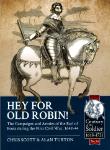
Cover: George Lisle, leading his tercio at a critical moment in the fight for Shaw House, at
the Second Battle of Newbury on 27th October 1644. In the dusk of the autumn day, Lisle is
said to have removed his doublet to let his soldiers see him in his shirt. In 1648 the newsletter
The Kingdomes Weekly Intelligencer notes that Lisle was "the same Gentleman, who the more
to encourage his men, did lay by his Armes, and fling off his doublet, and in his shirt did bring
up his Regiment . . . " An eyewitness to the event, Mercurius Aulicus, commented on the action
"In which service the Colonell had no Armour on, besides courage and a good cause, and a
good Holland shirt; for as he seldome wears defensive Armes, so now he put off his very Buffe
Doublet, perhaps to animate his men . . ." Painting by Peter Dennis © Helion & Company 2016.
ISBN 978-1-911096-47-4
British Library Cataloguing-in-Publication Data.
A catalogue record for this book is available from the British Library.
All rights reserved. No part of this publication may be reproduced, stored in a retrieval
system, or transmitted, in any form, or by any means, electronic, mechanical, photocopying,
recording or otherwise, without the express written consent of Helion & Company Limited.
For details of other military history titles published by Helion & Company Limited, contact
the above address, or visit our website: http://www.helion.co.uk
We always welcome receiving book proposals from prospective authors.
For Laurence, Dorothy, George, Francis and Mary
and
My ancestor, Major Henry Leigh of Thelwall's regiment, Lisle's tercio,
who saw it all unfold.
Contents
List of Illustrations
IX
•
List of Maps
X
Abbreviations
X
Preface
XI
•
Part I
Laurence Lisle: A Bookseller's Tale
1.
Opportunities
2.
Overbury
3.
Favourites
4.
Patronage
15
17
24
33
38
Part II
George Lisle: A Worthy Commander in the Warres
5.
Early Glimpses
6.
7.
Proving Grounds: Edgehill to Newbury I
A Staffordshire Regiment
8.
A Rising Star: Cheriton to Cropredy
9.
A Waiting Game: The Cornish Campaign
10.
A Good Holland Shirt: Newbury II
11.
'May It Please Your Highness': Faringdon Garrison
1 2.
Unto the Breach: The Storming of Leicester
13.
Naseby
14.
Losing the War
15.
'A King and No King'
1 6.
1 7.
Encircled: The Siege of Colchester
18.
Epilogue
19.
Posterity
'Shoot me out of a cannon'
51
53
62
92
123
164
183
215
244
264
29 5
31 9
34 5
39 0
406
422
VII
•
•
000
VIII
NO ARMOUR BUT COURAGE
Appendices
I
Family Trees
II
Images of Lisle
III
Regiment Officers under Bolle and Lisle
IV
Elegies and Epitaphs,
V
'The Loyall Sacrifice': Extracts, November
VI
Mary Lisle's Petition to Charles II,
VII
The Colchester Funeral,
1648
1660
1661
A New Book of Loyal English Martyrs, 1665
David Lloyd: Memoires
1668
VIII James Heath:
IX
1648
Bibliography
Index
0 0 0'
425
426
4 31
435
449
451
454
457
463
465
484
List
0
I
Letter from Lisle to Prince Rupert, 6 December 1644. (With kind permission from the
Trustees of the Leeds Castle Foundation)
Letter from Lisle to Prince Rupert, 13 December 1644. (Worcestershire Public
Record Office)
The Lisle Family Tree.
Ashby and Beaumont Family Connections.
Engraving of Lisle and Lucas for 'The Set of Loyalists', George Vertue for
S. Austen (1746).
Engraving, Michael Vandergucht, for Clarendon's History of the Rebellion (1713).
Engraving, creator uncertain, but evidently a reversal of Vertue's 1746 work.
The Universal Magazine (1775).
Engraving, John Grieg, for A History and Description of the Ancient Town and
Borough of Colchester, in Essex (1825).
In Colour Section
Cornelius Johnson: Portrait of Sir George Lisle. Referred to in this biography as'The Lace
Portrait'. (Private collection. Author's photo, reproduced with kind permission of the
painting's present owner)
Sir George Lisle. School of Sir Anthony Van Dyck. (Castle Howard Collection.
Reproduced by kind permission of the Howard family)
Sir George Lisle. Circle of John Michael Wright (1617-1694). (Photograph courtesy of
Sotheby's Picture Library)
The former home of Richard Miles in St. Aldates, Oxford, where Lisle was billeted in
January 1644. (Photograph courtesy of R. Jones)
Shaw House east lawn, showing the eastern rampart. (Author's photo, with permission
of Shaw House, Newbury)
Shaw House from the east. (Author's photo, with permission of Shaw House, Newbury)
The eastern section of the old'dry moat' at Shaw House, looking south. Note the earth
rampart on the right; the fence on the left approximately marks the line of the eastern
garden wall, where Colonel Page's leather guns were stationed. (Author's photo, with
permission of Shaw House, Newbury)
The grass verge on Church Road, Shaw, which was originally the southern stretch of Shaw
House's dry moat, and enclosed by the southern garden wall. The wall in view here
is almost certainly a later addition. (Author's photo, with permission of Shaw House,
Newbury)
The rear wall of Colchester Castle, taken from the monument. (Author's photo)
The monument at Colchester Castle, marking the reputed spot where Lisle and Lucas
were shot. Erected for the public opening of the castle park in 1892. (Author's photo)
The Colchester Castle monument inscription. (Author's photo)
216
217
425
425
429
429
429
429
I
•
II
•
•
111
•
•
•
IV
•
IV
•
V
v
VI
•
VI
•
VII
•
•
V111
•
•
•
IX
•
s
1
2
3
4
5
6
Edgehill, 23 October 1642. Was Lisle commanding the forlorn hope?
Cheriton, 29 March 1644. The precise location of Lisle's forward position on the
night of 28/29 March is uncertain.
The Second Battle of Newbury, 27 October 1644. Lisle was stationed at Shaw House,
on the Royalist right wing.
Lisle's position at Shaw House during the Second Battle of Newbury,
27 October 1644.
Regional map showing garrison locations around Faringdon in early 1645.
Naseby, 14 June 1645. Lisle led two battalions onto the field, but at some point
was carried off severely wounded, and taken to Leicester.
Abbreviations
BL
CCC
CSP
CTB
EHR
ODN B
HMC
JHC
JHL
NA
ROP
STC
TT
WSL
'Wing'
x
British Library
Calendar of the Committee for Compounding
Calendar of State Papers
Calendar of Treasury Books
English Historical Review
Oxford Dictionary of National Biography
Historical Manuscripts Comm ission
Journal of the House of Commons
Journal of the House of Lords
National Archives, Kew
Royalist Ordnance Papers (ed. Ian Roy)
(Pollard & Redgrave's) Short Title Catalogue
Thomason Tracts (at the British Library)
William Salt Library, Stafford
Donald Wing's continuation of the Short Title Catalogue
65
129
191
194
220
274
. . . he gave the rebels three most gallant charges . . . in which service the
colonel had no armour on besides courage, and a good cause, and a good
holland shirt . . .
Mercurius Aulicus, 28th October 1644
This book has been a very long time in the writing, not least because many aspects
of George Lisle's life remain uncertain, and the pieces of the puzzle have taken
a long time to fall into place. The research is now substantial enough to publish
coherently, but gaps still exist. Frustratingly some sources remain unavailable
or unseen and some potential research avenues unexplored, and it is my intent
to produce an updated edition of the book if enough new material subsequently
comes to light.
My aim is to offer the first explicit survey of what we know, and what we do not
know, about Colonel Lisle. Popular history is usually content to condense it down
to 'Son of a lowly bookseller, fought in Holland, took off his buffcoat at Newbury,
and was shot at Colchester after some famous last words.' Only a very few people
have troubled to question if Lisle's father was indeed a lowly bookseller, if Lisle did
actually fight in Holland, why he took off his buffcoat at Newbury, and what he
really said just before his death. People with a little more knowledge of the Civil
Wars might add that 'He turned down a knighthood in 1644'; or, 'He fought at
Cropredy and Naseby'. Yet even these statements are frustratingly vague. Noone
has questioned why he (reportedly) turned down a knighthood, or explicitly what
his role was at Cropredy and Naseby. Detailed source study reveals that at several
actions he was indeed present with the army but cannot have been much involved;
conversely, during at least one other engagement his role appears to have been far
greater than anyone has previously realised.
Some 'facts' perpetuated about Lisle seem to be spurious hearsay from curious
and well-intentioned, but never source-oriented, early commentators. Some
nineteenth-century writers in particular were more interested in heroic na rra
tive than strict factual detail, freely blending fact with supposition and giving
source references intermittently or not at all. Their shaky biographies have then
become accepted as fact when re-hashed by later writers who borrowed the story
Xl
•
xii
N O A R M O U R B U T CO U R AG E
but did not care to verify the details first. Lisle's story has not escaped this. With
twenty-first century commun ications at my disposal, and increasingly easy access
to source material that was previously buried, I have gone back to the start and
scoured primary sources for the facts. The book that follows is grounded on these,
using later sources only to help analysis; hence the copious notes, included to allow
readers to follow my trail, and perhaps pursue loose ends themselves. Where the
facts have provided a narrative I have painted the resulting picture as coherently
as they allow; where gaps appear or the details are still uncertain, I have drawn
attention to this.
Following this process, one thing has become clear: whilst a lot more informa
tion has come to light about Lisle's personal background, and some parts of his
military itinera ry, there is still little direct information available about the char
acter and motivations of the man himself. No diaries exist; no personal letters
have come to light other than a few operational ones to Prince Rupert, and the
rumoured stack of letters written to Sir Marmaduke Rawdon has not been found.
Although Lisle's recorded military activities during the wars, the few words we
have of his, and those offered about him by his contemporaries, help draw a good
outline of his character and disposition, this is no better portrait than a blurry
snapshot taken at a distance. With the information presently at my disposal I can
only take what can be gleaned or surmised from those words and actions, and
offer my own initial conclusions as to his character and motives.
It is not my purpose here to include wider analysis of the Wars of the Three
Kingdoms or of the English Civil War(s) in particular, only to discuss Lisle's place
in them and to exami ne him within his immediate context. Therefore I have made
little reference to certain military aspects of the wars, for example the Northern,
Welsh, Scottish, and Irish theatres, as he was never there; and I have avoided
wading into Parliamentarian politics, or into the vexed question of religion, unless
absolutely necessary. Occasionally evidence for Lisle's activities is scarce: where
this occurs, for example in the Cornish campaign in 1644, or the period between
the battle of Naseby and Oxford's surrender in 1645- 1646, I have bridged the gap
by continuing with a summary of the action around him, advancing my own
suggestions as to what he may have been doing meanwhile. Wh ilst this approach
may be criticised as potentially giving more history of the war than a history of
Lisle, it continues the timeline and keeps his context intact, and helps winnow
out the places he could not have been, and the actions in which he could not have
participated: allowing for the better focus of future research.
I have assumed that the reader already has a basic knowledge of the period 163848, or has access to essential sources. Where it is necessary to discuss or outl ine
battles and campaigns I have accounted for modern analyses but primarily made
use of original sources in order to assess with a fresh eye what Lisle's part may
have been. I am not by trade a military historian, and have not sought to reas
sess accepted battle narratives, except where Lisle's part in them raises an unex
pected issue. It is difficult, perhaps impossible, to be expert in the fine details of
P R E FACE
•
• •
XIII
all the campaigns and engagements in which he was involved, and whilst I have
used every source available to me, questioned other writers and h istorians for
their views and strived for accuracy of detail I ask allowance for any errors or
misunderstandings of mine that may, nevertheless, have crept into the text. Where
my interpretations deliberately differ from others, however, or where I challenge
sacred cows, I respectfully ask the reader to give due consideration.
For completeness, and because it is indivisible from Lisle's story, I have included
a chapter on the early h istory of Colonel Richard Bolle's regiment, up to and
including the skirmish at Alton in December 1643 where Bolle was killed, leaving
the gap in command into which Lisle was placed by some h igh-level order from
Oxford. Thereafter, what we know of them is bound up with him.
If an individual is ennobled or retitled during the course of the book, I have
noted this but continued to use the names or titles under which they were origi
nally introduced to the reader. This is against convention, but prevents confusion.
I frequently use the term 'kinsman', in relation to other officers around Lisle:
I use it in its loosest sense, meaning someone who is to some degree a relative,
being connected via extended family. In Lisle's case, all these connections came
via the Villiers family. George Lisle's character and early life would have been
heavily shaped by his family ties, and the commercial and court-related activities
of his father, Laurence: hence the inclusion of Part I, A Bookseller's Tale. I urge
readers not to skip this section of the book, as besides offering inSights into his
son's upbringing, Laurence's activities in publishing, court politics and govern
mental administration, and his family's suffering during the Civil Wars, collided
head-on with some of the most notable persons and events in the first half of the
seventeenth century. His story is an incredible tale in itself.
My list of acknowledgements is rather long, but having begun the book over
a decade ago, the assistance I have received has been considerable. Firstly I must
mention the support and enthusiasm of the Freemasons at the former St Giles's
Church in Colchester, where Sir George Lisle is interred. Of fellow researchers, I
owe a great debt to Tony Rowland: for sharing his own initial summary of Lisle's
career, which provided the inspiration for the biography proper, and for contin
uing to locate references and discuss possible scenarios long after I had taken up
the challenge of writing a full biography myself. I must also thank David Hopkins,
for relentlessly harvesting Lisle references on my behalf whilst conducting h is
own research. Andy Robertshaw generously gave h is time to discuss the potential
links between Lisle and Sir Marmaduke Rawdon, and Richard Dace pointed me
towards Rawdon's family documents in Hertfordshire. Vic Judge sent me many
snippets of military detail discovered during his exhaustive compilation of a new
Royalist officer list, and Ivor Carr provided me with invaluable new information
about the Dudley Castle skirmish of 1644. Stephen Ede-Borrett sent me copies of
his own published research articles that I was unable to locate otherwise, and Gary
Ashby provided details from a vital Edgehill account that I was hitherto unaware
of. Jon Day, author of Gloucester & Newbury 1643, kindly shared h is conclusions
xiv
N O A R M O U R B U T COU RAG E
regarding the question of Lisle's participation at Aldbourne Chase, for which I am
extremely grateful. Similarly, Chris Scott, author of The Battles ofNewbury, offered
his insights into the possible defences at Shaw House. David Appleby, author of
Our Fall Our Fame, kindly answered my many questions about Sir Charles Lucas.
Ian Dicker, Sue Sampson and Caroline Vincent gave me the benefit of their exper
tise in period clothing, to date one of the several portraits of Lisle. The use of
Chris Jones's extensive library of ECW reference books, long before I had my own,
was also a godsend during the early years of my research. Over the years a great
many other people in the military reenactment and historical research communi
ties have contributed research leads here and there, whose names time and lack of
a notebook at the vital moment have unfortunately obscured; I put on record here
also, my gratitude to all those individuals.
Finally I must acknowledge the assistance of the staff of the National Archives,
the British Library, the Guildhall Library, and the William Salt Library; Berkshire,
Staffordshire, and Worcester record offices; Sotheby's, and the Heinz Archive &
Library at the National Portrait Gallery; Madresfield Court, Castle Howard, and
Shaw House; Stephen Yates at Colchester and Ipswich Museum Service, and curator
Annie Kemkaran-Smith at Leeds Castle. Also everyone at Helion & Company for
their support, and their assistance in getting the book ready for publication.
Dates correspond to our modern calendar, the year beginning on January 1 st,
although where any doubt may exist I have dated events with both years, e.g.
' 1644/45', to indicate which winter they span.
Serena Jones, 2016
Part
I
Laurence Lisle: A Boo se er's Tale
1
By the early 1600s St Paul's Cathedral Paul's, as the locals knew it - had long
since fallen into disrepair; but the great square tower still looked out across the
City of London, and beyond to the buildings of Whitehall and Westminster, the
seat of monarchy and government. To the literate, London had become synony
mous with printed works of every sort, and in the confined space within its city
walls Church and commerce were forced into coexistence. The north-eastern
perimeter of St Paul's Churchyard was tightly lined with bookshops; a number
of premises, including two binderies, were built against the walls of the cathedral
itself. The open area in between was a traditional meeting place for Londoners,
and contained the famous Paul's Cross, an open-air pulpit.
One of the bookshops crammed against the Churchyard wall was a four-storey
building comprising both bookshop and living quarters, known as the Black Bear.
In 1599 it gained a new occupant: a young Londoner, an apprentice stationer
(bookseller) in his early or mid-teens by the name of Laurence Lisle. Probably born
around 1583, he was the son of William Lyle, a Paddington yeoman;' a Restoration
source links him with the well-to-do Surrey Lisleys from Tandridge, who held
land in Cambridgeshire and whose members included William, the notable
Anglo-Saxon scholar, and his younger brother Edmund,2 a sewer (server) of the
chamber first to Queen Elizabeth and then to King James. The Lord Chamberlain's
Accounts of 1604 mention amongst the Royal Household staff not only Edmund,
but also a William Lisley (one of the 'Gromes carriage men and muliters'), and
Lawrence Lisley (a groom of the Pitcher House).3 The latter would appear to be
'our' Laurence, yet by this time he was a stationer's apprentice, bound to Paul
-
I
The minimum age at which a man could gain the freedom of the City was twenty-four. Laurence gained
his freedom in 1 607, so his birth date may be estimated at 1 583 at the earliest. It is also the Stationers'
2
Company records that tell us his father's name and status.
Heath, p. 1 36. Heath states that George - and thus by blood relationship, Laurence - was 'extracted from
3
a Gentile [Gentle 1 Family in Surrey: The Lisleys of Tandridge are the only known candidates.
Malone Society Collections, 11.3, 322-3. The names are mentioned in a list of household staff to be given
four yards of scarlet cloth for a coat, for the occasion of the entrance of James 1 into London.
17
18
N O A R M O U R B U T CO U R AG E
Linley at the Black Bear.4 It is not clear how an apprentice might also have held
an active position in the Royal Household in 1604; perhaps the 1604 man was not
the Laurence in question, but then the London civic and church records would be
expected to provide details for two separate men, and they offer nothing besides
a few references to a man from Kingston upon Thames with a similar name who
died in 1612.5 Furthermore, the listing of our Laurence beside Edmund Lisley from
the Surrey family to whom George (and thus his father) was said to be related,
is unlikely to be coincidence. The most practical explanation is that the Pitcher
House office was a favour wrangled by Edmund or William for their young rela
tive, so he could be part of the procession which greeted the new King's entrance
into the City. It stood Laurence in good stead: in the 1630s he seems to have been
working for or alongside the Board of Green Cloth in the Lord Steward 's depart
ment, the same section of the Household as in 1604.
Not two miles from the Churchyard, at Whitehall, the court was ever turbulent
but rarely more so than towards the end of Queen Elizabeth's reign. During the
mid- 1 590s a power struggle had developed between Robert Cecil, Lord Burghley's
son, and Robert Devereux, the second Earl of Essex. Devereux felt constantly frus
trated by his rival's successes at court. In 1 599, briefly forgetting his wits after his
own failure to crush a rebellion in Ireland, he unthinkingly burst into the Queen's
bedchamber unannounced. He was arrested and banished from the court. In 1601
he raised a short-lived rebellion of his own and was promptly executed, leaving a
ten-year-old son, also named Robert, now shorn of titles and inheritance through
his father's treason. The widowed Lady Essex struggled to raise Robert and his
Siblings and the boy grew up reserved and emotionally unresponsive, recently
being described as 'a morose and incommunicative adult'.6 He would later oppose
his sovereign and help lead his country into civil war, facing Laurence Lisle's
son on the battlefield; in the meantime his own family fortunes would become
entwined with those of Laurence himself.
But although civil war was several decades away, already the old order was
dissolving. On 24th March 1603 the aged Queen Elizabeth died, and was succeeded
by her cousin James V I of Scotland, now also James I of England. James made
genuine conciliatory efforts towards the young Robert Devereux, and quickly
restored his lands and titles. By November 1605 Robert Cecil, doubtless mindful of
useful political connections, had helped arrange the marriage of young Devereux
to Frances Howard, the daughter of his (Cecil's) closest ally.
4
Mini biographies of Paul Linley and Laurence Lisle can be found in McKerrow. Linley died in March
1 600 and Laurence's apprenticeship was transferred to his partner, John F1asket.
5
A gentleman named Laurence Lyndley/Lynlay, who confusingly also appears to have had a position in
one of the Royal Households, last being recorded there in 1 6 1 1 .
6
Somerset, p.37. This book describes with great clarity the events leading up to, and culminating in
the infamous murder of Sir Thomas Overbury in 1 6 1 3, and offers a valuable grounding in the earliest
workings of King James's court.
O P P O RTU N IT I E S
19
Meanwhile, beyond the self-interested con fines of the court, events had taken
a sinister turn. The Gunpowder Plot had been discovered in the early hours of
5th November and late in January 1606, a few weeks after the Devereux/ Howard
marriage, four of the Gunpowder Plotters were hung, drawn and quartered on
a scaffold in Paul's Churchyard. As Laurence lived there, undoubtedly he would
have witnessed the grisly event; perhaps his employers caught the popular mood
and offered publications of suitable interest for the crowds. Certainly another busi
ness in the Churchyard may have capitalised on the fiercely anti-Catholic atmos
phere: the Tygers Head, a tiny shop built against the wall of the cathedral's north
transept, had been founded in the 1 560s, origi nally selling Bibles. In the 1 580s it
was taken over by Toby Cooke, and in 1606 his son Matthew was co-proprietor
with a bookseller named Samuel Macham. The business was highly successful,
and Macham held the rights to the popular works of Joseph Hall, the Bishop of
Norwich.
On 19th January 1607, a year after the executions, Laurence's apprenticeship
at the Black Bear concluded. He was gra nted his freedom, and admitted to the
Honourable Company of Stationers.7 Yet traditionally the career path ahead was
still difficult: he could be expected to spend the next eight to twelve years working
as a 'journeyman' until he had saved enough money to start a business of his own.
He may have stayed on briefly at the Black Bear; possibly he was unemployed. But
whatever his new routine, City gossip - and possibly h is own connections at court
- may have made Laurence aware of the King's strong interest in a junior member
of his household, who had broken his leg during a Royal pageant. By all accounts
King James had forgotten the rest of the pageant in his concern for the young Scot,
one Robert Carr.8 The gossip may have taken a seedier turn as people reminded
each other of the King's rumoured preference for the company of young men, and
that Robert Carr was already a Groom of the Bedchamber.
James's infatuations did not prevent him regularly addressing Parliament. The
latest political hot potato concerned his long-cherished vision of complete union
between Scotland and England, to be known as 'Great Britain'. The Scots were
more-or-Iess considered a different race, and the bi-national make-up of the
King's household had already caused much faction within it. His Majesty's desire
for the union of his two kingdoms was strongly opposed by the Commons, who
feared it would result in the Scots pouring into England and securing all the Royal
patronage for themselves.9 James also desired free trade between the countries, but
7
Arber, ii.241, and iii.683.
8
The proper spelling was Kerr, but - apparently to ease Anglo-Scottish relations - he had taken to using
the English version.
9
Smith, p. lOS.
20
N O A R M O U R BUT COURAGE
the London merchants perceived that the Scots would take every benefit from it,
then avoid paying their taxes.1O
But whilst England's future was unclear, the future of one of its citizens was about
to be secured, albeit due to another man's tragedy. In June 1607 Matthew Cooke
died; he left a widow and young daughter,II and his partnership with Macham was
only two years old. Both these details imply that he was still a young man. Early
death was a commonplace, but this fact would not have lessened the impact of his
demise, either on his family or his business partner. Macham moved into smaller
premises next door, a shop named the Bull Head, and was publishing prolifically
on his own account before the summer was out. He took his new apprentice with
him, leaving Henry Seile, Matthew's new thirteen-year-old apprentice, at the
Tygers Head.12 Naturally it was Matthew's widow who came off worst materially,
left with at least one young child and no immediate financial support besides what
she may have been left by her husband. Yet she still had the shop itself, or the
lease of it, and its established reputation; and stationers' widows could certainly
continue in their late husband's business. Indeed, when Macham hi mself died in
1615 his wife continued to reprint his major titles for another five years.
The Stationers' Company was not blind to Joan's plight. On 5th October they
judged:
. . . that shee shall have [half] of the booke wch Sam: Macham hathe
prynted, shee payinge halfe the Charge of the ympression. And likewyse
that shee shall have halfe of the Booke wch is in hand to prynte shee bear
inge halfe the Charge of the ympression. And like[wise] for all the reste of
the Copies that were entred to were entred to him and her husband that
shee shall have the halfe of everye ympression [ hereafter] bearinge halfe
the Charge thereof.1 3
Macham and Cooke had jointly registered the copyrights on several books; Joa n
was now entitled to Matthew's half share of those particular books each time a
new edition was printed, as long as she paid her half of the printing costs. But there
was another proviso: in the same judgement, the Company decided that:
. . . yf she Marrye in the Companye then here intereste to contynue still
accordinge to like proporcon in all the said booke, but yf shee Marrye out
\0
11
Fraser. p. 1 1 4.
Matthew's burial is recorded on 1 9th June. in the parish registers of St. Gregory by St Paul. His daughter
Margerie had been baptised on 8th Feb 1 606.
12
McKenzie (p.S8) states that Henry Seile. son of Humfrey, came from Oslaston in Derby and was bound
13
to Matthew Cooke on 3rd April 1 607. He was baptised at Sutton on the Hill on 2nd February I S94.
Jackson, pp.27-28.
O P P O RTU N IT I E S
21
of the Companye then her said intereste to Cease. And he from thence
forth to enjoy all the said Copies to his own use.
It is likely that Joan and Laurence were already acquainted when Matthew died,
given that they lived in the same tiny community around St Paul's. We cannot
know what they thought of each other, but after Matthew's death each was faced
with a situation that the other could redress. Aged twenty-four or thereabouts,
Laurence needed a head start in h is trade, or face a long slog to make h is living in
an age where a man's life-expectancy at birth averaged just twenty-nine;14 and Joan
needed a breadwinner, preferably someone in the same trade as her late husband.
They were married at St. Gregory's on 14th December. From our modern stand
point it is difficult not to raise an eyebrow at such an arrangement; however, in an
age where many marriages were thus organised, usually by the parents of young
adults, the Company's requirement may not have seemed unreasonable. Besides,
Joan and her family were now provided for, and by default Laurence had acquired
an established and successful London business, despite as yet having no copyrights
of his own. Other journeymen around St Paul's must have envied his good fortune.
At around the same time, Laurence finally published h is first book: The
Wynninges of Worldelinges.1s The author's identity is unclea r, although possibly it
was a forerunner to A Warning For Worldlings, 'a short dialogue against atheisme'
written by an Oxford student and published by Laurence in 1608.16 The dedication,
to the Lord Chancellor of England, no less, asserted that:
. . . it cannot be, that he which is fully perswaded that there is a God who
will punish those t hat do evill, and rewarde those that do well, should
be careles how they live . . . Most necessarie therefore it is, to plant this
Doctrine in the hearts of men, that there is a God who as hee made all
things, so continually hee governeth all thinges, unto who me all men
must give account of their doings.
Back at court, it did not appear that Robert Carr felt bound by the critical eye
of God; certainly he found no moral difficulty in material gain, and in December
1607 was granted an annuity of £600 by the King. By Christmas he had been
knighted and promoted from mere Groom, to Gentleman of the Bedchamber. He
did not advance alone. Aware that h is nationality grated on the English courtiers,
Carr had been careful to distance h imself from h is roots and surround himself
with English men. By 1608 his closest friend and ally was Thomas Overbu ry, the
14 Thomas. p.6. In fact. this figure applies to the third quarter of the seventeenth century. i.e. 1 650- 1 675.
thus someone born a century earlier - such as Laurence Lisle - might expect even less.
15 Listed by A rber. but otherwise untraceable.
16 Author Jeremy Corderoy.
22
N O A R M O U R B U T CO U R AG E
son of a Gloucestershire lawyer. The pair had met first in Scotland seven or eight
years previously, and when James moved his court to England in 1603 Carr and
Overbury were reunited. Clearly Carr made many efforts on his friend's behalf:
in September 1607 Overbury had received the lease of some property taken from
a man attainted for treason, and in June 1608 he, like Carr, was also knighted.
Like Edmund Lisley from Surrey, he was also made a sewer to the King.17 Amidst
this advancement, Overbury gave much time to writing. Perhaps by 1608 he had
already written A Wife, a lengthy poem outlining the nature of man's relation
ship to woman, and what he considered to be the necessary virtues in a spouse;
although as yet it had not been published.
In terms of the volume of material produced, it appears that Laurence's busi
ness got off to a good start, publish ing at least six works in 1608, including one of
Ben Jonson's. In June, a bequest to Joan from Matthew's late mother would have
eased finances; and Laurence had been chosen as an executor of the will. In July he
registered (well in advance) A Ravens Almanack - foretelling of a Plague, Famine,
and Civille Warre that shall happen this present yeare 1609. . . perhaps a prophetic
title, given what England was to suffer within thirty years. Officially the work's
author was anonymous, although some authorities attributed it to the well-known
writer and dramatist, Thomas Dekker. However we cannot be sure that Laurence
exercised his right to publish: although the almanac went through three editions,
IS
the only copies still extant seem to have been published by another stationer.
On 1 5th January 1609 the St Gregory's church registers duly noted the baptism
of Laurence and Joan's daughter, Elizabeth; Laurence passed the rest of the year
quietly, producing nothing until summer the year following, when he published
The Funeral Pompe and Obsequies of .. . King Henry IV of France, who had been
assassinated in May by a Catholic extremist.19
The reason for this sudden slow-down at the Tygers Head is a mystery, although
Samuel Macham's prolific output at the Bull Head during this period affirms that
there was no downturn in the book trade. Given the lack of material produced,
we may wonder about Laurence's financial position: at some point during 1610 he
would have benefited from Macham's reprint of two Bishop Hall works, originally
part-copyrighted by Matthew Cooke; and certainly in May he took advantage of
a bequest fund held by the Stationers' Company, and borrowed £10, to be repaid
after three years (in fact, it was not repaid for five).20 However, when considering
his sources of income we can not overlook fa mily connections, and it is more than
possible that he was being supported from some closer source of which we are
17
Somerset, p.63.
1 8 Thomas A rcher.
1 9 Author Claude Morrillon; a translation from French.
20 Ferguson, p.2S.
O P P O RTU N ITI ES
23
currently unaware. If he was indeed the Laurence Lisley listed at court in 1604,
perhaps he yet retained his position there and enjoyed a salary from it.
If Laurence's business was i n flux, his domestic situation soon fa red worse: Joan
died in September, and was buried at St Gregory's on the 30th. New publishing
at the Tygers Head appears to have ceased completely, although the shop prob
ably remained open to sell existing books. Laurence's subsequent 'none appear
ance on the qter day' (that is, 25th December) earned him a shilling fi ne from the
Stationers' Company i n January 161 1;21 thereafter his activities remain a mystery
until April 1613.
Within Whitehall, meanwhile, the seeds of a very different i ntrigue were being
sown.
21 Jackson, p.446.
2
At the time of their marriage both Robert Devereux and Frances Howard were only
fourteen years old: it was yet considered unwise that the couple should live together
so early, or consummate the marriage, and for the time being they continued to
live separately. Whilst Frances - much admired for her looks - took her place at
court, chaperoned by her mother, in the summer of 1607 Essex embarked on a
tour of Europe, visiting various countries and being grandly entertained by their
leaders.
He returned to England in the summer of 1609. So did Sir Thomas Overbury;
although his tour had covered similar territory, it was not an official visit, merely
curious tourism which he took as an opportunity to pursue his writing, composing
observations about his travels.l
He had also cultivated a blatant arrogance that earned him the dislike of many,
including Queen Anne, who detested the influence Overbury and Carr exerted
over the King. In May 161 1 she complained tearfully to James of some unspeci
fied insolence Overbury had shown her in the palace gardens at Greenwich, and
succeeded in having him banished from the court. Carr's own influence was
still increasing: he had recently been created Viscount Rochester and Knight of
the Garter, and it was through his efforts that by September 16 1 1 Overbury was
partially restored to favour. By November he was back at court officially, albeit
with instructions to avoid the Queen.
In parallel, Essex's fortunes were not bright either: on his return from the
Continent it quickly became clear that there were vast differences of character
between him and his wife, the situation doubtless worsened by the natural imma
turity of their personalities, and the many months of separation which immedi
ately followed the wedding. As their estra ngement grew, it became apparent that
the couple had never consummated the marriage; the tension was intensified by
drifting rumours that Frances had planned to poison her husband, or even that
I
24
Sir Thomas Overbury his observations in his travailes upon the state of the Xvii. Provinces as they stood
anno Dom. 1 609.
OV E R B U RY
25
she had been involved, in some manner, with Prince Henry, the heir to the throne.
The mid-seventeenth century diarist, Sir Simonds D'Ewes, recounted that it was
sometime early in 161 2 that Frances began an affair with Robert Carr: they met
often at the London house of Mrs Anne Turner, a close friend of Frances's. Perhaps
Sir Thomas Overbury became jealous of his old friend's new obsession, or perhaps
he feared it, owing to his own differences with the Howard family: he frequently
begged Carr to end the relationship with Frances, finally telling him that:
. . . he would have no longer entireness [confidence] with him, knowing
that his unlawful accompanying with her, being another man's wife,
would be the means to ruin him and his fortunes.2
Carr was outraged. As his friend confronted him:
. . . [he] fell into hot tremors, telling Sir Thomas Overbury that he could
stand on his own legs, and would be even with him; and not long after,
revealing Overbury's words to the Countess of Essex, she was much
enraged with it, and took up, doubtless thereupon that instant, a resolu
tion of revenge, which should be prosecuted with the loss of his life, that
had in such broad terms branded her honour.3
Frances's subsequent actions reveal the depth of her fury. Having decided that
her lover's friend must be done away with, she first suggested the murder to a
male servant of Queen Anne's whom she knew to have a particular quarrel with
Sir Thomas; the man agreed that Overbury m ight be roughed up, but refused to
pursue the matter to the death, saying he was ' . . . loath to be carried to Tyburn for
any Lady's pleasure.'4 For the meantime Frances could do nothing.
In November 1612, to the nation's overwhelming sorrow, Prince Henry died
from 'the pestilential fever of the season';5 amidst wild tales of poison, a post
mortem was held, and the cause 'proved to be from the hand of God.'6 D'Ewes was
another to mourn for the Prince, saying in 1639:
England's joy, that inestimable Prince Henry . . . the lamentation made for
him was so general that even women and children partook of it.7
2
D'Ewes, vol. I , pp.70-7 1 .
3
Ibid., p.7 1
4
Ibid.
S
Sir William Fleetwood to Sir Dudley Carleton, I 8th December ( CSP Domestic Series, 1 6 1 1 - 1 6 1 8, p. 1 62).
6
Modern studies of Henry's autopsy notes confirm beyond doubt that the fever was typhoid.
Sir Thomas Luke to Sir Dudley Carleton, 1 2th November ( ibid., p. 1 55).
D'Ewes, vol. I , p.46.
7
26
N O A R M O U R B U T CO U R AG E
King James, paranoid as ever, ordered that his surviving son be closely watched.
It was reported that:
Prince Charles [is] kept as strictly as when he was Duke of York, and will
not have the reins loose as early as his brother . . . To keep the Prince from
Popery, 'two sober divines, Dr Hacknell and another, are placed with
him, and ordered never to leave him.'s
Rumoured adultery with Henry aside, there were probably several causes for the
failure of Frances Howard's marriage to Essex. D' Ewes states baldly that:
' . . . the Earl of Essex was unfit to pay the rites of marriage for many years
after she was ready to receive them . 9
By December it was clear enough that the marriage was beyond salvage. In the
spring of 1 6 1 3 Frances's father, the Earl of Suffolk, approached the King to seek an
annulment on the grounds of non-consummation.
For some, 1613 began on a happier note: at Whitehall on 14th February, after
a postponement due to the devastating death of his principal son and heir, King
James finally saw his daughter Princess Elizabeth married to Frederick, the
Prince Elector of the Palatinate. The couple left the country soon after, bound for
Frederick's homeland on the Continent; they were to raise a large family, two of
their sons returning to England in the 1640s to fight for their uncle Charles, who
upon Henry's death had become heir to the throne.
The Royal marriage festivities over, Londoners wanting to remain in the festival
spirit could have picked up the new quarto printing of Francis Beaumont's anar
ch ic play The Knight of the Burning Pestle; a satirical comedy first performed a
few years before, it had not been particularly well received at the time, although
it became very popular in the 1660s.1O George Lisle claimed kinship to Beaumont:
the precise connection is unclear, but Beaumont's uncle was one Thomas Ashby
from Leicestershire, which suggests the connection came via Lisle's mother.
Meanwhile, Frances Howard still sought a way to be rid of Overbury. It was
probably during the early weeks of 1 6 1 3 that the then Earl of Northampton her great-uncle, and no supporter of Sir Thomas - proposed that Carr should be
S
Isaac Wake to Sir Dudley Carleton, 2nd December (ibid., p. 1 60). The quotation indicates Wake's precise
9
words in the letter.
D'Ewes, vol. I, p.SS.
1 0 The play's content and structure - a fourth-wall-breaking satire of the knightly virtues espoused in
works such as Spenser's Faery Queen - made it virtually 'alternative comedy: and perhaps just too far
ahead of its time to be enjoyed by early Jacobeans.
OV E R B U RY
27
reconciled with Overbury, yet should find some way to have him sent to the Tower;
after which ' . . . they might at leisure advise what further course to take.'l1
Early in April King James - probably moved by Carr - decided that Overbury
should be sent to Russia as Royal ambassador. According to D'Ewes, Overbury
agreed after consulting with friends; yet Carr, now apparently reconciled to him,
advised against it:
promising better preferment at home with in a short space; and that if he
were committed to prison for his refusal, he would speedily procure his
enlargement.12
Although initially reluctant to disobey the King, Overbury was at last persuaded,
and stuck to his refusal. On 2 1 st April instructions were sent to Sir William Wade
(or Waad), the Lieutenant of the Tower, the Tower, ordering him:
. . . to receive and keep close prisoner Sir Thomas Overbury, against whom
the King is displeased for a matter of h igh contempt.13
News of the arrest would have spread quickly, but Laurence Lisle was not
there to hear it: on 20th April, the day before Overbury's contrived imprison
ment, Laurence was twenty miles away in Doddinghurst, Essex, marrying for the
second time. Nothing is known about Dorothy Ashby, his new wife, besides her
apparent kinship to Francis Beaumont and to a then little-known Leicestershire
gentry family named Villiers. Neither do we know how she and Laurence met,
although the marriage register states that she was 'attendinge in howse on Mrs
Fage'.14 Mary Fage of Doddinghurst was a writer, whose 1637 book Fames Roule (a
book of acrostic verses and anagrams) demonstrates a familiarity with the court.
Although, as Fage's entry in the ODNB notes, there is no direct evidence to place
her or her husband at court, if she was there in 1613 she would undoubtedly have
been in or around the household and circle of Queen Anne, who was a promi
nent patron of the written and visual arts. IS It is highly likely that Laurence and
Dorothy met somewhere within the sprawling precincts of Whitehall Palace.
Shortly after the wedding Laurence and his new wife returned to London,
doubtless to discover the events escalating around Overbury. D'Ewes continues Sir
Thomas's sorry tale, stating that, once he was safely in the Tower, Frances Howard
pursued her ambition to see him dead. Wade had held his position as the Tower's
II
Ibid., p.72
12 Ibid.
13
CSP Domestic Series, 1 6 1 1 - 1 6 1 8, p. 1 8l.
14 Held at Essex Record Office; also available to view online through their SEAX website (subscription
required to view images of original documents).
15
Betty S. Travitski, ODNB.
28
N O A R M O U R BUT C O U RAG E
Lieutenant for a number of years and was considered virtually incorruptible;
however he was not a popular man, and Frances used 'mea ns at Court' to remove
him, probably engaging Northampton's help.16 On this matter the Calendar of
State Papers reports that Wade was:
. . . discharged from the lieutenancy of the Tower, on complaint of having
embezzled jewels from the Lady Arabella.17
On 6th May Sir Gervase Elwes (or sometimes Elvis, or Helwys) was appointed
in Wade's place. Elwes was an unknown, a ga mbler, and of low status at court; he
was also willing to pay Northampton £2,000 for the privilege of becoming the
Tower's new Lieutenant, a profitable position, and at Northampton's behest he kept
Overbury strictly isolated. On 8th May Richard Weston - a regular messenger
between Frances and Robert Carr - was appointed directly as Sir Thomas's keeper.
Thus Overbury was kept close by the instruments of his enemies; and at around 7
a.m. on 1 5th September 1613, he was found dead.
In his last weeks it was apparent that Sir Thomas was appallingly ill, and
showing symptoms variously attributable to poison; he had also received various
medical treatments which - when considered with the benefit of modern medical
knowledge - would at best be ineffective and at worst capable of hastening death,
if only by secondary causes. Towards the end it had been obvious even to contem
porary minds that Overbury's worsening condition was the result of foul play,
although the trails of possible guilt were tortuous and bare of hard evidence.
When inspected later on the day of death, his body appeared to be deteriorating
unusually rapidly, and was strangely marked and badly discoloured; yet a coro
ner's inquest - consisting partly of a viewing by other Tower prisoners - returned
a verdict of natural causes. IS Shortly afterwards, Sir Thomas Overbury was hastily
buried in the chapel attached to the Tower. Northampton wrote gleefully to Carr
regarding the death; Carr's reaction seems ambivalent, which, as Anne Somerset
points out, is not surprising given the previous depth of his friendship with Sir
Thomas.19 Frances's reaction is not recorded, but nearly two weeks later, on 25th
September, she would have been delighted to hear that her marriage to Essex been
pronounced void, and the way was clear for her to marry Robert Carr. Yet he was
merely a Viscount and her former husband an Earl: that Frances might not suffer
any loss in status, Carr was created Earl of Somerset on 4th November.
16
17
18
D'Ewes, vol. I, p.73.
John Chamberlain to Sir Dudley Carleton, 1 3th May (CSP Domestic Series, 1 6 1 1 · 1 6 1 8, p. 1 83). 'Lady
Arabella' was Arabella Stuart, a cousin of King James. A rival claimant to the throne, she had been
imprisoned in the Tower since 1 6 1 1 .
D'Ewes, vol. I, p.73.
1 9 Somerset, pp.200·20 1 .
OV E R B U RY
29
Meanwh ile, Laurence's business at St Paul's had sparked back into life. In
October he finally published another book: The Dove and the Serpent, a treatise
detailing the finer techniques of conversation and verbal negotiation.20 A shame,
perhaps, that Overbury would never read it: chapter 5 offered advice on:
How to converse in Court, and of the meanes whereby to purchase favour,
and stand secure from the many dangers, which are there incident to all.
But Laurence's master stroke was yet in the making. It is unclear how he
heard of, or obtained the rights to publish, a lengthy poem by the late Overbury;
although Overbury's entry in the ODNB suggests that it had been written some
time previously, and manuscript copies circulated around the court.21 However it
was obtained, A Wife - Now the Widdow of Sir Thomas Overbury was in publica
tion by December 1613 at the Tygers Head.
It must have been galling for Frances Howard, that when she finally married
Robert Carr on 26th December, the work of the man whose death she had so
carefully procured had become an instant best- seller, bringing Overbury and
his fate to the forefront of popular imagination and making him a posthumous
celebrity overnight. The even heavier irony must have been, that Overbury had
written of a female creature who surely Frances Howard - almost certainly an
adulteress and at least an accessory to murder - could not now possibly hope
to emulate. The wedding was celebrated at Whitehall in the Chapel Royal, as
Frances's marriage to Essex had been; as before, it was celebrated by a masque,
the details of which Laurence promptly published, entitling it The Description of
a Maske: presented in the Banqueting Roome at Whitehall . . . at the Mariage of
the . . . Earle of Somerset and . . . the Lady Frances Howard.22 As if the description
alone were not engaging enough for the reader, the work also included divers
choyse Ayres composed for this Maske that may be sung with a single voyce to the
Lute or Base-Viall . . .
The marriage celebrations stretched well into January 1614, a further three
masques being performed in the couple's honour. Various poems were composed,
some kinder than others. One pro-Frances piece in particular, A ndromeda
Liberata, appeared to condemn the webs of gossip at court by beginning:
Away ungodly Vulgars, far away,
Flie ye prophane, that dare not view the day,
Nor speake to men but Shadowes, nor would heare
Of any news, but what seditious were,
20 Author Daniel Tuvill.
21
John Considine, ODNB.
22
Author Thomas Campion.
30
N O A R M O U R B U T CO U RA G E
Hatefull and harmefull ever to the best,
Whispering their scandals, glorifying the rest .
. .'
23
Written by the well-known poet and dramatist George Chapman, the poem
utilised the classical tale of Perseus and Andromeda to illustrate Frances's personal
story; in March her father, the Earl of Suffolk, was one of several prominent figures
who licensed the poem for publication. As before, Laurence was the bookseller
involved: it seems he was becoming a trusted contact of the Cecils and Howards,
supporting the possibility that he had previously held some position at court, or
had dealt with one or other of the families on a prior occasion.
Andromeda itself caused an uproar, being taken to insult, amongst others, the
Earl of Essex: commentators have since supposed that the references in ques
tion might be those referring to the 'barren rock' to which Andromeda was
previously chained. Chapman was forced to write a defence of his work, also
published by Laurence, the title page insisting that the poem had been 'maliciously
misinterpreted'.24
Meanwhile King James, short of money as ever, called Parliament on 6th April.
The MPs were also concerned about money: the problems lay chiefly in James's
astronomical court and household expenses, but higher on the Parliamentary
agenda was the issue of ' impositions', or customs duties, where a lessee, also known
as a 'customs farmer' collected the duties on the King's behalf and took a small cut,
duly passing on the remainder to the Crown. Had he known what lay ahead for
himself, Laurence might have done well to take note. By long-established right,
the Crown levied these duties on imported commodities, the specifics having first
been outlined in the Book of Rates in the 1 550s. The book had been revised and
reissued in 1608, and now covered 1 ,400 items. Just previous to the reissue, one
merchant had refused to pay the duties demanded on his imports, but had lost his
legal case; crucially, the judge concerned then asserted that the King had two types
of Royal prerogative, the first being that defined by statute, and the second being
an 'absolute' prerogative that could not be guided by rules 'which direct only at the
common law'.25 Unfortunately James had been advised by Robert Cecil, his Lord
Treasurer, that this judgement confirmed his absolute right to levy such imposi
tions, and by 1608 the issue had condensed into a Parliamentary paranoia that its
liberties were under threat from this overriding privilege of the King's. The boil
finally burst in 1610, and James addressed Parliament himself, defending his right
to levy arbitrary impositions. Eventually he agreed to an Act which prevented
23
Author George Chapman.
24 A Free And Offenceless Justification, Of A Lately Publisht and most maliciously misinterpreted Poeme:
Entituled Andromeda liberata.
25
Coward, p. 1 40; quoting J P Kenyon's Stuart Constit ution, p.55. See Coward's full text for a good analysis
of James's financial difficulties at the time.
OV E R B U RY
31
him levying any further duties without Parliament's consent, but existing duties
continued; however in 1614 the issue arose in Parliament again, and a bill was
presented declaring the taxes illegal. The Crown protested, and as the session wore
on, the legal arguments between monarch and parliament intensified.
On 8th May 1614 Laurence and Dorothy baptised their first son, William,
at St. Gregory's; on the 16th Laurence wrote a note to the readers of the fourth
impression of A Wife, a measure of just how popular the work had become since
Christmas.26 Laurence himself said of the poem:
Had such a volume beene extant among the ancient Romanes, though
they wanted our easie conservations of wit, by printing; yet they would
rather, & more easily, have committed the sense hereof to brasse, and
Cedar leaves, then let such an Author, have lost his due eternitie.
In addition to the poem, and sold with it, Laurence now published Overbury's
'Characters': a collection of character sketches in prose, presumably drawn from
Overbury's own perceptions of Jacobean society and the court where he had spent
the last years of his life. The sketches were shrewd, even insightful, but frequently
unkind. The titles speak for themselves: for example, A Dissembler; A Courtier;
A Flatterer; An ignorant Glorie Hunter. By this fourth imprint there were nearly
thirty such characters; in the very late editions there would be over seventy. Of
course, only the first few were written by Overbury himself; as the popularity of
this new genre spread, admirers a nd emulators submitted their own efforts, and to
this day the authorship of many of the later Characters remains a mystery.
Where Laurence's fortunes were improving rapidly, Robert Carr's quickly began
to wane. Much was expected of a court favourite, chiefly by those with petitions or
suits of their own to promote; yet Carr neglected to attend these small matters of
favour, often promising to make good a petition but then failing to follow it up at
court. Northampton had written frequently to Carr on this subject, chiding him
for forgetting this suit, or that favour, and advising him on the best course to take;
and in fact it was Overbury who had taken care of many of these matters on Carr's
behalf. Overbury was gone; and when Northampton died also, in June 1614, Carr
was on his own. He quickly gained a reputation for not keeping his word, and his
name was further sullied by his direct involvement in a bribery scandal. To make
matters worse, Frances was also in the habit of making rash promises of promo
tion, even accepting payments in return; there were no refunds when the promises
came to nothing.
The endgame for Carr approached. On 3rd June, exasperated by the Parliament's
constant opposition, the King warned the House of Commons that he was
26 As it appears that no first or second impressions are extant, perhaps these were the manuscript copies
apparently circulated by Overbury; perhaps Laurence's initial edition was in fact the third overall.
32
N O A R M O U R BUT COURAGE
contemplating dismissing it; and on 7th June - after someone publicly told him
to send the Scots back to Scotland - he made good his threat and dissolved the
session. The House would not meet again for another seven years. By August
James had left London for Northamptonshire, and the hospitality of Sir Francis
Mildmay at Apthorpe Hall; and whilst walking the gardens there his eye fell upon
another good-looking young man. His name was George Villiers.
3
Favourites
There is proof enough of the strength of King James's attraction to George Villiers,
in that Villiers was installed at court before September was a week old and was
shortly afterwards appointed as the King's Cupbearer. Moreover, in November
1614 James was preparing to make him a Groom of the Bedchamber.
Naturally alarmed at the King's sudden affections for the newcomer, Carr
moved to block Villiers' appointment, insisting the post go to a relative of his own.
It seems that he succeeded in his endeavour, I yet thereafter he appeared to lose all
control, violently reproaching James for his attention to Villiers and suggesting
that the young man's presence undermined his (Carr's) own influence. The King
responded patiently at first, insisting that Carr would always be pre-eminent,
but as the reproaches continued it became clear that he was losing patience. And
Carr did not neglect bestowing his own attention on the new favourite. The cour
tier Sir Anthony Weldon noted that Carr told Villiers he would break his neck
if he could; and a Victorian biographer of Villiers recounts that an attendant of
Somerset's deliberately spilled soup over him du ring a meal at the court.2 Villiers
responded with his fist, which was regarded as treason - the incident occurring in
the King's presence - the statutory punishment being loss of the hand. Yet James
considered that Villiers had been provoked, and the matter was dropped. Against
such favouritism, Carr could not win, and his supporters began to drift across the
divide. Villiers already had strong support; Carr had made many enemies, and
now they came together to seize their opportunity, giving their protege money
for new clothes, that he might make every possible good impression on the King.
Against the odds they even persuaded the Queen to give Villiers her support, to
the extent that on St George's day 1 6 1 5 it was she who contrived to have Villiers
knighted, kneeling with a sword before her husband and begging him:
I
A few months later, as the King was about to appoint Villiers a Gentleman of the Bedchamber, Carr
sent James a message beseeching him to make Villiers only a Groom (Cammell, p.65).
2
Thomson; quoted by Cammell, p.72.
33
34
N O A R M O U R B U T CO U R AG E
. . . to kn ight this noble gentleman, whose name was George, for the
honour of St. George, whose feast he now kept.3
It is hard to believe that, working around the Royal Households and being related
by marriage to Villiers, Laurence would not have been one of those who worked
to promote the new favourite; Lisle's first, arranged, marriage and his printing
of A Wife show him as a man quick to spot a profitable opportunity. Use of his
own position to assist Villiers would also help explain certain financial favours
bestowed on him by the new favourite once he was established at court.
As if a knighthood were not enough, James - even in the face of spiralling royal
debt - then conferred upon Villiers the right to sell a barony to the highest bidder,4
and gave him a yearly pension of £1,000.
Laurence's fortunes were yet on the rise. The popularity of A Wife continued,
and would reach its fifth impression by the end of the year; the Characters still
multiplied, and now the poem itself was to be emulated. On 1 st July 1615 Laurence
published Patrick Henny's The Husbande. A Poeme expressed In a Compleat Man.
It seems Henny faced some ridicule when seeking to publish, as he explains in a
note to the reader:
And yet (Reader) I must say something to thee, though against my will:
For the Printer admonishes with much caution, & a conditionall If - that
jeasts and noted Laughter will ban ish mee . . . from places which I never
hope to be guilty of, Publicke invitations, and all Ordinaryes . . . 5
Clearly Laurence had not held back in telling Henny what he thought of the
work; and presumably in response to those who made the obvious comparisons to
A Wife, Henny continued:
Neither condemne me of imitation, (though indeed the worke prece
dent, and worke-master, were both alike excellent): for . . . My own fewell
therfore warmes my closet, though I kindle stuffe combustible with a
borrowed Coale . . .
Perhaps the piece was given some credence, however, by the several commenda
tory verses which accompanied it - the first written by Ben Jonson.
3
Goodman (ed. Brewer), vol. I , p.224.
4
Baronetcies had been established in 1 6 1 1 , with worthy aims; but the cash -starved Crown rapidly began
S
selling the honours to anyone who could afford them, the King occasionally allowing favoured servants
and courtiers to sell them also, for their own profit.
An ordinary was an eating house; effectively a public restaurant that provided fixed-price meals.
FAVO U R ITES
35
It was in mid- 161S, at around the time of George Lisle's birth, that rumours
began to circulate about the circumstances of Sir Thomas Overbury's death.
Privately, murder had long since been whispered of; Frances Howard 's powerful
family connections had caused a general reluctance to act, but now the vague
whisperings began to solidify. Many years later Simonds D'Ewes was shrewdly to
note that:
Had Sir Thomas Overbury accepted and undertaken the embassy into
Russia, he had perhaps been poisoned before his return, and the matter
might have been more secretly carried.6
As the gossip intensified, the principle characters took fright. Anne Turner Frances Howard's confidant - met Richard Weston, Overbury's gaoler, to discuss
which story he should give if he was questioned. Weston then met Sir Gervase
Elwes who was still Lieutenant of the Tower. For his part, Robert Carr made sure
to recover as much of his correspondence with Overbury as Overbury's former
servant would give him;7 but he did not help his case by presently asking King
James for a pardon against any crime he may have unwittingly committed in the
past. Though the King agreed, the Lord Chancellor refused to authorise the docu
ment. Where before James would surely have backed his favourite, this time he
seems not to have argued.
It is also D'Ewes who brings to us the fullest account of how the real truth beyond
the rumours may finally have escaped: the occasion of a meeting between Sir Ralph
Winwood (Secretary of State) and Elwes himself. Elwes had been commended to
Winwood by a 'great man', at whose table it was arranged they should meet over
dinner; Winwood was keen to meet the Tower's latest Lieutenant, but told him
that:
. . . he could first wish he had cleared himself of a foul suspicion the world
generally conceived of him [Elwes] , touching the death of Sir Thomas
Overbury.8
Perhaps Elwes thought he might use acquaintance with Winwood to safely
extract himself from the Overbury affair. For, D'Ewes continues:
As soon as Sir Jervis heard that, being very ambitious of the Secretary's
friendship, he took occasion to enter into private conference with him,
and therein to excuse himself to have been enforced to connive at the said
6
D'Ewes, vol. I, p.78.
7
Somerset, pp.232-233.
8
D'Ewes, vol. I, p.69.
36
N O A R M O U R B U T CO U R AG E
murder, with much abhorring of it. He confessed the whole circumstance
of the execution of it in general, and the instruments to have been set on
work by Robert Earl of Somerset and his wife.
Winwood's utter astonishment at this abrupt confession can be imagined, but
with great presence of mind:
. . . having gained the true discovery of this bloody practice from one of
the actors, even beyond his expectation, parted from the Lieutenant of
the Tower in a very familiar and friendly manner, as if he had received
good satisfaction by the excuse he had framed for himself; but soon after
acquainted the King's Majesty with it . . .
Elwes was summoned by King James to commit his account to paper, which
obediently he did; however any remaining hope of escaping punishment was
crushed as he was then promptly arrested, along with his co-conspirators. They
were swiftly brought to trial, Weston first, being condemned on 23rd October;
then Anne Turner on 9th November; and Elwes on 16th November. As each
trial was concluded, the defendants were hanged at Tyburn. The trials of Frances
Howard, who was then pregnant, and that of her husband, were postponed until
the following year; meanwhile Carr was imprisoned.
Finally, on 24th May 1616, delivered of her child, Francis Howard was put on
trial at Westminster Hall:
. . . before Sir Thomas Egerton, Knt., then Lord Chancellor of England, and
for that day created Lord High Steward. She was by her peers found guilty
of Sir Thomas Overbury's murder, and so condemned, and in her return
to the Tower, the axe-head was carried before her with the edge towards
her, which in her coming forth was carried before her with the edge from
her. The day following, being the 25th day of the same month, was Robert
Earl of Somerset, her husband, arraigned at the same bar, before the same
Lord High Steward, found guilty by his peers, and condemned, and from
thence was remanded prisoner back again to the Tower.9
The scandalised but ever-fascinated English public had nearly a year to wait
between Elwes's confession in July 1 6 1 5, and the trials of the Earl and Countess of
Somerset in May 1616; public interest meantime may be measured by noting that
A Wife went through five more impressions before the end of 1616. In the eighth
edition the title was amended to Thomas Overbury - his Wife. With new elegies
upon his (now knowne) untimely death. Having also published several other minor
9
Ibid., p.85.
FAVO U R ITES
37
pieces relating to Overbury, Laurence was clearly profiting from the scandal,
even managing to pay back the ten pounds he had borrowed from the Stationers'
Company in 1610.10 But anyone expecting a grand finale to the Overbury affair
was to be disappointed. D'Ewes explains that:
. . . when all men's expectations were ready to anticipate the day of
their execution, the Earl of Suffolk, continuing still in his place of Lord
Treasurer, being father of the said Countess, so wrought the matter with
Queen Anne and the new favourite, that they, with his other friends and
alliance, by their earnest and daily intercession with the King, at last got
II
the pardon of their lives . . .
His predecessor safely beyond redemption, perhaps Villiers could more than
afford to support the call for clemency. Their sentences commuted, Robert Carr
and his wife would remain in the Tower until 1622; the new favourite could
continue his rise unhindered.
10 Ferguson, p.25.
I I D'Ewes, vol. I, pp.85-86.
4
Patrona e
Whilst 1616 saw Robert Carr's final tumble from grace, it saw also the incredible
rise of his successor. During that year George Villiers was installed as Knight of
the Garter; Viscount Villiers; Baron Whaddon of Whaddon, Buckinghamshire;
Keeper of Whaddon Park and Chase; Chief Justice in Eyre, North of the Trent;
Master of the King's bench office; Joint Commissioner for the Office of Earl
Marshall; Lord Lieutenant of the County of Buckingham; and High Steward of
Hampton Court. By this time he was also Master of the Horse, a coveted position
which even Carr had failed to obtain. He became Earl of Buckingham in 1617,
Marquess of Buckingham in 1618, and in 1623 took the title by which history infa
mously remembers him: Duke of Buckingham.
In parallel, Laurence Lisle's own fortunes were buoyant. Besides a steady income
from continuing sales of A Wife (in its ninth impression by the end of 16 16), he
would doubtless have profited in many small ways from his wife's family's new
connection to the court; although the grandest gestures from Buckingham were
yet to come. With debts paid, enviable contacts, a steady business and a growing
family, those uncertain, early days at St Paul's must have seemed as distant as the
moon.
For the time being he continued to run the Tygers Head, but by 1617 he was
preparing a change of command. In January he bound another apprentice,
Christofer Sayer, then in April freed Henry Seile. Whilst there is no record of
Christofer completing his apprenticeship, and his fate is unknown, Henry stayed
on at the shop.l From 1619 he took over all the publishing and put his name on
the books in place of Laurence's, although the usual phrase 'to be sold at his
shop', which implies sole proprietorship, does not appear on the covers of his
publications until 1625, when Laurence signed over his major copyrights to other
I
A lecture on Freemasonry given in 1 975 (Beck, p.7), concerned with the origins of London Grand
Master Anthony Sayer, also a bookseller, mentions finding details in the Stationers' Company records
for Christopher Sayer. and states that 'Christopher was living in 1 623: Presumably this detail came from
the said records. but unfortunately the lecture offers no specific source.
38
PATRO N A G E
39
publishers and effectively left the trade. Notably, however, during the 1620s he
did publish two works whose authors were related to Laurence: William Lisle's
A Saxon Treatise in 1623, and in 1629 Bosworth-field, a compilation of poems by
the recently deceased poet Sir John Beaumont, Francis Beaumont's brother. At
some point during the 1630s the Tygers Head premises, along with many others
around St Paul's, were condemned as part of a plan to clean up the precincts of
the neglected cathedral, and in 1637 Henry moved the business to Fleet Street.2
After changing the shop name to the Black Boy in the 1650s - perhaps revealing
Royalist sympathies, as this was a popular nickname for Charles I I Henry died
in December 1660, having ended a prolific publishing career as 'stationer to the
Kings most Excellent Majesty'.
With Henry managing the shop between 1619 and 1625, Laurence probably took
on the role of silent partner; however, precisely when he and his family physically
left St Paul's is not clear. A third son, Francis, was baptised at St Gregory's in October
1617, but there is no sign anywhere in those parish registers of Laurence's second
daughter, Mary. After Francis's arrival the family's domestic whereabouts remain
a mystery until 1624, when a fourth son, Anthony, was baptised in the upmarket
parish of St Martin-in-the-Fields at the western end of the Strand. Laurence
had evidently become a rich man - whether through A Wife, or Buckingham's
patronage, or both - and it is also possible that he had, like many well-off citi
zens keen to avoid London's dirt and regular epidemics, bought or rented a prop
erty outside the capital. Possibly he spent time in Warwickshire, as a 1628 record
survives regarding the transfer of a manor in Warmington, for which Laurence
releases 'all his interest in the said property';3 as this paperwork exists amongst the
papers of the Child-Villiers family - ultimately descendants of Buckingham's wider
family - it seems likely that this interest was obtained through him. Alternatively
Laurence and his family could have briefly moved out to Surrey: tax certificates
from 1640 and 1641 declare him 'to be liable for taxation in Middlesex, and not in
the hundred of Godley, Surrey, the previous area of tax liability',4 although when
the family might have lived there has not been established.
The tax certificates also reveal what was to become the Lisles' London address,
on and off, for around twenty years: St Martin's Lane west side. That side of the
lane had been developed from green fields during James's reign by William Cecil,
son of Robert Cecil the royal minister, for lease by people of quality who desi red
-
2
The condemned properties seem to have been pulled down shortly after: in 1 644 a newsbook reporting
Laud's trial noted that severall witnesses were examined, 'concerning his causing the houses about Pauls
Church, being in all 65. to be pul'd downe and demolished, for the repaire thereof, and the defacing
of Saint Gregories Church, by which meanes there was neither preaching nor prayer there for many
weekes together nor ever since: (Mercurius Civicus, Numb. 43, p.439).
3
Warwickshire County Record Office. Deeds concerning the manor and advowson of Warmington, ref.
4
LS/28 1 a, b and LS/286. 1 628.
Exchequer: King's Remembrancer: Certificates of Residence. E 1 1 5/24 1 1 l 2, E 1 1 5/241 / 1 00, E 1 1 5/250/84.
40
N O A R M O U R BUT COURAGE
a smart residence near the Palace of Westminster. At that time the auxiliary
buildings of the sprawling palace complex spread up from Whitehall almost to St
Martin's, and Cecil's fashionable houses were rapidly populated by courtiers, crea
tives, and government officials. The Calendars of State Papers for the late Jacobean
and early Caroline period contain numerous letters from secretaries, peers, and
other notables who had penned their communications from St Martin's Lane.
Inigo Jones was a resident, as was Abraham van der Doort, keeper of the King's
pictures; William Dobson, Charles I's court painter, lived there both in the 1630s
and at his death in 1646.
At some point between 1607 and 1633 a grant of arms was made to 'Lile of St
Martins in the Feildes': erminois, on a chief azure, three lions rampant, or; as no
first name is given the arms cannot be confirmed as Laurence's, but it would be in
keeping with his continuing rise up the social ladder and given the conjunction of
name, place, and time period, the attribution seems highly likely. 5
The year 162 1 began with a freeze. Diarist Simonds D'Ewes noted on 3rd
February:
The season of the year was now so sharp as that the river Thames was hard
frozen all over on the hither side of the bridge towards Westminster, so
as divers passed upon it this day and divers ensuing, very safely on foot. 6
King James had dissolved the last Parliament, in 16 14, after only eight weeks,
as he and it had reached an impasse over the settlement of Royal finances. Late in
January 162 1 , in dire need of money for a foreign military expedition, he finally
called the Houses together, and they convened on 30th January. Both Buckingham
and Prince Charles were urging James to threaten the Habsburg Emperor
Ferdinand with force unless he withdrew his troops from the Rheinish Palatinate,
the captured territory of James's son-in-law, the Prince Elector Frederick. Forced
also to flee Bohemia - where he had been crowned King in 1619 - Frederick had
taken temporary refuge under the protection of the Elector of Brandenburg. He
was accompanied by his English wife, the popular Princess Elizabeth, and two of
their sons, the princes Rupert and Maurice. Rupert was a year old and Maurice
just a few weeks.
Nineteen-year-old D'Ewes found a convenient place somewhere near
Westminster to observe the state procession to Parliament: the King was accom
panied by several peers, and also his surviving son, Prince Charles, who:
5
6
BL, Harley M S 6 1 40/78. 'A book in folio, containing Arms & Quarterings in Trick, being Grants by
Seager . . :; Seager was Garter King of Arms between 1 607 and his death in 1 633.
O'Ewes, vol. I. p. 1 74 .
PATRO N A G E
41
rode with a rich coronet upon his head between the Serjeants at Arms
carrying maces, and the pensioners carrying their pole-axes, both on
foot . . . 7
The Lisles, now living close by at St Martin-in-the- Fields, might also have
turned out to see the procession; George would have been a little over five years
old. Laurence's interest in the new Parliament would have been deeper than mere
curiosity, as six months previously he and a syndicate of several companions had
been granted:
. . . the sole privilege of d ressing arms, and repairing all manner of arms
and armour, at the rates set down by Lord Sheffield for the county of York.
All arms to be brought for view or repair yearly.8
Such privileges, or monopolies, had been in use in England since at least
Elizabeth's time for the purpose of raising money for the Crown. However, like the
tax impositions James fought Parliament over in 1614, they had long been consid
ered a grievance. In a legal case of 1602, the judges declared that:
The end of all these monopolies is for the private gain of the patentees', and
although provisions and cautions are added to moderate them, yet . . . it is
mere folly to think that there is any measure in mischief or wickedness.9
They asserted also, firstly, that monopolies raised prices, because the patentee
could make the price what he pleased; secondly, after a monopoly was granted,
the commodity in question was 'not so good and merchantable' as previously, as
the patentee had only his own interests at heart; and thirdly, that the monopoly
impoverished those who were now unable to continue in the monopolised trade.
In 1610 James had agreed not to grant them himself, and instructed that all
proposals were to be examined prior to any grant being made.1O However, as his
finances worsened, necessitating more monopolies, bad feeling increased, and by
1620 this particular financial bubble was ready to burst. His pressing financial
needs in m ind, however, James was prepared to compromise with Parliament, and
promised:
7
Ibid vol. I. pp. 1 69- 1 70.
8
Grant. July I I th 1 620; printed. STC (2nd ed.) 8638. Mentioned also CSP Domestic Series. 1 6 1 9- 1 623.
.•
p. 163.
9
Lockyer. p. 1 30. Quoting from The Reports of Sir Edward Coke. Kt ( 1 738). Part XI. p.86v.
.•
\ 0 Ibid pp. 130- 1 3 1 .
.•
42
N O A R M O U R B U T CO U R AG E
the removal of monopolies, of which there were at this time seven
hundred in the kingdom, granted by letters patent under the broad seal,
to the enriching of some few projectors, and the impoverishing of all the
ki ngdom aside.1 1
Doubtless Laurence would have feared for his recently awarded twenty-one
year monopoly on arms repair. He might well be described, at least in a political
sense, as one of Buckingham's dependents: writing after the Restoration, the Earl
of Clarendon said Villiers had:
. . . entirely disposed of all the graces of the King, in conferring all the
honours and all the offices of the three kingdoms, without rival; in
dispensing whereof he was guided more by the rules of appetite than of
judgement; and so exalted almost all of his own numerous family and
dependents, who had no other virtue or merit than their alliance to
p
h·1m . . .
-
Perhaps it is hypocritical of Clarendon to throw stones at people receiving
largesse from the Crown and court, when he enjoyed closeness to Charles I and II,
and his daughter married the future James II; and indeed the entire era, particu
larly under James I, was marked by increasing social mobility and the snapping
up of commercial and social opportunities wherever and however they fell. Good
contacts in high places were essential, and as Overbury demonstrated (albeit ulti
mately to his cost) there was no shame attached to hitching a lift on someone's
coat-tails in order to get ahead. After Buckingham's death Laurence success
fully found his own way into several lucrative offices, yet Villiers' distribution of
largesse to his personal circle is undeniable, as is the fact that besides the profits
from shrewd publishing decisions, Laurence's access to major sources of income
after 1 6 16 sprang purely from a timely family connection to the rising political
faction.
What may have stung even more to jealous onlookers than the Favourite's
building up of his family, was his parallel knocking down of anyone who act ively
challenged him doing it. In 1620 it was the turn of Attorney General Sir Henry
Yelverton, who had already crossed metaphorical swords with Buckingham and
had made it clear that he would not bend his knee to the favourite. Suddenly in
June he was accused of introducing clauses into the City of London's new charter
which were not in the Ki ng's warrant. Despite Yelverton's desperate protestations
that any such errors were unintentional, he was suspended, prosecuted, and in
November sent to the Tower. D'Ewes says:
II
D'Ewes, vol. I. p. I 7 I .
12
Book I . 1 840 vol. I . p. I 6.
PATRO N AG E
43
Those, therefore, who searched more narrowly into the casual influence of
his sudden fall, found that it proceeded from some displeasure conceived
against him by the Marquis of Buckingham, the King's favourite, who
having been denied by his Majesty the customs of Ireland, and finding
that denial to have proceeded from the Attorney-General 's advice, that
it was too great a gift for a subject, he took this opportunity to make him
sensible of his revenge.13
Shortly afterwards, on 8th February 162 1, it was announced in Dublin that
Laurence had been granted a lease of 'the new imposition of 18d per Ib on
tobacco and 2s on every gross of tobacco pipes imported into Ireland.'14 Clearly
Buckingham had gained control of the Irish customs as he desired, and distrib
uted them to those whom he saw fit. Yelverton's loss was Laurence's gain, although
gaining a customs farm at the expense of such a high-profile political casualty
- albeit indirectly - would hardly have endeared him to Buckingham's detrac
tors. However, the impost grant may have saved Laurence's financial bacon: on
10th July, according to his promise to Parliament, the King issued a proclama
tion revoking eighteen monopolies with immediate effect, including Laurence's,
and allowing seventeen more to be reviewed by Parliament: s Some years later,
in January 1628, three of the original arms monopoly syndicate - plus some new
members, but minus Laurence - petitioned for its renewal. The then Attorney
General, Sir Robert Heath, refused, saying it was ' inconvenient' to renew it as
Parliament had already determined it to be a grievance.16 Laurence's reason for
leaving the syndicate is unknown; perhaps by 1628 he already saw which way the
political breeze was blowing.
In March 1625 King James died, and was succeeded by his very different son.
Whilst James's court was renowned for excess, Charles preferred decorum to the
point of obsession; where James had enough political intelligence to make conces
sions to Parliament, Charles bel ieved that, as King, he need not, which (as is all
too evident in hindsight) set the scene for a politically troubled reign and ulti
mately civil war. A companionship with Charles as close as that with James kept
Villiers in power throughout the transition period, despite some disastrous polit
ical misjudgements such as the attempt at securing the then-heir's marriage to the
Spanish Infanta, and the abortive naval expeditions to Cadiz and the Isle of Rhe.
Parliament attempted to impeach the Duke in 1626, and might have succeeded
had Charles not dissolved the session to prevent it. How much longer Buckingham
1 3 D'Ewes, vol. I , p. 1 56.
14
CSP Ireland, 1 6 1 5-25, p.3 1 6.
1 5 By the King. A Proclamation declaring His Majesties grace to his Subjects, touching mailers complained of,
as publique greevances.
16 CSP Domestic Series, 1 627- 1 628, p.5 1 9.
44
N O A R M O U R B U T CO U R A G E
might have clung to power can only be speculated, for on 23rd August 1628, while
in Portsmouth preparing for a second expedition across the Channel, he was
fatally stabbed in the chest by a disgruntled soldier in the crowded hall of an inn.
As with any patron-client relationship, in any society, in any era, the sudden loss
of the patron, particularly in violent circumstances, is a devastating blow to those
relying on his or her goodwill and protection. To the Lisles, Buckingham was not
just a patron but a kinsman: the family's reaction would undoubtedly have been
one of profound grief and shock. In practical terms, without the Duke's protection
his circle would have had to swiftly close ranks, call in favours and shift for them
selves in the face of high-level political enemies. Possibly there is evidence of this
in July 1629, when the Privy Council ordered that:
Thomas Shelden, gentleman, now Prysoner in the Counter in Wood Street,
in regard of the great danger he is in by reason of diverse hurts shall be
removed from thence to the house of Mr. Lawrence Lisle, esquire, where
he may be more conveniently attended. Provided that the saide Lawrence
Lisle give sufficient Bayle for his forthcoming whensoever he shalbe called
Ii
for or that he be lawfully discharged.
Undoubtedly he is the Thomas Shelton mentioned two years later in March 1631,
whom the Privy Council sent back to Norfolk with a letter for the local Treasurer
for Maimed Soldiers, telling them Shelden had been:
imprested out of that County and employed in his Majesties service both
at Cadez and the Isle of Retz, in which service he hath received so many
hurtes and maymes that he is thereby altogether unfit for further service
and unable to get his living, in regarde whereof he is according to the
statute . . . to be provided for in the County out of which he was imprested.
[WeI hereby will and require you to see him relieved with a convenient
18
yearly Pension during his life
.
.
.
To bail this sick individual out of prison and allow him to stay in his private house
for an unspecified period, Laurence must have felt either great compassion for him
or deep obligation to him, which implies Shelden was a close friend or kinsman or
a political ally. This in turn suggests he was a fellow client of Buckingham's, prob
ably unable to service his debts after his wounding, and lacking the late Duke's
protection, ending up in one of the London compters. There is no other informa
tion by which to fully identify him, however the Sheldons were a prominent family
in Norfolk, and the surname was also known in the Favourite's circle: the main
1 7 Acts of the Privy Council 1629- 1 630. vol. 45. p.84.
1 8 Acts of the Privy Council 1630- 163 1 . vol. 46. p.26 I .
PATRO N A G E
45
petitioner for the arms monopoly was Edward Sheldon, one of King James's Pages
of Honour, and Buckingham's brother, Christopher 'Kit' Villiers, had married an
Elizabeth Sheldon, daughter of a Thomas Sheldon from Hoby in Leicestershire Hoby fell within the same few square miles of the county that was home to the
Villiers, Ashby and Beaumont families.
What support or favours Laurence himself may have received from friends and
colleagues during the aftermath of Buckingham's murder is not known, however
after the Deputy and Council for Ireland stopped Laurence collecting the tobacco
impost in December 1636, he used his connection to Buckingham to petition
Archbishop Laud for assistance. Laud had been a close friend of Buckingham;
in April 1637 he wrote to Lord Viscount Wentworth - shortly to become Earl of
Strafford - enclosing Laurence's petition:
My very good Lord. I have been earnestly entreated to trouble your
Lordship with these few lines, and in them to recommend unto your
honourable favour this inclosed petition. And I do it the rather, because
his request seems to me very reasonable; and he tells me he will be content
with any indifferent composition. I doubt not but your Lordship knows
the business already much better than I; and if for his sake to whom he
had relation, and mine, you shall be pleased to show him kindness, at least
such as hath been extended to others in the like case, I shall give your
Lordship humble thanks . . . 19
A few months later he continues:
I writ to you last spring about a business of Mr. Lisle's . . . and I received
your answer concerning it and him, very clear and satisfactory to me. But
suitors in this age are not satisfied with any just denials. I write not this as
if I meant to trouble you any more with that suit of his. But only to adver
tise you that he means to petition the King, and then, if it be referred to
the Irish Committee, he will gain little by it; for I shall not fail to acquaint
20
the Lords what you have written to me .
.
.
A footnote below the first letter, in the nineteenth-century printed volume of
Laud's Works, notes that in his petition Laurence 'represents that he had married
a near kinswoman of the late Duke of Buckingham.' Evidently Laurence was
marshalling every shred of influence he could call on, to have the tobacco farm
restored. However despite taking his case to the Irish Comm ittee in 1638, as he had
19 Laud vol. VII, p.34 1 , Letter CCCXLVI (i.e. 1 46); 1 9th April 1 637.
20 Ibid., p.400, Letter CCCLXXII (i.e. 372); 1 9th Dec 1 637.
46
N O A R M O U R B U T CO U R AG E
told Laud he would, and the matter being referred to the King,21 the impost was
never reinstated; in 1660 Mary Lisle, petitioning Charles I I for a pension, stated
that the loss of the impost cost her father £20,000 (over £3m in today's money),
although it is not clear if that was potential income or money already laid out. 22
Either way, this figure is astonishing for a non-landed, non-aristocratic individual
in the 1640s, and illustrates the financial sphere into which Laurence had risen.
Loss of the impost did not prevent him continuing in those circles, however: in
1638, with others including the Earl of Warwick, he was granted a commission:
for discovery of offenders in buying and selling cards and dice, unsealed,
contrary to proclamation. You are to repair to the dwelling-houses of such
offenders, or such as refuse to appear to be examined before the commis
sioners, first having warrant from the commissioners certifying the
offenders, and to take them into custody and bring them before us, and
all mayors and other officers and subjects to assist you therein.23
In 1640 he was listed, again with several knights and peers, as a person consid
ered suitable to sign off the accounts of the Company of Beaver makers, a short-lived
monopoly set up by Charles J.24 A 1647 reference suggests that Laurence worked
on or alongside the Board of Green Cloth, which was part of the Lord Steward's
department and oversaw the accounts of the Royal Household; during Charles's
'Personal Rule' the Board's remit would probably have stretched to involvement
with his numerous schemes to bring in money, in the absence of Parliamentary
grants. Certainly his departure from London in 1642, along with the court and
attendant machinery, caused Laurence much trouble. On 2nd January 1643, the
King being at Oxford, the House of Lords ordered that:
Sir Edward Warder Knight, Jo. Castle Esquire, John Chichley Esquire,
Laurance Lisle Gentleman, Richard Dukeson Doctor in Divinity, Tho.
Fuller Batchelor in Divinity, with Two Coaches, with Four Horses or Six
Horses for each Coach, and Saddles for Eight or Ten Servants, shall have a
Pass, to go to Oxford, to present a Petition to H is Majesty.25
21
22
CSP Ireland, 1 633 - 1 647, p. 1 86.
CSP Domestic Series, 1 66 1 - 1 662, p.259; Measuring Worth (online), Relative Values/Real Price
calculation, 1 642 vs. 20 1 3. These figures are only offered to give an approximate sense of scale, as the
difference in social and financial factors between the two time periods makes it impossible to draw
preCIse comparIsons.
CSP Domestic Series, 1 637 - 1 638, p.295. A tax was payable on packs of playing cards; the role of
Laurence and his colleagues was to apprehend those who evaded payment and avoided their court
•
23
•
summons.
24 CSP Domestic Series, 1 640- 1 64 1 , p.365.
25 J H L, 5, 1 642- 1 643, p.523.
PATRO N A G E
47
However on the 5th the Journal reported a message received from the Commons:
That they have received Information of Two Coaches and Twelve Horses,
with Men, which are stayed at Uxbridge, going towards Oxford; and,
upon their Staying, they produced a Warrant for their Passage, under the
Clerk's Hand of this House; and being searched, there is found amongst
them one Dr. Dukes, and some Clerks of the Privy Signet; and there is
found about them Two scandalous Books, arraign ing the Proceedings of
Parliament, and Letters with Cyphers to Lord Viscount Falkland and the
Lord Spencer: The House of Commons think it fit that they should be
stayed; but, in regard they have their Lordships Pass, they thought good
to acquaint their Lordships first with it.26
In
the Commons, meanwhile, it was reported that:
some Gentlemen had been examined, that were going to Oxon; and
with them was found a scandalous Book, intituled, 'A Complaint to the
Commons,' and other Letters and Matters concerning the Signet: That
they had been stayed, had they not produced their Lordships Warrant:
The Lords did own the Warrant; but, in regard they had abused it, they
were willing to withdraw it, and that they might be sent for back.27
The Commons ordered the party's detention anyway, and Wardour, Duckson
and Chichely were thrown into prison. The rest of the party were perhaps released
without charge, as none are mentioned further by the Lords or Commons.
Someone brought the offending Complaint to Oxford, however, as Mercurius
Aulicus reports that at Oxford on 4th January:
came a Booke from London, being the Complaint of London, Westminster,
and the parts adjoyning, which the King caused to be read unto him as He
sate at supper: H is Majestie not rising from the Table till the whole was
finished.28
The timing of the book's arrival is so close to Wardour's aborted mission that
it might have been one of the rump of his party who brought it, perhaps someone
allowed to continue after the interception at Uxbridge, but A ulicus does not
26 JHL, 5, 1 642- 1 643, pp.529-530.
27 JHe, 2, 1 640- 1 643, p.9 1 6.
28 Week 1 ( 1 643), p.5. The document's full title was A Complaint To The House of Commons, And
Resolution taken up by the free Protestant Subjects of the Cities of London and Westminster; and the
Counties adjacent (Wing C562 1 ).
48
N O A R M O U R BUT COURAGE
record the carrier. Nor does it note the nature of the King's response, although his
approval can be safely presumed, as the Complaint was subsequently published at
Oxford and York.
Although Laurence may have got away lightly after the arrest of his colleagues,
the incident may have caused other trouble for him: perhaps harassment from the
Parliamentarian authorities or those in his community who had sided against the
King. In an undated petition to the Earl of Salisbury, written in 1644, Laurence
asked the Earl for help in recovering goods from a house in St Martin's Lane which
he had had to leave in a hurry around April 1643.29 The petition was apparently
del ivered on his behalf by his former apprentice Henry Seile, whose St Dunstan's
address appears on the back. It reveals much about the worsening situation of the
Lisles and of London early in the Civil War:
Sheweth,
That your peticioner took a Lease of a House in St Martins Lane belonging
to one Mr Culpepper dureing his terme, which was expired at M ichas
last was two yeares and after bought of the said Mr Culpepper drivers?]
goods and wainscott nr and about the house, and after the end of his
terme your peticionor dwelte in it after it carrie to your Lor:pps hands, a
little above halfe a yeare, but by the troublesomnesse of the tymes your
peticonor left the house and the key att one Corbetts (where other keyes
have been usually lefte,) and put a bill upon the dore, for letting the house
with directions to the said Corbett to Shew it . . . 30
He asks for an independent third party to value the purchased goods, to receive
an agreed price on what could not be removed and to be allowed to collect every
thing else. He goes on:
And forasmuch as your peticonors charges, about the house have been
Great, his sufferinge (by reason of the distractions of the time) many,
and the benefitt of his employment (ever since the beginning of this
Parliament) taken away; whereof hee is deprived of the principall meanes
of ordinary subsistence. And for that the house is not Letten but for fifteen
pounds p[er] Ann hee further prayeth your Lor:pp that hee may pay onely
after the same rate it is now letten for, for the short terme hee was in it,
and in the Interim that there bee noe Proceedings in law against your
peticoner . . .
29
A contemporary hand, different to Laurence's, has written ' 1 642' above the reference to the end of
Culpepper's term.
30 CP Petitions 1 833; Hatfield House Archives.
PATR O N A G E
49
An annex attached to the document detailing the total value of the items left
in the house comes to £47 l I s, around £7, 100 today.31 The lower rental rate of £15
equates to around £2,200 per month, and Laurence infers that the true rental
value was far higher. The plea to pay the lower rate is stark evidence of how his
circumstances had changed: the departure of the King's Household to York had
robbed him of his income. With this in mind, another spur to leave London may
have been the forced contributions being levied by Parliament: in April 1643, at
around the time the Lisles fled, the Royalist newsbook Mercurius Aulicus reported
that compliance rates were so low in Westminster in particular that the House
of Commons ordered the collectors to take six musketeers with them to enforce
payment.32
Given his connections to royal finance and the Green Cloth, his erstwhile land
lord 'Mr Culpepper' is very likely to have been Sir John, who had been created
Chancellor of the Exchequer in January 1642 and then also fled with the King to
York. If the house was indeed his - or rather, he was the leaseholder subletting to
the Lisles - this may have been when Laurence took on the remainder of his term.
Laurence says he has done a lot 'for the bettering of the house' including installing
lead piping to bring in water, so certainly this house would not have been the same
one the family was leasing in 1624, as such improvements would have been carried
out long since. Moreover Laurence's tax certificates state that he was recently living
in Surrey. That 'Mr Culpepper' was indeed Sir John has yet to be proved, but the
facts as currently known point strongly in that direction.
In 1647 Laurence was summoned to appear in front of the House of Lords:
they having information that he possessed some paperwork regarding a deceased
tax collector who had not passed on the money to the customs farmers who had
employed him.33 The debt was extraordinary: £945 (around £1 1 7,000 today), in
arrears since 1634. Laurence was ordered to resolve the situation, obtain the money
and pay it to the men who were owed it. He was granted an unspecified fee for his
service, although it was unlikely to have been enough to relieve his own finan
cial situation: although he is not mentioned in the Calendar of the Committee
for Compounding and Sequestration, in 1660 Mary Lisle stated in her petition to
Charles II:
That your petitioner's father Lawrence Lisle deced was servant to your
late royall father and for his constant loyalty had the value of 12 thousand
pounds seized and taken neerely from him.34
3 1 Measuring Worth (online), Relative Values/Real Price calculation, 1 642 vs. 20 1 3.
32 Week 1 4 ( 1 643), pp. 1 75- 1 76
33 The dead man was William Leachland; the unpaid monies dated back to at least 1 64 1 . References to the
case are peppered throughout the Commons and Lords journals in 1 647 and 1 648.
34 StaLe Papers Domestic, Charles II. SP 29/22, f. 244. National Archives, Kew.
,
50
N O ARMO U R BUT COURAGE
When this money seizure occurred or in what circumstances is not known possibly they occurred when the authorities probed George's activities in the wake
of his death - but evidently like a great many Royalists Laurence was severely
punished financially for his allegiance.
The last sighting of him is in 1652, when the State Papers record that he presented
a petition to the Com mittee for Newfoundland; the contents are unknown, but
given his previous employments it probably concerned another financial schemeY
His date of death and place of burial, and that of Dorothy, are unknown, but they
were both deceased by 1660, when Mary stated in her petition that after George's
death they had died 'overwhelmed with greefe' for the loss of their sons.
35
CSP Colonial Series, 1 574- 1 660, p.377.
Part
II
arres
He knowes the hazards of battels . . . and strives to gain reputation not by
multitude, but by the greatnes of his actions. He is the first in giving the
charge, and the last in retiring his foot. Equall toile he endures with the
Com mon Souldier, from his example they all take fire, as one Torch lights
many.
A Worthy Commander in the Warres from Sir Thomas Overbury's A
Wife, published by Laurence Lisle
-
5
Nothing is known of George Lisle's pre-soldiering life, other than the date and
place of his baptism: 10th July 1615 at St Gregory by St Paul's, the l ittle parish
church built against the south-west side of the cathedral. In line with Laurence's
frequent spelling of the name as 'LIsle' the baptism register renders it 'Leyslie', not
'Lisle', possibly why it has not come to light before. As Elizabeth's and Francis's
baptisms were spelled 'Lisl ie', and George is mentioned by numerous wartime
sources as Colonel 'Lisley' or 'Lesley' - including the Parliamentarian newsbook
Mercu rius Britanicus, and Royalist William Sanderson in his 1658 history of
Charles I' - it seems overwhelmingly that 'Lisley' was the usual pronunciation of
the family name, not 'Lyle'.
Of George's wider family life, much is of course known via his father's story.
Until he was two or three years old, the family almost certainly lived in St Paul's
Churchyard in rooms above the Tygers Head;2 of Siblings there would have been
Laurence's daughter Elizabeth from his first marriage, older brother William, and
younger brother Francis, joined sometime between 1618 and 1624 by Mary, and
then Anthony after the family had moved to St Martin's. Possibly Joan Cooke's
daughter Margerie may also have remained in Laurence's care. With five or possibly
six young children, two adults and an apprentice living above the shop, the living
quarters would have been desperately cramped, and the move out to St Martin's
must have been extremely welcome. Yet commonly enough for that period, it seems
only some of the ch ildren survived to adulthood. Elizabeth married William
Holman at St Martin's in 1632; Francis, like George, fought for the King during
the Civil War; Mary survived, unmarried, at least into the 1670s. Of William and
Anthony, however, there is no record of them joining their father and brothers
1
Numb. 6, p.44; Sanderson p.38.
2
A list of businesses around the churchyard in 1 63 5 makes it clear that despite the shop premises being
small, there were upper rooms: '8. Is the sign of the Tigers Head, a booksellers shop, over which 2 shops
of number 7 and 8 dwelleth Henry Seile.' (State Papers Charles I., vol. 3 10, No. 35 (calendared as CSP
Domestic Series, 1 635- 1 636, p.67» .
53
54
N O A R M O U R B U T CO U R AG E
in the Royalist cause, and in her 1660 petition Mary stated that she was 'the only
person of her family surviving the oppression of the late government's'. Possibly
her brothers died young, although William is not found in the burial registers
of St Gregory's or St Martin's, and neither is Anthony at 5t Martin's, suggesting
that either they died very soon after birth and were baptised and buried on the
same day, or at death they were older children or young adults who had left the
family home. Alternatively, if the Lisles did move out to Warwickshire or Surrey
for a period, it is possible one or both of the boys died there. There are at least two
records of William Lisleys dying in London before the Civil War - one of plague in
16363 - although there is no way of knowing if either of them was George's brother.
The only trace of Anthony's existence is his baptism.
The most significant figure in George's early life beyond his im mediate family
would have been George Villiers, whose star Laurence followed until it was extin
guished in 1628. Villiers was knighted on St George's Day in 1 6 1 5, two months
or so before George Lisle was born; given the timing, and Villiers' importance
to the family, both politically and due to him being Dorothy's relative, it is
tempting to speculate whether Lisle was named after the rising royal favourite.
Almost certainly he must have met him, whether at an official function or in a
family setting. He was thirteen when Buckingham was assassinated, and again
we can only specu late about the effect the murder might have had on a boy whose
entire life had been influenced by the Duke's presence and pat ronage. The Lisle
Villiers connection also brings up the question of potential childhood friends
and acquaintances of George and Francis, who would later play their part along
side them in the Civil War. In this respect two of Villiers' nephews, William and
Edward ('Ned ') Villiers, particularly stand out. Their father was Buckingham's
older half-brother; William inherited the Grandison viscountcy from a great-uncle
in 1630 and went on to become a prom inent supporter of King Charles. Prior to
that, in 1640, George was one of Grandison's captains during the second Bishops'
War, while Edward Villiers was an ensign alongside Francis in the regiment of
George Goring. George's commission under Grandison suggests a link to earlier
family ties, and Edward and Francis would have become well acquainted during
the 1640 expedition, if too young to have done so through fa mily connections
before. The Lisle brothers would also have known Grandison's younger brother
John, who succeeded William as viscount in 1643, and in February 1644/45 was
quartered with his regiment at Fari ngdon, where George was governor of the
Royalist garrison.4
The Villiers family tentacles stretched much further, however. Also connected
to the family, in the Civil War context, were dragoon colonel Henry Washington,
another of Buckingham's nephews, and - after the marriage of Henry's sister
3
4
St Mary Magdalen. Bermondsey, 3rd September.
Letter from John, Lord Grandison, to Prince Rupert, dated 7th February 1 645; BL Add MS 62083, f.67.
E A R LY G L I M PS E S
55
Elizabeth in March 1642 his brother-in-law William Legge, a senior Royalist
in Rupert's circle with whom George Lisle would often have had contact. The
Feilding brothers were also nephews of Buckingham: Basil, a Parliamentarian who
succeeded as Earl of Denbigh in 1643, and Richard, a Royalist who infamously
surrendered Reading to the Earl of Essex in the same year and narrowly avoided
being shot for treason. All these men were roughly Lisle's age, and given their
equally close connection to Buckingham, it is entirely possible that Lisle had met
some or all of them during h is youth.
Besides the dates of his baptism and death, and several portraits and engrav
ings, the only other close personal detail known about Lisle is that he had a
stammer: it is mentioned in two sources, one Parliamentarian and one Royalist,
and was possibly alluded to at the time of his death. The first mention is found
in the Parliamentarian newsbook Mercurius Britanicus, regarding his conduct at
Leicester in 1645:
-
. . . the young man being a stammering Royal ist, uses loathes] at every
Pause to lispe out God dam mee, to fill up his Oratory:5
The second comes from an elegy printed a month after his death:
No need of swords to have the Rebels sped; He had soul enough to Lispe
whole squadrons dead.6
Although the stammer was evidently prominent enough that both friend and
enemy were aware of it, he must have had enough control over it that it did not
greatly affect his communications on the battlefield. A significant quantity of his
speech at Colchester was recorded by William Clarke, Secretary to the Council of
the [Parliamentarian] Army: although there is no indication in Clarke's verbatim
notes that Lisle had a stammer, a newsbook reference to him 'redoubling' his
words in the closing minutes of his life might well suggest it re-emerged then.
Notably, when h is speaking style is compared to the flowery and often convoluted
speech of the day, he appears concise and straightforward, saying just enough to
make himself precisely understood. Although this may have come from having a
publisher father who was an effective, even blunt, communicator himself, it may
also have been a style he developed to m itigate the involuntary interruptions of his
stammer.
When the war began in 1642 Lisle was immediately commissioned as a lieu
tenant colonel, which strongly suggests that he was one of the many early Royalist
officers who had prior military experience. However, the documentary evidence
5
No. 87. p.789.
6
An Elegie On the Death of Sir Charles Lucas and Sir George Lisle. 1 648.
56
N O A R M O U R BUT COURAGE
for a previous soldiering career is sketchy: besides his captaincy under Grandison
in 1640 there is no incontestable written evidence for him fighting anywhere else
beforehand, although in both known portraits from the late 1630s he wears a
gorget and scarf, and in one of them a buff"coat. In 1668 David Lloyd, a compiler
of Royalist biographies, said of Lisle that he 'trailed a pike in the Low Countries';
he is the earliest known contemporary source to mention Lisle fighting on the
Continent, and where he found this information is not known. It does not appear
in the November 1648 pamphlet The Loyall Sacrifice, from which Lloyd para
phrases most of his piece on Lisle. It may simply be an assumption of Lloyd's
however: his study of Royalist officers was lengthy, and as many began their
careers abroad, naturally he would have turned to accounts of Continental actions
in the 1620s and 30s. Undoubtedly would have mined Henry Hexham's famous
account of the siege of Breda in 1637, at which a great many future Royalists were
present. Hexham makes a single mention of a 'Mr Lyle' in a list of officers and
volunteers who attacked a hornwork, and it may be this reference which informed
Lloyd's biography in 1668.7 Certainly, subsequent historians have uncritically
taken the Breda reference to mean George Lisle, but as Hexham does not give a
first name there is no way to tell; quite apart from his man being 'Lyle', when it has
been demonstrated here that in fact George's surname was generally taken to be
'Lisley', and was usually spelled to sound so. Furthermore, Francis Lisle reportedly
also served in the Low Countries, and spelling notwithstanding the Breda man
could have been him.R On the other hand, Hexham lists Lord Grandison in the
same company, which might tip the balance in favour of 'M r Lyle' being George,
but ultimately unless personnel records of that company can be unea rthed, it is
impossible to know for sure.
Where The Loyall Sacrifice suggests Lisle always sought to improve himself,
Lloyd interprets this as gaining military skills 'by observation in the modern
and ancient Militia', and adds that Lisle was 'admitted into inferior commands in
England', both of which suggest that ifhe was not merely making creative assump
tions, that he may have had some minor source of information now lost.9 Although
'inferior commands' may have referred in part to Lisle's Bishops' War captaincy,
it could also conceivably refer to militia service as Lloyd suggests. As Lisle was
a Londoner this would most likely have meant a local company of the London
Trained Bands, but despite good sources being available for their membership,
he is not Iisted.1O Another possibility is membership of the Society of the Artillery
7
A True and Briefe Relation . . . , 1 637, p.28.
8
The London Post, Numb. 1 , pp.2-3.
Memoires of the Lives, Actions, Sufferings & Deaths . . . , 1 668, p.478.
1 0 [Author: I am grateful to two separate researchers in that field, Andy Robertshaw and Steve King, who
have confirmed to me that Lisle does not appear to have been a Trained Bands man. ]
9
E A R LY G L I M P S E S
57
Garden, which met in the City, although it appears that few records for that period
are extant.
The next military record of Lisle is absolutely certain: he was a Captain in Lord
Grandison's regiment, in the English army sent north to repel the Scots in the
summer of 1640. His contemporary, the journalist and later military secretary
John Rushworth, offers two muster rolls for the army: one apparently taken when
it arrived in Yorkshire and the other after it had retreated following the disastrous
skirmish at Newburn, near Newcastle upon Tyne (Rushworth was at the battle
himself)." The one usually quoted by modern commentators is the post-skirmish
roll, which was reprinted by Edmund Peacock in 1 874, and therefore readily
available to researchers. Whilst that roll lists 'George Lisle' under Grandison,
the previous roll (which Peacock omits) calls him 'Captain Lesley' and credits
his company with 96 men. The soldiers for this second war against the Scottish
Covenanters had been levied from the English counties, and Lisle's company came
from Gloucestershire: a local record from 1640 notes ' 1 30 men levied from the
City and its County, and delivered to Captain George Lisle'. ' 2 The loss of 34 men
between there and Yorkshire is perhaps only to be expected, given the rawness
of the recruits and the frequency of desertion and mutiny across the 1640 army
as a whole. There is no record of Lisle's specific actions or experiences during the
campaign, although both he and his brother returned safely and were recorded at
the post-skirmish muster.
Lisle's whereabouts and activities between September 1640 and October 1642
can only be speculatively deduced, but it seems likely that he remained in the
north until late 164 1 . That Grandison's regiment remained in Yorkshire over the
winter of 1640/4 1 is clear from records of financial transactions extant in the State
Papers. On 23rd October his quartermaster paid £4 for a regimental bread delivery
from 'Trinity House',13 which must have been the premises of the Trinity House
mariners' guild in Hull, as Hull was where Commissary Leonard Pinkney, whose
deputy received the quartermaster's money, was stationed during both Bishops'
Wars. Furthermore, a letter from army treasurer Sir William Uvedale to his
deputy reveals that Grandison received pay warrants up to 8th December from Sir
Jacob A stley, Sergeant Major General of the English Army in the north, who was
stationed at York.'4 Almost a year later, in September 164 1 , Grandison was sent
into Scotland to monitor the Scottish side of the agreed mutual disbandment of
II
Rushworth, 1 686, pp. 1 24 1 - 1 252. Lisle is mentioned on pages 1 24 1 and 1 245 respectively. Peacock only
reprints the second muster list (pp.73-9 l ). Some officers present on the first are absent on the second,
and vice versa, and it appears that between the two musters a few were promoted.
1 2 Gloucestershire Archives: Gloucester Lieutenancy Order & Letter Book, ref. GBR H/2/3, pp.20-2 1 .
According to a list printed at the time, Lord Grandison recruited in Leicestershire, Worcestershire and
Gloucestershire (STC 1 96 1 6).
1 3 CSP Domestic Series, 1 640 - 1 64 1 , p. 1 94.
14 Ibid., p.5 1 7.
58
NO ARMOUR BUT COURAGE
Bishops' War forces,15 and this seems the most likely point at which Lisle would
finally have returned to London. His absence from the capital over the previous
winter and spring of 1640/4 1 clears him from any direct involvement in the 'Army
Plots' fomented by a number of high-profile proto -Royalists in London, mostly
those clustered around the Queen, although it is entirely possible that he was one
of those officers in the north who signed the letter of complaint about the army's
neglect that kicked the business off.
The King's precarious political position, which led to his dissolving the 'Short
Parliament' of April-May 1640 after only three weeks, meant that the second
Bishops' War was plagued by bad planning and chron ic lack of funds. Post
Newburn, as the remnants of the English army lingered in the north well into 1641
as a buffer against the Scots occupying the northern counties, political and finan
cial obstacles delayed the promised payment of Bishops' War arrears. Most sign ifi
cantly, the humiliating Treaty of Ripon which had formally ended the war in 1640
mandated that England would pay the Scottish army £850 per day, to maintain its
occupying armies in the north: this was unaffordable even in the short term, and
as early as 1641 Parliament was forced to divert funds raised for the English army
to pay the Scots. The English officers were owed not just their own pay, but the
costs of maintaining their soldiers from their own pockets in an effort to stave off
mutiny and desertion. As late as July 1642, two years after the fighting concluded,
the House of Commons Jou rnal recorded that a number of officers, from colonels
down to captains, were still owed 'their Arrears for their personal Entertainment
for their Service in the late Northern Expedition'.16 The Journal specifically records
that:
One hundred and Ten Pounds of the Arrears due to Colonel Goring, be
paid out of the same Arrears that is due to Colonel Goring for his personal
Entertainment in the North, as soon as the same is paid to Capt. Geo.
Lisle, according to Colonel Goring's assignmentP
Goring's £1 10 in 1642 was equivalent to over £16,000 today; the above refer
ence is ambiguous about whether George Lisle was owed the same amount, or just
owed the same type of monies. Contemporary reports of Lisle's actions during the
Civil War indicate that he was a dil igent commander, determined to do whatever
it took to get a job done: it is entirely in character that in the lowering atmosphere
surrounding the army stuck in Yorkshire, although just a captain, he might have
funded his company himself. I f he did, and was owed anything like Goring, he can
only have funded it with Laurence's support as he did not - as far as is presently
J H L, 4, 1 629- 1 642, p.388; JHC, 2, 1 640- 1 643, p.280.
1 6 JHC, 2, 1 640- 1 643, p.688.
15
17
Ibid.
E A R LY G L I M P S E S
59
known - have an independent source of income. If two years later George was
still waiting for Parliament to repay him, and thus his father, this would only have
added to Laurence's money problems in 1642.
To add to the King's domestic troubles in England, and the financially
draining rift with the Scots, in October 1641 Catholic insurgents revolted in
Ulster, and attempted to seize Dublin Castle. The State Papers and Commons
Journal contain numerous Parliamentary discussions concerning the raising of
troops to send over the water in response, however the timeline of what forces
were raised, and when, and of whom they consisted is not particularly clear. A
muster list for what historian Andrew Hopper calls 'Lord Wharton's projected
expedition' was printed in June 1642;18 Lisle is not mentioned, but the author
of a London pamphlet published the following December, unable to account
for Lisle's whereabouts post-Edgehill, noted that he 'had his Commission for a
company in Ireland, but never came over'. 19 This suggests he was the Captain
George Lisle commissioned under Colonel William Cromwell in the Marquess of
Ormonde's new Leinster army, as per an undated list found amongst Ormonde's
papers.20 As the list is described as 'foote sent out of England', it would suggest
Lisle had already gone over, but as 'Deserter' asserts that he never did - and what
ever that pamphlet's faults, it is an odd piece of information to be mistaken about
- it is fair to conclude that he must have had his paperwork but not yet crossed
to Ireland when the King-Parliament split came to a head in late summer 1642.
Hopper notes that when this occurred, men still in England who had recently
signed up for the Irish army were shifted into Essex's army without consultation:
to a fervent Royalist such as Lisle this would have been unacceptable, and would
explain why he and numerous others either reneged on their 'Irish ' commissions
before Edgehill, or found opportunity to turn their coats early in the war.21 A
second list published in June 1642 a few days after the first, of reformado officers
to be retained on half-pay for Irish service 'untill opportunity be offered',22 was in
Brigadier Peter Young's opinion a fig-leaf to cover Parliament's guileful attempt
to secure experienced officers for the brewing English war.23
18
Hopper, Appendix 3 fn. 2; A List of the Field Officers chosen and appointed for the Irish Expedition . . .
British Library, 669.f.6.3 1 . The Wharton list largely tallies with a muster list in Ormonde's paperwork,
however (Ormonde, vol. I, 1 895, p. 1 24), which would make it not 'projected' as Hopper suggests, but an
actual register of officers.
19 A Most True Relation of the Present State of His Majesties A rmy . . . , 3rd December 1 642. Usually referred
to by modern historians as 'Deserter:
20 Ormonde, vol. I, 1 895, p. 1 24.
21
Hopper, p. 1 60. He also includes an appendix of men who defected from Essex's A rmy, 1 642 - 1 645.
Deserter mentions a couple of others who reneged on their Irish commissions.
22 A List of the Names of Such Persons Who are thought fit for their Accommodation, and the furtherance of
the Service in Ireland . . . BL, 669.f.6.32. Young's assertion is in Edgehill l 642, p.4.
23 Edgehill 1 642, p.4.
60
N O A R M O U R B U T CO U R AG E
I f George Lisle, like his brother, had gone to Ireland, it seems likely given his
royalism that he would have abandoned that commission later to fight in England
for the King, as many of his later colleagues did: men such as Charles Lloyd, John
Boys (who had served with George in 1640), and kinsman Henry Washington.
All these men had signed up for the Lord Lieutenant General's regiment; coin
cidentally Francis went to Ireland with the same regiment and stayed there until
the 'Cessation' in late 1643, when he returned as its major.24 Why he did not do
as George in 1642 and throw down his I rish commission, is not known; perhaps
he was already in Leinster and so could not be duplicitously diverted to fight for
Parliament.
So in summary, all that can be ascertained for certain about Lisle between the
second Bishops' War and Edgehill is that he was owed money from the former and
dropped an Irish commission between the two, probably to avoid being drafted
into the Parliamentarian army. However, he was then commissioned in 1642 as
a senior field officer. Two or three months spent largely in a Dutch trench in 1637
or attacking defensive works (if he was indeed Hexham's man), an abortive two
month expedition into the North to face the Scots for one morning's fighting in
1640, and an idle year stationed in Yorkshire placating mutinous men, would
hardly give Lisle sufficient military education and experience to equip him in a
colonel 's role, at which he proved extremely capable. Whilst from a well-connected
family who were not short of money, he was not born at the elevated social level
where he might automatically expect a commission: his must have been earned.
Furthermore, the type of fighting which he was frequently trusted to command,
and clearly excelled at - dragoon work, fast and dirty scouting and skirmishing
ahead of the body of the army - was a recent development in Europe, and as yet not
used in England due to the long peace. The only sensible conclusion is that at some
point during the early- or mid- 1630s Lisle underwent military service abroad of
which no record survives or has yet been unearthed. If it was in the Netherlands,
as David Lloyd maintained, it must have extended far further than Breda. A
fragmentary clue, perhaps, lies elsewhere in Lloyd's Memoires: in a footnote to
a paragraph listing the names of a number of Royalists, Lloyd adds, 'Sir George
Lisle bred them up and his Brother Major Lisle . . .' This would seem to mean that
he trained or commanded some or all of these men at some point, although the
confusing placement of the footnote callout makes it impossible to ascertain to
whom Lloyd refers.25
24
Henry Warren was colonel by the time the regiment returned, and Francis was promoted to lieutenant
colonel shortly afterwards when the previous incumbent was killed at Nantwich.
25
Memoires
.
.
.
, 1 668, p 698
.
.
E A R LY G L I M P S E S
61
Before this account moves on to the Civil War, a curious interlude from 1638
bears mention. On 18th June the Middlesex Sessions Rolls recorded 'the indict
ment &c. of George Lyle for the slaying of Robert Wood [? Wade]'. The roll notes
that:
[At] St. Martin's-in-the-Fields co. M idd. on the said day, George Lyle late of
the said parish gentleman assaulted Robert Wade, and with a sword gave
him in the right part of his body a mortal wound, of which he languished
from the said 9th of May to the 24th of the same month at the said parish,
on wh ich last-named day he died at St. Martin's-in-the- Fields of the said
wound. On his trial at the Old Bailey, George Lyle was acquitted of felo
nious slaying, 'sed cui se defendend' but Guilty of defending himself.
=
The roll adds:
He put himself Not Guilty on a jury of the country, and the jury says he is
not Guilty of felonious slaying, but guilty of defending himself, that is to
say, that the aforesaid Robert assaulted the aforesaid George, and pursued
him even to the rails of the New Exchange, beyond which the said George
could not escape without danger of life, and because the same Robert ran
in furiously on the same George, the same George drew sword in self
defence, and thus slew the same Robert.26
Arrest and imprisonment records from the period are scarce, so a more precise
identification of this acquitted defendant is unli kely. However his name (albeit
Lyle and not Lisle), parish of residence, and description as 'gentleman' na rrow the
field enough to raise the significant possibility that he was the George Lisle of
this biography, therefore the incident should be borne in mind when considering
Lisle's whereabouts in 1638.
26 ·Middlesex Sessions Rolls: 1 638: Middlesex county records: Volume 3: 1 625-67.
6
Provin
Groun s: E
•
I
Powick Bridge
The detailed specifics of the slide towards war, in the twelve months between the
Irish rebellion and the battle of Edgehill, can be studied in any good commentary
on the period, and need not be covered here. Suffice to say, after the King's failed
attempt to arrest the 'Five Members' in January 1642 and the subsequent uproar
in London, in March Charles left for York with his supporters, where recruitment
for a 'Royalist' army began in earnest. After Colonel George Goring, governor
of Portsmouth, declared for the King on 2nd August, Parliament sent a force
to reduce the town and Charles marched to Nottingham and raised the Royal
Standard on the 22nd. Thus the moment when war, a possibility for months should
the King manage to raise an army, became a genuine prospect. Thereafter Charles
and his army travelled to Shrewsbury via Derby, Tutbury, Uttoxeter, Stafford
and Wellington; they were shadowed by the Parliament's main force under the
command of the Earl of Essex, who had occupied Northampton but now headed
for Worcester.
It is unclear whose command Lisle served under prior to and during the battle
of Edgehill, but there is evidence for a good working relationship with Rupert later
on which may have been fostered on the Continent in the late 1630s, or by serving
under him during the first few months ofthe war. Whilst Lisle's whereabouts before
that first major battle are unknown, given his particular skill set it is most likely
that he was travelling somewhere in the Pri nce's orbit: so it is the movement of his
forces which this account will follow for the present. As the Royalist army paused at
Stafford on 17th September, news came of Essex's intention to seize Worcester, and
in response Rupert was ordered to take eight troops of horse and ten of dragoons
to the city.I On the 20th he set up headquarters at Bridgnorth, midway between
Worcester and Sh rewsbury, where he firstly received orders to advance immedi
ately on Worcester to protect Sir John Byron and a convoy of plate and money
1
62
Warburton, vol. I, p.396.
P R OV I N G G R O U N DS: E D G E H I L L TO N EW B U RY I
63
he was bringing from Oxford, and then secondly further orders containing the
King's permission to engage the enemy as he saw fit.2 Accordingly Rupert headed
for Worcester. On the 23rd, as he and Sir John skirted the south of the city near
Powick with 700 of the Prince's force,3 which intended to cover Byron's retreat to
the north, the party encountered 500 to 1 ,000 of Essex's cavalry and dragoons.
Rupert led an immediate charge across the river Teme at Powick Bridge, and after
some close combat routed the enemy; dozens of Essex's men drowned, and around
50 were taken prisoners. None of the surviving accounts specifically mention the
involvement of Royalist dragoons or commanded men, but there were certainly
dragoons in the vicinity: Nehemiah Wharton, a Parliamentarian sergeant who
wrote an account of the skirmish for his employer in London, stated that 'Towards
even[ing] Prince Robert entered the city at a bye passage with eighteen troops of
horse . . .', which tallies perfectly with the troop numbers given in the Stafford
order of the 1 7th. Moreover, Wharton adds that Rupert refused the mayor's offer
of hospitality in favour of attacking the enemy, and 'immediately set some to lye in
ambush, and with the rest sallied out upon our forces . .'4 As strategic ambushes
were typical work for dragoons, it seems likely that it was they whom Rupert left
in the city, perhaps to prevent an enemy encroachment from the rear via the other
'passages over the Severne' which Wharton said were kept by his side's troops to
prevent the Royalists leaving. Although Lisle is not mentioned in the accounts of
that engagement, given the fast-moving nature of Rupert's expedition to Worcester
and the involvement of dragoons, it is very likely he was present in some capacity,
probably with the force left behind to secure the city.
.
Edgehill
Royalist cavalry were the first to arrive on the high ridge overlooking the
Warwickshire village of Kineton on 23rd October. It was a Sunday, and the
weather had been wet and extremely cold. For the Prince's troops, assembling
at dawn on such exposed terrain must have proved miserable, many feeling the
effects of inadequate rations and the accumulated fatigue of an eleven day progress
from Shrewsbury. Even those men allocated billets the previous night would not
have snatched much sleep: Clarendon states that it was around midnight when
The
2
Ibid., p.39S.
3
This figure was given by Lord Falkland, writing from Shrewsbury a few days later.
4
Wharton's account is reproduced by Peachey, The Battle of Powick Bridge 1 642, p. I S. Wharton was
not present at the skirmish, but arrived with the rest of the Parliamentarian infantry a few days
later. Eighteen troops, if substantially complete, would contain considerably more men than the 700
mentioned by Falkland - over 1 ,000 in total - but Falkland may not be including the troops Rupert left
in the city. The Parliamentarian Edmund Ludlow, who was present, contradicts Falkland, saying 'Ours
consisted of about a thousand Horse and Dragoons, the Enemy being more in number . . .' (Memoirs vol.
I, p.44).
64
N O A R M O U R B U T CO U R AG E
the Prince's quartermasters stumbled on their enemy counterparts in Kineton,
confirmation of the Parliamentarian presence did not arrive until 3 a.m., and the
King advised Rupert at four that he had given orders for the army to reassemble
at Edgehill.5 Peter Young offers a vivid description of the army's hasty muster:
'Drums beating in the dark of a frosty dawn, drowsy, breakfastless soldiers
emerging from barn and cottage, buckling on their equipment, and stamping
about to keep warm.'6
The only surviving Royalist account which mentions Lisle at Edgehill is that of
Richard Bulstrode, a trooper in the Prince of Wales's regiment of horse:
. . . Colonel George Lisle, with Lieutenant Collonel Ennis were in the left
Wing, with a regiment of Dragoons, to defend the Briars on that Side . . . 7
This is our first definite Civil War sighting of Lisle. At first it appears flawed, as
Bulstrode calls him a colonel when in fact he was a lieutenant colonel like Innes,
but this is explained by Bulstrode writing up his memoirs many decades later at
the age of ninety-four, and using the men's later ranks, rather than those they
carried at the time of the battle.8
Contemporary sources are clear that Innes commanded Prince Rupert's
dragoons, but Lisle could not have been his deputy as he held the same rank; more
over, Bulstrode was outlining the cavalry and dragoon dispositions on that wing,
and the other men he mentions were what he termed 'principal officers', that is,
those with commands. It seems odd that he should mention Lisle alongside them
if he did not also have a command. The most fitting conclusion must be that Lisle
was a key player in his own right. Yet what was his role? Because of his positioning
with Innes he is generally assumed to have been a dragoon officer, but none of the
units known to be stationed at that end of the Royalist line had positions available.
Much ink has been spilled regarding the dragoon dispositions at Edgehill, and
none of our modern commentators agree in their assessments. Of contemporary
sources, we have at least sixteen Royalist accounts or partial accounts of Edgehill,
but only four offer any insight into which regiments were placed where,9 none
•
5
Book VI, 1 840 vol. I I I , p.255; Rushworth, 1 69 1 , vol. I I , pp.33-35 (viewed via British History Online);
The King's brief letter containing his orders is reprinted in Warburton, vol. I I , p. 1 2.
6
7
Edgehill 1 642, p.77.
Bulstrode, Memoirs And Reflections . , p.8 I . Young also quotes Bulstrode's account in full (Edgehill
8
1 642, pp.254-26 I ) .
I n the seventeenth century this was a widespread practice when referring to someone in a historical
.
.
account, but it causes much confusion for historians now; particularly when a particular title was
carried by an earlier incumbent at the time the account is referring back to.
9
Those of Bulstrode, the Duke of York, Colonel John Belasyse and the Earl of Clarendon. The first three
accounts are reprinted in Young's Edgehill 1 642; Belasyse's account is also reprinted in the Marquess of
Ormonde's MSS (vol. 11, 1 903), and Clarendon's account can be found in book six of his History of the
Rebellion.
66
N O A R M O U R BUT CO U R AG E
Colonel Henry Washington, and all sources agree that that regiment was on the
right wing, together with another, unnamed dragoon unit frequently suggested to
have been Sir Edward Duncombe's.12
There is one final possibility. Colonel Belasyse's account observes that:
. . . before every body of foot were placed two pieces of cannon, and before
them the dragoons, and 1 ,200 commanded musqueteers as Enfants Perdu.
The first consideration must be whether Belasyse was correct about the presence
of these commanded men, but at least one other account mentions them.13 Few
modern historians have picked up on their existence, and none raise the ques
tion of who commanded these troops.14 If Lisle's subsequent career is taken into
account, he becomes the prime candidate: he led commanded dragoons in the
van at Chalgrove in June 1643; led 1 ,200 comma nded men during the Gloucester/
Newbury campaign in the late summer; led what Mercurius Aulicus described as
'the forlorn hope' at Newbury;IS and in early 1644, after gaining full colonelcy, he
took charge of the commanded Reading garrison force in Hampshire, previously
led by Colonel Richard Bolle.16 Three months later, even having become a tercio
commander, he led a commanded force of 1 ,000 men in Lord Wilmot's whirlwind
expedition to relieve Dudley Castle; in November he took a commanded force to
Donnington Castle to recover its artillery after the second battle at Newbury, and
then accompanied Rupert on at least one lightning raid on enemy-held Abingdon.
Leading skirmishing forces was unquestionably Lisle's specialty. As this specialist
officer with no known command was stationed at Edgehill near 1 ,200 commanded
men whose commander is unknown, the obvious conclusion is that he was the
officer who led them.
It is difficult to see where in the Royalist line-up these commanded men could
have fought after the start of the battle, as at some point they must have moved
out of the way to allow the infantry proper to march forwardY They cannot
12
13
14
15
16
17
A marginal note in 'Prince Rupert's Diary' (a set of notes made by an anonymous officer under his
command) notes that when Rupert raided Essex's baggage train he took with him two regiments of
dragoons. It would even out the known Royalist dispositions at the start of the battle, as it would mean
there were two dragoon regiments on each wing (diary extract in Young, Edgehill l642, p.274).
The account exists in a collection being readied for publication, therefore details cannot be given here at
present.
[ Author To my present knowledge, the only historians who have discussed them are Keith Roberts and
John Tincey in their Edgehill l 642 campaign book published by Osprey (pp.52-53, and map pp.62-63),
and Stuart Reid, in All the King's Armies (p. 1 9}.)
Week 38 ( l 644), pp.528-529.
Bolle had been killed at Alton in December.
Roberts and Tincey assume the commanded men fought alongside the regular dragoons on the left
wing; Reid (p. 1 9) believes they and the dragoons must have 'formed a rudimentary skirmish line ahead
of the infantry brigades: However, Belasyse places the artillery line between the dragoons/commanded
P R OV I N G G R O U N DS: E D G E H ILL TO N EWB U RY I
67
have cleared off to one side, as such a la rge body would have been noted; possibly
they scattered in small groups to either end of the line, or made towards the rear
between the oncoming files. However as they are not mentioned again in any other
account, it seems most likely that they dispersed completely within a short time,
their task complete, and melted back into their usual regiments. What Lisle's role
would have been during the remainder of the battle is unknown, but he may have
joined Innes to assist the dragoons on the left flank or lead other, smaller bodies in
the hedges - and in that position was recorded by Bulstrode.
In all probability, after an early start and a long wait in the cold - there being no
recorded action until past noon - Lisle's Edgehill would have been brief and rela
tively uneventful. After soundly routing the Parliament cavalry at Powick Bridge,
Prince Rupert had already gained a reputation as a commander to be feared. Hence
at Edgehill, when the Parliamentarian commanders realised that the Prince was
stationed on the Royalist right wing, they threw most of their best cavalry onto
their own left to oppose him. The Duke of York continues:
. . . as for their right wing of horse, which were not all come up, they drew
that part of them which was present behind their foot, seeing they were
not strong enough to encounter with the King's left wing, and lin'd the
bushes with some dragoons to make a shew.
If we take this account as accurate, it appears that the Parliamentarians tempo
rarily parked their incomplete right-wing cavalry, placing it safely out of the way
behind the infantry, and merely leaving some dragoons in the hedges there. Once
the battle was in progress, Rupert's right wing quickly broke the Parliamentarian
left, and famously pursued it all the way to Kineton. Meanwhile, says the Duke:
While this past, the left wing had not much to do, as having only some
dragoons, and two or three regiments of foot before them, of which they
made a quick dispatch . . .
And Prince Rupert's Diary states that:
In ye meantime Lord Wilmott fell upon the Dragoons; and they ran
IS
away.
men and those brigades, which would put Reid's skirmish line in a precarious position during the initial
cannonade. POSSibly the slope at Edgehill enabled them to keep well below any Royalist gun trajectory,
or alternatively Belasyse may have meant that they were ahead of the gun line, but to the sides; thus
negating Reid's theory.
18 Extract in Young, Edgehill 1642, p.274.
68
N O A R M O U R B U T CO U R AG E
Henry Wilmot was Rupert's lieutenant general of horse, and besides
commanding a regiment of his own, was in overall charge of the cavalry on the left
wing; one would presume that the Duke of York, when referring to Wilmot falling
on the (Parliamentarian) dragoons, is more precisely referring to the action of the
left wing Royalist dragoon units who ultimately fell under his direction. Both the
front and reserve lines of left wing horse then emulated Rupert and chased the
enemy towards Kineton; what the dragoons did is unrecorded, but given that they
would be either dismounted in the hedges or on slow ponies rather than horses
fit for a chase, probably they would have stayed behind to secure the territory
they had claimed, and to mop up enemy stragglers. Certainly there is no fu rther
mention of them in the battle accounts.
The fighting had not started until two or three o'clock in the afternoon, and
it being late in the year, darkness quickly closed in. The official Royalist account
recalls that:
By this time it was grown so dark, that our chief commanders durst not
charge for fear of mistaking friends for foes . . . whereupon both armies
retreated . . . we retiring to the top of the hill from whence we came;
because of the advantage of the place, and theirs to the village where they
had been quartr'd the night before.
Once again the night was bitterly cold. As dawn broke on the 24th, any thought
to resume fighting was quickly put aside. King Charles, observing various pieces
of enemy artillery left on the battlefield, proposed to march down and retrieve
them; but, as the Duke of York later reported:
. . . the King finding his foot much decreased in number, the greatest part
of them being stragled into the neighbouring villages to get victuals,
thought it not adviseable to take that action, and therefore about evening
return'd to his former qua rters at Edgecott; the enemy at the same time
retreating towards Warwick.
On 27th October Ba nbury Castle surrendered to the Royalists, appa rently
after just a single cannon volley; on the 28th Rupert took and spoiled Broughton
Castle, the nearby home of Lord Saye. The composition of the Prince's force there
is unclear, but given the assorted nature of his troops during later actions, it is
likely that there were dragoons present. On the 29th, the King was militarily
unopposed as his forces marched into Oxford and made it his headquarters. At
around the same time, Rupert was investigating the town of Abingdon seven miles
to the south; 1 9 it was later garrisoned for the King. Rupert had certainly moved
19
Nugent, vol. 2, p.320.
P R OV I N G G RO U N D S: E D G E H ILL TO N EW B U R Y I
69
into Buckinghamshire by the 31 st, for he spent at least one night of 'free quarter' at
Aylesbury,20 briefly leaving a garrison there before clashing with Parliament forces
at a ford north of the town on 1 st November. Rapid deployment and redeployment
was to become his trademark. At Holman's Ford, the waiting Parliamentarian
force gained the upper hand and for once Rupert and his men were forced to flee.
With his forces temporarily in disarray, and his Aylesbury troops dislodged, the
Prince regrouped his men at Thame and then headed for Maidenhead. Thereafter
he unsuccessfully summoned Windsor Castle on 7th November and made his
famous assault on Brentford on the 1 2th. But was George Lisle with him?
Winter 1642
Post-Edgehill, Lisle's whereabouts sink once more into a period of obscurity: the
next time he is mentioned in action is in June 1643 at Chalgrove, near Oxford,
where he led dragoons under Rupert's command. Where had he been since the
autumn of 1642? The Prince was highly active over the winter and following spring,
his breakneck itinerary including taking Cirencester, attacking Birmingham, and
removing the Parliamentarian garrison from Lichfield after sieging the cathedral
close . Barely a day after his Lichfield victory he was summoned south at a forced
march to help break the Earl of Essex's siege of Reading. He failed, not due to any
military shortcomings of his own but to the poor decisions of Reading's Royalist
governor, Lisle's kinsman Richard Feilding. All these actions were recorded well
enough in newsbooks and pamphlets, and many officers in Rupert's regular corps
in the developing Oxford Army were frequent actors in those accounts. Yet Lisle
is absent. Why, as a senior officer with European experience and Edgehill to his
credit, was he apparently not given any further commands, or even mentioned in
passing during the Prince's many expeditions or those performed elsewhere in the
Oxford Army? As a lieutenant colonel he would have been at the forefront of the
action, particularly so given that he customarily led dragoons or commanded men
in the van, and also - when his entire career is considered - that he was an officer
who led conspicuously from the front.
The most obvious explanation for Lisle's absence in contemporary accounts is
that he simply wasn't there: that after Edgehill he had gone home, to London. At
this stage in the war it was not yet a closed city: post-battle a flood of men returned
to the capital, and for a few days it was awash with a mass of contradictory news.
Clarendon notes:
. . . by this time, so many persons, who were present at the action, came
to the town of both sides, (for there was yet a free intercourse with all
quarters,) and some discourses were published, how little either of these
20 Ibid., p.323.
70
N O A R M O U R B U T CO U R AGE
two had seen themselves of that day's business, that the city seemed not so
much exalted at their relations, as the houses had [been] . . . 21
'These two', to whom Clarendon alludes, must have been two accounts published
in one pamphlet as early as 27th October: that of M P William Strode and Lord
Wharton, who had been present at Edgehill and rushed back to give news of a
Parliament victory; and 'A Letter sent from a Worthy Divine', written from
Warwick Castle on the 24th.22 The Houses took both at their word, but if Clarendon
is to be believed, their versions were relentlessly questioned, probably in the main
by London Royalists who had also returned. Other written accounts appeared in
the following days and weeks, undoubtedly heating the subject further. Parliament
loudly denounced much of the gossip as inaccurate, and the newsbooks mention
numerous arrests for the spreading of ' false and scandalous reports'.23 However,
Parliament had no choice but to propagate whatever suited its cause, regardless
of accuracy, and to crush dissenting voices. One unfortunate Edgehill survivor, a
Captain Fleming, was:
brought before the Parliament, and committed to prison, for raising false
reports of the Lord Generalis Army, and the fight at Kynton, he being also
a Captaine of the Kings party.24
Others, who went a step further by openly accusing Parliament of picking and
choosing the most favourable news, were also hauled in front of the House:
There was one Master Jo. Wentworth a Lawyer of Lincolnes I nne appre
hended and brought to the Parliament for divulging of false and scan
dalous untruthes, concerning the fight at Kinton and casting aspersions
upon the Parliament as if they should go about to hinder the discoverie of
21
22
Book VI, 1 840 vol. III, p.283.
Included in A True Relation Of a Great and Happy Victory . . . Wharton and Strode's account was
described as 'a Message from his Excellencie the Earle of Essex, Being a Relation of the Battaile: but
the pamphlet includes only a brief list of prisoners and some casualty figures. The number of Royalist
dead is grossly exaggerated at 3,000: at time of writing (20 1 5) the Battlefields Trust estimates total battle
casualties at around only 1 ,000.
23 Naturally the London newsbooks focused on Royalist arrests, which might distort the perception
of who was being arrested, and why. They did publicise at least one arrest of Parliamentarians, but
the soldiers' inaccurate reportage was dismissed as mere ignorant scaremongering, their greater
crime being that they had run away from the army before the battle. One had said he would 'take the
Parliaments pay but would never fight for them against any of the Kings partie: (A Continuation Of
certain Speciall and Remarkable Passages, Number 1 6, no page numbers). Tellingly, whereas Royalists
were brought before Parliament for their actions, these Parliamentarian defendants were merely
imprisoned.
24 A Continuation Of certain Speciall and Remarkable Passages, Number 1 7, no page numbers.
PROV I N G G R O U N DS: E D G E H ILL TO N EWB U RY I
71
the truth of things concerning that businesse, which matter was brought
to the Parliament, for which by Order of the House he was committed to
prison.25
Why Lisle would have gone home to this maelstrom, rather than continuing
with the army, can only be guessed at, but two things besides his absence in the
accounts support the suggestion that he did. The first is that it seems to have been
in his nature to not stray too far from London. After the fall of Oxford in 1646
he did not go abroad like so many of his surviving fellow officers, but went back
to London; he stayed there until forced to leave in mid- 1648, when after a new
wave of fighting the Parliament lost all patience and effectively ejected all Royalist
sympathisers from the capital. It would be perfectly in character for Lisle to have
earlier followed the same track: to have gone home after Edgehill, and stayed there
unless he was obliged for his own liberty and/or safety to leave. With this in mind,
the timing of his reappearance with the Royalist army is significant. Firstly, he
and his family had fled their rented London home around April, taking only their
most personal possessions and leaving the fittings to be recovered later; it seems
natural that this exile would force George back to the army, possibly due to the
limits of the family's new accommodation, but much more likely due to anger and
defiance, and a determination to restore the King. Secondly, the political situa
tion in London at that time was fevered. I n May a number of conspirators were
arrested in connection with a high-level plot to betray the capital to the King: the
plot, subsequently dubbed 'Waller's Plot' after the MP who was primarily involved,
coincided with an ongoing step-change in the character of Civil War London, after
which it became increasingly enclosed and the penalties for displaying Royalism
within its boundaries increasingly harsh. Just days before, an order of both Houses
had declared that anyone coming from Oxford:
. . . or any part of the Kings Army to London, or the parts adjacent, or to
any part of the A rmie under the command of the Earle of Essex, or to any
fort or court of Guard, kept by the authority of both houses of Parliament,
without the Warrant of both houses of Parliament, or the Lord Generall
the Earle of Essex, shall be apprehended as Spies and I ntelligencers, and
be proceeded against according to the Rules and Grounds of Warre . . . 26
London was already becoming dangerous for Royalists, and Waller's Plot was
the final straw. The Lisles left Westminster at around this time; Waller and his
25 Ibid.
26 An Order of the Commons Assembled in Parliament to prevent Spies and Intelligencers, 1 0th April 1 643.
Reprinted in October as An Order Of The Lords and Commons For the Restraint of Passage from Oxford,
1 8th October 1 643. Included in A collection of all the publicke orders . . , pp.29-30.
.
72
N O A R M O U R B U T CO U R A G E
known co-conspirators were arrested on 3 1 st May, and George Lisle is recorded
at the Chalgrove skirmish two weeks after that, on 17th June, the first time he
appears in the Royalist record since Edgehill. The timing is perfect. Whether
Laurence or George, in their desperation, might have had a hand in the wider
strands of that plot is another unknown, although Waller and his companions
did allegedly have 'the aide of the Malevolents in and about London'.27 Yet George
was certainly involved in something subversive in 1647-48: evidence uncovered
by Parliament after his death revealed that after returning to the city early in
1647 he had spent eighteen months successfully raising money and horses for the
King, without detection, under the Parliament's nose, and was involved in some
thing later referred to as 'George Lyle's attempt'. This intriguing allusion remains
obscure, but given the recent Royalist defeat and the King's captivity, it is highly
suggestive of conspiracy.28 I f he was prepared to engage in such activities in 164748, it is reasonable to believe that he might have done so in 1642-43, when the para
noid Parliamentarian press regularly reported the detection of supposed Royalist
plots. Furthermore, it appears that he may have been on good terms with Colonel
Marmaduke Rawdon, who had remained a London Trained Bands officer during
the early months of the war but was suspected of involvement with another plot,
to seize the Tower armoury; certainly there is evidence to suggest covert prepara
tory activity in the capital before he fled, some of which can only be interpreted
as being prejudicial to Parliament.29 He fled to Oxford in March 1643, a few weeks
ahead of Lisle.30 The activities of Lisle's acquaintances do not prove his wherea
bouts, or what he was doing, but if his personal network in London was involved at
that time in defying Parliament's authority, the odds are high that he participated
at some level, particularly given his undeviating support for the King, and his own
'attempt' - whatever it was - in 1647-48.
Chalgrove
The Chalgrove raid, which occurred south-east of Oxford on 1 7th- 18th June
1643, was led by Rupert. The primary account we have of the skirmish, written
anonymously but generally believed to have been authored by the Prince's Flemish
27 Certain Informations, Numb. 2 1 , p. 1 66.
28 See chapter IS.
29 Dace, 'Who Lieth Here?' Sir Marmaduke Rawdon (1582-1646); http://richarddace.website/pdflrawdon.
pdf, (accessed 2nd January 20 16). My thanks also to Andy Robertshaw for offering much useful
information about Rawdon's possible activities.
30 A personal communication from a colleague some years ago suggested that Lisle and Rawdon wrote
frequently to each other, and that a number of letters were still extant and were studied by the late Civil
War historian Wilfrid Emberton. If the letters do still exist, their whereabouts remain frustratingly
elusive.
PROV I N G G RO U N D S: E D G E H ILL TO N EW B U R Y I
73
engineer, Bernard de Gomme, gives a full list of the participating elements. Of
dragoons it says:
[There] marcht some 350. under my L. Wentworth, their Sergeant-major
Generall, drawne altogether out of his Lordships owne Troop, Prince
Ruperts Regiment, commanded by Colonell Innes, Sr Robert Howards,
and Colonell Washingtons Regiments . . . The Van of this greater Partee,
was a lesser Partee commanded by Sergeant-major Legg: made up of the
Prince of Wales his Regiment, with 100. other commanded Horse; and
some 50. Dragooners, under Lieutenant Colonell Lisle. These marcht like
a forlorne-hope, a distance before the greater Partee.31
On the evening of 1 7th June the force had embarked on a successful night raid of
some enemy quarters in the villages of Postcombe and Chinnor; the next morning
it failed to catch the expected highlight of the expedition, a Parliamentarian
pay convoy, which hid in a wood, and a skirmish developed in a nearby corn
field between the convoy's accompanying troops and Rupert's raiding force. The
account describes a pure cavalry action, yet besides Lisle's 50 dragoons in the van,
and the 350 in the main force, Rupert's forces included ' betwixt 400 and 500.
com manded men without Colours'. As at Powick, the non-cavalry elements were
kept on hand as part of Rupert's security strategy:
His Highnesse perceiving this great Body, took care first of all how to
secure the passe over Chesel-hampton bridge, for making good the Retreat
to us; least other enemies as yet undiscovered, might cut it off from us. For
this purpose Colonell Lunsford, & Colonell Washington being sent with
all the Foot to lye on both ends [of] the bridg, the Princes next design
was to line the hedges along the Lanes that led thither. For this purpose,
my L. Wentworth and his Lieutenant-Colonell Mr John Russell were sent
before hand with their Dragooners: for his Highnesse well hoped the
Rebells might be trayned into that Ambush.32
The ambush failed, enemy troops almost getting between it and the Prince, but
Rupert salvaged the situation by charging across a hedgerow, and ultimately the
Parliamentarians were routed and Rupert returned in triumph to Oxford the next
morning. Parliament's principal casualty was the MP John Hampden, who was
wounded in the shoulder and died a few days later.
3 1 His Highnesse Prince Ruperts Late Beating Up The Rebels Quarters . . . pp.2-3.
32 Ibid p.6.
.
.•
74
N O A R M O U R B U T CO U R AG E
Summer 1643
The late summer of 1643 in south-west England was dominated by two army
actions: at the end of July the Oxford A rmy and other elements of the King's forces
stormed and captured Bristol, and then in early August they besieged Gloucester.
There is no mention of Lisle during the Bristol campaign, but as an ad hoc forlorn
hope or dragoon officer with Continental and Edgehill experience to his credit, his
skills would have been invaluable and it seems unlikely he would have stayed at
Oxford. Given that he was active around Gloucester in September, it is most likely
that he accompanied Rupert westward and had some role in the fighting at Bristol,
but is simply not mentioned in the surviving accounts. Historians are divided as to
whether Rupert participated in efforts to prevent Essex advancing on Gloucester
as the Royalists began to lift their siege of the city. On 3rd September Rupert left
Gloucester for Northleach, and the next day faced Essex at Stow-on-the-Wold,
where a substantial skirmish occurred. Stuart Reid asserts that Rupert's force
must have included Lisle and 1,200 commanded musketeers noted by the Royalist
Ordnance Papers as being under his com mand on 7th September,33 but author
Jon Day questions this, noting that there is no record of Lisle's commanded force
earlier than the 7th, by which time the army was regrouping around Winchcombe
and nearby Sudeley Castle. There are also no references to any infantry in the
detailed account of Stow given by London Trained Bands officer, Sergeant Henry
Foster.34 Day's preferred scenario is that Lisle's command was created subsequent
to Stow, as a response to the failure to stop Essex's advance, and from a wider need
for more dragoons (although the contemporary evidence suggests that Lisle's men
remained standard foot musketeers). Day also addresses the question of where
Lisle's soldiers came from, and suggests they were reinforcements sent from Bristol
by Sir Ralph Hopton.35
Sergeant Foster stated that after Rupert's delaying tactics failed, Essex arrived
on Prestbury Hill the next day, 5th September. Wary of being attacked, however,
his forces approached the city slowly and did not enter it until the 8th. By this
time the Royalists were at Sudeley, fi fteen miles to the north-east on the far side of
33 Roy, ROP part 2, p.287 (WO 55/ 1 66 1 /283).
34 A true and exact Relation of the Marchings of the Two Regiments of the Trained Bands of the City of
London . . .
35 Prince Rupert's Diary (EHR), p.734; Reid, All The King's Armies, p.60; Day, Gloucester & Newbury
1 643, p. 1 1 7, and p.23 1 fn. 1 3; Hopton's Bellum Civile, pp.60-6 1 . Hopton had sent two batches of
reinforcements to Gloucester, from Bristol. The first, described by Hopton as 'commanded men' are
probably those mentioned in the Ordnance Papers on 22nd August as ' [ofl Prince Morris Regimt
which came from Bristoli' ( Roy, ROP part 2, p.278 (NA, WO 55/ 1 66 1 [6] )). Day notes that the second
group of 'neere upon 2000 foote' vanishes from the record, other than Hopton claiming it arrived at
Gloucester in time to follow the army to Newbury, where it did 'good service', and is therefore the
perfect source for Lisle's 1 ,200 man commanded force in that engagement.
P R OV I N G G R O U N DS: E D G E Hlll TO NEWB U RY I
75
Prestbury. The armies must have passed within five miles of each other, avoiding
a head-on dash only because the Royalists effectively swerved to avoid Essex by
regrouping first at Birdlip. I n any case, it is doubtful whether at that moment either
army was in any position to seek full-on confrontation.
On 9th September, as the army continued at Sudeley, Lisle was issued with four
6lb cannon and four barrels of powder, match, and cannon shot. The Ordnance
Papers add that:
Montgarnier is to goe along with them and take such officers as he shall
think necessary for that service . . . 36
Frenchman Nicholas Mountgarnier was one of three Comptrollers of the
Ordnance listed in the Royalist artillery train in June 1643.37 Comptrollers were
essentially administrators who organised supplies and repairs for the artillery in
their charge; there would be no need for Mountgarnier on a single ' hit-and-run'
attempt on enemy quarters, which suggests the cannon and its crew and comp
troller were allotted to Lisle for longer-term use to complement the commanded
men, probably as part of wider housekeeping of the King's forces after Gloucester.
Certainly there does not seem to have been a particular target in mind for Lisle,
and no events are recorded in the few days before the army moved off, that would
have required his infantry and artillery.
Meanwhile Essex had rested briefly at Gloucester, but fi nding the city stripped
of food and supplies post-siege he moved his army north to find better pickings
at Tewkesbury, arriving on 10th September. What followed next can only be
described as a military mind-game. It seems Essex was undecided on his next
move, and that his shift northwards was partly practical, and partly gave him the
option of escaping north if he was cut off, and threatening Royalist Worcester. His
biographer, Robert Codrington, seems to have believed the Earl was fearful of his
lines of retreat being cut, and that 'the maine intent of the Enemy was to cut off all
provision from his Army.'38 I f Essex's activities around Tewkesbury were designed
to trick the Royalists into thinking he might head north, the plan worked: a
Parliamentarian known only as 'T. V.' wrote in a letter home:
We caused a Bridge to be made over the Severne, and sent some forces to
Upton Bridge, in policy, as if we intended to march for Worcester, which
caused the Enemy to draw all his forces together for the defence of that
place, planted their Ordnance, and thought to tickle us by the way; but the
fooles were cosen'd, for on Friday morning we went deane another way
36 Roy, ROP part 2, p.287 (NA, WO 55/459, If. 453-4).
37 Ibid., p.360 ( Rawl. MS. D. 3 95, If. 208-9).
38 The Life and Death, of the Illustrious Robert Earle of Essex, &c, p.30.
76
N O A R M O U R B U T CO U R AG E
marcht all day the greatest part of the night from Teuxbury to Cirencester
18 miles 39
.
.
.
Both Codrington and Foster explicitly agreed with 'T. V: that the bridge of boats
was a deliberate feint. Having taken the bait and moved north in pursuit, the King
lingered at Evesham for another twenty-four hours, his scouts apparently having
failed to apprise him of the enemy's departure southwards again. Foster notes:
One that was present at Esum, where the King with his Army lay,
affi rmed that when tydings came to the King that wee were marched from
Tewksbu ry, they did stamp and swear and curse their Scouts exceedingly,
that they gave them no better intelligence of our departure.
Clarendon later blamed the King's lack of information on lethargic cavalry:
The king's horse . . . were always less patient of duty and ill accommoda
tion than they should be; and at this time, partly with weariness, and
partly with the indisposition that possessed the whole army upon this
relief of the town, were less vigilant towards the motion of the enemy . . . 40
Cavalry commander Sir John Byron, however, claimed that he had certainly
informed Rupert of Essex's movements, and that:
had Prince Rupert been pleased to credit my intelligence, the advantage
which Essex gained might have been prevented; which neglect obliged the
army to go so hasty and painful a march, that before he reached Newbury
there was about 2,000 horse and as many foot lost by the way. 4 I
I n turn Rupert, or at least his anonymous diarist, also passed the blame upwards.
Warburton says that:
Rupert had sent notice of [Essex's] movements, but his Majesty believed
himself better informed, and allowed Essex twenty-four hours advantage
before he moved after himY
Regardless of fault, the King was critically, as Warburton observes, 'out-manoeu
vred . . . for want of intelligence: When it eventually arrived on the evening of
39
40
41
42
A True Relation oj the Late Battell Neere Newbury, p.2.
Book VII, 1 840 vol. IV, p.2 1 ?
Quoted by Money, p. I S.
Warburton, vol. II , p.288.
PROV I N G G R O U N DS: E D G E H ILL TO N EWBU RY I
77
Friday 1 5th the army prepared to move south-east after Essex, but a day later, by the
evening of Saturday 16th, it had only gone six miles; Rupert's Diary notes that 'The
King rested some howers at Broadway.'43 As darkness fell on the Cotswolds and no
more marching orders were issued, Rupert's patience gave out. Anxious to over
take Essex and cut him off from London, he finally sought out the King and found
him playing a leisurely game of cards with Lord Percy in a nearby house. Rupert
impressed upon him the situation's urgency, and Charles eventually agreed to let
him undertake a fast pursuit, ordering 'George Lisle and one thousand musket
eers to follow the Prince as soon as they could be got under arms'.44 Clearly Rupert
did not intend to take Lisle: the cavalry had been waiting idly for some hours on
Broadway Down, saddled-up and expecting orders, and if he had planned to take
a body of infantry then they would have been ready and waiting at the same time.
Lisle's inclusion appears to be an afterthought, perhaps suggested by Percy or the
Earl of Forth, who was also present at the house. Given his natural dynamism, it is
also unlikely that the Prince would have wasted yet more time at Broadway arguing
with them and his uncle over the logistics of his planned interception. He had come
for the King's permission to give chase; he obtained it, and according to Warburton
and the Diary, left again at breakneck speed; musketeers be damned.
He must have reached Stanford-in-the-Vale in West Berkshire at around noon
on Sunday as a letter he penned to the King there reached Charles and the rest of
the army, now finally on the move and forty miles away at Arlescote, at 5 p.m.45
Rupert's force had covered the thirty miles from Broadway in twelve to fifteen
hours, not tardy considering the size of his force (Digby says 3,000; Clarendon
'near five thousand '46), that it was riding unfamiliar roads at night, with a new
moon,47 and as Sergeant Foster noted in his account, it had been raining: wors
ening autum n weather would be decaying the roads.48
43 EHR, p.734.
44 Warburton notes of the story: 'This sounds very strangely, perhaps, but it is told with all these
45
46
47
48
circumstances in the note to 'Prince Rupert's Diary'; and these notes betray no signs whatever of
imaginativeness: (vol. II, pp.288-289, fn. 1 ). Rupert's 1 899 biographer, Eva Scott, repeats the tale in less
detail (E. Scott, pp. 1 20- 1 2 1 ) . She does not offer a source, but a nearby footnote citing Warburton for
something else suggests she probably used him for this part also. On 7th September Lisle's force had
numbered 1 ,200; as it seems unlikely that he had lost two hundred men in the previous nine days - such
a loss would have had to occur in a significant skirmish, and would not have been overlooked in either
newsbooks or personal documents - we can put the 1 ,000 figure down to a simple inaccuracy in reporting.
Warburton, vol. II., p.290. Prince Rupert's Diary confirms he was at Stanford (EH R, p.734); Digby's
account of the Aldbourne and Newbury campaign (TT E.69[ 1 01) states Faringdon, although it is only
three miles away, and he may simply have meant that the rest of the force was quartered there.
Book VII, 1 840 vol. IV, p.2 18.
Clarendon notes that when slipping away from Tewkesbury, Essex 'took the advantage of a dark night'
(Book VII, 1 840 vol. IV, p.2 1 7); historical moon phase data confirms that the moon became 'new' on
13th September.
An anonymous pamphlet reprinted in Washbourne's Bibliotheca Gloucestrensis, which Parliament had
sanctioned as its official account of the campaign, describes 'tempestuousnesse of weather' on Tuesday
78
N O A R M O U R B U T CO U R AG E
Lisle's men would have spent Sunday cross-country on foot after the Prince; a
particularly risky task given that with Rupert gone on ahead and the main Royalist
army some miles east and to the rear, moving on a more direct trajectory towards
Newbury, there was no prospect of rescue or reinforcement should Lisle's force
encounter a significant party of the enemy. Keeping to an average human walking
pace of 3-4 mph, perhaps faster if marching at speed, including a stop to rest and
notwithstanding boggy roads, certainly Lisle's force could have completed the
thirty mile trek and reached Stanford on Sunday afternoon, albeit some hours
after Rupert. However it is not known how long after Rupert Lisle left Broadway; if
he could not assemble his musketeers from their quarters and get underway until
early Sunday morning, he may not have arrived until after dark on Sunday night.49
On Monday morning Rupert's forces set out after Essex, Rupert seeking the
body of the army whilst recent Parliamentarian turncoat John Hurry and a large
party of cavalry sought the rearguard. They discovered their quarry fifteen miles
away in a valley by Aldbourne Chase, a few miles north-west of Hungerford. The
Prince immediately shadowed it w ith his own cavalry whilst ' [Colonel] Gerrard
fell back, to wait for their loitering musketeers.'so Mercurius Aulicus says this was
'about three of the clocke in the afternoone';SI assuming the entire force had set
out together in the morning, Lisle cannot have been that far behind, as roads
permitting it would only take four or five hours to cover the distance on foot; it is
likely that he only just missed the opening moves in the skirmish that followed.
Certainly his absence at the start tallies with the ongoing account of Sergeant
Foster, who noted that:
5th September (A True Relation of the Late Expedition . . . for the Relief of Gloucester); Foster describes
it as 'a most terrible tempestuous night of winde and raine, as ever men lay out in . . .' On the 1 6th he
notes that 'this day we had a wet march'; the night of Sunday 1 7th was 'a very cold frosty night', and that
Monday 1 8th was 'a night of much raine:
49 The timings strongly suggest that Lisle commanded standard foot musketeers and not dragoons.
Admittedly dragoon horses were of notoriously poor quality and Lisle's could have been slow or even
lame; but regardless, nowhere in the sources are Lisle's commanded men spoken of as dragoons.
When Hopton detailed the reinforcements sent from Bristol he only mentioned foot and cavalry, and
described the second batch of men from whom Day believes Lisle's force was drawn as 'fower foote
regiments' ( Hopton, Bellum Civile, p.60). Moreover, the Royalist Ordnance Papers make no reference
to them being dragoons, nor does Digby's account of Newbury I , nor Byron's (Money, p.44), and they
appear to have fought their way up Round Hill in a coherent operation with other infantry units, not
as independent dismounted skirmishers. The \,000 men whom Clarendon says accompanied Rupert
after the battle as he harried the Parliamentarian rear, and who some commentators believe were Lisle's
men, were also only described by Clarendon as ' musketeers' ( Book VII, 1 840 vol. IV, p.223). Essex's
biographer Robert Codrington speCifically mentions Royalist dragoons at Aldbourne, but it is not clear
if these were in fact Lisle's men.
50 Warburton, vol. II, p.29 1 . Again, this delay can only have occurred if Lisle's force was on foot.
5 1 Week 38 ( 1 644), p.525.
P R OV I N G G R O U N DS : E D G E H ILL TO N EW B U RY I
79
. . . we drew up all our Army into a body to the top of the hill, where we
had a full view of the enemy over against us: there appeared a great body
of their horse; it was conceived there was 7 or 8000 but no foot that we
could discerne . . .
Certainly Foster would not have missed a formation of 1,200 musketeers.
Initially the Parliamentarian army was strung out along the valley bottom, and
Hurry's detachment routed a group of 200 rearguard cavalry that had become
detached from the main body. Digby reported Rupert to be so encouraged at 'such
evident symptomes of feare and distraction' amongst the men they encountered
that he was tempted to attack the entire army; but:
newes arriving at the instant that our Foot was, beyond expectation,
advanced within 6. or 7. miles of us, it imposed upon his H ighnesse
prudence this caution, not to adventure upon halfe our strength that rest,
which the next day he might be sure to fight for with double power: upon
which consideration he made a stand, resolving that night only to attend
them and hinder their marchY
Day believes Digby and Rupert thought the musketeers to be Lisle's, however it
would not be 'beyond expectation' for Lisle's foot to be close, and if only six miles
away they would arrive within a couple of hours, not the next day; rather, they
must have genuinely believed the sighting to be the Ki ng's main force. However,
Day rightly points out that the main army was too far away, and this suggests a
confusion on the ground: Lisle's approaching foot being mistaken for the main
body. Poor though the Royalist scouts had recently proved, Rupert's intelligencers
must have been aware of Lisle's imminent arrival, which suggests Rupert acted on
local information rather than that from his own staff.
Meanwhile Essex began withdrawing his force up the steep south side of the
valley where the Royalist cavalry could not rapidly follow, hastily ditching some
of his baggage train as he went (presumably this was the point where Foster noted
the absence of Royalist foot); his forces strung out even further, leaving the bulk of
the cavalry some way behind. Rupert's aim being to prevent Essex moving nearer
Newbury, he tempted the cavalry rearguard back to the valley floor and attacked.
At least a couple of hours had passed since he found Essex, and another early
autumn night was drawing on: it is inconceivable that Lisle's party had not now
arrived, particularly if they were indeed the force spotted earlier. However, sources
conflict as to whether Royalist foot were involved in the skirmish that followed.
Digby's account gives the impression that the skirmish was purely a cavalry
52 A True and Impartiall Relation of the Battaile betwixt, His Maiesties Army, and that of the Rebells neare
Newbery in Berkshire, Sept. 20. 1 643. Unsigned, but attributed to Lord Digby.
80
N O A R M O U R B U T CO U R A G E
engagement, although admittedly he was in the thick of the cavalry fight, being
wounded and captured at one point, and simply may not have registered the infan
try's activities. Essex certainly sent some dragoons and musketeers back to the
valley to support his horse, but it is not clear if they shot purely at the Royalist
cavalry or engaged Royalist foot as well. 'T. V: wrote:
My Lord Generall fell on with his Foot, and gave them a gallant charge,
which accompanied with a Volley of our Dragooners ratled for the space
of an houre without any cessation. 53
Whether dragoons could have had an hour-long firefight with moving cavalry is
debatable; it is more likely they were exchanging fire with another stationary body,
and that obviously means musketeers or other dragoons. Codrington explicitly
says that was the case, stating that:
I n the meane time the Dragoones on both sides gave fi re in full Bodies on
one another on the side of the H ill . . 54
.
Codrington is the only source to mention Royalist musketeers returning fire at
Aldbourne; the accuracy of his detail is unclear, however, as he wrote in 1646 and
it is not known if he was actually present at the skirm ish or used other people's
information. Given that Lisle would certainly have caught up with Rupert by dusk
and the engagement's second phase, it is very possible that at least some of the
'dragoons' mentioned by Codrington were in fact from the 1,200 commanded men.
Rupert did have a dragoon regiment amongst his regular forces, that commanded
by Colonel John Innes at Edgehill; possibly at Aldbourne it fought alongside Lisle,
but if so its presence was overlooked by all the other sources, including the Royalist
ones.
The decision to send foot musketeers with Rupert was demonstrably a last
minute one imposed on him by the King. It was incompatible with the need for
extremely swift action across a long distance, the Royalists having already lost
twenty-four hours of precious operational time. Rupert may not have planned
what he would do when he found Essex - that would depend on as yet unknown
factors - but he knew it was imperative that a rapid intercept was made, and 1,200
foot soldiers would merely act as a drogue holding back the cavalry. Certainly in
regular circumstances some infantry would be vital in a strategy to delay the enemy
or pin it down, but notwithstandi ng, on this occasion their presence was simply
not practical. Whoever sent them overlooked the fact that given the distance, the
53
From our Quarters at Reading Sept. 23. 1643. , printed in A True Relation of the Late Battell Neere
Newbury, p.4).
54 The Life and Death, of the Illustrious Robert Earle of Essex, &c., p.3 1 .
PROV I N G G R O U N DS: E D G E H ILL TO N EWB U RY I
81
weather, and the state of the roads, they were not physically fast enough to make
the intercept alongside the cavalry and would inevitably fall behind; and given the
criticality of the intercept, the cavalry did not have time to hang back and wait for
them, and indeed Rupert did not. This would leave the musketeers unsupported
in country where Essex's entire army, and its intelligencers and hangers on, was
somewhere on the loose; it was a Significant risk to the lives, or at least the freedom,
of a highly valuable commander and his men, who could have encountered any
number of hazards en route with no back-up from cavalry or artillery. 55 It is easy
to criticise hasty military decisions after the fact, but the factors to be considered
were all apparent enough at the time to Rupert, at least, and should also have been
obvious to the King and any military advisors present - in this case Lord Percy
and Forth. If Lisle's musketeers did engage during the latter part of the Aldbourne
skirmish then at least their slog from Broadway was not completely wasted, but the
balance of potential benefit versus potential cost hung heavily towards the latter.
The skirmish ended with Rupert tacitly acknowledging that he could not cause
much damage to Essex, and withdrawing his forces back to the north. It had been
near dusk when the engagement started, and the rapidly gathering darkness in the
valley would have meant the cavalry portion of the fight did not continue for long,
perhaps leaving the musketeers to exchange parting shots into the night. During
the fight, of which Digby, Byron, Foster, Codrington and Rupert's Diary collec
tively give good account, Lord Jermyn and Digby himself suffered minor inju
ries in the close-quarter entanglement and Rupert's horse was shot in the head,
but there were no losses amongst the Royalist officers besides a missing lieutenant
and a French noble (a volunteer) killed after allegedly trying to pistol h is captor.
The Parliamentarians admitted to losing a couple of captains, and figures tossed
around at the time suggested an overall total of between one to two hundred dead
and wounded of all ranks. Numerous prisoners were taken on both sides.
Newbury I
On the night of 18th September Rupert's force spent a wet night in the fields around
Lambourn. Much like Foster in Gloucestershire a fortn ight earlier, Royalist John
Gwyn, a captain in Sir Thomas Salusbury's regiment, noted that:
it proved to be a most miserable, tempestuous, rainy weather, that few
or none could take little or no rest on the hills where they were; and the
ceasing winds next morning soon dried up our through-wet clothes we
lay pickled in all night . . 56
.
55 There is no evidence that Lisle's force still had the four cannon it was issued with on 9th September.
56 Military Memoirs of John Gwyn, p.36 ( 1 822 edition).
82
N O A R M O U R BUT CO U R A G E
Essex, having retreated safely into Aldbourne after Rupert withdrew, used the
poor weather as a cover and slipped away south-east over the river Kennet to
Hungerford, securing the bridge and capturing a stray party of Royalists into the
bargain.
Throughout the next day the King's forces began to converge on Newbury.
Besides the main force that had been at Gloucester, reinforcements summoned
from various garrisons were also on the march, and, of course, Rupert's own
force from Lambourn. A crucial race was on between Rupert and Essex to reach
Newbury first; there was perhaps two to three miles difference in the length of
their march, and Essex's covert night move to Hungerford had given him the
advantage. The two arm ies moved almost in parallel towards the town, Rupert
north of the Kennet on a south-east track along the Lambourn Valley, and Essex
south of the Kennet, heading due east. H is intention was to march through the
village of Enborne and then on into Newbury, securing the town and the bridge
and then crossing north of the river again and once more picking up the Great
West Road towards London. Yet for some reason - and the offered explanations
and analyses are many - Essex was too slow, and did not send soldiers ahead to
secure his route, but a party of quartermasters, to prepare billets. Rupert rode into
town sometime during the morning of the 19th and found it empty of the expected
enemy, besides the quartermasters, some of whom escaped back to Essex to deliver
the news of his failure.
The sequence of events on the 1 9th is fairly clear, although the timings and accu
racy of the observations made by the various sources are not. Mercurius Aulicus
reported Rupert's initial efforts to secure the town from Essex:
All the Horse and some commanded Muskettiers were then immediately
drawne out beyond the water towards the Rebels . . 57
.
Parliamentarian Bulstrode Whitelocke described the situation with better
detail:
The whole body of the K ing's Army had possessed themselves of the Town
of Newbury, on their right hand they had the advantage of the River, and
a hill half a mile from the Town where they had planted their Ordnance,
so that there was no passage to them, but with great disadvantage, and by
a narrow lane. 58
57 Week 38 ( 1 644), p.526.
58 Memorials of the English Affairs, p.70. Whitelocke's report is not completely reliable: more a politician
than a soldier, he almost certainly hadn't marched west with Essex and so did not witness the battle first
hand.
PROV I N G G R O U N D S: E D G E H ILL TO N EWBU RY I
83
The 'narrow lane' was the road from Enborne on the south side of the Kennet,
which Essex needed to pass along to reach the town; the hill must have been the
rising ground to the south, towards the centre of what was shortly to become a
battlefield. Rupert must have used Lisle and his commanded men to block the
lane. As well as keeping Essex from Newbury, it also helped give the impression
that the entire Royalist army had arrived, dissuading him from making an attempt
on the as yet barely-secured town. However, regarding Whitelocke's observation
of ordnance on the hill (one shared by the author of a 'certified', probably eye
witness, report seen by Mercurius Britanicus),59 the King's artillery had not yet
arrived, and there is no evidence that Rupert had brought guns with him from
Broadway, indeed given the speed that he travelled it seems impossible. The four
sakers issued to Lisle at Sudeley might account for the sighting, but as already foot
noted, there is no evidence that he brought these south either, and it is implausible
that he could have hauled t hem and their crews and equipment with him overnight
from Broadway to Stanford and still only have been a few hours behind Rupert's
cavalry. No ordnance could have been sent from nearby Donnington Castle, as
Byron tells us that it was only secured for the King during that day, and London
newsbook Mercurius Civicus that it was not properly garrisoned until a couple of
weeks later.6o Possibly some cannon could have arrived early at Newbury from
another Royalist quarter, but if so this was not recorded. Moreover at dawn the
next morning when (as will be seen) Essex secured Round Hill, although his biog
rapher claimed that he 'beat [the Royalists] from the hill', both Digby and Byron
claimed it was empty at the time: Digby admitted that the hill was 'not suspected
nor observed by us the night before', a situation that Byron furiously called 'a gross
and absurd error'.61 Mercurius Aulicus also later denied that the King's cannon
had ever been thereY The mistaken reports of ordnance probably stemmed from
the overnight presence on the hill of some Royalist cavalry commanded by an
anonymous officer, who reported being posted there by Rupert and sending out
parties 'all night, which gave His Highness satisfactory intelligence'.63 Evidently
he used the rising ground as a vantage point rather than a strategic position and
probably withdrew down the east face the next morning at around the same time
Essex's men stormed up the west, giving the impression that the hill was being
abandoned.
Rupert having kept Essex from Newbury, on the night of the 1 9th the Earl was
forced to camp around Enborne, the rest of the Royalist forces having trickled into
59 No. 5. p.38.
60 Byron. quoted in Money. p.4l; Mercurius Civicus noted in October that the Royalists were fortifying the
castle. 'having turned out the inhabitants thereof' (Numb. 20. p. 1 56).
6 1 Quoted by Money. p.42.
62 Week 4 1 ( 1 644). p.58 1 .
63 BL Add MS 1 8980. quoted by Money. p.49. Day theorises that the officer was the disgraced Richard
Feilding (Day. p. 1 47).
84
N O A R M O U R B U T CO U R AG E
Newbury throughout the day and assembled south of the town. The weather and
the forced marches had exhausted both Essex's soldiers and the King's; both were
wet through and short of food, but the Royalists were succoured by a large amount
of provisions prepared for Essex by the town's pro-Parliament inhabitants. That
night there was no calm before the storm. Of the horse and commanded men on
the Enborne Road, Mercurius Aulicus says:
their whole Body being within two miles and a halfe at most, so as the
parties fell to skirmish one with the other, but without effect, till night
did separate them.64
Money notes Lords Percy and Jermyn being injured in a cavalry skirmish,
Jermyn for the second time in two days. Overnight the King issued a formal chal
lenge to fight.
The territory which contai ned the battle and its environs was an almost-square
strip of ground stretching approximately two miles east-west between Enborne
and Newbury, and roughly the same distance north-south between the river
Kennet and the river Enborne, both of which at that point flowed east-west in
parallel. The road Essex needed (the modern A4) also ran east-west but along the
north bank of the Kennet, across the river from the battle site, meaning that after
getting around the Royalists he needed to find a crossing point. There were at least
two in the locality: the bridge at Newbury, and one at Thatcham; there was also a
ford nine miles east at Padworth.65 Obviously Newbury was no longer an option
for him.
No definitive order of battle has been discovered for the Royalists, nor any
contemporary map of the armies' dispositions, and our understanding of the
event is shaped by the oft-conflicting work of subsequent commentators trying
to reconcile contemporary letters, newsbooks and participants' accounts with
much later maps.66 Suffice to say that each army was drawn up on mixed terrain
to the south-west of Newbury, the Parliamentarians in the west and the Royalists
in the east blocking Essex's escape route. To proceed, the Earl needed to punch
64 Week 38 ( 1 644), p.526.
65 In November 1 644 Mercurius Aulicus reported that before the second battle at Newbury the
Parliamentarians 'came privately over the water at a ford neare Padworth . . .' (Week 44 ( 1 644),
p. 1 232). Two London newsbooks mention ' Thatcham Bridge' (which was in fact nearer Newbury than
Thatcham) being pulled up by the Royalists at the same time, to hinder their enemy's movements; the
fords nearby were impassable due to heavy rain ( Perfect Passages numb. 2, p. 1 7; A Diary, or an Exact
Journall, p. 1 84).
66 The battle is so complex in respect of phases, movements and presumed dispositions around three
battlefield sectors - much of which is still under debate - that there is no scope to coherently tackle the
wider battle here. Readers are urged to study the original sources and consider the numerous secondary
analyses available. I particularly recommend the recent highly detailed and well-sourced analysis of Jon
Day.
P R OV I N G G R O U N D S: E D G E H I LL TO N EWBU RY I
85
past his enemy and cross the piece of land they presently occupied, known as
either Wash or Newbury Common; to do that he also needed to control a crucial
piece of adjacent rising ground to its north-west, in the centre of the battlefield,
described as a 'round hill' (a description that subsequently stuck). Fortunately for
him, as already noted, on the morning of the 20th his forces quickly marched up
to occupy it. Rupert's anonymous officer makes it clear, however, that not only had
the Royalists failed to secure the hill, but they had not seen the Parliamentarians
subsequently take it:
His H ighness went with his own troops, a party of mosqueteers and
my horse to take possession of a H ill, I drew ye party into a close that
contained a considerable part of the H iI, then we discovered the enemy
and there began the service.67
Thus Lisle and his musketeers, along with the cavalry, were immediately plunged
into a firefight with the enemy on the slope above them, while Rupert left, presum
ably to report this unexpected engagement to the King and council of war. After
an unspecified period Sir John Byron arrived near Lisle as back-up with two horse
regiments and his uncle Nicholas's foot brigade. Meanwhile, says the anonymous
officer's account:
before rel ief could come to the mosqueteers, they retreated, and I drew
ye horse into the next close though not without losse both with great and
small shot where wee stood, untill i n which time my horse received a shott
in his neere shoulder. But ye foot crying out for ye horse, I returned into
ye first mentioned close and was very slowly followed by reason of the
straitness of the passage, but when I thought I had men enough to doe ye
service, I went to ye furthest part of ye said close wheere were neere about
1,000 of ye enemies foot drawne up in order and one piece of artillery, and
as I was charging my horse was shott againe into ye breast and faltered
with mee.6H
When the officer returned with a new horse he found his cavalry had been
withdrawn in his absence, and he received orders to relocate elsewhere. Byron's
account picks up the thread:
The commanded foot not being able to make good the place, my uncle
Byron, who commanded the first tertia, instantly came up with part
of the regiment of guards and Sir Michael Woodhouse's and my Lord
67 Quoted by Money, pp.49-50.
68 Ibid.
86
N O A R M O U R B U T CO U R AG E
Gerard 's regiments of foot, commanded by his Lieut.-Col. Ned Villiers,
but the service grew so hot, that in a very short time, of twelve ensigns
that marched up with my Lord Gerard's regiment, eleven were brought off
the field hurt, and Ned Villiers shot through the shoulder.69
What is unclear at this point is whether, after their initial repulse, Lisle's
commanded musketeers had been withdrawn along with the anonymous offic
er's cavalry, or were still fighting with the support of the Byrons. Lisle was not
the only commander on hand: Byron noted that his cavalry had been ordered to
support 'the commanded foot led by Lord Wentworth and Col. George Lisle.'70
Byron's account is the only one that mentions Wentworth, who at that time was
sergeant-major general of dragoons. H is role on Round H ill is unclear, although
he and Lisle had fought together a few months before at Chalgrove and may have
operated in a similar manner at Newbury, with Wentworth leading the primary
body of commanded men or dragoons, and Lisle advancing ahead with a smaller
party. Mercurius Aulicus specifically states that it was Lisle who 'bravely led up
the forlorne hope?1 Both Wentworth and Lisle were later listed as wounded, Lisle
specifically during this action, and the absence of any further mention of either
officer anywhere else on the field during the battle might well be due to them being
forced to retire during this early musket and artillery firestorm - Byron later wrote
that the cannon were loaded with lethal case shot.72
The Byrons continued to fight amongst the hedges for Round H ill throughout
the day, the ferocity of the action not abating. At one point, Aulicus says, Rupert
himself came to their rescue with 'a fresh reliefe of FOOt',73 but despite some minor
successes in holding, and even slightly push ing back the London Trained Bands,
ultimately the Royalists could not push them off the hill. Whether Lisle continued
to fight through any part of this is unknown. Certainly Royalist infantry continued
to fight on the h igh ground throughout the day, and some or all of it may have been
Lisle's commanded men, or the remnants of them. However, unless new evidence
comes to light it seems unlikely that Lisle's presence there, or lack of it, subsequent
to the initial skirmish and the wound he received during it, can be con firmed.
I n his account of Aldbourne and Newbury, addressed to an anonymous 'Noble
Lord', Digby noted of Round H ill:
69
70
71
72
Quoted by Money, pp.5 1 -52.
Quoted by Money, p.44. Thomas Wentworth the eldest son of the Earl of Cleveland.
Week 38 ( 1 644), pp.528-529.
Case (or 'canister') shot was shrapnel material packed into a two-part tin or wooden 'case: which flew
open when ejected from the cannon muzzle and released its lethal payload. Byron wrote up his account
much later, in a letter to the Earl of Clarendon.
73 Week 4 1 ( 1 644), p.582.
PROV I N G G RO U N D S: E D G E H ILL TO N EW B U RY I
87
The action of the hill was carried with as much bravery both by our Horse
and Foot as on the Heath by the Horse alone, the Foot Commanded by
Sir Nicholas Byron, the Horse by Sir John Byron . . . Officers of note hurt
there, were Colon ell Darcy, George Lisle, and Ned Villiers, and the Lord
Viscount Falkland (volunteering it with too much bravery) unfortunately
killed. I may have omitted many persons as eminent in their actions that
day, as some of these I have named, but it being so endlesse a task to
nominate all, I have only particularized such as I conceive to be of your
Lordships acquaintance.74
Wentworth may well have been one of the officers omitted by Digby for lack of
space in his letter. The mention of Lisle is perhaps notable, as it demonstrates that
a year into the war he was well known enough, and his conduct thought worthy
enough, to be noted by a figure as senior (or indeed as notorious) as Digby; and
that the noble recipient was, according to Digby, likely to know who Lisle was.
However, assuming that the letter was genuine, and not merely a propaganda piece,
it is possible that the recipient was in fact the ailing Lord Grandison, who had
missed the entire Cotswolds/Aldbourne/Newbury campaign due to the wound he
had received at Bristol. An active and experienced commander of horse and foot,
he fits the profile of a senior figure with close ties to the army but recently absent
from it, and who Digby might have felt would want to be kept apprised of the mili
tary situation. The men 'of your Lordships acquaintance' named by Digby would
indeed include Ned Villiers, Grandison's brother, and George Lisle. In fact to have
known Lisle, who only seems to have returned to the army in June and had not yet
accrued his later army-wide military reputation, the lord in question must have
known him as a friend or relative, or been in the Oxford Army over the summer
and fought with him, or been in the same political circle, which would imply he
was in Rupert's orbit. Grandison fits all these criteria, and beyond him it is difficult
to find another candidate.
As the day drew to a close, fighting in all sectors of the Newbury battlefield
eventually dissolved into a bloody stalemate. Some time after dark it tailed off
completely and the armies disengaged. Essex's troops stayed at their posts,
expecting the fight to continue at daybreak, but the Royalists - critically short of
powder and match - elected not to defend the ground they had fought so hard for,
and could only watch as their enemy crossed the common late the next morning
and headed east.
Characteristically, Rupert did not let the situation rest there: Clarendon wrote
that:
74 A True and Impartiall Relation of the Battaile Betwixt. His Maiesties Army. and that of the Rebells neare
Newbery in Berkshire. Sept. 20. 1643.
88
N O A R M O U R B U T CO U R A G E
The earl of Essex fi nding his way open, pursued his main design of
returning to London, and took that way by Newbury, which led towards
Reading; which prince Rupert observing, suffered him, without inter
ruption or disturbance, to pass, till his whole army was entered into the
narrow lanes; and then with a strong party of horse, and one thousand
musketeers, followed his rear with so good effect, that he put them into
great disorder, and killed many, and took many prisoners.7s
The 'official' Parliamentarian account admitted that:
the enemy fell upon us with eight hundred commanded musquetiers and
most of their horse, who caused our horse then in the rere to make a very
disorderly and confused retreat.76
The commanded musketeers are generally believed to have been Lisle's, although
no account specifically identifies them. Foster agrees that the Parliamentarian
cavalry retreated, but where the official account euphemistically talks of the horse
being 'disorderly and confused', Foster states bluntly that they fled, leaving the
London Brigade and a forlorn hope of 600 musketeers to face Rupert's attack. First,
however, the terrified cavalry rode over their own foot:
running into the narrow lane . . . trampling many of them under their
horse feet, crying out to them, Away, away, every man shift for his life, you
are all dead men; which caused a most strange confusion amongst us.
Fellow soldier 'T. V.' was as blunt as Foster, describing the cavalry's retreat as
'base cowardise.'77 Foster went on to describe a scene of chaos and terror:
We fired 10 or 1 2 Drakes at the enemy, but they came upon us very feircely,
having their foot on the other side of the hedges; many of our waggons
were overthrowne and broken: others cut their traces and horse harnesse,
and run away with their horses, leaving their waggons & carriages behind
them: our foot fired upon the enemies horse very bravely, and slew many
of them; some report above 100 and not 10 of ours: some that we took
prisoners our men were so inraged at them that they knockt out their
braines with the butt-end of their muskets: in this great distraction and
rout a wagon of powder lying in the way overthrowne some spark of fire
75
Book VII, 1 840 vol. IV, p.223.
76 A True Relation of the Late Expedition . . . for the Relief of Gloucester (in Bibliotheca Gloucestrensis,
p.248).
77 A True Relation of the Late Baltell Neere Newbury, p.5.
P R OV I N G G R O U N D S: E D G E H ILL TO N EWB U RY I
89
or match fell among it, which did much hurt; 7 men burnt and 2 kild: the
enemy had got 2 of our drakes in the reer, had not our foot played the men
and recovered them again: this was about 4 or 5 aclock at night; many
of our men lost their horses, and other things which they threw away in
haste . . .
Before the attack Essex's troops were al ready exhausted, short of provisions, and
probably still highly agitated after the bloody and extended battle the previous day.
Codrington agrees that they were 'expecting no enemy so neere at hand:78 Rupert's
sudden charge from the rear after their un molested march from Newbury caught
them completely unawares, just as they must have thought they were finally safe:
the shock of the new assault drove some of the infantry over the edge, frenZiedly
beating out the brains of any Royalists who surrendered. Royalist tempers also
snapped after the loss of men and horses to Parliamentarian cannonballs scything
down the lane: Codrington wrote:
The lane on our Reare was so crouded with the Enemy, that the Execution
which the Drakes performed was very violent, for it did beare downe both
Horse and Man, and in the middle of the lane made a new lane amongst
them. The fall of these men was Rise of the Courage of their Companions,
and thereupon adding fury to their valour, and desperatenesse to their
fury, they adventured on the mouth of our Ordnance and on the Jawes of
death, and became Masters of two of our Drakes.79
The exploding powder cart would have added to the mayhem, not to mention
the panic-inducing cries of the fleeing Parliamentarian cavalry that everyone was
doomed. To their credit some of Essex's officers held their nerve and managed to
muster what Codrington called 'a selected party of our Foote' and form them up
against their attackers, eventually driving them off and forcing them to leave the
captured cannons and (allegedly) 100 dead behind them.
Rupert's Diary states that Rupert struck the rear of Essex's force 'at the heath's
end, 3 miles from Newberrye';80 this would put them between Greenham and
Crookham, although modern commentators believe the engagement occurred
another three to six miles further, around Brimpton or Aldermaston. Rupert's Diary
offers no composition of the Prince's force, and does not mention the musketeers, S l
although 'T. V: believes Colonel Hurry led the attack, and Codrington that besides
i8
The Life and Death. of the Illustrious Robert Earle of Essex, &c. . pp.36-37.
79 Ibid.
80
EHR. p.735.
81 At least. there is no mention in the abridged version in 1 898. The omitted footnotes of the original may
be more forthcoming.
90
N O A R M O U R B U T CO U RA G E
Rupert the force's commanders included the Earl of Northampton and Lord
Wilmot. Mercurius Aulicus agrees with the Diary that the engagement was three
miles from Newbury, and agrees with the Parliamentarian accounts that it did
not happen until the afternoon of the 2 1 st, the Parliamentarians ' forced to rise'
aroun d midday by 'hunger and scarcity of ammunition'. Aulicus does not mention
musketeers either, only that the party consisted of 'such forces [besides the Horse]
as H is Majestie thought fit to send in the Reare of them'. 82 I n regard to Clarendon's
'one thousand musketeers', this ties in with the 'official' Parliamentarian account
which spoke of 800, and specifically noted that they were commanded men rather
than dragoons.
As stated, however, none of the accounts of this post-Newbury action mention
Lisle, and Warburton's dramatic portrayal of h im and his musketeers 'pour[ing] a
deadly volley into the dense columns [of Essex's men] struggling desperately, but
resolutely onward ', must be taken as flowery conjecture. Yet subsequent historians
have tended to uncritically agree with him. Whilst Lisle may have been present,
there is no specific evidence that he was, or that the men were those he had led the
day before; or that, even if they were, that Lisle continued to lead them. He had
been wounded early during the battle, and was possibly out of action for the rest
of it; as an outnumbered forlorn hope in the teeth of a Parliamentarian onslaught,
his commanded force would undoubtedly have suffered a large number of casual
ties. A significant wound sustained within the last twenty-four hours would be
at the very least a major obstacle to participation in a further sortie, particularly
if significant enough to have forced him from the battlefield at the time, or if the
site of the wound made moving around awkward. Whilst the wound would not
rule Lisle out of accompanying Rupert, and he was certainly obstinate enough to
have fought while injured, he was not superhuman and the injury is a major factor
which weighs against the suggestion of his involvement. Possibly the infantry
Rupert took in pursuit of Essex were commanded by Wentworth, whose wounding
was not widely reported and therefore may have been less severe than Lisle's, but
again there is no specific evidence to confirm or d iscount it.
I n any case, Rupert's action was little more than a pOintless gesture of frustra
tion. Essex and his men reached Theale the same evening and then Reading the
next day, before moving on to London and a heroes' welcome.
Post-Newbury, presumably Lisle returned to Oxford with the rest of the army; it
is to be hoped that he managed to visit Lord Grandison's sickbed in Jesus College
before his death on 29th September.83 In October the Parliamentarians abandoned
82 Week 38 ( 1 644), pp.S29-S30
8 3 Sir William Dugdale records that ' The Lord Grandison dyed in Oxford at Jesus Colledge, of the Fever,
and was buryed in Christ's Church, at ye foote of Sr Wm Pennyman, ye Munday following, viz. 2d Oct:
(Diary, p.SS). Grandison's tomb is still extant at Christ Church, along with the monument put up later
by his daughter Barbara.
PROV I N G G RO U N D S: E D G E H ILL TO N EWB U RY I
91
Reading, which the Royalists snapped up for a second time a nd garrisoned under
Sir Jacob Astley. The onset of a wet a nd snowy winter in November did not bring
any lull in hostilities: in Hampshire Sir William Waller attempted to capture
Basing House, a nd Sir Ralph Hopton attempted to dislodge Waller from Farnham
Castle. Into this local scenario, in late November, marched a Royalist detach
ment of commanded men from the recently reinstalled Reading garrison, led by
Lincolnshire colonel Richard Bolle.
7
A Sta
Lord Paget
As King and government drifted apart there was little reason to think that William,
5th Baron Paget, would not support the Parliament. He had been one of the twelve
peers who petitioned the King to summon the House in 1640, and had supported
the proceedings against Strafford and Laud. Though his was a Staffordshire family
it held estates in Buckinghamshire, a county with strong Parliamentarian leanings,
and in 164 1 Paget was appointed its Lord Lieutenant. However, shortly after the King
published his Commission of Array in Buckinghamshire early in 1642 Paget seems
to have panicked. Clarendon later wrote that Paget, and others who had 'passionately
and peevishly (to say no worse) concurred in all the most violent votes and actions,
which had been done from the beginning', were 'recovered to a right understanding'
and returned to the royal fold. Of Paget himself, Clarendon continues:
Paget . . . had contributed all his faculties to their service, and to the preju
dice of the king's, from before the beginning of the parliament; . . . and
had been, as a man most worthy to be confided in, chosen lord lieutenant
of one of the most confiding counties, the county of Buckingham, (where
he had, with great solemnity and pomp, execute their ordinance, in defi
ance of the king's proclamation,) and had subscribed a greater number
of horses for their service, upon their propositions, than any other of the
same quality; convinced in his conscience, fled from them, and besought
the king's pardon: and, for the better manifesting of the tenderness of
his compunction, and the horror he had of his former guilt, he lustily
discovered [Le. revealed] whatsoever he had known of their counsels; and
aggravated all the ill they had done, with declaring it to be done to worse
and more horrid ends, than many good men believed to be possible for
them to entertain.1
1
92
Book V, 1 840 vol. II I, pp.64-65.
A STA F F O R DS H I R E R E G I M E NT
93
Clarendon's description of Paget shows a man prepared to go to great lengths to
prove his loyalty to whichever side he was presently courting. However there were
many practical reasons for changin g sides, and without full consideration of Paget's
he should not be judged too hastily; particularly as his family, whose Catholicism
during Queen Elizabeth's time had resulted in loss of title and estates, would have
understood only too well what it cost to be out of tune with the prevailing political
climate. Yet his surrendering himself to Parliament again in September 1644, and
then managing to ingratiate himself with Charles I I at the Restoration, puts Paget
in an elite group of Civil War multiple turncoats whose actions still attract debate
and criticism.2 After his return to the K ing in May 1642, Parliament dismissed
Paget from his Lieutenancy. His n ame appears in a Royalist list of lords in mid
June,3 and by August the King had commissioned him to raise men.
Recruits
Paget, although only thirty-three, had no intention of doing any fighting himself.
He confined himself to funding and recruiting, and turned over his regiment's
physical command to fifty-one-year-old Richard Bolle, a career soldier from
Lincolnshire. In the Bishops' War of 1640 Bolle had fought as a lieutenant colonel,
first under Colonel Feilding and then Sir A rthur Aston,4 and later went to Ireland
as lieutenant colonel to Sir John Clotworthy.s Clotworthy was still there in July
1642:6 given that Bolle was in Staffordshire by August, it is fair to assume that he
had left Clotworthy's service some time previously.
Bolle selected Richard D'Ewes as his own deputy. At twenty-six, D'Ewes was
the younger and only brother of the Suffolk MP Sir Simonds D'Ewes; his recruit
ment as a lieutenant colonel implies that he had some military experience, and
it is likely that in 1640 he was either the captain 'Richard Dowse' of the Earl of
Northumberland's regiment, or lieutenant 'Richard Dowes' of Colonel Goring's,
the same unit as Francis Lisle.? In 1642 Richard's letters to Simonds make it clear
that he was an enthusiastic supporter of the King, and on several occasions he
begged his brother to leave the Parliament and join him amidst the Royalist
2
3
4
5
6
7
Andrew Hopper's Turncoats & Renegades offers an excellent study of turncoats of both sides, and the
phenomenon of side-changing in general.
His Majesties Declaration To all His loving subjects, occasioned by a False and Scandalous Imputation laid
upon his Majestie of an Intention of Raysing or Leavying War against His Parliament: and of having raised
Force to that end. Oxford, 1 642; Wing C2548. The declaration was dated 1 5th June 1 642. His name is
omitted from a London version of the pamphlet printed at around the same time (Wing C2239).
Rushworth, 1 686, p. 1 243 (pre- Newburn muster list), and p. 1 246 (post-Newburn muster list).
A Most True Relation of the Present State of His Majesties Army . . . London, December 1 642.
As evidenced by A True Relation Of the taking of Mountjoy in the County of Tyrone, by Collonell
Clotworthy . . . , published in London on 4th August.
Rushworth, 1 686, p. 1 244 and 1 245 respectively.
94
N O A R M O U R B U T CO U R A G E
supporters gathering at York.8 Simonds refused but remained only a moderate
Parliamentarian, and was expelled from the House of Commons during Pride's
Purge in December 1648.
On 1 5th August 1642 Richard wrote to Henry Hastings, High Sheriff of
Leicestershire and the man who was quickly to become the King's key commander
in the M idlands:
Prince Rupert is dayley expected and 'tis given out by our best intelli
gencers, he has been chased by the Earl of Warwick, but what is become
of it, is not yet known certainly. Sir, I am now going to Litchfeild, and
cannot give myselfe more time then the assurance that I am yr faithfull
servant . 9
.
.
Paget did not receive his commission to raise men until around the time of
Richard's letter, which suggests Paget and Bolle were recruiting officers well in
advance of the official paperwork. Until recently Hastings had also been at York
with the King, and his corresponding with the lieutenant colonel of a neighbouring
Staffordshire regiment implies that some degree of regional planning had taken
place while everyone was gathered in the north. A few days after D'Ewes wrote to
Hastings, Paget was reportedly at Warwick with the King, which again suggests he
to
had wholly left Bolle a nd D'Ewes to deal with regimental matters.
Many of the King's officers had met before, whether on the Continent, during
the Bishops' Wars or in Ireland. Bolle and his senior officers were no exception .
Nathaniel Moyle, who 'Deserter' says was Bolle's major at Edgehill and was missing
after the battle, had served with the Lincolnshire colonel in 1640. ' 1 Moyle's place
in the regiment is h ighly dubious, however: as major of Sir Thomas Lunsford's
regiment he was a coffin-bearer at D'Ewes's funeral at Reading in April 1643, and
when killed at the storming of Bristol in July he had risen to lieutenant coionel.12
'Deserter' is riddled with inaccuracies, for example listing Lisle as Colonel Blague's
second-in-command, and unless Moyle had transferred to Lunsford 's regiment
almost immediately after Edgehill, it is fai r to accept that what 'Deserter' says about
8
The letters are preserved in vol. I I of Sir Simonds' autobiography.
9
D'Ewes, vol. I I p.300. Rupert arrived five days later, on 20th August.
I O An exact and True Diurnall of the Proceedings in Parliament, 8th- 1 5th and 22nd-29th August (TT
E.202 [ 38 j , TT E.202 [ 39] ).
1 1 'Deserter' being the 1 642 London pamphlet which mentioned Lisle (see chapter 5); presumably it
gained that name for listing men who had deserted Parliament for the King. In 1 640 Moyle is listed
as a lieutenant in Aston's regiment, on Rushworth's post-Newburn list ( Rushworth, 1 686, p. 1 246); as
previously noted, Bolle was Aston's lieutenant colonel.
1 2 W. Slingsby, Colonel Slingsbys relation . , in Hopton's Bellum Civile, p.9 1 ; Bernard de Gomme's account
of Bristol adds that Moyle was shot through the bladder and died shortly afterwards (de Gomme, ed.
Ede-Borrett, p.20).
. .
A STA F F O R D S H I R E R EG I M E N T
95
him is similarly flawed. Both Bolle's and Lunsford's regiments were in Feilding's
brigade at the time, which may be the source of the confusion.
How Bolle selected Richard D'Ewes as his deputy is unknown, but it may
have been D'Ewes who introduced another 1640 officer to the nascent regiment:
Captain Thomas Throckmorton (or Th rogmorton), a lieutenant from Goring's.
Throckmorton was a Catholic, and in December 1640 his faith had led to his expul
sion from the army. Sharing this fate were sixty or so other officers,13 including
the Catholic ensign Robert Skerrow, then serving in the ill-disciplined unit of Sir
Thomas Lunsford.14 Only Skerrow's post-Edgehill commission as Throckmorton's
lieutenant confirms the latter's presence in Paget's regiment at all.ls The two prob
ably knew each other through Catholic networks in 1640, and doubtless in 1642
Throckmorton was only too happy to accept a fellow Catholic amongst h is closest
comrades. When George Lisle spoke of the 'suspect religion' to be found in the
regiment after he took command in January 1644,he must have been referring
to men such as Skerrow, who by that time was a captain in his own right.16 Why
the regiment had enough Catholic bias to be irritating to its later colonel is not
known, but as noted earlier Paget's family had been prominent Catholics during
Elizabeth's reign: his grandfather and great uncle were involved in the Babington
conspiracy, and although Paget himself was a Protestant, his personal history
perhaps made him more likely than most to be tolerant.
Skerrow must have succeeded to Throckmorton's captaincy; Peter Young states
that the latter had gone from the regiment by 23rd May 1643, as he does not appear
on an arms delivery docket on that date, but the docket does not name the lieu
tenant colonel or major, and it is entirely possible that Throckmorton had been
promoted and was the unnamed major, however briefly. 17 Skerrow's 1640 service
under Lunsford was seen out in the presence of fellow ensign Edward Fowles (or
1 3 Throckmorton expulsion, Young, Edgehill 1 642, p. 1 66; other officers, CSP Domestic Series, 1 640- 1 64 1 ,
p.3 1 I .
14
Rushworth, 1 686, p. 1 249. This was an earlier regiment than the one Lunsford raised for the King in
1642, and of which Nathaniel Moyle was major. Lunsford's 1 640 troops had been in the thick of the
action at Newburn in 1640, most of them fleeing their sconce under heavy bombardment from the
Scots. Fissel (p.56) notes that the unit had brawled and argued its way north, disputing everything from
religion to pay, and even attacking each other. Several men died at the hands of their own comrades,
allegedly in self-defence. A proclamation issued in July states that 'Souldiers under the Regiment of
Colonel Lunsford, were fallen into such Mutiny against their Officers, and disorder otherwayes, in the
Countie of Warwick, in their passage thorow that County, as that a great part of them are run away, and
the rest persisting in so much disobedience, as that they are ready all to disband: (A Proclamation for
apprehending and punishing of Souldiers).
1 5 The commission is dated 30th October 1 642. Harl MSS 6804, f.22 I .
1 6 [Author: In one of the missing letters of Lisle's quoted to me by a colleague; see chapter 6.]
1 7 Roy, ROP part 2, p.238 (NA, WO 55/ 1 66 1 [ 3 ] ) . The officers listed were as follows: unnamed captain
of colonel's company; unnamed lieutenant colonel; unnamed major; Captain Lloyd; Captain Fowler;
Captain Walden; Captain Skerroe; Captain Hawkred.
96
N O A R M O U R B U T CO U R A G E
Fowler),18 whom we fi nd as a captain of Bolle's in 1643, and therefore probably one
at Edgehill; he had made it to major by the time he was captured at Naseby in 1645.
It is possible to perceive a recruitment trail from D'Ewes to Throckmorton,
Throckmorton to Skerrow, Skerrow to Fowles, amongst men who had previously
met in arms. Perhaps D'Ewes had also found some raw recruits during his stay in
York: John Hanmer was commissioned there as a Captain on 8th August,19 and
the 1663 list of indigent officers from York reveals a Lieutenant Edward Norbury.20
D'Ewes's recruits would probably have travelled south to Lichfield with him in
mid-August.
Meanwhile Paget recruited extensively around his native Staffordshire. His
lands lay chiefly in the east of the county around Cannock a nd Lichfield, but he
also made attempts to recruit further south. Lieutenant John Roane was arrested
in Walsall in September 1642 while trying to drum up volunteers, and claimed
Richard D'Ewes as his authority.21
At least three of the Littleton family enlisted as officers, although the familial
relationship between Edward, James and Rugely Littleton remains unclear.
Possibly Edward and James were the brothers who appear in the parish records
of Seighford, near Stafford, both born around 1 595. Of Rugely Littleton, the only
records trace is the birth of a son, Edward, at Marchington near Uttoxeter in 1648.
Regarding military careers, James and Rugely were both listed as prisoners of
war after Naseby in 1645, James as an ensign and Rugely a captain. Both claimed
bounty from Charles I I in 1663, although James claimed as a member of Bolle's
regiment, and Rugely as a member of Lisle's. Perhaps the difference lay in timing:
Rugely may not have joined up until after Lisle took over.
Edward Littleton rose rapidly through the ranks during Bolle's tenure. Probably
captain or major at Edgehill, he was lieutenant colonel by July 1643, when his
actions at the storming of Bristol were praised i n print. 22 Almost certainly he
was the unnamed lieutenant colonel mentioned two months earlier on the May
delivery docket: the anonymous incumbent would have been newly-promoted
following the death of D'Ewes at Reading in April, and as the regiment was not
in action between May and July it is unlikely that it would have lost another half
1 8 Rushworth, 1 686, p. 1 249 (post- Newburn muster list).
1 9 Young, Edgehill l642, p.2 1 4; Young does not specify his source.
20 Probably the Lieutenant Edward Norbury serving under Thomas Ballard in Leinster, in 1 640
(Ormonde, vol. 1 , 1 895, p. l 23).
2 1 Peter Young uncovered this reference (Edgehill 1 642, pp.48-49; quoting from HMC Portland, vol.
I p.63). Roane was examined at Northampton on 1 9th September, where it was found that 'he
was employed by Lt. Colonel d'Ewes in a regiment assigned by Lord Paget to Colonel Bolls with a
commission . . . to raise volunteers, which he showed to the Mayor of Walsall, who refused to let him
beat up his drum and apprehended him:
22 Bristoll taken, by Prince Rupert: Julye 26, 1 643 . . . (edited and reprinted in 1 988 by Stephen Ede- Borrett
as The Storm of Bristol - De Gomme's Account; p.42).
A STA F F O R DS H I R E R EG I M ENT
97
colonel in the intervening eight weeks without any record or at least a comment
from the Royalist press. Whilst several of Littleton's fellow officers had soldiering
experience in Ireland or the north of England, his early career is altogether more
interesting: after his capture at Naseby in 1645, a Parliamentarian newsbook
described him as:
Lieuetenant Colonell Littleton, who was a Captaine at Cales voyage, and
since lived in Staffordshire, a mad fellow, that hath his Religion to chuse.23
'Cales' was the old English name for Cadiz: unless Littleton was in his sixties
and participated in the expedition led by the previous Earl of Essex in 1596, the
reference must relate to Buckingham's ill-fated expedition in 1625, although there
is no Captain Littleton mentioned in the list included with Glanville's journal. 24
The compiler of the Naseby list offers snippets of information about a number of
captured senior officers, in a tone that can only be described as one of disparaging
gossip (he tells readers that Colonel Boncle 'was formerly the Queenes Pastrey
Cooke', and Colonel Slaughter 'A notorious Papist'): this does not lend credibility
to his claim that Littleton was mad. The reference to Littleton's religion sounds
suspiciously like an accusation of atheism, a common enough slur at the time.
The regiment was completed by the end of August 1642. I n a letter printed on 1st
September a supporter of Parliament noted,
The Lord Paget and h is followers have gathered 3. or 400. of the scum
and refuge of the Countrey, and billeted them in Lichfield . . . where the
Cavaliers and their scums have disarmed every man in the town, and
seized upon the Magazine of the City, and exercise their souldiers with
their Armes.25
After then surprising Tamworth, ejecting a minister from the town and having
some prominent citizens arrested, the regiment travelled north-east to meet up
with the King on 1 3th September, as the army marched from Nottingham to Derby.
Paget remained Royalist for another two years, but the extent of his involvement
with the regiment, besides the fact that he may have continued to fund it where
necessary, is not clear. In November the Staffordshire gentry of both sides agreed
that their county should remain neutral, and that further troops would be raised
only for its defence.
23 Perfect Occurrences Of Parliament. The 25th Week ( 1 645). no page numbers.
24 Glanville was present during the expedition; his journal was published by the Camden Society in 1 883.
25 Remarkable Passages from Nottingham Lichfield. Leicester, and Cambridge . . .
98
N O A R M O U R B U T CO U R AG E
Edgehill
By 12th October the K ing's army was quartered in Shropshire and Herefordshire.
Paget's regiment, already generally referred to as Colonel Bolle's, was quartered
with Richard Feilding's regiment at Wornhill near Hereford.26 At Edgehill on
23rd October they faced the enemy for the first time, as one of five regiments in
Feilding's brigade, at the centre of the line. Shortly after the action commenced,
Prince Rupert, to their right, led the Royalist cavalry in a dramatic charge which
smashed the Parliamentarian left wing. As the right wing cavalry also crumbled,
its comma nder Sir William Balfour gathered a body of horse behind the centre of
the Parliament infantry line in an attempt to salvage something from the disorder.
Positioned behind a rise, his force would not have been seen by the Royalist foot.
As the infantry of both sides advanced, Balfour took his opportun ity. His charge
smashed into Feilding's unwitting brigade, which quickly collapsed. Balfour
chased the remnants back as far as their cannon, capturing three of the brigade's
colonels (including Feilding), killing a lieutenant colonel and capturing a colour.
Bolle and his senior officers evaded capture, although the effect of the devastating
cha rge on such a novice regiment would have left a lasting impression.
Reading: first garrison and siege
That Edgehill had occurred at all was a rude shock to a country that had not seen
internal strife for two centuries. Afterwards the armies backed off, and propositions
for peace were discussed. M inor manoeuvring continued, and in early November
the King and his army walked unchallenged into the strategically vital town of
Reading when the Parliamentarian commander fled. Although the church bells
rang dutifully to celebrate the King's arrival and brief sojourn, the town council
and the local landowning families were divided in their loyalties. When the King
and his army moved on towards London, Bolle's regiment and several others were
left behind as a ga rrison under the unpopular Catholic commander, Sir Arthur
AstonY Bolle's men would have been forcibly bil leted on unwelcoming people in
an unwelcom ing town, which sat unfortified on the front line between London
and Oxford: for the Staffordshire soldiers, far from home and still smarting from
26 BL, Harley MS 685 1 , f.2 1 1 .
27 The regiments present were Bolle's, Feilding's, Lunsford's and Fitton's, four of the five regiments in
Feilding's Edgehill brigade; also those of Welshman Sir Thomas Salusbury, and Colonel Charles
Gerard - as evidenced by the presence at the siege of Gerard's lieutenant colonel, Edward Villiers, Lisle's
kinsman. Two cavalry regiments were also present: those of Sir Arthur Aston, and that of his kinsman
Sir Thomas Aston. The latter had gone by the time of Essex's siege, but the foot regiment of John
Belasyse had arrived (he who had noted the 1 ,200 commanded men at Edgehill). M. C. Barn��s - Baker
notes that Parliamentarian sources spoke of Royalist dragoons at the siege, and that this is highly likely
given Sir Arthur's expertise in that arm (Barres- Baker, p.28).
A STA F F O R D S H I R E R E G I M E NT
99
their Edgehill iosses, the stay would have been far from comfortable. The execu
tion of 'three of the Kings Souldiers' on 1 2th December, noted in one of the town's
parish registers, evidences some degree of ill-discipline in the garrison at best,
perhaps mutiny at the worst,28 although Aston was well known as a harsh discipli
narian whose punishments did not always, perhaps, fit the crime.29
There was worse to come. On 1 5th April 1643 Mercurius Aulicus, the principal
Royalist newsbook, reported that:
. . . it was advertised this day from Reading, the Earl of Essex having drawne
together all his Forces and caused the bridges over the river of Lodon
(which he had formerly broke downe) to be set up again, was marched
with all his Army towards that towne, intending to assault the same, and
that he was already come within the sight of their workes, to the great joy
of all the Garrison, who have long desired to see his Excellency, and try
the mettaile of his Souldiers: whose brave exploits are so much talked of
in the weekly Pamphlets, though not heard of otherwise. 30
Like most newsbooks, A ulicus's role was principally vehement cheerleader for
its own side, and its assertion that the Reading garrison of 3,000 foot actually
looked forward to being vastly outnumbered by Essex's army of 1 5,000, despite
now possessing some earthworks, can only have been political bravado.31 Safe at
Oxford, the King was certainly alarmed at the prospect of such an attack: on the
same day Essex that arrived at Reading, Charles wrote to Rupert, who was up
north in Paget's territory attempting to oust the enemy garrison at Lichfield.
Nephew I thought it most necessary to advise you, that the rebels have
attacked Reading; not to recall you, though I could be content ye were
here . . . I write this not to make you raise your siege, but that you lose no
more time in it than you must needs.32
-
28 The registers ofSt Laurence, the only Reading church to keep up its register at this time. A new
29
30
31
32
incumbent at St Mary's, in mid- I 643, noted that 'neither in time of warr could any Regezter be well
kept: and was forced to backfill two years of information for that church himself, by questioning the
townspeople.
In December 1 642 Aston arrested and hanged a visiting London merchant, claiming he was a spy;
naturally the London press denied Aston's accusation, but as no evidence of Aston's has survived we
are left only with his word against theirs (reported in A Perfect Diurnall, Numb. 29, and in various
newsbooks thereafter).
Week 1 5 ( 1 643), p. 1 9 1 .
The London newsbook A Perfect Diurnall, Numb. 45, puts the numbers at 1 6,000 foot and 3,000 horse,
but M. C. Barres-Baker (p.56) argues that surviving pay warrants support no more than around 12,000
foot.
Warburton includes the full letter (vol. II, pp. 1 65- 1 66).
1 00
N O A R M O U R BUT CO U R A G E
The next day, the extent of the crisis becoming clear, he changed his tone and
ordered Rupert to Reading. Whilst those inside the town waited for resolution
one way or the other, the garrison was forced to fend for itself. Over the preceding
months great earthworks had been thrown up around the town, and now proved
their worth. On 17th April Aulicus reported that the defenders 'couragiously beat
off' a sortie against the town, and that the King had sent 700 musketeers and six
cart loads of match and ammunition to assist it.33 He followed in person a few days
later, with all the men he could safely withdraw from Oxford and its surrounding
garrisons. At the tilers' town of Nettlebed, in the Chilterns eight miles north
of Reading, he was at last joined by Rupert who had dashed the hundred or so
miles from Lichfield in just two days. The Prince had left a new governor there, a
local man named Richard Bagot who had originally been recruited as a captain
by Paget the previous August. It is not known when Bagot left the regiment, but
he had stayed at least until early November when he signed another regimental
arms docket.34 Neither he nor his brother were greatly liked by Henry Hastings,
D'Ewes's early contact, by then the King's colonel general of four midland counties
and the man to whom Bagot would theoretically have had to defer on a local basis.
Hastings was a volatile spirit, and P. R. Newman describes him and his Tamworth
garrison as coming 'very close to a localised war' with the Bagots at Lichfield.35 In
1645, this local argument would touch George Lisle's career.
Meanwhile on 18th April 1643 Bolle's regiment took its first significant casualty.
Clarendon reports:
they [the besiegers] had many batteries, from whence they shot their
cannon into the town and upon their line at a near distance, but without
any considerable execution; there being fewer lost by that service than
will be bel ieved, and but one man of note, lieutenant colonel D'Ews, a
young man of notable courage and vivacity, who had his leg shot off by a
cannon bullet, of which he speedily and very cheerfully died.36
At this time 'cheerfull' meant not 'happy' but something akin to 'bearing up in
the face of difficulty.' D'Ewes did not in fact lose his leg, but was injured inside his
left thigh; despite this, he managed to hobble away and was carried to a surgeon .
However, although the bone was unbroken the wound was not properly cleaned
and he contracted a fever and died three days later. M. C. Barres-Baker writes a
good analysis of his care, mostly based on the detail of a report from Sir Simonds
3 3 Week 1 5 ( 1 643), pp. 1 97- 1 98.
34 On 5th November Bagot signed for the regiment's issue of powder, match and shot ( Roy, ROP part I ,
p. 1 59 (NA, WO 55/423, f. 1 4- 1 5, 54, 1 94, 1 98)).
35 Newman, p.95.
36 Book VII, 1 840 vol. IV, p.26.
A STA F F O R D S H I R E R EG I M E N T
1 01
D'Ewes, and concludes that Richard died of septicaemia.37 The young, popular
lieutenant colonel was buried at St Mary's. For Edward Littleton, the regiment's
major by this point, D'Ewes's death meant immediate promotion to lieutenant
colonel, although in the worst possible circumstances. For the garrison as a whole,
misfortune piled upon misfortune, as Aulicus reported on 2 1st April:
This day came Letters from Sir Arthur Aston from Reading wherein he
sayes that he got a blow on his head by the fall of a tyle from the top of an
house, but not dangerous neither disabling him from performance of the
present service.38
The story is confi rmed by Captain John Gwyn, who reported that Aston had
gone outside to read a confidential letter i n private, and:
as his hasty fate would have it, for he had scarce a minute's time to look
it over, but a cannon-shot came through the guard-house, and drives the
tyles about, that one fell upon his head and sunk him almost to the ground
before Colonel Lunsford and another officer catcht him by both arms . . .
[he] faintly said 'My head's whole, I thank God '; and spoke no more there
at that time, but im mediately was carried away to his house in the town,
where, during the rest of the siege, he was speechless . . . 39
Being speechless would certainly render Aston incapable of any effective
command, contrary to the report in Aulicus, which Barres-Baker observes to
be a blatant lie; he suggests Aston must have had a haematoma, as his doctors
opened his skull to relieve pressure on his brain, after which he began to recover.40
Unlike the popular and lamented Richard d'Ewes, Aston probably received little
sympathy: despite having a long-standing military reputation - Clarendon noted
that 'there was not in his army an officer of greater reputation, and of whom the
enemy had a greater dread'41 - he was also known for being harsh in his commands
and unpleasant to deal with. Additionally he was openly Catholic. Clarendon was
among his detractors, adding that he 'had the fortune to be very much esteemed,
37 Barres- Baker, The Siege of Reading. April 1 643, pp.87 -89; D'Ewes, Journal of the House of Commons, vol.
38
39
40
41
III ( BL, Harley MS 1 64 f. 376 ff.)
Week 16 ( 1 643), p.204.
Gwyn, pp.26-27.
Aston's operation is revealed in Secretary Sir Edward Nicholas's letter to Prince Rupert on 20th April,
urging him to hurry from Staffordshire. He says Aston was delirious until trepanned, and 'It were much
better the County of Stafford, then the Towne of Redding were lost as things now stand.' ( WSL, S. MS.
564). This letter, written from Oxford, may in fact have crossed with Rupert's arrival in Reading, which
seems to have happened a couple of days earlier.
Book VII, 1 840 vol. IV, p.27.
1 02
N O A R M O U R B U T CO U R AG E
where he was not known; and very much detested, where he was' and that when
later appointed governor of Oxford, 'he was by this time too well known . . . to be
beloved by any.'42 The Earl was habitually blunt about people he did not personally
like, but the truth of Aston's unpopularity was demonstrated some time after his
Oxford appointment, when he was attacked while doing his rounds. He subse
quently adopted a personal bodyguard. Clarendon was dubious also about his
Reading injury:
The truth of it is, sir Arthur Aston was believed by many, not to be in so
incompetent a condition to command as he pretended; and that albeit his
head was so much swoln, that he might not in person venture upon any
execution, yet that his understanding, or senses, were not much distem
pered, or discomposed; and that he only positively waved meddling, out
of dislike of the condition they were in. And it is true, that, when he came
to Oxford, he could speak as reasonably of any matter, as ever I knew him
before, or after.43
Meanwhile, command of the garrison had fallen to Lisle's kinsman Colonel
Richard Feildi ng who, Gwyn states, was the deputy-governor. He apparently
perceived that no help would come, or if it did, that it would not be enough to
negate Essex's huge advantage in numbers. Four days later, on 25th April, he asked
Essex for terms. Several pamphleteers mention the garrison hanging out a white
flag; it is to be hoped they used the word 'flag' figuratively, and that whatever was
ignominiously draped over the defences that day did not belong to Bolle's regi
ment, who possessed white colours. Gwyn noted that the garrison was not in
immediate peril through shortage of powder or provisions, and that the garrison's
scoutmaster and several officers left the town and went to the King - who had left
Oxford for Reading the day before - to tell him of Feilding's unfathomable deci
sion to surrender. The King sent a letter to Feilding by return, telling him relief
was imm inent, even giving him the estimated hour of its arrival, and ordering him
to break off negotiations. Feilding ignored him, exchanged hostages and began a
parley, as a London newsbook explained:
They sent to parley, Colon ell Bolles, Lieutenant- Colonell Thelwell,
Serjeant Major Gilby; and we sent to them, according to their demands, as
Hostages, the Lord Rotchford, Lieutenant- Colonel Russell, and Serjeant
H
M aJor
· L ong . . .
42
43
Ibid., p.5 1 6.
Ibid., p.44.
44 The third Intelligence From Reading, p.6.
A STA F F O R D S H I R E R E G I M E NT
1 03
A three hour parley was agreed, but just as negotiations appeared to have been
concluded, the Ki ng's forces appeared on the hill above Caversham on the north
side of the river. Feild ing messaged Essex and extended the parley so he could
obtain the King's agreement to the surrender; however he appeared not to expect
the full scale relief attempt that then ensued, under the torrential rain of a heavy
thunderstorm. When the situation became clear, most of his fellow colonels all
but mutin ied, readying their men to break the truce and sally out of the town to
assist the Ki ng. Barres-Baker gives a comprehensive account of the skirmish, and
the strenuous efforts of the Royalist relief force to dislodge enemy troops from the
southern end of Caversham Bridge. Feilding refused to help or allow any of the
garrison regiments to do so, even after a messenger from the King advised that
Charles himself was present; allegedly Feilding answered that he would not break
the truce, and forfeit his honour, even if the King himself should come personally
and command him. Eventually, after several hours of heavy losses, the relief force
was withdrawn.
That evening Feilding resumed communications with Essex he would agree
on the previously discussed terms if the King did; accordingly Bolle and the
Parliamenta rian Colonel Russell were appointed to be sent over the river. They
reached the King at his Caversham lodging and he fi nally agreed to surrender
the town, though claiming later that he had never seen the paperwork in detail.
Some dangerously close musket shots from nervous Parliamentarian pickets in
Caversham made Bolle and Russell delay their return until the morning, when
they delivered the news to Essex, and then the Reading council of war ratified
the articles of surrender. Bolle was one of the signatories.45 At ten o'clock the next
morning, Thursday 27th April, the Royalist garrison began to evacuate. Sir Arthur
Aston was brought out first, on a horse litter. Although Essex had agreed the
garrison could leave unmolested, his men were apparently so unruly that neither
he nor his officers could prevent the agreement being flouted .
. . . at their [the Royalists'] coming out of the town, and passing through
the enemy's guards, the soldiers were not only reviled, and reproachfully
used, but many of them disarmed, and most of the waggons plundered . . . 46
The Royalists did not forget this flagrant breach of the surrender terms and
returned the favour later in the year, pillaging the Parliamentarian garrison
retreating by agreement from Bristol. For surrendering the garrison Feilding
45 The full list of Royalist signatories ran as follows: Feilding; Belasyse; Bolle; Anthony Thelwall (Fitton's
regiment); Theoph ilus Gilby (Belasyse's regiment, and later a battalion commander under Lisle);
George Boncle (Salusbury's regiment). The Kingdomes Weekly Intelligencer adds Edward Villiers to this
list (Numb. 1 7, p. 1 32).
46 Clarendon, Book VII, 1 840 vol. IV, p.38.
1 04
N O A R M O U R B U T CO U R AG E
was 'largely condemned by a Council of war held at Oxford, to bee shot dead at
a pOSt',47 but eventually reprieved; Stuart Reid, Lord Forth's ODNB biographer,
suggests the reprieve was granted, when it was realised that by sticking to the
surrender terms he preserved the soldiers to fight elsewhere for the King. His
disgrace lingered, however, and he was removed from regimental command. A
year later he commanded the artillery at Cheriton, but it is difficult to say whether
this was a sign of h is disgrace, or a sign of renewed trust and rehabilitation.48
I n May the 3,000 evicted Reading men were put up in a temporary camp at
Culham, near Abingdon; quartering this many soldiers at once on already satu
rated communities around Oxford would have been well-nigh impossible. As
the Oxford Army began to assemble for the new season, other regiments were
moved in alongside them. The men endured basic conditions in rickety huts and
shelters, and it is no surprise that by midsummer an epidemic had broken out.
The illness was most likely typhus or typhoid, the former spread by lice and fleas
and the latter by contaminated food or drinking water. Given the cramped and
unsanitary conditions at Culham, perhaps this epidemic was a combination of
both. Certainly the 'camp fever', as it was generally known, took a huge toll on the
assembled army. An undated ordnance receipt from mid-June 1643 gives details
of the arms returned to the Oxford stores by the commanders of sick and deceased
soldiers, and the figures speak for themselves: on this receipt alone (there may
well have been others) a total of 466 muskets and 566 pike were returned.49 To
put it in context, these figures represent approximately three regiments' worth of
men.50 Bolle's regiment alone, having been issued with 20 muskets and 20 pikes
as recently as 23rd May,51 now turned in 53 muskets and 66 pikes; only one other
regiment returned more. I n May the village of Ya rnton , north-west of Oxford, had
been set aside as a hospital; the burial registers reveal that eleven soldiers from
Bolle's regiment died in Yarnton between mid-June and mid-August, probably
casualties of the outbreak. 52 It may have been a small consolation to the Royalists
that Essex's troops, now cooped up in Reading and crowded into the surrounding
villages, were enduring a similar epidemic, which plagued the Earl's army right
into the summer.
47 William Lithgow, The Present Surveigh Of London And England's State, 1 643.
48 Three months after Cheriton, however, in June 1 644, the King sent him as a messenger to Oxford:
which suggests he had at least to some extent regained Charles's trust (Walker, p.25).
49 Roy, ROP part 1 , p. 1 04 (NA, WO 55/459, If. 386-7).
50 Based purely on average figures during the period. Technically a foot regiment was supposed to contain
at least 1 ,000 men, but most Civil War regiments averaged 300 to 400.
5 1 Roy, ROP part 2, p.238 (precise source reference is unclear).
52 Yarnton parish registers, as quoted by Peter Young, Edgehill 1 642, p.23 1 .
A STA F F O R D S H I R E R E G I M E NT
1 05
From Bristol to Newbury
To put it mildly, July 1643 was not a good month for Parliament's cause in the
West Country. Sir Ralph Hopton's army narrowly forced Sir William Waller's
from Lansdowne H ill near Bath on the 5th, and on the 13th Lord Wilmot and
a cavalry force from Oxford relieved Hopton's recoveri ng force at Devizes, by
drawing Waller away onto nea rby Roundway Down. In a spectacular and unex
pected defeat, Waller's army was split up and destroyed by the smaller relief force
and some reinforcing Royalist infantry from the town. By removing him from the
picture, albeit temporarily, the battle cha nged the direction of the war in the West.
In response to these victories Prince Rupert left Oxford and headed west with
fourteen foot regiments, to take advantage of the sudden hole in the Parliament's
campaign. Bolle's regiment was brigaded under the command of Colonel Henry
Wentworth, and Edward Littleton was appointed his major. After some indecision
as to whether Gloucester or Bristol was the better ta rget, the Prince decided to
force the latter. On the 23rd and 24th July his army and Prince Maurice's Cornish
army converged on the city from the west and south. Despite both forces openly
displaying their military strength to those inside the city, governor Nathaniel
Fiennes refused to surrender; the Royalists responded by selecting likely breach
points along the extensive ditch and bank defences that ran around medieval
walled Bristol as an outer defence, and building gun batteries to deal with the
numerous forts placed along the line. A sporadic musket and artillery firefight
ensued that lasted through the 24th and into the 25th; the Royalist command
decided upon a joint attack by both armies at dawn on the 26th.
The next morning, at 'something before three in the morning',53 the Cornish
duly attacked in the south with a select part of their forces, but before the arranged
signal. The Parliamentarian defenders gave everything they had, even throwing
stones by hand, and this initial assault cost Maurice's force six senior officers:
two lieutenant colonels were wounded, a colonel and a major were killed in the
fight and two colonels died shortly afterwards of their wounds. Caught out by his
brother's premature attack, Rupert immediately ordered the Oxford Army to fall
on. Lisle's kinsman Lord Grandison, the Prince's colonel general, rallied the King's
forces three times, trying in various places to break down or get over the earth
bank, but the defence was just as fierce as in the south, and due to the mistiming
of the attack, no scaling ladders were in position.
53 De Gomme, ed. Ede- Borrett, p. 12. De Gomme gives 'an hower & halfe' from the start of the assault
until the wall was breached; he adds that the securing of the breach and rout of the defenders took
'halfe an hower, & by 4: in the morning: This totals two hours, which means the premature Cornish
assault must have occu rred at around two oclock, in the dark, as supported by de Gomme's statement
that 'lbeyr fyrings wee sawe': both muskets and cannon emit jets of flame from their muzzles which is
particularly noticeable in the dark.
1 06
N O A R M O U R B U T CO U R AG E
A party comprising Wentworth 's tercio, and dragoons under Colonels Henry
Washington and Robert Howard, had been appointed to attack the defences at a
point called St Michael's H ill, where the hill and a barn shielded them from attack
on either side. Bernard de Gomme notes that:
this Tertia of colonell Wentworths were the men, that had the honor
and happynesse of the daye, first of all to beatte the Enemye out of theyr
strengths; first of all to get over the Line, & to make waye for the rest of
the Armyes.54
After a dirty ninety-minute fight along the western defences, during which
Grandison was shot in the leg by a defender who came over the bank, Wentworth's
party eventually secured their safe spot by the hill, and managed to clear the
defenders beyond the bank by hurling grenades over the top and clambering over
after them. A Parliamentarian officer attempted a counter-attack but was mortally
wounded, and the remnants of his men ran away. The incomers began demol
ishing the bank to admit the rest of the army.
Meanwhile, Bolle's regiment had brought up the rear of the breaching party. De
Gomme says:
Leift. Col. Littleton ryding along the inside of the Line with a fire-pike,
quite cleerd the place of the defendants: some of them crying out Wyld
fire. Thus was the line cleared, for a greate waye together.55
After a counter attack from the defenders and some more skirmishing the
defenders were seen off, and Wentworth 's tercio was relieved by another which
secured the breach, while the attack group pushed on towards the city proper.
They fought their way up lanes and past houses, skirmishing for possession of
defended buildings. Nathaniel Moyle, de Gomme tells us:
alIso commanded a Leiftenant of Col. Bowles with 30 Muskettiers into
another howse, which much annoyed the Enemyes. So that hereabouts
the fights was like skolding at one another, out of windows. 56
This was one of Moyle's final actions: shortly afterwards, during heated fighting
by the city's Frome Gate, he was mortally wounded by a shot through the bladder.
Inside the besieged city, men on the Parliament's side were beginning to desert:
powder and ammunition were low, provisions short, and the defenders had no
54 Ibid., p. l 5.
55 De Gomme, ed. Ede-Borrett, p. l 6.
56 Ibid., p. l S.
A STA F F O R D S H I R E R EG I M ENT
1 07
hope of relief. Retreat into the castle was not an option, as it was too small; this
would also require the defenders to burn the city behind them. To top it all,
governor Fiennes noted later in h is published account of the events, low tide had
allowed many of his men to desert across the quay to the Royalists:
which not onely shewed the enemy that our men were disheartened, and
that they should find but slender opposition, but it also shewed the enemy
how they might with ease come over the water into the towne . . S7
.
Fiennes called for a parley, terms were accordingly agreed, and Bristol was deliv
ered to the King. Prince Rupert was nominally appointed governor, although direct
command fell to Sir Ralph Hopton as his deputy. The King arrived from Oxford
during the first few days of August - perhaps, as Jon Day suggests, to settle squab
bles amongst his commanders over the Bristol appointments - and held a council
of war to decide where his campaign should march next. Amidst the conflicting
interests of the various court and military factions, all of which had their own
ideas about the best strategy to serve both their own and the King's aims, Charles
was persuaded to agree to Gloucester as the next target; although not as a continu
ation of Rupert's existing plan to subdue the region but as an interim measure
before attempting to starve London into revolt. What George Lisle, a native of the
City and a former resident of Westminster, thought of the strategy, is not recorded.
By 6th August skirmishing was already occurring i n the Gloucester area,
involving Royalists already in the locality; in response Lieutenant Colonel Edward
Massey, governor of the Gloucester garrison, conducted his own sporadic raids.
The greater part of the King's recent Bristol attack force arrived on the 10th.
However, it had not come expecting to fight, but to walk into the city: Gloucester's
mixture of natural and man-made defences were adequate, but not unassailable, it
had less powder than defeated Bristol had possessed, morale amongst the garrison
and inhabitants was reportedly weak, and most importantly Massey had recently
intimated to Major William Legge - an old military acquaintance of his, now
serving under Rupert - that he might surrender it. But the Royalists were rudely
disappointed. The city's resolve had recently stiffened, and its preparedness for a
siege had been improved, and when the King's terms were read to an assembly of
the city notables they were quickly rejected.
The siege began immediately: as the negotiations ended the city's defenders
began burning the suburbs, and that same even ing the Royalists moved in to
secure their positions and dig trenches for a siege that was estimated as likely to
last ten days, but in fact turned into a four-week grind of skirmish, bombard
ment, raid, counter-raid, mine, counter-mine, and attempts to fire the town with
incendiary mortars. The defenders were not idle: civilians put out fires, and the
57
A Relation Made in the House of Commons. by Col: Nathaniel Fiennes
. . . •
pp.8- 1 1 .
1 08
N O A R M O U R B U T CO U R A G E
garrison conducted numerous daring sallies to attack the siege trenches. Had the
Royal ists had another week or two it is conceivable that one of their mines might
have succeeded, but rain, an abundance of underground springs and a high tally
of desertions amongst their civilian miners had made the work painfully slow; the
underground efforts petered out in early September along with the siege, when the
King was forced to quit the place in the face of the imminent arrival of the Earl of
Essex.
There is only one known mention of Bolle's regiment during the siege - an entry
in the Royalist Ordnance Papers - but helpfully it reveals where the regiment was
stationed:
Guards.
Match
dd to Colonell Boules at the Trenches by the generalIs Ring
one bundle58
The general mentioned can only be the Earl of Forth (Lord General Patrick
Ruthven), who had set up a leaguer or fortified siege camp (the 'Ring') by Llanthony
priory on the south-west side of the city, in front of the South Gate. The docket was
made out only four days before the end of the siege, so it is difficult to say whether
the regiment had been in that position throughout, or repositioned as needed. The
extent of the casualties it may have taken or of its losses due to sickness and deser
tion, these being prevalent in the army during the campaign, is unknown. It is also
not clear to whose brigade the regiment was attached. Of the three Bristol brigade
commanders - Grandison, Belasyse a nd Wentworth - Grandison and Belasyse
were injured and absent;59 Grandison's brigade was present but referred to in the
Ordnance Papers as the Lord General's, presumably mean ing it had been taken
over by Forth,60 and Belasyse's had been dispersed amongst other commanders as
he and his regiment were still in Bristol. Two new brigades had been created under
Sir Ralph Dutton and Colonel Darcy.61 Wentworth's had apparently remained
intact, so it seems likely that Bolle's men remained with him. The reference to the
regiment being at Forth's leaguer is misleading, as the Lord General oversaw all
the forces sieging that side of the city.
58 Roy, ROP part 2, p.285 (NA, WO 551 1 66 1 [ 1 2 ] ); 2nd-3rd September 1 643.
59 Belasyse had been shot in the head, part of the musket ball remaining there permanently (Ormonde
vol. I I , 1 903, p.383); he took a month to heal, then joined the army at Gloucester. His secretary
later noted that 'the same day [ Belasysel arrived at the army the siege of Gloucester was raised by
the approach of the Earl of Essex: (Ibid. ). Grandison never returned: the bullet wound in his thigh
presumably became infected. as he died from it at the end of September.
60 Roy. ROP part 2, p.267 (NA. WO 55/ 1 66 1 [ 1 9 ] ).
6 1 Roy, ROP part 2, p.484. endnote 1 9 1 . It is not clear whether 'Colonel Darcy' was Conyers Darcy or
his younger brother Marmaduke. Newman (pp.94-95) states that Conyers was crippled at Burton in
July and that command passed to Marmaduke at this point, but other historians seem to assume the
Gloucester man was Conyers.
A STA F F O R D S H I R E R E G I M E NT
109
On 6th September the King's forces withdrew, first gathering to the south
east of Gloucester, then heading north-east towards Winchcombe, raiding
Parliamentarian quarters and skirmishing as they went. From Wi nchcombe the
army moved north to Evesham, taken in by the Earl of Essex's feint at Tewkesbury,
and then in mid-September followed in the wake of Rupert and Lisle and marched
south-east, for Newbury.
The location and layout of the First Newbury battle site, and Essex's desired
route across it, has been described in the previous chapter. Although there is
no mention of Bolle's regiment or any of its officers in the surviving accounts of
the action, most of the Royalist infantry fought in the Wash Common area, the
flatter southern part of the battlefield to the left of George Lisle's position, in two
brigades. As at Gloucester, it is not certain which brigade the regiment fought in;
no definitive Royalist order of battle has been discovered for Newbury, although it
is known that there were two infantry brigades in the south, that of John Belasyse
and that of Sir Gilbert Gerard. Through deduction from source clues, however,
modern historians place Bolle's regiment with Belasyse.
However, unlike Lisle's intense involvement in the fighti ng on Round H ill, there
is far less to be said about the involvement of Bolle's regiment in the south, or
indeed of the Royalist foot in general. Although the cavalry fought a prolonged
battle in that part of the battlefield throughout the day, the infantry in the south
seem to have been far less involved, both Belasyse's and Gilbert Gerard's brigades
remaining for the most part beh ind a large tumulus in the north-west corner
of the common that protected them from enemy artillery fire. The rapid march
from Broadway in appalling weather over the previous four days meant they were
certainly not fresh troops, however Byron later put their recalcitrance down to
cowardice rather than fatigue, laying the primary cause of the Royalist failure at
Newbury at their door:
. . . had not our foot play'd the poultroons extremely that day, we in all
probability had set a period to the war . . . the advantage was extremely
on our side, and had been more apparent had it not been lost by another
very great error then committed, which was, that when we had beaten the
enemy wholly from the ground we fought upon, so that not one of them
appeared, and had possest ourselves of it and drawne off a piece of their
cannon . . . our foot play'd the jades, and that intelligence was brought us
of the great fright they were in, many of them stealing from their arms in
62
the darkness of the night .
.
62 Quoted by Money, p.56.
.
110
N O A R M O U R B U T CO U R A G E
Lord Digby, in his letter to the anonymous Royalist lord, concurred:
This action was done meerely by our horse, for (to say truth) our foot
having found a hillocke in the Heath that sheltered them from the
Enemies Cannon, would not be drawne a foot from thence.63
Evidently the recent stalemate a nd military failure at Gloucester, and perhaps
lingering humiliation after the ejection and plunder at Reading, had left the
Royalist infantry mutinous and dispirited. By mid-afternoon they had still not
shifted from behind the tumulus, although at one point they had to fight for
possession of it with the Red and Blue regiments of the London Trained Bands,
who like them were seeking shelter from a mutual close-range artillery barrage;
Sergeant Foster of the Trained Bands wrote that 'mens bowels and brains flew in
our faces'. I n response the Parliamentarians had brought up their own artillery
and battered the Royalist cavalry and the gun battery behind it, killing the Earl of
Sunderland and several other officers in the process and once again nearly taking
out Belasyse.64 Byron may have accused the Royalist infantry of cowardice, but the
continual bombardment and resulting carnage would have created perfect condi
tions for at least mild shellshock, and made the subsequent desertions that night
perfectly understandable. Of the fight for the tumulus Foster notes:
. . . our red Regiment joyned to the Blew which stood a little distance from
us upon our left Flank, where we gained the advantage of a little hill,
which we maintained against the enemy halfe an hour: two Regiments of
the enemies foot fought against us all this while to gain the hill, but could
not: Then two regiments of the enemies horse, which stood upon our right
Flank came fiercely upon us, and so surrounded us, that wee were forced
to charge upon them in the front and reere . . . 65
The Royalist cavalry were under Rupert's command; after overrun ning the
enemy artillery battery they made straight for the Trained Bands now sheltering
behind the tumulus. The Bands responded with a defensive formation that saw off
the horse and forced Rupert to retreat and regroup, turning the captured cannon
on them. Meanwhile, Foster continues:
63
A True and Impartiall Relation of the Battaile betwixt, His Maiesties Army, and that of the Rebells neare
Newbery in Berkshire, Sept. 20. 1 643.
His secretary notes that Belasyse's horse was killed by a cannon ball, which also tore his breeches
(Ormonde vol. II, 1 903, p.383).
65 A true and exact Relation of the Marchings of the Two Regiments of the Trained Bands of the City of
London . . .
64
A STA F F O R D S H I R E R EG I M E NT
111
the two regiments of the enemies foot in this time gained the hill, and
came upon us before wee could well recover ourselves, that we were glad
to retreat a little way into the field . . .
As the regiments retreated Essex rallied his men by going personally among
them, making such an impression that they regained their spirits and charged
the Royalists for a final time. The Earl 's intervention at that point, by preventing
the collapse of the right wing infantry, probably saved the battle for Parliament.
This seems to have been the last major action on the common, although
fighting continued elsewhere. At around four o'clock, the officially sanctioned
Parliamentarian account notes:
the enemy drew away from their pikes . . . five or six hundred musquetiers,
besides dragoons, to encompasse our men on the right hand among the
hedges; just at which time his Excellency sent to have two hundred of
the three hundred musquetiers of the forlorn-hope to go to the relief of
Colonell Barcley and Colonel Holborn's souldiers. But then the enemy
falling upon our right hand diverted them, who with other of our
musquetiers thereabouts beat the enemy off, who else had done us great
.
66
mlsc h·Ie f . . .
Essex's forlorn hope was stationed at the extreme northern edge of the battle
field by the Enborne road, and had spent the day facing the third Royal ist infantry
brigade belonging to Sir William Vavasour. The brigades that the detachment
was sent south to support, those of Barclay and Holburn, were those stationed on
Round Hill that had earlier seen off George Lisle and his commanded musket
eers. By this time Barclay's brigade were at the southern edge of Round H ill near
the top end of the common where the Royalist foot were stationed, which would
explain how it met the Royalist musketeers and dragoons 'upon our right hand',
'among the hedges'. Whether Belasyse and Gilbert Gerard had seen the detach
ment approach and sent out their party to counter it, or their party was in fact
intended to reinforce the Royalist infantry still fighting on Round H ill, is not
clear. Nevertheless, clearly some of the foot had finally been persuaded to leave the
shelter of the tumulus, by this time perhaps under the threat of dire consequences
if they did not. The identity of the dragoons who accompanied them is not known,
although Rupert was presently the driving force in that part of the battlefield, so
possibly they were his. Regimental identity aside, it is possible they were led by
Lord Wentworth, the King's sergeant-major general of dragoons who had begun
66
A True Relation of the Late Expedition . . . for the Relief of Gloucester (in Bibliotheca Gloucestrensis.
p.247).
112
N O A R M O U R B U T CO U R AG E
the day on Round H ill with George Lisle, but seems to have left that sector and
ended the day wounded.
Byron says that after the fighting petered out, and many men amongst the
Royalist infantry deserted :
. . . we then upon a foolish and Knavish suggestion of want of powder
quitted all our advantages, and about 1 2 o'clock at night drew off all our
men as if we had been the beaten party, leaving to the enemy the field
which from 6 o'clock in the morning till that time we had fought for and
gained with the expense of so much good blood.67
Whilst Byron evidently did not believe powder was short enough to th row the
entire battle away, Digby pleaded that:
[We had not] Powder enough left for halfe such another day, having spent
fourscore barrells in it, threescore more than had served the turne at
Edgehill, nor could we be assured that the supply from Oxford of 100.
Barrells more could come to us till the next day at noone.
Once the powder shortage had been discerned late on Wednesday 20th, an
urgent message was dispatched the nearly thirty miles to Oxford, but as Digby had
feared, by the time the messenger arrived there and fresh supplies were frantically
packed up overn ight and dispatched towards Newbury, the engagement was over
and Essex was on h is way to London. A document presumably written on the day
which notes the numbers of Royalist infantry wounded - a miraculous survivor
in itself - states that twenty-three of Bolle's 'common souldiers' were hurt, along
with 866 other casualties. The battered Oxford-based infantry made its way back
to its headquarters.68
Reading: second garrison; Basing and Alton
In early October the Parliament withdrew its garrison at Read ing. London news
book Mercurius Civicus was initially sceptical about reports that the Royalists had
moved in and re-taken it:
For the taking of Reading by the Kings Forces, and their fortifying of
it (of which many fictious reports were this and last weeke raised about
this City and severall other parts;) it is neither certaine nor probable, that
67
68
Quoted by Money, pp.56-57.
Hurt souldiers of Newberry . . . ; BL Harl. MSS, 6804, f.92. The document includes no figures for the
cavalry, and as the Royalist order of battle is not definitively known, may not include all of the foot.
A STA F F O R DS H I R E R EG I M E N T
113
Towne being so impoverished, and destitute of any provisions, that it is
neither fit nor of any consequence to be fortified by either party, onely
for the present many Troops of Horse of both Armies make use of it for
refreshment as they shall see occasion or conveniency.69
Presumably a dearth of local resources was one of the reasons the
Parliamentarians had left. I n any case Civicus was wrong, as a new garrison of
a dozen Royalist regiments had been installed under Sir Jacob Astley, including
Colonel Bolle's, and had begun securing the town. Astley immediately started
putting a handhold on the local area, in particular raiding the nearby settlement
of Wokingham: the Royalist Ordnance Papers confirm a mid-month report by
London's Mercurius Civicus that:
The Cavaliers have lately plundered [W]okingham in Berkshire, and some
other small Townes neere it, taking all things from those Townes which
they conceived were worth their exportation . . . 70
Fortunately for the local people around Reading, the garrison's focus quickly
fell elsewhere: by the end of the month it was all but emptied as 1 ,500 men under
Denbighshire colonel Anthony Thelwall were sent into Buckinghamshire to assist
at Newport Pagnell,' 1 while Bolle was drawn south under Astley with a party of
commanded men to join Sir Ralph Hopton, ennobled a month prior to Newbury
as Baron Hopton of Stratton. Just before the engagement the King commanded
Hopton to bring more rei nforcements from Bristol. Having duly reached
Marlborough he was brought news that the battle had already been concluded; he
was summoned to Oxford, and there given orders to clear Dorset, Wiltshire and
Hampshire of the enemy. His detailed plans to begin the required work in Dorset
were scuppered, he explained wearily in his memoir Bellum Civile, because Sir
William Ogle had recently captured Winchester C astle - owned by Sir William
Waller - without his knowledge, belatedly procured a commission to govern it,
then pestered the King to send him Hopton and a relief force to help him keep it.72
However, Hopton had a major shortage of infantry, nowhere near enough to face
Waller's estimated 5,000 which had arrived at Alresford a few miles away. Relying
on 'the reputation that he had there, rather than his strength', Hopton put together
a small force of horse a nd artillery a nd faked a fast advance towards Winchester.
69 No. 1 9, p. 1 46.
70 No. 20, p. 1 58.
7 1 The mission was fruitless, the town falling to Parliament before the Reading party arrived. Meanwhile
Thelwall's lieutenant colonel Urian Leigh took part in Astley's and Bolle's expedition and was captured
at Alton in December (BL Harl. MSS. 6802, f. 94). Whether Thelwall's party returned before Astley's
departed is unclear.
72 Bellum Civile, p.63.
114
N O A R M O U R B U T CO U R AG E
The ruse worked: Waller believed Hopton still had a significant army and moved
away to siege Basing House instead, arriving on 6th November. After an initial
show of force he summoned the house, but Basing's owner, the Marquess of
Winchester, refused to surrender. Waller began attacking in earnest; the Marquess
quickly called on Hopton for help, who in turn:
writt to Oxford to desire what assistance m ight be spar'd out of Reding
for that service, which was granted and very well executed by Sr. Jacob
Ashley . . . who, upon signification from the Lord Hopton, mett him at
Kingsclere with 900. excellent foote, Lord Percyes Regiment of horse, and
two field pieces.73
The size of the Reading force indicates that it must have been a mixture of men
from across the garrison. Bolle had come with Astley, presumably as his deputy.
Although the force's exact composition is unknown, probably his own regiment
was well represented.
After Astley's contingent arrived at Kingsclere, it went directly with Hopton and
some other horse and foot Sir Ralph had assembled, to assist Basing. Arriving on
Tuesday 14th November, however, the Royalists found that Waller had retreated to
Farnham. Lieutenant Elias Archer of the Yellow Auxiliaries explains:
it was by divers Scouts a nd Troopers reported, that Sir Ralph Hopton was
within two miles of Basingstoke with all his Forces, intending to give
us Battell, which much encouraged our men, for then they hoped they
should fight with men face to face; whereas before, for the most part, they
fought against stone-walls. And to that end, all our Forces in generall
were drawne into the field, but no Hoptonians appeared, and newes was
brought that they were retreated: whereupon Sir William marched pres
ently away towards Farnham, but that night quartered in the field, about
two miles from Basing, expecting (as I conceive) that Hopton would have
come thither . . . but he coming not in the morning, we marched away
towards Farnham . . . where Sir William tooke up his quarters for a time,
and began to fortifie the Towne . . . 74
Hopton stayed at Basing overnight and then quartered his force around Odiham .
Waller continued with his troops at Farnham; over the following ten days, Hopton
recorded in Bellum Civile, 'scarce a day passed without some action or other.' When,
Archer reported, a rumour arose on the 24th that Hopton had been brought extra
troops by the King and intended to storm the town, the garrison 'were drawne
73
Ibid., p.66.
74
Elias Archer, A True Relation of the Marchings of /he Red Trained Bands 0f Westmins/er, p.7.
A STA F F O R DS H I R E R EG I M E N T
115
into the [castle] Park, wher we stood upon our guard al that day, and the night
following . . .' but Hopton did not appear, and the men stood down. At dawn on the
28th, however, Hopton drew all his forces towards Farnham, tempting Waller to
draw out his full force. Waller took the bait, drawing his men out into the castle
park and setting up ambushes and a forlorn hope, but he did not advance towards
Hopton, nor did Hopton attack him; after a minor firefight between advance
parties from either side, Hopton retreated. A London pamphlet spoke of Waller
heroically seeing off Hopton with a single cannon shot and then pursuing him
with only six troops of horse, killing 'many hundreds of the Cavalliers','s but this
was absurd rumour; Hopton admitted being 'smartly entertain'd by the Enemy',
but 'retreated without disorder, or any considerable losse'. It seems likely that he
forced the event purely to allow him to gauge Waller's strength and position:
. . . upon consultation with h is Officers, it appearing that those quarters
grew bare, and that there was little good to be done upon the enemy, being
so sheltered under the Castle of Farnham, he remov'd his own Tertio to
Alsford, Sir Jo: Berkely with his horse, and foote to Petersfield, and left
Sir Jacob Ashleys foote, and the Lo: Craford's horse and dragoones at
Alton, intending speedily to remove them from thence to M idhurst, and
Cowdrey-house . . . 76
The plan was for Berkely, Crawford and Astley to possess and secure nearby
Cowdray House at Midhurst with dragoons, then reassemble the whole force there,
but Waller heard of the plan and possessed the house first, robbing Hopton's men
of their intended safe headquarters. Astley departed for Reading; Bolle and his
men settled into the small market town of Alton alongside the Earl of Crawford's
cavalry.
Meanwhile Hopton occupied himself with surprising and seizing Arundel
Castle, but remained mindful of Bolle's situation. He:
retyr'd to Peters field where having the dangerous quarter of Alton contin
nually in h is care, he went thither the next day to visite it, and there to
conferr with the E. of Craford, and ColI: Bolles. There the Lo: Hopton,
viewing the large extent and unsecurity of that quarter, left expresse order
with the E. of Craford, and ColI. Bowles, to keep as good guards and intel
ligence upon the Enemy as possibly they could, and that, if ever he found
that the Enemy had moved out of Farnham with a body, they should pres
ently quitt that quarter, and retreate to h im.77
75 A Great Over-throw: Given to Sir Ralph Hopton's whole Army . . .
76 Bellum Civile, p.68.
77 Ibid. p.69.
116
N O A R M O U R B U T CO U R AG E
On the evening of 1 2th December, called west to Winchester to deal with a
defeat at Romsey, Hopton was shown a letter by a local commander that revealed
Waller had just received some leather guns from London. I mmediately suspecting
an attack on Alton, Hopton:
forthwith writt, and dispatc'd a messenger on horse-back thither to the
E. of Craford, with a letter wherein he sent him a transcript of that intel
ligence, and desir'd him instantly to send out scouts and part yes every
way, and that, i f he found but the least suspition, that the Enemy marched
with a body, he should presently draw off from those quarters, and retire
to him, with all that he had with him.7s
The distance from Winchester to Alton is approximately seventeen miles, which
a fast and fit horse could cover in perhaps two to three hours. The time of night that
Hopton saw the officer's letter is unknown, but Crawford received his inst ructions
before eleven o'clock and immediately sent out his scouts. Hopton also attempted
to gather a force to assist, but he was too far away and Waller's plans too far
advanced. The memoirs of Lieutenant Colonel John Birch, then commanding Sir
Arthur Haselrig's foot regiment, reveal that he had been responsible for sending
out spies who had thoroughly investigated the layout of the town.79 Waller mean
while, according to Archer;
marched all that night, pretending at the first setting forth to goe towards
Basing; but having marcht that way about two miles, we returned to the
left, and (in a remote way between the wood, and hills) marched beyond
Alton, and about 9 a clock on Wednesday morning Decemb. 13. Came
upon the West side of the Towne, where we had both the winde and hill
o
to fflen
· d . . .s
The surprise was not quite total. A little earlier Birch had encountered six of
Crawford 's spies; although, as an anonymous Trained Bands member reported, he
managed to capture their leader and have him confirm that Crawford h imself was
in the town 'with about five hundred horse', the other men escaped.HI
Alerted, Crawford 'finding horse to be of little use in that case' managed to
evacuate most of his cavalry from the town via a southerly route, despite a brief
skirmish where (the anonymous Trained Bands man reported), three or four of his
78
Ibid p.70.
.•
7 9 Military Memoir of Colonel John Birch. p.4.
80 Archer. A True Relation. p. l l .
8 1 A Narration of The Great Victory . . . A t Alton in Surrey . . . : p.4.
A STA F F O R D S H I R E R EG I M E NT
117
troopers were killed. s 2 After a half mile pursuit thirty horse and a number of other
troopers were captured. The remai nder of the regiment got away to join Hopton
i n Winchester, Crawford delivering 'the sadd news of the little possibility of the
relieving of the rest.'S3
Meanwhile, trapped in Alton as Waller's forces closed in around the town, Bolle
and his detachment valiantly attempted to make a stand. As the first three enemy
regiments approached from the north:
they bent all their force against those three Regiments, and lined divers
houses with musqueteers, especially one great brick house neere the
Church was full, out of which windowes they fired very fast, and might
have done great prejudice to those men, but that when our Traine of
Artillery came towards the foote of the hill, they made certaine shot
which tooke place upon that house and so forced them to forsake it . . . 84
Evidently Bolle had spent the previous two weeks doing his best to make the
town defensible: Archer reported that as the London regiments now entered the
town from the west, they:
set upon a halfe moone and a brest-worke, which the Enemy had managed,
and from whence they fired very hot and desperately till the Greene
Auxiliaries marched on the other side of a little river into the Towne with
their Collours flying and (being in the wind of the enemy) fired a little
thatcht house and so blinded them, that this Regiment marched forwards
and comming in part behinde the works, fi red upon them, so that they
were forced to forsake the said halfe moone and brest-worke . . .
The anonymous Trained Bands man describes the works as being 'neere the
Church', s 5 and an adjacent barn. It was the only place left to gO. S6
82
83
84
85
86
Bellum Civile, p.7 l . Crawford's departure without helping Bolle's infantry was not an act of cowardice
but a necessity of war: throughout the period there are numerous reports of surrounded cavalry
breaking free from constraint, for example Essex's horse at Fowey in 1 644, and some Royalist horse
at Colchester in 1 648. Horses were no use in a siege situation as they could not be deployed, fed, or
exercised, and were too valuable an asset to risk losing unnecessarily. Understandably, however, this
was rarely appreciated by the infantry they had deserted. On this occasion, according to G. N . Godwin
(The Civil War in Hampshire, p. 1 43), Crawford had promised that he would return with reinforcements,
although Godwin does not give a source for this assertion.
Ibid.
Archer, A True Relation, p. l l .
A Narration of The Great Victory . . . , p.5.
Archer only mentions the barn later, which he says was 'joyned to the Church-yard: The anonymous
Trained Bands man says that it was fi red by its Royalist owner, along with several houses, which
allowed the defenders to hold out in their earthworks for a couple of hours before being driven i nto
118
N O A R M O U R BUT CO U R A G E
Now was the enemy constrained to betake himselfe and all his forces
to the Church, Churchyard, and one great worke on the North side of
the Church; all which they kept nere upon two houres very stoutly and
(having made scaffolds in the Church to fire out at the windowes) fired
very thick from every place till divers souldiers of our Regiment and the
Red Regiment . . . fired very thick upon the South-east of the Churchyard,
and so forced them to forsake that part of the wall . . . 87
A Royalist ruse of leaving unattended muskets propped against the wall to make
it appear defended was quickly seen through by the London Trained Bands, who
poured into the churchyard. A rcher's detailed description of the fatal melee that
followed bears inclusion in full:
. . . the enemies forces [ betook] themselves towards the Church for safe
guard, but our men followed them so close with their Halberts, Swords,
and Musquet-stocks that they drove them beyond the Church doore,
and slew about 10. or 1 2 . of them, and forced the rest to a very distracted
retreat, which when the others saw who were in the great worke on the
North side of the Church-yard, they left the worke and came thinking to
help their fellowes, a nd comming in a disorderly manner to the South
west corner of the Church, with their Pikes in the Reare, (who furiously
charged on, in as disorderly a maner as the rest led them) their front was
forced back upon their owne Pikes; which hurt and wounded many of
the men, and brake the pikes in peeces. By this time the Church-yard
was full of our men, laying about them stoutly, with Halberts, Swords,
and Musquet-stocks, while some threw hand granadoes in at the Church
windowes, others attempting to enter the Church being led on by Seriant
Maior Shambrooke, (a man whose worth and valour Envy cannot staine)
who in the entrance received a shot i n the thigh (whereof he is very ill).
Neverthelesse our men vigorously entred, and slew Colonell Bowles their
chiefe Commander at the present; who not long before swore, God damne
his Soule if he did not run his Sword through the heart of him, which
first called for quarter. He being slaine, they generally yeelded and desired
quarter, except some desperate Villaines which refused quarter, who were
the church and churchyard; this is clearly connected to Archer's torched 'little thatcht house', although
he states that it was fired by the Green Auxiliaries to flush out the Royalists. An anonymous report
in Mercurius Civicus speaks of Bolle's men being 'smoked out of Aulton Church: but whether this is
a general descriptive statement or describes a specific detail of the engagement is not clear (No. 3 1 ,
p.343). Presumably the barn was not completely destroyed, as Archer records prisoners being held there
briefly before being moved to the church.
87 Archer, A True Relation, p. l l .
A STA F F O R D S H I R E R EG I M ENT
119
slaine in the Church, and some others of them wounded, who afterwards
were granted quarter upon their request.88
Clarendon states that Bolle hoped to hold out in the church:
for several hours, that relief might be sent to him; but he had not time to
barricado the doors; so that the enemy entered almost as soon . . . 89
The Memoir of Lieutenant Colonel Birch, who had joined the Trained Bands in
the churchyard fight, recorded that:
at the entring of that church, dreadful to see the enemy opening the doore
when ready to receve you with their pikes and muskets, the horses slaine
in the allies, of which the enimy made brestworks, the churchyard as well
as the church being covered with dead and wounded . . . 90
Mercurius Aulicus states that Bolle was slain:
defending the Church-porch with exceeding valour, but at length
oppressed with their great numbers and Cannon was slaine with the butt
end of a Musket choosing rather to dye honourably then to yeild himselfe
a prisoner to those inhumane Rebells . . . 91
Birch escaped with 'a few dry blowes with the musket stockes'. Archer put
Royalist losses at 50-60, most killed in the church and churchyard after the Trained
Bands had stormed it; and that Parliamentarian losses were 'not above 8. or 9. men
at the most', besides wounded. Aulicus disagreed, putting the total Royalist dead at
27 and Waller's at 'above 200'. Archer reported 875 prisoners, including 'about 50.
Commanders', presumably meaning senior officers, besides Crawford 's captured
troopers. Not surprisingly, Aulicus only conceded 300 infantry prisoners, scoffing
at 'the great numbers of 7 or 800 which the London Pamphlets vaunt 0['.92 Archer's
tallies from the scene look watertight, however: 60 dead, 875 prisoners and 32
wounded men taken to Farnham (this last figure added by Civicus, who concurred
Ibid., pp. 1 3- 1 4.
89 Book VIII, 1 840 vol. IV, p.426. It is not known whether Clarendon had been told of Bolle's intentions
by someone who was present, or if that was simply the way he interpreted the facts. His statement may
88
explain why Rev. Godwin said Crawford had promised to fetch help.
90 Birch, p.5.
91 Week 50 ( 1 643), pp.7 I 3- 7 1 4.
92 Aulicus seems only to have been aware of the approximately 300 prisoners Civicus reported as reaching
London, and not the remaining 500 or so who had remained in Hampshire and ( Civicus adds) changed
sides.
1 20
N O A R M O U R B U T CO U R AG E
almost exactly with A rcher)93 gives a total of 967, which allowing for small inac
curacies is acceptably close to the 900 that Hopton h imself reported as coming
from Reading. Bolle's commanded contingent, and probably a large part of his
own regiment, had been annihilated.
The anonymous Trained Bands man reports much the same figures as Archer
and Civic us but in more detail, claiming the presence of 'divers Irish men and
women', and:
neer 200. Horse, 1000. A rms, one Colonell, one Major, one Lieutenant
Colonell, thirteene Captaines, three Coronets, one of which with the
Princes Armes, another the Earl of Straffords, with divers other Colours
hid in the Church; there were slaine of the Enemie neere 40. amongst
which was Colonell Richard Bolles: the Enemies word was (Charls) Ours
(Truth and Victory).94
Despite the report, there was no significant Irish presence amongst Bolle's
men, or at least any that is presently known about; however the Reading garrison
included four Welsh regiments, and it seems likely that the anonymous Londoner
mistook the Welsh-speakers accompanying Bolle as I rish. In the seventeenth
century most people would never have met a man from either place, let alone have
heard one speak, and could not be expected to know the difference. That differ
ence was critical, as Parliamentarian paranoia about Catholics and violent Irish
soldiery was high, and non-English speakers were immediately regarded with
suspicion. London newsbook The Weekly Account confirmed the force's composi
tion as being commanded men with no colours, and to a great extent Welsh; and
as Welsh soldiers were generally described as being shabbily dressed, the corre
spondent thought it 'very strange' that:
they were all very well habited, which put our souldiers presently upon
exchange for Hatts, Coats, Cloaks, Dublets, &c. which the enemy (by
reason of the present danger they were in) told our men, That they would
exchange with all their hearts.95
He was clearly unaware that in July all Oxford A rmy regiments had been given
a suit of new clothes in red or blue.96 Another newsbook, The Parliament Scout,
reveals why the men were so agreeable to swapping clothes:
93 Mercurius Civicus No. 30, p.339.
94 A Narration of The Great Victory . . . , pp.6-7.
9 5 The Weekly Account, No. 1 6 ( 1 643), p.2.
96
The Life and Times of Anthony Wood . . . vol. J , p. 1 03. Wood also states that since January local tailors
had been tasked with cutting out 4,000-5,000 soldiers' coats (pp.83-84).
A STA F FO R D S H I R E R EG I M E NT
121
. . . we came in upon them, and might have put them all to the sword, and
much adoe there was to keepe our men from cutting them in pieces, could
they have knowne the I rish and they that came out of Ireland, they had a
great mind to have cut them in peeces as turn-coats . . . 97
Evidently the prisoners were not only mistaken for Irish by some of their enemy,
but recognised correctly as Welsh by others and suspected as traitors, presum
ably because at that time the King's English soldiers from I reland were returning
through North Welsh ports, or through nearby Chester. Perhaps some bought their
safety: despite The Weekly Account's report that 'there was not above 1 5. Pieces
found in the pocket of Colonell Bolles' and 'but little money found' on the rest of
the dead, The Parliament Scout asserted that 'Our souldiers had good bootie' and
'divers of our souldiers strouted along with their hands full of gold and silver . . .
In addition to the misidentification of the Welsh, a minor possibility is that
some of the prisoners were in fact English Catholics. As discussed, there seem to
have been a significant number in Bolle's regiment, and if seen crossing themselves
in a Catholic fashion or found carrying Catholic items, they would also have been
afforded little mercy.
The prisoners were roped together in pairs and marched to Farnham, and those
well enough to travel - 330 common soldiers, 37 'commanders and officers', and
four officers' servants, according to Civicus - were marched on to London. Prayers
of thanks were said there, and on 20th December the prisoners arrived and were
distributed amongst various gaols. I n April 1644 Captain Bevis Lloyd sought
exchange together with Lieutenant Colonel Urian Leigh of Thelwall's regiment.
Although his exchange paperwork states that Bolle was his colonel, Lloyd came
from Denbighshire and was a cousin of Thelwall, which together with his part
nering Urian Leigh for an exchange strongly suggests he may, in fact, have been
in Thelwall's regiment.98 Although both Lloyd and Leigh escaped to fight another
day, many of their fellow prisoners were not so lucky: ten inmates from London
House, used as a temporary prison for Royalists, were buried at nearby St Gregory
by St Paul 's between 1 2th January and 30th March.99
On 16th December Hopton wrote to Waller, a close friend before the war:
'
No. 25, p.2 1 7.
98 The King sent Lloyd to Rupert with a letter (BL Harley MS 6802/94) saying that the officer had arrived
at Oxford seeking exchange, but as there were no suitable prisoners there he had passed him on to the
Prince. That Bolle is listed as Lloyd's colonel is perfectly normal, as he had indeed been serving under
him when he was captured. The argument against his regimental reidentification is that there was in
fact a 'Captain Lloyd' listed in Bolle's regiment at Culham a year previously, although the same surname
does not necessarily infer the same man ( Roy, ROP part 2, p.238 (NA, WO 55/ 1 66 1 /3 » . It is not certain
whether he would fit into Fitton's regimental structure at Culham ( Fitton died in August 1 643 and the
regiment passed to Thelwall). Nevertheless, Bevis Lloyd's links to Thelwall are compelling.
99 St Gregory's parish registers, London Metropolitan Archives.
97
1 22
N O A R M O U R B U T CO U R AG E
Sir, This is the first evident ill successe I have had: I must acknowledge
that I have lost many brave and gallant men: I desire you, if Colonel Boles
be alive, to propound a fit exchange; if dead, that you will send me his
Corps: I pray you send me a List, of such prisoners as you have, that such
choice men as they are may not continue long unredeemed: God give a
sudden stop to this issue of English blood, which is the desire, Sir, of your
faith full friend to serve you, Ralph Hopton.lOo
Waller's response is not recorded, but it seems he was moved by his old friend's
letter to have Bolle interred at Winchester Cathedral. I n 1696 a kinsman of Bolle's
put up a somewhat factually inaccurate brass plaque, inscribed as follows:
A Memoriall
For this Renowned Martialist Richard Boles, of the Right Worshipful Family
of the Bolses in Linckhorne Sheire, Collonell of a Ridgment of Foot of 1300,
who for his gracious King Charles the First did Wounders at the Battle of
Edge-hill. His last Action, to omit all others, was at
Alton, in this County of Southampton, was surprized by five or six thou
sand of the Rebells; which caused him, there quartered, to fly to the Church
with nearfourscore of his Men, who there fought them six or seaven Hours;
And then the Rebells breaking in upon him, He slew with his Sword six or
seaven of them, And then was slain himself with sixty of his Men about
him, 1 641.
His gracious Sovereign hearing ofhis Death gave him as high Commendation
in that passionate Expression,
Bring me a Moorning Scarf, I have lost
One of the best Commanders in the Kingdome.
Alton will tell you of that famous Fight
Which this man Made, and bade the World good Night,
His vertuous Life fear' d not Mortalyty;
His Body must, his Vertues cannot die.
Because his Blood was there so nobly spent,
This is his Tombe, that Church his Monument.
Ricardus Boles Wiltoniensis: in Art. Mag.
Composuit posuitq Dolens
An. Dni. 1 689. 101
\ 00 The Kingdomes Weekly Intelligencer, Numb. 36, p.28 ! .
1 0 I 'Richard Boles of Wilton, M.A., composed and placed this epitaph to express his sorrow, A.D. 1 689.'
8
A Risin
Commission; Command of Bolle's Regiment
In late November 1643, as the Royalists digested their military losses at Newbury,
George Lisle was commissioned as a full colonel. The details survive in a modern
transcription of a calendar of government documents:
A Commission for George Lisle Esqr. to raise and ent'tayne a Regiment of
1200 foote volunteers to be employed in his Mats service. Issued between
1 5 -25. 1 1 . Cha.xix.1
The circumstances around his receivi ng the commission are not known, but it
was probably a mere formality, as Lisle had already proved himself a capable inde
pendent commander; presumably he was now fully recovered from the wound or
wounds he had taken at Newbury eight weeks previously. However, if he thought
that the onset of winter would give him time to plan the direction of his new
command, he was not to see that plan through: less than a month after his promo
tion came the disaster at Alton, and sometime between then and March 1644 he
was appointed colonel of the remnants of Bolle's regiment. Whether he applied
for the job of his own volition or was persuaded, even appointed without choice,
is not known; it is unlikely he had already managed to raise many, if any men for
himself, as he was a Londoner without his own estates and therefore no sphere of
influence in which to raise them. Unless members of his wider family were able to
assist him with recruitment, taking on someone else's soldiers was his only option.
The date of his departure for Reading is not precisely known, but he was still
in Oxford on 23rd January when a local census recorded him as billeted at the
house of yeoman Richard Miles in St Aldates (in fact next door to Lord Forth, who
1
Black, Docquets of Letters Patent
.
.
.
p.99.
1 23
1 24
N O A R M O U R B U T CO U R AG E
lodged with Oxford mayor Thomas Smith around the corner in Brewer Street);2 on
2nd February Sir Samuel Luke reported that Sir Jacob Astley was made governor
of Oxford a nd Lisle of Reading, but the report was incorrect.J Possibly Aston's
unpopular governorship of Oxford was rumoured to be in question - in December
he had been attacked in the city - and putting this together with talk of Lisle's
departure to Reading, Luke's spies had put two and two together and made six.
He must have left in February or early March, as an Oxford docket of 1 3th March
states that 'Gilbert Crouch Ensigne to Collonell Lyle' received at Oxford, ' for the
use of the said ColI his owne Company':
Six Musquets fixed, with six payre of Bandeleeres which the said Collonell
uppon returne to this Garrison againe, he doth promise to returne into
the Magazine in ye same state they are delivered now delivered or other
wise to make satisfaction for them.4
Risking an ensign's life and liberty by sending him to Reading for six muskets
seems excessive, and Crouch was probably also engaged on other business for
Lisle, and perhaps for garrison governor Sir Jacob Astley.
Astley's new garrison appears to have seen out the winter with minimal defences:
in February and March, as spring approached and the new fighting season loomed,
a flurry of withdrawals were made from the Oxford ordnance stores to strengthen
its neighbour's defensive capability. On 1 2th February a single cart ferried three
small iron guns and some shot to Reading; on the 27th, fifty barrels of gunpowder
were sent by water, 'with Match and ball proporconable', along with round shot
for minions (cannons firing a 4lb ball); on 2nd March a much larger request was
submitted to the stores, comprising five more minions and a falcon, their crews and
requisite shot, 500 muskets, 500 bandoleers, and 200 brown bills.5 The bills, simple
polearms, were generally used for defensive purposes and were almost certainly
intended for Reading's security rather than for use in the field. Astley himself
Signed for that delivery; concerns for the town's security would have grown in the
wake of the ongoing trouble at nearby Basing House and Hopton's poor winter
performance in Hampshire. Lisle's departure for Reading was probably part and
parcel of this sudden burst of springtime garrison activity.
2
3
4
5
Toynbee & Young, Strangers in Oxford, pp. 1 29- 1 32. Miles's house still exists: it lies, with a small side
garden, on the corner of Brewer Street and St Aldates, opposite the south-west corner of Christ Church
College. At time of writing it houses Christ Church Cathedral School.
Luke, Journal, vol. 2, p.43.
NA, WO 55/ 1 66 1 /87
Roy, ROP part 2, pp.330-33 1 (NA, WO 55/458/66, f. 1 1 9); pp.332-333 (WO 55/458, If. 1 22- 1 23); pp.333·
334 (WO 55/459, If. 1 2, 1 4, I S, 1 8).
A R I S I N G STA R : C H E R I TO N TO C R O P R E DY
1 25
Although Clarendon later said of Lisle that 'no man was ever better followed;
his soldiers never forsaking him',6 his first meeting with his new regiment may
not have been a comfortable one. These veteran Staffordshire soldiers had lost the
colonel who had recruited them, trained them, gone through Edgehill, Bristol,
Gloucester and Newbury with them, a man of great military experience, initiative
and courage; and undoubtedly Alton had also cost them a great many comrades
and friends. What Bolle's men made of Lisle - of no less initiative or courage but
newly-promoted, only twenty-eight, probably well-spoken with a London accent
and a noticeable stam mer - is not difficult to imagine. The brief mentions of his
Newbury service i n Mercurius Aulicus and Digby's published account of the battle
might have raised his profile somewhat, assuming someone in the regiment had
seen copies or had heard post-battle chatter about the situation on Round H ill;
nevertheless, this could not have entirely mitigated their uncertai nty. More diffi
cult to resolve would be the fact that he had been inserted as colonel over the head
of Edward Littleton, the lieutenant colonel who must have been at least ten years
his senior, a survivor of Buckingham's disaster at Cadiz who since Edgehill had
worked his way up the ra nks from captain and distinguished h imself at Bristol.
Having been torn from its original commander the regiment was being asked to
shift its tried and tested trust in Littleton to Lisle, an outsider and an unknown
quantity; it is hard to believe that Littleton would not take Lisle's appointment, at
least to some extent, as an affront. Conversely, Lisle's opinion of the regiment is
hinted at i n a lost letter to Sir Marmaduke Rawdon, where he allegedly described
his men as 'A bunch of scruffy ne'er-do-wells with suspect religion.' If this was
his genuine assessment and not just a humorous aside, and the regiment was
indeed equally as suspicious of him, his first few weeks i n charge must have been
extremely taxing.'
What connection Lord Paget still had with the regiment at this stage, if any,
is not clear; he did not defect to the Parliament until November 1644 and at the
time of the Alton i ncident would probably still have been at Oxford. It was he who
had selected Bolle as his first colonel, and if still nomi nally the regiment's patron
he may have had to approve, or at least rubber-stamp, Lisle's appointment as his
replacement.
6
7
Book XI, 1 840 vol. VI, p.99.
[Author: As this is a reported quote the wording may not be exact, and as the quote has no context it
is not known whether Lisle was serious or writing in jest. For my comment on these reputed letters,
see footnote in chapter 6. The quote is given some validation i n that by 'suspect religion' he obviously
meant Catholics, and as discussed in the previous chapter there had been a Catholic presence i n the
regiment since the time of its formation.]
1 26
N O A R M O U R B U T CO U R A G E
Hopton, Hampshire and the battle at Cheriton
Since Alton, Hopton had done his best to keep his Hampshire campaign on
course, but it was not going well. Waller had retaken Arundel Castle; the King,
besides declining to send new soldiers to replace those lost at Alton, had recalled
some of his best cavalry, leaving Hopton an army of just 1 , 100 horse and 1, 100 foot.
Ever the optimist, Hopton sent west for new recruits as heavy new year snows fell,
preventing Waller from troubling him. At last the King paid attention to his plight
and ordered him to retreat to Marlborough, where he promised to 'take care to
recrewte him';8 however as the snows also hindered Waller's movement, Charles
granted Sir Ralph's request to retreat at a time of his own choosing, which allowed
the western recruits time to arrive, raising his numbers to 2,000 each of horse and
foot, and even allowing him to recover his lost quarters at Romsey. Presumably
the King was satisfied, as he seems to have rescinded his order to retreat, and sent
the Earl of Forth to Hopton with 'a very hansome body, to the number of about
1 200 foote, about 800. horse, and fower pieces of cannon'. Forth's contingent was
composed of two commanded detachments: one from Oxford and its garrisons,
led by Sir Henry Bard, and one from Reading led by Lisle, which must have been
the larger of the two as he had eleven regiments to draw from at Reading whereas
Bard had perhaps half a dozen. Lisle and his commanded garrison force had
stepped directly into the shoes of Bolle and the ill-fated Alton men; they must
have prayed that lightning did not strike twice. Hopton met the force at Newbury
and escorted it to Winchester, where:
By what time they had reasonably settled their quarters, and had once
drawen out all theire troopes, and seene them joyn'd, they had notice that
Sir Wm. Waller had gotten a recrewte of about 1800 horse and dragoons,
under the command of Sir Wm. Belfore joyn'd to h im, and therewith
advanced out of Sussex towards Winchester and was come as farr as
Warneford and Westmaine.
The incoming soldiers at West Meon ('Westmaine') were the London Brigade;
ubiquitous Yellow Auxiliaries chronicler Lieutenant Archer reports that upon
arrival they found some Royalist horse, 'which occasioned some action', and a
Royalist quartermaster was captured.9 The conjunction of Parliamentarian forces
brought Waller's strength to around 3,000 horse and 7,000 foot, compared to
8
9
Hopton's account of Cheriton in Bellum Civile can be found on pages 77 -84 of the Somerset Record
Society publication.
A Fuller Relation, p.4.
A R I S I N G STAR: C H E R I TON TO C R O P R E DY
1 27
Hopton's self-reported 2,800 horse a nd 3,200 foot.1O Waller was not necessarily
sure of Hopton's numbers, however, and so in turn was wary of his old friend's
new reinforcements: he had apprised Essex of Forth's arrival and approach to
Winchester, asking that the Earl either strengthen the Hampshire force or distract
the Royalists by making some move against Oxford. Essex, who had positioned
himself as no friend of Waller's despite their shared adherence to Parliament, sent
a vague response and did not do either."
News of their enemy's swelling army brought the Royalist commanders together
at a council of wa r in Winchester on 26th March. 'All the field officers' attended,
accord ing to a later account by Ogle's secretary; therefore Lisle would have
witnessed what must have been a heated discussion between Ogle and Hopton,
Ogle insisting that the Royal ists should use Winchester as a base and let Waller
come to them, rather than seek out the enemy with 'raw men, new raised horse and
foot'. Having invited Ogle to the meeting to give his opinion, Hopton promptly
ignored it and continued with h is preferred plan to face Waller in the field.'2
Hopton claimed that he had surrendered military command to Forth, but the
Earl 'was so extraordinarily civill to h im' that he could barely be persuaded to
take it. As Malcolm Wanklyn points out, however, Clarendon explicitly states
that Forth refused to take command, and would only offer advice.13 Forth's reluc
tance or refusal may partly have been personal necessity, as he was suffering badly
from gout and could only move about with great pain, although that did not later
keep him from the Cheriton battlefield. M id-afternoon, after the council of war,
he ordered the army to quietly draw up towards Warnford, Waller's headquar
ters, in preparation for a surprise attack the next morning. Their plan was discov
ered, however: Elias Archer reports a cavalry skirmish that day, and that the next
morning Hopton's force appeared 'in a great body upon the hill on the left hand
[of] the Town . . .' Hopton confirms that early on the 27th the enemy were found
to have left Warnford after the skirmish the previous evening, presumably the
scuffle reported by Archer, and that they were now 'embattaild upon a hill about
2. English miles behinde their quarters in a woodland countrey." 4 Archer adds
that the London Brigade in West Meon a mile and a half to the east also 'drew
our men into a body neer the town'. Presumably this body was what Royalist lieu
tenant colonel Walter Slingsby caught Sight of from the Warnford direction when
10 According to John Adair's analysis of Waller's force ( Cheriton 1 644. The Campaign and the Battle,
p. 1 1 3). These figures vary in other narratives: for example John Dixon allows Waller only 4,500 ( The
Unfortunate Battaile of Alresford, p.58)
I I CSP Domestic Series, 1 644, p.49.
12 A true Relation of my Lord Ogle's Engagements before the battle of Edgehill and after, BL Add MS 27402,
f.82.Quoted by Adair, pp. 1 1 7 - 1 1 8. Ogle was created Viscount Ogle of Catherlough ( Irish peerage) in
1645.
13 Decisive Battles of the English Civil War, p.8S; Clarendon Book VIII, 1 840 vol. I V, p.429.
14 Hopton, p.78.
1 28
N O A R M O U R B U T CO U R AG E
he reported 'a full Regiment with white collours stand in order facing us . . . about
a mile and a halfe from us'. This sighting is generally accepted as being the White
Regiment of the Trained Bands.ls
For 'a while', Hopton says, the armies faced each other; he sent Major General
Sir John Smith with some cavalry to try to tempt Waller out of the woods, but to no
avail. Suspecting that Waller would send Balfour and some cavalry to secure the
town of Alresford seven or so miles to the north, and his scouts confirming that
was the case - although Archer says the London Brigade infantry were also 'in the
Forlorn-Hope' - Hopton urged his army north 'with as much speede as they could
to possesse Alsford before Sir William Belfore'. Alresford also sat just north of the
Winchester-London road, and Royalist command of that would hinder Waller's
supplies and any fast retreat towards Farnham.16
A race developed, as desperate as Rupert and Essex's dash for Newbury the
previous autumn. According to Hopton:
the busines was so hard prest on both sides, as the Lo: Hopton, a mile
and a halfe before he came to Alsford, marching himselfe with Sir Edw.
Stowell in the head of his brigade, did plainely discover Sir William
Belfore's troopes marching in the lane levell with them, and they were not
a mile a sunder . . .
Three days earlier Ogle had called the weather 'extream hot' and warned Hopton
against wearying his men by marching them with a full load of equipment and
provisions. Perhaps the weather was taking its toll on the infantry's speed; regard
less, Hopton realised the current pace of march might not be enough and ordered
his horse and dragoons, already half a mile ahead of him, to sprint for the town
and hold it until the infantry arrived. They just made it; Balfour's advance party,
which had cut across some upland in an attempt to cut off the Royalists, was forced
to fall back. A rcher says that during the march the London Brigade:
[were] expecting the Enemy every hour to fall upon us, so that we were
forced to make a stand a mile or so from the town in extream danger, till
Sir William Waller's forces came up from Eastmean to joyn with us . . . 17
Once the main body of Waller's force had caught up, the army as a whole
moved off to lower ground to the south-west and quartered around the nearby
15
W. Slingsby, Colonel Slingsby's Relation of the Battle of Alresford. Bodleian Library, Clarendon MSS.,
vol. 23, No. 1 738 (7). Reprinted at the back of Hopton's Bellum Civile, Somerset Record Society, 1 903
(pp.99- 1 03). Slingsby was a Yorkshireman who commanded Lord Mohun's former foot regiment, a
Cornish unit serving under Hopton.
1 6 The modern A3 1 .
1 7 A Fuller Relation, pp.4-5.
1 30
N O A R M O U R B U T CO U R AG E
of higher ground, which makes it difficult to ascertain which ridge or depression
a contemporary account refers to. English Heritage's 1995 battlefield report gives
the clearest description:
the higher ground . . . runs i n a series of spurs or ridges from Cheriton
Wood towards Cheriton. The ridges are separated by sloping valleys and
each ridge, to a greater or lesser degree, represents a military crest . . . An
army starting i n the north, below Tichborne Down, and moving south
towards H i nton A mpner would encounter three identifiable ridges. From
the first, or northern ridge, the ground falls away onto Cowdown, then
rises again to form the central ridge on East Down, before falling and
then rising once more to reach the southern ridge overlooking H i nton
A mpner.18
East Down was criss-crossed with lanes and flanked at the eastern end by
Cheriton Wood, and at the western end by a descent i nto Cheriton village. The
edge of the southern ridge fell away i n a gentle slope towards Hinton Ampner and
the lanes that came up from Warn ford and the Meons.
The 28th was marked by skirmishes but, Hopton reports, by nightfall the
Royalists had secured one of the ridges and were able to observe the movements of
Waller's army to the south:
they encamped . . . in a low field enclosed with a very thick hedge and ditch
and theire ordnance planted upon the rysing of the hill behind them.
Both the Generalis viewing the advantage of the ground they had gotten,
and that there was a little wood on the top of that hill with a fense about
it, plac'd Sir George Lisle therein with 1000 Muskettiers, and a guard of
500 horse upon the way by him . . .
Mercurius A ulicus adds:
Colonell George Lisle with his commanded men was sent to keepe posses
sion, which (according to h is wonted manner) he did like a Souldier, lying
there all n ight.19
Meanwhile Hopton and the body of the army rested overnight on Tichborne
Down where they had been the n ight before, again rema in ing in formation with
their arms at the ready. Forth again lodged in the town.
18
English Heritage Battlefield Report: Cheriton 1644. © English Heritage.
1 9 Week 1 3 ( 1 644), p.9 1 O.
A R I S I N G STA R : C H E R ITO N TO C R O P R E DY
1 31
It is at this point that modern narratives of the battle d iverge. Traditionally,
Lisle's ability to see Waller at Hinton A mpner overnight has meant historians
placing him in or just to the west of Cheriton Wood, at the eastern end ofthe south
ernmost ridge overlooki ng the village; this is the view of all the classic modern
narratives, i ncludi ng Alfred Burne and Peter Young (1 959), Dr. Joh n Adair ( 1 973),
and Peter Young and Richard Holmes ( 1974). The sketch maps i n these narratives,
where they show Lisle, place him near Bramdean Lane, which runs just to the
west of Cheriton Wood between Bramdean and Alresford, and effectively splits
the battle area in half. However, Wanklyn (2006) believes he could have been in
some long-van ished copse on Broad Lane, a parallel lane further west, depending
on the size of Cheriton Wood at the time.20 Today the latter densely covers the
entire portion of the southern ridge to the east of Bramdean Lane, but repeated
references to hedges in the 1644 sources suggest that at that time the ground was
much more open, the woodland perhaps interspersed with hedged enclosures. The
remains of a Roman field system have been discovered in what is now Cheriton
Wood, although whether that field layout was still clear of trees and i n use i n
1644 is unknown. John Dixon's reassessment of the battle (201 2) places Lisle not
near Cheriton Wood but further back, i n Scrubbs Copse on the central ridge. He
reasons that if Lisle was by Cheriton Wood, on the southern ridge, he would be
too close to Waller's lines and too far forward from the rest of the Royalist army;
and that - as he illustrates with a photograph - the central ridge is higher than
the southern one, and it is still possible to see down towards Waller's quarters at
Hinton Ampner and the ridge behi nd them where the artillery was placed. D ixon
also believes that the size of the Parliamentarian army meant that they could not
all camp in and around Cheriton: that they probably spilled eastwards into the
other villages along the Hinton Ampner valley and northwards over the southern
ridge, both to secure that ridge and because the fields below were at that time of
year too waterlogged to camp on.21 By this arrangement, Lisle would still see the
northern edge of the opposing army from a position at Scrubbs Copse.22 As histo
rians of the battle broadly agree on the layout of each army at the start of the day,
only significantly differing on the matter of where those armies were placed, and
because there is no scope here to examine the many arguments, the battle and
Lisle's part in it will be described here with as little specific locational reference as
possible, so readers may apply it to their own preferred scenario.
Of Lisle's n ight v igil on the 28th, Hopton continues:
20
Wanklyn, p.93.
21 This is supported by Au/icus Week 1 3 ( 1 644), which says Hopton 'forced Waller for that night's lodging
to two or three small villages:
22
Dixon, pp. 94- 1 07, 1 1 5- 1 18.
1 32
N O A R M O U R B U T CO U R AG E
That n ight Sir Geo. Lisle being verie watch full upon the Enemyes motions,
and giveing of them severall alarums, and being so neare as he heard them
span and drive theire waggons, conceived they had bin drawing off, and
so advertized the Lo Hopton, who presently sent the intelligence to the E.
of Brainford,23 and he forthwith directed his orders to command Sir Jo:
Smyth to drawe out a party of 1000 horse to be ready to wayte upon the
reare of the Enemy, which was presently prepared, and, as the day began
to breake, the Lo: Hopton went up to Sir Geo. Lisle's guards to take the
more certaine information of the Enemy's proceedi ngs.
Lisle's assessment that the enemy was 'drawing off' is u nderstandable. The
Royal ists held a strategically advantageous position, and as news was filtering
through to the armies of Prince Rupert's relief of Newark, which would not help
the morale of temperamental London soldiers a long way from home, he might
have half-expected Waller to cut his losses and withdraw, and so i nterpreted the
noises thus. He may well have been correct, however: Colonel Birch reveals that
at a council of war the previous evening it was determined that Waller's army
would retreat, but as captain of the watch Birch - believi ng that the opportunity
to fight had been sent by God - argued hard for a battle, and even deliberately
engaged his sentries with Lisle's so that it was impossible for either army to easily
withdraw.24 London news book A Perfect Diurnall appears to claim that Lisle's men
were beaten from their hedges, but the report confuses and conflates several parts
of the overall engagement, and i n any case, if the Royalist sentries had been routed
then Lisle would have known about it: and nothing of this nature is reported to
have happened.25 Whilst the noises Lisle heard that n ight may have been those of
the aborted retreat below, they may also have been those of an enemy forlorn hope
taking up position in Cheriton Wood, as Hopton discovered one had done the next
mornmg:
•
The morn ing was very m isty, so as he could not make a cleere discovery
till the sun was neere his two howers up, and then he found that the
Enemy was not drawing off, but that they had i n the darke of the n ight
possest themselves of a high woody ground that was on the right hand of
theire owne quarters, and plac'd men and cannon i n it, that commanded
the hill where Sir Geo: Lisle was; Of this he presently advertized the E. of
Brainford . . .
23
24
25
Forth; he was created Earl of Brentford in May 1 644, and Hopton uses this latter title in Bellum Civile.
Birch's account of Cheriton can be found in his Military Memoir of Colonel John Birch, pp.9- 1 1 .
No. 35, p.280.
A R I S I N G STAR: C H E R ITO N TO C R O P R E DY
1 33
Captain Robert Harley of Waller's own horse regiment reported that the men
were:
a partee of a thousand musquettiers, Colonel PattIe's regiment and the
Londoners white regi ment, sent thither, and three hundred horse to
second them.26
Realisi ng Lisle had been outflanked, Forth ordered the rest of the army brought
forward. How far depends on the modern interpretation followed: Adair believes it
came forward to the southern ridge, and Burne, Young and Holmes to the central
one, where Dixon bel ieves Lisle spent the night. A related question is whether Lisle,
having been outflanked, was withdrawn back to the safety of the army or whether
it drew up to his position. Ada ir argues that there is no reference to him being
withdrawn, and believes that the army came forward to him on the southern ridge
(a view with which Wa nklyn concurs); Burne, Young and Holmes believe it drew
up to the central ridge and he must have been pulled back. Dixon's assertion is
that he was already on the central ridge, and the army was drawn up to him there.
Whether he did move backwards at that point or not, later events suggest that by
mid-morning he had certainly moved sideways, to the other end of the infantry
line, at the left (eastern) end of Forth's army on the right wing.
Meanwh ile, bringing the army forward on Forth's orders, Hopton positioned
the left wing 'to the left, which was over against that woody ground that the Enemy
had newly possest', placing cannon to his left to fire into the wood and on the
enemy in the nearby hedges. Royalist sources barely mention their own artillery
but they are noted by Lieutenant Archer, who says they ' discharged upon our men
so th ick, that the place was not tenible'. Both he and anonymous London officer
'H. T.' note that Colonel George Thompson who commanded the Parliamentarian
forlorn hope was (Archer says) 'shot with a Drake, and his Leg is cut off', which
injury presumably occurred when occupying the wood.27 The 1810 Ordnance
Survey map of the area shows two buildings and an unidentified oblong feature
called 'Gunner's Castle' on the north-east edge of Cheriton Wood - today the site
of a property named 'Common Farm' - which could corroborate Archer and 'H.
T.'; however what was on the site originally is not clear from the 1810 map, and the
origin of the name 'Gun ner's Castle' - apparently first noticed by Godwin in 1904
though on balance likely to be connected to the Civil War in local legend, has not
been proven to be so in fact.
-
26 A letter from Harley to his brother, dated 1 2th April; H MC, Portland MSS., vol. 3, pp.l 06- 1 o. John
Adair includes a lengthy passage from it in Cheriton 1644. The Campaign and the Battle (pp. 1 27, 1 30131).
27 A Fuller Relation, pp.5-7; ' H . T� p.5.
1 34
N O A R M O U R B U T CO U R AG E
After bringing up the army to the reverse slope of Lisle's ridge, out of sight of
the enemy's forlorn hope in the wood, Hopton sent Colonel Matthew Appleyard
over the crest towards them with 1 ,000 commanded musketeers, who immediately
came u nder fire. While they fired back, Hopton recalled some of Appleyard's party
and sent them at full speed into the occupied wood with another commander,
under the cover of a hedge. They completely surprised the outflanking soldiers
who fled, according to Hopton, after a single volley. Appleyard pursued the
remaining soldiers vigorously and swept the area clean of the enemy, taking a few
prisoners and capturing a cavalry cornet. London newsbook A Continuation of
certain Speciall and Remarkable Passages asserts that as the Royalists in the wood
were recalled to their main body, the forlorn hope cavalry chased them all the way,
that the wood was retaken and two of the Royalist cannon captured; it describes
the men in the wood as:
an Irish Regiment of Redcoats like unto ours, which at first were taken to
be friends, but when we drew neare together, they fired on us . . . 28
A Perfect Diurnall claims not that these men were already retreating, but that
they were properly routed, and that:
. . . the first that ran away is said to be his Majesties good Catholique
Subjects that came from Ireland, whereof there were two Regiments . . 29
.
The identity of the 'Irish' men in these reports will be examined later. Meanwhile,
after Appleyard's pursuit, Colonel Slingsby reported eighty dead amongst the
Parliamentarian contingent, 'and three times as many armes taken', adding that:
This defeite putt the Rebells into such a fright as wee could discerne
severall companys of thirty, of forty and more in some, running over the
feilds in the reare of theire Army half a mile and as well discerne theire
horses span'd in theire carriages and to theire artillerye.
Evidently the panic was spreading into the rest of the army; how the officers
there prevented a full scale fl ight we are not told, but if Slingsby's description is
accurate they were lucky to contain it, particularly as the army had been m inded
to retreat the night before. Captain Harley did not hide his disgust:
The citisens [Le. Trained Bands] in the woode . . . noe sooner did they see
that the bullets would come otherwise then they would have them but
28 No. 1 4, p.3.
29 No. 35, p.280.
A R I S I N G STA R : C H E R I TO N TO C R O P R E DY
1 35
they made a foule retreat - I am confident that I smelt them - with a fair
paire of heeles, which did soe discourage the rest, that they all left their
charge with a shamefull retreat.
Hopton reports that he then sent two officers to Forth with the news of
Appleyard's action, and the request that he might now charge the flank of Waller's
force; Forth courteously declined to allow it, convinced that Waller's only option
was to charge 'upon theire disadvantage' or retire. Hopton did not publicly demur,
but 'settled all guards and orders upon the left whing' and rode towards the right
wing to speak with Forth himself.
A similar scenario was unfoldi ng on that wing, at the foot of the western slope
near a 'little village' variously believed to be either H inton A mpner, H inton
Marsh or Cheriton itself, where in symmetry to their right wing, a second party
of Londoners and 300 horse had been sent to hold the hedges. Harley noted that
the Royalists had sent down 1,500 commanded men - in symmetry to Appleyard's
attack on the Royalist left - and chased off Waller's Londoners, despite 1 ,200
commanded reinforcements. They then fired the village. Harley was gloomy: 'the
day beganne to looke blacke on our side, and if God had not wonderfully shewed
himselfe, wee had lost the field . . .' Essentially he thought the Parliamentarians
needed a miracle; one was about to come their way. The wind changed to their
advantage just as the village was torched, presumably blowing the smoke straight
into the Royalist commanded body: Waller's men seized their opportunity, sending
several cavalry charges into the Royalist ranks and putting them into 'a disordered
retreat', killing 'about a hundred and fifty' according to Harley, and capturing 'a
hundred and twenty prisoners with divers commanders of quality.'
Hopton saw the carnage as he rode across to the Royalist right wing:
. . . being neere the midd-way upon the brow of the hill he saw troopes of
the right whing too farr advanced, and hotly engaged with the Enemy
in the foote of the hill, and so hard prest, as when he came to the Lo:
Brainford, he found him much troubled with it, for, it seemes the engage
ment was by the forwardnes of some particular officers, without order.
Unlike Hopton, Sli ngsby evidently felt no need for discretion:
Sir Henry Bard, leading on his Regiment further then hee had orders for,
and indeede with more youthfull courage then souldierlike d iscretion,
was observ'd by the Enemy to bee a greate space before the rest, and out
of his ground, who i ncontinently thrusts Sir Arthur Hassellrigs Regiment
of horse, well arm'd, betwixt him and home, and theire in the view of our
whole Army (much to our discouragement) kills and takes every every
man.
1 36
N O A R M O U R BUT CO U R AG E
Bard is habitually entirely blamed for making an unauthorised advance on his
own initiative, but Slingsby's description of the incident makes it clear that he did
have orders to advance, but for some reason he si mply exceeded them. Rescue or
reinforcement was out of the question. Bard was captured and taken to London,
but exchanged shortly afterwards. Slingsby was critical of the decision to engage
on the wings at all: the success in the wood, he says:
encourag'd us soe muche that wee made too muche hast to finishe the
businesse (for had wee but stood still and make signes of falling on, they
had probably melted away without fighting a stroake more), but wee were
order'd to fall on from both wings, which was the only cause of theire
standing to fight; for then the Enemy fi nds most of our strength drawne
of[f] the hill i nto a bottome, where hee had his desir'd advantage . . .
Harley's heat-of-battle estimate of 1 ,500 commanded men coming down from
the Royal ist right wing is close enough to the 1,200 given for Forth's Oxford/
Reading contingent, that it seems likely it was that entire contingent, including
Lisle. Slingsby remarked that Bard had gone too far forward 'with his regiment',
which implies he took a smaller body of men, perhaps only the Oxford part of
Forth 's force; Wanklyn suggests that Bard may in fact have been guarding the artil
lery i n the Royalist centre and only charged i n to assist Lisle when the advancing
right wing infantry came under attack. Evidently Lisle was able to complete the
task of cleari ng the hedges in the Cheriton/Hinton Ampner area without losing
control of his own soldiers, although as both sides were now committed to the
fight he was unable to retreat back up the slope, remaining locked in that standoff
for the rest of the day. At some point they seem to have been reinforced by other
infantry, as Colonel Appleyard, who had started the day on the left wing, was later
wounded on the right during the retreat.
The next action was an attack by a body of Parliamentarian horse on the Royalist
left wing infantry - which, one Parliamentarian captain says, 'came downe with
furie on the right wing along the hedges, which wee had lined'30 - but all the
charges were repulsed by the Royalist foot, or a significant part of them, whom
Forth had placed under Slingsby's command. How those foot had also come to
advance is not clear, although Dixon c ites Parliamentarian comments to argue
that the initial attack by Appleyard had not ended after the wood was regained
- contrary to Hopton's account - but like the right wing action had pushed on
imprudently, sucking in more infantry and horse.
Modern solar calculators indicate that sunrise on that day came just after half
past five; Hopton states that the outflanking movement on the left was not discov
ered for a couple of hours after sunrise, which is almost exactly corroborated by
30 Captain John Jones, A Letterfrom Captain Jones . . .
A R I S I N G STAR: C H E R I TO N TO C R O P R E DY
1 37
Captain Jones who says the fighting started at eight; thus after the bringing up of
the Royalist army, Appleyard 's engagement on the left, Bard 's engagement on the
right, the burn ing of at least some houses in Cheriton/the Hintons and the skir
mishing on the Royalist left wing, it must have been at least midday or early after
noon when Forth ordered Hopton to send 1 ,000 horse down the slope to charge
the Parliamentarian caval ry, who had assembled 'in nine faire bodys' (Slingsby
says) in the centre of the battle l ine, on a flat piece of ground between the armies.
Hopton's cavalry advance was an abject failure: after a half hour the brigade was,
according to Hopton, 'broken and rowted ' and its commander Sir Edward Stowell
wounded and captured. This was, as Slingsby attests, down to the Royalist horse
being forced to enter the common via a narrow lane and not being able to deploy
until they emerged onto the open ground: this made them vulnerable to imme
diate attack. 3 1
Meanwhile the rest of Hopton's foot were sucked into the fight: C aptain Jones
states that after Slingsby's action the Royalists ' fell downe with a great bodie of
horse and foot i n those fields', the foot fending off all comers for three hours before
being driven back. Th is would support Dixon's theory that the fight on the Royalist
left wing had not ended earlier, as per Hopton's account.
Slingsby records that while Hopton was dealing with Stawell 's ill-fated cavalry
charge the rest of the horse, besides a small reserve, were also 'wholy engaged'
and charged the enemy. It resulted i n the death or mortal wounding of many
officers, including prominent figures such as Lord John Stuart and his deputy,
Major General Sir John Smith, who had been knighted for h is retrieval of the
Royal Standard at Edgehill. Many others were seriously wounded. Slingsby also
says that several horse regiments were put out of action due to reduced numbers
and the loss of so many officers, although A ulicus reports that one staged a
successful intervention to prevent capture of the Royalist artillery. Faced with
losing his entire force, Hopton eventually managed to get 300 horse to stand 'at the
entrance into the Common' - presumably the narrow entry point from the lane.
With Forth's help he managed to protect the escape route, and allow cavalry and
stray infantry to escape back up the lane and through the hedges to the top of the
ridge. Archer reports a lull of about an hour, after which a final charge from some
Parliamentarian infantry forced the remainder of the Royal ist horse to retreat. The
rout was on. Slingsby, Hopton and Birch all offer their perspective. Slingsby says:
. . . before wee could theire reduce our selves to order, the Enemys left
wing advances up to the end of the hill where our right should have bin
in readynesse to resist them, but after some strugling to repulse them,
31
Adair (p. 1 33) believes this must have been Bramdean Lane, which runs right through the battle
area and away towards Bramdean village to the south-east, but like many other aspects of the battle,
identification of this lane is disputed.
1 38
N O A R M O U R B U T CO U R AG E
in which Collonell Appleyard was shott, wee were Compeld to draw of
in such d isorder as wee were forced backe to the ground where wee had
hutted the 6 daies before . . .
Hopton:
. . . by this time the disorder was so generall, and the Enemy pressed in that
part so hard (espetially with theire muskett shott) that it was with great
difficulty that we gott off all our cannon; and making our reare as good as
we could with some of the best of our horse and dragoons, we recovered
our first ground upon the ridge of the hill by Alsford-towne, with all our
Army, cannon and carriages; from whence we shewed so good a counte
nance towards the Enemy, that they gave us some respitt, unwilling (as it
seem' d) to hazard theire whole army upon us.
Colonel Birch's Memoir describes the pursuit from the Parliamentarian angle;
as usual it credits him with performi ng the most critical actions of the hour, i n this
case requesting the drawing out of 2,000 musketeers:
one thousand whereof on the left wing were comanded by Collonel Rea,
whoe did very gallantly, the rest by your selfe on the right wing; all the rest
of the army being to second them. Those twoe great parties went on with
such success, that i n one houre the enimies army was between them, all
our horse and foote comeing on in the front of them. The first thing that I
could perceive, they puld of their collours, thrust them in their breeches,
threw downe their arms, and fled confused. Your selfe and others hot i n
pu rsute had not followed them above 100 paces i nto their owne ground,
before one, whome I shall not na me, overtooke you, comanded you to
stand: but for what end I never yet could tell, except it was to give the
enimy leave to runn away, and carry away there cannon; sure I am you
stood there 3 quarters of an houre, untill the enimy was far enough.
It is possible that the high-level officer who overtook Birch and ordered him to
let Hopton go was Waller himself; we will never know, but nobody else would have
the authority to stop such a close pursuit with the possibility of capturing so many
senior Royalists. It is unlikely that Waller's long friendship with Sir Ralph would
be a prime reason to cease pursuit, however: n ight was comi ng on and the army
was already exhausted.
A R I S I N G STAR: C H E R I TO N TO C R O P R E DY
1 39
Cheriton: Lisle, the 'Redcoat Irish' and the Royalist
rearguard
According to Slingsby, when the Royalist army drew up at Tichborne Down
only 800 horse remained, although there were 'a reasonable number' of foot.
They waited for over an hour, which tallies with Birch's report of another pause,
during which Parliamentarian cannon were brought up and fired three salvos;32
meanwh ile, in that breathing space, Forth and Hopton conferred. Winchester
was indefensible and unfit to host an army, so they settled on a retreat to Basing
House, splitti ng the artillery, foot and horse across three different routes to avoid
further trouble. First the artillery, under Colonel Richard Feildi ng, was dispatched
to safety, initially towards Winchester to confuse any pursuers. The army then
retreated through Alresford, leaving some soldiers behind to secure it as a tempo
rary rearguard. According to Harley and Sir Arthur Haselrig these men were
Irish, and many were killed by their pursuers (Harley says 'very many Irish men'
and Haselrig 10033), however as R. N. Dore explains, most of the troops returning
through Wales or Chester at that time were English: only later was it the Ki ng's
policy to attempt to bring over Confederate soldiers rather than recall English
ones, in order to chip away at the troublesome native Irish forces.34 Moreover John
Barrett's 1998 analysis of the role of I rish in the English armies uncovers only one
report of native Irish comi ng ashore in the North West before Cheriton occurred:
a group of 500 which landed at Neston or Chester i n March, just days before the
battle.35 There is no report of them joining Hopton - without question spymaster
Sir Samuel Luke or someone in Waller's army would have commented on the
arrival of 500 native Irish - and in any case it is incredible to imagine they would
have landed and then of their own volition immediately marched the approxi
mately 180 miles to Alresford i n time to fight. Dixon's recent reassessment of
Cheriton was unable to offer a ny identi fication for the Alresford 'Irish' troops, and
discounts a quote from London newsbook Britaines Remembrancer, that describes
them as 'most of them being Red-coats of my Lord Inchiquires Regiment, led on by
his Lordships brother',36 as that 300-strong regiment - which unlike the majority
32 Mercurius Aulicus Week 1 4 ( 1644), p.9 1 7. A Parliamentarian newsbook offers a different story, saying
that some of the Royalist artillery was seized and turned on Hopton's men as they withdrew (A Perfect
Diurnall, No. 35, p.280).
33
Harley; Haselrig's speech to the House of Commons, BL Add MS 1 8779, f.87.
34 Dore, 'Dee and Mersey in the Civil War', p. 1 o.
35 Barrett, 'A Cure for the Scots: English Civil War Times no. 54, January 1 998, pp. 1 9-23.
36 Numb. 3, p.22. 'Inchiquire' is probably a contemporary typo for 'Inchiquine: The quote is included by
Godwin (p. 1 83), although he does not word it precisely as it appears in the newsbook. The newsbook
author does not make it clear whether he already knew that Inchiquin's regiment wore red coats, or
whether he was assuming that the redcoats who had been identi fied as Irish must be Inchiquin's; this
ambiguity seems to have given rise to numerous assumptions amongst later historians that 'Inchiquin's
1 40
N O A R M O U R B U T CO U R AG E
of other arrivals from Ireland had landed at Weymouth, i n January)7 - almost
certainly remained in the West Country. Mercurius Civicus supports Dixon's
assertion: in early March the newsbook reports that Inchiquin's men, presumably
still residing in Weymouth under the command of his brother Henry O'Brien,
had been attacked and 'totally routed' by garrison forces from Lyme Regis and
Poole.)8 In April they stormed Wareham, eighteen miles away, and the likelihood
of them marchi ng to Hampshire and back between February and April is small
to say the least.)9 Moreover i f recovering from a brutal defeat in late February, it
is unlikely in any case that they would be i n any condition to march nearly 80
miles i nto Hampshire i n significant numbers to gatecrash Hopton's campaign in
March. Bulstrode Whitelocke records the killing of an 'Irish Rebel ' in a skirmish
near Winchester i n late March, but this does not of itself mean that there were
large numbers of Irish with the Royalists; if i ndeed the man's origin was correctly
ascertained, and Whitelocke does not give his source.40
The contention made here is that the slain Alresford men were in fact from Lisle's
Readi ng conti ngent. However, before explaining that identification it is important
to clarify that Britaines Remembrancer does not say the routed redcoat 'Irish' were
those later killed i n Alresford, nor is the coat colour of the slai n Alresford 'Irish'
known, therefore the two sightings could be of different groups; regardless, it is
clear that the Royalists had a mongst them a large group of redcoat soldiers who
were almost certainly not Irish yet habitually spoke a language other than English,
and who were chased firstly out of Cheriton Wood i n the morn ing, and secondly
off the battlefield at the end of the day.
As noted at Alton, most English people would never have specifically heard an
Irishman speak and would be unlikely to pick out his accent or language in a crowd
of other British languages or dialects, opening the way for panicked misidentifica
tion i n the heat of battle. Thus it appears highly likely that Harley and Haselrig
made the same error as their colleagues at Alton, and the men killed at Alresford
after the battle were i n fact Welsh. Lisle's commanded party from the Reading
garrison, like Bolle's previously, would almost certainly have included soldiers
from the five Welsh regiments there; there is an outside chance that the slain men
were Slingsby's Cornishmen, but the Corn ish tongue was rapidly dying out by the
men wore red: although that may not in fact be true. Moreover, as the Irish had only landed in Dorset
in January and the newsbook was published in late March, one must ask how and why a London
newsbook author had come to know what colour a few hundred troublesome native Irish on the Dorset
coast were wearing, or indeed, that they had been issued with coats at all.
37
Whitelocke, p.76. Godwin mentions this entry, but incorrectly states that 800 men landed, when
Whitelocke clearly says 300.
38 No. 4 1 , pA28.
39 The same argument can be applied to Lord Broghill's Irish foot, who arrived in England with
Inchiquin's and in April were at the siege of Lyme Regis.
40 Whitelocke, p.8 1 .
A R I S I N G STA R : C H E R ITO N TO C R O P R E DY
1 41
seventeenth century and it is unlikely that there would have been enough Cornish
speakers there to match the numbers of 'Irish' suggested by Harley and Haselrig.
Hopton's army did include regiments recently returned from Ireland - those of Sir
John Paulet and Matthew Appleyard - but these were English units who had gone
out to suppress the Irish Rebellion before the start of the Civil War, and they would
certainly not have started speaking I rish. During their lengthy stay in Ireland they
would have recruited native men, but these would i n the main be English-speakers
of recent English or Scottish descent. Neither Harley nor Haselrig mention coat
colour, but in any case both the ex-Irish regiments wore yellow, which does not
match the Remembrancer's report. Of Forth's forces, Bard's Oxford contingent
reportedly comprised men from Bard 's own regiment and Charles Gerard's,
neither of which were Welsh, Irish, or redcoats, and i n any case most of that force
had been annihilated early i n the battle.4 1 Hopton brought no Welsh with him, and
the only known redcoats a mongst his infantry were Apsley's regiment, who were
from Devon. Read ing is the only possible source for Welshmen at Cheriton, and
the regiments there would have been recipients of the new red or blue coats issued
at Oxford in July 1643. Indeed, the 'well habited' Welsh from Readi ng garrison
who were captured at Alton three months earlier, have already been noted.
However, as noted, Alresford was not the only place where 'Irish redcoats' were
reported on the day of the battle. The account i n A Continuation of certain Speciall
and Remarkable Passages appears to be an anonymous but detailed eyewitness
account of the day's early events. As the Londoners mistook the redcoats as their
own, there cannot have been any appreciable difference in style or quality of
clothing, therefore again, the only thing to mark out the Royal ists as 'I rish ' can
have been their speech. Furthermore, as Lisle's men were at that point on hand in
the im mediate vicinity of the wood, it is entirely possible that one or more of the
commanded divisions Hopton sent forward with Appleyard, and then i nto the
wood, were his. The second account, in A Perfect Diurnall, states that there were
two regiments of 'Irish'; although the report telescopes the morning action in the
wood and that below it the n ight before, and therefore its reliability may be suspect,
the con flat ion of the two actions does not detract from its statement that there
were two regiments of 'Irish': which suggests a large number of men, and which
does not fit anything we presently know about the King's forces at Cheriton or
indeed in the south-east of England. I f he had had two substantial bodies, perhaps
regiments, of Irish quartered i n the region then without any doubt we would have
some indication i n surviving records; yet there is not a trace.
After the battle Lisle and his men must have retreated through Alresford with
the rest of the army, and the 'Irish' slain in the town were, as demonstrated,
probably redcoat Welshmen from his Reading contingent. Three of the primary
Parliamentarian eyewitness accounts (Harley, Archer and officer 'H. T:) state that
41
Luke,
Journal, vol. 2, 1 3th March 1 644.
1 42
N O A R M O U R B U T CO U R AG E
the town was set alight by the Royalists as they fled, but extinguished by their
pursuers; the existence of these multiple reports indicates that the fire itself was
genuine, although who started it is another matter. Although both Harley and
Haselrig suggest that the 'Irish' were the only remaining Royalists i n the town
when the Parliamentarians arrived - Haselrig asserts that they were deliberately
'lieft to mayntayne that towne' - there is no proof or explicit suggestion by Harley,
Archer or 'H.T.' that these men set the fire, only that the Royalist army as a body
was assumed to have caused it, and the remaining rearguard 'Irish ' were the
ones who received, in Harley's words, 'their reward' for it. Unlike more bellicose
commanders such as Sir John Byron (who had burned the village of Swanbourne),
and occasionally Rupert (whose forces had burned Birmingham), torching towns
is not known to have been part of Lisle's modus operandi, although that does not
definitively exonerate him, if i ndeed the slain men were his and it was he who
oversaw the Royalists' final rearguard action of the engagement.
Cheriton: the consequences
The Royalists arrived at Basing House in the early hours of Saturday 30th March,
not, Slingsby asserts, ' loosing a gunn or a coullor, nor a man of that body with
which wee made our ret reate.' A few days later a deserter told the authorities in
London that:
he fled with Hopton and some others to Basing house, and that Hopton
went into Basing House, and he conceives is there still, but the rest lay in
the Churchyard and thereabouts all n ight, and the next morning marched
some of them towards Oxford. He said that moreover himselfe and some
others went from thence to Reddi ng, where there is but a small strength,
be believes not above three or foure hundred, and from thence, with some
others, he hath disserted the enemy to come to the Parliament . . . 42
Evidently the Hampshire force split up after its arrival at Basi ng, Hopton's
men and the remnants of Forth's conti ngent departing for Oxford and Lisle's
commanded force continuing to Reading, where the deserter made his getaway.
A London pamphlet suggests that its commanders still had business to conclude,
however:
Generall Fourth and Sir Ralph Hopton came to Redding on Satterday
morn ing with about thirty men (though I deny not that a greater party of
Horse came thither afterwards) and are since gone to Oxford.43
42 Mercurius Veridicus, No. \0 ( 1 644), p.4.
43 A Continuation of certain Speciall and Remarkable Passages . . . No. 1 4, pp.5-6.
A R I S I N G STA R : C H E R ITO N TO C R O P R E DY
1 43
A second newsbook confirms the story, asserting that Hopton arrived with 'a
very small Retinew' at noon on Saturday, stayed for only an hour and a half and
then departed.44 Possibly he sought to apprise governor Sir Jacob Astley on the size
and composition of Waller's army. Where Lisle's commanded Readi ng infantry
was at this point is unclea r, as the newsbooks agree that Hopton arrived at Reading
with just a few men; probably it was simply lagging behind with baggage, casual
ties and perhaps some of the artillery. Neither do we know if Lisle had left it to
go ahead with the advance retinue, but as Hopton and Forth apparently required
only the briefest conference with Astley, it seems unlikely that he would have been
needed.
The contemporary fog of confusion over the battle's details has already been
noted, but additionally nobody thought to immediately apprise the King, as his
secretary Sir Edward Nicholas complained sharply to Forth i n a letter two days
later:
The King hath no perfect relation from your Excellency or Lord Hopton
of the fight at Alresford, nor any certainty how many of the rebels or of his
Majesty's forces were there lost; only we hear the King lost neither colours
nor cannon, and that Sir William Waller came late on Friday night into
Winchester, but whether he continues there or goes westward or what he
doth or i ntends to do we hear nothing. Nor doth his Majesty hear where
Lord Hopton is, or where his foot or horse are; whereof your Excellency
may be pleased to send advertisement by the first express.45
The public fallout from the battle was as messy as the fight itself, Mercurius
Aulicus and nearly a dozen London newsbooks publicly haggling for weeks over
the number and identities of the dead ( Forth was widely reported slain),46 and
what spoils were captured during the pursuit or recovered from the battlefield.
The only fact agreed on was that the battle's death toll was relatively low: the total
loss of life across both armies was reported to be somewhere between 300 to 500
men. Rumours abounded that Prince Rupert was bringing his forces south, to link
up with Hopton and reinforce his army, but in fact Cheriton marked the end of
Hopton's independent command and he reverted to being a regimental or subor
dinate commander. The rumours were not unfounded as the King had expected
44
The Weekly Account, No. 3 1 ( 1 644) . In fact the newsbook states that they arrived at Basing at noon, not
Reading, but this appears to be an error as both Hopton and other sources are clear that the army had
reached Basing he night before and made the fifteen mile trip to Reading the next morning.
45 Dated 3 1 st March. CSP Domestic Series, 1 644, p.85.
46
David Lloyd states that Forth was shot in the head at 'Brandean Heath fight', which would explain the
reports of his death (Memoires . . . , 1 668, p.674), although it seems that no surviving news book of either
side specifies how he was shot. Aulicus scorns a report of 'General Forth shot all to pieces: but does not
say where it originates (Week 1 4 ( 1 644), p.9 1 6) .
1 44
N O A R M O U R B U T CO U R AG E
Rupert's return, but a series of crises in the north had demanded the Prince
remain there. At the start of the year Charles's intent had been to go on the offen
sive and threaten Parliament's strongholds i n London and the south-east, but with
the failures i n Hampshire and Rupert's and Maurice's armies being unavailable
to support him - Maurice was sieging Lyme Regis i n Dorset - he was forced to
rationalise his military assets and focus i nstead on protecting Oxford.
Aldbourne muster; royal retreat to Worcester; skirmish at
Dudley Castle
A few days after his return to Reading Lisle was on the march again, this time with
his own regiment, to the scene of Rupert's pre-Newbury skirmish with the Earl
of Essex at Aldbourne Chase. Here, on 10th April, in response to Waller's west
ward motion, the King held a general rendezvous of the Oxford Army. Richard
Symonds, a trooper i n the King's Lifeguard of Horse, made detailed notebook
sketches of the sets of regimental colours present, a row of boxes representing each
flag in the sequence and the device upon it. For Lisle he gives seven boxes, the
first containing an 'A' (heraldic notation for 'Argent', or white), the second has the
customary canton in one quarter containing the cross of St George, and the rest
are blank. The sketch must be incomplete: the remain ing flags must have borne a
device of some sort or there would have been no way to tell the companies apart,
or indeed to tell those flags from the first white colour i n the sequence, which was
presumably the 'colonel's colour'. Unfortunately, however, no record has survived
elsewhere of what the devices on Lisle's colours were. Separate to the sketches,
Symonds drew a grid in the back of his notebook detailing the compositions of the
Reading garrison regiments present at the muster. Lisle's regiment had 6 captains
(Lisle would nominally have been a seventh), 7 l ieutenants, 8 ensigns, 7 gentlemen
(of arms; responsible for maintenance of the company weapons), 17 sergeants, 22
corporals, 14 drummers and 189 soldiers, a total of 270 men .47
Clarendon says the army remained in the field ' for some weeks, to watch and
i ntend Waller's motion',48 and describes how the Parliament's relentless levying
of troops from around London was waking Charles to the danger he and his
cause faced; the London press made no secret of Parl iament's intentions, The
Kingdomes Weekly In telligencer i n its 10th- 16th April issue describing in detail the
intended composition of Essex's, Waller's and the Earl of Manchester's armies, and
concluding that:
47 Symonds, untitled notebook, BL Harley MS 986, f. 8 1 and 98.
48 Book V I I I , 1 840 vol. IV, p.437.
A R I S I N G STA R : C H E R I TO N TO C R O P R E DY
1 45
the Forces intended to waite upon his Majestie at Oxford, will be i n all
at least 28000. (if some faile) besides the Forces that are to come from
Northampton, Coventry, and Newport Pannel1.49
Sir Edward Wal ker, the King's secretary-at-war, relates that Charles thought it
best to put his men in the field as quickly as possible, and to this end the Oxford
parliament was prorogued on 16th April and on the 17th the heavily pregnant
Queen departed for Exeter.5o Meanwhile the safety of Reading continued to be
a difficult issue: the Council of War, sitti ng at Marlborough at around that time:
proposed the quitti ng of that place, in regard the Men left there were not
enough to defend it, and if any more were put in, it would weaken the
Army; his Majesty then approved of that advice, only differing i n point
of time, as conceiving the Rebels could not so suddenly draw before it, as
not to allow us time to withdraw, or to put in more Men as there should be
occasion; and therefore as yet, Readi ng was to be looked upon . . . as well
as Oxford; that if they should attack either of those places, some Forces
might be drawn out of the one to add to our Army, for the other's relief . . . 51
Thus the King's desire was to hold the garrison for as long as practicable;
accordingly the army quickly left Aldbourne and shifted fifteen miles south-east
to Newbury, so as to better reinforce Oxford, Wallingford, or Reading as the
need arose. Yet the existence of the latter's garrison hindered the army's move
ments: the still doubtful Council of War believed that if the town was retained
and then besieged after the army moved away, 'we could not probably have timely
relieved [it] '. It is not clear how many soldiers remained in Readi ng for the dura
tion of the muster. All twelve garrison regiments were recorded by Symonds as
being at Aldbourne, yet Walker makes it clear that while the town was poorly
manned it was not empty; if it had been, undoubtedly Essex would have contrived
to snatch it earlier, irrespective of the King's optimism that he could not do so
quickly. The skeleton force there may have been that of Colonel Richard Neville,
who was recruiting an auxiliary regiment for the town's defence; he would have
had at his disposal the cannon and gunners sent to strengthen the defences prior
to Cheriton, but without serious manpower they would not keep off the enemy for
long. Possibly each of the departing regiments had left men behind, but this seems
49 No. 50, pp.402-403.
50 'His Majesty's Happy Progress and Success from the 30th March to the 23rd November 1 644: printed
in Historical Discourses, Upon Several Occasions . . . pp.5- 1 2 1 (April movements and the Queen's
departure, pp.9- 1O). Walker's account, written up Charles's request, was presented to the King in April
1645. Discourses was printed i n 1 705, and dedicated to Queen Anne. His chronicling efforts perhaps
contributed to him being knighted in February 1 645.
51 Ibid, pp. 1 1 - 1 2.
1 46
N O A R M O U R B U T CO U R AG E
unlikely, as given the small size of most Royalist regiments at the time it would - as
the Council of War acknowledged - have reduced their capacity for active service
and weakened the army.
On 9th May Parliament publicly confirmed its plans by issuing an ordinance
authorising the raising of more troops in London to enable Essex to 'proceed for
the Recovering of the City of Oxford'.52 The King had not been idle, and besides
the Readi ng auxiliaries he had begun raising similar regiments within Oxford that
would allow him to withdraw more of the existing garrison to bolster the army
in the field. Yet in the face of a wave of new London troops the Reading garri
son's dem ise was i nevitable, and rapid. As early as 1 2th May Sir Jacob Astley was
ordered to begin slighti ng the works, the local populace being ordered to bring in
tools for this purpose; by the 15th the magazine had been removed to Oxford, and
Forth reported that as the garrison was at the end of its provisions, it would finish
the demolition on Thursday 16th, and finally march out on Friday 17th.53 This was
accordingly done; the King marched the rest of the army to join the departing
garrison, and the entire force paused for a rendezvous near Wantage before
dispersing, the foot being put into a leaguer at Culham, near Abingdon. Although
the final date of departure is confirmed by Forth and Nicholas's correspondence
i n the State Papers and by Walker, 54 it seems that rumours of the move were rife
from early April, as A ulicus felt obliged to deny abandonment of the garrison in
its first two April issues. 55 The trigger for these stories was probably the garrison's
departure for Aldbourne. Reading was immediately taken by a party of the Earl of
Essex's forces from Windsor; it was the town's fourth garrison of the war, each side
having now held it twice.
Walker records that the Royalists had determined to either keep or abandon
Abingdon depending on the direction from which the enemy approached. If they
approached from the east, which put the Thames between them and the town,
the garrison would remain and defend itself; if from the open countryside to the
west, it would withdraw to Oxford with the rest of the local forces. As Essex's men
approached from the east on 25th May, however, the forces there were withdrawn,
contrary to agreement; dismayed, the King frantically sent back the messenger
who had brought the news, with orders that the men should return, but too late:
the force was already within Sight of Oxford and the soldiers dispersing to billets.
Essex took the empty town with a small party that n ight and moved in himself the
next day with his entire force, and Waller quickly diverted to join him. Although
the final decision about Abingdon's fate had been left to Lord Forth, Walker and
A collection of all the publicke orders . . . , pp.487-488.
53 CSP Domestic Series, 1 644, p. 1 6 1 , 1 63.
54 CSP Domestic Series, 1 644, p. 1 63; Walker, p. 1 2.
52
55
Weeks 14 and I S, 3 1 st March-6th April and 7th - 1 3th April 1 644. London's The True Informer reported
demolition of the works as early as its 30th March-6th April issue (p. 1 98).
A R I S I N G STA R : C H E R ITO N TO C R O P R E DY
1 47
Clarendon both make it clear that he was believed to have been influenced by Lord
Wilmot; Clarendon adds that Wilmot had contempt for the old general, although
how true that was we cannot know. 56
While the King withdrew h is foot to the north of Oxford, Essex and Waller
settled in to their preferred positions from which to threaten the city, Essex to the
east and Waller to the west, to divide the garrison's attention and prevent it with
drawing to Worcester. 57 A week of local manoeuvring and skirm ishing followed:
the Earl of Cleveland attempted to recover Abingdon but failed, Essex tried several
times to cross the Cherwell at Islip, Enslow and Tackley to the north of Oxford
but initially failed, and Waller attempted to cross the Thames at Newbridge, to the
south-west, and failed. To some degree the Parliamentarian failures may be put
down to 'this great fall of rain, [which] hath much hindered them from attempting
any thing of moment as yet.' S 8 The Royalist foot were much engaged to the north
and east along the line of the Cherwell, repulsing Essex: it is likely that Lisle and
his regiment were engaged in the defence at some point, or that Lisle at least was
dispatched somewhere with a body of commanded men to do what he did best, but
no evidence of such details has survived.
On 1st June Waller forced his way over the river at Newbridge on his second
attempt: Oxford was now almost encircled, the only break in the circuit being
a rapidly narrowing corridor of land to the north-west. After news of Waller's
success arrived on 2nd June the King held a council of war at Woodstock in the
afternoon, only three miles from where Essex was at that very moment finally
taking the bridge at Enslow;s9 later that even ing Charles was still vacillating
between fight or flight when news arrived of Waller's entire army mustering at
Newbridge.60 Presumably news of Essex's nearby success must also have reached
him, as he ordered the Cherwell defenders to withdraw wh ile he returned to
Oxford to organ ise his escape. The next n ight, 3rd June, having put his wartime
capital in the hands of the ten-year-old Duke of York, governor Sir Arthur Aston
and others, he slipped out from the north of the city with the Prince of Wales and
a personal retinue and met the army nearby. Walker recounts that he:
gave Order for a Party of 2500 Musqueteers to be drawn out of the
whole Body without any Colours, commanded i n chief under the Earl
of Brainford and Forth Lieutenant General, by Sir Jacob Astley Sergeant
Major General, Collonel Blagge [Blague], Collonel Lisle, Sir Bernard
56 Walker, pp. 1 4- 1 5; Clarendon Book VIII, 1 840 vol. IV, pp.44 1 -442.
57
A full outline of the movements of Essex and Waller in the month preceding the battle at Cropredy is
given by John Adair in chapter XII of Roundhead General, pp. 1 52- 1 56.
58
59
60
The Spie, no. 1 9, p. 1 52. The wet weather persisted throughout June.
Mercurius Civicus Numb. 54, p.526.
Symonds, Diarye, p.8.
1 48
N O A R M O U R B U T CO U R AG E
Asteley Collonels of Tertias, Collonel Lloyd Quarter Master General, and
divers other Officers of the best Repute and Esteem in the Army.61
Lisle's star had soared: i n six months he had risen from a low-profile lieutenant
colonel leading occasional forlorn hopes, to a commander trusted enough to be
part of the King's personal military escort in a crisis. Notably the men in charge
of Charles's escape were Astley and Forth, with whom Lisle had worked closely at
Readi ng and in Hampshire; Perhaps, ironically, the debacle at Cheriton brought
him favourably to their notice.
Th is is the first occasion on which Lisle is mentioned as a tercio comma nder.
Until very recently Bernard Astley, too, had only been a colonel. Walker was
writing retrospectively towards the end of 1644, so we must consider whether he
was employing the common practice of titli ng the men with the ranks they held
at the time he wrote, rather than those they held at the time he was writing about.
However, Symonds states that all the tercios existed during the Cornwall campaign
in July/August and gives their compositions then, and they almost exactly reflect
the parts of the army as they stood at Aldbourne Chase in April: Blague's tercio
comprised Oxford-based reg iments, Lisle's the late-demised Reading garrison,
and Bernard Astley's the regiments which had formed Hopton's foot during the
Hampshire campaign and latterly at Cheriton. Therefore, almost certainly Lisle's
tercio had come into existence by the time of the King's 'night march ' from Oxford
in early June, although it had not yet seen battle. One Reading regiment, that of
Stephen Hawkins, had recently been sent elsewhere, but the remain ing eleven were
put under Lisle's command. Besides his own, these were the regiments of Anthony
Thelwall; John Owen; Sir James Pen nyman; Charles Lloyd; Theophilus Gilby; John
Stradling; Sir Jacob Astley; Sir Thomas Blackwell; William Eure; and Sir Henry
Vaughan. Three of these colonels - Owen, Lloyd, and Gilby - would be knighted
in the course of events, before Lisle received the honour himself.
Whether any of Lisle's own regiment were included amongst the commanded
men accompanying him on the march from Oxford is not known. During Lisle's
numerous absences i n h igher command the regiment must have been managed
day-to-day by Lieutenant Colonel Littleton, which may have eased resentment, if
any existed, about Lisle's appointment as colonel over Littleton's head. At Naseby
in 1645 Littleton acted as Lisle's major in the tercio, that is, his deputy, and given
Lisle's frequent absences it is highly likely that he had performed this role since the
tercio was formed.
Walker describes how the King's overnight march via Long Hanborough
passed directly between a detachment of Essex's forces, now at Woodstock, and
a detachment of Waller's at Eynsham, a space of only five or six miles. Historian
Frederick Varley notes that the procession 'seems to have had some sixty or
61
Walker, pp. 1 9-20.
A R I S I N G STA R : C H E R I TO N TO C R O P R EDY
1 49
seventy ca rriages';62 even if an exaggeration - the Committee of Both Kingdoms
only reported thirtt3 - given the rain-soaked roads, it makes the success of the
army's escape even more remarkable. Lord D igby describes how a parade through
Oxford by the rest of the army the next day:
drew Waller back over Newbridge, and Essex also thitherward on the
other side, and so gave us the opportunity of gaining Burford ere they
would be ready to move after us . . . 64
The escape was quickly discovered and pursuit made, but the Royalists had
a head start and safely reached Worcester on Thursday 6th, having eschewed
Burford for Evesham, withdrawn the garrison there and slighted the bridges there
and at Pershore. At Worcester the King dug in, strengthening the defences and
increasing the city garrison while, Walker says, he and his councillors debated
endlessly about their next move.
His escorting force was not idle, however. On 1 2th June, Walker says:
Opportunity was taken of relieving Dudley Castle, at that time beSieged
by the Earl of Denbigh. The Lord Wilmot being sent thither with the
Earl of Northampton's, and the Earl of Cleveland's Brigades of Horse,
and Collonel George Lisle with 1000 Foot, whereof above 500 were of
the Garrison of Evesham . . . Upon the Approach of the Lord Wilmot,
Denbigh retreated; and ours advancing somewhat disorderly, gave him
Opportunity to draw off h is Cannon . . . 65
Symonds is even briefer:
Munday the 10 of June, the Lord Wil mott with his horse went from
Worcester on that side of Severne next Hereford, so to Bewdley, and
relieved the Castle of Dudley, which was besieged by the Earle of Denbighe:
took some prisoners.66
Mercurius A ulicus offers an equally terse summary from an account appar
ently received by letter, but the details are m inimal and it may not have been an
62
Varley, The Siege of Oxford, p. 1 24.
63
CSP Domestic Series, 1 644, p.2 1 2. The Committee, which sat at Derby House in London, had been
set up in February to direct the war, and comprised members of both Houses plus some Scottish
·commissioners'.
64 Digby to Prince Rupert, from Worcester, 8th June 1 644. Reproduced in Warburton, vol. I I ppA I 6-4 1 7.
65
Walker, p.23. He gives the wrong date, as Denbigh states it was the I I th and the anonymous eyewitness
account was written afterwards at Walsall on the 1 2th.
66
Diarye, p. 1 3.
1 50
N O A R M O U R B U T CO U R AG E
eyewitness account.67 Indeed no Royalist eyewitness account exists, so once again
Lisle's role during the proceedings is not explicitly stated. For the Parl iament's
part Denbigh submitted a lengthy and detailed report to London, and an anony
mously authored printed pamphlet and a manuscript (MS) account are also extant;
although of course these do not mention Lisle by name either.68 Contrary to the
impression given by Walker, Symonds and Aulicus that Wilmot forced Denbigh
to retreat, Denbigh cogently explains in his report to the Committee of Both
Kingdoms that he was already effecting an overnight withdrawal from the area
due to lack of military support from the local county committee, and the receipt
of pragmatic advice from his council of war advising he lift the siege; as proof,
he encloses the Council's advice to him. The MS account adds that he had been
benefiting from the support of Welshman Sir Thomas Myddelton, but Myddelton
had for several days been 'pressing his Lordship to have his horse and foote away
to do service i n his own associacon.'69 Whilst Denbigh does give the King's move
ment i n his general direction as another reason for leaving, Wilmot's coincident
arrival on the morning of 1 1th June was not the specific trigger, and he cannot be
credited with rel ieving the castle: already, Denbigh could do no more at Dudley. At
two o'clock in the morni ng, the anonymous pamphlet author tells us, as Denbigh
began withdrawing his ordnance from the siege batteries, news of the approaching
Royalist force triggered an alert; although as Wilmot's force did not actually
appear for another seven hours, the men discovered or sighted were probably
only scouts. Parliamentarian cavalry were summoned from their local quarters
to support the Earl nevertheless, but - probably owing to the local dispute - did
not arrive until eight, when he was also informed of 2,000 approach ing Royalist
horse.7o Denbigh pressed on with his task, hoping to finish it and outrun them, but
the road was 'almost with this rain made impassable' and the withdrawal of the
artillery a struggle.71 He was determ ined not to leave without it - according to the
anonymous author he swore 'he had rather lose 10 lives had he them to lose than
one piece of Artillery' - and despite at least two broken carriages the cannon were
eventually, many hours later, dragged three quarters of a mile north up a narrow
lane onto Tipton Green. He described it as:
67
Week 24 ( 1 644) , p. 1 026.
68
Denbigh's report in CSP Domestic Series, 1 644, pp.235-237; A happy defeat given to the King's forces
neere Tipton Green in Staffordshire . . . ; A true relacon of the Earle of Denbigh his proceedings . . . , Warwick
Record Office ref. CR 20 1 7 IR8. [Author: I am indebted to Ivor Carr for pointing me to the MS account,
which does not seem to have previously come to light.]
69 Myddelton's ODNB biographer, J. Gwynn Williams, notes that in early June he was on his way back
from London to attend an army muster in Cheshire; this would explain his eagerness to move on
quickly from Dudley.
70
A happy defeat . . .
7 1 Ibid.
A R I S I N G STA R : C H E R ITO N TO C R O P R E DY
151
circular and set round with hedges except some avenues that led from
[Dudley] Castle and other parts. The Place was hardly large enough to set
our small forces in Battalia . . .
Lord Wilmot and his force were now almost on top of h im, formed up to his rear
on the high ground around the castle, the Royalist cavalry facing Denbigh's. Taken
together, the various accounts of the action suggest a hiatus between Wilmot's
arrival and the start of the fighti ng at the green; the anonymous pamphlet author
specifically gives the timings as nine o'clock and two o'clock respectively, and says
the fighting continued until five. Denbigh says the Royalists arrived at the castle
as he was still attempting to retrieve one of the broken guns stuck near the walls,
yet he managed to complete his problematic task apparently unmolested even
by the garrison, inch the gun away through the quagmire, regroup briefly when
he eventually reached Tipton and then begin a planned onward march towards
Wednesbury, all before he was finally attacked. Walker offers no explanation for
the delay, other than attributing the Earl's getaway to the Royalist advance being
'disorderly'. Yet despite this assertion that the hiatus was an error or failure, it
makes much sense: to reach Denbigh directly from the castle or follow him
towards Tipton the Royal ists would also have to use the lane, and it would be folly
to attempt a cavalry fight on a narrow, churned up road blocked by the enemy,
where horse could not properly deploy. The 'un known' of this situation is what
may have been discussed meanwhile between Wilmot and castle governor Colonel
Thomas Leveson: we might surmise the delay was in part due to one of them,
perhaps both, being sceptical about expending men and resources on an attack i n
such atrocious weather, when the enemy was plainly already i ntent on leaving the
scene without further confrontation.
Yet despite the castle no longer requ iring relief, having an enemy earl literally
stuck in the mud half a mile away was probably too much of an opportunity for
Wilmot to pass up, and eventually he sent the cavalry and commanded musket
eers forward. Denbigh, meanwhile, assured by a captured Royalist colonel t hat
the scouts' earlier report of 2,000 Royalist cavalry was half the true number a nd
that reserve forces were also on their way, had determined to expedite his north
easterly bid for Wednesbury, and then Walsall.72 Although he could not know that
his prisoner was lyi ng - Wilmot's force did indeed only number 2,000 horse and
there was no reserve, the remainder of the King's force still being at Worcester Denbigh knew even on his scout's estimates that he was outnumbered at least two
72
Denbigh says of the prisoner that he was 'by his commission called Captain Keile, but since thought
to be a Colonel': tentatively this might be Colonel Robert Kyrle. formerly a Parliamentarian officer. He
defected back to the Parliament in November 1 644, betraying Monmouth in the process; if him, his
capture so early during the Tipton event appears extremely suspect. even i f he did mislead Denbigh
about the enemy's numbers.
1 52
N O A R M O U R B U T CO U R AG E
to one, a figure echoed by the anonymous pamphlet author. The MS account puts
Denbigh's force at 'not above 1500 horse & foot at the most (his forces being much
disbanded for want of pay)'; it is not clear i f this included Myddelton's own horse
and foot or the local cavalry that had grudgingly joined Denbigh that morning.;3
It was Myddelton who hurried the vanguard off the green towards Wednesbury,
with Denbigh and the main body behind him and a forlorn hope at Denbigh's rear;
'to a muse the enemy', says the MS account. Then, it continues:
the enemy with about 1500 horse marched down into a narrow lane,
leading towards the greene and theire foot flanked theire horse upon
either side of the hedges, at the same time intelligence was brought that
the enemy with 500 other horse were marched upon the other side of
Dudley and had taken a long circuit with intencon to fall upon the other
side of the lane that leads to Wedgbury . . .
The anonymous pamphlet corroborates the report of Royalist cavalry creeping
around the leading edge of Denbigh 's force, noting that after the vanguard left
the green, 'We had not marched half a mile but the enemy had a mbushcadoed the
hedges.' As Denbigh ordered Myddelton to halt, and hastily set up sentries, his
rearguard was still a wet and exhausted sitting duck on the open ground behind.
The MS continues:
. . . some of the foote on both sides now began to be engaged upon the
Greene which drew his Lordship back & that was seasonably for he mett a
greate part of his foot leaveing theire cullers (many of them haveing never
seen an enemy in the feild before).
Half of Lisle's musketeers had occupied a house on the eastern edge of the green
and waited for the choicest moment to open fire on the Earl's inexperienced rear
guard. Pressured by Lisle's men on their flank and seeing the Royalist cavalry
stream towards them from the castle, these novices began to flee; however, as
Denbigh describes, one officer's initiative saved the day with devastating effect:
Major Fraser, Major to my regiment of horse, suffering their horse to
enter and rank themselves upon the green to the number of 300, after
one of our drakes had been very successfully discharged upon them,
surrounded them with the horse, making a large front, and then my regi
ment of foot came up and gave very good fire. The Major with the horse
73
The Royalist prisoner's misleading figure of 4,000 horse somehow reached the London press, as
Mercurius Au/icus later mentions it in his weekly refutation of Parliamentarian reports (Week 26
( 1 644), p. 1062).
A R I S I N G STA R : C H E R ITO N TO C R O P R E DY
1 53
charged them so bravely that they were presently routed and driven back
with such violence into the lane upon their own horse that they all retired
in great disorder, and were pursued and execution done upon them by my
horse above half a mile to the bottom of Castle hill. Upon the flight of the
enemy's horse, their foot cast away their arms and ran, so that in that lane
there were no less than 1,500 horse routed and the ditches on both sides
were filled with their men and horses, but most of them got away, some
through the hedges, although many mangled and cut.
The MS account concurs that Denbigh 's cavalry pursued Wilmot's men to the
foot of the castle hill, where they gave up the chase as:
his Lordship thought it not convenient to continue further having so
smale a number, but was contented to get back to the greene and there to
regard the motions of the Enemy . . .
Denbigh recounts how his infantry, meanwhile, had turned on Lisle's musket
eers and were later assisted by soldiers returning from the rout:
On the other side of the green the Staffordshi re foot fell upon Mr Dudley's
house on the one side, and part of mine in their return from the execution
with the horse fell upon the other side killed 16 of the enemy and drove
the rest from the house, and took 40 arms.
He adds that this part of the engagement 'continued two hours, and for three
quarters of an hour was very hot'. It is not known whether Lisle was there, or with
the other half of the commanded musketeers on the western side of the green - in
which case he would have been routed back along the lane with everyone else. By
the time the musketeers were finally ejected from the house, the soggy fight was
substantially over; Denbigh had beaten off his attackers and secured his oppor
tunity to escape. He was fortunate: although the rain had severely hampered his
initial night retreat, and may have persisted throughout the day, had the weather
been fairer and the ground not already sodden - the except ionally wet weather that
had protected Oxford continued throughout most of the month - the Royal ists
may not even have allowed him to get as far as Tipton Green. After the fight he
waited two hours for Wilmot's force to reti re, then marched on to Walsall, and a
few days later gratefully joined his force with Waller's at Stourbridge, at Waller's
request. Wilmot had retreated to Stourbridge first, and then rejoined the King at
Worcester.
In terms of casualties the Parl iamentarian reports, all eyewitness accounts,
broadly concur on numbers. Even when author bias and lack of balancing Royalist
reportage is considered, there is little doubt that Denbigh's side came off best,
perhaps a dozen men being killed and a few more captured, whereas 60- 100
N O A R M O U R B U T CO U R AG E
1 54
Royalist troopers and soldiers were killed i n the lane and a dozen or so more in
the house, with the specific report of '40 arms' taken there. While he gives only
a summary of the action, Mercurius Aulicus's author John Berkenhead approxi
mately agrees on casualty numbers; yet curiously he seems to have misread the
letters he received and reported the entire situation i n reverse, claim ing that it was
Denbigh who was given a 'plaine and downe-right routing' and lost 'an hundred
at least' and '50 common souldiers' captured. He even includes an implausible
report that the entire Warwick Castle garrison was withdrawn to go to Denbigh's
aid, 'but meeti ng on the way with the newes of his routi ng, they returned back
again this morning.' Berkenhead was no fool, however, and had a good intelligence
network at his disposal; so it is difficult to know whether such a significant mistake
was a genuine failure, or a blatant lie on the part of Berkenhead or his informant,
designed to boost the reputation of the King and his army during an acute Royalist
CrISIS.
•
•
Cropredy
Although the Royalists did not know it at the time, the result of the cat and mouse
chase around the south M idlands was effectively decided as early as the 6th June by
the Earl of Essex. On this date, after meeting with Waller and Sir Arthur Haselrig
at Chipping Norton, he decided to withdraw his army from the present situation,
move south to relieve Lyme Regis and other ports and leave Waller to pursue the
K ing alone. He headed south the next day, i n one stroke removing any danger of
the King being caught between two great armies: all Charles had to do was to stay
out of Waller's way and make it back to Oxford to rejoin the rest of the Oxford
Army. When the parting of Essex and Waller was discovered some time between
the 9th and 14th, Charles - then at Bewdley - was persuaded by the advice of some
of his Council of War to do just that, and accordingly retraced his steps. On the
18th, arriving at Witney, he sent an apparently rehabilitated Richard Feildi ng with
some other officers to Oxford with h is instructions that the troops there were to
draw into the field and combine once more with h is smaller force; Symonds states
that this was achieved the next day, 'Wednesday, 3910, besides officers, which are
at least 1000.'74
Essex's withdrawal from the Oxford theatre had left Abingdon vacant once again;
around 8th June, Mercurius A ulicus reports, someone in the Royalist command
had seen fit to station there 'a strong Garrison of 1000 Foot (which went th ither
upon Saturday last with five Peeces of Ordnance)'.75 The garrison was short-lived,
however, as barely a fortnight later on 18th June, when the King reached Witney:
74
Diarye, p. 1 8. Toynbee and Young state that that part of the King's infantry which had remained in
Oxford was 'computed at 3,500 foot' (Cropredy Bridge, 1644, p.40).
75
Week 24 ( 1 644), p. 1 025.
A R I S I N G STA R : C H E R ITO N TO C R O P R E DY
1 55
the Ga rrison, which the other week was put into Abingdon, with their
Armes and Ordinance . . . came unto him also, and were embodied with
the rest of His Forces . . . 76
The garrison's brief existence not passed without notice, however: a
Parliamentarian report dated 19th June noted 'There is Sir Lewis Dyve's regiment
at Abingdon, with Col. Vaughan's and Col. Lisle's'.77 It seems that the regiments'
parting act was to fire the suburbs as they left for Witney, as London's Perfect
Occurrences of Parliament noted with disgust:
But the horrid Act of the K ings Forces appeared extreame cruell this day
at Abbington, who sate the Towne on fire i n foure severall places, and
burned downe 50 houses, besides the like act done by other Cavaliers at
Worcester, and shall we still be perswaded, that this is for the priviledges
of Parliament, and l iberty of the Subject.78
Both Mercurius Civicus and A Perfect Diurnall repeated the accusation, although
predictably Aulicus denied it.79 In July Abingdon was secured by Waller, and by
August Major General Richard Browne was i nstalled as governor: the King never
regained it.
Meanwhile Waller, initially missing the King's doubling back from
Worcestershire and then being unable to catch up, despai red and informed
London that he would head back to the West Country. The Committee of Both
Kingdoms had other ideas, and after pulling together reinforcements for him from
nu merous garrisons, ordered him to follow the King wherever necessary and be
ready to accept battle if opportunity offered.
Also ready for battle but without an opponent i n view, the reconstituted Oxford
Army had passed to the north of Oxford and now hovered around Buckingham
while the King and his advisors yet agai n dithered about how and where to force
a fight; Walker states that even a 'strange and desperate' plan to march on London
was proposed.so However on 25th June the Royalists became aware of Waller's
76
77
Mercurius Aulicus. Week 25 ( 1 644). pp. 1038 - 1 039.
The Letter Books of Sir Samuel Luke. p.667. scout report no. 1 65.
78
Numb. 26 ( 1 644). no page numbers.
79
Mercurius Civicus. Numb. 56. p.547 (Worcester) and p.548 (Abingdon); A Perfect Diurnall. Numb.
47. p.373; Mercurius Aulicus. Week 26 ( 1 644). p. I06 1 . Burning suburbs to deny them to an enemy.
either when under siege in a town or retreating from one. was an established military tactic. Civil
War examples include Alresford. Hampshire (by Royalists after the battle of Cheriton. March 1 644).
Gloucester (by Parliamentarian defenders. August 1 643). Bridgnorth (by Royalist defenders. March
1646) and Colchester (by Royalist defenders. August 1 648).
80 Adair states that the King marched east in order to threaten the Eastern Association and spare
Oxfordshire the burden of provisioning his army (Roundhead General. p. 1 57). Of the London plan.
Walker (pp.28-29) says it was almost put into motion: the King and his advisors debated the possible
1 56
N O A R M O U R B U T CO U R AG E
orders to pursue them, and accordingly headed north-west via Brackley to
Culworth, intending to then move north to Daventry. They changed their plans
again when news came that Waller had approached nearby Banbury from the
north-west, and as Walker relates:
It was thought best to march thither, and to lay hold of a fit Opportunity
there to give the Rebels Battel. Wherefore early the next Morning, being
Friday the 28th of June, the Army advanced in good order towards
Banbury, and about ten of the Clock had a Rendezvous on Leigh-grounds
about a Mile on the East side of that Town.8 1
Toynbee and Young believe 'Leigh-grounds' may be Bandon or Bandy Leys in
Chacombe parish, just north-east of Banbury. 82 If so, the Royalists were two miles
east of the river Cherwell, directly opposite the village of Hanwell two miles away
on the other side; near which, when the morning mist and rain cleared on 28th
June, they discovered Waller was encamped. Immediately the King made to secure
Crouch Hill, a strategic vantage point across the river a m ile south-west of Banbury,
but Waller was closer and ascended it fi rst, his men remaining there in battalia for
the rest of the day.83 The Royalists must have used the thirteenth-century bridge
which crossed the Cherwell by Banbury Castle, as after they failed to capture the
hill they im mediately fell back across the river: the next available crossing was
Slat Mill and its adjacent ford, three miles to the north, or Cropredy Bridge a mile
beyond that, which are too far away to fit the circumstances.84 However Colonel
Thelwall, one of Lisle's tercio colonels, was left with a thousand commanded men
at the village of Neith rop on the Banbury side, a mile north of Waller's position on
the hill: Mercu rius Aulicus says, 'to defend that side of Banbury towards the Rebels,
together with Nethorpe',85 but also presumably to observe Waller. The area is now
built up and the original landscape difficult to envisage, but in 1644 Thelwall's
route, and which towns might be garrisoned along the way, and even composed the message they
81
would send into London when the army was positioned outside it.
Ibid. , p.30.
Cropredy Bridge, 1644. The Campaign & the Battle, p.73.
83 Symonds (Diarye, p.22) states that only part of Waller's force ascended Crouch Hill; it is not clear
82
whether he was correct, but he was an eyewitness to the events.
84 Apparently Slat Mill was still standing as late as 1 927, as W G. Bond includes a photograph in
The Wanderings of Charles I (the photograph itself is undated but its good quality suggests it is
contemporary to the book). The mill has now disappeared, although the ford remains. Banbury
Bridge, also called 'East Bridge' or 'Millstream Bridge: located at what is now Bridge Street, was largely
destroyed by the building of a nineteenth -century railway bridge. The remains are Grade II listed.
Originally the seven-arched bridge spanned both the main channel of the Cherwell and a mill stream,
which could explain the presence of 'Preston Mills' to which ( Parliamentarian soldier Richard Coe tells
us) the Royalists fell back.
85 Week 26 ( 1 644), p. 1 055.
A R I S I N G STA R: C H E R ITO N TO C R O P R E DY
1 57
position must have been h ighly defensible: Walker reports that during the day he
repelled numerous attacks, on one occasion killing eight of Waller's soldiers and
a lieutenant colonel (although A ulicus states that the man was only shot through
the thigh); Symonds records that a body of enemy horse 'endeavoured to passe
the river on the right hand of Banbury, but were repulsed', losing a captain i n the
process.86 Although snipers or the Oxford Army artillery could have accounted for
the casualty, the attempt may have been foiled by the Royalist garrison i n Banbury
Castle, which as stated previously lay i n town next to the Cherwell. Strangely
only one account - that of Trai ned Bands soldier Richard Coe - mentions the
castle, and then only i n passing, so it is easy to overlook its presenceY Mercurius
Aulicus also mentions it, but only after the fact, claiming Waller had bribed local
Parliamentarian garrisons to turn out and assist him i n return for h is helping
them capture the castle later.8s A substantial double-bailey site, it was a Royalist
stronghold throughout the war, governed by Sir William Compton, a younger son
of the late 2nd Earl of Northampton and a committed Royalist.89 Just days later
the garrison was strong enough to withstand what became a four month siege, yet
its absence in all but Coe's account would suggest that it played l ittle part in the
proceedings of 28th-29th June. It would be astonish i ng if this was the case, and
its absence from the record on this occasion must surely be due to an accidental
deficiency in the accounts that have come down to us.
On the night of the 28th Waller's army 'quartered within the inclosures' on
Crouch Hill;90 evidently Thelwall was withdrawn across the Cherwell, as the next
morning he and his men reappeared as part of the Royalist rearguard. Symonds
states that the King quartered 'at a howse on the bottome of the hill neare Banbury';
Walker relates that overnight Charles concluded:
That it was not likely he should get Waller to quit his Strength, and that
it was more dangerous to attempt to force him thence, [and] resolved to
march to Daventree, and thence to observe Waller's Motion, and to expect
a fitter Opportunity and Place to give him battle.91
86 Diarye, p.22.
87 Coe, An Exact Dyarie, or a briefe Relation Of the progresse of Sir William Wallers Army . . . ; Coe states
that 'our Horse and they face one the other, the water lying between them and us, we not willing to
venture betweene them and the Castle, they not daring to come over to us . . .' On Monday as the
Oxford Army moved off towards Oxford, Coe adds that Banbury was partially on fire and blames
the Castle 'for giving some small entertainment to our souldiers: Toynbee and Young include several
quotes from Coe, and reproduce his account of the battle.
88 Week 26 ( 1 644), p. 1 060. The pages i n this edition are misnumbered, so in fact it should be p. 1 058.
89 Compton kept the garrison until May 1 646; he took up arms again in 1 648, and was present at the siege
of Colchester with George Lisle.
90 CSP Domestic Series, 1 644, p.290.
91 Walker, p.30.
1 58
N O A R M O U R B U T CO U R AG E
In the morning, however, while the Royalists organised their north-westerly
march, Waller pen ned a hasty letter to the Committee of Both Kingdoms:
The King's army is drawing up the hill, most of his horse are fallen down
towards Cropredy, whether it be to secure their retreat or to make their
passage that way to fight upon more equal ground, is yet not certain, but
we shall quickly know.92
The 'hill' was the high ground carrying the Banbury-Daventry road (the
modern A361). I n a subsequent, more leisurely letter he told the Comm ittee that
from Crouch Hill early on the 29th he had observed the Royalists 'going with
bag and baggage to Northampton';93 the King's leaving unintentionally achieved
what he had previously failed at, for Waller shifted three miles north, telling the
Committee that the high ground at Great Bourton, approximately a mile west of
the ford at Slat Mill, 'brought me full in upon the flank of the enemy and gave me
a very great advantage:
John Berkenhead, the author of Mercurius Aulicus, had evidently attached
himself to the army at some point, perhaps to make up for the i naccuracy of his
report about Dudley: he included his own account of the Cropredy action in the
next edition, observing that:
Assoone as it was light, this morni ng Waller drew off from the place where
he stood embattelled, and advanced to an hill called Burton hill, some
what nearer Banbury; and there drew up againe i n Battalia, having the
advantage of springs and boggs before his front, and both on his flanks
and back strong hedges (you know his conditions of old, hils, boggs,
hedges, ditches, these you must grant him, hee'll not fight else). Here the
Rebell was couchant all the forenoone.94
Walker reports similarly:
We were no sooner on our March, but the Rebels drew off from their
Ground, and coasted us on the other side of the River, but at such a
distance that we did not at all bel ieve they would have attempted us; yet to
be sure they could not have any advantage, a Party ofDragooners was sent
to keep Cropredy Bridge, until the Army was pas'd beyond it.
92 esp, op. cit.
93 esp, op. cit., p.293.
94 Gp. cit. .
A R I S I N G STAR: C H E R ITO N TO C R O P R E DY
1 59
Charles seems to have made one last attempt to engage Waller in his new posi
tion: Aulicus continues:
His Majestie endeavoured, but could not invite him downe (where was
now the game of King-catching?) till His Majestie drew off a nd marched
towards Daintry, leaving a guard of Dragoons at Cropredy Bridge, which
was the passe over Charwell betwixt the two Armies.
The two-phase battle which followed - a roaming, cavalry-dominated engage
ment followed by a static bid for control of the bridge - stemmed from mistakes
made on both sides: by the Royalists, for not keeping their army together as one
body, and by Waller, for m isjudging the positioning of his attack. Walker gives the
order of the King's march as:
the Van of his army being led by the Earl of Brainford Lieutenant General,
in the Body was His Majesty and the Prince, and the Rear consisted of 1000
commanded Men u nder Collonel Thelwel, and the Earls of Northampton
and Cleveland's Brigades of Horse.
This rear portion also contained, as Aulicus noted, Sir Bernard Astley's tercio
of foot.95 Lisle's location is not precisely known at a ny point. He cannot have been
leading the dragoon detachment on Cropredy Bridge, despite such a task being
his area of expertise, as his elevation to tercio comma nder would have made him
prominent in the army and either Walker or Berkenhead would have mentioned
his presence there; certainly later that summer his role as the army's regular forlorn
hope commander was assumed by Colonel Matthew Appleyard, while Lisle seems
to have stood on the sideli nes. Moreover, Walker was writing up his account of
Cropredy in later 1644 or early 1645, after Lisle had become something of a celeb
rity due to his actions at the second battle of Newbury being recounted in A ulicus,
and had he done anything else outstanding, the secretary would undoubtedly have
included it. Toynbee and Young suppose that Lisle was in the van at Cropredy, but
do not explain that conclusion; they may have simply made an assumption based
on his previous activities.96 Aulicus mentions a man in Pennyman's regiment,
Blague's tercio, taking prisoners at Hays Bridge two miles further around a west
ward bend in the Cherwell, where the body of the army stood: possibly Toynbee
and Young deduce therefore that Blague must have marched with the body and
Lisle with the van, but on such thin evidence that conclusion is also flimsy at best.
In any case, it is unlikely that Lisle participated in the early part of the fighting: the
95 Astley had been knighted at Burford on 1 8th June.
96 Cropredy Bridge. 1644. plate 1 7.
1 60
N O A R M O U R BUT CO U R AG E
weight of the battle fell on the rear portion of the army, and with a few defenders
at the rear of the main body who secured Hays Bridge.
Waller's attack was one of opportunity, made when a gap of at least a mile and
a half opened up between the Royal ist centre and rear.97 The gap was such, that he
believed the entire army had passed, and planned to attack its rear. Unfortunately,
as trooper Thomas Ellis of Haselrig's regi ment recounts:
they had placed a Guard to secure Cropready-bridge, which wee readily
beat off, and made the bridge our owne . . . being over the River, through
m is-information, wee too speedily pursued the enemy, (being enformed
that their whole bodie was marched away, when as a third part of them
were left behinde u nknowne to US.)98
Whilst Lord Digby later attributed the extensive gap i n the army to 'supine
negligence',99 Walker offers a reason, i f not an excuse:
Our Army marching i n this Order, certain I ntelligence was brought that
a Body of 300 Rebels Horse were within two m iles of our Van, i ntendi ng
to join with Waller; by which it was judged that they m ight be easily cut
off by our quick advancing. Whereupon our formost Horse upon Order
hastened their March (our Van and Battel having the same Directions)
without any Apprehension of the Rebels intentions; who perceivi ng an
Interval of a considerable D istance . . . advanced with 1500 Horse, 1000
Foot and 1 1 pieces of Cannon to Croprady, and forced that Pass, our
Dragoons quitting it without much Resistance.l Oo
Where the information about an approaching enemy came from is unclear, but
presumably it was i naccurate, as no new cavalry is recorded as having entered
the fray on the Parliament's side. However we can assume that if Lisle and his
tercio were indeed i n the van, he and his men were concerned not with what might
be happening behind them, but hastily preparing themselves to intercept and
neutralise a new enemy at their front.
Intending to hit the perceived Royalist rearguard i n the side and rear, Waller
launched a two-pronged attack across the Cherwell: his cavalry and dragoons
dislodging the Royalists from Cropredy Bridge, and Waller himself commanding
97
As estimated by John Adair (Roundhead General , p. 1 60).
98 An Exact and Full Relation of the last fight between the Kings Forces and Sir William Waller . . .
99 In a letter to Prince Rupert, written at Evesham on 1 2th July; reproduced by Warburton, vol. I I , p.472.
An anonymous eyewitness report in the Parliamentarian Perfect Occurrences of Parliament claims that
D igby was in the Royalist van; if true, he was well forward of the action and therefore could easily have
misjudged how far behind the rest of the army was (Numb. 28 ( 1 644), 2nd July entry).
1 00 Walker, p.3 1 .
A R I S I N G STA R : C H E R ITO N TO C R O P R E DY
1 61
a thousand foot across the ford at Slat Mill.l O l Once across the river part of the
cavalry, comprising Haselrig's and Vandruske's regiments, split off into a third
arm and took up a north-easterly pursuit of the Royalists towards Hays Bridge,
believing they were at the rear of their enemy's column; they were rudely checked
at the bridge by an overturned carriage and musketeers from the Royalist main
body. The rest of Waller's cavalry, stream i ng east across Cropredy Bridge towards
their quarry, were charged proactively by the Earl of Cleveland, who broke them
and drove them back towards it. Meanwhile at the extreme southern end of the
Royalist column, opposite Slat Mill ford, the Earl of Northampton saw that Waller's
infantry i ntended to attack him directly, faced about and routed the enemy foot
back towards the river. Back up at Hays Bridge, Haselrig's and Vandruske's rebuffed
regiments turned back to find the rest of their own army in disarray behi nd them:
it would now have been painfully apparent that they had hit the King's force in
the wrong place. As they prepared to charge the preoccupied Cleveland in the
flank, Charles ordered Lord Bernard Stuart and the King's Lifeguard to cross back
over Hays Bridge and they quickly put the rogue arm of Parliamentarian cavalry
to fl ight, leaving Cleveland unhindered to complete his initial charge. The Earl
then made an emphatic second one against 'a great Body of the Rebels Horse of 16
Colours (and as many Colours of Foot placed within Hedges) all within Musquet
Shot of him', 102 and routed them so effectively that he captured their artillery park
and a large amount of ordnance. 103 Colonel John Birch blames the rout on a lack of
musketeers, stating that 1,500 had been drawn out for an i ntended action two days
previously but through haste and 'pollicies i n warr far beyond my reason' were still
positioned at the rear, leavi ng not 1,200 to face Cleveland's charge; Birch credits
Tower Hamlets Trained Bands for making a stand on the bridge with a couple of
drakes, and preventing the King from taking it.104 Waller also secured Slat M ill
ford as he withdrew his army to Bourton but it was quickly overrun, leaving him
only with the bridge. By now - Wal ker says it was 3 p.m . - Charles and the forward
part of h is army had returned from their position north of Hays Bridge and stood
at Williamscote, just to the south-east of Cropredy and opposite Waller's position
1 0 1 Toynbee and Young (p.90) and Adair (p. 1 60) conflict over which commander led at which crossing, but
it is not important in respect of Lisle's part in the battle, and this biography has followed Toynbee and
Young.
1 02 Walker, p.32.
103 Walker states that eleven cannon were taken, as well as 'two Barricades of Wood drawn with Wheels, in
each seven small brass and leathern Guns, charged with case shot.' A ulicus describes the eleven cannon
as brass, '5 Sakers, I Twelve pound Peece, I Demiculverin, 2 Mynions, 2 Three pound Peeces: and the
barricades as 'Two blinders for Muskets and Leather Guns invented by Col. Weems a Scot . . .' Despite
this disaster Waller evidently still had some ordnance, as it continued to play upon the Royalists during
the second phase of the battle. Some shot fell near the King, and Aulicus claimed it was a deliberate
attempt to kill him.
104 Birch, pp. 1 2- 1 3.
1 62
N O A R M O U R B U T CO U R AG E
at Bourton on the other side of the river. Meanwhile, Waller says, there was ' hot
service at Cropredy Bridge' which continued until the end of the day.lOs
Unfortunately, despite giving good details of the earlier cavalry action, the
Royalist accounts give no detail about the final, static infantry tussle for the bridge,
or state who on their side was i nvolved. As Lisle's and Blague's tercios were fresh
it is possible that they were drafted in to attempt dislodging the Trai ned Bands,
perhaps with Lisle or Blague i n a position of command, but the lack of reportage
means this must remain an untested suggestion.
At around 8 p.m., Symonds says, the Oxford Army drew down towards the ford,
and the Parliamentarians:
ranged their Foot on the top of the opposite Hill, and drew three great
Bodies of their Horse within the reach of our Cannon; which being
b
discharged amongst them, made them retire in great disorder. lO
Symonds reports that Waller's artillery fired 'ten or more great pieces' into the
Oxford Army's m idst, and that 'some of them fell neare the King'; 107 Walker claims
it was twenty. Th is is where Berkenhead i n A ulicus makes his claim that it was
an attempt on Charles's life, asserting that prisoners had confi rmed the gunners
had been shown through telescopes where the King was. Toynbee and Young read
Waller's salvo as retaliation for the Royalists', but in fact none of the contempo
rary accounts confirm which side fired first in this exchange. Haselrig's trooper
Ellis claims there were ' fourty shot apiece', and that his side's contribution forced
at least part of the King's force to retreat: presumably to Williamscote, and not
surprisi ngly, if there was a perception that the guns were targeting the King. Some
credit must be given to Charles for having remained i n the field so late, so close
to the enemy; that night, after Waller had refused to even grant safe passage for
delivery of a 'Message of Grace and Pardon', offering amnesty to all who laid down
their arms, he retired to a 'very poor man's house at WiIliamscote.'101!
The night passed in stalemate, the Royalists massed at Williamscote and
holdi ng Slat Mill and its ford, and the Parliamentarians opposite at Bourton, and
holdi ng Cropredy Bridge a m ile to the north. The standoff continued i n relative
quiet throughout the next day, Sunday, although Symonds reports thirty cannon
shots being fired harmlessly towards some of the Royal ist horse; Birch states that
the King's force threatened to cross the ford 'sundry times' th roughout the day, but
as Symonds adds, there was 'Nothing of any moment done all this day.'
1 05 CSP Domestic Series, 1 644, p.293.
1 06 Walker, p.33.
1 07 Diarye, p.24.
1 08 Toynbee and Young (p. I 03) from the Iter Caro/inum, which recorded the King's whereabouts
throughout the war.
A R I S I N G STA R : C H E R I TO N TO C R O P R E DY
1 63
That night, Walker tells us:
His Majesty having intelligence that Brown was about Buckingham, with
a Force of near 4000 Foot and 500 Horse, and that probably he would
speedily advance and join with Waller; and finding that Victuals were
scant i n the Army, a nd that our Souldiers were oppressed with too great
Duty, H is Majesty took Resolutions answerable to those necessities.
Accordingly, after a brief false alarm and exchange of fire during Sunday night,
caused by a stray shot from a careless Parliamentarian musketeer,109 the Oxford
Army foot left the field overnight and the horse and artillery at around 4 a.m.
on Monday. Waller did not follow, perhaps understandably: h is army, having
already served a long campaign in the field and propped up with a hotch-potch
of local garrison troops, had taken a beati ng and was probably in no fit state to
risk a second major encounter so soon and before any significant reinforcement
had arrived. Moreover at least one large group of soldiers was reported to have
deserted,1 l 0 and Waller cannot have remained u nshaken by a near-fatal accident
on the Sunday whereby the floor of his lodging collapsed, sendi ng him and two of
his senior officers crashing into the cellarY ·
Mindful that Major General Browne might join with Waller and attack the
Royalist rear, the King crossed the Cherwell south-east of Banbury and headed
west, fetching up at Evesham again on 3rd July. Walker explains why this was the
destination, saying that provisions were still a problem i n Oxfordshire, particu
larly with the armies of both sides i n the vicinity, and t hat the risk of Oxford being
besieged had not abated. Most importantly, it was not believed that Waller would
be able to drag his temperamental London troops westward again . l l 2 It was during
the ten day sojourn at Evesham that conflicting reports began to arrive about a
large battle near York; after weighing up whether to march north to support Prince
Rupert or westward to pursue the Earl of Essex, Charles chose the latter, not least
because Essex was threatening Exeter and thus the Queen: 1 3 Lisle and his tercio
were to see out the sum mer in Cornwall.
109 As reported by Trained Bands man Richard Coe.
1 1 0 According to Berkenhead, whose report of the battle in Aulicus noted '240 were met towards
Warwickeshire, labouring to find out a better Master then Sir William.' (Week 26 ( 1 644), p. I 060
(correctly, p. 1 058)).
I I I Perfect Occurrences of Parliament, Numb. 28 ( 1 644), 2nd July entry.
1 1 2 Walker, pp.34-35. The latter assumption was correct: a few days later most of the London regiments
deserted Waller and Browne and returned to the capital.
1 1 3 Immediately following the birth of her daughter, a severely weakened Henrietta Maria had twice
requested safe conduct from the Earl of Essex, ostensibly that she might travel eastwards to Bath to take
the waters there but presumably, in truth, that she might be reunited with the King; the Earl refused on
both occasions, offering her only a pass to London (Whitelocke, p.88 and 89) .
9
A
aitin
arne:
In pursuit of Essex
On Friday 1 2th July, having dispatched Ned Villiers to inform the Queen and
Prince Maurice of the intention to join them i n the west, the King and the Oxford
Army began their march. 1 Late that n ight as the King quartered at a 'poore howse'
south of Cheltenham, 2 firm news finally arrived from Prince Rupert himsel f of the
disaster at Marston Moor on 2nd July.
George Lisle would not yet have been aware that his younger brother Francis
had been killed at the battle, while commanding Henry Warren's regiment.3 Peter
Young states that Major Dan iel Moore was 'probably acting as its commanding
officer',4 but Francis is recorded as the major in February,S so if Moore had taken
his position by July, then Francis also must have been promoted by that time and
must have led the regiment to Yorkshire as part of the 'Shrewsbury Foot' under
Rupert. No personal correspondence between Francis and George survives, so it
is not possible to know if George had been aware of his whereabouts. Perhaps in
the following days and weeks, as details of the decimated and destroyed regiments
trickled south, he was able to guess his brother's fate, if no personal message had
already come to him by letter or word of mouth. Some weeks later he may have
seen or been told about the first edition of the new London Post, dated 6th August,
which in a list of casualties announced the death of:
1
Maurice had raised his siege of Lyme Regis on 1 5th June, and then joined his aunt at Exeter. Unknown
to the King, the Queen had been gone from Exeter nearly two weeks by the time he dispatched Villiers
in July.
2
Symonds' Diarye, p.28.
The regiment which had been decapitated at Nantwich in January, where Warren was captured and his
then deputy killed. He was still a prisoner in October, when his exchange was refused OHC, 3, 1 643-
3
1 644, p.658).
4
5
164
Marston Moor 1 644, p.88.
In a letter from Lord Byron to the Earl of Ormonde, 6th February 1 644; Bodleian Library, Carte MSS.
vol. 9.
A WA ITI N G G A M E : T H E COR N I S H C A M PA I G N
1 65
Lieutenant Col. Lisle, who heretofore had done good service in Holland.6
As Laurence and Dorothy were no longer in London they may not have seen this
newsbook, and it is impossible to know when they found out about their younger
son's death. Possibly George had to break the news. Francis's place of burial is
unknown, but unless he was wounded and carried elsewhere to die, his grave
would have been one of the mass burial pits on or near the battlefield. Sadly there
is nothing more that can be said about Francis or his death, unless new personal
or military sources come to l ight.
Accordi ng to Symonds the Oxford Army arrived at Exeter on 26th July;7 Walker
says it was met by Prince Maurice and other supporters,8 but was too late to see the
desperately weakened Henrietta Maria, who with Maurice's a id had given Essex's
patrols the slip and boarded a ship to France.9 That afternoon, Walker continues:
His Majesty held a Council of h is own Officers, with Prince Maurice and
the chief Officers of his Army, and then took i nto Debate what Course
they should steer i n the Pursuit of Essex . . .
Whether Lisle attended any of the King's councils of war at this time is not
known. Charles's regular council at this period, Walker tells us, comprised the
Duke of Richmond, the Earl of Lindsey, Lords Forth, Digby, Hopton, Percy,
and Wilmot, Sir John Culpepper and Sir Jacob Astley.to Other peers and officers
were brought in as needed, however, and Walker's explicit references to meetings
including 'senior officers of the army' suggests that this continued in Cornwall.
Whilst the minutes of many council meetings have been preserved, unfortunately
none of the few which date from 1644 mention Lisle. I I The great pity of this i ncom
plete documentation is that it has potentially robbed us of Lisle's contributions to
such meetings, along with any insights i nto his character and military abilities.
Like so many of the soldiers i n the opposing army, he was. also a Londoner more
than 250 miles from home. They, it seems, were perpetually homesick, often to
the point of mutiny as both Essex and Sir William Waller had repeatedly d iscov
ered; whilst Lisle had at least learned something of the outside world by travelling
abroad and to the north of Britain, unlike the majority of the rank and file Trai ned
6
Numb. I . pp.2-3. The mention of Holland should be considered with caution. as it is possible that the
newsbook confused Francis with his better known brother.
7
Ibid p.38.
8
Walker. p.47
Clarendon notes that the baby princess had been left at Exeter with Lady Dalkeith. who got her safely to
9
.•
France after the city's surrender in 1 646 ( Book VIII. 1 840 vol. IV. p.4 9 3 ) .
1 0 Walker. p. 1 4.
II
Many rough copies of council minutes are extant in Harl. MS 6852. at the British Library.
1 66
N O A R M O U R B U T CO U RAG E
Bands - some of whom, one of their officers noted, had never even seen COWS l 2 - he
can not have been immune to thi nking wistfully of his home city, particularly as
it seems he preferred to remain there whenever he could and it was impossible to
know when he would be able to return. Concerns for his family were probably also
uppermost in his mind: besides being in temporary accommodation somewhere
they were - as Laurence had recently told the Earl of Salisbury - desperately short
of money, and now also dealing with Francis's death.
By the time the Oxford Army arrived at Exeter Essex was, as Wal ker puts it,
'endeavouring to make his way into Cornwall'; Maurice and other comma nders
were sent to hinder his movements while food for the Oxford Army was stock
piled at Exeter and in Somerset. Essex's recent decision to continue west, rather
than turn back and face the Royalists closing on his rear, was based partly on the
urging of Cornishmen such as Lord Robartes, and also the Earl of Warwick, who
rashly promised that the county would rise up to support him;13 and partly on
the assumption that Sir William Waller had the King within his grasp and would
deal with him while the London army relieved Plymouth and recovered the West.
However when Essex informed the Comm ittee of Both Kingdoms of his decision
on 18th July he had not heard about Waller's defeat at Cropredy Bridge, therefore
his ill-informed expectation of swift assistance at his rear was a major compo
nent of what proved to be a catastrophic decision.14 Professor E. A. Andriette
succinctly describes how, when Sir Richard Grenville lifted his siege of Plymouth
and retreated as Essex approached, the Earl - whose campaign so far had been
very successful - ill-advisedly:
followed the Royalists further into Cornwall. Instead of keeping open his
supply lines with Plymouth, the lord general led his army further west
until he found himself caught between the combined forces of Charles
and Maurice (by now grouping at Exeter), and the royalist forces of
12
Captain Robert Harley, the officer who was also present at Cheriton and wrote an account of that
action in a letter to his brother (see chapter 8). Of the townies, he says: 'Here you should have seen the
Londoners runne to see what manner of thinges cowes were. Some of them would say they had all of
13
them hoornes, and would doe great mischiefe with them . . .' (quoted by Adair, Cheriton 1644, p. 1 2 i ) .
Clarendon claims Robartes 'had much greater credit in the parliament than the earl of Essex' , and
promised the Earl a popular uprising if he marched into Cornwall (Clarendon Book V I I I , 1 840 vol. IV,
p.492). However in an undated letter in mid-June, Essex himself told the House of Lords that it was
'the Lord High Admiral' (Le. Warwick) who had assured him of this ( J H L, 6, 1 643, p.603) . Perhaps he
thought Warwick's name would carry more weight i n the House than Robartes'.
14
Essex's letter to the Committee of Both Kingdoms, 1 8th July, from Tiverton; CSP Domestic Series,
1 644, pp.358-359. This letter also crossed with two from the Committee, dated 1 6th and 1 7th July,
advising him that Waller's forces were weak - only 2,500 horse and 1 ,500 foot - although they had
asked him to send some dragoons into Dorset (ibid., p.354, 358). Stephen Ede-Borrett suggests that the
fault lay partly with Waller, who had misled everyone as to the extent of his defeat at Cropredy Bridge
( LostwithieI 1644, pp. 1 3- 1 4).
A WA I T I N G G A M E: TH E COR N I S H C A M PA I G N
1 67
Cornwall under Grenville. Essex's intention was to 'clear that country [Le.
Cornwall] and to settle the same in peace: It does not appear that the
general actually gave much thought as to just how he would accomplish
this major task. I nstead, he walked into the trap of the narrow Cornish
peninsula, where he found a hostile countryside, limited supplies, and
IS
meagre contributions.
Clarendon agrees, saying that:
The Earl of Essex's good fortune now began to decline: and he had not
proceeded with his accustomed wariness a nd skill, but ran into laby
16
rinths, from whence he could not disentangle himself . .
.
On Monday 29th July the King continued his own march west from Exeter,
arriving the next day at Okehampton, through which Essex had passed eight
days previously. However, whereas Essex had at this point turned south towards
Tavistock, skirting the western edge of Dartmoor and heading towards Plymouth
as plan ned, the Royalists continued south-west towards Launceston. They reached
the river Tamar, dividing Devon and Cornwall, on 3 1 st July and quartered on
the eastern side at Liston; the next day, after assembling the army and forbid
ding plunder - the Cornish being 'exceedingly affectionate to His Majesty and
His Cause', and plentiful lines of supply already organisedl7 - Charles crossed
into Cornwall with his forces. At Launceston they heard that Essex, who had left
Plymouth and passed the Royalists some fourteen miles south at Liskeard, had
now moved west to Bodmin; the next day, Friday 2nd August, the Oxford Army
was joined by Maurice and his army at nearby Coryton Down. Symonds states
that the two forces together numbered 10,000 foot, 5,000 horse, and 28 cannon. I S
Shortly afterwards Sir Richard Grenville exhorted them to join him and his army
at an unspecified rendezvous, 19 but for the present no meeting occurred, despite the
King ordering him to quarter nearby to prevent Essex being resupplied overland.20
However at Cory ton, Symonds reports, news came that Essex had secured the
port of Fowey, south-west of Liskeard, through which he presumably hoped to
15
Devon and Exeter in the Civil War, pp. 1 1 6 - 1 1 7.
1 6 Book V I I I , 1 840 vol. IV, pp.490-49 1 .
1 7 Walker, p.49.
1 8 The army's size is more-or-less confirmed by the Duke of Richmond, writing to Rupert around 8th
August, who believed it was 9,000 foot and 4,000 horse (Warburton, vol. I I I , fn. p.8).
19 Diarye, p.4S. The size of Grenville's force is disputed. Although Symonds states that Grenville claimed
a force of 8,000, when Sir Richard finally met up with the King at Boconnoc on 8th August he had, so
Walker says, 'really not above 1 800 Foot and 600 Horse' (Walker, p.62)
20 Walker, p.S 1 . The King wrote to Grenville 'again' from Liskeard, suggesting heightened concern i n the
Royalist camp not to squander the golden opportunity to sew Essex firmly into a t rap.
1 68
N O A R M O U R BUT CO U R AG E
receive resupply by sea; his army was mostly still at Bodmin. Early on Saturday
3rd the King followed the Earl 's trail down to Liskeard, where locals flocked to
complain that the Parliamentarians were plundering the country. Walker says
that:
we had hourly Notice of the Rebels Actions, and the Country People (nay
the very Women) were so incensed against them, as being of the Militia
(for under that Notion the Gentlemen had made them odious) as that they
could not straggle out of their Quarters, but they were presently either
slain or taken; so that during our stay at Liskerd His Majesty had daily
Presents made him of the Rebels Prisoners.21
The Liskeard plundering was not an isolated occurrence: a few days previously
Symonds had recorded numerous acts of theft and vandalism perpetrated by
Essex's army in and a round Crediton.22 Evidently Essex had not taken anything
like the same care as Charles to get or keep the inhabitants on his side. I n fact the
Earl was discovering that t he Cornish, far from greeting him with the acclama
tion that Warwick and Lord Robartes had promised, were very much not on his
side. I n a plaintive letter to the Comm ittee of Both Kingdoms from Lostwithiel on
4th August, which displays a perceptible note of panic but absolutely no sign of
carrying any responsibility for the situation himself, he says:
We now hear that three armies are marching against us from the east . . .
and the country rising unanimously against us, with the exception of a
few gentlemen, we must expect another army upon our backs from the
west.23
He blames his position on 'the persuasions of the western men', a nd pleads
that he and the army were ' induced to march to Bodmin' by their assurances and
promises of welcome and succour. He adds that his soldiers 'want bread' and that
the army cannot move until it receives supplies from Plymouth, and rounds off
the letter with the rather petulant comment that, as the Committee had not sent
Waller's force to him entire but had 'appointed him to send only a party' (and
therefore there was no real threat at the King's rear to check any attack on Essex),
'this makes us trust at present in nothing but God's blessing, the courage of our
officers and soldiers, and our faithfulness to the cause.' The Committee responded
by arranging food and money to be sent by ship, but the winds were westerly and
Ibid., pp.SO-S I .
22 Diarye, pA l .
23 CSP Domestic Series, 1 644, pp.398-399.
21
A WA IT I N G G A M E : TH E CO R N I S H C A M PA I G N
1 69
prevented any supplies reaching Fowey from the east.2� As this chapter will later
describe, it seems an arrangement was subsequently made between Plymouth and
the coastal town of St Austell, near Essex's position, to sh ip supplies around to the
Earl; this was probably the only source of provision for his army once any existing
supplies ran out and local hamlets had been stripped of anything edible. As later
events would prove, it was not nearly enough.
Two days later Essex refused to respond formally to a letter from the King
suggesting the Earl go over to his side for the sake of peace, reportedly saying ' he
durst make no Answer to it without Leave from the Parliament, unto whom he
would send it.'25 Verbally to the bearer, however, he advised that the King 'go to
His Parliament.' Charles's letter was persuasively written, and the bearer sent with
explicit instructions about how to win over the Earl, but Essex was either firm in
his political convictions and had not given up on the hope of relief, or did not trust
the King to fulfil his promise of bestowing 'Marks of my confidence and Value'.
This is no surprise, as even before the war he and Charles had never been on agree
able terms. There was also the question of whether his officers would have followed
him to the King anyway, not to mention what the Parliament m ight do to him if
he himsel f was to submit to Charles and later get caught by its agents or soldiers.
Symonds says that on 7th August the King and his army moved to Braddock
Down, 'within three myles of Essex his head quarters, being at Listithell ':26 first
contact was made when scouts of both sides clashed. The next day Colonel Matthew
Appleyard was sent off with a 1 ,OOO-strong forlorn hope in search of the enemy.
In the past, such tasks were frequently allotted to Lisle; Appleyard was equally as
capable, perhaps even slightly senior in colonelcy terms, but it is noteworthy that
from this time Lisle rarely performed such tasks again.
The arrest of Lord Wilmot; the Royalist officers' letter
to Essex
During the second week of August growing tension between Lord Wilmot, Lord
Digby and the King exploded i nto a scandal that rocked the combined Oxford
Maurice army at the precise time that it should have been placing its entire focus
on nailing down its enemy. It is difficult to coherently piece together the sequence
of events, as the three main sources - Walker, Clarendon and a printed pamphlet
- offer slightly different perspectives, and both Walker and Clarendon's narratives
24 According to the Earl of Warwick, writing from Plymouth on 1 8th August (ibid., p.436).
25 Walker, pp.52-57.
26 Diarye, p.49.
1 70
N O A R M O U R B U T CO U R AG E
jump back and forth in time.27 However, the affair appears to have proceeded
approximately as follows.
Clarendon claims that Lord Wilmot, General of the Horse, was dissatisfied with
his prospects and for some time had been actively agitating for peace. Furthermore
he detested the presence on the Council of War of Lord Digby and Sir John
Culpepper, who were politicians rather than soldiers, which caused ' i mplacable
animosity' to them in the army. Wilmot attempted to raise a petition to have them
removed; his colleagues prevented its delivery to Charles, who heard of it in any
case and was incensed. As Clarendon is not known for political impartiality his
account should be regarded with caution, but it is evident from the sources overall
that Wilmot had been making waves for some time and had not helped his own
case.
Meanwhile, when the King had sent his letter to Essex suggesting the Earl join
him, Wilmot allegedly gave the bearer a private message for Essex, reminding him
of their good personal relations pre-war and advising that i f he did decide to come
over to the Royalists, none nobody around the King or at court could stop it. Essex,
as described earlier, refused any advances. Yet despite that refusal, Walker says,
'some busie spirit' now:
prepared a Letter to Essex, to be subscribed by the Principal Officers of
His Majesty's and Pri nce Maurice's Armys. This was formed as some
Hands got unto it before H is Majesty knew of it . . . But His Majesty to
satisfie all the World of His real Desires for Peace, was pleased to give way
that it should be subscribed and sent.28
The letter claimed that the officers undersigned had taken up arms for the
same reason as Essex: to defend the King's known rights, to defend the liberty
of the subject and to protect 'the true Protestant religion' against popery. As per
the King's letter, it suggested the Earl and the King come to terms. It is not clear
whether Wilmot was Walker's 'busie spirit', but the secretary comments:
27
Walker, pp.S2-6 1 ; Clarendon, Book V I I I , 1 840 vol. IV, pp.492-S0 1 ; The Accusation Given by His Maiestie
Against the Lord Wilmot . . . Walker would have been on the spot but his account was approved and
in some places even edited by the King, who for the sake of public appearances is unlikely to have
permitted inclusion of every unpalatable detail. Clarendon, who as one of Charles's close political
advisors (although not on his council of war) was probably also in Cornwall, wrote up his version in the
1 660s; however he was more concerned with the motives of the primary political movers involved, and
in the main used Walker's earlier work to flesh out the timings and primary details. The pamphlet was
printed in London, probably a copy of some lost Royalist version.
28 Walker, pp.59-60.
A WA I T I N G G A M E: T H E CO R N I S H C A M PA I G N
171
I shall only observe and leave it to your Judgment, Whether His Majesty
could any longer delay, by the Example of one, to terri fie all muti nous
Spirits . . .
The King did not delay: when the army formed up at Cory ton Down on 8th
August, the same date as that borne by the letter, Wilmot was arrested and sent to
Exeter under guard. Unsurprisingly, the combined Royalist armies were stun ned
at the arrest of one of their generals. Evidently the K ing was, as Walker suggests,
fearful of an outright mutiny: immediately after Wilmot's removal he personally
rode out in front of the assembled cavalry and told them that with Rupert's agree
ment George Goring, previously a commander under the Marquess of Newcastle,
had been made a general of the horse. For the time being, however, Wilmot had
not been deprived of his office. The latter assurance seems to have been crucial
in preventing trouble, as Wilmot was well-liked. Walker states that Charles was
accompanied by 'the Principal Officers of his A rmy', but whether that included
senior infantry officers such as Lisle, is not known. Richard Symonds, a trooper
himself, was tight-lipped about the affair, remarking only that:
This morning the Lord Willmott, Leift.-General of the horse, was comitted
. . . Goring was made generall of the King's horse this morning.29
Both Clarendon and the Irish cavalry officer Daniel O'Neill suggest that D igby
and Wilmot had fallen out - presumably over Wilmot's petition to have Digby
removed from the Council of War - and that D igby had turned the King against
him;30 Richard Bulstrode, Wilmot's Adjutant, also mentions Digby in connec
tion with the affair (despite placing the blame on Goring).31 Certainly the plan
had been i n motion since at least late July, when Digby explicitly spoke of it in a
letter to Rupert (then at Chester), noting that Goring was already on his way via
Bristol;32 Rupert's biographer Frank K itson goes further, stating that the Prince
had known of the King's uneasiness about Wilmot since June, which coincides
with Wilmot's involvement in the initial loss of Abingdon in the last days of May;33
Ronald Hutton, in the ODNB, believes that the King's animosity went back as far
as 164 1 , when Wilmot voted for the Earl of Strafford's execution.
Thus Goring had arrived at Boconnoc the evening before the arrest. Lisle and
his fellow officers at the headquarters can not have remained unaware, although
29 Diarye, p.49.
30
Digby's 1 924 biographer cites part of a letter from O'Neill to the Earl of Ormond, written at Boconnoc
in August, i n which he tells of his despair that despite his best efforts his two friends are irreconcilable
( D. Townsend, p.58).
31
Bulstrode, Memoirs And Reflections . . . , p. 1 14.
32
Digby's letter was dated 27th July; Warburton, vol. I I I , pp.2-3, fn.
33
Prince Rupert. Portrait of a Soldier, p.2 1 O.
1 72
N O A R M O U R B U T CO U R AG E
Bulstrode is clear that nobody had guessed the true reason for his coming.34 The
atmosphere in the army's upper ranks on the night of 7th August must have been
febrile, particularly if the ' busie spirit' behind the Essex letter was already touting
for signatures. The letter was dated the next day, the same as Wilmot's arrest, but
was not sent until the evening of the 9th;35 it is not clear whether Charles knew
of it before the arrest or why he gave his assent to its subsequent delivery. It was
published twice, once in Walker's account, and also as a pamphlet at Oxford: on
both occasions it was accompan ied by a full list of signatories, although they appear
in a slightly different order and it is difficult to ascertain who signed earliest. 36 As
Stephen Ede-Borrett notes, the Journal of the House of Lords contains yet a third
version of the list, where the names are not only in a different order but are accom
panied by a further eight names omitted by Walker and the Oxford pamphlet. 37
The seventy-eight signatures in Walker's version - which given his role as the
King's chief chronicler is probably the most reliable - appear in three columns:
if they accurately reflect the order of signing, Lisle was the fi fty-first officer out of
the seventy-eight to add his name (fifty-eighth in the Oxford version). This would
suggest h is was not one of the early ' hands' that Walker says were added to the
letter before the King knew about it; in fact Goring himself was the forty-sixth
(or fifty-fourth) officer to sign, and as he had only just arrived and was at that
moment being publicly illuminated by the King's approval, it is inconceivable that
he would have added his name to a decidedly murky enterprise of which the King
was unaware. Whilst the precise order of names cannot be confirmed, signing
only after the King had indicated consent was almost certainly the majority posi
tion amongst Charles's officers; for Lisle in particular it fits entirely with what in
the long view appears to be a very clear trait of his: utter obedience to the King and
his legitimately appointed officers, in their particular order, and to no-one else.
On 9th August, the same day the Essex letter was sent, Wilmot's officers
presented a petition to the K ing: styling themselves 'your Maiesties old Officers
of Horse', they declared that they had followed Wilmot's orders in good faith, and
requesting he explain the reasoning for their former commander's arrest 'that they
may not have reason to suspect themselves partakers of his crimes'.38 The King
responded, giving a full account of the charges, which were summed up in a long
first sentence as Wilmot having:
34
The Duke of Richmond, in a letter to Rupert written just after the event, says, 'That which has lately
happened, that was here least expected, was the making my Lord Wilmot prisoner and giving Goring
35
the command of the horse . . .' (Warburton, vol. J I J , p.?).
Symonds, Diarye, p.53.
36
The Letters From His Maiesty . . . It carries some minor differences in name order, but substantially it
uses the same format as Walker. Notably, in the pamphlet Lisle's name is spelled 'Lisley:
3? 'The Signatories to the Letter to the Earl of Essex: Arquebusier vol. XXJ I J , no. 5.
38 Warburton includes a full list of the forty-four officers who Signed the letter (vol. [ I I , p. l ?).
A WA I T I N G G A M E: T H E CO R N I S H C A M PA I G N
1 73
endevoured principally these three months last past to posse sse the
officers of his Majesties Army with disvalue and contempt of his Maiesties
person, and with prejudice against the sincerity of his intentions for the
good of his people, and endevoured (as far as in him lay) to draw men to
revolt from their alleagance.
A more specific list of the charges followed. The 'Old Horse' letter, the King's
response and Wilmot's answer to the charges were published in London on 30th
August. How printer Francis Leach obtained them is not known.39 A few weeks
later the King permitted Wilmot to retire to France, pending a trial. None was ever
held, the monarch being overtaken by events.40
According to Symonds, Essex responded promptly to the Royalist officers' letter
the next morning, 10th August, 'about ten of the clock'; as before he made no
attempt to address the content in detail, stating merely that:
In the beginn ing of your Letter you expresse by what Authority you send
it. I having no Power from the Parliament (who have employed me) to
Treat, cannot give way to it without breach of Trust.41
Walker comments that:
This short and unexpected Answer produced this Good, that it gave His
Majesty and Army assurance that there was no other way but by Force to
reduce these Rebels.42
The response of Lisle and the other signatories to Essex's dismissal of their
extended hand is not known; perhaps a mixture of anger and dismay that the
fighting and destruction must continue, and hot anticipation that with the inev
itable destruction of Essex's army, Parliament would finally be put in its place.
Certainly Sir Ralph Hopton, in a contemporary letter to Rupert, speaks of Essex's
responses 'inflaming Our Army'.43 It is not so incredible that the officers could have
expected Essex to give way: as experienced soldiers they would not have offered
39
The Accusation Given by His Maiestie Against the Lord Wilmot . Walker mentions the three documents
.
.
in the same breath, which confirms that the London pamphlet was no clever fake; however he does not
state whether a Royalist version was printed at Oxford.
40 Bulstrode reports that Wilmot was later instrumental in spiriting Charles I I to France after the battle of
Worcester, and his disgrace under Charles I was put down to Goring's influence on the King ( Bulstrode,
Memoirs And Reflections . . . , p. 1 1 5).
4 1 The Letters From His Maiesty . , p.9.
. .
42 Walker, p.6 1 .
43 Manuscript letter, Cornwall Records Office, Truro; R(S) 1 / 1 -58. Included in full by Stephen Ede
Borrett, Lostwithiel 1644, pp.77-79.
1 74
N O A R M O U R B U T CO U R AG E
their signatures unless they really thought that the Earl was strategically in such
dire straits that his only sensible option was to honourably surrender or join his
forces with the King. Essex had already proved that tactical foresight was not his
strong point, however. H is increasingly desperate situation was largely of his own
making, which by now he must have understood; unless he benefited from a rapid
change of fortune i n events he could not control, such as the adverse winds pres
ently preventing his full resupply, the most likely outcomes for his army now were
surrender or a messy and probably fruitless defence. A third option, going over to
the King, was (as stated) tactically h ighly risky if not personally suicidal; seem
ingly i ncapable of the flashes of military brilliance that Rupert or Waller might
have brought to bear on the situation, Essex's choice was to sit tight and brazen
things out, although he later claimed - not unreasonably - that the local topog
raphy prevented serious fighting and reduced the standoff to a game of 'he who
can subsist longest'.44 Lieutenant General John M iddleton was gradually heading
west though Dorset with some cavalry, ostensibly to provide relief, but realistically
he was unlikely to provide the Earl with a lifeline.
Lostwithiel
A week or so previously the Royalist cavalry had raided a nearby great house at
Boconnoc and captured a number of senior Parliamentarians as they dined. It
is appropriate to note the principal officer in this design, an Italian professional
soldier named Bernard Gascoyne: he was almost certa inly unacquai nted with
Lisle at the time, but four years later their paths were to cross in the most desperate
of circumstances. The King subsequently took over the house at Boconnoc as his
headquarters. On l I th August he was visited by Sir Richard Grenville, who had
just taken Bodmin, and the same day took possession of Lord Robartes' house
three miles south of the town, at Lanhydrock. That n ight Essex's forces bowed
to the inevitable and abandoned nearby Respryn bridge, which crossed the river
Fowey between Grenville and the King; Grenville secured it, completing the l ine
of communication between Lanhydrock and Boconnoc. The Royalist position now
consisted of a north-west to south-east line between the two; their enemy lay a mile
and half to the south-west around Lostwithiel, at Restormel Castle to its north,
and some rising ground across the river to the east. Their cavalry had secured
the road to the vital outpost at Fowey port, two to three miles due south, at the
base of a deep coastal canyon on the river Fowey's west bank. Walker states that
the King had secured several vital positions along the Fowey's east bank, oppo
site and to the north of the town, notably includi ng Polruan Castle at the mouth
of the river: which, once manned with guns, effectively prevented Essex's forces
on the other side receiving resupply even if the winds became favourable. They
44 A Perfect Diurnall . . . p.4SS.
.
A WA I T I N G G A M E: T H E CO R N I S H C A M PA I G N
1 75
also secured the eastern ends of both local ferry crossings on that stretch of the
river, preventing the Earl potentially using these to evacuate his troops or bring in
provisions. Essex was trapped. Walker thought it 'miraculously strange' that the
Earl had not secured such positions himself and preserved his line of supply, and
observed that 'we had l ittle to do but to expect the Event', that being the enemy's
starvation and disintegration.
Meanwhile the King was still restructuri ng the head of his army. On 14th
August, Walker says:
His Majesty ordered the Lord Percy to resign his Commission of General
of the Ordnance, and then conferred that Place on the Lord Hopton.45
Contemporary sources do not specify the reason for Percy's fall, but most histo
rians take it to be his closeness to Wilmot. Clarendon says that Percy was 'as much
inclined to mutiny as the lord Wilmot', but this oft-quoted statement is usually
dismissed as personal spite. For a fi nal reshuffle, Charles was also i nclined to
replace Lord Forth, h is aged lord general, with Prince Rupert, but for the moment
this did not occur.46
Apart from this incident, i n m id-August Walker can record 'no account of
any memorable Action, for at least eight days together: The army was not idle,
however, Grenville pushing his forces 'nearer the enemy on the west side of the
river', and the Royalists standing to arms throughout a wet and blustery n ight on
the 14th;47 a pity they could not know, and be cheered by, the news that during
that day Middleton had suffered a setback at Bridgwater, when 500 of his cavalry
- attempting to d isrupt the King's supply lines - were lured i nto a trap by local
Royalists, routed, and the force destroyed. Middleton subsequently retreated,
finally putting to flight any serious chance of Essex being rescued overland.
The weather continued very wet. On Saturday 1 7th August, after the King had
inspected the east bank positions and narrowly m issed becomi ng a casualty of
enemy musketeers across the river, Walker reports that:
H is Majesty came back to Boconnock, and the next Day advised with H is
Council what was now to be done, for as yet we saw little Fruit of the
posture we were in, and less Prejudice done to the Rebels . . 48
.
45 Walker, p.6S.
46 For Clarendon's comments on Percy, see Book V I I I , 1 840 vol. IV, p.497. A letter of Digby's to Rupert,
dated 1 5th August, stated that Percy was voluntarily 'withdrawing h imself, upon good advice'; this
letter is also that which reveals Charles' intentions to remove Forth, 'as soon as he shall find means to
satisfy the old general, that it may be no disgrace to him: ( Warburton, vol. I I I , p. 1 2) .
47 Symonds, Diarye, p.SS.
48 Walker, p.66.
1 76
N O A R M O U R B U T CO U R AG E
It is reasonable to suppose that the feelings of Charles's senior officers arriving
at the council of war may well have been those of mounting frustration: besides
being on constant alert and enduring the continual discomfort of inclement
coastal weather, their enemy was a sitting duck who refused to treat, and Royalist
i ntelligence must been bringing i n tales of the Londoners' growing supply short
ages - Symonds mentions two deserters bringing such news on Friday 16th - yet
the King's arm ies had made no major move on Essex for a week, despite repeated
alarms i ncludi ng one on Boconnoc itself. POSSibly the rain was a delaying factor,
swelling streams and blocking roads; Stuart Reid suggests the delay was due to
Forth methodically bringing together the strands of the three armies' advance;49
yet it is difficult to ignore the habit of Charles and his closest strategists to procras
tinate whenever an important military movement needed to be made, as had
occurred at Worcester and Buckingham in June. Now, however, whether due to
the culmination of Forth 's preparations, upward pressure from wearied officers to
nail the business, to military advisors suddenly seeing the possibility of an immi
nent victory, or - as Mercurius Aulicus suggests - to the worsening weather, there
was suddenly action. 50 Walker reports that:
it was unanimously concluded that we should draw all our Horse and
Foot out of our Quarters, and Sir Richard Greenvile should do the like
from Lanhetherock, and then march nearer to the Rebels on every side,
and either engage them to fight, or place our Quarters so near theirs, as
to keep them to greater D ut ies, or to take other Opportun ities when we
should see the Place on which they lay.
After three more days' delay, calling straggli ng infantry to their colours on
Tuesday and awaiting outlying cavalry from Liskeard, the King's combined forces
finally made their move at 5 a.m. on Wednesday 2 1 st. The weather was foggy,
allowing the Royalists to attack with complete surprise. In a coordinated single
advance, all parts of the King's line moved together: Grenville quickly forced a
novice regiment on Essex's left wing to abandon Restormel, and took possession
of a ford over the adjacent river Fowey. Meanwhile, Walker says, over to the east
Maurice's forces and the Oxford Army 'marched i n Battalia' up onto a h ill between
Boconnoc and Lostwithiel: a long, high outcrop which gave way to a broad plain
that dropped westwards towards the river and the town. Along the river's eastern
edge were several smaller hills, along which Essex had ranged h is infantry. At
the northern end of the Royalist outcrop was an area nowadays called 'Druid's
H ill', 'the lower part of which were less than Musquet Shot of the Rebels',51 and
49
Reid, p. 1 79.
50 Week 36 ( 1 644) . p. 1 1 50.
5 1 Walker, p.67.
A WA ITI N G G A M E : TH E COR N I S H C A M PA I G N
1 77
at the southern end another summit referred to by both Essex and Walker as
' [The] Beacon H ill'. Two commanded parties of 1 ,000 foot, one led by a colonel of
Maurice's and the other by Matthew Appleyard, took possession of these respec
tive points and were the focus of the enemy's half-hearted response throughout
that day, which mostly seems to have been badly-aimed cannon shot; there were
few casualties. Meanwhile the rest of the Royal ist infantry formed up between
them on the ridge, flanked with cavalry and supported by the Earl of Cleveland's
cavalry brigade to the rear, as a reserve. No action of the main body is recorded, if
any occurred; in the evening the Oxford Army withdrew back down to Boconnoc,
while Maurice's forces held the high ground; they used the darkness to plant artil
lery ' [in] the closes on the hills of the left and right side of the playne that goes
down to Listithiel'. 52
Low-level fighting continued throughout 22nd and 23rd of August, both at
Grenville's position and on the plain. Overnight on the 22nd some part of the
force, perhaps Appleyard's or men from the artillery train, had 'made a worke
twenty yards square' on or just to the west of the summit of Beacon Hill, which
Essex's men fired at on the morning of the 23rd, tricked by the m ist into thinking
it was a body of cavalry. 53 The weather was still variable, as Symonds reports 'This
halfe of the day fine, four in the morning till twelve'; and 'mornings and evenings
very m isty; through the night starlight: Walker describes the enemy positions that
day, as seen from the hill:
The most of their Foot being placed on two rising Grounds, the one
opposite to our new Fort, and the other to Prince Maurice's Quarter, and
withi n l ittle more than Musquet Shot from either. All or the greatest part
of their Horse were quartered beyond Listithiel to the West . . .
It seems that the King was present on the hill that afternoon, as this survey
of Essex's positions, and the distance observed between his cavalry and infantry,
gave rise to the idea that Prince Maurice should attack the nearest enemy positions
to Druid 's Hill; besides, Walker adds:
H is Majesty had good Reason to endeavour to bring it to a speedy Issue;
for his Army (especially the Cornish) was much diminished, Provisions
grew short, and M iddleton was then coming on our Backs, to the Relief
of Essex.54
52
Symonds, Diarye, p 57
.
.
53 Ibid. Symonds makes it clear that the fortification was on Appleyard's hill, as he states that it was 'on the
top of the hill aforesaid next to the said chappel' where he previously places Appleyard's commanded
men.
54 Walker, p.67. This is one of the few examples of the Royalists admitting they, too, were short on
provisions; i n his letter to Rupert in early or mid August, the Duke of Richmond outlines the standoff
1 78
N O A R M O U R B U T CO U R AG E
M iddleton, of course, had retreated, but the King was apparently still unaware.
There and then he held an i mpromptu 'Council of War i n the Field; of the Principal
Officers of both Armys', where it was decided that Maurice and Grenville would
attack early on Saturday morning, with the Oxford Army ready to second them if
necessary. When Charles arrived on the h ill at dawn, however, he found the plan
on hold for reasons Walker either did not remember or chose not to specify. The
King approved a secondary plan to send Goring westward to St Blazey, around
the back of the enemy; yet he still favoured the former scheme and ordered that
Maurice's attempt should be repeated the next morning.
While the armies endured yet another slow day on the hill, Symonds records a
sudden intensive effort from the enemy artillery to remove the Beacon H ill forti
fication, but 'No harme: wee gott many of their bullets.' Walker, clearly still struck
by Essex's lack of strategic i nitiative, comments that:
. . . if the Rebels had but made a Work, or kept the Beacon H ill, which was
easie for them to have done for at least ten Days before, we could not have
held the Ground we had got.
Back i n the reign of King James the young Laurence Lisle, fam iliar with the
court and Households and carving out a lucrative n iche for himself there, would
have been very fam iliar with Essex's character and reputation; not to mention that
he was also publishing items for Essex's ex-wife, and may have gleaned all kinds of
subtle information not known to us now. We can only guess at whether Laurence
had ever talked of this with George, and whether George, waiting out August on a
rainswept hill above Lostwithiel in 1644, remembered his father's opinions of the
man and formed a few of h is own.
Hopes of a quick resolution must have been raised when on Saturday after
noon, Symonds notes, the King was informed that the enemy appeared to have
gone. However the planned Royalist advance on Sunday dawn was delayed by
many hours, agai n for unspecified reasons, and by the time Maurice signalled
his readiness to the waiting K ing at noon, it was clear that the Parliamentarians
had not gone but merely 'hid from the danger of our battery', had discovered the
planned raid and readied a response.5 S The raid was abandoned and the secondary
design i nvolving Goring put i nto action: he was sent round to St Blazey with all
but 500 of the horse, and 1,500 foot under Sir Thomas Basset. A n anonymous
Parliamentarian officer reported that:
. . . that partee ma rched towards a place called Blazey Bridge, about three
miles from Lestithiel, which they did, to stop the passage of Provision
with Essex and admits 'it is likely we may want victuals before him: ( Warburton, vol. I I I , p.B).
55 Symonds, Diarye, p.5B.
A WA I T I N G G A M E : T H E CO R N I S H C A M PA I G N
1 79
from Milly-Billy Bay, if they could, from comming to my Lord General:
for by taking it, my Lord could not have provisions, but by breaking
through them. 56
'Milly-Billy' was Menabilly, on the same headland as Fowey, but a couple of
miles west. The large bay to its west is home to both St Austell and the tiny port of
Par, the latter of which, Walker adds, Goring took possession of, 'whereby he took
from them the chief place of Landing any Provisions from the Sea . . .'57 The seizure
is explained by a letter which arrived in London around 6th September and was
read in the House of Commons. It speaks of St Austell being well-provisioned,
and supplies being bought there with Parliamentarian money from Plymouth;
the supplies must have then been ferried eastward around what is now known as
Carlyon Bay to Par, close to Essex's position, hence the Royalist intent to cut it off. 58
Essex sent reinforcements to St Blazey, his first positive military action; the skir
mishing there lasted several days, but neither side made much headway. Now even
Walker voiced the army's frustration:
Five days were now past before we had any Assurance that this dividing of
our Force would produce any good Effect; besides the season of the Year,
and illness of the Weather in that narrow Country, made us impatient,
and wearied our Expectations.
Yet Essex's campaign was now indisputably in its death throes. With no sign of
relief by sea he finally conceded, although with what pressure from his officers we
do not know, that it was fi nally time to effect his own withdrawal and save what he
could of the army. On 30th August, Walker reports, two deserters gave notice that
Balfour intended to break out of the closing Royalist net with the army's 2 ,000 or
more cavalry. The King's m ilitary machi ne acted quickly, sending its own horse to
intercept them and sending messages eastward that the Tamar bridges were to be
broken; it took time to assemble the army from its scattered quarters, however. 59
Balfour's force roared through Sir Ralph Hopton's helpless pickets on the Liskeard
road at dawn, and despite a few hopeful volleys of shot, and a belated hard pursuit
by the Earl of Cleveland's brigade against his rearguard, Balfour brought his
troopers safely to Plymouth with minimal casualties. The Royalist message to
dest roy the bridges arrived too late.60
56
The Copie of A Letter From The Lord Generall his Quarters . . .
57 Walker, p.69.
58 A Perfect Diurnall, Numb. 58, p.263.
59 Clarendon insinuates that Goring was too busy carousing to organise a proper pursuit ( Book V I I I , 1 840
vol. IV, p.5 1 2) .
60 Cleveland's detailed account of the pursuit is included by Walker, pp.70-73.
1 80
N O A R M O U R B U T CO U R AG E
Meanwhile, after kicking their heels for several weeks on the Boconnoc estate
or in local billets, Lisle and the Oxford foot finally had the promise of action.
Symonds says that after the deserters gave the alarm:
General notice was given thereof at one of the clock in the night. His troop
and the Queen's troop came to Bocconnoc, whither came newes that the
enemyes horse were then upon the downe and coming up betweene the
hills where our whole army's leaguer was, but most of our foote were stra
61
gling, 3 parts of 4 .
.
.
The next morning, as Cleveland rushed to pursue the fleeing horse, Walker who had presumably accompanied the King to the fort at Beacon Hill - describes
viewing the enemy across the valley below:
. . . their Foot [was] drawn through the Town of Listithiel into some high
fields towards Foy. Here His Majesty stayed u ntil His Army could be
drawn out of their Quarters and ready to march; a Party being sent down
to possess the Bridge of Listithiel, which the Rebels were breaking: but
they were quickly forced thence, making little OppositionY
As Grenville's forces approached from the other side of town, he and some
cavalry who had ridden down with the King forced Essex's foot to withdraw
further towards Fowey, where the Earl was perhaps still vainly hoping for a miracle
evacuation by sea. After 2 p.m. the rest of the Royalist foot finally arrived; by now
Essex had been pushed back al most to the river, in an east-west line centring on
Castle Dore and the vital Fowey road. Intense skirmishing continued throughout
the day, the Parliamentarians literally fighting for their lives but gradually being
compacted into an ever smaller area of ground. Undoubtedly the Oxford foot must
have played some part, but it is not mentioned specifically by Symonds or Walker.
By early evening, however, Symonds says:
Now was our foot in great bodyes gott upon the high hill just in the
narrowest passage of land between Trewardreth parish church and the
passage over the river which run by Listithiel.
'Great bodyes' suggests the greater part of the Royalist foot, and may offer a clue
as to where Lisle spent the latter half of the day. Symonds continues:
6 1 Diarye, p.62.
62 Walker, p.74.
A WAITI N G G A M E : T H E CO R N I S H C A M PA I G N
1 81
Just at 6 of the clock the enemy made a very bold charge both of cannon,
muskets, and horse, to gaine this hill . . . but were valliantly beat off, and
our men not onely keeping both but gott some ground also: this heate
lasted about an howre . . .
At the end of the short encounter at the hill, which may have been Lisle's only
hot service in the Cornwall campaign, the Parl iamentarians were driven back by
fresh Royalist cavalry: as his men routed and the line crumbled to the left and right
of him, Essex found himself isolated and moved t hose men under his command
eastward across the road to close up the line, and join the artillery train on some
high ground. In the early hours of 1 st September he gave orders to move the army
and artillery train further towards the coast, but was soon advised by his General
of the Ordnance that the army was too fragile to reposition, and that i n any case,
complete encirclement was now i nevitable. Other advisors told him that the only
way to save the army now was to treat with the King, and it would be easier to do
that if Essex was not present.63 To his credit, Essex took that advice and accepted
that his part i n the game was over: with Lord Robartes and one other officer he
immediately found himself a boat and escaped towards Plymouth.64
No source states precisely when it was that the Royalists discovered his depar
ture, but when the news eventually broke the mood must, again, have been mixed:
elation that his departure surely meant the end of his army, and perhaps a perma
nent upswing in the K ing's fortunes; yet also raw frustration that such an eminent
prey had been so close to the snare, yet had managed to evade it. Certainly nobody
would have known about the Earl's leaving by early the next morning, Sunday 1st
September, when the King held another council of war which decided to rest the
army and prepare for an assault on the pen ned-up enemy foot on Monday. The
assault was not to be, however: later on Sunday Essex's own lieutenant colonel came
to the King and asked for a parley. Walker confirms that the request was granted
and a ceasefire called; overall responsibility for the Parliamentarian surrender fell
to Skippon. His first set of terms were rejected, probably because they demanded
that the army should march away with all its baggage, arms and artillery;65 after
63 Attestation of the Officers of the Army concerning their Disaster in Cornwall
; presumably intended
for the Parliament's eyes, the Attestation relates events at Lostwithiel from the officers; point of view. It
.
.
.
is supportive of Essex. Letter dated September 3rd 1 644; printed in Rushworth's Historical Collections,
1 69 1 , part I II, vol. I I , pp.70B-709 (viewed via British History Online; original page number not given).
64
Essex's biographer Robert Codrington, he who gives so much detail about the Earl's relief of Gloucester
the previous year, understandably skates over most of the Cornish campaign, giving it no more than
a couple of broad-brush pages and emphasising how the Earl was let down by the lack of supplies and
men. Of the escape to Plymouth he says that Essex took a boat from Fowey, 'and the Seas danced to
receive him whom our land was not worthy of.' (Codrington, p.47).
65 Interestingly these initial terms ( included by Walker, pp.76-77) also demanded that Essex should
have forty-eight hours to ratify them; this was impossible, because he was then on a boat on his way
to Plymouth. When examined later, Skippon told Parliament that 'his Excellencies absence was no
1 82
N O A R M O U R B U T CO U R AG E
further negotiations it was agreed that the force should march away only with its
officers' personal weapons, their own servants, horses and belongings, and any
money and provisions Plymouth cared to send them. They would then march
towards Poole and Wareham with a protective convoy, and could then pass on to
Southampton or Portsmouth. There is no evidence that the opportunity to wait for
supplies was taken up, and the best explanation for this is that the local Cornish
would no longer tolerate the army's presence: for despite its cavalry escort, the
retreating army was looted not only by Royalist soldiers,66 but by the inhabitants it
had itself so freely looted over the previous weeks. Richard Symonds had predicted
as much, saying beforehand, , 'tis conceived very few will gett safe to London, for
the country people whome they have in all the march so plundered and robd,
that they will have their pennyworths out of them.'67 By the time it reached Poole,
attacked also by the twin military terrors of disease and desertion, its numbers had
reportedly dwindled by perhaps two thirds to around a couple of thousand. The
King's triumphant forces also headed eastwards again, to squeeze what advantage
they could from the greatest, yet most easily won, Royalist victory of the civil wars.
disadvantage to the Treaty' but this is understandable if his absence was still not known to the Royalists.
As Essex had previously refused to respond to even personal overtures from the King. it is easy to
believe that the Royalist negotiators would not expect him to be involved in the surrender. and so
perhaps never asked where he was.
66 Walker (p.80) insists that 'all the chief Officers of the Army used their utmost endeavours to prevent
it'; Symonds (Diarye. p.66) says that the King gave strict orders against plunder, 'Yet notwithstanding
our officers with their swords drawne did perpetually beate off our foot. many of them lost their halts.
&c: He adds that 'The rebells told us as they passt that our officers and gentlemen carried themselves
honourably. but they were hard dealt withall by the common soldjers: Essex himself acknowledges the
officers' efforts to prevent plunder. in a letter to the Committee of Both Kingdoms on 1 4th September
(CSP Domestic Series, 1 644. p.502) .
67 Ibid p.67.
.•
10
A Goo
Ho
S irt:
The overwhelming impression of the Cornwall campaign, in terms of how it must
have been experienced by the majority of the Oxford Army infantry, is one of
tedium: an endless march west, and then rain-soaked inaction for another month
while only a tiny portion of the combined foot was i nvolved i n minor skirmishing
with a dispirited enemy, and internecine politics saturated the court at Boconnoc.
Lisle may have been part icularly frustrated: having to watch Colonel Appleyard
fulfilling the military role Lisle had performed in so well since Chalgrove, while he
remained on hand near Boconnoc waiting for orders, his proximity exposing him
to the political hurricane thrown up by Wil mot and Digby.
Lisle: politics and ambition
George Lisle does not seem to have engaged in politics: at least, there is no surviving
evidence that he deliberately tried to engage with the political set around the King,
or worked to improve his own social and material position through opportune
contact with the foremost men i n the kingdom. In that period it was certainly
possible to do so, as his father had proved, but unlike Laurence - a shrewd busi
nessman and seizer of opportunities - it does not seem to have been George's
driving motivation, at least during the war. A pamphlet published three months
after his death describes him as 'an excellent distinguisher of Societies; using ever
to consort with those most, where he hoped to be improved best', but whilst this
does hold echoes of Laurence's ability to keep ' in' with the most useful people
- Buckingham being the prime example - the pamphlet i n George's case seems
to suggest a desire for self-improvement i n practical skills, rather than social or
financial adva ncement.l H is rapid ascent from colonel to tercio com mander and
then, albeit briefly, l ieutenant general, suggests not only great military skill but
a will ingness to advance and to accept greater challenges. Whilst this could be
framed as 'military ambition' it is as well to remember that, demonstrably, Lisle
1
The Loyall Sacrifice, November 1 648, p.62.
183
1 84
N O A R M O U R B U T CO U R AG E
was primarily focused on doing the best job he could, to preserve his King, not
lining h imself up for a future career.
A popular assumption about Lisle, which seems to float around his name without
obvious historical basis, is that he was i n Rupert's political circle. Indeed, politically
Lisle and Prince Rupert seem to have been agreeable i n that neither appreciated
politicians such as Culpepper, who supported negotiation; both i ntently pursued
whatever m il itary goal was set in front of them, Rupert with his seemingly limit
less natural energy, and Lisle with his obdurate determi nation to see even the most
challenging tasks through to completion. Rupert would have greatly appreciated
Lisle's abilities, part icularly as his forte lay i n the sort of dynamic skirmishi ng at
which the Prince himself excelled, and it is possible that Lisle had encountered him
in some military context abroad. Yet there is scant evidence of him being close to
the Prince. Of his brief service as a garrison governor under Rupert in 1644/45,
there is no suggestion that it stemmed from political proximity; in fact there is
nothing at all to suggest that his appointment was awarded for any reason other
than merit. If he actively ' followed' Rupert at all, it was almost certainly because
he saw him as an ideal military commander from whom he could - as the 1648
pamphlet puts it - 'consort with those most, where he hoped to be improved best'.2
Although no correspondence sent to him is known to survive, if Lisle had made
any concerted bid for social or political preferment then his own letters would
have left some trace in the numerous surviving arch ives of knights, lords and
senior royal servants. Yet besides a few operational letters to Rupert, nothing
has been noted. In 1648 he was recorded by a third party as saying that the King
was his 'Prince and Master' and that he was happy to die ' for the service of my
country':3 he comes across as conservative, an adherent of ' divine right' and abso
lute monarchy, fighting for his sovereign's preservation, and driven by irreconcil
able d isagreement with those intent on altering the King's role or removing him
altogether. This is merely well-informed supposition, however: as far as is presently
known, he left no personal written con firmation of his motives. By the end of 1645
Charles had bestowed several honours on him, but he initially turned down the
first, the second was probably a compensatory sop for loss of position, and the
bestowal of the third appears to be related to Laurence's pre-war employment in
the Royal Household.
The long march home; Parliament gathers its forces
In Cornwall, the eventual chasing of Essex's army to Fowey and the resolving
action i n the dying moments of August were brief and i ntense, and probably
particularly bloody as the King's wet, hungry and under-employed soldiers finally
2
3
Rupert's 'clique: as far as it relates to Lisle. is examined in chapter I I .
The Clarke Papers. vol. II. p 3 3
.
.
A G O O D H O L L A N D S H I RT: N EW B U RY I I
1 85
met their enemy en m asse and at close quarters. Yet despite their proverbial victory
on a plate, Essex had escaped and now there was the prospect of an exhausting
march home. The victory was won and the fighting season's natural end in sight,
but the campaigning was far from finished. Despite the arrival of the devastating
news that York had surrendered, and also that Oxford's encircling garrisons badly
needed the return of the King's southern armies - Basing and Banbury were under
siege, and Donn ington Castle was threatened - Charles's return march from
Cornwall, though constant, was by necessity not hasty. Although he personally
rested at Exeter from around the 17th-23rd September,4 after which he moved to
Chard, the armies marched throughout and took no break until they joined h i m
at Chard at around the same time. Both he and they paused there until the 30th,
which Walker insists was essential, as the armies were physically in a bad way and
haemorrhaging men. His insistence that this 'growing Evil' needed urgent atten
tion seems genuine: in a letter to Rupert written as the army left Cornwall, Goring
had told the Prince that
Th is is the most mutinous army that ever I saw; not only horse, but foot:
though I believe it is rather their poverty and fear than any general disl ike
of the remove of officers. 5
Discipline was breaking down, as evidenced by both Walker's and Essex's later
statements that the King's officers had strenuously tried, but fa iled, to prevent
plunder of Essex's defeated army.6 At Chard the King and his council ordered the
men reclothed for the winter, without which, Walker adds, 'the Army would not
have been well pleased to have gone away.' Unlike Goring he only h ints at the
extent of their discontent, and perhaps the hope that new clothes m ight go some
way to preventing more of the homesick and unpaid in the ranks from deserting in
the face of a gathering enemy. Walker reports the diminishing force as only 5,500
foot and 4,000 horse across the two armies; the infantry numbers now well below
the 8,500 he himself quoted at their conjunction at Crediton on 27th July, and
the 10,000 the King believed he had at Launceston on 1 st August.7 The numbers
4
Walker, p.BB; Warburton, vol. I I I , p.4; Symonds, Diarye, p.97. Symonds states that the move to Chard
was on the 24th.
5
Warburton, vol. I I I , p. 1 6.
See end of chapter 9.
6
7
Walker, p.9B and p.B7 respectively. His July figures are corroborated by a correspondent Warburton
believes to be the Duke of Richmond, who in early August told Rupert that the King had 9,000 infantry
(Warburton, vol. I I I, p.B, fn.). The King's reckoning of 10,000 foot is given by Symonds (Diarye, p.4S);
Digby agrees with the King's figure i n a letter to Rupert on I Sth August ( Warburton, vol. I I I , p. 1 I ) .
Sir Richard Grenville reportedly had around 3 ,000 men during the campaign (see Digby, same letter),
but they had mostly disbanded after its conclusion and Grenville was left behind with a small force to
blockade Plymouth.
1 86
N O A R M O U R B U T CO U R AG E
given for Lisle's shrunken tercio at Newbury a few weeks later support Walker's
assertion.
Meanwhile, Richard Symonds reports, Sir William Waller had moved into
Dorset and was raising cavalry just fourteen miles away at Bridport.8 Walker
insists that Charles's slow march was due to practical reasons rather than fear of
the enemy, and that if his army had not been forced to rest, he would instead have
'put the Issue of His Majesty's A ffairs to the Uncertainty of a Battel '.9 He believed
that in any case Waller appeared only to be observing the Royalists' movements,
'dislodging' as they advanced; Waller offers a different perspective, telling the
Committee of Both Kingdoms on 14th September how Dorset was bare of recruits,
and on the 1 5th that:
Truly, my Lords, I am in a very weak condition, having nothing with
me but my Lieut.-General's party, which is about 1 , 500 horse and 800
dragoons, besides those poor troops which I brought with me. I have
not one horse come to me, either out of Wilts, or this county [Dorset] , to
mount a musketeer, so that if the K ing advance all that I can do is but to
retire, before I be forced to run.1 O
The previous day Essex had remarked to the Committee about the arrival in
Southampton of the destitute dregs of his army from Fowey, declared that he would
not send yet more money and food to Plymouth, and reminded Westminster of ' the
bleeding condition of the army'; l l a flurry of Committee letters in the State Papers
at this time reveals frantic redistribution of clothes, victuals and reinforcements
between garrisons. Evidently both sides were primarily occupied with keeping
their exhausted armies together and not being caught off guard; it seems neither
was satisfactorily informed about the other's size, position or condition. Captain
Joh n Gwyn, who we last saw at Newbury I, speaks of 'great want of intelligence'Y
Battle between them at one location or another was already inevitable, however, as
the Parliament's southern forces were rapidly coalescing: the Earl of Manchester,
8
Diarye, p.97. Walker adds that Middleton was with him (Walker, p.88). Christopher Scott, in his recent
Newbury battlefield guide, notes that since June Waller's infantry had been gradually peeled away and
put into garrison, so that by September he commanded only horse (c. Scott, The Battles of Newbury,
p.69).
9
Walker, p.89.
10
CSP Domestic Series, 1 644, p.s06.
I I Ibid., pp.s02-S03. His letter of explanation would have crossed with a noticeably uptight one written
in London the same day, advising that it was aware he had stopped the provisions and ordering him
to give way and send them on. The exchange developed into a bureaucratic standoff which lasted until
Plymouth was relieved.
12
Gwyn, p.48. Just prior to Newbury I Gwyn's commander Sir Thomas Salusbury had died, and his new
colonel was Charles Lloyd. Lloyd's regiment (as it now was) being part of the former Reading garrison,
was now part of Lisle's tercio.
A G O O D H O L LA N D S H I RT: N EW B U RY I I
1 87
having brought his forces south after York's surrender, was presently at Reading
with 4,000 foot and 2,000 horse and dragoons;13 another 5,000 comprising five
Trained Band units were preparing to leave London;14 additionally the re-equipped
remnants of Essex's tattered army were expected to join them from Portsmouth, as
were Middleton's forces from the west.
During his stay at Chard the King met with Rupert, who had made his way
down through the Welsh Marches with the remnants of the Northern Horse.
While he quartered at Bristol Sir Marmaduke Langdale and 2 ,000 cavalry waited
in Monmouthshire, and Charles Gerard with 2,000-3,000 foot waited in South
Wales. Rupert and the King decided to combine all these forces with the Oxford
Maurice army. IS
On 30th September, the day he and his force finally continued eastward, the
King issued a proclamation declaring that he intended to march for London with
the aim of obtaining a peace treaty, and summoning his subjects to rise up and
support him.16 He complained that he had not received a reply to an offer of negotia
tion sent to the Parliament from Evesham on 4th July; London's Mercurius Civicus
reports the arrival of the July document during the second week of September suspiciously late, even during a wet summer in wartime, for an official document
on a five or six day journey from the King - and dism isses it as 'specious pretences
of affection to peace'Y
On 5th October Rupert left his uncle and returned to Bristol to summon
Langdale and Charles Gerard. The King was presently in Dorset, where after
Rupert's departure he was informed that Banbury, Basing and Donnington were
on the cusp of being lost; he summoned Rupert to meet him again at Salisbury the
following week with 'what strength of horse and foot you can',IS and also sent Sir
Bernard Astley with 600 foot and the Earl of Cleveland and his cavalry to relieve
1 3 As of 22nd September; letter from the Committee of Both Kingdoms to the Earl of Essex, CSP Domestic
Series, 1 644, p.52 1 .
14 Walter Money gives both Manchester's and the Trained Bands' strengths as 5,000 each, although
he does not specify his sources ( The First and Second Battles of Newbury . . . , p. 1 40). The imminent
departure of the Trained Bands was noted on 26th September (CSP Domestic Series, 1 644, p.535); they
were ordered to leave for Colnbrook on 1 1 th October, and on the 1 6th to join the Earl of Manchester
(CSP Domestic Series, 1 644- 1 645, p.30, 48).
1 5 Gerard had been lieutenant general of Wales since May, and had secured it sufficiently that the King
was able to call him eastward again now, to assist him.
16 By the King. A Proclamation declaring His Majesties Resolution for settling a speedy Peace . . ; Wing
.
C25577. Walker also reproduces it (pp.96-98).
17
Numb. 69, p.65 1 . The distance from Evesham to London is roughly 1 1 5 miles. A mounted messenger
and escort could easily manage this in under a week.
1 8 Warburton, vol. I I I , pp.26-27.
1 88
N O A R M O U R B U T CO U RAG E
the Royalist garrison at Portland:9 Mercurius Aulicus reports their success on
1 2th October.20
The King finally reached Salisbury on what Symonds says was a 'wett, cold, and
wyndy' 1 5th October and was given details of the rapid assembli ng of Parliament's
forces around Readi ng and Basing. He also received word that Rupert's reinforce
ments could not reach him i n time for such a sudden advance against the enemy;
with hopes of facing h is outnumbering enemies presently dashed, Charles aban
doned his plan to march on London and determined to relieve his garrisons and
then go into winter quarters. Already, i n early September, Colonel Henry Gage had
miraculously managed to deliver vital supplies to the beleaguered Basing House
garrison, but Basing remained under tight siege well into November. General
Goring offered a solution: attack Sir William Waller, who had reportedly retreated
to A ndover, seventeen m iles north-east of the K ing, and prevent him joining Essex
and Manchester. This Royalist advance would draw the Parliamentarian forces
together, away from their respective sieges, and then the King could withdraw
and wait for Rupert's reinforcements. The attack, on Friday 18th October, was a
complete success: although Waller withdrew most of his army when he saw the
strength of the attackers, the cavalry and dragoons left as a rearguard were chased
through Andover and utterly routed. This successful pursuit was not all good
news, as Walker points out, as retreat and rout rather than destruction meant that
Waller's army was not rendered incapable of fighting later.21
Buoyed by the success at A ndover, the King abandoned Goring's plan to
retreat and wait for Rupert: after advancing to Andover he continued eastwards
to Whitchurch, halfway between A ndover and Basing, and decided to bring his
entire force forward with him to await the enemy response. Walker admits this
was widely considered u nwise:
for now we were engaged and could not i n Honour retreat; neither could
we give any Relief to Basing, the Rebels then lying about it. As for Banbury,
we might as well have endeavoured to raise that Siege by Forces sent from
Andover; and Dennington then needed not any Assistance, the Rebels
being drawn thence the Friday before (the Notice of which came to H is
Majesty wh ilst he lay at Whitchurch) yet nothing but the Consequence
made this an Oversight.22
In regard to the reasoning behind it, he adds:
19
Richard Symonds says Astley took 3,000 foot, but this must be a mistake as it would represent more
than half the King's available force (Symonds, Diarye, p. 1 27).
20
Week 42 ( 1 644), p. 1 202. Walker gives a few more details in his account, but confesses that he does not
21
have the full story of the action (p. 1 04).
Walker gives a full account of the action, pp. I OS- 1 06.
22
Walker, p. 1 07.
A G O O D H O LLA N D S H I RT: N EW B U RY I I
1 89
We then concluding our selves not much overpowered by their Forces
united; so as although we would not voluntarily attempt them, yet we
would not avoid them if they sought us out.
As noted, however, the Royalists were significantly outnumbered. Besides the
forces already named, Lieutenant General Oliver Cromwell, who had been at the
siege of Banbury, had since brought his cavalry brigade to join Manchester at
Reading; in turn, Manchester's entire force now moved to join Essex and Waller
at Basing. I n total, Cromwell stated later, the army numbered 'neare 1 1 ,000 foote
and about 8,000 horse and dragoones.'23 Unaware, the K ing continued his pursuit
throughout Saturday the 19th, although he paused on Sunday to wait for Lord
Forth, who for some reason lagged behind, and to await the return of the Portland
force. Symonds notes that it was still raining. A party of horse was sent to relieve
Donnington Castle, but discovered that the siege had been lifted; Walker claims
that in nineteen days the attackers had 'spent 1000 great Shot, and done very little
hurt to the defendants.' The castle was in a bad way, however, the attackers having
'overthrown three Towers a nd a part of the Wall.'24
On Monday 2 1 st the arm ies moved seven or eight m iles north to Sydmonton,
where they held a general rendezvous. The King quartered at nearby Kingsclere,
his intention being to attempt the relief of Basing House the next day; Essex,
Manchester and Waller had now converged on the house, however, and after a
party of Waller's horse captured sixty prisoners in or near K ingsclere in an over
night raid, Charles considered his position too exposed. The next day he moved
north towards Newbury, for the present leaving Basing to its fate.25 The next day
the Royalist armies held a general rendezvous at Red Heath, south-west of the
previous year's battle site at Wash Common; the Earl of Northampton, with a large
party of horse, was sent relieve his brother at Banbury, while the King knighted
John Boys for his defence of Donnington.26
23 Quoted by Money, p. 1 42, fn.; Professor Malcolm Wanklyn believes Cromwell overestimated ( Decisive
Battles, p. 1 45). Despite the appearance of cooperation, there were at the time numerous rifts amongst
the Parliament's military commanders and their supporters i n the Commons. Cromwell and
Manchester were at odds, for example, as were Commissary-General Behr and Lieutenant General
Middleton, and of course Waller and Essex. It was also widely known that there were deSigns afoot
against Essex in the Commons, which may or may not have contributed to his failure in Cornwall.
There is no scope to examine these politics in this book, but readers should bear them in mind, and
consider reading the CSP for September and October 1 644 to gain an understanding of the frustration
expressed by the Committee of Both Kingdoms as it tried to mediate between all the parties involved.
24 Walker, pp. 1 07 - 1 08.
25 Symonds (p. 1 42 ) explicitly says the three commanders 'made assault' on Basing, but nothing about this is
reported in the State Papers. A letter to the Committee of Both Kingdoms, written by one of its members
the next day, confirms the details of the raid on Kingsclere ( CSP Domestic Series. 1 644 - 1 645, p.65).
26 Northampton was successful, albeit with help from Langdale and Gerard (Warburton, vol. I I I , p.28;
Warburton does not give his source for their involvement).
1 90
N O A R M O U R B U T CO U R AG E
Lisle does not seem to have been involved with any of the foregoing activity: he
was not on the expedition to Portland, and although some infantry did join the
Earl of Northampton i n relieving Banbury, it came directly from Oxford under the
command of hero-of-the-hour Colonel Gage. By all accounts both the Andover
attack force and the Donnington party consisted purely of cavalry. It was Symonds
who reported that Lord Forth had trailed behind the army; possibly some minor
military action had occurred of which we are not aware and with which, poten
tially, Lisle could have been i nvolved. Unfortunately Forth's delay is more likely to
be related to an entry Symonds had made two weeks previously, on 9th October,
when he records that ' [the] Lord Generall broke his shoulder.'27 However, Lisle's
summer of inaction was shortly to come to a dramatic conclusion.
Newbury II: topography and battle dispositions
For several days the King quartered at Newbury while the army waited near the
site of the battle the previous year. His next move was uncertain: he still intended
to relieve Basing but could not while Northampton's force was still at Banbury and
Rupert had not arrived with reinforcements. Charles had promised not to fight
until Rupert arrived, but keeping that promise would now be tricky. Charles did
not believe his enemies would attack him at Newbury, perhaps because he was
mistaken about the size of their forces, but also because Newbury was reason
ably defensible due to local topography, i ncludi ng the river Kennet. However he
could not have accounted for the actions of Sir John Hurry, the regular turncoat
who on 30th July had been officially discharged from Royalist employ by Rupert
at Chester; it appears that he was still hanging around the army while waiting
for a secondary pass, and having then been captured in Hampshire he reportedly
informed the Parliament of everything he knew about the Ki ng's strength. Walker
says that:
Here though it concern a private Person, I cannot but mention that from
hence Collonel Hurry had his Pass to go beyond the Seas; but he made
use of it no farther than to the Rebels Army, to whose Service he again
returned; of whom I shall say no more but that a Turncoat Souldier can
hardly prove an honest man.28
27
Diarye, p. 1 24 and p. 1 42 respectively. Forth was around seventy and had existing health problems:
transporting him on churned up autumn roads with a broken shoulder would have been a slow and
painful process.
28 Walker, p. 1 04. For a transcription of Hurry's pass see Macray, Letters and Papers of Patrick Ruthven . . ,
p. 1 62. London newsbook Mercurius Civicus reports that his quarters were captured by Waller on 7th
.
October, and he was taken to London (Civicus Numb. 72, p.673); Waller discusses his fate with the
Committee of Both Kingdoms at around this time (see CSP Domestic 1 644-45), and it seems he was
paroled on condition that he once again work for Parliament.
192
NO ARMOUR BUT COURAGE
Cromwell to lay charges against him in 1645.31 However Vernon F. Snow, Essex's
1970 biographer, asserts that in fact the Earl had instructions from the Council of
War to travel via Reading and attack Newbury from the north- east, although he
gives no source reference for these instructions and they do not fit with Cromwell's
understanding of the plan to intercept the King. In the event, Essex, who had
been unwell for over a week, set out again from Reading with his forces on the
25th but could not continue and had to be persuaded to return to the town.32
The Parliamentarian cavalry waiting near Newbury were not deterred, however.
Mercurius Aulicus reports that 'On Thursday night they came privately over the
water at a ford neare Padworth .. .'33 Moving five miles north-west the combined
forces held a rendezvous at Bucklebury, but 'severall parties' making an attempt on
the quarters of the Royalist horse further west were repulsed.
By way of setting the scene, we may recall from the previous battle at Newbury
that the town straddles the river Kennet, flanked north and south by rising ground;
Donnington Castle lies a mile and a half away, on that rising ground to the north.
Symonds confirms these southern and northern boundaries of the Royalist quar
ters, noting that on the 25th 'The King's army was drawne out upon the bottome
between Newbury and Denington Castle'; he omits to add that in the west- east
direction the Royalists commanded a two-mile stretch between the villages of
Speen and Shaw - Newbury lay between them and slightly south - and that to the
east and north- east of Shaw lay more steeply rising ground and a summit called
Clay Hill (known at the time as Highdike).34 Explaining the roundabout approach
from Bucklebury, Parliamentarian cavalry colonel Edmund Ludlow reports:
The River that ran through the Town defended the Enemy on the South
side of it, so that we could not come at them: And on the North-west
part of it, within Cannon-shot, lay Dennington-Castle, in which they had
31
Money reproduces an extract from 'Cromwell. The Information against the Earl of Manchester', much
of which can be found in the
CSP Domestic Series 1644-1645,
pp.146-161. The particular extract Money
provides is not to be found there, however: whilst he wrote in 1884, the CSP was not printed until
1890, therefore he must have looked at an original paper that was abridged or not included in the later
publication. Manchester's decision to divert was not unsupported, however: both the author of
The
Parliament Scout (Numb. 71) and Sir Archibald Johnstone, the representative from the Committee of
Both Kingdoms (CSP op. cit., p.62, pp.66-67), were with the foot and speak of foul weather and lack of
supplies.
32
From Portsmouth on 15th October Essex wrote to the Committee of Both Kingdoms, to say he had
(CSP Domestic Series 1644-1645, p.44). Snow quotes
a fragment of a report that says he had 'excessive flux and vomiting' (Essex the Rebel, p.461). The
Parliament Scout states that he was 'ill of a Boyl, and some other distemper, [and] was perswaded at last
'suffered from indisposition' since Friday II th
to return to Redding: (Numb. 71, p.567).
33
Week 44 (1644), p.1232. Christopher Scott, in his 2008 battlefield guide to the Newbury battles, says
that the ford was at Lodge Farm
34
(c.
Scott, p.75).
Examination of Captain John Hooper;
CSP Domestic Series,
1644-1645, p.149.
A GOOD HOLLAND SHIRT: NEWBURY II
193
placed a Garison; so that we had not other way to the Town, but on the
North-East of it ...
It is not clear whether the King's forces had crossed back to the southern bank
of the Kennet, to Red Heath, after the curtailed night march on the 23rd, but if
so they were back on the north side by the morning of Friday 25th.35 Sporadic
skirmishing occurred between the 25th and 27th, the principal day of battle, but
it is not clear when the various elements of the Royalist forces took up their final
positions.
The Royalist account of Newbury II preferred here is primarily that of Aulicus,
as it is so detailed, and reads so much like a primary eyewitness account from a
non-combatant - particularly when it describes the action around Mr Dolman's
house (,Shaw House') - that one wonders if once again Berkenhead was present at
the action.36 If he was not, then certainly a very observant agent was. Walker also
gives a good report, but was writing a few months later and clearly based his text
on the newsbook, whereby he omits some useful detail, although he is good in
summary. John Gwyn, of Colonel Lloyd's regiment in Lisle's tercio, gives a brief,
disordered account that cannot be used as narrative but gives several eyewitness
details that are essential to understanding how the battle at Shaw unfolded. Of
secondary sources, the earliest comprehensive study was Walter Money's The First
and Second Battles of Newbury, written in 1881 and revised in 188 4. W hilst Money
had access to vital information about local topography which is now lost to us
due to development of the town, and uncovered some fascinating fragments of
local history pertinent to the battle in 1644, he includes several errors that make
a diligent reader wary of his overall analysis; although the value of his work pres
ently outweighs the queries. The text of his second edition is referred to here, so
as to account for any corrections he inserted in the revision.37 Modern analyses
have come from Professor Malcolm Wanklyn (2006), Christopher Scott (2008),
and John Barratt (20lO). Scott's work is primarily a battlefield guide, but is very
helpful in understanding the basics of the battle and the much changed locality
where it took place.311
Of the contemporary Royalist sources Walker certainly gives the most concise
breakdown of the final Royalist dispositions: the King was in Newbury, with
35
It was also risky for the army to remain south of the town: as Wanklyn points out, the open land around
Greenham was tempting to enemy cavalry and the bridge at Newbury too narrow to accommodate a
fast retreat over the Kennet (Wanklyn, pp.145-146).
36
Week 44 (1644); the account occupies most of this issue of the newsbook.
37
Readers should also be cautious of Money's foldout battle plan, which places Lisle on the wrong side of
the Lambourn, and includes a positioning for 'Lucas: presumably Sir Charles, who was at that time in
the Tower.
38
Decisive Battles of the English Civil War; C. Scott, The Battles of Newbury. Crossroads of the
English Civil War.
Wanklyn,
A GOOD HOLLAND SHIRT: NEWBURY II
195
This second river was the t i ny Lambou rn, a shallow chalk stream flowing south
east to its nearby junction with the Kennet. It flowed south-east, just a couple of
hundred yards south of Dolman's house, and wh ilst a newsbook that week said it
was swol len with rain, so would have given good protection on that side, it was no
defence against the enemy massing on Clay hill to the north-east. 4 1 Shaw village
was a few hundred yards south-east of the house, and is as Walker describes
immediately adj acent to the Lambourn: the river runs directly th rough the centre
of the village. The 'House between that Village and Newbery', which Gwyn's editor
calls 'a castellated and moated mansion, called Stone-House', appears to have been
somewhere nea rby, south of the river but fairly close to it and not fa r from the
centuries-old m i l l;4 2 Money notes that 'This entrenched house formerly stood at
the south-east angle of Shaw Park', which would indeed put it near to where Shaw
Road crosses the Lambourn on its way to Newbu ry. 43 Malcolm Wanklyn believes
there was a second crossing at the mill, but probably no more than a footbridge. 4 4
Shaw House is a large 'H' shape Elizabethan mansion built in 1 58 1 . K nown at
the time only as 'Mr Dolman's house', it faces very slightly to the south-west: the
Ki ng's cavalry and artillery lay in the fields beh ind it and the greater part of the
Parliamentarian army, on the h igh ground to the east and north- east, faced the
end of its east wing, and its north-eastern corner to the rear. George Lisle was in
charge of the house and the north bank of the Lambourn, between the house and
the village; in turn he was under the wider com mand of Sir Jacob Astley, Sergeant
Major General of all the foot. Ludlow states that the house had 'a Rampart of Earth
about it';4 5 Money says it was built by the Royalists, but they would barely have
had forty-eight hours to build it, and while the contemporary accounts suggest
fill ing in of hedge gaps and building barricades, they do not mention a massive
earth-moving project around the three sides of the garden for which much of the
infantry would have been required. 4 6 A l most certainly the rampart was constructed
when the house was built: as by the 1 580s there was no need for a private English
house to be genuinely fortified, the rampart must have been a decorative feature
or a practical measure to keep roa ming l ivestock from the gardens. The orig inal
three-sided rampart still exists, perhaps eight to ten feet high in most places, and
41
Perfect Passages, Numb. 2, p.17. The author states that the Royalists having pulled up Thatcham Bridge,
near Ham Mill on the Kennet, 'our Pioners are laying the Bridge againe, because the waters are too high
to passe over the Fords:
42
Gwyn, p.55, fn.; Gwyn's 1822 editor says Page was posted here, but is contradicted by the numerous
contemporary references that place him at Shaw House.
43
Money, p.153. 'The Old Mill' which is found in Shaw today is not the original building, but a
replacement from 1760. The entrenchments around the long-vanished Stone House were still visible in
Money's time.
44
Wanklyn, p.139.
45
Memoirs vol. I, p.lll.
46
Money, p.152.
196
NO ARMOUR BUT COURAGE
encompasses the ent ire eastern garden. 4 7 I n 1644 the garden area was probably
laid out formally, intended to be admired from the grand first floor window in the
sta irwell at the end of the east wing; today it is simply a large open lawn. Nowadays
the encompassing rampart is topped by trees, but as in 1644 the house was only
sixty-four years old, there would be nothing ancient there; perhaps some smaller
or m iddling trees as a decorat ive screen, or a hedge, or a combination of both.
The rampart was not the garden bounda ry, however: parallel to it on the
northern, eastern and southern sides lay what Gwyn called a 'dry moate', bounded
on its outer side by a brick wall. The moat is still visible today: the northern side
has been built on, the 80 foot wide eastern side is a car pa rk, and the southern side
is now a wide lawn that runs parallel with the road on that side. Compared to the
rampart the moat is fairly shallow, but was probably deeper in 1644. The encircling
wall was banked, at least on its outer side: Money says that 'a sunken road .. . with
a raised bank on each side' ran down the eastern portion. He recounts that when
the eastern wall was taken down early in the nineteenth century, 'several human
skeletons were met with; and a 6lb can non-ball was found firmly imbedded in the
brickwork.' The fact that a ball could be lodged without being discovered for 200
years, or indeed knocking down the wall in the first instance, confirms that the
brickwork must have been protected by grass and earth. 48 As Gwyn states that
artillery and musketeers defended the moat, the wall must have been of sign ificant
width along the top, or nobody would have been able to lodge there, to fire from
it, or indeed set up ca nnon there. He also states that Lieutenant Colonel Richard
Page, stationed in the moat, fired through 'pailes', meaning there was either a fence
along the top of the wall, or fixed i nto the bank. This may have been a last-minute
addition by the Royalists, to give the defenders some cover.
Only the northern st retch of wall survives today, six to seven feet high, alt hough
whether it was that height originally is unknown. It looks to have been exten
sively patched up or possibly even rebuilt; it borders a lane (today called 'Love
Lane'; then known only as the Donnington road), beyond which were more fields,
mostly now built on. The road surface may have been slightly lower in 1644, and
perhaps banked l i ke its now-vanished counterpart on the eastern side. The field
im med iately to the east of the sunken road, down which Manchester's infantry
advanced, is now a modern housing estate. It is small, only 200 yards in length;
to reach it the attackers had to descend Clay Hill, then get across Long Lane (the
modern B4009) on its eastern side, or Love Lane on the northern. This square field
was set diagonally across a slope, meaning the north-eastern corner at the Love
47
Scott, p.82. Money says the rampart was 'still well defined' at the time he wrote in 1884 (fn., p.17l),
confirming (in case there were any doubt) that the rampart existing today is not merely a feature
thrown up in the last century. However, owners of the house subsequent to the Dolmans may have
substantially repaired or reinforced the original.
48
Money, p.I72.
A GOOD HOLLAND SHIRT: NEWBURY II
197
Lane-Long Lane junction was higher than the south-west, down by the junction
of Chu rch Road and the sunken road at the corner of the garden wall. Towards its
centre the field abruptly bulged upwards towards the north-eastern corner, into
what Money calls 'a hillock', and he bel ieves the Royal ists erected a barricade here.
However this would put the defenders im mediately in the path of Page's short
range guns on the eastern garden wall only a hundred yards away. Money provides
no diagram or photograph to explain his supposition, and can only say that the
feature
'has the appearance of having been artificially raised for defence'. 49 A water
tower was built on this rise in the later seventeenth century or early eighteenth,
and it seems more l ikely that any earth-moving in this area to build up the hillock
was connected to this construction.
Both Godson's 1 730 map and the 1817 Ordnance Su rvey indicate a second track
or lane runn ing north-south down from the high ground (today called Shaw
Farm Road; in earlier centuries the property was 'Red Farm'), intersect ing with
Love Lane at the corner of the garden wall and passing down the house's eastern
boundary - Money's 'sunken road' - before meeting another, west-east, lane and
taking a sharp easterly turn towards Shaw village. This lane, known today as
Church Road, ran along the ga rden's southern boundary from the ancient Saxon
church of St Mary at its western end, to Shaw village at its eastern end. 50 The l ine
of the sunken road still exists, but only as a tiny footpath between the Shaw House
boundary and the new housing.
Although we have much fragmentary information about the location of partic
ular officers and regiments around Shaw, we have no formal plan of battle. Page's
position at the house is plai n enough; it is Gwyn who tells us he had 400 men and
some leather guns 'loaden with key-shot' (probably 'case shot') in the dry moat. 51
Page would have to use them judiciously, however: leather guns had a short fi ring
life, as they quickly overheated and became too dangerous to load. Adjacent to
Page, starting at the sunken road and extending the defensive li ne into Shaw
village, was Colonel Thelwall. He commanded a long hedge that ran along the
southern edge of the small field: Gwyn says 'Colonel Thelwell was making up of
the gaps in the quickset-hedge, which he was to maintaine, and making of the
ditch under it deeper and wider'. He had been ordered 'not to give fi re upon the
enemy until they came within a pike's length of h im', although it is not clear if
49
Ibid., p.171, fn.; emphasis added.
50
The Saxon church was pulled down in 1840 and replaced. The original building had a round tower,
which given the church's proximity to the house might well have been manned for lookout or defence
in 1644. According to the old maps, 'Church Road' used to terminate at St Mary's, but in modern times
has been extended to access a school built to the west of the house.
51
These may well have been the leather guns captured at Cropredy in June, when the Royalist cavalry
overran Waller's artillery park and took 'two Barricades of Wood drawn with Wheels, in each seven
small brass and leathern Guns, charged with case shot' (see chapter 8).
198
NO ARMOUR BUT COURAGE
there were actually pikemen in the hedge with his musketeers. 52 H is men must also
have held Shaw village, and may have sent out small parties a mong the lanes and
hedges to the north of the house. As noted, although in overal l command, Lisle
also seems to have taken cha rge of some men behind Thelwall, on the north bank
of the Lambourn; it was a relatively confi ned area with the house wall just across
the lane to the north, the church to the west, and only a hundred yards of sloping
ground to the south, between Lisle and the swollen river. Gwyn also speaks of
'two hund red horse, com manded by Sir George Lysle, in the interval between
Dolma n's House and the field Thelwall was in.' The cava lry action occurred largely
to the north of the house, but perhaps Gwyn means it also covered the sunken
road along the house's eastern boundary; the horse regiment was Prince Charles's,
commanded by Sir John Browne. Extending the line further, Sir Bernard Astley's
tercio covered the area across the river south of Shaw, and the road between Shaw
and Newbury.
Aulicus
states that he had 400 men at the fortified Stone House;
his task was to prevent incursions into Speenhamland behind him, a large area of
open land to the west where the Ki ng was stationed.
Aulicus also says that besides
the caval ry, Lisle had at his disposal Sir Thomas Hooper and Prince Rupert's
dragoons, who were 'to keep the hedges and la ne', presumably meaning Long Lane
and Love Lane, and the hedges that separated them from Clay Hill.
Manchester's men, if they pushed over the lanes, would not easily be able to
assault the garden wall directly due to Page's guns and musketeers. As it seems
there were no breaks in it, the only way to reach the house would be either to
head westwards along Love Lane and face the cavalry, dragoons, and Page's men
manning the northern wall and rampart; or head for the south-western corner of
the small field, where Page's and Thelwal l 's commands joined, and break through
there into what is now Church Road. Latterly some men did, and an intrepid
minority got into the gardens; some may have survived the artillery on the eastern
side and made an attempt on the wall. Gwyn's account confirms that the above
positioning of Page, Thelwall and Lisle must be correct, as he later states that
Manchester's men:
could [not] come to charge Sir George Lysle but through the enemy's fi re,
for Sir Richard Page, with his leather guns, loaden with key-shot, and
his four hundred musketters in the dry moate, plaid between the pailes
upon the flanks of them; and Thelwell, with his body of musketters, like
wise played through the quickset-hedge in their teeths, that made a heavy
slaughter among them, maymed and so disabled them, that they came in
disorder to charge Sir George Lysle, which made him the better able to
defend himself against so powerful an opposition. 53
52
Gwyn. p.55.
53
Ibid.
A GOOD HOLLAND SHIRT: NEWBURY II
199
Lisle held back some reserves. Gwyn states that Thelwall comma nded 800 men,
but Aulicus that 300 only came forward later, indicat ing that at the outset Thelwall
had only 500 in the hedgerow and the village. Combined with Page's 400, the 1,200
total under Lisle made up just under half of what his tercio had been in April.
At Newbury it comprised nine regiments, which from the rounded total of 1,200
given at the t ime gives a theoretical average of 1 33 men per regiment. I f we apply
this average to Astley's tercio ( 1 1 regiments
x
1 33
=
1463) and Blague's, at that time
westward in the centre of the l ine with the King (7 regiments
x
1 33
=
931), the total
number of Oxford a rmy foot present would be a l ittle under 3,600, and 3,500 is the
presumably rounded figure Walker gives for the Oxford army a few weeks earlier
at Chard. Moreover, the ratio of Lisle's available foot at Newbury (the approx imate
1 ,200), to the Earl of Manchester's reputed 7,000-strong infantry would be a l ittle
under seven to one, which tall ies nicely with Gwyn's observation of Parliament
' having on their side more than six to one the odds of it'. 54
Whilst the figures are not precise, as we have no muster rolls and contemporary
commentators rounded larger numbers up or down, the general direction of the
sum cannot be disputed: Lisle's tercio in October was half the size it had been
in April, when Symonds' figures put it at over 2 ,700. In part the shrin kage was
due to Sir Jacob Astley's and Page's regiments (approximately 700 men, on April
numbers) transferring to fight under Blagge at Newbury;55 but that still leaves a
deficit of nea rly 900 men whose absence can only be accounted for by battle, deser
tion and sickness. I n the hedge ahead of Lisle, when the battle began, Thelwall
stood with his initial 500; in the gardens was his 300-strong reserve, and Page's
400 manning the house, rampart, garden walls and undoubtedly anywhere else
where they could easily get off a shot at the enemy. Gwyn does not say whether
Lisle specifically led his own party or attended to the fight himself as needed, in
his capacity as the local commander, but there is no room in the above calculations
to extract another command of usable size. He does say that Lisle had a reserve,
however: Lord Hopton, whose men must have come from Sir Bernard Astley's
tercio, of which his regiment was part. It is logical that these were the men wa iting
in the riverside enclosures, behind Thelwall. However, as there was no fat to spare
on army numbers they cannot have been ma ny, perhaps a couple of hundred.
Lisle's own regiment is virtually absent from surviving records in 1 644: besides
its fleeting stay at Abingdon in June we have no sight of it during the sum mer
campaign, although it must have been in Cornwall with the rest of his tercio. Lisle
had become a tercio commander soon after taking over from Bolle, and it is not
clear how much time he had spent with his own men. At Cheriton and Dudley he
54
Ibid., p.56.
55
Page was Pennyman's lieutenant colonel: why he remained with Lisle at Shaw is not known, but it was
probably down to logistical necessity on the day. Pennyman retired shortly afterwards and Page took
over the regiment.
200
NO ARMOUR BUT COURAGE
led commanded men not necessarily from his own regiment, so unless he and they
fought a signi ficant action together at Cropredy or in Cornwall of which we are
presently unaware, Newbury may have been the fi rst occasion on which the entire
regiment fought with its colonel at close quarters.
Newbury II: the battle on the Royalist right
The battle that took place at Newbury on 27th October was hard fought all along
the Royalist l ine, but this account will focus on the eastern end of it, where Lisle
was stationed.
Aulicus records that the first tentative clash of arms occurred at around noon on
Friday 25th, whereby the enemy:
drew down their whole Army between Thatcham and Shaw; whence by
d iverse strong parties they attempted to have forced the Horse quarters
at Shaw, but were met by part of Prince Maurice his Regiment of Horse,
which skirmished with them, kill' d some of them, a nd then drew back to
a field before Shaw, leaving some Foot and Dragoones to dispute the Hill,
which (according to Order) was done till Midnight.
Walker clarifies that the enemy had attempted to gain Clay H ill, and that despite
prevent ing them from doing so, the Royalists were withdrawn down to Shaw 'in
the Night . . . by order'. 56 The identity of the foot who assisted Maurice's horse in
this action is not known, so there is every possibility that Lisle may have been
involved. As Maurice was later stationed on the King's left wing, it may be that the
arm ies had not yet taken up their final positions at this early stage. Symonds adds:
Toward night both sides fi red upon one another from the hedges on their
side of the river. Wee at night retired to the passe and kept it all night; by
that meanes there was shooting all night. 57
I f Symonds was still referring to the exploratory action between Thatcham and
Shaw, 'The passe' must mean the na rrow corridor of low-lying land between the
Kennet and the rising ground to its north that overlooks Shaw. Thatcha m lies
fu rther to the east along this corridor, which tallies with
Aulicus;
the adjacent
rivers were in spate, and the Roya lists' pulling up of the bridge there would have
h indered Parliamentarian movements. 58
56
Walker, p.lIO.
57
Diarye, p.145.
58
Perfect Passages, Numb. 2, p.17; A Diary, or an Exact Journal/, Numb. 25, p.184.
A GOOD HOLLAND SHIRT: NEWBURY II
Mercurius Aulicus
201
reveals that 'the greater part of the [Parliamentarian] Army
seeing it impossible to engage them without much hazzard ' decided to split the
force and make joint attacks on the King's west and east;59 they were also concerned
about Prince Rupert being able to approach from the west with his reinforcements,
and the Earl of Northampton being able to rejoin the King's force from Banbury.
On the morning of Saturday 26th the Parl ia mentarians took cannon and infantry
up the now vacant hill, and according to
Aulicus 'shot with
their great Ordnance
all afternoon, but effected nothi ng: It was a not a one-sided fi refight: Symonds says
that 'Can non on both sides played very much: Scott notes that this high ground
also overlooked the Oxford Road which ran north out of Donni ngton to the west,
effectively preventing the King's use of it and cutting him off from his headquar
ters.60 During the artillery exchange, which was undoubtedly partly diversionary,
Sir William Waller took Balfour, Skippon and around half of the combined forces
on a long march around the high ground north of Newbury, to the north-west
of the King
-
Aulicus
says, via Winterborne and Boxford - with the intention
of falling on Charles from that d irection and attacking his left wing at Speen.
From Boxford the Lambourn valley runs south-east towards Donni ngton and
Newbury, presenting Waller with an easy advance towards his target. Money says
the Roya lists had sent horse detachments north-west to Boxford and Bagnor, to
guard fords over the Lambourn, but does not give his sources. 61
The act ion began in earnest in the early morning of Sunday 27th October.
Aulicus
says that 'above Eleven hundred' men, which he names as 'the Earle of
Manchesters Army & London Trainedbands', descended Clay H ill, crossed the
Lambourn, and surprised a party of Royalists at Shaw mill;62 Symonds states that it
was a tercio, who ' [ca me] over a bridge they made in the n ight, intending to su rprize
one of our guards: He adds that the surprised Royalists retreated to Astley at Stone
House, and under his command the attackers were seen off. 63 Astley then routed
two more bodies of attackers who,
Aulicus reports, reportedly fled back across the
river 'in such distraction and confusion, that abundance of them were drown'd . . :
Normally it would be difficult to drown in a chalk strea m, but the Lambourn was
59
Numb. 75, pp.528-529.
60
Scott, p.75.
61
Mills existed at both locations, therefore probably crossing points (Boxford Mill is still extant; the mill
building at Bagnor is a later replacement that is now a theatre).
62
Most likely they crossed somewhere on the stretch of the Lambourn which nowadays lies between
Kiln Road and London Road: this would put them within perhaps 400 or 500 yards of the mill.
Although Aulicus says that they crossed the Kennet, this does not make sense (as argued elsewhere),
as Manchester's men would be too far from Astley at his position at Shaw Mill, and they would have
to cross the flooded Kennet twice: firstly to the extreme south-east of Clay Hill, approximately where
the railway line now crosses it; and then, having moved north-west again, cross back to the north side,
perhaps near where the modern A4 bends south-east as it heads towards Thatcham.
63
Money notes that the house was long gone by the time he wrote (1881, in his first edition), but that the
remains of earthworks around it were still visible (p.153).
202
NO ARMOUR BUT COURAGE
in spate, and
Aulicus h ints
at a fatal sta mpede that would have killed men on dry
land, let alone in several feet of water. Symonds mentions Astley taking 'about 40
prisoners and a 100 armes', and that 'then they lay quiet till 3 afternoone, onely our
cannon and theirs playd.'6 4
By 1 p. m. the forces under Waller which had circled around to the north-west
of Newbury had brought up all their stragglers and artillery west of Speen, and
at around 3 p.m. made their attack on the western end of the Roya list positions.
Despite defensive works thrown up there, they pushed the King's forces into a
series of retreats which
Aulicus
describes in great detail, and which as Walker
describes were eventually halted by:
two Troops of the Queen's Regiment of Horse, commanded by Sir John
Can sfield, with so much Gallantry and Courage, as that the Rebels seeing
the Ki ng's Guards com ing to fal l on their Flank, this great Body of their
presently fled; we having the Execution of them from thence near half a
Mile, wherein we slew most of their Musquetiers and some of thei r Horse,
and put so great a Terror into them, as that they durst not advance again
that Night . 65
This, he adds:
proved the Safeg uard of His Majesty's Person and Army, there being on
that side no other Force but H is Majesty's Guards to defend them.
Gwyn maintains that 'H is Majesty was engaged in his royal person', although
how literally he was 'engaged' is not clear: 66 Charles certainly remained in the
centre of the line with the Prince of Wales, however, encouraging his men on and
intervening to rally men in flight. However, the fight was so intense that not even
the sight of their King could stop a whole brigade of horse fleeing from Speen:
Walker says they:
very basely forsook Him and ran into Newbery; out of which they were
speedily forced by our Guards placed at the Bridge.
At the same time as the action on the left, more Parliamentarian foot had been
deployed in 'certaine I nclosures and ditches' in the fields to the north of Shaw
House; they were seconded by the advance of the left wing caval ry, but were
64 Diarye, p.145.
65 Walker, p.112.
66 Gwyn, p.52.
A GOOD HOLLAND SHIRT: NEWBURY II
203
repulsed by the Ki ng's horse in two head-to-head encounters led by General
Goring, in which:
the couragious Earl of Cleveland engaged h imself so far, and by the illness
of his Horse which fel l with h im, was taken Prisoner. This Cha rge was the
more gallant, because this Brigade of Horse, not only went over the Ditch
to meet the Rebels, but passed by three Bodied of the Rebels Foot, who
shot at them both when they pursued the Rebels as they came back.
Cleveland remained a prisoner for the rest of the First Civil War, but was
involved in various strands of plotting from the Tower during the second war in
1648. Unlike several other Royalist lords who had been involved, Cleveland was
fortunate to escape with his life, fleeing to the Continent in December a few weeks
before the beheading of the King.6 7
At around 4 p.m., an hour after the western and northern attacks had got
underway, the Earl of Manchester's forces fi nally descended Clay H ill.6 8 By this
time, on a late October day probably as dull and damp as the rest of the autumn
had been, the daylight would have been receding fast.
Aulicus says:
The Rebells (to the number of 1 200 Horse and 3000 Foot of the Earle of
Manchesters and London Trai ned-bands) came singing psalms down the
hill, and advanced hastily upon Colonell Lisle's guards; at first they fell
on a hedge where fourty Musketeers were placed, these Musketeers were
easily overpowered by the Rebells, who upon their quitting the hedge gave
a great showt.
The advance was challenged by Sir John Browne and Prince Charles's regi
ment of horse, who 'did very good execution' before retreating from a WOO-strong
cavalry charge and instead attacking the enemy foot who had been settled in the
hedges beforehand. Manchester's cavalry retreating, Browne attacked them in the
rear 'and bravely kept that ground all day.'
At the same time as Browne's action,
Aulicus continues:
the Reserve of Foot came on (which was 300 of Colonell Lisle's Tertia
commanded by t hat experienced Souldier Colonell Thelwa ll) where
u nto were j oined those Musketeers in the lane and those other fourty
67
David L. Smith, Cleveland's ODNB biographer, states that he was at Colchester in 1648, but this is
incorrect: he was nearly exchanged for two Parliamentarian prisoners inside the town, but the swap was
never completed.
68 Manchester was accused of beginning his attack late; the alleged delay is seen by some commentators,
both contemporary and modern, as part of his increasing reluctance to prosecute the war against the
King and for which Cromwell later pressed charges.
204
NO ARMOUR BUT COURAGE
which were driven from the hedge; and t h is Body of Foot came up so
couragiously and gave such excellent Fire, that the Rebell s had small
com fort in their new gotten hedge; shot flew extreme thick on both
sides, but these gallant Musketeers were resolved to win all or dye i n
the place; and therefore a fter t hey had sufficiently gauled the Rebells
with several l brave Volleys, they fel l off with butt ends of their Muskets,
and beat the Rebells not onely back from the hedge, but qu ite out of that
field (then H i s Maje sties Forces gave a good lowd showt) the Rebells
running off in great confusion, leaving both their Colours a nd Can on
behind them . . .
Meanwhile, at the house:
another great Body of the Rebells Foot fel l upon those in Mr Dolmans
house, and Garden; upon their approach, a notable Officer of the Rebells
came dari ngly up, and commanded those in the House and garden
to shoot;
not
Lieutenant Colonel Page bid his men give fire upon h i m, who
instantly shot this fine Rebell in the belly, so as he never gave more orders;
which done, they powred out shot so fast upon the Rebells whole Body,
that they begun to run ne, His Majesties Forces pursued with exceeding
great execution, which was the greater, because the Rebel ls race was up
the H ill. Then H is Majesties Sould iers show ted again, for the Rebells
never gave showt but once, and were now so farre from it, that they left
500 of their brethren dead within a small compasse of ground, where
His Majesties Souldiers had much and good pillage, divers Prisoners and
some Colours, and then they drew off those two peeces of Ca non which
they tooke from the Rebells.
Aulicus
seems to suggest a lull in the engagement after these two repulses; if
so, perhaps the defenders took the chance to ferry the many wounded of both
sides into the house. The alleged fate of these injured men later, would affect Lisle
directly.
Half an hour after Manchester's men retreated, a body of his horse dared
approach the house to attempt recovery of their artillery, but were seen off by
musket vollies and retreated back up the hill behind the shelter of their remaining
guns. During this incident Colonel Page was 'shot through both his thighes,
besides a shot through his arme', although apparently these wounds were not life
threatening.
Aulicus
adds 'indeed, none could doe more gallantly then he did in
that place which Colonell Lysle put under his Command.'
It must have been at around this point that, Gwyn notes:
. . . the King was hotly ingaged in close fight with the other two armies,
which were so severe upon h i m, that he was forst to send for my Lord
A GOOD HOLLAND SHIRT: NEWBURY II
205
Hopton to come to his assistance, who was a reserve to Sir George Lysle;
and he could as ill spare him at that t ime, that it was thought impossible
for him to be without him or some other reserve: But that Sir George did
wonders to maintain h is post with that party of his own men, without a
reserve, and so bravely incouraged them to stick close to him (the King
being ingaged in the next field in his royal person,) that he th rew off his
upper garments to charge in his shirt, whereupon they all unanimously,
as one man of one mind, resolved to live and die with him upon the spot,
69
fought it courageously, and came off victoriously
.
.
.
That Lisle had no further reserve, and the very fact that he needed men from
outside his own tercio to second his position, is more proof of the reduced size of
his forces.
Aulicus seconds Gwyn's story with a lengthy account of Lisle's personal
conduct during the battle, which has become famous:
As for Colonell Lysle himselfe, we professe it troubles us we want language
to expresse his carriage; for he did all things with so much judgement,
cheerful nesse, and present dispatch, as had speciall influence on every
common Souldier; taking particular care of all, except himselfe. The t ruth
is, he gave the Rebels three most gallant Charges; In the first his Field
word was FOR THE CROWNE, and then he beat them back, and knocked
them downe both with Bullet and Musket-stock; In the second, h is word
was FOR PRINCE CHARLES, and then he cut them off as they came on,
and hewed them downe sufficiently as they ra n away; I n the third, 'twas
FOR THE DU KE OF YORK, and then he slasht them so home, that they
troubled him no more, for had they come againe, he resolved to have gone
over all the Kings Children, till he had not left one Rebell to fight aga inst
the Crowne or the Royall Progeny. In which service the Colonell had no
Armour on, besides courage and a good cause, and a good Holland shirt;
for as he seldome wears defensive Armes, so now he put off his very Buffe
Doublet, perhaps to animate his men, that the meanest Souldier might
see himselfe better Arm'd then his Colonell, or because 'twas da rke they
might better discerne him from whom they were to receive both direc
tion and Cou rage. However, it gave occasion to a Londoner this week in
The Irish Papists in the Kings Army at Newbury, had diverse
Witches among them, which many of Colonell Cromwells Souldiers did
plainly perceive to fly swiftly from one side of the Kings Army to another,
Print to say,
which hath thus much truth in it, that this Spirit, Ghost, (call it what they
please) frighted all those gu ilty Rebells quite out of the field, and made
them run for protection to their Canon and main body which got away to
69 Gwyn, p.56.
206
NO ARMOUR BUT COURAGE
the hill where they quartered, above a mile from the place of fight, leaving
the whole pil lage of the field to H is Majesties Sould iers without shooting
one Musket to disturbe them.
It is fa ir to say th at when Hopton's men were cal led away, the outcome of
the battle depended on George Lisle: he could not Si ngle-handedly have won it
fo r the Ki ng, but he could certainly have lost it. Thelwa l l was now the last lin e
of defence, and i f his l i ne crumbled with no reserve to plug the gaps, Colonel
Page and his conti ngent at Mr Dolma n's would be overwhelmed i n m i nutes by
several thousand of Ma nchester's infantry and the day wou ld be lost. Moreover,
Page had j ust been severely wou nded and was probably incapacitated. Lisle
had
to preva il. O n the face of it, throwing off h i s buffcoat and charging into
the enemy appears to be a reckless act ion unsuited to the discipl i ned persis
tence he d isplayed at Cheriton, and his dogged attempts to d islodge the London
reg i ments and their artillery at Newbury I . He was no hothead, but there are
possible expla nations: spott i ng some sudden oppo rtu nity for advantage; losin g
his temper; encou raging everyone else (as
Aulicus
suggests); or si mply making
sure he could be seen . The last two seem most plausible, g iven Gwyn's state
ment t hat Lisle encouraged everyone to stay close. Sunset t hat day fel l at a round
4:20 p.m., shortly after Ma nchester attacked, and the heavy aut u m n twil ight
wou ld have quickly descended: da rk-clot hed men would melt away in the dusk,
brighter colours would become indistinct, the fiery d ischarge from ma ssed
muskets and a rt i llery would become visible in the grow ing gloom and debili
tate n ight vision, besides distract i ng and confusing. The new da nger now, was
losi ng men in the darkness and format ions fa l l ing apart. The colour wh ite glows
eerily bright at dusk: perhaps, as Lisle came up to join Thelwal l and surveyed
his situation, somet h i ng white caught his eye and i n a flash of inspirat ion and
intense focus on the moment's need he saw the only way to keep his belea
guered sold iers together, and tore off his coat. After charging in h is shirt sleeves
through the loose formations of t i red and outnu mbered men, shout ing at them
to keep together, and draw ing their focus towards an u n m issable beacon in
the dusk - h i mself - he then bellowed a battle cry and led them persona l ly,
three times, uph i ll, i nto the oppo sing infant ry. If
Aulicus's
report is accu rate,
the first charge involved fir ing whatever a m m u n it ion rema i ned, then going in
with guns reversed; the second and t h i rd cha rges were stra ight hand-to-hand
attacks, with swords drawn also. That Lisle, in his shirt, was not killed or even
seriously wo unded in this desperate melee, is noth i ng short of miraculous. He
later spoke of havi ng a 'gen ius' or guardian spirit: perhaps this was partly due
to his survival at Newbury.
Even Symonds, in the cavalry, acknowledges the events at Shaw:
At the same instant they made as hott an aproach on the other side upon
Mr. Dolman's howse, which Colonel Lisle kept with a 1000 musqueteeres,
A GOOD HOLLAND SHIRT: NEWBURY II
but were beate off, with the losse of their ca nnon and grou nd, and
207
___
prisoners. 7o
Walker omits any description of Lisle's actions, but adm its that:
truly very much of our Happiness and Preservation is to be ascribed to
the singular Courage and Conduct of Our Forces at Shaw, especially to
Collonel Lisle who commanded in chief there, and to Collonel Thelwel,
Lieutenant Collonel Page, and the Officers and Souldiers under their
Command . . . 7 1
The last word had not quite been had, however: Walker notes that ' it was a fair
and Moonshine Night', which elicited one final cavalry charge from the Earl of
Manchester's quarters on the house at Shaw. The raid was quickly seen off; and
then all was quiet . 72
Aulicus freely admits that:
The exact number of the slaine is not certainly knowne, for very many of
the Rebels dyed that night and the next morni ng after the Battaile was
ended.
The London newsbooks speak of a couple of hundred Royalist dead, and perhaps
300 captured; Sir Archibald Johnstone informed the Committee that 'Skippon
guesses the number sla in on both sides at between two and three hundred '; 73
Aulicus adm itted to
100 common soldiers and three senior officers on the Royalist
side, but insisted 500 of the enemy were killed at the Shaw end of the l ine alone.
If Aulicus is not being coy about the facts, the Royalists need not admit to a long
list of slain officers, although plenty were badly wounded, including Lord Forth
once again in the head. Despite Norman Tucker clai ming that Lisle's indispensible
officer A nthony Thelwall 'Met death heroically at 2nd Newbury', and P. R. Newman
suggest ing that if not dead he may have been mortally wounded, in fact it seems he
was sent back to Wales with Sir John Owen to help deal with the situation there. 7 4
70
Diarye, p.145.
71 Walker, p.114.
72 Modern moon-phase datasets agree that on 27th October there was a near-full moon.
73 CSP Domestic Series, 1644-1645, p.77.
74 Tucker, Royalist Officers of North Wales 1642-1660, p.58; Newman, Royalist Officers in England and
Wales, p.369. Letters from Rupert to Sir John Owen on 2nd April and 25th June both mention 'Colonel
The1well' (Warburton, vol. III, p.74, 119). He was arrested in London in September 1648, a few days
after Lisle's death, which suggests he may have been in the same circle of Royalist activists; his father
then mentions him in his will in 1649 later, proving that The1wall, at least, avoided Lisle's fate and
escaped the war alive (will of John Thelwall senior, written 13th September 1649 and proved in 1652,
208
NO ARMOUR BUT COURAGE
One of the regiments in Lisle's tercio, that of Colonel Willia m Eure, also
disappears after Newbury. Eure h imself had been killed at Marston Moor after
returning to the north with h is cavalry, and leaving his foot at Oxford; Symonds
records the regiment as only 9 1-strong at Aldbourne in April, and presumably
either the long sum mer ca mpaign or the fury of the season's closing fight at
Newbury fin ished it off.
Wh ile Lisle had succeeded in holding his end of the Ki ng's line at Shaw, the west
end at Speen had taken a severe battering, losing its ground and its artillery. Money
suggests that Charles was not aware of Lisle's success at Speen, although it must
have been obvious by the fact that the entire army had not been swept away from
that direction and the Ki ng captured or pursued. Despite Gwyn describing him as
'in the next field' from Lisle, he was in fact some d istance away in Speenhamland,
and could not have witnessed what occurred; i f he had, he may well - as was his
habit - have knighted his officer on the spot, rather than waiting another week to
offer the honour. On Sunday night the monarch 's personal security was the impor
tant issue at hand: Walker describes at length how after darkness fel l Charles went
to Donnington Castle, was apprised of his entire situation, and decided it was too
much of a risk to continue the engagement. Before the battle he had plan ned a
march to Wall ingford, for which purpose the baggage was already assembled at
the castle; he now ordered the army on to Wallingford, but decided he would go
to Bath and rendezvous with Rupert. I f the army at Newbury was able to retreat
intact, he would bring Rupert's forces to join it. As he left, with various servants
and a retinue of a round 300 horse, the army began to withdraw.
Of course th is included Lisle, who now had to leave the house and grounds
he and Thelwal l had overtly risked their lives to maintain, for which Page was
severely wounded, and for which u ndoubtedly a number of men in the tercio had
lost their lives. It must have been a very bitter blow. Walker h ints that he under
stands how they felt, saying that Lisle, Page and Thelwall:
. . . likewise made thei r Retreat, as well as they kept their Ground. For
in order to [obey] His Majesty's Com mands, about ten of the Clock that
Night, a l l the Army, both Horse, Foot and Can non was drawn from their
several Guards to the Heath about Dennington Castle, wherein they first
left most of their wounded Officers, with all the Ordnance, A m munition
and Carriages; and then Prince Maurice, the Lord Goring, the Lord
Hopton, and Sir Jacob Astley marched away in good order to Wallingford,
The National Archives; Kew, Prerogative Court of Canterbury and Related Probate Jurisdictions: Will
Registers; Class: PROB 11; Piece: 222; arrest, CSP Domestic Series, 1648-1649, p.260, 273 'for raising
arms against the Parliament' (thanks to Tony Rowland for bringing the arrest to my attention). Tucker
and Newman probably took their cue from David Lloyd, who claimed Thelwall was killed at Newbury
after not accepting quarter, despite none of the battle sources mentioning his fate (Memoires ... p.661).
A GOOD HOLLAND SHIRT: NEWBURY II
209
leaving Sir Humphry Ben net (who had behaved himself very well that
Day) with his Brigade of Horse to bring up the Rear
.
.
. 75
Only the higher-ra nking Royalist wounded were removed to Donnington,
however. As noted, it seems that many men of both sides wounded at Shaw had
been taken into Mr Dolman's house: probably into the main hall, as it is the largest
space inside the building. In its 10th November edition a fortnight later
Aulicus
denounces a Parliamentary order to imprison maimed soldiers begging for aid, in
case they are Royalists, adding:
And to evince this to the world (the Rebel ls bloudy d isposition as well
to their owne creatures as His Majesties good Subjects) we have this
day received a most preg nant instance from their friends at Newbury;
whence we have it most certainly advertised, that the day after the last
Newbury fight, when his Majesties Armey was drawne off, the good Earle
of Manchester went into M. Dolemans house in Shaw (near Newbury)
where he found some wounded Souldiers: Colonell George Lesle (who
so gallantly com manded those Guards the day before) left a note in the
that certaine hurt men (some whereof were His
Majesties Souldiers, the rest were Prisoners whom the Colonell tooke in the
late fight, which could not at present be removed from that place, without
hazzard of the poore mens lives. Therefore he desired all Gentlemen, Officers
and Souldiers whom it might concerne, to afford them protection and assis
tance as he had done, for as much as the poore men were unable to help
themselves. But the Lord Kimbolton and his Rebells, no sooner entred that
house, wherein he certified,
house, but most barbarously they knockt those poor wretches braines out,
not onely his Majesties Souldiers, but their owne men also (for the bloudy
fit was now upon them) l ifting up boards, breaking down Wainscot, and
pulling out the very ba rres of the windowes, pretending
that His Majesty
was concealed in that house, else (said they) the Popish Malignants would
never have fought so desperately to maintaine it, therefore they vowed to
find Him (the poor mens bloud being not yet dry upon their hands) else
they would put the Maister of the House to death. In conclusion (ere they
left the house) they did all mischiefe imaginable to the owner of it (M.
Doleman) leaving h i m not so much as clothes to put on, nor any thing else
either in or about his house. 76
75 Walker, p.115.
76 Week 46 (1644), pp.1254-1256.
21 0
NO ARMOUR BUT COURAGE
Given that Parliamentarian soldiers had reportedly also destroyed the house in
Newbury where the King had been staying, and torn up his bed,?' the above report
of the aftermath at Shaw House does not seem far-fetched, although both accounts
should be t reated with caution as they come from Royal ist
Aulicus and there is no
balancing reportage. Author Berkenhead is unlikely to have completely made up
either incident, but certainly the seed stories he received would have been spun to
suit Royalist sympathies. We a lso have no secondary or independent corrobora
tion of Lisle's note, although it is entirely in keeping with an officer reportedly
always concerned for men's wel fare, and who later claimed 'I have given many
hundred men quarter'.'s His feeli ngs about the slaughter of una rmed men he had
been forced to leave behind, can only be imagined.
Whilst Lisle was not an overt pol itical player, it is clear that he had st rong
opinions about the politics going on around him. On 6th November the King's
forces gathered to rendezvous south-east of Oxford; Essex's scoutmaster general,
Sir Samuel Luke, reporting on the 10th, revealed that the King had knighted two
officers at the rendezvous,
. . . and would have kn ighted Col. Lisle for the good he did at Newbury but
he swore he would not be knighted or receive any honour till he was sure
to keep it and then he doubted not but he should as well deserve to be a
Lord as many that were near his Majesty. 79
The veracity of this aston ishing report will probably never be confi rmed, but
there was no plausible reason for Luke's man to lie to his master; if someone at
Oxford had del iberately fed the agent a lie, it seems odd to attach it to such an
uncontroversial officer, one whom Parliament and the London press did not at that
time have in their sights. On balance the report was probably true, and assum ing
the word ing was more or less accurate, Lisle's reason for refusal appears twofold.
Firstly, rega rding the keeping of honours, he was comment ing on either the fickle
ness of royal favour, or the loss of the Ki ng's favour due to the hostile actions of
pol itical rivals. Secondly he alluded to the behaviour of particular unnamed peers.
In the fi rst part he must have been referring to Lord Wil mot's recent removal and
the political intrigues in Cornwall which he would have observed at close quarters:
certainly Wilmot had not helped his own case, but all contemporary fingers point
to Digby as the prime mover in his colleague's eventual downfall, with the Ki ng's
consent and some level of acquiescence from Rupert. That Lisle would criticise
the Ki ng's decisions in this matter, or indeed any other, is unlikely in the extreme;
most likely he was disgusted by the qua rrels and backstabbing that had engulfed
77 Mercurius Aulicus Week 44 (1644), p.1241; the 'battle' issue quoted extenSively here.
78 The Loyall Sacrifice, p.63; The Clarke Papers, vol. II, p.38.
79
Luke, Letter Books, pp.71-72, letter no. 113.
A GOOD HOLLAND SHIRT: NEWBURY II
211
Boconnoc and endangered the army's stability at a critical moment, and he could
not be sure that he himself would not become another target for such behaviour if
he accepted an elevation in his own status. The second part of his refusal undoubt
edly concerned Sir John Culpepper, he of Charles's council who may have been
the Lisle family's erstwhile la ndlord, and who had been created 'Baron Colepeper
of Thoresway' a week or two before the Newbury battle. As David L. Smith, the
author of Culpepper's biography in the ODNB explains:
Colepeper sat in the Oxford parlia ment and soon found himself at odds
with more hardline royalists over whether to pursue fu rther talks with
the houses. In the ki ng's cou ncil he likewise urged that propositions be
sent to Westminster. This did not endear him to more hawkish figures
such as Digby and Prince Rupert, and there was considerable resentment
at his creation as Baron Colepeper of Thoresway on 2 1 October 1644.
Lisle could absolutely be described as a hardline Royalist, and to him the idea
of compromising with Parlia ment would have been abhorrent. H is clear reference
to the unsuitability of certain men to become peers, i mmediately after the conten
tious appointment of one in particular, would have been im mediately understood.
Additionally if Lisle d id know Culpepper from London, the slight would have been
deeply personal. Knotting the issue further, Culpepper was one of the non-mili
tary men the ousted Wilmot had been agitating to remove from the King's council,
and in this matter Lisle may well have agreed with the exiled lord, if not in the
matter of his treasonably corresponding with the enemy.
Whether Lisle offered his refusal directly to the K ing or to one of his secretaries
is not known, but it must have raised many eyebrows and been widely talked about
in public if the details reached enemy ears. Culpepper's response, if he deigned to
give one, is not recorded; neither is the King's, which is unfortunate, as refusing to
accept a kn ighthood was virtually unheard of and ritual-loving Charles was not
accustomed to his officers spurn ing favour.
'Newbury II!'; closing manoeuvres of 1644
The second battle at Newbury did not quite mark the end of the fighting season.
The day after, following a bout of infighting, the Earl of Manchester and the other
Parliamentarian comma nders eventually agreed that the combined armies would
push on in pursuit of the King. Finding that his forces had al ready crossed the
Thames at Wallingford they returned to Newbury and summoned Donnington
Castle again, but Sir John Boys refused point blank to surrender. The Ki ng, mean
while, had returned to Oxford on 1 st November, having left Rupert, Gerard and
Langdale at Burford. Assured by Sir Jacob Astley - now made a baron - that the
army at Oxford was once again fit to give the enemy battle, on 6th November the
King assembled all his forces at Bullingdon Green, where Lisle reportedly turned
21 2
NO ARMOUR BUT COURAGE
down his own knighthood, and the next day Rupert was officially promoted to
replace the ailing Lord Forth. He was nominally u nder the command of the Prince
of Wales, however, which was probably a concil iatory move amidst growing polit
ical splits in the Royalist command.
The army adva ncing, on the 9th it crossed the Lambourn and encountered the
combined enemy forces in the now all-too-fam iliar landscape between Newbury
and Donn ington: whilst emergency provisions were put into the castle, the
Parliamenta rians loosed a can nonade and there was some cavalry skirm ishing, all
of which reportedly passed with the loss of only fourteen Royal ist infantry soldiers
and a trooper. Walker clai med 'the Rebels lost twice that number',80 although
London's Perfect Passages would only admit to three.81 Bernard de Gomme drew up
a map of the army d ispositions of both sides at the engagement: whilst it confirms
that all of Parliament's forces were in Newbury, with a l ine of dragoons strung out
along some hedges to the north, unfortunately it only includes the Royalist cavalry
and dragoons, so there is no way of knowing how or where Lisle m ight have
been involved.82 At a council of war the King decided to withdraw, Parliament's
forces in Newbury 'having the Advantages of Breastworks and Batteries and
a Town at their Backs', but he nonetheless believed he had won the honours by
rel ieving Donn ington and successfully crossing the river. Rupert's Diary dubbed
the standoff, which could so easily have developed into a highly significant battle
in the course of the English Civil Wars, 'the third battle of Newberrye'.83
Passages very reasonably queried why the
Perfect
Parliamentarian commanders made no
concerted attempt to attack the King or to stop him leaving, particularly as he
was outnumbered. A n explanation was given on 10th November in a letter from
Manchester, Waller and Balfour to the Committee of Both Kingdoms: it pleaded
that worsen ing weather, dead horses, 'much diminished' infantry and mass deser
tion of troopers, not to mention the King's 'advantages of ground', had tu rned
them aga inst it. 8 4
The King retreated north-west to Lambourn and then on Tuesday 1 2th south
west to Marlborough - yet another 'miserable wett wi ndy day', according to
Symonds85 - to rest and reprovision the army, which camped nea rby. Meanwhile
news arrived that Parliament's forces had left Newbury for Basing, then had
decided to continue into winter quarters rather than renew their siege of the
house. Accordingly the Royalists moved directly east again towards Hungerford,
having completed a triangular movement and almost come back to Newbu ry.
80
Walker, p.118.
Numb. 4, p.32.
82 BL, Add MS 16370, f.6l.
83 EHR, p.737.
81
84
CSP Domestic Series, 1644-1645, p.11O.
85
Diarye, p.15!.
A GOOD HOLLAND SHIRT: NEWBURY II
21 3
At Hungerford Colonel Gage was once again appointed to deliver provisions to
Basing; meanwhile on 19th November, Walker says,
The A rmy was drawn out to a Rendezvouz, and Colonel Lisle sent with
1000 commanded Men, with P rovisions to relieve Dennington, and
to bring thence the rest of the Art illery and A mmunit ion, which he
perform' d that day . . . 86
It was fortunate that the King had delayed this task, as Manchester had antici
pated removal of the train as early as 6th November, and a few days later
Passages
Perfect
had offered a list of important and valuable items it believed the King
intended to retrieve besides the artillery, including one of the King's crowns and
the Great Seal. 87 How accurate this list was, is un known, but the newsbook also
reports:
about 1 8 small pieces, of Artillery, carried into the Castle, besides 5. or 6.
great pieces of Ordnance that were planted on the Works below, and good
store of Ammunition, some say 60. cart- loades .. . and the great pieces l ie
still upon their Works.88
With that sort of ordnance and am munition at stake even a crown paled into
insignificance. Like Gage's, Lisle's expedition was of critical importance, both in
delivering provisions and retrieving vital artillery, but with the enemy gone his
task was st raightforward. Hungerford and Newbury are only nine m iles apart
on the Bath Road (the modern A4), and for Lisle, sent out independently once
again with a commanded party to do what he did best, it must have felt like old
times. Rupert's biographer Kitson states that when approaching the castle the
party 'met some feeble resistance, which they easily brushed aside', but does not
give his source; Money, however, offers an un attributed quote saying Lisle's task
was achieved 'without let or hindrance'. All that is certain is that he completed
the job with minimal loss, if any.89 The next day the Ordnance Papers recorded
a saker, four six-pounders and some am munition being received at Oxford 'from
Den nington Castle &C.',90 but given the noises made on both sides about the
amount and importance of the Donnington ordnance this seems a very small
train for such a large recovery expedition, and it is doubtful that this particular
del ivery was Lisle's. Moreover, Abingdon lay directly between him and Oxford,
86 Walker, p.120.
87 CSP Domestic Series, 1644-1645, p. I OO .
88 Perfect Passages, op. cit., pp.28, 32.
89 Kitson, p.218; Money, p.196.
90 Roy, ROP part I, p.143 (NA, W O 55/1661 [14]).
21 4
NO ARMOUR BUT COURAGE
and despite a guard of 1 ,000 men his train would have been too great a target for
governor Richa rd Browne's garrison to ignore.
In fact as Lisle was in action with Rupert two days later, he must have gone
straight back to the army at Hungerford. The movements of both he and it can
be pieced together from Rupert's and Symonds' respective diaries, along with
Walker's account. O n the night of the 19th - presumably after Lisle had returned
with the ordnance - the army moved north from Hungerford to Great Shefford,
and then on the 20th to Wantage. Wh ile the King moved on to Faringdon during
Thursday 2 1 st, Rupert's Diary says that:
The Prince drew out to surprise Abingdon: but the night was so sharpe,
the soldjers could not marche. So the Prince came home after midnight.91
Walker's note of Rupert's expedition reveals that Lisle was with him:
the Foot u nder the Command of Colonel Lisle, and some of our Horse
drew towards Abingdon, with a design on that Place; but they were
prevented, and so they came to the Army the next day.92
Lisle's foot may well have been the same 1 ,000 commanded men he had taken
to Don nington. It seems unl ikely he and Rupert would have succeeded against
Abingdon, however: despite their outstanding skirmishing abilities in foot and
horse respectively, the town was well- situated for defence, and London's Mercurius
Civicus
reported that week that the garrison had been reinforced by some horse
from Northampton.93 Walker hints that the delay in attempting to recover
Abi ngdon since its abandonment, meant the enemy had 'gained time and made
it strong.' The occupied town was to remain a concern of Lisle's: a few days later
Faringdon, fifteen m iles away, was chosen to host a new Royal ist garrison and he
was appointed governor. Though supposedly an honour and a mark of trust, the
position would rapidly turn out to be a poisoned chal ice.
91 EHR, p.73B.
92 Walker, p.120.
93
Numb. 79, p.730.
11
,
'I
It P
ease
Your
'
s :
sooner feare a famine then an Enemy'
On Monday 23rd November, after forty-eight hours at Fari ngdon, the King left the
army there and returned to Oxford; Rupert went with h i m, and according to his
Dia ry, ' faced Abingdon, till the King marcht by: presumably to prevent Browne
offering any t rouble. It was now up to Rupert, in his new role as lord general,
to organise the army's quartering and supplies. Control of Oxford 's protective
garrisons also fell under his remit and he created several new ones including that
at Faringdon. Lisle himself said that his governorship there came directly from
Rupert (see letter followi ng), and given that they had just been on the aborted
Abi ngdon raid together, it is perhaps possible that the subject was discussed
during this expedition. Even if not, their brief collaboration would have put Lisle
directly in the Prince's sights during the next fortn ight, when he was formal ising
the ga rrison.
H istorian Cyril Hartmann explains that Fari ngdon:
was situated at the crossing of one of the main roads from London to
Gloucester with another m inor but important highway from south to
north which crossed the river Isis, or Upper Thames, at Radcot Bridge
about 2 1 12 miles distant from the town. With its excellent inns and it
weekly market Fari ngdon was at all t imes a convenient halting-place for
travellers, and still more do for troops on the move.'
1
Hartmann, Faringdon in the Civil War, p.l. Until the county boundary changes of 1974, Faringdon was
in Berkshire.
215
218
NO ARMOUR BUT COURAGE
Indeed the Royalists had used Faringdon to station soldiers and troo pers, as
occasion required, since December 1642,2 and during the next two years various
commanders of both sides had passed through the town or quartered in it, yet
surprisingly no formal garrison was installed by either side. Now, with Abingdon
taken, Faringdon suddenly assumed more strategic importance for the King. The
obvious location for a garrison was a large Elizabethan brick building on the north
side of the town, where the King had spent the previous two nights. Since 1622 the
house - which Symonds referred to as 'the manor howse called the Place, neare
the Church, a faire habitacion' - had been owned by Sir Robert Pye, formerly
one of Buckingham's circle, who when the war broke out passed himself off as a
Parliamentarian but secretly donated money to the King.3 His son and namesake,
on the other hand, was John Hampden's son-in-law and a genuine supporter of the
Parliament. Yet despite surviving until 1770, when it was demolished following a
fire, only one image of The Place exists: a contemporary sketch, in which it appears
to be similar in style to Mr Dolman's house at Shaw.4 We know its successor as
'Faringdon House', but other than Symonds' reference to the original building as
'The Place', contemporary documents do not usually name it. 5 It is not clear how
the King commandeered such a significant building without a fight, but given Pye
senior's Royalist sympathies, it was probably with his discreet agreement. Most
likely it was possessed only when the King arrived on the 21st, as Lisle had to start
his garrison from scratch, according to his letter to Rupert on 6th December:
May it please yor Highness,
According to yor commands I am arrived to Farringdon, but finde soe
many discouragemlS that were it not in obedience to yor Highness, I should
be very unwillinge to undergoe soe many troubles, and difficult yes that
of necessity I must here finde. Sir, the Cattell and all sorte of provisions in
the Towne and five or sixe miles about it are all destroyed and eaten upp.
Soe that I sooner feare a famine then an Enemy; Therefore I shall humbly
Entreate yor Highness That you wilbe graciously pleased to allowe me that
halfe of Heyworth Hundred in Wiltshire, whch lyeth on this side Cricklade
conteyneing the Markett Towne of Heyworth, whch lyeth soe convenient
for mee as for many more reasons I shall hereafter give your Highness.
Sir I am confident yor Higness will not dispose ey ther of the Governeml
of Heyworth (it being so neare a bordere to me) nor any place about me,
2
Prince Maurice's regiment and two regiments of dragoons wintered there after EdgehiIl
(BL
Harley MS
6851; transcription in Young's Edgehill, pp.181-182).
3
4
Symonds, Diarye, p.159; Hartmann, p.2.
The sketch appears in a book, Great Faringdon Past And Present (Rev. P.
J.
Goodrich, 1928);
unfortunately the image is unsourced.
5
The only example found by this author is an issue of the newsbook Mercurius Veridicus from April
1645, which calls it 'Farinton House' (No.3 (1645), p.20).
'MAY IT PLEASE YOUR HIGHNESS': FARINGDON GARRISON
219
although I am assured there are some att this prsent are sueing for it; But
where there shalbe necessity of Secureing such places, yor Highness wilbe
pleased to leave it to my owne disposing. sr although my Lord Astley hath
received moneyes wth materialls and all other Encouragements to begin
his worke, I shall humbly submitt my selfe to what only yor Highness shall
please to comaund me to rest satisfyed withall; And shall allwayes pray for
that life and and happiness that hath soe much obliged
yr highness most humble and ffaythfull affectionatt servant
and poor disconsolatte soonne,
George Lisle
Farringdon
6. December 1644
Sr here is nothinge yet donn concerneing or fortificacon; Therefore I shall
humbly Entreate yor highnes to give yor comande for Colonell Lloyde or
some other Engineeres suddeyne repayre hither.6
'Heyworth' was Highworth, eight miles south-west of Faringdon, and Lloyd's
letters to Rupert at this time reveal that he was based there while surveying
possible new garrison sites for the Prince.7 Evidently Rupert heeded at least Lisle's
postscript, on 8th December Lloyd wrote to Rupert from Faringdon, complaining
that:
the horse of the Prince of Wales are taken away from mee by your order to
Col. Lisle, all my munition duringe my absence by my Lord Astleys order,
for that it wilbe impossible for me to remaine there unlesse I be supplyed
with both.s
Lisle's letter reveals that someone unnamed was attempting to have Highworth
split off as a separate garrison, presumably for their own benefit; the obvious
candidate was Lloyd, but later in December in a further letter to Rupert, Lloyd
mentions that:
6
Fairfax Papers, Leeds Castle. C I, unnumbered folio. Astley was now based at Cirencester, as confirmed
by his sending several letters to Rupert from there during this period, and also a letter of Sir Samuel
Luke's on 24th February, which lists the town amongst other Royalist garrisons (Luke, Letter Books,
p.161, letter no.3IS).
7
BL Add MS 18981, f.272 (8th December); on 22nd December Lloyd headed for Devizes, where
apparently he had an outstanding commission as governor (f.336).
8
Ibid., f.330.
'MAY IT PLEASE YOUR HIGH NESS': FARI NGDO N GARRISO N
221
in, and w:h dothe moste trouble me, is in the little regard that is had to yo'
highnes Commaunds, in that they Doe still persever to send for contribu
tion, and to q'ter in those hundreds yo' highnes hath allotted me, w:h if
they were entire, and wthout interruption, would fall much shorte of the
mayntenance of my Garison (having such an Innumerable Company of
Officers) I shall therefore humbly desire, that yo' Highnes will once more be
pleased to give yo' Comaunds unto the Governors of Donnington Castell,
& Wallingford to desiste Intermedlinge att all in any of those hundreds
Assigned me by yo' Highnes. I am obliged to Informe your Highnes, that
the Governo' of Donnington Castell gives out, that I have nothinge to doe
wth Lambourne, or Kintbury hundreds, because (as he Reports) they were
assigned him by his MatY, and heele therefore keepe them. I am confi
dent that wthout theise hundreds he hath contribucon from Newberry and
backwards, twice sufficient to paye his Garison. I have alsoe this daye had
a conference with the High Constables, and Inhabitants of the Hundreds
assigned me, and doe finde them to be soe muche Impoverisht, That I
must Expect noe other (from them that are able to paye) but three pts
provision, and one pte money, of their proporcons, allowing them alsoe
for all such provisions as his Mats wholle Army have received from them
since the date of my Comission; And howe to give the Officers content, wth
Bread, and Cheese (whoe expect money) I know not. Soe humbly begging
yo' Highnes pardon for this trouble, and praying for yo' Highnes longe
prosperity, and healthe, I Rest
yo' highness most faythfull and obleiged humble servant
and obedient sonne
George Lisle
Farrington
13th December 164410
Such letters set the tone for the winter: the army faced a constant shortage
of resources over which garrison commanders were forced to squabble, haggle,
and obtain underhandedly in order to maintain their own commands. Some
even resorted to violence: a fortnight before Lisle wrote to Rupert, Colonel
Leveson at Dudley had complained to the Prince that Richard Bagot at Lichfield
in Staffordshire was taking his Warwickshire contributions and had ordered his
men to fight Leveson's for them.11 Admittedly this took place in the context of
existing inter-garrison hostilities; fortunately Lisle, Blague and Boys at Faringdon,
Wallingford and Donnington respectively did not descend to that level. George
10
Worcester Record Office, 899:749/8782/68/46. There is another word above 'obedient' but it is partially
obscured; possibly it is 'happy'.
II
W SL, 1st December 1644 (S. MS. 546).
222
NO ARMOUR BUT COURAGE
Lisle fought alongside Boys in 1640 and Francis Lisle had embarked with him for
Ireland; whether either brother had any specific friendship with him is not known,
but even if so it cut no ice with George when it came to telling Rupert that Boys was
a thorn in Faringdon's side. Neither was Lisle backward in disrupting the enemy's
supply lines: on 30th December Major General Browne at Abingdon wrote to the
Committee of Both Kingdoms, complaining that:
I pray you to consider the prejudice we suffer by the new garrison at
Farringdon, which stops all cattle and other provisions usually coming
hither by that way, and which might yet be removed by an indifferent
party, if I had soldiers to spare.12
Evidently Browne was no more able to rid himself of the King's presence at
Faringdon, than Rupert was able to rid the King of Browne at Abingdon; despite
both sides persisting with raid after raid and alarm after alarm, the frustrating
stalemate endured into 1645.
Relations with Rupert: 'the cult of the Prince'
Rupert was forced to mediate between his garrison commanders, while enduring
his own problems. In a letter to William Legge on 16th October he told his friend
that:
Great factions are breeding against Rupert, under a pretence of peace: he
being, as they report, the only cause of war in this kingdom.13
Undoubtedly the persons he primarily intended were Digby and Goring,
although on the surface at least he and Digby had allegedly made Up;14 David
Appleby, Sir Charles Lucas's biographer, believes this was a pragmatic move on
Rupert's part, his influence having declined after the King's losses in the north.ls
In early March 1645 the King set up a separate council at Bristol for the Prince of
Wales, partly because it prevented monarch and heir being captured together, and
partly because he wished to remove the more troublesome of his political oppo
nents from Oxford. Rupert saw it as another faction that would damage the Royalist
high command, somewhat hypocritically as he still had his own: his many adher
ents and admirers amongst the King's officers whom biographer Eva Scott calls,
12
13
CSP Domestic Series, 1644-1645, p.204.
Warburton, vol. III, p.28.
14
Letter from Rupert to William Legge, 10th Oct 1644 (WSL, D(W) 1778111i139). Shortly after this,
Goring specifically demanded his own independent command in the West so that he would not have to
serve under Rupert.
IS
Appleby,
Our Fall Our Fame
. . ., p. 117.
'MAY IT PLEASE YOUR HIGH NESS': FARI NGDO N GARR ISO N
223
with some hyperbole, 'the cult of the Prince'.'6 His employment in late 1644 and
early 1645 of a variety of useful officers in new roles, however, simply reflected the
demands of his new position as lord general and his recognition of the large pool
of talent and experience available to him. It was only sensible that he employed
focused and relatively apolitical officers such as Lisle, Lloyd, and Sir Charles Lucas:
men agreeable to his appointment and intent on the task of defeating the enemy,
not on undermining Rupert or each other for personal political gain. It was war
which concerned Rupert first and foremost, not politics. For men like Lisle, with
military ambition and the desire to prove themselves, this round of appointments
was a golden opportunity.
For Rupert's part, also, picking out able men at this time was not enhancement
of his clique, but a military necessity when the possibility of victory was edging
away. That is not to say he did not favour people whom he considered friends:
he appointed William Legge governor of Oxford after Gage's death at Abingdon,
and in May made Legge's brother governor of Evesham against the advice of a
council of war. Evesham was taken two weeks later, and Walker acidly remarked
that 'Prince Rupert's Pleasure was not to be contradicted'.'7
Although Hartmann unaccountably states that Rupert was also Lisle's 'close
friend','8 there is no evidence of this, or that Lisle was actively part of Rupert's
personal or political circles, as has already been touched upon. The three letters we
have from Lisle to Rupert are frank and informative but absolutely professional,
showing no trace of the avuncular tone taken by Legge, or the informality that, for
example, Daniel O' Neill had shown in 1642 when he bluntly informed Rupert that
his cavalry were unruly and he would rather be the Prince's groom than command
them.'9 Perhaps letters which do suggest friendship or at least informality have
been lost, but given the amount of the Prince's correspondence that has survived,
and the tiny number of Lisle's letters extant there, it seems unlikely. Late in 1645
Rupert asked William Legge to:
tell Sir Chas. Lucas that I would have written to him before this and to G.
Lisle, but [was kept close] here . . . if I can but get [permission] I hope to see
you and the rest of my friends once more . . .
20
16 Scott, p.75
17
Walker, p.126. The council of war preferred Colonel Henry Washington 'by Priority of Commission' ; his
sister was, coincidentally, married to William Legge.
18
19
20
Hartmann, p.3. [Author:
I have also heard this asserted verbally on a number of occasions, so possibly
the suggestion of a friendship has been made elsewhere, in a source of which I am presently unaware. J
Warburton, vol. II, p.82 (fn.).
CSP Domestic Series, 1645-1647, p.215. See also chapter 14 of this book, for further discussion of the
letter.
224
NO ARMOUR BUT COURAGE
The broad reference to friends does not necessarily relate to his mention of Lisle
and Lucas, although it may be that his definition of ' friends' was a wide-ranging
one; moreover given the seniority of these men in the King's service by that point
in the war, it would have been natural and necessary for the Prince to keep in
touch with them.
Eva Scott believed Lisle was not a friend but one of Rupert's admirers in the
'cult', remarking specifically of his December letters that:
. . . the gallant George Lisle carried his devotion to such a pitch as to sign
himself always, 'your Highness's most faithful affectionate servant, and
obedient sonne.'21
Whilst Lisle did style himself 'your son' in both letters, Scott's specific quote is
a fabrication, merging the sign-offs. Although she is correct that some officers do
appear, to our modern taste, overly servile - Sir Lewis Dyve, for example, informs
Rupert of ' the fervent desire I have to sacrifice my life at your feet'22 - Lisle's styling
sounds more like a formal nod to seventeenth-century notions of divine order and
'the Great Chain of Being', which he seems to have firmly espoused: from top to
bottom, God, King, Parents, Children. Signing off as 'your son' - bizarre at first
glance, particularly as Rupert was four years younger than Lisle - in fact implied
loyalty, obedience and the acknowledgement of the writer's and the recipient's
respective social stations. Herein is a further reason why Lisle, though he 'loved
all' and was 'beloved of all',23 would probably not have considered himself Prince
Rupert's friend: he may not have thought it socially appropriate.
Whereas most surviving letters to Rupert are written in the author's own indi
vidual hand, and thus with varying degrees of legibility, both Lisle's December
letters appear to be in two different hands: the main body in a very fair and formal
one, presumably a clerk's, and the sign-off and signature added by Lisle. Lisle's hand
is perfectly legible - far more so, in fact, than certain other individuals writing to
Rupert at the time - so there was no need to employ a clerk unless as a formality.
Lisle's doing so could boost Scott's case that he was some eager disciple wanting to
impress the Prince, but as nobody else around Rupert felt it necessary to do this even recently knighted fellow colonel Charles Lloyd - it would appear to be more
evidence of Lisle's insistence on correct form. It is also another factor weighing
against the ' friend' suggestion, as no formality would be necessary if writing to a
familiar. Finally it is as well to note that the clerk may not have received a word for
word dictation of the letters but merely the heads of what to write: some or all of
21
Scott, p.75.
22
8th April 1644; B L Add MS 18981, f.138.
23
According to Clarendon, Book
XI, 1840 volume VI, p.99.
'MAY IT PLEASE YOUR H IGH NESS': FAR I NGDO N GARR ISO N
225
the phrasing could be his own, written up in the first person as if Lisle had said it
himself, and then signed by Lisle when he had read and approved it.
Lisle, then, at least on the evidence presently available, cannot be defined as a
'follower' of Rupert. Although it seems they had a good working relationship while
Lisle was at Faringdon, Lisle aSSiduously observed social protocol, and they were
not 'friends'. Whilst accepting that the Prince had been placed into his immediate
chain of command, and doing his best to follow his orders under the most trying
circumstances, Lisle had not tied himself to his political fortunes; the only prefer
ment he took an interest in was military, and when he found himself advanced
he channelled that advancement to help him further serve the King. His inclu
sion in the Prince's orbit was incidental: a conjunction of time, place, and Rupert
acknowledging his worth by preferring him for a garrison command.
Yet for all that, it may be that after his post-Newbury outburst against royal
advisors Lisle was unsure of his own position, or expected hindrance from those
he had criticised. In April, Rupert rescued Sir Charles Lucas from detainment
in Oxford after he fell victim to a political squabble nurtured by Digby;24 Lisle
may have been wary of being sucked into something similar, perhaps concerning
Culpepper, and welcomed the opportunity to shelter in the Prince's shadow from
the increasingly destructive squalls within the Royalist command.
Besselsleigh and Abingdon
In the dying hours of December Rupert called on Lisle to provide support for
another raid: in his response of 1st January Lisle's exasperation is barely hidden:
Fearing that the messenger sent last night may not have arrived safely,
the writer has despatched another trusty agent with information, that it
was 10 O'clock last night before he received his Highness' orders, when he
had just come in from observing the enemys horse quartered at Steneton,
Deaton and the adjacent villages three hours before his Highness' letter
came, the Kings horse marched back to their quarters at Hyworth having
been out 2 days and 1 night. In obedience to the Princes orders however,
the writer has recalled the horse who are expected to be with him at 2
O'clock. With 200 additional musketeers he will await commands in the
march towards Bissing Leigh. I shall not be able to march with above 100
horses, in regard all the best as I am informed are tired and lame.
Sir, I beseech your highness to take it into your consideration in what
hazard I shall leave this place behind me, being not as yet ye third part
fortified and not able to leave so many able men behind as I carry, by
24
Appleby, pp.118-120.
NO ARMOUR BUT COURAGE
226
reason of great sickness and want of arms and the rest which I left at
Hyworth being hourly threatened by the enemy. 2S
'Bissing Leigh' (Besselsleigh) lies just west of Oxford and Abingdon, and the
house there - an extensive property described in an 1851 gazetteer as an 'ancient
manor-house' - was owned by the Commons Speaker William Lenthall. 26 On 30th
December, in a letter to the Committee of Both Kingdoms, Richard Browne at
Abingdon had reported that:
Great part of the enemy's forces that lately went to hinder the relief of
Taunton are returned, and last night possessed themselves of Mr. Speakers
house at Besesly, which is 3 miles off us. Some say they are 100 foot and
60 horse, but their exact number I cannot learn. The house is very strong,
and they will be very ill neighbours to US.27
The Royalist occupation of the house did not last long however. Late on 31st
December Browne wrote again:
By my last of the 30th inst. I gave you an account of our condition, and
of our danger of annoyance by the enemy's possessing Mr. Speaker's
house at Besselsleigh. I sent a party under Lieut.-Col. Bosvile, who this
morning early summoned the house, and, to prevent bloodshed, suffered
the garrison to march away with their arms, except Capt. Beckman, of
the Queen's life-guard, and Lord Digby's incomparable engineer, who are
made prisoners. Not being able to spare a party to garrison the house,
I gave order to preserve it from further violence than was necessary to
prevent the enemy from repossessing himself of it, by breaking down the
walls and doors . . . 28
Presumably Rupert required Lisle's immediate support to retake the house,
hence his demand sometime late on the 31st. Evidently the attempt was unsuc
cessful, as on 6th January Browne wrote to the Committee again, reminding them
that:
25
HMC 9th report. The publisher appears to have modernised the letter's punctuation; unfortunately
the location of the original letter is not known, so it is not possible to check the details, or whether the
HMC included all the contents.
26
The Parliamentary Gazetteer of England and Wales, vol. I, p.168.
Like the house at Faringdon,
Besselsleigh Hall was damaged by fire in the 1770s, and torn down in 1784 (Neal Zaslaw,
27
28
Orpheus and Euridice' of 1697, Musical Times vol.
CSP Domestic Series, 1644-1645, p.204.
Ibid., p.205.
118 no. 1616, p.805).
An 'English
'MAY IT PLEASE YOUR H IGH NESS': FAR I NGDO N GARR ISO N
227
I desire to know your pleasure touching Mr. Speaker house at Besselsleigh,
in danger of being again taken possession of by the enemy, as I acquainted
you in my last. In order to prevent the ruin of this garrison by the soldiers
deserting it, I wish you to give order for the exemplary punishing of such
officers, undernamed, as have not only run away themselves, but taken
with them many soldiers, some being at the time on guard.29
Browne seemed to be having as many challenges maintaining Abingdon as Lisle
was Faringdon. Perhaps Rupert knew this, and was hoping that if he continued
to apply pressure, Browne or his garrison might break. Certainly Abingdon's
recovery was one of his key objectives at this time: its abandonment in June 1644
had arguably been one of the worst strategic moves for the King in the First Civil
War. Just seven miles south of Oxford, it lies on the north side of a bow in the
Thames; on the south side is Andersey Island, one of the largest Thames islands,
bounded on its southern edge by 'Swift Ditch', an ancient navigation chan nel
that creates Andersey by cutting across the bow of the main river. In the mid
seventeenth century the road to Dorchester crossed the Thames to Andersey via
Abingdon Bridge, then continued across the island via a causeway, then passed
across Swift Ditch to the mainland by way of the medieval Culham Bridge. Four
days after his rather agitated letter to the Committee - which, it appears, did not
reply - Browne wrote yet again, reporting that:
The enemy at Oxford, with a party of 800 horse and 1,000 foot, drawn
together from Wallingford, Farringdon, and their horse quarters round
Oxford, marched forth on Friday night, commanded by Prince Rupert,
and accompanied by Prince Maurice, Sir Henry Gage, the Governor, and
most of the gentry of Oxford, who came to see the event. Their inten
tion, as appears by a letter of Prince Rupert to Major Farmer, was to
storm Abingdon on Culham side of the town, whilst a body of horse from
Farringdon should fall on our horse quarters on the other side, to prevent
their coming to our assistance . . . 30
Colonel Samuel Harsnet of the Red Auxiliaries, who wrote an account of the
skirmish to a fellow officer in London, believed that Rupert had also brought two
cannon.3l If so, they were of no use to the Prince as this attempt on Abingdon
ended in disaster for the Royalists. On Saturday morning, after lining an elevated
29
30
31
Ibid. p.233.
Ibid., pp.245-246.
A Full Relation Of The Defeat given, and Victory obtained upon Saturday last
..., p.2. Harsnet's account
contains a number of details worded almost identically to Browne's; Browne wrote to London on the
11th and Harsnet on the 12th, but who borrowed from whom is not clear. Harsnet's estimates of the
Royalist numbers are higher than Browne's, however, at 'three thousand Horse and Foot:
228
NO ARMOUR BUT COURAGE
hedgerow behind Culham bridge with musketeers, they broke down much of the
stonework leaving just a few planks for their own retreat. Advancing, they made it
halfway across the island towards Abingdon Bridge before the town garrison was
alerted by an escaped sentry and its men crossed to Andersey themselves from the
other direction, also with a couple of cannon. The infantry then waded across the
island's flooded meadows to surround the King's men on the causeway. After a
three or four hour firefight, and despite the musketeers in the hedge being of 'great
annoyance' to Browne's men,3 2 the Royalists were forced back and the broken
bridge retaken, with the significant loss of Colonel Gage, who had only recently
replaced Sir Arthur Aston as governor of Oxford.33 Meanwhile the Faringdon
cavalry were beaten back from the village of Drayton a mile or so south-west,
with the loss of the major of the Prince of Wales's horse regiment and a few other
officers. Browne claimed the Royalists took away three cartloads of dead from
Culham while he lost only a major and eight or ten common soldiers, and 50-60
men wounded; Mercurius Aulicus estimated Browne's losses at 'betwixt 30 and
40'.3 4 Harsnet claimed that in the Drayton action no Parliamentarian men were
lost, but that 'not twelve horses' made it back to Faringdon and five Irish troopers
were captured and later hanged in Abingdon market place.3 5 Rupert's repeated
inability to retake the town was becoming a sore, both for the army as a whole
and for Rupert personally: it was another blow to his reputation, already under
scrutiny after the defeat at Marston Moor, and the London press made the most of
it by claiming that on this occasion he slunk back into Oxford via a back way. It is
not clear whether Lisle took part in this raid, or whether the 1,000 infantry came
purely from Wallingford; as his garrison was already stretched thin, however, it
was unlikely he could provide more than a couple of hundred men. He may have
been involved in plans for yet another attempt a few weeks later, when on 7th
March the King commanded Rupert to take 'this party of horse and foote now
redy drawne forth and to endevor therewith to reduce the towne of Abingdon'.36
On the same day, and so possibly related to the intended raid, Lisle was authorised
to have '50 muskets 150 pike for arming of his regiment', and three days later 'the
long pykes within mencioned were delivered by indenture to Mr Thomas Lisle
servant to the Prince of Wales.'37 Presumably Thomas was a member of the Prince
of Wales's Highworth-based horse, but whether he was related to George is not
known. Neither is it clear whether this final attempt on Abingdon ever took place;
in any case it had been the last opportunity to recover the town, as by 1 1th March
32
Harsnet. p.2.
33
Gage had replaced Aston only two weeks earlier. on Christmas Day: Sir Arthur had broken his leg in a
riding accident on 19th September and it was amputated on 7th December (Dugdale. p.73. 76).
34
Unnumbered. 5th-12th January 1645. p.133!.
35
Harsnet,
36
Gloucestershire Archives, 07348/3.
37
Roy, ROP part 2, p.357 (NA, WO 55/423, f.287).
op. cit.
'MAY IT PLEASE YOUR H IGH NESS': FAR I NGDO N GARRISO N
229
Rupert was in the Marches on his way to deal with the worsening situation in
Shropshire and Wales.
Bletchingdon and Bampton
The dawn of the third year of the war had been grim for the Royalists: on 10th
January Archbishop Laud was executed in London, and another round of nego
tiations at Uxbridge failed to deliver a peace; on 22nd February Shrewsbury was
assaulted and fell to the Parliament. Moreover, Parliament was undertaking a
drastic military reorganisation which would dramatically increase its military
efficiency. To avoid a repeat of the corrosive internal squabbles between Waller,
Manchester, Cromwell and other officers the previous year, in December the
House of Commons had passed a 'self-denying' ordinance under which Lords and
MPs gave up their military roles and freed the military from political interference.
After some quibbling the House of Lords finally passed it also, on 3rd April, but
in February had been quicker to approve another ordinance, which removed the
regional army structure to create the single 'New Model Army'. The retirement of
all the well-known commanders besides Sir Thomas Fairfax, neither a lord nor an
MP, left him as the man deemed best to command the new single military force.
Philip Skippon was appointed his deputy. Although an MP, Oliver Cromwell was
considered too valuable to lose, and his command was extended every 40 days
until in June it became permanent.
Perhaps Lisle's own pains over the winter had not gone unnoticed at Oxford, as
on 16th April, along with William Legge, he was made an honorary Doctor of Civil
Law (DCL) by Oxford University.3 8 Such awards were not unusual: after Edgehill
King Charles had prevailed upon the university to award 400 honorary degrees
to his supporters, and by the end of the month DCLs had also been bestowed on
Colonel William Leighton and Sir Thomas Glemham. What is more significant
is that Lisle was now prepared to accept an honour, albeit only an academic one;
perhaps he felt his point had been made, or perhaps friends had persuaded him
that it might be unwise to refuse the King again. Either way, within a fortnight
any sliver of satisfaction Lisle may have been savouring from the honour would
have been swept away by more critical matters: on 27th April, 221 men from his
garrison were surprised by Lieutenant General Cromwell's cavalry six miles away,
cornered, and captured.
Lisle's men had been caught up in a week-long streak of military good fortune
enjoyed by Cromwell. Oxford had been organising a rendezvous between the artil
lery train and the Princes' cavalry, then at Worcester. Rupert needed the ordnance
to relieve the besieged city of Chester, and Maurice had already arrived at Oxford
with 1,000 horse, to collect it. Learning of this deSign, on 20th April the Committee
38
Wood, Athenae Oxonienis, vol. II, p.733.
230
NO ARMOUR BUT COURAGE
of Both Kingdoms had ordered Cromwell up from the West to disrupt the escort.39
Accordingly with '1500 Horse and Dragoons', and:
having intelligence that they intended to pass through Shotoverwood,
drew towards Woodstock and so thereabouts towards Islip, to be ready to
attend their motion, in case they came that way.40
According to Six Severall Victories, the officially sanctioned London account
of the week's events, after a close but uneventful encounter on the evening of
the 23rd, Cromwell mauled the assembled escort at Islip the next day, pursued
some of the remnants to the small garrison of Bletchingdon, north of Oxford, and
demanded its surrender.41 Joshua Sprigge, Sir Thomas Fairfax's chaplain, records
that Cromwell:
faced the house with Horse and Dragoons, summoned the Governour
with a sharp Message (our Souldiers casting out words for the Foot to
fall on, as if there had been Foot in readines) the Answer was required
to be instantly given, or else he must expect the greatest severity that the
souldiers could use towards him . . . 42
Evidently the trick was effective: according to Symonds, Lisle's counterpart
Francis Windebank:
valiantly gave up the howse and all his armes, &c., besides 50 horse that
came in thither for shelter; and this without a shott.43
Dugdale adds that Windebank made 'noe endeavours of resistance.'44 Although
Six Severall Victories states that the house was 'strong surrounded', Symonds tells
us that the house was in no condition to withstand a siege, having '200 foot, sans
workes, and provision for onely two or three dayes'.45 Parliamentarian intelligence
39
40
41
CSP Domestic Series, 1644·1645, pA19.
Six Severall Victories Obtained ..., p.2.
Ibid.; Dugdale, p.78. Dugdale says the Islip skirmish occurred on the 23rd, and Bletchingdon
surrendered the following day; Symonds that Islip was on the 24th and the surrender on Friday 25th
(Diarye, p.163). Symonds appears to be correct, as he is supported by a
Parliamentarian newsbook
which reports the Islip skirmish in detail and specifically states that it occurred on Thursday 24th
(The Kingdomes Weekly Intelligencer, Numb. 97, p.780). Confusingly, however, the articles within the
newsbook are incorrectly dated as the 24th.
42
Sprigge,
43
Anglia Rediviva, p.ll.
Symonds, Diarye, p.163.
44
Dugdale, p.78.
45
Symonds,
op. cit.; S. R. Gardiner states the contrary, saying that the house was 'strongly defended' but
\
given the contemporary evidence about Windebank's troubles at Bletchingdon, Symonds is more likely
'MAY IT PLEASE YOUR H IGH NESS': FAR I NGDO N GARR ISO N
231
suggests that the garrison's size varied wildly between February and April, report
edly as low as 50 and as high as 300, and that sometime in March Windebank
�ed to Oxford after being threatened by his men. On 27th March he was formally
ordered back to Oxford, leaving the garrison under the care of Sir Thomas Coghill,
who owned the house, and the circumstances of his return to Bletchingdon in
April are unknown. 46 Evidently Parliamentarian spies were as busy thereabouts as
the cavalry, as the day after Bletchingdon's surrender Six Severall Victories reports
that:
Colonell Windbank was brought before a Councell of War . . . and that
divers great persons in Oxford were much inraged against him, taking it
very ill, that a Garrison of so great consequence to them (as they value it)
should be so soon lost; in so much, that it is beleeved Col. Windebank will
be put to death for it.
The assumption about the death penalty was correct: Windebank's failure to
even attempt a defence led to his being condemned the next day by an Oxford
council of war, and shot a few days later, Sir William Dugdale tells us, 'in ye garden
at Oxford Castle.'47
Undoubtedly news of Windebank's sentence would have sent a chill through
other garrison commanders such as Lisle who faced a daily struggle to main
tain and defend their own garrisons without satisfactory resources and with
little practical support from Oxford. Lisle in particular might have sympathised
with Windebank's predicament, as Faringdon's defences were barely any better
although the occupying garrison was significantly larger. Whilst Lisle seems to
have managed Faringdon far better than Windebank did Bletchingdon, and as far
as we know Lisle did not suffer a mutiny, in fairness to Windebank we do not fully
understand the circumstances at his garrison or how far he was responsible for
them. Certainly he had been put in an impossible position: the garrison was in such
a poor state that realistically he had no hope of retaining the house against even
an initial attack, but if he refused Cromwell's summons then by the established
customs of war Cromwell could, as indeed he had threatened, legitimately come in
to be correct (Gardiner, vol. 2, p.201). Gardiner seems to have misunderstood the London account: it
says the house was 'strong surrounded: but this means by Cromwell's forces, not by fortifications.
46
Luke,
Letter Books,
p.687, scout report no. 232; p.688, scout report no. 237; p.689, scout report no. 241;
p.466, document no. 1122; p.693, scout report nos. 252, 254.
47
Dugdale, p.79. Heath says that King Charles later greatly regretted the execution, ' when he understood
the business, and for which he was highly displeased with Prince Rupert:
(Chronicle, p.75). Sir
Henry
Bard sent a desperate letter to Rupert on 28th April, asking the Prince 'Sir, pity him and reprieve him',
and citing Windebank's courage at Cheriton, but despite a brief reprieve the execution went ahead on
3rd May
(CSP Domestic Series, 1644-1645, p.438; Symonds, Diarye, p.I64). Rupert's biographer Eva
Scott believes Bard's letter was intercepted and that Rupert never received it (p.170).
232
NO ARMOUR BUT COURAGE
and take it any way with no regard for the lives of those inside. Perhaps, being only
four miles from Oxford (as opposed to Faringdon's seventeen), Windebank could
have at least played for time and hoped for rescue, but James Heath later asserted
that:
The governour over-ruled by his fair young Bride, and some Ladies that
were come thither to visit, and frighted with the menace, delivered the
House . . . 48
Windebank's wife was certainly in the house, as provision was given in the
surrender articles for the safe departure of her, her servants, and a chaplain. 49
Evidently the colonel had not expected the arrival of the routed cavalry or the
enemy on their tail, and had no time to evacuate civilians. However, Heath's source
for his assertion that Windebank's wife was a factor in his decision to surrender
is not known. In Faringdon's case, whilst there may have been a few civilians or
women lodging at The Place, perhaps the wives of senior officers who were quar
tered at the house rather than in the town, there is no specific evidence for it.
Indeed if Lisle really was as short of provisions as he suggested to Rupert, he may
not have tolerated the presence of unnecessary civilians in any case.
The Islip attack and Bletchingdon surrender had plainly left Oxford in turmoil,
calling in local support: Richard Symonds says that on the morning of Saturday
26th:
Some horse and foot came from Farringdon from Colonel Lisle's garrison,
and all the horse in Oxford were to be drawne out . 50
.
.
Hartmann believes that the Faringdon force was intended to help defend
Woodstock from Cromwell. 51 Twice that day Abingdon's forces engaged Royalist
parties on the move in the district; subsequently, Symonds recounts:
When we had drawn out and marched, newes came that the enemy was
gone. We returned to our severall quarters. At seven of the clock the
Queenes troope of Life Guard was beate up, and 60 horses taken, but
[only] 6 men . . . On Sunday the enemy pursued Lisle's men, and took and
killed neare 200 of them.
48 Heath. Chronicle. p.74.
49 The Kingdomes Weekly Intelligencer. Numb. 97. p.78 1.
50 Diarye. pp.163-164.
51 Hartmann. p.5.
'MAY IT PLEASE YOUR HIGH NESS': FAR I NGDO N GARRISO N
233
Mercurius Aulicus recounts that Lisle's men, chased by Cromwell immediately
afterwards:
were forced to get into a Country house at Bampton, which [Cromwell]
presently surrounded, but durst not have approached, if either that house
had beene fit for souldiers, or those souldiers had Ammunition.5 2
Despite the assertion of Six Severall Victories that Cromwell's name so terri
fied them that they 'little courage to fight', they held out overnight and refused
an initial summons. Eventually they decided that the odds were against them,
however, and surrendered on mercy. The prisoners were taken to Abingdon and
Perfect Occurrences of Parliament gives a full list, including the names of 148
common soldiersY The most senior officers were Sir Henry Vaughan; Lieutenant
Colonel Urian Leigh and his nephew Major Henry Leigh, both of Thelwall's
regiment;54 and Lieutenant Colonel Littleton from Lisle's.5 5 Littleton and Urian
Leigh were quickly exchanged - perhaps for prisoners taken at Faringdon shortly
afterwards - but the others languished at Abingdon until late June, when they
were sent to London at the same time as the prisoners from Naseby:
Col. Sir Henry Vaughan (a Member of the House of Commons) who was
some weeks since taken by Lieut. Gen. Cromwell, was brought to the
Barre of the House of Commons, and thence committed to the Tower.
Col. Conquest, Major Lee, Capt. Lee, Capt. Powell, and other Officers
taken at the same time, who had ever since been prisoners in Abbington,
came up likewise with him and were committed to severall prisons. 5 6
52
Unnumbered. 20th-27th April 1645. p.1565.
53
Hartmann (p.6) gives a very detailed account of the proceedings. but does not give a source reference;
Perfect Occurrences of Parliament. The 19th Week (1645).
Prisoner lists of the time rarely named
unranked soldiers. let alone so many.
54
Urian Leigh had only just returned from a prisoner exchange organised in late February OHC. 4.16441646. p.63). In April 1644 he had sought exchange after his capture at Alton (see chapter 7); evidently
he was released soon after that. as he signed the Royalist officers' letter to Essex in Cornwall in August.
Where he was captured on this latest occasion is not known. but if not Abingdon on 10th January then
it must have been at Shaw House in October.
55
Not Sir William Vaughan. as Sprigge asserted in 1647. and James Heath in his 'Chronicle' in 1675.
All the 1645 sources repeatedly state that it was Sir Henry. and in any case. Sir William operated in
Shropshire and the Marches and was nowhere near Faringdon. Presumably following Sprigge or
Heath. historian S. R. Gardiner repeated the mistake. and this misled later biographers including
P. R. Newman. who consequently misunderstood Bampton's location and therefore the identification
of 'Lieutenant Colonel Littleton:
56
The True Informer. Numb. 9 (1645). pp.59-60.
234
NO ARMOUR BUT COURAGE
Vaughan's position was precarious, as the previous year Parliament had excepted
him from the ongoing peace propositions, as someone 'who shall expect no
Pardon, either for Life or Estate.' When the Bampton captives arrived in London
on 18th June, he was immediately sent to the Tower 'for High-Treason, for levying
actual War against the King and Parliament.'s7 As Vaughan had been sitting at
the Oxford Parliament in 1644, Peter Young assumes he had permanently turned
courtier-politician, and suggests that the man taken at Bampton must in fact have
been his son and namesake; this newsbook reference proves otherwise. 5 8
Although the captured Littleton's first name is not given, given the context it
must be Lisle's half colonel Edward Littleton. P. R. Newman disagrees, instead
believing the captive to be the son of baronet Sir Edward Littleton of Pillaton,
Staffs, 'regiment uncertain'; however Sir Edward's son was only thirteen at the
time and thus even by contemporary standards very young to be attending the
army, let alone be a half colonel. The House of Commons gave their final approval
to Littleton's post-Naseby exchange on 18th June, four days after he was taken
prisoner, mortally wounded;s9 post-Bampton he must have been back at Oxford
before 7th May, when the army left Oxford for the north. Of other officers, Perfect
Occurrences also lists a captain and an ensign known to be Thelwall's,60 but besides
Littleton there are no men known to have served under Lisle. There is no defini
tive list of Lisle's officers to check against, however, and some of the common men
may have been his. Judging by the surnames, the majority of the prisoners appear
to have been Welsh, which is consistent with Vaughan's and Leigh's commands
as their regiments were raised in Wales. It is not clear if Lisle was with the party:
Sprigge says that Vaughan commanded 350 foot that day, but as Sprigge's source
is not known, that figure should be viewed with caution.61 If true, however, it may
mean that the party split when attacked, 221 men getting into Bampton and the
rest escaping; perhaps Lisle was with them.
His reaction to Bampton is not recorded, but needless to say it was a very signifi
cant blow and the loss of 221 men, including three senior tercio officers besides his
own lieutenant colonel, can only have greatly added to his problems at Faringdon.
The tercio, 1,200-strong at Newbury, was not greatly diminished by the battle
57
Excepted 21st September 1644, JHC, 3, 1643-1644, p.636; sent to the Tower, JHC, 4, 1644-1646, p.178.
58
Young,
59
Naseby 1645, p.106.
Royalist Officers, p.236; The History of Parliament online:
'LITT LETON, Sir Edward, 2nd Bt. (c.1632-
1709), of Pillaton Hall and The Moat House, Tamworth, Staffs:; JHC, 4, 1644-1646, p.176: ' Resolved,
&c. That this House doth approve of the Exchange of Lieutenant-Colonel Littleton, Prisoner to the
Parliament's Forces, for Captain Gouge, Prisoner to the King's Forces:
60
'Captain Lee', who must have been Major Henry's brother Charles, as their other brother, Peter, stated
later that he was captured at Naseby (CCC, vol. II, p.893); and Ensign Edward Davenport, who in 1663
claimed bounty as a former officer of Thelwall's. By April 1645 Urian Leigh is in charge of the regiment,
subsequent to Thelwall's departure.
61
Sprigge, p.12.
'MAY IT PLEASE YOUR H IGH NESS': FAR I NGDO N GARR ISO N
235
there, but had halved in size again over the winter: presumably partly due to the
'great sickness' he spoke of in his letter to Rupert of 1st January, and to incremental
losses in minor local skirmishes. The perpetual problem of desertion also probably
played a part. Since December he had also lost Colonel Lloyd and his regiment
to the Devizes garrison, and there is a question mark over whether Sir Edward
Stradling's Glamorganshire regiment was still with him at Naseby; if not, it too
must have been reassigned at some point over the winter.6 2 Like Colonel Eure's,
Sir Thomas Blackwell's tiny regiment may have also disappeared after Newbury.
Indeed Lisle's January letter, in which Lisle says he is 'not able to leave so many able
men behind as I carry', and that most of his men are away defending Highworth,
suggests The Place was being held by a skeleton garrison as he juggled resources to
secure it and other local strongholds in his territory from the enemy.
Whilst Lisle has left us no comment on the aftermath of Bampton, Lord Digby's
correspondence suggests that Cromwell's activities had caused significant alarm
at Oxford. On 27th April, as Littleton and his colleagues fled for the shelter of
Bampton with Cromwell on their heels, Digby wrote to Rupert: advising him that
if he wanted the artillery train he must now come and get it, and unless he did
come with significant forces then the King was likely to be besieged at Oxford
anyway, and Rupert 'be forced to march hither to relieve him upon worse terms
than now.'63 The next day, the 28th, as the Bampton men surrendered, he wrote to
Goring in the King's name, ordering him up from the west with 3,000 horse.64 In a
further letter to Rupert on the 29th he reiterated a lack of available draught horses
to move the artillery - Cromwell had taken every horse he found - and that unless
the Prince brought some with him, and Goring's cavalry could 'entertain this field
power of the rebels':
the reputation of Cromwell's successes is already likely to draw such
swarms out of London upon us, and the King will be in hazard of being
suddenly beSieged in this place.65
Whilst the atmosphere at Oxford should not be judged on Digby's excitable
missives alone, the situation he describes was real enough, although as his letter to
Goring was dispatched early on 29th April the King added a postscript counter
manding previous orders and bidding Goring bring only 2,000 horse.66 Perhaps by
this time Lisle had arrived at Oxford to give a more precise account of his Bampton
62
Stuart Reid states that they were present at Leicester and Naseby
(Officers and Regiments of the Royalist
Army, vol. 4, p.166), but Peter Young suggests that by Naseby they may have been back in South Wales
(Naseby 1645, p.107).
63
Warburton, vol. III, p.77.
64
Calendar of the Clarendon Slate Papers, vol. I, p.264. Rupert needed the artillery to relieve Chester.
65
BL Add MS 18982, f.46.
66
Goring still brought 3,000, meaning the letter must have reached him after his departure.
236
NO ARMOUR BUT COURAGE
losses, to put in a word for Littleton's exchange, and to reassure the King that
Faringdon was still secure and that despite Cromwell's good fortune there had
been no general invasion of Lisle's territory in north-west Berkshire. That Lisle
made such a trip to Oxford is pure supposition: however after an event such as
Bampton he might well be expected to report to the King and his council immedi
ately with an explanation, and he was certainly not at The Place later that day when
Cromwell, flushed with his previous successes, arrived to summon it.
Toynbee and Young hint at another reason for Lisle's absence at Faringdon in
the last few days of April: the burial of a Margaret Lisle at St Mary the Virgin
in Oxford, on 1st May, whom they suggest 'was probably George's wife.'67 This is
unlikely, however. There is no record in London of him marrying before the war,
and there is no evidence to suggest he was living anywhere but with his parents in
St Martin's Lane, until they fled London in early 1643; also no wife is mentioned
living with him in the St Aldates census of January 1644, whereas the wives and
children of other officers are recorded alongside them.68 It is perfectly possible
that Lisle had married since then, but if so there is no record at Oxford despite the
parish records for the period being extremely good in comparison to many other
places. He could have been married somewhere else, perhaps during a campaign,
but for many practical reasons this is also extremely unlikely. In any case there is
no evidence at all to suggest a connection between Lisle and the deceased woman,
and Toynbee and Young seem to have made their assumption purely on the basis
of a shared surname. It remains most likely, then, that his absence from Faringdon
when Cromwell arrived on 29th April was either a trip to Oxford to report on the
Bampton debacle, or military business elsewhere.
'We feare not your storming': Cromwell's attempt on
Faringdon
Lisle's deputy governor was Lieutenant Colonel Roger Burgess (or Burges), half
colonel to Sir John Owen, who had recently been appointed major general of
the King's forces in Wales but left his regiment with Lisle's tercio at Faringdon.
It was Burgess who dealt with Cromwell during Lisle's unexplained absence on
29th April; the principal account of the action comes from Mercurius Aulicus.
Cromwell, 'whose beating up a quarter is so heightened so at London as if he
had not since paid for it at Faringdon', arrived at around 4 p.m. and according to
67 Strangers in Oxford, p.13 l . The register entry reads 'Lisle Margaret
Mrs. buried in Ad. Brome's Chapel:
Elsewhere Young repeats the assertion, saying Lisle was 'apparently at Oxford' during Cromwell's attack,
although he offers no further explanation
68
Ibid., plates 2 and 3.
(Naseby 1645, p.208 and p.22S (fn. 14».
'MAY IT PLEASE YOUR H IGH NESS': FARI NGDO N GARR ISO N
237
Hartmann probably stationed himself initially on a small hill east of the town.69
Having already sent to Abingdon for some foot, he sent the garrison a summons.
Sir,
I summon you to deliver into my hands the house wherein you are and your
ammunition with all things else there, and persons to be disposed of as the
Parliament shall appoint, which if you refuse to doe you are to expect the
uttermost extremities of warre. I rest
Your servant
Oliver Cromwell
April 29. 164570
However if Cromwell hoped to terrify Faringdon into submission as he had
done Bletchingdon, he was to be disappointed. Aulicus continues:
The brave men in Farringdon were only afraid that Cromwell would not
come neare enough to assault (for they were all strangely resolved to
welcome him) and therefore Lieutenant Colonel Burges . . . laboured to
invite him nearer by this calme civill answer, That the King had entrusted
them to keep that Garrison, and without speciall order from His Majesty
Himselfe they could not deliver it.
This was propagandist nonsense from Aulicus, of course, but probably made
in response to the claim of Six Severall Victories that Lisle's Bampton men had
been terrified of Cromwell. Moreover, Burgess had given the standard Royalist
response to a garrison summons, and with Windebank's impending execution
at the forefront of everyone's minds, he was not about to follow that colonel's
example. Aulicus goes on:
This faire answer gave Cromwell some encouragement, so as he presently
drew into Farringdon town, and blustered high in a second Summons,
which to shew his confidence he sent written in such a small shred of foule
paper as if Captaine Phips had given it before it came to the paper mill,
his words were these:
Sir, I understand by 40 or 50 poore men whom you forced into your house
that you have many still there whom you cannot arme, and who are not
serviceable to you: if these men should perish by your meanes it were great
inhumanity, surely honour and honesty requires this, and though you
69
Now known as 'Folly Hill', after the small tower built on its summit in the 1930s.
70
Unnumbered, 27th April-4th May 1645, pp.1570-1573.
238
NO ARMOUR BUT COURAGE
be prodigall of your owne lives, yet be not of theirs, if God give you into
my hands I will not spare a man of you if you put me to a storme. Oliver
Cromwell.
This particular of forcing men into the Garrison was Cromwell's meer
pretence whereon to ground another Summons, for he was willing (if
possible) to word it onely; but the brave Lieutenant Governour did hope
Cromwell was now engaged to fight, & therefore instantly dispatcht him
this answer. Sir, we have forced none into our Garrison, we would have you
know you are not now at Bletchington: the gUiltlesse bloud that shall be
spilt God will require at your hands that have caused this unnaturall warre.
We feare not your Storming, nor will have any more Parlies. Your servant,
Roger Burges.
The wording of Burgess's stinging second response might as well have come
from Lisle himself: he had chosen his deputy well. The garrison made 'great
acclamation' as Burgess read out his message; Cromwell's answer, he having now
received 'about five or six hundred' foot from Abingdon, was to carry out his
threat.7l At around 3 a.m. on Tuesday 30th he 'fell upon the Sconce on the South
west side' with four troops of dragoons and the Abingdon foot, carrying ladders,72
Aulicus reckoning 1,200 foot in total. Despite the pre-dawn darkness - sunrise
was not until 4 . 30 a . m. - the garrison was waiting, and Burgess fended off the first
oncomer himself with a pike, hurling him back into the ditch then duly taking
the man prisoner when he begged for quarter. The mention of a 'sconce', an earth
work of some description, reveals that Lisle had managed to organise at least some
defensive improvements to The Place over the previous four or five months. Unlike
Windebank, he had had the significant advantage of having Charles Lloyd, one of
the King's best engineers, in his own tercio.
Aulicus claims that after the capture of Cromwell's man, a captain, 'the Rebels
never offered to scale, but left all their Ladders rear' d before the Workes'; mean
while, however, they had also fallen on both the north and north-west sides of the
defences. The heaviest assault came against the former, but:
it proved so fruitlesse, that they killed but two common Souldiers and
hurt foure, not any Officer so much as toucht, though the storme lasted
full three houres, wherein the Rebels lost 200 Officers and Souldiers kill' d
in the place, and great numbers wounded, Captain Canon taken prisoner,
with an Ensigne, and 8 common Souldiers, 100 Armes, besides some
71
Rushworth, 1722, vol.
6, Chapter II, pp.23-89 (viewed via British History Online; original page number
not given).
72
Sir Edward Nicholas, writing to Prince Rupert the next morning, states that Cromwell has four dragoon
troops (Warburton, vol. III, p.79); Rushworth that the dragoons took part in the assault.
'MAY IT PLEASE YOUR H IGH NESS': FARI NGDO N GARR ISO N
239
clubs with spikes (called Roundheads) made for the New Modell; with all
the pillage of the Rebels bodies within musket shot of the Workes, most
whereof had ropes swaddled about their middles (you may guesse why) . . .
The nature of the rest of the fortifications is not known, however given the
resources available to Lisle and Lloyd they may have been little more than tempo
rary earth ramparts with palisades and ditches. Historian Richard Dace, writing
about Faringdon in relation to subsequent governor Sir Marmaduke Rawdon,
states that the house already had a dry moat, which again suggests its layout was
similar to the house at Shaw.73 The fact that the attackers brought ropes, suggests
that either the moat was very deep, or as at Shaw it may have been surrounded by
a high wall.
For the first half of the assault, darkness would have precluded the use of
muskets by either side unless the scene was exceptionally well torchlit; to compen
sate, however, every defender had beside him a heap of stones with which, Aulicus
says, 'the brave Garrison beat the Rebels out of the Trench'. The 'great numbers
wounded' must have been as much down to the impact of jagged lumps of local
limestone, as to musket balls. Presumably pikemen were also heavily employed
to keep the attackers at bay. Whilst full credit for the successful repulse must go
to the cool-headed Burgess, Lisle should be acknowledged for getting what he
had clearly considered a hopeless location for a garrison into a fit state to repel
Cromwell in the first place. It is also unlikely he would have left the house without
giving Burgess explicit orders and ensuring that some sort of emergency plan
was in place. Fortunately Cromwell had not come equipped for a full-on siege:
he had no artillery, and after his unexpected good fortune at Bletchingdon and
Bampton he was merely shaking the proverbial tree at Faringdon to see what fell
out.74 Aulicus had massively exaggerated his losses, as according to Sprigge only
fourteen dead were reported at the time, although conversely it is possible that the
casualties were deliberately under-reported. Heath gives a 50 man loss, but does
not offer a source.75 Whatever the actual size of Cromwell's attack force, it plainly
outnumbered Lisle's garrison, perhaps two to one: as taking into account Lisle's
known and possible losses since Newbury II, his tercio could have numbered only
around 600-700 men at most. Moreover only part of the tercio may have been at
73
Dace,
'Who Lieth Here?' Sir Marmaduke Rawdon (1582-1646); http://richarddace.website/pdflrawdon.
pdf, (accessed 2nd January 2016).
74
Cromwell acknowledged his run of good luck (which he attributed to God) in a letter to the Committee
of Both Kingdoms concerning Bampton: )
' did much doubt the storming of the house, it being strong
and well manned, and) having few dragoons, and this being not my business, and yet we got it.' Had
Vaughan, Leigh and Littleton only known of Cromwell's doubts about the viability of his threat to storm
their refuge, and held their nerve, the outcome for them might have been very different (letter dated
25th April; quoted in Wing,
75
Chronicle, p.75.
Annals of Bletchingdon, pAO)
240
NO ARMOUR BUT COURAGE
The Place, or quartered near enough to get to it quickly, when Cromwell arrived.
Despite his superior numbers Cromwell evidently agreed that this garrison was no
second Bletchingdon, and his pragmatic acceptance of his repulse on the morning
of 30th April, in a further letter to Burgess, was understandable:
Sir, There shall be no interruption of your viewing and gathering together
the dead bodies, and I doe acknowledge it as a favour, your willingnesse to
let me dispose of them. Captaine Cannon is but a Captaine, his major is
Smith so farre as I know, but he is a stranger to me, I am confident he is but
a Captaine, Master Elmes but an Ancient, I thanke you for your civility to
them, you may credit me in this, I rest,
Your servant
Oliver Cromwell
April 30.
If you accept of equall exchange I shall performe my part.
Aulicus's assertion that Cromwell blamed Browne's foot, and that he said 'he
could have taken Farrington if Abington Foot had not been the worst Foot in
England', was almost certainly a fictitious barb intended to be seen by Browne and
his men, who being quartered so close to Oxford would undoubtedly have been
monitoring the Royalist newsbook for intelligence. Whether Cromwell intended
to, or indeed did, make a nother attempt on the house is not clear. Symonds states
that his men were 'twice repulsed by Farringdon men', suggesting that he did
indeed try again, although there appears to be no contemporary account of a
second assault.76 To what extent Cromwell had isolated the garrison from outside
support is not known, nor is whether Lisle managed to get back into the house
after the first attack and direct any further defence himself. On the morning of
the 30th there was genuine concern for the garrison's survival: Goring, writing
to the Earl of Berkshire from Wells, said he was on his way but would ' favour his
own retreat' if the enemy at Faringdon was too strong;77 Digby, writing to Rupert,
believed The Place would hold only for a short time until he or Goring arrived,
although a postscript adds that
Since the writing of this, there is one come from the Commander in
Farringdon, to assure unto the King that they are strong enough to hold
on five days, and that there is a hundred of George Lesley's men supposed
to be lost - gone in to them with their arms.78
76 Diarye, p.I 64.
77 Calendar of the Clarendon State Papers, vol. I, p.264.
78 Warburton, vol. III, p.8 ! .
Cornelius Johnson: Portrait of Sir George Lisle. Referred to in this biography as 'The Lace
Portrait'. (Private collection. Author's photo, reproduced with kind permission of the painting's
present owner)
•
1
Sir George Lisle. School of Sir Anthony Van Dyck.
(Castle Howard Collection. Reproduced by kind permission of the Howard family)
•
•
11
Sir George Lisle. Circle of John Michael Wright (1617-1694).
(Photograph courtesy of Sotheby's Picture Library)
•
•
•
111
The former home of Richard Miles in St. Aldates, Oxford, where Lisle was billeted in
January 1644. (Photograph courtesy of R. Jones)
-
Shaw House east lawn, showing the eastern rampart.
(Author's photo, with permission of Shaw House, Newbury)
•
IV
Shaw House from the east. (Author's photo, with permission of Shaw House, Newbury)
The eastern section of the old 'dry moat' at Shaw House, looking south. Note the earth
rampart on the right; the fence on the left approximately marks the line of the eastern garden
wall, where Colonel Page's leather guns were stationed. (Author's photo, with permission of
Shaw House, Newbury)
v
The grass verge on Church Road, Shaw, which was originally the southern stretch of Shaw
House's dry moat, and enclosed by the southern garden wall. The wall in view here is almost
certainly a later addition. (Author's photo, with permission of Shaw House, Newbury)
The rear wall of Colchester Castle, taken from the monument. (Author's photo)
•
VI
The Colchester Castle monument inscription. (Author's photo)
•
•
•
V III
241
'MAY IT PLEASE YOUR HIGHNESS': FARINGDON GARRISON
Oxford was in a high state of alarm, but almost certa inly Digby was writing before
he had heard about the failure of Cromwell 's attack the previous night. The news
in the postscript may well have been his fi rst notification of it. However the corre
spondence of the Committee of Both K ingdoms at this time reveals that as Digby
had feared, Parliament was withdrawing soldiers from numerous garrisons and
from the City of London to strengthen its hand in the Oxford and Faringdon area,
and Browne was to join Cromwell to take charge of the local foot.79 The Comm ittee
was focused on Goring's approach to Oxford from the south-west and increasingly
concerned about Rupert's from the north-west, and it seems that briefly Faringdon
was the 'ground zero' of an accelerating build-up of forces on both sides. Despite
Cromwell remain ing in the area, Sir Edward Nicholas advised Rupert on the 30th
that the lieutenant general was 'now lying at Stamford and other places next to
Farrington', which suggests that after his fi rst attempt on the house he had with
drawn at least some of his forces to a safe distance prior to Goring's arrival.
80
He
was unable to take the garrison by force with the soldiers available to him, but
others were on the way and he would have known that his mere presence in the
vicinity and the threat of a further attack would have a deleterious effect on the
men inside. The situation at The Place had become a waiting game: the garrison
waiting for Goring to arrive or for Cromwell to leave, and Cromwell waiting for
reinforcements or for the garrison's resolve to crumble, like Bletchingdon's, before
help materialised.
It may have been around this time, when the garrison was on high alert for
more activity from Cromwell, that it reportedly fell prey to a trick of Browne's.
In an undated report from between 26th April and 3rd May, Mercurius Veridicus
reports that:
Major General Browne going out with a Partee to Farinton House, sent
some of his Scouts before, but meeting with none of the Enemies till
his whole partee drew near to the House where they kept a Garison, he
pretended to be of the K ings party, and that he had discovered a partee
of Collonel Cromwel Horse not fa rre off, wishing that what assistance
could be spared should come out of the House, for they had an oppor
tune advantage to fall on Collonel Cromwell, &c. At which, a Captain and
twenty or thirty more that were most inveterate, came running out of the
House, and were taken by Major Generall Brownes Forces, without the
losse of one drop of bloud.
79
81
CSP Domestic Series, 1 644- 1 645, p.445; the Committee of Both Kingdoms to its representatives with Sir
Thomas Fairfax's army, 29th April.
80
Stanford-in-the-Vale, approximately four miles south-east of Faringdon. Warburton, vol. III, p.79.
81
Mercurius Veridicus, no.3 ( 1 645), pp.20-2 1 .
242
NO ARMOUR BUT COURAGE
The story is perfectly plausible, and there is no reason to disbel ieve it. Browne
may have been very pleased to personally score a point off Fari ngdon, Lisle having
harassed Abingdon's supply lines since his appointment in early December.
What Lisle was doing during the attack and the subsequent flurry of military
activity, however, is not known. As a highly diligent officer it is reasonable to
suppose that during the siege he was in Faringdon town, monitoring the situa
tion and perhaps trying to communicate with Burgess. No doubt he would have
returned to the house as soon as he spotted an opportunity during the siege, or
when Cromwell had withdrawn fa r enough afterwards. U ltimately Goring's arrival
at Faringdon on 3rd May ended the standoff: Cromwell and his force retreated east
ward, 'els if they had stayed,' Symonds says, 'Prince Rupert and General Goring
had fa lne upon them'. I n fact on arrival Goring had indeed ' fallen' on them,
beating up some of Cromwell 's troopers at Radcot Bridge near the garrison, and
then fa lling into a skirm ish with Cromwell himself at Newbridge. Yet Cromwell's
brief campaign around Oxford had not only achieved its objective of ruining the
Ki ng's artillery convoy, but had also successfully shaken up two local garrisons,
cost one colonel his life, dragged Rupert back from the Marches and removed
Goring from critical business in the West Country.
Sir Marmaduke Rawdon
I n his 30th April letter to Rupert, Sir Edward Nicholas stated that Cromwell
was 'expecting the coming of Colonel Royden's regiment hither'. He meant Sir
Marmaduke Rawdon: military governor of Basing House until the owner, the
Catholic Marquess of Winchester, had successfully appealed to the Privy Council
to have the garrison designated as Catholic only and Protestant Rawdon and his
500 soldiers forced out. Basing h istorian Wilf Emberton calls Winchester's actions
'a monumental folly', and 'a major factor leading to the eventual destruction of the
House.'8 2
It is well documented that when Rawdon arrived at Oxford he and his men were
put into the Faringdon garrison, in place of Lisle and his tercio. The circumstances
are ambiguous, however. The onset of spring meant the earnest resumption of
hostilities, and at the start of May the Oxford Army was about to march away for
the new fighting season. There is no doubt that Lisle was indispensible to the army,
and would probably be recalled to it, leaving the garrison behind. However, a
Rawdon fam ily document preserved in the Hertfordshire county archives compli
cates the situation. It says that when Sir Marmaduke's departure from Basing was
agreed, sometime around the end of 1644, the K ing first decided to make him
governor of Weymouth and Melcombe Regis. I n late Februa ry, however, news
arrived that Weymouth had been captured:
82
Emberton, Love Loyalty, p.82.
'MAY IT PLEASE YOUR HIG HNESS': FARINGDON GARRISON
243
At which the good King was troubled, not knowing how to dispose of
Sir Marmaduke. But at last he sent for Sir George L isle who was then
Governour of Farri ngdon, who told him he had a request to him. Sir
George desi red to know what it was. The King told him he desired that
Collenel might have his garrison at Farringdon. Sir George swore that
with all his heart and that he would leave it to him as to any man in
England because he was sure he would keep it. Soe the King sent for Sir
Marmaduke and told him that he was to be Governour of Farri ngdon and
that he should stay there till some better place offerd . . .8 3
Hartmann disputes that Rawdon was ever officially Faringdon's governor, but
this fa mily document seems to confi rm it;84 it is unlikely that L isle had any choice
in the matter, despite the King's reported formal courtesy. Tech n ically Lisle was
immediately under Rupert's command, the Prince being lord general, it being he
who had given him his com mission and being he to whom L isle had previously
reported. Rupert was away in Herefordshire or Shropshire, however, and presum
ably the King felt he had no choice but to deal with the Rawdon issue personally.
Whether he wrote to Rupert about the matter is not known.
The timing of Lisle's meeting with Charles is uncertain, but it must have occurred
sometime during March or April. I f it was early in that period, it may be that Lisle's
honorary DCL, bestowed m id-April, was partly a modest gesture of compensa
tion for his loss of military position; if later in April, the meeting may have been
the reason for his absence during the siege. Whatever the chronology, the situa
tion was a personal 'win' for L isle: having yet again proved his military merit, this
time by successfully keeping a difficult garrison from capture or mutiny through
a turbulent winter, he was now able to leave the troublesome post to someone else
with no loss to his own honour. The Rawdon document dispels any suggestion that
Sir Marmaduke's tenure at Faringdon was Lisle's idea, due to an existing friend
ship; it does not disprove any such friendship, however, a nd indeed as Rawdon was
firmly in Buckingha m's orbit in the 1620s it is h ighly likely that he knew Laurence.
Via Buckingham, Rawdon would almost certainly have been acquainted with Sir
Robert Pye sen ior, of whose house he now took possession.
Wa lker, Symonds and Mercurius Aulicus all concur that the Oxford Army drew
out from Oxford on 7th May.8s Symonds confirms that 'Colonel Sir Marmaduke
Royden is come to Farringdon with his foot to be governor there.' L isle may have
been very relieved to leave Fari ngdon's localised troubles behind, but by any
measure those of the King's cause as a whole in 1645 were to prove fa r, far worse.
83
Biography of Sir Marmaduke Rawdon. Hertfordshire Archives and Local Studies, ref. DE/Gr/49/I /1 6.
84
Faringdon in the Civil War, p. 1 2.
85
Walker, p. 1 25; Symonds, Diarye, p. 1 63; Mercurius Au/icus, Unnumbered, 4th-I Ith May 1 645, p.1578.
12
nto t e Breac :
e Stormin
The plan for the North: Walker's assessment
By the spring of 1645, the military landscape for both the King and the Parliament
was very different to that at Newbury I I. Parliament's organisational changes to
its military have already been noted, as has the dramatic shrinking of the Oxford
Army, the divisive personal quarrels amongst the King's closest personnel which
had prompted Lisle to turn down a knighthood, and the growing scarcity of vital
resources. The only comprehensive overview of the Royalist situation in May 1645
comes from Sir Edward Walker. The fi rst part of his account, covering 1644 and
presented to the King in April 1645, was evidently written up from detailed notes
and was so well dated as to be virtually a daily diary of the Oxford Army. Titled
The happy Progress and Success of the Arms of King Charles I . , it still carried
.
.
the hope and belief that the K ing would prevail. The very title of the second part,
however, Memorials of His said Majesty's Unfortunate Success in the Year following,
sets a different tone. Its na rrative begins on 7th May 1645; according to a note at
the end of the piece, Walker completed it from the safety of Paris in February
1647. It is no detailed, hopeful diary but a broad na rrative of a political and mili
tary disaster, written with bitter h indsight. Though a gloomy and accusative
retrospect ive which displays personal biases, particularly against Prince Rupert,
it clearly outlines the Ki ng's broader pred icaments in May 1645 and how he chose
to confront them.
Firstly Walker decries the Ki ng's decision to send nu merous councillors into the
West with the Prince of Wales, he being then 'solely left to the Council and Will of
His Nephew'; his assessment of the army's intentions as it left Oxford on 7th May,
reveals his despair:
the Resolutions . . . were such as laid the Foundation of our future ruin. For
although the whole Design of the Winter past was to march Northward
for the Relief of those Parts, and particularly Pomfret Castle; yet this
ma rch was the more hastned under the Pretence of rel ieving Chester then
besieged, and in danger to be lost; though the true cause was, the earnest
244
UNTO THE BREACH: THE STORMING OF LEICESTER
245
Desire of Prince Rupert to be revenged of the Scots for the Defeat he had
received the Year before; and had he not made too great haste, he had
come time enough to have done it . . 1
.
Meanwhile Sir Thomas Fairfax was preparing to take Newbury; Walker believed
that success would have followed ' if the King's A rmy bent that way', dealing with
Fairfax there and preventing him join ing with Parliament's other forces in the
West, before moving on to deal with them sepa rately and assisting Goring with
his vital siege of Tau nton. Rupert, Walker claims, was in fluenced by the officers of
the Northern Horse, who wished to return to their territories there; additionally,
fearing Goring as a rival, the Prince preferred to have him go back to the West
'with the best Horse of the Army' while he headed north, 'Contrary to the sence of
all about the King, except Prince Rupert and the Northern Officers.'2
Meanwhile Parliament was also creating problems for itself, although perhaps
they were only apparent to Fairfax at the time, and then more widely in hind
S ight. Despite ostensibly being free to act without political interference, he was still
taking orders from the Committee of Both Kingdoms in London; which despite
being comprised of experienced former commanders such as Waller, Manchester,
and Essex, seems to have been oblivious to, or at least it completely ignored, the
practical issues of mainta ining a large army and moving it around at any speed.
On 25th April it told Fairfax to be ready to move west to assist Taunton; he left
Reading on 1st May. However the Committee then feared that the King intended to
attack East Anglia, and when Fairfax reached Blandford in Dorset a week later he
received a recall order and instructions to move north to support Cromwel l, after
shaving off a relief force to send on to the original destination. 3 As Glenn Foard
points out, besides this indecision physically tiring the soldiers - of which Fai rfax
made sure to apprise the Committee4 - it split up the supposedly unified army
into three pieces and left none large enough to take on the Ki ng, whose forces were
rapidly coalescing.5 The Scots had been ordered to march south, but this was to
meet the King as he moved north, not to bolster Fairfax. Moreover, the Marquess
of Montrose was having good success against the Covenanters in Scotland itself,
which despite repeated orders from the Committee to hurry further into England,
I
Walker, p. 1 25.
2
Warburton, the Victorian editor of Rupert's correspondence, notes Walker's inclination 'to attribute
every subsequent misfortune to Prince Rupert's advice': seizing a comment in Sir Henry Slingsby's
account of Naseby which Walker himself had borrowed ( H . Slingsby, p. 1 52), Warburton asks whether,
had the left wing of horse at Naseby performed as well as the right where Rupert commanded, and the
battle won, Walker and Clarendon would still have found some occasion to blame him (vol. III, p.85).
3
CSP Domestic Series, 1 644- 1 645, p.443; recalled by instructions dated 5th May, p.459.
4
IIth May; ibid., p.488.
5
Foard, Naseby: The Decisive Campaign, p.94. Foard concisely explains how despite being reorganised
over the winter, the Parliament's army was still dogged by 'management mistakes:
246
NO ARMOUR BUT COURAGE
was distracting the Scots army from its task. Cromwell was receiving similar start
stop orders, and was now told to hang back and not attack the King 'unless you see
apparent advantage'.6
Northward march
Thus Walker sets the scene. Leaving William Legge behind as governor, the King's
army left Oxford for Woodstock on 7th May with only a guard of 800 horse and
700 foot: 200 of the latter being the King's Lifeguard, the rest Lisle's tercio. The
remainder of the infantry had assembled near Worcester with Astley. John Corbet,
writing in 1647, recorded that the army had been swollen by:
impressing the count rey, taking in lesser brigades, and draining the garri
sons . . . After a little stay to perfect the recrute the army drew thence, the
infantry and artillery lay betweene Worcester and Beaudley com manded
by Sir Jacob Astley, whilest Rupert and Maurice with the horse and some
select foote fetch off the king from Oxford
.
.
.7
At Woodstock, says Slingsby, the Ki ng:
had my Ld. Gorings horse to meet him, and keep a pass & prevent
Cromwells horse from troubling our rear: & accordingly they did attempt,
but were beaten & put to retreat.8
This encounter occurred at Burford early the next morn ing, where according to
Symonds Goring took 40 troopers and two colonels, 'Which newes saluted us in
Woodstocke Parke'. Doubtless such news was considered further payback for Islip,
Bletchingdon and Faringdon, but besides raising spirits it may well have exacer
bated the existing rivalries between Rupert, Goring and their respective factions.
That day the Oxford force met Rupert's at Stow-on-the-Wold, adding another
2, 500 horse under Langdale and the Pri nce's 1 ,000 foot; and at Evesham on the
9th, picked up Sir Henry Bard's former Campden garrison of 300 - having at
Rupert's order burned Campden House upon their withdrawal - and Sir Jacob
Astley's 3,300 infantry.9 Symonds notes that 'This day, Generall Goring marched
6
lOth May; esp, op. cit., p.476.
7
An Historical Relation of the Military Government of Gloucester, John Corbet, 1 647. Included in
Washbourne's Bibliotheca Gloucestrensis, 1 825 ( p. 1 46).
8
H . Slingsby, p. 1 43.
9
It is Henry Slingsby who names Rupert as ordering the house burned, to deny it to the enemy: Slingsby
admits to setting the fire himself. Clarendon, who evidently did not approve of Bard, later justi fied
the destruction by asserting that that house 'had brought no other benefit to the Publick, than the
enriching the licentious Governour thereof' ( Book IX, 1 840 vol. V, p. 1 64).
UNTO THE BREACH: THE STORMING OF LEICESTER
247
into the West with 3,000 horse', 10 which Walker ascribes not to military need but
to personal politics and Rupert 'in probability' being:
jealous of having a rival in Command, and so feared Goring who had the
Master Wit, and had by late Actions gotten much Reputation; and there
fore was willing that General Goring should return for the West, and take
with him the Horse under his Command, which were the best Horse in
the A rmy . . .
ll
Wal ker ascribes too much power to Rupert in the making of that decision,
however, besides being painfully over-keen to present him in the poorest light
possible.
The entire force then marched up through Worcestersh ire, Sir Bernard Astley's
tercio sieging and taking a small enemy garrison at King's Norton: according to
Walker the successful two day action at Hawkesley Hall, which involved draining
the moat, 'gave some Reputation to the Army'; 1 2 the hall suffered the same fate as
Campden House. After meeting with three local garrison commanders, the King
moved on into Staffordshire and then up into Shropsh ire. Richard Symonds says
that on Satu rday 17th May Colonel Richard Bagot from the Lichfield garrison
joined the proceedings with 300 foot and 200 horse, and four days later the army
rested while Sir Marmaduke Langdale and his cavalry made a fruitless attempt to
surprise the enemy garrison at Wem. 1 3
On 22nd May, at Stone i n Staffordshire, Lord Byron - the bellicose Sir John who
had fought alongside Lisle at Newbury I, now a baron and governor of Chester came south to meet the King. Byron:
acquainted him, that the Rebels upon Notice of the Advance of the Army
were drawn off, that he was not so pressed but that he could well enough
defend the place (if they drew not a greater Strength about him) for many
Months . . . 14
The Scots army had withd rawn to Westmorland ahead of the adva ncing
Oxford Army. Byron suggested that if the King stayed in Chesh ire it would give
him (Byron) an opportunity to take Nantwich and 'make H imself Master of that
10
Diarye, p. 1 66.
11
Walker, p. 1 26. Whilst Walker may have been correct about the politics, his tendency at this time to
blame Rupert for everything should be borne in mind. Certainly the presence of Goring's horse may
well have helped prevent the disaster at Naseby a month later.
12
13
Ibid., p. 1 27.
Diarye, p. 1 75.
1 4 Walker, op. cit.
248
NO ARMOUR BUT COURAG E
Country', but Charles's council saw more benefit to Byron personally than to the
King in general, and declined. Walker adds:
The Fear ofthe Loss of Chester, which had lost us so fa ir an Opportunity in
the West being taken away, the Design of the North was then pursued . . .
The army rested again on the 23rd. Wh ilst this may not have been for the
sake of rest alone, as logistical concerns and the intell igence situation may have
played a large part, undoubtedly another pause would have been welcomed by the
furthest-travelled elements of the infantry - that is, Lisle's tercio and the King's
Lifeguard - who had marched approximately 1 1 5 m iles in two weeks. ls This was
a not-too-arduous average of eight m iles per day, but after two solid weeks of it
with a personal pack and weapon and probably less-than-sat isfactory food, the
cumulative effect on the newly-recruited or generally less hardy would be starting
to show. The King could not afford to repeat the scale of losses from sickness and
desertion sustained on the Cornwall campaign the year before. A decisive fight at
some point was also in the offing, and whilst time was of the essence he would not
want to face a battle with exhausted men. Reportedly, however, Charles made at
least a token effort to share his soldiers' hardships. Yorkshire infantry colonel Sir
Henry Slingsby, present on the march, felt it appropriate to compare him to Julius
Caesar, who had fa mously endured physical difficulties to inspire his men:
for no weather how foul soever did ever fource him to take his coach, but
would show ye like patience in enduring as a ny of ye rest.16
Wh ilst much is intimated about how Lisle inspired his men, or how Rupert's
party was almost cult-like, there is only infrequently any discussion as to how
Charles I in turn inspired such deep devotion in so many of his officers. It may
simply have been his status as K ing and his place in the divine order, but Lisle
later described him as 'so just, so good a man', I? and despite history's often harsh
pronouncements about Charles's personal character and behaviour, evidently
much of it was positive enough to convince many of his subjects - like Lisle - to
support him to the end, many at the cost of their own lives.
Perhaps the Ki ng's own travails alongside his men, whether genuinely made
or done for effect, were the reason for yet another day of rest on the 26th. He
had conti nued north and arrived at Tutbury Castle, near Burton upon Trent, on
Sunday 25th, which was W hit Sunday. Here, however:
15
According to point-to-point mapping software, using Symonds' detailed report of the army's itinerary.
16
H . Slingsby, The Diary of Sir Henry Slingsby, p. 1 46.
17
The Clarke Papers, vol. I I , p.34.
UNTO THE BREACH: THE STORMING OF LEICESTER
249
. . . intelligence was brought that Fairfax had sent a Party to relieve
Tau nton, and that himsel f with his Army was sate down before Oxford.
Th is staggered our design, yet not so as insta ntly to return thither, or solely
to abandon it; but only so retarded it, as to put the A rmy in a Capacity to
come to the ti mely Relief of that place i f there should be occasion; and also
to act somewhat to divert Fairfax's Designs, by attempting the taking of
Leicester, which was set on Foot as feasible. Prince Rupert, whose Mastery
and chiefest Delight is in Attempts of this kind, was easily induced to
· . . . 18
underta ke It
What Walker did not appreciate, was that 'Fai rfax's Designs' were nothing of the
sort. His stop at Oxford was ordered by the Com m ittee on the 1 5th, as part of its
current plan for him, which was that he should block up the Royalist capital rather
than pursue the King north, where other forces could now intercept him instead.
On 10th May it had ordered Richard Browne to put a garrison into Bletchingdon,
and on the 1 3th ordered him and Cromwell to 'l ie in such other places as you
conceive most convenient for straitening Oxford.'19
It was at the army's designated headquarters at Burton where the Royali st
Council of War faced a choice: turn north, pick up new recruits promised in
Yorkshire and face the Scots, or turn south and relieve Oxford. A compromise was
reached: to draw Fairfax away from Oxford by attacking Leicester.
According to Symonds the Ki ng's forces were rested again on Monday 26th
May; on Tuesday 27th, according to a later London report, they were 'quartered
about Loughborrow and all the Towns about it'.20 The local inhabitants were:
not yet knowing, whether they intended for Leicester or Newark, for those
Towns where they quartered were just in the l ine of their march to either
place: But upon Wednesday they put us out of all doubt, by surrounding
us with their Horse, and fi ring three Wind-mills, and one Water-mill.21
The newly arrived cavalry were Langdale and the Northern Horse who, while
the army was at Loughborough, had been ordered further south to patrol the
area between Coventry and Leicester, and prevent the latter being resupplied or
reinforced before the King's arrival. Evidently Sir Henry Slingsby marched with
Langdale, for he recounts some skirmishing with local enemy horse near the town
18
Walker, p. 1 27.
19
Fairfax's orders to siege the city, CSP Domestic Series, 1 644- 1 645, p.493; Browne's and Cromwell's orders
pp.486-487, 492.
20
A Narration of the Siege and taking of The Town of Leicester . . . , p.5.
21
Ibid. The burning of the mills was corroborated by a report to Sir Samuel Luke (Letter Books, p.548,
letter no. 1 3 1 6, from Sir John Norwich).
250
NO ARMOUR BUT COURAGE
when the cavalry arrived on the 28th;22 the London report, entitled A Narration
of the Siege and taking of The Town of Leicester, also mentions skirm ishing, and
reports that Royal ist foot began arriving that night a nd starting to build a battery
to face the town's citadel. The garrison:
played upon them all night abundantly from our works with our
Musketeers, and Cannon shot from the south Centry, in the morn ing care
was taken for the disposi ng all our Horse and Foot . . .
The overnight arrival of the Royalist construction party implies that they
already had excellent information about the town's defences, and had already
decided where they were going to strike. The next day, Thursday 29th, they were
joined by the rest of the army. Leicester's 340 cavalry (240 local, and 100 from a
nearby garrison23) and 1 , 500 infantry (450 ' foot Souldiers in pay in the towne', 900
townsmen issued with weapons, and 1 50 reluctant county recruits24) prepared to
face the Ki ng's combined army over j ust over 1 1 ,000.25
The storming of Leicester
I n an 1839 lecture about Leicester's Civil War history, local h istorian John Holli ngs
adm itted that:
With respect to the plan of operations against the Town during the Siege,
the reader will hardly require to be informed, that the line of defence
laid down in it, is in some degree conjectural; it being impossible at the
present day to ascertain the precise situation of works which were demol
ished soon after their completion, the site of which moreover is now for
the most part covered by buildings.26
Of defensive works, certainly Leicester's medieval defences had virtually disap
peared by 1610, when map-maker John Speed depicted the town without any outer
walls at all; only mounds and ditches remained. The remains of Leicester Castle
had been demolished in 1633, and only an ancient citadel, 'The Newark', remained
in a walled condition, situated on the southern corner of the town next to the south
gate. After Lisle stormed it, Richard Symonds speaks of bodies 'in the graffe': that
is, in the medieval moat surrounding the town, which at this point in its circuit
22
23
Ho Slingsby, p l 46
o
o
p.5
A Narration
24 A perfect Relation of the taking of Leicester, pol; A Narration
25
0 0 0
o
0 0 0'
po5
o
Symonds gives a detailed breakdown of the cavalry at this time, numbering it at 5,520; the King's total
infantry, after picking up the various units along the way, was at least 5,600 (Diarye, po166, p I82 )
o
26
Holli ngs, The History of Leicester During the Great Civil War
0 0 0'
p.ivo
,
UNTO THE BREACH: THE STORMING OF LEICESTER
251
ran along the citadel's southern wall. Although dry in the 1640s, it appears from a
map included by Hollings to have originally been wet, fed by water diverted from
the River Soar.27 Its dimensions are not known, but during the storming Lisle and
his men were reportedly pushed back into it, which suggests significant width or
depth although, the Narration says, they had 'cut down many bushes and faggeted
them' , in order to fill up the ditches a nd effect a crossing from the south bank.28
The citadel was packed with houses, mostly owned by the town' s wealthiest citi
zens who, Colonel George Booth warned local M P Lord Grey of Groby six weeks
previously:
sensible of their danger, and careful of their own security, have all of
them, got houses in a place of this Town called the Newark, where they are
fort ifying themselves, as strong as may be, which will prove, as I fear of
most da ngerous consequence, for I perceive the Townsmen much discon
tented, conceiving themselves destined by the Committee to the enemy's
mercy . . . 29
Booth was correct: wh ilst the Newark was walled, and the western edge of the
town was protected well enough by the Soar, the rest of Leicester had remained
exposed until Lord Grey had made start on a new line of fortifications the previous
year. However as Dr Jeff Richa rds describes, this was as yet in no fit state to repel a
determ ined attack force. The work:
consisted of little more than a simple embankment, protected by a fosse
or ditch, and strengthened at a few important points . . . with ' horn works'
and some drawbridges, and was still in an unfinished condition.30
On Thursday 29th, Mercurius Aulicus says:
His H ighnesse Prince Rupert betimes in the morning faced the Towne
with Horse, viewed it every way, and suddenly girt it round; in the after
noone the whole Army came up and sate downe before the Towne.31
27
'An Aspect of the town of Leicester during the Civil War 1 642- 5'; Hollings, The History of Leicester, 1 840
(plate or map number unknown). Image accessed online via University of Leicester 'Special Collections
Online: That the moat was dry in 1 645 is confirmed by The Weekly Account, which says the Royalists
'made entrance at the South Gate, where the water was dried up . . : (The XXII Week ( 1 645), no page
numbers).
28
A Narration . . . , p.7.
29
Ibid., pp.II- 1 2
30
Richards, p.80.
31
Unnumbered, 25th May-8th June 1 645, p. 1 60 1 . This was to be the last Aulicus until 1 3 th July; after that
edition, only two more were ever printed.
NO ARMOUR BUT COURAGE
252
With good timing the army was now joined by Richard Willys, governor of
Newark, who arrived with Ned Villiers and around 1 ,000 horse.32 They also brought
an unspecified number of foot, probably no more than a couple of hundred: there
after known as the 'Newark Foot' and placed under Lisle's com mand.
I ncreasingly, however, the wider military situation was darkening: news came
on the same day that Evesham, governed by Rupert's appointee Robert Legge, had
been lost to the enemy. Legge had not meekly surrendered the town but had told
Colonel Edward Massey, who faced it, that he would defend it:
so long as I can . . . being noth ing terrified by your summons. I perceave
you are a stranger to our strength and resolution, further treaties will be
troublesome.33
Windebank cast a long shadow. Massey stormed and took the garrison within a
few hours: as Richards points out, the loss of Evesham severed Royalist com muni
cations between Oxford, Worcester and South Wales.34
At
noon
on
Thursday,
according to both
Mercurius Aulicus
and the
Parliamentarian Narration, Rupert sum moned the town, offering quarter to all
within it, and liberty to one Major Ennis who had been passing Leicester with his
dragoons and stopped to assist. Aulicus adds that Rupert made sure to inform the
townsmen that the King was present in person; Symonds adds that the Prince fired
'two great peices' into the town, presumably those two can non which Aulicus says
'were taken from the Earle of Essex at Lestyth iel in Cornwall ',35 and presumably
using the battery built overnight by the advance pa rty.
I n response, and perhaps unwisely, the local committee in the town detained
Rupert's trumpeter while they debated their answer. Rupert sent a drummer to
demand a response with in a quarter hour, but when one did not arrive, waited no
longer for a resolution .
At this point the timeline becomes confused, as the primary accounts confl ict
over the precise order of events. Aulicus suggests a lull in the proceedings here
whilst the second, six-piece battery was built overnight and the ensuing events
conti nued on Friday morn ing; Symonds and A more Exact Relation that every
th ing, including the building of the second battery, occurred on Friday; and
the Narration begins with Rupert's arrival on Thursday and continues straight
into Friday's events without indicating where in the proceedings Thursday night
intervened. It is clear, however, that by Friday morning the six-piece battery was
32
A prisoner captured by Sir John Norwich on 30th May told him that Newark had sent 1 ,400 horse,
although such an admission should be taken with caution (Letter Books, p.548, letter no. 1 3 1 6 ) .
33
Corbet, p. 1 48.
34
Richards, pp. 1 03- 1 04.
35
Cannonballs found nearby in the nineteenth century weighed 7- 1 2lb, which was correct for a demi
culverin. Bar shot was also found, which is usually used against ship's rigging ( Hollings, p. 5 1 ) .
UNTO THE BREACH: THE STORMING OF LEICESTER
253
complete, set up on some ancient earthworks by the road that led up to the town's
south gate. The battery's swift completion, whether performed overnight or during
Friday, was all the more remarkable given that as on Thursday night the work
parties had come under constant fire from muskets and artillery in the town;36
even Walker, in a moment of praise quite unexpected given his recent criticism
of the Prince, concedes that 'by the admirable Diligence and Com mand of Prince
Rupert a Battery was raised.' The size of the construction party is not known, but
as Lisle's tercio was stationed here on the south side, it is li kely that if manpower
was short they were roped i n to help. Th is larger battery was sited to attack the
same piece of flimsy southern wall of the medieval citadel, and Hollings puts the
firing distance at just over 300 yards.37 Hol lings, having examined the artillery
damaged remains of the Newark wall i n 1 840, noted that two different faces of the
wall had been struck and confirms the presence of two batteries: one near the river,
that built on Wednesday night, and the six-piece structure built on the ancient
earthworks on Thursday night or Friday. Yet despite staring down the barrels of
eight substantial guns, throughout Friday the town continued to play for time.
At about 2 p.m. on Friday, Symonds says:
one of the Leicester trumpets was sent to desire time to consider of it till
the morrow morning, and to tell him that they wondered he would rayse
any worke, &c. during this summons. His H ignes told the trumpet if he
came agen with such another errand, he'de lay him by the heels.38
Half an hour later, however:
[ he] comes agen with this note directed thus: 'To the Commander in
Cheife;' desiring time to consider till the morrow morn ing. The Prince
commits the trumpet to his Marshall. Still the fi rst trumpet they keepe.
Then the Prince about three of the clock sent them an answer in lowder
terms; six great peices from the fort on the south side of the towne playing
upon a stone wall unlyned, and made ere six of the clock a breach of great
space.
According to the Narration, Rupert's several-hour cannonade was accompanied
by muskets, Slingsby says to prevent the defenders repairing the breach;39 given
the Royal ist positions later in the even ing this must have been Lisle's tercio. The
36
A more Exact Relation . . . , p.5.
37
'Plan of the Operations Against The Town of Leicester, during the Siege of 1 645'; Hollings, The History
of Leicester, 1 840 (plate or map number unknown). Image accessed online via University of Leicester
'Special Collections Online'.
38
Diarye, pp. 1 79-1 80.
39
Ibid., p.6.; Slingsby, p. 1 47
25 4
NO ARMOUR BUT COURAGE
defenders used fi ring loopholes cut i n the walls; whether Lisle's men had any cover
at all is not known, but the distance was short enough that they m ight have made
use of Grey' s half-fin ished defence l ine.
Aulicus continues:
This afternoone the Cannon played upon the Newarke wall, and by seaven
of the clock made a Breach, so as 10. might enter a breast. 'About 10. of the
clock his H ighness com ma nded the Souldiers to draw neare the Workes,
and upon the signall given (wh ich was the fi ring those 6 pieces of Canon
all once) to fall on; within halfe an houre the souldiers were all ready to
assault; therefore the Ordnance giving the word, they all cryed On, On,
and assaulted with so much gallant wonted resolution, that in lesse then
an houre and an halfe they tooke the Towne, which was before two of
clocke this morn ing; . . . They stormed it in 5 severall places . . .
The Royalist field word was 'God and the Prince', presumably in honour of
Prince Charles, whose birthday it had been the day before.40 The first to get into
the town, Aulicus says, were the men of Sir Bernard Astley in the north and Sir
Henry Bard and Colonel Richard Page in the east, using scaling ladders; they were
followed by Rupert's regiment of foot under Colonel John Russell. Slingsby says
Bard and Page' s attempt:
was ca rry' d wth better success as it prov' d, some wth ladders get over
their works, other break ye cha in & letts down ye Drawbridge & fells
down ye works in 20 or 3 several places yt our horse may enter, so yt by
the time it was light, ye town was ours . . . 4 1
The Narration, however, records that during the scaling Bard was ' beaten down'
with a musket and badly bruised, along with his major, 1 6 men killed and 60 more
'mortally wounded'. His second attempt was successful, however, and entry gained
by plentiful use of ' hand- gra nadoes' . The welcome m idsummer sunrise which
Sli ngsby recalls, came just before 4 a. m.; Rupert's colours were soon flying from
a battery. Meanwh ile, simultaneously, Lisle and his men had stormed the breach
on the southern side. A more Exact Relation offers the fullest account of the action
against the Newark; although from the defenders' perspective, it clearly describes
Lisle's attempts to get his tercio through the breach. After the six-cannon signal
from the Royalist artillery, the report says:
40
A pe�fect Relation . . . , p.2.
41
H . Slingsby, pp. 1 47 - 1 48.
UNTO THE BREACH: THE STORMING OF LEICESTER
255
. . . they did draw the most of their strength to the breach which they had
made in Newark wall; and not thinking of any Work made within that
Breach, they with confidence entred . . .
They met with an unpleasant surprise: Symonds records that despite having
being harried for several hours by Lisle's musketeers:
they in the towne had gotten up a handsome retrenchment with th ree
flankers, (a great Spanish peice,) within four or five yards of the wall.
The Narration reveals that this inner wall at the Newark had been begun some
time previously but never finished; now the women of the town, along with
dismounted troopers, had laboured to complete it during the bombardment,
despite being showered with debris from the disintegrating citadel wall.42 Even in
its unfin ished state, its deficiencies hastily built up with 'Wool-packs, and other
materials'43 - when Lisle and his men entered the breach the inner wall would have
prevented their immediate entrance into the Newa rk, confining them to a small
area which the enemy controlled and had presumably covered with artillery and
musketeers. Forced to halt, A more Exact Relation conti nues, they:
beat our Musketiers from the loupholes of the stone wall: Major Ennis
perceiving the Enemy to have entred the Breach, drew his Horse down
towards them, and caused some troopers serve with carb ines on foot, &
with the rest of his Horse upon the footgang of the Line, beat the Enemy
back with losse. The Enemy attempted again, and ent red the Breach, and
all the Musketiers there run away basely; so that Major Ennis was forced
to maintain that Breach with his Horse, and some he caused quit their
Horse and serve on foot, and with admirable resolution repulsed the
Enemy five severa II stormed, and caused them at last draw quite off; and
did conceive no prob ab ility of entring there, for there was a peece of our
best Canon drawn thither, and load with case-shot, did wonderfull execu
tion upon the Enemy . . .
The Narration:
. . . at the Newarke breach was the fiercest assault, the enemy there
comm ing to push of P ike, four times they attempted, and were as often
repulst, our men taking two of their Colors from them, and pluck'd many
of their Pikes out of their hands, and Captain Hacker, and Cap. Babington
42 A Narration
p.6; A more Exact Relation. p.6.
p.l.
43 A perfect Relation
. . .•
. . .•
NO ARMOUR BUT COURAGE
256
with their horse, and the Cannon from a corner of the wall made a m iser
able slaughter of them . . .
This was the point at which the Roya lists' most signi ficant casualty occurred:
. . . amongst the rest Colonell St George, in a bravery, came up to our
Cannon, and was by it shotter' d into small parcels, and with him many
more . . .
I n a fit of extraordinarily poor taste, Parliament's Mercurius Britanicus crowed
that:
He was never truly a Saint George till now, by h is death in the Cathol ique
Cause; Now he may chance to b e Canonized for his merits
.
.
.
44
Aulicus offers the assault from Lisle's perspective:
. . . the hottest a nd most desperate service was at the Breach i n the
Newarke-wall, which the Rebels had within fortified, having cast up a
worke against the breach, and bestowed there the most and best of their
men; here Colonell George Lisle with his Tertia of tryed Sould iers forced
h is entrance in despight of all the Rebels Pikes, Canon, and Muskets,
which pou red th icke upon him; the Rebels advantage was here so great,
that twice the Colonell was forced backe, the Colonell hi mselfe being
knockt downe into the Ditch, but he and his brave men (sworne never to
yeild) went on the third time, and with unexpressible valour beate downe
the Rebels and entered the breach, (these were Edgehill Regiments.) Those
that first entred opened the Ports and let i n the Horse which instantly
entered the Towne . . .
Britanicus
-
who as demonstrated, dealt chiefly in punning and cheap wit, and
whose weekly output always began with an attack on Aulicus
-
was having none
of it:
He tells of Colonel Lisle's Regiment forcing his entrance at the strongest
breach with his Souldiers; and with Oathes too, I warrant you, for the
young man being a Stammering Royalist, uses at every Pause to lispe out
God dammee, to fill up his Oratory: Nay Aulicus himselfe with in th ree
lines confesses, that when they had been repulst severall times, and knockt
down in the Ditch , both he and his Souldiers swore never to yield; for,
44 Numb. 87, p.789.
UNTO THE BREACH: THE STORMING OF LEICESTER
257
sayes he, these were Edge-hill Regiments; which you may easily beleeve
by their Swea ring, and being knock't down so often.
Britanicus had mentioned the Ki ng's stammer on the first page of the issue,
suggesting that perhaps when captured and brought to London he would be
able to 'speak plaine' to the Parliament and not ' brand them any more with that
S'tammering . . . slander of Rebels.' His subsequent mention of Lisle's stammer
seems merely to be continuing a theme. It was not a fabrication, for (as noted previ
ously) a later Royalist source also refers to it, and in any case Britanicus much
enjoyed poking fun at people's physical attributes and deficiencies. Whether he had
heard of the stammer beforehand is not known, but when it is taken together with
the part about Lisle swearing as he tried to get his tercio through the breach, it
seems most likely that he was seen and heard by someone very close by in the crush
at the breach or positioned on the citadel walls. That they took the time to mention
his conduct in their dispatch to London, implies that he stood out in the melee. As
at Newbu ry, the fact that Lisle fought conspicuously from the front yet escaped such
brutal close-quarter fighting apparently without Significant injury, is rema rkable particularly if, as Aulicus had put it, he still seldom wore 'defensive Armes'.
Symonds records that when the tercio was in itially repulsed from the breach,
'the King sent his foot regiment of lifeguards to assist, but they gott fully in
before.'45 The 200-strong Lifeguard, who had left Oxford alongside Lisle on 7th
May, were presumably acting as his reserve. Later on, according to Sli ngsby, 'some
men dismount'd wth Sword & pistol did second him',46 and the Parliamentarian A
perfect Relation recounts that 'their horse who were behind the foot did force them
on again',4 i suggesting that every available man was called upon to add weight to
the assault and help break the desperate resistance of the defenders in the Newark.
Possibly, when officers are considered, the Lifeguard numbers were in fact higher
than Symonds reported, and they may have been augmented by Bagot's men from
Lichfield, whose position at Leicester is otherwise not clear.
Eventually Lisle succeeded, but it was a close-run th ing: evidently the defenders
in the citadel began to be attacked from behind by Royalists who had entered the
city from the other side, and were eventually forced to give way. Walker says that
Lisle and his men:
had drawn off had not the Town been entred on the other side by Sir
Henry Bard, Collonel Page and the Newark Horse, on Foot with their
Swords and Pistols.4 8
45
Diarye, p. 1 80 .
46
H. Slingsby, p. 1 47.
47 A perfect Relation . . . , p.2.
48
Walker, pp. 1 27 - 1 28 .
258
NO ARMOUR BUT COURAGE
By coincidence, the man in cha rge of the portion of Leicester's defences attacked
by Lisle was Sir Robert Pye junior, whose fa m ily owned The Place at Fari ngdon:
he had been en route to a rendezvous with his regiment but was stranded in town
by the Royalist advance and agreed to help with the town's defence. Captured, he
was pa roled shortly afterwards and allowed to leave as part of a prisoner exchange.
Whether he ever discovered that the fiercely si ngle -minded officer who had wres
tled the town defences from him that n ight, was he who had occupied the Pyes'
Berkshire home for the last six months, we will never know.
A 'Legion of Canibals'
As to casualties and prisoners, Sir Edward Walker notes that:
By the Break of Day all ours were entred the Line, and presently Sir
Robert Pye the Governour, and all the Officers, Souldiers and Townsmen
in Arms, being about 1 200, were made Prisoners . . I am confident we
.
lost three for one in the Assault; the number slain on both sides being
about 300, amongst whom of ours Collonel St George and some Officers
lay dead in the Breach.
Slingsby agrees that Lisle was repulsed 'leaving many dead bodys, both wthin &
upon it';49 Richard Symonds says that:
More dead bodyes lay just within the lyne farre then without or in the
graffe. I [was] told 30 and more at the breach, as many within as without.
Every street had some. I bel ieve 200 on both sides were not killed. We lost
Colonel St. George. Major Bunnington, gentleman pensioner, shott in the
eye just as he was on the top of the ladder. 28 or 30 officers. Major of the
Prince Rupert's fi relocks.50
Aulicus is strategically honest in its assessment of the number of Royalist
casualties:
The Pamphlets (the Scottish Dove for one) say His Majesty took this Towne
with the losse of 50 men; we m ight say too, but the truth is we lost more,
in all neare 80, many whereof were killed at the Breach; The cheife man of
note was Colonell St. George, a gallant Gentleman, a nd of the Rebels were
slaine about 1 20 (all agree 200 was the number killed on both sides) which
49
H . Sli ngsby, op. cit.
50 Diarye, p.180.
UNTO THE BREACH: THE STORMING OF LEICESTER
259
may fully stop their shamefull mouthes that offer to talke of cruelty in H is
Majesties Souldiers . . .
Despite Aulicus's protests, there is no question that once the Royal ists entered
the town, it was thoroughly and bloodily sacked. I f Berkenhead was attempting
diversion or damage limitation by making an admission of larger Royalist losses
than the enemy themselves had claimed, he was doomed to fail. Naturally the
event was seized on greedily by the London press:
The particulars of the taking of Leicester by the Kings forces, and their
cruelty upon the inhabitants there are too sad to be reiterated, sure the
end of the blood-thirsty cavaliers is neere, when they doe strive every day
to excell in cruelty and inhumanity.
So spat Mercurius Civicus; The Weekly Account went as fa r as to label the
Royalist forces 'a Legion of Canibals'. As to casualty figures, the London presses
disgorged figures equally hysterical, compared to the modest numbers claimed
by the Royalists: for example The Weekly Account claimed 1 100 people were put
to the sword; The True Informer that there were 500 dead on each side, plus 200
'Reformado Scots' put to the sword and 'many woman and children murthered',
plus 1500 (mil itary) prisoners taken along with 700 horses and 1 000 'Country
people'. Perfect Occurrences claims that the Royalist soldiers were so drunk with
wine and blood that they 'tumbled up and downe the streets like Swine, many
lying along in the streets amongst the dead corps . . .'; a letter printed in Perfect
Passages claimed that 'they ravish women and maids in a most barbarous manner',
and at least one woman was 'ravished . . . in the open street'. 51 Most of the news
books carried similar stories. Surprisingly for a Parliamentarian report, however,
A Perfect Relation plays down such stories:
I finde some of the Pamphlets speaking of the horrid cruelty of the
insulting enemy, putting man, woman, and child to the sword. I know
their tender mercies are cruelties, but give the divell his due, there was
indeed many slaine at the fi rst entrance, and some that made little resist
ance, and some women and children amongst the multitude by the rabble
of common souldiers; but I cannot learne of any such order given to
destroy all, as is said by some, and it is the generall opin ion of many that
have since got out of the Towne that in the confl ict and since there was not
slaine of the Parliaments party, souldiers and others, above 100. and some
51
Mercurius Civicus Numb. 1 06, p.944; The Weekly Account, The XXII Week ( 1 645), no page numbers;
The True Informer Numb. 7 ( 1 645), p.50; Perfect Occurrences of Parliament, The 23rd Week ( 1 645), no
page numbers; Perfect Passages numb. 32, p.252.
260
NO ARMOUR BUT COURAG E
of those in their cold blood, a fter they had granted quarter of life, picking
out some active men and setting common souldiers to quarrell with them
and slay them, but of these not many. It is confidently believed that not
above 300 are sla ine on both sides . . . 52
The estimate 0000 dead on each side chimes well with the Narration's report that
'There was buried in Leicester 709. as hath been col lected by the burials there . . . 53
Whilst the wilder tales may indeed have been compounded exaggerations,
carried far on a wave of word-of-mouth reporting which quickly rippled out across
Leicestershire a nd beyond, unquestionably for the Royalists there were many
uncomfortable, if not downright shameful grains of truth. To their credit they did
not attempt to deny it: whilst Aulicus tried to m itigate the facts, Sir Edward Walker
fran kly admitted that 'the Town miserably sackt without regard to Church or
Hospital' ,54 while Richard Symonds conceded that a number of Scots were indeed
killed after the Royalist cavalry were let into the town at about 1 a.m.:
in the meane time the foot gott in and fell to plunder, so that ere day fully
open scarse a cottage unplundered. There were many Scotts in this towne,
and no quarter was given to any in the heat.
Where Europe's generally accepted 'rules of war' at this period were adhered to,
the sacking of a city was to be expected if a su rrender sum mons was not obeyed
and the besiegers chose to take it by storm. A benevolent general m ight grant
mercy or pardon to some or all of those inside, or order the city and inhabitants to
be preserved, if he had some particular reason and if he could keep his plunder
hungry soldiers in check; more often than not, however, those inside the walls
were subject to the wh im of the enemy army. So it was at Leicester in the early
morning of 3 1 st May.
The sources con flict over whether on this occasion quarter was promised or
not. As noted above, A perfect Relation records localised brawling 'after they had
granted quarter of life'; Mercurius Civicus, however, prints an eyewitness claim that
the Prince had threatened to kill any man who gave quarter to anyone (and that he
had carried out his threat). Similarly Perfect Occurrences of Parliament claims that:
Rupert himself commanded, that not a Country-man that came in to
their assistance, should have quarter for their lives, but all be put to the
sword both young and old. 55
52 A perfect Relation ... , p.3.
53 A Narration ... , p.ll.
54 Walker, p. 1 2 7.
55 Mercurius Civicus, op. cit., p.948; Perfect Occurrences of Parliament, op. cit.
UNTO THE BREACH: THE STORMING OF LEICESTER
261
Mercurius Veridicus, on the other hand, cites a claim from Leicester i n habit
ants who had fled to London, th at Rupert declared 'he would not see a pen ny
worth of wrong by plunder', and that ' [ h avi ng] formerly forbidden qua rter',
he then granted it to prevent the slaughter of P rotestants by Welsh and I r ish
Cathol ics. S6 Even Wal ker, who as the King's wa r secretary m ight be expec ted
to know the full deta ils, says t hat i n fact 'It cannot be said whether for the
time ours better attempted it, or they defended themselves': in other words
whether the Royalists were i n the first place t he more aggressive, or whet her
the defenders put up such a fight t hat t hey were taken to be resisting and there
fore under the 'rules' invited harsher treat ment. T h e Weekly Account cla i m s
the latter, t hat:
. . . the Kings Forces . . . swore, that when they came into the Town, they
would give never a man quarter: which the Soldiers and Townesmen
having notice of, and perceiving there was no quarter to be given, fell to it
with much courage and valour, they were two houres fighting; at last upon
the Enemies entrance they were so in raged, that they most inhumanely
slew both women and children, all that they could come near . . . S7
Presumably it was fevered reports such as this which A perfect Relation had felt
moved to contradict. The Weekly Account does confi rm stiff resistance in the town,
and that the defenders:
disputed every street with them, till they came into the Market place; but
at last being over-powred by the Enemies numbers, and a Bridge being let
down by a perfidious Butcher, they were in forced to yeeld . . .
A Perfect Diurnall corroborates the Account by recounting in great detail a street
fight which ended up in the market place, and describes a showdown involving
artillery, blood runn ing in the streets, the defenders pelting the Royalists with
missiles from upper windows, and the Royal ists again accused of offering no quar
ter. S8 It is perfectly understandable that the 900 armed townsmen put up such a
fight, as they were no stranger army which had been caught i n the city and had
attempted to hold it: this was their home, and their very lives and livel ihoods were
at stake, as was the safety of their fam ilies. Ultimately if they kept their lives that
night they may have lost their fortunes: at least two sources state that the popula
tion around Leicester had sent their goods and valuables into the town - it being
56
No. 8 ( 1 645), p.62.
57
The XXI I Week ( 1 645), no page numbers.
58
No. 97, p.768.
262
NO ARMOUR BUT COURAGE
the most strongly defended place thereabouts - only to have them plundered by
the Royalists when the town fell. 59
The pertinent question here, is how or if Lisle was involved in the pillaging of the
town, a nd in particular in any of the incidents mentioned by the Parliamentarian
press that were in fact genuine. As we have come to expect with Lisle, his reac
tions to the overnight events at Leicester have not been preserved and after the
initial storming he is not mentioned in any of the accounts. As an effective and
experienced soldier he would have understood, and must have accepted, the 'rules
of war' and all they entailed, including the plundering of captured enemy strong
holds. Yet ever attendant on such matters were the human ideals of discretion and
proportion, and the Ch ristian ideals of compassion and mercy: 'rules of decency'
which went hand-i n-hand with the 'rules of war', to be properly considered and
appropriately applied by the conquering soldier. Lisle's comments before his death
at Colchester show that he had fully expected such 'rules of decency' to be applied
there: so unless he was given to gross double standards, then we can take this to
mean that he had routinely pursued their ideals himself. The storming of Leicester
perfectly exempli fies an extreme situation requiring a temperative hand, so we
can confidently expect that applying one where necessary was uppermost in Lisle's
mi nd. His alleged note at Newbury displays a deep compassion, and Clarendon who as one of the King's councillors would have known him well by repute, if not
in person - says he had 'the most gentle nature imaginable', and was 'without a
capacity to have an enemy'.60 Quite apart from human or Christian ideals, these
are not things to be said of a man who would relish gratuitously plundering private
houses or randomly abusing civilians, and it is unl ikely that he would have allowed
his men to do so.
That is not to say none of his tercio were i nvolved, particularly if the unit was
split up during the subsequent street fighting and parts of it lost to his control.
However, it is reasonable to assert that those men remaining under his hand were
the least likely to have been those perpetrating the grosser crimes that n ight.
Furthermore, other contemporary sources say 'no man was ever better followed;
his soldiers never forsaking h im', and he was 'Infinitely belov'd and observed by
his Souldiers',61 which means he commanded a h igh level of respect and was there
fore unlikely to have lost that control at a critical moment. There is no suggestion,
however slight, in any known contemporary source, that his soldiers - regimental,
tercio or commanded - were ever blamed for poor behaviour when under his
personal command, or that he ever faced a mutiny against itY Certainly there
59
The Scottish Dove, Numb. 85, p.668; A Diary or An Exact lournall, Numb. 55, no page numbers.
60
Book XI, 1 840 vol. VI, p.99. Notably, this seems to be a personal comment from Clarendon and not
something lifted from an earlier source.
61
The Loyall Sacrifice, p.63; Clarendon, op. cit..
62
The one exception of poor behaviour is the accusation that his regiment, along with two others, had
burned the suburbs at Abingdon in June 1 644 (see chapter 8), but notably on that occasion they were
UNTO THE BREACH: THE STORMING OF LEICESTER
263
was a mutiny at Colchester at the end of the siege, but this was not aimed specifi
cally at his leadership, and in fact he is one of the officers credited w ith talking
down the mutineers and reimposing order whilst avoiding bloodshed. There is
one further point regarding the potential participation of his men in the worst of
the violence reported inside Leicester: the fight at the breach was the stiffest and
most prolonged action of the night, and having struggled there for several hours
his tercio would be bloodied and exhausted, and less likely to be fit for subsequent
skirmishing than men who had simply cl i mbed a ladder into the city elsewhere
or been let into the streets by the treacherous opening of a gate. Whilst some of
Lisle's men may have vented their frustration and anger on the populace, particu
larly after witnessing the horrific death of Colonel St George, again it is likely they
could only have done so if separated from their tercio and its comm ander.
There is one personal factor which may have weighed on Lisle's mind that night:
his mother was from Leicester, or one of the large fam ily estates which surrounded
it. He may well have had relat ives who l ived in the city, or who had significant
interests in it, or he may have been fam iliar w ith its st reets from visits to family
members. Whilst he had a job to do for h is sovereign, such a family link could only
have made him more determined to see that job done with as little destruction as
possible; given what happened after the storming, it is a great pity that his thoughts
on the night's events have not been preserved.
In the next few days, Walker says, the army rested while the city was secured and
temporary repairs made to the breach i n the wall; reportedly, cart loads of plun
dered goods were sent on to Newark. According to Symonds, Colonel Appleyard
was appointed governor of the town, allegedly having been the first man to enter
it; he and Colonel Page were knighted for their actions during the assault. Lisle
was not, despite his efforts at the breach, but after the sting of his refusal to accept
that honour for Newbury, perhaps it is understandable. Symonds says, however,
that 'Colonel George Lisle was made Leiftenant General of this shire under the
Lord Loughborough . . .'63 Whilst knighthoods were a mark of favour bestowed for
a wide range of reasons, the rank of l ieutenant general was firmly a recognition of
high military esteem, and in that respect may have meant far more to Lisle. It was
to be a very short-lived appointment, however.
not under Lisle's command: he had joined the King on his 'night march' when Oxford was threatened,
and had not yet rejoined his tercio.
63 Diarye, p. 1 84.
13
ase y
The King's march south
The decisive but unexpected loss of Leicester shook the Parliament and its
supporters to their core. I n a letter to Sir Samuel Luke, Major Leonard Watson
- formerly scoutmaster for the Earl of Manchester and now for the New Model
Army - wrote that:
The consequences of it will be very sad and prove very dangerous to the
whole kingdom. The opportunity the K i ng has of recruiting himself with
men and horses is such as he has not a greater. l
Watson was correct, for as Sir Henry Slingsby noted:
While h is Majesty stay'd here, my Ld of Loubrough sends out his warrants
to call in ye country to assist ye Ki ng wth their Arms, & in a short time
I saw an appearance of near a 1000 men, & all taken out of one division.2
Evidently the Committee of Both Kingdoms was also in a high state of alarm, as
on 1 st June it wrote to the local com mittee at Coventry to warn them that:
The sudden surprise of Leicester makes us very solicitous concerning the
security of the adjacent garrisons, and particularly of yours. We desire
you to be vigilant, and to use all the means in your power to strengthen
your garrisons and to victual them . 3
1
3 1 st May; Luke, Letter Books. p.55 1 . letter no. 1 324.
2
H . Slingsby. p. 1 48. Henry Hasti ngs had been created Baron Loughborough in October 1 643, and
lieutenant general of the Midlands counties.
3
CSP Domestic Series. 1 644- 1 645. p.554.
264
NASEBY
265
Similar warnings were sent to Newport Pagnell and Northampton; Lord Fairfax
was told to ' look carefully to the security of York', and the Scots comma nder
Alexander Leslie was desired to 'speedily advance southward to interpose between
York and the enemy.' The Bedford committee was ordered to pay its overdue
monies to Newport Pagnell, to enable it to defend itself. Two small garrisons
with in twenty miles of Leicester had been abandoned in a panic, Sir John Norwich
of Rockingham Castle garrison informing Luke that he had sent a party of horse
to one of them to retrieve 'ordnance and ammunition and other provisions . . . if
it be not too late.' It would have been a da ngerous m ission: the next day Norwich
recorded that the King's forces 'Straggle up and down the count ry, plundering,
imprisoning and laying great impositions on the country.'4
Walker also recognised the opportunity now presented to the K i ng, remarking
that it was widely believed even Derby would now surrender i f sum moned; certainly
Watson supposed it was the next Royalist target. 5 It did not happen: Walker blamed
Rupert's refusal to do it - although Rupert quite reasonably poi nted out that if it
refused his summons he was obliged to storm it - and lamented what he saw as
opportunities squandered:
A s the gaining of this place made the King and His Army terrible, so
the use that was made of it, and the Consequence thereof, conduced to
our Destruction; for now instead of either retiring towards Worcester to
join with General Gerrard, which was i n a few Days after by an order to
come to us with 3000 Horse and Foot, whereby we might have secured
our new Conquests; or else of marching Northward with the Terror of
being Victorious, we turn our Faces towards Oxford . . . 6
For Oxford was still threatened by Fairfax. Walker concedes that Rupert was
against the army's return in that direction, but adds that he gave in to the desires
of those who claimed to fear for 'the Duke of York, the Council, Magazine, and
all the fa ir Ladies at Oxford'; the latter of whom, Walker claims, wrote to Rupert
begging him to save them. Walker may have scoffed at such fears, in his eager
ness to slight the Prince, but certainly many influential members of the army and
council would have left their families in the city. The clamour of their concerns for
Oxford's safety, and their reluctance to leave that to chance, can be well imagined.
Whether the city was likely to fall to Fairfax and the New Model, is debatable: as
Foard points out, Rupert was in close contact with William Legge, the governor,
4
1 st June; Luke. Letter Books: p.552. report no. 1 325. Norwich later informed Luke that his men had
safely completed their task. partially firing the house to prevent the Royalists garrisoning it (p.556.
letter no. 1 334).
5
3rd June; Luke. Letter Books: p.555. letter no. 1 332.
6
Walker. p. 1 2S.
266
NO ARMOUR BUT COURAGE
and if Legge believed the city was in serious trouble he would have let the Prince
know. Furthermore, Legge was a natural military administrator who during the
first Bishops War had been master of the armoury and inspector of the defences of
Newcastle and Hull. I f Oxford needed an effective minder, Legge was the perfect
choice.7
Nevertheless, on the 4th or 5th of June, the Roya list forces left Leicester and
headed south-east. Their march was observed anxiously by their enemy: the
Northamptonshire Committee reported that 'we hear not which way they bend',
and Sir John Norwich, a little way eastward at Rockingham and potentially in the
King's path, informed Luke that he had been told they were heading due south
for Northampton but other information led him to 'expect them before me ere
morning:s There still seemed to be an expectation that the Royalists m ight head
into East A nglia, as Norwich notes the large bodies of Parliamentarian men at
Stamford and Huntingdon who would 'protect those counties who are well
prepared by their grievous oppressions to assist against the enemy:
I n fact, on the night of the 5th the Royalists quartered around Market
Harborough, some twelve miles west of Rockingham, and held the fi rst full rendez
vous of the army since the action at Leicester. It was only now, Walker says, that:
we found the Loss we had by the taking of that Place; for what with those
that were slain and wounded, when we took the Town, those were left
there in Garrison, and those that ran away afterwards with their Plunder,
we were not 3500 Foot . . .
The infantry had numbered approx imately 5,600 at Leicester, meaning that in
one week it had lost more than a third of its strength. Presu mably the men Hastings
had recruited were only intended for local service. Meanwhile, says Symonds,
Richard Willys had departed for Newark with 400 horse, leaving the rest to march
with the King; the Northern Horse, says Walker, were discontented to the point
that they also left the army - despite a promise from Charles that he would move
north with in fifteen days - and had to be persuaded to return.9
Leaving Harborough, the army veered south-west, avoiding Northampton, and
headed for Davent ry; either at Harborough (Walker), or at Daventry on 7th June
(Symonds), news arrived which was both welcome and unwelcome: Sir Thomas
Fairfax had quit the siege of Oxford and lay just south of Northampton. He left the
siege, Walker explains:
7
Ian Roy, OONB; Foard, p. 1 40.
8
Luke, Letter Books: 5th June, p.557, letter no. 1 338; 4th June, p.556, letter no. 1 3 34.
9
Whitelocke, p. 1 44.
NASEBY
267
without having made any Attempt or Approach, and without doing or
suffering much; and that after he had likewise attempted Bostal House,
where he was notably repulsed by Sir William Campion the Governour,
with some Loss, that he was marched towards Buckingham. This was not
welcome News, yet such as obliged us rather to make towards him and
hazard a Battel, than to march Northwards and be met in the Face with
the Scots, and have him in our Rear.
The decision to abandon the siege was made a week earlier by the Comm ittee
of Both Ki ngdoms, when on 1 st June they wrote to Fairfax advising him that
Leicester was taken,
whereby those parts are much discouraged, besides there are no forces in
the field to oppose them and protect the country. Upon consideration of
the present state of affairs we conceive it very probable you will speedily
receive orders to take the field.
to
Sprigge relates that despite the besiegers having lain before Oxford for fi fteen
days, the 'requisites to a close siege' did not arrive until the 3rd, and too late: on the
4th Fairfax duly received his orders 'to march toward Buckingham and Brackley',
the intention being for him to defend the Eastern AssociationY I n a letter to his
father that day, Fairfax wearily suggests that the siege had been an unprofitable
waste of time, but 'The Parliament is sensible of this now . . .' He adds that the army
has long been keen to follow the King, but - alluding to the Committee's constant
interference - 'the endeavours of others to prevent it hath so much prevailed.'1 2
He left Oxford on the 5th, and the army was joi ned near Newport Pagnell by the
several cavalry regiments under Colonel Bartholomew Vermuyden, and then by
those under Cromwell. 1 3
The Royalist change of plan; the 'New Moder closes in
As Eliot Warburton points out, the raising of the siege removed any need for the
King to move towards Oxford, and the northern plan so favoured by Rupert and
10
11
CSP Domestic Series, 1 644- 1 645, p.554.
Sprigge, p.2 1 , 27; CSP, op. cit., p.557.
12
Bell, Memorials of the Civil War: Comprising the Correspondence of the Fairfax Family . . , vol. I, p.228.
13
On 9th May Vermuyden had been ordered north to assist the approaching Scots army with '2,500 horse
.
and dragoons: but allowed, i f the King did not go north, to act as he saw fit; on the 24th he was ordered
to place himself so as to prevent Charles getting into East Anglia ( CSP Domestic Series, 1 644- 1 645,
p.482, 5 1 8) . Almost immediately after joining Fairfax he asked to resign his commission, offiCially
because he had 'special business' to attend to abroad (Sprigge, p.29) but in truth due to religious
differences with the 'ungodly' New Model Army ( Luke; quoted in Marix Evans p.43).
268
NO ARMOUR BUT COURAGE
the Northern Horse came back into play. 14 Meanwhile a convoy of provisions
was sent to succour the city while the army was away: Rupert's Diary records its
departure on the 8th, and it was reported to Luke on the 9th;IS Dugdale records its
arrival at Oxford on the 10th:
Great store of Cattell, Sheepe, and other provisions, were brought to
Oxford, out of Leic. and North 'tonshire, by a convoy sent from his Maty
for ye better victualling the same.16
According to Walker the army stayed at Daventry for five days, to monitor
Fairfax's movements and wait for the convoy to return. Walker then mentions
news of a significant defeat at Ludlow, and that:
although when we had the first I ntelligence we could not see the sad
Effects of this Loss, yet after the Battel at Naseby, when we retreated into
those Parts and had occasion to use them, we too soon felt it.
Unknown to the King's forces while they rested at Daventry, a decision was made
in London which was arguably to prove fatal to their cause. On 9th May, shaken
by the events at Leicester and with recrimi nations flying around Westminster, the
Committee of Both Ki ngdoms agreed:
To write to Sir Thos. Fairfax taking off all limitations or restrictions
imposed upon his action in former letters; . . . That having considered his
letter we leave it to him and his Council- of-Wa r being upon the spot to
do as they shall think most advantageous; . . . To report to the Commons
that Sir Thomas may be empowered to i mpress men for a month where he
shall come with his army . . . ; Likewise that he may be empowered to take
up horses within the enemy's quartersY
Fai rfax finally had the complete military freedom that the Self-Denying
Ordinance had promised; at his own request, he was also allowed to appoint
Cromwell as his lieutenant general of horse. After Naseby, Cromwell was allowed
to keep that position at the pleasure of the House.
Sprigge reports that on Wednesday 1 1th it rained; on Thursday 1 2th, Symonds
reports, when the King was hunting deer:
14
Warburton, vol. III, pp.99- 1 00.
15
Marix Evans, Naseby 1645. The triumph of the New Model Army, p.45; Prince Rupert's Diary (EHR),
p.739; Luke, Letter Books, p.563, letter no. 1 357.
16
Dugdale, p.80.
17
CSP Domestic Series, 1 644- 1 645, p.578.
NASEBY
269
two myle of Daventree there came a strong alar me, so that the whole army
was drawne to the Beacon hill, and lay there that night.
IS
The ' beacon hill' was Borough H ill, a flat-topped piece of rising land east of
Daventry, the site of an I ron Age fort. According to Sprigge the Parliamentarians
thought the King had del iberately chosen it as a place of strength, and indeed John
Rushworth reported 'ordnance planted on the hills', and that perhaps Charles
sought to ' force us to fight on disadvantage.'19 Slingsby describes it as:
so high as it overlooks a good part of ye Country between it &
Northampton; & there upon yt Hill ye whole army of horse & foot stood
in arms yt same night.20
The alarm had been the attack on some Royal ist horse quarters in the vil lage of
Flore, three or four miles south-east of Borough Hill. Sprigge reveals the extent of
the surprise:
A commanded party of horse gave the Enemy an alarm, and took some
prisoners, by whom they understood the King was a hunting, the Souldiers
in no order, and their horses all at grasse, having not the least knowledge
of our advance . . .
The Royalists were quick to take up the alarm, however, and the Parlia ment's
foot being 'somewhat behind', the commanded party was withdrawn. Symonds
says that early the next morning, the Oxford prov isions convoy having returned
- 'that being the cause of this un happy stay here so long' - the army left Daventry
and marched back towards Harborough. 2 1 At about the time they departed, five
or six a.m., Cromwell arrived from his earlier rendezvous near Newport Pagnell,
joining Fairfax at Kislingbury, eight miles east of Daventry. Walker records that:
our Army retired back to Harborow with resolution to march the next
Day to Melton Mowbray, and so to Newark there to strengthen our Foot
by Additions out of that and other adjacent Garrisons . . . 22
It was not to be, however. That night Henry Ireton surprised and beat up some
Royalist horse quarters near Naseby; Sprigge remarks that:
18
Diarye. p. 1 92.
19
Sprigge. p.30; Rushworth. 1 0th June. to Sir Samuel Luke; Luke. Letter Books. p.S6S. letter no. 1 364.
20
H . Slingsby. p. 1 S0.
21
Diarye. pp. I 92- 1 93.
22
Walker. p. 1 29.
270
NO ARMOUR BUT COURAGE
the confidence of the Enemy, in possessing these quarters, grounded
upon their slight esteem of this A rmy, and want of intell igence, was very
remarkable.23
This rings true: taken collect ively, the i mpression from both sides is that the
Royalist command was not focused on its enemy, and simply unappreciative of the
im mediate threat offered by Fairfax and the approaching New Model Army. The
deciphered parts of a letter written by K ing Charles to Secretary Nicholas - then
at Oxford - include the word 'Mowbray', indicating that the plan was still to head
that way. 24 Presumably Rupert had also been oblivious, assum ing that the diver
sionary tactics he had organ ised throughout the march to con fuse Fairfax had
been successful. Walker continues:
This altered our design, and a Council being presently called, resolut ions were
taken to fight; and rather to march back and seek him out, than to be sought or
pursued, contrary (as 'tis said) to Prince Rupert's Opinion; it being our unhap
piness, that the Faction of the Court, whereof the most powerful were the Lord
Digby and Mr. Ashbu rnham, and that of the Army ever opposed and were jealous
of others.'
Walker's mention of a council meet ing contradicts Lord Digby, who later
claimed in a letter to William Legge that none was never called.25 It seems that
political rifts once aga in dom inated the m ilitary decision making. Rupert and
the army still wanted to push north: the best option given that they now knew
the New Model A rmy would be the stronger force, as Gerard had not yet brought
reinforcements from Worcester, and news had arrived that Goring - apparently
inextricably engaged around Taunton - could not provide cavalry support. Yet
the pol iticians used whatever means they could to override the Prince, and the
decision was made to turn and fight. Symonds records marching out of his quar
ters at about 2 a.m. on Saturday 14th; Rushworth reported that the K ing's army
'was in great confusion on the alarm a nd stood in arms all night.' 26 Sprigge noted
that it was still rain ing. Ea rly the next day Fai rfax moved north, and assembled
his force around Guilsborough, two miles south-west of the village of Naseby;
a few miles to the north, at Ma rket Ha rborough, t he Royal ists held a general
rendezvous at 7 a.m.
23
Sprigge, p.32.
24
The Private Correspondence Between King Charles I. and Sir Edward Nicholas, William Bray (ed.); vol. 5,
p. 1 34.
25
Warburton, vol. I I I , p. 1 27.
26
Rushworth to Samuel Luke, Letter Books, p.575, letter no. 1 386.
NASEBY
27 1
Lisle's forces
By June 1645 Lisle's tercio looked very different to the one which had accompa
nied the King to Cornwall and seen off Manchester's forces at Newbury I I . I n fact,
strictly speaking it was now barely large enough to qualify as a regiment, let alone
a block of several, now numbering 500 men rather than the 2,783 recorded by
Symonds at the Aldbourne muster in April 1644.27 Certainly engineer Bernard de
Gomme only remembered the once enormous Read ing tercio as one unit: when he
drew up his famous map of the Naseby battle order, he listed only 'Sr George Liesle',
and none of the other Reading colonels. 2s By process of elimination, the only regi
ments remain ing of the original eleven were Lisle's own, Gilby's, Thelwall's, and
Vaughan's: it seems that by now they were so small that for practical reasons they
were all fighting as one unit under Lisle's name. At Naseby Symonds names 'Major
Fowler' amongst the tercio's leading officers, so evidently Fowles was m inding
Lisle's regiment while Lisle ran the tercio, and Lieutenant Colonel Littleton was
his tercio major.29 Alongside Lisle's regiment, and mentioned in its own right by
de Gomme, was the late William St George's Newark Foot, whom Young suggests
may have now been led by his major.30
Lisle also commanded five regiments - four English, one I rish - which were
formerly in the I rish service and had returned after the 'Cessation' in late 1643 /
early 1644: Broughton's, Tillier's, Hun k's, Gibson's, and Warren's. They had taken
significant casualties at Nantwich and Marston Moor, Warren's being the regi
ment Lisle's brother Francis had died commanding. George must have known
this, and most likely the men knew whose brother he was, or guessed from the
surname. The 'Shrewsbury Foot', as these regiments were collectively known, had
joined the army at Stow-on-the-Wold on 8th May, as part of Rupert's infantry. It
would seem natural that at some point during the march north, or perhaps when
they came under his immediate command prior to Naseby, George asked them for
their recollections of Marston Moor, and what they remembered of Francis, whom
he would not have seen since the younger brother emba rked for I reland in 1642.
Lisle's Naseby tercio was divided into two battalions: comprising fi rstly his
combined regiment and the Newark Foot, under Theophilus Gilby, and secondly
27
See chapter 8; Symonds, untitled notebook, BL Harley M S 986, f. 98. Although Symonds also includes
figures for Stephen Hawkins's regiment, who had also been members of the Reading garrison, I have
omitted them: just after the Aldbourne rendezvous they were sent to garrison Greenland House near
Henley, and did not become part of Lisle's tercio. Thus the 1 644 figure given above is for the other
eleven regiments only.
28
De Gomme, BL, Add MS 1 6370, f.62.
29
Diarye, p. 1 94.
30 Young, Naseby 1 645, p.92.
272
NO ARMOUR BUT COURAGE
the Shrewsbury Foot under an officer de Gomme names only as 'ColI. Smith '. 31
Colonel Gilby's battalion command is explained by his being the most senior
officer available: amongst the other Reading regiments Thelwall was gone, his
remaining men presumably overseen as usual by Lieutenant Colonel Urian Leigh;
Sir Henry Vaughan was still a prisoner at Abingdon, the rump of his regiment
probably overseen by his son and namesake who had commanded as his half
colonel during his absence in 1643 and 1644. Lisle's own regiment, as noted, was
being commanded by his major. Of the Newark Foot, Colonel St George was dead,
and his major's possible command at Naseby has been noted.32 Gilby's command
also confirms that Reading tercio colonel Sir Thomas Blackwell, senior to him by
date of commission, must now have been absent; his regiment was probably either
gone, or the rem nants absorbed with another.33 As noted earlier, the only regiment
from the old tercio not accounted for by disbandment or deliberate departure, is
Sir Edward Stradling's, commanded since July 1643 by his brother Joh n: John was
a half colonel and so theoretically could still have served under Gilby, but it seems
more likely that the regiment had been called elsewhere, perhaps back to South
Wales where John Stradling compounded for his estates in December 1646.
The battle
The Ki ng's army drew up at around 8 a.m. on a high piece of ground at East
Farndon, a m ile south of Market Harborough. Four and a half miles further south
as the crow flies, behind another ridge, stood Naseby village; Fairfax's rendezvous
took place near a windmill on the far side, out of the Roya lists' sight. Of army
numbers, de Gom me's map records the Royalists as '4000 foot and 3500 horse,
with 1 2 pieces of Ordonance', and Joh n Belasyse's account states the total was
'not exceeding 1 2,000 Horse and Foot'; secondary analyses of all available sources
presently concur that the Ki ng's army was around 10,000 in total. Numbers for the
New Model are less reliable, but seem to have been between 1 2 ,000 and 15 ,000 in
total, and there is presently no dispute that the Royal ists were outnumbered.34 The
presence of Goring's several thousand horse would have gone some way towards at
least balancing out the numbers.
31
Peter Young believes him to be Ireland veteran Lieutenant Colonel George Smith ( Naseby 1 645, p.ix); P.
R. Newman names him as Robert Smith, without explanation (Royalist Officers, p.349).
32
Young includes a breakdown of the Naseby tercio, op. cit., pp.90-95.
33
Peter Young believes Blackwell was now serving i n the Northern Horse (Naseby 1 645, p.64).
34
De Gomme, op. cit.; Belasyse's secretary in Ormonde vol. II, 1 903, p.38. Foard gives an exhaustive
analysis of the figures (pp. 1 98- 209); Marix Evans et af. also include a good summary of all the
calculations for both sides, in Naseby; English Civil War - June 1 645, pp.63-64. In Naseby 1 645 (pp.5859), using evidence from contemporary drill books, Marix Evans argues that the Parliament's numbers
have been 'consistently overstated:
NASEBY
273
As the Royalists waited on the hill for a sight of their enemy, Walker notes that
'it was a question whether the I ntell igence were true'; a scoutmaster was sent out,
but returned saying 'he had been two or three Miles forward, and could neither
discover or hear the Rebels.'35 Walker accuses h i m of lying, whilst he may simply
have done a poor job. However a landscape study by Ma rix Evans et al. revea ls
that due to the topography between the armies, an observer who stood at a certa in
point in the valley ahead of the Royalist forces would not see the top of the ridge
line where Fai rfax's army was placed. However, even if they were positioned to see
it clearly, they would still not see Fairfax's men on the ridge if those men had not
yet been deployed, which Glenn Foard suggests m ight be the case.36 Unsatisfied
with the scout's report, Rupert himself took a party forward:
But he had not marched above a M ile before he had certain I ntelligence
of their Advance, and saw their Va n. Whereupon he drew nearer with
his Horse, and sent back to have the Army march up to him; and either
supposing by their Motion, or being flatered into an Opin ion they were
upon a Retreat, he desired they should make haste. This made us quit our
Ground of Advantage, and in reasonable order to advance.
Walker blames Rupert for moving forward too quickly in the arrogant belief
that the enemy would not stand if they saw him, and complains that the forward
march meant they could see the Roya list army in full array and had the opportu
nity of ' disposing themselves to the best advantage' before the King's army could
even choose its ground. Sprigge agrees that the Royalists were in plai n view, and
it greatly concerned Rupert, who as he picked his own ground on the right wing
- shifting west to avoid unsuitable terrain - urged the K ing to hurry with the
rest of the army as everything they did was being observed. The Royalists, on the
other hand, were still unable to observe the dispositions of the New Model: Sprigge
reveals that:
we retreated about an hundred paces from the ledge of the H ill, that so
the Enemy might not perceive in what form our battell was drawn, nor
see any confusion therein, and yet we so see the form of their battell . . . 37
He adds, however - citing later information which presumably came from
prisoners - that this step back made the King's army think that their enemy was
retreating, and thus:
35
Walker, p. 1 30. Francis Rouse, 'Scout-Master General', was knighted at Oxford on 4th April 1 646
(Walkley, p. 1 67), so presumably his Naseby error was eventually overlooked.
36
Marix Evans el al., op. cit., p.66; Foard, Naseby: The Decisive Campaign, p.ll i .
37
Sprigge, p.34.
NASEBY
275
Bulstrode Whitelocke describes this area in the valley bottom as 'a large Fallow
field, on the North-west side of Naseby, about a M ile broad',39 and known as
Broadmoor. This open 'field', which would become part of the battlefield, was
bounded to the east (the Royalist left) by an area of furze and by Lodge Hill, the
site of a rabbit warren and therefore unsuitable for cavalry; and to the west by a
parish boundary known as Sulby Hedges. To its north was a piece of rising ground
called Dust Hill, where the Royalist front line began the battle; to its south was the
ridge on which Fairfax's force was deployed. The ground was boggy in places, ' full
of burts [gorse thorns] & Water' according to Slingsby. He records that the poor
terrain forced Rupert to veer west (that is, to his right) before settling his final
position:
& by our guides were brought upon a fair peice of ground, partly corn &
partly heath, under Nasby.
Symonds notes that the King's army later 'marched up . . . through a bottome
full of furse bushes', and Sprigge that some of the Parliament's left wing cavalry
was hindered by 'pits of water, and other pieces of ditches that they expected not.'40
Fairfax also shifted westward, although there is much debate as to whether this
was due to similar constrictions of the landscape, or because he was matching
Rupert's move.
Compared to some battles, the basic deployment of the armies at Naseby is fairly
easy to visualise, as they faced each other in classic parallel lines. From left to right
(that is, east to west) the Royalist line comprised a left wing of horse, mostly the
Northern Horse under Marmaduke Langdale; then the infantry, comprising Lisle's,
Bard's, and Sir Bernard Astley's tercios; then the right wing of horse comprising the
rest of the cavalry, commanded by Prince Maurice. Small bodies of commanded
musketeers were attached to each wing of horse. De Gomme records 'tree Devision
of Horse between the foot Comanded by Colonel Hawerd': a Continental prac
tice which helped drive the infantry forward. The New Model line-up was, again
from east to west, right wing cavalry commanded by Oliver Cromwell; infantry
in the centre; and left wing horse commanded by Henry Ireton. A small forlorn
hope stood out in the front centre ahead of the New Model infantry. Lisle, being
at the extreme left end of the Royalist infantry, faced the extreme right end of the
Parliamentarian foot: that is, Fairfax's own foot regiment, seconded by Colonel
Thomas Rainsborough's. The Shrewsbury Foot waited behind Lisle as a second
line.41
39 Whitelocke, p. 145.
40 Diarye, p. 1 93; Sprigge, p.38.
41 It seems that when the two lines of infantry actually met, the terrain altered the trajectory of Lisle's
advance, and his tercio missed Fairfax's men and hit Colonel Edward Montagu's regiment beside him.
276
NO ARMOUR BUT COURAGE
Perhaps more than any other battle, the finer details of that which followed on
14th June 1645, in a rain-soaked stretch of unenclosed land between Northampton
and Leicester, have been the subject of numerous books and continue to be the
subject of much debate. Understandably so, as it was the most significant action
of the First Civil War, in that it effectively ended it; the King himself was on the
field with his Lifeguard of horse and was nearly engaged in person. New archaeo
logical evidence is also changing our t raditional understanding of how the battle
unfolded, and is creating more controversies. The following account does not seek
to address these unless they materially affect Lisle; it is intended only as a context
in which to place him, and to examine his particular role.
The battle opened somewhere between 1 0 a.m. and noon, when Prince Maurice
made a charge with the right wing cavalry. However, at the last minute Cromwell
had ordered some dragoons to l ine the substantial Sulby hedge to Maurice's right.
Slingsby records that:
they had possess'd an Hedge upon our right wing wch they had lin'd wth
Musqueteers to Gall our horse, (as indeed they did) before we could come
up to charge theirs. It fell upon prince Ruport to charge at yt disadvan
tage, & many ofye Regiment [were] wound'd by shot from ye hedge before
we could joyne wth theirs on yt wing . . 42
.
Presumably the commanded musketeers attached to the cavalry wing responded
to the dragoons. Rupert himself now joined the cavalry charge, holding it together
despite a brief hiatus as broken ground interrupted both sides, and as Slingsby
famously added:
had our success been ye like upon our left wing, in probability we might
have had ye day.
Walker asserts that the right wing ' bore all down before them', reportedly taking
six cannon - although a later pamphlet denies it43 - and even Sprigge admits the
Parliament's left wing was 'worsted'.44
Both infantry l ines now advanced, the New Model coming up to the brow of the
ridge to meet the Royalist infantry coming across Broadmoor from Dust Hill. Sir
42 H . Slingsby, pp. 1 5 1 - 1 52.
43 A True Relation Of a Victory obtained over the Kings Forces . . . The author will only concede that the
cavalry were 'almost masters of our Artillery'. Foard (p.262) bel ieves the cannon were captured a little
later, by the Royalist infantry.
44 Walker, p. 1 1 4; Sprigge, p.38. Rupert was supposed to be staying on the sidelines as Lord General; Peter
Young makes several suggestions as to why he abandoned this position and became engaged in the fight
himself (Naseby 1645. The Campaign and the Battle, p.260).
NASEBY
277
Bernard Astley's tercio moved first and Lisle's last, so that the whole line wheeled
slightly to the left. Walker says they:
advanced up the Hill, the Rebels only discharging five Pieces at them,
but over shot them, and so d id their Musquetiers. The Foot on either side
hardly saw each other until they were within Carabine Shot, and so only
made one Volley; ours falling in with Sword and butt end of the Musquet
did notable Execution; so much as I saw their Colours fall, and their Foot
in great Disorder.
A letter printed in London three days later, and purportedly written by John
Rushworth, claimed that both sides 'gave a little backe', which suggests that at this
point there was a second charge.45 Marix Evans notes the presence of a depres
sion in the centre of the ridge which would have fun nelled the King's advancing
infantry into a wedge shape.46 This would mean Bard's central tercio being forced
to the front, with Lisle's trailing to its left and Astley's to its right, which would
seem to be corroborated by Sprigge's remark that:
The right hand of the Foot, being the Generals Regiment, stood, not being
much pressed upon: Almost all the rest of the main Battail being over
pressed, gave ground and went off i n some disorder, falling behinde the
Reserves . . . 47
Foard believes that it was at this point Royalist infantry reserves such as the
Shrewsbury Foot were brought forward; he also notes that as Fairfax's regiment
was not engaged, it would now be able to wheel around and hit Lisle in the flank,
and suggests that Rupert's regiment of foot was brought up from the rear to protect
it.48 Here Foard and Marix Evans differ, as the latter tends towards that regiment's
famous last stand happening further back; Fai rfax's foot never made the flanking
move, but whether that was incidental, or due to the possible presence of Rupert's
men, is not known.
Marix Evans notes musket ball survey evidence which suggests there was limited
opportunity to fire in the depression, and that most of the action must have been
hand-to-hand. A stiff fight ensued between the Royalist wedge and the disordered
Parliament foot. Wh itelocke reports that:
45 The Copie of a Letter sent from a Gentleman ofpublike employment in the late service neere Knaseby,
pp.2-5. Included in An Ordinance of the Lords and Commons . . . For next Thursday to be a day of
Thanksgiving . . . Although the letter is anonymous, a contemporary annotation on the British Library
copy of the pamphlet suggests it was written by Rushworth.
46 Marix Evans, Naseby 1645, p.67.
47 Sprigge, p.36.
48 Foard, p.259.
278
NO ARMOUR BUT COURAGE
the Main Bodies had charged one another with incredible fierceness,
often retreating and rallying, falling in together with the But-ends of their
Muskets, and coming to hand blows with their Swords.49
Whitelocke's precise source is unknown, but his description gives a good enough
impression of a desperate fight, with the Parliament foot, Sprigge says, 'choosing
rather there to fight and die, then to quit the ground they stood on.' The account
of the recently ennobled Colonel John Belasyse, who at Naseby was attending on
the King, recalls that:
All this time our old infantry fought it out gallantly (amongst which my
Lord 's old regiment which he had given to Sir Theophilus Gilby was) and
beat those of the enemy's, making themselves masters of their cannon, till
such time as finding no relief from our horse and being surrounded by the
enemy's whole army overpowering them, they were at last forced to yield
themselves prisoners upon quarter. 50
I n fact the time and place of the tercio's demise is not clear. A concentration of
musket ball finds back on Dust Hill might suggest the tercio retreated back to it
and the end came here, but the site of an even heavier fu rther concentration much
further back, at Wadborough, is also a possibility. Many of the senior officers of
Lisle's tercio were listed as captured, which at first glance suggests it surrendered
while still a cohesive, functioning body; yet it is equally possible that the officers
were picked off or picked up one by one during the last phase of the battle, a wide
ranging retreat and pursuit with parties of men being rounded up for miles after
wards. As to the veracity of Belasyse's story: he and Theophilus Gilby met again at
Newark later in the year - where Gilby was knighted - and Belasyse may well have
heard it from Gilby first-hand.
The front rank of the New Model foot broken, Philip Skippon led up the reserves
only to be wounded in the stomach in the melee; to his credit, he stayed on the field
and saw out the rest of the battle. Meanwhile the right hand end of the King's line
had been exposed both by its wheeling movement and the fast advance of Rupert
and Maurice on the Royal ist right wing, and I reton turned his cavalry to attack
it. Unexpectedly he was wounded and captured; meanwhile Maurice's troopers
smashed through the rest of the Parliament's left wing. As at Edgehill they did not
stay to consolidate the action but continued forwards towards Naseby village, to
make an attempt on the Parliamentarian baggage. Marix Evans, citing Rupert's
49 Whitelocke. p. 1 45.
50 Ormonde vol. II. 1 903. p.386.
NASEBY
279
Diary, states that before the impact Rupert had gone back to the K ing, although
Foard sticks with the premise that he had remained with the cavalry.51
On the basis of the heavy musket ball evidence in this area, Foard's analysis
is that the two sides, having regrouped, engaged in a lengthy firefight; and that
if Skippon's reserves had broken at this point, the battle would have been lost. 52
Meanwhile, Sprigge reports, Colonel Whaley's divisions on the New Model right
wing charged part of Langdale's cavalry in front of them, driving them right back
to the rear of the King's army and into the infantry regiments waiting in reserve.
W haley's reserves then charged the rest of the Royalist left wing and put it to flight.
Walker describes it from the Royalist perspective:
Our Foot and right Wing being thus engaged, our left Wing advanced,
consisting of five Bodies of the Northern and Newark Horse; who were
opposed by seven great Bodies drawn to their right Wing by Cromwell
who commanded there, and who besides the Advantage of Number had
that of the Ground, ours marching up the Hill to encounter them. Yet I
must say ours did as well as the Place and their Numbers would admit;
but being flanked and pressed back, they at last gave Ground and fled:
Four of the Rebels Bodies close and in good O rder followed them, the rest
charged our Foot.
Instead of Skippon's men breaking at this point, Foard maintains, it was the
King's: Sir Jacob Astley had pulled in his second line reserves as support but
with the third line - Rupert's regiment of foot and the King's Lifeguard of foot disrupted or destroyed by the cavalry action on his left wing, he now had nothing
left. Rupert's regiment may not have yet been out of the picture, however.
The traditional view of Naseby has been, that the Royalist infantry was pushed
back, overwhelmed and began to surrender; there was a straightforward rout,
and the King and the remnants of his army fled north to Leicester. However, new
archaeological techniques, musket ball surveys in particular, now indicate that in
fact the Royalists did not simply flee: they staged a determined fighting retreat to
the north for several miles, probably concludi ng on rising ground at Wadborough,
east of Sibbertoft, where the heaviest concentrations of musket shot have been
found. In a nearby field, the site of an abandoned village, many of the army's
fleeing camp followers were reported assaulted or killed, women in particular, and
a great number taken to be whores or ' I rish' and slashed in the face. The precise
movements and timings of the retreat are open to conjecture, and it is extremely
difficult to put the individual events related in the primary sources into a coherent
timeline.
51 Marix Evans. Naseby 1645. p.66.
52 Foard. p.265.
280
NO ARMOUR BUT COURAGE
It is impossible to say what happened to Lisle and his men after the infantry
retreat began, and when it happened. Belasyse's account is the only specific
evidence we have for the tercio's eventual fate, but there is one other possible
sighting, tangled up with a frequently quoted 'last stand' by a body of blue-coats.
The story given by most com mentators is that the blue-coats were charged twice
by Fai rfax's own cavalry and went down fighti ng, but a re-exami nation of the
primary sources reveals that two separate events have been conflated.
Firstly, from London newsbook A Diary, or an Exact Journall:
The blew regiment of the Kings did fight most bravely, and held out to the
last man.53
Then from
The Kingdomes Weekly Intelligencer, issue 104:
The Blue Regiment of the Kings stood to it very stoutly, and stir'd not, like
to a wall of brasse, though i ncompassed by our Forces, so that our men
were forced to knock them down with the But-end of their Musquets: It is
conceived that a great part of them were Irish, and chose rather to die in
the field, then be hanged. 54
Thirdly, i n the
Intelligencer's next weekly issue, no . 105:
Si r Thomas Fairfax commanded Colonel Fines to fall upon the Kings and
Prince Ruperts two Regiments, of stout old Souldiers; which he accord
i ngly performed with great resolution, breaking through this firme body,
that stood like a wall of brasse to receive this Charge: the event of this
.ss
businesse gave us a full Victory . .
Rupert's blue-coat foot had begun the battle with the King's Lifeguard of Foot
at the rear of the army, as a reserve, which tends to corroborate the sto ry. Where
these regi ments were at the time they were hit is not clear, as they may have moved
fo rward to Dust Hill, or even further, to the Naseby ridge to closely support Lisle's
tercio; or as the battle concluded they may have retreated even beyond their own
starting point, and made their stand at Wadborough. The mention o f I rish soldiers
is probably genuine, as it is documented that Rupert had Irish officers in his regi
ment of firelocks, and possibly amongst his foot. Their last stand, wherever it
occu rred, is usually conflated with another, which is related both by Sprigge and
53 No. 57, no page numbers.
54 No. 1 04, p.838.
55 No. 105, p 842
.
.
NASEBY
281
by Bulstrode Whitelocke. Sprigge says that the Royalist foot had all surrendered
upon mercy:
except one Tertia, which with the other part of the horse we endeavoured
to break, but could not, they standing with i ncredible courage & resolu
tion, although we attempted them i n the Flanks, Front and Rear, untill
such time as the General called up his own Regiment of foot . . . which
immediately fell i n with them, with But-end of Muskets (the General
chargi ng them at the same time with horse) and so broke them. 56
Bulstrode Whitelocke records a conversation between Fai rfax and Charles
D' Oyley, the colonel of his lifeguard of horse, concerni ng the same event. Fairfax:
seeing a Body of the Kings foot stand, and not at all broken, he asked
D'Oyley if he had charged that Body, who answered, that he had twice
charged them, but could not break them. With that Fairfax bid him to
charge them once again i n the front, and that he would take a commanded
party, and charge them i n the Rere at the same time, and they might meet
together i n the middle . . . D'Oyley pursuing his General's Orders, and
both together charging that Body put them into a confusion, and broken
them, and Fairfax and D'Oyley met i ndeed i n the middle of them, where
Fairfax killed the Ensign . . . 57
Notably, in this story, D'Oyley says it is he who has hit the tercio twice: there is
no mention of Fiennes, who in fact had explicitly been sent to knock down two
regiments, not 'a Tertia', which is a much larger body. Nor is there any mention of
the prominent blue coats. The evidence is clear that there were two events: Rupert's
blue-coat foot and the King's Lifeguard bei ng hit by Fiennes, and presumably some
New Model foot or dragoons, assuming the reference to musket butts is accurate;
and a stubborn tercio bei ng hit by D'Oyley with Fairfax's Lifeguard, by Fairfax
himself with a commanded body, and by Fairfax's foot regiment.58
The identity ofthe tercio cannot be confirmed. Peter Young believes it was Lisle's,
based on hi m starting the day opposite Fai rfax's foot, which Fai rfax called i n when
the multiple cavalry charges on the tercio failed to finish them off. However, si nce
Young published his book in 1985 we have the new archaeological evidence of the
fighti ng retreat: it means that retreating bodies of foot turned repeatedly to stand
56 Sprigge, pp.38-39.
57 Whitelocke, p. 145. Italics as in the original.
58 It appears that to date, Foard's is the only work which makes any distinction between the two incidents.
However whilst he does not contlate them, neither does he address the common confusion between
them, or Young's assertion that the tercio involved was Lisle's.
282
NO ARMOUR BUT COURAGE
their gro und, therefore it is no longer by any means certain where Lisle's tercio
might have been by this poi nt in the proceedi ngs and when, or to whom, they
eventually surrendered. Belasyse's account tends to suggest it was early on in the
retreat or even before it started, as he mentions a lack of cavalry support, which
would fit with the routing of the Northern Horse to their left. Sprigge suggests
otherwise, however: after describing the breaking of the tercio, he says that:
The enemy had now nothing left i n the Field, but his horse, (with whom
was the Ki ng himself) which they had put again i nto as good order as the
shortnesse of their ti me, and our near pressing upon them would permit.
Sprigge, therefore, would put the breaking of the tercio as one of the last actions
i nvolving a body of Royalist infantry. After that foot had gone, he says, the New
Model also took the opportunity to reorder itself:
endeavouri ng to put the Army again into as good order as they could
receive, to the perfecting of the work that remai ned . . .
A True Relation conti nues:
A fter this they rallied again, and put their Horse into a posture to Charge,
which party wee are assured his Majesty led up, and charged with . . . But
this body was also within lesse then half an houre dissipated and then
they fled . . .
Famo usly, Walker relates a story about the King being ready to charge at the
head of his horse, when the Earl of Carnwath forcibly grabbed his bridle and
prevented him; this gesture coincided with a particular order being given, and
the army thus finally turning to flee. It is not clear where or when this happened,
although Marix Evans believes it was somewhere around Wadbo rough.59
Sprigge claims that on seei ng the rei nvigorated army:
which the enemy perceiving, and that if they stood, they must expect
a second Cha rge from our Horse, Foot, and Artillery (they having lost
all their Foot and Guns before) and our Dragoons already begun to fire
upon their horse, they not willing to abide a second shock upon so great
disadvantage as this was like to be, ran away, both Fronts, and Reserves,
without standing one stroke more . . .
59 Marix Evans, Naseby 1645, p.79.
NASEBY
283
This probably describes the end of any remai ning pockets of resistance at
Wadbo rough, and it appears that some of the King's horse, perhaps the King
himself, may have been the last elements of his army to make a stand. A newsbook
repo rt a few days later claimed that Charles was wounded i n the arm, or at least
seen with blood on his arm, but this is not reported elsewhere. 60 As any concerted
resistance finally died, the remaining cavalry scattered, some being chased nearly
to Leicester by the Parliamentarian horse. Cromwell clai med to have:
persued the enemy from three miles short of Harborough to nine beyond,
even to sight of Leicester whether the Ki ng fled. 6 1
Meanwhile Symonds describes an incident just four miles short of Leicester
itself:
The horse escaped to Leicester this afternoone, and were persued by a
body of the enemyes horse and loose scowters, to Great Glyn, and there
the Earle of Lichfield charged thei r loose men with halfe a score horse and
beate them backY
Besides Belasyse's account, the only information we have regarding the tercio's
fate are the details of casualties and prisoners, the first casualty being Lisle himself.
The nature of his injuries are, once again, not known, but on this occasion they
seem to have been severe: Sprigge mentions him bei ng found i n Leicester four days
later when the town surrendered, presumably too sick to be moved. 63 The extent
of his injuries is also implicit i n two letters from Henry Hastings to Prince Rupert
which will be examined shortly. At some point during the tercio's retreat, or duri ng
its final surrender, wherever and whenever it occurred, Littleton, Fowles and Gilby
were taken prisoner, as was Major Whitmore of the Newark Foot. Of Lisle's own
regiment, four captains, a lieutenant, and two ensigns were also taken. 64 Daniel
Moore of Warren's regiment in the Shrewsbury Foot, Francis Lisle's former major,
was captured; Colonel Smith, however, got away, and i f he was the man identified
by Peter Young, was fighting again at Bridgnorth by the end of the yea r. 65 The
tercio's most significant casualty was Edward Littleton: Mercurius Civicus records
that:
60 Perfect Occurrences of Parliament, The 25th Week ( 1 645), no page numbers.
61 Letter to William Lenthall, 1 4th June, from Market Harborough: Three Letters, From the Right
Honourable Sir Thomas Fairfax, pp.2-3.
62 Diarye, p. 1 93.
63 Sprigge, p.5 l .
64 Three Letters . . . p.7; Mercurius Civicus, Numb. 108, p.956; Perfect Passages, numb. 34, pp.270-27 l .
65 Symonds, Diarye, p.276.
284
NO ARMOUR BUT COURAGE
There are about 500 souldiers of His Majesties that were wounded and
taken i n the late fight, in the Villages and Townes about Northampton,
and in the Towne of Northampton, which i n regard of the desperatenesse
of their wounds were not brought up with the rest . . . 66
Civicus reported that Littleton ' lyeth wounded at Navesby', but evidently he was
then transported to St Sepulchre's church i n Northampton, where Royalist pris
oners were being kept, as he was buried there on 29th June. 67 Soberingly, the man
listed next to him i n the parish register was a t rooper of Ireton's. The last laugh was
on Littleton, however: he was entered in the parish register as 'Sr Edward Littleton,
bt', the clerk confusi ng him with Si r Edward Littleton, baronet, Keeper of the
Great Seal, who cOincidentally died a couple of months later at Oxford. Lieutenant
Colonel Littleton had lost his life for his ki ng, but posthumously, if accidentally,
had been made a baron for it.
Of the other officers around Lisle, fellow tercio commanders Sir Henry Bard
and Si r Bernard Astley escaped capture or injury; however Sir Richard Page, and
Lieutenant Colonel Burgess from Owen's regi ment were taken.
'Foure Lords came to Harborough': a sighting of Lisle?
We cannot know when during the fighti ng Lisle's injuries were sustained, but the
fact that he was safely evacuated without capture strongly suggests he had already
been extracted before the fighti ng retreat began: that he was already with the
baggage train around Sibbertoft, or was carried north before the fighting reached
the vi llage, and the army fi nally disi ntegrated. An early departure from the
battlefield would mean he was probably wounded in the heavy fighting when the
Royalist 'wedge' broke the New Model's front line infantry, and Belasyse's cannon
were captured, but this can only be conjecture. Indisputably he left the field before
the tercio's final surrender, or he would have been captured with everyone else
and shipped off to Northampton with other badly wounded men such as Littleton.
Peter Young suggests that Li sle 'escaped, presumably because he was on horse
back', but this does not fit the evidence: to be wounded so badly that he could not
accompany Hastings and the other gentlemen and officers when they left Leicester
in the early hours of the 18th, suggests that he could not have escaped the field
without significant help on the 14th, let alone have stayed on a horse and i ndepen
dently ridden nearly twenty miles to the town. Symonds records that the wounded
were carried to Leicester that evening; Foard that 200 managed to make their way
there. 6 8
66 Numb. 1 09, p.970.
67 Mercurius Civicus Numb. 8, p.956; parish registers, Northampton St Sepulchre.
68 Foard, p.309.
NASEBY
285
Sprigge reported that later, after Leicester was surrendered:
the Army entred the towne, where we found d ivers Commanders of note,
viz. Serjeant-Major-Generall Eyres, Colonell Lisle, Lieutenant Colonell
Mouldsworth, Lieutenant Colonel Pemberton, Major Naylor, Major
Trollop, besides divers persons of quallity, all wounded in the battle.69
Eyre was commander of the Newark Horse; Guy Mouldsworth (or Molesworth)
commanded Prince Maurice's regiment of horse; and M ichael Pemberton was an
officer with the Northern Horse. With this in mind , the latest Perfect Occurrences of
Parliament, which hit London's streets a couple of days later, carried the following
intriguing snippet of news:
Four Lords wounded went at one time through a Countrey village in
Lestershire towards Lester, all dangerously wounded.70
Were these four ' lords' in fact Lisle, Eyre, Mouldsworth, and Pemberton?
Firstly, as to whether the report was t rue, it is like so many newsbook references,
so mundane that it is unlikely someone would have made it up. Mercurius Civicus
offers a second version of the story: ' foure Lords came to Harborough mortally
wounded but durst not stay'/i the ex istence of two d istinct versions suggests it
was a genuine sighting being circulated after Naseby. Fairfax and Cromwell were
in Harborough that evening, according to the letters they wrote to London: no
doubt many other letters were dispatched with them that night, and perhaps the
story was sent back with one of them and made its way to a press. Assuming, then,
that there was a grain of truth at its core, the tale must have come from someone
in the 'Countrey village', or in Harborough, who had perhaps related what they
had seen to the Parliamentarians who came along after: if it had come from the
sold iers themselves, the ' lords' and their rescuers would have been arrested. As to
whether the casualties were lords, the witness might have been told that, but it is
more likely they would be keeping well clear of the torrent of fleeing soldiers, and
had simply made a judgement about something Significant they saw: four seriously
injured men being given priority treatment, perhaps even a cavalry escort from
the officers' own regiments as they were hurried along the rutted roads towards
Leicester. H igh status casualties would have stood out: the True Informer reports
that many of the Royalist wounded were simply 'lying in the adj acent villages'.72
69 Sprigge, pp.50- 5 1 .
70 The 25th Week ( 1 645), no page numbers.
71 Numb. 108, p.956.
72 Numb. 9 ( 1645), p.67.
28 6
NO ARMOUR BUT COURAGE
If the casualties were not Lisle and the three cavalry officers, and were indeed
lords, then it is odd that there is no t race of such lords i n any contemporary news
book or battle account, and even i n historical biographies written i n the centuries
si nce, no one peer stands out as being critically wounded at Naseby, let alone four.
Si r Jacob (now Lord) Astley and the Duke of Richmond are repeatedly reported as
seriously wounded or dead, but whilst Astley may have had a head wound, it was
not reported by the Royalists, and the report of Richmond 's injury or death seems
to stem purely from him losing his distinctive cloak on the battlefield. Moreover,
for the said four lords to be so badly i njured, they must have been in the thick of
the fighting, which means we should be able to t race them from the Royalist battle
order, of which we have excellent knowledge. Yet with the exception of Astley,
and the Earl of Northampton - who fought with the right wing cavalry and was
not reported wounded - there is nobody who fits the bill. There were at least four
lords accompanying the King, to the rear: Belasyse, Digby, Lindsey and Carnwath,
but any major wound to them would have been reported. Symonds reports that
Lord Lich field fought off a pursuit near Leicester, but not that he was wounded.73
What is more, any significant i ncident around the King would have featured in
Belasyse's account of the battle, but again there is nothing.
The only alternative, then, is that the four men were simply dangerously
wounded senior officers: and the only four we know of at the top of the Royalist
command structure who were i n that condition, are the four mentioned by Sprigge
in Leicester, which is where the report from the 'Countrey village' said the casu
alties were going. All of this is conjecture, of course. Yet the origi nal stories are
highly plausible, and whilst Sprigge does also mention two majors and 'divers
persons of quallity' being found on 18th June, the four men in question were
clearly the highest ranking to be found: anyone ranking higher, socially or mili
tarily, would - accordi ng to the social norms of the time - have been mentioned in
the list before they were. Certainly the discovery of any wounded lord in Leicester
would have been greeted with alacrity by the London press; yet no such discovery
is mentioned. Even Hastings himself, when he later gave Rupert a detailed account
about the surrender, made no reference to any wounded lords, and when he needed
advice about keeping or surrendering the town, he went straight to Eyre and Lisle
and made no reference to anyone higher.
The King flees; the second siege of Leicester
Richard Symonds records the King's last actions of the day, at Leicester:
Towards night this di small Satterday, his Majestie, after the wounded
were taken care for in Leicester, and that the two Princes were come safe
73 Diarye, p. 193.
NASEBY
287
to hi m, and had taken order with that garrison, and left two regiments of
horse there, viz. the Queenes and Colonel Caryes, he marched that night
(for now wee had left running) to Ashby-de-la-Zouch.74
Walker adds:
in the Eveni ng the King and Prince Rupert with the broken Troops
marched to Ashby de la Zouch, and from thence the next Day to Lichfield,
and in two Days more to Bewdly in Worcestershi re, where He rested one
Day. And upon Advice His Majesty resolved for Hereford, and so for
Wales . . . 75
Walker concludes that Fairfax was left 'Master of all our Foot, Can non, Baggage
and Plunder taken at Leicester.' I ndeed, in the following days, the London news
books were awash with reports of the vast amount of loot captured after the battle:
arms, colours, horses, wagons, coaches, money, trunks, the Royalist boat trai n
used for crossing rivers, the Great Seal which the Lord Keeper took with him to
the Ki ng in 1642, and even a copy of Walker's recently written manuscript of the
King's military affairs.76 Most devastati ng, however was the capture of the King's
correspondence, which revealed he had been seeking aid from France and peace
with the I rish Catholics. The letters were published soon afterwards in London;
the Ki ng of France's envoy claimed that Charles hanged the unfortunate servant
who had been in charge of them. The newsbook Perfect Occurrences claimed that
Rupert's correspondence was also taken.77
The many prisoners taken during the battle - Parliamentarian sources agree on
around 5,000 were marched to London and paraded publicly through the streets.
The Kingdomes Weekly Intelligencer reports that:
-
The Standards, Ensignes, and Colours, being on all 55. which were brought
to Westminster the day before, were carried before the Prisoners, 16 of
the chief Commanders, viz. Sir Richard Page, Col. Sir George Barkley,
and others, came on horse-back, the rest, and the common Souldiers on
foot . . . 78
74 Diarye, p. 1 94.
75 Walker, p. 1 1 6.
76 Boats, Mercurius Civicus, op. cit., p.963; Three Letters . . . , op. cit., p.4; the Great Seal, Perfect Occurrences
of Parliament, The 25th Week ( 1 645); Walker's manuscript, Sprigge, p.4s.
77 Charles's correspondence, Warburton, vol. III, p. 1 32, fn.; Rupert's, Perfect Occurrences, The 25th Weeke.
78 No. 105, p.840.
288
NO ARMOUR BUT COURAGE
Reports of the number slai n vary, but hover between 500 - 1 000 for the Royalists,
and perhaps half that for the New Model; many accounts speak of bodies being
strewn across the countryside between Naseby and Leicester.
The King had been right to leave Leicester the same evening: as he fled to Ashby
de-Ia-Zouch, Fairfax and Cromwell were already turning thei r attentions on recov
eri ng the town. In two letters to Rupert, in late June and late July, Henry Hastings
- whom the fleeing King had told to defend the town - describes the approach of
the triumphant Parliament army:
The Enemy quartered nere us upon Satterday night and the next day five
and twentie hundred Horse Comanded by Gell drew on the west syde
the Towne wch hind red the coming in of workmen and Hay both wch
wee had much want of. They planted thei r Cannon fower Peices upon
the place; and agai nst St Sundayes Bridge and north Mill ye rest having
d rawne the water on that syde the Towne to a great lowness wch made
those Guards unwilling to stay upon them 79
.
.
.
The next day, Monday 16th, Sir Thomas Fai rfax sent a surrender summons:
and putting it to them to consider how the King was routed, and shewing
them what use they might make of that Clemency, with divers other very
gallant expressions to the summons, to advertise them how much better it
was for them to surrender then to force hi m to take it by storming.so
Hastings was a shrewd soldier, however, and was not i nexperienced i n the
matter of storming or defending fortified positions: he had taken several garri
sons himself, and Parliament forces had been trying to force hi m from his house
at Ashby-de-Ia-Zouch since the start of the war. He returned an i nitial refusal to
Fairfax, and while the latter held a council of war 'to consult about the Storming
of if, Hastings rapidly assessed the town's situation, to see if holding it was viable.
He later apprised Rupert in detail of the situation he faced:
first for Amunicon as Collonel Ellis well knowes, I had left mee but sixteene
Barrells of Powder and not a hundred weight of Match, the rest that was
found in the Towne being taken for those of the Army: for the two small
Regiments of Horse that remained, many would not stay, and for the rest
provisions was very scant, very many hurt officers and souldiers I found
79 From Lichfield( ?), late June 1 645; WSL, S. MS. 520/2 1. Hastings' letter can be approximately dated by
his mention of the Scots being 'now not farre from Nottingham': their army had arrived at Mansfield on
20th June.
80 A Copie of a Letter of the taking of Leicester, p.3.
NASEBY
289
in the Towne, contrary to my expectacon, but many fewer souldiers then
I had before the battle, that misfortune striking such a terror i nto them,
as they were either gone wth the Armye or home; of old souldiers wee had
not many and the new raised either false or Cowardly; that what men wee
had were forced to bee uppon perpetuall duty, and yett none upon some
times, but att a good distance: to pacifie discontente, wee had noe moneye
to give them, the Countrye people bei ng all prisoners, or pillaged; there
came not in a dayes pay while I was in the Towne, those wch were the
late Masters of that place knewe the weaknesses when they appleyed thei r
HI
chiefest endeavors . . .
The situation was bleak. Surrendering Leicester would cause an earthquake far
stronger than the loss of Windebank's tiny Oxford garrison. Meanwhile Fairfax
erected batteries with which to bombard the town, as the King's army had done
less than three weeks before. On the morning of Tuesday 17th:
wee drew downe our Ord nance and playd with our Pieces against the
Towne, we stormed it playing with our Ordnance very hot on the Newarke
side, which we conceived was thei r greatest strength. And i n short ti me
we made a breach i n thei r workes . . .
Despite his wealth of experience, Hastings was not arrogant enough or ill
advised enough to carry the decision about the garrison's viability on his own
shoulders. Repeated political attacks had already battered his standing i n Royalist
circles over the previous year: if he was to give up the town, and li ke Feilding or
Wi ndebank be hauled in front of a council of war on trial for his life, then at the
very least he wanted plenty of friendly faces on side as corroborating witnesses of
the necessity of surrender. I n a story related in full across the two letters, he told
Rupert that:
on tewsday morning or men having beene all upon duty for three nights
together began to grow very weary and call for reliefe some refusi ng to
stand any longer to the walls without it . . .
seeing the state wee were in, I acquai nted Maior generall Eyre and ColI
Lisle wth it, whoe were of opi nion the Towne could not be kept, then
called a Councell of warre . . .
. . . wee mett with many Officers together att Collonell Lisles Chamber
where after debate it was concluded by all that the Towne was not to bee
kept and though wee might repulse the first storme yett wee should want
Amunicon for the next and if the Towne were then lost all those Officers
81 From Lichfield. 30th July 1 645; WSL. S. MS. 520/23.
290
NO ARMOUR BUT COURAGE
wch came wounded from the Army would be Prisoners and all the rest
not wounded [,] wch number was conceaved to bee a hundred and fifty [,]
and that they and the souldiers might bee more serviceable to the King
another way then to bee Prisoners . . .
.. . all the officers then presente delivered the same opi nion, before I
expressed myne . . .
The letters present a vivid, even extraordinary, window i nto the critical moment
of decision: an emergency council of war i n the room of a severely wounded
commander unable to leave his bed, other officers - many wounded, but walking
- crowding i nto the chamber to give their opi nions about the garrison's viability.
Outside the town, the enemy artillery pounded the already compromised wall of
the Newark. This would not be the last time Lisle had Fairfax beating down his
gates.
The decision amongst his officers unani mous, Hastings i mmediately asked
Fai rfax for a parley. The London pamphlet reporting the events crowed that the
bombardment:
struck such a terror i nto the hearts of the Enemy, that the Governour sent
us to desire a Parley, and offered to surrender on very fai re termes . . .
The insight we have into the defenders' discussions reveals, of course, that the
surrender was anything but a timorous, terrified capitulation, but was a careful
consideration of all the options. The Civil War newsbooks offer many examples of
partisan bluster, but this one is particularly striking as the contradictory evidence
is avai lable to throw it into relief.
Fairfax immediately sent two colonels i nto the town to discuss terms; one was
Colonel Thomas Rainsborough, whom Lisle would encounter three years later.
Whether they met Hastings alone or i f there was another meeti ng somewhere with
other officers present, is not known: Hastings may have called on Eyre and Lisle
agai n for support, particularly as Lisle was his deputy in the county, although it
seems unlikely that such a public discussion would also have occurred in Lisle's
room.
A mystery which bears mention at this particular poi nt, is the role of Colonel
Matthew Appleyard, whom the King had appointed governor of Leicester when
the town was taken on 3 1 st May. His regiment, or part of it, was present at Naseby,
as evidenced by the number of his officers captured there;82 traditionally historians
have concluded that he must have sent them to Naseby while he stayed behind at
Leicester, but if so then it is odd that as the King fled via Leicester after the battle
he specifically told Hastings to keep the town - 'the Kinge tould mee it was his
82 Three Letters, From the Right Honourable Sir Thomas Fairfax, p.6.
NASEBY
291
pleasure, I should stay there'S3 - and Hastings makes no mention of Appleyard
when he consults Lisle and the other officers about whether to surrender. Clause
eight of the surrender articles mentions 'the Governour of the Towne, and the
Lord Loughborough ', which suggests Appleyard was there, but the complete
silence about him elsewhere in the business is peculiar to say the least.
At 2 p.m., Parliament's officers returned to Fairfax with a set of twelve surrender
articles. The rapidity of the agreement is surprising, although a swift resolution
was in the interest of both sides. The Royalists, accepting Leicester was lost, now
simply wanted quarter and a safe departure for everyone inside; Fairfax, though
fully prepared to storm the town if he had to, would prefer not to tie up the army
for days, as he was needed in the West Country at the siege of Taunton. T he agreed
terms allowed the garrison to leave unarmed but with quarter granted for their
lives, and given safe passage to Lichfield; Fairfax was to enter the town at 10 a.m.
on Wednesday 18th, to take possession of the garrison and all cannon, arms,
ammunition, horses, provisions, colours, and 'bag and baggage', apart from such
horses and personal arms that belonged to the senior officers.84 The terms were not
adhered to, however. Hastings informed Rupert later, that:
the condicons made by us were in noe kind kept but both Officers and
souldiers miserably plundered against Articles.85
Sprigge concurs, reporting that on Tuesday night, after the Royalists withd rew
their guards and disarmed, they complained of New Model soldiers subsequently
entering the town before the given time and plundering it. To his credit, Fairfax
responded by forbidding his men to plunder upon pain of death, telling Hastings to
restore his guards, and to shoot any man who 'offered violently to enter the Towne
before time'.86 Hastings had had quite enough of the business, however: long before
10 a.m. he and a large party of officers and gentlemen quit the town, leaving only
the inferior officers and common sold iery to move on to Lichfield as arranged
by the articles, and the im movable wounded to hope they were adequately cared
for until they were able to follow. Hastings must have made his decision during
the night, as the garrison prepared to surrender, and those hours between his
early departure and the official hour of handover must have been anxious ones
for Lisle and the other wounded officers. Sprigge says that when Fai rfax arrived at
10 a.m. he found 'all the towne in a confusion': the result of an unexpected hiatus
83 WSL. S. MS. 550 23.
84 The pamphlet misdates the negotiations. saying Rainsborough and his colleague went into the town of
Monday. then returned with the articles on Wednesday afternoon: which is not possible. as Hastings
says that he only asked for terms after his sentries grew discontented on Tuesday morning. and the
articles speci fy that Fairfax was to enter the town at 10 a.m. on Wednesday morning.
85 WSL. S MS. 550 2 1 .
86 Sprigge. pp.50-5 1 .
292
NO ARMOUR BUT COURAGE
i n military control which, if pent up anger i n the Royalist soldiery or amongst
vengeful townsmen had been sparked off at any poi nt, could have resulted in a
riot or an armed military confrontation. Fairfax's soldiers had been warned on
pain of death not to break the articles, but that does not mean none of them would
be prepa red to try it, or to slip i nto town and inflict a measure of revenge for the
alleged excesses of violence against soldiers and civilians which they had heard
about three weeks earlier. Arguably, during those few hours, Lisle was in similar
danger to the men whose lives he had tried to preserve when ordered to abandon
Shaw House: wounded, immobile, and at the mercy of whoever might decide to
loot the buildi ng where he lay and violently dispatch everyone i n it. It is unlikely
that he had been left unarmed there, as the articles allowed him, as a senior officer,
'to keep [ his] owne particular si ngle horse and armes'; although as he had probably
lost both when carried offNaseby battlefield, the most he might have expected was
that Hastings had left him a pistol in case his room was invaded. The unmistakable
sound of a disciplined army marching into the town centre at 10 a.m. may have
been a huge relief, despite it being on the wrong side.
Upon reaching Lichfield, or at least within a few days of the King hearing
about Leicester's surrender, Hastings was arrested.87 No doubt he had expected
it, although the detention would have been undertaken by Lichfield 's wounded
governor Richard Bagot, one of his political enemies, which must have particu
larly rankled. Hastings' two letters to Rupert seemed to have formed the basis
of his defence and vi ndication; there may have been others in between, now lost,
pleading his position. Having summed up the forces ranged agai nst the town and
explained the timeline of the surrender, he concluded,
Sr none can censure mee more for the rash and foolish stay in that place
nor wish mee more to a halter then I doe my selfe I have onely this to
say that when it was concluded the place was not to be kept and the
Newark lesser,] I thought the sacrificing my reputacon the onely meanes
to preserve soe many good officers for his Mats service wch I feare would
have beene long in getti ng att libertie . . . Sr I am not more miserable in
anye opi nion then my owne and not soe deserving as to continue in yor
highnes favour[,] only begg this that if it shall appear to you I could not
keepe the Towne you will believe what I did was wth a faythfull Hart to
his Mats service and looke upon mee as I esteeme my selfe
Yor hignes most unfortunate though obedient servant
Loughborough
87 Whitelocke, p. 1 53. Whitelocke diaries this as 1 8th August, but is well behind with the news: Hastings
had received the King's approbation for the surrender by 30th July. Whitelocke's original source for the
information is not known.
NASEBY
293
Walker had pinned the original idea to take Leicester on Prince Rupert; evidently
Hastings felt it appropriate to take on the blame himself, even if for effect, as part
of a grovelling apology. It is not clear whether the testimonies of Eyre, Lisle and
perhaps other officers were obtained during July to help clear Hastings of any
imputation of treachery or cowardice; perhaps after Hastings' arrest Eyre and
Lisle wrote proactively to Rupert or the King to defend him, much as Bard wrote
to Rupert to beg clemency for Wi ndebank. 'Governor' Appleyard is still missing
from the scene, and if he was in town at the time, evidently escaped any implica
tion in the affair.
The only good fortune for Lisle on 14th June, was that his rank made him a
casualty of significance, and - however his rescue occurred, and whether or not
it was he who was spotted in a vi llage along the way - he was taken directly to
Leicester for treatment, presumably to an excellent surgeon, and not to an 'adjacent
village' where medical care would have been rudi mentary or non-existent. As his
survival at Newbury I I demonstrated, Lisle was one of those officers who, despite
frequently hazarding himself in ' forlorn' skirmishes or in the forefront of a major
fight, seemed to have the proverbial nine lives. At Naseby, once again, luck alone
had preserved hi m from either an i mmediately fatal wound, or from the lingering
infection which two weeks later carried off Lieutenant Colonel Littleton, and after
three killed Hastings' enemy Colonel Bagot. Lisle himself probably attributed his
Leicester escape to the protective 'genius' he later spoke about at Colchester.
We may presume Lisle spent some days convalescing at Leicester under the
watchful eye of Fairfax's men; if he did have relatives i n or around the town,
perhaps he was able to call on them for assistance. How long he stayed is not
known, but undoubtedly he would have been evacuated to Lichfield at the earliest
opportunity. At Bristol's surrender three months later, the following clause was
inserted into the surrender articles:
That such Officers and Souldiers as shall be left sick or wounded i n the
City, Castle or Forts, shall have liberty to stay till their recovery, and
then have safe Conducts to goe to his Majesty, and in the interim to be
protected. B 8
Nothing so explicit was included at Leicester, but there is no documentary
trace of imprisonment or exchange, so presumably Lisle and the other officers
were covered by the articles allowing all in the garrison to depart unmolested.
The Articles did provide for this, stating that the officers would have 'protections
for their own persons', and that the common men would be 'conveyed safely' to
88 An Exact Relation of Prince Rupert His marching out of Bristoll, A slightly differently worded version
exists elsewhere (Wing P 1 505A: A Perfect Relation of all the Proceedings Betwixt his Excellency Sir
Thomas Fairfax and his Highnesse Prince Rupert),
294
NO ARMOUR BUT COURAGE
Lichfield, suggesting that Fairfax was prepared to provide an escort for the thirty
five mile westward march there. 89 It is in connection with Lichfield that Lisle next
appears in the documentary record: in mid-July, when he was caught up in a polit
ical row over the town's governorship.
89 He also provided one to Oxford in September. for the retreating Bristol garrison.
14
ar
From 19th June 1645, until the surrender of Oxford on 24th June 1646, Lisle's
whereabouts are sketchy at best. What he did after being escorted across the
Leicestershire-Staffordshire border to Lichfield with the other wounded Naseby
officers, or how long he remained there, is a mystery: there was no longer any
army to command in. I n late June tiny timbered Lichfield, its grand cathedral battered by the war - and the town's envi rons would still be crowded with stray
soldiers and dispossessed officers comi ng to terms with what had occurred at
Naseby. It would also have been awash with rumours and news, and by now prob
ably copies of London newsbooks discussing the contents of the King's letters,
and the public exhibition of the Royalist prisoners and their captured colours.
The newsbooks were full of prisoner lists, and it may have been here that Lisle
began to discover the fate of his tercio, his regiment, and his officers. What must
primarily have caught Lisle's attention, however, was that by the time he arrived
at Lichfield, Henry Hastings was under arrest there for the surrender of Leicester.
Whether Lisle managed to see him is not known, but he may, as suggested earlier,
have written to Rupert or the King, or both, to confirm the ci rcumstances inside
the town. Hastings seems to have been released by 21 st July; whether he remained
under suspicion is not clear, but a letter he wrote to Rupert on this date suggests he
was continuing his role as chief of the Midland counties as normal. While this was
goi ng on another situation developed at Lichfield which became closely entwined
with his.
Uncertain loyalties: the governorship of Lichfield
Confirmed details of this affair are few, and confined only to the dates and loca
tions on letters and the verifiable whereabouts of Hastings, the King, Prince
Rupert, and Rupert's adjutant general John Scrimgeour (or Skri mshaw).l From
I
Hastings was at Lichfield, the King's and Prince Rupert's movements are available in Rupert's Diary,
and Scrimgeour's location is apparent by the letters involved. P. R. Newman confuses him with David
295
296
NO ARMOUR BUT COURAGE
these it is possible to d raw up a conjectural account of the sequence of events
which followed.
On 7th July Colonel Richard Bagot died from the arm wound he had received
at Naseby: this left the governorship of Lichfield officially vacant, although his
brother Harvey (or Hervey) stepped i n to replace him i n the meantime. He must
have had to inform the K ing, and his letter, which does not survive, would have
found Charles advanced to Raglan Castle in Monmouthshire, perhaps around
the 9th or 10th. At around this time, we may conjecture, Lisle left Lichfield and
joined the King, the court, and the remaining Royalist colonels and commanders
at Raglan; he had certainly left Lichfield by the end of the month, because Hastings
was still there and says Lisle had written to him from somewhere else. On 1 3th
July, Adjutant Scrimgeour arrived at Hereford with a letter from Rupert, then at
Bristol, and informed Charles that he was now to be Lichfield's governor. Charles
wrote a perplexed letter to Rupert, reminding him that:
Rupert promised at Hereford to deal freely with him. Charles therefore was
a little surprised when Adjutant Skrimshaw today told him, casually, that
Rupert had given him a commission to be Governor of Lichfield; without
advising with or even informing Charles. Knows this is just forgetful
ness and thoughtlessness; for if he had considered Lord Loughborough's
dispute with the late [Colonel Richard] Bagot, he would have considered
more deeply and perhaps thought George Lisle fitter for it. Has spoken of
this only to the bearer. Expects Rupert to reply equally frankly.2
As Hastings' deputy, it was obvious to the King that the position should have
gone to Lisle; unfortunately we do not have Rupert's reply. Hastings was not merely
surprised at Scrimgeour's appointment, but furious: on 2 1st July he advised Rupert
that:
I receaved yor letter by Adjutant Skrimshawe, whereby I understand
yor i ntentions of giving him a Command here and therefore am bold to
present my humble desyres and reasons against it. First, Collonell Lysle
takes it as granted to him by yor H ighnesse to have the next power to myne
in these Garrisons, and hath writt to mee to that purpose not doubting of
yor Highnes favor to hym and upon the expressions of some Gentlemen
of this County to give mee their best assistance in his mats service if I
2
Scrimgeour, apparently no relation, who had been buried at Oxford in December 1 644 (parish register
of St Mary the Virgin, Oxford). John shared Rupert's disgrace after the fall of Bristol (Newman, pp.334335). Lisle's whereabouts during the affair are completely conjectural, although Hastings' letter of 2 1 st
July makes it clear that he is no longer at Lichfield, meaning almost certainly he had joined the King in
the Marches.
Summary from WSL calendar of letters, S. MS. 497.
LOSI NG T H E WAR
297
should continue wth them. I have made them promise and hope you will
sudainely heare this Garrison is in a better Condicon then ever, in the
thi rd place I beseech you Sr give me leave to tell you that I know Adj utant
Skri mshawe was the chiefest assistant Collonell Bagott used i n his oppo
sition agai nst mee, and our minds both too high to acknowledge a supe
rioritie his present expressions declaring an impossibility of our agreemt
wch must needs bee destructive to the King's Service; Sr now I have
presumed to open my thoughts to you I shall withall humility submit to
yor pleasure and not desyre to continue in this or any other Comand you
have honored mee wth longer then I am happy in yor good opinion wch I
have ever prised more then the greatest imployment[.] Sr however unfor
tunate soever I may be made by the reports of others yett my endeavours
shall ever bee to approve my selfe
Yor highnesse Constant & faithfull servant
Loughborough J
Why the Prince overlooked Lisle for the position is unclear, but there are several
possibilities. Firstly, Rupert may si mply have believed that Lisle was of more value
as a field officer. Second ly, he may have i nitially considered him for the post of
governor, wanting to put someone he trusted i nto Lichfield as an antidote to the
Bagots' bellicose bickering with Hastings and Leveson which had caused him so
much trouble; Lisle bei ng Hastings' deputy, however, Scrimgeour worked against
him and won the position for himself, thus securing the Bagots' i nfluence. Thirdly
perhaps Rupert was, as Charles suggested, si mply being thoughtless: perhaps he
wanted to reward Scrimgeour for some service and offered him the Lichfield posi
tion, overlooking the fact that he was Hasti ngs' enemy and would inflame existing
local antipathies. Rupert also neglected to think who else might be 'fitter' for the
post, or indeed be technically the next i n li ne for it. I f this was the case, then his
not consideri ng Lisle's position is another i ndication that Lisle was not an impor
tant element of the Prince's political clique. Lastly, Rupert may have deliberately
acted agai nst Hastings and Lisle, because of the surrender of Leicester: throughout
July Hastings was still under suspicion of treachery, Lisle was his deputy and may
even have written to Rupert supporting Hasti ngs. Perhaps in a moment of para
noia, maybe encouraged by Scrimgeour or other of Hastings' enemies, Rupert did
not want to put anyone in charge of the Lichfield garrison who might then act
in Hastings' interest rather than the King's if the charges agai nst Hastings were
proven. To bathe Lisle i n such a light is ridiculous, as anyone in the army would
have attested, but again, if suspicion was Rupert's motive for overlooki ng hi m, it
highlights a distance between them. Lisle, of course, told Hastings he believed he
was in the Prince's favour, but that might simply mean that he wasn't aware that he
3
WSL, S. MS. 550122; also quoted in Warburton, vol. III, p 1 46.
298
NO ARMOUR BUT COURAGE
had done anything to displease him. U ltimately Rupert came down on Hastings'
side, Hastings' letters suggest, the Prince having presumably persuaded Charles
that the loss of Leicester was inevitable and no fault of its keeper. It was too late to
pull back from backi ng Scri mgeour as Lichfield's governor, however, whatever the
reasons for doing so.
We do not know how the Lichfield dispute was resolved, but neither Lisle nor
Scrimgeour took up the appointment, as Harvey Bagot was still the de facto
governor ofthe town when it underwent its final siege in July 1646.4 Understandably,
given the unceasing political attacks on him, and the growing i nstability within
the Royalist political structure generally, Hastings was becoming wearied of the
whole business. In October he withd rew to his house and headquarters at Ashby
de-Ia-Zouch, and i n February 1646 surrendered it to the Parliament.
If i ndeed Rupert did harbour concerns about the loyalties of such unswerving
Royalists as Hastings and Lisle, however ridiculous those concerns were, it fore
shadowed similar events a few months later: governors being suspected, arrested
and removed due to their associations with someone who was themselves under
suspicion for treachery. Ironically, the man under suspicion on those occasions was
Rupert himself, havi ng surrendered Bristol, and the governors were his friends.
Undoubtedly the Lichfield issue remained a loose end because Rupert's disgrace
meant that he could do nothing else about it.
Summer 1645: King Charles, and the plan for a new army
By 30th June three more Shropshire garrisons had fallen, and also Highworth
near Faringdon: the thoughts of many Naseby survivors must have been turning
towards the inevitable demise of the Ki ng's cause. Goring had fi nally abandoned
the siege of Taunton, and was then deciSively beaten by Fairfax and Massey at
Langport on 10th July. Fai rfax's coup de grace had been swift and deliberate: he
had ignored the Ki ng's person and instead taken out his only remaining fighti ng
force. By the end ofJuly eleven more Royalist garrisons had disappeared, including
Ca rlisle, Pontefract Castle and Scarborough Castle. Even Rupert was now bereft
of hope, and i n a complete about-face from his previous 'no negotiation' stance he
told the Duke of Richmond on the 28th that:
If I were desired to deliver my opinion what other ways the King should
take, this should be my opinion, which your Lordship may declare to
the King. His Majesty hath now no way left to preserve his posterity,
4
In fact during the siege Harvey was outranked, and thus superseded by, Sir Thomas Tyldesley, at that
time the commander of the Royalist horse in Staffordshire.
LOSI NG T H E WAR
299
kingdom, and nobility, but by a treaty. I believe it a more prudent way to
retain something, than to lose all . . . 5
Reveali ng the breathtaking extent of his denial of the situation, Charles
responded:
I confess there is no probability of my ruin. I f I had any other quarrel but
the defence of my religion, crown, and friends, you had full reason for
your advice . . .
After fleei ng from Naseby the King spent much of July at Raglan Castle, being
hosted by the Marquess of Worcester; during his stay he flitted back and forth
around Monmouthshire and Glamorgan, organising contribution money and
attempting to raise levies. At Hereford sometime between the 19th and 26th June
- the one week where both Charles and Rupert were present - a grand plan was
hatched for raisi ng a new army, which i ncluded a new regiment for Lisle, still with
white colours: 500 men were to be garrisoned at Monmouth. 6 The plan quickly fell
apart, however. Although in Rupert's initial draft of the army structure the force
would total 8,300 men in seventeen regi ments, a note under the list reveals that the
counties did not provide the levies they had promised. A revised list follows, dated
from Raglan on 4th July, after Rupert had departed: it totals only 3,700 men i n ten
regiments, and Lisle's men have been reallocated to Chepstow. He does not seem
to have gone there, however: when the garrison was surrendered on l ith October,
the governor was a Colonel Fitzmorris and the most senior officers taken with him
were 'three Lieutenant-Colonels and Majors'.7 It seems that this revised smaller
army became a victim of 'mission creep': Belasyse's account records that the King:
[marched] to Hereford and Ragland Castle to recruit himself with a new
foot army i n South Wales, but those which were raised there were other
wise disposed of being sent over the Severn, some to supply the garrisons
in the West, others to Prince Rupert at Bristol, who was gone thither to
his Government to defend that place duri ng His Majesty's residence in
South Wales.8
Walker, typically, entirely blames Rupert for the shift of focus to Bristol,
remarking that:
5
6
7
8
Warburton, vol. III, p. 1 49.
BL Hart MSS 6852, f.275.
A Perfect Diurnall, Numb. 1 1 6, p.92 1 ; Mercuriu5 Britanicu5, Numb. 1 0 1 , p.899.
Ormonde, vol. II, 1 903, p.387.
300
NO ARMOUR BUT COURAGE
At Hereford the manner and the number of the Levies upon the Counties
of Worcester, Hereford, and the six Counties of South Wales (such as I
remember should have been about 5000 Foot) was put i n some method;
but before any thing was executed Prince Rupert, havi ng a design for the
Preservation of Bristol, went thither, leaving the managery of this Affair
confused and in disorder.9
Besides Lisle, the 4th July revised roster of colonels included Si r Bernard Astley,
Sir Henry Bard, Sir Matthew Appleyard, Wi lliam Pretty, Henry Tillier, and
William Murray.1O I n an annotation that must have been added later, the list notes
that Rupert's foot and fi relocks and Sir Bernard Astley's foot, a total of 1 , 100 of
the intended 3,700, were 'put over ye River' to shore up Bristol, as confirmed by
Charles's l Ith July letter to Rupert, where he hoped 'all the Foot with Si r Barnard
Asheby wi ll be gone over by to-morrow at furthest'. I I Shortly afterwards Appleyard,
Pretty, Tillier, and Murray also crossed to Bristol, although how many men they
took is unclear. Bard seems not to have gone, but to have had some quasi-official
position at Worcester. The assumption is still firmly that, having left Lichfield,
Lisle had joi ned the King at Hereford or Raglan; where he went when the other
colonels departed for Bristol, however, is not certain. A note beside his name on
the 4th July list says ' 1 50 put over ye River': whether he accompanied those 150
men or stayed behind with the remaining 350 is not known. I f he went with them
then he would have been present at the siege and capitulation of Bristol, and would
have accompanied Rupert back to Oxford i n mid-September. Besides hinting that
his relationship with Rupert was perhaps not as difficult as the evidence suggests,
this would neatly place Lisle at Oxford i n time for the next confirmed sighting of
him in November. However, unli ke all the other colonels he is not mentioned in
any of the Bristol sources, which given his seniority is extremely odd; therefore
until some other evidence surfaces to definitively locate hi m, his whereabouts in
July and August must be considered as unknown.
At this ti me the Scots army had come as far as Hereford; which, Belasyse's
account continues:
gave occasion to the King to suppose it seasonable to fall with those horse
he had (being about 3,000) i nto the north, both to attempt the release
of some garrisons of his which were besieged at Pontefract, Scarborough
Walker, p. 1 1 6.
1 0 Pretty would have known Lisle, as he was also a captain in Lord Grandison's regiment in 1 640.
Tillier was newly released after his capture at Marston Moor, and his regiment had fought with the
Shrewsbury Foot under Lisle at Naseby. A final colonel on the revised list of ten, 'Sir John Palott' is
presently unidentified.
I I Petrie, p. l l .
9
LOSI NG T H E WAR
301
and others, as also to endeavour the recovery of those parts; and raising
of forces.'
Walker frames it rather that the King's safety was now at stake: he had choice of
crossing the Severn and joining Goring i n the west, or heading north to take advan
tage of the continuing Scottish successes of the Marquess of Montrose. The latter
option was taken, and i n early August, with Rupert now ensconced at Bristol, the
King and his army of mai nly cavalry headed north via Ludlow and Bridgnorth. On
Sunday 1 0th August they passed through Lichfield: here, according to Symonds,
the King d rew out 100 or 1 50 foot, but he makes no mention of Lisle, and there is
no record of the officer who commanded these men.12
On the 16th the army reached Doncaster. Additions of foot and horse along
the way had i ncreased the army: Richard Symonds was present and gives a
breakdown, which totalled 2 , 200 horse and 400 foot.13 Pursued by the Scots
horse from Hereford and findi ng Yorkshire closed off by local Parliamentarian
forces, the procession headed south again via Nottingham and even dared to
raid Huntingdon, Cromwell's bi rthplace and parliamentary constituency, over
whelming the garrison and taking the town after a heavy fight i n the streets.
According to Walker Charles believed that the local i nhabitants 'for Fear or Love
seemed very forward to His Service', and intended to stay for a while to take advan
tage of it. Hearing of the capture of Sherborne Castle, however, and guessi ng that
Fairfax would now make an attempt on Bristol, he left two days later and headed
into Buckinghamshire before reaching Oxford on 27th of August.14 After just a
day or two there, the locals fearing that his presence would cause another siege, he
marched towards Hereford, i ntending to relieve it: t he Scots, however - hearing of
Montrose's victory at Kilsyth - raised the siege of thei r own accord and marched
north.
Walker notes that:
Our speedy march from Oxford caused the stay there of the Duke of
Richmond and many other Gentlemen, tired with the Tediousness and
Misfortune of the Summer.
The next ti me we can positively locate Lisle is i n early November, at Oxford. Ifhe
did not go to Bristol with Rupert, and remained in the Marches and accompanied
the King on his trip around the north in August, it is possible that he could be
one of those 'gentlemen' whom Walker says remained at Oxford at the end of the
12 Diarye, p.223 and 225. Symonds first says 1 00 men, then 1 50.
l 3 Ibid.
14 Walker, p. 1 36; Dugdale (p.S t ) says he reached Oxford on the 27th, but Symonds was actually with the
King.
302
NO ARMOUR BUT COURAGE
month, after the King finished his circuit and moved back to the Marches. Only
ten weeks had passed since Lisle's critical wounding at Naseby, and i f he did stop at
Oxford it might i mply that he had still not recovered his former strength.
Walker believes that Charles, meanwhile, had a workable plan to relieve Rupert
which might have succeeded, had the timing come together. The King intended
that Gori ng should come to Bristol out of the West, and that he (the King) would:
draw a Force of at least 3000 Foot out of all His Garrisons of those parts,
to pass them over Severn at Beachley, and at the same time our Horse,
which were then above 3000, to ford the Severn not far from Gloucester
and join with our Foot, and so on both sides to fall on Fairfax's Quarters.IS
There was no ti me to bring the plan together, however, before Bristol surren
dered on l Ith September.
Summer 1645: Prince Rupert, and the surrender of Bristol
At Bewdley on 18th June, the day Leicester was surrendered, Rupert wrote to
William Legge at Oxford, asking him:
Pray let me know what is said among you concerning our last defeat.
Doubtless the fault of it will be put upon [Rupert] ... Since this business,
I find Digby hath omitted nothing which might prejudice [Rupert] , and
hath this day drawn a letter for the King to Prince Charles, i n which he
crosses all things that befel here i n Rupert's behalf. I have shewed this to
the King, and i n earnest; and if, thereupon, he should go on and send it, I
shall be forced to quit generalship, and march into my . . . towards Prince
Charles, where Rupert hath received more ki nd ness than here.16
What passed between nephew and uncle over the next week is not clear, but
although they do not appear to have fallen out, presumably Rupert was in some
respects unsatisfied: for on the 26th June, having written a letter to Sir John Owen
and Colonel Thelwall about some levies in North Wales,17 he left the King at
Hereford and took a boat from Cardiff to Barnstaple, where he joined the Prince
of Wales. On 4th July he arrived i n Bristol, and took up governorship of the city;
perhaps he and the King had discussed this arrangement whilst at Hereford.ls
15
16
17
18
Walker, p. 1 29.
Warburton, vol. III, pp. 1 1 9- 1 2 1 .
Ibid.
Prince Rupert's Diary (EHR), p.739.
LOSI NG T H E WAR
303
Having relieved Taunton and destroyed Gori ng's army at Langport, Fairfax
moved on to siege Bridgwater, which duly surrendered on the 23rd. All of this
would have kept Rupert busy, and i ndeed he seems to have spent much of July
and August beating up enemy quarters, while the Ki ng was processing around the
north of England. Partway through July came the spat with Charles and Hastings
about the governorship of Lichfield. Royalist strongholds were falling every few
days; Bath had been taken on 30th July, and on 1 5th August Sherborne Castle,
owned by the Digbys and which had been bombarded and then stormed, surren
dered to Fairfax. Sir Lewis Dyve, the governor, was taken to London and sent to
the Tower. Sprigge records that Fairfax now had to decide between taking Bristol
or moving west to prevent Gori ng regroupi ng; the fear of Rupert using the Bristol
garrison, with recruits from Wales, to field a new army, and the fact that Bristol
was the only port the King had i n the south, swung the decision towards it. On
Thursday 2 1 st Fai rfax approached and viewed the city, and began placing the
army so as to blockade it. The growing toll of destroyed garrisons must have been
alarming William Legge: despite having Fairfax on his doorstep, Rupert wrote to
Legge on 28th August reassuring him that:
I wonder that Stevens should give you so many false alarms. We never
were i n better condition than now. All our officers and souldiers are paid
and billeted i n town. Fairfax engaged before Sherborne . . 19
.
The Pri nce was no longer convinced of the wellness of the wider war, however,
and on the same day wrote the aforementioned letter to the King, advisi ng him
to seek a treaty. Evidently when he wrote to Legge on the 28th he had no idea of
Sherborne's fall, and his letter was to prove disastrously over-confident of Bristol 's
chances.
Sprigge gives a full account of the siege.20 Rupert had answered Fairfax's initial
sum mons with a request to ask the King first, which Fairfax refused. Over the next
few days the Prince and his garrison made numerous sallies, losing Sir Bernard
Astley as a prisoner on the 26th; he had been wounded, and died at Bath a few days
later. On 2nd September Fairfax's council of war agreed that the city should be
stormed. Two days later his artillery began to batter the fortifications, and another
sum mons was sent. Rupert agai n asked to send to the King but again Fairfax
refused; finally, on the 7th, the Prince sent propositions. Fai rfax, respondi ng to
them with some queries but not receiving an answer, stormed the city in the early
hours of the 10th, and eventually the Royalists asked for a parley. This time arti
cles were agreed, and on Thursday 1 1th Rupert and his garrison marched out with
'Colours, Pi kes, and Drums, bag and baggage.' Common soldiers were allowed
19
20
Warburton, vol. III, p. I S ! .
Sprigge, pp.90- 1 1 2.
304
NO ARMOUR BUT COURAGE
to leave with their swords, and the entire force escorted to a Royalist quarter of
Rupert's choice: naturally he chose Ox ford and arrived on the 1 5th, the Bristol foot
three days behind him.21
Richard Symonds notes that five days later 'His Majestie dispatched letters of
buisiness to Oxford ':22 presumably these included the following one to Rupert:
Though the loss of Bristol be a great blow to me, yet your surrendering it
as you did is of so much affliction to me . . . For what is to be done after
one that is so near to me as you are, both in blood and friendship, submits
hi mself to so mea n an action? . . . My concllusion is, to desire you to seek
your subsistence, until it shall please God to determine of my condition,
somewhere beyond seas: to which end I send you herewith a pass . . . 23
The further sting i n the tail was that the pass sending Rupert overseas was signed
by, of all people, Lord Digby. The King's Hereford dispatch evidently contained far
more than j ust the letter to Rupert, as on the 1 7th the Prince's diary records:
Wednesday, by letters from the King, the Lords discha rgd the Prince of
his Generallship : cashierd his Regi ments of Horse and Foote, his troope
and fi relocks. That daye was Colonel Legg discharged of his goverment of
Oxford, and confi n'd to his howse.24
Sir Edward Nicholas, who was tasked with the dirty work of arresti ng Legge and
presenting Rupert with his dismissal, advised the King that he would shortly hear
from his nephew:
who I believe will stay here till he hears agai n from you, for that he cannot,
without leave from the rebels, go to embark himself, and without your
Majesty's license I hear he will not demand a pass from the rebels.25
Rupert's letter, incredibly restrained and eloquently written considering the
circumstances, requested a heari ng, else he would 'publish to the world what I
think will clear my erring . . .'26
By way of confirmation that Lisle may now have been at Oxford, su rviving
documents concerning the fall of Bristol suggest he was not there during its siege,
21
22
23
24
Dugdale, pp. 8 1 -82.
Diarye, p.240.
Warburton, vol. III, p. 1 85.
Prince Rupert's Diary (EH R), p.740. Legge remained under house arrest until 9th November ( Dugdale,
p.83 ).
2 5 CSP Domestic Series, 1 645- 1 647, p. 1 44.
26 Undated; op. ci/., p. 1 89.
LOSI NG T H E WAR
305
storming and loss. A pamphlet was published in November, apparently by Rupert,
containing a testimony of the state of the city when he arrived, the various corre
spondence between Fairfax and the Prince during the event, and a confirmation
by the King that his nephew had been cleared of 'the least want of courage or
fid elity'.27 Notably, the documents include the names of Rupert's council of war
- dominated, unlike the Ki ng's council, by military men - and those of eighteen
senior officers in the garrison who assented during the negotiations to the laying
down of the garrison's arms. Lisle is not mentioned, and given his rank and expe
rience, if he had been i n the city with Rupert his name would undoubtedly have
been on one of those two lists. It is possible that he si mply escaped the record, but
with his seniority this is unlikely.
The King's second march north: Chester and Newark
Rumours had been circulating since at least late July that Charles intended to head
for Scotland, where the Marquess of Montrose was havi ng success after success.28
After dismissi ng Rupert from his service the King now planned exactly this, and
headed north with what forces he had. Hearing that Chester was i n danger of
falling, he diverted to assist it, arriving on 23rd September: the battle of Rowton
Heath ensued the next day, where Langdale's and Gerard 's cavalry were broken.
Granting Byron, the Mayor and the citizens permission to 'treat for their own
Preservation' if there was no relief within eight days, the King left the city with j ust
500 horse. Fleeing westward to Denbigh Castle, he heard that Montrose's army
had been destroyed at Philiphaugh by the returning Covenanter army, putting
Scotland out of Charles's reach. His choice now was to head for Anglesey or
Worcester. The latter being deemed more strategically suitable, he headed south
east to Chirk; on the 27th he met Maurice with his own troop and the remnants of
Rupert's from Bristol, and at Bridgnorth on the 29th, Walker says:
we had the News of the taking of Berkley Castle whereof Si r Charles
Lucas was Governour, and of the Devizes where Sir Charles Lloyd our late
Quarter-Master General and chief Enginier commanded . The first was
well defended, but the Loss of the other, in regard of the natural Strength
of the Place and Ability of the Governour in Matters of Fortification,
was not as yet ever answered by him. But our Misfortunes gave us not
Opportunities to reward, and so we did not punish the Loss of these
Places.29
27
A Declaration Of his Highnesse Prince Rupert.
28
Rupert to the Duke of Richmond, 28th July (Warburton, vol. III, p. 1 49). The Prince says 'it is now in
everybody's mouth, that the King is going for Scotland.'
Walker, p. 142.
29
306
NO ARMOUR BUT COURAGE
Presumably Lloyd had brought the news of the loss of Devizes to Bridgnorth
himself, as a month later Richard Symonds noted that he and his men were still
quartered in the town.30 Cromwell had arrived at Devizes on 1 5th September and
overrun it, forcing Lloyd and his men to retreat to the castle gatehouse and new
supporting fortifications added by Lloyd. Sprigge records that when Cromwell
suggested that it was more fitting that Parliament kept such places, Lloyd merely
retorted 'Win it and wear it'. Cromwell bombarded the place for several days, and
the garrison surrendered on terms on the 23rd. Sir Charles Lucas had surrendered
Berkeley on the 25th after a three day bombardment and then a storming; whilst
he lost the garrison, he had had the foresight to send away the cavalry beforehand
to preserve it for the King. Walker's comment about punishment being required
for these losses seems incredible when Royalist garrisons were daily being over
whelmed by superior forces; many of these garrisons initially put up a spirited
defence, and were not more 'Bletchingdons'. Yet when we consider Feilding's arrest
after Reading and Hastings' arrest after Leicester, as well as Rupert's dismissal, it
seems to have been a pattern, certainly post-Bletchingdon if not before: that the
King would not admit any excuse for lO Sing a garrison, even when the reasons
were, militarily, perfectly understandable.
Walker's account was written for publication, and for the use of Clarendon, and
his comments may simply have been propaganda, to ensure blame for the Ki ng's
failures lay on individual commanders and not the monarch.31 What is undoubt
edly not mere propaganda, however, is Walker's claim that Digby was behind the
King's decision to dismiss Rupert without a hearing. Walker also claims that Digby,
realising that as Rupert was determined to have a hearing and that 'all the Odium
of that Action likely to fall upon [Digby] himself', and 'to prevent the breaking of
this Cloud which threatened his Ruin,' persuaded the King to meet his nephew at
Newark; it was, Walker suggests, difficult for the Prince to get there, and Digby
hoped that by the time he did, the storm might have abated. 32
Having sent Sir Thomas Glem ham to Oxford as the new governor, the King
and his ragtag force made its way back into the M idlands, arriving at Lichfield on
2nd October and then heading for Newark. Once there, urged by Digby, Charles
was briefly drawn north by a rumour that Montrose had managed to land a blow
on the Covenanters; receiving news at nearby Welbeck that in fact the Marquess
30 Diarye, p.252.
3 1 At time of writing there is academic debate as to whether 'propaganda' is the correct term for the
pamphleting activity which went on during the English Civil Wars. Throughout history mutual enemies
have always sought to protect their own reputations and make each other look bad, but the Civil Wars
provided the first opportunity for large scale direct distribution of what we might call 'propagandist
material'. If this was not yet propaganda in the sophisticated form that we are now familiar with, it was
at the very least propaganda in utero.
32 Walker notes that Digby was also at odds with Charles Gerard, having allegedly contrived to lose him
his command in Wales. Gerard had received a barony from the King as recompense for his removal.
LOSI NG T H E WAR
307
had retreated, he sent Langdale and Digby north in an attempt to join up with
Montrose, and then returned to Newark. Meanwhile, bringing an entourage of
'about 120 Officers and Gentleman', and meeting Maurice en route, Rupert had
fought his way up to Belvoir Castle, fifteen miles south of Newark. The next day,
15th October, he approached the town in defiance of a letter from the K ing telling
him not to do so; in a show of support for the Prince, Charles Gerard - recently
made a baron - and Sir Richard Willys risked Charles's anger and took a cavalry
escort to meet him.
The account of John Belasyse, who was based at Newark and an eyewitness to
the events, explains in some detail what transpired. He has a particular bias on the
situation, however, being no friend of Willys, and his account should be treated
with caution:
the King . . . called him before the Council of war and such officers
who were in his train from Bristol to be witnesses for what had passed
during the said siege. His Majesty charged him home upon the account
of want of conduct, clearing his Highness of the two other A rticles, vizt.,
treachery and want of courage, upon which the t rial by martial law did
pass, wh ich was all could be obtained, tho' the allegations were that he
surrendered that important place to Sir Thomas Fairfax to secure the men
for His Majesty's service, there being no likelihood of release, the garrison
consisting of 5,000 soldiers, who were dispersed into other garrisons; and
this was all the Prince could obtain for his j ustification, the King telling
him that the loss of that important place was a precedent to several other
garrisons that without disputing did daily render themselves.33
Rupert's Diary is brief on the affair:
Tuesday [2 1 st] , the Prince by 2 Courts of warre at Newark, cleerd from
Bristoll. And by the King toO .34
The timing of subsequent events is confused, and Walker gives a markedly
different version to Belasyse, but in brief the King told Willys in private that he
had to remove him; Willys d iscovered that despite this private meeting the matter
was already public, however, and a row ensued. He, Gerard, the Princes, and some
of their supporters confronted the King but were thrown out of his presence; they
sent a petition demanding Willys now receive a court martial - presumably to clear
him of any imputation concerning his dismissal - but the request was refused . The
King agreed to give passes to all who wanted them, and after an armed standoff
33 Ormonde, vol. II, 1 903, p.389.
34 Prince Rupert's Diary (EHR), p.740.
308
NO ARMOUR BUT COURAGE
i n the castle courtyard, Rupert and his entourage departed for Belvoi r.35 Richard
Symonds, who knew Willys well in later years and presumably heard a full account
from him then, states that Willys was ousted by Digby and Ashburnham, who
wanted a more pliable governor.36 The new governor was John Belasyse; a few days
later Willys attempted to challenge him to a duel, using Gerard as an intermediary,
but nothing came of it.
One eyewitness to these events who was already at Newark was Lisle's
former tercio colonel and battalion commander Theophilus Gilby. Captured at
Naseby, he had presumably been exchanged and then found his way to Newark.
Unintentionally he benefited from Rupert's fall: formerly Belasyse's lieutenant
colonel, on 27th November, after Belasyse was installed in Willys's place, Gilby
was knighted, presumably at his command. Whilst Gilby may well have deserved
a knighthood for his long military service to the King, it seems that in the end
he received it as part of a bitter struggle to secure loyalties as the Royalist high
command tore itself to pieces.
The Belvoir party wrote several letters to Oxford on the 2nd of November,
i ncluding one from Ned Villiers to his brother George asking that he clear his
house. 'I am much pleased with your selling of my horse, as 1 i ntend presently to
go i nto France.'37 Rupert, meanwhile, wrote to William Legge:
Dear Will, 1 hope Goodwi n has told you what reasons 1 had to quit his
Majesty's service. I have sent Osborne to London for a pass for to go
beyond seas; when 1 have an answer you shall know more. Pray tell Sir
Chas. Lucas that 1 would have written to him before this and to G Lisle but
[was kept close] here. [I consider the King's cause] totally [ lost] . This by
many circumstances 1 can make appear to you was his [Rupert's] inten
tion. 1 will name but one. He entrusted me with his busi ness under the
highest secrecy. Pray let me know [what you hear, that I] loose not the
occasion. If 1 can but get [permission] 1 hope to see you and the rest of my
friends once more . . . 38
He fi nished the letter with an i ronic, and clearly highly satisfied remark about
the comprehensive defeat of Digby's force i n the north.39 Although the letter is
unsigned, the reference to sending Lieutenant Colonel Henry Osborne to London
confirms that Rupert is the author, as several other sources confirm that he gave
35
36
37
38
39
Walker, pp. 1 46- 1 48; Belasyse in Ormonde, vol. II, 1 903, pp.389-390.
Diarye, p.270.
CSP Domestic Series, 1 645- 1 647, p.2 1 4.
Ibid., p.2 1 5.
Digby and Langdale were defeated at Sherburn in Elmet on 1 5th October; they fled to Cumberland but
were defeated again, subsequently fleeing to the Isle of Man, and then Ireland. By May 1 646 they were
in France.
LOSI NG T H E WAR
309
Osborne this task.40 Lisle and Lucas cannot have accompanied the Prince to
Newark, or Rupert would not have needed to write to them; that he asks Legge
to speak to them, means they must have been at Oxford when he left and perhaps
they were expecting to hear from him. Why neither went to Newark to support
him is not clear. David Appleby suggests Lucas had urgent family matters to attend
to;41 Lisle's absence is more difficult to explain, as we know nothing for certain
about his whereabouts between June and November, what his present duties were,
and what might have kept him from joining the Newark-bound party. Not that it
is compulsory that he should have joined it, but the 1 20 men the Prince reportedly
took with him to Newark must have included a significant chunk of the dwin
dling Oxford officer corps, and as a senior officer who had spent the previous
winter under the Prince's command, and who had told Hastings in June that he
did not doubt Rupert's favour towards him, Lisle's absence requires some attempt
at explanation.
There are few practical reasons that would have kept him from Newark. As
noted, his wounds would long since have healed, although it is possible that they
had left some lingering issue that, for example, made it difficult for him to ride. If
health was not the issue, then he had at this time no elevated appointment - as far
as is known - that would tie him to Oxford; and if he had some position imme
diately around the King, then he should have been at Newark anyway, as that was
where Charles presently was. Possibly, like Lucas, he had urgent personal matters
to attend to, but whereas Lucas's family were lodged in Oxford, Lisle's must have
been somewhere near London, perhaps in Surrey. He might have been planning to
visit them, but besides the risk of being captured, it is unlikely that he would have
sought leave to be away in the middle of a crisis, or that his ageing parents would
have risked the journey to see him.
The most likely reason for him not accompanying Rupert, is that he simply
declined to go. As established previously, there is no specific evidence that Lisle
was part of the Prince's political circle, but perhaps he knew of his realignment
towards a negotiated settlement, and opposed it. Alternatively, he may still have
felt the sting of the Lichfield matter and felt too humiliated, or too aggrieved with
Rupert to give him his support. A conscious refusal to go is easiest to explain,
however, when considered alongside Lisle's habitual obedience to proper order:
Rupert had been formally removed from his chain of command - indeed, from all
Royalist appointments - and Lisle was no longer obliged to obey him, or to consider
his demands. Critically, if he d id obey him, or openly support him, he would be
directly challenging the K ing, and the King's decision to remove him. Lisle may
have been as indignant as anyone about Rupert's treatment, but nevertheless, his
40 For example. Belasyse in Ormonde. vol. II. p.390; a copy of Rupert's request to General Poyntz. that
Osborne have a convoy to London (Calendar of the Clarendon State Papers. vol. I. p.284).
4 1 Appleby. p. 1 29.
31 0
NO ARMOUR BUT COURAGE
loyalty lay solidly with the King, and Rupert was not the King. In this scenario,
which seems the best fit, Lisle made his choice, and stayed at Oxford.
David Appleby suggests that Lucas had also drifted from Rupert's orbit in recent
months, havi ng endured 'considerable friction' with the Prince over his governor
ship of the remote Berkeley Castle, and besides his own family affairs this may
also have influenced his decision to cut loose from Rupert.42 Rupert's letter does
not suggest any ill-feeling towards either officer, however; whatever may have been
said between him and them before he departed was evidently not acrimonious - at
least, not from Rupert's perspective - and once at Belvoir he was anxious to keep
them informed.
On 3rd November, the same night Rupert wrote his letter, the King began his
march back to Oxford; he passed through Belvoir at 3 a.m., picki ng up a local
escort from the governor, and within three or four days made it safely back to
Oxford.
Walker gives a long description of the dismal situation discovered by the King
on his return, including a long list of more lost garrisons, i ncluding Basing House.
He also bewails the fact that Charles became distracted by the possibility of yet
more peace propositions, ignoring:
the thought of new Levies, of His Majesty's endeavouring to get into the
West by His Presence to enjoy that Army, or of goi ng to Worcester and
gathering together the Forces i n those Parts, and hastning Recruits from
I reland . . Y
Soldiers were becoming 'weary of their ill Fortune', he adds, and 'hoping for
better Employments abroad.' Not everyone had gone abroad, however: Osborne's
trip to London had come to nothi ng, Parliament refusing passes unless oaths
were forthcoming, that the recipients would not fight again. Walker says many
of Rupert's entourage 'swallowed the Oaths and went to London', but the Princes,
and Charles Gerard, returned to Ox ford on 9th December and were reconciled
with the King by kissing his hand . Sir Richard Willys seems to have been with
them, although he was not similarly reconciled until 3rd Apri1.44
Honours
Meanwhile the King's army - what little there was - underwent another restruc
ture. Sir Jacob Astley was appointed lord general in Rupert's place, and on 27th
November Lucas was appointed lieutenant general of the horse: Goring had fled
42 Ibid., pp. 1 30- 1 3 1 .
43 Walker, p. 1 49.
44 Dugdale, p.B3, B4.
LOSI NG T H E WAR
31 1
the country a week earlier. The Kingdomes Weekly Post provided its readers wit h a
long list of the new appointments, ending with:
Leiut. Gen. Lile Commander in chief of the Counties of Oxford, Berks,
and Bucki ngham for the Ki ng.45
Despite his previous high energy and constant activity as a regional commander,
Henry Hasti ngs was now a spent force, his former territories rapidly slipping i nto
Parliament's hands. It is reasonable to assume that Lisle's association with him
was now over - perhaps the reason he was now back in Oxford - and his previous
appoi ntment as lieutenant general of Leicestershire was a redundant role. His
precise remit in the three crucial territories surrounding and adjacent to Oxford
is unclear, however Astley was made commander in chief over Staffordshi re and
the Marches, presumably a similar role, and Walker describes hi m as being given
'large Power and I nstructions to raise Forces and settle Contributions'.46 If Lisle
thought managing Faringdon's small territory was troublesome, the size of his
task now was colossal, particularly as the three counties were increasi ngly overrun
by the enemy; unfortunately no paperwork survives to indicate how he went about
it. Neither should the extent of the Ki ng's trust in him be underestimated: the
wider security of Oxford itself was now in his hands. As if to underline this, he was
finally knighted there on 2 1st December 1645.47 How this honour was negotiated,
he having previously refused it, is not known. Perhaps Charles absolutely insisted;
or perhaps it was tentatively offered and Lisle accepted, finally feeli ng that the
squabbling lords who had undermi ned the cause for so long were fi nally no threat
to it, or hi m. At the same time he received the knighthood he was appointed 'Master
of the Household', that is, Master of the Green Cloth, the Household department
which looked after the King's fi nances. The job had been i n abeyance since 1632;
it was a peculiar position to revive for Lisle, even as a sinecure, but as discussed
elsewhere, the Green Cloth had been the area of the household in which Lau rence
was working before the King's removal to York in 1642. His petition to the Earl
of Salisbury i n 1644 reveals the financial trouble he was in. Perhaps when offered
the honour of a household position alongside his knighthood, George reminded
the Ki ng that his father had served him and had suffered greatly by his removal
from London, and was able to secure the Green Cloth appointment on Laurence's
behalf, effectively getting him his old job back plus a promotion. Not that it would
have paid anything at the time, but it may have been a promise for 'after the war'.
45 Unnumbered; week ending 28th November 1 645, p.56. The list is incorrect in that it says Langdale was
general of the horse, when in fact it was Lucas; and that Lord Mohun was 'Governour of the Horse' in
the West, although in fact Mohun had been out of the picture since 1 644. There is no reason to doubt
Lisle's appointment, however.
46 Walker, p. 1 50.
47 Walke1y, p. 1 67.
312
NO ARMOUR BUT COURAGE
The end of the war
Despite his seniority, ability, and experience, Lisle is notably absent from reports
of Royalist actions during 1646, and no longer seems to have had a field role.
Whether this was si mply lack of available roles i n the King's dwindling forces,
his bei ng too busy with his three-county appointment, or because some lingering
i njury from Naseby still afflicted him, is not known. Perhaps his pa rticipation has
simply escaped historical record. By March, however, the civi l war in England was
i n any case little more than a weekly roll of collapsing Royalist garrisons. Hereford
had surrendered on the 18th December; Belvoir Castle on 3 1 st Jan, and the castle
almost destroyed. Chester had surrendered on 3rd February; Sir William Brereton
took the Cathedral Close at Lichfield on 6th March. Fairfax was rapidly gaining a
foothold in the West, and Newark was now under siege.
'Spring coming on', Walker says,
Si r Thomas Glemham Governour of Oxon had a Design upon Abi ngdon,
and had carried it by Surprize had not the Cart with Materials been broken
on the Way; many of our Foot and Captain Mead with some Horse bei ng
gotten over the Works, and those within running out of the Town on the
other side; only some Horse made a stand, and d rove ours out agai n . . .
Prince Rupert attempted it two Days after, but then it was too late.48
Meanwhile on 14th March the King's beleaguered forces in the West, under
Hopton, were fi nally defeated, and the army disbanded. The King had one last card:
over the wi nter Astley and Lucas had agai nst all the odds put together an army of
around 3,000 foot and 500 horse. Charles decided to gather ' 1 , 500 Horse and Foot
d rawn out of Oxford and other garrisons', and meet Astley at Chipping Norton,
with the aim of relieving Banbury or retiring to Worcester. Astley and Lucas, then
at Bridgnorth, duly marched to Worcester. Walker records what followed on 21st
March: the final battle of the First English Civil War.
The Lord Asteley presently marches, and whether Letters failed or were
mistaken, I know not, he was no sooner on his March but Brereton had
Notice of it; and drawing off a Party from Lichfield, and joining with the
Forces of Evesham and Warwick follows him, and lets him pass the Avon
without I nterruption that Eveni ng. The Forces of Gloucester under the
Command of their Governour Morgan join with Brereton, and follow the
Lord Astley's Rear over Cotswold; but he makes his Passage good and
marches all Night, imagining that they had not followed him any farther,
and so early begins to d raw into Quarters, when they appeared and fell
48 Walker, p. 1 52.
LOSI NG T H E WAR
313
upon hi m. His Foot behaved themselves gallantly, and repulsed them; but
all the Horse the first Charge turned about and fled, and so was the good
old man and all his Foot taken Prisoners. Sir Charles Lucas was taken not
far off at his Brother's Si r William Walter's House.49
After blaming Rupert and Digby on so many occasions, the first largely unfairly
and the second usually quite rightly, Walker now had no one left to blame but the
King: whom, he says should have gone to Astley, rather than expecting A stley to
go to him. He adds,
Thus we lost our last Game, which fixed His Majesty at Oxford. Nothing
now but a Miracle, or the Victory of His Forces in the West being able to
fetch hi m off . . .
In fact the Western forces had surrendered a week previously: writing this
much later, in 1647, Walker must have mixed up his dates. With victory i n Sight,
the Parliament did not rest on its laurels. On 30th March the Committee of Both
Kingdoms wrote to Colonel Edward Whaley,
we have determined to employ Col. Rainsborough 's foot with such other as
we shall join with him, and all the four regiments of horse from [Fairfax's]
army i n such places about Oxford as we conceive will wholly block it up,
and put those within presently to live at the expense of their stores. 50
As the Committee d rafted its letter to Whaley, Colonel Sir John Boys, who had
been under siege at Donnington Castle since the previous November, was enduring
two final days of siege and bombardment. He handed over the castle to Colonel
Dalbier on 1 st April, and the rest of the buildi ng was subsequently destroyed. With
the last Royalist army gone from the field, the Prince of Wales and his advisors
fled to Jersey five days later; garrisons continued to fall. Bridgnorth town on 3 1 st
March; Exeter on 1 3th April; Bridgnorth Castle on 18th April; Woodstock Manor
on 26th April, after a stiff defence and bombardment which lasted at least eleven
days. With Woodstock gone, and Fairfax on his way to Oxford after taking Exeter,
the King decided that it was time for hi m to leave. For some time, Walker says, he
had been negotiating with the Scots via 'Monsieur Montrell the French Agent', the
Scots havi ng promised 'protection and safety for Himself and Followers'.51 When
a plan ned rendezvous with a Scottish escort at Market Harborough fell through,
49
50
51
Ibid.
CSP Domestic Series, 1 645- 1 647, p.390.
Dugdale notes that the French agent, Jean de Montreuil, 'went from Oxford toward Scotland' on 3rd
April (p.85). He was in fact going to Newark.
314
NO ARMOUR BUT COURAGE
Charles took his life in his own hands and decided to leave Oxford anyway. On
27th April he left the city for the final time, making a feint through the East Gate
with cropped hair, disguised as an attendant of John Ashburnam and a 'divi ne',
Dr. Michael Hudson. With a faked pass bearing Fairfax's signature they headed
some way towards London and then turned north. Charles had had no option
but to leave the eleven-year-old Duke of York behind. On 5th May Charles went
to Southwell, three miles from Newark - under siege si nce November - and gave
himself up to the Scots army. After ordering Newark to surrender - which it did,
on the 8th - he then marched with the Scots to Newcastle.
News of the King's escape reached the House of Commons on 29th April; the
next day it ordered:
That no Person be received, or admitted to come, out of Oxford, by Pass or
otherwise, except it be upon Parley or Treaty, concerning the Surrendering
of the Garison, or some Fort, or otherwise advantageous, for Reducing of
52
t he G anson
...
·
Meanwhile the enti re town of Fari ngdon, and a small Royalist fort at Radcot, had
been under siege since 10th April; the Faringdon siege was directed, appropriately,
by Sir Robert Pye junior, who had faced Lisle's stormi ng of the breach at Leicester,
and whose family owned The Place. Pye bombarded the town, destroyi ng the
church steeple and also starting a fire which caused significant damage among the
town's wooden buildings. Si r Marmaduke Rawdon, who was still governor, had
been ill for some ti me; on 25th April he was struck down by pneumonia, and died
three days later. He was buried in the shattered church, but the town continued to
hold out.
On Friday 1 st May, Dugdale records,
Sr Tho. Fai rfax his Horse appeared i n the fei lds on ye East of Oxford, and
began to keep guards.
Dugdale adds that five days later the city stores was opened, to feed the army;
4,700 were fed from it. Five days after that, the first notable casualty of the siege was
Prince Rupert, who was shot in the arm in the fields north of the city. I ncredibly,
it was the first time he had been wounded during the war. On the 1 3th, the first
cannon shot landed withi n the city, in Christ Church meadow; two days later:
52 ,He, 4, 1 644 - 1 646, p.527.
LOSI NG T H E WAR
315
All the Lords of ye Councell . . . joyned in a command wch they signed to
Sr Tho. Glemham, ye governor of Oxford, to send a Letter to Sr Th. Fairfax
for nominati ng Commissioners to treate for ye delivery of OxfordY
Walker explains that:
The Lords and others of the Council there, who had taken upon them
all the Authority of Command (i n regard Sir T homas Glemham the
Governour, at His Majesty's Departure had His Majesty's Orders to
obey them) enforced him contrary to his Sense at that time to accept the
Summons and to begin a Treaty . . . 54
The 'Council' was the King's Privy Council; that its members should disagree
with Glemham, the soldier, disagreed, was of course a familiar story. Dugdale
notes that after i nstructing Glemham to treat, the Council members immediately
began burning all thei r books and papers. Presumably the capture of the King's
letters at Naseby was still fresh enough i n thei r minds. Doubtless many other
Royalist officers and officials across the city did the same: although the King had
not yet sent official word to all his remai ni ng garisons to surrender, undeniably the
Parliament had won, and very soon there would be a reckoning.
Glemham, however, challenged the Council's power to surrender the city, asking
the members to prove they had the authority to do so; presumably they did, as on
17th May Glemham and 'all his principall Officers of the ga rrison' - twenty-four
of them - signed a paper declaring that:
it is absolutely against or wills and opinions to treat at this present with Sr
Thomas Farefax. Butt upon the Governour's i ntimation of order received
by hi m from the King to observe what the body of the Privy Councell
should determine in his absence, have i n obedience to his Maty order
bin inforced by the Lords of the Privy Councell to this treaty. And doe
further declare to the world, that what inconvenience soever may arise
to the King's cause or his freinds upon this Treaty, is nott in or hands to
prevent. 55
Frederick Varley, i n his account of the siege, calls the declaration a ' bombastic
disclaimer of responsibility on the part of the military', 56 but Glemham's caution
about surrenderi ng the city is perhaps understandable. He faced the now familiar
53
54
55
56
Dugdale, p.87.
Walker, p. 1 53.
Dugdale, p.88.
Varley, p. 1 39.
316
NO ARMOUR BUT COURAGE
spectre of Winde bank, of course. Yet he was not new to such matters, having been
governor of York when it surrendered in 1644 and in command of Carlisle at its
surrender in 1645. Accordingly he sent the propositions, naming fourteen commis
sioners besides himself, to handle the negotiations. Notably Lisle was not one of
the twenty-four officers to sign Glemham's declaration, who included Colonels
Henry Tillier and Stephen Hawkins; or one of the fourteen commissioners, who
included Sir Richard Willys. Possibly Lisle - who had himself experienced the
dilemmas of town surrender, at Leicester - also disagreed with negotiating so
soon, and declined to be involved, but equally it may simply underline the fact
that for some time he had not played any active military role.
The negotiations got underway at Marston, two miles north-east of the city, and
went back and forth for a number of days. I n itially Fairfax rejected the Royalists'
propositions and sending others. On 10th June authorisation arrived from the
King confirming to the council that it should surrender Oxford on the best terms
possible; three days later another arrived, with his preferred instructions for the
safety of Rupert, Maurice and the Duke of York.
Meanwhile Fairfax diverted the river Isis away from the city, and prevented a
sally to fetch in more cattle, and at around this time the two sides freely exchanged
can non fire; Sprigge suggests the Royalists were doing little more than randomly
expending shot and powder, although he commends their skill in landing a
cannon ball high up on Headington Hill, killing an officer. The Parliamentarians
retaliated:
and much annoyed them in their Works and Col ledges, till at last, a cessa
tion of great shot was agreed to on both sides. 57
Evidently feelings in the city were running high, as on the 17th, Dugdale says:
the Lords forbore to meete at ye Audit house, as they had done, in regard
of the mutinous souldiers, especially Reformadoes.58
Two days later the council felt it necessary to wear their swords in public.
Meanwhile, suggesting a post-cessation mood in the city quite contrary to that
which forced the council to go armed, Dugdale observed that 'Divers of the
Enemyes souldiers came to ye Ports and dranke wth ours.'
Finally, on 20th June:
57 Sprigge, p.259.
58 Dugdale, p.90. Gardiner states that they were 'clamouring or pay which was not forthcoming: but does
not specify his source (vol. 2, p. 109).
LOSI NG T H E WAR
317
This Evening late, divers of the Treaters for Sr Tho. Fai rfax came wth the
other from Marston i nto Oxford, and signed the A rticles, in ye Audit
house, on their p'te, as the Lords and Governor on their's, for delivery up
of Oxford . 59
A far as Parliament was concerned, the war was over. Lisle, however, had one
more contribution to make. On 20th June, Sprigge says:
The same morning that the Treaty for Oxford was concluded, Farrington
Garrison sent also to capitulate, the Governour thereof Si r George Lisle,
being then in Oxford, and to be briefe, surrendred upon condition to have
the benefit of Oxford Articles; and so they were included in the same
Agreement.6o
Where Sprigge heard that Lisle had been i nvolved is not clear; however he cannot
be correct that Lisle was once agai n Faringdon's governor, as when Rawdon died
in April, he had recommended Sir William Courtney replace hi m, and Courtney
appears to have done SO.6\ How Lisle managed to intervene in the negotiations and
have Faringdon included is not known, but his reasons for doing it were probably
personal, given that he had spent so many months there; it may also have been a
gesture made in Rawdon's honour.
Agai nst the King's wishes, the articles specified that the Duke of York was to
be conveyed to London, to join his brother and sister as a prisoner i n Parliament
hands. On Monday 22nd June, between the conclusion of the treaty and the offi
cial day of departure, Rupert and Maurice left Oxford. As the treaty was bei ng
concluded, Rupert had requested that he could go to Oatlands ' for a little time'
as he had no money';62 presumably he did not receive a reply in ti me, as he and
Maurice went there anyway, which violated article I I I of the treaty which speci fied
that they should keep at least twenty miles from London . Parliament demanded
that they leave the country,63 and accordi ngly they made their way to Dover. On
5th July Rupert took ship for Calais; on the 8th, Maurice for Holland.64 We will
never know whether Lisle spoke to Rupert one last time before the Prince's depar
ture, and if so, what was said; they would not see each other again.
T he Oxford articles perm itted the Royalists to leave Oxford with honour: with
horses, d rums, colours, arms, powder, bag and baggage. Once out of Oxford,
59
60
61
62
63
64
Ibid., p.92.
Sprigge, op.
cil.
Dace, p.23.
The Moderate Intelligencer, Numb. 68, p.503.
The Kingdomes Weekly Intelligencer, Numb. 1 54, p. 1 5 1
Prince Rupert's Diary (EHR), p.74 I .
31 8
NO ARMOUR BUT COURAGE
however, they had to surrender thei r arms at prearranged locations within fifteen
miles of the city, and then receive:
the GeneralIs Passe and protection for thei r peaceable repaire to, and
abode at the severall places they shall desire to goe unto . . .
Both Ox ford's city gates were to be used, north and south, those using the north
heading for 'Yorkeshire and Gloucestershire and those parts . . .
On 24th June, Sprigge says:
'
The Enemy marched out about twelve of the clock; a Guard of our Foot
was appointed for them to march through, which extended i n length from
Saint Clements neer Maudlin-Bridge, to Shotover-Hill: Our Horse were
drawne up i nto severall Bodies i n severall places in the Reare of the Foot:
There marched out i n a Body and well Armed, with Colours flying and
Drums beating, about three thousand.
Lisle's former military rank and his final role as Commander i n Chief of
Ox fordshire probably afforded him a place at or near the head of the last Royalist
column that would ever march out of Oxford. After leavi ng the city and obtaining
a pass he would have headed south: towards London. After four years of fighting
for his King, and on at least one occasion nearly dyi ng for hi m, it was ti me to go
home. However it was not time, at least i n Lisle's mind, to give up the fight.
15
'A
an
No
1647: Independents, Presbyterians, the Army and the King
The King feares the Parliament, They the Army, And both the King: The
Parliament is jealous of the King, his Majesty of the army, the City of
them all. I f the King joyne with the Parliament, the Army is in feare; if
with the Army, the Parliament is in feare; If with neither, the Kingdome
1
C
IS In lear . . .
•
•
Thus Mercurius Morbicus concisely summed up England 's political situation at
the end of 1647. The political manoeuvrings between the various English factions
that year, and between England and the two rival factions in Scotland, are highly
complicated and worth several books i n themselves; only a si mplified summary of
some of the major details is required here, however, to explain the ongoing fate and
whereabouts of the King, and the background to the outbreak of the Second Civil
War in 1648, in which Lisle was a significant participant.
After givi ng himself up to the Scots in May 1646, the King remained in semi
imprisonment at Newcastle upon Tyne. On 1 3th July Parliament sent him its
proposals for a settlement, which became known as the 'Newcastle Propositions'.
The most important of the nineteen clauses required that the King sign the
Covenant, agreeing to a Presbyterian chu rch settlement i n England, and the impo
sition of it on hi s English subjects; that episcopacy (bishops) would be abolished;
that Catholic Mass would not be said at court; that Parliament was to control the
militia for twenty years. As historian Robert Ashton explains, the King's reli
gious views would not permit him to turn Presbyterian or to force his subjects to;
preventi ng Catholic Mass would prevent the Queen coming to court, and it would
also violate the marriage treaty with France; giving the militia to Parliament for
1
Mercurius Morbicus, Numb. 1 ,2,3, p.2.
319
320
NO ARMOUR BUT COURAGE
twenty years was in the King's view far too long.2 Charles had already written to
Henrietta Maria, telling her his best option was to employ delaying tactics;3 this he
did, and in December, realising that the King was not interested in their demands,
but only to use Scotland as a safe haven from which to intrigue against his English
enemies, the Scots told him he must accept the Covenant and the propositions
or he would be barred from Scotland and involvement in its government. At this
time their army was withdrawing from England, having haggled for a £400,000
settlement of their expenses, the Commons having voted several months before
to pay it off; as the Scots would not take Charles with them, and Parliament was
fearful that if he should go, he would - as the Scots had realised - reside in safety
while contriving against them, the Houses of Parliament voted that in the interim
he should be taken from Newcastle to Holdenby House in Northamptonshire. The
Scots agreed, and on 26th January 1647 he was handed over at Newcastle and they
went home.4
I n London that same day, on the first page of its seventh large volume of corre
spondence concerning the fining of Royalists, the Committee for Compounding
recorded:
Sr George Lisle, Knt: petitioned recd ordered to have a lycence.5
The ' lycence' can only have been a pass to enter London. Article XI ofthe Oxford
Articles specified that all persons who:
have Estates reall or personal under or liable to Sequestrations according
to Ordinance of Parliament, and shal desire to compound for them (except
persons by name excepted by Ordinance of Parliament from pardon) shal
at any time within six moneths after rend ring the Garrison of Oxford be
ad mitted to compound for their Estates 6
.
.
.
Where Lisle had been since he left Oxford is not known, but almost certainly
to begin with he would have returned home, which meant to his parents' house,
wherever that now was. He had been away for over three years. January 1647 was
a month beyond the six month deadline for applying to compound, however Lisle
may have been in correspondence with the Committee beforehand. Presumably,
after his licence arrived, he went to London, but there is no further mention of
2
3
4
5
6
Counter Revolution. The Second Civil War and its Origins, p.8. Ashton includes a detailed chapter about
the failure of the King and his opponents to agree a negotiated settlement in 1 647.
Camden Society, Charles I in 1646. Letters of King Charles the First to Queen Henrietta Maria, p.50.
This handover, when taken in tandem with the expenses payment, is generally perceived as the Scots
'selling' Charles to the Parliament.
Committee for Compounding with Delinquents. SP 23/ 1 72, f. 1 . National Archives, Kew.
Sprigge, p.265.
'A K I NG AND NO K I NG'
321
hi m in the Committee's paperwork. This may be an oversight, or perhaps the
documents were lost before the i ndices were printed i n the nineteenth century:
his origi nal petition is also missing, which tends to suggest that the enti re file was
lost somewhere. Yet 'compounding' entailed much more than simply paying a fi ne.
It meant going to the Committee at Goldsmith's Hall and taking the Covenant,
which meant agreei ng to Presbyterian church government, and also taking the
'Negative Oath', which began:
I, A. B., do swear from my heart that I wi ll not directly or indirectly adhere
unto or willingly assist the King in this war, or in this cause against the
Parliament, nor any forces raised without the consent of the two Houses
of Parliament i n this Cause or War . . . '
That George Lisle would stand i n front of a Parliamentarian committee and
si ncerely take an oath to not assist the King, is near i mpossible to believe, although
his former colleague Si r John Owen - perhaps even more hardli ne than Lisle, if
that is possible - took both the Covenant and the Oath, and then promptly led an
uprising i n North Wales i n 1648. Lisle may have taken both with crossed fingers,
but oaths at that period were a serious matter. Given that there is no more paper
work for his case, it is possible that i n fact, rather than his paperwork simply
being missi ng, he never actually compounded: that he used his licence to get i nto
London, then simply went underground, or used it to enter and leave the city
at will, on the excuse that he was attendi ng to his case. Whether or not he did
compound, and what his activities were during this ti me, we can only speculate, as
once more nothing is known of hi m until he resurfaces a year later at the outbreak
of the Second Civil War. Whilst adherents of the Royalist cause did not generally
show themselves openly - although Ashton offers a number of contrary exam
pless - fines and fear of i mprisonment would not stop determined people covertly
supporti ng the King. Parliament could crush public dissent, but it could not step
into every private home to prevent Royalist networks discussing how they might
aid the King's cause, and undoubtedly the serious Royalist 'conversation' was still
in full flow, though now confined to underground channels. I ndeed this remained
the case all the way through the I nterregnum, the best known example being the
secret Royalist organisation, 'The Sealed Knot'. The very nature of such secret
support means there is scant evidence by which to identify those involved. All
that can be confidently assumed with respect to Lisle between the fall of Oxford
and the Second Civil War, is that as a prominent Royalist and highly-respected
former officer of the Ki ng's, and particularly one with such visceral loyalty to him,
7
A collection of all the publicke orders . , p.636.
8
Ashton, pp. 1 99-20S, reo the extreme types who drunk and fought their way around the city, and did
little for the King's cause beyond confirming the 'Cavalier' stereotype.
.
.
322
NO ARMOUR BUT COURAGE
i nevitably where such discreet conversations were being had, he would have been
a part of them. Whether he was exchanging information with any of the King's
former officers or advisors i n France, as other Royalists were, is not known, but it
should not be ruled out.
There is one clue, however, about what he had been doing over the wi nter of
1646. I n February 1 647 stationer Humphrey Moseley published the first folio of
playwright duo Beaumont and Fletcher's collected works. It was prefaced by thirty
three 'commendatory verses', including contributions from Lord Grandison ( John
Villiers), John Berkenhead, the poets Richard Lovelace and Robert Herrick, and
also one from George Lisle:
To the memory of my most honoured kinsman, M r. Francis Beaumont.
He not pronounce how strong and cleane thou writes,
Nor by what new hard Rules thou took'st thy Flights,
Nor how much Greek and Latin some refine
Before they can make up six words of thine,
But this I ' le say, thou strik'st our sense so deep,
At once thou mak'st us Blush, Rejoyce, and Weep.
Great Father Iohnson bow'd hi mselfe when hee
(Thou writ'st so nobly) vow'd he envy'd thee.
Were thy Mardonius arm'd, there would be more
Strife for his Sword then all Achilles wore,
Such wise just Rage, had Hee been lately try'd
My life on't Hee had been o'th' Better side,
And where hee found false odds (through Gold or Sloat h)
T here brave Mardonius would have beat them Both.
Behold, here's FLETCHER too! the World ne're knew
Two Potent Witts co-operate till You;
For still your fancies are so wov'n and knit,
'Twas FRANCIS -FLETCHER, or IOHN BEAUMONT writ.
Yet neither borrow'd, nor were so put to't
To call poore Godds and Goddesses to do't;
Nor made Ni ne Girles your Muses (you suppose
Women ne're write, save Love-Letters i n prose)
But are your owne I nspirers, and have made
Such pow'rfull Sceanes, as when they please, invade.
Your Plot, Sence, Language, All's so pure and fit,
Hee's Bold, not Valiant, dare dispute your Wit.
George Lisle Knight9
9
Comedies and Tragedies. Written by Francis Beaumont And John Fletcher, Gentlemen. London, 1 647.
'A K I NG AND NO KI NG'
323
Lisle's reference to 'Mardonius' is tell i ng. He was a captain in Beaumont and
Fletcher's 161 1 play, 'A King and No King': the story of A rbaces, a king who had
'ended the wars at a blow'. The play's title had become widely quoted in reference
to Charles 1.1 0 Kept by Parliament from demonstrating his loyalty, and perhaps
heavily fined for it, Lisle d id not miss the opportunity to publicly reference his own
monarch's situation. The verse is well-written, and sheds some light on the level of
his education, of which we know nothing. Brought up around books, and then in
a privileged atmosphere close to the court, we might naturally expect that he had
been well-educated and exposed to plays, poetry, and literature: the verse confirms
that he was well-read, dextrous with language and appreciative of other people's
use of it. I ronic, then, that he had a stammer. The verse's tone and length echoes
other clues we have about Lisle's style of communication, such as his letters to
Rupert, his initial refusal of a knighthood, and his recorded speech at Colchester
in 1648: clear, incisive, free of frills, and at times extremely cutting.
In Parliament at this time there were two principal factions: the I ndependents,
who grew out of the 'war' party which had pressed for the total military defeat of
the King, and had created the New Model Army; and the Presbyterians, who had
emerged from the 'peace' party who during the war had pressed for a settlement.
Whilst at that time the war party had dominated, now the successors to the peace
party were the more influential. A third key player was the Army. The radicals
within it were aligned with the I ndependents, and whilst it was fighting for arrears
of pay and the addressing of grievances, the dominant Presbyterians were deter
mined to see it dissolved regardless of its demands. Forced to stand up for itself, in
1647 it became increasingly politicised. The King, meanwhile, did his best to play
off all the factions against each other.
Meanwhile Charles had arrived at Holdenby House. He had finally made a
set of offers which might have been the basis for negotiation with Parliament, or
rather with the dominant Presbyterians, but in May any chance of this bearing
fruit was crushed on 4th June when a cornet from the Army abducted the King
from Holdenby. On whose orders he did this has never been established, although
Fairfax and his primary officers took full advantage of it. The reason for the
abduction, the Army claimed, was to prevent a Scottish-Presbyterian plot to move
the K ing to Scotland, but the Presbyterians derided this as fantasy. Meanwhile
Cornet Joyce took Charles to the A rmy headquarters at Newmarket, where the
New Model was creating its own 'Council of the A rmy' to represent its members
in their quest for resolution of grievances. On 1 5th June Parliament demanded
that Fairfax handed over the King, but he was not taken to Richmond Palace, as
IO
For example. the Royalist newsbooks Mercurius Pragmaticus. Numb. 3: 'if we say the old Play proves
true, King and no King . . .' ; and Mercurius Melancholicus Numb. 8: 'The Parliament have strained
hard . . . and now they are very fairely. and in good time delivered of a King and no King, a Parliament
and no Parliament . . .'
324
NO ARMOUR BUT COURAGE
planned, due to objections from the Army that he was far too near London; on
2nd July Parliament reluctantly agreed that he should not be lodged nearer than
the Army, and when the army withdrew to Reading the next day, he was taken to
nearby Caversham.
Throughout July London saw several 'counter-revolutionary' incidents. On 1 3th
July the London apprentices had called for the restoration of the King, and the
disbandment of the Army; on the 2 1 st, numerous groups i ncluding the appren
tices and the water men signed the Solemn Engagement of the City, supporting the
Covenant but also calling for Charles's restoration, on the basis of the terms he
had offered for discussion in May, before his abductionY The Houses denounced
it, but on 26th July the demonstrators invaded Parliament and forced first the
Lords, then the Commons, to rescind their denunciation. William Lenthall, the
Speaker, was pi nned i n his chair and forced to call a vote on inviting the Ki ng
to London. Overwhelmed, he complied and the Commons meekly passed the
vote. The Army had recently presented charges of impeachment against eleven
leading Presbyterians in the Commons, including former Civil War commanders
Edward Massey and Sir William Waller, and forced them to quit the house; now,
followi ng the mob violence from Presbyterian supporters, it was a large number
of Independent peers and MPs, i ncluding the Earl of Manchester, now fled the
house and sought refuge with the Army, which moved its headquarters south to
Uxbridge. It had also called for a march on London if Parliament did not answer
its grievances and demands for pay; when only one regiment of the Trai ned Bands
responded to an order to muster, Parliament created a new Presbyterian-led
'Committee of Safety', which attempted to raise a new army under the command
of Massey, to defend London against the New Model. However there was no appe
tite to support the Presbyterian proposals, and the Common Council of London
refused to back a levy.
The flight of the Independents left the Presbyterians in control, and in the face of
the approachi ng Army they elected new speakers, recalled their 'Eleven Members',
took charge of the militia once again, and ordered Fai rfax not to bring the Army
closer to London than 30 miles. Fairfax ignored this demand, and began to encircle
the city. As S. R. Gardiner neatly summarises:
It may well be believed that neither Fai rfax nor Cromwell desired to enter
London as conquerors. They were coming, they alleged, not as enemies,
but as protectors of the true [Independent-led] Parliament, expelled by
the violence of the mob. On thei r side was peace and order; on the side of
their opponents was riot i n the streets, and a New Civil War in the land. 1 2
He had offered to accept Presbyterian church rule for a trial period of three years, and to give up
control of the militia for ten.
1 2 Gardiner, vol. 3, p.340.
II
'A K I NG AND NO K I NG'
325
London was still troubled i nternally, and by 2nd August the Common Council
had decided to permit the New Model to enter. Fairfax marched from Hounslow,
and entered London through a gate opened by sympathisers in Southwark; the
City surrendered, and by the 6th the handover was complete.
One wonders how Lisle, himself a native of the City, viewed these upheavals.
He would have cared for neither party: to him they would all be rebels, fighting
amongst themselves. There was presently little he could do for the King unless he
was quietly bidi ng his time amongst Royalist networks. Laurence, too, must have
watched in despair: this was not the peaceful, prosperous, hopeful city where he
had made his fortune, and raised his family.
Parliament's balance of power was about to change agai n. On 14th August, after
some in the Army demanded a purge of Presbyterian M Ps from Parliament, six
of the Eleven Members, including Waller, fled to France; Massey was already in
Holland. When Cromwell subsequently marched to the House on the 20th and
forced through a nullification of all business transacted there during the absence
of the I ndependent M Ps, many Presbyterian M Ps, fearful for their safety, with
d rew from Parliament, leaving the Independents in a majority.
At the end oOuly, the Army had presented its own terms to the King, dubbed 'The
Heads of the Proposals': they offered him more than the Newcastle Propositions,
i ncluding the retention of episcopacy but i n a limited form, and although it
demanded the repeal of all acts demanding church attendance, the Covenant
would be revoked. Charles rejected it out of hand, however, making more demands
of his own; he also unthinki ngly gave away the fact that he had been negotiating
privately with the Scots, thus their representative was now intercepted by the
Army and prevented from seeing him. On 1 2th August he was moved to Oatlands
Palace, and on the 24th to Hampton Court, near the new Army headquarters at
Putney. Even as a prisoner, the King's recent travels around the country had always
attracted crowds, and it was no different at Hampton Court: besides well-wishers,
or perhaps those seeki ng a touch from him to cure 'The King's Evil ' - hundreds had
sought it at Holdenby - 'The confluence of people to see his Majesty at Hampton
Court is great, and i ncreaseth daily' reported The Kingdomes Weekly Intelligencer.
Observer William Corbet noted 'the comming of diverse Malignants hither', and
Colonel Edward Whaley, i n charge of the King's security, that 'there is great resort
of all sorts of people to him, but not so many Cavaliers as is reported . . .'13 Lord
Capel was i n touch with him there, however, and may well have visited, and the
Italian officer Si r Bernard Gascoyne certainly did.14 Sir Edward Ford, another
First Civil War officer, dispatched intelligence to Hopton and Hyde {later Earl of
1 3 The Kingdomes Weekly Intelligencer, Numb. 227, p.669; Corbet, 29th August: The Copy of a Letterfrom
his Majesties Court at Hampton Court; Whaley, same date: A Letter Sent from Col: Whaley . . .
1 4 As reported in both men's respective OONB entries. After the First Civil War Gascoyne joined the
exiled court at Paris, and acquired a knighthood, but had returned to England by September 1 647.
326
NO ARMOUR BUT COURAGE
Clarendon) in France. Given the assorted makeup of the Royalists now once more
around the King, from peers, to intelligencers, to professional soldiers, it would be
odd that a man as devoted to the King as Lisle was not there also.
Hampton Court, and the King's escape
September and October 1647 saw two months saw rival sets of propositions vying
for the King's attention: the revised 'Newcastle Propositions' from Parliament, and
the ex isting 'Heads of the Proposals' from the Army. Meanwhile the Council of
the Army discussed terms for restoring him, but he refused to negotiate and the
Council abandoned its efforts. On the 22nd the three Scots Commissioners, the
Earls of Loudoun, Lauderdale, and Lanark, fi nally gave Charles written confir
mation that he had Scotland's full support to restore him to his throne; they also
offered to help him escape, but he refused to break his promise to Whaley, that he
would not.
Under Whaley's benevolent regime, the King was allowed a number of comforts,
including favourite paintings, a pet greyhound, and ' houshold stuffs and Moveables
of all sorts'. He was also allowed to hunt in the park, and was perm itted attendants
and household servants of his own choosing, presumably providing they were not
personally objectionable to the Parliament. I n October, however, negotiations with
the Army Council broke down; on 1st November two of Charles's closest attend
ants, John Ashburnham and Sir John Berkeley, were ordered by Whaley to leave
his service. Charles was left only with Lisle's old acquaintance and d istant kinsman
William Legge, who was a groom of the bedchamber. On 1 1th November, fearing
assassination, Charles fled Hampton Court for the south coast.IS
There is no specific evidence to place Lisle at Hampton during the King's time
there. However, Lisle was Master of the King's Household, and therefore as a royal
servant had every legitimate reason to have gone to the palace when Charles was
taken there. Moreover, if Lisle's parents had returned to Godley Hundred after
fleeing London in 1643, this was only fifteen miles or so from Hampton, an easy
ride that would allow Lisle to regularly attend to his duties even if he was unable
to lodge nearby. A nother possible clue is his appearance at Rochester in May 1648,
at precisely the same time as Sir Bernard Gascoyne, who had certainly been at
Hampton. If Lisle did spend time at the palace he would undoubtedly have encoun
tered Colonel Whaley, who coincidentally would be one of the men involved in his
death nine months later.
In early November 1647, using Legge as a go-between, the King planned his
flight with Ashburnham and Berkeley. On the day of his escape, Charles took
advantage of his habit of retiring early in the evening to write letters: he locked
1 5 Charles's fears were not unfounded: Cromwell had written to Whaley just that morning, to warn him of
rumours about intended attempts on the King's life (Gardiner, vol. 4, p. 1 6).
'A K I NG A N D NO K I NG'
327
himself in his chamber, telling one of the Scots Commissioners who knocked that
'hee was busie, and desi red to be private, and would not sup that night . . .'16 Later,
however, Whaley grew suspicious, and after some hours eventually gained entry to
the King's chamber to fi nd him gone. The Kingdomes Weekly Intelligencer reported
that:
information being given to the House, that many who had accesse to his
Majesty were privy to the designe of his Removall; it was ordered that Sir
Edward Ford, Si r John Berkly, Master Ashburnham, and Doctor Goffe
Ii
should be sent for, i n safe custody.
Secondary commentaries deduce, although the pri mary sources are coy to
suggest it directly, that Whaley was fobbed off by the King's household staff for
as long as they could manage, until he eventually forced his way into Charles's
room. His 1983 biographer, Charles Carlton, attributes the successful delay in
discovery to a newly arrived servant named Patrick Maul, presumably because
Maul was also brought up to London for questioning the day after. He arrived with
another detainee named Murray, whom the Ki ng later mentioned as a groom of
the bedchamber; presumably Maul was one also.18 A Committee was appointed 'to
examine the whole busi nesse' and send for 'parties, Witnesses, Papers', but it is not
known whether they questioned anyone else.19 I f Lisle was at the palace, then given
his position and reputation for loyalty undoubtedly he would have known of the
King's plans; however if like Maul and Murrey he was directly involved i n some
way, then he was lucky to get away with it without any t rouble.
Mind ful of the King's abduction from Holdenby, Parliament considered that he
might have been the victim of another at Hampton Court, and ordered:
that such as shall detaine his Maj. & not make it known, shall have his
estate confiscate, and lose his life. Ordered , the E . of Northumberland to
20
be desi red to take care that the Kings children be not stollen away.
The King, of course, had left of his own volition. His adventure was soon
ended, however. While he waited at Titchfield, near Portsmouth, Ashburnham
and Berkeley crossed to the Isle of Wight to seek assistance from governor Robert
Hammond: though a Parliamentarian, he was thought to be sympathetic or even
1 6 Edward Helaw. A Letterfrom Hampton-Court. of the manner of His Majesties departure. p. l .
1 7 Numb. 234. p.730.
1 8 Carlton. pp.320-32 1 ; A Letterfrom Hampton-Court states that Maul was 'newly come from London'
(p. l ); Maul's detention. The Moderate Intelligencer. Numb. 1 39. p. 1 3 7 1 ; Henry Murrey on list of servants
requested by the King in 1 648. The Moderate Intelligencer. Numb. 1 80, no page numbers.
1 9 Perfect Occurrences of Every Daie Journall, Numb. 46, p.3 1 S.
20 Ibid., p.3 16.
328
NO ARMOUR BUT COURAGE
ready to change sides, but after crossing to the mainland himself and bringing back
the King, Hammond detained him at Carisbrooke Castle. Writing to Parliament
on 1 3th November he claimed that he resolved:
to use the utmost of my endeavours to preserve his person from any such
horrid attempt [that, is attempted assassination] and to bring him to a
place of safety . . . Hereupon I went immediately with them, over the water
. . . and found the King neere the water side, and conceiving my self no
way able to secure him there, I chose (he desiring it) to bring him over
into this Island, where he now is.2I
Whatever Hammond 's motives, the King was now detained for what would be
the final time; if Lisle had visited him or served him at Hampton Court, then that
was the last time he would set eyes on him. The King's already faltering relations
with Cromwell and the Army were finally crushed ten days later when Cromwell
and Ireton reportedly intercepted a letter from the King to Henrietta Maria, saying
that:
'he was now courted by both the factions, the Scotch Presbyterians and
the army, and which bid fairest for him should have him, but he thought
he should close with the Scots sooner than the others. Upon this we took
horse and went to Windsor, and finding we were not likely to have any
tolerable terms from the King, we immed iately, from that time forward,
resolved his ruin.22
The turbulent political year ended with one last flurry of activity before
Christmas. On 28th November Sir John Berkeley proposed to the Army that it
should put the King in command; unsurprisingly, Fairfax rejected the suggestion
outright. Shortly afterwards, Berkeley was contacted by a disaffected Army officer
who informed him that Cromwell had openly declared that he had given up on
the King.
Meanwhile Charles was, as his intercepted letter had revealed, still courting the
Scots: on 29th November he proposed new negotiations, in response to which they
sent the Earl of Traquair to Carisbrooke to press for religious concessions in return
for armed support; on 1 5th December Charles responded with a copy of the terms
he would now accept. On the 24th the three Earls returned to negotiate with him,
and a few days later they and he signed 'The Engagement', which promised that the
Scots would provide him with an army. Meanwhile Parliament had d rawn up its
2 1 Ibid., p.3 1 7.
22 Gardi ner, vol. 4, p.29; quoting from a biography of Roger Boyle, first Earl of Orrery. Orrery was
allegedly told the story by Cromwell himself.
'A K I NG AND NO KI NG'
329
own 'Four Bills', which set out preconditions for negotiations; a committee took
them to Carisbrooke but Charles was now i ntent on doing a deal with the Scots,
and rejected the Bills the day after signing the Engagement.
That day, 28th December, was another fateful one. Hammond's regime at
Carisbrooke was relaxed, and during a short period when he was absent from the
castle, Charles had been planning to escape on a ship which had arrived for him.
However the wind changed as he prepared to leave, and before he had decided
what to do, Hammond returned and locked the gates. As Gardiner puts it:
Hammond at least had no doubt that Charles's rejection of the Four Bills
was tantamount to a declaration in favour of the Scots, and that it would
now be his duty to become, in a real sense, the gaoler of the King.23
Conflict renewed: the Second Civil War
On 8th June 1647 the Parliament had passed an ordi nance which would, six
months later, come back to haunt it:
Forasmuch as the Feasts of the Nativity of Christ, Easter and Whitsuntide,
and other Festivals commonly called Holy-Dayes, have been hereto
fore superstitiously used and observed Be it Ordained, by the Lords and
Commons i n Parliament assembled, That the said Feast of the Nativity of
Christ, Easter and Whitsuntide, and all other Festival dayes, commonly
called Holy-dayes, be no longer observed as Festivals or Holy-dayes
within this Kingdome . . . 24
Essentially - and infamously - they had forbidden the celebration of Christmas.
As the now banned holiday approached, the London authorities lost no time i n
attempting to enforce the prohibition. One newsbook observed that:
The Ministers, and Magistrates of the City of London laboured this day to
hi nder the deckings of places with Rosemary, Bayes, Holly, and Ivy (as of
ould was wont on Christmas day) and also to hinder Delinquent Ministers
from preaching, The Lord Mayor found much opposition, and one of the
Marshalls men had like to have been killed neere Leaden-Hall . . . 25
Nor was it only London residents who were discontented with the new law. A
letter from someone the Army, written on 29th December reported that:
23 Gardiner, vol. 4, p.49.
24 Firth and Rait, Acts and Ordinances of the Interregnum, p.954.
25 Perfect Occurrences of Every Daie Journall, Numb. 52, p.358.
330
NO ARMOUR BUT COURAGE
. . . there was a great insurrection at Canterbury, it began Saturday last
when they abused the Mayor of the place, broke his head, & d ragged him
up and down, till at last he got into a house. They broke into divers houses
of the most honest and Religious in the Town, broke their windows,
abused their persons, and threw their goods about the streetes: Munday
their number increased to above 1000 2 or 300 kept together, they sent
abroad for the Countrey to come in, blockt up passages, seized upon
the Magazine and A rmes in the Town-Hall, made use of the Arms for
themselves and party: Kept Courts of Guard in 4. or 5. places, examined
passengers, 2 Scouts were sent from Dover, to observe passages, and to
inform the Major that Captai n Temple would send him 50. horse for assis
tance, but the Major could not be met withall: the Tumult was so great: At
last the Cry was FOR GOD, KING CHARLES, AND KENT . . . 26
The trouble was quickly quelled, and the ringleaders imprisoned; the Lisles may
have received their own personal report, as George's Holman niece and nephews
now lived in Canterbury with their father and stepmother.27 Similar disturbances
occurred in Ipswich. The Christ mas protests marked the start of an upswing in
Royalist sentiment, which had been brewing for some months and boosted by the
appearance of a number of new Royalist newsbooks: Mercurius Melancholicus,
Mercurius Elencticus, and Mercurius Pragmaticus all appeared for the first time in
the autumn of 1647. I n what literary professor Joseph Frank calls 'an active game
of cops and robbers' between the censoring authorities and the newsbook authors,
Parliament had tried repeatedly, but unsuccessfully, to control the presses since
the Triennial Act of 1641 had wiped away the Crown's censorship mechanisms.28
I n September 1647 the appearance of Melancholicus prompted Sir Thomas Fairfax
to push for the appointment of a new censor, the previous incumbents having been
dismissed in March, but the renewal of censorship proved ineffective: all three
Royalist papers survived into 1649 and recorded vital details of the Second Civil
War along the way. Pragmaticus is responsible for capturing much of the detail
that has come down to us about Lisle's last final hours at Colchester. I ronically
it was written by Marchamont Nedham, he who had written so caustically for
the Parliament in the guise of Mercurius Britanicus and commented on Lisle's
stammer at the storming of Leicester: he had now lent his pen to the King.
In the early months of 1647, the two Houses and the A rmy Council voted for the
'Vote of No Addresses' - that is, to refuse to engage in any further discussions with
26 Ibid., p.362.
27 The youngest nephew, Laurence Holman (b. 1 636), was married at the city centre church of St Mary
Bredin in 1 662; the parish records show a William Holman marrying there in 1 643, indicating
Elizabeth's death some time before. Her burial is untraceable, so whether she died at the family's former
home in Shere, Surrey, or at Canterbury, is not known.
28 Frank, The Beginnings of the English Newspaper, p. 1 36.
'A K I NG AND NO K I NG'
331
the King - and this added fuel to the growing Royalist revival. One Colonel Poyer,
the Parliament's governor of the key stronghold of Pembroke Castle, declared
for Charles after his men were not paid their arrears; rioting apprentices in
London shouted for the King and briefly took control of the City. I n Norwich, the
Mayor permitted the customary celebrations for Charles's accession day and was
promptly taken before Parliament, prompting riots in Norwich itself. Meanwhile
Charles tried and failed to escape from Carisbrooke, although the Duke of York
was successfully rescued from London disguised as a girl, and spirited away to
France.29 I n late April, the tentative flames of a new rebellion became a full-scale
inferno. On the 24th, two thousand residents of Essex came to London bearing a
petition signed by 30,000 more, demanding the disbanding of the Army and nego
tiations with Charles; four days later Sir Marmaduke Langdale seized Berwick
upon Tweed and urged the North of England to rally to his cause.
It was, however, the Kent rebellion which finally drew George Lisle back into
arms. Whilst the first stirrings of the rebellion can be traced back to Canterbury at
Christmas, the next phase of it can be said to have begun in the town of Sandwich
on the 17th May, when it was summoned by a certain Matthew Carter, and secured
by the insurgents.3D At Rochester on the 22nd, The Moderate Intelligencer reports:
divers dis-affected to Parliament, about 600 in number, understanding
somewhat like the Prince was come to Sandwich, had seised the City of
Rochester . . . possessed themselves of the Magazin, planted Ordnance
upon the bridge, and make all that passe sign their Petitions, or secure
their Persons . . . 31
'The Prince' intended was the Prince of Wales, although the youth who was
delivered to Sandwich by fishing boat turned out, unsurprisingly, to be an imposter.
The Rochester gathering was not as orderly as the Intelligencer suggested: another
account reports that:
Gunnes were shot off in the night, in the streets; which gave an Alarme to
the town the watch not daring to oppose them. This morning early there
were Drummes beaten, and horse and Foot gathered together, declaring
that it was for the defence of the town against the Army, and they did in
short time grow to a considerable number.32
29 Particular efforts were made to get Prince James away at this time, as it had become known that the
Parliament intended to depose Charles in favour of his son.
30 Carter, A Most True and Exact Relation of That as Honourable as unfortunate Expedition of Kent, Essex,
and Colchester, pp.38-39.
31 Numb. 1 66, p. 1 359.
32 A Letterfrom Kent on the Rising at Rochester . . , p.2.
.
332
NO ARMOUR BUT COURAGE
The protestors were joined by numerous mariners from ships then nearby in the
Medway, and the magazines were seized in several other local towns. In an 'engage
ment' or vindication of themselves, the Kentishmen revealed that the Parliamentarian
'county committee' had not only condemned their petition a fortnight since,
which called for the King's restoration and the disbanding of the Army, but had
also summoned horse and foot from London to deal with those who supported it.
Although Parliament declared that the allegation of a request for military aid was
'rumours', this was disingenuous, as it was in fact precisely what had happened, the
Derby House Committee ordering Fairfax into Kent ' for the speedy remedy and
redress of those evils and risings'.33 Instead, the Houses now sent three local MPs to
the area with letters promising redress of grievances, but despite appeasing the gath
ering the Members could not make it disperse, and it continued to grow. The next day
Parliament responded with a typical knee-jerk, and issued an ordinance ordering:
That all Papists whatsoever, and all Officers and Souldiers of Fortune, and
all other persons whatsoever that have borne Armes against the Parliament,
or have adhered to, or willingly assisted the Enemy in this late Warre, not
being under restraint, and hereafter excepted, shall at, or before the five
and twentieth day of this instant May 1648. depart the Cities of London
and Westminster, and the late Lines of Communication, and all other
places within twenty Miles of the said late Lines of Communication . . . 34
On 24th May insurgents in Kent, Essex, M iddlesex and Surrey published a
joint call to arms;35 meanwhile, while Parliament attempted to negotiate with
the three professed leaders of the Kent uprising, the disaffection in that county
spread. On Friday 26th the Kentishmen caused trouble at Sandown, Deal, and
Walmer Castles, and managed to seize Dover Castle; the navy's Vice Admiral
Thomas Rainsborough came ashore to deal with the situation, but on returning
to his flagship faced a mutiny and was told the crew would no longer obey him,
'but would have the King brought to London.'36 The flagship's lieutenant was one
Thomas Lisle, but whether he shared any lineage with George is not known. Eight
other crews joined his in revolt: Parliament acquiesced to the crews' demands and
replaced Rainsborough with the Earl of Warwick, who had been admiral during
the First Civil War, but he was unable to return the nine ships to Parliamentary
33 Kent 'engagement': Carter, pp.27-30; The humble Petition of the Knights, Gentry. Clergy. and
Commonalty of the County of Kent . . . p.2; Parliament's declaration in. A Narrative of the Great Victory
Obtained by the Lord Generall in Kent
p. l .; Fairfax's orders. CSP Domestic Series. 1 648- 1 649.
pp.75-76.
34 An Ordinance . . . For Putting Malignants and Papists out of the Cities of London. Westminster, late Lines
.
. . . •
of Communication. and twenty miles distant.
35 The joynt Declaration of the severall Counties of Kent. Essex. Middlesex. Surrey . . . (single page).
36 A Letterfrom Sandwich in Kent, p. l .
'A K I NG AND NO KI NG'
333
obedience and gave them up as lost. Subsequently they sailed to the Netherlands
to appoint the real Prince of Wales as their admiral. Meanwhile the Kentish forces
were met at Rochester by representatives from Essex, where many inhabitants were
also taking up the Ki ng's cause again.
On the 28th or 29th of May news arrived that, after some trouble at Deptford
and Southwark, Parliament believed the Kentish protestors would be marching on
London, and:
they knew not the Intentions of it, and had therefore referred them to treat
with the Generall the Lord Fairfax, and the Committee of Derby-house.37
In other words Fairfax and his New Model were being sent to deal with the situ
ation: against whom the Kentish had no chance, being 'a new rais'd and unmod
elled body of raw men.' The Moderate Intelligencer was disparaging about the
force's makeup, calling it:
the Army called Kentish but chiefly composed of Royalists, and disaf
fected to Parliament, living about London for such good ends . . . 38
The Intelligencer was correct in that by the end of May, the top level of the
Kentish force consisted not only of Edward Hales and Sir Thomas Peyton, two
of the original leaders, but also a clutch of highly experienced Royalist military
commanders: amongst others, Colonel Henry Washington, Sir William Compton,
former Northern Horse officer Gamaliel Dudley, the former northern infantry
commander Sir John Maney, the Florentine professional soldier Sir Bernard
Gascoyne, and Sir George Lisle.39 The Earl of Norwich, Goring's father, was also
present, although the sixty-three-year-old diplomat had never been a soldier; he
had recently returned from France and his reason for being in Kent at this time is
not clear. Barbara Donagan, his ODNB biographer, presumes he had either been
sent by Royalist leaders in London, or was on his way to deal with family matters
in Sussex. Carter - who states that he heard Norwich himself speak of the circum
stances - confirms the Sussex story, saying that the insurgents waylaid the Earl
as he travelled through Kent to avoid the New Model, and he agreed to help them
negotiate the leadership of the Duke of Richmond. Despite visiting him in Surrey,
however, could not persuade the Duke to take on the mantle of leader, and eventu
ally fell into the role himself.40
37
38
39
40
Carter, p.77.
Numb. 1 68, p. 1 374.
Bloudy Newes from Kent, cover page; A Narrative of the Great Victory . . . , p.6.
Carter, pp.83-85. The Duke had remained a close advisor to the King, even in the latter's captivity, and
perhaps did not want to rile Parliament or the Army, and jeopardise his ability to negotiate for Charles.
334
NO ARMOUR BUT COURAGE
The Kingdomes Weekly Intelligencer also gives a breakdown of the Royalist pres
ence in Kent and notices Lisle in particular, reminding readers that he was:
the same Gentleman, who the more to encourage his men, did lay by his
A rmes, and fl ing offhis doublet, and in his shirt did bring up his Regiment
against our Forces in the first great Battell at Newbury.41
The author had the wrong battle, of course, but it demonstrates just how far the
story of Lisle's shirt-sleeved charge at Newbury had spread. A notable absentee
from the Kent reunion was William Legge, who had been captured with John
Ashburnham in Hampshire on 19th May and sent to Windsor Castle.42
Where all these veterans had sprung from in just a few days is not clear, but
it must have been at least partly connected to the ordinance of the 23rd which
forcibly ejected former Royalist officers from London. Whilst Parliament may
have rested easy in believing its capital was secure, removing those it perceived
to be a threat simply pushed them straight into the febrile military theatre devel
oping beyond its boundaries. Throughout the First Civil War, both Parliament and
the London authorities in general had always been paranoid about plotters in their
midst; often they were proved right to be, and it was no different in 1648, particu
larly as the city was now filled with former Royalist officers and other supporters
who were allowed to reside there upon licence, provided they compounded and
took the Covenant and Negative Oath. The ordinance pushing them out again,
however, revealed how flimsy Parliament believed that parole was, and how it
knew that in reality there was no way to bind the actions of a man who took the
oath in his mouth, but not in his heart. As discussed, it is not clear whether Lisle
had compounded, but if so then he had taken the Covenant and Oath with no
intention of keeping them, for there is specific evidence that a year after applying
for his licence, he was actively pursuing Royalist activities in London. Firstly, on
13th September 1648, a man named Thomas Foster testified to the Committee for
the Advance of Money that:
last Christmas Sir George left with him 1 51., with order to deliver it to
the person who should bring him an indented piece of paper, one part of
which Sir George left with Foster, and that he paid accordingly a few days
after, but he never had any other money of Sir George's except 51., which
he repaid him.43
4 1 Numb. 263, p.963.
42 The Moderate Intelligencer, Numb. 1 66, p. 1 350.
43 Calendar of the Proceedings of the Committee for the Advance of Money, Part
II,
p.948.
'A K I NG AND NO KI NG'
335
Foster was lying, however: five years later, on 30th November 1653, the
Committee recorded:
Information that [Thomas] Foster, head drawer at the Fleece Covent
Garden has '3001. in his hands, delivered him by Sir George Lisle, in
keeping Cavaliers, executed at Colchester, to be repaid to Sir George, but
hath it still in his keeping'.
The reference to ' last Christmas' proves that when Lisle arrived in Kent in May
1648, possibly alongside Gascoyne, he had been already been actively working
towards Royalist ends in London for at least the previous six months, and was
pursuing them at the time of the Christmas uprisings in Kent. How long, prior to
that, he had been part of the Royalist underground - if we may loosely term it that
- is not known, but clearly he was raising money for the cause. On 27th July 1649,
one Jos. Simson testified that:
he lent Sr Geo Lisle 1001. to buy horse and arms for the late King to main
tain the war against Parliament. This charge was given against him to the
Comm ittee for Examinations, supported by two affidavits, whereupon
order was granted for seizing his goods, and an inventory of them was
given to the said Committee, and being appraised at 8001., and security
given, he continued in possession; but the Committee being subsequently
dissolved, he has ever since remained unquestioned.44
In a treasury document of 1679, Sir Lionel Walden:
craves allowance . . . in respect of . . . two bonds, one entered into by his
father for King Charles I at Oxford, and the other entered into by his
father and himself for furthering Sir George Lyle's attempt . . . 45
Walden is known to have been a Royalist officer, and given the connection to
Lisle, is almost certainly the 'Captain Walden' mentioned under Richard Bolle on
the Culham docket of 23rd May 1643.46
Presumably, when Parliament ejected all the Royalist officers in May 1648, Lisle
left his money with Thomas Foster and rode out to Rochester.
In response to the news that Fairfax and the New Model were on their way from
London, the Kentish commanders sent orders to Dartford to fetch up the main
44 Calendar of the Proceedings of the Commi/lee for the Advance of Money, Part II, p. 1 1 1 8.
45 Calendar of Treasury Books, vol. V part II, p. 1 288.
46 The History of Parliament online: 'WALDEN, Lionel I (c. 1 620-98), of Huntingdon'; Roy, ROP part 2,
p.238 (NA, WO 55/ 1 66 1 [ 3 ] ) .
336
NO ARMOUR BUT COURAGE
body of their force, and positioned a party at Stonebridge near Gravesend, to hold
off the New Model as long as possible. They were right to be hasty, as Fairfax had
been given his marching orders on the 25th, along with permission to use what
ever force was necessary to suppress the uprising.47 Matthew Carter had now been
appointed Quarter-master Generall of the Kentish forces, and reported them as:
Mustred in rank and file, compleatly arm'd, seven thousand of the
I n fantry, and as well accoutred, being most of them very sufficient men of
ability, and not wanting of as Honourable resolutions.4H
He adds that around 3,000 more had not attended the muster, but remained at
Canterbury, Maidstone, Sittingbourne, Sandwich, and Dover. At a rendezvous at
Burham Down the next day, halfway between Rochester and Maidstone, the Earl
of Norwich was appointed general of the new army, and despite 'very faire weather'
which could have kept it in the field and ready for action, he spread it out across
various civilian quarters. He was later criticised for this decision: Fairfax arrived
later that day and in the evening, despite suffering from a fit of gout, personally
oversaw the storming of Maidstone, where a large portion of the Kentish army
lay. The defenders fought hard in the streets, but were eventually routed and the
entire force lost. The next day, presumably believing the town was simply besieged,
Norwich marched his division towards Maidstone in an attempt to relieve it, but
halted when he was informed that it was a total loss. Fairfax himself reported 'near
three hundred' Royalist dead and 'about thirteen hundred prisoners'.49 Colonel
Dudley had been taken, and Maney and others killed; Peyton was captured
not long after, at Bury St Edmunds in Suffolk. 50 Fairfax moved off and began to
disperse the remaining Kentish insurgents.
The Engager Army
Meanwhile, on the England-Scotland border, Scots levies began to gather:
the seeds of the 'Engager' army which the Scots had promised Charles back in
December 1647. Six months in the organising, it was led by the Duke of Hamilton,
a diplomat and long-time supporter of Charles who had shuttled between him and
the Scots during the First Civil War. Scotland was divided over the Engagement
issue, numerous lords opposing it, and the Kirk (church) declaring against it
because Charles had not confirmed his support for Presbyterianism. The govern
ment was determined to proceed, however. I n April the Scottish Parliament
47
48
49
50
CSP Domestic Series, 1 648- 1 649, pp.78-79.
Carter, p. 79.
Fairfax's gout, Bell, Memorials of the Civil War, vol.
The Moderate Intelligencer, Numb. 76, p.335.
II,
p.3 1 ; Maidstone casualties, p.32.
'A K I NG A N D NO K I NG'
337
threatened its English counterpart with war unless it established Presbyterianism;
in early May the Lords and Commons capitulated, declaring their support for the
Covenant although they did not formally agree to reopen negotiations with the
King until 24th August. Despite their capitulation, however, the Scots had already
begun to recruit, and on 28th April Sir Marmaduke Langdale had surprised and
seized Berwick for the King, in anticipation of their arrival. I n a parallel move in
the north-west, Sir Philip Musgrave had seized Carlisle, the two Royalists thus
securing the north for a Scottish invasion.
Norwich's march on London; night march to Essex
As Lisle, Gascoyne and Compton subsequently ended up in Colchester with
Norwich, evidently they were not quartered at Maidstone, unless they had
managed to escape. What became of Washington is not clear, as he was not at
Colchester; yet he must also have survived or avoided Maidstone, for a year later he
was arrested at a Gravesend inn with Robert Legge.51 Evidently the Evesham affair
had not caused any bad blood between them.
Norwich marched back to Rochester in what Carter records as 'an extremity of
Raine', and held a council of war. Fairfax estimated that he had:
about three thousand horse and foot, most of which were cavaliers,
apprentices, and watermen.
The decision in hand was, whether to march on London and present the original
petition to the Parliament, as per the stated aim in the Kentish 'engagement'; or
to remain in Kent and fight alongside the other pro-Royal ist parties now active in
the county. London was chosen. Whilst the infantry was strong enough to fight
Fairfax, the horse was not; to retreat was to be cornered and cut off from support
from Essex or Surrey, but to advance was to draw Fairfax after them:
And by drawing nearer those two Counties be both an encouragement,
and assistance to draw them together; who once joyning with them,
would make so great a Body, as in all probability would be formidable to
the Enemies; for now they were forc'd by that violence, into an absolute
defensive War. 52
At Dartford the army paused while Norwich sent a letter to the Mayor,
Aldermen and Common Council of London, explaining their intentions and
51 Newman, Royalist Officers, p.22?, 400.
52 Carter, pp.98-99.
338
NO ARMOUR BUT COURAGE
requesting to march through Westminster unmolested. However the Council, as
Carter explains:
(like a Dogge to his Vom it) turned to their old course of Parliament
Service; and no sooner received the Letter, but immediately instead of
returning a civill Answer to the Generall, dispatch ' d it away to the Speaker
of the House unbroke up.
Knowing nothing of this, Norwich and his men marched on, arriving on
Saturday 3rd June only to fi nd London closed to them and no assistance waiting
from the other counties. Whilst they waited at Greenwich, however, a man from
Essex arrived with news of 2 ,000 armed men at Bow, and more at Chelmsford.
Leaving Compton in charge, Norwich went to see for himself, but fi nding nothing
at the fi rst place, continued to the second. Meanwhile, exhausted and despairing
of any success, his men at Greenwich began to panic, and desert en masse; Carter
describes the disorder as:
such a distraction amongst the whole Party, as every man was almost in
an amazed confusion. 53
Lisle, Gascoyne, Compton and the other seasoned officers present must have
done their best to impose order on the situation, but they would have been
hopelessly outnumbered; besides, these foot were not well-drilled infantry who
would respond to a sharp order, but raw recruits and volunteers who responded
principally to their own fears. After darkness had fallen, those who did not
desert - perhaps five hundred, out of several thousand54 - were spooked by a
passing horseman in the park who informed them they were all in great danger:
panic spreading amongst them, they comma ndeered the Greenwich ferry and
began transporting themselves blindly across the Thames, believing the friendly
county of Essex lay i mmediately opposite. All they found on the far side, however,
was the Isle of Dogs and Tower Hamlets Trained Bands. With spectacularly
quick-thinking which probably prevented a massacre, Compton kept the two
sides apart wh ile he single-handedly negotiated and signed a set of surrender
terms with the Londoners. The accord did not last long, however: as soon as the
Kentish men began st raggl ing up the peninsular's single narrow track towards
Poplar, three miles away, the treaty articles were broken and some men were
plundered. Yet as they made their way across the former ma rsh, their route lined
with jeering militia, the realisation of how faithless the Trained Bands had been,
began to sink in:
53 Ibid., p. 1 04.
54 Gardiner, vol. 4, p. 1 44.
'A K I NG AND NO KI NG'
339
and how these Gallants had broken conditions; we began to think of
some other way then so lamely disband, and submit our selves by such
worthlesse Boores, (who understood not so much Honour (I except the
chiefest of them) as to know what was meant by drawing, and signing
Articles of Conditions) and so began to sift out the disposition of the
private Souldiers, who we soone found so resolute as to expresse ourselves
rather desirous to die there, i n the bed of Honour, than to survive such an
infamous misfortune, and live slaves all the dayes of their lives after . . . 55
The rest of Carter's extraordinary tale bears telling in full. Their morale
returning:
. . . all concluded to make a second dispute for Conditions, and Charge
through them. And being now in the m idst of them, every man provided
himselfe accordingly, the Foot all lighting their Matches, and the
Gentlemen drawing their Pistols, began to alter the constitution of our
fleering Hamletteers, who left their vanity of jeering, and so we marched
on from guard, to guard, through the midst of them, as moving to the
place of disbanding, where we expected an opposition, and as much
resolv'd to force through it; but that proved the last and utmost guard
just at Bow Towne. But now they beholding us marching in this resolute
manner, and still moulding our selves into better order, were absolutely
dasht from a thought of opposition; so we marched on without the least
affront till we came to Bow-bridge, where we supposed was the place
for our disbanding: At the other end of which bridge was a turne-pike
strongly guarded with Musketteers, and having entred upon the bridge,
we made a stand to parly with them; but after a very short discourse being
asked whether they were Friends, or Foes, we were answered from them,
Friends; whereupon we replyed, if you are Friends let your turne-pike be
opened; so they opened their turne-pike, with a very great shout let us in.
And now we were in Essex.
The night march to Bow is a vivid testament to the abilities and experience of
the experienced m ilitary officers such as Lisle and Compton who were present.
Carter says that when the panicking recruits made landfall on the Isle of Dogs,
they were:
every man Marching according to his owne phancy, and comm ing up
from the River sides at severall places and wayes; Yet all, as [if] it were by
a strange sympathy, steering one and the same course.
55
Ibid., p. \ 09.
340
NO ARMOUR BUT COURAGE
Carter gives the vivid impression of a herd of panicked sheep, all blindly
following the individual in front. Yet three miles later at Bow Bridge, despite the
darkness and the presence of hostile militia lining the route, the Royalist officers
had turned their men's terror on its head to dispel panic, restore pride and morale,
and turn the 'sheep' i nto a purposeful column of armed men with which the enemy
no longer wanted to interfere.
The night's action was not yet over, however: a party of Colonel Whaley's horse
and dragoons, having expected the Kentishmen to disarm at Bow, followed them
through the turnpike to attack them but was chased back into Middlesex by a party
of thirty horse. 5 6 The 'Hamletteeres' then attempted an attack, but in a reversal of
their earlier fortunes were penned up in Bow Church, forced into a treaty, and sent
home. The Kentish force then marched on to Stratford unmolested, where it was
reunited with the Earl of Norwich, who ordered the army to rest before embarking
on the twenty-eight-mile ride to Chelmsford to speak with the leaders of the Essex
uprising. Despite opposition from three local justices of the peace, the exhausted
army rested at Stratford until Wednesday 7th.
Carter records that Norwich found the situation in Essex 'strangely confused',
and 'backward' as regards their previous association with the Kentishmen.
Moreover the Parliament had sent down an Act of I ndemn ity - that is, pardon for
previous ' illegal' acts - which under pressure from the county committee, most
of the Essex men accepted. The atmosphere in Chelmsford was deteriorating, and
local man Sir Charles Lucas:
being there urgently tending upon the designe, and many other Gentlemen
with carefull diligence for the advancement of the King, and Countries
Liberty . . . though it the best course in that distraction to depart privately
forth the Town . . . 57
Some local supporters, however, bid him not to leave:
but if he would be pleased to draw them into the Field, and stay with
them, they would one and all engage with him, and live and die in that
Engagement, according to the intention of their meeting together, having
resolved not to returne till they had performed something.
Thus animated, Lucas and his men immediately seized the Committee. Long
pent-up Royalist anger was unleashed, Carter noting that the Royalists were 'so
56 A turnpike was a gated toll collection point.
57 Carter, pp. 1 2 1 - 1 22. David Appleby states that Lucas's command was not a spontaneous appointment, as
he had already received a commission from Prince Charles to command the forces in Essex (Appleby,
pp. 1 82- 1 83, n. IO).
'A K I NG A N D NO K I NG'
341
furiously incenst against them' that the committee men had to be rescued and put
under guard. One committee member, Sir Thomas Honywood, was absent and
escaped capture: The Kingdomes Weekly Intelligencer reported that the county had:
raised a considerable body of fi fteene hundred horse and foote under
the Command of Sir Thomas Honywood, who were to joyne with Col.
Whaley against Sir Charles Lucas and his adherents. 58
Norwich and Lucas already saw Honywood as a threat: the Committee of Both
Houses in London subsequently informed him that the Royalists had 'by violence
and unsoldierlike ways' forced the county committee to write to him, 'under fear
of violence to their persons', telling him not to attack them; and that he should
realise it was done under duress. A similar letter was sent to Colonel Whaley, and
asked him:
to signify to Goring and Lucas that if they shall [in future] so depart from
the rules of war and the customs and practice of all nations they must
expect a retaliation, and that they shall not serve themselves by these
practices to their advantage. 59
Norwich now called up his force from Stratford, which had been augmented
by the return of stragglers, and by the daily arrival of 'divers Prentices from
London'. On the evening of Wednesday 7th the army rendezvoused with Norwich
at Romford, harassed by their enemy but suffering no harm from it; the next day
they met with Lucas and his followers at Brentwood.
Unless they had met up in London, where Lucas had been living until recently,
Lisle and Lucas would not have seen each other for over two years, Lucas being
captured at Stow-on-the-Wold in March 1646. The extent of their acquaintance in
Oxford is not known, although they would have known each other by sight and
reputation, and undoubtedly would have come to know each other better as the
pool of senior Royalist officers dwindled dramatically towards the end of the First
Civil War. Even more so after three months cooped up in Colchester in 1648, and
the powerful propaganda value of a distraught man kissing his dead friend - with
all the attendant connotations of that Royalist keyword, loyalty was endlessly
milked by the Royalist newsbooks, whether a long-sta nding friendship lay behind
the scene or not.
Although the two men may not have known it at the time, genealogical records
suggest they were distant kinsmen. As already noted, the playwright Francis
Beaumont, to whom Lisle claimed kinship, had an uncle named Thomas Ashby,
-
58 8th June; Numb. 264, p.973.
59 CSP Domestic Series, 1 648- 1 649, p. l l l , 1 1 2.
342
NO ARMOUR BUT COURAGE
which undoubtedly identifies Thomas as a relative of Lisle and his mother,
Dorothy Ashby. Thomas's daughter Frances, perhaps Dorothy's aunt or cousin,
was married to one Robert Throckmorton, while Sir Charles Lucas's aunt, Ann
Lucas, was married to Robert's brother Arthur: meaning that Lucas's aunt, and
Lisle's Ashby relative, were in the broader sense sisters-in-law.
On 9th June the newly-combined Royalist force returned to Chelmsford, to be
met by Hertfordshire peer Lord Capel - noted by the London press to be 'very
active in the County of Hartford to draw the discontented and disaffected people
to him'60 - and Lisle's former Leicestershire commander Henry Hastings. Soon
afterwards they were joined by a party of ' about fi fty' gentlemen from London, who
not without hazard had made their way from Hyde Park Corner to Chelmsford.
By now Lisle would probably have discovered the presence of Robert Skerrow, his
Catholic captain from the First Civil War, now serving as major to local Essex man
William Ayliffe. Lisle would not have seen Skerrow since Naseby: after Lisle was
carried from the field, the captain was captured along with Littleton, Fowles, and
six other officers. When Skerrow was released, and what he had been doing since
then, is not known.
On Saturday 10th June the force headed north, where Carter says it gained entry
to 'Leeds House', belonging to the Earl of Warwick: he must have meant Easton
Lodge near Great Dunmow, an Elizabethan edifice eight miles west of the town.61
The Royalists raided its extensive armoury for arms, ammunition, saddles, and
even 'two bra sse field pieces', before marching east to Braintree. Meanwhile another
large body of horse joined them, recruited in Hertfordshire and Bedfordshire,
and at Braintree on Sunday morning a general rendezvous was held, to put the
growing army into effective order. At some point Lieutenant Colonel Henry Farr
of the Essex Trained Bands, he who had read out the Act of I ndemnity to the Essex
insurgents, had changed sides with a number of his soldiers, and joined Norwich
and Lucas. The Royalist newsbook Mercurius Pragmaticus claims this occurs as
soon as he read out the Indemnity at the head of every company:
and when he had read it, demanded whether they would accept it? But
they all with one voice and loud Shouts, cried it down, not so much as one
person disputing it. Then the Colonel seeing their Resolutions, declared
himself, and not before.62
60 The Kingdomes Weekly Intelligencer, Numb. 264, p.974.
6 1 Warwick's descendants owned the property into the twentieth century. The Elizabethan house was
destroyed by fire in 1 847 and replaced with a Victorian gothic mansion, which was itself demolished in
the 1 950s.
62 Numb. 23, no page numbers.
'A K I NG AND NO KI NG'
343
Despite his repulse at Bow, Whaley had not given up the chase, but dared not
risk a fight. On the Saturday he advised Fairfax that:
The enemy hath quitt Chelmesford, march't to Lees, where as soon as
hee came he had 500 armes besides ordinance without resistance. Wee
marched close in the reare of him, but he doth so overpower us with foote
that wee cannot ingage in this close countrey, but with great disadvan
tage, to the hazard of the brigade. Wee are indeavouring a conj unction
with Sir Thomas Honiwood's forces, who is reported to bee 1 200 horse
and foot. Itt behoves you to hasten all the foot up you can, and to come
your selfe; other wayes the Enemie will be suddenly formed into a consid
erable army, and will engage us.
As a postscript he added:
Our frendes repourt the Enemy to bee 3000 horse and foote, and like a
snowball increasing.63
Whaley was so close that the Royalists could not but realise he was tailing them:
Carter notes that while they were plundering the Leeds House armoury, his force
were:
very neer the other side [of the park] ; but adventured not to appeare all
that day in sight of our Army.64
While Norwich's men lay at Braintree on the Sunday, Whaley wrote again to
Fairfax, this time from Witham to the south-east, where he had placed himself
'for the better interposing betwixt the rebells and London . . .' Presumably he or his
scouts observed the details of the Royalist rendezvous and were further alarmed
by their numbers, for he added:
Wee desire your Excellency would expedite your march, for wee cannott
engage them heere without more foote, and the longer they are suffer'd
the more numerous they growe . . . 65
While Whaley urged Fairfax to hurry, the
sure that Sir Thomas:
63 The Clarke Papers. vol. I I . p.26.
64 Carter. p. 1 2S.
65 The Clarke Papers. vol. II. p.2?
Kingdomes Weekly Intelligencer was
344
NO ARMOUR BUT COURAGE
who will lose no opportunitie is come from Kent to Gravesend, and in his
owne person, though weake and full of pain, he is resolved to make haste
to suppresse those whom he shall fi nde to be in Armes against him.66
Allegedly, Norwich 's response on hearing this was that:
he thought Fairfax had been sick of the Gout in Kent; But now he knows
he is come over thither, he will cure him before he goes out of Essex.67
The army marched throughout Sunday night, 'to amuse the Enemy that they
might not sodainly follow us'; it rested briefly at daybreak on Monday 1 2th before
marching onward until late afternoon. 'About which time', Carter says, 'we drew
neere Colchester.'
66 Numb. 264, pp.974-975.
67 Perfect Occurrences of Every Daie Journa/l, Numb. 76, p.340.
16
Encirc
e
:
By the seventeenth century the ancient tribal settlement of Camulodunum had
developed into a prosperous English wool town, famous for its cloth; its street plan
and city walls bore witness to its extensive Romanisation, and its relatively remote
position north-east of London had so far preserved it from the worst depredations
of the English Civil Wars. The river Colne curved around the north and east sides
of the city, passing Wivenhoe, Brightlingsea and Mersea Island before flowing out
into the North Sea. The core of the town was its walled Roman heart, outside of
which lay various suburbs. I nside the walls, in the north-east, lay its eleventh
century Norman castle, now used as a gaol.
Sir Charles Lucas was born in Colchester in 1613, i n his family's large house on
the estate of the old St John's Abbey, south of the town. The Lucases had long been
part of the local fabric, being lawyers and M Ps and holding local administrative
posts; famously they had once played host to Queen Elizabeth. The Colcestrians
considered the family aloof and high-handed, however, and even by the mid1640s there were tensions between them and the town's other leading families.
Part of this was due to religion: Colchester tended towards Puritanism, whereas
the Lucases were 'high church' Laudians. Sir Charles was one of eight children
and the youngest of three sons; Thomas, the eldest, had married Sir John Byron's
sister. Of Lucas's five sisters the youngest, Margaret, had been a lady-in-waiting to
Henrietta Maria, but whilst attending her in exile in France had met and married
the Marquess of Newcastle.
According to Matthew Carter, Lucas had intended to do 'very much' recruiting
in Colchester, but the town authorities would not admit his advance party on
Monday 1 2th June, shutting the gates and guarding them with a troop of horse.
While Lucas summoned up the army, a group of unnamed 'Gentlemen' charged
a manned turnpike and forced its keepers to retreat to the City's 'Head Gate',
towards the south-western corner of the Roman walls. After a scuffle at the gate,
the rest of the army arrived and the townsmen offered to treat: after Lucas prom
ised that the town would not be sacked, they agreed to let him enter, and the army
quartered there that night.
345
346
NO ARMOUR BUT COURAGE
Meanwhile Whaley dropped some way south-west, to finally meet up with
Fairfax at Romford. At this stage it was thought that Norwich and Lucas intended
to move north, to relieve Pontefract Castle - seized for the K ing on the 8th - or to
join Sir Marmaduke Langdale.1 What they actually intended to do is not anywhere
clearly stated. I f Lucas's comm ission from the Prince of Wales only applied
to Essex then he may not have legitimately have been able to com mand forces
anywhere else, but in the current chaotic circumstances of the counter-rebellion,
such a technicality might have been quietly ignored. Norwich, it seems, had no
formal commission to lead the Kentish part of the force, and did so only by its
specific request.
13th June: first contact
Perhaps, safe in Colchester with their minds fixed on recruitment, Norwich and
Lucas had let down their guard: for the next day at noon, Carter says:
we received a very strong Alarum, and that the Enemy was advanced
within a mile of the Town; and indeed by that time we could provide
parties to send forth, their Forlornes were engaged with our Out-guards
in the Suburbs . 2
.
.
The 'out-guards' were doubled, and horse and foot sent to reinforce them;
Fairfax approached 'on all parts of the Town next Lexden', a village a mile or so
west of Colchester. The fight was im mediately a sharp one, the New Model firing:
up to the very Hedges and Guards of our Foot, but were as furiously
opposed, till at the last some of the Guards wanting Ammunition to
maintain the heat of the Service, about the Almes houses, and the house
called Grimstones house, were over-powred with the number of men that
threw in their Shot like haile upon them, and so forc'd to retreat, and gave
the Enemy the Liberty of all that ground . . .
The house of Sir Harbottle Grimston, MP for Harwich, lay in the suburbs at
the south-west corner of Colchester, between the town and Lexden, and in the
path of Fairfax's advance. The Royalist retreat from there, says Carter, allowed the
attackers to fall on Shere Gate, the next gate eastward of Head Gate in the town
walls. In response, the out-guards were ordered to fall back into the town, but the
fighting grew too hot for them to do so, 'the Enemy coming on so violently'. At this
point, asserts a letter to London from eyewitness 'T. 0.':
1
2
According to The Kingdomes Weekly Intel/igencer, Numb. 264, p.976.
Carter, p. 1 3 1 .
ENC IRC LED: T H E SIEGE O F COLC H ESTER
347
[they] were pursued by our men to the very gate, where many of the enemy
were cut off, and very few or none escaped either killing or being taken
prisoners, for Col. Farr which commanded them, hastned into the gate,
and shut it against his own men which followd after . . . 3
Presumably this was Shere Gate, as Carter describes Lord Capel:
Charging at Head-gate (where the Enemy was most pressing) with a Pike,
till the Gate could be shut, which at the last was but pind with his Cane.
The fight did not abate, however:
The Enemy still gallantly enough too, (to give them their due) endeav
ouring to force their entrance in upon us, adventured on so farre as to fi re
under the Gate, and oft times to throw stones over.
Carter claims that the fight lasted seven or eight hours, the new Royalist army
proving fiercer than the New Model expected. He says the Royal ists took 'above
one hundred and thirty Prisoners', which is a reasonable claim for such a long
and heated fight, but also claims that Fairfax lost seven hundred men, their
bodies being strewn around the suburbs, and that many of his soldiers changed
sides: both of these claims appear spurious, as a letter written to the Parliament
that night, and therefore free from propaganda as it was not intended for public
consumption, reported that:
The L. Gen. entred the Suburbs at Colchester, hath lost some 20. men,
killed nigh 100, and taken some 400. prisoners. Most of which (the Enemy
being persued) were shut out of the Towne, that they might have time to
make fast the gates.4
Presumably these 400 were the stranded guards mentioned by Carter. A 'diary'
of the siege - undated, but judging by the typeface, contemporary - reports the
lost guards as numbering 500. Of casualties it says:
there were slain of the Enemies part, Sir William Campion, Colonel
Cooke, and divers Officers of quality, and about 80 private souldiers;
Colonel Panton, Capt. Brunkerd, Clifford, Worsop, and divers other
Officers wounded. On the Lord Fairfax side, Col. Needham, Capt.
3
4
1 7th June, printed in The Kingdomes Weekly Intelligencer, Numb. 265, p.979.
Perfect Occurrences of Every Daie lournall, Numb. 76, p.340
.
348
NO ARMOUR BUT COURAGE
Lawrence of Horse, Capt. Cox of foot, and neer 100 private souldiers and
inferrior Officers slaine . . . 5
Carter confirms the deaths of Campion and Cook, ' both receiving mortall
shouts upon the fi rst charge in the suburbs', although he only admits to 'thirty or
forty private souldiers.'6 Nightfall finally ended the fight: sunset that day was at
8:20 p. m., so Ca rter's tim ings of Fairfax's approximate noon arrival and a battle
of seven or eight hours must be accurate. The Royalists recovered a brass cannon
of Fairfax's, 'which they had brought to force the gate', and 'about five hundred
Armes'. Carter claims that Fairfax's men set fire to some buildings near Head Gate
as they retreated, hoping it would spread and burn the town, but the Royalists
quenched it.?
Lisle's part in the day's action - as indeed his specific part in much of the siege,
until the town's surrender - is not known, but whilst the diary lists 'Sir George
Lisles Regiment' amongst the ten Royalist regiments present, it is unlikely he
commanded any of the remoter 'out-guards' or he would have been locked outside.
As one of the most experienced infantry officers there, it is reasonable to suppose
he was heavily involved in the organising of the town's subsequent defence.
Fairfax digs in
The next day, Carter says, the New Model Army
fell immediatly to work, and cast up a Fort just upon the high-way to
secure the head-quarters, and barricado's crosse all the high-way . . .
The siege diary explains that these headquarters were strategically placed at
Lexden, south-west of the town, and the road blocked to prevent aid reaching
Colchester from London; slightly further north, horse were stationed on the
Cambridge Road where it crossed the Colne, to prevent any attempt to escape
northward to join Sir Marmaduke Langdale. Suffolk, to the east, was uncertain
due to the unfriendliness of local forces there, so the Royalists had nowhere to
go but south or south-east, into the sea. Mersea Island had also been secured,
however, to prevent the revolted naval vessels from bringing help up from the river
mouth.
5
6
7
A Diary of the Siege of Colchester by the Forces under the Command of his Excellency the Lord Generall
Fairfax, BL 669. f.l 3 [6], single sheet. The diary, or at least this copy of it, appears to be incomplete,
extending only as far as Monday 26th June. Another copy exists, with the diary entries arranged around
a plan of the siegeworks (Wing D 1 378A).
Carter, p. 1 35. During the First Civil War, Campion had been governor of Boarstall House garrison,
another of the ring of garrisons around Oxford of which Lisle's command at Faringdon had been part.
G. F. Townsend, p.23.
ENC IRC LED: T H E SIEGE OF COLC H ESTER
349
The blockading continued apace, Carter says: the besiegers:
every night broke up fresh ground in severall places, which they thought
most advantageous, running their lines by degrees from one Redoubt and
Fort to another.8
Even after his surprise repulse from the town, it is unlikely that Fairfax believed,
at this stage, that Colchester's occupiers would stay there for as long as they did and
require the complete encirclement which followed. His flurry of activity, industri
ously building the fi rst forts and t renches, was probably just as much a straight
forward demonstration to them, of his determination to have them out, as it was
a strategic endeavour. I f he thought the sight of some blocked roads, trenches and
barricades would dent the determination of Norwich and his force, however, he
was mistaken, however, and besides, Carter says:
To march away now we could not, for we had no way to march, but that we
must within a day fall into a champian [open] country, where the enemy
being so very strong, (as we were weak) in horse, would have cut us off at
an instant; our Foot being no such experienced souldiers as to maintain a
charge of themselves, both against Horse, and Foot, where there were no
hedges to guard and shelter them from Horse . . .
Effectively the force was trapped, and whilst this was largely down to simple
misfortune, the apparent lack of a coherent military aim or a fixed plan of march
on the part of its leaders cannot be ignored as a factor. George Fyler Townsend is
dismissive of the Royalist leaders i n his 1874 account of the siege, claiming that
the force was:
Led by men ignorant for the most part of the rules and strategy of war,
who had previously lived at home as magistrates and peaceful country
gentlemen.9
This statement is untrue in every respect. Besides Norwich, all the principal
officers in the force were well-known, experienced military officers. Lucas and
Gascoyne had verifiable European experience, and although we lack the evidence,
Lisle is likely to have had a similar background. Compton was too young to have
fought abroad, but had been extremely active during the First Civil War and in
1644 spent three months successfully defending Banbury Castle before being
relieved by his brother. His negotiating skills, and the practical knowledge of Lisle
8
9
Carter, pp. 1 38- 1 39.
G. F. Townsend, The Siege of Colchester, p.9.
NO ARMOUR BUT COURAGE
350
and others in marshalling an army, as demonstrated on the Isle of Dogs, were the
primary reason Norwich's largely untrained force had made it as far as Colchester
in the fi rst place. Hastings' career i n Leicestershire and the wider Midlands is
worthy of a book in itself; Capel had fought in Shropshire and Cheshire and had as
much experience, albeit with fewer successes and less flamboyance. The numerous
other colonels, half colonels, majors and captains listed later in the prisoner of war
list, a number of them being identifiable or possibly identifiable as participants in
the First Civil War, would also have collectively possessed a large pool of military
expenence.
However, whilst inaccurate rega rding the army's uppermost personnel, G. F.
Townsend is probably correct in describing it as 'without plan, fixed purpose,
commissariat, or materiel', and it was certainly not prepared in logistical terms for
a three month siege in an unwelcoming town. Whereas on 1 3th June Parliament
believed they intended to head for the Isle of Ely, 1 O the claims of some Royalist
prisoners captured ea rly in the siege claimed that their intent had been to:
•
go thorow Colchester into Suffolk, so into Norfolk, and back through
Cambridgeshire, by which time, they shoud have a gallant Army, and
then they would up to the very walls of London, where their own party
would joyn with them in plundering that Rebellious City . . . 1 1
This is more of a plan than Townsend gives the Royalists credit for, but it is
hardly defin ite in purpose and left the army much at the mercy of unexpected
events. The prisoners' claim makes sense in the light of Carter saying that the army
did not intend to stay in Colchester more than a couple of days, 1 2 however a plan
to sack London seems far-fetched; a pla n to siege it in whole or in part, would be
more likely, to force the Parliament to come to terms. Furthermore, the word of
prisoners may not be the best to rely on.
Just as Fairfax had underestimated the occupiers' spirit until he tested them in a
fight, so they had underestimated his determination until they saw his initial line
of siegeworks: Carter admits that the sight of them:
gave us just occasion to believe that they intended to plant themselves
before us for a longer continuance then before we had imagined, and to
block us up; by which were invited to consider of our own future security,
which then consisted in the greatest care of victualling and fortifying; the
only two things to be fi rst thought on in such a case . . . no man, I think,
that had surveyed it with the judicious eye of an experienced souldier,
1 0 CSP Domestic Series, 1 648 - 1 649, p. 1 25.
I I The Moderate Intelligencer, Numb. 1 70, p. 1 407.
1 2 Carter, op. cit.
ENC IRCLED: T H E SIEGE O F COLC H ESTER
351
could be so weak as to suppose it a fitting place to be mantled, or main
tained for a garrison; it was our intentions only to take it as a present
quarter for a n ight or two. But this engagement having forc'd us to it,
enlivened every man with an active and cheerfull diligence to forward an
advancement of all requisitesP
Critically Lisle, Lucas, Hastings, and Compton all had experience of being
besieged, although as Quartermaster Generall the responsibility for victualling
would have fallen largely on Carter whilst they dealt with the defence. For the time
being crisis was averted, when at a quay called The Hythe, on the river Colne to the
south-east of the town, they found corn, wine, salt, and fish,
and a good quantity of powder, the want whereof would have suddenly
have thrown us into absolute ruine, having very much exhausted our
magazine by the last days businesse.
The stores were ferried into the walled town with all speed, in anticipation that
Fairfax would attempt to cut it off: and with good reason, for as 'T. 0.' writes on
the 17th:
Wee have also sent a party on the other side of the water, neere the Heath,
which is the harbour, or Key to which the shipping comes and is not halfe
a musket shot over, or at least a mile from the town . . .
Eventually Fairfax did cut it off: the map of the completed siegeworks shows
the line of circumvallation cutting straight past The Hythe on its western side,
severing it from the town, and from the rest of the suburbs. The occupiers were
fortunate to discover and retrieve its provisions so early.
While Carter focused on provisions, everyone else went to work on:
strengthening the walls of the town, and fortifying where no wall was, by
casting up ra mpires and counterscarfs, as a very great part of the town
.
reqUIre d . . . 14
Fairfax, meanwhile, continued to entrench and to build forts and batteries.
These were not yet fully operational, as he had ordered up la rge siege artillery
which had not yet arrived. Royalists had already set up a battery in the south-west
corner of the inner town, however, by the church of St Mary-at-the Walls, and sent
1 3 Carter, pp. 1 38- 1 39.
14 Ramparts and counterscarps, that is, defensive earthworks and ditches.
352
NO ARMOUR BUT COURAGE
a stream of shot south-west, past Sir Harbottle Grimston's house towards Lexden.
On 1 5th June, the siege diary reported:
The Besieged Canon from the Royall Fort at St Maries, plaid very hard,
killed severall of our men as they did the day before; some as they were
raising the first Work called Fort Essex, others as they were stragling in
the field.
The next day, the diary continues, three men were killed with one cannon
ball, presumably fi red from the same place. A London newsbook reports the
funerals, inside Colchester, of Sir William Campion and Colonel Cook, attended
by Norwich, Capel and Hasti ngs, although who brought them this information is
not revealed.ls
Despite the resoluteness of both sides to see the situation through to a conclu
sion in their favour, there was no lack of communication between them. Firstly
Fairfax did not neglect to summon the town, promising that:
if they would lay downe Armes, he would mediate for them to the
Parliament; the Lord Goring did move to send this answer, That if the
Lord Fairfax would lay down his Commission, he would move on his
behalfe unto the King, and did make no doubt but he should prevaile. 1 6
Then Parliament wrote to Colonel Whaley with regard to the Essex county
committee, which was still in Norwich 's hands inside the town, desiring him to
send a trumpet to obtain their releaseY Whaley must have passed this straight to
Fairfax, as on 1 7th June he sent a message requesting a prisoner change, and that
the bearer be permitted to see the committee. Norwich responded with a request
for a list of Royalist prisoners, but shortly after he received it, responded that:
I have received the List your Lordship sent of some prisoners with you,
but find them not to be listed under us, and therefore cannot take any
notice that they were under our command, wherefore I wil not have to
do with their exchange leaving then to your Lordship to hang, or dispose
otherwise of them as you see good.
On the face of it this repudiation is astonishing, particularly as so many men
were involved and he cannot have known they had fought for him on the 13th. At
the very least, one would expect Colonel Farr to have reminded Norwich that they
1 5 The Perfect Weekly Account, Numb. 1 4, no page numbers.
1 6 The Kingdomes Weekly Intelligencer, Numb. 265, p.980.
1 7 CSP Domestic Series, 1 648- 1 649, p. 1 2s.
ENCIRC LED: T H E SI EGE O F COLC H ESTER
353
were his men. However, repudiation may have been the only option: if Norwich
took responsibility for them then Fairfax might have forced the prisoners back
inside, which would mean another 500 mouths to feed.
The account continues:
The General's trumpeter is returned, who left Sir Wm. Masham and the
other gentlemen in a reasonable good condition. But when a list was sent
to Goring of what prisoners we had taken, and in what condition they
were, at present, he excepted against the Essex train-band men who were
taken prisoners, and said that he had nothing to do with them, and bade
his Excellency do with them as he thought good; by this it may plainly
appear that the Cavaliers do use their seduced men but only for their own
ends.18
Fairfax lost no time in disposing of the repudiated men. That same day:
were . . . drawn out, every thirteenth man of the Essex batchelars are to
die, every tenth of the married men, every fifth of the Londoners and
Kentish-men, and the other batchelars to be sent beyond Sea, and the
married to their families.19
During the First Civil War minor prisoners were usually freed after being
disarmed, perhaps being required to take an oath not to fight again, or even being
offered the opportunity to change sides. War-weariness and frustration at the
Royalists' resilience had hardened attitudes, however. Freedom and an oath was
now frequently replaced with deportation to the colonies or an appointment with
a hangman. Colonel Farr's men from the Essex Trained Bands m ight not have
expected much better at any time, however, having revolted from Parliament in
the first place and therefore being deserters.
That same day, Saturday 1 7th, the siege diary records a Royalist sally eastward
into Tendring hundred, where it gathered provisions 'which we could not prevent
till ye Suffolk Forces march' d to our assistance.' This was reported in detail the
next day, in another letter sent to London:
A Party of horse and foot, consisting of 300 sallyed out of Colchester the
last night, towards Harwich their design not known; it was conceived at
first that the Grandees were gone with them, to endeavour an escape, but
it proved otherwise, for they all returned the next day with about 40 head
18 The Perfect Weekly Account, op. cit.; reprinted in CSP Domestic Series, 1 648 - 1 649, p. 1 36.
19 The Kingdomes Weekly Intelligencer, Numb. 265, p.983.
3 54
NO ARMOUR BUT COURAGE
of Cattle, and 100 Sheep: A Party of 400 horse and dragoons were sent
after them, but met them not, the Enemy being gone a private way. 20
Carter confirms the sortie, although he places it a few days later, and confirms
the taking of 'about one hundred sheep, and sixty beeves.'21 The London letter also
noted that:
The great Work upon the top of the Hill is fi nished, it holds 1000 men, the
great Canons planted, and intend to play tomorrow upon the Town, being
within Musquet shot thereof. The head quarters within half a mile, the
Army lying at a nearer distance.22
The siege diary confirms this was 'Fort Essex' which lay between Lexden and
Sir Harbottle Grimston's house. Just as it was completed, yet more men arrived
to strengthen Fairfax's hand: Colonel Isaac Ewer came in from Chepstow in
Monmouthshire, where he and six companies offoot had recently ended the Royalist
occupation of Chepstow Castle. Ewer and his men were stationed to the north
west of Colchester by a bow in the river Colne and immediately began building
another fort: another link in the chain of works and guards which was gradually
encircling the town. The lines were not yet watertight, however: Carter reports that
at around this time there was a local rising in favour of the King, and Lucas sent
a party of horse and foot through the Suffolk lines to escort these supporters back
into the town; a week later they returned safely with their supporters. A newsbook
at around this time admits that despite the taking of Mersea Island:
and the whole channell ours almost to the Heath dock, yet could not
all passes other ways for present be made so good, but that it was held
possible for a party of horse to get away, the Leagure being of a very large
circumference, and the Enemy strong in horse.23
Evidently this reporter, at least, believed that the Royalist cavalry were far
stronger in numbers than they actually were.
Meanwhile The Moderate Intelligencer reported that the Earl of Norwich told
his men that Langdale was at nearby Coggeshall with 10,000 horse and foot, and
the Kingdomes Weekly Intelligencer said that the Royalists believed he was at
Cambridge; how the Parliament's side heard such rumours is not known, but in
20
21
22
23
The Moderate Intelligencer. Numb. 1 70. p. 1 406.
Carter. pp. 1 46- 1 47.
These were not the great siege cannons which Fairfax had sent for: they did not arrive until early July.
The Perfect Weekly Account. Numb. 1 4. no page numbers.
ENC IRCLED: T H E SI EGE O F COLC H ESTER
355
any case, it was woefully incorrect as Langdale was very definitely still in the north
24
of England.
Matthew Carter endeavours to explain why Norwich, Lucas and their men did
not simply march straight out of Colchester to face Fairfax. He suggests they might
have done:
had we had no hopes at all of relief, which we then had, both from the
Scots, and divers other places, at the same time in action; besides it was
conceived the greatest piece of policy, by keeping the enemy in a lingering
action, to give a remora to their designes, and so ruine them by delaies;
by which meanes especially we should give liberty, and all opportunity to
others that intended any action, to work their designes without interrup
tion . . . And it was a not a rash or fond supposition to think that we could
hold what we had, till the rest of the Kingdome should rise, we should
25
then do as good a service, as in the immediate victory .
.
.
Carter's explanation is supported by an intercepted letter sent to Sir Marmaduke
Langdale in July, by Lord Capel, who said:
we here conceive, that our tying and obliging Fairfax to us, is the best way
of proceeding for his Majesties service, for the rest of the Kingdom have
the more scope to act their parts by it, and a disaster here would let him
loose, which is the reason we hazard not more then needes must stand
with our duty, and honour, considering also the advantage the enemy
26
hath of us in numbers . .
.
19th June: Royalist endeavours
Monday 1 9th June was perhaps one of the busiest days of the siege. News of
Colchester's situation was spreading, and other pockets of rebellion were indeed
rising, but discretely, and at present all far too small to trigger the immediate
release of the town as Carter says was hoped. On the 1 9th the siege diary reports a
skirmish at Linton, some 30 miles north-east, where a number of Royalist officers
were slain or captured, and 'about 500' dispersed. The most notable prisoner was
Sir Barnabas (or Barnaby) Scudamore, the former Royalist governor of Hereford.
Meanwhile The Moderate Intelligencer reported that:
24 The Moderate Intelligencer, ibid., p. 1 408; The Kingdomes Weekly Intelligencer, Numb. 265 p.983.
25 Carter, pp. 1 42- 1 43. A remora was a suckerfish which was anciently believed to prevent vessels from
sailing.
26 1 8th July; Perfect Occurrences of Every Daie Journall, Numb. 82, p.402.
356
NO ARMOUR BUT COURAGE
Lieutenant Colonell Gardner, once Vice-Governour of Farrington House,
and others, were taken prisoners going to Colchester; he confessed to the
Lord Gen. he went to take a command there.
'Gardner' may have been the Captain William Gardiner noted as serving at
Faringdon under Sir Marmaduke Rawdon, or Sir William CourtneyY The news
book also reported that:
Four Walloones, extraordinarily well-mounted, and as well armed with
blunderbusse Pistols, each of which would carry seven Bullets, going
towards Colchester, were intercepted by some of Captain Fisher's Troop
(Suffolk Horse) they are sent prisoners to the Head Quarters.
Even a few weeks later, antiquarian A nthony Wood - then a student at Merton
College - recorded that his elder brother fled to I reland:
he being one of the prime plotters of the remaining cavaliers in Oxon
to seize on the garrison, Visitors, and all the armes they could find, to
the end that they might joyne themselves to others that had plotted in
the same manner in other parliament garrisons, to relieve the distressed
cavaliers that were besieg'd in Colchester, the plot was discovered by one
or more of them when they were in their cups; which made every one shift
for themselves as well as they could . . . 28
If true, it seems that the Royalist spirit was alive and well even in locations
firmly under Parliament's heel, but lacked cohesion and organisation to bring
their dissent together.
Also on 19th June, the diary reports, Norwich sent a trumpeter to ask for a peace
treaty. Fairfax responded with an offer that the Royalist Gentlemen and officers
should go beyond sea, and the common soldiers given passes to go home, 'without
prejudice'; perhaps expecting his offer to be accepted, he published a declaration to
his own army ordering them not to affront or plunder any who might come peace
ably out of Colchester before the terms were agreed.29 Lucas responded with a
counter-offer, however, suggest ing the exchange of townsmen for captive Royalist
officers; it was quickly rejected. The Moderate Intelligencer wished that Lucas's
trumpeter had not returned:
27 Numb. 1 70, p. 1 406; Dace, p.27.
28 Life and Times, vol. I, pp. 145- 1 46.
29 The Perfect Weekly Account, Numb. 1 5, pp. 1 1 7 - 1 1 8.
ENC IRC LED: T H E SI EGE OF COLC H ESTER
357
till the Morter-piece and Granadoes come up and then accept of what the
Gen offers, else Thunder-bolts and Granadoes.30
Fairfax now sent a letter into the town:
to acquaint them that Sir Charles Lucas had ingaged his honour to him
never more to take up Arms against the Parliament, which ingagement
he had forfeited, being his Prisoner upon the reputation of his word, and
therefore he was not capable of any command, or place of trust in the
affaires of Warre. 31
Lucas reportedly responded with an answer 'wherein he indeavoured to excuse
himselfe.' Shortly afterwards, the imprisoned county committee was permitted to
send a letter to Fairfax, desiring him to effect a treaty with Norwich and Lucas,
who had countersigned the letter to show that they had approved it. 32 The letter
being read, says The Kingdomes Weekly Intelligencer:
his Excellence conceived that it was a busines of greater concernement,
then what might require a suddaine answer, he therefore for the present
did forbeare to returne the Trumpet, but not long after he sent him back
with an answer to the Letter which is not yet thought fit to be made
publicke.33
Royalist supporters were now trying to reach Colchester by sea. I n yet another
incident on the 1 9th, two ships from Harwich prevented two vessels moving up
the Colne and landing supplies for the town. Dragoons from the Parliament's
Mersea garrison went aboard the Harwich ships to assist in the fight, and eventu
ally the Royalist ships were boarded and taken. By the end of the siege the 'two Tun
of Match, 9. Barrels of powders, great store of Bullets' and numerous stores which
the vessels had attempted to deliver, would be desperately missed.34 The Kingdomes
Weekly Intelligencer reported that additionally:
In one of the Ships were found ten peices of Ordnance, in the other twelve.
A party from Colchester were commanded to relieve the said Ships
but they were incountered by a stronger party and forty of them taken
Prisoners.35
30
31
32
33
34
35
Numb. 1 70, p. 1 408.
The Kingdomes Weekly Intelligencer, Numb. 266, pp.988-989.
Perfect Occurrences of Every Daie Journall, Numb. 77, p.563.
Numb. 266, p.989.
A Great Victory Obtained . . . Neer the Island of Mersey . . . , pp. l -2.
Ibid., p.988.
358
NO ARMOUR BUT COURAGE
This report of a Royalist relief party may have been incident reported in the
same issue, in which the besieged:
had made a sally forth, taking the advantage of a low Water when the Ebbe
had left the sands uncovered, but they were discovered and incounterd:
The fight was sharpe and gallantly maintained on both sides. In the end
they were forced into the Towne, and (it is said) with losse, some of their
Men being taken Prisoners by the Army, and some of them by Death.
Yet another report asserts four Royalists had died in the sortie, and that
afterwards:
stakes [were] driven in to prevent them from passing out that way, That
the Line is compleated on the one side, and approaches, and brest-workes
on the other, so that they are strong enough to maintain that Garison.36
Tightening lines
The completion of the line on the eastern side would have cut off the Royalists
from the water mills on the other side of the Colne, which explains a report on the
22nd that they were reportedly constructing hand mills and horse mills to grind
their corn.37 Meanwhile Fairfax had ordered work begun by the town's north gate:
the circle was edging nearer to completion. The Moderate Intelligencer reported
that 'they have twice marched out with foot and long boats to rega in Mersey Island
but returned, without attempting it: Carter confirms this last detail, saying that:
About the twentieth day of the moneth, divers gentlemen were sent
forth privately with Commissions to raise men in Norfolk, Suffolk, and
Cambridgeshire: But the Country forces having broken up the bridges,
and guarded the passes, and the enemy taken the Fort called Mersey Fort,
that commanded the passage into the Island, so there was no passage left
open for them, so they were forc't to return again, which they did secure,
although through the enemies quarters, not a man being taken.38
On the same day, Fairfax increased the pressure on the town's Royalist occu
piers by sending yet another letter into the town:
36 Perfect Occurrences of Every Daie lournall. Numb. 77, p.564.
37 The Moderate lntelligencer, Numb. 1 70, p. 1 408.
38 Carter, p. 1 46.
ENC IRCLED: T H E SI EGE O F COLC HESTER
359
Signifying his desire, that they should send out of the City all the women
and children, letting them know that he hath a purpose to use all possible
means by fire, sword, or other wayes to possesse himself thereof, but
would have no one to suffer that doth not oppose him.39
Perhaps this tightening noose caused the thoughts of the besieged to turn
towards a previously eschewed escape attempt i nto Suffolk, as on 23rd June they
attempted to negotiate with the Suffolk forces who had secured or destroyed the
river bridges over the river Stour to the north-east, which formed the county
boundary with Essex. They were yet reluctant to cross the border, professing only
to be interested in protecting Suffolk. The letter from the Colchester Royalists was a
cautious hand of friendship, offering a 'Cordiall Reception' if the Suffolk men sent
representatives to Colchester to negotiate; the response was crushing, however:
they called Norwich's and Lucas's actions illegal, and saw them as 'enimies to the
State, and to the peace of the kingdome', demanding that they remove themselves
and their forces from Colchester.4o The day after this exchange of letters the siege
diary records that the Suffolk forces, as if to emphasise their point:
advanced out of their County, & took up their Quarters upon Mile-end
over against the North gate, being about 2500 Horse and Foot, leaving a
guard at Cattaway, and Nayland, to secure those passes.
A newsbook report suggests that in fact they entrenched by the East Gate,
and this is in accord with most other sources; it is more specific about numbers,
suggesting 'two thousand foot, and five troops of Horse.'41 The 'Suffolk' option,
then, and any thought of making an escape through that county, was firmly off
the table. Moreover, the addition of the Suffolk men to the lines of circumvallation
brought complete encirclement of the town a Significant step closer.
Fairfax, meanwhile, repeated his previous offer of surrender conditions,
although excepting Norwich, Capel and Lucas; the primary sources do not explic
itly record a response, but presumably the offer was rejected.
Alleged Royalist abuses and Parliament's retaliation
It is at this point in the siege, in late June, when most options for the Royalists
other than relief or surrender were now closed, that reports appear i n the London
press accusing them of deeply unpleasant actions against their captives and activi
ties in battle which broke generally accepted rules of engagement.
39 The Perfect Weekly Account, Numb. 1 4, no page numbers.
40 Both letters are printed in full, in Perfect Occurrences of Every Daie Journall, Numb. 78., pp.372-373.
41 The Kingdomes Weekly Intelligencer, Numb. 266, p.99 1 .
3 60
NO ARMOUR BUT COURAGE
Parliament was already aware that the Essex county committee was held under
duress, and had already accused Norwich and Lucas of 'ways unusual to soldiers
and men of honour', by allegedly forcing the committee members to write letters;
now it received reports that the unfortunate men, who were still held captive in the
town, had been quartered in a particular house in the path of the Parliamentarian
artillery, effectively meaning they were human shields. A related accusation that
the comm ittee would be hauled from their beds during overnight alarms, and
made to stand where they would be hit by any incoming artillery fire, must be
regarded as dubious at best.42 Carter emphatically denies that the committee were
held this way:
they being lodged there at our first comming to the Towne, not suspecting
any such service, but as the best, and most convenient I nne, and after
wards the Towne being so full, would not admit any better conveniency
for them.43
He adds that they were well fed, good food being allowed into the town for them,
and they had also advised Fairfax of their location, that he might not aim his artil
lery too close.
Of other alleged breaking of accepted rules, the siege diary reports:
Chewed and Poysoned Bullets [were] taken from severall of the Besieged.
Affidavit made by those Souldiers of ye Besieged who brought them out
of Colchester, that they were given out by the Lord Gorings [Norwich's]
speciall Command. These Examinations were sent to ye Lord Goring,
with this Message from Our Generall, That his men should expect no
Quarter hereafter, if they used such Bullets.
Another newsbook speaks of 'chewed bullets cast in sand which was contrary
to the law of armes'.44 Musket balls might be 'chewed' or otherwise roughened in
the hope that the broken edges would cause more damage going in, and perhaps
yet more damage during extraction by a surgeon. Rolling them in dirt or sand
would carry foreign bodies into a wound, and this is probably what the word
'poisoned' was being applied to at Colchester. A rolled bullet might also carry
bacteria, particularly if it was dipped in a substance such as faeces or rotting flesh,
but although the effect was long-observed in warfare by the 1640s, the bacterial
cause was not yet understood. I n response to Fairfax's accusation:
42 The Moderate Intelligencer, Numb. l S I , p. 1 520.
43 Carter, p. 1 5S.
44 The Kingdomes Weekly Intelligencer, Numb. 266 [ b l , p.999.
ENC IRC LED: T H E SI EGE OF CO LCHESTER
361
the three Generalls return Answer, that they deny any such practise, but
for the rough cast pluggs they deny not the practise and excuse them
selves, alleaging they were the best they could send them on the sudden.45
A few days after these fi rst accusations, when an officer of Parliament's was shot
during a sortie by musketeers led by Lisle:
the bullet is taken out, and we finde it poysoned, boyld in coppresse,
our Souldiers hope to be revenged of them the next engagement for this
poysoned bullet.46
In fact copperas - 'green vitriol', or ferrous sulphate, to use its formal chem
ical name - is a fairly innocuous iron salt, used anciently in inks and natural
remed ies and in the twenty-fi rst century as a dietary supplement. An overdose
can cause unpleasant side effects, but a small amount of it on a lead bullet would
not be harmful; the lead bullet itself would be more likely to cause a problem.
A bullet coated in copperas would look green, and if the one extracted from
Parliament's officer on this occasion was intended primarily to alarm the recipient
and his surgeon, then it was entirely successful. I n early September The Moderate
Intelligencer claimed that Lisle was executed because he ' directed the shooting
of poysoned bullets', but neither Fairfax nor any of his officers on the day even
mentioned the bullets, let alone named them as the reason for Lisle's death. The
Intelligencer seems to have made an assumption based on Lisle leading the foot
during the sortie where the harmless 'coppresse' bullet was found. Perhaps he felt
he needed to offer his readers a distinct reason for Lisle's execution - just as Lucas's
was generally given as his breach of previous parole - but nothing specific had
been offered by Fairfax.47
Neither the poison accusations, nor the Royal ist leaders' denials, can at this
historical remove be confi rmed. Moreover, individual musketeers may well have
taken it upon themselves to 'poison' their musket balls without their officers' knowl
edge, so both Fairfax and Norwich could have been telling the truth. The conse
quence of the affair, however, was a further hardening in Fairfax's attitude towards
the occupiers of Colchester. As a newsbook reported on 23rd June, Parliament's
'retaliation' for what it considered to be breaches of military protocol, was to round
up the relatives of persons inside the town, and hold them as hostages:
Upon letters from Colchester Leagure, that they in the Town put Sir Wil.
Massum, and the rest with him, into an house against our Cannon mouth,
45 Ibid.
46 The Moderate Intelligencer, Numb. 1 73, p. 1 434.
47 The Moderate Intelligencer, Numb. 1 8 1 , p. 1 5 1 8.
3 62
NO ARMOUR BUT COURAGE
and their seising of Sir Harbottle Grimstons house plundering it, turning
out his Lady, &c. Garisoning it, &c., The Commons passed I nstructions
concerning those who are to be sent for retaliation. The Lord Capels Son
(a Child) is apprehended with others.48
Arthur Capel junior was then sixteen. Royalist newsbook The Colchester Spie
alleged that his captors placed him in the path of the Royalist artillery, presum
ably just as the county committee had allegedly been used as human shields inside
the town;49 on this occasion the allegation is confirmed by The Perfect WeekLy
Account.so A few days later, The Kingdomes WeekLy InteLLigencer reported, the boy's
mother petitioned on his behalf in the House of Lords, presumably asking for
reassurance about his safety; the Lords concurred and sent a letter to Fairfax.sl
Some accusations reached ridiculous heights. London pamphlet Colchesters
Teares, an emotionally and religiously fevered piece published in late July which
comes the closest to deliberate propaganda of all the papers published during the
siege, made a particular effort. Amongst other things it alleged violent robbery
against the town's inhabitants and numerous crimes against women, including an
attempted rape at gunpoint and Sir Charles Lucas being interrupted by Norwich
during an attempted assault, after which the woman ran off and told a neighbour
'shee could not have escaped his hands.'s2 The Parliament did not have a monopoly
on alleging abuses however: in August The Colchester Spie was to claim that a four
teen-year-old boy sent out by Norwich with a message for the Scots was captured
and tortured, his fi ngers first being burned 'almost to the bones' with lighted
match, before he was hung upside down and then forced to sit over an increas
ingly large fire, screaming in pain, until he was 'black all over like an Ethiope'. 'In
all probability', the Spie concluded, 'they have murthered him.' This may be the
'little ladde' noted by The Perfect WeekLy Account in early July, who was reportedly
returned to the town having 'given good intelligence on the strength of the town,
and where their Ordinance and all their Ammunition is.'s3
On Monday 26th June, the InteLligencer reports that the Royalists had:
marched forth, and possessed themselves of Sir Harbottle Grimstons
house, and Bradfield Hall where they have placed two hundred Muskettiers,
48
49
50
51
52
53
Perfect Occurrences ofEvery Daie /ournall, Numb. 78, p.37 1 .
Numb. 1 , no page numbers.
Numb. 1 5, no page numbers.
Numb. 266[b], p.998.
Colchesters Teares, pp.9- 1 O.
The Colchester Spie, Numb. 1 , no page numbers; the allegation is repeated in Mercurius Elencticus
Numb. 3, pp.28 1 -282. The Perfect Weekly Account, Numb. 1 6 (misnumbered as Numb. 1 5), 5th- 1 2th
July, no page numbers.
ENC IRCLED: T H E SIEGE O F COLC H ESTER
363
and two troops of Horse and have sent for Guns from Colchester to main
tain them. 54
The house being so near the siege lines, it is no wonder that Perfect Occurrences
ofEvery Daie Journall promptly reports that Fairfax's council of war determined to
reduce it. 55 Occupying the house was a hollow success for the Royalists, however:
the Towne is now blocked up round both by Land and Sea; That their
batteries are fi nished, their Ordnance planted, which thunder against the
Town with hot execution; And that in a short space his Excellence doth
not doubt to give the Parliament a good account of the taking of it. 56
All Fairfax and his New Model need do now, was wait. On Monday 26th a party
of horse sallied out from the town but was beaten in again with the loss of '5. or 6.
killed and taken'; on the 27th Fairfax burned four mills around the town, and on
the morning of the 29th the Royalists fi red Sir Harbottle Grimston's house, alleg
edly 'to retaliate for the milles',5i although The Kingdomes Weekly Intelligencer
suggests they were chased from the house by an artillery bombardment which
made 'ruinous divisions' in it before the fi re began, or was set. 58
Meanwhile the county committee complained that:
they having yet received but one from the Parliament, to retaliate with,
desire that more may be sent downe.59
Meanwhile, on 1st July, Fairfax offered Capel his unfortunate teenage son in
exchange for Sir William Masham; Capel had turned down the offer, replying that:
he conceaved something in this offer to be inhumane, and that if all
the Committee had been offered in exchange for him he should have
disdained the motion, and that he joyed to see any of his (if no other way)
yet by their sufferings to pay that duty which they owe the King, and the
60
known Lawes of the Kingdome .
.
54
55
56
57
.
Numb. 266 p.99 I .
Numb. 78. p.372.
The Kingdomes Weekly Intelligencer. Numb. 266 p.992.
Royalist sally. Perfect Occurrences of Every Daie /ournall. Numb. 78. p.375; the burning of the mills.
ibid.; the burning of the Grimston house. Perfect Occurrences of Every Daie /ournall. Numb. 79. p.574.
58 Numb. 266[b], p.999.
59 30th June; Perfect Occurrences of Every Daie /ournall. Numb. 79. p.574.
60 The Kingdomes Weekly Intelligencer. Numb. 266[bl. p.999.
3 64
NO ARMOUR BUT COURAGE
George Lisle, Charles Lucas, and the East Gate sortie
The focus of the siege now turned to the East Gate, where Carter takes up the
account:
About this time the enemy inc roach 't so neer upon us with their
approaches, notwithstanding our daily sallies, and skirmishes with them
on all parts, as that they fell down into East-street, and seized on the
Mill on the river, and placed a strong guard there; which guard, (out of
hopes to have fi red all that part of the street betwixt them and the Town,
because many of our men both quartered and guarded there also) set fi re
to a Tanners house and barn, with all the goods, leather and corn in it;
the house being the next house to the inner-side over against them, and
bringing downe two Drakes began to be something busie, and trouble
61
some to our guards
.
.
.
Presumably these activities were those reported by
July, when:
Perfect Occurrences on 3rd
the Suffolke forces being joyned, they fell upon the Suburbs at East-gate
street, and tooke the Turne-pike, where they had thoughts to have made a
Breast-worke. And accordingly did.62
The Royalists held a council of war, and agreed upon 'a grand sally' in response:
Si r Charls Lucas commanding in chief, marched in the head of the horse,
and Sir George Lisle commanded the foot; the whole party consisted of
five hundred foot, and two hundred horse, out of which a forlorn party
being drawn out, they first marched towards the river, where the enemies
guard was on both sides the street, and a Barricado crosse, from whence
with their case shot from the Drakes, and small shot from the Barricadoe
and guard-houses, they play'd very thick upon them, having no other
passage over the river then a foot bridge; the end wherof reach' d within
five foot of the enemies barricado.
Lisle, Lucas and their men were rushing down a corridor of shot and shrapnel;
yet, Carter continues:
6 1 Carter, pp. 1 49- I SO.
62 Perfect Occurrences of Every Daie Journall, Numb. 79, p.SS ! .
ENC IRC LED: T H E SIEGE O F COLC H ESTER
365
as if it had been a sporting skirmish amongst tame souldiers at a generall
muster, they regarded it not; but running on in a single file over the bridge,
& some for hast through the river, mounted their barricado, and beat the
enemy off in an instant . . .
Evidently their chosen time for the sortie was at low tide. According to
the London newsbook account, the Suffolk men, completely surprised by the
onslaught, retreated to their main guard. Lisle's soldiers overturned the drakes at
the barricade - presumably the turnpike mentioned by the newsbook - pushing
one of them into the river, but had no horse team to take them away. Instead the
men charged straight at anyone still fi ring on them, clearing 'a great part of the
street'. Having overtaken many of the besiegers they now turned back:
then surrounding them, charged in upon them, who having neither possi
bility of reliefe, nor indeed of retreat or escape, yeelded upon Quarter.63
It is apparent that Carter's account does not tally with the illustrated version of
the siege diary, which shows no buildings on the far side of the river, besides the
water mill; whereas the action he describes clearly shows the Royalists crossing the
bridge and fighting amongst houses on the other side, where they took a number
of prisoners. Carter describes 'the whole street almost being full of Soldiers': the
scene must have been extraordinary, a fi refight and hand-to-hand melee involving
perhaps a thousand men, if the beSiegers were fielding the same numbers as Lisle.
The Moderate Intelligencer believed Lisle had 1000 men on his own, but Carter's
500 must be taken as accurate, as he was there.64
Lisle's and Lucas's charge having now cleared the entire street:
gave so great an Alarum to all their Leager, that they immediately rallyed
together all the Foot and Horse on that side the River, and marched down
the hill from behind the Windmill, on the top of another hill in a very full
and orderly Body, onely they left their Colours and Pikes with a reserve
behind the Windmill. But our Party having gained almost the top of the
first hill, followed their charge so smartly upon them, that they soon
forc'd them to a disorderly retreat . . .
The besiegers were 'distractedly disperst', Carter says, 'some from Houses
out at Back-doores and wi ndows, and others from Hedges in a great disorder.'
Encouraged, the Royalists pressed on, beating them back beyond the windmill
and also forced the reserve to retreat. Now, however, their horse made a stand:
63 Carter, p. 1 5 1 .
64 Numb. 1 73, p. 1 434.
366
NO ARMOUR BUT COURAGE
one keeping the Colchester foot at bay while the rest of the cavalry tried to rally
their own. Meanwhile some of Lisle's musketeers took to an insubstantial hedge
to maintain their attack, but suddenly found themselves out of ammunition: the
cavalry, which The Intelligencer says, was Colonel Whaley's, charged straight
through the hedge, killing or taking most of the musketeers.
Now in retreat, Carter says, the Colchester men:
faced about againe, and received their Charge with such an undaunted
resort, they forced them againe to as speedy a retreat; and so marched
easily off into the Towne againe, and in very good order.
He adds:
I n this action Sir George Lisle was once taken Prisoner, but immediately
rescued; and in all we lost one Captaine, and one Lieutenant, and about
30 private Soldiers, which were taken at the broken hedge, but very few
kill'd.65
The
Intelligencer begs to differ, claiming:
about 100 prisoners, most of them miserably wounded, the souldiers
giving them a payment for their poysoned bullets. About 20 of them was
slain upon the place, most of them Gent. as is conceived by their good
aparrel and white skins . . . Some of the prisoners say a Col: was slain where
their foot fell, their retreat was so hasty . . . One Col: Leile commanded
.
t helr party . . . 66
How the Intelligencer identified Lisle is a mystery, but presumably someone Whaley, perhaps - recognised him. It is unfortunate that Carter did not record
anything more about the circumstances of his brief captivity: it was the first occa
sion, as far as is presently known, that he had ever been taken prisoner. Two or
three hundred besiegers were killed, Carter claims, and eighty or so prisoners
brought i nto the town. It was after this sally that the musket ball supposedly 'boyld
in coppresse' was discovered: at least one other newsbook besides The Moderate
Intelligencer picks up on the claims, although it offers no more details and merely
seems to be repeating the original hearsay.67
What the sally was supposed to achieve is not clear, other than causing a tempo
rary disruption to the enemy's activities at the East Gate: although this would be
65 Carter. pp. 1 53- 1 54.
66 The Moderate Intelligencer. Numb. 1 73. p. 1 434.
67 The Perfect Weekly Account. Numb. 1 7. no page numbers.
ENC IRC LED: T H E SIEGE O F COLC H ESTER
3 67
in line with Capel's letter to Langdale explaining that they were tying up Fairfax
for as long as they could. Besides, the alternative would have been to remain inside
and do nothing, which would have sapped morale and been a tacit admission of
defeat: something which nobody inside Colchester was yet prepared to openly
vOICe.
Fairfax's long-awaited siege artillery arrived during the fi rst few days of July,
along with eight carts of ammunition from Windsor and Wallingford.68 Now
that the town was completely encircled, the frenetic action of the first month of
the siege began to abate, and news reports became daily more focussed on the
cond ition of those inside, and Fairfax now adopted a policy of refusing to allow
anyone to leave the town, including women and children, unless they were 'well
affected'. Accordingly the wives of some of the Colchester Royalists were turned
back towards the town, but some townswomen that were permitted to depart in
early July reported that:
•
there is great want of Bread in the town of Colchester; And that the horse
have nothing to subsist on, which makes the Souldiers begin to murmure,
and to consider of their hunger and hardships to come, when they shall
have nothing to subsist on but their horse.69
They also alleged that when they complained to Norwich about the lack of food,
he said 'they must not complaine till horse-flesh is lOd per pound but appeased by
giving them monies.' The besieged were reported to have 200 barrels of powder
and twenty pieces of artillery and, but little or no 'great shot' to fire from them:
The Kingdomes Weekly Intelligencer reported that 'our Canon perpetually thunder
against the Towne, who for want of great shott are silent, or very slow in their
returnes.' Lack of shot may not have been the reason, however: when the town
surrendered on 28th August, Carter reported that in fact 'many great shot'
remained, being those Fairfax had himself shot into the town, so presumably there
was some effort being made to collect and recycle them.70 On 7th July the news
book noted that provisions inside the town were 'very scarce' and very expensive,
and that the Royalist cavalry was expected to attempt an escape any time.7 1
Meanwhile Parliament had not given up trying to free the unfortunate county
committee, who still suffered i n the town along with everyone else: on 9th July the
Commons voted to offer the captive John Ashburnham for Sir William Masham,
68 The Kingdomes Weekly lntelligencer, Numb. 266[b], p. l OOO.
69 Royalist wives, Perfect Occurrences of Every Daie Journall, Numb. 79, p.S78; lack of bread, The
Kingdomes Weekly lntelligencer, Numb. 267, pp. 1 004- 1 00S.
70 Carter, p. 1 90.
71 Royalist lack of great shot, Numb. 267, p. l O08; scarce provisions, Numb. 267, p. l O06.
3 68
NO ARMOUR BUT COURAGE
the committee's leader, although the exchange did not occur for another three
weeks.72
The Hythe, St Mary, St John's Abbey and the Gatehouse
On l Ith July the Intelligencer reported the start of one of the most famous events
of the siege: the bombardment of the bell tower of St Ma ry-at-the-Walls. Almost
since the siege began, the Royalist fort next to the church had been raining shot
on Fairfax's western siegeworks. Now the defenders had hauled a small brass saker
into the church tower, to lengthen the cannon's range.73 By the 8th, shot from
Parliament's Essex Fort had ' beaten down the battlements', and a further report
on the 10th boasted that the bombardment had also killed the Royalists' chief
gun ner, reputed to be 'one of the best Markes-men in England'. The Intelligencer
claims that the attack:
did such execution, that the beseigers had afterwards free liberty to
continue the Fortification of their works on the Out-line.74
Th is may only have been temporary, however - perhaps in the immediate after
math of the gunner's death - as the tower battery was maintained for several more
days, and on the l ith the siege diary records a gun ner and matrosse shot 'as they
were battering St Maries steeple.'
On 1 2th July, with the assent of a council of war, Norwich dispersed a declara
tion in the fields outside the town, offering indemnity and payment of arrears
to any man who joined the Royalists before 2 1st July. Whether anyone actually
availed themselves of the offer, is not known. On the face of it, to genuinely expect
deserters to come inside Colchester at this time would be laughable, but according
to Carter not everyone out in the siege lines was an enemy: after the 'grand sally',
he claims, many local men grew weary of their service in the trenches and were
willing to pay ten shillings per week for someone else to take their place. By which
means, Carter says:
Many that came up from London and other places to have joyned with us,
not being able to come into the towne, entred themselves in their Armes;
by which meanes they might more advantageously come to us, if it had
been our fortunes to march out into the Field.7s
72 CSP Domestic Series, 1 648- 1 649, p. 1 79. The exchange was reported by The Perfect Weekly Account,
Numb. 2 1 , on 7th August.
73 Carter, p. 1 62.
74 The Kingdomes Weekly Intelligencer, Numb. 267, pp. 1007, 1008.
75 Carter, p. 1 55.
ENC I R C LED: T H E SI EGE O F COLC H ESTER
369
Carter records that after the sally from the East Gate, the forces chased from
that quarter soon returned, and began burning the suburbs on the far side of the
river, hoping to dislodge the Royalist guards on the town side: the river prevented
damage, however, and only hindered the besiegers. They also burned the windmills
on the eastern side of the town, and bombarding one on the north side, supposing
it was all the besieged had left. However, since being cut off from the rest of the
mills a few weeks previously the Royalists had - as reported - been milling for
themselves. According to Carter, a number of millstones had been found stacked
at the Hythe for transportation, and had been carried back up into the town.
He assumed that the besiegers had probably planted 'incendiaries' amongst the
soldiers and planned to spark off a bread mutiny, but was confident that this would
not happen, partly due to the new horse mills in the town, and partly because
Henry Hastings had 'with diligent care' been organising the daily provision and
distribution of food to the Commissaries. The town mayor had also been urged to
set up mills for the populace, but had refused to comply despite ' dayly urgencies'
from Hastings and Lucas: the inhabitants, 'not at all reflecting upon the duty of
the Mayor and officers in the Town', now bypassed the mayor and brought their
complaints directly to the army. Lucas, 'commisserating them as his own Towns
born people', was obliged to deliver them grain from the Royalists' stores, which,
Carter lamented:
proved afterwards so great an inconvenience to our selves, as that half
that quantity would have supported us til we had obtained better condi
tions from the enemy.76
The Intelligencer's prediction of an attempted Royalist cavalry breakout was
soon fulfilled. On 14th July a party of horse was reported to have met in the high
street, and two days later, that:
The last night the Enemy indeavoured to escape with their Horse at a Ford
over a River, with some Foote neer the North-bridge, but so soon as our
Scouts fi red at them they run in againe.77
Meanwhile, Fairfax's present design was to finally take control of the Royalist
strongholds in the south and south-east portion of the suburbs. On Thursday
1 3th a joint attempt was made on The Hythe, on the Lucases long-since ransacked
home at St John's, and on the old abbey gatehouse. The Hythe fell immediately,
the Royalist guard surrendering 'without so much opposition as the firing of one
Musquet', says Carter, at the fi rst approach of Colonel Whaley's forces. The next
76
Carter, pp. 1 58- 1 59.
77
Perfect Occurrences of Every Daie Journall, Numb. 8 1 , p.59 1 , 594.
370
NO ARMOUR BUT COURAGE
morning Fairfax drew up his forces near St John's, where he set up two demi
cannons and fi red 'three-score and odd great shot at St. Maries steeple', but ceased
the attack after a sharp response from the tower which killed six or seven men.
He breached the walls of St John's, however, says the siege diary, and forced all
the Royalist soldiers there to retreat to the nearby gatehouse. The next morning,
Friday 1 5th, Fairfax drew nearer to St John's, brought up eight artillery pieces,
including the demi-ca nnons and began battering the gatehouse, inside of which
were 100 musketeers.78 A Parliamentarian eyewitness reported that:
We discharged four pieces of Canon together, which much amazed the
enemy in the works; and then discharged four more.79
Carter says:
[The bombardment] beat one side of it to the ground, which falling into
their worke (that was but a small halfe moone drawne from one side of
the great House to the other,) anoyed them very much; then fired two or
three Granadoes immediately with it, which buried many in the stones
and dust, the rest not able to stand the shock; betaking themselves to their
Swords, and the but end of their Muskets, disputed it very hard from one
place to the other . . . 80
The eyewitness:
our Musquetiers fell on and storm'd the Gate-house, with Ladders and
threw in hand Granado's: The Enemy opposed very stoutly for a while,
and threw down several of the Ladders, but at last gave back, some held
out their Handkerchiefes, others fired very fiercely, yet notwithstanding,
our men gained the work, and part of the Gate-house & throwing in a
hand Granado where there was some of the Enemy stood to their Arms, it
hap ned to light amongst their Magazine, consisting of about four barrels
of powder, and blew up about forty of their men . . .
Carter claims that in fact, miraculously, most of the gatehouse guard fought
their way clear and escaped through broken windows or holes in the damaged
building. He put the Royalist death toll at only four, and prisoners at ten; the siege
diary claims thirteen were pulled from under the rubble, and the eyewitness that
his men spent the evening digging out body parts and that sixty Royalist prisoners
78 The Parliamentarian eyewitness in Perfect Occurrences claims that the prisoners admitted to 140.
79 The Perfect Weekly Account, Numb. 1 7, no page numbers.
80 Carter, pp. 1 62- 1 63.
ENC IRCLED: T H E SI EGE O F COLC H ESTER
371
had been taken. These last, he said, were 'put to the sword and destroyed', which
the siege diary confirms.
Fairfax then possessed himself of St John's also, at which point occurred one of
the grossest acts of the siege. Attempting to ransack the house, but finding nothing
as it was already bare since an attack by mobs in 1642, the New Model soldiers
found their way into the Lucas family vault at the adjacent church of St Giles. Here
lay the coffins of Lucas's recently dead mother and sister: the soldiers raided the
coffins for valuables, and strewed body parts around the vault. Writing in 1650,
Carter is not coy about his disgust and despair:
Is not the Common-wealth happy that must receive a reformation from
such Saints? Who have these ten yeares been practising acts, absolutely
monstrous to even nature it selfe: Beyond parallel, president, or politicall
complotment of the most subtill Machavillian, or bloudy Tyrants in the
world.81
As the survivors from the gatehouse retreated, the eyewitness said:
The enemy was so enraged at this losse (having totally by this meanes shut
themselves up within the walls, and not having any part of the Suburbs)
that they set the Subburbs round the towne on fire, and at this present
there is the saddest spectacle to be seen . . . there being now burning in a
great Flame, house above a mile in length . . . by this we conceive that they
are desperately bent, and will not onley destroy the Subburbs, but even
burne also the town before they yield.
Another witness claimed that:
the fire was so bright, 'that some of us being a mile distance had light
almost to read a letter so far, and a terrible red duskie bloody Cloud
seemed to hang over the Towne all night . . .
Th is appeared in the overwrought Colchesters Teares, but is one of its more cred
ible claims.82 The Colchester Spie asserts that Norwich, Capel and Lucas ' bound
themselves by indenture to the inhabitants to make all good againe' and includes
a full transcription of the document; although how genuine the story is, given the
depths to which the siege had already plunged, is debatable.83
81
Carter, p. 1 65.
82
Colchesters Teares, p.B.
83
Numb. 1 , no page numbers.
372
NO ARMOUR BUT COURAGE
As smoke wreathed Colchester on 16th July, Fairfax once more summoned the
town, but Norwich and his officers allegedly answered that if any further such
messages were del ivered, they would hang the messenger.84 The Kingdomes Weekly
Intelligencer attributes their 'rash' response to being enouraged by news of the
arrival of the Duke of York's ships in the Downes.8s More likely, as David Appleby
points out, they were angered by an arrow being shot into the town, offering the
soldiers quarter and passes home if they delivered Norwich, Capel, Hastings,
Lucas, Farr and Lisle to Fairfax.86 Directly offering the common soldiers terms in
this way was, as Appleby says, 'a contravention of military etiquette', but by this
point in what had become a very brutal siege, such niceties were laughable.87 The
eyewitness to their refusall adds:
Presently after our Trumpeter was returned they set an other street on
fi re, as if they had repented they had done so little evill the night before in
burning many hundred houses.
Four hundred houses were reportedly burned.88 Fairfax planned to start
attacking the town walls, but intended fi rst to send for all the women and children
to leave. Some of the Royalists were also planning to leave, but not in full view of
their enemy: powder and food now in scarce supply, Carter records, all bar 200 of
the cavalry were now ordered to make a break for freedom. Accordingly, late at
night on the 1 7th:
the Horse were all drawne to a Rendevouz in the Castle yard late in the
night, and a party of Foot with them for their assistance in forcing the
Enemies line with Pioneers, to levell a way for them to let the Horse in,
when the Foot should have forc't the Enemy from their line, which was
supposed would easily have been performed . . .
The pioneers were to throw down cartloads of stones to help the cavalry cross
the river; the plan quickly fell apart, however, as the noise alerted the enemy's
guards, who 'laid privatly in Ambuscadoe on the other side of the River for their
comming over . . .'89 The pioneers, mostly townsmen, deserted, and the would-be
escape force was forced to retreat. Although Carter says a second attempt was
' bootlesse', the new Leveller newsbook The Moderate suggests that this was in fact
84 Perfect Occurrences of Every Daie Journall. Numb. 8 1 . p.s94; identically reported in The Kingdomes
Weekly Intelligencer. Numb. 269, p. 1 0 1 8.
85 Numb. 269[bl. p. I 029.
86 Perfect Occurrences of Every Daie Journall. Numb. 82. p.403.
87 Appleby. p. l s3.
88 Perfect Occurrences of Every Daie Journall. Numb. 8 1 . p.596.
89 Ibid.
ENC IRCLED: T H E SI EGE OF COLC H ESTER
373
a second attempt, a party of 100 horse having attempted to leave earlier, before
return ing to try again with 200 foot. Colonel Rainsborough, who was on the alert
for an escape, fired a single artillery piece to alert the entire leaguer, and the escape
attempt was abandoned.90
Around 25th July, Carter says, Fairfax tightened the noose around the town even
further, 'and now lay absolutely round us, so that we were soddainly begirt within
a very little distance'; he then brought up two demi-cannon and two culverins
and finished off the tower of St Mary's church, destroying the top portion and the
saker lodged there.91 An attempt by Colonel Rainsborough to burn more build
ings, including another mill, was seen off, and the fi re quenched.
On Sunday 30th Sir William Masham was fi nally released in exchange for John
Ashburnham; whether the latter was actually sent into Colchester in exchange is
not clear, but it seems unlikely, as he was not listed at the end of the siege.
Hunger: August 1648
Food stocks were now critically low, and the first reports of the Royalists eating
horsemeat appeared in the London press in the third week of July.92 A party which
ventured out to cut green barley for the horses was attacked and two men mortally
wounded. Water now also became increasingly scarce: besides Fairfax's soldiers
taking lead from pipes and conduits, with which to make more ammunition, water
courses into the town were diverted away.93 By 26th July, The Moderate Intelligencer
reported, those leaving the town were reporting that 'they begin to eat horse
flesh '.94 Carter confirms that this was now occurring: every horse was brought to
the castle yard, and a third part of every troop was given to the Commissary to be
killed.95 These horses may have included the 60 stolen by Colonel Whaley as they
grazed under the town walls, 'which (it seems) were designed as much for food as
service'; the town butcher, refUSing to kill any more of them, was committed to
Lucas's custody but fled the town.96
90 Numb. 2, p.9.
9 1 Carter, pp. 1 54- 1 55. Later stories associating the saker's fall with the origin of the nursery rhyme
'Humpty Dumpty' are almost certainly spurious: there is no proof of a connection, and numerous other
suggestions have been put forward for the rhyme's origin.
92 For example, 2 1 st July in The Moderate Intelligencer, Numb. 1 76, no page numbers; 2 1 st July in The
Perfect Weekly Account, Numb. 1 9, no page numbers.
93 Perfect Occurrences of Every Daie Journal/, Numb. 82, pA03; The Kingdomes Weekly Intelligencer, Numb.
269[b] . p. 1 03 ! , 1 033.
94 Numb. 1 75, no page numbers.
95 Carter, p. 1 5 ! .
96 Carter writes that in late August his Commissary's records showed that 730 horses had been killed for
food and the meat distributed, besides those stolen out of stables by soldiers and killed, and others
slaughtered for private tables, 'which ] am confident made the number above eight hundred: (pp. 1 751 76).
374
NO ARMOUR BUT COURAGE
On 3 1 st July the London papers finally began to whisper of a Royalist surrender:
From the siege at Colchester little this day only the Lord Gen. forces are in
a good condition, very cheerefull and full of courage, the report goes they
in the towne are inclined to a treaty, fearing that if reliefe faile, they also
may faile of Quarter, when they have most need to seeke for it.97
Evidently the town's occupiers did not wish to go quietly, however: they were
now expecting the worst, and preparing for it:
Letters from Colchester doe advertise, that the Besieged are preparing for
a storme, and have unpaved the streets, and digged therein many deep
and crosse Ditches to hinder the Advance and I ntradoes of our horse;
They have dismounted many of their owne Troopers, who are pleased to
bee knowne by the name of Shavers. They have balls of Pitch, with which
(being made liquid by fire) they mean to wash the heads and faces of those
that shall approach them; I n stead of a Rasor they have a long Sythe . . . 98
The 'Shavers' made at least one sally from Botolph's gate on the south side of the
city, briefly tricking the besiegers by holding up handkerchiefs as if surrendering;
a short firefight ensued and they were beaten inside again.99 Sallies continued
intermittently around the city, and Fairfax crept closer, but gunpowder grew short
inside the town, and rumours of surrender persisted. On the part of the newsbooks
this was mostly wishful thinking, or stating the obvious: that the siege si mply
could not continue for much longer. Those inside the town were not unaware of
the gossip, as Carter acknowledges: ' [the enemy] hoped for, and expected, our
dayly submission to a Treaty for rendition.' He denies reports that food had been
delivered by sea, but admits that:
we had no Horse-meat left in the Town, but what they first fought for, and
brought in and sold. 1 00
He adds:
And now began Horse-flesh to be as precious to us as the choicest meat
before, and Souldiers in generall, and all Officers and Gentlemen from the
97 The Kingdomes Weekly Intelligencer, Numb. 270, p. 1032.
98 The Kingdomes Weekly Intelligencer, Numb. 27 1 , p. 1033.
99 The Perfect Weekly Account, Numb. 20, no page numbers; Another great Fight On Sunday morning
last . . .
1 00 Carter, p 1 59.
.
E N C I RC LED: T H E SI EGE O F COLC H ESTER
375
Lords to the lowest degree or quality, eating nothing else, unlesse Cats and
Doggs, which the enemy disgusted very much, expecting a daily rendi
tion by us . . . It was so hansome a diet grown by this time amongst the
Souldiers to eat such food, that we could hardly secure our Horses in the
Stables, but every morning one Stable or other was rob'd, and our Horses
knock'd o'th 'head, and sold in the Shambles by the pound; nor was there
in a short time a dog left, for it was the custome of the Souldier to reserve
halfe his ammunition Loafe, and i n a morning walke the streets, and ifhe
discovered a Dog, to drop a peice of bread, and so d rill him on, till within
his reach, then with the but end of his musket knock his brains out, and
away with him to his quarters; I have known there six shillings given for
the side of a Dog, and yet but a small one neither.1 0 1
On Friday 4th August
The Perfect Weekly Account reports that:
The Defendants in the towne are short ned of their former allowance, some
of their Horseflesh which they powdred is taynted and about 8 Oxen, and
some few sheepe which were very hardly preserved thus long, for the chief
of the Commanders, are now killed, yet they have some Rye, Raisins, and
other sustenance, but those which steal out of the town and come to us,
say, they can hold out but a short time longer . . . 1 0 2
The Kingdomes Weekly Intelligencer also reports on the same day that:
The allowance of bread is contracted from 14 ounces to 10
.
.
. 1 03
Within a week the allowance was reported cut to seven . 1 04 The Intelligencer also
reports bad food causing 'the Flux and other diseases', a claim repeated by The
Moderate Intelligencer the same week. By the 9th, the latter reports:
their Wine and Raisins are near spent, so that the common souldiers
get none, the souldiers hath a Rie loafe of ten ounces allowed for a day.
Yesterday they killed 30 horses to powder up, some hors-flesh having been
put up before, but not well, for it bred Maggots.lOs
10 I Ibid, pp. 1 60- 1 6 l .
102 Numb. 2 1 , no page numbers. 'Powdering' meant curing with gunpowder: one of its ingredients,
saltpetre, had long been used as a curing agent.
103 Numb. 27 1 . p. 1 03 l .
104 Another Great Fight On Sunday Morning . . , p.2; The Moderate Intelligencer, Numb. 1 77, no page
numbers.
105 Numb. 1 77, no page numbers.
.
376
NO ARMOUR BUT COURAGE
Shortly afterwards, says The Perfect Weekly Account:
The inhabitants of the town are in extream wants, & extremity forceth
them to multiply their cries and petitions to their Leading Governors,
they first k illed their cats & eat them that they might not destroy the Rats
and Mice, of which poor people after fed on . . .10 6
Even in late August, when the biting conditions inside Colchester could no
longer be believably denied, the Royalist newsbook s were still keen to play down
the deteriorating conditions widely reported by the Parliamentarian papers.
Pragmaticus raised a sceptical eyebrow at one tale, that:
his Excellencie sending in a Trumpet about exchange of Prisoners, the
Trumpet was brought into a room, where the Earl of Norwich, the Lord
Capell, Sir Charles Lucas, and six others were at dinner together upon
a boil'd quarter of a Dog, and six Carrets: which is a likely matter the
Trumpet should be admitted to see, is it not?1 0 7
Meanwhile, Carter says, Fairfax embarked on a campaign of disinformation
designed to crush morale and split the men from their officers:
false fires of strange improbable News of great victories over the Scots, long
before they ever met with them . . . Lists of prisoners taken, never in arms
. . . Then they sent private papers into the Town amongst the Souldiers
by Women, incensing the Souldiers against their O fficers, reproaching
them with that odious name of Rebels (which they k new to whom more
properly due) and men acting against the Peace of the Kingdome without
Commission . . .
On the 1 1th, he adds:
more Arrows were again shot into the Towne to entice the Souldiers by
alluring charms, intermixt with as severe threats, to quit the service; inti
mating, That if they came not away before the next Monday (it being a
Friday) that not a man which came after should have any quarter; Which
Messages the Soldiers still resented so well, as that they resolved to
answer it by the same Messengers, and took some of their own Arrowes
annointing them with a T[urd], and wrapping the same in paper fastned
106 Numb. 23, no page numbers.
107 Numb. 21, no page numbers.
E NCIRCLED: THE SIEGE OF COLCHESTER
377
it to the heads of the Arrowes, and writ on the papers this superscription,
\08
An Answerfrom Colchester A ugust the 11th. 1648, as you may smell . .
.
Initial negotiations
On 17th August, Carter records:
having maintained and held it out in defence of a proud, succesfull, and
imperious Enemy . . . still cherishing our resolutions with hopes of reliefe,
and having yet no certaine intelligence of the state of affairs in the other
parts of the Kingdom, nor reliefe approaching, and our stores very much
wasted . . . by a Generall result of the Councell of Warre, His Excellency
the Lord Norwich, the Lord Capell, and Sir Charles Lucas, signed Letters
to the Lord Fairfax, to desire him to grant them twenty days respite, and
a passe through his quarters, for them to send some Gentlemen to Sir
Marmaduke Langdale, that they might receive a reall information of
his condition, and if they found him as they had given him out, and not
advancing towards us, and that in that time there was no hopes of reliefe,
that then they would Treat for surrender.10 9
What nobody k new at this point, beseiged or beseiger, was that during the
very hours they in Essex were disputing the desired Langdale message on 17th
August, the Second Civil War was effectively being ended. After tak ing Berwick
and receiving a commission from the Prince of Wales, Langdale had raised a
substantial army of horse and foot to support the King, then marched across the
country to meet Hamilton's Engager army on its way down from Scotland. On
17th August, poor cooperation between Langdale and the Scots forces had resulted
in the combined Royalist army being split up: left on its own to face Cromwell at
Preston, La ngdale's English force was decisively crushed. Over the next two days
Cromwell, Major General John Lambert, and Lieutenant General John Middleton,
pursued and hunted down the Engager army, gradually tearing it apart. Langdale
and the Scottish cavalry commanders initially escaped, but eventually all but two
were captured.
Langdale's had been the very last English Royalist army in the field, and with
that gone, the failure of a rising led by the 2nd Duke of Buck ingham and the Earl
of Holland on 5th July, most Welsh resistance finally wiped out by the surrender of
starving and bombarded Pembroke Castle on lIth July, and relief of Colchester by
sea impossible, there was no hope for Lisle, Lucas and their colleagues. Reportedly,
Fairfax's response to the Royalist request to message Langdale, was that he believed
108 Carter, pp.165-166.
109 Carter, p.169.
378
NO ARMOUR BUT COURAGE
he would be in the city much sooner than twenty days, and without terms:11O at the
time this may partly have been bravado, but it proved to be correct.
Fairfax also received a petition from the town mayor and aldermen, requesting
that the inhabitants might be allowed to leave. Believing the petition had been
'wrung from' the inhabitants, Fairfax agreed they could leave only if the Royalists
agreed to release the county committee first. As for rendering the town, he would
only allow that:
All such O fficers and souldiers, under the degree of a Captain, (excepting
all such who being Members of my Army, have since the 10 of May last
deserted their Colours) shall have Passes, without injury offered them, to
return to their respective homes, they engaging themselves never here
after to bear Arms against the Parliament.
All Captains, and other superiour O fficers, with Lords and Gentlemen,
to submit to mercy. 1 1 I
According to Carter, Fairfax ordered that any inhabitants who left the town in
the meantime would be fired at; the private response from the officers inside was
that they would 'maintaine and defend it to the last', presumably meaning until
Fairfax stormed it and they were forced to make the ultimate last stand. However,
a further survey of food an ammunition changed their minds, there being not
enough bread for two days, or enough powder in the magazine to maintain a fight
for two hours, if the town should be sto rmed. Thus, he says:
a Councell of Warr was again summoned, where this want being consid
ered, it was agreed, That it was the best course to Treat with the Enemy in
time; and by the Major part by voices it was carried; and Letters accord
ingly were drawn up, and Doctor Glyston a Phisician then living in the
town employed in the Message."2
Their letter primarily objected to Fairfax's refusal to allow the inhabitants to
leave:
My Lord, We have received yours of the 20 of August, and for what
concerns the Inhabitants of this Town, we find your Lordships Answer
so apparently unreasonable, that we shall need no further justification of
ourselves (in reference to our Commiseration of the Inhabitants) by the
publication of your Letter: There being no relation between the businesse
I \0
III
Perfect Occurrences of Every Daie Journall, Numb. 86, pA19.
The Moderate, Numb. 6, no page numbers.
112 Carter, p.I72.
E NCIRCLED: THE SIEGE OF COLCHESTER
379
of the Co mmittee and the Townsmen, therefore our not yielding to that of
the Committees inlargement, can be no justifiable impediment, why the
other should not proceed . . . and therefore we are resolved of putting forth
the Towns people accordingly . . .
They also pointed out that they did not ask Fairfax for terms, but for a treaty.
Glyston returned the next mo rning with Fairfax's answer, and the numerous
letters were reprinted in The Moderate:
My Lords, You were pleased to take advantage from the necessity of your
own creating upon the miserable Inhabitants, to invite me into a Treaty, as
much for your own, as the peoples concernment: They may hope, and may
justly expect to share your provisions for Terms as you formerly theirs for
subsistence: If not and by the Exercise of your cruelty upon them, they
perish under your works, their blood will be required upon you and your
souldiers, not doubting but our proceedings herein will be justifiable;
which Resolution, by Gods assistance I shall endeavor to make good.
Meanwhile the mayor and aldermen told Fairfax that the Royalists had published
an order that anyone in Colchester without provisions to last them twenty days
was to depart the town the next day; he reiterated what Norwich had said about
the townspeople's fate having nothing to do with the liberty of the co mmittee, and
again asked that the inhabitants be allowed to leave. Presumably the 'order' he
mentioned concerned the original twenty day period which the Royalists desired,
in order to contact Langdale, but whether it was issued before they received a
response from Fairfax regarding this request, is not clear. Carter implies that the
mayo r's claim about the order is a lie, it being:
a very difficult thing, to have forc't so many people through a Sally Port,
and dangerous to attempt, who of themselves were apt enough to a
Mutiny, and as inhumane a policy (though policy is would have been) to
have forced them from their own houses upon the swords of a most cruell
and mercilesse Enemy.ll3
Fairfax responded that:
I have already offered conditions to a great part of the souldiers in the
Towne better then . . . they could reasonably expect, and such as I shall
not thinke my selfe obliged to make good . .. but fo r a Treatie (or ought
that tends to delay,) I shall admit of none, except upo n circumstances
113 Carter. pp.171- 172.
380
NO ARMOUR BUT COURAGE
necessary for the orderly performance of what is already offered, from
such Considerations, as may be requisite for the saving the Towne from
Plunder . . .
On 21st August, as the mayor and alderman had warned:
the Besieged being unable any longer to relieve the Inhabitants had
turned five hundred Women and Ch ildren out of the towne, the Besiegers
played with their Canon against them, but it they shot over their heads on
purpose because they would not hurt them, but so importunate were their
extreamities, and so sad their condition that rather then to returne to the
Town; they adventured on the mercy of the Canon, and did run up to the
very mouth of it, whereupon the Souldiers did th reaten that they would
stripp them, the feare and shame whereof caused the Women to goe back,
and their sad Ch ildren with them, yet they could not be admitted into the
towne againe, the Gates and all the avenues being made fast againe, where
upon they were inforced to take unto a Mill for protection, wh ich caused
such a relenting in the Hearts of h is Excellencies Souldiers that they shot
papers i nto Colchester, to let the beSieged know that if they exposed the
Wives and Ch ildren of the I nhabitants to such extreamities they would
114
put them all to the sword as well Common Souldiers as Officers . . .
According to Perfect Occurrences a horse was killed during the scramble, and
th ree men who ran out from the town in an attempt to retrieve it, were killed.
Carter offers a final summary of the stores available: scarce a cat or dog left uneaten
in the town, although a few horses left; not enough corn for one more day's provi
sion, havi ng used every type of corn and bean available to make bread over the
previous weeks. 'Our hopes,' he says, 'were now quite dissolved in absolute feare of
unavoidable rui ne.'lIs
An 'engagement' was now drawn up, to be signed by officers and gentlemen
'least there might be any mis-apprehension betwixt the Soldiers and Officers upon
the putting any designe in execution.' I n effect it was a promise that the officers
and gentlemen would not make any underhand plans to shift for themselves and
leave the infantry to their fate:
Wee whose names are here under written, doe i n the presence of Almighty
God, protest against all conditions that are or shall be sent from the Enemy,
by wh ich our libertyes may be infringed, and our Honours blemisht. And
1 14 The Kingdomes Weekly Intelligencer. Numb. 274. p.1060; there is a similar account in Perfect Occurrences
of Every Daie Journall. Numb. 86. pp.423-424.
115 Carter. p.176.
E NCIRCLED: THE SIEGE OF COLCHESTER
381
we doe upon our honours solemnly engage our selves, not to desert one
another, nor the Foot, till by Gods assistance we have forced our passage
through all that shall oppose us, or to perish in the act, wh ich we attest
th is th ree and twentieth of August, one thousand six hundred forty eight.
On Thursday 24th, Carter relates:
the Enemy sent in a paper Kite to the Towne, wh ich hovering a good wh ile
over, that the Souldiers might take notice of it, at last they let drop in the
midest of it, with many papers fixt to it, to the same purpose as those
before shot in with the Arrowes, and with them a book also of the relation
116
of a great Victory over the Scots, and their generall rout . .
.
An initial request for terms; a planned breakout, and a
mutiny
The men in the town could have not a sh red of doubt now, that they were finished.
They knew there was no longer any point in Fairfax wasting men and resources to
storm the town, as it could certainly, now, not hold out more than a couple more
days. The siege was effectively over. Carter omits to say so, but the dates on the
various sets of proposed surrender terms reprinted in the newsbooks reveal that it
was at th is point, on 24th August, that the Royalists first asked Fairfax for terms.
'My Lord,
Upon a Solemn debate of the Officers, here upon occasion of your former
Letters of demanding the persons of all the Officers here above the quality
of a Lieutenant to render themselves to mercy, it was resolved by them
not to yeeld to the mercy of any other, but that of God alone. And that
all meanes be on our part used for the avoiding of the effusion of more
English blood, we have sent you inclosed the lowest conditions wh ich in
substance we can receive with honour, conceiving the like were never
refused to any, farre lower reduced then we can yet yeeld our selves to
be. But if there be any doubt in the forme of words, we will if you like
of it, send one Gentleman or more, that by a conferrence with the like
number appointed by you may clear all scruples, and agree of the time of
performance.
Your Lordsh ips Servants,
Norwich, Arthur Capell, Charles Lucas.
Colchester 24. Aug. 1648.
\16
Carter,
p. 1 78.
NO ARMOUR BUT COURAGE
382
1.
2.
3.
4.
5.
6.
7.
8.
9.
That the Town and Castle of Colchester, and all the places of defence
whatsoever in the same, with all the Ordinance, Arms, Ammunition
and provisions of Warre, all Magazines and stores thereunto
belonging (excepting what is allowed in the ensuing articles) sh all be
delivered to the Generall the Lord Fairfax, or whom he shall appoint
without wilfull spoile or imbezzelment.
That the Earle of Norwich, Lord Capell, Sir Charles Lucas, the Lord
Loughborow, and all the rest of the Officers, Gentlemen, and Souldiers
both of Horse and Foot, shall march out of this Towne of Colchester,
with h is Horse and Arms a mile without the Towne, and then all to
render up their Horses and Armes, excepting as followeth ,
That the Earle of Norwich, the Lord Capell, Sir Charles Lucas, and
the Lord Loughborow, shall march away from thence with all their
Horses, Arms, and other Equipage particularly belonging to them,
That all other Generall Officers, Colonels, Lieutenant Colonels,
Majors, and Captaines of Horse and Foot, Lieutenants and Cornets
of Horse, and all Gentlemen of quality shall march away with two
Horses a peece, and one Servant, themselves to march with their
Armes, their servants with their Swords onely, and their Masters
Baggage, and all other Officers to march with their sword onely.
Th at all persons whatsoever included in these Articles shall have
passes to go to their severall Countries and places of abode, and to be
free from all violence and plunder in their march .
Th at all included in these Articles who shall desire it, sh all have
passes granted them freely to passe beyond the Seas with in a month
after their march ing out, they onely ingaging themselves in the
meane time to act noth ing prejudiciall to the Parliament now sitting
at Westminster.
That all private Souldiers shall be provided for in their passage for
free-quarter in their march homewards lying but one night in a place.
That convenient provision be made for all hurt and sicke souldiers
who sh all be left in Colchester, untill they be recovered, and then
Passes to bee given unto them as before mentioned, according to their
severall qualities.
That all the Inhabitants of the Towne of Colchester be free both in
goods and persons, from any violence without distinction.
That all persons who have been taken prisoners on either side shall
have the benefit of these Articles. l l7
117 Perfect Occurrences of Every Daie Journall, Numb. 87, pp.638-639.
E NCIRCLED: THE SIEGE OF COLCHESTER
Fairfax rejected the Articles out of hand, however:
My Lords,
When I looked upon your condition to be far better then now it is, I
then offered such tearmes as was thought suitable to your condition, but
you now being in a worse posture both in relation to your selves with in,
and in relation to any expectance of reliefe from without, it is not to be
expected from me that your conditions should be better; wherefore I am
still resolved not to grant any such termes as are now demanded by you.
Aug. 24. 1648.
Your Lordsh ips Servant, Tho. Fairfax.
Early on Friday 25th, the Royalist council of war met again:
Wherefore considering the condition we were so sadly plunged in, th rough
th e defeat of the Scots, the disloyalty of the whole Kingdom, and the want
we were in of provision to subsist any longer, not having any hopes that
we could possibly hold out two dayes longer, unlesse without bread, wh ich
we must do, or not at all; ' it was the finall result of the Councell of Warre,
to draw out the whole party that night, to their Arms, both Horse and
Foot, with what Ammunition was left, wh ich was not much , and as many
short Scaling Ladders as could be procured in the interim, and in the
deadest time when we might be least expected, to set open two of the
Gates, and march out and storm their Line, and so falling into their head
quarters, beat up their whole Army, and relieve our selves, or force our
march through all oppositions that they should endeavour to obstruct us
with, or perish in the attempt; and if the private Souldiers should enter
taine any suspicion that the Gentlemen and Officers, who had yet Horses,
should seeke out their safety by flight, and leave them engaged, every man
(excepting only the General and the Major General) to pistol h is own
horse in the head of them; Which design being agreed on, and secrecy
enjoyned, and every one taken h is orders according to h is duty in it, the
lIB
Councel broke up .
.
.
The Moderate reveals that:
they prepared poles and boards to lay over North bridge, wh ich way they
119
did intend to escape . .
.
118 Carter, pp.181-182.
119 Numb. 7, no page numbers.
383
384
NO ARMOUR BUT COURAGE
An alarm in the afternoon opportunely called the common soldiers to the line
without their 'Bag and Baggage':
wh ich was concluded generaly to be left behind; for if we gained our hoped
victory we should command both them again, & our Enemies to boot; if
we failed, we resolved to have no need of it.
The implication of Carter's words is that the officers and gentlemen, at least, had
determined that if they failed to break the line then they would fight to the death .
As soldiers they lived daily with the possibility of death, and were familiar with
doing so, but th is was an extraordinary situation with h igh odds of mortality: a last
concerted attempt against an overwhelming enemy whom they knew was careless
of their fate. Or perhaps rather, an enemy who now considered them merely stub
born obstacles to resolution of the affair, and for whose deaths, if they occurred,
he would not feel responsible. It would seem perfectly normal, then, that those
preparing to storm out to meet their potential demise might attempt to organise
a few affairs, where that was possible inside a beleaguered town, or leave letters or
instructions for their families with the abandoned baggage or secured inside their
clothes. Perhaps many men in Colchester that evening did do all th is, but it seems
Lisle did not: for he asked to write a letter later on the day of h is death, but was
denied and had to be content with some verbal messages. Perhaps, on the 25th, he
was superstitious and careful of routine, as many soldiers are, and thought that
preparing anyth i ng 'in case' might tempt fate. Perhaps, with all the preparations
for the sally, he being one of the commanders, he did not have time. Perhaps it
was simply that, after soldiering for over ten years and going out upon so many
dangerous sorties, he simply no longer stopped to dwell on consequences. Besides,
he had h is 'genius' to protect him. We cannot begin to know h is thoughts towards
nightfall on that Friday, but it seems he was not dwelling on h is own mortality.
In any case, everyone's preparations, whatever they had been, were shortly of no
matter, for the enterprise was called off at the last minute after a number of officers
argued that it was better to wait until the next day because 'they sh ould be in a
far better readinesse'. Th at night, however, the entire plan fell apart. Carter relates
th at, as had been feared at the council of war:
Some mutinous spirit had insinuated into the private Souldiers, that the
Officers and the rest of the Gentlemen were resolved that night, or very
sodenly to break away th rough the Leaguer, and escape, and leave them
all engaged.12 0
The army fell into:
120
Carter, p. 184.
E NCIRCLED: THE SIEGE OF COLCHESTER
385
a frenzy of desperate mutiny around the Line; in some places th reat
ni ng to cast thei r Officers over the Line: So h igh a mutiny indeed it was
grown before day, th at it was rather likely to end i n an immediate ruine to
ourselves and Officers too, th an a pacification . . .
Carter guessed there were also 'incendiaries' amongst the men who were placed
there by the enemy, and they would do all they could to i ncrease the damage.
However, he adds:
Then the Lords, and Sir Charles Lucas, Sir William Compton, and Si r
George Lisle, expressed themselves i ndeed in all the proceedings, men as
active as honourable, and beyond expression in both; but never more th an
in the managing of this Businesse, the rest of the Officers as diligently
bestirring themselves also as could be expected, and i ndeed to adm ira
tion, so that at the last they had wrought a little mildnesse amongst them,
by endeavouri ng to give them all the satisfaction that could be i n th is
their misapprehension.
Perhaps because, as suspected by Carter, there were spies in the Royalist camp,
details of the furore in th e town quickly made their way out across the siege lines.
The Moderate reported that:
the Officers did give th e souldiers Sack, burnt Claret, R aysons, and Pruens,
new clothes and good words, but to joyn with them to break through . . . 12 1
As to the other details of the mutiny, and perhaps proving that a spy with full
knowledge of the situation was involved, The Moderate accords entirely with
Carter: that the mutineers believed the officers were intending to abandon them.
A council of war was called, to which the mutineers sent th irty or so representa
tives, who th reatened to go and negotiate articles with Fairfax themselves, if the
officers did not do it for them. Norwich tried to persuade the ringleaders that their
fears were baseless, and that the officers themselves were willing to give them
selves up to any punish ment if it saved the common soldiery; this snuffed out the
mutiny, but the intended plan for a final grand sally was beyond saving. The only
remaining option was to send someone to treat with Fairfax, for which purpose
Colonel Samuel Tuke was dispatched, 'with full power to accept of any conditions
he could obtein.' It was Saturday 26th August.122
Tuke was sent with the following letter, wh ich excused the lateness of the
response to Fairfax's last offer:
121 Numb. 7, no page numbers.
122 Carter, p.188.
386
NO ARMOUR BUT COURAGE
My Lord,
By reason of the late returne of M. Barnardiston last night, we could send
you no answer of yours of August 25. till this morning; by your Letter
we finde your resolutions to better our conditions formerly offered to us;
wherefore to prevent the effusion of more blood, and out of the tender
care we have of our common Souldiers, and i nferiour Officers, presuming
you will make good to all them (without exception) now beari ng Armes
i n Colchester, the Conditions to have Passes, without injury offered them,
to turne to their respective homes: we desire according to yours of the
23.123 to treat with you about the Ci rcumstances, necessary for the orderly
performance of what hath been offered, and what may concerne the
Towne; as also to explaine our meaning, i n what concernes the conditions
of the rest of us, in that of submitting to mercy: for which we have sent
out Colonell Tuke to you, with M. Barnardiston, upon whose returne, we
shall finally resolve what to doe.
Your Lordships servants, Norwich, Arthur Capel, Charles Lucas.
Colchester Aug. 26. 1648.124
The Moderate describes the scene in the siege lines:
This day about 12 of the clock, the Enemy sent out a Drum with Mr.
Barnardiston, one of the Committee, and Colonell Tewk, one of their
own party, desiring a Treaty upon what was offered formerly by his
Excellency, viz. concerning the explanation of the words to submit to
mercy, and concerning the inferiour Officers, souldiers, and Townsmen,
his Excellency called a full Counsell of War, and upon Debate it was
resolved, That i n regard the inferiour Officers and souldiers had slipped
their opportunity, that now they should only have fair Q uarter, and no
other conditions granted them: and it was further resolved, That a Treaty
be admitted (provided that the Committee now under restraint, be so
forthwith released) upon circumstances necessary for clearing an orderly
performance of that which is now offered, viz. for the Lords, Gentlemen,
Officers, field Officers, and Captains, to surrender to mercy, and to Treat
with the Townsmen concerning the freei ng the Town from plunder,
which they must not expect to have granted unto them, without raising a
considerable sum me to content the souldiery for this long tedious siege,
where they have taken so much pains, and undergone so hard duty i n so
wet a season.12S
123 I n fact it was that dated the 24th. begin ning 'When I looked upon your condition . . . '
124
125
Perfect Occurrences of Every Daie Journall. Numb. 87. pp.639- 640.
Numb. 7. no page numbers.
E NCIRCLED: THE SIEGE OF COLCHESTER
387
Tuke returned at around 8 p.m. that night, with Fairfax's response and the
formal judgement of his council of war.1 26
My Lords,
As soon as I received your Letter, this day I called a full and generall
Councell of War, upon advice with them, this inclosed is the Result;
according to which I shall be ready to proceed: I remai ne your servant,
Thomas Fairfax.'
The Opi nions and Results of the Councell of War, to his Excellency the
Lord Fairfax upon, and in answer to the Letter from the Lord Norwich,
Lord Capel, & Sir Charles Lucas, sent this day.
That the Generall (as was intimated i n his letter of August 23) is not
now obliged to the conditions of August 19, tendered to the Souldiery,
but is since dis-i ngaged, because they were not accepted withi n the time
limited by the Papers sent i n, viz. Thursday noone.
That bei ng so dis-ingaged from the Conditions tendered, and the
Councell of War i n the Towne havi ng since the Letter of August 23.
refused any Treaty upon those conditions, and sent out a peremptory
demand of other high termes, with a positive resolution not to accept of
lesse, his Excellency is not now obliged (according to the Letter of August
23.) to admit a Treaty upon those former offers. That as he is not obliged,
but dis-ingaged, so there is not (in respect to their condition or ours) the
same reason now as then.
That the Souldiery and inferiour Officers (except as was excepted i n
the Letter of August 19) shall have free quarter upon the Surrender of the
Towne, with themselves, their Horses, Armes, and other furniture of War,
Provided, the Lords, Generall Officers, Field-Officers, and Captains, be
rendered to Mercy.
That a Treaty be forthwith admitted (if desired) upon circumstances
necessary for the clearing and orderly performance of that which is now
offered; Provided, the Committee under restraint be forthwith released.
That for the saving of the Towne, as it hath been the GeneralIs care all
along, and that which is a main Consideration for which he hath hitherto,
and yet doth forbeare forcible entrance; so his Excellency hath no reason
to let the favour he intends to the Townesmen i n that particular, passe as
gai ned for them upon Capitulation, by those who have beene the Authors
ofits suffering and destruction. But upon Treaty with Military persons for
what concerns the Souldiery, his Excellency wi ll also treat with such as
the Townsmen shall i ntrust for what shall concerne the Towne.
1 26 The formal judgement echoes the account of The Moderate, but is i ncluded here as it helpfully dates the
former letters of Fairfax's referred to.
388
NO ARMOUR BUT COURAGE
At the Hieth August 26. 1648.'
Carter call the reduced terms '[an] i nsult over our miseries': the deal was now
only ' fair quarter' for the common soldiers, and 'render upon mercy' for everyone
else. The next morning the Council of War met again, but:
there was no refuge, or remedy left, nor any thing to trust to, but what
conditions the Enemy would give us; the [county] Comm ittee was there
fore immediately dispatched, and Col. Tuke with five other Officers sent
forth again to the Enemy, to confirm and signe Articles for rendition, and
manner of delivery. The Soldiers of the Enemies Army and ours bei ng
already mixt in many places of the Line, no fire given on either side, as if
we had been absolute Prisoners, long ere any conclusion was made.
The next morning Tuke was sent back to Fairfax with several other officers Sir W illiam Compton, Sir Abraham Shipman, Colonel Edward Hammond, and
Colonel William Ayliffe - to confirm and sign the Articles, and bring the details
of handover. This was all to be put into effect the following morning, Monday 28th
August:
The severaII Regiments to lay down their Arms at their severall Posts, and
there to remain with their Officers under Captai ns, till they should be
disposed of.
The Lords, with the rest of the Officers, and Gentlemen to be by eight of
the Clock in the morning at the Kings-head, and their Horses and Arms
without any i mbezi l ment, i n Saint Maries Churchya rd.
All the Ordnance to be left on the platforms as they were planted; all
the Ammunition of Powder, Match and Ball, to be left in the Magazen at
the Town Hall.l27
Carter notes that this was all:
easily don, for there was but one barrell and a halfe of powder left; many
great shot were indeed left, i n the Lord Capels quarters, which the Enemy
had shot into the Town, and the Souldiers gathering up, sold to him for six
pence a Bullet. But many of our Horses were taken violently out of their
Stables by the Souldiers of the Leagure, who flockt i nto the Town before
the Gates were opened, contrary to the Articles, and plundred every thing
they could lay their hands on.
127
Carter,
p. 1 90.
E NCIRCLED: THE SIEGE OF COLCHESTER
389
Surrender
'A nd now,' says Carter, ' began the last sceene of this Tragedy.' On Monday 28th
everything was completed accordi ng to the Articles, and at around 2 p.m. Fairfax
entered the town, taki ng a tour of the defences and to show himself ' in triumph '
to his soldiers out in the siegeworks. He then held a council of war in the town:
during the meeting, it was decided by a show of hands, that some of the prisoners
should be made example of.
Accordingly, says Clarendon, he requested a list of all their names. Then, Carter
says, perhaps a couple of hours after Fairfax first entered the town:
they sent Colonel Ewers to the Kings Head to visit, as we thought, the
Lords and Gentlemen, but he brought a sentence of death in his heart,
though not immediatly in his mouth, which easily discovered it selfe in
his death-like countenance. Comming up into the Chamber, first saluted
the Lords, and afterwards came to Sir Charls Lucas, and with a slighting
gesture told him, That the Generall desired to speake with him at the
Councell of War, with Sir George Lisle, Sir Bernard Gasquoine, and
Colonell Farre if he were there, but he was not there; so Sir Charles Lucas
as presaging what indeed did afterwards follow, took his solemn leave of
the Lords and the rest of his fellow prisoners that were neer him, and
calling Si r George Lisle (who was in discourse, and heard not what was
spoke) and Sir Bernard Gasquoine went away with him, leaving the rest
of the Gentlemen with sympathizing Souls, sighing prayers for them, for
well they might imagine what evill was intended towards them.128
1 28 Clarendon. Book XI. 1 840 vol. VI. p.96; Carter pp. 1 92- 1 93.
17
'S oot me out
0
'
a cannon
It is difficult to create a precise timeline of the events which took place at
Colchester Castle in the early evening of 28th August 1648. Two coherent news
book accounts exist, from the Royalist Mercurius Pragmaticus and the Leveller
paper The Moderate, which appear to be from eyewitnesses and were printed a few
days later.1 There is also an account from William Clarke, Secretary to the Council
of the Army, who 'minuted' the occasion. His account is prefaced by a note from
his son, which declares it as:
An account of the death of Sir Charles Lucas &c., the origi nall of which,
writt with my owne Fathers' hand, I gave Sir Thomas Clarges.2
Clarke's account comprises the conversations which took place between Lisle,
Lucas, Sir Bernard Gascoyne, and thei r captors. W hilst it is the most direct primary
eyewitness report and should in theory be taken as the definitive account by which
to judge all others, unfortunately it does not - at least in its 1894 pri nted version
- appear to be reliable. The conversations are incoherent, starting and stopping
i n odd places as if sections have been randomly moved around; whilst individual
details closely match other eyewitness reports, the timeli nes do not. Furthermore,
at least one section of speech has been wrongly attributed to Lucas instead of Lisle.
In fairness to Clarke, it is likely that there were several conversations going on at
once, and a number of random interjections occu rred which Clarke recorded but
could not i nsert in precisely the right place; another likely explanation, however,
is that when Cla rke's son gave his notes to Clarges, the pages were shuffled and
I
2
390
In fact there are two issues of Pragmaticus which include versions of CoIchester: TT E.462 [8]. dated
29th August-5th September, and TT E.462 [ 33]. dated 5th- 1 2th September. Both are numbered as issue
23. To disti nguish them in this present work, E.462 [ 3 3 ] is referred to Numb. 23[b]. It has a different
masthead to that usually used by Pragmaticus, and may be a case of stolen identity by another publisher,
but its news should not be discounted, as like Pragmaticus proper it appears to be firmly Royalist. It also
contains several new details about the executions not found elsewhere.
Firth's version of Clarke's account can be found in The Clarke Papers, vol. II, pp. 3 1 -39.
'SHOOT ME OUT OF A CANNON'
391
they were filed incorrectly. Alternatively, this could have happened in an archival
setting at any time between 1648 and when C. H . Fi rth edited the collection in the
1890s.
The events at the castle fall i nto three sections. First, the captives were taken to
the castle from the King's Head, received the sacrament, and fell i nto an argument
with I reton over the legality of what was about to occur. Then they were taken to
the castle yard, where more prayers took place and as custom dictated they were
expected to offer their final thoughts to what appears to have been a large audi
ence. Then came the executions.
Firth's edition of Clarke's account presents the events in a form similar to a play
script, with interveni ng actions written in the manner of stage directions; this is
the most obvious method, and was probably how Clarke wrote it up on the day.
To preserve the conversations, and the immediacy of what happened, the account
which follows is presented i n the same way. It is not a straight rendering of Clarke,
however. His shuffled notes have been split up into the individual sections of conver
sation which do form coherent blocks, and rearranged approx imately according to
the other eyewitness accounts; these contain many new details omitted by Clarke,
which have been inserted in the appropriate place. W here the newsbooks are more
explicit about what was said, their versions have been inserted instead: there is
no reason why their eyewitnesses should be any less accurate than Clarke, as the
same events were unfolding in front of everyone present, and i n fact as he was
writing at speed to get everything down, he may well have streamlined speech and
omitted details in order to keep up. Gascoyne's speech in Clarke's version appears
particularly disjointed, but apparently the Florentine's English pronunciation was
terrible in any case, and it may be that Clarke did not have ti me to focus on much
of what he said.3 Clarendon, who must have encountered Gascoyne during the
latter's sojourn in Paris with the exiled court in 1646- 1647, and certainly would
have met him at court after the Restoration, confirms that his English was basic.4
It must be stressed that the resulting account presented here is not intended as
a definitive version of the order in which things happened, as the variance in the
available sources, and the uncertainty of their reliability, makes that impossible to
obtain. It is intended only as a fuller, and more accurate rendering of it than Clarke
alone. Little of Carter's account is included: he was not an eyewitness to the execu
tions as he was in the King's Head. W hilst the events were later related to him and
the other officers by Norwich's chaplain, probably with other details inserted by
Gascoyne, Lucas's adjutant, and Lisle's kinsman or servant, Carter only wrote up
3
4
Gascoyne's ODNB biographer, Roderick Clayton, presumably comes to his conclusion about his accent
through study of his will and his extensive correspondence: at this period there was no fixed spelling
and the majority of people wrote words as they thought they were pronounced. Thus, personal letters
frequently give away regional or foreign accents.
Book XI, 1 840 vol. VI, p.97.
392
NO ARMOUR BUT COURAGE
his version two years later. The words and actions he attributes to Lisle and Lucas
in particular are lifted straight from the 1648 newsbooks.5
Note: a superscript C indicates Clarke's text; M text from The Moderate; P text from
Mercurius Pragmaticus; S text from 'Sir Charles Lucas His Last Speech '. 6 Firth
includes a number of insertions in [square brackets] : presumably he found omis
sions or illegible text in Clarke's original. Insertions by the present author are in
{curly brackets} .
'The Loyall Sacrifice'
Leaving the Ki ng's Head, Colonel Ewer escorted Lisle, Lucas and Gascoyne to
Colchester Castle. Carter says it was 'nothing now but a Dungeon and the County
Gaole': they were temporarily locked up there while arrangements were made for
what was to follow. Ireton arrived to see them, and told them 'they must prepare
themselves for death.' The Moderate tells us:
his Excellency Commanded his Chaplain to administer comfort to their
souls, and give them instructions to prepare for death; some of them
desired to make an auricular Confession of all their sins, and desired
absolution, which the Minister reproved them for, then they desired the
Lord Gorings Chaplain, which was granted . . . 7
Carter relates that 'about an hower' after Lisle, Lucas and Gascoyne were
escorted away by Colonel Ewer:
came a Messenger from Sir Charls Lucas, to desire a Chaplaine to be
immediately sent to him; which strook a dread sorrow into the hearts of
all.8
The chaplain left for the castle accompanied by Lucas's adjutant W illiam
Hickes, and an unnamed kinsman or servant of Lisle's. Once there, The Moderate
continues: Norwich 's chaplain, it says:
administered the Sacrament to them, and prayed with them a short
time . . .
5
6
7
Carter's account of the executions can be found at pp. 1 94-200.
The Moderate, Numb. 8; Mercurius Pragmaticus, Numb. 33.
The request for auricular confession can only have come from Gascoyne, who as an Italian might be
expected to be Catholic; indeed a subsequent account states that 'he had declared himself a Papist' (A
True and Exact Relation of the taking of Colchester . . , p.3).
Carter, p. 1 94.
.
8
'SHOOT ME OUT OF A CANNON'
393
Both Clarke and The Moderate record i nterjections from third parties during
Lucas's argument with I reton: it is possible that by this poi nt the religious formali
ties were over, and the men had been taken outside. Meanwhile Colonels W haley
and Rainsborough had also arrived to witness the spectacle. W hen considering
their responses in the following conversations, it is as well to bear in mind that all
three Royalist men must have been i n deep shock: they had not been expecting an
execution, and now they were bei ng given perhaps two or three hours to prepare
for one. Lack of sleep over the previous few days, and lack of food duri ng the
previous weeks may also have affected their responses.
C[Lucas] Pray Gentlemen bee pleas'd to give a dyei ng man leave to speak, I beseech
you . . . I should very willingly hear, i f you would please to satisfy my, by whom
I am condemned, whether by my Lord Fai rfax alone, or by a Councell of Warr;
I beseech you to lett me know my judge.
C[Ireton] I may answer so far, as you were condemned by the Parliament, upon
your own actions. [The war] wherei n you have so voluntarily a second ti me
engaged, hath rend red you in their judgement i n generall your whole party
deservi ng death, and your self is i n some particular exception . . . K now, your
self as all others that engage a second time agai nst the Parliament are trai
tors and rebells, and they doe employ us as soldiers by authority from them
to suppresse and destroy. Would you know our commission, it's that. Sir, you
were here in armes, (the head), one of the heads of a great party; you have not
yet had quarter given, not any of those gentlemen yonder, but by the Generall's
demands of you, and by your commissioners consent to it, you were to render
your selves att mercy; and for yourself you can't but know, because your
commissioner came i n to acquaint you with it, that by mercy it was meant
to be free i n the Generall's breast, without any obligation to the contrary, to
put some of you to the sword, if he saw cause. Now as to any matter of judge
ment; neither the Generall nor any censure of the Councill hath pass'd in this
businesse.
C[Lucas] Sir, it is a very nice poi nt to take away a man's life, when there is a law
in the Ki ngdome, which truely I must plead; and look to it [ lest] my blood
be upon you. I doe plead before you all the lawes of this Kingdome. I have
fought with a commission from those who were my soveraignes, and from
that commission I must justifie my action. For yeilding to mercy, wee must
needs yeild to those i n whose power we were then. I must starve or yeild. That
yeilding of ours, all the world knows, was meer constraint.
C[Ireton] Wee take it for no other.
C[Lucas] If wee yeild ourselves unto you, if it be for our lives you should try us.
c[Ireton] I f wee had taken it for any other then what you had voluntarily done
upon confidence of the Generall's mercy.
C[Lisle] I am confident I did it upon that ground.
394
NO ARMOUR BUT COURAGE
C[Ireton) But now it is by constraint, and no otherwise. I did speak that that you
may yet know there was no assurance of quarter given to any of you, and the
Generall did expressly declare that he would be free to it.
C[Lisle) Gentlemen, lay your hands seriously upon your breasts, you that were of
the Council of Warr, and consider what it is to take away a man's life in this
kind, that you may have nothing to rise against you hereafter.
C[Ireton) Sir, wee have nothing more to add to that. But to what you said before:
you know it is a certaine rule, that among armes the lawes are silent, and had
not you by armes stopt the lawes of the land, you and other men might have
had the justice of the lawes of the land; but you and others, by pretence of the
lawes of the land, have stopt the current of judgement and law which wee had.
W hen you are mett in armes there is no more reason for you to plead it then
there hath been to many soldiers and officers of the Parliaments party, when
they have mett some under your command, if they had pleaded the lawes of
the land against them.
M[Lucas) Was it ever known before that a man did suffer in cold blood in this kind?
C[Ensign) May it please you Honour I will satisfy you C[Whaley) Sir, shall I answer you for that. You have given us a president before,
where there was Major Wanstead and about forty more, they submitted to
mercy, and they hang'd up 14 of them. {Alternatively, M'doe you not remember
that when we delivered up Froome (as I take it) to your selfe, upon faire quarter,
you notwithstanding killed two of us with your owne hand, and hanged 14 in
40 more of us afterwards?'}
c{Interjection from two soldiers} At St{inchcombe} he came in rageing, and
swore a great oath, 'why should they have any more quarter, then wee had at
Cannon-Froome.'
At this point The Moderate says that Lucas 'was silent, and could make no reply'.
The incident W haley referred to was genuine. It had occurred at Stinchcombe in
Gloucestershire, in August 1645, when Lucas and Prince Rupert attacked a house
where a party of Parliamentarians were shelteri ng; immediately they hanged a
number of them, allegedly for no reason other than revenge. Lucas's alleged refer
ence to Cannon Frome concerned an atrocity in June, where the Royalist garrison
had been massacred by Scots; perhaps, in turn, in revenge for the massacre of Scots
by the Royalists at the storming of Leicester in May.
Clarke's recording of W haley's contribution to the conversation is fortunate: it
explains a curious reference in the Royalist pamphlet The Loyall Sacrifice three
months later, which states that when the council of war voted on whether to
execute the men, W haley:
'SHOOT ME OUT OF A CANNON'
395
is reported to have shewne himselfe more generously disposed, (notwith
standing that former disgust betwixt him and Sir George Lisle) in diss
wading the Generall from this inconsiderate Act . . . 9
There is absolutely no evidence that Lisle and W haley had ever met before
Colchester, let alone that they had had some sort of altercation. As discussed else
where, they may have met briefly at Hampton Court, but any violent disagreement
between them - both being well known on their respective sides - would surely
have come to notice. Almost certainly the reference to Lisle is a mistake, and in
fact the pamphlet was referring to Lucas. 'Disgust' would be an appropriate word
for Whaley's feelings about the events at Stinchcombe in 1645, which judging by
his and the soldiers' comments to Lucas about it, had left a very deep impression.
Eventually Lucas answered them.
C[Lucas] I f the Generall pleases, a man may be mercifull, and satisfy both his
mercy, and the world besides, and justice. I doe here beseech the Generall that
he will be pleased to look upon mee in that nature as I am in his power, that
he will excuse mee with my life, if I can but obtaine the General's mercy and
favour [to me] and these gentlemen; and if it be not, God's will be done, I must
submit to it . . 51 have something which I would impart unto His Excellency,
what I hope may give him such satisfaction, as may cause this bloody cloud to
bee removed from over my head.
.
What knowledge Lucas possessed which he thought might save him, Lisle and
Gascoyne is not known. Ireton was not interested in letting him take it to Fairfax,
however.
C[Ireton] I have no more to say to you, nor is there any other judgement that wee
have received from the Generall, but you being persons who being in armes
and hostility against the Parliament, he may as justly kill and give no quarter
to you as ever any was in this warr. He having given you no assurance of
quarter nor any of you, has only determined to yourselves in particular, that
you are not in the compasse of quarter. Tis no more then if the soldiers mett
you and shot you.
C[Lucas] I am within the lawes of the Kingdome, for what I did is by commission,
and quarter hath been given as the lawes of armes doth require elsewhere.
c[Ireton] Sir, you are better acquainted with the lawes of armes. I s any body bound
to give quarter where it is ask'd?
C[Lisle] I have given many hundred men quarter.
C[Ireton] You being a traitor -
9
The Loyall Sacrifice, p. 77.
396
NO ARMOUR BUT COURAGE
C[Lucas] I am no traitor, but a true subject to my King, and the lawes of the
Kingdome. Sir, you ought to prove mee one, before you condemne mee to be
a traitor.
C[Ireton] Wee tell you what judgement you are concluded by, and that is by the
judgement of the Parliament.
P[Lucas] Alas poore soules, how you deceive yourselves! But we that are conquered
must be what you please to make us . C I can say no more. I shall only desire
that my life may satisfy for all the rest of these gentlemen, and these gentlemen
may goe free.
.
.
This lengthy argument perfectly exemplifies a central issue of both the
Civil Wars: the question of authority. I reton argued that Lucas had disobeyed
Parliament, Lucas that he had a commission from the King. To Ireton, Lucas was
a traitor; to Lucas, I reton was a traitor. Both repeatedly reiterated their arguments,
but ultimately the only wi nner would be the man able to physically force his own
victory: in this case, I reton.
At this poi nt, Carter says, Lucas:
desired time till the next morning, as to settle some things i n this World,
so epecially to prepare and fit his Soul for another . . .
The request was denied; Lucas objected.
P[Lucas] Doe not thi nk I wish this out of any desire to live, or escape that death
I am doom'd to; for I scorne to take a life at your hands, but I have some
addresses to make to God above, and also to some relations here below, if I
might have but a little more time, but since it will not be, the will of God be
done, and I am ready for Execution.
Carter continues:
Si r George Lisle said very little, only i n the like manner desi red a little
respite, that he might write to his Father and Mother; but was also denyed.
Accordi ng to The Moderate, Lucas was then told to 'prepare his soul for another
world: In Clarke's version he responded, 'Give mee leave to pray with these
gentlemen'. The Moderate says he now entered i nto a private meeting, and Clarke
that he retired with Lisle and Gascoyne. It is clear that they were outside in the
castle yard.
C[Lisle] [ To the mi nister] If you have the means to see his Majestie present my duty
to him, he is my Prince and Master. Bid my parents and friends they should
not afflict themselves. Truly I think it is a great deal of happinesse to mee [to
'SHOOT ME OUT OF A CANNON'
397
die thus] . God might have taken mee away without such a sense of my sins.
They know my genius would not let mee die upon any base thing; bid them
blesse God, that I die so happy for the service of my country, as I believe I have,
and have the honour of it.
In Fi rth 's edition of Clarke's notes, this piece of speech and the exchange with
Captai n Packer which follows, are attributed to Sir Charles Lucas. However, it
cannot be hi m: the speaker refers to his parents, and both of Lucas's parents were
dead. Moreover, Lisle had been unable to write a letter to his parents himself, and
it makes sense that he was forced to attempt a verbal message via a third party.
The reference to 'my genius' seems to refer to a guardian spirit or angel: as noted
elsewhere, Lisle had been i ncredibly lucky to survive the wars as long as he had,
and it is understandable that he had come to believe that something or someone
was watching over him. The speech is typically Lisle, referring to his duty to the
King before anything else.
C[Lisle] [ To the officers] W hat is the death that is pleas'd to be assign'd to my self
and these worthy gentlemen? doe you know by what means?
C[Captain Packer] That which is most proper to soldiers, to be shot.
C[Lisle] With all my heart, shoote mee out of a cannon when they please.
The conversation now returns to Lucas and Gascoyne, who are talking to
Norwich's chaplain.
C[Lucas] I confesse the great obligation our country owes to you, for your service
to our Pri nce.
C[Gascoyne] It is a very great consolation to mee for to die with such a companion.
I did no man any hurt.
C[Lucas] There may be something that I may vindicate my self in. I n order to my
duty, I came to this place i n the Pri nce's service, but si nce I came hither, I am
not guilty of wrongi ng the least person the least soldier of this army. God
knowes I never i ntended my owne particular in my life, and if God Almighty
had pleas'd as for my sins I doe justly deserve death, but for this God Almighty
is the best judge; yet I should have been very glad, that those people that made
themselves my judges had been pleas'd to have allow'd me a longer time of
repentance, for the best of us all hath not liv'd such a life but he does deserve
a longer time of repentance then I have now.
C[Minister] I f it be true, it is as acceptable.
C[Lucas] My sins are many, and Gods mercies are great that I doe expect. All those
that have either kindnesse for the Ki ng, or so much conscience for themselves,
I shall desire that they would be pleased to let me have their prayers. For what
God hath bestow'd upon mee i n this life, I praise hi m, and pray for his mercy
upon mee after this life. I doe not professe my self a rhetorician att all. I doe
398
NO ARMOUR BUT COURAGE
not know how it may be construed, but in the first place, I wish I could have
liv'd longer, to have serv'd my Prince and my country, or at least [ had] a larger
time of repentance. But [since it] hath pleas'd . . . . to allow mee the means to
receive the Sacrament, God make mee a worthy receiver, to my salvation, not
my damnation; and so God blesse you all, and send you peace and happinesse
in the Kingdome.
C[Gascoyne] I would very faine take my leave of Sir Charles Lucas, for I care not
how soon, when it shall please those God hath made my judges C[Lucas] Farewell, Sir Bernard.
They embrace and kiss.
Gascoyne's reprieve does not seem to have come until after his colleagues were
dead, but it only came about at all because, like Lisle, he wanted to write a letter.
Clarendon, who as noted would have had ready access to Gascoyne and his recol
lections, says the Italian had:
only English enough to make himself understood, that he desired a pen
and ink and paper, that he might write a letter to his prince the great
duke, that his highness might know in what manner he lost his life, to the
end his heirs might possess his estate. The officer that attended the execu
tion thought fit to acquaint the general and the council, without which he
durst no allow him pen and ink, which he thought he might reasonably
demand: when they were informed of it, they thought it a matter worthy
some consideration; they had chosen him out of the list for his quality,
conceiving him to be an English gentleman, and preferred him for being
to
a knight, that they might sacrifice three of that rank.
W hether Gascoyne made this request inside the castle or out in the yard
is uncertain, but it was probably the latter: whilst the man Lisle asked for pen
and paper refused it outright, he whom Gascoyne asked decided to check with
Fairfax. The Moderate states that Gascoyne actually did write his letter, but this
seems unlikely: it would not make sense that he should be allowed to and Lisle
not. Moreover, on this occasion Clarendon - who probably heard all this from
Gascoyne, or perhaps H ickes - is undoubtedly the more reliable source. Clarendon
records that Gascoyne's request and the hurrying of this request to Fai rfax, delayed
the proceedings at the castle.
This delay brought the news of this bloody resolution to the prisoners
in the town; who were infinitely affl icted with it; and the Lord Capel
1 0 Book XI, 1 840 vol. VI, p.97. Gascoyne, a Florentine, was personally close to the Medicis: his 'master'
would have been Ferdinando I I , the Grand Duke of Tuscany.
'SHOOT ME OUT OF A CANNON'
399
prevailed with an officer, or soldier, of their guard, to carry a letter,
signed by the chief persons and officers, and in the name of the rest, to
the general; in which they took notice of that judgement, and desired
him 'either to forbear the execution of it, or that they might all, who were
equally guilty with those three, undergo the same sentence with them.'
The letter was delivered, but had no other effect than the sendi ng to the
officer to despatch his order, reserving the Italian to the last.
Only Clarendon offers this story, which again may have been insider informa
tion. Meanwhile, in the castle yard, everything was on hold, and the condemned
men talked among themselves. The accuracy of the followi ng passage requires
scrutiny, however. The tone, and straightforward structure of the sentences begin
ning 'Come, my heart', and 'I will not say' sounds suspiciously like Lisle, rather
than Lucas; furthermore, 'I do not apprehend death, but I can look him in the
face now', which is attributed to Lucas, contradicts the subsequent speech - which
is definitely Lucas - in which he says he had already 'often look't death in the
face'. W hilst these attributions to Lucas are doubtful, there is presently no specific
evidence available to justify changing them.
C[Lucas] Come, my heart, I need not cheer you up, I know your chearfulnesse by
my owne, but here is my amends, I die for my Pri nce, and you did not soe.
C[Gascoyne] I thank God, I doe not fear death.
C[Lucas] I will not say I do not apprehend death, but I can look him in the face
now.
C[Gascoyne] I wish to die, and repent of my sins.
C [Lucas] You have God's word for it, if I may speak a divines part in it, [that] at
what time [soever] a sinner does repent . . .
C[Minister] Hee that repents truely and properly.
C[Gascoyne] I could say so, wheras you repent: from the bottom of my heart I have
not found so sorrowfull as it need to bee.
C[Lisle] Better late than never. Though I don't believe in predestination, yet I believe
it is God's will, and truly I should have thought myself a happy person, if I
could live to have a la rger time of repentance, and to see the King my master
in his throne again, whom I beseech God to send all the happinesse which is
due to so just, so good a man. I was bid to goe my way, say divers people; but
truely I was confident my innocencie in this action would have rendred mee
very clear from any such punishment, especially so suddenly.
C[Gascoyne] My conscience is guilty of many things, but nothing i n this way. I
say that I have never in my life done any action which I will not acknowledge
before all the world.
C[Lisle] He will that his body remaine with my servant . . . I will beare it with as much
patience as I can, I should take it for a very great favour done to my poor soul to
have a little more time, I have deserve'd it as much as any enemy can doe.
400
NO ARMOUR BUT COURAGE
The message must now have arrived from Fairfax, telling the presiding officer
to get on with the executions and to at least dispatch the first two men: Lucas was
now told that he was to be the first to die. Pragmaticus alleges that he told Ireton,
W haley and Rainsborough that:
he had often look't death in the face both publique and private, and now
they should see he was not afraid to die.
C[Lucas] { To Lisle and Gascoyne} Gentlemen, I now die like a soldier, will you that
these gentlemen shall iooke upon mee?
They embrace and kiss.
C[Lucas] Remember mee to all my friends.
C[Gascoyne] I thank God I am no more troubled at it.
It was around 7 p.m., precisely sunset on that late August day in 1648, that Lucas
walked out to a spot in the centre of the yard behind the castle.
S[Lucas] Good people, I am now to pay that debt which wee all owe, every man
must dye, that is most certaine, but how, or when is not knowne to any, It is my
chance now, (although unhappily in blood) none of you know when it will be
any of your turnes. As for my offence it is (you all know) for ma intaining His
Majesties Cause, which hath been according to my judgement, and I beleeve
that I went the right way, And I am sure I was firme to that Cause I undertook.
But seeing I must dye, and that there is no way to obtaine mercy, but that I
must now fin ish my course in this way, to which I beseech Almighty God to
assist me, to dye with comfort in my Saviour. I bequeath my soule into the
hands of my Maker, God the Father, Son, and Holy Ghost, three Persons, and
one God; Oh! doe thou my Lord God almighty (for my blessed Saviour the
Lord Jesus sake) receive my soule to eternall glory. I have lived a Protestant
and a Protestant here I dye, in the faith of the Church of England, that hath
beene established so many yeares. As for my body, I doe desire you that it may
be decently carried to my owne house, and that my friends may have liberty to
interre it with my Ancestors, and set it in the vault of the Church where they
were laide before me; And in the interim, that there bee no incivillity offered to
my body here, when I am dead, and that my corps may remaine quiet without
molestation when it is carried away. As for these Souldiers who stand ready
to shoot me, I yeeld my life to their hands, and I pray God to forgive them, I
do freely from my heart forgive them. {Alternatively, C Remember me to all
my friends, and tell them that I have died in a good cause; if I have offended
any, I desire forgiveness; I would have a decent buriall, and that I might be
buried by my ancestours, and where they are. Their monuments are not only
defac't, but their dead bodies remov'd. Let us from henceforth lye in quiet. I
pray God forgive you all, I pray God forgive you, gentlemen. Farewell, I pray
'SHOOT ME OUT OF A CAN NON'
401
God vengeance may not fall on you for it. W hen I shall [falll iay mee downe
decently.}
I n the first few lines, Lucas seems to have been talking to acquaintances in the
crowd. Undoubtedly, bei ng a native of Colchester, there were many there, but we
know of two in particular. The L oyall Sacrifice, written three months later, speaks
of a male servant i n the crowd, and Mercurius Elencticus, another Royalist news
book, deploring the haste of the executions, rues the fact that Lucas had:
not one minute . . . wherein to salute his sweet (but sorrowful) Lady with
11
the last Lines of a Dying-man . . .
Clarke records that Lucas asked 'leave to pray but a few words', and knelt for a
moment; then he stood again. Someone went to pull down his cap, and he stopped
them, saying 'Stay a little'; then, 'Now I have done.' Opening his doublet, he said
'Father, Sonne, and holy Ghost receive my soule!'; Pragmaticus clai ms he cried out
'now Rebells doe your worst! '
Then, Clarke says:
six dragoones with fire locks discharg'd att him . . .
Carter:
they immediatly fired at him and shot him in foure places, so that he was
suddainly dead.
The Loyall Sacrifice records that:
His sorrowful Servant, a sad spectator of his Death, was surprized with
such passion for the losse of so deare a Master, as he earnestly besought
those Executioners to dispatch him too: for li fe was to him a torment.
W hether this was Adjutant Hickes, is not clear; certainly Lucas's mistress's
response was not recorded, and she is not mentioned anywhere else i n the sources.
Carter continues:
Si r George Lisle his turne bei ng next, (being before carried a little aside,
that he might not see his Friend fall) was brought to the place to perform
the conclusive part of this bloody scene.
11
The Loyall Sacrifice, pp.78-79; Mercurius Elencticus, Numb. 4 1 .
402
NO ARMOUR BUT COURAGE
According to The Moderate, Lisle now spoke to the crowd for the first time,
saymg:
•
he hath acted only as a souldier, and to do his gracious King that service
which all good subjects . . . ought to do.
This annoyed someone listening, who responded that Lisle:
would i mprove that short time to the best advantage, there was but a
moment between him & death and it was not the name of all the Kings
of the world, or their Cause, would save his poor soul, and desired him to
depend upon the mercies of the King of Kings, who was able to do him
good, and save his soule by faith, and repentance in his Son Christ Jesus.
And that he would be much comfort to those about him, to hear some
thing of God from him.
The Moderate adds, of Lisle, 'This advise tooke little with him . . .'; however he
briefly retreated to the wall to pray with Norwich 's chaplain, then:
come to the place of execution, and told the people, he was as willing to
die, as they were to see his death, one answered, they were glad if God had
prepared him for it.
At this poi nt all the sources agree that Lisle knelt and kissed Lucas's body;
however there is much variance i n the details of what followed. Pragmaticus:
Si r George Lisles turn was next, who beholding the dead body of his
dearest Friend, fell upon it and kissed it, as if he meant to breath i nto it
another soule; and . . . made a Funerall Oration over it, concerning the
vertues i n him, of which the Nation was not worthy . . .
November's The Loyall Sacrifice records a part of what Lisle said, which does
not appear i n any form elsewhere, and so probably came from a lost September
newsbook:
Often he would redouble these words: In how short a moment has a brave
spirit expired! well; this priority was due to thee, but I shall not be long
behind thee: my death which is now at hand, shall restore thee to me.
This, with the assured hopes I have in Hi m that made me, shall make
my translation cheerfull. My divorce from such a friend i njoyned me to
hasten to him. It is not death I fear, had I a thousand lives, I should will
i ngly Sacrifice them all, to confirme my Loyalty.
'SHOOT ME OUT OF A CANNON'
403
The Moderate omits most of this, but includes and rephrases the last section in
the third person: '[he said] i f he had 1000 Lives more he would think them all too
little to suffer for his Maiesty.' W hat The Loyall Sacrifice meant by Lisle 'redou
bling' his words seems painfully clear: he was fighting to control his stammer.
Despite the hostility of the situation, however - shock at immi nent death, hunger,
tiredness, a heckling crowd, Lucas lying dead but open-eyed i n front of himl2 - he
brazened it out. Naturally all the Royalist newsbooks were fulsome:
he also was dispatched, as he stood in an heroick posture, courting grim
death with a broad face and a greedy expectation.
No Roman ever died more untroubled or dreadlesse of death . . .
They both dyed with unutterable comfort and Courage: never Romane
with more spirit, nor ever Christian with greater hope and confidence in
his sufferings.13
Even Parliamentarian stalwart the Kingdomes Weekly Intelligencer says of Lisle
that:
without any sence of feare he seem'd to invite and welcome his approaching
death.14
The Moderate Intelligencer was less impressed, clai ming that 'after prayer by
himselfe', Lisle:
exprest a desire of speedy execution, more desperate then Romane.15
It is probably this comment which Mercurius Elencticus, writing a week later,
countered with 'No Roman ever died more untroubled . . .'; however it is just
possible the Intelligencer might be hinting at Lisle aski ng the firing squad to step
closer, otherwise which incident only Clarendon, i n the 1670s, takes notice of.
After kneeling by the body, Pragmaticus says, Lisle:
stood up, and taking five peices of Gold out of his Pocket (which was all
he had left) he gave one to his Executioners, and the other foure he sent to
foure friends i n London.
12 In a petition to Charles I I in 1 660. Adjutant Hickes wrote that after the shootings he had walked over to
the bodies and closed Lucas's eyes; he also managed to burn his papers. 'which concerned the lives and
fortunes of many persons of quality: (CSP Domestic Series. 1 660- 1 66 1 . p. 1 62).
13 Mercurius Pragmaticus. Numb. 23. no page numbers; The Parliament Porter. Numb. 2. p.8; Mercurius
Elencticus. Numb. 4 1 . p.332.
14 Numb. 275. p 1 067
15 Numb. 1 80. back page.
.
.
404
NO ARMOUR BUT COURAGE
One newsbook claims that the money sent to his friends was in fact 'a 5s peece
of gold broken in foure peeces': this is a very specific detail that no casual observer
could discern from a watching crowd, which suggests it came from someone who
knew him and was near him at the time. I f true, breaking a piece of gold was not
something that could be done on the spot, and indicates what had at least partly
occupied him since being locked up in the castle that afternoon.1 6
Clarke records that Lisle then turned to 'his Kinsman' and said 'Present my duty
to my father'; Carter's version elaborates slightly, saying:
he gave one of them to his Executioners, and the rest to a Gentleman then
standing by (who formerly had been his servant) to deliver as his last
Legacy to some friends in London, with some filial expressions of duty
to his Father and Mother, and recommendations to some other friends.
Elencticus notes that the gold was handed to his acquaintance:
not without speciall notice taken of their Names to whom he sent it, that
they might be revenged on them also.
In this Elencticus appears to be accurate: Anthony Thelwall and two other
men were arrested in London the next day, and two weeks later a fourth man,
Thomas Foster, was investigated in London by the Committee for the Advance of
Money, for allegedly holding funds belonging to Lisle. 1 7 Thelwall's arrest may be
coincidence, but getting a message sixty miles from Colchester to London within
twenty-four hours was perfectly possible: for weeks the London newsbooks had
been printing siege information that was scarcely a day old. Thelwall was another
unshakeable Royalist who knew Lisle well, and given the timings the odds are high
that he was one of the friends to whom Lisle sent a farewell piece of gold. W hether
he actually received it, however, or whether some agent of Parliament's intervened
in the delivery, is another matter.IS Sadly, the identity of Lisle's kinsman or 'former
servant' is not known; or whether he played any part in the siege which later led to
his own imprisonment.
As by now we would expect, Lisle was not going to go meekly. Pragmaticus
describes how, despite the overwhelmingly hostile situation, he turned furiously
on the crowd:
1 6 Perfect Occurrences of Every Daie Journal, Numb. 87. p.644. Mercurius Elencticus also states that it was
a broken piece of gold, but Elencticus was published the week after, and may have been borrowing from
Perfect Occurrences.
1 7 1 3th September; Calendar of the Proceedings of the Committee for the Advance of Money, Part II, p.948.
1 8 Why Thelwall was in London is not known, but it is likely that he participated in Owen's failed rebellion
in Wales earlier in the year, and may have already been on Parliament's 'wanted' list.
'SHOOT ME OUT OF A CANNON'
405
Oh, how many do I see here about me, whose lives I have saved in hot
blood; and now must m ine be taken away in cold blood most barba
rously! Sure, the like was never heard of among the Goths and Va ndals,
or the veryest Barbarians in the world in any age. But what dare not these
Rebells and Traitors doe, that have imprisoned, and could willingly cut
the throat of their King?
Carter, almost precisely echoing The Loyall Sacrifice, adds:
. . . For whose deliverance from His Enemies, and Peace to this unfortu
nate Nation, I dedicate my last prayers to Heaven. Now then Rebells and
Traitors do your worst to me!
According to Pragmaticus, the last things Lisle said were 'a few I nvocations upon
the name of Jesus', and this is most likely to be the case; but it is Clarendon, in
167 1, who provides another set of 'famous last words', for which Lisle has become
famous, and which would entirely suit a final, scathing attack on his enemies.
W here Clarendon found them is not known but they do not seem to have been
copied from any surviving newsbook, and if genuine, may have been something he
heard privately: the most obvious source would be Bernard Gascoyne.
[Lisle] looked those who were to execute him in the face; and thinking
they stood at too great a distance, spake to them to come nearer; to which
one of them said, 'I'll warrant you, sir, we'll hit you:' he answered smiling,
'Friends, I have been nearer you, when you have missed me.'19
The Kingdomes Weekly Intelligencer asserts that this was 'about halfe an
houre' after Lucas's death, which if true means that it would now be getting
dark; this would certainly explain why Lisle asked the dragoons to step closer.2o
Commanding such men was his speciality, and if anyone knew the effects of
darkness and distance on a man's ability to hit a target in the correct place, it was
him. He had also seen enough men terribly wounded by shot, to know he did not
want to suffer the same way.
But, realistically, there was little chance they would miss. Clarendon adds:
Thereupon, they all fired upon him, and did their work home, so that he
fell down dead of many wounds without speaking a word.
19 Book XI, 1 840. vol. VI, p.98.
20 Mercurius Civicus. Numb. 275. p. 1 067.
18
. . . Each a Colo sse of Honor was, and strid
Or'e Trophee's higher than a Pyramid.
Thei r Foes (more monstrous than what Affrick bred)
Insulted when these noble Victimes bled;
W hilst they were glad thei r Souls were Ushers made
To march i n Glory ' fore the Royall Shade.
Malice thy work is done, W hile this sad I sle
New Seas surround for Lucas and for Lisle.'
Matthew Carter, 1650
Final indignities
Accordi ng to the Kingdomes Weekly Intelligencer i n 1661, it was the house of the
Colchester town Recorder
[to] which the Corps of those two Noble K nights were first brought, after
they had been so basely murther'd and stripp'd; when the language of
those Butchers was, Now make much of your great Friends.'
We only have the Intelligencer's word for it that the bodies were looted, and its
report was written at the height of public fervour following Charles I rs restoration
when an emotive story about the martyrdom of Lisle and Lucas would be perfectly
in vogue. That is not to say that the story is untrue, however. I n 1648 the Recorder
was moderate Parliamentarian Sir Harbottle Gri mston: it is unlikely that he was in
the house at the time, as he was also a member of the Essex Committee which had
been released from the town a few hours earlier. W ho received the bodies, or found
them, or reported their condition, is not known; however as the other Royalist
officers were presently in custody and could not have seen them, it is likely that the
1
406
No. 24, 10th - 1 7th June 1 66 1 . Not in the British Library collection.
E PILOGUE
407
details came from someone in the town who had, and the inhabitants had nothing
to gain by making up such a story. Bodies were routinely stripped on the battle
field by soldiers and civilians alike, looking for loot and good quality cloth ing,
but to permit it after a formal execution of two knights of the realm, subsequently
dumping the bodies with sympathisers - which is what the Intelligencer seems
to suggest was the case - stands out as a new low, particularly from someone as
customarily sensitive to honour and to military formalities as Sir Thomas Fairfax.
Th e Intelligencer does not say where the bodies were then buried, but presumably
the location was well known as they were reburied in 1661.2
Evening, 28th August
For some hours Matthew Carter had been waiting in the King's Head with the
peers and the rest of the senior officers. Eventually the chaplain, H ickes, and
Gascoyne returned, and possibly Lisle's man; the chaplain told everyone what had
happened. As night fell, Ireton, W haley and Ewer came to the upper room in the
King's Head. Saluting the lords, they told them:
They were sent from the Generall, to them, and the rest of the Gentlemen,
to tell them that now (for they supposed it was not unknown what had
been done) he did give them an assurance of what before they held doubt
fu ll: faire quarter as Prisoners of Warre. 3
Clarendon states that Fairfax was there also, although this seems highly
unlikely, as Carter was actually in the room at the time, and would certainly have
mentioned him.4 Capel gave the officers short shrift: refusing to thank them, he
said:
They should have given the Generall more thanks if he had saved the lives
of those two Knights, whom they had already executed, then for the grant
of their own; . . . that their conditions in relation to the service, and their
owne yet alive, were alike, and all equally concern'd in the managing of
that designe, and it was their desire to have run all one hazard . . .
Clarendon adds that:
2
3
4
Possibly they had been interred at St Giles all along, as John Lucas had put himself under Parliament's
protection in 1 648 and remained in favour, making an initial burial in the family vault perfectly
possible (David Appleby, pers. comm. 2 1 st March 20 1 6). Moreover, for what it is worth, Lucas had
himself requested that he be interred there.
Carter, pp.20 1 -202.
Book XI, 1 840 vol. 6, p. l OO.
408
NO ARMOUR BUT COURAGE
there were two or three such sharp and bitter replies between him and
I reton, that cost him his life i n few months after.
Again, however, Clarendon was not there, and it may be that he supposed that
an argument must have happened, to justify blaming I reton for Capel's execution
i n March. In fact it was a Parliamentary vote which decided Capel's fate, although
how much influence I reton may have had on that vote is a matter beyond the scope
of this book. However, he and his colleagues were certainly ' displeased', Carter
says: they left the room, and shortly afterwards the lords present and some other
officers were separated and taken to a different house.
It is unclear what had happened to Colonel Farr: he had either escaped in the
confusion of the surrender or found his way out of the K ing's Head later, presum
ably in the latter case, after the list of names had been sent to Fairfax. Carter notes
that he:
escaped also the judgement the other two underwent; but was afterwards
taken, and sent with a guard, to his owne quarters, and there kept close
prisoner till the remove of the rest.5
A London newsbook reported the next day that:
Col. Farrer made an escape, but is since found in a ditch, I beleeve his turn
will be next. 6
Local man William Osborne, writing to his wife on the 29th, confirms that Farr
was found 'in a kill in the town', a 'kill' bei ng a riverbed or drainage channeF
On 8th September the House of Commons received a letter from Colonel
W haley at Colchester, requesting that proceedings be i nitiated against renegade
Parliamentarian officers, 'and especially against Lieutenant Colonell Farre.'
Despite Parliament ordering that he should be 'left to his Excellence to suffer in the
same manner', Farr avoided execution: allegedly by claiming he was acting under
the orders of the Earl of Warwick, whereupon the trial was deferred in order not to
offend Warwick, who was the Parliament's Admiral.s The case seems to have been
dropped, and Farr was noted to be alive in 1665.9
5
6
7
8
9
Carter, p.202.
29th August; Perfect Occurrences of Every Daie Journall, Numb. 87, p.644. Repeated word for word in
Packets of Letters, although Lisle is wrongly named as 'Sir Robert Lisle' (issue unnumbered, but last date
in the letters is 29th August; TT E.46 1 (29) ) .
Sir Henry Ellis (ed.), Original Letters Illustrative of English History, pp.272-273.
Mercurius Elencticus, Numb. 42, p.342.
Whaley's letter, J HC, 6, 1 648- 1 65 1 , p. l 0; p. 1 070; Parliament's order, The Kingdomes Weekly Intelligencer,
Numb. 275, p. 1 070 and The Moderate, Numb. 8, p.53; Farr's survival, Newman, Royalist Officers in
E PILOGUE
409
From soldiers to martyrs
On 29th August Fairfax wrote a letter to the Earl of Manchester, Speaker of the
House of Lords, to explain his actions:
My Lord:
I have herewith sent you the Articles, with the Explanations annexed,
upon which it hath pleased God i n his best time to deliver the Town
of Colchester, and the enemy therein unto your hands without further
bloudshed, saving that (for some satisfaction to Military Justice, and i n
part of avenge for the innocent bloud they have caused to be spilt, and
the trouble, damage, and mischiefe they have brought upon the Towne,
this Country, and the Kingdome) I have with the advice of a Counsell of
Warre of the chiefe Officers both of the Country Forces and the Army,
caused two of them who were rend red at mercy to be shot to death before
any of them had Quarter assured them. The persons pitched upon for this
example were, Sir Charles Lucas, and Si r George Lisle, in whose Military
execution I hope your Lordships will not find cause to thi nke your Honour
or Justice prejudiced. As for the Lord Goring, Lord Capell, and the rest
of the persons rend red to mercy, and now assured of Quarter; of whose
names I have sent your Lordships a particular List. I doe hereby render to
the Parliaments judgement for further publique Justice and Mercy to be
used as you shall see cause . . .10
If he expected support, it was not forthcoming: a member stood up and said:
Mr Speaker I for my part know (whatsoever is pretended otherwise in
this Letter) that, neither Towne nor Country desired any severity toward
those Gentlemen, nor doe they receive any content or satisfaction in it;
and therefore I suppose it was wholly an Act of Revenge, and I feare out of
a more private consideration, than publiqueY
He was supported by a fellow MP who believed that:
executing these 2 . K nights now, was done on purpose to put an affront
upon the Treaty, and to grieve and exasperate his Majesty.12
England and Wales, p. l 2S.
lO A Letter From his Excellency the Lord Fairfax . . . Concerning the Surrender of Colchester . . . , p. l .
I I Mercurius Pragmaticus, Numb. 23, no page numbers.
12 The 'treaty' was the latest attempt at negotiated settlement between Parliament and the King; it had
been forced on Westminster by the Scottish threat to declare war unless it reopened negotiations.
41 0
NO ARMOUR BUT COURAGE
The Royalist newsbooks were having none of it, either. Fairfax was now 'that
scorne of true Gallantry' and 'that matchlesse and bloody Traytor and Tyrant',
Parliament 'the Mercilesse ]uncto'; Lisle and Lucas were 'most Glorious and
blessed martyres', an 'incomperable Paire of gallant soules', a 'maitchlesse paire
of Worthies'. Their execution was 'savage murther', 'An act so unsouldierlike,
unworthy and barbarous, that it will heap eternal Infamy on the heads of their
brutish Executioners . . 13 A shocki ng alternative version of the executions which
appeared i n two Royalist newsbooks - that Lucas was tied to a post and murdered
by two soldiers, and Lisle pistolled in the head - can only have inflamed such
emotions further.14 The Royalist authors already thumbed their noses at the
pursuing censors by prefacing each edition with pithy multi-verse poems critical
of the Parliament; after the siege they held nothing back:
.'
. . . W hat need they Lawes, whilst to their will,
They can reduce all Parties :
And rob, i mprison, torture, kill,
'gai nst whomsoe're their heart is?
They slight all good the Treaty brings,
Bid Fig for all offences,
They weare the Sword; what need they Kings,
W hen every Pimpe a Prince is?lS
Courtesy of the newsbooks, public arguments about the legality of the killings
were soon flying. Parliamentarians argued about the specifics of the rules of war,
and what Fai rfax had and had not offered to his captives; Royalists objected that
the act was gratuitous, unnecessary and i nhumane, particularly i n respect of the
haste with which the executions were conducted. As suggested earlier, an appro
priate description for this fraught axis might be, 'the rules of war versus the rules
of decency': the complete commander was expected to apply a balance of both, to
ensure both justice and compassion. As the Royalist soldier Edmund Verney put
it, in a letter of 20th September:
Now let any person judge whither thiss answer and exposition of mercy did
not impliciteiy promise lyfe to all, but it wass a high tyranny to bring thiss
extreame into his power, for ass every gentleman and souldyer iss obliged
to a punctuall observance of the trust committed to him by defending
1 3 Mercurius Eiencticus, Numb. 4 1 , pp.332-333; Mercurius Pragmaticus, op. cit.
1 4 The Parliament Porter, Numb. I , p.3; Mercurius Pragmaticus, Numb. 23 [ b ] , no page numbers.
Pragmaticus appeared the week after The Parliament Porter, and may have borrowed from it, although it
omits the part about Lisle being pistolled. The alternative execution story contradicts all the eyewitness
accounts of the events behind the castle, and appears to be nothing but lurid hearsay.
1 5 Mercurius Eiencticus, Numb. 42, cover.
E PILOGUE
41 1
to hiss utmost all persons, townes, and forts under hiss command, soe
there is a civill and honourable custome, and soe authenticke that it may
not improperly be called a lawe, amongst souldyers to give noble and
honourable conditions to theire enemy though in the greatest straight
and necessity.16
At Colchester the Parliamentarians argued that the Royalists had either broken
the rules of war or had misunderstood their application, whereas the Royalist
objection was that Fairfax had not made any consideration towards decency, or
what Verney called the 'civill and honourable custome'. Lucas reminded Ireton
that:
I must starve or yeild. That yeilding of ours, all the world knows, was meer
constraint.
In other words, he had physically no choice but to agree to whatever harsh
surrender terms were offered: it was that or die of hunger, the implication being
that Fairfax intended to shoot starving men who had submitted to him in the
expectation of human compassion, if not forgiveness. Regarding quarter, Ireton's
,
question 'Is any body bound to give quarter where it is ask'd? and Lisle's response,
'I have given many hundred men quarter' exemplifies the conflict: the rules of war
do not automatically require quarter, whereas decency expects that a man's life
and health is wherever possible preserved. In this instance Ireton acknowledged
only the one code; Lisle only the other.
EchOing Lucas's argument that his commission made his being in arms entirely
lawful, Elencticus asked:
I would gladly know the offence of these Gentlemen. Was it for levying
Forces to release the K ing from his base Imprisonment? They did but
their Duty, and indeavoured no more but what . . . the generality of the
Kingdome so much thirst after: and what the Lawes of the Land doe
justifie them in. Was it to preserve their Religion, their Lawes, their
Liberties? That's no more then at first the Rebells themselves pretended
their Armies to be Raised for against the K ing. And if (for these ends) it
was thought lawfull for them to Rebell against their King: Certainly it
is much more lawfull for these men to resist their Fellow-Subjects that
are about to destroy not onely our Religion, Lawes, and Liberties, but the
King also and all such as adhere to him for the Preservation thereofY
1 6 Memoirs of the Verney Family, 1 892, vol. I I , pp.338-339.
17 Numb. 4 1 , 1 648, p.333.
41 2
NO ARMOUR BUT COURAGE
The broadest reasons offered for the executions were 'exemplary justice', and as
The Kingdomes Weekly Intelligencer put it, to give 'some satisfaction to Revenge
for the losse of so many lives during the siege . . .'18 In a later vindication of his
own conduct, not published until long after his death, Fairfax added that whilst
the captive peers were turned over to the Houses of Parliament, whom he called
'proper judges i n their case', Lisle and Lucas were 'mere soldiers of fortune,
and falling into our hands by chance of war, were executed.'19 This contradicts
Clarendon's story that they and Gascoyne were picked purely because they were
knights, and it is difficult to know who to believe: Clarendon had probably spoken
to Gascoyne himself, and possibly other men who were present, whereas although
Fai rfax would of course know perfectly well why the men were chosen, he was
writing a self-serving justi fication for his actions and would naturally say what
ever he could to minimise their status.
Lucas was also accused of breaking his parole: having compounded after the
First Civil War and exchanged letters with Fairfax and his secretary, to confirm
that he had done so. W hen at Colchester Fairfax labelled him a parole-breaker,
Lucas responded tartly that after compounding he had lived peaceably i n London,
until:
there was a price set upon me by the Committee of Derby House, upon
which I was constrained to reti re myself into my own country, and to my
native town, for refuge . . . 2 0
Furthermore, Mercurius Pragmaticus claimed he knew of:
certain Grudges boyli ng i n the breast of the Generall agai nst that noble
K night, because of a defeat which he gave hi m heretofore in the North . . . 21
Fairfax's personal issues with Lucas, then, real or presumed, were the favoured
reason of the Royalist newsbooks for the latter's execution. No accusations of
parole-breaki ng are made agai nst Lisle: this suggests that either he had avoided
compounding and therefore had no parole to break, or that he was financially
such a small fish that the Committee for Compounding had barely registered his
presence and had not chased up his fine. There is not a hint of personal animosity
with Fairfax or his primary officers either, besides the reference i n The Loyall
Sacrifice to a spat with W haley, which as discussed elsewhere, was almost certainly
18
The Perfect Weekly Account, Numb. 25, no page numbers; The Kingdomes Weekly Intelligencer, Numb.
275, 1 648, cover.
1 9 'Short Memorials of Thomas, Lord Fairfax: Reprinted in Select Tracts Relating to the Civil Wars in
England, vol. II. Lisle and Lucas, p.449.
20 Bell, vol. II, pp.56-57. Lucas was mistakenly thought to be fighting again i n the north of England.
2 1 Mercurius Pragmaticus, Numb. 23, no page numbers.
E PILOGUE
41 3
a misprint for W haley's deep dislike of Lucas over the Stinchcombe incident in
1645. As noted, The Moderate Intelligencer claimed that Lisle had 'directed the
shooting of poysoned bullets', for which The Perfect Weekly Account informs us 'in
other Countries no quarter is given',22 but this was not brought up on the day of
execution or in any official report afterwards, and was probably pure press conjec
ture.23 One dedicated account of the surrender framed him as 'a great cause of
burning of the houses about the Town, and a person bent to much mischief',24 but
Pragmaticus was quick to defend him:
Sir George Lisle was accused only in generall Termes of bei ng a person of
much mischief, and of burning the Surburbs. But themselves began first
(when they saw they could not take the Town by storm) to fall to fiering of
Houses neare one of the Gates, which (as the wind stood) must have burnt
the whole City, had it not been prevented by the i ndustry of the Soldier[s] .
Afterwards they fiered many places, but all in vai ne. At length, havi ng
sheltred themselves under the Houses, and taken the Lord Lucas House,
the severall Regiments not being otherwise able to make good and justifie
their Line, were necessitated to burn the adjoyning Houses. I n which
busi nes, neither Sir Charles, nor Sir George gave any orders or consent:
And it is cleare, Sir George Lisle was no Actor in it, because on that part
of the Towne, where the Essex Foot lay (whereof he was Major-generall)
few Houses were burnt.25
As for him being 'mischievous':
he was no more than i n his Actions as a Souldier: I n which his gallantry
was unparelleld, and would have merited from an honourable Enemy, a
more honourable entertainment.
The Royalist pamphlet The Loyall Sacrifice claims he was also accused of
'debauch'd conversation', although where the author found this particular slur,
is not clear. Undoubtedly much of the printed matter available i n the weeks
following Colchester did not survive to speak to us now, and there was probably
far more circulating about Lisle and Lucas, both for them and against them, than
we are able to study today.2 6 W hat Laurence and Dorothy Lisle must have endured
at this time is hard to imagi ne: not only lOSi ng their remaining son i n the most
22 Numb. 1 6 (misnumbered as Numb. 1 7). 5th- 1 2th July. no page numbers.
23 Numb. 1 8 1 . p. 1 5 1 8.
24 A True and Exact Relation Of the taking of Colchester, p.3.
25 Mercurius Pragmaticus. op. cit.
26 p.62.
41 4
NO ARMOUR BUT COURAGE
controversial circumstances, but doing so in the brutal battleground of the public
eye. Although the language of Mary Lisle's petition to Charles I I was carefully
chosen to maximise sympathy for her plight, her claim that her parents died 'over
whelmed with greefe' is all too bel ievable. The Loyall Sacrifice is scathing of the
slights against Lisle as whole:
such Objections (impertinences rather) as were produced against
Sir George Lisle; but not till such time as he was dead: for then these
impoysoned arrowes may be the safeliest shot, when these malitious
Marks-men finde the Archer at whom they aim'd, disabled to returne his
shot, or shaft upon them.27
Obviously the pamphlet is an overt pro-Royalist effort to defend Lisle and
Lucas. Yet on the whole it is remarkably cool-headed and critically argumentative,
rather than merely flaming those it opposes, and it offers some very good points.
As it observes, the London press had little or nothing bad to say about Lisle when
he was alive, but now he was dead they were willing to make any spurious claim
against him that might sway readers' opinions of him. I n fact, during the wars
the worst - in fact, as far as is presently known, the only - negative thing they had
ever found to say about him was that he used bad language during the storming of
Leicester, and ironically the author of that slight, Marchamont Nedham, was now
defending him in Mercurius Pragmaticus. Many other Royalist officers were seized
upon in print for their behaviour, real or alleged, but never Lisle, and this despite
his rank and therefore high visibility as a target for the London presses. There may
have been mentions in newsbooks of 1642- 1646 now lost, but much as the virtual
absence of Lisle in Rupert's extensive correspondence tends to signal that they did
not correspond, the lack of references to Lisle in the extensive body of surviving
Parliamentarian newsprint tends to signal his absence in them, not his accidental
loss from them.
Ultimately the London writers failed to besmirch his reputation: the quotes
about Lisle's character and behaviour that are repeated and remembered today
are not those from the Parliamentarian presses but those from Pragmaticus,
Elencticus, Melancholicus, and The Loyall Sacrifice, repeated later by Restoration
writers such as Heath, Lloyd, and Clarendon. These impressions of Lisle survive
partly because the Royalist presses took up his cause at the time and proclaimed
him a martyr, but partly also because the image they created of him and Lucas
as loyal yet tragic heroes struck a chord with later generations of storytellers long
after the Civil Wars. Naturally we would expect Royalist writers to sing Lisle's
praises, however in Lisle's case they were not embroidering reality: as this biog
raphy has demonstrated, his personal reputation was unspotted, and the Royalist
27
p.6 1 .
E PILOGUE
41 5
sources unanimously concur both consciously and unwittingly that he was a genial
and compassionate man, universally liked and admi red for both his affability
and his military skills. Besides their weak efforts in 1648, the Parliamentarian
sources made no conscious attempt to contradict this in print, and their silence
about such a high-profile enemy unwitti ngly supports it. Even arch-politician
Clarendon, who was not always ki nd to the Ki ng's officers when recalling them
i n his History, had nothing but the warmest praise for Lisle: and he offered it in
his own words, rather than rehashi ng praise from earlier newsbooks. W hatever
arguments might be offered for Lisle's military responsibility for particular events
at Colchester, desperate supporti ng ad hominems such as his being 'debauched' or
generally 'mischievous', or whatever other slights were pi nned to hi m at the time,
were never going to stick.
Fairfax spared Sir Bernard Gascoyne for fear of damaging relations with
Tuscany, but perhaps he would have been wise to make the same political consid
eration domestically: his peremptory execution of Lisle and Lucas instantly gave
the resurgent Royalist cause a pair of high-profile martyrs whose deaths would be
remembered throughout the Interregnum and into the Restoration. In particular
it is likely that Lisle's personal reputation amongst former officers and soldiers, as a
much beloved and respected commander, would only have fuelled the determina
tion of many of them to 'remember Colonel Lisle' and risk standing up again for
their King. This was not the 'example' Fairfax had i n mind when deciding to have
Lisle shot. Elencticus proclaimed the knights as martyrs as early as the first week
in September.28 Their elevation to permanent hero-status was helped by a signifi
cant body of what could be termed 'martyr literature', which emerged over the
followi ng months: countless lengthy elegies and epitaphs dedicated to Lisle and
Lucas, scattered throughout newsbooks and printed i ndependently. In his account
of the siege, G. F. Townsend includes a short selection of ballads written duri ng it,
but unfortunately does not source them.29
On 7th June 1661 Lucas's elder brother, John, was finally able to organise a formal
funeral for the two knights in the Lucas family vault at St Giles's in Colchester; a
full report appeared i n The Kingdomes Weekly Intelligencer.3o A la rge and elabo
rate procession conducted their remains to the church, each of the coffi ns carried
'upon six Pikes tied with match', and ca rried by four each of Lisle's and Lucas's
own former officers. Although the Intelligencer named Lucas's officers, he did not
name Lisle's, so it is not known whether they were officers from the first war, or
the second, or a mix of both. The newsbook claims 'Ten thousand Gentlemen and
Inhabitants' attended the occasion: this is probably an exaggeration - and as David
Appleby points out, the entire population of Colchester was around 10,000 - but
28 Numb. 4 1 , p.332.
29 G. F. Townsend, pp. 1 32- 1 38.
30 No. 24, 10th - 1 7th June 1 66 1 . Not in the British Library collection.
41 6
NO ARMOUR BUT COURAGE
it may be that large numbers of Royalists had arrived from elsewhere, perhaps
London in particular, to swell the crowds. Although Lisle's parents were now dead,
presumably Mary Lisle must have attended, and perhaps Elizabeth's family from
Canterbury: one of the Holmans later permitted an engraver to take a copy of
a portrait of George i n thei r possession, and although that portrait is now lost,
the engraving of it is the most copied and most ubiquitous image of Lisle which
survives today.
After a sermon and narratives of the men's lives - the minister, a local man who
knew Lucas well, also offered 'as much as he knew of Sir George Lisle' - the knights
were interred.31 A large black marble slab was laid over the tomb entrance, etched
in stark capitals with the followi ng epitaph:
Under this marble ly the bodies of the two most valiant captains Sr
Charles Lucas and Sr George Lisle knights, who for their eminent loyalty
to their Soverain were on the 28 day of August 1648 by the command of
Sr Thomas Fairfax, then generall of the Parliament Army, i n cold bloud
barbarously murderd.
At some poi nt subsequently the 2nd Duke of Bucki ngham, who had married
Fairfax's daughter, i nfamously asked King Charles to have the stone erased; John
Lucas agreed, on the proviso that he would be permitted to replace it with another,
saying that:
Sir Charles Lucas and Sir George Lisle were barbarously murdered for
their Loyalty to Ki ng Charles I, and that his son King Charles I I ordered
the memorial of their loyalty to be erased.32
Reportedly, the Ki ng ordered the existing words to be cut more deeply.
Today St Giles is deconsecrated and the building is owned by the Freemasons,
who have honoured the memory of Lisle and Lucas - who still rest i n the vault - by
naming one of their lodges after them and maintai ning an exhibition of memora
bilia relating to the Lucases and the siege. The great marble slab has been moved
safely to the wall of the former church, where it is on prominent display, and a
smaller ti le now marks the entrance to the tomb. Behind the castle a small obelisk
marks the reputed spot where the executions took place; a local tradition recorded
by Heath i n 1665, held that after the executions no grass would ever grow on the
spot where Lucas's body had fallen. 33
3 1 As noted, they may in act have been interred there already, but removed temporarily for the ceremony.
3 2 Morant, vol. I, p.6B.
33 Heath, p. 1 39.
E PILOGUE
41 7
Other fates
John Rushworth, now employed as Fai rfax's secretary, offers his impression of
Colchester when Sir Thomas viewed the town immediately after its surrender:
It was a sad spectacle to see so many fai r Houses burnt to Ashes, and so
many inhabitants made so sickly and weak with living upon Horses and
Dogs. Many glad to eat the very Draught and Grai nes for preservation of
life.34
Colchester took many years to recover, and adding insult to injury was forced to
pay between £1 1,000 and £14,000 (depending on the report) in order to prevent the
already rui ned town being plundered utterly by Fai rfax's soldiers.
After the executions, Carter says bitterly:
The Lords, with the rest of the prisoners, were kept in the same places
they were at first, till the Tuesday followi ng, and then (that they might be
di sperst, as neare as possible to their absolute ruin) they first (by exam
ining thei r servants) having gotten knowledge of each particular mans
Country, transmitted them to severall prisons, as contrary and far distant
from their own homes as they could contrive; the Lords with some of
the Gentlemen to Windsor, and the rest to Oxford, Lynn i n Norfolke,
Warwick, Pendennis i n Cornwall, & St. MichaelIs Mount, Arundell
Castle in Southsex, Glocester, Hereford, Cardiff in Glamorganshire, and
divers other places. W hat became of them since, is writ in the daily book
of their several misfortunes.35
Carter is not fibbi ng: The Moderate Intelligencer records that whilst the captive
Lords were to stay with the Army, the officers were to be sent:
some to the Mount, some to Pendennis, some to Cardiff, Oxford,
Arundell, and divers other strengths, but none beyond Trent, the common
souldiers, prisoners, return not to London to their Masters to be ready
for a new businesse, but will be convey'd West, i n relation to Bristoll,
and other Sea-towns, that they may passe to America, Venice, or as shall
be appointed: the gentlemen not souldei rs are committed to the care of
troopers and others, untill further order be taken . . . 36
34 A true Relation of the Surrendering of Colchester; single page.
35 Carter, pp.204-205.
36 Numb. 1 8 1 , p. 1 527.
41 8
NO ARMOUR BUT COURAGE
Carter is very clear about the meaning of 'com mitted to the care of':
[ Fairfax] distributed to every Regiment a certaine number of Gentlemen
that were prisoners, as slaves to the Gallyes, or to ransome themselves.
The Officers whereof came to the pound (as the manner of grasiers is by
their cattell) and cald them first out of that into another, and then drove
them away for the market, to make the most of them; so most of them
afterwards as they were able, and according to the civility of those they
were distributed to, bought their liberties, and returned home; in which
manner they disposed of the greatest part excepting those who in that
designe were in principall command.37
Carter also claims that the private soldiers were penned up in Colchester's
churches and Fairfax's men allowed to go in and pillage them for whatever they
could take:
so that in a very short time there was very few or none left with any cloathes
on them, hardly shirts, and afterwards they having thus pillaged and
stript them, some changing for their raggs, & some giving them nothing,
they march't them away, in a day when it rained so violently, as (had we
not had Gods engagement to the contrary) we might have feared a second
deluge; how they disposed of them afterwards I know not, but there are
divers in the Kingdom that will tell you how they marched them from
place to place in the country, lodging them in Churches and such places
till many of them starved, and divers that could not march by reason of
their faintnesse, they pistold in the high waies, and some they sold . . . to
be transported into foraine Countries from their wives and Children . . .'
Carter's assertion about the soldiers' fates would sound like exaggerated folklore
if it were not made somewhat more credible by the twin claim in 1661 that Fairfax
had allowed the looting of Lisle and Lucas's bodies; as to the selling and enslaving
prisoners, again he is supported by the newsbooks: for example of the Scots pris
oners captured at Preston, those found to have been pressed were sent home, but:
2. Those contracted for, to be sent by the London Merchants to Plantations.
3. Those that shall be contracted for Venice to be sent thither. And 4. The
rest to be dispersed into severa II Counties, and allowed 2.d. a peece a day
till they shall be disposed on.'38
37 Carter, pp.202-203.
38 Perfect Occurrences of Every Daies Journall, Numb. 88, p.437.
E PILOGUE
41 9
The term 'contracted for', of course, simply meaning 'sold': such reports are a
sobering testament to what England had become in 1648. Edmund Verney was
scathing:
the rebellion of England iss the most notorious of any that ever wass since
the beginning of the world, soe certainly it iss prosecuted and justifyed
with the most mercilesse inhumanity and barbarisme, otherwise what a
time wass made choyce of to exercyse thiss cruelty, just when they had
consented to a treaty, and would make all the kingdome believe they were
wholly bent for peace and amity, theire actions would have given theire
tongues the lye . . . We heare theire own party cry downe thiss act ass so
Horrid and barbarous, that it is beleev'd they will proceede noe further in
thiss bloudy manner. The sufferers have dyed with honour and glory, and
the actors live in horror and infamy.39
The fates of the other principal actors in the uprisings of 1648 are well known:
upon the vote of a speciall high court of justice set up in the House of Commons,
Lord Capel, the Earl of Holland, and the Duke of Hamilton were condemned and
then beheaded in front of Westminster Hall. Norwich was reprieved only upon
the casting vote of the speaker; Sir John Owen, on trial for the Welsh uprising, was
also granted a stay, and in May the two men were reprieved.
Sir Bernard Gascoyne was imprisoned at Windsor, then paroled, going abroad
in January 1649; he returned at the Restoration and spent much of the remainder
of his life around Charles II's court and fashionable London society. Although
Anthony Wood claims he was murdered in 1682, in fact he died of natural causes in
London in 1687.4 0 Lisle's former captain, Robert Skerrow, was also held at Windsor
where he scratched his name into the wall of his cell;41 nothing is known of his
release, but he claimed King's bounty in 1663 under William Ayliffe, who had been
his last commander. Lisle's remaining senior officer, Major Edward Fowles, is lost
to the historical record after Naseby, and unlike Skerrow did not claim bounty.
Anthony Thelwall, as noted, survived until at least 1649, but thereafter disap
pears from view; Sir Richard Page was deeply involved in Royalist conspiracies in
the 1650s, but was arrested in 1655 for debt matters, and seems to have died in a
Paris prison. Sir Charles Lloyd joined the exiled court in France in 1654 and died
suddenly in 1661. Sir Henry Bard turned diplomat for Charles II, and died in India
in 1656. Henry Hastings, who was 'probably destined for trial by the high court
of justice' for his part at Colchester, escaped from Windsor in January 1649 and
39 Memoirs of the Verney Family, 1 892, vol. I I, p.340.
40 Wood, Life and Times, vol. III, p.3 l .
41 Young, Edgehill l 642, p.2 1 S and fn.
420
NO ARMOUR BUT COURAGE
joined the Prince of Wales in the Netherlands;42 a founder member of the Sealed
Knot during the Interregnum, he died in London in 1667. Sir William Compton
reportedly escaped from Windsor, and thus the clutches of the high court;43 he and
Ned Villiers were also Sealed Knot members, the former dying suddenly in 1663
aged only 38, the latter becoming Knight Marshall of the King's Household and
dying in London in 1689. H is niece Barbara, the only daughter of his late brother
William Lord Grandison, famously became mistress to Charles II. The Villiers
brothers' cousin, Colonel Henry Washington, last seen at Gravesend with Robert
Legge in 1649, lived quietly through the Interregnum, and died in 1664. William
Legge, who fled abroad as soon as Parliament allowed him to leave the country in
1649, turned down an earldom after the Restoration, and lived quietly in London
in his old role as Master of the Armouries, and was also made Lieutenant of the
Ordnance. He died in 1670. Of Prince Rupert, numerous biographers have traced
his career through the Interregnum and Restoration, to his death in 1682.
Early in September 1648, on the Isle of Wight:
His Maj. asked a Gentleman that wore a black Ribband, (which was here
with him) who he mourned for, he answered Sir Charls Lucas, And being
told of his death his Maj. wept, that tears trickled down his cheeks, and
spak mournfull expressions for him.44
It is to be hoped that the King's sorrow was not for Lucas alone.
On 18th September a final set of negotiations began between Presbyterian and
moderate MPs, and the King, at Newport on the Isle of Wight; in late November
the long-sought after agreement was reached. It would come to nothing, however.
On 10th November, Henry Ireton presented a Remonstrance to the Army Council
calling for the King's trial, and a purge of Parliament; Fairfax and the Council
rejected it, but I reton stood his ground and demanded Parliament's dissolution.
Cromwell, meanwhile, demanded that Charles be forced to accept the original
Newport propositions in full. Other radicals continued to agitate, and on 2nd
December the Army marched into London. Four days later the radicals engi
neered 'Pride's Purge': Colonel Thomas Pride prevented moderate MPs entering
Parliament, and a number were arrested. The Commons immediately annulled
the Treaty of Newport and reimposed the Vote of No Addresses.
On 28th December came the first reading of an ordinance to set up a court for the
King's trial; after a second reading the ordinance was passed on 1 st January 1649.
On the 15th, recently released from custody and now waiting somewhere near
42 Martyn Bennett. ODNB.
4 3 Mercurius Elencticus. Numb. 42. p.342.
44 Perfect Occurrences. Numb. 88. p.440. Also reported in The Kingdomes Weekly lntelligencer. Numb. 276.
p. 1 078; and The Perfect Weekly Account. Numb. 26. no page numbers.
E PILOGUE
421
London for a pass to go abroad, William Legge wrote to Prince Rupert in Holland.
His handwriting, usually a beautiful cursive script, was shaky and disjointed.
After my long imprisonment, I have the liberty to continue wthin 20
miles of London, until a pass be sent me to depart the Kingdom, and then
goe, I must, if not sooner; we are heer in a most miserable condition, by
the estate of my Gratious Master, who I fear will ear long perish in the
hands of Murderers . . 45
.
Legge was correct to fear for his King. On 27th January Charles was declared to
have made war on his own people, and was condemned to death. Three days later
he was beheaded on a scaffold outside the Banqueting Hall in Westminster.
45 WSL, S. MS. 544.
19
Posterit
Whilst it is tempting to speculate about what might have been, had Lisle survived
the Second Civil War, his actual fate - although in this biographer's opinion unnec
essary and undeserved - seems darkly appropriate in both timing and manner. He
spent the last six years of his life single-mindedly serving his King, to whom he was
evidently devoted, and was executed for doing so, just five months before the King
himself met his own executioner. Charles's Whitehall, in contrast to his father's
- as a perusal of the notebooks of John Finet, Charles's Master of Ceremonies,
will demonstrate - was orderly, sober, obsessive with details and correct chains
of protocol; it well befitted his belief in the Divine Order. Lisle shared this obser
vance of 'place', of correct social hierarchy, of the right way to do things. Laurence
Lisle's positions in the Household, and Dorothy Ashby's connection to the Duke
of Buckingham and the patronage he offered, meant that George was brought up
close to both Stuart courts: by the 1640s he was thoroughly a product of Charles's,
or at least the influence that it cast, and was unshakeably committed to him and to
everything he stood for.
If we were to speculate, we might imagine Lisle after January 1649 transferring
his allegiance to Charles II, and working covertly for a restoration. Whilst like
Gerard, Lloyd, and many others he may have joined the exiled court abroad, Lisle
appears to have been something of a homebody, preferring to remain on his own
familiar London patch: thus he might well have stayed in England and joined or
worked with the Sealed Knot, alongside members mostly very familiar to him Henry Hastings, Sir William Compton, Ned Villiers, Sir Richard Willys, Colonel
John Russell and John, Lord Belasyse - perhaps participating in the numerous
risings the group engineered. Had he made it to 1660, undoubtedly his military
record, and unswerving loyalty to the Crown would have fitted him for at least a
baronetcy - had he accepted it - or elevation to some senior position at court, or
perhaps to a post where he was far more valuable, and probably far more comfort
able: in the Restoration military.
In November 1648, the cover of The Loyall Sacrifice portrayed a striking, even
shocking image of Lisle and Lucas at Colchester: Lucas lying on the ground,
peppered with bullet holes; Lisle standing by his dead colleague, and with a smile,
422
POSTERITY
42 3
tipping his hat to the firing squad about to impose the same punishment on him.
'Shoot Rebells', he says, in the seventeenth-century version of a speech bubble.
Then underneath: 'Your shott, your shame; our fall, our fame.' Since then that
image, or rather reimagined versions of it where Lisle is frequently kneeling by
Lucas's body as per the original eyewitness accounts, has been repeatedly redrawn
and reused as late as the nineteenth century. That frozen moment in time: a snap
shot of a doomed man in his last moments, facing down his soon-to-be killers, with
all its connotations of justice, injustice, love, loyalty, terror and defiant bravery in
the face of death, seems to evoke fascination. Latter-day Royalist sympathisers
obviously understand the images in their original context; yet perhaps, to the
casual onlooker, the doomed man minus his original backstory might suggest
other connections personal to the viewer. Lisle might become any beleaguered
hero or villain, real or imagi ned. Or perhaps the courage he displays in that situ
ation simply strikes a chord and becomes an inspiring example. At least five
different versions of the scene exist besides the original, including an early one by
an anonymous engraver, which despite being captioned Execution of Sir Charles
Lucas and Sir George Lisle at Colchester, transfers the image into an eighteenth
century military context, uniforms and all. In 1800 Benjamin Strutt ( 1754-1857)
completed a painting with the same title and a similar composition, but depicting
the execution on a smaller scale so as to include the looming side of the castle,
and a stormy sky. It was later copied by the prolific engraver Francis Jukes. In the
mid- 1800s publisher J. & F. Tallis produced a new engraving of a popular scene
entitled 'Cromwell Dissolving the Long Parliament', and included underneath a
smaller depiction of 'Sir Charles Lucas & Sir George Lisle Shot', another varia
tion on Lucas dead and Lisle waiting for death: this time Lisle stands in a heroic
pose with a cloak draped over his shoulder, while musketeers take aim at him. In
the 1880s William Barnes Wollen (1857- 1936), a painter and sketcher of histor
ical military scenes, focused once more on Lisle kneeling by Lucas's body, on this
occasion looking accusingly at the firing squad. In the early twentieth century,
Colchester artist Harry Becker composed a pensive painting, Sir Charles Lucas
and Sir George Lisle descending the Great Stair in Colchester Castle, presumably
intending them to be on their way to the castle yard, and their execution. Clearly
Becker did some preliminary research, as both men look strikingly like the known
portraits of them.l
Lisle's death has also provided writers with material. In 1817 his reputed
comments to the firing squad were included in The London Budget of Wit, Or, A
Thousand Notable Jests; in the same year, novelist William Godwin, husband of
1
Oil painting of the execution of Sir Charles Lucas and Sir George Lisle at Colchester, August 28th 1 648. By
Benjamin Strutt, about 1 800 (COLEM: 1 22A); Oil painting by Harry Becker of Sir Charles Lucas and Sir
George Lisle descending the Great Stair in Colchester Castle. 1 900-20. (COLEM: 260A). Both paintings
are in the collection of Colchester and Ipswich Museum Service.
424
NO ARMOUR BUT COURAGE
the feminist writer Mary Wollstonecraft, wrote a historical trilogy which featured
Lisle's son as a friend of the protagonist, and a widowed 'Lady Lisle' who had
locked herself away from the world after her husband's execution.2 Then came
Charles Dickens and A Child's History of England, which included a line drawing
of the usual execution scene - in this one Lisle kneels, touching the bullet holes in
Lucas's coat - and revealed Dickens's Royalist sympathies by describing the 'cruel
execution' of 'two grand Royalist generals, who had bravely defended Colchester
under every disadvantage of famine and distress for nearly three months.'3
Whilst this continuing thread of remembrance has kept the horrors of Colchester
fresh, it has sustained only the memory of Lisle's death, and not his life; given his
known military career and reputation, his senior rank, and the circumstances of
that death, it is surprising that in the 368 years since, no biographical work has
been attempted. This book finally corrects the balance: bringing to public atten
tion the full story of this most commendable 'Worthy Commander in the Warres.'
2
3
Mandeville. A Tale of the Seventeenth Century in England, vol. I I , p.6 1 .
A Child's History of England, 1 883 edition, part four, p.328; line drawing between p.328 and 329.
Appendix I
William
lyle
The Usle Family
of Paddinglon
51Gregory by 51 Paul
Doddinghunl�
London City
2
1
m. 14
Essex
Dec1607
Joan Cooke
m.
20 Apr 1613
Dorothy Ashby
laurence lisle
b.1585?
bur. 30-9-1610
d.
51Gregory
d. bet. 1648-1660
bel 1652-1660
51 Martin in the Fields
V/esbninster
5tGregory
I
William
Elizabeth
bap. 15 Jan1609
Mary
bap. 8 May 1614
bap. 10 Jul1615
bap. 22 0c11617
?
bel. 1660
ex. 28 Aug1648
Colchester, Essex
k. 2 Jul 1644
alive 1673
d.
51Gregory
Francis
George
bat. of Manlton
Anthony
bap. 27 Jul 1624
d. bef. 1660
Moor
Yorkshire
Ashby and Beaumont Connections
John Beaumont
Thomas
Ashby
(of Loseby)
I
Thomas
Lucas
I
Ann
Lucas
I
Arthur
Throckmorton
I
Robert
Throckmorton
--
Frances
Ashby
Anne
Beaumont
--
?
Dorothy
Ashby
(Sister or
cousin?)
I
Francis
Beaumont
Francis
•
Beaumont
(d.1616)
playwright
Sir George
Lisle
Sir Charles
Lucas
•
=
to whom George lisle claimed kinship in 1648
425
Appendix II
As of January 2016, three portraits of Lisle are known to be extant, and it appears
that a fourth has been lost since the eighteenth century.
The 'Lace' Portrait, private collection
(see colour plate)
The frame states that the painter was William Dobson, but Sotheby's believe it to
be Cornelius Johnson. Its provenance is unknown. Undated, but the style of lace
on the falling band suggests late 1630s. The gorget, buffcoat and scarf indicate
that the sitter has a military connection and this might confirm that Lisle fought
on the Continent in the late 1630s. Certainly in this respect it is far too early to
be a Dobson portrait, although coincidentally both Dobson and Lisle lived in St
Martin's Lane, in Westminster, during the 1630s.
Castle Howard, North Yorkshire
(see colour plate)
'School of Anthony Van Dyke'. 28
x
24". Bought by the 5th Earl of Carlisle from
engraver Benjamin Vandergucht on 3rd June 1793, for 15 guineas. Lent to the
South Kensington Exhibition in 1866. Undated.
According to Claydon House in Buckinghamshire, the home of the Verney
family, an inventory of 1740 included a painting of 'Sir Geo Lyslle, killed at
Colchester'.l In 1783, however, the family lost its fortune and many of the house
contents were sold; given the timing, the Verneys' portrait of Lisle is the prime
candidate to be that sold by the Vanderguchts to the Earl of Carlisle in 1793, and
which is now at Castle Howard.
At the time of writing there is a picture at Claydon titled 'Called Sir George
Lisle'; however, the portrait depicts a tall blonde man who is obviously not him.2
Even the National Trust, who maintain the house, admit that:
1
Claydon House Portraits. A Guide to the People in the Pictures.
2
The picture is included in Memoirs of the Verney Family, 1892, vol. II, between p.340 and p.34 1 .
426
APPENDIX II
427
'this portrait looks nothing like a contemporary engraving of Lisle, but
does bear a resemblance to one of Richard Cromwell (1626-171 2). There is
though no known reason why a portrait of Oliver Cromwell's son should
be at Royalist Claydon.
During the Verneys' disrupted domestic situation of the 1780s the identities of
many sitters in the portrait collection were lost, and later family members were
forced to use old family documents to put names to the canvasses still remaining
in the house. If the Castle Howard painting was indeed that originally owned by
the Verneys, presumably the Verney family had no record of its onward sale when
they undertook their later art detective work, and so attributed the 1740 inventory
reference to the wrong painting.
The Castle Howard portrait is clearly the origin for Lisle's miniature in the
frontispiece of William Winstanleys The Loyall Martyrology in 1665; also for the
miniature included in a similar set of engravings completed by Joseph Nutting
(1660-1722), which was probably the frontispiece for a later reprint of Winstanley
or for another book with similar subject matter.
The Durwards Hall Portrait - now in a private collection?
(see colour plate)
This painting first appeared in public on 10th July 1989 at Durwards Hall, Essex,
where it was sold in a house sale as 'circle of Peter Lely' by Christie's of South
Kensington. It was cleaned and restored, then re-attributed as 'Circle of John
Michael Wright (1617-1694)' and sold again at Sotheby's in London on 11th July
1990. Its location is now unknown. The only pictures available are the colour plates
in the Christie's and Sotheby's sale catalogues. No provenance is available, and the
picture is undated. It is a three-quarter length painting depicting Lisle standing, in
a sleeveless buffcoat, 'back and breast' armour and a red scarf with gold fringing;
around the hair and head the painting looks indistinct and possibly unfinished
or overpainted, and the clothing is undeniably 1660s. The sitter is certainly Lisle,
but his hair is a different colour to that in the 'Lace' and Castle Howard portraits.
Obviously with 1660s-style clothing it cannot have been painted from life: which
means that either it was an unfinished portrait completed later, or an existing
portrait of Lisle was used as a reference for the face. Possibly it was extensively
overpainted, but the only known 'missing' painting is the Holman one (see below),
and the sitter in that picture faced in the other direction. Although Wright used
classical backgrounds with cliffs, trees, small battle scenes etc., so did William
Dobson: if it was an incomplete painting from the 1640s it may well have been
started or sketched out by Dobson and completed after the Restoration by Wright
or his circle, but with 1660s clothing. Posthumous completion of paintings long
after the subject's death is uncommon, but in the 1660s Lisle was famous as a
'Royalist martyr' and during the post-Restoration surge of Royalist sentiment
428
NO ARMOUR BUT COURAGE
someone may well have commissioned a painting of him as an example of loyalty
to the King and monarchy.
The fact that this painting emerged at a house near Colchester is significant.
In 1902 Kelly's Directory of Essex stated that at the new Colchester town hall,
'the walls of the various rooms, the staircase and corridors are hung with a large
assemblage of portraits, pictures and engravings; the former include portraits of
royalist officers slain at the siege of Colchester
...'.3
Whilst Colchester and Ipswich
Museum Service currently hold two later paintings portraying the Colchester
executions,4 they cannot confirm which other paintings may have been on display
in 1902: therefore it is perfectly possible that the Durwards Hall portrait may have
been one of them.
The Holman Portrait - presumed lost
This portrait is only known due to the several engravings made from it in the
eighteenth century. It portrays Lisle in civilian clothing, but with a gorget and a
small scarf, and probably dates from the late 1630s. Facially it bears a close resem
blance to the Castle Howard and 'Lace' paintings.
The earliest engraving was created by Michael Vandergucht (d .1725), for the
1713 edition of Clarendon's History of the Rebellion.5 The image states that is
'from an original painting' but gives no other detail. The second is a version by
George Vertue (d.1756), who worked for some years under Vandergucht; the image
appears in an unbound engraving published by an S. Austen in 1746, as part of
'The Set of Loyalists', a series depicting Royalists who suffered notable deaths.6
It was placed in a double-oval with an engraving of Sir Charles Lucas, and an
account of the executions at Colchester taken from Lloyd and Clarendon; unlike
Vandergucht's version, the oval frames of both Vertue's images carry the names of
the then owners of the originating portraits. That of Lucas is from a known Dobson
painting, at that time 'in the Possession of Lord Biron', which rings absolutely true
as John, Lord Byron, had been Lucas's brother-in-law and evidently the portrait
was still in the Byron family many years later. The frame of Lisle's image says it was
taken 'From a Painting in the Possession of Mrs Holman': which instantly verifies
it as a genuine family portrait of Lisle, as his half-sister Elizabeth had married a
William Holman in 1632. We can surmise that the Holman portrait - which pres
ently must be presumed lost - had after the death of Lisle's parents or younger
sister Mary been bequeathed to Elizabeth's family, and remained with them at
least until Vandergucht engraved his copy from it in 1713. Whether Vandergucht's
student Vertue used it at the same time for his version or went back to it later, is not
3
p.12S.
4
The Strutt and Becker paintings, see chapter 18.
S
1713, vol. II, p.432.
6
In the collection at the NT Treasurer's House, North Yorkshire. 470
x
318 mm, paper.
APPENDIX II
429
Engraving of Lisle and Lucas for 'The Set of Loyalists', George Vertue for S. Austen (1746).
Engraving, creator
uncertain, but evidently
a reversal of Vertue's
1746 work. The Universal
Magazine (1775).
Engraving, Michael
Vandergucht, for
Clarendon's Hisrory of
rhe Rebellion (1713).
Engraving, John Grieg, for
A Hisrory and Descriprion
ofrhe Ancienr Town and
Borough ofCo/chesrer, in
Essex (1825).
430
NO ARMOUR BUT COURAGE
known, and what happened to it subsequently is a mystery. The purchase and sale
of the Verney(?)/Castle Howard portrait by one of the Vanderguchts in the 1790s
is probably just coincidence, as it is plainly not the Holman one.
The third engraving is a reversed version of Vertue's, created for the 'Universal
Magazine' in 1775. The fourth, and apparently latest that exists, was created by
John Grieg in 1825, for A History and Description of the Ancient Town and Borough
of Colchester, in Essex.7
7
By Thomas Cromwell; vol. I, between p.152 and p. 153.
AppendixIII
Re iment
cers Un er Bo e an
Listed at the highest rank obtained. The 'Indigent Officers' list of 1663, where
former soldiers claimed bounty from King Charles II, lists four men under Colonel
Bolle, and ten under Lisle. Some men are known only from other sources and did
not claim in 166 1.
COLONELS
1590-1643; k. Alton, Dec 13th. Of Theddlethorpe, Lincs. Colonel
August 1642-December 1643
George Lisle: 16 15-1648; ex. Colchester, Aug 28th. Born City of London. Possible
foreign service in 1637, known service in England in 1640. Began the war as
a lieutenant colonel, mentioned at Edgehill by Bulstrode. Commissioned full
colonel November 1644. Colonel of Bolle's regiment January 1644-June 1645,
when regiment destroyed at Naseby.
Richard Bolle:
LIEUTENANT COLONELS
1615 -1643; born Suffolk. Younger brother of political diarist Sir
Simonds d' Ewes; died Reading, April 1643, of septicaemia after being injured
in the thigh by a cannon shot. Buried St Mary's, Reading.
Edward Littleton: Captain with Cadiz expedition, 1625. Early officer under Bolle,
so assumed to be from Staffordshire. Mortally wounded POW at Naseby, June
14th 1645; buried June 29th at Holy Sepulchre church, Northampton. Major
of Wentworth's tercio at the storming of Bristol in 1643; major of Lisle's tercio
at Naseby, possibly earlier. Worked his way up through the regiment from
captain.
Richard D'Ewes:
MAJORS
Presence in regiment doubtful: only reference to Bolle's regi
ment is 'Deserter' pamphlet in December 1642. Later lieutenant colonel of
Lunsford's regiment; k. at Bristol, July 1643.
Bevis Lloyd: Presence in regiment doubtful: only reference is a POW exchange
petition in April 1644, after capture at Alton. Paperwork states he is in Bolle's
Nathaniel Moyle:
431
432
NO ARMOUR BUT COURAGE
regiment but probably an error: from Llanrhaedr, Denbigh, and cousin of
Denbighshire colonel Anthony Thelwall; sought exchange after Alton with
Thelwall's lieutenant colonel Urian Leigh, so almost certainly Thelwall's
officer and not Bolle's.
Edward Fowles: Early officer under Bolle, so presently assumed to be from
Staffordshire. Probably the 'Captain Fowler' on the Culham arms docket, May
1643. Commanded the regiment at Naseby when Lisle and Edward Littleton
running the tercio. POW Naseby. Previously a captain. Did not claim King's
bounty in 1663.
CAPTAINS
c.16 19- 1645; from Staffordshire. Captain under Bolle, left the regi
ment after Edgehill. Appointed governor of Lichfield April 1643; later colonel
of own regiment. Died July 7th 1645, mortally wounded at Naseby.
Constable, Robert: 1645/46(?) Lisle signed a certificate to assist Constable obtain
a 'poor knights place', probably at Windsor, where a scheme with this name
was run. Presumed to be in Bolle's or Lisle's regiment, but might have a been a
commanded man under either.
Thomas Corbett: Mentioned in 1663 by Richard Hill, his former Lieutenant.
Corbett petitioned Prince Rupert in 1645(?) after being robbed and twice
taken prisoner. Petition mentions Nantwich, where Lisle's regiment were not
present, so Corbett was probably from the Shrewsbury Foot and only fought
with Lisle at Naseby.
John Hanmer: Commissioned at York, Aug 8th 1642; absent by May 1643.
Hawkred: Captain under Bolle, mentioned on Culham arms docket, May
1643.
Rugely Littleton: POW Naseby 1645. Claimed from Stafford in 1663, under Lisle.
Lloyd: Mentioned on Culham arms docket, May 1643. Possibly Bevis Lloyd,
but as noted, his tenure in the regiment is doubtful.
Thomas Pocklington: POW Naseby. Claimed from London & Westminster in
1663, under Bolle.
Robert Skerrow: Ensign in 1640; discharged from the army in December for being
a Catholic. Lieutenant to Captain Throckmorton, 30th October 1642. Captain
in May 1643, Culham arms docket. POW Naseby. Major to William Ayliffe
at the siege of Colchester, 1648; imprisoned at Windsor afterwards. Claimed
Kings bounty in 1663 under Ayliffe.
Thomas Smith: Mentioned in 1663 by James Robinson, his former Lieutenant;
under Lisle.
John Taylor: Mentioned in 1663 by Edward Matthews, his former Ensign; under
Lisle.
Thomas Throckmorton: Mentioned in Robert Skerrow's commission as his lieu
tenant on 30th October 1642. Gone from the regiment by May 1643. Like
Skerrow, had been discharged from the army as a Papist in 1640.
Richard Bagot:
--
--
APPENDIX III
John Tichbourne:
433
Mentioned in 1663 by Henry Holman, his former Lieutenant;
under Lisle.
-- Walden: Captain under Bolle in May 1643. Mentioned on Culham arms
docket. Almost certainly Sir Lionel Walden (b.l620), who in 1679 claimed to
have given Lisle some money in 1648.
Humphrey Whitgrave (or Whitgreave): POW Naseby. Claimed King's bounty
from Essex in 1663, under Lisle.
Robert Moore: Captain of horse, claimed King's bounty in 1663 from Essex, under
Lisle. Presumably under his command at Colchester in 1648, as Lisle did not
command horse during the First Civil War.
LIEUTENANTS
POW Naseby, 1645.
William Heron: Claimed in 1663, London & Westminster list, under Bolle.
Lieutenant to Major Bevis Lloyd, which suggests that in fact he may have been
in Thelwall's regiment. If, like Lloyd, he was also captured at Alton and subse
quently left the service, Bolle would be his last commander: hence the 1663
claim under him and not Thelwall.
Richard Hill: Claimed King's bounty 1663, from Worcester. Lieutenant to Captain
Corbett, and so probably from the Shrewsbury Foot and only fighting under
Lisle at Naseby.
Henry Holman: Claimed King's bounty from Worcester in 1663, under Lisle.
Tichbourne's Company. May be a kinsman of Lisle's, as he had Holman
in-laws, but as they were from Surrey and not Worcester, it may just be a coin
cidence of names.
Edward Norbury: Perhaps the same man who was lieutenant in Ireland 1641,
William St. Leger's company. Claimed King's bounty from York in 1663,
under Lisle, Skerrow's company.
John Roane: Arrested in Walsall, Staffordshire, 18th September 1642, whilst
recruiting for Bolle. A man of the same name claimed King's bounty in
London & Westminster in 1663, as a Captain-Lieutenant of Sir Edward Ford's
Regiment of Horse.
James Robinson: Claimed King's bounty from London & Westminster in 1663,
under Lisle. Smith's company.
- Carter:
ENSIGNS
Gilbert Crouch:
Colonel's ensign under Lisle, mentioned on docket March
1643/44.
Bur. 12th August 1643, Yarnton Oxfordshire. Probably camp
fever contracted at Culham.
William Graham: Claimed King's bounty from Cumberland in 1663, under Lisle.
John H unt: Claimed King's bounty from Lincoln in 1663, under Bolle. Perhaps a
kinsman of Bolle's, as his cousin married a Nathaniel Hunt.
Edward Fowler:
434
NO ARMOUR BUT COURAGE
POW Naseby, 1645. Claimed King's bounty from Stafford in
1663. Specifies Bolle's regiment, despite being with Lisle at Naseby.
Edward Matthews: Claimed King's bounty from Carmarthen, in 1663, under
Lisle; Taylor's company.
-- Turpin: POW Naseby, 1645.
James Littleton:
QUARTERMASTERS
Richard Cresswell:
Claimed King's bounty at Stafford in 1663, under Lisle.
UNRANKED SOLDIERS
These private soldiers appear to be victims of the 'camp fever' outbreak in May 1643,
which struck the Royalist army while it was quartered at Culham, Oxfordshire.
The men were buried at the village of Yarnton, north-west of Oxford, which had
been set aside as a hospital. Culham camp was broken up by mid June, when the
regiments marched on towards Bristol.
William Berry (bur. Yarnton, 8th July 1643)
Benedict Bradly (bur. Yarnton, 15th June 1643)
John Breer (bur. Yarnton, 28th June 1643)
Ralph Deane (bur. Yarnton, 17th June 1643)
Richard Farmer (bur. Yarnton, 23rd June 1643)
Richard Gardiner (bur. Yarnton, 20th June 1643)
John Latimer (bur. Yarnton, 10th July 1643)
Walter Matthews (bur. Yarnton, 28th June 1643)
Richard Taylour (bur. Yarnton, 15th June 1643)
Thomas Taylour (bur. Yarnton, 20th June 1643)
References
Robert Skerrow's commission as lieutenant: British Library, Harley MS 6804 f.221.
Culham arms docket, 23rd May 1643: Roy, ROP part 2, p.238 (National Archives,
WO 5511661 13).
Culham camp burials: listed by Peter Young, Edgehill1642 (second edition), p.231.
Ensign Crouch docket, March 1644: National Archives, WO 5511551187.
Bevis Lloyd exchange letter, April 1644: British Library, Harley MS 6802 f.94.
Captain Thomas Corbett petition to Rupert (1645?): British Library, Add. MS
38848 f.14.
Captain Robert Constable certificate: Bodleian Library, Ashmole Mss 1132 f.147.
Indigent Officers: Civil War Officers Rewarded by Charles II, S. F. Jones (ed.), Tyger's
Head Books, 2015.
Captain Walden money reference, 1679: Calendar of Treasury Books, vol. V part
II, p.1288.
AppendixIV
•
es an
E ita
s, 1648
The following elegies and epitaphs are a small selection of the many verses written
about Lisle and Lucas in the weeks and months after the Colchester executions.
Mercurius Elencticus, 30th August-6th September I
Here lies interr'd a Lucas and a Lisle,
Both Knights, both Champions of this our wasted Isle:
Men whose Great spirits never could dispense
Or Cringe unto a State-Omnipotence.
Such whose firme hearts were never mov'd awrt
By tampering Tray tors fraud, or Tyranny:
Whose Loyall breasts colud neve harbour feare
Nor yet Revenge: yet in Revenge were here
Both throwne by Fairfax, 'cause he came behind
Them both in Honour, Vertue, Body, Mind.
Because their Minds could not be Conquer'd, He
(Vile wretch!) fell on their fraile Mortality.
"Alas! what triumph or'e a clod of earth?
What Valour 'tis to stop a little Breath?
Yet these are all th' ingredients compound
This Tyrants Honour, that makes such a sound.
Curs'd Caitiffe! that in Blood hath writ thy shame
In such large Characters, as Fairfax's Name
Is odious to the world, and read so plaine,
The very Turkes usurp it in disdaine.
Could'st thou not exercise thy cruel Pawes
On lesse deserving Subjects? those Jack-dawes,
That sit and Caw distruction to the Land;
1
Numb. 41.
435
436
NO ARMOUR BUT COURAGE
Deserve the justice of a Tyrant's hand:
Not these brave Heroes, who durst speake, and fight,
And Dye, to save their King and Countrey's Right.
"Unhappy Fairfax! whose Revenge must Pay,
"Thy soule at last, for this untimely Clay.
Rest happy soules! till Time shall raise your Dust,
And re unite it to fulfill your Trust.
Whilst this aspiring world shall Emulate
Your never-dying Vertues, Fame; and hate
Themselves to ashes, cause their actions could
Have no assurance of such sacred mold.
Sleep Blessed men! and, you whose Love they had
Whilst here they sojourn' d, grieve not but be glad
That no obscure disease did cut the thred
Of their bright Lives. Their precious Blood was shed
In publique by a Tyrant: And the Cause
They dyed in's just, and Noble, if heavens Lawes
Be Gospell; And 'twere pitty their great deeds
Should be forgot, or over-growne with weeds,
In equall height of Honour both they Dy' d:
Blesse God! who both at once hath Glorify' d.
Anon: 'An Elegie': 20th September
An Elegie
On the Death of
Sir Charles Lucas and Sir George Lisle2
Inspire me some prodigious Fury: all
The Muses are not enough Tragicall.
Hither you Leaguer Friends from your Black Tents;
Hell has but Three, Fairfax whole Regiments.
A Pompy's death, Caesar would chose t'enjoy,
His Butchers were an Eunuch and a Boy.
Cannibals thus War not to reduce, but chew,
As Mastiffs fight to worry, not subdue.
Lightning (heav'ns sword) blasts not, if not withstood,
Colchester's Bull deales tamely in cold Blood.
2
BL 669.f.13[20j.
APPENDIX IV
What plenteous harvests storming brought the Towne!
Each shaver Tarquin lopt his poppy downe,
All your shot, fire, steele, scarce murdred one,
Your Mercy only was destruction.
Poyson tooke in our certaine ruine is,
Serpents ne're sting, but when th'embrace, and kisse.
Scabbards stab'd most; no harm i'th' Cannons moat,
The onely murdring piece was Fairfax throat.
Quarter from Rebels, will dispatch or end;
The Devil's most pernitious, when our friend.
When you should Cure, you bleed us to our grave,
The booke does ne're condemne, but when't should save.
If the King scape by Rolfe, 'tis to be hurl' d
With Passe, and Pistoll, to another world.
Must ye be flesht? so soone faces about,
The Town's not starv'd, the famine is without:
They're guiltlesse sure must bid so soone dieu;
Or like the Devill, must you damne 'em too?
Horse-flesh is sober meat: Fairfax digests
Tigers and Wolves, and is himselfe turn'd Beast:
He keeps a Sessions, when he takes a Towne,
Councels of War are Juries, Buff Coats Gownds.
His Standards Gibbets are; he needs must fright,
His Physnomy's a funerall black and white.
Th'head quarters alwayes are at Tiburne; all
His power makes him but Hangman Generall.
Counter-march quickly all this Bloud: home, home
Lest we mistake the Devill for Black Tom.
This League murders more, then Marten could
Spawne (in a Holland's Leaguer) Bastard brood.
Must the Saints Feastivals be writ in Red?
Or are ye Gods with bloud and victim's fed?
Thus, and scarce thus, Turks Conquer, and embrew;
Turks are no Saints, yet Conquer more then toy.
If Executioners 'fore Reformers go,
Be Derrick henceforth Generalissimo.
Fairfax and Essex spell their Christian brands,
You'le find the same T. R. in all burnt hands.
Strange Parlies, which no Articles dispense,
437
438
NO ARMOUR BUT COURAGE
But such as dispatcht Laud and Strafford hence.
If to Capitulate be such a thing,
And Treaties must end thus, God blesse the King.
Whilst Nol, and Tom dividedly doe awe,
The Land's bestrid wit th'Devils cloven paw.
In Lilly's dreames the King is still undone,
If so, these are his Lancashire Mocksuns.
For they will both be Kings; Fairfax i'th'dresse
Of the Black Prince, and Cromwell of Q. Besse.
Rossiter, Lambert, Ireton too must reigne,
England will suffer Heptarchy againe.
Come hallow' d quill, dropt from an Angels wing,
Inke from that Font: (we now of Christians sing)
An Ostridge plume with aquarfortis dres'd,
He that writes Lucas praise must steele digest:
His Epitaph, i'th' cripled Savoy stands,
Armelesse trunkes there shewes you his fatall hands:
All Hospitals his Monument conspire,
Ev'ry maim' d piece presents you him intire.
Thus his eternall fame shall last as long
As Rebels halt; or Royalists have tongue:
Search Marston-moore and in Yorkes Records seeke,
You'le find him writ in Stigmatiz' d Toms cheeke.
Such were his fierce Sallies, as some did doubt
Whether he rod, or had been discharg' d out:
Then at each sweep he made whole rankes to fall,
As if th' had duck't before a Cannon ball.
Some he o'retakes and joynts at knees; you' d sweare
Their legs had fled, and left the bodies there.
Now they must to't the Superstitious way,
Downe (saies his Morglay) Villaines kneel and pray.
He was the Townes best Wall; and O! to glutt
Revenge, this Royall Fort is made a Butt.
On Cut-throates, on, perfect your gamesome rites,
Forward and backward shoot, set up two whites;
Proceed, let not your lucky mischiefes slack;
Royalists mourne, but your soules were the black.
APPENDIX IV
now his friends bloud's spilt,
Your Charity's sin, your mercy will be guilt.
Great spirit, death's a Mistrisse in his eye
Or Nuptials; 'tis the same to kisse and dye.
His Grave's as welcome as his Quilt or Downe,
Would but his Ghost walke, 'twould nigh clear the Towne.
Holland's to him a Coate of Maile; what crowds
Did his thin Newbery shirt send to their shrowds?
They had not Braines to judge, nor heart to fight,
But ran and thought the Devill was turn'd white.
He vengance hurl'd like a pale dismall star,
Or th'milkie Genius of an innocent War.
No need of swords to have the Rebels sped;
He had soul enough to Lispe whole squadrons dead.
Lisle defies Quarter:
Farewell brave Twins of valour; may no spurne
Of Rebels foot light heavy on your Urne:
We shall wait upon your fate; this year
Starv'd Colchester will so one be every where.
Plenty and Lucas fled at once, this Isle
Together wants a Summer and a Lisle.
Your Graves are meritorious, Wharton lies
Still in his Sawpit, and will never rise.
Your Loyall hunger, and your leave Alarmes,
Was better then to feed Pyms loathsome swarmes.
Your glorious soules are free, whilst others have
A Conquerour who to his Gout's a slave.
Old Fairfax Corn's ill cut, there goes to wrack
Weather-wise Booker and an Almanack.
Their wounds are still i'th'legges, you know the spell
O'th' Greek, they were dipt too in Styx and Hell.
Rossiter's halfe dead; 'tis well he's so much man;
But geldings serve for th' worke Essex began.
Their Church is militant; and doth appeare
Triumphant too; for why? their heav'n is here.
Th' Army's the holy League; all for Saints go
Because their Murders make all others so.
May they be Angels too; and when they fall
Like Jacobs Angels upon ladders all.
439
440
NO ARMOUR BUT COURAGE
Anon: 'Two Epitaphs': 23rd September
Two Epitaphs,
Occasioned by the Death of Sr Charles Lucas, and Sr George Lisle,
basely assassinated at Colchester3
'Mongst the black deeds of blacker Tom, this One
Be grav'n upon his Monumentall Stone;
Heere lyes a Fellow (Reader curse his Dust)
That kild a Worthy, of whom England must
A vouch he was not to be paralleld
For Loyalty, and Valour in the Field.
Had all things done by Fairfax been done well,
This Act had damn'd them all, and him to Hell.
Now we'le adjoyn brave Lucas Epitaph;
Here sweetly rests his Kings and Countries staffe:
Expect no Hattons Tombe to set him forth,
His owne Deeds are best Heralds of his Worth,
And long-defended Colchesters sad Story,
The never ending Volume of his glory.
The King has lost a Champion, and true Mirrour
Of Loyalty, the Parliament their Terrour:
Souldiers have lost a Leader to the Field,
And in Him only were ten thousands kild.
(No Hamilton, that Troupes rais'd not long since
To free his King, but sold both Troupes and Prince.)
His House has lost an Honour of their stem me,
Three Realmes a Chieftaine might have rescu'd them;
What has the Parliament and Fairfax won
By cutting his lives thred, 'fore 'twas out spun?
Taken a few dayes off: Alas whilst dayes
And Ages run, so long shall last his prayse.
And this dries every teare, cures every maime,
Charles shall live ever registred by Fame.
Tiberius hated Histories, because
He knew his owne foule deeds done 'gainst all Lawes
Should be recorded, and Truth telling Fame
Would speake his actions to the Actors shame:
Passion, and proper interest dimme our sight,
3
TT E.464[32J.
APPENDIX IV
And very few in their owne cause judge right.
Impartiall Censors are the after times,
And freely dare pronounce Crimes to be Crimes:
Who not abhors Wat Tiler and Jack Cade?
That such Com'otions here in London made:
(Base Levellers) who durst their Armies bring
By force to curbe, or take, or kill the King.
But let the Parliament prepare their eyes
From Lucas Ashes Lucasses shall rise;
Heroes, who like Elisha shall inherit
In double measure, Noble Lucas spirit:
Heroes, who to their King and Countrey true,
Shall quell them, and their Independent Crew.
Those Musketiers did unaware conspire
To this miraculous Birth, when they gave Fire,
And Noble Lucas fell a Victime downe
To Fairfax Rage, and Parliamentall Gowne:
So is the Phenix life, but then begunne,
When on the odorous Pile his life is done.
For who reflecting on this Worthies fate
Vowes not revenge 'gainst Fairfax and the State?
And who'le refuse in such a Cause to dy,
That frees his Nation from base Tyranny?
(Nay the long Asse-ear'd Cockneies vext with feares.
Might doe some good, could they prick up their eares.)
So Lucas undeserved Death shall bring
Much happinesse to'th Kingdome, and the King;
And Samson-like dead Lucas shall kill more
Preputiate Rebels then he did before
On Sir George Lisle
Lisle, had I knowne thee, I should praise thee more;
But now, as do's the Vulgar, I adore
Virtue by heare-say. May this be enough
To set thee forth, (more is superfluous stuffe)
In Worth, in Life, in Death, with Lucas share,
There never liv'd, nor dy'd a Worthier Paire:
And had not both of you so Matchless been,
You had not felt Fairfax Vindictive spleene.
George sweetly rest, sprout Lawrels from thy Dust,
Live ever with the world, and with the Just:
441
442
NO ARMOUR BUT COURAGE
This Canzon with Apotheosde Patriots sing,
I dyed a Loyal Martyr for my King.
On the Death of both these Worthies
When Lisles and Lucas tragedy began,
They look'd not at base Iretons Message wan,
But as some Libian Lyon chast by Hounds,
(When force availes not) trotting on the grounds,
Disdaines to fIye, and rearing without dread
His Crisp'd maine up, turnes oft about his head,
And viewes the following Curres, then sure to dye,
Acts his last Exit with much Majestie.
No otherwise our Cordelion Knights,
That had (undaunted) in so many fights
Look'd grim Death in the face, demand from whom,
The Parliament, or Fairfax came this doome?
'Tis answer' d, then the Raven stretcht his throate
When both the Houses made this bloody Vote,
That all who wag'd war for the Royal Cause
Should suffer death by their Draconick Lawes.
Our Cavaliers weI-knowing 'twas in vaine
To argue, where Pride, Will and Malice raign,
Not Reason, nor true Honour; first commend,
Their soules to God, then crowning their last end.
With justice of their Cause, yeeld to the guns
Of Fairfax, and his Earth-borne Myrmidons.
Ob. Some fooles object, that going to their graves
They call' d the Sainted Faction Traitrous knaves:
Resp. Did not great Casar stab'd, and falling downe,
Call Casca Raskall, then compose his Gowne?
Brave Soules, when to their ends they nearer be,
Are strangely rapt, and Truths more clearly see.
APPENDIX IV
Anon: 'An Elegie': 28th September
An Elegie On the most [Barbarous, Unparallel'd, Unsouldiery,]
Murder Committed at Colchester, upon the persons of the two most
incomparable, Sir Charles Lucas, and Sir George Lisle4
Though all the Trophies Rebels can bring in,
Are but succesfull guilt, and prosperous sin:
And each defeat their savage heat can buy,
But outrage be, and high-way victory:
Though there be Juries due for all they've slaine,
And the just Bar each conquest must arraigne,
Though what they Charge, and vigorous Onset call,
Is down-right, Stand, Deliver, and that's all:
Though Forts reduc'd, and Holds suppres'd by awe,
Here's Storm [and] Siege, but Burglary i'th' Law:
And Colchester it self, in Truth's free scope,
Is no Towne Taken, but a Towne Broke ope:
That from the Booty gain'd, and wealthy prize,
Not their renowne, but their Indictments rise.
Whence they can naught but Tyburne Triumphs raise,
And Sessione-Laurell, where the Hemp's the Bayes:
Yet they had some Pretext, some Title still,
Though not to virtue, yet to generous ill:
And the next Age, by our Records, might say,
They went well on, though they mistook their way.
So aged Rome ev'n in her out-Iawes shines,
Some lustre gaines ev'n from her Cataline's.
But ours are sunke and falne, have stain'd their Name,
Things beneath Rebels, bashfull Annals shame.
Tray tour! though the wild sound affrights beget,
Though it be Villaine deep, 'tis Manly yet:
And in the Herauldry of Crimes may find
Kin and Allyes 'mongst Sins of humane kind.
But this unpattern'd By-blow, base offence,
Must tlie disclaim'd, and unaffianc'd hence.
Chain'd and immur'd in un-frequented Cell,
And live an Anchorite in Populous Hell.
The stout Besieg' d, whom Force could ne're subdue,
Now long begirt with Foes, and Famine too,
4
TT E.465[11.
443
444
NO ARMOUR BUT COURAGE
When the last drop lay gasping in the cruse,
And no accession-worne supplies renewes,
While clean, and unclean they alike imbarke,
Like the Creations shelter (once) the Arke,
When the exhausted Town defended hears,
'Bove the distresse of Troy, though not the years:
At last they doe subscribe, but leave this Fame,
They knew no Conquerour, till Hunger came:
So Tyre yeilds to th' Pellaean Youth at length,
The purchase of his patience, not his strength;
When now dis-abled, they for rescue come,
To private Shrines, to publique Altars some,
The Victor check'd their flight, and bade them know,
No Sanctuary saves like a just Foe.
But oh the difference 'twixt two Heathens gon,
'Twixt him of old, and Fairfax Macedon!
In doubtfull conflict, where the equall day
Smiles fair on both sides, and gives neither sway,
Slaughter may prudence seem, and bloud allure,
Since 'tis not then to kill, but to secure.
But all contest laid by, and steele let go,
To cull, and slay! the Shambles vanquish so.
A Coward's still unsafe; but honour knowes
No other Foe, but him that doth oppose.
Nor would this blasted act such field afford,
Were't the Escape or Heat of some Rash Sword,
The gastly monster might be then disguis'd,
And savage Murder found but Un-advis'd.
But this was Tame debate, and was let fall,
Thy coole result, deliberate Cannibal.
Is this the Mercy? Are we pitied thus?
Had your Committee-Prisoners such from us?
We grant ten thousand such heap'd in one pile,
Can never poize a Lucas, or a Lile:
Yet be the diff'rence vast, the change is true,
And you are pay'd, if those be deare to you.
If Aesop's cock for Pearle would Barley get,
Who makes that change is nothing in his debt.
Persons and thing are as their Prizers deem,
Not rated from their Worth, but our Esteem.
With Indians Beads of Glasse 'bove Diamonds go,
The Traffick's just, because they count them so.
Safe and untouch' d we sent your men in peace,
APPENDIX IV
And must our Bloud requite for their Release?
We not expect Returns in our own way,
For then we must be Free as well as They.
Yet sure a full compleat discharge from thrall,
May for un-injur' d Bondage safely call.
But since no danger in their Lives remains,
Since shackles scare not, and none awes in chains:
Nay since their Safety, is their Purchase now,
And equall Trade will men for men allow:
Since their comerce doth on a levell stand,
And all's but ware for ware at strictest hand;
Why then these crimson streames, this Sea of Bloud?
Is there no Head, no Spring derives this Floud?
Yes, a pale hoofe the Ruthlesse mountaine hit,
And rising thence, proclaim'd Revenge was it.
Revenge is she, that great incensed Pow'r,
Whose Altars humane sacrifice devour.
Revenge is Honour, Justice, Country, Laws;
Your selves at least should have conceal'd this clause.
Say, was that Scar receiv'd from Lucas hand,
(That which was once a Scar, but now a Brand)
Receiv'd in Fight, when what he then did give
Thy Cheek, had sped thy Heart, but He cry'd Live?
Was it a crime though could'st so not indure,
That Bloud must balsome it, and his Life cure?
Hast though complexion, lines, or ought to passe
For lesse then Vizour in they affrighted Glasse?
Then we might prize, not think the damage small,
But waile the losse of Lady Generall.
But in thy course, tough visage, home-spun face,
Wounds may imprint, and scar, but ne're disgrace.
Yet know, who muse why Lisle and Lucas die,
They fall to Fairfax injur'd symetry.
That beauteous feminine Buffe dispatch' d them hence,
That featur'd Generall, He Her Excellence.
But, there were friendship yet in destinie,
If those who kill, would but lend space to die:
Mark then how they are hudled to their fate,
How the next Sun would call their murder late:
To live till morne would seem a slow Reprieve;
To respite Death is almost to let live.
No, they are posted hence, and butcher'd go,
E're they can fansie you can murder so.
445
446
NO ARMOUR BUT COURAGE
This tyranny alone belongs to you,
To slaughter Men, and expectations too.
On to the Tragick Amphitheater,
And see these Hero's in the Passive War,
Whose fortitude had deep this bottome laid,
The Valiant must affright, not be affraid.
E're this, your busie care sweats to digest,
Some that can ayme, and act the Villains best.
Can single out the eye, the braine, the heart.
(For Murder now is but their kind of Art)
Know each recesse, and all deaths secret maze,
Which path leads to Dispatch, which to Delaies.
With nice Dissectors they must enter Lists,
And Naked combate arm'd Anatomists.
When Force doth force, and Army Army meets,
Where wounds give wounds, & slaughter slaughter greets,
Blind Fortune fate in her own darknesse wraps,
Our falls are oft not Courage, but Mis-haps.
But here the guided ruine none can shun,
Keen death must on, and hath no track but one.
No Bullet roaves or wanders in the dark,
But unperplex'd designes one single Mark.
While they i'th' threatning storm undaunted rest,
And take th' whole peal of thunder on their Brest.
To Gideon's fleece alonge the Show'r did flie,
While the whole World was else untouch'd, and drie.
Thus peasants, England's Worthies veines doe broach,
Who were their Terrour once, now their Reproach,
Whom to Subdue, their Foes must first Betray,
Whom Fairfax durst assault no other way.
Whom Norwich, Capel, Loughborough, Compton, all
Must see aveng'd, or in that Justice fall.
Two of a matchlesse, yet a different heat,
A various mingled flame, where both defeat.
LUCAS, possess'd a stout Majestick fire,
Wound up to a just pitch, but yet no high'r.
Not shunning pride as he his worth not spi'd,
But making it his Worth to scorn all Pride.
Where Vigorous was Assisting: to be strong
Inabled not t'Inflict, but Shrowd from wrong.
Not sterne, yet fit to have instructed sway,
To make none Tremble, yet make all Obay.
APPENDIX IV
LISLE,
Soft ev'n to tears, yet stout as Adamant:
So nature doth stiffe Rocks 'mongst Waters plant.
Gentle and Melting into Valiant came,
As supplest Oyle draines in and heightens Flame.
Slaine in his Friend, expiring in his groane;
Tender of all mens bloud, besides his owne.
Both were so Peerlesse such, 'twas fit that they
Had not falne this, and yet this onely way.
Vespasian thus when his renown was full,
And could not adde to his throng'd Chronicle:
Surpris'd, despises fate, and Rouzing, cries,
The Valiant falls Erect, and Standing, dies.
' The Loyall Sacrifice': An Elegy, November
To the living Memories of those Two Heroick Knights,
Sir Charles Lucas, And Sir George Lisle5
Whose approved Valour Valour renown'd them living,
and impal'd them dying with Honour.
Brave Loyall pair, whose active worth was such,
No pen nor pencil can performe too much
To crowne your Mem'ries:-- this it was to gaine
Fame by your prowesse, though you mist you aime
At long-beleagred-famish'd Colchester;
Expecting aid that ne'ere approached there.
Your Noble thoughts did ever set their rest
On Princely ends, no private interest.
Your care was how to cure, and to restore
This Phrentick State to th' Wits it had before.
Your taske was how your Caesar might be showne,
Not in a Grate but on His Royall Throne.
You could not hugge the Time as many do,
Whose cringing garbe may worke their overthrow.
You scorn'd perfidious Juncto's, who doe make
Use of the State to nim away the Stake.
Your conscientious waies abjur'd such men
As with an end to Treaties, God knowes when:
5
TT E.1202[2].
447
448
NO ARMOUR BUT COURAGE
And such sly spinning Rookes we have no doubt,
Who seeke noaght lesse then what they go about.
Your hearts were sweetly temp'red with pure zeale,
To your indeared Prince and Commonweale;
This made Death your advantage; and struck feares
I'th' bosomes of your Executioners
With such compassion, they could scarce forbeare
From rinsing their Death-Bullets with a teare.
Hear thou, imsulting Sena, whose desire
Is with fresh fuell to increase a fire
In this imbroiled State! Hear what a brand
Thy quenchless rage has brought upon this Land,
When Loyalty must suffer, and become
A Law- convicted person by thy doome!
When awfull fury must suppress the good,
Wrath censure worth, and guilt shed guiltlesse blood!
When just Allegeance must at Bar appear,
And stand condemn' d because a Cavaliere!
Who is he then values his vac' ing breath
At such a rate as not to court pale Death,
Rather then groane in this tyrannick Age,
Where Innocence's a Sacrifice to rage;
Where Mercy becomes Cruelty: And Shame
Hath lost both native colour and her Name?
o Gallant Loyall Souls, thrice blest be you
Who have pay' d Nature and your Caesars due!
From our State stalkers ye secured are,
And with a Land of Peace exchang' d your War.
The Lord of Hosts will on his Hoast bestow
This peacefull plot while Rebels march below.
For if Rebellion safely get a shore,
It is a passage never knowne before.
Their Anniversaries are intended to be continued; that the Actions of Loyall
Subjects may be to succeeding times, for living patterns, recommended.
AppendixV
(
'
Sacri ce :
Extracts, Novem er 1648
'The Loyall Sacrifice' was a pro-Royalist piece printed in November 1648, to
rebut the accusations made against Lisle and Sir Charles Lucas at Colchester. It
is a lengthy pamphlet; therefore, with no disrespect intended to Lucas, only the
extracts pertinent to Lisle's character are included here. However it is well worth
reading in full for what it says about Lucas, for its account of Colchester, and for its
icy denunciations of those who adhered to Parliament. The pamphlet drew heavily
on September newsbooks Mercurius Pragmaticus numbers 23 and 23[b] .
[pp.6 1-65]
We will now briefly descend to such Objections (impertinences rather) as were
produced and pressed against Sir George Lisle; but not till such time as he was
dead: for then these impoysoned arrowes may be the safeliest shot, when these
malitious Marks-men finde the Archer at whom they aim'd, disabled to retume
his shot, or shaft upon them.
First then, to render Him his due Character; he was a Man, whose brave
undaunted Spirit dignifi'd his Family, many stories high in the estimate of Fame.
One, whom these Civill-wars had sufficiently experienc'd and inabled for any Field
service. One, who to his higher honour, bestowed his approvedst endeavours in
testimony of his Allegeance. For his yeares, he was an excellent distinguisher of
Societies; using ever to consort with those most, where he hoped to be improved
best. These rising, nay, ripening thoughts could not chuse but beget envy with such
as were Foes to Loyalty. For mens abilities are generally eye-sores to their Enemies.
Notwithstanding all this, so clear and unquestion'd did his carriage appeare, as he
was accused onely in generall terme of being a person of much mischief, debauch' d
conversation, and of buming the Suburbs. Calumnies all alike true. For his dispo
sition, it was generous, pleasing, and naturally bounteous; full of valour, without
ostentation; just and cheerful in his Commands, without a surly imperiousnesse.
Infinitely belov'd and observed by his Souldiers; for so tender was he of their safety:
as never to the houre of his death would he ingage them in that action; wherein he
4 49
450
NO ARMOUR BUT COURAGE
would not hazard his owne person. This might appear by his gallantry at the latter
Fight at Newbury, where to animate his Souldiers, & beget in them an Emulation
of valour, so bravely represented in their Commander; he marched before his men
in his Shirt with his doublet put off, to the face of the Enemy. Where he perform'd
such admirable service, as His Majesty took especiall observation of him. And for
a pledge of his future favour, bestow'd upon him the honour of Knight-hood: with
all other places wherein he was in his Commands imployed, & to his succeeding
honour highly approv'd. Secondly, for his burning the Suburbs: his accusers were
the principall Actors. For they began first (when they despair'd of taking the Town
by Storme) to fall to firing of the Houses near one of the Gates, which (as the
winde stood) must have burnt down the whole City, had it not been prevented by
the assiduate care, and timely industry of the Souldiery. Afterwards (to continue
their fury) they fiered many places, but all in vaine: being by the vigilancy of the
Garrisons, no sooner fiered then quenched. At length, having sheltred them
selves under Houses, and taken the Lord Lucas House (now pitifully ruinated and
defac'd) with many other about it, the severall Regiments being otherwise unable
to make good and justifie their Lines, were necessitated to burne the adjoyning
Houses. In which action, neither Sir Charles, nor Sir George gave any orders or
consent. And to satisfie the jealousies of some touching this particular businesse,
it is clear, Sir George Lisle was no Actor in it, because on that part of the Towne,
where the Essex foot lay, (whereof he was Major-generall) few houses were burnt.
As for his being mischievous (formerly objected, and fully answered) he was no
more then in his Actions as a Souldier: In which his Gallantry was unparallel'd,
and would have merited from an honourable Enemy, a more honourable enter
tainment then to be presented a sufferer in so tragicall a Story.
[pp.82-83]
[Lucas] Being in a word, such a man of men, and Patterne of active
Loyalty, as he was all, that Sir George Lisle, in a gallant emulation aimed
to be; whom, as he dearly tendred, so he seriously imitated, and now in
the end, nearly seconded; being reputed a most knowing and obliging
Commander for the Infantry: and of such discipline and courage that he
led them, as in a line upon any services, through the greatest danger and
difficulty.
AppendixVI
In November 1660 Mary Lisle presented the following petition to Charles II; it was
the first of three that she would find herself forced to submit. The document can
only be viewed on microfilm and appears to be damaged; some words are illegible:
To the Kings Most Excellent Majestie
The humble petition of Mary Lisle
Sheweth
That yor petrs ffather Lawrence Lisle deced was servant to yor late Royall
ffather and for his Constant Loyalty had the value of 12 Thousand Pounds
seized and taken Neerely from him.
And to Compleate his misseries, had his two sonnes yor petrs brothers for
there Cordiall & Faithfull service to yor late Royall father the one sleyne
[at Yorke?] the other (namely Sr George : Lisle) murthered at Colchester.
By the sad and sudeyne newes whereof yor petrs parents (overwhelmed
with greefe) bothe dyed leaveing yor petr in a deplored Condicon without
anie meanes of subsistence.
She humbly prayeth that yor Matie will in Compassion of her sufferings
(being the onely person of her ffamilly surviving the oppression of the late
govermte) vouche safe to graunte unto yo:r petr a pattent for such a parte
of the Impost of Twobacco and Twobacco pipes in Ireland as was formerly
graunte to her said ffather by yor Majesties Grandfather by pattent or
that yor Majestie will be pleased to provide a lively hood for her by which
wayes and meanes as in yor Majesties wisdome shall thinke fitt.
And yor petr shall ever pray &c.'
1
State Papers Domestic, Charles II. SP 29/22, f. 244. National Archives, Kew.
451
45 2
NO ARMOUR BUT COURAGE
On 29th December the King received a report from the Treasurer:
on the petition of Mary Lisle concerning the grant to her father Lawrence
Lisle, 1621-2, Feb 8, of an imposition of Is 6d per lb of tobacco and 2s for
every grose of tobacco pipes imported into the Kingdom of Ireland for 21
years at £21 per an, rent: which said imposition was reduced, 1636 Dec 13
to 3d per lb, by the Deputy and Council for Ireland, who also put a stop on
the said Lisle's collecting the said impost. Details the further proceedings
herein and sufferings of Lisle. 2
Charles agreed to grant a pension, and on 28th June 1661 wrote to the Lords
Justices in Ireland ordering them to pay Mary £2000 in four instalments in respect
of the Irish tobacco customs which Parliament had taken from Laurence in the
1630s.3 Like so many of the restored King's petitioners, however, Mary had a fight
on her hands to get the money. Although Charles was frequently willing to make
such grants in principle, his coffers - so much abused during the Civil Wars and
the Interregnum - were unable to honour them. Evidently the response from
Ireland was precisely that: an objection that there was no money, as in January
1662 she petitioned again, asking for the £2000 and restating her case, adding that
she was 'the only survivor of her family, and in her is nothing but their miseries.'4
On 31st January and 18th February two successive warrants were submitted for
the £2000,5 but evidently the Treasury could still not comply, for on 20th March
it passed:
[a] Money warrant for £500 to Mary Lisle, sister of Sir George Lisle, who
was murdered for his loyalty to the late King, in part of £2000 ordered her
by the Privy Seal of Feb 24 last, as royal bounty in consideration of her
afflicted condition.6
On 25th October she received another £500, but it was another three years
before even another £100 was granted, in December 1665.7
In 1667 Clarendon placed the blame for the country's financial woes directly at
Charles's door, and was scathing about Mary's case:
2
3
4
CTB 1660-1667, p llO
Bodleian Library. MSS. Carte 42. 002.
State Papers Domestic. Charles II. SP 9/210/140. National Archives. Kew; calendared CSP Domestic
Series. 1661-1662. p 259
CSP Domestic Series, 1661-1662, p.260, p 277
CTB. 1660-1667. p.377.
Ibid p.443, p.699.
.
.
.
5
6
7
.
.
.•
.
APPENDIX VI
453
The King ... had laboured to debase the morality of the country by an
unblushing display of the grossest profligacy, and to ruin its finances by
the wildest extravagance ... who had permitted more than half a million
of the public money to be diverted into the privy purse, on which a
mistress drew at pleasure, while a part of the small grant which had been
wrung from his ingratitude, for the aged sister of Sir George Lisle, shame
fully remained unpaid . .8
.
Clarendon's excoriating attack on Charles is not surprising, as he had been
impeached due to the machinations of numerous political enemies - George
Digby, for one - and had fled to France after the King refused to support him.
Three years later, in 1670 it appears that even the tiny £100 last promised to
Mary had not actually have been paid as on 3rd March she petitioned Charles for
a third time to receive a total of £900, the remainder of the sum granted nine years
previously. She pleaded that:
whereas your petitioner is in great want and misery, her humble suite to
your Majestie is, that you will bee graciously pleased to give order to the
Lord Commissioners of your Majesty's Treasury for paying off the sayd
sum of nine hundred pounds, for the reliefe of your poore petitioner, in
her great distresse.9
Three more years passed. On 4th November 1673, Charles sent his Treasurer:
[A] Recommendation ... of the petition of Mary Lisle, sister of Sir George
Lisle, murdered for the sake and service of the late King, praying an order
to the Lord Treasurer for payment of £900, the remainder of the £2000
granted her by a Privy Seal, his Majesty having a gracious sense of the
great sufferings and eminent services of her father and brethren.1O
This is the last time Mary appears in the records of the Treasury or the State
Papers. It is not clear whether the money was paid, or if she simply gave up, or if
she died and the case was finally closed. Where she had been living during the
previous twelve years, who with, and who might have been supporting her, is pres
ently a mystery.
8
Life and Administration, vol. II, pp.389-390.
9
CSP Domestic Series, 1670, p.99; Life and Administration of Edward, First Earl of Clarendon, vol. II,
p.390.
\0
CSP Domestic Series, 1673-1675, p.7.
AppendixVII
e Co c ester Funera
,
1661
Account of the funeral of Sir George Lisle and Sir Charles Lucas, 7th June 1661.
From London newsbook The Kingdomes Weekly Intelligencer.1
'And now we must give you some news from Colchester, of which we should have
told you 12 years since, if the iniquity of the times had not forbid it; and that is of
the funeral of those two most valiant and renowned Knights, Sir Charles Lucas,
and Sir George Lisle, who you cannot forget were most savagely and cowardly
shot to death in cool blood at Colchester, (Aug 28 1648) by order of those bloody
wretches, Ireton, Whaley, Baxter and the rest, who afterwards arraign'd and
murther'd our blessed Soveraign of ever glorious Memory.
Now the ancient Town of Colchester, desirous to manifest their abhorrency of
this barbarous Fact, and the honour they bear to those famous Commanders, who
laid down their lives in defence of it did most willingly joyn with the Neighbour
Gentry in this Solemnity. Therefore on Fryday morning last, (June 7) Capt. Peeke
and Capt. Lambe (two Captains of that Town's Trained Bands) caus'd their Drums
to be beaten for their Companies to appear by one of the clock that afternoon:
which they chearfully did, to the number of full 300 men, very completely arm'd;
the Solemnity began at the Recorder's house, as well it might, not onely because
the Recorder himself (John Shaw Esquire, a Member of this Parliament) took
much worthy care to have it Honorably performed, but also in regard 'twas that
very house, in which the Corps of those two Noble Knights were first brought,
after they had been so basely murther'd and stripp'd; when the language of those
Butchers was, Now make much ofyour great Friends.
Thence therefore were two coffins sent down, and about three in the afternoon
the Trained Bands being come to the House, they marched in this manner: First
Mr. Fromarteel, Captain Lambs Lieutenant, and after him the Musqueteers of
both bands: Then Mr Cresfield, Capt. Peek's Lieutenant, after whom followed the
Pikes of both bands: Then Mr. Flanner and Mr Emans the two Ensigns and then
1
No. 24, 10th-17th June 1661. Not in the British Library collection.
454
APPENDIX VII
455
both the Captains in their several Funeral postures, (wherein Captain Tyrrel, and
Captain Waghorn were willing Associats). Next these marched Mr Thurston who
carried the gilt spurs upon a black staff; after him a gilt sword in a velvet scabbard,
born by that loyal and valiant Capt. William Harris (an Officer under Sir Charles
Lucas from the beginning of the War) the Gantlet carried by Mr Tho. Tulcot, the
Helmet by Mr. Andrew Fromarteel; the breast by Mr John Robinson; and the back
by Mr. John Merridale. Then Sir Charles Lucas his Eschutcheon was born by Mr,
Tho. Ruse, and another for Sir George Lisle: Then two led Horses covered with
mourning. After them two Trumpets, and then Mr. Laifield who preached the
Funeral sermon (attended by two Clergy men, one on each hand) Then followed
Sir Charles Lucas his Coffin carried upon six Pikes tied with match, born by Capt.
Street, Mr. Mason, Mr. Wiggs, and Mr. Peter Soans in mourning; all of Sir Charles
his own Regiment; and the Pall supported by six; viz, John Eldred sen. Hen. Ayloffe,
Tho. Tulcot, Francis Nicholson, John Eldred junior, and George Sandford, all
Esquires of good quality in that county, each of which were attended by an Officer
bare-headed. Then followed three Clergy-men more, and after them Sir George
Lisle's Coffin carried as the former upon pikes by four of his Officers in mourning,
and his Pall born by six proper Gentlemen, viz. Mr. Thomas Beasen, Mr. Francis
Wheeler, Mr. John Aylett, Mr. Mott of Stoake, Mr. Thomas Wyatt, and Captain
Stephens; each of these also had a Town Officer bare-headed attending him. After
these Coffins was born the great Mace of the Town cover'd with black Cypress:
Then followed in their black Gowns , the Deputy-Mayor, and the Recorder (the
Mayor himself being out of Town) Then all the Aldermen, with the Chamberlain,
Town-Clerk, Assistants and Common-Councel all in their Gowns, accompany'd
with at least Ten thousand Gentlemen and Inhabitants of the Town and County,
(had they been millions they had not been a man too many). In this manner they
went through the chief streets of the Town to St Gyles's Church, where the Lord
Lucas his Ancestors are interr'd. Being come to Church after Prayers Mr Laifield
made a very learned and pious sermon, and then gave a Narrative of the Life and
Death of Sir Charles Lucas, who was well known to him, and as much as he knew
of Sir George Lisle, concluding with a commendation of the Magistrates and
Inhabitants of Colchester for their Loyalty, and of the Town it self, which anciently
had been a famous City. After Sermon the door of the Lord Lucas his Vault being
open'd, the two Coffins were carried down, & the Gentlemen that bore the several
pieces of Armor went into the Vault, the Drums beating a march until they all
came out of the Vault, and then the Musquetiers gave three great Volleys with
great acclamations, and then march'd back into the Town, where again they gave
several Volleys, concluding the Ceremony with ringing of bells in all Churches of
the Town.
Thus these two right-valiant Knights had all the Retribution that Colchester (we
might say Essex) could pay unto them; though all their own Friends (be they twice
Ten thousand) cannot honour them more then their Enemies did, when out of so
many Commanders and persons of Honour as were lockt up in Colchester, the
456
NO ARMOUR BUT COURAGE
Enemy excepted these two brave Knights, confessing thereby they were afraid to
let them live; But know (when Ireton and others who butcher'd them basely in cold
blood, are themselves found unworthy of a Grave, their loathsome carcasses being
dragg'd and buried by the common-Hangman) these Noble Knights are revived
again by this living Funeral, on the seventh of June, which was the very day that
they first took Arms in the County of Essex.
AppendixVIII
ames Heat
A
ewBoo
•
•
•
IS
In 1665 James Heath published a book containing short biographies of 'martyrs'
who had died in the King's cause since the 1641. He drew heavily on The Loyall
Sacrifice, and Mercurius Pragmaticus. Discussing Colchester, he focuses primarily
on Lucas and the circumstances leading to the siege, and then to the siege itself,
before finally mentioning Lisle. To assist the reader wishing to skip straight to that
point, Lisle's name has been emphasised.
Sir Charles Lucas and Sir George Lisle shot to death at Colchester, by a Council
of War, upon the Rendition of the same Town. I
These Gemini of Valour and Honour, as well as exact Loyalty, I could no well
divide in this Martyrology, being so joyned in their deaths, honourable Burial,
and Funerals, and being both of them so equally eminent in their Generation, for
all true worth and Vertue.
Sr. Charles Lucas was descended of a very Ancient and Illustrious Family; he who
knows not the name of Lucas, knows nothing of Gentility; but if this Noble Person
had derived no Honour from his Ancestors, yet his own purchased Glory, and
the Relative Merits of his two Famous Brethren, the Lord Lucas, and Sir Gervas,
formerly Governour of Belvoyr Castle (in which three, Nature and Education had
summ'd up a Perfection) will without any other Additaments, transmit him to
Posterity as a worthy and English Heroe.
He was a Person assisted with a resolute Spirit, of an active disposition, and a
sutable discretion to manage it; strict and severe in his Commands, without any
pride or surliness, free in his Rewards to persons of Desert and Quality; in his
Society, and with his Friends, he was affable, and pleasant; in his Charge serious
I
pp.126-140.
457
458
NO ARMOUR BUT COURAGE
and vigilant; remiss in nothing that might any way improve or expedite his
Dispatch in the Affairs of War, as he is well charactered by a good Pen.
We will therefore view him only in the Camp, in which he gloriously lived and
died, excusing his Learning and other rare Endowments from the imputation of
Crime, and lay all the Load of his miserable Fate, aggravated by the Name of an
enemy to the Kingdom, upon his Loyal carriage, and magnanimity, abstracted
from all other Considerations.
In the beginning of the Tumults and Preparations for War in Scotland, against
their Native & pious Pro he raised a Troop of Horse in London, and like an Expert
and Resolute Commander, behaved himself in that uncertain Service, being a
profest Enemy to the Insolencies and Rebellious Designs of that Nation.
That Broyl ceasing, through the great condescentions of the King, to the unrea
sonable Demands of that Kingdom, which kindled the Combustions in this, the
King being necessitated to take up Arms, to defend his Person, and the Authority
of the Laws against the like Rebellion at home, Sr. Charles readily engaged on his
Soveraigns side against the pretended 2 Houses. The first place where he signally
shewed his Valour in that just Cause (omitting Exployts of less concernment, as
not to our purpose) was at Auburn Chase, and Newberry Field, where the first
memorable Battel was fought; here Sr. Charles Lucas, with many other Gallant
Gentlemen, behaved themselves with undaunted courage and Resolution, which
so far engaged him in that dangerous Business, the fight being obstinately main
tained, that he received some desperate wounds that fatal day; but the Blood he
lost there, was but an Ernest or prognostick stillations & drops of that mass of
Bloud which was afterwards to flow out with his Life, for the same Cause.
His next Appearance to the terror of his Enemies, his Valour having gained him
a frighting name amongst them, was in his deserting of Cawood Castle, assaulted
by the Parliaments Forces, whence with good conduct, and as true Courage, he
forced his way through their Quarters, to such places as he thought convenient,
and came at last in safety to York.
His Bravery in charging at Marston Moor, and enduring the Brunt of his
Enemies, when the Fortune of that day declined on the kings side, as it then chal
lenged the Praise of all men, so it deserves everlasting Remembrance.
His discreet and military Management of the Affairs at Newark, where he mani
fested himself an absolute Souldier, both in Discipline of war, and personal Action,
to the great satisfaction of the Governour and Garrison, which alwaies consisted
of Gallant and truly Noble Persons, merits a Record to serve and an Example to
Future Times.
His brave and successful Attempt in his March from Berkly Castle, with part
of his Regiment, betwixt Slymbridge and Beverston castle, upon Col. Masseys
Garrisons, together with his incomparable Gallantry in the pursuit of his Design
at Tedbury, was work for noble Imitation.
But all these Particulars signifie nothing to his Heroick Magnanimity in defence
of the Town of Colchester, beleaguered by a potent and victorious Army; This was
APPENDIX VIII
459
a the Corollary, the summing up of all his Atchievements in the times and circum
vallations of which place, we shall confine and circumscribe all his Glories.
After that the Parliament, by the success of their unlawful Arms had reduced
the King, his Friends, Armies, Towns, and Forts into their power, it was hoped by
all men, that now they would appear, what they had so long fallaciously pretended
themselves, the Assertors of the publick Peace and Liberty, in order whereunto, no
other Expedient was visible, then by complying with their reiterated Protestations
of Loyal Obedience to the King, in a present and speedy Resumption of him to the
Exercise of his Royal Authority, his Majesty having, and being willing to grant all
that in Honor, Justice and Conscience could be expected from him: But contrary
thereunto, they Voted to settle the Kingdom without him (as impossible, as to have
day without the Light of the Sun, and so experimented in the dark Confusions that
followed those Tray terous Resolves) which, so much discontented the Generality of
the People, who were now, for the most part undeceived, of those principles which
had been cunningly spread amongst them, of the Kings Averseness to hearken to
his Parliaments, that after several fruitless Petitions for a Composure, and Treaty
with the King, from several Counties, in the delivery whereof to the Houses, some
of the Petitioners, as of Surry, were killed, and wounded, and sent home other
wise unanswered; they resolved to try another way, and have Recourse to Arms.
Col. Langhom, Powel, and Poyner rise in Wales, the Scots enter England; but that
which most alarm'd the two Houses, was the Kentish Business, which lookt full
of Terrour, the whole County unanimously declaring for a speedy Closure with
the King, and has formed to that purpose, a very considerable Army, made up
with a numerous Company of Volunteers, from London, under the command of
the Earl of Norwich; against these therefore, General Fairfax was sent, with 6000
men, as requiring his Presence; who was valiantly opposed at Maidstone, by part
of the Kentish Army, but they being not relieved by their Body at Rochester, were
for the most part cut off, and the Town gained; whereupon, the Earl of Norwich,
with 3000 men, marched hastily to Black heath, and from thence, ferryed and
swam over the greatest part of his Army into Essex side, and quartered at Bow and
Stratford.
Being there, he met with this Noble Heroe Sr. Charles Lucas, and other eminent
Persons of Honour and Quality, as, the Lord Capel, Lord Loughborough, with a
compleat Body of resolved men, with whom, after they had skirmished with some
Parliament Horse at Mile-end, they marched to Chelmsford, where they seized
the Committee; and thence, to Colchester, a Town defenceless, and inconsider
able, as was generally supposed, both by the Enemy, and the Adjacent Parts of the
Countrey, either to receive by a provisional way of Relief any great Force into it,
or by reason of the untenable Condition of it, to hold out any time, if they should
venture to take up or stay there. Yet so constantly couragious, vigilant, and incred
ibly industrious, were these Loyally disposed Gentlemen, as this Town, which by
reason of the in preparation of Necessaries, could not probably hold out against
so potent and terrible an Enemy, the space of one Week; continued 3 Moneths,
460
NO ARMOUR BUT COURAGE
in a most resolute Defiance and resistance of a Victorious Army glutted with
such variety of Conquests, and supplied with such fresh and continual Recruits,
to accomplish those unjust Triumphs and Trophies, which they had begun
to rear upon the Ruines of the whole Kingdom: But at length after many stout
Endeavours, in Sallies, Eruptions, and perpetual Firings gallantly performed, the
Loyal Garrison having eaten up all their Horses, the Dogs and Cats, and what
soever (though most reluctant to Nature, being sweetned with Prunes, and some
other Fruit and Spice, whereof some store was found in the Town at their Coming)
could afford them nourishment; was compelled to come to a Capitulation (though
it was bravely resolved the night before, to attempt breaking through, which was
not unfeasable) by which it was concluded, the Town should be surrendred upon
these conditions, the Officers at Mercy, and the Souldiery upon Quarter for Life.
The Reason of these hard Conditions, and their standing out so long, which
occasioned them, was threefold. The first was, That not only the County wherein
they were beSieged, but most of the Counties in England had engaged them
selves, that they would joyn with, and Assist them in the business; but all those
Mountains of Promise came to nothing, an inconsiderable Party appearing about
Saffron Walden, being routed by Major Sparrow. The Second, and which seemed
more probable, was the hopes they had from London, a great many Persons of
Quality, and known Royalists therein, having listed themselves under the Earl of
Holland, who had with him in that Action, the Duke of Buckingham, the Earl of
Peterborough, the Lord Francis Villers, and others; these appeared at Kingston,
in a formidable manner, but were presently supprest by Sr. Michael Livesey, and
the aforesaid Lord Francis, bringing up the Rear, was there killed, refusing the
Quarter offered from Rebels, the Earl of Holland fled to St. Neats in Bedfordshire,
where his Quarters were beaten up, by Col. Scroops Regiment of Horse, where Col.
Dalbeir was slain; and himself taken Prisoner, and carried to Warwick castle. The
third and chiefest Reason, which induced them to the continuance of the Siege, was
their daily Expectation of the Advance of the Scotch Army, then entred England,
and to whom were joyned a number of Gallant Persons, who had appeared for the
King, throughout the War, Commanded by Sr. Marmaduke, now Lord Langdale.
Over this Kirk-Army, Duke Hamilton was made General, a Person suspected of all
hands, and of whom, and his success, his Majesty, it is said, very much desponded,
when first he had notice of his Commanding in Chief. And so it fell out; for, at
Preston in Lancashire, Lieut. Gen. Cromwel met with this Army, and with 11000
men, totally defeated them; so that Hamilton was forced to fly, and was taken by
the Lord Grey of Grooby, at Uttoxeter, where, as Earl of Cambridge, he was after
wards for this business beheaded. But I venture not to Canonize him a Martyr.
Colchester being thus defeated of all hopes of Relief, rendred it self to the Victors,
and 5 hours after the Surrender, according to a Decree of a Council of War, ensued
the death of these to Noble Persons, being destined by them to be shot in a military
Execution. The only Reason why they were picked out from amongst the rest, was
nothing else, but their superlative Courage, and their fixedness of Duty towards
APPENDIX VIII
461
the King, in whose Cause and Defence, they assured themselves, they would never
be wanting, as long as their Breath would last, were the Difficulties and Dangers of
doing it, never so great, and so many. An Honourable Enemy would have scorned
so unwarrantable and impotent revenge, and for which, the names of some Persons
will stink for ever.
But never was the Message of Death entertained by any with more Magnanimity,
and undaunted Resolution and Bravery of mind, both the Roman, and Christian
confidence striving to Excellency in this harsh Encounter with an unexpected
Death: Sr. Charles was the first by designation, to be sacrificed to their Cruelty, who
having retired himself a while, to offer up his last Prayers to God, commending his
Soul into his hands, presented himself to his Executioners, and tearing open his
Doublet, exposed his naked Breast, saying aloud, Now Rebels, do your worst; and
so by their murdering Bullets was dispatched in the place.
Sr. George Lisle was appointed to be next in this Tragedy, of whom, take this
brief Account: He was extracted from a Gentile Family in Surrey, and from the
beginning of the Troubles, had strenuously and couragiously assisted the King:
the most remarkable place (saving this of his Death) where his great Spirit, and
military experience, most manifested it self, was at the second Newberry Battel,
where he made good his ground, being Col. of a Regiment of Foot, against several
Charges both of Horse and Foot, of the Enemy, who did all they could, to drive
him from some Advantages, which, could they have obtained by subduing that
handful of men, might have facilitated their way to Victory. This he sustained, with
an Invincible Resolution, animating his Souldiers, and leading them on without
any Supplies or Reserves, several times, and for the more Encouragement, took
off his own Doublet, and charged in his Shirt, bidding them, come on once more
for the King, then for the Prince, then for the Duke, till such time as night came,
and quitted him from his hot Service and Enemies together. This noble Action
was taken notice of by the K., & acknowledged so at Court, which rendred him
deservedly famous among the Swordsmen of his own party, and as dreadful to the
other, so that having him in their hands, by this Surrender, they resolved, to be
thus cowardly and basely rid of him.
It being, as was said before, his turn to die; seeing and beholding that sad
Spectacle, the dead Body of his dearest Friend, he fell upon it, kissed it, as if he
meant to breath into it another Soul; and with a free and full, yet true Relation
of his Vertues, and Endowments, he did often repeat these words In how short a
moment has a rare Spirit expired! well, this Priority was due to thee, but I shall
not be long behind thee, my Death which is now at hand, shall restore thee to me.
After this, standing up, and taking five Pieces of Gold out of his Pocket, he gave
one to his Executioners, and the other four he sent to four Friends in London, and
then addreSSing himself to the standers by, he said, Oh, how many do I see here
about me, whose Lives I have saved in hot bloud, and now must mine be taken
away most barbarously in could bloud! Sure the like was never heard of among the
Goths and Vandals, or the very Barbarians, in any Age. After which words, some
462
NO ARMOUR BUT COURAGE
short Ejaculations, and some few Invocations upon the name of Jesus, as he stood
in an unconquerable Resolution of mind, and in an Heroick Posture, he was also
dispatched by the same hands.
Thus these 2 stars of the first Magnitude, for valorous Loyalty, were put out and
extinguished, by the malice of their Enemies; but though they shine not here, in
that splendor, which their desired Lives would have appeared in, yet they shine
in a full Lustre, in that Region of Glory, whither the Violence of their Enemies
transplanted them.
Most certain it is, that upon the Ground where Sr. Charles Lucas fell when he
was shot, there hath grown no grass, where the Print of his Body was, it remaining
still bare, though it be green round about; an indignation of the unreasonable,
unjust, and cruel usage of so brave a person; and if the Earth be punished, that
groan'd at their untimely end, how much more heavy will their punishment be,
that contrived, and rejoyced at it?
Since the Restitution of his Majesty, the corps of these Worthies have been taken
up, and with all due Magnificence, attended by the Gentry thereabouts, and the
Mayor, and other principal persons of Colchester, interred in the Repositories of
the Right Honourable Family of the Lucas's, with a Funeral Oration, and other
requisite Solemnities, the deserved Honour to their precious memory.
Appendix IX
•
•
emoires
. . .
, 1668
In 1668 David Lloyd compiled a book similar to Heath's, and this time included an
individual entry for Lisle. Lloyd primarily drew on The Loyall Sacrifice. I
The life and death of Sir George Lisle2
Sir George Lisle, an honest Bookseller's Son (great streams run sometimes from
muddy Springs) that having Trailed a Pike in the Low Countries, by keeping good
Society and improving Company, Ever (as he would say) consorting with those
most by whom he might accomplish himself best. By generous pleasing and natu
rally bounteous disposition; by his great skill (above his years) gained by observa
tion in the modern and ancient Militia, excelling in the Command of Foot, as (a)
Sir Charles Lucas did that of Horse: By the great sense he had of Honor and Justice,
was admitted into Inferior Commands in England, where his Valor without
Ostentation, his Just and Chearful Commands, without a Surly Imperiousness,
rendred him so infinitely beloved and observed by his Souldiers, that with his
Discipline and Courage, he led as in a Line, upon any services through the greatest
danger and difficulty, that he was preferred to a Superior, in which capacity he
had one quality of an obliging and knowing Commander, that never to the hour
of his death would he Engage his Souldiers in that Action, wherein he would not
hazard his own person, as at the last Newbery Fight (before his Majesties face, who
then Knighted him for it) leading his men in his ( b) Shirt, both that they might
see his Valor, and (it being Night) discern his Person from whom they were to
receive direction and courage at Brambdean-heath, where he gained and kept an
advantageous Hill against all Wallers Army, at the first Newbery Fight, where he
1
The book's full, and forbiddingly long, title, is Memoires of the Lives, Actions. Sufferings & Deaths of
those Noble. Reverend and Excellent Personages. That Suffered By Death. Sequestration. Decimation. or
Otherwise. For the Protestant Religion. And the great Principle thereof, Allegiance To their Soveraigne. In
our late Intestine Wars. From the Year 1637. to the Year 1 660. and from thence continued to 1 666. With
the Life and Martyrdom of King Charles I.
2
Lloyd. pp.478-479.
463
464
NO ARMOUR BUT COURAGE
Commanded the Forelorn-hope; at Nazeby, where he and the Lord Bard led the
left-hand Tertia of Foot; and at the two Garrisons he held with the last, surrendring
them with Oxford. He was approved and admired for his Judgement, Direction,
Dispatches and Chearfulness, Virtues that had special influence upon every
common Souldier; especially in his three great Charges (in each whereof he came
to the Butt-end of the Musquet) for the first whereof, his Word was The Crown; for
the second, Prince Charles; and for the third, The Duke of York; resolving to have
gone over all his Majesties Children, as long as he had a Man to fight for them, or
there was a Rebel to fight against them. Being in most of the Sallies in Colchester,
and having three times scow red the Leaguer, with so much hazard, that he was
twice taken Prisoner, but rescued he was to second Sir Charles Lucas, as he always
desired to imitate him; saying over his Corps, How soon is a brave spirit expired?
we shall be together presently. Dispatching some Tokens to his friends in London,
and expostulating with them that (c) his life should be taken away in cold-bloud,
when he had saved so many of theirs in hot, and praying for his Majesty and the
Kingdom, he entertained grim death with a sprightly countenance, and heroick
posture; saying, Now then Rebels and Traytors do your worst.
It will be Embalming enough to these deserving persons, that King Charles
the First, upon the news of their death, wept. Monument enough, that the very
Parliament was amazed at it. Epitaph enough, that a grat Man, and a great
Traveller too protested, That he saw many dye, but never with any more Souldier or
Christian-like resolution.
Margin notes:
a) Esteemed the best in Europe
b) Whereupon they reported in London, that they saw a white witch run up and
down in his Majesties Army
c) What a Christian note did he leave in Mr. Dolmans house near Newbery, that
the poor, wounded, helpless men should be cared for.
Bi
•
10
17th Century Sources
Primary/Contemporary Sources (Anonymous)
A collection of all the publicke orders, ordinances, and declarations of both houses
of Parliament from the ninth of March, 1642 untill December, 1646 together
with severall of His Majesties proclamations and other papers printed at
Oxford. London, 1646. T T E.1058[1] / Wing (2nd edn.) E878.
A Copie of a Letter of the taking of Leicester On Wednesday the 18th of June, 1645.
London, June 1645. T T E.288[42] .
A Diary of the Siege of Colchester by the Forces under the Command ofhis Excellency
the Lord Generall Fairfax. BL 669.f.13[6] . Single sheet. Also Wing D1378A (an
alternative version with a map of the siegeworks).
A Great Over-throw: Given to Sir Ralph Hopton's whole A rmy by Sir William Waller
neere Farnham, with onely six Troope of Horse, and some Foote ... London,
30th November 1643. T T E.77[14].
A Great Victory Obtained By His Excellencie The Lord Generall Fairfax Neer The
Island of Mersey . . . , London, June 1648. T T E.449[20].
A happy defeat given to the King's forces neere Tipton Green in Staffordshire . . .
London. T T E.51 [12].
A Letter from Kent on the Rising at Rochester. London, May 1648. TT E.443[26] .
A Letter from Sandwich in Kent. Included in The Declaration And Propositions of
the Navie. London, June 1648. T T E445[32] .
A list of the colonels as also of the severall counties out of which they are to raise their
men . . . London, 1640. STC 19616.
A List of the Field Officers chosen and appointed for the Irish Expedition, by the
Committee at Guild-hall London, for the Regiments of 5000. foot and 500.
horse. British Library, 669.f.6.3 l .
A more Exact Relation of The Siege laid to the Town of Leicester: How it was main
tained, and how lost, and what Quarter was given by the Kings Forces. London,
June 1645. T T E.287[6] .
A Most True Relation of the Present State of His Majesties Army . . . London, 3rd
December 1642. T T E.244 [2]. Generally referred to as 'Deserter'.
465
466
NO ARMOUR BUT COURAGE
A Narration of The Great Victory, (Through Gods Providence) Obtained by the
Parliaments Forces Under Sir William Waller, At Alton in Surrey the13. of this
instant December, 1643. London, 16th December 1643. T T E.78[22].
A Narration of the Siege and taking of The Town of Leicester The last of May, 1645.
by the Kings Forces. London, June 1645. T T E.289[6] .
A Narrative of the Great Victory Obtained by the Lord Generall in Kent . . . London,
1648. T T E.446[1O] .
A Particular Relation of the Action before Cyrencester (or Cycester) in Glocester
shire. Taken in on Candlemas day1642 . . [Le. 1643] Oxford? 1643. Wing PS97.
A perfect Relation of the taking of Leicester: With the severall marches of the Kings
A rmy since the taking thereof . . London, June 1645. T T E.288[4].
A Proclamation declaring His Majesties grace to his Subjects, touching matters
complained of, as publique greevances. London, 10th July 1621. STC {2nd ed.} 8667.
A Proclamationfor apprehending and punishing ofSouldiers prestedfor His Majesties
Service, who shall depart from their Commanders, or shall be Mutinous, or
otherwise disorderly in their passage to the North. STC {2nd edn.} 9161.
A Relation Made in the House of Commons, by Col: Nathaniel Fiennes, Concerning
The Surrender of the City and Castle of Bristoll, August 5. 1643. Together with
the Transcripts and Extracts of certain Letters, wherein his care for the preser
vation of the City doth appear. London, August 1643. TT E.64 [12].
A True and Exact Relation of the taking of Colchester, Sent in a Letter From an
Officer of the Army, (who was present during the siege in that service,) to a
Member of the House of Commons. London, 1648. T T E.461[24].
A true relacon of the Earle of Denbigh his proceedings after he had received his
Commission from both houses of Parliament to command as Generall of all the
forces raised or to be raised in the countyes of Warwick Worcester Stafford and
Salop with the dttyes and countyes of Coventry and Leichfeild and parts adioned
in the yeare1644. Unpublished MS. Warwick Record Office, CR 2017/R8.
A True Relation Of a Victory obtained over the Kings Forces, by the Army of Sir
Thomas Fairfax: Being Fought betweene Harborough, And Nasiby, On Saturday
June14. 1645. T T E.288[22] .
A true Relation of my Lord Ogle's Engagements before the battle of Edgehill and
after, BL Add MS 27402, f.82.
A True Relation Of a Great and Happy Victory. Which it hath pleased God to give to
His Excellency the Earle of Essex, and his Forces, over the Kings Army, as it was
brought to both Houses of Parliament, by the Lord Wharton, and Mr. Stroud, a
Member of the House of Commons on Wednesday in the Afternoone, Octob. 26.
1642. London, 27th October 1642. Wing T2878.
A True Relation of the Late Battell Neere Newbury .. London, 26th September
.
.
.
1643. T T E.69[2].
A True Relation of the Late Expedition of His Excellency, Robert Earle of Essex,
for the Relief of Gloucester. With the Description of the Fight at Newbury.
Reprinted in John Washbourne's Bibliotheca Gloucestrensis, pp.233-249
BI BLIOGRAPHY
467
(1825). Generally considered to be the official Parliamentarian account of the
First Battle of Newbury.
A True Relation Of the taking of Mountjoy in the County of Tyrone, By Collonell
Clotworthy . . . London, 4th August 1642. T T E.108[47] .
An Elegie On the Death of Sir Charles Lucas and Sir George Lisle, 1648. BL
669.f. 13[20] .
An Exact Relation of Prince Rupert His marching out of Bristoll, the 11. of this
instant Septemb. 1645. according to the Articles of agreement made betweene
him and the Right Honourable, Sir Thomas Fairfax. London, 18th September
1645. TT E.302 [3] .
An Order Of The Lords and Commons For the Restraint of Passage from Oxford, or
any other parts of the Kings Army to London ... London, 18th October 1643.
Wing EI713.
Another great Fight On Sunday morning last between the Shavers of Colchester, and
the Parliaments Forces . . ., London, August 1648. T T E.457 [15].
Bloudy Newes from Kent. Being A Relation of the great fight at Rochester and
Maidstone, betwixt the Parliaments Army under the comand of the Lord
Generall Fairfax, and the Kentish Forces commanded by Generall Hales.
London, 1648. T T E.445 [36] .
Colchesters Teares: Affecting and Afflicting City and Country, Dropping From the
sad face of a new Warr, threatning to bury in her own Ashes that wofull Town.
London, July 1648.
His Highnesse Prince Ruperts Late Beating Up The Rebels Quarters At Post-comb
& Chinner in Oxford shire. And his Victory in Chalgrove Feild, on Sunday
morning June18. 1643. Oxford, 1643. Wing H2076B.
Prince Rupert's Diary. Anonymous. Written after 1662. Benett Family of Pythouse,
Tisbury. Wiltshire and Swindon Archives, reference 4 13/444. Note, the
archives hold only photocopies of these documents, the originals having
been withdrawn by the owner. An abridged version edited by C. H. Firth,
containing just the dates of movement and a very few original marginal
notes, was printed in the English Historical Review vol. 13, issue 52, Oct 1898
(pp.729-74 I). Peter Young includes in full the section pertinent to Edgehill, in
his Edgehill1642 (pp.273-275).
Remarkable Passages from Nottingham Lichfield, Leicester, and Cambridge . . .
A Letter from a Gentleman neere Nottingham, to a friend in London. 1st
September 1642. BL 669.f.6[75].
VI [Six] Severall Victories Obtained By Major-Generall Browne, Lieutenant
Generall Cromwell, and Col. Fines, Against the Kings Forces neere Oxford . . .
London, 1645. Wing S2814B.
The Accusation Given by His Maiestie Against the Lord Wilmot: Together With the
Lord Wilmots Declaration of his innocency. Also A Petition of the Officers of
the old Horse to his Maiesty, in behalje of the Lord Wilmot: With his Maiesties
Answer thereunto. London, 30th August 1644. T T E.7[27].
468
NO ARMOUR BUT COURAGE
The Copie of A Letter From The Lord Generall his Quarters. Certifying, How the
Lord Generals Horse brake through the Kings Army; and how Major Generall
Skippon fought like a Lion, and gained better conditions from the Enemy then
was expected; the Kings Forces having before intended to put all our Foot to the
Sword. London, September 1644. TT E.8[22].
The humble Petition of the Knights, Gentry, Clergy, and Commonalty of the County
of Kent ... l ith May 1648. TT E.441 [25].
The joynt Declaration of the severall Counties of Kent, Essex, Middlesex, Surrey,
unto The Souldiers of the Army, now under the Command of the Lord Fairfax.
BL 669.f.1 2 [35] .
The Letters From His Maiesty, and from the Officers of His Majesties Army, To
The Earle of Essex at Lestithen, Inviting him to Peace, and his refusall thereof
Oxford, 1644. TT E.8[26].
The Loyall Sacrifice: Presented in the Lives and Deaths of those two Eminent
Heroick Patternes, For Valour, Discipline, and Fidelity; The generally beloved
and bemoaned, Sir Charles Lucas, And Sir George Lisle, Knights . .. London(?),
November 1648. TT E.1202[2] .
The third Intelligence From Reading. Datedfrom His Excellency His Quarters Before
Reading, April 26. at night. London, 28th April 1643. TT E.99[29].
Three Letters, From the Right Honourable Sir Thomas Fairfax, Lieut. Gen. Crumwell,
and the Committee residing in the Army. Wherein All the Particulars of the
Great Victory obtained by our Forces against his Majesties, is fully related,
fought the 14 ofJune, 1645. London, 17th June 1645. TT E. 288[27].
Primary / Contemporary Sources (Known Author)
Archer, Elias. A True Relation of the Marchings of the Red Trained Bands of
Westminster, the Green Auxiliaries of London, and the Yellow Auxiliaries of
the Tower Hamlets, under the command of Sir William Waller, from Munday
the 16. of Octob. to Wednesday the 20. of Decemb. 1643. London: 1643. Wing
A3605B.
Archer, Elias. A Fuller Relation of the Great Victory obtained (through Gods
Providence) at Alsford, on Friday the 28. March, 1644. By the Parliaments
Forces, under the Command ofSir William Waller . . . London: 1644. TT E.40[1].
Archer, Thomas. Ravens Almanack - foretelling of a Plague, Famine, and Civille
Warre that shall happen this present yeare 1609. London, 1609. STC (2nd edn.)
6519.4.
Belasyse, John. 'A Brief Relation of the Life and Memoirs of John, Lord Belasyse,
written and collected by his Secretary, Joshua Moone.' In Calendar of the
Manuscripts of the Marquess of Ormonde, K.
P.
Preserved at Kilkenny Castle.
New Series, Vol. II. London: His Majesty's Stationery Office, 1908.
BIBLIOGRAPHY
469
Birch, John. Military Memoir ofColonel John Birch, Sometime Governor of Hereford
in the Civil War Between Charles 1. and the Parliament. London: Camden
Society, 1873.
Bulstrode, Sir Richard. Memoirs and Reflections upon the Reign and Government
of K. Charles the IId. London, 1720.
Byron, (John) Lord. An account of the first battle of Newbury, written after the
Restoration, in a letter to the Earl of Clarendon. Add MS 1738, Clarendon
State Papers, Bodleian Library.
Campion, Thomas. The Description of a Maske: presented in the Banqueting Roome
at Whitehall . . . at the Mariage of the . . . Earle of Somerset and . . . the Lady
Frances Howard. London, 1614. STC (2nd edn.) 4539.
Carter, Matthew. A Most True And exact Relation Of That as Honourable as unfor
tunate Expedition of Kent, Essex, and Colchester. By M. C. A Loyall Actor in
that Engagement, Anno Dom. 1648. 1650. Wing C662.
Chapman, George. Andromeda Liberata. Or The Nuptials Of Perseus and
Andromeda. London, 1614. STC 4694.
Chapman, George. A Free And Offenceles Justification, Of A Lately Publisht and
most maliciously misinterpreted Poeme: Entituled Andromeda Liberata.
London, 1614. STC 4977.
King Charles I. By the King. A Proclamation declaring His Majesties grace to his
Subjects, touching matters complained of, as publique greevances. STC II 8667.
London, 162 1.
Clarendon, 1st Earl of (Edward Hyde). History of the Rebellion and Civil Wars
in England. A New Edition, from the Original Manuscript. Seven volumes.
Oxford: Oxford University Press, 1840.
Codrington, Robert. The Life and Death, of the Illustrious Robert Earle of Essex,
&c . . . London: 1646. TT E.358[7].
Coe, Richard. An Exact Dyarie, or a briefe Relation Of the Progresse of Sir William
Wallers Army since the joyning of the London Auxiliaries with his Forces: which
was the twelfth day ofMay1644, untill their returne homeward on thursday the
11 ofJulyfollOWing. Relating the perticulars of every Skirmish Battle and March
dureing the said time. London, 19th July 1644.
Corbet, John. An Historical Relation of the Military Government of Gloucester,
1647. Included in Washbourne's Bibliotheca Gloucestrensis, 1825 (pp.l-152).
Corbet, William. The Copy of a Letter from his Majesties Court at Hampton
Court. Included with Propositions Agreed upon By Both Houses of Parliament.
To be sent to the Kings Majesty, for Peace, A nd for setling of the Church and
Kingdome, that His Majesty may come to London, and sit with his Parliament.
London, 1647. TT E.404 [36].
Corderoy, Jeremy. A Warning For Worldlings, Or a comfort to the godly, and a
terror to the wicked. London, 1608. STC (2nd edn.) 5757.
470
NO ARMOUR BUT COURAGE
D'Ewes, Sir Simonds. The Autobiography and Correspondence of Sir Simonds
D'Ewes, Bart., During the Reigns ofJames 1. and Charles 1. Ed. James Orchard
Halliwell. Two volumes. London: Richard Bentley, 1845.
De Gomme, Bernard (attributed). The Storm of Bristol. De Gomme's Account.
Stephen Ede-Borrett (ed.). Leeds: Raider Games, 1988. From the contempo
rary account, Bristoll taken, by Prince Rupert: Julye 26, 1643 . . .
Digby, Lord George (attributed). A True and Impartiall Relation of the Battaile
betwixt, His Maiesties Army, and that ofthe Rebells neare Newbery in Berkshire,
Sept. 20. 1643. Oxford: September 1643. T T E.69[1O] .
Dugdale, Sir William. The Life, Diary, and Correspondence of Sir William Dugdale.
William Hamper (ed.). London: Harding, Lepard, and Co., 1827.
Ellis, Thomas. An Exact and Full Relation of the last fight between the Kings Forces
and Sir William Waller. Sent in a Letter from an Officer in the Army to his
friend in London. London: July 5 1644, T T E.53[18].
Fairfax, Sir Thomas. A Letter From his Excellency the Lord Fairfax Generall of the
Parliaments Forces: Concerning the Surrender of Colchester, The Grounds and
Reasons ofputting to death Sir Charles Lucas and Sir George Lysle; with the Articles
and Explanation of the same. London, 2nd September 1648. T T E.461[35].
Fairfax, Sir Thomas. Short Memorials of Thomas, Lord Fairfax. Written by Himself.
London, 1699. Included in Maseres, Francis. Select Tracts Relating to the Civil
Wars in England, In the Reign of King Charles the First. Two volumes. London,
1815.
Foster, Henry. A true and exact Relation of the Marchings of the Two Regiments of
the Trained Bands of the City of London, Being the Red & blew Regiments, As
also, Of the three Regiments of the Auxiliaryforces, the Blew, Red, and Orange,
who marched forth for the reliefe of the City of Glocester from August 23. to
Sept. 28. London: 1643. Wing F 1625A.
Glanville, John. The Voyage to Cadiz in 1625. Being A Journal Written by John
Glanville. Rev. Alexander B. Grosart (ed.). Camden Society: 1883.
Goodman, Godfrey. The Court of King James the First. Two volumes. Ed. J. S.
Brewer. London: Bentley, 1839.
Gwynne, John. Military Memoirs of the Great Civil War. Being the Military
Memoirs ofJohn Gwynne; and an Account of the Earl of Glen cairn's Expedition,
as General of His Majesty's Forces, in the Highlands of Scotland, in the Years
1653 &1654. Edinburgh: Archibald Constable and Co., 1822 .
'H. T: A Glorious Victorie Obtained by Sir William Waller, and Sir William
Balfoure, against the Lord Hoptons Forces, neere Alsford, on Fryday last March
29. London: printed 1st April 1644. Wing G87 1.
Harley, Captain Robert. Letter to his brother, Colonel Edward Harley, 12th April
1643. HMC Portland MSS, vol. 3, pp.106-1 10. Quoted by John Adair in
Cheriton 1644. The Campaign and the Battle, p. l27.
Harsnet, Samuel. A Full Relation Of The Defeat given, and Victory obtained upon
Saturday last, by our Forces at Abbington . . . T T E.24 [14].
BI BLIOGRAPH Y
47 1
Heath, James. A New Book ofLoyal English Martyrs and Confessors. London: 1668.
Heath, James. A Chronicle of the Late Intestine War in the Three Kingdoms of
England, Scotland and Ireland. Second edition. London: 1675. Wing H l321.
Helaw, Edward. A Letter from Hampton-Court, of the manner of His Majesties
departure. Included in The Kings Majesties Most Gratious Message in Foure
Letters. London, November 1647. T T E4 14 [1O] .
Henny, Patrick. The Husbande. A Poeme expressed In a Compleat Man. London,
1614. STC (2nd edn.) 14008.
Heselrige, Sir Arthur. His speech to the House of Commons on 3rd April 1644,
from a shorthand transcript by Walter Yonge. BL Add MS 18779, f.87.
Hexham, Henry. A True and Briefe Relation of The Famous Siege ofBreda: Besieged,
and Taken In . . . The Hague: 1637.
Hopton, Sir Ralph. Bellum Civile. Hopton's Narrative of his Campaign in the West
{1642-1644} and Other Papers. Ed. Charles E. H. Chadwyck Healey. London:
Somerset Record Society, 1902.
Jones, Captain John. A Letterfrom Captain Jones being a relation of the proceedings
of Sir William Waller's Armie. 2nd April 1644. T T E.40[12].
Laud, William. The Works of the Most Reverend Father in God, William Laud,
D.D. Sometime Lord Archbishop of Canterbury. Vol. V II: Letters. Oxford: John
Henry Parker, 1860.
Lithgow, William. The Present Surveigh OfLondon And England's State ... London:
1643. Wing L2543.
Lloyd, David. Memoires of the Lives, Actions, Sufferings & Deaths of those Noble,
Reverend, and Excellent Personages, that Suffered by Death, Sequestration,
Decimation, or otherwise, for the Protestant Religion, And the great Principle
thereof, Allegiance to their Soveraigne, in our late Intestine Wars . .. London:
1668.
Lucas, Sir Charles. Sir Charles Lucas His Last Speech At the place of Execution,
where hee was shot to Death. London, September 1648. T T E.462 [20].
Ludlow, Edmund. Memoirs of Edmund Ludlow Esq; . .. Two volumes. Bern: 1698
Luke, Sir Samuel. Journal of Sir Samuel Luke. Three volumes. Oxford Record
Society, 1950. I. G. Philip (ed.).
Luke, Sir Samuel. The Letter Books of Sir Samuel Luke, 1644-45. Bedfordshire
Historical Record Society, vol. XLII. London: Her Majesty's Stationery Office,
1963. H. G. Tibbutt (ed.).
Morrillon, Claude. The Funeral Pompe and Obsequies of . . . King Henry IV of
France. A translation from French. London, 1610. STC (2nd edn.) l3l36.
Ormonde, Marquess of. The Manuscripts of the Marquis of Ormonde, Preserved
At The Castle, Kilkenny. Vol. I. Historical Manuscripts Commission. London:
Eyre and Spottiswoode, 1895.
Overbury, Sir Thomas. Sir Thomas Overbury his observations in his travailes upon
the state of the Xvii. Provinces as they stood anno Dom. 1609. London, 1609.
(STC (2nd edn.) 18903).
47 2
NO ARMOUR BUT COURAGE
Overbury, Sir Thomas. A Wife. Now The Widdow of Sir Tho: Overburye . . . Fourth
impression. London, 1614. STC 18906.
Parliament. An Ordinance of the Lords and Commons Assembled in Parliament,
For Putting Malignants and Papists out of the Cities of London, Westminster,
late Lines of Communication, and twenty miles distant. London, May 1648. TT
£.443[36] .
Prince Rupert. A Declaration Of His Highnesse Prince Rupert. November(?) 1645.
T T £.308[32] .
Rushworth, John (attributed). The Copie ofa Letter sentfrom a Gentleman ofpublike
employment in the late service neere Knaseby. Included in An Ordinance of
the Lords and Commons . . . For next Thursday to be a day of Thanksgiving . . .
London, 17th June 1645. TT £.288[26] .
Rushworth, John. A true Relation of the Surrendring of Colchester to his Excellency
the Lord Generall Fairfax. As it was sent in a Letter to the Honourable William
Lenthall, Esquire, Speaker of the Honourable House of Commons. London,
28th August 1648. , British Library 669.f.13[7].
Rushworth, John. Historical Collections. The Second Part, Containing the Principal
Matters Which happened from the Dissolution of the Parliament, On the 10th
of March, 4. Car. 1. 1628/9. Until the Summoning of another Parliament, which
met at Westminster, April 13. 1640. London: 1686.
Rushworth, John. Historical Collections. The Third Part; In Two Volumes.
Containing the Principal Matters Which happened from the Meeting of the
Parliament, November the 3d. 1640. To the End of the Year 1644. London: 1691.
Rushworth, John. Historical Collections. The Fourth Part (Volume 6). London:
1722. Viewed via British History Online.
Slingsby, Sir Henry. The Diary of Sir Henry Slingsby, of Scriven, Bart. Rev. Daniel
Parsons (ed.). London: Longman, Rees, Orme, Brown, Green, and Longman,
1836.
Slingsby, Colonel Walter. Colonel Slingsby's relation of the movement from
Crewkerne to Lansdown, and after of the taking of Bristol. Bodleian Library,
Clarendon MSS., vol. 23, No. 1738 (3). Reprinted in Hopton's Bellum Civile,
Somerset Record Society, 1903 (pp.90-94).
Slingsby, Colonel Walter. Colonel Slingsby's Relation of the Battle of Alresford.
Bodleian Library, Clarendon MSS., vol. 23, No. 1738 (7). Reprinted in Hopton's
Bellum Civile, Somerset Record Society, 1903 (pp.99-103).
Sprigge, Joshua. Anglia Rediviva; Englands Recovery: Being the History Of the
Motions, Actions, and Successes of the Army under the Immediate Conduct of
His Excellency Sr. Thomas Fairfax, Kt. Captain-General Of all the Parliaments
Forces in England. London, 1647.
Symonds, Richard. A notebook mostly comprising sketches of regimental colours,
and a few military notes. Harley MS 986, British Library.
Symonds, Richard. A Diarye Of the marches and moovings of his Maties Royall
Army, beginning April 10, 1644, ymediately after ye Battayle at Alresford, wch.
BIBLIOGRAPHY
473
was 29 of March, 1644, ending with ye ruine of two great armyes commanded
by Robt. Devereux, late Earle of Essex, and Sr. Wm. Waller. British Library,
Harley MS 17062 . Published by the Camden Society as Diary of the Marches
of the Royal Army during the Civil War (Charles Edward Long, ed.). London:
1859.
Tuvill, Daniel. The Dove and the Serpent. London, 1614. STC 24394.
Walker, Sir Edward. Historical Discourses, Upon Severall Occasions . . . London:
1705.
Walkley, Thomas. A New Catalogue Of the Dukes, Marquesses, Earls, Viscounts,
Barons . . . , London, 1657. T T E.1602 [3].
Warburton, Eliot. Memoirs of Prince Rupert, and the Cavaliers. Including their
Private Correspondence. Three volumes. London: Richard Bentley, 1849.
Washbourne, John (ed.). Bibliotheca Gloucestrensis: A Collection of Scarce and
Curious Tracts, Relating to the County and City of Gloucester; Illustrative of,
and Published During the Civil War. Gloucester: printed for the editor, 1825.
Whalley, Edward. A Letter Sent from Col: Whaley, Being Commanded by the
King to declare his Majesties great dislike of a late Pamphlet scandalous to his
Majesty .. London, August 1647. TT E.405 [4].
Whitelocke, Bulstrode. Memorials of the English Affairs: Or, An Account Of What
Passedfrom the beginning of the Reign of King Charles the First, to King Charles
the Second His Happy Restauration. London: 1682 Wing W1986.
Wood, Anthony. The Life and Times of Anthony Wood, antiquary, of Oxford,
1632-1695, described by Himself. Collected from His Diaries and Other Papers
by Andrew Clark, M.A. Three volumes. Oxford: Oxford Historical Society,
.
1891-1892.
Newsbooks
Note: 'T T '
=
Thomason Tracts, British Library
A Continuation of Certaine Speciall and Remarkable Passages:
Number 14, 28th March-4th April 1644 (T T E.40[22] )
Number 16, 24th-28th October 1644 (TT E. 124[27] )
A Diary, or an Exact Journall:
No. 25, 24th-31st October 1644 (TT E.15[2])
No. 55, 29th May-5th June 1645 (TT E.286[27] )
No. 57, 12th- 18th June 1645 (TT E.288[34] )
A Perfect Diurnall:
Numb. 35, 25th Mar- 1st April 1644 (TT E.252 [26] )
Numb. 47, 17th-24th June 1644 (TT E.252 [47] )
Numb. 58, 2nd-9th September 1644 (TT E.254[29] )
Numb. 97, 2nd-9th June 1645 (TT E.262 [4] )
Numb. 1 16, 13th-20th October 1645 (TT E.266[5])
474
NO ARMOUR BUT COURAGE
An exact and True Diurnall of the Proceedings in Parliament:
Unnumbered, 8th- 15th August 1642 (TT E.202 [38] )
Unnumbered, 22nd-29th August 1642 (TT E.202 [39] )
Britaines Remembrancer, Numb. 3, 26th Mar-2nd April 1644 (TT E.40[1 1) ) Certain
Informations, From severall parts of the Kingdome . . . Numb. 2 1 (T T E.105 [27] )
Mercurius Aulicus:
Week 1, 1st-7th January 1643 (T T E.244 [30] )
Week 15, 9th-15th April 1643 (TT E.99[22) )
Week 16, 16th-22nd April 1643 (TT E.l00[18] )
Week 50, 10th-16th December 1643 (TT E.79[19) )
Week 13, 24th-30th March 1644 (TT E.42[26] )
Week 14, 31st March-6th April 1644 (TT E.43[18] )
Week 24, 9th-15th June 1644 (TT E.53[5] )
Week 25, 15th-22nd June 1644 (TT E.54[5] )
Week 26, 23rd-29th June 1644 (T T E.2 [6] )
Week 36, 1st-7th September 1644 (TT E.l0[20] )
Week 38, 17th-23rd September 1644 (TT E.69[18] )
Week 42, 13th-19th October 1644 (TT E.l6[24) )
Week 44, 27th October-2nd November 1644 (TT E.18[1 1) )
Week 46, 10th-19th November 1644 (TT E.22[5] )
Unnumbered, 5th-12th January 1645 (TT E.27 [7) )
Unnumbered, 20th-27th April 1645 (TT E.284 [20) )
Unnumbered, 27th April-4th May 1645 (T T E.284 [20) )
Unnumbered, 4th-11th May 1645 (T T E.286[17] )
Mercurius Britanicus:
Numb. 6, 26th September-3rd October 1643 (TT E.69[19) )
Numb. 87, 16th-23rd June 1645 (T T E.288[49) )
Numb. 101, 13th-20th October 1645 (T T E.305 [12) )
Mercurius Civicus:
Numb. 19, 28th September-6th October 1643 (TT E.70 [3) )
Numb. 20, 5th- 12th October 1643 (TT E.70[19) )
Numb. 30, 14th-2 1st December 1643 (T T E.79[3) )
Numb. 31, 21st-28th December 1643 (TT E.79[18) )
Numb. 41, 29th February-7th March 1644 (TT E.36[2) )
Numb. 43, 14th-2 1st March 1644 (TT E.38[14) )
Numb. 54, 30th May-6th June 1644 (TT E.50[18) )
Numb. 56, 13th-20th June 1644 (TT E.51 [16) )
Numb. 69, 11th-19th September 1644 (TT E.9[7) )
Numb. 72, 3rd- lOth October 1644 (T T E.12 [11) )
Numb. 79, 21st-28th November 1644 (TT E.19[4) )
Numb. 106, 29th May-5th June 1645 (TT E.286 [28) )
Numb. 108, 12th-18th June 1645 (T T E.288[35) )
Numb. 109, 18th-25th June 1645 (TT E289[1O) )
BIBLIOGRAPHY
475
Mercurius Elencticus:
Numb. 36 (misprinted as Numb. 3), 26th July-2nd August 1648 (T T
E.456[19] )
Numb. 41, 30th August-6th September 1648 (TT E.462 [17] )
Numb. 42, 6th-l3th September 1648 (TT E.463[6] )
Mercurius Melancholicus, Numb. 8, 16th-23rd October 1647 (T T E.411 [18] )
Mercurius Morbicus, Numb. 1,2,3, November 1647 (TT E.407 [30] )
Mercurius Pragmaticus:
Numb. 3, 28th September-6th October 1647 (T T E.401 [4] )
Numb. 23, 29th August-5th September 1648 (TT E.462 [8] )
Numb. 23[b], 5th-12th September 1648 (TT E.462 [33] )
Mercurius Veridicus:
No. 10, 28th March-4th April 1644 (T T E.40[17] )
No. 3, 26th April-3rd May 1645 (TT E.281 [1 1 ] )
No. 8, 31st May-7th June 1645 (TT E.286[32] )
Packets of Letters, issue unnumbered, ending 29th August 1648 (TT E.461[29] )
Perfect Occurrences of Every Daie Journall
Numb. 46, 12th-19th November 1647 (TT E.520[6])
Numb. 52, 24th-31st December 1647 (TT E.520[20] )
Numb. 76, 9th-16th June 1648 (TT E.522[40] )
Numb. 77, 16th-23rd June 1648 (TT E.522]42)
Numb. 78, 23rd-30th June 1648 (TT E.522[45] )
Numb. 79, 30th June-7th July 1648 (TT E.525[2] )
Numb. 81, 14th-2 1st July 1648 (TT E.525[7] )
Numb. 82, 21st-28th July 1648 (TT E.525[9] )
Numb. 86, 18th-25th August 1648 (T T E.525 [20] )
Numb. 87, 25th August-1st September 1648 (TT E.526 [1])
Numb. 88, 1st-8th September 1648 (TT E.526[3] )
Perfect Occurrences of Parliament:
No. 26, 14th-2 1st June 1644 (TT E.252 [46] )
No. 28, 28th June-5th July 1644 (TT E.252 [51] )
The 19th Week 19, 2nd-9th May 1645 (TT E.260[33] )
The 23rd Week, 30th May-6th June 1645 (TT E.262 [3] )
The 25th Week, l3th-20th June 1645 (TT E.262 [1O] )
Perfect Passages:
Numb. 2, 23rd-29th October 1644 (TT E.14[14] )
Numb. 4, 6th-l3th November 1644 (TT E.17[1] )
Numb. 32, 28th May-4th June 1645 (TT E.262 [2])
Numb. 34, l ith-18th June 1645 (TT E.262[9] )
The Colchester Spie, Numb. 1, August 1648 (TT E.458[4] )
The Kingdomes Weekly Intelligencer:
Numb. 36, 12th-19th December 1643 (TT E.78[24] )
Numb. 50, 10th-16th April 1644 (TT. E.42 [28] )
476
NO ARMOUR BUT COURAGE
Numb. 97, 22nd-29th April 1645 (TT E.279( 1 1) )
Numb. 104, 10th-17th June 1645 (TT E.288[31) )
Numb. 105, 17th-24th June 1645 (TT E.289[3) )
Numb. 154, 23rd-30th June 1645 (TT E.342[6) )
Numb. 227, 14th-21st September 1647 (TT E.407 [35) )
Numb. 263, 30th May-6th June 1648 (TT E.446[11) )
Numb. 264, 6th- l3th June 1648 (TT E.447 [1O) )
Numb. 265, l3th-20th June 1648 (TT E.448[20) )
Numb. 266, 20th-27th June 1648 (TT E.449[45) )
Numb. 266[b] , 27th June-4th July 1648 (TT E.451 [2) )
Numb. 267, 4th-l ith July 1648 (TT E.452 [6) )
Numb. 269, 18th-25th July 1648 (TT E.454 [5) )
Numb. 270, 25th July- 1st August 1648 (TT E.456 [8) )
Numb. 27 l , 1st-8th August 1648 ( TT E.457(16) )
Numb. 275, 29th August-5th September 1648 (T T E.462 [1O) )
The Kingdomes Weekly Post, week ending 28th November 1645 (TT E.31O [11) )
The London Post, no. 1, 6th August 1644 (TT E.4[16) )
The Moderate:
Numb. 2, 18th-25th July 1648 (TT E.454 [2) )
Numb. 6, 15th-22nd August 1648 (TT E.460[18) )
Numb. 8, 29th August-5th September 1648 (TT E.462 [1 1) )
The Moderate Intelligencer:
Numb. 68, 18th-25th June 1645 (TT E.341 [16) )
Numb. l 39, l ith-18th November 1647 (TT E.416 [8) )
Numb. 166, 18th-25th May 1648 (TT E.444[9) )
Numb. 170, 15th-22nd June, 1648 (TT E.449[l3) )
Numb. 173, 6th-l3th July 1648 (TT E.452 [28) )
Numb. 175, 20th-27th July 1648 (TT E.454[16) )
Numb. 177, 3rd-lOth August 1648 (TT E.457[33) )
Numb. 180, 24th-31st August 1648 (TT E.461[22))
Numb. 181, 31st August-7th September 1648 (TT E.462 [18) )
The Parliament Porter:
Numb. 1, 28th August-4th September 1648 (TT E.462 [3) )
Numb. 2, 4th- l ith September 1648 (TT E.462[26) )
The Parliament Scout:
Numb. 25, 8th-15th December 1643 (TT E.78[19) )
Numb. 7 l , 24th-31st October 1644 (TT E.15[3) )
The Perfect Weekly Account:
Numb. 14, 14th-21st June 1648 (TT E.449[12) )
Numb. 15, 21st-28th June 1648 (TT E.450[3) )
Numb. 16 (misnumbered as Numb. 17), 5th-12th July 1648 (TT E.452 [11) )
Numb. 19, 19th-25th July 1648 (TT E.454 [3) )
Numb. 20, 26th July-1st August 1648 (TT E.456 [20) )
BI BLIOGRAPHY
47 7
Numb. 21, 2nd-9th August 1648 (TT E.457[24] )
Numb. 23, 16th-23rd August 1648 (TT E.460[27] )
Numb. 25, 30th August-6th September 1648 (TT E.462[13] )
The Scottish Dove, No. 85, 30th May-6th June 1645 (TT E.286[30] )
The Spie, no. 19, 30th May-6th June 1644 (TT E.50[19] )
The True Informer:
Numb. 28, 30th March-6th April 1644 (TT E.40[28] )
Numb. 51, 19th-26th October 1644 (TT E.14[6] )
Numb. 7, week ending 7th June 1645 (TT E.286[33] )
Numb. 9, week ending 21st June 1645 (TT E.288[46] )
The Weekly Account:
Numb. 16, 20th December 1643 (TT E.78 [29] )
Num. 31, 27th March-3rd April 1644 (TT E.40[16] )
The XXII Week, 28th May-4th June 1645 (TT E.286[24] )
Collections 0 Government Papers
Acts ofthe Privy Council ofEngland 1629 May-1630 May. Monger, R. F. and Penfold,
P. A. (eds.). London: Her Majesty's Stationery Office, 1960.
Acts of the Privy Council of England 1630 June-1631 June. Penfold, P. A. (ed.).
London: Her Majesty's Stationery Office, 1964.
Calendar of State Papers, Domestic Series, of the Reign of James 1. 161 1-1618,
Preserved the State Paper Department of Her Majesty's Public Record Office.
Green, Mary Anne Everett (ed.). London: Her Majesty's Stationery Office,
1858. Reprinted Liechtenstein: Kraus Reprint Ltd., 1967.
Calendar of State Papers, Domestic Series, of the Reign of James 1. 161 9-1623,
Preserved in the State Paper Department of Her Majesty's Public Record Office.
Green, Mary Anne Everett (ed.). London: Her Majesty's Stationery Office,
1858. Reprinted Liechtenstein: Kraus Reprint Ltd., 1967.
Calendar of State Papers, Domestic Series, of the Reign of Charles 1. 1627-1628,
Preserved in the State Paper Department of Her Majesty's Public Record Office.
Bruce, John (ed.). London: Longman, Brown, Green, Longman's, & Roberts,
1858.
Calendar of State Papers, Domestic Series, of the Reign of Charles 1. 1637-1638.
Preserved in Her Majesty's Public Record Office. Bruce, John (ed.). London:
Longmans, Green, & Co., 1869.
Calendar of State Papers, Domestic Series, of the Reign of Charles 1. 1640-1641.
Preserved in Her Majesty's Public Record Office. Hamilton, William Douglas
(ed.). London: Longmans & Co., 1882.
Calendar ofState Papers, Domestic Series, of the Reign of Charles 1. 1644. Preserved
in Her Majesty's Public Record Office. Hamilton, William Douglas (ed.).
London: Longmans & Co., 1888.
478
NO ARMOUR BUT COURAGE
Calendar of State Papers, Domestic Series, of the Reign of Charles 1. 1644-1645.
Preserved in Her Majesty's Public Record Office. Hamilton, William Douglas
(ed.). London: Longmans & Co., 1890.
Calendar of State Papers, Domestic Series, of the Reign of Charles 1. 1645-1647.
Preserved in Her Majesty's Public Record Office. Hamilton, William Douglas
(ed.). London: Eyre and Spottiswoode, 1891 .
Calendar of State Papers, Domestic Series, of the Reign of Charles 1. 1648-1649
(including undated Petitions, etc.) Preserved in Her Majesty's Public Record
Office. Hamilton, William Douglas (ed.). London: Eyre and Spottiswoode, 1893.
Calendar of State Papers, Domestic Series, of the Reign of Charles II. 1661-1662,
Preserved in the State Paper Department of Her Majesty's Public Record Office.
Green, Mary Anne Everett (ed.). London: Longman, Green, Longman, &
Roberts, 1861.
Calendar of State Papers, Domestic Series, of the Reign of Charles II. 1670. With
Addenda 1660-70. Green, Mary Anne Everett (ed.). London: Her Majesty's
Stationery Office, 1895.
Calendar of State Papers, Domestic Series, of the Reign of Charles
II.
1673-1675.
Blackburne Daniel, F. H. (ed.). London: His Majesty's Stationery Office, 1904.
Calendar of State Papers, Colonial Series, 1574-1660, Preserved in the State Paper
Department of Her Majesty's Public Record Office. Sainsbury, W. Noel (ed.).
London: Longman, Green, Longman & Roberts. 1860.
Calendar of the State Papers Relating to Ireland, of the Reign ofJames 1. 1615-1625.
Russell, the Rev. Charles W. and Prendergast, John P. (eds.). London: Longman
& Co., 1880.
Calendar of the State Papers Relating to Ireland, of the Reign of Charles I. 1633-1647.
Preserved in the Public Record Office. Mahaffy, Robert Pentland (ed.). London:
His Majesty's Stationery Office, 1901.
Calendar of the Clarendon State Papers Preserved in the Bodleian Library. Ogle, the
Rev. 0., and Bliss, W. H. (eds.). Oxford: The Clarendon Press, 1872.
Calendar of the Proceedings of the Committee for the Advance of Money, 16421656, Preserved in the State Paper Department of Her Majesty's Public Record
Office. Parts I, II, and III. Mary Anne Everett Green, (ed.). London: Eyre and
Spottiswoode, 1888. Note: up to August 1645.
Calendar of the Proceedings of the Committee for the Advance of Money, 16421656, Preserved in the State Paper Department of Her Majesty's Public Record
Office. Part II [only]. Mary Anne Everett Green, (ed.). London: Eyre and
Spottiswoode, 1888.
Calendar of Treasury Books, 1660-1667. Vol. 1 . Preserved in the Public Record
Office. William A. Shaw, (ed.). London: His Majesty's Stationery Office, 1904.
Calendar of Treasury Books, 1676-1679. Vol. V. part 2. Preserved in the Public Record
Office. William A. Shaw, (ed.). London: His Majesty's Stationery Office, 1911.
Docquets of Letters Patent and Other Instruments Passed Under the Great Seal of
King Charles 1. at Oxford, in the Years 1642, 1643, 1644, 1645, and 1646: Ed.
BIBLIOGRAPHY
479
from Original Books in the Ashmolean Museum, and in the Office of the Clerk
of the Patents. W. H. Black. (ed.). Record Commission, 1837.
Index to Acts of Administration in the Prerogative Court of Canterbury 1609-1619.
British Record Society: London? 1967.
Middlesex county records: Volume 3: 1625-67 (1888). John Cordy Jeaffreson (ed.)
The Royalist Ordnance Papers. Two volumes. The Oxfordshire Record Society,
1964. Ian Roy (ed.). References marked 'wo' refer to papers now in the
National Archives at Kew, those marked 'Rawl. MS. D. 395' to papers in the
Bodleian Library, Oxford.
Later Commentaries and Analysis
'A Friend to Rational Mirth'. The London Budget of Wit, Or A Thousand Notable
Jests. London: Walker and Edwards, 1817.
Adair, John. Roundhead General. A Military Biography of Sir William Waller.
London: Macdonald, 1969.
Adair, John. Cheriton 1644. The Campaign and the Battle. Kineton: The Roundwood
Press, 1973.
Andriette, Eugene A. Devon and Exeter in the Civil War. Newton Abbot: David &
Charles, 1971.
Appleby, David. Our Fall Our Fame. The Life and Times of Sir Charles Lucas.
Newtown: Jacobus Publications, 1996.
Arber, E. (ed.). A transcript of the registers of the Company of Stationers of London,
1554-1640. 5 volumes. London: Stationers' Company, 1875.
Ashton, Robert. Counter Revolution. The Second Civil War and its Origins. New
Haven and London: Yale University Press, 2004.
Barratt, John. 'A Cure for the Scots', English Civil War Times #54, January 1988.
Partizan Press.
Barres-Baker, M. C. The Siege of Reading, April 1643. The Failure of the Earl of
Essex's 1643 Spring Offensive. Ottawa: eBooksLib, 2004.
Beck, Theodore. 'Anthony Sayer, Gentleman, The Truth at Last'. Prestonian
Lecture for 1975. The Collected 'Prestonian Lectures' 1975-1987. Volume 3.
London: Lewis Masonic, 1988.
Bell, Robert (ed.). Memorials of the Civil War: Comprising the Correspondence of
the Fairfax Family with the Most Distinguished Personages Engaged in that
Memorable Contest. Two volumes. London: Richard Bentley, 1849.
Bond, W. G. The Wanderings of Charles 1. Birmingham: Cornish Brothers Ltd,
1927.
Bray, William. Memoirs of John Evelyn, Esq. F.R.S . . . . To which is subjoined The
Private Correspondence between King Charles I. and Sir Edward Nicholas. Five
volumes. London: Henry Colburn, 1827.
Bruce, John (ed.). Charles I in 1646. Letters of King Charles the First to Queen
Henrietta Maria. London: Camden Society, 1856.
480
NO ARMOUR BUT COURAGE
Burne, Alfred H. and Young, Peter. The Great Civil War. A Military History of
the First Civil War 1642-1646. The Windrush Press: Moreton-in-Marsh, 1988
(reprint). Originally published by Eyre & Spottiswoode, 1959.
Cammell, C. R. The Great Duke of Buckingham. London: Collins, 1939.
Carlton, Charles. Charles 1. The Personal Monarch. London: Routledge & Kegan
Paul pic, 1983.
Christie's South Kensington (auction catalogue). Durwards Hall, Kelvedon, Essex.
Monday 10 and Tuesday 1 1 July 1989.
Coward, B. The Stuart Age. England 1603-1714. Second edition. London: Longman,
1994.
Cromwell, Thomas. A History and Description of the Ancient Town and Borough of
Colchester, in Essex. Two volumes. London: Robert Jennings, 1825.
Dickens, Charles. A Child 's History of England. Four parts. New York: J. W. Lovell
Company, 1883.
Dixon, John. The Unfortunate Battaile of Alresforde. Being an Account of the
Campaign and Battle of Cheriton, March 29th 1644. Nottingham: Partizan
Press, 2012.
Dore, R. N. 'Dee and Mersey in the Civil War', Transactions of the Historic Society
of Lancashire and Cheshire, 1986.
Ede-Borrett, Stephen. 'The Signatories to the Letter to the Earl of Essex', Arquebusier
- The Journal of the Pike & Shot Society, vol. XXIII, no. 5.
Ede-Borrett, Stephen. Lostwithiel 1644. The Campaign and the Battles. Farnham:
The Pike and Shot Society, 2004.
Ellis, Sir Henry (ed.). Original Letters, Illustrative of English History. Third Series.
Vol. IV. London: Richard Bentley 1846.
Emberton, Wilf. Love Loyalty. The Close and Perilous Siege of Basing House 16431645. Basingstoke: published by the author, 1972.
English Heritage. English Heritage Battlefield Report: Cheriton 1644. 1995.
Ferguson, W. Craig. The Loan Book of the Stationers' Company - With a List of
Transactions, 1592-1692. Occasional Papers of the Bibliographical Society,
Number 4. London: Bibliographical Society, 1989.
Firth, C. H. (ed.) The Clarke Papers. Selections from the Papers of William Clarke.
Four volumes. London: Camden Society, 1891-1901.
Firth, C. H. and Rait, R. S. (eds.) Acts and Ordinances of the Interregnum, 16421660. London: His Majesty's Stationery Office, 1911.
Fissel, Mark Charles. The Bishops' Wars. Charles I's campaigns against Scotland
1638-1640. London: Cambridge University Press, 1994.
Foard, Glenn. Naseby: The Decisive Campaign. 2nd edition. Barnsley: Pen & Sword
Military, 2004.
Frank, Joseph. The Beginnings of the English Newspaper 1620-1660. Cambridge,
Mass.: Harvard University Press, 1961.
Fraser, Antonia. King James VI of Scotland, I of England. London: Weidenfeld &
Nicolson, 1994. Reprinted 1994.
BI BLIOGRAPHY
481
Fullerton, A. & Co. The Parliamentary Gazetteer of England and Wales. Twelve
volumes. Edinburgh: A. Fullarton & Co., 1851. No editor acknowledged.
Gardiner, S. R. History of the Great Civil War 1642-1649. Four volumes. London:
The Windrush Press, 1987. Originally published by Longmans, Green & Co.,
London, 1889.
Godwin, Rev. G. N. The Civil War in Hampshire (1642-45). And the Story of Basing
House. Southampton: Henry March Gilbert and Son, and London: John and
Edward Bumpus Ltd., 1904.
Godwin, William. Mandeville. A Tale of the Seventeenth Century in England.
Three volumes. Edinburgh: Archibald Constable and Co., 1817.
Goodrich, Rev. P. J. Great Faringdon, Past And Present. Oxford: published privately,
1928.
Hartmann, Cyril Hughes. Faringdon in the Civil War. Pamphlet. Printed for the
author, 1964.
Hollings, John F. The History of Leicester During the Great Civil War; A Lecture,
Delivered to the Members of the Leicester Mechanics Institute, November 4,
1839. Leicester: 1840.
Hopper, Andrew. Turncoats & Renegades. Changing Sides during the English Civil
Wars. Oxford: Oxford University Press, 2012.
Jackson, W. A. (ed.). Records of the Courts of the Stationer's Company, 1602-1640.
London: Bibliographical Society, 1957.
Kelly's Directories Limited. Kelly's Directory of Essex 1902. London, 1902.
Kitson, Frank. Prince Rupert. Portrait of a Soldier. London: Constable, 1996.
Lockyer, R. The Early Stuarts: A Political History of England. Second edition.
London: Longman, 1998.
Macray, Rev. William Dunn (ed.). Letters and Papers of Patrick Ruthven, Earl
of Forth and Brentford, and of his Family: A.D. 1616 A.D. 1662. With an
Appendix of Papers Relating to Sir John Urry. London: J. B. Nichols and Sons,
-
1868.
Malone Society. Dramatic Records: The Lord Chamberlain's Office.
Marix Evans, Martin; Burton, Peter; Westaway, Michael. Naseby; English Civil
War - June 1645. Barnsley: Pen & Sword Books Ltd., 2002.
Marix Evans, Martin. Naseby 1645. The triumph of the New Model Army. Osprey
'Campaign' series no. 185. Oxford: Osprey Publishing, 2007.
McKenzie, D. F. Stationers' Apprentices 1605-1640. Charlottesville (Virginia), 1961.
McKerrow, R. B. (ed.). A dictionary ofprinters and booksellers in England, Scotland
and Ireland, and of foreign printers of English books 1557-1640. London:
Bibliographical Society, 1910.
Money, Walter. The First and Second Battles ofNewbury and the Siege ofDonnington
Castle During the Civil War, A.D. 1643-6. Second edition. London: Simpkin,
Marshall, And Co.; Newbury: W. J. Blacket: 1884.
Morant, Rev. Philip. The history and antiquities ofthe county ofEssex. Two volumes.
London: Osborne, Whiston, Baker, Davis, Reymers, White, 1768.
482
NO ARMOUR BUT COURAGE
The National Trust. Claydon House Portraits. A Guide to the People in the Pictures.
High Wycombe: The National Trust, 1999.
Newman, P. R. Royalist Officers in England and Wales, 1642-1660. A Biographical
Dictionary. New York & London: Garland, 1981.
Newman, P. R. The Old Service. Royalist regimental colonels and the Civil War,
1642-46. Manchester University Press: Manchester, 1993.
Nugent, Lord George. Some Memorials of John Hampden, His Party, And His
Times. Two volumes. Second edition. London: John Murray, 1832.
Peachey, Stuart. The Battle of Powick Bridge 1642. Bristol: Stuart Press, 1993.
Peacock, Edward. The Army Lists of the Roundheads and Cavaliers, Containing the
Names of the Officers in the Royal and Parliamentary Armies of 1642. London:
Chatto & Windus, 1874.
Petrie, Sir Charles. King Charles, Prince Rupert, and the Civil War. From Original
Letters. London: Purnell book Services, Limited, 1974.
Reid, Stuart. Officers and Regiments of the Royalist Army. Five volumes. Leigh
on-Sea: Partizan Press, 1985.
Reid, Stuart. All The King's Armies. Staplehurst: Spellmount Limited, 1998.
Richards, Dr. Jeff. The Siege and Storming of Leicester - May 1645. London: New
Millennium, 2000.
Roberts, Keith and Tincey, John. Edgehill 1642. First Battle of the English Civil War.
Osprey Campaign Series. Oxford: Osprey Publishing Ltd., 2001.
Roberts, Keith. First Newbury 1643. The Turning Point. Osprey Campaign Series.
Oxford: Osprey Publishing Ltd., 2003.
Scott, Christopher L. The Battles of Newbury. Crossroads of the English Civil War.
Barnsley: Pen & Sword Military, 2008.
Scott, Eva. Prince Rupert Palatine. London: G. P. Putnam & Sons; New York: A.
Constable & Co, 1899.
Smith, David L. The Stuart Parliaments 1603-1689. London: Arnold, 1999.
Snow, Vernon F. Essex the Rebel. Lincoln, Nebraska USA: University of Nebraska
Press, 1970.
Somerset, Anne. Unnatural Murder - Poison at the Court of James 1. London:
Phoenix, 1998.
Sotheby's (auction catalogue). British Paintings 1500-1850. London. Wednesday
1 1 th July 1990.
Thomas, K. Religion and the Decline of Magic. London: Penguin 1991.
Thomson, Katherine Byerly. The Life and Times of George Villiers, Duke of
Buckingham. Three volumes. London: Hurst and Blackett, 1860.
Townsend, Dorothea. George Digby 2nd Earl of Bristol. London: T. Fisher Unwin
Ltd., 1924.
Townsend, George Fyler. The Siege of Colchester; or, An event of the Civil War, A.D.
1648. London: Society for Promoting Christian Knowledge, 1874.
Toynbee, Margaret & Young, Peter. Cropredy Bridge, 1644. The Campaign & the
Battle. Kineton: The Roundwood Press, 1970.
BI BLIOGRAPHY
483
Toynbee, Margaret & Young, Peter. Strangers in Oxford. A Side Light on the First
Civil War 1642-1646. Phillimore: Chichester, 1973.
Tucker, Norman. Royalist Officers of North Wales 1642-1660. A Provisional List.
Published by the author, 1961.
Varley, Frederick John. The Siege of Oxford. An Account of Oxford during the Civil
War, 1642-1646. London: Oxford University Press, 1932.
Verney, Frances Parthenope. Memoirs of the Verney Family During the Civil War.
Two volumes. London: Longmans, Green, and Co., 1892 .
Wanklyn, Malcolm. Decisive Battles of the English Civil War. Revised edition.
Barnsley: Pen & Sword Military, 2014.
Warburton, Eliot. Memoirs of Prince Rupert, And The Cavaliers. Including their
Private Correspondence. Three volumes. London: Richard Bentley, 1849.
Wing, William. Annals of Bletchingdon, in the County of Oxford. 'Reprinted from
the Oxford Chronicle, 1872'.
Young, Peter and Holmes, Richard. The English Civil War. A Military History of the
Three Civil Wars 1642-1651. Ware: Wordsworth Editions, 2000. First published
by Eyre Methuen, 1974.
Young, Peter. Naseby 1645. The Campaign and the Battle. London: Century
Publishing Co. Ltd., 1985.
Young, Peter.Edgehill 1642. The Campaign and the Battle. Second edition. Moreton
in-Marsh: The Windrush Press, 1995. First published by The Roundwood
Press, 1967.
Young, Peter. Marston Moor 1644. The Campaign and the Battle. Moreton-in-Marsh:
The Windrush Press, 1998. First published by The Roundwood Press, 1970.
Zaslaw, Neal. "An 'English Orpheus and Euridice' of 1697", Musical Times vol. 118
no. 1616 (Oct. 1977), pp.805-808.
Web Resources, and printed sources accessed online
British History Online
Includes Journal of the House of Commons: volumes 2 (1640-1643); 3 (16431644); 4 (1644-1646); 6 (1648-1651); Journal of the House of Lords: volumes 4
(1629-1642); 5 (1642- 1643); 6 (1643) <http://www.british-history.ac.uk>
Dace, Richard. 'Who lieth here?' Sir Marmaduke Rawdon {1582-1646}
<http://richarddace.website/pdf/rawdon.pdf>
The History of Parliament
<http://www.historyofparliamentonline.org>
The Oxford Dictionary of National Biography ('ODNB')
<www.oxforddnb.com> (requires subscription)
UK Battlefields Resource Centre. Created by the Battlefields Trust
<http://www.battlefieldstrust.com/resource-centre/index.asp>
University of Leicester, Special Collections Online
<http://specialcollections.le.ac.uk>
INDEX OF PEOPLE
Adair, Dr. John 127, 1 3 1 , 133, 137, 147,
1 55, 160-161, 166
Anne of Denmark, Consort ofJames
I,
17-18, 24-27, 33, 37
Appleby, David 222, 225, 309-310, 340,
372 , 407, 415
Appleyard, Colonel Sir Matthew 1 34-138,
1 59, 169, 1 7� 183, 263, 290-29 1 , 293,
300. Regiment of foot: 141 , 290
Archer, Lieutenant Elias 1 14, 1 16 -1 20,
126-128, 133, 13� 141-142, 414, 449
Ashburnham, John 270, 308, 314,
326-32� 334, 36� 373
Ashby, Dorothy xiii, 27, 3 1 , 50, 54, 165,
342 , 413, 422
Ashby, Thomas 26, 341-342
Ashton, Robert 319-321
Astley, Sir Jacob 57, 9 1 , 1 1 3 , 1 1 5, 1 24,
143, 146-147, 165, 195, 198-199, 208,
2 1 1 , 219, 246, 279, 286, 310-3 1 3 .
Regiment of foot: 148, 199
Astley, Colonel Sir Bernard 148, 1 59,
Balfour, Sir William 98, 128, 179, 201 ,
212
Bard, Sir Henry 126, 1 35-137, 141, 231,
246, 254, 257, 275, 27� 284, 293, 300,
419. Regiment of foot: 141
Beaumont, Francis, playwright 26-27, 39,
322-323, 341
Belasyse, Lord John 64, 66-67, 103,
108-1 1 1 , 272 , 278, 280, 282-284, 286,
299-300, 307-309, 422 . Regiment of
foot: 98, 103. See also Theophilus Gilby
Berkeley, Sir John 1 1 5 , 326-328
Berkenhead, John 1 54, 1 58-1 59, 162-163,
193, 210, 259, 322
Birch, Colonel John 1 16, 1 19, 132,
1 37-139, 161-162
Blackwell, Colonel Sir Thomas 272 .
Regiment of foot: 148, 235
Blague, Colonel Thomas 94, 148, 1 59,
162, 199, 221
Bolle, Colonel Richard xiii, 66, 9 1 , 93-96,
98, 100, 102-106, 108-109, 1 1 2-1 15,
187-188, 198-199, 201-202, 247, 254,
1 1 � 1 19-123, 125-126, 140, 199, 335,
275, 277, 284, 300, 303
431-434. Regiment of foot: xiii, 123.
Aston, Sir Arthur 65, 93-94, 98-99,
101-103, 147, 228
Ayliffe, William 342, 388, 419, 432
See also Chapter 7 entire, Appendix III
entire.
Browne, Sir John 198, 203, 220
Browne, Major General Richard 1 55, 163,
Bagot, Harvey 296, 298
Bagot, Colonel Richard 100, 221, 247,
292-293, 296, 432 . Regiment of foot:
247, 257
484
214-2 1 5 , 222, 226-228, 240-242, 249
Boys, Colonel Sir John 60, 189, 2 1 1 , 313
Bulstrode, Richard 64-65, 67, 171-173,
1 9 1 , 431
INDEX
Buckingham, Duke of,
see
George Villiers
Burgess, Lieutenant Colonel
Roger 236-240, 242 , 284
Byron, Sir John, later Lord Byron 62-63,
485
100-103, 1 1 9, 125, 127-128, 144,
14� 165-16� 169-171, 175, 179, 224,
235, 240, 245-246, 262, 306, 309,
325-326, 342, 389, 391, 398-399, 403,
76, 78, 8 1 , 83, 85-8� 109-1 10, 1 1 2 , 142,
405, 407-408, 412, 414-415, 428-429,
164, 247-248, 305, 345, 428
452-453
Clarke, William 55, 390-394, 396-397,
Campion, Sir William 267, 347, 352
Capel, Lord Arthur 325, 342, 347, 350,
352 , 355, 359, 362-363 , 367, 371-372 ,
386-38� 398, 407-408, 419, 446, 459
Carr, Robert, Earl of Somerset 19, 21 -22,
24-29, 3 1 , 33, 35-38
Carter, Matthew 33 1-333, 336-340,
342-35 1 , 354-355, 358, 360, 364-374,
401, 404
Cleveland, Earl of 86, 147, 149, 1 59, 161 ,
17� 179-180, 187, 203
Codrington, Robert 75-76, 78, 80-8 1 , 89,
181
Coe, Richard 1 56-1 57, 163
Compton, Sir William 157, 333, 337-339,
349, 351, 385, 388, 420, 422
376-3 8 1 , 383-385, 38 8-389, 391-392 ,
Constable, Robert 432 , 434
396, 401, 404-408 , 417-41 8 , 433
Cooke, Margerie 20, 53
Cecil, Robert 18, 30, 39
Cooke, Matthew 19-22
Cecil, William, Earl of Salisbury, 39-40,
Corbett, Thomas 432, 434
48, 166, 3 1 1
Charles
Courtney, Sir William 317, 356
I 39-40, 42-43, 45-49, 53-54,
58-60, 62-64, 67-68, 71-72, 76-77, 80,
81, 83-85, 92-94, 95-100, 102-104,
Crawford, Earl of 1 1 5-1 17, 1 19. Regiment
of horse: 1 16-117
Cromwell, Lieutenant General Oliver
107-108, 1 1 1 , 1 13-1 14, 1 21-122, 126,
189, 192, 203, 205, 229-233, 235-242,
139, 143-150, 147-148, 1 53-159, 161-178,
245-246, 249, 267-269, 275-276, 279,
180-194, 198-206, 208, 210-215,
283, 285, 288, 301, 306, 324-326, 328,
222 , 224-225, 227-229, 231, 334-238,
37� 420, 423, 42� 430, 438
240, 2423-249, 252, 257, 261-271,
Crouch, Ensign Gilbert 124, 433
273-274, 278-279, 282-283, 286-288,
Culpepper, Sir John 48-49(?), 165, 170,
290, 292-333, 335-337, 340, 346,
184, 2 1 1 , 225
352, 354, 363, 37� 396-39� 399, 402,
41 1 , 415-416, 420-422, 431 , 437-438,
D'Ewes, Richard 93, 95-96, 101 , 43 1
440-442, 457-461, 463-464. King's
D'Ewes, Sir Simonds 25-28, 35, 37, 40,
Lifeguard: foot, 246, 257, 279, horse,
144, 161, 202, 246, 248, 276, 279-281
Charles, Prince of Wales, later King
Charles
II 39,
42 , 46, 49, 64, 73, 93,
96, 147, 1 59, 173, 198, 202-203, 205,
42-43, 93-96 , 100-101 , 431
Darcy, Colonel 87, 108
Day, Jon 74, 78-79, 83-84, 107
de Gomme, Bernard 73, 94, 105-106,
2 1 2 , 271-272 , 275
2 1 2 , 219, 222, 228, 244, 254, 302 , 3 1 3 ,
Denbigh, 2nd Earl of, see Basil Feilding
331, 333, 340, 346, 37� 39� 406, 414,
Devereux, Robert, 2nd Earl of Essex 18,
416, 419-420, 422, 43 1 , 434, 451-453,
461 , 464. Regiment: horse, 64, 73, 203,
219-220, 228
97
Devereux, Robert, 3rd Earl of Essex
18-19, 24, 26, 28-30, 55, 59, 62-63 , 66,
Chichely, John, 46-47
69-7 1 , 74-84, 88-90, 98-99, 102-104,
Clarendon, Edward Hyde Earl of 42 ,
108-109, 1 1 1- 1 1 2 , 1 1 7, 127-1 28,
63-65, 69-70, 76-78, 86-8� 90, 92-93,
144-149, 154, 163 -170, 172-1 82,
486
NO ARMOUR BUT COURAGE
184-189, 191-192 , 2 10, 233, 245 , 252,
Fiennes, Nathaniel 105, 107, 281
437, 439
Foard, Glenn 245, 265-266, 272-273,
Digby, Lord George 77-79, 8 1 , 83, 86-87,
276-27� 279, 2 8 1 , 284
1 10, 1 1 2, 125, 149, 160, 165, 169-171 ,
Ford, Sir Edward 325, 327, 433
175, 183, 185, 210-21 1 , 222, 225-226,
Forth, Patrick Ruthven, Earl of 77, 108,
235, 240-241 , 270, 286, 302, 304,
104, 108, 123, 126-12� 1 29-130,
306-308, 3 1 3 , 453
132-133, 135-1 37, 139, 141-143, 146-148,
Dobson, William 40, 426-427
Duckson, Richard 46-47
Dudley, Sir Gamaliel 333, 336
Dugdale, Sir William 90, 228, 230-23 1 ,
268, 301, 304, 310, 3 1 3-316
Dyve, Sir Lewis 224, 303. Regiment of
foot: 1 55
165, 175-176, 1 89-190, 20� 212
Foster, Sergeant Henry 74, 77-79, 8 1 , 88,
1 10
Foster, Thomas 334-335, 404
Fowles, Major Edward 95-96 , 271, 283,
342 , 419, 432
Frank, Joseph 330
Frederick, Prince Elector of the
Elizabeth I 17-18, 41 , 93, 95, 345
Palatinate 26, 40, 148, 3 1 5
Elizabeth, Princess 26, 40
Ellis, Thomas 160, 162 , 2 8 8 , 408
Elwes, Sir Gervase 28, 35-36
Ennis, Major 252, 255
Essex, 2nd and 3rd Earls of, see Robert
Devereux
Eure, Colonel William 235. Regiment of
foot: 148, 208
Ewer, Colonel Isaac 354, 392, 407
Eyre, General Anthony 285-286,
289-290, 293
Gage, Colonel Henry 1 8 8 , 190, 213, 223,
227-228
Gardiner, S. R., 230, 231, 233, 316, 324,
326, 328-329, 338, 43 4
Gascoyne, Sir Bernard 174, 325-326, 333,
335, 337-338, 349, 390-392, 395-400,
405, 412, 415, 419
Gerard, Charles 78, 86, 187, 1 89, 2 1 1 ,
265, 270, 305-308, 310, 422 . Regiment:
85-86, 98, 141
Gerard, Sir Gilbert 109, 1 1 1
Fairfax, Sir Thomas 229-230, 241, 245,
Gilby, Sir Theophilus 102-103, 271-272,
249, 266-270, 272-273 , 27� 280-2 8 1 ,
278, 283, 308. Regiment of foot: 148,
283, 285, 287-294, 298, 303-303,
271, 278 . See also John Belasyse
305, 307, 3 1 2-31� 323-325, 328, 330,
332. As Lord Fairfax: 333 , 335-337,
Glemham, Sir Thomas 229, 306, 3 1 2 ,
3 1 5-316
343-344, 346-363, 367-374, 376-379,
Glyston, Doctor 378-379
381-383, 385, 387-389, 393, 395, 398,
Goring, Lord George 5 8 , 62 , 93, 95,
400, 407-412, 415-418, 420, 435-442,
171-173 , 178-179, 185, 188, 203, 208,
444-446, 459. Regiment of foot: 275,
222, 235, 240-242, 245-247, 270, 272,
277, 281
298, 301-303 , 3 10, 333. Regiments:
Falkland, Lord Viscount 47, 87
Farr, Colonel Henry 342, 347, 352-353,
372 , 408
Feilding, Basil, Earl of Denbigh 55,
150-154. Regiments: foot and horse,
1 52
Feilding, Colonel Richard 55, 69, 83, 93,
95, 98, 102-104, 139, 1 54, 289, 306
foot, 54, 93 (1640),
Grandison, 2nd and 3rd Lords, see
William and George Villiers
Grenville, Sir Richard 166-167, 174-178,
185
Grey of Groby, Lord 251, 254, 460
Grimston, Sir Harbottle 346, 352, 354,
363, 406
INDEX
Gwyn, Captain John 8 1 , 101-102, 186,
193, 193, 195-199, 202, 204-206, 208
487
James I 17-19, 22, 24, 26-28, 30, 33,
35-36 , 39-43 , 45, 178
James, Prince, Duke of York 26, 42,
Hamilton, Duke of 336, 419
64-65 , 67-68, 14� 205, 233, 265, 3 14,
Hammond, Robert 327-329, 388
316-317, 331, 372, 464
Hampden, John 73, 218
Johnstone, Sir Archibald 192, 207
Harley, Captain Robert 133-136,
Jones, Captain 136-137
139-142, 166
Harsnet, Colonel Samuel 227-228
Lambert, Major General John 377, 438
Haselrig, Sir Arthur 1 39-142, 154, 162 .
Langdale, Sir Marmaduke 187, 189, 2 1 1 ,
Regiments: Foot 1 16, Horse 1 35,
246-247, 249, 275, 279, 305, 307-308,
160-161
3 1 1 , 331, 33� 346, 348, 354-355, 36�
Hastings, Henry, Lord Loughborough
94, 100, 263-264, 266, 283-284, 286,
288-293, 295-298, 303, 306, 309, 3 1 1 ,
377, 379, 460
Laud, Archbishop William 39, 45-46, 92,
229, 438
342, 350-352, 369, 372 , 382, 419, 422,
Legge, Robert 252, 337, 420
446
Legge, William 55, 107, 222-223, 229,
Hawkins, Colonel Stephen 316. Regiment
of foot: 148, 271
Hawkred, Captain 95, 432
Heath, James 232-233, 457
246, 265-266, 270, 302-303, 308-309,
326, 334, 420-421
Leigh, Lieutenant Colonel Urian 1 1 3 , 1 2 1 ,
233-234, 239, 272, 432
Henny, Patrick 34
Lenthall, William 226, 283, 324
Henrietta Maria, �een 58, 97, 163-164,
Leveson, Colonel Thomas 1 5 1 , 22 1 , 297
165, 319-320, 328, 345. Regiments:
Lisle, Anthony 39, 53-54
Lifeguard of Foot, 226, Regiment of
Lisle, Elizabeth 22, 53, 330, 416, 428
Horse: 202 , 232, 287
Lisle, Lieutenant Colonel Francis 39, 53,
Henry, Prince (d.1612), 25-26
Hexham, Henry 56, 60
Hickes, William 392, 398, 401, 407
54, 56, 60, 93, 164-166, 222, 271, 283
Lisle, Colonel Sir George xi-xiii,15, 17-18,
Hill, Richard 432-433
21, 26-27, 34-35, 38-39, 41 , 44-46, 49,
5 1 , 53-6� 69, 71-75, 77- 8 1 , 83, 85-88,
Holland, Earl of 377, 419, 460
90, 93-96, 98, 100, 102-103, 105, 107,
Holman, William 53, 330, 428
109, 1 1 1- 1 1 2 , 123-12� 129-134, 136,
Hopper, Andrew 59, 93
139-144, 147-150, 1 52-153, 155-1 57,
Hopton, Sir Ralph 74, 78, 91, 94, 105,
1 59-165, 169, 171-174, 178, 180-1 8 1 ,
107-108, 113-1 17, 120-122, 124, 126-143,
1 83 -1 84, 186, 190-1 9 1 , 193-195,
148, 165, 173, 175, 179, 205-206, 208,
198-200, 203-208, 209, 210-240,
312, 325. Regiment of foot: 199
242-244, 246-248, 250-258, 262-263,
Howard, Frances, Countess of Somerset,
Countess of Essex 1 8 , 24-3 1 , 35-36
Hurry, Colonel Sir John 78-79, 89, 190
271-272, 274-278 , 280-286, 289-302 ,
304-305 , 308-31 2 , 3 14, 3 16-323,
325-328, 330-335, 337-339, 341-342 ,
348-349, 351, 361, 364-366, 372 , 377,
Inchiquin, Lord 139-140
3 84-385, 389-416, 418-419, 422-424,
I n nes, Colonel John 64-65, 67, 73, 80
426-429, 43 1-436, 439-441 , 443, 445,
Ireton, Henry 269, 275, 278, 284, 328,
447, 449-455, 457, 461, 463 . Regiment
391-396, 400, 407-408, 4 1 1 , 420, 43 8,
of foot: 123, 144, 147, 148, 1 55, 199,
454, 456
228, 233, 262, 271-272 , 283-284, 295
488
NO ARMOUR BUT COURAGE
(1644-1645), 299 (late 1645; did not see
Maney, Sir John 333, 336
action?), 348 (1648). See also Richard
Marix Evans, Martin 267-268, 272-273,
Bolle
Lisle, Laurence xiii, 1 5 , 17-19, 21-23, 27,
29-3 1 , 34, 37-46, 48-51, 53-54, 58-59,
72 , 99, 165-166, 178, 422, 1 83 -184,
243 , 3 1 1 , 325, 330, 413, 422 , 451-452
Lisle, Mary 39, 46, 49-50, 53-54, 414, 416,
428, 451-453
277-279, 282
Masham, Sir William 363, 367, 373
Massey, Lieutenant Colonel Edward 107,
252, 298, 324-325
Matthews, Edward 432, 434
Maurice, Prince 40, 105, 144, 164-167,
169-170, 176 -178, 18� 194, 208, 218,
Lisle, Thomas 228, 332
22� 229, 246, 275-276, 278, 285, 305,
Lisle, William 3 1 , 39, 53-54
307, 316-3 17. Regiment of horse: 200,
Lisley, Edmund 17-1 8 , 22
218, 285
Lisley, William 17-18
Littleton, Sir Edward 234, 284
Littleton, Lieutenant Colonel Edward
96-9� 101, 105-106, 125, 148, 233-236,
239 271, 283-284, 293, 342, 431-432
Middleton, Lieutenant General John
174-175, 177-178 , 186-187, 189, 377
Montrose, Marquess of 245, 301,
305-307
Moore, Major Daniel 164, 283,
Littleton, Ensign James 43 4
Moyle, Nathaniel 94-95, 106, 431
Littleton, Captain Rugely 96, 432
Murray, Colonel William 300, 327
Lloyd, Captain (Bolle's regiment) 95, 1 2 1 ,
Myddelton, Sir Thomas 1 50, 1 52
432
Lloyd, Captain Bevis 1 2 1 , 43 1, 433-434
Newcastle, Marquess of 57, 171, 345
Lloyd, Colonel Sir Charles 60, 148,
Newman, P. R. 100, 234, 272, 295
219-220, 223-224, 235, 238-239,
305-306, 419. Regiment of foot: 148,
Nicholas, Sir Edward 101, 143, 238,
241-242, 270, 304
186, 193, 235, 306. See also Sir Thomas
Norbury, Lieutenant Edward 96, 433
Salusbury
Northampton, James Compton 3rd Earl
Lloyd, David 56, 143 , 207, 414, 428 , 463
of 90, 149, 1 5� 1 59, 161, 1 89-190, 201 ,
Lucas, Sir Charles 55, 193, 222-225,
286
305-306 , 308-3 1 3 , 340-342 , 345-346,
349, 351, 357, 359-362 , 364-365, 369,
371-373, 376-377, 3 81-382 , 385-387,
Northampton, Henry Howard 1st Earl of
26, 28, 3 1
Norwich, George Goring, Earl of 333,
389-403 , 409-416 , 418, 420, 422-424,
336-338, 340-344, 346, 349-350,
428-429, 435-436, 438-44� 449-450,
352-357, 359-362 , 367-368, 371-372 ,
454-455, 457-459, 462-464
376-377, 379, 38 1-382, 385-387,
Luke, Sir Samuel, 25, 124, 1 39, 141 , 1 55,
210, 2 19, 231, 249, 264-270
391-392 , 39� 402, 409, 419, 446, 459
Norwich, Sir John 249, 252, 265-266
Lunsford, Colonel Sir Thomas 73, 98, 10l.
Regiment of foot: 95 (1640), 94-95, 98,
O'Neill, Daniel 171, 223
431 (1642)
Ogle, Sir William 1 13 , 127-1 28
Ormonde, Marquess of 59, 64, 96, 108,
Macham, Samuel 19-20, 22
Manchester, Earl of 144, 186-189,
19 1-192 , 196, 198-199, 201, 203-204,
206-207, 21 1-2 1 3 , 229, 245, 264, 271,
324, 409
1 10, 164, 272, 278, 299, 307-309
Osborne, Lieutenant Colonel Henry
308-3 10,
Overbury, Sir Thomas vii, 18, 21-22,
24-29, 3 1 , 35-3� 42, 51
INDEX
Owen, Colonel Sir John 207, 236, 284,
489
Russell, Lieutenant Colonel 102-103
302 , 32 1 , 404, 419. Regiment of foot:
148, 236, 284
Page, Colonel Sir Richard 195-199, 198,
204, 206-208, 254, 257, 263, 284, 287,
St George, Colonel William 258, 263,
271-272
Salusbury, Sir Thomas 186. Regiment of
foot: 8 1 , 98, 103. See also Charles Lloyd
419. Regiment of foot: 199. See also
Scrimgeour, John 295-296, 298
James Pennyman
Seile, Henry 20, 38, 48, 53
Paget, William Lord 92-100, 125
Sheldon (or Shelton), Thomas 44-45
Pennyman, Sir James 199. Regiment of
Skerrow, Captain Robert 95-96, 342 , 419,
foot: 148, 159. See also Sir Richard Page
Percy, Henry Lord 77, 8 1 , 84, 165, 175.
Regiment of horse: 1 14
Peyton, Sir Thomas 333, 336
Pye, Sir Robert 2 1 8 , 243 , 258, 314
432-434
Skippon, Philip 1 8 1 , 201 , 207, 229,
278-279
Slingsby, Sir Henry 245-246, 248-250,
253-254, 257-258 , 264, 269, 275-276
Slingsby, Colonel Walter 94, 12 7-1 28,
Rainsborough, Colonel Thomas 290-291,
1 34-137, 1 39-140, 142
3 1 3 , 332, 373, 393, 400. Regiment of
Smith, Major General Sir John 128, 137
foot: 275
Smith, Captain Thomas 124, 432
Rawdon, Sir Marmaduke xii, 72 , 125, 187,
Sprigge, Joshua, 230, 233-234, 239,
239, 242-243, 24� 3 14, 3 3 1 , 33� 346,
267-270, 273-283, 285-287, 29 1 , 303,
348, 355-356, 377. Regiment of foot:
306, 316-3 1 8 , 320
242
Stradling, Colonel Sir Edward. Regiment
Reid, Stuart 65-66, 74, 104, 176, 235
of foot (under John Stradling): 148, 235,
Richmond, Duke of 165, 167, 172 , 177,
272
185, 286, 298, 301, 305, 323, 333
Roane, Lieutenant John 96, 433
Stradling, Lieutenant Colonel John 148,
272
Robartes, Lord 166, 168, 174, 1 8 1
Strafford, Thomas, Earl of 45, 92, 171, 438
Robinson, Lieutenant James 432-433
Suffolk, Earl of 26, 30, 37
Rupert, Prince xii-xii, 40, 54-55, 62-64,
Symonds, Richard 144-145, 147-1 50,
66-69, 72-74, 76-83, 85-90, 94, 96,
154, 1 56-1 57, 162, 164-165, 167-169,
98-101, 105, 10� 109-1 1 1 , 1 2 1 , 128,
171-173, 175-178, 180, 182, 1 85-186,
132, 142-144, 149, 160, 163-164, 167,
1 88-192 , 199-202 , 206, 208, 2 1 2 , 2 14,
171-175, 177, 184-185, 187-1 88, 190,
2 1 8 , 220, 230-232 , 240, 242-243,
198, 201, 207-208, 210-229, 231-232 ,
246-250, 252-253 , 255, 257-258, 260,
235, 238, 240-249, 251-254, 258,
263 , 266, 268-271 , 275, 283-284, 286,
260-261 , 265-268, 270-271 , 273,
301, 304, 306, 308
275-2 8 1 , 283, 286-289, 291-293,
295-310, 3 1 2-314, 3 16 -31� 323, 394,
Thelwall, Anthony 102-103, 1 1 3 , 1 2 1 ,
414, 420-42 1 , 432, 434. Regi ments:
156-1 57, 1 59, 197-199, 203, 206-208,
foot, 254, 277, 279-280, 304, horse,
272 , 302, 404, 419, 432 . Regiment: 1 2 1 ,
304, dragoons, 73, 80, firelocks, 280,
148, 233-234, 271, 433
304
Rushworth, John 57, 64, 93-96, 1 8 1 , 238,
269-270, 277, 417
Russell, Colonel John 254, 422
Throckmorton, Captain Thomas 95-96,
432
Tillier, Henry 271, 300, 316
Turner, Anne 25, 35-36
490
NO ARMOUR BUT COURAGE
Vandergucht, Michael 426 , 428-429
1 89, 207, 222-223, 235, 238, 240-241 ,
Varley, Frederick 148, 3 1 5
245, 267-268, 270, 287, 297, 299,
Vaughan, Sir Henry 233-234, 239, 272.
302-305
Regiment of foot: 148, 1 55 , 234,
Wardour, Sir Edward, 46-47
271-272
Warren, Colonel Henry 60. Regiment of
Verney, Edmund 410, 419
Vertue, George 42 8-429, 435, 457
Villiers, Edward ('Ned') 54, 86-87, 98,
103, 164, 252 , 308, 420, 422
Villiers, George, 1st Duke of Buckingham
foot: 60, 164, 271, 283
Warwick, Earl of 46, 94, 166, 168-169,
332 , 342 , 408
Washington, Elizabeth 54-55
Washington, Colonel Henry 54, 60, 73 ,
32-34, 37-40, 42-45, 54-55, 97, 125,
106, 223, 333 , 33� 420. Regiment of
183, 218, 243, 422
dragoons: 65-66
Villiers, George, 2nd Duke of
Buckingham 377, 416, 460
Villiers, John, 3rd Lord Grandison, 322.
Regiment of horse: 54
Villiers, William, 2nd Lord Grandison,
54, 56-57, 87, 90, 105-106, 108, 300,
420. Regiment of foot: 57, 300 (1640)
Wentworth, Colonel Henry 105-106, 108,
43 1
Wentworth, Lord Thomas 73, 86-87, 86,
90, 1 1 1
Weston, Richard 28, 35-36
Whaley, Colonel Edward 279, 3 1 3 ,
325-327, 340-341 , 343, 346, 352, 366,
369, 373, 393-395, 400, 407-408,
Wade, Sir William 27-28
Walden, Sir Lionel 95, 335, 433 -434,
460
Walker, Sir Edward 104, 145-151,
1 55-163, 165-182, 185 -190, 193 -195,
412-41 3 , 454
Whitelocke, Bulstrode 82-83, 140, 163,
266, 275, 277-278, 281, 292
Willys, Sir Richard 252, 266, 307-308,
3 10, 316, 422
199-200, 202 , 207-209, 2 12-214, 223,
Wilmot, Lord Henry 66, 68, 90, 105, 147,
243 -249, 253, 257-258, 260-261 , 263,
149-1 5 1 , 153, 165, 169-173 , 175 , 183,
265-266, 268-270, 273, 276-277, 279,
210-2 1 1 . Regiment of horse: 68
282 , 28� 293, 299-302, 305-308,
Winchester, Marquess of 1 14, 242
310-3 1 3 , 3 1 5
Windebank, Colonel Francis 230-232,
Waller, Edmund 71-72
Waller, Sir William 9 1 , 105, 1 1 3 -1 14,
1 1 3-1 17, 1 19, 1 2 1-122 , 126-133, 135,
237-238 , 252, 289, 293, 316
Winwood, Sir Ralph 35-36
Wood, Anthony 120, 356, 419
138-1 39, 143-144, 146-149, 153 -163,
165-166, 168, 174, 186, 188-190, 197,
Yelverton, Sir Henry 42-43
201-202 , 2 1 2 , 229, 245, 324-325
Young, Brigadier Peter 59, 64, 95-96,
Warburton 62, 64, 76-78, 90, 99, 149,
160, 167, 17 1-172 , 175, 177, 185, 187,
104, 1 3 1 , 164, 234-235, 272 , 276, 281,
283-284, 434
INDEX
49 1
INDEX OF PLACES
Abingdon 66, 68, 104, 146-147, 154-155,
Bramdean Lane, Cheriton 1 3 1 , 1 37
171, 199, 2 1 3 -2 1 5 , 218, 222-223,
Breda 56, 60
225-228 , 232-233, 237-238, 242 , 262,
Bridgnorth 62 , 155, 283, 301, 305-306,
272 , 3 1 2
Aldbourne Chase xiv, 77-78, 80-82 ,
86-8� 144, 144-146, 148, 208, 271
3 1 2-313
Bridgwater 175, 303
Bristol 74, 78, 87, 94, 96, 103, 105,
Aldermaston 89, 191
107-108, 1 1 3 , 125, 171, 18� 222,
Alresford 1 13 , 127-129, 1 3 1 , 1 39-141 ,
293-296, 298-305, 307, 43 1 , 434
143, 1 55
Alton xiii, 66, 1 12-1 1 3 , 1 1 5-118, 1 22-123,
1 25-126, 140-141 , 233, 43 1-433
Andersey Island, River Thames 227-228
Andover 188, 190
Broadmoor, Naseby 275-276
Broadway 77-78, 8 1 , 83, 109
Buckingham 155, 163, 176, 267, 3 1 1
Buckinghamshire 38, 69, 92, 1 1 3, 301,
426
Arundel Castle 1 1 5 , 126
Burford 149, 1 59, 2 1 1 , 246
Ashby-de-Ia-Zouch 287-288, 298
Burton upon Trent 108, 248-249
Bampton in the Bush 229, 233-237,
Cadiz 43, 97, 125, 43 1
239
Banbury 156-158, 163, 185, 187-190,
201, 3 1 2 , 349
Cambridge 97, 348, 354, 460
Cambridgeshire 17, 350, 358
Campden House 246-247
Banbury Castle 68, 156-1 57, 349
Canterbury 207, 330-331 , 336, 416
Barres-Baker, M . C. 98, 100-101, 103
Cardiff 302, 417
Basing House 9 1 , 1 14, 1 16, 124, 1 39,
Carisbrooke Castle 328-329, 331
142-143, 185, 187-19 1 , 21 2-21 3 , 242 ,
Carlisle 298, 316, 337, 426
310
Castle Howard xiv, 426 -428 , 430
Bath 105, 163, 208 , 2 1 3 , 303
Caversham 103, 324
Beacon H ill 177-178, 1 80, 269
Chalgrove 66, 69, 72 , 86, 183
Bedfordshire 342 , 460
Chard 185, 187, 199
Belvoir Castle 307-308, 3 10, 3 1 2
Chelmsford 338, 340, 342
Berkeley Castle 306, 310
Chepstow Castle 299, 354
Berkshire 77, 236
Cheriton 104, 123, 126-127, 129-133,
Berwick upon Tweed 3 3 1 , 337, 377
135-13� 1 39-143, 145, 148, 1 55, 166,
Besselsleigh 225-227
199, 206, 231
Bewdley 149, 1 54, 287, 302
Birmingham 69, 142
Bletchingdon 229-232 , 237, 239-241,
246, 249, 306
Boconnoc 167, 171, 174, 176-177, 180,
183, 2 1 1
Bodmin 167-168, 174
Bourton 1 58, 161-162
Cherwell, River 147, 156-157, 159-160,
163
Cheshire 150, 247, 350
Chester 1 2 1 , 139, 171, 190, 229, 235, 244,
247-248, 305, 3 1 2
Chipping Norton 1 54, 3 1 2
Church Road, Shaw (Newbury II)
197-198
Bow 22� 322 , 338-340, 343, 354
Cirencester 69, 76, 219
Brackley 156, 267
Clay Hill 192, 195-196, 198, 200-201,
Braintree 342-343
203
492
NO ARMOUR BUT COURAGE
Colchester xi, 55, 1 17, 1 55, 1 57, 203,
262-263, 293, 323, 330-33 1 , 335,
13� 218, 229, 256, 278, 419, 431-432,
43 4
337, 341, 344-350, 352-35� 359-363,
Enborne 82-84, 1 1 1
366-368, 371-374, 376-377, 3 79-382 ,
England 18-22, 24-26, 36, 41, 56, 58-60,
384, 386, 390, 392, 395, 401 , 404,
74, 97, 104, 140-141 , 207, 226, 240,
406, 408-409, 41 1-413 , 41 5, 417-419,
243 , 245, 303, 3 1 2 , 3 19-320, 325, 331,
422-424, 426, 428-433, 435-436,
336, 355, 368, 400, 408, 412, 419, 422,
439-440, 443 , 44� 449, 451 , 454-455,
424, 43 1 , 43 8, 440, 446, 459-460, 463
457-460, 462, 464
Essex 27, 331-333, 337-340, 342 , 344,
Colne, River 345, 348, 351, 354, 357-358
346, 352-353, 359-360, 37� 406, 413,
Cornwall 148, 163, 165-167, 170, 173,
427-430, 433, 450, 455-456, 459
1 8 1 , 183-185 , 189, 199-200, 2 10, 233,
248, 252, 271, 417
Coryton Down 167, 171
Evesham 76, 109, 149, 160, 163, 18� 223,
246, 252, 3 1 2 , 337
Exeter 145, 163-167, 171, 185, 3 1 3
Cotswolds 77, 87
Cow down, Cheriton 1 30
Cropredy, xi, 123, 147, 154, 156, 1 58-162,
166, 197, 200
Faringdon 54, 77, 214-21 5, 218-222,
225-228, 231-234, 236-237, 239-243,
246, 258, 298, 3 1 1 , 3 14, 31� 348, 356
Crouch Hill, Banbury 1 56-158
Farnham 9 1 , 1 14-1 1 5 , 1 19, 1 2 1 , 128
Culham 104, 1 2 1 , 146, 227-228, 335,
Fowey 1 1 7, 167, 169, 174, 176 , 179-1 8 1 ,
432-434
Dartford 335, 337
184, 186
Gloucester xiii, 57, 66, 74-75, 77, 82, 88,
Daventry 1 56, 1 58, 266, 268-269
105, 107-1 1 1 , 125, 1 55, 1 8 1 , 215, 246,
Denbighshire 1 1 3, 1 2 1 , 432
302, 312
Derby 20, 62, 9� 149, 265, 332-333 , 41 2
Gloucestershire 22, 57, 8 1 , 228, 318, 394
Devizes 105, 219, 235, 305-306
Godley 39, 326
Devon, 141, 167
Goldsmith's Hall, London 321
Donnington Castle 66, 83, 185, 187,
Gravesend 336-337, 344, 420
189-192, 192 , 196, 201 , 208-209,
Greenham 89, 193
21 1-214, 221 , 3 1 3
Greenwich 24, 338
Dorset 1 1 3 , 1 39, 144, 166, 174, 186-187,
245
Hampshire 66, 9 1 , 1 13 , 1 17, 1 19, 1 24,
Dover 317, 330, 332, 336
12 6-12� 140, 142, 144, 148, 155, 190,
Druid's Hill 176-177
334
Dublin 43 , 59
Hampton Court 3 8 , 325-328, 395
Dudley Castle 66, 144, 149-152, 1 58 , 221,
Harwich 346, 353, 357
333 , 336
Dust H ill, Naseby 275-276, 278, 280
Hays Bridge, Cropredy 1 59-161
Headington Hill, Oxford 316
Hereford 98, 149, 287, 296, 299-302, 304,
East Anglia 245, 266-267
3 1 2 , 355, 417
East Down, Cheriton 130
Herefordshire 98, 243
East Gate, Colchester 3 14, 359, 364, 366,
Hertfordshire xiii, 242-243, 342
369
Edgehill xiii, 59-60, 62-67, 69-72, 74 ,
80, 94-96, 98-99, 104, 1 1 2 , 125, 12�
Highworth 219-220, 228, 235, 298
Hinton Ampner 1 30-1 3 1 , 1 35-136
Holdenby House 320, 323, 325, 327
IND EX
493
Holland xi, 165, 3 17, 325, 421 , 437
1 39, 142-144, 146, 149-150, 152, 155,
Holman's Ford 69
163-166, 170, 173, 179, 182, 186-188,
Hull 57, 266
190-19 1 , 201 , 203, 206-207, 210-2 1 2 ,
Hungerford 78, 82 , 2 12-214
214-215, 227-230, 233-236, 241, 245,
Huntingdon 266, 301, 335
249-250, 257, 259, 261 , 268, 277,
Hythe, The, Colchester 351, 368-369
280, 285-287, 290, 295, 303, 308-3 1 1 ,
3 14, 3 17-318, 320-322, 324-327, 329,
Ireland 18, 43, 45-46, 59-60, 93-94, 97,
33 1-335, 337-338, 341-343 , 345-346,
1 2 1 , 134, 140-141 , 222, 271-272 , 308,
348, 350, 352-354, 359, 362, 365,
310, 356, 433, 451- 452
368, 373 -374, 403-404, 408, 41 2,
I sis, River 215, 316
414, 416-423 , 42� 431-433, 441, 454,
Isle of Dogs 33 8-339, 350
458-461 , 464
Isle of Wight 327, 420
Long Lane, Shaw (Newbury I I ) 196-198
Islip 147, 230, 232, 246
Love Lane, Shaw (Newbury I I ) 196-198
Lostwithiel 166, 168-169, 173-174, 176,
Jesus College, Oxford 90
178, 1 8 1
Low Countries 56, 463
Kennet, River 82-84, 190-195, 200-201
Ludlow 63, 192, 195, 268, 301
Kent 330-335, 33� 344
Lyme Regis 140, 144, 154, 164
Kineton 63-64, 67-68
King's Head, The, Colchester 389,
39 1-392, 407-408
Kingsclere 1 14, 189
Maidstone 336-337, 459
Marches, The 18� 229, 233, 242 , 295,
301-302 , 3 1 1
Market Harborough 266, 269-270, 272 ,
Lambourn 81-82 , 201
283-285, 3 1 3
Lambourn, River 193, 195, 198, 201 , 2 1 2
Marlborough 1 1 3 , 126, 145, 2 1 2
Langport 298, 303
Marston Moor 164, 208, 228, 2 7 1 , 300,
Launceston 167, 1 85
Leicester 55, 97, 235, 244, 249-253,
438
Marston, Oxford 31 6-317
257-268, 274, 276, 279, 283-293, 295,
West Meon 126-127
297-29 8, 302, 306, 3 14, 316, 330, 394,
Mersea I sland 345, 348, 354, 357
414
Middlesex 39, 6 1 , 332, 340
Leicestershire 26-27, 45, 57, 94, 260, 295,
3 1 1 , 342, 350
Leinster 59-60, 96
M idlands, the 94, 154, 264, 306, 350
Monmouth 1 5 1 , 299
Monmouthshire 1 87, 296, 299, 354
Lexden 346, 348, 352 , 354
Lichfield 69, 96-97, 99-100, 221, 247,
257, 283, 286-289, 291-298, 300-301,
303, 306, 309, 3 1 2 , 432
Nantwich 60, 164, 247, 271, 432
Naseby xi-xii, 96-97, 148, 233-236, 245,
24� 264, 268-280, 282, 285-286, 288,
Lincolnshire 9 1 , 93-94
290, 292-293, 295-296, 298-300, 302 ,
Liskeard 167-168, 176, 179
308, 3 1 2 , 3 1 5 , 342, 419, 431-434
London 17-18, 20-21, 25, 27, 32 , 38-39,
42, 44, 46-49, 54, 56, 58-59, 62-63,
Netherlands 60, 333, 420
Newark 132, 249-255, 257, 263, 266, 269,
69-72 , 74, 7� 82-84, 86, 88, 90, 93-94,
271-272, 278-279, 283, 285, 290, 292,
98-99, 102 , 104, 107, 1 10, 1 1 2-1 1 3 ,
305-309, 312-3 14, 458
1 1 5-121, 125-128, 1 32-134, 1 36 ,
Newbridge 147, 149, 242
494
N O ARMOUR BUT COURAGE
Newburn 57-58, 93-96
Red Heath 189, 193
Newbury xi, 62 , 66, 74, 76-90, 105, 109,
Restormel Castle 174, 176
1 1 2-1 13, 123, 125-126, 128, 144-145,
Rochester 326, 331, 333, 335-337, 459
159, 183, 186-18� 189-195, 198-202 ,
Rockingham Castle 265-266
205-2 1 3 , 225, 234-235, 239, 244-245,
Romford 341, 346
24� 257, 262-263, 271, 293, 334, 450
Romsey 1 16 , 126
Newcastle upon Tyne 57, 266, 3 14,
319-320, 325-326
Round Hill, Newbury 78, 83, 85-86, 109,
1 1 1- 1 1 2 , 125
Newport Pagnell 1 1 3, 265, 267, 269
Norfolk 44, 350, 358
St Aldates, Oxford 1 23 -124, 236
Northampton 62, 96, 145, 1 58 , 214,
St Austell 169, 179
265-266, 269, 276 , 284, 431
St Blazey 178-179
Northamptonshire 32, 266, 320
St Giles, Colchester 371, 407, 415
Nottingham 62, 97, 2 8 8 , 301
St Gregory by St Paul's, London 22-23,
39, 53, 54, 1 2 1
Oxford xii-xiii, 2 1 , 46-48, 63, 68-69,
71-74, 90, 93, 98-102, 104-105, 107,
1 12-1 14, 1 2 1 , 123-1 27, 1 3 6 , 141-142 ,
St John's Abbey, Colchester 345, 368
St Martin-in-the-Fields, London 39, 41,
53-54, 61
144-149, 1 53-1 54, 157, 163, 169,
St Martin's Lane 39-40, 48, 236, 426
172-173, 180, 185, 187, 190-19 1 , 199,
St Mary-at-the Walls, Colchester 351,
201 , 208, 210-21 1 , 2 1 3 , 2 1 5 , 220,
368, 373
222-223, 225-232, 234-236, 240-244,
St Mary the Virgin, Oxford 236, 296
246, 249, 252 , 25� 262, 265-270, 273,
St Mary the Virgin, Reading, 99, 101, 431
284, 289, 294-295, 300-302 , 304, 306,
St Paul's Cathedral 17, 2 1 , 29, 38-39, 53,
308-318, 320-32 1 , 335, 341, 348, 417,
434, 464
Oxfordshire 155, 163, 3 1 8 , 433-434
121
St Sepulchre's, Northampton 284
Salisbury 48, 166, 187-188 , 3 1 1
Sandwich 331-332, 336
Padworth 84, 19 1-192
Severn, River 299, 301-302
Palatinate 26, 40
Shaw xiv, 191-195, 197-202, 206-210,
Pembroke Castle 331, 377
Plymouth 166-169, 179, 1 8 1-182, 1 85-186
218, 233 , 239, 292, 454
Shaw House, 'Mr Dolman's House' 191,
Pontefract Castle 298, 346
193-195, 197-198 , 202 , 204, 206,
Poole 140, 1 82
209-210, 2 1 8 , 233, 292
Portsmouth 44, 62, 182 , 187, 192, 327
Sherborne Castle 301, 303
Powick Bridge 62-63, 67, 73
Shrewsbury 62-63, 164, 229, 271-272,
Prestbury Hill 74-75
Preston 156, 377, 418, 460
275, 27� 283, 300, 432-433
Shropshire 98, 229, 233, 243, 247, 298,
350
Radcot 215, 242 , 3 14
Sibbertoft 279, 284
Raglan Castle 296, 299-300
Slat Mill, Cropredy 1 56, 1 58, 161-162
Reading 55, 66, 69, 80, 8 8 , 90-9 1 , 94, 96,
98-104, 1 10, 1 1 2-1 1 5 , 120, 1 23 -124,
Somerset 126, 1 2 8 , 166
Southampton 122, 182, 186
126, 136, 140-146, 148, 186-189,
Southwark 325, 333
191-192, 245, 271-272 , 306, 324, 420,
Speen, Newbury 192, 194, 201-202,
431 , 449
208
INDEX
495
Speenhamland, Newbury 198, 208
302-303, 306, 3 1 3 , 32 1 , 331, 333, 346,
Stafford 62-63 , 96, 101, 432 , 434
37� 404, 408, 420, 459
Staffordshire xiv, 92-94, 96-98, 101,
125, 1 50, 153, 221, 24� 295, 298, 3 1 1 ,
431-433
Wallingford 145, 208, 2 1 1 , 221, 227-228,
367
Walsall 96, 149, 1 5 1 , 153, 433
Stamford 241, 266
Wantage 146, 214
Stanford-in-the-Vale 77, 241
Wareham 140, 1 82
Stinchcombe 394-395, 413
Warnford 127, 130
Stone House, Shaw (Newbury I I ) 195,
Warwick 68, 70, 94, 150, 3 1 2 , 417
198, 201
Warwick Castle 70, 154, 460
Stow-on-the-Wold 74, 246, 271, 341
Warwickshire 39, 54, 63, 95, 163, 221
Stratford 340-341 , 459
Wash Common, Newbury 85, 109, 1 89,
Sudeley Castle 74-75, 83
Suffolk 93, 336, 348, 350, 353-354, 356,
358-359, 365, 431
Sulby Hedges, Naseby 275
Surrey 17-1 8, 22, 39, 49, 54, 1 16, 309,
330, 332-333, 337, 433, 461
Sussex 126, 333
374
Wednesbury 1 51-1 52
West Country 105, 140, 1 55 , 242 , 291
Westminster 17, 40, 47, 49, 71, 107, 1 14,
186, 2 1 1 , 268, 287, 332, 338, 382, 409,
42 1 , 426, 432-433
Westminster Hall 36, 419
Weymouth 140, 242
Tamar, River 167, 169
Whitchurch, Hampshire 188
Tamworth 97, 100, 234
Whitehall 17-18 , 23, 26-27, 29, 40, 422
Taunton 226, 245, 249, 270, 291, 298,
Williamscote 161-162
303
Wiltshire 1 1 3 , 218
Tewkesbury 75, 77, 109
Winchcombe 74, 109
Thames, River 18, 40, 146-147, 2 1 1 , 215,
Winchester 1 1 3 , 1 16-1 17, 122, 1 26-128,
227, 338
Thatcham 84, 195, 200-201
Tichborne Down 129-130, 1 39
1 39-140, 143
Windsor Castle 69, 146, 328 , 334 367,
417, 419-420, 432
Tipton Green 1 50-1 5 1 , 1 53
Witney 1 54-155
Tower of London, The 27-28, 35-37, 42,
Woodstock 147-148, 230, 232, 246, 3 1 3
72 , 193, 203, 233-234, 303
Worcester 62- 63, 75, 144, 147, 149, 1 5 1 ,
Tuscany 398, 41 5
1 53, 1 55, 173, 176, 221, 229, 246, 252,
Tutbury Castle 62 , 248
265, 270, 305, 3 10, 3 1 2 , 433
Tyburn 25, 36
Worcestershire 57, 1 55, 247, 287, 300
Uttoxeter 62, 96, 460
Yarnton 104, 433-434
Uxbridge 47, 229, 324
York 26, 41, 48-49, 5� 62, 64-65, 67-68,
94, 96, 14� 163, 185, 18� 205, 265,
Wadborough 278-280, 282-283
3 1 1 , 314, 31 6-31� 331, 372, 432-433,
Wales 64, 73, 139, 147, 187, 202 , 207,
458 , 464
2 1 2 , 219-220, 222, 226, 228-229,
234-236, 244, 252, 272, 28� 299-300,
Yorkshire 57-58, 60, 164, 248-249, 301,
3 1 8 , 426 , 428
496
NO ARMOUR BUT COURAGE
I NDEX OF GENERAL & M I S CELLANEOUS TERMS
Artillery train 75, 177, 1 8 1 , 229, 235
House of Commons 19, 31, 47, 49, 58-59,
7 1 , 94, 101, 107, 1 39, 179, 189, 226,
Bishops' Wars 54, 56, 58, 60, 93
229, 233-234, 268, 277, 314, 320, 324,
Buffcoats xi, 56, 206, 426-427
329, 33� 362, 367, 408, 419-420
House of Commons Journal 58-59
Catholic 19, 22, 59, 95, 98, 101, 1 2 1 , 1 25 ,
242 , 319, 342 , 392, 432
House of Lords 45-47, 49, 71, 166, 172,
229, 27� 324, 329, 33� 362, 409
Cessation 60, 80, 271, 316
Committee for Compounding 49, 320,
412
Committee of Both Kingdoms 149-150,
I rish xii, 43 , 45, 59-60, 62 , 120-1 2 1 , 127,
1 34, 1 39-142 , 171, 205, 228, 261, 271,
279-280, 287, 452
1 55, 1 58, 166, 168, 182, 186-18�
1 89-190, 192, 2 1 2 , 222 , 226, 229, 239,
241 , 245, 264, 267-268 , 3 1 3
Common Council of London 324-325,
337
Kinsmen xiii, 44, 60, 65, 69, 98, 102 , 105,
122, 322, 326, 39 1-392, 404, 433
Knighthoods xi, 34, 21 1-2 1 2 , 244, 308,
3 1 1 , 323, 325
Cornish xii, 105, 1 2 8 , 140-141, 164,
167-168, 177, 1 8 1-182
Cornish campaign xii, 164, 1 8 1
Lieutenant of the Tower 27, 35-36
London Trained Bands 56, 72 , 74, 86, 88,
Council for I reland 45, 452
1 10, 1 14, 1 16-1 20, 126-128, 1 34, 15�
Council of the Army 323, 326, 390
163, 165, 187, 324, 342, 353, 454
Council of War 85, 103-104, 107, 127,
Blue Regiment 1 10
1 32, 145-14� 150, 154, 170-171, 176,
Green Auxiliaries 1 17-1 1 8
178, 1 8 1 , 192, 2 1 2 , 223 , 231, 249,
Red Auxiliaries 227
288-290, 303, 305, 30� 337, 363-364,
Red Regiment 1 10, 1 1 8
368, 383-385, 3 87-3 89, 394, 45� 460
Yellow Auxiliaries 1 14, 126
Covenant, The 3 19-321 , 324-325, 334,
White Regiment 128, 133
337
Covenanters 57, 245, 306
Militia 56, 168, 319, 324, 338, 340, 463
Monopolies 41-43
Dragoons 54, 60, 64-66, 68, 74, 78, 80,
159, 238
Drakes 88-89, 152, 161, 364-365
Muskets 86, 103, 105, 108, 1 19, 204-206,
239, 254, 277-279, 2 8 1 , 351, 360-361,
366, 375
Musketeers 49, 74, 77-8 1 , 85-86, 88-90,
Eastern Association 1 55, 267
100, 1 1 1 , 134, 1 3 8 , 1 5 1-153, 161, 175,
Eleven Members 324-325
196, 198, 203-204, 225, 228, 250, 255,
Engagement, The 80-8 1 , 89-90, 1 1 2-113,
275-276, 361, 366, 370, 423
1 1 � 135, 142 , 153, 204, 208, 2 1 2 ,
328-329, 336
Engager army 336, 377
Essex Trained Bands 342, 353
Negative Oath 32 1 , 334
New Model Army 229, 264-265, 267-268,
270, 272-276, 278-279, 28 1-282, 284,
288, 291, 323-325, 333, 335-336,
Forlorn hope 65-66, 74, 8 8 , 90, 1 1 1 , 1 1 5,
1 32-134, 1 52 , 1 59, 169, 275
346-348, 363, 371
Newark Foot 252, 271-272 , 283
INDEX
Newark Horse 257, 279, 285
Newcastle Propositions 319, 325-326
Northern Horse 187, 245, 249, 266, 268,
272, 275, 282, 285, 333
497
Restoration 17, 42 , 93, 324, 332 , 391,
406, 414-41 5, 419-420, 422, 427
Royalists/Royalism xiii, 39, 49, 53-56,
59, 62-64, 66 -72 , 74-75, 78- 8 1 , 83, 86,
89, 9 1 , 93, 97-99, 103, 105, 108-1 1 3 ,
Oxford Army 69, 74, 87, 104-105, 120,
1 1 7-1 19, 126-128, 1 3 1-13� 1 39, 142,
144, 1 54-155, 157, 162-167, 1 76-178,
146-147, 150-155, 157, 160-163,
183, 199, 242-244, 247
166-16� 169-171, 173-174, 176-182,
Oxford parliament 145, 2 1 1 , 234
18 8-193, 197, 200, 202-203 , 207,
209-2 1 2 , 2 14, 218-2 19, 222, 225-227,
Parliament 19, 30-3 1 , 40-41 , 43 , 47-49,
232-235, 23� 240, 244, 249-250,
58-60, 62, 6� 69-73, 7� 84, 92-94,
252-254, 256-260, 265-26� 269-270,
97-98, 105-106, 1 1 1-1 1 3 , 120-1 2 1 ,
272-273 , 275-279, 28 1-282, 284-287,
125, 12� 142 , 144-146, 1 50-1 5 1 , 1 55,
289, 292, 295-296 , 298, 303-304,
160, 163, 166, 169, 1 73 , 1 8 1 , 184,
306, 308-309, 312-3 1 5 , 318, 321 ,
186-190, 192 , 199, 20� 210-2 1 2 , 2 1 8 ,
323, 325, 330-3 3 1 , 333-33� 340-343,
229, 233-234, 23� 241, 244-245,
346-350, 352-359, 361-363, 367-370,
256-257, 259-260, 264, 26� 269, 272,
374, 376-377, 383, 385, 390, 393-394,
274-278 , 283, 285, 287-288, 291, 298,
401 , 403-404, 406, 408, 410-41 5, 419,
306, 310-3 1 1 , 3 1 3 , 3 1 5 , 31� 3 19-32 1 ,
423-424, 427-428, 434, 449
323-33 8, 340, 34� 350, 352-354,
356-35� 359-363, 367-368, 378, 382,
Royalist Ordnance Papers 74, 78, 108,
113, 213
393, 395-396 , 403-404, 407-410, 412,
416, 420, 423, 440-442, 449, 452, 454,
Sakers 83, 161
459, 464
Scots 19-20, 32 , 57-60, 95, 1 39, 245-247,
Parliamentarians 48, 53, 55, 60, 63-64,
249, 259-260, 265, 26� 288, 300-301 ,
67-70, 72-73, 75, 78-79, 82, 88-90,
3 1 3-314, 3 19-320, 325-329, 336-337,
92, 94, 97-98 , 103, 105-106, 109, 1 1 1 ,
355, 362 , 376-37� 3 8 1 , 383, 394, 418,
1 19-120, 126, 1 29, 1 3 1 , 1 33-134,
459
1 36-1 39, 141, 147, 1 50-153, 1 55-157,
Sealed Knot 32 1 , 420, 422
160-161, 163, 178-179, 1 8 1 , 1 8 8 , 192,
Shrewsbury Foot 164, 27 1-272 , 275, 277,
195, 200-203 , 210-2 1 2 , 2 1 8 , 228,
283, 300, 432-433
278, 283, 28� 301, 321, 327, 332, 360,
State Papers 28, 40, 49-50, 53, 57, 59,
146, 186, 189, 235, 240, 309, 451-453
370, 376, 403, 406, 408, 414-415
Stationers' Company 1 7, 20, 22-23, 37-38
230-23 1 , 252, 25� 259, 262 , 266, 275,
Popery 26, 170
Presbyterians 319, 32 1 , 323-325, 420
Tobacco 43, 45, 452
Protestant 47, 95, 170, 242 , 400, 463
Tower Hamlets Trained Bands 161-162,
338
Reformadoes 59, 259
Religion xii, 95, 97, 125, 170, 299, 345,
41 1 , 463
Welsh 1 20-1 2 1 , 140-141, 187, 234, 261 ,
377, 419
498
N O ARMOUR BUT COURAGE
INDEX OF N EWSBOOKS
A Continuation ofcertain Special! and
Remarkable Passages 70, 134, 141-142
A Diary, or an ExactJournal! 84, 200, 262,
274, 280, 348
A Perfect Diurnal! 99, 1 32 , 1 34, 1 39, 141 ,
1 55, 1 74, 179, 261 , 299
357-359, 362-364, 367, 369-370,
372-373 , 378, 380, 382, 386, 404, 408,
418 , 420
Perfect Occurrences ofParliament 97, 1 55,
160, 163, 233-234, 259-260, 274, 283,
285, 287
Perfect Passages 84, 195, 200, 2 1 2-2 1 3 ,
Britaines Remembrancer 1 39-141
Mercurius Aulicus xi, 47, 49, 66, 78, 82-84,
86, 90, 99-101 , 1 19, 125, 130-1 3 1 , 1 3�
259, 283
1he Colchester Spie 147, 362 , 371
1he Kingdomes Weekly Intel!igencer 103,
1 39, 143 , 146, 149-1 50, 152, 1 54-1 59,
122, 144, 230, 232, 280, 28� 31� 325,
161-163, 1 76, 1 8 8 , 1 92-193, 198-207,
327, 334, 341-343 , 346-347, 352-355,
201, 209-210, 228, 233, 236-240, 243 ,
357, 359-360, 362-363, 367-368,
251-252 , 254, 256-260
372-375, 380, 403, 405 -406, 408, 412,
Mercurius Britanicus 53, 55, 83, 256, 299,
330
Mercurius Civicus 39, 83, 1 1 2-1 1 3 , 1 1 7,
415, 420, 454
1he Kingdomes Weekly Post 3 1 1
1he Moderate 3 17, 327, 331, 333-334, 336,
1 19-1 2 1 , 140, 14� 155, 18� 190, 214,
350, 354-356, 358, 360-361, 365-366,
259-260, 274, 283-285, 28� 405
372-373, 375, 378-379, 383, 385-387,
Mercurius Elencticus 330, 362, 401 ,
403-404, 408, 410, 420, 435
Mercurius Melancholicus 323, 330, 414
Mercurius Morbicus 319
Mercurius Pragmaticus 323, 330, 342, 376 ,
390, 392, 400-405, 409-410, 41 2-414,
449, 457
Mercurius Veridicus 142 , 2 1 8 , 241, 261
390, 392-394, 396, 398, 402-403 , 408,
413, 417
1he Moderate Intelligencer 317, 327, 331,
333-334, 336, 350, 354-356, 358,
360-361, 365-366, 373, 375, 403, 413, 417
1he Parliament Scout 120-121, 192
1he Perfect Weekly Account 352-354, 356,
359, 362, 366, 368, 370, 373-376,
412-41 3 , 420
Perfect Occurrences ofEvery Daie
Journal! 32� 329, 344, 34� 355,
1he Weekly Account 120-121, 143, 251, 259,
261
INDEX
499
INDEX OF OTHER CONTEM PORARY PRINTED DOCUMENTS
A more Exact Relation of The Siege laid to the
Town ofLeicester, 252-255
A Narration of The Great Victory . . . At Alton
in Surrey 1 16-1 17, 1 20, 249-2555, 260
A Narration ofthe Siege and taking ofThe
Town ofLeicester 249-250
A Perfect Relation ofthe taking of
Leicester 250, 254-255, 257, 259-261
History ofthe Rebellion and Civil Wars in
England 64, 428-429
Bellum Civile 74, 78, 94, 1 1 3-1 1 5, 1 17,
The Heads ofthe Proposals 325-326
The Loyall Sacrifice 56, 183, 210, 262, 392,
1 26, 128, 1 32
Prince Rupert's Diary 66-67, 74, 77, 268,
302, 304, 307, 3 1 7
Six Severall Victories Obtained 230-231 ,
233, 237
394-395, 401-403 , 405, 41 2-414, 422,
Colchesters Teares 362 , 371
447, 449, 457, 463
INDEX OF STATIONERS' SHOPS
The Black Boy 39
The Bull Head 20, 22
The Tygers Head 19-20, 22-23, 29, 38-39, 53
The Black Bear 17-19
The Century
War are
0
the Soldier series -
c 1618-1721
www.helion.co.uk/centuryofthesoldier
' Th is is the Century of the Soldier', Falvio Testir, Poet, 164 1
The 'Century of the Soldier' series will cover the period of military
h istory c. 1 6 1 8 - 1 7 2 1 , the 'golden era' of Pike and Shot warfare. This
t i me frame has been seen by many historians as a period of not only
great social change, but of fundamental developments within military
matters. Th is is the period of the 'mil itary revolution', the development
of standing armies, the widespread introduction of black powder
weapons and a greater professionalism within the culture of military
personnel.
The series will examine the period i n a greater degree of detail
than has h itherto been attempted, and has a very wide brief, with
the intention of covering all aspects of the period from the battles,
campaigns, logistics and tactics, to the personalities, armies, uniforms
and equipment.
Submissions
The publishers would be pleased to receive submissions for this series. Please contact us via email (info@
helion.co.uk), or i n writing to Helion & Company Lim ited, 26 Wil low Road, SolihulI, West M idlands,
B91 lUE.
Titles
No 1
'Famous by my Sword '. The A rmy of Montrose and the Military Revolution
Charles Singleton (ISBN 978 - 1 -909384-97-2)*
No 2
Marlborough 's Other A rmy. The British A rmy and the Campaigns of the First Peninsular Wa r,
1702-1712 Nick Dorrell (ISBN 978 - 1 -910294-63-5)
No 3
Cavalier Capital. Oxford in the English Civil War 1642-1646 John Barratt
(ISBN 978 - 1 -9 10294-58 - 1 )
No 4
Reconstructing the New Model A rmy Volume 1. Regimental Lists April 1645 to May 1649
Malcolm Wanklyn ( I SBN 978 - 1 -9 10777- 10-7)*
No 5
To Settle The Crown - Waging Civil Wa r in Sh ropsh ire, 1642-1648
Jonathan Worton (ISBN 978 - 1 - 9 10777-98-5)
No 6
The First British A rmy, 1624-1628. The A rmy of the Duke of Buckingham
Laurence Spring (ISBN 978 - 1 -9 1 0777-95-4)
No 7
'Better Begging Than Fighting'. The Royalist A rmy in Exile in the Wa r aga inst Cromwell 1656-1660
John Barratt (ISBN 978 - 1 -9 1 0777-7 1 - 8)*
No 8
Reconstru cting the New Model A rmy Volume 2. Regimental Lists April 1649 to May 1663
Malcolm Wanklyn ( I SBN 978 - 1 -910777- 88-6)*
No 9
The Ba t tle of Montgomery 1644. The English Civil War in the Welsh Borderlands
Jonathan Worton ( ISBN 978 - 1 - 9 1 1096-23 -8)*
No 10 The A rte Militaire. The Application of 1 7th Century Military Manuals to Conflict A rchaeology
Warwick Louth (ISBN 978 - 1 -9 1 1096-22- W
Books within the series are published in two formats: 'Falconets' are paperbacks, page size 248mm
x
1 80mm, with high visual content including colour plates; 'Culverins' are hardback monographs, page
size 234 m m
x
1 56mm. Books marked with * in the list above are Falconets, all others are Culverins.