/















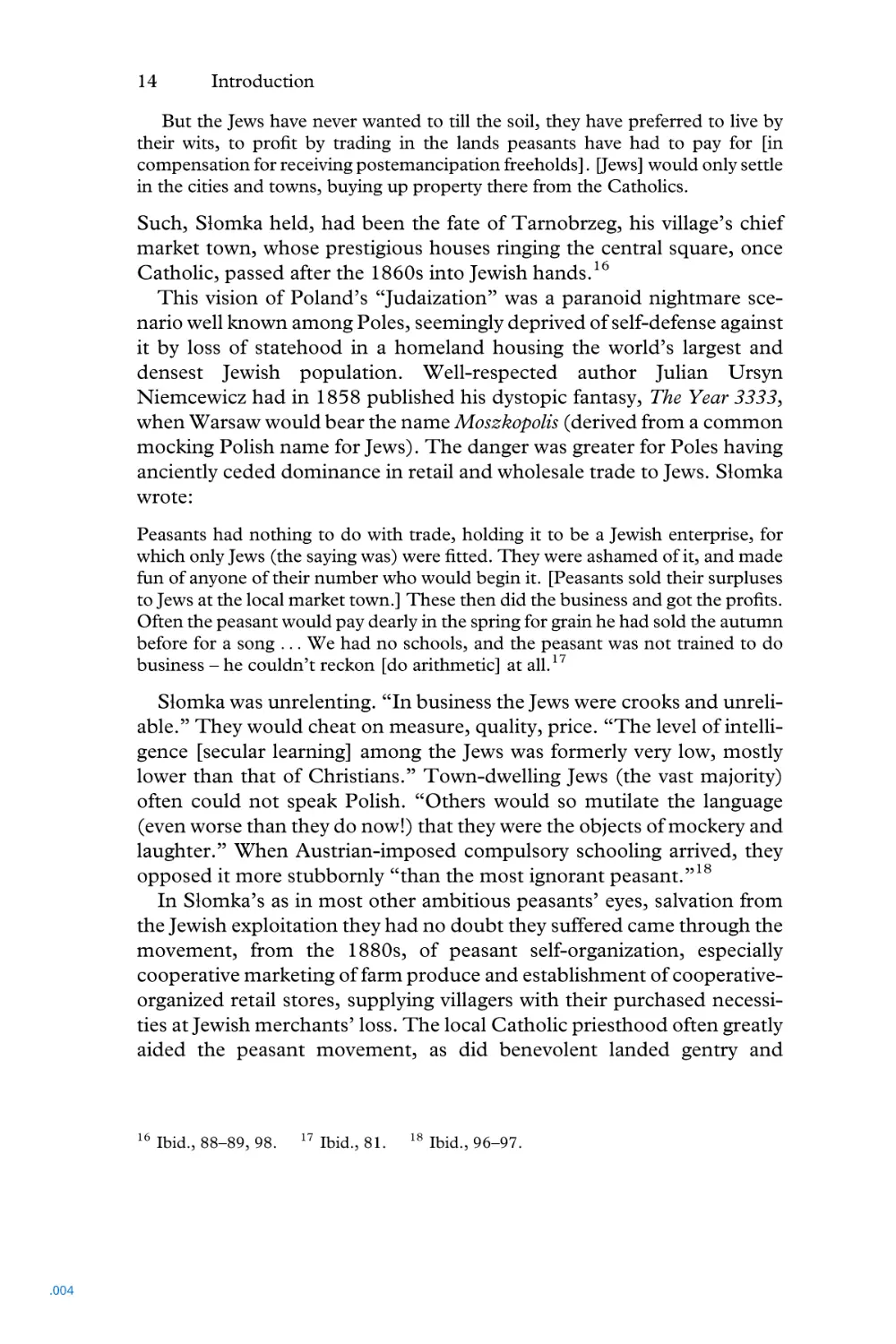
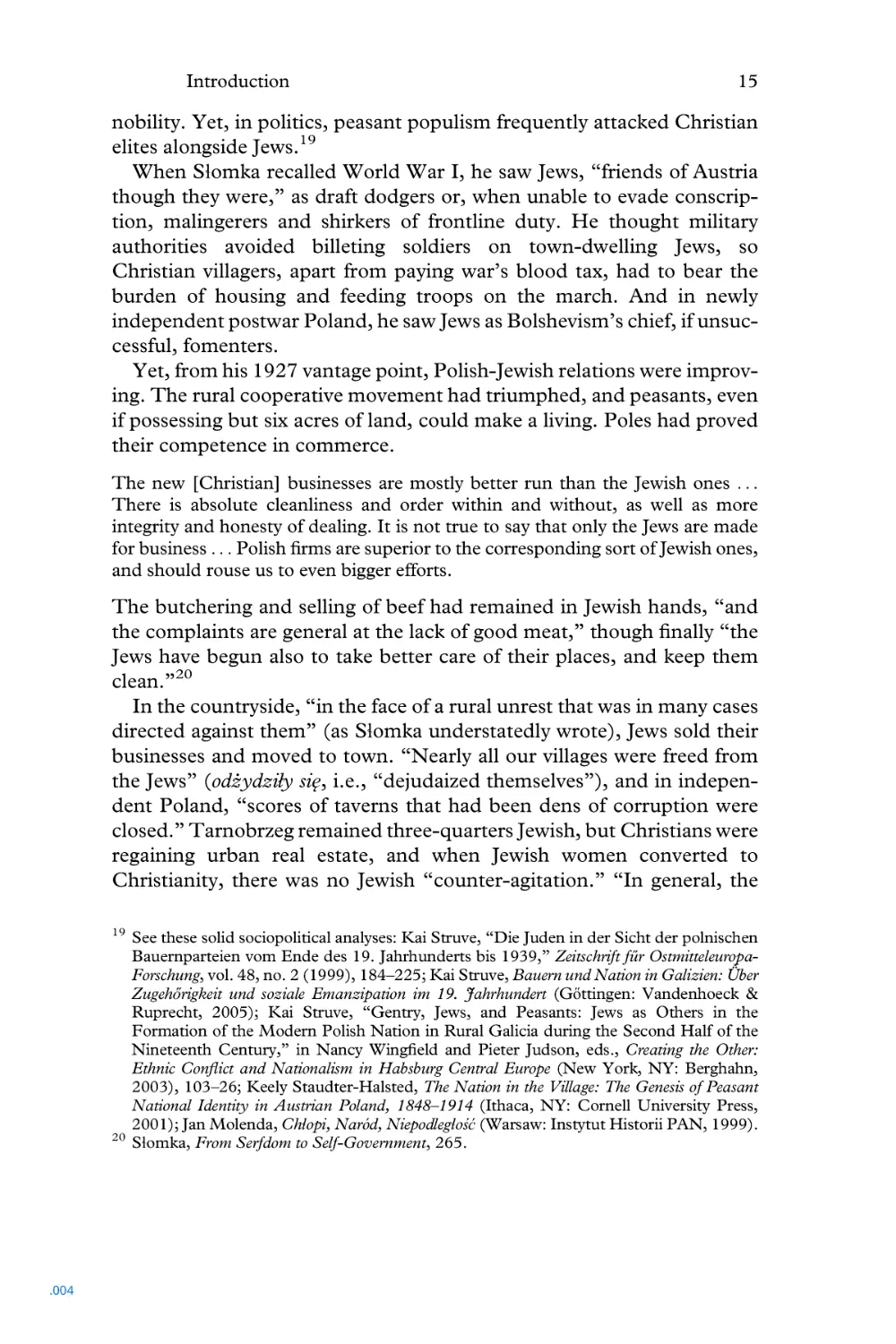



































































































































































Автор: Hagen W.W.
Теги: history military history european history antisemitism university of california newest history
ISBN: 9780521884921

Текст
                    Anti-Jewish Violence in Poland, 1914–1920

Widespread anti-Jewish pogroms accompanied rebirth of Polish statehood out of World War I and the Polish-Soviet war. William W. Hagen
offers the pogroms’ first scholarly account, revealing how they served as
brutal stagings by ordinary people of scenarios dramatizing popular antiJewish fears and resentments. While scholarship on modern antisemitism has stressed its ideological inspiration (“print-antisemitism”), this
study shows that anti-Jewish violence by perpetrators among civilians
and soldiers expressed magic-infused anxieties and longings for redemption from present threats and suffering (“folk-antisemitism”). Illustrated
with contemporary photographs and constructed from extensive newly
discovered archival sources from three continents, this is an innovative
interpretation of central and eastern European history. Using extensive
first-person testimonies, this work reveals gaps – but also correspondences – between popular attitudes and those of the political elites.
The pogroms raged against the conscious will of new Poland’s governors, while Christians high and low sometimes sought, even successfully, to block them.
William W. Hagen is Professor Emeritus of History at the University of
California, Davis. He has published extensively, including German
History in Modern Times (2012), which was selected as an “outstanding
academic work” by the American Library Association’s journal, Choice.

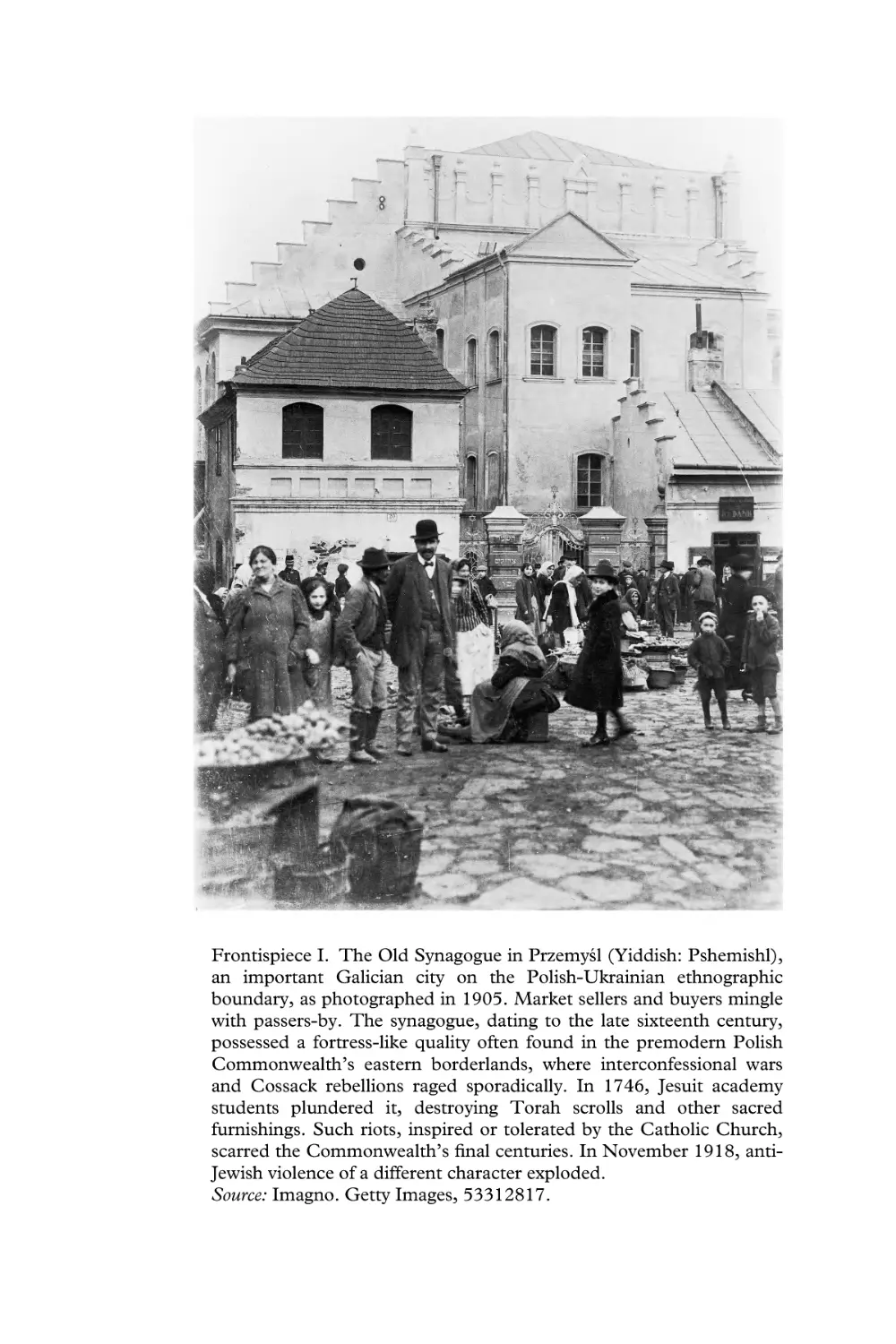
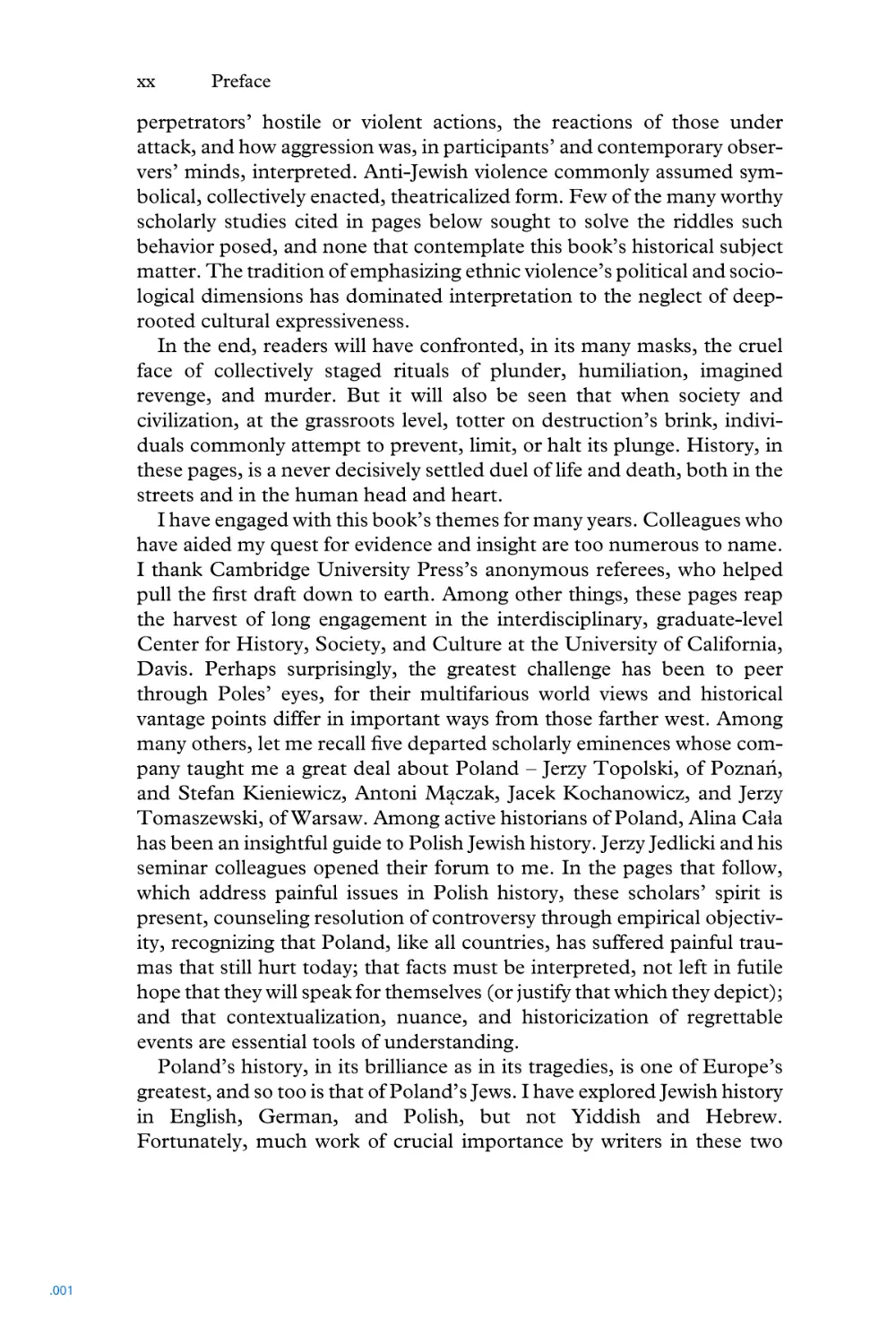
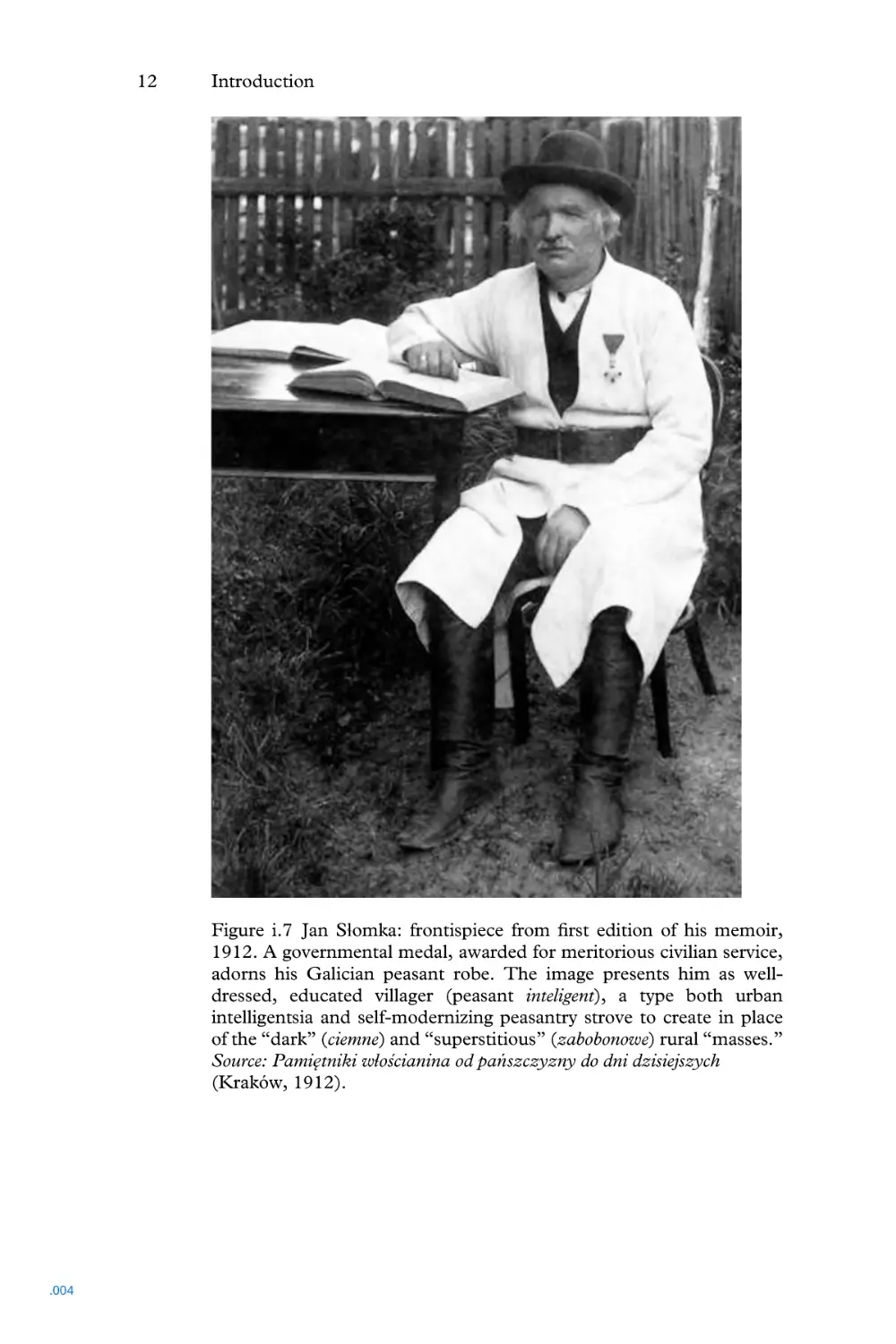
Frontispiece I. The Old Synagogue in Przemyśl (Yiddish: Pshemishl),
an important Galician city on the Polish-Ukrainian ethnographic
boundary, as photographed in 1905. Market sellers and buyers mingle
with passers-by. The synagogue, dating to the late sixteenth century,
possessed a fortress-like quality often found in the premodern Polish
Commonwealth’s eastern borderlands, where interconfessional wars
and Cossack rebellions raged sporadically. In 1746, Jesuit academy
students plundered it, destroying Torah scrolls and other sacred
furnishings. Such riots, inspired or tolerated by the Catholic Church,
scarred the Commonwealth’s final centuries. In November 1918, antiJewish violence of a different character exploded.
Source: Imagno. Getty Images, 53312817.

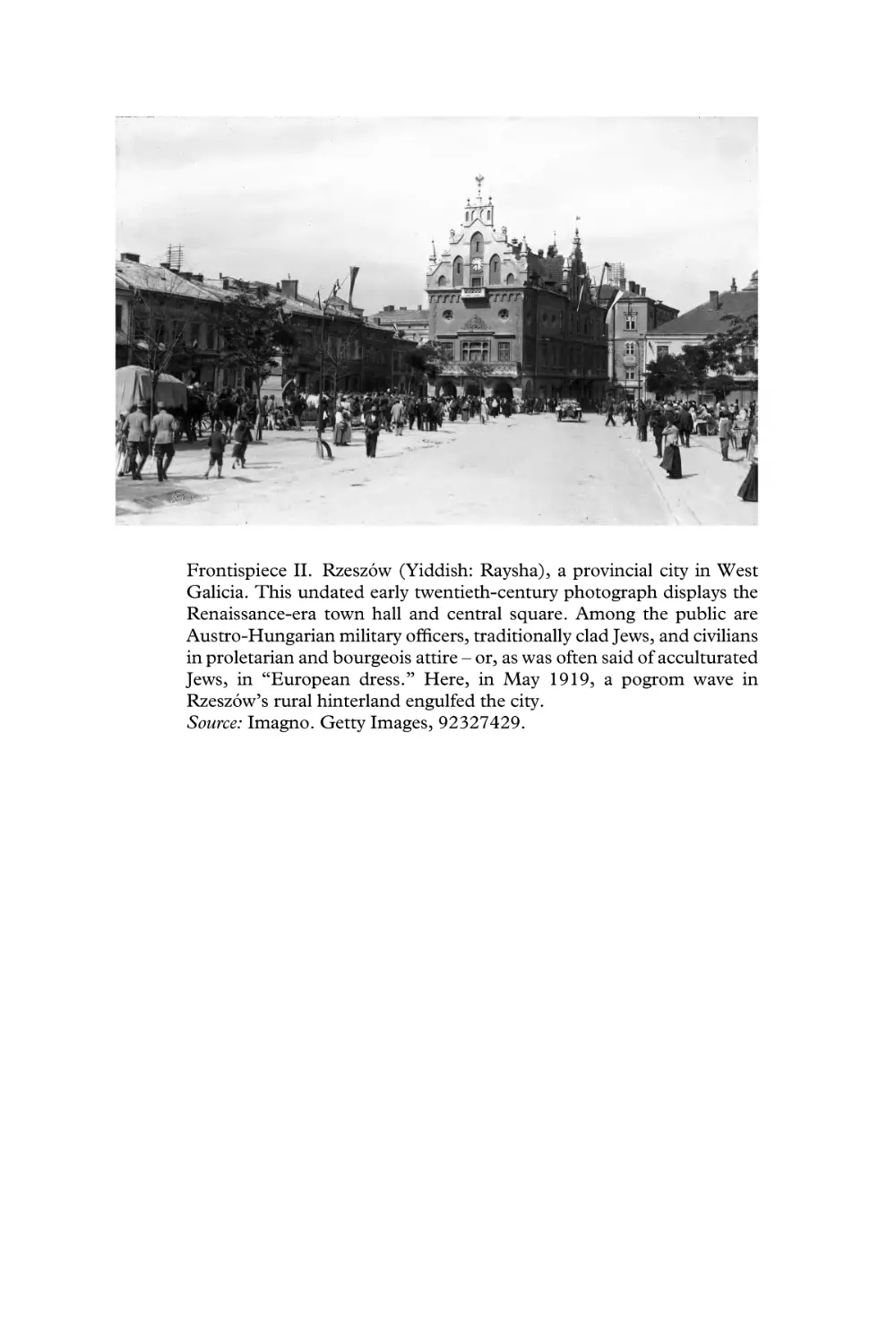
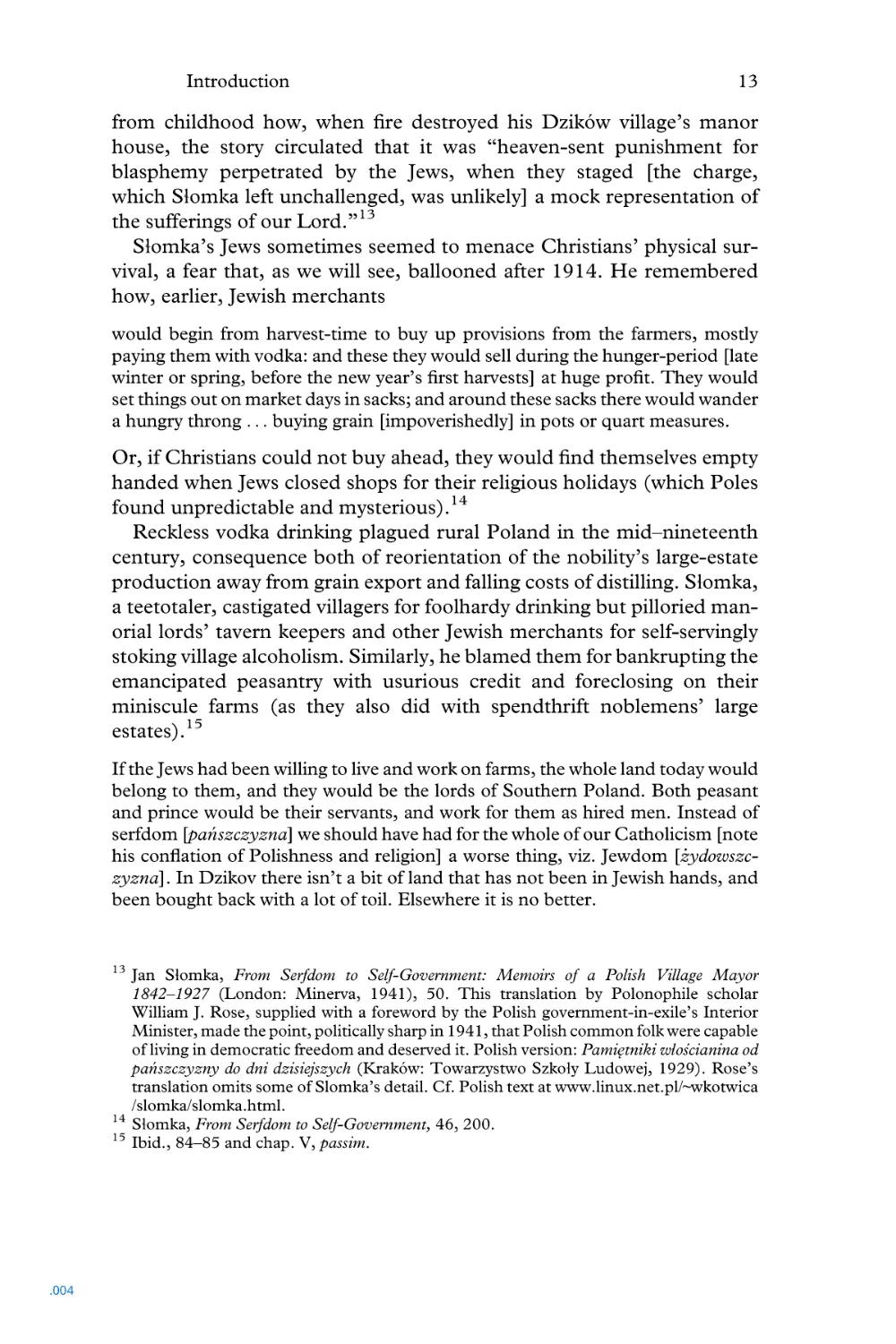
Frontispiece II. Rzeszów (Yiddish: Raysha), a provincial city in West
Galicia. This undated early twentieth-century photograph displays the
Renaissance-era town hall and central square. Among the public are
Austro-Hungarian military officers, traditionally clad Jews, and civilians
in proletarian and bourgeois attire – or, as was often said of acculturated
Jews, in “European dress.” Here, in May 1919, a pogrom wave in
Rzeszów’s rural hinterland engulfed the city.
Source: Imagno. Getty Images, 92327429.

Anti-Jewish Violence in Poland,
1914–1920
William W. Hagen
University of California, Davis

University Printing House, Cambridge CB2 8BS, United Kingdom
One Liberty Plaza, 20th Floor, New York, NY 10006, USA
477 Williamstown Road, Port Melbourne, VIC 3207, Australia
314–321, 3rd Floor, Plot 3, Splendor Forum, Jasola District Centre,
New Delhi – 110025, India
79 Anson Road, #06–04/06, Singapore 079906
Cambridge University Press is part of the University of Cambridge.
It furthers the University’s mission by disseminating knowledge in the pursuit of
education, learning, and research at the highest international levels of excellence.
www.cambridge.org
Information on this title: www.cambridge.org/9780521884921
DOI: 10.1017/9781139025737
© William W. Hagen 2018
This publication is in copyright. Subject to statutory exception
and to the provisions of relevant collective licensing agreements,
no reproduction of any part may take place without the written
permission of Cambridge University Press.
First published 2018
Printed in the United States of America by Sheridan Books, Inc.
A catalogue record for this publication is available from the British Library.
Library of Congress Cataloging-in-Publication Data
Names: Hagen, William W., 1942– author.
Title: Anti-Jewish violence in Poland, 1914–1920 / William Hagen.
Description: New York, NY : Cambridge University Press, [2018] |
Includes bibliographical references and index.
Identifiers: LCCN 2017045847 | ISBN 9780521884921
Subjects: LCSH: Antisemitism – Poland – History – 20th century. |
Jews – Poland – History – 20th century. | Poland – Ethnic relations. |
Pogroms – Poland – History – 20th century.
Classification: LCC DS146.P6 H34 2018 | DDC 305.892/4043809041–dc23
LC record available at https://lccn.loc.gov/20170458471
ISBN 978-0-521-88492-1 Hardback
ISBN 978-0-521-73818-7 Paperback
Cambridge University Press has no responsibility for the persistence or accuracy of
URLs for external or third-party internet websites referred to in this publication
and does not guarantee that any content on such websites is, or will remain,
accurate or appropriate.

And there are secret motives of conduct. A man’s most open actions
have a secret side to them.
That is interesting and so unfathomable!
Razumov, in Joseph Conrad’s Under Western Eyes
(Toronto, 2010, pp. 120–21)

Pogroms surprised not only Jews, but also Poles.
They tried therefore to make excuses not only to the world, but to
themselves.
Galician-born journalist Benjamin Segal, in Allgemeine
Zeitung des Judenthums, no. 25 (June 20, 1919)

True, they were robbed, and they live in fear of total extermination
(zupeɬnej zagɬady), but this inspired in them great national feeling.
Polish army intelligence report on Volhynian Poles facing
Bolshevik domination, 1919

We didn’t have any books at home. Not even children’s books or fairy
tales. The only “fantastic” stories came from religion class. And I took
them all very literally, that God sees everything, and so I felt I was always
being watched. Or that dead people were in heaven right over our village.
I looked for the faces of the deceased neighbors in the clouds, and
I found them, too. I was worried about them when the wind picked up
or when it rained or there was thunder and lightning. Then I asked
myself whether “the good Lord” was punishing them, because they
had to race through the sky together with the clouds.
Novelist/Nobelist Herta Mű ller (b. 1953), on childhood in
a German-speaking Romanian village,
in New York Times, July 17, 2016

The terror of the unforeseen is what the science of history hides, turning
a disaster into an epic.
Philip Roth, The Plot Against America (New York, 2004), 114.

For not forever will the poor man be forgotten, the hope of the lowly not
lost forever.
Arise, O Lord, let not man flaunt his strength, let nations be judged in
Your presence.
O Lord, put fear upon them, let the nations know they are mortal!
Book of Psalms, 9:19–21, translation Robert Alter (New York, 2007)

It would mean that the descendants of poor Poles would have to pay the
descendants of those who were rich.
Jarosɬaw Kaczyń ski, chairman of Poland’s Law and Justice Party, rejecting
Jewish Holocaust victims’ compensation claims for dispossessed property;
available at www.facebook.com/tv1polska/videos/1089260141153880/
(August 14, 2016)

Contents

List of Figures
List of Maps
Preface
Note on the Cover Image
Guide to Polish Pronunciation
Introduction: Culture and Psychology of the
Polish-Jewish Relationship
Theoretical Footnote: Ethnic Violence in Social Science
and Historiography
Part I War, Hunger, Revolt: Galicia, 1914–1918

page xi
xii
xiii
xxii
xxiii
1
50
59

1 Peacetime Precursors, Russian Invasion, and the First
Wartime Pogroms, 1914–1916

61

2 West Galicia’s Jews, 1917–1918: Objects of Envy, Targets
of Rage

87

3 Polish Dawn, Jewish Midnight: The November 1918
Pogroms in West Galicia and Lwów

123

4 Reading the November Pogroms: Rage, Shame, Denial,
Denunciation

173

National Independence’s After-Tremors

213

5 Jews in Russian Poland, 1914–1919: German Friends,
Russian Enemies, Polish Rivals, Zionist Prophets

215

6 In National Freedom’s Morning Light: Disarray in
Warsaw, Social War in Galicia

246

Part II

ix

Contents

x

Part III Pogroms’ Path Eastward, 1919–1920
7

8
9
10

303

Soldierly Antisemitism, Pinsk Massacre, and
Morgenthau’s Mission: “Pranks,” Exorcisms,
Explanations, Exculpations

305

On Apocalypse’s Edge: Army and Jews during the
Polish-Soviet War, 1920

363

In Armageddon’s Shadow: Anti-Jewish Violence in the
Polish-Soviet War Zone, July–October 1920

407

In Eastern Anarchy’s Orbit: Polish Soldiery among
Cossacks and Anti-Bolshevik Warlords

462

Conclusion: Lords of Commerce and Lords of
Communism, Print-Antisemitism and Popular
Anti-Judaism

507

Bibliography
Index

518
536

Figures

i.1 Anna Kahan with family in Siedlce, 1916 (Muzeum Walki
i Męczeń stwa w Treblince)
page 2
i.2 German soldiers, 1915, entering Mɬawa (Ullstein Bild.
Getty Images)
6
i.3 Street scene in Warsaw, 1906 (Ullstein Bild. Getty Images)
7
i.4 A Galician Jewish Passover celebration, 1915 (Imagno.
Getty Images)
8
i.5 Unidentified Jewish family portrait, Warsaw, ca. 1910
(Imagno. Getty Images)
9
i.6 Jewish parliamentary deputies, 1919 (YIVO Institute for
Jewish Research)
10
i.7 Jan Sɬomka (from his Pamiętniki wɬościanina, 1912)
12
i.8 Village farmers in Russian Poland, ca. 1910 (Ullstein Bild.
Getty Images)
16
i.9 A Polish-language elementary school established in 1915–16
(Ullstein Bild. Getty Images)
17
i.10 Endeks, St. Petersburg, 1910 (Provenance unknown)
24
i.11 Depiction of imagined ritual murder, Sandomierz
cathedral (provenance unknown)
36
3.1 Pogrom iconography: Proskurov, 1919 (Bettmann.
Getty Images)
157
8.1 Polish prisoners of war in Soviet captivity, 1920
(Provenance unknown)
365
8.2 Russian Cossacks, 1914 (PhotoQuest. Getty Images)
366
8.3 Marshal Józef Piɬsudski receiving bread and salt from Jews,
1920 (Centralne Archiwum Wojskowe, Warsaw-Rembertów) 369
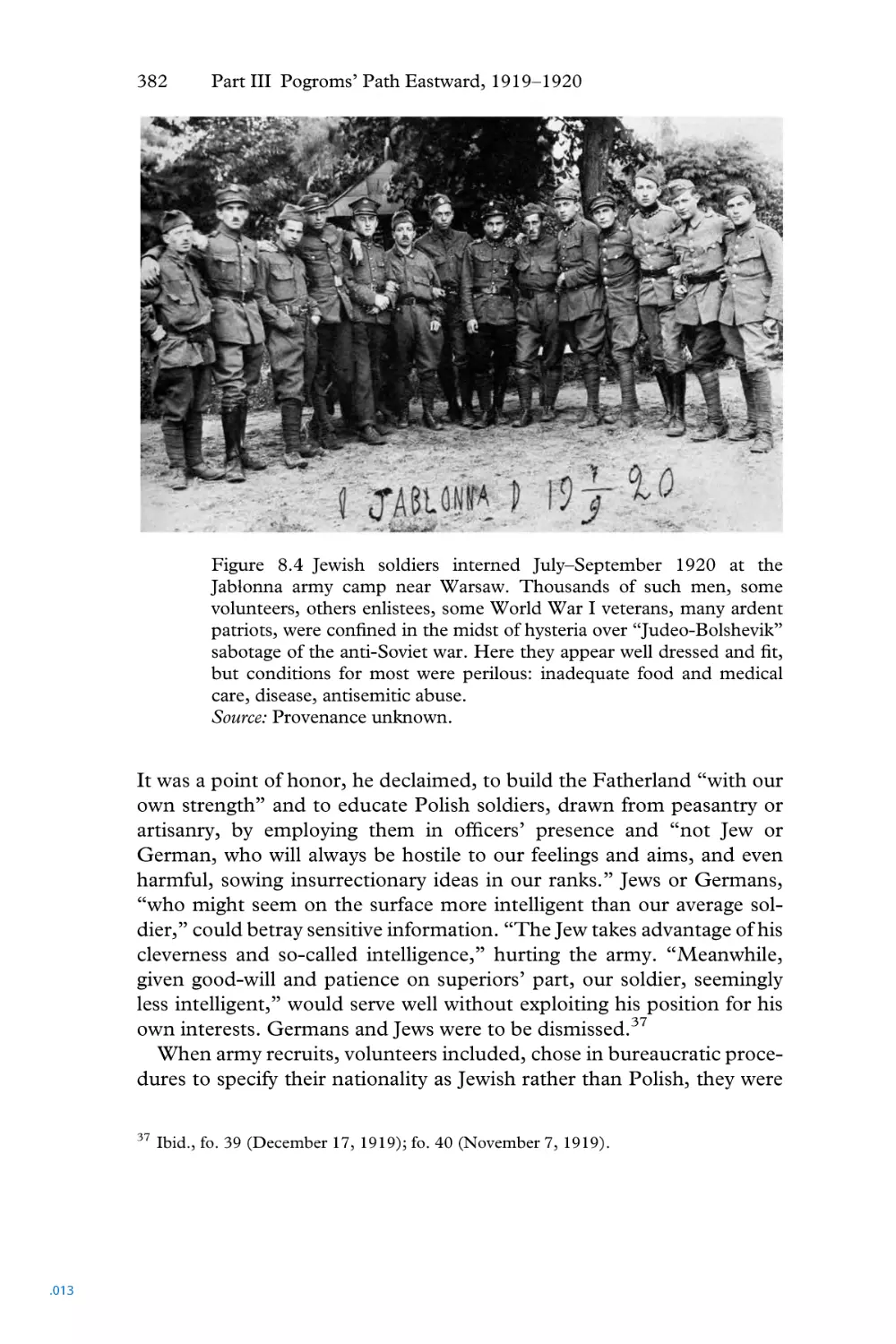
8.4 Interned Jewish soldiers at Jabɬonna camp, 1920 (Provenance
unknown)
382
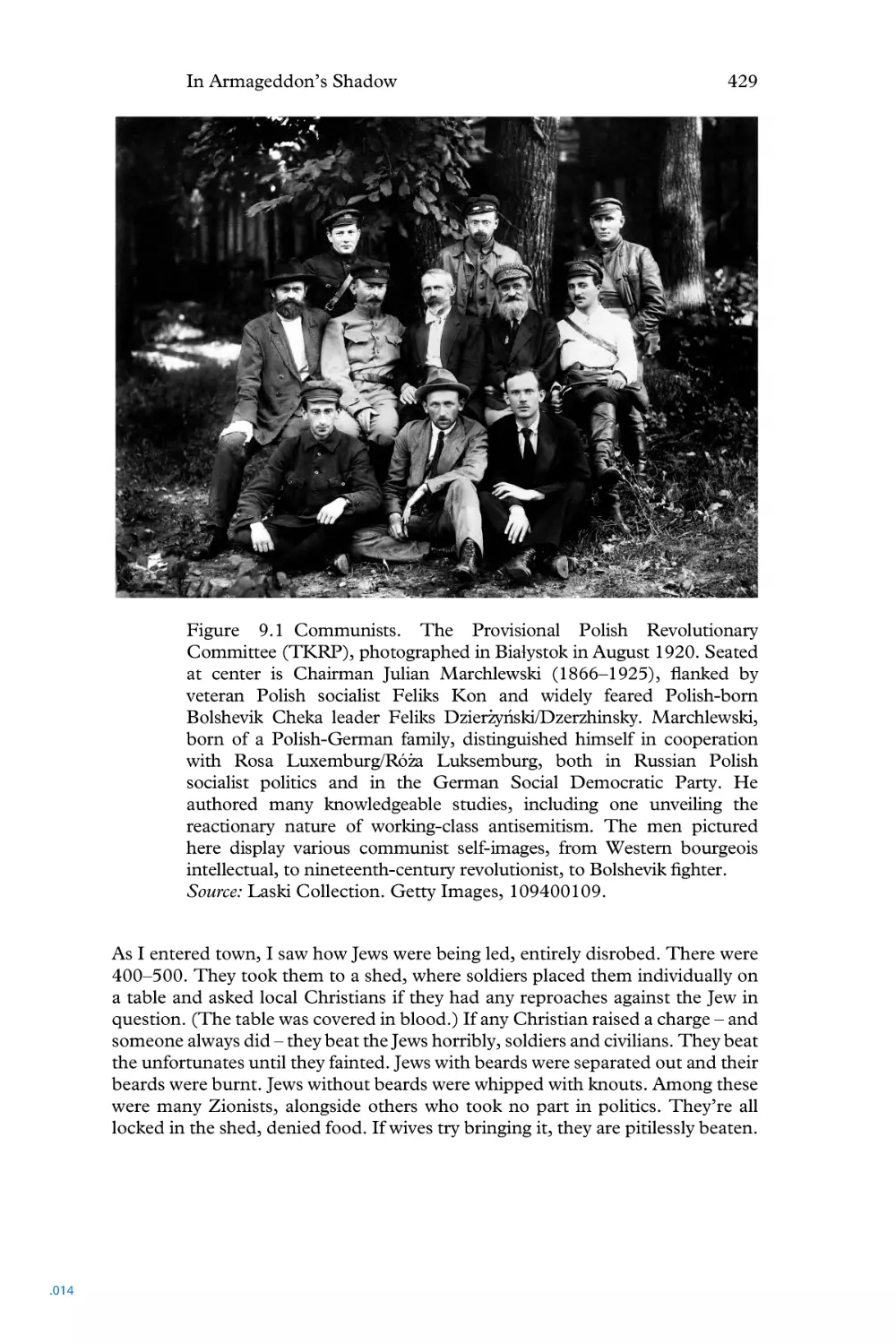
9.1 Polish Communist leaders, August 1920 (Laski Collection.
Getty Images)
429
10.1 Baɬachowicz among Russian officers, 1920 (Provenance
unknown)
492
xi

Maps

Map I Lands historically stamped by Polish rule and culture
before the partitions (1772–95) of the Polish
Commonwealth
Map II Pogroms of 1918–20.

xii

page xxiv
xxvi

Preface

This book’s theater spans the multinational lands of historical Poland,
much more far-flung than today’s ethnographically homogeneous, postCommunist nation-state. They were Judaism’s greatest exilic stronghold.
The drama is that of the Polish-Jewish relationship in World War I and its
tumultuous and bloody aftermath, culminating in the Polish-Soviet War
of 1920, little remembered in the West but crucial for East Europe’s
future. At center stage are Christian Poles’ actions toward the multitudinous Jews in their midst, whose voices respond in something like
a Greek tragedy’s chorus.
This is a book about Judeophobic deeds and their justification in words;
about anti-Jewish riots and pogroms, both soldierly and civilian; and about
antisemitic ideology and politics. But it is also especially about popular or
grassroots ethnic violence, perpetrated independently of state authority far
more often than not and mostly in defiance of it (but frequently supposing
covert government approval). In this it dovetails with present-day scholarly
debates on pogroms in the Russian Empire and, more broadly, on popular
violence as social phenomenon and practice. It aims to contribute by
emphasizing the expressive character of popular ethnic violence – its enactment of social-cultural scripts. Its arguments in explanation of these dark
dramas, as they occurred among Christian Poles and their Jewish neighbors
in the years 1914–20, will emerge in the pages that follow, but here it
should be said that much of the perpetrators’ violent behavior was unreflective and conventionalized, ingrained and unquestioned (though their
intent to inflict damage is another matter).
There are valuable studies of ethnic violence as a tool of political
conflict and implementation of ideological programs, most of them probing how it – as successful, premeditated action by political entrepreneurs –
advanced aggressors’ interests and damaged victims’ possessions, bodies,
and lives. Such works steer clear of interpreting ethnic violence as behavior expressive of unreflected-on, if not altogether unconscious, social
and cultural beliefs, fears, and wishes. This is what these pages, in their
farthest reach, undertake. If it were true that human action is both
xiii

.001

xiv

Preface

conscious, purposive, and in some sense rational and also unself-critical,
culturally embedded, and often irrational, then these two approaches to
understanding ethnic violence might be complementary. But this study,
while assuming the sufficiently challenging task of puzzling out the messages in the mayhem’s medium, will also show that ethnic violence generally damaged the “rational interests” – slippery concept – both of
perpetrators and of state and society.
This is a study resting on years-long, wide-ranging research into previously unconsulted or neglected unpublished sources reposing in
archives in Warsaw, Kraków, Vienna, Jerusalem, and New York. Its
chapters assemble archival mosaic stones into pictures of ethnonational
relations of Poles and Jews in their several respective subcultures and the
violence accompanying them during six years of war and revolution.
While this book supplies – in passing rather than all at once – political
and social context essential to following its arguments, it should not be
taken for a sustained and authoritative narrative history of politics
(whether among Christians or Jews), nor of war, state, society, or even
of anti-Jewish violence itself, whose full extent requires further exploration. It illuminates in passing many issues controversial among historians,
leaving it to them and their readers to ponder further implications
(although prospectors for triumphalist nationalism will pocket no new
nuggets). It will be seen that suffering and injustice spared almost no one,
though in radically varying degrees.
This book’s aim is to analyze social and cultural meanings of ethnonational conflict and violence as embodied and expressed in participants’ acts,
as articulated in their words, and as I, their interpreter, have inferred them.
The method results in myriad vignettes that are suggestive of many lines
of analysis. Historical understanding is author’s offering but also reader’s
response to newly excavated evidence and fresh argumentation. These
pages display a gallery of hundreds of historically forgotten individuals,
of whom only glimpses are seen, but from which comprehension of
the culturally disparate worlds they inhabited will flow as by osmosis.
Their words are these pages’ most eloquent. As for scenes of cruel
violence the reader will occasionally encounter, they serve as evidence
for arguments this book proposes. The psyche can be morbidly or obsessively drawn to them; whole societies can be gripped with traumas of
remembrance or reenactment. Of this I am well aware, so painful scenes
are not lingered over.1
1

.001

Dominick LaCapra, Representing the Holocaust: History, Theory, Trauma (Ithaca, NY:
Cornell University Press, 1996); Eva Hoffman, After Such Knowledge: Memory, History,
and the Legacy of the Holocaust (London: Public Affairs Press, 2005).

Preface

xv

These pages’ rich micro-level documentation reveals something of
deep importance that pales or is lost in macro-level generalizations: in
violence among people, innumerable decisions are made, both for good
and ill. To recognize that individual actions diminish as well as intensify
strife is, if not to demonstrate the operation of ethically guided free will, to
dispel the oppressive sense left in great or cruel violence’s aftermath that it
was but the predetermined consequence of one or another fatal human
propensity. Microactions make a difference, whether they embody individual freedom or not.
As for this book’s ethical standpoint, it does not depend on assumptions about universal morality but accepts that codes of values are historically evolved and inflected in varying ways. History’s actors are not
ourselves. We do not legislate for the past. The quest here is for insight
into conscious and unconscious motives and meanings. Moral judgment
and censure are subjective prerogatives, or they repose in power’s hands –
though the authorities (including the democratic collectivity), themselves
entangled in moral ambiguities, often fail to act.
The published sources and scholarly monograph literature touching on
this book’s themes are mountainous and unscalable to their peak by even
the most persistent and polyglot historian. The notes in the chapters,
apart from identifying archival documents and other unpublished
sources, confine themselves mainly to citations of scholarly works indispensable to the discussion at hand.
Some documentation in these pages will be found controversial, especially by readers accustomed to the view, justifiable in itself, that Poland’s
rebirth in an age of cataclysmic war and revolution was a glorious affirmation of the nation’s will to live freely. But, as these pages demonstrate, and
as all serious scholars of the subject know, it was, except for the privileged
and well-cushioned few, an agonized, hunger-wracked, crime-ridden,
fear-beset, and often bloody resurrection. Yet Poland’s Jews, through
their competing political leaders, invested high hopes in Poland’s emergence as a democratic republic and widely, if also apprehensively, welcomed it. There was little Jewish nostalgia for Russian rule, and Habsburg
Austria and Imperial Germany, though far friendlier to their Jewish subjects than the fallen tsardom, had vanished irretrievably.
A book such as this must take a stand on violence in general.
Undeniably, it stalks the shadows of human life. Without it, history is
imaginable only as utopia. Though it derives physiologically from Homo
sapiens’ brute origins, human violence broke free during the long process
of civilization from the blind imperatives of survival and reproduction.
Like the axe, it became a tool, both in individual and communal hands.

.001

xvi

Preface

Application of its sharp edge ceased to be instinctual and became instead
a matter of choice in the pursuit of conscious ends. These might be one or
another form of collective or individual self-aggrandizement, as in the
seizure of material goods, but violence came just as well to serve religious
and moral purposes, particularly in warding off threats, imagined or real,
to social and cultural existence.
Human violence also explodes unpremeditatedly or, at any rate, without prior calculations of advantage or necessity. Such volcanic events
reveal the delicacy of the webs of cohesion humanity has spun for itself,
and the force of repressed resentment and desire. Yet it is a rare outburst
of spontaneous violence whose perpetrator is not prepared to defend it as
right and just, however self-servingly. To recognize that the enabling
condition of human violence is its subjectively felt righteousness gets to
the heart of the matter. It is tempting to think that if violence were
impossible to justify, it would wither like an unused bodily organ or
pass into the realm of the pathologic, where certain rare behaviors still
dwell.
Understanding of human violence thus derives from its positive, valueladen meaning in its practitioners’ eyes. To those who believe that people’s
actions are rationally directed toward maximizing power and wealth, an
emphasis on social or cultural rationales for violence may seem like
exchanging substance for shadows. Yet political government and economic power manifest themselves in myriad forms, all of them historically
evolved and invariably clothed in ideological and cultural dress. Like
violence, wealth and political rule seldom, if ever, figure as ends in
themselves, but rather their pursuit is meant to realize cultural values.
These find expression in languages of individual or social morality descending from larger conceptions of cosmic order and human perfection or
redemption.
Ethnic and cultural antagonisms are lived more consequentially than
they are thought, but they must be harbored – even if unconsciously – in
mind and heart to be acted on. Rarely are antagonists evenly balanced.
Aggression will flow more forcefully from one side than from the other (or
others). It is easier to reconstruct hostile ideas and suppose that minds
thinking them will eventually translate them into deeds than to understand
how people turn to violence against imagined outsiders among whom
they have peacefully lived, no matter with what prejudices and resentments. One of this book’s challenges is to transcend opposition of idea
and action by showing how action embodies ideas. This will have the good
effect of demonstrating, through looking at action, just which ideas are
being enacted (for mind and heart harbor many contradictions).

.001

Preface

xvii

One consequence of stressing practice over disembodied ideas or ideological doctrines is to highlight the situationality of such identities as Pole or Jew
(or Christian or peasant). Recent debates among historians and social
scientists on “national indifference” emphasize that ethnonational identity has often been, and today often still remains, a passive, ambivalently
experienced, or even irrelevant aspect of ordinary people’s quotidian
lives, leaving many in doubt and disarray at moments of political crisis
in which national loyalties are summoned. The pages that follow will
illustrate identity’s kaleidoscopic dynamics, usefully eroding the common
tendency to concretize and absolutize – reify or ontologize – ethnonational and religious categories. In their light, readers will soon find that all
collective judgments on the groups involved – “Poles,” “Jews,” and
others – are false. At most, tendencies or potentialities, not necessarily
expressive of majorities, come to light. Nations and peoples are abstractions, not, except in simplest demographic or citizenly sense, flesh and
blood. They cannot be “naturalized,” however much it continually happens in everyday discourse (and even though newly admitted American
citizens are, revealingly, said to be naturalized). Few, if any, want only to
be what others think them to be.2
Some readers may question the veracity of one or another account of
violence registered in these pages. Especially in East European historiography, scarred by past ideological distortions from both left and right,
factual accuracy is often fetishized, not infrequently to dismiss unwelcome
argumentation. What might be called the “forensic approach” often prevails, seeking to establish individual or group agency so as to assign historical responsibility or guilt. The professional historian is sworn to empirical
truth. Yet facts, once established, require interpretation, which when
strong can and must bridge gaps or blind spots in the documentary record
until new evidence, if discovered, requires reconceptualization.3
2

3

.001

Rogers Brubaker and Frederick Cooper, “Beyond ‘Identity,’” Theory and Society, vol. 29
(2000), 1–47; Rogers Brubaker, Ethnicity without Groups (Cambridge, MA: Harvard
University Press, 2004); Rogers Brubaker et al., Nationalist Politics and Everyday
Ethnicity in a Transylvanian Town (Princeton, NJ: Princeton University Press, 2008);
Tara Zahra, “Imagined Noncommunities: National Indifference as a Category of
Analysis,” Slavic Review, vol. 69, no. 1 (2010), 93–119; for nuancing of the indifference
argument, emphasizing socially differentiated, politically generated, and culturally distinctive meanings of national identity within historically evolved linguistic communities,
see Jakub Beneš, Workers and Nationalism: Czech and German Social Democracy in Habsburg
Austria, 1890–1918 (Oxford: Oxford University Press, 2017), 10ff, 243ff. On emergence
through violence of national identity within highly diverse communities, see
Max Bergholz, Violence as a Generative Force: Identity, Nationalism, and Memory in
a Balkan Community (Ithaca, NY: Cornell University Press, 2016).
On these and related points, see William W. Hagen, “A ‘Potent, Devilish Mixture’ of
Motives: Explanatory Strategy and Assignment of Meaning in Jan Gross’s Neighbors,”
Slavic Review, vol. 61, no. 3 (2002), 466–75.

xviii

Preface

Doubtless exaggeration occurred, and panicked misreportage, of the
mayhem and injury these pages analyze. I have sought out multiple
accounts so as to minimize bias. The gravest violence is well documented,
but I have not disqualified plausible eyewitness testimony by lone individuals. In the end, the wide extent and destructiveness – physically,
materially, and psychologically – of anti-Jewish violence in these wartorn years is as irrefutable as daily nightfall. The first challenge is to
accurately reconstruct it, recognizing that very many localities escaped
it and that popular participation was limited. It was almost always
a minority affair, usually dependent on the presence of armed men.
Greater still is the challenge to understand its social and cultural meaning,
contemporary signification, and legacy to the present day – for expressive
violence still inflames the horizon and perhaps always will.
Most things having to do with Central and Eastern Europe are, viewed
through Western eyes, complex, unfamiliar, even exotic. As we encounter
the Polish lands, home of Europe’s largest Jewish population, they lay
divided, bereft of once-savored sovereignty, under the rule of AustroHungarian, Russian, and Imperial German monarchies. Readers must
accustom themselves to thinking of historic Poland and its inhabitants
engulfed by the light and shadows of these mighty states. As in the course
of World War I they broke free of them, Poles’ and Jews’ relationships to
each other (and also among themselves) faced a new dawn, hopeful but
also ominous amid political cataclysms and renewed warfare, culminating
in 1920’s Polish-Soviet War.
The Introduction following this Preface is unusual in largely foregoing
a critique of previous historical scholarship, offering instead a portrait
gallery of leading-role actors in this book’s dramas, some individual, some
collective, including scholarly writers who have influentially interpreted
the Polish-Jewish relationship. It is these mentalities, existential perspectives, and world views that must be understood if interpretation and
explanation are to move toward objectivity’s sunlight. A minichapter
follows, entitled, “Theoretical Footnote: Ethnic Violence in Social
Science and Historiography,” in which this book’s relation to powerful
analytical traditions is briefly identified and defended. Readers allergic to
such scholarly pollen – enticing to many worker bees! – may choose to fly
over it.
The succeeding chapters will move to and fro between culturalpsychological and social-political levels. The mythic meanings and messages projected on the first of these two planes – notably the scenarios
pogroms enact – are released by upheavals on the second plane: economic
and political crises, foreign or civil war. The historical setting of

.001

Preface

xix

expressive violence must be known. It often denies itself, pretending to be
mere self-defense or unapologetic rapacity when it is, in culturalpsychological reality, much more.
The stage shifts from Austrian Poland (Galicia) during and immediately after World War I to wartime Russian Poland and eastward regions.
The Galician account, assembled from rich but largely neglected Austrian
civil and military archives, dramatizes at ground-floor level the Habsburg
monarchy’s slow-motion buckling. It reveals the eruption, from small
tremors, of pogrom violence that reached volcanic intensity at war’s
end, transforming in 1919 into rural social war targeting Jews foremost
but with new Poland’s officials and gentry also under fire.
After the independent state’s chaotic birth in November 1918, antiJewish violence’s terrain moved toward the 1920 war’s battlegrounds in
eastern ethnographic Poland and the nationally mixed Lithuanian,
Belarusian, and Ukrainian borderlands beyond. Perpetrators of ethnic
violence among Poles were mostly, during the world war, unarmed civilians and off-duty soldiers; in the war’s immediate aftermath, they were
irregular armed bands of demobilized imperial soldiers, deserters, desperados, and criminals trailed by motley civilian mobs; these pogromists
were slowly superseded by soldiers in newly arisen government armed
forces, whose anti-Jewish deeds likewise attracted civilians; finally, during
the Polish-Soviet War, chief aggressors were Polish army soldiers and
Russian-oriented irregulars allied with Poland against the Red Army.
This study’s new light on wartime Russian Poland radiates from largely
unmined German and Polish Zionist records and those too of the philanthropic American Jewish Joint Distribution Committee. The final chapters, focused on 1919–20 soldierly violence in eastern Poland and
beyond, rest on Jewish-assembled eyewitness reports and longinaccessible and never before deployed documentation lying, stamped
“secret” in Polish army intelligence archives.
Multiple types of anti-Jewish violence stalk these pages, enacted
according to varying scripts. Unsurprisingly, the trend, mainly because
of perpetrators’ advancing militarization, was toward more extreme and
comprehensive violence. But soldiers were simultaneously, by socialization, civilians. They brought with them to army life their preexisting social
and cultural imaginations. The war’s sufferings, and the Bolshevik revolution, found reflection in shifting scenarios of violence, even while old
and deep-rooted fantasies continued to cause retributive dramas to be
staged, cudgels to be gripped and fists to ball.
The aim is not to construct would-be authoritative macro-political
narratives, whether triumphalist or debunking, but rather to summon
up, in first-person testimony, the dilemmas and delusions driving

.001

xx

Preface

perpetrators’ hostile or violent actions, the reactions of those under
attack, and how aggression was, in participants’ and contemporary observers’ minds, interpreted. Anti-Jewish violence commonly assumed symbolical, collectively enacted, theatricalized form. Few of the many worthy
scholarly studies cited in pages below sought to solve the riddles such
behavior posed, and none that contemplate this book’s historical subject
matter. The tradition of emphasizing ethnic violence’s political and sociological dimensions has dominated interpretation to the neglect of deeprooted cultural expressiveness.
In the end, readers will have confronted, in its many masks, the cruel
face of collectively staged rituals of plunder, humiliation, imagined
revenge, and murder. But it will also be seen that when society and
civilization, at the grassroots level, totter on destruction’s brink, individuals commonly attempt to prevent, limit, or halt its plunge. History, in
these pages, is a never decisively settled duel of life and death, both in the
streets and in the human head and heart.
I have engaged with this book’s themes for many years. Colleagues who
have aided my quest for evidence and insight are too numerous to name.
I thank Cambridge University Press’s anonymous referees, who helped
pull the first draft down to earth. Among other things, these pages reap
the harvest of long engagement in the interdisciplinary, graduate-level
Center for History, Society, and Culture at the University of California,
Davis. Perhaps surprisingly, the greatest challenge has been to peer
through Poles’ eyes, for their multifarious world views and historical
vantage points differ in important ways from those farther west. Among
many others, let me recall five departed scholarly eminences whose company taught me a great deal about Poland – Jerzy Topolski, of Poznań ,
and Stefan Kieniewicz, Antoni Mą czak, Jacek Kochanowicz, and Jerzy
Tomaszewski, of Warsaw. Among active historians of Poland, Alina Caɬa
has been an insightful guide to Polish Jewish history. Jerzy Jedlicki and his
seminar colleagues opened their forum to me. In the pages that follow,
which address painful issues in Polish history, these scholars’ spirit is
present, counseling resolution of controversy through empirical objectivity, recognizing that Poland, like all countries, has suffered painful traumas that still hurt today; that facts must be interpreted, not left in futile
hope that they will speak for themselves (or justify that which they depict);
and that contextualization, nuance, and historicization of regrettable
events are essential tools of understanding.
Poland’s history, in its brilliance as in its tragedies, is one of Europe’s
greatest, and so too is that of Poland’s Jews. I have explored Jewish history
in English, German, and Polish, but not Yiddish and Hebrew.
Fortunately, much work of crucial importance by writers in these two

.001

Preface

xxi

languages originally appeared in Polish, German, or English or has been
translated. In this book’s primary-source documentation, Jewish voices
speaking in the latter three idioms have been most consequential. They
gave expression also to the Yiddish-speaking multitudes on whose behalf
they often spoke.
Numerous archivists aided my researches in Israel, as in Poland,
Austria, and New York. Lewis Bateman, seasoned editor, supported
this book from its beginning. His successor, Michael Watson, supplied
sagacious counsel. It is mysterious how one synthesizes far-ranging
research and experience into a book, but many other people’s lives are
positively and happily intertwined with it, including especially my wife
Ursula’s.

.001

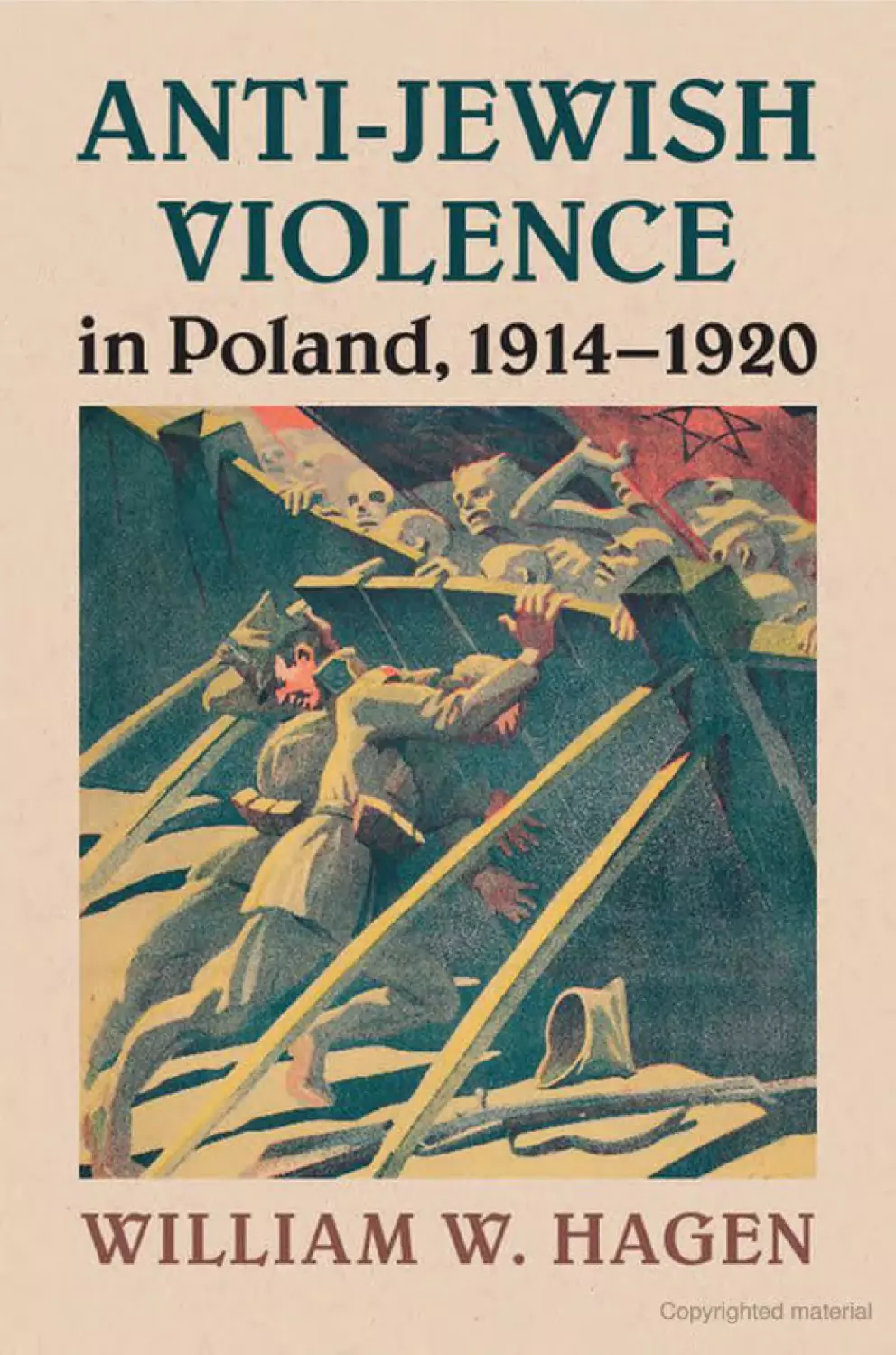
Note on the Cover Image

This 1920 poster cries out for aid to Polish soldiery in stemming the
incoming flood of inhuman, nightmarish invaders who brandish
a Soviet red star–bearing flag. A powerful image of the war’s apocalyptic dimension, it will have connected with specters of demons stalking
the dark side of traditional popular culture. This was a creation of
eminent and prolific graphic artist Edmund Bartɬomiejczyk
(1885–1950). (Source: Muzeum Wojska Polskiego w Warszawie.)

xxii

.002

Guide to Polish Pronunciation

Accents normally fall on the second-to-last syllable.
Vowels:
Vowels:

Diphthongs:
Hard consonants:

Soft consonants:

Other
letters/sounds:

a, e, i, o, u uniform, as in “saw,” “met,” “it,”
“show,” “shoot” (ó = u).
ą , ę lightly nasalized; ą as in softly and rapidly pronounced English “own” or French on; ę as in softly
pronounced English “enter” or French “main.”
au, eu as in “out” and “boy,” respectively.
(1) bat, dog, fox, get, kit, let, met, net, pet, r (lightly
rolled), sit, tot, zero.
(2) c, at word’s end or when followed by any letter
except i or z (on which, see below): “ts” as in “cats.”
h or ch (identical sounds) as in “hat”; or aspirated,
as in Scottish “loch” (e.g., “bread” (chleb) = hleb).
j like English y, as in “yet.”
w like English v, as in “vat”; at word’s end, as f in
“staff.”
ɬ (“dark l”), like English w.
.
rz, z (identical sound), like s in English “pleasure.”
.
ź soft form of rz, z .
cz as in “chat.”
sz as in “shot.”
szcz continuous double consonant, as in “cash
change.”
ś (or si) soft English sh, as in “she.”
ć (or ci) soft English ch, as in “teach.”
ść continuous double consonant, as in soft “fresh
cheese.”
ń before consonants or at word’s end, slightly nasalized, as in “onion”; before vowels, spelled as ni and
pronounced like “nyet.”

xxiii

.003

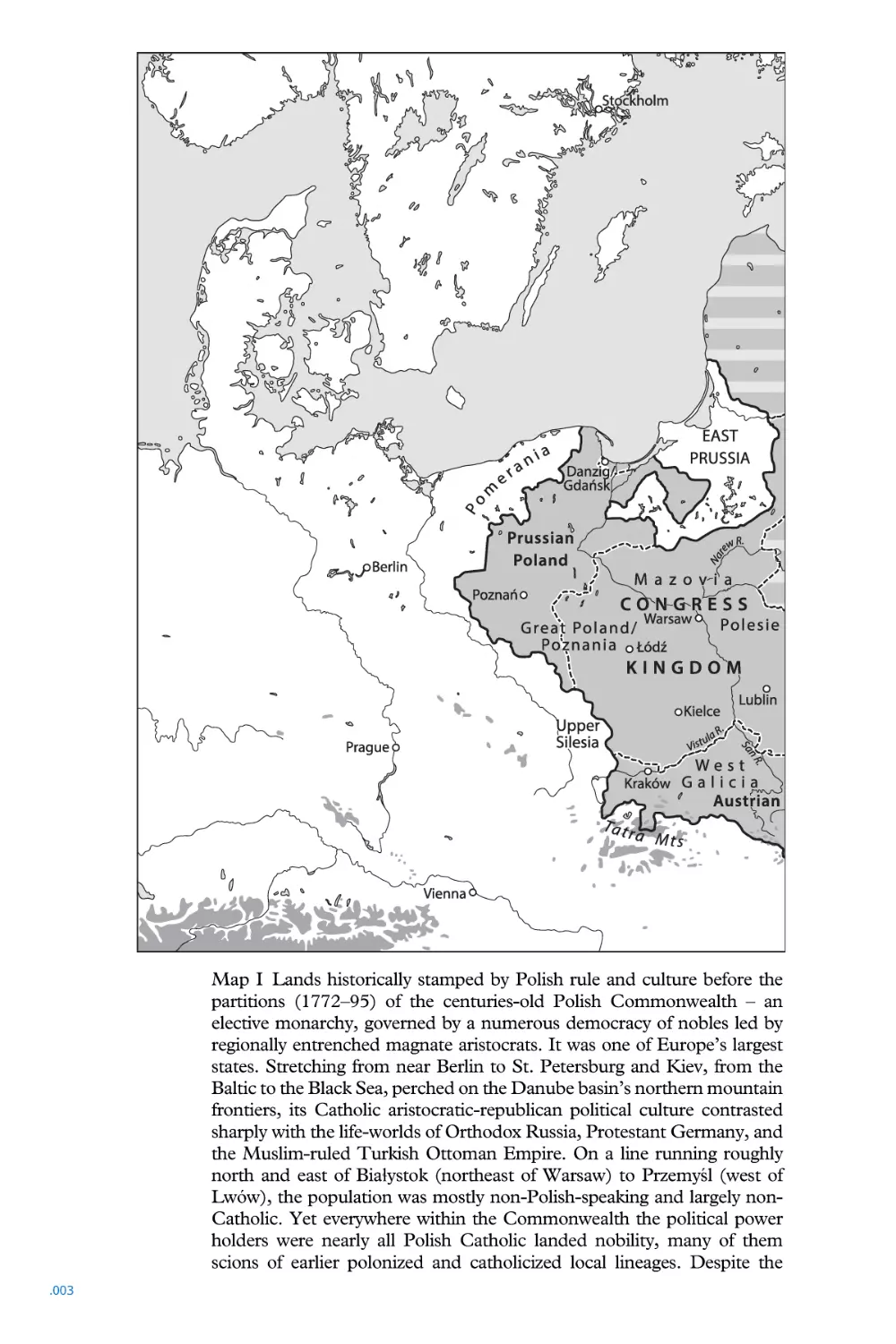
Map I Lands historically stamped by Polish rule and culture before the
partitions (1772–95) of the centuries-old Polish Commonwealth – an
elective monarchy, governed by a numerous democracy of nobles led by
regionally entrenched magnate aristocrats. It was one of Europe’s largest
states. Stretching from near Berlin to St. Petersburg and Kiev, from the
Baltic to the Black Sea, perched on the Danube basin’s northern mountain
frontiers, its Catholic aristocratic-republican political culture contrasted
sharply with the life-worlds of Orthodox Russia, Protestant Germany, and
the Muslim-ruled Turkish Ottoman Empire. On a line running roughly
north and east of Biaɬystok (northeast of Warsaw) to Przemyśl (west of
Lwów), the population was mostly non-Polish-speaking and largely nonCatholic. Yet everywhere within the Commonwealth the political power
holders were nearly all Polish Catholic landed nobility, many of them
scions of earlier polonized and catholicized local lineages. Despite the
.003

Caption for Map I (cont.)
partitions, local Polish landowners and clergy and intelligentsia springing
from their ranks retained great regional influence and even, as officeholders
in the partitioning powers’ administrative hierarchy, governing authority.
The Commonwealth’s Jewish community, the world’s largest,
approximated a half-million in a prepartition population of some
twelve million. Polish Jews were accustomed to life in a polyglot and
religiously variegated world overarched by a Polish aristocratic culture
that, in ethnographic Poland’s eastern borderlands, only the wars and
revolutions of the twentieth century finally extinguished.
.003

Map II The pogroms of 1918–20. Polish-perpetrated pogroms erupted
first in November 1918 in West Galicia and in East Galicia’s Lwów, with
notable outliers in Przemyśl and Kielce. Thereafter, anti-Jewish violence
accompanied the war fronts established by Polish military conquest
eastward, toward Wilno, Pinsk, and Kiev, and in 1920 by the PolishSoviet War, whose culminating battles blazed on ethnographic Polish
soil. Along the Polish-Belarusian settlement frontier, the largely nonPolish Baɬachowicz army perpetrated much anti-Jewish violence, some

.003

Caption for Map II (cont.)
of whose sites are included here. But the widespread pogroms in Ukraine
and elsewhere in the historic Polish-Russian borderlands, instigated by
Ukrainian, Russian, and other non-Polish hands, are left unidentified.

.003

.003

Introduction
Culture and Psychology of the Polish-Jewish
Relationship

The Theoretical Footnote that follows this Introduction engages the
historical and social science literature that underpins – or challenges –
this book’s arguments. But such matters do not rivet all readers’ attention. Many will be drawn to these pages by personal ties of ancestry,
religion, or nationality. Others will seek in them illumination of the
conflict-beset, often-tragic history of twentieth-century Central and
Eastern Europe or of the present-day world’s passionate, often cruel
and bloody clashes of ethnicity and culture. Crucial are the perspectives
in which the Polish-Jewish relationship appeared to those enmeshed in it,
whether in the early twentieth century or thereafter. This Introduction
conveys dissonant voices, some scholarly, some popular, in the conviction
that readers hearing them will begin to understand the human dynamics
of this book’s dramas and grasp the interpretational problems they pose.
Notable are recent works, informed by cultural anthropology, that
insightfully reframe the problem of antisemitism in historically Polish
lands.
The Jewish Plight in Anna Kahan’s Eyes
Anna Kahan was a girl of fourteen when World War I erupted. She lived
with her family – her father a lower-middle-class, partner-swindled retail
butcher – in Siedlce (Shedlets in Yiddish), in Russian Poland’s east.
In 1911 it was a town of some 31,000 civilians, 54 percent Jewish, the
rest mainly Catholic Poles alongside some Christian Orthodox east Slavs
(Belarusians, Russians, Ukrainians). In 1906, as the revolution of 1905
faded, Russian soldiers unleashed by tsarist authorities staged a military
pogrom that may have claimed as many as fifty Jewish lives, with another
one-hundred wounded. Anna possessed admirable maturity and intelligence, reflected in the Yiddish-language diary she kept in 1915–16.
To assist her parents, she curtailed her studies to work as milliner, earning
in April 1915 eight rubles monthly, woefully little but not insignificant.
The war-gripped tsardom ruthlessly uprooted Jewish communities living
1

.004

2

Introduction

near its western front opposite the German and Austrian armies, though
Siedlce initially evaded this fate. But the Russian Empire’s discriminatory
western Pale of (Jewish) Settlement was awash in refugees, while wartime
shortages undermined Jews’ precarious existence. They were filled with
tsores (worries) about parnose (their livelihoods) and life itself. Anna
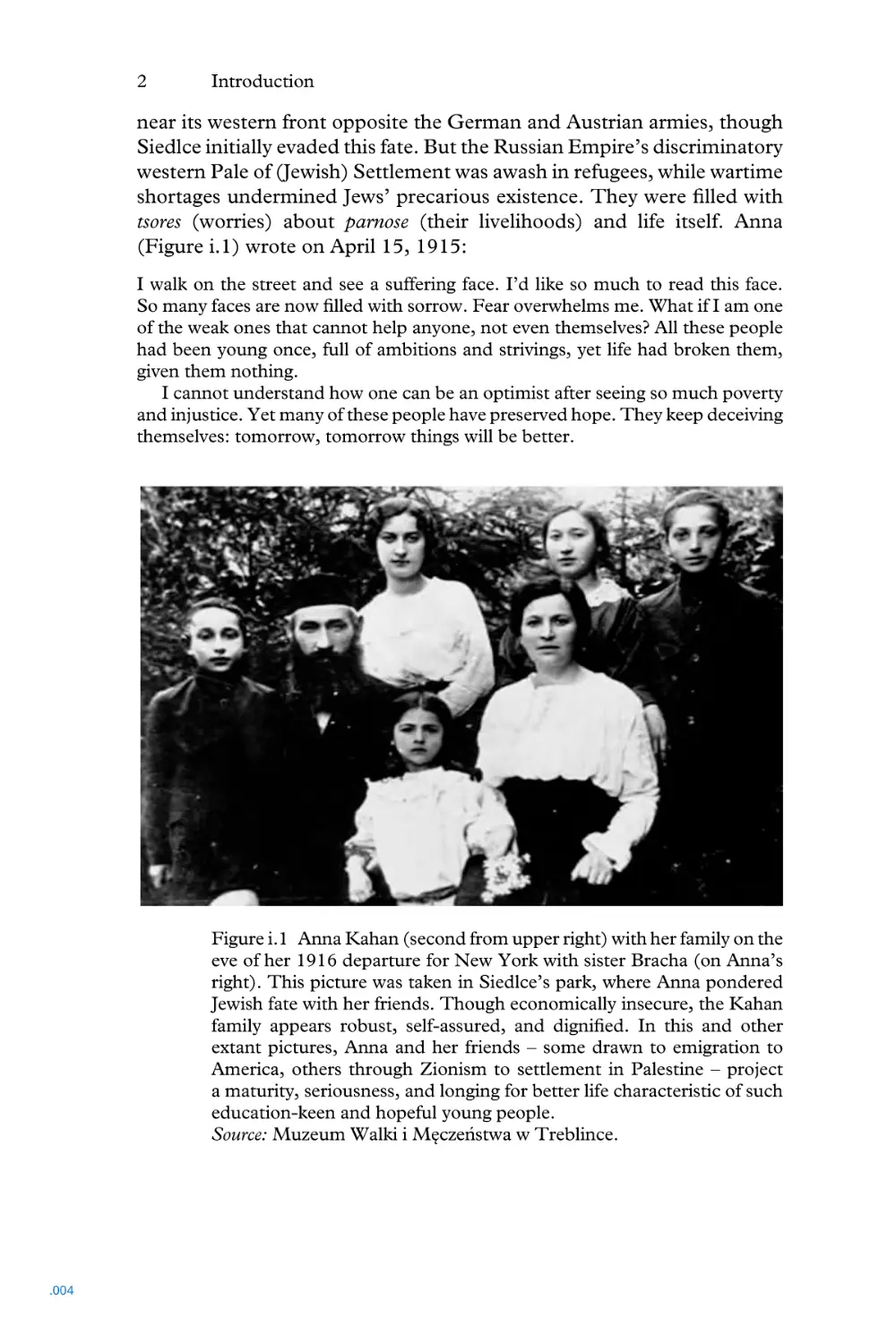
(Figure i.1) wrote on April 15, 1915:
I walk on the street and see a suffering face. I’d like so much to read this face.
So many faces are now filled with sorrow. Fear overwhelms me. What if I am one
of the weak ones that cannot help anyone, not even themselves? All these people
had been young once, full of ambitions and strivings, yet life had broken them,
given them nothing.
I cannot understand how one can be an optimist after seeing so much poverty
and injustice. Yet many of these people have preserved hope. They keep deceiving
themselves: tomorrow, tomorrow things will be better.

Figure i.1 Anna Kahan (second from upper right) with her family on the
eve of her 1916 departure for New York with sister Bracha (on Anna’s
right). This picture was taken in Siedlce’s park, where Anna pondered
Jewish fate with her friends. Though economically insecure, the Kahan
family appears robust, self-assured, and dignified. In this and other
extant pictures, Anna and her friends – some drawn to emigration to
America, others through Zionism to settlement in Palestine – project
a maturity, seriousness, and longing for better life characteristic of such
education-keen and hopeful young people.
Source: Muzeum Walki i Męczeń stwa w Treblince.

.004

Introduction

3

My father is a religious man. He is sure that God will help. I am not so
sure now.
. . . My heart is breaking in me today – there is just too much suffering around
me. When will mankind be redeemed?1

She pondered Jewish fate in ardent discussions with friends.
Of Greenbaum she wrote:
Not so long ago he had tried to convince me that the Jewish people would either
assimilate or perish. He saw no inner or outer forces that would rise to their
defense. There is no sense in suffering meaninglessly, he said. The Jewish people
ought to stop reproducing themselves. Of course, I had protested against this
pessimism. I told him our nation is alive and doesn’t want to die.

Later Greenbaum became a confident and optimistic Zionist.2
Multilingual Anna was proudly Jewish but open to its different political
expressions. Though she studied Hebrew, Zionists’ preferred language,
she defended Yiddish, rapidly developing as modern literary language.
“Yiddish has deep roots in the Jewish people, it has become sacred, for it
is Mame-loshn, mother-tongue. But he [a friend] insists that Yiddish must
perish. Whenever it encounters another language, it is vanquished,
assimilated.”3

1

2

.004

“The Diary of Anna Kahan. Siedlce, Poland, 1914–1916,” YIVO Annual of Jewish Social
Science, vol. XVIII (1983), 141–371, here 175ff. Anna Kahan was mother of Arkadius
Kahan, one of the author’s graduate program professors. On Siedlce, see
Edward Kopówka, The Jews in Siedlce, 1850–1945 (New York, NY: JewishGen, 2014).
There is an important Jewish memoir literature encompassing the late nineteenth and
early twentieth centuries. On Russian Poland, see, for example, I. J. Singer, Of a world that
is no more (New York, NY: Vanguard, 1971 [Yiddish original: 1946]); Isaac B. Singer,
In My Father’s Court (New York, NY: Farrar, Straus and Giroux, 1966 [Yiddish original:
1963]); David Assaf, ed., Journey to a Nineteenth-Century Shtetl: The Memoirs of Yekhetzkel
Kotik (Detroit, MI: Wayne State University Press, 2002 [Yiddish original: 1913]).
On Austrian Poland, see Joachim Schoenfeld, Shtetl Memoirs: Jewish Life in Galicia under
the Austro-Hungarian Empire and in the Reborn Poland 1898–1939 (Hoboken, NJ: KTAV
Publishing House, 1985).
Critical to understanding
the wartime Polish–Jewish relationship: Konrad Zieliń ski,
.
Stosunki polsko-zydowskie na ziemiach Królestwa Polskiego w czasie pierwszej wojny światowej
(Lublin: Wydawnictwo Uniwersytetu Marii Curie-Skłodowskiej, 2005). An authoritative
and judicious synthesis of the vast polyglot literature is Anthony Polonsky, The Jews in
Poland and Russia, 3 vols. (Portland, OR: Littman Library of Jewish Civilization, 2010–
12), here vols. II–III (1881–1914, 1914–2008).Cf. Heiko Haumann, Geschichte der
Ostjuden (Munich: Deutscher Taschenbuch Verlag, 1990); Jerzy Tomaszewski et al.,
Najnowsze dzieje Ż ydów w Polsce w zarysie (do 1950 roku) (Warsaw: Wydawnictwo
Naukowe PWN, 1993); Andrzej Ż bikowski, Ż ydzi (Wrocɬaw: Wydawnictwo
Dolnoślą skie, 1997); Andrzej Paluch, ed., The Jews in Poland, 2 vols. (Cracow:
Jagiellonian University Press, 1992, 1999); Israel Bartal, The Jews of Eastern Europe,
1772–1881 (Philadelphia: University of Pennsylvania Press, 2005).
Kahan, 212 (July 15, 1915). 3 Ibid., 310 (October 3, 1915).

4

Introduction

She viewed Jewish life’s imperfections sternly: “The Jewish communal
leaders who ruled and taxed without pity; the sharp distinction between
rich and poor; the contempt of the learned for the ignorant; above all, the
poverty of the masses.” The maskilim – assimilation-oriented (or “integrationist”) Jews, “modernized” by nineteenth-century German-born
Jewish Enlightenment (haskalah) – deluded themselves into thinking
the antisemitic tsarist government was only waiting for Jews “to acquire
education and European manners” to grant them equal rights.4
Despite her ambivalent feelings toward Poles, she avidly read Polish
literature, including the idealistically nationalist Nobelist Henryk
Sienkiewicz (who fired no anti-Jewish cannons). Zionist friend
Ackerman “criticizes me for reading Polish books. ‘If you read Polish
for six months,’ he says, ‘you develop assimilationist tendencies.’” She
archly replied that “even specifically patriotic works in Polish would not
have an adverse effect on a person who is conscious of his own
nationality.”5
In the park she discussed with friends Polish-Jewish relations, “which
are not good.” Yet the venerable Polish Commonwealth, before its partition among Russia, Austria, and Prussia (1772–95),
had given refuge to Jews when [in the late Middle Ages] they were expelled from
other countries and Jews had been mighty patriots of Poland, defending her with
their blood and possessions. Now things have changed. I don’t know who started
this bigotry and hatred among peoples, but the Poles certainly swallowed a big
dose of it.

Of this she had personal experience. A friend told her of his hospital stay,
where many wounded soldiers lay abed. They liked him, making no
invidious religious distinctions. “But one single Pole in that ward kept
yelling: ‘Jew! Jew!’ He was just sick with hatred.”6
When in August 1915 Siedlce Jews were evacuated eastward, she sat
with her family in the crowded train. A “handsome Polish lady, wearing
a Red Cross armband” arrived with husband and child. A Jewish man
tried to walk past her. She refused to let him through.
I never saw such a transformation in a person. She turned green, her eyes flashed,
her lips grimaced, her hands shook. She spewed out invective like vomit.
“The swine! The Jews! They’re everywhere! They grab everything! Even the
train! You can’t get away from them! They dirty up everything! That dirty Jew!”
She kept on in this vein for a long time. “The Jews are usurers, the Jews are
swindlers, the Jews are spies . . . Ż ydzi, Ż ydzi [Jews, Jews].”

4
6

.004

Ibid., 333 (January 8, 1916). 5 Ibid., 349 (March 29, 1916).
Ibid., 205, 211 (June 25 and July 10, 1915).

Introduction

5

Oh, God! The Poles themselves don’t have it good, yet they’re forever accusing
the Jews, as if the Jews were the cause of all evil, of all trouble. Where does all this
hatred come from? How can a human being absorb so much poison and go on
living?7

Victorious advance of the Central Powers’ armies brought Russian
Poland’s heartland (the 1815-defined, Warsaw-centered “Congress
Kingdom”) under German occupation, allowing the Kahans to return
home. During the fighting, they heard that “Cossacks are coming!” She
reflected, “What terror in the one word ‘Cossacks.’” Though a small girl at
the time, she remembered Siedlce’s pogrom during the 1905–6 revolution:
The shooting, the fear, the soldiers knocking on the door, their hoarse cries and
my father’s soothing, cheerful voice. (He bought them off with money and
a drink.) I remember vividly one night, all of us lying on the floor, bullets whistling
through the windows across, and my mother crouching, examining my feet in fear
that a bullet hit me.8

During 1915 fighting, a drunken Cossack was “out on the street, brandishing his sabre, shouting ‘I’ll kill all the Jews!’ The German fired twice
and finished him off with his sword. Cossacks they don’t take as prisoners,
but kill them off on the spot. ‘I think that’s barbarous,’ I say.”9
The German occupiers permitted Siedlce’s Poles to celebrate their
holiday – forbidden under tsarist rule – of May 3, commemorating the
liberal constitution promulgated in 1791. Blue and white Zionist flags
decorated houses alongside Poles’ red and white. “No wonder the joy of
the Polish people is great – they have waited 125 years for this holiday.
I wonder whether the Jewish people will ever celebrate their own
national holiday.” Jews, wearing Zionist armbands and badges,
marched alongside Poles. Anna found Polish girls in Cracovian costume good-looking. Warsaw-based Zionist luminary Antoni Hartglas
spoke. “At the end he expresses the hope and wish for a free and friendly
life for both nations, living in harmony and peace.”10
Germans’ pitiless requisitioning of war supplies embittered the Jews.
Anna heard that “They’ll come and take whatever they please, and
you have to smile while they’re robbing you.” But in Siedlce, locally
quartered Germans were friendly and decent (Figure i.2). “They are
extremely patriotic and awfully proud. They have no regard for
7

8
9

.004

Ibid., 236 (August 8, 1915). Another train-riding obsessive antisemite among educated
Poles appears in Alfred Dőblin’s impressive Journey to Poland (New York, NY: Paragon
House, 1991 [German original: 1924]), 257–58.
“The Diary of Anna Kahan,” 370 (September 18, 1916); on the pogrom, see Kopówka,
The Jews in Siedlce, 1850–1945, chap. 3.
Kahan, 275 (September 17, 1915). 10 Ibid., 356–57 (May 3, 1916).

6

Introduction

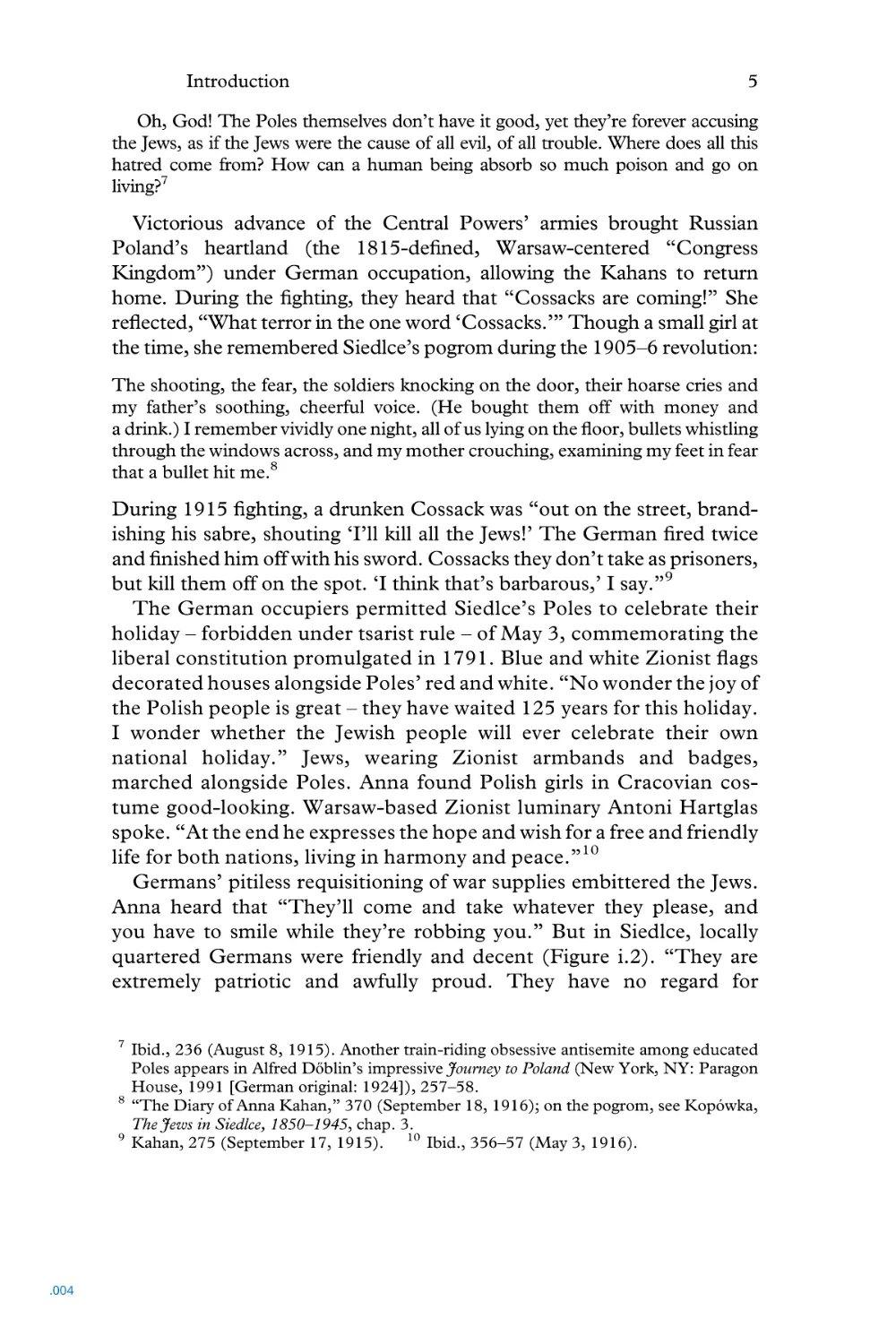
Figure i.2 German soldiers, 1915, entering Mɬawa, formerly a Russian
Polish town north of Warsaw. Jewish residents – mostly men – observe
them. This is a not untypical Jewish street in a shtetl or small town with
a large Jewish population (here, in 1910, lived some 15,000 souls,
45 percent Jewish, but many shtetls were smaller). Onlookers wear
customary everyday dress. Mutual understanding of Yiddish and
German was possible, given a will to achieve it. For German Jewish
soldiers, contact with Polish Jews was often bewildering. They tended to
sentimentalize and exoticize their eastern coreligionists, pitfalls that still
yawn today in Western countries. Polish Jews inclined toward caution in
associating themselves with Germans, despite often strong incentives to
do so. Wartime requisitions by rival armies and governmental controls
on food supplies severely injured Jewish merchant interests while
infuriating townspeople and, ruinously, stoking antisemitism.
Source: Ullstein Bild. Getty Images, 501372297.

anyone but Germany and the German people. ‘Deutschland,
Deutschland über alles!’ If you’re not a German, you’re an inferior
creature. (They hate the Cossacks most of all, and all want to kill
several.)” Yet German policy reversed tsarist prohibition of public
schooling in Polish and Jewish languages. “So the Germans do bring
culture wherever they come!”11
11

.004

Ibid., 294, 298, 312 (September 28 and 30 and October 3, 1915).

Introduction

7

Figure i.3 A Warsaw street scene from 1906, centered on Jewish
workers amid others in bourgeois dress. Jewish artisans and other
laborers, including dairymen and butchers, were a massive presence in
Poland. Many were poor, but others supported stable households, and
some rose to prosperity. The more secular-minded among them were
often rough and tough, strongly inclined to cooperative organizations
and labor unions and drawn to leftist politics. Alongside such scenes
stood the vast, ramshackle structure housing Jewish textile workers
throughout the Polish lands. Technological change imposed
adaptability and, often, self-exploitation. The Russian Empire’s
greatest industrial textile center was Łódź /Lodzh, west of Warsaw.
Factory jobs were frequently barred to Jews, even when employers
were Jewish, because Christian workers aimed to monopolize them
and would work on Saturdays. Jews found employment as handloom
weavers and tailors and in finishing or labor-intensive home labor.
Source: Ullstein Bild. Getty Images, 542350157.

Penury, even starvation, stalked Anna’s gloomier thoughts. During the
German advance, she wrote that “the rich have plenty of money and most
of them have already sent their families deeper into Russia. But for people
like us who have a few hundred rubles, the question arises: How long can
a sum like this last? What then?” In winter 1915 she wrote:

.004

8

Introduction

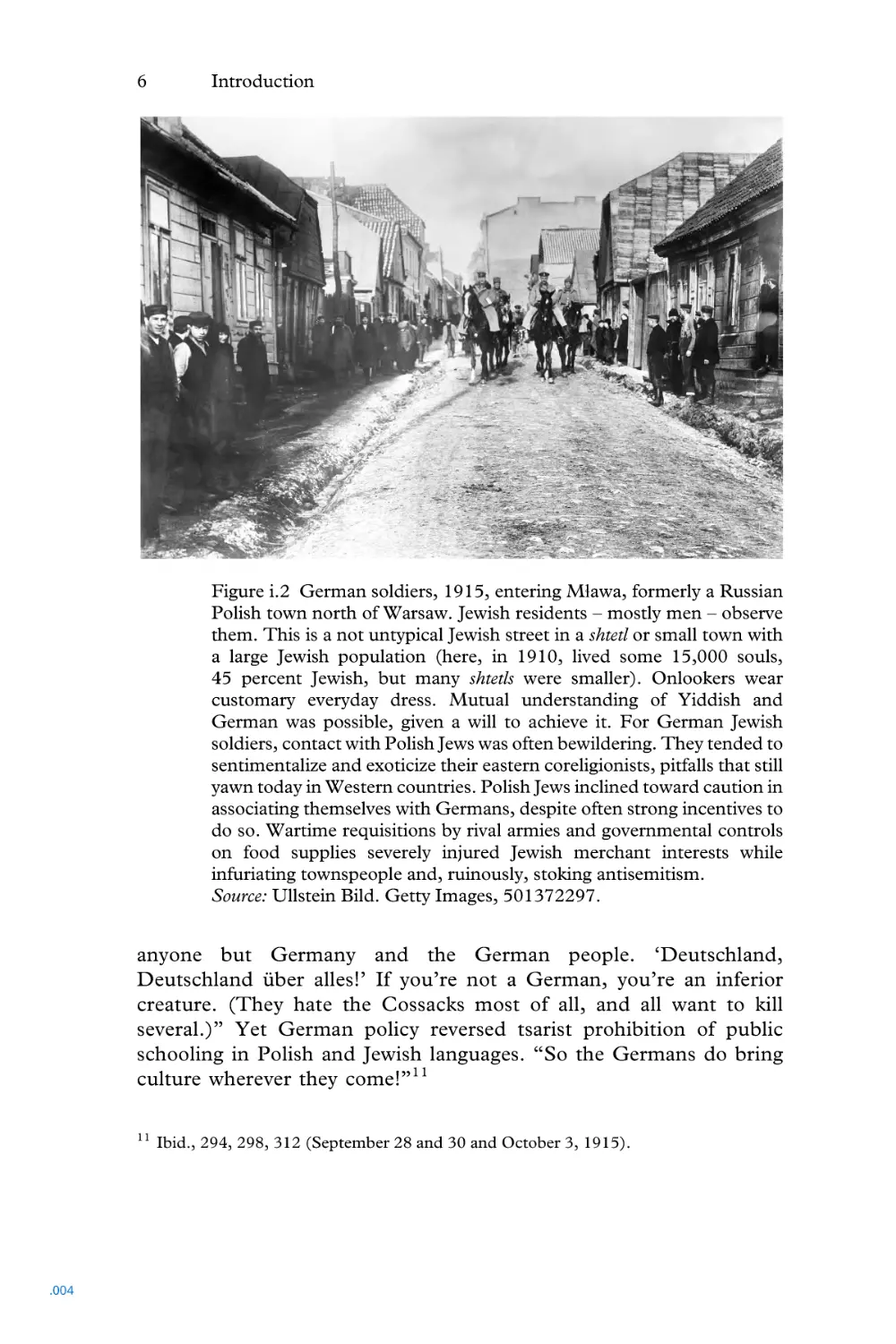
Figure i.4 A Galician Jewish Passover celebration, 1915. Two Austrian
soldiers are present, together with students and, seemingly, a rabbinical
guest. Here depicted is the complex cultural hybrid of religiously
stamped identity, including bearded patriarch; Austro-Hungarian
education and citizenship; and contemporary middle-class life,
including a young woman presenting herself in modern light. Nor
should the photographer – a profession to which many Jews were
drawn – be overlooked.
Source: Imagno. Getty Images, 53313274.

Destitution is increasing, whoever has bread today will not have it tomorrow.
Riots will surely break out. Hunger compels the most law-abiding man to use
force. When he’ll see a bread, he’ll take it, money or no money. The starving will
grow wild, break into stores and warehouses. And the end will be that sooner or
later we’ll all die the horrible death of hunger.

In March 1916, she wrote: “Oh, these hunger riots! The roar: ‘Bread!’
keeps ringing in my ear.”12
Anna Kahan sharply perceived the dilemmas and dangers facing
Russian Poland’s Jews. Among these, Polish anti-Jewish violence did
not figure, even if Judeophobia among Poles shocked and baffled her.
12

.004

Ibid., 215, 326, 350 (July 22 and November 12, 1915, March 31, 1916).

Introduction

9

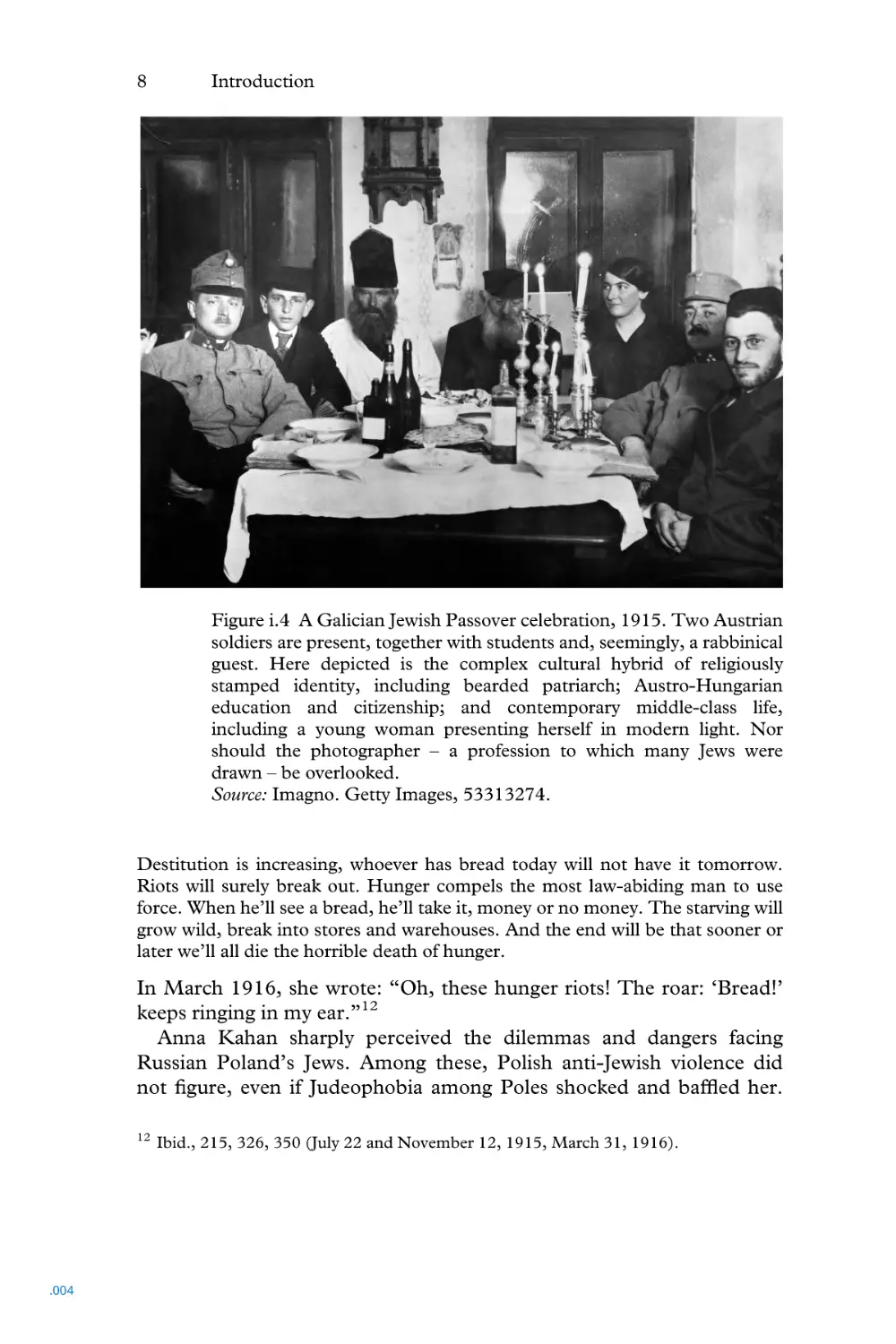
Figure i.5 Unidentified Jewish family portrait, Warsaw, ca. 1910. This
photograph, free of religious imagery, captures the marriage of
contemporary Jewish and Christian European domesticity. Many such
pictures, including prominently those of notables from the world of
business, literature, and politics, testify to Jewish acculturation to the
social and cultural patterns of the Polish (and Russian) intelligentsia and
urban propertied classes. Embrace of a Polish cultural and political
mentality sometimes accompanied the process, bringing about what

.004

10

Introduction

Figure i.6 Eight of the thirteen Jewish deputies elected in 1919 to the
first (Constituent) Polish parliament (further discussed below). Front
and center (3) is Abraham Perlmutter, Warsaw’s principal rabbi and
widely respected advocate of Polish-Jewish cooperation on a basis of
religious and cultural equality. In their self-presentation, the deputies
display varying modes of integration in secular Polish public life. Others
depicted: (1) Rabbi Moshe Halpern (Agudas Israel), (2) journalistpolitician Noach Prylucki (Folkist), (4) Solomon Weinzieher, (5)
Itzhak Grű nbaum (Zionist leader), (6) Dr. and Rabbi Osias Thon
(Zionist leader), (7) Dr. Jerzy Rosenblatt (Zionist), and (8) Dr. Ignacy
Schiper (historian and leader of worker-oriented Poale Zion).
Source: YIVO Institute of Jewish Research.

Caption for Figure i.5

(cont.)

was commonly understood to be “assimilation.” But from the
interactive process of Jewish acculturation within contemporary Polish
and Russian secular civilization there also emerged Hebrew-oriented
modern-minded Jewish nationalism. Family portraits of such Zionist
giants as Nahum Sokolow and David Grű n (David Ben-Gurion), both
born near Warsaw, display similar or still more modern selfpresentations as that depicted here.
Source: Imagno. Getty Images, 551786891.

.004

Introduction

11

She did not stay to witness worse things, for in September 1916 her
family’s and American relatives’ efforts to secure her and her sister’s
emigration permitted their departure for New York. There she would
apply her millinery skills to financing her Siedlce family’s westward trek.
She herself lived successfully in America into old age.
Village Farmer Jan Słomka’s Views on His Jewish
Neighbors
On 1914’s eve, some 80 percent of Christians in Russian and Austrian
Poland lived in villages or agriculturally oriented small towns. Many
urban workers had rural roots. So did parish clergy, while landed nobility
and lesser gentry, and the intelligentsia of education mostly born among
them, were heirs too of agrarian not urban civilization. Christian Poland
was a rural society within which industrialism, with its many Jewish,
German, Russian, and Western European capitalists and entrepreneurs,
burgeoned as an exotic and – to many – ominous urban growth. Bigger
towns boasted Renaissance and Baroque glories, alongside grand ecclesiastical and magnatial palaces and the partitioning powers’ imposing
bureaucratic and military fortresses. But cities housed far more Jews –
some rich, more poor – and more Christian artisans and laborers than
Polish bourgeoisie, who were only slowly gaining strength. Midsized and
small urban communities were commonly Jewish shtetls (“townlets” in
Yiddish), where Christians might be a minority.
Among Christians, especially ordinary people, rural-born attitudes
toward Jews were pervasive and widely authoritative, whether through
village membership or country roots. Voicing them from Austrian
Poland (Galicia), as embodied in an economically successful, modernminded small farmer and village mayor, was Jan Sɬomka (1842–1929),
who published his valuable ethnography-like memoirs in 1912, updating them in 1927 (Figure i.7). He was born under manorial serfdom
that ended only in 1848 and grew up poor in subsequent difficult
decades during which the emancipated peasantry struggled to survive
as smallholding cultivators in an unaccustomed market economy,
bereft of whatever threadbare patriarchal protection their former
noble lords, themselves now tottering in capitalism’s turbulence, had
once extended.
Sɬomka’s book – not to be mistaken for dispassionate scholarship! –
depicted the Jews of West (Polish-speaking) Galicia as cynical exploiters
of Christian villagers’ weaknesses and ignorance. It did not harmonize
with his rational and practical self-image to dwell on pervasive magical
beliefs about Jews’ malevolent powers and practices. Yet he remembered

.004

12

Introduction

Figure i.7 Jan Sɬomka: frontispiece from first edition of his memoir,
1912. A governmental medal, awarded for meritorious civilian service,
adorns his Galician peasant robe. The image presents him as welldressed, educated villager (peasant inteligent), a type both urban
intelligentsia and self-modernizing peasantry strove to create in place
of the “dark” (ciemne) and “superstitious” (zabobonowe) rural “masses.”
Source: Pamiętniki wɬościanina od pań szczyzny do dni dzisiejszych
(Kraków, 1912).

.004

Introduction

13

from childhood how, when fire destroyed his Dzików village’s manor
house, the story circulated that it was “heaven-sent punishment for
blasphemy perpetrated by the Jews, when they staged [the charge,
which Sɬomka left unchallenged, was unlikely] a mock representation of
the sufferings of our Lord.”13
Sɬomka’s Jews sometimes seemed to menace Christians’ physical survival, a fear that, as we will see, ballooned after 1914. He remembered
how, earlier, Jewish merchants
would begin from harvest-time to buy up provisions from the farmers, mostly
paying them with vodka: and these they would sell during the hunger-period [late
winter or spring, before the new year’s first harvests] at huge profit. They would
set things out on market days in sacks; and around these sacks there would wander
a hungry throng . . . buying grain [impoverishedly] in pots or quart measures.

Or, if Christians could not buy ahead, they would find themselves empty
handed when Jews closed shops for their religious holidays (which Poles
found unpredictable and mysterious).14
Reckless vodka drinking plagued rural Poland in the mid–nineteenth
century, consequence both of reorientation of the nobility’s large-estate
production away from grain export and falling costs of distilling. Sɬomka,
a teetotaler, castigated villagers for foolhardy drinking but pilloried manorial lords’ tavern keepers and other Jewish merchants for self-servingly
stoking village alcoholism. Similarly, he blamed them for bankrupting the
emancipated peasantry with usurious credit and foreclosing on their
miniscule farms (as they also did with spendthrift noblemens’ large
estates).15
If the Jews had been willing to live and work on farms, the whole land today would
belong to them, and they would be the lords of Southern Poland. Both peasant
and prince would be their servants, and work for them as hired men. Instead of
serfdom [pań szczyzna] we should have had for the whole of our Catholicism [note
.
his conflation of Polishness and religion] a worse thing, viz. Jewdom [zydowszczyzna]. In Dzikov there isn’t a bit of land that has not been in Jewish hands, and
been bought back with a lot of toil. Elsewhere it is no better.

13

14
15

.004

Jan Sɬomka, From Serfdom to Self-Government: Memoirs of a Polish Village Mayor
1842–1927 (London: Minerva, 1941), 50. This translation by Polonophile scholar
William J. Rose, supplied with a foreword by the Polish government-in-exile’s Interior
Minister, made the point, politically sharp in 1941, that Polish common folk were capable
of living in democratic freedom and deserved it. Polish version: Pamiętniki wɬościanina od
pań szczyzny do dni dzisiejszych (Kraków: Towarzystwo Szkoɬy Ludowej, 1929). Rose’s
translation omits some of Slomka’s detail. Cf. Polish text at www.linux.net.pl/~wkotwica
/slomka/slomka.html.
Sɬomka, From Serfdom to Self-Government, 46, 200.
Ibid., 84–85 and chap. V, passim.

14

Introduction

But the Jews have never wanted to till the soil, they have preferred to live by
their wits, to profit by trading in the lands peasants have had to pay for [in
compensation for receiving postemancipation freeholds]. [Jews] would only settle
in the cities and towns, buying up property there from the Catholics.

Such, Sɬomka held, had been the fate of Tarnobrzeg, his village’s chief
market town, whose prestigious houses ringing the central square, once
Catholic, passed after the 1860s into Jewish hands.16
This vision of Poland’s “Judaization” was a paranoid nightmare scenario well known among Poles, seemingly deprived of self-defense against
it by loss of statehood in a homeland housing the world’s largest and
densest Jewish population. Well-respected author Julian Ursyn
Niemcewicz had in 1858 published his dystopic fantasy, The Year 3333,
when Warsaw would bear the name Moszkopolis (derived from a common
mocking Polish name for Jews). The danger was greater for Poles having
anciently ceded dominance in retail and wholesale trade to Jews. Sɬomka
wrote:
Peasants had nothing to do with trade, holding it to be a Jewish enterprise, for
which only Jews (the saying was) were fitted. They were ashamed of it, and made
fun of anyone of their number who would begin it. [Peasants sold their surpluses
to Jews at the local market town.] These then did the business and got the profits.
Often the peasant would pay dearly in the spring for grain he had sold the autumn
before for a song . . . We had no schools, and the peasant was not trained to do
business – he couldn’t reckon [do arithmetic] at all.17

Sɬomka was unrelenting. “In business the Jews were crooks and unreliable.” They would cheat on measure, quality, price. “The level of intelligence [secular learning] among the Jews was formerly very low, mostly
lower than that of Christians.” Town-dwelling Jews (the vast majority)
often could not speak Polish. “Others would so mutilate the language
(even worse than they do now!) that they were the objects of mockery and
laughter.” When Austrian-imposed compulsory schooling arrived, they
opposed it more stubbornly “than the most ignorant peasant.”18
In Sɬomka’s as in most other ambitious peasants’ eyes, salvation from
the Jewish exploitation they had no doubt they suffered came through the
movement, from the 1880s, of peasant self-organization, especially
cooperative marketing of farm produce and establishment of cooperativeorganized retail stores, supplying villagers with their purchased necessities at Jewish merchants’ loss. The local Catholic priesthood often greatly
aided the peasant movement, as did benevolent landed gentry and

16

.004

Ibid., 88–89, 98.

17

Ibid., 81.

18

Ibid., 96–97.

Introduction

15

nobility. Yet, in politics, peasant populism frequently attacked Christian
elites alongside Jews.19
When Sɬomka recalled World War I, he saw Jews, “friends of Austria
though they were,” as draft dodgers or, when unable to evade conscription, malingerers and shirkers of frontline duty. He thought military
authorities avoided billeting soldiers on town-dwelling Jews, so
Christian villagers, apart from paying war’s blood tax, had to bear the
burden of housing and feeding troops on the march. And in newly
independent postwar Poland, he saw Jews as Bolshevism’s chief, if unsuccessful, fomenters.
Yet, from his 1927 vantage point, Polish-Jewish relations were improving. The rural cooperative movement had triumphed, and peasants, even
if possessing but six acres of land, could make a living. Poles had proved
their competence in commerce.
The new [Christian] businesses are mostly better run than the Jewish ones . . .
There is absolute cleanliness and order within and without, as well as more
integrity and honesty of dealing. It is not true to say that only the Jews are made
for business . . . Polish firms are superior to the corresponding sort of Jewish ones,
and should rouse us to even bigger efforts.

The butchering and selling of beef had remained in Jewish hands, “and
the complaints are general at the lack of good meat,” though finally “the
Jews have begun also to take better care of their places, and keep them
clean.”20
In the countryside, “in the face of a rural unrest that was in many cases
directed against them” (as Sɬomka understatedly wrote), Jews sold their
businesses and moved to town. “Nearly all our villages were freed from
.
the Jews” (odz ydziły się, i.e., “dejudaized themselves”), and in independent Poland, “scores of taverns that had been dens of corruption were
closed.” Tarnobrzeg remained three-quarters Jewish, but Christians were
regaining urban real estate, and when Jewish women converted to
Christianity, there was no Jewish “counter-agitation.” “In general, the
19

20

.004

See these solid sociopolitical analyses: Kai Struve, “Die Juden in der Sicht der polnischen
Bauernparteien vom Ende des 19. Jahrhunderts bis 1939,” Zeitschrift fű r OstmitteleuropaForschung, vol. 48, no. 2 (1999), 184–225; Kai Struve, Bauern und Nation in Galizien: Ü ̌ ber
Zugehőrigkeit und soziale Emanzipation im 19. Jahrhundert (Gőttingen: Vandenhoeck &
Ruprecht, 2005); Kai Struve, “Gentry, Jews, and Peasants: Jews as Others in the
Formation of the Modern Polish Nation in Rural Galicia during the Second Half of the
Nineteenth Century,” in Nancy Wingfield and Pieter Judson, eds., Creating the Other:
Ethnic Conflict and Nationalism in Habsburg Central Europe (New York, NY: Berghahn,
2003), 103–26; Keely Staudter-Halsted, The Nation in the Village: The Genesis of Peasant
National Identity in Austrian Poland, 1848–1914 (Ithaca, NY: Cornell University Press,
2001); Jan Molenda, Chɬopi, Naród, Niepodlegɬość (Warsaw: Instytut Historii PAN, 1999).
Sɬomka, From Serfdom to Self-Government, 265.

16

Introduction

Figure i.8 Village farmers in Russian Poland, ca. 1910, in town to buy
and sell. These well-insulated people appear healthy and self-confident,
an impression not always conveyed by ethnographic photographs of “the
peasantry.” By 1914, market-responsive family farms of the type
championed by Jan Sɬomka and the village-based agrarian parties in all
three partition zones had made great progress, which the impending
world war, despite the booming demand for agricultural goods it would
generate, would gravely imperil, stoking rising resentments and fears in
the countryside. Those pictured here were probably relatively
substantial peasant-farmers. Officials dealing with anti-Jewish violence
might refer to solid senior cultivators as “serious” or “respectable”
villagers, of whom it could be hoped that they would oppose rioting
and law breaking by youths and “disreputable elements.” Such hopes
were sometimes but not always fulfilled.
Source: Ullstein Bild. Getty Images, 501372539.

Jews became more conciliatory, and sought closer relations with the
Christian population, and their support.”21
Thus did an intelligent, patriotic, pious, and benevolent villager depict
his people’s struggle for emancipation from Jewish influence – no less
necessary and hard than their resistance to oppressive noble landlords.
His account’s veneer of reasonableness veiled considerable animosity and
21

.004

Ibid., 268–69. I translate from the Polish version.

Introduction

17

Figure i.9 A Polish-language elementary school established in 1915–16
under German occupation in the town of Lida in the northeastern
Polish-Lithuanian borderland. The young clergymen will have been
teachers, the uniformed men, presumably, German functionaries.
The children – both boys and girls – display a spectrum of age and
material well-being. The priesthood’s high authority in ordinary
laypeople’s eyes will find discussion later. Under Russian rule, the
reach of elementary education was inadequate, while the language of
instruction was, on paper, Russian. It corresponded with German
occupation policy to favor conversion to Polish-language instruction so
as to win support for a lasting German-Austrian overlordship in
conquered Russian Poland. In towns and cities, sons of families of
some degree of property and education had a chance to advance to the
prestigious and nonobligatory university-preparatory secondary
schools, notably the humanistic gymnasium, launching careers in the
inteligencja of the learned professions and public service. Advancement
through marriage into the lower ranks of the nobility, especially lesser
gentry who had left the countryside for town life, was even possible.
Secondary-level instructors, often entitled professors, were members of
the middle intelligentsia and dressed as gentlemen. High politicians and
intellectuals often appeared little different. The conservative landed
gentry and aristocracy might on festive occasions don traditional
costumes, with feathered headgear, embroidered robes, high boots,
and swords, but otherwise presented themselves as urbane
businessmen or tweedy country gentlemen. Upper-class Polish women

.004

18

Introduction

aggression, if not by himself, then by other peasants. In his memoirs, rural
violence against Jews, even though it flared destructively in 1898 and
especially, as we will see, in 1918–19, figured mainly as “pranks” of which
he disapproved. When villagers foolishly (or sinfully) participated in antiJewish plunder, Sɬomka wished to see them – as sometimes happened –
sober up and return the ill-gotten gains. The struggle against Jewish
capital was a contest, in his telling, of morality, self-control, and will
power, with transformative effect even on Jews themselves.
To Sɬomka, as to most Poles, including the higher intelligentsia,
Jewish life, flowing through its religiously ordained and popularly
beloved channels, was entirely foreign and opaque, unworthy of investigation or sympathy. How Jewish interactions with Christians were
shaped and limited by prejudicial restrictions on them, how Jewish
poverty drove exertions to gain and uphold parnose, even at the cost of
law breaking (as in smuggling between Austrian and Russian Poland)
and sometimes deceptive business practices – this was lost on Sɬomka
and colleagues. Christians, though they might praise Jewish piety, especially of the Orthodox, white-bearded kind, also – and oftener – feared
Judaism, showing no interest in understanding it as a free-standing
cultural system coexisting in the Polish lands with their own
Christianity on a massive, even intimidating scale.
Poland’s Jews in Unfriendly Professorial Eyes
Born 1875 in a Galician village, Franciszek Bujak rocketed to professor
rank at Kraków’s venerable, prestigious Jagiellonian University as Polish
culture’s first modern social and economic historian, notably of the
peasantry he was born among. Politically balanced between moderate
agrarian populism and intelligentsia nationalism, he assisted among
negotiators of Poland’s rebirth at 1919’s Paris Peace Conference. For
this occasion, he penned a hefty pamphlet published in English as
“The Jewish Question in Poland.” Under a thin patina of sociological

Caption for Figure i.9

(cont.)

struck corresponding poses, following fashions in Vienna or Paris,
though patriots among them sometimes wore unadorned black in
mourning for Poland’s lost independence. In post-1914 anti-Jewish
tumults, schoolboys, along with secondary-level students, were, as will
be seen, often embroiled.
Source: Ullstein Bild. Getty Images, 501370589.

.004

Introduction

19

reasonableness there shone forth from it most of the anxieties over the
Jewish presence powering antisemitism among propertied and educated
Poles.
Bujak displayed defensiveness toward supposed Jewish threats common among Judeophobes and evident in Sɬomka’s outlook.
We may speak with more truth about Jewish antipolonism than about Polish
antisemitism, which is not an aggressive movement displaying itself in consequent
deeds, but merely a psychic reaction against damages suffered by the Polish nation
from their [Jews’] part.22

To Bujak’s secularized mind, the injuries were largely economic,
although he faulted Poland’s Jews, medieval refugees from German persecution, for perversely clinging to Teutonic language in their Yiddish
speech and for supposed pro-Germanism before and during the World
War. Bujak thought that “their dialect, incomprehensible for the local
population, ensures them in commercial relations considerable benefits,”
including maintaining ties with German and other Jews outside Poland.
The Jews are typical representatives of the capitalistic spirit, i.e., of an unbounded
and unrestricted covetousness for money. They busy themselves mainly in undertakings in which invention and cunning have a fairer play than capital and physical
work, and render to others all sorts of services, as honourable as that of physicians,
and as dishonourable as that of the white slave trade.
Being quite strange in society, they can employ so much easier all unscrupulous means of dealing in relations with the economically weaker population.23

Bujak credited Jews with a “sense of superiority” deriving from pride in
their membership in God’s chosen nation and in “their secretion from all
non-Jews.”
Led by laws of their own and a different morality, prescribed by their holy books
[sanctioning, as Bujak and other Poles commonly believed, double-dealings with
Christians], the Jews sever themselves and do not allow the Christians to participate really in their life, hiding themselves as in ancient times in ghettos.24

An “insignificant part” sought assimilation, eagerly seeking, “in an
intruding way,” to find roles and influence in Polish society. In politics,
they veered toward radicalism and revolution. “This is the consequence
of their heated temperament and their inclination toward analysis and
criticism.” They were “overwhelming” the Polish and Russian people
with the “international socialism” they had invented.25
As for Zionism, it aimed to create “a foreign Jewish State within the
Polish State,” now just emerging into independence. This contradicted
22
23

.004

Franciszek Bujak, The Jewish Question in Poland (Paris: Levé, 1919), 30.
Ibid., 22–23. 24 Ibid., 21. 25 Ibid., 26.

20

Introduction

the “predominating modern tendency towards widening and strengthening the sphere of activity of the State” – “a very nice reward for [the Polish
people’s] hospitality and tolerance shown to the Jews in the past!” Bujak
extolled Polish Jews’ already existing “complete autonomy in all matters
connected with religion, charity, and schools,” pointing to their “richly
endowed charitable and cultural institutions.” They already largely “foster their own culture and nationality.” In politics, education, and the
professions they had figured, in Austrian Poland, in proportion or more
to their demographic share.26 It was as if he were saying, what more could
they reasonably want?
In May 1919, the anti-Jewish violence this book will explore was flaring
in Galicia, just as it had in November 1918 following the Central Powers’
collapse. Bujak addressed what he defensively saw as widespread Jewish
opinion that such disorders proved Poles “incapable and unworthy of an
independent state existence, because their first steps were an outbreak of
racial hatred.” In fact, he replied, before 1914 “there had never been any
pogrom at all, or even serious riots, in Poland.” By pogrom, Bujak meant
“systematically organized massacres and robberies carried out with the
aid of an indifferent attitude, or even of a co-ordinate action of the police
authorities, as was the case in [pre-1914] Russia.”
This was also the predominant view in Jewish public opinion and one
the pages that follow will explore.27 For Bujak, it was convenient because

26
27

.004

Ibid., 40–41, 43.
The concept of pogroms as state-steered or covertly state-sanctioned events originated in
tsarist Russia, but modern scholarship has considerably qualified or, in specific cases,
refuted it, though the salience of military involvement in wartime violence implicates the
state in pogrom incitement in a different way. The literature, oriented to Russian history, is
vast, including notably John D. Klier and Shlomo Lambroza, eds., Pogroms: Anti-Jewish
Violence in Modern Russian History (Cambridge: Cambridge University Press, 1992),
emphasizing popular expression in anti-Jewish violence of social resentment over unwelcome aspects of urbanization and industrialization, with varying official responses but little
instigation by civil authorities. In similar vein, see Darius Staliū nas, Enemies for a Day:
Antisemitism and Anti-Jewish Violence in Lithuania under the Tsars (Budapest: Central
European University Press, 2015). Highlighting socioeconomic tensions and ideological
exhortation to anti-Jewish aggression, also popular hostility to nineteenth-century supersession of old-regime judicial practices by liberal institutions: Edward Judge, Easter in
Kishinev: Anatomy of a Pogrom (New York, NY: New York University Press, 1992);
David Engel, “What’s in a Pogrom? European Jews in the Age of Violence,” in Jonathan
Dekel-Chen et al. eds., Anti-Jewish Violence: Rethinking the Pogrom in East European History
(Bloomington, IN: University of Indiana Press, 2011), 19–38; see also this same volume’s
other essays, passim; Werner Bergmann, “Ethnic Riots in Situations of Loss of Control:
Revolution, Civil War, and Regime Change as Opportunity Structures for Anti-Jewish
Violence in Nineteenth- and Twentieth-Century Europe,” in Wilhelm Heitmeyer et al.,
eds., Control of Violence: Historical and International Perspectives on Violence in Modern

Introduction

21

it enabled him to argue, or imply, that anti-Jewish violence in Poland
(which had occurred in 1881 and 1898 and again in the revolution in
Russian Poland of 1905–6) was a matter not of pogroms but of criminal
disorders. These the Polish authorities in prewar Austrian Galicia, and
now in post-1918 emergent united Poland, aimed to suppress, not encourage. That Polish villagers and urban commoners should have staged
“comparatively insignificant riots” against war-induced misery, targeting
Jewish merchants, Bujak found unsurprising, if not justifiable.
The indisputably destructive anti-Jewish violence in Galician Lemberg
(Lwów) in November 1918 Bujak attributed not to pogromist antisemitism but to Polish-Ukrainian fighting and attendant lawlessness that
engulfed Jews as well.28

28

.004

Societies (Berlin: Springer, 2011), 487–516; John Klier, Russians, Jews, and the Pogroms of
1881–1882 (Cambridge: Cambridge University Press, 2014). Robert Weinberg, Blood
Libel in Late Imperial Russia: The Ritual Murder Trial of Mendel Beilis (Bloomington, IN:
University of Indiana Press, 2014), broadly defines pogroms as “acts of popular violence
against Jews and their property” (p. 15).
Stefan Wiese, Pogrome im Zarenreich. Dynamiken kollektiver Gewalt (Hamburg: HIS,
2016) refocuses interpretation by conceiving pogroms as assaults of considerable spontaneity by perpetrators on targeted groups, not only Jewish, within a field of collective
interaction or situationality where outcomes are unknown (though pogromists’ aggressions are indubitable). Wiese radically locates agency not in the hands of wire pullers from
above or journalistic agitators but of the pogromists themselves, in the Russian case
mostly urban commoners (the notorious “Black Hundreds” proving nondiscoverable).
He emphasizes the importance of establishing pretexts through rumors for pogroms so as
to gain support among onlookers, thus swelling participants’ ranks and impeding intervention by state authorities. He holds that the targeted group possessed means of selfdefense, sometimes effective, whether in the form of physical resistance or alliances with
pogromists’ opponents. Unlike the approach taken in this book, Wiese systematically
occludes the social-cultural messages conveyed by pogroms and other anti-Jewish group
violence. His work stands alongside other studies by sociologically oriented German
historians that highlight inner-group dynamics among perpetrators of mass violence
while bracketing questions of their ideational-psychological motives and strivings.
Their aim corresponds in part with that of this book: to relocate pogrom violence within
popular culture, questioning the influence on it of the antisemitic press and of presumed
(or real) exhorters to anti-Jewish violence within the propertied and political classes,
while resisting attribution of causal primacy in the generation of pogrom violence to
macro trends in state formation, industrialization, and crises of late feudalism or
capitalism.
Recent literature on anti-Jewish violence in ethnographic Poland is discussed below,
but path-breaking was Frank Golczewski’s formidably researched and rigorously argued
Polnisch-Jű dische Beziehungen 1881–1922: Eine Studie zur Geschichte des Antisemitismus in
Osteuropa (Wiesbaden: Steiner, 1981),which combines analysis of successive episodes of
violence with the political history of Polish–Jewish relations, framed in part by Freudderived social-psychological theory of resentment and aggression projection. Golczewski
viewed ideological antisemitism as a “vehicle of an emancipatory movement” (p. 358),
i.e., nationalists’ efforts to mobilize the often nationally indifferent Polish popular classes
in their support. Cf. Artur Markowski, “Anti-Jewish Pogroms in the Kingdom of
Poland,” in Dynner et al., eds., Polin, vol. 27 (2015), 219–56.
Bujak, Jewish Question, 33–35, 37.

22

Introduction

The future looked sunnier:
In peace-time the Jews will quickly make friends with a strong Polish State,
where their existence will be a great deal better than in Russia, as they are in
reality a sober-minded race, inclined to look at things from a practical point of
view. A certain guarantee of future peaceful relationship, may be seen in the
circumstance that the Poles [as Bujak imagined] did not let themselves be
instigated by the inopportune and insolent attitude of the Jews, and did not
lose their temper.29

Moreover, there would be beneficent Jewish emigration from Poland not
only to the accustomed lands of the United States and England but also to
Russia, “this great and rich country, so undeveloped yet and therefore
affording many openings of a very profitable nature.” They would leave
also for Germany and “Palestine where they can begin to build up their
own national state on a popular basis.” Bujak anticipated the Jewish
proportion in Poland’s population to fall from “12–13% to 6–7% at
least.” Among other benefits, he declared (curiously muddling supply
and demand) “the high prices charged by the middlemen in trade would
fall, as the number of middlemen . . . and their mutual competition would
be considerably reduced.” In time, “the feeling of agitation and strained
relationship” between Jews and Poles would subside.30
In 1908 Bujak had advocated policies pressuring Jews to assimilate fully
or emigrate. Ideally, the future Poland ought to be entirely free of culturally distinctive Jews, even of Judaism itself, though he pessimistically
doubted the probability of this – as some called it – “asemitic” outcome.
In 1919 he conceded, grudgingly, that ethnonationally distinctive Jews
would continue to inhabit the Polish landscape. Like Sɬomka, he discerned a future in which Poles determined the terms of Jewish life,
reversing what the two men resentfully and paranoically saw as recent
history’s opposite pattern.31
Diagnosis and Cure of Polish Antisemitism: Professor Jan
Niecisław Baudouin de Courtenay (1845–1929)
Baudouin was pioneering linguist of world reputation, luminary both of
pre-1914 Russian and Galician academic life, and politically influential
icon of multiculturalism in interwar Poland. Following early education in
Warsaw, he attained eminence as professor at Russian universities. His
29
31

.004

Ibid., 31. 30 Ibid., 46.
.
Franciszek Bujak, Galicya (Lwów: Altenberg, 1908), vol. I, 99–119 (“Kwestya zydowska”).
Note that present-day scholars sometimes prefer “integration” to “assimilation,” e.g.,
Polonsky, The Jews of Poland and Russia.

Introduction

23

appointment at Kraków’s Jagiellonian University in the 1890s ended with
dismissal on suspicion of anti-German Slavophilism. In independent
Poland he inspired supporters of his liberal conception of citizenly and
national rights and advocacy of secularism in public life. In 1913 he
delivered and published a far-ranging lecture entitled, “The ‘Jewish
Question.’” Embracing philosophical individualism and English utilitarianism, wittily lampooning the Polish National Democratic Party, which
feverishly preached anti-Jewish boycott (after having suffered stinging
defeat by combined Polish socialist and Jewish voters in the 1912
Warsaw election to the Fourth Russian Duma), Courtenay stepped
forth as a kind of liberal Polish George Bernard Shaw.
He held that human beings were born into “unconscious, linguistically
determined herd thinking” (myślenie kolektywne [stadowe] sennojęzykowe); that they were predisposed toward “brutality and lustfulness”
yet also capable of logical thinking and moral self-control. This would
prove easier if all suppositions of “original sin” were abandoned, whether
burdening humanity as a whole or its component parts, notably women
and Jews. Baudouin, self-declared freethinker, rejected both
Christianity’s and Judaism’s prescriptions for redeeming fallen human
nature, trusting in rational self-interest and benevolence instead.32
He diagnosed National Democrats’ (“Endeks’”; see Figure i.10) strident pre-1914 antisemitism as displacement of their surging “patriotic
energy” that, having encountered traumatic frustration in the failed 1905
revolution and its aftermath, turned against an antagonist weaker than
tsarism – “the Jews” – this plural noun Baudouin regularly enclosed in
quotation marks, along with “the Poles” and “Christians,” for he denied
their ontological reality as collectivities. He waxed ironical over the
Endeks’ persecutory, discriminatory zeal toward Jews, blind to its mirroring of Russian and Imperial German anti-Polish legislation, justified
largely by the Poles’ alleged “original sin” of insurrectionism and disloyalty (as in the anti-tsarist 1863 revolt, work of radicals for which all Poles
under Russian rule were still paying in 1913).33
Baudouin conjured with the tendency in Polish political culture to selfcondemnation and inferiority feelings generated by foreign rule, failed
strivings for independence, and social and economic backwardness. Such
oppressive thoughts encouraged scapegoating. “Despise your neighbor as
you despise yourself,” expressed this mentality. Thus, in the Endeks’ cruel
.
self-image, “Poland is hunchbacked by the Jew” (Polska jest zydem gar.
bata). Similarly self-incriminating, “the Jew infects the air” (Ż yd zaraza
32
33

.004

Jan Baudouin de Courtenay, W “Kwestii Ż ydowskiej” (Warsaw, 1913), 16–17, 65, 87.
Ibid., 18–21, 48–49.

24

Introduction

Figure i.10 Endeks. Here pictured in 1910 in St. Petersburg are Polish
National Democratic deputies to the Russian Empire’s Third Russian
Duma (consultative quasi-parliamentary assembly). Absent is Roman
Dmowski, the party’s chief ideologist and iconic leader. Second from
right stands Władysław Grabski, later prime minister in independent
Poland, economist, and influential parliamentarian. This group portrait
captures the relatively youthful and well-educated Endek leadership’s
self-confidence and determination to take the helm of a modernizing
and Westernizing Polish nation, whether having broken into
independence or having achieved self-government within the Russian
Empire. Of mixed bourgeois and gentry heritage, they embodied the
secular, scientifically minded nationalist intelligentsia. In rationalist
terms, they understood their antagonism to the Jewish presence as
necessary to the emergence of a modern Polish nation with a strong
Polish-Catholic capitalist commercial-industrial class and an efficient
market-integrated peasantry. But, in cultural-psychological terms, they
often succumbed to paranoic Judeophobic anxieties, as Dmowski’s and
other Endeks’ writings and speeches unselfconsciously revealed.
Source: Provenance unknown.

powietrze). Antisemites knew that, earlier, Jews had been vital to the land’s
structure, but now Poles were “strong enough” to stand alone and exclude
Jews through social, political, and economic boycott.34
34

.004

Ibid., 23, 43, 58. On self-defensiveness vis-à-vis the West within Polish political culture,
see Jerzy Jedlicki, “Polish Concepts of Native Culture,” in Ivo Banac and

Introduction

25

Baudouin judged this exclusionary thought futile and self-defeating.
Rhetorically (but to my mind ominously), he canvassed “extermination,
expulsion, starvation” (wytępienie, wypędzenie, ogɬodzenie) as “solutions”
to the “Jewish question.” But Jews would not suffer physical assaults
passively; Poles had no means to expel them from the partitioning states,
and to immiserate them (beyond the current dire state of their underemployed proletariat) would only create a mass of antisocial desperados.
As for “assimilation,” it was, he believed, a strictly one-way street on the
Polish map and unacceptable to the Jewish masses.35
Zionism Baudouin judged harshly as the Jewish equivalent to Endeks’
and other aggressive nationalists’ “zoological” ideology, denying individual freedom and self-definition under pressure of group conformism.
Historic Judaism was no fountainhead of the Polish freethinker’s liberalrationalist values.
I recognize the “Jews’ power,” i.e., the power of Jewish tradition’s influence on
other human groups’ mentality. For at the base of our thinking, our beliefs about
fundamental matters, we encounter a Jewish source [the Old and New
Testaments]. We are ourselves but “modified” Jews.
Principled “mercilessness,” unforgivingness, readiness to exterminate, raised
to ideological level – all this we imbibed from literary monuments [the Christian
Bible] of Jewish descent.
Thanks to the “Judaization” of our thinking even those rush forward into
wholesale attacks on Jews who dare call themselves servants of him born in
Bethlehem . . . those who profess Jehova, God of Israel.36

Evident here is the deep seriousness, the radicalism, of Baudouin’s
critique and the knife edge it traversed. He feared that as antisemitic
strategies proved fruitless, nationalists would suffer “hang-overs” leading
to “new bloody nightmares in the future.” He thought he sensed violence’s nearness in 1913: ritual-murder rumors in the province, the
Endek press’s promotion of religious antisemitism, “pogrom weather.”37
His solution was far sunnier: “territorial solidarity.” Recognizing that
Russia’s Jewish subjects had reason to gravitate toward the reigning
imperial culture, despite its discrimination against them, rather than
taking their stand with the hard-pressed and powerless Catholics of
Russia’s “Vistula Province,” Poles needed to win Jewish backing through
greater liberality than Russians would show. The aim should be equal
rights in the Polish lands for every individual, whether man or women and
of whatever religious persuasion. There must be recognition of the

35

.004

Katherine Verdery, eds., National Character and National Ideology in Interwar Eastern
Europe (New Haven, CN: Yale University Press, 1995), 1–22.
Courtenay, 65–71. 36 Ibid., 75, 84. 37 Ibid., 20–21, 52.

26

Introduction

“individual’s right not only to belong to no confession [bezwyznaniowość]
but also to embrace no nationality [beznarodowość], or embrace multiple
nationalities [wielonarodowość].”
The Jew, endowed with equal rights, who on Polish soil is free to remain a Jew,
whom no one will scorn or persecute, whom no one will force to transform
himself into a “Pole,” will feel himself at home in such a land, and out of
thankfulness for such freedom will, slowly and despite himself, become
a “Pole,” if not in an ethnic-national sense, then at least territorially. And that
should be enough for us.38

This was Baudouin de Courtenay’s formulation of what is today
approvingly conceived as “citizenly” national identity. It entailed – unobjectionably to most Jews – learning of the official language and acceptance
of the institutions of liberal democracy (though many pious Jews found
army service problematic). Few Polish liberals, whose modernizing, rationalizing zeal had flourished after 1863, could accept Baudouin’s stalwart
rejection of collectivist nationalism, even as he ardently sought Polish
society’s improvement along Western European lines and preservation of
its cultural distinctiveness. The temptations of mass-based nationalism
were too great, the multifarious inner resentments over their own weaknesses and dependency among most Poles, high and low, too painful to
allow adoption of the cosmopolitan – but deeply Polish – linguist’s lofty
individualism. Yet there were others like him.
The Caste Theory of Polish-Jewish Relations
Aleksander Hertz (1895–1983) was a Warsaw-born sociologist and public intellectual of Polonophile Jewish heritage – his father joined the 1863
rebellion – and secularized assimilated character. In 1961, in American
exile, he published with the anticommunist liberal Polish émigrés in Paris
a classic work, appearing in English translation in 1988 as The Jews in
Polish Culture. It distilled Hertz’s deep life experience into an analysis of
historic Poland as a caste society, shaped by the numerous nobility who had
dominated the centuries-old pre-1795 independent Polish
Commonwealth. As a social formation, the Polish Jews were, as Hertz
rightly emphasized, the nobility’s creation, and the two groups lived down
to peasant serfdom’s nineteenth-century abolition, and even to World
War II, in (unequal) economic symbiosis.39
38
39

.004

Ibid., 74, 91, 95, 97–99.
Aleksander Hertz, The Jews in Polish Culture (Evanston, IL: Northwestern University
Press, 1988 [Polish original: Ż ydzi w kulturze polskiej]), 59–60, 81–83. Cf.
Michael Steinlauf, “Whose Poland? Returning to Aleksander Hertz,” Gal-Ed, vol. XII

Introduction

27

Historic Poland’s castes, Hertz proposed, were nobility, peasantry,
Christian burghers or town dwellers (bourgeoisie refers to the welleducated and propertied among them), and – chief among “native foreigners” – Jews. Castes were in principle closed and inescapable, indelibly
marking their members’ social-cultural attributes and demanding their
self-identification with them, whether proud or abject. The nobility
(szlachta), together with the intelligentsia sprung from their ranks and
Christian clerics buttressing them, decreed that the enserfed peasantry
were descendants of Noah’s son Ham and thus were chamy (cham still
today means “boor”). The Jew, Noah’s son Shem’s descendant, bore the
contemptuous generic name parch (“scab”). The petty Christian townsman was a ɬyk (“sip,” “gulp”). Each caste viewed the others – and itself –
in these homely terms. “The peasant and the Jew – two groups with
especially clear-cut caste traits – fully accepted the definition of cham
and parch,” albeit as the premodern world slowly tottered in the late
nineteenth century, these names faded or became free-floating pejoratives. Indeed, the voluminous documentation underpinning the chapters
that follow, mostly of grassroots provenance, uncovers not a single parch
or ɬyk. Other epithets prevailed.40
It was not, Hertz believed, a matter of antisemitism, a modern ideology.
“This [traditional] attitude toward Jews – contemptuous, ill disposed,
derisive – was not the attitude toward enemies who are responsible for our
misfortunes and who should be destroyed. There the Jew was simply an
element in a larger system, which besides the ‘lords’ also contained the
lyks, the chams, and the parchs.” Nobles – and peasantry too – distin.
guished a Jew acceptable to them, or befriended by them, as z ydek (“little
Jew”).41

40
41

.004

(1991), 131–42; Janusz Tazbir, “Obraz Ż yda w opinii polskiej XVI-XVIII w.,” in Janusz
Tazbir, ed., Mity i stereotypy w dziejach Polski (Warsaw: Interpress, 1991), 64–98. See also
Polonsky, The Jews of Poland and Russia, vol. I; Gershon David Hundert, Jews in PolandLithuania in the Eighteenth Century: A Genealogy of Modernity (Berkeley, CA: University of
California Press, 2004); Bernard Weinryb, The Jews of Poland: A Social and Economic
History of the Jewish Community in Poland from 1100 to 1800 (Philadelphia: Jewish
Publication Society of America, 1973); Murray Rosman, The Lords’ Jews: MagnateJewish Relations in the Polish Lithuanian Commonwealth in the Eighteenth Century
(Cambridge, MA: Harvard University Press, 1990); Nancy Sinkoff, Out of the Shtetl:
Making the Jews Modern in the Polish Borderlands (Providence, RI: Brown Judaic Studies,
2004).
Hertz, The Jews in Polish Culture, 72.
Ibid., 75, 81–83. Michaɬ Ringel, outstanding Zionist politician and
. parliamentarian in
interwar Poland, considered “belittlement and contempt” (lekcewazenie i pogarda) of Jews
as a “special characteristic” of Polish antisemitism, in comparison with other European
varieties. From his mid-1920s vantage point, Ringel (concerned to dissuade his Jewish
readers from adopting leftist-materialist interpretations) saw antisemitism not as
a socioeconomic but rather as a “social-psychological” problem, rooted in “the sphere

28

Introduction

But it was, Hertz readily conceded, a matter of racism, one of humanity’s many “magical world views.” Deep into the twentieth century (and
beyond), Christian Polish racism converged on the consensus that “Jews
were organically and by definition alien to and different from Poles.”
Non-antisemites, friends of Jews, Jews themselves, Hertz held, all
accepted Jews’ “differentness and even their alienness.”42
Yet, except for a few explosive Cossack-peasant revolts that raged in
historic Poland’s eastern borderlands in the seventeenth and eighteenth
centuries, in which Jews figured among the slaughtered, such racism
entailed little large-scale anti-Jewish violence. Instead, as a German Naziera study of some 400 Polish proverbs concerning Jews revealed, derision
and belittlement prevailed: “the ridiculousness of the Jews was the dominant motif.” Hertz thought that self-deprecating Jewish humor –
shmontses – was a reflection of this.43
The serious and sober Jewish self-image was just the opposite.
The Polish Jew felt that he was a member of a great religious community, the
inheritor of rich historical and cultural traditions. But, above all, he felt that he
was a member of a charismatic group, a participant in that charisma. There are
not many communities in the world whose sense of collective and individual
charisma is developed to the degree it is among Jews.

They were, Hertz emphasized, “the Chosen People.” The Polish Jew, in
his daily prayers, “thanked God for creating him a Jew.” To abandon
Jewry “meant to renounce the charisma.” The convert to Christianity –
the meches – was execrated (even though pride in renegades’ accomplishments in the non-Jewish world was common).44 As for the non-Jew or
gentile (Hebrew: goy):
The Jew had a twofold view of the goy: the goy was a creature of a higher order
even if he was a peasant; but he was also a stupid goy, a cham, a lower creature
deserving of contempt. Outside the caste the first definition was obligatory, within
the caste, the second.45

Exceptions were numerous, especially for benevolent, well-educated
non-Jews, who were met with “genuine respect.” It was cynical street
wisdom that “all Poles are anti-Semites.” Conversely, Hertz thought that

42
43
44

.004

of feelings and attitudes,” enabling, like a drug, its adherents to cope with their anxieties
living in a precarious and backward country. Michaɬ Ringel, Antysemityzm w Polsce
(Warsaw: Wende, 1924), 3, 29, 39.
Hertz, The Jews in Polish Culture, 15–17.
Ibid., 200. Cf. Michael Steinlauf, “Mr. Geldhab and Sambo in Peyes: Images of the Jew
on the Polish Stage, 1863–1905,” Polin, vol .4 (1989), 98–128.
Hertz, The Jews in Polish Culture, 93. 45 Ibid., 65, 70–71.

Introduction

29

while within the caste honesty was required, outside it no one expected
excessive scrupulousness. “Small business in Poland was marked by the
double standard, which was born of the caste system.” Yet commonplace
too was the “good goy,” especially wise advocates of justice toward
Jews.46
Modern antisemitism blossomed, Hertz argued (as many social scientists have), when anticaste tendencies, including religious conversion,
spread among Jews. This threw doubt on the hitherto prevailing certainty
that “a Jew was a Jew and that said everything about him.” Hertz rightly
stressed the importance of cultural-political assimilation in the crystallization of modern Jewish identities, including Zionist nationalism, for it
was principally through intellectual and political acculturation in nonJewish society that Jewish self-understandings could expand to include
the secularized, scientized, nationalized modern Jewish persona. Hertz
thought that Polish antisemitism displayed greater hostility to Yiddishspeaking movements that proclaimed Jews’ right to develop as a modern
nationality in the Polish lands than to Hebrew-favoring but also Polishspeaking Zionists, who aimed in principle to settle eventually in
Palestine.47
Yet assimilation rarely was complete. Poles supposed that Jews speaking Polish would “judaize” the language, using “grammar, expressions,
an accent and inflections that accorded with the accepted image of the
Jew.” Similarly, a Jew who “‘dressed like a European’ was expected to
appear garish, betraying his ‘Jewish taste.’” In America, Hertz discovered parallels. He was particularly struck by lower-class white American
resistance to post-1945 emancipation of African-Americans from the
system of segregation. He thought of American race relations also as
caste system, conferring psychic advantages on poor whites, who then
complained “most loudly about the arrogance of blacks, their insolence,
garishness, pushiness, and so forth. These accusations are astonishingly
reminiscent of those leveled at the Jews in Poland.” There were “certain
aggressive tendencies” in Polish Jews’ and African-Americans’ dress and
46
47

.004

Ibid., 78, 81–83.
Ibid., 88, 92, 145–47, 164–65. On Jewish assimilation and its political accompaniments,
see Alina Caɬa, Asymilacja Ż ydów w Królestwie Polskim, 1864–1897: postawy, konflikty,
stereotypy
(Warsaw:
Państwowy
Instytut
Wydawniczy,
1989);
and
Agnieszka Jagodziń ska, Pomiędzy: Akulturacja Ż ydów Warszawy w drugiej poɬowie XIX
wieku (Wrocɬaw: Wydawnictwo Uniwersytetu Wrocławskiego, 2008), highlighting cultural and behavioral aspects. On later years, see Celia Heller, On the Edge of Destruction:
Jews of Poland Between the Two World Wars (New York, NY: Columbia University Press,
1977); Katrin Steffen, Jüdische Polonität. Ethnizität und Nation im Spiegel der polnischsprachigen jüdischen Presse 1918–1939 (Göttingen: Vandenhoeck & Ruprecht, 2004);
Anna Landau-Czajka, Syn będzie Lech . . . Asymilacja Ż ydów w Polsce międzywojennej
(Warsaw: Instytut Historii PAN, 2006).

30

Introduction

behavior. “This has deep psychological roots,” though Hertz left them
unearthed.48
Thomas and Znaniecki’s Portrait of Peasant Culture
Hertz’s views are not canonical within Jewish scholarship, but they recall
widespread early twentieth-century mutual perceptions among Polish
Jews and Christians. His caste theory is imaginative and illuminating,
even if it minimizes great social and cultural differences within Polish
Jewry – a multimillions-strong and far-flung population – that these pages
will unveil. He is silent on sexual relations across caste lines. And, though
he invoked the importance of magical thinking, he did not plumb its
depths, stressing only its salience especially during times of sociopolitical
crisis, when supposed agents of communally suffered evil are scapegoated – a view still common, including among anthropologists of
witchcraft.49
In The Polish Peasant in Europe and America (1918–20), a milestone of
European ethnography, American sociologist William Thomas and
Polish counterpart Florian Znaniecki limned the deep structures of
Polish peasant mentality, highlighting its magical dimension. Because
Jews figured crucially as an uncanny presence and force in ordinary
Poles’ (largely unconscious) everyday perceptions or thoughts, Thomas
and Znaniecki’s psychological architecture of Polish villagers is important
for illuminating how this could be so.50
They posited four strata of religious and magical attitudes. First and
oldest, indeed pre-Christian, was animism, free of notions of disembodied spirits. Natural phenomena – including animals, plants, and the
Earth itself – were individualized and given consciousness such that, for
example, arable fields would not yield to usurpers. There was “solidarity
of life in nature” against death and decay, sickness, misery, and destruction but no “principle of evil.” Pessimism and fatalism were absent, for
life was “always ultimately victorious over death, thanks to the solidarity
of living beings.” In harmony with Sɬomka’s views on villagers’ deaths,
Thomas and Znaniecki wrote that

48

49
50

.004

Landau-Czajka, Syn będzie Lech, 60, 187. The US–Polish comparison Hertz proposed
remains unfulfilled. Support for its cogency may be found in W. J. Cash’s insightful
classic, The Mind of the South (New York, NY: Knopf, 1941).
Peter Geschiere, The Modernity of Witchcraft: Politics and the Occult in Post-Colonial Africa
(Charlottesville, VA: University of Virginia Press, 1997).
William I. Thomas and Florian Znaniecki, The Polish Peasant in Europe and America
(New York, NY: Dover, 1958), vol. I, 87–302.

Introduction

31

the peasant is able to prepare himself calmly for his own death or for that of his
dearest ones, but he grows almost insane with fear when a calamity menaces the
whole community.

(Such fears abounded in post-1914 war and revolution, and again during
World War II.) People dealing with death were shunned or despised.
“Most of the butchers and skin-dealers are still Jews.”51
The second, historically later stratum entailed belief in spirits, benevolent and malevolent. “The beliefs are religious, the practice is magical.”
Inimical, among others, were boginki (water sprites, menacing children
and mothers), poɬudnicy (strangling noon sleepers in the fields), and
planetniki (cloud beings). Six types of human souls existed, sometimes
roaming the world and, in vampire form, terrorizing it. The Christian
Church transformed all but the Christian soul – also known to visit the
living – into the devil, but folk belief was resistant. There were, besides,
many devils. “The devil is not an essentially evil being, although often
malicious, harmful, or disgusting.” As the saying went, “he who lives near
hell, asks the devil to be his kum” (“chum”). The devil tempted people
mainly to “do business” with him, and the sin he instigated in his
followers was “break of the magical solidarity with the heavenly powers,”
leading to sacrilege, denial of God, and acceptance of rites of recognition
of the devil’s power. We may add that it is easy to see how this attitude
could color or even determine peasants’ dealings with Jews.52
To combat evil spirits, religious magic was deployed. Chief offenses
against Christianity were “those against religious rites,” or sacrilege.
We will see how such an idea figured often, as both grievance and revenge,
in anti-Jewish violence. But church rituals, including appeals to God,
Jesus, Virgin Mary, and relevant saints and angels, could “destroy every
sin” and maintain or reestablish “magical harmony with God in order to
keep one’s self and one’s property safe.” Malevolent magical actions were
not necessarily physical in operation. The witch milked a stick in her
house, and the neighbor’s cow’s milk was drawn into her pot. To prevent
this, it was necessary “to abolish the magical influence, destroy it, by
introducing some determined contrary factors.” Magically conceived
effects were never without their agents, whether human or spirit. Their
destruction was virtuous.53

51

52
53

.004

Ibid., 208, 223, 231, and 208–33, passim. Sɬomka, From Serfdom to Self-Government, 132:
“Folk would pass away without .fear, and with extraordinary calm.” Cf. Joanna Tomicka
and Ryszard Tomicki, Drzewo zycia: ludowa wizja świata i czɬowieka (Warsaw: Ludowa
Spółdzielnia Wydawnicza, 1975).
Thomas and Znaniecki, The Polish Peasant, 206, 235–36, 240–41, 245–46.
Ibid., 251–54 (author’s emphasis).

32

Introduction

The Christian Host possessed very wide potency against evil menaces.
Conversely, “every witch or magician tries to get hosts, church candles,
consecrated earth, water, oil, or salt.” Such figures felt “morally obliged
to perform [sacrilege] whenever they can” so as to destroy consecrated
objects’ power and weaken the Christian community. Again, it is clear
that Jews, conceived as Christianity’s enemies, could easily be fitted into
this picture. By 1920, Thomas and Znaniecki thought such attitudes had
sunk to “‘old women’s stuff,’ not disbelieved, but unworthy of a real
man’s occupation, [yet] it still exerts an attraction.” The devil’s magical
importance was still great enough “to make the question of belonging to
the community of God or the devil the main religious problem.”54
Thomas and Znaniecki associated this second complex of assumptions
about life with the assertion that
the peasant feels that he lacks any control of the world, [while] others have this
control to an almost unlimited degree. He has no consciousness of the limitations
of power of those who are his intellectual superiors and whom he does not
understand, and he ascribes to somebody the responsibility for anything that
happens. His only weapon in these conditions is cunning – apparent resignation
to everything, universal mistrust, deriving all the benefits possible from any fact or
person that happens to come under his control.55

Such a mentality, as we will see, offered little resistance to exhortations to
aggression emanating from seemingly authoritative individuals.
The third layer of peasant perception was “purely Christian.” In place
of magically deployed Christianity’s mechanical effects against inimical
forces, here God’s response to the believers’ piety was “divine reward”
and “conscious action of the divinity moved by human worship.” But,
significantly for our interests, Christian practice was collectivist, not
individualized. Congregations reacted to sermons “in a determined way
by gestures, sighs, sometimes even exclamations. A priest who does not
know how to use the unofficial ritual can never be an influential
preacher.” Finally, the fourth layer led the individual to “mysticism, the
tendency to self-perfection and salvation” and a “personal relation with
the divinity.” But this was “not very much developed among the peasants,” who were much more concerned (unlike Russian peasants) to
cleave to “absolute orthodoxy.”56
Thomas and Znaniecki said of the peasant’s engagement with autonomous thought and decision making that it was arduous and timeconsuming: “he remembers for many years every act of reflection which
he performed.” Consequently, he seldom tested his conclusions against
experience or otherwise criticized them. “This explains the many evident
54

.004

Ibid., 268–71.

55

Ibid., 274–75.

56

Ibid., 278, 284, 286–87.

33

Introduction

absurdities and contradictory statements among the peasants . . . He may
agree another opinion is right, but so too is his.” His general assumption
about people is that “everybody is moved only either by his egotistic
interest or by solidarity with his group; if neither can be detected, then
evidently the man is clever enough to keep his motives hidden.” Or he is
stupid.
The peasant knows the parish priest, accepting his weaknesses. He
thinks the noble squire “in his heart wants return of serfdom, but otherwise can be lived with and even admired and loved.” As for “the Jew,” he
is classed once and forever as merchant and cheater, and no other motive than
money is ascribed to him. [The peasant knows] little, if anything, about his family
and religious life. [It was believed the Jew] often cheats the peasant by putting
forward a smaller or pretended interest . . . keeping the larger interest in the
background.57

Urban officials and skilled artisans, also political agitators, exercised
similar deceit. But recently some “few eminent men” have persuaded
peasants of the sincerity of their desire to raise them up. “And when some
of the city men succeeded in breaking down the peasants’ mistrust and
becoming political or social leaders, the confidence of the peasants in
them became unlimited, absurd.”58
Peasants’ cultural interests steered toward knowledge of reality, not the
city dweller’s preferred “fiction, imagination, invention.” If a villager
turned philosopher, devouring books, he was likely to become anticlerical. Fitting him for participation in collective violence, the peasant had “a
very keen sense for the picturesque, theatrical side of ceremonial groups
and collective or individual performances.” Popular poems were songs.
There were “few, if any, among the half-educated peasants who do not try
to become poets.”59
Bohdan Baranowski’s Nineteenth-Century Villagers
Thomas and Znaniecki painted on a macrocanvas, but their still-admired
portrait of the postemancipation Polish peasantry finds reflection in
eminent anthropologist Baranowski’s 1969 study of villagers’ daily life
in southwestern Russian Poland. His analysis of the villagers’ psychic and
religious life helps frame these pages’ interpretations. After emancipation,
they sought to escape serfdom’s humiliations by adopting the nobility’s
manners and discourse – investing recklessly, so far as their pinched
purses allowed, in riding horses, unaccustomedly addressing one another
57

.004

Ibid., 291.

58

Ibid., 292–93.

59

Ibid., 300–1.

34

Introduction

as “sir” (pan), and sporting new stylish wardrobes. As their earnings rose,
so too did vodka drinking. But they were slow to imbibe Polish nationalism. A peasant memoirist remembered his grandfather’s admonition:
“children, pray God you don’t live to see Poland, because in Poland we
had it bad.”60
Yet uncertainties of post-1863 existence as newborn marketdependent freeholders caused villagers’ religious fervor to rise to
“extreme fanaticism.” Emotions exploded in church services. Unwed
mothers were publicly humiliated; spectacle-rich pilgrimages undertaken. Collective illusions of miraculous events were frequent: Jesus’ face
was seen in a tree, the Virgin Mary appeared on a meadow.61
Low-grade violence was endemic. “In the peasant family rigorous
discipline prevailed. Frequent beating was thought to improve children’s
education,” and “moderate beating” of wives was widespread. Women’s
.
“lowliness” (niz szość) and ritual uncleanliness were emphasized: they
could not ride horses, nor handle seed grain. Unsociable, unloved village
women were often branded witches. Losses to horse thieves triggered
“complete psychic breakdown, or outbursts of terrible rage,” leading –
when offenders were caught – to “exceptionally atrocious punishment”:
burning with live coals, crippling, hanging on tree branches by the
hands.62
At twentieth-century dawn, “the great majority of rural society lived in
constant fear of ‘unclean powers’ threatening them.” There were
“charmed eyes’” spells and curses. Older people avoided looking in
mirrors, whose inner sanctum dark forces stalked. Fortune telling was
universal. On Christmas Eve, farmers communicated with livestock by
knocking on stalls. There were vital-fluids-sucking incubi (zmory), ghosts
(upiory), nightmarish aggressors (strzygonie), and vampires. The latter
had two souls, one baptized, the other pagan (and liable to break out
after death). They might have two sets of teeth.
The devil’s name was avoided, in favor of speaking of “him” or “something.” He could appear in any guise, including as magnanimous handsome nobleman or Jew. His helpers, Boruta or Rokita, might drag night
travelers into the swamp and drown them. “Repressed sexual complexes”
were externalized in imagined devilish orgies. The best defenses against
unseen enemies were frequent Christian masses. The more pious
60

61

.004

Bohdan Baranowski, Ż ycie codzienne wsi między Wartą i Pilicą w XIX wieku (Warsaw:
.
Państwowy Instytut Wydawniczy, 1969), 13ff, 28, 142: “Dzieci, prośta Boga, azebyśta
Polski nie dociekaɬy, bo nam w Polsce ź le byɬo” (p. 184). See also Bohdan Baranowski,
Kultura ludowa XVII I XVIII w. na ziemiach Polski Ś rodkowej (Łódź : Wydawn. Łódzkie,
1971).
Baranowski, Ż ycie codzienne, 71ff. 62 Ibid., 113, 138, 157.

Introduction

35

a community, the more seldom were the devilish visitations (about which
people were embarrassed to speak).63
Tavern keepers were Jews and were assumed to cheat drunken peasants
on drink tabs. Jews might be accused of magically diverting cholera from
their settlements to the Christians’ (although, conversely, the latter might
burn wood from a Jewish cemetery to ward off illness). Christians stigmatized goats and their milk, consumed among poor Jews, as channels of
diabolic intervention and avoided them. At christenings, it was commonly
said that “they took [to the church] a pagan [or Jew or Protestant] and
brought back a Christian [or Catholic].”64
Baranowski’s villagers were susceptible to collective panic and aggression
toward outsiders. Yet they were stratified by age cohort, marital status, and
income and separated along the boundary line between pious and respectable and impious and disreputable. How many Jan Sɬomkas were among
them? Baranowski, in 1969 Socialist Poland, left this question unposed.65
Joanna Tokarska-Bakir’s “Legends of Blood”
This 2008 book, subtitled “Anthropology of Prejudice,” is Polish scholarship’s deepest inquiry into popular antisemitism. It takes the medieval
Christian blood libel legend – that Jews stole or otherwise committed
sacrilege against the Host and abducted and murdered Christians to gain
blood to be mixed at Passover with matzoth (see Figure i.11) – as Polish
antisemitism’s fundamental mythic framework, in structural linguist and
folklore analyst Vladimir Propp’s sense. With her exploration of
European and Polish blood-libel history, Tokarska-Bakir paired testimony of interviews she conducted among Poles who had lived alongside
Jews in pre-1945 Sandomierz, an important Galician town that lay, during the partition era (1772–1918), on Russian Poland’s frontier, not far
from Jan Sɬomka’s village. Catholic Church bastion, it witnessed repeated
blood-libel accusations, anti-Jewish tumults, murders, trials, and executions from the sixteenth to the eighteenth century.66
63
65

66

.004

Ibid., 79, 81, 91–106. 64 Ibid, 29, 111, 141, 160.
There is a rich Polish scholarly tradition debunking popular prejudices and narcissistic selfdelusions. See Jan Bystroń , Megalomania narodowa (Warsaw: Rój, 1935); Tazbir, ed., Mity
i stereotypy; Wojciech Wrzesiń ski, ed., Polskie mity polityczne XIX i XX wieku (Wrocɬaw:
Wydawnictwo Uniwersytetu Wrocławskiego, 1994); Ludwik Stomma, Antropologia kultury
wsi polskiej XIX wieku oraz wybrane eseje (Łódź: Piotr Dopierała, 2002).
Joanna Tokarska-Bakir, Legendy o krwi. Antropologia przesą du (z cyklu: Obraz osobliwy)
(Warsaw: Wydawnictwo WAB, 2008). Also important: Zenon Guldon and
Jacek Wijaczka, “The Accusation of Ritual Murder in Poland, 1500–1800,” Polin, vol.
X (1997), 99–140, analyzing eighty-one ritual murder trials between 1547 and 1787,
exogenously brought to an end by papal directives.

36

Introduction

Figure i.11 Eighteenth-century large-scale depiction of imagined ritual
murder, painted by Karol de Prevot (ca. 1670–1737), Polish artist of
Italian origins, and exhibited in Sandomierz cathedral. The boy is
craftily abducted, cruelly murdered, and bled, his corpse devoured by
a dog. The killers appear, transhistorically, in ancient and modern,
priestly and secular dress. Much controversy swirls about this image
and others of its type elsewhere in Poland, particularly because they are
housed in sacred quarters. In Sandomierz, the painting is shielded from
public view by a curtain.
Source: Provenance unknown.

Following philosopher Paul Ricoeur, Tokarska-Bakir understands the
persistence in Polish popular culture of the blood-libel myth as “petrifaction” (skamielina). Its contents floating unmoored from its medieval harbor, it continues to provide script and scenario housing modern prejudice
and ethnic aggression. It is not a case of recurring meanings but rather of
forms whose historically changing semantic content must be empirically
discovered. Antisemitic myths, though they have grown “absurd” (niedorzeczne), persist like dreams that cannot be dispelled by rational exhortation
but require psychoanalytic dissolution.67
67

.004

Tokarska-Bakir, Legendy o krwi, 47ff.

Introduction

37

The blood-libel myth posits violation of the general prohibition of
Christian-Jewish interaction. The “antagonist” commits theft of the
“hero’s” magical property (the Host), and/or abducts and tortures
a Christian victim, and/or desecrates a holy image. Struggle ensues, in
which the hero (“the Christian”) defeats and unmasks the antagonist,
whose condign punishment is followed by celebration. Tokarska-Bakir
finds, underlying this scenario, an opposition between ego and nonego, in
which Christianity’s nonego, Satan, becomes the Jew, whose expulsion or
destruction amounts to self-purification. The “spectral” or phantasmic
history here enacted appeals to the subconscious impulse to free oneself of
existential or cosmic curse or guilt. The Jews figuring in her book are
entirely symbolical, “beings half from the dream-world, half from daylight, settled on the boundary of fear and theological perplexity
[bezradność]: the traditional terrain of popular religiosity.”68
The blood-libel myth embodied a discourse casting Jews as
Christianity’s collective antagonista, bereft of their own proper religion.
Self-engendered curses on them for instigating Jesus’ death drove them to
repeat primal scenes, from Jesus’ mocking to his crucifixion. Thirst for
revenge for subsequent Jewish abuse at Christian hands also drove bloodlibel offenses. Moreover, as a group, mythical Jews led a biologically weak
life, deficient in blood and so in need of Christian blood’s magical agency.
Christians suffered, in Jews’ attacks on their holy sacraments, “demonic
invasion,” resulting in bodily mutilation and death. Imitations of Christ
occurred: victims died but underwent miraculous resurrection and salvation. The antagonist was defeated, and a commemorative chapel arose in
the demolished synagogue’s place. Christian joy (and dominance)
triumphed.69
Whether Tokarska-Bakir’s interpretive garment fits the collective
actors in the pages that follow remains to be seen. Meanwhile, let us
contemplate some of her findings about Christian attitudes and actions
toward Jews in twentieth-century Sandomierz. Her informants recalled
how at interwar Christian fests young men would dress as Jews and act as
hawkers of wares, charging exorbitant prices to the public’s amusement.
Christians’ sense of Jewish religious practice’s uncanniness emerged in
belief that the Torah scroll in its richly embroidered cover would, in the
course of synagogue worship, turn into a “golden calf.” Street urchins
reviled elderly Jews, calling out nonsensically “hamajehu.” Anti-Jewish
“pranks” (wybryki) – we will often encounter this word – were endless.
68
69

.004

Ibid., 54–57, 63–64, 125.
Ibid., 300–1. Cf. David Biale, Blood and Belief: The Circulation of a Symbol Between Jews
and Christians (Berkeley, CA: University of California Press, 2007).

38

Introduction

An interviewee remembered having participated as a child in throwing
a black cat down a Jewish chimney out of resentment for having been
forbidden to play ball. The cat survived and raced through the house.
.
“The Yids [z ydy], oy yoy! how everybody ran away, they really didn’t like
a black cat, they were afraid of it.”70
Other youthful “pranks” included smearing bacon fat on Jewish
mouths or disassembling a Jewish droshky and remounting it on the
owner’s roof. Many saw Jewish girls as well groomed, “good-looking
and very elegant.” “To tease, we took weeds with burrs and threw them
.
at a Jewess [z ydówka].” A boy released a live crow in a synagogue during
prayers. “They exploded with fright.” Children would seize Jews and
forcibly mock-baptize them, acting on the belief that “Jews fear baptism,
but also want it, so that before their death they cry out ‘baptism!’”71
Elderly interviewees charged, sometimes imitating Jewish accents, that
Jews had taunted them, saying “the streets are yours, the houses ours”
(nasze kamienice, wasze ulice) or (through money lending) “the keys to
your churches will be ours.” Some expressed paranoid resentment that
Jews strove to be first in everything: in greeting visiting interwar ruler Józef
Piɬsudski or invading Bolsheviks. Communism would mean “Poles to
.
Siberia, their properties to the Jews” (polacy na sybir, z ydzi na mają tki).
“They wanted to create their own country here, a second Israel,
Judeopolonia.”72 Widespread was belief that “every Jew has buried gold
somewhere, whether in his sepulcher or in the cemetery grave” – or closer
to hand. One recalled that Christian customers would address the shopkeeper as “you there, Jew, and he would bow deeply.” Yet others thought
Christians paid lower prices to Jews than to coreligionists. And it was
a compliment to someone’s reasoning powers to say “you’ve got a Jewish
head.”73
Tokarska-Bakir’s unsophisticated informants often spoke ungrammatically of Jews in the third-person plural nonmasculine voice, as if to
emphasize their womanishness or childishness. An uncomfortable question, swirling around unacknowledged Christian guilt feelings, was
whether prewar Jews had harbored vengeful thoughts toward Poles.
Some remembered Jews as calm and nonlitigious, untempted by drink
or violence. “They never got mad, they didn’t want to quarrel, they always
spoke mildly.” They were “peaceful” and “kept their equilibrium.”
Hooligan peasant boys harassed Jewish youths as they studied. They
prodded them, “but they kept quiet. Do what you like, [the Jew] won’t
shout at you.” He avoided walking the streets at night, fearing that
70
71

.004

Tokarska-Bakir, Legendy o krwi, 456–57, 461, 470, 506–7, 595.
Ibid., 596–97, 615. 72 Ibid., 583, 611. 73 Ibid., 470–75.

Introduction

39

a Catholic “might give him one on the head, another might kick him.”
Did everyone do this? “Whoever wanted to.”74
Some said – this again a widespread view, still alive today – that “maybe
they were better than Catholics . . . they were more just.” They helped one
another. “They had such concentrated strength in their Jewish tribe
[ród].” An amateur ethnologist thought Poles viewed Jews with both
“admiration and envy” as “shrewd merchants.” Yet there was “contempt,
a note of superiority in the Poles’ relationship – or rather the Catholics’ –
to a person of another faith.” Still, Tokarska-Bakir also found not inconsiderable evidence of Christian affection for Jewish neighbors and friends.
Not surprisingly, the greater the mutual intimacy – however much this
violated cultural codes – the greater was Christian sympathy toward
Jews.75
As a girl, a woman witnessed a Jewish wedding. “They started to speak
their gibberish and I ran away, because I was scared.” Some interviewees
laughed at Jewish prayer rituals or said, “there was fear in watching them.
Or no, not fear, but seriousness [powaga] and that seriousness was terrible.” They were believers; “they believed more deeply than we.”
Of Succoth huts, one said: “they had some kind of curses and spells in
those little huts. If anything by chance went wrong, everyone grew afraid,
because they had these spells.” If they wanted to injure a Pole, “they did
haimr, so-called. They went to the prayer-house and decided to destroy
this or that.” If Poles tried to sell flour at 40 groszy, haimr would decree
Jews sell at 35 groszy.76
Were they Poles? “Yes, Poles, only of the Jewish tribe.” “If the Jew was
.
born in Poland, he was Jewish Pole [z yd-polak].” It was commonly understood that if a Jew assimilated, he would “somehow cut himself off from
his roots.” But another called them “a separate caste, they had their own
laws, religion. But it wasn’t hostility, absolutely not.”77
A former Polish soldier claimed his mother had narrowly escaped being
taken “for matzo” (na macę). As a boy, he learned antisemitic songs, sung
on Sundays after mass on the square. Translated unrhymed, one proclaimed, linking fear of pollution with corresponding aggression,
[The Jew] always watered our milk
and, not washing his claws,
kneaded the pastry with his feet, or whatever he wanted.
Beat, beat, beat the Jew, beat.
Let his blood flow.
74
76
77

.004

Ibid., 477–87. 75 Ibid., 476, 482.
Ibid., 484, 500–3. Probably a reference to herem – rabinically pronounced
excommunication.
Ibid., 492, 570.

40

Introduction
Beat, beat, take a strong rod.
They must be driven away.
Don’t let them deceive and swindle us.
Their blackmail has to go.
Send them now to hard labor,
that’s the best thing.

Anthropologist Pawel Buszko recorded from Poland’s Orthodox
Christian Belarusian eastern districts a pre-1939 parody of a patriotic
Polish hymn: “march, march, Goddammit, we need Hitler. He beats the
Jews, may he live a hundred years!”78
A bad son threatened to have his mother buried not in a Catholic
cemetery but in the Jewish graveyard (kierkut) because she had frightened
him by threatening to hand him over to Jews for matzo. People thought
Christians could cast spells by acquiring or being near a Jewish corpse.
It was widely believed that there was competition between Jews and
Christians over who, after death and burial, would be first at Last
Judgment and the heavenly gates. Jews were said to be interred with
walking staffs, enabling them to vault forward, or were buried seated,
ready to run, with eggshells over their eyes to prevent sand from blurring
their vision.79
Tokarska-Bakir summarized the workings of Freud’s “narcissism of
small differences,” by which human groupings, despite underlying similarities, self-polarize. Each side was obliged to deny any kinship with the
other; a code was reciprocally followed forbidding any “too close group
contacts” and requiring a distancing expressed in a “categorical matrimonial taboo” (interconfessional marriages, infrequent, usually entailed
conversion to Christianity and corresponding departure, or expulsion,
from the natal religious community). Regardless of real relationships,
“the symbolic relationship between the two social groups remained
slanted, enduringly falsified.”
Poles, whose only indisputable advantage was numerical preponderance, “pretended they were better, while Jews, who towered over Poles in
industriousness, education, resourcefulness and practical sense, behaved
as the code required, as always subordinate and worse.” It was narcissism,
too, unopposed by Catholic clergy, that encouraged dehumanizing and
insulting anti-Jewish stereotypes (e.g., “pig’s nephews”), preparing the
soil in which ideologized and biologized antisemitism might take root.
Anthropologist Bronisɬaw Malinowski reminisced of his youth in Poland,
78
79

.004

Quoted in ibid.,. 498. “Marsz, marsz, cholera, trzeba nam Hitlera. Hitler Ż ydów bije,
niech on sto lat zyje.”
Ibid., 508, 600.

41

Introduction

where Jews were always present. “They smelled different – of garlic,
onions, geese and goats – and they suffered from the itch. They were
more untouchable that the USA’s southern blacks.”80
Tokarska-Bakir seconded Buszko’s finding among Belarusians: “violence toward Jews was not seen as violence, since the position of Jews in
popular culture presupposed precisely a hostile relationship to them.”
In their family circles, Poles sometimes fantasized giving their Mosaic
neighbors orders: “you, Jew! Do this, or that!” Other Christians fell into
grotesque self-deprecation, saying, “the Yids raised Poland up, where
there was terrible backwardness. No one could read or write.” They built
mills and factories. “All that the Jews did. The Poles only had windmills.”
Christians cursed one another: “may you haul Jews’ water.”81
Naming Jews was deeply problematic. Among many epithets were
Russian iwrej and the (quite rare) Polish gudɬaj (“kike”), pejsaty (“earlocked”), mościk (little Moses), or icek (“Ike”), obrzyn (“circumcised”),
and szlochaty (“sobbing”). The Jews’ name could substitute for “renegade, traitor, heretic” (odszczepieniec). “Educated Poles lower their voice
in pronouncing this word, or avoid it altogether.” An interviewee said, “it
wasn’t obvious he was a Jew, but you knew he was.”82
People spoke in timeworn clichés: “Jewish chutzpah, arrogance, shamelessness, cockiness [buń czuczność].” Medieval stereotypes lived on:
Jewish birth took place through the rectum, Jewish women’s vaginas
were horizontal, Jews slept in star formations and did not die natural
deaths but were smothered by fellow Jews. It was common to avoid the
correct verb “to die” in relation to departed Jews, who instead “kicked the
bucket” (kitną ɬ) or “croaked” (zdechɬ) or “perished” (zginą ɬ).83
Tokarska-Bakir concluded that blood-libel beliefs were European antisemitism’s “secret nucleus” – notably the idea of Jewish “bloodthirsti.
ness” (krwioz erczość Ż ydów). They underwent transformation into
modern antisemitic notions of Jewish threats to the “national substance,
faith, and property.” But the “nucleus” lived on subconsciously to justify
with powerful emotionality anti-Jewish aggression. The shocking, longhushed-up post–World War II Polish pogroms in Kraków, Kielce, and
elsewhere, which finally received postcommunist analysis (including by
Tokarska-Bakir), all began, she observed, with blood libel or ritual murder charges. The “fetishistic ‘obsession with innocence’” that she discovers in post-Holocaust Polish society points also to characteristics of
the blood-libel myth. Its survival among her Sandomierz interviewees
testified to “the unbroken presence in the Polish imagination of archaic,
80
83

.004

Ibid., 586, 590, 596–7.
Ibid., 589–92, 596.

81

Ibid., 588, 590, 594.

82

Ibid., 604–5.

42

Introduction

deeply internalized convictions,” rooted in deep-structural human perception “about Jewish uncleanliness, about the stigma of Jewish birth.”
Still today “mention of Jewish roots” diminishes anyone’s status in public
life.84
Jolanta Ż yndul, in a recent study of ritual murder accusations in nineteenth- and twentieth-century Poland, discovered 185 from 1795 to
1950, some 100 in 1880–1914, and fifty in the traumatized 1945–49
era. Almost none were seriously adjudicated, and the Polish lands witnessed nothing like the internationally sensationalized 1882–83
Hungarian Tiszaeszlár or the 1913 Russian Beilis trial. Yet accusations
kept older anxieties alive. Ż yndul observed long-term “laicization” of
ritual-murder discourse, in which imagined victims ceased being boys,
appearing instead as girls, especially young Christian servants in Jewish
households. Supposed murderers, earlier commonly religious figures,
increasingly become Jewish slaughterers (shochetim), acting from inherent
antagonism toward non-Jews rather than in pursuit of religious effects.
Eventually, ritual-murder controversies led to charges that Jews themselves provoked them, in absence of real victims, so as to blacken Poland’s
reputation in the West. “In such rationalized form, no one believed in
ritual murder for blood, yet the legend lived on.”85
Alina Cała’s Image of the Jew in Polish Popular Culture
This path-breaking book, based on village interviews in eastern and
southeastern Poland conducted in the 1970s and 1980s, covers a wider
spectrum of popular attitudes toward Jewish presence than TokarskaBakir’s. Caɬa concluded that in rural society, locked in the precarious
annual vegetative cycle but also soaked in unsophisticated Christianity,
“Jews were dangerous, but their existence was necessary.” Similarly, “the
Jew aroused fear, but also respect.”86 Images of Jews were numerous in
Polish folk art, woodcarvings of pious Jews sometimes executed as lifesize beehives alongside those carved as soldiers, priests, and other rural
84
85

86

.004

Ibid., 637–39.
Jolanta Ż yndul, Kɬamstwo krwi. Legenda mordu rytualnego na ziemiach polskich w XIX i XX
wieku (Warsaw: Wydawn. Cyklady, 2011), 282. Yet, in a crowd-discourse analysis,
Joanna Tokarska-Bakir shows how in postwar pogroms the blood-libel myth attained
powerful demotic expression, accompanying severe violence against Holocaust survivors:
Joanna Tokarska-Bakir, “Cries of the Mob in the Pogroms in Rzeszów (June 1945),
Cracow (August 1945) and Kielce (July 1946) as a Source for the State of Mind of the
Participants,” in Jan Gross, ed., The Holocaust in Occupied Poland: New Findings and New
Interpretations (Frankfurt/M: Peter Lang, 2012), 205–230.
Alina Cała, The Image of the Jew in Polish Folk Culture (Jerusalem: Magnes Press, 1995
[translation of Wizerunek Ż yda w polskiej kulturze ludowej. Warsaw: Wydawnictwo
Uniwersytetu Warszawskiego, 1992]), 131, 150.

Introduction

43

types. It was usual to present such Jewish figures as solemn, even melancholy, but dignified. Happier representations of Jews could (and still can)
be found on carved wooden coin banks given to children to encourage
savings and as talismans of future prosperity.
Village culture saw Jesus’ crucifixion, and the whole sacred past, recurring cyclically. “Every year Christ dies and is resurrected. The existence of
the universe depends on this.” The most essential religious rites were
connected with winter solstice – end of one crop cycle, before the next
began. This was the dangerous break in nature’s flow. The hard winters’
folk-cultural celebrations – Christmas pageants, Herod plays, and many
others – were midwives to nature’s rebirth in the spring, together with
Jesus’ resurrection. “The jocular mood and mockery of these scenes
should not deceive: behind them were matters so terrifying that it would
have been difficult to bear them in another form.” Jews appeared in all
such spectacles, especially as “carriers of features symbolizing fertility in
the broad sense, prosperity, abundance, and good luck.” A notable exception were pre-Easter Judas Fests, known to southern Poland (we will
encounter one later in this book). Villagers, accompanied by priest and
local Christian notables, might drag a Judas effigy to the river, where it
was hung above the water and burned. Jews sometimes paid ransoms to
avoid such performances or the tumults and plunder that might ensue.87
But throughout Polish lands, figurines and other representations of
Jews, sold at winter and Eastertide markets, stood for good luck. It was
tellingly thought propitious for bridal couples to borrow something from
a Jewish lender on route to the wedding. In Christmastide folk theater, the
comic Jewish characters, played by Christians, often stood for male
potency. “The actors were dressed in shaggy or hairy costumes, symbolizing nature’s fecundity. The Jewish character told bawdy jokes and
accosted girls in the audience. His lines were full of allusions to sex and
childbirth.”88
The “calamitous [New Testament] formula, ‘His blood on us and on
our children,’” corresponded to a “crime of cosmic significance.” It put
Jews under curse and “thrust them into the embrace of devilish forces” so
that they were “capable of causing a crisis of cosmic dimensions. Since
they had influence on the vegetative cycle, they could stop or disturb it.”
And because the sacred and natural rhythms repeated themselves
annually, the Jews’ crime, and the dangers flowing from it, was endlessly

87
88

.004

Ibid., 152, 161–63, 223; Cała, Ż yd – wróg odwieczny? Antysemityzm w Polsce i jego ź ródła
(Warsaw: Wydawnictwo Nisza, 2012), 191.
Caɬa, Ż yd, 189.

44

Introduction

renewed. In this sense, Jews, as part of the sacred order, were necessary
but dangerous.
“As participants in the mythical beginnings of things, [they were] also
present in ideas about the End of the World.” One of Caɬa’s informants
recalled the cold winter of genocidal year 1942, when “partridges
died out.”
The Jews themselves told me that this was their end. In the Talmud [they] had
prophecies about their own destruction: when the partridges die out, it will mean
the extermination of the Jews, but when the hares die out, it will mean the end of
the Poles.89

The Jews were “sacred strangers” among Christian Poles. People
respected Jewish piety, even if they also mocked ritual practices.
The magical powers of Hasidic tsadiks or “wonder rabbis” inspired
admiration. Christians were not loathe to consult them over their own
concerns.90 Few wished to provoke Jewish curses, widely considered
prepotent. Disturbing synagogues or desecrating Jewish cemeteries
could bring “illness, sudden death, or loss of good fortune in life, inheritable by future generations.” There was, further, the ritual murder threat.
Caɬa found the “vitality and popularity” of contemporary belief in Jewish
use of Christian blood in various rituals “astonishing.” She highlighted
periods of danger or breakdown in things’ normal course as the moment
when blood-libel beliefs, otherwise “frozen” in culture, might explode in
pogrom flames, funneling pent-up Christian fears into violence – “the
same psychological process that makes a man take out his frustrations on
his wife and children.” Pogroms were, Caɬa pithily observed, ritual murder of Jews.91
Like Tokarska-Bakir, following anthropological tradition, Caɬa captured Christian ambivalence in dyadic pairs, whose first term expressed
positive understanding, the second a dark side. Jews’ “group solidarity”
stood opposed to “hostile attitude toward non-Jews.” Further opposites
were piety versus atheism, calm self-possession versus cowardice, good
neighborliness versus work-shy loafing, commercial skill versus inability
to till the land, competent money management versus dishonesty and
89
90

91

.004

Caɬa, Image, 117, 184, 221.
Ibid., 222, 142ff. On Hasidism, see Glenn Dynner, Men of Silk: The Hasidic Conquest of
Polish Jewish Society (New York, NY: Oxford University Press, 2006);
Marcin Wodziń ski, Haskalah and Hasidism in the Kingdom of Poland: A History of
Conflict (Portland, OR: Littman, 2005 [Polish original: 2003]); Marcin Wodziń ski,
Hasidism and Politics: The Kingdom of Poland, 1815–1864 (Portland, OR: Littman,
2013); David Biale et al., Cultures of the Jews: A New History (New York, NY:
Schocken, 2002), 519–72, 799–862.
Caɬa, Image, 130, 142ff, 187–89, 222; Caɬa, Ż yd, 195.

Introduction

45

swindling, conciliatoriness versus quarrelsomeness, politeness and good
will versus insincerity and treachery, and cleanliness versus
uncleanliness.92
Caɬa contrasted traditional popular conceptions of Jews, ambivalent in
their bipolarity, to modern antisemitism, in which Jews figure entirely
negatively, implicitly playing the devil’s role. Fascination with malevolent
machinations became obsessive. “The stereotype of the Jew became
detached from reality and social practice, serving to release frustration,
cement artificial unity, and to project popular feelings of powerlessness and sin.
This is the reason why anti-Semitism can still be aroused in Poland even
without the physical existence of Jews there.”93
In her 2012 political-intellectual history, The Jew – Eternal Enemy?
Antisemitism in Poland and Its Sources, Caɬa stressed anti-Jewish writers’
and politicians’ strong susceptibility since the eighteenth-century
Enlightenment, whether they stood on the right or left, to attributing
socioeconomic backwardness to Jewish presence. Of partitioned Poland
in 1914, she wrote that
the real affliction of the epoch was backwardness, yet antisemitic publicists
poisonously attacked every manifestation of modernization [e.g., big industry,
artistic modernism, class tensions, secularism], accusing Jews of its introduction. The call to boycott Jewish businesses was irrational when Jews still to a high
degree played the role of the third estate [bourgeoisie]. It was also mystification,
for economic rhetoric [to build a Christian Polish middle class] veiled purely
ideological goals [ethnic “purification”] . . . The propaganda of antisemitism
could only change consciousness, not the social or economic status quo . . . What
was peculiar to Poland was liberalism’s succumbing to antisemitism, when at the
century’s turn it had been a political current considered “progressive.”94

Thus, in interpreting antisemitic politics, Caɬa navigates in scholarly tradition’s mainstream, which has long held that ideological printantisemitism served ulterior purposes – especially of nationalist mobilization by anti-Jewish elites battling social tensions emanating from urban
industrialism’s advance. Polish antisemites insisted that anti-Jewish boycotting helped create a new commercial-industrial middle class, but it
was, at best, mostly only a modestly capitalized lower middle class. Caɬa is
right in holding that economic development was not a zero-sum game but
that the Jewish-owned business sector was a vital propeller of Polish
society into modernity’s comfortable precincts.95
92
94
95

.004

Caɬa, Ż yd, 201–2. 93 Caɬa, Image, 231 (author’s emphasis).
Caɬa, Ż yd, 286 (author’s emphasis).
Ibid., 308–9. Caɬa’s citation of the English-language literature on Polish antisemitism is
comprehensive. See also Abram Leon, The Jewish Question: A Marxist Interpretation
(New York, NY: Pathfinder, 1970 [French original: 1946]; Aleksander Smolar, “Jews

46

Introduction

Caɬa’s books, like the others highlighted here, show that while social
and ideological interpretation of antisemitic politics is indispensable,
antagonism to Jews and Judaism possessed its own deep, indwelling
cultural-psychological rationale. As phenomenon and cause or motor of
behavior, it cannot be reduced to sociology’s “society” or economics’
“economy” or political science’s “power.” It must be taken for itself, as
an independent variable – a cultural-psychological realm with its own
irrational (though not inexplicable) rationales.
Caɬa rejected the oft-raised apology that antisemitism in Poland was
‘’not racist (as Hitlerism’s pseudo-scientized worldview was). She
showed that the blood-libel tradition of “bestialization” of Jews easily
transmuted into ideological racialization. Catholic Christianity smoothed
this passage. Its Polish hierarchy did not pronounce authoritatively
against the ritual-murder myth, leaving it to believers’ consciences “to
decide.” While during the world-infamous 1911–13 Beilis ritual murder
trial in Kiev, the Eastern Orthodox and Protestant presses in Russian
Poland forbore endorsing the proceedings or condemned them, the
Catholic press thundered denunciation of the – finally and grudgingly –
acquitted defendant.96

96

.004

as a Polish Problem,” Daedalus, Spring 1987, 31–73; Andrzej Ż bikowski, Dzieje Ż ydów
w Polsce. Ideologia antysemicka 1848–1914 (Warsaw: Instytut, 1994); Joanna Michlic,
Poland’s Threatening Other: The Image of the Jew from 1880 to the Present (Lincoln, NB:
University of Nebraska Press, 2006); Glenn Dynner et al., Polin, vol. 27: Jews in the
Kingdom of Poland, 1815–1918 (Portland, OR: Littman, 2015); Theodore R. Weeks,
From Assimilation to Antisemitism: The “Jewish Question” in Poland, 1850–1914 (DeKalb,
IL: Northern Illinois University Press, 2006); Jerzy Jedlicki, A Suburb of Europe:
Nineteenth-Century Polish Approaches to Western Civilization (Budapest: Central
European University Press, 1999 [Polish original: 1988]); Jerzy Jedlicki, “The End of
the Dialogue: Warsaw, 1907–1912,” in Sɬawomir Kapralski, ed., The Jews in Poland
(Cracow: Judaica Foundation, 1999), vol. II, 111–23; Brian Porter, When Nationalism
Began to Hate: Imagining Modern Politics in Nineteenth-Century Poland (New York, NY:
Oxford University Press, 2000); Grzegorz Krzywiec, Szowinizm po polsku. Przypadek
Romana Dmowskiego (1886–1905) (Warsaw: Wydawn. “Neriton,” 2009); William
W. Hagen, “Before the ‘Final Solution:’ Toward a Comparative Analysis of Political
Antisemitism in Interwar Germany and Poland.” Journal of Modern History, vol. 68, No.2
(June 1996), 351–81. On the relationship of Jewish to Christian business enterprise, see
Joseph Marcus, Social and Political History of the Jews in Poland, 1919–1939 (Berlin:
Mouton, 1983). On historical memory, see Michael Steinlauf, Bondage to the Dead:
Poland and the Memory of the Holocaust (Syracuse, NY: Syracuse University Press,
1997); Maria Janion, Do Europy tak, ale razem z naszymi umarɬymi (Warsaw: Wydawn.
Uniwersytetu Wrocławskiego, 2000); Maria Janion, Hero, Conspiracy, and Death:
The Jewish Lectures (Frankfurt/M: Peter Lang, 2014); Dorota Gɬowacka and
Joanna Zylinska, eds., Imaginary Neighbors: Mediating Polish-Jewish Relations After the
Holocaust (Lincoln, NE: University of Nebraska Press, 2010).
Cala, Ż yd, 309–10. John Connelly, From Enemy to Brother: The Revolution in Catholic
Teaching on the Jews, 1933–1965 (Cambridge, MA: Harvard University Press, 2012). See
also Konrad Sadkowski, Catholic Power and Catholicism as a Component of Modern Polish

Introduction

47

To this, we may add that in the historically Polish-ruled lands, the
Catholic Church had not in the early modern centuries commanded all
loyalties, but only those of the geographically far-flung Catholic aristocracy and gentry and the common folk in narrowly ethnographic Poland.
In its political struggles with crown and nobility, the church inclined to
stigmatize Jews as corrupters of the landlords they served and the
Christian servants they employed and not infrequently championed
legal assaults on them, including blood-libel trials. In this way, the
Christian clergy formalized an anti-Jewish ideological syndrome in
advance of modern antisemitism’s nineteenth-century arrival and took
action on it through criminal law. But Jews were not without defenses and
Christian defenders. Their successes in warding off clerical onslaughts
heightened the church’s discontent with its imperfect command within
Polish society.97
From the above-arrayed perspectives, the cultural complexity and emotional polytonality of Christian-Jewish relations will have come into view,
and the potentialities too for coexistence and confrontation within them.
Much depended on the historical stage on which they played out. War
would drape it in black.
Postscript: Jedwabne
The following pages’ temporal horizon is the year 1920, but many
pogroms scarred Polish history beyond the end of the anti-Soviet war,
sporadically in the 1930s and infamously during the Nazi occupation,
especially in summer 1941, as Hitler’s troops’ expulsion of the Red Army
from occupied Poland set the stage for brutal mass killings, civilian
perpetrated, at Jedwabne and other places in northeastern Poland.
At war’s end, bloody pogroms exploded again, notably in Kraków and
Kielce, within a nationwide setting of scattered violence cruelly directed
against Holocaust survivors. In communist Poland, antisemitism
rumbled within the political system, erupting in 1968’s “anti-Zionist”
campaign purging the government of Poles of Jewish heritage and driving

97

.004

National Identity, 1863–1919 (Seattle, WA: University of Washington Press, 2001); Neal
Pease, Rome’s Most Faithful Daughter: The Catholic Church and Independent Poland,
1914–1939 (Athens, OH: Ohio University Press, 2009); Brian Porter, Faith and
Fatherland: Catholicism, Modernity, and Poland (New York, NY: Oxford University
Press, 2011).
See Magda Teter, Jews and Heretics in Catholic Poland: A Beleaguered Church in the PostReformation Era (New York, NY: Cambridge University Press, 2006); Magda Teter,
Sinners on Trial: Jews and Sacrilege after the Reformation (Cambridge, MA: Harvard
University Press, 2011).

48

Introduction

many of them – and other similarly stigmatized nonpolitical people – into
westward emigration. Nor has antisemitism ceased even now to figure in
Polish political culture, chiefly on the nationalist right, where its presence
is easily discerned.98
The murder by fire in July 1941 of many hundreds of Jews, forced into
a barn by Poles in the small town of Jedwabne, became, in the light of Jan
Gross’s powerful 1999 book, Są siedzi (Neighbors), the focus of a farranging controversy over Polish-Jewish relations. Doubtless the ensuing
discussions and new research have had intellectually and morally liberating impact, greatly raising awareness in Poland of the gravity of past antiJewish prejudice and violence. Among many decisive post-Neighbors
publications, including Gross’s own further contributions, journalist
Anna Bikont’s 2004 book, My z Jedwabnego (We of Jedwabne), translated
in 2014 as The Crime and the Silence, is notable for giving voice to some of
the witnesses of the 1941 atrocity alongside present-day inhabitants of the
unfortunate town.99
This is not the place to analyze the Jedwabne debates, nor the other
aforementioned post-1920 explosions of violence. They all arose in their
time and space and cannot be extrapolated deterministically from the
events and historical developments this book explores, however much
these prefigure them (as they importantly do). The Jedwabne controversy
98

99

.004

For extensive bibliography, see Polonsky, The Jews in Poland and Russia, vol. 3 (2012);
Cała, Ż yd (2012); Michlic,. Poland’s Threatening Other (2006). On the 1930s, see
Jolanta Ż yndul, Zajścia antyzydowskie w Polsce w latach 1935–37 (Warsaw:
Fundacja im.
.
K. Kelles-Krauza, 1994); Piotr Gontarczyk, Pogrom? Zajścia polsko-zydowskie w Przytyku
9 marca 1936 r. (Biaɬa Podlaska: Oficyna Wydawnicza Rekonkwista, 2000). On the
1940s, see Tomasz Szarota, On the Threshold of the Holocaust (Frankfurt/M: Peter lang,
2015); Marcin Zaremba, Wielka Trwoga. Polska 1944–1947. Ludowa reakcja na kryzys
(Kraków: Znak, 2012).
The Jedwabne-inspired literature is vast. See Jan Gross, Neighbors (Princeton, NJ:
Princeton University Press, 2001); Jan Gross, Fear: Antisemitism in Poland after
Auschwitz (New York, NY: Random House, 2006); Jan Gross, Golden Harvest: Events
at the Periphery of the Holocaust (New York, NY: Oxford University Press, 2012); Hagen,
“A ‘Potent, Devilish Mixture’ of Motives”; Antony Polonsky and Joanna Michlic,
The Neighbors Respond: The Controversy over the Jedwabne Massacre in Poland
(Princeton, NJ: Princeton University Press, 2004); Anna Bikont, The Crime and the
Silence (New York, NY: Farrar, Straus and Giroux, 2015); Andrzej Ż bikowski,
U genezy Jedwabnego: Ż ydzi na kresach póɬnocno-wschodnich II. Rzeczypospolitej wrzesień
1939 – lipiec 1941 (Warsaw: Ż ydowski Instytut Historyczny, 2006); Elazar Barkan et al.,
eds., Shared History, Divided Memory: Jews and Others in Soviet-Occupied Poland,
1939–1941 (Leipzig: Leipziger Universitätsverlag, 2007); Witold Mędykowski, W cieniu
gigantów: pogromy 1941 r. w byɬej sowieckiej strefie okupacyjnej. Kontekst historyczny,
spoɬeczny i kulturowy (Warsaw: Instytut Studiów Politycznych Polskiej Akademii Nauk,
2012). Useful on Gross’s work and his critics is Marci Shore, “Conversing with Ghosts:
Jedwabne, Ż ydokomuna, and Totalitarianism,” in Michael David-Fox et al., eds.,
The Holocaust in the East. Local Perpetrators and Soviet Responses (Pittsburgh, PA:
University of Pittsburgh Press, 2014), 5–28.

Introduction

49

revolves, unlike my approach, overwhelmingly around what I referred to
earlier as forensic questions of indisputable facts establishing unquestionable guilt (or innocence). The agonized central theme concerns revenge: did
Jews in Stalin-occupied eastern Poland in 1939–41 “betray Poland”
through pro-communist collaboration, thus explaining, even justifying,
murderous reprisals at Polish hands? And could it not be said that Polish
perpetrators were forced or driven to bloody deeds by the Nazi occupiers?
The question of causation, or of understanding perpetrators’, bystanders’,
and victims’ motives, reduces to rightist nationalist ideology, religious
prejudice (also seen as “ignorance” or “benightedness”), Christian selfinterest, and alleged Jewish pro-communism, all distilling into terrible
revenge taking. Antisemitism figures (alongside individual perpetrators’
self-serving motives) as an explanation, but its meanings in perpetrators’
minds and actions are left locked within the black box of the ideological
concept itself.
By contrast, this book seek to illuminate the cultural and social logics
(and illogics) at work, consciously and unconsciously, in the minds and
actions not only of perpetrators but also of others who sought to interpret
the tragic explosions. The Theoretical Footnote that now follows
addresses the difficulties – but also the feasibility – of such a journey of
discovery.

.004

Theoretical Footnote
Ethnic Violence in Social Science and Historiography

Patterns and structures can be collective, deeply emotional, and
subjectively meaningful, all at the same time. Culture is patterned emotion. Emotion is culture experienced. If the social is subjective, then
a meaning-centered sociologist [or historian] must learn to speak with
the listening voice of the psychoanalyst, to employ the same hermeneutic
method of deep interpretation, and to read structures of social feeling as
imaginatively as psychotherapists read individual-feeling texts.
– Jeffrey Alexander (2014)1

Scholarly, scientific history explodes myths and demystifies the past.
It transmutes that which is essentially elusive – the mind, the heart that
moves it, life itself – into rational knowledge of causes and effects. When it
confronts the irrational – illusions, delusions, enigmas, nightmares – it
recodes them in the language of science and logic. It illuminates and
enlightens, tracing paths of (retrospectively perceived) “necessity” – or,
alternatively, “unintended consequences” – that have led to the present,
the only (“as it happened”) possible world and even, in most eyes, the
best, despite all catastrophes, including those that raged but a generation
past or are raging now.
But do mysteries not linger? Does not quest for rationally satisfying –
and thus psychologically reassuring – causes and outcomes all too often
fail to unmask the visages whose unsettling presence provoked the
inquiry? Is the tree’s shining crown not something distinct from its subterranean roots?2
1
2

In Lynn Chancer et al., The Unhappy Divorce of Sociology and Psychoanalysis: Diverse
Perspectives on the Psychosocial (New York, NY: Palgrave Macmillan, 2014), xiv.
On the author’s philosophical–epistemological approach, see his “Master Narratives
Beyond Postmodernity: Germany’s ‘Separate Path in Historiographical-Philosophical
Light,” German Studies Review, vol. XXX, no. 1 (February 2007), 1–32, which addresses
postpositivist and constructivist questions of interpretation’s relation to evidence. Cf.
Patricia Waugh, ed., Literary Theory and Criticism (Oxford: Oxford University Press,
2006), chaps. 3, 15, 20–22. On mythical and subliminal dimensions of history and
historical experience, see note 6. An important Polish contribution is Leszek Koɬakowski,
The Presence of Myth (Chicago, IL: University of Chicago Press, 1989 [Polish original: 1972]); see too his “Antysemityzm: pięć tez nienowych i przestroga,” in

50

.005

Theoretical Footnote

51

At this book’s heart lie pogroms and other anti-Jewish aggression during World War I and its Eastern European aftermath. No one today can
contemplate the inhumanity these pages depict without sensing its ominousness. Yet its memory has been overshadowed by subsequent tragedies or lost in the sunlight of triumphalist narratives of Polish recovery of
independent statehood, embraced – or acquiesced in – also by others,
including many then-contemporary Polish Jews.
In everyday speech, ethnic violence figures as hatred’s harvest or as evil
whose mysterious origins are interwoven with cosmic fate. Social science,
including scholarly history, has long favored its attribution to clash of
“interests” – or even “rational interests.” Individual or collective selfaggrandizement through accumulation of political, economic, and demographic power, at others’ expense and by means, when opportune, of
violence, is still today almost universally accepted as natural and, when
viewed from the accumulator’s viewpoint, (amorally) rational.
Explanation of such bloodstained phenomena as pogroms, massacres,
wars, and genocides as consequences or entailments of interest pursuit by
actors strong enough to proceed by violence still possesses nearhegemonic persuasiveness.3

3

.005

.
Leszek Koɬakowski, Ś wiatopoglą d i zycie codzienne (Warsaw: Państwowy Instytut
Wydawniczy, 1957), 156–73. Worth pondering still are the simultaneously published
Ernst Cassirer, An Essay on Man: An Introduction to a Philosophy of Human Culture (New
Haven, CT: Yale University Press, 1944); and Max Horkheimer and Theodor Adorno,
Dialectic of Enlightenment (New York, NY: Herder, 1972 [German original: 1944]).
Rational understanding through empirically based interpretation, such as this book seeks,
differs from rational-choice or rational-actor theory, which presupposes that the world is
best understood when the inquirer assumes that historical actors consciously – rationally
evaluating and weighing alternatives – pursue their interests in self-aggrandizement in
power, social status, and wealth. It is sometimes argued that whatever actors do is ipso
facto rational in the sense that it was the one thing they chose to do, so, in retrospect, one
understands how and why it was subjectively rational. Yet rational-actor theory, as a form of
Enlightenment-tradition methodological individualism, is reluctant to concede that people in general are moved by psychologically internalized collective norms or unreflectedon irrational motives, such as those that might emanate from a group’s moral economy,
unspoken culture, ideological conditioning, or mass pathologies. Similarly, individuals are
conceived of as capable of rationally weighing choices, as they see them, free of constraints
of subconscious psychology or uncritically assimilated culture. While rational-actor theory
illuminates some historically given situations, it is essential to this book’s purpose to
acknowledge that human action is, in empirically observable ways, also animated by
irrational and unconscious drives, however debatable their sources. Simultaneity (though
not necessarily harmony) of rational and irrational action, and of conscious and unconscious motivation, is also common to human behavior.
For empirically valuable and thought-provoking rational-actor analyses relevant to this
book’s theme, see Stathis N. Kalyvas, The Logic of Violence in Civil War (New York, NY:
Cambridge University Press, 2008), important in dismantling rational-choice superficialisms concerning political violence and in arguing for the post-1944 Greek civil war’s
“privatizing” of politics by transmutation of personal interest clashes and antagonisms
into ideological partisanship. Max Bergholz, Violence as a Generative Force: Identity,

52

Theoretical Footnote

Master sociologist Max Weber influentially distinguished between
rationality of means or ends (Zweckrationalität) and value rationality
(Wertrationalität). Action in the first category figured as rational if it
employed (or instrumentalized) means that efficiently achieved its goal in
practice. In the second category, action was rational if it conformed to
preexisting, subjectively embraced values or aspirations intended to govern life in the present or future, even if defeated, or self-defeating, in
practice. The distinction showed how pursuit of values was no less
rational (though in a different sense) than pursuit of wealth or power.
Weber also allowed for “affectual” (emotionally driven) as well as
“traditional” (habitual or automatic) behavior, though both tended to
merge with one or the other form of rational motivation.4 But, I may add,
to starkly dichotomize these latter two risks obscuring the vital point that
ends-oriented or instrumental rationality too is driven by values, that is, by
cultural norms. For power is wielded to some social purpose. And wealth
exists not as accumulated treasure but to realize immaterial aspirations, if
only to stamp physical domination with a rationale for existence, however
narcissistic.
Violence also embodies cultural intent, even when perpetrators suppose its deployment favors their political or material interests. This is
one of the broad, general points this book will demonstrate. If in some
corners of academia it is a comfortable thought, it cannot be said that the
historical and social-science literature on ethnic or social violence finds
it so, for there, emphasis on pursuit through violence of selfaggrandizing power or material advantage commonly entails treating
violence’s social-cultural meaning as a question of the perpetrators’
ideological self-justification. Thus, for example, ethnic cleansing and territory-conquering genocide are explained, apart from underlying “more
fundamental” motives of instrumentalist-materialist nature, by aggressors’ racist doctrines. Yet deeper, unconsciously housed drives are
commonly left unexplored.

4

.005

Nationalism, and Memory in a Balkan Community (Ithaca, NY: Cornell University Press,
2016), highlights rationally perceived self-aggrandizement as a trigger of ethnicized violence. See also Donald L. Horowitz, The Deadly Ethnic Riot (Berkeley, CA: University of
California Press, 2001); Paul R. Brass et al., Riots and Pogroms (New York, NY: New York
University Press, 1996); Earl Conteh-Morgan, Collective Political Violence. An Introduction
to the Theories and Causes of Violent Conflicts (New York, NY: Routledge, 2004);
Michael Mann, The Dark Side of Democracy: Explaining Ethnic Cleansing (Cambridge:
Cambridge University Press, 2005), a work weakened by conflation of liberal democracy
and repressive populism. For friendly critique of social-science approaches, see
Rogers Brubaker and David Laitin, “Ethnic and Nationalist Violence,” American Review
of Sociology, vol. 24 (1998), 423–52.
Max Weber, Economy and Society (Berkeley, CA: University of California Press, 2013),
vol. I, 24–26.

Theoretical Footnote

53

Violence’s meanings, distinct from its perpetrators’ conscious ideological disposition or instrumental motives, are not in some objectivist sense
inherent or immanent in it. They are instead empirically discoverable in it by
interpreters in search of richer understandings of life and history than are
gained through invocation of ideological alibis or ostensible motives, or
mechanical reduction to preconceived notions of why things happen, or –
most simplistically – when it is said that violence was employed because it
was, ipso facto, rational to do so. It explodes the concept of rationality to
treat violence as nothing more than its tactical manifestation. Rationalactor analysis must admit of irrational choice.5
5

.005

Charles Tilly, The Politics of Collective Violence (New York, NY: Cambridge University
Press, 2003), and Charles Tilly, Contentious Performances (New York, NY: Cambridge
University Press, 2008), analyze political clashes’ structural dynamics, largely eschewing
psychological and cultural dimensions. Randall Collins, Violence: A Micro-Sociological
Theory (Princeton, NJ: Princeton University Press, 2008) concentrates on the process
and group dynamics of initiation and subsequent stages of eye-to-eye violence, including
riots and military and police atrocities. He largely brackets questions of instrumental
rationality and perpetrators’ motives, as also of violence’s social meaning.
Wolfgang Sofsky, The Order of Terror: The Concentration Camp (Princeton, NJ: Princeton
University Press,1997 [German original: 1993]) highlights tendencies toward selfabsolutization of violence, beyond justificatory rationales. Relevant to the present book
is Felix Schnell, Räume des Schreckens: Gewalt und Gruppenmilitanz in der Ukraine (1905–
1933) (Hamburg: Hamburger Edition, 2012), which illuminates recent discussions in the
sociology and historiography of east European violence. Schnell too emphasizes group
dynamics among violence’s perpetrators, eliding the social-cultural expressiveness of such
acts of violence as pogroms. See also: Jőrg Baberowski et al., “Gewalt: Räume und
Kulturen,” Zeithistorische Forschungen, v. 5:1 (2008). An extension of this approach is
Stefan Wiese, Pogrome im Zarenreich (2016), whose argument is sketched in the
Introduction, note 27. For historical context: Julius R. Ruff, Violence in Early Modern
Europe 1500–1800 (Cambridge: Cambridge University Press, 2001).
Above-cited Max Bergholz, Violence as a Generative Force (2016), usefully shows that
violence may be deployed with instrumental rationality in culturally and socially diverse
settings by individuals bent on self-aggrandizement, with the result that polarizing ethnicization and political nationalization among the groups defined by the violence follow. Yet
social-cultural analysis of the scripts enacted is left unaddressed. Similarly, on medieval
Christian anti-Jewish violence sustaining and defining unequal Christian–Jewish relations,
see David Nirenberg, Communities of Violence: Persecution of Minorities in the Middle Ages
(Princeton, NJ: Princeton University Press, 1996).
On collective, often ritualized violence, see E. J. Hobsbawm, Primitive Rebels: Studies in
Archaic Forms of Social Movement in the 19th and 20th Centuries (Manchester; University of
Manchester, 1959); E. J. Hobsbawm, Bandits (London: Weidenfeld & Nicolson 2000);
E. J. Hobsbawm, with George Rudé, Captain Swing (New York, NY: Pantheon, 1968);
George Rudé, The Crowd in History; A Study of Popular Disturbances in France and England,
1730–1848 (London: Lawrence & Wishart, 1964); James Scott, Weapons of the Weak:
Everyday Forms of Peasant Resistance (New Haven, CT: Yale University Press, 1985);
Natalie Davis, Society and Culture in Early Modern France (Stanford, CA: Stanford
University Press, 1975); Emmanuel Le Roy Ladurie, Carnival in Romans (New York,
NY: Braziller, 1979); Robert Darnton, The Great Cat Massacre (New York, NY: Basic
Books, 1984); Robert Darnton, “Reading a Riot,” New York Review of Books, October 22,
1992; Christhard Hoffmann et al., Exclusionary Violence: Antisemitic Riots in Modern
German History (Ann Arbor, MI: University of Michigan Press, 2002); Edward Muir,

54

Theoretical Footnote

Collective violence is frequently instrumental but also and nearly
always symbolic, more often unconsciously than not. This book will seek
out the symbolical, even theatricalized – in short, expressive – meaning or
content of the flood of violence it contemplates, some small-scale and
physically restrained, some just the opposite.6 But through what interpretive lens should unconscious behavior be read? A preexisting psychological theory will tend to confirm itself, seeing what it predicts will be seen.
I proceed differently, drawing from the empirical record of collective
violence psychological explanations that, in my mind, plausibly account
for it. The reality of unconscious behavior, if skeptics wish to doubt it,
gains in plausibility by the coherence and meaningfulness of its collective
enactments, as perceived by the observer. The historical record, like the

6

.005

Ritual in Early Modern Europe (New York, NY: Cambridge University Press, 1997);
Catherine Bell, Ritual: Perspectives and Dimensions (New York, NY: Oxford University
Press 1997); René Girard, Violence and the Sacred (London: Continuum, 2005 [French
original: 1972]); Philip Dray, At the Hands of Persons Unknown: The Lynching of Black
America (New York, NY: Random House, 2002); Jack Katz, “Criminals’ Passions and the
Progressives’ Dilemma,” in Alan Wolfe, ed., America at Century’s End (Berkeley, CA:
University of California Press, 1991), 396–420.
See in Hubert Cancik et al., eds., Handbuch religionswissenschaftlicher Grundbegriffe, 5 vols.
(Stuttgart: Kohlhammer, 1988–2001), Hanna Gekle, “Aggression,” vol. I, 394–406;
Jürgen Ebach, “Antisemitismus,” vol. I, 495–504; Hans Krippenberg, “Magie,” vol. IV,
85–97; Aleida and Jan Assmann, “Mythos,” vol. IV, 179–200; Hubert Seiwert, “Opfer,”
vol. IV, 268–84; Renate Schlesier, “Strukturalismus,” vol. V, 106–23; Gerhard Bauty,
“Tod,” vol. V, 207–26. See also Göran Aijmer and Jon Abbink, Meanings of Violence:
A Cross-Cultural Perspective (Oxford: Berg, 2000). Seminal but evasive about violence:
Clifford Geertz, The Interpretation of Cultures: Selected Essays (New York, NY: Basic Books,
1973). On cultural theory and symbolic analysis generally, see (apart from works cited in
note 1) Victor Turner, The Ritual Process: Structure and Anti-Structure (Chicago, IL:
University of Chicago Press, 1969); William H. Sewell, “Geertz and History: From
Synchrony to Transformation,” Representations, vol. 59 (Summer 1997), 35–55; William
H. Sewell, “The Concept(s) of Culture,” in Victoria Bonnell and Lynn Hunt, eds., Beyond
the Cultural Turn: New Directions in the Study of Society and Culture (Berkeley, CA:
University of California Press, 1999), 35–61; Adam Kuper, Culture: The Anthropologists’
Account (Cambridge, MA: Harvard University Press, 1999).
On myth, metaphor, and ideology in popular culture and behavior, see Richard Slotkin,
Gunfighter Nation: The Myth of the Frontier in Twentieth-Century America (New York, NY:
Atheneum, 1992); Michael Rogin, Ronald Reagan, the Movie, and Other Episodes in Political
Demonology (Berkeley, CA: University of Californias Press, 1987); Orlando Patterson,
Rituals of Blood. Consequences of Slavery in Two American Centuries (New York, NY: Basic
Civitas, 1999), with keen observations on lynching rituals. Insightful about ideological
saturation of society and culture is Geoff Eley, Nazism as Fascism: Violence, Ideology, and
the Ground of Consent in Germany 1930–1945 (London: Routledge, 2013).
Paul Connerton, How Societies Remember (Cambridge: Cambridge University Press,
1989), highlights collective behavior’s performative dimension: how social meaning is
generated and sustained through enactment of scripts, scenarios, ideologies, and ideas
whose existence in cognition alone is no measure of significance or efficacy; racist ideas
linger in cultural memory but only stamp history when acted on. This distinction is
important to this book’s argument. Cf. Rogers Brubaker et al., “Ethnicity as
Cognition,” Theory and Society, vol. 33 (2004), 31–64.

Theoretical Footnote

55

larger world, does not explain itself without interpretation, nor were
general theories of psychology crafted with this book’s subjects in mind.
It is an author’s responsibility – and freedom – to interpret his findings,
including in psychological terms, and his challenge to win readers’
assent.7
7

.005

A path-breaking study of the social-psychological context of mass violence, calling for
English translation, is above-cited Marcin Zaremba, Wielka Trwoga, Polska 1944–1947:
Ludowa reakcja na kryzys [The Great Fear, Poland 1944–1947: Reactions to Crisis among
Ordinary People] (2012). Employing social-psychological trauma theory, focused on the
Polish population’s shattering experiences under Hitlerite occupation and their witnessing
(and involvement in) the Jewish genocide, Zaremba analyzes Poland’s widespread postwar violence, including numerous pogroms accompanied by antisemitic ritual-murder
panics. Such violence was the trauma’s expression, couched both in deep-rooted fears of
the Jewish presence (and absence) and anxieties about Jewish spearheading of Soviet
communism. It will be seen that this book’s argumentation concerning World War I and
its aftermath in part harmonizes with Zaremba’s approach. I have hypothesized explanations of World War II violence parallel to Zaremba’s in Hagen, “A ‘Potent, Devilish
Mixture’ of Motives.” See also Marcin Zaremba, “Mit mordu rytualnego w powojennej
Polsce. Archeologia i hipotezy,” Kultura i Spoɬeczeń stwo, vol. 51, no. 2 (2007), 91–135;
and Marcin Zaremba, “Trauma wielkiej wojny: Psychospoɬeczne konsekwencje drugiej
wojny światowej,” Kultura i Spoɬeczeń stwo, vol. 52, no. 2 (2008), 3–42. Cf. Joanna
Tokarska-Bakir’s aforementioned approach to ritual-murder discourse in postwar
pogroms, in “Cries of the Mob.”
On psychoanalytical and psychological interpretations of ethnonational conflict, antisemitism, and social-political life generally, see Jű rgen Straub and Jőrn Rű sen, eds., Dark
Traces of the Past: Psychoanalysis and Historical Thinking (New York, NY: Berghahn, 2010),
especially Karola Brede, “On Social and Psychological Foundations of Anti-Semitism,”
139–58. See also Ernst Simmel et al., Anti-Semitism: A Social Disease (New York, NY:
International Universities Press, 1946); Golczewski, Polnisch-jüdische Beziehungen
1881–1922, which ties social-political ethnic conflict to a justificatory psychology of
aggressors’ resentment and self-splitting/projection; Group for the Advancement of
Psychiatry, Us and Them: The Psychology of Ethnonationalism (New York, NY: Brunner/
Mazel, 1987); Sudhir Kakar, The Colors of Violence: Cultural Identities, Religion, and Conflict
(Chicago, IL: University of Chicago Press, 1996); Joshua Searle-White, The Psychology of
Nationalism (New York, NY: Palgrave, 2001); Robert Bocock, Sigmund Freud (London:
Tavistock, 2002); Anthony Elliott, Psychoanalytic Theory: An Introduction (Durham, NC:
University of North Caroliva Press, 2002); Anthony Elliott, Social Theory since Freud:
Traversing Social Imaginaries (London: Routledge, 2004); John Duckitt, “Prejudice and
Intergroup Hostility,” in David O. Sears et al., Oxford Handbook of Political Psychology
(Oxford: Oxford University Press, 2003), 559–600; Ervin Staub and Daniel Bar-Tal,
“Genocide, Mass Killing, and Intractable Conflict,” ibid., 710–40; Stephen Frosh, Hate
and the “Jewish Science”: Anti-Semitism, Nazism and Psychoanalysis (Basingstoke: Palgrave
Macmillan, 2005); Jacques Semelin, Purify and Destroy: The Political Uses of Massacre and
Genocide (New York, NY: Columbia University Press, 2007). Steven Pinker, The Better
Angels of Our Nature: Why Violence Has Declined (New York, NY: Viking Press, 2011),
offers a macrohistorical argument fusing Norbert Elias’s history of social self-disciplining
with the spread of Enlightenment liberalism that occludes or minimizes modernity’s
subtle and not-so-subtle forms of soft and hard violence. He holds, however, that much
violence is culturally sanctioned and thus seen as admissible or necessary. Cf.
Zygmunt Bauman’s forceful case for assimilation of mass violence to bureaucratic rationality in Modernity and the Holocaust (Ithaca, NY: Cornell University Press, 1989).
Judicious on consensus and coercion is Peter Wagner, A Sociology of Modernity: Liberty
and Discipline (New York, NY: Routledge, 1994).

56

Theoretical Footnote

If social-political violence aims, as this book argues, to realize or reinstate values, whether alongside or in place of interests, how can it be said to
relate to morality? Anthropologists Alan Fiske and Tage Rai address this
question in Virtuous Violence: Hurting and Killing to Create, Sustain, End,
and Honor Social Relationships, arguing that “across cultures and history,
most violence is morally motivated to regulate relationships in a culturally
prescribed manner.”8 Of these relationships, four are historically universal and command behavior seeking to maintain them in their given
cultural form. These are “communal sharing (unity); authority ranking
(hierarchy); equality matching (equality); market pricing (proportionality),” amounting in practice, in the latter case, to “an eye for an eye.”
Perpetrators of violence, individual or collective, aim or intend to uphold
or restore culturally idiosyncratic norms governing these relationships
and understand the violence they inflict to this end as virtuous, as do
also their cultural peers and fellows. Human experience refutes any
moral postulate that infliction of pain and suffering is universally understood as evil. “In short, most violence is the exercise of moral rights and
obligations.”9
Persuasive though this argument may be, the analysis that follows does
not require its acceptance, but only that perpetrators will commonly
regard the violence they inflict, at the time they do so or thereafter, as
justified and in some social-cultural sense righteous (though they may also
have acquisitive ambitions and personal scores to settle). Fiske and Rai
hold that violence not only redresses but also “sustains and modulates
social relationships” or “simply is the relationship,” in the sense of its
practice or process.10 This gestures toward one of this book’s central
points – that the violent act’s performative reality frequently displays its
social-cultural meaning and message – a dimension that Fiske and Rai
leave unexplored. Nor do they invoke the concept of moral economy,
familiar to historians as norms embedded in popular culture prescribing
how relations between distinctive, usually unequal social groupings
should be governed and whose violation justifies violent reprisals, usually
from the weaker side. In this book, the mobilizing force of the moral
economy seen, in Christian eyes, to regulate the Polish-Jewish relationships will emerge as vividly real.11
8
9
11

.005

Alan Fiske and Tage Rai, Virtuous Violence: Hurting and Killing to Create, Sustain, End, and
Honor Social Relationships (Cambridge: Cambridge University Press, 2015), 16.
Ibid., 1 and 1–21, passim. 10 Ibid., 13.
Edward P. Thompson, “The Moral Economy of the English Crowd in the Eighteenth
Century” [1971] and “The Moral Economy Revisited,” in Customs in Common
(London: Merlin, 1991), 185–351. On the concept’s application in this study and
for further references, see Chapter 3. Bruce Berman et al., eds., The Moral Economies of
Ethnic and Nationalist Claims (Vancouver: University of British Columbia Press,

Theoretical Footnote

57

Historians of Central and Eastern European ethnic relations have
almost invariably preferred to peer through the lenses of interest analysis and political logic rather than the dark glass of deeply embedded,
culturally contoured, self-hidden or ideologically veiled antagonism
and aggression. To take a recent example, the reader of the empirically
valuable essay collection, Shatterzone of Empires: Coexistence and
Violence in the German, Habsburg, Russian, and Ottoman Borderlands
(2013), will encounter but one foray in this direction, by a cultural
anthropologist. In crafting the interpretive approach this book
follows, I have instead followed cues given by historians of
Western Europe, notably Natalie Davis, Edward Thompson, and
E. J. Hobsbawm, and by the anthropological, sociological, and psychological literature.12
High also on this book’s horizon looms political scientist Roger
Petersen’s Understanding Ethnic Violence: Fear, Hatred, and Resentment in
Twentieth-Century Eastern Europe (2002), which – uniquely in current
scholarship on the area – links emotion to nationality conflict and
bloodshed. Petersen aims to overcome the oft-assumed emotion–reason
dichotomy. Allowing that alongside self-aggrandizing interests, consciously held norms also motivate and structure political contention, he
enlists “emotional mechanisms” too as “nonrational (but not necessarily
irrational)” triggers or enablers of violence directed toward ethnic outsiders. Assuming that individuals “strongly and commonly desire a few
basic things: safety, wealth, and status or self-esteem,” Petersen sees
emotions as “switches,” creating “compulsions to meet one environmental demand above all others.” The salient emotions are “Fear, Hatred,
Rage, and Resentment.” Yet, in emphasizing that “many, but not all,
emotions are instrumental,” Petersen risks arguing that their arousal serves

12

.005

2016), usefully charts the concept’s history while applying it as an analytical tool in a
series of contemporary case studies. The editors note (p. 246) that few texts “have
engaged with the issue of moral economy in relation to ethnic conflict.” A “rare
exception,” in their view, is my “The Moral Economy of Popular Violence:
The Pogrom in Lwów, November 1918,” in Robert Blobaum, ed., Antisemitism and
Its Opponents in Modern Poland (Ithaca, NY: Cornell University Press, 2005), 124–47.
Omer Bartov and Eric Weitz, eds., Shatterzone of Empires: Coexistence and Violence in the
German, Habsburg, Russian, and Ottoman Borderlands (Bloomington, IN: University of
Indiana Press, 2013). A historical study that interestingly explores the symbolic and
expressive dimension of Balkan ethnic violence, as committed by individuals, small
bands, and political authorities, is İ pek Yosmaoğlu, Blood Ties: Religion, Violence, and
the Politics of Nationhood in Ottoman Macedonia, 1878–1908 (Ithaca, NY: Cornell
University Press, 2014). Cf. Keith Brown, Loyal unto Death: Trust and Terror in
Revolutionary Macedonia (Bloomington, IN: University of Indiana Press, 2014).
On Davis and Hobsbawn, see note 5; on Thompson, see note 11.

58

Theoretical Footnote

only to make possible action pursuing self-protection and selfaggrandizement.13
Fear prompts us to seek safety, hatred to satisfaction of “historical
grievance,” resentment to repair of “status/self-esteem discrepancies.”
Rage, “emanating from frustration or a troubled personality,” leads to
“counterproductive actions (such as searching for scapegoats).” Status
anxieties are inseparable from issues of social hierarchy and domination.
“Violence and cruelty can, with swiftness and devastation, establish new
status realities.” Social structural displacements – e.g., shifts in class
power or demography – may release them more powerfully than ideological programs.14
Hatred, fired by “historical grievance,” finds expression in campaigns “to
take back what is ours,” “to settle old scores” – phrases this book often
documents. The cultural-psychological schemas corresponding to
Petersen’s emotional-behavioral array are often deep rooted, distilled into
“relatively unchanging scripts and rituals.” Acts of violence and humiliation,
he observes, will often “possess ritualistic qualities.” Rage derives from one
or more “diffuse or unconscious” sources. Unlike the other three cases, in
which “information converts into beliefs which only then create the emotion,” in rage, “emotion precedes cognition,” so the target of aggression may
be selected by “irrational psychological mechanisms.” Negative images
characterizing rage’s objects “change to fit any current situation that requires
release of internalized tensions.” “There will be elements of projection and
attribution,” that is, of the enraged subjects’ own consciously unacceptable
aggressions, desires, and defects. Rage may manifest as a “minor phenomenon” within the other three emotions. It is a “judgment call” whether, in
such cases, new psychologically contoured processes are created.15
Petersen’s book and the work it builds on, notably political scientist
James Scott’s, encourage this book’s exploration in anti-Jewish violence
of unconscious but culturally deeply embedded scripts and scenarios.16
Petersen’s notion of underlying rationality in (rage-free) human behavior,
channeled into action by emotion, is questionable, especially because he
excludes from basic human drives the search for existential meaning,
climbing even unto heaven.
13
14
16

.005

Roger Petersen, Understanding Ethnic Violence: Fear, Hatred, and Resentment in TwentiethCentury Eastern Europe (New York: Cambridge University Press, 2002), xii, 2–3, 19.
Ibid., 19, 51. 15 Ibid., 65, 77, 82, 84.
James Scott, Weapons of the Weak; James Scott, Domination and the Arts of Resistance:
Hidden Transcripts (New Haven, CT: Yale University Press, 1990). Jeffrey Alexander
et al., Social Performance: Symbolic Action, Cultural Pragmatics, and Ritual (New York, NY:
Cambridge University Press, 2006), reviews theoretical approaches to the staging of
public events without illuminating the terrain of violence.

Part I

War, Hunger, Revolt
Galicia, 1914–1918

1

Peacetime Precursors, Russian Invasion, and
the First Wartime Pogroms, 1914–1916

On the eve of the war that would destroy the polyglot Habsburg monarchy, Polish-Jewish relations in Galicia glowed with the heat of passions
both ancient and modern. These radiated from the German-language
letter Lemberg/Lwów attorney Marek Rappaport wrote in March 1914 to
the Vienna office of the Alliance Israélite Universelle, Paris-based Jewish
philanthropic organization. Evidently he doubted the efficacy of addressing Austrian authority directly. He protested against “the barbaric
custom,” still embedded in West Galician townlets, of the “Judas Fest.”
Christian youth constructed a figure costumed as a Hasidic Jew, with
caftan (bekesche), fur-fringed hat (stramel), and prayer shawl (tales). On
four successive pre-Easter days, they carried it through the streets, stopping “every few feet to whip it with their sticks into the air or trample it on
the ground, crying out ‘beat the Jew! Strike him down!’”
The town’s “cultured” circles (judge, notary, mayor, apothecary, doctor, etc.),
along with children and servants, celebrate this parade with such applause as if
they were greeting Napoleon marching to Russia to free the Poles from tsarism’s
yoke.1

Then “the Jew” was taken up the church tower and hurled down “on the
trash-heap” before being “ceremonially dragged to the river and, to the
crowd’s cheers, thrown in the water.”
Judas’ memory disquieted Rappaport, who wrote that “even if” the
ritual recalled a 2,000-year-old legend, “still not confirmed by historians,” of Jesus’ betrayal, “the ceremony should be condemned and
banned.” Christian participants saw it not as “innocent historical theater”
but as “beating the Jew in effigy.” This was the yearly season when “fairy1

For Rappaport’s letter and resulting correspondence, see Allgemeines Verwaltungsarchiv
(AVA), Vienna. Staatsarchiv des Innern und der Justiz. Ministerium des Innern.
Präsidiale. Galizien (hereafter cited as AVA. MdIP-G.) Sign. 22. Fsz. 2116, No. 3271
(March 17, 1914); No. 3529 (March 30, 1914). Prefect: Bezirkshauptmann or, in Polish,
starosta. See, on the “Judas Fest” and similar folk customs, previously cited works by Caɬa
and Tokarska-Bakir.

61

.006

62

Part I War, Hunger, Revolt

tales of alleged ritual murder were circulated,” when Jesuits during Easter
missionizing gave sermons
that could serve as models for [Polish-born but Russianized antisemite]
Puryszkiewicz’s Black Hundreds in Russia, and when, because of the [Polish]
Endeks’ and other antisemitic parties’ radical hate-mongering, the gulf between
Christians and Jews widens every day, and [as Rappaport added, in seeming
assimilationist anxiety] when Zionists are registering gains.

In these towns, half the population was Jews: “indeed, poor, dirty, often
broken-down Jews, bent under misery.” In the town of Osiek, “disorders”
had occurred some fifteen years ago “following a [furtive Christian]
simulation of ritual murder!” Perhaps such Jews were “too poor and too
weak to let themselves be spurred to resist,” but an “enflamed Jew,
wounded in religious or national feeling,” might speak insulting words
“that could lead to blows and corpses, if among so many Christians there
was but one hot-head – even a peasant – who would cry out ‘down with
the Jews!’”
Rappaport was enlightened and secular minded. Judas Fest, he
thought, kept alive “wild instincts and only deepened the gulf that history,
superstition, differences in occupation and lifestyle, various economic
factors, lack of schooling and culture have until now, unfortunately,
opened between the Christian world and Jewry.” The ceremony violated
“Christianity’s spirit.” Whatever happened in the time of “wild, fanatical
Judas 2,000 years ago, in an age of barbarism,” cannot today bind
Christianity, which ought to honor higher ethics.
Rappaport had managed in 1912 to persuade Jasɬo district prefect
Łą ckczyń ski to bar the Judas Fest in two offending towns. He acted
“very correctly,” sending imperial police (gendarmes) at Eastertide. But
in 1913 the fest was staged “very provocatively, and it was only thanks to
two or three sensible Jews’ personal influence that no clash occurred.”
Now he requested Alliance Israélite to press Habsburg officialdom in
Vienna, parliamentarians, Catholic bishops, and the Galician viceroy’s
Lemberg office (Statthalterei) to suppress the fest altogether.
Belying its tortoise-like reputation, Austria’s bureaucracy accomplished this promptly. Soon Viceroy Witold Korytowski sent Vienna’s
Interior Ministry the order it had requested of him, in Polish and German,
to all West Galician prefects. The Polish-language version said, “these
processions take place in an apparently very provocative manner, injuring
the Jewish population’s religious and racial feelings.” Though the ceremony was banned, no publication of the present directive or the ministerial order mandating it would occur, leaving the prefects, mostly Poles of
noble heritage or intelligentsia standing, to bear responsibility. This was,

.006

Peacetime Precursors, Russian Invasion

63

evidently, a move to stifle criticism on charges of Judeophilism of the
Habsburg government, mostly in German hands, and empowered to
appoint the Galician viceroy unilaterally.
Rappaport’s intervention, whatever its immediate efficacy, did not halt
the Judas Fest’s reenactment in interwar and even post-1945 years. It was
one act in the centuries-old, culturally deep-rooted drama of Christian
anti-Judaism as staged in the historically Polish lands, where most of
Europe’s Jews then lived. Rappaport did not label it antisemitism, though
he rightly charged hostile political parties with stoking anti-Jewish passions. He saw that the fest was symbolic murder. He ascribed its survival
into the twentieth century to Galicia’s legendary poverty and benightedness, conditions afflicting Jews alongside Christians. His prescription for
its suppression was modern liberalism’s: enlightenment and rule of law,
imposed from above by benevolent state power and educated and propertied elites.2
Political antisemitism’s fires smoldered and flared across Galicia, as
elsewhere in pre-1914 Europe. So too were its enemies on lookout. In
May 1914, maverick Lemberg “independent Socialist” and anti-antisemite Ernst Breiter excitedly telegraphed Austrian Interior Minister Baron
von Heinold. In the West Galician town of Mielec,
total defeat of Father Pawlikowski’s clerical-antisemitic party in communal elections has enormously provoked part of the Christian population against the Jews.
Jewish houses are being torched, domestic animals poisoned. Jewish citizens’ lives
are in danger, as during the Russian pogroms.

Breiter volunteered to travel to Mielec, “since the prefect offers no adequate protection,” while “danger lurks that the antisemitic flood will
engulf other towns.” The Ministry instructed viceroy Korytowski to
intervene.3
2

3

.006

On Galician image and reality, see Larry Wolff, The Idea of Galicia: History and Fantasy in
Habsburg Political Culture (Stanford, CA: Stanford University Press, 2010). Economic
modernizer (and non-antisemite) Stanisɬaw Szczepanowski popularized the Galician
poverty trope in Nędza Galicyi w cyfrach (Lwów: Gubrynowicz i Schmidt, 1888). A valuable
update was Józef Tenenbaum’s knowledgeable Ż ydowskie problemy gospodarcze w Galicyi
(Vienna: Nakł. Dr. W. Berkelhammera, 1918). Cf. Wɬodzimierz Bonusiak et al., Galicja i jej
dziedzictwo, 2 vols. (Rzeszów: Wydawnictwo Wyż szej Szkoły Pedagogicznej w Rzeszowie,
1994–95); Zbigniew Fras, Galicja (Wrocɬaw: Wydawnictwo Dolnoślą skie, 1999);
Israel Bartal and Anthony Polonsky, eds., Focusing on Galicia: Jews, Poles, Ukrainians,
1772–1918 (Polin, vol. 12 [Portland, OR, Littman, 1999]). On the Habsburg monarchy,
see William McCagg, A History of Habsburg Jews, 1670–1918 (Bloomington, IN: University
of Indiana Press, 1989); Helmut Rumpler, Eine Chance für Mitteleuropa: bürgerliche
Emanzipation und Staatsverfall in der Habsburgermonarchie (Vienna: Ueberreuter, 1997);
Pieter Judson, The Habsburg Empire: A New History (Cambridge, MA: Harvard University
Press, 2016).
AVA. MdIP-G. Sign. 22. Fsz. 2116, No. 6908 (May 18, 1914).

64

Part I War, Hunger, Revolt

Fear that political antisemitism, frustrated at the polls, might transmute into violence is evident, however limited the 1914 damage in
Mielec. Symbolic injuries also moved antisemites to mayhem, as celebrated Zionist Nahum Sokolow’s 1914 speaking tour demonstrated. His
inoffensive theme was substitution of Hebrew for German as instructional language at the Zionist-projected Technical University in
Palestine. After his presentation in Russian-ruled Warsaw, it was
rumored he had announced that “Poland is a corpse, which only needs
a poke of the foot to fall to pieces.” Though denied by Warsaw Zionists,
this potent insult gained wide credence among Galician Polish nationalists and even among “Jewish youth belonging to the assimilation party” –
sometimes self-identified as “Poles of Mosaic faith.” Since Poland’s
partition, metaphors of national death had haunted its patriots. Taunts
such as that attributed to Sokolow figured among embittered or hostile
Jews’ linguistic weaponry, who themselves – as Judas Fest showed – were
often enough forced to witness their symbolic demise.
Sokolow’s Polish and Jewish enemies halted his lecture in Kraków,
West Galicia’s capital. In provincial Tarnów, local Zionists honored
him with a closed banquet, but when Christian “high-schoolers and
artisan youth” learned of this, they broke hotel windows. Sokolow’s
panic-stricken Zionist hosts telegraphed Austria’s Interior Ministry
(commanding the gendarmerie, standing above city police):
At banquet in City Hotel Tarnów 200 lives hang in balance under siege by mob.
Police stand idly by. Despite repeated urgings prefect does nothing.4

Eventually, local police intervened, as in Lemberg the previous day,
when, after cancelation of Sokolow’s public address, Zionism’s youthful
foes and friends clashed in the streets. The authorities hurried Sokolow
out of Tarnów.
These Galician snapshots bring into focus one of this book’s – and
Central and Eastern European history’s – weightiest problems. In what
relation did popular anti-Judaism stand to ideologized antisemitism or,
what I propose to call, refashioning a famous formulation, printantisemitism?5 We have seen how scholars Caɬa and Tokarska-Bakir
connected Christian ritual-murder fantasies and diabolization of Jews to
modern Judeophobic politics. Other influential interpretations, while
acknowledging Christian anti-Judaism’s legacy, have highlighted the
4
5

.006

AVA. MdI-P. Sign. 22. Fsz. 2116, No. 5590.
Compare Benedict Anderson’s concept of “print-nationalism” in his Imagined
Communities: Reflections on the Origin and Spread of Nationalism (New York, NY: Verso,
1983).

Peacetime Precursors, Russian Invasion

65

interplay of print-antisemitism and political power, whether that wielded
by the state or that sought by mass-based political parties challenging
entrenched conservative or liberal elites. Like Rappaport, prominent
writers on antisemitism have taken popular anti-Jewish prejudice for
granted, concentrating instead on top-down enactments of ideologies in
which antisemitism, however heartfelt among street-level adherents, figures – functions – as vehicle of power struggles, accompanied by multifarious class resentments and anxieties, raised to society’s stormy surface
by “modernization’s” mighty tides. It escapes such interpreters’ attention
that, as these pages argue, the educated political classes’ print-antisemitism was itself a rationalization, in seemingly modern and scientific dress,
of historically deeper anxiety and animus.
As we saw, scholarly explorers of antisemitism – a profoundly irrational
phenomenon – have influentially understood it as a tool serving adherents’ “rational interests” – rational, that is, insofar as they aimed, in
wielding it, to aggrandize themselves materially and politically. Yet we
found, in this book’s Theoretical Footnote, that instrumental rationality
cannot be separated from value-saturated social-cultural intention, conscious or unconscious. To suppose that anti-Jewish violence is but the
consequence of top-down propagation of antisemitic ideology in service
of entrenched power elites or movements against them steered by upstart
challengers, all in pursuit of objectives having little or nothing to do
Judeophobes’ actual relations with Jews, is to blind the eye to the violence’s meaning and message in the minds, conscious or unconscious, of
its perpetrators, whether the plebeian or the educated and propertied.6
In historically Polish-ruled lands, popular anti-Judaism was formidably
present, alongside more benign, centuries-old modes of Christian-Jewish
coexistence. And while political antisemitism strove to harness everyday
demotic Judeophobia, this mentality led its own life. This book exposes its
embeddedness not so much in antisemitic political movements as in
6

.006

See Introduction, note 27; Theoretical Footnote, note 3. Interpretation of modern antisemitism as right-wing political response to “strains of modernization” is pervasive. It
accompanies the intentionalist view of the Hitlerian Holocaust, which stresses the ideologically prefigured, consciously premeditated character of the Jewish mass murder.
Exemplary are Leon Poliakov, History of Anti-Semitism, 4 vols. (New York, NY:
Vanguard, 1965–85; French orig. 1956–77); Walter Laqueur, The Changing Face of
Antisemitism: From Ancient Times to the Present Day (New York, NY: Oxford University
Press, 2006). For further discussion, see Hagen, “Before the Final Solution”; and William
W. Hagen, “The Three Horsemen of the Holocaust: Antisemitism, East European
Empire, Aryan Folk Community,” in Helmut Walser Smith, ed., The Oxford Handbook
of Modern German History (New York, NY: Oxford University Press, 2011), 548–72.
Influential are Nirenberg, Communities of Violence; and David Nirenberg, Anti-Judaism:
The Western Tradition (New York, NY: Norton, 2013), neither of which offers this book’s
culturalist and performative approach.

66

Part I War, Hunger, Revolt

popular-cultural and social-psychological structures. It shows how,
through collective enactments in crisis situations of an anti-Jewish theater
of persecution and violence, deep-rooted and often subconscious socially
shared visions of the world, and especially its dangers and menaces, found
expression and channeled – at the cost of Jewish suffering – recuperative,
even redemptive action.
This chapter deepens readers’ familiarity with Galicia, scene of recurring waves of anti-Jewish mobilization that later pages will reconstruct
and analyze. It offers indispensable minimum knowledge of this large
European landscape’s ethnoreligious composition and class-riven politics. It depicts the pogrom-violence Russian invasion and occupation in
1914–15 inflicted on East Galicia and how Galician and Austrian Jews
reacted to it. This was the first stage of Habsburg civility’s calamitous
collapse.
Galicia’s Poles, Ukrainians, Jews, and Germans
The 1910 census found that of Galicia’s 8 million inhabitants, some 47
percent were, by religion, Roman Catholics, 42 percent were Greek
Catholics, and 11 percent were Jewish. Linguistic statistics purporting
to report subjectively felt national identity blurred rather than illumined.
It suffices that throughout the crownland, Poles outnumbered
Ukrainians, but not by much, and Jews tallied about 900,000.7
On West Galician streets and roads, the traveler heard variants of
Polish, Yiddish, and German. In East Galicia, it was mainly Polish in
towns, Ukrainian (Habsburg officialdom preferred “Ruthenian”) in villages, Yiddish among widely settled Jews (who, like many Christians,
often spoke languages other than mother tongue). Everywhere were
linguistic islands and subcultures. But language did not straightforwardly
signal subjective consciousness, or outwardly projected ethnicity, or cultural identity and nationality. In West Galicia, Habsburg officials distinguished between “Poles” and “Masurians,” the former educated and
propertied Polish speakers who had embraced the national history (and,
usually, the nationalist movement), the latter villagers who spoke local
Polish dialect but who viewed “Poland” as an ominous home of nobility
and gentry – “Poles” who had held them centuries long, until 1848’s
revolution, in serfdom.
In Galicia’s forested heights there were villages of farmer-pastoralists
and lumbermen. Some were Catholic “mountaineers” (górale), sentimentally hailed as “younger brothers” by literate urban Polish nationalists.
7

.006

https://en.wikipedia.org/wiki/Kingdom_of_Galicia_and_Lodomeria#Demographics.

Peacetime Precursors, Russian Invasion

67

Others were numerically small kinship-ordered Orthodox Christian subcultures – Lemkos, Boykos, Hutsuls – claimed by Ukrainian nationalists
but self-willed and insubordinate. Galician Germans, mostly Catholic,
were not only Habsburg soldiers and officials but also merchants and
educated professionals, gentry estate owners, and old-settled free peasant
colonists.8
Galicia was a stronghold of Jewish Hasidism (pietism), which shared
with Orthodoxy meticulous observance of Talmudic law and disapproving distance from Reform Judaism, born in Moses Mendelssohn’s
Enlightenment Germany. Reformism redefined the religion to encourage
Jewish acculturation into European liberalism’s educational and socialpolitical life. Often its houses of worship were called “German
synagogues.”9
In East Galicia, Polish nobility and intelligentsia ruled through the
system of provincial autonomy granted their crownland (including West
Galicia) by the Habsburg monarchy during the 1860s’ constitutional
reorganization. The Lemberg-seated Galician viceroyalty and bureaucracy were theirs to wield, under the central government’s indulgent
eye, to their own advantage, protected – though also blocked from breakaway sovereignty – by the empire-wide (“k.k.”) army.10 Magnate aristocracy and landed gentry owned half the rich farmland and most of the
forests, though upward-bound Jews had acquired many noble estates
from faltering Polish lineages. Villagers were mostly Ukrainian speakers
and parishioners of the Habsburg-sponsored, Vatican-subordinate version of Orthodox Christianity, commonly termed “Greek Catholic” but
also known as “Uniate” (referring to 1596’s Union of Brest, creating this
Christian hybrid, which retained a married clergy and certain nonCatholic liturgical practices). Orthodoxy subservient to the Patriarchate
of Moscow was officially banned within Habsburg borders, though nothing could prevent Greek Catholics from bowing to it in their hearts.
Lemberg housed a deep-rooted Armenian commercial community with
its own church hierarchy but cultivating ties with Polish aristocracy and
sharing their tradition-laden patriotism.
Many Ukrainian villagers were owners of market-integrated family
farms, gained as property in serfdom’s post-1848 dissolution. Still more
8
9

10

.006

See, inter alia, Ireneusz Ihnatowicz et al., Spoɬeczeń stwo polskie od X. do XX. wieku
(Warsaw: Ksią ż ka i Wiedza, 1996).
Apart from previously cited works on Hasidism and Jewish Galicia, see Börries Kuzmany,
Brody: Eine galizische Grenzstadt im langen 19. Jahrhundert (Vienna: Böhlau, 2011);
Joshua Shanes, Diaspora Nationalism and Jewish Identity in Habsburg Galicia (New York,
NY: Cambridge University Press, 2012).
Kaiserlich und königlich, “imperial and royal,” signaling dynastic sovereignty in both the
non-Hungarian and Hungarian lands.

68

Part I War, Hunger, Revolt

owned but a patch of land or none and found themselves dependent on
Polish (and Jewish) estate owners for rented or sharecropped land and for
wage labor, imperiously needed by gentry in planting and harvesting
seasons. Landlords’ bailiffs or leaseholders, often minor Polish nobles
but sometimes Jews, struck hard bargains with employment-hungry villagers. Nor were Jewish proprietors of village inns and small-town stores
and artisan workshops or Jewish leaseholders of noble-owned taverns
dispensing manor-distilled drink excessively softhearted in extending
credit to penniless or debt-ridden villagers. When peasants sold crops or
livestock, Jewish merchants typically bought them or collected them for
debt. Yet, as Rappaport lamented of West Galician Jews, many were
themselves bent under poverty.
By 1914, Ukrainian nationalism was robust. Earlier pioneered by village priests’ sons, its champions multiplied through recruitment among
family farmers, secondary and university students (educated in Polishand German-speaking classrooms), and burgeoning private-sector middle class and intelligentsia (though few degree holders found government
jobs). As, from 1906, universal male suffrage entered the parliamentary
and electoral life of the Habsburg monarchy’s “Austrian half” – including
Galicia but not the multilingual, oligarchical Kingdom of Hungary –
Ukrainian demands for democratization of Galician institutions grew
militant: creation of a separate Ukrainian-language university and proportional representation in Galician provincial parliament and in teaching
corps and other public-sector posts.
In 1908 a Ukrainian nationalist assassinated viceroy Count Andrzej
Potocki. Polish backlash thwarted compromise between the two ethnicities sought by Potocki’s successor Michaɬ Bobrzyń ski, eminent Polish
historian and Habsburg loyalist. Increasingly, Viennese officials worried
that Polish intransigence – and the shadowy operations (greased by ample
Muscovite ruble notes) of anti-Habsburg tsarist secret agents – were
multiplying seeds among Ukrainian speakers of “Russophilism.” War’s
outbreak smothered an unpopular government-brokered compromise of
January 1914 offering Ukrainian nationalists fairer parliamentary representation and a university within four years.11
11

.006

On Ukraine and Ruthenian Galicia, see Paul Robert Magocsi, A History of Ukraine: The
Land and Its Peoples (Toronto: University of Toronto Press, 2010); John-Paul Himka,
Religion and Nationality in Western Ukraine: The Greek Catholic Church and Ruthenian
National Movement in Galicia, 1867–1900 (Montreal: University of Montreal Press,
1999); John-Paul Himka, “Ukrainian-Jewish Antagonism in the Galician Countryside
during the Late Nineteenth Century,” in Peter Potichnyj et al., eds., Ukrainian-Jewish
Relations in Historical Perspective (Edmonton: University of Alberta, 1988), 111–58; Stella
Hryniuk, Peasants with Promise: Ukrainians in Southeastern Galicia 1880–1900
(Edmonton: University of Alberta, 1991); Ivan Rudnytsky, “The Ukrainians in Galicia

Peacetime Precursors, Russian Invasion

69

Names would prove fateful. Habsburg police, translating the Ukrainian
nationalist self-descriptor as russisch when Ruthenian speakers said ruskyi,
hammered into official minds specters of disloyal irredentism.12
Russophiles culturally attached to the Moscow Patriarchate and indifferent to modern Ukrainian nationalism were largely content with Habsburg
citizenship, but war with tsarism would bend or break that bond.
Influential Polish nationalists also looked (discreetly) to future Russian
support for Polish breakaway from Vienna’s rule, notably Roman
Dmowski’s National Democrats (endecja [Endeks] or, in pejorative governmental usage, “Pan-Poles” [Allpolen]).
Ukrainian claims to autonomous self-rule or statehood menaced Polish
interests, invested in nationalists’ eyes in retention under their domination of the “borderlands” (kresy). These were the provinces, stretching far
east of ethnographic Poland’s heartland toward Kiev/Kiyiv that had once
belonged to the now-vanished Polish Commonwealth, where Polish
nobility, or szlachta, were estate owners and gentry-born Polish intelligentsia who dominated culture and politics. As for Franz Joseph’s
Austria, the only tolerable form of Ruthenian-Ukrainian nationalism
was one that would accept loyal (habsburgtreu) East Galician semiautonomy. Metaphors of fragile old women were not admissible at imperial
court.13
Peasant Explosions, 1846 and 1898
Memories of violent peasant uprisings were alive among Galician Poles
and Austrian officials. In 1846, a desperate revolt among intellectuals and
insurrectionary gentry in West Galician Kraków, aiming to resurrect
independent Poland, fell bloodied victim to Austrian armed counterattack, sensationally reinforced by enserfed peasants’ rising, centered
around Tarnów, against seigneurial landlords and feudal masters.
Several thousand noblemen, alongside family members, manorial officials, and pro-aristocratic priests, were murdered, some nine hundred

12
13

.006

under Austrian Rule,” in Andrei Markovits et al., eds., Nationbuilding and the Politics of
Nationalism: Essays on Austrian Galicia (Cambridge, MA: Harvard University Press,
1982), 23–67.
AVA. MdIP-G. Sign. 22. Fsz. 2116, No. 1224 (February 2, 1914).
On Endeks, see Porter, When Nationalism Began to Hate; Krzywiec, Szowinizm; Hagen,
“Before the Final Solution”; Wilhelm Feldman, Geschichte der politischen Ideen in Polen seit
dessen Teilungen (1772–1914) (Munich: Oldenbourg, 1917). On the eastern borderlands,
see Daniel Beauvois, Trójką t Ukraiński: szlachta, carat i lud na Wołyniu, Podolu i
Kijowszczyźnie 1793–1914 (Lublin: Wydawnictwo Uniwersytetu Marii CurieSkłodowskiej, 2011); Jacek Kolbuszewski, Kresy (Wrocɬaw: Wydawnictwo Dolnoślą skie,
1998).

70

Part I War, Hunger, Revolt

manors pillaged. Local Austrian officials cynically encouraged this
.
“slaughter” (rzez , rabacja), driving deeper the wedge between upperclass “Polish” nationalists and antinationalist “Masurian” peasantry,
among whom memories of eighteenth-century Austrian rulers Maria
Theresia and Joseph II, authors of cautiously pro-peasant legislation,
were loyally cultivated. Notoriously, some Austrian officials rewarded
peasant rebels with ringing coin for aristocratic heads. The rising’s commander, Jakub Szela, lived on as the worst of upper-class nightmares.
In 1898, West Galician villages exploded again, but now against Jews,
who had escaped 1846’s violence untouched. Foreshadowed during 1897
elections to the Viennese Parliament (Reichsrat) by lesser but myriad antiJewish tumults, the riots’ aims were not maiming and murder but plunder
and property destruction, especially of Jewish-operated taverns and
households. Some four hundred villages and small towns witnessed violence; thousands were arrested, of whom 962 had been pronounced guilty
by February 1899 and sentenced, on average, to one-month jail terms.
During imposition of martial law to quell the tumults, Austrian soldiers
killed twelve rioters.
Historian Tim Buchen insightfully interpreted 1898’s violence. As
serfdom vanished, small-holding villagers disadvantaged by social change
– marketization, above all – came to stigmatize any and all negatively
experienced phenomena as “Jewish.” Instead of acceptance, as before
1848, of once-limited social roles performed by Jews – livestock dealers,
tavern keepers, moneylenders – as fixtures, even if unwelcome, of the
social landscape. “Jewishness” became a free-floating signifier for adversity. That which previously had been sacred – such as farmland – could
now be seen (as did Jan Sɬomka) as having been “sold out to the Jews.” In
this perspective, peasant assaults on Jews and their economic operations
were, after the 1846 uprising, another “performance of the old order’s
dissolution.”14
Galicia from the 1880s witnessed a burgeoning agrarian populist movement – a multicornered contest between educated social radicals (Jan
Stapiń ski), clerical organizers (Stanisɬaw Stojaɬowski), and peasant tribunes (Jakub Bojko). Antagonism toward Jews, especially rural merchants, was central. Emergence of village-based parties enormously
advanced antisemitism’s politicization not only through electoral campaigning and inflammatory journalism but also in parliamentary debates
in Vienna, especially interpellations staged by antisemite deputies, typically charging the government with inaction in the face of one or another
14

.006

Tim Buchen. Antisemitismus in Galizien: Agitation, Gewalt und Politik gegen Juden in der
Habsburgermonarchie um 1900 (Berlin: Metropol, 2012), 141–43 and passim.

Peacetime Precursors, Russian Invasion

71

alleged Jewish outrage. The interpellations assumed rhetorical form of
modern fairy tales, mirroring the magical character of folk-cultural
charges against Jews. They corresponded to the charivaris (noisy and
derisive crowd demonstrations) that frequently preceded (or substituted
for) grassroots anti-Jewish violence. They created, discursively, “antisemitic realities.”15
Two things were vital: first, that in rioters’ eyes, plundering of Jewish
tavern keepers and other merchants was legitimate, given their view that
Jews’ accumulated capital had been immorally gained at peasant expense
and on condition that plunder was directed against a village’s “own Jews”
and distributed fairly among its members. Interlopers from other villages
had no right to rob them. Second, it was necessary that villagers felt, as
they did, that plundering Jews gained them “valuable symbolic capital,”
demonstrating their superiority over Jews (if only of brute force) and their
courage in defying authorities.
Ostensible reasons they gave for plunder – to punish Jews for (improbably) attempting to assassinate Kaiser Franz Joseph or to show support for
Archduke Rudolph (who had not, they claimed, committed suicide in
1889 but was in hiding to protect himself against Jewish threats) or
because the Pope authorized punishment for Jewish attacks on priests –
aimed at self-vindication by appeal to higher authority and their own
monarchical and Christian loyalty. “The whole Christian community
presented the plunder, not as nocturnal crime, but as folk festival.”16
In 1903, as Ruthenian peasant strikes in East Galicia erupted, populist
propaganda sought to incite Polish peasant attacks on Jews, but in vain.
Buchen argued that peasants were loathe to sacrifice anything of their
material self-interest for populist politicians’ sake, as shown by their
refusal to cooperate at their own monetary loss in boycott campaigns
against Jewish businesses, even while often complying with the clergy’s
antisemitically justified temperance movement. Nor did appeals to patriotism or nationalism move them to violence, especially not after the
government had demonstrated readiness to command soldiers to fire on
rioters.
In the Galician countryside, anti-Jewish politics, with sporadically
accompanying violence, moved on two parallel but sometimes converging
tracks: that of folk culture informing the 1898 rioting and that of populist
propaganda amplifying demotic violence through villagers’ interpretation
of it. In 1898, the two discourses reinforced each other. In 1903, folk
mentality rejected populist appeals. Future configurations were
unpredictable.
15

.006

Ibid., 324.

16

Ibid., 211, 215.

72

Part I War, Hunger, Revolt

To Buchen’s account we add that in July 1898, Galician viceroy Count
Leon Piniń ski summed up the peasant-ignited “runaway blaze” in a report
to Austrian Chancellor Count Thun-Hohenstein. Perpetrators he archly
branded “immature” and “deluded.” He invoked “the poorer classes’
material misery” – result, he thought, of “unrestrained freedom to divide
and parcelize their farmland.” The “popular masses, who are able only with
the greatest exertion to gain their daily bread,” had been led astray by
“conscienceless party leaders” seeking votes after the 1897 widening to
include all adult males of the franchise in a still-undemocratic system
unequally weighting votes according to electors’ tax payments. “Rural
folk,” the Polish viceroy wrote, “attribute their impoverishment, not without reason, to their usurious exploitation by a significant number among the
Jews that still goes unpunished” (despite anti-Jewish-tinged legislation
against rural usury in the 1880s). Compounding tensions was “the arrogant
and provocative behavior of some Jews,” not to mention the previous year’s
bad harvest. There was, too, “Masurians’ hot temper, quick to flare up.”
Armed intervention and martial law quelled “excesses.” The viceroy
complained that oppositional Social Democrats dismissed his actions as
mere “repression of antisemitism” – obviously a familiar concept in
government thinking, wedded to tumult and insubordination. But he
aimed to reform inheritance law to lessen tax burdens and work against
subdivision of the villagers’ small farms. He thought Galicia undergoverned: there had been more officials on the ground in 1867 than now. At
bottom, he saw the riots’ triggers as social, while demagogic politics
interpreted them as religious and ethnonational. Prime Minister Thun
embraced Piniń ski’s recommendations, forwarding them immediately to
Emperor Franz Joseph, who read and signed off on them. The Habsburg
ruling class was of one mind – paternalist, antidemocratic, cautiously
reform-ready, critical of certain Jewish social roles in upper-class antisemitic fashion.17
Galician Politics in Imperial Eyes: October 1914
We now take an eagle’s-eye look at Galician politics to better understand
how, under impact of Russian invasion and material privation, trust
17

.006

AVA. MdIP-G. Sign. 22. Fasz. 867, No. 6345 (July 21, 1898), fos. 1–16, passim; ibid.,
Pr. 30/7. Jostling these archival documents was an 1882 letter from then-viceroy Potocki
to then-chancellor Taaffe, forwarding an anonymous German-language letter sent to a
Kraków-based fire insurance company. It curtly warned, “Pay heed! Great fires will soon
occur in Galicia and all Jewish property will be reduced to ashes. Extend no more
insurance. Cancel existing obligations. Respectfully, Comitet.” But no such fires flared.
AVA. MdIP-G. Sign. 22. Fasz. 867, No. 3269 (June 20, 1882).

Peacetime Precursors, Russian Invasion

73

deteriorated, lawlessness proliferated, and the slide began toward the
ethnic violence that will soon dominate these pages. In September
1914, the tsar’s army engulfed East Galicia, imposing an occupation
regime lasting to June 1915, when, with Imperial German help, Franz
Joseph’s troops recovered the ravaged land. The Russians had expelled
eastward suspect communities along the front – Jews above all. Masses of
Poles, Germans, and Greek Catholics fearfully fled westward or were
plundered and banished to the east. The Brusilov offensive in 1916
returned Russians to East Galicia until summer 1917, when their revolution-rocked troops chaotically departed.
The physical damage these onslaughts inflicted is inestimable but huge.
Psychologically, it extinguished the Galician version of belle-époque
Austria, delivering the population into a thunder-skied world of danger,
persecution, and widespread unnatural death. When the Russians
retreated in 1915, half or more of East Galicia’s Jewish settlements had
been ravaged. Some 30,000 to 50,000 Jews languished in inner Russian
exile, another 50,000 lived as refugees in the land, while some 200,000
had fled to Vienna and other inner Austrian shelters. Altogether, about
one-half of East Galicia’s 1910 Jewish population of 662,412 was
uprooted.18
Russian invasion cast all political loyalties in doubt, even those of
Galicia’s Habsburg officialdom. For war’s remainder, Austrian authorities strove to flush out traitors and opportunists, keeping one eye cocked
on their own colleagues and subordinates. An October 1914 Interior
Ministry scan of the Galician scene descried few contingents Franz
Joseph could count on.19 Among Poles, the West Galician or Kraków
conservatives (Stań czycy), loyalist Catholics with agrarian noble and
urban intelligentsia backing, were seeking mass support in the villages,
raising dangerous demagogy’s specter. The East Galician ultraconservatives (Podolians) scorned their Ukrainian inferiors. The Catholic clerical
Center Party was still “more antisemitic, more anti-Ruthenian.” After
war’s outbreak, many conservatives, including prewar loyalists, steered
into “an ultra-Pan-Polish, non-Austrian current,” joining Endek leader
Count Skarbek in opposing proposed formation of a pro-Austrian Polishled East Galician Legion meant to fight against Russia. The Interior
Ministry saw that upper-class East Galician Poles aimed to maintain an

18

19

.006

Alexander Prusin, Nationalizing a Borderland: War, Ethnicity, and Anti-Jewish Violence in
East Galicia, 1914–1920 (Tuscaloosa, AL: University of Alabama Press, 2005), 62, 119,
and passim.
Relevant quotations here and later from AVA. MdIP-G. Sign. 22. Fsz. 2116, No. 12328
(October 31, 1914), fos. 1–10.

74

Part I War, Hunger, Revolt

option to bargain with Russia over alternatives to Habsburg rule, should it
buckle.
Among “democrats,” the Endeks, embodying the “chauvinist-national
direction,” dominated Lemberg’s and provincial East Galicia’s intelligentsia. They followed Roman Dmowski, their Russia-based party chief,
in his Pan-Slavic Russophile turn, reckoning that Polish statehood might
be wrung as a concession from Moscow, if not seized from tsarist collapse.
An independent Poland would need Russian backing to defy PrussianGerman anti-Polonism, which Teutonophobe Dmowski assumed would
be unwavering.
The unchauvinistic “Polish Democrats” (Stronnictwo PostępowoDemokratyczne), led by Kraków’s mayor, gathered Polish urban liberal
loyalists, striving “to win Jews for Polishness.” They held mayorships
(thanks to the bourgeoisie-friendly urban electoral system) “in almost
all larger cities of the land.” Then there were the populists, foremost the
Polish People’s Party (Polskie Stronnictwo Ludowe [PSL]), congregating
West and central Galician villagers under leadership of farmer’s son
Wincenty Witos. “Very influential” and “competent,” he helped diminish
the influence of antiaristocratic, anticlerical pioneer populist Jan
Stapiń ski. Yet Witos’s party lacked a “guiding spirit,” while the intelligentsia held too many party posts. The rank-and-file might push them
aside to follow Stapiń ski “or some other similarly gifted demagogic
personality.”20 The Christian People’s Party, earlier founded by turbulent priest Stojoɬowski, now bent its knee to Endeks, exploiting “antisemitism, popular here and there in the countryside.”
The Social Democrats – here the intelligence agent seemingly thought
both of the Polish party (Polska Partia Socjalistyczna [PPS]) and the
Vienna-based, German-oriented Austrian Social Democrats – despite
the influence Jews (also in Galicia) wield over this party, are heavily
emphasizing the national issue” and so for the moment were strongly
anti-Russian (for tsarism was socialism’s worst enemy). Politically
engaged Jews were rightly seen as largely pro-Habsburg, but not even
cosmopolitan socialists among them were insensible to nationalism’s
kaleidoscopic temptations.
Among Ruthenians, apart from officially suspect Russophiles, there
was the National Democratic (formerly Radical) Party, aiming for their
Moscow-ruled brothers’ and sisters’ independence from Russia and
union, possibly under Habsburg scepter, of Austrian Ruthenes with
them. They finally settled on calling themselves “Ukrainians,” a name
still novel. It was, government analysts perceptively thought,
20

.006

Ibid., Sign. 22. Fsz. 2116, No. 8906 (July 29, 1914).

Peacetime Precursors, Russian Invasion

75

unclear whether the idea of national self-sufficiency has penetrated the rural
population, whether leaders have a reliably like-minded following, and not a
great rural popular mass behind them that might easily be diverted by social
concerns from the official nationalist political program.

As for Jews, “the polonized Jews belong principally to the Polish
Democratic Party. The majority comprise Orthodox Jews, who take no
part in the cultural and political life of the land. They bow to every sitting
government.” From both Orthodox and assimilationist ranks, Zionists
had emerged, but Jewish parties – except locally – wielded little influence
in Galician politics.21
Such was Galicia’s shadow-streaked political landscape, not inaccurately seen through conservative Austrian bureaucratic eyes, alert for
popular – especially agrarian – radicalism, suspicious of Russophilism of
any stripe (but also of upper-class Polish breakaway impulses), ambivalent toward antisemitism, complacently counting on (partly Jewish) bourgeois liberalism but dismissive of religious Jews.
Pogroms under the Russians
The scourges symbolized by the New Testament’s Four Horsemen of the
Apocalypse included, alongside famine and death, both war and conquest. Invading subjugators were agents of death. So it was for Eastern
European Jewish settlements, beginning in those heavily Jewish East
Galician shtetls captured in 1914–15 by the Russian army.
Comprehensive statistics are lacking; not every community suffered violence, and in those that did, ferocity varied greatly. The paradigmatic
pattern was Cossack-inflicted plunder, rapine, and murder, into which
other Russian-commanded soldiers plunged. Local Christians looked on
before many among them – having previously supplied themselves, in
premonition of pogrom, with sacks and hauling carts – claimed their share
of the loot, if not murder and rapine.22

21
22

.006

Shanes, Diaspora Nationalism, and Kuzmany, Brody, correct this biased view.
Prusin, Nationalizing a Borderland, passim; Mark von Hagen, War in a European
Borderland: Occupations and Occupation Plans in Galicia and Ukraine, 1914–1918
(Seattle, WA: University of Washington Press, 2007); Piotr Wróbel, “Foreshadowing
the Holocaust. The Wars of 1914–1921 and Anti-Jewish Violence in Central and Eastern
Europe,” in Jochen Bőhler et al., eds., Legacies of Violence: Eastern Europe’s First World
War (Munich: Oldenbourg, 2014), 167–208. On World War I’s crushing death toll in the
Polish lands and on malnutrition and forced population movements, though with little
attention to Jewish experience, see Katarzyna Sierakowska, Ś mierć, Wygnanie, Gɬód w
dokumentach osobistych: ziemie polskie w latach Wielkiej Wojny, 1914–1918 (Warsaw:
Instytut Historii PAN, 2015).

76

Part I War, Hunger, Revolt

Justification of such assaults was always ethnoreligious, and Jews were
almost exclusively its target. Where prosperous settlements of German
Protestants existed, as among Don and Volga basin (pacifist) sectarians,
deadly attacks crescendoing toward ethnic cleansing and mass murder
occurred, and eventually, as wartime anarchy spread across southern
Russia, Ukrainians similarly attacked Polish settlements.23 It was
understandably rare for ethnoreligious minorities to initiate violence,
though efforts at self-defense occurred. But if a friendly army crossed the
horizon, a besieged minority – already bloodied or not – might cooperate
with it to wreck vengeance or disarm, if possible, enemies among a
hostile majority. Such, after 1917, was many Jews’ relationship to the
Soviet Red Army.
In Slavic languages, such plunder and violence constitute a “pogrom,”
a word cognate with “to strike” or “blast” that spread westward from
nineteenth-century Russia. Its association with anti-Jewish aggression
grew so complete that, in Western eyes, all other meanings atrophied.
Was any and all anti-Jewish violence of a military or mob nature a
pogrom? Plundering of Jewish homes and businesses was sometimes
intended, and occasionally occurred, without physical violence against
persons. But tumultuous public robbery easily turned into bodily assault,
particularly when resistance was attempted, as sporadically happened,
and vodka flowed. Conversely, collective violence against Jews rarely
occurred without plunder. Nor did orchestras of ideological antisemitism
necessarily accompany the mayhem with their dissonant music.
In these pages, then-contemporary definitions and uses of the pogrom
concept (or equivalents) will attract our eye. From today’s perspective,
crowd violence, whether by soldiers or civilians, directed against Jews or
their possessions self-evidently constitutes pogrom, though “anti-Jewish
riot” also serves. Losses inflicted were often tallied, both in dead and
injured and money value of property lost. Such data, imperfect
and disputed, offer murderous metrics useful for comparing pogroms
and suggesting macrodamage, but no final balance sheet is computable.
It is enough to recognize that maiming and murder, more or less massive,
and attendant impoverishment and misery occurred frequently.
Explanation and interpretation supersede quantification.
The impulse survives today, as we saw, to ascribe mass violence against
Jews and other targeted and stigmatized minorities to organized power:
state officials; army; police; social, political, or religious movements;
ethnic entrepreneurs; and thuggish underlings. Pogromist mobs commonly claimed to act with sanction from above – or on behalf of higher
23

.006

Schnell, Räume des Schreckens, 145–378, passim.

Peacetime Precursors, Russian Invasion

77

authorities that, mysteriously, had failed to halt the wrongdoings rioters
ascribed to their victims. Pogromists’ relations to higher authority require
elucidation, but more vital still is comprehension of their self-understanding. How did they interpret and justify their own violence? Earlier pages
probed this question’s complexities.24 How, too, did Jewish sufferers, and
their political tribunes, understand the pogroms? Our quest for answers
begins by pondering previously unconsidered evidence of pogrom violence under Russian occupation in 1914–16.
In April 1916, Austria’s Foreign Ministry received a survey of East
Galicia’s Russian conquerors’ anti-Jewish “atrocities and other assaults.”
This was the work of Lemberg gymnasium (university-preparatory
school) Professor Bernard Hausner, who had agreed to initiate emergency relief, distributing funds (probably of private provenance) while
chronicling Russian crimes. The ministry sent the report to Count Duglas
Thurn, its agent at Galician army headquarters, with the request that
Hausner’s evidence be verified prior to its inclusion in a forthcoming
“Collection of Proofs” – seemingly a white paper on Russian atrocities.
From Jewish committees in eighteen East Galician towns Hausner collected reports, along with petitions for emergency money grants.25
Russians occupied the town of Horodenko – 11,613 souls, 4,255
Jewish – in fall 1914, only to withdraw in February 1915 before returning
in May. Here as elsewhere, Russians’ first appearance inspired some
Jewish flight, especially among the well-to-do. The pogrom occurred at
their second entry. Three hundred of the Jews’ 400 houses were torched.
Hausner employed a bitterly ironic carnavalesque rhetoric (which we will
often encounter) to describe the violence. Evidence will show that it often
mirrored pogromists’ actual behavior, typically roughened by liquor.
Music played as the Cossacks danced before the burning homes, and where a Jew,
having remained inside, tried to save himself, he was thrown into the fire to the
mocking laughter of the Ruthenian population in attendance.

A nameless refugee sought to rescue a Torah scroll from a burning prayer
house but was forced back into the flames. These deaths are imaginable as
consignment, both of Jews and their religion, to hellfire, the domain of
fiends vividly inhabiting many Christian minds.
Cossacks seized forty Jews, cynically charging them with arson. Twenty
were condemned to death, seven immediately hanged, including a father
of seven, whose wife “has now gone mad with grief.” From one Jew,
24
25

.006

On the literature, see Introduction, note 27, and Theoretical Footnote, note 5.
AVA. MdIP-G. Sign. 22. Fsz. 2117, No. 14416 (April 3,1916). The text that follows
draws on this unpaginated document’s separate entries on the various localities it
surveyed.

78

Part I War, Hunger, Revolt

evidently a restauranteur, the Cossacks demanded food and drink. After
they had “eaten themselves full,” they shot him. They dragged another
victim through the streets with a rope around his neck until he died.
Having left the bodies of the executed to hang for twenty-four hours
(the period within which Jewish burials must occur), the (outcast) “dog
skinner” cut them down for interment. Other condemned Jews bought
themselves free after three days in jail without food. Various men were
dragooned to Russia. Some 300 Jews, including whole families, died of
typhus, cholera, and plague (dzuma). The report added that 500
Horodenko Jews were active-duty Austrian soldiers. Hausner’s committee was given 3,000 Kronen – roughly, monthly earnings of thirty male
laborers, no large sum – to provide immediate relief.
Recent literature on Cossacks is silent on traditions of murderous abuse
of conquered civilians that doubtless prefigured Horodenko’s pogrom
and others Hausner chronicled.26 But the Cossacks’ righteous slaughter
of religious infidels – as in Bogdan Khmelnitsky’s fighters’ 1648 mass
murder of perhaps 50,000 Poles and Jews and rebel Cossacks’ 1768
slaughter of some 2,000 Poles and Jews in Uman – met with celebration,
still echoed today, in nineteenth-century Ukrainian nationalist literature,
especially in Taras Shevchenko’s poetry and Khmelnitsky’s enduring
heroization.
Cossack cavalry of 1914 were a far cry from their once-independent
(and anti-Muscovite) forebears. They had been disciplined by tsarist rule
into ultrapatriotic defenders of Russian autocracy and orthodoxy. Yet
their anti-Jewish violence will have been theatricalized – or otherwise
culturally structured – enactment of deep-rooted memories of communal
murder, desecrating the religion of Judaism, plundering Jews of their
supposed wealth (but also pragmatically sparing lives through bribes),
and sometimes suggesting, if not accomplishing, an exterminatory
removal of Jewish presence generally. This typically occurred with permission of Cossacks’ Russian superiors, many sharing the ruling dynasty’s
and military high command’s widespread antisemitism, heightened by
paranoid belief that Jews were, collectively, enemy powers’ agents – in
East Galicia, of the Austrians.27
26

27

.006

Shane O’Rourke, The Cossacks (Manchester: University of Manchester Press, 2007). Nor
do the recent previously cited studies of Russian paramilitary formations and pogroms by
Schnell and Wiese pose the question of the sociocultural specificity of Cossack violence.
See Magocsi, Ukraine; Peter Kenez, “Pogroms and White Ideology in the Russian Civil
War,” in Klier et al., Pogroms, 293–313; Schnell, Räume; Oleg Budnitskii, Russian Jews
Between the Reds and the Whites, 1917–1920 (Philadelphia: University of Pennsylvania
Press, 2012), a fundamental work; Orlando Figes, A People’s Tragedy: The Russian
Revolution, 1917–1924 (New York, NY: Viking Press, 1997), which greatly emphasizes
(without historically deriving) pervasive violence in Russian life and tradition. Isaac Babel,

Peacetime Precursors, Russian Invasion

79

Rape commonly figured in soldierly pogroms, but in these and other
Jewish-sourced reports it often appears more as desecration of Jewish
honor, dignity, and ritual purity than as sexualized simulation of murder, often entailing real death, though it was inescapably this too. In
Jaryczów near Lemberg – 3,200 souls, half Jewish – soldiers in
September 1914 “wound Hersch Reiser in his prayer shawl, strangling
him with it, because he would not willingly hand over his daughter.”
Later, before departing in 1915, they burned the town, starting with
Pinkas Felsner’s house, fired by an officer’s hand to whom Felsner had
refused his daughter. “The soldiers went from house to house in a
group, in the company of a higher clergyman, plundering everything
they came across. They also made the people surrender their footwear.”
The Jews were left in snow-covered ruins. Austrian authorities wanted
to send them to a village emptied by fleeing Moskophile Ruthenians.
Priests condemned robbery from their pulpits.
In September 1914, Christians dissuaded invaders from burning the
town, but robbery and rape persisted for three months. A “Ukrainian
commander” then arrived “who allowed no acts of violence, but took an
interest in the Jews and defended them from all denunciations and slander.” He summoned seven Jews for deportation and then accepted 200
rubles to bribe superiors against it. Characteristic of Jewish reactions to
pogroms was the great importance attached to the virtue of enemy commanders and other righteous Gentiles among the upper classes, seemingly the only force capable of restraining Christian common folk’s
cruelty and rapacity (once aroused).
In Jezierna – with 1,800 Jews, 1,600 Catholic Poles, and 3,600
Ruthenians – there were robberies but no fires or murders. For this Jews
thanked the Jewish mayor, Polish and Ruthenian priests, and teachers at
Baron Hirsch School.
These clergymen warned and restrained people from the pulpit against all bad
deeds and violence. These gentlemen also intervened positively in giving Jews
protection and sanctuary at their houses. The relationship of Jews to Christians is
generally harmonious. [Austrian] authorities’ behavior also is humane, so that at
no time do religious differences make themselves felt. Fortunately, Jews’ material
circumstances are presently favorable.
“1920 Diary,” in The Complete Works of Isaac Babel (New York, NY: Norton, 2002), 377–
472, offers a view of Cossacks emphasizing (and admiring) their extraordinary group
solidarity, even in plunder, murder, and rapine. Joshua Sanborn, Imperial Apocalypse: The
Great War and the Destruction of the Russian Empire (Oxford: Oxford University Press,
2014), affirms Cossacks’ primacy in Russian military violence (pp. 60–63) but also, like
O’Rourke, Figes, Schnell, and Wiese, without accounting for its social-cultural roots or
significance.

.006

80

Part I War, Hunger, Revolt

Though such reports may seem implausible, this was the moment to
report losses, had they occurred. Doubtless Jezierna displayed ethnocultural relations as Jewish notables wished them to be.
In Rohatyn, a half-Jewish settlement of 7,200 that, before Russians
torched it, had been a “rich and blooming town,” the Imperial German
front command “had treated those left behind very humanely,” while the
current Austrian frontline commander “is a soft-hearted man with a sense
of justice.” Russians abducted all men aged over fourteen. Three hundred
people died of epidemic disease. Survivors in rags sought shelter from
villagers – “Moskophile peasants. Even these otherwise such hard people
show empathy for women and children stricken so heavily by fate.”
.
In Gwózdziec – 2,400 souls, two-thirds Jewish – Russian soldiers
plundered Jews in fall 1914 and burned their houses in May 1915. Four
women died of “dishonoring.” Peasants joined in robbery, bringing horse
carts “as if to county fair.” “When Leib Breindel asked farmer-acquaintance Wasyl Bendziuk why he was robbing him, a Cossack, at Bendziuk’s
command, badly pummeled the Jew.” Local Poles’ relations with Jews
were “not bad. Poles even helped them occasionally.” Austrian front
commander “Siszczowski is very friendly to Jews,” as were military
authorities generally. Local farmers got their harvest in “and otherwise
earned a lot from the war.” Yet aid for war losses was going 60 percent to
Christians, while Jews lived in stalls and cellars. Eighty-four Jewish family
fathers were under arms, and thirty war orphans were present.
Brody’s religious institutions and cross-border trade into Russia made
it East Galicia’s most important Jewish town.28 It counted 18,000 souls,
including 13,000 Jews, of whom 5,000 had been “well-to-do,” but a
majority of these had fled. Along with Jewish houses, most of the mills
and factories had burned, causing a huge 10 million Kr. loss. “Cossacks
impaled [aufgespiesst] the girl Malka Charasz in shameful fashion.”
(Impalement was earlier practiced in interconfessional wars of
Christians and Muslims on Ukrainian and Black Sea steppe.)
“Relations with local Ruthenians were good, even though they were
almost all Moskophiles, and with Poles they were tolerable.” This report’s
stress fell on the “burghers’ and middle class’s almost unbelievable contribution to alleviating the town’s distress,” where nine-tenths of the
people were impoverished, and seventy people had died of typhus, cholera, and pox. Estate owner Schmidt – perhaps German – was now mayor;
Josef Szab – perhaps Polish – was food provisioner. Christian relations
with Jews were “normal, fully so since the warm engagement [in Brody’s
recovery] shown by His Excellency the successor to the throne.” A public
28

.006

See Kuzmany, Brody.

Peacetime Precursors, Russian Invasion

81

kitchen served 400 meals daily: soup, “something solid,” and a halfpound (250 grams) of bread, at a quarter Krone for those who could
pay. A tearoom served 1,000 free portions daily. Such rations would later
seem heavenly.
In the larger town of Kolomea – 34,000 inhabitants, nearly half Jewish
– it was Jewish women – Frau Schiller and Frau Mulles – who maintained “very good order and cleanliness” in the children’s home and
successfully ran a public kitchen serving 500 midday meals, half free. A
thousand refugees were present who could or would not go to the
government-run “concentration camps” (Konzentrationslager) in
Bohemia-Moravia.
Other towns suffered similarly. In Ottynia – 5,000 souls, 2,000 Jewish
– “the first Cossack Hundreds to arrive behaved humanely, paying
roughly equal value for requisitioned goods.” But when Jews’ supplies
ran out, Mayor Bohaczenko “threatened them with murder and disaster
at hands of local Catholics.” Plunder “with sacks and baskets” followed,
under Russian officers’ eyes. In Gródek Jagielloń ski, Jewish middle
classes and intelligentsia suffered material losses of 20,000 to 200,000
Kr. The poor were “not completely homeless,” but life was now even
harder than under Russians because of Austrians’ tight control on
merchants’ internal movement. In Wielkie Mosty – 4,500 souls, onethird Jewish – Jews mostly fled in August 1914 but soon returned to find
their houses bare. Christian-Jewish relations had earlier been tolerable.
Local Ukrainian and Polish priests “warned their flocks to protect
Jewish property.” Mayor Jan Siegel caused trouble – seemingly through
Russophile collaboration. Returning Austrians sentenced him to seven
years’ hard labor. Barracks for homeless Jews were erected.
In Bohorodczany – 4,300 souls, one-fourth Jewish – three-day pogrom
accompanied Russian arrival, with rapine and four murders. “Unheard-of
atrocities were committed, Torah rolls torn apart.” There was “indescribable misery.” In fire-ravaged Bolszowce – 4,000 souls, half Jewish – Jews
lived either with farmers, “who take them in only unwillingly, even for
high sums, because the population is Moskophile.” Or they lived in
“burnt-out chimneys.” “Women have gone mad. The most respected
citizens of Jewish faith were dragged off to Russia, their wives and children
reduced to beggary.” In Halicz on the Dniester River – 5,000 souls, onethird Jewish – where soil was fertile and grain trade brisk, Russians withdrew before they could fire the well-plundered town. “More than
Russians, the town’s plague was the deep-dyed Moskophile population,
which [robbed Jews] under Russian patronage.” In October 1914, a
Russian soldier shot off his finger – seemingly seeking mustering out.

.006

82

Part I War, Hunger, Revolt

Russians held certain Jews responsible, fining them 1,000 Kr. each and
imprisoning them for five months at hard labor.
Such was the picture Jews themselves painted of their suffering under
Russian occupation. Cossacks brought with them “unheard-of atrocities,”
while Jews’ Christian neighbors’ depredations all too often humiliated,
frightened, and beggared them. Yet Christian-Jewish solidarity manifested
itself, and there was hope for protection from the Austrian emperor and
Polish vassals. In the future, this would fail, and far bloodier days arrive.
Jewish Charges of Official Antisemitism under Austrian
Rule, 1914–15
Despite their mixture of dark and light, Dr. Hausner’s local committee
reports triggered the viceroy’s office’s skepticism. They did not altogether
“rest on truth.” Soundings of the (Polish) prefects yielded an indistinct
total of murders in the range of perhaps a dozen. Rapes occurred but were
not widely demonstrable. Cossacks wielded knouts, and Jewish men were
deported. Material damage went largely unremarked. The tone was one
of superior objectivity.29
Meanwhile, Austrian Zionists (of the Jüdischer National-Verein in
Österreich) charged Galician Polish complicity with Russians and antiJewish actions by them and postoccupation Austrian authorities. A
July1915 letter accompanied submission to the Interior Ministry of
dossiers on Jewish exposure to “chauvinism and racial hatred.” One
detailed “treachery of the ruling strata.” It catalogued well-known,
mostly Endek collaborators, including Stanisɬawów’s police chief, who
“allowed Jewish businesses’ plunder [and] named Jews for Russians to
take hostage.” Former viceroy Piniń ski, leading Podolian conservative
and alleged antisemite, welcomed the tsar at Lemberg’s Hotel George,
while Russia’s new Galician viceroy Bobrinskyj, “apostle of all
Russophiles and Austria’s bitter enemy, was received [by Poles at his
installation] like a ruling prince.”
By contrast, East Galician Jews, whom Russia’s military governor
declared real or potential spies, denying them internal passports, clung
to the Habsburg monarchy “with body and soul.” Not one Jewish official
failed in his duty (though prewar Polish discrimination had kept their
numbers sparse).
Many, many thousands of Austrian war prisoners were rescued by Jews from
Russian captivity at mortal risk, kept hidden and – despite Jews’ own misery –
29

.006

AVA. MdIP-G. Sign. 22. Fsz. 2117, No. 14407 (September 19, 1916).

Peacetime Precursors, Russian Invasion

83

clothed and fed. In most places Poles directly incited Russians to plunder Jewish
businesses and carry off Jewish hostages.30

Austria’s return triggered “frenzy of joy” among Jews. Yet the government restored favor to such alleged collaborators as Piniń ski, closed down
Vienna’s Zionist newspaper, maintained the Russian-Polish punitive
custom of public thrashings, and generally squandered Jewish loyalty,
even as Imperial Germans in occupied Russian Poland successfully cultivated it.31
Zionists bitterly denounced Austria’s currying Polish friendship at
Jewish expense. At war’s outbreak, Austria and Germany alike had promised Russian Jews “golden mountains – their aeroplanes dropped on the
towns’ proclamations in Yiddish and Hebrew announcing the hour of
liberation from Russian rule’s terrors had struck.” Russian Jews remained
cautious but “could not stop the mouths of their ‘German friends,’ for
whose benevolence they had to pay in advance in blood and tears.”
Russians invaded and “completely ruined” the Jews.
“The Ruthenian peasantry received, as first installment of coming
rights [under Russian rule], permission to make pogroms.” Some stolen
property was recovered later by Austrian gendarmes, but Jewish ownership claims were often rejected, leaving Christians in possession.
Sometimes authorities maliciously demanded Jews swear oaths on
Shabbat. Innumerable were harassments and humiliations. In
Jędrzejów, a Polish official, seizing goods from a Jewish dealer, cried
out, “I’ll reduce all you Jews to beggars.” In Vienna, ten Jews held in a
camp were invited to join the Polish Legion – on condition of baptism.
Two only accepted.32
Extensive evidence aimed to demonstrate Galician Polish officialdom’s
“systematic persecution of Jews, their exclusion, pauperization, and
humiliation.” In Russian-occupied Rymanów, a newly appointed Polish
mayor ordered local Jews to build roads and bury corpses. Six witnesses
testified to his having shouted out to policemen, “Give on my authority
every Hebrew one hundred blows of the knout [nahajka – the Cossack30

31

32

.006

Central Zionist Archives, Jerusalem (hereafter CZA). CZA. L6/763. Beilage L (July 25,
1915). Signatories were Adolf Stand, Galician Zionist president; Robert Stricker,
Austrian Jewish National Union president; Karl Pollack, Austrian Zionist president.
CZA L6/763 (1915), doc. 1. On Imperial Germany’s occupation policies, see Werner
Conze, Polnische Nation und deutsche Politik im Ersten Weltkrieg (Köln: Böhlau, 1958);
Vejas Liulevicius, War Land on the Eastern Front: Culture, National Identity and German
Occupation in World War I (New York, NY: Cambridge University Press, 2000); Vejas
Liulevicius, The German Myth of the East: 1800 to the Present (New York, NY: Oxford
University Press, 2009).
CZA, L6/763 (1915), doc. 2, assembled by Hermann Bernstein.

84

Part I War, Hunger, Revolt

borne cat-o’-nine-tails]” and “thank God, Austria’s gone and Russians
are here. We’ll settle scores with you Jews. Your end has come.”
In Borysɬaw, where a Pole replaced the Jewish mayor – who, “reviled
out of office,” left town – an elderly passport seeker “was simply grabbed
by the beard and dragged out of the office.” The jail was packed to
overflow with “Jewish criminals.” In Ż ydaczów, town clerk Bolec, promoted by Russians to policeman, arrested brothers Bienenstock, university students in hiding and Jewish communal president’s kinsmen,
and promised them a “gallows death.” Bolec drove Jews to trench
digging, “beating them terribly with the knout.” Elias Nestl, seeking
Bolec’s permission to sell groceries, heard the answer, “unfortunately no
longer uncommon in Galicia: get out, dirty Jew, you’ve sucked enough
blood.”
In Rohatyn, prefect Potocki assembled local judges, informing them
from his balcony that “no Jew may be admitted to a village, because they
are all traitors, thieves, and swindlers.” Bursztyn’s mayor bellowed to
Jews: “Wait, you dogs, I’ll have Cossacks slaughter you all.” Russians
appointed a Polish veterinarian town manager, who took bribes for travel
passes. “No Jews were permitted to tread the sidewalk before his house,
but had to use the street, while his children and servants uttered all
manner of threats, such as ‘here in Russia you have nothing more to do,
soon you’ll all be slaughtered.’”33 In Gliniany, Czech-nationality frontline commandant Captain Roczik imposed public thrashing: “the condemned person is led out on the central square, his trousers are dropped,
he is tied hand and foot on a bench, two soldiers deliver blows with
wooden staffs and a sergeant counts them.” In five instances of victims
each condemned to twenty-five blows, infractions included overstaying a
pass by three days, illegally selling brandy, overcharging for a loaf of selfbaked bread, and dumping water improperly on a burned-out central
square. Butcher Joseph Roth was guilty of this last misdeed. His old
father, who subsequently died, had wanted to pay his last 50 Kr., earmarked for buying a cow, to spare his son punishment. One brandy seller
vainly offered 500 Kr. to the Red Cross, another 4,000 Kr., to escape the
beating. One man fainted after the twelfth blow, causing the attending
lawyer to summon a military doctor.34
It was a measure of anti-Judaism, Zionists thought, that Polish-language warnings were issued in June 1915 against Jewish efforts to evade
conscription (although these certainly occurred, especially among
Hasidim). Among draft dodgers’ “various tricks” were self-starvation
and “simulation of madness.”35 Yet Zionist dossiers were silent on
33

.006

Ibid., Beilage A (September 3–9, 1915).

34

Ibid., Beilage B.

35

Ibid., Beilage N.

Peacetime Precursors, Russian Invasion

85

pogroms, seemingly assuming these were the work of Russians and their
Christian followers. It was Polish- and Austrian-imposed injuries to
Galician Jews’ citizenly equality and to individual dignity that elicited
the mostly bourgeois and Germanophone Zionist leaders’ protest.
Conviction that Habsburg Jews enjoyed equal rights and civilian honor
paid tribute to Jewish emancipation’s success in Austria, however stormy
opposition to it had become. Recitation of incidents in themselves minor,
such as Polish officials’ petty tyrannies in provincial towns, revealed
Jewish anxieties over their dangerous implications, flaring in casual
threats of mass slaughter. No one, perhaps, supposed such threats
would be actualized, but their utterance, even by children and servants,
hung jarringly in the air.
Austria’s respect for Jewish subjects seemed doubtful to sixty-three
inhabitants of Galician Bolechów, who in December 1915 protested to
the Interior Ministry that, two days earlier, fifty Habsburg soldiers with
officers, gendarmes, and detectives occupied their town, suspected of
disloyalty. They withdrew twelve hours later, with apologies. Yet
Bolechovians’ “patriotic feelings were offended in highest measure.”
“We endured for full nine months Russian invasion, and many a burgher
of our little town was rewarded for his patriotism by Cossack’s knout.”
They rejoiced when Austrians returned, and all turned out for army
muster, “except those who emigrated to America.” Now town government, joined with Jewish commune, had committed itself to invest
100,000 Kr. in the empire’s third war bond issue, hard as payment
would be. They suffered through bad provisioning for a month without
flour, which “in view of the seriousness of wartime we bore in patience
and silence, without grumbling. Nevertheless [the authorities] wanted to
brand our little town with the stigma of disloyalty and ordered military
quartering.” It was by aggregation of many thousands of such offenses
and disappointments that the Habsburg monarchy’s grassroots legitimacy withered, strained already at Christmas 1915 by three never to be
repaid war-bond issues.36
Jewish grievances extended beyond Christian injustice. Vienna police
investigated charges lodged by a self-described “Viennese manufacturer
and exporter” doing business in East Galicia and Bukovina. His warehoused stock in Kolomea was lost when the propertied and educated fled
Russian occupation, leaving behind “only those individuals who had
nothing to lose morally or materially.”

36

.006

AVA. MdIP-G. Sign. 22. Fsz. 2117, No. 220 (December 10, 1915).

86

Part I War, Hunger, Revolt

These people exploited refugees’ absence in the lowest and most criminal manner, enriching themselves by theft and sale of abandoned assets worth millions.
Some have now come to Vienna and have illegally converted enormous ruble
holdings into Austrian money.

He named four Jewish offenders, one a draft dodger living with false
papers in Franzensbad. He cited another as saying to a third, in
German-Yiddish idiom, “Listen to what I tell you, your dad deserves to
be bumped off; he was informer for Mayor Bukojemski.” The unsigned
petitioner named fifteen Jewish refugee witnesses.37
In the war’s first two years, anti-Jewish violence exploded like strings of
dynamite in the Russian army’s van. It took the form not only of murder,
plunder, rapine, and expulsion but often, perhaps invariably, in
Judeophobic religious desecration. It blended the print-antisemitism of
educated Russian military and civil elites with the polyglot tsarist soldiers’
demotic folk-antisemitism. Also acting on popular antagonisms, doubtless similar to those manifested in 1898’s West Galician pogroms, East
Galician Christians – Ruthenians and Poles – swooped down in the
aftermath of Cossack and other soldierly assaults on Jewish communities
to gather plunder’s fragments.
Tsarist General Brusilov’s offensive of June–September 1916 returned
much of East Galicia to another year of ruinous Russian rule. Its rigors,
and conquered inhabitants’ loss of faith in Austria’s capacity to protect
the land, further corroded Habsburg legitimacy. In Austrian-held West
Galicia, war’s last two years worked similar dissolution. Pogrom violence,
previously confined to the Russian front, crept westward, powered not by
sabered horsemen but by immiseration’s resentments and utopian visions
of national purification.

37

.006

AVA. MdIP-G. Sign. 22. Fsz. 2117, No. 16309 (n.d.). Hörsti wus ich will Dir derzählen, as
dein Tato verdient geharget zu werden; er ist gewesen ein Musser beim Bürgermeister
Bukojemski.

2

West Galicia’s Jews, 1917–1918
Objects of Envy, Targets of Rage

In the war’s last years, Galicia’s economic misery and political anxieties
were vengeful godfathers of pogrom violence at Polish Catholic hands. This
chapter guides readers, swiftly, through crisis zones of hunger and fear for
the Polish national future – precincts from which pogromists issued. We
then arrive at rising plateaus of violent contention, leading into the realm of
full-blown pogroms. We encounter Poles and Jews straining to comprehend
the brutalities before their eyes, most revealingly perhaps in a Polish judge’s
confidential reflections on the long-suffering Christian common folk’s mentality, but tellingly too in Jewish nationalists’ pogrom emplotments.
Commentators’ vision encompassed some of violence’s sources, but they
were blind to others, whether because they denied them in themselves or
could not see into the depths from which they sprang.
Food Shortages and Social Disorder, 1917
The Central Powers’ decision to proclaim on November 5, 1916 a
“Kingdom of Poland” in the Russian Polish lands Germany had conquered in 1915 broke the fin-de-siècle ice gripping the century-old
“Polish question.” The client state’s new ruler, presiding over a polity
where, as Berlin and Vienna hoped, aristocratic conservatives would
predominate, was likely to be a junior Habsburg dynast. How would
Galicia or, at any rate, Polish-speaking West Galicia relate to the new
kingdom? Would there be national cohabitation or continuing separate
“Russian” and “Galician” bedrooms? Could the German-dependent
masters of this new Polish house sleep secure in their brocaded chambers,
or would the servant class upend them from their soft mattresses? Much
depended on the kitchen.1
1

Werner Conze, Polnische Nation und deutsche Politik, passim; Alexander Watson, Ring of Steel.
Germany and Austria-Hungary in World War I (New York: Basic Books, 2014), 412–14. Peter
Haslinger, “Austria-Hungary,” in Robert Gerwarth et al., Empires at War, 1911–1923 (New
York, NY: Oxford University Press, 2014), 73–90; Paul Latawski, ed., The Reconstruction of
Poland, 1914–23 (New York, NY: St. Martin’s Press, 1992).

87

.007

88

Part I War, Hunger, Revolt

And to what quarters would Jews be assigned? The Habsburg monarchy’s Christian subject nationalities, in making a war’s-end break from
the defeated “prison-house of nations,” not only massively spurned the
Viennese dynasty and its Austrian German servitors but also widely eyed
Jews inhabiting their newborn nation-states as Habsburg orphans they
were reluctant to embrace as siblings. Polish nationalists, in the war’s last
starvation-stalked years, were more inclined to act as if their Jewish
countrymen did not exist than to welcome them into their councils.
In Galicia, 1917 brought revolutionary tremors but no conflagrations. Russia’s renewed armed incursions had affected only East
Galicia’s eastern and southwestern periphery. In Kraków and
Lemberg/Lwów, food and fuel shortages threatened internal peace, as
did village farmers’ resistance to military requisitions. In February,
Kraków’s k.k. Polizei-Direktor informed the viceroy that a crowd of
some five hundred people
of the poorest working class, mostly women and children, gathered before the
municipal sales depot for potatoes, bread and milk, and after they received no
potatoes – for none were available – they went to city hall and raised against
municipal president Excellency Dr. Leo loud protests . . . while numerous children present wept from hunger.

Later – as police recorded – a red-inked graffito appeared on Kraków’s
.
iconic Renaissance cloth-hall: “niech z yje rewolucya” [long live
2
revolution].
In March 1917, Lemberg’s food provisioning chief informed the
Interior Ministry of “untenable and threatening conditions.” He sketched
drastic social decline. The city’s “external character had quickly changed” as “broad circles fell into poverty and misery and families had no
food who, on strength of social or economic position, had previously led
carefree existences.” Under Russian occupation, Lemberg had been
abandoned by Austria-Hungary’s central government, its banks, “and
all who through their material circumstances had stamped the city with
prosperity and helped their unfortunate fellow townspeople.”
In place of earlier hope and joy in work came desperation and demoralization. In
place of those who had left the city there flocked poor and desperate people from
all East Galicia who, leaving behind their worldly goods, could only save their bare
lives and swell the number of those here in the [crownland’s] capital who depend
on public charity.3

2
3

.007

AVA. MdIP-G. Sign. 22. Fsz. 2117, No. 3484 (February 26, 1917).
Ibid., No. 4174 (March 8, 1917).

West Galicia’s Jews, 1917–1918

89

Bread rations had fallen to a weekly kilogram, and cooking flour was gone,
along with groats, rice, and legumes. There were free kitchens for the
poor, once dispensing potatoes and meat, but now dwindling. Daily
potato rations fell 50 percent to a half a kilogram, inadequate in normal
times (“And how!” someone wrote in the margin), and now this quantity
was undeliverable. “In face of the conflagration consuming the monarchy
– indeed, the whole world,” sacrifices were unavoidable, but hunger was
triggering spotted typhus and threatening everyone with starvation.4
In Kraków, which in 1910 counted some 140,000 souls (one-quarter
Jewish) and at war’s end was pushing toward 200,000, large-scale protests over food and coal shortages had punctuated late winter and spring
1917 and started again as winter returned. In West Galician Chrzanów,
“two hundred reservists’ wives” demanded, in “provocative manner,”
bread and potatoes at the prefect’s office. Later the crowd swelled to
500 women, “whose excitement rose so high that finally around 6 o’clock
in the evening windows were broken at the governor’s office, at individual
merchants’ shops, and in the officials’ co-op store.” Soldiers’ arrival
quelled unrest. The bureaucratic record is silent on anti-Jewish actions,
though some of the shattered glass will have fronted Jewish-owned businesses. Instead, crowds voiced their wrath at the state and its agents.5
Peasant farmers’ resentment targeted soldiers requisitioning village
food and livestock. In October 1917, an East Galician estate leaseholder
testified that “requisitioning troops” (of Austria’s separate Hungarian
Honvéd army) “treat people ruthlessly, taking potatoes from producers
without measuring or weighing [and] rifle-butting them, even shooting.”
Villagers were helpless, especially because they couldn’t understand the
soldiers’ foreign tongue. Slovenian-speaking troops killed a Polish peasant’s horse – he valued it highly at 3,000 Kr. – after he refused to
surrender his wagon. They arrested and punched him and injured his
pregnant wife with rifle butt to the hip. Other troops ransacked Greek
Catholic Anna Wyzdryk’s cottage, seizing her potato supply. She lay sick
after childbirth but ran after them. “The soldier aimed his gun at me and I
told him I was not afraid, He fired and I fled in terror home.”6
A year earlier, in October 1916, gendarmes in West Galician
Krościenko Niż ne discovered revolutionary posters on a barn wall, even
though the population’s behavior, despite embitterment over food requisitions, was reportedly peaceful and unthreatening. Perpetrators were not
4
5
6

.007

Ibid., No. 20505 (October 17, 1917).
Ibid., No. 5036 (March 24, 1917); No. 5125 (March 26–28, 1917); No. 5249 (March 28,
1917); No. 7924 (May 14, 1917); No. 7924 (May 14, 1917).
Ibid., No. 22536 (October 25, 1917).

90

Part I War, Hunger, Revolt

discovered, but villagers apologized for the provocation. The texts, in
unartful demotic language, are eloquent:
Who shall it be? The lords and the Jews! On Saturday at 9:00 PM let’s throw
ourselves on them like lions, and on government offices, let’s destroy everything,
especially what’s Mr. (pan) Neumann’s. No grain for requisition! Let them go to
the devil. Let’s go after them, because we’re perishing, we’re going to die! What
will we eat if they take our grain? Let’s don’t allow it. Let’s beat them like dogs.
Don’t sell them anything. Let them work like the peasant. We start Saturday night
at nine with the lords. Krościenko Niż ne the Jews, Krościenko Wyż ne the lords,
Pan Neumann in Suchodóɬ, Gɬowienka the government offices, Biaɬobrzegi and
Krosno the government banks.7

The second poster read:
Dear sisters and brothers! Peasants! Misery is heaped on us and that’s this terrible
war. The lords are our misery’s cause! We’ll soon have a second war – of hunger,
for there’ll be nothing to eat. It’s because of the lords. Who serves in the army?
Peasants. Who gives everything for this war? Peasants. Who has plenty of everything? The lords and the Jews. And what do they do with the peasant? They beat
him, they exhaust him, and we’re supposed to accept that. What do we do? Make
revolution [zrobić Rewulicyę].8

In their fiery hatred of “the lords” – nobility, landlords, the state and its
offices and agents – these words breathed 1846’s spirit but expanded to
encompass all the peasantry’s tormentors, including “the Jews,” whose
fault here lies not in religion or culture but in their worldly power and
privilege, granted and protected by “the lords.”
Hopes and Fears for the Polish Future, 1917
Even before Russia’s tsardom toppled in February 1917, rebirth of Polish
statehood, adumbrated already in November 1916’s German-sponsored
Kingdom of Poland, blazed brighter in the stars, especially for those
myriad Poles who prayed for the Central Powers’ defeat. This prospect
confronted East Galician Ruthenians with new fears and hopes. In
Lemberg, the principal Ukrainian party, the National Democrats, heard
its leader, Dr. Kostj’ Lewickyj, excoriate Poland as “the Ukrainian people’s eternal enemy.” Present were activists and parliamentarians, but – as
police reported – “the country population is practically unrepresented.” A
“future Polish state” was inevitable, Lewickyj conceded, but East Galicia
must not be part of it. Instead, Ukrainian nationalists must strive for its
union, in alliance with the Central Powers, with formerly Russian-ruled
Ukraine and former Russian Poland’s polyglot Cheɬm province, home to
7

.007

Ibid., No. 27857 (November 24, 1916).

8

Ibid.

West Galicia’s Jews, 1917–1918

91

a large Ukrainian population but claimed too by Polish nationalists. This
was Ukrainian maximalism.9
Among Poles, broadly supported Endeks vied with a nationalismfriendly Socialist Party (PPS) and a moderate Populist (Peasant) Party
(PSL) in uninhibitedly pushing for independent statehood despite stillstanding Habsburg sovereignty. Deputies both in Lemberg’s Galician
parliament (Sejm) and the Viennese Reichsrat gathered in Kraków in
May 1917. Debate swirled around the “Tetmajer resolution,” adopted in
the Sejm. Rather than the Central Power’s kingdom, it demanded an
independent Poland encompassing all three partition zones, with access
to the sea. Moderates and liberals agreed but tried to defend the GermanAustrian-sponsored kingdom‘s “real value as political act.” The prestigious conservative leader Count Adam Tarnowski urged the Reichsrat
delegation (Polenklub) to “express its thanks [to the Austrian government]
for this initiative toward formation of [a] self-sufficient and independent
Poland and its wish to remain true to the tradition of western civilization
[Westkultur],” adding some friendly words for departed Franz Joseph’s
young successor, Karl I. But, facing defeat, Tarnowski retreated in
national solidarity’s name, gaining instead the conference’s public assent
that “participation in rebuilding Poland will secure Austria a natural and
stalwart ally.”10
Actually, Galician politics were heatedly anti-Austrian. The Viennese
Polenklub, hitherto long pro-government, withdrew into opposition.
Charismatic socialist Ignacy Daszyń ski apostrophized the Russian
Revolution and the United States’ entry into the war:
These events give the Polish question a wholly new character, since Russia has
ceased to be our mortal enemy and greatest terror, while America will have the
decisive voice at the peace conference. [Austria’s ally Imperial Germany had, he
said, no Polish friends.] Austria has much in common with the Poles: both are
Catholic, both are continental states, and both have a drive to the east [Drang nach
Osten]. An independent Poland will support Austria’s existence. But [as the police
reporter wrote] the speaker warned against Byzantine incense-burning and unnecessary concessions [i.e., to Austria] that only diminish the nation’s dignity.11

Daszyń ski’s unapologetic invocation of Poland’s eastern mission threw
down the gauntlet to Ukrainians.12
In December 1917, women-led hunger protests erupted anew in
Kraków. “They threw snow at the people peacefully watching, or just
passing by.” At the cloth-hall, “they overturned the food-stands and the
9
10
12

.007

AVA. MdIP-G. Sign. 22. Fsz. 2117, No. 3270 (February 6, 1917).
Ibid., No. 9438 (May 9, 1917). 11 Ibid., No. 9438 (May 30, 1917).
Ibid., No. 9995 (May 26, 1917).

92

Part I War, Hunger, Revolt

sales-tables” – expressions, seemingly, of resentment toward those who
could afford to buy high-priced food. “Some of the demonstrators wanted
to proceed to the Jewish Kazimierz district,” but police intervened. Class
war and pogroms were looming.13
In January 1918, week-long protests flared. Three thousand women
gathered at central square, where “one of them spoke in agitated words
over the escalating misery,” whereupon they moved to Catholic PrinceBishop Sapieha’s palace. He promised relief. Simultaneously, another
crowd stormed shops and restaurants, breaking windows and
plundering.
Daszyń ski and friends ascribed the people’s suffering to “Germans,
because they ruthlessly stripped Galicia of food.” But the viceroyalty was
also guilty of failing to control the “big agriculturalists” (estate owners)
and “chain-merchants” (Kettenhändler) – code for Jewish wholesalers and
retailers reputedly driving up prices through collusion. Some of the crowd
moved toward Jewish Kazimierz, but police again intervened. “The mood
is embittered in highest degree, and if bread and flour shortages continue
one must be prepared for very serious incidents.”14
On January 17, the “assembled women” surrounded a conference of
parliamentarians and the prince-bishop, throwing stones and breaking
windows at the viceregal office. It was agreed that Austrian occupation
authorities in Russian Poland should ship food to Kraków and that k.k.
gendarmes should cease confiscating food gained in peripheral villages by
Cracovians. “Certain indications of bolshevist ideas’ impact on the lower
strata are perceptible.”15 Police labeled the protests “peace action,” with
ten thousand present. Speakers included female “university auditor
Kɬuszyń ska, in women’s name.” Patriotic songs filled an “antiPrussian” atmosphere ascribing Austria’s suffering to German annexationism. Railroad workers threatened pacifist strikes.16
February 1918: Explosions over Brest-Litovsk
On February 9, 1918, Germany and Austria signed, after Machiavellian
negotiations in Brest-Litovsk, what many of their undernourished subjects cynically – or thankfully – termed the “bread treaty” with the newborn “Ukrainian People’s Republic.” This child of European nationalism
emerged from the Central Powers’ midwifery in revolutionized Russia’s
southern lands. Its proud Ukrainian parents promised delivery to the
13
14
15

.007

Ibid., No. 24226 (December 6, 1917).
AVA. MdIP-G. Sign. 22. Fsz. 2118, No. 1719 (January 17, 1918).
Ibid. (January 18, 1918). 16 Ibid., No. 1880 (January 21, 1918).

West Galicia’s Jews, 1917–1918

93

food-starved German powers of 1 million tons of grain, in recognition of
their baptism and military fostering of this first-ever Ukrainian state. Its
borders were wide, encompassing lands in the mixed Polish-Ukrainian
ethnic frontier zone – above all, Cheɬm province – universally thought
among Poles to belong to them by ethnographic and historical right. No
less maddening were Polish suspicions, subsequently justified, that in a
secret treaty clause Austria had agreed to transform East Galicia into a
separate crownland free of Polish domination.
Polish reactions were explosive. The recently established Kingdom of
Poland’s Polish-manned provisional government in Warsaw angrily
resigned. The conservative Polish “Regency Council” that had appointed
that government abjured subordination to the Central Powers. The
armed Polish Legions remaining at Austria’s side – others, under Józef
Piɬsudski, had refused further cooperation in 1917 – defected under Józef
Haller’s command to the Entente side. And across West Galicia, protest
demonstrations erupted, locally and spontaneously at first and then well
organized by the pro-independence parties on February 18 across the
land. Some escalated into pogroms.
An anonymous Polish-language proclamation voiced outrage in a characteristic Endek idiom of suffering, wounded self-righteousness, national
hatred, and defensiveness about foreign dismissiveness toward Poland:
Countrymen! The hour has struck to revenge ourselves on our eternal Prussian
enemy. Our children, wives and mothers in their homes, our fathers, brothers, and
husbands in the trenches suffer hunger, while our enemies carry off food from our
land. Our enemies – the Austrian and Prussian governments – shamefully exploit
and betray us. They partition Poland for the fourth time, refusing to admit Poles
to the peace negotiations in Brześć [Brest]. That is a great injury to us Poles,
calling to God for vengeance. Let us act, let us expel from the land the enemy who
grinds us down. Shame and eternal disgrace on those Poles who fraternize and
mix with them – they who scorn you, who laugh at you poor little Poles
(wyśmiewają was Polki). Down with the scoundrels, oppressors of our nation.
Act!17

In Kraków, even before February 18’s protest wave, police reported
“tumultuous street excesses” especially targeting their own ranks so that
fielding of a “citizens’ guard composed of respected persons, and especially of university students” was necessary. Now, “in a spirit of hope,” a
great crownland-wide popular protest was proclaimed for February 18,
with church services and public swearing of an oath against loss of Cheɬm
province. The oath’s text, somehow obtained beforehand by police, condemned, in rhetoric combining Christian tradition and Wilsonianism,
17

.007

Ibid., No. 6199 (n.d.).

94

Part I War, Hunger, Revolt

“the separation from Poland’s living body” of the bartered-off land.
Addressing “all free and fair peoples,” it condemned treacherous and
cunning diplomacy and swore, “so long as we breathe, to fight with all
means to recover a united and undiminished Poland, ‘so help us God!’”18
The protest entailed a daytime rail strike alongside closure of schools
and other public institutions. Cooperation of railroad workers, themselves state employees, was vital, though hardly in doubt, given their
radical politics. News traveled fast along Habsburg rails, and locomotives
linked protest movements among the various nationalities. Witnesses
quoted a stationmaster’s words at a closed meeting preceding the antiBrest-Litovsk strike:
Look here, gentlemen, there’s no more eagle on my cap. Out with the Austrian
government . . . we’ve had enough little Karls [Karlis] and Wilhelms. If a train
comes on February 18, I’ll sideline it and if soldiers try anything, you’ll give them a
bath in the Vistula.19

In Jarosɬaw, the stationmaster abetted posting of militant posters. One,
excoriating the “thieves of Cheɬm,” cried, “To the gallows with Karl and
Wilhelm.” The other proclaimed that the holding of Austrian titles and
distinctions “disgraces the Poles.”
Away with Excellencies, with Court, Imperial, and Privy Counselors, with
“Cavaliers of the Orders,” with all insignias of loyalty to the robbers’ government
. . . Every step, every deed for Poland! Struggling for independence, we throw off
all signs of slavery and service to the foreigner.20

Kraków Police Commissioner Steinhäusl described how, earlier, protesters tore down the Austrian double eagle wherever they found it, burning
it if made of wood and blacking it out if located on mailboxes. On the
central square they unveiled a picture “that displayed Christ on the cross,
between His k.u.k. Apostolic Majesty Kaiser Karl and His Majesty the
German Kaiser. The picture was inscribed, ‘Christ, Thou Wert never on
the cross in the company of two such scoundrels.’”21 Irredentist unanimity overtrumped class differences; “no one can stand aloof if he doesn’t
want to lose the ground under his feet.”22
On February 18, the “mourning strike” took place in Kraków, with
copies of the crucifixion picture distributed. In Lemberg, a handbill
circulated mocking Austro-Polish loyalty, adorned with a caricature of
the Polish eagle bearing a stereotyped Jewish face. Everywhere the strike
was so finely tuned that it seemed a “dress rehearsal for a later strike,”
18
20
22

.007

Ibid., No. 4146 (February 16, 1918). 19 Ibid., No. 12928 (February 16, 1918).
Ibid., No. 12928 (n.d.). 21 Ibid., No. 11092 (April 1918).
Ibid., No. 4663 (February 25, 1918).

West Galicia’s Jews, 1917–1918

95

alluding seemingly to breakaway into independence. Catholic clergy
plunged into agitation, exhorting people in church not to speak
German, even if fluent. The intelligentsia were bombarding “uneducated
Polish commoners” with masses of patriotic history while scorning all
Germans as “Prusacki.” They were working “to make the [national]
movement’s necessity palatable to unlettered and indifferent Polish folk.”
Galicia had divided into “two great camps.” Poles, including k.k. officials, wore Polish eagle insignias and red-white armbands, whereas “members of the Ukrainian nation” displayed lions and blue-gold armbands.
Bookshops offered only Polish history and literature, nothing on Austria.
Pictures of the two kaisers and army leaders, once common, had disappeared. Nowhere in Galicia did Steinhäusl see black-gold Habsburg banners flying. Although some or even many West Galician Jews embraced
Polishness, “hatred of Jewry – apart from economic motives – is very great.
They are seen as a foreign body and subservient to the central government.” Who was directing the protest movement? Steinhäusl suspected the
mountain resort and intelligentsia retreat of Zakopane, where there was no
surveillance of Polish political leaders, ostensibly taking the cure.23
Viceroy Huyn drew despairing conclusions from the Cheɬm protest
wave. He had wired Foreign Minister Czernin requesting, fruitlessly,
that Brest-Litovsk’s terms remain unannounced “until sufficient main
force is on hand” to defend the government’s Galician presence. Instead,
“some shameful incidents” occurred. Undeniably, “nearly the entire
bureaucratic corps have strong [Polish] national feelings,” and some 80
percent were Endeks.
The February 18 demonstrations showed that the entire Polish bureaucracy, the
professors, teachers, and clergy feel themselves as Poles only. The Austrian idea
was nowhere to be found.24

Anti-Cheɬm Protests in the Galician Province
Anti-Jewish tumults accompanying February 18 protests were few, sporadic, and nonlethal. Their Judeophobic visage, sometimes hid itself, both
in perpetrators’ and in official eyes, behind hunger rioting’s veil. In four
localities near West Galician Tarnów, crowds of fifty to one-hundred
persons, having destroyed Austrian symbols, defied gendarmes in plundering Jewish shops, though warning shots halted one such disorder.
Thirty-one people were arrested for looting. In seven other West
Galician towns, similar tumults occurred, entailing death in Nowy Targ
.
of one woman by soldiers’ bullets. In Strzyzów, “Pater Bolek’s” speech
23

.007

Ibid., No. 11092 (April 1918).

24

Ibid., No. 6632 (March 4, 1918).

96

Part I War, Hunger, Revolt

“occasioned assaults on Jews,” who, the cleric complained, held aloof
from Brest-Litovsk protests and “exploited the people . . . [Consequently]
we must break off connections with them, without engaging in violence.”
In Tarnów, crowds attacked gendarme headquarters and demonstrated
against “savings bank director Kusz” for having sent “large sums to
Vienna for an eventual eighth war-bond.”25
In West Galician Ż ywiec, a picturesque Habsburg-favored provincial
town of antisemitic complexion that – with spurious legality – had long
barred Jews from residency, boisterous anti-Brest-Litovsk protests
addressed by local notables ended in state symbols and portraits thrown
into “filth, and in crudest way sullied.” Railroaders ripped imperial
crowns from their caps while announcing that in Jewish-inhabited nearby
settlements on February 18 and 19 “it was permitted to plunder Jews and
Germans.” In Milówka, a thousand-strong crowd gathered, mainly “outsiders.” School Director Koczar urged them to return home peacefully
“and not be misled and incited,” but they held “their threatening posture.” They cried out, “First come Jews and then the gentlemen, by which
were meant state officials, since these have been bought by Jews.”
The crowd set to work, breaking into shops through windows or by
crowbarring or axing down metal grills and sliding doors protecting
Jewish businesses. Many losses resulted, topped by goods valued at
150,000 Kr. plundered from Kleinzeller’s fabric shop. “Herr
Gutmann’s [unspecified] energetic action prevented new incursions,”
enabling the crowd’s dispersion.
People in Milówka believed plunder resulted from incendiary speeches
in Ż ywiec, which excitedly claimed that
The emperor has had to flee to Prussia. There is no state anymore, no prefect, no
tax bureau. No need to pay taxes any longer. We’ll give no more recruits. Soldiers
on leave don’t need to return to their companies, and shouldn’t. In short: it’s now
a republic [kurz es ist Republick].

Gendarmes later recovered some stolen goods and arrested looters. No
injuries were reported. This riot’s anarchistic – “republican” – dynamic
focused police minds, not its anti-Judaism. Yet the claim that Jews corrupted
Austrian officialdom through bribery, thereby delegitimizing the state,
reveals one important antisemitic rationale for lawlessness and violence, as
Milówka’s pogrom – the first detected in wartime West Galicia – showed.26
25
26

.007

Ibid., No. 4414 (February 1918); No. 5062 (February 22, 1918); No. 14116 (June 24,
1918). AVA. MdIP-G. Sign. 22. Fsz. 2119, No. 5222 (n.d.).
AVA. MdIP-G. Sign. 22. Fsz. 2118, No. 13470 (February 25, 1918); Kriegsarchiv,
Vienna. Kriegsministerium. Präsidium (hereafter KMP). 1918–19. No. 52–5/20
(February 21, 1918).

West Galicia’s Jews, 1917–1918

97

Pogrom in Kraków, April 16–21, 1918
Viceroy Huyn’s reaction to the February explosions was to maintain
bureaucratic imperturbability and await the tempest’s end. He ordered
all state symbols restored to public display. Huyn hopefully detected
“sobering up” among Poles, as their leading newspapers began warning
readers against provocateurs and shadowy agitators.27 Yet, in April,
Kraków’s streets resounded for nearly a week with the uproar of a food
riot that rocketed into a pogrom. Following Milówka’s plundering and
other minor provincial anti-Jewish violence accompanying the February
1918 Cheɬm protests, anti-Jewish resentment’s tide engulfed Galicia’s
most liberal and culturally advanced bastion, where Jewish assimilation
had flourished among the educated and propertied. It was ominous.
Among discordant official accounts, army’s and gendarmerie’s reports
were soberest and least apologetic.28 “The violence is said to have erupted
because bread rations were reduced for three weeks, or even halted, while
nevertheless flour was available on the black market for 16–18 Kr. per
kilo,” a jarringly high price. Similar disturbances had shaken Bielitz,
where “during bread deliveries to the Polish Officials’ Cooperative
women plundered the shop.”
On Monday, April 16, “Jews are said to have bought grain, offered for
sale by farmers from Russian Poland, at exorbitant prices, thereby making
Christians’ purchase of bread-grain impossible.” In police eyes, farmers’
prices were already too high when Jewish buyers overbid them, leading to
“mutual conflict and indignation against Jews.” Housewives, joined by
children and the “usual street-proletariat” of adolescent youth, spearheaded a gathering crowd that finally stormed into Jewish Kazimierz
district, dismantling metal shop shutters and smashing windows.
Rioters threw plundered goods on the street for collective seizure.
“On some trolley lines, moving cars were halted and passengers wearing Jewish costume hauled out and badly roughed up.” One such traveler,
cigarette-paper vendor Psachie Meller, “is said to have died of maltreatment,” succumbing to stroke. Mounted military police “did not feel up to
27
28

.007

AVA. MdIP-G. Sign. 22. Fsz. 2118, No. 6097 (March 8, 1918).
Reports by military authorities and gendarmerie in AVA. MdIP-G. Sign. 22. Fsz. 2118,
No. 11092; by Kraków police, the viceroyalty, and other civilian offices in ibid., Nos.
9180, 9035, 9226, and 9518. Sources for citations in the text that follows will be found by
official provenance and date in these archivally aggregated unpaginated files. Jan
Maɬecki, “Zamieszki w Krakowie w kwietniu 1918 r. Pogrom czy rozruchy gɬodowe?,”
in Paluch, ed., Jews in Poland, vol. 2: 245–57, argues against categorization of the Kraków
riots as “comparable to the pogroms staged in the tsarist state,” as he found the prestigious Viennese Neue Freie Presse to have exaggeratedly proclaimed (p. 256). They were, as
he reasonably holds, instead a combination of hunger protest and anti-Jewish riot
inflamed by antigovernment resentments.

98

Part I War, Hunger, Revolt

their task,” for the two present in Kazimierz passively observed plundering before “timidly” calling for dispersal.
Next day, shops were closed and streets were patrolled by soldiers. Yet
women and youth roamed about, “and it seemed the individual groups
were only looking for victims.” Adolescents continued to stop streetcars
in search of Jews. City police observed renewed plundering, causing
soldiers with them to fix bayonets. Crowds stoned two patrols, drawing
gunfire that injured three and killed Elisabeth Lempert, master glazier’s
daughter. Forty-five arrests ensued.
On day three, police reported another shooting, of a railroader’s twentyyear-old daughter, Genowefe Chrzą szcz. She and other youth had taunted
a military escort leading a column of army-conscripted legionnaires to
barracks. The government’s earlier dissolution of the Austro-Polish volunteer army still stung Galician patriots. Stroke-felled Meller, who had come
from provincial Stryj to meet his soldier son, was buried amid anti-Jewish
indignities. Stones were thrown at mourners from a suburban “workers’
train” passing the funeral procession to the Jewish cemetery, injuring
several lightly. Meller had sought refuge in Rebeka Rappoport’s hotel.
Dr. Ehrenpreis confirmed his death. An eye witness to the beating
declined to testify, fearing “revenge or some other unpleasantness.”
Autopsy found no hints of internal or external abuse. That Meller died
of traumatic shock seemingly escaped bureaucratic insight.
On day four, “there gathered in Szeroka Street’s old Jewish temple
more than one hundred young Jews who, armed with cudgels, iron rods
and such-like, betook themselves to the second-hand market. There they
fell upon the Christian public, physically maltreating them and lightly
injuring a few.” Ringleaders were arrested, weapons confiscated. A different report portrayed the Jewish band shouting against mounted gendarmes, “seize their weapons, kill them.” This invoked the most common
of wartime clichés justifying anti-Jewish violence, that shots were surreptitiously fired at passing policemen, a charge otherwise unregistered and
subsequently ignored, as was that identifying reserve infantryman Olexy
as victim of Jewish beating. Policeman Mycyk, charged with rifle butting
Jews, countered that they were “armed with clubs and stones and
advanced challengingly toward the Catholic population.” Had he tried
to restrain them, “he would have exposed himself to danger at the hands
of armed Jews” – an image highly provocative and disagreeable to
Judeophobic minds. Meanwhile, at city hall, all municipal councillors
“condemned excesses in sharp words,” demanding controls on marauding youth.
On day five, Christian street bands “made fun of passing Jews, calling
out insults.” Day six, Jewish Sabbath, witnessed Elisabeth Lempert’s

.007

West Galicia’s Jews, 1917–1918

99

burial, accompanied by some four thousand mourners. Father
Kulinowski and gymnasial teacher Simionov delivered eulogies. “In moving words they both exhorted the audience to peaceful and reasonable
behavior.”
In the aftermath of these anti-Jewish tumults, socialist Daszyń ski
attributed police passivity to “authorities’ hostile attitude toward
Jews.” Investigators gathered Jewish testimony. Dr. Löbel, having
urged mounted police to intervene, met with shrugged shoulders.
Dr. Goldwasser saw them gallop away. They told Salomea
Franzblau, protesting a Jew’s beating by street youth, that “this
doesn’t concern you.” Merchant Kaufmann said that “police are
here to protect us,” but “they rode off laughing.” The seasoned but
indolent policemen, one a Polish-speaking Greek Catholic and the
other a Roman Catholic Pole, faced unsympathetic military interrogators. They had ignored exhortations, shouted from an army command
post’s window, by General Staff’s Major Morawski to intervene energetically. The army’s dignity had been impugned by the crowd’s
disarming of a Jewish officer who attempted to shield the first day’s
riot victims.
Nor did the crownland’s governor distinguish himself. In a “phonogram,” Viceroy Huyn informed Austrian Chancellor von Feuchtenegg,
well in the pogrom’s aftermath, that “Jewish merchants’ usurious prices
underlay the violence, triggered by bread shortage.” The policemen were
“inferior material.” Should the “anti-Semitic movement” break out in the
countryside, he would apply “sharpest measures.” Evident here is a
Judeophobe’s readiness to fight antisemitism – for order’s sake and to
protect big landowners.
The government’s “Lemberg Gazette” (Gazeta Lwowska) declared
itself authorized to put Kraków events “in a true light” – that Jewish
usury triggered them, while false rumors concerning Meller’s death
enflamed them, leading to gunfire and two fatalities. It charged that
while Viennese opinion, notably the liberal Neue Freie Presse, sought to
give them “another character” – taboo blocked the word pogrom – the
correct diagnosis must be “hunger riots.” Steps had now been taken to
improve food provisioning, which would produce “complete pacification.” Later, Huyn informed the Interior Ministry that his suppression
of press reports on the pogrom and Kraków’s prince-bishop’s pastoral
letter – presumably condemning the violence, if not the perpetrators’ antiJewish resentments – was justified “because such occurrences have had,
as experience shows, unfavorable consequences for us in enemy countries.” Censorship permitted later release of a softened-down episcopal
missive.

.007

100

Part I War, Hunger, Revolt

Kraków’s violence was many sided: a hunger riot degenerating into
anti-Jewish plunder and murder, soldierly and police passivity alongside
shootings by the authorities of Christian protesters, and politicization
through debates over the pogrom concept’s applicability, which neither
Austrian authorities nor Polish nationalists countenanced. No one
charged that entrepreneurs of ethnic violence stood as wire pullers in
the shadows. Pogroms were shameful events, even if neither authorities
nor press explained just why.
We notice that while Jewish merchants manned Galicia’s mercantile
trenches, and so necessarily found themselves in possession of food
and other vital consumer goods, the pogromists’ conviction that
Jewish dealers could, if they but willed it, lower prices or bring out
hidden stocks for sale signaled an irrational belief, often exhibited in
this book, that Jewish possessions were vast but out of sight. They
could be a cornucopia of essential goods if only they were wrenched
from hostile hands and brought out into Christian daylight. This was,
as Tokarska-Bakir might say, a fairy-tale, more deeply rooted than
believers knew.
The Wieliczka Pogrom and Other Post-Cracovian
Violence
A May 2 Kraków army report to Vienna’s War Ministry found “excesses
against the Jewish population everywhere discussed.” Polish liberals were
distressed, blaming riots on “foreign provocateurs who wanted to compromise Poles in their national strivings.” Jews were “painfully stricken.”
Those among them who had engaged strongly for Polish interests had
“sobered up considerably.” Poles, preparing for their May 3 national
holiday, planned to celebrate it in Sokóɬ gymnastic clubs and church
services, to avoid involving state authorities, whose Brest-Litovsk concessions and internment of legionnaires unwilling to accept regular army
conscription infuriated the intelligentsia. “Radical elements,” weighing
ongoing food shortages and popular rage evident in Kraków’s riots, were
reckoning on “start of full-scale revolution” in two or three months. A
Polonophone undercover agent informed the army, referring evidently to
Social Democrats, of a secret organization supporting “all unrest” and
pressing for unification of Habsburg subject nationalities and political
parties to end the war through railroad and telegraph shutdowns, relying
on the soldiers’ war weariness and the lawlessness of freed prisoners of
war.29
29

.007

AVA. MdIP-G. Sign. 22. Fsz. 2118, No. 11474 (May 2, 1918).

West Galicia’s Jews, 1917–1918

101

On April 10, such returnees “from Russian captivity,” serving in an
army regiment’s auxiliary battalion, assaulted on Nowy Są cz’s railway
platform “several thousand Jews from Austria, Hungary, Germany,
Kingdom of Poland and Switzerland during their annual remembrance
of Rabbi Halberstam’s death, praying at his grave.” Some were beaten,
robbed of clothing and footwear, while many thousands of Kronen in cash were
taken. The soldiers were agitated by the pilgrims’ prosperous appearance, pointing to their own misery and suffering.

Two miscreants (only) were arrested. “Civilians took no part.”30 Here
again we observe poor Christians’ bafflement at seeming Jewish imperviousness to the ruination war was raining down on them.
In April, a railroad engineer’s wife, Josefa Spero, was visiting rural
Rabka, seeking a summer house rental. At the market she informed
country folk “that Kraków Jews had murdered a Catholic clergyman
and a girl, so that people should not sell Jews either butter or eggs.” For
this outburst, police ticketed her. She also faced charges of saying that
“Jews didn’t go to the front and couldn’t fight,” that Kraków Jews “had
thrown themselves with nails in their hands on the Christians,” and that
“one shouldn’t talk about Jews, or patronize them.” The Viennese Justice
Ministry weighed the case on October 29, days before the monarchy’s fall.
It thought a guilty verdict would not issue from a jury trial, whose publicity might spark “street excesses.” The woman should have known,
considering the “population’s anti-Semitic mood,” that her remarks
would endanger public security. That she could imagine Jews assaulting
Christians with nails in their hands sparked association with the crucifixion of Jesus, while claims of Christian children’s killing were ritual murder
discourse, in this case routinized into banal boycott advocacy.31
In May, unsigned Jewish supplicants wrote the Interior Ministry protesting growing Galician insecurity and especially Kraków’s excesses,
which displayed “the character of a regular pogrom.” To aid victims,
Jewish city councilmen and religious leaders established a legal bureau
offering free representation “to the population injured by wartime
occurrences.”
Acts of violence, to which the Jewish population have already in many parts of
Galicia fallen victim, have doubtless not yet ended, but rather new outbursts are to
be feared daily and hourly. The hardest time [it was presciently said] is only just
beginning.

30
31

.007

Ibid., No. 9591 (April 17, 1918).
Ibid., No. 11792 (May 16, 1918); AVA. MdIP-G. Sign. 22. Fsz. 2119, No. 24022
(October 29, 1918).

102

Part I War, Hunger, Revolt

Jew had borne war’s burdens “without grumbling,” but now there was “a
feeling of deep embitterment and injury that a people” – Volksstamm, as
Habsburg discourse termed groups not formally recognized as nationalities – “has been targeted for special mistreatment and robbery by unrestrained mobs.” The viceroyalty compounded Jewish pain by “sending out
into the world a disavowal of truths known throughout the city. Such is
the only recompense offered Kraków Jewry for a four-day pogrom in the
twentieth century.”32
The Interior Ministry filed another letter from Lutcza, which in the
1880s had witnessed Christian ritual murder charges against Jewish neighbors. At a recent May 3 Polish fest, a local catechist “exhorted farmers in
our village to revolt against the few Jewish residents.” The five supplicants,
who signed firmly in German cursive, asked for measures “to forestall the
danger threatening us.” It was characteristically Galician to describe antiJewish violence as revolt rather than riot or even pogrom.33
On May 16, Chairman Rosenzwejg of the Israelite Religious Commune
in Wieliczka, a town near Kraków famous for artfully sculpted medieval salt
mines, telegraphed Interior Minister Toggenburg, informing him of a
“Jewish pogrom” (Judenpogrom) the previous day that had raged for six
hours “without being energetically suppressed.” Windows of “nearly all
Jewish homes and every prayer-house” were broken. “Jews were bloodily
maltreated on the street and in their homes,” and numerous Jewish enterprises had been plundered. This happened under the few gendarmes’ eyes,
whose passivity “encouraged the rabble.” The “anti-Semitic movement”
threatened to engulf the whole district, against which danger Rosenzwejg
pleaded for the widening of army protection that finally halted Wieliczka’s
pogrom.
Wieliczka’s prefect informed the Interior Ministry of these “anti-Jewish
excesses,” rooted in food provisioning difficulties but also “provoked by
the Jewish population.” Losses in the plundering – blamed on women and
youth, though adult men had joined in – totaled 500,000 Kr. The prefect
conceded the gendarmes’ passivity. Twenty-nine arrests occurred, with
two exceptions of males only. In Polish prefectural eyes, the incident was
regrettable but understandable, assuming congenital lack of self-control
among women and youth and local police reluctance to risk strife with
fellow Christians on behalf of Jews.34
32

33
34

.007

AVA. MdIP-G. Sign. 22. Fsz. 2118, No. 15075 (n.d.) (author’s emphasis). Cf. Marsha
Rozenblit, Reconstructing a National Identity: The Jews of Habsburg Austria during World
War I (New York, NY: Oxford University Press, 2001).
AVA. MdIP-G. Sign. 22. Fsz. 2119, No. 22805.
AVA. MdIP-G. Sign. 22. Fsz. 2118, No. 11792 (May 16, 1918); No. 14469 (June 5,
1918).

West Galicia’s Jews, 1917–1918

103

These terse accounts of Wieliczka’s explosion veiled a mass of injuries,
resentment, delusions, and hatreds that surfaced after Kraków District
Court opened its police-assisted inquiry. Eventually, thirty-six defendants faced trial, derailed by the November 1918 revolution, although
in 1920 the public prosecutor petitioned to press charges of theft against
fourteen people, with thirty-two witnesses, albeit with unknown
outcome.35 Theodor Adorno once defined antisemitism as “the rumor
about the Jews.”36 To listen to plaintiffs’ and defendants’ voices will
reveal how such rumors channeled material deprivation into violence
and blinded its interpretation.
The Wieliczka County Court registered testimony from eyewitnesses
Natan Gold and Markus Lipschitz. They recalled how some dozens of
women and children queued for bread at the salt-mine’s food dispensary.
From their midst an unknown woman’s voice lamented that “they had to
wait hours for bread while Jews had everything beyond measure at home.”
This inspired plundering of Hudesa Weiss’s nearby shop. The crowd
swelled to a thousand, revealing, in plaintiffs’ eyes, that this was “work
organized against the Jewish community” that could not be justified by
hunger “since both town and k.k. salt-works had the previous week baked
bread, so the population was supplied with it.”
The crowd then mobbed the main square, breaking Jewish windows
and robbing Jewish-owned shops. “False stories of all sorts circulated,
among them one that could have led to incalculable catastrophe, namely,
that in Efroim Joachimsmann’s house the young boy Kozubski had been
murdered or was hidden, and that Joachimsmann’s hands were bloody.”
Later the crowd moved to the Jewish Klasno district, plundering and
injuring “practically fatally, elderly communal chief Salomon
Tiefenbrunner and his wife with blows to the head with a bottle.”
Only at 9:00 PM did army intervention halt the riot, which local police
had viewed passively or joined in. But it could flare up again if ringleaders
were not arrested, including women and men who had stormed
Joachimsmann’s house, shouting “hand over the boy, or we’ll murder
you all and burn the house.” Joachimsmann “expressed readiness to open
all rooms and the basement, but to only three people, since the charge was
only a pretext for robbery.” The three then attacked and wounded him.
Bloodshed was impending, had not “one of the Catholic women” (not
“Poles”) announced that the boy was safe at his home, whereupon the
crowd returned to city-center plundering. Mieczysɬaw “L.” (Lachmann)
35
36

.007

Archiwum Pań stwowy w Krakowie, Oddziaɬ IIh. Są d Okręgowy (hereafter SOKKr): S8/
II. No 10: J 819/20: Wieliczka.
From Minima Moralia, cited in Buchen, Antisemitismus in Galizien, 78.

104

Part I War, Hunger, Revolt

gestured violently with an axe, breaking into shops and threatening Adolf
Hirsch: “Just wait, you’ll be the first!” In Klasno, someone cried “Go to
Perlberger, he’s rich, at home he’s got plenty of leather” (footwear was
scarce). Gendarme Iglicki refused to act even as “legionnaire Glatz beat
Dawid Silberfeld while others held him.”37
“Capitalist” Salomon Rosenzweig, sixty-five, witnessed the crowd
attacking Reicherowa’s bakery. Three people carried out a meager haul
of “three trays of small wheat rolls, which the crowd shared around.”38
Weiss, fifty-three, whose shop was first to be plundered – of candy and
pastry – faced a “whole band” led by two men, who struck her in the head
and choked her so that she fell unconscious, one of them crying, “Kill the
Jewess, the bitch.”39 Jozua Perlberger, twenty-three, was a soldier on
leave and vodka manufacturer in civilian life. Visiting his father, whose
leather works were plundered, he was injured in a hail of rocks.40
Doughty merchant Joachimsmann, fifty-three, skirted mortal danger.
Fearing riot, he closed his shop and remained in his upstairs dwelling.
Around 4:00 PM the crowd, “shouting ‘hura,’” broke in and robbed his
store. “Calling my wife for help, I expelled the crowd from the shop, and
seeing gendarme Litwin, asked him to help me, but he said that with the
crowd stoning him, he was powerless.” The mob pressed into the courtyard “and demanded handover of some boy I had allegedly captured.
Holding a hatchet in my hand I announced to the crowd: ‘if one of you
dog’s-bloods [psiakrew] comes in, I’ll smash your head.” Three men who
jumped on him punched him and injured his eye. “After searching my
house it turned out that there was no boy and then some person came who
informed the crowd that the lad had been found, whereupon they peacefully departed my home.”41
Aforementioned miner Mieczysɬaw Lachmann, thirty-five (literate,
propertyless, previously convicted for drunkenness), corroborated
Joachimsmann’s testimony. He had been sitting, unapologetically
drunk, in a pub when he heard the ritual murder charge. “Outraged and
excited by this news, I went with other people through Joachimsmann’s
house.” He saw how the householder faced the men in his courtyard,
holding an axe and saying, “come on, dog’s-bloods, I’ll kill you all,”
whereupon Lachmann jumped a fence and tore the axe from his hand.
“Some Catholic woman arrived, saying the lost boy Kozubski Antoni had
been found, whereupon I returned to the crowd and said we could depart
in peace since Joachimsmann was not guilty.” He wanted to give the axe
to the police, but Joachimsmann’s sister, “Rachel, commonly named ‘the
37
39

.007

SOKKr: S8/II. No. 10: J 819/20, fos. 273–79. 38 Ibid., fos. 155–58.
Ibid., fo. 311. 40 Ibid., fo. 218. 41 Ibid., fo. 156.

West Galicia’s Jews, 1917–1918

105

peasant,’ called him into her apartment and, pouring me plum-brandy,
asked for the axe back. I drank a few brandies, how many I can’t say,” but
he didn’t return the axe. Taking it to the authorities, “someone punched
me in the head and I lost consciousness,” losing the axe.42 We note the
custom, followed also by Anna Kahan’s father, of buying pogromists off
with drink, risky though it was.
The (literate) Pole Lachmann accepted that the ritual murder charge
might be true and required investigation, whereas in Jewish eyes it was but
pretext for plunder. Far more nuanced and revealing were frank ruminations of Franciszek Sypowski, sixty-one, Chief Justice in Wieliczka
County Court and Judicial Councillor in Kraków Court. He knew common folk’s suffering intimately. “I never constrain their testimony or
complaints. I have therefore long had opportunity to acquaint myself
with their feelings and thoughts.” He never encountered popular anger
that could not be assuaged “by reasonable explanations that poverty is the
general condition, touching everyone, and that it’s necessary, with the
citizenry’s mutual support, to suffer through and endure bad times
patiently.”
Common people had never organized themselves for violent action.
“Our population remain passive, even though they live in constant dejection and dissatisfaction, confining these feelings to their hearts’ depth,
long accustomed to poverty.” But they were not blind and saw the causes
of the present unsatisfactory food provisioning. They well knew “who
buys up daily necessities, who controls them, where and by whom they are
transported, and who engages most in usurious price-gouging.”
They know that commissioners for grain, potatoes, fats, etc. are Israelites alone,
that for example here in Wieliczka the actual salt dealers are Jews Blau, Dominitz,
Licht et al., who reaped fat fortunes, that Israelites control trade in sugar, heating
and cooking oil, tobacco and spirits, and can trade these goods for any foodstuffs
they need, so that they are, unlike Christians, in such a favorable position that they
know no shortages, so it cannot be said that war’s misery has touched them.

Never was an Israelite seen queuing for food. Yet Judge Sypowski had
never observed among Christian common people “expressions of dislike
or hatred of Israelites, i.e., anti-Semitism.”
And when you add that the Christian population is spilling its blood massively on
the battlefield while Jewish common soldiers work at headquarters and in military
hospitals, one must acknowledge a great moderation among Christian folk.

42

.007

Ibid., fos. 191–93.

106

Part I War, Hunger, Revolt

The explosion would never had occurred, averred the judge, had the
“Israelite population” previously shown compassion for the paupers,
and if on that day it had not transpired – a lamentable fact, deserving of punishment – that, as everyone was saying, a certain Jewess in Lwów Street, where the
crowd was gathered before the salt-works’ bakery, had not cried out the provocative words to a Christian woman lamenting the bread shortage and that her
child was dying of hunger: “we are only waiting for you all to croak from
starvation.”

No wonder, he said, this mockery led the crowd to hurl themselves on the
speaker’s little shop. “From this spark of irony the Jewess cast out
exploded a blaze of indignation, previously long suppressed by the starving poor’s quiet resignation.” Already in 1917 the judge had learned that
miners in the salt tunnels were furtively and ashamedly feeding themselves during work with potato peels and scraps stuffed in pockets. Food
had been so comprehensively requisitioned that people knew there was no
more to be legally had.
The judge did not doubt that wounding words had been spoken. “But
in the aftermath of the terrible and enormously regrettable riot that
ensued, it would be hard to suppose that the woman who heard them
and repeated them to the crowd would admit it, or that someone among
the defendants would betray her.” It would have taken sixty to onehundred policemen to halt the riot, while there were only some ten
present. The Jewish commune’s complaints were unfair: against the
mob of “outraged women and youths enflamed by excesses” only fire
hoses could have prevailed. These were the violent deeds
of irrational people, thoughtless, no longer masters of their will, because hunger and
poverty, including the threat of nakedness from lack of clothing, deprived them of
self-control, robbed them of reason. To ascribe these acts of violence to antiSemitism I consider an unfair provocation of our society, and moreover an
attempt to elicit conflict between the two social groups and maintain it for political
purposes.

The judge did not believe Wieliczka’s common folk were capable of
translating antisemitism into action. They had not done so before the war,
when conditions might have made it likely. Twenty years ago, a German
abbot had allegedly proclaimed, “Jews have not subjugated all Galicia
with sharp sword, but with brandy bottle.” This saying applied to
Wieliczka. “Through drunkenness for some fifteen or twenty years, or
maybe one hundred, the Christian population has degenerated terribly
and succumbed to poverty despite continual good earnings in the saltworks.” Drunkenness brought with it usury, at rates rising to 7 to 9
percent or more annually. “Nevertheless one never heard of hatred of

.007

West Galicia’s Jews, 1917–1918

107

Jews,” even though industry brought them well-being while the “degenerate Christian population cannot hold the threads of prosperity in its
hands.”
Sypowski did not believe the wounding words had been politically
prearranged, but he found the post-riot commentaries of Jewish leaders
to be “thoughtless, or the result of haughtiness and arrogance,” possibly
even intended to stir up antagonism to Polish society in “ruling circles or
abroad.” He was wounded to learn that Jewish schoolgirls, when given the
opportunity to collect money for poor children, informed teachers that
“this was forbidden to them, because this was not their affair.” Were not
Polish-language incitations to anti-Jewish violence being printed in Berlin
and smuggled into Galicia? Were not “certain Israelite notables” defaming Polish society and planting the idea that it was incapable of self-rule,
thereby pushing it toward acts of violence?
Here in Wieliczka, it was the poorest who participated in the riots,
unpolitical people gripped by the struggle to survive. Nor had it been
charged that “anyone from really well-educated spheres had encouraged
or incited the population to violence” so that it was not antisemitism but
lack of food provisioning that caused it, after being triggered by the
unnamed Jewess’s alleged “arrogant provocation.” The sixty German
soldiers the government had now stationed in town were unnecessary,
for the people, if inflamed with anti-Judaism, could overwhelm them.
They were, instead, “an advertisement for a non-existent anti-Semitism,”
summoned, the judge heard, “solely at the Jewish commune’s demand.”
Local authorities were fully capable of seeking out real thieves and lawbreakers and subjecting them “to condign judicial punishment they fully
deserve.”43
Here, uttered in judicial confidentiality, were condescending and patriarchal views of a Polish notable, uncomfortably aware of antisemitism’s
moral defects, disappointed in common people’s imperfections, and passive-aggressively willing to make “the Israelites” responsible not just for
the riot (which only a few Jewish leaders sought to brand as pogrom) but
also for Polish society’s debilities generally. Judge Sypowski, distressed at
common folks’ benightedness, could not bring himself to mention ritual
murder rumors, nor did he otherwise invoke religious considerations. But
he himself took refuge in a rumor that no other witness mentioned, whose
credibility – what Jewess would publicly wish Christians dead of starvation? – was miniscule. The thought that perhaps he was – having himself
put such words in the woman’s mouth – unconsciously projecting this
wish onto “the Israelites” was beyond self-questioning’s horizon. Such
43

.007

Ibid., fos. 179–85 (author’s emphasis).

108

Part I War, Hunger, Revolt

imagining displays the defensiveness infusing Polish Christian attitudes
toward their Jewish neighbors, investing them with life-and-death powers
(through their commercial position) and a malevolent wish that the
Christians dependent on their mercy (in supplying food) should die out.
The judge betrayed paranoid awareness that disorder and backwardness evidenced in his society by popular anti-Jewish violence strengthened Poland’s foreign adversaries. Blaming Germans for secretly
fomenting such violence signaled his denial that antisemitic political
movements in Poland were busy themselves with aggressive handiwork.
His was, probably, the most common form of antisemitism among educated and propertied Poles, requiring no Western European racial or
social theory. It was, for Jews, the bitter wages of a religiously outcast
middleman minority imagined as powerful in a poor country bled white
by war.
The Reichsrat Jewish Delegation’s Antipogrom Protest
In July, Benno Straucher, seasoned anti-assimilationist champion of
Jewish interests and leader of the Viennese Reichsrat’s ten-member
Jewish nationalist delegation, passionately indicted the government’s
hapless dealing with Galician anti-Jewish violence. His speech, free of
censorship that often strangled wartime journalism, both reflected and
constructed wider Jewish opinion. He tough-mindedly aimed to explode
all apologetics and lay bare hard truth about Polish antisemitism and
Vienna’s collusion in it. Austrian officialdom subsumed pogroms in
hunger riots while blaming Jewish trading practices for sparking them.
How did Straucher and colleagues understand them? The answer seemed
clear: “a mysterious, invisible hand guided the entire action, proceeding
systematically to an uncommon degree.” But whose hand?44
Straucher conjured up the Milówka pogrom erupting from anti–BrestLitovsk protests, its perpetrators laughably ignorant and gullible bumpkins, its victims peaceable agents of civilization and prosperity:
What unholy confusion had been sown in peasants’ heads that they, at a given
signal, fell like a wild horde on unsuspecting people and, armed with hoes, manure
forks, threshing flails, millstones and tree branches, carried out comprehensive
robbery and plunder against Jews and their property, against those Jews who had
acquired it over years of laborious work, living among these farmers for practically
an entire generation?

44

.007

AVA. MdIP-G. Sign. 22 Fsz. 2119, No. 19867: Haus der Abgeordneten. 79. Sitzung der
22. Session am 22. Juli 1918, p. 28.

West Galicia’s Jews, 1917–1918

109

Whence this sudden upwelling of rage? . . . Whence and why this bloody Jewhatred? As the crowd of hostile peasants, led and spurred on by so-called intelligent elements, tore down – for example – Kleinzeller’s shop shutters, they cried
“you have stolen Poland from us, give Poland back!” And as they made off with
goods stolen from Jews, they cried “now we have Poland, now we have Poland”!
Who told them they would find the Cheɬm province they grieve for in Jews’
shops?45

Unwittingly, Straucher perceived the nationalist symbolism in pogromists’ actions: plundering Jews, they recovered their motherland and
assuaged their grief.
Already in March 1918 the Jewish Club had interpellated the government to answer for Galician antisemitic agitation. In Lemberg and elsewhere, they charged, railway stations were distribution sites for
inflammatory propaganda, traceable to a new Lemberg publication
.
entitled, “Poland’s Dejudaization” (Odz ydzenie Polski). The flyer in question proclaimed that “Jews shall leave Galicia immediately, also Jewish
assimilators and Jewish Poles shall depart for Zion, or they will be driven
out with fire and sword.” Benno Straucher voiced Jewish disappointment
that civilian authorities, viceroy included, were fully informed of antisemitic agitation’s rising tide yet did not stem it. “Burning Jew-hatred” was
deliberately stoked, leading to such “well-prepared excesses” as antiJewish assaults accompanying hunger protests. This elicited among
Jews “deepest embitterment, righteous indignation, and boundless
outrage.”46
The Milówka pogrom, like others nearby, was “well conceived and
organized.” The Jewish population was small. Ż ywiec itself, though not
its suburbs, was by earlier Habsburg privilege “free of Jews” (judenrein), as
Straucher recalled. Yet Christian-Jewish relations hereabouts were
“peaceful and friendly.” War’s mushrooming antisemitism had not
burst forth. On Sunday, February 17, Ż ywiec district council approved
Cheɬm protests in municipalities under its authority. Present was Felix
Koczor, who, as Milówka elementary school principal and head of the
farmers’ cooperative (kóɬko rolnicze), was a local nationalist leader.
On Monday, after a tear-swelling church sermon about Cheɬm’s loss
and amid railroaders’ call for revolution, the people – among whom
aforementioned wild “republican” rumors were circulating that
Vienna’s writ no longer ran and that army requisitions could now be
refused – heard Koczor’s open-air speech, delivered after he had huddled
45
46

.007

Ibid., p.2. Citations below concerning violence in Milówka and neighborhood derive
from this source, pp. 3–8.
AVA. MdIP-G. Sign. 22. Fsz. 2119, No. 19867. Haus der Abgeordneten. 68. Sitzung der
22. Session am March 5, 1918, pp. 1–2.

110

Part I War, Hunger, Revolt

with his counterparts from Ż ywiec and Kamesznica in Knopp’s tavern.
(As it happened, Straucher added, the tavern’s speech-deprived servant
later told his mother, “in sign-language,” of impending plunder, but
though she informed the mayor, he took no countermeasures.) Koczor’s
audience understood his concluding words – duplicitous admonition – as
pogrom warrant: “You will not plunder, not rob, not smash windows!
Long live Poland!”
“Two masked invalid soldiers” led in dismantling iron-shuttered
shops. Straucher presented a long list of plundered goods, including
harmonicas and dolls, whose innocence and happy associations deepened
robbery’s pathos. He denied looters were poor, hungry people, much less
a “wild Cossack horde.” Straucher seemed to wander into a Jewish
fantasyland, exclaiming:
No, these peasants are rich farmers, whose larders are filled with plenty of food,
who suffer absolutely no hunger, who have always lived in peace with the resident
Jews they now plunder. And one should believe they carried out this comprehensive robbery and looting on their own impulse, yielding to some higher revelation?

Koczor’s speech, Straucher said, was banal, hardly reward for villagers’
time-consuming trek to town. And why did he warn against violence on
“national mourning day,” unless he knew it was about to erupt? Why was
his speech’s text nearly identical with that of his counterparts in Ż ywiec,
whose suburb Zabɬocie exploded in violence, and in pogrom-stricken
Kamesznica?
Straucher designated Koczor as pogrom mastermind but named
accomplices, too, including school principal Jasicki. Illustrative of the
effect Jasicki’s cooperative society speech elicited were the peasant’s
words who, “in greatest agitation, seized his head in his hands and
cried, ‘not tomorrow, but today and immediately we must attack the
Jews.’”
Yet Ż ywiec county cooperative association’s directors unequivocally
condemned the pogroms, blaming them, in Straucher’s words, on “whisperings of bad and perverse elements.” They could, under wartime law,
provoke stern punishment. Inciters to violence must be surrendered.
Think [as Straucher paraphrased their admonitions] of the present historic
moment . . . Away with the slogans ‘plunder’ and ‘highway robbery’ . . . They are
unworthy of the Polish farmer! They harm the Polish cause and bring advantage
and pleasure to our enemies. May God spare us from the crime of harming our
own homeland and dishonoring the Polish people’s name!

Straucher concluded by pillorying gendarmes’ inaction, local judicial
officials’ failure to act, and cabinet minister for Galicia, Twardowski,

.007

West Galicia’s Jews, 1917–1918

111

for calling the Galician population’s behavior “exemplary” and saying
“complete order and calm prevail everywhere.”
The Jewish Club interpreted these largely bloodless provincial pogroms
as intentional provocations of antisemitic nationalists, intent on “dejudaizing” the land. It was easy to imagine a group of small-town or village
schoolteachers and farmers’ cooperative managers huddled in Knopp’s
tavern, planning to steer popular consternation over “Cheɬm’s loss,”
whipped up by men such as themselves, into anti-Jewish riots that
would suggest to local Jewry that departure for Palestine or another
country was health’s dictate. Thus would new economic spaces open
for the burgeoning but still struggling Polish Catholic middle class to
expand. Such was, without recourse to violence, the National Democrats’
and agrarian Populist Party’s stated program.
Yet conspicuously missing from Straucher’s analysis were Catholic
parish clergy, often cooperative organizers and otherwise vital to
Galician common folks’ nationalist mobilization. Whether aligned with
populists, Endeks, or conservative landlords, priests were tribunes of
demotic Polish nationalism. Yet Straucher only noted a Cheɬm sermon’s
pathos, without charging its declaimer with inciting violence. Nor did
Straucher’s speech allow that Poles inflicting the violence – villagers and
small-towners – might have had their own motives for plunder. They were
not, Straucher claimed, suffering hunger. They had lived peacefully with
Jews for long years. Their explosion represented release of common
people’s “bad and perverse” impulses and rustic gullibility and foolishness, through professional antisemites’ rhetorical incitement and emotional exploitation.
Jews knew that poor and ill-educated, hyper-Catholic provincial
Christians harbored bizarre and hostile ideas about themselves and
Judaism. But Straucher’s presentation demonstrated, as will repeatedly
be seen, that Jewish interpretations of antisemitic violence preferred to
emphasize its incitement from above rather than its generation from
below out of popular conceptions of Jews and the Polish-Jewish relationship. In this way, it could be hoped – as lawyer Rappaport did regarding
“Judas Fest” – that top-down enlightenment might dispel Judeophobic
ideas among common people, exposing antisemites as immoral political
gangsters and enabling liberal-democratic coexistence of Christians and
Jews.
The prime weakness of the top-down pogrom concept, as then and
later commonly understood, is that it ignores or obscures plunderers’ and
rampagers’ self-generated motivation, flowing from the popular culture in
which they made sense of the world. Nor can we ratify Straucher’s
pogrom reading, despite its plausible elements, not only because it takes

.007

112

Part I War, Hunger, Revolt

no account of the Catholic clergy but also because it concedes that local
Polish notables and authorities counseled against violence and retroactively condemned it.
Kraków’s April 1918 pogrom wounded and outraged Jewish sensibilities more profoundly than earlier provincial violence. It would, as
Straucher said, long remain “a painful memory of the world war, for it
disturbed peaceful coexistence of religious confessions and undermined
trust in security organs.” Kraków was Jewish assimilationism’s stronghold. If Jews were assaulted within its walls, they were nowhere secure in
Habsburg Galicia. The attack’s gravity was weightier for being not a
“spontaneous act of willfulness” but – once again, as in the Ż ywiec
tumults – “staged according to plan” and led by a “secret, unseen
hand.”47
Straucher reviewed Kraków’s food riots of spring 1917 and January
1918. He thought “they had no religious character.” Christians even
threatened Jews with violence, he averred, if they did not join in protests
against food provisioning authorities. Yet windows were smashed, and
furloughed Jewish soldiers needed to be summoned to prevent the mob
from spilling into Kazimierz district, “predominantly inhabited by
Orthodox Jews.” When the February Cheɬm protests grew unruly,
Christian townspeople pushed police aside and restored order through
an improvised citizens’ militia.
The pogrom of 1918 allegedly arose from Jewish trading abuses, but
Straucher claimed market tumult concerned but “a single sack of flour.”
And “between this incident and plundering’s outbreak such short time
elapsed as to make impossible a big crowd’s mobilization.” The mob
immediately began beating and plundering, excesses breaking out simultaneously in different quarters. Prime targets were “caftan Jews,” thrown
from streetcars and pummeled. Even attorney and city councilman Dr.
Meisels was beaten as he hurried to the municipal assembly to protest the
violence. In addition to one Jewish death, the pogrom left twenty seriously
wounded, a toll that would have been higher had not “Jewish youth” –
organized by the Poale Zion Party – formed a self-defense unit that
“bravely opposed the pogrom-heroes [Pogromhelden – mocking cliché].”
Among plunderers, alongside ubiquitous “half-grown lads,” uniformed
schoolboys, and furloughed soldiers, were “ladies wearing hats” –
bourgeois symbol – and carrying sacks and handbags. “One heard repeatedly that leaders were legionnaires” – men admired as nationalist
47

.007

AVA. MdIP-G. Sign. 22. Fsz. 2119, No. 19867. Haus der Abgeordneten. 83. Sitzung der
XXII. Session am July 26, 1918, pp. 27–28. Citations below on the Kraków pogrom,
unless otherwise specified, are drawn from pp. 25–29.

West Galicia’s Jews, 1917–1918

113

revolution’s foot soldiers. For two days, “specialists working with crowbars
and lockbreakers” opened shops to looters. In high-class clothing stores
they wore stolen dress over street clothes and departed. The “allegedly
hungry mob” restrained itself from seizing food meant for Christian consumption, just as Christian shops, often displaying religious icons in their
windows (“in Russian manner”), went untouched. Pepi Rapaport warded
off blows by imploring her attackers to desist “for the sake of Christ’s
wounds.”
On the pogrom’s second day, villagers at a suburban market asked if it
were true that “Jews had killed a priest.” Jews “enlightened questioners’
minds” – revealing phrase – “saying this rumor was planted to incite the
Christian population.” Many illogically blamed Jews for the protesting
Christian girl’s death by army bullet. The Jewish Club found Kraków
police and k.k. gendarmerie guilty of total passivity, and the Polish press’s
initial reaction mere bald-faced denial. Perhaps to avoid incurring libel
charges, the Jewish Club read into the parliamentary record press reports
excoriating the Poles. The newsletter of the Stockholm-based Zionist
Jewish Press Bureau fulminated, in oft-to-be-repeated indictment:
There is not the slightest doubt that Kraków’s crimes were direct result of Polish
chauvinism’s ruthless antisemitic propaganda disseminated since the BrestLitovsk treaty. It is highly revealing of Poles’ mental state that in this moment,
so decisive for their nation, they think they can demonstrate to the civilized world
their readiness for independent statehood by carrying out Jewish massacres.

Straucher conceded that Galicia’s Polish leaders eventually, if unheroically, condemned Kraków’s violence, blaming Habsburg censorship for
muzzling Bishop Sapieha’s and the Reichsrat Polish Club’s exhortations
to law and order. His last rhetorical sally was to challenge the government
to bring pogromists to justice. “For in Austria it’s not open season on
Jews.”48
Jewish nationalists perhaps believed the “secret, unseen hand”
belonged to the widely imagined, though nonexistent, Polish revolutionary central-planning office. But Straucher’s speech was, except for one
barb directed against the Peasant Party’s antisemitic leanings, devoid of
specific references to Polish politics. It detected in Kraków’s pogrom no
political rationale and viewed plunderers’ self-serving motives with
dismissive irony. Yet, as Straucher concluded, “the Jewish population
anticipates the future with great anxiety. The [Christian] lower orders are
exhausted by hunger and in a state of excitement. They have already
savored campaigns of robbery on a grand scale, and observed the security
48

.007

Ibid., July 22, 1918, pp. 9–12.

114

Part I War, Hunger, Revolt

organs’ passivity.” In the present preharvest months, further anti-Jewish
assaults would not be lacking.49 This was tacit, seemingly unconscious,
admission that the greatest danger facing Jews was popular fury and
aggression.
Voices of the Plundered
The Jewish Club submitted notarial protocols of robbed Jews’ losses.
These are eloquent on subjective experience. Daniel Ritterman, who
with wife Rozalia owned and operated a store and restaurant in
Kraków’s central business district, reported heavy loss in goods and
damage (108,256 Kr.) Hearing that crowds were robbing Jews, “I shut
my business in the early morning and sat the whole time with my wife in
the closed shop.” In the late afternoon, “a huge crowd” approached.
Ritterman telephoned police, who assured him – falsely – of protection.
Plunderers were “soldiers, legionnaires, university students, secondary
students, workers, women from [proletarian] suburbs, even elegant ladies
in hats and gloves.” As Rittermann sought to remove cash and keys from
the shop, the mob swarmed in through broken windows, handing goods
out into the street, “including drinks.” His wife, “being at the critical
moment in the shop, fainted. I had to rescue her, taking her into a hallway,
where I stayed with her during the entire robbery,” lasting two hours.
Four police, two mounted, were present but refrained from intervention,
as three witnesses would affirm. Finally army troops arrived and dispersed
looters.50
Józef Wildstosser’s shop selling mixed wares and drinks lost 13,342 Kr.
Like other plaintiffs, he had been plundered in Kraków’s January 1918
tumults, then costing him 14,908 Kr. From his private living quarters he
heard in the night “whistling and shouts,” including “let’s get the Jew”
(chodź my na ż yda). Neighboring Christian shops went untouched. His
son ran in vain to the police. Jakób Goldstein, bar owner and tobacconist,
faced a crowd shouting, “Goldstein, he’s a Jew, we’ve got to beat and
rob him.”
Anna and Joachim Messer lost 16,937 Kr. The mob had begun dismantling their shop shutters when mounted policemen dispersed it.
Retreating looters vowed to return, as they did after the army swept
through, firing on the crowd and killing the glazier’s daughter. Messer,
like other plaintiffs, highlighted presence among plunderers of “three or
four persons in legionnaires’ caps” and “ladies with elegant hats,” icons of
the educated and propertied classes’ involvement in the riots, otherwise
49

.007

Ibid., 26 July 1918, p. 29.

50

Ibid., p. 18. Citations below, pp. 17–22, 45–47.

West Galicia’s Jews, 1917–1918

115

undetectable. Messer imagined the crowd to number 20,000. A policeman sought to make arrests but was stoned by the mob who “not content
with robbery, threw rocks at us too.” The method remained unchanged:
“the advanced guard is led by young boys, who whistle and yell, and they
are followed by the actual robbers, among them very many youths in
gymnasium [secondary school] uniforms.” Pogroms were, for many
youths, rites of passage, conceivably traceable, as one might speculate,
to anciently rooted displays of self-imagined victims’ revenge for alleged
ritual murder threat. These looters were not from Messer’s neighborhood, “for, having lived here four years, we would have recognized some
of them.”
Many shops were run by women, in whose names they were often
legally registered. Their husbands were sometimes absent at the front.
Regine Lipmanowicz, candy shop owner, reported 2,641 Kr. lost, looters
leaving behind “half-eaten bake-wares.” She could not identify attackers
“because all my neighbors are Christians and they refuse to give me any
information.” When she saw the crowd approach, she closed shop and
retreated into her apartment building. She encountered in the entryway
fellow resident Marie Widerko, city employee’s daughter, who called out
to the looters, “you’ll have to plunder this Jewess’s shop.”
When I asked her if she would like that, and whether she would then be able to
take some thousand-Kr. notes for herself, she called in the looters from the street
and urged them to do their work.

Widerko, before female witnesses, struck Lipmanowicz in the face and
boxed her sister’s ears. Salomea Haber, shop owner, lost 8,811 Kr.
Leading looters were “two men with iron bars.” She ran from her dwelling
to summon police, “but the crowd fell upon me, beating me with clubs
and wooden sticks so that I began to lose consciousness.” She added: “I
have a sick husband at home, who fell mentally ill at the front and was
mustered out, and four small children.”
Ida and diabetic Zygmunt Gutfreund, delicatessen and spices shop
owners, lost 47,641 Kr. “The crowd sold robbed goods to ladies, who
gladly bought them.” Such sidewalk trading was common, such as
when soldiers bought up Jacob Freier’s plundered wristwatches. In
Gutfreund’s case, a Jewish soldier jumped from a tram to offer help,
vainly seeking a policeman’s aid. The crowd – estimated at 1,500 –
showered the officer with stones. He fired warning shots, then fled.
Robbers sought to force themselves into Ida’s apartment, but she
managed to dissuade them. Reporting her plight at a police station,
Commissioner Tomasik remarked, “Jews themselves are guilty of
provoking such things.”

.007

116

Part I War, Hunger, Revolt

Some shops and their owners’ apartments were picked clean. Activeduty soldier Ignacy Rettig wife’s shop was attacked by a crowd of 200,
some bearing axes. The Rettigs not only lost movable goods, but also
“furniture was destroyed, drawers and other things taken, even the telephone.” The crowd seized Baruch Klappholz’s family’s entire wardrobe
along with 9,900 Kr. in cash and jewelry.
The Jewish Club listed ninety-nine small losses, averaging some hundreds of Kronen, alongside thirty-one larger claims. The total was
876,420 Kr. Restitution, if made, will have been in small proportion.
This pogrom, viewed through plundered Jews’ eyes, was anti-Judaism
actualized in ruthless and heartless plunder, with some physical blows
and thrashings added, along with incalculable humiliation and embitterment. No one pointed to conspiratorial steering or to ideological motivation. Some looters were poor proletarians; others members of higher
orders. Unlike hunger riots, many adult men were present, including
soldiers and legionnaires. The antisemitic script such pogromists
enacted, if unconsciously, declared Jewish social existence illegitimate,
if not criminal, the material goods it rested on free for taking by righteous
Christian sufferers. Jews’ only recourse, the Christian state having abandoned or spurned them, was exodus to Zion, a journey many or most
Poles would have thought, in moral self-congratulation, highly advantageous to all parties.
Scenes from the Final Dissolution
Press censorship and other official efforts to stifle discourses of national
enmity among the monarchy’s peoples muted ideological antisemitism in
Galicia without silencing it. Straucher claimed the agrarian Populist
Party’s weekly Piast reported, “unhindered and unpunished,” that a
local district council had resolved that “Jews’ immediate uprooting from
Polish soil” was “the Polish people’s urgent wish.”51 “Dejudaization” was
certainly a familiar slogan.
In June, the Railroad Ministry investigated anti-Jewish violence on the
Lemberg line. Jews were buying food in villages and “transporting it as
baggage in train corridors.” Passengers objected to this obloquy-laden
“chain-trade,” seemingly short-circuiting food requisitions for civilians.
Fights erupted, Jews were manhandled, their goods hurled from windows. Railroaders doused them with cold water. Poor Jews testified they
could no longer ride third class but sought safety in bourgeois second
51

.007

Ibid., No. 19867. Haus der Abgeordneten. 79. Sitzung der XXII. Session am July 22,
1918, p. 10. Piast (February 17, 1918).

West Galicia’s Jews, 1917–1918

117

class. Hunger-plagued and impoverished Christians harbored “strong
aversion” to them, seeing them as unjustifiably “well-off.”
Resentment’s fires were stoked by such flyers as that which, in February
1918, railroad official Gilowski distributed in large numbers among colleagues and subordinates. Produced by the Lemberg publication,
“Dejudaization of Galicia,” and sold for pennies, it inveighed against
the prospect of Galicia’s joining Russian Poland in an enlarged
German-satellite Kingdom of Poland. Displaying the double-headed
Habsburg eagle “with a Jewish head,” a moneybag and menorah in its
two claws, with a “vulgar depiction of the male organ,” its Germanlanguage caption read: “Austro-Polish state eagle, now being created by
House of Austria with participation of Polish Jewish elements dependent
on Austrian government and serving it body and soul.”52 Thus did antisemitism besmirch the “Austro-Polish idea,” hated by Polish and AustroGerman nationalists alike. Such images easily broke free of political
anchors to roil other psychic waters.
The monarchy’s devoted and trusting Jewish subjects were slow to
conclude that antisemitism’s tides were rising dangerously. But in mid1918 Vienna’s Israelite Religious Commune submitted to the War
Ministry a resolution of 387 Jewish communes throughout the empire
condemning political Judeophobes’ “systematic work of undermining
them.” Foremost were Pan-German organizers of “German Folk-Days”
taking place throughout “West Austria,” at which “direct pogroms” were
preached, while Jews’ massive war contribution in soldiers, bond purchase, and charitable aid was denigrated. “Jew-hatred” was invading the
army, “even at the front lines.” Austria’s Jews were a “state-sustaining
element,” and to threaten them imperiled the entire monarchy. In extremity, Jews would organize self-defense forces. Such were apprehensions
not alone of Jewish nationalists and Zionists but also of liberal assimilationists and Orthodox conservatives.53
In mid-August the War Ministry, employing antisemitic code, found
Galicia closer to social than nationalist revolution “because of extraordinarily difficult living conditions, uncontrolled spread of large-scale
usury and capital concentration in few hands that it fosters, and corruption in all institutions.” Polish socialists were coordinating with other
Slavic parties, and with railroaders, in anticipation of an uprising. Home
Defense Ministry tracked a mysterious Polish agitator – “supposedly a
professor” – giving subversive speeches. When asked at a meeting in
52
53

.007

Ibid., No. 19867 (June 12, 1918).
KMP, 1918 No. 52 – 27/1. July 29, 1918. Cf. Rozenblit, Reconstructing a National
Identity.

118

Part I War, Hunger, Revolt

Tarnów “who he was, what his name was, whom they were dealing with,
he gave no answer.”54
In September, Kraków General Staff saw no tunnel light. PanGermans were blocking the monarchy’s last-ditch efforts at self-federalization. They presented themselves as “state-pillars, but their unmeasured
criticism of Austrian conditions often strikes disloyal tones.” People
ignored dynastic holidays. Hopes for peace wilted before “the Entente’s
intransigent will to victory.” Citizens observed the “administration’s failure to provide police security,” while “thefts and burglaries occur daily”
amid “general insecurity and slide into primitivism.” Soldiers openly
denounced the war. The public was outraged at the “conscription,
despite military law’s clear provisions, of pupils of the Leipnik institute
for deaf and dumb.” Protest meetings against food shortages reached
huge proportions – 12,000 in nearby Moravian Prossnitz.55 Intelligence
officer Njegovan reported on railroad workshop workers’ desperate condition. Their exhausting nine-and-a-half-hour shifts earned them 11 to
12 Kr. daily (comparable to civilian typesetters’ easier earnings), but a
kilogram of flour or a large bread loaf cost 17 Kr. Potatoes alone, if
available, were affordable. “Time is no longer distant when bayonets
alone will maintain order.”56
On October 7 the Polish-manned Regency Council in the Germansteered Kingdom of Poland moved, amid collapse of the Central Powers’
eastern armies, to proclaim Polish sovereign independence. On
November 3 the new state, joining Galicia and Prussian-German
Poland to the Warsaw-ruled center (Congress Kingdom), rhetorically
bestrode the world stage, after 123 years of partition and foreign rule. It
was born amid new armed strife – Poles now fighting Ukrainians over East
Galicia and Germans over Poznania – and heightening social revolutionary waves. Galicia’s last month of life – for the crownland as an earthly site
was specifically Habsburgian and could not survive Austria-Hungary’s
fall – was chaotic and tragic, if also illuminated by heroic acts. Anarchy
descended, during which pogroms exploded that darkened the skies over
Poland’s rebirth.
Events Austrian officialdom sought to understand but could not control swept it forward. Galician gendarmes reported rumors of a revolutionary underground cooperating with deserter-staffed forest bands that
produced grenades, robbed trains, and planned assassinations to advance
54
55
56

.007

AVA. MdIP-G. Sign. 22. Fsz. 2119, No. 5222 (August 16, 1918); KMP. 1918. No. 5–5/
37 (August 4, 1918).
AVA. MdIP-G. Sign. 22. Fsz. 2119, No. 22061 (September 5, 1918).
KMP. 1918. No. 52–5/59 (September 12, 1918); AVA. MdIP-G. Sign. 22. Fsz. 2119,
Nr. 23485 (October 15, 1918).

West Galicia’s Jews, 1917–1918

119

Polish independence. Their “identification symbol,” formerly a buttonholed flower, was now “small cross with two letters over left breast.”
Soldiers sent against them deserted to their side. To this report was
added, on November 9, an unwittingly comical expression of the fallen
empire’s bureaucratic otherworldliness: “in view of the political upheaval
that has meanwhile occurred in Galicia, the Interior Ministry has been
deprived of the possibility of pursuing this matter further.”57
Intelligence officer Njegovan reported on reactions in the PolishUkrainian border city of Przemyśl to the Warsaw Regency Council’s
independence proclamation. “Everyone agrees this is the long yearnedfor historic moment that generations of the Polish people have awaited.”
In the city council, while Ukrainian deputies abstained from voting
approval, “they congratulated the Poles and remarked that Poles and
Ukrainians must live together fraternally.” Jewish deputies conferred
with colleagues in the religious commune. “Great excitement prevailed,”
but finally agreement – probably agonized – emerged “to vote for sending
[to Warsaw] the homage-address.” Ukrainians warned their people’s
territory must not be incorporated into new Poland. Polish socialist Dr.
Mantel, of Jewish heritage, spoke “in the national-Polish sense,” demanding release from German prison of Józef Piɬsudski (who on November 10
duly took power in Warsaw).
Professor Przyjemski pronounced the oath of homage and addressed a
crowd of 2,000 outside Przemyśl’s city hall. National hymns were sung
along with “Red Standard,” the socialists’ anthem, with the socialists
aiming for a “free republic.” An embittered Habsburg official penciled
“then they will surely go to ruin!” Among local Jews, “disquiet and a
certain dejection were evident.” Voices urged “Jews’ emigration, some
saying to Ukraine or Russia, some to America and England, some to
Palestine.” Rumors circulated, “especially among Jewish lower classes,
of possible persecution and oppression” so that “the great mass of the
Orthodox Jewish population receive all reports [of Polish independence]
with great apprehension.” Njegovan referred delicately to “a certain
antisemitic tendency in Pan-Polish circles” and anti-Jewish boycotting
their press preached.58
In Kraków, viceregal official Pluchard informed Vienna that Tarnów
mayor and chair of the Galician city council delegation Tadeusz Tertil
had expressed thanks for government sanctioning of October 9’s independence parade (while also warning against military intervention).
Bloodshed would only injure His Majesty “and drive Poland into a
57
58

.007

Ibid., No. 4371 (October 9, 1918).
KMP Präsidium. 1918. No. 52–5/60 (October 12, 1918).

120

Part I War, Hunger, Revolt

republic.” The people were, Tertil said, in a state of “enthusiasm” (to
which disenchanted Pluchard added, “of this there is little evidence”).
Pluchard had loftily assured the mayor that if the imperial eagle were not
besmirched, if no treasonous speeches were held, if no one tried to entice
soldiers into disloyalty – “at these words Tertil sputtered” – and if there
were no robbing and murdering, then security organs would hold back.
“A few exultors will not upset our calm.” But privately Pluchard was
apprehensive; the prefect warned him people were restive, fearing the
hated Hungarian army’s arrival, while coal shortages threatened riots.59
Civilian Germans’ bitterness over emergent Polish statehood radiated
from Jochen Langewitz’s letter to the War Ministry from Rzeszów. It was
“indescribable” how Poles had “decorated and beflagged the city, celebrating the end of their Austrian captivity,” singing and shouting that the
two Kaisers would be hung by their feet and dragged about and forcing all
others to join in. Polish officials were cleaning out the treasury. It was
scandal.60
From Przemyśl, Njegovan filed his final, pessimism-laden report.
People were “extremely nervous” because of “most unbelievable
rumors.” In the army, deserters’ executions could not stem flight, while
everywhere reconstitution of the armed forces along lines of ethnicnational exclusivity was occurring. “Hatred in Galicia of Germans (also
German Austrians) knows no bounds.” Among Poles, including now
villagers, “the Austrian state-idea and feeling of belonging to the monarchy are already vanishing completely.” No one interfered with transference of power and loyalty to new Poland. Among Ukrainians, Vienna’s
feeble acquiescence in Polish breakaway had led to “complete reversal in
attitude toward the monarchy.” They would pursue their own goals,
whether separate East Galician crownland or secession to join “new
Ukraine.”
As for Jews:
The broad masses are buying up all possible supplies of food and consumption
goods to reap the profit early next year which they expect the overall situation will
yield. In politics they wait on events: the prospect the Entente holds out of
creation of Jewish statehood [a reference to Britain’s 1917 pro-Zionist Balfour
Declaration] appears to strongly engage their feelings and awaken pro-Entente
sympathy.61

In Vienna, Jewish Club president Straucher angrily protested to Prime
Minister von Henlein press reports that the Polish Club had dispatched
59
60
61

.007

Ibid., No. 52–5/55 (October 16, 1918).
KMP. 1918. No. 52–5/47 (October 12–13, 1918).
AVA. MdIP-G. Sign. 22. Fsz. 2119, Nr. 24035 (October 17, 1918).

West Galicia’s Jews, 1917–1918

121

its member, Dr. Löwenstein, to speak, in Galician Jewry’s name, what
had evidently been Polonophile words to Emperor Karl. Löwenstein was
no representative of the Jewish people but of a “foreign national
organization.”
Austrian Jewry is in enormous majority Jewish-national. The Jewish population’s
broad masses, including the great majority of Jewish workers, the greater part of
the Jewish intelligentsia, academic youth, the great majority of almost all bourgeois, commercial, and economic occupations – with the exception of a very thin,
tiny upper stratum – is Jewish-national. Even the overwhelming majority of
conservative Jews are Jewish-folkish [jüdischvölkisch], but in Galicia they dare
not – with few exceptions – openly display their convictions and views, since
every Jew not devoted to the Polish Club is considered an “enemy” and object
of various persecutions.

Straucher had earlier protested to the prime ministry against ongoing
anti-Jewish Galician excesses. Presently, in October, they signal “the
great danger to which Galician Jewry is exposed.” Because the Viennese
government had failed to quell it, Austrian Jewry “will be forced to inform
the outside world of these events and so communicate the true state of
affairs.”
Altogether, Galician and Polish Jewry are frequently exposed to brutal, hateful
and humiliating treatment, suppression, marginalization, and persecution in
political, administrative, and social affairs. What dreadful misery, what terrible
want and poverty, what unbelievable neglect prevail among the broad Jewish
popular masses is well-known to the public.62

Such was the stage on which postindependence 1918 pogroms erupted.
In Lwów/L’viv, clouds of Polish-Ukrainian war were gathering. The
police commissar there informed the Interior Ministry that Polish
social-political leaders had gathered at the Shooting Club, solemnly
resolving that Lemberg was “a pronouncedly Polish city” that must be
incorporated into the Polish state, to which end a delegation would depart
for Warsaw.63 The last, seemingly, to grasp the Habsburg monarchy’s
imminent dissolution were Lemberg’s military and civil governors. The
army reported on October 23 that nothing had changed in people’s
attitude toward itself, however much they wished Imperial Germans to
vanish.
One may rest assured that the more troops here, the happier the population’s
majority, among whom fear of Bolshevism lodges in the bones. This is not openly

62
63

.007

Ibid., No. 23805 (October 14, 1918). Filed with No. 19687.
Ibid., No. 24176 (October 24, 1918).

122

Part I War, Hunger, Revolt

admitted, but it’s a fact that even the most extreme Pan-Pole concedes in one-toone conversation, and that the Ukrainian element also takes into account.64

Viceroy Huyn was frozen in irresolution, but soon he was gone, k.k. army
but a memory. The Great Powers’ war was over. Ethnically inflected
social war in Poland and along its borders was bursting into flame.

64

.007

KMP. 1918. No. 52–5/51 (October 23, 1918).

3

Polish Dawn, Jewish Midnight
The November 1918 Pogroms in West Galicia
and Lwów

Like a doomed tree falling to the axe, the Habsburg monarchy shivered,
cracked, and crashed to the ground, its ethnic limbs scattering. Poles
knew of the October 7 Warsaw proclamation, by the previously
German-subservient Regency Council, of national independence within
the boundaries of the prewar Russian-ruled Congress Kingdom heartland. But not until October 31 did a formal successor to Austrian rule in
Galicia appear: the unsentimentally named Polish Liquidation
Commission, a council of politicians headed by nationalist Peasant
Party leader Wincenty Witos. They seized power dropping from
Austrian hands, pledging to deliver it to the not-yet-existent government
of soon to-be-unified Poland. On Sunday, November 3, Galicia’s incorporation into the emerging Warsaw-ruled Polish state inspired celebrations both bright and dark. The k.k. army dissolved, and its Polish
successor, which the Liquidation Commission began conscripting in
Galicia after November 6, was slow to muster.
In Warsaw on November 14, charismatic war hero Józef Piɬsudski
accepted executive power from the Regency Council. Yet it was not
until elections in January 1919 created a constitution-making parliament that national government encompassing the three partition
zones gained pervasive recognition among Poles, even as Piɬsudski’s
Endek rivals vehemently contested his authority as head of state. In
Kraków, the Liquidation Commission only surrendered its Galician
powers on January 10. Law and order lost anchorage in settled
legitimacy. No civil authority of Habsburg genealogy commanded
popular respect. Many demobilized soldiers stayed armed, often joining forest-based bands.
In this setting, West Galicia witnessed in November 1918 pogrom
conflagration. The violence awaits definitive quantification. Leon
Chasanowitsch, well-informed author of The Polish Jewish Pogroms in
November and December 1918, published under Zionist sponsorship in
Stockholm in 1919, listed 106 localities, all but four in Galicia. British
Zionist Israel Cohen, having visited Poland in January 1919, identified
123

.008

124

Part I War, Hunger, Revolt

127 Galician pogrom sites in his valuable report, “Pogroms in Poland.”1
This chapter rests on these and other published sources but also and
especially on unpublished archival documentation of anti-Jewish violence
in forty-seven localities. The West Galician wave appears to have caused
at least fifty-nine, and probably more, murderous Jewish deaths, not
including those many who died in the colossal war-engendered
November 1918 pogrom in East Galician Lwów/L’viv – subject of this
chapter’s final pages.
Doubtless many, perhaps most, settlements escaped anti-Jewish looting and assaults. Larger towns best mounted self-defense against pogromist mobs or rural-based marauders. The 1898 tumults engulfed more
than 400 Galician localities. Possibly 1918’s riots extended equally far.
Sentencing villagers guilty of receiving Jewish property stolen in 1919, a
Kraków judge observed in 1921 that they could hardly have been unaware
of the source of their ill-gotten gains “in time of mass plundering and
assaults throughout the entire region” and in face of “a movement of
robbery that had engulfed a whole expanse of the [Galician] land.”2
Galician pogrom documentation, as of 1914–20 anti-Jewish violence
generally, falls into two main categories. Jewish social-political organizations and journalists, horrified at coreligionists’ suffering, zealously
assembled it as evidence for criminal charges, parliamentary protests,
claims to governmental recompense, and, among Zionists, in support of
building the Palestinian homeland. It undergirded demands for internationally enforced minority rights in newborn postwar East European
states harboring large Jewish populations, preeminently Poland. It voiced
pain and outrage directed against perpetrators, commonly seen as fanaticized dupes of behind-the-scenes manipulators. Resentment-laden animosity colored many such reports, which tended, in an atmosphere heavy
with collective paranoia and hysteria, to exaggerate Jewish losses.
Official documentation – by police and judiciary, military and civil
investigators – tilted toward minimization of violence’s antisemitic intent
while stressing perpetrators’ criminal liability. Censorship – externally
1

2

.008

Leon Chasanowitsch, Die polnischen Judenpogrome im November und Dezember 1918.
Tatsachen und Dokumente (Stockholm: Verlag Judaea, 1919), 27–31, and passim; CZA.
L6/119: Israel Cohen, “The Pogroms in Poland,” 15–25 and passim. Published version: A
Report on the Pogroms in Poland (London: Central Office of the Zionist Organisation,
1919). See also Cohen’s autobiography, A Jewish Pilgrimage (London:
Vallentine
.
Mitchell, 1956), 135–60. Izaak Grű nbaum, ed., Materjaɬy w sprawie zydowskiej w Polsce
(Warsaw: Biuro Prasowe Organizacji Sjonistycznej w Polsce, 1919), 19–25, sketches
twelve West Galician pogroms. Konrad Zieliń ski compiled from JDC and other
American sources a list of eighty-one. sites of anti-Jewish violence, October 1918–
January 1919. Zieliń ski, Stosunki polsko-zydowskie na ziemiach Królestwa Polskiego w czasie
pierwszej wojny światowej, 429–32.
SOKKr. S8/II. J 3541/20, fo. 42ff.

Polish Dawn, Jewish Midnight

125

imposed by political authorities and internally born within partisan journalists’ hearts and minds – greatly distorted ethnic violence’s commercial
press coverage. Yet foreign governments and journalists were also interested in anti-Jewish aggression in the Central Powers’ empires and successor states, as were foreign social-political organizations. Israel Cohen
acted as “Special Commissioner of the [British] Zionist Organization,”
while in 1919 the British government dispatched liberal notable Sir Stuart
Samuel to report on Polish Jewry’s plight. In the United States, President
Wilson in 1919 similarly commissioned a pogrom inquest team headed by
Ambassador Henry Morgenthau. Its report and related documents, valuable if sometimes ideologically distorted or credulous, will figure in the
pages that follow.
This chapter analyzes West Galician small-town pogroms as illuminated by contemporary Jewish sources. This will, apart from its empirical
contribution, convey widespread interpretations of the violence. It then
considers November 1918’s ethnic violence as it appeared in judicial
proceedings in a Kraków court – from a non-Jewish governmental viewpoint. Finally, it turns to army-ignited pogroms in the fought-over major
cities of Przemyśl and Lwów. Lwów’s was these years’ single deadliest and
most damaging to Poland’s reputation abroad.
The Jewish economic relationship to Christian Poles remained explosive. In independence’s sunrise, the question of Jewish loyalty loomed
ever larger – a loyalty that bloodshed could not engender, but intimidated
instead. Christians’ subliminal wariness toward Jews continued to wear
its medieval masks, while beneath Lenin’s and Trotsky’s visages antisemites descried the familiar foul fiend in Jewish dress. In their minds’
lucidity, as in the subconscious depths, Judeophobic nationalists saw
themselves, as the Polish state emerged from history’s tomb, in millenialist – even apocalyptic – war with Israel.
Independence Day and Its Aftermath in West Galicia
Eruptions were scattered and local, perpetrators the Jews’ fellow townspeople or nearby villagers, usually also unruly soldiers or armed partisans.
Here we look at a handful of pogroms, each different, but taken together
displaying such assaults’ ambit of aggression. In Chrzanów (Yiddish:
Kshonev), a half-Jewish industrial town of 14,000 inhabitants, violence
peaked on November 6, midway through independence’s first week.
Already on Sunday November 3 pogroms began exploding in mediumsized towns such as this and in smaller settlements, where notables and
police could not – or would not – prevent rioting, unlike in most larger
towns. Jewish eyewitnesses vividly recalled the violence as grotesque,

.008

126

Part I War, Hunger, Revolt

hate-filled celebrations of Polish statehood’s rebirth, ruining Jewish businesses and unseating Jewish urban officeholders from power. In our eyes,
they figure as unself-conscious enactments of Christian self-liberation not
only from Austrian but also from imagined Jewish domination.
The anonymously penned Chrzanów report, archived by Berlin’s
Zionist Central Office, was a joint product of local bourgeois Zionists,
revolution-friendly labor Zionists (Poale Zion), and the moderate “Jewish
Social-Democratic Workers Party.”3 As Austria fell, pogroms erupted in
nearby villages, “and in the town voices multiplied among Poles that time
for settling accounts with Jews would also soon come.” The prefect
(starosta) formed a new militia, supplanting dissolved Austrian soldiery.
Yet mostly Jews volunteered, since many Poles, “influenced by systematic
antisemitic agitation, viewed Poland’s liberation as finally arrived opportunity to plunder Jews.” Kommissar Bochań ski said that “Jews should
hand over their wares, and then nothing would happen to them.”
Count Mycielski, Habsburg-era Galician Sejm deputy and county
commission chairman, declined rabbis’ and other Jewish communal officials’ pleas for more police. He self-deludedly declared that if anti-Jewish
riots erupted, “the entire Polish intelligentsia, arms in hand, would stage
most energetic resistance.” But when small bands of outsiders/interlopers
with sacks and wagons appeared and “loitered about with local Poles,”
officials and intelligentsia did nothing. Jewish militiamen alone held them
in check.
On November 6, numerous peasant farmers and workers lined
Chrzanów’s streets “as if only waiting for the terrible witches’ dance
upon Jewish lives and property to start.” Polish legionnaires, acting on
Kraków army command to disband Jewish militias (which the civilian
Liquidation Commission had previously sanctioned), disarmed Jewish
defenders before three local clergymen’s approving eyes. Judicial official
Wierzbicki, who earlier alone among Poles supported the militia, now
“curiously, incited legionnaires to this misdeed.” Soldiers searched
Jewish prayer houses for weapons.
Pogrom commenced, local Christians plunging in. In the familiar scene –
sometimes imagined but often reflecting sad reality and certainly expressing Jews’ sense of betrayal – the report charged that “some gentlemen
among the so-called Polish intelligentsia strolled about with their wives
among the plunderers, contemplating this strange spectacle with pleasure.”
These included the mayor, himself lawyer, and lawyer colleagues, also
gymnasium professors, judges, and other officials. “More still: many of
these gentlemen exhorted others to plunder and, as many witnesses aver,
3

.008

CZA. L6/110, fos. 1–11, (n.d. [November, 1918]); Chasanowitsch, Judenpogrome, 36–37.

Polish Dawn, Jewish Midnight

127

enjoyed such stolen objects as bonbons, wine, and spirits.” A city official
and gendarme urged looters, “nothing to fear, people! Rob the Jews, rob
the Jews!”
Somehow Jewish reporters learned of telephone calls between military
commander Kaden in Chrzanów and his superior in Oświęcim, who
offered Kaden forty additional soldiers. Kaden replied: “no need for
help. I have a directive from a highly placed personage precisely not to
intervene.” Kaden instructed his subordinates: “don’t send out patrols.
This wave, it’s strictly anti-Jewish, and will pass. It wouldn’t be right to
greet a free Poland with Polish corpses and Polish blood.” Here was stark
evidence, but probably only imagined – for who overheard the incriminating phone call? – that power holders covertly tolerated pogroms, if they
did not orchestrate them.
While violence raged, Christians celebrated Polish rebirth. Jews
trembled for their lives as stained-glass windows glowed and “the organ
loudly sounded as if in triumph over ‘victories’ of the newly created Polish
army and Polish people.” Trains disregarded schedules to allow looters to
bring booty aboard – another sign of social consensus over plundering.
The reporters opined, perhaps implausibly, that “a single salvo, indeed
just a determined show of Polish soldiers and intelligentsia would have
sufficed to scatter robbing peasants’ and townspeople’s bands to the
wind.” A Christian looter – engaged in deadly pantomime? – was shot
dead because he wore a “Jewish velvet hat, such as all Jews and only they
wear hereabouts.”
Next day a detachment of Kraków’s Jewish self-defense force,
dispatched by the Jewish Soldiers’ Council, arrived to halt looting’s
resumption, but only until Christian legionnaires disarmed it.
Chrzanów’s Jews fled in panic, paying exorbitantly to board trains.
There was “no Bolshevist character” to the pogrom: only Jewish houses
and shops were plundered, including “totally poor Jewish candy stores
and milk sellers.” (Israel Cohen, visiting postpogrom Chrzanów, saw
inscriptions: “Here lives a Pole,” “Here lives a Catholic.”)4
Officialdom blamed “foreign agitators” and “deserters and POWs,”
but all knew that plunderers were “practically the entire Christian population,” also “nearby farmers, grown rich in war, and numerous workers
in nearby mines, while the Polish intelligentsia looked on with pleasure, or
even spurred plunderers on.”
The wild bestiality of the horde’s labors is indescribable. – Whatever furniture and
equipment in shops and houses could not be hauled off was chaotically destroyed.
4

.008

Cohen, “The Pogroms in Poland” (CZA. L6/119). Further references to Cohen’s report
derive from this unpublished source alone, organized by locality.

128

Part I War, Hunger, Revolt

In the Jewish cooperative store, petroleum was poured into honey. In other shops,
spirits, wine and beer that could not be emptied were spilled in the gutter.

Ethnic cleansing’s cruel spirit was abroad, seeking to make life unresumable for plundered Jews.
Next afternoon, as destruction subsided, an assembly chose a new city
council, confined to Christians alone, though Jews purportedly outnumbered them two to one (in 1921, Jews comprised 55 percent). Under
inegalitarian Austrian municipal electoral law, a majority since 1888 had
been in Jewish hands, as was the mayorship (1899–1912). The new
council then palavered with robber-band invaders, whose leaders and
town officials confronted the chief rabbi, demanding Jewish surrender
of “a hundred more sets of underwear, a great amount of linen, and 4,000
men’s suits” in return for cessation of home plunder. When the rabbi
declared this impossible, Jewish supplies having already been decimated,
the mayor commanded him to buy the textiles (“at usurious prices”) from
the “Polish clothing warehouse,” which was filled with goods earlier
requisitioned mainly from Jews. “Cold jokes” such as these were
pogroms’ frequent embellishment.5
“So-called Polish militia,” recruited from local “scum,” were ordered
to search Jewish houses and requisition valuables, a task they pursued “in
indescribably merciless fashion.” Meanwhile, Christian plunderers marketed their booty, farmwives sending off “whole hundred-weights of
bacon” to Moravia under the militia’s benign eye. It was particularly
embittering that local farmers, war enriched with Jewish traders’ help,
should fatten themselves further with pogrom plunder. “In the town’s
Jewish back-streets cemetery-stillness prevails. Jews fear their own shadows, and hardly dare go outside.”
The reporters claimed objectivity. “Let the public judge and decide
what the Polish intelligentsia, Polish culture, Polish freedom really are!”
Altogether, three Jews had been murdered, thirty wounded, mostly seriously. (Israel Cohen reported two deaths and twenty-eight injuries.)
Eleven victims could name their attackers. Altogether 180 losses were
registered, valued at 12,648,710 Kr., which Cohen translated into the
huge sum of 520,000 British pounds. A further forty-eight losses totaling
1,462,900 Kr. occurred in seventeen nearby small localities.
Chrzanów’s pogrom here appears as Polish Christian revolution
against the Habsburg urban order granting Jews political and economic
predominance. Their would-be protectors were aristocratic former
Vienna loyalists, here embodied in Count Mycielski, whose promise
5

.008

On cold jokes as accompaniments of ethnic violence, see Jonathan Glover, Humanity: A
Moral History of the Twentieth Century (London: Cape, 1999).

Polish Dawn, Jewish Midnight

129

that the “whole Polish intelligentsia” would resist a pogrom proved
lamentably and laughably empty. It was riot of plunder and destruction,
beggaring many Jews and cutting others down so that Poles could rise
above them. It was both ruthless collection of payback for what pogromists saw as Jewish war profiteering and invasion of Jewish space imagined to glitter with ill-gotten wealth. It was, as Jewish reporters believed,
a carnavalesque event, a witches’ sabbath of sorts, its participants showering themselves with luxurious food and drink while upgrading wardrobes. Some took pleasure in murder and battery and many others in
witnessing physical violence, humiliation, and degradation. It was an
assertion of Polish domination, at Polish freedom’s dawn. It was revolution against “the Jews.”
But, while it was all of these things, the Jewish nationalist interpretation
very likely downplayed the role of rural-based bands whose invasion and
coercive presence it could not deny. These mostly youthful former soldiers, uprooted armed peasants, and proletarians dotted the Galician and
wider Central and Eastern European landscape, constituting in some
places, at least in the eyes of alarmed newspapers and fearful bourgeois
and upper-class public, “green” – or sometimes “red” – “armies” or
“brigades.” Suspected of “anarchism” or “Bolshevism” or “agrarian
communism” but often nothing more than charismatically led brotherhoods living from violence and plunder, their suppression was a mighty
challenge to postwar governments, including in Russia that of Lenin and
Trotsky.6 They will turn up repeatedly.
In Brzesko (Yiddish: Briegel) – 3,144 souls, two-thirds Jewish – a threeday pogrom claimed, by differing accounts, four to eight Jewish lives,
eight seriously wounded, and four houses burned.7 Here too Krakówdispatched Jewish militiamen duly arrived, but in the night a forest band
attacked the town’s protective force of sixteen Polish and Jewish soldiers,
overpowering them. During the battle,
starosta Dr. Cyga, who had warned against excesses, was surrounded by the band,
which threatened to shoot him. The rifles were at the ready when out of the
lawbreakers’ ranks his brother sprang, placing himself between them and him.
The mob forced Dr. Cyga to promise to hand over all weapons – and this
saved him.
6

7

.008

Schnell, Räume des Schreckens, offers sophisticated analysis of such armed bands. Cf.
Robert Gerwarth and John Horne, eds., War in Peace: Paramilitary Violence after the
Great War (Oxford: Oxford University Press, 2012), 184–99 and passim; Robert
Gerwarth, The Vanquished: Why the First World War Failed to End (New York,
NY: Farrar, Straus and Giroux, 2016).
The following account rests on www.sztetl.org.pl/en/article/brzesko/5,history/ (accessed
April 20, 2014); CZA. L6/109: document C: Nowy Dziennik (November 14, 1918),
“Pogrom w Brzesku”; CZA. Z3/178: Cohen, “The Pogroms in Poland.”

130

Part I War, Hunger, Revolt

Cyga, “whose behavior Jews had praised,” then ordered militia disbanded, and looting began, townspeople joining in. Pogromists “hurled
Meier Perlmann under a moving train.” They plundered Goldmann’s
store and home and, because he had sheltered Jewish soldiers, fired five
bullets into his head. “As he lay blood-drenched in agony, a soldier
administered a bayonet stab in the heart, saying ‘you, Jew, have suffered
too little.’”
Finally, regular Polish soldiers arrived, but their commander said, “We
won’t shoot at our brothers. Nobody needs to murder, that wouldn’t be
nice for Poland. But robbery is permitted, for that not a hair will be
rumpled.” General Bolesɬaw Roja informed the Liquidation
Commission that dispatch of Jewish self-defense troops to Brzesko,
Oświęcim, and Podgórze had only embittered local Christians. He commanded the Jewish units’ dissolution, leaving their members only the
option to join army or city militias (if these would have them).
As elsewhere, Christian soldiers and policemen easily succumbed to
forest-band and local pressure not to defend Jews. Fear of exclusion from
the Christian community for being, allegedly, in Jewish pay was deep
rooted. Some determination was evident among Poles to stand together
with Jewish fellow burghers against rural marauders, but it crumbled
soon. That a Jew deserved to die – and was murdered – for not having
previously suffered enough gave violent expression to the widespread
pretext for antisemitic aggression among Catholics deeply convinced of
their own profound misfortune.
Oświęcim (Yiddish: Oshpitzin), transportation hub and industrial city,
counted some 52,000 inhabitants, including 6,000 Jews.8 On November 9
it teetered on the brink of plunder by bandits and townspeople. A conference ensued among town authorities, local police, and Christian and
Jewish civilians. According to the 1918-founded, intelligentsia-edited,
Kraków-based, Zionist-oriented, Polish-language daily newspaper Nowy
Dziennik, mayor Meisel proposed that Jewish merchants hand over wares
to the county commission for sale at fixed prices “so as perhaps to still the
unrest.” Schoolteacher Baścik distinguished himself for aggressiveness,
saying, “Jews deceive themselves if they see only the Polish population’s
scum behind this movement. It’s a symptom instead of Poles’ deep-rooted
hate for Jews, who provoke the Polish people with their present behavior.”
Still, he offered, provided Jewish goods were delivered as the mayor proposed, to go “to the pogroms’ instigators (Veranstalter) and explain” the
8

.008

www.sztetl.org.pl/pl/article/oswiecim/ (October 27, 2014); CZA. L6/119: Cohen, “The
Pogroms in Poland”; CZA. L6/109: Nowy Dziennik (November 10 and December 9,
1918), Chasanowitsch, Judenpogrome, 19.

Polish Dawn, Jewish Midnight

131

controlled sale “so that they should abstain from robbery and plunder,”
although their compliance was uncertain.
Jewish leader Dr. Pilzer said he would leave it to the military to decide if
it accorded with their honor to negotiate with bandits. No one, he noted,
was pressuring peasants to lower their prices. Security Police Chief
Machniewicz protested “Jews’ impudence to appeal to the Polish soldier’s
honor to protect them. They’re only making concessions on prices under
threat of pogrom. If we withdrew our military, they’d level you to the
ground in a few hours.” Pilzer, perhaps overconfidently, took this as proof
that pogroms were launched “with intelligentsia’s tacit or even express
agreement.” Yet Baścik and friends evidently knew armed band leaders
and their urban friends (if any) or how to find them. Pilzer agreed that
prices needed regulation, but this should apply to Christian merchants
and farmers too. Jews would have to organize in self-defense.
It appears that the mayor’s plan spared the town, although Israel Cohen
reported subsequent attacks on synagogues and demolition of cemetery
tombstones. Probably Oświęcim was too large and well defended for rural
bands to storm, leading would-be pogromists to agree to buy at bargain
prices Jewish goods Christian authorities forced on the market. If members of the Polish intelligentsia stemmed popular violence, it was evidently not always for lack of antisemitic sentiment. We see here how
forested armed men could be frankly acknowledged as pogrom instigators, acting independently of political parties.
In Brzozów (Yiddish: Bresiv) – with 1,127 Jews among 4,160 souls –
November 3’s proclamation of Galicia’s entry into the new Poland coincided with a massive invasion by some 5,000 plundering ruralites.9 They
pillaged 104 Jewish houses and shops and murdered Judge Richter.
“Threatening his wife with a knife, they demanded money. To her appeal
that she was a poor official’s wife, they replied: ‘you dogs have the most’”
(or, in another version, “You accursed officials have the most money”).
Next day an army officer arrived who attempted to actualize General
Roja’s early-granted permission to form Jewish self-defense forces, but
militia and prefect resisted arming and admitting them to their ranks.
Jews, with self-crafted weapons, protected themselves from raiders, irritating bedded-down Christian burghers by ringing night alarms when
attackers’ whistled communications were heard. Pogromists retreated,
concentrating assault on Jews in outlying hamlets. Christian townspeople

9

.008

CZA. Z3/178, 8–9; CZA. L6/109: Nowy Dziennik (November 17, 1918); available at
www.jewishgen.org/Yizkor/pinkas_poland/pol3_00071.html and www.sztetl.org.pl/pl
/city/brzozow/.

132

Part I War, Hunger, Revolt

were obliged to defend their starosta, whom bandits aimed to kill “because
he had sent the Hungarians [the hated Honvéd] against them.”
This attack left Jews in “deathly fright.” Nowy Dziennik observed that
“there are decent and law-abiding Poles here who would like to halt
plunder, but they have lost all influence over the masses.” When rumor
arose that Jews had shot at peasants, “respected citizens” objected,
saying Jews had no firearms. “But no one believed them, dismissing
them as ‘Jewish uncles.’” Jews had to pay for Christian protection, on
the grounds – ignoring prefect’s plight – that “for non-Jews there’s no
need for militia.” Here, in Jewish eyes, the Christian “intelligentsia” –
educated and propertied burghers – behaved honorably but were powerless against demotic masses.
In Radomyśl Wielki (Yiddish: Radimishil) – 2,500 inhabitants, 60
percent Jewish – a priest tried to halt pogrom.10 At November 3’s celebration, Father Łukasiń ski said of Jews during Poland’s partition that
“they too were slaves, but now are free.” What did freedom mean? “Not
robbery, murder, and the like. Poland’s freedom demands unity and
cooperation.” The Liquidation Commission’s local delegate directed
Jews to bring forth their wares and sell them “at appropriate prices, for
the Polish people won’t stand for usury.”
Reports circulated that plunderers would arrive on market day,
Thursday. Local Jews sought to organize a religiously mixed militia, but
town authorities trusted to the local eight-soldier army unit. Jewish merchants put out goods. The Provisioning Committee met, seating seven
Catholics and three Jews. Father Łukasiń ski predicted that the coming
pogrom would not stop with Jews but would endanger “the same gentlemen who now passively look on.” He introduced a motion “that the entire
local intelligentsia and citizenry assemble on central square next day,
when pogrom was scheduled, and uphold order with their authority.”
But it fizzled.
Jews, denied inclusion in the town’s now-widened defense force, organized themselves, armed “with ordinary clubs.” A thousand villagers and
armed men marched in, followed by women with baskets and wagons.
“The clergyman Łukasiń ski, whose assistance Jews will never forget, went
about zealously demanding that all be mindful of the moment’s seriousness and remain peaceful. But his words failed completely, especially
since no one among the Catholic intelligentsia came to help.”
The militia tried to disperse the villagers. “Zabiarski, armed with [a]
club, assisted, driving off peasants trying to plunder,” striking one of
10

.008

CZA. Z3/178, 7–8; CZA. L6/109: Nowy Dziennik (November 12, 1918); available at
www.sztetl.org.pl/pl/article/radomysl-wielki/6,demografia/.

Polish Dawn, Jewish Midnight

133

them. Two militiamen fired shots in the air. But then the Liquidation
Commission–appointed gendarmerie chief, “known antisemite,” local
judge Kuśnierz, ordered Zabiarski and militia to withdraw, unleashing
comprehensive plunder. Twenty-one victims, some physically injured,
suffered losses to 50,000 Kr. Here responsible burghers’ ranks split,
opening sluice gates to plunderers against Catholic priest’s pleas.
In Bochnia – 11,000 souls, 80 percent Christian – Jews plundered and
injured in the surrounding countryside flooded in. Major Dobrodzicki’s
“strong army units” held advancing marauder bands at bay. A local priest
assisted him, “working continually to soothe spirits and inculcate in all
the precepts of Christian neighborly love.” Bandits also knew “that
Bochnia Jews were strongly organized and would not allow themselves
to be robbed.” In nearby Proszówki, large bands lengthened their trail of
destruction. Of one Jewish woman, Christian women cried, “Kill her,
she’s a Jew,” while her children were stripped of clothing and shoes.11
In half-Jewish Kolbuszowa (3,000 souls), Judge Dr. Czarny ended
Habsburg rule by disarming gendarmes. As peasants streamed in and
stormed taverns for drink, “several important [Jewish] citizens” urged
Czarny to organize a militia or allow them to do so, but he refused. On
Saturday, November 2, carousing continued alongside Jews’ physical
abuse. On Sunday, full-scale plundering erupted. The Christian
Gawron, criticizing pogromists, was knocked unconscious. A priest persuaded a group of armed youth to drive rioters from pubs, while Jewish
wives’ pleas moved gendarmes to resume their duties and drive back the
mob with revolvers and clubs. “The peasantry” demanded punishment,
on unstated grounds, of two young Jewish brothers, whom a policeman
led to town hall for beating with knout by Christian youths. Here again
the archaic script of public lashing was reenacted.12
Apologists and minimizers routinely blamed anti-Jewish violence on
deserters and demobilized soldiers, especially non-Poles, and on social
scum (szumowina), rabble (tɬuszcza), dregs (męty), or plebeians
(pospólstwo) who – together with sundry adolescents and women householders – often did indeed plunder and torment Jews. If peasants were
involved, they were frequently labeled poor smallholders or landless –
again, often true. In Ż abno – 1,000 souls, half-Jewish – an “unusually
.
large peasantry, mostly well-known respectable [powaz ni] farmers,”
invaded town, assaulting Jewish stalls and plundering shops and homes,
rendering “prosperous citizens” into “homeless beggars.” Nowy
Dziennik’s informers said these were not “pranks of irrational youths or
11
12

.008

Nowy Dziennik, no. 126 (November 14, 1918), “Powiat bocheń ski.”
Nowy Dziennik, no. 129 (November 17, 1918), “Kolbuszowa.”

134

Part I War, Hunger, Revolt

riots of starving masses, but actions indubitably provoked by underground
agitation of persons without the courage to express their reactionary convictions
openly.”13 Who might these persons have been?
In Rozwadów – 2,700 souls, two-thirds Jewish – an influential priest
helped ignite pogrom. A Jewish militia sprang up, responding “to certain
symptoms,” perhaps menacing loiterers or shouters of inciting words,
“pointing to impending pogrom danger.” Next day, the provisional town
council disbanded the militia on the frequently invoked grounds that
“weapons in Jewish hands only provoke peasants.” Lieutenant
Greismann vainly urged his superiors, “on his knees,” to send an army
detachment. On market day, riot exploded.
“A thousand-headed crowd of bestial [vertierter] peasants broke into
Kropf’s hotel and plundered or destroyed everything.” Local priest and
agrarian social-radical leader Eugeniusz Okoń , conjuring with feudal
imagery, addressed the pogromists, saying, “robbery is indeed not nice,
but you are now the masters [panami] and soon we will divide among
ourselves the wealth of these great lords [wielkich panów]!” He ended with
“long live freedom!” The crowd poured into Silber’s inn, militia’s seat,
seizing ten carbines, which figured as evidence of Jewish self-arming,
justifying ensuing mayhem in which four Jews died: Hebrew teacher,
rabbi’s deputy, watchmaker, and war-widow, “both hands broken.”
The usual procession ensued of male looters followed by women loading
booty on wagons.
Lack of police protection left Rozwadów’s 500 Jewish families, gripped
by “extreme pogrom-panic [skrajnej panice pogromowej],” lost in a “sea of
hatred and hooligan-rage.” A letter writer espied among plunderers
“deserters and prisoners released from jails.” Its author charged “nobility
and clergy” with prepogrom exhortation to violence. Pogrom “arrangers”
(Arrangeure) armed rioters. “Striking” was participation in the mayhem of
“Polish officers, legionnaires and town militia.” “From surrounding villages hard-pressed Jews stream in.”14 Here was a hotbed of anti-Judaism
and Christian discord, where Polish notables sought to direct popular
rage, in part toward themselves, against Jews, an exhortation the motley
crowd was happy to follow.
Thus did West Galicia’s November pogroms appear in (mostly nationalist and Zionist) Jewish eyes. Readiness to stand and fight in self-defense
heightened anger and frustration over the Liquidation Commission’s
reversal of its initial policy sanctioning Jewish militias. Christian
13
14

.008

Nowy Dziennik, no. 120 (November 8, 1918), “Pogromy w Galicyi,” (author’s emphasis).
CZA. Z3/178, 11–12; CZA. L6/119: Cohen, “The Pogroms in Poland,” 68; Joint
Distribution Committee, New York (hereafter: JDC). AR 14/18, file 136: Poland (localities 1918); www.sztetl.org.pl/pl/article/rozwadów.

Polish Dawn, Jewish Midnight

135

pogromists appeared not only as “bestial peasant hordes” and urban
“scum” and “hooligans” but also as cynical and heartless antisemites
among upper classes. Yet there is recognition too of pogroms’ divisive
and harmful effect among Christian Poles, besmirching national independence’s attainment and humiliating “serious” Poles – whether villagers, nobility, or urban intelligentsia – who strove to halt them.
These accounts display pogroms as colossal looting forays in which
bodily injury or death resulted mainly from resistance. Why else were the
murdered war widow’s two hands broken? Plunderers’ motives, these
records say, were rooted in belief that Jews had avoided war suffering,
profited from dealing in shortages, and amassed stocks of food and other
necessities that they withheld from the market or sold usuriously. While
doubts about Jewish devotion to Polish independence agitated Polish
nationalists, they are silent here. Habsburg collapse undermined Jewish
municipal office holding and political strength as Polish nationalist populism seized governmental control. But there is no sign that pogroms
served, or were meant to serve, this end.
It was Galician – and Eastern European – Jewish fate to figure as
merchants dealing in everyday necessities whose shortage had driven
prices for widely impoverished common folk sky high. Had Jews not
occupied this social niche, riots against them would have lacked economic
impetus and would have required different justification. Efforts were
made to block pogroms by politically controlled sale of Jewish-held
goods, but in vain – whether because the suspected stocks did not exist
or because pogromists reckoned they could be seized cost-free.
Christian belief was widespread that Polish independence and
Habsburg breakdown left Jews defenseless – “excellencies” were no
longer “protecting” them. Their possessions could be robbed or smashed
to bits with impunity, their physical persons willfully humiliated or violated. Jews were not to be embraced in the new Poland but excluded and
impoverished, if not obliterated. The roots of this cultural aggression
were deep. In Jewish eyes, November 1918’s pogroms were a sequel to
the “Judas Fest” whose prewar celebration, as Marek Rapaport feared,
anticipated them.
Pogromists in Independent Poland’s Courtrooms
In February 1920, a county court found thirteen among forty defendants
guilty of armed and forcible theft committed in November 1918 against
Jewish tavern keepers in villages near Kraków. Prime suspects among
these men – farmers, laborers, and blacksmiths aged eighteen to thirty –
had been in custody for eight months. In February 1919, statewide

.008

136

Part I War, Hunger, Revolt

amnesty had reduced many categories of prison sentence by half, concession benefiting five defendants. Another five were now condemned to
sentences under one year. The worst offenders’ punishment included one
.
day weekly “with a hard cot [twardem ɬóz em].”15
The court ventured little interpretation of motive. On November 2–4, a
band led by Józef Nowak, nicknamed “Klimczak,” inflicted on five business owners and a Jewish-owned agricultural estate losses of 5,000 to
80,000 Kr. Much alcohol was stolen and drunk. Physical violence was
one minor head cut. References to antisemitism figured only obliquely.
Some defendants claimed, in time-worn formula, “it was permitted for
forty-eight hours to rob Jews.” A defense lawyer described the crimes as
“Jewish pogroms.” A 1919 police report observed that “much time has
passed since 1918’s public excesses that broke out here and there, and
mental agitation [podniecenie umysɬów] directed against Jews has calmed
considerably.”16 Obviously, Poles understood they had lived through a
period of widespread anti-Jewish hysteria.
The trial centered on a tavern and shop operated by Regina
Mondererowa, twenty-one-year-old daughter of Lejzer Monderer, in
Gruszów village. A gang appeared in military dress, armed with bayonets.
Ringleaders (hersztowie) were Nowak and Andrzej Dobrowolski, who,
“following plentiful drinking,” demanded 15,000 Kr. from
Mondererowa. “Should she resist they would demolish the tavern.” On
offer of but 2,000 Kr., they rampaged. Mondererowa fled on pretext of
fetching ransom.17
Defendant Kaleta claimed that “colleague Lenart ordered him to go
with the band to the tavern and threatened that, if he didn’t, the whole
village would push him away.” Yielding, he observed how Mondererowa
resisted paying full ransom. “Dobrowolski, dissatisfied, gave the signal for
robbery, shouting ‘boys, blow your stacks’ [róbcie chɬopcy luft], and the
whole band began robbing.” In the pub, villager Stram “tried to persuade
[Dobrowolski] to desist from robbery,” but in vain. Dobrowolski,
“incensed, insulted him, shouting while shooting his revolver, ‘get out,
son-of-a-bitch Jewish uncle.’”18 In February 1919, a Kraków lawyer
appealed for codefendant Kwarciak brothers’ jail release. Their parents
were “dignified and prosperous farmers.” If they participated in “Jewish
pogroms” and “Jewish riots” (rozruchy), it was from youthful indiscretion, not criminal instincts.

15
16
18

.008

SOKKr. S8/II. J 2581/20, fos. 529ff, 613–31, 927–42.
Ibid., fos. 21ff, 104–5, 131–35. 17 Ibid.,
. fos. 21ff., 104–5, 159–62, 255–57, 523–27.
Ibid., fos. 65–66, 71–72 (idź skurwysynie zydowski wujek).

Polish Dawn, Jewish Midnight

137

The Gruszów gang paid a destructive visit to Moses Engländer, thirtyfive, tavern keeper in another village. He knew they had been rampaging
elsewhere and had stolen a gramophone from Salomea Federgrünowa,
“and indeed they arrived in my tavern with the gramophone’s trumpet
[i.e., bell],” serving seemingly as jolly pogrom horn. To demands for
drink, he replied that another band had emptied his stock. They tore off
his wife’s head cover – religious desecration – and threatened her with
bayonets, “so I fled with the whole family from the house.” Engländer’s
losses – 11,952 Kr. – were not trivial, pointing to the comparative wellbeing of some rural Jews.19
Krystyna Piechnik, sixteen, reported that she had been buying tea at
Mondererowa’s shop when the band of twenty to thirty men appeared.
“The Jews immediately gave them wine.” “Through the whole night we
didn’t sleep, since we constantly heard shouts and uproar at the
Monderers.” Bandits were going about with open flame in their house
and barn, and “we feared they would start a fire that might endanger our
house.” Scheindla Monderer, fifty-eight, merchant in Kawec village,
confirmed that her daughter had fled the plunderers in fear. Father
Lejzer was sick and bedridden. He could not clarify events “since he left
the house at dusk and has nothing to do with the shop, leaving that to his
daughter.”
His son Samuel, thirteen, reported that on the critical Sunday his
parents, fearing for his safety, sent him and his brother to stay with a
Christian neighbor, Wojciech Patela. Late at night, as they slept, four
bandits came “and began asking us where our father stored his money and
goods.” Ringleader Nowak “threatened to chain us and both he and
Lenart pressed bayonets against our chests.” They claimed ignorance
and were rescued when Jakób Banasik and housewife Patelowa “led
them away from us.” Another son, Moses, seventeen, fled with sister
Regina and hid through the night in the fields, from where they could
see plunderers emptying their house and store.20
Kawec headman, farmer Garczyń ski, forty-nine, said, “I heard uproar
in the village and they told me that bandits were robbing Monderer, but I
didn’t mix in, because I knew I couldn’t do anything about it.” Around
midnight someone told him that Nowak was threatening to torch
Monderer’s house, whereupon Garczyń ski went to the tavern “and
reminded him of a conflagration’s consequences for the commune. He
19

20

.008

Ibid., fos. 229–30, 235: two gold watches with chains, 3,000 Kr.; two fur coats, 2,000
Kr.; pearl jewelry, 1,200 Kr.; diamond earrings, 1,200 Kr.; men’s and women’s slippers,
300 Kr.
Ibid., fos. 207–16.

138

Part I War, Hunger, Revolt

told me he had no intention of arson because he was reasonable [ma
rozum]. So I went home and saw nothing more.”21
There were aftershocks, such as when, on November 10, bandits
arrived at Markus Goldfinger’s isolated rural grain mill, smashing his
windows with their rifle butts at 2:00 AM. His servant opened the door.
Goldfinger was dressed “because I expected robbery, a peasant having
tipped me off.” The miller fled to the fields, a bandit shooting at him. He
was obliged to leave his wife and children behind. He lost all his furniture,
the plunderers emptying his bedding of feathers. They took silver- and
nickel-plated watches with chains and gold earrings. He reckoned his loss
at 4,600 Kr. His wife Taube, thirty-six, testified that “when the bandits
shot at my fleeing husband, I too wanted to escape, but the marauders
restrained me, threatening to kill me if I didn’t give them ‘thousands,’
shooting with rifles at my feet.” She had but 740 Kr. They wanted more,
plus Goldfinger’s bicycle. “I replied [that it] was in the storehouse, where
money was hidden” beneath the coal pile. “I said this so that I could
escape while they were searching,” in which this cool-headed woman
succeeded.22
Plundered too was the Gruszów estate of Edmund Lewinger and
Juliusz Goldberger, Jewish country gentlemen, who reported losses totaling 33,844 Kr., including three pigs highly valued at 8,000 Kr., along with
hunting gear. Culprits were two of their estate laborers, who with other
villagers made off with valuable livestock and equipment. Having confessed guilt, they justified themselves, saying that “they had nothing to
wear, their employer gave them neither clothing nor footwear, so they
took it for themselves.”23
The county court’s final sentences, pronounced in February 1921 – the
1920 Polish-Soviet War probably delayed them – fell most heavily on
ringleaders Nowak and Dobrowolski, both given one year’s imprisonment with one weekly “hard cot.” Twenty-seven of forty defendants
escaped punishment beyond whatever detention they may have endured.
The court accepted testimony of four Jewish witnesses and one Christian.
The court rejected defendants’ self-defense on grounds of drunkenness,
although it patronizingly and insultingly noted that their “inebriated
state, low level of intelligence, and neglected education, as a result of
21
23

.008

Ibid., fos. 217–18. 22 Ibid., fos. 315, 351.
Ibid., fos. 309–10, 593–94. See also ibid., fos. 197–203, 221–25. Some additional loss
inventories are suggestive of Jewish life: “a man’s long robe” (800 Kr.); “two large
pictures of Jerusalem,” two prayer shawls (taɬes) “with silver collars” (1,500 Kr.); a
Sabbath cap (500 Kr.); a silken Hungarian frogged coat (100 Kr.); and torn prayer
books; a debt register – probably an oft-seized item (500 Kr.); 100 liters of rum (4,000
Kr.); 15 liters of plum brandy (600 Kr.); 150 liters of beer (480 Kr.), 145 liters of various
wines (2,900 Kr.).

Polish Dawn, Jewish Midnight

139

which the accused, during state revolution and security-force reorganization, succumbed to impulse and uncritically followed criminal exhortations.” This judgment reduced anti-Jewish violence to the perpetrators’
ignorance and lack of self-control, though allowing for leaders’ possible
recourse to anti-Jewish slogans for criminal gain.
This seems persuasive yet fails to accord villagers’ will to plunder,
humiliate, and abuse Jewish neighbors any cultural or psychological
authenticity. Why they imagined it “was permitted” to rob Jews remained
an enigma the court did not resolve but rather obfuscated. Such records
show how weak-willed villagers let themselves be bullied into joining antiJewish assaults, fearing social exclusion. It happened that plunderers,
whether conscience stricken or anticipating arrest, sometimes returned
stolen goods. Among Christian elders, some chose more or less indifferent quietism. Others risked denunciation, in counseling against aggression against Jewish neighbors, as venal “Jewish uncles.” Priests,
intelligentsia, and other elites are off stage. Jewish women, often more
active in economic life than their husbands, stood on front lines. Police
and judiciary acted correctly, if slowly, rendering objective and even hard
judgments but aiming mainly to throttle peasant anarchy and assaults on
property, not anti-Judaism.24
Another trial record illustrates Christian-Jewish bonds that ethnic vio.
lence tested and often sundered.25 In rural Krzyzanowice Maɬe, Haskel
Silbermann, fifty-two, lived as “farmer and shopkeeper.” On November 3,
a youth band inflicted damage on him of 43,940 Kr. Kraków court ascribed
their actions to “hatred” (nienawiść). As unlettered Christian laborer Adolf
Winzelberg, eighteen, testified, “rumors spread that Jews would be robbed,
so on request of victim’s son [gymnasium student Izaak, sixteen], I overnighted at Silbermann’s, since his father, for fear of attack, had traveled
with his family to Bochnia.” Later, two other Christian youths arrived,
“who were there actually to help guard the house,” but who later – gun in
hand – joined a gang of plunderers arriving at 1:00 AM and returned again
the next night for more looting.
Defendant Jan Trepa, twenty-four, living with his mother, testified that
“a few days before the robbery Jan Gawlik was inciting the boys to fall on
Jews and steal their things.” Premeditation turned into action when
“Gawlik talked us into going to Silbermann’s to take away his revolver,
24

25

.008

Ibid., fo. 959. Of the pogromists’ subsequent lives, nothing is known, except that in 1928
a priest wrote a “freedom testimony” for Stefan Kwarciak, possibly following release from
prison on new charges. “He leads a life that is sober, moral, and industrious.” He fulfilled
his religious duties. “He understands his civil responsibilities, for he is busy building his
own house.” He deserved trust.
SOKKr. S8/II. J3710/20, fos. 9–37, 65–66, 131, 139.

140

Part I War, Hunger, Revolt

because he had threatened to shoot us” – again, the stereotypical pogrom
excuse. Responding to standard interrogation, he admitted that he “felt”
guilty but “acted under Gawlik’s compulsion, who pressured me.”
Jan Stachura, “called ‘Tazbir,’” twenty-four, literate, previously
unpunished, living with parents, said that “Gawlik threatened to thrash
me if I didn’t rob Jews.” At Silbermann’s, Gawlik stole money, sharing it
around, and commanded on leaving that all windows be broken. Józek
Gacek, war invalid living with parents, had been asked by young
Silbermann to help protect the property, but Gawlik forced him into
looting “since if we didn’t go he would beat us for keeping watch for Jews.”
Ringleader Gawlik, twenty-four, literate, previously unpunished
farmer, denied guilt, casting his actions as a justifiable search for
Silbermann’s (undiscoverable) gun. Prosecution was slow. In 1920,
four of eight defendants were under arms against Bolsheviks. In March
1921, the above-named three were found guilty of “engaging in violence
to vent hatred.” The sentences of four weeks’ imprisonment were halved
by the February 1919 amnesty. They paid court costs. As in the Gruszów
case, the judge took account of the miscreants’ “neglected education,
[Gawlik’s] pressure,” and drunkenness.
In this seemingly minor case, strangely little was made of Silbermann’s
44,000-Kr. loss, which included 13,000 Kr. for clothing, 9,000 Kr. for
linen, and 6,000 Kr. for furniture. Perhaps this booty was stuffed into
outsider bandits’ bags. Whatever hopes Silbermann invested in his young
son’s ability to recruit Christian acquaintances to protect the family’s
possessions proved vain, as – once again – threats of violence against
(youthful) “Jewish uncles” trumped Christian obligations to Jewish
neighbors.
Women were not immune from punishment for pogrom participation.
In Księż e Kopacze, thirty-six year-old ironically named day laborer
Wojciech Szlachta, married with three children, with a postage-stamp
farm and “two winters of elementary school,” suffered imprisonment
together with his wife Bronisɬawa and three other adults for buying
clothing, textiles, shoes, and furs knowingly stolen from Jakob
Flaumenhaft. The women were underway in mid-November, “after the
rioting had occurred,” ostensibly to buy children’s garments when they
met deserters, who asked “why buy from Jews?” when they would sell
cheaper. Bronisɬawa bought goods for 400 Kr. Sentences ran stiffly from
eight months’ imprisonment with one “hard cot” monthly for two
months, with time off for pretrial detention. Flaumenhaft identified his
wares among gendarme-confiscated stolen goods. Here the above-mentioned judge recalled the “time of mass plundering and assaults throughout the whole region” and the “movement of robbery that had engulfed a

.008

Polish Dawn, Jewish Midnight

141

whole expanse of the [Galician] land.”26 Defendants’ stern punishment
reflected less any (undetectable) judicial wish to suppress anti-Jewish
violence than zeal to halt lawlessness and crimes against property
among the laboring classes.
Finally, an exemplary tale of cold-blooded plunder and ethnic cleansing was heard from Ludwik Fischer, forty-nine, who lived with wife
Rozalia and nine children in Brodɬe village. Born there, he cultivated a
few acres and housed a small store. Five neighbors demanded “food,
tobacco, vodka and wine plus money on threat they would rob me of
everything.” He complied, but they returned at night with some “thirty
people armed with axes and revolvers, forced me to raise my hands, and
began robbing,” taking his cow, linen, and children’s shoes.27
Next night another band appeared. Discovering Fischer’s wife at a
neighbor’s, “they forced her to give them the key, searched her and took
a few hundred korony.” Entering his house, they took “all furnishings,
mirror, pendulum clock, tore straw from pillows and packed stolen items
in them in a wagon standing ready.” A servant of Fischer’s relatives later
saw his mirror and wall clock in a robber’s house in another village –
demonstrating that some plunderers aimed not to sell booty but to use it
to elevate themselves socially.
That night Fischer’s doughty wife kept guard in their garden against
further robbery. She saw how, after the plunderers’ departure, Brodɬe’s
locals “threw themselves into robbing the entire house and harvested
stocks.” Among twenty, she recognized eight women, including Maria
Galdyn, “called Dukalanka”; Zofia Galdyn, “called axe”; and Ulina
Kaɬamacka, “who sold around the village kerchiefs robbed from me.”
These Brodɬe people even searched under the floor, which they tore up, and didn’t
spare themselves the trouble of tossing out from the basement four wagon-loads of
beets to get to the basement’s earth-floor, in which I had buried after the first
attack a pot with 600 korony.

The Fischers took refuge elsewhere but later returned, “having
nowhere to live” and planting time having arrived. Eight men, including
three village councillors, came to his house, “where I had barely managed to put in doors and windows and set up the oven – for in the winter
the Brodɬe people had stripped practically the whole house of framing”
and even roofs. The men proceeded to “besiege my house, throwing
stones at it and the windows.” One demanded he leave, saying “‘you’ve
got until noon tomorrow, and if you haven’t moved out we’ll tear you all
26
27

.008

Ibid., J 3541/20, fos. 3–5, (author’s emphasis).
SOKKr. S8/II J 2489/20: Brodɬe. fos. 13–17, 133–35, 157–60, 169 (February 5, 1919
et seq.).

142

Part I War, Hunger, Revolt

to pieces [was rozniesiemy],’ while another shouted they’ll ‘drag us out
feet first.’” Next day the Fischers went to the mayor, but “the people
behaved so threateningly that, facing danger of beatings, we left
Brodɬe.” On the road out they met Marcin Koɬodziej, “threatening ‘if
you don’t get out of Brodɬe, I’ll kill you all, it’s nothing to me whether I
kill or don’t.’”
The court’s list of eight defendants placed them in the thirty-six to
fifty-seven age range, apart from one eighteen-year-old. All were farmers or farm laborers; three were women. They did not qualify as “adolescents” or “bandits” nor even as (conventionally understood)
“scum.” Six signed their names well, one shakily, one woman with X.
In April 1921, Kraków’s criminal court found, among the now only six
defendants, five guilty of theft “during the mass plundering.” Stolen
goods were minutely specified, proof being required of discrete thefts.
The sentences were of two months’ imprisonment and payment of
court costs, though following February 1919’s amnesty, punishment
was halved. The guilty parties were ordered to pay Fischer 600 marks
(by then the new Polish currency, one mark equaling 1.66 Kr./korony).
All defendants claimed innocence. Those found in possession of stolen
goods did not know how they acquired them. No drunkenness defenses
arose. In June 1921, the court released those still imprisoned under the
second postwar amnesty law of May 1921.
Were Brodɬe Christians better off materially without the Fischers?
They failed to weigh this question when robbing and expelling them.
They were, instead, exorcizing Jews’ presence while inheriting rustic
riches, some of which – like the wall clock – they flaunted in their parlors.
Cavalier attitudes toward murder were war’s legacy.
Insights from Lesser Pogroms
In antisemitic eyes, Jews’ patriotic professions were worthless. In industrializing Trzebinia – 5,000 souls, one-quarter Jewish –
the Jews appeared en masse to express their loyalty and joy over Poland’s rebirth.
But hardly had their leader, Dr. Wald, begun to speak than, at a signal by [county
physician] Dr. Dobrzyń ski, the cry arose [among the doctor’s “hooligan” followers]: “out with the Jews!”

.
.
The doctor, “notorious for his Jew-devouring [z ydoz erczej] activities,”
held the militia passive before pogromists. Alone among the intelligentsia,
elementary school director Geremuga protested, exclaiming, “By God,
it’s a disgrace to besmirch Poland’s rebirth with pogrom blood.”

.008

Polish Dawn, Jewish Midnight

143

Christians displayed images of the Divine Mother (Matka Boska), flanked
by two burning candles, shielding homes and shops.28
In industrial Siersza, pogrom rumors led mine administrators to form
a militia whose chief only agreed to nightly patrols after local Jews paid
him 1,000 Kr. Next morning, peasants and “girls from Congress
Poland,” with “happy exclamations,” leveled Jewish homes and shops.
Militiamen fired “shots of joy into the air, crying ‘long live Poland.’”
The mob attacked a Jewish butcher, thinking he had wounded a pogromist. They pummeled him with clubs, truncheons, and rifle butts “until,
amid indescribable torments, he fell dead.” Jewish butchers – icons of
religiosity, strength, and killing capacity but also villains in ritual murder
imaginings – often figured at violence’s forefront both as defenders and
victims.29 As in Trzebinia, here too industrialization did not inhibit antiJewish violence. In modernizing towns and cities, it was stronger and
better disciplined security forces, not always present, that could block
pogroms.
The fantasy of “de-Judaizing Poland” doubtless gripped many minds.
Two Jews found “death decrees” in their mail. Sent by the self-designated
“Bolshevik Government Supreme Council,” they stated: “we command
that after five days no Jewish person shall inhabit Przytkowskie land.
Otherwise, all will be slaughtered [wyrznięte].” Looters of a Jewishowned country estate warned its inhabitants to depart for Palestine within
three days or face being driven out with blows. The imperious expellers’
self-definition as “Bolsheviks” could have been camouflage or signal that
they were revolutionary-minded agrarian radicals, for whom “Bolshevik”
was ill-understood synonym.30
Occasionally, villagers held aloof from robbery bands. Hermann
Gutter witnessed plundering in seven villages near Ż ywiec by some
200 armed men with booty wagons. They defied soldiery. “Officers
were harassed, even disrobed.” Yet “local farmers behaved decently
toward Jews.”31 Such reports were rare. In Andrychów, textile town
with a small “advanced” (non-Hasidic) Jewish population, peasant
pogromists claimed eight (not two or three) days’ official permission to
plunder Jews. Priest Kotarby asked city councilmen: “where were you?

28

29
30
31

.008

Nowy Dziennik, no. 120 (November 8, 1918), “Pogromy w Galicyi”; ibid., no. 122
(November 10, 1918), “Wiadomości”; CZA. Z3/178; L6/119. Chasanowitsch,
Judenpogrome, 37–38.
CZA. L6/109: Nowy Dziennik, no. 124 (December 12, 1918).
Nowy Dziennik, no. 121 (November 9, 1918), “Wiadomości o pogromach”; ibid., no.
124 (November 12, 1918), “Dalsze wiadomości.”
JDC. AR 14/18, file 136: Poland.

144

Part I War, Hunger, Revolt

Five people could have saved the town.”32 In industrial Szczakowa,
legionnaires loaded pogrom plunder worth millions onto trucks, ostensibly for military use.33
Virtually any Jewish political stirring could spark Polish antagonism. In
Chmielnik, a largely Hasidic town of 5,908 souls, proletarian Poale Zion
members held a synagogue meeting, after which they marched singing to
the main square. Here Christian militia fired on them, killing three girls.
“Following the shooting, a peasant crowd armed with axes and pitchforks arrived from suburbs and villages and began to revenge themselves
for the [Jewish] ‘attack.’ The militia leader assured them that all was in
order, and they retreated.” Here Christian alarm over Jewish leftism
triggered violence, which plunderers – self-righteously, deludedly, cynically – sought to exploit.34
In half-Jewish Nowy Wiśnicz (4,000 souls), Jews fell out among themselves over unseating the Habsburg-era official rabbi, who appealed to the
local military commander for protection against this “revolution.”
Soldiers rounded up Jews on the market square. The lieutenant
announced that every tenth man would be shot, marching them before
machine guns. “Fortunately the priest’s ‘compassionate’ heart awoke, as
he recommended flogging instead. A whole group immediately
responded to the lieutenant’s call for volunteers to administer the punishment”: beating victims on bare buttocks as they lay on benches in public
view. One hundred and thirty Jews, aged from twelve to seventy-two,
reportedly suffered this humiliating fate. “The victims’ groans and their
flowing blood seemed to hasten the ‘work,’ which offered the mob an
enjoyable spectacle” – of three hours’ duration. Here Polish nationalists
and antisemites reacted sadistically – and anachronistically – to internal
Jewish politics, generally thought mysterious and ominous.35
Ritual humiliation also accompanied plunder of eastward-lying
Chyrów by eighty marauders. Cohen noted, “sick rabbi taken with bed
into street in bitter cold; robbed of all. Over 100 girls and women,
stripped of boots and stockings, forced to march to Felsztyn and compelled in turn to wade in ice-cold stream to bring out gun thrown by
commanding officer” – seemingly a symbolic disarming of Jews.36
32

33
34
35
36

.008

Nowy Dziennik, no. 125 (November 13, 1918), “Andrychów”; CZA. Z3/178. Cf. CZA.
Z3/178; available at www.sztetl.org.pl/en/article/baranow-sandomierski/5,history; Nowy
Dziennik (November 17, 1918)
Nowy Dziennik, no. 122 (November 10, 1918); CZA. Z3/178.
CZA. Z3/178, available at www.jewishgen.org/Yizkor/Chmielnik/chm073.html.
Chasanowitsch, Judenpogrome, 42 (November 28, 1918).
JDC. AR 14/18, file 136 (Poland): testimony of Salomon Rotner in Vienna, November 8,
1918. Cf. CZA. Z3/178; L6/119.

Polish Dawn, Jewish Midnight

145

The several brutal multiple murders that known documentation
reports will not have been unique. A private letter reported that in
Tuczempy, four women and an infant “were killed with knives.” The
writer’s friend who sought to inform police was also murdered. Jarosɬaw
firemen exhumed the hastily buried bodies, while other authorities
approved a Jewish self-defense force. In Jarosɬaw itself, an eastern border town of some 20,000 (one-third Jewish), the gendarmerie and
Polish-manned civilian guard halted incipient plundering. Later some
sixty soldiers formed a Jewish militia. The larger the town, the more
likely it was that such interventions would succeed.37
In Grochów village, unidentified attackers murdered Rabbi
Grochower, his wife, and three sons. “Their Christian housemaid,
because she served Jews, was hanged.” In Łazy, villagers assembled
“at the shopkeeper’s house” – the locality’s only Jewish family – “barricaded the windows and doors and set it ablaze.” Father, mother,
daughter, and three grandchildren perished. Reports such as these,
stemming sometimes from anxious, even paranoid sources and appearing in mass-circulation Jewish publications, cannot always stand as
empirically indisputable. But they may reflect brutal reality and certainly convey well-founded Jewish apprehensions.38
In Jasɬo, the National Council, supplanting Habsburg authority,
had started out badly, searching Jewish houses and synagogues for
weapons and expelling Jewish war veterans from the militia. In play
were “usurpatory persons’ machinations,” former “toadies” for
the Austrians, then for the Russians, now posing as “arch-patriots,”
using antisemitism “to advance their careers and gain new
sinecures.”39
Jewish appreciation of Polish support emerged from “unheard-of antiJewish rioting” in Pilzno, in which market plundering killed two men.
“Bestiality” – oft-invoked word – “went so far that [murdered] Kranz’s
two-year-old child was abused in lowest manner.” When gendarmes fired
shots, the mob scattered.
Local clergy’s behavior was praiseworthy, as was Captain Dr. Lewicki’s . . . At the
critical moment they exhorted the masses to reason. Likewise may heartiest
thanks go to other Polish fellow-citizens for energetic intervention on Pilzno
Jews’ behalf in capturing gang leaders.40

37
38
39

.008

Nowy Dziennik, no. 136 (November 24, 1918), “Dalsze wiadomości”; CZA. Z3/178;
ibid., L6/119. JDC. AR 14/18, file 136.
CZA. Z3/178: Chwila, no. 122; ibid., L6/119.
Handlanger. CZA. L6/109: Nowy Dziennik, no. 124 (December 12, 1918). 40 Ibid.

146

Part I War, Hunger, Revolt

Here was precise juxtaposition – a strong tendency among conservative
Jews, uninterested in democratic populism – of “bestial” antisemitism
among common folk to educated Poles’ enlightened protection.
Yet elite benevolence was unreliable and often ineffectual. Jewish religious authorities in Zator wrote the Liquidation Commission that pogromists streamed into town, crying “Get the Jews!” Band chieftains gave
signals for plunder, drawing in many townspeople, “even respected and
prosperous burghers.” Bed-ridden women, some pregnant, were hurled
to the floor, bandages torn away, bodies “in brutal fashion searched.”
Alcohol flowed. “In broad daylight people did not scruple, amid the
delighted mob’s wild shouting, to join in robbery.” Mayor and priest
sought, alone, “to calm the mob, but completely in vain.” Pleading for
food, denied by the Liquidation Commission, Jews wrote that “as winter
approaches, a cry of desperation for immediate aid arises from our broken
hearts and ravaged souls.” Jewish communal president David Lipschütz
told Nowy Dziennik that Zator’s events “make hair stand on end and
blood freeze.” Not a single religious book was left intact. “Whoever
among Poles defended Jews was beaten: parish priest Noks, mayor
Bystrzanowski,” and five militiamen “injured by fist-fighting [bokserem]
in arms and head.”41
In coal-mining Jaworzno, “local clergy incited peasant plunderers.” A
priest announced, “we cannot murder Jews, but we must rid ourselves of
them.” Referring to wounding of Christian workers by a certain armed
Jew – seemingly because of job-site quarreling – the priest complained
that “no Catholic has killed a Jew, but Catholic blood has been shed,”
whereupon his listeners began pogrom work. Cohen noted, “in January
[1919] all 9 members of Town Council compelled to resign, and populace demanded exodus of entire Jewish community within a fortnight.”
This was another instance of anti-Habsburg revolt combined with an
antisemitic wish for “de-Judaization.”42
In sub-Carpathian Ż migród, with a venerable Hasidic community of
some 1,000, villager pogromists streamed in for “cheap shopping.”
Christians pointed out Jewish homes so that “God forbid, no mistakes
should occur.” Soldiers, drawn by rumor that Ukrainians were attacking
Poles, withdrew, seeing cynically that “only Jews were staging provocations. The intelligentsia (the teacher) ‘calmed’ the Jews by saying, ‘you
must believe it, this pogrom will be the last one, you must all leave.’”43
41
42
43

.008

CZA. L6/109, L6/119; Chasanowitsch, Judenpogrome, 38; Nowy Dziennik, nos. 122, 124
(November 10–12, 1918).
CZA. Z3/178; L6/119; Nowy Dziennik, no. 122 (November 10, 1918), “Jaworzno.”
CZA. L6/109: Nowy Dziennik, no. 124 (December 12, 1918).

Polish Dawn, Jewish Midnight

147

Elite perfidy surfaced also in Nisko. A letter from a local inhabitant who
returned home in November bitterly lamented that
fourteen-year-old lads carry guns. They plunder and carry off anything they find
among Jews. They conduct pocket searches and take Jews’ money . . . Also the
better “gentlemen” have agreed to demand 20,000 Kr. monthly from the Jews, or
otherwise bad things will happen to us.

Here, too, wealthier Jews had fled for bigger towns’ safety, leaving impoverished others who could not ransom themselves. People escaped with
only their “naked life” because on trains everything Jews transported was
seized, “even their clothes and underwear.”44 On the Kraków-Zator line,
“enraged crowds of human cattle threaten” Jewish travelers.
“Maddened” men threatened to hurl an elderly Jew from a high-speed
train’s window, onlookers shouting, “let’s kill the Jew.” Only the man’s
“terrible weeping” moved the conductor to hide him in a separate compartment. On another occasion, thugs beat a Jew in a car carrying priests,
soldiers, and university students. “The students mumbled under their
breath, ‘how embarrassing [naprawdę wstyd],’ but no one lifted a
finger.”45
.
In Bɬazowa, 200 Jewish families were plundered. The only Catholic
damage was to apothecary Brzęcza’s windows “because they took him for
a Jew. For this they humbly apologized to him.” Nowy Dziennik published
Mielec Jewish Commune’s disclaimer, “in [the] interest of truth” that the
town’s “citizens and militia had [not] taken any part whatsoever in
robberies.” Nor had they shown “where the Jews have wares or
money.” Was this Jewish retreat from fear of reprisals or conservative
timorousness about pressing charges against pogromists?
The Galician press reported on anti-Jewish violence flaring elsewhere
in Eastern Europe. In Prague, for example, an antisemitic mob threatened Jewish merchants, shouting, “Execute the Jews! Hang them! Lock
them up! Let them eat war-bread and cabbage!” But Czech soldiers and
Sokol gymnast youth protected them. In Lubomil, near Cheɬm in
Volhynia, the disintegrating Austrian army’s efforts to organize a civilian
militia failed because of “the clergy’s anti-Jewish agitation.” Czech soldiers joined there in a pogrom with marauding peasants and deserters
who had plundered the Austrian arms depot. Jakob Bialer reported that
they shot him in both feet. “As he lay bleeding on the ground, the soldiers
searched his pockets and took his assets, 10,000 Kr.” His life hung in
balance.46
44
45
46

.008

CZA. Z3/178. Letter of November 17, 1918.
Nowy Dziennik, no. 122 (November 10, 1918), “Wiadomości.”
CZA Z3/178. Report by Zionist Moment, November 1918.

148

Part I War, Hunger, Revolt

Bombarded with such reports, many Jewish voices expressed harsh
condemnation of Polish rebirth and keen regret at Habsburg demise.
Berlin ZO received a letter from Galician Meyer Leistyna, tobacco wholesaler’s son. His father’s workers, cooperating with pogromists, plundered
the familial home and warehouse. Appeals to the prefect brought ten
soldiers, but they refused to protect Jews and, “following abominations
perpetrated by Polish culture-bearers [Kulturträger],” soon withdrew.
Violence continued next day, when twelve Jews were severely injured.
With most young Jews still under arms, no defense was possible against
the “mob filled with blood-lust and lowest instincts.” At night, terrorized
Jews huddled in their basements, “citizens of once unfree Austria and
now free and happily democratic Poland,” fearful of “being killed by
Polish neighborly love.”
Such is the Poles’ thanks for the lives that countless [Jewish] brothers laid down
for their country’s liberation. And such complete and half-wild Asiatics speak of
freedom, equality and fraternity!47

Military Pogroms in Przemyśl and Lwów/L’viv/Lemberik
Soldiers, whether demobilized warriors, legionnaires not yet subordinated to firm state command, or troops of the nascent new army, figured
in much – perhaps most – anti-Jewish violence.48 Armed bands of deserters and rural bandit plunderers were, with villager followers, also commonly chief instigators, engulfing towns in looting expeditions that
Christian burghers and lower classes, alongside armed authorities of
various kinds – soldiers, legionnaires, police – frequently joined. Among
West Galicia’s many explosions there erupted, three weeks after
November 3, the most devastating single pogrom in the period 1914–20
and indeed in known Polish history before World War II. This was the
assault on Lwów’s Jewish quarter by soldiers, irregular fighters, and
civilians following a desperate armed struggle between eventually triumphant Poles and vanquished Ukrainians for possession of the East
Galician capital. The Lwów pogrom is the most fully documented of all
that occurred in these years.
A certain prefiguration of this tragic and shocking event occurred in
Przemyśl (Yiddish: Pshemishl), counting 48,000 souls, one-third Jewish.
47
48

.008

CZA. Z3/180. 9 (December 2, 1918).
Jewish eyewitness reports often designated Polish fighters as “legionnaires,” a term
generally associated with Józef Piɬsudski’s and Józef Haller’s armed followers, originally
subordinated to the Austro-Hungarian army but whose wartime units were not present in
Przemyśl and Lwów in November 1918. It seems to have often been a local synonym for
irregular soldiers fighting Ukrainians.

Polish Dawn, Jewish Midnight

149

Here on November 11–14 pogrom raged, ignited by Polish armed forces’
expulsion of Ukrainian fighters. Following Habsburg collapse, Ukrainian
armed forces tolerated Jewish militiamen confined to predominantly
Jewish neighborhoods and pledged to neutrality between warring
Christians. Poles grudgingly followed suit, although ferocious antisemitic
posters appeared calling for “slaughtering the Jews and driving them out
to Palestine.” On November 10, Polish forces attacked Ukrainian troops
across the San River, driving them from the city, initiating “orgies directed exclusively against Jews,” charged with anti-Polish treachery. Jewish
militiamen were rounded up and “bestially abused,” forty-five of them
together with 300 Jewish civilians marched under blows of rifle butts and
knouts, stripped of clothes and shoes, for three days’ imprisonment without food or drink. Meanwhile, Polish fighters and civilians unrestrainedly
plundered Jewish property. “Furniture dealer Rotter was bestially
dragged onto the street and killed by bayonet.” While in one account
this was the sole murder, Israel Cohen reported fifteen Jewish deaths,
adding that pogromists “broke into the synagogue, dirtying it and covering the filth with prayer shawls and torn-up Torah covers.”
The newspaper Ziemia Przemyska, later speaking for the Polish
National Council governing the city, branded the plunder as civilian
work the army had sought to restrain. It regretted “the crimes,” saying
it would give much “if such events had not besmirched recent days’
history.” But it could not refrain from victim blaming, both for smuggling
and price gouging, “which generated great agitation and desire for
revenge” for Jews being “good Austrians” who did their “military service
behind the front”; for “proclaiming themselves, after the Austrian army’s
withdrawal, a distinct nation and decorating themselves with Zionist
national colors”; and for breaking neutrality and siding with the
Ukrainians. Yet “we cannot conceal that some Jews fought heroically on
our side.”
Polish authorities sought to whitewash the armed forces, saddling
commoners with the pogrom, but soldiers’ initiative and participation
were unmistakable. Before withdrawing his troops to reinforce the fight
for Lwów, Commanding General Michaɬ Tokarzewski attempted to fine
Przemyśl’s Jews 3 million Kr. (£125,000 or $625,000) in admission of
collaborationist guilt, even though the Polish National Council had conceded Jewish innocence. Israel Cohen reported that councilman Dr.
Tarnowski defied Tokarzewski’s emissary: “You will have to order firing
at me and the Poles before you let soldiers loose against the Jews.” The
Galician Liquidation Commission halfheartedly repudiated the
attempted blackmail, seemingly stiffened with the threat of renewed
pogrom, saying that since Przemyśl’s Jews had ostensibly promised future

.008

150

Part I War, Hunger, Revolt

anti-Ukrainian loyalty, the fine was canceled, yet also denouncing Jewish
charges that Polish soldiers had committed “outrages and plundering.” It
was hard for the new state to acknowledge its soldiers’ indiscipline, taste
for booty, and violent Judeophobia, let alone that military leaders might
authorize or even command pogrom violence.49
Nowy Dziennik published revealing letters between Przemyśl’s Jewish
People’s Council and the Polish National Council. The Jews angrily
denounced the pogrom and Polish authorities’ failure to throttle it.
Instead, “in your silence you sanctioned it,” for which Poles bore responsibility before God. The Poles chided the “Jewish gentlemen” for reckless
charges. “You know yourselves that we only entered the city after the
army stormed it, and then began forming the security guard. You will
admit that we behaved toward you loyally and correctly.” Before then, as
hand grenades blew open apartment buildings’ entrances, “robber bands
began swarming.”
Gentlemen: We did not create them, but rather four and a half years of pitiless
war, poverty, general primitivization [zdziczenie], and demoralization, planned
and deliberately launched from above, which we – our hands tied – could only
weakly attempt to resist.

Evildoers, released or escaped from jail, flooded the city. “All shady
individuals took advantage of conflict and fighting, in an atmosphere
reeking of fresh blood and smoke, to rob and plunder.”
Before then we tried to fight antisemitism’s manifestations. Did you, Gentlemen,
read our public denunciation not just of deeds but also of words of hostility
directed against You? You know the broad masses’ mood and the reasons for it.
You know the proclamation was an act of civil courage on our part, against
opinion’s tide. After armed battle we made a superhuman effort to suppress
anarchy. Nevertheless You claim that no one, in word or deed, stepped forward
against it.

Guilt rested on both sides, especially their “benighted and irresponsible
elements.” The leadership committees should be not advocates but
peacemakers. To this Nowy Dziennik replied that the decision for
neutrality was “painful” but reflected responsibility for a 70,000-strong
Jewish population, most living outside the city in Ruthenian-dominated
land. General Tokarzewski’s cynical effort to squeeze protection money
from Przemyśl’s Jews had greatly worsened Christian-Jewish relations.
49

.008

Nowy Dziennik, no. 131 (November 19, 1918); CZA. Z3/179; L6/110, fo. 5, L6/109,
L6/119;
Chasanowitsch, Judenpogrome, 23ff, 38ff. Cf. Wacɬaw Wierzbieniec, “Zajścia
.
antyzydowskie
w Przemyślu pod koniec 1918 r.,” in Krzysztof Jasiewicz, ed., Ś wiat
.
niepozegnany: Ż ydzi na dawnych ziemiach wschodnich Rzeczypospolitej w XVIII-XX wieku
(Warsaw: Instytut Studiów Politycznych PAN, 2004), 573–80.

Polish Dawn, Jewish Midnight

151

Now, after its withdrawal, “the possibility of positive work together
arises.”50
As these hopeful words were being read, and as the Lwów pogrom was
ending, another Polish commander, Lieutenant-Colonel Swoboda, on
November 24 confronted the Jews of Ustrzyki Dolne on the PolishUkrainian ethnic border with an ultimatum: either deliver 300,000 Kr.
“within an hour” or suffer dynamiting of the Jewish district “with
armored trains.” Such was punishment for Jewish collaboration “with
the Haidamaks” – bandits, referring to Ukrainian fighters – against Polish
forces. The beleaguered Jews scraped together 59,337.82 Kr., including
Frau Sophie Apfel’s postal savings account of 2,000 Kr. Liquidation
Commission director Count Lasocki pronounced this extortion by his
military commander Roja’s subordinate illegal, yet Swoboda squeezed
90,000 Kr. more from his victims (one murdered).51
The Polish armed forces’ culpability in the Lwów pogrom was greater
still. Yet it was far more than a rampage of antisemitic soldiers who were,
as must be remembered, also members of society with complex cultural
identities and not mere products of military socialization. War-saturated
civilians may have been responsible for an incident reported to a delegation of “Warsaw assimilationists” who had come to survey their coreligionists’ losses in the ravaged East Galician capital. “The attorney
Levin,” the appalled visitors heard, “was forced to load the objects
plundered from him onto a wagon and then he was hitched to the
wagon together with the horses. After pulling his way as a beast of burden
through several streets he was gunned down together with his wife and old
mother.”52 The pogromists had robbed Levin of his property and high
social standing, stripped him of his humanity, and finally killed him and
his kinswomen. It remains to confirm the authenticity of this cruel
picture. Yet, because contestation of ethnic violence’s memory and popularly received narrative is no less central to its historical force than the
tangible losses it inflicts or than disinterested probing of its causes,
the very circulation of stories such as attorney Levin’s forms part both
of the pogrom itself and of the problem requiring explanation.
50
51

52

.008

Nowy Dziennik, no. 136 (November 24, 1918), “Po ekscesach w Przemyślu.”
Chasanowitsch, Judenpogrome, 25; CZA. L6/119: Cohen, “The Pogroms in Poland,” 28–29.
An earlier account of the Lwów pogrom is William W. Hagen, “The Moral Economy of
Popular Violence: The Pogrom in Lwów, November 1918,” in Robert Blobaum, ed.,
Antisemitism and Its Opponents in Modern Poland (Ithaca, NY: Cornell University Press,
2005), 124–47; also in Geschichte und Gesellschaft, vol. 31, no. 2 (2005), 203–26. The pages
below extend that interpretation with additional primary-source documentation.
Cited from the “Warsaw Jewish press” by Chasanowitsch, Judenpogrome, 103.

152

Part I War, Hunger, Revolt

This book highlights the element of social ritual, playing out – in
“play’s” sinister sense – public dramas designed to repair a society fallen
out of the rightful order that perpetrators’ communal convictions
expected of it. Such social norms British historian Edward Thompson
memorably termed the popular classes’ “moral economy.” Actions dramatizing and enforcing them often resembled the “carnivals of violence”
familiar in the historical literature as early modern European communal
rituals symbolically reversing social hierarchy and punishing offenders
against cultural codes. These rites, usually jolly though sometimes rough,
occasionally gyrated out of control into bloody violence, as symbolical
contention turned real.53 Analogous were the Lwów pogrom’s ritualized
forms or stagings, the social and cultural scripts it followed, and the
messages it conveyed. These constituted the pogrom as spontaneous
communal act, whose carnavalesque elements were central to its supraindividual character and purpose.
As attorney Levin’s fate shows, the deliberate and intentional destructiveness and brutality of pogroms unfit them for categorization as mere
carnivals gone awry. Their violence crescendoed upward through random
killings to maddened individuals’ threats of comprehensive murder. The
thought of massacre gained warrant from Polish nationalists’ sense that
their own community had fended off disaster in a moment of crisis during
which, in their view, Jews deserted them. In victory’s exaltation, the
thought seized many Poles not merely to punish Jews humiliatingly and
bruisingly but even – wishfully imagining them now irrelevant to Polish
survival – to eliminate them altogether from their midst. This idea
surfaced – as it did in earlier-explored lesser explosions – as threat of
expulsion or of localized slaughter, sometimes with genocidal overtones.
Lwów’s pogrom was certainly military sack by victorious armed forces –
including many uniformed but irregular troops – of civilians marked as
enemies. On November 1, Ukrainian fighters surprised the narrow Polish
majority – in 1920, 51.3 percent of 219,000, the remainder three-quarters
Jewish – by seizing power over much of the city, including predominantly
Jewish quarters. Ukrainian nationalists’ aim was to make their L’viv the
capital of a post-Habsburg West Ukrainian republic, intended launch pad
of a united Ukrainian state oriented toward Central Europe and away
from Bolshevik Russia.
Polish nationalists counterattacked, first in waves of youthful armed
volunteers, then in locally recruited units of the new national army,
reinforced by soldiers of preexisting wartime legions. After three weeks
53

.008

On Thompson, moral economy, and social-political violence’s ritualistic dimensions, see
the Theoretical Footnote.

Polish Dawn, Jewish Midnight

153

of street fighting amid dwindling food stocks, arrival from Kraków of
regular army troops under General Roja secured Polish victory in the
early hours of Saturday, November 22. Power now reposed ill definedly in
the armed forces’ hands, with Polish municipal authorities standing
deferentially on the sidelines.54
On November 9–10, amid the fighting, Polish military and civilian
leaders had joined Jews and Ukrainians – as earlier in Przemyśl – in
sanctioning creation of a Jewish militia, here numbering some 200 riflemen. They would patrol the central Jewish district, warding off looters in
the food-scarce, darkened, and lawless city and maintaining access to
Jewish shops, where available essential goods were sold at fixed prices.55
Already on October 28 a mass meeting of Lwów’s Jews, many inspired by
Zionist nationalism, had declared neutrality in the escalating PolishUkrainian conflict.56
54

55

56

.008

Christoph Mick, “Nationalisierung in einer multiethnischen Stadt. Interethnische
Konflikte in Lemberg, 1890–1920,” Archiv für Sozialgeschichte, vol. 40 (2000), 144.
Mick’s Lemberg, Lwów, L’viv, 1914–1947: Violence and Ethnicity in a Contested City (W.
Lafayette, IN: Purdue University Press, 2016 [German original, 2010]), offers authoritative political and social history. On 1918’s pogrom, see ibid., 158–74. On Lemberg’s
Jews, see Svyatoslav Pacholkiv, “Zwischen Einbeziehung und Ausgrenzung. Die Juden in
Lemberg 1918–1919,” in Alexandra Binnenkade et al., eds., Vertraut und fremd zugleich:
Jű disch-christliche Nachbarschaften in Warschau–Lengnau–Lemberg (Kőln: Böhlau, 2009),
155–216.
Other valuable works include Golczewski, Polnisch-jüdische Beziehungen 1881–1922,
184–204 and chaps. 8–10, passim; Leszek Podhorodecki, Dzieje Lwowa (Warsaw:
Oficyna Wydwanicza Volumen, 1993), 153–72; Wɬodzimierz Bonusiak et al., Galicja i
jej dziedzictwo, 2 vols. (Rzeszów: Wydawnictwo Wyż szej Szkoły Pedagogicznej w
Rzeszowie, 1994–95), especially vol. I, 83–115; Peter Fäßler et al., Lemberg-LwówLviv: Eine Stadt im Schnittpunkt europäischer Kulturen, 2nd edn (Köln: Böhlau, 1995),
46–112; Philipp Ther, “Chancen und Untergang einer multinationalen Stadt: Die
Beziehungen zwischen den Nationalitäten in Lemberg in den ersten Hälften des 20.
Jahrhunderts,” in Philipp Ther and Holm Sundhausen, eds., Nationalitätenkonflikte im
20. Jahrhundert: Ursachen von inter-ethnischen Gewalt im Vergleich (Wiesbaden:
Harrassowitz, 2001), 123–46; Harald Binder, “Making and Defending a Polish Town:
‘Lwów’ (Lemberg), 1848–1914,” Austrian History Yearbook, vol. 34 (2003), 57–82;
David Engel, “Lwów, 1918: The Transmutation of a Symbol and Its Legacy in the
Holocaust,” in Joshua D. Zimmerman, ed., Contested Memories: Poles and Jews During
the Holocaust and Its Aftermath (New Brunswick, NJ: Rutgers University Press, 2003),
32–46;
Nationalist tradition constrains some works from acknowledging the extent and significance of the 1918 pogrom, e.g., Rosa Bailly, A City Fights for Freedom: The Rising of
Lwów in 1918–1919 (London: Publishing Committee Leopolis, 1956), an otherwise
encyclopedic work that takes no notice of the city’s Jewish population or the pogrom.
Maciej Kozɬowski, Zapomniana Wojna. Walka o Lwów i Galicję Wschodnią 1918–1919
(Bydgoszcz: Instytut Wydawniczy “Ś wiadectwo,” 1999), is defensive and apologetic on
the pogrom.
For text and signatories, both Polish and Jewish, of the neutrality agreement and the
Lwów Zionists’ interpretation of it, see CZA. A127/74, “Memorjaɬ w sprawie pogromu
we Lwowie, 1.XII.1918,” fos. 1–6.
CZA. L6/119: Cohen, “The Pogroms in Poland,” 30.

154

Part I War, Hunger, Revolt

Except to a narrow stratum of Jewish assimilationists, there was no
decisive argument for taking Poles’ side. Most of Galicia’s 900,000 Jews
lived among the largely Greek Catholic Ukrainian majority of 3.3 million
inhabiting the eastern half of the land (along with its 1.4 million Roman
Catholic Poles). Lwów itself was largely a Polish-Jewish island in a rural
Ukrainian sea. Ukrainian reprisals were foreseeable outside the city for
pro-Polish Jewish partisanship within it.
Many of Lwów’s Poles, like Przemyśl’s, burningly resented Jewish
neutrality. They widely believed not only that Jewish militiamen had
collaborated with Ukrainians in fire fights against Polish forces but that
Jewish civilians also furtively fought them, shooting or pouring boiling
water from windows.57 A Viennese reporter wrote that “even my fellow
lodgers, tolerant and educated Poles, pass on these fairy-tales,” as many
among the intelligentsia inclined to do concerning all pogroms. A Jewish
lawyer who paid a Polish officer 1,000 Kr. to free his wife from a gun at
her temple learned that it was the Jews’ “treacherous two-facedness” that
caused “Krakowers and Mazurians to thirst for Jewish blood.”58
Rumors circulated that, in victory’s aftermath, Jews would suffer for
neutrality. On Saturday morning, November 22, Polish soldiery disarmed and interned Jewish militiamen, whereupon sacking of the Jewish
quarter commenced that lasted through Sunday. On Monday, November
24, an army order, backdated the previous day, proclaimed martial law,
halting increasingly bloody mayhem. Many victims and eyewitnesses later
testified that rioting soldiers said their officers had given them, as reward
for victory, forty-eight (or seventy-two) hours to sack Jews. A man told of
meeting a soldier known to him and asking for help in arresting a plunderer. He replied, “too bad, but you won’t be able to do anything about it,
because it’s been permitted to rob for forty-eight hours.” An apothecary
testified that “an intellectual” plundering his wares said: “it’s not any fun,
robbing, but there’s nothing for it, orders are orders.” A lieutenant whose
protection a Jewish merchant had sought appealed to a fur-coated cavalry
major, who replied: “you’ve done wrong. Gabriel Stark is a Jew, his shop
may be plundered.”59
Some, perhaps much robbery occurred on army command for military
purposes (though, if so, it remains undocumented). Soldiers beat a Jewish
57

58

59

.008

Exemplary is Bujak’s above-cited Jewish Question. Polish nationalist apologetics, replete
with anti-Jewish accents, are on display in Leszek Tomaszewski, “Lwów–Listopad 1918.
Niezwykɬe losy pewnego dokumentu,” Dzieje Najnowsze, vol. 25, no. 4 (1993), 164–73.
Josef Bendow (pseudonym for Joseph Tenenbaum [hereafter cited as Bendow]), Der
Lemberger Judenpogrom November 1918–Jänner 1919 (Vienna: Hickl, 1919), 142 (eyewitness protocol 762).
Ibid., 56–57, 114 (eyewitness protocol 263). CZA. Z3/179 (November 27, 1918); Z3/
181 (November 29, 1918).

Polish Dawn, Jewish Midnight

155

manufacturer, forcing him to open his cash box. Military vehicles were
loaded over several days with his wares, taken then to army headquarters.
Similar raids emptied grain mills, soap works, soda-water plants, and
other factories. Legionnaires’ trucks hauled away from Berger’s and
Katz’s retail stores wares worth 400,000 and 215,000 Kr.60 A family of
large-scale clothing manufacturers was plundered, the father-owner murdered. Soldiers spitefully cursed him: “Mundek, you whore’s son, hand
over the 1,000 Kr. you charged for a uniform.”61
The nearest thing to an official Polish government account of the
pogrom was an unpublished report of December 17, 1918, prepared
for the Foreign Ministry on the causes and consequences of the “antiJewish transgressions.” Its authors were Dr. Leon Chrzanowski,
Foreign Ministry legal specialist, and assimilationist Jewish journalist
Józef Wasercug. “It was the conviction,” they wrote, “of the entire
Lwów population and army that the Jewish militia had not maintained
neutrality,” though such breaches (also undocumented) were at most
rare. They emphasized the role played among locally recruited Polish
armed forces of criminals the Ukrainians released from local prisons or
who escaped in war’s end chaos. These hard men, together with others
drawn from Lwów’s sizable underworld, seized weapons and uniforms
Polish authorities were offering all volunteer fighters so as both to repel
the Ukrainians and engage in plunder, especially of the large Jewish
shop-owning and business class. A “tragic and vicious circle” arose,
for such a soldier, though he might fight bravely for Poland, also
“robbed at every opportunity and wherever he could.” It was,
Chrzanowski and Wasercug argued, these marauding jailbird fighters
on whom Jewish militiamen fired.62
The analysts found that while army leadership formally ordered no
“punitive expedition” against Jews, existence of such a command was
generally accepted, so that soldiers and many officers joined uniformed
criminals in attacking Jews. In January 1919, Jewish notables in Lwów
told Israel Cohen that army Chief of Staff Jakubski said explicitly to a
Jewish delegation protesting the pogrom: “It is a punitive expedition into
60

61
62

.008

Central Archive for the History of the Jewish People, Jerusalem (hereafter CAHJP),
microfilm HM2/8299.14. fr. 1–2; ibid., HM2/8299.11, fr. 52. This and other CAHJP
microfilm cited below derive from the Ukrainian state archive in L’viv, bearing the
Soviet-era signature, GALO/g.Lvov/FOND 271/Opis.1/Od. 3B.446.
Bendow, Judenpogrom, 25 (protocol 282), 156 (protocol 363).
“Raport
delegacji Ministerstwa Spraw Zagranicznych R.P. w sprawie wystą pień
.
antyzydowskich we Lwowie,” reproduced in full in Jerzy Tomaszewski, “Lwów,
22 listopada 1918,” Przeglą d Historyczny, vol. 35, no. 2 (1984), 281–85, quotations from 282. Typescript in CAHJP. PL578(4): Archiwum Akt Nowych, Warsaw
(hereafter AAN), KNP sygn/ 2066/p. 144.1.

156

Part I War, Hunger, Revolt

the Jewish quarter, which cannot be stopped.”63 Possibly this was the
same Jewish group that announced to the Warsaw press that a “Polish
delegation” had allegedly appeared at City Hall demanding that the
town’s vice-president, Jewish Dr. Schleicher, be handed over for execution. Schleicher evaded this fate by finding a “safe hiding place.”64
Chrzanowski and Wasercug found that while “unheard-of agitation”
gripped Polish opinion, “truly hellish orgies” and “terrible things” followed, which they proposed to detail in a subsequent confidential report,
though, unfortunately, no trace of this has been found. “It was a true
bestialization [istne zezwierzęcenie], altogether medieval.” They concluded that “during the pogrom days” – words the government publicly
avoided – “the authorities did not fulfill their responsibilities.” In midDecember, Lwów’s military and civilian courts had yet to pronounce a
verdict against the forty soldiers and some one thousand “criminals”
jailed for participation in robbery and murder. “Most lamentable, however, is lack of any clear evidence of real desire to immediately throttle the
pogrom.”65
Chrzanowski and Wasercug reckoned the Jewish community’s losses as
“at least 150 killed or burned to death,” together with “over fifty two- and
three-story apartment buildings lost through fire.” In the Jewish quarter
alone, more than 500 shops and businesses suffered total plunder.
Homeless, and only partly lodged in temporary shelters, were 2,000
people. The Jewish Rescue Committee (Komitet Ratunkowy Ż ydowski),
umbrella recovery organization, discovered seventy orphans who lost
both parents. “A dozen and more rapes of women have been reported
by parents,” while “a certain number of others have been concealed out of
shame.” Altogether some 7,000 families had by December 13 registered
themselves as victims of violence, theft, and destruction with the Rescue
Committee, which, in a seemingly early reckoning, counted dead lower,
at seventy-three, and wounded at 437. Material losses totaled 103 million
Kr., equivalent of about £4 million or 20 million then-contemporary US
dollars. Half this sum represented stolen commercial-industrial
inventories.
Chrzanowski and Wasercug faulted Polish authorities for refusing to
take seriously entreaties by Jewish and Christian-Jewish delegations to
end the pogrom. They waited forty-eight hours before announcing the
establishment of summary courts, guiltily backdating the order by one
day. These courts’ authorization of searches for arms, which commonly
degenerated into renewed robbery, kept the Jewish population in
63
64

.008

CZA. L/119: Cohen, “The Pogroms in Poland,” 38.
Chasanowitsch, Judenpogrome, 103. 65 Chrzanowski and Wasercug, Report, 283–85.

Polish Dawn, Jewish Midnight

157

Figure 3.1 Pogrom iconography. Here are displayed Jews murdered in
the one of the Ukrainian land’s costliest pogroms, that of February 1919
in Proskurov (today’s defiantly named Khmelnytsky), which swelled to
claim thousands of victims. Such scenes had been photographed since the
Russian pogrom wave of 1881–84. Other iconic representations were
those of caskets in which desecrated Torah scrolls were ceremoniously
buried and photomontages of pogrom victims, especially those of
students and other youths. If such pictures document the Lemberg
pogrom, they have not come to light but will likely have perpetuated
these visual traditions. Eastern European Jews widely and rightly viewed
documentation of pogrom cruelty and injustice before the eyes of the
Western gentile world as a potent means of self-defense and plea for
protection.
Source: Bettmann. Getty Images, 515381242.

“constant fear” after pogrom’s end. Nor did either summary civil courts
or courts martial manage to pronounce verdicts before the ChrzanowskiWasercug report was composed. An army proclamation to Lwów’s Jews,
though never published, was generally known to be a litany of anti-Jewish
complaints justifying pogrom violence.66
66

.008

Ibid., 284. CZA. L6/119, “Der polnisch-ukrainische Konflikt und die Juden” (n.d.), reporting the Jewish Rescue Committee’s statistics, which reckoned, among seventy-three dead,

158

Part I War, Hunger, Revolt

Lwów’s pogrom enacted several collective scripts or scenarios – keys to
its meaning in perpetrators’ conscious (if delusion-veiled) or unconscious
minds. Military plunder and attendant aggression alone wrought great
havoc. Yet, for many victims, noninstrumental and symbolical violence
cut the deepest wounds.
Perpetrators’ behavior and motives take shape, rarely unambiguously,
from copious documentation. The Jewish Rescue Committee, administered by local Jewish notables and chaired by Lwów’s assimilationist
leader, Tobias Ashkenazy, scrupulously recorded some 500 or more
depositions from victims and eyewitnesses. Some of these appear in full,
while others were selectively presented in previously cited books by
Chasanowitsch and Galician Zionist pogrom witness and social analyst
Joseph Tenenbaum (pseudonym: Josef Bendow). In Jerusalem, the
Central Zionist Archives house other – unpublished – testimony, while
the Central Archive for the History of the Jewish People holds microfilm
of Polish judicial records assembled by the Extraordinary Governmental
Investigative Commission (Nadzwyczajna Komisja Ś ledcza Rzą dowa),
which in 1918–19 gathered pogrom evidence.
Altogether this documentation captures pogromists’ actions, constituting the scripts they staged and often too explanations their own words
offer for anti-Jewish aggression. The question looms whether each
reported word and deed mirrors empirical reality. While some may not,
the mosaic pictures that come into view certainly display widely enacted
patterns of violence and rhetoric. It is characteristic of crime that victims
report it, while perpetrators deny it. Most of the evidence marshaled
below is of Jewish provenance. But, while Polish and other scholars
might question pogrom injuries’ extent, few are disposed to wholly reject
them. The vital questions revolve instead around interpreting the Lwów
upheaval’s meanings and significations.
Early modern Europe’s carnavalesque rituals repudiated social hierarchy, turning “the world upside down.” Among common people,
Rabelaisian feasting and costumed finery temporarily banished hunger
and want. As Polish expulsion of Ukrainian troops from Lwów drew nigh,
Jewish bystanders observed a festive mood among Polish fighters, in
thirty-six merchants or traders, eleven artisans, four members of the intelligentsia, and
twenty-two without occupation. Among 437 wounded were 121 merchants or traders,
twenty-six artisans, five workers, fourteen commercial employees, and 271 “private persons”
and children. Cohen, “The Pograms in Poland,” 38, reported that the Jewish Rescue
Committee had collected signed eyewitness testimony to 500 cases in which patrols led by
officers wrongfully injured Jews and another 2,300 cases in which individual soldiers took
part. Names were known of eighteen culpable officers and seventy-two soldiers. Cohen (16)
reckoned the korona/Krone at twenty-five to the British pound. Tomaszewski (“Lwów,”
280) overvalued it at four to the pound.

.008

Polish Dawn, Jewish Midnight

159

anticipation of the widely foreseen sacking of Jewish shops clustered
around Kraków Square that was to be their soldierly reward.
Tenenbaum caught their mood from the phrase, perhaps oft-repeated,
“we’re going into the land of Eden.”67 A thirty-six-year-old woman,
member of a family owning a “big clothing warehouse” supplying –
among other things – army uniforms, saved herself by convincing pogromists she was “poor housemaid and Pole.” She testified that some thirty
Polish soldiers, speaking in “West Galician dialect” and accompanied by
a Polish Red Cross sister, burst into her familial apartment, crying “give
us gold, silver, diamonds, millions.” Thus did Jewish El Dorado appear to
such plunderers (and murderers, for they killed the witness’s sister). “The
Red Cross woman,” she added, “kept shouting ‘shoot.’”68
Moses Weinreb observed legionnaire looters, led by a lieutenant. “Next
to him stood a bugler, who gave signals.” A merchant recalled that at 5:00
AM on pogrom’s first morning, “I heard harmonica playing while [soldiers] pounded on the door.”69 A temple servant remembered an officer
who searched a synagogue for evidence that Jews fired from it on Polish
troops. “The officer struck a brutal pose. He had a cigar in his teeth and
whistled a popular tune.”70 Still more sinister musical notes resounded
next day, when soldiers, having plundered a Jewish family and killed the
father, repaired to the landlady’s apartment. There, as the victim’s sister
testified, “the murderer played piano very expertly for about an hour and
a half, while his comrades danced. The murderer was thus a member of
the intelligentsia from better circles, since I’m a pianist and must characterize his playing as very good.”71
That the pogrom displayed, in Polish participants’ and observers’
minds, the character of public drama emerges from a Jewish lawyer’s
recollection that as he was walking on Saturday morning near Lwów’s
Jesuit Garden, he observed at its entrance “an elegantly dressed gentlemen wearing the town militia’s armband and shouldering a gun. He spoke
to the crowd that was standing about: ‘why are you strolling here? You
should go to Kraków Square, where a performance is being given free of
charge.’ Someone asked, ‘has the spectacle already begun?’ The guardian
of order replied, ‘it has begun and it will go on.’”72
Zionist Max Reiner, Galician-born Viennese journalist who found
himself trapped in Lwów, having first looked in the mirror to assure
himself that his “physiognomy” did not brand him as “suspicious,”
ventured “with beating heart” onto the street on Saturday morning. He
67
69
70

.008

Bendow, Judenpogrom, 30. 68 Ibid., 155 (protocol 363).
Ibid., 143 (protocol 114). CZA. Z3/181 (December 10, 1918).
Ibid., 160 (protocol 265). 71 Ibid., 158 (protocol 265). 72 Ibid., 91 (protocol 56).

160

Part I War, Hunger, Revolt

encountered “an elegant lady” handing out pastries to the Poles’ liberators, asking them “will there now be pogrom?” Into a barber shop, where
he was having his (seemingly telltale) moustache shaved off, a young
woman happily burst with two bottles of wine, given her by soldierly
liquor-shop plunderers. “And now I’m going to see what else there is to
be fetched.”
Looting occurred as street comedy. Moustache-shorn Reiner
watched a furrier’s shop’s plunder. Soldiers threw precious goods
into the street
and in a flash ladies of working-class suburbs and the population of Łyczaków
district, which houses notorious street people [Plattenbrüder] and Rowdies, were
scrambling for them. Washerwomen and housekeepers threw off their shawls and
padded work coats and wrapped themselves in Persian lamb and seal jackets.

Nearby, “high-class gentlemen and society ladies watched these scenes
and laughed.”73 A female plaintiff, having accosted a woman dressed in
clothes looted from her shop, followed her into a barracks, where she
found “many legionnaires running about in furs robbed from her.” In
response to her demand for return of the goods, legionnaires threatened
to shoot her, advising the female plunderer, if the plaintiff further harassed her, “to stone her.”74
Another witness saw how “some civilians, foremost among them lame
‘Edek,’ a knacker’s apprentice” – lowly outcast – identified Jewishowned businesses to civilian militiamen. Joined by some sixty soldiers,
they threw themselves into plundering. “Then the rabble arrived, and
among them many ladies with elegant hats, veils, and gloves. The
legionnaires fetched packages from the shops, each” – in a show of
Polish gallantry – “giving one to his lady.”75 A third plaintiff, a young
female bank clerk, told of her family’s apartment house’s soldierly sacking. Apart from her own painful loss of a rich bridal trousseau, “which
when acquired cost 5,000 Kr. but now is not to be had,” the plunderers
tore away her mother’s blouse, discovering 300 Kr. hidden there, whereupon they rifle butted her, demanding more money or they would
“shoot her like a dog.” They pocketed the family’s 8,000 Kr. “hidden
in the linen” and took three men’s suits and four pairs of boots. “The
first three were very well-educated [intelligente] young legionnaires,” but
the others were “less intelligent.” Among her building’s robbers her
uncle “recognized a [gymnasium] professor, who was very happy, and
73
74

.008

CZA. Z3/179: handwritten copy of article published November 26, 1918 in Neue Freie
Presse, Vienna.
Bendow, Judenpogrom, 62 (protocol 479). 75 Ibid., 144 (protocol 114).

Polish Dawn, Jewish Midnight

161

who said: my boys too [his students] have already got enough, they’ve
stuffed their pockets full.”76
The carnival tradition warranted sexual license, which in pogrom’s
brutalized script often meant rape. Eyewitnesses were lacking, but
Tenenbaum reported that as army reinforcements – the Krakusy – arrived
on pogrom’s eve, local irregular soldiers sang out: “Here comes General
Roja with his boys, the Jews will be having a wedding” – they would be
deflowered.77 About the pogrom itself, he wrote that “women had to
disrobe and stand naked, to the crude mob’s delight. Lawyers’ wives
were treated like whores, university attendees grossly besmirched, their
womanly dignity shamelessly trampled on.”78
An eyewitness told how soldiers came across several girls in a house
they were plundering. One said, “It’s a shame to murder these girls. It’s
better to ‘cuddle’ them [liebkosen], whereupon soldiers threw themselves
on the girls, to make them do their bidding.” A young woman who refused
was hit in the face. “They had, under threat of death, to kiss and cuddle
with the soldiers.”79 Here was semimock violation of the taboo, normatively embraced by both ethnoreligious sides, against sexual intimacy. A
Jewish lawyer asked a group of “elegant gentlemen” if the streets were
clear. They told him, taking him for a Pole, “you may safely go ahead. The
Ukrainians are gone and along with them ‘the neutrals.’ Now we’re going
to flirt with Jews,” which Tenenbaum translated using a word (anbandeln)
meaning both to flirt and start a real fight.80
Other scenes cruelly dramatized carnavalesque social reversals. A Jewish
lawyer suffered maltreatment recalling attorney Levin’s fate when five
armed youths burst into his apartment at 1:00 AM, dragging him and his
family from their beds and stealing, “apart from a fur, a large sum of
money, which the lawyer was obliged to hand them on his knees.”81
Humiliations were staged, such as when the army, in pogrom’s aftermath,
seized Jewish gymnasium students on the streets for compulsory labor,
including two “who were ordered to wash the floors” at a command post,
“where pranks were played with them and they were forced to jump over
tables.” The Jewish Rescue Committee lodged another complaint about
the army’s “rounding up of Jewish intelligentsia and their assignment to the
lowest kinds of work, such as stuffing straw sacks and cleaning latrines.”
Thus did nationalists ritually castigate Jews for their lack of Polish military
exaltation. A Jewish merchant, brazenly robbed, protested to a higher
76
77
80

.008

CZA. Z3/181: deposition dated 28.XI.1918. Cf. Bendow, Judenpogrom, 91 (protocol 78).
Bendow, Judenpogrom, 31. 78 Ibid., 35. 79 Ibid., 50 (protocol 425).
Ibid., 91 (protocol 56). 81 CZA. Z3/179 (November 26, 1918).

162

Part I War, Hunger, Revolt

officer, who replied, “I have stopped being first lieutenant for you Jews. For
you I am hangman.”82
Many Poles entered the charred and plundered Jewish district on
Monday, after martial law’s imposition ended violence and tumults. Of
them Reiner wrote bitterly that they “streamed in as to a festival scene, to
survey their handiwork,” even as corpses still lay in the streets.83 Elias
Nacht, another observer, told of seeing “a mob thirsting for lynching
leading Jews through the streets in chains” and of “Poles’ enthusiasm,
streaming to the resting place of thousands [sic] of innocent victims like
pilgrims to a holy shrine.”84 Doubtless such language reflected rhetorical
choice, yet this was a time of numerous mass meetings, marches, and
demonstrations on all sides. Reiner had witnessed, when Lwów’s Jews
resolved on neutrality in imminent Polish-Ukrainian fighting,
a great [Jewish] parade, thousands of persons, among them hundreds of Jewish
officers and soldiers in uniform, moving from the theater through the city’s main
streets. Zionists celebrated this as a holiday. Tapestries and blue-white pennants
hung from many windows, everywhere Herzl pictures were displayed. Men and
women had pinned blue-white cocards on their hats, coats, and blouses.85

As they plundered and wounded, pogromists moved within a self-chosen
framework of symbolic action that, in carnavalesque form, gave expression to a collective sense of celebration, triumph, cruel playfulness, and
joy at Jews’ dispossession, humiliation, and even murder. Such behavior
we encountered earlier. How was it understood by perpetrators as justifiable or righteous? What moral economy sanctioned such ethical calculus?
The answer lies partly in pogromists’ self-understanding as Christians
and in the conviction that Jews owed them the goods (and even, at times,
the lives) of which, by moral right, they were being dispossessed. Before
the pogrom, Tenenbaum reported, “a Polish city functionary consoled
those assembled before a shop: ‘a few days’ patience, people [Kinder]. As
soon as we get to Kraków Square we’ll take everything from the Jews and
the poor children of Christ will have all in abundance.’”86 Later, on
Christmas eve 1918, Poles seized a Jewish candle dealer’s stock “and
distributed it among the Christian population.”87 A Jewish merchant
reported that on pogrom Saturday, “financial official Zieliń ski” burst
with son into his family quarters, exclaiming “now it’s the Last
Judgment for you, today you’ll lose your heads.”88
82
84
85
88

.008

Bendow, Judenpogrom, 147 (protocol 147). 83 Reiner, 22.
“Das Blutbad in Lemberg,” Allgemeine Zeitung des Judenthums, no. 46, (December 14,
1919).
Reiner, 4. 86 Bendow, Judenpogrom, 31. 87 Ibid., 119.
Ibid., 91 (protocol 229); 114, 156 (protocol 363).

Polish Dawn, Jewish Midnight

163

Jewish victims sometimes appealed to their tormentors’ Christian sentiments. A girl successfully pleaded with her father’s soldierly murderers
not to kill her mother too, saying “the Mother of God would have taken
mercy on us, but you don’t.” A soldier, “visibly moved, said to [the killer]:
‘come, Jasiek, let’s get out of here.’”89 A less fortunate girl, fourteen years
old, “with folded hands knelt before the sergeant,” whom the abovementioned Red Cross sister was urging to use his gun “and received a
[fatal] shot through the mouth.”90
Christian self-righteousness found expression in brutal street theater
desacralizing and destroying Jews (whether symbolically or actually) in
their specifically religious identity and holy sites. Common to pogroms
were scenes such as that in Lwów on December 26, 1918, in which, led by
a corporal, “legionnaires seized whiskered Jews, tugging them by their
beards into Zióɬkiewska Lane barracks where, to the rabble’s delight, they
were made to dance.”91 Probably most Poles knew that dancing figured in
Hasidic and other Jewish ritual. A journalist reported that during the
pogrom, soldiers drunkenly attempted to sever an elderly man’s ear
locks with their bayonets. When he resisted, a sergeant shot him dead
and robbed the corpse. A synagogue keeper (szames) testified that two
bodies lay bullet ridden before his building, both of young Jewish butchers’ assistants, who seemingly had sought to defend it against fire.
Hochberg, candy seller, died of a bayonet wound suffered as he tried,
together with Stern (also murdered) and sons, to rescue the Torah roll
from the main synagogue.92
Post-pogrom, soldiers halted Jewish funeral processions and opened
caskets, ostensibly seeking weapons but treasure hunting too. At the
Jewish cemetery, new graves remained undug because soldiers commandeered workers to open older graves and crypts in further arms hunts.
Soldiers tore up the floor of the hall in which pogrom victims’ corpses lay
awaiting burial. They “meticulously” searched hearses returning empty
from the cemetery. The not uncritical Israel Cohen accepted that numerous such incidents occurred in Lwów, including soldiers’ opening graves
of thirty pogrom victims, ending their work “by flinging mud upon the
desecrated dead.”93
Physical assaults on synagogues and their sacred paraphernalia packed
murderous symbolic charge. The profanation they worked on Judaism
stripped it in anti-Jewish minds of magical aura and spiritual legitimacy.
In Lwów, pogromists torched two synagogues, one a historic
89
92
93

.008

Ibid., 168 (protocol 265). 90 Ibid., 156 (protocol 363). 91 Ibid., 116.
Reiner; CAHJP. HM2/8299.11: fr. 86, 117.
Bendow, Judenpogrom, 121–22; CZA. L6/119: Cohen, “The Pogroms in Poland,” 42.

164

Part I War, Hunger, Revolt

seventeenth-century structure and the other the “progressive temple.” An
eyewitness reported that “at the Great Synagogue I saw legionnaires
hacking at the Torah roll with sabers” – sublimated human slaughter –
“while Christian women wore the Projches [Torah cabinet veil] on their
heads.” At the progressive temple, “the officers led the action, playing
clowns with Procheth on their heads.”94
On pogroms’ margins, even when staged within culturally defined
boundaries, there stalked, in many minds and perhaps in wide social
consciousness, phantasms of mass murder. Why this was so is a question
that leads beyond Polish mentalities to the problem of Jewish presence
and absence in Christendom’s historically evolving self-understanding.
The Lwów evidence reveals that many perpetrators and onlookers readily
transformed discrete instances of violence into metaphors of comprehensive Jewish death. There are no signs that the genocidal shadows hovering
around the Lwów pogrom arose from print-antisemitism’s ideological
intoxication.
The idea, whether dreaded or embraced, of death effacing whole
cultures seems to flow, when it shows itself, from an apocalyptic or
millenialist imagination (or potentiality) in Christian civilization and
humanity in general.95 In Lwów, as elsewhere in the Polish–Eastern
European borderlands, Poles, fearing subordination to Ukrainian rule
or a bloodier fate, could imagine themselves, however exaggeratedly, as
having escaped a kind of collective mortal threat. On deliverance from
such a menace, the wish to inflict crushing punishment on Jews quickened
among some pogromists and sympathizers, whose aggressions toward
Ukrainians faced the obstacle that bloody counterreprisals against the
scattered East Galician Poles were certain.
Some pogromists succumbed to visceral murderous impulses. Stella
Agid, twenty-four-year-old schoolteacher, reported to Bronisɬaw
Wisznicki, public prosecutor assigned to the Governmental
Investigative Commission on the Lwów pogrom, how four army patrols
stormed into her apartment. “The fourth was most ruthless: they robbed
and destroyed everything, and one of the soldiers gave the impression of
an enraged wild animal. Bloody, sweaty, with a broken rifle, he ran about
shouting that he had to kill a Jew.” Agid escaped with other women to a
neighboring apartment house by climbing down a ladder. “But my husband Moses Agid, an older person, couldn’t risk taking this route,” and
the enraged soldier murdered him with four bullets. Antonina Pią tek,
94
95

.008

Bendow, Judenpogrom, 42, 146 (protocol 114).
See, alongside previously cited broad-gauged studies, John R. Hall, Apocalypse: From
Antiquity to the Empire of Modernity (Cambridge: Polity Press, 2009).

Polish Dawn, Jewish Midnight

165

nineteen, witnessed the shooting and recalled that “before the murder,
that person ran about the whole apartment, shouting that he had to kill
one of the Jews, no matter who. After the murder, when one of the soldiers
condemned him, saying he’d killed an innocent human being, he kicked
the dead man and left the room.”96
What possessed this murderer he may not himself have known, or
known how to express. His action’s message, like that of many other
killings, is befogged. Conversely, other murders reflected one-dimensional banality, cynicism, and greed. An eyewitness saw a young legionnaire demand money from a female passer-by. She surrendered “a packet
of money concealed in her bosom.” Demanding more, he and another
soldier threw her to the ground, discovering money in her stocking. As she
struggled to keep it, “she was killed with a bayonet.” Plunderers, having
shot a man, remarked, “So, dad, you’re still shouting. I’ll give you another
bullet, you whore’s son.”97
Jetta Donner, merchant Chaim Sender’s twenty-nine-year-old widow,
told Investigative Commission Director Rymowicz how she and her husband fled their apartment to take refuge with her sister. Returning, they
met neighbor Ludwik Ciesiak, “a troublemaker [bosiak] who constantly
quarreled with my husband.” She added that Ciesiak “also speaks fluent
Yiddish.” Ciesiak again picked a fight, “threatening [Sender] by saying,
‘you just wait, I’ll show you where Poles stand.’” Later Ciesiak appeared
in their apartment with soldiers, to whom he said, pointing to Sender,
“that’s the one.” Sender’s body turned up twelve days later, pierced by six
bullets, among corpses at the execution grounds. Jetta lamented, “my
husband had 1,000 Kr. on him, all our assets. This money disappeared,
and so did the shoes he was wearing . . . From malice an innocent man was
murdered.” She added that “Ciesiak also used prostitute Halke Lang to
threaten me. She said people told her that Ciesiak boasted that ‘he treated
Donner to some good plums.’” Though Ciesiak dressed his denunciation
of Sender in nationalist colors, theft and malevolence were evidently his
guiding stars. Command of Yiddish – and the emotional-psychological
intimacy it conveyed – left him cold to Jewish victims.98
More typical was violence justified by lurid or fantastic charges of
Jewish misdeeds and aggression. Among these Tenenbaum listed selling
poisoned candy and cigarettes, giving millions to Ukrainians, and causing
– together with “their Kaiser” – the war.99 A Jewish robbery victim went
to the army command post to file a complaint but was told, “it’s right
96
97
98

.008

CAHJP, microfilm HM2/8299.11, frame 81.
CZA. Z3/179 (November 27, 1918); Bendow, Judenpogrom, 158 (protocol 265).
CAHJP, HM2/8299.11, frames 76/76od. 99 Bendow, Judenpogrom, 101–2.

166

Part I War, Hunger, Revolt

what’s happening to you. People have to rob the Jews. You Jews robbed
long enough, now it’s time you were plundered.”100 Such comments were
legion. But the “main legend,” Tenenbaum wrote, “that never fell silent
and like a thousand-headed hydra, though once slain, came back to life,”
condemned Jews for firing on Poles. This violated deep-seated insistence
in Polish popular culture that Jews remain passive, powerless, and defenseless – reflecting a similar pattern in the segregationist US south, where
black self-defense provoked lynchings. This was, seemingly, a condition
Christian popular culture imposed on Jewish life to balance or neutralize
the perceived power, both material and magical, Jews wielded in Poles’
midst.
So serious were charges of furtive Jewish shooting and arms stockpiling
that Dr. Waschitz took part as Jewish Rescue Committee representative
in the civilian city militia’s search of the Jewish quarter for arms caches.
Present were some forty militiamen “from the best Polish social circles
(lawyers, senior judges, etc.)” and many policemen under their commissioner. For three hours they combed a passage formed by three intersecting streets, but “nowhere was any trace of weapons or ammunition
found.”101
The provocation Jewish self-defense posed appears in testimony of a
Jewish typist in an engineering firm. She told how a colleague excitedly
exclaimed to “assembled villagers and [prisoner-of-war] Italians” – seemingly the firm’s workers – that “we have to arm ourselves. I saw a Jewish
boy with a gun.” Later, when she questioned his vehemence, he said “the
Jews are siding now with Ukrainians, and then they’ll go with us, but we’ll
drive them away like dogs.” During the pogrom, soldiers killed this same
witness’s brother in his apartment, even though he protested that he and
his family should be spared, since he had just returned as Austrian POW
from Russian captivity and was still wearing his military trousers. “We
kissed the murderer’s hands and fell at his feet, but he pushed us away,
saying ‘it’s a shame to leave such a strong man alive, we have to kill
him.’”102
A higher level of anxiety over imagined Jewish malevolence emerges
from the Investigative Commission’s interrogation of a market saleswoman, who was thought to have witnessed “a legionnaire’s murder by
Jews, who plucked out his eye.” She admitted only hearing it from others
but that both eyes were “dug out.”103 A female apartment house supervisor warned soldiers breaking through defenses behind which
100
101
102
103

.008

Ibid., 76 (protocol 253); cf. 77.
CZA. Z3/181, Deposition 6 (December 6, 1918).
Bendow, Judenpogrom, 159 (protocol 265).
CAHJP. HM2/8299.11:53, frames 103/103od.

Polish Dawn, Jewish Midnight

167

neighboring Jews had barricaded themselves that “here live nothing but
brutes [Hamans], who rob, steal, and shoot at the legionnaires.” In this
bold psychoprojection, Jews became their own arch persecutor in the
Book of Esther and Purim Theater, the Persian Haman, who sought
their mass murder, a fate now imagined to threaten the Poles.104 A family
father told how soldiers stormed into his apartment at 3:00 AM. The
commanding lieutenant ordered the victims shot, stipulating that “these
disgusting Jews [Rotzjuden] are only worth one bullet.” Rescinding death
threats, soldiers drove the sons into the street, telling late-night passers-by
and other legionnaires, “‘these Jews wanted to kill us with axes,’ whereupon everyone starting beating our children.”105
An apartment house owner, hoping to save her burning building,
begged a Polish firefighter “on my knees for rescue, offering him whatever
payment he wanted. But he replied: ‘We have orders not to save any
Jewish houses. You Jews demanded 20 Kr. for a loaf of bread, and now
you’re getting pay-back.’”106 Such willful destruction of Jewish property,
apart from any theft motive, represented symbolic violence against Jews
themselves. A female medical student said of soldiers’ repeated plunder of
her family’s dwelling: “what they couldn’t carry off in sacks they maliciously demolished like Vandals, with unbelievable fury, venting hatred
of Jews.”107 As for avenging perceived Jewish misdeeds in violence’s coin,
this extended beyond property damage to physical injury. Before murdering the above-mentioned Jewish veteran returned home from Russian
captivity, his killer told him (equating money lending with murder):
“you people killed three legionnaires, and in return we’re taking out a
loan of 300 Jews.”108
Pogrom fire, like premodern stake burning of heretics, consumed many
lives. One witness recalled that army officials told a Jewish family alarmed
by the spread of fighting-ignited fire, “we don’t have any time for you,”
adding that “anyway, Jews can burn for the Polish cause” – burn to death
if they wouldn’t burn with zeal.109 A fireman dismissed a woman’s plea
for help, saying “let Jews warm themselves up.”110
Witnesses told of soldiers’ and other pogromists’ efforts to enclose Jews
in burning buildings or prevent their escape.111 Pogromists thrust a
passer-by into a burning apartment house and forced a woman with two
children into a burning prayer house.112 An eyewitness recounted how
some seventy Jews took refuge in a prayer house. Marauding soldiers
104
106
107
109
111

.008

Bendow, Judenpogrom, 112. 105 Ibid., 150 (protocol 268).
CZA. Z3/181, deposition 8 (December 3, 1918).
Bendow, Judenpogrom, 151 (protocol 475). 108 Ibid., 158 (protocol 265).
Ibid., 139 (protocol 69). 110 Ibid., 49 (protocol 725).
CZA. Z3/18, deposition 2 (January 2, 1919). 112 Bendow, Judenpogrom, 49, 81.

168

Part I War, Hunger, Revolt

discovered them and demanded 2,000 Kr., but the poverty-stricken
group possessed only a few hundred. The soldiers erected a gallows and
announced that executions would begin.
As distraught victims began lamenting and pleading to be shot rather than
hanged, Polish killer-thugs [Mordbuben] carried holy scriptures and Talmudic
books to the middle of the room, piled them up and set them all aflame. They then
left the synagogue, locking the door from the outside. Only thanks to the existence
of a concealed passage through the wall, unsuspected by the legionnaires, could
these people, condemned to death by fire, save their lives.

The heretic-burning scenario displayed carnavalesque elements in allusions to cooking of food.113 Tenenbaum reported several “stereotyped
answers” that pogromists gave Jews threatened by fire. “One heard the
Polish crowd rejoicing: ‘now they’re getting roasted.’” Soldiers chanted,
“let the Jews fry, there’ll be Jewish bacon.”114 In this macabre vision, Jews
would vanish, transformed by fire into prized, eminently Gentile food.
Such deathly theater was prologue to imagined aggression’s last act
against Jews, portending banishment or even systematic murder. Some
pogrom scripts, even only of plunder, entailed murder or its threat, such
as when thieving soldiers chased a woman from her apartment with the
executioner’s words, “lay down your head, Jew.”115 One victim reported
that officers and soldiers stripping him of his possessions “shouted,
‘There are too many of you Jews here. Go to Palestine or we’ll wipe you
all out.’”116 A shop clerk told another that Jews “should go to Palestine,
where they would get bread” and that “we have nothing for Jews.”117 A
woman reported seeing troops escorting Jewish militiamen taken prisoner, including one who was wounded. A Christian monk cried out, “it’s
a shame to waste time with them. It’d be better to mow them down right
away.”118 Tenenbaum heard of an incident in which “an officer, exclaiming ‘what’s the sense in keeping the Jewish brood alive,’ proceeded to bash
in [an] infant’s skull.”119 An eyewitness told of a young officer who
“seized a four-week-old infant lying in its cradle by the legs, twirled it
around a few times with the intention of hurling it to the ground. He asked
the mother, ‘What are you doing with so many Jewish bastards?’” She
rescued the child “only with greatest effort.”120
These words, as was typical of such scripts, concealed Polish aggression
behind rhetoric of Jewish guilt. Other such threats issued from hearts
choked with wartime hatred. The above-mentioned father, whose sons a
113
115
117
120

.008

Ibid., 152 (protocol 475). 114 Ibid., 39–40.
CZA. Z3/181, Deposition 8 (December 3, 1918). 116 Bendow, Judenpogrom, 120.
Ibid., 46 (protocol 28). 118 Ibid., 24 (protocol 674). 119 Ibid., 35.
Ibid., 46 (protocol 28).

Polish Dawn, Jewish Midnight

169

street crowd pummeled, reported how soldiers then forcibly joined his
boys to a column of Ukrainian, German, and Jewish captives. A military
escort marched them through the streets, “where the Polish public dealt
them continual blows. Elegant ladies, who themselves didn’t strike out,
exclaimed ‘Away with the Jews! Hang them! Slaughter them! Shoot them
down!’” When the father later sought his sons’ release from military
custody, an officer threatened to shoot him, while “other officers called
out ‘for Prussians a bullet, for Jews a noose.’”121
Thoughts of mass murder hung in the air even before pogrom erupted.
A Jewish witness reported that a cavalry captain told him it was good he
lived outside the Jewish quarter “because slaughter of Jews is
approaching.”122 Another described how he and his family left the
Jewish quarter to buy food in a government-controlled shop. “Standing
in line,” seemingly unrecognized, “we heard things that chilled us: ‘the
Jews, that pack of Jews, they’re to blame for everything, these lepers
[another ancient memory] . . . just wait until we conquer the city, not
one of them will escape alive,’ and many other similar statements.”
Another Jewish family found itself caught in its apartment between
Polish and Ukrainian fire. Poles captured the apartment building, and
their captain “laughed grimly” at the family father, saying “‘So, now we’ll
blow this house in the air with our cannons. Why did you give the
Ukrainians signals, and shoot from your windows at us?’ And the soldiers
cried out, ‘we don’t want, we don’t need any Jews. Let them all disappear.
What good are these traitors. We’ll show them, we’ll murder them
all.’”123
During the pogrom, legionnaires burst into a Jewish merchant’s dwelling, led by city gasworks employee Banderowski and followed by “a
crowd of men and women.” They shouted: “we’ll shoot you all, we’ll
burn the house down . . . You stood with the Ukrainians, you shot at us.”
Other soldiers delivered Banderowski to an official for interrogation, at
which the plundered merchant was present. He heard Banderowski say
that authorities had permitted forty-eight hours of robbery and that Jews
had suffered too little for opposing the Polish army and pouring boiling
water on soldiers. For this “they will now all be slaughtered.” Though the
merchant thought Banderowski had been condemned to death, he later
met him on the street. Banderowski “sought to excuse his robbery,”
saying he was under military orders at the time and that if the merchant
needed anything, “he would gladly be of service.”124

121
123

.008

Ibid., 150 (protocol 268).
Ibid., 139 (protocol 69).

122
124

Ibid., 57 (protocol 705).
Ibid., 149 (protocol 147).

170

Part I War, Hunger, Revolt

Teresa Stadler reported to the Investigative Commission that, among
the three fighters who robbed her was trader Stanisɬaw Boni, twentythree, one of a poor tailor’s six sons. The commission confronted Boni
with Stadler. “The injured party bore witness, looking into Boni’s eyes,
that she recognized him as the robbery’s third perpetrator, and repeated
[her original charge] that even though she appealed to him, as someone
she knew by sight, for rescue, he had replied: ‘it’s an order [to rob her] and
after that they’re going to shoot you all!’”125
All such assertions that Jews would suffer or die because of culpable
actions during Polish-Ukrainian hostilities were political in inspiration
and, given their basis in generalizations about Jews as undifferentiated
community, obviously Judeophobic or ideologically antisemitic. A
woman witnessed three soldiers storming a neighbor’s apartment. The
band included, as occurred in other cases, the apartment house manager’s
son (such people knew tenants well). “Replying to the plundered victims’
plea for mercy, one of the robbers declared in a Kraków accent: We don’t
need any Jews. Why are they living in this world? We’ll slaughter you all.
We didn’t come here from Kraków for nothing.”126
Army command’s martial law proclamation charged Jewish militiamen
with “treacherously” resisting – with guns, stones, and boiling water –
Poles’ “victorious advance.” Nevertheless, “Polish army command is
suppressing the Polish population’s and army’s spontaneous [antiJewish] outburst.” Everyone, including Jews, stands under “law’s
protection.”
Responsibility rests on the Jewish population in general, however, to exert a
moderating influence on that fraction among their co-religionists that has not
yet ceased to act as if they were determined to bring an incalculable catastrophe
upon the whole Jewish population. [The command counted on Jews, in their own
interest,] to restrain co-religionists from outbursts of hatred against the Polish
government and, by correct and loyal behavior, to enable authorities and the rest of
the Polish population to introduce and uphold order based on right and law.127

Like many other pronouncements about pogroms, issued both by officials
and political parties, this one cold-bloodedly and terrifyingly threatened
Jews with “incalculable catastrophe” even as it denounced the violence,
imagined stereotypically as common people’s righteous and

125
126
127

.008

CAHJP: HM2/8299.11, frames 59–61 (November 22, 1918).
CZA. Z3/181, Deposition 7 (December 3, 1918).
CZA. L6/114. German text, released by the Polish Press Bureau in Bern. While
Chasanowitsch, Jerzy Tomaszewski, and this version differ in dating the proclamation
of martial law, it is clear that the pillage did not end before Monday, November 24.
(Author’s emphasis).

Polish Dawn, Jewish Midnight

171

uncontrollable fury at Jews’ alleged disloyalty and hate. The psychological
projection such documents revealed was invisible to their authors.
Of martial law, Reiner wrote: “at once calm descended.” Not one Pole
expressed disgust at the pogrom, but rather all found punishment of
Jewish neutrality “self-evident.” The local Polish press was silent or
wrote cursorily of bandit plunder. Crowds streamed into the Jewish
quarter even as those corpses still lay in the streets that had not yet been
gathered in the “big halls, where entry was forbidden.” Authorities
arrested leading Lwów Zionists, holding them in pogrom’s aftermath as
hostages. It was convenient that, in June 1919, the judiciary was able to
charge a picture-perfect Ukrainian habitual criminal and prison escapee,
his named Polonized as Wawrzyniec Zahorski, with robbing Jewish
housewife Sala Poch. He was already serving his second long prison
sentence for robbery and had also sat behind bars three times for habitual
drunkenness, nine times for begging – he lacked a leg – and six times for
vagrancy. He had been banished from Lwów but returned. He was ideal
pogromist “scum.”128
In December 1918 an obscure populist organization styling itself “Red
Guard” composed two threatening letters and posted them to the Jewish
Rescue Committee. Having intercepted them, military censorship delivered them to the addressees. They expressed wounded feelings about
imagined Jewish power and well-being which, in many minds, it was
pogrom violence’s purpose to “turn upside down.” One letter (in
German translation) warned that
the Red Guard Committee demands you leave Lwów free of Jews by New Year’s.
And all your grand gentlemen can travel with you to Palestine. Leave! All your
assets will be devoted to rebuilding Galicia, for without your millions, without
your Kaiser with his Jewish mistresses, no such misfortune as now prevails would
have come into the world.

The second letter decreed that
you may take nothing with you. You have caused the present universal misfortune
[Weltunglück]. By New Year’s Lwów must be free of Jews. Your baggage may
consist of only a small package. In all of East and West Galicia blood boils for
revenge for the long years of the Christian population’s exploitation. A pogrom
against the Jews must result, come what may. Let all the burghers, merchants,
lawyers and doctors go buy land in Palestine.129

128
129

.008

CZA. Z3/180. “Die Pogrome in Lemberg,” 22; CAHJP. HM2/8299.11.
Bendow, Judenpogrom, 122–23.

172

Part I War, Hunger, Revolt

Striking, apart from desire to reduce Jewish property to “small
packages,” is these letters’ invocation of “misfortune” and “universal
misfortune,” of which the nation as a whole had, in these unsophisticated
eyes, been victim until war’s end and Lwów’s reconquest. These statements conjure up the moral economy many November pogromists acted
on: Polish suffering warranted pogroms and Jews’ banishment from city
and land. It was a worldview that was political in moral-absolutist rather
than a party-program sense. Pogromists acting on such feelings had few or
no words for state and officialdom, conceiving themselves instead as
executors of a righteous people’s will.130

130

.008

On traditions of populist subordination of pragmatic politics to sweeping moralreligious-ideological visions, see Thomas Simons, Eastern Europe in the Postwar
World (New York, NY: St. Martin’s Press, 1993), chaps. 1 and 2; George Schöpflin,
Politics in Eastern Europe, 1945–1992 (Oxford: Blackwell, 1993).

4

Reading the November Pogroms
Rage, Shame, Denial, Denunciation

This chapter is an echo chamber for voices raised on all sides – Jewish,
Polish, Western European – lamenting, excusing, denouncing, explaining, and apologizing for the November pogroms in Lwów and West
Galicia. It listens to politically variegated Jewish reflections on the
pogroms’ messages and implications. It pauses in this book’s
exploration of grassroots ethnoreligious violence to look more sustainedly into the ideas and emotions driving Poland’s contentious political parties’ approach to the Christian-Jewish relationship. It asks, how
perceptively did the interpreters of this tragedy understand their own
roles, and also, what shapes can we make out in the unexamined depths
of their responses to the violence? For Poles, facing foreign – if not also
their own – condemnation of the pogroms, national self-confidence was
painfully at risk.
Aftermath in Lwów and in the Jewish Press
Weeks passed during which silence over the Lwów tragedy’s extent, or its
minimization, prevailed on the Polish side, while Jewish reports tended
toward exaggeration. Berlin’s Zionist Office telegrammed World Zionist
Organization President Chaim Weizmann and journalist Nahum
Sokolow in London. Citing Max Reiner’s reportage – “absolutely reliable
personality” – they reckoned the pogrom consumed 1,100 Jewish lives,
including those burned alive in a besieged synagogue. “Polish population
very satisfied at pogroms’ ladies and gentlemen walking through streets
like French gentry day after Saint Bartholomy night [1572] to enjoy
gruesome spectacle.” British leaders alone could “secure an intervention
which would prevent entire extermination [of] Jews [in] Galicia [and]
prevention of pogroms against Jews must no less than those against
Armenians be international concern.” Sokolow replied, chiding them
for “journalistic exaggeration,” which provoked “suspicion” in official
circles. He wanted Warsaw Zionists to report on pogrom losses but
173

.009

174

Part I War, Hunger, Revolt

added that the British government publicly commented on Polish
pogroms “most satisfactorily.”1
Sokolow’s reservations were borne out by a Reuters News Agency–
generated report published in the March 1919 British Jewish Chronicle
summarizing “Allied Inquiry Reports.” Not 500, but thirty-five deaths
had been confirmed, with thirty more under investigation. Poorer Poles
resented Jews “because during the war the Jews had been entrusted by the
Austrians with large contracts, which enabled them to procure great
quantities of provisions. The belief was that they sold these in an illicit
manner at enormous profiteering rates.” In Lwów, food became scarce,
and “the rougher elements and criminals started desultory pillaging.”
Jewish militia opposing this were drawn into cooperation with
Ukrainians, who thanked them publicly, leading Poles to believe Jews
had broken neutrality. Though Jews claimed Polish officers led the plunderers, no actual case of this had, allegedly, been proven. “The disorders
were undoubtedly serious, but they took place in a city demoralised by
three weeks of fighting and having no police or properly constituted
government. The accounts of the pogroms published in the Press are
gross exaggerations and are condemned by the Jews themselves.” Such
deflating reports, unattributable to Polonophile subterfuges, clouded
Western opinion.2
Lwów’s Polish Socialist Workers Council promptly denounced on
November 24 “the raging soldateska’s violence,” albeit “Jewish nationalists did not comport themselves at the most difficult hour as we had right
to expect.” But that was not ordinary Jews’ fault, and socialists would not
be moved “to any acts of violence and terror, of which the civilized Polish
people are unworthy.”3 In Warsaw on Hanukkah Sabbath, November 30,
mourning ceremonies took place in synagogues, during which labor
Zionists and other leftists branded pogroms the work of “black Polish
reaction.” They did not believe that “the politically conscious Polish
proletariat’s hands were spattered with our blood” and expected them
to protest “this bloody carnage which with its horrors recalls medieval
times.”4
The nascent state’s Minister-President Jędrzej Moraczewski (PPS) –
who had publicly exhorted to anti-Jewish plunder in June 1918 – now
officially condemned “most sharply” anti-Jewish violence, adding, formulaically, that Jews must remember duties as well as rights and “therefore avoid anything that might elicit embitterment in the Polish
1
2
3
4

.009

CZA. Z3/179 (November 29, 1918).
CZA. L6/114: The Jewish Chronicle, March 14, 1919.
Chasanowitsch, Judenpogrome, 75.
CZA. Z3/180: Nowy Dziennik, no. 147 (December 5, 1918).

Reading the November Pogroms

175

population.”5 A Socialist Foreign Ministry spokesman observed that
“among Jews there are some irresponsible Bolshevik agitators who spark
anti-Jewish attitudes. The passion-driven crowd does not know how to
distinguish among the various categories of Jews.” PPS leader Feliks
Daszyń ski, in a December Kraków speech, faulted Jews for not having
assimilated – “polonized themselves” – during their centuries in Poland,
for staying enclosed in their ghetto, distinctive by dress, custom, and
language. “A few hundred years ago Kraków was practically a German
city, but we absorbed them long ago and their descendants today are
excellent Poles.” Jews were not only numerous – 13 percent of the whole
population – but also heavily stamped urban life.
Imagine how in English or American cities such a compact foreign stratum would
be viewed. Would people there like them? Would they entrust them with public
office if they maintained their separateness and spoke a foreign language? Nor can
we bear this. As long as they say that the Polish language doesn’t concern them, as
long as they occupy in such large numbers our towns, let no one be surprised that
the nation and state cannot trust them and invest them with vital functions . . . So
long as things are not equal, there will always be Jew on one side, “goy” on the
other. But this does not justify the pogroms for one moment. Everyone must
condemn them as barbarism, as something that lowers us in the world’s eyes.6

Daszyń ski’s words well express secular-minded Poles’ resentment at
Jewish separateness, viewed less as religious self-segregation than as
behavior of a foreign nationality living in their midst, just as the presence
of non-Polish-speaking Germans or other ethnicities seemed
unacceptable.
5

6

.009

Moraczewski was a former left-wing socialist Reichsrat deputy and veteran legionnaire. In
June 1918 he delivered in Jarosɬaw an ultraradical speech before a thousand-strong crowd.
The Austrian police reported that “he branded as scandalous and disgraceful the government and its rationing system, Jews, estate owners, rich gentlemen and officials in the
prefect’s office, and exhorted the crowd to self-help. In particular, he pointed out that the
prefect himself and all Jews had concealed great grain reserves. [The people should] throw
themselves on these bloodsuckers and settle accounts.” Moraczewski encouraged women
especially to fend for themselves, saying that they would face no punishment. Police and
high-ranking officials intervened, ordering Moraczewski to cease speaking and dissolving
the meeting. But he persisted, denouncing the “enormous abuses of public functionaries,
whereupon the assembled crowd assumed a threatening posture, heaping insults and
warnings on the civil and military authorities,” who retreated from the park. The reporter
“noticed how even officials applauded the deputy. As the crowd hoisted and carried him
off in triumph, they cried ‘long live Bolshevism, away with district officials and Jews and
their helpers! Let’s throw ourselves on these gentlemen!’” Such a speech was unvarnished
incitement by a revolutionary leftist agitator to plunder state food magazines and Jewish
shops and warehouses, though without antisemitic ideological framing. Mercantile Jews,
in Moraczewski’s vision, were class enemies, not religious or supernatural menaces. AVA.
MdIP-G. Sign. 22. Fsz. 2119, No. 16443 (June 21, 1918).
Nowy Dziennik, no. 168 (December 28, 1918), “Daszyń ski.” Chasanowitsch,
Judenpogrome, 81, 87.

176

Part I War, Hunger, Revolt

Lwów’s “Civic Women’s Committee” advocated law and order despite
Jewish “provocations” that scorned the “generous protection they found
in Polish lands.” Archbishop Józef Bilczewski’s pastoral letter urging
pacification remarked, in old-established anti-Judaic rhetoric, that “if
the Jewish people [not individual Jews] has made itself guilty of anything,
the heavenly and earthly court will pronounce the just verdict.”7
The Warsaw-dispatched Extraordinary Governmental Investigative
Commission, active in Lwów January–August 1919, took a worldlier
view. It functioned as prosecutorial office, supplying police and courts
with evidence of actionable crimes its agents collected from pogrom
victims. No record survives of convictions obtained, which disappearance
of suspects and unreliability or evasiveness of witnesses will have diminished, probably greatly. In its internal discourse, and that of Lwów’s
police, the events of November 22–23 often figured straightforwardly as
“pogroms” or “Jewish pogroms,” though the Warsaw government preferred “so-called pogroms.”8
The commission directed police to investigate alleged crimes, notably
murders, but also lesser offenses. Unidentified plaintiffs charged that two
men suspected of pogrom crimes “were living much more affluently than
before,” though “fear of revenge” kept accusers from supplying more
details. Police reported back that one suspect had been drafted into the
army. “As for showy lifestyle, the charge is untrue, for both live in
poverty.”9 The commission found that military depredations were occurring well before pogrom’s outbreak, such as when on November 5 soldiers
robbed a Jewish sausage maker of stock worth 12,000 Kronen, destroying
his machinery with bullet fire.10
Reversals of testimony suggest that some victims feared reprisals.
Apartment house dwellers gave 2,000 Kronen to a Christian fellow tenant
who promised to recruit Polish guards but then absconded. Yet they
declined to press charges but rather “were grateful to Filipowski for his
disinterested protection.”11 Some plaintiffs fled the scene of their losses.
A middle-aged shop owner, reporting robbery to soldiers, testified that
“my daughter told me of this. I was not present at the robbery, but had
hidden myself.” Because the day was Shabbat, he would not sign.12 Police
methods favored old-fashioned eye-to-eye confrontation of plaintiff and
defendant and corroboration by third parties, but often neither alleged
suspect nor witness came forth.13 Yet some charges were proven and
7
8
9
12

.009

Bendow, Judenpogrom, 82–83.
CAHJP. HM2/8299.11. fr. 110 (January 30, 1919); HM2/8299.10. fr. 1 (January 4,
1919).
CAHJP. HM2/8299.11. fr. 26–28. 10 Ibid., fr. 30. 11 Ibid., fr. 47–50.
Ibid., fr. 58. 13 For example, ibid., fr. 64–65.

Reading the November Pogroms

177

imprisonment, if not restitution, gained, such as when two Christian
workers who pledged to defend their bakery-owning employer turned
coat and plundered him alongside soldiers, both then landing in jail.14
The Jewish Rescue Committee supplied the Investigative Commission
with charges to pursue. A list of twenty-two unresolved cases from August
1919 highlighted the prominent place among suspects occupied by apartment house manager-supervisors (dozorcy) or their sons: seven among
eleven with named occupations (alongside waiter, servant, street hawker,
and army captain’s son). An allegation that an apartment house supervisor absconded with Jewish property entrusted to him during the pogrom
was not unique. Another faced murder charges.15
The country did suffer in Western eyes, but Lwów’s Jews, who experienced November’s pogrom as “immeasurable misfortune,” could only
dream of revenge while struggling to stay alive in its aftermath. On
November 29, various political organizations joined in launching the
self-professedly nonpartisan, bluntly named Jewish Committee to Aid
Victims of Riots and Robbery or, informally, Jewish Rescue Committee.
A year later it published a lengthy report on its far-flung emergency aid
and charitable undertakings. It amounts to an official appraisal of the
pogrom’s devastating economic and public health effects by Lwów’s
Jewish leaders, principally assimilationists and Zionists, chief among
them the kaleidoscopically named Dr. Tobias/Tobiasz Ashkenazy/
Askenase/Aszkenazy.16
Jewish bitterness was profound:
The unforgettable November days were but the beginning of a long chain of
torments, agonies, and persecutions which Jewry here had to endure. Hatred in no
wise justifiable gripped a large part of Polish society, whipped up by a significant
branch of the Polish press. Hurling slanders, it awakened the lowest instincts and
widened ever more the gulf between Polish and Jewish populations opened by the
November days. The [postpogrom] situation grew ever more intolerable. Attacks
on dwellings, usually at night; theft of property; blackmail of various forms;
capture on the streets on pretext of labor needs, sparing neither young nor old;
continual inspections all brought about fearful panic and boundless despair.17

Alongside well-known anti-Jewish legends, fairy tales circulated about
Jewish revenge, even of Jewish boys selling poisoned candy. Despite
meticulous investigations – passing hint at Polish paranoia and efforts to
expunge guilt feelings – no such charges had proved true.
14
16

17

.009

Ibid., fr. 99–100. 15 Ibid., fr. 101–2; 120; 127.
CAHJP. II.HM2/8300.1. fr. 85–120: Sprawozdanie Ż ydowskiego Komitetu dla Niesienia
Pomocy Ofiarom Rozruchów i Rabunków za czas od 25. listopada 1918 do 1. grudnia 1919
(Lwów, 1919), 1.
Ibid., 6–7.

178

Part I War, Hunger, Revolt

Jews suffered dismissal en masse from postal, railroad, and other public
service, doctors and other medical personnel from public hospitals. Not
only the pogrom’s immediate victims required succor, particularly those
ruined by fire, but also impoverished intelligentsia and refugee masses
who streamed in from the 143 war-torn provincial Jewish settlements in
East Galicia. Food prices had soared, necessitating “struggle against
usury in foodstuffs.” The Lwów rabbinate pronounced religious excommunication (chejrem) on Jews guilty of “rampant profiteering.”
Meanwhile, typhus raged.18
Aid from fellows Jews was arriving: 250,000 Kr. from Germany’s
Frankfurt/M. Orthodox Commune, a million Marks (1.66 million Kr.)
from America’s Joint Distribution Committee. The Rescue Committee
looked beyond the present crisis to future tasks, especially – Zionist vision
– “restratification through accustoming the [Jewish] population to labor
on the land and improving handicrafts.” Financial panic had caused
“practically all wealthier people to depart the city,” undercutting local
fund-raising. “Our brothers in America” would have to give more.19
The Rescue Committee’s huge effort at feeding the poor highlighted
women’s otherwise obscure role. This included maintenance of separate
facilities for “discreetly” nourishing ruined intelligentsia and other formerly prosperous people, who could not be expected to queue up publicly
alongside the ragged and unshod. In a year’s time, daily free or low-cost
meals averaged about 4,800. Clothing was distributed to 17,000 people,
small loans were given to some 2,000 merchants and artisans, 476 cases of
legal representation were accepted, 324 intelligentsia members received
loans averaging 500 Kr., elaborate medical and educational aid was
extended, especially to small children, at the cost through infection of
some medical volunteers’ lives. After “conscience-less elements”
embezzled funds from the central office, it was rigorously disciplined.
The Committee’s Labor Department systematized government worker
recruitment for military projects, including at front lines of the Polish
army’s eventually successful drive to conquer East Galicia. At its height,
this involved 20,000 Jewish workers monthly, earning 20 to 40 Kr. daily
(of which the army paid but 10 Kr.). “The numerous sacrifices in men
killed and wounded in the course of these works demolished the legends
about Jewish aversion to physical labor.”20
Polish army commanders’ defensiveness and aggressiveness toward
Jewish civilians radiated from Colonel Wɬadysɬaw Sikorski, ascendant
military hero, future prime minister, and leader of Poland’s government-in-exile in Western Europe during World War II. On January 4,
18

.009

Ibid., 10–11.

19

Ibid., 16–19.

20

Ibid., 52–53, 19ff.

Reading the November Pogroms

179

1919 he replied to Rescue Committee grievances, displaying his “sincere
good will” by pointing to his introduction of “governmental security
guard” and “field gendarmerie.” His aim, to minimize anti-Jewish violence, was to shield civilians from “all annoyances, burdens, and pranks
on the part of military personnel depraved by war and the numerous
civilian criminals of all nationalities rampaging under cover of illegitimately worn uniforms.” Yet it was an “indubitable fact” that Jews had, in
war with Ruthenians ignited by “the Ukrainian coup,” occupied from the
start “a position hostile to us” and now appeal against Poland to President
Wilson and the “whole civilized world” while forming “in larger centers
Jewish ‘revenge battalions.’” That one of modern Poland’s preeminent
military leaders’ imagination should be stalked by such menacing figments speaks starkly of the guilt-generated anxiety evoked among
Christians by the pogrom-stricken and otherwise abused Jew.
Ominously, Sikorski complained that “the enemy is continually
informed of our every military movement and order.” He criticized the
Rescue Committee for confining its charitable activities to victims of “socalled ‘pogroms,’” deepening people’s apprehensions of a Jewish “state
within the state.” He expressed his readiness to cooperate with the
Committee in aiding the “POOR Jewish population” – implying that
nonpoor were benefiting – but if his warnings were not heeded, he
would, in interest “of the Polish army fighting on city terrain, dissolve
the Committee and summon its guilty members to responsibility before a
court-martial.” This deadly threat provoked the Committee’s immediate
retort, abjuring hostile intent, to which Sikorski replied conciliatorily,
probably content with having made intimidating points.21
The Haller army’s arrival in early 1919 renewed Jews’ torment.
Austrian subject Haller, having bolted to the Entente in 1917, took
command in 1918 of a blue-uniformed army of Polish volunteers from
America, POWs in Entente captivity, and other Poles in Western Europe.
Politically close to Dmowski’s Polish National Committee, which
Western powers accepted as the Polish cause’s authoritative representatives, Haller’s “blue army” moved in 1919 to the Eastern front, fighting
both against Ukrainians and White and Red Russians. By then, many
other Poles had joined its ranks, particularly from former Prussian
Poland, where Endeks dominated political life. These uniformed
“Poznanians” (Poznań czycy) were notorious for aggressive antisemitism,
whose violent outbursts especially targeted Russian and Austrian
Poland’s religiously garbed and coiffed Orthodox and Hasidic Jews –
patronizingly or contemptuously named “caftan Jews.” Here
21

.009

CAHJP. HM2/8860.10. fr. 31–35 (author’s emphasis).

180

Part I War, Hunger, Revolt

Westernized and modernized Poles raged against the – to them – humiliating presence of such Jews (a rarity in Germany, where even conservative Jews had adopted Western dress) on the social landscape of the Polish
state whose birth they had yearned for and of which they were now
citizens but about whose formerly Russian and Austrian parts most
knew little or nothing.
In Lwów, Poznanians’ depredations found documentation in May
1919. Police Director Batorski encountered four drunken Poznanian
soldiers who had stormed a Jewish store and were beating its occupants.
The situation was dangerous, “given such a numerous crowd of Jews and
also soldiers who gathered and incited the Poznanians to beat them.” His
efforts to lead the soldiers to barracks and obtain their leader’s identity
papers met drawn revolver. Since such incidents were the “order of the
day,” he requested incontestable authority to check such soldiers’ papers
and take command in tumults. The Rescue Committee’s register of
“Incidents of Physical Outrages by Hallerites” (Hallerczycy) for April
15–30 numbered thirty-seven: twenty-eight street thefts of money and
nine cases of beating, crippling, wounding, and ear-lock cutting. A wellto-do woman, possibly Christian, viewing jeweler Zipper’s wares, witnessed Haller soldiers’ invasion. The salesgirl ran into the street, crying
“gevalt” (gwaɬt [violence]) and “they’re robbing,” whereupon “a great
many Jews came running to her” (more evidence of collective efforts to
confront pogromists). Meanwhile, soldiers stole plaintiff’s “brooch worth
20,000 Kr.”22
Lwów City President Leonard Stahl protested to East Galician front
commander General Iwaszkiewicz renewed anti-Jewish excesses, notably
at the Jewish cemetery, “where horses are pastured, trampling graves of
legionary officers who fell as Polish soldiers defending the Fatherland
against hajdamaks.” Vaults had been destroyed, and “the silver eagle was
torn from the grave memorial of Goldman, honorable soldier of 1863.”
Poznanians had rampaged drunkenly in four Jewish streets, invading
shops and seizing sweets and foodstuffs “which they distributed to the
crowd of paupers accompanying them.” Thus was insulted “a Jewish
society that feels itself Polish.” President Stahl pointed darkly to an
unspecified “criminal hand” – whose he did not say – provoking soldiers
to these crimes, to Poland’s international disadvantage. Iwaszkiewicz
replied that Poznanians had received appropriate orders, whose violation
would “be punished most severely.”23
22
23

.009

CAHJP. IV. HM2/8299.10, fr. 10, 12–13; HM2/8860.10. fr. 35–38.
CAHJP. HM2/8860.10. fr. 39–41. On cemetery desecration, see also CAHJP. HM2/
8299.13.

Reading the November Pogroms

181

Many Jews fired from public-sector Austrian-era jobs petitioned to
regain them. In October 1919, the Warsaw government created a
Rehabilitation Commission to weigh claims of former officials who stayed
at their posts during the “Ukrainian invasion” in Lwów and East Galicia
generally. Having sworn a Ukrainian loyalty oath did not justify nonreappointment, provided petitioners had not “cooperated in the struggle
against Poles.” Among sixty documented cases, not many appear to
have regained their jobs, though some did, occasionally with transfers to
new localities. Ukrainian or Zionist loyalty (real or suspected) yielded
such damning arguments as these: a subaltern tax official “willingly
entered [Ukrainian] service [and] as [an] ardent Zionist, exploited his
post to oppress Poles with property-seizures”; a Zionist “who was always
challenging and rude to the Polish side”; “a prosperous [tax official] who,
seeking personal gain and friendship with Ukrainians, performed his
duties in Ukrainian language and reacted to Poles with prejudice, hatred,
and ridicule”; others allegedly enriched themselves during the war, or
were spies; one “joined a protest parade against the alleged pogroms in
Lwów”; another “made fun of Polish speech.”24
Gendarmes investigated twenty-five-year-old Lwów journalist Oskar
Rohatyn, author of a Yiddish “Pogrom Song” that he reportedly performed at the Jewish Society for Self-Education and also sold to raise
money for the injured. Rohatyn’s poem differed from Hayyim Bialik’s
celebrated Hebrew-language poem on the 1903 Kishenev pogrom, “City
of Slaughter” (1904), which castigated Jewish men and boys for – as
Bialik thought – failing to resist bestial axe-wielding pogromists.
Rohatyn shared with Bialik the emotional pathos infusing all Jewish
protest against violence and discrimination but interpreted Lwów’s
pogrom in religious terms, as anti-Judaic assault by implacable
Christian foes eliciting heroic Jewish self-sacrifice.
The murderers, the dark power, destroyed prayer-houses, burned holy books. In
vain did we pray . . .
Mercilessly Jews were killed . . . prayer-house in flames; a misery of fire. They
murder, they rob Jews’ goods.
But in the prayer-house a loyal Jew risks himself to rescue our most holy
treasures. In he goes and comes out with holy books in his hand.

A shot cracks and the Jew is stricken. He falls to earth, blood flows.
In the flames is he thrown to burn with the books.
“May God have mercy,” all say to themselves. The Jews weep bloody tears. It
rends the heart to see the prayer-house burn.
24

.009

CAHJP.HM2/8856.7. fr. 42ff, 71ff.

182

Part I War, Hunger, Revolt

Do we bear so much sin?
To destroy us completely is the son’s thought [Ynz genclich vernichten yz dem
Sojnes Gedank]! We are caught between the tiger’s sharp teeth . . . But to destroy
the Jew – it cannot be done.25

Contemporary Jewish Interpretations of the Galician
Pogroms
An early and poignant statement flowed from the pen of Lwów city vicepresident, Galician Sejm deputy, and liberal-assimilationist leader, the
aforementioned Tobiasz Askenase (1863–1920). Published in Lwów’s
progressive liberal Wiek Nowy on November 24, as pogrom fires still
smoked, he described himself “as a Jew who from earliest youth stood
unshakably under Polish flag.” Advancing a proposal that “would halt the
wave of destruction and fires of barbarism that engulfed Lwów,” he
directed his appeal to “conscience and reason of the thousands of those
most noble Poles, known personally to me,” to the “flower of the Polish
intelligentsia” and “reasonable bourgeoisie of Lwów,” and especially to
the National Democratic and Socialist Parties, which had come to power
in Poland and would be responsible for what happened there.
To quell evildoing, acts, not words, were needed. “Lwów’s people are
goodhearted and easily led and guided.” But “refusal to grant Jews the right
to their own nationality” had created a “constantly festering wound.” It
was “a great lie” that Jews must be either Poles or Ruthenians. “The huge
mass of the Jewish people neither are nor want to be Polish or Ruthenian
[ruska]; they are Jewish and want to remain so.” Momentary battle lines
cannot determine who should serve as Polish or Ukrainian soldiers.
Otherwise brother is pitted against brother. Divine law and the right of
self-determination demanded that Jews themselves choose their “national
belonging.” “This will remove a weighty source of the conventionalized
falsehood, sometimes hypocritically embraced, sometimes unconsciously
held, that poisons our public life,” that is, that Jews were – or ought to be –
Poles. Askenase, ardent advocate of Jewish self-Polonization, pleaded for
acknowledgment that the majority of Jews were a separate nation living in
cohabitation with Poles and Ukrainians, in whose wars Jews should be
under no obligation to fight.26
In February 1919, under Lwów municipal auspices, a six-day
“inquest” into the pogrom took place, attended by several dozen spokesmen from all sides. Conflicting positions found expression, rather than
25
26

.009

CAHJP.HM2/8299.16.
.
Nowy Dziennik, no. 139 (November 27, 1918), “W sprawie zydowskiej.”

Reading the November Pogroms

183

violence’s dispassionate analysis or a meeting of minds, much less hope of
future cooperation. Disarray was evident in the Jewish assimilation camp.
Some “Poles of Mosaic Faith,” denying modern Jewry a culture of its
own, insisted it should vanish except as a religion. Moderates followed
Askenase’s lead, advocating official benevolence toward self-administered Jewish “national autonomy” within existing communal-educational
institutions. Zionism too was to be expected and accepted as a Jewish
form of all-pervasive modern nationalism.
Zionist speakers clung to neutrality between Poles and Ukrainians,
some suggesting that no progress in establishing a Polish-Jewish modus
vivendi was possible with Polonophile coreligionists present. Orthodox
Judaism’s spokesmen rejected the assimilationist position, as did – more
forcefully – Reform Rabbi Samuel Guttmann, who insisted on harmony
in Jewish self-understanding of nation and religion and extolled modern
Yiddish and Hebrew literature. No one spoke for Yiddishist nationalism
anchored in existing East European settlements.
Non-Jewish Poles nearly unanimously agreed that embrace of Zionism
disqualified Jews, if not for Polish citizenship – some proposed Zionists
rank legally as “foreigners” or “Palestinian citizens” – then for publicsector employment. Some were self-professed “a-semites,” striving for
erasure of Jewish presence from secular civil society. Assimilationists
deserved encouragement. Probably the Polish majority view was that
Jews could rightly and understandably develop cultural individuality,
but not to the detriment of linguistic and citizenly self-Polonization.
Even Teofil Merunowicz, nationally well-known, long-established antisemitic publicist, advocated Jews’ full legal equality, condemning the
pogrom as irresponsible rabble’s deed.27
Before Lwów’s explosion, Kraków’s Zionist-leaning Nowy Dziennik
had run an analysis of West Galician pogroms claiming the peasantry
had no reason to assault Jews, having prospered from wartime commodity
price explosion. “The Polish farmer – in contrast to the Polish townsman
– is not, basically, an antisemite. This is proven by the fact that in
numerous cases farmers protected the Jews of their own settlement
against attacks from neighboring villagers” – which may have been true,
but of which little evidence has surfaced. In this journalist’s view, banditry
caused the pogroms, especially by demobilized soldiers streaming in from
Russian Poland.
27

.009

Pacholkiv, “Zwischen Einbeziehung und Ausgrenzung. Die Juden in Lemberg 1918–
1919,”. 208–12. Speakers’ full texts in Komisya dla Sprawy Ż ydowskiej, W sprawie
polsko-zydowskiej. Przebieg ankiety . . . (Lwów: Nakładem Komisyi rzą dzą cej we
Lwowie, 1919).

184

Part I War, Hunger, Revolt

Bandits draw women and half-grown boys behind them and together stage
pogroms. Farmers themselves mostly don’t take part. It’s not uncommon that
fathers refuse to allow robbed booty in their houses and send it back to town for
restitution to its owners. Farmers regret these incidents, and I’m convinced our
relation to them in the future will be completely tolerable.

With townspeople, it was “much worse.” They were “hostile to Jews
purely on grounds of competition.” It was worse still with officials and
schoolteachers. Exaggeratedly, he claimed that except for judicial officials, superior in education and social form, educated professionals “were
antisemites through and through.” Although Jews welcomed independent Poland, “countryfolk have robbed us, townspeople have blocked our
self-defense, and intelligentsia have excluded us from committees and
commissions exercising executive power.” Jewish prospects were therefore “very sad, indeed desperate.”28
Nowy Dziennik reader Dr. Kornguth in Wadowice was more hopeful.
He argued against segregating Jewish and Christian militias, since “sight
of a Jewish militiaman now has the effect of a red flag on a bull.” Yet the
“time has come when it’s not shape of nose but honor, character and good
will that determine how people are treated.” A week earlier Nowy
Dziennik reported that Jewish merchants in Wadowice, faced with threat
of peasant bands, “defended their possessions with gun in hand,” while
“brave action” by gendarmerie and militia ended excesses.29
A Yiddish-language letter translated in Berlin’s ZO, from Galician
shtetl dweller to German relatives, was truer to the times. All lived in
fear of “bigger robber bands,” who “just want to destroy Jews.”
People have housewares packed. You only take out your bedsheets at night to
repack them in the morning . . . That’s our reward for fighting four years for
Poland and sacrificing our lives. The ignorant robber band think freedom
means to plunder and murder Jews. Now, as I write, there’s a mass of villagers
gathered such as never before. Our numbers are unfortunately too small for us to
defend ourselves alone.30

Assimilationist Herman Diamand, influential Lwów-based Galician PPS
leader and one of independent Poland’s coarchitects, surveyed the wreckage with cooler eye. Speaking to German-Jewish liberals, he said that
excesses could have been avoided “if the Jews had not shown a certain
aversion to the Poles,” by which he principally meant the Zionist
“National Jews,” seen by Poles as an “internal enemy.” The Jewish
question in Poland could only be resolved “when Jews are more prepared
28
29
30

.009

CZA. L6/109: Nowy Dziennik, no. 129 (November 17, 1918).
Ibid., no. 128 (November 16, 1918); ibid., no. 122 (November 10, 1918).
CZA. L6/110 (n.d.).

Reading the November Pogroms

185

to advance Polish interests.” At present, “the Pole doesn’t know where
among Jews the Jew ends and the Pole begins.”31
In Germany, Jewish liberals offered a 1920 appraisal, seemingly from
prominent Galician journalist Benjamin Segal’s pen, sounding a wistful
note of disappointment over breakdown of the Polish-Jewish
relationship.
Among Poles pogrom is something artificially introduced, something suggested
from outside, grounded neither in their tradition nor their mentality. From the
beginning of the Russian pogrom-era, which coincided with German antisemitism’s rise and was causally related to it, Poles successfully fought against both [of
these anti-Jewish tendencies] until Pan-Polish National Democracy grew strong.
But just as foreign plants sometimes thrive better than native ones, so too has
pogrom in Poland assumed more despicable, coarser, and meaner forms than
elsewhere: beard-ripping, abuse and harassment are viler and more malicious
than actual pogrom, and have a more embittering and long-lasting effect than
plundering and bloodshed . . . If Jews in Poland, and especially eastern Galicia,
where in the towns they were the Polish cause’s main pillars, can be massacred,
and indeed by Poles, who always condemned pogroms, then there is obviously
now nothing morally objectionable about pogroms, and they no longer besmirch
the honor of a civilized nation awakening to freedom. The Lwów pogrom demonstrated to the world that under certain conditions a pogrom can be very
welcome.32

The Violence in Poland’s Governing Elites’
and International Eyes
In these Jewish-penned analyses, prime danger was not so much sporadic
physical assault, brutal though this was. It was, rather, ruthless antisemitic ideologists of Christian middle-class formation who, when state power
stumbled, did not scruple to foment violence, finding ready enforcers
among armed outlaws and compliant listeners among the “dark masses.”
How, though, did the bloody outbursts look in Poland’s new governors’
eyes? Benjamin Segal’s dictum – “pogroms surprised not only Jews, but
also Poles. They tried therefore to make excuses not only to the world, but
to themselves” – found ample confirmation.33
Fusing Catholic religious sensibility, social conservatism, and ideological antisemitism, Lwów archbishop Józef Bilczewski challenged the
31
32

33

.009

Allgemeine Zeitung des Judenthums (hereafter: AZdJ), no. 42 (October 15, 1919), 475–76.
Im deutschen Reich, no. 11 (November 1920), 340–46. Cf. William W. Hagen, “Murder
in the East: German-Jewish Liberal Reactions to Anti-Jewish Violence in Poland and
Other East European Lands, 1918–1920,” Central European History, vol. 34, no. 1
(2001), 1–30.
AZdJ, no. 25 (June 20, 1919), 265–67.

186

Part I War, Hunger, Revolt

Zionist Jewish National Council for German-Austria’s November 23,
1918, antipogrom protest.34 He deplored war-induced disorder, misery,
“general demoralization and, certainly not least, the four-year-long orgy
of usury in all branches of commerce, three-fourths of which, with us, is in
Jewish hands.” He claimed the Kraków rabbinate concurred, publicly
imploring “Jewish commercial circles to cease price-gouging and content
themselves with more modest and just profit.” Bilczewski charged that
worse antisemitic violence occurred in Hungary than in Galicia and that
antisemitic journalism was far more aggressive in Germany than in
Poland. “Polish antisemitism lacks the heavy accentuation observable
elsewhere, and does not derive from feelings of mutual racial antipathy.
This confirms the Poles’ many-centuries-long deep patriarchal relationship to the Jews, which unfortunately in our time has suffered disturbance” (but which Jewish nationalists remembered as domination).
Bilczewski bewailed life’s dissoluteness “in the social depths” and the
“masses’ ever greater moral decline.” The war’s “senseless bloodshed
frighteningly undermined morality’s foundations.” He ironized that “we
are blessed with efforts, pursued with zeal worthy of better cause, to
introduce Bolshevism among us, whose apostles and workers are almost
without exception Jews.” Equally disruptive of the church’s efforts to
“restore balance” was the worldwide campaign stigmatizing anti-Jewish
violence in Poland as more furious and implacable than elsewhere. This
was “with best will impossible to understand, or rather too easy to understand.” Polish Jews must try harder to attain good relations with Poles,
“for otherwise their existence would be called into question” – an ominous, if cloudy, formulation, possibly implying expulsion or renewed
violence. The danger resided in “Jewish incitation against Poland in
Europe,” which it was not in the church’s power to halt.
In New York, the American Jewish Committee had been meeting since
spring 1918 with Polish leaders in hope of gaining the Paderewskiheaded, Endek-slanted Polish National Committee’s condemnation of
anti-Jewish boycotting in occupied Poland and of antisemitic violence
there, of which alarming reports were crossing the Atlantic. On the Polish
side, the ensuing dialogue displayed a powerful impulse to absolve Polish
society of Judeophobic rioting universally associated with execrated
Russian pogroms of 1881–84, 1903–6, and 1914–18 and contemporary
civil war–stricken regions. Allegations of pogroms would endanger future
34

.009

Here and below: CZA. L6/114, no. 2. This file misidentifies the archiepiscopal author as
[Adam] Sapieha, then bishop of Kraków. The clerical letter is undated, and whether it
was publicized is unknown. Unclear is its relationship to the pastoral letter cited by
Bendow, “Zwischen Einbeziehung und Ausgrenzung. Die Juden in Lemberg 1918–
1919,” Judenpogrom, 82–3.

Reading the November Pogroms

187

Polish state interests by outraging Western opinion before the peace
settlement and by raising likelihood that the Western powers would
heed Zionist calls for internationally enforceable Jewish minority rights
in renascent Poland.
In the psychological depths, pogrom charges also menaced nationally
minded Poles’ self-image as noble, fair-minded, civilized Christian people
who had sacrificed much in struggle for their own and other nations’
freedom and whose forefathers had generously gathered into their own
homes and for centuries protected the world’s largest Jewish community.
If violence occurred – American Poles reluctantly conceded it had – then
it was at marauding soldiers’ hands in a “sea of anarchy” (and
Bolshevism). As for boycotting, Endek leadership had at war’s outbreak
repudiated it in its highly politicized 1912-proclaimed form, but that it
persisted as an imperative in antisemitic minds was indubitable, even if
Christian consumers often ignored it.35
In February 1919 the Polish National Committee, now the new state’s
official delegation at the Paris Peace Conference, issued an Englishlanguage press release, governmentally endorsed in Warsaw, entitled,
“The Jewish Pogroms in Poland.” Like the conversations in New York,
it displayed denial, self-congratulation, and threat mixed with self-exculpation. Pogrom reports, “spread over the world through German press
agencies,” had proven, “luckily,” groundless. Unspecified Jewish and
mixed Christian-Jewish investigations had found “not a single pogrom
of the well-known Russian type, that is, having as its object the destruction and murder of Jews only.”
In Poland there occurred as in Hungary, Slovonia [sic], Moravia etc. during the
months of November and December 1918 excesses caused by bands of soldiers,
fleeing from shattered fronts and by hundreds of thousands of German, Russian
and Austrian prisoners returning to their homes, and who were also joined by local
bands of bandits, which were formed at war’s end in Austria, composed of
deserters. These bands, pressed by hunger and want, robbed stores containing
food and clothing regardless of the nationalities of the proprietors . . . most of such
stores belonged to Jews, thus giving such attacks a Jewish character, which they
have not. It is a tragedy of the war, bringing to mind the return of the great army in
1812.

Civilian deaths, mostly occasioned by resistance to plunderers, were not
numerous. Lwów was a special case, having been besieged and famished
for weeks by “bands of Ukrainians.” Some 400 “starved criminalists,”
released from jail, plunged into robbery, joined by Austrian deserter
35

.009

See the documentation in CAHJP. PL 578(4), from AAN. Komitet Narodowy Polski/
KNP 159, k. 91–95.

188

Part I War, Hunger, Revolt

bands and “local blackguards.” Fighting and excesses killed 340
Christians and seventy Jews, while over 1,000 Polish soldiers perished
“fighting with Ukrainian-Bolshevik bands.” In the aftermath, Polish
authorities arrested some 1,000 rioters and brought another 150 before
courts martial. “Peace and quiet” quickly descended, yet “Germans” had
sought to rob Poland of “the civilized world’s sympathy and lessen her
chances at the peace conference.”
Poland received Jews very hospitably in the 14th Century when they were persecuted everywhere and chiefly in Germany. Over the centuries the Jews have
partaken in the fate of Poland and very many of them held positions of great
respect and influence.
The pogroms instigated by Russia during the years 1905 and 1906 were
stopped when they reached the frontiers of Poland [i.e., the Congress
Kingdom], and in Russian territory the Poles hid the hunted Jews in their homes.
Pogroms are foreign and abominable to the Polish nature, and for that reason
that charge made against them greatly angered the population, and Polish citizens
and prominent Jews made public protest against such charges and such underhanded intrigues.36

Behind this statement loomed colossal self-deception and denial, particularly of widespread civilian pogrom participation but also of anti-Jewish
propaganda’s potency in Polish politics. Yet it was not conscious antisemitism but rather expression of political self-image, cultivated especially among the educated and propertied, highlighting historic liberality
toward the country’s Jewish population and Polish noble-mindedness in
contrast to Russian brutality.
Anti-Jewish violence in Warsaw at Christmas 1881, in West Galicia in
1898, in Biaɬystok and Siedlce in 1905–6 (though largely Russian soldierly, not Polish civilian aggression), and during the 1914–18 war darkened without utterly eclipsing this idyllic and self-congratulatory
picture. What was absent, here and in nearly all other self-exculpations,
was recognition of the towering wave of anti-Jewish propaganda set in
motion since the prewar years by the Endeks, peasant-populist nationalists, and single-issue antisemites. It swept up masses of ordinary Poles,
educated and privileged alongside “criminalists,” “blackguards,” and
“scum.” It authorized many to act on widespread, deep-seated, centuries-old Judeophobic anxieties and aggressions and plunge into 1918’s
anti-Jewish assaults alongside the ruthless armed men, whether soldiers/
legionnaires or bandits/deserters or peasant anarchists, who collectively
wreaked greatest destruction on Jewish victims.

36

.009

CAHJP. PL 578(4), from AAN. KNP sygn/2066/144 (February 22, 1919).

Reading the November Pogroms

189

In former Russian Poland, a brutal pogrom erupted – as will been seen –
on November 11 in Kielce. It was the crucible in which Warsaw-centered
Polish opinion on the postwar pogrom wave was forged, with antiBolshevism as most potent ingredient rather than the paranoia over
Jewish loyalty and vengefulness toward supposed economic exploitation
that pervaded discourse over Galician pogroms. As the renascent nation’s
capital, housing its mightiest political media, Warsaw would eclipse
Kraków, Lwów, and other big provincial cities as the fountainhead of
antisemitic propaganda and intermittent spring from which rebuttals
flowed.
Shortly after Kielce’s violence, the government’s press agency (PAT)
released a communiqué branding Bolshevism the “looming danger,”
imported from Russia (with German toleration) especially by “Polish
Jews such as [Karl] Radek, Sobelson [actually Radek was Sobelson] and
others who, exploiting their connections in Poland and with copious
financial resources, send agitators to Poland.” All democratic elements
recognized that “far-reaching social reforms” were the best antidote to the
revolutionary leftism of the prewar Social Democracy of the Kingdom of
Poland and Lithuania (soon self-rebaptized as the Communist Party
[KPP]), consisting “largely of Jews.” Its campaign of denigration against
the new Polish army – as in Kielce, where Jews allegedly shouted “down
with the white goose [Polish eagle]” – provoked patriotic choler. If antiJewish violence had not erupted in Warsaw and elsewhere in the former
Congress Kingdom, it was only because of Poles’ “mildness and tolerance.” Wide circles of Jewish loyalists were struggling to suppress their
coreligionists’ Bolshevik onslaughts, and Polish authorities were promising to help them.37
This pronouncement projected the Polish self-image as progressive and
benevolent but also besieged by Jewish-Bolshevik enemies driven not only
by revolutionary aggression but also hate-filled anti-Polonism allegedly
drawing on Jewish financing in Poland and elsewhere. Zionist leaders
Osias Thon, Itzhak Grünbaum, and Max Lesser, wrung from MinisterPresident Moraczewski’s disavowal of PAT’s press release. Responding
to Zionists’ demand for comprehensive official pogrom denunciation,
Moraczewski replied that while Jewish fighting alongside Ukrainians in
Lwów was a proven fact, the government condemned pogroms and would
resist them “unconditionally.” The Piɬsudski-Moraczewski government
had published its program on November 20, promising social democracy
and protection of “those population fragments [odɬamów ludności, i.e.,
ethnic minorities] that we inherited from the partition zones” and to
37

.009

CZA. Z3/179 (November 26, 1918).

190

Part I War, Hunger, Revolt

“guard against all confessional and nationalist strife and struggle.” The
shaky new left-leaning government was weak and unwilling to single out
Jews for protection.38
Zionist leaders met later with Piɬsudski, protesting Galician pogroms
and accusing the Liquidation Commission of having publicly condemned
victims as black marketeers. Everyone knew, they countered, that it was
agriculturalists who profited in the war and would not sell at reduced
prices, “although they have already piled up cash-fortunes in fantastic
sums.” Why, too, had the government failed to track down the “bandits”
and recover the plundered goods? The delegation demanded of Piɬsudski
restitution of material losses and cessation of all governmental anti-Jewish
stigmatization, which only triggered “lynch justice.”
Piɬsudski said he had ordered the armed forces, seconded by individual
commanders, “to protect Jews from pogroms.” Of Lwów, he said that
because Ukrainian troops had engulfed the Jewish quarter, it had been
hard for Jews to behave loyally. The “rabble” staged the pogrom, which
injured Christians too. Thon cited known instances of Ukrainian fighters
shooting from Jewish dwellings, fueling anti-Jewish reprisals. Resisting
their pressure, Piɬsudski said he was “no autocrat . . . The Jewish Question
could not be solved until the Constituent had assembled.” Grünbaum
declared Lwów violence “the most terrible in the history of Jewish
pogroms.” Piɬsudski invoked wartime brutality and many Jews’ doubtful
loyalty. The same day Moraczewski told them that “the Jews were sounding too many alarms. People abroad were thinking, ‘God only knows what
all is going on in Poland.’”39
A January 1919 circular from Interior Minister Stanisɬaw
Wojciechowski (PPS) to all prefects addressed “mistreatment” of Jews
by state and military officials and civilians. Asserting that Jews possessed
the same civil rights as the “native Polish population,” he perpetuated,
seemingly unconsciously, the myth that Jews, despite a half-millennium
of Polish residency, were nonnative foreigners. “In free Poland there are
no differing citizenly categories,” as there had been among Russian subjects, but “everyone can live as he wishes, so long as he does no harm to
Polish statehood.”
The Polish people, oppressed for many years and unable to express their collective
will, know how to value the freedom of those with whom their fate is linked.
Poland has since olden times been synonym for freedom, its flag fluttered
38
39

.009

CZA. Z3/180: Nowy Dziennik, no. 150 (December 8, 1918); Nowa Gazeta, no. 483
(November 20, 1918), “Odezwa rzą du.”
.
Nowy Dziennik, no. 143 (December 1, 1918), “Deputacja zydowska”; CZA. Z3/180:
Nowy Dziennik, no. 147 (December 5, 1918).

Reading the November Pogroms

191

everywhere where freedom and independence were at stake, it has remained true
to its traditions and will therefore not besmirch its great and glorious past. It will
gather unto itself all who seek protection and justice.
I warn, therefore, that all violence and arbitrary acts against the Jewish population, whether by administrative organs or civilians, will be investigated and
punished with all the law’s impartiality and rigor. In free Poland there is no
place for injustice, violence, and arbitrary exercise of power.40

This not ineloquent profession, by a man of gentry roots who rose to the
Polish presidency in 1922–26, well captures the self-image of the “noble,
freedom-loving Poles.” Their imagined relation to the Jews was paternalist, even intimate (as implied by use of the German term in a knowledgeable translation from the Polish of “an sich schmiegen,” whose
meaning extends to physical embrace).
The Zionist newspaper dos Yiddishe Folk coldly rejected
Wojciechowski’s preachments. He will know, it wrote, that for many
Poles “barbaric assaults on Jews” had become “second nature.”
Assurance had “entered their blood” that anti-Jewish violence, even
murder, was likely to go unpunished. Such was the fruit of the antisemitic
press’s long-running “bloodthirsty incitations.” When government,
church, and political elites once honestly resolve to take necessary steps
– including confession of sins and succoring of injured – peaceful coexistence would prevail, but years were likely first to pass.41
In February 1919 Piɬsudski and then Minister-President Ignacy
Paderewski spoke with delegates of the Zionist-oriented Jewish National
Council for East Galicia. Piɬsudski said that when he returned from
German imprisonment in 1918, “I was really surprised at the tremendous
antisemitism that had spread among the Polish population during
the war.”
I myself was no antisemite but, having gotten to know the mood among the
masses and the Jews’ stance, I’m not surprised that partisans of Polish statehood
view the Jewish element as a foreign body and try to exclude it. The pogroms in
Lwów and Kielce don’t even really express the true popular attitude to the Jews.
That greater pogroms haven’t occurred is only because the Polish peasant is not
by nature inclined to violent deeds.42

Jews’ posture toward the state, Piɬsudski continued, could only be
described as hostile. Proof was that pogroms were trumpeted about in
the world. Asked to specify instances of Jews’ “hostile stance,” Piɬsudski
gave no details, saying only “such were the Polish people’s feelings.”
40
41

.009

CZA. Z3/181, trans. Berlin Zionist Office (n.d.), “Die polnische Regierung und die
Judenpogrome.”
CZA. Z3/181 (n.d.). 42 CZA. L6/112 (February 22, 1919).

192

Part I War, Hunger, Revolt

Paderewski added that pogroms were deplorable and that discriminatory
laws should not weigh on Jews. But they shouldn’t expect the state to pay
for Hebrew-language schools or to have their own organs of justice. To
Zionist commentators, this unmasked Paderewski’s ignorance because
no Jewish groups demanded these things.
Whether or not these were Polish leaders’ precise words, the attitudes
they conveyed were not implausible, even if drastically expressed. That
Piɬsudski – or his simulacrum here constructed – could invoke, attempting to mollify Jewish critics, even fiercer pogroms seems to reveal the
deep-rooted idea within Christian culture of Israelites’ cataclysmic punishment. Of Piɬsudski, Israel Cohen reported that “he candidly admitted
to me that Poles were no philo-Semites, and the only hope he held out was
that the present anti-Jewish hostility could not last.” Paderewski told
Cohen that “he was philo-Semitic” and that “stories about his being
antisemitic were untrue and had done him much harm.” He vowed to
keep his promise to American Jewish leaders that he would do everything
possible to improve Jews’ condition. Yet it was an “unhappy omen” that
Paderewski’s speech at Warsaw Town Hall, “in which he appealed for a
cessation of hostilities on the ground of race or religion, was omitted from
the reports in nearly all papers.” Nor was it propitious that “when I asked
Count Szeptycki, Chief of the General Staff, whether any soldier had yet
been shot by a Jew he replied that though they fired they missed.”
Stanisɬaw Grabski, influential Endek, “said he was antisemitic before,
but was so no longer, ‘as no longer necessary.’” If Jews would only declare
themselves in favor of a greater Poland including Danzig and Wilno, “he
would arrange a Conference of representatives of all Polish parties and of
the Jews to arrive at a peaceful understanding.” Liberal-minded, antiEndek Foreign Minister Leon Wasilewski said that the government,
opposed to pogroms, “was trying to combat antisemitism, and that its
task was made difficult by Jews in Western Europe calling [it]
antisemitic.”43
Cohen advocated a Zionist program of Jewish minority rights, including their own electoral college for the national parliament and a
Secretariat for Jewish Affairs. He warned his British readers that if denied
this, Jews would emigrate in hundreds of thousands “and crave asylum in
the western lands that will be sufficiently preoccupied with problems of
their own.” Western Jews, though fighting for Eastern brethren, did not
want them massing on their own doorstep. Cohen ended his report, if
patronizingly, also not unwisely.

43

.009

CZA. L6/114 (February–March 1919), 3, 45, 47.

Reading the November Pogroms

193

The Polish Jews have an oriental culture, a traditional mode of life, which cannot
be broken up by forced methods; and the antagonism felt toward them by the
Poles will not diminish until the latter become better educated and more accustomed to liberal institutions.44

Despite equivocations and anti-Jewish impulses, conscious and unconscious, renascent Poland’s architects viewed pogroms as counterproductive and sought to suppress them. Yet their command of armed forces
loose in the land was shaky, particularly over the anti-Piɬsudski, proEndek Haller army. Moreover, public opinion, as crystallized in the
politically influential press, was polarized: denying anti-Jewish violence,
justifying it as righteous response to intolerable provocations, or condemning it but on grounds different from the Piɬsudski government’s.
Polish Ideological Camps and the November Pogroms
National Democrats’ chief organ and most ambitious newspaper was
Gazeta Warszawska, suspended in1915 but revived at war’s end.
Tracing its origins to 1774 and the Polish Enlightenment, it grandilo.
quently posed as oracle of “interests of a hard-tested [cięz ko doświadczony] nation,” paladin of “Polish civilization,” mouthpiece of “superb
[luksusowa] political party,” embodying “our forefathers’ patriotism –
most reliable arbiter and regulator in social and economic affairs,” and
enemy of all “anarchy and internal conflict.”45
In it, Stanisɬaw Gɬą biń ski, Lwów-based Endek leader and gentry-born
parliamentarian, cynically branded attempted Ukrainian power seizure as
“Prusso-hajdamak invasion.” Displaying Endek appetite for conspiracy
theory, he darkly attributed its orchestration – presumably out of suspected antipolonism – to the faltering k.k. army. He charged Jewish
militiamen with collusion with “so-called Ukrainians” (pejoratively distinguished from authentic and unpolitical Ruthenians) and expressed
embitterment at assimilationists’ acquiescence in Jewish neutrality. It
revealed “their Polishness as duplicity and commercial speculation.”
Yet, though an “uncommonly painful disappointment for Poles,” it
could not provoke them to “deeds unworthy of the nation’s dignity and
culture.” Perpetrators of “so-called pogroms” in Lwów and elsewhere
“were people with no connection to Polish national opinion”: alongside
Ukrainians and the criminals they protected, “Polish and Jewish [!] dregs
from suburban slums.” Nor was the violence antisemitic but rather mirroring of German and Austrian armies’ “war of plunder” passed on to
44
45

.009

Ibid., 49.
Gazeta Warszawska (hereafter: GW), no. 1 (November 16, 1918), “Od Wydawnictwa.”

194

Part I War, Hunger, Revolt

deserters and bandits. Such deeds “will not end with Jews, but are an
expression of anarchy, and must be unconditionally condemned everywhere.” Nor, given their prevalence throughout Carpathian and
Danubian lands, were they peculiarly Polish.46
Gɬą biń ski’s barbed views recalled the Liquidation Commission’s
November 27 dismissal of Jewish charges of overt or covert pogrom
incitement by Polish antisemites, accompanied by threats that such
anti-Polish calumnies might unleash the very violence Jews feared.47
This pronouncement, as we saw, the Warsaw government quickly repudiated. But attribution of pogroms to bandits and social dregs remained
nationalist interpretations’ bedrock. With Poland’s fate in Paris undecided, Endeks had good reason to abjure radical antisemitism.
The ND Party (Stronnictwo Demokratyczno-Narodowe) published its
program on December 30, 1918, promising “true to historical tradition,
full measure of freedoms and civil rights to all citizens, regardless of origin
or confession.” As for “other nations’ branches” finding themselves in
renascent Poland, Endeks invoked the “traditional principle, ‘free with
free, equal with equal.’” Regions they inhabited would possess “internal
structure assuring complete freedom of national development.” Evident
again is the importance of Poles’ self-conception as heirs to a deep-rooted
culture of freedom and toleration.48
If these promises displayed Endeks’ sunny side, evocative of faded debt
to nineteenth-century bourgeois liberalism, their dark persona did not
hide itself. It seems characteristic of all nationalist or racist paranoia that a
self-understanding, such as Gɬą biń ski’s, as reasonable and benevolent
coexists with more or less subliminal apprehensions of threat or endangerment expressed in belittlement or invective or even towering hostility.
The Endeks’ flagship newspaper lost no time running an article series,
“Unmasked,” expounding feverish Judeophobia. It conceded that assimilation could transform Jews into Poles, if correctly guided, and excepting
Jewish Marxists, hostile to Polish Christianity and freedom. But socialism, steered by Jews, aimed at world domination and possession of earth’s
material goods.
World Jewry constituted a “pluto-theocratic national government,
operating from hiding through the aid of organizations of Masonic type
driving consciously toward realization of the Jewish nation’s messianic
ideals,” above all, “rule of the world,” a goal plainly announced in Old
Testament passages, as Gazeta Warszawska earnestly recalled. Polish
46
47
48

.009

GW, no. 16 (December 1, 1918), “W Galicji Wschodniej.”
.
PKL text in ibid., no. 12 (November 27, 1918), “W sprawie agitacji zydowskiej.”
Ibid., no. 43 (December 30, 1918), “Deklaracja Programowa.”

Reading the November Pogroms

195

antisemitism had long obsessed over imperialist menace seemingly posed
by Hebrew religion, while in secularizing Western Europe analogous
Christian fears, such as they may have been, had paled. Biblical passages
from the Book of Isaiah cited in “Unmasked” betrayed deep but unacknowledged anxieties over enslavement, forcible submission, and prostration – fears not surprising in a land emerging from political captivity,
nor in a land in which successful Jews could seem a superior people, in
relation to whom sadomasochistic impulses might well arise.
For the nation and kingdom that will not serve you will perish, and the nations will
be utterly destroyed. (60.12)
You will suck the milk of nations, you will suck the wealth of kings. (60.16)
Strangers will come forward to feed your flocks, foreigners be your ploughmen and
vinedressers. (61.5)
You will feed on the wealth of nations, you will supplant them in their glory. (61.6)
Kings will be your foster-fathers and their princesses, your foster-mothers. They
will fall prostrate before you, faces to the ground, and lick the dust at your feet. (49.23)49

Anti-Judaic paranoia also pilloried Talmudic writings, mysterious and
fearful in their Hebrew inaccessibility and foreignness, for sanctioning
exploitation of non-Jews’ “blood and sweat.”
“The one antidote to Jewish messianism, wishing to yoke the whole
world, could only be Polish messianism.” This would alone succeed if
(non-Jewish) “humanity” accepted the “categorical postulate of political and religious unification.” For, as “Jewish Bolshevism” prevailed in
Russia, Napoleon’s dictum grew truer: “Europe will either be republican or Cossack” – that is, either “freedom, peace, justice, joy in the soul
– in a word, the Kingdom of God on earth, or the Jewish yoke.” Because
it stood on the front line against Russia, “all humanity’s fate hangs on
Poland’s decision,” which – if correct – will lead to the “political Church
of reborn, united humanity,” “eternal salvation,” and not “everlasting
damnation.”
“Do not fear, Polish people, the reproach of antisemitism.” To combat
Jewish imperialism was to be Jews’ friend, enabling their moral rebirth
and reentry into the “family of brotherly nations,” whereas now they saw
no other road “but their own obliteration [zagɬada]” or rule over nonJewish peoples. The true antisemite left Jews to their present devices,
while the philo-Semite encouraged their transformation into “brother,

49

.009

Ibid., nos. 13–15 (November 28–30, 1918), authored by “Jednacz” (author’s emphasis).

196

Part I War, Hunger, Revolt

not lord,” within the future “Pan-Human United State”
(Powszechnoludzkie Pań stwo Zwią zkowe).
In this apocalyptic vision, existential stakes for newspaper readers,
jostling on bus or sitting at home hearth, could hardly be higher: salvation
in a Christian-hued world order, to which Jews would subordinate themselves, or perdition under “Jewish Bolshevism,” itself but a means to
realize the age-old dream of Jewish world empire. Nineteenth-century
Polish messianism, as influentially formulated by such poets and philosophers as Adam Mickiewicz and Andrzej Towiań ski and in which Poland
figured grandiosely as “Christ among nations,” joined hands in Gazeta
Warszawska’s first postwar issues with fear of godless Bolshevism, whose
appeal to common people and radical intellectuals was no less to be
discounted than susceptibility of fallen humanity to sin itself.
Relief from feverish imaginings such apprehensions induced came in
invective and scornful humor that antisemites regularly vented. The
charge of hypocrisy frequently flew; Socialist Hermann Diamand was,
allegedly, actually “estate owner and capitalist,” “millionaire-proletarian,” “son-in-law of one of the richest Galician Jews.” Jews, having
backed the Central Powers, lost the war along with them and sought
revenge by provoking pogroms against themselves to discredit Poland in
Western eyes and by stirring up internal revolution to cripple the new
state. Gazeta Warszawska proclaimed mockingly, “Jews are Best,” reacting to a Jewish newspaper’s argument that were antisemites to expel Jews,
other nearby peoples would stream in, but without Jews’ virtues. Yet
“comprehensive expulsion of all Jews is impracticable.”
Polish politics must strive instead to halt the Jewish element’s excessive growth
and primacy by easing its outflow to Palestine, Russia, and Germany, which have
few Jews, and by putting the Polish element in their place.

As for “reverse assimilation” of Poles through learning of Yiddish in
.
commercial life, especially from Jewish women retailers (z argonówki),
Jews must stop making jokes about it that spread “hatred of Poles.”50
Such were the widely read and prestigious Endek press’s self-exculpating, self-glorifying, self-defensive thoughts on the Christian-Jewish relationship. Social conservatives, especially among estate owners and
bureaucratic intelligentsia, and particularly in Galicia, were more likely
to read the venerable Kraków-based daily Czas (Time). In November
1918 prospect of Ukrainian conquest of East Galicia and violence the
largely Polish landlord class faced from insurrectionary Ruthenian
50

.009

.
Ibid., nos. 7 and 12 (November 22 and 27, 1918), “Baɬkanizacja Polski,” “O czem zydzi
piszą ?”

Reading the November Pogroms

197

villagers froze its readers’ hearts far more than news of Jewish pogroms.
East Galicia was land “whose every clump of soil has been for centuries
soaked in Polish blood.” As Lwów’s Jewish district burned, not only did
Czas express huge relief at the city’s reconquest because its inhabitants
were rescued from “Ruthenian armed banditry’s atrocious behavior.” It
also rejoiced, more profoundly, because Polish society had mustered will
to maintain its rule in historic “Red Rus” (East Galicia) against Endeks
and others inclined to a Wilsonian, ethnographic concept of the renascent
Polish state and against social revolutionaries fixated on radical social
reform at the cost of abandoning the Eastern borderlands, where it was
Polish nobility and intelligentsia whose fate was mainly at stake. Lwów’s
saviors had won a victory comparable in grandeur to their forefathers’
seventeenth-century armed feats – “the first such victory, unfortunately,
in many, many a day” but promising a new flowering of Polish – “alongside, as we wish, Ruthenian culture.”51
Czas later reported blood-curdlingly on “massacres by armed bands in
Ukraine,” multiplying as the German-backed regime there of Hetman
Skoropadsky was pushed aside by Symon Petliura’s populist Directorate.
Estate managers and Polish intelligentsia were falling victim to “the
raging mob, while Petliura ordered Jews to be spared” (though he was
to be assassinated in 1926 for complicity in the 1918–19 Ukrainian
pogroms). Among fleeing refugees’ reports was one of eleven estate
officials immersed in water in a cellar and reduced overnight to icebound corpses. Insurrectionists told villagers, “if you murder all Poles,
the whole land will be yours.” The “wild rabble” (zdziczaɬa czerń ) had
killed thousands, many of whose distinguished names Czas respectfully
reported. Of other captives, marauders contemptuously said, “the Pole
[Lach, a contemptuous Ukrainian term] will buy himself free.”52
Czas showed typical nationalist sensibility in minimizing West Galician
pogroms’ antisemitism, claiming that many well-off peasants and rich
estate owners also fell victim to bandits and their adolescent followers.
Jews’ alleged demand for “extraterritorial standing” such as they never
possessed anywhere risked inciting “dangerous feelings.”53 Yet, when
Lwów pogrom reports proved truthful, the conservative organ took refuge
in the thought that Jewish trust in Ukrainians was misplaced, for “since
days of Bogdan Chmielnicki [Khmelnytsky, 1648–49] and the massacre
in Humań [Uman – by Cossacks of several thousand Poles and Jews in
1768] Ruthenians were most dangerous, because blindest, of the Jewish
51
52
53

.009

Czas, no. 512 (November 23, 1918), “Lwów w polskich rękach.”
Ibid., no. 545 (December 29, 1918), “Rzezie hajdamackie na Ukrainie.”
Ibid., no. 508 (November 19, 1918), “pogromy.”

198

Part I War, Hunger, Revolt

people’s enemies.” Overlooking earlier bloody urban pogroms in Odessa
and Kishinev, Czas declared that virtually all pogroms in Russia were
Ruthenian villagers’ handiwork.
Czas reckoned 80 percent of Jews as conservative Orthodox, 5 percent
.
assimilationists (z ydzi-Polacy), and the rest “fighting Zionists.” The latter, drawn from “intelligentsia and half-intelligentsia, students, shop
clerks, and artisans,” had allegedly fought alongside Lwów’s
Ukrainians. Nightmare-ridden Poles confronted the “monstrous circumstance” that armed Jews in league with Ruthenians “were hunting them
down.” This, along with such commonplace rumors as boiling water
poured on Polish soldiers, goaded the “dark masses” to violence. “A
few hundred slum bandits” had been arrested. No newspapers incited
Galician pogroms. Once having erupted, authorities promptly suppressed
them.54
By December, Czas was straightforwardly condemning anti-Jewish
violence, calling for the Polish nation to join with Jews, “such a numerous
and powerful element among us,” to regulate their mutual relationship,
whether in the direction of assimilation, exercise of limited culturalreligious rights, or “Jewish national autonomy (which in practice would
be return to the ghetto).” Anti-Jewish violence had swept through much
of the collapsing Austrian monarchy. “The miasma of brutal and plundering antisemitism is everywhere in the air.” Still, “extreme Zionist and
Jewish nationalist slogans” risked unleashing violence and required moderation, particularly by Jewish voices in Western Europe. Poles were, after
all, “the only nation that never persecuted Jews, that alone in Europe
received them in the fourteenth century.”55
Polish conservatives booked no cynical gains in pogroms but found
Jewish self-assertion unsettling, even “monstrous.” Bolshevism, which
they charged the proletarian Jewish Bund with actively championing on
Polish soil, was no less a nightmare than bloody agrarian revolt in
Ukraine. Upper-class Czas readers’ fate was to bend their knee to the
mass-based party promising them fullest protection. It could be
Dmowski’s or Piɬsudski’s.
Polish peasants found political voice in demotic parties hostile both to
noble landlords and Jews. In 1918, the strongest was the moderate PSL
(Polish People’s/Populist Party), led by village-born Witos, Liquidation
Commission chair and future prime minister. Behind its front ranks of
middle- and small-holding peasants stood grassroots clergy and rural
54
55

.009

Ibid., no. 518 (November 29, 1918), “O ‘pogromach’ we Lwowie.”
Ibid., nos. 529 and 532 (December 10 and 13, 1918), “Pogromy Ż ydowskie,”
“‘Pogromy’ a Niemcy” (author’s emphasis).

Reading the November Pogroms

199

intelligentsia of cooperative-marketing organizers, schoolteachers, and
local journalists. Its flagship publication was the Kraków-based daily
Piast (reference to medieval Poland’s putative peasant origins). Its rival
was PSL-Wyzwolenie (“Liberation”), self-consciously leftist in agrarianist
sense, keen on radical land reform, with strongest support in former
Russian Poland.
Piast fused militant anti-Jewish sentiments with law-and-order nationalism not unlike the Endeks’. Its article, “Tolerating Riots Is Forbidden,”
sent a double message.
We all know that, especially during the war, hatred of Jews grew strong in Polish
society. We don’t need to justify this. The Jewish element is guilty of much and
itself brought forth that hatred. In some parts of our land that hatred has begun to
break out in a way that accords neither with the moment’s solemnity nor our
nation’s culture. Against this we admonish most forcefully!56

All efforts must concentrate on state building. “We must – we must –
guard against all physical disturbances, all enactments of hatred, whether
racial or economic.” Anathema fell on “common banditry,” which, as a
threshold to worse things, required forceful suppression. Thus Piast
tacitly acknowledged that West Galician pogroms had been peasant
affairs, if often triggered and brutalized by bandits (mostly uprooted
villagers).
On November 24, leaving Lwów unmentioned, Piast strove again to
persuade its readers that “Jewish Riots Don’t Make Sense.”
Listen up, you peasants [wrote Antoni Budziak], to what I’ll tell you about the
Jewish “question” . . . So far not a single Jew has lost a fingernail [sic], while some
dozens of our people have died, whether murdered by Jews or poisoned by Jewish
alcohol. Nevertheless, Jews around the world are telegraphing, especially to
President Wilson, that in West Galicia people are murdering Jews. That in East
Galicia Jews together with Ruthenians are murdering Poles – naturally this they’re
not telegraphing.

Christians were suffering more than Jews, who were losing “armfuls of
rags and a few hundred Austrian coins,” for which they would receive full
restitution from “worldwide, millions-rich organization, ‘Al[l]iance
Israelite.’” They would also cite losses to justify raising prices “by 50
percent.”
If you want to know the truth, Jews were ready themselves to provoke riots even
when Austrians [Austryaky] were sitting in Galicia. Why? First, to massacre our
nation [naród] with Austrian army and, second, under pretext of riots to occupy all

56

.009

Piast, no. 45 (November 10, 1918), “Nie wolno dopuszczać do rozruchów!”

200

Part I War, Hunger, Revolt

Galicia with German [szwabskiemi] and Magyar troops, who would gobble up the
peasant’s last potato and steal his hidden valuables’ last traces.57

Riots, Budziak continued, gave unfriendly Jews an excuse to brand Poles
a “wild nation” and move the Paris Conference to create “a Jewish state
inside the Polish state. Get it?” Piast’s readers should therefore organize
citizens’ militias in all villages and small towns. “Down with stupid riots
and robberies!” Let the Liquidation Commission impose “maximum
prices on Jewish wares.”
Let’s remember that we ourselves turned Jews into masters by giving them our last
penny. Every class helped the Jews. The nobility protected them everywhere and
gave them leasehold-concessions. The intelligentsia in government offices put
Jews first in settling their affairs, because Jews knew how to talk. Peasants helped
raise Jews to domination, buying and selling everything from and to them . . . Jews
conquered us – with their intelligence, their diabolical cleverness [sprytem dyabelskim], their endurance, organization and unity, their commerce and industry.

Here antisemites’ often – if unconsciously – felt inferiority complex
toward Jews appears in lapidary perfection.
When Piast belatedly addressed Lwów’s pogrom, it branded it “disgrace for its [unspecified] perpetrators” but misfortune for which neither
Polish state nor Lwów’s inhabitants were responsible. Jewish losses had
been distorted, Piast (inaccurately) claimed, by counting as pogrom
victims corpses of those who died during preceding fighting but whose
timely burial was blocked by Ukrainian actions and which then burned in
pogrom fire.58
The massive peasant movement Piast represented took pains to avoid
letting pogroms, peasant-inflicted to considerable degree, weaken its
aggressively anti-Jewish posture and strategies. Villagers suffered under
Jews, not the opposite. Pogroms were inopportune, not on principle –
antagonism to Jews was justifiable – but because they hurt national cause
and peasant pocketbook. Piast ridiculed “peasant yokels” (chɬopini) who
let Jewish middlemen cream off harvests and livestock-raising profits.
“They split their sides laughing at your ignorance.”59 Jews divided common people from intelligentsia, for by (illicitly) gaining food they needed
from Jews, “the official, the educated professional” could ignore villagers’
plight – sore lack of essential manufactures – in effect, paying Jews’
“protection money.”60
57
58
59
60

.009

.
Ibid., no. 47 (November 24, 1918), “Rozruchy zydowskie nie mają sensu” (author’s
emphasis).
.
Ibid., no. 52 (December 29, 1918), “Z oblęzonego Lwowa.”
.
Ibid., no. 45 (November 10, 1918), “Chɬopski zysk w zydowskiej kieszeni.”
Ibid., “Stosunek inteligencyi do ludu.”

Reading the November Pogroms

201

What of Christian morality? Piast bowed to it in schoolteacher Tatara’s
.
“Heart aches, despair descends.” The “godly little folk” (boz ny ludek)
teachers sought to educate were proving “cold as ice, hard as glass”
because “you permit robbery, you – unfortunately – yourselves rob
others’ belongings, and you have no heart for human misery.” Tatara
chided kin-ordered authorities: “you, Christian and Polish mothers,”
“you, elderly, honest farmer-proprietors,” and “sisters of those who
reach out their hands for others’ property.” It was from lack of courage
“to properly condemn scoundrels.” Wives did not exhort husbands to
oppose plunder, nor did girls spurn boys who practiced violence.
“Human wrong, whether Christian or Jewish, burdens their consciences.” Nor do those who could do so offer a “piece of bread to poor
landless people” whom even Austrian authorities had nurtured, if inadequately. They give no “flour to teachers, who are suffering hunger.”61
How far such heartache pulsed is indeterminable, but stonier matters of
self-interest overshadowed it, just as conservative Czas readers’ preoccupation with survival of their privileges, and even their lives, weakened
earlier elite advocacy of Jewish inclusion in Polish society. For the Polish
Socialist Party (PPS), by contrast, anti-Jewish violence loomed very large,
especially as reproach to the antisemitic right. PPS was the paladin of
politically awakened Catholic workers, leftist intellectuals, and many
assimilationist Jews and also the party from whose ranks Piɬsudski had
emerged and which now backed him against nationalist and conservative
rivals. It also nervously watched its left flank, as revolutionary forces of
still incalculable potency maneuvered for grassroots backing: PPS-Left,
its own prewar offshoot, which would soon join Social Democracy of the
Kingdom of Poland and Lithuania to form the Polish Communist Party;
Jewish Bund, ambivalently attracted to Bolshevism; and similarly
tempted Poale Zion. These revolution-minded forces would revile
pogroms as bourgeois rottenness and mock the PPS for making compromises with the postwar Republic.
PPS’s organ was Warsaw’s daily Robotnik (“Worker”). Its first antipogrom salvo targeted a call in “the bourgeois press” for the “PolishCatholic” (Polak-katolik) to wear an identifying sign “to ease orientation
on the street.” This was unvarnished preparation for pogrom action by
“our home-grown Black Hundred.” Robotnik’s rhetorical mode in
addressing the November pogroms was, in Marxist tradition, scornfully
ironical: the Warsaw press sought to cover them up, even though it
cynically did not shrink from accepting paid advertisements from “dealers

61

.009

Ibid., no. 49 (December 8, 1918), “Ból serce ściska, rozpacz czɬowieka ogarnia.”

202

Part I War, Hunger, Revolt

in human flesh” or those seeking “paid thugs to dispose of certain inconvenient individuals.”62
Robotnik ran an impassioned essay on Lwów’s pogrom by Andrzej
Strug, prominent left-socialist novelist-publicist and propaganda minister
in Piɬsudski’s provisional government. Before the violence’s “immensity
and monstrousness the soul shudders.” Strug refrained from expressing
his own views on the “tragic Jewish question,” aware that they would
“displease many Jews and Poles alike.” He wrote instead “in defense of
Polish conscience’s honor” and “to awaken our intelligentsia’s vigilance,
who have succumbed to disturbing neurosis.”
Strug assumed that Lwów’s explosion claimed 960 victims, yet “Polish
opinion knows nothing of it!” Did “terrible indifference” explain this or
“shame before the world, before Europe?” Jewish journalists spread the
news abroad, and while they might seem always to speak “with bias and
falsely of persecution of Jews in Poland,” now they spoke truly. Strug
scorned blaming of bandits and prisoners, and if Jews had fought against
Poles, they should have been opposed by soldiers, not pogromists. There
remained “an infamous atrocity,” a “terrible secret.”
Engulfing Poland is not Bolshevism, which though corrupted and drenched in
rivers of blood is stamped with a great idea. Instead Poland is descending into
lawless and hellish strife and a war of all against all. Arbitrariness of the fist,
insubordination of every armed band, rule of lies, slander, and thuggery in
political life.63

The end will be foreign intervention, “as to a land of savages [dzikich
ludzi],” crippling Polish independence. Here, again, we glimpse, in lurid
metaphor, Polish self-doubt and defensiveness toward the West.
Strug detected no “great idea” informing Polish antisemitism. Yet he
knew it demonized Bolshevism, whose family tie to socialism he was
reluctant to sever. His semiofficial cri de coeur corroborated Segal’s
dictum – that the pogroms surprised Poles themselves – while pillorying
the intelligentsia, so enamored of their own ideal vision of Poland, for
refusing to face them.
Leon Berenson, lawyer distinguished for defense in tsarist courts of
Polish socialists, explained the indifference Strug denounced as a consequence of National Democrats’ “monopolization of the Jewish question,”
with the effect that dissenting Poles turned away from it. “The weak
bourgeois left [Polish liberalism] in its bewilderment and lack of program”
succumbed to Endek mood, while Polish socialism was struggling too hard
62
63

.009

Robotnik, no. 332 (December 4, 1918), “Agitacja pogromowa.”
.
Ibid., no. 47 (November 24, 1918), “Rozruchy zydowskie nie mają sensu” (author’s
emphasis).

Reading the November Pogroms

203

for survival to fight antisemitism. In Lwów, Dmowskyites celebrated a
“great victory,” signaling successful cultivation of “instincts of the street,
transformation of anti-Jewish aggression into national obligation.”64
Robotnik followed Berenson’s call for socialist counterattack with fellow
lawyer and non-PPS Piɬsudskiite politician Aleksander Babiań ski’s revelation that mainstream Warsaw dailies, including bourgeois Kuryer Polski
and pro-governmental Nowa Gazeta, had refused his antipogrom protest’s publication. He, not Jewish, recounted his attendance, with
“crowds of Jewish intelligentsia,” at a memorial service at Warsaw’s
Tɬomackie St. Great Synagogue. “When the speaker [eminent Rabbi
Samuel Poznań ski] announced that [Lwów’s] misfortune had provoked
neither protest nor outraged society, but encountered only silence, shame
reddened our faces.” The press devoted itself instead to sedulously
recording every excuse, viewing Jewish losses as nothing more than unavoidable, unintentional consequences of the anti-Ukrainian fight.65
A three-part report from Lwów crowned Robotnik’s coverage of
November’s pogroms. It was (it recklessly charged) Ukrainian legionnaires – allegedly though unexplainedly (as Endek Gɬą biń ski had
charged) with k.k. Austrian military backing – who ignited the fighting
and, threatening to kill every tenth adult male Pole, created a terror-filled
atmosphere. The prepogrom weeks recalled, to the socialist journalist,
Paris’s 1871 siege. Workers streamed “in crowds” to the Polish armed
forces, where Piɬsudskiite legionnaires led a counterattack, until joined by
the government’s expeditionary relief corps. It was, if a Polish triumph,
also a tragic “slaughter of two fraternal peoples, accompanied by most
atrocious wildness and bestialization,” still persisting outside the East
Galician capital with undiminished ruthlessness and ferocity. Guilty in
first instance were Ukrainian nationalists.
Among Lwów Poles, Robotnik continued, Endeks now held power,
fanning flames. They aimed to partition Ukraine, taking the historically
Polish-dominated lands on the Dnieper’s right bank and leaving the rest
to Russia. To avert this outcome, Polish and Ukrainian socialists must
cooperate, not quarrel. As for Lwów’s Jews, on Polish victory day,
“crowds threw themselves on the Jewish quarter and carried out the
pogrom,” displaying “complete inhumanity, complete bestialization,”
taking hundreds of lives in “unheard-of wildness, incomprehensible
crowd madness,” including holocausts of victims in burning buildings:
“on victory day torches of Nero [sacrifices by fire] illuminated the city.”
Thus was the “Polish nation’s good name sullied.” Despite all Endek talk
64
65

.009

Ibid., no. 339 (December 8, 1918), “Z powodu Lwowa.”
Ibid., no. 344 (December 11, 1918), “Z powodu pogromów.”

204

Part I War, Hunger, Revolt

of bandits and prisoners, “it is fact that people belonging to Polish armed
forces took part in shameful events, not hesitating to besmirch fresh
Polish uniforms.”
Moral responsibility fell “undoubtedly” on Jewish nationalists who
allegedly fought alongside Ukrainians. But that in no way justified
pogrom. The inaction of Polish commanders – Mą czyń ski,
Rozwadowski, Sikorski – suggested they sanctioned the pogrom. They
and Endek politicians turned Lwów into anti-Piɬsudski fortress, which the
Warsaw government must promptly subdue. There must be political
settlement with Ukrainians and replacement of the army with urban
people’s militia.
On December 20, Robotnik gave voice to the Union of Polish Socialist
Youth, who expressed their outrage at the Endek-inspired “disgraceful
[pogromist] gang[s] without honor or faith” who had “cast a shadow on
the whole Polish nation.” The young socialists (also defensive about selffeared Polish backwardness) harbored a patriotic love for the common
folk (lud) that aimed “to equal that of the peoples of the West in its
fostering of national spirit and humanity of feeling.”66
Socialist interpretation of November pogroms began with moral strickenness and ended in confident, militant ideology. Respectable Warsaw
bourgeois dailies equivocated. Kuryer Polski, founded in 1898, associated
itself in December 1918 with liberal intelligentsia and their hopeful but
short-lived political vehicles, Union of Polish Democracy (Zwią zek
Demokracji Polskiej) and National Independence Party (Stronnictwo
Niezawisɬości Narodowej). On December 9, Kuryer wrote of the “alleged
pogrom” in Lwów, which had been “shouted about” across Europe.
Jewish irregular fighters had, in opposing Polish reconquest, lost 100
men. Simultaneously, “the rabble came out of the woodwork and began
robbing,” though the army smartly put them down. The Jewish commune
ungratefully refused the city government’s – alleged (but miserly) – offer
of a half-million Kr. compensation.67
In publicizing the Independence Party’s program, Kuryer Polski struck
new tones. “From one side Bolshevik invasion and ruin threaten us, from
the other National Democracy’s aggressiveness, wanting to oppose
‘Bolshevism of the left’ with its ‘Bolshevism of the right’ and responsible,
through its past sowing of tribal hatred, for not a few of today’s mob
excesses.” In short, pogroms were the work of Endeks and scum. The new
party, conversely, advocated “harmonious co-existence with other
nations, condemnation of all chauvinism and political exploitation of
66
67

.009

Ibid., no.362 (December 20, 1918), “Przeciwko pogromom.”
Kuryer Polski, no. 307 (December 9, 1918), “Zajścia we Lwowie.”

Reading the November Pogroms

205

tribal animosities, and so also condemns minimizing antisemitic outbreaks’ abominations, which have supplied our enemies with weapons
to slander us abroad.”68
Kuryer Warszawski, widely read among Warsaw’s centrist and liberal
officialdom and intelligentsia, printed the government’s none too conciliatory pronouncements on November’s pogroms, to which on bloody
November 23 it added a harsh attack on Jewish nationalists’ antiPolonism. This had allegedly soared along with German wartime victories, betraying Jewish backing for “our country’s Germanization.” Now
such Jews sought international guarantees of separatist rights in Poland.
How had they greeted Polish independence? “Jewish processions cried
‘Down with Poland,’ ‘Down with the Polish Army.’” This had inspired
assimilationists and the Orthodox to step forth with public dissents.
The Polish population treated all this, from war’s beginning, with coolheadedness
and patience worthy of a cultured nation. There were no anti-Jewish explosions,
no use of arms against hostile Jewish street skirmishes[!]. Small-scale, bloodless
clashes in some localities bore marks of commercial, not confessional or racial
competition. Nowhere more clearly than here did the peaceful and self-controlled
Polish temperament reveal itself.69

This illusion-rich, projection-laden, self-congratulatory self-portrait
returned to earth with acknowledgment that “Jews will remain in
Poland,” even if they look for backing now, not to Russia’s vanished
Kadet Party, nor to German imperialism, but to Trotsky, or worldwide
Jewish finance, or to “the naiveté of western democratic doctrines.” One
thing they neglect: “to offer tangible proofs of their attachment to this
land and their desire for honest understanding with their real hosts in
Poland.” Here pulsed the resentment-laden antisemitism that had penetrated a bourgeois- and intelligentsia-based liberalism which had earlier
been confident of patriotism among educated and propertied Jews. Now,
after half-millennium’s residence, Jews were disloyal, unfriendly lodgers
in the house of foreigners.
The Assimilationist and Zionist Press
Warsaw’s twice-daily Nowa Gazeta, founded 1906, was influential in
Jewish assimilationist circles and among Polish liberal intelligentsia,
many of whose prestigious authors wrote for it. It soft-pedaled Jewish
affairs, describing its standpoint as a nonparty “organ of democratic, freethinking opinion,” though it viewed benevolently the new National
68
69

.009

Ibid., no. 310 (December 12, 1918), “Oświadczenie Zwią zku Demokracji Polskiej.”
Kuryer Warszawski, no. 324 (November 23, 1918), “Ze zaślepieniem.”

206

Part I War, Hunger, Revolt

Independence Party, which advocated “strictly secular schools.”70 Its
first comments on the Lwów pogrom repeated the Liquidation
Commission’s aforementioned denialist blaming of bandits and “Jewish
cut-purses” while condemning more drastic accounts as German propaganda. Though Nowa Gazeta castigated Dmowski for his party’s “fighting
antisemitism,” unfitting him as Poland’s Paris representative, it
redoubled its charges against Jews, both for firing on Poles in Lwów
and, as Polish searches allegedly discovered, for hiding grenades, machine
guns, rifles, and pistols in Jewish shops. “That was the reason for the socalled ‘Jewish pogrom.’”71
But soon the paper’s defenses crumbled: Lwów had indeed suffered a
“massacre” by “the mob.” It was true that “terrible things” had transpired. Despite Jewish pro-Ukrainianism, or “dishonest speculation” in
daily necessities “which in the poorest and most benighted rabble inspired
visceral hatred,” violence was unjustifiable. There was antisemitism in
Poland, as elsewhere in Europe. “We are fighting it.” But it did not ignite
Lwów’s disaster, which was rather work of “social dregs” worsened by
corrosive war fought by foreigners “over our living land.” Strong government, such as Piɬsudski promised, would clear streets of rabble and scum.
Deprived of its myrmidons, Endek antisemitism would languish in its
crannies, heartening Jews and other minorities to assimilate into a secularized, liberal-democratic polity.72
The leading Polish-language journal for the Zionist-minded was
Kraków’s Nowy Dziennik, founded July 1918 on initiative of Rabbi Osias/
Ozjasz Thon, who had journeyed from familial Hasidism through enlightened liberal-maskilic education to leadership of West Galician Zionism
and political eminence in reborn Poland. His religious-political arc was
paradigmatic for many Polish Jews, its middle phase leading to Polish
language and preference for it even after embrace of Zionism, with its
resignation from primary identification with the Polish nation. Together
with Nasz Przeglą d (“Our Review”), widely read popular daily launched in
1923, Nowy Dziennik spoke until 1939 for the rapidly expanding circle of
linguistically Polonized, socially modernizing, largely city-dwelling Jews of
varying religious piety who were coming to terms with Polish citizenship
and identity while also rejecting assimilationism, partly in reaction to
antisemitism, partly because of Jewish nationalism’s appeal. Their path
was that which, very probably, Polish Jewry as a whole – apart from
emigrants to Palestine and elsewhere and the Hasidic core – would have
70
71
72

.009

Nowa Gazeta, no. 538 (December 20, 1918), “Nasze stanowisko”; ibid., no. 499
(November 29, 1918), “Program oświaty S.N.N.”
.
Ibid., nos. 503 and 509 (December 1 and 4, 1918), “Faɬsz o pogromie,” “Ostrzezenie.”
Ibid., no. 511 (December 5, 1918), “Straszne rzeczy.”

Reading the November Pogroms

207

followed into the present, whatever interwar Zionist expectations might
have been, had the Holocaust not catastrophically descended.
On November 3, Nowy Dziennik hailed Polish reunification and independence in rhetoric of romantic nationalism’s “miraculous teaching”:
“when the state falls, but the nation lives, it will eventually rebuild it; but if
the nation dies and the state remains, it too will disintegrate like the
wooden coffin in which the corpse is laid.” Mighty Zionist-led meetings
had already expressed, “loudly and unmistakably,” virtually the whole of
Polish Jewry’s loyalty to the new Polish state and willingness to bear their
citizenly responsibilities.
Indeed, Poland’s restoration is full confirmation of the national Jewish ideology
which for two thousand years, despite sufferings such as no other human community has traversed, believes unshakably in rebuilding of its people’s lost selfsufficiency, and day after day repeats with unbroken obstinacy: “I believe with
complete faith in the coming of the Redeemer [Zbawcy], delayed though it may
be.”73

Such language evoked, deliberately or unconsciously, the parallelism of
Polish and Zionist nationalist messianism.
Jewry’s formerly “separate intellectual culture,” Nowy Dziennik added,
which had never been purely religious, had now become “completely
secularized, completely worldly.” This formulation avoided Zionism’s
reduction to a plea for religious freedom and entitled its followers to
appeal to President Wilson, “to whose protection we submit ourselves,
like all oppressed nations awaiting liberation,” for “national autonomy”
in new Poland. This would be no “state within the state” but rather
personal autonomy of those signing their names on a national cataster
so as to gain proportional political representation for the voluntaristically
identified Jewish electorate, legal protection of Jewish languages, and
pedagogical self-administration. Building on similar, promising efforts
in the late Austrian monarchy – in Moravia and Bukovina – proportional
representation for national minorities would end politicized nationality
struggles, leaving each ethnicity to select within its own ranks political
representatives to occupy a guaranteed block of parliamentary seats. Such
“freedom of national confession,” paired with Jews’ “unconditional faithfulness to the Polish state,” was Zionists’ simple and honorable prescription for “both sides’ salvation.”
Galicia’s Liquidation Commission had issued on November 5 an
appeal – in the name of its Endek chairman Count Skarbek, Tarnów
Mayor Tertil, and provisional Prime Minister Moraczewski – to Jews to
73

.009

Nowy Dziennik, no. 115 (November 3, 1918), “Polska a Ż ydzi.”

208

Part I War, Hunger, Revolt

join in building the state, in which they would enjoy fullest civil rights and
freedoms such as were extended to Jewish populations “by all great and
free civilized nations,” adding that “we condemn all excesses and violence
aimed specifically at Jews and will employ all means to prevent them or,
should they occur, ruthlessly suppress them.” Nowy Dziennik welcomed
these words yet demanded recognition of Polish Jews as a separate nation
(naród), expressing ill-informed confidence that in the United States, and
new Germany and Austria too, formal recognition of Jewish nationality
would soon be written into constitutional law.74
On November 6, as “news of anti-Jewish excesses reached us from all
directions,” Kraków Zionists organized mass demonstrations that
unhorsed the hitherto dominant power holders in the Jewish religious
community – stigmatized as “assimilationist-Jewish communalist clique”
(klika asymilatorsko-kahalna) – whose relation to the Jewish masses Nowy
Dziennik aggressively likened to that of “[Prussian] Junker landlords and
army generals to the German nation.” Jewish notables’ unfortunate policies “had poisoned our relation to the Polish nation,” which cannot now
understand “that the Jew dares to claim for himself the same rights that
every nation in the world demands.”75
On November 8, the Zionist organ began a stream of reportage on
“pogroms in Galicia,” from which details on many above-mentioned
instances derive. Disappointed in expectations that Polish authorities
would squelch anti-Jewish excesses, the journal bitterly lamented:
The Black Hundred is at work in Galicia. Bands of hooligans, peasants, soldiers,
deserters rob, beat, and plunder Jews . . . At the dawn of Poland’s reawakening to
its own independent life, in this luminous historical moment, all society’s scum,
minds saturated with years-long antisemitic agitation, bestir themselves to a
bloody feast.

Poles “always say with pride [that] there were no pogroms in Poland.”
But actually, there were no pogroms under the partitions (in fact, there
were some). But now “all Galicia burns,” while Liquidation Commission
stands idle. The army must act in Polish honor and culture’s name. Jewish
militias must be armed. “The Jewish people, who in thousandfold
demonstrations and deeds greeted Poland’s resurrection, now suffer
most horrendous cataclysm at organized and armed hyenas’ hands.” To
this outburst the newspaper added last-minute news that the Liquidation
Commission had recognized Kraków’s Zionist-hued Jewish National

74
75

.009

Ibid., no. 117 (November 5, 1918), “Odezwa P.K.L. do Ż ydów”; no. 118 (November 6,
1918), “Za ską po.”
.
Ibid., no. 119 (November 7, 1918), “Walka ludu zydowskiego o kahaɬ.”

Reading the November Pogroms

209

Council (Ż ydowska Rada Narodowa) as Jews’ political representative,
proposing to cooperate with it against pogromists.76
Weighing blame, Nowy Dziennik charged that, while street-level pogromists were social scum, “guilt for pogroms having occurred rests on those
at Polish society’s pinnacle” who fattened themselves on “deepening
racial differences.” Pogromists acted on antisemitic calls to “dejudaize
Poland.” With few exceptions, the intelligentsia contemplate current
violence “neutrally,” while the press is mostly silent or blames foreign
demobilized soldiers. Not common folk were guilty, but “so-called intelligentsia.” To rescue Polish honor was not Jewish task. “We will defend
ourselves and not let ourselves be physically beaten.” Jews would avail
themselves of the universal right to appeal to the Paris peace conference.
This Zionists knew would deeply provoke Polish nationalists. “Pay heed!
Pay heed!” they cried to them.77
Nowy Dziennik’s interpretation of Lwów’s “horror-inspiring” pogrom
appeared on November 27.78 When the army first swept into the city “the
Polish population’s joy was limitless.” But with its command that all men
aged 17–35 report for conscription “one could feel that something was
cooking against Jews.” Cries arose on the street: “the day of reckoning has
come for the Jews.” Robberies began. Jewish notables’ pleas to town
authorities were ignored. Jewish quarter having been cordoned off, officer-led patrols ordered apartment blocs to open their gates, locked during
fighting by Ukrainian order. Behind them came patrols of six to twenty
fighters in legionnaires’ uniforms who went from dwelling to dwelling,
among Jews only, carrying our “inspections,” and “confiscating possessions – especially money – on threat of on-the-spot execution.”
Simultaneously, plundering began of shops, their shutters and doors
hand grenaded. Carts and trucks hauled away goods and shop fixtures
“under strong escort.”
In crisis, Lwów’s “Poles of Mosaic Faith” vainly sought authority’s ear.
Calls arose for Jewish communal leaders’ resignation. On Saturday morning, army Commander General Roja heard a Jewish delegation’s denunciation, aimed – diplomatically – at “uniformed bandits” rather than
regular soldiers. Expressing his “deep regret,” he issued sharp orders to
the troops, promising introduction of courts martial with powers of
immediate execution. Arrests began. Meanwhile, plundering seized the
town center, where various luxury stores were looted, including that of the
aforementioned Gabriel Stark, whom Nowy Dziennik paused to label a
76
77
78

.009

Ibid., no. 120 (November 8, 1918), “Pogromy w Galicyi.”
Ibid., no. 121 (November 9, 1918), “Kto jest winnym?”
.
Ibid., no. 139 (November 27, 1918), “Masakra w dzielnicy zydowskiej Lwowa.”

210

Part I War, Hunger, Revolt

“baptized Jew.” Habsburg-style coffee houses for upper classes, including
the “New York,” were not merely looted, but destroyed in demonstrative
obliteration of Jewish presence at city’s heart.
It must be said that many Poles, surveying this mindless and unprecedented
plunder, indignantly called on pogromists not to besmirch Poland’s honor with
such barbarian deeds. The perpetrators [ekscedenci] replied that, as reward for
Lwów’s conquest, they had been given forty-eight hours to rob Jews.

In predominantly Catholic neighborhoods, pogromists forced apartment house supervisors on pain of death to identify Jewish tenants. By
Saturday afternoon, plumes of smoke over the Jewish quarter were
joined by streams of flames visible from afar. Polish Christian eyewitnesses told of how army units prevented residents of exclusively Jewishoccupied buildings from escaping the flames by shooting those who
attempted it.
Nowy Dziennik later scathingly rejected the Liquidation Commission’s
self-exculpatory and antisemitic apology for the Galician pogroms (leaving Lwów unmentioned). Was it possible that it contained not a word of
condemnation of the “‘bandits’ who besmirched Poland’s name before
the entire civilized world?” Nor one word of sympathy for victims of
“bestial pogroms”? Galicia’s “provincial caciques” lacked the intelligence
and heart to comprehend the damage their “hatred of Jews” was inflicting
on their own country. Did they suppose that pogromists were authorized
to punish Jews for imagined pro-Prussianism? And if loyalism toward the
Habsburg monarchy, while it ruled in Galicia, was a fault, did not Polish
elites exhibit it to highest degree? Nowy Dziennik existed as a “mediating
organ” between Jews and Poles, committed to search for agreement.
“Two and a half million people cannot be murdered, or driven out, or
even starved, without generating most fatal consequences for the perpetrator no less than for those who are crushed.”79
We have heard Galician voices but not yet those from Warsaw, headquarters both of Polish Zionism and the Yiddish-language press. Nowy
Dziennik reported on a thousand-voiced protest staged in Warsaw by
Zeire Zion – Polish Zionism’s leftist, antibourgeois wing. It denounced
pogroms as work of “Polish black reaction” seeking to “drown in Jewish
blood revolutionary flames that have engulfed all Europe.” It expressed
confidence that the “conscious Polish proletariat” had not stained its
hands. Principal speakers were nonrevolutionary Rabbi Thon, speaking
in Hebrew and “the Jewish language,” and Warsaw-born journalistpolitician Itzhak Grünbaum. The mood in Jewish Warsaw generally
79

.009

Ibid., no. 140 (November 28, 1918), “P.K.L. o pogromach.”

Reading the November Pogroms

211

was “exceptionally stricken,” but huge efforts were aiding Lwów
victims.80
The Zionist Organization addressed the assimilation question in a press
release of the preliminary conference that was preparing a nationwide
Jewish assembly in January 1919. Its English-language version said that
“the opinion of Polish politicians and diplomatists sentenced Jews to
amalgamation with the Polish surrounding.”
Also from the Jews’ side this policy has been defended by the assimilators, who
have seen their highest ideal in the decay of the Jews as a separate community, as a
nation with its own forms of life, ideal hopes and wishes. Like a wall they stood
between the Polish and Jewish nations [and] falsified Jewish public opinion,
concealed the actual shape of Polish Jews, their real wishes and demands.

Already before the war, “a terrible antisemitic hunt was cultivated, a
boycott of the economic and social branches of life organized.” Poles
were complicit in tsarist antisemitism and in “espionage affairs in the first
year of this war, which cost the Jews much blood and many victims.”
Poles had lost belief in “the possibility and [desire] of the Jews to assimilate . . . and the call to assimilate only remained as an excuse.”81
Warsaw Zionists’ memorial to the governmental commission investigating the Lwów pogrom saw Galicia’s separation from Austria as a
“cardinal change” in Poles’ relation to the former crownland’s Jews.
“What had previously run deep in the soul of an important part of
Polish society and had been covered with a varnish of European culture
suddenly broke to the surface. The Jews, deprived of the protection of a
well-organized and strong state, were thrown as prey to mob instincts.”
Decades of anti-Jewish agitation by “the most powerful and numerous
group in Polish society, the National Democrats, attained a splendid
result,” for simultaneously with Poland’s liberation pogroms erupted
practically everywhere.
The Zionist memorial documented acceptance already on November
10 by the Polish military’s chief of staff Stanislaw Łapiń ski of Jewish
neutrality in Lwów, as well as the predominantly military character of
the subsequent pogrom. “It was mainly officers and the army that plundered,” using military vehicles and Red Cross wagons. “The wild horde of
uniformed bandits was so far bestialized as to throw living people into the
flames.” Torah rolls and other sacred objects were hand-grenaded and
bayoneted. Czesɬaw Mą czyń ski, Lwów Poles’ military commander, now
continued his “repulsive agitation” from university lecterns. Everything
80
81

.009

Ibid., no. 147 (December 5, 1918), “Echo pogromu lwowskiego w Warszawie.”
CZA. L6/114 (n.d.), “Political Declaration of the Preliminary Conference.”

212

Part I War, Hunger, Revolt

pointed “to the pogrom’s organization by certain [unspecified] circles, to
criminal passivity of the military authorities.”82
On December 9, the Central Committee of the Zionist Organization in
Poland unfurled a livid proclamation, “To the Polish Nation.” It was
meant to accompany a one-day countrywide Jewish work stoppage and to
be read in synagogues and meeting halls. It branded the “anti-Jewish
terror raging throughout the land” as “bloody bestialization.” It
denounced various efforts to justify “such slaughter, slaughter of elders
and children, burning of people alive, rape and murder of women” without “a single Pole coming forward publicly to condemn this monstrous
crime without reservation,” with no one to oppose those “who ceaselessly
set dogs on Jews and continue to do so.” With four dead in Kielce and
“960 corpses of atrociously murdered Jews in Lwów,” Poland’s “populist
government” had still not issued the powerful condemnation that might
“somewhat wash away bloody stains of disgrace from resurrected independent Poland.”
At the grave of those burned alive, murdered, butchered and shot we express our
pain and rage against those who, with their incessant baiting of Jews, prepared the
[Lwów] pogrom, against those who with aid of false distortions and silence of
indifference want to veil and justify the crime.83

The proclamation ended with an oath, swearing no rest until “our captivity’s chains are broken and Jews’ bloody road in exile” ends, until
Jewish rights were secured, the Jewish people liberated, and “our fatherland [ojczyzna], our Israelite land” rebuilt. More militant words are
scarcely imaginable, nor greater contrast with the concept of “Pole of
Mosaic faith,” ideal of Jewish assimilators and Polish Christians friendly
to their Jewish fellow citizens.

82
83

.009

CZA. A127/74, “Do Zwierzchniej Komisji Ś ledczej.”
CZA. A127/73 (December 9, 1918).

Part II

National Independence’s After-Tremors

5

Jews in Russian Poland, 1914–1919
German Friends, Russian Enemies, Polish Rivals,
Zionist Prophets

This chapter bridges the Galician turmoil and tragedies we have so far
contemplated and troubles to come in independent Poland and its eastern
borderlands. It introduces Zionists in former Russian Poland, whose
Warsaw-centered organization and politicians would figure crucially in
stamping Polish-Jewish relations. It marshals new evidence on Jewish
immiseration in German-occupied Poland and on early wartime
Russian-provoked anti-Jewish violence that compounded it. It ends
with November 1918’s Kielce pogrom, a baleful prologue to subsequent
assaults carried out under the anti-Bolshevik banner, suffused with wild
paranoia over Jews’ presence in resurrected independent Poland. Polish
nationalists, despite their bravado, were beset by anxiety that their newly
regained state might fail, or fall to Bolshevism, whether imposed by the
Red Army or by clandestine Jewish-driven machinations within the country. November 1918 – and the next two years – were, for Poles, an
apocalyptic moment between self-achieved triumph and fear of defeat
by newly arisen specters beyond their ken.
The War’s Uncertain Futures
The Habsburg monarchy’s fall spared its subjects’ blood, even if they
fought over its severed limbs. The Romanov Empire expired in anarchic
and murderous civil war, darkened by internecine terrorisms unknown in
Europe since Robespierre’s day. The lands of historic Poland that had
been absorbed entirely into the Russian state – Lithuanian Grand Duchy
and right-bank Ukraine – were swept into revolution’s vortex. The
Warsaw-centered Congress Kingdom – ethnographic Russian Poland –
escaped this fate while witnessing at close range the Russian Revolution’s
savage workings. After the Polish state’s rebirth, struggle over the eastern
borderlands ignited clashes with Russian armies, from which Piɬsudski’s
soldiers emerged more than half-victorious: they repulsed the Red Army
from Warsaw’s outskirts and successfully planted their flag on a line far
215

.010

216

Part II National Independence’s After-Tremors

east of Polonophone heartland, from Wilno/Vilne/Vilnius south to Lwów/
Lemberik/L’viv.
By these various strokes of fate, some 2 million Jews – apart from
Galicia’s near-million – found themselves tenants in a many-winged
Polish-ruled mansion. Some, understanding themselves as historic
Polish Jewry’s heirs, thought this exilic abode appropriate and inevitable. Others, whose ties to the Polish-ruled past had frayed and
broken during partition or whose soaring Jewish self-identity demoted
other loyalties, found the prospect of Polish citizenship, in a
political culture roiled by antisemitism, daunting, discouraging, and
alarming.
After 1914 and before Piɬsudski took residence in 1918 in Warsaw’s
Belvedere Palace, other futures were imaginable. One was continued
Russian rule, amplified by conquest of Austria’s Ukrainian-inhabited
East Galicia and Bukovina – a possibility not ruled out before the
tsardom’s 1917 fall or before 1920’s Polish-Soviet showdown.
Another was recasting of Russian Poland and its eastern periphery
into a German satellite state. This vision Berlin pursued after conquest of Warsaw in summer 1915, as unveiling of its protectorate
“Kingdom of Poland” in November 1916 showed. This new state’s
eastward expansion was stymied by German hopes of creating a
second, multinational dependency in the Lithuanian-BelarusianEastern Baltic occupation space of army-ruled “Ober-Ost” and by
German godfathering in 1917–18 of yet a third client state, in Ukraine
under conservative Hetman Skoropadsky. Not before the Central
Powers’ November 1918 defeat and retreat from occupied Poland
was it certain that a chain of German satellites would not span
Eastern Europe.
Unlike wartime Galicia, where Austria’s Jewish subjects were duty
bound to abide under Habsburg rule, Jews in Russian Poland balanced
on multiple knife edges of loyalty. Temptation to render nothing more
than what momentarily enthroned Caesars demanded was great. Discreet
entertainment of better prospects beckoned. Among Russian-ruled Jews’
most ardent suitors were German coreligionists, mostly Zionists but also
German patriots “of Mosaic faith,” who mobilized at war’s outset as the
“German Committee for Liberation of Russian Jews” but who soon
adopted the stealthier title of “Committee for the East.”
These German-Jewish missionaries to Polish Jewry discovered that
their eastern coreligionists were cold to colonialization from Berlin.
Kaiser Wilhelm’s officials in Russian Poland benevolently extended liberties to their new-won Jewish subjects unattainable under tsarism: education and newspaper journalism in Hebrew and/or Yiddish and freedom

.010

Jews in Russian Poland, 1914–1919

217

to form civil-society associations and political parties. But in Berlin and
Vienna, recruitment of Christian Polish collaborators in the “Kingdom of
Poland” project outweighed patronage of Jewish interests. Conservativemonarchist Poles, tempted by the Central Powers’ overtures, were loath
to be branded conciliators of Jews, for populist antisemites already
scorned them as advocates (and secret agents) of German-Austrian victory and enemies of Polish independence. The greater the self-governing
powers the occupiers devolved on Poles, the shakier was Jews’ sense of
protectedness.
By 1917–18, Congress Kingdom Jews were Berlin’s and Vienna’s
unloved step-children at best. German authorities began scapegoating
the eastern Jewish masses. They stigmatized them as disease ridden,
roughly disinfecting them and their dwellings. They blamed Jewish
merchants (“smugglers”) for faltering civilian provisioning, closing the
border with Germany to them. They recruited them into strenuous,
even brutal war-economy labor. The Austrians, desperate to control
dwindling food supplies and raw materials, marginalized Jewish merchants and wholesalers, who yet bore the brunt of shoppers’ rage. The
entire Congress Kingdom population, except upper classes, succumbed
to gnawing hunger. Even though the occupiers maintained sufficient
discipline to forestall anti-Jewish collective violence, few Jews here,
unlike in Galicia, regretted the Central Powers’ 1918 defeat and ignominious flight.1
Polish Zionist Hopes and Fears
Zionism bestrode Russian Poland’s political stage only under German
occupation, after enduring tsarist outlawing of Jewish political movements. It leaned under Warsaw-housed Heschel Farbstein’s leadership
toward Hebraist purism and Palestinianism. But Jewish coexistence with
Poles was daily reality, and as prospects of postwar Polish statehood
brightened, crystallization of a Zionist domestic program grew pressing,
especially as widely popular Yiddish-favoring Folkists and Bundists both
1

.010

On the war in Russian Poland, see Robert Blobaum, A Minor Apocalypse: Warsaw During
the First World War (Ithaca, NY: Cornell University Press, 2017). On these pages’ German
dimension, see Steven Aschheim, Brothers and Strangers: The East European Jew in German
and German Jewish Consciousness, 1800–1923 (Madison, WI: University of Wisconsin
Press, 1982); Liulevicius, War Land; Frank Schuster, Zwischen allen Fronten:
Osteuropäische Juden während des Ersten Weltkrieges (1914–1919) (Kőln: Böhlau, 2004);
Conze, Polnische Nation und deutsche Politik ; Egmont Zechlin, Die deutsche Politik und die
Juden im Ersten Weltkrieg (Göttingen: Vandenhoeck .& Ruprecht, 1969); Prusin,
Nationalizing a Borderland; and Zieliń ski, Stosunki polsko-zydowskie na ziemiach Królestwa
Polskiego w czasie pierwszej wojny światowej.

218

Part II National Independence’s After-Tremors

prized Jewish life in East European diaspora – Doykheit (“being here”) –
above emigration to Palestine.2
So too, for religious reasons, did the emergent Orthodox Jewish political party, Agudat Israel. Growing from several historic roots, reaching
back from the party’s 1912 founding on German Orthodox initiative in
Katowice/Kattowitz to Orthodoxy’s nineteenth-century confrontation
with Haskalah and forward to launching of its Polish branch in Warsaw
in 1916, it sought to give religious Jews political voice through rabbinical
leadership, including that of charismatic Hasidic rebbes. Religious
authority would supply answers Jews – community of faith and culture,
not political nation – needed to confront modernity. Friction with
Christian Poles could be minimized by limiting Jewish political objectives
to religious needs.
Agudat Israel accepted Yiddish as quotidian reality but, in opposition
to prominent journalist Noach Prylucki’s Folkspartey, rejected
Yiddishism as definitive of an emergent ethnocultural Jewish nation in
Eastern Europe. In Warsaw’s 1916 city council election, whose districting
and taxpayer curias underrepresented Jewish voters while advantaging
prosperous over poor, among twenty Jewish deputies (of ninety altogether) twelve were “assimilators,” alongside three representatives of
Orthodoxy, including two from Agudat Israel. In the demotic sixth
curia, the Folkspartey (8,680 votes) won four seats, Zionists (1,920
votes) but one. Agudat Israel’s relation to German authority was good
because its goals were far easier than secular Jewish parties’ to fulfill.3
German Zionists, deep-dyed in Germanophone culture, were active in
conquered Russian Poland, struggling mainly against undesired futures
for Polish Jews (especially their linguistic and cultural Polonization) and
against Polish antisemitism. Their Berlin Organization (ZO) recorded a
2

3

.010

Ezra Mendelsohn, Zionism in Poland: The Formative Years, 1915–1926 (New Haven, CT:
Yale University Press, 1981); Ezra Mendelsohn, The Jews of East Central Europe Between
the World Wars (Bloomington, IN: University of Indiana Press, 1983); Marian Fuks, Ż ydzi
w Warszawie (Poznań : Sorus, 1992); Israel Gutman et al., The Jews of Poland Between Two
World Wars (Hanover, NH: University Press of New England, 1989); Polonsky, Jews in
Poland and Russia, vols. 2 and 3; Robert Blobaum, Rewolucja: Russian Poland, 1904–1907
(Ithaca, NY: Cornell University Press, 1995); Blobaum, Minor Apocalypse; Scott Ury,
Barricades and Banners: The Revolution of 1905 and the Transformation of Warsaw Jewry
(Stanford, CA: University of California Press, 2012); Keith Weiser, Jewish People, Yiddish
Nation: Noah Prylucki and the Folkists in Poland (Toronto: Toronto University Press,
2011); Bernard Johnpoll, The Politics of Futility: The General Jewish Workers Bund of
Poland, 1917–1943 (Ithaca, NY: Cornell University Press, 1967); Zvi Gitelman et al.,
The Emergence of Modern Jewish Politics: Bundism and Zionism in Eastern Europe (Pittsburgh,
PA: University of Pennsylvania Press, 2003).
Gershon Bacon, The Politics of Tradition: Agudat Yisrael in Poland,
1916–1939 (Jerusalem:
.
Magnes, 1996). On elections, see Zieliń ski, Stosunki polsko-zydowskie, 267–68; Blobaum,
Apocalypse, 159ff.

Jews in Russian Poland, 1914–1919

219

1915 meeting in Stockholm of Zionist representatives Dr. Ehrenpreis and
Warsaw attorney Patek with PPS leader Ignacy Daszyń ski and other
Western-oriented Polish independence seekers. They gathered at the
home of Countess Julia Ledóchowska, Ursuline nun (later sainted) and
sister of Jesuit General Wɬodzimierz Ledóchowski. In this high realm of
Catholic Poland, Patek reported on a visit with British Zionists Baron
Edmond Rothschild, Claude Montefiore, and Lucien Wolff. To Patek’s
modest proposal that Polish Jews should attain civil equality, “the gentlemen replied” – benevolently but conservatively – “that they wished the
Polish Jews to be such good patriots for Poland as they were for England.”
Ehrenpreis condemned “Poles’ criminal treatment and sinful behavior
toward Jews,” but Daszyń ski denied it, blaming incidents Ehrenpreis
cited on Russians and producing a corroborative published statement
by “patriotic Polish Jews.”
As for Jewish national autonomy in future Poland, the Poles present
said “they will neither fight it nor satisfy it, whereupon Daszyń ski sought
to heap ridicule upon it by reference to Yiddishist aspirations for linguistic
autonomy.” Poland would guarantee full civil equality. “If the Jews want
to use this to develop their national individuality, they may do it. That’s
your affair, we won’t hinder it, but we won’t advance it. We’re looking out
for Polish identity.” Yet their present mission was to seek “closer relations
and understanding with Jews,” which Ehrenpreis applauded.4
Countess Ledóchowska was Poland’s formidable advocate and red flag
to Zionist bull. She undertook Scandinavian tours, presenting herself as
“grieving Poland.” She spoke with “gushing eloquence and fanatical forcefulness,” now in Swedish, now German, now French. An account of
wartime antisemitism submitted to Warsaw’s notables-studded Citizens’
Committee Chair Prince Lubomirski by Yiddish and Zionist Hebrew
newspapers complained that her presentations were silent on “enormous
sins Poles have committed against the Jewish popular masses.” Germans
having opened Warsaw’s public parks (against tsarist practice) to traditionally garbed Jews, Poles had stoned and beaten them, exhorted by the Endek
press, which accused such Jewish strollers of spoiling “good Polish
weather.” After German conquest of the Congress Kingdom, Jewish expellees and refugees returning home found their houses and shops in the
hands of Poles who would not relinquish them. Nor were Jews allowed to
resume their seats on Warsaw’s suburban town councils. Endeks wanted
emigrant Poles to come from America to take uprooted Jews’ place. Jews
could serve only in Warsaw militia’s lower echelons, while Christian militiamen beat civilian Jews unconscious with rubber truncheons, stole their
4

.010

CZA. L6/102 (meeting of July 16, 1915).

220

Part II National Independence’s After-Tremors

wares, and “drove them through the streets like a school of herring.” Jews
were expelled from food-ration centers by harassment, even pogrom
threats by men brandishing knives. The shop women said, “there’s nothing
here for Bailisses [sic], only straw.” Preachers of hate “would hang whole
masses of Jews if they could.” Such was the outrage with which the bigcirculation popular Jewish press denounced antisemitism high and low.5
In October 1917, shortly before November 7’s Bolshevik power seizure
in Petrograd and the Balfour Declaration’s November 9 publication, the
Polish Zionists’ third national conference met in Warsaw, assembling
some 360 delegates (including forty religious Zionists from the Mizrachi
affiliate). A triumphalist mood concerning the “Jewish Question’s internationalization” prevailed. Herzl was apostrophized: “Great Leader!
Victory has finally arrived! Thy will and Thy sacred truth hath vanquished
all opponents. Now the emissaries of his people stand before the memory
of his name with bowed heads. (Stormy applause.)” That Poland was
recently liberated (from Russian rule), “that an enslaved people regains
its power and independence, is also our victory, a victory of our
principles.”
“Dark clouds” still overhung the Polish-Jewish relationship, as
Yehoshua Gottlieb lamented, offering psychological explanation stressing Russian influences.
The chains of Poland’s external oppression are sundered, but not fully broken is
the power of dark prejudice’s inner compulsion, expressing lingering pains of hard
times endured. This befogs and blinds a large part of the Polish people, releasing
in them feelings of enmity and embitterment toward Jewish fellow-citizens. We
are seized by deep pain when we see what little recognition our citizenly loyalty
and devotion find in influential Polish circles, how little understanding for our
Jewish needs and demands, not only for civil equality but also full right of selfdetermination of our national individuality and self-administration of our cultural
affairs. (Stormy, prolonged applause)6

Yet the February 1917 revolution’s ending of tsarist discrimination had
wrought “a happy turn in Russian Jews’ fate.” As for Palestine, while most
diasporic Jews could not live there, Zionism aimed to create “a strong,
normal, and healthy Jewish core, whose political and spiritual significance
will exert influence on Jewish life in exile.” Zionist work in Eretz Israel
would strengthen the Ottoman Empire, transforming “half-desert land
into fruitful soil sustaining rich industries.” Imperialism was foreign to
this enterprise. Arab interests would not suffer. “Arab claims were never
5
6

.010

CZA. L6/103 (December 6, 1915); L6/106, Report (n.d.), from Hajnt, Moment, and
Hazifirah.
Here and below: CZA. Z3/146 (October 28, 1917).

Jews in Russian Poland, 1914–1919

221

focused on Palestine.” The few hundred thousand living there had never
sought to develop the land. Jews and Arabs shared, like their languages, a
“common Semitic descent.”
In Poland, Jews had two languages – Hebrew and Yiddish (Polish
absent). Zionism would defend the “rights of Yiddish, our people’s
tongue, the Yiddish popular masses’ everyday language.” There must
be democratization of public life, including Jewish religious commune,
but women’s rights – contentious point not only among religious traditionalists – went unmentioned (as did Russian Poland’s German occupiers). Zionist anthem Hatikva resounded.
A 1918 Berlin ZO report following announcement of German cession
to Ukraine of Cheɬm district argued, wishfully, that the Bolshevik
Revolution had undermined Endeks’ pro-Russianism, forcing them to
seek paths of cooperation with the Central Powers. This portended muffling of antisemitism, as the Kingdom of Poland’s nonpartisan prime
minister, respected historian Jan Kucharzewski, had recently attempted.
But when “Trotsky’s agitational speeches began stirring up sympathetic
ferment among Polish workers, the Polish press opened a campaign
against the Bolsheviki, employing the proven method.” Old epithets –
“Beilis” and “Jagieɬɬo” (Polish Socialist elected to 1912 Duma with
Jewish voters’ backing) – yielded to “Trotsky” and “Joffe” (Jewish-born
Bolshevik negotiators at Brest-Litovsk).
Here was early evidence that antisemitic propaganda was shifting
emphasis from Jewish economic behavior and loyalty to Poland to obsession with the “Judeo-Communist” threat from abroad. “Well-known
Jew-devourer [Judenfresserin] Izabela Moszczeń ska,” prominent Polish
feminist who had joined the Endeks, was again fomenting Judeophobia.
But this report supposed that Polish nationalists, to escape dependency
on Germany, would have to work toward negotiated peace between
Central Powers and Entente and so would need to repress antisemitism.
Here anti-Jewish agitation figured as tactical, switchable on and off rather
than an irresistible force in Polish politics.7
A February 1918 letter from Warsaw to Berlin ZO reported how Polish
newspapers explained Cheɬm’s loss by war-profiting Jewish interests
pressuring Austrian Foreign Minister Czernin behind the scenes. Polish
Zionists felt obliged not to hail the Balfour Declaration for fear of drawing
German reprisals. The unsigned author eccentrically supposed that the
English saw themselves as descendants of Israel’s ten lost tribes, obliged
to missionize Jews, as they were deviously doing with their Palestine offer.
Polish students at a respected private technical school refused to join
7

.010

CZA. Z3/148 (n.d.).

222

Part II National Independence’s After-Tremors

mourning ceremonies for a Jewish fellow student: more evidence of
“extraordinary heartlessness” crushing assimilationist circles.8
In June 1918, Warsaw Zionists informed Berlin that there was “hardly a
trace of Zionist activity” in the Congress Kingdom’s Austrian occupation
zone, including such important cities as Lublin, Radom, and Kielce. This
was curious because Jews there were “much better situated and financially stronger than in the German area” (though arguably this was contributory explanation).9 By September, Warsaw ZO was lamenting that
the Imperial German General Government (GG) “does nothing to secure
Jews’ rights.” The Germans deal only “with a few assimilationists.” In
twenty Jewish-funded Warsaw middle schools, language of instruction
was Polish, but with two hours of daily Hebrew instruction. “All authoritative political personalities in Poland, whether [pro-German] activists or
[anti-German] passivists, are united in aversion to Jews.”10
Near war’s end, Warsaw ZO informed Berlin that Congress Kingdom
Poland now counted 200 Zionist local organizations. In 1917 there had
been 40,000 members, but now Zionist sympathizers were robustly estimated at quarter million. The Zionist, though “he carries inside him the
ideal of [Jewish] nationality standing isolated and alone,” was able and
wished to carry out his duties in his diasporic homeland. Assimilation was
guilty – in a psychologically revealing metaphor – of having created “hermaphroditic [zwitterhafte] and morally homeless people,” inspiring in Poles
“unfulfillable expectations” of mass Jewish integration into Polish culture.
In Warsaw, “the most extreme reactionary form of Jewish Orthodoxy”
banded with assimilationism against Zionism. In Russia, “where there are
[as was wishfully but wrongly claimed] no tsadiks or assimilationists,”
Orthodoxy was firmly national minded.11
In Łódź , Ch. Lifschein, signing herself “longtime enthusiastic Zionist,”
penned on November 1, 1918 a passionate German-language letter to
Berlin headquarters. Having heard prominent speakers at a meeting, “it
became clear to me, in these unforgettable moments, that the Zionist idea
is no longer a utopia, a legend, overheated imagination’s child, folk-tale or
fairy-tale for lulling a child to sleep.”
This hour of all nations’ destiny strikes also finally for our poor people, who have
languished in thousand-year servitude . . . A great, thousand-year-old longing
advances toward fulfillment of a people’s most beautiful dream.
Fully analogous to the long history of the Jewish people’s suffering is the Jewish
woman’s history. As Jews were everywhere pariahs among peoples, so were
women pariahs and slaves of their people . . .
8
10

.010

CZA. L6/122 (February 25, 1918).
CZA. Z3/150 (September 14, 1918).

9

CZA. L6/108 (June 27, 1918).
CZA. Z3/150 (October 21, 1918).

11

Jews in Russian Poland, 1914–1919

223

It suffices according to Jewish ritual for the wife to burn the porridge 2–3 times
to be suddenly wholly abandoned by her marital master (Eheherrn). It suffices no
longer to be the most beautiful in the eyes of her commander (Gebieter) for him to
be entitled to divorce her on the spot, etc. etc.12

In the name of “the whole legion of our unjustly oppressed sisters,” she
appealed to the “great men, who are entrusted with leading their people
into the promised land” to show the way to a more just conception of life
among future Jewry. She pleaded that the Jewish women’s question
receive attention at the peace conference. “We Jewish women have also
learned to think and feel as human beings. We too ask for equal rights, of
which we are all completely worthy today, and of which we shall show
ourselves even more worthy in the future.” Unfortunately, Polish
Zionism in independent Poland, yielding to pressure from religious traditionalists (and its own impulses), could not fulfill her fervent hopes and
suffered a serious deficit of female support.
Poverty and Disease among the Jewish Poor
We turn now, briefly, to the drastically deteriorating living standards of
Jewish workers and the unemployed in the German-Austrian occupation
zone. A death-stalked wartime environment had emerged, unprecedented in recent memory, devaluing life, normalizing suffering, and subliminally warranting lawless brutality toward ethnic outsiders.13
A speech, seemingly of mid-1916, delivered to Scandinavian audiences
by Warsaw City Councillor and chief Polish Zionist leader Heschel
Farbstein painted his coreligionists’ worldly plight in darkest light.
Amid industrial standstill, rampant shortages, and inflation, “the broad
middle class is impoverished. People who possessed 50–100,000 rubles
must – after selling furniture, clothes, even underwear, and driven by
hunger, after hard struggle within their soul – ask for public assistance.”
Among the broad masses, “parents often conceal a child’s death for many
days, to use up its bread-ration card.” Disease spread. Children of five or
six years were too weak to walk. “The body collapses and grows soft –
jelly-like.” Body fat consumed by hunger, the skeletal framework hollowed out. Ninety thousand Warsaw children needed care, but charitable
institutions provided it for only 21,000. The rest were on the streets,
where – as when girls begged from soldiers – they soon “go to physical and
psychic ruination.”
12
13

.010

CZA. Z3/150 (November 1, 1918).
Blobaum, Apocalypse, is authoritative on the socioeconomic crisis in Warsaw. The
quantitative data cited below reflect wartime understandings.

224

Part II National Independence’s After-Tremors

Widows and absent soldiers’ wives suffered mental breakdowns
because they could no longer support their children. Corpses were buried
in paper for lack of linen shrouds. Of Warsaw’s 340,000 Jews, 220,000
were dependent on charity, apart from unregistered “shame-stricken
needy, who commit suicide or literally die of hunger to avoid public
assistance’s disgrace.” The poor were “naked and barefoot.” American
aid had been lacking for months. “The Jewish population in the occupied
areas stands before a catastrophe such as world history has never
witnessed.”14
American observer, Dr. Bernard Kahn, high-ranking Joint Distribution
Committee emissary, on completing his trip to Warsaw in December
1916, expressed himself hardly less drastically: “the Jewish population’s
impoverishment goes on at terrifying pace.” He said, of lack of shoes and
clothing, “adults are often prevented, in Warsaw as well as in the rural
districts, from going out to the kitchens to get warm soup for themselves;
and the children cannot go to school.” With schools half empty, charitably provided midday meals could not be consumed. Two million German
Marks ($500,000) would be needed, in the General Government, OberOst, and Front District, for clothing and footwear alone.15
A 1917 Zionist report on Jewish artisans in Łódź evoked crisis, some
war induced, some technological. Endek-preached boycott was shrinking
demand, and Jewish customers did not always offer “requisite support.”
Jewish employers “not seldom preferred to employ non-Jews.” Textile
trades had lost markets, pinching the 5,000 handloom weavers and
10,000 apprentices and the 1,000 ladies’ underwear sewers. Furniture
makers were profiting from an “increase in marriages,” reference possibly
to efforts to evade military or forced-labor conscription. Many trades with
high Jewish participation would only survive through reorganization into
cooperatives with savings-bank funding.16
Warsaw’s ZO reported in mid-1917 on Jewish health. Among 3,000
children, average weights in the first five years were around 60 percent of
prewar figures. Most four-year-olds could not run. Many suffered from
severe rickets, induced by vitamin deficiencies, “with all possible deformations.” Scrofula and tuberculosis were “extremely common.” Birth
rates were falling, mortality rising, especially from tuberculosis, exhaustion, and “hunger tumors.” There was evident “tendency toward the

14
15
16

.010

CZA. L6/106: “Die Lage der jüdischen Bevölkerung in den okkupierten Gebieten.”
JDC. AR 14/18, file 129(1) Poland, “Report on Trip of Dr. Kahn to Warsaw in
December 1916.”
CZA. Z3/149, “Bericht über die Lage der jüdischen Handwerkschaft in Lodz” (n.d.
[1917]).

Jews in Russian Poland, 1914–1919

225

Jewish population’s dying out,” stricken by “physical exhaustion and
degeneration.”17
From Pinsk, in Ober-Ost, an unidentified German soldier wrote in
mid-1917 that Jews “rejoiced two years ago in happy expectation at
German entry.” But as people now said, “we awaited Messiah and the
knout came instead.” Under the Russians, food and supplies were available, “only the notorious Cossack days were unpleasant.” But under
Germans, plunder was organized as requisitions, paid for in promissory
notes no one accepted or lent against. Immiseration played no favorites:
“whether rich or poor, ignorant or educated, they’ve all become beggars.”
German authorities provided work, but at such pay that daily wages
bought only half-pound breads, and in winter prices would double.
“People have to wrap their feet in scrounged-up rags. In summer, people
whose nakedness was covered with but a frazzled cloak were nothing
unusual.”18
An October 1917 report on GG and Ober-Ost by the anti-Zionist
German-Jewish Relief Organization warned that while previous “abnormally high mortality” had abated following good harvests, fuel was disastrously short as winter loomed. The well-to-do will be hard pressed;
“for the poorer, heating will be almost impossible.” There were no shoes.
American Jews “are shouldering a huge responsibility by their peculiarly
dilatory handling of money transfers.” In provincial towns, Jews’ situation
was still “relatively good.” Polish peasant farmers “have earned much
money and attained great prosperity,” benefiting Jewish business. But in
big towns, one-quarter of Jews would likely not survive the coming winter
if American and Russian relief didn’t arrive. Of masses of war-uprooted
refugees, 15,000 remained in the GG in miserable condition. Relief
agencies left provision of work to the German army, conditions of
which rightly frightened people off. Nor should they be expected (seemingly for dietary reasons) to accept the work. Yet “the system of unconditional charitable support turns them into moochers [Schnorrer].”19
German exploitation of occupied Poland’s resources extended to
recruitment of workers for homeland German industries. Though it was
voluntary, war-induced unemployment in Poland left many men little
choice if they wished to escape soup kitchens. By 1918, hundreds of
thousands of Polish Christians and Jews found themselves in laborers’
barracks in Germany, while large numbers were similarly housed in the
17
18
19

.010

CZA. Z3/147, “Gesundheitszustand der jüdischen Bevölkerung in Warschau” (n.d.
[1917]).
CZA. L6/106 (n.d. [fall 1917]), “Bericht über Pinsk.”
CZA. Z3/172 (October 16, 1917), Hilfsverein der deutschen Juden: “Jüdisches Hilfswerk in
Polen.”

226

Part II National Independence’s After-Tremors

German-occupied east. On expiration of their contracts, they were free to
quit and return home, but until then, they lived as semicaptive laborers in
foreign environments. Reports on labor-conscripted Jews show the skilled
among them earning, by Polish standards, good wages in Germany and
easily switching from Yiddish to German.
In July 1918, German Zionist Julius Berger reported on Jewish workers
conscripted by the Warsaw GG Labor Office, which had, as a welcome
concession, recently shortened its contracts to four-month stints. He
found good circumstances – pay, food, treatment – among 300 workers
at an Upper Silesian industrial firm, while conditions for 190 forest workers in eastern Poland were “absolutely outstanding.” Here workers lived
in empty[!] farm houses, “earn[ed] a lot of money,” and received
uncooked food “but in very generous quantities.”
Conversely, Jewish railroad workers’ circumstances at Neustadt near
Memel, on the Baltic, were the “most unfavorable imaginable.”
Previously compulsorily but now voluntarily recruited, workers still
lived “in camps behind barbed wire under military watch.” One supervisor, a sergeant-lieutenant, admitted to beating recalcitrant workers.
Abscondings had reduced the original force of 2,000 workers to 400.
Escapees found shelter among coreligionists. The camp suffered repeated
epidemics.
People look terribly run-down and ragged. Most of them work without shoes, in
most miserable rags. Most have only one completely worn-out suit of clothes. The
whole company makes a terribly sad and depressing impression.

Food was inadequate, something between that of prisoners and soldiers.
For people throughout Ober-Ost and the GG, “Neustadt has a terrible
ring.” Yet most private employers sought good relations with conscripts.
Even at Neustadt, workers could get an extra pound of bread daily,
beyond rations, for 1.10 Marks. German officials tolerated black marketeering to supply workers’ food, also in public-sector firms.20 It was a sign
of burgeoning antisemitism on the German home front that recruitment
there of Polish Jewish workers was halted in spring 1918 on the pretext of
fighting the spread of typhus and other diseases.21
Developments in the Austro-Hungarian GG, encompassing the southern, less industrialized and urbanized part of the Congress Kingdom from
Kielce across to Lublin, followed a separate path. Vienna’s Zionists
archived an embittered account of its 800,000 Jews. At war’s outbreak,
95 percent of trade and commerce was in Jewish hands, and 70 percent of
artisans were Jews. Endeks had agreed to end boycott calls. Polish estate
20

.010

CZA. Z3/173 (July 6, 1918).

21

CZA. L6/106 (January–February 1917), passim.

Jews in Russian Poland, 1914–1919

227

owners, turning their backs on their lassitudinous “national romanticism”
and bankrolled by Jewish financiers, had in the late nineteenth century
developed sugar beet and liquor production. Jewish capital was strong
“insofar as it was not nationalized in Polish sense through baptism of its
carriers – a few families of high finance pursuing szlachta allures, living at
farthest imaginable remove from the Jewish people.” Among Poles, a
bourgeois element arose amid small-town farmers and petty gentry
uprooted by peasant emancipation. These would-be capitalists were
unscrupulously hateful toward Jewish rivals, adopting “a discourse of
brutal shamelessness” in the nationalist press and boycott literature.
Consumer cooperatives organized by parish clergy mushroomed. By
war’s eve, “every root of Jewish business life was chewed up by the
boycott.” Jews were “economically weakened and shaken in their trust
in the law.”
Now, under Austrian occupation Chief General Stanisɬaw Szeptycki,
control of the “Polish Central Trading Office,” with its monopolistic
powers of requisitioning, distributing, and rationing agricultural products, had been handed over to influential aristocrats. Their great estates
profited from fixed prices, while they blamed Jews for smuggling and
black marketeering. “Poor Jewish traders” were asking:
Where’s the Schmiggel and who’s responsible? All I know is that the peasant and
the landlord won’t give their crops to the Zentrale. They either sell [illicitly] at
highest price or let harvests rot. I have to buy or die of hunger. If I don’t buy, just
let them shoot me, it’s all the same.

As for rationed retail food and manufactures, Jews were squeezed out, not
receiving necessary raw materials, as among Lublin’s bakers and
shoemakers.22
A late 1917 report enthused about Warsaw Zionists’ relief work, “great
trust” in which opened purses of both Jewish and non-Jewish donors. The
city still housed 62,000 Jewish refugees, mainly from Pinsk and BrestLitovsk. Throughout the GG, Zionists had “trustworthy comrades and
activists, even in the smallest villages.” Their competence had compelled
the assimilationist-controlled Jewish religious community to admit them
as relief partners. Zionists had organized an American Section, funneling
money sent to war-stricken relatives. War’s “worst impact” was on the
larger cities’ middle class. “Countless families formerly living in very good
circumstances were at one blow ruined [and] reduced to beggars.” Jewish
manual workers could adjust to jobs available under German occupation
22

.010

CZA. Z3/149, “Über die Lage der jüdischen Bevölkerung im öesterreichisch-ungarischen Okkupationsgebiet Polens.”

228

Part II National Independence’s After-Tremors

– forestry, military construction, factory work in Germany – but not the
merchant, small shopkeeper, salesman, unaccustomed to heavy physical
labor. “The Zionists have always been in contact with the middle class,”
and must help them now, though the aid “must, naturally, be provided
confidentially.”
While the ZO maintained seventeen schools and children’s homes
caring for 3,000 children, the great problems were “full orphans” and
those sent out to beg. Orphans “lie begging day and night on the streets,
sick and in rags.” All such children “succumb to early moral and physical
ruin.” Such children, often lice-ridden, infected caregivers and were now
being “disinfected and cleaned in halfway-stations.”23
In May 1918, Warsaw Zionist Dr. Rosenblatt wrote pessimistically to
Berlin ZO on Jewish pauperization in the face of robust and aggressive
Polish antagonists. He tried to explain the “fact that, unfortunately,
spotted typhus claims its victims especially among Jews,” a circumstance
antisemites in Germany and Poland were ruthlessly exploiting. While
“the louse” was commonly seen as cause and carrier of typhus (presentday medicine targets fecal contamination), Dr. Rosenblatt was skeptical,
pointing instead to disastrous worsening of Jewish diet. Before the war,
poor Jews were no cleaner, no campaigns were waged against the louse,
yet typhus was rare.
Hunger was unknown! Bread, vegetables, even meat, bacon[!], milk, butter were
so cheap and plentiful that the poorest could eat their fill. Pure rye-bread cost 5–6
pf., meat 25 pf. There was nobody among us who did not eat meat at least once
weekly. One did see people in rags, but never pale faces gnawed by hunger! It was
not necessary to work hard to earn one’s daily bread. The greatest idler could
nourish himself and his family on one Mark daily. And these poor Jews, beset by
lice but with full stomachs, were immune, resistant against louse-bites, against
spotted typhus. A pound of soap cost 20–28 pf., one could wash frequently, keep
one’s clothes clean. Incidentally: what poor man did not own 2–3 shirts? [Now, in
war,] people in Germany haven’t the faintest idea of the literal hunger and misery
prevailing here among the Jewish population. It’s no exaggeration when I say that
poor Jews are literally dying out from hunger . . . You see on the street tottering
people, without the strength to remain on their feet . . . The poor wear no underclothing, dress in dirty rags.24

From the Jewish religious commune the poor received but 120 grams (4.2
ounces) of bread daily. Christians were paid their wages, at least in the
war’s first two years. They could return to relatives in villages. “The rural
people, the Christian population’s predominant part, have grown
23
24

.010

CZA. Z3/172 (n.d. [mid-1917?]), “Hilfstätigkeit der Warschauer Zionistischen
Organisation.”
Here and below: CZA. Z3/172 (May 30, 1918).

Jews in Russian Poland, 1914–1919

229

fabulously rich during the war . . . For the peasant-farmer nothing is too
expensive.”
Rosenblatt addressed German anxieties, conceding that “the masses
among eastern Jewry have deteriorated physically during the war . . . The
louse bites with sure effect these dirty, unwashed, naked bodies, dried out
by hunger and misery.” Typhus follows. He added that in 1915 he was
attached to a Warsaw military hospital where soldiers, though lice ridden,
suffered no typhus. Among Jewish refugees from the Eastern front who
remained well clothed and adequately fed, typhus also was unknown.
Rosenblatt argued too that typhus and malnutrition were found together
in war-torn Russia.
An anonymous mid-1918 report found that 73 percent of 15,871
spotted typhus cases in 1917 Warsaw occurred among Jews, though
mortality from it was, at 5 to 7 percent, half that among non-Jews. The
disease entered the Congress Kingdom with the Russian army in 1914. It
had nothing to do with “racial characteristics.” In Russia it raged worst
where no Jews lived. Principal victims in Poland were refugees. Its carrier
was the “clothes louse,” so fears of infection from men’s beards and
women’s hair were unfounded. German-ordained “compulsory shaving
of beards” only led to “concealment of the sick.”
Some classes of the Jewish population try to evade the sanitary regulations (disinfection and isolation) because of abusive treatment by low-level sanitation
personnel and some requirements’ counterproductive severity.

This report ended defensively, fending off antisemitic charges, by holding
that Jews’ lower mortality rates were due to “inherited resistance” and
“absence of alcoholism.”25
Impressions of Jewish life in the Austrian zone near war’s end emerge
from a Zionist report focused on Lublin, which was profitably mediating
trade farther east. The economy was “notably better” than under the
Germans. Millionaires multiplied, middling businessmen too, food cost
half what people in the Warsaw-centered GG paid. There was in larger
towns an “‘American’ get-rich fever.”
The not numerous assimilationist intelligentsia in the provinces emulate the
Warsaw assimilationists, and if they exercise a strong influence, it’s attributable
to the indifferentism and the weak social experience of the “new” [Jewish]
bourgeoisie, which has only now grown strong during the war and possesses
neither the traditions nor the sturdy ambition of the older generation of Jewish
‘g’wirim’ [notables].

25

.010

CZA. Z3/173 (n.d. [July 1918?]), “Protokoll über Flecktyphus.”

230

Part II National Independence’s After-Tremors

This was evident in Jewish underrepresentation on the new city councils,
though it was an impediment that Polish literacy was prerequisite for
serving (even if not all Christian officeholders could satisfy it). Jewish
artisans, starved for raw materials, turned to risky and price-raising illicit
commerce. Relations were tolerable with Austrian military authorities,
among whose officers “there’s a great many Jews.” But in local civil
administration there were numerous antisemitic officeholders “of Slavic
origins/Czechs, Slovaks, etc. In their relation to Jews the Slavic branches
are all one.”26
The frustration of fighting a losing war burst into a warning Austrian
army command at Ukrainian Kherson sent to local rabbis in August 1918.
Entitled, “Influence of Jewry on the Troops,” it took as “proven that
members of the Jewish nation” sought to lead soldiers into political crimes
(Bolshevism) and illegal trading, especially in weapons. Individual offenders being hard to apprehend, it was necessary to hold all Jewry responsible, particularly considering “how tightly [they] stick together.”
“Benevolently minded and decent Jews” must restrain bad elements
from “destructive activities.” Otherwise, all will face “special measures
and levies.” The note euphemistically cautioned that Jewish criminality
might well “release against them the old attitude [alte Stimmung =
‘pogrom mood’]”. Rabbis were responsible for Jewish reputation and
tranquility. “This has nothing to do with religion.”27
At war’s end, Kraków’s Jewish National Council informed a Dutch
committee distributing American relief funds that among the 45,000 local
Jews, businesspeople, artisans, and laborers found ample work and rising
earnings during the war.
But after demobilization, stark immiseration struck those groups that performed
war services, or who themselves and their families received state support. After
their return, demobilized small shopkeepers and merchants, artisans, commercial
employees and officials, also educated professionals, find no appropriate work, no
workshops with machines and tools, no shop-space or wares for sale, no jobs as
bookkeepers, clerks, scribes, jurists, etc.28

Kraków counted some 3,000 such Jews needing aid, mostly “family
fathers of 3–8 children.” The same proportion of Jews elsewhere in
West Galicia required support, the more urgently because so many
other Jews had been ruined in November’s pogroms.
The disastrous, discrimination-worsened, even lethal condition into
which war plunged Poland’s multitudinous Jewish poor and impoverished, uprooted refugees had dire political consequences. In antisemitic
26
28

.010

CZA. Z3/150 (n.d. [late 1918]). 27 CZA. Z3/188 (August 25, 1918).
JDC. AR14/18, File 136 Poland (December 1918).

Jews in Russian Poland, 1914–1919

231

eyes, the Jewish presence appeared even more of a curse on the land than
it had in peacetime. The militant, revolutionary politics that found echo
among Jewish proletarians were unnerving to Polish nationalist ears. Yet
Jews, conventionally seen in hostile eyes as physically weak, appeared ever
more defenseless and open to attack. For their enemies of (conscious or
unconscious) sadistic bent, widespread misery made defenseless Jews an
easier target for violence and other reprisals. Already in the war’s early
years Russian armed forces hammered Jews in their path with pogroms,
setting an ominous example.
Russian-Perpetrated Wartime Pogroms
In its 1914 invasion of Galicia, the Russian army, as we saw earlier, staged
widespread assaults on Habsburg Jews, even as tsarist authorities, fearful
of treachery, uprooted masses of their own Jewish and German-speaking
subjects within the Pale of Settlement near the western front, brutally
expelling them into the Russian interior. A 1915 inner-bureaucratic
circular of the Finance Ministry called for investigation of rumors, still
unconfirmed, that the German enemy “intends to destroy the Russian
peasantry’s well-being,” devising “specially produced machines to
destroy the whole harvest [‘the bread’], and they have even sent out
arsonists.” Russian-ruled German and Jewish collaborators were said
“to have been won over by bribery.”29
Berlin Zionists learned in 1915 that, near Kiev, “persistent rumors
circulate among the common people that Jews buy up all small-denomination money and hide it.” Kiev’s police chief telephoned a rabbi,
demanding he halt the abuse. An army general threatened another rabbi
with hanging. The regional governor told Jewish sugar beet processors:
“People are excited. Excesses are possible. I won’t permit pogroms,” but
steps must be taken.30
Wartime anxiety over intimidating new technology’s destructive
power, from airplanes to telegraph, was rampant, extending to nonexis.
tent “infernal devices.” In Congress Kingdom’s Łomza, Russian counterespionage agent Tschupanjuk accused Eisenbügel, a Jewish film-maker,
of telephoning Germans. The defendant’s Jewish friends learned of
Tschepanjuk’s liaison with a Jewish woman and through her gave him a
ring and bribe offer, simultaneously informing his superiors of his venality. Trapped, Tschepanjuk was sentenced to six years’ labor in an
Arrestanten-Compagnie, while Eisenbügel walked free.31
29
31

.010

CZA. L6/763 (July 23, 1915). 30 CZA. L6/763.
CZA. A120/409 (n.d.), “Der Prozess der antisemitischen Provokateure.”

232

Part II National Independence’s After-Tremors

Few cases of anti-Jewish persecution ended so happily. Pogroms flared
when Russians – of Great Russian ethnicity alongside soldiers of many
other nationalities, Poles included – retreated from occupied Galicia in
mid-1915, again when 1916’s Brusilov offensive returned them to Lwów,
and when finally they abandoned Galicia in mid-1917. Witness of these
bloody waves was famed Russian Jewish playwright (author of Dybbuk, a
Yiddish-language masterpiece) and journalist S. Ansky/An-ski (Shloyme
Rappaport [1863–1920]). As militarily credentialed Jewish relief officer,
Ansky crisscrossed war-torn Galicia dispensing funds, interceding with
Russian authorities, and chronicling The Destruction of Galicia, as his
posthumously (1920) Warsaw-published, Yiddish-language book was
entitled. No other work so vividly and passionately depicts the Galician
tragedy from the battle lines’ Russian side.32
Before contemplating Ansky’s picture gallery, another perspective on
anti-Jewish violence under Russian baton will prove illuminating. This
was penned by M. F. Seidman, reporter for New York’s “Forward.” He
toured German-occupied Congress Poland sometime after October
1916, producing a German-language account of earlier Jewish suffering
that found its way, unpublished, to the Zionist archives.33 Seidman
depicted victimized Jews as generally passive and powerless, except insofar as bribery was effective or divine forces intervened. Hopes fastened on
Russian authorities’ possible goodness, reining in terrifying and beastly
Cossacks (although rape by Russian soldiers alongside Cossacks appears
commonplace). Germans, though off stage, figure as Jews’ protectors.
Poles were mostly bad, except for socialist workers. In Anna Kahan’s
Siedlce, Seidman learned that a Pole had disguised himself in “old-fashioned Jewish clothes, pasted on side-locks and beard,” and shot at
Russian guards, hoping (in vain) to trigger pogrom.
Russian officers could not control their fighters but forced Jews each to
pay 30 rubles to buy off Cossack plunderers. Polish Christians cursed
Jews as “Beilis” and “Willusch” (Wilhelm). Seidman attributed pogrom
absence to the presence among Russian officers of “more or less decent
people, who exerted themselves honorably to avoid big riots.”
Nonetheless, when Germans arrived, Jews celebrated “as on Beilis’s
acquittal day.” Jews were “completely secure against pogroms, rapes,
and riots under German barbarians’ rule,” although the Polish-dominated municipal Citizens’ Committees discriminated against them.34
32

33

.010

S. Ansky, The Enemy at His Pleasure: A Journey Through the Jewish Pale of Settlement During
World War I, trans. Joachim Neugroschel (New York, NY: Metropolitan, 2002). Wiese,
Pogrome, insightfully builds on Ansky’s reportage.
CZA. Z3/173 (n.d. [1917]). 34 Ibid., 1–4.

Jews in Russian Poland, 1914–1919

233

In Sterdin shtetl, Cossacks broke into the rabbi’s house, shouting “give
money, you dog.” The local nobleman and town lord bought himself and
other Christians free. Russians, having forced Jews there to fire their own
houses, prepared to execute them when an officer shouted
“Germantschiki,” whereupon the Russians fled. Jews said that the crier
“looked completely different than before. It was certainly no Russian
officer, but rather Prophet Elias’s spirit.” Such miraculous religious interpretations were common among pious Jews, as when in Lasowo millowner Mühlstein emerged from hiding to ransom women threatened with
rape. People said the “Jewish God” showed his thankfulness when,
Cossacks having set his mill alight, “it refused to burn. The Jewish
women’s tears extinguished the fire.”35
Seidman found that in Ż arnów, the Russian commandant successively
dishonored twelve young women, having their fathers beaten and sending
their disrobed daughters home through the streets. The town’s men were
sworn to silence on pain of mass execution. Near the front, Russians
expelled Jews while their houses and shops were plundered, local Poles
taking them over. Rabbis were whipped through their towns’ streets,
elderly women drowned in streams, a man who suffered twenty-five
lashes in his rabbi’s place later died, a rabbi accused of sending “fire
signals” to Germans was tortured to death, three Jewish families were
murdered for sending lamp signals from their verandas, thirty Jewish
hostages were taken to discourage cutting of telegraph/telephone wires,
though some freed themselves for 1,000 rubles. Russian soldier-pogromists destroyed a Jewish cemetery, even unearthing a recently buried
corpse and hanging it on a tree.36
In industrial Ż yrardów, Jews had prospered but then were suddenly
expelled to nearby Warsaw in jam-packed freight cars. “A crowd of 7,000
souls occupied the railway-station environs. Among them were many
respected citizens, a few days earlier rich and prosperous, now poor and
without house or home, tired and desperate, and everywhere shrieking
children, disgraced women. Older men and women could stand it no
longer and lay in the streets.” The town’s factories were burned. Yet now,
in Ż yrardów, among Poles and Jews, “friendliest and most agreeable
relations prevail” because Christians are workers and socialists who,
cooperating with the German commandant, tried to restore plundered
Jewish property.
In Mszczonów, after Grand Prince Nikolai Nikolaevich’s August 1914
proclamation promising rebirth of unified Poland under Russian overlordship, “free in its faith, language, and self-government,” Polish-Jewish
35

.010

Ibid., 6–7.

36

Ibid., 8–25.

234

Part II National Independence’s After-Tremors

relations greatly worsened. “People said openly and loudly that, as soon
as ‘future Poland’ was established, Jews’ destruction would occur.” In
once-prosperous Grodzisk Mazowiecki, Poles took over Jewish businesses, but “of course” Germans would restore them to their owners. In
Skierniewice, assimilated Jews could stay while others were expelled,
though one baptized medic chose to leave with his former coreligionists.
In Grójec, Frau Willner, resisting rape, had her throat cut. In Tarczyn,
Jews were beaten bloody and expelled, among them military supplier
Besserglick (“Better Luck”), who went mad in Warsaw, falling under
auto wheels. The rabbi’s wife wrote statements for raped women, saying
they were guiltless martyrs and saints. These would enable future marriages. Now “German soldiers maintain order.”37
Seidman’s was the view from the pious Yiddish-speaking proletarian
street. Jews were helpless but virtuous, trapped in a morality play casting
them as victims occasionally shielded from barbarism by unpredictably
benevolent gentiles (or God Himself) and eager to huddle behind mighty
Russian autocrats’ or German occupiers’ disciplined soldiers. Ansky, the
dramatist, saw tragedy with little catharsis. On his 1914–15 Galician
tours,
fear of death lurked in every corner . . . [Victims] had survived recent mortal terror
and were shocked and nearly crazy with despair. I found people who were virtually
“shattered tablets,” with blood pouring from every “break” . . . Hundreds and
thousands of lives had been cut short, fortunes destroyed, great cultural treasures
wiped out. But the storm had not yet reached the depths of the soul, not yet
annihilated human dignity . . . In its vast scope, in its acuteness, there was a severe
beauty that transformed these human sorrows and sufferings into an epic tragedy.

But, in 1916–17, even in undestroyed towns,
the heroes of the national tragedy had become professional beggars . . . anxious
about a piece of bread, a heap of barley. People had grown accustomed to
constant hunger, to rags, to lining up for hours at the food centers. They roamed
about, neglected, silent, despondent, indifferent to their dreadful situation. The
few remaining members of the intelligentsia had likewise gotten used to their
isolation from any sort of culture, social life, spiritual and intellectual pleasure.
And all these living corpses trudged past me not as shattered tablets but as tablets
from which the letters had been erased. These people had lost the supreme
sanctity of human dignity.38

Ansky offered no pogrom statistics but wrote that plunder, rapine, and
murder everywhere shadowed Russia’s polyglot army. Among soldiers,
“bestial antisemitism” prevailed. Drink-crazed new recruits ritually beat
Jews, even killed them. Whole divisions – especially Bessarabian –
37

.010

Ibid., 26–45, passim.

38

Ansky, The Enemy at His Pleasure, 250–51.

Jews in Russian Poland, 1914–1919

235

belonged to Black Hundreds, which swept into occupied Galicia, often
led by fanatic priests. “Lunatic” Grand Prince Nikolai Nikolaevich instigated cruelties – mass expulsion of Jews from Kovno and Grodno – from
which even the tsar recoiled. The tsar’s brother, Mikhail Alexandrovich,
commanded the “Wild Division” of Georgians, Chechens, and other
Caucasians – their music “melancholy and monotonous” – who “excelled
in barbaric cruelty,” as Ansky wrote with Orientalist flourish. Everywhere
Cossacks committed “bloodcurdling atrocities.”39
As culturally and politically Russified Jew, Ansky’s revulsion at such
anti-Jewish violence collided with the Russophile inclination he ascribed
to many Jews and which stirred within him too. It was not merely that
“decent” Russians stood out against barbarous deeds. Ansky encountered many who believed, as a young Russian intellectual said, that “for all
his crudeness, the Russian is filled with idealism and humanity. The
Ruthenian and the German can’t hold a candle to him.” Russians were
“simple” and “savage” but also “generous” and “humane.” Even cultured Lemberg Jews preferred their rule to Austrian “clericalism.”
Russian brutality in Galicia was calculated from top down: the tsar,
intending its annexation, aimed to cripple its Jewish inhabitants’ influence there beforehand. Yet, in the end, it was Russians’ illogic, impracticality, and unpredictability, their “wild nonsense and bestial games,”
their savagery and capriciousness, that doomed them to defeat and
imperial collapse. Ansky offered no explanation for such essentialized
traits. Ethnoracial character was fate.40
In Poland, “with its dense and lethal antisemitic air,” it was Christian
nationalists who stigmatized Jews as antitsarist traitors. They claimed that
Jewish spies spoke to Berlin by telephone, yet it was Countess Zamoyska
whom Russian soldiers discovered doing so in her palatial basement,
whereupon she was “strung up immediately.” At war’s outbreak,
Catholic priests urged from the pulpit “to kill the Jews.” Ansky attributed
the Black Hundreds’ antisemitism to a Polish theoretician – he will have
been thinking of aforementioned Polish-born but Orthodox Russophone
Vladimir Purishkevich – who had enflamed the Romanovs with
Judeophobia. The Polish gymnastic Sokóɬ chapters instigated pogroms,
though occasionally “decent Poles” blocked them – from personal integrity, not political principle. Yet Ansky thought that Galician Poles and
Jews solidarized under Russian occupation, unlike in the tsar’s
provinces.41
39
40
41

.010

Ibid., 32, 73, 90–91, 108, 116, 130, 150, 206, 308. Cf. Babel, “1920 Diary.”
Ansky, The Enemy at His Pleasure, 106, 122, 149, 258, 272–73.
Ibid., 3–5, 16, 21–22, 46–47, 78.

236

Part II National Independence’s After-Tremors

As for Germans, Ansky mutedly noted their losses in the 1914 pogrom
against them in Moscow and in their evacuation – in huge possessionladen oxcarts – from the war front in Galicia and Volhynia. The German
army was capable of cold-blooded murder, as when an epidemic-ridden
field hospital with its patients was torched. But under German occupation, Jews were safe from massacres or pogroms. Still, “their harshness
and scorn” were “hard to bear.”42
Like Seidman, Ansky encountered magical thinking both among
Jews and directed at them. “In most dreadful despair, when Jews lost
hope of salvation, they were drawn with passionate faith to the ancient
channel of national deliverance and revival – the Messiah.” One rabbi
predicted his arrival in the year 5684 (1924). Stories circulated such as
that about Russian soldier Srulik Vaisbrod (“White Bread”), who
supplied a shtetl with food and money for six months because his father
ordered him in a dream to do so or because, far better, he was really the
prophet Elijah. More potent were Judeophobes’ imaginings: that Jews
possessed ointment shielding them from bombs; that Jewish shoemakers accompanied German pilots, pointing out Russian targets;
that pogroms were justifiable revenge for Jewish girls’ – frequent or
habitual – shooting at soldiers from their dwelling windows; that Jewish
coffins were filled with gold. The sight chilled Ansky of a crucifix
erected inside a plundered synagogue.
He criticized Hasidic tsadiks’ aristocratic distance from Jewish
suffering, as when the potent Gerer Rebbe allegedly declared that
“it was better for the Jews to starve to death than eat with
Christians.” He searingly condemned well-to-do Jewish black marketeers for selling alcohol (“mead”) to pogrom-hungry soldiers. He
scorned stories that Jewish estate owners complained to Governor
Bobrinskyi that their peasants wouldn’t kiss their hands and reported
that Cossacks had forced such Jews to kiss their peasants’ backsides
instead. Ansky’s sympathies lay with the common folk and ruined
middle classes. He encountered village Jews who solidarized with
Christian neighbors.
Above all, he empathized with Jews’ suffering, their “bitter wailing”
and “torrents of tears.” He was stricken by plunder of beautiful “big,
cultured European cities” such as Brest-Litovsk or Tarnopol, whose
destruction amid Jewish evacuation suggested to Ansky a “huge, healthy
animal whose veins have been opened, releasing a hot torrent of blood.”
In pogrom-ruined shtetl Janów,

42

.010

Ibid., 25, 272–73.

Jews in Russian Poland, 1914–1919

237

not a single shop had survived; but at the entrance to the town there was a row of
small tables where wraithlike figures, mainly women, were vending bread and
cigarettes, while naked, barefoot youngsters were milling about. The faces of both
adults and children were marked by the savagery of hunger; I gave each women a
few rubles.

Nearby were uprooted peasants: “They sat there grim, motionless, coated
with dust, their eyes lifeless, their faces stony.”43
Against this background, and amid society-wide immiseration, the
probability of anti-Jewish violence sweeping in toward Warsaw from
Galicia and the eastern front must have seemed, as indeed it was, high.
War’s-End Violence in Warsaw and Kielce
Yet, when in November 1918 the German-Austrian occupation collapsed
and as Piɬsudski’s provisional government struggled for mastery, no
pogrom wave engulfed the former Congress Kingdom as it did Galicia.
Further research remains to explain this outcome, which presently existing literature factually confirms.44 Conceivably, local Polish authorities
established under the Central Powers, sometimes as Polish-Jewish condominiums, commanded sufficient power and respect to maintain order.
A serious pogrom nevertheless erupted in Kielce, while Warsaw witnessed endemic street violence, probably replicated in many other
Congress Kingdom localities. Poland’s resurrection will have been a
perilous moment everywhere in the former Russian partition zone.
In mid-1918, a shadowy “Liberation Army” showered German-occupied Warsaw streets with what its socialist enemies derided as “paper
rags” inciting anti-Jewish violence. One conflated the confiscatory
German occupation with Jewish bandits, dismissing leftist revolutionaries
as paid Jewish stooges. “God is our witness that we don’t wish to shed
blood, but let us imagine the defeats that await our fatherland if we don’t
put an end to this Jewish insolence.” Another asked what were current
public-sector strikes “if not low-down provocation by Jewish speculators,” pushing prices up by halting delivery of food to Warsaw. “These
Jewish monsters are smoothing the path for the financial and political
career of the Trotsky gentlemen.” There had (allegedly) been many
Jewish agents provocateurs among 1905’s socialist revolutionaries. “The
43
44

.010

Ibid., 15, 20, 39, 58, 80, 124,
136–37, 182, 208, 234, 259–60, 279ff.
.
Zieliń ski, Stosunki polsko-zydowskie; Blobaum, while discovering pogrom-like violence
during the 1915 Russian retreat in Warsaw’s hinterland, finds its absence in Warsaw
following German defeat attributable to lack of armed conflict in the city, Piɬsudski’s
adroit assumption of power, and the disengagement of many Poles and Jews from
ethnicized politics. Blobaum, Apocalypse, 169–70.

238

Part II National Independence’s After-Tremors

Polish people know the Jew sucks out their life fluids.” But they could no
longer hide their “earlocked faces.” The public understood what “Jewish
Social Democracy’s devastating banditry” had done to Russia: “because
of Jewish Bolsheviks’ robbery and destruction of employment, Russian
workers and peasants are dying of hunger” while foreign power rules.
“The ruthless enemy in Jews’ form aims to deal us the same fatal blow.
Manly and determined, we must repulse our enemy!”45
Social Democracy of the Kingdom of Poland and Lithuania replied,
branding these incitations, implausibly, as work of the German political
police (Ochrana). Fearing explosions of hungry masses, German occupiers aped tsarist strategy, steering “the masses’ rage into Jewish
pogroms.” Polish “Black Hundreds” collaborated, seeking “to enflame
antisemitic instincts.” But “we will not permit revolution to drown in
pogrom-swamp.” The proletariat would remain united. Despite such
militancy, this riposte avoided any defense of Russian Bolshevism, widely
unpopular and feared among Poles.46
.
Obsession with “Judeo-Bolshevism” (z ydokomuna) was soaring. Yet
older religiously rooted antisemitism still thrived, as exemplified in a vile
(and self-pitying) travesty published at Easter 1918 in Muchy (“The
Flies”), a gutter imitation of the reputable satirical weekly Mucha:
“Christ, murdered by Jews,” ascended to heaven and sadly surveyed the
world: “Jews, who must expiate the grave sin of crucifixion, muck about in
wounded humanity.” Yet – reference to the Balfour Declaration – God
miraculously bestowed on them the Promised Land. “None of the nations
have gained anything from the war, while the Jews have gathered the
whole world’s gold in their hands and conquered Jerusalem.” But God’s
will has so worked that “these vermin, swollen with Christian blood, will
leave our unhappy fatherland.” Let “Judas’s sons depart for Palestine,”
inspiring “hosannas from all Poland.”47
As Warsaw witnessed mid-October celebration of impending independence, anti-Jewish rioting erupted, if on a small scale. A proclamation by
Grű nbaum and Zionist colleagues charged that “unknown hidden
forces” had put up posters “signed by a certain Orski, calling for pogrom
against Jews and Bolsheviks.” It was even claimed that this was Piɬsudski’s
pseudonym (which the Marshal, meeting later with Zionist leaders, indignantly denied). The proclamation warned against failure by police and
army to quell disturbances accompanying Poland’s liberation – in addressing Piɬsudski, Grű nbaum spoke of its “resurrection” (zmartwychwstanie).
It exhorted Poland’s Jews to defend themselves “as free and proud Jews,”
45
46

.010

CZA. Z3/172, “Übersetzung eines Pogromaufrufes in Warschau.”
Ibid. (June 2, 1918). 47 CZA. Z3/172 (n.d. [1918]).

Jews in Russian Poland, 1914–1919

239

adding, “let all know who should know that we will defend ourselves with
all our powers if they try to attack us.”48
In Warsaw, a Viennese university student reported witnessing on
November 11 “national revolution.” Poles disarmed German troops
and staged anti-Jewish excesses. In two days, furtive rifle shots killed
three Jews. Others were beaten or robbed on the street by youths or
legionnaires, cursed in streetcars, or denied entry. “Everywhere inflammatory speeches against Jews were proclaimed to the masses. No one
dared to take Jews under protection, for otherwise people thought Jews
had bought them.” Not even socialist PPS admitted Jews into its revolutionary Workers Council. Legionnaires broke up Jewish meetings.49
A well-informed Warsaw source informed Berlin ZO that “the Polish
Freedom Movement was accompanied by terrible agitation against
Jews.” Nine Jews were dead, many wounded, theft and plunder were
common. Principal offenders were armed youth, including legionnaires
of the German-organized armed forces of the now-defunct Kingdom of
Poland. Piɬsudski’s soldiery abstained from antisemitic violence, discharging their fury instead on the departing Germans. Their behavior toward
Jews, like Piɬsudski’s own, was “correct.”
A second category of offenders was “nationally minded young people
from middle-class circles,” especially students of higher and lower grades
and boy scouts. Easily stirred by Endek journalism, they were “naive and
reckless” but were calming themselves in response to Piɬsudski’s commands. Most dangerous were soldiers in Dowbór-Muśnicki’s army,
which had formed in Russia under Kerensky to fight Germans and,
later, Bolsheviks and which was now, despite an anti-Piɬsudski attitude,
contributing seasoned fighters to Poland’s new army. “This category is
inspired by most terrible Jew-hatred and does not shrink from most
horrible bloody deeds.”50
On November 9, soldiers beat Leonard Himelfarb, law student, with
buckled belts but fled on seeing his bloody injuries, which a Jewish field
medic treated. Himelfarb testified that soldiers were assaulting Jewish
students “because of their attitude toward the present army,” presumably
thought unenthusiastic.51 It did no good that the Security Committee of
the Jewish Population issued a strong affirmation of Polish independence,
paired with protest over “the terrible sight” of Warsaw’s streets.52 Other
sources reported anti-Jewish assaults, raids on Jewish property and synagogues, reckless shooting in the Jewish quarter, and military conscription
48
49
51
52

.010

.
Grű nbaum, ed., Materjaɬy w sprawie zydowskiej, 4–5, 13 (October 28, 1918).
50
CZA Z3/178, “Warschau.”
CZA. Z3/179 (n.d.), “Bericht aus Warschau.”
CZA. L6/110 (November 9, 1918).
Cited in Chasanowitsch, Judenpogrome, 31–32.

240

Part II National Independence’s After-Tremors

of forced Jewish labor extending from November 1918 through January
1919.53 Israel Cohen wrote of his January visit: “I was astonished at the
state of lawlessness that seemed to prevail in Warsaw. Soldiers repeatedly
raided houses and shops in the Jewish quarter on the pretext of searching
for weapons, and ‘requisitioned’ money, valuables, and anything
useful.”54
Cohen’s informants told him that Kielce’s pogrom of November 11–12
claimed among Jewish victims four deaths and eighty wounded, but
casualties by other accounts were still higher. It was eminently political,
though not without murder and maiming and accompanying plunder. It
enacted the increasingly predominant pattern of anti-Jewish violence in
formerly Russian Poland, whose pretexts were Jewish disloyalty and
threat of “Jewish Bolshevism.” It was bad enough that the land was
home to revolutionary Jewish leftists of non-Bolshevik tendency. On
November 10, Bundists in eastern Siedlce, distributing leaflets in
Yiddish and Polish, drew attack from army recruits and legionnaires
who, shouting, “Hurra! Let’s get the Jews!,” sparked a fight in which a
fourteen-year-old pro-Bund boy was killed and ten of his comrades
injured. Folkist Yiddish Moment reported that “gymnasium students
played an especially enthusiastic part, fatally wounding their own Jewish
fellow-students.”55
Kielce (Yiddish: Keltz) had lain in Austria’s GG. Burgeoning textile
town, Jewish settlement had long been prohibited or legally contested.
From the late nineteenth century its Jewish population ballooned from
1,000 to 15,000 in 1921, comprising nearly 40 percent.56 As in Galician
Ż ywiec, such history of Jewish exclusion made later antisemitism more
virulent. It also seems probable that, in the war’s last days, Austrian
authority collapsed more swiftly than did the Germans’, at least until
revolutionary insubordination penetrated their ranks after the Kaiser’s
November 9 abdication.
Earlier, the local k.k. army commander had threatened Kielce’s Jews. A
man fleeing through town with a sack was arrested. As he was led away,
“the Jewish crowd, amid great noise, pelted gendarmes with stones and
bricks.” This “unheard-of provocation” earned them collectively a 5,000Kr. fine. The bag was found to contain illicit white bread. The commander wrote “that the Jewish population here have for a long time been stiffnecked and rough toward gendarmerie.” If the fine were not promptly
paid, “I will take hostages.”57
53
55
56
57

.010

CZA L6/119. 54 CZA. L6/114, 45.
CZA. Z3/178, “Siedlec”; CZA. L6/119 (November 10, 1918).
www.sztetl.org.pl/pl/article/kielce/6,demografia/ (accessed February 8, 2015).
CZA. Z3/149 (n.d. [after July 15, 1918]), “Kreiskommando Kielce.”

Jews in Russian Poland, 1914–1919

241

Prominent Lemberg attorney and Zionist Adolf Rothfeld, employed at
Kielce’s k.k. Military Court, penned an eyewitness pogrom account.
Speakers, including Rothfeld, at a November 11 mass meeting of “all
Jewish parties” welcomed Polish rebirth in a friendly spirit. They also
demanded “the Jewish nation’s recognition in Poland and granting of
national, economic, and political autonomy.” They promised to work
“happily” in building the new state. Jewish soldiers were present, but only
in their role as “Polish citizens of Jewish nationality.” At meeting’s end, a
street crowd of “young Poles armed with clubs” attacked departing
participants. In the theater hall the town militia commander escorted
women to safety. Claiming to waiting men that the riot had been triggered
by Jewish shots at a legionnaire, he ordered a weapons search, discovering
none. Meanwhile, the mob surged into the theater, assaulting some 200
defenseless victims. It moved then into the Jewish quarter, smashing and
plundering shops. Soldiers summoned to suppress rioters joined them
instead and were withdrawn.
Signal expression of Polish hatred, Rothfeld wrote, was Dr. Jankowski’s
reaction to a wounded Jew he was called to treat. “He’s already croaked,”
he said, “and departed without helping the wounded man, though he was
still alive.” Rumors circulated among rioters that anti-Polish speeches
had been declaimed with such calls as “long live revolution, long live
Lenin and Trotsky,” which Rothfeld denied.
Next day pogrom raged from noon to nightfall. Over 500 Jews were
wounded, of whom fifteen eventually died. Rothfeld submitted names of
103 wounded and three dead. When the meeting’s organizers, released
from overnight arrest, requested armed protection, the mayor replied that
100 militia men would cost them 300,000 Kr., while another official
demanded 2,000 ells of linen for the army. In the end, nothing more
was done than to impose a 9:00 PM curfew. Rothfeld proposed that
Jewish soldiers form a self-defense force, but after Polish soldiers
demanded that Jewish colleagues be “removed,” their commander
refused to vouch for their safety. Jewish soldiers were roughed up, the
Polish eagle torn from their caps.58
At the November 11 meeting, the Provisional National-Jewish
Representation of the City of Kielce declared that “we must raise our
voice before the whole world and demand recognition of Jews, strewn
about the whole world, as unitary nation, of which we Jews in Poland are
part.” They proclaimed their right to “our old homeland in Palestine,” to
cultural and economic autonomy in Poland, “which should be built on
58

.010

JDC. AR 14/18, file 136 (Poland), Kielce: Adolf Rothfeld, report of November 19, 1918.
Reprinted in Chasanowitsch, Judenpogrome, 33–36.

242

Part II National Independence’s After-Tremors

the personality principle” – allowing Jews to opt individually for inclusion
in the Jewish nation in Poland. Jews should have an electoral curia and
their own Constituent Assembly.
We greet with joy the rise of united and independent Poland and declare our
readiness to join in state construction . . . We confidently hope that the Polish
nation understands our intentions and, in its own well-understood state interest,
will not turn away the three million Polish citizens of Jewish nationality from the
state-building workshop. Long live the Jewish people!59

How far the meeting’s participants shared these maximalist Zionist sentiments is unclear, but possibly they predominated.
Nowy Dziennik later reported that although the army withdrew soldiers
sent to contain the mob, Lieutenant Dr. Temką “arrived with a military
unit on the scene, and thanks to his energetic action, animated by burning
wish to suppress the pogrom, hooligans’ bestiality did not claim more
lives. His unit also suppressed plundering of Jewish shops.” Deaths were
seven, with eighty wounded.60
A compilation of various press reports sent to Berlin ZO described
pogromists’ weaponry as “truncheons and knives,” with which “one of
the most respected citizens” was killed in the meeting hall. With “knives
dripping blood,” they poured into the street, breaking into dwellings,
slashing open pillows in mad search for valuables, and beating defenseless
inhabitants. November 12 was market day, and incoming villagers,
“incited by agitators,” joined in the “terrible work.” By evening, “cemetery quiet” prevailed. “Only hooligans with drawn knives strolled the
streets, gazing with a lantern into every passer-by’s face, to see whether
he was a Jew. Every Jew, they said, must be killed and thrown out the
window.”61
On November 26, the official Polish Telegraph Agency distributed the
aforementioned unsigned government communiqué on Kielce’s pogrom,
highlighting dangerous, allegedly Jewish importation of Russian
Bolshevism, castigating Jewish cries of “down with the white goose,”
extolling Polish “gentleness and tolerance” in the face of such provocations, and promising aid to “Jews who stand loyally with the Polish state”
in foiling “Bolshevik onslaughts” by their coreligionists.62 Such reckless
words doubtless reflected widespread paranoia and antisemitism. The
army quailed before pogrom’s challenge. That things could be otherwise
emerges from Nowy Dziennik’s report that military commanders in
59
60
61
62

.010

JDC. AR 14/18, file 136 (Poland), Kielce: n.d., “An die jüdische Bevölkerung.”
CZA. L6/109: Nowy Dziennik (November 16, 1918).
CZA. Z3/178 (n.d.), six-page summary of press reports on pogroms.
CZA. Z3/179: no. 10 (November 26, 1918).

Jews in Russian Poland, 1914–1919

243

Radom, also an important industrial city, had issued an effective public
warning against anti-Jewish violence, for which the Zionist newspaper
expressed its gratitude.63
Jewish memory, particularly in the aftermath of the traumatic postHolocaust 1946 Kielce pogrom, was deeply embittered, as the Kielce
Yizkor [“Memory”] Book (Tel Aviv, 1957) shows.64 The following extended
quotations demonstrate how such a pogrom figured in later Jewish imagination, with accompanying normative judgments and metaphors. To begin
with, the theater meeting appeared not as effort to harmonize Jewish with
Polish interests at independence’s dawn but as defensive action.
The Jews of the city had gathered in the local theatre to discuss the founding of a
national local council. Participating in this meeting were representatives of all of
the parties and factions, from the “Bund” to the “Aguda.” The meeting was being
conducted in quiet and order without any disruption. Everyone felt the seriousness of the hour, that Polish Jewry was standing before many dangers, and it was
essential to organize and create a representation of Polish Jews, to stand on guard
and protect them from having their rights injured.

The pogromists figure as brutal, seemingly unpolitical aggressors.
Meanwhile, a large gang of Polish thugs organized, all of them equipped with
thick sticks and iron gloves, and among them also Polish soldiers . . . it never
occurred to [the Jews] that a pogrom was being plotted against them outside.
Suddenly . . . horrifying rumors reached the ears of the audience. A voice passed
through the boxes of the theatre: “They are beating the Jews! Pogrom!” . . . A mass
of men and women burst out in the direction of the doors; but in the corridor and on
the steps stood “Szkejcim” [untraceable word, evidently for Gentiles] and showered those bursting out with heavy blows . . .
[Pogromists] exploded glass panes in windows of Jewish homes. The Jews closed
the gates of the houses to keep the destroyer from entering their courtyards . . . The
Jewish passengers who arrived on the night train had no idea of what was going on in
the city and when they entered the station, fell victim to the blows of the rioters.
Once the destruction was given license, it did not discriminate between the Jews of
Kielce and the merchants who came from other cities for purposes of business. Every
Jew, who fell into their hands, came out broken, shattered, injured and bleeding.

A need for self-explanation emerges.
Self-defense on the part of the Jews was not possible: first of all, the assault was
sudden and there was also no time for orientation and to understand what was
going on. Secondly, the crowd gathered there was made up of men, women and
63
64

.010

Nowy Dziennik, no. 132 (November 20, 1918).
Here and below: Book of Kielce, translation of Sefer Kielce, ed. Pinchas Cytron (Tel Aviv,
1957), available at www.jewishgen.org/Yizkor/kielce/Kie047.html (accessed February 7,
2015), pp. 49ff. On the 1946 Kielce pogrom, see Gross, ed., Fear; and Zaremba, Wielka
Trwoga.

244

Part II National Independence’s After-Tremors

the elderly as well, who were not in a state for defense without any tools, objects
with which to defend themselves. The confusion that arose at the start of the
assault had its effect. Everyone searched for an escape from the trap, and fell into
the pit.

The Yizkor book bypasses the plundering other sources mention to highlight the pogrom’s political-psychological function.
It was a fearful night for the Jews of Kielce. The Jews did not suffer from theft and
looting on that night. In this sense, this pogrom was different from the rest of the
pogroms in the cities of Ukraine and Russia. The Poles meant only to teach the
Jews a lesson, that they should understand and recognize that from now on they
were the masters, and the Jews would not be allowed to stand tall and demand
rights. From now on the Jews were slaves who lived in hopes of charity from the
masters of the land.

The workings of Polish authority appear mysterious.
The next day, when the news reached the farmers of the area of the license given to
Poles to assault the Jews and beat them, they arrived in masses equipped with
sticks and clubs to beat and take their part of the loot and property of the Jews.
However, apparently, the local authorities received certain instructions from the
central government regarding the scope of activities that they were permitted, and
to exceed its boundaries was forbidden. In the morning, shifts of guards and
soldiers were stationed in the market and on the streets who dispersed the
gathering crowds and order was restored.

The pogrom narrative ends with bitter denunciation of Polish malevolence, which infused the pogrom with far-reaching antisemitic political
design.
Democratic Poland – the Polish press [proclaimed] hypocritically – which had
been reborn after hundreds of years of bondage, needed peace and quiet, and such
events brought shame upon the Polish republic. In this announcement and in the
distortion of the facts, this press wanted to absolve the Poles of blame, and
attempted to show the world its pig’s foot and say: “See, we are entirely kosher,
we are civilized people and such actions are foreign and mysterious to us” . . . The
Poles were already known as hypocrites, doing any abomination and showing
their hooves to show how kosher and unblemished they are . . .
The intent of the Poles was [to] stifle, by terror and fear . . . any aspiration in the
hearts of the Jews to full civil life, to equality and the rights of a citizen in the
country.

The Zionists had aimed for more than that. Finally, the Yizkor book
leaped forward to the mid-1919 peace settlement.
Although, according to the Versailles Treaty, they were bound to recognize the
rights of the minorities, including the Jews, the Poles wanted this recognition to be
“Halacha [Rule of Law] – upon which we do not act”; that the rights would

.010

Jews in Russian Poland, 1914–1919

245

remain on paper, and in reality, the minorities would be oppressed in the state.
They wanted to demonstrate that they were the masters and the government was
in their hands.

Distortions notwithstanding, there is insight in this account, for Poles
indeed widely feared and resented Jewish aspirations to their own nationhood within the Polish national state. Paranoically and guiltily assuming
Jewish ill will, they anticipated that Jewish national autonomy – and
“Jewish Bolshevism” even more – would disadvantage new Poland. The
November 1918 pogroms doubtless did aim, alongside other objectives –
some conscious and instrumentally rational, some just the opposite – to
show Jews that Poles were masters in their new house.

.010

6

In National Freedom’s Morning Light
Disarray in Warsaw, Social War in Galicia

The newborn Second Republic – II. Rzeczpospolita – reembodied a
freedom assassinated in 1795. Poland rejoined the sovereign powers’
ranks clad in bemedaled uniforms and silk top hats but also bloody
bandages and poverty’s tatters. Menaced within and from beyond its
eastern borders by peasant uprisings, wedged between plebeian revolutions east and west, and representing in its independence stinging defeat
of German and Russian great-power ambitions, its foundations were
shaky, its skies stormy to apocalyptic. In 1918–20 it was less a state than
the promise of one, if army and police could be disciplined to secure its
sway and if its 24 million people could be brought to acknowledge its
birthright.
Among them, 3 million war-battered inhabitants of Jewish heritage
found themselves subject to rule by a Christian people whose political
sovereignty had long appeared extinguished and whose benevolence
toward them was hard to detect and often imperceptible. Worse still,
the new Poland soon marched into war to extend its boundaries eastward
into Ukraine, Lithuania, and Belarus and – with Western blessings – to
help slay Bolshevism’s dragon in Russia. Here, in the former Pale of
Settlement, millions more Jews lived with little prospect of escaping
circumambient menace and destruction. Already since 1917 tens of
thousands had perished in assaults by Cossacks, peasant rebels, turbulent
soldiers, and other murderous interlopers. The civilization of manor
house and bourgeois villa, of Christianity and Judaism, even of the comfortable peasant was going up in flames.
Ill-armored Jews’ only hope was for fighting to end and orderly state
power’s sword to acquire a deterrent edge in all subjects’ defense. This
occurred, in Poland, only in 1920. This chapter and those following
traverse the months from January 1919 to October 1920, when truce
ended the Polish-Soviet war. They concentrate on recurrent pogrom
waves, especially in spring 1919 and summer–fall 1920. A glance at
Jewish politics and social welfare in early 1919, extending a landscape
surveyed in Chapter 5, reveals more Jewish vulnerabilities on the eve of
246

.011

In National Freedom’s Morning Light

247

this chapter’s central drama: a formidable new wave of West Galician
pogroms, widening into virtual social war against the new Polish state.
Interpretation of these two years’ tumultuous and tragic events has
been throttled by patriotism-stricken denial or minimization on one side
and by reduction of perpetrators’ motivation to implacable antisemitism,
even “bestialization,” on the other.1 This book unveils a dark theater of
violence but show too that its shadows intermixed with light, often only
wan, of Christian Poles’ efforts to contain and suppress it. Pogroms were
enemies of waging war and state building. In the social and cultural scripts
that anti-Jewish violence enacted, the indifference of many ordinary Poles
to these great political projects, or their investment of them with meanings
congenial to their own demotic culture, stands revealed. We will see, too,
that for Poland’s power holders, in civil or military dress, the nation’s
rebirth was as much a matter of conjuring with dreams and phantasms as
exercise of raison d’état.
Jewish Politics in Independence’s Dawn, January 1919
Catholic Poles must cease treating Jews as second-class citizens “who can
be mishandled and robbed without penalty, whose blood is freely available to quench flames of sundry political and social conflagrations.” So in
January 1919 did Warsaw Zionists’ self-proclaimed Provisional Jewish
National Council denounce, in dos Yidishe Folk, anti-Jewish violence as
Machiavellian weapon in internal Polish politics. Jews must rally around
Zionist leadership in the January 26 election to the National Constituent
Assembly. Otherwise, “the politics of forced assimilation will continue,
which – faced with our unavoidable resistance – must lead to a politics of
exclusion and extermination.” Targeted here were assimilationists,
scorned as “Jew-Poles,” accused of obliterating Jews as a “people with
its own life-forms, hopes, and strivings.” In Zionist-favored imagery,
1

.011

For omission of anti-Jewish violence, see Agnieszka Knyt et al., Rok 1920. Wojna Polski z
Rosją Bolszewicką (Warsaw: Karta, 2005). Fot its minimization, see Norman Davies,
White Eagle, Red Star: The Polish-Soviet War, 1919–20 (London: Madonald, 1972);
Norman Davies, God’s Playground: A History of Poland (New York, NY: Columbia
University Press, 1984), vol. II, chaps. 18 and 19; M. Kozɬowski, Zapomniana Wojna.
For important works acknowledging widespread violence but offering only cursory treatment of it, see Witold Stankiewicz, Konflikty spoɬeczne na wsi polskiej 1918–1920 (Warsaw:
Państwowe Wydawn. Naukowe, 1963); Tomaszewski et al., Najnowsze dzieje Ż ydów w
Polsce, 132 et seq.; Szczepań ski, Spoɬeczeń stwo Polski w walce z najazdem bolszewickim 1920
roku (Warsaw: Naczelna Dyreckja Archiwów Pań stwowych, 2000). Caɬa, Ż yd; Caɬa,
Image; Michlic, Poland’s Threatening Other; Michlic, The Neighbors Respond; and
Polonsky, The Jews in Poland and Russia, concentrate on ideology and politics, as does
Brian Porter, Poland in the Modern World: Beyond Martyrdom (Chichester: WileyBlackwell, 2014), chap. 3.

248

Part II National Independence’s After-Tremors

assimilationists “stand like a partition-wall between Polish and Jewish
ethnicity, falsify Jewish public opinion, conceal Polish Jewry’s true shape,
its real wishes and ideals.”2 Turning to their other battlefront, these same
Zionists protested angrily to the government the “wildest of pranks
[wybryki]” being played in Warsaw on Polish Jews – soldierly barracks
rapes of women, protection money extortion, theft, beatings and whippings, and discharge of weapons in the Jewish Nalewki district.3
Such was the clinched-teeth mood of Jewish nationalists stepping into
resurgent Poland’s first new year. They had sought to concentrate their
influence in a Zionist “Pre-Conference” of December 26–31, aiming
both for Jewish unity in the January 26 elections and a Jewish National
Congress to be convened in March. While the preconference assembled
498 notables from 144 communities, the workers’ parties stood aloof –
fearing Zionists’ popularity, it was said, and in opposition to a bourgeoisdominated Jewish National Council. Orthodoxy also resisted. “There
were towns whose rabbis had to be forced to attend the conference.”
Combative Zionist paladin Itzhak Grünbaum thought Orthodoxy’s stand
put it on an assimilationist path “that will inescapably provoke the Jewish
popular masses’ rage.”4
Nor at the preconference was Zionist unity forged. In the January 26
national Constituent Assembly election, no fewer than nine Jewish parties
offered voters seventy-seven candidates. The Bund abstained, leaving its
followers to vote if and as they wished. Eventually, and partly because of
such splintering, the newborn Parliament (Sejm) seated but sixteen
deputies for Jewish parties, leaving Jewish Poland disappointingly underrepresented. Among 455,000 specifically Jewish votes cast in former
Congress Kingdom Poland, 180,000 fell to Zionists of all stripes,
97,000 to the conservative religious party Agudat Israel (also designated
Agudas Shlome Emune Israel/Agudas Haortodoksim), 59,000 to Folkists,
and 52,000 to leftist parties (Poale Zion, Jewish Independent Social
Democrats). No assimilationists – notables with few foot soldiers – gained
seats. From Galicia, where Zionists and Orthodoxy roughly split the
electorate, Habsburg-era deputies were seated where polling was
impracticable.
It was Zionists’ talented leaders’ and high-quality press organs’ stalwart
opposition to antisemitic discrimination and violence, more than their
controversial positive program, that won them political primacy among
Poland’s Jews. But the Jewish press widely read the election as defeat. The
2
3

.011

CZA. Z3/151 (January 9, 1919); Z3/184 (January 4, 1919); Z3/151, Haint (January 2,
1919).
CZA. A127/73, (n.d. [January 1919]). 4 CZA. L6/114 (January 3, 1919).

In National Freedom’s Morning Light

249

Zionist Provisional National Council denounced gerrymandering of districts to foil Jewish success: “the Jewish masses, who for the first time in
Polish history would have been attracted to State-building work, were
simply horrified by the election’s results and have begun to understand
that so-called people’s government has in fact deprived them of their civil
rights.”5
In February 1919’s democratically structured municipal elections,
Jews in Warsaw ran on thirteen different slates, non-Jews on only eight.
With twenty-seven seats among 120, Jews – comprising some 40 percent
of the capital’s population – were again underrepresented. Agudat Israel
won eight seats; Bund, Folkists, and Zionists each won five; Poale Zion
won two; the party of Jewish landlords and the assimilationist Party of
Equal Rights each won one seat. In Łódź , Zionists outpolled rivals; in
Lublin, leftist parties prevailed. In Lwów and other Galician cities, a not
yet abolished Habsburg-era numerus clausus rule capped Jewish representation at 20 percent.6
The mainstream General Zionist program sought, as we know, introduction of a Jewish-administered personal cataster, registering individuals
wishing to partake of Jewish collective autonomy and pay corresponding
financial levies. Religious commune affairs were to be secularized and
democratized. Yiddish was to be admissible as instructional language in
state-funded schools. Polish was to be learned, but the supreme goal was
Hebrew’s inculcation as “national language.” A governmental Secretariat
for Jewish Affairs was to be established, its chief appointed by the head of
state from a list of candidates presented by the yet-to-be-created Jewish
National Assembly, seating delegates elected among catastered Jews.7
Noach Prylucki’s Folkists, popular especially in Warsaw, shared the
program of “national-personal autonomy” and Hebrew-language propagation but otherwise viewed Yiddish-speaking East European Jewry as a
territorially enduring, culturally evolved nation, not only a religious confession. Prylucki, born in the Pale and scorned as Litvak by Christian
Polish nationalists (and Jewish assimilationists), wielded sharp rhetorical
tools. Yet he could declare in the 1919 Sejm that “all Jews were Polish
patriots, while simultaneously belonging to the Jewish nation and religion.” As a member of the February 1918–elected faux-parliamentary
State Council, he had pressed for institutional democratization as an
antidote to violence emanating from antisemites’ “medieval darkness.”
5
6
7

.011

Quoted in Isaac Lewin and Nahum Gelber, A History of Polish Jewry during the Revival of
Poland (New York, NY: Shengold, 1990), 94.
Ibid., 111.
“Das programm einer personellen, nationalen Autonomie der Juden im poln. Staate.”
CZA. Z3/151 (January 6, 1919).

250

Part II National Independence’s After-Tremors

Only secularized democracy could “get rid of the superstitions, prejudices
and reactionary customs which now poison public life in Poland.”8
Agudat Israel emerged, as we saw, from Polish Orthodoxy’s exposure
to its 1912-created German counterpart. It embraced Polish independence, speaking through its Yiddish-language organ, Der Yud. Its leaders
emphasized Jewish nationhood as embodied in the religious community.
Crucially, it won backing of the Congress Kingdom’s fourteen chief
Hasidic rabbis, led by those of Warsaw’s Gur/Gerer and Łódź ’s
Aleksandrów courts, who formally admonished the faithful to vote for
Agudat. A figure popular both with Jews and Poles was the party’s 1843born Warsaw Rabbi Zvi Perlmutter, white-bearded patriarch. In July
1918 he had declaimed in the State Council:
You may ask: “Does everyone come in the name of the Lord?” The answer is yes –
because we believe firmly that Providence, and not blind power, directs the fate of
the world, both of societies and of individuals.
Who would have prophesied to the Polish nation that our old Mother-country,
awakening from a long sleep, would speak and say: “Children, you are entitled to
hope that soon you will be fed by the milk of your resurrected Mother?” [He cited]
Ecclesiastes 7:8: “the end of everything is better than the beginning” [and closed,
saying] May the sun of our fortune never set again. May Poland live! (Long and
stormy applause)

With such words, leading Orthodox Jews greeted the new dawn, already
brightened by the Temporary Council of State’s early 1917 proclamation
that “the new Polish State will continue the interrupted historic tradition
which has been characterized by religious tolerance, and will guarantee
the Jews who inhabit Poland, as in the past, the right to live . . . in
accordance with their old faith . . . as its citizens with equal rights.”9
In debate with Prylucki, Agudat Israel representative Moses Pfeffer
(Łódź ) needled his antagonist with veiled charges of Litvakism and even
pro-Bolshevism, while saying
we will get along with the Poles. We have lived with them for hundreds of years in
peace. We sympathize with them, and we will be citizens of this country . . . Our
task, the task of religious Jews, is to love God and the State . . . If there have been
misunderstandings between us and the Poles, it is due to people like Messrs.
Prylucki and Yatzkan [Folkist journalists], who have incited the Jews to create
conflicts and have caused calamity. [This elicited applause.] We do not want to
build a state within a state.10
8
9
10

.011

Quoted in Levin and Gelber, Polish Jewry during the Revival of Poland, 25, 111. See also
Weiser, Jewish People, Yiddish Nation.
Quoted in Levin and Gelber, Polish Jewry during the Revival of Poland, 41–45, 14–15. See
also Bacon, The Politics of Tradition.
Levin and Gelber, Polish Jewry during the Revival of Poland, 37ff.

In National Freedom’s Morning Light

251

The Orthodox party’s remonstrances to Piɬsudski over anti-Jewish violence wrung from him, as they reported, the confession that “he would be
ashamed to be called a Pole if pogroms against Jews would take place in
Poland” (though he earlier acknowledged their occurrence, or at any rate
anti-Jewish violence, without apology). Following old practice, the
Orthodox fervently sought strong state protection. In Hobbesian spirit,
Samuel Blumenkranz quoted Mishna in the State Council: “Pray for the
welfare of the government, for were it not for the fear of government, men
would swallow each other alive.”11
Assimilationists lost through electoral democratization the strength in
parliamentary bodies and Jewish communal life that prewar voting
weighted by tax payment had lent them. Zionist and Folkist challenges
and, equally, anti-Jewish violence had thrown them on the defensive. The
Party for the Equality of Rights for Polish Jews, founded in 1918 by
leading Warsaw integrationist Bolesɬaw Eiger, gained but one seat in the
1919 municipal election. In Constituent Assembly polling in Warsaw,
among 75,000 Jewish voters, 4,400 chose assimilationists. They championed replacement of Yiddish by Polish in school and daily life but had
learned to tread lightly, aware of popular attachment to the Jewish
language, ever more finely honed as a literary tool. Still, they pushed for
Polish-language instruction in religious schools (chederim) and stigmatized the idea of state-funded Jewish public schools as ghetto perpetuation. In Kuryer Warszawski, they sometimes appeared as the “Group of
Polish Patriots of Mosaic Confession.” They recalled Jewish support for
nineteenth-century Polish revolts and criticized immigrant “Litvaks” for
weakening Polish Jewry’s devotion to Poland in favor of Yiddishism and
Hebraist Zionism. In this, they failed, willfully or blindly, to recognize
these attractions’ native Polish roots.
In May 1919, 438 assimilationists convened in Warsaw, under prominent Lwów deputy Dr. Nathan Loewenstein, forming the Union of Poles
of Mosaic Confession of All Polish Territories. When on June 6, 1919, the
Sejm voted symbolically against the Minority Rights Treaty on which the
Paris Peace Conference made Polish sovereignty depend, Jewish integrationists stood with the near-unanimous majority (against which only
militant Zionist deputy Apolinary Hartglas voted, while other Zionists
absented themselves).12
Jewish leftists agonized over their relation to the larger Jewish community but tended strongly, particularly in these revolutionary years, to class
consciously stand apart from conservative Orthodoxy and bourgeois
Zionism and indeed from the whole enterprise of Polish state building.
11

.011

Ibid., 125.

12

Ibid., 34–35, 57, 91, 95, 125, 174.

252

Part II National Independence’s After-Tremors

They trusted instead – though with time this faded – to a vision of
transcendence of nationalism and ethnic strife through proletarian revolution. Yet they militantly denounced antisemitism and accompanying
violence and often sought to organize Jewish self-defense forces against it.
Before June 1919, Jewish nationalists of all stripes fixed hope on the
Paris Peace Conference’s imposition of minority protection treaties on
Poland and the other new Central European states. Meanwhile, they
fought in national Parliament against grassroots anti-Jewish violence
and Endeks’ and agrarian populists’ hostile propaganda. Religious conservatives and assimilationists, fearing that Jewish pursuit of “national
autonomy” would backfire, could only hope to persuade Piɬsudski’s
government to vigorously extinguish antisemitic brushfires and lock up
such arsonists as could be found behind them.
American Relief Workers’ Views of Polish Jewry’s Plight
In June 1919, the Joint Distribution Committee’s director of Jewish relief
in Poland, Dr. Boris Bogen, penned an anguished report on conditions in
Warsaw. From 1915 to March 1919 the JDC had spent in Poland $7.6
million and in the following four months $3.5 million. It had shared one
ethnically neutral relief shipment, oddly called “Westward-Ho,” with the
American Polish Catholic agency. There were now eight charitable soup
kitchens cofunded by Jewish notables, led by integrationist Stanisɬaw
Natanson, together with the Warsaw city government and JDC. In
1918 the city had contributed 850,000 Polish marks, the JDC 250,000
marks. A standard meal comprised 0.66 liter of soup, containing 0.65
pound of potatoes, 1.6 ounces of cereal, and 0.03 ounce of fat. Of a visit in
February 1918, he wrote:
The things I see here are driving me crazy. The people in a line in a dirty halflighted hell, shivering with cold, covered with rags, covered with mud and filth,
with anxious faces – something horrible. The kitchen proper filled with steam
through which I could discern faces of dilapidated humanity, the cooks and
workers – then again a miserable dirty hall, and then a dining room, filthy plain
wooden tables not remotely scrubbed, and wooden benches. Rare cabbage soup
and bread was the menu . . . The people here say that they are used to the sights
and that they do not affect them. The streets are full with beggars, barefooted,
with sores of every description, moaning, running after people, asking in a singsong, “bread, just bread.”

While people told Col. William Grove, Bogen’s friend and head of the
official US Relief Mission, that streets were unsafe for Jews, “he himself
went on Nova-Swilt Ultiza [fractured rendering of fashionable ulica

.011

In National Freedom’s Morning Light

253

Nowy Ś wiat] at night and saw a good number of Jews on the streets and in
restaurants.” But danger lurked near army barracks.13
Municipal workers were striking, including cemetery personnel, “so
that the dead could not be buried – a horrible situation.” Yet “the public
and even the poor seem to take it quite lightly.” Bogen spoke to Dr.
Posnanski (Poznań ski), Great Synagogue rabbi: “He shrugged his
shoulders but could not suggest any remedy.” Bogen, visiting the poorest
Jewish district, struggled to sustain American optimism.
It is a nightmare – a sight that hurts me. Children sitting in the gutters, begging in
a pitiful sing song in Yiddish – dirty, with exposed bodies, looking through the rags
in which they are attired. [This was becoming a profession, and children skipped
school for it.] And you ought to see their faces – only the eyes reflect a deep
hopeful soul, the rest is misery personified. And then the women with their
careworn faces, dressed in God knows how many garments, all rags, and still
not protected from the cold. The men standing or walking aimlessly – every type,
Galician, Russian, etc. – it is only incidentally that you meet the properly clad
individual . . . the houses are a horrible sight – the windows without panes, covered
with rags and paper – impossible streets and still more impossible courts, dirty
dilapidated entrances, broken steps – Poverty is king here.
I know my description may strike you as a poor attempt of being dramatic, but
when I recall what I saw today, I am all shaking and feel like crying. These
conditions cannot remain as such, and our people in America will have to apply
themselves in healing these unfortunates, not only with money but with men and
women who must come here with our own methods and start the work of real
reconstruction.14

Jewish communal officials informed Bogen that their funds were
exhausted. At a school, taught by “a fine type of woman,” he (perceptively) found it “pathetic to be present at a lesson where the hungry,
miserably clad students embibed the knowledge of anatomy, illustrated
through the medium of an actual skull.” Elementary teachers earned 350
marks monthly – making it “absolutely impossible” to meet minimal
expenses.
Bogen visited Poale Zion’s workers’ kitchen and club. They were “not
much different than the gathering places of our own working-men in the
East Side.” A good crowd was present, “and all of them seemed in a much
better shape than the other groups,” talking keenly of impending municipal elections. Their organization, which maintained a school and other
institutions, was in deficit and now losing its previous 16,000-mark
monthly municipal subsidy. Bogen noticed nothing radical about them.
13

14

.011

JDC. AR 19/21, 188 (Poland), “First Draft of a Memorandum on the Present Situation
of the Jews in Poland,” June 30, 1919; Bogen’s report of February 1919, 80–94; here:
88–89.
Bogen’s report of February 1919, 86–87.

254

Part II National Independence’s After-Tremors

He learned that the Union of Leather and Fancy Goods Laborers was,
exceptionally, in a relatively strong position, their wares in strong demand
from the army. They worked eight-hour days, four days weekly, earning
up to 60 marks a shift. They suffered from a “secret boycott practiced by
the Government against the Jewish Manufacturers.” The Union of
Clothing-Trade Workers, with 1,300 members, reported 47 percent
unemployment. The Labor Ministry paid relief money in March 1919
of nearly 30 million marks, mostly to the unemployed.15
In February 1919 Bogen’s colleague, Professor Simonsen of
Copenhagen, concluded that, throughout Congress Kingdom Poland,
half or even three-quarters of Jews required charitable relief. Virtually
all were underfed, public health was everywhere very bad, prices sky-high.
Sugar, kerosene, soap, and candles were sometimes altogether missing.
“Garments are . . . not to be had in Poland; and so with footwear,” or if
available, only at exorbitant prices. Bad shoes might cost 300 to 400 Kr.16
Traveling in late March with Col. Grove through Dą browa industrial
basin and Łódź , Bogen found people “suffering from the present
uncontrollable epidemic of Typhus.” Tuberculosis stalked the poor,
claiming in Łódź 70 percent of the dying.
Summing up in mid-1919, Bogen made finer distinctions, having
learned that “the hundreds of thousands of Jews uprooted on the
Russian side and unable to settle down elsewhere in Poland stand at the
heart of present crisis.” Many of these were inhabitants of towns surrounding Warsaw. In January 1915 Jews had been expelled from some
forty suburban towns, leaving goods behind “abandoned to the mercy of
the unbridled soldiery and rabble.” Already by 1914’s end, 80,000 refugees swelled Warsaw alone. In spring 1915, 200,000 more Jews were
expelled from Suwaɬki, Grodno, and Courland. Again, the expellees’
possessions “were plundered by the excited rabble even before the Jews
had left their home-steads.” Russian-ordered expulsions had continued
through 1916’s end, the Jewish Central Auxiliary Committee in
Petrograd aiding 250,000 refugees within Russia’s then borders, a number that excluded those Jews – ca. 20 percent of all expellees – who had
cash and could support themselves.17
If those now homeless and unemployed could not find work, there will
“arise a great army of human beings who will look for their rescue in an
over-sea emigration” – to America, an outcome Bogen evidently wished
to forestall. Hardest hit were the lower middle class plus “the great classes
without any means, merely existing in a miserable way,” and the workmen. Polish antisemitic parties targeted the economically stricken Jewish
15

.011

Ibid., 81–93.

16

Ibid., “Appendix,” 3–6.

17

Ibid., 2–3.

In National Freedom’s Morning Light

255

middle classes, “and this Jew-baiting has taken away all their powers of
resistance.” Jewish cooperative associations required rebuilding, having
proved vital, as Bogen wrote in a familiar vein of Western apprehension
and condescension, “all over the East, as well as in Poland, to maintain
the existence of the penniless classes, to keep them steadily working, and
to bring them peace of mind, so that they shall/may give up their aimless
travelling/wandering.” In Łódź , raw materials were again reaching the
thousands of Jewish hand weavers’ hands. Before the war, the ready-made
clothing industry had thrived there, despite low wages and tough competition. There had been masses of tailors, “as there was always plenty of
work.” But many Jewish “mechanics” (artisans) had been “badly affected
by the boycotting,” forcing them to work within the Jewish community
alone and driving many into emigration.18
Such was the Jewish landscape in American eyes, foregrounded by
uprooted and impoverished multitudes. From other angles, the desperate
straits were less visible, but economic history imposes gloomy judgment
on war-ravaged Poland, about to enter an inflation hardly less destructive
of unprotected assets than Weimar Germany’s. The interwar years,
despite wan mid-1920s sunshine, would witness steady erosion of the
weakest Jewish existences, whether middle class or proletarian. Around
them, predators gathered, unnerved themselves at some psychological
level – or provoked to attack – by the social defeat and abandonment
immiserated Jews embodied.19
Casualties of Social War: Spring 1919 Galician Pogroms
Forest-based armed bands had frequently launched November 1918’s
West Galician pogroms, mostly within small-town and village precincts,
assisted by peasant looters; hunger-beset, riot-prone poor folk; and plunder-driven, often drunken, aggressive, and sadistic youth. Craven bystanders cheered pogromists, while Christian authorities, when they did not
join them, commonly put up but grudging and bumbling resistance.
Outgunned Jews sometimes stood and fought but more often tried to
hide or flee.
In spring 1919, central Galicia exploded again in pogrom violence
engulfing even Rzeszów, the region’s principal city. Nor were Jews alone
targeted. Villagers, with hopes frustrated of widening meager acreage
through parliamentary-sanctioned land reform parceling out large
18
19

.011

Ibid., 6–11, 44–45.
See, inter alia, Hagen, “Before the ‘Final Solution:’ Toward a Comparative Analysis of
Political Antisemitism in Interwar Germany and Poland,” passim.

256

Part II National Independence’s After-Tremors

estates, plundered and terrorized big landowners and their agents.
Agitators among radical agrarian populists incited to violence in rhetoric
often indistinguishable from Bolshevism. Paltry 1918 harvests left many
villagers and townspeople by ensuing springtime on starvation’s brink.
Countless uprooted men continued their furtive, well-armed sylvan ways.
Nor could the Habsburgs’ execrated German ruthlessness be blamed for
new Poland’s birth pangs. The pogromists now shook their fists at sovereign Polish officials, threatening them along with Jews and “lords.”
This section draws on extensive, often scrupulous and insightful official
inquiries to deepen this book’s picture of demotic anti-Jewish riots and to
plumb their now more visible political and social-psychological depths in
the aftermath of the partitioning powers’ – here, specifically, Austria’s –
retreat. This rich documentation has so far been left unanalyzed, if not
unnoticed. Jerzy Tomaszewski observed in 1999 that while peasant radicalism in these years attracted communist-era historians’ interest, “its
antisemitic aspect, which collided with their simplified view of Polish
revolutionary traditions, was avoided or mentioned only in passing.”20
Pogroms were taking on more homegrown features, even as warlearned lessons in ruthlessness and revolutionism were being applied. It
will be seen later that, especially in former Russian Poland, militarydriven pogroms were raging, both before and, more fiercely, after the
new Galician wave. It was only in western, once-Prussian Poland, where
German-Polish rivalry had hastened Jewish emigration westward until
but a few thousand self-identifying Jews remained, that anti-Jewish violence – despite widespread, deep-dyed Endek antisemitism – did not
inflame liberated Poland’s 1919 skies.
In four principal sections, the pages that follow contemplate, first, a
shtetl pogrom swirling about the hoary ritual murder charge and, second,
the elusive relationship between radical agrarian political agitation and
anti-Jewish violence. They move next to the worst of this pogrom wave’s
explosions, in Kolbuszowa, which foreshadowed comprehensive urbanrural war. Finally, they address a rare urban pogrom in Rzeszów. These
upheavals, alarming to Poland’s governors, generated official inquests
yielding interesting insights into popular motivation and ruling-class
perceptions. The inseparability is striking of Judeophobic imaginings
20

.011

.
Jerzy Tomaszewski, “Zaburzenia antyz ydowskie na Rzeszowszczyź nie wiosną 1919
roku,” Kieleckie Studia Historyczne, T.15 (1999), 108. For an English version, see
“Spring 1919 in Rzeszóv: Pogrom or Revolution?” in Tamás Csató et al., Challenges of
Economic History: Essays in Honor of Iván T. Berend (Budapest: Budapest University of
Economic Sciences, 1996), 183–91. Above-cited Stankiewicz, Konflikty spoɬeczne na wsi
polskiej 1918–1920 (1963), is valuable, but its brief account of the May pogroms (159–68)
confines itself to description.

In National Freedom’s Morning Light

257

from the social traumas and political disorientation gripping the pogromists and their human environment. We see that, caught in historical
crisis, the pathway out of its labyrinth appeared to many people, quite
naturally, to follow the red thread of anti-Jewish violence.
.
Easter Pogrom in Strzyzów
Cries of ritual murder ignited violence on April 21, Easter Monday and
.
Passover’s final day, in the shtetl of Strzyzów (Yiddish: Strizev). This
small, half-Jewish county seat (2,200 souls in 1912) had witnessed
violence in November 1918 when, as Israel Cohen recorded, thirty-four
Jewish properties were plundered. Ritual murder panics – whether contrived and insincere or not – accompanied anti-Jewish Galician violence
in 1897–98, but Habsburg authorities refused to entertain them seriously.
Would Polish officials do so now?
The Kraków-based United Jewish Committee for the Protection of the
Jewish Population presented the Warsaw cabinet with its reading of
.
Strzyzów’s pogrom. Penned by attorney Adolf Gross, it mentioned the
committee’s protests over previous postindependence anti-Jewish incidents, fruitless “because courts release suspects arrested by gendarmes,
so that peasants see that nothing happens to them.” Now there were
.
“formal pogroms,” as in Strzyzów, where rumors circulated that “in
Ozyasz Seligmann’s basement his daughter Golda Horowitz, who had
come to visit him, tried to carry out ritual murder of a certain thirteenyear-old girl named Dziadoszówna (or Szafrań ska).” Horowitz was
arrested along with “one of the Jews, red-bearded,” as the girl had
described her intended killer. (In European folk tradition, supernatural
evil often displayed red hair.)
Nearby Rzeszów’s district court investigated the ritual-murder charge,
.
“in which Strzyzów’s intelligentsia also believe, in all seriousness,” as
Gross irritably wrote, adding that, in this way, those with interest in
developing the murder story remained in control. But “it would have
sufficed to interrogate the girl in another locality without the presence of
agitators, and it would have emerged on whose initiative she had launched
the whole business.” Here, again, Jewish charges of manipulation for
political purposes could not be supplied with substantive proof or even
plausible hypotheses about probable instigators.
Now eight pogromists arrested for robbery had been, as Gross heard,
released. Violence was spreading. In nearby Niebylec, thugs assaulted
Jews with metal rods, injuring some sixteen, three later dying. The central
government must act, “for we are threatened with a second Beilis case,”
and local officials failed to appreciate “how this could compromise

.011

258

Part II National Independence’s After-Tremors

Poland’s name abroad.” Army reinforcements were needed, “for antiJewish riots threaten the whole of Galician Jewry.” Meanwhile, the
Zionist Yiddish press publicized riots “with ritual basis,” in which Jews
were charged with “the wish to kill a girl to use her blood for matzoth.
Excitement has gripped the whole county.”21
County prefect Biernowski traced the “antisemitic movement” to
November’s “uprising,” when security organs collapsed. Since then,
“agitators” at public and secret meetings had instigated in a dozen or
more communes boycotts prohibiting work on Jewish-owned land, “the
goal being to eliminate Jews in the villages and take possession of their
lands.” Villagers were also brazenly grazing livestock on large estates’
meadows and pastures, even when Christians owned or leased such
properties. Arsonists were at work, despite gendarmes’ presence.
Although Parliament aimed for land reform, “conscienceless agitators”
misrepresented its work, inflaming village anger. Handwritten proclamations – telling evidence of grassroots inspiration – surfaced calling for
pogroms.
.
Strzyzów’s ritual-murder charge was, the prefect averred, “exclusively
local teenagers’ doing.” The pogrom injured thirteen Jews, with one
resulting death. In Niebylec, a crowd of 3,000 “peasants of both sexes”
was repulsed by police, but rioters tracked down Jews who had fled the
town to hide in the countryside, severely beating fourteen, with two
subsequent deaths, while plundering some dozen houses.
Such, the starosta wrote, was the fruit of agitation aimed “in lesser
degree also against Christian propertied classes and gendarmerie and
army,” who were held responsible for food shortages and allegedly
“stood at the Jews’ service.” Great dissatisfaction raged among “poorer
people, who are a sizable percentage.” Their complaints were just, for
since November the county had received but seventy-four hundredweights of American flour and little or no sugar. “Because of 1918’s
long drought and subsequent harvest storms, there was a catastrophic
crop failure, so that food is lacking not only in the towns but in the rural
communes.” Absent relief, “hunger riots” were likely, “especially when
Christians completely lacked flour and sugar while Jews received these
items for their holy days.” Christians finally gained one wagon-load of
flour for the whole county, while Jews, though a minority, got the same
amount free of charge from the Jewish relief committee for themselves
alone, “which became the source of great embitterment among the
21

.011

AAN. Prezydium Rady Ministrów (hereafter: AAN. PRM), 5990/21 (May 12, 1919);
CZA L6/119: Cohen, “The Pogroms in Poland”; CZA. Z3/181, “Dos judisze Folk”
(April 27, 1919).

In National Freedom’s Morning Light

259

Catholic population.” So too did lack of American subsidies for Polish
artisans, and army requisitioning without proper payment of peasant
draught animals.
Notable preachers of “hatred toward Jews” were two schoolteachers,
one paid by Stapiń ski’s Populist Party, the other “a student, private tutor
and previous county administrator’s brother-in-law,” the latter not scrupling to criticize the government at rallies. Lutcza priest, Father Bolek,
also exerted “harmful influence” and bears “great guilt.” Worse still were
“inflammatory sermons” of Father Franciszek Strzępek in Niebylec,
responsible for pogrom there. Local courts were guilty of “passive conduct,” having in March released twenty-eight plunderers of two Jewish
manor farms after Stapiń ski and local allies succeeded in blocking their
prosecution. Armed robbery and murder occurred repeatedly. Release of
arrested suspects “mocks the gendarmerie, who are discouraged from
service. Many have quit for lack of backing.” The starosta called for
immediate transfers of the populist teacher and priests. His surveillance
had already driven the antisemitic tutor away. For the poor there should
be three monthly wagon-loads of flour and one of fats. Roads in this
railway-poor land needed improvements and police forces beefing up.22
Prefect Biernowski, dismissing ritual murder charges as child’s play,
acknowledged the force of popular hatred of Jews, which, if often dormant, was readily whipped to a frenzy by priests (although attorney
Gross, perhaps concerned not to challenge Catholic power head-on,
disregarded their agency) and other agitators. It was extreme postwar
circumstances – hunger for bread and land, banditry, disarming of state
power – that unleashed the pogromists. Yet, with food provisions and
soldiers, order was restorable, and popular violence’s well-springs capable, if not drainable.
Other interpreters accorded pogromists’ arguments more weight. A
.
report to the High Ministerial Commission in Strzyzów – evidently a
Warsaw-dispatched investigative body – flowed from gendarmerie Chief
Lieutenant Stepak’s pen. As Habsburg authority crumbled, people disarmed the police – hated for enforcing food requisitioning and pursuit of
deserters – and plundered shops. It was “generally known” that Jews had
shirked war duty. “At the front people often said, ‘here we have to shed
blood while Jews sit in the hinterland and do good business, but just let’s
return and we’ll get revenge.’” Recent flyers inciting violence spoke this
language. It was ex-soldiers’ and present new recruits’ “hatred of
Israelites” that explained the pogroms, as well as (falsely) that Jews did
not purchase war bonds – hence numerous village resolutions to boycott
22

.011

AAN. PRM, 5990/21, fos. 95–98 (May 20, 1919).

260

Part II National Independence’s After-Tremors

Jews in sales and purchases. While it wasn’t “out of the question,” as this
seasoned policeman wrote, that individuals organized riots, more likely
they were “spontaneous and instinctive actions” expressive of accumulated resentments and psychologically overwrought reactions to ritualmurder charges. The author thought this explanation found support in
ex-soldiers’ and adolescent boys’ prominence in the violence.23
Self-exculpatory notes sounded here, as well as disinterest in making
arrests, even though this report’s tally of losses counted three dead across
the county and thirty wounded. Jewish religious commune spokesman,
attorney Dr. Gabryel Wasserman, felt obliged – absurdly – to deny that
“the incident with Szafrań ska” could have been a “provocation from the
Jewish side, because the Jewish population suffers consequences too great
from pogroms.” They were a small exposed group “who count themselves
the Polish state’s most loyal citizens.” He requested that, on market days
and religious holidays, warnings be posted of “summary courts” (proclaimed in November 1918 but largely inactive) and that police patrols be
.
reinforced. The Strzyzów pogrom only ended after two days, “thanks
mainly to lieutenant Detloff,” who sent with troops from Kraków.24
Jewish merchant Michael Schütz was an immediate eyewitness.
.
About a week before the holidays and the Jewish Easter [Wielkiejnocy /zydowskiej/]
rumors circulated of possible unrest during Jewish holy days and warnings to
.
certain Jews to leave Strzyzów. But no one believed these rumors and no one left
town.

Jews were reluctant to accept pogrom predictions partly because fleeing
was perilous and untended shops invited plunder. Schütz’s formulation
signals confusion about Passover holidays’ relationship to Easter. To
some Christians, certainly, Judaism appeared less a free-standing religion
than a heresy, both Christian and anti-Christian in nature. The proximity
of the two celebrations encouraged this thought and heightened aggression’s danger.
Schütz recalled that “the second Jewish holiday” – April 21 – proceeded
tranquilly until two Christian women appeared at a Jewish prayer house,
shouting “hand over the girl.” Schütz saw policemen lead the girl, followed by a small crowd, to Seligmann’s house. As they inspected it, the
crowd began pelting its occupants and Jewish passers-by with stones.
Schütz took refuge in the synagogue, but it too was stoned, and he
escaped through a window. On that day Seligmann’s house was robbed.
Next day, Schütz sought intervention by the prefect’s office, where
assistant starosta Bigniewicz and gendarmerie chief Stepak had ordered
23

.011

Ibid., fos. 99–100 (May 20, 1919).

24

Ibid., fo. 101 (April 20, 1919).

In National Freedom’s Morning Light

261

Jews to stay home. Those on the streets were being injured by locals with
stones or clubs. Assaults on dwellings began, including Schütz’s, where
he was thrashed. On April 23, villagers streamed in (including, as another
witness averred, “farmer elders”). They joined local students and adolescents in attacking and beating Jews in their homes and robbing them.
Schütz lost three men’s suits and part of his linen, plus sixty liters of wine,
sugar, and matches. He reckoned fifteen Jews seriously wounded, twenty
lightly, and one dead. During the three days, half the Jewish population
fled on trains in all directions. Although the town was patrolled, beatings
continued, and even now boys stoned Jews.25
Christian farmer Wladyslaw Stachura testified that he regularly
attended church and many times witnessed how priest Strzępek had,
since fall 1918, “delivered sermons not on religious themes but always
incited the people, criticizing the government – that it protects Jews, that
since Moraczewski’s appointment only dregs and scum join the army. He
says gendarmes are Jewish uncles” and that soldiers sent in March 1919 to
quell plundering in Niebylec were wrongly stationed there, and “those
Jewish uncles” who summoned them should alone have to support them,
not the commune. “Often after mass, neighbors discussed these sermons
and considered whether they should continue attending church in view of
what the priest was preaching.”
Wladyslaw Mazur, Niebylec shoemaker, confirmed this testimony,
adding that the priest from the pulpit “called all men returning from the
front Bolsheviks, criminals, etc. and generally used the word Bolshevik on
every occasion, which produced great indignation and displeasure among
those assembled.” The shoemaker quoted the priest as saying, in election
season, “if you kill your father or brother you haven’t sinned so greatly as
if you had voted for the opposing party.” Senior farmer Jan Majcher
further quoted the priest: “let commune and farmers give the army
nothing.” His colleague, Wojciech Stachura, remembered hearing the
priest say, at a farmyard electoral rally, “if someone took something
from Jews, it was no sin.” On another occasion he said, “Poland fell
because of the Jews.”26
.
A six-person delegation of Strzyzów officeholders, half women, averred
that the pogrom’s immediate cause was agrarian populists’ meetings.
Chief agitators were two teachers and Stapiń ski’s operative. Difficulties
in food provisioning, though weighty, were not the trigger. Yet “the
delegation,” betraying anti-Jewish paranoia’s pervasiveness, “regards
the secret occurrence with Szafrań ska as Jewish-Bolshevik provocation,
to trigger anarchy and then move against the existing social order.”
25

.011

Ibid., fos. 102–4 (May 20, 1919).

26

Ibid., fos. 105–6, 7 (May 13–14, 1919).

262

Part II National Independence’s After-Tremors

Townspeople did not participate, apart from “irresponsible adolescents.
Balbina Kruczek was even beaten, as she tried to calm excesses’ perpetrators.” It seemed to the delegation necessary “to stipulate that the
riots broke out exclusively for antisemitic reasons,” proof (allegedly)
being that on earlier Christian holidays Jewish devotionalia sellers were
plundered.27
The shtetl’s Christian politicians saw no disgrace in emphasizing prevalence of antisemitism and pogrom violence – facts of life – though they
blamed country folk and Jews, not themselves. In abjuring antigovernment resentments, specifically over poor food provisioning, they distanced themselves from charges of disloyalty or Bolshevism and
shielded themselves from official reprisals. Viewed from this politically
safe angle, ritual-murder charges might just be Jews’ anarchorevolutionary tactics.
.
Strzyzów pogrom’s last documentary appearance was in October 1919,
when the starosta proposed to the Galician governor (Namiestnik) in
Lwów that payments be made to families of the three men murdered in
the pogrom. Droshky driver Sender Kimmel left a wife and five children
“in bad circumstances.” They deserved a 3,000-Kr. award. Jakob Rath
left a widow and three children similarly, qualifying for 1,500 Kr. Mailech
Schaffer left a family “in good financial condition,” nullifying payment.
These awards, if granted, fell in the range of workingmen’s yearly
wages.28
Pogrom Incitation by Agrarian Populist Politicians?
The Galician pogroms of 1918 drew some unquantifiable degree of
ideological inspiration from antisemitic incitation in Endek and agrarian
populist press, though conceivably many pogromists knew little of this,
relying instead on homegrown “common-sensical” justifications. Spring
.
1919’s pogroms, of which Strzyzów’s is emblematic, exploded on a landscape carved out by radical agrarian populist agitation, which peaked in
the short-lived “Tarnobrzeg Republic,” centered on that town, proclaimed on November 6, 1918 and suppressed by the Polish army in
January 1919. Its founders were post-Habsburg gendarme commander
Tomasz Dą bal and priest Eugeniusz Okoń . Both were self-professed
leftist radicals, promising peasant democracy and land reform. One of
their critics, accusing them of treasonable radicalism, said that, at meetings, the priest demanded “expropriation of [estate] land at 100–200
korony compensation per acre [morga], while Dą bal wanted total
27

.011

Ibid., fo. 107 (May 20, 1919).

28

Ibid., fos. 201–2 (October 27, 1919).

In National Freedom’s Morning Light

263

expropriation of noble estates, communal lands, priests’ and bishops’
lands without compensation.”29
Their assemblies attracted giant audiences of 30,000, in whose midst
the Tarnobrzeg “republic” was proclaimed to block flow into the emptied
Habsburg space of new Polish state power that would oppress peasants
anew. Both men were colorful, oft-incarcerated figures who gained parliamentary seats in January 1919’s elections. Dą bal (b. 1890) drifted from
Stapiń ski’s populism to PSL-Left into communism, landing in the Soviet
Union where, after a success-crowned career as Polish and Belarusian
Bolshevik, he perished (as “Polish counterrevolutionary”) in 1937’s
purges. Okoń (1881–1949) emerged into pre-1914 social Catholicism
under aristocratic patronage with Endek connections to follow Dą bal’s
path, though stopping short of Sovietism, moving then into anti-Nazi
resistance and final years in Communist Poland, hounded but posthumously lauded for his maverick radicalism.
During the January elections, Father Okoń was temporarily jailed “for
inciting rural dwellers against manor-houses, officials and police,” resulting in robberies, even murders, unlawful cutting of estate forests, and
grazing of estate meadows. It took a “punitive military expedition” to halt
these transgressions.30 Dą bal’s and Okoń ’s speeches at spring 1919 mass
meetings were often cited as pogrom triggers or accelerators. A good
account, filtered through policeman’s and peasant’s eyes, survives of a
market-day assembly of 2,000 villagers in Mielec on April 3, 1919. The
gendarme observer described Dą bal’s three-hour speech as “jarring” and
“provocative.” The orator demanded sacking of ethnic Ukrainian gendarmes and others who were “hostile to the people.” When he himself was
Tarnobrzeg police chief, Dą bal acted “without permission of higher
authorities and all was good.” Civil officials should likewise know that
“when the yardstick is passed to the people, they will measure justice for
themselves. Revolution hangs in the air, and while villagers don’t want to
gain their rights with clubs in hand, they won’t suffer much longer.”
With an antisemitic flourish, Dą bal observed that “when Jews arrive in
.
pan starosta Rózecki’s office, he gives them a chair and asks them to sit, but
if a peasant appears he doesn’t see him.” (If Dą bal and friends on this
occasion fired off other anti-Jewish blasts, police did not report them.)
When cooking fat and bacon, flour and sugar arrived from America, it
went to officials and well-off townspeople, “while only so much was given
to the poor as to get rid of them, and villagers were left to starve.”
Attacking the moderate Piast Peasant Party, Dą bal charged their local
parliamentary deputy with diverting 600,000 korony to his election
29

.011

Ibid., fo. 143 (May 22, 1919).

30

Ibid., 2.

264

Part II National Independence’s After-Tremors

campaign, at cost of securing local food subsidies. Piast leader Wincenty
Witos “is a millionaire and goes hand-in-hand with gentlemen lords.” He
charged Okoń with deserting Dą bal’s Stapiń ski party for fat pay.
Police archived farmer Piotr Kalisz’s rustic reportage. Of gendarmes,
Dą bal had said that they lay in wait and horribly beat a seventy-year-old
villager. Manorial land and forests belonged cost free to peasants, “who
should take them by force.” He threatened the noose against hostile
Habsburg-era officials. His words “incited the uneducated nation
[podjudraɬy ciemny narud] and gave voice to pillage and robbery.”
I am a born farmer, I count sixty-five years, and have interested myself in politics
for almost forty years, and was at elections, every election, in Europe and even
America. But I never heard any such speech or rabble-rousing. That’s incitation
against authorities and public. That man was stirring up banditism with his
speeches.
.
Any peaceful farmer or townsman [buzarzie], and the whole nation, will suffer
great distress because of this person’s disreputable words, and won’t be able to
peacefully work. As for gendarmes’ chaining of that Kolbuszowa elder, I haven’t
been able to confirm it and regard Mr. Dą bal’s words as incitation against Polish
Gendarmerie. This person isn’t worthy and shouldn’t hold a deputy’s mandate.
The same applies to the other deputy from Mielec, pan Krempa, who also greatly
harangues the people. And particularly all priests, which all honorable farmers
find a great demoralization against Religion.31

Police also cited a civil engineer’s report that Dą bal had told judge
Otowski that “not a single educated person [intelligent] will survive in
Mielec if peasants don’t get free farm plots.” It required only invocation of
Jakub Szela’s name to tie this remark to1846’s infamous rabacja. A witness informed an information-gathering team from Warsaw’s Sejm that
Dą bal’s April 1 Kolbuszowa speech exhorted unequivocally to violence:
“you know what you have to do with the Jews. You’ll only get justice when
you grab your scythes.”32 Mielec’s pharmacist said he overheard Dą bal
threatening class war in a restaurant conversation, while another informer
claimed that Dą bal declared “the Bolshevik movement is spreading
among peasants.” Yet an article Dą bal penned in January 1919 for
Peasant Unity (Jedność Chɬopska) confined itself, amid heavy Catholic
Christian imagery, to electoral propaganda against the Piast Party.33
A Tarnobrzeg gendarme recorded deputy Dą bal’s April 10 speech.
Land reform and other promises remained unfulfilled, he conceded, but
there was hope. Unfortunately, his ally Father Okoń had, he claimed,
gone over to PSL-Piast. He urged listeners to reject state gendarmerie,
“who permit themselves murder and beatings,” in favor of people’s
31
33

.011

Ibid., fo. 127 (n.d.). 32 Tomaszewski, “Zaburzenia,” 97.
AAN. PRM. 5990/21, fos. 131–32 (May 15, 1919).

In National Freedom’s Morning Light

265

militia. Should a gendarme attempt farm inventorying, villagers should
“put up active resistance, fight back, refuse to be harnessed [roztrzą skać
ɬeb], use their axes” – flourishes earning cries of “long live Dą bal, bravo!”
He pilloried starosta Dr. Łą cki for allowing food exports from the
county “to reward profiteers” and for failing to properly distribute a
transport of fats and bacon, leading Dą bal to intervene. He condemned
a former Habsburg gendarme, now absconded, “who built latrines for
Jews and fenced in their homes and gardens,” while “for you, brothers, he
built nothing, so that you must live in broken-down houses.” In Warsaw,
“lord deputies” resided in Hotel Bristol, at 60 marks nightly, while daily
living expenses only paid 50 marks. Dą bal, “wearing borrowed cap and
fur-coat, was sent by the lords with other colleagues to house in a venereal
hospital, so that we would breathe our last. But instead, two grand gentlemen died and none of us!” Lesser voices denounced news sources other
than left-agrarian Przyjaciel Ludu (“People’s Friend”). Father Okoń had
“gypped [ocyganiɬ] the people” and should be beaten if he returns. As for
land reform, peasants should reject leaseholds and settle only for full
ownership.34
Father Okoń braved threats and spoke in Tarnobrzeg two weeks later,
with Dą bal on the platform. He addressed his audience as “brother
peasants!” (Bracia Chɬopi). He knew that because of Dą bal’s criticism,
“you wanted to throw me in the Vistula,” but he hadn’t betrayed them for
a parish living. He condemned the government “for sending soldiers to
suppress us while Lwów drowned in blood. They beat us, herded us to
jail, where dirt and vermin gnawed us.” They don’t fear the peasant, “but
his patience is running out.” In Parliament, Okoń backed abolition of
physical judicial punishment, intolerable insult to “the honor of a free
republican and citizens of Poland. It’s forbidden to beat and cane free
citizens.” He had called for new railroad lines and roads, rural schools,
basket-weaving schools, textile factories. “This will spare us the Bolshevik
conflagration, that terrible plague,” which shakes the mighty Russian
state and is spreading in Hungary and German lands. Meanwhile,
Poland’s government was paralyzed. The szlachta and their mouthpieces
fought land reform doggedly, asking for sky-high compensation. Forests
should be nationalized. American flour and fats never reached peasants,
“only lords, Jews, officials and starosta agents.”
Dą bal then spoke, urging formation of a single peasant party. Congress
Kingdom brothers held back, thinking they were better off than Galicians.
Villages should have clean, nonpolitical administrators, free of bribe
taking (kubaniorstwo). “The szlachta of old governed dishonestly and
34

.011

Ibid., fo. 146 (April 10, 1919).

266

Part II National Independence’s After-Tremors

perished. Bad headman, bad administrator – throw him out, even if he’s
my brother.” The lords’ press defamed the Tarnobrzeg Republic. “They
see every peasant here as bandit and every parliamentary deputy as robber
chieftain.”
But you gathered here in good number, and we’re not causing any trouble, we’re
not murdering or robbing anyone, we’re just demanding honesty and justice from
officials. We’re protesting villainy [ɬajdactwo].

Why was the army here, enforcing a state of emergency? Rumors of
Bolshevism were false. “The days of government by szlachta and lords are
gone – big landed property is dying . . . I, as far leftist, demand total
expropriation in peasants’ favor.” Does the audience approve his membership in Stapiń ski’s party? “A few voices: yes.” Dą bal ended nationalistically: “The Czech wants our Silesia; the Ruthenian – the oil of Borysɬaw,
and Lwów, our ancient possession; the German – Gdań sk; but no one will
dare or be able to tear these away, because we will succeed in securing our
borders.” Okoń seconded this patriotic salvo. The meeting endorsed land
reform favoring peasants and Polish possession of aforementioned regions,
plus snippets of Slovakia. Alluding to just-passed Easter, Okoń blessed the
audience: “May the Lord’s Resurrection day bring you consolation and
solace.”
A master of ceremony asked for a vote of confidence in the deputies, “to
which some voices cried out: ‘we confer it.’” The police recorder wrote:
“here followed the meeting’s humorous side.” It was a parody of the old
szlachta republic. “Jajko [moderator] turned to Father Okoń and, placing
his hand on his head, said ‘we give you our vote’ [udzielamy Ci votum].
Those present snorted with laughter.” Responding to Okoń ’s joking
response and referring perhaps to his hearty appetite, someone cried out,
“can’t he stop talking rubbish? He wants traife [treyf: Yiddish for nonkosher
food] in Tarnobrzeg, that’s why he babbles – and he’ll get it.”35
Antisemitism was absent from these meetings’ police transcripts, where
Jews figured as recipients of governmental favor at peasant expense. The
real bogeymen were large landowners, “lords” (panowie), the peasantdevouring conscription-based standing army, gendarmes, and unjust and
corrupt officials, high and low. Yet such meetings undoubtedly inflamed
anti-Jewish impulses. Israel Cohen noted of a November 1918 Tarnobrzeg
riot: “several Jewish families beaten and robbed by mob incited by National
Democratic priest.”36 And in May 1919, a Jewish religious commune’s
delegation in Tarnobrzeg (3,000 souls, two-thirds Jewish) “ascribed present occurrences,” seemingly looting without physical injuries, “almost
35

.011

Ibid., fos.147–50 (April 23, 1919).

36

CZA. L6/119.

In National Freedom’s Morning Light

267

exclusively to agitation by deputies Dą bal and priest Okoń .” At a meeting
in nearby Majdan Kolbuszowa, “there were outright calls for violence
against Jews [‘up and at them!’).” The delegation added that
by strange coincidence, riots usually broke out following Dą bal’s meetings, e.g.,
in December 1918 and January 1919, when, however, army units assigned to us
blocked the crowd’s entry into town. Disappointed in hopes of robbery, the bands
then (January 10) plundered Count Tarnowski’s Mokrzyszów manor-farm. The
authorities fulfilled their responsibility to protect the town and its inhabitants
beyond reproach.37

Here too Jewish witnesses did not – or could not – precisely link
violence to its supposed instigators. It was perhaps repugnant in Jewish
political circles, but probably a realistic thought to ordinary Jews, that
socially explosive agitation, even in the absence of exhortations to violence, easily moved Christian common folk – culturally and, in their
individual personalities, psychologically often predisposed to it – to
anti-Jewish aggression. But that appears to be how many pogroms
occurred: political agitation (or ritual-murder charge or other ostensible
provocation) sparked collective will to plunder and assault not because
demagogic speakers explicitly incited crowds to it but because such
gatherings were launch pads for pogrom-hungry hotheads among the
.
homespun audience. Strzyzów gendarme Stepak, as we saw, thought
action in such cases “spontaneous and instinctive.”
Social War in Kolbuszowa: “First the Jews”
This also was true of Kolbuszowa, where for five days (May 3–7) one of
modern Poland’s costlier pogroms raged, claiming eight or nine Jewish
lives, with seven “hooligans” also dying. Some 100 Jews were injured
seriously, and 350 of 416 Jewish existences plundered. Counting outlying
Jewish households, 465 persons suffered robbery, at a cost of 7,571,974
korony. “Such a large sum,” explained attorney Rabinowicz, “results from
Jews’ not trusting korona-currency, so that they invested their whole capital
in merchandise and had big stores of accumulated goods.”38
37

38

.011

Bierzcie się do nich. AAN. PRN, 5990/21, fo. 138 (May 22, 1919). Kraków’s Judisze
Folksceitung reported that on May 5 Majdan Kolbuszowski experienced a “horrible
pogrom,” in which peasants, having disarmed gendarmerie, invaded a prayer house
and destroyed Torah rolls, “trampling them with their feet.” Fourteen were seriously
wounded; losses were estimated at 3 million korony. CZA. Z3/181 (May 16, 1919). Israel
Cohen noted November 1918 violence there: CZA. L6/119.
AAN. PRM, 5990/21, fos. 173–75. For a superb portrait of Jewish Kolbuszowa, see
Norman Salsitz (Saleschütz), A Jewish Boyhood in Poland: Remembering Kolbuszowa
(Syracuse, NY: Syracuse University Press, 1992).

268

Part II National Independence’s After-Tremors

Kolbuszowa (Yiddish: Kolbishov), northwest of Rzeszów, counted some
3,600 souls in 1914, half Jewish. The town’s emblem displayed two hands
shaking, symbolizing Christian-Jewish cooperation. An official (seemingly
starosta Stanisɬaw Tyszkowski) sketched 1918’s nationalist power seizure in
hostile strokes. On November 2, unnamed activists held a meeting
to which they dragged by force and terror some nearby farmers and rabble
comprised of adolescents. This crowd, whipped up by agitators who even[!]
incited to murdering officials, cheered pan Dr. [Judge] Kazimierz Czarny and,
on agitators’ motion, appointed him chairman of the county National
Council.39

His authority was later reconfirmed by “a crowd of urban scum,”
youngsters, farmers in town by chance, and Dr. Czarny’s partisans.
Israel Cohen recorded four-day plundering here: “not until Nov. 4th,
after the third call of a Jewish deputation, did [Czarny], the virtual mayor,
agree to form militia. The Polish educated classes, when threatened
themselves, organized 100 armed men.”40
In March 1919, notorious radical Dą bal spoke in nearby Majdan
Królewski, but official notes betray no antisemitic accents. His antagonism to estate owners, priests, and PSL reflected their resistance to his
land-reform bill, including distribution of land and building materials to
the wholly landless. He backed railroad extension to connect Kolbuszowa
to the wider world and raising soldiers’ pay “so they might bring some
savings home with them.” He inveighed against “Ruthenian gendarmes,”
targeting officer Pią tek (“known,” as the police reporter noted, “as an
energetic gendarme, especially in nabbing thieves and deserters”).
Gendarmes generally, Dą bal thundered, “stand in lords’ service with
bayonets aimed at peasants’ chests, but peasants will hammer their
scythes into lances and drive them out.” Policemen should be peasant
sons. Next day in Kolbuszowa he assailed requisitioning of peasants’
horse-drawn carts. “Let lords and officers walk, and not smash up farmers’ wagons,” whereupon two villages abjured such service.41
On Kolbuszowa pogrom’s eve, newly moderate Father Okoń “repudiated his previous system, his agitational speeches, and now calmed the
people, warning against deputy Dą bal and his meetings, which only
stirred people up.” The priest confined himself to criticizing authorities
for poor provisioning and low requisition payments. He discussed the
agrarian question, “but very peacefully.”42 Here, too, antisemitic demagoguery was apparently absent, yet the meetings obviously gathered
39
41
42

.011

Jerzy Tomaszewski, “Zaburzenia,” 95. Cf. 95–109, passim.
AAN. PRM, 5990/21, fo. 165 (March 31, 1919).
Ibid., fos. 165–66 (April 25, 1919).

40

CZA. L6/119.

In National Freedom’s Morning Light

269

excited crowds from whose midst, without speakers having directly called
for it, pogrom violence soon erupted.
Prefect Tyszkowski reported again, evidently to a governmental inves.
tigative commission like Strzyzów’s, in terms corroborative of Thomas
and Znaniecki’s account of peasant psychology. From November 1,
1918, country folk’s minds had been “unnaturally excited” by completely
unanticipated governmental collapse. “Inborn troublemaking” or power
lust drove certain upstart leaders, notably Judge Czarny and a building
contractor, Trafik-kiosk operator, and schoolteacher, to fiercely
denounce old-regime officials while disarming gendarmerie. “Local farmers and town’s petty burghers, hearing such speeches from intelligentsia
mouths,” decided that “henceforth no authorities need be obeyed except
communal organs, and documented their imaginings by starting to rob
Jews in the small towns.” This venture met blockage by reorganized
gendarmerie with soldiers’ backing.43
With the people’s “ostensible approval,” nationalist hotheads
dethroned Austrian-era starosta, while villagers repudiated their leaders
and “headed for anarchy.” After Tyszkowski’s appointment, calm
returned, even during January elections. But discontent boiled up as
Kolbuszowa’s parliamentary deputies Okoń , Dą bal, and others held
meetings attempting to explain why their earlier promises of “immediate
parcellation of seigneurial lands and forests” hadn’t been fulfilled. After
such assemblies, “communal livestock-pasturing on seigneurial meadows
and wild cutting of timber” regularly occurred. Villagers’ refusal to transport officials meant that food supplies could not be brought from the
railroad station twenty-two kilometers distant. Armed villagers overpowered gendarmes searching for weapons.
“Around Easter holidays rumors began circulating of intended slaughter [rzeź ] of Jews,” especially after Dą bal’s assembly, “so I had to calm a
Jewish deputation and promise them every sort of defense.” On May 1,
news arrived that plundering of Jews had begun in other counties, allegedly “with permission and on recommendation of Sejm and Warsaw
government.” On May 2, in the starosta’s office building, Kolbuszowa
communal headman (wójt) Fryc “warned the Jewish ritual slaughterers
that, starting next day, they should hide themselves well if they wanted to
avoid danger.” Saturday, May 3, was Poland’s prime national holiday.
Although Tyszkowski held police on barracks alert that day, “bands of
youths from outlying communes, clubs in hand, began breaking into
Jews’ dwellings. I advised them to close shops and taverns through
Sunday and Monday.” He canceled Tuesday’s market day as well. On
43

.011

Urodzone warcholstwo. Here and below: ibid., fos. 153–60 (n.d. [after May 7, 1919]).

270

Part II National Independence’s After-Tremors

.
Sunday he learned of robberies in nearby Ranizów. “Then I had to
recognize that the projected assault on Kolbuszowa on Tuesday would
surely happen.” He called to Rzeszów and Tarnów for military assistance.
Meeting with refusal, he resolved to muster all policemen, thinking that if
armed entry could not be prevented, they could block plunderers in the
town.
Next day he learned that bands had disarmed police in Majdan
Kolbuszowa and staged “wild robbery of Jewish shops.”44 Warsaw’s
General Delegate in Rzeszów now dispatched twenty soldiers, seemingly
those who had been posted on a nearby large estate to protect its owner
and officials and to guard against depredations on meadow and woods.
Certain of impending pogrom, as he plainly wrote, Tyszkowski stationed
his forces at town entrances, cautioning against unnecessary shooting. At
9:00 AM on Tuesday, “all the roads leading into town filled with incoming bands of young peasants armed with clubs and canes and some with
rifles.” In their van were the usual “masses of peasant women with carts
and baskets.” Policeman Stobierski commanded the crowd to halt, but it
swept past, driving him and his men into “disorderly flight.” Stobierski
was chased to his house, where he hid. Municipal clerk Brkarta, leading
armed men on another road, found himself surrounded. Shots rang, and
“an attacker lay dead.” Brkarta hid two hours in the jail attic as pogromists
searched, threatening his death. “This official consequently developed
heart illness and heavy neurasthenia.”
At another crossroad, subofficial Dr. Schnitzel and his men fired salvos,
then fled. “He barely saved his life, as the band chased him with clubs,
amid incessant fire.” Elsewhere, “soldiers voluntarily let themselves be
disarmed, while the crowd thrashed official Augustyn painfully, crippling
him.” By noon, Kolbuszowa’s armed forces had dissolved. One soldier
and one policeman were dead, twenty-seven rifles lost. The remaining
soldiers barricaded themselves in barracks.
By evening, all Jewish shops and homes were thoroughly plundered,
“nine Jews murdered, their corpses pitilessly mistreated” – dehumanized,
desecrated, demystified. Some 100 others were injured. Two Catholics
were robbed: forester and judge.
To rob Catholic shops of Zach and Karakiewicz without punishment they fired
Jewish homes flanking them and not only did not extinguish the flames, but stopped
others, threatening starostwo official Lasota, who was organizing a rescue action,
with being thrown in the flames. Only when priest Father Bardt, kneeling on the
town square, called for help, did the crowd allow the fire to be localized, so that only
one house burned. Because of powerful wind it might have consumed the nearby
44

.011

CZA, Z3/181, “Fala Pogromowa w Polsce: Majdan Kolbuszowski.”

In National Freedom’s Morning Light

271

church and whole town square. The crowd burst into jail, freeing all prisoners, then
robbed and drank all plundered alcohol late into the night, threatening that next day
they would slaughter [wyrzną ć] officials and especially prefect [Tyszkowski], who –
as they shouted – had been bought by the Jews and had called in troops and ordered
them to shoot, even though government ministers had [they claimed] permitted
robbery of Jews and had issued a prohibition on gunfire.45

Soldiers from Rzeszów, armed with machine guns, arrived at night and
drove pogromists from Kolbuszowa. Next morning the attackers
returned, “in strict war formation, with lines of shooters” to break into
town “and exact vengeance on officials” but were repulsed. One soldier
and three villagers died. Local doctor Cierpielowski, “an old man of
seventy-six, self-sacrificingly attended the wounded, risking a bullet.”
Tyszkowski reckoned the town could not withstand another attack,
expected on May 11. Rzeszów sent more soldiers, while in Sokoɬów,
thirty kilometers distant, police repelled attackers “with constant fire.”
After May 12, order prevailed. A court martial found a villager guilty of
assault on the forester’s house and had him immediately executed by
firing squad. Eight further jail sentences of five to twenty years were
pronounced; other arrestees awaited trial in Rzeszów. Villagers were
resisting weapons searches, as proven by a lieutenant struck in the head
by a bullet and a boy’s firing on a gendarme.
A “Red Guard Organization” (Organizacja czerwonogwardista) had
been discovered in the forest, with some fifty young peasants well
armed and provisioned. It would take strong soldiery to subdue them.
They kept military order, with patrols and uniforms, including shirts
“with sewn-on Red Guard patches (red plush).” The region’s villagedwelling Jews were thoroughly plundered. Chaim Blitzer was killed “with
wheels,” his murderer sentenced (only) to prison. Jewish estate lessees
lost everything, greatly weakening local food provisioning.
Tyszkowski heatedly concluded that “the whole movement was doubtless initiated by foreign Bolshevik elements, whose program [prescribes]
chaos and bloody riots.” More proof lay in their “outstanding organization,” especially of the 8,000 men (or so he thought) attacking
Kolbuszowa, led by “completely foreign individuals” and including “peasants from very distant parts” of three local counties. The bands evidently
had their agents in Kolbuszowa county and took advantage of “the
benightedness and indigence of the people here,” including ex-soldiers
and POWs. Fired by hope of booty, “these elements easily let themselves
be persuaded to join pogroms, and they draw along with them the generality of peasants very eager for plunder and theft.”
45

.011

AAN. PRM, 5990/21, fos. 155–56.

272

Part II National Independence’s After-Tremors

Tyszkowski addressed the ideological question, saying “there could be
no talk of typical antisemitism, but rather the riots’ essence is banditism,
which first exploded against Jews.” Nor could he say “that the riots were
especially provoked by Jews.”
The exploitation and profiteering they practice evokes here, as in all Poland,
indignation. The behavior of Jews here, as throughout the State, is stamped by
aversion to our idea of rebuilding the State. The young generation of Jews is
imbued with a spirit of outright Bolshevism and fanatical hate of everything
Polish. Yet all these phenomena don’t exert any great influence on the thoughts
of peasants, who are unenlightened and completely indifferent to the national
cause [wɬościan nie uświadomionych a zupeɬnie obojętnych na sprawę narodową ].

The clergy, “constantly prey to rumors and threats of loss of land,”
largely remained passive. Teachers held “extreme radical convictions”
and did not rise to their obligations, for not only did they do nothing to
stop the pogrom, but none told Tyszkowski of impending danger, though
some, working constantly among the people, must have known of “secret
machinations” (knowania). Townspeople, also passive, sympathized with
pogroms. Some joined looting, and the court martial sentenced one to
twenty years’ imprisonment. Another urged the attackers to shoot
Tyszkowski.
These pogroms were, in his view, the first of a series of criminal actions.
“The peasants’ pogroms against lordships and urban intelligentsia weren’t abandoned but only postponed” owing to army arrival. Rumors of
vengeance against “lords and officials” were multiplying as peasant aversion to Polish army service turned, through recent repression, “into
irreconcilable fanatical hatred,” which, if not blocked, “will break out
with full force in a manner far more dangerous than the Jewish pogroms.”
Hunger was rampant. Schoolteacher-preached boycott by Christian
laborers of Jewish landlords or estate lessees undermined food supplies.
Farmland was bad. The 1918 potato harvest failed. Many were starving
and, were it not for the army, would commit desperate acts. The prefect
could distribute but a half kilo of flour per person weekly and had no
potatoes. Tyszkowski recommended military campaigns to capture bandit leaders and use of “competent detectives to investigate links between
this county and Bolshevik agents around Lublin.” Cash should be paid for
requisitions; public employment provided for the landless. He sought his
own transfer and that of other riot-compromised officials.
Tyszkowski’s disillusioned view of his county’s subjects, including
Jews, made a locally grown agrarian revolution seem plausible, yet he
targeted Bolshevik outside agitators. Like many others, he thought of
Bolshevism not as revolutionary proletarianism but as war cry of land-

.011

In National Freedom’s Morning Light

273

hungry, landlord- and official-hating insurrectionary peasants. His gendarmerie chief, doughty Lieutenant Konopki, concurred. To the loss
statistics he added, “it was learned through confidential channels that
five young Jewish girls were raped.” He confirmed Tyszkowski’s warning
that insurgents aimed to return to attack “the gentlemen,” though the
army blocked them. The pogroms’ Bolshevik character was evident in the
multitude of agitators streaming in from outside. “Because antisemitic
frameworking [tɬo antysemickie] is most effective among unenlightened
farmers here, it was used to more easily call forth riots that undoubtedly
would have later turned against intelligentsia and bourgeoisie.” Bands
were waiting in the forest for further assaults.46
County official Augustyn, who had led eight soldiers against pogromists, reported that they shouted: “the lords [panowie] take potatoes and
don’t pay us” and “you took money from Jews to protect them.”47 He was
struck on the head and lost consciousness. Czapliń ski, twenty-year local
treasury official well-acquainted with “this people, their character and
disposition,” testified to peasant women’s incitation to violence. Talking
with people at pogrom outset, he learned that “today only Jews would fall
victim.” The starostwo office building was locked and – as was later
revealed – “full of concealed Jews.” At the police station he found fiftyfour soldiers and their officer, who asked him to telephone Rzeszów for
permission to withdraw, since “the crowd was threatening him for killing
six people.” Christian townspeople attempting to protect their property
from fire, when blocked by pogromists, declared “they would come
themselves to burn the villages if the town burned down,” whereupon
the crowd relented. Drunken plunderers announced that “they would
come the next day to slaughter the lords, officials, and bourgeois. This
threat I heard a few times.”
I also saw bestial tormenting of Jews. There were a few of us witnesses, but
because of the danger the crowd posed – had we tried to help them – we had to
abandon all aid. I also talked with people who in fact did not rob and condemned
murder and plunder . . . A few times I encountered the claim that parliament and
our deputies had permitted murder and robbery.48

Lipnica, deputy Sudoɬ’s home village, joined the pogrom en masse,
until it confronted soldiers’ machine guns.
The people here are benighted, superstitious and mistrustful of the gentlemen,
i.e., intelligentsia and officials, especially the latter, since in pre-war Austrian
times they were treated loftily by them as vulgar boors (cham[y]), during the war
46
48

.011

Ibid., fos. 161–62. 47 Ibid., fo. 164 (May 22, 1919).
Czapliń ski’s testimony, here and below: ibid., fos.167–69 (May 11, 1919).

274

Part II National Independence’s After-Tremors

exploited with requisitions, and if they needed something – swindled.
Demoralized by war and invasions on several fronts, where they witnessed only
murder and plunder and took part themselves in it; with priest Okoń and his
followers Dą bal, Sudoɬ and others sowing mistrust and preaching resistance to
police and soldiers with scythes and flails; the people stood there with firearms
from the war, knowing how to use them: a big percent of them served militarily,
they know the muster, commands, and with foreign elements’ taking advantage of
the parliamentary deputies’ incitations, they betook themselves to plunder, firstly
of the Jews. [The towns were attacked with military precision,] with reconnaissance patrols, a command hierarchy, and with whistled signals.

When the soldiery, some of them local residents, initially tried to halt the
town’s invasion, “people began calling on soldiers, even by name, having
recognized them, and approaching them tore away their guns and ammunition.” There was hope, seasoned tax man Czapliń ski thought, that as
popular excitement abated,
more reasonable countryfolk, those thinking healthier thoughts, those who are
richer, in fear that this violence-wave might destroy them too, will, little by little,
provide authorities with clues. Offering a large monetary reward for identifying
the actual pogroms’ organizers could yield additional results, for the peasant, avid
for a penny, will for a few thousand korony turn someone in, especially an
outsider.

He saw how deputy Sudoɬ visited Kolbuszowa from Warsaw, “observing his political handiwork’s consequences, his head drooping, his hat
pulled over his eyes.” He escaped “unrecognized and uncursed as one of
the chief perpetrators.” Captain Jakubiczek, punitive expedition commander, gathered “a dozen or so village mayors, and these people themselves, some of them serious and honorable, called for armed suppression
of this Bolshevik uprising.” Otherwise, seeing it unpunished, people
would repeat it.
The government’s investigative commission collected testimony from
various citizens.49 Shoemaker Cibicki opined that “the riots were because
of lack of work and young village boys’ idleness.” The pogrom was a
village affair, without urban participation. It was aimed not at Jews alone,
“since it was generally known that the plan was to attack the townspeople
and manors after the Jew.” In the villages were numerous bandits, “who
terrorize peaceful people and who are” – here a rare concrete identification of pogrom instigators – “organizers of all the upheavals.”
Vice-Mayor Draus couldn’t specify riot causes, “but I often heard
complaints about price rise because of Jewish speculation.” His colleague,
Przywara, also didn’t know the causes, “but it would not have come to
49

.011

Here and below: ibid., fos. 173–75 (May 21, 1919).

In National Freedom’s Morning Light

275

such explosions if it weren’t for the foreign people from other counties
who came to the Kolbuszowa’s yearly market festival in large numbers.”
The Jews knew beforehand, he claimed, of coming riots “since in the
night they hid their wares, taking them to attics and basements and also to
village farmers.” A Jewish estate lessee spread his horses and cattle among
several villages before the pogrom. Another witness heard that “a certain
Jewess was said to have sewn red badges with inscriptions for the village
boys to use as soldiers.” Estate manager Skrowaczewski said that the
“movement against Jews was planned well in advance, as I know, because
we hear what’s going on at the manor farms, and on pogrom eve I saw a
dozen or so young men in Rudy Gɬogowskie village armed with clubs.”
Lawyer Rabinowicz saw the “May riots’ cause almost exclusively as
deliberately planned anti-Jewish agitation.” Before November 1918,
Christians’ relations with Jews were “entirely good.” Before Austria’s
fall, some provisioning – as of fuel oil, sugar, and candles – was in
Jewish hands, but thereafter Polish authorities took control of wholesaling
such items and put their sale in Christian hands.
The riots were therefore not caused by conditions in provisioning and were not
revenge for price-gouging, the more so as rich Jews paid ransom and were not
robbed at all . . . Taking part were mainly young village boys, and also older
farmers and farm-women, mainly from the landless sphere, although there were
also rich ones.50

(That “rich Jews paid ransom” may have described estate owners, but in
light of some merchants’ heavy losses, probably exceptional among
townspeople.) In relation to pogrom-stricken Jews, “clergymen acted
very correctly, townspeople in general sympathetically, teachers with
indifference – one (a correspondent of Piast) published inciting articles.”
Salomon Sonntag, religious commune leader, likewise identified “conscious and planned agitation” as riot cause. Participants were country
folk, not townspeople. His testimony’s brevity seemingly evidenced
embitterment and aversion to dealing with Polish authorities.
Communal assessor Ostniak sounded antisemitic tones. “Previously the
county was very peaceful.” Then came price rises, black marketeering,
propagandizing of the “benighted people.” Jews themselves “behaved
provocatively after the November revolution, saying ‘you wanted
Poland, now you have it, so pay up’” (“chcieliście Polskę, macie,
pɬaćcie”). Merchant Ekstein, like fellow Jews, stressed systematic antisemitic agitation, “which had very fertile ground, for common folk are
benighted.” Even before the riots people spoke openly of the pogrom
50

.011

Ibid., fo. 173.

276

Part II National Independence’s After-Tremors

plan: Monday – Majdan; Tuesday – Kolbuszowa; Wednesday – Sokoɬów;
Thursday – “rest-taking”; Friday – against lords; Saturday – against
officials and burghers. “I suppose the riots had a definite Bolshevik
basis, but still they were directed in first instance against Jews.” Town
council official Serednicki recalled the November upheaval’s radicalism:
new electoral committees “reminded one of Soviets.” In April, deputy
Sudoɬ incited to manor house plunder: “take up your scythes and flails.”
Starosta Tyszkowski faced in violence’s aftermath the town council’s
complaint that city hall had been plundered, its official rubber stamps
stolen, along with firemen’s uniforms. In fall 1919, he recommended
awards of 5,000 Kr. to the seven murdered Jews’ widows, mostly shopkeepers, and to one gendarme’s widow. Two masonry houses in Jewish
women’s possession burned, one valued at 100,000 Kr. with wares, the
other at 115,000 Kr. Both deserved compensation of 20,000 Kr. The
Saleschütz family, whose son Naftali survived World War II to author a
masterful evocation of interwar Kolbuszowa’s Jewish life, suffered losses
of 52,000 Kr.51
A Yiddish-language press report stressed the “unusual size” (some
7,000) of the “wild horde” engulfing Kolbuszowa. “It must be said that
both Polish intelligentsia and [the] army did what they could to calm the
mob.” Afterwards, “the local intelligentsia gathered to themselves injured
and homeless Jews.” Three medical doctors arrived, solicitously, from
Rzeszów.52 Such a perspective, paired with previously cited Jewish notables’ acknowledgments of Polish authorities’ antipogrom exertions, suggests that Jewish observers recognized that the Galician troubles, though
lethally anti-Jewish, could not be summarily attributed to antisemitism
alone. Instead, they expressed country people’s social-revolutionary
aggression against Jews and Christian power holders, in which folk-cultural
Judeophobia and ideological antisemitism, as mediated by agrarian populism, justified violent, even murderous actions, particularly when commanded by hard-bitten forest-band chiefs.
The Rzeszów Pogrom: Urban Paupers, Village
Revolutionaries
Rzeszów alone, among Galicia’s more populous towns, suffered a May
1919 pogrom. Raysha (in Yiddish), lying on the road east from Kraków to
Lwów, in 1918 counted 24,000 souls, 42 percent Jewish. On May 3, the
51

52

.011

Ibid., fos. 203–13 (January 6, 1920). Saleschütz, born in 1920, mentioned the 1919
pogrom only in passing, (Saleschütz, A Jewish Boyhood in Poland, 35), noting deaths and
destruction and saying it inspired one brother to emigrate.
CZA. Z3/181, Judisze Folksceitung (May 1919).

In National Freedom’s Morning Light

277

town’s Christian poor staged an antisemitic hunger riot, soon joined by
irruption into town of peasant masses. It was, though no Jewish lives were
lost, Kolbuszowa writ large, infusing fear into authorities’ veins that a
stronghold of government and economy might capitulate before proletarian-hurled bricks and peasant pitchforks.
In Rzeszów pogrom’s aftermath, both government and Parliament
dispatched investigative commissions. Among evidence collected were
two wall-posted “declarations,” signed pseudonymously by “Jan
Krzyszkowski” (John of the Cross). They read in entirety:
Revolution in Rzeszów. I call on peasants on May 1. Let’s join up and give it to the
Jews on their hides. Because the Yids want to kill off the peasants like scabby cats.
Take your pop-guns [pukawki], whoever has one, and let the Yids know that
they’re finished with you. Whoever escapes to Palestine will live. I call you on May
.
1 in Rzeszów-Strzyzów. Jan Krzyszkowski.
Revolution in Rzeszów county and the same in Czudec village. It’s all up now
with these scabby Jews and their whore-matzo. They’re strangling the Catholics.
We peasants will get together and go to them. The army won’t say a word, because
the army sees it the same, that things have to be settled between these whoresons
and us. I call on peasants on May 1 from Rzeszów county: come all and we’ll make
order with the Jews. Revolutionary commander Jan Krzyszkowki.53

We encountered similar sentiments among Lwów pogromists, but here
defensiveness and paranoia were higher still. The antisemitic epithet
“scab” (parch) was projected back on the peasants themselves, as they
imagined their victimization at Jewish hands. Likewise the pogromists’
genocidal fantasies were reversed in that they pictured themselves as
slaughtered cats. Resentment glared over Jews’ enjoyment of Passover
matzo. The language of illegitimacy sounds: kurwa is drastic and farreaching obscenity. The villagers’ firearms were, guilt-diminishingly,
transmuted into harmless playthings. Jews faced a stark choice: their
own disappearance, that is, ethnic cleansing, or death. Christian John of
the Cross figured as revolutionary – “Bolshevik”? – leader.
53

ANN. PRM, 5990/21. fo. 81:
1. Obwieszczenie
.
Rewolucyi w Rzeszowie 1. maja chɬopi upraszam trzymajmy się kupy a dać z ydom po
.
skórze bo z ydy chɬopow kco wybic do jednego parcha kota bierzcie pukawki, kto macie
.
.
.
.
macie z ydy wiedzieć z e z wami juz koniec, który uciekɬ do Palestyny ten będzie z ywy
chɬopi prosz o na 1. maja RZESZOWA-STRYŻ ÓW. Jan Krzyszkowski.
2. Obwiesczenie
Rewolucya w rzeszowskiem powiecie w Czudcu to samo będzie przecie raz tym parchom
.
sie skoń czy kurwa ich mac//one katolików duszą a my chɬopi jazdz na z ydow trzymajmy
.
się kupy. Wojsko nic nie będzie mówić bo wojsko samo tego patrzy z eby juz byɬo z tymi
.
z ydami kurwymisynami. Upraszam chɬopi na 1. maja z rzeszowskiego powiatu przyjdzcie
.
i z z ydami zrobimy porzą dek. // Dowódca rewolucyjny // Jan Krzyszkowski.

.011

278

Part II National Independence’s After-Tremors

Such fevered sentiments bubbled in Rzeszów’s hinterland. But now it
was urban dynamite that exploded first. Polish nationalists set a bad
example in November 1918. As Israel Cohen noted, “all Jews who
applied for travelling permits were stripped, robbed, and stretched on
benches, to which they were tied, and then flogged . . . 2 Jews shot. Local
authorities ignored decree of martial law for Rzeszów issued by Cracow
government.” The victims were probably traders, accused of profiteering.
Nowy Dziennik reported that Rzeszów’s post-Habsburg National Guard
confined its red-white badge-bearing ranks to “Christian Poles.”54
Authorities sensed coming onslaught. The prefecture posted largeformat warnings dated May 3, 1918 – pogrom’s first day – proclaiming
curfew and recalling the Liquidation Commission’s November 27
authorization of courts martial, to whose firing squads the warning’s
violators exposed themselves. “Guilty of crime is not only he who commits it, but he who encourages and incites it.” “Sharp” firearms regulations promised live ammunition. References were absent to
ethnoreligious conflict. Signatories were Mayor Dr. Krogulski, local
army commander Lieutenant Zawada, and starosta Koncowicz.55
The starosta’s pogrom account began with a morning crowd’s plundering of Jewish shops after hearing from the mayor’s office that sugar and
bread rations, the latter having fallen to but one pound weekly, could not
be increased for lack of supplies. Koncowicz sent a “small armed force” to
quell riots, but many were unwilling. “Voices of indignation were even
heard among soldiers that they should defend Jews, and many observers
later reported their participation in robbery.” Army reinforcements
marched in. Toward evening, rural bands arrived, intent on attacking
officialdom’s strongholds. Government defeat was looming when Haller
army troops, waiting for rail connection, were sent to assist. “Thanks to
these soldiers’ decisive stand, further plunder was halted and some dozen
bandits arrested.” By the troops’ late-night departure, policemen had
arrived from Jarosɬaw, blocking all roads into Rzeszów.
Plunder resumed the next morning, met by armed forces strengthened
by eighty-eight more soldiers from Kraków. At one point marauders
seized thirty-one rifles at the militia arsenal, but Koncowicz’s men recovered them. “Loss of life confined itself to killing of well-known bandit
Nędza [‘poverty/misery’], who burst into Lt. Rydz’s quarters, threatening
him with revolver, and death of two youths who entered a basement for
robbery, opening a poison gas-valve.” Several dozen stores and nearly 200
Jewish dwellings were plundered at million-korony cost.
54
55

.011

CZA L6/119, including “Summary,” 3; ibid., Z3/174 (November 16, 1918).
AAN. PRM 5990/21, fo. 1.

In National Freedom’s Morning Light

279

These riots occurred on pretext of provisioning deficiencies and were aimed at
Jews. But their staging on May 3 holiday, and one bandit’s possession of two bags
of gunpowder and many rioters’ iron bars wrapped in leather testify that extremist
elements planned this action in advance – to avenge May 1’s not being recognized
as a national holiday.56

More supposed proof lay in pogroms’ near-simultaneous outbreak in
nearby towns.
Koncowicz’s theory seems far-fetched, for no evidence of socialist
instigation surfaced. Possibly he believed forest bandits were leftists or
lazily took refuge in bureaucratic red baiting. Urban plunderers could
easily have armed themselves. The irony was salvation of Piɬsudskiite
order by Haller troops, who soon would be wreaking antisemitic havoc
in Warsaw and vicinity. The rural incursion’s strength is evident in hurling of five separate soldierly forces – some big – into the breach against it.
Lieutenant Kazimierz Łukasiewicz, military police commander,
remembered arriving on November 4, 1918, losing seventy of 120 men
to desertion in the first clashes with forested fighters. His task grew harder
as political radicals – town councillor, former gendarme, former Reichsrat
deputy – mounted the local stage, urging violence against gendarmerie
and police. January elections spurned them, but tensions persisted, heightened by “the Jews’ situation, employing themselves almost exclusively
with black-marketeering, secret warehousing of goods, etc.” Then at
April’s end, “influx began of whole communities of Jews from small
.
towns, triggered by events in Strzyzów, also the eastern military situation.
The excessive number of incoming Jews bought up already meager food
reserves.”
PPS socialists paraded on May 1, urging peacefulness but hinting at
trouble. Railroad functionary Krwanicz spoke, saying, “we’ll wait for
now, but if they don’t give us our rights, we’ll take them.” Lieutenant
Łukasiewicz believed May 3 tumults “were incontestably linked to the
Sejm’s decision not to recognize May 1 as a workers’ holiday.” This he
knew from “my agents and talk circulating among workers.” How the
pogrom related to Bolshevism he wasn’t sure. But in mid-April “Izrael
Reinbeck-Litwack, friend of [Bolshevik/Communist] Radek-Sobelsohn,
consorted here” until, “noticing police were observing him, he vanished.”
Also, before “the events,” men circulated in Rzeszów who, “judging by
their caps [they wore blue visored caps] were from Congress Kingdom.”
As for ex-gendarme Lew, suspect in pogrom incitement, “he has no
means of support, but he lives prosperously, often gambles, raising suspicion that he draws his income from murky sources.”
56

.011

Ibid., fos. 109–10.

280

Part II National Independence’s After-Tremors

Here pogrom causation was also murky, for hunger rioters can hardly
have been PPS operatives, nor was shadowy Lew unmasked as their
demagogue. That the PPS, even at local level, would have seized on
pogroms as a political tool strains credulity. But Łukasiewicz’s insistence
on leftist agitators’ stirring resentments to a boil in post-November
months is plausible.57
Leon Wiesenfeld, editor of the Jewish People’s Gazette, informed investigative commissioners that after October 1918’s “resurrection of the
Polish State, total peace prevailed in our city.” But when nationalists
“unnecessarily” forced debate on “the Jewish question” in city council,
they launched slogans aiding “destructive work of second-rate antisemitic
agitators, still not identified.” The antisemitic Kraków press, not excepting
Piast, chimed in. Then “suddenly, before May 1, rumors circulated
through town that it would be permitted to beat and rob Jews.”
.
Especially after Strzyzów’s pogrom, isolated beatings of Jews occurred
at Rzeszów rail station and elsewhere. A pogrom mood was rumbling. On
May 3, the crowd, after haranguing the mayor’s office, moved to “where
prayer houses and synagogues stand.” They attacked one holding
Sabbath service, bombarding it with “stones weighing 2–3 kilos, severely
wounding [many] worshippers.” The building emptied, pogromists
entered, ripped Torah rolls to bits, and otherwise demolished everything.
“Thereafter began a regular, systematic pogrom.” Troops that starosta
Koncowicz mustered arrived ninety minutes later, after many shops were
plundered. Only the next day did newly arrived troops halt destruction.
Wiesenfeld evoked a dynamic picture of unfolding violence, in which
rumors of pogrom permission, isolated violence, symbolic destruction,
and religious desecration (breaking Jewish magical strength) preceded
plunder. The antisemitic agitators he scornfully mentioned may have
been brothers-in-arms of “John of the Cross.” Such indistinct and humble demotic orators, placard makers, and riot captains played a more
consequential role in detonating pogroms than print-antisemitism’s
exhortations. It was, seemingly, their very obscurity that enabled them
to evade police dragnets or other capture, while police agents, such as
Lieutenant Łukasiewicz’s, might well have penetrated violence-bent
organizations and discovered their foot soldiers.58
Still, when educated classes embraced antisemitism, like-minded commoners took heart. Though activist himself in anti-Jewish cooperative
marketing, Franciszek Mackiewicz told the Sejm’s investigators:

57

.011

Ibid., fos. 111–13 (May 20, 1919) (author’s emphasis).

58

Ibid., fos. 114–17.

In National Freedom’s Morning Light

281

I see the antisemitic current originating, not from below, but among the middle
classes who disseminated these slogans and still do. On the city council, instead of
dealing with provisioning, eight sittings were devoted to the Jewish question. They
debated whether to expel Jews or keep them. Jews were characterized as bacteria
devouring the Polish organism. Obviously, after hearing such arguments, the
gallery listener will leave the city hall as an antisemite, and will praise him who
talked of bacteria in such words as: “that speaker deserves a glass of rum” (I quote
what I heard myself).59

In Wiesenfeld’s memoir, published in 1967 in the Raysha/Rzeszów
Zakhor book, he recalled how, amid May 3 plundering, he observed
Colonel Jędrzej Zawada, local army commander (who had cosigned the
stern antiriot announcement), “standing calmly between two good-looking Polish women, chatting happily,” oblivious of his troops’ passivity
toward the rampaging crowd. As Zawada’s acquaintance, Wiesenfeld
asked him why he did not suppress the robbery. The colonel, usually
friendly, “reddened like a beet. His eyes flashed. He looked at me with
wild hatred. The ladies exploded in laughter. Zawada turned his back,
exclaiming ‘such Jewish impertinence.’”60
Attorney Adolf Schune, Rzeszów’s Jewish religious commune president, testified that rumors of impending “anti-Jewish riots” circulated a
week before May 3. “Even my eight-year-old child returning from school
told of having heard them.” He could not determine their source, but
consulting authorities, he learned they knew of the rumors and were
taking precautionary measures. May 1 passed without incident. On
May 3 he observed a crowd of several dozen “mainly women and paupers” before mayor Krogulski’s dwelling – “deputation demanding higher
bread-rations.” Schune found them unmenacing and unworrisome. He
learned thereafter of synagogue attacks. Word that three doctor-titled
colleagues had been “severely beaten on central square” restrained him
from investigating. But he later observed soldiers’ and policemen’s passivity, “giving [plunderers] the impression their actions were permitted.”
Before his eyes, “paupers, women, and peasants carried bundles about
the streets with stolen items.” He urged the prefect to put civilian officials
in charge of soldiers, expecting them to intervene more decisively.
Robbery continued late into Saturday night. On Sunday morning, shots
finally dispersed a big crowd.
Protocols of victims showed that 300 Jewish families lost goods worth
some 4 million korony, with 100 remaining to interview. Some dozen
were severely beaten, many others less drastically.
59
60

.011

CZA. A127/82, quoted in Tomaszewski, “Zaburzenia,” 101.
Tomaszewski, “Zaburzenia,” 103.

282

Part II National Independence’s After-Tremors

As these incidents’ deeper cause I consider agitation at assemblies, also incitation
by much of the press, which for example told fairy-tales about events in Rzeszów
that unenlightened people believe. As immediate cause I consider some sort of
covert action which sought, through spreading ritual-murder rumors simultaneously in several localities, to stir up large-scale disturbances, as suggested by
the riots’ announcement in advance. On Sunday, rumors were exploited that Jews
had poisoned some boys with gas.61

Schune took a tough view of the “paupers” and “unenlightened” commoners who plunged into looting, as if by nature. Armed authorities
existed, among other purposes, to protect him and coreligionists from
them. Speaking to Sejm investigators, Schune faulted the press for
spreading falsehoods, such as that in Rzeszów “Bolshevik manifestos
had been distributed. I’m not aware that any Bolshevik proclamations
were found on any Jewess’s person.” He added that while he believed
Rzeszów’s riots were “organized and pre-planned, I can’t testify by which
elements.”62
Military policeman Franciszek Pryga reconstructed the “paupers’”
worldview.
The war years demoralized our youth, deprived of school and especially of fatherly
care. A twelve-year-old boy walks the street calmly smoking a cigarette. It happens
that young children steal by pickpocketing. Already they even know criminal
slang.63

Townspeople shivered in underheated quarters. “There’s coal at the
dealer’s, but only in exchange for grain, flour, or bacon, etc.” Coal theft
from rail cars was rampant. Though a crime, “when the intelligentsia too
start to freeze, they must buy coal from the thief.” Wartime train-robbing
spread, with sales of stolen goods to the public at “fairy-tale low prices” by
“local Jews (known in criminal slang as ‘coverers’ [blatników]).” Gun
battles crackled between railroad police and robbers. War’s-end soldier
deserters, though popularly welcomed, drifted toward criminal scum for
lack of work, swelling Rzeszów banditry.
Following Polish independence, radical populism (Stapiń szczyzna)
was reinforced by returning POWs mouthing Bolshevik slogans. In and
around Rzeszów were 15,000 to 20,000 embittered and dissatisfied invalid soldiers. One, living with his impoverished family, told Pryga, “Austria
gave at least a few Kronen, now I have nothing.” Better-off landowning
farmers, artisans, and officials – dissatisfied too – “didn’t try as they
should have to restrain the growing ferment.”
61
62
63

.011

Here and below: AAN. PRM 5990/21. fos. 118–20.
Quoted in Tomaszewski, “Zaburzenia,” 101.
Pryga’s analysis, here and below: AAN. PRM 5990/21, fos. 121–24.

In National Freedom’s Morning Light

283

Bolshevik agitators seemed to have been at work. Villagers arrived in
town on May 1, asking if there would be “a movement today.” The
answer was: no, because it’s workers’ holiday. “Stubborn rumors circulate, which I haven’t succeeded in verifying, of Bolshevik agitation by a
Czech Jew.” A village Jew allegedly urged looting with promises of buying
stolen goods. On May 3, Pryga heard street cries of “let’s start with the
Jews” and “beat and rob the dogs’-brothers [psubratów].” On May 5 one
still heard agitators saying, “we ourselves, comrades, will make order”
and “true, government and Sejm are no longer the lords, but the lords’
lackeys, and lackey is worse than lord.”
Here Galicia’s social structure must be remembered: the merchant, the middleman, is a Jew, everybody knew that everything[!] could be bought from him. The
wealthier farmer, not wishing to be known to possess money, gladly plies
exchange trade for tobacco, sugar, spirits, leather, etc. The town-dweller, having
nothing to exchange, must pay black-marketeers’ price . . . It was known that in
their storerooms there was food, clothing, linen, shoes.

Everyone expected a pogrom on May 1. “Street rabble” talked of it. A
May 1 PPS speaker promised a delegation would confront the mayor next
day, but it only happened on May 3.
Pogrom participants were “Lumpenproletaryat” and adolescents from
town and village – “and Jews” (though these latter, if real, will have been
an execrated few). Members of other classes were sparse. “These bandits
divided into groups, which under a few well-known bandit-leaders proceeded to robbery.” Pryga, halting one such band, found himself facing
Kaczmar Wawrzyniec, Ukrainian, now under arrest, who incited to
excesses, crying out, “don’t listen, tear off his uniform, rip off his insignia
(I was in military dress)” and harangued the crowd to disarm the police.
Curiously, poorest shops were looted, richest passed over. The rich were only
robbed by professional breakers-in and bandits, and then at evening or night. Or
the bandit leaders didn’t want to take on too much or they spared them for payoffs. It was typical that the bigger stores’ owners strolled calmly about the streets.

(Yet in November 1919 the starosta proposed governmental compensation to three merchants whose losses reached 20,000 to 100,000
korony.)64
It was difficult, Pryga wrote, in such upheavals to point to “Russian
Bolshevik agitators” as perhaps governmental investigative commissions
wanted local authorities to do. Suspicious people disappeared, leaving
traces at most. But he thought it relevant to say that Rzeszów’s “Zionists
have long been organized in secret fighting units” – the word “fighting”
64

.011

Ibid., fos. 201–2 (November 21, 1919).

284

Part II National Independence’s After-Tremors

added as afterthought. Among non-Jewish socialists, extremism was propagated, and “L., one of their most zealous agitators, maintains financial
relations with the Jewish plutocracy.” As for pogrom losses, “one of the
Jews says himself the Jews make too much uproar [gwaltu], since they
buried their best things because they knew of the pogrom beforehand.”
Still, Pryga reckoned, damage ran to 5 million korony.
Here was an unself-consciously antisemitic effort to blame the
pogrom’s victims and minimize their losses, though it’s hard to know
what Pryga thought his superiors wished to hear and what he himself
believed. Why “Jewish plutocrats” should bribe Polish socialists to
foment pogroms loomed unanswered but figured in world-conspiracy
theories hawked in the Judeophobic press. Nor could Pryga, despite his
ear to the ground, point to specific pogrom instigators but conjured with
rumors of Czech Bolshevik Jews – red-bearded, perhaps.
Official commentators on Rzeszów’s pogrom and Jewish witnesses,
too, discerned clearly the landscape of penury and uprootedness urban
and rural pogromists inhabited. They saw also that antisemitic politics
trickled down to legitimize thoughts of plunder and ethnic cleansing. Yet,
although one might suppose they understood the popular psyche, they
searched in improbable places for violence’s triggerers – shadowy and
elusive outsiders, some leftists, some Jewish, some both – rather than
tracing the impetus to demotic convictions of righteousness in assaulting
Jews, shamefully protected in possession of their riches in food and
clothing by corrupt authorities. But certainly officials like Pryga, or
Judge Sypowski in Wieliczka, did – so to speak, “instinctively” – understand the turbulent people, for their minds too knew thoughts of Jewish
magic and power which they – in the name of law and order, national
honor, and, possibly, enlightenment – were formally obliged to abjure.
Yet, as soldiers’ and officers’ halfhearted resistance to rioters and civil
officials’ unthinking recourse to antisemitic motifs showed, repressed
thoughts and impulses find ways to return.
Insights from Galicia’s Other May Pogroms
In Baranów Sandomierski (1,800 souls, 42 percent Jewish), plundering
broke out on May 5. As three Jewish notables reported, “shoemaker
Piejko’s daughter, thought to be Jewish, was beaten.” The town’s
Christians rushed to her aid, causing pogromists, after four hours of
pillage, to withdraw. Next day they returned, until soldiers drove them
out. In the tumult a Christian girl was killed. “Here we must observe that
a certain man rode horseback from village to village, urging people to
attend the Baranów market because Jews would be robbed.” Looters

.011

In National Freedom’s Morning Light

285

numbered several thousand. Queried about pogrom’s cause, witnesses
cited Okoń ’s and Dą bal’s meetings and antisemitic Kraków-published
Illustrowany Kuryer. Losses among some twenty-nine victims, mostly
business owners, totaled 274,830 korony. Eight had been beaten, including one severely wounded. Of sixty-nine soldiers occupying Baranów,
Jewish notables said they “can’t support themselves on their pay in the
present price-inflation, so the Israelite commune must cover their daily
costs of 400 korony. But because commune members are poor, having
been comprehensively robbed,” they asked that the whole town share the
burden.
A local gendarme saw the riot’s cause as after-shock of Rzeszów and
Tarnobrzeg pogroms. Populist agitation was not the cause, but people’s
embitterment over Jews’ buying up food supplies and selling them usuriously. Deserter bands aimed through plunder to arrive at “more favorable material circumstances.” He advocated immediate severe
punishments. In December 1919 the starosta recommended compensation of 500 to 800 korony each to three poor Jews – one a man and two
“workers’ ritual wives.”65
Christians’ rescue of their mistakenly beaten coreligionist shows, glaringly, that concerted action by unarmed citizenry could stop a pogrom,
but nowhere else in these pages did this happen. Nor did Jews’ Christian
neighbors wish to share costs of quartering soldiers protecting their town.
While Jews inclined to blame political agitation for pogroms, policemen
could dismiss such influences, stressing instead ideologically unvarnished
popular rage toward Jewish merchants. We observe, tellingly, homespun
pogrom riders galloping across the countryside, rallying villagers to
stream into town. Once again, no trigger pullers showed their faces.
In Mielec (Yiddish: Melitz), a half-Jewish town of 6,000, pogrom raged
on May 1, when some 4,000 people, “mostly unemployed” and armed
with clubs, plundered Jewish shops. Israel Cohen recorded that in
November 1918 a hundred-strong peasant band robbed twenty-seven
Jewish shops. Cracovian Jewish militia men suffered disarming by
Mielec’s Christian militia, who then joined the looting.66
In May 1919, violence spread outward from Mielec for a week, “not
limiting itself only to Jews, but also falling on rural settlements and
manorial farms.” Policeman Wertz wrote that “a Bolshevik movement
from outside could not be ascertained.” He had for months followed local
agitation “aiming to cause tumults.” Mostly propagated at electoral
65
66

.011

.
Ibid., fos. 139–40, 142, 151, 201–2 (May 22, 1919; December 16, 1919), “ritualna z ona
zarobnika.”
CZA. L6/119, 1 (November 7–8, 1918).

286

Part II National Independence’s After-Tremors

assemblies, it “greatly excited rural people’s minds, and especially those
individuals who, from lack of work or – especially – distaste for work,
listened to agitators’ improbable promises. Stirred-up people thought
mainly about changing the social order.” The culminatory point was late
April. “Because of agitation the generality of country-folk expected a
revolution in nearest time, and the Jewish population reported that,
according to circulating rumors, its outbreak would be directed first
against them.”67
Here a seasoned observer unequivocally ascribed pogroms to agrarian
populist propaganda working on idle and trouble-seeking minds.
Mielec’s Mayor Józef Koɬasiń ski thought differently: “May riots had
exclusively Bolshevik character.” Anti-Jewish violence aimed to unleash
anarchy. The whole action was “undoubtedly pre-planned.” He thought
one detail proved his point: in Pɬawo, “the farmer Józef Flis walked
about the village beating on a wooden box he had slung about him as
on a drum, calling out ‘peasants to Mielec’ and ‘before noon we’ll beat
the Jews and after noon the lords.’”68
This plausible image, paired with the pogrom rider’s, argues
instead that it was among villagers themselves that electoral agitation’s violent implications underwent transmutation into pogrom
campaigns and – if time permitted, as cynics might say – attacks on
manorial lords’ properties. But lest the May pogroms’ archaic, pea.
sant-cultural side be exaggerated, we note that in Raniz ów, near
Kolbuszowa, modern technology ignited plunder. Jews there reported
to Kraków’s Judisze Folksceitung that “the pogrom plague” had not
spared their diminutive shtetl, harboring some 800 Jews alongside
Catholics and some Lutherans. “On Sunday the beasts ran amok.”
Signal was a telegram from Rzeszów announcing pogrom there.
“Postmaster Czubek communicated this news around town, adding
that in Rzeszów it was permitted to smash [gromić] and beat Jews.”
Jewish youths tried to resist the mob but were overwhelmed.
Gendarmes stood idle. When asked for help, commanding Sergeant
Cybulski replied that he couldn’t oblige because “it’s customary today
[Whitsuntide] to beat Jews. His own wish did not allow him to direct
his underlings to intervene.” Not until two days later “did the police
bestir themselves somewhat.”69

67
69

.011

AAN. PRM, 5990/21, fo. 133 (author’s emphasis). 68 Ibid., fo. 126.
Bestje rozhulaɬy się. CZA, Z3/181 (May 16, 1919). Cf. Cohen, “The Pogroms in Poland”
(CZA Z6/119): Ranizów, November 7, 1918: assaults and looting “by mob led by villagechief, Wojciech Stec”; www.sztetl.org.pl/pl/article/ranizow/5,historia/.

In National Freedom’s Morning Light

287

Governmental Interpretation of Rzeszów Area Pogroms
The Warsaw-decreed Extraordinary Commission, dispatched in midMay, generated most of this chapter’s evidence. Its concluding May 31
report offered a synthetic view of the whole pogrom movement, in part
enduringly insightful, in part illustrative of how well-educated and serious
officials – Ministerial Councillor Dr. Juljusz Dunikowski and civilian
colleague, also Captain Kazimierz Rettinger – sought to comprehend
the violence raging at Poland’s rebirth.
The commissioners identified the rural bands as, collectively, the
“Green Guard” (zielona gwardia), after their forest lairs. Whether they
or other Poles knew that such postwar guerilla forces, with similar names,
had multiplied in woodlands from Austria eastward into Russia is uncertain. Polish and Jewish journalists seemingly neglected the subject. Near
Rzeszów, forests were suitably vast. Here too plundering of estates owned
or leased by Jews had reached its peak and with it populist land-reform
agitation “at public assemblies and secret meetings.”70
.
After Strzyzów’s explosion, pogrom agitation spread powerfully,
including “with help of the so-called ‘butterfly’ (pogrom proclamation
attached to rod carried from hut to hut).” A certain Sikucki, later arrested,
had composed announcements exhorting to anti-Jewish violence, signed
in Piɬsudski’s name, and bureaucratically rubber stamped “Committee of
.
the Pogrom of Jews” (Komitet Pogromu z ydów). Here is further vivid
evidence of grassroots pogromists’ self-motivation and of the legitimization of their intended violence by officially framed appeal, however artless
and implausible, to Piɬsudski himself. Following armed forces’ suppression of Rzeszów’s pogrom, rumors spread that “the starosta had been
killed and a successor elected by the crowd, who permitted robbery
until May 15.”
The Commission reckoned larger plunderer throngs at 3,000 to 4,000
persons. In Mielec, such a vast crowd was joined by a 200-strong party
armed with clubs and cudgels, who arrived by rail but who were arrested
and confined in a school until a train could remove them. Elsewhere the
army foiled pogroms by fixing bayonets and firing machine guns. In the
Baranów shooting, a girl died, “daughter of a known bandit.” Christian
losses in Kolbuszowa were unknown because retreating bandits took the
wounded and dead with them. Here, as elsewhere, bandits displayed
70

.011

“Sprawozdanie komisji nadzwyczajnej wysɬanej z ramienia rzą du w sprawie rozruchów w
okręgu rzeszowskim w maju 1919 r. na podstawie uchwaɬy Rady Ministrów z dn. 13 maja
1919 r.” Signed on May 31, 1919 in Warsaw by Dr. Juljusz Dunikowski, Zygmunt
Biernacki, and Kazimierz Rettinger-Kapitan. AAN. PRM 5990/21. fos. 1–2. The contemporary term “green garrisons” also described such bands. Tomaszewki,
“Zaburzenia,” 96. The report noted pogroms also in shtetls Tyczno and Gɬogów.

288

Part II National Independence’s After-Tremors

.
seasoned military discipline. Around Ranizów, disarmed fighters were
found to be wearing “amaranth-colored badges – traces of Bolshevik
organization.”71
The Commission judged prepogrom Rzeszów-area army and police
forces weak. On May 7, the government dispatched a general-led army
“pacification action,” but with only three infantry and two light cavalry
battalions – too little to tackle forest bands. They surrounded villages,
confiscating 127 carbines and revolvers, sixty-three bayonets and swords,
814 cartridges, and three hand grenades and arresting thirty-three deserters, forty-five army recruits evading induction, eighty-nine criminal suspects, and thirty-two pogromists.72
The investigators wrote lengthily on riots’ causes. First came war’s
destructive effects: reduction of “moral resistance and brutalization of
manners,” “loss of feeling” resulting from constant exposure to danger,
and “contempt for death.” “Idle and careless life spent in trenches, with
certainty that others must care for food provision, quarters, clothing, etc.,
causes people to succumb very noticeably to laziness and aversion to
systematic work.” They learn, too, of the easy and disproportionately
high earnings of wartime speculation, disinclining them to everyday
wages. Tender souls of unschooled and fatherless youth are exposed to
“everything evil, which in wartime appears in such drastic form.”
Austria’s “wild demobilization,” following its army’s collapse in Italy,
brought “a whole swarm” of well-armed deserters to Rzeszów’s forests,
while POWs returning from Russia brought with them “Bolshevik plague’s miasma.” If communist doctrine was rarely absorbed, what
Russophobic Poles – and these commissioners – called “Russian maximalism” (extremism) left its impression.73 As for “unenlightened peasant masses, long and passionately awaited freedom was completely
falsely understood.” In a formulation echoing earlier examples of demotic
conflation of freedom with conflagration of law books, the investigators
wrote that
in their imagination the concept of authority was so closely associated with
Austrian statehood that they translated the Austrian State’s fall into end of rule
by starosty and gendarmes, so that freedom for them was equivalent to these
powers’ complete removal. This was to be the first stage in further enjoyment of
freedom, which would express itself . . . in division of lords’ lands and forests.74

Prisons were so crowded that Poland’s new courts released numerous
laboriously captured criminals, many “escaping into forests and resuming
banditry.” The commissioners were drawn to the seemingly bloody idea
71
74

.011

AAN. PRM. 5990/21, fos. 3–11.
Ibid., fos. 40–41.

72

Ibid., fo. 37.

73

Ibid., fos. 38–40.

In National Freedom’s Morning Light

289

that “very swift and determined administration of justice might have
brought about cleansing of the overheated atmosphere.” Jury trials frequently failed in their purpose as farmer-jurors were swayed by kinship or
fear. Courts martial, though proclaimed in November, only began functioning after May’s pogroms. Populist politicians, led by deputy
Stapiń ski, pressured courts to reduce charges, “undoubtedly strengthening criminality” and leading to the present catastrophe. The sight of
public officials, such as Judge Czarny in Kolbuszowa, participating in
incendiary meetings weakened common people’s respect for new
authorities.
Apart from banditry, the landless population’s lack of employment, as
industry faltered in wartime, and inability further to migrate seasonally to
Germany or emigrate to America, plunged them into hunger and misery.
During Rzeszów’s pogrom, “poverty-stricken children were observed eating plundered provisions with inordinate greediness.” Nor did the commissioners spare “unconscionable speculation of various merchants.”
Masses of refugee Jews had migrated into Polish Galicia from the east.
The Rzeszów region’s people, far from railroads, were “benighted and
unenlightened.”
Among Kolbuszowa county’s population – living in remote forest corners, which
the wide world’s echoes hardly reach – old prejudices and superstitions live on.
Understandably, only among this uncultured people could such agitational means
be employed as invoking permission by Head of State [Naczelnik Piɬsudski] to
beat Jews for 3 days, or starosta’s permission to rob, etc.75

The effect of the populist politicians’ agitation was of “fire on
gunpowder.”
A few meetings, a few appeals to the peasantry to disobey the gendarmes, to
hasten land reform with flail and scythe in hand, sufficed to fan the flame of revolt
red-hot and cause the ship of state to crash on social antagonisms’ reefs.

Here the commissioners’ appreciation of the harm Galician social wars
inflicted on Polish state building found agitated expression. They did not
hesitate to assign “moral responsibility” to Deputies Dą bal, Okoń , and
Sudoɬ. Such politicians possessed huge authority. In another formulation
confirming Thomas’s and Znaniecki’s peasant anthropology, they wrote:
The peasant’s simplified logic burdens his representatives’ shoulders with responsibilities beyond human power, but endows him too with suprahuman rights, for
each of his utterances, every rhetorical flourish, is treated as infallible dogma and
embraced uncritically.

75

.011

Here and below: ibid., fo. 45.

290

Part II National Independence’s After-Tremors

Priests Bolek and Strzęmpek preached sermons “inciting people to
pogroms, and to resistance to army and prefect.” So did certain schoolteachers. It is no surprise that “all educated elements in contact with rural
people worked on peasants’ minds in terrorizing fashion, awakening in
them evil instincts, and that peasants harkening to such voices let themselves become tools in conscienceless agitators’ hands.”
About Dą bal the commissioners heard damning testimony from
Franciszek Sɬadnik, former government municipal agent in Grębów.
Here on May 4 Dą bal spoke for two hours. Castigating the Sejm’s
indifference to populist concerns, “he announced that he and his comrades would withdraw from such a parliament and make a revolution in
the whole state.” Present at the assembly was “celebrated bandit-deserter
Józef Gą dek with his band, and notably brothers Janoczki (nicknamed
‘Ż wawy’ [the jaunty ones]).”
After the meeting, Dą bal repaired with bandits and a dozen farmers to
Ludwig Josse’s tavern, where they “treated themselves to drinks for an
hour.” One imagines this a likely setting for agreements to foment trouble. Witness Sɬadnik informed a gendarme of bandit Gą dek’s presence.
Asked to identify him, he said “in consideration of my personal safety I
can’t point to him in the crowd.” During the assembly, Sɬadnik had
accused Dą bal of “roaming about villages, inciting people, making unfulfillable promises instead of sitting in parliament.” He was thereupon
seized by “bandits Janoczki, Tyburski and Czerepak (nickname
Gwardzista [‘Guardist’]), who wanted to take me with them, but then,
probably fearing gendarmerie intervention, set me free.”76
Yet the commissioners concluded, “above all other causes there towers
that which most strikes the eye, namely, antisemitism.” Even if the Jewish
press and associated interested parties represented violence as exclusively
antisemitic, which was not entirely true, it was, they averred, undoubtedly
central. Yet witnesses had all converged “unanimously” on the proposition that “the relationship of the Christian to the Jewish population up to
the moment of the November upheaval left nothing to be desired and was
completely correct.” Evincing repressive self-censorship’s power, the
commissioners betrayed no memory not only of the widespread 1898
pogroms (many in the Rzeszów-Tarnów region) but also of the anti–
Brest-Litovsk pogrom wave in spring 1918, a year previously. More
fundamentally, the investigators were somehow oblivious to the profound
ambivalence in Christian popular culture – and in themselves – toward
Jewish presence, sometimes conceiving it positively, if from a position of
domination, sometimes in most ominous negative colors.
76

.011

Ibid., fo. 92.

In National Freedom’s Morning Light

291

Only recently, they wrote, had “aversion to Jews” assumed large proportions, first, because from war’s start “Jews evaded in very large numbers service at the front” and, second, because “blame for unprecedented
price-inflation, resulting mainly from speculative orgies of wartime ‘heroes of industry,’ was chalked up to Jews,” who “have in their hands
practically all trade.” As Kolbuszowa’s attorney Rabinowicz said, Jewish
merchants, distrusting the currency, held much of their assets in various
consumer goods and food provisions, even though ordinary people had
gone months or years without them.77
Especially among Christian townspeople, anti-Jewish sentiment
swelled because of the allegedly “unfriendly attitude” Jews had mostly
assumed toward the new Poland. The commissioners recalled the sarcastic sentiment ascribed to Jews that Poles would now have to pay dearly for
the free Poland they had yearned for. This and other “small but characteristic details” coalesced in the “general opinion about Jews’ hostility
.
to Poland.” The May pogroms should have surprised no one. Strzyzów’s
ritual-murder charge was wholly separate. “It has been proven the Marja
Szafrań ska actually was imprisoned in the basement.” This (tendentious)
finding was not evidence of impending ritual murder but, as the commissioners opaquely said, of “willful provocation by elements” – were Jewish
nationalists or revolutionists meant? – “seeking to disturb public tranquility.” The matter was so doubtful and unclear as to disqualify it as pogrom
cause. The commissioners further softened emphasis on antisemitism,
citing several “unprejudiced Jews” who accepted that violence targeted
Christians too.78
They concluded that the pogroms’ immediate cause was “planned
action, excellently conceived, worked out in smallest detail and led by
as yet undetermined and unrevealed individuals.” Their grounds for
.
believing this were that, apart from Strzyzów, the pogroms began at
roughly the same time; the same pogrom call (odezwa) was repeatedly
used, which claimed violence was authorized from above (though this was
hoary pogrom custom); when pogroms occurred, great throngs materialized, often from considerable distances; the assaults were organized
militarily, with leaders on horseback and whistled commands; army
units, as they approached pogrom sites, were systematically observed by
forest bandits.
The question was crucial whether the pogrom wave was Bolshevik work
or that of local actors “without farther-reaching plans.” Though still
unresolved, “everything points to its being conscious effort to call forth
anarchy” and thereafter introduce Bolshevism – hence pogromists’
77

.011

Ibid., fos. 48–50, “rycerzy przemysɬu.”

78

Ibid., fos. 45ff, 50–51.

292

Part II National Independence’s After-Tremors

discrediting of officials and police and forested fighters’ self-designation
as “red patrols,” modeling themselves on the Russian Red Guard.79
Viewed through commissioners’ eyes, it could not have been “dark and
superstitious” villagers who masterminded the pogrom wave’s “planned
action, excellently conceived, worked out in smallest detail.” It was,
instead, sophisticated, saddled Bolsheviks, undermining new Poland by
stoking peasant hatreds.
Among riots’ effects was “terrorization of authorities.” Officials feared
that should the army withdraw, peasants would attack them. Villagers
thought their belief confirmed “that administrative authorities and gendarmes have been bought by the Jews (Jewish uncles), which has induced
deep hatred of the authorities.” The starosty were especially despised for
calling in soldiery. A “colossal worsening of village-manor relations” had
also occurred, leading to wild devastation of estate forests and meadows
throughout central Galicia. The atmosphere was now so flammable that
any new “destructive work” could count on success.
The Commission recommended protective transfers of officials at personal risk and punitive transfers for disorder-fomenters such as Judge
Czarny and various priests and teachers. Armed forest patrols were
necessary, while secret agents should ferret out bandit ringleaders. Jury
courts should yield to official tribunals and courts martial. Requisitions
from peasant farms should be remunerated in cash. Victims of material
loss should be compensated. Public works programs should build roads.
The appearance in the Rzeszów district of their own prestigious investigative commission made a “very positive impression” that should be
deepened. In the pogrom crisis, all officials, except for those the report
singled out, had acted correctly.80
General Józef Szamota, distinguished tsarist army veteran and Tarnów
military district commander, who had arrived on May 7 in Rzeszów to
supervise antipogrom operations, later submitted his own report to the
investigative commission. The urban “masses” had expected war’s end to
improve their lot, and January’s election campaign led them, in their
“superficial way of looking for easy explanations,” to blame Jews for
their disappointment. But in the small towns and villages, the pogromist
was the peasant “who suffered economically relatively little during the
war.” His motive was “the agrarian question.” Led by “dishonest agitators” to anticipate seizure of estate land, he turned against Jews – “as the
class in society that is least resistant to such violence.” Still, the general –
mindful perhaps of his own landlordly interests – saw the peasant threat
aimed principally at large estate owners, who were safe only behind army
79

.011

Ibid., fos. 52–53.

80

Ibid., fos. 54–57.

In National Freedom’s Morning Light

293

shield. Common folk attacked Jews because of “inborn antipathy.”
Spurning theories of top-down instigation, he saw pogrom leaders as
“various obscure individuals.” In Rzeszów, Szamota (groundlessly)
blamed socialists for triggering the May 3 riots (a view the local Endek
leader, a secondary school principal, shared).81
In Rzeszów military district, encompassing five counties, there were
but forty-six officers and 654 soldiers, with eight “machine carbines.”
Fewer than half were free to move away from fixed positions. Such
soldiers, many young and inexperienced, could not confront “enormous
throngs.” Thirty-two soldiers from Kolbuszowa drifted away – “probably
they ran home.” It would take more troops and long weeks to subdue the
forests. Soldiers complained that this duty paid less and was harder than
at the front. Deputy Okoń had protested soldiers’ beatings of peasants
and erection of a scaffold in Kolbuszowa. Szamota replied that he had
stopped the beatings. The scaffold was only “to frighten.” “I heard
repeatedly that out of fear people returned stolen objects.”82
Of Szamota’s and the commissioners’ pogrom understanding, we
observe, once more, belief in pogrom planning, even with Bolshevik
intent, together with inability (or unwillingness) to specify planners,
excepting “obscure individuals” – presumably those who composed
pogrom manifestos and otherwise drew attention to themselves as grassroots activists inspired by fanaticism and obsessiveness. No evidence has
surfaced showing that state authorities ever succeeded, either here or
elsewhere, in prosecuting anyone for large-scale pogrom leadership,
though many were charged with participation.
The commissioners purveyed intelligentsia versions of common antisemitic recriminations while deploring ordinary people’s benightedness
and susceptibility to anti-Jewish scapegoating and demonization. They
and General Szamota had no doubt of popular anti-Jewish animosity’s
depth, yet it alone did not, in their view, generate pogroms. This was,
rather, the effect of revolutionary agrarian populist demagoguery, widely
preached by rural and small-town intelligentsia of politicians, teachers,
priests, officials, and journalists – but also by Bolshevism’s seasoned
apostles among forested Red Guard leaders. It was government’s job to
suppress sylvan banditry, discipline its public-sector servants, and muzzle
revolutionaries. Order would return and with it the perennial problem of
limiting provocations that Jews, commerce’s seeming masters, flung in
poor folks’ faces. That lower-class Christians would abandon such anti-

81
82

.011

On Endeks, see Tomaszewski, “Zaburzenia,” 104.
AAN. PRM. 5990/21, fos. 13–15 (May 23, 1919).

294

Part II National Independence’s After-Tremors

Jewish resentments as future hard times might inflame was beyond imagining. But, with a strong state, social order was possible.
Central Government Actions
The Council of Ministers swiftly responded to the Investigative
Commission’s report. On June 6, 1919, it resolved that Rzeszów area
riots exhibited “very serious character.” Officials “who during riots’
suppression antagonized the population” should be transferred “to
restore a normal relationship between authorities and people.” This
applied foremost to Kolbuszowa starosta Tyszkowski and his staff but
also to offending priests. Incendiary Dr. Czarny landed softly in a new
judgeship in Tarnów. Among commissioners’ recommendations, the
Council did not agree it should compensate pogrom victims, charging
Galicia’s governors in Kraków and Lwów instead with this task. The
Council ordered investigation of firebrand populist parliamentary
deputies.83
The Ministry of Religious Confessions and Public Instruction concluded about Lutcze’s father Bolek that “he exerted very harmful influence on local people,” by whom “two manor-farms belonging to Jews
were robbed and burned.” Father Strzępek incited to the Niebylec
pogrom, yet in August 1920 it was decided to leave him at his post, the
country having been pacified. Agitators, never lacking, might claim that
he fell victim to Jewish influence, “although ks. Strzępek enjoys no sympathy in the parish.”84
Galician Governor Gaɬecki in Lwów recommended granting 1 million
korony as “partial compensation to riot victims or to family members
surviving them.” Seemingly, the Council of Ministers sought to raise this
sum to 2 million, but the Treasury Ministry objected. In January 1920,
Galician authorities wrote the Council that if it were now thought undesirable to pay cash compensation and thereby set a precedent for governmental responsibility for all such losses, and in view of the government’s
bad financial situation, then the proposal of the Relief Committee for
Polish Jews in Kraków should be honored. This would have granted
victims access to loans from a 20 million korony account at the Wartime
Credit Agency.
Governor Gaɬecki soon thereafter informed the Council that since
more generous terms had been vetoed, he proposed ceilings on material
losses of 3,000 korony, with 5,000 for survivors of murder victims.
83
84

.011

Ibid., fos. 71–71a (June 6, 1919); fo. 177 (June 16, 1919).
Ibid., fo. 80 (n.d.); fo. 217 (August 26, 1920).

In National Freedom’s Morning Light

295

Considering that full losses were running at 10 million, his earlier recommendation of 1 million now looked “moderate.” Finally, in March 1921,
the Treasury Ministry approved extending “non-repayable assistance” of
1 million marks to those injured in the “May events,” “without regard to
religious confession” and observing individual limits of 3,000/5,000
marks. At mid-1918 exchange rates, these sums equaled 5,000/8,300
korony, but by 1921, Poland’s rampant inflation, comparable to
Weimar Germany’s, was beginning. Conceivably, by the time compensation recipients banked their payments, they were virtually worthless.85
Evidently some high officials sought honorably, if unheroically, to aid
pogrom victims, while others worried about emptying the treasury, eliciting a landslide of other claims, and appearing to favor Jews. But what of
punishing murderers, cripplers, and plunderers? An inmate register of
May 19, 1919, seemingly from Rzeszów prison, shows that, among 356
prisoners (in a jail meant for 180), 136 had been arrested as May pogromists, mainly from Rzeszów itself (eighty-four) but also from Kolbuszowa
.
(twenty-five), and Tarnobrzeg and Strzyzów (twenty-seven). Among all
prisoners, only twenty-two had received sentences.
In October 1920, the Justice Ministry tallied lawsuits over rioting/
pogrom involvement in Galician appellate courts. In Kraków, of 1,026
appeals, 397 had been decided, 295 rejected, 165 were in process, and
169 under investigation. In Lwów, outside the May riots’ range, of 129
cases, eighty-five had been adjudged, seven dismissed, and the rest in
process. While these figures omit convictions, it’s clear that the number of
persons arrested and tried in court was not inconsiderable. They were not
charged as perpetrators of Judeophobic violence but for murder, assault,
robbery, and insurrectionism. In dealing with the “May events,” high
bureaucrats absurdly and allergically – probably also ashamedly –
shunned the words “pogrom” and “Jewish.”86
An Urban Variation on Ritual Murder
Antisemitism’s uncanny nature, and its propensity to mutate and spill
over into new territory, came to light in a May 1 pogrom in the small town
of Miechów. It was a semimanufacturing center of some 6,500 (40
percent Jewish) lying near grimy Dą browa industrial basin and Russian
Poland‘s Kielce. Its social profile differed from agrarian Rzeszów region’s,

85
86

.011

Ibid., fos. 178, 200, 211, 214.
Ibid., fo. 93 (May 19, 1919); fo. 213 (October 2, 1920). Tomaszewski reported in 1996
that trial records from 1919–21 were inaccessible. Tomaszewski, “Spring 1919,” 191.

296

Part II National Independence’s After-Tremors

yet the anti-Jewish explosion there coincided with holiday riots farther
east, even if pogrom erupted out of Miechów’s local depths.
The Directorate of the Israelite Commune communicated Miechów
Jews’ experience to Kraków’s Provisional Zionist National Council. The
earth began shaking on April 28, when numerous army recruits arrived.
“We Jews have been accustomed for years to recruits’ assaults.” They
kept out of sight, for “every Jew seized by the soldiers was beaten by clubs
or fists.”
Every blow suffered by a Jew was accompanied by local inhabitants’ Homeric
laughter, which struck us right away. For previously they had come forward in our
defense.87

Once again, we observe mercurial shifts in Christian-Jewish perceptions
of their interrelationship.
Jewish torment continued three more days, with youths joining recruits
in administering beatings. By the fourth day, Polish burghers were identifying Jews on the streets “as if it were the most pressing matter.” Such
danger from townspeople pointed to impending pogrom. “A certain
official, pan Gliń ski, told his Jewish landlord, pan Lis: ‘expect riots on
Thursday.’” On that same evening, county assembly elections took place,
with a Jewish candidate in the running.
This provoked such indignation among Christian city councillors (stemming
mainly from the intelligentsia) that Abram Sercz, informed of the uproar, escaped
unnoticed from election hall by a back door, leaving the councillors hotly debating
the matter, excitedly gesticulating.

Jews slept that night uncertainly, for news began circulating of furtive
murder committed on the Christian Targowski. The rabble suspected a
Jew. Next morning, May 1, robbery commenced. Hooligans smashed the
synagogue, injuring worshippers. The mayor had posters affixed to town
walls, ostensibly to quiet the agitated mob, but Jewish officials doubted
whether this was their true purpose, for they said:
“the bestial manner of the murder of our town’s citizen, pan Targowski of blessed
memory, plunges us all in mourning. We feel together with you the just outrage of
the public,” etc. Those few officials deserve praise who tried to suppress the riots,
above all local starosta, pan Stanisɬaw Kulesza. Unfortunately, there were too few
noble people, and the pogrom, which could have easily been stopped, assumed
ever larger proportions.

Though troops arrived from Kielce, riot raged two more days before their
shooting ended it. More than forty Jews were injured; one had died.
87

.011

Here and below: CZA. Z3/181 (n.d.).

In National Freedom’s Morning Light

297

Two Miechówers told Kraków Zionists that the pogrom flared as
striking workers joined visiting peasants in breaking Jewish windows.
Jews barricaded themselves, “but the crowd, armed with axes and crowbars, broke into homes and shops.” Having stolen stocks of leather,
manufactures, and apparel, “the mob destroyed household furnishings
with unbelievable fury. Chairs, mirrors, wardrobes were smashed, bedding torn, and everyone beaten, not excepting women and children.”
Losses were 1 million korony. Organizers’ names were known, and if
investigated, “the guilty could all be exposed.”88
Kraków’s antisemitic Ilustrowany Kuryer headlined the story, “Bestial
Murder and Lynch Law [Samosą d] in Miechów. Agitators from Dą browa
Góra Incite Mob to Excesses.” At 3:00 AM on May 1, “Israel and Fajwel
Ploń ski, local draymen and smugglers,” attacked militia man Targowski,
guarding an automobile garage. “The butchered him in bestial fashion
with axe and knives.” They aimed “to set the garage afire to destroy the
automobiles that were intended to carry passengers from Miechów to
Kraków,” in competition with their own horse-drawn carriages. “At
10:00 AM, Targowski died in terrible agony (among other things he
lost his eyes).”
News flew about town. Facing town militia, “the crowd threatened
lynchings.” The sight of some Jewish gendarmes “irritated the mob
further, which had been joined by the scum, always eager to be fed.”
When soldiers reinforcing gendarmes fired in the air, an “innocent
farmer” fell dead. Driven out of town, peasants vowed to return in greater
numbers. Search for the Ploń ski brothers was underway. “The excesses
were characterized exclusively as revenge for their atrocious crimes and
for disfigurement of the dying militia-man. Contributing to the excitation
were a few individuals from Dą browa Góra, who incited the crowd.”89
Zionists collected known pogromists’ names. First on the list was
“country gentleman” Krapiń ski, released from arrest on bail, whom a
Jewish couple identified as leader of a robber band inflicting 50,000korony loss on them. Another witness saw him severely beat two Jews
“with iron rod.” Aron Gersztenfeld reported that Krapiń ski led forty
soldiers to his restaurant, “ordering him to serve them drinks in the
value of 10,000 korony, which money he naturally did not supply.” It
was this band that attacked the synagogue and Jews within. There must
have been many other such gentlemen pogromists in these years.
Also free on bail was Okulsznikowa, “who led a throng of women and
agitated heatedly.” Helena Ples was seen by Szmul Miebelski and others
as she “held a knife in hand and criminally summoned the mob, crying
88

.011

Ibid. (May 5, 1919).

89

Ibid., Ilustrowany Kurjer Codzienny (May 5, 1919).

298

Part II National Independence’s After-Tremors

‘let’s slaughter Jews’” (“chodź my Ż ydów zarzynać”). Attorney Korczak
was seen “calling for plunder from his balcony. He cried: ‘slaughter the
.
Jews while there’s time!’” (“Rz ną ć Ż ydów póki czas”). To him, “plunder”
and “slaughter” were, seemingly, equivalent or interchangeable terms.
Cabinetmaker Buneberg was “generally blamed as main pogrom leader.”
Parents watched passively as children broke synagogue windows. A certain Maɬecka had earlier told her Jewish acquaintance Szajntal “that in
May there would be something new.” On May 1 she reminded him “that
her prediction had come true. She added that some people had come from
[nearby] Oɬkusz who had incited pogromists.” Pogroms were magnets,
drawing fanatics from all directions.
Altogether, the twenty-three alleged rioters included one country gentleman, two village shoemakers, two locksmiths (useful in pogroms), a
lawyer, a food-provisioning official, a house concierge, a pork-butcher, a
“villager,” a woman official, a gymnasium teacher, a cabinetmaker, a
bookbinder, a prison guard, a water carrier, and a town councillor –
nineteen townspeople, mainly of middle and lower middle class, three
nonfarming country dwellers, and one villager. Confirming social-historical expectation, an artisan master was leader.
An anonymous pogrom announcer sounded the final note, sending a
letter dated May 11, heavy with repressed aggression, to Koplowicz,
market-square resident:
I warn the Jews, because it won’t be long in this month, indeed, until they’re going
to beat you again. They’re going to rob you a little, so tell everybody. Don’t reveal
this. Give the signal to all Jews and watch out, because they’re going to slaughter
.
[rzną ć] you and the women and children.

If no further pillage transpired, this threat – also reflective of the rhetorical
continuum of plunder and mass murder – will have unsettled Koplowicz’s
and friends’ minds, unless they were hardened to such curses and contemptuous of them.90
As we know, Jews could not count on the educated class’s protection.
In April, in Kuszmirów near Kraków, a crowd had attacked Jews buying
railway tickets, throwing stones and snowballs at them. A victim, protesting to a “member of the intelligentsia standing nearby” that the mob
should be restrained, heard in reply,
What’s happening to you is right . . . The time has come for revenge. You’re in our
hands, we can do to you whatever we like.91
90
91

.011

Ibid. (May 11, 1919). Zionists reported that “on May 8 flyers against Jews were distributed to farmers” near Kraków. CZA. L6/116 (May 17, 1919).
CZA, Z3/181, Dos Judisze Folk (April 18, 1919).

In National Freedom’s Morning Light

299

Conclusion
The “May events” were not the finale in the Galician tragedy of antiJewish violence. According to Kraków Zionists’ reckoning, they brought
the number of pogroms since Polish independence to 227 – a not implausible figure if every flare-up of group-perpetrated violence counts as
pogrom.92 There would be a scattered few more before the PolishSoviet War’s 1920 end. In 1939 and 1941, Lwów witnessed devastating
pogroms, mainly at Ukrainian hands, as, first, the Polish state collapsed
and, second, Hitlerite forces expelled Soviet occupiers of 1939 from the
city. In Kraków and Rzeszów in 1946, Holocaust survivors suffered
violence. During the German occupation, horrendous massacres and
murderous hunts occurred, often with complicity of Polish villagers and
townspeople, even while others – fewer – aided doom-hounded Jews.
Armed bands reappeared in the forests, anti-Nazi and anti-Soviet, commonly also anti-Jewish.93 But the widespread 1918–19 pogroms found no
repetition in the Galicia – now officially “Little Poland” (Maɬopolska) – of
the interwar Second Republic.
The “May events” showed an archaic face in villagers’ collectivized and
ritualized assaults on Jews, individually resistible on the Christian side
only at risk of self-branding as a venal “Jewish uncle.” Forest-based
banditry, associated with defiant mountaineers, “hajdamaks,” and
Cossacks, was an ancient pendant to settled peasant life. While ritualmurder panics, however induced, were rare, they seem to have lain ready
to erupt below life’s surface, just as the alleged diabolic slaughter of the
Miechów militia man, guarding an auto garage, showed how ancient
horror tales could be fitted to modern urban-industrial settings.94
One of antisemitism’s most dangerous features shows its enigmatic face
repeatedly in these pages. It was, so to speak, both there and not there.
The Illustrated Daily Courier’s reportage on the Miechów pogrom simultaneously incited “bestial murder” and disavowed “lynch law,” “scum,”
and “outside agitators.” The Investigative Commission’s and General
Szamota’s report condemned anti-Jewish actions yet invoked antisemitic
arguments. Even when the reported speeches of agrarian populist
92
93

94

.011

CZA. L6/116, (n.d. [May 1919]).
Jan Grabowski, Hunt for the Jews: Betrayal and Murder in German-Occupied Poland
(Bloomington, IN: University of Indiana Press, 2013 [Polish orig. 2011]). Anna
Cichopek, Pogrom Ż ydów w Krakowie 11. Sierpnia 1945 r. (Warsaw: Ż ydowski Instytut
Historyczny, 2000). Cf. Zaremba, Wielka Trwoga.
.
Jerzy Tomaszewski ascribed the ritual-murder charge in Strzyz ów to “the fantasy of a
psychically unstable girl.” Tomaszewski, “Zaburzenia,” 99. Whatever her condition,
ritual-murder accusations were components of deep-rooted and highly structured cultural practices that commanded serious attention from public and authorities when
raised.

300

Part II National Independence’s After-Tremors

demagogues made few or no references to Jews, they served to authorize
anti-Jewish violence. Such ambivalence is observable in virtually all educated Poles who expressed themselves on the Jewish presence. It
undoubtedly hampered intervention against pogrom violence, which
might otherwise have been frequently blocked. As Kraków Zionists tele.
grammed to Copenhagen in May 1919, concerning the town Ksią zę
Wielki, “military stepped in against rioters on local priest’s
intervention.”95
May’s pogroms were social war waged by poor villagers and deracinated soldiers against state power, even when reorganized in common
folk’s collective name. They were inseparable from the impulse to attack
the landlord class, yet knowing that the state would deploy its soldiers to
defend estate owners (even those who were Jewish), villagers unloaded
their aggression mainly on shtetl Jews. They knew, as General Szamota
said, that Jews were “the class in society that is least resistant to [mob]
violence.” Pogroms were, to refashion influential scholar of peasantry
James Scott’s phrase, “weapons of the weak – against the weak.”96
This book weighs pogromists’ social-cultural motives, conscious or
not, against their amoral “rational interest” in material self-aggrandizement through violence. It is doubtful that many participants in May
pogroms reaped much financial or other material gain from robberies.
Even when Jewish businesses’ losses climbed into the tens of thousands,
it’s probable that when all shares were divided and all attendant costs
covered – for example, bribes to officials, or discounts to receivers of
stolen property, or redistribution among village peers (acts we surmise
but cannot document) – not much will have remained in individual village
plunderers’ hands. Jewelry or fine clothes will have been prized, though
often marking their wearers as plunderers. But sometimes their booty was
worth no more than cheap circus prizes, which they may have been
ashamed to hang on the wall. We have repeatedly encountered the belief
that wealthier Jews were best able to defend themselves, if only by paying
protection money, while poor Jews, easily plunderable, possessed far
fewer assets. All, however, were vulnerable to physical abuse and destruction of homes and furnishings. Pogromists’ rabid destructiveness
reflected not only hope that riches lay hidden in Jews’ feather bedding
but also simulated – and stimulated – ethnic cleansing and often symbolized murder.
95
96

.011

CZA. L6/116 (May 7, 1919).
James Scott, Weapons of the Weak: Everyday Forms of Peasant Resistance (New Haven, CT:
Yale University Press, 1985). Tomasewski judged the May events “a certain type of
peasant revolution,” inflected by “antisemitic prejudices.” Tomaszewski, “Zaburzenia,”
105. Similarly, Stankiewicz, Konflikty.

In National Freedom’s Morning Light

301

What mattered was less plunder – though to starvelings a sack of
potatoes is precious – than pogrom participation. This was not so much
a realization in action of antisemitic or anti-Jewish ideas or beliefs (though
it was this too) than reaffirmation, in pogromists’ psyches, through performance of strength of peasant identity and solidarity, both in the village
and across the land. Peasants – oppressed by rents, taxes, tithes, bad
trading terms with towns, army requisitioner and recruiter – desperately
needed self-validation. They sometimes bitterly reflected that the era of
unpaid feudal labor services – pań szczyzna – had yielded, to their dis.
advantage, to subjugation to Jewish interests – z ydowszczyzna.97
Temptation to show they could dominate towns – the sphere of commercial capital, stereotypically Jewish – through their vast numbers, boldness,
and physical strength was enormous. Their gratification would have been
greater still had they been able to overthrow landlords and drive out
officials and army, but such Herculean deeds were beyond them, as all
but the most fiery Red Guardists knew.

97

.011

Tomaszewski, “Zaburzenia,” 96.

.011

Part III

Pogroms’ Path Eastward, 1919–1920

7

Soldierly Antisemitism, Pinsk Massacre,
and Morgenthau’s Mission
“Pranks,” Exorcisms, Explanations, Exculpations

Pogroms lethally mixed armed men and civilians. In some, as in Kraków
in April 1918, Christian townspeople plundered Jews in defiance of police
and army, whose guns eventually turned on pogromists. In others, as in
Lwów in November 1918, soldiers blazed their way into Jewish neighborhoods, robbery-bent civilians in tow. Or, as in Galicia’s 1919 “May
events,” armed bandits, defying government forces, fought their way
into shtetls amid peasant throngs, to be joined inside town walls by
“rabble” and “scum.”
When in 1919–20 renascent Poland plunged into war to expand its
borders eastward and challenge Bolshevik expansion westward, salience
spiked of government-commanded soldiers among Jews’ tormentors. We
have contemplated soldierly antisemitism before but now descend, in this
book’s remaining pages, deeper into its dark passages. Two dimensions
predominate: old-established culture of soldierly antisemitism, expressed
especially in “pranks” at Jewish expense, and antisemitic violence understood by its perpetrators as just (and obliterative) war against Bolshevism.
“Pranks” often turned lethal, while anticommunism’s inner anxieties
clouded judgment and stoked aggression.
Did military authorities tolerate the rank-and-file’s accustomed
Judeophobia or seek to suppress it? Were Poland’s newborn, politically
multicolored military forces amplifiers within the larger culture of antiJewish violence? In this chapter, whose culminatory theme is an internationally scandalous massacre by Polish soldiery of alleged Jewish
Bolsheviks in Belarusian Pinsk and its investigation by American emissary
Henry Morgenthau, it will be seen that Christian Polish authorities both
strained against anti-Jewish violence and – as if unwittingly and against
their will – unleashed it. Such ambivalence – already familiar to us – beset
even those Polish nationalists who sought, in their well-educated and
rational minds, a sustainable and defensible relationship with the Jews
in their midst. What clouded their minds and lamed their judgment were
both anxiety of vulnerability and hubris of command, embedded in subliminal conceptions of Jewish malevolence. What were the limits to
305

.012

306

Part III Pogroms’ Path Eastward, 1919–1920

permissible Christian Polish self-defense against Israelites’ uncanny
powers? This unspoken question looms ever larger in the chapters that
follow.1
Rehearsal for War: Recruits’ First Encounter with the
Enemy
A crystalline example of army recruits’ abuse of Jews involved thirteen
young Galician villagers making their way, in March 1919, from their
villages to induction in Tarnów. As gendarmes reported to military
judges, the men’s transport wagons encountered seventy-year-old
Hirsch Geller on the road. Józef Chronowski “assaulted him, striking
him with a blunt instrument on the forehead between the eyes,” from
which blow and “by being thrown down a two-meter bank he was killed.”
Proceeding to Wiśnicz Nowy, “the perpetrators stormed sweets seller
Raca Braff’s stall, and when she asked them not to harm her, they threw
her to the muddy ground.” Seizing her wares, they traveled on, beating
various Jews so that doctoring was required. At a village tavern they drank
without paying, slapping the owner’s face. Proceeding farther, bullying
Jews as they went, they were arrested in Bochnia.
Murdered Geller’s wife testified that returning from shopping, “she
heard the traveling recruits’ singing [carnavalesque touch] and in fear of
them hid at a [Christian acquaintance’s] house.” When they passed, she
discovered her murdered husband, killed “by wooden canes [kijami].” A
Jewish couple reported that as they carted coal, the accused “severely beat
them with canes.” Four others suffered the same fate.2
Chronowski – twenty-one, bachelor, farmer’s son, literate, propertyless, parents dead, previously unpunished – later reported that “I feel
[plead] guilty,” adding that he had been drunk. When he saw the
“old Jew,”
I jumped from the wagon, ran through the ditches, seized the Jew by the beard, the
Jew fell in the ditch . . . What happened to him I don’t know . . . I had no intention
of killing him but only, being drunk, wanted to scare him a little . . . I had a stick
1

2

.012

The historical literature counts no widely recognized scholarly work devoted to the Polish
armed forces’ relationship to antisemitism and anti-Jewish violence in the 1918–20 years,
although, as will be seen below, some issues have been preliminarily investigated. Many
above-cited works – notably those of Budnitskii, Golczewski, Kenez, and Klier et al. –
address soldierly staging of anti-Jewish violence but largely in the Russian context and
mainly as instrument or expression of trickle-down print-antisemitism rather than analyzing it as free-standing phenomenon expressive of soldiers’ own aims and mentality.
Wiese’s Pogrome differs in offering analysis of Russian recruitment pogroms, including
in their ritualistic aspect (chap. 4).
SOKKr. S8/II. J 2210/20, fos. 7–14 (March 11, 1919).

Soldierly Antisemitism, Pinsk Massacre, & Morgenthau’s Mission 307
[patyk] but I didn’t hit him with it . . . I remember that between Wiśnicz and
Bochnia I struck maybe one or two Jews with the stick.3

His unapologetic references to scaring and hitting show that he thought
such acts trivial and permissible.
Further interrogations showed that Chronowski’s fellow recruits were
all literate (and “of strong build”). They were neither ignorant peasants
nor “scum.” Farmer’s son Tą fara saw Chronowski pull Geller’s beard but
not push him. “I did have a thin stick [seemingly army recruits’ obligatory, more or less lethal surrogate saber] but hit no one.”
Tavern keeper Schiffeldrün said the “lads,” when refused rum, tried to
seize it, but he recovered the bottle “and my wife voluntarily gave each
one a glass, then they left peacefully.” A merchant said that “when the
lads saw us they left their wagon and began to beat me and my son with
their canes so that I’m sick to this day from it.” Widow Braff, eighty,
reported that they took her stall-cover posts along with them as weapons.
Recruit Dziedzic denied Chronowski beat old Geller, yet he damningly
added that farther down the road “he twice more jumped from the wagon
and beat Jews.”
The police file ended with an October 1920 notice that the men were
inducted, Chronowski dying in uniform.4 It’s clear that army recruits
thought such tormenting of Jews acceptable fulfillment of “desire”
(ochota) that seized them in their song-accompanied drunken revelry.
Why were Jews the target? The script the recruits enacted – not their
unknown private thoughts – shows that becoming a soldier led directly to
aggression against Jews. The soldier’s business was to beat Jews. The Jew
was, in effect, first enemy, or surrogate enemy, or both. Soldiery was,
among other things, war against Jews – deadly war, for the Christian
himself might die.
The Recruitment Riot
Custom was ancient for new army recruits to drink heavily and engage in
unpunished mischief. It was anarchical last fling before submitting to
sergeant’s lash or gunfire’s hail. Where Jewish settlement was thick, as
in Poland, anti-Jewish “pranks” (wybryki) were common, though their
historical genealogy remains to be traced, as does their geographic compass. By World War I’s time, collective soldierly assaults on Jews had
become cruel and damaging. Whether they were infused with ideological
antisemitism is a question, but none was detectable in Chronowski’s case,
3
4

.012

Ibid., fo. 43 (March 29, 1919).
Here and preceding: ibid., fos. 47, 51, 73, 87, 89, 91, 95, 97, 129.

308

Part III Pogroms’ Path Eastward, 1919–1920

where Jewish victims figured as scapegoats for soldiers’ misfortune in
having been forcibly summoned to face death and as surrogate battlefield
foes.
An exemplary recruitment riot occurred in salt-mining Wieliczka,
whose spring 1918 pogrom we earlier witnessed. In February 1919,
soldiers and urban crowd ran amok. The prefect wrote that
in the morning, groups of drunken draftees undergoing conscription gathered on
town square where, strolling and staggering about, they attacked passers-by,
battered shuttered shops, broke into wall-showcases, and bullied Jewish pedestrians. They were joined by crowded onlookers – adolescents, women and especially social dregs from here and nearby.
From the general mood among the numerous throng watching the recruits’
pranks, and from shouts from the crowd, the impression arose that the disturbances were mostly staged to encourage and incite the crowd, that among the
onlookers there circulated elements trying to provoke evil human instincts and
elicit hatred toward local Jews, who had not the previous day reported for military
induction.5

The starosta found it suspicious that “among the troublemakers were
individuals simulating drunkenness and riotousness” but who “moved
among the excited crowd, and whenever military patrols came to arrest
troublemakers they protected them,” driving the soldiers away. “Yet,
until noon, it seemed these were customary draftees’ excesses.” Later,
recruits joined by newcomer villagers descended on Einhorn’s tavern,
demanding drinks. “When these, pursuant to alcohol sales ban, were
refused, they invaded and robbed the cellar, beating Chaim Süssholz
who lives there,” stealing 2,000 korony in cash, destroying electrical
fixtures and taking liquor worth 3,000 korony. As these pranks grew
uncontrollable, the starosta telephoned the local army commander to
quell the uproar.
Policeman Filar found himself facing troublemakers who, with
clenched fists, knives, and whips (bychowcy), said that “if he was going
to defend Jews, they would settle accounts with him.” More patrols
arrived, one led by “Pinkas Salomon (Jew),” who was attacked, disarmed,
and severely beaten. As troops formed a firing line, “miners present,
shouting to the crowd ‘we’ll get our rifles,’ ran off toward the mining
office.” Because of “soldiers’ uncertain standpoint” and “to avoid an
armed clash with miners,” they were marched to barracks, while Filar
telephoned for reinforcements. Full-blown pogrom erupted, as the crowd
disarmed an army patrol, firing their confiscated guns in the air “to spread
fear.”
5

.012

SOKKr. S8/II. J 708/20, fos. 1, 29–35 (February 7 and 14, 1919).

Soldierly Antisemitism, Pinsk Massacre, & Morgenthau’s Mission 309

Plunderers followed signals from leaders (prowodyrze, herszty), moving
from neighborhood to neighborhood, women and children collecting and
stashing booty. Bursting into butcher Grossmann’s apartment, a pogromist “seized the pot of boiling liquid [noodle soup] in the kitchen and
flung it in Grossmann’s face, scalding his eyes so that he is now blind in
one and lingers in recovery” (boiling water, as we know, often figured in
pogrom justifications). His material loss tallied 20,950 korony. The mob
stormed the Bank for Commerce and Industry, Józef Palmowski jumping
through the window and pointing a revolver at Director Schinagel, “crying, ‘hand over the dough [dawaj diengi].’”
Seven suspects sat in jail; six others were wanted. Twenty-seven
witnesses were on hand. Total losses amounted to 300,000 korony.
The starosta vainly pleaded for summary trial. Policeman Filar testified
that pogromists, whose leaders he thought were only simulating drunkenness, cursed him and his men as “sons-of-bitches, Jewish uncles.”
He warned against releasing suspects, creating the impression that
pogroms went unpenalized. “Similar disturbances occurred in May
1918, and have repeated themselves mainly because they passed
unpunished.”6
A good illustration of extortion accompanying pogroms emerges
from testimony of Mateusz Klinghofer, Lwów merchant visiting his
.
brother Mojz esz. Into their apartment burst a “tall thin man, in jacket
and round hat.” He asked if Mateusz “was a Jew.” Learning that he
was, he said “I had to give him money.” Facing his knife, Klinghofer let
him empty his wallet of 350 korony. A second man burst in, in legionnaire’s uniform, recognizable as Krysiak, also demanding money, saying “that he would not serve on my behalf in the army, threatening to
kill me.” Krysiak, believing Jews evaded conscription, spurned risking
his life for them. Klinghofer’s sister-in-law proposed to borrow money.
A third intruder arrived, rummaging through their drawers. Mateusz
managed to flee “to the fields.” When he returned, he saw that the
“kitchenware and cabinet had been destroyed.” Was this kosher cooking’s apparatus?
The sister-in-law repaired to the apartment of Matusiń ski, liaison
official to the Lwów governor in the local starosta’s office. He too had
seen the “tall man,” who had warned him off with cudgel shake.
Matusiń ski asked him his business. “The Jewess has to give me 1,000
korony.” Asked why, he replied, in double entendre, that “he wanted ‘to
.
.
celebrate [urz ną ć – “cut up”].’” Ominous word play, for urz ną ć is
6

.012

Ibid., fos. 89, 103, 113–4 (February 26–27, 1919); fos. 221–22 (March 31, 1919); fos.
241–43 (April 1, 1919).

310

Part III Pogroms’ Path Eastward, 1919–1920

.
cognate with rz ną ć, meaning, preeminently, “slaughter,” a popular
word in pogrom discourse. Matusiń ski refused Klinghoferowa’s loan
request. The tall man threatened to injure the Klinghofers.
Matusiń ski’s housekeeper testified that the men were not drunk, but
Krysiak later insisted he was.7
Real estate owner and kiosk operator Sass, robbed twice in 1918, now
lost goods worth 30,000 korony plus his violin. A spice dealer watched
from her darkened window as robbers plundered her goods. Bookbinder
Feig saw Kuɬakowski in legionnaire’s uniform leading other men in tearing off a shop’s door. “Seeing I was observing, he ran over and shouted,
‘what are you looking at,’ hit me in the face and chased after me. In my
flight I lost my cap.”8
In September 1920, Kraków criminal court found three women guilty
of witness-corroborated theft or receiving stolen property. Sentences
were one month’s imprisonment, in two cases aggravated by “hard cot.”
The 1919 state amnesty halved sentences, but court costs remained.
Various male defendants, serving in the army, were “excluded.” The
two who were tried, having been temporarily held in jail and later served
in the army, were acquitted, no witnesses having testified against them.
The women’s appeals were rejected in February 1921. A January 1920
letter from defendant Kuɬakowski to his “beloved parents” in Wieliczka
announced that he was in Kraków army hospital. “Let dad come to me
because I’m going crazy with hunger. Dad’s got a few korony from me, let
him buy cigarettes and bread.” He wanted acquaintances to be reminded
that on pogrom day “I was with them and not in any robbery.”9
The case’s file encompassed nearly 600 pages yet yielded little justice. Seemingly, the chief offenders’ army service, temporary jailing,
and witnesses’ reluctance to risk incrimination as “Jewish uncles”
explain the outcome. The starosta’s suspicions of pogrom incitation
found no judicial echo. Doubtless there were voices in the crowd calling for aggression not as coldly calculating entrepreneurs or paid agents
of ethnic violence but because the pogrom script, known demotically to
all, required that groundlings raise the drama’s curtain.10

7
8
9
10

.012

Ibid., fos. 93–97, 457 (February 21 and 26, 1919).
Ibid., 121, 123, 125, 127–28, 141–42 (February 27–28, 1919).
Ibid., fos. 483–84 (January 19, 1920); fos. 517–21 (September 4, 1920); fo. 537
(February 7, 1921).
For similar inductees’ riots, see Będzin (CZA, Z3/181: Dos Judisze Folk [April 28, 1919]),
which Jewish porters attempted to stop. Police restored order. Also for Sosnowiec, see
CZA. Z3/181: Dos Judisze Folk (March 3, 1919). Jewish butchers resisted would-be
pogromists. Police restored order. For Sochaczew, see CZA, Z3/181: Dos judisze Folk
(April 27, 1919). Jewish town councillors halted tumult.

Soldierly Antisemitism, Pinsk Massacre, & Morgenthau’s Mission 311

Military Authorities and Soldierly Antisemitism
Did uniformed pogromists ever act with superiors’ sanction? There is no
unambiguous answer partly because resurrected Poland’s armed forces
were multifarious. There were the Piɬsudski-Paderewski government’s
divisions, the Endek-inspired Haller army, and – on eastern fronts – allied
but uncontrolled partisan or irregular forces, each distinctive in antiJewish potential.
Piɬsudski, Paderewski, and their ministerial colleagues disavowed and
condemned pogroms and other anti-Jewish violence, even while sometimes excusing or justifying it by alleged Jewish anti-Polonism. They
insisted, too, that the state was not yet strong enough prevent all such
excesses. We know that soldiers often disobeyed superiors, refusing to
suppress civilian pogroms and instead allowing themselves to be disarmed
or joining the rioting.
The Piɬsudski-Paderewski government’s arguments against pogroms
were voiced by army officers in civilian rioting’s aftermath in half-Jewish
Wieluń , industrializing town of 11,000. In March 1919, local army commander Lieutenant Colonel Łapiń ski publicly condemned the violence in
high-flown words (self-critical and psychologically notable passages
italicized):
Yesterday showed how little we understand citizenly responsibilities. [When Poland
is rising again] and our brothers are shedding their blood for the eastern and
western borderlands, are you, Citizens, to occupy yourself with murder and
robbery? Are we to show, at this moment when all Europe’s eyes are on us, that
we are so benighted that we cannot manage to devote ourselves to building the
Polish State, but that the foreign invader’s cudgel must constantly keep us in bounds?
No, Citizens! Our responsibility lies elsewhere . . . Just look where Russia was led
by settling its internal accounts by crime and violence. If we don’t break free of this
immediately it could soon be too late.
You don’t realize, Citizens, that you’re puppets on strings of agitation in foreign
pay. [Germans and Muscovites want to recover the lands they’ve lost to Poland.]
There will be time later on to settle personal accounts . . . Do not push the State into
collapse, so that we fall again into foreign captivity. Resist vile agitators! Work
through the political process! Turn them over to the authorities! Thus will you
serve the mother- and fatherland [Matce ojczyź nie], which expects help from you,
Citizens, for otherwise it will perish.
Remember that Poland now being reborn extends to you hands swollen by
shackles of many-yeared captivity, that the whole world’s eyes are on us as forefront,
defensive wall, against an anarchy out of Russia that aims to engulf Europe.11

The army’s plea sought to ascribe Wieluń ’s violence to Bolshevik and
German nationalist intrigue (puppet imagery was also endemic to
11

.012

Here and below: CZA. Z3/181 (n.d.).

312

Part III Pogroms’ Path Eastward, 1919–1920

antisemitic discourse). Victims’ Jewishness went unremarked, reflecting
(apart perhaps from shame) official avoidance of specifying identities
other than citizenly. That acting on anti-Jewish resentments could be
described as “settling personal accounts” unconsciously perpetuated violence’s rhetoric, if it was not cynical promise that Jews would later pay for
alleged misdeeds. The proclamation recognized anti-Jewish accusations
and the legitimacy of raising them. But state building came first, demanding citizenly understanding of new authorities’ limitations. Poles were
reminded too of their land’s historic self-image as (Western)
“Christendom’s rampart” against Eastern aggression and civilizational
chaos.
On May 6, 1919, a military order, in Piɬsudski’s name and cosigned by
Haller, summarized under thirteen headings soldierly delicts and prescribed punishments. Entailing death by hanging or firing squad, following adjudication by field court martial, were murder, manslaughter,
arson, and armed robbery; also the “crime of theft, if damage inflicted
exceeds 1,000 korony”; and plundering in excess of 100 korony. This
draconian order (whose implications concerning rape were unclear) was
to be read three times to all units at three-day intervals. It conveyed, in
effect, zero tolerance for these common pogrom crimes.12
Doubtless such orders were issued with one eye on Poland’s Western
allies, who sometimes wrung hands contemplating Polish pogroms.
Probably soldierly plunder of Jews seemed unavoidable and partly justifiable to military authorities, but bloodshed was another matter, and rampant criminality crossed their purposes. Yet, granting seriousness to
Piɬsudski’s and Haller’s pogrom-fighting motives, soldierly compliance
and grassroots enforcement were questionable.
Soon thereafter, Haller army Lublin headquarters issued a note de
service, seemingly for general proclamation. It read in full:
On May 10 on one of Lublin’s main streets, around 8:00 PM, soldiers belonging
to Headquarters attacked Jews, without having been provoked by them[!].
Soldiers belonging to the army of General Haller ought to distinguish themselves by good behavior and respect for others.
They should create the impression and leave behind memory of soldiers
devoted to a great cause, inspired by but one thought – creation of a fatherland
ever larger and more beautiful.
Stern measures will be applied against soldiers who do not comply with these
regulations.13

12
13

.012

Centralne Archiwum Wojskowe, Warsaw-Rembertów (hereafter: CAW). File no.
I.123.1.324: J (May 6, 1919).
Ibid., G (May 12, 1919).

Soldierly Antisemitism, Pinsk Massacre, & Morgenthau’s Mission 313

Lublin had recently suffered when recruits, secondary students, and
“bestialized rabble” plundered and bludgeoned Jewish merchants and
pedestrians. Dos Judisze Folk reported that “worker N. urged the crowd to
peace, but was whistled down and accused of selling out to Jews for
money,” while “gymnasium teacher N. summoned the crowd to settle
accounts with Jews.” Army patrols moved in, but the retreating mob
continued its plunder. One Jew died; fifty-four were robbed and/or
injured. Droshky-transported student Rozenryb “was fallen on by peasants who beat him with wooden clubs, knocking out two teeth.” Here
soldiers suppressed pogromists yet two weeks later, by army admission,
ran amok themselves.14
Haller’s army arrived in former Russian Poland in spring 1919 with
French army liaison officers. Many soldiers were French citizens of Polish
immigrant background, while others were American Poles. Some will not
have spoken Polish. For their edification, and to maintain French government favor, proclamations also appeared in French. On May 15, Haller’s
First Army headquarters issued bilingual Order 35, for reading to all
troops. Praising their bravery under fire, it asked them now “to defend
the peaceable[!] civilian population,” remembering that “you are soldiers
of POLAND, which never oppressed any nation or religion.” Soldierly
“excesses” and “requisitions” were forbidden. Marching eastward, they
would see how the enemy had ravaged Lithuania, East Galicia, and
Belarus. “You will see the Polish peasant plundered of his possessions.
You will see misery and disorganization everywhere!” The population
there must be protected “without regard for rank or nationality.” All
violations would be punished by Conseil de Guerre.15
Haller sent his officers a confidential message. He commanded them,
addressing them in the plural familiar voice, “to live close to the soldier
and care for him as brother.” All infringements and excesses were to be
punished “unconditionally, but justly.”
Explain to the soldier that the greatest enemy of his family and himself is every
kind of anarchy, lack of authority and government, which lead to disorganization
of family life, undermining of all labor, to hunger and total misery.16

These were prime peasant values and fears. Officers should also raise
soldiers’ national consciousness, speak for all classes, and represent the
Sejm as “highest authority and Head of State as highest executive.” In
14
15

16

.012

CZA, Z3/181: Dos judisze Folk (April 27, 1919).
CAW. File no. I.123.1.324: I (May 15, 1919). In July 1919, Haller authorities promised
punishment by Conseil de Guerre of major alcohol theft. Ibid. File no. I.123.1.321: D (July
16, 1919).
Ibid., K (May 19, 1919).

314

Part III Pogroms’ Path Eastward, 1919–1920

these instructions, Haller advocated liberal-democratic values, breaking
with the partitioning powers’ authoritarian military traditions, still alive in
many minds.
Haller army’s Department of Justice filed another of the commander’s
orders for reading to soldiers. “Complaints have reached my ear from the
Jewish side that Polish soldiers are behaving toward them in a way
incompatible with the Polish soldier’s valor and honor, for example:
beating, tormenting and wounding the defenseless and also destroying their
possessions.” The commander promised that “I will sternly punish and
hand over to court-martial all those guilty of the persecution of any
population group.”17
If high command’s orders were followed, Haller’s soldiers could hardly
claim ignorance of Western liberal military norms. Yet Captain Giedrojć,
chief of Haller’s Justice Division, later wrote to the North-West Front
Quartermaster saying that soldierly violence against Jews in the Warsaw
region could not be prosecuted because victims could not identify attackers. He added: “to work against constantly recurring excesses against the
Jewish population, regulations and instructions are being distributed to
the separate unit commands to prevent future soldierly license.” This was
a confession of failure of Haller army efforts – which, despite appearances
on paper, may have been half-hearted – to rein in troops’ aggressive antiJudaism.18
Hallerite Pranks in Zakroczym
Army leaders invoked liberalism, but at heart many shared the soldiers’
Judeophobic spirit. This is evident in the French-language report compiled by Lieutenant de Worvan-Nawrowski, assigned to investigate “our
soldiers’ alleged [pretendus] pogroms of Jews in Zakroczym.” This and
adjacent Nowy Dwór were predominantly Jewish towns hugging the
Napoleonic Modlin fortress near Warsaw. Here two French-commanded
Hallerite companies were housed. Nawrowski found it relevant that many
Jews were prewar immigrants from the Russia Pale (“Latwaki”). Local
Poles greeted Hallerites enthusiastically, informing them of Jews’ misdeeds: collaboration – first with Russians, then with Germans; “incitation
against Haller soldiers as representatives of reaction; black-marketeering
and export of food.”
The soldiers, “of simple nature,” mostly Poznanian and American,
unfamiliar with everything in their patrie (as Nawrowski imagined
17
18

.012

Ibid., H (May 20, 1919), (author’s emphasis).
CAW. File no. I.123.1.321: E (July 23, 1919), (author’s emphasis).

Soldierly Antisemitism, Pinsk Massacre, & Morgenthau’s Mission 315

Russian Poland to be), “let themselves be led naively by sentiment and
reflex to express their indignation, and slapped the faces of 3–4 Jews in
Zakroczym and 3–4 in Nowy Dwór.” Nawrowski interrogated the fortress
commander, Polish officers, Christian mayors, priests, and rabbis. All
assured him no “excess en masse” occurred. The soldiers’ behavior was
typical worldwide. Jewish parliamentary complaints and press reports
were “very blundering and unfortunate.” None of the supposed victims
wished to file a complaint. “Our soldiers in general appear very disciplined and under control, well trained and polished; they never plundered, invaded or burned any Jewish house in Zakroczym.” No further
steps were necessary. “Everyone says Jews deliberately exaggerated insignificant facts, aiming on pretext of alleged danger menacing them from
our troops to elicit intervention against them of local troops!” –
Piɬsudskiites versus Hallerites.
Nawrowski found that soldiers had underpaid for Jewish-owned merchandise, including alcohol. They found two Jewish-driven vehicles
loaded with food, whose export was prohibited, and conducted them to
city hall. The soldier who administered blows, “with best intentions,” had
already been punished. Other soldiers tore down, amid blows, a Jewish
shop’s German-language signage. Jewish town councillor Motyl opposed
drawing the Sejm’s Jewish Club into these insignificant incidents, while
those who publicized the affair “are owners of a mechanical sawmill under
sequestration!” – moved by vulgar self-interest.19
Such was the condescending and dismissive attitude of an evidently
upper-class Franco-Polish officer. Seen through Jewish eyes, soldiers’
assaults were agonizing. The (Zionist) National Club of Jewish Sejm
Deputies recorded victims’ experiences, contradicting Nawrowski’s
account and crediting a French cavalry commander with halting weeklong excesses. “Many beards were cut off or ripped out. Hardly fifteen
remain [in Zakroczym].” Some ten were beaten, including old men now
lying in bed with bruised feet. Synagogue and rabbi’s house were
damaged but not successfully conquered. “Civilians pillaged under
Haller army protection. Town militia remained passive.” French
General Petitdemange said that “soldiers’ excesses against Jews were an
absolutely incomprehensible surprise” and therefore could not initially be
prevented.20
Twenty-eight injured Jews testified, all older men. Eighteen reported
beard cutting, though all may have suffered it. The procedure had a
markedly theatrical or carnavalesque, comic, or burlesque quality.
Soldiers dragged Goldman, seventy, into the street “and began amid
19

.012

Ibid., F (May 5, 1919).

20

Here and below: ibid., E (May 21, 1919).

316

Part III Pogroms’ Path Eastward, 1919–1920

crowd’s hoots and whistling to cut his beard. Thanks to intervention by
priest and army command, towards whom the crowd was mightily rude,
the priest was able to get the old man to the convent.” Soldiers cut
Wolfowitz’s beard with their bayonets, forcing him to shout “long live
the Haller army” and “death to the rabbi.”
Soldiers pierced elder Feigenbaum’s bedding with bayonets and then
pulled him into the street and cut his beard “to people’s laughter.”
Sztalman suffered beard cutting before being chased and beaten. “This
did not satisfy our good Catholics of Zakroczym.” They returned with
fifty soldiers, saying Sztalman’s father had evaded beard cutting and
beating, an oversight they corrected. Seeing that Sztalman had “a sodawater factory,” they took 350 bottles of lemonade and other drinks,
“giving them to the crowd of civilians following them.” “Pitiless toward
my age and pleas,” eighty-year-old Glohn testified, “they cut half my
beard with their bayonets.” Next day a boy brought them back, saying he
still had half a beard. “Hearing my 9-year-old grand-daughter’s cries, a
gendarme wanted to defend me, but assailants threatened him with
bayonet,” also beating the girl’s mother.
Soldiers found the rabbi hiding in the synagogue and, “to cheers of
Hallerite soldiers and other individuals from society’s dregs,” cut his
beard while robbing him of 8,000 marks cash and 10,000 marks in jewels.
They forced their way into eighty-year-old Gretler’s house, stealing his
spoons and forks and “offering them to civilians.” Guiding soldiers was
his faithless house guardian. Kleinman reported that a soldier invaded his
house, wishing to violate his daughter, whose cries were joined by her
mother’s. “Another soldier came and made the first one leave. This saved
my daughter.”
Rampaging Hallerites encountered policeman Kamiń ski dispersing
soldiers’ youthful followers, who were removing signs from Jewish
shops. “They surrounded him, seized the signs and hurled them to the
ground, and severely beat him.” The rabbi issued a damning but circumspect public statement:
Excesses in our town were the work of “Hallerites” and occurred under influence
of instigations and incitations by Polish society’s outcasts [wyrzutków]. Jews were
beaten, beards cut, goods seized without payment. There was no pogrom: what
actually happened bore the character of individualized attacks.21

Like non-antisemitic Poles, the rabbi wanted to distance respectable, lawabiding Polish society from violent and anarchical “scum,” here called
“outcasts.” In his mind, “pogrom” evidently meant collective communal
21

.012

CZA. Z3/181 (April 22, 1919).

Soldierly Antisemitism, Pinsk Massacre, & Morgenthau’s Mission 317

action. A Nowy Dwór newspaper corroborated the rabbi’s claims, saying,
“the [Haller] army is constantly incited against Jews by local antisemitic
elements . . . Thanks to energetic actions of fortress commander Malewicz
and town commandant Robaczewski disturbances were localized.”22
Hallerites were enacting, through beard cutting with bayonets, a symbolic slaughter of religious Jews, akin to the “Judas Fest.” They were
redistributing Jews’ ill-gotten gains among joyous Christian poor (keeping better booty for themselves). Their civilian followers, and they themselves, laughed uproariously at elderly Jews’ misery. They tried, though
failed, to demolish the synagogue and the rabbi’s house. They proclaimed, through their victims’ mouths, the rabbi’s death. On their
pranks’ fringes hovered specters of rape and murder.
Why was this brutal spectacle necessary? Jews’ symbolic removal from
Christian life fulfilled deeply satisfying fantasies: bloody eradication of
Jewish theological dissent, whose existence relativized and cast doubt on
Christianity itself, and exproprietors’ expropriation, overturning of commerce’s masters, price gougers and black marketeers. Their demise
opened to the Christian poor the realm of plenty without prices, medieval
peasants’ “Land of Cockaigne” or Schlaraffenland, free spoons and forks
and sparkling drinks.
These scenarios were the work of Poles from the West – France,
America – and from Poznania, Germany’s piece of old Poland, where
Polish society had modernized itself while ruthlessly rejecting brotherhood with the long-settled local Jews, who mostly took sides with
Germans or emigrated westward. Hallerites may have known nothing
of their Russian Polish patrie or of Galicia, but evidently it shocked them
in their psychological depths far more to encounter there the “eastern
caftan Jew” than the Westernized, Polonized Zionist or assimilationist.
The traditionalist Jews’ presence was humiliation to them, proof of
Polish backwardness and inferiority. Removal of “medieval Jewry”
would fit Poland to stride into bright modernity, cleansed of historic
blemishes.23
Hallerites’ Railway Pranks
Hallerites enacted similar scripts in rabid assaults on train-riding Jews. In
mid-May, the office of Zionist Sejm Deputies (or Zionist Club) forwarded to Haller army command victims’ testimony to Warsaw violence.

22
23

.012

CZA.Z3/181: Kurjer Nowy (April 29, 1919).
For a complementary perspective, cf. Steinlauf, Bondage to the Dead.

318

Part III Pogroms’ Path Eastward, 1919–1920

It warned that Haller soldiers were threatening that new rampages “will
be staged [potworzony], and on wider scale.”24
Tormenting of Jews on trains, like other anti-Jewish violence, was
multicausal and polysemic. But Jewish presence in this setting of technological modernity – and of public community and individual equality
within passenger classes – clearly unleashed aggression. Icek Auerbach
observed “a few peasants” entering his train car, where he was the only
Jew, telling passengers “with a laugh that they were beating Jews at the
station.”
The peasant sitting next to me shouted from the train window to a passing Haller
soldier: “a Jew’s sitting here!” The soldier jumped into the train, demanding that I
get out immediately. A lady asked the soldier not to beat anyone in the train,
whereupon the soldier pulled me from it. Fleeing, I ran through the fence, trying
to get to town. The train-station guard chasing me demanded I return; otherwise
he threatened to shoot. Running, I got caught on the barbed-wire, ripping all my
clothes: pants, linen, overcoat.

This story reminds us that “peasants” frequented big cities and that
“ladies” preferred not to witness beatings, though unseen thrashings
might be tolerable.
Frajman Hersz, arriving in Warsaw, found Hallerites “beating pitilessly
every train-exiting Jew, shouting and bullying most brutally. This
occurred under higher-ranked officers’ eyes.” Staggering from a head
blow, he fell into other soldiers’ hands. “One tried to pull off my shoes,
saying ‘he’s got good shoes, they’ve got to be taken.’ By some miracle I
escaped.”
Goldberg reported, “dripping blood, I collapsed.” He felt his pockets
being rifled. “I saw people in mortal fear running to hide in the train, but a
policeman barred their way. Merciful people [litościwi ludzie] led me to a
First Aid station, where my head and face wounds were treated. Now,
three hours later, I report money loss of 1,000 korony and 500 marks.”
Markusfeld heard railroad officials feeding Hallerites anti-Jewish
rumors, spurring them to threaten Jews present, who “instinctively”
moved to the waiting hall. Officials closed doors from platform to hall,
trapping Jews outside, where Hallerites beat them. Trainmen answered
Jews’ pleas with “so what? They’re only beating with fists.” Soldiers stole
Jewish goods while railroad police passively watched, until other police
arrived with rifles and halted the mayhem. Hallerites pulled Edelsztejn
from his train, shouting, “Jews to Palestine.” As he ran, a knife slit his
overcoat’s back. He lost two valuable silk robes (kapoty) worth 1,500
24

.012

Here and all further references in this subsection: CAW. File I.123.1.321: A (May 12–13,
1919).

Soldierly Antisemitism, Pinsk Massacre, & Morgenthau’s Mission 319

marks, two prayer shawls, a fur-trimmed hat (sztrajmel), and groceries,
altogether worth 3,018 marks. Travelers bribed trainmen exorbitantly to
prolong their trips to safer stations.
Landau, robbed of 3,500 marks in goods, bravely complained at the
nearest police station. Frenkel reported that in the moving train,
Hallerites cut all Jewish beards. “They threw me down, beat me, tore
out my hair and beard, and ripped my suit and shirt.” They made another
shout out, “may the Haller army perish!” “I replied that I would rather
they beat me than say that. One kicked me, then they left me in peace.”
Later, when he was walking on respectable Senatorska Street, a soldier
“hit me with full force in the face.” Soldiers demanded, after cutting his
beard, that Uszer Gewis say “thank you.” Responding to their theatrics
with his own, “I said: merci.” But it was also an old custom for victim to
thank executioner. Hallerites stopped every Jew at the “army ramp” in the
Aleje Jerozolimskie. “The burned their beards with matches, cut and tore
them out simultaneously, along with the skin, beat them, etc. Clustered
around them were adolescent youths, who helped beat and rob.” Then
they dispersed, pilfering shops with “street-mob’s” help.
A Kraków court trial involved army sergeant Morawski, who wrote that in
a crowded train soldiers “were jeering, singing in Yiddish[!] and shoving an
Israelite, who in complete calm endured mockery of a few soldiers amused
by him. He sat on a bag, making jokes according to their commands. They
made him call out ‘long live General Haller’s army,’ ‘long live the Polish
army.’ They made him curse like a soldier.” On hearing the victim’s cry,
“help me [gevalt],” Morawski “ran down the wagon, opened his compartment door, and saw the Jew with half cut beard and bloodied face.”
I went to his compartment not in defense of a Jew, but of a peaceful human being,
who absolutely did not deserve anything like this. I went to instruct soldiers in a
dignified way that they should desist, because it doesn’t befit a Polish soldier to
beat an unarmed and totally peaceful person.25

For this they took him for a Jew. “I replied that I was in no way Jewish but
a human being like him, pointing to the beaten Jew.” One of the soldiers
responded:
Don’t bark [psykować] so much, because you too, son-of-a-bitch, can get knocked
around. Our lieutenant ordered us to beat Jews and here a sergeant sticks his
head in.

Morawski withdrew, warning them that if more beatings occurred, he
would order their arrest. Hearing the victim’s cries anew, he led him to
25

.012

Here and below: SOKKr. S8/II. Vr 986/23, fos. 9–10, 13, 27–28 (October 1–9, 1920).

320

Part III Pogroms’ Path Eastward, 1919–1920

his compartment. In Bochnia, he succeeded in having them arrested.
Plaintiff Wiesenfeld, Kolbuszowan, dealt in leather goods, two packages
of which, worth 3,000 marks, his tormentors seized. He credited
Sergeant Morawski with speaking “sharp words” before finding a patrol
to arrest them. The defendants were a farmer and a miner with minimal
education.
Lessons of Further Hallerite Excesses
Skierniewice resident Ickowicz reported that Hallerites appeared, cutting
Jewish beards “in company of local hoodlums [opryszków].”26 He and
other Jewish leaders went to the town’s military commander, along with
Dayczer’s “daughter Zofja Dayczerówna as translator.” The general
received them “exceptionally politely,” later showing himself in the
Jewish quarter where Hallerites were assaulting Jews. A soldier, unaware
of the general’s presence, pulled a Jew’s boots off. “The general immediately ordered his soldiers to disperse them and return them to barracks.”
Peace then reigned until a Hallerite cut an elder’s beard. Gincburg
protested, and a gendarme attempted to take the soldier into custody. A
mass of Hallerites, reportedly 1,000, freed their comrade after the gendarme fired his gun, wounding three before taking refuge. “The rumor
spread immediately that a Jew had disguised himself as a gendarme and
killed three Hallerites.” Soldiers began hunting, while Jews locked doors.
Breaking into a house shouting, “hura,” soldiers seized Kuperman, eighteen, visiting on business. Accused of being the disguised gendarme, he
was “pitilessly beaten.” “He received so many wounds on his whole body
that even the malefactors were convinced they had killed him, and shouting ‘vivat, we killed a Jew’ they departed.” Many others were beaten
before French officers dispersed the crowd. Jewish notables complained
of antisemitic propaganda roiling Skierniewice. The police chief agreed
that Kuperman was innocent and that no one disguised himself as a
gendarme but refused Jewish pleas to announce this publicly. “The
mood in town is nervous, Jews live in fear.”
Haller’s Justice Division investigated the incident, finding it began
.
when troops, bent on “soldierly jokes” (z oɬnierskich figlów), accosted an
“Israelite,” who responded by “scuffling.” To his aid came a “would-be
gendarme (disguised Jew),” who fired his revolver. A group of “unsober”
Hallerites piled on the imposter, now deviously in civilian dress, and
“severely injured him.” He had arrived from Łódź with much money,
earmarked “for unknown purposes.” The judicial officer concluded: “I
26

.012

Here and below: CAW. File no. I.123.1.321: C (June 29, 1919).

Soldierly Antisemitism, Pinsk Massacre, & Morgenthau’s Mission 321

consider the whole affair the result of machinations of certain leftist
insurrectionary groups. It undoubtedly must be judged a provocation.”27
On display here is the paranoid – and conveniently self-justifying – idea
that any opposition by government agents to street-level antisemitism was
ipso facto evidence of state subversion or infiltration, whether by “Jewish
leftists” or through bribery of “Jewish uncles.”
Hallerites’ “pranks” and “jokes,” well documented around Warsaw in
May and June, targeted Jews everywhere. In eastern Cheɬm, they “burst
into the prayer-house and beat Jews there.” They “stabbed and ripped the
prayer-books with their bayonets.” On the streets, they tormented two
Christians “by mistake because of their Jewish appearance.” A “people’s
commissar calmed the situation, but Jews’ mood was “anxious.”28 A
Berlin silk merchant witnessed Hallerites rampaging near Częstochowa.
“They stabbed men in their beards, cut them with knives and shears and
tore them off with main force. I saw repeatedly beards with strips of flesh
and blood in the soldiers’ hands.” French and British officers standing on
train platforms (allegedly) watched passively.
In Częstochowa, pogrom raged earlier the same day, claiming six
Jewish lives and wounding 1,000 (as some thought). A Polish doctor
ordered a Jewish medic to tend the injured. Fearing to enter the doctor’s
house alone, he went with a policeman. When the crowd saw them, it
assumed the medic was under arrest and attacked “and tore him in
pieces.” The Committee for the East reported that “five terribly disfigured” bodies lay in the Jewish hospital, “face and body are mutilated
beyond recognition.” “Terrible scenes were enacted” at a kosher slaughterhouse and synagogue. (German) Jewish fears seemingly inflated these
accounts, but they confirm what pogromists’ words and deeds frequently
revealed, that over anti-Jewish tumults hung shadows of chilling
ominousness.29
Haller soldiers arrived in Kraków in June and, according to Zionist
reports, launched together with a civilian mob a three-day rampage of
plunder, injuring some seventy people, including policeman. Zionists
believed their leader rabbi Thon’s intervention with General Haller
stopped the pogrom.30 In its midst, a “huge crowd” gathered before the
Chamber of Commerce, protesting high prices. A woman insulted authorities “because they care nothing for poor people, while Jews have
27

28
30

.012

Ibid., L (June 27, 1919). In July 1919, Hallerites plied their anti-Jewish ways in Łódź ,
prompting the city council to denounce “soldierly license.” But a policeman noted that
for three weeks city officials took no steps to curb the troops’ “pranks.” CAW. File
I.123.1.321: B (July 6 and 22, 1919).
CZA. Z3/181 (n.d.), Chelm. 29 Ibid., L6/119 (n.d.); L6/116 (June 3 and 11, 1919).
Ibid., L6/116 (June 10–12, 1919).

322

Part III Pogroms’ Path Eastward, 1919–1920

everything.” Tumult ensued, and a policeman arrested her, only to be
assaulted and disarmed by two Hallerites. This happened before exlegionnaire Sɬomiany’s stationary shop. Protecting his glass windows, he
cried out, “the best thing would be to put a mine under these Jewish-uncle
policemen and blow them sky-high.” These words, recorded by police,
led to charges against Sɬomiany of endangering public order.
Interrogated, he backtracked, saying he meant that the tumult makers
should be blown up. In trial, he was – improbably – found innocent. Yet,
in Kraków at least, condemning officials as “Jewish uncles” was an
actionable offense.31
Hallerites were not the only uniformed pogromists. An eyewitness
wrote to Berlin’s Zionists from industrial Dą browa Góra, where Polish
workers attempted a general strike “demanding bread from the present
reactionary government.” Mounted army troops charged them. In the
ensuing fight, Jewish-born officer Dr. Turin was killed. Rumor spread
that Jews had murdered him “because he joined the Polish army.” Thanks
to previous antisemitic agitation, “it was understood that the long
yearned-for moment had arrived to break loose against Jews.” It would
have been hypocrisy’s summit for Polish soldiers to plunder Jews with a
fallen Jewish comrade’s name on their lips. “The district commander
declared himself helpless in face of the degenerate soldiery and, since
they refused to obey, wanted to resign.” Some 100 Jews suffered broken
bones and head cuts. “Thanks to the local militia’s admittedly late intervention under Police Chief Lipiń ski, the plundering masses could be
dispersed,” but they returned next day, when a butcher trying with police
escort to recover his wares was murdered by the “pogroming soldiers.”32
Here local police moved against the army just as, occasionally, the regular
army confronted Haller troops. As these pages show, there was more than
one Chief Lipiń ski, but still too few.33
Military Pogroms’ Eastward Trail
Germany’s withdrawal from the lands between ethnographic Poland and
historic Muscovy opened them to many-sided claims by local nationalists
of various ideological stripes – Lithuanian, Belarusian, Ukrainian – alongside eastward-marching Polish expansionists and westward-marching
Bolsheviks. Memories of Poland’s 1772 borders fired Piɬsudskiites’
minds. They aimed to annex East Galicia, the Wilno region, western
Belarus, and, beyond that, to construct a wall of friendly satellites, from
31
32

.012

SOKKr. S8/II. J 2491/20, fos. 1–11 (June 22, 1919 et seq.).
CZA, Z3/181 (March 1919). 33 Ibid., L6/116: Zeitschrift K. f.d. O. (June 11, 1919).

Soldierly Antisemitism, Pinsk Massacre, & Morgenthau’s Mission 323

right-bank Ukraine through eastern Belarus to Lithuania and its northern
Baltic neighbors, blocking Russian expansion and making of Poland
(once again) an East European imperium.
Polish-Bolshevik clashes flared over Wilno and Belarus from December
1918. By mid-April 1919, Piɬsudski’s troops commanded Belarusian
Pinsk and Lithuanian-claimed Wilno. An offensive launched in May to
seize East Galicia from its wobbly West Ukrainian Republican rulers
ended victoriously in July. Farther east, Piɬsudski palavered with
Russian Whites and anti-Bolshevik Ukrainians before full-scale PolishSoviet War erupted in April 1920. The Poles won and lost Kiev, were
driven back to Warsaw’s suburbs, and then counterattacked to repel the
Russians and reach an October 1920 ceasefire. At Riga in March 1921,
internationally brokered peace divided Ukraine and Belarus between
Poland and Russia. In October 1921, Poland unilaterally tore Wilno
from Lithuanians’ ill-armed hands.
These violence-soaked power plays rained intermittent misery on Jews
in every army’s and every armed band’s path. The farther east Polish
armies moved, the less Polish and more Litwak-like or Russian or
Ukrainian were the Jews they encountered. The fewer they saw of eastern-settled Poles – themselves a vulnerable minority widely hated in their
upper echelons for their ancient landed property, higher education,
haughty pretensions, and Catholic religion – the fewer were the partisans
of Polish expansion who might be inclined on political grounds to defend
Jews as neighbors and fellow citizens. Some borderland Poles joined with
Bolsheviks, striving to establish multiethnic communist regimes to
Poland’s east and prepared to clasp comrades’ hands in erecting a revolutionary communist state in Warsaw itself, once Piɬsudskiites,
Dmowskiites, clericalists, and so-called rich-peasant kulaks had been
marched into history’s lumber room.
Beyond the zone of contiguous Polish settlement – which ended on a
north-south line roughly from Biaɬystok through Brest-Litovsk to
Przemyśl – the greatest Polish threat to Jews were soldiers. These acted
more brutally for being invaders who would eventually withdraw westward and for seeing eastern borderland Jews as Bolsheviks or, at best,
Polonophobic enemies. Scruples restraining violence were narrower,
room for murderous fantasy ampler.
The Berlin ZO reported, in stilted English, that after Polish soldiery
occupied East Galician Stryj in May 1919,
especially on Sabbat days, the Jews are the object of regular chases, their temples
are surrounded, and the Jews in their praying costumes are dragged to work . . .
The Poles consider every Jew as a Bolshevist, which must be destroyed.

.012

324

Part III Pogroms’ Path Eastward, 1919–1920

Symbolically, such abuses – undoubtedly widespread – both stopped
Judaism’s practice and “productivized” Jews, forcing them into hard
physical labor and so satisfying many Christian Poles’ deep villagederived wish that Jews ought to work as work should be done and that
the commercial sphere of capitalist circulation – Jews’ sphere – should
cease to exist.34
In Wilno, where in early 1919 a fragile but violent pro-Bolshevik regime
had prevailed against both Polish-leaning and Lithuanian-friendly
Christians and Jews, Polish troops victoriously irrupted in mid-April.
Lieutenant Wollstein had previously written to Berlin:
Terrible, total chaos rules Jewish life. The [leftist parties] Bund, Poalei Zion, and
United Socialists [having withdrawn from the city council] fall ever more into
Bolshevism’s tow. The Bund has declared for dictatorship of laboring masses.
Common people grow daily more Bolshevist. Zionism, seen as reactionary, loses
ever more ground. [Freedom of speech and assembly persist, but were] under
intellectual pressure generated by fear of Bolschewiki.

Zionist leaders sided with Lithuanians rather than Poles, seeing a chance
to achieve “Jewish-national autonomy” (as independent Lithuania promised its Jews, without fully delivering).35
Before Piɬsudski’s personal arrival in Wilno, a military pogrom, spearheaded by Haller’s “Poznanians,” plundered the large Jewish population
for several days. Another pogrom ravaged Jews in Lida, where numerous
able-bodied men from Wilno were interned. Zionists reported fifty-four
Jews murdered in Wilno, thirty-five in Lida. Some Catholic Poles were
lynched as Bolsheviks. A German Jewish eyewitness wrote that Hallerites
whipped Jews to force 1,500-ruble ransoms from them. Wilno’s Jewish
religious commune declared itself “shattered by insults (dishonorings),
robberies and murders.” Jews’ “personal inviolability, Jewish honor,
Jewish property” must be secured.36
London’s ZO exaggeratedly wired New York that 2,200 Jews died in
the Wilno-Lida pogroms. After Piɬsudski’s Wilno entry, four Jewish businessmen gained city council seats, “to make [the] public believe Polish
sympathy. Nevertheless, Poles boycott Jews, sell no foodstuffs, so that
34
36

.012

Ibid., A126/560 (n.d.). 35 Ibid., L6/113 (January 17, 1919).
Ibid., L6/118 (May 6, 1919). Valuable evidence of Russian archival provenance on the
Wilno and Lida pogroms is offered in Sarunas Liekis et al., “Three Documents on AntiJewish Violence in the Eastern Kresy during the Polish-Soviet Conflict,” Polin¸ vol. 14
(2001), 116–49. Deaths are reported at sixty and thirty-eight, respectively. Polish military authorities rejected charges of pogrom atrocities. On Wilno, see Joanna GierowskaKaɬɬaur, “Ż ydzi i Polacy na Wilen
́ szczyź ie i Grodzień szczyź nie w latach 1919–1920,” in.
.
Jasiewicz, ed., Ś wiat niepozegnany, 354–63; Andriej Czerniakiewicz, “Ekcesy antyz
ydowskie wojsk polskich na Kresach
Póɬnocno-Wschodnich RP (IV-VIII 1919 roku),”
.
in Jasiewicz, ed., Ś wiat niepozegnany, 573–80.

Soldierly Antisemitism, Pinsk Massacre, & Morgenthau’s Mission 325

terrible famine [prevails]. Afterwards town bombarded by Bolsheviks
who threatened [to] kill whole bourgeoisie.” Copenhagen’s ZO informed
New York’s Joint Distribution Committee that “the Polish pogrom-press
reported that the Jews had murdered a certain Polish officer, and had cut
out his heart.”
The JDC’s Paris office’s Harriet Loewenstein cabled New York, saying
Wilno Jews had received no bread for eight weeks. Only American aid
offered hope: “250,000 Mks left in city with reliable person for emergency
relief.” People “are actually starving. They are reduced to making soup
from poison ivy . . . Children in public institutions look like skeletons.”
Ten trucks were dispatched from Paris carrying large shipments of US
government hardtack. “Situation in Lithuania and White Russia already
visited, so much more terrible than had been deemed possible.”37 Amid
such lengthening Eastern shadows, the Polish army committed an infamous atrocity in Pinsk.
Pinsk: Massacre by Insecure Conquerors
On April 5, a warm and sunny Saturday Sabbath-evening, twenty-nineyear-old Major Aleksander-Jerzy Łuczyń ski, Polish army commander in
recently conquered Belarusian Pinsk, ordered thirty-five Jews, mostly
young Zionists, to be shot in automobile headlights against a Catholic
convent wall. News of this cruel deed worsened in Western opinion new
Poland’s antisemitic reputation and mocked its claim that by pushing
eastward at Bolshevik expense, it was upholding Christian
civilization.38
Pinsk was a politically significant eastern borderland town that was
largely Jewish, with but a small Polish population, and many Orthodox
Christians of Russian or Belarusian mentality. In 1910 it counted 36,400
souls. Wartime deportations and flights from Pinsk’s war zone reduced
this number in 1921 to 23,497, but the Jewish proportion of some 75
37

38

.012

JDC, AR 19/21 188 (Poland), fos. 47–48, 52, 59–60 (April 30, May 14–18, 1919). On
Wilno-Lida, see also CZA. Z3/181 (May 13, 1919); L6/119, “cables”; L6/118 (May 9,
1919).
.
.
Przemysɬaw Rózań ski, Stany Zjednoczone wobec kwestii zydowskiej w Polsce 1918–1921
(Gdań sk: Wydawnictwo Uniwersytetu Gdańskiego, 2007); Carole Fink, Defending the
Rights of Others: The Great Powers, the Jews, and International Minority Protection, 1878–
1938 (New York, NY: Cambridge University Press, 2004), chap. 6 (on Pinsk), and
passim; Sam Johnson, Pogroms, Peasants, Jews: Britain and Eastern Europe’s ‘Jewish
Question’, 1867–1925 (Houndmills: Palgrave Macmillan, 2011), chaps. 4, 6, and 7;
Jerzy Tomaszewski, “Piń sk, Saturday 5 April 1919,” Polin, vol. 1 (1986), 227–51; Józef
Lewandowski, “History and Myth: Piń sk, April 1919,” Polin, vol. 2 (1987), 50–72;
Czerniakiewicz, “Ekcesy.” These works aim to establish an empirically sound political
narrative and do not pose these pages’ interpretive challenges.

326

Part III Pogroms’ Path Eastward, 1919–1920

percent held steady. As elsewhere west of historic Muscovite lands, the
numerous estate owners in the surrounding countryside were largely
Polish aristocrats and gentry, still served by Jews. But here, unlike in the
former Congress Kingdom and Galicia, there were few Polonized – let
alone Polonophile – Jews.39
The Brest-Litovsk treaty fated Pinsk to German-satellite Ukrainian
rule, but as the fallen Kaiser’s army withdrew, Bolshevik forces in
January 1919 captured the war-plagued town, only to lose it to eastward-charging Poles. Yet they could not drive the Red army from
Pinsk’s hinterland, and as April arrived, fear of Soviet engulfment stalked
Polish minds. In the shooting’s aftermath, both higher military authorities
and a delegation of Sejm deputies, including Jewish militants Itzhak
Grünbaum and Noach Prylucki, gathered evidence in Pinsk from perpetrators, victims, and other witnesses. Eventually the massacre figured in
reports by US government emissary Henry Morgenthau, British Jewish
investigator Sir Stewart Samuel, and the Socialist International.40
Voices testifying before the Sejm deputies and military investigators
have been heard only fragmentarily in earlier historiography and then
mostly as witnesses to the army’s antisemitism, brutality, and alibis.41
Here they will speak – names bureaucratically Polonized – by way of selfrevelation, for they are extraordinarily evocative of the war-torn
borderlands and of their inhabitants’ incommensurable, often uncomprehending, and only rarely conciliatory mentalities. Nowhere in this
book’s pages are opposing realities as Poles and Jews perceived them
more starkly – and subjectively – displayed.42 The interpretational challenge is to draw from traumatized, self-defensive, and self-righteous
testimony an explanation – above all, of murdering unarmed and unaggressive Zionists in the midst of an anti-Bolshevik war – that rises above
empirically reliable narrative truth (though such narratives are elusive) to
insight into culturally embedded symbolic behavior.

39
40

41
42

.012

www.sztetl.org.pl/pl/article/pinsk/6,demografia.
National Polish Committee of America, The Jews in Poland: Official Reports of the
American and British Investigating Missions (Chicago, IL: American Commission to
Negotiate Peace, 1920).
Azriel Shohet, The Jews of Pinsk, 1881 to 1941 (Stanford, CA: University of California
Press, 2012 [Hebrew original: 1977]), 368–421.
CZA, A127/75. This file contains testimony given before both an investigative commission of the national parliament (Sejm) and one formed by the Polish army. Further details
are provided below. Copies of the original Polish-language testimony and other proceedings of the Pinsk inquiries comprise some 150 pages in this CZA file. The Sejm
Commission’s members: Kowalczuk, Prylucki, Grünbaum, Szymczak, Mizera,
Zagórski, and Wróblewski. In existing literature, Shohet alone consulted this rich source,
though with legalistic questions alone in mind.

Soldierly Antisemitism, Pinsk Massacre, & Morgenthau’s Mission 327

Women Witnesses
Women were drawn into the maelstrom and, unlike executed men, survived to tell of it. Thirty-eight-year-old Szejna Sliwka, “Jewess,” presided
over a Zionists’ meeting center and cafeteria in the Jewish People’s Home
(Beit Ha’am). Here an April 5 meeting, approved by municipal authorities, convened members of the town’s Jewish cooperatives. They aimed
to decide how money delivered by the JDC’s American agent Baruch/
Barnet Zuckerman on behalf of Pinsk Jews’ American relatives should
reach appointed hands. Zuckerman had brought 1,000-mark notes,
which “no one in town could exchange for smaller sums.” Decisions
also loomed about supplying the poor with matzo flour for impending
Passover – time-worn season for Easter-conscious Christian anti-Judaic
aggressions. Some hundreds were present, elders in one room, youths in
another.
Polish soldiers burst in. It was thought they were seizing people for
compulsory labor. Sliwka said, “soldiers pried open buffet doors and took
pastries.” They forced those present to raise their hands and show papers,
rifle butting resisters and stealing indignant Kobrynski’s wallet with 1,000
rubles. “Seeing the affair could get very serious,” his colleagues
muffled him.
Though they found nothing incriminating, soldiers led them off. On the
street, “an officer appeared who reviled the arrestees, expressing himself
very filthily about the women at the rear, saying ‘shoot them all.’ He kicked
them, including me.” At the police station Sliwka learned the officer was a
doctor (he was Catholic priest Bukraba’s brother). Taken in the dark to a
wall to be shot, she heard the order “release women and old men.”
When they told me to leave the wall I grasped my neighbor’s hand, I wanted to
lead him away, to rescue him, but I was hit on the hand, stumbled and fell. A
soldier lifted me up. My muff also fell, and the soldier picked it up and gave it to
me.43

An automobile drew up, its lights illuminating the scene. They were told
in Russian “to say your last words and pray.” She thought this meant they
should plead for mercy. One man stepped forward and asked to be
spared, since he was crippled and cared for an old father. Another also
pleaded, “but the others asked for nothing. They prayed.” At the last
words of the Hebrew prayer at death, “Hear, O Israel” (Szma Israel), the
soldiers fired. “We were forbidden to scream, cry, or speak. They made us
stand in fours, looking straight ahead to see what was happening to our
43

.012

Sliwka’s testimony: CZA, A127/75, “Protokóɬ posiedzenia z d. 28 kwietnia 1919 r.
w Piń sku,” fos. 33–39 (hereafter: Sejm Commission).

328

Part III Pogroms’ Path Eastward, 1919–1920

brothers.” Miss Syma Holcman collapsed, and a soldier told her in
Russian to get up or he would shoot her, except it would be a wasted
bullet. The onlookers were then marched to prison, robbed on the way of
wallets and watches. She said she had nothing, “though I had with me
money and jewelry. The whole night we sat, clothed, waiting for them to
lead us to our death.”
Next day she was taken to a room, told to undress, and interrogated.
What was she doing at People’s Home? “I was ordered to pull down my
panties, lie on a narrow bench, and received four blows from something
like a knout [nahajka]. During the beating the presiding officer left the
room.” The women after her suffered worse beatings. “I could neither lie
nor sit.” A soldier administered the blows, “another holding a revolver
threatening to shoot if the victim cried out.” At midnight soldiers
appeared, telling them in Russian to pray, for they would be shot at
dawn. “The girls began to cry. They started to calm us, saying they
were joking.”
She admitted to Sejm investigators that she only understood “easy
words” in Polish, but they accepted her account. She added that after
Pinsk’s Polish conquest, shops opened, only to close as plundering began.
In the ensuing pogrom, soldiers killed Prizant, “a strong old man” who
threw two soldiers from his house but was shot by a third. She closed,
saying “I have no intention of leaving Pinsk.”
Elka Milecka, twenty-five, was an unmarried Jewish dentist and
Zionist. On April 5 she went to People’s Home to see if two male relatives
were to receive American money transfers. Awaiting each were 190
marks. She recalled that Germans had sanctioned the Jewish center’s
creation, which stayed open under Ukrainians and Bolsheviks. Polish
occupiers ordered removal of all Hebrew or Russian inscriptions. Even
Christian Poles frequented the library. She heard a shot fired, and then
arrests began. “We walked the street with no fear, for we felt no guilt.” At
People’s Home, soldiers released those who gave them money, but most
refused, believing themselves innocent.
The soldiers beat us with rifle-butts, without regard for age or sex. Some men left
the field hospital, one a doctor, priest Bukraba’s brother, who asked the soldiers
“what kind of gang is this?” Told they were “Bolsheviks,” he said “shoot every last
one.” Upon these words the soldiers began beating us really terribly. They
ordered us to run at a gallop.44

At the police station her twelve rubles were taken. “Then came a civilian
gentleman, working in headquarters, who wanted to pull off one of the
44

.012

Milecka’s testimony: ibid., fos. 8–13, 15.

Soldierly Antisemitism, Pinsk Massacre, & Morgenthau’s Mission 329

arrestees’ boots, but the officer said, ‘never mind about that now.’” They
were lined up against the convent wall. People tried to show legitimizing
papers – a pass to Warsaw, “a testimony from apothecary shop owner
Mrs. Wasanska that [the bearer] was an honorable non-partisan person.”
But the commanding officer didn’t read it. “Seeing that my girl-friend
fainted, and that they dragged her off to the side, I followed on my own
initiative.” A soldier tried stopping her, but another said, “you’re a lady,
you may pass.”
As the victims recited the pre-death prayer, an officer cynically asked,
“what are they singing, the Marseillaise?” Another said, “no, it’s a Jewish
prayer.” Mr. Krasilszczyk was strolling nearby with witness’s friend Miss
Polak. “He was seized, joined with us, and shot without even knowing
why.” The victims did not weep, neither were they bound or blindfolded,
but “stood facing the soldiers.”
Jail officials treated survivors “very well,” soldiers “very badly.”
Milecka recalled officers entering their cell with electric lanterns, addressing them “ironically” in Russian as “comrades,” and announcing
impending execution. “The women began to cry.” Next day, when
ordered to undress to her shirt, stockings, and shoes and lie on the
bench, she told them it was “her time” and that she was ill, but yet they
beat her. She screamed despite the revolver facing her. “After the punishment they ordered me to take my clothing and propelled me with a kick
down the corridor to another room, where I dressed.” She joined other
women in listening to beaten men’s screams. Her father sent an army
doctor to her, enabling her jail release earlier than other prisoners.
One prison beater had visited victims’ families seeking money to avert
punishment. Before release, the gendarmerie chief told of an “American
commission’s” coming arrival. Should they be asked whether they were
beaten, he commanded them to say no, but that one or another had been
“hit.” Meanwhile he ordered guards to treat them “humanely” (po
ludzku), feeding them and getting straw into their narrow cell. Asked by
investigators whether arrestees had been wearing “red cocardes,” she said
no. The “red and beet-colored stamps” found at the Home had been
made under Bolshevik occupation for children, Zionist blue-white stamps
having been confiscated as “counter-revolutionary.”
Unmarried, “non-partisan” schoolteacher Mela German, twenty-six,
was present at People’s Home’s children’s nursery, where they were
rehearsing a play for “Easter” (Wielkanoc). Colleague Glojberman, who
“knew the poor people very well,” was registering them for matzo flour
distribution. When soldiers appeared, “we even joked about it, not
expecting anything bad.” The soldiers, finding cheesecake, “began eating
and joking.” But then one spied a “Shield of David,” bearing

.012

330

Part III Pogroms’ Path Eastward, 1919–1920

multicolored cocardes. He shouted, “what’s this?” but ignored their
explanations. No one was wearing any such insignias, which had served
at a children’s fest under the Bolsheviks.
She said Dr. Bukraba asked, “are there no Christians among them? Just
Jews? Shoot them all!” Only when soldiers told him they were Bolsheviks
did she and other arrestees realize the danger of the their plight. One
women, during her prison beating, was asked, “what were they saying at
the meeting about the Poles, about the Bolsheviks?” The soon-to-beexecuted men, “standing at the wall, wept and pleaded for mercy.” “I
still have traces of beating on my body.”45
Polish Commanders’ Explanations
Soldierly violence’s flare-up at People’s Home, bustling with peaceful and
beneficent projects, struck the women like a diabolical thunderbolt. Each
of them thought fateful choleric Dr. Bukraba’s exhortation to massacre.
To their voices the parliamentarians juxtaposed those of Pinsk’s military
masters, led by Major Łuczyń ski, “commander of ‘Kobryń Group’ and
Piń sk garrison,” from Skierniewice near Warsaw, married Roman
Catholic.46 He was struck from Polish occupation’s start by “disturbing
aspects” of Jewish behavior, especially large bands of Jewish youth on the
streets (in this largely Jewish town). “Continually arriving reports of
planned attacks on the Polish Army” forced him to constrain civilian
behavior. The gendarmerie chief warned him of personal danger. Then,
on April 5, he learned of the Poles’ nearby military “misfortune suffered in
anti-partisan action” – “news that traveled lightning-fast among civilians,
as was evident especially in Jewish youth’s arrogant behavior.” He knew
of a “Jewish fighting organization, whose photograph [this will figure
below] we possess in which the Jews are all armed, while their banner
proclaims revolutionary slogans.” Some Jews were said to have fought
Polish entry and refused to hand in arms.
At 8:00 PM he heard shots and noise from the main square. He found a
“huge crowd of Jews.” They were holding up their hands, “and despite
soldiers’ prohibitions carrying on a lively discussion.” They were
45
46

.012

German: ibid., fos. 21–24.
Aleksander Jerzy Narbut-Łuczyń ski (1890–1977), rose from Austrian Polish Legion
captain to colonel soon after the Pinsk massacre, later attaining brigadier general rank.
He served during World War II under the government-in-exile in France and Britain,
later emigrating to the United States. His dense memoirs, U kresu wędrówki. Wspomnienia
(London: Gryf, 1966), are silent on the Pinsk massacre and his responsibility for it,
expressing only his conviction that the Bolshevik foe was aided by Jewish riflemen
shooting from dwelling windows and that Pinsk Jews were “hostilely disposed”
(191, 199).

Soldierly Antisemitism, Pinsk Massacre, & Morgenthau’s Mission 331

exhibiting papers (their claims to JDC payments) pulled from their pockets. They were, he was told, meeting “under pretext of discussing cooperative matters.” They had exceeded their time allowance, and soldiers
fired shots to force dispersal. Jewish soldiers from the Polish technical
company assigned to monitor the meetings “testified that their civilian
coreligionists were cooking up a surprise for us.” Told of two meetings, of
elders and youths barricaded within People’s Home, and commanding
only a small number of troops, he decided to act to forestall the “planned
attack.”
Rumors coursed of village-murdered Polish soldiers, “which completed the picture of treachery lurking against us from outside.” In discussions with other officers, effectively a “field tribunal,” he prescribed
arrests and, as for the men, “I ordered them, after collection of their
identity papers, to be shot,” which then occurred “by automobile light.”
Civilians were ordered not to watch.
Next day he learned of a Bolshevik captive’s testimony claiming Poles’
operational plans were known to the Reds and that “revolution in Pinsk”
was brewing. “In Pinsk, revolt [powstanie], town in our hands, and in two
days power will be ours.” JDC representatives Zuckerman and Rykwan
had wanted to hold a meeting that day to distribute money, but the town
commandant had refused permission. Rykwan returned after the bloody
“incident” to the commandant, “very nervous, wanting to leave to him
the money’s distribution and himself depart, so that he would not be
taken, as he said, for a Bolshevik.”
Łuczyń ski took leave on April 7 to travel westward. He added, as
further evidence of hostility, that Pinsk Jews boycotted a fund-raiser for
the town’s largely Polish-manned militia. They also failed to turn street
lights on at 5:00 PM but waited until 8:00 PM. Soldiers said, “every one
of the participants in the [People’s Home] meeting entering the room
identified himself conspiratorially by showing a little red banner pinned
under his lapel.”47
Łuczyń ski embodied military anti-Jewish paranoia, discovering in trivia
malevolent design and finding himself in a numerous throng of unfriendly
foreign-speaking Jews, highly fearful of ambush. Town commandant
Lieutenant Konrad Landsberg, twenty-nine, unmarried scion of
Lithuanian Polish landowners, displayed similar suspicions but sought
distance from “the incident.” He had approved the People’s Home meeting in consultation with the Christian cooperative regulator. When
47

.012

Ibid. “Sprawozdanie Komisji Ś ledczej wyznaczonej z rozkazem Dowódcy Grupy wojsk
Podlaskich z dn. 8 kwietnia 1919 r. [consisting of Colonel Strzemień ski and four other
officers] dla przesɬuchania świadków planowego zamachu na wojsko polskie w Piń sku 5.
IV.1919 r.,” fos. 3–5 (hereafter: Army Commission).

332

Part III Pogroms’ Path Eastward, 1919–1920

soldiers arrested the eighty suspects, some began “to violently tear up
papers.” Confiscated Hebrew-language membership cards were translated as “Populist-Socialist Zionist Section of Zionist Youth” or
“Populist-Zionist Socialist Youth Party.” Landsberg was absent from
the “field tribunal” decreeing execution. When American Rykwan sought
to relinquish 10,000 marks, he refused, suggesting the priest take them.
On April 5 there had been “unusual stirring among Jewish youth” on
hearing of the Polish antipartisan unit’s “painful defeat.” They gathered
around city hall “on pretext of standing in line.” He saw arrestees tearing
up papers.48
Pinsk gendarme chief Kazimierz Staromiejski, twenty-seven, collected
these papers. One said, in Russian, “slaughter all Poles and officials
[wyrjezatj wsiech poljakow i wsiu wɬaśtj].” There were proclamations signed
by the “Russian Bolshevik Revolutionary Alliance” and rubber stamped
in shape of a (seemingly Zionist) shield. News had arrived on massacre
day afternoon that “Lieutenant Kóg’s [antipartisan] unit had been
defeated.” Standing at the convent wall, “the arrestees made a terrible
clamor.” Major Łuczyń ski told them not to cry out. His officers had
decreed “a bullet in every second head.” This order was changed to
exclude women and elders. When victims were told this was “‘your last
.
hour,’ one Yid [z ydek] began singing in Hebrew; others followed him.”
When the order to shoot was given, they quieted, “stood as if dead,” and
were shot at fifteen to twenty paces.
The gendarme called himself a Dowborczyk, or veteran of the Polish –
formerly tsarist, subsequently anti-Bolshevik – notoriously antisemitic
force commanded on civil war-tormented Russian territory by
aforementioned General Józef Dowbor-Muśnicki, later army commander in Poznań . Staromiejski was coldly tough minded. Culling execution
victims, he didn’t exclude men aged thirty-nine to forty-two. “I consider
an old man someone who is decrepit and looks like a cripple.” As for jail
beatings, no one was talking. Addressing Grünbaum, he said, “if I beat
you, I would admit it to no one.” Before April 5, the Polish-Jewish
relationship wasn’t “correct” (akuratny). If street crowds were ordered
to disperse, they looked askance. Now “they run off immediately.”
Before, when investigations were made at night, “they didn’t want to
open the door and they turned out the lights. Now they open immediately.” An investigator asked about prostitution. Did those women who
went with the Germans later go with the Bolsheviks? Staromiejski said
one did. “When prostitutes walk the streets, it happens that 4–5 Jewish
men are seen with two of them.” He didn’t know whether Polish soldiers
48

.012

Ibid., fo. 6 (April 9, 1919); Sejm Commission, fos. 2–4 (April 17, 1919).

Soldierly Antisemitism, Pinsk Massacre, & Morgenthau’s Mission 333

patronized them. Among gendarmes, there was “one Yid, local agent
who reports for us.”49
Student Josef Szawzis, nineteen, survived to testify to Polish soldiery’s
brutality and “cold jokes.” Stood against the wall, victims were made to
hold their hands over their heads for a half hour. They were rifle butted
while soldiers “contended among themselves, saying ‘I’ll shoot this one,
I’ll shoot that one.’” “We began to scream,” whereupon he and others
spared shooting were jailed. Later, soldiers took them to the nearby
cemetery and, “standing among the graves, they were told, ‘we’ll give
you a few minutes, pray to God before death.’” (The stenographer
interjected: “here witness broke down in tears.”) A noncommissioned
officer said, “we won’t be such fools a second time; you dig your own
graves.” Szawzis was “very anxious.” Soldiers demanded arrestees’
money and all good shoes. Back in jail he was beaten with nahajka and
rifle-barrel cleaning rods, three soldiers striking him simultaneously
below the waist. As he fell from the bench, they hit his arm, severely
injuring it. His doctor (unjustly suspected of pro-Bolshevism) would
testify. “I screamed terribly.”
Later, the Polish officer present during the beatings told victims he
would seek their release at Brześć army headquarters. He it was who
warned them not to report having been “pushed around” to the anticipated “American commission” because “after all, you’re better off than
those who were shot.” He commanded soldier guards to cease abuse and
to procure them soup. “Before then we had only eaten what was brought
for us from home.”50
This last-mentioned, unheroic but not altogether inhumane officer was
cavalry Commander Stefan Strzemień ski, thirty-eight. He testified that
unable to decide which prisoners deserved release, he consulted Rabbi
Jakob Hurwicz, who, when himself called before the Sejm Commission,
had said, “I stake my head on it that none of them could have belonged to
a conspiracy aiming to attack the army, stage an uprising, or the like. They
were people incapable of that.”51 Strzemień ski insisted that the People’s
Home meeting entailed illegalities, judging by window jumpers and paper
destroyers. He defended anti-Zionist accusations of Jewish soldier-spy
Kozak, “a very simple and guileless person.” Strzemień ski mouthed antiJewish tropes, referring to a noncommissioned officer as “Pole, Christian
of Semitic type.” Strzemień ski played no role in the “field tribunal.” He
asked Major Łuczyń ski why there was no list of the condemned men’s
names and was told, “considering the difficult situation at the front, the
49
50

.012

Army Commission (April 27, 1919).
Sejm Commission (April 30 and May 1, 1919).

51

Ibid. (April 17, 1919).

334

Part III Pogroms’ Path Eastward, 1919–1920

very thin army ranks in the town itself, which can’t even guard the arrestees, and fearing that they will escape and cause even greater turmoil, he
was forced to act very fast.”52
Fajnstejn’s Wartime Memories
Among arrestees was “ex-teacher” Abram-Oszer Fajnstejn, fifty-four. He
chaired the American money-transfers meeting, where some participants
“got excited.” Fajnstejn tried to get “outsiders” to leave, but they hung
around, some to their ruin. He observed none wearing red cocardes.
When a soldier found him with a Russian-language document on
exchange rates, he called him a Bolshevik. Fajnstejn said, “we hadn’t
yet managed to learn Polish well enough to write the document in it.” For
this he suffered rifle butting. When his group heard the firing squad, they
thought a Bolshevik offensive against Pinsk had begun. The soldier
guarding him and a young woman wanted to leave, but they took him
by the hand and made him stay, fearing that if he disappeared, they would
be charged with murder. Fajnstejn repeatedly expressed willingness to die
with the others.
A noncommissioned officer offered to release him and five others for 50
rubles each. The arrestees asked why he called them Bolsheviks. He
replied, “I was in the prayer-house yesterday. I heard how young Jews
said it was necessary to oppose the Polish legions. And I can speak
Yiddish well.” Fajnstejn dismissed the idea that people would talk openly
of armed resistance in a synagogue. “How can you, an educated man, tell
me such lies?” The reply was, “hand over the money, you’ll all be free.”
They offered 50 rubles, he wanted 100. “We’re poor people.” He took
one man’s wallet and freed them. Fajnstejn was stricken. “All those killed
were either my teacher-colleagues, or Zionist-colleagues, or former students.” He made a list of the dead: thirty-five plus two unknown men,
evidently refugees.
Fajnstejn later testified that 2,400 rubles were paid to release jailed
arrestees. At a tailor’s house, a reception was held for one of the administrators of the beatings, who was promised a new suit of clothes and a silk
dress for his fiancée “if beatings would stop.” After Fajnstejn’s release, his
wife was pressured to surrender her gold ring, “but she broke into tears
and would not hand it over.” The “pretty daughter” of high-standing
people mediated between arrestees and “this gentleman [Strzemień ski],
involved in the beatings.” “Miss Rabinowicz” pleaded successfully that
Mr. Kitelman not be shot. She had “acquaintances.” It was said that,
52

.012

Ibid. (May 1, 1919).

Soldierly Antisemitism, Pinsk Massacre, & Morgenthau’s Mission 335

returning from Warsaw, “she sat with a certain military personage
(Strzemień ski) who presided over the beatings.”
Fajnstejn reported that seventeen arrestees were taken to the cemetery
to exhume executed men’s bodies so that they, too, after being shot, could
be buried with them. But then they “were calmed,” learning that the
graves needed opening for medical confirmation that all were dead. The
Sejm Commission asked about the American money distribution’s legality. JDC’s Zuckerman told Fajnstejn, “our rabbi visited priest Bukraba
and permission was as good as in our pocket.” Zuckerman, with the
JDC’s 100,000 Polish marks, consulted Zionist notables and Rabbi
Hurwicz on their distribution.53
Fajnstejn recalled Pinsk under Bolshevik occupation. The Reds’ first
demand was for 250,000 rubles, mainly from Jews. The sum being
undeliverable, hostages were taken. A 45,000-ruble bribe was paid to
“Commissar Morawczyk, Jew, to discourage further levies or reduce
them.” At first, Jews’ relation to Bolsheviks was “undefined.”
Later we convinced ourselves that among them terrible chaos ruled. Every few
days officials changed, one even arresting the other. There was no order. [No one
initially greeted Bolsheviks. On the third day he watched a Jewish gathering from
afar.] Bolsheviks (some 50 raggedy soldiers) marched to [the Jewish Pinskers’]
music, behind them a crowd of adolescents with red banners with inscriptions . . .
Then came the Bund’s flag in the Jewish language and Poalej Sion’s likewise. I was
indignant over Jewish youth’s participation. In the synagogue that day, after
prayer, I complained, saying “are you crazy?” since I knew that in Russia all the
Jewish socialist parties opposed Bolsheviks, and I read in the newspapers about
Bolshevik terror’s atrocities.54

The youth said they feared repression after the Bolsheviks announced that
all workers’ parties must participate.
Bolshevik relations with local workers worsened. Their delegates council was closed. Protests arose against “imported instructors.” Hebrew
teachers trying to organize learned that “he who accepts communism
may belong, others not.” So they all went home. Young Zionists had
nothing to do with Bolsheviks. They held a meeting “where Rudenski
from Minsk opposed the Bolsheviks,” even charging that in Moscow
communist voices called for pogroms (“gremit jewrejew”). A local speaker
who seconded this accusation in a “fiery speech” was later shot. People
were also against Bolshevism because it meant hunger.
Fajnstejn, who was away when the Poles arrived, had been a Zionist, he
said, since 1882 (in 1881 pogroms’ aftermath). When Poles arrested him,
“I explained I was a house owner, therefore cannot be a Bolshevik.” Jews’
53

.012

Army Commission (April 9, 1919).

54

Sejm Commission (April 27, 1919), fos. 41ff.

336

Part III Pogroms’ Path Eastward, 1919–1920

relations to the Polish army, he said ironically (or cynically), were “normal. They only complained that soldiers fell on them at night and robbed
them.”
The notorious criminal Kopel, droshky-driver, who couldn’t even sign his name,
was the only local resident who joined the Bolsheviks, and he ran the Cheka
[czrezwyczajka]. He terrorized everybody, ordered requisitions, robbed, etc. I
categorically testify that no one in Pinsk joined or favored the Bolsheviks. At
least no one I know. [They didn’t even pay municipal workers’ wages.]

German occupiers, he remembered, trying to reduce Pinsk’s provisioning, had deported some 12,000 Jews and 700 Christians. Fajnstejn
remembered how Jews raised 60,000 rubles to aid expellees, including a
few thousand for Christians. Jews were against the Germans, whatever
people might say. Bolshevik Commissar Lucki and all other commissars
were outsiders. At People’s House library, if a newspaper turned up by
chance, “as many as fifty people would gather, tear it into pieces so that a
few people could read each bit.” Shown the photograph of the Bundist
armed group, he identified one man who had been gone for twelve years,
from which he concluded that the photo dated from the 1905 Revolution.
On “the day of catastrophe” two Jewish youths – both among the
executed – had been seized for compulsory labor. “They were forced to
gather up manure with their hands.” A Jewish soldier overheard their
laments and took them to an officer, saying they were Bolsheviks who told
him the Red Army would soon liberate them. For this they were sentenced to death. But American Red Cross major Frą czak – aiming,
evidently, to raise money to bribe the Polish authorities to release the
two arrestees – agreed to discuss their fate with merchant Harbuz, at
whose house Frą czak received 500 rubles for the young men’s lives. He
later returned, saying it was too little for two lives, and departed with
1,000 more rubles. To this coldly Machiavellian tale officer Frą czak,
evidently pressured by the investigative commission for his extortionate
behavior, penned a note saying that 500 Duma rubles would be donated
to “the neediest.”55
Fajnstejn continued: Officer Bielecki, who received the additional
thousand rubles, had previously been “cinematographer” at Pinsk’s
kasyno. “He squandered his money and with that which he robbed from
the unfortunate youths covered the deficit.”56 These were not the first
innocents whose deaths eased soldierly debt. Altogether, Fajnstejn
painted a Balzacian picture (excepting massacre victims) of self-interest,
55
56

.012

Cf. JDC. AR 19/21, No. 188 (Poland). Pinsk Massacre, fo. 24.
CZA. A127/75: Fajnstejn responding to Grünbaum (n.d. [May 1919]).

Soldierly Antisemitism, Pinsk Massacre, & Morgenthau’s Mission 337

fear, pride, and greed animating both soldiers and civilians, Jews and
Christians, as they stood in circumambient death’s shadow.
Tribulations of Jewish Common Folk
Humbler witnesses testified to fate’s vagaries at humanity’s street level,
mostly tragic but not without instances of decency. Widow Hercelman,
forty-nine, lost eighteen-year-old son Josef. “He lived from giving
Hebrew lessons and supported me.” He aimed to go to Palestine. When
he left for People’s Home, he had with him 436 tsarist rubles [and] four
shields of David inscribed with “Sion,” as well as one on his chest. “He
was my one and only caretaker, so he had the money with him.” The
stenographer added: “because of severe attack of hysteria, interrogation
was interrupted.”57
Mowsza Bregman’s perished son Israel, twenty-three, long-standing
Zionist, held a travel pass to Warsaw, which seemingly made it safer for
him to possess money, so various of his comrades entrusted him with their
now-vanished cash. Mordka Fryman, seventy-seven, lost two sons.
Mowsza, forty-three, owned an apothecary’s shop. Honorable and religious, he was invited to the People’s Home meeting. Chaim, twentyseven, had a watch store and went to People’s Home to ask for matzo
flour for a poor colleague. A Zionist, he carried 9,030 rubles. Mowsza’s
wife, Tauba, went with her husband to donate linen for the poor. He
forgot that he had been invited to the Zionist cooperative meeting and
went late. “My husband was an extremely peaceful man, even timorous.”
.
Zelik Reznik, fifty, druggist, knew seven executed men personally.
“They were very honest people, having nothing to do with Bolshevism.
They were Zionists.” He couldn’t identify Bolsheviks “because I’m nonpartisan.” He knew Zionists because “I’m interested in Palestine.” He
refused a signature because it was Sabbath. Abram Feldman, seventyfive, lost son Fyszel, forty. Abram had long farmed a Polish-owned
property, while Fyszel leased pan Skirmunt’s estate. The landowners
could have vouched for Fyszel, as could have another estate owner too,
living in Pinsk. “When she learned yesterday of his death, she clapped her
hand on her head, saying: ‘why wasn’t she told he had been arrested,’ she
would have rescued him.”58
Josef Burman, unemployed teacher, was going to the meeting when he
and others were pressed into compulsory labor sawing wood. They asked
to be released, “since it was Sabbath and they were wearing clean clothes,
57
58

.012

Army Commission (April 9, 1919).
Sejm Commission, fo. 118 (April 27–28, 1919).

338

Part III Pogroms’ Path Eastward, 1919–1920

and his brother-in-law was a very religious man,” but in vain. They
proceeded to the People’s Home, searching for rations, “for we had no
more bread.” As they later stood, hands up, they laughed when a soldier,
discovering a shield of Davis, said it was a “Bolshevik insignia.” They
didn’t believe they would be shot but were only being frightened. Finally,
he asked to be spared because of his small children and was waved away.
They tormented me in jail. I was beaten on the naked body until I fainted. During
the beating I lay on the bench, and one man held my head between his legs. My
pants were down, shirt raised. I don’t know what I was beaten with, I think it was
iron. My buttocks were so swollen I couldn’t walk for three days, I walked like a
cripple, and couldn’t sit. Now there are no more traces.59

Taken to the cemetery and told to dig a pit, they began to recite “Szma
Israel.” But a policeman calmed them, saying if they hadn’t been shot on
Saturday they wouldn’t be on Sunday.
Gravedigger Morduch Wajnberg, fifty, told of how gendarme Chief
Sell – “a German” (bilingual Pole from West Prussia) – warned him on
massacre night, “stay home, on the street they’ll kill you.” Wajnberg later
asked tailor Miller to plead with the chief that prisoners not be beaten.
Miller replied, “I’m a poor man, I can’t ask the chief without money.”
Wajnberg gave him 100 rubles. Later they collected money for poor
arrestees’ families, including for matzo.60
Judel Ajzenberg, fifty-seven, was a large-estate tenant farmer, three
months’ resident in Pinsk. He found himself chairing the cooperative
meeting. “Previously I lived in the country and didn’t take part in social
life.” At People’s Home, many protests arose against compulsory labor.
Polish soldiers caught them, saying, “give us 1–2 rubles, we’ll let you go.”
They asked Ajzenberg for 5 rubles, although he was too old to work. He
refused. They followed him home, but soldiers living there protected him.
Since then, authorities forbade such practices.
Under the Bolsheviks, “as an estate-lessee and thus a burż uj I feared to
leave my dwelling.” He saw Bolshevik troops “singing in Russian as they
walked, and behind them a mass of children and rabble.” He and his
acquaintances were glad to see Poles arrive and get rid of “those animals.”
They feared retreating Bolsheviks would plunder them, but it was Poles
who did so, saying “give us bread.” “I was afraid. I immediately took out
bread and gave it to them. I said we were glad because Poles were ‘our
own people’ [swoi ludi]. I always had dealings with [Polish] gentlemen. I
traveled to Warsaw.” Yet, for two days Polish soldiers robbed. AntiBolshevik Ajzenberg, a brave and resourceful old man, accustomed to
59

.012

Ibid. (May 2, 1919).

60

Ibid.

Soldierly Antisemitism, Pinsk Massacre, & Morgenthau’s Mission 339

interactions with well-mannered Polish gentry, was shocked and fearful of
unaccustomed Polish violence.61
Michel Kerman, sixteen, worked with his cabinetmaker father. A policeman awakened them early Sunday morning, ordering his father to get a
shovel “and go bury your comrades, or I’ll shoot you.” With his mother sick
with typhus, Michel agreed to go instead, and with fifteen other Jews found
thirty-seven bodies at the convent wall. Soldier guards took victims’ boots,
especially if German, as well as his own. Gravediggers saw that several
victims were still alive. One struggled to his feet and cried, “for God’s sake,
don’t shoot.” He tried to run but was halted and shot. Another they
counseled, “don’t move. We’ll save you,” but his legs moved and the
guards messily killed him, as they did unfortunate young Rolnik, stomach
perforated, at grave’s edge. Bodies were doused with carbolic acid. On
Saturday evening, as he went to feed their cow, Kerman had heard from the
square cries not to shoot, “weeping,” and then salvos. Jankiel Kuszner,
thirty-one, carter, was also forced to bury the dead. “I was sick at heart,
because I saw many acquaintances among the corpses . . . I don’t read
newspapers, don’t respect them. I respect a bottle of beer.” He could
read Yiddish. “At the square, I wept.”62
Polish Policemen’s Views
Pinsk police Chief Józef Konarski, twenty-six, Roman Catholic, spoke
knowingly of Pinsk’s political minefield. Uninvolved in the massacre, he
thought that long-standing antagonisms between Jews and Christians,
Orthodox and Catholic, worsened under German occupation because
Jews and Germans came to “understandings.” German-ordered evacuations embittered especially the Orthodox, politically least influential.
People knew too of “commercial abuses”: misappropriation of valuable
requisitioned materials – Ukrainian copper, local hemp. The Officers’
Legion (Legja oficerska), an irregular armed force now cooperating with
Poland, had headed Pinsk’s pre-Bolshevik Ukrainian occupation. It consisted mainly of Russian officers, alongside some Poles.
Bolsheviks, aided by local people, stormed into Pinsk earlier than
negotiations with retreating Germans had foreseen. Reds arrested
Ukrainian officials, while Ukrainians and Germans fought back for a
day, summarily executing Pinskers as “local Bolshevik fighters,” whose
bodies lay in the streets for three days. At their burial, “there were a
thousand girls, the whole youth except for Christians. There was
Bolshevik music.” Bund and Poale Zion participated. There were eight
61

.012

Ibid. (April 28, 1919).

62

Ibid. (April 27, 1919).

340

Part III Pogroms’ Path Eastward, 1919–1920

dead, including three Jewish fighters. “The blue-white banner with the
star of Zion was there too – I saw it with my own eyes.” This event
worsened attitudes toward Jews, who thus showed pro-Bolshevik sympathies, as did the Jewish-led “barbarous Bolshevik attack on the Church.”
Clerics protested to the Bolsheviks, who condemned a Jew to death,
though Konarski did not know if execution followed.
When Bolsheviks fled Pinsk, compromised persons went along, including Gotlib, people’s militia’s chief, whose mother operated a restaurant;
Litwin, a blind man and well-known Jewish speaker, who ran (unsuccessfully) the employment bureau; Rubacha, a city official and Cheka functionary; and another Rubacha, “called Palacz [Arsonist], who apparently
executed the Bolshevik court’s sentences.” Konarski didn’t know how
many members of the “Communists’ Club” there were, but they were
“exclusively of the local Jewish population, except for Christian students
Jakubowski, non-local, and Goreglat, Russian, artists’ committee president. These two [non-Jews] were Bolshevism’s pillars.”
Under the Germans, “entertainments, masked balls were staged, under
unknown direction, at the kasyno, with considerable earnings.” Relative
freedom prevailed, allowing Jewish socialists to contest municipal power
with previously entrenched conservatives. Under the Reds, “the town was
inundated with Bolshevik illegal press [bibula]. I assume money for this
came from funds gathered at aforementioned entertainments.”63
Konarski damningly described the massacred men’s banner, doubtless
sewn under Bolshevik occupation, not as blue-white but “with a red
background crossed by two stripes, blue and white, with Hebrew inscriptions above a star of Zion.” The guilty fled with Bolsheviks. Those who
merely favored them remained – Bundists, United Socialists. A hotel
owner’s one son had been Chekist, the other a follower of Dr.
Serebrjany, “idealista-bolszewik – Yid, seemingly.” The Bolsheviks permitted formation of a catch-all workers’ and artisans’ council but dissolved it when elections proved “bourgeois.” They appointed their own
people “and the peasants swallowed this bait.” With Bolsheviks came “a
fashion for fur caps.”64
Wacɬaw Pawliczenko, twenty, Catholic policeman, encountered an
older woman crying at police headquarters. Asked why, she said “her
son was killed.” A soldier replied, “don’t cry, there’s no reason. Your son
was certainly a Bolshevik. They began to speak in Yiddish.” Pawliczenko
told the soldier – perhaps Jewish, possibly a Yiddish-speaking Pole – to
desist. Prison director Dmitri Szyngel, twenty-three, Russian, Orthodox,
testified that he released twenty-six arrestees on army command to dig
63

.012

Ibid. (April 29, 1919).

64

Ibid. (April 30, 1919).

Soldierly Antisemitism, Pinsk Massacre, & Morgenthau’s Mission 341

victims’ graves. “It’s forbidden to beat people in prison,” but gendarmerie
orders took precedence.65
However tendentious these policemen’s testimony, it illuminates the
crevices war opened among Pinskers, consuming those who leaped to one
or another momentarily wrong side.
Trofimowicz, Orthodox Christian Observer
Principal Orthodox witness before Sejm deputies was Konstanty
Trofimowicz, twenty-nine, cooperative manager in Pinsk’s Food
Provisioning Department. He secured municipal approval of the fatal
assembly, addressed it himself, and understood the Yiddish speakers’ key
points. He defended the twelve to fifteen young Jews in the tea and reading
room. It was a well-known locale and not “some sort of secret organization.” In his view, soldiers seized Jews there in forced-labor recruitment to
collect bribes. He himself was menaced, “taken once for a Jew.” After the
executions, he “felt somewhat morally responsible,” warily asking the town
commandant “if he didn’t wish to tell me the reason for the arrests and
shooting.” He later heard, inaccurately, that “soldiers passed by, noticed
the meeting, [and] wanted to enter; apparently there were barricades, [and]
one soldier was shoved, even wounded.”
“I move in all circles, including among Poles.” Civilians didn’t help
retreating Bolsheviks “but were in hiding like me.” Asked about the
Officers’ Legion, now Polish allies, Trofimowicz said, “who they are I
don’t really know,” despite former tsarist officers among them. “They
don’t know themselves who they are.” Some said they heeded Ukrainian
leader Petliura; others said White leader Denikin. They were “lovers of
war.” They mostly said, “we go against Bolsheviks.”66
Privileged Miss Rabinowicz
A curiously self-absorbed view of the tragedy emerges from testimony of
Sonia Rabinowicz, twenty-one, a prosperous merchant’s daughter. She
witnessed the shootings from afar, seeing “black silhouettes against the
convent wall, illuminated by auto lamps.” She assumed they were
assembled for labor service, but “when we went out to synagogue we
heard terrible inhuman cries and gunshots.” She knew that Kitelman had
pleaded not to be shot, that he was old (fifty), gray, ill, with seven
children. “The officer struck him with his nahajka so that he would not
plead and weep. But when the officer turned away, a soldier approached
65

.012

Ibid. (April 18 and 27, 1919).

66

Ibid. (April 29, 1919).

342

Part III Pogroms’ Path Eastward, 1919–1920

him furtively and led him away to those who were to be spared.” Fajnstejn
had credited “Miss Rabinowicz,” who was the “pretty daughter” he also
mentioned, with rescuing Kitelman. But she made no such claim, saying
that all victims were innocent, being only Zionists.
She admitted her presence at a “reception” seeking prisoners’ release to
which not only the senior gendarme supervising beatings was invited but
also – to her surprise – army officers involved in the shootings. “There was
fish, vodka, but no wine. And tea.” There was no question, she claimed,
of “rewards” (bribes). Answering Deputy Grünbaum’s criticism, she
weakly said she didn’t know “people would hold it against me that,
while they were plunged in bereavement for the innocent men’s shooting,
I danced at that ball.” But she approved its purpose and also, “as an
amateur actress,” wanted to go. The gendarme, presumably having
enjoyed his hosts’ drinks, walked her home, saying,
‘I may be bad [zɬy], but if they’re innocent, I’ll see they’re freed.’ And he said he
was very bad and beat them all. All day families came and wept, and he couldn’t
listen. There was no talk at the reception of clothing for the gendarme or a dress
for his fiancée (I know he has a fiancée in Warsaw).

He told her she was similar to his fiancée and couldn’t refuse her wishes.
“He said he was a very rich person.”
Later she learned that an ensign gendarme had taken 10,000 marks for
prisoner release. She was surprised that the senior gendarme, regarded
“as the worst,” bowed to her request to release prisoners. Polish officers
were billeted in her family home, and one accompanied her – presumably
this was cavalryman Strzemień ski – on her Warsaw trip. She was allowed
to cross the border at Brześć because “he gave his officer’s word that he
knew me and my family, and vouched for me.” He said, “it was all the
same to him whether [I] was Jewess, Pole, or Russian.”
People thought her family was “making millions” because they billeted
officers and because she and her sister made two trips to Brześć. The
Jewish population didn’t like them “because we stroll with officers and
danced at the ‘ball’ last week” (to benefit the Polish public shelter). No
other Jews attended. She suffered denunciations to army leaders “by Jews
or Polish girls jealous of the great success enjoyed by my younger sister,
more beautiful than I, and myself.” In particular, “Rubinsztajnowa is not
beautiful and is a fanatic – pious.”
They were glad to offer their large house to Poles entering Pinsk. They
were five people with six rooms. The cavalry officers they hosted protected them from robbery. Bolsheviks had threatened to expel them but
then, considering their sick mother, allowed them to keep the upstairs
rooms. Polish infantrymen plundered her brother-in-law’s store of

.012

Soldierly Antisemitism, Pinsk Massacre, & Morgenthau’s Mission 343

goods worth 100,000 rubles, but later guards were posted at its doors.
Poles’ arrival spread fear, people knowing of previous pogroms in
Kobryń and elsewhere. The Polish soldiers robbed every house, including those of Russian officers, some Germans, and local Poles. Captain
Miennicki told her that nothing could be done to control troops on the
first day “because soldiers are hungry, ragged, dirty” and fearful of
lingering Bolsheviks. Thus did common soldiers force their will to
plunder on lenient masters.
Under Bolshevik occupation, all nationalities and religions were treated equally. “Workers, who under the Germans had no work and suffered
terribly, were satisfied with Bolshevik entry, expecting material improvement. They were the littlest people, with nothing to lose.” But Bolsheviks
delivered no jobs, while prices skyrocketed. People died of hunger.
“Disappointed workers were ashamed that in German days they dreamed
of Bolshevik arrival, but they said nothing.” No one volunteered for the
Red army or regretted their retreat.67
It seems Sonia Rabinowicz spoke good Polish. Possibly she and her
well-cushioned family were assimilationists. Though she attended synagogue, she scorned pious Jewish critics. Did she embody Polonization,
lamented by so many Polonophobes worrying over prosperous Jewish
families’ daughters? Did she read Sienkiewicz and daydream of mustachioed noblemen?68
Jewish Soldiers Kozak and Kolkier
Questions of Jewish identity and loyalty arose in interrogation of two
Jewish-born Polish soldiers who figured, perhaps decisively, in the Pinsk
massacre. Daniel Kozak, whom officer Strzemień ski had described as
“very simple and guileless,” was nineteen, born in border town Brześć.
Mordka Kolkier, twenty-one, was son of Congress Kingdom Poland’s
Biaɬa Siedlecka. Neither was a Zionist hero. Kozak described himself as a
day laborer. Both were recently inducted volunteer members of a “technical company.”
Kozak testified that though he guarded the arrestees, neither he nor
other soldiers beat or abused them. On Friday, April 4, he and Kolkier
attended Jewish prayers. They heard that “Jews had removed the golden
eyes from the Heavenly Mother’s image in Pinsk church.” Later he learned
that the eyes were found during soldierly inspection in a certain Jew’s
67
68

.012

Ibid.
See Yad Vashem Photo Archive, item 5723610, for what is probably a picture of Sonia
Rabinowicz (1897–ca.1942), taken in the Nazi-established ghetto in Brest-Litovsk.

344

Part III Pogroms’ Path Eastward, 1919–1920

possession, “who had buried them in a box along with 10,000 Kerensky
rubles and tobacco.” If true, this story shows that Jews too might seek to
disable a rival religion’s supernatural magic. Asked in synagogue by two
Jews (“bigger than him”) about Polish army service, Kozak answered, “no
.
good, rotten, in exercises they call you ‘ugly Jewish mug [zydowska
morda].’” He and Kolkier were taken to People’s Home, where (they
learned) Zionists would enroll them in the Bolshevik army for 350 rubles
monthly. Recruiters were absent. They were given wine and pastry and
asked to return next day with their guns, if they wanted to sell them. On
April 5, they encountered the big crowd at People’s Home, stampeded by
soldiers. Asked about evidence of Bolshevism, Kozak said that he saw in a
nearby house “scraps of Bolshevik paper,” but being illiterate, he could not
decipher them. This provoked Prylucki, seemingly, to invoke an obligation
of Jewish solidarity. Kozak nervously and incoherently replied, “I know
.
you want to trap me. I know, I already said that Yid holds with Yid [zydek
.
trzyma za zydek].”
Kozak said that he and Kolkier went with the two Jews “because I
wanted to catch them.” They said they had rifles and machine guns, and
he wanted to confirm this. The shadowy Jews asked why he wanted to join
the Bolsheviks. He replied that they paid better, and “everybody says,
‘comrade, comrade [towaruszcz, towariszcz].’”
He told the commission: “I have no father. What mother does, what she
lives from, I don’t know, because I haven’t been home for a year . . . It’s
nothing to me, she doesn’t feed me.” He earlier worked for Germans.
“They treated me well. If I didn’t bother them, they didn’t bother me.”
I studied a bit in the cheder. I fell ill with typhus when I was little. Then I went to
school. I can’t read Yiddish. I don’t know how to pray. Now I’m no longer a Yid
.
.
[teraz juz nie jestem zydkiem]. [He displayed the cross he wears on his chest.]
Three-four days ago I told a soldier I wanted to go over to the Polish religion.
Nobody encouraged me. I myself don’t want it – I don’t want to be a Jew. To the
question why I don’t want to be a Jew I answer: ‘because.’ Our courier, to whom I
said I wanted to go over to the Polish faith, gave me this cross. To the question,
whether since I expressed my wish to go over to the Polish faith, people no longer
.
say to me “You ugly Jewish mug [zydowska mordo],” I say: no, they don’t say it.69

That a poor, ill-educated Jew might call Roman Catholicism the
“Polish faith” points again to interchangeability in popular culture of
religion and ethnonationality. Kozak’s self-conversion to Christianity
obviously stemmed from his separation from Judaic practice and wish to
escape discriminatory abuse. Some at least of his Christian fellow soldiers
welcomed him.
69

.012

Kozak’s testimony: Sejm Commission (April 29, 1919).

Soldierly Antisemitism, Pinsk Massacre, & Morgenthau’s Mission 345

Kozak defended their denigration to synagogue Jews of the Polish
army, saying “maybe they would say something and I’d go straightaway
to headquarters.” Prylucki needled him, suggesting that it was his changed faith that got him his present job as lieutenant’s orderly, but he
countered by saying, “there weren’t any others so small and well dressed
and well booted as I am. That’s why I got the ordynans job. It’s better to be
a guard.” He didn’t know whether “Kolkier also didn’t want to be a Yid.”
He answered Grünbaum, saying he joined the army in Kobryń because he
had nothing to eat. “The Yids in Kobryń are afraid to go to the army. I’m
not and I went. If death doesn’t come today, it will tomorrow, it’s all the
same.” Jews gave Russians money not to serve and will do the same with
Poles. “In Russian times they cut off their fingers.”
What was a Bolshevik? “He’s a troublemaker [na grandę idzie], or he
robs.” The older men they sat with over wine “looked like robbers.”
Prefect Wróblewski wondered why Kozak referred to “our army” (assuming only Catholic Poles would speak thus, but Jews never). It was
“because I’m no longer a Yid, and if I serve in the Polish army, then it’s
ours.” He reiterated: “I don’t want to be a Yid because I don’t like them.”
Wróblewski, addressing Kozak formally (as pan), asked if he thought the
“Polish faith” was better. “In the army, I see that they’re a little better.
That’s why I went over to the Polish faith.” He told no one in his
company, which included three other Jews, about his conversion.
Prylucki wondered whether, if Kozak had obtained work and housing
.
from Jews, he would have “rejected Jewishness [porzuciɬby z ydowstwo].”
Yes, “I’d rather be a Pole.” His stubborn response to another question
probing motives for conversion: “my parents loved me.” Russian workers
had tried to persuade him to embrace their faith. “No one ever told me
about Jewish religion’s principles.” He wanted to accept the “Russian
faith, but then the Poles came, so I went over to the Polish faith.” And if
the Russians returned and threatened to hang him if he did not renounce
Catholicism? “Let them hang me.” He felt no pity for the executed
Pinskers “if they were bolszewiki.”
Kozak’s earlier testimony before the army’s investigative commission
had confined itself to his and Kolkier’s actions on April 4–5 and harmonized with later testimony that we have just examined – except for several
significant details. One was that talking over wine and pastry with the
robber-like Jewish Bolsheviks on April 4, they told him they planned to
attack the Polish army on the following night. The other was that when he
and Kolkier went to People’s Home on Saturday, Jews present fled, and
when the two returned with a corporal and other soldiers, a shot was fired
at them. Almost certainly Kozak was coached to make these (otherwise

.012

346

Part III Pogroms’ Path Eastward, 1919–1920

unmentioned) points, which might have been thought to justify the
massacre.70
The Sejm Commission’s Jewish parliamentarians, understandably, did
not like Kozak. In June 1919, the Zionist Club interviewed Henoch
Gingold of Kobryń . He knew of Kozak from a friend who employed
Kozak’s sister as servant. Kozak was a tailor/rag dealer’s son. When
Germans deported Jews from Brest-Litovsk, Kozak moved to Kobryń ,
where he worked for them while his mother subsisted on alms. When
Kozak lost this job, “he began to frequent the company of thieves.” Then
he joined the Polish legions. “In Kobryń , Kozak’s reputation is very
bad.”71
His partner, Mordka Kolkier, suffered withering appraisal in the
Zionist Club by Biaɬa Podlaska resident Chuma Kagan. She heard that
after the Pinsk shootings, he “looted the murdered of gold watches, rings
with precious stones etc.” – and also “many long papers – ‘kierenok
[Kerensky ruble notes].’”
He bragged that he lacked for nothing, for they take from Pinsk Jews everything
they want and then sell it at high prices. He announced that the legions are an
excellent source of enrichment. [He said to Rozenbaum] “join the legions, I vouch
you’ll have 100,000 marks by Green Holidays [Whitsuntide/Pentacost (Zielonych
Ś wią t) ].”72

Whether an accurate quotation or not, the sentiment – that low-ranking
Polish soldiers could enrich themselves through plunder – must have
seemed plausible and will have animated many a soldierly mind, along
(allegedly) with Kolkier’s. Here too we see again how Jewish voices in
official records invoked Christian holidays as temporal signposts.
The Sejm Commission interrogated Kolkier, who could read but not
write. Asked why he stared “studiously” at the stenographer’s text, he was
testy: “I’ve got eyes. Where am I going to look? Down at the floor?” He
said he and Kozak went to the synagogue with four or five “Yids/soldiers.”
When (as they claimed, perhaps truthfully) Jews there called for two
soldiers, they volunteered, going to People’s Home. But they refused to
join the Bolshevik army. Why, then, were they given wine and pastry?
“I’m hungry; it’s war.” They then reported to superiors what they had
learned. Returning next day to “catch the Bolsheviks,” youths ran off,
while the elderly, “who couldn’t run,” stayed. This happened after the
midday meal but before coffee. Normally, food-conscious Kolkier said,
his unit dined at noon and had coffee at five, six, or seven o’clock. What
70
72

.012

Army Commission (April 9, 1919).
CZA. A127/75 (May 10, 1919).

71

CZA. A127/75 (June 23, 1919).

Soldierly Antisemitism, Pinsk Massacre, & Morgenthau’s Mission 347

about today? “When I came here, they had cut the meat but had still to set
out the cabbage.”
Among arrestees tearing up papers, there were but nine or ten, who
stopped when he ordered it. “His mother had no occupation; his father
previously was in trade.” Disarmingly, Kolkier said that before April 5, no
one in the barracks thought Jews in Pinsk might have arms. “The Jews were
very happy to see [us] in synagogue, but they complained they were being
drafted.” He had joined because he knew he would have to serve. “I’ve
heard about Zionists, but I can’t explain what that means.”
Yids told us in church . . . “we removed the Heavenly Mother’s golden eyes and we
also took the wine.” [Asked whether it was not lamentable that arrestees were
shot, he replied] “what’s to be done? If they’d attacked us, they would have killed
us. Too bad is too bad [szkoda, to szkoda]. I can’t say if it was necessary to shoot
them.”73

Soldiers’ Testimony to Their Superiors
The Army Commission interviewed Corporal Stanisɬaw Ciebosz, of
Kozak’s and Kolkier’s technical company. He said the two Jewish soldiers
returned from synagogue saying local Jews, having machine guns and
ammunition, “intend to launch an attack on the Polish armed force in
Pinsk.” Next morning Ciebosz, in civilian clothes, entered People’s
Home. “There I asked a Jew, in Russian, having first winked at him and
received a wink in reply, ‘where’s our meeting?’” The answer was here at
7:00 PM. Looking around, Ciebosz saw Jews whispering. Street passage
of nine military cyclists caused panic. People ran, shots rang out; Ciebosz
couldn’t shoot because he fell while running and muddied his gun.
Soldiers awaiting his command began firing as they entered the building.
Some sixty Jews remaining there “began ripping Russian papers.” Many
wore red cocardes under their lapels. Ciebosz’s story seems fanciful and
was uncorroborated by any other witness.
Another soldier, Piotr Mleko, twenty-one, illiterate, suffered a head
injury storming People’s Home. He found Jews there – some 100, mostly
youths, some women – hostile and insubordinate, escaping through windows if only they could. Most sported red cocardes. Soldiers found two
revolvers and “a big box with empty cartridges.” (But when Mleko
testified later before the Sejm Commission, he said only that he saw at
the “Bolshevik meeting” a soldier confiscate a revolver from someone’s
pocket.) Officer Cadet Marjan Drobnik, twenty, testified that “the whole
[People’s Home] inspection was undertaken because of the report of
73

.012

Sejm Commission (May 2, 1919).

348

Part III Pogroms’ Path Eastward, 1919–1920

technical company soldier Kozak, whom the Jews urged to join the
Bolsheviks.” On Major Łuczyń ski’s orders, “I shot thirty-four Jews aged
roughly seventeen to twenty-five.”74
A hard-boiled army defender before the Sejm Commission was Józef
Baj, twenty-four, advanced on April 9 from gendarme lieutenant to
commander in Pinsk. “Our rear positions are seriously endangered by
Jews and peasants in revolt – more by Jews.” Pinsk was a “hotbed” of
Jewish Bolshevism. He was winning peasants’ trust, investigating their
grievances, but “I will never win Jews’ confidence, even if I were here a
hundred years.” All of Pinsk “went about with nose in air, thinking Polish
forces were too small. But receiving such a cut as on April 5 will have its
effect.” Challenged about peasant revolt, he explained: “because they
murder the gentry [obywatele], take over estates, cut telephone wires,
etc.” If Bolsheviks captured Pinsk today, the “whole Jewish population,
.
from richest bourgeois [burz uj] to beggar, would shoot at us.” He
admitted “there are robberies by the army: their cause is the lack of the
most essential things” – that is, on the market, so seizure by force was
justified.75
The Army Commission, whose president was cavalry commander
Colonel Strzemień ski, described its work as inquiry into “the planned
coup [zamach] against the Polish Army.” It heard briefly from other
friendly witnesses. Officer Cadet Kontopf, twenty-two, learned from a
war prisoner that “on April 6 [Bolsheviks] were going to strike our positions, thanks to revolution staged in Pinsk, where the population, mainly
Jewish, was going to disarm the Polish army.” Gendarme Chief
Franciszek Sell recalled “unusual movement” on April 4. “Young Jews
strolled defiantly around the [police station], looking in windows” and
generally stalking police. He found no compromising documents among
materials confiscated from the massacred.
Lieutenant Count Jan Tenczyń ski, manning an armored train, said that
at night on April 5–6 he saw lights beamed toward Pinsk from outside
town. On following days, there were “very bright, completely white
streaks of light, rising and falling in arcs.” A sergeant also witnessed
mysterious strong lights, implying treacherous collusion with the
Bolsheviks. Three Jewish women witnesses claimed inability to testify
on grounds of having been, during the April 5 catastrophe, “very nervous.” Among them was Elka Milecka, who testified at length before the
Sejm Commission.76

74
75

.012

Army Commission (April 9, 1919); Sejm Commission (April 17, 1919).
Sejm Commission (April 19, 1919). 76 Army Commission (April 9, 1919).

Soldierly Antisemitism, Pinsk Massacre, & Morgenthau’s Mission 349

The Army Commission concluded that “in Pinsk a widespread Jewish
Bolshevik organization incontrovertibly exists,” communicating with the
enemy front. Further, on April 5, this organization, planning to attack the
Polish army, held a series of conspiratorial meetings, one discovered
through report of a soldier (Kozak) whom local Bolsheviks sought to
recruit. The intended attack by “Bolshevik Jews” against numerically
weak Polish forces, amid “unfortunate news from the front,” failed owing
to discovery of the People’s Home meeting and “radical counter-action
measures ordered by Major Łuczyń ski.” The executions alone prevented
uniting of separate “Bolshevik-Jewish bands,” formed at several conspiratorial meetings, into a single whole capable of attacking. Finally, “the
Jewish population in Pinsk clearly sympathizes with the Bolshevik-Jewish
movement” and was hostile to Polish army and state.77
Yet no other meetings than those that allegedly took place in People’s
Home were identified; no arms for use in the alleged uprising were discovered; no effort was made to distinguish between Zionism and Bolshevism;
only one witness (Baj) argued that executing Zionists, whether Bolsheviks or
not, was necessary to thwart the feared Jewish-spearheaded assault. The
Army Commission’s reasoning assumed that Bundists and other Jewish
leftists who, willingly or unwillingly, cooperated with Bolsheviks during
their control of Pinsk – their parties in Ukraine and the eastern borderlands
were on record in Red army’s support – stood for the town’s Jews generally;
that Zionists too were revolutionary leftists; that Pinsk Jews were unequivocally anti-Polish and thus, with few exceptions, Polonophobic Bolsheviks.
It seems gendarme Commander Baj unguardedly articulated the massacre’s instrumental logic: Pinsk’s pro-Bolshevik Jews arrogantly assumed
Poles could not hold the town – “but receiving such a cut as on April 5 will
have its effect.” The emotional logic was that Pinsk Jews’ antiassimilationism and ethnocentrism – whether Bolshevik, Zionist, or merely Jewish –
were a rejection of “Poland” amounting to a murderous threat justifying
bullet hail. The thought is uncomfortable that Jewish-born soldiers’ reportage of a suspected Zionist-Bolshevik revolt triggered – or helped trigger – a
massacre. If so, their action was enveloped in military antisemitism, whose
corrosive effects on their psyches they sought to mitigate by zealously
hunting down the Polish army’s imagined enemies.
The Bukraba Brothers’ Mother
The Sejm Commission interrogated Polish Catholic witnesses, including
Zofia Bukrabina, fifty-five, mother both of a priest and vengeful Dr.
77

.012

Ibid. (April 5, 1919), fos. 1 and 2.

350

Part III Pogroms’ Path Eastward, 1919–1920

Bukraba, who clamored for arrestees’ execution. She had lived in Pinsk
five years and thought “the Jewish population’s disposition toward
Christians very hostile.” When Bolsheviks arrived, “Jews beamed. A
speaker’s platform appeared on the square. Processions marched, with a
red banner displaying Jewish-language inscriptions.” A shopkeeper told
her, “you’ll all croak.” She said: “my son, the priest, can confirm that;
when he crossed the street, Jewish children spat on him.” Led by “local
Jew Lucki,” Bolsheviks entered the church, “searched the altar for arms,”
even “raised up the gravestones.” They “wanted to pour out the Hosts,
though unblessed, but I would not allow it, and they heeded me. Lucki
took three bottles of wine.” Soldiers took silver objects and candles. She
omitted theft of the Heavenly Mother’s golden eyes that Kozak and
Kolkier had – credulously or misinformedly – reported.
She conceded that Polish soldiers committed excesses during their first
night in Pinsk. There were rumors during the Polish conquest of “light
signals, broken telephone lines.” Two soldiers had been murdered, at
whose burial her son presided. Local Catholics believed Jews had arms,
even machine guns “and intend[ed] to slaughter the Polish army and
civilians.” Her experience at the priest’s house persuaded her that “the
Belarusian peasantry’s relation to [Polish] authorities is very good.” She
knew executed apothecary Frydman. “It seems to me he wasn’t a
Bolshevik.”78
Polish Upper-Class Views
Edward Łojko, thirty-two, had been leasing and farming one of prestigious Drucki-Lubecki family’s manorial estates. Bolsheviks appeared, led
by a Jewish neighbor, demanding “a contribution” of 120,000 rubles.
He absconded. Rumors were flying, spread by Jewish refugees, of pogrom
in Łuniniec, where “Jews had all been slaughtered, Lenin was dead,
Trotsky had fled,” and Kerensky again headed the Russian army and
had surrounded the Reds. When Bolsheviks entered panic-stricken Pinsk,
Jews greeted them at the train station “with a brass band and wild dancing
.
[muzyką dętą i rz niętą ].”
When Poles arrived, people locked doors. Jews didn’t come out for
three days. Two Polish soldiers were shot from windows. “Soldiers,
deprived of the most indispensable things, had to go about in private
dwellings, searching and taking.” Pinsk Poles, “very few and poor,”
refrained from greeting the army. Jews were anti-Polish before April 5
and more after. Under Germans, prices were relatively low, soaring then
78

.012

Sejm Commission (April 18, 1919).

Soldierly Antisemitism, Pinsk Massacre, & Morgenthau’s Mission 351

under the Bolsheviks. Only one merchant had much to sell. People called
.
him “lords’ Yid [pań ski z ydek].”
April 5 was “like today, warm and sunny . . . Never were more young
Jews seen on the street,” but no one thought this odd. In his opinion,
People’s Home meetings were suspect. “It’s a fact there are Bolshevik
partisans among the Jews. The Jews must be charged with handing them
over.” He himself, as estate manager, handed over to Germans, “when
they came to crush Bolshevism,” four peasant criminals and two Poles, all
then sent by a German court to Prussia as workers. They had “plundered
a certain property. They were urging that my livestock be crippled and I
be killed.” After 1918’s German revolution, they returned, threatening
and forcing him to flee.79
Łojko’s fate was characteristic of this twilight era of eastern borderlands
Polish nobility and gentry and those dependent on them. He viewed the
Pinsk scene with resigned detachment and – though seeing Jews as
ethnopolitical antagonists – without pronounced antisemitic accents.
Franciszka Zawistowicz, widow and self-described local bourgeoise,
radiated anti-Jewish hostility. The Jews, she said, greeted Germans
“with bread and salt” and later “yearned for Bolsheviks,” whom Jewish
girls favored with red cocardes. She saw Jews greeting Bolsheviks: “Long
live Soviet Russia! Death to the bourgeoisie! [Da zdrawstwuje sowicskaja
Rosyja, Smiert burzuazji].” Some Polish workers were at first drawn to
Bolshevism. In the ensuing price rise, “people were convinced Jews were
hiding goods.” Under Germans, Jewish merchants would pretend not to
understand Polish. A shop girl refused to sell her humble buckwheat.
Jews met Poles’ arrival “with bullets.” Zawistowicz claimed to have seen
how a Jew who killed a cavalryman with a stone was celebrated. She billeted
Polish soldiers, who complained of the people’s hostility. “I replied: ‘they
aren’t people, they’re Jews.’” Jews tore down posters announcing Polish
rule, saying “damned Polacks [verfluchte polaken] . . . They pointed at my
daughter – ‘damned Polack girl’ [verfluchte polaczke] . . . The Polish population’s hatred toward Jews is now elemental. Jews are reaping what they
sowed in the last few years.”80
The Pinsk Massacre’s Reverberations in Poland
The shooting echoed long and far, adding force to arguments for minority
protection clauses the Versailles Treaty imposed on Poland in June 1919.
On April 7, Jewish Sejm deputies interpellated the government on the
“mass murders.” They cited JDC’s Zuckerman’s letter, in which he
79

.012

Ibid.

80

Ibid.

352

Part III Pogroms’ Path Eastward, 1919–1920

announced that People’s Home had been “razed to the ground” and that
the Polish military had retracted its initial claim to have found machine
guns there, while insisting on red cocardes and a single revolver.
Zuckerman had earlier telegraphed that fifty to 100 had been shot and
that Polish soldiers he talked with “bragged that what has so far happened
is nothing and that it will get ‘hotter’ for the Jews.” Zuckerman wrote
JDC’s Bogen of Pinsk’s “terrible occurrences,” which transpired while he
was in Brest-Litovsk, saying he “was a nervous wreck” and “must talk to
somebody.”81
Zuckerman later reported that, on the train, he watched Polish soldiers
robbing Pinsk Jews who had gone to Brest-Litovsk to shop. “The Jews,
being already frightened from previous occasions, have had to look on
silently how their food, [which] they had hoped to bring home to their
families, was being taken away from them.” One Jew “had courage
enough” to follow a soldier, threatening to report him to army command
and thereby recover stolen meat. Finkelstein, traveling with protective
Christian merchants, told him the 141 Jews in Ś więta Wola were starving.
“The relations of the Polish authorities to them are of a terrible character.
The Jews are killed without any purpose whatever. There is no authority
to complain to.” In Pinsk, Zuckerman had distributed cash subsidies,
including one for Mr. Epstein, a “learned Jew, who was one of the richest
Jews in the town and is now absolutely starving.”82
London Zionists excitedly cabled New York, reporting Pinsk deaths at
fifty-six. “Three Jewish women, accompanying arrested husbands,
flogged in prison on naked bodies. Miss Muletka [Milecka?], Jewish
school mistress, insane through ill treatment.” They reported too that
“well-known Catholic Clergyman Bukrawa [Bukraba] protests against
accusation [that] executed Jews were Bolsheviks.” To his credit, Father
Bukraba – tolerant, in contrast to his mother, not to mention his bloodyminded brother – went to Warsaw to “interpellate the government.”83
“Pinsk cmdr Lutchinski who ordered execution dismissed. All J. papers
Warsaw publishing crime confiscated. Numerous proclamations

81
82
83

.012

CZA. A127/75 (April 7, 1919). JDC. AR 19/21, No. 188 (Poland), section 2: Pinsk
massacre, fos 18, 22–24.
Ibid., fos. 13–16 (April 25, 1919).
Kazimierz Bukraba (1885–1946), educated in St. Petersburg, Innsbruck, and
Kraków, served in World War I as a priest and school inspector in Pinsk, held
intermittently by Germans as a hostage. In 1932, he became bishop of the Pinsk
diocese, supporting Piɬsudski’s regime. He was hospitalized under Soviet occupation
1939–42 in Lwów for a heart ailment and nervous depression. Forbidden thereafter by
German occupiers to return to his diocese, he performed priestly service in 1944’s
Warsaw Uprising.

Soldierly Antisemitism, Pinsk Massacre, & Morgenthau’s Mission 353

distributed [in] Warsaw, announcing new great pogrom. Every hundredth Jew to be shot. Population desperate, only hope European help.”
London ZO later cabled New York that Polish Army Command
(General Listowski) had conceded to the press that Major Łuczyń ski
“mistook meeting Jewish Hall for Communist assembly. That innocent
people were shot due [to] war conditions.” Warsaw’s Yiddish-language
Haynt correctly reported that Listowski had called Łuczyń ski’s mistake
regrettable but understandable, while Copenhagen Zionists accurately
reported that Listowski defended Łuczyń ski for having done what any
good officer would do.84 The Londoners also relayed judgment in the
Times of prominent Labor Party journalist and East European analyst
Henry Brailsford, who after a tour of Poland “thinks Piɬsudski humane
and liberal, but not strong enough to prevent oppression, and even
slaughter of Jews.” Taking account of Endek antisemitic propaganda,
“overwhelming impression left on him after talks with Polish officials
and officers and with Jewish leaders that Polish intolerance in
incurable.”85
Zionists collected other Yiddish-language press reports. Deputy
Grünbaum wrote in Dos Judisze Folk, condemning Polish excuses:
“The art of washing bloodied hands has been raised in Poland to
virtuosity.”
The Jew is a Bolshevik, he must be . . . With this argument [Polish nationalists]
want to win sympathy and regard from the [Western] coalition seeking to extinguish Bolshevism. They constantly proclaim themselves bearers of civilization
[kulturtregerami] in Lithuania and Belarus, who are bringing the culture of the
west, not eastern culture resting on Bolshevism and anarchy . . . But [theirs] is a
culture based on lash and firing squad.86

The Bund’s Lebensfragen exploded in purple prose characteristic of the
demotic Yiddish press.
Elderly Jews weep . . . Young Jews clench their fists at the actions of the lowest and
most sinister animal – “man” . . . What an abyss of hellishly red-bloodied black
content!
Lawlessness, monstrousness, violence and barbarism, sadistic delectation in
human blood, wild gamboling of untrammeled instincts, flogging and torture,
dull and self-satisfied hatred of Jews, and crowning all . . . icy, calm, calculated
slaughter of dozens of unarmed and innocent people . . . The torturers’ cynical
laughter resounds, spreading throughout the country . . . Youth need no words.
They long for deed, great deeds, capable of destroying at one blow the stinking
84
85
86

.012

Shohet, The Jews of Pinsk, 401–20.
CZA. A127/75 (April 7, 1919); JDC. AR 19/21, No. 188 (Poland), section 2: Pinsk
massacre, fos. 31, 34–35, 41, 43–45.
CZA. A127/73: Dos judisze Folk (April 9, 1919).

354

Part III Pogroms’ Path Eastward, 1919–1920

mud of life’s putrefaction. They yearn for the iron hammer, the tempest, the great
revenge of history. Together with them we too hear the thunder of the coming
storm.

Powering this chaos-welcoming – Bolshevik-spirited – call to revolution
was immeasurable Jewish embitterment over poverty and oppression.87
Unrevolutionary, Zionist-leaning Moment rejected labeling the killings
as pogrom. They were “not bandit deeds, nor a bestialized mob’s. No!
They took place in the name of young, organized, and liberated Poland.”
Antisemites are “cooking a new kasza” about Jewish Bolshevism. “Such
deeds cannot go unpunished.”
We know from experience that people for whom antisemitism is a kind of alcoholism, which they cannot foreswear, even though sober thinking demands it –
such people can only rage and destroy, and not lay foundations and build solid
edifices.

Here was a well-honed stab at one of the Poles’ weak points but also a plea
to put aside hatred’s intoxication in their own national self-interest.
Populist Hajnt found the shootings to “exceed every concept of crime
and barbarism.” Nothing in recent years rivaled it, not even the “dreadful
pogrom” in Lwów. “It was not a pogrom, but something we cannot even
describe and name in words.” The best and brightest “were led like sheep
to the slaughter.”88
American Reactions
In summer 1919, Henry Morgenthau and colleagues visited Pinsk to
gather evidence for a report on anti-Jewish violence that, in June,
Hoover, Paderewski, and Wilson had agreed to compile to clarify the
Polish government’s responsibility for postwar pogroms and, if possible,
pacify the Polish-Jewish battlefield. Morgenthau’s coemissaries, Homer
Johnson and General Edgar Jadwin, dissented from the chairman’s insistence, in their report of October 1919, on reckoning antisemitism among
pogroms’ causes, preferring to emphasize military exigencies and
Christian-Jewish commercial competition. Yet the three were united in
foregrounding the role of soldiers and other armed men in the chief
pogroms – Kielce, Lemberg, Pinsk, Kolbuszowa, Lida, Wilno,
Częstochowa, and Minsk (where on August 8, 1919, Polish soldiers,

87
88

.012

Ibid., Lebensfragen (April 9, 1919). Similarly, Shohet, The Jews of Pinsk, 398–99.
Ibid., Moment and Hajnt (April 9, 1919). A Zionist Hebrew-language photographic
memorial to the massacre victims, highlighting their unrevolutionary respectability:
https://pl.wikipedia.org/wiki/Masakra_w_Pi%C5%84sku.

Soldierly Antisemitism, Pinsk Massacre, & Morgenthau’s Mission 355

having captured the town from Bolsheviks, staged a pogrom killing thirtyone Jews and plundering 377 Jewish shops).89
In his 1923 memoirs, Morgenthau confessed that his experience in
Pinsk “has haunted me ever since, and has seemed a complete expression
of the misery and injustice which is prevalent over such a large part of the
world today.” He described the massacre ordered by Major “Letoviski”
(his garbling of Polish names was virtuosic), ending in the mass grave
coldly receiving victims’ corpses.
Up to the time that our Commission came, not a single Jew had been permitted to
visit that cemetery, but I was allowed to inspect the scene of this martyrdom, and,
when I entered, a great crowd of Jews, who had followed me, also went in. As soon
as they reached the burial place of their relatives, they all threw themselves on the
ground, and set up a wailing that still rings in my ears; it expressed the misery of
centuries.
That same evening I attended divine service at the Pinsk synagogue. The
building was crowded to its capacity, the men wedged into an almost solid
mass. Those that could not enter were gathered outside. All the Jews of Pinsk
were there . . . This huge mass cried and screamed until it seemed the heavens
would burst. I had read of such public expressions of agony in the Old Testament,
but this was the first time that I ever completely realized what the collective grief of
a persecuted people was like.90

Morgenthau’s report emphasized the “chaotic and unnatural state of
affairs” in postwar Poland. “The chauvinistic reaction created by the
sudden acquisition of a long-coveted freedom ripened the public mind
for anti-Semitic or anti-alien sentiment, which was strongly agitated by
the press and by politicians. This finally encouraged physical manifestations of violent outcroppings of an unbalanced social condition.” The
Commission agreed to eschew the word “pogrom,” finding the word
applied “to everything from petty outrages to premeditated and carefully
organized massacres.” About Pinsk the commissioners agreed that
charges of Bolshevism against victims were unfounded. They recorded
that such reports “had been received by two Jewish soldiers.”
Morgenthau, for his part, found Major Łuczyń ski to have shown “reprehensible and frivolous readiness to place credence in such untested assertions,” whereas “any well-known non-Jewish inhabitant” would have
confirmed the victims’ “loyal character.” Still, “none of the offenders
answerable for this summary execution have been punished.”91

89
90
91

.012

www.sztetl.org.pl/pl/article/minsk/5,historia.
Henry Morgenthau, with French Strother, All in a Life-Time (New York, NY: Doubleday
Page, 1923), 369–70.
Ibid., 409, 411.

356

Part III Pogroms’ Path Eastward, 1919–1920

Morgenthau distinguished between soldierly motives that were
political – instilled by propaganda charging Jews with Bolshevism (and
by existence of specifically Jewish political parties) – and those that were
antisemitic, based on religious-ethnic antagonism toward Jews in general.
(This book differs in emphasizing the former’s derivation from the latter.)
Violence he attributed to “undisciplined and ill-equipped Polish recruits,
who, uncontrolled by their inexperienced and ofttimes timid officers,
sought to profit at the expense of that portion of the population which
they regarded as alien and hostile to Polish nationality and aspirations.”
He warned against condemning all Poles for the violence of “uncontrolled
troops or local mobs.”
These excesses [in the major pogroms and massacres] were apparently not premeditated for if they had been part of a preconceived plan, the number of victims
would have run into the thousands, instead of amounting to about 280.92

The Polish government having accepted the Versailles Treaty’s minorityprotection paragraph, article 93, Morgenthau expressed confidence that
eventually a strong and democratic Poland would protect its citizenry and
educate “the masses beyond the state of mind that makes such aggression
possible.”
Morgenthau condemned National Democrats’ antisemitism and boycott propaganda, which had created “in the minds of some of the Jews the
feeling that there is an invisible rope around their necks, and they claim
that this is the worst persecution that they can be forced to endure.” Yet
his report was suffused with benevolent optimism about Poland’s future
and the welfare of its Jewish population, which he reckoned at 14 percent
of the whole. Of a “solution” to Polish-Jewish tensions, he wrote: “the fact
that it may take one or two generations to reach that goal must not be
discouraging.”93
Morgenthau figured prominently among American Jewish antiZionists, whose platform announced not only that “the Jews . . . ceased
to be a nation 2,000 years ago” but also that pursuit of a Jewish state in
Palestine “involves the limitation and possible annulment of the larger
claims of Jews for full citizenship and human rights in all lands in which
those rights are not yet secure.” Anxiety among Western – including
American – Jews radiated from the further anti-Zionist argument that
“all Jews repudiate every suspicion of a double allegiance, but to our
minds it is necessarily implied in and cannot by any logic be eliminated
from establishment of a sovereign State for the Jews in Palestine.”94
92
94

.012

Ibid., 415. 93 Ibid., 419.
Ibid., 349–50, quoting a 1919 statement by Berkowitz et al.

Soldierly Antisemitism, Pinsk Massacre, & Morgenthau’s Mission 357

Anti-Jewish violence in Poland ignited mighty American protests. “In
New York, 15,000 Jews packed Madison Square Garden, and many
thousands more, including 3,000 in uniform, stood in the surrounding
streets.” Charles Evan Hughes, Wilson’s Republican counterpart, was
principal speaker. Such manifestations of outrage and apprehension
heightened pressure on Wilson to dispatch Morgenthau’s team to
Poland. In Paris, the Polish delegation having bowed to article 93,
Morgenthau met with Roman Dmowski, whom he misdescribed as “a
heavy, domineering figure, with a thick neck and a big, close-cropped
head bearing the bulldog jaw and the piercing eyes of the ward-boss.”
Telling him “I understand that you are an Anti-Semite,” he pressed
Dmowski to explain himself, which he did, “in an almost propitiating
manner”:
My Anti-Semitism isn’t religious; it is political. And it is not political outside of
Poland. It is entirely a matter of Polish party politics. It is only from that point of
view that I regard it or your mission. Against a non-Polish Jew I have no prejudice,
political or otherwise.

“He said that unless the Jews would abandon their exclusiveness, they had
better leave the country. He wanted Poland for the Poles alone.”95
In Poland, Morgenthau found that “the Jewish masses looked upon us
as hoped-for deliverers, and upon me as a second Moses Montefiore”
(British Jewish eminence visiting Russia in the 1840s, reporting influentially on their plight under tsarist knout). But neither Polish nor Jewish
leaders welcomed his Commission, which nonetheless crisscrossed the
land in myriad discussions, hearings, and interrogations. Morgenthau
concluded that, especially among Jews, “the chief source of trouble
could be traced to a comparatively few factional leaders.” Rabbi
Rubenstein from Wilno, flogged for defiance of Polish authorities,
impressed Morgenthau with his Christ-like face. His account of antiJewish violence was periodically “broken by spasmodic ebullitions of
resentment which he could no longer repress.”
Among Zionists, Morgenthau found some “pro-Russian; all were practically non-Polish [in self-understanding, if not speech and demeanor],
and the Zionism of most of them was simply advocacy of Jewish
Nationalism within the Polish state.” It was they, he learned, who had
“complained to the world of the alleged pogroms.” The assimilators “we
found . . . very intelligent and deeply interested in the future of Poland –
distinct in no detail of dress or speech, and holding membership in
political parties on purely Polish principles, just as a Jew in America
95

.012

Ibid., 357–58.

358

Part III Pogroms’ Path Eastward, 1919–1920

may be a Democrat or a Republican without reference to his religion.”
Speaking to eminent historian and diplomat Szymon Askenazy, an integrationist, he heard that the minority treaty’s guarantees would only
“widen the difference between [Jews] and the Poles.”96
In Wilno, Morgenthau met Piɬsudski, misperceiving him as he had
Dmowski: “he was a huge, forbidding man. His uniform, buttoned tight
to the base of his big neck, was unadorned by any orders – the uniform of a
fighter. His square jaw was thrust out below thick lips firmly set; his face
was abnormally broad, with cheekbones high and prominent.” He denied
there having been pogroms in Poland – “nothing but unavoidable accidents.” Asked to explain the difference, he replied:
A pogrom . . . is a massacre ordered by the government, or not prevented by it
when prevention is possible. Among us no wholesale killings of Jews have been
permitted. Our trouble isn’t religious; it is economic. Our petty dealers are Jews.
Many of them have been war-profiteers, some have had dealings with the
Germans or the Bolsheviki, or both, and this has created a prejudice against
Jews in general.97

He added that while Russia would “return to autocracy,” Poland would
remain a “free republic . . . The Poles and the Jews can’t live together on
friendly terms for years to come, but they will manage it at last. In the
meantime, the Jew will have all his legal rights.” Morgenthau told
Piɬsudski that as Commission chief, he was “no Jew, not even an
American, but a representative of all civilized nations and their religions.
I stood for tolerance in its broadest sense.” This won the Marshal’s
confidence and goodwill, and he promised release of Jewish prisoners.
As for charismatic Paderewski, Morgenthau found him “not only not an
Anti-Semite: he is infinitely the greatest of the modern Poles.”98
At one of the dazzling political-aristocratic suppers to which
Morgenthau was invited, Piɬsudski spoke of his abiding faith, throughout
his adventurous and perilous career, that “I was destined to become
dictator of Poland,” for a gypsy woman had found this future in a star in
his palm. Morgenthau possessed the star, and eminent guests searched
their palms for it, but “unsuccessfully.”
Morgenthau reckoned, with rough accuracy, that 80 percent of Polish
Jews, including Hasidim, subscribed to religious Orthodoxy. They were,
the powerful Gerer rebbe Alter told him, “satisfied to live side by side with
people of different religions.” Their principal conflict “is with Jews,” at
“every step” with the Zionists. “We are exiled,” said Rabbi Levin. “We
cannot be freed from our banishment, nor do we wish to be. We cannot
96

.012

Ibid., 362–66.

97

Ibid., 371–74.

98

Ibid., 377.

Soldierly Antisemitism, Pinsk Massacre, & Morgenthau’s Mission 359

redeem ourselves . . . We will abide by our religion [in Poland] until God
Almighty frees us.”
Morgenthau and his colleagues finally concluded:
There was no question whatever but that the Jews had suffered; there had been
shocking outrages of at least a sporadic character resulting in many deaths, and
still more woundings and robberies, and there was a general disposition, not to say
plot, of long standing, the purpose of which was the make the Jews uncomfortable
in many ways; there was a deliberate conspiracy to boycott them economically and
socially. Yet there is also no question but that some of the Jewish leaders had
exaggerated these evils. There, too, were malevolent, self-seeking, mischiefmakers both in the Jewish and Polish press and among the politicians of every
stripe. Jews and non-Jews alike started out with the presumption that there could
be no reconciliation.

Morgenthau closed his reminiscences of the Poland mission by (pejoratively) comparing “Nationalist-Zionists” to “walking delegates in the labour
unions, who had to agitate” to maintain authority. “It was quite evident that
one of the deep and obscure causes of the Jewish trouble in Poland was this
Nationalist-Zionist leadership that exploited the Old Testament prophecies
to capture converts to the Nationalist scheme.”99
The Commission’s legal counsel, Captain Arthur Goodhart, in 1920
published his diary of their Polish tour. Well-educated, polished, confident of his own authority, and also Jewish, he understood better than his
chief the argument for Zionism in Poland, even as, like Morgenthau, he
recognized the virtues embodied in many upper-class Poles and the
charms of their refined ways. Of Paderewski, whom he found in mid1919 “the most powerful man in Poland,” he wrote that “the Jews feel
that [he] is anti-Semitic; this is not unlikely, as virtually all Poles are.” He
recorded, condescendingly, how General Jadwin addressed a crowd in
Grodno, “in true American fashion,” coaxing them to repeat after him:
“What is good for the Jews is good for Poland, and what is good for
Poland is good for the Jews.” Goodhart was content to ascribe soldierly
murders during plunder riots to blood lust and accept that when soldiers
threatened Jews in eastern Poland with wholesale slaughter on return
from anti-Bolshevik war, reducing Jewish women to tears and anticipatory mourning, they were but “joking.” He accepted too that Polish
soldiers, so ill equipped, should rob Jews. A Polish officer told him,
“When my men are going barefoot, I have to close one eye while they
try to get boots for themselves.”100
99
100

.012

Ibid., 375, 378–79, 382–84.
Arthur L. Goodhart, Poland and the Minority Races (London: Allen & Unwin, 1920), 35,
49, 86, 88–89. Goodhart was scion of New York’s Lehman banking family. He made a

360

Part III Pogroms’ Path Eastward, 1919–1920

In Minsk, where thirty-one Jews were killed after the city’s conquest,
Goodhart coolly judged deaths looting’s collateral damage. He recorded
the “fantastic story about Jewish girls signing [Bolshevik] death warrants,” which was “one of the most frequent that is told.” Such female
commissars were said to authorize executions following Bolshevik rulings
or even to carry them out themselves with communist revolvers.
Goodhart quoted London’s Times: “So much that is terrible is true, that
much more that is simply hearsay is readily believed.”
In Lemberg, he was assured that there were enough “educated
Ruthenians” to govern independent Ukraine. They deplored Jewish massacres, attributing them to veneration for “Bogdan Khmelnitzki, the
Ukrainian peasant leader who in 1648 swept the country, murdering
Poles and Jews alike. As he was still considered a hero by the oppressed
peasants, they unfortunately thought there was something heroic in murdering the Jews.” Partisan of Western liberalism, Goodhart favored nonHasidic “Lithuanian” Jews – shorn of long beards, suited rather than
robed – over their “Polish” coreligionists. “With their long black kaftans
and queer, ugly little caps, these Polish Jews looked like a survival of the
Middle Ages. They seemed to have no energy – they just stood in groups
on the street corners gaping at our car.” The Jews of Wilno or Grodno, by
contrast, “were modern and efficient and better able to take care of
themselves than these hopeless-looking, down-trodden men in the
Polish villages.”101
In Częstochowa they encountered Haller troops, who “drilled by
French officers, seem more efficient and better disciplined than the
regular Polish Legionaries.” Yet they had “begun the beard-cuttings.”
An officer explained to Goodhart that “as these soldiers came from
foreign countries [France, United States, Imperial Germany] the Jewish
kaftans and beards were more noticed by them than by the native Poles,
who had become accustomed to them.” Another officer said that his men,
disgusted by Jews’ appearance, “did not want to hand over the cities they
had captured for Poland to people like the Jews, who talked a different
language and dressed differently. Also, they believed that all the
Bolsheviks were Jews.” Moreover, “the soldier is not a logical animal.”102
Goodhart accepted without defensiveness that the Polish press highlighted reports of 1919’s “Negro race riots in Washington, D.C., and
Chicago.” Nationalist newspapers “suggested that a Polish Mission be
sent to America to investigate the Negro pogroms.” He thought that

101

.012

distinguished career at Oxford University as professor of jurisprudence, gaining knighthood and appointment as Master of University College.
Ibid., 91, 140, 107. 102 Ibid., 117–18, 141.

Soldierly Antisemitism, Pinsk Massacre, & Morgenthau’s Mission 361

Polish Jews embraced Zionist nationalism largely in reaction to Christian
antisemitism. Even if wholesale emigration to Palestine were impossible,
leaving in Poland a vast Jewish population, it was essential they be made
to “feel that they had a great history behind them and an equally noble
future before them” so that “they would recover the self-respect which
they had lost during the past two thousand years.” Jews told him, “The
Polish government and people do not wish to consider us as Poles and in
no way encourage us to feel that we have any real interest in the culture
and life of the country. Our only hope is to develop a true love for Jewish
ideals.” Another said, “In Poland a Jew is like the title of one of your
books, A Man Without a Country.” But a Zionist doctor, asked “whether
he thought the situation would be changed if Poland treated the Jews as
they were treated in America,” said, “it unquestionably would. Many of
the men who were now so enthusiastic in building up Jewish culture
would devote the same enthusiasm to Polish ideals.” Like Morgenthau,
Goodhart inclined to accept, as “many of the Jewish leaders have said,”
that “if it were not for the press there would be little real antiSemitism.”103
Morgenthau – seasoned, gifted, and humane statesman – took an
Olympian view of Poland’s “Jewish trouble.” He certainly wished new
Poland well, seeking to strengthen it economically. It was axiomatic to
him that it must play a vital role in stabilizing Eastern Europe and holding
Russia at bay. Goodhart, himself a member of the privileged and successful American Jewish intelligentsia, better understood the intense frustration and disappointment of his Polish counterparts who embraced
Zionism in assertion of national pride and defiance. A wide experiential
and intellectual gulf separated his viewpoint – and Morgenthau’s – from
the Yiddish press’s rage over Polish anti-Judaism.
Viewed from Polish and Western liberal elites’ perspectives, antiJewish violence in Poland embodied collateral damage of state building
in the aftermath of ruinous nationalism-intoxicated war and in
Bolshevism’s terrifying, even apocalypse-summoning shadow. Viewed
from below, it was heartless, evil cruelty spearheaded by armed fighters
but eagerly joined in by their entourage of conscience-less scum – proletarian, bourgeois, and aristocratic. Beyond these visions lay the fantasies
pogromists unthinkingly, unconsciously enacted: humbling, dispossession, physical punishment, banishment, even murder of those whose
103

.012

Ibid., 112, 149, 154. On widespread postwar American violence and political radicalism, see William M. Tuttle, Race Riot: Chicago in the Red Summer of 1919 (New York,
NY: Atheneum, 1970); and Anne Hagedorn, Savage Peace: Hope and Fear in America,
1919 (New York, NY: Simon & Schuster, 2007).

362

Part III Pogroms’ Path Eastward, 1919–1920

existence, by religiously infused magic, accounted for the present
moment’s and a suffering-suffused society’s miseries. Why, otherwise,
could it not be accepted that Jews, on whom pitiless blows had also
rained, were – if only peace returned – one of Poland’s valuable assets,
so that, in General Yadwin’s rosy-lensed formulation, “what was good for
the Jews was good for Poland”?

.012

8

On Apocalypse’s Edge
Army and Jews during the Polish-Soviet War, 1920

In mid-1919, as the Versailles Treaty brought resurrected Poland hope of
peace on its western borders, its rulers’ longings to possess the eastern
borderlands and their antagonism toward Russia, whether Bolshevik or
White, fated that Polish soldiers’ blood would still flow. Fighting in 1919
against Ukrainians and, in Lithuania and Belarus, against pro-Soviet
forces, Poles succeeded in conquering East Galicia, Wilno, Minsk, and
Pinsk. Farther east, Soviet successes undermined Symon Petliura’s
Ukrainian People’s Republic. In 1920, seeing that neither White armies
nor Petliura’s could crush the Red Army, Piɬsudski unleashed his Frenchbacked forces against Trotsky’s divisions, whose triumphs in the Russian
civil war inspired in them crusading zeal to raise Bolshevism’s flag in
Warsaw and after that on Berlin’s Brandenburg Gate and Paris’s Arc de
Triomphe.
It was communist Russia’s first foreign war. In April 1920, Piɬsudski,
having subordinated desperate Petliura to himself, drove PolishUkrainian armies to Kiev, but Russian counterattack repulsed them.
By early July the Soviets penetrated ethnographic Poland, crossing the
Vistula in mid-August and assaulting Warsaw. The Polish army counterattacked, winning a great victory and forcing the Bolsheviks back eastward. Both sides exhausted, negotiations began in September that yielded
a formal truce in October and Riga’s 1921 Peace Treaty.
The Red Army’s invasion of their national heartland quickened antiRussian, anti-Bolshevik Poles’ worst fears, both of loss of independence
and cultural obliteration under Christianity-crushing communism.
In early July, Piɬsudski’s government sounded alarums of all-out war,
intensifying compulsory regular army recruitment and calling on intelligentsia youth to join a new “volunteer army” (armia ochotnicza) forming,
under General Haller’s command, alongside the regular army. Fighters
streamed also into Haller’s Blue army, which in 1919 had incorporated
the Armia Wielkopolska, earlier raised in the Prussian partition zone to
spearhead breakaway from German rule.
363

.013

364

Part III Pogroms’ Path Eastward, 1919–1920

For Poland’s Jews, escalating war signaled heightened danger. While
some leftists hopefully anticipated Soviet victory, the great majority – religious Jews, business owners, educated professionals – appreciated that
Lenin and Stalin were their nemeses too. As the saying attributed to the
Muscovite rabbi went, “Trotskys make revolution, Bronstejns [Trotsky’s
well-off family’s name] pay for it.” Yet, in independent Poland’s short life,
Jews had suffered unprecedented pogrom violence and continual abuse at
antisemitic soldiers’ and civilian rabble’s hands. Now the government
appealed to all citizens to wage war – as soldiers, civilian volunteers, or warbond purchasers. Were Jews too meant to respond? Did they have the heart
and will to do so? Would they be accepted as comrades in anti-Bolshevik
arms, or would the stereotype of “Jewish Bolshevik” stamp and imperil
them as national traitors?
There are no modern scholarly accounts of Polish Jewry during the 1920
war. In 1921, the Zionist-spirited National Jewish Club of Sejm Deputies
assembled and published the two-volume Bolshevik Invasion and the Jews:
A Documentary Collection, a weighty compilation of parliamentary interpellations, eyewitness protocols, and other documentation of anti-Jewish
violence. Such records were supplied to the government Council of
Ministers in advance of Sejm debates. This chapter relies on the archivally
housed manuscript versions. In the revolutionary and violence-filled
1918–20 era’s aftermath, taboo-mandated silence descended on the
pogroms and other anti-Jewish assaults of those years. The lavishly produced two-volume Jews in Reborn Poland (Warsaw, 1932–33), authored by
many prominent and respected scholars, addressed Jewish political parties
and parliamentary activity but was silent on postwar violence.1
Jewish Patriotism in July 1920
The National Club of Jewish Sejm Deputies sounded a Zionist
response to Piɬsudski’s call to arms. Solidarizing with it were the
1

.013

Narodowy Klub Ż ydowski Posɬów Sejmowych przy Tymczasowej Ż ydowskiej Radzie
Narodowej, Inwazja Bolszewicka a Ż ydzi. Zbiór Dokumentów (Warsaw: n.p., 1921);
Ignacy Schiper et al., Ż ydzi w Polsce odrodzonej: działalność społeczna, gospodarcza,
oświatowa i kulturalna, 2 vols. (Warsaw: Nakł. Wydawn. “Ż ydzi w Polsce odrodzonej,”
1932–33). Similarly silent on anti-Jewish violence is Norbert Getter et al., Ż ydzi
bojownicy o niepodległość Polski: 1918–1939 (Lwów: Rada Ochrony Pamię ci Walk
i Mę czeństwa, 1939),chap. 10, “Ż ydzi Polscy w czasie wojny światowej i w legionach”;
Fuks, Ż ydzi w Warszawie. For older bibliography, see Polonsky, Jews of Poland and
Russia, vol. 2. Above-cited Szczepań ski, Spoɬeczeń stwo polskie, is presently authoritative
on Polish Christian society in 1920, but see also Knyt et al., Rok 1920.
Zdzisɬaw Musialik, Wojna polsko-bolszewicka 1919–1920 a Ż ydzi (Częstochowa:
Włocławskie Wydawn. Diecezjalne, 1995) focuses in one-sidedly nationalist manner
on Polish-Jewish political relations.

On Apocalypse’s Edge

365

Figure 8.1 Polish prisoners of war in Soviet captivity, 1920. Many are
barefooted, all are ill dressed, ragged, thin, unwashed. Their state of
mind seems a mix of defiance and misery. Not a few Poles held by
Russians during World War I had been drawn to revolutionary
Bolshevism, but in 1920 its luster had greatly dimmed. Men such as
these will have been involved in plunder riots against Jews.
Source: Provenance unknown.

Central Council of Jewish Town Councillors, Warsaw University’s
Jewish student organization (Ż ydowska Strzecha Akademicka), the
Central Union of Jewish Artisans, and the Central Union of Small
Merchants and Retailers – influential and large branches of Polish
Jewry encompassing much of Zionism’s social-political base but also
reaching beyond it. “Jews! Poland is in danger.” A “terrible enemy”
approaches. “We Jews too have sprung to our feet to fulfill the responsibilities weighing on us.” Yet
we have not heard a single word that might cause us to forget the abuses we have
suffered, that summons us to true reconciliation, to a just arrangement of domestic relationships. On the contrary, from various sides we continue to hear words of
hatred. Calumnies and slanders are still thrown at us.
Jews! Let us not forget what we owe the country we live in. [The war must be
a just war of defense, not of conquest.] . . .

.013

366

Part III Pogroms’ Path Eastward, 1919–1920

Figure 8.2 Russian Cossacks, 1914. During the 1920 war, some
Cossack formations fought in alliance with the Polish army against
the Soviets. Such men, typically superior soldiers, celebrated for their
group cohesion, proved often to be enactors of brutal pogroms, but in
some cases political considerations led their commanders to restrain
them.
Source: PhotoQuest, Getty Images, 477569529.

Jews! Fulfill your citizenly obligation! Let everyone make the indispensable
sacrifices, both in blood and life as in property. Let no one be absent in defense of
the Polish State’s freedom and independence!2

This proclamation breathed ambivalence, avoiding embrace of Polish
identity and characterizing Poland as “the country we live in” but emphatically affirming the Polish state – shield, hopefully, against antisemitism,
anti-Jewish violence, and Bolshevization too. Jewish Academic Youth
struck similar notes. Alluding – seemingly – to widespread physical
impairments among Jewish students, its manifesto concluded: “let him
who is able to bear arms join the army. He who lacks necessary strength
and physical ability – let him devote in another way all his powers to the
Polish State’s good.”3 Conversely, the Council of Jewish Artisans – who
2
3

.013

AAN. PRM, 21431/20, fo. 431 (n.d. [early July, 1920]).
Ibid., fo. 432 (July 9, 1920).

On Apocalypse’s Edge

367

could only prosper in market-friendly setting – pledged their “overworked
but hardened muscles” to Warsaw’s defense against the “fierce enemy.”4
More Polonophile tones sounded from proclamations of communal
religious bodies, among whose leaders assimilationism and Jewish
oligarchy had long been strong. Warsaw’s “Old Testament
Commune’s” governors appealed to their “Brothers in Israel,” conjuring
the “eastern enemy” who aims once again, “as is his custom, to destroy
Poland in fire and drown it in blood.” Following “Supreme Leader”
Piɬsudski, Jews must seize arms. “So we once did in the Promised
Land,” and so did their forefathers in the nineteenth-century uprisings
and their brothers in the lands of the “coalition” (Entente).
Away with hurts and resentments when threats hang over the land. We do not,
indeed, march to defend our internal enemies, but only the land that none of us
will cease to love. May God grant that we, in common effort, repel the eastern
oppressor.5

The assimilationist Union of Poles of Mosaic Faith of All Polish Lands
spoke still more fervently, with romantic nationalism’s pathos, exhorting
Jewish “citizens, male and female,” to “stand arm in arm with our brothers, our fellow citizens, in common defense of our Mother – the
FATHERLAND (Matki – OJCZYZNY). Let them, in whose hearts
burns the holy flame of pure love toward Her, hasten to the defenders’
ranks.”6
Kraków’s Judaic commune conjured “vast enemy hordes” who, like
medieval Mongols and Tatars, aim to “trample and destroy our centuriesold culture and strangle the newly arisen Fatherland.” Common sacrifice
would “assure us in future our own way of life in a great, free and happy
Poland.”7 From Kalisz came promise to aid volunteer soldiers’ families:
“we must remember that in defending Poland we protect the freedom of
that land to which we do not wish to abandon our devotion.” Chil
Kestenberg, chief rabbi in Radom, cited the deeply ingrained injunction,
“pray for the well-being of the State.”
We are not foreigners in Poland. The bones of our forefathers from hundreds of
years rest in this soil, and our great rabbis and scholars lived and taught here under
the POLISH EAGLE. May you revive and breathe the spirit of the great patriot
[supportive of 1863’s revolt] rabbi Majzels and the Jewish hero [of Napoleonicera Polish Legions] Berek Joselewicz.8

4
6
8

.013

Ibid., fo. 433: Nasz Kurjer (August 10, 1920). 5 Ibid., fo. 434 (July 8, 1920).
Ibid., fo. 437 (n.d. [July 1920]). 7 Ibid., fo. 438 (n.d. [July 1920]).
Ibid., fos. 439–42 (n.d. [July 1920]).

368

Part III Pogroms’ Path Eastward, 1919–1920

Częstochowa’s commune, damning “our eternal enemy,” told its followers “time has come to convince those who do not believe it that we are
not worse sons of this land than they.” A powerful free Poland – “that is
our prosperity, our happiness.” Another announcement, urging warbond purchase, noted that this was “not sacrifice, but convenient location
of capital, carrying interest and transferable in exchange for 80 percent of
face-value.”9 Kutno’s commune also appealed to self-interest: Jews, preserving Poland, would save themselves “because Bolshevism, for you
Jews, living mainly from commerce, is the grave!” “Go do battle.
The God of Abraham, Isaac, and Jacob will be with you.”10
Rabbinate and governors of Tomaszów-Mazowiecki’s commune perhaps most fulsomely apostrophized the Polish homeland:
The Fatherland where we have lived a thousand years, which alone in Europe,
during our medieval wanderings and distress, drew us to itself; Poland, under
whose beneficent sun our faith and culture matured; the LAND to which thousands of memories and spiritual ties bind us; the paternal country to whose
building we contributed in considerable measure and which we have defended
with blood and treasure – now stands under threat of obliteration [zagɬady] and
loss of self-determination, freedom, and national existence.
Jews! In this moment let us forget all dissensions, especially as they are
instigated by particular elements hostile to the Polish state. For we well know
the Polish people’s tolerant spirit and Poland’s old traditions.11

Signaled here are Endeks and other groups antagonistic to Piɬsudski’s
Poland. Opposed to them was a culture understood as friendly to
Polonophile Jews and protective of them.
These and the nine other Jewish communal calls to arms Zionist
parliamentarians archived will have had many similar counterparts, for
pro-government sentiment was widespread, despite all abuse in ethnographic Poland’s Congress Kingdom heartland or violence-scarred
Galicia.
The Army’s Anxious View of Its Soldiers
The Central Military Archive in suburban Warsaw’s Rembertów houses
the Komunikat Informacyjny (KI), a secret (tajny) weekly report on the
soldiery in their material and psychological circumstances and on the
war’s political setting but not its battles. Recipients included Piɬsudski
as Supreme Commander, central and regional army chiefs, select ministries and gendarmerie, but not prime minister and cabinet. Its spirit was
9
11

.013

Ibid., fos. 445–46 (n.d. [July 1920]).
Ibid., fo. 449 (n.d. [July 1920]).

10

Ibid., fo. 453 (n.d. [July 1920]).

On Apocalypse’s Edge

369

Figure 8.3 In this famous photograph, Marshal Józef Piɬsudski receives
bread and salt – offerings of loyalty, friendship, and respect – from
Jewish inhabitants of Dęblin, right-bank Vistula shtetl, after its
reconquest from Soviet occupiers in the 1920 war.
Source: Centralne Archiwum Wojskowe, Warsaw-Rembertów.

Piɬsudskiite, antagonism toward Endeks undisguised. Political and socialcultural historians of Polish Jewry and the Polish-Jewish relationship have
left it undiscovered.
The KI thematized antisemitism and Poland’s Jews, but surprisingly
rarely. Even so, in October, in war’s aftermath, it bluntly proclaimed that
“antisemitism represents the soldier’s most characteristic trait [antysemi.
tyzm stanowi narbardziej charakterystyczny rys z oɬnierza],” adding that “the
press whips it up, writing incessantly of Jewish treason.” Yet, during July
and August’s desperate fighting, army intelligence analysts were much
more concerned with antiwar attitudes among Poland’s village-dwelling

.013

370

Part III Pogroms’ Path Eastward, 1919–1920

majority, and communist revolt’s menace in the civilian heartland, than
anti-Judaism and its manifestations.12
Six years of war and plunder, market chaos, and currency gyrations
widely impoverished the Polish lands. The army exposed its soldiers to
sometimes beggarly, health-destroying conditions, firing their aggrieved
sense of deprivation and readiness to express it in anti-Jewish abuse.
Of the Warsaw/Mazovian Command District, the July 2 KI reported
that at the big Jabɬonna-Legionowo base near the capital, “troops must
often perform exercises barefoot,” while “recruits go about mostly in their
own clothes, torn and dirty, often shoeless.” Diet was “monotonous –
“soup from dried rutabagas was served almost uninterruptedly for three
weeks.” Another kitchen served salted herring six days in ten; there was
little fat; potatoes were often spoiled. Soldiers’ “morale level” was “very
low.” Officers alone played soccer. Nor did officers and enlisted men
interact off-duty. Vodka was sold illegally, venereal disease lurked, “suspicious women circulate around the base.” Among one group of 997 men,
304 were classed as illiterate, 365 as “half-illiterate.”
Women volunteers (Legionistki) were exhausted by duties and
exercises:
A big percentage of [women’s] illnesses are sunburns and leg injuries from daily
marches. A considerable number succumb to illnesses requiring operations,
negatively affecting future motherhood. There are daily faintings on duty – six
on June 20 . . . [Literate women alone were recruited.] Morale and intellectual
level is high.

Kraków/Galicia District reported that 150 venereally diseased soldiers
had returned from the eastern front to Rzeszów. They had been “causing
trouble, robbing even,” and so were denied disembarkment. Armed confrontation followed, other soldiers facing them down with machine guns
while railroad workers took their side. In general, “educated and reliable
non-commissioned officers are lacking.” Many were surly and dishonest.
Desertions were frequent: over 400 in April and May.
Łódź District reported that “the soldierly masses generally are uninterested in political life. There can be no talk of any specific influences on
them.” Jewish soldiers alone sometimes attended Zionist meetings. For
the rest, recruited mainly from villages, material well-being – food and
equipment – alone mattered. Kielce District complained of unworthy
behavior among officers, given to “flaunting themselves.” Pinczów
12

.013

The Komunikat Informacyjny is housed in the Centralne Archiwum Wojskowe (CAW) in
section VII: Oddzial II Sztabu Ministerstwa Spraw Wojskowych za lata 1918–1921.
Sygn. I.300.76. It will be cited below as KI, with issue number and date. Its reports
were organized by regional command districts (Dowódzstwa Okręgu Generalnego).

On Apocalypse’s Edge

371

garrison officers were “too familiar with Jewesses.” It was said that “officers’ [sexual] dealings with Jewesses greatly undermine their authority in
troops’ eyes.” Officers drank and played cards daily. Alcoholism was on
display. Former Austrian officers “ride out daily from town, trampling
ploughed fields and returning noisily.”13
This dispiriting picture grew darker when July 2’s KI turned to national
politics. Endeks’ relentless opposition “undermined Chief of State
Piɬsudski’s prestige,” already suffering heavy criticism for retreating
from Kiev. Gnawing uncertainty about Poland’s susceptibility to
Bolshevism filled intelligence agents’ minds. Strikes in Warsaw showed
that “revolutionary forces” were alive but limited by the “masses’ passive
resistance, who want no revolution.” Facing threat of internal revolts,
“the Polish intelligentsia, unlike the Russian, will not agree to be a passive
element of social self-vivisection.”
More worrisome than proletarian rebelliousness was rural radicalism.
Peasant parties’ demand for land reform at big landlords’ expense grew
more insistent as village lads marched to war. In industrial Dą browa
Basin, communists led strikes against the army’s drafting of workers
that the war-backing PPS was hard pressed to counteract. In Ukrainian
districts, despite little overt engagement in nationalist-irredentist politics,
villages were loath to hand over recruits. In Pomerania, German-speaking
youth were threatening, should they be drafted, to desert and fight for
Russia.14
Much idealism, determination, and stoicism were demanded of young
Jews thrust into an army beset with such deficiencies and anxieties.
July 9’s KI noted a populist millenarian religious movement active in
Kraków calling itself “Body of Christ” and preaching that “all will be
destroyed, church will fall as well as state, for Bolshevism is overthrowing
everything.” Army recruitment in Galicia (Little Poland [Maɬopolska])
“produces very meager results. Many draftees fail to report at all, or desert
after induction.” “Powerful agitation” in town and village exhorted draft
evasion. Kielce police, “fearful of the crowd,” released three arrested
communists. The PPS explained the war’s unpopularity among worker
masses by governmental failure to convince them that the war was selfdefensive only, not one of eastern conquest (as it partly was).15
Contemplating the “powerful Bolshevik offensive” pouring into the
country, July 20’s KI warned of possible “psychological and moral demobilization.” Yet Piɬsudski’s exhortations were producing “strong
13
14
15

.013

KI, no. 37 (104), July 2, 1920 (Sprawy Wojskowe).
KI, no. 38 (105), July 2, 1920 (Sprawy Polityczne).
KI, no. 39 (106), July 9, 1920 (Sprawy Polityczne).

372

Part III Pogroms’ Path Eastward, 1919–1920

enlistment of good human material” into Haller’s army; for example,
5,000 in one Warsaw day. Communist propaganda predicting imminent
social upheaval and soldierly mutiny was having no effect in the army,
even though communists were voluntarily joining so as to bore from
within. But it fell on fertile ground in Little Poland and Congress
Kingdom villages, where “strong aversion to reporting for service” persisted. Whole villages boycotted the call, and “punitive expeditions” were
of little use.
Antiwar propaganda “disseminates most fantastic rumors, which
spread among the dark masses,” for example, “those in Piotrków and
Kielce districts that doggedly claim about Piɬsudski that ‘he murdered
Archbishop Kakowski’ or that ‘he took state monies and fled before the
Bolsheviks.’” In the villages,
suspicious wanderers were turning up in beggars’ guise, artfully suggesting to
peasants that they had no representatives in government, calling the current
ministry “a gentlemen’s government of magnates and priests,” and planting belief
in listeners’ minds that there already exists a “secret worker-peasant government”
that will take power at any moment.16

July 20’s KI also addressed Jewish reactions to Bolshevik invasion.
Among workers and artisans supportive of Bund and Poale Zion, “attitudes prevail that emphatically sympathize with Bolshevik successes and
are hostile to army recruitment.” Opposed to them were Orthodox Jews
and “partly assimilated bourgeoisie,” devoted to Zionism. “Among
these latter is observable an effort to break the ice separating Polish
society from Jews.” There were many Jewish calls to sacrifice for the war.
Although they “constantly underscore the hostile attitude – in their
view – of Polish society toward Jewish nationality,” they also “feel
moved to solidarity facing the external foe.” The wealthier were loyally
buying war bonds. “These groups of Jews fear any sort of upheaval, any
change of government; in view of the [bloody] experiences in Hungary
and Ukraine the idea terrifies them of social movements and civil war.”
Jewish politicians, including internationally prominent Zionist Alfred
Nossig, were seeking “Polish-Jewish reconciliation” in the Sejm. To this
end, then-Prime Minister Grabski, Endek luminary, had called an interparty conference.
Such was Piɬsudskiite army intelligence’s view of Poland’s Jews: mildly
benevolent but lofty and distant, assuming it was Jews’ responsibility to
improve Polish-Jewish relations by drawing closer to the state, underplaying the gravity of demotic and Endek-style antisemitism.
16

.013

KI, no. 40 (107), July 20, 1920 (Sprawy Polityczne).

On Apocalypse’s Edge

373

Facing Bolshevik onslaught, Piɬsudski, with all Sejm parties’ backing,
recalled moderate peasant leader Wincenty Witos as prime minister.
A national-unity Council for Defense of the Republic (ROP) emerged.
Appeals to Poland’s sorely abused villagers, gripped by millenialist yearnings for land reform, were of burning importance. July 24’s KI reported
that all the country’s military districts “complain continually of the peasant masses’ almost total holding back from army enlistment.” They perhaps
realized the battlefield’s critical state but still thought wider age cohorts
should be called up. “Each waits on the other.” “No one wants to fight for
those who stay home.” In Lublin District many villages say “they will
.
hand over the soldier [dadzą z oɬnierza] if land reform is carried out.”
“The sense of general national interest is weakly developed in the
peasant mass.” PPS workers were shouldering guns while “villagers
often put up resistance that must be fought with force.” The Bund, having
joined Lenin’s Third International and seemingly yielding power internally to communists, had been disbanded by state decree. In Polishcontrolled eastern borderlands, Ukrainians, Jews, and Germans appeared
anti-Warsaw and pro-Bolshevik, and even Catholic villagers were
tempted by communist land reform. When recruiters pressed
Ukrainians to shoulder arms, they made a show of agreeing, saying,
“we’ll show you how we’ll serve you.”17
A week later, voluntary enlistment of peasants was yielding “inexpressibly weak results.” It was intelligentsia, students, and artisans who
supplied the main contingents, so that new soldiers’ “intellectual and
ideological level was comparatively high.” Villagers would only yield,
and then not everywhere, to compulsory recruitment. In Lublin
District, near the front, “deserter bands are disturbing law-abiding
people.” Polish officers’ behavior, especially bribe taking, aided enemy
propaganda. NCOs evaded service; draftees had to be forcibly
mustered.18
August 5’s KI nervously noted Moscow radio’s proclamation on July 31
of the formation on Polish soil, under Russian bayonets, of the Provisional
Polish Revolutionary Committee (Rewkom) – a communist government,
headed by Julian Marchlewski and including Felix Dzerzhinsky (Polish.
born Dzierzyń ski), dreaded Cheka chief. It promised, apart from big
landlords’ expropriation, imminent nationalization of factories and

17
18

.013

KI, no. 41 (108), July 24, 1920 (Sprawy Polityczne) (author’s emphasis).
KI, no. 42 (109), July 31, 1920 (Sprawy Wojskowe). A poster exhorting the reluctant
peasant farmer to enlist in the army warned that if he did not, “tomorrow you’ll hand your
property over under Bolshevik lash.” It was an unvarnished appeal to peasants’ material
interests, silent about patriotism. Knyt et al., Rok 1920, 117.

374

Part III Pogroms’ Path Eastward, 1919–1920

workshops.19 A week later, as the Poles’ “Miracle of the Vistula” repulsed
Soviet assault on Warsaw, army intelligence breathed relief.
Communist influences proved totally superficial. The terrible danger from the
East, a danger stripped of the mendacious and deceitful lies about brotherhood
and peace, achieved more than the best organized counter-propaganda . . .
Poland’s working masses were never more distant from communist slogans than
today.20

The Soviet advance, paradoxically, cut whatever communist roots were
growing in Poland, also damaged by rumors of dissension among Polish
communists – some relying on Soviet arms, others hoping to ignite Polish
civil war leading to unaided communist victory.
In Poland’s villages, “decisive changes for the better” had finally
occurred. Previously, August 15’s KI observed that deserters
found support among farmers, expressing itself as sympathy for desertion as
such and for hunted runaways’ fate and aiding them in hiding . . . Peasants,
sometimes even peasant elite [elita chɬopska], delegates to Agricultural Circles,
did not hide their indifference to the State’s fate, divorcing their interests from
the Nation’s.21

Yet events moved with such elementary force that “villages too lurched
into movement.” Recruitment picked up, announcement of the death
penalty for deserters, and amnesty for those who returned to their units
before August 3 had their effect, although enlistment among peasants
remained weaker than in towns. This derived – in a formulation again
recalling Thomas and Znaniecki’s portrait – from “the peasant’s particular psyche.”
Necessities of state appear to the peasant only in the form of compulsion from
above, enforced by stern punishment. To appeal to his good-will in fulfilling the
hardest of citizenly duties is for the peasant of all three partition areas an incomprehensible novelty, incompatible with a tradition inculcated in him through
many generations.

Village life’s microscale meant that “everybody fears they might alone go
while the others remain behind.” Nor did they want to be absent during
19
20
21

.013

KI, no. 44 (111), August 5, 1920 (Sprawy Polityczne).
KI, no. 45 (112), August 15, 1920 (Sprawy Polityczne).
Here and below: KI, no. 45 (112), August 15, 1920 (Sprawy Polityczne). From war-roiled
East Galicia the KI reported “an enormous influx of refugees from the East [Dnieper
Ukraine]. Fantastic stories sown among them by soldiers spread panic. Retreating army
units, pulling huge cart-trains loaded with bags and suitcases [including plunder’s booty]
are totally disorganized.” Many soldiers enforce requisitions “in form incompatible with
soldierly dignity.” The “withdrawal of our army and arrival of Ukrainian forces, often
barefoot and famished, engaging in excesses [pogroms and assaults on local Poles], elicit
not only panic” but also a feeling that state breakdown as in November 1918 is imminent.

On Apocalypse’s Edge

375

harvest. But when enlistment was imposed, they accepted it, as now,
“with much good will, even enthusiasm, and above all toughness and
endurance.”
One of the Central Front army’s “weekly advisories” reported on
regions where the Red Army had earlier broken through. In Lublin, the
leftist parties – communists, Bund, Poale Zion – “follow the idea of Soviet
Poland and alliance with Soviet Russia.” But after the Poles’ successes,
they were backtracking “to regain lost popularity in worker circles.” Jews
“are generally not friendly.” Beɬz burned, and Poles departed. “Only Jews
remained, who say they are indifferent to who rules, but in their soul’s
depth they’re Bolshevik partisans.” The Ukrainian population “impatiently await Bolsheviks, so as to rid themselves of hated ‘lachiw’ (Poles) . . .
In the villages, agitators are rural schoolteachers and Ruthenian priests.”
From the Ukrainian front, censors reported that soldiers’ letters reflected
confidence in looming victory. “They write of agitation in the army,
spread mainly by Jews.”22
In late August, the KI, which valued Polish Socialists’ backing of
Piɬsudski and the war, complained that in various places, as in Kielce
District, “clergy and large landowners paralyze PPS’s recruitment efforts
and generally those of people of leftist conviction.” Here too “the Jews’
behavior is negative, except for the Jewish bourgeoisie, whose war contributions are large. This undoubtedly flows from fear of Bolshevism and
pogroms.” Jewish draft evasion was considerable. In Kielce, 300 failed to
report, “mostly Jews.” Authorities here and in Łódź District were staging
“nightly roundups.” Introduction of the death penalty for deserters was
causing many to turn them themselves in, including a “considerable
percentage of Jews.” Villages were starting to hand over deserters and
“Bolshevik agitators.”
In Little Poland, communist propaganda “defamed Naczelnik
[Piɬsudski] and government,” calling for “settling account ‘with the
szlachta.’” In Warsaw, “the best spirit prevails among working-class
soldiers.” The rigors of training or disappointment on learning that
education didn’t determine rank tempted the intelligentsia to quit.
The women’s section of the antisemitic organization Rozwój mobilized
many volunteers for auxiliary services and nursing, but also for firing
guns.
August 24’s KI declared Warsaw out of danger. Reflecting on preceding perilous weeks, it was gratified that none of the parties, from Endeks
to PPS, entertained the thought of capitulation to the “invading hordes.”
22

.013

CAW. I.311.4.224. Dowództwo Frontu Ś rodkowego. Oddziaɬ II. Sekjca Defensywna.
No. 1454, “Tygodniowy Meldunek Sytuacyjny Defensywny No 5,” August 17, 1920.

376

Part III Pogroms’ Path Eastward, 1919–1920

PPS had formed a Workers Committee for Defense of Warsaw that aimed
to recruit communist-inclined proletarians. It argued that
the Bolshevik “czrezwyczajki” [Chekists], if they succeeded in ruling Poland, will
murder workers along with “bourgeois.” Together with Bolshevism, hunger and
oppression will descend on us, for the Polish government the invader installs will
be but tool in Soviet Russian government’s hands.23

If in German-settled parts of the new Poland the Red Army was greeted as
harbinger of their return to the Reich, in the Congress Kingdom the
Soviets encountered “an unconditionally hostile attitude among Poles
of both town and village.”
The KI suffered a singular lapse into rhetoric of “Jewish Bolshevism” in
discussing pro-Russian collaboration. Some Soviet-type authorities –
rewkoms – were, admittedly, set up with cooperation of local communists.
Agitation was intensive, led by “‘forces’ imported from Russia, mainly
Polish-speaking Jews, but results were nil” (even though Trotsky broadcast to Poles that Soviet victory would entail no violence such as tsarism
had unleashed but that the Red Army “was bringing ‘on its bayonets the
beams of world revolution’s red sun’”). In a few localities, there was
pronounced participation of Jewish youth in communist government and Jews’
friendly attitude toward the Red Army. General Staff reports even confirmed in
two places volunteer units, comprised of Jewish communists, fighting on
Bolshevik side.

Unfortunately, gendarmes did not always soon arrive in Soviet-vacated
towns, so “valuable material” was lost that could have illumined local
collaboration. While some Russian units paid for requisitions in Soviet
rubles (one equaling 2 to 3 Polish marks), robbery and violence were
common, largely explaining “peasants’ zeal cooperating with the army in
capturing isolated Bolshevik bands hiding in the forests.”24
At August’s end, KI found that following the army’s regaining of the
Polish eastern ethnographic border, society was succumbing to war
weariness and desire for recruitment’s end and demobilization. Yet morale was good. “The Naczelnik’s cult grows in the ranks,” even among
Endek-minded Poznanian and Pomeranian units. Soldiers’ treatment of
civilians in the east, “often stripped of everything by Bolsheviks,” was
commonly rapacious. “It frequently comes to anti-Jewish excesses committed by units passing through, especially from Poznania.” Soldierly
complaints were rife about “Jews buying themselves free of the army,
especially in Kielce District.”
23
24

.013

KI, no. 47 (114), August 24, 1920 (Sprawy Wojskowe).
KI, no. 48 (115), August 24, 1920 (Sprawy Polityczne).

On Apocalypse’s Edge

377

Kraków Military District reported that “among soldiers, especially of
Tarnów and Rzeszów garrisons, a powerful feeling spreads of Jew-hatred.
This hatred manifests itself plainly in general attitudes and sporadic
attacks on individual Jews – even, as happened in Tarnów, by whole
army detachments.” More than 800 deserters were captured in Upper
Silesia (thought by many draft evaders to be a safe haven). “Most were
Jews.” A court-martial ordered four shot, alongside a Bolshevik
propagandizer.25
In early September, KI declared that “for the first time since state
independence, the government really does have the whole nation behind
it.” But the army’s plundering of eastern civilians was massive, despite
introduction of “flying courts-martial.” “Soldiers burn with special hate
for gendarmes and police” – seen as agents of governmental law and
order – “and make trouble with them at every step.”
Poznania reported that “ragged and dirty soldiers have become objects
of derision among Germans, who don’t hide their poisonous reactions to
conditions prevailing in Poland.” The Polish soldiers there “display
a certain local pride, deriving from a feeling of scorn for conditions elsewhere in Poland.” Wanting to distance themselves, they demanded that
their officers’ posts be reserved for (often previously German-trained)
Poznanians alone. These, in turn (like many previously Russian army
officers), “stand with the National Democrats and unconditional antisemitism.” Army officers otherwise leaned toward populist and progressive parties.26
September 27’s KI claimed of “Jews in the army” that in some units
there is a high percentage of Jews (e.g., 800 of one battalion’s 4,000).
Jews exert a harmful effect on soldiers’ mood, since they use every means
to free themselves. Families visiting Jewish soldiers often bring food with
ingredients inducing illness. One battalion forbade such meetings, especially since “visitors spread groundless rumors.” In the east, “antiJewish excesses repeat themselves continually, led by Poznanian
formations.”27
In early October, army intelligence found the soldier politically “colorless” and disinterested. But here followed the statement opening this
section: “antisemitism represents the soldier’s most characteristic trait.”
It was a prominent feature too of Lublin-area women legionnaires.28
In late October, KI observed an uptick in soldierly political interest.
Opinion was spreading that “after the war the state will proceed on
25
26
27
28

.013

KI, no. 50 (117), September 3, 1920 (Sprawy Wojskowe).
KI, no. 54 (121), September 19, 1920 (Sprawy Wojskowe).
KI, no. 56 (123), September 27, 1920 (Sprawy Wojskowe).
KI, no. 60 (127), October 10, 1920 (Sprawy Wojskowe).

378

Part III Pogroms’ Path Eastward, 1919–1920

grand scale to land-distribution in the eastern borderlands.” Many hoped
to settle there. Such would be their imperialist-style war spoils (though
some had begun collecting preliminary prizes through plunder).29
Among other confidential governmental sources, it was not only the KI
that showed few traces of paranoid antisemitism. As the July war intensified, government intelligence took stock of Poland’s Jews – a population
much discussed but little studied – in a survey of their religious and
political life by unnamed authors in the Interior Ministry’s Press
Division. They divided religious observance into 80 percent Orthodox
(reckoning 50 percent of all Jews Hasidim) and 10 to 20 percent “progressive.” The latter, wearing “European dress,” allegedly rejected
Talmud but honored Torah, savored edifying sermons, and observed
religious holidays. They were growing in number and splitting off into
their own religious communes.
“Assimilators” – students, intelligentsia, upper bourgeoisie – were
religiously largely indifferent or were progressives. “This group has now
become more foreign to Jewry than German or Russian assimilators,”
a drastic judgment seemingly meant to highlight their discomfort with
stringent Orthodoxy and Hasidism, both far stronger in Poland than to
west or east. They advocated “complete self-dissolution in Polish culture
as a condition of authentic citizenly equality.” Younger “neoassimilators” showed more tolerance for religious tradition.
Agudas-Haortodoxim now called itself “Szlome Emune Izrael”
(“Peacefully Faithful Israelites”). “In principle apolitical,” it was
anchored among merchants, real estate owners, artisans, petty traders,
and workers who spoke Yiddish “jargon,” though women in these circles,
attending Polish schools, “readily speak Polish.” The “nationalists”
(Folkists), who arose at the turn of the century with the Yiddish press,
took no religious stand.
Zionists too recruited from all classes, but especially lawyers, doctors,
students, merchants, and the bourgeois, including many “Litvaks.”
Religious Mizrachi Zionists skirted theology, defending the faith for
national reasons. The shift of international leadership from Berlin to
London and the Entente’s embrace of a Jewish Palestinian homeland
fortified Polish Zionists’ demand for national autonomy. As for Jewish
socialists, the Bund “towers among Jewish workers,” with a “strictly
social-democratic program (Marxist) with nationalist emphasis” and
membership, together with Poale Zion, in Lenin’s III. International,
putting them “in communication with communists.”

29

.013

KI, no. 63 (130), October 25, 1920 (Sprawy Wojskowe).

On Apocalypse’s Edge

379

This assessment was broadly accurate and demonization free. Had it
shaped ruling elites’ minds, they would have known that blanket suspicion of Poland’s Jews, as “Judeo-Bolsheviks” or fellow travelers, was
absurd.30 Yet army intelligence filed a report on the American Jewish
Joint (“Joined”) Distribution Committee depicting it as “Jewish plutocrats’” creation. “Every Jew must compulsorily make an appropriate
contribution under threat of boycott.” The JDC’s emissaries in Eastern
Europe, whose work was actually highly beneficial, were said to practice
furtive black marketeering. “Many are Bolshevik sympathizers,” widely
seen as German or Russian spies. During the Bolshevik invasion, they
concentrated their aid near the front lines “so as to give the Bolsheviks, in
the event of sudden Polish evacuations, the chance to capture their warehouses.” Another report accused the JDC of working with “Jewish banks
in Warsaw” against Poland. “Every dollar in private hands, especially
Jewish, is used to depress the Polish mark.” Here were main elements of
world-conspiracy theory.31
General Wróczyń ski, attached to the Interior Ministry, wrote army
Supreme Command about numerous press reports on Jewish proBolshevism. He requested evidence showing “that Jews relate to our
army in unfriendly manner or even act hostilely toward it.” Seemingly
in response, a file was assembled of field reports on the number of Jewish
youth who had volunteered for the Red Army, both in eastern Poland and
in the Polish-occupied borderlands beyond. From eighteen localities the
total number accepted for service by Russian recruiting offices was 1,193,
including 142 from Cheɬm (who “crossed lines and reported to the
Bolshevik army”). In one unspecified region, “apart from evidence of
sympathy, there has been no noticeable cooperation of the Jewish population with enemy actions.” Whether these data were inflated or underestimated is presently unclear, but they do not seem improbable. While
Polish authorities may have thought they had a claim on borderland
Jewish loyalties, many Jewish youths living there believed they were free
to choose in the brutal war for survival raging about them.32
The Internment Camp at Jabłonna
Despite government intelligence agencies’ distance from paranoid antisemitism, leaders both of the regular army and of Haller’s volunteers were
30
31
32

.013

AAN. PRM. No. 21431/20, fo. 286 (July 1920), “Ż ydowskie Grupy Religijne i Polityczne
w Polsce.”
CAW. I.301.8.771. Oddziaɬ II. Protokoɬy spraw są dowych. 1920–21. Doc. A (n.d. [late
1920]).
Ibid., docs. I and H (August 30 and September 16, 1920).

380

Part III Pogroms’ Path Eastward, 1919–1920

complicit in branding Jewish recruits as potentially traitorous collaborators with Russian “Jewish Bolshevism.” No less a personage than General
Wɬadysɬaw Sikorski, commander of the regular army’s central front and
thus defender of Warsaw and hero of the “Vistula miracle” – later iconic
embodiment during World War II of pro-Western Poland – signed an
announcement, undated but formulated as the Russians retreated
in August and September. Here is the full text:
Polish People [Ludu Polski]!
Bolshevik Muscovite bands under Jewish commissars’ command dared to
cross the glorious Polish Republic’s border. Worse still – they stood before
beloved Warsaw’s walls and threatened our capital. Polish People! The Polish
soldier’s patience ran out. Under my command the army, in a fury, attacked the
accursed Bolshevik hordes and routed their hostile bands. The enemy retreated in
panic. Some of them were cut off and now roam the forests. Villagers, a new
harvest awaits you. Sharpen your scythes, your pitchforks, your axes and pursue
the enemy. Let the accursed Bolshevik bands and their Jewish commissars feel the
strength of your arm on their necks, the sharpness of your scythes, pitchforks, and
axes. Spare only those who willingly lay down their arms and deliver them to
military command.33

Origin and impact of this exhortation to the peasantry to commit farranging murder with farm tools remain to be explicated, but that it
illustrates the highest army leadership’s embrace of the “Jewish
Bolshevik” obsession is indubitable.
Haller’s volunteer army’s General Inspectorate proclaimed to the country the Bolshevik Government’s Program in Poland: Lenin and Trotsky
envisioned communist government under veteran socialist radical Julian
Marchlewski, “married to a Jewess.” Foreign minister was to be Karl
“Radek-Sobelson from Tarnów,” once expelled from the PPS “for
.
theft.” Minister of interior was to be Dzierzyń ski, “well-know Cheka
operative and chief, murderer of thousands of Polish women and children.” Jewish-born Alexander Parwus-Helfand’s name alone served to
affright. Their program would terrorize Polish farmers: to confiscating
33

.013

AAN. PRM 21431/20, fo. 357a (n.d.): Sikorski, Generaɬ
i Dowódca: “Ludu Polski!” –
.
Bolszewickie bandy moskiewskie pod dowództwem zydowskich komisarzy ośmieliɬy się
wkróczyć w granice Najjasniejszej Rzeczypospolitej
polskiej. Maɬo tego – stanęɬy pod
.
murami ukochanej Warszawy
. i zagrazaɬy naszej stolicy.
Ludu polski! Cierpliwość zolnierza polskiego wyczerpaɬa się. Wojska stają ce pod moim
dowództwem z wściekliwością uderzyɬy na przeklęte hordy bolszewików i rozbiɬy wraż e
bandy. Wróg rozpoczą ɬ paniczny odwrót. Część
tych band zostaɬa odcięta i obecnie
.
wɬóczy się po lasach. Ludu wɬościanski, nowe zniwa czeka na cię. Naostrz kosy,
. naostrz
widɬy i siekiery i dalej na wroga. Niech poczują przeklęte bandy bolszewickie i zydowscy
komisarze na swoich karkach moc twego ramienia,
ostrze
twych kos, wideɬ i siekier.
.
.
Oszczędzaj tylko tych, którzy dobrowolnie zɬozą oręz i odstawiaj ich do komend
wojskowych.

On Apocalypse’s Edge

381

grain for shipment to Russia; organize emigration of Russian paupers for
settlement on Polish land; and disarm Poland, occupying it with Red Army
and Cheka, the latter (bizarrely) disposing of “Chinese death battalions.”
Finally, it reformulated the immigration threat as settlement of “Russian
and Jewish poor, emptying for them the bourgeoisie’s dwellings in the
towns and billeting them on the rural population. To arms! To arms!”
Here was the antisemitic nightmare of Poland’s “Judaization,” worsened
through swamping by Russia’s impoverished dregs.34
Were such Judeophobic bugle calls the military’s cold-bloodedly
Machiavellian effort to mobilize a war-weary population unused to willing
self-sacrifice for the sake of a state of their own? Seemingly so, but doubtless some regular army commanders also shared, as did their officers, the
“unconditional antisemitism” that army intelligence attributed to Endek
soldiers and tsarist army veterans. It was this disposition that led the
regular army to intern in a virtual concentration camp thousands of
Jewish soldiers, educated volunteers and proletarian draftees alike – and
this at a time, starting in early July and stretching into October, when their
contribution to the war effort was desperately needed.
The camp was Jabɬonna (Figure 8.4), part of an army base complex
near Warsaw, downstream on the Vistula.35 Endek agitation in
early July against alleged Jewish traitors in army service helped inspire
Minister of Military Affairs General Kazimierz Sosnkowski to order
arrest of some 1,000 men, predominantly Jews, some seasoned veterans, staffing the army’s various regional headquarters. Zionist parliamentarians archived an undated summary of Sosnkowski’s order:
“expel all Jews from [army] offices, form labor detachment [for earthworks] and incorporate Jews in it.”36
Internal ethnic-cleansing impulses were not new to the army, as evidenced by General Symon’s December 1919 command that fell into
Zionist hands. He had been inspecting regional headquarters and wrote
that “despite relevant prohibitions I still constantly encountered volunteers and soldiers of Mosaic faith employed in staff-work. Dismiss
immediately.” In November 1917, General Rzędkowski, divisional
Lithuanian-Belarusian front commander, confidentially sent subordinates a text giving eloquent voice to resentment of talented minorities,
condescension toward Christian commoners, and Polish self-doubt.
34
35

36

.013

Ibid., fos. 335–36 (ca. July 20, 1920) (author’s emphasis).
The subject remains largely unresearched. It does not figure in Tomaszewski et al.,
Najnowsze dzieje Ż ydów. Heller, Edge of Destruction, cites older literature, 50–51, 303.
www.jhi.pl/psj/oboz_dla_internowanych_w_Jablonnie sparely reports received
opinion.
AAN. PRM 21431/20, fo. 504 (n.d.).

382

Part III Pogroms’ Path Eastward, 1919–1920

Figure 8.4 Jewish soldiers interned July–September 1920 at the
Jabɬonna army camp near Warsaw. Thousands of such men, some
volunteers, others enlistees, some World War I veterans, many ardent
patriots, were confined in the midst of hysteria over “Judeo-Bolshevik”
sabotage of the anti-Soviet war. Here they appear well dressed and fit,
but conditions for most were perilous: inadequate food and medical
care, disease, antisemitic abuse.
Source: Provenance unknown.

It was a point of honor, he declaimed, to build the Fatherland “with our
own strength” and to educate Polish soldiers, drawn from peasantry or
artisanry, by employing them in officers’ presence and “not Jew or
German, who will always be hostile to our feelings and aims, and even
harmful, sowing insurrectionary ideas in our ranks.” Jews or Germans,
“who might seem on the surface more intelligent than our average soldier,” could betray sensitive information. “The Jew takes advantage of his
cleverness and so-called intelligence,” hurting the army. “Meanwhile,
given good-will and patience on superiors’ part, our soldier, seemingly
less intelligent,” would serve well without exploiting his position for his
own interests. Germans and Jews were to be dismissed.37
When army recruits, volunteers included, chose in bureaucratic procedures to specify their nationality as Jewish rather than Polish, they were
37

.013

Ibid., fo. 39 (December 17, 1919); fo. 40 (November 7, 1919).

On Apocalypse’s Edge

383

likely to suffer exclusion from preferred duties, even from gun issuance.
But the same result might follow from their identification by other criteria
as Jewish, even when they insisted on their Polishness.
In August 1920, Zionist parliamentarians pressured the government to
release Jabɬonna’s inmates. Antoni Hartglas described his visit. Relatives
bringing food met with “impossibly brutal treatment” by camp guards.
One thousand internees had been removed the day before to unknown
parts. “This party was loaded into railroad transport cars, locked under
guard, and held for several hours like cattle, until the train left.” The camp
had served no food for two days so that men unable to buy it at the
canteen faced starvation. In the “barracks for intelligentsia” he found
plank beds but no mattresses. “Engineer B.,” who had volunteered, was
assigned to earthworks digging before landing in Jabɬonna. He suffered
“impossibly” from hunger. Hartglas heard shots fired, indicating the
fifteen-minute visiting period’s end. Relatives were “pitilessly beaten
with clubs” to move them out.
Hartglas saw a group of “non-intelligentsia Jewish soldiers” in civilian
rags and barefoot. They were marched in groups of eight, each with two
Christian armed guards, who “prodded and cuffed those who were walking slowly from hunger and exhaustion.” Jewish charities maintained
meager canteens, while Christian sergeants ran shops. Poznanian guards
were most brutal, wounding inmates in their sexual parts.38
Zionist parliamentarians protested to the Minister of Military Affairs,
saying they had spoken with his precursor, who had assured them he was
.
not an antisemite, disapproved of “Jew-baiting” (szczucie przeciwko zydom),
and advocated Jewish civil equality. But now “pan Minister issues an order
[for internment] having no precedent in any contemporary European
army’s history.” They demanded immediate retraction, along with all
moves toward other segregated soldierly units.39 Another protest letter
exclaimed that interned and segregated soldiers were “mostly inteligentni,
youthful students,” now held as “criminals”:
The Jew is always guilty, just for being a Jew. If he didn’t volunteer, the complaint
would arise: “Jews are neutralists!” “Jews resist fulfilling their citizenly obligation,
they’re indifferent to the country’s fate,” etc.; if he volunteers, he is persecuted,
ground down another way.40

A Jewish soldier’s anonymous letter to the Sejm Club from camp
Jabɬonna II spoke for a multitude. The front but a few versts distant,
they were suddenly mustered. “Our bitterness and sadness was endless,
38
40

.013

Ibid., fos. 519–20 (n.d.). 39 Ibid., fo. 819 (August 16, 1920).
Ibid., fos. 824–25 (August 17, 1920).

384

Part III Pogroms’ Path Eastward, 1919–1920

for they separated Christians from Jews,” sending the former on a mission
while returning Jews to barracks.
Here we sit, doing nothing, having no exercises. Rumors circulate that we will
eventually be given uniforms and rifles and sent to the front. Not only do we not
defend the natal soil, but our lives are doubtless lost. No relatives who could bring
us food are admitted, nor can we go to them (nor, obviously, go home). How to
explain this we don’t know. We can’t decide whether we’re soldiers, prisoners or
slaves. But they don’t allow us to wear the soldier’s caps, and remove it from
anybody who tries.

New inmates were stripped of their uniforms. “Finding ourselves in this
hellishly hellish hell,” ignorant of their fate, he begged for immediate
aid.41
Another anonymous plea claimed Jabɬonna housed 3,000 Jews, sharing
one cooking cauldron. “Non-student Jews” were surrounded by barbed
wire; parents could not visit sons. They had no beds, only “bare boards.”
Vermin were profuse, toilets filthy. There was no doctor, no medicine.
“Many are sick with dysentery, many with fevers, seemingly from typhus.
All without aid, there is no infirmary.” Their mood was terrible. Three
additional kettles and medical aid were essential.42
Jakób Sawicz wrote that his son Borys, “trained mechanic and registered chauffeur,” was receiving further army training when he was suddenly expelled from his mobile corps. His commander told him “he had
nothing against Jews assigned to him, and recognizes their qualifications,
but is bound by all authorities’ orders.” Kalman Arbeitman told of how
his interned son gave him, on camp visit, “a torn Torah roll, which he
received from Christian soldier colleagues, saying ‘Jew, take your law
[zakon].’ It obviously had been robbed.” Hersz Dą b told of how his
son, responding to Piɬsudski’s call for volunteers, fell into Bolshevik
hands while going for induction. They robbed him, destroyed his papers,
and put him to forced labor. But when the Polish army liberated him, they
sent him to Jabɬonna.43
Hartglas wrote the War Ministry documenting soldiers’ ill treatment,
which he denounced as senseless. Many Jews were well suited to office
work. By imprisoning them, the government gives hostage to the rightwing press, which later will claim it made a secret deal with Jews, “helping
them take cover while sending Christians to the front, to slaughter.”
To suggest that Jews evade the battlefield will embolden “marauders
and various scum unintentionally to be found in the army to commit
barbarous murders and raping of women,” as many such cases prove.
41
43

.013

Ibid., fos. 507–8 (August 14, 1920). 42 Ibid., fo. 512 (n.d.).
Ibid., fo. 511 (August 17, 1920); fo. 570 (August 13, 1920); fo. 850 (August 28, 1920).

385

On Apocalypse’s Edge

“Humiliating treatment of soldiers and Jewish volunteers – the latter
almost exclusively university students and intelligentsia – might lead
them to revolt and unnecessary bloodshed.”44 Zionist chief Thon
described his visit to a friend’s son at Jabɬonna. “Student-volunteers”
slept on a bare stone floor or wooden pallets, without bed-covers. Daily
food rations were one half-loaf of half-baked bread, dangerous to eat.
“For soup and coffee soldiers must go to the camp gate,” waiting an hour
because of a kettle shortage.45
Poznanian soldiers in a train halting at Jabɬonna fired on the camp and
plundered Jewish shops in nearby towns. “When a representative of the
authorities, apparently a higher officer, ordered them to disperse, they
beat him.”
A patrol was dispatched, which exchanged fire with them. In the camp all were
ordered to lie on the floor, extinguish lights and cigarettes, to give no sign that
anyone was there. Among internees terrible panic arose, because they didn’t know
what was happening and had no weapons.46

A volunteer engineer found himself stranded with 240 “other intelligentsia.” They had no bread. Medical doctors among them were sent to
workers’ barracks, former accountants to workers’ battalions’ offices.
The rest did nothing but exercises without arms. “There’s a guard company that received rifles, because Poznanians lurk about . . . They attack
our barracks . . . The workers’ battalions are behind bars, in rags,
misery.”47
Majer Sadowski reported that his son, earlier inducted, learned from
his major that, as a Jew, he would have to be interned either in Jabɬonna or
a Poznanian camp. “In view of [the major’s] sympathy for him, he would
do him the favor of sending him to the front instead. My son replied that
he preferred, as a Jew, to share the fate of all soldier-Jews as internee.”
The major offered the “friendly advice” that he should reconsider, “for he
knew that all the interned Jewish soldiers would be sent into the first line
of fire at the front.” But his son persisted and departed for the Poznanian
camp.
Toward war’s end, an internee wrote that he and others, released for
front duty, were “treated inhumanly, brutally.” They were given horsedrawn wagons, half full of horse manure. Denied cleaning tools, they had
to find other means to dispel the “dreadful stench.” Eventually they
reached a train station where canteens run by Prylucki’s Folkist Party
fed them. As their train approached the front near Lublin, it derailed,
44
46

.013

Ibid., fo. 500 (August 19, 1920).
Ibid., fo. 474 (August 24. 1920).

45
47

Ibid., fo. 515 (August 30, 1920).
Ibid., fo. 509 (August 25, 1920).

386

Part III Pogroms’ Path Eastward, 1919–1920

killing some soldiers. “These boys,” before the accident, “were singing,
full of strength, hope and courage.”48
A timid Jewish assimilationist or Christian liberal view appeared in the
press. Its author, Feliks Kuchowski, visited the camp and found not
starvation but “great indigence.” The chief problem was psychological:
how to explain confinement of 3,000 sorely needed soldiers. “It’s easy to
imagine the moral wounds these young people suffer.” Nor will “soldierChristians” be indifferent, for they feel that Jabɬonna “violates the
[Christian] Polish soldier’s honor.”49 On September 5, Zionists protested
to army authorities that promises to disband Jabɬonna remained unfulfilled. Internees now numbered 5,300. But by mid-September the camp
was empty.
Hartglas wrote General Staff, saying the Military Ministry had earlier
tried to justify Jabɬonna’s existence by appeal to “various rumors” and the
“fact of [Jews’] hidden treachery,” or to prevent treachery of which they
were suspected. Now, though, the ministry was claiming that Jabɬonna
proved (praiseworthily) that “there was a disproportionately large representation among Jews of rank-and-file soldiers,” saying, “no treason had
been committed by Jews, nor any acts inconsistent with soldierly honor.”
The ministry was seeking to deny its antisemitic deeds and whitewash
itself.50 An example of the “rumors” appeared in testimony of a member
of the volunteer army’s Invalids’ Battalion, one-quarter of whose 600
members were Jews (their patriotic feelings “not respected”).
Explaining to Christian soldiers why Jews were being interned, their
commander said: “some ten thousand soldier-Jews in the Polish army
rebelled and were disarmed and confined to Jabɬonna. They’ll have to be
guarded there, and maybe even shot.”51
The camp’s existence – evidence of unheroic paranoia and war hysteria – like so much else in these years was repressed both in Polish
Christian and Jewish public memory and remains so.
Forced Labor and Imprisonment
Bolshevik shadows over Warsaw elicited furious army-directed earthwork
building. Civilians volunteered for this work but were also dragooned.
Jewish experience was predictably debilitating and humiliating. Bernard
Cynamon told the Sejm Club that “I sent my wife Jadwiga to the PPS’s
labor office to enroll me as earthwork volunteer.” She was informed he
48
50
51

.013

Ibid., fos. 523–24 (n.d.). 49 Ibid., fos. 521–22 (September 1, 1920), from Naród.
Ibid., fos. 903–4 (September 5, 1920); fos. 498–99 (September 16, 1920).
Ibid., fo. 839 (August 24, 1920).

On Apocalypse’s Edge

387

should report next day, but when he arrived, even after “expressing the
wish to work with a shovel,” the engineer “asked me, am I a Pole, to which
I replied, I’m a Jew. He explained: ‘I can’t take you. I’m just afraid of you
Jews. Clear out, don’t hang around here, or the army will take you away’
[as had happened already to two other Jews]. Thus were crushed our good
intentions.”52
Izaak Rechte said, “I was seized while standing at our building’s
entrance by a uniform-wearing youth” and forced to join a work party.
They were driven on foot “like cattle without food or water.”
We carried out no work and exhausted ourselves pointlessly and uselessly . . .
When, on the road, a woman asked for water, a corporal struck her with full
strength. She fainted. He acted like a beast . . . It’s obvious that this has only
to do with harassing Jews, for there were more voluntary Christian workers
and Russian prisoners than work for them to do . . . It’s only tormenting of
Jews, for they put sick and weak people to work who are completely unfit
for it.53

Here was symbolic violence – conjuring enslavement – that Rechte, its
victim, only dimly perceived. Two men spoke for some 2,000 Jews
arrested on the streets and sent to the Jabɬonna-Serock-Zegrze defense
complex, where they worked nonstop for fifteen days. “Their treatment
was barbarous.” They lived on watery potato soup and daily half-pound
of bread. Four hundred sickened but were not released.
They talked antisemitic rubbish [dudu antysemickim], that we’re Bolsheviks, spies,
saying they wouldn’t release us but would murder us. We weren’t sure of our lives.
We worked with shells flying above, bullets whizzing past our heads . . . Some of us
died – those who fell sick – and were buried under Polish crosses. For three days
we ate only raw fruit.

Now they wanted pay, compensation for ruined clothing, and proof of
their labor.54
Hersz Zakheim told of being pulled from a tram and working with
8,000 Jews, without sleeping quarters, eating potato soup, with long
marches, documents confiscated. Marja Iger testified to her husband’s
similar suffering, although “supervising soldiers treat workers properly
and take pity on them. The engineer bears the main blame for their illtreatment.” Other wives intervened for husbands, saying, “they all have
bloody and wounded hands from the barbed wire and can’t work fast, so
they are beaten.”55
52
54
55

.013

Ibid., fo. 527 (August 18, 1920). 53 Ibid., fo. 466 (August 15, 1920).
Ibid., fo. 475 (n.d.); fo. 473 (August 20, 1920).
Ibid., fo. 474 (August 20, 1920); fos. 462–53 (August 16, 1920); fo. 464 (August 16,
1920); fo. 472 (August 10, 1920).

388

Part III Pogroms’ Path Eastward, 1919–1920

Rojza Krone, speaking for five women, testified that soldiers “make
them call out various provocative things, for example, ‘long live the
German army,’ pitilessly beating non-compliers . . . It’s not work, but
mockery of them.” Overseers were Poznanian soldiers, one of whom
seriously wounded a man as he shouted that Jews were “Bolsheviks” to
be exterminated. “We add that the Polish engineer in charge advised us to
seek counsel in Warsaw, because he couldn’t stand to look at Poznanians’
beatings.” Pesse Rzetelna, having visited her brother, said he and other
labor-captive Jews “have changed completely and lost their human
aspect.”56
Unsurprisingly, none of these plaintiffs, excepting Cynamon,
expressed what civilian Jews’ proper role in Warsaw’s defense should
be. By virtually enslaving and brutally mishandling Jewish emergency
workers, the army forfeited whatever loyalty – doubtless variable – they
were inclined to feel.
Panic over suspected Jewish pro-Bolshevism inspired arrests and incarceration. Zionist parliamentarians protested to Piɬsudski.
Masses of people are being brought to various Warsaw prisons accused of antistate activity. Most were suddenly removed from their homes, they are barefoot
and naked, dying of hunger. Their families go from office to office seeking their
whereabouts. No one knows. The condemned are bereft of the human right to
take leave of their families before death. Some families discover their vanished
ones in official lists of the executed. The accused Jews only weakly command the
Polish language and, without defenders and because of misunderstandings, fall
into wartime errors’ net.

The Military Ministry stonewalled, refusing on principle to publicize
arrests, saying that information on individuals could be obtained from
public prosecutors. Nor did the army review death sentences imposed by
frontline court martial. “Reproaches for maltreatment of Jews in
particular . . . are not supported in a single instance.” The army “views
them as groundless.”57
Abuse of On-Duty Jewish Soldiers and Volunteers
Fulfillment of soldierly duty was no defense against antisemitic assaults
within the ranks. Szloma Radom told the Sejm Club that as new draftees,
he and colleague Panusz were summoned for work.

56
57

.013

Ibid., fo. 465 (August 16, 1920).
CAW. Oddziaɬ II Sztabu Min. Spraw Wojsk. za lata 1918–1921. Sygn. I.300.76, file 103:
doc. B (August 6, 1920); ibid., doc. C (August 25, 1920).

389

On Apocalypse’s Edge

They led us to the toilets, ordered us to disrobe and with our own clothing and
overcoats wipe the floor. Because we didn’t want to do this, so as not the ruin our
clothing, they clubbed us.

Pleas unavailing, they offered money – 5 to 10 marks, buying them free.
Taken to bathe, a sergeant withheld 16 to 20 marks from their wallets.
A corporal asked Radom about his work. “When I said I was an Artisans
Union secretary, he struck me twice in the face.” Jews were given the
dirtiest work, often pointless. Bribery to avoid beatings was rife. He
pleaded for Sejm Club intervention for all those who “endure inexpressible suffering.”58
Hersz Freider was sweeping an office when a soldier hammered his
head, only ceasing on receiving 3 marks. Relaxing with Jewish colleagues, the canteen manager and cook “beat them pitilessly on the head
with their keys,” relenting for 4 marks. Later a barracks commandant
told him to wash the floor, although usually four women servants did the
job. “He ordered me to jump and perform other stupidities, to amuse
the women. Fearing a beating, I did all he commanded.” A soldier
tormentor took their money to buy bread but refused delivery. While
they were sleeping, the same soldier smothered one of them, until he was
given money.59
An anonymous victim reported a company commander who formed
a “punitive unit” of Jewish soldiers, subjecting them to “inhuman thrashing” on pretext that ten Jewish soldiers had deserted. But absconding was
higher among Christians, including officers. He and his mates were called
“‘Awrum Josef,’ dishonoring the name of Abram Józef Trumpeldor,”
celebrated Russian-Jewish soldier recently martyred in Palestine.
Treated “worse than dogs,” they were forced while marching “to sing
songs defaming us.”60
The draft commission allowed a student to serve “without arms.”
Lieutenant Fröhlich told him, “you’ll understand, as adherent of Mosaic
religion, that we can’t give you [a gun]. Change your confession, it’ll be
another thing.”61 Baumritter, former Warsaw Citizens Committee member, attempted to join the new armed Citizens Guard but was rebuffed.
Seeking an explanation, “I heard one of the female office workers (wearing
.
.
eyeglasses) say, ‘a real Jew [zyd z zydów]’ – obviously there was talk of
rejecting Jews.” His unit commander was an antisemitic Rozwój member.
Judka Szyber submitted the requisite application with three citizens’
recommendations. “They refused, promptly destroying it.”62
58
60
62

.013

AAN. PRM, no. 21431/20, fo. 50 (April 20, 1920).
Ibid., fo. 51 (n.d.). 61 Ibid., fo. 546 (n.d.).
Ibid., fos. 528, 530–31 (August 10–13, 1920).

59

Ibid., fo. 53 (n.d.).

390

Part III Pogroms’ Path Eastward, 1919–1920

PPS’s Robotnik published a reader’s letter saying that “as a Pole tied
with entire soul to the land of my birth,” he had volunteered for the
artillery but was rejected because of “my Mosaic confession.”
“Wounded by such treatment, and – unfortunately – with great sadness,
I gave up on the army.”
Is not the wish of Poles of Mosaic confession to fulfill patriotic obligations
hindered by the Polish Christians themselves – although not a few Jews love
their country more than Christian patriots?63

Conversely, the Zionist parliamentary bureau supplied several supplicants who believed they had been wrongly drafted with a text including
the phrase: “I do not aim to evade military duties, but will do so when
summoned as law prescribes.”64
The parliamentarians protested to the army judiciary the execution for
desertion of soldier Szmul Dynia. The draft board ignored that “he was
beset with tuberculosis in both lungs.” In unhealthy barracks, Dynia
sensed he was dying and went home to continue his cure. He couldn’t
inform his superiors because of waiting lines and weakness. In the court
martial, the prosecutor acted, as now alleged (perhaps rightly), from antiJewish bias.65
In October, Sejm Club bureau employee Miss Zyberdykówna visited
.
Strzyzów, where she found 102 Jewish soldiers, recently released from
Jabɬonna, serving as infantrymen. She spoke with their commander,
pointing out that, as volunteers, they were entitled to choose their army
branch, yet all were now foot soldiers. He replied that he only knew they
had been in a “concentration camp,” for which they must have committed punishable actions. Despite her “lively” rebuttal, he insisted
“emphatically that no one sits in a camp without guilt.”
Proceeding to Lwów, she spoke with Colonel Marjań ski, who accepted
her argument and empowered the soldiers to choose fitting units. Hearing
about Jabɬonna, “he was deeply offended,” not understanding how such
divisiveness could grip an army requiring unity. He assured her nothing
similar could happen in Lwów. Charges of Jewish treason outraged him,
“for he receives daily reports” that, in previously Russian-occupied East
Galicia, “it was only Jews who hid generals, officers, and Polish POWs from
Bolsheviks.” After a two-hour conversation, during which Marjań ski
arranged by telephone the Jewish soldiers’ transfers, “I thanked him for
this prompt and humane solution, to which in Jewish affairs we in the
former Congress Kingdom are not accustomed.”66 Resolute Miss
63
65

.013

Ibid., fo. 535: Robotnik (July 28, 1920).
Ibid., fos. 910–13 (August 20, 1920).

64
66

Ibid., fos. 873–74 (September 2, 1920).
Ibid., fos. 758–60 (October 10, 1920).

On Apocalypse’s Edge

391

Zyberdykówna communicated comfortably with highly placed, liberalminded Poles and was seemingly well disposed toward them. This was an
instance of Polish-Jewish cooperation, of which there doubtless were many
more, if not enough.
Jewish Women’s Grievances
The war disappointed Jewish women, whose acculturation and family
orientation inclined them toward Polish patriotism but whose efforts to
join the struggle met antisemitism-inspired rejection. Students, both
Polish and Jewish, were under pressure to volunteer for war work, for
officialdom had made clear that admission to future higher education
would depend on it. Roza Dobrecka wrote the Zionist bureau that when
she and others volunteered for the Piɬsudski-summoned Academic
League for Defense of the State, their confession and nationality were
recorded. “With this segregation went a certain partisanship,” for individual qualifications were ignored. “All Jewish girls were placed in sewing
circles or asked to solicit money.” Protests were answered with citation of
military orders, including that names of those declaring Jewish nationality
should be erased. This would have “fatal consequences for some dozens
of students.”67
Zionists in Pabianice wrote the Sejm Club on behalf of gymnasium
graduate Beila Rozenfeld, who, “inspired by the girl students’ resolution,” wanted to take nursing courses but was refused by the female
director because of Jewishness.68 Lea Fiszerówna, Cheɬm gymnasium
graduate, lamented, “seeing the Fatherland in danger, I wanted to find
some way of working for it, rendering urgently needed aid in a decisive
moment.” She was accepted as a nurse in Dr. Fiszel’s field hospital, yet in
Warsaw, when asked whether she was Catholic or Jewish, “I replied I was
a Jewess, and was told that for this reason admission to the hospital was
rejected.”69 Such incidents exemplified both Zionists’ advocacy of fulfillment of Polish citizenly duties and their argument that Polish culture
would reject Jewish assimilation.
Maria Pinczowska, Warsaw University student, testified that “studentJewesses, registered for auxiliary service in accord with university regulations, are not being assigned jobs.” Reporting to Polish Red Cross with
her Christian colleagues, she was told only Polish girls were accepted.
“This did not discourage me, since in registering I gave my nationality as
Polish.” The woman registrar asked, “but you’re a Catholic?” Hearing
67
69

.013

Ibid., fo. 542 (August 2, 1920). 68 Ibid., fo. 28 (July 28, 1920).
Ibid., fos. 56, 541 (July 19 [or August 18] 1920).

392

Part III Pogroms’ Path Eastward, 1919–1920

she was Jewish, “she crossed my name off the list, saying, ‘such people
they don’t take.’” Following “this affront,” she protested the “unpleasantry” to the university coordinator. She was told to go to the Society for
Equal Rights for Polish Women. “There they’ll take you,” but she found
they had no internships.
Colleague Dorabialska [university coordinator], assuming I was Christian,
wanted to send me to do office work for General Haller’s army, but when
I corrected her, she desisted. She began to think about what to do with me, for
because of my Polish-sounding name I was on the eligible list. Finally she decided
to send me to Brest train station to sell anti-Bolshevik handbills. When I remarked
that my Jewish confession would again be involved, she said ‘that’s not supervisorial work’ and “‘it’ [her Jewishness] won’t be relevant.”70

Evident here are ambiguities and blurred borderlines accompanying
Jewish acculturation.
A letter from “a former legionnaire of the Women’s Legion” displays
more antisemitism-inflicted psychic wounds. She was admitted to the
pro-Piɬsudski legion on recommendation of her uncle, Dr. Leon
Goldsobel, veteran both of the 1863 rising and the 1905 revolution,
one of whose pro-Polish brothers suffered execution in 1906.
“Dr. Goldsobel’s grandfather, Kępiń ski, died fighting in Napoleonic
times in the Polish Legion at the battle of Saragosa.” For this distinguished political genealogy, the Legion admitted her, “as sole Jewess.”
But then “I was expelled – evidently by special order. Earlier they had
expelled baptized Jews.” She held female commanders responsible.
“I don’t ask for intervention. If they expel me, I wish to serve no
more.”71
Berta Cukiert reported that she, as “assistant surgeon [felczerka] and
operation-room nurse,” requested Warsaw Red Cross appointment
without pay to a hospital – work she had performed already in 1918.
Interviewer Baroness Lesser, asking about religion and learning she was
Jewish “told me she had received a military order not to admit
Jewesses . . . this pained her, but she must follow government regulations.” Cukiert earlier visited another Red Cross office where its administrator, Zdzichowska, said, “it’s good that Jews aren’t accepted,
because Jewish felczerki and nurses were already on trial, accused of
deliberately administering poisoned injections to Polish soldiers.”
Such were rumors of diabolical deeds circulating in Warsaw’s fashionable Nowy Ś wiat District.
Yet the Zionist bureau obtained a letter text from Red Cross’s national
directorate, signed by vice president Helena Bisping, addressed to the
70

.013

Ibid., fo. 58 (July 22, 1920).

71

Ibid., fo. 72 (August 25, 1920).

On Apocalypse’s Edge

393

Government Commissioner for Polish Red Cross Affairs. She denied the
Red Cross ordered exclusion of Jews from volunteer work. If this had
occurred, it was without directorate knowledge, for it was their policy that
Jews with appropriate skills were admissible.72
Stefania Hornblas and Helena Brodt protested their firing on Red
Cross orders as nurses in Lublin’s Military Epidemic Hospital, where
they worked from March 1919 to August 30, 1920. Hornblas spoke on
her last workday with Baroness Lesser, who said Jews “could not work in
military hospitals.” Miss Hornblas “assured the baroness that she was
a good Pole, and religion should not concern anyone,” but Lesser
invoked army orders. Brodt had worked in Lublin hospital since 1915,
earning an invitation from Austrian authorities to transfer to Vienna.
But her commandant demurred, “saying that as a Pole she ought to work
in the homeland. She complied, and now she encounters such
ingratitude.”73
Railroad Violence
Jewish train riders remained targets of soldierly violence in ways this book
has chronicled, but also in some others. Revealing of assimilated Jews’
reactions was Sejm Club testimony of Dr. Isachar Ber Frey, journeyman
lawyer traveling to Przemyśl to join the state judiciary. At a provincial
station, 100 volunteer soldiers arrived. “They amused themselves by
beating and thrashing Jewish passers-by.” Police were absent, and
NCOs found the “pranks” amusing. As Frey approached the station, he
heard shouts: “our faith is coming [nasza wiara idzie]!” – a crusading
Christian anti-Jewish battle cry we have not previously encountered.
Hiding behind the third-class buffet, Frey witnessed “bestial attacks on
Jews and wild scenes staged by a few volunteer-soldiers,” who with rods
and bullwhips bloodied their victims, one a hunchback returning from
medical treatment. While railroad officials declined to intervene, saying
courts dismissed such cases, it finally sufficed for two policemen to take
one soldier’s papers to pacify the scene.
In his second-class unlighted train seat, Frey suffered “punches
[kulaki] from every side.” A trainman said nothing could be done
“because they’re going to the front.” After his failure to identify his
attackers to the conductor, they returned, saying “where is he, that fathead [fafral]?” They threatened to throw him from the moving train, but
“his pleas softened them.” They left after taking his cane, worth 100
72
73

.013

Ibid., fos. 537ff. (September 1, 1920).
Ibid., fos. 1054–55 (September 1, 1920). Cf. ibid., fo. 540.

394

Part III Pogroms’ Path Eastward, 1919–1920

marks, and cigarettes, as well as another passenger’s wallet containing
16,000 marks. This victim, “in quiet despair, wringing his hands, kept
repeating, ‘what do I do now, how can I return to my wife and children?’”
Frey appealed to an NCO, saying, “such events compromise the
Fatherland even more now, when it’s in danger.”
Going to the soldiers’ section, the robbery victim identified the thief,
but the money had vanished. The NCO, facing soldiers’ “hostile stance,”
gave up. He said that “he would vouch for [Frey’s] life, but advised me to
leave the train at the next stop.” Yet Frey braved the ride to Przemyśl,
where a colleague, starosta’s son, met him. At every station he heard
embattled Jews’ cries. A railroad official refused help, saying he had
already been punitively transferred “for intervention in Jews’ defense.”
The young and seemingly sheltered Frey’s indignation at cruel violence,
like his faith in the law, were perhaps a Habsburg legacy. Some Polish
officials shared these feelings but were battle scarred and wary for their
own survival. If Frey was right, soldiers sometimes attacked their enemies – with priestly blessing? – in name of their “faith.”74
In late July the Sejm Club bureau registered numerous train riders’
complaints. Zelcer, attempting to telephone ahead for arrest of thieves,
heard from stationmaster Lępicki: “For Jews there are no gendarmes,
.
there are no laws for them, you all need to be slaughtered [wyrz ną ć].”
Henryk Niemczyk reported that Poznanians “beat all recognizable Jews
painfully with their [metal] mess-bowls.” Other abuses he witnessed not
by Haller troops but by “our soldiers.”
Balcia Rosenberg saw soldiers call out in her train car, “where are those
.
Jews? We have to butcher them [zarz ną ć].” The Christian travelers
“nodded assent, one saying, ‘cut them into four pieces,’” as formerly
befell those whom executioners quartered. Rosenberg and husband, like
other passengers, gave soldiers “little gifts.” One Christian, “whom
I asked for help, restrained the soldiers, pointing out the disgrace and
embarrassment caused by such behavior, for which other passengers
heartily shouted him down.” Dziubalowski scuffled with attackers, who
“stabbed me with pins and bayonet, cut off my beard with knife and
scissors, ordering me, as is usual, to shout ‘long live Wielkopolska! May
the rabbi croak!’” One then tried “to force on me a piece of pork sausage
and tore up my mouth.”
Soldiers pulled Silberstein’s beard. “At my outcry, the [Warsaw] station police chief told them: ‘stop this! It’s forbidden at the station.’” In the
train he was again pummeled, losing his silver watch. “I pleaded with the
soldiers, telling them that my two sons are also in the army, one
74

.013

Ibid., fo. 136–37 (n.d. [July–August 1920]).

On Apocalypse’s Edge

395

a volunteer, but it did no good.” Only when his train approached Łódź
“did a corporal of my acquaintance offer protection, leading me to the
tram.”75
Zionists against Antisemitism
Zionist parliamentarians – seven in 1920 – formed the Sejm Club of
Deputies of the Jewish People’s Party, whose bureau collected the aforementioned grievances. These were evidence for charges deputies raised in
parliamentary interpellations. The Club office also assembled its own
trove of anti-Jewish propaganda and actions. Deputies’ protests were
the politically most influential articulation among Poland’s Jews of the
wartime dangers they faced.
In May they wrote Prime Minister Leopold Skulski, saying Polish Jews
had lived for a year and a half “in constant unrest and uncertainty of life
and property.” Pogroms, “commonly known among us as ‘excesses,’ have
indeed ceased for quite a while,” but lower-level assaults, especially by
soldiers and in the railway system, continued, despite orders against them
and some punishments. Gendarmes and railroad police were generally
passive, while military officers, with few exceptions, “looked with indifference or indulgently smiled on ‘hunting’ for Jews.”
Such abuse, they wrote, occurred in waves, as at Easter, but often
together with events unrelated to the “Jewish question,” such as the
Upper Silesian German-Polish nationality conflict or Warsaw strikes.
Close inspection showed that anti-Jewish excesses were preceded by
intensified distribution of antisemitic handbills by the Rozwój Society,
“various social self-help organizations,” and other anonymous parties.
Rozwój also published its libelous “lists of [Christian] sellers” – of land or
other property to Jewish buyers – before Christmas and Easter, when
crowds formed “and it’s easy then to stage scuffles, stir up people’s minds,
and commit excesses.” The deputies concluded that “this all shows that
we have clearly to do here with planned action by certain social groups.”
On the southeastern front in the eastern borderlands, there were no
posters or propaganda inciting to pogroms, and none had (as they
thought) occurred, while in the northeast, around Pinsk and Lida, such
agitation had led to violence. The propaganda was in Ukrainian or
Belarusian, but style and content revealed its Polish provenance.
The government waffled, the deputies wrote, sometime claiming Jews
only imagined abuses, sometimes forbidding removal of antisemitic
75

.013

Ibid., fos. 396–404 (July 21–26, 1920); also fos. 407–9. Cf. CAW.Oddziaɬ II, no.
I.300.76.166, doc.1 (December 3, 1920).

396

Part III Pogroms’ Path Eastward, 1919–1920

posters. It tolerated press articles inciting to violence. The official Monitor
Polski charged that illegal distilling was the work not of individuals but of
“the Jews.” If worse outbreaks hadn’t occurred, it was because antisemitic
organizations didn’t judge time ripe. Here again was the theory of behindthe-scenes antisemitic wire pulling, serving highly deliberate, intentionalist objectives, as antisemitic world conspiracy theory also did.
Among evidence submitted with this protest was a Rozwój Society
handbill reproducing an allegedly authentic (but invented) document
found in a dead German Bolshevik’s pocket and written
“IN YIDDISH.” Signed by the “Central Committee of the Petersburg
Section of the International Jewish Union,” it appealed to all Jews to
persevere in their campaign for “world-domination.” Great progress
had been made in subjugation of Russia and the Russian people (although
“they will ever remain [Bolshevism’s] mortal enemy”). Against enemies:
“UTTER BRUTALITY, without mercy.”
The handbill’s readers learned “who in Poland sows anarchy, who
leads workers by the nose, exhorting them to continual strikes, fatal for
our Fatherland, and to class struggle, who wants to starve Poland and
weaken it so as to rule it as in Russia . . . We must overpower this most vile
enemy of our national solidarity, unity, and labor.” This forgery’s contrived and naive character may have escaped many gullible readers of
Judeophobic persuasion. Its denigration of Polish worker radicalism
pointed to linkage of much political antisemitism to the right-wing struggle against the left. If it did not incite directly to violence, it authorized it,
although it required flare-up on Polish soil of anti-Soviet war to trigger
new pogroms.76
Similar in character and thrust was an antistrike manifesto of the
Central Polish Trade Union, which claimed to represent 60,000 workers’
families in Warsaw alone. Addressed to “Brother Worker of Poland,” it
interpreted Bolsheviks’ message as saying, “If the Polish intelligentsia try
to stop you [from joining their red revolution], murder them.” “Thus
does the evil spirit tempt – leftist Satan in Jew’s shape.” And from the
other side, “the right-wing Satan – the Prussian Junker, who seeks with
boot and fist to enforce his will and make of us blind tool of Prusso-Jewish
capital.”
The poorest and weakest among us say they will not hold out until harvest. But do
we want to share what bread we have with the insatiable German and the depraved
Bolshevik-servant Jew? [Strikes will ruin Poland’s industry and currency.]
The Russian workers couldn’t stand the test and gave in to the Judases, murdered
tsarist generals, and began murdering each other. [The magnates’ gold
76

.013

AAN. PRM, no. 21431/20, fos. 16–19, 36–37 (May 5, 1920).

397

On Apocalypse’s Edge

disappeared, factories closed.] And today – O horror! Out of poverty and hunger
they submit to Jewish command in eternal enslavement to Judas-capital, to death
and perdition . . . Should we not instead shake the hand offered us by the healthy
Polish intelligentsia and create proper national well-being?

Interesting in this veiled confession of working-class weakness – Christian
commoners anxiously awaiting next harvest – is a blanket description of
educated and propertied (and authority wielding) Christians as “the
intelligentsia” (and the abiding ascription to Poland’s Jews of proGermanism). Hellish depiction of Bolshevized Russia will have been as
much heartfelt horror as calculated propaganda.77
The antisemitic Polish newspaper Iskra reported in August that Jewish
deserters – allegedly 20,000 strong – had gathered in internationally
neutral Upper Silesia. From there German authorities would take them
to Berlin for training as anti-Polish agitators and, eventually, as cadres in
Bolshevized Poland.78
The Club received a letter from youthful Zionists in Lublin District’s
Beɬż yce. A meeting to sell war bonds had turned into “blatant Jewdevouring agitation.” A speaker conceded that Jews “very readily subscribed” but only – their iron rule – “from personal interest,” not patriotism. A priest railed against “Jewish reports” about difficulties at the
front, seeding ground for “Jewish-Bolshevik rule.” School director
Kurczewski (labeled “Christian”) challenged these views, calling for
social solidarity, “especially since Jews show good will by lending
money to the state.” The meeting’s chairman was indignant that “one
of our people should speak in Jewish interests’ defense, for Jews have
sufficiently blackened both us and you in homeland and foreign press.
They shout about every little thing to all corners of the earth. They’re well
enough off and can defend themselves.” Despite this, local Jews subscribed, but others, as a protest signal, did so only later in Lublin.79
Something similar occurred in Ś lupno village, where Pinkus Warszau,
from the capital, was spending the summer with his wife “because of their
illness.” Pɬock schoolteacher Dorobek arrived to sell war bonds. Warszau
and family, fearing “the crowd would attack us,” listened behind closed
doors to the speaker’s insults against Jews, “who [he said] should be
wiped out [wytępić],” and
that Jews fully deserved pogroms, but we won’t do that, but instead will arrange
things so they flee from here . . . He said further: we won’t take loans from
Moshkys and Yoshkys [od Mośków i Jośków]; we don’t need their money.

77
79

.013

Ibid., fo. 334 (n.d. [ca. July 20, 1920]).
Ibid., fos. 323–24 (July 7, 1920).

78

Ibid., fo. 343 (August 7, 1920).

398

Part III Pogroms’ Path Eastward, 1919–1920

Warszau thought this a “true pogrom speech,” replete with antiTalmudic invective.80
The Club archived a Rozwój article entitled, “The Jews’ Collective
Responsibility.” Taking “Judeo-Bolshevism” for granted, it concluded
that Poland’s Jews “must be held collectively responsible for treason and
injuries it inflicts.” The army may rightly charge whole Jewish communities for acts of sabotage or enemy aid. There must be “punishment by
death and confiscation of property.”81 This was unapologetic incitement
to localized ethnic cleansing and massacre. When, Rozwój indignantly
asked, would Piɬsudski comply? Expressing Christian anti-Jewish paranoia, Rozwój urged battlefield-fit (and pious) readers “to utterly smash
the rule of the bloody Jew Trotskys, Sobelsohns, Nachamkes, Joffes, etc.,
whose goal is to murder Christ’s followers.”82
Deputy Hartglas wrote the Ministry for the Former Prussian Region,
protesting Rozwój’s screeds and their posting in public buildings. One
raised alarums against an alleged wave of Jews engulfing Poznania. “They
want to judaize it like Warsaw, Kraków, and Lwów.” They were buying
up food and selling it elsewhere in Poland and hoarding silver and gold to
take to Germany. What could the Poznanian Pole do? Refuse all commerce, including real estate rental. “FOR THE CURSE OF FUTURE
GENERATIONS WILL FALL ON YOU! Away from our region, Jew!
All society pours contempt on you and spits in your face!”
Poles! Know that no state on earth wants to have these Jewish parasites, and that’s
why the poorest state of all, our unhappy Poland, must suffer them and nourish
them in their millions. “Swój do swego po swoje.” May God help us to this end.83

Here was exceptionally frank admission that Poznanian antisemites
feared incursion of central and eastern Polish Jews, voicing the harshest
possible deterrent rhetoric, spiced with boycott battle cry and feelings of
self-pity and national inferiority.
Częstochowa’s Israelite commune reported, over rabbinical signature,
on a crowd estimated at 20,000, assembled to hear Polish-born, ironically
named American priest Salomon’s anti-Jewish tirade, interrupted by
frequent chants of “Away with the Jews [Precz z Ż ydami].” Judging
from American reports on anti-Jewish violence, he said, one would
think there wasn’t a single Jew left alive in Poland. It suffices “to touch
a Jew’s beard and they trumpet pogrom.” While Poles fight and die, Jews
“flee to the Bolsheviks and shoot at our army.” In hospitals, only Poles.
“And who cut off their ears and gouged out their eyes?” Father Salomon,
80
82
83

.013

Ibid., fo. 358 (n.d.). 81 Ibid., fo. 326 (July 17, 1920).
Ibid., fo. 327: Rozwój (August 20, 1920).
Ibid., fos. 345–47 (n.d. [from Rozwój, July 31, 1920]).

On Apocalypse’s Edge

399

knowing that Jewish agitators urged villagers not to enlist, selfsacrificingly tours the countryside to fight back, “and that’s why he
can’t join the army.” He lamented, “they live in palaces, while our
children rot in basements.” After the war, “we will settle things with
them, as our greatest internal and external enemy.”84
Zɬoczew’s Communal Council echoed Salomon’s thoughts. “Our enemies, Jews, go about villages on pretext of trading and agitate among
benighted people not to subscribe to war-bonds, not to give the army
volunteer soldiers and aid, because Bolsheviks will rule over us anyway.”
It was hard to refute this, for the “rural population lacks consciousness
and enlightenment.” The council resolved, “guided by patriotism toward
the Beloved Fatherland, to prohibit Jews from any kind of commerce in
our commune’s villages.” Landlords, villagers, and starosty were all
exhorted to cooperate. Here was a revealing case of blaming the rural
population’s distance from the national cause on Jewish machinations
(while benefiting Christian tradesmen).85
The Sejm Club found noteworthy a Rzeszów newspaper’s article,
“Jewish Worldwide Kingdom.” News was, allegedly, surfacing of clandestine Bolshevik committees in Poland’s big cities, prepared for Red
Army arrival with their own banners and rubber stamps, their members
nearly all Jewish. Living among foreign peoples, Jews always feel “foreign,
and their dream is SUBJUGATION OF THE ARYAN RACE AND
BENDING THE GOYS BENEATH THE CHOSEN PEOPLE’S
YOKE.” Bolshevism is but a means to this end. They have always felt
“contempt and hatred for foreign tribes,” believing God had chosen them
to rule. “Through the centuries, secretly and in solidarity, making use of
dishonesty, feigned humility, and subservience, Jews work steadily
toward this end.”
Proof could be found in the Protocols of the Elders of Zion, set down (as
falsely alleged) at Basel in 1897 (Zionism’s First Congress). Jewish
“RAGE AND HATRED TOWARD POLAND” resulted from
Poland’s resistance to Bolshevism. Diligent search would turn up
Rzeszów’s underground Judeo-Bolsheviks. Those Jews who perhaps
were friendly to Poland’s cause were few. Danger posed by the Jewish
majority justified Poles’ abandonment of “our inborn tact [delikatność]
and courtesy” so as to “decisively exclude Jews from all civic activities.”
Let them buy war bonds and – here ambivalence feebly flickered – otherwise prove themselves worthy of citizenly rights. Unsurprisingly, it was in
Rzeszów, the flashpoint of Polish antisemitism, that the only recently
84
85

.013

Ibid., fo. 328 (July 20, 1920).
Ibid., fo. 333 (July 24, 1920, from Ziemia Sieradska).

400

Part III Pogroms’ Path Eastward, 1919–1920

translated but by 1920 widely noticed Protocols should figure (although
the idea that Polish Jews might qualify for active citizenship contradicted
them).86
Zionist parliamentarians focused protest over antisemitic propaganda
on Rozwój and the publishing house Polish Soldier (ZP), the latter allegedly heavily influenced by the armed forces. Hartglas wrote the Military
Ministry, denouncing display of ZP material, saying this contradicted its
“anti-excess proclamation.”87 These flyers and city wall posters were
incendiary. One, released during the Soviet advance, announced that
now that Bolsheviks controlled all Ukraine, the Cheka there spread
torture and mass shootings, murder of hospital patients, and “putting to
death [uśmiercenie] above all of Poles.” Imploring “workers, farmers and
you, gray-clad and manly soldier,” to resist “Judas-like promises of red
Russian whip-bearers,” it asked, “why do [Soviet cavalry leader]
Budienny’s mounted hordes burn, murder, torture the Ukraine?” It was
wild Cossack behavior, familiar from tsarist days. The worker could take
heart that the Sejm was legislating new freedoms and social reforms.
If Bolsheviks triumph, “Poland’s beautiful land will be covered in
a blackened shroud of clotted blood,” as were Russia and Ukraine.
Governing in Warsaw will be not “sovereign parliament but Lenin’s and
Trotsky’s numerous band of Jews and Muscovites.” “Let the whiplashing Hundreds return to their Mongol steppe!” An alternate version
of this handbill screamed out: “COUNTRYMEN! YOU AND
THE WHOLE WORLD ALL KNOW THAT RUSSIANS DO NOT
WAGE THIS WAR AGAINST YOU, BUT ONLY JEWS, CALLING
THEMSELVES BOLSHEVIKS.”88
Another ZP publication accused Bolsheviks of spending millions in
gold rubles “to weaken Polish soldiers’ devotion and love for Granddad
[Dziadek] Piɬsudski.” Poland’s army might be momentarily retreating,
but the soldiery with greater discipline would prevail. The “red Muscovite
army” was staffed, ZP claimed, by former German officers and NCOs.
“At the Soviet Muscovite army’s head stands Prince Tuchaszewski, leading it in the field is tsarist general Brusilov, and managing it is Jewish
capitalist Bronstein-Trotsky.”89 A Russian-language handbill urging
Soviet soldiers to surrender denied rumors that the Polish army was
shooting captives. The fight was not against ordinary Russians. “Turn
your bayonets against your deceivers, the Jewish commissars!” “Long live
freedom.” “This [handbill] serves as free safe passage to us.”90
86
87
88
90

.013

Ibid., fos. 329–31 (July 23, 1920, from Ziemia Rzeszowska).
AAN. PRM, No. 21431/20, fos. 814–15 (August 10, 1920).
ibid., fos. 327–28, 340 (n.d. [July 1920]). 89 Ibid., fo. 339 (July 1920).
Ibid., fo. 341 (August 5, 1920).

On Apocalypse’s Edge

401

On July 26, the Club sent more evidence of anti-Jewish actions to
then–Prime Minister Grabski, including aforementioned internal circulars against army employment of Jewish office workers by Generals
Symon and Rzędkowski. A manifesto of the self-styled “Liberation
Army” (Armja Wyzwolenia), paper creation of fevered Judeophobes,
denounced Piɬsudski’s government as a German tool and unvarnishedly
threatened Poland’s Jews with violence: “God is our witness that we don’t
want to spill blood, but let us be aware of the defeats that await our
country if limits are not placed on Jewish arrogance.”
From Galicia, the Christian-National Self-Defense authored a text
stereotypically blaming poverty and backwardness on Jews and ending
with antisemitic doggerel entitled “Ten Counsels.” These included
“Thou shalt not enter into trade and collusion with the Jew, for
he will eat the cottage as he swallowed many a manor.”
“The Jew is thine worst enemy – because a homeland enemy.”
“Escape Jewish captivity in time, so you won’t have in future to
honor szabas.”
“Don’t believe in the Jew’s word . . . for profit, he’ll break it.”
“Three things are the worst . . . Jew-landlord, Jew-friend, Jewish
vodka.”
“Don’t let the Jewish livestock dealer into your barn, for he won’t
milk your cows, but you instead.”
“When you sell the Jew a horse, calf, grain, don’t you feel you’re
selling yourself?”
“Always remember: ‘to each his own.’”
“The farmer must pray in the morning – ‘guard me, Lord God,
from the Jew!’ – and at noon – ‘that I may not fall into poverty,
Lord God, protect me from the Jew’ – and in the evening –
‘prevent, O God, that the bearded Jew enters my cottage’ – and
at night – ‘Help me fulfill my intention: to live through the day
without the Jew.’”
Here, ultraobsessively, was derivation of all social-economic ills (plus
threat of religious extinction) from the omnipresent, uncanny
(“bearded”) Jew. A more alarming message to the uneducated landpoor peasant, all too aware of his weakness and insignificance, was hardly
imaginable. It also made many a villager doubt his own senses, for he
knew the Jew as neighbor, with usual human virtues and frailties. But who
were humble peasants to reject such intelligentsia-prescribed commandments, especially when familiar Jewish social roles embodied so plausibly
the treacheries of impersonal markets?91
91

.013

Ibid., fos. 38–48 (July 26, 1920).

402

Part III Pogroms’ Path Eastward, 1919–1920

The Sejm Club interpellated the government on August 24, again
charging the publishing house Polish Soldier with saturating the country
with its “Judeo-Bolshevik” posters, often presented as if officially sanctioned. Yet the Jewish population had backed the war effort in every
possible way, including creating the Jewish Committee for Defense of
the State (whose proposal to create a separate hospital for Jewish
wounded the government vetoed). The army had decreed reduction of
Jewish office personnel to 5 percent and internment of all Jewish field
soldiers in Jabɬonna pending formation of separate Jewish “worker
cadres.”
The Club charged that while, after a month of Jewish protest, the
government had finally “liquidated” Jabɬonna camp, Jewish soldiers continued to be segregated, discriminated against, and suspected.
As Bolsheviks retreated, rumors spread, including by army proclamation,
of Jewish collaboration, though unproven. Apart from peasant
farmers, Jews suffered most under the Bolsheviks through forced sales
in rubles, hostage taking, and plundering by Christian scum. Many more
Christians, even rightists, held office under Bolsheviks than Jews. Prime
Minister Witos had approved a proclamation by the Polish-Jewish
Commission affirming the Jewish community’s posture during the war
as “completely citizenly,” but present Prime Minister Christian
Democrat Antoni Ponikowski, citing charges of Judeo-Bolshevism in
Pɬock and Siedlce, refused signature. It was no surprise the army’s postindependence anti-Jewish violence persisted in a spirit of “complete innocence,” its soldiers gulled by “fairy tales of Jewish treason.” Nor could the
Jewish press, “muzzled by censorship,” reveal these legends’ groundlessness. Falsehood overshadowed truth, “and hatred of Jews deepens in the
Polish popular masses.” The deputies called for an investigative commission, including Jews, and punishment of perpetrators of specified antiJewish crimes.92
The Club later warned of anti-Jewish excesses occurring in the Polish
counteroffensive. It recalled to the Military Ministry its own earlier circulars declaring officers responsible for soldiers’ criminal acts and the
Interior Ministry’s warning to police against passivity toward soldierly
excesses. “Unfortunately all these circulars remain merely Platonic evidence of the relevant Ministry’s good will.” Meanwhile, the Vistula’s
eastern bank witnessed disastrous pogroms. “Not one sentence has so
far been pronounced against plunderers or their officers.”93
92
93

.013

Ibid., fos. 307–13 (August 24, 1920). Reprinted in Inwazja Bolszewicka a Ż ydzi, vol. I:
1–9 (author’s emphasis).
AAN. PRM, No. 21431/20, fos. 861–63 (August 28, 1920); fos. 963–64 (September 7,
1920).

On Apocalypse’s Edge

403

The Club compiled an undated list, doubtless incomplete, of 143 Jews
murdered by soldiers, mainly in the eastern borderlands. Among victims,
thirty-four fell to Petliura’s gunmen, four to Baɬachowicz’s, and the
remaining 109 to the Polish army.94 The Club protested summary execution of civilians by military field courts, including many innocents such as
Pɬock Rabbi Szapiro. It protested the army’s inability to control its allies
in Petliura’s and Pawlenko’s units, guilty of bestial murders of Jews in
East Galicia, even though “local Christians with pity and charity hid Jews
from pogroms,” including also those inflicted by “Black Cossacks” under
Ukrainian peasant anarchist Nestor Makhno’s command.95
Courts Martial
To what degree did the army punish Jewish desertion and anti-Jewish
violence among the soldiery? Documentation of a handful of cases and
statistics compiled on 1920 death sentences are suggestive, if not definitive. In January 1920, four soldiers in Galician Tarnów fell on Chaim
Aberdam and his mother Süssel as they shuttered their money-exchange
office, robbing them of 120,000 korony. Judging by names, one soldier –
Warsaw droshky driver Ehrlich – was of Jewish parentage. The court
martial, finding the crime – to which the accused confessed – premeditated, stringently sentenced Ehrlich and an accomplice to death and the
third, under age twenty, to fifteen years in prison, “sharpened by 12 days
monthly of fasting with hard cot and 24 hours confinement to dark cell.”
A firing squad executed the sentences immediately.96
Soldier Szpis deserted in March 1919, after serving two weeks. He
returned home, where “he purchased an identification document under
another name.” Arrested in July, he sat in prison for six months. In his
favor was a “previously unblemished life.” He was sentenced to six more
months in prison, to be served after demobilization so that he could be
sent immediately to the front, where he was needed.97 A Kraków court
martial tried thirty-year-old Corporal Hoffmann, lawyer, for desertion.
He had been earlier sentenced, as a civilian, to eight months’ imprisonment for “swindling, theft, black-marketeering, and charging usurious
prices.” Corporal Rauscher testified that Hoffmann “was in civilian dress,
and asked him not to arrest him, for Jew should not arrest Jew.”
Hoffmann had written his Viennese uncle, seeking help in proving he
was not a Polish citizen. Found guilty, he was shot two hours later.98
94
95
96
97

.013

Ibid., fos. 744–47 (n.d.).
Ibid., fos. 304–6 (September 28, 1920). On Makhno, see Schnell, Räume des Schreckens.
CAW. Oddziaɬ VI: I.300.12. No. 29 (January 29, 1920).
Ibid., No. 29 (February 5, 1920). 98 Ibid., No. 29 (August 17, 1920).

404

Part III Pogroms’ Path Eastward, 1919–1920

Soldier Biegeleisen, merchant, faced charges of having “intentionally
injected himself in the leg with kerosene or alcohol to induce illness and
render himself unfit for front-transfer, thus through self-crippling”
betraying his duties. The charge was found to derive from hospital
rumors, with no medical proof. Biegeleisen explained that his leg abscess
resulted from “scuffling with a madman in a convoy he was leading.” This
explanation proving irrefutable, he was acquitted. The case typifies suspicions plaguing Jewish soldiers.99
Artillery soldier Gelb, employed in his father’s fabrics shop, deserted
in September 1919, returning home and then moving from place to place,
dealing in dairy products. In July 1920, after a foot chase of 1.5 kilometers, a gendarme arrested him, “from whom he tried to escape, even
hurling himself into the water while fleeing so as conceal himself.” But
“with help of people working in the field he was pulled from the water.”
He had told acquaintances, “if it came to arrest he would drown himself.”
Geld said he left the army because he was responsible for his siblings,
including young children. The court martial found the grandfather performing this service. Gelb frequented places where official warnings
against desertion were posted. As “habitual deserter” who had earlier
absconded, he was immediately shot.100
Christian soldier and civilian farmer Jakób Król, twenty-one, was sentenced to eight months’ imprisonment. Guilty of three short desertions,
he pleaded illness from dysentery, as well as need to help parents in
harvesting. But his brother-in-law provided this service. He benefited
from the amnesty decree of February 1919 “reducing punishability.”
Yet his bad example required sanctions as warning to others in an army
“exposed to harm through soldierly flight.” Here, plainly, the court
showed bias favoring peasant runaways, though the sentence was stiff
enough.101
Król’s mother, Apolonia, petitioned the court, signing the document,
seemingly composed by a local scribe, with X. Jakób, she claimed, was her
only help on their small farm. Her plea vividly conjures villagers’ wartime
travails.
I myself am busy with spinning and kitchen and caring for remaining cow and calf,
for I had to sell the pair of work-horses for lack of ploughman . . . I also care for my
husband, Wojciech Krzywy, unfit for any farm work, for he is a deaf old man of 95
years, worn out from excess of industriousness expended on his land, whose every
hope is lodged in his Kuba [Jakób], and now with his having been taken away to
the Army, nay! to the garrison-jail in Kraków, he knows not what to do with
99
101

.013

Ibid., No. 29 (August 19, 1920).
Ibid., No. (December 9, 1920).

100

Ibid., No. 29 (August 24, 1920).

On Apocalypse’s Edge

405

himself. He doesn’t eat, can’t sleep, feels hopeless, inconsolable – he goes to his
grave. [In 1918 Jakób returned from the Austrian army and worked for his
parents.] He is very industrious, obedient to me and necessary. [His parents
called him back from the Polish army] for the love of God because not many
days remained to his father . . . who has no one else for consolation [nikogusienko
pociechy] and won’t have any other in his decrepit old age. So Jakób obeyed his
father and me, his mother. He hid for a while . . . moving about furtively, cutting
wood, grinding oats for horses . . . Now all I have, O Almighty God, is wretchedness – our meager property falls apart, if there is harvest, the army takes it. –
The authorities are hard as stone. – [The gendarmes take others’ children, while
their own are spared.] Already for a month the court holds Kubuś in some sort of
dungeon full of suffering, for he writes: “Mama, I beg of you on Christ’s wounds
to get me home, for I am hardly alive, and if not, you’ll be coming to my
funeral” . . . Sell the fields! Sell the fields! I would let my heart’s blood run from
my fingers . . . In the name of the Highest Principles, in the name of the Republic
of the folk, in the name of the Nation – Father Naczelnik! Ruler of the Army! I beg
on my knees and beseech with my last breathe, so long as I live – give me back my
child, give me my son . . . and give his [father] this final satisfaction on earth, which
is the return of soldier-agricultural laborer Kuba, before he dies, may God forbid!
With tears in my eyes, and convinced of the Justice of the Government of the
Nation and the Peoples [Narodu i Lodow]! – Apolonia Królowa.102

Kuba’s fate remains unknown, but these few cases show that military
justice struck Jews and Christians both hard and soft blows, with some
leniency shown toward young soldiers. To them we add one further
prosecution, in 1921, of highway robbery of Jewish textile merchants by
two Christian soldiers, yielding a verdict of “expulsion from army and
death by firing-squad, sentences to be executed simultaneously,” as
followed immediately.
In 1922, the army compiled statistics on “crimes by military personnel
with intent of material profit.” In 1920, 771 such cases were tried, onequarter against officers, three-quarters against rank-and-file soldiers.
Found guilty were, respectively, (only) eleven and ninety-three; of
these, death sentences numbered ten and forty-nine; executions actually
carried out numbered seven and fifteen. The 1921 data were more
numerous (1,259 indictments), with but thirty-three guilty verdicts
against officers and 240 against soldiers. Only seven officers’ executions
took place and two of soldiers. Thus, in these two years, thirty-one death
sentences for robbery were carried out, including fourteen against
officers.
A different army tally, encompassing a broader and more serious range
of offenses and entitled, “Specification of Death Sentences Delivered and
Carried Out,” numbered for 1920 thirty-two cases in the regular courts,
102

.013

Ibid., No. 29 (April 7, 1921).

406

Part III Pogroms’ Path Eastward, 1919–1920

317 in courts martial. Twelve officers were among the executed.
Altogether, 125 sentences were for desertion, 107 for treasonable acts,
forty-eight were for robbery and plunder (doubtless mainly at Jewish
expense), fourteen for murder, ten for spying (a seemingly small number
in light of frequent propaganda against “Judeo-Bolshevik” spies), and
seven for cowardice. The corresponding total number of death sentences
in 1921 was, at thirty-two, far lower.103
Official posters announcing execution of death sentences, posted publicly to warn against indiscipline, were haphazardly archived. Among
names on eight of them, all from 1920, sixty-one were seemingly borne
by Polish Catholics, executed for various offenses. Forty-seven seemingly
Jewish names appeared, executed largely for desertion, most of the
others – mainly civilians – for treason, including office holding under the
Bolsheviks.104
If punishment of antisemitic plunderers and murderers occurred in
small measure, it seems too that court-imposed death of Jewish defendants was not massive. The army attempted self-interestedly to uphold
soldierly discipline and obedience. Its firing squads were reminders to
those tempted to rebel. The great Jewish tragedy of 1920 played out not
before the courts but in the war zone east of Warsaw, amid temporary loss
of military and state power, efforts to install Bolshevism, and – still farther
eastward – the shifting, murderous tides of revolutionary civil war and
barbarous antisemitic freebooting.

103
104

.013

Ibid., No. 31 (n.d.), Wykaz zapadɬych i wykonanych wyroków śmierci.
Ibid., No. 31, passim.

9

In Armageddon’s Shadow
Anti-Jewish Violence in the Polish-Soviet War Zone,
July–October 1920

In late September, the Bolshevik tide having ebbed, Endek Sejm deputies
interpellated the government over Jewish collaboration with the invaders.
Again the whole world resonates with the echo of pogroms to which Jews among
us here in Poland allegedly fell victim during our nation’s deathly struggle with
Bolshevism’s exterminating power. But reality looks entirely different: there are
no pogroms in Poland, nor were there any, but rather the Jews, commonly and
with rare cynicism, stepped forth openly in armed opposition to our army as it was
being withdrawn, and thus in its most critical moment . . . Jews’ antagonism was so
great that they abandoned their homes [following Bolsheviks eastward].

The deputies demanded governmental publication of documents “on the
Jewish population’s collective treason and active cooperation, arms in
hand, with the enemy when he, partly thanks to this cooperation, managed to reach the Republic’s capital’s walls and when our Fatherland’s
independence was in mortal danger.”1
Thus did Endeks, largest Sejm-seated party and voice of one-third of
Poland’s voters, translate anti-Jewish violence inflicted by Polish hands,
soldierly and civilian, into justifiable self-defense and righteous punishment of the traitorous. Zionist deputies had energetically and vividly
publicized abuses Jews suffered so that no one in Poland’s political class
could pretend ignorance of them. The challenge was to explain the
violence or transmute it into a self-preservation narrative.
These final two chapters assess the 1920 war’s culminatory violence.
It raged in three half-circle zones radiating east from embattled Warsaw.
The first encompassed the capital’s environs, beyond its nearest protective defenses. Here the Red Army briefly penetrated, sometimes erecting
local collaborationist “revolutionary committees” (Rewkoms).
In withdrawal as in reconquest, the Polish military both perpetrated and
1

.
AAN. PRM, no. 21431/20: “Materjaɬy przedɬozone
Club Sejmowy Posɬów
. przez
.
Ż ydowskiego Stronnictwa Ludowego w sprawie poɬozenia zydów, wywoɬanego inwazją
bolszewicką ,” fo. 301 (September 24, 1920), signed by some thirty deputies of the
Zwią zek Ludowo-Narodowy (ZLN).

407

.014

408

Part III Pogroms’ Path Eastward, 1919–1920

tolerated scattered orgies of uniformed and civilian pogromists.
The second zone fanned out into northern, northeastern, and eastern
Poland, where longer-lasting pro-Bolshevik bridgeheads sometimes
arose. The third extended beyond ethnographic Poland’s frontiers into
Belarusian, Volhynian, and Ukrainian borderlands, where Poland’s army,
joined by Ukrainian Petliurites and Baɬachowicz‘s volunteers, pursued
retreating Bolsheviks. Here the new Polish state implicated itself, as in
1919 Pinsk, in the Russian civil war’s bloodshed. After “Vistula miracle”
came nightmares of eastern front and Kresy.
The Polish-Soviet war witnessed atrocious killings such as this book’s
documentation has so far not depicted, and they grew worse as battle
fronts moved east. Yet already beneath Warsaw’s walls they were ominously brutal. If it were known a priori why perpetrators committed such
acts, it might suffice to enumerate victims and condemn killers. But the
violence itself was expressive of motives undiscoverable through the fact
of killing alone. This justifies repicturing the murders, which otherwise
would be better left in history’s darkened vault. Each locality visited here
exemplifies a different configuration, a different potentiality realized. It is,
unfortunately, a kaleidoscope of cruelty.2 We shall see that the symbolism
it embodied cast distinct anxiety-ridden shadows, its scenarios new collective imaginings. Yet Christian Poles, authorities and commoners,
sometimes also confronted and blocked the metastasizing violence, and
not only from self-interest.
Warsaw Besieged
As in Poland’s other big cities and towns – once November 1918’s anarchic tremors subsided – anti-Jewish violence in Warsaw simmered on low
flame, stoked by soldiers and plunder-hungry civilians or thieves. Under
Bolshevik onslaught, Warsaw authorities displayed imperfect resolve to
block attacks on Jews, which mushroomed as soldiers flooded the city.
And in some suburban settlements – beyond city trenches, exposed to
Soviet incursions and Polish army’s counterattacks – Judeophobic violence grew more brutal, often transmuting into ethnic cleansing.
In Bolshevik onslaught’s midst, Zionist leader Antoni Hartglas
heeded August morning summons to the main Jewish district’s Sienna
Street. There he found Poznanian volunteer soldiers, around whom
“bustled little groups of Christian agitators, exhorting them to rob
2

.014

Wɬadysɬaw Broniewski, prominent interwar leftist poet, took an intellectual army officer’s
hardboiled view of the 1920 war, betraying little interest in Jewish fate, in Pamiętnik
1918–1922 (Warsaw, 1984).

In Armageddon’s Shadow

409

Jewish shops.” They were “mostly older people, tenants in nearby houses,”
together with adolescents, “some with Citizens Guard arm-bands.”
A gendarme stopped soldiers attempting a break-in. Hartglas wrote:
[City] police do what they can, patrolling and dispersing throngs, but they can
arrest neither soldiers nor agitators for fear of provoking a soldierly reaction,
which could lead to tumults, whereas the incidents are petty and usually end
peacefully. The deputy commissioner thinks . . . there’s no reason for fear.3

But, as Chaim Finkelstein of right-bank Warsaw’s proletarian Praga
District reported, Jews lived under “constant military terror.” Troops
arriving there by rail “very quickly snatched all bread and fruit, giving it
away mostly to boys and women who eagerly pointed out where Jews lived
and had their stores.” Soldiers entered apartments, “provoking indescribable panic.” Gendarmes arrived, “ordering all Jews to their dwellings,
advising them not to mill about in the street.” Depredations then
declined, but merchants now hesitated to market their wares.4
Not only “boys and women” led soldiers to Jewish shops and homes.
Sara Kocowicz testified that Poznanians stormed into her apartment at
11:00 PM, having seen her husband through their window, whereupon
they shouted, “there’s a bearded Jew.” They robbed them of goodquality clothing and footwear worth nearly 17,000 marks. “Let me
add that a gymnasium student led the Poznanians, showing them
where to rob.”5
Protection remained unpredictable. Symcha Gutbrot, curbside cigarette seller, complained that Poznanians robbed him. A policeman refused
intervention, advising “me to cut off my beard myself.” Poznanians beat
Dr. Mieses, a “state official.” When he sought aid from nearby guard
soldiers, “one shoved me brutally, saying ‘get to work,’ pulling on my
cravat.” Here an assimilationist Jew engaged in the state-building project
suffered humiliation.6 A tavern keeper reported how soldiers beat Jews,
.
shouting, “now everything is allowed [teraz wszystko moz na],” while boys
exhorted them, crying, “he must be beaten; he’s a Jew!”7 Police told
Chaja Rosenblum, complaining of soldierly violence, that “it’s not possible to seize these people and cut off their heads.” The murderous image
was not out of place.8

3
4
6
7
8

.014

AAN. PRM. No. 21431/20, fo. 412 (August 10, 1920) (author’s emphasis).
Ibid., fo. 408 (n.d. [July 1920]). 5 Ibid., fo. 393 (July 27, 1920).
Ibid., fo. 404 (July 7, 1920); fo. 410 (August 8, 1920); fo. 392 (July 29, 1920).
Ibid., fo. 392 (July 29, 1920).
Ibid, fo. 410 (August 10, 1920); fo. 411 (August 5, 1920); fo. 407 (n.d.). See also, on
Warsaw, fos. 244, 409, 411, 416, 418, 999, and 1000.

410

Part III Pogroms’ Path Eastward, 1919–1920

Otwock: Smashing Christian-Jewish Modernity
Near Warsaw on the Vistula’s right bank lay Otwock (Yiddish: Otvosk),
with bourgeois villas, pension hotels, and tuberculosis sanatoria in
a sandy, pine-forested terrain whose air was thought curative by the
metropolis’s respiratorially oft-plagued inhabitants. Otwock mushroomed from the 1890s, especially its Jewish population, first Litvaks,
then Polish Jews – partly assimilated, partly Orthodox (Góra Kalwaria
[“Mt. Calvary”], Hasidic Rome, lay across the river). In 1918, population stood at 8,630 – 64 percent Jewish. Otwock represented Jews’ hopes
for healthy, comfortable, safe suburban life beyond old inner-city
confines.9
Bolshevik troops poured in on August 14, but the Poles expelled them
three days later. “Christians say Jews received the Bolsheviks with bread
and salt. A list was made of fifty Jews accused of spying.”10 But Jews “were
at [Shabbat] services in the prayer-houses, so there could be no talk of
their greeting them.” Russian behavior was disputed. “Bolsheviks at the
market bought wares, paying good prices” but also took a Catholic priest
hostage and committed sporadic robberies before retreating.11
Jakób Muszkatenblitt, sanatorium Zofjówka’s director, distinguished
himself rendering moral and material aid. He transferred war-wounded
Jews to Warsaw, while harboring during fighting the “greater part” of
Otwock’s population, including the Góra Kalwaria rabbi, Christians, and
other refugees. The “richest citizens escaped in time.” Now twenty Polish
military trains stopped daily, soldiers disembarking and plundering Jews,
“beating them pitilessly.” Soon Jews would be reduced to “the condition
of Adam.” Rabbi Aceman’s daughter-in-law, robbed, appealed to
a passing officer. “In reply, he asked where he could get vodka.”
The Civil Guard stood passive and anyhow were powerless.
If influential people in Warsaw couldn’t protect Otwock, “we’re condemned to extermination [zagɬada].”
When Soviets withdrew, “adolescents came out and threatened Jews,
saying now they would be slaughtered.” They exhorted army patrols “to
attack Jews, telling incredible stories.” A man robbed of 30,000 marks
said, “they didn’t beat me, nor any of my household, because we gave
them everything they wanted.” The soldiers went to tsadik Rabinowicz to
cut his beard, but he paid 1,500 marks, and again, “they only beat him.”
9

10
11

.014

www.sztetl.org.pl/pl/article/otwock/6,demografia/ (accessed July 28, 2015). On interwar
Otwock, see Theodore Hamerow, Remembering a Vanished World: A Jewish Childhood in
Interwar Poland (New York, NY: Berghahn, 2001).
Here and below: AAN. PRM. No. 21431/20, fo. 74 (August 20, 1920); fo. 83
(August 28, 1920).
Ibid., fo. 92 (August 20, 1920).

In Armageddon’s Shadow

411

“Whoever can, escapes, and that’s obviously what the agitators intend, so
they can rob the villas left unprotected.”12 Grocer Sokolnicki told soldiers
“he would gladly share his wares, sugar, dried peas, salt, etc.” When they
began robbing, “I asked them to take what they needed personally, but
not to ruin me.” When he refused to give money, “a soldier hit me in the
eye and pointed his gun at me . . . My shop was cleaned out; my loss tallies
30,000 marks.”
Soldierly violence persisted long after Bolshevik exit. After a servant
girl’s rape:
Some women went to the [Christian] mayor for help. He told the soldiers to halt
their actions or he would have them arrested. They threw themselves on him and
beat him, crying, “boys, give it to this bourgeois.” He ran to the station and
appealed to officers and railway guards, who restored order.13

Taube Goldfarb reported that returning to Otwock, where soldiers had
earlier killed her father, she found them leading tailor Zysman “to his
death.” She screamed, pleading for his release. “Soldiers, influenced by
my tears and thinking he was my father, freed him.” When she did not
cease her laments, they learned her real father’s fate and rearrested
Zysman, “but an older soldier arrived, asking them, ‘why did you seize
this tailor?’ They replied: ‘we received an order to rob, to kill all the Jews.
We met him, so we take him away.’ But he managed to free the tailor.”
Of such “orders” we have often heard before, but no direct evidence of
them has surfaced, unlike commands from on high to officers and troops
not to abuse Jewish citizens.14
“A soldier decided to shoot me,” said Rachmiel Mokotowski, robbed
and beaten, “but after consulting with another soldier reversed his decision and spared my life.” They raped three Jewish women before his
sister’s eyes, “threatening her with a revolver.” He added bitterly,
“I signed for a 10,000 mark war-bond, which is now my only property,
and I also collected money among Jews for the Haller army” (if true, an illconsidered gesture).
After soldiers beat the mayor, he called a meeting where he spoke to assembled
Christians, pointing out that Jews were fulfilling all obligations, paying taxes,
making donations, and called for peace. It was agreed to send a memorial to the
government detailing injuries the state suffered through incessant anti-Jewish
excesses. He delivered it to the appropriate authorities, threatening to close the
mayoral office if peace were not imposed in Otwock and if soldiers’ dreadful

12
13
14

.014

Ibid., fo. 92 (August 20, 1920).
.
Chɬopi, weź cie się do tego burzuja. Ibid., fo. 85 (August 30, 1920).
Ibid., fo. 86 (September 2, 1920).

412

Part III Pogroms’ Path Eastward, 1919–1920

excesses against Jews continued. Generally, the mayor is trying as much as he can
to restore order and protect the Jews against soldiers’ depredations.15

Otwock’s war wounds healed. Before 1939, it witnessed flourishing
Jewish private, religious, and educational life. Yet these few weeks of 1920
violence showed, despite the Christian mayor’s goodwill, on what shifting
sands it perched.16
Garwolin: Patriotic Rabbi’s Humiliation, Christian
Elimination of Jewish Rivalry
Garwolin was a typical Vistula right-bank shtetl (1912: 7,300 souls,
57 percent Mosaic, mostly provincial merchants, artisans, and men of
religion). In 1919’s city council, nine Jews sat alongside fifteen Christians.
Bolshevik occupation lasted four days. Rabbi Moszek Romer testified
that parish priest Bloch – “baptized Jew” – and Christian town officials
consulted with him about the invaders. Romer advised everyone to stay,
saying panic-inducing “rumors were false. I announced this under
cherem.”
“No one met [the Bolsheviks], nor greeted them,” said Romer, adding
that “as a Polish citizen he could not receive the Fatherland’s enemies.”
Two unfamiliar Christian merchants, “one a hunchback,” came to him
asking “whether it would not be better if he welcomed them with bread
and salt,” but “I replied that the priest was not going out, so neither would
I.” “Our soldiers” (nasi) would return. They said, “‘rabbi is right,’” and
left. Were they unfriendly provocateurs?
The Bolsheviks dissolved town council and synagogue commune and
canceled Romer’s salary. Their Rewkom included a Warsaw worker communist, two local peasant organizers, and “a newly arrived commissar
who spoke Polish.” The invaders paid at ruble-mark equivalency.
Bundists occupied no offices, “confining themselves to singing the
‘Internationale’ at Bolshevik meetings.” The communists called
a Shabbat meeting that both Christians and Jews attended, “mainly
youth.” A Sunday assembly drew local peasants, who learned of impending land redistribution and “prosecution and crushing of black marketeers and smugglers.”
The Polish army recaptured and plundered the town. “From me,” said
Romer, “they took everything; they left me literally without clothing,
shoes, or underwear.” They summoned him, “commanding I pronounce
15
16

.014

Ibid., fos. 195–96 (September 25, 1920).
See Jack Jacobs. Bundist Counterculture in Interwar Poland (Syracuse, NY: Syracuse
University Press, 2009).

In Armageddon’s Shadow

413

cherem on those harboring Bolsheviks. I did, and one communist was
handed over.” Army intelligence imprisoned Romer in Warsaw, where he
was held until parliamentarian Halpern vouched for his release.
“The major who investigated my case was very surprised that they
arrested me and ordered twenty-four-hour confinement of those who
held me under lock and key. I asked that their guilt be forgiven.”17
On Polish reconquest, tavern keeper Rotberg was shot, alongside
Warsaw communist and Soviet-subordinate Civic Guard’s PPS commander. Two days of post-Bolshevik plunder struck 300 families at
7 million marks’ cost. Army imposition of compulsory labor was initially
brutal, but a new commander “accepts that Jews remained loyal under the
Bolsheviks and promises he will combat all abuses.”18
The murdered tavern keeper’s embittered wife, Chaja, testified that
Christians too had hosted Bolsheviks with food and cigarettes, while Jews
“at first didn’t show themselves.” After Soviet retreat, rival Christian
tavern keeper Zają c arrived with two Poznanians, saying of Rotberg,
“take him, he’s a communist.” They “beat him pitilessly, despite assurances he was not a communist and was house owner.” The Christian
Maszkiewicz agreed to vouch for him, but soldiers “took Rotberg outside
town and, without investigation or trial, shot him.” A Poznanian
(seconded by local Christians) said it was tavern keeper Zają c who killed
him, for soldiers had no revolvers. The widow said Zają c invited
Bolsheviks to his tavern, “personally leading a Bolshevik on his horse.
Everyone saw this.”19
Such Christian neighborly treachery inflicted painful psychological
wounds. Jankiel and Hersz Rozenberg, Garwolin textile manufacturers,
confronted Polish soldiers, led by locally born Winiarek, before the
Bolshevik attack. They took goods worth a million marks, plus 100,000
marks in cash, and movables worth as much. Protesting to the army
commandant, “he shouted at us, wanted even to beat us, saying it was
army requisition.” A Christian told of seeing Winiarek in Warsaw with
a horse covered with a Rozenberg-manufactured cloth. The Rozenbergs
wondered in their Zionist Club protocol if, assuming the requisition was
lawful, “it might not be worthwhile to address the relevant authorities
about receiving recompense.” “We just might die of hunger. Our whole
fortune was stolen. Our firm is known on [Warsaw’s] Gęsia St. and in
Łódź .” Such testimony from once-prosperous Jews is rare. In their bitterness, they omitted patriotic accents.20
17
18
19
20

.014

AAN. PRM 21431/20, fos. 96, 661 (August 24, 1920); fo. 660 (n.d.).
Ibid., fos. 656–59 (September 9. 1920).
Ibid., fos. 222–23 (September 1, 1920). Cf. fos. 394–426.
Ibid., fo. 426 (September 6, 1920).

414

Part III Pogroms’ Path Eastward, 1919–1920

The Sejm Club protested Rabbi Romer’s arrest.
It is curious that civil and military authorities announce on every possible occasion
that they harbor greatest confidence in the Jewish Orthodox population, having
no reproaches against them. Yet it is precisely the Orthodox who suffer most from
every sort of excess and other persecution: their beards are shorn, they are beaten
on the street, in the railway stations and train cars.21

They offered no explanation, but this book has shown that it was the
Orthodox Jews’ very difference – or, in hostile eyes, their strangeness or
uncanniness – that triggered aggression.
Meanwhile, readiness of such Jews as Rabbi Romer and the textilemanufacturing Rozenbergs to support the new Polish state – regardless
whether patriotism ran hot or cold in their veins – suffered rebuffs not
easily forgotten, the more so for being unjustifiable by the values Poles
applied to themselves.22
Glinianka: Dejudaizing through Massacre
Bolsheviks captured Glinianka village (1908: 274 souls, 66 Mosaic). Four
days later, Polish soldiers arrived. Eight Jewish refugees had appeared
from nearby shtetl Wią zówna. They found shelter in Chana Majnemer’s
house, with shop and bakery. Polish soldiers seized her husband and
eleven other men. Later, soldiers told her he was dead because he “had
pulled down the cross near the church (though the cross stands undamaged to the present day).” Seven others had been shot, including her
21
22

.014

Ibid., fo. 835 (August 25, 1920).
The website of Warsaw’s POLIN – Museum of the History of Polish Jews, in its Polishlanguage entry on Garwolin, offers notes jarring with those here sounded. “The Polish
population was unfriendly to the invaders, but the Jewish population was friendly, gladly
sharing information, helping with provisioning – robbing Polish shops.”
Yet, once the Rewkom was established, “the Jewish population – both Orthodox and
intelligentsia – maintained a mostly loyal posture toward the Polish state, the Bundists
succumbing to propaganda.” As Bolsheviks withdrew, “the would-be creators and footsoldiers of the projected revolutionary Bundist army fled with them.” Once they were
gone, “the Polish population helped provision the army,” i.e., aided in plundering Jews.
The source of these dubious and contradictory claims was a 2008 publication sponsored, though seemingly not actually written, by Warsaw’s venerable and – especially in
postcommunist form – eminently reputable Jewish Historical Institute. In 1920, Sejm
deputies and other nonrevolutionary Jews found evidence of Jewish collaboration with
Bolsheviks highly unwelcome, though they could not deny individual Bundists’ and other
leftists’ temptation in that direction. But, in my sources’ light, the website’s blanket
generalizations breathe tendentiousness, whether of Stalinist provenance – proBolshevism was once praiseworthy – or perpetuation among Polish writers of the JudeoBolshevik legend, with its accompanying translation of anti-Jewish violence into virtuous
patriotism. Such myths die hard. See www.sztetl.org.pl/pl/article/garwolin/5,historia
/?action=view&page=3 (Accessed December 16, 2016).

In Armageddon’s Shadow

415

brother. She met Tyszler, who survived. He said soldiers asked Majnemer
if he harbored Bolsheviks in his house, which he denied. “Before the
shooting, they were beaten. I saw my husband’s corpse. One eye had
been plucked out, the whole body was covered with wounds . . .
My brother’s teeth had been knocked out.” She was pregnant, widowed
with three children. Her grocery store loss was 40,000 marks.
She said Tyszler showed soldiers “where my husband had hidden
money and valuables (under the floor). At the cost of this denunciation,
he stayed alive.” Earlier, Bolsheviks demanded with threats that she bake
bread from flour they delivered. “Obviously I had to fulfill this order.
Everyone in town knows I have a bakery. I must add that Christians
without exception baked bread for Bolsheviks, even on Sunday.” Her
sister-in-law testified that her husband too – Chana’s brother – was taken
for labor and then shot near the church. “Peasants told me that, before
shooting, they made him cry out ‘long live Poland.’” Toba Goldfarb’s
father, killed by eleven bullets, had a broken hand and his throat pierced
by bayonets.
Wolf Zysman was meant to be shot. “I had already dug my grave. I was
saved thanks to the priest’s intervention, after peasant friends of mine
requested it. The soldiers had told us we were to bury fallen ‘Bolsheviks.’
They robbed my whole house, leaving nothing. They smashed the sewing-machine to pieces,” as happened also to two others.23
From among Wią zówna refugees, ten men were shot, including Raca
Goldfarb’s husband. As they approached Glinianka, they encountered
a Bolshevik camp, breaking up as Poles attacked. “I begged my husband
not to go to Glinianka, because there was a battle there. But he did not
heed my advice and we went, staying at Majnemer’s, since our acquaintances from Wią zówna were there.” The battle that night was so fierce
that a peasant jumped through the explosion-shattered window and hid
with them until dawn. Soldiers then seized the Wią zówna men, dragging
her husband by his beard. Another Jew, disabled, saved himself with 200
marks. A girl of sixteen, “who didn’t wear a kerchief over her hair like all
the women,” was raped. The women were threatened with shooting, but
“one of the girls pleaded with a soldier to take pity on them. He assented
and led us from the house. As we ran off, we heard two shots. Tyszler said
they were shooting [her husband] and Goldstein.” These same soldiers
were now in Otwock. “They’re Poznanians.”
Another widowed Wią zównian, Pessa Upfal, said that “Bolsheviks held
a party, played harmonica and danced. None of the girls, neither
Christian nor Jewish, danced with them.” When Polish soldiers arrived,
23

.014

Ibid., fos. 87–88 (September 1–2, 1920); fo. 692 (n.d.).

416

Part III Pogroms’ Path Eastward, 1919–1920

“they told us we were theirs to do with what they liked.”24 Another
witness said, “before shooting, [the soldiers] vented their rage [‘avenged
themselves’] pitilessly, clubbing them, knocking out teeth and inflicting
bloody wounds.”
Soldiers told us they were doing this because someone tore off the wreath from the
roadside cross, no one knew who . . . They wouldn’t let us approach the corpses,
threatening to kill us. [They stole] cows, clothing, linen, money, just everything.

Two other nearby-resident Jews were also to be shot, “but the local
Christian population asked they be spared.”25
A delegation of Jews from “Last Aid” (Ostatna Pomoc) found the bodies
“in a ditch, from which a hand and part of a trunk protruded, and under
a thin layer of earth twelve executed Jews: two tailors, two furnituremakers, one malemed, one dyer, five merchants, one unidentified.”
Most had smashed skulls. One wore ritual garments. Srul Siedlecki, an
executed man’s son, “bought himself free by letting soldiers take anything
from his house that pleased them.”26
Such was some two dozen Jewish men’s bloody fate and the widowing
and orphaning of their wives and children amid destruction of homes and
workplaces. Pretexts were cynically flimsy: Jewish refugees were
“Bolsheviks,” Glinianka Jews had baked bread for Reds and desecrated
roadside cross. It was by now a ubiquitous fusion of religious and antiBolshevik rationales. Violence was arbitrary: Christian pleas for individual Jewish lives, from peasants or priest, were efficacious. Killers could
be bought off for 200 marks or household valuables.
The executions’ brutality reflects a practice of unknown geographic
breadth, probably (but not certainly) deep rooted, cruelly dehumanizing.
It cannot be dismissed as “peasant barbarism,” for the perpetrators were,
in whole or part, Poznanians, while educated Polish officers were present
and in command. At bottom, it was murderous ethnic cleansing, or “deJudaization,” as Polish antisemites said. The soldiery’s intent – as can be
read from their actions – was to destroy the Jewish presence, uproot it,
and cast it to the wind. Yet, because escape was hard, scattered survivors
often – to frequent doom – came back.
De-Judaizing through Battlefront Politics: Kałuszyn
Counting 6,100 souls, 82 percent Jewish, this town was Hasidic stronghold, known for prayer-shawl manufacture. When Christians confined
24
25

.014

Ibid., fos. 589–91 (August 24, 2015).
Ibid., fo. 74 (August 20, 1920); fo. 89 (n.d.).

26

Ibid., fos. 90–91 (n.d.).

In Armageddon’s Shadow

417

their Jewish neighbors to but ten of twenty-four town council seats, Jews
refused them. “There remained a ‘de-Judaized’ council.” As Bolsheviks
approached, Polish police demanded of chief rabbi 60,000 marks for
ostensible defense, settling finally for 10,000. But in vain, for Bolsheviks
seized control for a week, confiscating Jewish wares in exchange for
inflated rubles. “Very many Poles clamored for Bolshevik jobs.”
The Russians took mayor, priest, two aldermen, and three Jewish notables hostage, holding them in Siedlce’s Hotel Angielski.
When Polish soldiers returned, they meant to kill Jewish hostages
returning by foot, but the Christian mayor intervened to save them.
In nearby Bojmie, twelve peaceful Jews were shot as communists on
a Polish commandant’s orders. Some said that local villagers assisted,
but “these same peasants would not allow shooting of one Bojmie Jew,
a mason.” A Kaɬuszyn military court ordered three Jews shot, including
Popowski. “He had an application showing he wanted a Bolshevik job.”
The three Jews were shot “stripped naked.” Many others were missing
and feared drowned in river Bug.27
Three Christian Sejm deputies arrived to probe Jewish collaboration
with the Rewkom, “Jewish councillors disinvited.” They found that “the
Jewish population favored Bolsheviks and (as a group) tore down the
Polish eagle and trampled it underfoot.” A Jewish witness retorted:
It’s true that a certain irresponsible individual, Opfal, did this. He was
a communist and long had no connection to the Jewish community. It’s enough
to say about him that he caused arrests of Jews by Bolsheviks . . . The Christians
now settle personal scores with Jews.28

In reconquered Kaɬuszyn, “gardener Tenterenta wrote on every closed
Jewish shop: ‘communist here,’” ensuring plunder. Maria Swięcicka,
“Catholic,” sought police intervention, saying “she could no longer look
at how they were robbing old Jews of their shoes.” Released hostage
Pięknawies said,
Outside Bojmie, Christian acquaintances warned me not to enter, because they
were murdering Jews there. Chrościcki told me they were shooting Jews who
didn’t get along well with Christians even if they weren’t communists.29

The Sejm Club protested the shooting of Jewish Soviet collaborators,
while Christian offenders escaped punishment. But they did not demand
retribution, “for we are in principle opponents of the death penalty and of
convening military courts to adjudicate political matters.”30
27
29
30

.014

Ibid., fos. 127–29 (September 5, 1920). 28 Ibid., fo. 130 (September 6, 1920).
Ibid., fo. 610 (August 23, 1920); cf. fo. 1074 (September 15, 1920).
CAW. I.300.76.103, Doc. J (September 7, 1920).

418

Part III Pogroms’ Path Eastward, 1919–1920

Army Intelligence charged that Kaɬuszyn Jews greeted Bolsheviks
“with ovations.” Two Poles and two Jews, including executed
Popowski, spoke publicly for them. “Following the meeting a parade
commenced, led by Jews carrying red banners, singing communist
songs, cheering Trotsky and Lenin.” At City Hall, “one tore down the
white eagle.” Paraders numbered 2,000 to 3,000, mainly Jewish youth.
In the Red Workers Militia nineteen Jews and two Christians served. Its
secretary “even applied to the ‘Rewkom’ for employment, composed
calls to meetings in his own hand, etc., and yet has not been called to
responsibility.” Two Christian collaborators, for whom Kaɬuszyn citizens vouched, were freed. “The main Rewkom leaders,” Poles and Jews,
“fled with Bolsheviks.”31
Though reconquering Poles plundered, Kaɬuszyn evaded bloody violence. It was in pastoral Bojmie that Jews were murdered, though peasants
there did not “permit” a Jewish mason’s execution. While uniformed firing
squads killed most Jews, victims’ Christian neighbors sometimes –perhaps
often – possessed veto right over their fate. In Kaɬuszyn, strife was ethnic
and ideological. Jews’ predominance provoked Christian rivals to unseat
and eclipse them politically. Jewish youth’s susceptibility to Bolshevism’s
promises emboldened Christian nationalist foes of their Hasidic elders.
Jewish Kaɬuszyn survived and grew, but in 1944–46 three leftist Holocaust
survivors were murdered there.32
“White Negroes”: The Army’s Mock Enslavement of
Kołbiel’s Jews
This shtetl (Yiddish: Kolobeel) of some 1,100 souls, two-thirds Jewish,
bordered on one of mighty Zamoyski family’s palace-centered estates.
The Sejm Club reported that when Polish troops expelled the Bolsheviks,
Koɬbiel’s Jews met them “happily, giving them fruit, cigarettes and other
gifts. Soldiers took them gladly, then proceeded to rob Jewish property,”
while the commanding officer looked on “in Olympian calm.” The army
requisitioned some 200 Jews for compulsory labor, while “peasant onlookers enjoyed the cost-free spectacle, splitting their sides with laughter.” Jews
were made especially to clean up the Zamoyski palace as fitting residence for
the mounted company billeted there, grandly named “Cavalry of Polish
Knighthood in honor of Head of State Józef Piɬsudski.”33
31
32
33

.014

Ibid., Doc. I (October 24, 1920).
www.sztetl.org.pl/pl/article/kaluszyn/5,historikoa/ (Accessed September 30, 2015).
On Koɬbiel, see AAN. PRM, No. 21431/20, fo. 163 (September 9, 1920), fo. 688
(August 22, 1920), fos. 1033–36 (September 12, 1920); CAW, Sygn. I.301.8.771, file
10 (September 12, 1920).

In Armageddon’s Shadow

419

“The knights were so bold as to burst into the prayer-house on horseback and disperse the people at prayer.” Jewish workers thus rounded up,
or by peasant-aided soldiers, performed typical household servants’ tasks.
Notables among them were humiliated by having to clean latrines by
hand, or – like one merchant and communal leader – “forced to wash
a soldier’s feet” – an act with unmistakable Christian overtones.
The Club invoked Interior Ministry regulations on compulsory labor,
which was not meant for Jews alone, “as if Jews were Christians’ slaves.”
Hearing of such abuse, one thought of medieval romances “recounting
pirate assault on a peaceful hamlet to seize its residents and enslave
them.” Koɬbiel troops’ behavior was “one chain of abuses, characterized
by zoological antisemitism, inhuman torment, and trampling of human
dignity, spreading Jew-hatred among local Christians.”
Communal official Mojzeson urged the commanding officer to halt
worker raids. “If Jews are white Negroes, obliged to be at knightly lords’
beck and call,” let there be summons for specified numbers, whom
Mojzeson would then supply. Another notable complained that no
Christians were taken for compulsory labor, “for the Christians, as
some say, are ‘blessed’ [święci], or as others say, ‘they’re so busy, they
have no time; the Jews are idlers.’” Jewish women and children were not
spared. “Soldiers, when they have to transport the tiniest object, call Jews
and order them to do the work for them.”
Jewish protests may have availed nothing, but the army folded the
abusive cavalry into another formation. Koɬbiel’s experience is significant
for its enactment and theatricalization of Jewish subjection to Christian
pseudoaristocratic will – for the “blessed” Christian common folk’s delectation. It was one of many cases of Rabelaisian reversal that resentful
Christians imposed on the “idle” Jews, who had historically deep reason
to bridle at thoughts of slavery.
De-Judaizing through Official Expulsion: Nowy Dwór,
Zakroczym, Pomiechówek
Nowy Dwór – with 7,800 souls, half Jewish – figured earlier in Haller
soldiers’ “pranks.” Polish soldiers arrived again in August, emptying
Jewish shops and imposing compulsory labor, including forcing a city
councillor to carry five-pud (200-pound) loads, “under which he twice
fainted.” On Sunday morning, bells rang at 5:30. Jews feared fire, but it
was soldiers bursting into their dwellings to march them to town square.
Eight hundred were led off to potato digging, the rest held under guard as
Christians attended church and then strolled about, showing that Jews

.014

420

Part III Pogroms’ Path Eastward, 1919–1920

alone were put to forced labor. This instilled in them a feeling of “constant fear, panic, and depression.”34
An anonymous complaint against the commandant, a lieutenant, said
“he creates the impression of an abnormal person – he is practically
always drunk.” In rare sober moments one could deal with him, but
when drunk he committed atrocities. “He publicly hanged one and the
same Jewish soldier four times in different places; no one knows for what
crime.” Jews arrested for any reason “he beats horribly, smashing their
heads against the wall.”35
As Bolsheviks approached, the army evacuated all Jews. The Sejm Club
bitterly protested, saying it revived tsarist practices the whole world condemned. “Expulsion of Jews alone only proves they are suspected of
hostile relationship to the State, which is groundless.”36 When Nowy
Dwór’s Jew were allowed to return, they found that
of everything left behind nothing remains, except for traces of ashes where those
movables that couldn’t be carried off were burned . . . Books seized from former
beautiful libraries can be found in all the better-off houses. [At the Jewish communal center] torn-up documents lie about, meeting room transformed into
latrine, bathhouse destroyed, its tubs hauled off, heater disassembled.37

Here, too, as in Koɬbiel, forced labor was theatricalized to contrast
Christian ease and freedom with Jewish captivity and exploitation.
To some Christians, at least, such spectacles were deeply satisfying,
reversing paranoid master-servant imaginings. As for ethnic cleansing,
could Nowy Dwór’s antisemites have spoken more plainly?
Nearby was Zakroczym (1921: 1,865 souls, 38 percent Jewish). Its
rabbi testified that when Jews (alone) were evacuated, they brought
Torah rolls to him. He locked them, along with his books, in the prayer
house’s attic, “since we were confident no one would dare enter and
dishonor a holy place.” But on return they found “Torahs torn up on
the ground and covered with horse excrement, the books pierced by
pitchforks, pages flying about the floor.” Prayer-house servants had hidden Jews’ personal possessions in the building’s foundations, secured
with iron plates. But, again, nothing remained, except “feathers flying
in the air. They say that Christian shopkeepers are wrapping food in
Jewish book-pages.”38

34
35
37
38

.014

Ibid., fo. 406 (August 5, 1920). Population figures here and below: from 1921.
Ibid. 36 AAN. PRM, 21431/20, fo. 489 (August 13, 1920).
Ibid., fo. 494 (September 7, 1920).
Ibid., fo. 242 (September 7, 1920); cf. fos. 78, 243 (August 19 and September 5, 1920).
On nearby rural Jews’ material losses, see ibid., fos. 417, 427 (August 14 and 18, 1920).

In Armageddon’s Shadow

421

Christian Protection of Jews in the Mazovian Hinterland
Beyond Warsaw’s suburban towns, Bolshevik occupation usually lasted
longer. Before turning the Red tide, Polish military sway was shakier,
civilian anxieties more unnerving, anarchy’s temptations greater. Yet
many communities escaped violence. These were the majority, about
which our sources are silent. It would be rosy lensed to suppose that antiJewish violence did not wound and scar them but without military
bloodshed and plunder, not so deeply as in pogrom-stricken settlements.
Towns in the war zone might also evade Christian-perpetrated mayhem if
cooperative Polish-Jewish relations prevailed, as they did in the following
instances.
Lipno (1921: 8,600 souls, one-third Jewish) was a textile and leatherworking town. Itzhak Grünbaum wrote of its week-long Bolshevik occupation. The Rewkom counted two Christians and a “Jew-Bundist,”
backed by “laborers and railway workers.” A militia counting fifteen to
twenty Christians and eight Jews arose, under a new Citizens’
Committee, including priest, rabbi, and Protestant pastor. It filled the
vacuum left by the starosta, who fled. “The priest gave a sermon commanding that no one be denounced, that no one disturb the unity and
friendly attitude prevailing among citizens.” When Bolsheviks arrested
the priest for antisocialist agitation, threatening to shoot him, rabbi and
pastor gathered signatures for his release, attesting that he was unpolitical. The priest, freed, “went to the synagogue to thank the Jews.”
Outside town, Bolsheviks shot some landowners, including three Jews.
When Poles returned, they began plundering, but “the priest restrained
them.” The Citizens Committee resigned in protest against Poznanians’
later robberies, whereupon the army arrested two Hallerites. Their mates
then readied two cannons, threatening to bombard the town. An army
colonel negotiated the Poznanians’ release in return for their unit’s withdrawal. He assured them that Jews had behaved “completely correctly”
under occupation. Poznanians were charging Lipno Jews with greeting
Soviets with “two thousand flowers while firing on Polish officers.” Some
young people fled with the Bolsheviks, but eight returned to be arrested.
Despite their militia service under Russian occupation, they were freed
“because the town vouched for them.” In other nearby towns, “Bolshevik
retreat was peaceful.”
Civilian elite solidarity and risk-taking assertiveness and army commanders’ determination to maintain discipline both among subordinate
soldiers and unruly Hallerites blocked explosions of anti-Jewish violence.
Crucial, evidently, was the “friendly attitude” among ethnoreligious

.014

422

Part III Pogroms’ Path Eastward, 1919–1920

groups (including Protestants), which the antisemitic Right had failed to
disrupt.39
Nearby Wɬocɬawek (Yiddish: Vlatzlavek) was relatively large and
important, counting 40,200 souls, one-quarter Jewish. Influences of
German Reform Judaism were strong, as was assimilationism among
educated and propertied Jews. Jewish patriots joined in a four-day
battle successfully repelling Bolsheviks. Paweɬ Golde supplied soldiers
with food and cigarettes, for which Lieutenant Gromczyń ski praised
him in the press. Lieutenants Szymek and Katz distinguished themselves on the battlefield. “In the hospital, so long as it was unknown
that [Szymek] was a Jew, he was pampered, visited by local aristocracy,
but when they learned of his Jewishness, all visits stopped, and he was
sent to Ciechocinek. It’s said he was promoted to captain.” As for
Lieutenant Gromczyń ski, an anonymous plaintiff charged him with
forcing Jewish compulsory laborers to sing out, “long live Poland,
may the Jews croak!”
The town’s Committee of National Defense “stood in Jews’ favor.”
So did town councillors, “for which they received an army command
letter condemning them as Jewish flunkies.” A Committee for Soldiers’
Aid “cared for Jewish soldiers, since the Ambulance Service announced
that it would render aid only to our soldiers [naszym] and not Jews.”40
Here conciliatory and liberal-minded city government confronted antisemitic opposition, seemingly anchored in army and countryside. But no
ethnic violence erupted.
Grünbaum’s colleague, historian and Poale Zion leader Ignacy
Schiper, reported on Ciechanów (11,000 souls, 37 percent Jewish),
where Bolsheviks encamped for eight days, returning later for several
more. Their soldiers raped two Christian women. The czerezwyczajka/
Cheka “threatened investigation, but no one was punished.” When Poles
retook the town, “Jankiel Misier (Zionist) greeted them with cigarettes,
but a certain officer thrashed him with a knout. Later, Christians apologized for this incident. The Polish army [excepting offending officer]
behaved the whole time very correctly,” most of the soldiers being volunteers. “When Poles took Ciechanów the second time, nothing happened
to Jews, thanks mostly to the local Poles’ attitude. They were friendly and
protected them.”
Nonetheless, the army roughly requisitioned Jewish laborers, seizing
them from synagogue, “many worked in prayer-shawls they hadn’t been
able to leave behind.” Finally, city government regulated Jewish labor
39
40

.014

Ibid., fos. 269–70 (n.d. [after August 19]).
Ibid., fos. 267–68 (n.d. [after September 2, 1920]).

In Armageddon’s Shadow

423

provisioning. Fifty Jews joined the new Citizens Militia, “now energetically carrying out inspections that yield rich finds [requisitionable items]
in Christian dwellings, but among Jews they find nothing.”41
In Ciechanów, as in Lipno, Christians did not attack Jewish neighbors,
and soldiers – as volunteers, mainly educated youth – refrained from
plunder. But it required more than individual officers determined to maintain discipline to restrain pogrom-minded soldiers, as Zambrów’s experience shows. This town of 6,200 (52 percent Jewish) lay on Warsaw-Bia
ɬystok road. Bolsheviks occupied it for eighteen days. Before they arrived,
the commandant “invited Jewish representatives and let them know that if
they gave him 25,000 marks he would maintain order and no anti-Jewish
excesses would occur.” After a “certain bargaining, he accepted 18,000
marks.” No robbery ensued. Did the commandant share his winnings?
When Poles returned, violence flared. Finally, commandant Burhart
arrived, “whose actions deserve special acknowledgment, for on the town
square he categorically forbade soldiers to rob, and often intervened to
prevent excesses and plunder.” He also freed from arrest parents of youths
who cooperated and then fled with the Soviets. (A woman thought “all
young men of draftable age withdrew with the Bolsheviks.”) Unfortunately,
Burhart’s stay was short, and violence resumed. A woman tried to prevent
soldiers from beard cutting. Shot in the leg, she later died. Apothecary
Szklowin, who served on the Bolsheviks’ “Prodkom,” obtaining food supplies for the town, was murdered on the road with bayonets. In the town,
soldiers rousted from homes and synagogue all men, some 150, and ordered them
to race an automobile, which drove very fast. Whoever could not run so fast was
beaten. Poles stood around, watching this spectacle and laughing.

This theatricalization with modern stage setting followed on similar torment Polish soldiery imposed at first withdrawal.
They dragged Jews regardless of age from [Saturday] synagogue and harnessed
them to an automobile. When they couldn’t move it, they were beaten with thick
cudgels. A major driving through put a stop to this spectacle. Panic broke out.
Jews denounced soldiers to him. In the uproar the crowd dispersed.42

Here again is the tendency of anti-Jewish crowd violence, having broken
free of political authorities’ top-down control, to crystallize into stylized,
metaphorical dramas – in this case, demonstrations of Jews’ weakness in
confrontation with modern technology. Perhaps their tormentors were
unreflectively gratified to see that, armed with it, they could break Jews’
strength and become their masters.
41
42

.014

Ibid., fos. 200–1 (n.d.).
Ibid., fo. 145 (September 8, 1920); fo. 271 (September 23, 1920).

424

Part III Pogroms’ Path Eastward, 1919–1920

.
Łomza was an important administrative and light-industrial town of
22,000 souls, 41 percent Jewish, northeast of Warsaw. It lay not far from
Jedwabne village, where Poles under a Nazi umbrella staged a terrible
1941 massacre, influenced to some degree by political and religious
.
figures in Łomza.43 Sejm Club investigator Kahanowicz reported that
before Bolshevik arrival, Jews comprised half the town militia and firemen. He thought these high proportions minimized Bolsheviks’ plundering, if not their shooting of a young Jew before his sister’s eyes on charges
of firing on them (showing that it was not Poles alone who imagined such
improbable aggression).
Local intelligentsia, mainly Christians, decided to remain at their posts
“with intent to block inappropriate elements’ access.” The Rewkom
counted but one Bundist, who later fled. The Bund had a hand in the
new Bolshevik militia, admitting only working-class Jews. “In the various
Bolshevik offices starostwo officials kept their jobs, including – noteworthily – Endeks.” Teachers stayed on post. The gymnasium director entered
the Rewkom, hoping to protect schools from requisitions.
Christians and Jews alike welcomed returning Polish troops, but on the
first night soldiers killed three fighting-age Jews, cutting off ears and
gouging out eyes. On the road soldiers seized some dozen Jews arrested
by gendarmes for an alleged flight with Bolsheviks and shot them,
“including three brothers Segalowicz from Grajewo.” Limited plunder
occurred, but “not on the scale of organized pogroms.” Local Endeks
pushed for purge of allegedly “Judaized” city hall and council, but with
the former mayor’s return, pre-Bolshevik staffing prevailed.
Prominent, vociferously antisemitic Endek parliamentarian and writer
.
Father Kazimierz Lutosɬawski spoke in Łomza (where other Lutosɬawskis
were notables), saying “there exists a Jewish organization [Zionism]
pursuing anti-state activities with Jewish Sejm deputies at its head.
The Jews must be fought – not with terror and murder but by civilized
means.” Such agitation doubtless fired the post-Bolshevik burning of
local Zionist offices and institutions.
.
Russians interned Łomza’s bishop, local Anti-Bolshevik League chief.
Kahanowicz reported that local Jews petitioned massively for his subsequent release, as did Jewish school youth, even though “his relation to
Jewish students left much to be desired.” When Piɬsudski later visited
.
Łomza, “the bishop on his own initiative mentioned Jews’ loyal behavior,
and innocent victims, under the Bolsheviks. Thanks to this the Head of
.
State pronounced his well-known [positive] judgment on Łomza’s Jews.”44
43
44

.014

See Gross, Neighbors; Bikont, The Crime and the Silence, and Introduction, above.
Ibid., fos. 263–64 (September 23, 1920).

425

In Armageddon’s Shadow

.
It appears that resolve among Łomza’s Christian officialdom to stay at
their posts under the invaders stabilized the town. That Bundists collaborated with Bolsheviks is plausible, and they may have faced firing
squads for it. Yet, in town, it was Zionist headquarters that Polish antisemites burned. The bishop’s gratitude for Jewish support must have
been crucial in reining in would-be “revenge-takers.” Piɬsudski’s praise
was not the first or only such official acknowledgment of Jewish loyalty.
He certainly wished for their patriotism.
Collective Christian resistance to anti-Jewish abuse was more efficacious than individual efforts, unless someone very influential was
.
involved. Chawa Kuperberg, resident in Brok near Łomza, wrote the
.
Sejm Club bureau, saying her sister Róza, twenty-two-year-old teacher,
had been arrested on false pro-Bolshevism charges. This followed “deliberately mendacious testimony of one defendant, Kacpura, whose guilt
was proven and who identified my sister as communist.” Kacpura later
.
recanted. Bolsheviks compelled Róza against her will and under threat of
violence to perform office work for a few days. Ten Christians and
seventeen Jews petitioned for her release, yet she was scheduled to face
a Lublin field court if Club intervention failed. Her fate is unknown, but
she was at high risk despite twenty-seven signatures.45
A lone Christian’s pro-Jewish testimony was weaker still. Watermill
owner Joel Lewin informed the Club that four days before Bolsheviks
appeared, his millpond dam burst. “The local Christians calumniated my
manager, 68-year-old Szmul Lewin, and 54-year-old miller Joel Rotbart,
saying they deliberately broke the dam to prevent the Polish army from
using the bridge, so they were arrested.”
A witness – Christian – Jan Glinka, member of Kalinowiec Citizens’ Militia, went
to Polish officers in Wólka, where the arrested men were taken, and testified that
they were completely innocent, since on the night the dam broke they were
overnighting with the Christian Mikoɬaj Czarnecki in Kalinowiec.

Nevertheless, the two men were shot without trial. “Local Christians still
believe the executed Jews were rightly punished, creating an unjustifiable
attitude toward Jews.”46 “Judeo-Bolshevik” phobia doomed two Jews
despite seemingly authoritative Christian intervention.
Soldierly Brutality
Corporal disfigurement of murdered Jews was reported near Chorzele
(2,500 souls, 38 percent Jewish). “Bolsheviks murdered Polish soldiers
45

.014

Ibid., fos. 1039–40 (September 11, 1920).

46

Ibid., fo. 764 (October 13, 1920).

426

Part III Pogroms’ Path Eastward, 1919–1920

captured in Chorzele. This outraged the Polish army, which resolved to
avenge its colleagues on Jews. I note [said Rachela Hercek] that among
the horribly murdered Polish soldiers were twelve Jews.” Poles showed
the corpses to a visiting “English commission.” Polish soldiers, “terribly
agitated by the sight, immediately murdered two Jews, first gouging out
their eyes, then cutting out their tongues, cutting their bodies in pieces,
and finally, taking pity on them, shooting them.” The Polish-Soviet war –
and probably earlier Eastern European clashes – generated such atrocities
out of inner military dynamic, sustained, seemingly, in Cossack tradition
and practice. But we have also encountered charges of cruel blinding in
connection with pogroms outside the war zone, while blood-libel legendry was replete with tales of Jewish butchery.
Polish reconquest terrified Chorzele’s Jews. “Christians immediately
began exhorting soldiers to wipe out [tępić] the Jews. They said there was
a list of Jews to be slaughtered.” Jews fled to nearby German-ruled East
Prussia, “even women and old people. Decent [porzą dni] Christians
warned Jews they would certainly be beaten.” Seven Jewish refugees
turned up and were about to be executed when “Jewish women lamented,
so that the lieutenant relented, since they had personal identification
papers.” He ordered his soldiers to escort them to their homes in
nearby Mɬawa, but in a village “the soldiers shot them, together with
a soldier-Jew.” A policeman came with three Jews to bury the victims.
The seven murdered refugees “looked terrible, their eyes had been cut out
and bodies hacked. Every day they bring murdered Jews’ bodies to town
from the surrounding country” – twenty so far, names known. “Sala
Zylberberg was raped by Polish soldiers. She was terribly beaten and
bruised. Obviously she defended herself. She wanted to give them
money to ward off disgrace, but the soldiers wouldn’t agree.”47
In Sierpc – 6,700 souls, 43 percent Jewish – similar atrocities occurred.
Eyewitness Berta Garfinkel reported that, after taking the town, Bolshevik
soldiers robbed until commanders arrived. Chekists shot landowners,
including three Jews, one “whose day-laborers testified he mistreated
them.” Another’s body was “greatly disfigured, ears and nose cut off,
eyes burned out.” Seemingly this was two Cossacks’ work, whom
Chekists also shot “on people’s complaints.” The Bolshevik commissar
reportedly called Cossacks “a wild element, hard to cope with. But they
had to be counted in, as an outstanding force necessary to the army.”
The Rewkom tried to recruit Atɬas (Jewish), “but he simulated sickness,
barricaded his door and did not go to work.” When Poles returned, local
Christians’ “relations with Jews were completely tolerable, probably
47

.014

Ibid., fos. 197–98 (September 9, 1920).

427

In Armageddon’s Shadow

because Jewish shopkeepers suffered most during Bolshevik invasion.”
Nevertheless, triumphant Polish soldiers “according to their custom”
beat and abused them, including a city councillor and a war-bond
promoter.48
.
In Rózan, Bolsheviks arrested some sixteen Christians. Bluma Segal
said their wives pleaded with her husband – former city councillor – to
intervene. He went with the priest, pledging especially for apothecary
Strupczewski, but the Bolsheviks arrested Segal instead, holding him six
hours and warning against further interference. Nevertheless, “Christians
spread the rumor that my husband could free them all, but didn’t want
to.” The Segals fled before the conquering Poles, who then arrested their
two draft-age sons. “I was told the priest went to the military authorities to
vouch for my sons, but they told him to go to his church.” Her sons were
“not communists, but Zionists.”49
The outcome was tragic. An anonymous unlettered female witness
reported that many Jews fled because seventeen coreligionists died during
the fight for the town, seemingly as suspected communists. The Polish
army ordered Jews’ return, and when they did so, soldiers and armed
civilians abused them “mercilessly.”
They beat Aron Przysuski, smearing him then with gasoline and throwing him
into the ice-cellar. [Another, similarly treated, died.] They toss others daily into
the ice-cellar, beating them for 2–3 days. The Jews hide in basements and don’t
walk the streets . . . Beards are cut or torn out daily . . . Polish youth pelt Jews in
compulsory labor-service with mud and stones. [She saw murdered Safersztein.]
As he lay dead, the soldiers ordered remaining Jews to stone his body. The Jews,
fearing beatings, were compelled to do so, to bestialized soldiers’ amusement.
The commandant told arrested Jews he had already murdered 16 Jews. The Segal
children were horribly beaten and wounded, so one wouldn’t recognize them,
continually lashed with the knout.50

Here vengeful Poles, including the army commandant, brusquely
rebuffed Christian and Jewish notables’ efforts to mitigate abuse and
violence. Segal’s intervention endangered himself and his family while
fueling paranoid antisemitic suspicions that he wielded powers he would
not exert on Christians’ behalf.
In Ś niadowo, military gendarmes, heeding Christian denunciations,
.
arrested six “outstanding Jewish citizens.” In Łomza, they were each
given “30–40 powerful lashes,” followed by rifle butting. Rabbi Klepfisz
went with Dr. Goldlust and Sejm Deputy Kirszhorn to army headquarters, attesting the arrestees were “orderly, religious and non-partisan
48
50

.014

Ibid., fo. 266 (September 12, 1920).
Ibid., fo. 102 (September 2, 1920).

49

Ibid., fo. 104 (September 1, 1920).

428

Part III Pogroms’ Path Eastward, 1919–1920

people,” also delivering “Jewish and Christian inhabitants’ signed testimony to their loyal behavior under the Bolsheviks,” so three (only) were
immediately released.51
In Nasielsk (5,300 souls, half Jewish), Christian plunder followed
Bolshevik retreat, even if, by Jewish reports, it was Poles alone who joined
Rewkom and the Red militia. Berek Tchorek sought police aid, “but the
robbers, insulting the gendarmes,” carried on. “They wanted to beat the
gendarmes for intervening, but limited themselves to thrashing Tchorek
before their eyes.” A Jewish blacksmith was arrested for Bolshevism after
having allegedly said that under the invaders “he could now be sure of his
beard.” The study house was now a prison holding “prostitutes the
Bolsheviks escorted.” Here tepid efforts by the gendarmerie to protect
Jews met with scorn.52
Near Sochaczew, west of Warsaw, soldiers plundered a cucumber field
on Samuel Gitejn’s leasehold farm. “Then some women who harbored
malice toward him because their daughters had been refused work began
agitation among the soldiers.” They arrested him and plundered his
house, pocketing 60,000 marks in cash. “One woman assured
Mrs. Gitejn she had rescued her bed-clothes.” Farm manager
Dominiak retrieved her “leather bag with passport.” Here spurned workers took revenge, while servants proved loyal.53
Ritualized Mass Retribution: Wyszków and Pułtusk
In Counter-Reformation Poland, Catholic clergy organized court sessions in which sinners, self-announced or unmasked by righteous neighbors, were indicted and punished before communal eyes. Reminiscent of
them, and of hoary military practices, were events in these northeastern
Mazovian towns. Puɬtusk was larger and more important (13,500 souls,
44 percent Jewish), while half-Jewish Wyszków numbered 9,100 souls.
Wyszków was Polish Bolshevism’s last headquarters, housing after
August 11 the Provisional Revolutionary Committee under
Marchlewski and comrades (Figure 9.1). Their forces’ expulsion a week
later sank Bolshevik hopes in ethnographic Poland.
Wyszków witnessed extraordinary theatricalized retribution against
alleged Judeo-Bolsheviks. The Zionist bureau recorded two eyewitness
accounts. The first told of hearing “despairing cries” from afar.

51
52
53

.014

Ibid., fo. 261 (n.d. [after August 30, 1920]); cf. fo. 234 (September 19, 1920).
Ibid., fo. 146 (September 7, 1920); fos. 965–69 (September 9, 1920).
Ibid., fo. 834 (August 18, 1920).

In Armageddon’s Shadow

429

Figure 9.1 Communists. The Provisional Polish Revolutionary
Committee (TKRP), photographed in Biaɬystok in August 1920. Seated
at center is Chairman Julian Marchlewski (1866–1925), flanked by
veteran Polish socialist Feliks Kon and widely feared Polish-born
.
Bolshevik Cheka leader Feliks Dzierzyń ski/Dzerzhinsky. Marchlewski,
born of a Polish-German family, distinguished himself in cooperation
.
with Rosa Luxemburg/Róza Luksemburg, both in Russian Polish
socialist politics and in the German Social Democratic Party. He
authored many knowledgeable studies, including one unveiling the
reactionary nature of working-class antisemitism. The men pictured
here display various communist self-images, from Western bourgeois
intellectual, to nineteenth-century revolutionist, to Bolshevik fighter.
Source: Laski Collection. Getty Images, 109400109.
As I entered town, I saw how Jews were being led, entirely disrobed. There were
400–500. They took them to a shed, where soldiers placed them individually on
a table and asked local Christians if they had any reproaches against the Jew in
question. (The table was covered in blood.) If any Christian raised a charge – and
someone always did – they beat the Jews horribly, soldiers and civilians. They beat
the unfortunates until they fainted. Jews with beards were separated out and their
beards were burnt. Jews without beards were whipped with knouts. Among these
were many Zionists, alongside others who took no part in politics. They’re all
locked in the shed, denied food. If wives try bringing it, they are pitilessly beaten.

.014

430

Part III Pogroms’ Path Eastward, 1919–1920

Jews are not allowed to leave town, so that they won’t report the atrocities. Dozens
of Jews are to be shot. They parade the disrobed Jews through town from time to
time, beating them all.

When a local Pole, an electrician, wanted to vouch for an arrested Jew,
“the provincial scribe refused permission, shouting he had been bribed.”
The town rabbi had fled to Warsaw. Arrestees begged to be shot. Poles
were threatening to burn all Jewish houses.54
The second eyewitness account spoke for three Jewish men in their
twenties who, returning home, were taken to the firemen’s shed and told
they would be shot. They waited with others in a city park, where “a few
hundred Polish civilian residents were already gathered. Arranging us in
a row, we were beaten.” The police ordered male youths to identify
communists, while civilian onlookers were asked to present charges.
“Among us were old men. Those the youths identified were removed
from the row and beaten with clubs, knouts, and wires with stones
attached.” Tables were set up, at which the provincial official and two
older soldiers sat. “Polish civilians and soldiers formed two rows,” channeling Jews as they were called to the table, “and each of us moving
through was horribly beaten.”
They were interrogated, stripped to undershirts, possessions confiscated, and made to lie on the table and shout, “long live Poland and may
the rabbi croak.” They were then told to ask the crowd “whether anyone
has a complaint or grievance against me.” Someone always spoke out.
“Then they threw us on the table, tipping it so we fell off. Not allowed to
rise, we were beaten lying down with knouts and rods.” They were made
to run the gauntlet once again. Many lost consciousness. This lasted from
8:00 AM to 3:00 PM. They were then made to sit until 7:00 PM “like
Tatars,” legs tucked underneath – a clue, conceivably, to this drama’s
roots in pitiless premodern borderland wars. Present during “execution”
were Mayor Pawlowski, town doctor Rybka and his military colleague,
priest, and “so-called town intelligentsia.” Those administering punishment harkened to town police Chief Starzyń ski.55
The Club’s investigator accepted these accounts, adding that
Bolsheviks had behaved “relatively peacefully,” though plundering in
retreat. Cries went up that Jews were firing on advancing Poles, sparking
threats to shoot all inhabitants of the suspected apartment house, some
twenty-five to thirty people. “Because of Polish neighbors’ testimony that
accusations of shooting from windows were unfounded, they were freed.”
Wyszków’s punishment inflicters were “several hundred from among the
worst elements, mainly boys and young men.” Jewish victims numbered
54

.014

Ibid., fo. 97 (August 26, 1920).

55

Ibid., fo. 188 (n.d.).

In Armageddon’s Shadow

431

some 200. “I was told that before the torture began policemen and
soldiers went about summoning people to the garden ‘for entertainment
[na zabawę].’” Many town notables attended, including two priests.
The present town commandant ordered imprisoned Jews’ abuse to
cease.56
Two Wyszków women reported arrest of Town Clerk Stare Rynek,
who worked under German occupation and “is known in town as assimilator.” Bolsheviks forced her to serve them.
They summoned her three times, as a neighbor woman will testify . . . Miss Rynek
was remanded to court-martial. She’s an orphan, having no parents whatever.57

Zionist Sejm deputies protested the army judiciary’s imprisonment in
Warsaw Citadel of forty-eight Wyszków Jews charged with fighting alongside Bolsheviks. Court martial was inappropriate. The war was ending.
“The excitement it sparked will fade. Wounds should not remain,” the
Zionists warned (not without strategic hopefulness), “that will not
quickly heal, but rather will poison the political and social atmosphere
for generations, excluding possibility of conciliation among
nationalities.”
It suffices to look at these people, as they are led down the street, to know that the
very idea they could have committed the deeds charged against them is baseless.
For they are mostly Orthodox and Hasidic Jews, in their typical long caftans –
representatives of that sphere standing far from politics who could not possibly
collaborate with Bolsheviks.58

The Club learned that Wyszków’s starosta had held an inquest, in which
mayor and police chief, two Jewish representatives, and “two injured”
participated. “Pogrom director [kierownik pogromu]” had been the
(unnamed) “provincial judicial official.” “The prefect addressed the
[tumultuous] audience, exhorting them to order, to calm, after what
had happened.” Now “complete peace” reigns. “They arrested a certain
Karp, because, so they say, after Bolshevik departure he unjustly
denounced Jews.”59
If we assume the court martial did not shoot Miss Rynek and that
Citadel gate opened to the caftaned prisoners, Wyszków’s story, which
took so bloody a turn, found resolution affording victims some minimal
satisfaction and eliciting from perpetrators some remorse, if miniscule.
The gauntlet running and beatings, delivered following denunciations
from the cruel spectacle’s city-park audience, reanimated premodern
56
58
59

.014

Ibid., fos. 190–92 (August 29, 1920). 57 Ibid., fo. 619 (August 26, 1920).
Ibid., doc. A (August 30, 1920).
AAN. PRM 21431/20, fo. 618 (September 22, 1920).

432

Part III Pogroms’ Path Eastward, 1919–1920

practices of smiting sinners and rebels at the hands of local authorities and
neighbors. Such theatricalized punishments –the Last Judgment may
have glimmered in devout observers’ minds– were torture of accused
and potent warning to onlookers. The state saw fit to countenance them.
Something similar occurred in Puɬtusk. A woman saw several hundred
Jews “under age forty” assembled in rows on the main square.
Soldiers surrounded them on both sides, beating them with knouts so that blood
ran in streams. Soldiers along with Christian civilians watching the spectacle
shouted out in chorus “hurra.” Their voices mixed with the victims’ terrified,
heart-rending cries.60

One man’s face was so disfigured that an officer stayed the soldier’s hand
beating him. The witness, asking why this torture, heard: “they ran off
with Bolsheviks; they shoot at our army; they eat our bread, etc.” She
observed Christian communists standing about undisturbed. “People
didn’t tear their clothes, as they did the Jews.’” Why did the rabbi not
intervene? “There’s such mad antisemitic mood here,” it would be
futile.
“A certain known antisemite,” Town Councillor Igielski, confirmed
that Bolshevism charges against two Jews were “inventions and so saved
these innocents from death.” Jews were denied travel passes. “I myself,
because I don’t look Jewish, was able to get out.” Another woman told of
how “they stripped a certain Jankiel Bom naked on the street and prodded
a dog to savage him.” “The assistant rabbi was made to sweep the square.
They tried to put the rabbi to the same task, but he hid.” “Christians of
lowest spheres” had dealings with Bolsheviks, but when the Polish army
retook Puɬtusk, they – basking in soldierly “trust” – identified Jewish
shops. During looting, “braver Jews managed to defend themselves
against robbery, demanding assistance” – and, seemingly, getting it
from unidentified quarter.
Ewa Brzeziń ska’s husband Szaja was arrested following Puɬtusk starosta’s
branding him Bundist. The Bund once ran him for city council, but he was
“a man of democratic convictions,” not a party member. Yet he now sat in
Galician prison while Bundist leaders had been freed. Another woman
sought release of son-in-law Zajdenart, charged with signaling Bolsheviks
as they attacked. This was “base calumny.” His “loyalty [prawomyślność] to
the Polish State” was beyond reproach: “he is director of Puɬtusk’s steel
smelter and agricultural machinery factory, working exclusively on
Ministry of Industry and Commerce contracts.” Previously he was a state
official. “His servant, Catholic Marja Mikoɬajczuk, being always present at
60

.014

Here and below: ibid., fos. 122–25 (August 29, 1920).

In Armageddon’s Shadow

433

his home, will testify that my son-in-law gave no sign to Bolsheviks from his
attic or anywhere else.”61
So high in socioeconomic scale did anti-Jewish panic rise and so low –
as Puɬtusk’s main square’s bloodletting showed – did violence’s threshold fall, exposing any male Jew to death-threatening abuse. In Serock,
the “hunt” (heca) had started a day earlier. Soldiers assaulted Lejb
Tykulski, robbing him and cutting his beard as he was forced with
other Jews to cry out – a phrase new to our documentation – “may the
.
Jews rot [niech zgniją z ydzi]!” He tried to seat himself in a “Christian
omnibus,” but the driver “didn’t want to let me, and only after several
hours of agony did he allow it. The Jewish autobus had instantly
departed, fearing soldiers.” How widely public transport’s segregation
was practiced remains unknown.62
Bolshevism and Jewish Magic in Pɬock
Judeo-Bolshevik obsession stamped this tragedy, which swirled around
an enigmatic tsadik – sole such visitor to these pages. Its stage was Pɬock,
important lower Vistula town (29,000 souls, one-third Jewish).
The archival record is unusually full, yielding the following picture,
drawn on a larger canvas than most of this book’s evidentiary vignettes.
“What a brave rabbi that is, standing in the balcony’s open doors,
unafraid of bullets.” So said Christian washerwoman Dramiń ska to
Jewish housewife Plucer about the Hasidic spiritual leader Chaim
Szapiro, fellow occupant of their apartment house.63 It was August 18
and Bolsheviks were shooting their way into the picturesque town.
As Rebbe Szapiro defied whistling bullets, his wife Hudel was pleading
at city hall for his exemption from forced labor. Russian advance inspired
panic, spurring local army command to order all men aged seventeen to
forty to report for military duty at Ciechowice, across the river.
Natan Graubard, banker, and other Jews departed “in a crowd,” finding the army at a country estate. They were commandeered into a garden,
under villagers’ and young estate laborers’ eyes. Soldiers emptied
Graubard’s knapsack and pockets “while cudgeling us.” He was ordered
“to take off my boots, but I said I wouldn’t do it willingly, so they threw
me down and took the boots by force, beating all the while.” When
a Polish major appeared, Graubard demanded his tormentors’ arrest.

61
62

.014

Ibid., fos. 1006–7 (September 11, 1920); fos. 877–78 (September 2, 1920).
Ibid., fos. 624–27 (August 26–28, 1920). 63 Ibid., fos. 648–9 (September 8, 1920).

434

Part III Pogroms’ Path Eastward, 1919–1920

“Muscovites didn’t beat me, and neither did Germans. Now I report for
conscription and my own army pummels and plunders me.”
The major shot back self-righteously: “Silence! Do you know what the
Jews did in Pɬock? They fired on our troops!” More conciliatorily, he
asked Graubard if he could identify the soldiers who stole his boots, but
they had vanished. The major then took Graubard to headquarters,
where he witnessed Colonel Zapaśnik telling the commanding general
how, when “he was driving along Cathedral Street, Jews shot at him
from Lewenstein’s house.” Graubard protested, saying all Jews had
been summoned for conscription. He was heatedly told: “You, sir,
may thank God that you’re alive, that you didn’t meet the same fate as
the four previous Jews.” These were communal leaders who had gone
before the others to recruitment camp and who were shot under seemingly disorderly circumstances, Elbaum “wrapp[ing] himself before
death in his prayer shawl.”
Graubard saw how, next day, a dozen Jewish recruits arrived at headquarters “with battered heads.” “They had all been injured by soldiers
and peasants.” He ran into Cygań ski, commander of Pɬock’s Citizens’
Guard, who introduced him to Lieutenant Ostrowski, who replaced his
stolen boots. He told two Polish judges, a notary, and an estate owner of
his tribulations. One asked if he knew that “our army was fired on from
Goldkind’s apartment in Lewenstein’s house” and that Goldkind had
been interned. “I denied this with indignation.” Graubard recalled that
the major “who had rescued me” was “troubled” and said there would be
an investigation. An acquaintance told him Bolsheviks had held Pɬock for
not quite a day. They robbed the city, mainly its Jews, beating them as
they went. “Street battles raged.”64
Denouncing anti-Jewish calumnies, a witness said, when Bolsheviks
attacked, “Polish soldiers fled, but Jewish soldiers fought in the trenches
to the last minute and didn’t want to surrender.” Jewish townspeople
“disguised Polish soldiers in civilian dress and hid them in their homes.”
It was an “absurd lie that Jews poured boiling water and sulphuric acid[!]
on the troops.” Everyone was hiding from bullets, and every family had
someone under arms, so that in tormenting soldiers they might have hurt
“their own kinfolk.”65
In Warsaw, hard-line Endeks framed a tale through their widely read
press of Jewish betrayal. The capital’s Monday Gazette (Gazeta
poniedziaɬkowa) published a news release in connection with Prime
Minister Wincenty Witos’s postbattle visit to Pɬock. The National Wire
Service (PAT) widely distributed this story, with its allegations of Jewish
64

.014

Ibid., fos. 75–76 (August 20, 1920).

65

Ibid., fo. 118 (September 2, 1920).

In Armageddon’s Shadow

435

disloyalty. Two days later, the Pɬock city council, caught in national
publicity’s glare, rejected the charges.
In Warsaw, Zionist eminence Hartglas wrote to PAT’s director, observing that his agency, while it had recently conceded that Pɬock authorities
viewed hostile charges against Jews as false or unproven “old wives’ tales,”
still claimed Jewish traitors had poured boiling water on troops and
maintained an underground telephone. Hartglas demanded a total
retraction.66
City councillors understood PAT’s indictment to hold also that “four
Jews had been caught communicating with the Bolsheviks by telephone,”
that local Jews in general “openly sympathized with Bolsheviks,” and that
“sub-rabbi Szpiro was caught red-handed giving a sign from his balcony
to Bolsheviks, guiding their movements against Polish soldiers.” To the
Investigative Branch of the Military Police, these were “established facts,
though there are so far no culprits.” The councillors, however, eventually
resolved that “the Jewish population in general comported themselves
loyally toward our soldiers and did not show sympathy to Bolsheviks, who
robbed their property and persecuted them as they did the Christian
population.” Alleged crimes against the military had not yet been
proven.67
Two weeks later, Kuryer Pɬocki offered “rectification” of further antiJewish allegations in the national press, especially the Warsaw National
Democrats’ popular Two-Penny Morning News (Gazeta poranna dwa
groszy). “Not a single person injured by scalding, military or civilian,
passed through the one and only treatment station authorized to hospitalize the wounded.” To this assertion both female commandant of the
National Service and Red Cross chairman legalistically assented.
The newspaper added, with the equivocation and subliminal aggressiveness characteristic of many statements ostensibly exonerating Jews from
hostile charges, that “the investigation and punishment of actual antistate agitation and criminal acts during the invasion can only be carried
out with full stringency” – words implying that dark deeds might still be
brought to light – “if vague and frivolous rumors do not befog sound
judgment and divert the public’s vigilance onto false tracks.”68
Events in Pɬock seemed ominous enough to bring Zionist chief
Grünbaum there. He penned a lengthy report, eloquent revelation of
his thoughts on antisemitism.69 He reported that after the nationwide
Association for State Defense (Zwią zek Obrony Pań stwa) hardheartedly
66
67
68
69

.014

Ibid., fos. 152, 154 (September 17, 1920).
Ibid., fos. 156–59 (September 15, 1920).
Ibid., fo. 645, from Kurjer Pɬocki (September 19, 1920).
Ibid., fos. 628–31 (n.d. [after August 31, 1920]).

436

Part III Pogroms’ Path Eastward, 1919–1920

excluded Jews from its ranks (as did its women’s auxiliary), Pɬock Jews
proceeded undeterred to “enlist volunteers, aid soldiers, and set up
a hospital.” But then three of their leaders, seemingly Zionists, were jailed
for four weeks: banker, engineer, and physician, about whom “monstrous
tales were circulated.” The hand was detectable in this “ignominious
business” of liberal-turned-antisemite Andrzej Niemojowski, who had
denounced the medic in his widely read nationwide journal, Independent
Thought (Myśl Niepodlegɬa). Though their colleagues’ arrest “depressed”
the local Jewish committee, it nevertheless set up a sewing circle and
collected linen for troops, while “students and Jewish white-collar workers reported as army volunteers.”70
After Soviet troops captured nearby Mɬawa, local Poles began,
Grünbaum wrote, to change their demeanor toward Jews.
The generality of Christians [ogóɬ chrześcijań ski] here – as everywhere else, by the
way – think that Bolsheviks actually are Jews [ż e bolszewicy to wɬaśnie Ż ydzi].
So people began taking their stocks of various provisions and supplies to their
Jewish acquaintances for safe-keeping, and asked them for help and protection,
should the Bolsheviks enter the town, etc.71

Once having captured Pɬock, Bolsheviks robbed Jews, Grünbaum
reported, with abandon. One Jew died seeking to shield his daughter
from rape. “As usually happens, Bolsheviks attracted street rabble, prostitutes and pimps, watchmen and gutter urchins, who led the Bolsheviks
about, showing them where to rob.” After plundering Jewish manufacturer Sarna’s apartment, they chased him into his factory. “But workers[!]
got him to disguise himself by changing clothes and wouldn’t surrender
him.” Russians called a meeting, telling the workers that advancing in the
rear was “Germaniec” [an armored and weaponized train], and that they
would pass through Germany and invade imperialist France. They
handed over the factory to the workers. Bolsheviks stole city hall’s cash
strongbox and a supply train, which hadn’t been evacuated because of
earlier reassuring, though false, military news. “This was the basis for the
rumor that the town government, which is leftist, greeted the Bolsheviks
with pastry and gave them money.”72
Bolshevik soldiers occupied Lewenstein’s house and fired from its
windows. “Lewenstein himself (baptized Jew) rescued injured and helped
throughout the battle.” Pɬock Jews entered the fray en masse. A Jewish
officer defended barricades in one town corner. “He even wished to
attack, but soldiers, sitting in the basements, didn’t want to, even though
women pressed them to go fight.” Jewish children, under fire, gathered up
70

.014

Ibid., fo. 628.

71

Ibid., fo. 629 (author’s emphasis).

72

Ibid., fos. 629–30.

In Armageddon’s Shadow

437

unspent ammunition. Jews could do no more, since Bolsheviks held their
district and were terrorizing them with violence and robbery, “not even
overlooking the paralytics’ home, nor the Jewish cooperative, nor the
shelter for the aged.”
A dozen or so Jews, soldiers and civilians, died in night-long battle.
Finally the Polish army, shelling the town from the Vistula’s opposite
bank, drove the Russians out. Polish soldiers then poured into the Jewish
district, Grünbaum wrote, searching “in people’s cupboards and
drawers” for Bolsheviks. In one house, Jaruchemson, though he wasn’t
landlord, was severely beaten and arrested when cartridge shells were
found in a Russian officer’s wife’s third-floor apartment, although the
officer had been gone in Russia since 1914. Soldiers led Jaruchemson and
other Jews to a Polish major, who freed them all.
Soldiers accosted attorney Oberfeld, “well-known assimilator, crying
that he had doused them with boiling water.” This rumor spread among
troops and commoners. Pogrom fear arose. Jewish leaders requested
protection from the newly arrived Warsaw Province governor, who
“received their report very seriously, stressing that all measures would
be taken to prevent pogrom.” Next morning, authorities issued an
announcement that forbore charging Jews with wrongdoing and threatened severe punishment for robbery. Troops patrolled streets, military
gendarmes arrested plunderers, Jews closed shops and stayed at home.
Polish soldier Bielski, condemned for plundering, died before a firing
squad. After only two days, violence had ceased. “In this way a pogrom
was not allowed to happen.” Here was more proof that pogroms were
stoppable through firm intervention of civil and military authorities.73
Just as Pɬock was calming, anti-Jewish aggressions flared in crossVistula villages, where many had fled. Rumors buzzed, and ominously,
some among Polish officialdom – prefect, notary public, judge –
embraced them, even alleging, among other “concocted fairy tales,”
that Jewish Alderman Bley had “stood on his roof and fired at soldiers.”
Violence erupted. Many Jews were beaten and some killed. “A kind of
madness [obɬęd] seized crowds of peasants and soldiers. The most monstrous rumors were repeated from mouth to mouth.” A girl accused a Jew,
already beaten bloody, of trying to knife a corporal. The army officer to
whom she made this charge “kept a cool head and did not have the Jew
shot.” In Pɬock, Alderman Bley demanded a prefect and judge withdraw
their libelous charges. Chastened, they admitted to repeating “in excitement what they heard,” promising retraction in local press. Bley’s wife
filed court charges against Mrs. Toɬpycho, director of women’s health
73

.014

Ibid., fos. 632, 636.

438

Part III Pogroms’ Path Eastward, 1919–1920

programs, for “accusing her in a public place of pouring boiling water on
soldiers.”74
Grünbaum left Pɬock engulfed in anti-Jewish shadows. Many authorities were unshakably prejudiced. Local army commander, Captain
Przyɬuski, “expatiated on the hostile attitude of immigrant Jews from
Russia. But of these there are only a few, settled for decades.”
The prefect, guilty already of dangerous outbursts, “repeated all the
rumors and legends, even such as I heard from no one else, such as
‘that four Jews were caught with an underground telephone and cut to
pieces on the spot,’ about which literally no one in Pɬock knows
anything.”
Pɬock’s council president, while assuring Grünbaum of his confidence
in Jews’ loyalty, and in Rebbe Szapiro’s innocence, “suspects nonetheless
that there could be individuals – fanatics, Bolsheviks – who, overcome by
frenzy, or wanting to get rid of a soldier standing under their windows and
shooting at the Bolsheviks, poured down boiling water.” But he rejected
the story Grünbaum heard from the prefect that “two Jews were apprehended, one giving signals to the Bolsheviks with a mirror, while the other
stood guard in front of the Gymnasium.” The council president had spent
the night in the school and witnessed nothing of the kind.75
Grünbaum also pondered the fate of Chaim Szapiro, whom he dignified as “tsadik.” Self-declared hostile witnesses were cabinet maker, locksmith, and female house manager living across from the rebbe. Efforts
were made on the Jewish side to persuade attorney Oberfeld to serve as
defense lawyer, but he declined owing to “nervousness and illness.”
An interesting figure was Szapiro’s next-door neighbor, schoolteacher
and part-time grocer Daczyń ski. Grünbaum learned that “between the
two families there were best of relations.” During fighting, Daczyń ski
gave refuge to tsadik and family. The schoolteacher saved Szapiro’s life,
assuring hostile soldiers that the rebbe had not been out of his sight.
Szapiro, in turn, hid the grocer’s sugar from marauding troops. Yet, at
the trial, Daczyń ski did not contradict the prosecutor’s charge that
Szapiro was briefly alone with Bolshevik soldiers. “This sufficed,”
Grű nbaum lamented, “for the [military] court to condemn the rebbe
to death for treason – a man divorced from politics, foreign to this world.
Nor did any exertions on his behalf avail, even by Catholic clergy.” City
council’s and antisemitic prefect’s requests to delay execution for four
hours while inquiries were made in Warsaw met with refusal. Instead,
General Lasocki ratified the verdict, and the rebbe was immediately
shot.
74

.014

Ibid., fos. 632–33.

75

Ibid., fo. 637.

In Armageddon’s Shadow

439

Szapiro died, Grünbaum wrote, convinced (rightly enough) that he was
“a sacrifice for the whole Jewish community.” Grünbaum’s reference to
rumors that “rich Jews” had tried to ransom the rebbe’s life for half
a million marks were later overwritten in the typescript. The execution
made “the worst possible impression” in Pɬock.
When things calmed down, and it was discovered who the rebbe really was,
conviction prevailed that judicial error had occurred. The rebbe died, wrapped
in prayer shawl, with his back to the firing squad, so as – following Talmud’s
commandment – not to look upon his relatives as the “divine countenance [oblicze
boskie]” was lost to them.

Two-faced Daczyń ski “agitated at the marketplace for boycotting Jews,
urging peasants not to sell food to Jews.” This happened on Szapiro’s
trial day. “When they asked him why he didn’t identify the people who
poured the boiling water, he picked up a cudgel and started a row.”76
The schoolteacher, distancing himself from his erstwhile friend and nowdoomed neighbor, was reacting with self-protective fury to mocking
neighbors’ accusations that he might have been a “Jewish uncle.”
The other witnesses to Szapiro’s behavior were women. His neighbor,
Dwojra Plucer, testified to the Club’s investigator that as fighting raged,
“the rabbi stood,” as was his daily ritual, “on the balcony threshold,
between the open doors.” It was then that her washer women praised
his courage. The women took cover. When they returned, he was still
“standing there like a pillar.” Military investigators later summoned
Plucer to Hotel Warszawski, housing the court martial. Asked whether
her testimony was true “on risk of excommunication [pod chajrem]” she
replied, “may I drop dead if it isn’t.”77
Two other Jewish neighbors, Cybulska and Morowiczówna, were also
present. They recalled that washer-woman Dramiń ska was “thunderstruck” at the rebbe’s defiance of bullets. They heard how military interrogators asked “whether the rabbi was waving his hands or a red
handkerchief.” Dramiń ska said she saw nothing more than that he
stood there. “They then said to her: ‘why don’t you tell the truth like
the others?’” She replied that she couldn’t testify to what she hadn’t seen,
nor could she take it “on her conscience” to lie. “They threatened her
then with jail, saying she had certainly been bribed into silence.” She
protested that she did not know the rebbe personally. Though summoned
to the trial, neither she nor Plucer were called to speak. Now “she is
terrified, talking constantly of other witnesses’ [damning] testimony.
In her fright she was asking that suppers be sent to her in prison now
76

.014

Ibid., fos. 634–35.

77

Ibid., fo. 648.

440

Part III Pogroms’ Path Eastward, 1919–1920

and then, should she be arrested.” Cybulska added that “people are still
constantly threatening [her]; neighbors call her a ‘Bolshevik.’”78
The rebbe’s wife, Hudel, told of how, returning on the day of Soviet
attack, she cooled herself on the balcony with him. When shots rang
out, she hurried to neighbor Daczyń ski, “who invited me with the
children, giving me a separate room and receiving me very politely.”
Later her husband joined them. Around six o’clock in the evening six
Russians knocked on the door. “I don’t know whether they were
Cossacks; I don’t know about such things.” They said someone had
been shooting from the direction of their house. “Daczyń ski took fright
and said nothing.” Looking at Szapiro, the Russians said “ty rawin”
(“you’re a rabbi”), and he assented. They searched Szapiro’s room but,
finding nothing, left.
Another six Russian arrived, demanding sweets, for which they paid.
Others ambled in, sitting at tables in Daczyń ski’s store. Though the
grocer’s maidservant was present, they asked the rebbe for vodka, but he
said there was none – it was forbidden now to manufacture it. After
overnighting in Daczyń ski’s lodgings, he went next morning to his
apartment “to make tea for the children.” Polish troops appeared, saying there had been shooting from the direction of Szapiro’s house, but
the schoolteacher defended Szapiro and denied the charge. The soldiers
left, telling the rebbe: “you are lucky, sir, that this gentleman testifies on
your behalf.”
But five days later soldiers arrested him, taking him to Hotel
Warszawski. Hudel spoke with him there. He told her that two officers
and the prefect had interrogated him. She reported her husband’s
words:
The officers asked, are you rich? He answered no. Then they asked, why aren’t
your Jews trying to do something for you? He replied, maybe they’re trying. Then
the officers said: Jews are rich; they could give a half million for you. At this the
prefect said: a whole million even.79

The rebbe said, “the prefect came out very much against him.” She
continued: “right away I flew to Alderman Bley and begged for intervention.” Bley reassured her that the army chaplain had asked the bishop to
intervene for the rebbe.
Thursday morning she brought her husband tea. The guard let her talk
with him. My husband said

78
79

.014

Ibid., fos. 648–49.
Here and below: ibid., fos. 646–47, Hudel Szapiro’s testimony in Warsaw,
September 5–8, 1920.

In Armageddon’s Shadow

441

that his ordeal is a new Beilis trial. I replied: important people [wielcy ludzie]
exerted themselves for Beilis. You’re facing a court martial. They could shoot you.
Then he said, if God wills that they shoot me, then it’s too bad. If that pleases him,
then it pleases me too. In tears I asked, what will happen to me and our little
children? He said that God, who has fed them so far, won’t forget about them.

She flew again to Bley, saying that her husband (not a foreigner, but
wholly absorbed in Judaism) “doesn’t know Polish” and needed an
interpreter. With seeming coldness, Bley advised her to tell her husband
to demand one. She went also to the “Pɬock rabbi” – the commune’s
religious leader – to tell him of the officials’ talk of money.
I asked him to try to give them such a sum in bail, but the rabbi didn’t believe me,
saying that obviously they were joking around with my husband. But I pleaded
with the rabbi not to take it lightly, and to exert himself, saying that I myself would
sell everything I have. But the rabbi kept saying, they’re only jokes.

She persuaded the rabbi to return with her to Alderman Bley. They
agreed her husband should have legal defense. She went to lawyer
Oberfeld, who had earlier refused requests to represent the rebbe. “He
didn’t want to agree, since he was terribly nervous and unwell.” Next day
she learned that Oberfeld had arranged that lawyer Forbert would defend
Szapiro. During the trial, she was barred from the courtroom, though her
daughter was present. When the judge pronounced the verdict, Rebbe
Szapiro, with firing squad evidently in mind, posed the question,
.
“Already [juz]?” and then began reciting, in anticipation of death,
“szma isroel.” Grotesquely, people thought he was cursing the government. But then a [Jewish] soldier explained his action.
The rebbe asked for twenty-four hours. The judge replied, speaking
patronizingly in the familiar mode of address, “you’re obviously trying to
evade the sentence.” He said he only wanted to write his will “because he
has a wife and eight children.” The judge refused. “When they led him out
I approached him in tears, but they pushed me away. I never saw him
again.”
That Hudel’s husband’s Hebrew prayer had the unnerving effect on the
courtroom audience of a curse on the government indicates the depth,
among most Poles, of suspicion toward such an intensely Jewish, distant,
and mysterious figure as Rebbe Szapiro. Was he impervious to bullets?
Could he somehow communicate vital military intelligence to Bolsheviks
from his balcony by furtive gestures, perhaps with red handkerchief? Were
his curses to be feared? These apprehensions cohabitated in the minds of
such figures as the prefect, a man of substance and standing, with stealthier and earthier notions of enrichment through massive bribery to spare
the rebbe’s life. In a land with millions of Jews, they might have thought

.014

442

Part III Pogroms’ Path Eastward, 1919–1920

they could be forgiven for selling, for a million (or half), one dangerous
tsadik his liberty: a Machiavellian bargain, open perhaps to rupture
through treachery on both sides, though in reality Rebbe Szapiro threatened no one.
The rebbe’s Polish interrogators were puzzled that influential Jewish
protectors did not succeed in rescuing him, but it seems the Jewish
establishment – figures such as banker Graubard, Alderman Bley, the
Orthodox Rabbi, Zionist nationalists, and Bundist socialists, not to mention assimilators such as attorney Oberfeld or Catholic converts
Lewenstein and Goldkind – felt little sympathy or responsibility for the
enigmatic and self-contained Szapiro. He appears to have boasted –
unlike successful Hasidic tsadiks – of no enthusiastic following crowding
his rabbinical court, whether of the propertied or the poverty-stricken.
And, as may be read between the lines, fear pulsing in many Jewish hearts
of falling victim to soldierly violence or judicial murder doubtless immobilized more notables than lawyer Oberfeld.
Bolshevism’s Polish Antechamber?
We move now into the Polish-Soviet war’s outer zone, on ethnographic
Poland’s northeastern shelf. Here Bolshevik occupation lasted longest.
Belarus, into which the Polish army had moved in 1919, lay just eastward.
As the Pinsk massacre showed, military intelligence viewed the region
with intense suspicion, with eyes especially on Jews. Any Red Army move
westward would advance communist-inflected anti-Polonism into
Poland’s eastern marches, where urban populations were heavily
Jewish, where Jews and Christians alike had been long accustomed to
the Russian language, and where – among Jews – Lithuanian Talmudism
rivaled the Hasidim, with their strong ties to Congress Poland’s tsadik
courts.
Military intelligence reports from early 1920 were preoccupied with
countering Bolshevik agitation among front troops. Polish agents traced
pro-communist handbills and placards to Belarusian and Jewish labor
unionists and cooperative-society activists working through “the socalled ‘Secret Organization.’” Among thirty-two arrestees, they pinned
their hopes on Woroniecki, seemingly Pole, whom they sent to military
headquarters in Wilno, hoping he could be induced – by rough handling? –
to divulge secrets.
“The enemy’s espionage right now is massive and aggressive.” Among
numerous refugees pouring from Russian-held to Polish-occupied territories, many spies infiltrated, finding support “among the local population, mainly Jewish.” People “do not greet the Polish army gladly.”

.014

In Armageddon’s Shadow

443

Bolsheviks had raised the “ticklish question of manor against cottage,”
unresolved as villagers had previously hesitated to act, “fearful of ‘lords’
return to estates” guarded by Polish bayonets. Intelligence officers
reckoned the Western powers would demand a plebiscite before drawing Poland’s eastern border. Where this was likely, “the most numerous
enemy is the Jewish element.” Bolsheviks had “very skillfully” penetrated “the local population’s minds with the communist idea,” as
witnessed by masses of “graphic posters of deep communist content,
sheaves of proclamations on wide-ranging subjects, extensive communist libraries.”80
Bolsheviks used their own soldiers as spies who, if captured, posed as
deserters. Everywhere “Jews serve as Bolshevik espionage’s backbone.”
This they practiced “while plying their trade at the front in salt and
medicines [to heal wounds] through bribery of our soldiers and gendarmes.” A list of 235 known communist activists included very many
non-Jewish names but also such descriptions as these:
Buchsztajn – secretary of the ‘Cz. K.’ [Cheka] in Mozyr and
recently secretary of the Communist Union of Jews in
Rzeczyca. Description: average height, age around twentyfive, black clipped moustache, Semitic nose, shaven hair
and beard; in Mozyr he wore a black coat and hunting
boots.
Pawlowa, Marta – ‘Cz. K.’ agent, left for agitational work in
Poland, real name Fiszman or Szyfman, had forged documents
in the name of Zofia Sɬucka.
Fel – organizer of partisan units. Description: Jew, tall, stooped,
round face, long moustache, shaven beard.
Along the whole front and its rear zone “there is much strengthened and
feverish agitation undertaken by secret local organizations cooperating
with the enemy.” Prime practitioners were Jews, secondarily “local
Russian elements.” Payment for communist agitation was thought to
be – stereotypically (improbably?) – in diamonds. Twenty-seven arrestees
had been handed over to courts martial. Among them, fourteen were
sentenced to be shot (including three soldiers), nine received ten-year
prison sentences at hard labor, three met lesser sentences. Such was army
intelligence’s deeply suspicious attitude toward eastern borderland
Jews.81

80
81

.014

CAW. I.311.4.207. A. Dow. IV Armji, Oddz. II, Sekcja Defensywy, Raport Tygodniowy,
No. 1 (March 20–31, 1920).
Ibid., Raport Tygodniowy (April 1–7 and 8–22, 1920).

444

Part III Pogroms’ Path Eastward, 1919–1920

Dodging Disaster in Białystok
Biaɬystok, lying northeast of Warsaw, was Congress Poland’s third
industrial city, a major textile manufacturing center, and Bundist
stronghold. It was battered in the 1905–6 revolution by lethal Russian
soldierly and Orthodox Christian civilian-abetted anti-Jewish violence,
notably the June 1906 pogrom claiming some seventy-five Jewish
lives.82 Racked during the war by death and economic dislocation, its
(imperfectly countable) population gyrated, peaking in 1913 at 90,000
(69 percent Jewish) and declining to 78,000 in 1921 (51 percent
Jewish).
Bolsheviks occupied Biaɬystok for twenty-three days. Soon thereafter
its Sejm deputy Farbstein, now leader of the religious Zionist party
(Mizrachi), visited the city and reported back to the Sejm Club bureau.
He traveled there “full of worry and agitation, for my voters stood charged
with treason, and I felt co-responsible.” As Russians approached, Jews fell
into “panicked fear,” for they knew of “social revolution’s terrible consequences.” As Polish officialdom withdrew, soldierly looting began,
along with seizure of Jews for compulsory labor, even such “laughable
tasks” as “shooing flies from horses.” Military command posted warnings
against theft. “Four soldiers then caught in the act were shot, temporarily
halting robbery.” But on evacuation’s last day, major thefts occurred, and
a Jewish elder was murdered “with stiletto.” Jewish losses totaled
30 million marks, inscribed in 300 plaintiffs’ protocols.
Rewkom of Poles and Jews arose. Establishment here of Marchlewski’s
.
and Dzierzyń ski’s communist government followed. PPS affixed posters
announcing its dissolution and merger with the communists. The Bund
added “communist” to its name. Bolsheviks showed themselves characteristically hostile to specifically Jewish institutions, whether religious or
secular. They banned Yiddish signs. They confiscated all shop keys and
stripped factories of inventory. “The Jewish bourgeoisie was terrorized in
most horrible fashion.” Hunger grew desperate. Jewish socialists suffered
remorse but abstained from opposition. Farbstein thought noncommunist Jews’ posture toward Poland was “highly loyal,” even though
Christian workers in the textile branch had aggressively sought to exclude
Jewish coworkers.
When the Bolsheviks withdrew, youthful Polish and Jewish collaborators accompanied them, along with unwilling hostages – sixteen shot on
retreat, including four Jews. On Polish reentry, commanders denounced
alleged Jewish hostility in Gazeta Warszawska, which Jewish spokesmen
82

.014

Staliū nas, Enemies for a Day, 217ff.

In Armageddon’s Shadow

445

quoted as charging that “for twenty hours [after army return] heated
street battle raged against the 53rd Soviet Division and its local Jewish
allies, who considerably strengthened Bolshevik ranks.” Among soldiery,
plundering engulfed three days, killing one Jew and seriously injuring
another. The pro-Endek National Workers’ Party-Labor demanded
removal again of all Yiddish-language signs, along with Jews’ exclusion
from public office.83
The Christian-dominated Biaɬystok Citizens’ Committee, joined by
two army officers, an American journalist, and Jewish witnesses, debated
the anti-Jewish allegations. “All speakers,” the transcript declared, “agree
the army communiqué did not reflect reality, since the Jewish population
did not take part in battles.” It was possible that individual Jews – and
Christians – did so, but evidence was lacking. Zeligman declared it generally known that the “communistically inclined element among local
Jewish youth, alongside active communists of other nationalities, left the
city [before the Polish army arrival] in full view with departing
Bolsheviks.” A subcommittee, including Jewish-named delegate,
Catholic priest, and Orthodox priest, was asked to draft a resolution.
The town’s Endek security official later said, “I must concede the
Jewish population was wronged,” but he opposed publicly tarnishing
army leadership. He asked the Catholic priest “to calm agitated minds.”
The cleric agreed, on grudging condition that the Jewish Commune
“exhorted Israelites to maintain complete peacefulness.” Finally, mediators were unheroically summoned from Warsaw. The Citizens’
Committee delicately informed the Jewish commune that controversy
“was producing an irregular relationship with Jews among soldiers arriving in Biaɬystok.”84
Army intelligence issued late-October findings. It cited press stories
that Biaɬystok Jews greeted Bolsheviks “with ovations,” while Bolshevik
militia, 75 percent Jewish, fired on the reconquering Poles and, in retreat,
murdered seventeen hostages. Bodies were exhumed, pictures of corpses
attached to the report. Twenty-six Biaɬystok Jews were investigated for
collaboration. Intelligence officer Wosik said he entered the city before
the main army, learning “that from many home windows in the Jewishinhabited districts rifles were fired, and even maybe a machine-gun.”
Since advancing Poles faced gunshots in areas Bolshevik forces had
abandoned, “it must be concluded that shots were fired by civilian
hands.”85
83
84
85

.014

AAN. PRM, 21431/20, fos. 709–15 (n.d.).
Ibid., fos. 715–20 (August 31–September 3, 1920).
CAW. I.301.8.771: Protokoɬy spraw są dowych. 1920–21.: K. (October 26, 1920).

446

Part III Pogroms’ Path Eastward, 1919–1920

Evident here is mutually self-interested effort among Biaɬystok’s
Christians and Jews to swim toward peaceful shores, even as crosscurrents – of pro-Bolshevism, of antisemitism – pulled them toward
deadly cataracts. Jews could not deny youthful red star enthusiasts,
though bourgeois voices such as Farbstein’s played them down.
Christians well knew of pogromists in their own ranks. The army, though
it shot soldiers as looters (or for worse crimes), was unwilling to acknowledge its complicity in military pogroms – from which it benefited greatly,
through soldiers’ self-provisioning at Jewish expense and through its own
plunder (“requisitioning”) of Jewish-owned stocks. The myth of Jews’
firing on soldiers from their dwellings was an essential alibi not only for
soldierly pillaging but also for the army’s inability to prevent it. As pogrom
justification, warranting indiscriminate reprisal against any and all Jews, it
was cynically – but also fanatically – antisemitic.
Siedlce: Political Hurricane, Grassroots Murder
This half-Jewish commercial-artisanal and military-administrativeecclesiastical town (31,000 souls) had escaped war’s worst ravages.
Hartglas was hard pressed to deny Bolshevik backing there. More striking
still was ordinary Jews’ indifference, also observable in Anna Kahan’s
circle, to Poland’s cause. Polish nationalism had long and painfully
grasped the thorny problem of winning Catholic workers and villagers.
So too among Jews, the weaker the bourgeois elements acculturated into
Polish life and receptive to Polish nationalism’s message, the greater the
probability that ordinary workaday Jews’ ears would be deaf to Polish
patriotism and even to Polish-Jewish mainstream Zionism. They harkened instead to socialist or Bolshevik utopianism, if anything outside
religiously soaked Jewish life struck a response.
After Bolshevik conquest, did draft-age Siedlce men defy Polish army
instructions to evacuate the city? Did crowds attend Soviet entry?
Hartglas wrote, exoneratingly:
Many men in this age [seventeen to forty], not wishing to be torn from their families,
hid in attics and basements. On Bolshevik arrival, they were emboldened to go out on
the streets, along with considerable numbers of gapers among youth, especially
Jewish workers, suggesting that the Jewish population flooded out. But there was
no Jewish delegation – despite [journalists’] insinuations – greeting Bolsheviks.86

Hartglas conceded that “workers’ circles, both Polish and Jewish,
adopted Bolshevik-friendly standpoints.” He cited the local PPS’s
86

.014

Here and below: AAN. PRM. No. 21431/20, fos. 107–17 (n.d. [ca. August 27, 1920]).

In Armageddon’s Shadow

447

proclamation: “Revolutionary Russia’s Red Army has helped us break the
fetters chaining Polish workers’ hands.”87
The invaders, Hartglas credulously believed, “behaved decently, robbing no one and paying cash for everything,” if in overvalued rubles.
The Rewkom counted Alperowicz – “a Russian Jew, it seems, baptized
as Orthodox” – alongside local Jews and Russian Poles. Prefect was
former Siedlce official who “spoke Russian, even while emphasizing his
Polishness.” Town commandant was also a Russian Pole, as was provisioning chief. A “red militia” counted some 100 communist-minded
members, mostly Christians, as Hartglas thought, “especially railroad
workers and apartment-building supervisors.” A Polish Bolshevik collaborator had previously advocated anti-Jewish boycott.
All these fled with the Reds, as did “those few Jews who, unofficially but
in fact, held sway in Bolshevik circles” – seemingly pro-Bolshevik Jews’
local chieftains. As for “Russian Poles,” they scorned Polish nationalism
in communism’s favor. They were Poles but not national Poles.
Remaining behind were a non-Jewish militia commander, sentenced to
seven months’ imprisonment, and a “land commissioner,” who signed
many proclamations “but is now free and nobody touches him.”
Hartglas delicately noted that “social communication with Bolsheviks
took place in working-class spheres and among semi-intelligentsia.” But
some Jews hid endangered Poles in their houses, such as Grynszpan, who
.
shielded an army officer. “Jewish communists [z ydzi-komuniści] and Jews
in general behaved correctly,” refraining from denunciations of
Christians.
But working-class Poles incited Bolsheviks against Jews, accusing Jewish merchants of usury, calling red militia and Bolshevik authorities against them. Those
are the same individuals who now most heatedly preach Jewish boycott and exhort
Polish soldiers to robbery. The Polish working-class has recently begun to act
defiantly, especially lower, less enlightened spheres: they insult lady passers-by
.
(without regard to nationality) as “boozhies [burzuje].” Cases are known of
women’s hats knocked off.

As Polish soldiers advanced on Siedlce, refugees reported their murdering of Jews. “The panic was even greater because, already earlier,
priest Halberstadt let the rabbi know there would be pogrom and
churches would be open to give Jews refuge.” Many men under age
forty fled, “fearing to be held responsible for not evacuating themselves.”
Many other Jews were roaming the countryside in search of food.
When Polish soldiery entered Siedlce, “beating of Jews, robbery and
violence began immediately.” Forewarned, Jews avoided the streets,
87

.014

Ibid., fo. 119 (August 14, 1920).

448

Part III Pogroms’ Path Eastward, 1919–1920

except for those like “Dr. Stein (a Pole w.m. [by his own reckoning]) and
dentist Goldberg, city councillors,” denounced by street youth as Jews
who should be pressed into compulsory labor. “Only the assaulted men’s
energetic self-defense saved them.” Soldiers blackmailed Jews, as when
they planted cartridges in rabbinical dwellings and then extracted money
on threat of reportage to the court martial, “which readily believes Jews’
accusers.” The mother of grown daughters “ran into the street, calling for
help, but neither police nor anyone else responded, and the girls were
dishonored.” As for compulsory labor, also blackmail pretext, “old Chil
Rychter, merchant of nearly seventy years, was compelled to herd cattle
and as he returned, exhausted, peasants beat him on the road, so that he
dropped dead.”
Siedlce Jews’ “armed unit,” denounced in military communiqués, was,
Hartglas wrote, at most a group of some eighteen, thought to be
absconded Red militiamen within a 300-strong communist force fighting
Poles at nearby Drohiczyn. If so, the Jewish proportion was low, while
some twenty-four local Jews were murdered in villages and forests
(another reporter witnessed soldiers shooting fifteen Jews attempting to
save themselves among a group forced into the Bug river).88 Soldiers tried
to hang an elderly melamed “who taught children, but local peasants saved
him.” One thousand Jews were miserably jailed in Siedlce. When led out
to work, “the Christians throw rocks and beat them, calling them Jewish
Bolsheviks” when they only sold goods to the invaders or yielded to
demands to house them. Christians who did the same walked free.
The court martial ordered five Jewish deserters shot, along with Abram
Grynszpan, who worked briefly for the Rewkom until dismissed as Zionist
.
and burz uj. He was son of aforementioned Gryszpan, who hid the Polish
officer. Piɬsudski’s presidential palace rejected appeal on young
Grynszpan’s behalf. Hartglas detected no poetical injustice in this story.
He met Polish commandant Lieutenant Józwa, who “impresses as a very
energetic man of best will. He showed me a whole array of a single day’s
protocols recording soldiers’ abuses during draft labor, a whole mass of
objects extorted or robbed on such occasions by the soldiers and confiscated from them.” All this would be given the field court, while Jewish
commune and city hall had struck agreement over compulsory labor. He
had also created “stringent officers’ patrols” to suppress robbery and
violence.
If excesses were ending, Zionists needed to defend prisoners arrested
on trumped-up pro-Bolshevism charges and to remember “those thousands of wandering Jews, hiding in forests,” fearful of army repression or
88

.014

Ibid., fo. 170 (September 17, 1920).

In Armageddon’s Shadow

449

roadside murder. In town, Jews needed food provisions, not money,
“because the boycott movement has reached such a peak that soldiers
throw Jews out of bread-lines, and the police can do nothing about it.
No one wants to sell anything to Jews.”
Mayor Roman Koślacz, alongside local bishop, school-board president, and Citizens Militia chief, issued a proclamation on the violencemarred Bolshevik withdrawal.
We should honor this day in dignity and celebration, as befits the Polish Nation.
Yet its first moments were troubled by transgressions against Jews. The Polish
Nation, which once brought liberation to other peoples, may not so act. True,
there are among Jews elements hostile to us, but we testify with complete certainty
that Jewish society stands honestly and honorably for Polish statehood.

There followed warnings not to “soil” the holiday and calls to rein in
“more heated elements.” Punishment for trespasses would be inflicted
“here on our earth by appropriate instances, and in heaven by God! //
POLES! be faithful sons of your knightly fathers and grandfathers, who
upheld freedom and justice.”89
Hartglas found mayor Koślacz, while “no philosemite,” a “very judicious and tactful man.” Yet political pressures led him to revise the
proclamation. The new text, entitled, “Clarification,” announced that
the earlier admonition against “anti-Jewish excesses” had, in its wording,
been “by publisher’s fault, falsely printed.” The authors intended to say
that “part of Jewish society” stood for Polish statehood, but the printer
attributed loyalty to the entire Jewish community, “which does not accord
with truth and in some copies has been corrected by pen.” Those responsible for misprinting would answer to a court martial. While the outcome
is unknown, the Polish notables’ knightly words must have paled in many
Jewish minds.90
Siedlce’s Jewish commune protested the Military Ministry’s dogged
claim, officialized in Monitor Polski, that “the Jewish population joined in
battle, weapons in hand, on Bolshevik side.” Not one armed and fighting
Jew had been apprehended. Jewish prisoners whom Wɬadysɬaw Grabski
had suspiciously observed while touring the front were subsequently
exonerated, except for five army deserters.91
The Club collected victims’ accounts of great brutality and ritualized
humiliation. Soldiers ordered Symcha Jabkowicz, twenty-seven, to drive
cattle. On his return, other soldiers seized and robbed him, marching him
then with other Jews along the road. “Not only did soldiers beat us, but
also villagers passing by,” some with their own belts. Civilians brought
89
91

.014

Ibid., fo. 120 (August 18, 1920). 90 Ibid., fo. 121 (August 21, 1920).
Ibid., fo. 768 (November 10, 1920).

450

Part III Pogroms’ Path Eastward, 1919–1920

“torn and dirty Torah rolls, [which soldiers] ordered me and my comrade-sufferers to tear up and then read the text on the little pieces.” This
was mocking parody of Jewish religious study, incomprehensible to
Christian outsiders. A woman wanted to give him and a boy they had
beaten water, “but soldiers [like Jesus’s Roman tormentors] forbade it.”
“One of the boy spectators said I looked like Trotsky, so they tore hair
from my head.” They were forced “to spit in each other’s faces, and slug
each other,” acting as their own scourgers. This and similar acts made
mockery of Jewish solidarity, feared by Judeophobes. Jailed in Siedlce, the
prosecutor’s inquest found him innocent, “but they only released me
much later.”92
Rachmil Jerzymowski, twenty-eight, was stripped, together with thirtyseven other captives, to his undershirt or, as he said, “naked.” Beaten,
they lay on the ground. “The soldiers ordered us to lick the blood off one
another, forbidding us to spit it out.” One soldier “took pity, saying it
would be better to kill us than to torment us so. But no one noticed him.”
They were commanded “to kiss the dead bodies of [beaten-to-death]
Jews.” These humiliations, if they did not also conjure with blood-libel
tradition, battered self-respect and social cohesion. One lieutenant
ordered them shot. Another, saying there was no such command, “had
a Russian prisoner beat us in the face, and if the officer thought he hit too
weakly, then he beat the Russian.” They then endured jail with thrashings
for two weeks.
Szyja Celnik, twenty-seven, former Citizens Guard member, protested
his shop’s looting to the town commandant, “who slammed the door in
my face, promising to send soldiers, which he failed to do.” His former
militia colleagues also refused, as did then–Town President Koślacz (now
starosta). Here was another disappointed believer in the Polish state’s
readiness to protect its Jewish citizens. Unlettered Zelda Epelbaum,
eighteen, unable to buy soldiers off, was raped (and whipped) by twenty
of them. They meant to shoot her. “I long lay in a faint. They carted me to
Sokoɬów. There I had to drive cattle five versts, where I managed with
great difficulty to escape. I am sick to the present day.”
Melamed Hersz Bercweig, thirty-one, was captured while buying food
in villages. Robbed of 20,000 marks, he and other prisoners were saved
from shooting “by one soldier.” Shouting usual antirabbinical insults,
“we were forced [as if clowns] now to laugh, now to cry.” “We had to hit
and kiss one another.” Chaim Golgman, forty-seven, was robbed by
“men wearing Polish army uniforms.” They seized Golgman’s son and
92

.014

Ibid., fo. 210 (ca. September 8–9, 1920). On the following victims’ protocols, see ibid.,
fos. 203–18, passim (September 8–9, 1920).

In Armageddon’s Shadow

451

two other youths. Later “local villagers fishing in the Bug” found the
corpses. One’s eyes were gouged out, one’s throat was slit, the others were
stabbed with bayonets and shot. One of the armed men who had led the
boys away later came to Golgman, ruefully saying, “he had killed enough
Jews,” confessing also that he had stolen a Jew’s boots. Here was evidence, unique in these pages, of pogromist remorse.93
Siedlce’s Bloody Hinterland: Demotic Ethnic Cleansing
In nearby Łuków, soldiery spread similar death and ruination. In this
Hasidic stronghold (13,000 souls, 57 percent Jewish), as four Jewish
witnesses said, pre-Bolshevik “relations between Poles and Jews were
good.” The retreating Polish army commanded all service-age adults to
enlist, “but there were volunteers neither among Jews nor Christians.”
To the Rewkom, Russians appointed three Poles and two “extreme leftist”
Jews. The “red militia” counted eight Jews but more Christians. When
Polish soldiery returned, “dread gripped Jews” so that, “in panicky fear”
men and boys ran off, while the Christian rabble guided soldiers through
two-day plunder. During looting, Piɬsudski passed through Łuków, but
a Jewish delegation was not allowed to reach him.
Among Jewish casualties was baker Lichter, shot for not having bread
for Polish soldiers. By another account, he was beheaded with a bayonet.
“Woe to him” who can’t buy himself free of herding cattle to other towns,
for “on return villagers beat them or kill them as alleged Bolsheviks.”
Soldiers threw three such Jews in a river, first taking their shoes and hats,
then throwing rocks at them in the water. “Only when their wives
appeared with militia-men were they rescued, barely alive.”
Jews begged the Club “to forbid the army from singing antisemitic
songs as they march through town.” Seamstress Nute Lerner lost her
whole textile inventory to plunderers, along with a “gold watch, gold
bracelet, two gold rings, diamond earrings worth 3,000 marks, a crystal
gooseneck decanter,” and household furniture – more evidence of everyday shtetl assets.94
Soldiers burst into the rabbi’s house, although “Dr. Chiczyń ski and one
other Christian” tried to prevent it. They desisted from killing the rabbi
and his children when he surrendered “much money and all valuables.”
Other testimony placed a wealthy man in the rabbi’s household, who had
brought his valuables there for protection – “worth millions.” The rabbi
was wounded “and now lies sick, his life reportedly in danger.”95
93
95

.014

Ibid., fo. 170 (n.d.). 94 Ibid., fo. 175 (August 23, 1920); fo. 241 (n.d.).
Ibid., fo. 101 (September 1, 1920).

452

Part III Pogroms’ Path Eastward, 1919–1920

Three or four hundred Jews languished in jail, routinely beaten “mercilessly,” stripped of caftans and shoes. These were seemingly the men who
had fled Siedlce but were then arrested. “The army commands that one
Jew beat the other.” A Christian carted in a Jewish acquaintance who had
suffered twelve wounds to his head, a broken hand, and was “terribly
mutilated.” “He lived into the night [and] then died amid horrible suffering.” A woman said, “I saw a hand on the road.” Another report had
victims set to compulsory work, then to digging their own graves “before
being shot by a machine-gun.” Most were in their thirties, two were
Jewish butchers, all Orthodox and unpolitical. It was said that Łuków
police learned of their plight “and wanted to save them, but didn’t
manage.”96 Many Jews from Łuków and surroundings were thrown in
the Bug. “Those who swam out were killed with hand grenades.” “No one
sells Jews bread – they are starving.”97
These and preceding grim stories reveal the depth of rage and anxiety
over frontline “Judeo-Bolshevism,” tempting or driving violence-prone
antisemites into orgies of physical abuse and ritual humiliation. Was it
a measure of their own fears of social-cultural extinction, should the
dreaded eastern foe engulf them? Or should we conclude instead that it
was war’s anarchy that gave them welcome opportunity to assault Jews,
humble them, expel or destroy them? Were these not compatible
impulses, one unconscious, one not?
From Węgrów shtetl some fifty to sixty Jews retreated with the
Bolsheviks, among them many of draft age, mostly Bundists who during
Red occupation “had held sway in the town as militiamen, giving
speeches, etc.”98 The Club protested to the government that five
Węgrow Christians arrested for collaboration had been freed but not
two of five Jews also suspected. One was Laufman, “sixty year-old
elder, one of the most prosperous citizens, owner of the town’s largest
apartment building, Orthodox” and thus member of that Jewish element
the government praised. Yet, because a Bolshevik radio apparatus was
positioned on his roof (without his consent), he was arrested, “for that
was the wish of two competitors, also accusers.”
While Christian collaboration was “hushed up, the Jewish element’s
alleged participation was fanned into flames. Needles were made into
pitchforks.”99 Court-martial verdicts against Jews “are publicized in writings and placards across the whole country, while corresponding
96
97
98
99

.014

Ibid., fo. 173 (n.d.).
Ibid., fo. 101 (September 1, 1920). On Łuków, see fos. 169–78 (September 17, 1920).
Here and below: ibid., fo. 126 (August 27, 1920), fo. 140 (n.d.), fos. 900–2
(September 6, 1920).
“Robi się z igɬy widɬy.”

In Armageddon’s Shadow

453

sentences against Poles are omitted.” Even rich Jews were starving, for
they had sold to Russians for now-worthless rubles and held no marks to
buy food. Soldiers forbade Christians to sell to Jews at weekly market.
“The cemetery fence was dismantled and dogs are pulling corpses from
graves.” Węgrów’s Jews were “completely shattered [rozgromieni].”
.
In Suchozebry village, Christian neighbors wrote on shoemaker
Jagodziń ski’s house wall: “Jewish commandant, Bolshevik headman.”
Seeing this, Polish soldiers entered “and, first, pulled off my boots.” He
lost everything, including a sewing machine, two pairs of silver candlesticks, two golden beakers. “They dug up my potatoes.” Having fled to
Siedlce, he was arrested. The town commandant checked his passport
and ordered it returned to him, “but the army investigators led me to an
adjoining room and began beating me [and] cut off my beard, and only
then returned the passport.” He could not reoccupy his house because
gendarmes were living there. His wife “recognized their household cookpots at the house of neighbor Mazurek, swine dealer.”100
In Zbuczyn village, shoemaker Jagodziń ski’s kinsman Moszko reported
that “my Catholic neighbor” led plundering soldiers to his house. “They
didn’t even leave me my ‘Twilim’ [tefellin or phylacteries] although
I begged them, saying they were of no use, that they are holy objects,
necessary to prayer” – good reason for Judeophobes to confiscate them.
Tailor Feldman reported similar Twilim loss. Soldiers smashed his sewing
machine.101 In Mrozowa Wola, as Rabbi Blusztein testified, “Christian
landlords and house owners began expelling Jewish tenants.” Jewish
passers-by were compelled to throw their possessions out the windows,
while Jewish girls were made to clean the apartments amid “horrible
blows.” “All Jews’ beards were cut off.” Finding no more bearded victims,
“they wounded Herc Guń ski’s clean cheeks so that the doctor had to
operate to stitch up his skin, saving him from dying.” Here antisemitic
soldiers’ tonsorial zeal led them to remove imagined beards, as if to insist
that shaven Jews still wore one.102
Club investigator Kahanowicz reported that in Maɬkinia, returning
Polish forces immediately shot five Jews (others said more). “Only those
who could hide among Christians were saved . . . The militia doesn’t want
to intervene. There is agitation to expel the Jews completely and take their
housing.” Elsewhere, “only those were saved for whom local Christians
vouched, and their number is not large.” A village headman intervened on
Jews’ behalf. Rubensztein’s brother-in-law, a watchmaker, was beaten
unconscious and thrown in a watery ditch. “A passing soldier took pity on
100
101

.014

Ibid., fos. 150, 238 (September 5 and 23, 1920).
Ibid., fos. 209, 211 (ca. August 19, 1920). 102 Ibid., fo. 187 (August 29, 1920).

454

Part III Pogroms’ Path Eastward, 1919–1920

him and, wanting to distract the soldiers, cried out, ‘oh, there go three
Jews running down the street.’” Soldiers ran off, allowing the watchmaker
to be pulled alive from the ditch “and hidden in the potato field.” Soldiers
forced another man “onto the street naked, beating him with a well-pole.
Indescribable panic broke out.”
.
In Ostrów Łomzyń ski, when Bolsheviks arrested the Christian mayor,
“the Jewish population, including leftist parties, sought his release.”
Kahan’s family “concealed a hunted priest who hadn’t got out in time.”
Returning Polish soldiery behaved “correctly” until shooting a Jewish
Red militiaman accused of “tearing up Polish money.” As often happened, Jews were made to clean barracks’ latrines with their hands.
“Material damages were nothing compared with moral suffering.”103
Biała Podlaska: Small-Town Revolutionaries’ Ethnic
Rivalries
Hartglas stopped also in this Bolshevik-exited half-Jewish town of 13,000
souls. “Local communists – Christians – behaved correctly, Jews – worse:
they denounced Bolshevik opponents. At concerts staged by Bolsheviks,
Jewish youth predominated.” In the Rewkom sat Russian, Pole, and local
Jew. The militia recruited unemployed men, especially Jews. In public
jobs, Christians took officials’ posts; “Jews were mainly police and bureau
clerks.” Many, fearing reprisals, fled with retreating Russians.
Reconquering Polish soldiers lined up Jewish notables for shooting,
“but because of local Christians’ intercession, they were freed.” The City
Council “voted confidence in those who worked for Bolsheviks,” averting
worse things. The new town commandant promised to suppress antiJewish excesses, eliciting Hartglas’s customary – perhaps gullible or
naive – praise for seemingly fair-minded and protective Polish authorities.
Army intelligence investigated Biaɬa Podlaska’s Rewkom, listing eight
names of activists “hostile to Polish Government and all things Polish,”
such as “Nuchim Nuchowicz [who] worked in the town commandant’s
office as a very devoted Bolshevik servant; with him worked three Jews
similarly hostile to Poles.” Intelligence agents also noted five Christians
who “tried to start a Jewish pogrom.”
As I heard, the pogrom was projected, not against Jews and agitators, communists
and other anti-state activists, but exclusively against the rich. The battle-cry was
robbery of Goldfeld, which wasn’t fully achieved due to intervention of someone
who accidentally learned of it, if unfortunately too late.
103

.014

Ibid., fos. 98–100 (September 3 and 5, 1920); fo. 273 (September 23, 1920); fo. 395
(July 20, 1920).

In Armageddon’s Shadow

455

In this uncommon account of premeditated anti-Jewish violence, antisemitic rhetoric veiled cold-blooded theft.104
The nine residents who occupied public posts under the Bolsheviks, as
eight of them had done before under Polish rule, told of the army’s visit
before its retreat, during which “General Sikorski said that any positions
Bolsheviks offer should be accepted, to not allow government takeover by
Jews and keep Bolsheviks’ stay very short.” This alibi was tailor-made for
antisemitic Poles, justifying their collaboration while excluding Jews from
protection. If Sikorski actually so decreed, it conformed with his previously cited deadly manifesto against “Judeo-Bolshevik commissars.”105
City official Bɬaciszewski vividly though doubtless biasedly limned
Biaɬa’s Bolshevization. He and fellow notables, learning the town would
fall without battle, resolved to remain in office. At city hall he found
a crowd “mostly of poor Jews, with very few Christians.” Soviet soldiers
orated, and then local Jewish tailor Grochowski who, “speaking in Polish
and communist spirit, propagated the Bolshevik idea” (another witness
heard Grochowski greet the Red Army in Russian, saying “we have long
awaited you”).
At town hall, Soviets formed the Rewkom, including Grochowski and
other Bundists, together with Bɬaciszewski and other noncommunist
Poles. Rewkom member Kuperszmit displayed “terrible hatred of all
things Polish.” (Another witness told of Kuperszmit’s priding himself,
in closed meeting, on having “been a communist in Poland and carried
out clandestine assignments [‘arson work,’ robotę podpalną ]”). His colleague, furniture maker Frydman, “was a completely uneducated person
hating all culture and progress.” (He, too, a 1905 revolution veteran,
reportedly claimed to have “recently done ‘arson work’ in Biaɬa, distributing communist brochures.”) Another, hospital director Kliger, was
a “simple uneducated Jew.” Here are flashes of conservative-nationalist
Polish disdain for unassimilated Jewish mentalities.
Zenobjan Borkowski, Biaɬa’s pre- and postcommunist mayor, said of
Grochowski that “when priest M. faced charges of anti-Bolshevik activities, and was to be tried before a court-martial under threat of shooting,
Grochowski went to Rewkom President Jurjew and gained dismissal of
charges and the priest’s freedom.” Lawyer Mosiń ski quoted Grochowski,
“who always went about with a red cocarde pinned to his lapel,” as
declaiming publicly that “religion and priests are unnecessary.”
Kuperszmit “usually spoke Russian, saying he didn’t understand Polish.
During requisitions, he generally took everything of value.” Polish official
104
105

.014

CAW. I.311.4.207, fos. 42–43 (n.d.), (author’s emphasis).
Ibid., fos. 30–33, 34–35 (August 30, 1920).

456

Part III Pogroms’ Path Eastward, 1919–1920

Rybnicki, seemingly a narrow-minded nationalist, reported that Mayor
Borkowski spoke Russian, having emigrated from the east in 1918.
“We called him a Bolshevik because he maintained constant contact
with Jews and artisans. Some thought he had been a commissar in
Russia.” Advocate Mosiń ski “spoke no Polish in the Russian days.”
Rewkom official Zają c, “who spoke privately only in Russian,” had changed his named to (more Jewish-sounding) Zajcer and was heard to say, as
Bolsheviks entered, the hostile slogan of the eighteenth-century Polish
partitions: “Finis Polonji.” He later fled with the Reds, along with
Grochowski, Kuperszmit, Frydman, and Kliger.106
From such self-interested testimony it emerges that, alongside political
stigmatization, credit was given, even to seemingly hard-bitten Jewish
communists, for intercession on Christian Poles’ behalf. Hartglas’s
account projected a similar picture of grudging accommodation and
avoidance of murder. Perhaps this reflected small-town life, in which
political and ethnic rivals or enemies were acquaintances, if not friends.
Crucial too was Biaɬa’s escape from pitched battle and the bloody violence it spawned. But when it came to facing reconquering Polish authorities, absconding Rewkom activists took no chances.
Hrubieszów: Ethnic Clash Averted
This venerable town (Yiddish: Rubishov), which had endured Bohdan
Khmelnytsky’s 1648 slaughter of its Jews, lay athwart the PolishUkrainian ethnographic frontier. Tsarist evacuation of its Orthodox
Christians after 1914 dropped its population from 16,000 (1913) to
9,600 souls (1921: 55 percent Jewish, the rest mainly Polish). In 1920,
Hrubieszów changed hands twice before Poles finally secured it alongside
Baɬachowicz’s auxiliaries.
Poale Zion leader Ignacy Schiper later investigated charges of Jewish
treason. Soon thereafter, Zionist deputies interpellated the government,
refuting the Military Ministry’s public allegations that Hrubieszów Jews
had volunteered in significant numbers for the Red Army, thereby ostensibly justifying army suspicion of Jewish loyalty. Schiper’s research proved
that Bolsheviks comprehensively looted Hrubieszów’s Jews, at a loss of
40 million marks. Jews assisted Poles in repelling the Russians. “Despite
many injuries, Hrubieszów Jews suffered at hands of returning Polish
units (such as synagogue’s bombardment, footwear-removal, demands
for money), Jews greeted Polish soldiers with bread, meat, and fruit.”
When Poles retook the town, their commander demanded hostages and
106

.014

Here and preceding: ibid., fos. 3–11, 14–20, 23–24, 30–35.

457

In Armageddon’s Shadow

contributions until he realized that Bolsheviks had fully plundered the
Jews. The legend of Jewish pro-Bolshevism arose because “a few Jewish
volunteers from the social dregs” fled with the Russians.107
Such defensiveness hid messier reality, yet it seems that, as in Biaɬa
Podlaska, Polish-Jewish coexistence, especially at higher social levels,
withstood war’s dangers. Schiper interviewed Jewish merchant Mizes
Sper, to whom departing Christian Mayor Krauze, perhaps unheroically,
entrusted negotiations with invading Bolsheviks (who behaved peacefully). The Rewkom counted two Christians (peasant’s son and prison
administrator) and one Jewish woman (heading the Enlightenment
Commissariat). “A few young Jews belonged to the militia, having joined
for bread.”
When Poles returned with the Baɬachowcy, the latter, numbering about
400, stayed but a few hours, busily robbing Jews. The Poles fired on the
synagogue “without any reason,” wounding several. They prepared to
shoot two Christians who had “hidden some dozen Jews in their basements” but were deterred by other Poles’ assurances the Jews were not
Bolsheviks. Earlier, Jews had vouched for a Catholic priest, “who showed
his thanks by speaking up for Jews with the Polish soldiery.” Retreating
Bolsheviks fired the town bridge. Seeing it burn, said Sper, “we ran with
other Jews under gunfire from the Bolshevik side to extinguish the blaze.”
Aron Rejter added that after he helped in this risky task, “Polish soldiers
on lieutenant’s order pulled off my shoes.”108
Interviewing the Hrubieszów county prefect, Schiper heard that “coexistence here is generally good. The Jews understand their obligations to
the State. They subscribed proportionally more heavily to State loans
than the Poles.”
I rule out Jewish cooperation with Bolsheviks. There were indeed a few Jewish
whipper-snappers [chɬystków] who worked during the invasion in the militia, but
those were all individuals from the social dregs, and it would even be hard to say
what they had in common ideologically with the Bolsheviks. They wanted instead
to fish in murky waters. They ran off with the Bolsheviks, but a few later returned,
because they didn’t find what they expected. They were arrested, then freed for
lack of proof of guilt.109

Restored Polish Mayor Krausze concurred but conceded that there was
“no lack of clashes” between religious confessions, while “the bourgeoisie” have their “suspicions” of Jews. A wall poster saying, “Women,
sisters, and wives [of Bundists] demand immediate release of men from
the army; otherwise ‘they will not spare blood’ to force it.” The poster
107
109

.014

CAW. I.301.8.771: interpelacja (n.d.).
Ibid. (October 29, 1920).

108

Ibid. (October 27, 1920).

458

Part III Pogroms’ Path Eastward, 1919–1920

appeared after Bundists had been released from “preventive detention.”
The mayor said Bundists would not have affixed it, “if only out of selfpreservation instinct.” He surmised it was “probably a provocation by
those elements [obscure pogrom triggerers] who aim to draw hate on the
Bund and through the Bund on Jews generally.”110
Army investigators could not find witnesses to Jewish treachery apart
from a Pole who accused Munia Szuchman, “owner of a soda-water
shop,” of greeting Bolsheviks displaying a red cocarde and saying “welcome dear guests – we have waited already two years for you.” She
allegedly signaled to Bolsheviks by waving a white handkerchief, indicating that the Poles were retreating. Her brother deserted the Polish army
and joined the Reds. But Munia denied all, saying she had only visited the
Bolsheviks to “recover a gramophone they had taken in my absence from
my shop.” Her brother had rejoined the Polish army.111
A rare document detailed army interrogation of machinist Mieczysɬaw
Krasuski, thirty. He testified, possibly under duress, that he had served in
the Russian army (1911–17). Working near Hrubieszów, he lived with
brother-in-law Wytrzeszcz, large-estate mechanic, “revolutionist by conviction,” member of PPS Left, and activist in the Union of Rural Laborers
(ZRR), for which he suffered imprisonment. Krasuski described himself as
more moderate, but also ZRR member. When Bolsheviks arrived, he
attended their meeting with some 180 others, mainly workers and mostly
Jews. Speeches were held in Russian, Polish, and Yiddish. Horowicz spoke
“heatedly” about forming a committee to regulate the local economy and
set prices, reserving its leadership for himself “as experienced manager.”
Krasuski played a minor role in the Rewkom. Clearly, he minimized his
involvement but could not avoid revealing six other activists’ names, both
Jewish and Polish. His testimony took for granted the region’s ethnoconfessional mixture, speaking without prejudicial accents of Jewish colleagues. This too was daily reality in the eastern borderlands.112
The army listed seventy-three pro-Bolshevik runaways, nearly all with
seemingly Jewish names. Among militia members, twenty-eight, also
evidently Jewish – whether runaways or not – appeared, including two
female commissars.113 At most, then, some 100 Hrubieszów Jews, allegedly from proletarian depths, yielded to Bolshevik temptation.
110
112
113

.014

Ibid. (October 31, 1920). 111 Ibid. (September 14, 1920).
Ibid. (September 22, 1920).
Ibid. (August 27, 1920). In Lublin District, army intelligence compiled a list of fifty-five
alleged Jewish collaborators, mostly militiamen, office workers, and Rewkom members,
plus a few “secret agents” and “female agitators,” but otherwise nearly all men aged
eighteen to thirty. None were under arrest; all were thought to be within Polish borders.
Ibid. (December 2, 1920).

In Armageddon’s Shadow

459

The majority, and especially those with property or other stake in Polishruled society (including practice of religion), closed their ears. Despite the
town’s fought-over character, no civilian deaths were reported, no grim
atrocities or (with one exception) religious desecration. Polish authorities’ further reprisals, if any, are unknown, but Hrubieszów’s Poles, even
amid Baɬachowicz soldiers’ depredations, showed little zeal for antiJewish violence.
Armed Anti-Bolshevik Jewish Patriots for Poland
Half-Jewish Wysokie Mazowieckie, east of Biaɬystok, counting 3,200
souls, attracted unusual attention when its civilian inhabitants, as an
anonymous Jewish witness reported, “expelled the Bolsheviks before
Polish army arrival.” In revenge, the Bolsheviks dragged with them in
retreat 250 townspeople, 90 percent Jews. They murdered five Poles and
six Jews. Polish soldiers rescued the others. They also plundered the
town, mindless that Jews had helped defend it. Although no Jews sat in
the Rewkom, Polish soldiers abused the Jewish ex-hostages, stripping
them naked and tearing out beards.
Yet pro-government Kuryer Warszawski extolled this shtetl as an
exemplary site of Jewish loyalty.
While from many towns one continually hears the stereotypical unhappy story of
local Jews – at least in part – cooperating with Soviet authorities and fighting against
the Polish army, in Wysokie Mazowieckie we have unanimous and firm assurance
that Jews here solidarized wholly with the Polish population. Nor was it a passive,
Platonic solidarity. [After Polish army retreat] a fighting band was formed against
Bolsheviks. Many Jews joined. [This force of 300 fought alongside the returning
Polish army in a six-hour victorious battle in which eighteen Jewish partisans died.]
Honor to them, who did not hesitate to shed their blood in common with Poles
in defense of the land where they live!
Amid gloomy reports from so many towns of Jews’ sad, hostile role, the deeds
of Wysokie Mazowieckie’s Jewish partisans are a bright page that Polish society
will not forget.114

Here was Polish ambivalence toward Jewish presence expressed to perfection: an exceptional case of inspiring, heart-uplifting Jewish commitment to
the Polish state and citizenship juxtaposed with “stereotypical,” unforgettable and unforgivable – “sad and unhappy” – Jewish passivity and hostility.
This chapter’s sketches of Polish-Jewish relations on the 1920 war’s
eastern front exhibit much horrific violence inflicted on a Jewish
114

.014

Ibid., fos. 94–95 (September 1 and 3, 1920).

460

Part III Pogroms’ Path Eastward, 1919–1920

population deeply suspected among Christians of anti-Polonism. Yet the
evidence shows that Jewish pro-Bolshevism was limited, especially to
hard-bitten veteran leftists and risk takers among discontented and
socially disembedded youth, while a majority of settled and pious Jews
strove to avoid compromising themselves and hoped for protection from
Polish authorities of Christian or Pilsudskiite visage. But Poles of such
temperament were frequently too weak to protect their Jewish neighbors.
Instead, Polish soldateska and civilian antisemites plunged these shtetldotted lands into bloody misery from which the collectivity of Christian
Poles gained nothing substantial but lost much not only of political but
also of emotional-spiritual nature. What Jews said of themselves would in
time prove true also of Poles: “material damages were nothing compared
with moral suffering.”
The grimmer the battlefield fighting, the greater was Polish army
commanders’ inability to restrain soldierly violence toward Jews, the
greater perhaps their disinterest in doing so. In Łosice, near Siedlce,
Hersz Karcz reported that as Polish soldiers looted a municipal official’s
home, “a major addressed them: ‘what are you doing here? The twentyfour hours, when you were permitted to rob, have passed.’”115 Here, from
an eyewitness with little motive to prevaricate, is evidence of battlefrontlevel military sanction for soldierly plunder and accompanying violence.
In its symbolic character, the anti-Jewish violence manifested in this
chapter differed along civilian-military lines. Catholic townspeople, as
in Wyszków, Puɬtusk, and Pɬock, expressed their collective violence,
breaking Jewish magical strength, in theatricalized ceremonies replicating
judicial procedures, whether anachronistic or modern: mass exorcism
amid bloody corporal punishment or kangaroo-court and execution by
bullet – or, perhaps, Last Judgment and consignment to Hell. We have
also encountered various “cold jokes” played on Jews – mock enslavement or tests of strength with automobiles – which also symbolically
stripped them of collective powers, real and imaginary.
Among soldiers, anti-Jewish aggression, while it served similarly to
expunge imagined Jewish malevolence, was far bloodier. This suggests
ominous linkage between threat of atrocious soldierly death by machine
gun, sword, and shrapnel and infliction on Jews of death by mutilation,
eye gouging, beheading, and other cruel murder. Itzhak Grű nbaum’s
words come to mind: “the generality of Christians think that Bolsheviks
actually are Jews.” By murdering civilian Jews, soldiers imposed on them
their own dreaded ill fortune.
115

.014

AAN. PRM. No. 21431/20, fo. 217 (September 6, 1920).

In Armageddon’s Shadow

461

Evident too was gathering intensity as battle front neared of ethniccleansing impulse. Here villagers often displayed heartless zeal, once
soldiery’s plunder signaled their freedom to assault Jewish neighbors.
As Catholic soldiers and civilians stood face to face with Bolsheviks, in
a landscape dotted with thick Jewish settlements, a dream, perhaps millenialist, of Jews’ removal entered many minds.

.014

10

In Eastern Anarchy’s Orbit
Polish Soldiery among Cossacks and Anti-Bolshevik
Warlords

These pages have traversed Galicia and former Russian Poland during
cataclysmic war and revolution. Myriad scenes of anti-Jewish aggression
and violence have blazed. Still farther east, in the Russian Revolution’s
enormous and deadly arena, the scale of Jewish loss and suffering was
much greater. If, reduced to human deaths alone, it was measurable in the
Polish lands in multiple hundreds, in Russia – and, above all, Ukraine,
with its dense Jewish population and prolonged anarchy – murders soared
toward 50,000 and perhaps many more.1 Macrostatistics are uncertain,
nor is death disaster’s only yardstick.
The terrain of Polish anti-Jewish violence had its jagged peaks, while
farther east it soared to Himalayan heights. Does this empirical disparity
entail a qualitative difference? Polish and Polish-Jewish observers found it
natural to speak of “eastern barbarism,” frighteningly embodied in rampaging Cossack cavalrymen. Many intelligentsia-stamped Russians, and
liberal-minded Westerners following in their footsteps, have imagined
Russian peasant culture as soaked in brutality – of adult male householders toward their families and among themselves, of the well-off
against the poor and weak, and of insiders against outsiders, whether
Slavic-speaking and Christian or not. Centuries of serfdom, actualized
in overseer’s fists or whips, only quickened peasants’ resort to violence
toward rivals and those beneath them, especially when inflamed by drink.
And at those not infrequent moments in Russian – and East European –
history when villagers revolted against masters, was not bloody revenge
exacted in sometimes fiendish punishments? And when war raged on
Christendom’s and Islam’s borders, fought by commoners on both
sides, was not enslavement of captives or their sadistic torture and slaughter all too often heartless rule?
These familiar images served enlightened liberals who summoned
them as dark mirrors against which their own civilization shone more
brightly, fortifying their claims to lead modernization’s march. They also
1

Wiese, Pogrome, position 6416.

462

.015

In Eastern Anarchy’s Orbit

463

accustom those who face modernity’s own hard violence, as epitomized in
all-consuming ultratechnologized war with often enormous civilian costs,
to concentrate on its supposed premodern sources.
But recent scholarship on peasant societies and regimes of aristocratic
domination, such as long prevailed in Central Europe and Russia, has
discovered in them many violence-inhibiting structures. One study of
Prussian villagers within a system of noble landlordism dependent on
their unpaid labor services found that, in a half-dozen villages over the
course of a thickly documented eighteenth century, not a single murder
found its way into the court or seigneurial records, though many a head
was bruised in domestic and tavern quarrels. Nor did landlordly power
hound villagers to death, confining itself instead to field overseers’ thrashing – not reprisal-proof – of insubordinate laborers or court-ordered
lashing or imprisonment (usually brief, if strenuous) of law-breaking
villagers. Intransigent youthful troublemakers might be surrendered to
army recruiters. Though far from idyllic, this was also no breeding ground
for violence worse than the Western world’s average of its day.2
And yet, the ferocity of war-inflicted and religiously hued violence in
imperial Russia and Southeastern European Christian-Muslim borderlands remains a fact, as does the equally or even more atrocious bloodshed
of the tsardom’s collapse in revolution and civil war. But without satisfactory explanation, facts remain enigmas.3
In this chapter, an unavoidable question is whether a downward
gradient is detectable from the anti-Jewish violence we have previously
addressed to a more destructive and ominous level, not as measured
quantitatively – for such disparities are clear – but as manifested physically and symbolically. These pages’ evidence derives principally from
reports of military violence, most of it inflicted by Cossacks or Cossacklike cavalry formations, whether on Ukrainian, Bolshevik, Polish, or the
Cossacks’ own side. While Jewish survivors’ testimony is fundamental,
our understanding is deepened by Polish army intelligence’s confidential (and until now neglected) investigations not only of its own troops’
transgressions but especially those of allied eastern freebooter units.
The symbolical messages emanating from these pages’ violent acts –
always cruel, usually bloody – will be seen to recapitulate some by now
familiar scenarios. But, as the scale of murder and atrocity magnified,
apocalyptic shadows grew darker and longer. Aggressors on all sides
closed their ears to the dissonances of historical life and cultural clash.
2
3

.015

William W. Hagen, Ordinary Prussians: Brandenburg Junkers and Villagers, 1500–1840
(Cambridge: Cambridge University Press, 2002).
On the interpretive opacity of the historical literature on Cossack violence, see Chapter 1,
notes 27 and 28.

464

Part III Pogroms’ Path Eastward, 1919–1920

Many yearned, through exaction of illusory vengeance, for the harmony
of final resolution.
Theorizing Pogroms
Plundering in Sejny, a largely Jewish-settled shtetl in the Polish-Lithuanian
borderlands, triggered an army intelligence inquiry sparking rare conceptual discussion of pogroms. The anonymous author was charged to determine whether Polish soldiery’s September pillaging had constituted
a pogrom, “that is,” he stiffly wrote, “public excesses, massively perpetrated, against one part of the population without regard for age, material
possessions, or class membership, joined with acts of violence against
individuals and robbery.” Absent here was any suggestion that pogroms
were soldierly undertakings, commonly unsanctioned – if often tolerated –
by superiors, or that Jewishness was relevant. Yet, as prime characteristic of
“one part of the population,” religious identity fit easily into the definition,
while civilians staged pogroms too. When amplified to cast soldiers or other
armed men in leading roles, and making room for rape and murder, the
army’s formula not inaccurately encompassed the anti-Jewish violence and
plunder we have considered, although it was silent on why pogroms
occurred and on their justificatory rationales.4
The author concluded that no pogrom had occurred in Sejny.
It happened instead that army units passing through permitted themselves massive robbery of wealthier dwellings and shops. Moreover, these thefts did not
strike Jews in particular, since Christian homes were also robbed. [Civilians joined
in.] Household furniture and retail goods were stolen. No one was wounded or
killed. One rape of a women occurred.

Nor could this have been a “Jewish pogrom” because “the population,
inclined in such situations to panicked flight, remained entirely in place.”
Yet – damaging admission – people subsequently “fled town en masse.”
The army conceded that only six houses escaped plunder. The report
ended complacently: “these regrettable events did not display the character of a pogrom based on racial hatred [nienawiść rasowa], but were
ordinary robbery, expressing loosening of morality and discipline that, as
one of long-lasting war’s consequences, sporadically surfaces in soldierly
life.” Invocation of “racial hatred,” if only to banish it, summoned antisemitism’s ghost, but not its human embodiment.
Investigators asked Markus Dusznicki, defense lawyer and chairman of
Sejny’s Israelite Commune, “what, in your view, is a pogrom?” He
4

.015

Here and below: CAW. I.301.8.771 (October 27, 1920).

In Eastern Anarchy’s Orbit

465

(clearly not an assimilator) pithily answered: “I call a pogrom excesses in
relation to one nation [naród], joined with murder [zabójstwo].” Asked
whether Christians were robbed, he mentioned the “former local governor’s” home, adding vaguely, “later I heard many complaints from local
women.” The raped girl had died. “I know there were more such events,
but there was no murder.”
Here the army screened from its pogrom concept explicit reference to
Jewishness – and to its own role as potent pogrom progenitor. The Jewish
tendency was to highlight ethnicity and bloodshed while downplaying
generalized, pan-ethnic robbery (of which these pages have conveyed
little evidence). Nor did behind-the-scenes, faceless political wire pullers
make their shadowy appearance. Both sides acknowledged rape, without
according it high significance, even when fatal. Unanswered questions
and mysteries loomed.
A Cossack Pogrom in Southwestern Ukraine:
Wojniłów/Voynyliv
How much deadlier were Cossack pogroms than the anti-Jewish violence
this book has contemplated? Let us first consider a rare report of Polish
soldiers’ anticivilian violence in the borderlands east of ethnographic
Poland. The Zionist Club filed a June 1920 letter from war-torn
Dą browiec in northwestern Ukraine’s Volhynian land. On Polish army
arrival, officers ordered all Jews from their houses, “and [the soldiers]
began immediately to seek out food and ate everything they found,” later
plundering other goods. Civil authorities and gendarmes disappeared.
At noon they gathered on the square Jews and peasants, whoever they found on the
road, and began flogging them. It was forbidden to cry out, or more blows were
given. You can imagine the panic that arose in our town . . . During the punishment,
while they beat one man, the others had to kneel and watch the spectacle.5

They seized a boy, took his watch, and thrashed him three times, “and
when they wanted to hit him a fourth time the starosta stepped out, and
the soldiers took fright and released him. But the town government kept
silent!”
That evening soldiers ordered supper for 200. Instead, they were
persuaded with difficulty to come in small numbers to individual Jews’
dwellings. “They commanded that various dishes be brought to them,
like roasted chicken, etc., and when that was declined, they beat the Jews,
saying there must be everything [wszystko musi być].”
5

.015

Here and below: AAN. PRM. No. 21431/20, fo. 236 (June 28, 1920).

466

Part III Pogroms’ Path Eastward, 1919–1920

This was eloquent staging of Polish soldierly fantasies about Jews: that
they should be flogged en masse (in archaic penitential fashion of such
public spectacles as we encountered earlier) but that they should also be
a source of unlimited material gratifications, endlessly rich in roasted
chickens, free for Christians’ taking.
Polish soldiers very explicitly staged symbolic anti-Judaism in
Lithuania-bordering Suchowola. Rabbi Lewandersztein testified, perhaps formulaically, that prewar “relations between the Jews and Poland
were completely tolerable.” Officialdom’s actions were “based on justice
without prejudice.” Under Bolsheviks, the Rewkom counted two Poles –
one from the local Tatar-descended minority – and two Jews. Christian
.
youth guided Bolsheviks to rob homes of Jewish “burz uje.” Bolsheviks
“led five Poles outside town and shot them.” This happened suddenly
and without Jewish knowledge, a point deputy Farbstein underscored in
an addendum to confute antisemitic press charges that twenty Suchowola
Jews signed the Bolsheviks’ complaint against the executed Poles.
This charge probably served to justify returning Poles’ brutalities.
Rabbi Lewandersztein was summoned to the town square, where cavalrymen waited. “An officer ordered a soldier in presence of his unit and local
crowd to cut off my beard. The officer then ordered that a mirror be given
to me and that I view myself, and he asked me if without a beard I could
still be a rabbi.” Here beard cutting explicitly desacralized, demystified,
and emasculated Judaism as a religion. Later, because of “constant
assaults on my house,” he fled, disguising himself as a cattle driver “to
get out of that hell.”6
More brutal, and symbolism free, was the army’s sojourn in WysokoLitewsk, on the Polish-Ukrainian ethnic frontier. In response to its arson
threat, Jewish merchants set up cooperatives, giving soldiers bread, milk,
and cigarettes. This was, one wrote, proof of their Polish loyalty, as was
their warning to the commander, waking him from sleep, that Bolsheviks
were approaching. Yet, when Poles recaptured the town, “screams
resounded from every house, as they robbed, beat, and dishonored
women.” They fought with a woman, trying to extract her gold teeth,
until she gave them 600 marks. Another bribed soldiers not to cut off her
finger with a ring they could not budge. In nearby Woɬczyny, soldiers
raped three daughters before their parents’ eyes and killed five other Jews,
including a temple servant (szames) who tried to prevent his daughter’s
violation. In Kutere village they threatened, if not paid 50,000 marks, to
tie miller Melnik to a horse’s tail and drag him to death. Apothecary
Grynwald managed to buy Melnik free. It was “typical” that the next6

.015

Ibid., fos. 274–75 (September 9, 1920).

In Eastern Anarchy’s Orbit

467

arrived Polish unit “officially praised our town’s loyal relationship to the
Polish government.” Here was unmitigated brutality (not unknown
farther west): rape, beatings, murder, alleviated only by evident readiness
to accept bribes to desist.7
We will observe still more violent actions by Polish soldiers. But let us
first consider a local Jewish Relief Committee’s unpublished report on
Cossack depredations – “true hell” – of August 1920 in Wojniɬów. This
formerly magnatially owned town south of Lwów counted 3,000 souls, its
postpogrom Jewish population reduced to 30 percent. The first Petliura
Cossacks to arrive numbered some 150. The Polish army had withdrawn
the day before. Locally posted Polish gendarmes initially inhibited them,
but false alarm – deliberately rung? – lured them away. The Cossacks
assembled the “most important merchants,” demanding 150 pairs of
shoes, plus clothing, wine, and cigarettes. A compromise ensued, on
Jewish side by “two men playing parliamentarians.” The officers urged
haste, “for their troops were accustomed to Jewish pogroms.”8
Yet “it was a delusion that through voluntary sacrifices we could escape
robbery and murder,” for plundering erupted. Jews fled their houses,
overnighting in fields or peasant neighbors’ barns. Early next morning
“the officer” ordered delivery within one hour of 300 pairs of shoes, “or he
would destroy the town, letting his Cossacks run wild [pohuɬać].”
Witnesses observed of officers and soldiers alike: “desire to rob and
murder gripped each one.” Where house owners had fled and so could
not be tortured,
with cunning and experience of seasoned pogromists, Cossacks sought out hiding
places for money, whether walled-in, buried or anywhere else. With refined
instincts they searched basements where goods of many a Jew lay concealed.
They tore up floors, smashed ovens, and sometimes dug a meter deep in houses
and around them seeking money and hidden objects.9

Four basements were dismantled, “where great stores of the local merchants’ wares were concealed, inflicting damages in the millions.” Here
was Cossack plunderers’ sweaty, blistered, routinized daily toil.
Soon other Petliurites occupied Wojniɬów – a Hundred (sotnia) of
Black Zaporozhians. A Cossack began to kill notary-lawyer Hahn, “who
begged to be spared, because he was a poor scribe who never hurt anyone.” His neighbor, Ivan Kusyń , vouched that he was “a good Jew [dobryj
.
z ydok].” The Cossack replied: “there’s no help for it; I have to kill you [nic
7
8
9

.015

Ibid., fos. 762–63 (n.d.).
Ibid., fo. 755: Chwila (September 7, 1920); on the Wojniɬów pogrom, see fos. 777–83
(September 28, 1920).
Ibid., fo. 780.

468

Part III Pogroms’ Path Eastward, 1919–1920

nie pomoź e, muszu tebe zabete].” Hahn jumped from his window, but the
Cossack ran him down and sabered him.
Marauders discovered a dozen Jews’ rural hiding place and raped the
women. They severely burned a forest official with candles, forcing him to
identify “rich people.” Having recounted these and other crimes, the
committee concluded: “this pogrom destroyed the existences that have
been built up over decades, subjecting hundreds of people to fortune’s
whim. There’s not a kernel of grain to be had in the whole
neighborhood.”10
Mircia Strassman was mother of Wiktoria, twenty-one, who during
the pogrom “fell into madness.” Twenty Cossacks broke into their
house. As Mircia gave them money, Wiktoria fled to neighbors, where
she hid between two wardrobes. Cossacks hunted her, intent on rape.
She found refuge in an empty house. The family had fled to nearby
towns, Wiktoria growing ever more “restless and nervous.” “Finally the
illness seized her with full force so that she had to be taken under escort
to Lwów psychological clinic,” then to an insane asylum, whence she
was not expected to return. Her treatment cost her middle-class family
20,000 marks. Testimony to their need for aid was offered by Prof. dr.
psych. Halban.
A similar fate befell ill-named Goɬda Jupiter, twenty. She “lost her
mind from fear of Cossacks, who chased her as she fled her house to
hide among peasants.” Her widowed mother, sole relative, hospitalized
her in Lwów. Klara Gold, sixteen, hid with her mother and others at
a creek, “but peasant-neighbors sent four Cossacks after them.”
The victims fled, but Cossacks ran them down, stabbing them with spears
and pikes. Klara, seeking to climb a fence, suffered a skull wound that left
her unconscious. Thinking her dead, the Cossacks moved on.
Josel Reinharc, seventy-three, testified that “peasants here sent two
Cossacks to seize the 1,000 dollars he supposedly had received from
America.” Having no such money, they tore out his beard and threw
him to the ground, stabbing him with sabers. His wife saved him by
surrendering their 9,000 marks. A peasant neighbor bandaged him.
Herszberg suffered a similar fate, Cossacks slashing off his ear, despite
his having offered them his livestock. Onufry Durkaɬo took him to his
house and saved his life.
Deaths in Wojniɬów went untallied, but they were, to judge from
survivors’ accounts, incidental to plunder rather than Cossacks’ prime
purpose. Sometimes their terrorizing death threats were hollow. Yet that
10

.015

Here and below, Wojniɬow victims’ testimony: ibid., fos. 784–810 (October 16–20,
1920).

In Eastern Anarchy’s Orbit

469

one could insist he “must kill a Jew” – a phrase we’ve heard before –
suggests that bloodshed was, in Cossacks’ own understanding, necessary
entailment of pogroms – perhaps even Cossack (or bandit) norm that
every pogromist kill a Jew or suffer comradely obloquy. Certainly
Cossacks flaunted bravado-charged cruelty: proudly embraced defining
characteristic. But so too was finely honed skill as canny, hardworking,
basement-digging plunderers.
Evident here is the hunted Jews’ Christian neighbors’ accustomed
ambivalence, some directing Cossacks to Jews’ hiding places, others
vouching for them and healing wounds. No suggestion surfaces of generalized Ukrainian Judeophobia. Priests of any description were absent –
so too civil officials. Military hierarchy counted for little. Compared to
most or perhaps all Polish pogroms, symbolic assault on Judaism was
perhaps less pronounced among Cossacks. In this, as in the salience of
Cossacks’ ostentatious, saber-heavy brutality, their pogroms differed
from Polish-inflicted ones. But in their fixation on plunder joined to
random bloodshed and sexual violence, the Cossacks had comrades in
arms – if generally less robust – among Polish soldiers, armed bandits, and
thuggish civilians.
Other locally authored Jewish reports on the same pogrom wave in
southwestern Ukraine (East Galicia) deepen these impressions.
In Bolszówka, Jews reacted to the arrival of Black Cossacks (czarnoszlegowcy) by taking refuge among Christians. “But under threat of burning
the whole town [Cossacks] forced Christians to release Jews from their
hiding places.” A beheading, stabbings, drownings, burning of feet, and
thirtyfold rape followed. In Tyśmienica, “a Cossack, holding saber to his
neck, threatened Dr. Lieberman with beheading if he would not, before
count of three, surrender all jewels and money.” They raped a woman of
fifty-four and then hacked her head; “the unfortunate lived another three
days, then died.”
Estate manager Menzelpolt told of how two Jews traveled with estate
owner Popowicz. Seeing Cossacks, they fled the wagon. Popowicz later
reported, without evident remorse, that when asked, he told the
Cossacks, “those are two Jews who probably fled from fear of them.
Doubtless the Jews have money.” Later their butchered bodies were
found in a thicket. Estate lessee and building contractor Diemandstein
was robbed on the road of 300,000 marks, his colleague surrendering
25,000 marks and two watches. They survived to protest their loss,
escorted by two Polish gendarmes and two Cossacks, to a Ukrainian
general in Kamienny, who promised inquiry, “though he added that
Poles did the same thing in Ukraine, justifying the Cossacks’ actions.”

.015

470

Part III Pogroms’ Path Eastward, 1919–1920

Halicz’s Polish mayor encountered at city hall “some ten naked
women,” who threw themselves on their knees, pleading that their husbands, facing Cossack murder, be saved. Seemingly but four survived.
Cossacks, in anti-Judaic fury, entered the synagogue and “dishonored
Torah rolls.” In Dumicz, a young woman was (not uniquely) “bestially”
killed, stabbed in her pregnant body “so that the fetus fell out.” Her
husband was beheaded. Two droshky drivers, forced to transport
Cossack goods, “were beheaded near the iron bridge, their bodies thrown
from the wagons.”
Lwów’s Zionist Chwila reported that in Bukaczowiec rabbi and rebbetzin were butchered for refusing to reveal their daughter’s hideaway.
The newspaper scorned efforts to whitewash such grassroots barbarism:
“The Ukrainian intelligentsia helplessly contemplate these orgies of
‘insurrectionary instincts.’”11 Yet Eastern Europe’s intelligentsias not
only recoiled from common folk’s cruelties, but they also unleashed
them, themselves sharing the inchoate, subconscious aggressions, frequently leading the charge, whether on horseback, from field marshals’
tents, or from political or editorial podiums.
Adrift in Ukrainian Chaos
From 1917 to 1920, ten governments claimed power in Ukraine, from
conservative-aristocratic German-backed Hetman Skoropadsky’s, across
a middle spectrum, in which Petliura’s would-be social-democratic, peasant-friendly Ukrainian nationalist Directory loomed large, to
Russocentric, urban-biased, peasant-unfriendly Bolsheviks. Agrariananarchist armies swept about, notably Nestor Makhno’s ruthless horsemen. None of the contending parties, whatever their leaders proclaimed,
created conditions in daily life favoring and protecting the broad land’s
big Jewish population.
Instead, Ukrainian Jews were exposed for four years to depredations of
whichever army approached them, their deadliness dependent on its –
generally bad – state of provisioning.12 Plundering of Jewish merchants
and traders, alongside ruthless requisitioning of peasants, was such
armies’ only thought to repair their misfortunes. The banknotes they
11
12

.015

Ibid., fo. 756: Chwila (September 7 and 19, 1920); fos. 751–55 (August 22
and September 2, 1920); fos. 786–87 (October 18, 1920).
On Ukrainian pogroms, see, in addition to above-cited works, notably Budnitskii,
Russian Jews Between the Reds and the Whites, also Elias Heifetz’s documentary collection,
The Slaughter of the Jews in the Ukraine in 1919 (New York, NY: Seltzer, 1921);
Volodymyr Serhiichuk, Pohromy v Ukraïni, 1914–1920: vid shtuchnykh stereotypiv do
hirkoï pravdy, prykhovuvanoï v radi︠a︡nsʹkykh arkhivakh (Kyiv: Vyd-vo im. O. Telihy,
1998), whose argument was abstracted by Andrei Ivanov.

471

In Eastern Anarchy’s Orbit

sometimes paid in forced sales meant little when next occupiers scorned
their value. If antisemitism was absent in some party programs, “racial
hatred” was livid in many – probably most – soldierly minds on all sides.
Even antisemitic leaders appreciated that bloody pogroms earned them
no credit, yet neither they nor their professedly anti-antisemitic rivals
could reliably control line officers or troops. Only peace, however
repressive and funereal, promised Jews physical security.
Even when, as under 1918 German occupation, army discipline limited
Ukrainian Jews’ exposure to soldierly pogroms, volcanic struggle between
landlords and peasantry placed Jews in both sides’ crosshairs, for commercial dealings with either could justify violence in the other’s mind.
Kiev’s Jewish Commune in August 1918 protested recent pogroms to the
pro-German Ukrainian Interior Ministry. Landlordly efforts to reclaim
manorial fields seized by revolutionary peasants menaced Jews who marketed the villagers’ harvests. Armed pro-landlord bands – “Cossacks and/
or haidamaks” – had murdered such Jews, even burying them alive.
“The most terrible case was lawyer Ehrlichmann, whom they cut into
pieces.” Insurrectionist posters urged villagers “to drive out Germans and
kill estate owners and Jews.” In favored metaphor, the Kievans warned
that “pogrom atmosphere grows more feverish; new disastrous storms
threaten.”13
Petliura’s and Vynnychenko’s Directory publicly condemned pogroms
in a January 12, 1919, announcement, blaming them on Skorpadkyites
and Bolsheviks, allegedly aiming to discredit independent Ukraine “and
sow hate toward Cossacks.” The once-free horsemen’s iconic status as
embodiments of Ukrainian identity was central to intelligentsia nationalism, whose apostles averted their eyes from cruel Cossack violence.
The Directory – like Poland’s government – could not forebear blaming
victims, calling on
democratic Jewry to energetically fight those anarcho-Bolshevist elements in their
nation who act against Ukraine’s working people and their government. For these
elements give provocateurs pretexts for demagogic and destructive agitation
against all Jewry, who have nothing to do with Bolshevism, and confuse honest
and honorable Ukrainians, pledged to defend every laboring people, including
non-anarcho-Bolshevist democratic Jews loyal to the Ukrainian state.14

Space yawned here for punishment of such Jews as did not fit this narrow
ideological jacket (even those who did not seem to “work”).
This ambivalent pronouncement inspired Ukrainian Zionists to condemn it to Berlin headquarters as “effectively antisemitic.” They wanted
13

.015

CZA. Z3/188 (August 27, 1918).

14

CZA. Z3/189 (January 12, 1919).

472

Part III Pogroms’ Path Eastward, 1919–1920

their western brethren to know of the more than forty pogroms accompanying Skoropadsky’s fall, “especially horrible in the great Jewish centers of Berdychev and Zhitomir.” These events needed publicity, “but do
not do it in our name.” In fall 1919, Meyer Grossmann defined Ukrainian
Zionists’ position in the power struggle within the Directory-sanctioned
Jewish National Assembly. He declared that, to June 1919, 175 pogroms
leaving 35,000 dead had swept Ukrainian towns. “Prominent Jews and
especially Mr. Morgenthau need not be afraid I am exaggerating.”
He called for Western observers to be dispatched to Ukraine, as had
occurred in Poland. He condemned as “thoughtless and dangerous”
proposals for armed Jewish legions. “In a country where pogroms are
carried out by whole armies, where villages possess cannon and machineguns, such militia would only stoke flames and supply pretext for general
massacre of Jews.” Grossmann had visited Western Europe, where he
encountered “an atmosphere of cold indifference which suffocates all my
warmer feelings.” Exemplary of the land’s mutual incomprehensions was
Directory spokesman Andriy Livitskyi’s letter of response to Grossmann,
self-defensively praising his government as first in history to recognize
“national-personal autonomy for Jews” and extolling its readiness to
accept Jewish armed help in separate units.15
The Polish Fight for Volhynia
This historic region of present-day Ukraine – Woɬyn in Polish, Volin in
transliterated Yiddish – lay east of ethnographic Poland in the watersheds
of the Bug and Prypet rivers, fanning out from Brest-Litovsk toward the
1772 border between Polish Commonwealth and Muscovy. It was, on
north-south axis, borderland between Ukraine and Belarus. Its population was predominantly Ukrainian, but with many Jews and, among
Poles, estate owners, urban intelligentsia, and islands of peasantry.
There were German- and Czech-speaking farmer-colonists and scattered
Belarusians and Russians. Interwar Poland ended up ruling most of it, to
Ukrainian nationalists’ rage.
Conquest of predominantly non-Polish Volhynia, alongside East
Galicia and, to the north, western Belarus and Lithuania (or its southern
parts), was Pilsudskiism’s postulate so as to incorporate into reborn
Poland regions historically dominated by Polish nobility and their culture
and to confine Russia to the narrowest of borders, weakening its westward-aimed menace. It was a measure of Polish success in the 1920 war
that 1921’s Riga Treaty awarded to their rule these wide,
15

.015

CZA. L6/122, “The Demands of the Ukrainian Jews” (September 6, 1919).

In Eastern Anarchy’s Orbit

473

ethnographically foreign borderlands. But fighting was fierce; its outcome
in summer–fall 1920 unknowable.
Poles viewed Volhynia as a minefield of ethnic treachery. A brilliant
evocation of the dangers lurking there, especially for their upper classes,
flowed from Zofia Kossak-Szczucka’s pen in her passionately nationalistic, Judeophobic, anti-Ukrainian, anti-Bolshevik 1923 memoir Blaze
.
(Poz oga), widely read and celebrated. It recounted her estate manager
husband’s and her own bold and strenuous armed struggle to survive in
the whirlwind of violence Russia’s revolution swept into Volhynia.16
Polish authorities, too, descried danger and duplicity.
In February 1921, the Interior Ministry informed its prefects there and
nearby of dangers posed by wandering beggars. Uprooted and ruined by
war, wandering back and forth across a shifting front, bereft of identification papers, they harbored Bolshevik spies in their midst, whether
recruited among them or in beggarly disguise. Gathered before churches,
especially during previous winter holidays, beggars and invalid veteran
soldiers had been found, “singing or rhythmically chanting verses of antistate content dramatizing war’s most horrible consequences and scars.”
The crippled and limbless soldiers themselves were embodiments of
“despair and sadness.” The verses depicted the demobilized soldier,
“left by government in rags and without employment, while someone
else had taken his prewar workshop place,” or they sang of “many other
negative factors frightening men away from the army.” Furthermore, the
suspect beggars rhythmically proclaimed that
when the Fatherland again needs him, the soldier will scornfully whistle // for why
fight against those who want to be free? // and we all, without differences of class –
comrade and not master [druhu a nie panu], joined in one brotherly circle, will be
well, warm, and happy.17

At holiday fairs such wanderers drew crowds, distributing to them
printed messages, including “an impoverished front-soldier’s letter to
mother and family.” To Polish officialdom, it was clear that “here we
have cleverly organized Bolshevik handiwork,” whose standardized and
scripted message “may have harmful effects among the unenlightened
masses, or the half-educated.” That war-ruined men might be making
morally worthy appeals for peace and justice escaped the Interior
Ministry’s imagination.
In Lublin, the army’s Borderland Guard Main Office conducted intelligence operations at and near the battle front. In September 1920 it
16
17

.015

Zofia Kossak-Szczucka, The Blaze: Reminiscences of Volhynia, 1917–1919 (New York,
NY:Polish Book Importing, 1927).
CAW. I.311.4.207 (February 14, 1920).

474

Part III Pogroms’ Path Eastward, 1919–1920

received a report from undercover agent Wojtowicz in Volhynian Kovel
on civilian attitudes. Jews, “as one knows,” greeted invading Bolsheviks
“with orchestra and flowers.” Yet, in Kovel, Jews’ relation to resident
Poles “was very correct.” They refrained from denunciations. “When
Bolsheviks arrested Father Szuhajski, the richest Jews and rabbi went to
the commissar to vouch for him.” Municipal officials from earlier Polish
occupation had been mainly friendly Jews, now all dismissed. “For young
Jews,” Bolsheviks opened a “communist school.” Ukrainians near Kovel
were divided, poor villagers favoring Bolsheviks, richer farmers – whose
livestock the Red Army seized – wanting Poles back, “for then there will
be order.” No one read communist newspapers. “People tear them up to
roll cigarettes.” Red soldiers were badly clothed and armed. In one case,
“they asked Polish farmers – what do Poles do with captives? For they
wanted to surrender, but heard that the Polish army slaughtered them.”18
Antoni Zaleski, intrepid Borderland Guard director, crossed surreptitiously into Soviet-held Volhynia. He judged the Red Army “well enough
organized” but underequipped. He saw cavalrymen seated on pillows.
Among Ural Cossacks, it was naively said that “Bolshevism is a good
thing, but communism [komuna] is bad, and they will soon declare war on
it.” Their conduct toward civilians was “exemplary: they neither rob nor
beat” (showing, if true, that Cossack violence could be situational and
strategic). Bolsheviks were secretive, sensing spies everywhere. Soldiers’
flimsy clothing “melted away in rain,” provoking desertion. The Red
Army had a psychology of defeat. Russians warned Ruthenians not to
break with Poles, “for no one knows what’s coming.” They thought it
hard to fight Poland when “other [Western] countries” backed it, while
Russia had no allies.
Yet the Red Army’s relation to civilians was “very correct,” even if it
favored Ukrainians and treated Poles worse. “Generally, there’s no robbery,” but requisitions were heavy. Bolshevik soldiers roamed villages
begging for food, “especially in Polish villages where they feed them better
from fear.” Russians “consider the land around the Bug river to be
Russian and the people there Russians. ‘Whether they’re Germans,
Poles, it’s all Russian [ony czy to nimci, czy to polaki, a wse taki ruskije].’”
But they saw lands beyond the Bug as Polish “and their inhabitants as
.
burz uje.” They said, “well, there we’ll cut loose,” promising themselves
“rich booty, and sparing no girl.” Yet, “order, like I said, is almost
exemplary in comparison with ours.”
Bolsheviks arrested all strangers. “One can feel the hard and sharp
Bolshevik ‘regime.’” They combed suspiciously through Rewkom
18

.015

.
Zarzą d Gɬówny Strazy Kresowej, CAW. I.311.3.52 (September 18, 1920).

In Eastern Anarchy’s Orbit

475

applicants’ curricula vitae. In towns, these were, “naturally,” Jews.
Jewish-staffed militias were unpracticed in weaponry, “but they show
great zeal, arresting very heavily. But, besides this, they willingly take
bribes.” Public security was “altogether decent.” Prisoners in jail got no
unpaid-for food. “But the relationship to those arrested is very familiar,
even friendly.”
At first, “Ruthenians hastened to the ‘komuna,’ along with Poles,
Czechs, and Germans.” Polish “marauders” – anti-Bolsheviks – were
robbed and killed. But with the Reds’ battlefield reverses, the “richer
people thirsted for Polish return,” while among the poor there was lingering satisfaction with Bolsheviks “and fear of Polish revenge.” Ruthenians
were withdrawing into self-contained neutrality. “It’s symptomatic that
estates were plundered but not divided.” Indigenous Germans and
Czechs were “badly maltreated. At Red Army’s sight they literally tremble
in fear.”
On Poles, Bolshevik invasion had a salutary effect. In words supportive
of this book’s arguments, Zaleski wrote: “true, they were robbed, and they
live in fear of total extermination [zupeɬnej zagɬady], but this inspired in
them great national feeling.” If the Polish army appeared, they would join
en masse. “In forests, deserters and marauders from the Polish army are
hiding – concealed and fed by the people.” They were numerous – in one
forest, some 500. Poles were confident of coming victory. “The reception
I received here heartened me greatly.”
“The element really susceptible to Bolshevism” was Jews. Four hundred volunteered for the Red Army in Kovel and similar numbers in other
towns. “Nevertheless Bolsheviks don’t spare them, driving them to labor
like Poles before, and even harder. So they remember the Germans with
longing. The richer elements are discontent but, under militia cover,
business [gieszeft] carries on.” Peasants were farming at night to avoid
horse requisition. Commerce had shriveled; towns starved. Soviet rubles
were worthless. “For 100 rubles I bought eleven apples the size of pigeon
eggs.” People reckoned five Soviet rubles to one Polish mark but one
tsarist ruble at two marks.
Zaleski was confident. He wanted more cross-border spies. “In future
have people dress as if poor, but decently, like Cheɬm peasants, in brown
garments. They can wear shoes, if well-worn, and have money – Polish
and Soviet – but not too much. As for documents, best are Bolshevik
civilians’, without seals. I forward a sample.” New agents would need to
know some local villages and stay calm if arrested. They should “escape
(very easy) at first opportunity, and can try to buy themselves free – this
works very well. They must command the passwords, proceed

.015

476

Part III Pogroms’ Path Eastward, 1919–1920

confidently, boldly, crossing is very easy.” Zaleski’s courier would “show
the best road.”19
Zaleski epitomized the militant, fearless Polish nationalist, counterpart to Kossak-Szczucka’s heroine. His colleague, Corporal Stanisɬaw
Tymiń ski, skirted doom to file a Volhynian report. He too stressed
soldiers’ dissatisfaction in the Red Army, but chiefly “Jewish rule
.
[rzą dy z ydów] enrages them. They torment Jewish intelligentsia,” refusing orders to attack, although it was treasonous. Tymiń ski was arrested
for spying and sentenced to death but unexplainedly escaped.20
These borderland voices tell not only of ethnic polarization but of class
divisions, for and against Bolshevism or Polish conservative-nationalist
rule. The power struggle’s prize was not nationalist hegemony (alone) but
class aggrandizement, while losers faced ruination, if not extermination.
A group – Ukrainian villagers, for example – could (temporarily) gain
economically from Bolshevism and simultaneously lose nationally or
religiously. Jews, especially, could adjust to rule of any nationality prepared to defend – if not favor – them. Zaleski showed no surprise that
Volhynian Poles initially showed interest in Bolshevism. In East Galicia,
once the Polish army had defeated Ukrainian and Bolshevik efforts to
conquer it, Jewish economic and religious elites welcomed Pilsudskiite
protection.
A Spectrum of Volhynian Pogroms
In 1921, New York’s Joint Distribution Committee’s Warsaw office
recorded (in English) several dozen pogrom survivors’ stories (never
subsequently published or studied). Authors were Volhynian refugees,
victims of 1920’s violence inflicted by Ukrainian government (Directory)
soldiers (Petliurites, or petlurowcy), or their Bolshevik enemies, or warlord-commanded mini-armies (baɬachowcy, sokoɬowcy, “Machnovtzi,”
“Litchiviki,” “Stojanovskyites”), or by “peasant bands,” “bandits,” “hooligans,” or various Cossack groups. Some Jewish settlements endured
successive attacks by several or all of these predators. Like Polish soldiers,
the petlurowcy and Bolsheviks stood under command of governments that
formally condemned pogroms and denied unleashing or condoning them.
Cossacks, when subordinated to one or another of these governments,
acted against them in staging pogroms. But, like the Baɬachowicz army
(whose fuller documentation justifies separate discussion below) and
19
20

.015

.
Ibid., “Raport Kierownika Okręgu Woɬyń skiego Strazy Kresowej za czas 27/8 do 9/9
1920 roku).”
CAW. I.311.3.52 (September 16, 1920).

In Eastern Anarchy’s Orbit

477

various “peasant bands,” Cossacks also acted independently, intent not
to spare Jewish civilians but to ruin them.
Here we look at some exemplary cases, noting variations in pogrom
violence among its several inflictors, distinguishing its worst forms, how it
related to the political movements contending for Ukrainian power, and
how it contrasted with Polish soldiery’s behavior.
Schoolteacher Abraham Ringel, twenty-nine, told of harrowing events,
claiming his parents’ lives, in the once Polish magnatial townlet of
Polonne, near Berdychev. As these eyewitness reports frequently averred,
in prewar times Christians and Jews “lived peacefully together.” When in
1918 government authority crumbled, “a plain, but liberal-minded peasant” commanded the militia. An emissary of the Ukrainian Directory
appeared. He, self-described “extreme radical,” told Jewish elders of
“Ukrainian Jews’ present sad condition and their even more gloomy
prospects,” demanding 200,000 Ukrainian rubles as counterpart to
requisitions of peasant grain, threatening Cossack enforcement when
protests arose. Elders yielded up a list of “rich Jews,” who were pressured
to pay the money into city coffers.
To Purim (March) 1919, Petliura’s authority held, “and thus far it may
be said, it was quiet in Ukrainia.” But then Galician “Litchiviki” arrived
on horseback – obscure autonomous fighter-plunderers – who pillaged
and pummeled. “The Jews were depressed.” Petlurowcy took nine rich
Jews hostage, to counter Bolsheviks’ having arrested their people in
Berdychev. Held in a railroad car, they “were undressed naked and
beaten with swords over bodies and heads.” Local Jews ransomed them.
Released, they were all “sick and broken in body and mind.”
A man appeared claiming to be Batka (“father-commander”) Petliura.
He assembled several thousand Jews.
Petlura himself, a man of 70 with a gray beard [in fact, Petliura was then forty]
ascended the platform and spoke Ukrainian with here and there a Yiddish or
Hebrew sentence. His speech was a sort of reproach to the Jewish people for its
conduct. He deplores the terrible fate of the children of Israel and the fact that so
much Jewish blood is being shed. He gave details of the pogrom in Proskurov,
where 5,000 Jews were slaughtered in the course of 3 days. It is as the Jews
deserved. The same fate awaits you and all other Jews of Ukrainia, he said.
The only salvation is “Zdoko Tatzil Memoveth” – give money.21

This imposter, possibly of Jewish heritage, then negotiated with
a delegation, which gave him 100,000 rubles. He departed, saying he
would dissuade his troops from coming to Polonne.
21

.015

Ringel’s testimony: JDC: AR 19/21, 233, fos. 67–71 (n.d.).

478

Part III Pogroms’ Path Eastward, 1919–1920

The Litchiviki returned, taking hostages whom they “severely tortured” before their ransoming for 200,000 rubles and “many gifts.”
Petlurowcy arrested Jews suspected of forming a Bolshevik
Revolutionary Committee. “They were taken to a railway station, put
to a wall, subjected to terrible tortures and then shot.” Bolsheviks swept
in, demanding mobilization. “Then the young men hid, because they did
not wish to join the Red Army.” Fifty-two were arrested and marched to
Zhivil, where they were later caught and killed as Bolsheviks by the
“Sokolovtzi” – seemingly another Galician mounted band. In Polonne,
“Gillintch, a hoologan [sic] and the son of a priest joined them. He was
director of the local gymnasium which was maintained by Jewish
money.”
Eventually Poles arrived. “They too robbed, although on a smaller
scale, and cut beards” – the latter being, as we have seen, of special
symbolic significance to them. Budyonny’s Cossacks, oft-celebrated
Red Army cavalry, appeared, raping and robbing. Petlurowcy returned
and violated 200 women in “most barbaric manner.”
Many Jews ran to Christian neighbors with the intention of hiding in their homes.
But not all Christians had the courage to let Jews in. The bandits entered the
synagogue, tore up the Torahs and other holy books and rode through the streets
with fragments of them on their bayonets.

The Polish army returned, plundering. Ringel “hid in the synagogue
garret, and was not found. His mother and father were killed. Now in
Warsaw. Wants to go to America.”
Polonne suffered pogrom violence – robbery, rape, murder – from
every political compass point. Petlurowcy, despite protection money,
proved ferocious, not a governmental power but a freebooting army at
daggers drawn, especially with Bolsheviks, but also with other Cossacklike armies – the Litchiviki and Sokolovtzi. Poles came late to the plunder
and rapine, but plunged in, possibly killing Riegel’s parents.
No such tragedy as Polonne’s was unsurpassable, as emerges from
Basya Reidman’s report on Tutyev (Tetiiv), southwest of Kiev. Here
there were sugar-beet factories, where many Jews labored. Before the
war, “we had no pogroms.” At a January 1918 fair a peasant “stood up
in a wagon and delivered a speech saying, ‘As I am an invalid and have
suffered much in the war, the Jews wanted to kill me’” – seemingly he
ascribed the war to Jewish machinations. ‘“So now the peasants must take
their revenge on the Jews.’” A minor pogrom ensued. Under the Germanbacked Hetmanate, all was quiet. Then came Petlurowcy, forcing Jews
into patrol duty. When they suspected armed Jews of favoring Bolsheviks,
they shot them.

.015

In Eastern Anarchy’s Orbit

479

Under the Bolsheviks, 100 Jews were trained as self-defense force. But
they could not repel bandit onslaught: “about 4,000 men under the leadership of Tutyunyuk . . . They killed the entire self-defense.” After two
pogrom days, Bolsheviks drove them out, only to yield to White Guards
who violated and killed forty-five women street vendors. The Bolsheviks
returned, but withdrew before some 3,000 “Machnovtzi,” who “took apart
all ovens in search of concealed money.” Bolsheviks again arrived but fled
from Denikin’s Whites – 5,000 men, all Don Cossacks. They beheaded
and slashed off ears. “They hanged all those who begged them to let them
live.” In an eight-day rampage, 140 died, with forty houses burned.
Bolsheviks again took the town. “They had then a good Commissary,
and he treated the Jews well. Whenever they brought a bandit to him, he
would shoot him at once.” Six or seven died daily. Jews asked him to
desist, fearing bandit revenge. At Passover 1920, as Jews baked matzoth,
a band of Sokolovtzi with peasant accomplices engulfed Tutyev. Local
Christians led them to Jews’ hiding places in the two synagogues and Beth
Hamadrash, where they gathered in groups of 300, 300, and 400. They
were torched. “Jews began to jump out the windows and throw out the
children. These the bandits threw back into the fire, sending bullets after
them. The screaming of the burning people [was] terrible.”
“They said they had been sent [by whom?] to kill all the Jewish inhabitants of Ukrainia.” No ransom or money was accepted. “Some Jews ran
to Christian houses, hoping to hide there, [but] the Christians themselves
killed them.” Returning Bolsheviks found 4,000 dead and 700 survivors.
“On the streets there was literally a stream of blood . . . When the survived
[sic] Jews saw what became of their nearest, they threw themselves into
the river or the fire.”
Again, pogromists expelled Bolsheviks, followed by Jewish remnants.
Bandits found hiding Jews in the bath house. “They wanted to kill them,
but a Gentile horseman came to the scene and said: ‘Why kill the Jews?
They are mere women and children. They will die of hunger just the
same.’”
The peasants [i.e., latest conquerors] drove the survivors to a stall on a farm.
There were 24 men and 300 children there. Four men were beheaded at the
gate. An elderly woman was tied to a horse and was dragged along until she
died. [The rest were locked in the stall.] At night a Christian woman brought
a pitcher of water and three loaves of bread and gave each child some bread
and water.
In the morning there came 10 mounted men with long hair and nahaikas in
their hands and said: “you have lived long enough; come out and we shall do to you
what we have done to yours before.”

.015

480

Part III Pogroms’ Path Eastward, 1919–1920

The people began to cry and scream. They were all driven out of the stall and
put against a wall to be killed. Then an elderly peasant came running to the scene
and appealed to the murderers. “I say to you, do not kill them. Their blood will cry
unto us. Let them live. Let them go into the world. They will die of hunger just the
same.” The bandits said, however: “These Jews will tell on us. Why should we let
them live?”
[The peasant then proposed a meeting of all Christians to decide.] They
resolved to ask the Jews themselves, what fate they would prefer: be killed or
driven away without food.
The Jews replied: “We want to live.” Then the bandits took their nahaikas and
began to chase everybody out of the village. Whoever had strength ran away.
The small children and the women were killed by the bandits. In the villages which
the Jews passed through on their flight, the peasants killed them.22

Witness Basya Reidman, thirty-eight, was present. “Thus we ran on until
we arrived in Pliskov.” Jews there received them with food and drink.
When quiet returned, they sent a delegation to Tutiev, learning that 4,500
had died there, including eleven families of oft-targeted ritual slaughterers. Parentless children were sent to a Kievan orphanage. Reidman
aimed “to go to America.”
Here was enacted cruel mass murder complete with explicit pursuit of
Ukraine-wide genocide and invocations of long-past but obviously still
well-remembered massacres of the seventeenth and eighteenth centuries.
It seems that such bloodshed erupted not so much from the ranks of
politically defined forces – Petlurowcy, Whites (White Guards,
Denikinites), Bolsheviks – murderous though they could be. Rather it
was among politically uncontrolled irregular peasant/bandit forces – and
perhaps also the anarchistic “Makhnovtzi” – that genocidal knives were
consciously and righteously drawn. Such Christian protection as
occurred framed itself, as could be expected in a nominally pious peasant
society, in biblical terms – as merciful provision of bread and water – but
also with dishonor and fear of vengeance in mind. Yet even those who
pleaded against murder found Jewish death by starvation acceptable.
The Jews’ theatrical mass interrogation seems to have unconsciously
reenacted, in a dark, inverted way, the trial and execution of Jesus.
Aaron Barn, thirty-seven, photographer in Volhynian Emeltchin, witnessed degeneration of Petlurowcy into murderous marauders. Here, too,
before the war, “Jews and Christians lived in peace.” In January 1919
a group of peasants murdered six people in Yossel Leibman’s house with
an axe. “Also a maid servant, a German woman, was killed while sitting in
a chair.” In 1920 violence erupted before Passover. Postmaster
Petrovitch, “a good Christian,” telegraphed to Zhivil for help. Forty
22

.015

Reidman’s testimony: ibid., fos. 84–92 (n.d.) (author’s emphasis).

In Eastern Anarchy’s Orbit

481

Petliurite horsemen arrived but immediately joined the pogromists.
“They said: you sent for us to save your Jews, so now we shall take
revenge,” plundering and burning fifteen shops. A month later an “uprising of the peasants” occurred, headed by “the bureaucracy,” under former-colonel Modestov. They arrived in a force of 300, with ramshackle
cannon. “The prominent men of the town then turned to the Bolshevist
intellectuals, offering them money and asking them to take steps against
the new menace.” NCO Sagan drove them out with his Red troops.
Bolsheviks later having retreated, the Whites’ Tarashtchansk regiment
plundered and burned the town. Bolsheviks, suspicious that Jews aided
the White advance, forced an “apology” from the “most prominent Jews”
but expelled the Whites. When they mobilized all men under forty, youths
fled to Polish army–occupied Gorodintse/Horodyni. They asked the
Poles to come to Emeltchin, revealing the vicinity’s secrets and that
only seventy Bolsheviks were holding it. The Poles then took the town
“after great battles.”
“While retreating, the Bolsheviki shot a great man, David Sklovsky,
aged thirty-five, and pillaged the town.” On Poles’ departure, 5,000 of
Budyonny’s horsemen descended, picking Emeltchin’s bones clean.
Witness Aaron Barn was fortunate. He “somehow managed to pass the
frontier. He nearly drowned in the river Slutsch,” arriving in Poland in
January 1921.23 In this case, Petlurowcy stood with Jews’ worst enemies.
“Bolshevik intellectuals” – doubtless including many Jews, including the
doughty Sagan – shielded them, but without earning their gratitude.
Instead, Jewish draft evaders betrayed them to the Poles.
Murderous “peasant bands” – doubtless mainly young men – spilled far
more blood than Petlurowcy or Bolsheviks. In Kamenny Brod (Kamyanyi
Brid), as eyewitness Miss Esther Garfinkel, twenty, a merchant, reported,
“Sokolovtzi” broke the pogrom-free peace that prevailed to mid-1919.
Their pretext was search for assistant surgeon Kisselhoff. “The Jews
asked the rabbi whether they should surrender [him]. The rabbi replied
[enigmatically, resignedly, unheroically?] that he was not answering any
inquiries. And the assistant surgeon was not surrendered.” In subsequent
bandit-perpetrated forest-sited executions, 140 men died, including the
rabbi, his son, and local ritual slaughterers.
“The insurgents were peasants of the surrounding villages. They were
seen carrying clothes and shoes and going home with songs.”
The Sokolovtzi released two girls, including Garfinkel, who went with
“two Christians, Petrov and Yushko, honest men,” to visit the crime
scene. “We took a lantern with us and went into the woods. There we
23

.015

Ibid., fos. 32–34 (n.d.).

482

Part III Pogroms’ Path Eastward, 1919–1920

saw the dead lying, all naked, mutilated, cut into pieces, some without
ears, some without arms, others without heads. It was a horrible sight.
We began to weep and shout: ‘Whoever is still alive, let him respond!’
Some did respond.” They fetched a wagon and removed the wounded.
Kisselhoff was chased out and killed. Courageous Garfinkel aimed to join
her brother in America.24 She and the honest Ukrainians had witnessed
microgenocide, whose staging inspired happy whistling in its perpetrators. Its symbolic character can only be guessed at. For some, Jews’
destruction seemingly signified hoped-for entry into a land of plenty.
Perhaps, too, their murder was righteous Christian revenge or prelude
to Millenium.
Petlurowcy and followers committed an orgy of violence – mix of ethnic
cleansing and mass murder – in Dibova (Dubovo), a shtetl counting some
1,000 Jews near Uman (site of the grim “Haidamak” mass slaughter of
Poles and Jews in 1768, apostrophized by Ukrainian national poet
Shevchenko). Esther Berditchevsky, seventy-five, rebbetzin, called it “a
great town. That Christians should fight with Jews was a thing unheard
of.” Petlurowcy arrived mid-1919 with Poles, plundering, house searching, and shooting twenty Jews. There followed “a great company of
Cossacks with Hetman Kazakov” alongside Petlurowcy and many
armed peasants and village and town boys. “Some [Jews] ran to good
Christians.”
Two Petlurowcy entered the elderly rabbi’s house. They were “dressed
in gold, gold was on their sleeves, their clothing was very rich” – befitting
proper bandits. Demanding money and jewels, they beat rabbi and
rebbetzin with bayonets until their feet bled. “Someone told then of
a place near the wood prepared for the winter, where a fiddle was hidden
containing 4,000 Czarist rubles, a gold bracelet, 3 silk handkerchiefs and
other jewelry and other valuable objects.” This they found but continuing
beating. “The rabbi was very weak.” In their garret many lay concealed
under straw, including women and children. Though Cossacks went to
the garret, they at first didn’t find the people.
They broke up everything in the house, turned over the closets and the beds, tore
up the bedclothes, let the feathers out and took away the new pillows. Later they
killed her husband by beating, as they aimed to do to her too. Eventually someone
among the hidden Jews sneezed. “Now we know where the Jews are hidden,”
shouted one of the hooligans. [They dragged them all out, taking their valuables.]
Then they undressed everybody and stabbed and shot them all dead
[twenty men].

24

.015

Ibid., fos. 35–37 (August 3, 1921).

In Eastern Anarchy’s Orbit

483

They drove women away, later killing some. The rebbetzin found cover in
the privy. Later she hid with a daughter from her first marriage, also
wounded. “A small lad with an axe stood near me. He said, ‘If you
won’t give any money, I will kill you with this axe.’”
When they had killed all the Jews, 400 men, and taken everything away, they
drank and became intoxicated and danced in the middle of the street. [Her
daughter hired a wagon to take her to hospital.] There was in the town a good
Gentile and he gathered all the orphans in his house and fed them and gave them
night lodgings until they were taken to Uman.

“The good Gentile Dmitry was a shoemaker.” The Petlurowcy ordered
all Jews to leave town or also be killed. She sold her house for 5,000 Soviet
and other rubles. Dmitry helped get them to Uman, whence she made her
way to Odessa before arriving in Warsaw. “I want to go to Palestine.”25
Such were the words, and terrible experiences, of the only rebbetzin to
offer testimony in these pages. The carnage fulfilled to grim perfection the
stereotype of Cossack pogrom – greed and sadistic murder.
The JDC heard two accounts of disastrous violence in Zhivil (Novohrad
Volynskyi), pitting Bolsheviks against peasant bands under intelligentsia
leadership. One report was Rabbi Jacob Korf’s, the other Menahe Segal’s,
city councilman and former zemstvo member. The mostly Jewish town
counted some 30,000 souls. Jews, Segal thought, lived in “comparatively
favorable circumstances,” holding twenty-three of forty city council seats.
After 1917’s February Revolution, a Menshevik Social Democrat organized a militia. “Being a tender hearted man he was unable to manage
properly and resigned,” replaced by tsarist officer Bakov.
Soldiers arrived. “The reactionary, nationalistic elements of the
town” – especially city officials – “at once began a Ukrainizing and antiJewish agitation in the army.” The first pogrom occurred in January 1918,
as demobilizing and deserting soldiers with civilian followers plundered
stores. It was “not of an openly anti-Jewish character, but an act of
revenge on the part of the soldiers upon the peaceful town population
for their experiences at the front. While robbing, the soldiers would say:
‘We are taking everything back. The city people had been robbing
enough.’”
Bakov’s militia pretended to oppose the looting but fired in the air.
A revolutionary workers’ council summoned soldiers to halt the riot.
“A certain very sympathetic officer from St. Petersburg, who agitated
against the pogrom, was lynched by the mob.” In January 1919,
“great struggles” began between Petliurites and Bolsheviks.
25

.015

Ibid., fos. 46–51 (August 2, 1922 [1921]).

484

Part III Pogroms’ Path Eastward, 1919–1920

The “terrible pogroms” in Zhitomir, Berdychev, and Proskurov followed. Zhivil only escaped because Petliurite Commandant Fedalko
took big bribes from Jews and distributed money and goods “among
the enraged bands of Petlurovtzi, whenever there was danger of
a pogrom.”
In April 1919, Bolsheviks captured Zhivil, unveiling a Rewkom including Jews. They were weak and, fearing counterrevolution, suicidally fired
into a church during Sunday service (Rabbi Korf had them bombarding
nearby villages, where anti-Bolshevik war was preached in church). Three
hundred nearby peasants, “armed with sticks,” overpowered the Rewkom,
taking its money and killing fifteen members. Some seventy “Jewish lads”
aided the town’s eighty Bolsheviks, but their foes – Sokolovtzi – overwhelmed them, killing forty-five Bolsheviks and twelve Jewish boys but
losing 200 on their side.
Hunt was on for “Jewish Bolsheviki.” Some 500 Jews were taken to the
Sluck river bank, forced to dig a mass grave, stripped of clothes, and then
brutally murdered – some having their arms chopped off, others being
forced to do the same to each other. “The author of this account,
Menashe Segal, stood all night naked waiting for his turn to be killed.”
Finally, an order called off the murder, keeping survivors under arrest.
“A very sad episode” involved Kababial, “an outcast who served in the
Chiezvitchnika (Cheka).” Petlurovtzi ordered Jews to capture and kill
him. They found him in a garret “and had to kill him with their own hands
in the court of the synagogue.”
Jews, fearing Bolsheviks could not hold the town, “formed a common
secret committee together with the Christian population to see that no
more bloodshed occurred.” They urged against killing “pogrom makers.”
But Judeophobic agitation was strong, aiming to exclude Jews from office.
“Later they advocated the extermination of all the Jews under 30 years of
age.” This cost some 100 victims.
The local Stojanovsky band appeared. Jews sent a delegation to its
leader, pleading against violence. Stojanovsky replied “that he will not
leave a single Jew alive.” Yet nearby Directory forces seemingly restrained
him, and when his fighters entered Zhivil, “the Jews greeted them with
music.” On hearing this, the Bolsheviks, across the river, “threw down
from aeroplanes [doubtful detail] several explosive gas bombs, which
caused a great fire.” Three thousand Jewish houses, 1,000 businesses,
and twenty-six synagogues burned. A Jewish delegation, including witness Segal, informed the Bolsheviks of what they had done and were
given – seemingly as compensation – 900,000 rubles, salt, sugar, cloth,
“and 300 boxes of glass.”

.015

In Eastern Anarchy’s Orbit

485

The Stojanovskyites and Petliurites departed, whereupon vengeful
peasants, led by former exciseman Kotchergin, attacked, killing seventy
Jews. “According to the story of a half insane women, named Etele, the
hooligans choked with an ‘Etz-Chayim’ [Torah roll handle] an old Jew
who sat over a Gemora. While killing a Jew, the hooligans would shout,
‘Here you have a commune [communism].’” Surviving Jews fled to Yara,
where 8,000 to 9,000 refugees were stricken with spotted typhus. “Many
of the native population also contracted the disease.” Segal was robbed on
the road, arriving naked in a village where “a native Jew gave him an
overcoat.” A JDC representative, Mr. Shien, brought 25,000 marks for
Zhivil and promised clothing.26
Rabbi Korf hid in a cellar. A “Jewish sister of the Red Cross” said to
him, “Rabbi, why don’t you do something? They are slaughtering the
Jews!” He asked her to fetch the priest.
The rabbi and priest had always been good friends. In bad times when the Reds
would persecute the Priests, the priest of Zhivil would hide in the Rabbi’s house; and
when the Whites would come, the Rabbi would find refuge in the priest’s house.

But the priest was gone. Korf went to “the rich man of the city, David
Mererichsky,” but he “was hidden in his garret and did not want to go.”
So the rabbi took the synagogue’s Torah and, with two old rabbis and
other religious figures,
and with bread and salt upon a tray he went to the [insurgent] staff to ask for
mercy and greet and congratulate them on taking the city. While they were on
their way many Jews were being killed and thrown into the river. On their way they
were stopped and beaten, even mocked by the passing bandits. [They passed
Christian bank director Stankovsky, whom the rabbi knew and asked to join
them.] But the Christian gave him an evasive reply and passed on.27

They made their way through a crowd of 10,000 to 12,000 and begged
with tears for their people. “Their leader was Pagoriloff, an intellectual.”
In a scene (again) recalling Jesus’ trial, he “then went on the balcony and
addressed the peasants, asking them if they would make peace with the
Jews. The rabble then began to shout, ‘Shoot them together with their
Tora. Imprison them, let them give up their weapons.’” The rabbi and “a
young Jewish intellectual” spoke, saying they had no weapons.
In their joint presence “several young men were stabbed by bayonets.
The murderers lifted them in the air shouting, ‘hurrah.’” The insurgents
vehemently insisted on surrender of weapons. After conferring with “Reb
Lipa, a Jew prominent in the town,” they decided to buy some revolvers
26
27

.015

Ibid., fos. 93–101 (n.d.). (author’s italics).
On Zhivil: ibid., fos. 51–56 (August 3, 1921).

486

Part III Pogroms’ Path Eastward, 1919–1920

and hand them over as “the Jewish weapons.” Korf collected money and
“went to a Jew dealing in weapons, bought 5 revolvers,” and turned them
in to “the staff.”
The priest turned up, helping end the violence by arresting communists
and releasing others. In the end, 480 Jews died, along with some women,
raped and murdered. The Sokolovtzi left the town to reel in anarchy for
two weeks before another band – the “Sotchviki” (Segal’s
“Stojanovskyites”) – arrived, killing more Jews. The rabbi went with the
[pro-Directory] mayor and with musicians and bread and salt to meet the
invaders, provoking outlying Bolsheviks to shell the town – Korf said
nothing of airplanes – killing thousands and burning it and its synagogues.
The rebbetzin died along with other elders, including nursing-home
residents. “The Bolsheviki did this, taking revenge for the city’s receiving
the insurgents with music.” “Ataman [warlord] Pogorielov” tried escaping with booty but was seized at the train station and shot. Thereafter
spotted typhus and other diseases struck, killing 7,000. Only 4,000 Zhivil
Jews remained. “The Rabbi intends to go to America.”
Here again, where no political overlordship held sway and the town’s
occupiers changed kaleidoscopically, regional peasant bands – headed
(apart from shadowy Stojanovsky) by demobilized tsarist officers, municipal bureaucrats, and white-collar workers – inflicted the worst violence.
For Bolshevik mistakes Jews paid with lives and ruination. As Korf’s
experience shows, rabbis tried, in league with Catholic priests, wealthy
Jewish businessmen, and young intellectuals, to represent their communities before conquering peasant army leaders and halt the atrocious
violence in whose midst they bravely walked. Joining local Bolsheviks
was another strategy Jewish young men followed, though in Zhivil’s
case it only led to disaster.
In nearby Shepetivka, a town with some 4,000 Jews, a Jewish militia
proved of some value. Teacher Chayim Atlas – averring that until 1917
“Jews and Christians were in the friendliest relations” – reported that in
response to anarchy in departing Germans’ wake, “the more intelligent
Jews organized a Jewish self-defense with the Kehila.” Nevertheless,
Petliurites, “Red bands,” “Tatarki,” and “Red Bazunti” forces descended, plundering Jews. “Workers and intellectuals had no hand in
them.”
“Money could save life and the Kehila was on the watch and always had
prepared money and clothing collected [from] the rich Jews.” Before
pogroms, there was always agitation “among the masses,” especially
charges of Jewish armed aggression. “The Jewish self-defense would
come out at each pogrom or robbery, organized and armed, and more
than one pogrom [was] thus stopped,” even though “only part of the

.015

In Eastern Anarchy’s Orbit

487

Christians would respond warmly to the appeals and help chase the
bandits out.” Atlas, in Warsaw, stressed the postpogrom rise of economic
antisemitism, straining Christian-Jewish relations badly. Half the Jews
had fled. Death’s toll was “very great.”28
Jews found protection in unlikely quarters – for example, on a German
farm. Young Jehiel Katz, eighth-grade high-schooler from Kianka,
Zhitomir province, witnessed the death of his prosperous parents, owners
of pottery factories with 200 workers “in the best relations with their
employer.” Until August 1919, their town escaped plunder, but then
four bandits arrived, sporting red ribbons and demanding 59,000 rubles.
His parents, on offering but 39,000 rubles and jewelry, were brutally
disemboweled. Jehiel found them dying on their house floor. His father
enjoined him, “you must be father for the remaining children.” As he
tried to aid his dying mother, “I saw that Christian neighbors had come in
and were robbing . . . Just then an old Christian woman came in, and
I asked her assistance. She said, ‘A Jew is also to be pitied.’”
She warned that bandits were returning, to drive him and his sisters
away and continue pillaging. A peasant seized a honey jar from the
father’s hand, saying “give me the honey. You are dying. What do you
need it for?” The three children hid in a field. A Christian teacher found
them, saying “go away, you are communists. All yours were already slain.
They might yet kill me too, on account of you.” They fled to a nearby
German colony. “The German hid us in a stall and told us to keep quiet,
so that he might keep us all night, but in the morning we must leave him.”
He “gave us a glass of milk and told us to go, lest they kill him too on
account of us.” They managed to return temporarily to bury their parents.
Their pet dog would not leave the bodies. A peasant said (mysteriously),
“‘a live being must not be buried together with Jews,’ so they killed it and
then buried it.”
“For seven days we were in the German’s stall, and he gave us food.
We did not want to leave. The German proved to be an excellent man.”
They arranged their parents’ proper burial. The German gave them
a wagon, and a Jew gave them horses. They transported the naked bodies
to a nearby Jewish cemetery. The German gave them bread. In Zhivil,
they found relatives there dead, the town ruined. They lost three houses
and two factories. Six orphans survived. “My elder sister also died of
aggravation.”
Young Katz wanted to go to America. “He has lived through many
great misfortunes.” When Bolsheviks returned, one of the bandits was
imprisoned, while the Katzes sought to reclaim their property. But Poles
28

.015

Ibid., fos. 21–22 (n.d.).

488

Part III Pogroms’ Path Eastward, 1919–1920

later invaded, and the bandit was released. Katz, fearing revenge, fled to
Poland. His younger brother stayed to fight with the Red Army. A sister
worked in a Zhivil drugstore. They were owed much money,
but the notes had also been robbed away. The debtors are Christians and pretend
not to know anything. Mr. Katz is now in Warsaw, alone and tortured by the
recollections of his sad experiences. He frequently has nervous fits.
The above was submitted by Mr. Katz in a state of the greatest irritation.
During the story he once fainted. Signed – L. B. Warsaw, August 2, 1921.29

The Katz family tragedy was a small, red-beribboned criminal band’s
handiwork, heightened by pervasive fearful belief, such as Grű nbaum
found in Poland, that all Jews were communists. Nevertheless, some
Christians aided Jechiel and his siblings.
In Slovetchko shtetl, north of Zhitomir, anti-Bolshevism-inflamed peasant bands turned on their Jewish neighbors, with whom, as teacher
Melamed recalled, they had recently lived “on very good terms,”
In July 1919, as gentiles returned from church on “the great Christian
holiday, the day of St. Peter and St. Paul,” they told Jews, “Now expect
the worst.” A Jewish delegation heard from the priest “that as the Jews
took part in severing the church from the state, they are communists, and
this is why the peasants are angry with them.” Melamed was then given
a statement from “the Revolutionary Committee” saying “that the Jews
were counter-revolutionists, all of them being Zionists.”
Slovetchko’s Jews hired six guards to strengthen the six-man Christian
militia, but local peasant bands entered town, “headed by a stranger,
a hooligan, just arrived in town, ‘Maxim the Lame.’” Pillaging followed,
killing four people.
The director of the post-office, Neustoff Oleyevitch, a tartar, was a good friend of
Mr. Malemed . . . and permitted him to hide in his, Neustoff’s cellar. [Looting
recommenced.] Many Jews of the town were hiding with the peasants in the
villages . . . In an adjacent room, many women were hidden. In the post director’s
house there would often be held conferences of the bandits. They would drink all
night, and Mr. Melamed could hear all they were saying. And through a little
window he could see what was going on in the street.30

Jews asked the priest to help end the violence, authorizing him to offer
much money. Rabbi and priest went to the bandits, rabbi saying, “Jews
were no communists . . . they wished to live in peace with their neighbors.”
But he was shouted down: “Beat the Jews! Beat the communists!”

29
30

.015

Ibid., fos. 22–27 (August 2, 1921) (author’s emphasis).
On Slovetchko: ibid., fos. 41–45 (n.d.) (author’s emphasis).

In Eastern Anarchy’s Orbit

489

The priest then said that the Jews themselves were to blame for sympathizing with
the communists. He told the peasants that the Gospel also forbids to kill Jews.
The priest advocated boycotting them, but if they disagreed with him, “let them
do whatever they pleased.”

The rabbi and colleagues collected 40,000 rubles, offering it to the
bandits if they would leave, which they did, but only to plunder nearby
Valednick. There they encountered a Jewish self-defense group that shot
four bandits, driving them away. They returned to Slovetchko, plundering and killing, stabbing the rabbi. “People screamed frightfully.”
Among the twenty-five murdered was “well-known student Neiditch
of Kiev.”
Melamed overheard how the postman sought to persuade bandits not
to kill Jews “but only take their money, for they are rich enough.”
On Friday, Melamed’s father came to him in his cellar to say “the
peasants now decided to go from house to house and find and kill
every Jew. Now they are driving out the cattle into the field. They call it
a sin to kill in the presence of cattle. They are growing wild.” Here again,
microgenocide, framed in archaic magical belief, such as Thomas and
Znaniecki had evoked, and Judeophobia pervaded with anticommunism, perpetrated by a peasantry with whom Jews had until recently
lived “on good terms.”
The postman urged Melamed to flee. “It appeared as if the Jews were
running away from Goluth.” Most escaped through a four-hour flight to
Ovruch town. In some villages, peasants blocked their way until they were
paid off. Finally, Jewish wagons fetched them. Ovruch’s Bolshevik
Rewkom “reproached us. ‘You always go hand in hand with the peasants
and now you come to us for help.’” But next day they sent Red soldiers to
Slovetchko, who shot the “ring leaders of the bloody affair.”31
Red Cossacks were sometimes perpetrators-in-chief, though pogrom
scripts varied. Zalman Girzhel, twenty-eight, student in Lyubar, west of
Berdychev, told of the three-cornered struggle between Poles, Bolsheviks,
and Budyonny’s Red Cossacks for primacy in plundering this leatherworking town. The horsemen – not shrinking from killing Rewkom members – finally won out, in May 1920 taking the town. Its refugee-swollen
Jewish population, some 10,000 Jews, panicked. “Not all Christians
wanted to take [them] in, for they feared that the Cossacks would kill
them, too.” A Cossack meeting resolved to stage the pogrom “with cold
weapons only” – without gunfire. Here, revealingly, we see how rules of
mayhem could be set by (nominally communist) Cossack deliberation
and acclamation.
31

.015

Ibid., fos. 41–45 (n.d.) (author’s emphasis).

490

Part III Pogroms’ Path Eastward, 1919–1920

Massive pillage and rape followed, with thirty Jews killed, 200 injured.
When Bolsheviks returned, Jews were “overjoyed.” The Red leader promised “his soldiers were no pogrom makers.” But they withdrew, leaving
Lyubar to other (unspecified) military units until Poles’ arrival. These
newcomers stripped a thousand Jewish houses, walls and ceilings
destroyed “when the bandits looked for places where money might have
been hidden.” In the end, amid rampaging typhus, 6,000 Jews were
ruined. Many trekked to Poland, with America in mind.32
Ostropol (Ostropil), near Lyubar, housing some 3,000 Jews, fell under
Bolshevik occupation. Zabarko, gymnasium student, reported that neighboring anti-Red villages formed bands of “Shepals, Sakalovtzi and others,
named after the agents of Petlura’s bands.” A Jewish self-defense force
assembled, numbering 300 with fifty rifles and a machine gun. “When the
peasants found out that a self-defense was active, they stopped their
assaults.” But Petlurovtzi, learning of armed Jews, descended, plundering
until a Jewish delegation agreed to surrender the guns to them.
At 1919’s end, as Directory forces crumbled, 100 Polish cavalrymen
rode into town. Their commander forced all Jews to assemble before the
Catholic church, threatening to kill those who didn’t disarm.
In accustomed Polish style, “those who denied having weapons were
thrown upon the snow, undressed naked and beaten very severely.”
A thousand peasants drove the Poles out, but they returned and pillaged
until Budyonny’s Cossacks conquered the town. Here the double-edged
sword of Jewish self-defense again gleams, for while it repelled relatively
weak peasant bands, it provoked better-armed forces to brutally disarm
and abuse Jews who had dared unsheathe it.33
From Belarus the JDC recorded a single testimony – Shleime
Kommissar’s, sole unscathed survivor of a three-day rampage in
Koitritz, near Bobruisk (Babruysk), that killed 105 and wounded seventy.
The unidentified perpetrators’ victims “were killed not by firearms but by
knives, axes, spades, etc. and also by spears. Mercilessly the murderers
turned out legs, arms, pricked eyes out, crushed skulls, pulled out hair
even of small babies in cradles.” Kommissar was profoundly embittered,
mocking the meager aid his townsfolk could expect from the Soviets but
also indignant that those who had earlier emigrated to America were now
enjoying prosperity. He himself had brothers there, “and I hope they will
not leave me.” The pogrom survivors needed money to buy off robbers.
“I appeal especially to the men who left their wives years ago.” He
supplied a list of victims, including seven murdered women, among
them “one slaughterer’s daughter, throat cut,” and Gussie Feibels,
32

.015

Ibid., fos. 72–76 (n.d.).

33

Ibid., 77–79 (n.d.).

In Eastern Anarchy’s Orbit

491

nineteen, “her hair pulled out, she died.” Rocha Hamam, “a Froebelist
[progressive liberal children’s educator], twenty-two, was violated in the
[train]car before everybody.”34
If Poland in these years witnessed Jewish tragedy, in Volhynia and across
revolution-beset Ukraine it was the grimmest of catastrophes, recalling
Khmelnytsky’s deluge (as one marauding bandleader reminded his victims), perhaps exceeding it. In these JDC testimonies, in contrast with
our Polish documentation, symbolic violence looms lower amid the torrent of genocidal murder the Russian civil war released against Jews. Yet
magically grounded Judeophobia reveals itself in the Volhynian violence,
while pitiless reflections are perceptible of Christian motifs – judgments
against deicidal unbelievers, suffering along the via dolorosa, evocations of
hell – that also appeared in Polish lands.
Striking too, again by comparison, is atrocious murder’s salience in
Volhynia’s violence, though it occurred also, sporadically, in Poland. It is
another inquiry’s challenge to plumb this disparity, but its existence
seems to heighten the significance in the Polish lands of the theatricalized
and metaphor-rich, brutally humbling, desacralizing and delegitimizing,
but mostly nonlethal violence this book has repeatedly brought to light.
Still, in their anti-Bolshevik and borderlands-conquering zeal, Piɬsudski’s
state and its armed forces implicated themselves in the hellish bloodshed
raging in the east.
Batka Bałachowicz, the Jews, and the Polish Army
Stanisɬaw Baɬachowicz (1883–1940), Belarus-born Pole and “forgotten
hero” of present-day nationalist writings, rose to prominence after 1914
as Russian cavalry commander (Figure 10.1). In 1917–19, he formed
a small force fighting alongside various White armies. Fleeing collapse of
Yudenich’s White front in northwestern Russia, he and his polyglot
followers found Piɬsudski’s favor, forming in the Polish-Soviet war an
“allied volunteer army,” though Baɬachowicz, appealing to his mostly
East Slavic soldiers, sometimes called it the “Russian National
Volunteer Army.” Its numbers, though variable, approximated 800
horsemen and 1,800 infantry. Baɬachowicz strove to profile himself as
dashing populist captain of death-defying horsemen, paying well and
sharing booty with them. He called himself, seemingly in Belarusian
wind metaphor, “Buɬak-Baɬachowicz,” attaching as well the title
“batka,” paternalism customary among Cossacks and their atamans.
34

.015

Ibid., 102–7 (n.d.).

492

Part III Pogroms’ Path Eastward, 1919–1920

Figure 10.1 Baɬachowicz (left foreground, in fur hat) among Russian
officers, presumably those in his own freebooter force. They do not seem
to wish to be photographed. A picture eloquent in its evocation of the
1920 war’s atmosphere, its brutalities hinted at but left offstage.
The automobiles’ modernity did not clash with this force’s extremely
bloody deeds, committed Cossack-style by mounted officers and
common soldiers alike.
Source: Provenance unknown.

In the Polish-Soviet war, his forces conquered border town
Wɬodawa, then Soviet stronghold, before moving into Belarus, where
they took Pinsk amid pogrom violence. Baɬachowicz proclaimed an
independent anti-Bolshevik Belarusian republic, but it melted away.
He found refuge in interwar Poland, but – Soviets having branded him
traitor and war criminal – the Polish army did not embrace him. He
played a minor role in nationalist politics before falling to Gestapo
bullets in 1940.35
35

.015

Ochotnicza Sprzymierzona Armia. For laudation of Balachowicz and dismissal of his war
crimes, see
http://jpilsudski.org/artykuly-personalia-biogramy/generalicja-oficerowie-zolnierze/item
/1810-general-bulak-balachowicz; https://pl.wikipedia.org/wiki/Stanis%C5%82aw_Bu
%C5%82ak-Ba%C5%82achowicz;
http://historia.wp.pl/title,Stanislaw-Bulak-Balachowicz-dowodca-bialoruskiej-armii
-sprzymierzonej-i-bat-na-bolszewikow,wid,16453950,wiadomosc.html?ticaid=118284.
Similarly, Marek Cabanowski, Generaɬ Stanisɬaw Buɬak-Baɬachowicz: zapomniany bohater
(Warsaw: Mikromax,1993).

In Eastern Anarchy’s Orbit

493

During the Polish-Soviet war, Baɬachowicz’s forces were nominally subordinate to the Polish Third Army, commanded by post-1935 Piɬsudski
successor Edward Rydz-Ś migɬy. Army intelligence and gendarmerie
observed the troublesome but militarily useful force, filing monitory reports
with their superiors. These records open the curtain on brutal dramas
enacted by a little-remembered anti-Soviet warlord. They illumine pogromist-soldiers’ character and mentality in harsh light, revealing an apocalyptic
dance of death amid feverish accumulation of bloodstained booty.
Keenest observer was intelligence officer Stanisɬaw Bɬoń ski
(1890–1939). His dispatches, intersecting other witnesses’, form
a multiframed text in which the borderlands auxiliaries’ disastrous actions
gradually emerged in consciousness of men inclined not to condemn but
excuse or heroize Baɬachowicz.36 On August 30, Bɬoń ski reported to
superiors in Third Army intelligence on Baɬachowicz forces’ battling
with Reds near Wɬodawa. Though Soviet losses were tenfold those of
Baɬachowicz, they grittily managed to advance. Here, where ethnographic
Poland, Belarus, and Ukraine intermingled, amid a large Jewish population, “local people aided Bolsheviks with all their power: all the youth
from the surrounding villages . . . and the healthier peasants made their
way through the forests to the Bolsheviks.”37
Bɬoń ski may have been traveling in disguise.
Going through villages, I encountered in each one bands of Jews who greeted us
with ovations, thinking we were Bolsheviks, and informed us about the Polish
army and offered their services. As a result, whoever did not run off was hanged.

Similarly, “spies are captured at every turn, carrying documents and
stamps of local organizations, and are hanged without trial.”
He sketched Baɬachowicz, “called ‘Batka’ by everybody.”
Loftily proud, he wants to be famous, shouts much, is close to soldiers, often
talking or reading a newspaper with them, sometimes telling stories. Soldiers are
very attached to him. I have the impression, though, that he would gladly serve
Chinese or Gypsies if he could only be much written about in the papers. [He was
restless,] making constant sallies. His relation to officers is collegial, they mostly
say “ty” to him and he to them. When he falls in a rage he reviles them on the town
square or in their housing. He’ll often draw his lash and lay it on, 25 blows for first
offense and so on, depending on his mood and the crime’s severity. He likes to
36

37

.015

Bɬoń ski, also known as Lis-Bɬoń ski, later wove his wartime reports into an unpublished
memoir of Baɬachowicz: Lis-Blonski, Stanisɬaw.“Balachowcy” Stanislawa Lisa-Blonskiego
jako przestreń refleksji i historyczny dokument, ed. Grzegorz Jacek Pelica (Lublin: Best Print,
2011). The pages below follow the original reports, archived in Warsaw-Rembertów’s
Centralne Archiwum Wojskowe.
Here and below: CAW. I.311.3.52 (August 8, 1920 et seq.). (All subsequent italics are
the author’s.)

494

Part III Pogroms’ Path Eastward, 1919–1920

attend executions and corporal punishments. After any kind of victory he plies the
soldiers with spirits and drinks himself too, telling the triumphal story a few or
a dozen times, and going to sleep in his clothes.38

His colonel brother Józef (reputed follower of Russian Orthodoxy) was
taciturn but proud, aloof from soldiers but always leading them into
battle. After a sortie, he changed into a fresh uniform and paraded
about. He slept only at night. “He knows no other punishment for soldier
or officer than ‘shoot him,’ for peasant or Jew ‘hang him.’ Usually it’s one
word – ‘shoot/hang [powiesić-rostrzelać],’ the sentence immediately carried out.” Of the brothers, Bɬoń ski wrote “they have middling education,
no military schooling, they write poorly in Polish, also speak it badly.”
Ninety percent of their officers were tsarist army “Muscovites.” They
behaved accordingly, “accustomed to hit soldiers in the face, or slap their
heads. At the most dangerous moments they’re all capable of getting
drunk. They like to say ‘I shit on everything [plewat na wsio].’” All wanted
tsar’s return. Older officers, if they could no longer do the job, moved
down into the ranks. None had higher education, while those with middle
schooling “are cocaine-addicts, drunks, thieves, and even by outward
appearance give the impression of bandits.” Altogether, there were
some 160 cavalry officers, 540 line officers.
Common soldiers were from the former tsarist army, or captured and
turncoat Bolsheviks. They had “no political orientation” but were
a “nomadic band” interested only in drunkenness, robbery, and selfenrichment. In fighting they followed orders. They didn’t care whom
they shot. “They especially don’t like Bolsheviks, declaring all are Jews.
A Jew is never taken prisoner but murdered. Capturing a Bolshevik, the
Muscovite feeds and clothes him, urging him to join the baɬachowcy.”
The soldiers shared their loot, giving one-third to their superior.
Baɬachowicz army’s relationship to Poles was one of political convenience, but when it could do so, it appealed in its own name to Russians and
Ruthenians, never presenting itself as Ukrainian. That is, they flaunted
their Russophile, non-Polish, non-Ukrainian character.
“I was witness to their searches of Jews’ cellars,” everything torn to
pieces, all valuables stolen. The officers flaunted watches and festooned
their fingers with gold rings. He confronted Captain Aksakov, Wɬodawa
commandant, saying that filling his house with stolen goods was improper. “He was embarrassed, especially his wife, a born Pole, and gave the
things to the mayor for return to owners.”
The baɬachowcy stripped villages of cattle for food and sale, embittering
peasants against Poland. “Sooner or later the whole world will learn about
38

.015

Ibid. (August 30, 1920).

In Eastern Anarchy’s Orbit

495

their violence [which Bɬoń ski had largely tiptoed around] and will raise
a great cry. Among other things [there were many of these] in Dratów they
murdered the old Jewess Goldberg, whose relationship to the Polish cause
was very good.” Bɬoń ski recommended attaching Polish soldiers to the
baɬachowcy. Otherwise, he warned, the whole army would end up being
interned.
Traveling parallel to Bɬoń ski’s letter was commander Lieutenant
Brusznicki’s (gingerly) damning report on Baɬachowicz, posted to Third
Army intelligence. The Wɬodawa-stationed “auxiliary army’s” actions
were “beneath criticism.” They had comprehensively destroyed all
Jewish homes, as well as those of Poles who had fled before the
“Bolshevik hordes,” abandoning government offices. It was typical that
a Wɬodawa Jew who criticized baɬachowcy found himself arrested, his wife
charged with paying a 100,000-mark fine. When she could muster but
50,000, she was ordered to collect the remainder from her coreligionists.
“I immediately took steps to block such excesses,” of which this was but
“a drop in the ocean.”
No less troublesome was Baɬachowicz’s harboring of Polish army
deserters and other fugitives from justice, “even female legionnaires.”
There were many Polish officers among them, while the numerous
Bolshevik turncoats were of “uncertain character.” Brusznicki also
encountered “various journalists whose identity is puzzling. I couldn’t
penetrate their political affairs, which might be possible with the help of
agents, especially female agents, who could frequent evening social events
staged almost daily.” He recommended crackdown on Baɬachowicz criminality, because it demoralized nearby Polish troops who viewed the
irregular army “as shelter from deserved punishment.”39
Gendarmerie Sergeant Królak viewed the baɬachowcy less as an army
than “partisan unit.” Soldiers received nothing but rations (fasunek).
“Under fire there is iron discipline, but in the rear officers have no real
authority” because of “their participation in robberies or indulgent attitude toward them.”
Antisemitism is taken to highest level, manifested in thorough-going and systematic
robbery of Jewish dwellings. The various unit commands do nothing to limit such
abuses. One gets the impression they live from robbery, which simply substitutes
for pay. (The soldiers possess on average some 10,000–20,000 marks in cash.)
Antisemitism is exploited to divert robbery away from the Christian population.

This was a theoretically minded gendarme, with interesting hypotheses,
albeit little appreciation for antisemitism’s rich meaning in its apostles’
39

.015

Ibid. (August 31, 1920).

496

Part III Pogroms’ Path Eastward, 1919–1920

minds, far transcending mere calculation. Nor did he properly consider
that potential Christian victims of plunder had means of resistance and
revenge denied to Jews.
“Gendarmerie interventions are seen [among baɬachowcy] as a special
defense of Jews and provoke opposition even among highest officers”?
General Baɬachowicz possessed “enormous personal authority,” and his
presence would suffice to diminish abuses. Królak complained of many
Polish deserters among Batka’s soldiers – “the worst sort of disintegrative
element,” urging violence against gendarmes seeking their arrest. There
was even a separate armed band, loosely tied to Baɬachowicz, consisting
largely of Poles under the command of “ataman Iskar (probably
a pseudonym).” Here were self-orientalizing Polish freebooters.40
Intelligence officers chronicled anti-Jewish violence accompanying the
army’s and Baɬachowicz’s push eastward into Volhynia. Gendarmerie
Sergeant Zgiett reported on “pogrom in Shatsk village.” He found that,
of eighty families living there, but ten people remained. Locals told him
that fifteen had died, but “judging by the atrocities the soldiers
[baɬachowcy] permitted themselves, the number of those killed was
larger.”
They were killed in horrible [okrutny] manner, some tortured for several hours.
Young women or girls were immediately raped by some dozen soldiers; others
were dragged off who knows where. [Some were taken back to Wɬodawa.] Many
ran off into the fields and forest. I myself saw five dead, corpses quartered.
The soldiers threatened that wherever they go they will beat the Jews. During
the pogrom officers stood passive. A few tried to prevent it, but they were just
driven away.41

Gendarme Zgiett reported from another village on further atrocious
murders: a mother and her two sons shot in their cottage, “in another
a young Jew hung from the rafters, having been so badly beaten that his
body flamed, and a Jewess of eighteen, after having been raped, killed with
three revolver shots in the head, two of which I myself witnessed.”42
An anonymous reporter from the fifteen-man “field gendarmerie platoon” attached to the balachowcy informed his Third Army superiors:
I confirmed that in every conquered village General Baɬachowicz’s units stage
formal Jewish pogroms: they murder all men without regard for age, they rape
women and even young girls and comprehensively rob all goods and livestock.
Local peasants participate, whether robbing whatever the baɬachowcy ignore or
buying their booty for trifling sums.

40
42

.015

Ibid. (September 3, 1920).
Ibid. (September 19, 1920).

41

Ibid. (September 12, 1920).

In Eastern Anarchy’s Orbit

497

[Sixty were killed in Shatsk.] Killing is usually done in this manner: money is
demanded (especially gold); after receiving it – two or three shots in the head.
[Some 100 were killed in Krymno village.] The victims were tormented (a
dozen were drowned in the lake). The bodies at the lake were propped up in standing
position with rods in their hands as if they were fishing.
The prayer-houses are comprehensively destroyed, the parchment pages of the
Hebrew books scattered in the street. [All Jews– some 100 – were killed in three
additional villages.]43

Amid such genocidal murder baɬachowcy took time to stage a macabre
display of corpses outfitted with fishing rods – cruel mockery of a favorite
pastime but perhaps also suggesting that, in Christian soldiers’ murky
subconscious, Jewishness was not really a living state.
Farther east, in Kamień Koszyrski/Kamin’ Kashirs’kyi, the baɬachowcy’s
pogrom killed 600 Jews, though counting victims was difficult because
“many people took refuge beforehand in the swamps and forests, whom
the Cossacks tried to hunt down – there were many drowned corpses.
Those attempting to defend themselves were horribly wounded by bayonets. In eleven acts of violence specific officers participated.”
Any intervention by the Group’s more humanitarian [humanitarnych] officers, as
well as by Military Ministry’s liaison officer, Lieutenant Skarbowski, and Third
Army gendarmes [such as the writer], encounter[s] hostility from bestialized
soldiers, who laconically say: “Batka permitted it [Batka pozwoliɬ].”44

They also killed Warsaw-based Polish-Jewish politician Leon Schönbrot,
who had traveled to Kamień Koszyrski before the invasion to visit his
brother and had then been arrested by Bolsheviks as a spy. “Collection of
bodies in the town, their removal from houses and burial is undertaken by
surviving Jews, whose security is provided by local Command, which
assigned gendarmes to them.” Peasants were pouring into town in
“whole bands,” intent on postpogrom plunder. Some had been involved
from the start, “stealing mainly grain and clothing.”
“Remaining women and children – there are very many orphans – are
housed in the Orthodox priest’s house. They face starvation. State aid
necessary. Many wounded people lie in hiding.”
Only General Baɬachowicz can halt the murder and robbery, who up to now has
been riding through villages and, seeing murdered victims, even expressing satisfaction. The general reportedly distributes cattle stolen from Jews to poor peasants and to reward village haulers [pressed into service by his troops]. In this way
winning popularity for himself, he usually takes his leave with the words “beat the
Jews.”

43

.015

Ibid. (September 17, 1920).

44

Here and below: ibid. (September 17, 1920).

498

Part III Pogroms’ Path Eastward, 1919–1920

The reporter lamented, in words supportive of moral-economy interpretation, that Christians viewed gendarmerie interventions “as special protection of Jews against meting out of righteous justice [przed wymiarem
jakoby sprawiedliwości].” Various individuals threatened shooting the gendarmes. “The Jewish population sees in every Polish soldier a savior
[wybawiciel] and bombard them with questions whether the Polish army
will soon arrive.”45
Liaison officer Zadora Skarbowski’s report to Third Army Command
on the Kamień Kaszyrski pogrom was, in comparison with his gendarme
colleague’s, cool and self-justificatory. He stressed that Bolsheviks’ local
communist allies, led by Klenberg, had fired on baɬachowcy who, when
they retook the town, arrested thirty-five, condemning some dozen
before a field court. He blamed soldiers liberated from Bolshevik captivity for launching excesses which Baɬachowicz’s officer “were unable
to restrain.”
The fact, known to all soldiers, of Jews’ firing on the Group during their [earlier]
retreat sparked desire for revenge and punishment. The soldiers literally threw
themselves on Jews’ homes, shooting at them and sparing no one. The local
Orthodox priest and officers tried all means to influence the bestialized soldiers,
but nothing helped. [Eighty people of both sexes were killed] and practically the
whole population (Jewish) has been hacked to pieces.46

After the plundering peasantry were dispersed, “soldier Markov was
today seized committing theft and was shot. A few others received beatings.” With the Orthodox priest’s help, “I managed to organize immediate aid for the injured.” When Baɬachowicz arrived, Skarbowski informed
him that two Russian officers had done little to halt the pogrom, whereupon the general summoned them before a field court, “now deliberating.” Skarbowski stressed local peasants’ involvement in anti-Jewish
“soldiers’ pranks,” even though “village Rewkoms arose everywhere,
and the population was exceptionally friendly to Bolsheviks.” Kamień
Kaszyrski’s Rewkom ordained parcellation of Catholic and Orthodox
priests’ arable fields. Elsewhere a Rewkom shot an Orthodox priest,
while villagers plundered his possessions. In general, local people were,
despite their collusion in plundering Jews, completely hostile to
baɬachowcy, “and they speak even worse of Poles.” They awaited the
Red Army’s return.
Officer Cadet Mielczarek analyzed Bolsheviks’ taxation from records
they abandoned during retreat. He found that they “exposed communist
slogans’ mendacity about fighting for the proletariat, since they levied
45

.015

Ibid. (September 17, 1920).

46

Ibid., Adora Skabowski [sic] (September 17, 1920).

In Eastern Anarchy’s Orbit

499

a sum on Christians – mostly artisans and small farmers – considerably
higher than on Jewish merchants. This shows clearly that the Soviet
government always favors Jewish welfare and interests above all.” Here
was a young Pole empirically demonstrating the “Jewish-Bolshevik
nexus.”47
Bɬoń ski reported that, when Baɬachowicz’s force left Wɬodawa for the front,
“I heard the general, taking leave of departing lieutenant Darski, commander of
a mounted squadron, casually say: ‘I give you three days freedom to have some fun
[Daju wam tri dnia swobodno pogulać].’”48

As Bɬoń ski followed the baɬachowcy, he encountered their handiwork in
the villages. “In Shatsk I saw with horror corpses of young and old Jews
and Jewesses lying about. Some sixty slaughtered.” He noted, in Krymno,
that corpses of some dozen elderly Jews “for humor had been propped up
as if they were fishing.” In Kamień Kaszyrski, “officers and soldiers
violated a ten-year-old girl and then smothered her and threw her in the
water.” The soldiers say: “give money [dawaj dzień gi],” and even if they
get it, they shoot and kill on the spot. They murdered a Jewess of seventyfive years, walking with a cane. “Another young Jewess, an artist, when
asked for money, said she had none. They shot and killed her and then
checked to see.”
When we left Kamień Kaszyrski I saw crimes such as in my life I never witnessed
(and hope I never will again). A group of children and young Jewesses that liaison
officer Lieutenant Skarbowski had led to the Orthodox priest’s house, to protect
them against final destruction, wailed and tore their hair at the loss of their
mothers and fathers. At the sight of such misery, tears flowed from my eyes.
Lieutenant Skarbowski’s efforts and protests accomplished nothing. The soldiers
beat their victims in his presence . . . Terrifying screams are heard in the town and
no one reacts. Fear rules the whole region. The local Orthodox priest fell on his
knees before the soldiers, begging that lives and meager goods be spared of those
who had been led to him.49

The soldiers had set up “regular markets,” selling pants, overcoats,
carpets, pillows. “Officers can afford to pay a half-million rubles or
marks, soldiers too.” They had stolen 1,500 cattle, plus carts and horses.
Some livestock they ate; the rest they sold
or give to refugees fleeing Russia, former border guards and so on, who hanged
Poles, and then ran off with the tsarist army. Then they were self-declared
Bolsheviks and came with the Red army as practiced communists to make order
in Poland. Their army defeated, they wander about at others’ mercy . . . They go to
“Batka” for a handout, and depending on how he likes them, on how they speak of
47
49

.015

Ibid. (September 20, 1920). 48 Ibid. (September 20, 1920).
Bɬoń ski, here and below: ibid. (September 20, 1920).

500

Part III Pogroms’ Path Eastward, 1919–1920

the general’s valiant army, each gets a cow or a horse. Here peasants know no
other authority, only “Batka.”

In Krymno, Baɬachowicz’s officers handed out twenty rifles to local
.
youth, urging them to slaughter (wyrz ną ć) Jews – reckoning they would
later join the baɬachowcy. But none had turned up, and when Batka moved
out, Bɬoń ski bitterly predicted they would use the weapons against Poles.
Gendarmerie Lieutenant Fedyszyn reported on Kamień Kaszyrski’s
pogrom to superiors in Kovel. He too emphasized that armed Jews had
earlier helped drive Baɬachowicz and Polish forces from town. When they
returned, they demanded 71,000 marks, eighty loaves of bread, and 100
quarts of milk, along with surrender of those who had resisted with
weapons. “The town fulfilled not one of these conditions, and therefore
it was totally plundered.” Seventy-one died; twenty-one were seriously
wounded. Baɬachowcy killed forty other people in neighboring villages,
where they saw that no Polish soldiers were present. Some 100 women
were raped, including a “sixty-year-old woman, and because she was cold
for them they poured kerosene on her sexual parts and set them aflame, to
warm her up.” Such acts were “chronic” among them and “are starting to
be shared by Polish soldiers in contact with them.” “All Polish dregs
whose aim is to enrich themselves through plunder gravitate to the
baɬachowcy.”
Military intelligence collected Baɬachowicz victims’ protocols. Pinchos
Wejsman, thirty-four, knew of five local Bolsheviks, including two Jews.
He and his wife took refuge with the Orthodox priest, who refused
admission to soldiers, saying, “in his house he wouldn’t allow a hair on
anyone’s head to be touched.” Merchant Alexander Rose, twenty-four,
had come from America to fetch his parents and distribute 20,000 dollars
in the “Jewish quarters.” He kept 500 dollars for himself. As the Poles and
baɬachowcy retreated, they behaved “correctly enough, apart from isolated
breaches.” When they returned, he bribed a soldier with 200 dollars not
to kill him. “I hid at a peasant’s house for six days until the Polish units
arrived, after whose entry all theft and murder stopped.” He had earlier
seen “two Jews and a few peasants” join Bolshevik fighters.
Perla Zawidowicz, thirty, gave soldiers 500 marks that “I had in the
open.” Her husband “fled and hid” until the next day, when, “concealing himself in the swamp, he froze and came to the cottage to warm up.”
Soldiers found him and other Jews, demanded money but got none,
ordered them to remove their boots, and shot them. The day before,
a soldier raped her, “and then I fled, dug up 12,000 Polish marks, 5,000
rubles, 10,000 rubles belonging to the cooperative, a gold watch,
a chain, a half-dozen silver spoons, twenty silver cups and other

.015

In Eastern Anarchy’s Orbit

501

valuables worth about 15,000 rubles.” That was treasure pogromists
dreamed of. The next day another soldier came, “and when I said I had
nothing he ordered me to lie down and raped me.”
Chaja Czartoryska, eighteen, resident with her parents in Lutsk, was
vacationing in Kamień Kaszyrski “with grandma.” As the town fell, she
escaped with others to the forest, where “local peasants saw us in hiding
and showed the baɬachowcy, who started shooting.” Fleeing, she was
captured by an officer.
He gagged me, wanting to rape. I begged him to release me, or better kill me than
rape, but he said killing would be a shame, since I was still young, and ignoring my
plea committed violence on me. Then an officer colleague of his raped me, then
a third, I don’t know whether officer or soldier.50

The men departed. A soldier, threatening to kill her, took her two gold
rings. Making her way out of the forest, other soldiers robbed her of some
1,200 tsarist rubles, taking her shoes too. “I myself am student in Lutsk
gymnasium’s fifth form.”
Icek Ajzenberg, fifty-five, and wife bribed soldiers with 20,000 marks,
repairing then to his brother’s house, where they paid 10,000 marks “and
ransomed Szymbred” – his brother’s penniless tenant – “from death.”
Szymbred “fled and hid near the Orthodox priest’s house, but was seized
and murdered.” They killed Ajzenberg’s second brother and his son,
raping his daughter and then “slashing her with their sword above the
knee and later cutting out her tongue. While still alive, another balachowiec came and killed her with bayonet to the breast.”
Later they fired that house, where the corpses lay, and all the bodies burned, and
at the fire there was some Polish officer [Bɬoń ski, seemingly] who saw these
atrocities and wept with me over it all.51

The Zionist Club filed an undated letter from Kovel:
With tears and bleeding heart I inform you, honored Sir, that the Ajzenbergs were
all killed in Kamień a few days ago. General Baɬachowicz’s army killed 350 Jews
there, among them were killed and burned the whole Ajzenberg family, and also
my granny [babunia], counting ninety years. You may imagine how it is, if there
were in Kamień 500–600 people and 350 were killed. There remained only
children and a small handful of old folks. The whole road from Wɬodawa to
Kamień and beyond is awash in blood. We have the good fortune that Poles got
to Kovel, for we too would not be alive if the Baɬachowicz army were in Kovel.
We thank Lord God that there is Polish rule here.52
50
51
52

.015

Ibid. (September 27, 1920).
Ibid., (r) (September 25, 1920); (t) (September 27, 1920).
AAN. PRM. No. 21431/20, fo. 253 (n.d.); cf. fos. 774–75 (November 18, 1920). Cf. fo.
227 (n.d. [Lublin]).

502

Part III Pogroms’ Path Eastward, 1919–1920

On September 27, Bɬoń ski’s superior, Lieutenant Brusznicki,
summed up his investigation of the Kamień Kaszyrski pogrom. He listed
eighty-six murder victims, nearly all young or mature men, including
one “unknown rabbi” and middle-aged or older women. Twenty men
were wounded, including three teenagers. He described the pogrom as
baɬachowcy’s “retaliation (odwet)” for having been fired on. Brusznicki
.
had determined that one Jew (z ydek) and a few Ruthenians were guilty.
“The Jew stayed alive during the plunder” and had been “delivered into
justice’s hands.”
But, Brusznicki exclaimed, “can this really be called retaliation?” – as if,
were it so, it would be justified. “Never,” for plunder served material gain.
It was more proof of Baɬachowicz’s army’s “animal instincts,” seeking
self-enrichment. “Practically every soldier possesses 50,000–100,000
marks or rubles, minimum. Money’s excess is evident in its squandering
in card games.” Such behavior is rubbing off on Poles. “For the moment
such cases are infrequent,” but they could mushroom, “since I don’t see
anyone being punished for crime.”
Brusznicki submitted his own victims’ protocols. At his house, Lej
Goldsztajn, fifty-two, surrendered 20,000 tsarist rubles. “The soldiers
were greatly delighted and, shaking my hand, took their leave.” But then
other soldiers came, demanding money from Goldsztajn’s three sons
while holding revolvers to their heads. They led the soldiers to where
were buried 100 silver rubles, twelve silver mugs, and two gold rings.
From son Jankel they took 100 rubles both in gold and silver and a gold
watch. These losses saved their lives. Goldsztajn declined to identify the
perpetrators. In Sɬawatycze, gendarme Górski asked his subordinates,
“were marauders there really baɬachowcy?” “Yes, they wore Americanstyle caps with white feathers and death’s heads on their peaks.”
In late September reports appeared on the baɬachowcy’s ravaging of
Wɬodawa after having driven out Soviet occupiers. The Warsaw Club
received a letter whose unnamed author, describing the reconquest,
wrote that “Jews in groups of one hundred hide in single rooms, passing
days in fear and despair.” Some 200 Jewish families had been murdered in
the area, “under most terrible inquisitions.”
Can you imagine that, during New Year’s holy days, there was not one prayer
group [minjen] in all Wɬodawa. [All Torahs were desecrated and destroyed.] All
basements in people’s houses were dug up and emptied of everything. [Two
hundred Jews sat in jail, including the letter recipient’s son.] Your daughter too
goes barefoot, for they stole her shoes.

A Wɬodawa man wrote his wife: “we are an unhappy nation, when will our
sufferings cease? When will we breathe a little more freely? Man is

.015

In Eastern Anarchy’s Orbit

503

stronger than iron if he manages to bear all this.” A woman wrote:
“imagine, for a month we were not sure of our lives. We, the women,
lay in the basements or wherever we could hide . . . And our fear was
indescribable. On the streets in all directions there were screams . . .
Thirty women raped, and that in Wɬodawa alone. What happened outside
town, terror forbids to say.” Another Wɬodawa resident wrote of how the
baɬachowcy plundered everything – “they even dug up goods buried in
privy-pits” and “desecrated all things holy to Jews.”53
Army intelligence listed nineteen Wɬodawa Jews arrested in
late September as “spies” or “for communism,” all men except
a merchant with wife and daughter. Half were farmers, the others typical
townspeople. Their average age was thirty-four. Gendarmes arrested 222
Jews, charged with fleeing with Bolsheviks. An investigation of ten such
men found their parents’ relation to the Polish state in past and present
“correct.” These were youths of fifteen to eighteen years who ran off to
a village. “They did this thoughtlessly, seeing masses of other fleeing
Jews.” One such youth testified that baɬachowcy, who killed his uncle,
told him they would murder all Jews. He was freed. Another said that
“being in Jewish school when Bolsheviks fled, some Jews came and
ordered us also to flee. Our teachers ran, and I with them.” He signed
in Hebrew. These boys and many others were released.54
Following the truce ending the Polish-Soviet war, Bɬoń ski, near Pinsk,
reformulated his views on Baɬachowicz’s army. He estimated that 15 percent were old fighters who had made their way through the Baltic lands
with the Batka. Fifty-five percent were Bolshevik turncoats, of whom
some 1,000 had joined on the march from Wɬodawa to Kamień
Kaszyrski (another report told of 900 escaped Don Cossacks volunteering
to join Baɬachowicz).55 Thirty percent of the officers and foot soldiers
were, damningly, Polish army deserters, “who came here with aim of
robbery and banditism.” How to describe their present mood? Conflating
“bandit” and “fantastic” (in psychological sense), Bɬoń ski answered,
“bantystyczny.” On their marches around the borderlands, “they left
behind everywhere thousands of corpses.” While they targeted Jews,
“where there was no Jewish property or riches they took what was at
hand.” Such was their “mental disposition – worthy of highest indignation and punishment.”
Bɬoń ski was disgusted. He had requested “his recall from here.”
The idea that the Polish army would disarm the baɬachowcy put them in
a panic. Among them, the
53
55

.015

Ibid., fos. 228, 254–55 (n.d.). 54 CAW. I.311.4.212 (October 16, 1920).
Ibid., I.311.3.58 (September 13, 1920).

504

Part III Pogroms’ Path Eastward, 1919–1920

Polish officers began to flee, disguised even in civilian dress. They were resolved to
throw away their gold: necklaces, watches, brooches, diamonds, also millions of
rubles and marks. The Muscovites decided to defend themselves and not be
disarmed. [Bɬoń ski spent hours persuading them Poles would not seize their
weapons.] There are so many guilty that the whole Group, with few exceptions,
would have to be shot.56

Now that the Polish army was advancing, the baɬachowcy rejoiced,
thinking they were going to Russia. “They are keeping whole wagontrains of booty to take home.” Here in Pinsk “they commit scandals
unheard-of and never before permitted in the Polish army: they drink
vodka day and night and gamble at cards.”
The greater number of officers are cocaine addicts [kokiniarze], often to the point
of idiotism. [Toward Poles they were] continually hostile. This is explicable by
their inborn hatred of us, their desire to tower above us.

When Poles among them got “fed up, unable to look any more at their
bestialities,” their shoes and clothes were confiscated, and they suffered
twenty-fives lashes before release.
Bɬoń ski viewed the baɬachowcy’s fighting prowess dimly. They managed
against Bolsheviks “because Jews spread panic,” fleeing from baɬachowcy
to the Bolsheviks and “telling them of terrible things” so that Red soldiers
fearfully retreated. He closed with the perhaps obligatory observation that
Baɬachowicz leaders “reckon with the strength, or at least the patriotism,
of Poland and respect her.”
In a missive to his Intelligence Department superiors, Jasiń ski and
Boerner, marked “strictly secret,” Bɬoń ski commented on the pogrom
investigation following Baɬachowicz’s recent entry into Pinsk. He
rephrased what he overheard Baɬachowicz saying to subordinates about
the Kamień Kaszyrski pogrom: “I give you three days to have some fun.
.
Slaughter the Jews, but be smart about it” [riezcie z ydów, tolko umno].
I won’t go on about cruel tormenting of the defenseless, but only emphasize that
there is a great difference between punishing guilty Jews and impulsive [odruchowo] slaughter [on one hand] and brutal mistreatment [on the other] of women,
children, violation of infants, the infection of an eight-month-old with venereal
disease as happened in Pinsk (there are proofs).

Here Bɬoń ski apparently thought that “impulsive slaughter” was instinctual and ungovernable. Polish General Krajowski was supposed to have
confronted Baɬachowicz’s officers over their army’s plundering, but “they
made mir [peace] and started to drink and play cards. Under such circumstances ‘one crow does not pluck out the other’s eye.’ All Pinsk talks
56

.015

Bɬoń ski, here and below: CAW. I.311.3, no. 7 (October 16, 1920).

In Eastern Anarchy’s Orbit

505

of how General Krajowski’s intelligence department chief won [i.e., was
allowed to win] some 100,000–300,000 Polish marks at cards.”57
Third Army intelligence chief, Major Boerner, later reported to superiors. Having reviewed subordinates’ assessment of the Baɬachowicz
group, as well as Jakowlew’s and Salnikow’s irregulars (Polishassociated remnants of the Russian Whites), he concluded that while
efforts had been made to halt their excesses, “these are committed ever
more often, disgracefully, and horribly.” He corroborated Bɬoń ski’s and
colleagues’ baɬachowcy reports. He noted that two of his own intelligence
agents, sent behind the lines, had “arrested a rabbi, placed his head in
a noose, and demanded ransom by local Jews. The agents gained 50,000
marks, 100 loaves of bread, four pair of boots, and 100 ells of silk.” For
this excess they were “merely” punished by dismissal from intelligence
and front transfer. Boerner seemed to accept that association with
baɬachowcy corrupted his subordinates.
Boerner recounted how a Russian officer ordered “two Tatars” to bloodily knout a peasant who had offended him and how Russian auxiliaries lost
a battle because nearly all officers were drunk. All this and more had the ill
consequences for Poland of driving “part of the Jewish population to seek
protection in Bolshevism.” It “incites civil war, since the slogan ‘beat the
Jews’ becomes popular among peasants and various social dregs,” as
evidenced by civilians’ rush to join military pogroms. It increased “poverty
and price-rises,” burdening the state with new costs. It attracted Polish
army units to plundering and provoked desertion. It created “excellent
material for enemy agitation” and “disgraces in the world’s eye the Polish
army, under whose aegis such scandalous barbarism occurs.”58
Third Army intelligence assembled files on Soviet atrocities, a few of
which found their way into the archive. Chaplain Milik reported that it
was hard to identify bodies of Polish soldiers killed in battle because they
were stripped of clothing and buried in mass graves. “The inhabitants of
Monjatycz village told of the pitiless murder of our wounded by Bolshevik
Cossacks,” none hospitalized, “but all killed without exception.”
Chaplain Ś lizowski reported from Zamość how Polish captives were
stripped of uniforms and shoes and, led by horsemen “riding ear-to-ear
[kɬosem],” were forced to run among the horses. “At Sitno village, in view
of civilians and Budyonny’s Bolshevik cavalry, they were ordered to
escape into fields. Cavalry chased them, cutting them down [zarą bują c]
with sabers despite pleas to spare them and protestations of their innocence.” Villagers later buried them in coffins.
57
58

.015

CAW. I.311.3.52.no. (K) (October 16, 1920).
CAW. I.311.3.52, no. (L) (September 25, 1920).

506

Part III Pogroms’ Path Eastward, 1919–1920

Chaplain Wierzejski testified that Bolshevik soldiers stripped captives
to undershirts “and amused themselves beating them with knouts and
clubs.” They forced them to reveal military information, urging them to
join Bolshevik ranks. Wounded or exhausted captives were brutally killed,
“for example, they cut off hands and head, or stabbed out eyes with
sabers. In general, they committed great atrocities.” From Bolshevikoccupied Grodno it was reported that from July to September 1920 the
Cheka deported some 1,000 civilians in ten transports. Locals said
Chekists shot some 200 to 300 people. “The enclosed photographs of
victims confirm by eye how bestially people are tormented.” Bolsheviks
attacked the Red Cross clinic, where Cossacks raped two merciful sisters.
People talk of prison tortures: “pushing pins under fingernails and burning of heels are the least of it.” Gold teeth of the dead were cut out.59
All armies tormented borderland Jews, but with varying frequency and
murderousness, and with more or less symbolic display. Baɬachowcy practiced antisemitic violence as a primary raison d’être, to feed, clothe, and
enrich themselves. Jews were, for this reason, prime enemies but also and
no less because in “slaughtering” them – their preferred rhetoric – they
believed they were destroying Bolshevism and so opening the gate homeward to Russia under restored Romanovs or White stand-ins.
Baɬachowicz’s army bowed most deeply before the Judeo-Bolshevik fetish.
Willingly beholden to no state power, espousing no ideology, representing
no social constituency, there were no conflicting interests or cross-cutting
considerations mitigating anti-Jewish violence. In consequence, their practice, left unhindered, led directly to mass murder on which they brazenly
prided themselves. Unalloyed antisemitism, like other paranoid obsessions
about demonized out groups, called for – dreams seem, after all, to be free –
elimination, extirpation, extermination.
Some Polish observers found it natural to call baɬachowcy Cossacks.
With Batka’s men, Cossacks – and various Cossack-like peasant bands
crisscrossing Ukraine – shared unquestioning preparedness for murder of
Jews while showing comparable zeal for methodical robbery, piling booty
on their long wagon trains. Cossacks as military formations had been
meant to serve the Russian state, just as Polish soldiery served, not
themselves, but “Poland,” as its idea glowed in Piɬsudskiite and
Dmowskian minds. Anti-Jewish aggression required repression for higher
ends’ sake. But because Polish nationalists too swallowed the JudeoBolshevik potion, there was continual bloody return of the repressed,
reenactment of revenge for imagined traumas.

59

.015

CAW. I.311.3.58 (n.d. [after September 1920]).

Conclusion
Lords of Commerce and Lords of Communism,
Print-Antisemitism and Popular Anti-Judaism

This book’s strongest claim is that the anti-Jewish violence it has summoned from history’s shadows commonly took form as symbolic acts
expressive of deep-rooted popular beliefs about how relations between
Christians and Jews should be governed. The violence served, at one
level, to put right a moral economy of ethnocultural relations that, in
aggressors’ view, war and revolution had upended. At deeper level, it
veered toward exacting vengeance for Jews’ very existence as Christians’
mythical antagonists.
Pogrom violence’s meaning lies more in observers’ than in perpetrators’ eyes, for rioters rarely thought to justify or explain their actions but
rather compliantly – or under communal pressure – assumed their roles in
time-honored dramas of punishment, humiliation, desecration, physical
injury, expulsion, even murder, both individual and collective. Their
actions – though not their intent to plunder and injure – welled up largely
unconsciously out of social-cultural depths, leaving it to us to interpret
them. Only rarely, if ever, did Judeophobic violence follow upon rational
calculation of its imagined advantages. As Zionist paladin Itzhak
Grű nbaum wrote of anti-Jewish rioting in Pɬock: “A kind of madness
[obɬęd] seized crowds of peasants and soldiers. The most monstrous
rumors were repeated from mouth to mouth.” Yet the madness assumed
historically structured, culturally coded forms.
Let us recall some of these. Christian grievances over what was thought
to be Jewish merchants’ economic abuse – seemingly unfair purchasing
practices, usurious money lending, price gouging, withholding of essential foodstuffs and clothing from sale – sometimes led to anachronistic
open-air trials on town or village square, ending in long-practiced public
whippings on bare buttocks of individuals or groups of alleged offenders.
Penitence was exacted. The same torture was later inflicted by soldiers in
the fighting of 1919–20 on Jewish men thought to be Bolsheviks or draft
dodgers. Such bloody thrashings sometimes occurred as victims ran the
gauntlet, organized formally or chaotically by soldiers or civilians, in town
or on the road.
507

.016

508

Part III Pogroms’ Path Eastward, 1919–1920

In these and other such proceedings, there appeared inverted
evocations of the trial, scourging, and martyrdom of Jesus, memory of
which pulsed in Christian hearts. Dwelling houses and religious buildings
were sometimes set afire, their inhabitants, blocked from escape, burned
to death, passers-by sometimes forced into the flames. These acts, accompanied by jeers, were martyrdoms by fire, reminiscent of earlier, oftenacted religious immolations. Jews might be compelled to wash Polish
officers’ feet. They were rounded up in symbolical enslavement. They
were, especially in the eastern borderlands, murdered as if in the bowels of
hell – another familiar Christian landscape.
We have seen also that journalists and other educated observers, in
both ethnoreligious camps, commonly employed theatrical and carnival
metaphors to describe anti-Jewish rioting. Carnavalesque behavior conjured medieval and early-modern European worlds-turned-upside-down.
Looters reveled in stolen finery, ate and drank copiously of plundered
stocks, sang and danced amid flames and carnage. Burghers, intelligentsia, respectably hatted ladies, gentlemen with ivory-headed canes might
promenade before such scenes, smiling at the common folk’s crude
enjoyments, occasionally pocketing a memento striking their fancy or
whetting their appetite. Soldiers, believing hidden Jewish treasure chests
bottomless, might assemble a war-stricken, impoverished town’s Jews
and demands fairy-tale banquets of them. Women of all ages were avidly
raped, individually or en masse. Christians whistled and sang in midst or
aftermath of mayhem and murder.
Imposing, in theatricalized manner, humiliating forced labor on dragooned Jews, especially civic and religious notables, deeply gratified many
Christians, reversing their paranoid master-servant imaginings and reaffirming in themselves pride in their own “blessedness,” “ease,” and “freedom.” It was yet another Rabelaisian reversal that resentful Christians
imposed on the “idle” Jews, who had historically deep reason to bridle at
thoughts of enslavement.
These pages have repeatedly shown how the Jewish presence, especially
in its most insular religious forms – as in the figure of Rebbe Szapiro,
Hasidic victim of judicial murder – induced apprehension, anxiety, and
fear in antisemitic hearts and minds. Blended with the self-doubt of a
politically fragile and materially poor Christian people, such uncomfortable feelings about Poland’s massive Jewish population powered the
drive toward aggression, punishment, subjugation, and ethnic cleansing.
Mosaic faith and practices were desecrated and mocked, perhaps most
commonly by brutal beard cutting, whose effect was sometimes plainly
understood to rob religious men of their charismatic authority.
Emasculatory symbolism is detectable and – especially when beards

.016

Conclusion

509

were half-removed – cruel creation of, for Christian eyes, butts of
laughter. In another light, beard cutting simulated mock conversion of
pious Jews into disempowered, banal figures blending into everyday
Polish Christian life or their elimination as a disquieting mass of outsiders
to it.
Groups of Jews were made to cry out for their rabbi’s death. Torah rolls
were comprehensively stabbed, trampled on, obscenely defiled – in one
case, cut into bits that captive Jews were then required, absurdly, to read
aloud. Soldiers, and women too, danced about with Torah covers and
other sacred paraphernalia on their heads. Synagogues were made into
stables, or worse. Jews in Shabbat dress were put to work soiling or
ruining it, as in cleaning latrines, sometimes with bare hands. They
were, on occasion and in the war-zone, made to defile, humiliate, and
bloody – even kill – one another. Jews, especially Orthodox and Hasidic
Jews, but those too in “European” dress and even Polish army uniforms,
might be made to dance, sing out self-insulting or self-damning phrases,
leap over benches and tables, pull carts in place of draught animals, race
automobiles, shoo flies from horses. Jewish speech was reviled, Hebrew
signage and inscriptions destroyed. Pork was forced into kosher mouths.
Graves were exhumed, corpses violated. These and other aggressions
served to demystify Judaism; rob it of its charisma, gravitas, social solidarity, and magic; humiliate and make it impracticable.
Some or all of these acts occurred in the plunderous pogroms, wholly or
largely civilian, that exploded in Polish-majority West Galicia in early
1918 and again, amplified by armed bands’ presence, during tumultuous
post-Habsburg November 1918. They were staged in the hugely destructive, soldier-spearheaded November 1918 pogrom in Lwów and in the
increasingly militarized anti-Jewish violence of 1919 and 1920, including
the insurrectionary, armed-band assaults on Galician shtetls and cities in
May 1919. As the new Polish state’s police and gendarmerie slowly and
imperfectly imposed law and order, pogrom making and other attacks on
Jews became increasingly soldiery’s province.
Army intelligence’s secret-classified Komunikat Informacyjny in 1920
bluntly said, “antisemitism represents the soldier’s most characteristic
trait.” It was typical of newly drafted soldiers, on their way to induction,
to inebriate themselves with liquor extorted or robbed from Jewish merchants and to “beat Jews” along the way with saber-surrogate wooden
rods. Recruitment pogroms broke out. Soldiers commonly believed their
status shielded them from legal reprisals for abuse of Jews and that they
were entitled to take freely what they needed from Jewish shops. They
imagined that having been chosen to face death while Israelites allegedly

.016

510

Part III Pogroms’ Path Eastward, 1919–1920

evaded conscription, “everything was allowed,” especially plunder and
commission of often bloody anti-Jewish “pranks.”
They often proclaimed, in pogroms’ course, that their superior officers
had given them legal permission, for two or three days, to “run wild,”
“have some fun,” and “raise hell.” But our mountainous evidence has
yielded no such authorization by Polish army commanders and but rare
and ambiguous allegations against line officers. Still, these pages have
frequently shown that army officers sympathized with soldierly antiJewish violence and often joined it. As a certain cavalry captain was
reported in a fellow officer’s 1919 diary to have said: “even my departed
mother, who was a saintly woman, taught me that crushing the Jew
[gnębienie Ż yda] is no sin.”1
In 1918–19 the focus of pogroms broadened from victimization of Jews
on grounds of economic or commercial exploitation to encompass punishment for lack of Polish patriotism and for pro-Bolshevism. Economic
grievances never lost force, for soldiers, too, like war-immiserated civilians, were often woefully lacking in essential provisions. But where prewar Galician peasants expressed determination to end “the rule of Jews
.
[z ydowszczyzna],” as they had earlier overthrown aristocratic-landlordly
domination [pań szczyzna], soldiers – most of them of peasant birth – now
.
also aimed their blows against “Judeo-Bolsheviks” [z ydokomuna]. As
Itzhak Grű nberg averred, they viewed Jews and Bolsheviks interchangeably, just as, during the apocalyptic moment in summer 1920 of Soviet
invasion of the Polish heartland, many civilians did.
Now soldierly violence often took the form of brutal, even atrocious
executions of Jews suspected of pro-Bolshevism, caught behind the lines,
or without protective papers or Christian defenders. The more exposed
Polish armed forces felt themselves to be to Russian attack, the greater
was the likelihood of massacres such as that in Pinsk in April 1919. Here
violence’s expressiveness told a story of demystification of Jewish power,
merged now with Bolshevism, through murders that symbolized a larger
victory, even if panicked shooting of innocent Jews or their thousandfold
internment at the height of the Red Army’s onslaught injured Polish state
interest. Anti-Jewish violence retained its function of breaking what
Christians understood – or felt – to be Jews’ magical power and of
toppling them from hidden or not so hidden seats of power over “poor
Christians” and “martyred Poland.” But it shifted away from wartime
civilians’ concerns to those of the 1919–20 armed forces, seeing Jews less
as “lords of commerce” and more as “lords of communism.”

1

.016

Czerniakiewicz, loc. cit., 582.

Conclusion

511

Anxiety over supposed Jewish power has towered over these pages.
Rooted in archaic agrarian and religious conceptions brought to intellectual light by ethnographer-historians and anthropologists, and confirmed
in judgments by Polish writers and officials documented in these pages,
pervasive popular-cultural attitudes invested Jews with strong magical
powers – traditionally understood as partly beneficent but increasingly
viewed as malevolent – over Christian Polish well-being. These they
exerted, with hidden intent to harm, on the country’s agricultural and
commercial-monetary economy, with resulting Christian misery and
frustration, and on its political fortunes, with resulting impotence and
defeat. There was among ordinary Christian Poles acknowledgment,
despite often eye-shocking poverty among lesser Jews, of Jewish civilizational and ethical strength, even superiority: greater wealth and luxury,
greater learning and social discipline (including abstemiousness), deeper
piety and surrender to God’s will. Partly real, partly imagined, these
attributes, paranoically or even self-abasingly perceived, only heightened
Christians’ sense of vulnerability. This sometimes yielded projectionladen fears that Jews threatened Poles’ very survival, such as when a
Christian woman in the Lwów pogrom labeled them “Hamans” (after
the Jews’ mortal enemy in the biblical Book of Esther).
Recovery of independent statehood went together with determination
among many Christians to break Jewish power not only through the nowdemocratic ballot box but also through pogrom looting and destruction,
and even violence driving Jews away from village, town, or whole land.
Stalking this mentality were fantasies of mass “slaughter” – a word
unnervingly often on pogromists’ lips, if never actualized (except sporadically and locally by Cossacks and other armed bands in the eastern
borderlands). The more that Jews were seen to refuse Polish nationality
and patriotism – and this was how Zionism was understood – and the
more the Judeo-Bolshevik concept entered Polish consciousness, the
.
greater the zeal for showdown with “z ydowszczyzna” and the weaker the
belief that Polish Jews sought acculturation, assimilation, solidarity with
Polishness, and full citizenship.
These pages have dealt with Jewish history in Poland principally in its
reactive relationship to wartime and postwar pogroms and the complex
accompanying psychology among Poles of self-righteousness, aggression,
denial, and shame. The pogroms’ traumatic impact may have revealed
itself in subsequent Jewish forgetfulness or repression of their memory. In
any event, Jewish attention in post-1920 Poland was ineluctably fixed on
self-defense against new onslaughts of hostile politics and legislation.
Jewish assimilationism as a worldview and life-strategy suffered post1918 bruising and on occasion bloody rebuff.

.016

512

Part III Pogroms’ Path Eastward, 1919–1920

Thanks to militant and talented journalists, parliamentarians, and
social activists, Zionism rocketed forward as vehicle of Jewish self-defense
and national pride, while Jewish leftists, if unwilling to march under
Zionist or Soviet colors, fell into social-cultural isolation (though not
impotence). Religious conservatives, wary of Wilsonian (or Zionist) modernity, cleaved to their trust in protective Christian state power, whose
collapse and arduous reconstruction after the war could be thought to
explain the eruption from below of Judeophobic magma. Yet these same
postwar years drove home to the Jewish consciousness that Poland, if
inescapable through emigration, was their fate, and subsequent interwar
years witnessed rapid linguistic-cultural Polonization among them. It was
integration, if also negative integration.
Popular aggression’s death toll – whether inflicted by civilians, bandits,
or soldiers – eludes precise knowledge. Different sources reported varying
losses in the same incident. This book’s documentation yields a maximum number of 279 anti-Jewish riots or pogroms staged in historically
Polish lands outside the orbit of the Russian civil war, about half in
Galicia. The lowest number of deaths inflicted in these incidents, as
documented in these pages, is 400; the highest number is 532 (the
October 1919 Morgenthau report reckoned deaths at 280). But because
murders committed during the Polish-Soviet war are certainly imperfectly quantified in our sources, despite the Zionist Club’s scrupulous
efforts, maximum deaths will have climbed higher, probably by some
hundreds.
The great majority of deaths here documented occurred at armed
men’s hands. These were “Green” or “Red” brigades of demobilized
soldiers and motley irregulars in Galician winter–spring 1918–19, sometimes fighting against but sometimes joined in anti-Jewish violence by
soldiers of Piɬsudski’s or Haller’s armies, who in the course of 1919 and
1920 gradually became principal perpetrators of pogrom violence. As for
documented arrests of suspected pogromists, this book yields an imperfect total of some 1,300, but guilty verdicts, imprisonments, or executions
numbered far fewer, though punishment by civil and military justiciars
was not, as we have seen, insignificant.
Absent from calculation here are the multitudinous victims of
Baɬachowicz’s and other eastern warlords’ forces tactically allied with
Poland in the anti-Soviet borderlands war. The Judeophobic violence
underpinning their rapacious economy of antisemitic plunder towered
high, unrestrained by cultural norms and nationalist state-building priorities, above that inflicted by Poles. Scholars commonly reckon Jewish
deaths in pogrom violence committed by the Russian civil war’s contending forces in the tens of thousands, with 50,000 (or many more) for

.016

Conclusion

513

Ukraine alone oft-mentioned totals. But even at half that number, the
disparity with losses in Poland’s ethnographic heartland, with its 2 million
Jews, is clear. As for Jewish property owners’ material losses, they were
immense, while restitution through the state was miserly at best.
This book has questioned the power of rational-actor analysis alone to
account for the violence it depicts. Yet it has not been my aim to deny its
utility in its own (psychologically and emotionally subordinate) sphere.
We have witnessed, as I earlier wrote,
Polish Christian rage and anxiety over frontline “Judeo-Bolshevism,” tempting
or driving violence-prone antisemites into orgies of physical abuse and ritual
humiliation. Was it a measure of their own fears of social-cultural extinction,
should the dreaded eastern foe engulf them? Or should we conclude instead that
it was war’s anarchy that gave them welcome opportunity to assault Jews,
humble them, expel or destroy them? Were these not compatible impulses,
one unconscious, one not?

Obviously, no culturally or historically derived expressivity – no beard
cutting, for example – was required to plunder Jews. Yet for robbery there
were myriad irrational justifications, rooted in Jewish fault and defect –
and in the widespread assumption that Jewish possessions had been
unjustly extracted from Christian society and so could be righteously
reclaimed. While seizure of Jewish-owned food stocks relieved some
Christians’ misery, pogromists’ gains from looting and robbery were
mostly exiguous, in part because wealthier Jewish businessmen, as
Jewish sources testify, sometimes succeeded in escaping plunder, whether
through flight, payment of bribes, or dwelling in cities where police
protection was effective, if grudgingly so.
When large-scale plunder did occur, it was at the hands of powerful
groups in possession of guns and trucks – armed forces or professional
thieves. It was mostly shtetl Jews who suffered expropriation by mobs.
The booty, skimmed by soldiers, shared around among plunderers and
their hangers-on, was usually more paltry than rich. At a macro level,
nothing of lasting economic value was gained and much lost, and the
same was true at the micro level of the smallholding villager and poor
townsman.
These pages have said much about antisemitic ideology, which in historiographical and scholarly tradition has towered over explanations of antiJewish violence. It may be hazarded, by way of creative simplification, that
a kind of standard model has long existed, persisting strongly today. It
holds that the theologically infused aggressiveness of premodern Christian
anti-Judaism underwent, in the post-Enlightenment era of rationalism,
nationalism, and capitalism, transformation into ideological antisemitism,

.016

514

Part III Pogroms’ Path Eastward, 1919–1920

often defended as scientifically (“racially”) grounded. Embraced most
influentially by nominally Christian nationalist-conservative middle and
lower middle classes, it served to combat and undermine Jewish positions
in the commercial-industrial economy and block Jewish entry into educated professions and institutions of state power.
Pogroms, as we have seen Jewish leaders of all persuasions insisting,
and as much authoritative historical literature still holds, could be traced
to ideologically driven antisemitic instigators in elite-steered politics and
government. This was a theory of intentionalist Christian antisemitism,
manifested especially in journalism and oratorical propaganda widely
thought irresistible to targeted audiences, from whose midst ideologically
fanaticized crowbar- and truncheon-wielding pogromists sprang forth. In
this view, pogromists and pogroms were the stuff of anti-antisemitic
conspiracy theories mirroring those of the Judeophobes who posited
and pilloried imagined Jewish world conspiracies. They who imbibed
the ideological poison, responding with pogrom violence – “benighted”
peasants, “lumpenproletaryat,” criminals, bandits, “rabble,” “scum” –
were dupes of antisemitic politicians.
In this book’s voluminous documentation, no evidence surfaced of
pogroms planned and unleashed from on high, whether by Christian
Polish political parties or state, church, or army. Nor do the extensive
state papers on which much of this book rests show that judicial authorities attempted to prosecute anyone for masterminding pogroms, though
many were charged with participation in them. Numerous were official
civilian, military, and clerical exhortations against anti-Jewish rioting and
mob violence, and not infrequent the judicial prosecution and punishment of their perpetrators, who suffered in dozens of cases the death
penalty, while far more endured prisons’ darkened cells and “hard
cots.” These were not punishments of antisemitism but of crimes against
life and property.
Pogrom violence was emphatically unwelcome to the new Polish state’s
architects, as it was to higher Catholic authorities and to politicians and
journalists speaking for the nationalist and agrarian-populist parties.
Many rightly perceived in anti-Jewish upheavals revolts against the social
order. The educated and propertied classes were also uncomfortably
aware of the reputational losses Poland suffered in these years because
of a Judeophobic violence that, deny it though they might, raged – sometimes uncontrollably – in their lands. That “Jewish power” succeeded in
heartrendingly publicizing it abroad, “blackening” Poland’s image, was
further embarrassment and humiliation.
We have heard some advocacy, from beneath power’s highest echelons,
of anti-Jewish plunder and attendant physical abuse, whether from

.016

Conclusion

515

middle-range or lower officials and politicians, local intelligentsia, or
artisans and tradesmen. There were low-ranking priests who exhorted
to assault on Jewish wealth and influence. Ill-educated common folk,
especially villagers, were deeply conditioned to harken to such notables’
voices as authoritative and righteous. But we have also glimpsed many
obscure activists in villages and shtetls who, composing their plebeian
manifestos, preaching pogrom on horseback, pounding their drums,
passing their anti-Jewish fetishes from house to house, fomented
pogroms, often in league with forested bandits. These shadowy folk
figures were the essential and most influential civilian “triggerers” of
anti-Jewish violence.
Women were pogromists alongside men, sometimes dying of bullet
wounds in consequence. They raised ritual-murder cries, risking authorities’ occasional dismissal as superstitious hysterics. They exhorted to
plunder and murder and – most commonly – gathered up the stolen goods
in their ever-handy baskets, bags, and aprons. For their transgressions,
more than a few served half-starved prison terms. Far more grievous were
the sufferings of Jewish women, robbed, battered, and – especially when
bandits or soldiers assaulted them – raped and often cruelly or even
atrociously murdered, sometimes along with their infants. The despoliation of women and children is a metaphor for pollution, desecration, and
genocide. The taboo-breaking it entails initiates perpetrators into brotherhoods of murderous misogyny, freeing them for worse things. Sexuality
transmutes into sadism in service of ethnic exorcism.
Among soldiers, we have seen that officers commonly lost control over
enlisted men plunging into anti-Jewish “pranks,” nor could army
gendarmes or civilian police effectively halt them. They stood, rather, in
physical danger themselves, exposed to derisive charges as “Jewish
uncles,” allegedly bribed to defend the Jewish community (as was likewise
formulaically claimed of any and all opponents of anti-Jewish violence).
Doubtless army officers, like their underlings, embraced the JudeoBolshevik myth, sometimes participating in Jews’ torment, sometimes
suffering resultant court martial and even, if rarely, execution. But this
they did against higher army policy, even if General Sikorski recklessly
commanded villagers to slaughter with their farm tools renitent “JewishBolshevik commissars” fleeing Soviet battlefield defeat.
The standard model of pogrom explanation does not describe the
Polish landscape we have traversed. Much of the controversy that
simmers in the literature and in present-day political life derives, if unrecognizedly, from this circumstance. For Christian Poles, too, accepted the
pogrom concept as it figured in Jewish discourse, usually under the heading of “pogrom on the Russian model”: furtive instigation by state actors,

.016

516

Part III Pogroms’ Path Eastward, 1919–1920

whether at high or lower level, for reasons of ideological antisemitism and
to advance conservative-nationalist-Christian interests at the expense of
liberal-democratic or socialist strivings (which, if once triumphant, would
self-professedly usher antisemitism out of the world). If anti-Jewish violence in Poland did not stem from such deliberate pogrom launching, it
did not deserve the opprobrious label but should be understood instead as
work of the “dark masses,” criminals, and “scum,” whose disciplining the
new Polish state aimed to achieve as soon as its police powers allowed.
Such was Piɬsudski’s and many another upright and honorable Pole’s
view.
If, however, pogroms are understood as grassroots eruptions of
Judeophobic aggressions, fueled by the manifold obsessions, envy of
real or imagined Jewish riches, and fear of (worldly or magical) Jewish
power that these pages have uncovered, the term rightly applies to antiJewish violence, both civilian and soldierly, in Poland in these years.
Should evidence surface for pogroms intentionally plotted and instigated
from above, in which street-level perpetrators were but manipulated
dupes of political schemers, the concept as it figured in the now largely
discredited standard model will fit handily. But in the 1914–20 years,
when perhaps the most widespread and possibly deadliest anti-Jewish
violence in modern Polish history exploded, such evidence has not
come to light. A crippling defect of the top-down model will, however,
remain, in that it eclipses the motives and impulses of the ordinary people
comprising the mass of participants, active and passive, in ethnic violence.
This study proposes that in tracking the sources of popular anti-Jewish
violence, antisemitic ideology, as formulated by political intellectuals, be
set aside in favor of concentration on folk-cultural wellsprings of grassroots aggression. Though Christianity flowed through those channels too,
alongside other earlier-discussed currents of magical thinking, the reader
will have observed that, in these pages, priests more often opposed than
instigated anti-Jewish violence and sometimes risked their lives trying to
halt it. In the hundreds of cases this book has contemplated, but two
efforts at justification of violence by charges of ritual child murder
occurred, in both cases collapsing as the would-be avengers concluded
that no bloody deed had transpired. The Catholic clergy did propagate
anti-Jewish resentments, but rarely violence, nor did pogromists, summoned before courts, offer religious justification for their mayhem.
Instead, it was complaints of popular suffering, misery, and existential
fear brought forth by imagined Jewish power and magic – in causing
ruinous war and introducing into the world the apocalyptic Bolshevik
threat to Polish-Catholic identity – that fired the violence these pages
witness. And for these reasons the violence was righteous in its inflictors’

.016

Conclusion

517

minds and hearts. If there was remorse in its aftermath, it has left
vanishingly few traces. In this book’s pages, one man alone, participant
in Jewish boys’ murder, repented to a bereaved father, ruefully saying that
“he had killed enough Jews” and confessing also that he had stolen a Jew’s
boots. Otherwise the silence that descended on these years’ vast brutality,
physical and psychological, and until now on the very memory of it, was
deafening. To Judeophobes, the punishment and retribution were wholly
deserved. To nationalists, they were the price of national resurrection and
salvation from Bolshevism.
The subterranean power of Judeophobic anxiety in Polish popular
culture manifests itself in the tendency among those gripped by it to
.
summon “z ydowszczyzna” as explanation for newly arisen threats to
Christian society or newly perceived weaknesses within it. This tendency
survives today, although the Jewish presence has shrunk enormously in
Poland.
It is imaginable that the violence we have contemplated would have
raged even in the absence of nationalist-purveyed, stridently ideological
print-antisemitism. It is better to think of formalized antisemitic politics
as intellectuals’ characteristically word-rich rationalization of their own
anxieties about Jewish power and magic, anchored in widely shared, deeprooted popular culture within Christianity, than as launch pad of
common folk’s anti-Jewish violence. For many people of aggressive
disposition, and others communally pressured into it, this violence –
with its many-faceted, seemingly “natural,” unself-conscious ritualizations – possessed a compelling, even irresistible, culturally justified,
emotionally driven call to return the world to order and righteousness.

.016

Bibliography

I.

Archival Sources

A.

Poland

1. Warsaw.
a. Archiwum Akt Nowych.
Prezydium Rady Ministrów.
.
Sygn. No. 5990/21: Rozruchy antyzydowskie w Ś redniej Galicji (1919).
Fos. 1–213.
.
Sygn. No. 21431/20: Materjaɬy przedɬozone przez Klub Sejmowy Posɬów
.
.
Ż ydowskiego Stronnictwa Ludowego w sprawie poɬozenia zydow,
wywoɬanego inwazją bolszewicką (1920). Fos. 1–1072.
b. Centralne Archiwum Wojskowe, Warsaw-Rembertów.
Oddzial II Sztabu Ministerstwa Spraw Wojskowych za lata 1918–21.
Sygn. I.300.76: Komunikat Informacyjny.
Sygns. I.123.1.324; I.311.4.205; I.311.4.207; I.311.4.212; I.311.4.224;
I.311.3.52.
2. Kraków: Archiwum Pań stwowy w Krakowie.
Oddziaɬ IIh. Są d Okre˛gowy. S8/II (trial records).
Sygns. J 819/20; J 2210/20; J 708/20; S8/II. J 2491/20; Vr 986/23.

B.

Israel

1. Central Archive for the History of the Jewish People, Jerusalem.
a. Microfilm from the Ukrainian State Archive, L’viv: Soviet-era signature,
GALO/g.Lvov/FOND 271/Opis.1/Od. 3B.446): HM2/8299: 1–19; HM2/
8300.1–10; HM2/8856.7; HM2/8860.10.
b. Microfilm from Archiwum Akt Nowych, Warsaw: CAHJP. PL 578(4).
2. Central Zionist Archives, Jerusalem.
A15 Papers of Max Bodenheimer.
A127 Papers of Itzhak Grű nbaum.
L6/109–110, 114 Ostjudenfrage 1918.
L6/119 Ostjudenfrage 1919.
Z3/174 CZO Berlin: Diaspora Politik – Polen 1918–19.

518

.017

Bibliography

519

Z3/178 Judenverfolgungen in Polen und Galizien in der Revolutionszeit nach
dem Ersten Weltkrieg 1918–20.
Z3/179–183 Judenverfolgungen in Polen und Galizien in der Revolutionszeit
1918–20.
Z3/184 Hilfsaktion fű r die Opfer der Pogrome in Galizien, Polen, und Russland
während der Revolutionszeit 1918–19.

C.

Austria
Österreichisches Staatsarchiv, Vienna.
a. Allgemeines Verwaltungsarchiv (AVA). Staatsarchiv des Innern
und der Justiz. Ministerium des Innern.
Präsidiale 1848–1918: Galizien.
Sign. 20. Fsz. No. 1877 (1900–18).
Sign. 22. Fsz. No. 867 (1877–98).
Fsz. No. 2116 (1914–15).
Fsz. No. 2117 (1916–17).
Fsz. No. 2118 (1918) [Zahl 1–16,000].
Fsz. No. 2119 (1918) [Zahl 16,001– ].
b. Kriegsarchiv. Kriegsministerium, Präsidium (KMP): Galizien:
Materien A–K, L–Z 1918–19.

D.

New York

1. American Jewish Joint Distribution Committee New York
AR 14/18, file 136: Poland.
AR 19/21, file 188: Poland.

II.

Published Primary Sources

Ansky, S. [Shloyme Rappoport]. The Enemy at His Pleasure: A Journey through the
Jewish Pale of Settlement during World War I, trans. Joachim Neugroschel
(New York, NY: Metropolitan, 2002 [Yiddish original: 1920]).
Assaf, David, ed. Journey to a Nineteenth-Century Shtetl: The Memoirs of Yekhetzkel
Kotik (Detroit, MI: Wayne State University Press, 2002).
Babel, Isaac. “1920 Diary,” in The Complete Works of Isaac Babel (New York, NY:
Norton, 2002), 377–472.
Bendow, Josef (pseudonym for Joseph Tenenbaum). Der Lemberger Judenpogrom,
November 1918–Jänner 1919 (Vienna: Hickl, 1919).
Book of Kielce, trans. Sefer Kielce, ed. Pinchas Cytron (Tel Aviv, 1957), available
at www.jewishgen.org/Yizkor/kielce/Kie047.html (accessed February 7,
2015).
Bujak, Franciszek. Galicya, 2 vols. (Lwów: Altenberg, 1908).
The Jewish Question in Poland (Paris: Levé, 1919).
Chasanowitsch, Leon. Die polnischen Judenpogrome im November und Dezember
1918: Tatsachen und Dokumente (Stockholm: Verlag Judaea, 1919).

.017

520

Bibliography

Cohen, Israel. A Report on the Pogroms in Poland (London: Central Office of the
Zionist Organisation, 1919).
“The Pogroms in Poland,” in A Jewish Pilgrimage (London: Vallentine
Mitchell, 1956 [typescript version: CZA. L6/119]).
Dobroszycki, Lucjan, et al. Image before My Eyes: A Photographic History of Jewish
Life in Poland, 1864–1939 (New York, NY: Schocken, 1977).
Dőblin, Alfred. Journey to Poland (New York, NY: Paragon House, 1991
[German original: 1924]).
Feldman, Wilhelm. Geschichte der politischen Ideen in Polen seit dessen Teilungen
(1772–1914) (Munich: Oldenbourg, 1917).
Getter, Norbert et al., Ż ydzi bojownicy o niepodległość Polski : 1918–1939 (Lwów:
Rada Ochrony Pamie˛ci Walk i Me˛czeństwa, 1939).
Goodhart, Arthur L. Poland and the Minority Races (London: Allen & Unwin,
1920).
.
Grű nbaum, Izaak, ed., Materjaɬy w sprawie zydowskiej w Polsce (Warsaw: Biuro
Prasowe Organizacji Sjonistycznej w Polsce, 1919).
Hamerow, Theodore. Remembering a Vanished World: A Jewish Childhood in
Interwar Poland (New York, NY: Berghahn, 2001).
Heifetz, Elias. The Slaughter of the Jews in the Ukraine in 1919 (New York, NY:
Seltzer, 1921).
Jackowski, Aleksander, and Jadwiga Jarnuszkiewicz. Folk Art of Poland (Warsaw:
Arkady, 1968).
Kacyzne, Alter Poyln: Jewish Life in the Old Country (New York, NY:
Metropolitan, 1999).
Kahan, Anna. “The Diary of Anna Kahan, Siedlce, Poland, 1914–1916.” YIVO
Annual of Jewish Social Science, Vol. XVIII (1983), 141–371.
.
Komisya dla Sprawy, Ż ydowskiej. W sprawie polsko-z ydowskiej. Przebieg
ankiety odbytej w dniach 2, 3, 4, 9 i 16 lutego 1919 we Lwowie, tudzież
wnioski Komisyi wydelegowanej przez Tymczasowy Komitet Rzą dzą cy
uchwałą a 1. stycznia 1919 (Lwów: Nakładem Komisyi rzą dzą cej we
Lwowie, 1919).
Kossak-Szczucka, Zofia. The Blaze: Reminiscences of Volhynia, 1917–1919
(New York, NY: Polish Book Importing, 1927).
Kuɬakowska-Lis, Joanna, et al. Poland in Old Photographs (Olszanica: Bosz, 2005).
Levine, Louis, ed. Lives Remembered: A Shtetl through a Photographer’s Eye
(New York, NY: Museum of Jewish Heritage, 2002).
Lis-Blonski, Stanisɬaw. “Balachowcy” Stanislawa Lisa-Blonskiego jako przestrzen
refleksji i historyczny dokument, ed. Grzegorz Jacek Pelica (Lublin: Best Print,
2011).
Morgenthau, Henry, with French Strother. All in a Life-Time (New York, NY:
Doubleday Page, 1923).
Narbut-Łuczyń ski, Aleksander Jerzy. U kresu we˛drówki: Wspomnienia (London:
Gryf, 1966).
Narodowy Klub Ż ydowski Posɬów Sejmowych przy Tymczasowej Ż ydowskiej
Radzie Narodowej. Inwazja Bolszewicka a Ż ydzi. Zbiór Dokumentów
(Warsaw: n.p., 1921).

.017

Bibliography

521

National Polish Committee of America. The Jews in Poland: Official Reports of the
American and British Investigating Missions (Chicago, IL: American
Commission to Negotiate Peace, 1920).
Ringel, Michaɬ. Antysemityzm w Polsce (Warsaw: Wende, 1924).
Salsitz, Norman (Saleschütz). A Jewish Boyhood in Poland: Remembering
Kolbuszowa (Syracuse, NY: Syracuse University Press, 1992).
Schoenfeld, Joachim. Shtetl Memoirs: Jewish Life in Galicia under the Austro-Hungarian
Empire and in the Reborn Poland 1898–1939 (Hoboken, NJ: KTAV, 1985).
̈ 1914–1920: vid shtuchnykh stereotypiv
Serhiichuk, Volodymyr. Pohromy v Ukraini,
do hirkoi ̈ pravdy, prykhovuvanoi ̈ v radi︠a︡nsʹkykh arkhivakh (Kyiv: Vyd-vo im.
O. Telihy, 1998).
Singer, Isaac B. In My Father’s Court (New York, NY: Farrear, Straus and Giroux,
1966).
Singer, Israel Joshua. Of a World That Is No More (New York, NY: Vanguard,
1971).
Sɬomka, Jan. Pamie˛tniki wɬościanina od pań szczyzny do dni dzisiejszych (Kraków:
Towarzystwo Szkoɬy Ludowej 1929) available at www.linux.net.pl/~wkotwica
/slomka/slomka.html.
From Serfdom to Self-Government. Memoirs of a Polish Village Mayor 1842–1927
(London: Minerva, 1941).
Szczepanowski, Stanisɬaw. Ne˛dza Galicyi w cyfrach (Lwów: Gubrynowicz
i Schmidt, 1888).
Tenenbaum, Józef. Ż ydowskie problemy gospodarcze w Galicyi (Vienna: Nakł.
Dr. W. Berkelhammera, 1918).
Tomaszewski, Jerzy. “Raport delegacji Ministerstwa Spraw Zagranicznych R.P.
.
w sprawie wystą pień antyzydowskich we Lwowie,” Przeglą d Historyczny, vol.
35, no. 2 (1984), 281–85.
Ż ydowski Instytut Historyczny et al. Ż ydzi Warszawy/The Jews of Warsaw
1861–1943 (Warsaw: Ż ydowski Instytut Historyczny, 2003).

III.

Newspapers

1. Biblioteka Narodowa, Warsaw Czas 1919–20 Gazeta Warszawska 1918.
2. Biblioteka Uniwersytetu Warszawskiego Piast 1918, Robotnik 1918, Kuryer
Warszawski 1918, Kuryer Polski 1918.
3. Biblioteka Jagielloń skich MF 575: Nowy Dziennik 1918–20.
4. Leo Baeck Institute, New York Im Deutschen Reich 1918–19, Jű dische
Rundschau 1918–19.
5. New York Public Library, Jewish Division Allgemeine Zeitung des Judenthums
Jg. 82–83 (1918–19).

IV.

Internet Sources

Wirtualny Sztetl: www.sztetl.org.pl/.
JewishGen: www.jewishgen.org/.
YIVO Encyclopedia of Jews in Eastern Europe: www.yivoencyclopedia.org/default
.aspx.

.017

522

Bibliography

V.

Secondary Literature

A.

On Polish-Jewish Relations and Jewish History in Poland and
Eastern Europe

Aschheim, Steven. Brothers and Strangers: The East European Jew in German and
German Jewish Consciousness, 1800–1923 (Madison, WI: University of
Wisconsin Press, 1982).
Bacon, Gershon. The Politics of Tradition: Agudat Yisrael in Poland, 1916–1939
(Jerusalem: Magnes, 1996).
Barkan, Elazar et al., eds. Shared History, Divided Memory: Jews and Others in SovietOccupied Poland, 1939–1941 (Leipzig: Leipziger Universitätsverlag, 2007).
Bartal, Israel. The Jews of Eastern Europe, 1772–1881 (Philadelphia, PA: University
of Pennsylvania Press, 2005).
Bartal, Israel, and Anthony Polonsky, eds. Focusing on Galicia: Jews, Poles,
Ukrainians, 1772–1918 (Polin, vol. 12) (Portland, OR, Littman, 1999).
Bikont, Anna. The Crime and the Silence: Confronting the Massacre of Jews in
Wartime Jedwabne (New York, NY: Farrar, Straus and Giroux, 2015).
Blobaum, Robert. Rewolucja: Russian Poland, 1904–1907 (Ithaca, NY: Cornell
University Press, 1995).
A Minor Apocalypse: Warsaw during the First World War (Ithaca, NY: Cornell
University Press, 2017).
Blobaum, Robert, ed. Antisemitism and Its Opponents in Modern Poland (Ithaca,
NY: Cornell University Press, 2005).
Buchen, Tim. Antisemitismus in Galizien: Agitation, Gewalt und Politik gegen Juden
in der Habsburgermonarchie um 1900 (Berlin: Metropol, 2012).
Caɬa, Alina. Asymilacja Ż ydów w Królestwie Polskim, 1864–1897: postawy, konflikty,
stereotypy (Warsaw: Państwowy Instytut Wydawniczy, 1989).
The Image of the Jew in Polish folk culture (Jerusalem: Magnes Press, 1995
[Polish original: 1992]).
Ż yd – wróg odwieczny? Antysemityzm w Polsce i jego ź ródła (Warsaw:
Wydawnictwo Nisza, 2012).
Cichopek, Anna. Pogrom Ż ydów w Krakowie 11. Sierpnia 1945 r. (Warsaw:
Ż ydowski Instytut Historyczny, 2000).
.
Czerniakiewicz, Andriej. “Ekcesy antyzydowskie wojsk polskich na Kresach
Póɬnocno-Wschodnich RP (IV–VIII 1919 roku),” in Krzysztof Jasiewicz,
.
ed., Ś wiat niepozegnany: Ż ydzi na dawnych ziemiach wschodnich
Rzeczypospolitej w XVIII-XX wieku (Warsaw: Instytut Studiów
Politycznych PAN, 2004), 581–89.
Dynner, Glenn. Men of Silk: The Hasidic Conquest of Polish Jewish Society
(New York, NY: Oxford University Press, 2006).
Dynner, Glenn, et al. Jews in the Kingdom of Poland, 1815–1918. Polin, vol. 27
(Portland, OR: Littman, 2015).
Engel, David. “Lwów, 1918: The Transmutation of a Symbol and Its Legacy in
the Holocaust,” in Joshua D. Zimmerman, ed., Contested Memories: Poles and
Jews during the Holocaust and Its Aftermath (New Brunswick, NJ: Rutgers
University Press, 2003), 32–46.

.017

Bibliography

523

Fink, Carole. Defending the Rights of Others: The Great Powers, the Jews, and
International Minority Protection, 1878–1938 (New York, NY: Cambridge
University Press, 2004).
Fuks, Marian. Ż ydzi w Warszawie (Poznań : Sorus, 1992).
Gierowska-Kaɬɬaur,
Joanna.
“Ż ydzi
i
Polacy
na
Wileń szczyź ie
I Grodzień szczyź nie w latach 1919–1920,” in Krzysztof Jasiewicz, ed.,
.
Ś wiat niepozegnany: Ż ydzi na dawnych ziemiach wschodnich Rzeczypospolitej
w XVIII-XX wieku (Warsaw: Instytut Studiów Politycznych PAN, 2004),
354–63.
Gitelman, Zvi, et al. The Emergence of Modern Jewish Politics: Bundism and Zionism
in Eastern Europe (Pittsburgh, PA: University of Pennsylvania Press, 2003).
Gɬowacka, Dorota, and Joanna Zylinska, eds. Imaginary Neighbors: Mediating
Polish-Jewish Relations after the Holocaust (Lincoln, NE: University of
Nebraska Press, 2010).
Golczewski, Frank. Polnisch-Jű dische Beziehungen 1881–1922. Eine Studie zur
Geschichte des Antisemitismus in Osteuropa (Wiesbaden: Steiner, 1981).
.
Gontarczyk, Piotr. Pogrom? Zajścia polsko-zydowskie w Przytyku 9 marca 1936 r.
(Biaɬa Podlaska: Oficyna Wydawnicza Rekonkwista, 2000).
Grabowski, Jan. Hunt for the Jews: Betrayal and Murder in German-Occupied
Poland (Bloomington, IN: University of Indiana Press, 2013 [Polish
original: 2011]).
Gross, Jan. Neighbors: The Destruction of the Jewish Community in Jedwabne, Poland
(Princeton, NJ: Princeton University Press, 2001).
Fear: Anti-semitism in Poland after Auschwitz: An Essay in Historical Interpretation
(New York, NY: Random House, 2006).
Golden Harvest: Events at the Periphery of the Holocaust (New York, NY: Oxford
University Press, 2012).
Gross, Jan, ed. The Holocaust in Occupied Poland: New Findings and New
Interpretations (Frankfurt/M: Peter Lang, 2012).
Guldon, Zenon, and Jacek Wijaczka. “The Accusation of Ritual Murder in
Poland, 1500–1800.” Polin, vol. X (1997), 99–140.
Gutman, Israel, et al. The Jews of Poland between Two World Wars (Hanover, NH:
University Press of New England, 1989).
Hagen, William W. “Before the ‘Final Solution:’ Toward a Comparative Analysis
of Political Antisemitism in Interwar Germany and Poland.” Journal of
Modern History, vol. 68 no. 2 (June 1996), 351–81.
“Murder in the East: German-Jewish Liberal Reactions to Anti-Jewish
Violence in Poland and Other East European Lands, 1918–1920.” Central
European History, vol. 34 no. 1 (2001), 1–30.
“A ‘Potent, Devilish Mixture’ of Motives: Explanatory Strategy and
Assignment of Meaning in Jan Gross’s Neighbors.” Slavic Review, vol. 61,
no. 3 (2002), 466–75.
“The Moral Economy of Popular Violence: The Pogrom in Lwów,
November 1918,” in Robert Blobaum, ed., Antisemitism and Its Opponents
in Modern Poland (Ithaca, NY: Cornell University Press, 2005), 124–47; also
in Geschichte und Gesellschaft, vol. 31, no. 2 (2005), 203–26.

.017

524

Bibliography

Haumann, Heiko. Geschichte der Ostjuden (Munich: Deutscher Taschenbuch
Verlag, 1990).
Heller, Celia. On the Edge of Destruction: Jews of Poland between the Two World Wars
(New York, NY: Columbia University Press, 1977).
Hertz, Aleksander. The Jews in Polish Culture (Evanston, IL: Northwestern
University Press, 1988 [Polish original: 1961]).
Hundert, Gershon David. Jews in Poland-Lithuania in the Eighteenth Century:
A Genealogy of Modernity (Berkeley, CA: University of California Press, 2004).
Jacobs, Jack. Bundist Counterculture in Interwar Poland (Syracuse, NY: Syracuse
University Press, 2009).
Jagodziń ska, Agnieszka. Pomie˛dzy: Akulturacja Ż ydów Warszawy w drugiej poɬowie
XIX wieku (Wrocɬaw: Wydawn. Uniwersytetu Wrocławskiego, 2008).
Janion, Maria. Do Europy tak, ale razem z naszymi umarɬymi (Warsaw: Wydawn.
Uniwersytetu Wrocławskiego, 2000).
Hero, Conspiracy, and Death: The Jewish Lectures (Frankfurt/M: Peter Lang,
2014).
.
Jasiewicz, Krzysztof, ed. Ś wiat niepozegnany: Ż ydzi na dawnych ziemiach wschodnich Rzeczypospolitej w XVIII-XX wieku (Warsaw: Instytut Studiów
Politycznych PAN, 2004).
Jedlicki, Jerzy. “The End of the Dialogue: Warsaw, 1907–1912,” in
Sɬawomir Kapralski, ed., The Jews in Poland (Cracow: Judaica Foundation,
1999), vol. II, 111–23.
Johnpoll, Bernard. The Politics of Futility: The General Jewish Workers Bund of
Poland, 1917–1943 (Ithaca, NY: Cornell University Press, 1967).
Johnson, Sam. Pogroms, Peasants, Jews: Britain and Eastern Europe’s ‘Jewish
Question’, 1867–1925 (Houndmills: Palgrave Macmillan, 2011).
Koɬakowski, Leszek. “Antysemityzm: pie˛ć tez nienowych i przestroga,” in
.
Koɬakowski, ed., Ś wiatopoglą d i zycie codzienne (Warsaw, 1957), 156–73.
Kopówka, Edward. The Jews in Siedlce, 1850–1945 (New York, NY: JewishGen,
2014).
Landau-Czajka, Anna. Syn be˛dzie Lech . . . Asymilacja Ż ydów w Polsce mie˛dzywojennej (Warsaw: Instytut Historii PAN, 2006).
Leon, Abram. The Jewish Question: A Marxist Interpretation (New York, NY:
Pathfinder, 1970 [French original: 1946]).
Lewandowski, Józef. “History and Myth: Piń sk, April 1919.” Polin, vol. 2 (1987),
50–72.
Lewin, Isaac and Nahum Michael Gelber. A History of Polish Jewry during the
Revival of Poland (New York, NY: Shengold, 1990).
Liekis, Sarunas, et al. “Three Documents on Anti-Jewish Violence in the Eastern
Kresy during the Polish-Soviet Conflict.” Polin¸ vol.14 (2001), 116–49.
Maɬecki, Jan. “Zamieszki w Krakowie w kwietniu 1918 r. Pogrom czy rozruchy
gɬodowe?,” in Andrzej Paluch, ed., Jews in Poland (Cracow: Jagiellonian
University, 1992, 1999), vol. 2: 245–57.
Marcus, Joseph. Social and Political History of the Jews in Poland, 1919–1939
(Berlin: Mouton, 1983).
Markowski, Artur. “Anti-Jewish Pogroms in the Kingdom of Poland.” Polin,
vol. 27 (2015), 219–56.

.017

Bibliography

525

McCagg, William. A History of Habsburg Jews, 1670–1918 (Bloomington, IN:
University of Indiana Press, 1989).
Mendelsohn, Ezra. Zionism in Poland: The Formative Years, 1915–1926 (New
Haven, CT: Yale University Press, 1981).
The Jews of East Central Europe between the World Wars (Bloomington, IN:
University of Indiana Press, 1983).
Me˛dykowski, Witold. W cieniu gigantów: pogromy 1941 r. w byɬej sowieckiej strefie
okupacyjnej. Kontekst historyczny, spoɬeczny i kulturowy (Warsaw: Instytut
Studiów Politycznych Polskiej Akademii Nauk, 2012).
Michlic, Joanna. Poland’s Threatening Other: The Image of the Jew from 1880 to the
Present (Lincoln, NE: University of Nebraska Press, 2006).
Musialik, Zdzisɬaw. Wojna polsko-bolszewicka 1919–1920 a Ż ydzi (Cze˛stochowa:
Włocławskie Wydawnictwo Diecezjalne, 1995).
Pacholkiv, Svyatoslav. “Zwischen Einbeziehung und Ausgrenzung. Die Juden in
Lemberg 1918–1919,” in Alexandra Binnenkade et al., eds., Vertraut und
fremd zugleich: Jű disch-christliche Nachbarschaften in Warschau–Lengnau–
Lemberg (Kőln: Böhlau, 2009), 155–216.
Paluch, Andrzej, ed. The Jews in Poland, 2 vols. (Cracow: Jagiellonian University,
1992, 1999).
Polonsky, Anthony. The Jews in Poland and Russia, 3 vols. (Portland, OR: Littman
Library of Jewish Civilization, 2010–12).
Rosman, Murray. The Lords’ Jews: Magnate-Jewish Relations in the Polish
Lithuanian Commonwealth in the Eighteenth Century (Cambridge, MA:
Harvard University Press, 1990).
Rozenblit, Marsha. Reconstructing a National Identity: The Jews of Habsburg Austria
during World War I (New York, NY: Oxford University Press, 2001).
.
.
Rózań ski, Przemysɬaw. Stany Zjednoczone wobec kwestii zydowskiej w Polsce
1918–1921 (Gdań sk: Wydawnictwo Uniwersytetu Gdańskiego, 2007).
Schiper, Ignacy, et al. Ż ydzi w Polsce odrodzonej: działalność społeczna, gospodarcza,
oświatowa i kulturalna, 2 vols. (Warsaw: Nakł. Wydawnictwo “Ż ydzi w Polsce
odrodzonej,” 1932–33).
Schuster, Frank. Zwischen allen Fronten: Osteuropäische Juden während des Ersten
Weltkrieges (1914–1919) (Kőln: Böhlau, 2004).
Shanes, Joshua. Diaspora Nationalism and Jewish Identity in Habsburg Galicia
(New York, NY: Cambridge University Press, 2012).
Shohet, Azriel. The Jews of Pinsk, 1881 to 1941 (Stanford, CA: Stanford University
Press, 2012 [Hebrew original: 1977]).
Shore, Marci. “Conversing with Ghosts: Jedwabne, Ż ydokomuna, and
Totalitarianism,” in Michael David-Fox et al., eds., The Holocaust in the
East. Local Perpetrators and Soviet Responses (Pittsburgh, PA: University of
Pittsburgh Press, 2014), 5–28.
Sierakowski, Katarzyna. Ś mierć – Wygnanie – Gɬód w dokumentach osobistych:
ziemie polskie w latach Wielkiej Wojny, 1914–1918 (Warsaw: Instytut Historii
PAN, 2015).
Sinkoff, Nancy. Out of the Shtetl: Making the Jews Modern in the Polish Borderlands
(Providence, RI: Brown Judaic Studies, 2004).
Smolar, Aleksander. “Jews as a Polish Problem.” Daedalus (Spring 1987), 31–73.

.017

526

Bibliography

Staliū nas, Darius. Enemies for a Day: Antisemitism and Anti-Jewish Violence in
Lithuania under the Tsars (Budapest: Central European University Press,
2015).
Steffen, Katrin. Jüdische Polonität. Ethnizität und Nation im Spiegel der polnischsprachigen jüdischen Presse 1918–1939 (Göttingen: Vandenhoeck & Ruprecht,
2004).
Steinlauf, Michael. “Mr. Geldhab and Sambo in Peyes: Images of the Jew on the
Polish Stage, 1863–1905.” Polin, vol. 4 (1989), 98–128.
“Whose Poland? Returning to Aleksander Hertz.” Gal-Ed, vol. XII (1991),
131–42.
Bondage to the Dead: Poland and the Memory of the Holocaust (Syracuse, NY:
Syracuse University Press, 1997).
Szarota, Tomasz. On the Threshold of the Holocaust (Frankfurt/M: Peter Lang,
2015).
Tazbir, Janusz. “Obraz Ż yda w opinii polskiej XVI-XVIII w,” in Tazbir, ed., Mity
i stereotypy w dziejach Polski (Warsaw: Interpress, 1991), 64–98.
Teter, Magda. Jews and Heretics in Catholic Poland: A Beleaguered Church in the
Post-Sacrilege after the Reformation (New York, NY: Cambridge University
Press, 2006).
Sinners on Trial: Jews and Sacrilege after the Reformation (Cambridge, MA:
Harvard University Press, 2011).
Ther, Philipp. “Chancen und Untergang einer multinationalen Stadt: Die
Beziehungen zwischen den Nationalitäten in Lemberg in den ersten
Hälften des 20. Jahrhunderts,” in Philipp Ther and Holm Sundhausen,
eds., Nationalitätenkonflikte im 20. Jahrhundert: Ursachen von inter-ethnischen
Gewalt im Vergleich (Wiesbaden: Harrassowitz, 2001), 123–46.
Tokarska-Bakir, Joanna. Legendy o krwi. Antropologia przesą du (z cyklu: Obraz
osobliwy) (Warsaw: Wydawnictwo WAB, 2008).
“Cries of the Mob in the Pogroms in Rzeszów (June 1945), Cracow
(August 1945) and Kielce (July 1946) as a Source for the State of Mind of
the Participants,” in Jan Gross, ed., The Holocaust in Occupied Poland: New
Findings and New Interpretations (Frankfurt/M: Peter Lang, 2012), 205–30.
Tomaszewski, Jerzy. “Piń sk, Saturday 5 April 1919.” Polin, vol. 1 (1986),
227–51.
.
“Zaburzenia antyzydowskie na Rzeszowszczyznie wiosną 1919 roku.” Kieleckie
Studia Historyczne, vol. 15 (1999), 108. English version: “Spring 1919 in
Rzeszóv: Pogrom or Revolution?,” in Tamás Csató et al., eds., Challenges of
Economic History: Essays in Honor of Iván T. Berend (Budapest: Budapest
University of Economic Sciences, 1996), 183–91.
“Lwów–Listopad 1918. Niezwykɬe losy pewnego dokumentu.” Dzieje
Najnowsze, vol. 25, no. 4 (1993), 164–73.
Tomaszewski, Jerzy, et al. Najnowsze dzieje Ż ydów w Polsce w zarysie (do 1950 roku)
(Warsaw: Wydawn. Nauk. PWN, 1993).
Weeks, Theodore R. From Assimilation to Antisemitism: The “Jewish Question”
in Poland, 1850–1914 (DeKalb, IL: Northern Illinois University Press,
2006).

.017

Bibliography

527

Weinryb, Bernard. The Jews of Poland: A Social and Economic History of the Jewish
Community in Poland from 1100 to 1800 (Philadelphia, PA: Jewish Publication
Society of America, 1973).
Weiser, Keith. Jewish People, Yiddish Nation: Noah Prylucki and the Folkists in
Poland (Toronto: University of Toronto Press, 2011).
.
Wierzbieniec, Wacɬaw. “Zajścia antyzydowskie w Przemyślu pod koniec 1918 r,”
.
in Krzysztof Jasiewicz, ed., Ś wiat niepozegnany: Ż ydzi na dawnych ziemiach
wschodnich Rzeczypospolitej w XVIII-XX wieku (Warsaw: Instytut Studiów
Politycznych PAN, 2004), 573–80.
Wodziń ski, Marcin. Haskalah and Hasidism in the Kingdom of Poland: A History of
Conflict (Portland, OR: Littman, 2005 [Polish original: 2003]).
Hasidism and Politics: The Kingdom of Poland, 1815–1864 (Portland, OR:
Littman, 2013).
Wróbel, Piotr. “Foreshadowing the Holocaust: The Wars of 1914–1921 and
Anti-Jewish Violence in Central and Eastern Europe,” in Jochen Bőhler
et al., eds., Legacies of Violence. Eastern Europe’s First World War (Munich:
Oldenbourg, 2014), 167–208.
Zaremba, Marcin. “Mit mordu rytualnego w powojennej Polsce. Archeologia i
hipotezy.” Kultura i Spoɬeczeń stwo, vol. 51, no. 2 (2007), 91–135.
“Trauma wielkiej wojny. Psychospoɬeczne konsekwencje drugiej wojny
światowej.” Kultura i Spoɬeczeń stwo, vol. 52, no. 2 (2008), 3–42.
Wielka Trwoga. Polska 1944–1947. Ludowa reakcja na kryzys (Kraków: Znak,
2012).
Zechlin, Egmont. Die deutsche Politik und die Juden im Ersten Weltkrieg (Göttingen:
Vandenhoeck & Ruprecht, 1969).
.
Zieliń ski, Konrad. Stosunki polsko-zydowskie na ziemiach Królestwa Polskiego w
czasie pierwszej wojny światowej (Lublin: Wydawnictwo Uniwersytetu Marii
Curie-Skłodowskiej, 2005).
Ż bikowski, Andrzej. Dzieje Ż ydów w Polsce. Ideologia antysemicka 1848–1914
(Warsaw: Instytut, 1994).
Ż ydzi (Wrocɬaw: Wydawnictwo Dolnoślą skie, 1997).
U genezy Jedwabnego: Ż ydzi na kresach póɬnocno-wschodnuch II.
Rzeczypospolitej wrzesień 1939 – lipiec 1941 (Warsaw: Ż ydowski Instytut
Historyczny, 2006).
.
Ż yndul, Jolanta. Zajścia antyzydowskie w Polsce w latach 1935–37 (Warsaw:
Fundacja im. K. Kelles-Krauza, 1994).
Kɬamstwo krwi. Legenda mordu rytualnego na ziemiach polskich w XIX i XX wieku
(Warsaw: Wydawnictwo Cyklady, 2011).

B.

On Polish (and Ukrainian and Eastern Borderland) History
Generally

Bailly, Rosa. A City Fights for Freedom: The Rising of Lwów in 1918–1919 (London:
Publishing Committee Leopolis, 1956).
Baranowski, Bohdan. Ż ycie codzienne wsi mie˛dzy Wartą i Pilicą w XIX wieku
(Warsaw: Państwowy Instytut Wydawniczy, 1969).

.017

528

Bibliography

Kultura ludowa XVII I XVIII w. na ziemiach Polski Ś rodkowej (Łódź :
Wydawnictwo Łódzkie, 1971).
Beauvois, Daniel. Trójką t Ukraiński: szlachta, carat i lud na Wołyniu, Podolu
i Kijowszczyźnie 1793–1914 (Lublin: Wydawnictwo Uniwersytetu Marii
Curie-Skłodowskiej, 2011).
Binder, Harald. “Making and Defending a Polish Town: ‘Lwów’ (Lemberg),
1848–1914.” Austrian History Yearbook, vol. 34 (2003), 57–82.
Bőhler, Jochen, et al., eds. Legacies of Violence: Eastern Europe’s First World War
(Munich: Oldenbourg, 2014).
Bonusiak, Wɬodzimierz, et al. Galicja i jej dziedzictwo, 2 vols. (Rzeszów:
Wydawnictwo Wyż szej Szkoły Pedagogicznej w Rzeszowie, 1994–95).
Bystroń , Jan. Megalomania narodowa (Warsaw: Rój, 1935).
Cabanowski, Marek. Generaɬ Stanisɬaw Buɬak-Baɬachowicz: zapomniany bohater
(Warsaw: Mikromax, 1993).
Conze, Werner. Polnische Nation und deutsche Politik im Ersten Weltkrieg (Köln:
Böhlau, 1958).
Crago, Laura. “The ‘Polishness’ of Production: Factory Politics and the
Reinvention of Working-Class National and Political Identities in Russian
Poland’s Textile Industry, 1880–1910.” Slavic Review, vol. 59, no. 1 (2000),
16–41.
Davies, Norman. White Eagle, Red Star: The Polish-Soviet War, 1919–20 (London:
Macdonald, 1972).
God’s Playground: A History of Poland 2 vols. (New York, NY: Columbia
University Press, 1984).
Fäßler, Peter, et al. Lemberg-Lwów-Lviv: Eine Stadt im Schnittpunkt europäischer
Kulturen (Köln: Böhlau, 1995).
Figes, Orlando. A People’s Tragedy: The Russian Revolution, 1917–1924
(New York, NY: Viking Press, 1997).
Frank, Alison. Oil Empire: Visions of Prosperity in Austrian Galicia (Cambridge,
MA: Harvard University Press, 2005).
Fras, Zbigniew. Galicja (Wrocɬaw: Wydawnictwo Dolnoślą skie, 1999).
Gerwarth, Robert. The Vanquished: Why the First World War Failed to End
(New York, NY: Farrar, Straus and Giroux, 2016).
Gerwarth, Robert, ed. Empires at War, 1911–1923 (New York, NY: Oxford
University Press, 2014).
Gerwarth, Robert, and John Horne, eds. War in Peace: Paramilitary Violence after
the Great War (Oxford: Oxford University Press, 2012).
Hagen, Mark von. War in a European Borderland: Occupations and Occupation
Plans in Galicia and Ukraine, 1914–1918 (Seattle, WA: University of
Washington Press, 2007).
Himka, John-Paul. “Ukrainian-Jewish Antagonism in the Galician Countryside
during the Late Nineteenth Century,” in Peter Potichnyj et al., eds.,
Ukrainian-Jewish Relations in Historical Perspective (Edmonton: University
of Alberta Press, 1988), 111–58.
Religion and Nationality in Western Ukraine: The Greek Catholic Church and
Ruthenian National Movement in Galicia, 1867–1900 (Montreal: University
of Montreal Press, 1999).

.017

Bibliography

529

Hryniuk, Stella. Peasants with Promise: Ukrainians in Southeastern Galicia
1880–1900 (Edmonton: University of Alberta Press, 1991).
Ihnatowicz, Ireneusz, et al. Spoɬeczeń stwo polskie od X. do XX. wieku (Warsaw:
Ksią ż ka i Wiedza, 1996).
Jedlicki, Jerzy. A Suburb of Europe: Nineteenth-Century Polish Approaches to Western
Civilization (Budapest: Central European University Press, 1999 [Polish
original: 1988]).
Judson, Pieter The Habsburg Empire: A New History (Cambridge, MA: Harvard
University Press, 2016).
Knyt, Agnieszka, et al. Rok 1920. Wojna Polski z Rosją Bolszewicką (Warsaw:
Karta, 2005).
Kolbuszewski, Jacek. Kresy (Wrocɬaw: Wydawnictwo Dolnoślą skie, 1998).
Kozɬowski, Maciej. Zapomniana Wojna. Walka o Lwów i Galicje˛ Wschodnią
1918–1919 (Bydgoszcz: Instytut Wydawniczy “Ś wiadectwo,” 1999).
Krzywiec, Grzegorz. Szowinizm po polsku. Przypadek Romana Dmowskiego
(1886–1905) (Warsaw: Wydawnictwo “Neriton,” 2009).
Kuzmany, Börries. Brody: Eine galizische Grenzstadt im langen 19. Jahrhundert
(Vienna: Böhlau, 2011).
Latawski, Paul, ed. The Reconstruction of Poland, 1914–23 (New York, NY:
St. Martin’s Press, 1992).
Lis-Bɬoń ski, Stanisɬaw. Baɬachowcy ([n.p.], 2013).
Liulevicius, Vejas. War Land on the Eastern Front: Culture, National Identity and
German Occupation in World War I (New York, NY: Cambridge University
Press, 2000).
The German Myth of the East: 1800 to the Present (New York, NY: Oxford
University Press, 2009).
Magocsi, Paul Robert. A History of Ukraine: The Land and Its Peoples (Toronto:
University of Toronto Press, 2010).
Mick, Christoph. “Nationalisierung in einer multiethnischen Stadt.
Interethnische Konflikte in Lemberg, 1890–1920.” Archiv für
Sozialgeschichte, vol. 40 (2000).
Lemberg, Lwów, L’viv, 1914–1947: Violence and Ethnicity in a Contested City (West
Lafayette, IN: Purdue University Press, 2016 [German original: 2010]).
Molenda, Jan. Chɬopi, Naród, Niepodlegɬość (Warsaw: Instytut Historii PAN,
1999).
O’Rourke, Shane. The Cossacks (Manchester: University of Manchester Press,
2007).
Pease, Neal. Rome’s Most Faithful Daughter: The Catholic Church and Independent
Poland, 1914–1939 (Athens, OH: Ohio State University Press, 2009).
Podhorodecki, Leszek. Dzieje Lwowa (Warsaw: Oficyna Wydwanicza Volumen,
1993).
Porter, Brian. When Nationalism Began to Hate: Imagining Modern Politics in
Nineteenth-Century Poland (New York, NY: Oxford University Press, 2000).
Faith and Fatherland: Catholicism, Modernity, and Poland (New York, NY:
Oxford University Press, 2011).
Poland in the Modern World: Beyond Martyrdom (Chichester: Wiley-Blackwell,
2014).

.017

530

Bibliography

Prusin, Alexander. Nationalizing a Borderland: War, Ethnicity, and Anti-Jewish
Violence in East Galicia, 1914–1920 (Tuscaloosa, AL: University of Alabama
Press, 2005).
Rudnytsky, Ivan. “The Ukrainians in Galicia Under Austrian Rule,” in Andrei
Markovits et al., eds., Nationbuilding and the Politics of Nationalism: Essays on
Austrian Galicia (Cambridge, MA: Harvard University Press, 1982), 23–67.
Rumpler, Helmut. Eine Chance für Mitteleuropa: bürgerliche Emanzipation und
Staatsverfall in der Habsburgermonarchie (Vienna: Ueberreuter, 1997).
Sadkowski, Konrad. Catholic Power and Catholicism as a Component of Modern
Polish National Identity, 1863–1919 (Seattle, WA: University of Washington
Press, 2001).
Sanborn, Joshua. Imperial Apocalypse: The Great War and the Destruction of the
Russian Empire (Oxford: Oxford University Press, 2014).
Schöpflin, George. Politics in Eastern Europe, 1945–1992 (Oxford: Blackwell,
1993).
Simons, Thomas. Eastern Europe in the Postwar World (New York, NY:
St. Martin’s Press, 1993).
Stankiewicz, Witold. Konflikty spoɬeczne na wsi polskiej 1918–1920 (Warsaw:
Państwowe Wydawnictwo Naukowe, 1963).
Stauter-Halsted, Keely. The Nation in the Village: The Genesis of Peasant National
Identity in Austrian Poland, 1848–1914 (Ithaca, NY: Cornell University Press,
2001).
Stomma, Ludwik. Antropologia kultury wsi polskiej XIX wieku oraz wybrane eseje
(Łódź: Piotr Dopierała, 2002).
Struve, Kai. “Die Juden in der Sicht der polnischen Bauernparteien vom Ende des
19. Jahrhunderts bis 1939.” Zeitschrift fű r Ostmitteleuropa-Forschung, vol. 48,
no. 2 (1999), 184–225.
“Gentry, Jews, and Peasants: Jews as Others in the Formation of the Modern
Polish Nation in Rural Galicia during the Second Half of the Nineteenth
Century,” in Nancy Wingfield and Pieter Judson, eds., Creating the Other:
Ethnic Conflict and Nationalism in Habsburg Central Europe (New York, NY:
Berghahn, 2003), 103–26.
Bauern und Nation in Galizien: Ü ̌ ber Zugehőrigkeit und soziale Emanzipation im
19. Jahrhundert (Gőttingen: Vandenhoeck & Ruprecht, 2005).
Szczepań ski, Janusz. Spoɬeczeń stwo Polski w walce z najazdem bolszewickim 1920
roku (Warsaw: Naczelna Dyreckja Archiwów Pań stwowych, 2000).
Thomas, William I., and Florian Znaniecki. The Polish Peasant in Europe and
America, vol. 1 (New York, NY: Dover, 1958).
.
Tomicka, Joanna and Ryszard Tomicki. Drzewo zycia: ludowa wizja świata
i czɬowieka (Warsaw: Ludowa Spółdzielnia Wydawnicza, 1975).
Watson, Alexander. Ring of Steel. Germany and Austria-Hungary in World War I
(New York, NY: Basic Books, 2014).
Wolff, Larry. The Idea of Galicia: History and Fantasy in Habsburg Political Culture
(Stanford, CA: Stamford University Press, 2010).
Wrzesiń ski, Wojciech, ed. Polskie mity polityczne XIX I XX wieku (Wrocɬaw:
Wydawnictwo Uniwersytetu Wrocławskiego, 1994).

.017

Bibliography

C.

531

On the Interpretation of Christian-Jewish Relations and Antisemitism
in General

Anderson, Benedict. Imagined Communities: Reflections on the Origin and Spread of
Nationalism (New York, NY: Verso, 1983).
Bauman, Zygmunt. Modernity and the Holocaust (Ithaca, NY: Cornell University
Press, 1989).
Bergmann, Werner. “Ethnic Riots in Situations of Loss of Control: Revolution,
Civil War, and Regime Change as Opportunity Structures for Anti-Jewish
Violence in Nineteenth- and Twentieth-Century Europe,” in Wilhelm
Heitmeyer et al., eds., Control of Violence: Historical and International
Perspectives on Violence in Modern Societies (Berlin: Springer, 2011), 487–516.
Biale, David. Blood and Belief: The Circulation of a Symbol between Jews and
Christians (Berkeley, CA: University of California Press, 2007).
Biale, David, et al. Cultures of the Jews: A New History (New York, NY: Schocken,
2002).
Brede, Karola. “On Social and Psychological Foundations of Anti- Semitism,” in
Jű rgen Straub and Jőrn Rű sen, eds., Dark Traces of the Past: Psychoanalysis
and Historical Thinking (New York, NY: Berghahn, 2010), 139–58.
Budnitskii, Oleg. Russian Jews between the Reds and the Whites, 1917–1920
(Philadelphia, PA: University of Pennsylvania Press, 2012).
Connelly, John. From Enemy to Brother: The Revolution in Catholic Teaching on the
Jews, 1933–1965 (Cambridge, MA: Harvard University Press, 2012).
Engel, David. “What’s in a Pogrom? European Jews in the Age of Violence,” in
Jonathan Dekel-Chen et al., eds., Anti-Jewish Violence: Rethinking the Pogrom
in East European History (Bloomington, IN: University of Indiana Press,
2011), 19–38.
Frosh, Stephen. Hate and the “Jewish Science”: Anti-Semitism, Nazism and
Psychoanalysis (Basingstoke: Palgrave Macmillan, 2005).
Glover, Jonathan. Humanity: A Moral History of the Twentieth Century (London:
Cape, 1999).
Hagen, William W. “The Three Horsemen of the Holocaust: Antisemitism, East
European Empire, Aryan Folk Community,” in Helmut Walser Smith, ed.,
The Oxford Handbook of Modern German History (New York, NY: Oxford
University Press, 2011), 548–72.
Hoffman, Eva. After Such Knowledge: Memory, History, and the Legacy of the
Holocaust (London: Public Affairs Press, 2005).
Hoffmann, Christhard et al. Exclusionary Violence: Antisemitic Riots in Modern
German History (Ann Arbor, MI: University of Michigan Press, 2002).
Judge, Edward. Easter in Kishinev. Anatomy of a Pogrom (New York, NY:
New York University Press, 1992).
Klier, John. Russians, Jews, and the Pogroms of 1881–1882 (Cambridge: Cambridge
University Press, 2014).
Klier, John, Shlomo Lambroza et al. Pogroms: Anti-Jewish Violence in Modern
Russian History (Cambridge: Cambridge University Press, 1992).
LaCapra, Dominick. Representing the Holocaust: History, Theory, Trauma (Ithaca,
NY: Cornell University Press, 1996).

.017

532

Bibliography

Laqueur, Walter. The Changing Face of Antisemitism: From Ancient Times to the
Present Day (New York, NY: Oxford University Press, 2006).
Nirenberg, David. Communities of Violence: Persecution of Minorities in the Middle
Ages (Princeton, NJ: Princeton University Press, 1996).
Anti-Judaism: The Western Tradition (New York, NY: Norton, 2013).
Poliakov, Leon. History of Anti-Semitism, 4 vols. (New York, NY: Vanguard,
1965–85 [French original: 1956–77]).
Simmel, Ernst et al. Anti-Semitism: A Social Disease (New York, NY: International
Universities Press, 1946).
Weinberg, Robert. Blood Libel in Late Imperial Russia: The Ritual Murder Trial of
Mendel Beilis (Bloomington, IN: University of Indiana Press, 2014).
Wiese, Stefan. Pogrome im Zarenreich. Dynamiken kollektiver Gewalt (Hamburg:
HIS, 2016).

D.

On Interpretation and Theory in History and the Social Sciences,
Including Exemplary Historical Works

Aijmer, Göran, and Jon Abbink. Meanings of Violence: A Cross-Cultural Perspective
(Oxford: Berg, 2000).
Baberowski, Jőrg, et al. “Gewalt: Räume und Kulturen.” Zeithistorische
Forschungen, vol. 5, no. 1 (2008).
Bell, Catherine. Ritual: Perspectives and Dimensions (New York, NY: Oxford
University Press, 1997).
Jakub Beneš, Workers and Nationalism: Czech and German Social Democracy in
Habsburg Austria, 1890–1918 (Oxford: Oxford University Press, 2017).
Bergholz, Max. Violence as a Generative Force: Identity, Nationalism, and Memory in
a Balkan Community (Ithaca, NY: Cornell University Press, 2016).
Berman, Bruce et al., eds. The Moral Economies of Ethnic and Nationalist Claims
(Vancouver: University of British Columbia Press, 2016).
Bocock, Robert. Sigmund Freud (London: Tavistock, 2002).
Brass, Paul R. et al. Riots and Pogroms (New York, NY: Columbia University
Press, 1996).
Brubaker, Rogers. Ethnicity without Groups (Cambridge, MA: Harvard University
Press, 2004).
Brubaker, Rogers and Frederick Cooper. “Beyond ‘identity.’” Theory and Society,
vol. 29 (2000), 1–47.
Brubaker, Rogers and David Laitin. “Ethnic and Nationalist Violence.” American
Review of Sociology, vol. 24 (1998), 423–52.
Brubaker, Rogers et al. “Ethnicity as Cognition.” Theory and Society, vol. 33
(2004), 31–64.
Brubaker, Rogers et al. Nationalist Politics and Everyday Ethnicity in
a Transylvanian Town (Princeton, NJ: Princeton University Press, 2008).
Cash, W. J. The Mind of the South (New York, NY: Knopf, 1941).
Cancik, Hubert et al., eds. Handbuch religionswissenschaftlicher Grundbegriffe, 5
vols. (Stuttgart: Kohlhammer, 1988–2001): Hanna Gekle, “Aggression,”
vol. I, 394–406; Jürgen Ebach, “Antisemitismus,” vol. I, 495–504; Hans
Krippenberg, “Magie,” vol. IV, 85–97; Aleida and Jan Assmann,

.017

Bibliography

533

“Mythos,” vol. IV, 179–200; Hubert Seiwert, “Opfer,” vol. IV, 268–84;
Renate Schlesier, “Strukturalismus,” vol. V, 106–23; Gerhard Bauty,
“Tod,” vol. V, 207–26.
Cassirer, Ernst. An Essay on Man: An Introduction to a Philosophy of Human Culture
(New Haven, CT: Yale University Press, 1944).
Chancer, Lynn et al. The Unhappy Divorce of Sociology and Psychoanalysis. Diverse
Perspectives on the Psychosocial (New York, NY: Palgrave Macmillan, 2014).
Collins, Randall. Violence: A Micro-Sociological Theory (Princeton, NJ: Princeton
University Press, 2008).
Connerton, Paul. How Societies Remember (Cambridge: Cambridge University
Press, 1989).
Conteh-Morgan, Earl. Collective Political Violence: An Introduction to the Theories
and Cases of Violent Conflicts (New York, NY: Routledge, 2004).
Darnton, Robert. The Great Cat Massacre (New York, NY: Basic Books, 1984).
“Reading a Riot.” New York Review of Books October 22, 1992.
Davis, Natalie Z. Society and Culture in Early Modern France (Stanford, CA:
Stanford University Press, 1975).
Dray, Philip. At the Hands of Persons Unknown: The Lynching of Black America
(New York, NY: Random House, 2002).
Duckitt, John. “Prejudice and Intergroup Hostility,” in David O. Sears et al., eds.,
Oxford Handbook of Political Psychology (Oxford: Oxford University Press,
2003), 559–600.
Eley, Geoff. Nazism as Fascism: Violence, Ideology, and the Ground of Consent in
Germany 1930–1945 (London: Routledge, 2013).
Elliott, Anthony. Psychoanalytic Theory. An Introduction (Durham, NC: Duke
University Press, 2002).
Social Theory since Freud: Traversing Social Imaginaries (London: Routledge,
2004).
Fiske, Alan and Tage Rai. Virtuous Violence: Hurting and Killing to Create, Sustain,
End, and Honor Social Relationships (Cambridge: Cambridge University
Press, 2015).
Geertz, Clifford The Interpretation of Cultures: Selected Essays (New York, NY:
Basic Books, 1973).
Geschiere, Peter. The Modernity of Witchcraft: Politics and the Occult in PostColonial Africa (Charlottesville, VA: University of Virginia Press, 1997).
Girard, René. Violence and the Sacred (London: Continuum, 2005 [French original: 1972]).
Group for the Advancement of Psychiatry. Us and Them: The Psychology of
Ethnonationalism (New York, NY: Brunner/Mazel, 1987).
Hagedorn, Anne. Savage Peace: Hope and Fear in America, 1919 (New York, NY:
Simon & Schuster, 2007).
Hagen, William W. Ordinary Prussians: Brandenburg Junkers and Villagers,
1500–1840 (Cambridge: Cambridge University Press, 2002).
“Master Narratives beyond Postmodernity: Germany’s ‘Separate Path’ in
Historiographical-Philosophical Light.” German Studies Review, vol. 30, no.
1 (February 2007), 1–32.

.017

534

Bibliography

Hall, John R. Apocalypse: From Antiquity to the Empire of Modernity (Cambridge:
Polity Press, 2009).
Hobsbawm, E. J. Primitive Rebels: Studies in Archaic Forms of Social Movement in
the 19th and 20th Centuries (Manchester: Manchester University Press,
1959).
Bandits (London: Weidenfeld & Nicolson, 2000).
Hobsbawm, E. J., with George Rudé. Captain Swing (New York, NY: Pantheon,
1968).
Horkheimer, Max and Theodor Adorno. Dialectic of Enlightenment (New York,
NY: Herder, 1972 [German original: 1944]).
Horowitz, Donald L. The Deadly Ethnic Riot (Berkeley, CA: University of
California Press, 2001).
Kakar, Sudhir. The Colors of Violence: Cultural Identities, Religion, and Conflict
(Chicago, IL: University of Chicago Press, 1996).
Kalyvas, Stathis N. The Logic of Violence in Civil War (New York, NY: Cambridge
University Press, 2008).
Katz, Jack. “Criminals’ Passions and the Progressives’ Dilemma,” in Alan Wolfe,
ed., America at Century’s End (Berkeley, CA: University of California Press,
1991), 396–420.
Koɬakowski, Leszek. The Presence of Myth (Chicago, IL: University of Chicago
Press, 1989 [Polish original: 1972]).
Kuper, Adam. Culture: The Anthropologists’ Account (Cambridge, MA: Harvard
University Press, 1999).
Le Roy Ladurie, Emmanuel. Carnival in Romans (New York, NY: Braziller,
1979).
Mann, Michael. The Dark Side of Democracy: Explaining Ethnic Cleansing
(Cambridge: Cambridge University Press, 2005).
Muir, Edward. Ritual in Early Modern Europe (New York, NY: Cambridge
University Press, 1997).
Patterson, Orlando. Rituals of Blood: Consequences of Slavery in Two American
Centuries (New York, NY: Basic Civitas, 1999).
Petersen, Roger D. Understanding Ethnic Violence: Fear, Hatred, and Resentment in
Twentieth-Century Eastern Europe (Cambridge: Cambridge University Press,
2002).
Pinker, Steven. The Better Angels of Our Nature: Why Violence Has Declined
(New York, NY: Viking Press, 2011).
Rogin, Michael. Ronald Reagan, the Movie, and Other Episodes in Political
Demonology (Berkeley, CA: University of California Press, 1987).
Rudé, George The Crowd in History: A Study of Popular Disturbances in France and
England, 1730–1848 (London: Lawrence & Wishart, 1964).
Ruff, Julius R. Violence in Early Modern Europe 1500–1800 (Cambridge:
Cambridge University Press, 2001).
Schnell, Felix. Räume des Schreckens: Gewalt und Gruppenmilitanz in der Ukraine
(1905–1933) (Hamburg: Hamburger Edition, 2012).
Scott, James. Weapons of the Weak. Everyday Forms of Peasant Resistance (New
Haven, CT: Yale University Press, 1985).

.017

Bibliography

535

Domination and the Arts of Resistance: Hidden Transcripts (New Haven, CT: Yale
University Press, 1990).
Searle-White, Joshua. The Psychology of Nationalism (New York, NY: Palgrave,
2001).
Semelin, Jacques. Purify and Destroy: The Political Uses of Massacre and Genocide
(New York, NY: Columbia University Press, 2007).
Sewell, William H. “Geertz and History: From Synchrony to Transformation.”
Representations, vol. 59 (Summer 1997), 35–55.
“The Concept(s) of Culture,” in Victoria Bonnell and Lynn Hunt, eds.,
Beyond the Cultural Turn: New Directions in the Study of Society and Culture
(Berkeley, CA: University of California Press, 1999), 35–61.
Slotkin, Richard. Gunfighter Nation: The Myth of the Frontier in Twentieth-Century
America (New York, NY: Atheneum, 1992).
Sofsky, Wolfgang. The Order of Terror: The Concentration Camp (Princeton, NJ:
Princeton University Press, 1997 [German original: 1993]).
Staub, Ervin and Daniel Bar-Tal, “Genocide, Mass Killing, and Intractable
Conflict,” in David O. Sears et al., eds., Oxford Handbook of Political
Psychology (Oxford: Oxford University Press, 2003), 710–40.
Thompson, Edward P. “The Moral Economy of the English Crowd in the
Eighteenth Century,” and “The Moral Economy Revisited,” in
Thompson, ed., Customs in Common (London: Merlin, 1991), 185–351.
Turner, Victor. The Ritual Process: Structure and Anti-Structure (Chicago, IL:
University of Chicago Press, 1969).
Tuttle, William M. Race Riot: Chicago in the Red Summer of 1919 (New York, NY:
Atheneum, 1970).
Wagner, Peter. A Sociology of Modernity: Liberty and Discipline (New York, NY:
Routledge, 1994).
Waugh, Patricia, ed. Literary Theory and Criticism (Oxford: Oxford University
Press, 2006).
Weber, Max. Economy and Society, vol. I (Berkeley, CA: University of California
Press, 2013).
Zahra, Tara. “Imagined Noncommunities: National Indifference as a Category of
Analysis.” Slavic Review, vol. 69, no. 1 (2010), 93–119.

.017

Index

American Jewish Committee, 186
American Jewish Joint Distribution
Committee, xix, 134, 178, 224,
252–55, 325, 476, 519
Ansky, S. (Shloyme Rappaport), 232–37
antisemitism. See also Polish-Soviet War,
1920; Polish armed forces; pogroms,
passim
“Jewish uncles,” 132, 139, 140, 261, 292,
309, 310, 322
and anti-Bolshevism, 221, 238
and Imperial German army, 6
anti-Jewish recruitment riot, 307–10
blood libel and ritual murder, 35–37,
41–42, 44, 105–8, 257, 282
contemporary Jewish explanations of,
108–14
Hallerite “pranks” and “excesses,”
314–22
historiography and interpretation, 103,
305–6, 507–17
interpretations of antisemitism in Poland,
22–30, 35–49
Niemojowski, Andrzej, 436
Polish Christian commentaries on, 105–8
print-antisemitism, 64
publishing-house “Polish Soldier”
(Ż oɬnierz Polski – ZP), 400
Rozwój Society, 375, 389, 395, 398, 400
soldierly “pranks,” 306–7
Zionist protest against, in wartime
Austria, 82–86
Zionist protests against anti-Jewish
abuses during Polish-Soviet War,
395–403
Ashkenazy, Tobias, 158, 177
Austria (Habsburg Monarchy)
conditions in Austrian-occupied Russian
Poland, 226–28, 229–30
Baɬachowicz, Stanisɬaw, 491
Baudouin de Courtenay, Jan, 22–26

536

.018

Belarus. See Baɬachowicz, Stanisɬaw; Polish
armed forces: allied Baɬachowicz
army
Bilczewski, Józef, archbishop, 176, 185
Bɬoń ski, Stanisɬaw, 493
Bogen, Boris (JDC), 252
Bohorodczany, 81
Bolechów, 85
Bolshevism, vii, 121, 129, 143, 175, 186,
187, 189, 201, 202, 261, 272, 288,
324, 330, 332, 345, 371, 376, 380,
402, 406, 426, 447, 457, 472–76
Cheka (czrezwyczajka), 336, 340,
373, 381, 400, 422, 429, 443,
484, 506
Soviet atrocities against Poles, 505–6
Bolszowce, 81
Borysɬaw, 84
Breiter, Ernst, 63
Brody, 67, 80, 529
Bujak, Franciszek, 18–22
Caɬa, Alina, 42–47
Cheɬm province, 90, 93
Chmielnicki/Khmelnytsky, Bogdan, 78,
197, 360, 491
Christianity. See pogroms: involvement of
Christian clergy
Cohen, Israel, 123, 520
Cossacks, 5, 78, 234–35, 366, 403, 426,
482, 491, 506, See also pogroms;
Ukraine; Volhuynia
historiography and interpretation, 78
Częstochowa, 398
Daszyń ski, Ignacy, 91, 99, 175
Diamand, Herman, 184
Dmowski, Roman, 69, 357
Dowbór-Muśnicki, Józef, 239
.
Dzerzhinsky/Dzierzyń ski, Feliks, 373
Eiger, Bolesɬaw, 251

537

Index
Farbstein, Heschel, 217, 223
Galicia, 61–122
East Galicia, 67, 82–86
fall of Habsburg government, 1918,
116–22
Mazurians, 154
peasant revolts 1846 and 1898, 69–72
peasant wartime rebelliousness,
89–90
political parties 1914, 72–75
population, 66
socio-economic conditions in wartime,
87–90
spring 1919 pogroms and revolts,
255–86
Baranów Sandomierski, 284
governmental interpretation and
responses, 287–95
Kolbuszowa, 267–76
Miechów, 295–98
populist politician-agitators Tomasz
Dą bal and Eugeniusz Okoń , 262–67
Rzeszów, 276–84
.
Strzyzów, 257–62
Tarnobrzeg Republic, 262
Germany, Imperial
conditions under German occupation in
Congress Poland and Ober-Ost, 6,
225–26
Gliniany, 84
Goodhart, Arthur, 359–63, 520
Grabski, Stanisɬaw, 192
Green Guards. See Red Guards
Gródek Jagielloń ski, 81
.
Gwózdziec, 80
Halicz, 81
Haller, Józef, 93, 179
Hertz, Aleksander, 26–30
Horodenko, 77
Huyn, Karl Georg, 95, 97, 99
Jarosɬaw, vii, 94, 145, 175
Jaryczów, 79
Jedwabne, 47–49
Jewish life in Poland
Agudat Israel, 10, 218, 248, 250
assimilation and socio-cultural relations
with Christians, 26–30, 251
Folkspartey, 218, 249–50
Hasidism, 67, 416–18
judicial murder in Pɬock, 1920, 433–42
Łuków, 451
in wartime Galicia, 73

.018

Jewish Labour Bund, 198, 201, 240, 248,
324, 335, 339, 353, 372, 373, 375,
378, 424, 432, 444, 458, 524
Jewish National Club of Sejm
Deputies, 364
Jewish patriotism, July 1920, 364–68
Jewish Rescue Committee, Lwów, 177
neutrality in Polish-Ukrainian conflict,
149, 150, 153, 155, 162, 174, 183,
193, 211
party politics, 10, 75, 117, 120–21
political reactions to November 1918
pogroms, 182–85
politics in independent Poland, 246–52
poverty and disease, 223–31, 252–55
pre-1914 socio-economic conditions, 7,
8, 9–10
Jezierna, 79
Kahan, Anna, 1–11
Kahn, Bernard, 224
Kingdom of Poland, proclaimed 1916, 87
Kolbuszowa, 267–76
Kolomea, 81, 85
Korytowski, Witold, 62, 63
Kossak-Szczucka, Zofia, 473
Kraków, 89, 91, 135, 136, 139, 142, 147,
159, 162, 170
Ledóchowska, Julia, 219
Lewickyj, Kostj’, 90
Łódź , 224, 249, 255
Łuczyń ski, Jerzy, 325, 330, 333,
353, 520
Lutcza, 102, 259
Lwów (Lemberg, L’viv), 22, 57, 153,
154, 521
Mą czyń ski, Czesɬaw, 211
Marchlewski, Julian, 373, 380, 429
methodology of book, xiv, xvi–xviii, 50–58,
152, 507–17
money values, 157, 376, 475
Moraczewski, Jędrzej, 174, 175, 189, 207
moral economy, concept of, 51, 56, 57, 152,
162, 172, 507
Morgenthau, Henry, 125, 305, 326, 354,
472, 520
Natanson, Stanisɬaw, 252
Nowy Są cz, 101
Nowy Targ, 95
Oświęcim, 127, 130
Ottynia, 81

538

Index

Paderewski, Ignacy, 186, 191
Perlmutter, Zvi, 250
Petliura, Symon, 197, 363, 403, 467, 470,
471, 477
Piɬsudski, Józef, 93, 123, 191, 192, 287,
358, 424, 425, 451
Piniń ski, Leon, 72, 82
Pinsk, 225, 325–51
pogroms. See also Russia; Ukraine;
Volhynia; Galicia: spring 1919
pogroms and revolts; Polish armed
forces; Polish-Soviet War, 1920
Andrychów, November 1918, 143
bandit-plunderers. See Polish armed
forces: irregular armed bands
.
Bɬazowa, November 1918, 147
Bochnia, November 1918, 133, 139
Brodɬe, November 1918, 141
Brzesko, November 1918, 129, 130
Brzozów, November 1918, 131
Chmielnik, November 1918, 144
Chrzanów, November 1918, 125
Chyrów, November 1918, 144
contemporary Jewish interpretations
of, 362
Cossack pogroms, in Ukraine, 1920,
465–70
Częstochowa June 1919 Hallerite
violence, 321
Dą browa Góra June 1919 soldierly
violence, 322
Galicia 1898, 69–72
Gruszów, November 1918, 136
historiography and interpretation, 20–21,
75–77, 134–35, 139, 164,
299–301, 491
in Belarus, 490–506
in Kamień Koszyrski/Kamin’ Kashirs’kyi
(Belarus), 1920, 497–500
in Volhynia by Polish soldiery 1920,
465–67
in Volhynia, by Cossacks and other
Ukrainian and Russian armed forces
1918–20, 476–91
in West Galicia, November 1918,
123–35, 142–48
involvement of Christian clergy, 71, 79, 81,
113, 132, 133, 134, 144, 146, 147,
235, 259, 261, 262, 263, 264, 266,
267, 268, 270, 274, 292, 293, 294,
300, 315, 316, 327, 328, 332, 335,
349, 350, 352, 372, 375, 397, 398,
410, 412, 415, 416, 417, 421, 427,
430, 431, 445, 447, 454, 455, 457,
485, 486, 488, 497, 498, 499,
500, 501

.018

Jasɬo, November 1918, 145
Jaworzno, November 1918, 146
Jewish militias, 126, 134, 208
judicial prosecution of, 135–42
Kielce, November 1918, 240–45
Kolbuszowa, November 1918, 133
Kraków June 1919 Hallerite
violence, 321
Kraków, April 1918, 97–100, 114–16
.
Krzyzanowice Maɬe,
November 1918, 139
Lwów, November 1918, 151–72
Lwów, November 1918. Pogrom
aftermath, 173–82
military-led, in Lithuanian Wilno and
Lida, May 1919, 322–25
Milówka, February 1918, 96, 97,
108, 109
Minsk, August 1919, 362
Nisko, November 1918, 147
November 1918 pogroms, official and
international reactions to, 185–93
November 1918 pogroms, Polish political
parties’ reactions to, 205
Nowy Wiśnicz, November 1918, 144
phantasms of mass murder, 65, 76, 78,
143, 164, 167, 169, 298, 310, 359,
394, 410, 480, 482, 500, 506
Pilzno, November 1918, 145
Pinsk, April 1919, 325–51
Pinsk, April 1919 – Jewish press
reactions, 351–54
profanation of Judaism, 163–64
Przemyśl, November 1918, 148–51
Radomyśl Wielki, November 1918, 132
Rozwadów, November 1918, 134
Russian, in wartime Galicia, 75–82,
231–37
scum (szumowina), 128, 130, 133, 135,
142, 171, 188, 204, 206, 208, 261,
268, 282, 297, 299, 384
Siersza, November 1918, 143
Trzebinia, November 1918, 142
Ustrzyki Dolne, November 1918, 151
Wieliczka, May 1918, 100–8
Wɬodawa, 1920, 502
women pogromists, 515
Ż abno, November 1918, 133
Zator, November 1918, 146
Ż migród, November 1918, 146
Ż ywiec vicinity, November 1918,
143
Poland, independent Republic of
1918–39,
the faltering Central Powers and,
215–17

Index
Polish armed forces
allied Baɬachowicz army, 491–506
anti-Jewish recruitment riots, 307–10
deserters, xix, 120, 127, 133, 134, 140,
147, 148, 187, 188, 194, 208, 259,
268, 282, 288, 374, 375, 377, 397,
443, 448, 449, 475, 495, 496, 503
Haller army, 179, 316, 319, 360,
363, 411
Haller army – Poznanians, 179, 180, 324,
377, 385, 388, 394, 409, 413, 415,
416, 421
Hallerite “pranks” and “excesses,”
314–22
irregular armed bands, 129
Jabɬonna internment camp, 1920,
381–86
legionnaires, 98, 100, 112, 114, 116, 127,
144, 148, 160, 163, 164, 167, 168,
169, 188, 203, 209, 239, 240,
377, 495
military authorities and soldierly
antisemitism, 311–14
militia, 126, 142, 143, 144, 145, 147,
153, 155, 159, 166, 174, 184, 204,
219, 241, 265, 331, 424
Pinsk massacre, April 1919, 325–51
publishing-house “Polish Soldier”
(Ż oɬnierz Polski – ZP), 400
soldierly anti-Jewish “pranks,” 306–7,
393–95
volunteer army, 1920, 363
Polish political life
anti-Brest-Litovsk protests, 1918,
92–96
Czas on November 1918 pogroms,
196–98
in wartime Galicia, 90–92
National Democratic Party, 23–24,
193–96, 407
Polish (Galician) Liquidation
Commission, 123, 130, 132, 133,
134, 146, 149, 151, 190, 194, 198,
200, 206, 207, 210, 278
Polish Communist Party, 201
Provisional Polish Revolutionary
Committee (Rewkom), 1920, 373
Rewkom, local, 412, 417, 418, 421,
424, 426, 428, 455, 466, 484, 498
Polish liberals’ reactions
to November 1918 pogroms, 205
Polish national committee, 176
prefects (starosty), 62, 84, 102, 120, 126,
129, 131, 148, 268, 285, 421, 431,
437, 438, 440, 450, 457, 465

.018

539
reactions of peasant populist (PSL)
to November 1918 pogroms,
198–201
reactions of Polish Socialist Party
to November 1918 pogroms, 201–4
Polish society
culture and psychology of villagers,
30–35
intelligentsia, xxvii, 9, 11, 12, 17–24, 127,
128, 131, 132, 135, 154, 178, 198,
199, 202, 203, 229, 276, 282, 293,
298, 371, 375, 378, 383
rural life, 11–16, 404–5
Polish-Lithuanian Commonwealth,
xxvi–xxvii
Polish-Soviet War, 1920
abuse of on-duty Jewish soldiers, 388–91
anti-Jewish violence in Biaɬystok, 444–46
anti-Jewish violence in Garwolin, 412–14
anti-Jewish violence in Glinianka, 414–16
anti-Jewish violence in Kałuszyn, 416–18
anti-Jewish violence in Kołbiel, 418–19
anti-Jewish violence in Mazovian
hinterland, 421–25
anti-Jewish violence in Nowy Dwór,
Zakroczym, Pomiechówek, 419–20
anti-Jewish violence in Otwock, 410–12
anti-Jewish violence in Pɬock, 433–42
anti-Jewish violence in Warsaw, 408–9
army assessments of soldierly condition
and attitudes, 368–79
Belarus in, 442–43
Biała Podlaska in, 454–56
courts-martial, 403–6
forced civilian Jewish labor, 386–88
Hrubieszów in, 456–59
instances of soldierly brutality,
425–28
interpretation of anti-Jewish violence in,
459–61
Jabɬonna internment camp, 1920,
381–86
Jewish patriotism, July 1920, 364–68
Jewish women volunteers’ grievances,
391–93
Komunikat Informacyjny, 368
Lublin, suspected Communists in, 458
origins, 363–64
peasant resistance to military draft, 373
ritualized anti-Jewish violence in
Wyszków and Puɬtusk, 428–33
Siedlce in, 446–51
Wysokie Mazowieckie in, 459
Zionist protests against antisemitism,
395–403

540

Index

Polish-Soviet War, 1920
soldierly brutality in Siedlce’s hinterland,
449–54
Poznań ski, Samuel, 203, 253
Prylucki, Noach, 10, 249, 326, See also
Folkspartey
Przemyśl, ii, 119, 148, 153
rational actor theory, 50–58
Red Guard, 171, 271, 292
Reiner, Max, 159, 173
Rohatyn, 80, 84
Rohatyn, Oskar, 181
Roja, Bolesɬaw, 130
Russia
East Galician pogroms under Russian
occupation, 75–82, 231–37
Rzeszów, iii, 42, 63, 153, 276–84
Samuel, Stuart, 125
Sandomierz, 35, 36, 37
Segal, Benjamin, 185
Seidman, M.F., 232
Siedlce, 1, 188, 232, 240, 520
Sikorski, Wɬadysɬaw, 178, 179, 380, 455
Skierniewice, 320
Sɬomka, Jan, 11–18
Social Democracy of the Kingdom of
Poland and Lithuania. See Polish
Communist Party
Sokolow, Nahum, 10, 64, 173, 174
Sosnkowski, Kazimierz, 381
Straucher, Benno, 108, 110, 113
.
Strzyzów, 257, 299
Szamota, Józef, general, 292
Szapiro, Chaim, tsadik, 433–42
Tarnów, 64, 95
Tenenbaum, Joseph (pseud. Joseph
Bendow), 63, 154, 158, 159,
161, 162, 165, 166, 168, 186,
519, 521
Thomas, W.I. and Florian Znaniecki,
30–33, 269, 374, 489
Tokarska-Bakir, Joanna, 35–42
Tokarzewski, Michaɬ, 27, 68, 149
Ukraine
Brest-Litovsk treaty and Ukrainian
People’s Republic, 92–93
politics 1918–20, 470–72
Ukrainian armed forces and clashes with
Poles. See pogroms, Przemyśl and
Lwów
Ukrainians and Ruthenians, 67–69

.018

violence
expressive violence, xiii–xiv, xv–xvi,
50–58
Volhynia
Polish struggle for, 472–76
Warsaw. See also Jewish life in Poland;
Zionism
anti-Jewish violence, November 1918,
237–40
Wasercug, Józef and Leon
Chrzanowski, 155
Wasilewski, Leon, 192
Weber, Max, 52
Weizmann, Chaim, 173
Wieliczka, 102, 107, 307–10
Wielkie Mosty, 81
Wieluń , 311
Wilson, Woodrow, 125, 179, 199
Witos, Wincenty, 74, 123, 198, 264, 373,
402, 434
Wojciechowski, Stanisɬaw, 190
women
rape, 79, 156, 161, 232, 233, 234, 248,
273, 312, 317, 411, 415, 422, 426,
436, 450, 464, 465, 466, 467, 468,
469, 486, 490, 496, 500, 501,
503, 506
role in politics and ethnic relations and
conflict, 15, 23, 41, 80, 81, 88, 89,
92, 97, 98, 102, 103, 106, 115,
132, 133, 134, 139, 140, 141, 142,
144, 145, 146, 161, 162, 164, 169,
178, 184, 196, 220, 221, 222, 233,
237, 241, 260, 261, 270, 273, 275,
276, 281, 297, 308, 310, 327, 328,
332, 370, 375, 377, 378, 388, 391,
392, 426, 431, 436, 437, 457, 465,
466, 470, 478, 479, 480, 490,
500, 515
Zaremba, Marcin, 55
Zionism
and women, 222–23
Balfour Declaration, 120, 220,
221, 238
Grünbaum, Itzhak, 10, 189, 190, 210,
238, 248, 326, 338, 345, 353, 421,
422, 435, 436, 439, 488
Hartglas, Antoni, 5, 383, 408, 446,
454
in wartime Austria, 82–86
in wartime Russian Poland and early
1919, 218–23
Nowy Dziennik, 130, 131, 206

Index
Poale Zion, 10, 112, 126, 144, 201,
248, 253, 339, 372, 375, 378,
422, 456
politics in independent Poland,
246–52
Schiper, Ignacy, 10, 364, 422, 456

.018

541
Thon, Osias, 10, 189, 206, 210, 321, 385
Zionist reactions to November 1918
pogroms, 206–12
Zionists, British, 219
Ż yrardów, 233
Ż ywiec, 96, 143

.018