/
Теги: warfare



Текст
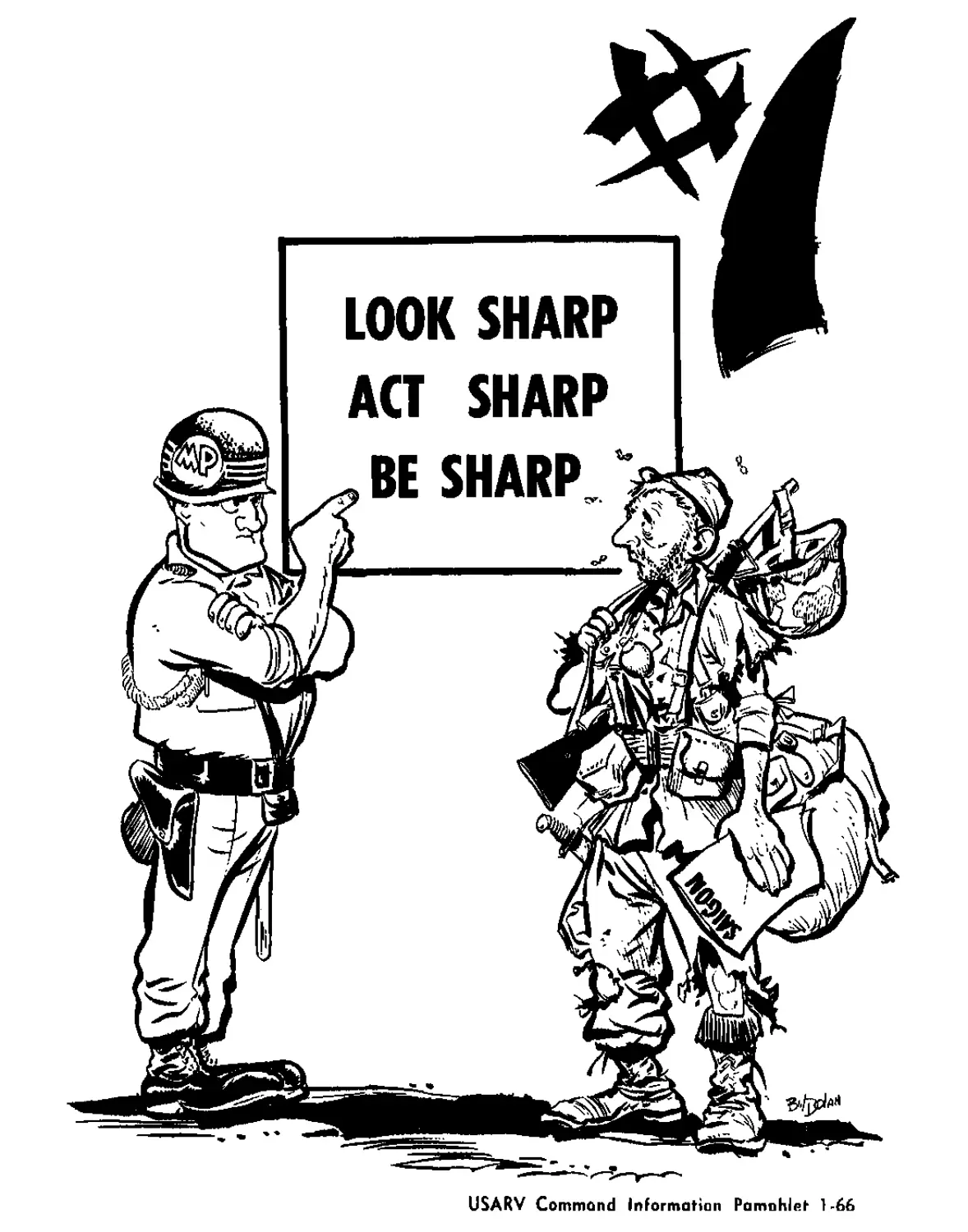
                    USARV Command Information Pamnhiet 1 -66
INTRODUCTION
There are heavy concentrations of American soldiers living and
working in the midst of the Vietnamese population.
Here two cultures—Vietnamese and American—have collided,
with basically good results; unfortunately, however, there has
been some misunderstanding. This was inevitable, but it doesn’t
mean we can’t do anything about it.
In order to minimize the bad effects of such collisions, certain
standards of conduct and common sense are expected. They pro-
vide the basic theme for this book. We hope they’ll provide a
theme for your tour of duty in Vietnam.
Any time we become more burdensome than the Viet Cong, we’il
be asked to leave. Remember we are guests here: We make no
demands and seek no special treatment.
Nothing speaks so well of our way of life than a sincere attempt
to understand the Vietnamese. Join with the people! Understand
their life, use phrases from their language and honor their customs
and laws.
Courtesy to women is universal. In Vietnam this courtesy is
more formal than in our country. Treat women with politeness
and respect.
Friendships are bridges between the two cultures. Make
personal friends among the soldiers and common people.
Oriental people emphasize concession and yielding rather than
forcefulness. Always give the Vietnamese the right of way.
Practice this in a broad sense.
Don’t risk yourself or your comrades in the field. Be watchful,
avoid crowds and don’t discuss your job with anyone. Be alert to
security and ready to react with your military skill.
An oriental distinguishes himself by his courtesy, suppleness
and good humor. Personal display is distasteful to him. Don’t
attract attention by loud, rude or unusual behavior. And
remember, there may be VC in your audience.
Brandishing a fat bankroll is vulgar and doesn’t win any friends.
Let’s scotch this image of the “Rich American.” Avoid separating
yourself from the people by a display of wealth or privilege.
Above all else you are members of the U.S. Military Forces on
a difficult mission, responsible for all your official and personal
actions. Reflect honor upon yourself and the United States of
America.
And that’s what this book is all about.
1
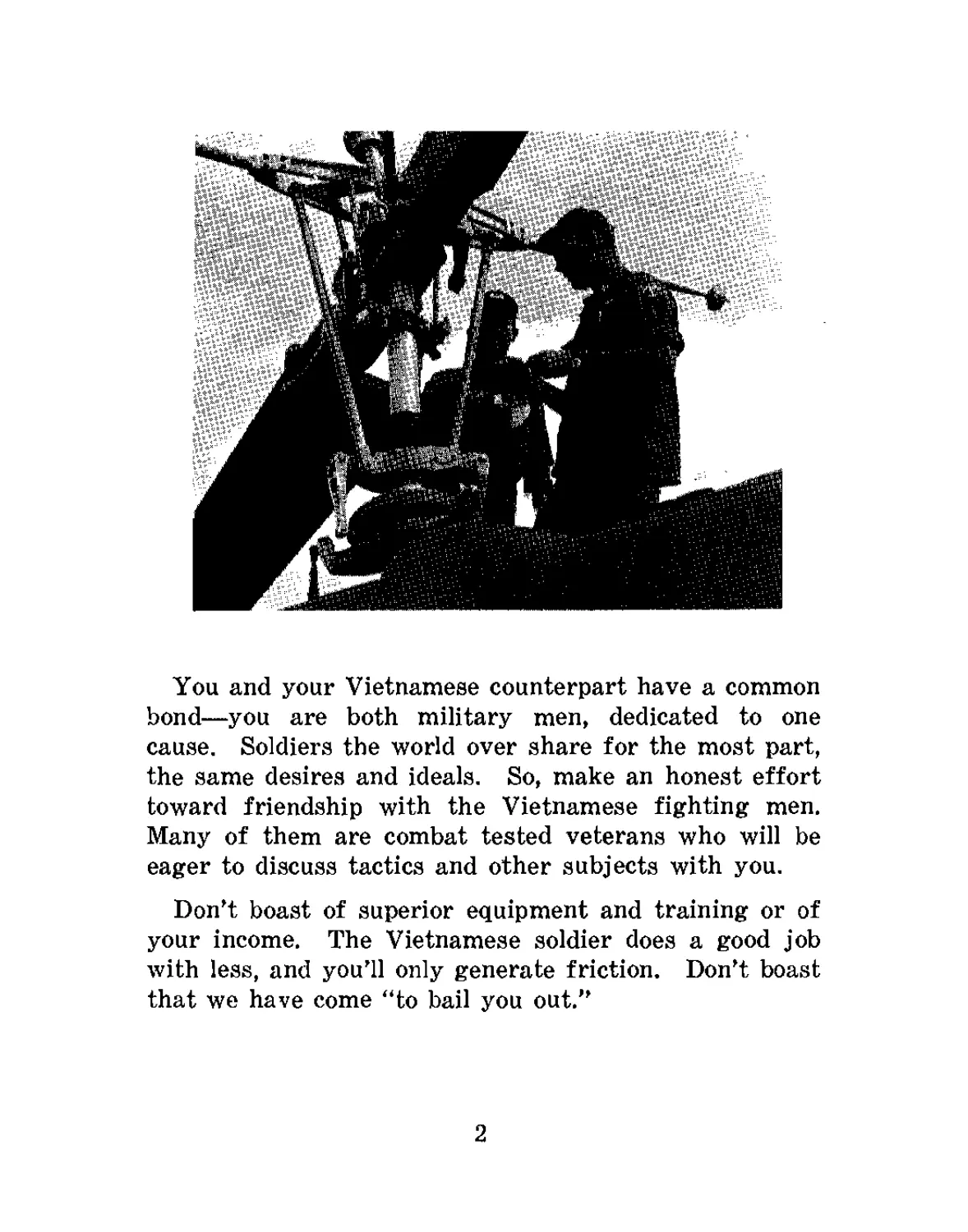
You and your Vietnamese counterpart have a common
bond—you are both military men, dedicated to one
cause. Soldiers the world over share for the most part,
the same desires and ideals. So, make an honest effort
toward friendship with the Vietnamese fighting men.
Many of them are combat tested veterans who will be
eager to discuss tactics and other subjects with you.
Don't boast of superior equipment and training or of
your income. The Vietnamese soldier does a good job
with less, and you’ll only generate friction. Don’t boast
that we have come “to bail you out.”
2
Our mission in Vietnam is complex and demanding. If
our only mission was to assist in defeating the enemy
forces on the battlefield it would be relatively simple.
Such however, is not the case.
We are examples of the kind of people a democracy
produces. The Vietnamese have never been fortunate
enough to have a democratic government free from the
burden of aggression. They study not only our actions
on the battlefield but our behavior in our off-duty time
as well, for some knowledge of this ideal they are seek-
ing . . . democracy.
We are not just soldiers. We are soldiers and repre-
sentatives. In all our official and non-official actions we
must be at our best to reflect honor upon ourselves and
America.
3
4
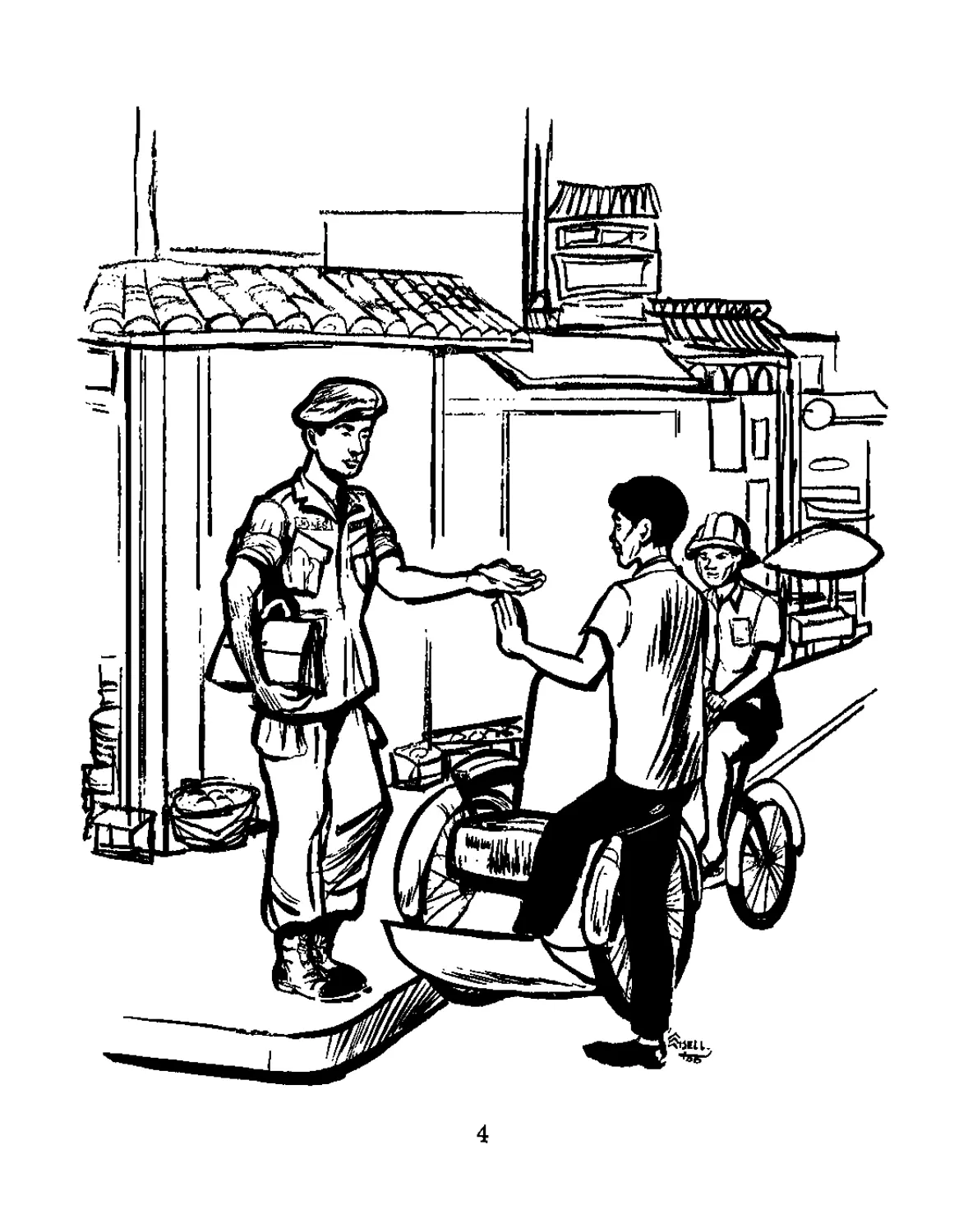
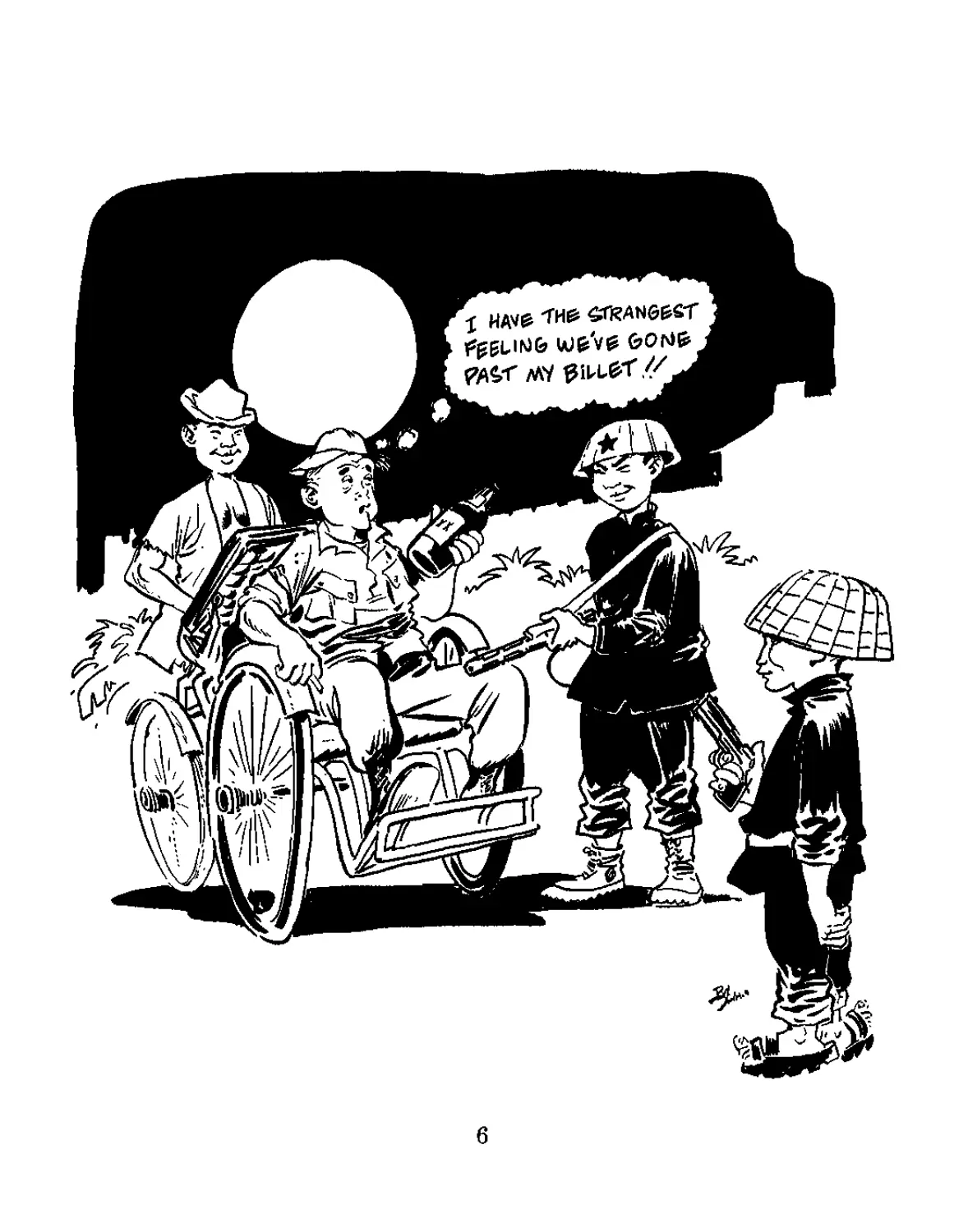
In a city, most of us tend to let our guard down. But
war can erupt with brutal suddenness in the crowded
streets and dimly lit bars. Charlie is adept at terrorism
and stops at nothing if he believes he can make a
successful strike.
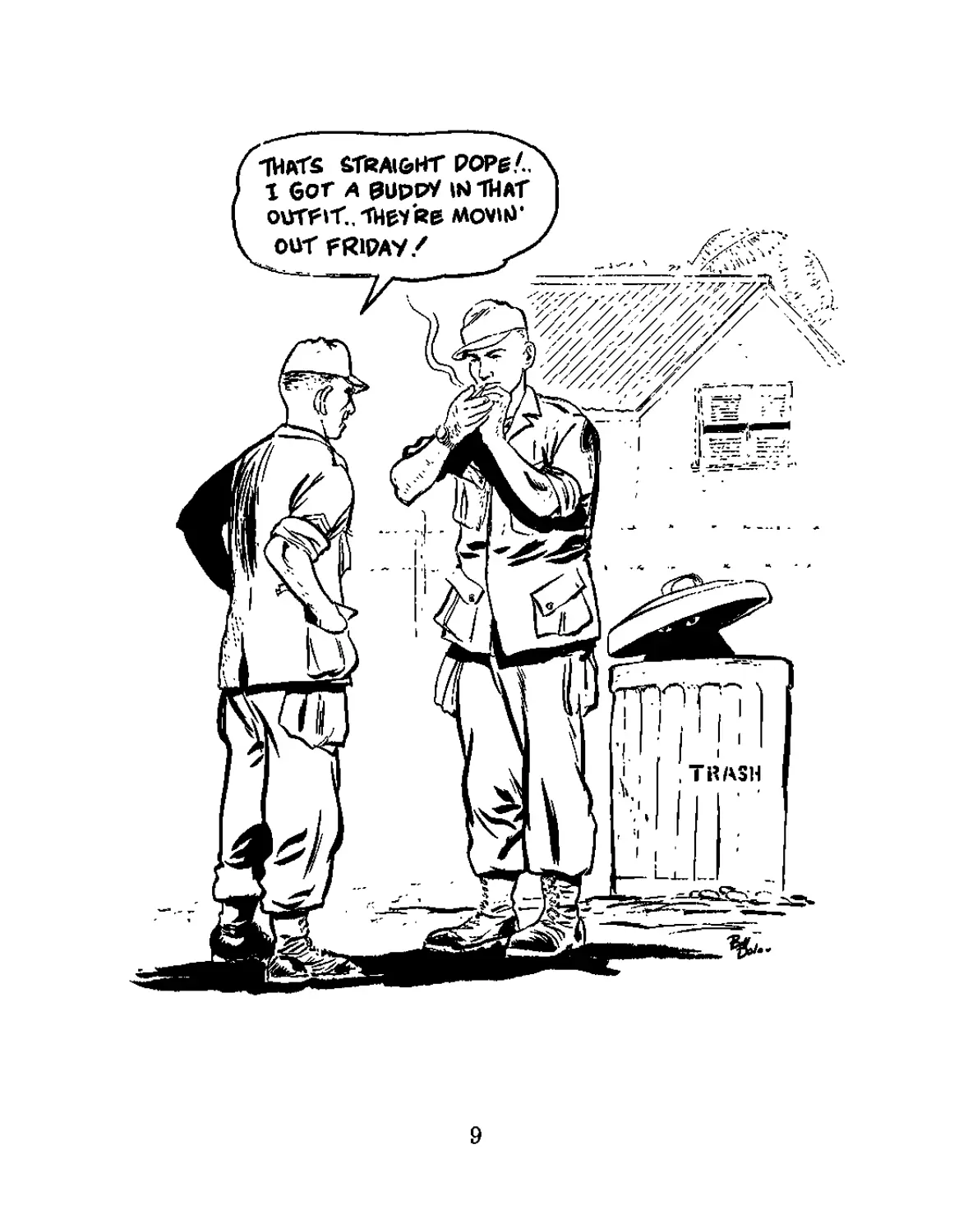
Don’t discuss your job with anyone. Nobody really
has a “need to know” except at work. The VC intelli-
gence network can put together significant information
from bit and pieces.
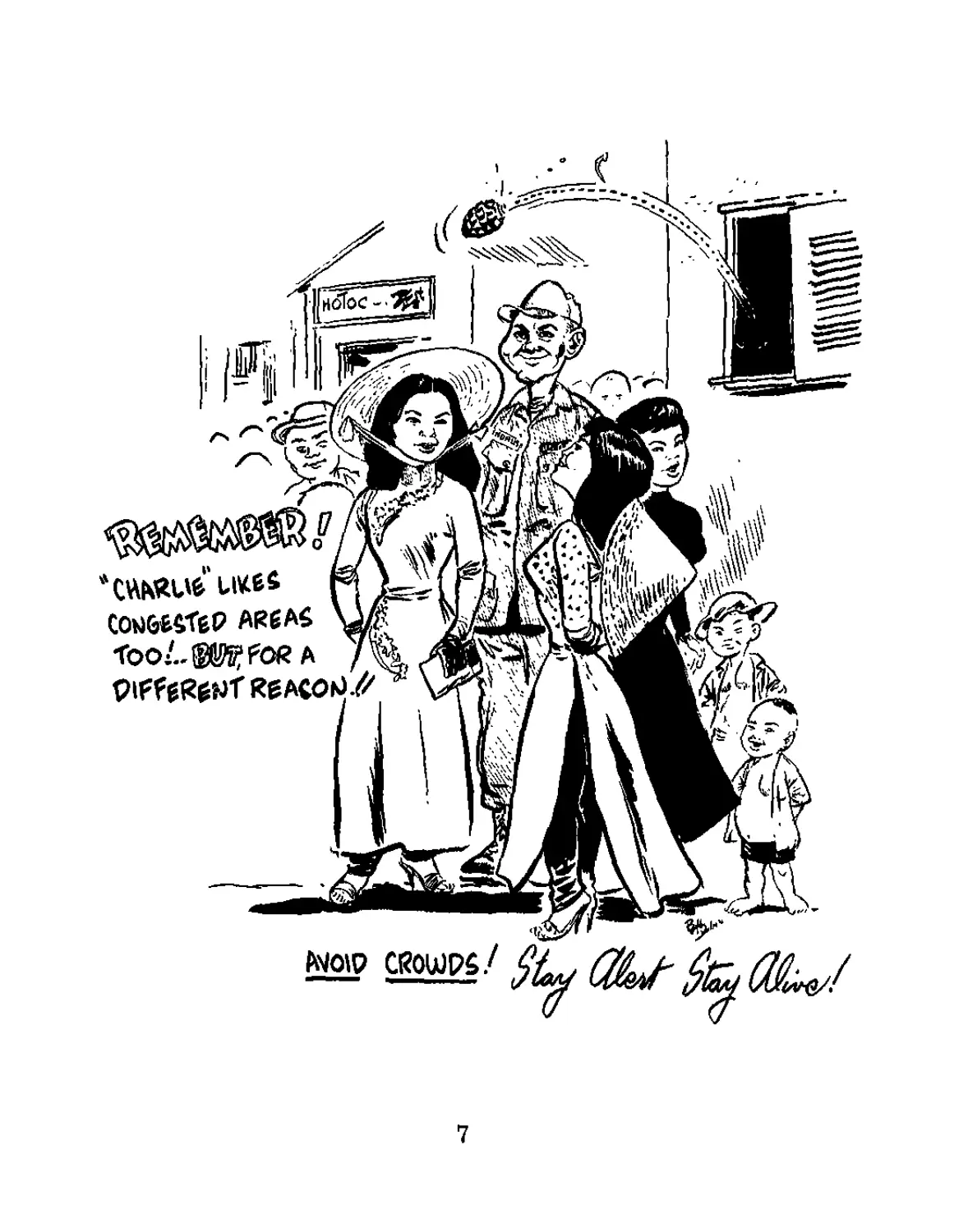
Avoid crowds and keep an eye peeled for trouble.
Charlie can pitch a few foul curves of his own.
5
6
CROUPS/
‘сшие uiKes
(0Ш4Т6Р ARgAS
Too/.. РОЙ A
PlPFgRgWf RgACOM
7
8
9
10
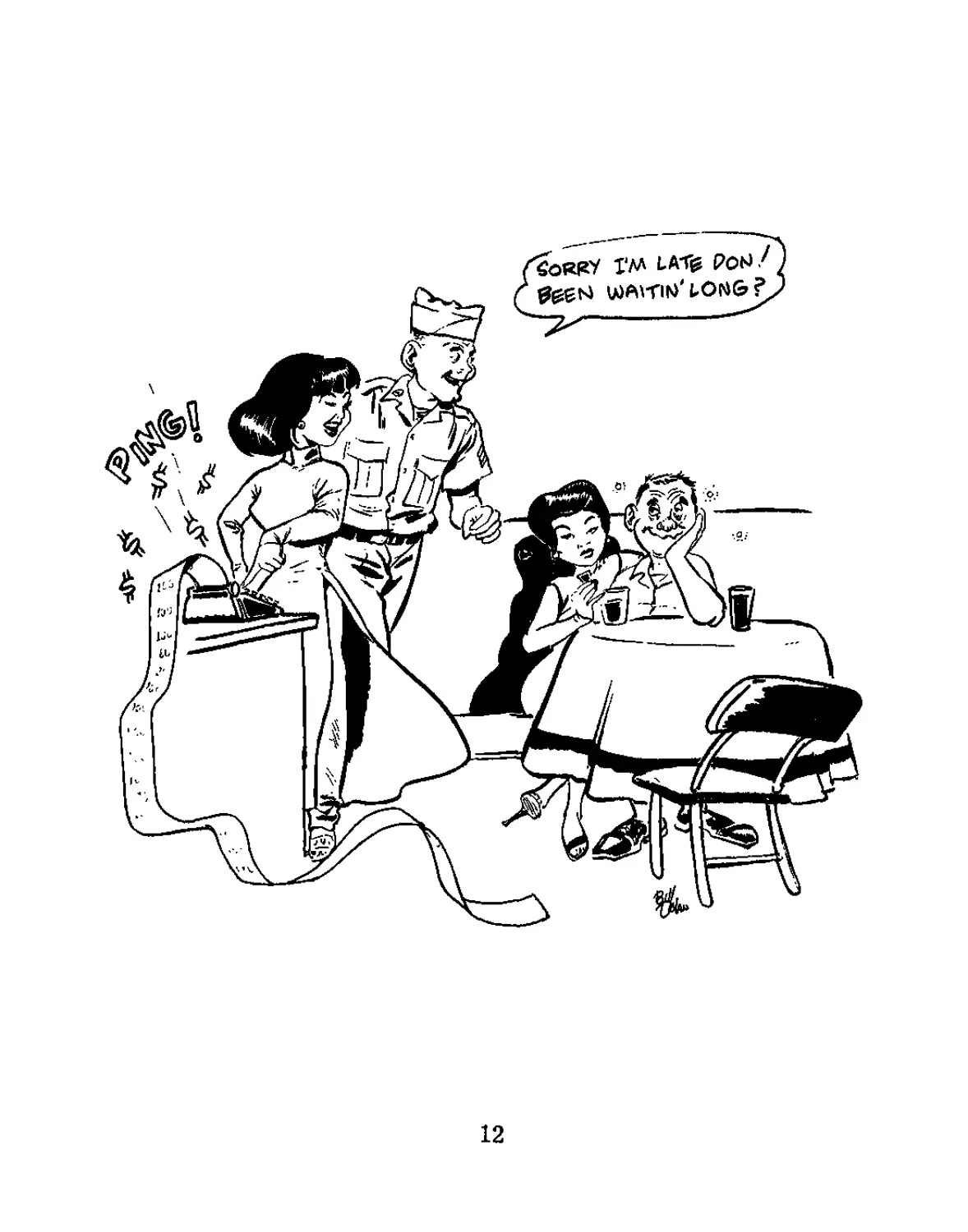
The Vietnamese quite naturally have a very high
regard for their fragile beautifully-featured women.
Treat them with the respect and courtesy you would an
American girl. Don’t be loud and harsh or make a
display of your affluence; you won’t get very far. The
Vietnamese consider such behavior boorish and vulgar.
Vietnamese women are impressed with a pleasant,
self-effacing attitude and refined behavior. They admire
abstract qualities more than material “show off.”
11
12
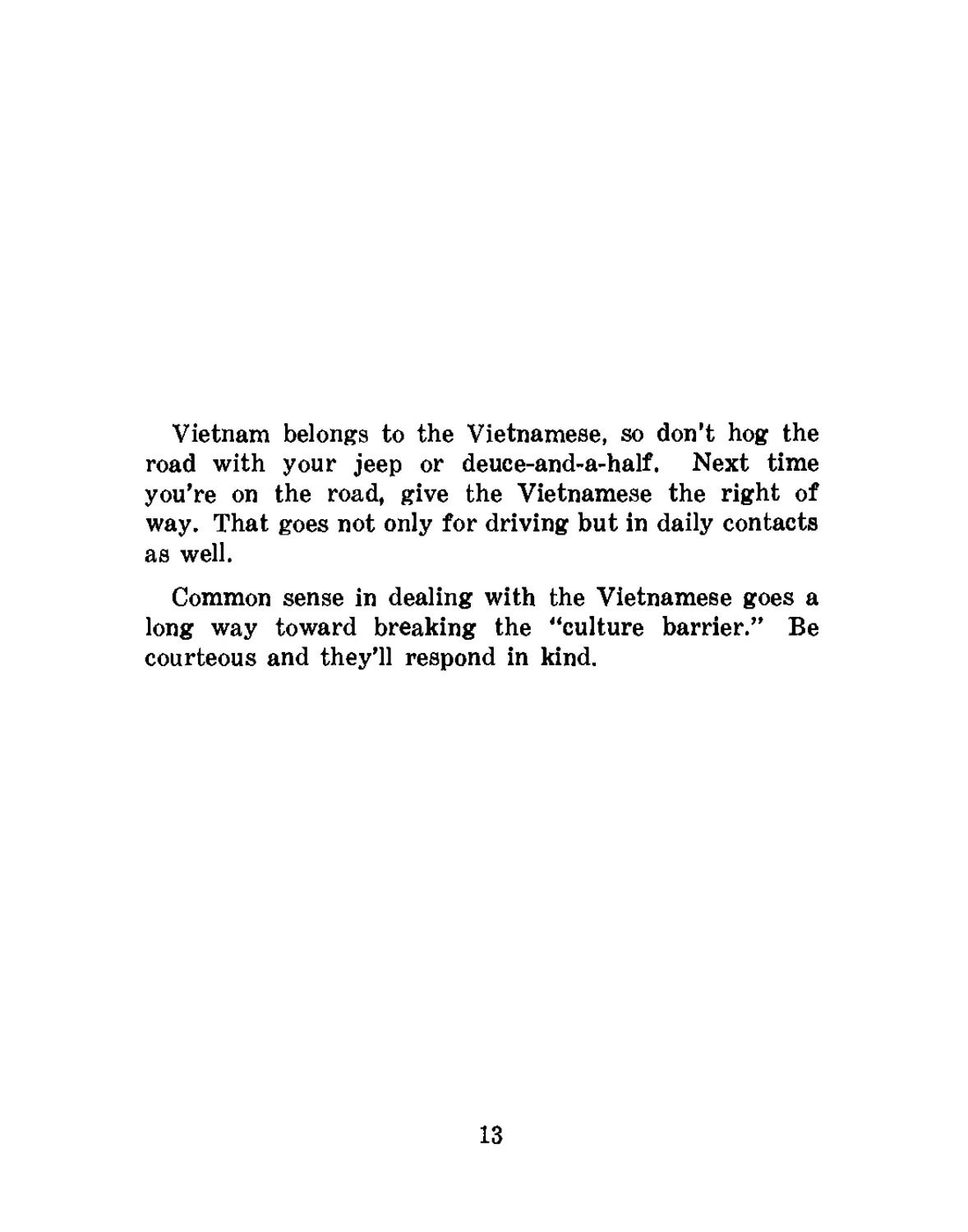
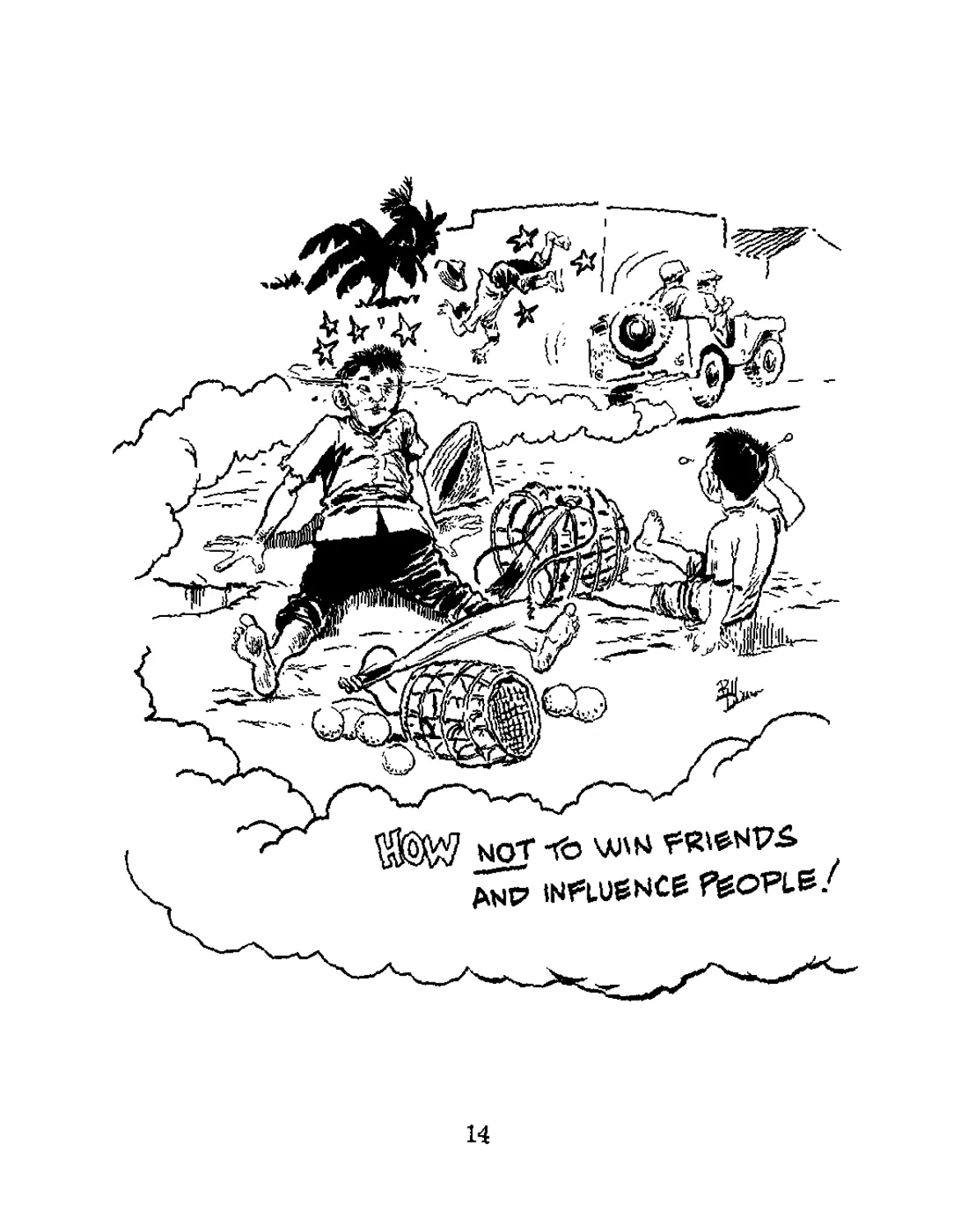
Vietnam belongs to the Vietnamese, so don't hog the
road with your jeep or deuce-and-a-half. Next time
you’re on the road, give the Vietnamese the right of
way. That goes not only for driving but in daily contacts
as well.
Common sense in dealing with the Vietnamese goes a
long way toward breaking the “culture barrier.” Be
courteous and they’ll respond in kind.
13
14
Your appreciation of America’s role in the world today
will be broadened if you join with the Vietnamese and
learn the history of their fight for freedom from
aggression.
This valiant little nation has a link with the past that
stretches back some 4000 years. Vietnam today, as it
has so many times throughout history, is fighting for its
life against subjugation. By extending your friendship
to the Vietnamese, you strengthen our alliance and
measurably assist understanding between our two
nations.
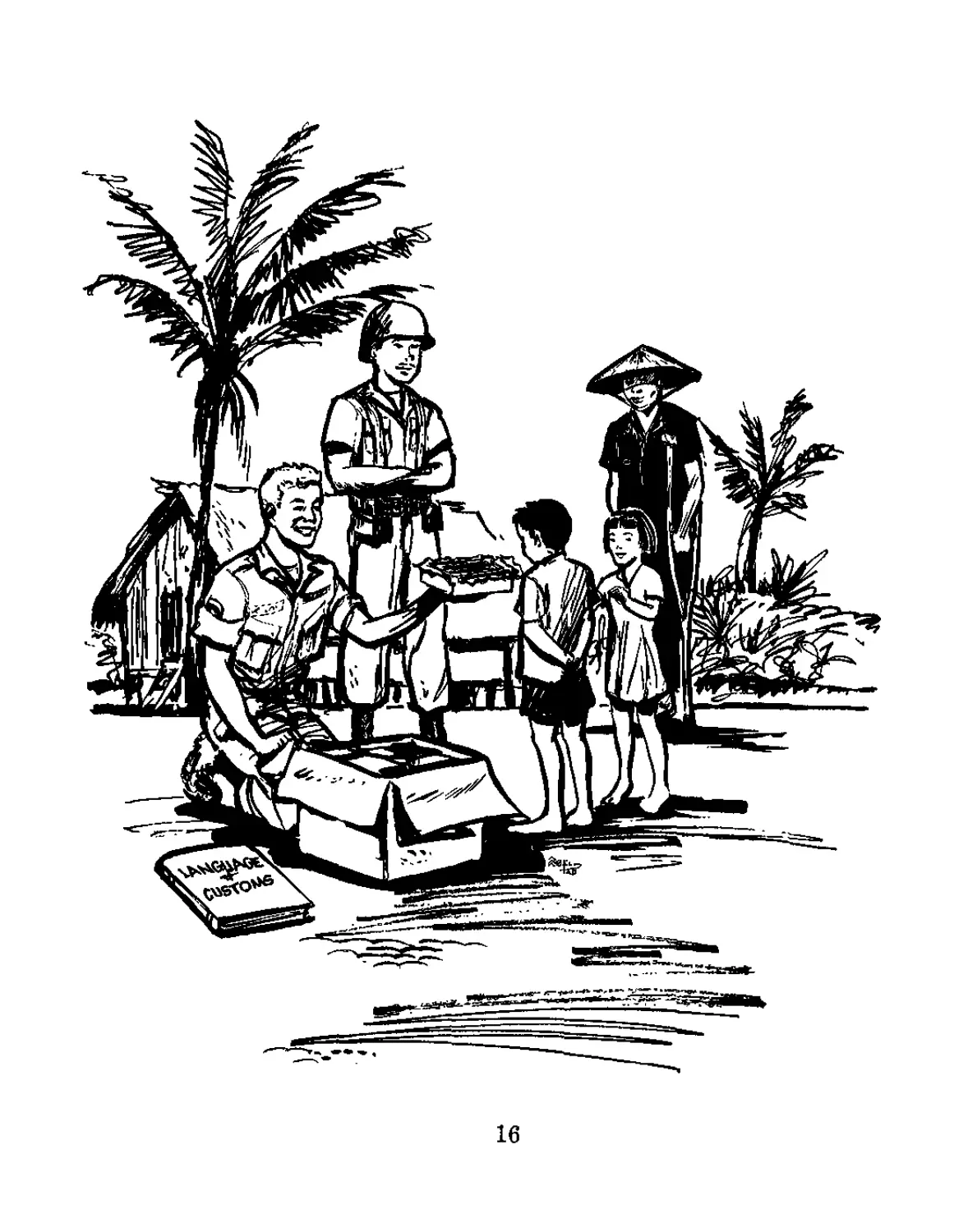
Make a genuine effort to learn the language and
customs of Vietnam. You can only broaden your personal
horizons by doing so.
15
16
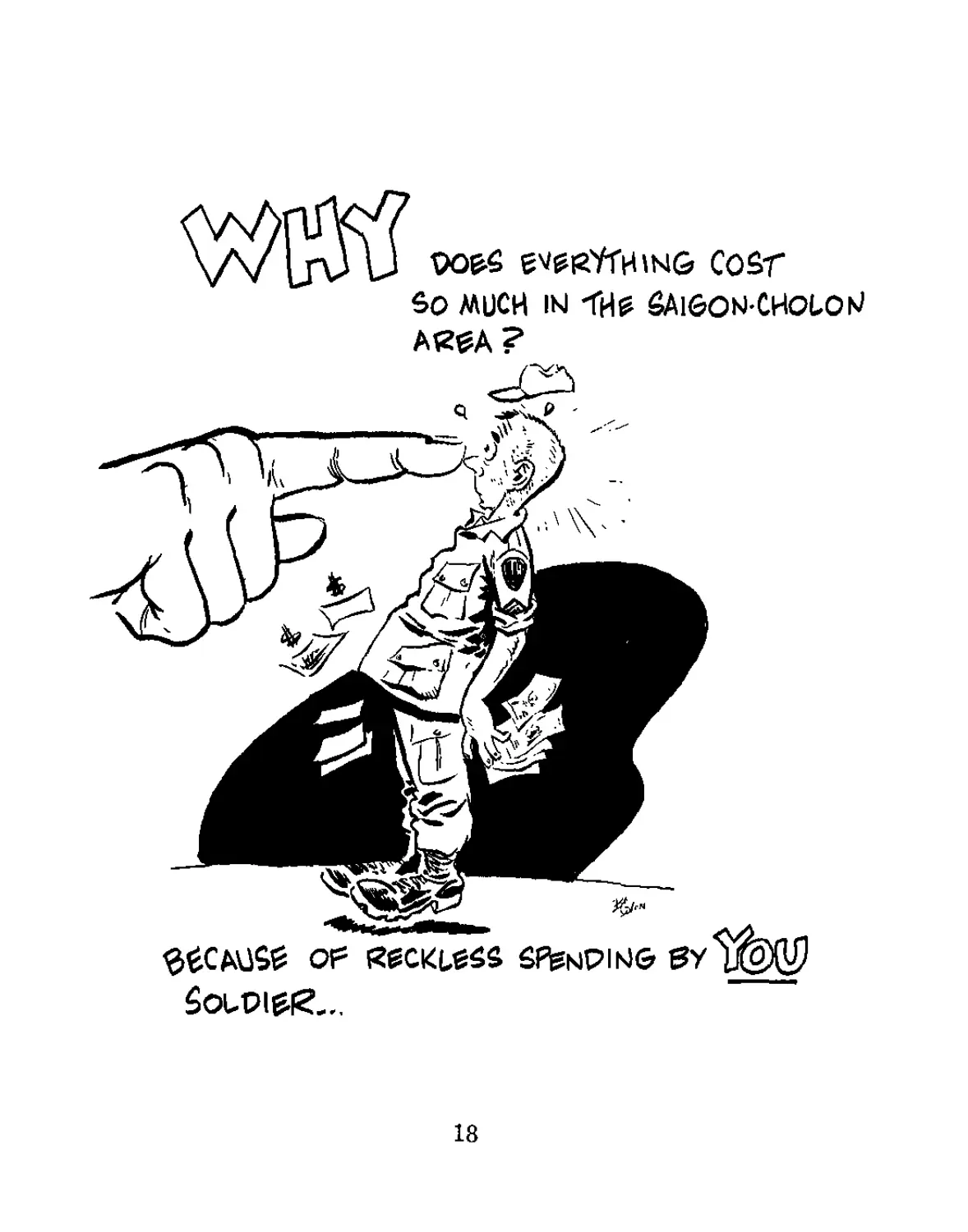
As an American in Vietnam your income is generally
higher than even the top paying Vietnamese positions.
Even a PFC in the American Army receives more on pay-
day then some field grade officers in the Vietnamese
Army.
This higher income does not give us the right to care-
lessly pay higher prices for everything and toss our
money around in a display of wealth ... at the same time
demanding privileged treatment.
We are here to aid the Vietnamese people, not damage
their economy. By paying more you not only hurt your
fellow soldier, but you promote inflation, making it
impossible for the Vietnamese people to afford the basic
necessities such as transportion and food.
17
vo&s gwyrn>NG cost"
So MUCH IM ТИ2 SAlOON-CHOLOM
Айед?
Soupias,,.
18
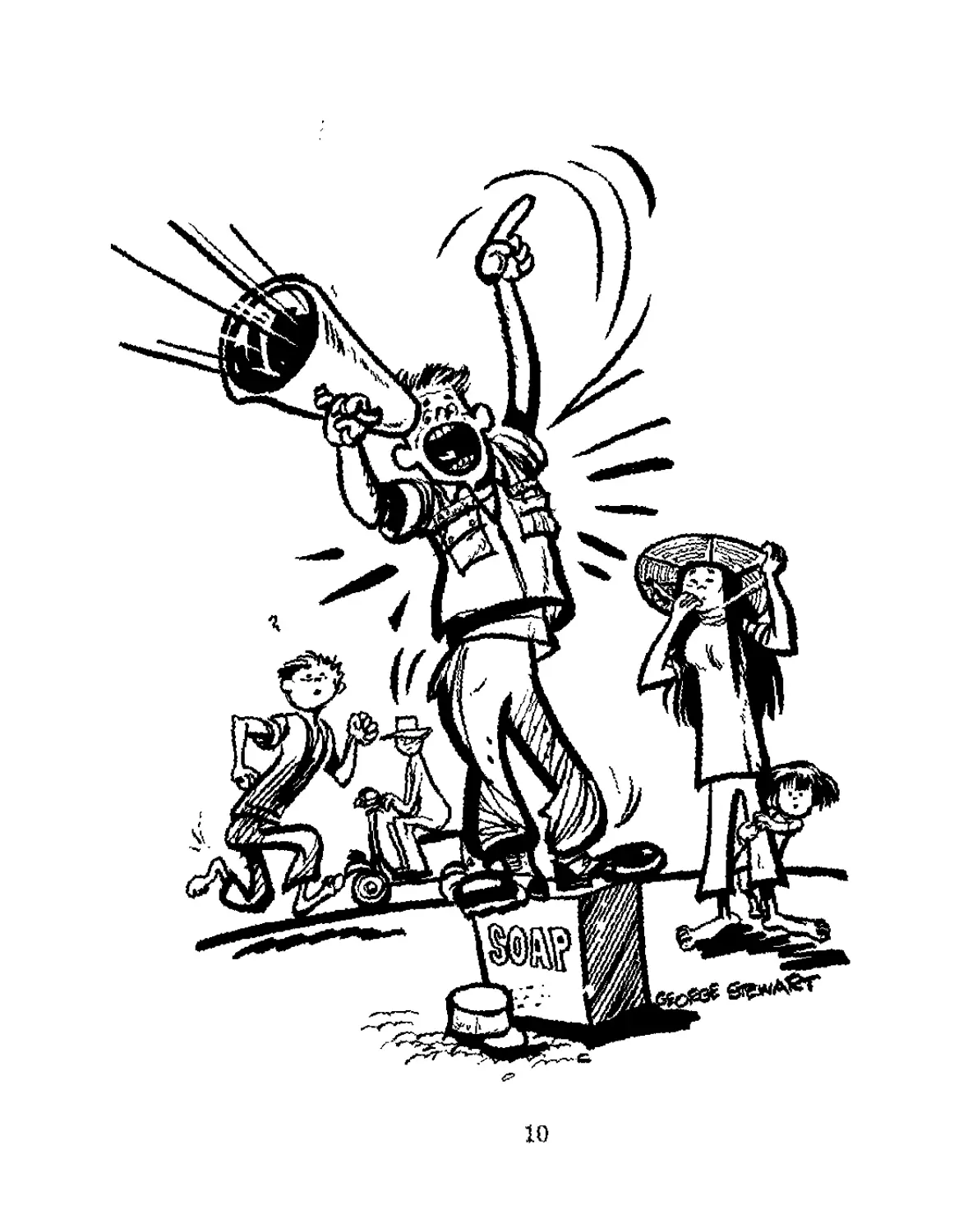
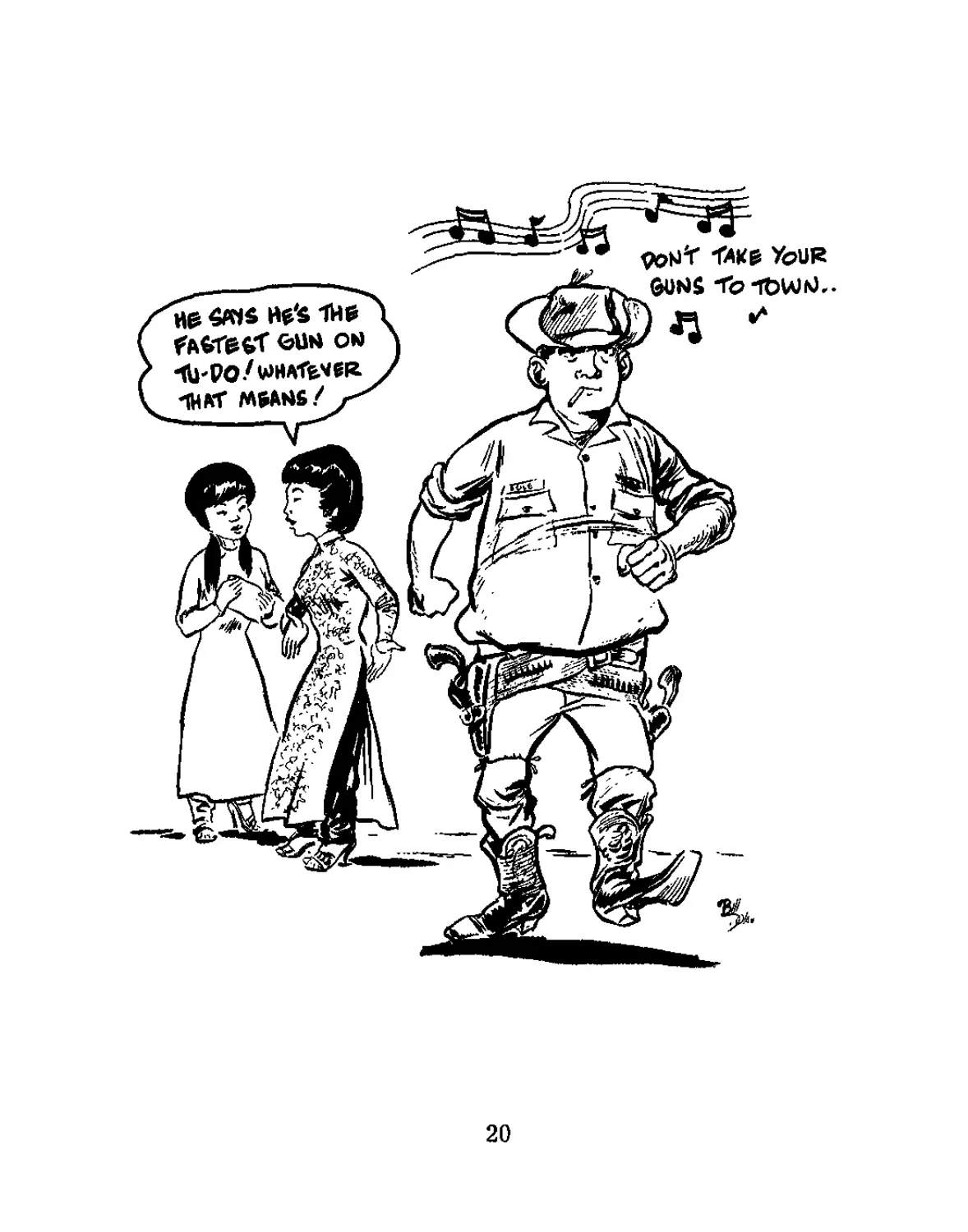
How many guys like a show-off? The answer is none.
The Vietnamese are no different from us; they don’t like
attention-getting show-offs either.
Clowns belong in the circus, not in public places. All
you have to do is behave as you would in your hometown.
If you wouldn’t do it there, don’t do it here.
19
20
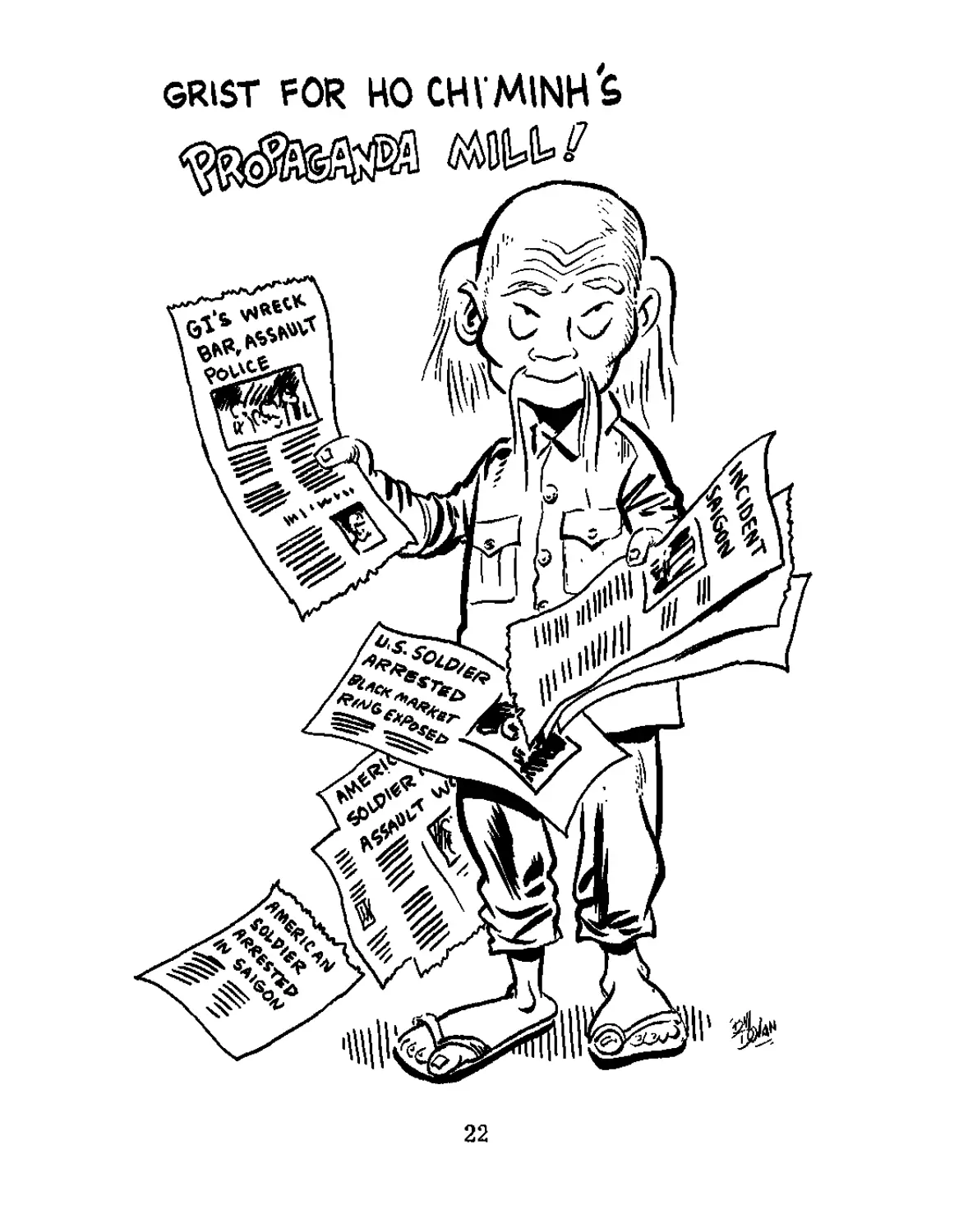
The Saigon Area is a rich mixture of the old and the
new—and we Americans are providing most of the latter.
Naturally, some Vietnamese resent this dramatic
intrusion of their culture and misconduct only amplifies
misunderstanding.
We Americans occupy an important role in Vietnam,
a role in which we are both a soldier and representative
of our country. Our “image” is tarnished by the
immature actions of a few soldiers who don’t stop to
think about the consequences.
We are guests in Vietnam—24-hours a day. It carries
a responsibility that cannot be evaded.
21
grist for но сну mink's
22
I
I’PC- Japan