/






















Текст
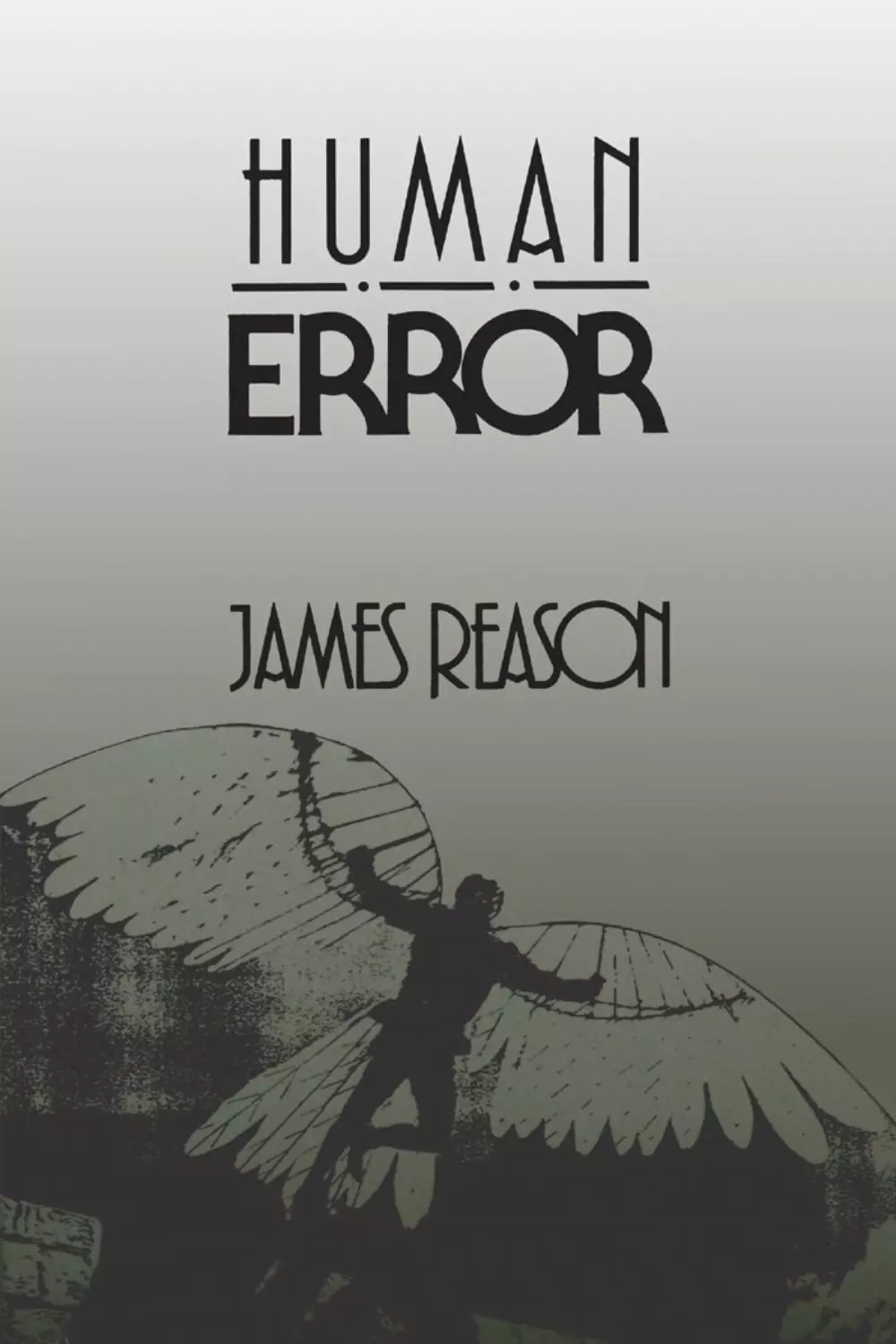
                    Human Error

Human Error
James Reason
Department of Psychology
University of Manchester
Cambridge
UNIVERSITY PRESS

CAMBRIDGE UNIVERSITY PRESS
Cambridge, New York, Melbourne, Madrid, Cape Town, Singapore,
Sao Paulo, Delhi, Dubai, Tokyo, Mexico City
Cambridge University Press
32 Avenue of the Americas, New York ny 10013-2473, USA
www.cambridge.org
Information on this title: www.cambridge.org/9780521306690
© Cambridge University Press 1990
This publication is in copyright. Subject to statutory exception
and to the provisions of relevant collective licensing agreements,
no reproduction of any part may take place without the written
permission of Cambridge University Press.
First published 1990
20th printing 2009
A catalog record for this publication is available from the British Library.
isbn 978-0-521-30669-0 Hardback
isbn 978-0-521-31419-0 Paperback
Cambridge University Press has no responsibility for the persistence or
accuracy of URLs for external or third-party internet websites referred to in
this publication, and does not guarantee that any content on such websites is,
or will remain, accurate or appropriate. Information regarding prices, travel
timetables, and other factual information given in this work is correct at
the time of first printing but Cambridge University Press does not guarantee
the accuracy of such information thereafter.

To Jens Rasmussen

Contents
Preface page ix
1. The nature of error 1
2. Studies of human error 19
3. Performance levels and error types S3
4. Cognitive underspeciflcation and error forms 97
5. A design for a fallible machine 125
6. The detection of errors 148
7. Latent errors and systems disasters 173
8. Assessing and reducing the human error risk 217
Appendix 251
References 258
Name index 291
Subject index 296
vii

Preface
Human error is a very large subject, quite as extensive as that covered by the
term human performance. But these daunting proportions can be reduced in
at least two ways. The topic can be treated in a broad but shallow fashion,
aiming at a wide though superficial coverage of many well-documented error
types. Or, an attempt can be made to carve out a narrow but relatively deep
slice, trading comprehensiveness for a chance to get at some of the more
general principles of error production. I have tried to achieve the latter.
The book is written with a mixed readership in mind: cognitive
psychologists, human factors professionals, safety managers and reliability engineers —
and, of course, their students. As far as possible, I have tried to make both the
theoretical and the practical aspects of the book accessible to all. In other
words, it presumes little in the way of prior specialist knowledge of either kind.
Although some familiarity with the way psychologists think, write and handle
evidence is clearly an advantage, it is not a necessary qualification for tackling
the book. Nor, for that matter, should an unfamiliarity with high-technology
systems deter psychologists from reading the last two chapters.
Errors mean different things to different people. For cognitive theorists,
they offer important clues to the covert control processes underlying routine
human action. To applied practitioners, they remain the main threat to the
safe operation of high-risk technologies. Whereas the theoreticians like to
collect, cultivate and categorise errors, practitioners are more interested in their
elimination and, where this fails, in containing their adverse effects by error-
tolerant designs. It is hoped that this book offers something useful to both
camps.
The shape of the book
The book is divided into three parts. The first two chapters introduce the basic
ideas, methods, research traditions and background studies. They set the
scene for the book as a whole.
Chapter 1 discusses the nature of error, makes a preliminary identification
of its major categories and considers the various techniques by which it has
been investigated.
Chapter 2 outlines the human error studies that have been most
influential in shaping the arguments presented later in the book. It distinguishes two
traditions of research: the natural science and engineering (or cognitive
science) approaches. The former is characterized by its restricted focus upon
well-defined, manipulable phenomena and their explanation by local'
theories whose predictive differences are, potentially at least, resolvable by ex-
IX

X
Preface
perimentation. This tradition has provided the basis of much of what we know
about the resource limitations of human cognition. The engineering approach,
on the other hand, is more concerned with framing working generalisations
than with the finer shades of theoretical difference. It synthesises rather than
analyses and formulates broadly based theoretical frameworks rather than
limited, data-bound models. The more theoretical aspects of the subsequent
chapters are very much in this latter tradition.
The middle section of the book, comprising Chapters 3 to 5, presents a view
of the basic error mechanisms and especially those processes that give
recurrent forms to a wide variety of error types. Whereas error types are rooted in
the cognitive stages involved in conceiving and then carrying out an action
sequence (i.e., planning, storage and execution), error forms have their origins
in the universal processes that select and retrieve pre-packaged knowledge
structures from long-term storage.
Chapter 3 describes a generic error-modelling system (GEMS) which
permits the identification of three basic error types: skill-based slips and lapses,
rule-based mistakes and knowledge-based mistakes. These three types may
be distinguished on the basis of several dimensions: activity, attentional focus,
control mode, relative predictability, abundance in relation to opportunity,
situational influences, ease of detection and relationship to change. Most of
the chapter is taken up with describing the various failure modes evident at
the skill-based, rule-based and knowledge-based levels of performance.
Chapter 4 introduces the concept oicognitive under specification. Cognitive
operations may be underspecified in a variety of ways, but the consequences
are remarkably uniform; the cognitive system tends to 'default' to contextually
appropriate, high-frequency responses. Error forms, it is argued, are shaped
primarily by two factors: similarity and frequency. These, in turn, originate in
the automatic retrieval processes by which knowledge structures are located
and their products delivered either to consciousness (thoughts, words, images,
etc.) or to the outside world (actions, speech, gestures, etc.). There are two
processes involved: similarity-matching, by which appropriate knowledge
attributes are matched to the current calling conditions on a like-to-like basis;
and frequency-gambling, by which conflicts between partially matched
knowledge structures are resolved in favour of the more frequently employed items.
Both of these processes, but especially the latter, come into increasing
prominence when cognitive operations are insufficiently specified. Underspeci-
fication, though highly variable in its origins, can be rendered down to two
functionally equivalent states: insufficient calling conditions to locate a unique
knowledge item and incomplete knowledge (i.e., some of the 'facts' associated
with a particular knowledge structure —or set of structures —are missing).
Both states will increase the natural tendency of the cognitive system to
output high-frequency responses and this gives recognisable form to many error

Preface
XI
types. Evidence drawn from a wide range of cognitive activities is presented
in support of these assertions.
Chapter 5 attempts to express these ideas more precisely in both a notional
and a computational form. It addresses the question: What kind of
information-handling machine could operate correctly for most of the time, but also
produce the occasional wrong responses characteristic of human behaviour?
The description of the fallible machine is in two parts: first in a notional, non-
programmatic form, then in a suite of computer programs that seek to model
how human subjects, of varying degrees of ignorance, give answers to general
knowledge questions relating to the lives of U.S. presidents. The output of this
model is then compared to the responses of human subjects.
The final section of the book focuses upon the consequences of human
error: error detection, accident contribution and remedial measures.
Chapter 6 reviews the relatively sparse empirical evidence bearing upon
the important issues of error detection and error correction. Although error
correction mechanisms are little understood, there are grounds for arguing
that their effectiveness is inversely related to their position within the
cognitive control hierarchy. Low-level (and largely hard-wired) postural correcting
mechanisms work extremely well. Attentional processes involved in
monitoring the actual execution of action plans are reasonably successful in detecting
unintended deviations (i.e., slips and lapses). But even higher-level processes
concerned with making these plans are relatively insensitive to actual or
potential straying from some adequate path towards the desired goal
(mistakes). The relative efficiency of these error-detection mechanisms depends
crucially upon the immediacy and the adequacy of feed-back information. The
quality of this feed-back is increasingly degraded as one moves up the control
levels.
Chapter 7 considers the human contribution to accidents in complex, high-
risk technologies. An important distinction is made between active errors and
latent errors. The former, usually associated with the performance of
'frontline' operators (pilots, control room crews, and the like), have an immediate
impact upon the system. The latter, most often generated by those at the 'blunt
end' of the system (designers, high-level decision makers, construction crews,
managers, etc.), may lie dormant for a long time, only making their presence
felt when they combine with other 'resident pathogens' and local triggering
events to breach the system's defences. Close examination of six case studies —
Three Mile Island, Bhopal, Challenger, Chernobyl, the Herald of Free
Enterprise and the King's Cross underground fire—indicate that latent rather than
active failures now pose the greatest threat to the safety of high-technology
systems. Such a view is amply borne out by more recent disasters such as the
Piper Alpha explosion, the shooting down of the Iranian airbus by the U.S.S.

XII
Preface
Vincennes, the Clapham Junction and Purley rail crashes and the Hillsborough
football stadium catastrophe.
The book ends with a consideration of the various techniques, either in
current use or in prospect, to assess and reduce the risks associated with human
error. Chapter 8 begins with a critical review of probabilistic risk assessment
(PRA) and its associated human reliability assessment (HRA) techniques. It
then considers some of the more speculative measures for error reduction:
eliminating error affordances, intelligent decision support systems, memory
aids, error management and ecological interface design. In conclusion, the
chapter traces the shifting preoccupations of reliability specialists: an initial
concern with defending against component failures, then an increasing
awareness of the damaging potential of active human errors, and now, in the last few
years, a growing realisation that the prime causes of accidents are often
present within systems long before an accident sequence begins.
The final note is a rather pessimistic one. Engineered safety devices are
proof against most single failures, both human and mechanical. As yet,
however, there are no guaranteed technological defences against either the
insidious build-up of latent failures within the organisational and managerial
spheres or their adverse (and often unforeseeable) conjunction with various
local triggers. While cognitive psychology can tell us something about an
individual's potential for error, it has very little to say about how these
individual tendencies interact within complex groupings of people working in
high-risk systems. And it is these collective failures that represent the major
residual hazard.
Some conspicuous omissions
Although it has featured fairly large in the literature, relatively little special
attention has been given in this book to the relationship between errors and
stress. This omission was made for two reasons.
First, while there are a small number of 'ecologically valid' studies (Ronan,
1953; Grinker & Spiegel, 1963; Berkun, 1964; Marshall, 1978) indicating that
high levels of stress can, and often do, increase the likelihood of error, it is
also clear that stress is neither a necessary nor a sufficient condition for the
occurrence of cognitive failure.
Recent investigations (Broadbent, Cooper, FitzGerald & Parkes, 1982;
Broadbent, Broadbent & Jones, 1986) have suggested that a more interesting
question is not so much "Why does stress promote error?" but rather "Why
is a relatively marked personal proneness to cognitive failures associated with
increased vulnerability to stress?" The second reason for omitting any specific
treatment of stress is that this important relationship between error
proneness and stress vulnerability has been considered at length elsewhere
(Reason, 1988d).

Preface
xiii
The existence of this recent publication (a chapter in the Handbook of Life
Stress, Cognition and Health, 1988) also explains why questionnaire studies of
error proneness receive only a summary mention in this book (see Chapter
1). There is a further reason for not dealing in any detail with the general issue
of individual differences here. Although it is well known that factors such as
age and pathology play an important part in error production, there is little
compelling evidence to suggest that these individual factors yield unique error
types. Rather, they produce an exaggerated liability to the pervasive error
forms whose varieties and origins are already treated extensively in Chapters
4 and 5.
A skimmer's guide
Cognitive psychologists with an interest in theory are urged to read the first
six chapters. If inclined, they could then go on to skim the remaining two
chapters. Much of this material will be unfamiliar to them since little of it has
appeared in the conventional cognitive literature.
Those with more practical concerns (and less interest in cognitive
psychology) can afford to be more selective without losing too much of the thread.
After reading Chapter 1, they could skip to the conclusions of Chapter 2.
Chapter 3 contains some human factors material as well as the generic error-
modelling system, and is therefore worth rather more than a glance.
Practitioners might find much of Chapter 4 rather too academic for their tastes, but
they could read the first few pages and the concluding remarks in order to get
a sense of the general argument. The first part of Chapter 5 presents a fairly
concise summary of the basic theory; whether they read to the end depends
on their interest (or faith) in computer modelling. The remaining three
chapters, and particularly the last two, were written specifically for those with
applied leanings and should not be skipped by them.
Acknowledgements
Jens Rasmussen, to whom this book is dedicated, has had a profound influence
on the ideas expressed here, both through his writings and as a result of the
many fruitful meetings he has convened (and generously hosted over the
years) at the Risoe National Laboratory. His skill-rule-knowledge framework
has justifiably become a 'market standard' for the human reliability
community the world over. I hope I have done it justice here.
A great debt is owed to Don Norman for his intellectual stimulation, his
long-standing encouragement of this work and for his hospitality during my
brief spell in La Jolla. We got into the 'error business' at about the same time,
but I always seem to find myself trailing several ideas behind him. This is es-

XIV
Preface
pecially apparent after the recent publication of his excellent book, The
Psychology of Everyday Things, upon which I have preyed extensively here.
Berndt Brehmer, with whom I have spent many pleasant and productive
days both in Manchester and in various foreign parts, was kind enough to read
and comment upon an early version of the manuscript. It is because of his wise
advice that readers are spared a lengthy and self-indulgent chapter covering
the history of error from Plato onwards. But I was also considerably heartened
by his encouraging remarks on the remainder.
I am greatly indebted to Dietrich Doerner for showing me (along with
Berndt Brehmer) that it was possible to study complex and dynamic problem-
solving tasks in a rigorous fashion without losing any of their real-world
richness and for his kind hospitality on many occasions. These visits not only
allowed me to meet many of his distinguished colleagues, they also provided
an introduction to the diversity and excitement of the 'new' German
psychology. Unfettered by the more sterile aspects of Anglo-American experimen-
talism and in tune with broader philosophical influences than British
Empiricism, they have been making a spirited attack on many of the affective
and motivational issues avoided by those who regard human cognition
primarily as an information-processing device.
Much is owed to two sets of collaborators. I wish to thank Carlo Cacciabue,
Giuseppe Mancini, Ugo Bersini, Francoise Decortis and Michel Masson at
the CEC Joint Research Centre, Ispra, where we have been attempting to
model the behaviour of nuclear plant operators in emergency conditions,
along lines similar to those described in Chapter 5. And special thanks are due
to Carlo Cacciabue for instructing me so patiently in the mysteries of nuclear
engineering. (And, while on this subject, let me also thank John Harris of the
Simon Engineering Laboratories for the same service.) I must also express my
great appreciation to Willem Wagenaar, Patrick Hudson and Jop Groeneweg,
all of the University of Leiden, who have done much to clarify my thinking
about 'resident pathogens' and accident causation during our joint project for
Shell Internationale Petroleum Maatschappij.
My sincere thanks are due to John Senders and Ann Crichton-Harris for
organising, sponsoring and hosting the First Human Error Conference at
Columbia Falls, Maine, in 1980. This gathering, together with Three Mile Island,
did much to set the error 'ball' rolling. In addition to his own distinguished
contributions to the field, John Senders is also one of the great impresarios of
human error. In 1983, together with Neville Moray, he organised a second
great error event (sponsored by NATO and the Rockefeller Foundation) at
Bellagio on Lake Como. These two meetings have played a great part in
giving a sense of identity to human error research and in establishing personal
contacts between otherwise scattered (both in geography and across
disciplines) members of the reliability community.

Preface
xv
I have also benefited a great deal from conversations and correspondence
with the following, listed in no particular order: Bernard Baars, Donald and
Margaret Broadbent, David Woods, Neville Moray, Alan Swain, Tim Shallice,
Ezra Krendel, Duane McCruer, John Wreathall, Ed Dougherty, Joe Fragola,
Don Schurman, Alan Baddeley, Tony Sanford, Donald Taylor, Douglas
Herrmann, Erik Hollnagel, Bill Rouse, Todd LaPorte, Veronique de Keyser,
Jacques Leplat, Maurice de Montmollin, Keith Duncan, Lisanne Bainbridge,
Trevor Kletz, Zvi Lanir, Baruch Fischhoff, Beth Loftus, Michael Frese,
Antonio Rizzo, Leena Norros, George Apostolakis, Henning Andersen, Ron West-
rum, Paul Brown, Abigail Sellen and Barry Turner. A special debt is owed to
David Embrey for introducing me to the world of high technology, and for
supplying so much excellent incident and event data, and to Deborah Lucas,
once my research student and research assistant, now a distinguished 'error
person' in her own right.
Closer to home, I must gratefully acknowledge the help and stimulation I
have had from my colleagues at the University of Manchester: Sebastian Hal-
liday, Graham Hitch, Tony Manstead, Andrew Mayes and Stephen Stradling;
from my research associates: Alan Fish, Janis Williamson, James Baxter and
Karen Campbell; from my research students: Philip Marsden, Richard Shot-
ton and Gill Brown; and successive generations of finalists who collected data
for me and for their undergraduate projects, especially Victoria Horrocks,
Sarah Bailey, Caroline Mackintosh and Karen Feingold.
Still closer to home, I must thank my wife, Rea. It is conventional to
express gratitude to spouses for their patience and forbearance. Mine probably
did me a far greater service by not indulging writer's tantrums and not
allowing me to dodge my share of the household chores; she, after all, had a book
of her own to write. More to the point, she gave willingly of her services where
they were most needed: as an informed editor and as an eagle-eyed
proofreader, for which I am truly thankful.
Finally, I am grateful to the Economic and Social Research Council (or the
Social Science Research Council, as it was then more suitably called) for two
research grants awarded between 1978 and 1983. The first supported diary
and questionnaire studies of everyday errors; the second, a personal research
grant, gave me half-time freedom from teaching for two years and allowed me
to carry out most of the library research for this book.
James Reason

1 The nature of error
Just over 60 years ago, Spearman (1928) grumbled that "crammed as
psychological writings are, and must needs be, with allusions to errors in an
incidental manner, they hardly ever arrive at considering these profoundly, or even
systematically." Even at the time, Spearman's lament was not altogether
justified (see Chapter 2); but if he were around today, he would find still less
cause for complaint. The past decade has seen a rapid increase in what might
loosely be called 'studies of errors for their own sake'.
The most obvious impetus for this renewed interest has been a growing
public concern over the terrible cost of human error: the Tenerife runway
collision in 1977, Three Mile Island two years later, the Bhopal methyl isocyanate
tragedy in 1984, the Challenger and Chernobyl disasters of 1986, the capsize
of the Herald of Free Enterprise, the King's Cross tube station fire in 1987 and
the Piper Alpha oil platform explosion in 1988. There is nothing new about
tragic accidents caused by human error; but in the past, the injurious
consequences were usually confined to the immediate vicinity of the disaster. Now,
the nature and the scale of certain potentially hazardous technologies,
especially nuclear power plants, means that human errors can have adverse effects
upon whole continents over several generations.
Aside from these world events, from the mid-1970s onwards theoretical
and methodological developments within cognitive psychology have also
acted to make errors a proper study in their own right. Not only must more
effective methods of predicting and reducing dangerous errors emerge from
a better understanding of mental processes, it has also become increasingly
apparent that such theorising, if it is to provide an adequate picture of
cognitive control processes, must explain not only correct performance, but also the
more predictable varieties of human fallibility. Far from being rooted in
irrational or maladaptive tendencies, these recurrent error forms have their
origins in fundamentally useful psychological processes. Ernst Mach (1905) put it
well: "Knowledge and error flow from the same mental sources, only success
can tell the one from the other."
A central thesis of this book is that the relatively limited number of ways
in which errors actually manifest themselves is inextricably bound up with the
'computational primitives' by which stored knowledge structures are selected
and retrieved in response to current situational demands. And it is just these
l

2
The nature of error
processes that confer upon human cognition its most conspicuous advantage
over other computational devices: the remarkable ability to simplify complex
informational tasks.
1. The cognitive 'balance sheet'
Correct performance and systematic errors are two sides of the same coin. Or,
perhaps more aptly, they are two sides of the same cognitive 'balance sheet'.
Each entry on the asset side carries a corresponding debit. Thus, automaticity
(the delegation of control to low-level specialists) makes slips, or actions-not-
as-planned, inevitable. The resource limitations of the conscious 'workspace',
while essential for focusing computationally-powerful operators upon
particular aspects of the world, contribute to informational overload and data
loss. A knowledge base that contains specialised 'theories' rather than isolated
facts preserves meaningfulness, but renders us liable to confirmation bias. An
extraordinarily rapid retrieval system, capable of locating relevant items
within a virtually unlimited knowledge base, leads our interpretations of the
present and anticipations of the future to be shaped too much by the matching
regularities of the past. Considerations such as these make it clear that a
broadly-based analysis of recurrent error forms is essential to achieving a
proper understanding of the largely hidden processes that govern human
thought and action.
2. Errors take a limited number of forms
On the face of it, the odds against error-free performance seem
overwhelmingly high. There is usually only one way of performing a task correctly, or, at
best, very few; but each step in a planned sequence of actions or thoughts
provides an opportunity to stray along a multitude of unintended or
inappropriate pathways. Think of boiling an egg. At what stages and in how many ways
can even this relatively simple operation be bungled? The list of possibilities
is very long. Thoughts such as these make it appear highly unlikely that we
could ever adequately chart the varieties of human error.
Fortunately, the reality is different. Human error is neither as abundant
nor as varied as its vast potential might suggest. Not only are errors much rarer
than correct actions, they also tend to take a surprisingly limited number of
forms, surprising, that is, when set against their possible variety. Moreover,
errors appear in very similar guises across a wide range of mental activities.
Thus, it is possible to identify comparable error forms in action, speech,
perception, recall, recognition, judgement, problem solving, decision making,
concept formation and the like. The ubiquity of these recurrent error forms
demands the formulation of more global theories of cognitive control than are

3. Variable and constant errors
3
usually derived from laboratory experiments. Of necessity, these focus upon
very restricted aspects of mental function in rather artificial settings.
Far from leading down countless unconnected or divergent pathways, the
quest for the more predictable varieties of human error is one that continually
draws the searcher inwards to the common theoretical heartland of
consciousness, attention, working memory and the vast repository of knowledge
structures with which they interact. And it is with these theoretical issues that the
first half of this book is primarily concerned.
Figure 1.1. Target patterns of ten shots fired by two riflemen. A's
pattern exhibits no constant error, but rather large variable errors.
B's pattern shows a large constant error, but small variable errors
(from Chapanis, 1951).
3. Variable and constant errors
Although it may be possible to accept that errors are neither as numerous nor
as varied as they might first appear, the idea of a predictable error is a much
harder one to swallow. If errors were indeed predictable, we would surely take
steps to avoid them. Yet they still occur. So what is a predictable error?
Consider the two targets shown in Figure 1.1 (taken from Chapanis, 1951).
Each shows a pattern often shots, one fired by rifleman A, the other by
rifleman B.A placed his shots around the bull's eye, but the grouping is poor. B's
shots fell into a tight cluster, but at some distance from the bull's eye.
These patterns allow us to distinguish between two types of error: variable
and constant errors. A's pattern exhibits no constant error, only a rather large

4
The nature of error
amount of variable error. B shows the reverse: a large constant error, but small
variable error. In this example, the variability is revealed by the spread of the
individual shots, and provides an indication of the rifleman's consistency of
shooting. The constant error, on the other hand, is given by the distance
between the group average and the centre of the target.
What do these patterns tell us about the relative merits of these two
individuals? If we should rely only on their respective scores, then A would
appear the better shot, achieving a total of 88 to B's 61. But it is obvious from
the groupings that this is not the case. A more acceptable view would be that
A is a rather unsteady shot with accurately aligned sights, while B is an expert
marksman whose sights are out of true.
It is also evident that the errors of these two marksmen differ considerably
in their degree of predictability. Given another ten shots each, with B still
aiming at the target's centre and his sights still unadjusted, we could say with a
high degree of confidence whereabouts his shots would fall; but the variability
of A's shooting makes such a confident forecast impossible. The difference is
very clear: in B's case, we have a theory that will account for the precise
nature of his constant error, namely, that he is an excellent shot with biased
sights. But our theory in A 's case, that he has accurate sights but a shaky hand,
is not one that would permit a precise prediction of where his shots will fall.
We can anticipate the poor grouping and have some idea of its spread, but
that is all.
The lesson of this simple example is that the accuracy of error prediction
depends very largely on the extent to which the factors giving rise to the
errors are understood. This requires a theory which relates the three major
elements in the production of an error: the nature of the task and its
environmental circumstances, the mechanisms governing performance and
the nature of the individual. An adequate theory, therefore, is one that
enables us to forecast both the conditions under which an error will occur, and
the particular form that it will take.
For most errors, our understanding of the complex interaction between
these various causal factors is, and is always likely to be, imperfect and
incomplete. Consequently, most error predictions will be probabilistic rather than
precise. Thus, they they are liable to take the form: "Given this task to
perform under these circumstances, this type of person will probably make errors
at around this point, and they are likely to be of this variety," rather than be
of the kind: "Person X will make this particular error at such-and-such a time
in such-and-such a place." Nevertheless, predictions of this latter sort can be
made in regard to certain types of error when they are deliberately elicited
within a controlled laboratory environment. This is especially true of many
perceptual illusions. Not only can we predict them with near certainty (given
an intact sensory system), we can also forecast with considerable accuracy how

4. Intentions, actions and consequences
5
their experience will vary with different experimental manipulations. But
these are exceptions.
The more usual type of prediction is illustrated by the following example.
It can be forecast with near certainty that during next January the banks will
return a large number of cheques with this year's date on them. We cannot
necessarily predict the exact number of the misdated cheques (although such
information probably exists for previous years, so the approximate number
could be estimated), nor can we say precisely who will make this error, or on
which day. But we do know that such strong habit intrusions are among the
most common of all error forms; that dating a cheque, being a largely rou-
tinised activity (at least with respect to the year), is particularly susceptible to
absent-minded deviations of this kind; and that the early part of the year is the
period in which these slips are most likely to happen. Such qualitative
predictions may seem merely banal, but they are nonetheless powerful. Moreover,
the regular recurrence of this error form is extremely revealing of the covert
processes controlling practised activities.
4. Intentions, actions and consequences
The notions of intention and error are inseparable. Any attempt at defining
human error or classifying its forms must begin with a consideration of the
varieties of intentional behaviour.
One psychologically useful way of distinguishing between the different
kinds of intentional behaviour is on the basis of yes-no answers to three
questions regarding a given sequence of actions (Figure 1.2):
Were the actions directed by some prior intention?
Did the actions proceed as planned?
Did they achieve their desired end?
Notice that all of these questions are capable of being answered. In
contrast to issues like basic motivation or detailed execution, the nature of the
prior intentions, knowledge of whether or not the subsequent actions
deviated from them and an appreciation of their success or failure are potentially
available to consciousness. Indeed, one of the primary functions of
consciousness is to alert us to departures of action from intention (Mandler, 1975; 1985)
and, though less immediately, to the likelihood that the planned actions
currently underway will not achieve their desired goal
The notion of intention comprises two elements: (a) an expression of the
end-state to be attained, and (b) an indication of the means by which it is to
be achieved. Both elements may vary widely in their degree of specificity. For
most everyday actions, prior intentions or plans consist of little more than a
series of verbal tags and mental images. With the repetition of an action
sequence, fewer and fewer Intentional tags' come to stand for increasingly larger

6
The nature of error
Was there a prior
intention to act?
no
Was there
intention in
action?
Involuntary or
nonintentional
action
yes
Spontaneous or
subsidiary action
Did the actions
proceed as planned?
no
Unintentional action
(slip or lapse)
yes
Did the actions
achieve their
desired end?
no
Intentional but
mistaken action
yes
Successful action
Figure 1.2. Algorithm for distinguishing the varieties of
intentional behaviour. The three main categories are
non-intentional behaviour, unintentional behaviour (slips and
lapses) and intentional but mistaken behaviour.
amounts of detailed movement. The more routine the activity, the fewer the
number of low-level control statements required to specify it. In novel
activities, however, we are aware of the need to 'talk ourselves through' the
actions. Under these circumstances, our activities are guided by the effortful yet
computationally-powerful investment of conscious attention.
4.1. Distinguishing prior intention and intentional action
Searle (1980, p. 52) made an important distinction between 'prior intentions*
and 'intentions in action': "All intentional actions have intentions in action

4. Intentions, actions and consequences
7
but not all intentional actions have prior intentions." Actions without prior
intentions fall into two broad classes: intentional and nonintentional actions.
4.1.1. Intentional actions without prior intention
Searle (1980) gives two instances of intentional actions without prior
intention: spontaneous and subsidiary actions. Someone might hit another on the
spur of the moment without forming any prior intention. In this case, the
intention resides only in the action itself, as Searle (1980, p. 52) states "the
action and the intention are inseparable." Similarly, in executing well-practised
action sequences, only the 'major headings' are likely to be specified in the
prior intention (e.g., "I will drive to the office"). We do not, indeed cannot,
consciously fill in the 'small print' of each component operation in advance
(i.e., opening the car door, sitting down, putting on the seat belt, inserting the
ignition key, starting the engine, etc.). For such subsidiary actions, writes
Searle (1980, p. 52), "I have an intention, but no prior intentions" (see also
Reason & Mycielska, 1982, p. 9).
4.1.2. Non-intentional or involuntary actions
Textbooks of jurisprudence and criminal law are replete with accounts of in-
tentionless behaviour (Hart, 1968; Smith & Hogan, 1973). As Hart (1968, p.
114) put it: "All civilized penal systems make liability to punishment for at any
rate serious crime dependent not merely that the person to be punished has
done the outward act of the crime, but on his having done it in a certain frame
of mind or will." A crime has thus two elements: the actus rea and the mens
rea. To prove a criminal liability, it must be shown not only that the
consequences of the criminal act were intended, but also that the act itself was
committed voluntarily.
The defence of'automatism' rests on demonstrating the absence of "a vital
link between mind and body" (Smith & Hogan, 1973, p. 35). In such
instances, "the movements of the human body seem more like the movements of an
inanimate thing than the actions of a person. Someone unconscious in a fit of
epilepsy, hits out in a spasm and hurts another; or someone, suddenly stung
by a bee, in his agony drops and breaks a plate he is holding" (Hart, 1968, pp.
91-92).
Not only is the issue of volition fundamental to notions of criminal
responsibility, it is also crucial to the psychological definition of human error. Thus
the term error can only be applied to intentional actions. It has no meaning in
relation to nonintentional behaviour because error types depend critically
upon two kinds of failure: the failure of actions to go as intended (slips and
lapses) and the failure of intended actions to achieve their desired
consequences (mistakes). To clarify these basic error forms, we need to consider the
distinction between intended and unintended actions.

8
The nature of error
4.2. Distinguishing between intended and unintended actions
Assuming a prior intention and/or an 'intention in action', it is possible to build
a psychologically meaningful taxonomy of error and correct performance on
the basis of the answers to the second and third questions listed above: Did
the actions go as planned? And did the actions achieve their desired
consequences? Since our primary concern is with error, we will look first at those
cases where actions deviate from intention: unintended actions or actions-not-
as-planned.
4.2.1. Unintended actions
Actions that deviate from intention fall into two classes: those that
nevertheless achieve their intended goal and those that do not. While just conceivable,
the former are highly unlikely. Searle (1980) provides an example of one such
'successful yet unintended action': A man intends to murder someone by
shooting at him. He misses, but the shot stampedes a herd of wild pigs, which
tramples the intended victim to death. I will not consider these curiosities
further. Psychologists (as distinct from lawyers, philosophers or even
theologians) are more interested in the 'acts of man' than in the so-called 'acts of God'.
Common among the acts of humans are moments of absent-mindedness
when we become aware that our actions have strayed from their intended path.
Two conditions appear to be necessary for the occurrence of these slips of
action: the performance of some largely automatic task in familiar surroundings
and a marked degree of attentional 'capture' by something other than the job
in hand (see Reason, 1979; Norman, 1981).
4.2.2. Intended actions and mistakes
Even when the intended actions proceed as planned, they can still be judged
as erroneous if they fail to achieve their intended outcome. In this case, the
problem resides in the adequacy of the plan rather than in the conformity of
its constituent actions to some prior intention. Errors of this kind are termed
mistakes (Norman, 1981,1983; Reason & Mycielska, 1982).
Norman (1983) summarised the distinction between mistakes and slips (or
lapses) very succinctly: "If the intention is not appropriate, this is a mistake.
If the action is not what was intended, this is a slip." Mistakes involve a
mismatch between the prior intention and the intended consequences. For slips
and lapses, however, the discrepancy is between the intended actions and
those that were actually executed.
Another way of distinguishing these two basic error forms is as planning
failures (mistakes) and execution failures (slips and lapses). This
categorization emerges not only from the logic of the three-question algorithm, but also
from a consideration of cognitive levels. Planning failures are likely to arise
from higher-level processes than either slips or lapses.

5. Some working definitions
9
5. Some working definitions
We are now in a position to sketch out some working definitions of error and
its principal types. A working definition is serviceable rather than ideal. It tries
to embody the essential psychological characteristics of the phenomena
without struggling too hard to mark out their exact semantic boundaries. The study
of error, being largely an inductive mode of enquiry, does not demand precise
axioms and definitions at the outset, as do the deductive sciences. The
following working definitions have proved their utility in a psychological rather than
a philosophical sense.
Error will be taken as a generic term to encompass all those occasions in
which a planned sequence of mental or physical activities fails to achieve
its intended outcome, and when these failures cannot be attributed to the
intervention of some chance agency.
As we have seen, a series of planned actions may fail to achieve their desired
outcome because the actions did not go as planned or because the plan itself
was inadequate. It is also possible that both types of error could occur within
the same sequence of planning, storage and execution. This distinction gives
rise to two further working definitions.
Slips and lapses are errors which result from some failure in the
execution and/or storage stage of an action sequence, regardless of whether or
not the plan which guided them was adequate to achieve its objective.
Whereas slips are potentially observable as externalised actions-not-as-
planned (slips of the tongue, slips of the pen, slips of action), the term lapse is
generally reserved for more covert error forms, largely involving failures of
memory, that do not necessarily manifest themselves in actual behaviour and
may only be apparent to the person who experiences them.
Mistakes may be defined as deficiencies or failures in the judgemental
and/or inferential processes involved in the selection of an objective or in
the specification of the means to achieve it, irrespective of whether or not
the actions directed by this decision-scheme run according to plan.
It is evident from this definition that mistakes are likely to be more subtle,
more complex and less well understood than slips. As a result, they generally
constitute a far greater danger. By their nature, mistakes are also far harder
to detect. Consciousness is specifically tuned to picking up departures of
action from intention (Mandler, 1975), but mistakes can pass unnoticed for
lengthy periods (Woods, 1984), and even when detected they sometimes
remain a matter of debate. Not only is the quality of the plan open to a diversity
of opinion, it is also something that can be judged at two distinct stages:
before and after it has been implemented. Prior to its execution, it can be
assessed according to whether or not it has sufficient contingencies, displays

10
The nature of error
soundness of judgement, imagination, flexibility, awareness of detail and the
like. But once put into action, we judge it primarily according to how well it
achieved its stated objectives.
Unfortunately, the results of these two sets of judgements do not
necessarily correspond. Plans rated as good prior to their execution can fail to attain
their objectives; whereas plans judged as inadequate by any reasonable
criteria can turn out successfully, though not necessarily to the credit of their
originators. Consider, for example, the relative qualities and eventual outcomes
of the German and French plans for waging the First World War. By most a
priori standards, the Schlieffen Plan was a masterpiece of military thinking. It
was bold, imaginative and worked out to the last logistic detail; but it
ultimately failed. The corresponding Plan XVII was, by comparison, crude and
ill-considered, but it eventually succeeded. Janis (1972, p. 11) put the matter
succinctly in a discussion of high-level policy making: "Defective decisions
based on misinformation and poor judgement sometimes lead to successful
outcomes... we must acknowledge that chance and the stupidity of the enemy
can sometimes give a silk-purse ending to a command decision worth less than
a sow's ear."
6. The classification of errors
A central problem in error classification is the difficulty of reconciling the
often highly specific contextual triggers of a particular error form with the fact
that it may also manifest the influence of some very general adaptive process
or basic error tendency. A classification that emphasises the former at the
expense of the latter is likely to overlook the broad regularities in the more
predictable forms of error. Yet one that neglects the local contextual factors (e.g.,
task and situational considerations) will not only be of limited use to the
practitioner, it will also fail to accommodate the theoretically important causal
interactions between basic error tendencies and immediate task features.
There is no universally agreed classification of human error, nor is there
one in prospect. A taxonomy is usually made for a specific purpose, and no
single scheme is likely to satisfy all needs. Nearly everyone who has published
in this field has devised some form of error classification. Consequently, the
literature abounds with such taxonomies, reflecting a variety of practical
concerns and theoretical orientations and ranging from the highly task specific to
broad statements of underlying error tendencies.
Notwithstanding the number and diversity of existing error taxonomies, it
is possible to penetrate beyond their surface idiosyncracies to distinguish
three levels at which classifications are attempted: the behavioural,
contextual and conceptual levels. These correspond approximately to the "What?",
"Where?" and "How?" questions about human errors.

6. The classification of errors
11
6.1. The behavioural level of classification
At the most superficial level, errors may be classified according to some
easily observable feature of the erroneous behaviour. These can include either
the formal characteristics of the error (omission-commission, repetition, mis-
ordering), or its more immediate consequences (nature and extent of
damage, injury). Classifications dealing with applied data at this behavioural level
may also be concerned with such things as recoverability, human versus
machine attribution, and operator versus design responsibility.
Most human behaviour is essentially serial in character, and there are only
a limited number of purely formal ways in which a sequence of words or
actions can deviate from intention. Therefore, it is not surprising that
classifications of verbal and action slips framed at this level show a high degree of
uniformity. There is also a large measure of agreement between judges in their
allocation of slips to these limited behavioural categories (Reason, 1984a).
Despite the parsimony of such schemes and the appealing conformity of
error-to-category assignment, there are strong grounds for believing that
there is no simple and direct mapping of these behavioural error types onto
more theoretical categories of cognitive failure. Rather, the evidence
indicates that members of the same behavioural error class can arise from quite
different causal mechanisms and that members of different behavioural
categories can share common aetiologies (see Norman, 1981; Reason & Myciel-
ska, 1982; Reason, 1984a).
6.2. The contextual level of classification
This level goes beyond the formal error characteristics and includes limited
assumptions about causality. In most cases, these assumptions do not stray far
from the 'surface' data. Many of the slips of the tongue and pen taxonomies
are constructed at this level and include reference to such contextual
triggering features as anticipations and perseverations.
Such categorizations are valuable because they draw attention to the
complex interaction between 'local' triggering factors and the underlying error
tendencies. They address themselves to the issue of what prompts an error to
appear at a particular point in the behavioural sequence and so stress the
importance of recording as much information as possible regarding the
surrounding circumstances, both internal and external to the perpetrator of the
slip. In short, they acknowledge the critical relationship between error type
and the character of the situation or task in which it appears.
Yet even this useful level of classification has serious limitations. By
themselves, contextual factors cannot explain why the same or very similar
circumstances do not always trigger the same error forms. Freud (1922, p. 36) was
well aware of this problem, as the following passage reveals:

12
The nature of error
The influence of sound-values, resemblances between words, and
common associations connecting words, must also be recognized as
important. They facilitate the slip by pointing out a path for it to take.
But if there is a path before me, does it necessarily follow that I must
go along it? I also require a motive determining my choice and,
further, some force to propel me forward. These sound-values and word
associations are, therefore, just... the facilitating causes of slips of the
tongue, and cannot provide the real explanation for them.
To accept Freud's point does not necessarily require agreement with his
theory of unconscious determination, but it does indicate the necessity of
plumbing comparable 'depths' within the cognitive system in order to find a
more solid bedrock upon which to construct a classificatory framework.
6.3. The conceptual level of classification
This third level is predicated on assumptions about the cognitive mechanisms
involved in error production. In contrast to the other two, these classifications
are based more upon theoretical inferences than on the observable
characteristics of the error or its context. With each successive level of classification,
we move further from the immediate 'surface' data and deeper into the realm
of assumption and conjecture. Despite these problems, classifications based
upon conceptual considerations are potentially the most fruitful because they
seek to identify underlying causal mechanisms. At this point, it would be
helpful to introduce the distinction between error types and error forms.
7. A distinction between error types and error forms
7.1. Error types
The term error type relates to the presumed origin of an error within the stages
involved in conceiving and then carrying out an action sequence. These stages
can be described under three broad headings: planning, storage and
execution. Planning refers to the processes concerned with identifying a goal and
deciding upon the means to achieve it. Since plans are not usually acted upon
immediately, it is likely that a storage phase of some variable duration will
intervene between formulating the intended actions and running them off. The
execution stage covers the processes involved in actually implementing the
stored plan. The relationship between these three stages and the primary error
types is shown in Table 1.1.
For reasons that will be discussed later, mistakes can be further subdivided
into (a) failures of expertise, where some preestablished plan or problem
solution is applied inappropriately and (b) a lack of expertise, where the
individual, not having an appropriate 'off-the-shelf routine, is forced to work out a
plan of action from first principles, relying upon whatever relevant knowledge

8. Methods of investigating human error
13
he or she currently possesses. These two types of mistakes correspond
closely to the rule-based and knowledge-based levels of performance as described
by Rasmussen (1983).
Tablel.l. Classifying the primary error types according to the
cognitive stages at which they occur.
Cognitive stage Primary error type
Planning Mistakes
Storage Lapses
Execution Slips
72. Error forms
Whereas error types are conceptually tied to underlying cognitive stages or
mechanisms, error forms are recurrent varieties of fallibility that appear in all
kinds of cognitive activity, irrespective of error type. Thus, they are evident in
mistakes, lapses and slips. Error forms are so widespread that it is extremely
unlikely that their occurrence is linked to the failure of any single cognitive
entity. Rather, this omnipresence suggests that they are rooted in universal
cognitive processes, particularly the mechanisms involved in knowledge
retrieval. Two such error forms will be considered at some length in this book:
similarity and frequency biases (see Chapters 4 and 5).
8. Methods of investigating human error
8.1. Naturalistic methods or 'corpus gathering'
For well over a 100 years, psycholinguists in particular and, more recently,
cognitive psychologists in general have been collecting, analysing and
classifying naturally occurring slips and lapses. The rationale for this type of
investigation was eloquently expressed by Bawden (1900, p. 5) as follows.
Just as little irregularities in the road enable one accustomed to it to
make his way in the dark, so to the student of human nature little
inadvertencies of expression, aberrations in speech, lapses of thought,
confusion of ideas, hitches or slips in speaking or writing are
sometimes most useful and unerring guides in the understanding of mental
process. Neglected trifles are sometimes suggestive of most fruitful
problems for research.

14
The nature of error
Corpus gathering is concerned with the identification and description of
naturally occurring phenomena, and is the first step in the process of
classification. It has the merit of portraying the richness and variety of real-world
phenomena and, given a large enough corpus, it provides a reasonably
comprehensive qualitative account of the available species of error. From this
analysis, it is possible to identify recurrent pattern of error across aspects of
mental life that are often treated in relative isolation. Not only does corpus
gathering satisfy the criterion of ecological validity, it also offers a much
broader perspective on the mental landscape than can be obtained from
necessarily focused laboratory studies.
But it is also clear that corpus gathering is not enough. The errors so noted
may be natural and spontaneous, but these very qualities also mean that the
investigator has little or no control over the circumstances of their occurrence.
Without the possibility of systematically manipulating the various
predisposing factors, it is difficult to achieve scientifically satisfactory causal
explanations. In short, natural history techniques are excellent for providing a
wide-angle view of the phenomena, but they often raise more questions than
they can answer.
Methods used in the collection of naturalistic error data range from the
kind of inspired self-observation employed by Freud (1914), to the more
quantitative extended diaries of recent times (Reason, 1979, 1984a; Reason &
Lucas, 1984b), as well as ingenious attempts to bring the rigour of laboratory
measurement into the realm of everyday life (Wilkins & Baddeley, 1978).
8.2. Questionnaire studies
Another way of obtaining data about everyday errors is through self-report
questionnaires. Most commonly, they present subjects with descriptions
(and/or examples) of different slips and lapses and ask them to rate
approximately how often they have experienced each one during some specified time
period. Of course, the subjects can only respond with general impressions, and
these are liable to various types of distortion. Nevetheless, such methods can
yield interesting data with regard to individual differences in error proneness,
the relatedness of various error types and the organisation of the underlying
control mechanisms. In addition, they can provide a rough indication of how
people perceive the relative frequencies of particular kinds of cognitive
failure. As such, they offer a valuable supplement to the extended diary mode
of naturalistic investigation (for a detailed evaluation of these questionnaire
methods, see Herrmann, 1982,1984; Morris, 1984).
As indicated in the Preface, these studies have been recently reviewed
elsewhere (Reason, 1988) and will not be discussed in any detail in this book.
However, the principal conclusions of this review are summarised later in the
chapter.

8. Methods of investigating human error
15
Self-reported liability to minor cognitive failures is a relatively stable and
enduring feature of the individual (Broadbent, Cooper, FitzGerald & Parkes,
1982; Herrmann, 1982; Reason & Lucas, 1982b, 1984b). Responses to
questionnaire items asking about the incidence of a wide variety of minor
cognitive failures remain fairly consistent over several months. Moreover,
self-assessments are usually confirmed by marital partners. These findings
suggest that there is some genuine correspondence between self-reports of
error proneness and everyday behaviour.
Responses to questionnaire items are generally positively correlated. Thus,
those people who confess to being particularly liable to one kind of cognitive
failure (e.g., memory lapses) also tend to report a high degree of susceptibility
to other types as well (e.g., action slips), and conversely. This suggests that
error proneness is not specific to any one cognitive domain, but operates more
or less uniformly across all types of mental function (see Broadbent et al,
1982; Reason & Mycielska, 1982). The implication is that susceptibility to
these usually inconsequential slips and lapses is governed by some global
factor relating to the characteristic way in which an individual manages his or her
cognitive affairs.
Observations taken from a wide range of samples, in which people were
exposed to different stresses (nurses under training, women facing breast
surgery, students preparing for important examinations), support Broadbent's
stress-vulnerability hypothesis: namely, that relatively high levels of cognitive
failure in normal everyday life are associated with increased vulnerability to
externally imposed stresses. Whatever governs general proneness to everyday
slips and lapses also appears to contribute to stress vulnerability. This factor
eludes capture by most simple laboratory measures, but it seems to relate
closely to the deployment of limited attentional resources in the face of
competing task demands. The evidence so far assembled suggests that it is not so
much that stress induces a high rate of cognitive failure, but that certain styles
of cognitive management can lead to both absent-mindedness and to the
inappropriate matching of coping strategies to stressful situations.
8.3. Laboratory studies
The relative merits of naturalistic and experimental modes of enquiry and
their mutual interdependence were concisely stated by Baars (1980):
"Without naturalistic facts, experimental work may become narrow and blind: but
without experimental research, the naturalistic approach runs the danger of
being shallow and uncertain."
Undoubtedly, the most powerful technique for studying underlying
mechanisms is through the deliberate elicitation of particular error types under
controlled laboratory conditions. Such investigations follow in the footsteps of
Helmholtz, Mach and the other great German illusionists' of the nineteenth

16
The nature of error
century. Some of the most impressive modern studies have involved the
deliberate elicitation of speech errors (see Baars, 1980; Fromkin, 1980).
There are at least two problems associated with the experimental
investigation of errors. First, the need to establish precise control over the possible
determinants of the error often forces investigators to focus upon rather
trivial phenomena (i.e., the large number of studies on the Stroop effect).
Second, it is usually the case that the greater the measure of control achieved by
the experimenter, the more artificial and unnatural are the conditions under
which the error is elicited.
8.4. Simulator studies
An important recent development has been the use of computer-based
simulations to create within the laboratory many of the dynamic features of real-
life, complex decision-making tasks that were hitherto lacking in static,
one-shot experimental studies. The pioneers in this field have been Berndt
Brehmer and his associates at the University of Uppsala (Brehmer, Allard &
Lind, 1983; Brehmer, 1987) and Dietrich Doerner at the University of
Bamberg (Doerner, 1978; Doerner & Staudel, 1979; Doerner, 1987).
The Swedish research has examined the effects of complexity and feedback
delay upon decision making in highly dynamic situations, such as directing the
fighting of a forest fire. The Bamberg group has been primarily concerned
with charting the 'pathologies' of individual decision making in complex
situations (e.g., being mayor of a small middle-European town). The work of these
two groups is discussed further in Chapter 3.
8.5. Case studies
As in other branches of psychology, the intensive study of the single case can
yield valuable information about the circumstances leading up to catastrophic
errors. Where sufficient evidence is available regarding both the antecedent
and the prevailing circumstances of a particular event or accident, we are able
to study the interaction of the various causal factors over an extended time
scale in a way that would be difficult to achieve by other means. Although any
one catastrophe may result from the unhappy conjunction of several distinct
causal chains, and hence be a truly unique happening, the precise effects of
this particular combination of contributing factors teaches us something about
the limits of human performance that could not be obtained from either the
laboratory or from naturalistic observations.
Inevitably there are problems. The primary sources of data are accident
reports. Not only are these mostly concerned with attributing blame, they also
tell a story that may be inaccurate or incomplete, even when the reports are
prepared by experienced and relatively open-minded investigators. There are
two main difficulties. First, an accident report will always contain less infor-

9. Summary
17
mation than was potentially available. Second, a written account has the
effect of 'digitizing' what in the original was a complex and continuous set of
'analogue' events.
One of the important lessons of these case studies is that disasters are very
rarely the product of a single monumental blunder. Usually they involve the
concatenation of several, often quite minor, errors committed either by one
person or, more often, by a number of people. In general, the errors
contributing to human-made disasters recognizably belong to the familiar body of
slips, lapses and mistakes to which all of us are prone in the normal course of
daily life. Any one of them might have had negligible consequences; but their
effects accumulate, each compounding the mischief of its predecessors, so that
in retrospect the whole series seems to move inexorably towards its
calamitous conclusion. The aetiology of accidents is considered at length in
Chapter?.
But hindsight, as Fischhoff (1975) has demonstrated, does not equal
foresight. Simply knowing how past disasters happened does not, of itself, prevent
future ones. However, by combining the knowledge obtained from case
studies with a more adequate theory (or theories) of error production, we not
only extend our knowledge of cognitive function, we can also begin to
assemble a body of principles that, when applied to the design and operation of
high-risk technological systems, could reasonably be expected to reduce either
the occurrence of errors or their damaging consequences.
9. Summary
The more predictable varieties of human fallibility are rooted in the essential
and adaptive properties of human cognition. They are the penalties that must
be paid for our remarkable ability to model the regularities of the world and
then to use these stored representations to simplify complex information-
handling tasks. They represent the debit side of the cognitive 'balance sheet',
where each entry also carries significant advantages.
Error is intimately bound up with the notion of intention. The term 'error'
can only be meaningfully applied to planned actions that fail to achieve their
desired consequences without the intervention of some chance or
unforeseeable agency. Two basic error types were identified: slips (and lapses), where
the actions do not go according to plan, and mistakes, where the plan itself is
inadequate to achieve its objectives.
Errors may be classified at any one of three levels: behavioural, contextual
and conceptual. But only the last provides a satisfactory foundation, since
there is no direct mapping of the surface forms of error onto their underlying
cognitive mechanisms. The same mental process may produce quite different
behavioural error types; conversely, a particular surface form (e.g., the

18
The nature of error
omission of an intended act) may arise from a variety of underlying
mechanisms.
A distinction was made between error types and error forms. Error types (as
will be discussed in Chapter 3) can be distinguished according to the
performance levels at which they occur. On the other hand, error forms are evident
at all levels of human performance and appear to originate in universal
cognitive processes. In Chapters 4 and 5, we will identify these as the automatic
retrieval mechanisms, similarity-matching and frequency-gambling, by which
long-term memory locates and delivers its products, either to consciousness
or as actions in the outside world.

2 Studies of human error
This chapter examines some significant contributions to the study of human
error. Its primary aim is to outline the major influences upon the arguments
presented later in this book, particularly in Chapters 3 to 5. But I also hope
that it will convey something of the current state of cognitive theorising to
those readers who are not themselves working in this field.
The first part of the chapter attempts to provide a modest historical
vantage point from which to view contemporary treatments of error. It is
necessarily selective because a complete account would encompass the entire history
of psychological ideas. For our purposes, however, it is sufficient to consider
the major influences of the past hundred years.
The second part deals mainly with the resource-limited aspects of human
cognition: attention and 'primary' (or short-term) memory. This work has
largely been carried out in the laboratory within the natural science tradition
of experimental psychology. As such, the material discussed in these sections
bears the characteristic hallmarks of this mode of investigation: a restricted
focus upon well-defined, manipulable phenomena; limited, data-bound
models and an abiding concern with resolving differences between theoretical
contenders on the basis of their predictive performance.
The third part is concerned with the representation and deployment of
stored knowledge and with the vast 'community' of specialist processors
governing the more automatic aspects of perception, thought and action. Much
of this work has been carried out within the more recent cognitive science
tradition. This is too youthful and diverse an enterprise for there to be any
universally accepted definition of its aims and methods. But most people who now
style themselves as cognitive scientists (or cognitive engineers) would
probably agree that if there is a common theme, then it has to do with devising,
either in reality or in some notional form, information-processing machines
that at least partly mimic the essential properties of human cognition.
The final two parts set the scene for Chapters 3 to 5, which present this
book's particular view of human error mechanisms. One discusses the
principal differences between local' and 'framework' models of cognition. The
other outlines some basic assumptions regarding human cognition. These
constitute the point of departure for the next three chapters.
19

20
Studies of human error
1. Early psychological observers of human error
Since this is a psychological not a philosophical enquiry, I will focus upon those
writers and early investigators who were directly concerned with the mental
and behavioural aspects of error, specifically upon turn-of-the-century
psychologists who sought to describe the variety of its forms and explain the
processes underlying its production.
1.1. Sully's//A/s/ons
In 1881, James Sully, later Grote Professor of Mind and Logic at University
College London, published a largely forgotten book entitled Illusions in which
he undertook "a wide survey of the field of error, embracing in its view not
only the illusions of sense dealt with in treatises on physiological optics, etc.,
but also other errors familiarly known as illusions, and resembling the former
in their structure and mode of origin" (Sully, 1881, preface). These 'other
errors' included systematic anomalies of memory, belief, thinking and insight.
Sully defined 'illusion' (p. 6) as "any species of error which counterfeits the
form of immediate, self-evident, or intuitive knowledge, whether as
sense-perception or otherwise." In the first instance, he sought to separate all
knowledge into two regions: primary or intuitive knowledge, and secondary or
inferential knowledge. Illusions are thus false or spurious knowledge of the
first kind, and fallacies are false or spurious knowledge of the second kind.
However, as he points out (p. 6), "the same error may be called a fallacy or an
illusion, according as we are thinking of its original mode of production or of
the form which it finally assumes; and a thorough-going psychological analysis
of error may discover that these two classes are at bottom very similar."
Having construed illusion as the counterfeiting of immediate knowledge,
Sully based his error classification upon the kind of knowledge that these
illusions simulate. Using what were then fashionable philosophical terms, he
distinguished two forms of immediate knowledge: presentative and
representative. The former variety is obtained through direct perception of
external objects or, through introspection, of inner states. Representative
knowledge was obtained through the agencies of memory and belief (insofar
as this simulates direct knowledge). These four modes of cognition — external
perception, introspection, memory and belief—constituted the major
dimension of Sully's error taxonomy. A second dimension, active-passive, was
employed to distinguish those errors arising out of spontaneous activity within
the individual from those due primarily to external factors. However, along
neither of these dimensions did Sully attempt to make rigid categorical
distinctions.
Sully's treatment of perceptual and memory illusions provides an
illustration of the way he sought common features among errors arising from differ-

1. Early psychological observers of human error
21
ent cognitive domains. Sully identified three major classes of memory
illusions:
(a) False recollections to which there correspond no real events or
personal history.
(b) Recollections that misrepresent the manner of the happening of
real events.
(c) Recollections that falsify the date of the events remembered.
For each of these, there is a corresponding perceptual analogue: (a)
perceptions for which there are no external counterparts (e.g., ocular spectra,
sensations of light and hallucinations); (b) perceptions that distort the shape of
the external object (e.g., the effects of haze and refracting media) and (c)
perceptions that falsify size and distance (e.g., when clear air causes distant
mountains to seem far closer than they are, or when intervening 'clutter' makes
objects appear more distant).
Sully was probably the first psychologist to attempt to classify the broad
spectrum of human error and to seek common explanatory principles. His
book, though little known, is a classic in the field of error studies. If its impact
had been more widely felt, Charles Spearman, a subsequent Grote professor
at University College London, would have had no cause to complain, nearly
50 years later, that: "Whoever would seek for any well-digested information
about (errors) may make the whole round of current psychological textbooks
... for all this, he will become but little the wiser for his pains" (Spearman,
1928, p. 30).
Actually, Spearman's complaint was not entirely justified. The 20 years or
so straddling the turn of the century saw a number of significant attempts to
understand the psychological origins of human fallibility. The most widely
known of these was Freud's investigation of the psychopathology of everyday
life. No less important were the pioneering studies of speech errors conducted
by Meringer in Vienna and the contributions of psychologists in the United
States, notably William James and Hugo Munsterberg (a refugee from
Wundt's laboratory) at Harvard and the long-lived Joseph Jastrow at the
University of Wisconsin.
1.2. The Freudian slip
Freud first became aware of the meaningfulness of certain everyday slips and
lapses in 1896. In a letter to his colleague, Fliess, he wrote that he had "at last
grasped a little thing I had long suspected", namely, the reason why a known
name sometimes eludes retrieval and wrong names are dredged up in its place.
In this instance, he had been unable to recall the last name of the poet, Joseph
Mosen: "I was able to prove (i) that I had repressed the name Mosen because
of certain associations; (ii) that material from my infancy played a part in the

22
Studies of human error
repression; and (iii) that the substitute names that occurred to me arose, just
like a symptom, from both recent and infantile groups of material"
(Bonaparte, 1954).
Having established the significance of this apparently trivial lapse, he began
to collect examples of many different forms of everyday error: misreadings,
slips of the tongue and pen, misquotations, bungled actions and so on.
Gradually he became convinced that all of these normally inconsequential slips and
lapses betrayed the presence within the unconscious of repressed impulses.
Most of the time they remained hidden, but occasionally they seized upon an
opportune moment—in speech, memory retrieval or action—to make
themselves known through some error or 'parapraxis'.
The Psychopathology of Everyday Life first appeared as a separate volume
in 1904 and was subsequently enlarged over the next 20 years. It became one
of Freud's most popular books, running into many editions. It is said that
Freud first became aware that he was famous when he discovered his cabin
steward reading this book on his voyage to America in 1909. The core ideas
and many of the best examples were later expressed more succinctly (and more
convincingly) in the Introductory Lectures on Psychoanalysis, given at the
University of Vienna between 1915 and 1917 and later published (Freud,
1922). Thereafter, the phrase 'a Freudian slip' entered the language, and the
view that errors were unconsciously determined became firmly lodged, for
good and ill, in scientific and popular belief (see Reason & Mycielska, 1982,
for a further discussion of the Freudian slip).
1.3. Meringer and speech errors
Although Paul (1880) was probably the first linguist to appreciate the
significance of speech errors as clues to the covert mechanisms underlying speech
utterance, it was Freud's compatriot, Meringer, who undertook the first major
study (Meringer & Mayer, 1895). By 1908, he had assembled a corpus of over
8,000 slips of the tongue and pen, a collection that is still being picked over by
contemporary researchers (see Fromkin, 1973, 1980). One reason why this
corpus is still in use is that Meringer was extremely scrupulous about his
methods of data collection and was at great pains to avoid selectional bias. His
relentless questionings of speakers whose tongues slipped in his presence
became so notorious at the University of Vienna that rooms would empty at
his approach.
1.4. James, Munsterberg and Jastrow
Three important developments occurred in the United States during this turn-
of-the-century period. In 1890, after 12 years of labour, William James
completed The Principles of Psychology. Not only did these two volumes provide
some unparalleled descriptions of everyday cognitive failings, they also con-

1. Early psychological observers of human error
23
tained, in the chapters on habit, memory and will, nearly all the necessary
elements of a theory of human error. James himself did not formally attempt such
an enterprise, but his thinking has had a profound influence on almost
everyone that has. While preachers traditionally take their texts from the
scriptures, contemporary psychologists, especially those with an interest in the
cognitive failings of everyday life, frequently look for theirs in the writings of
William James. One text in particular will see extensive service throughout
this book: "Habit diminishes the conscious attention with which our acts are
performed" (James, 1890, p. 114).
In a characteristically generous and farsighted manoeuvre, James contrived
to have Hugo Munsterberg, originally a somewhat undervalued student of
Wundt's at Leipzig, appointed as professor of psychology at Harvard, while
he himself reverted to his earlier status as professor of philosophy. Among
Munsterberg's many projects at Harvard was an investigation of the
unreliability of eye-witness testimony. His book, On the Witness Stand: Essays on
Psychology and Crime (1908), remains an early classic in this now active field of
research. It is also interesting to note that research into 'the psychology of
testimony' was of sufficient interest to warrant regular literature surveys in the
early issues of the Psychological Bulletin (see Whipple, 1910,1911).
In 1905, Joseph Jastrow, professor of psychology at the University of
Wisconsin, published an analysis of some 300 lapses of consciousness' collected
from his students. This was the first systematic attempt to investigate slips of
action (as distinct from slips of the tongue) and stressed the necessity of some
kind of attentional intervention in order to prevent action sequences from
deviating along habitual but unintended routes (see Reason, 1984a; Norman,
1981). Throughout the remainder of his long working life, Jastrow continued
to be fascinated with human error and especially with those factors that lead
to and sustain wishful rather than wise thinking.
1.5. The Gestatt tradition
The next major influence upon the study of error resulted from the work of
Max Wertheimer, Wolfgang Kohler and Kurt Koffka, from whose exchange
of ideas at Frankfurt in 1912 emerged the new Gestalt psychology. Following
the example of William James, these three young men were driven by an
evangelical urge to rescue psychology from the Wundtian domination of
elemental sensations, feelings and images and from the associative ties that bound
these 'atoms' into mental 'compounds'. They strove to replace this 'mental
chemistry' with a concern for phenomenal wholes. Psychological phenomena,
they argued, were always more than the sum of their constituent parts. Parts
did not determine wholes, but were determined by them.
Their first demonstrations of this thesis involved various perceptual
phenomena. Sense impressions, they maintained, are not passive photographic

24
Studies of human error
impressions; rather, they are actively shaped by the observer's interests and
by his or her innate tendency to make the parts of the figure fit a uniform
whole. In particular, small irregularities are overlooked. As a result, perceived
objects conform more to the Gestalt principles of 'good figure' than the sense
data alone would justify. Later, these principles were extended into the field
of memory and gave rise to specific predictions about the ways in which
remembered figures become distorted with time.
Although it was not their primary aim, the Gestalt psychologists were
among the first to formulate a testable theory regarding human error
mechanisms. While its specific predictions were not always borne out (Woodworth,
1938; Riley, 1962; Baddeley, 1968) and the physiological basis of the theory
found little support, the influence of the Gestalt psychologists upon
contemporary thinking about cognitive function has been immense. To a
considerable extent, this impact resulted from the work of two later individuals: Kurt
Lewin in Germany and later the United States and Sir Frederic Bartlett at
Cambridge. Each carried the Gestalt tradition into somewhat different
spheres: Lewin into the fields of action, decision making, motivation and
personality (and through his students Zeigarnik and Luchins into memory and
problem solving, respectively) and Bartlett into the study of remembering,
thinking and skilled performance.
1.6. The neuropsychologists: Lashley and Head
One of the few positive outcomes of the First World War was the boost it gave
to the description and assessment of psychological disorders associated with
various types of brain damage. Two leading figures of this period were Karl
Lashley in the United States, and Sir Henry Head in Britain.
An enduring question in psychology is how we achieve the relatively
automatic performance characteristic of skilled or highly practised behaviour.
William James (1890) argued for 'response-chaining' or the nonattentional
control of habitual sequences by behavioural feedback. Once established,
each movement in the sequence is triggered by the kinaesthetic feedback
generated by the preceding movement. The only conscious involvement
necessary is starting the sequence. The remaining actions were under
peripheral or feedback control.
In 1917, Lashley made some clinical observations of a soldier whose spinal
injury had resulted in almost complete anaesthesia for one leg. Although not
perfectly coordinated, this man's leg movements showed normal accuracy in
both direction and extent. Lashley argued that since the spinal injury had
effectively removed proprioceptive feedback, the control of these movements
must reside centrally in the brain and that these preprogrammed instructions
were run off independently of feedback. This 'centralist' or feedforward
theory of motor control has proved extremely influential in shaping contempor-

1. Early psychological observers of human error
25
ary views of the serial organisation of both skilled performance (see Keele,
1973) and of its characteristic errors (Lashley, 1951).
Head (1920) was similarly concerned with the effects of traumatic deaf-
ferentation upon postural control. His observations led to the introduction of
the now widely used concept of the 'schema' to explain how postural
impressions are matched against some internalised model of body position. "Every
recognisable [postural] change enters consciousness already charged with its
relation to something that has gone before For this combined standard,
against which all subsequent changes of posture are measured before they
enter consciousness, we propose the word schema" (Head, 1920, pp. 605-606).
This notion was further developed by Bartlett (1932). Few concepts have
proved so useful in explaining the occurrence of a wide variety of systematic
error forms.
1.7. Bartlett and 'schemata'
Bartlett (1932) invoked the notion of schema (schemata in the plural) to
explain systematic errors that were apparent in the recall of pictorial and textual
material. He found that reproductions made from memory were more
regular, more meaningful and more conventionalised than the original stories or
drawings. Odd or uncommon features of the to-be-remembered material
were 'banalized' to render them more in keeping with the person's
expectations and habits of thought. Bartlett believed that his subjects were
unconsciously attempting to relate the new material to established knowledge
structures or schemata. In his enduring phrase, they manifested "effort after
meaning". These reconstructions were sometimes the result of conscious
strategies, but more often they were unconscious processes.
A schema was defined by Bartlett (1932, p. 201) as "an active organisation
of past reactions, or of past experiences, which must always be supposed to be
operating in any well-adapted organic response. That is, whenever there is any
order or regularity of behaviour, a particular response is possible only because
it is related to other similar responses which have been serially organised, yet
which operate, not simply as individual members coming one after another,
but as a unitary mass."
Bartlett emphasised three fundamental aspects of schemata: (a) that they
were unconscious mental structures ("schema are active, without any
awareness at all."), (b) that they were composed of old knowledge ("They are masses
of organised past experiences."), and (c) that long-term memory comprised
active knowledge structures rather than passive images. Thus, schemata
reconstructed rather than reproduced past experiences. And this process leads
to certain predictable biases in remembering, due in large part to "the
tendency to interpret presented material in accordance with the general character
of earlier experience."

26
Studies of human error
Like his Gestalt contemporaries, Bartlett emphatically rejected the earlier
atomistic view of mental processes. In particular, he opposed the view,
originating with Ebbinghaus, that each memory trace retained its own essential
individuality. Since this was very much the orthodoxy of the thirties, Bartlett's
ideas fell largely upon stony ground. It was not until the mid-1970s that the
schema notion was disinterred, and achieved its current prominence in
psychological theorising as a term to describe higher-order, generic, cognitive
structures that underlie all aspects of human knowledge and skill.
1.8. The doldrums
With the end of the First World War, German psychology, once the dominant
tradition, was either spent or scattered (happily, it is now restored). The centre
of psychological influence moved to the United States which had recently
come under the sway of John B.Watson and the animal learning theorists. This
marked the beginning of a 40-year 'ice-age' in which mentalism went
underground or was pushed to the fringe and notions like volition, consciousness,
imagery, intention and purpose largely vanished from the prestigious journals.
The upshot of this bloodless civil war—whose Fort Sumter was the
publication of Watson's Behaviourist Manifesto in 1913—was that psychology came
to be ruled by two quite distinct and mutually hostile forces. The
behaviourists dominated academic psychology, and the psychoanalysts exercised a
powerful influence over the rest, particularly the lay mind and the popular
press. Neither camp had much interest in the deviation of action from
intention. The behaviourists would not admit of intention, at least not as something
having any scientific worth, and the psychoanalysts denied the deviation, in
keeping with Freud's assertion that errors are symptomatic of some
unconsciously held wish.
With a few notable exceptions —Spearman, Lewin, Bartlett and the social
psychologists—serious interest in the nature and origins of human error
languished for nearly 20 years, until it was revived by both the needs and the
'clever' machines of the Second World War. These brought in their train the
information-processing approach to human cognition. From the vantage point
of the late 1980s, it is possible to distinguish two distinct variants of this general
approach: the natural science and the cognitive science traditions.
2. The natural science tradition
2.1. Focused attention and 'bottleneck' theories
A major theoretical concern of the 1950s and 1960s was the location of the
'bottleneck' in human information processing. At what stage did a parallel
processing system, capable of handling several inputs at the same time,
become transformed into a serial system through which only one set of signals
could be handled at any given moment? This question presumed that humans

2. The natural science tradition
27
act as a single communication channel of limited capacity at some point in the
information-processing sequence.
One group of investigators maintained that the selection occurs at an early
perceptual stage (Broadbent, 1958; Treisman, 1969). Others, the
late-selection' theorists, claimed that the bottleneck is located at the point where
decisions are necessary to initiate a response (Deutsch & Deutsch, 1963; Norman,
1968; Keele, 1973). This could be either an overt motor response, or a covert
response concerned with storing material in long-term memory. There were
also compromise theories that argued that there could be more than one
bottleneck within the processing system (Kerr, 1973; Posner & Snyder, 1975).
I will not review the current state of this rather arid debate (see Broadbent,
1982; Wickens, 1983). For our purpose, it is sufficient to note that both early
and late selection theories still have their passionate advocates, though the
weight of the evidence seems to favour the latter view. Needless to say, data
exist that embarrass both camps.
A number of pioneering studies carried out during the early years of the
century (see Woodworth, 1938) showed that people are surprisingly good at
focusing their attention upon a given task and ignoring irrelevant events in
their immediate surroundings. Whereas these early experiments typically
compared task performance with and without distractors, modern studies of
focused attention have usually employed the simultaneous presentation of two
or more sources of information and examined the subjects' ability to process
one of these selectively. A commonly used technique has been the dichotic
listening task, in which two messages are presented by earphones to different
ears and the person is required either to 'shadow' (to repeat every word on
the attended channel) or to monitor (to detect particular target signals) the
message stream emanating from a previously identified source. Other studies
have employed brief presentations of visual stimuli organised in complex
arrays or 'overlapping' videorecordings of two different activities (i.e., where
both are visible on the screen at the same time).
These modern studies confirmed the earlier findings: that people are
indeed very good at processing one of two physically distinct concurrent
sources of information, particularly when there is no ambiguity about the
to-be-shadowed channel. But this selectivity is not perfect. Certain types of
information from the nonselected channel can break through. These
'breakthroughs' depend upon both the physical and the semantic properties of the
unattended message.
With regard to physicalproperties, people can usually tell if the unattended
message was a human voice or a noise, and if the former, whether the speaker
was a man or a woman. They can also detect gross alterations in the physical
character of the irrelevant source: sudden changes in the voice of the speaker,
a switch from a voice to a tone or an isolated sound (see Moray, 1969). In ad-

28
Studies of human error
dition, breakthrough rates increase as the spatial separation between the
signal sources diminishes (Treisman, 1964).
Other kinds of breakthrough are clearly determined by the content of the
unattended message. The attentional mechanism appears to be tuned to
detect certain types of signals, regardless of whether they are on the selected or
nonselected channel. Common intrusions are the presence of one's own name,
the name of a recently visited country or the title of a book by an author known
personally to the listener.
Yet other breakthroughs can occur when words on the rejected channel fit
into the context of what has just been processed on the selected channel. The
implication is that the content of the selected message primes the attentional
mechanism so as to make subsequent words of appropriate content more
likely to receive conscious processing, even when they occur on the rejected
channel. But this contextual tuning does not seem to work in reverse; the content
of a rejected message has no effect on later performance (Broadbent, 1971).
Finally, these selectivity experiments demonstrate that switching attention
takes time. Selectivity is degraded with brief auditory messages presented di-
chotically. Performance is poor when people are given single pairs of words
simultaneously, and are directed to attend to one ear. With longer messages,
however, precueing is more advantageous. It seems likely that selection is
most effective when the content of the attended message is coherently
organised to permit the serial grouping of signals and some preview of future
inputs (Kahneman, 1973). By the same token, time is also needed to redirect
the focus of attention after a period of selective listening. Gopher and
Kahneman (1971) showed that listeners are particularly susceptible to intrusions
from the previously selected channel for some seconds after having been told
to switch attention to the other ear. There are wide individual differences in
proneness to such errors, and there is some evidence to show that
characteristic switching rates, as measured by laboratory tests, are related to on-the-job
proficiency and safety records of professional drivers (Kahneman, 1973).
2.2. Divided attention and resource theories
In the selective attention tasks discussed above, subjects were required to
focus their attention upon one of the available sources of information and to
exclude the others. In divided attention studies, they are expected to
distribute their attention between the assigned activities and to deal with each of
them to the best of their ability. This type of experimental paradigm was
mainly responsible for the development of resource theories of attention.
Resource theory is the product of several independent strands of research
(Knowles, 1963; Moray, 1969; Kahneman, 1973; Norman & Bobrow, 1975;
Navon & Gopher, 1979). In its basic form, this theory—or, more accurately,
set of theories —assumes that attention can be usefully regarded as a single

2. The natural science tradition
29
reservoir of information-processing resources that is equally available to all
mental operations. More sophisticated variants invoke a multiplicity of non-
overlapping reservoirs (see Wickens, 1983).
This view of attention as a finite but highly flexible control resource
removes the need to postulate some specialised filterlike mechanism to
account for selection. In resource theory, selection is implicit in the restricted
nature of the attentional commodity; it can only be deployed in relation to a
limited set of entities, though the possible claims upon it are legion. Thus, only
those events, task elements or ideas that receive some critical allocation of
this resource will achieve deeper levels of processing.
As stated earlier, a large part of the experimental literature underpinning
resource theory has been concerned with people's ability to divide attention
between two concurrent tasks. It is possible to envisage a continuum of dual-
task situations, running from one extreme at which both tasks are wholly
automatic, and thus make little or no claim upon attention, to an opposite extreme
where the demands imposed by each task are so high that they can hardly be
performed adequately, even in isolation. Most studies have been concerned
with the middle ground. Within this region, the crucial factor is task similarity.
The greater the similarity between the components of the two tasks, the more
likely they are to call upon the same processing resources at the same time,
and thus produce mutual interference.
However, the more practised people are at handling the two activities at
the same time, the more proficient they become at responding to just those
features that differentiate the two tasks, thus reducing their initial similarity
and, with it, the likelihood of interference. As Kinsbourne (1981, p. 66) stated:
"Over time, processing will descend the hierarchy from limited problem
solving towards a more automatic, less attention requiring mode. Thus it is in the
nature of the attentive processes to generate their own extinction."
The results of several studies (see Wickens, 1980) indicate that interference
can occur at several different stages of the information-handling sequence
rather than at a single critical point. As Broadbent (1982) put it: "The main
interference between two tasks occurs at the point where they compete most
for the same functions."
Dual-task interference can show itself in a variety of ways: as a complete
breakdown of one of the activities, as a lowering of performance and/or
slowing in the rate of responding of one or both activities and as 'cross-talk' errors
in which elements of one task either bias responses in the other or actually
migrate from one activity to the other (Long, 1975; Kinsbourne & Hicks,
1978).

30
Studies of human error
2.3. Multichannel processor theories
A number of studies have demonstrated that highly skilled individuals
performing essentially different concurrent tasks show minimal interference (All-
port, Antonis & Reynolds, 1972; Shaffer, 1976; Spelke, Hirst & Neisser, 1976;
Hirst, Spelke, Reves, Caharack & Neisser, 1980). These results have given rise
to a view of human information processing known as the multichannel
processor theory. Alan Allport has been one of the most active proponents of this
viewpoint. He presented an early version of it as follows:
In general, we suggest, any complex task will depend on the operation
of a number of independent, specialised processors, many of which
may be common to other tasks. To the extent to which the same
processors are involved in any two particular tasks, truly simultaneous
performance of these two tasks will be impossible. On the other hand,
the same tasks paired respectively with another task requiring none of
the same basic processors can in principle be performed in parallel
with the latter without mutual interference. (Allport, Antonis &
Reynolds, 1972)
More recently, Allport (1980a, 1980b) has criticised cognitive theories
(especially bottleneck and resource theories) that assume the existence of a
general-purpose, limited-capacity central processor, or GPLCCP for short.
The largely tacit belief underlying the research described earlier, namely that
there are 'hardware' constraints upon the amount of information that can be
processed by the cognitive system at any given time, is not, Allport maintained,
the only conclusion that can be drawn from the work on divided attention.
What interpretation is placed upon these findings depends largely upon the
assumption held regarding cognitive 'architecture'. The greater part of the
research on cognitive limitations has assumed a hierarchical, multilevel
architecture in which the topmost level (the GPLCCP) needs processing
constraints in order to focus selectively upon particular kinds of information.
Allport's claim was that this view of the cognitive apparatus is limited by
old-fashioned notions of computer architecture. Cognitive psychologists were
quick to employ a range of computer metaphors for human information
processing in the 1950s and 1960s; but, Allport (1980a, p. 27) argues, these ideas
were "derived from the basic design of the sequential, general-purpose
digital computer itself, rather than from the potential computational processes
that might be implemented on it."
Cognitive psychology, Allport demanded, should eschew models based on
general-purpose digital computers and abandon its assumptions about
content-independent processors. Also consigned to the dustbin should be any
notion of quantitative limitations upon the information to be processed. In their
place should be constructed models based upon distributed, heterarchical
architectures in which reside a community of specialised processors, or 'ex-

2. The natural science tradition
31
perts', who are capable of managing their affairs without any overall 'boss',
GPLCCP or 'central executive'. As we shall see later, such models have
indeed flourished in the mid to late 1980s.
2.4. The properties of primary memory
Most of the scientific literature relating to memory is derived from laboratory
studies in which people are tested on their memory for some recently learned
list of items, usually comprising nonsense syllables (Ebbinghaus, 1885), digit
strings or individual words. The appeal of such studies is that they permit a
large measure of control over the to-be-remembered material as well as over
the conditions of learning and recall. By manipulating these variables
systematically and observing their effects upon memory performance, the
investigator is able to make reasonably confident statements about the causes of the
observed effects. The penalty paid for this degree of control is that the results
of these studies tell us relatively little about the way people actually use their
memories. Nevertheless, they have taught us a great deal about the
properties of the 'sharp end' of the memory system: primary or short-term memory
(STM).
Since Wundt's observations in 1905, it has been known that most people
have an immediate memory span for around seven unrelated items. More
recent studies have shown that this span can be altered in various ways.
Span is increased when the to-be-remembered items are grouped in a
meaningful way. Miller (1956) called this chunking. Thus, the span for letters
increases to around ten when they are presented as
consonant-vowel-consonant nonsense syllables (e.g., TOK, DEX, DAS, etc.), and rises to between 20
and 30 when letters form part of sentences. Miller argued that the capacity for
immediate memory was seven plus or minus two chunks, regardless of the
number of individual items per chunk. In other words, STM can be thought
of as comprising a limited number of expansible 'bins', each containing a
variably-sized chunk of information.
Conversely, span may be dramatically reduced by the acoustic similarity
effect (Conrad, 1964). The span for sound-alike items is markedly less than that
for phonologically dissimilar items, even when the material is presented
visually. In one study (Baddeley, 1966), only 9.6 per cent of similar sentences
were correctly recalled, compared to 82.1 per cent for acoustically dissimilar
sentences.
There is also a clear relationship between memory span and word length
under normal conditions of immediate recall (Baddeley, Thomson &
Buchanan, 1975). When subjects are required to recall sequences of five words of
differing length, there was a 90 per cent correct recall for one-syllable words
and only 50 per cent for five-syllable words. In addition, there was a close
correspondence between these recall scores and reading rates. This suggested

32
Studies of human error
that the word length effect reflects the speed at which the subjects could
rehearse the words subvocally.
Both the acoustic similarity and the word length effects suggest that STM
relies heavily on acoustic or phonological coding. In addition, it has long been
known that the latter part of a sequence presented auditorally is better
recalled than one presented visually (Von Sybel, 1909). This enhanced recency
effect for vocalised items can be eliminated by the addition of an irrelevant
item to the end of the sequence. Thus, people are better able to recall the
sequence 8-5-9-6-3-1-7 than 8-5-9-6-3-1-7-0, where the terminal zero does not
have to be remembered, but merely acts as a recall instruction (Conrad, 1960;
Crowder & Morton, 1969). To exert this influence, however, the 'suffix' has
to be speechlike. A buzzer sounded at the same point has no effect, nor does
the semantic character of the suffix appear to matter. However, this suffix
effect can be greatly reduced by introducing a brief pause between the end of
the to-be-remembered items and the suffix.
2.5. Hie concept of working memory
One view of STM that has gained wide acceptance over the past decade is that
of working memory (Baddeley & Hitch, 1974; Baddeley, 1976; Hitch, 1980).
Instead of treating STM as a temporary store intervening between the
perceptual processes and long-term memory, the working memory (WM) concept is
both more broadly defined and more differentiated than its predecessors (see
Atkinson & Shiffrin, 1968).
In its most recent form, WM is conveniently divided into three components:
a central executive that acts as a limited capacity control resource and is
closely identified with both attention and consciousness and two 'slave systems',
the articulatory loop and the visuospatial scratchpad.
Although the articulatory loop and the visuospatial scratchpad store
different kinds of information, both subsystems are assumed to have an essentially
similar structure. Each comprises two elements: a passive store and an active
rehearsal process. While both are under the control of the central executive,
they are nevertheless capable of some degree of independent function, that
is, without conscious attention being given to their operations. Thus, the
articulatory loop is able to store a small quantity of speechlike material—about
three items in the appropriate serial order or the amount of material that can
be repeated subvocally in about one and a half seconds—without involving
the central executive (Baddeley & Hitch, 1974).
In the articulatory loop, the passive store is phonological and is accessed
directly by any auditory speech input. This is an obligatory process; speech
inputs will always displace the current contents of the passive store. The passive
store can also be accessed optionally via the active-rehearsal element. The
acoustic similarity effect, noted earlier, can be explained on the basis of the

3. The cognitive science tradition
33
confusion within the passive store of phonologically-similar items. Memory
span will be a function of both the durability of item traces within the passive
store and the rate at which the contents can be refreshed by subvocal
rehearsal. Since short words can be said 'under the breath' more quickly than longer
words, more of them can be rehearsed before their traces fade from the
passive store. This provides a satisfactory account of the word-length effect.
While there are still many unresolved questions concerning the precise
nature of WM, it has certain features that make it congenial to the cognitive
theorist. Not only does it account reasonably well for most of the basic
findings of earlier STM research, it also links, albeit sketchily, the functions of the
slave systems to that of the central executive (which still survives in many
theories despite Allport's attack). In other words, WM plays a crucial part in
controlling the current 'working database', regardless of whether the information
contained therein has arrived by way of the senses or whether it has been
'called up' from long-term memory in the course of reasoning, thinking or
performing mental arithmetic. In this way, it also breaks free of the dead hand of
earlier 'pipe-line' models of human information processing (see Broadbent,
1984) in which the direction of the data flow is largely one way, from the
sensory input through to motor output. Central to the WM concept is the idea of
a mental workspace that shares its limited resources between processing and
storage.
There is now considerable evidence to show that the primary constraints
upon such cognitive activities as arithmetical calculation (Hitch, 1978),
concept formation (Bruner, Goodnow & Austin, 1956), reasoning (Johnson-
Laird, 1983; Evans, 1983) and diagnostic 'trouble-shooting' by electronic
technicians (Rasmussen, 1982) stem from WM limitations. The WM concept
holds that there is competition between the resources needed to preserve
temporary data generated during processing (e.g., the intermediate stage of a
mental arithmetic calculation) and those consumed by the processing itself.
Many of the characteristic strategies and shortcuts employed by people
during the course of protracted and demanding cognitive activities can be viewed
as devices for easing the burden upon working memory; or, in other terms, as
ways of minimising cognitive strain (Bruner et al, 1956).
3. The cognitive science tradition
3.1. Contemporary schema theorists
After nearly 30 years of lying dormant, Bartlett's schema concept reemerged
in three disparate publications in the same year: Minsky (1975) writing on
computer vision, Rumelhart (1975) on the interpretation of stories, and
Schmidt (1975) in the context of motor skill learning. So appeared the new
schema theorists.

34
Studies of human error
Although they vary widely in their terminology and applications, schema
theories, both ancient and modern, reject an atomistic view of mental
processes, and maintain "that there are some phenomena that cannot be
accounted for by a concatenation of smaller theoretical constructs, and that it is
necessary to develop larger theoretical entities to deal with these
phenomena" (Brewer & Nakamura, 1983). One way of catching the spirit of this
revival is by looking briefly at the work of two of the most influential theorists:
Minsky and Rumelhart. Minsky was primarily concerned with perception and
with the way schemata guide the encoding and storage of information. Rumel-
hart's interest was in text comprehension and memory for stories. Both
advanced essentially similar ideas.
Common to both theories is the idea that schemata are high-level
knowledge structures that contain informational 'slots' or variables. Each slot will
only accept a particular kind of information. If the current inputs from the
world fail to supply specific data to fill these slots, they take on 'default
assignments': stereotypical values derived from past transactions with the world. As
will be seen in later chapters, this idea of reverting to 'default assignments' is
central to the main thesis of this book.
Minsky was concerned with the computer modelling of pattern recognition.
He argued that adequate recognition of three-dimensional scenes was
impossible on the basis of momentary input patterns alone. He proposed that
the computer, like human cognition, must be ready for each scene with
preconceived knowledge structures that anticipate much of what would appear.
It was only on this basis, he argued, that human perception could operate with
♦such adaptive versatility.
In Minsky's terminology, commonly encountered visual environments,
such as rooms, are represented internally by a frame, containing nodes for
standard features such as walls, floors, ceilings, windows and the like, and slots
for storing the particular items relating to a certain kind of room. Thus, if
people are shown the interior of a room very briefly, their subsequent
description of its layout and contents probably will be biased more towards a
prototypical room than the sensory evidence would warrant. For example, if their
glance took in the presence of a clock upon the wall, it is probable that, if
pressed, they would report that the clock had hands, even though, on this
particular occasion, none were present.
The very rapid handling of information characteristic of human cognition
is possible because the regularities of the world, as well as our routine
dealings with them, have been represented internally as schemata. The price we
pay for this largely automatic processing of information is that perceptions,
memories, thoughts and actions have a tendency to err in the direction of the
familiar and the expected.

3. The cognitive science tradition
35
Rumelhart defined schemata as "data structures for representing generic
concepts stored in memory" (Rumelhart & Ortony, 1977, p. 101). like Min-
sky, he asserted that schemata have variables with constraints and that these
variables (or slots) have a limited distribution of possible default values. In
addition, he stressed the embedded nature of schemata. High-level
schemata will have lower-level schemata as subparts, the whole nesting together like
Russian dolls, one within another. Thus, an office building schema will have
office schemata as sub-parts. Similarly, an office schema is likely to include
desks, filing cabinets, typewriters and so on as subcomponents.
Rumelhart also attempted to clarify the nature of the interactions between
incoming episodic information and the generic information embodied in the
schemata: the relationships between new and old knowledge. Rumelhart and
Ortony (1977) argued that "once an assignment has been made, either from
the environment, from memory, or by default, the schema is said to have been
instantiated? Only instantiated schema get stored in memory. During the
process of recall, generic information may be used to further interpret and
reconstruct a particular memory from the original instantiated schema record.
In applying these notions to text comprehension, Rumelhart was concerned
with the interaction between Hop-down' schema-based knowledge and
'bottom-up' text information. If a reader arrives at the schema intended by the
author, then the text has been correctly comprehended. If the reader can find
no schema to accept the textual information, the text is not understood. And
if the reader finds a schema other than the one intended by the author, the
text is misinterpreted.
Other modern variants of the schema notion include scripts (Abelson,
1976), plans (Neisser, 1976), prototypes (Cantor & Mischel, 1977) and per-
sonae (Nisbett & Ross, 1980). A script, for example, is a structure that
represents a familiar episode or scenario, such as visiting the dentist or going to a
restaurant. Good accounts of the current state of schema theory have been
provided by Taylor and Crocker (1981), Hastie (1981) and Fiske and Taylor
(1984).
The current view of schemata, then, is as higher-order, generic cognitive
structures that underlie all aspects of human knowledge and skill. Although
their processing lies beyond the direct reach of awareness, their products —
words, images, feelings and actions—are available to consciousness. Their
encoding and representational functions include lending structure to perceptual
experience and determining what information will be encoded into or
retrieved from memory. Their inferential and interpretative functions go
beyond the given information, allowing us to supply missing data within sensory
or recalled information.
As Taylor and Crocker (1981) pointed out, "virtually any of the properties
of schematic function that are useful under some circumstances will be lia-

36
Studies of human error
bilities under others. Like all gamblers, cognitive gamblers sometimes lose."
Systematic errors can arise (a) from fitting the data to the wrong schema, (b)
from employing the correct schema too enthusiastically so that gaps in the
stimulus configuration are filled with best guesses rather than available
sensory data and (c) from relying too heavily upon active or salient schemata.
Most of these schematic error tendencies can be explained by a single
principle: a schema only contains evidence of how a particular recollection or
sensory input should appear. It has no representation of what it should not look
like.
3.2. Norman and Shallice's attention to action model
The Norman-Shallice model (Norman & Shallice, 1980) represents a family
of action theories (Norman, 1981; Reason & Mycielska, 1982; Reason, 1984a)
that, although they embrace aspects of the experimental literature, are derived
mainly from natural history and clinical observations of cognitive failures.
They start from the belief that an adequate theory of human action must
account not only for correct performance, but also for the more predictable
varieties of human error. Systematic error forms and correct performance are
seen as two sides of the same theoretical coin.
The challenge for error-based theories of human action is to specify a
control system that not only allows for the relative autonomy of well-established
motor programs (as indicated by the error data), but also acknowledges that
most of our actions nevertheless go according to plan. The Norman-Shallice
model achieves this by the provision of two kinds of control structures: (a)
horizontal threads, each one comprising a self-sufficient strand of specialized
processing structures (schemas); and (b) vertical threads, which interact with
the horizontal threads to provide the means by which attentional or
motivational factors can modulate the schema activation values. Horizontal threads
govern habitual activities without the need for moment-to-moment
attentional control, receiving their triggering conditions from environmental input
or from previously active schemas. Higher-level attentional processes come
into play, via the vertical threads, in novel or critical conditions when
currently active schemas are insufficient to achieve the current goal. They add to or
decrease from schema activation levels to modify ongoing action.
Motivational variables also influence schema activation along the vertical threads,
but are assumed to work over much longer time periods than the attentional
resources.
3.3. The decline of normative theories
Until the early 1970s, research into human judgement and inference had a
markedly rationalist bias. That is, it assumed that the mental processes
involved in these activities could be understood, albeit with minor deviations

3. The cognitive science tradition
37
due to human frailty, in terms of normative theories describing optimal
strategies (see Kahneman, Slovic & Tversky, 1982, for a more thorough
discussion of this approach). Errors were attributed either to irrationality or to
unawareness on the part of the perceiver. Thus, human beings were assumed
to make decisions according to Subjective Expected Utility Theory, to draw
inferences from evidence in accordance with logical principles and to make
uncertain judgements in the manner of 'intuitive scientists' employing
statistical decision theory or Bayes Theorem. Something of the spirit of these times
can be gained from the following quotations:
In general, [our] results indicate that probability theory and statistics
can be used as the basis for psychological models that integrate and
account for human performance in a wide range of inferential tasks.
(Peterson & Beach, 1967)
Man, by and large, follows the correct Bayesian rule [in estimating
subjective probabilities], but fails to appreciate the full impact of the
evidence, and is therefore conservative. (Edwards, 1968)
In the late 1960s and early 1970s, this view came under vigorous attack from
a number of quarters. The work of three groups, in particular, proved
ultimately fatal to the optimizing, rationalist or normative view of human
cognition: Herbert Simon and his collaborators at Carnegie-Mellon, Wason and
Johnson-Laird in Britain and Tversky and Kahneman, two Israelis then
recently transplanted to North America.
3.3.1. Bounded rationality and 'satisficing'
In the 1950s and 1960s, psychological research into decision making "took its
marching orders from standard American economics, which assumes that
people always know what they want and choose the optimal course of action
for getting it" (Fischhoff, 1986). Simon (1956,1957,1983) and his
collaborators (Cyert & March, 1963) were among the first to chart how and why the
cognitive reality departs from this formalised ideal when people set about
choosing between alternatives.
Subjective Expected Utility Theory (SEU) is an extremely elegant formal
machine, devised by economists and mathematical statisticians to guide
human decision making. Simon (1983, p. 13) described it as "a beautiful
object deserving a prominent place in Plato's heaven of ideas." SEU makes four
basic assumptions about decision makers.
(a) That they have a clearly defined utility junction which allows them
to assign a cardinal number as an index of their preference for each of
a range of future outcomes.
(b) That they possess a clear and exhaustive view of the possible
alternative strategies open to them.

38
Studies of human error
(c) That they can create a consistent joint probability distribution of
scenarios for the future associated with each strategy.
(d) That they will (or ought to) choose between alternatives and/or
possible strategies in order to maximise their subjective expected utility.
As a few moments introspection might reveal, flesh and blood decision
making falls a long way short of this ideal in a number of significant respects.
Whereas SEU assumes that decision makers have an undisturbed view of all
possible scenarios of action, in reality human decision making is almost invari-
ably focused upon specific matters (e.g., buying a car) that from a personal
perspective are seen as largely independent of other kinds of choice (e.g., buying
a house, selecting a meal from a menu).
The formal theory requires that the decision maker comprehends the
entire range of possible alternatives, both now and in the future; but the actuality
is that human beings, even when engaged in important decisions, do not work
out detailed future scenarios, each complete with conditional probability
distributions. Rather, the decision maker is likely to contemplate only a few of
the available alternatives. Moreover, there is a wealth of evidence to show that
when people consider action options, they often neglect seemingly obvious
candidates. In addition, they are relatively insensitive to the number and
importance of these omitted alternatives (Fischhoff, Slovic & Lichtenstein,
1978). The considered possibilities are often ill-defined and not 'thought
through'. This imprecision makes it difficult for decision makers to evaluate
their choices subsequently, since they are unable to recollect exactly what they
did and why. Such reconstructions of the decision-making process are further
complicated by hindsight bias, the 'knew it all along' effect, or the tendency to
exaggerate in hindsight what was actually known prior to the choice point
(Fischhoff, 1975).
SEU assumes a well-defined set of subjective values that are consistent
across all aspects of the world. Again, the reality is markedly different.
Subjective utilities vary from one type of decision to the next. As Simon (1983, p.
18) put it: "particular decision domains will evoke particular values, and great
inconsistencies in choice may result from fluctuating attention." In short,
human decision making is severely constrained by its 'keyhole' view of the
problem space, or what Simon (1975, p. 198) has dubbed bounded rationality:
The capacity of the human mind for formulating and solving complex
problems is very small compared with the size of the problems whose
solution is required for objectively rational behaviour in the real
world —or even for a reasonable approximation of such objective
rationality.
This fundamental limitation upon human information processing gives rise
to satisficing behaviour, the tendency to settle for satisfactory rather than op-

3. The cognitive science tradition
39
timal courses of action. This is true both for individual and for collective
decision making. As Cyert and March (1963) demonstrated, organisational
planners are inclined to compromise their goal setting by choosing minimal
objectives rather than those likely to yield the best possible outcome. We will
return to these notions in the next chapter.
3.3.2. Imperfect rationality
While the greater part of the cognitive world of the 1960s and early 1970s was
tinkering with the nuts and bolts of short-term memory and selective
attention, Wason and his students were tackling the thorny problem of how people
draw explicit conclusions from evidence. In particular, they were fascinated
by the fact that so many highly intelligent people, when presented with simple
deductive problems, almost invariably got them wrong. And these mistakes
were nearly always of a particular kind. This once lonely furrow has now
yielded a rich harvest of texts documenting the various pathologies of human
reasoning (Wason & Johnson-Laird, 1972; Johnson-Laird & Wason, 1977;
and Evans, 1983).
Many of their observations were in close accordance with Bacon's (1620)
Idols of the Tribe: they observed that while people are happy to deal with
affirmative statements, they find it exceedingly difficult to understand negative
statements ("it is the peculiar and perpetual error of the human intellect to
be more moved and excited by affirmatives than by negatives"), and they show
an often overwhelming tendency to verify generalisations rather than falsify
them ("The human understanding when it has once adopted an opinion draws
all things else to support and agree with it"). Most of these errors could be
explained by one general principle: "Whenever two different items, or classes,
can be matched in a one-to-one fashion, then the process of inference is
readily made, whether it be logically valid or invalid" (Wason & Johnson-Laird,
1972). In short, reasoning is governed more by similarity-matching than by
logic. We will return to this point several times in later chapters.
3.3.3. Judgemental heuristics and biases
Tversky and Kahneman (1974) directed their initial assault against Ward
Edwards's claim that people made uncertain judgements on the basis of Bayesian
principles. Bayes Theorem, as applied for example to the case of a physician
judging whether a patient's breast lump is malignant or not, integrates three
types of evidence: the prior or background information (e.g., experiential or
estimated base rates influencing the doctor's subjective estimate of
malignancy), the specific evidence concerning an individual case (e.g., the results of
a mammography test) and the known screening power of that test (e.g., its 'false
alarm' rate). On the basis of a series of ingenious studies, Tversky and
Kahneman concluded: "In his evaluation of evidence, man is apparently not a
conservative Bayesian: he is not a Bayesian at all."

40
Studies of human error
Instead, they argued that when making judgements concerning the
likelihood of uncertain events, "people rely on a limited number of heuristic
principles which reduce the complex tasks of assessing probabilities and predicting
values to simpler judgemental operations. In general, these heuristics are
quite useful, but sometimes lead to severe and systematic errors" (Tversky &
Kahneman, 1974). Two heuristics, in particular, exert powerful effects in a
wide range of judgemental tasks: the representativeness heuristic (like causes
like) and the availability heuristic (things are judged more frequent the more
readily they spring to mind). These too will be considered again in later
chapters.
3.4. Reluctant rationality
Whereas the mistakes of bounded rationality arise primarily from the
limitations of the conscious 'workspace' and those of imperfect rationality from an
overreliance on simplifying heuristics operating within the schematic
knowledge base, the mistakes of reluctant rationality stem from human cognition's
unwillingness to engage in the laborious yet computationally powerful
processes involved in analytic reasoning.
As William James (1908) pointed out, these attention-demanding
processes are very difficult to sustain. He was writing about the difficulties of
maintaining concentration upon a boring topic; but his description also holds
good for the pursuit of any novel line of thought:
our mind tends to wander, [and] we have to bring back our attention
every now and then by using distinct pulses of effort, which revivify the
topic for a moment, the mind then running on for a certain number of
seconds or minutes with spontaneous interest, until again some
intercurrent idea captures it and takes it off. (James, 1908, p. 101)
This difficulty of holding a mental course is closely bound up with what
Bruner and his associates (Bruner et al., 1956) termed cognitive strain. This
arises whenever a mental course must be steered against rather than with the
prevailing currents of habit or desire. It is the cost associated with the struggle
to assimilate new information.
In a now classic series of studies, Bruner and his colleagues identified some
of the strategies people adopt in order to minimize cognitive strain in
'attention-intensive' tasks such as problem solving and concept attainment. These
strategies may be either efficient or inefficient, depending upon the task
demands. For example, when attempting to distinguish exemplars from non-
exemplars of a category, people resorted to the criterion of verisimilitude. That
is, they tended to prefer cues that had proved useful in the past, and thus had
the look of truth' about them, regardless of their present utility. This was part
of a more general strategy called persistence-forecasting.

3. The cognitive science tradition
41
Though it continues to spring surprises, our world contains a high degree
of regularity. In this respect, persistence-forecasting is an extremely adaptive
way of applying prepackaged solutions to recurring problems. "What we lose
in terms of efficiency or elegance of strategies employed for testing familiar
hypotheses, we probably gain back by virtue of the fact that in most things
persistence-forecasting does far better for us with less effort than most other
forms of problem solution. It is only in unconventional or unusual situations
that such an approach proves costly" (Bruner et al., 1956, p. 112).
In summary, reluctant rationality—the avoidance of cognitive strain —is
likely to lead to an excessive reliance on what appear to be familiar cues and
to an overready application of well-tried problem solutions. It therefore
functions, as does imperfect rationality, to direct our thoughts along well-trodden
rather than new pathways. And, like bounded rationality (to which it is
closely related), it restricts potentially profitable explorations of the problem
configuration.
3.5. Irrationality and the cognitive 'backlash'
Part of the interest in these less-than-perfect varieties of human rationality
arose as a cognitive 'backlash' to earlier motivational interpretations of
human fallibility. This work has shown that many of the sources of human
error lie not in the darker irrational aspects of our nature, but in "honest,
unemotional thought processes" (Fischhoff, 1986). So what is there left for
irrationality to explain? Some theorists, notably Nisbett and Ross (1980), would
claim almost nothing. Even the most apparently irrational tendencies like
racial prejudice can be explained by nonmotivational factors such as the
fundamental attribution error, people's readiness to overattribute the behaviour
of others to dispositional causes, thus ignoring the influence of situational
factors such as role or context (see Fiske & Taylor, 1984, for a detailed account
of this phenomenon).
Given that even psychologists can fall prey to such fundamental errors and
so impute more irrationality to humankind than is justified, are there
sufficient grounds for abandoning the notion of irrational mistakes altogether?
While accepting that the swing away from what was once a catch-all category
is a move in the right direction, it would be unwise to allow the pendulum of
psychological fashion to swing too far towards the 'cognitive-only' extreme.
There still remain a number of well-documented human aberrations that
cannot be readily explained by cognitive biases alone.
For example, Janis's (1972) account of the groupthink syndrome clearly
shows that group dynamics can introduce genuine irrationality into the
planning process. How else could one account for the way in which small, elite
policy-making groups (e.g., the architects of the Cuban Bay of Pigs fiasco in 1961)
conspire to repress adverse indications or the excessive confidence shown by

42
Studies of human error
these planners in the lightness of their decisions? Indeed, a definition of
irrational behaviour must include something like the wilful suppression of
information indicating that a particular course of action could only end in disaster.
In this respect, Kennedy's advisers behaved no less irrationally than the would-
be bird men who jump off high buildings with wings attached to their arms.
The tragedy of the Somme in 1916 or the fall of Singapore in 1942 suggest
similar processes operating among groups of military planners. Such blunders,
as Dixon (1976) demonstrated in his analysis of military incompetence,
require the involvement of both motivational and cognitive explanations. We
will return to this question in Chapter 7 when discussing the distinction
between errors and violations.
3.6. General Problem Solver
One of the most infuential contributions to our current understanding of the
'pathologies' of human problem solving has come from Newell and Simon's
(1972) rule-based computer model, General Problem Solver (GPS). Their data
on human problem solving were obtained from verbal protocols. They asked
their subjects to write down any tentative solutions they had reached and to
'think aloud' as they solved a problem. From these data, they produced a
general model of problem solving designed to prove theorems and to solve
logical and mathematical problems. Of more concern here, however, are their
analytical tools.
Newell and Simon began with the notion of ^problem space. This consists
of a set of possible states of knowledge about the problem, and a set of
operators that are applied to these states to produce new knowledge. A problem
is posed by giving an initial state of knowledge and then asking the subject to
find a path to a final state of knowledge that includes the answer to the
problem. The path to the problem solution is characterized by ^problem behaviour
graph that tracks the sequence of states of knowledge through which the
subject passes on his or her way from the initial to the final state and by the
operators applied to move him or her along this path.
The basic problem-solving strategy of GPS is the means-ends analysis. This
involves setting a high-level goal, looking for differences between the current
state of the world and the goal state, looking for a method that would reduce
this difference, setting as a subgoal the application of that method and then
recursively applying means-ends analyses until the final state is reached.
3.7. Rasmussen's skill-rule-knowledge framework
like the Norman-Shallice model, Rasmussen's account of cognitive control
mechanisms is error oriented. But there are some important differences in
the provenance of these models. Whereas Norman and Shallice were
primarily concerned with accounting for the usually inconsequential action slips that

3. The cognitive science tradition
43
occur in the normal course of daily life, Rasmussen's model is primarily
directed at the far more serious errors made by those in supervisory control of
industrial installations, particularly during emergencies in hazardous process
plants. It was also markedly influenced by GPS and its associated thinking out
loud' methodology.
The skill-rule-knowledge framework originated from a verbal protocol
study of technicians engaged in electronic 'trouble-shooting' (Rasmussen &
Jensen, 1974). This tripartite distinction of performance levels has
effectively become a market standard within the systems reliability community. The
three levels of performance correspond to decreasing levels of familiarity with
the environment or task.
3.7.1. Skill-based level
At the skill-based level, human performance is governed by stored patterns of
preprogrammed instructions represented as analogue structures in a time-
space domain. Errors at this level are related to the intrinsic variability of
force, space or time coordination.
3.7.2. Rule-based level
The rule-based level is applicable to tackling familiar problems in which
solutions are governed by stored rules (productions) of the type if (state) then
(diagnosis) or if (state) then (remedial action). Here, errors are typically
associated with the misclassification of situations leading to the application of the
wrong rule or with the incorrect recall of procedures.
3.7.3. Knowledge-based level
The knowledge-based level level comes into play in novel situations for which
actions must be planned on-line, using conscious analytical processes and
stored knowledge. Errors at this level arise from resource limitations
('bounded rationality') and incomplete or incorrect knowledge. With
increasing expertise, the primary focus of control moves from the knowledge-based
towards the skill-based levels; but all three levels can co-exist at any one time.
Rasmussen identified eight stages of decision making (or problem
solution): activation, observation, identification, interpretation, evaluation, goal
selection, procedure selection and activation. Whereas other decision
theorists represent these or comparable stages in a linear fashion, Rasmussen's
major contribution has been to chart the shortcuts that human decision
makers take in real-life situations. Instead of a straight-line sequence of stages,
Rasmussen's model is analogous to a step ladder, with the skill-based
activation and execution stages at the bases on either side, and the knowledge-based
interpretation and evaluation stages at the top. Intermediate on either side
are the rule-based stages (observation, identification, goal selection and
procedure selection). Shortcuts may be taken between these various stages,

44
Studies of human error
usually in the form of highly efficient but situation-specific stereotypical
reactions, where the observation of the system state leads automatically to the
selection of remedial procedures without the slow and laborious intervention of
knowledge-based processing. The 'step-ladder' model also allows for
associative leaps between any of the decision stages.
3A. Rouse's fuzzy rule' model
Rouse's problem-solving model (Rouse, 1981; Hunt & Rouse, 1984), like
Rasmussen's (from which it is partly derived), is based upon a recurrent theme
in the psychological literature: "humans, if given the choice, would prefer to
act as context-specific pattern recognisers rather than attempting to calculate
or optimize" (Rouse, 1981). The model is a product not only of the
extraordinary facility with which human memory encodes, stores and subsequently
retrieves a virtually limitless set of schematic representations, but also of
bounded rationality, 'satisficing', and persistence-forecasting.
The model's indebtedness to GPS is revealed in its assumption that
knowledge is stored in a rule-based format (see also J. R. Anderson's, 1983, ACT*
framework for cognition). Following Rasmussen (1981), Rouse distinguished
two kinds of problem-solving rules: symptomatic and topographic, each of the
form if (situation) then (action). These rules or production systems link two
schematic components: a stored pattern of information relating to a given
problem situation, and a set of motor programs appropriate for governing the
corrective actions. A rule is implemented when its situational component
matches either the actual state of the world or some hypothesized
representation of it (a mental model).
The distinction between symptomatic and topographic rules stemmed from
Rasmussen's observation of two distinct search strategies adopted by
electronic technicians in fault-finding tasks. With a symptomatic strategy,
identification of the problem is obtained from a match between local system cues and
some stored representation of the pattern of indications of that failure state.
This, in turn, is frequently bound together in a rule-based form with some
appropriate remedial procedure. In a topographic search the diagnosis emerges
from a series of good/bad judgements relating to the location or sphere of
influence of each of the system components. This mode of search depends upon
some plan or mental model of the system, which provides knowledge as to
where to look for discrepancies between ideal and actual states.
Thus, these two sets of rules differ in two major respects: in their
dependency upon situation-specific as opposed to context-free information and in
their reliance upon preexisting rules as distinct from rules derived through
knowledge-based processing. Symptom rules (S-rules) are rapid and
relatively effortless in their retrieval and application, since they only require a match
between local cues and the situational component of the stored rule. An

3. The cognitive science tradition
45
example of an S-rule for diagnosing a car fault might be: If (the engine will not
start and the starter motor is turning and the battery is strong) then (check the
petrol gauge). Topographic rules (T-rules) need not contain any reference to
specific system components, but they demand access to some mental or actual
map of the system and a consideration of the structural and functional
relationships between its constituent parts. An example might be: If (the output of
Xis bad andXdepends on Yand Z, and Yis known to be working) then (check
Z).
The key feature of the model is the assertion that problem solvers first
attempt to find and apply S-rules before attempting the more laborious and
resource-consuming search for T-rules. Only when the search for an S-rule has
failed will the problem solver seek for an appropriate T-rule.
An extremely attractive aspect of Rouse's model is that it can be expressed
and modelled mathematically using fuzzy set theory. For a rule to be selected,
four criteria must be satisfied in some degree.
(a) The rule must be recallable (available).
(b) The rule must be applicable to the current situation.
(c) The rule must have some expected utility.
(d) The rule must be simple.
Since, from a human problem-solving perspective, these criteria are not
always distinguishable by binary-valued attributes, they are best regarded as
constituting fuzzy sets. Hence, each rule must be evaluated according to the
possibility of its membership in the fuzzy sets of available, applicable, useful
and simple rules. Hunt and Rouse (1984) give the equations governing each
rule set. The important point to emphasise is that rule selection is heavily
influenced by the frequency and recency of its past successful employment (see
also Anderson, 1983).
Hunt and Rouse (1984) have evaluated the model using a simulated fault-
diagnosis task. The model was able to match 50 per cent of the human
problem solvers' actions exactly, while using the same rules approximately 70 per
cent of the time. Of particular interest was the finding that T-rules took, on
average, more than twice as long as S-rules to execute. It was also found that
removing S-rules brought about a marked degradation in the model's ability
to mimic human performance. In addition, it was found necessary to include
not only situation-action rules, but also situation-situation rules (i.e., if
(situation) then (situation)). The latter produced no overt action, but served to
update the model's knowledge base.
A qualitative variant of this model has also been used by Donnelly and
Jackson (1983) to analyse the causes of eight electrical contact accidents suffered
by Canadian linesmen and maintenance crews. Four of these involved errors
in rule-based performance, and two involved errors in knowledge-based per-

46
Studies of human error
formance. In three accidents, there were failures in identifying hazard cues,
and in two of these three cases short-term memory failures were implicated.
The model incorporates at least two error tendencies: 'place-losing' and
'strong schema capture'. Because of the intrinsically recursive nature of the
process, problem solvers need a 'stack' or working memory to keep track of
where they have been within the problem space and where they are going next.
Since short-term memory is extremely limited in its capacity, there is the
strong likelihood that problem solvers will lose items from the 'stack' along
the way. This will lead to the omission of necessary steps, the unnecessary
repetition of previously executed steps and tangential departures from the
desired course.
The second and more predictable potential for error is the inappropriate
acceptance of readily available but irrelevant patterns. As will be considered
at length in the next chapter, many factors conspire together to facilitate this
erroneous acceptance of 'strong-but-wrong' schemata.
3.9. The new connectionism: Parallel distributed processing
All rule-based models assume that human cognition possesses some central
processor or working memory through which information must be processed
serially. One of the most significant developments of the 1980s has been the
appearance of radically different view of the 'architecture' of cognition: one
that rejects the need for a central processor and maintains that human
memory is organised as a parallel distributed processing system (Hinton &
Anderson, 1981; Norman, 1985; McClelland & Rumelhart, 1985; Rumelhart &
McClelland, 1986).
Parallel distributed processing (PDP) models are neurologically inspired
and posit the existence of a very large number of processing units that are
organised into modules. These elements are massively interconnected and
interact primarily through the activation and inhibition of one another's activity.
Although the processing speed of each unit is relatively slow, the resulting
computations are far faster than the fastest of today's computers. As Norman
(1985) put it: "Parallel computation means that a sequence that requires
millions of cycles in a conventional, serial computer can be done in a few cycles
when the mechanism has hundreds of thousands of highly interconnected
processors."
One aim of recent PDP models (McClelland & Rumelhart, 1986) has been
to resolve a central dilemma in theories of human memory: How does
memory represent both the generalised (or prototypical) aspects of classes of
objects or events and the specific features of individual exemplars? Norman
(1985) has given an eloquent account of how the PDP modellers tackle this
problem.

3. The cognitive science tradition
47
The PDP approach offers a very distinctive counter-approach [to rule-
based or concept-based models]. Basically, here we have an adaptive
system, continually trying to configure itself so as to match the
arriving data. It works automatically, pre-wired, if you will, to adjust its own
parameters so as to accommodate the input presented to it. It is a
system that is flexible, yet rigid. That is, although it is always trying to
mirror the arriving data, it does so by means of existing knowledge,
existing configurations. It never expects to make a perfect match, but
instead simply tries to get the best match possible at any time: The
better the match, the more stable the system. The system works by
storing particular events on top of one another: Aspects of different events
co-mingle. The result is that the system automatically acts as if it has
formed generalizations of particular instances, even though the
system only stores individual instances. Although the system develops
neither rules of classification nor generalizations, it acts as if it had
these rules. It is a system that exhibits intelligence and logic, yet
nowhere has explicit rules of intelligence or logic.
Although, as PDP theorists (McClelland & Rumelhart, 1986) concede, this
'headless' view of memory processing (at least in its present form) fails to
explain the coherence and 'planfulness' of human cognition, it is extremely good
at accounting for the 'graceful degradation' of overstretched human
performance, and for the appearance of recurrent error forms. In particular, it can
provide credible explanations for the similarity, frequency and confirmation
biases considered in detail in later chapters (see also Norman, 1986). As will
be seen, the 'spirit' of PDP theorizing, if not the precise 'letter', is a central
feature of the computational model of human error production described in
Chapter 5.
3.10. Baars's global workspace (GW) model
Theglobal workspace (GW) model (most fully described in Baars, 1988) is
concerned with explaining the many pairs of apparently similar phenomena that
seem to differ only in that one is conscious and the other is not (minimally
contrastive pairs). Although the model takes a predominantly 'information-
processing' stance, with special attention given to cognitive failures, it also
embraces both neurophysiological and clinical evidence.
Human cognition is viewed as a parallel distributed processing system (see
Hinton & Anderson, 1981; Rumelhart & McClelland, 1986) made up of a
large assembly of specialised processors (or specialists) covering all aspects
of mental function. As in the Norman-Shallice model, these processors do not
require any central mechanism to exercise executive control over them; each
may decide by its own local criteria what is worth processing. But they do need

48
Studies of human error
a 'central information exchange' in order to coordinate their activity with
regard to various nested goal structures (plans).
This role is fulfilled by the globalworkspace, a 'working memory' that allows
specialist processors to interact with each other. Specialists compete for
access to the global workspace on the basis of their current activation level. Once
there, they can 'broadcast' a message throughout the system to inform, recruit
or control other processors. The stable components of a global representation
are described as a context, so called because they prompt other processors to
organize themselves according to these local constraints. Consciousness
reflects the current contents of the global workspace. As in other models, GW
is closely identified with short-term memory and the limited-capacity
components of the cognitive system.
4. Current trends in cognitive theorising
A little over 60 years ago, Charles Spearman felt that he could not achieve a
serviceable definition of intelligence until he had first established "the
framework of the entire psychology of cognition" (Spearman, 1923, p. 23). Some 40
years later, when cognition reemerged as a major field of psychological
enquiry, its leading exponents turned their backs on such large-scale ambitions.
Instead, they favoured an abundance of small, data-bound theories yielding
specific predictions tailored to the controlled manipulation of well-defined
laboratory phenomena. To get ahead in the largely academic cognitive
psychology of the 1960s and 1970s, it was necessary to conduct experiments that
tested between two or more (but usually two) currently fashionable theories
within some well-established paradigm. The product of this pursuit of 'binar-
ism' has been "a highly elaborated base of quantitative data over many diverse
phenomena, with many local theories" (Card, Moran & Newell, 1983).
As can be seen from the preceding review, there has been a gradual change
in the flavour of cognitive theorising. During the last few years, a small
number of cognitive psychologists together with a newer breed styling themselves
as cognitive scientists and cognitive engineers have begun producing tentative
'global' performance models which outline, in deliberately general terms, the
principal characteristics of the human information-processing system. This
development has gone relatively unremarked since, for the most part, these
'broad brush' models have appeared in chapters, books and technical reports,
often of an applied nature, rather than in the major psychological journals.
So that global performance models should not be judged by too restricted
a view of what makes a 'good' theory, it is worth spelling out some of the major
differences in form and purpose between these comprehensive accounts of
the cognitive system and the domain-specific models derived from
conventional laboratory research (see Table 2.1). For simplicity, I will distinguish
them by the terms framework and local models.

4. Current trends in cognitive theorising
49
Table 2.1. A comparison of the principal characteristics of local
and framework theories.
Local theories
Analyse
Predictive
Refutable
Emphasise theoretical
differences
Laboratory-based
In the natural
science tradition
Use experimental
techniques to establish
causal relations
Framework theories
Synthesise
Descriptive
Subject to paradigm shifts.
Focus on agreements
between theories
Derived from natural history
and clinical observations
In the engineering and
clinical traditions
Make extensive naturalistic
observations to derive
useful working approximations
Research strategy: set up
experiments to test between
theoretical contenders
Research strategy: design
studies to identify the
conditions that limit
generalisations
At another time or within another discipline, these variations in
theoretical style would not need to be discussed, but I am aware that to many
experimentalists the 'working approximations' embodied in broad models are
of little interest (or worse) because they fail to discriminate between the
available theoretical alternatives. Global assertions that could have emerged from
a wide range of theoretical positions are unlikely to hold much appeal for those
whose skills lie mainly in devising ways of testing between such positions. For
them, the fact that many or all current theories could generate a particular as-

50
Studies of human error
sertion makes it vacuous. But it is precisely this consensual aspect that attracts
the framework theorist.
For additional commentaries upon the distinctions between local and
framework models, the reader is directed to Neisser (1976), Card and
colleagues (1983), Broadbent (1984), Reason (1984a), and Norman and Draper
(1986). The main point to be made by Table 2.1 is that although broad
models have not been fashionable in the 'new' cognitive psychology, they are
nevertheless in keeping with a number of honourable psychological traditions.
It is also important to remind ourselves that modern psychology is a hybrid
pioneered by refugees from many different disciplines with many distinct
modes of enquiry. The long-standing dominance of 'binarism' sometimes
causes us to feel unnecessarily apologetic about employing other legitimate
means of investigating and representing cognition.
5. Conclusion: A working framework for human error
This chapter has tried to show some of the major influences upon the
theoretical arguments to be presented later in this book. The review is now
concluded, and it is time to take stock. The purpose of this concluding section is
to draw out some of the basic assumptions about human cognition that
collectively constitute the point of departure for these next few chapters.
Is there such a thing as a 'typical' framework for cognition in the late 1980s?
Notwithstanding their differences with regard to structure, processing and
representation, many contemporary models contain some important areas of
common ground (see also Reason, 1988).
5.1. Control modes
Most frameworks make a distinction, either explicitly or implicitly, between
(a) controlled or conscious processing and (b) automatic or unconscious
processing. Cognitive activities are guided by a complex interplay between these
two modes of cognitive control, which are discussed under the headings of the
(mentioned and schematic modes.
5.2. Cognitive structures
For the purposes of theorising about error mechanisms it is convenient to
distinguish two structural features of human cognition: the workspace or
working memory and the knowledge base. The former is identified with the
attentional control mode, the latter with the schematic control mode.
5.3. The attentional mode
The attentional control mode—closely identified with working memory and
consciousness—is limited, sequential, slow, effortful and difficult to sustain
for more than brief periods. It can be thought of as a highly restricted 'work-

5. Conclusion: A working framework for human error
51
space' into which selected sensory inputs as well as the products of parallel
search processes (carried out by the schematic mode) are delivered, and
within which powerful computational operators (subsumed under the general
heading of inference) are brought to bear upon a very limited number of
discrete informational elements in a largely voluntary and conscious manner.
As the result of the 'work' performed upon them, these discrete
informational elements may be transformed, extended or recombined. This 'work' is
usually seen as deriving its 'energy' from a strictly finite pool of attentional
resources.
These resource limitations confer the important benefit of selectivity, since
several high-level activities are potentially available to the conscious
'workspace' at any one time. Operations within this limited workspace are largely
freed from the immediate constraints of time and place. Much of this mode's
work is concerned with setting future goals, with selecting the means to
achieve them, with monitoring progress towards these objectives and with the
detection and recovery of errors.
5.4. The schematic control mode
The cognitive system is extremely good at modelling and internalising the
useful regularities of the past and then reapplying them whenever their 'calling
conditions' are supplied by intentional activity or by the environment. The
minutiae of mental life are governed by a vast community of specialised
processors (schemata), each an 'expert' on some recurrent aspect of the world,
and each operating over brief timespans in response to very specific
triggering conditions (activators). This schematic control mode can process familiar
information rapidly, in parallel and without conscious effort. There are no
known limits to either the number of schemata that may be stored or to the
duration of their retention. By itself, however, this schematic mode is
relatively ineffective in the face of change.
Each schema may be brought into play by a particular set of
environmental signals that match aspects of the knowledge structure's attributes or by
'descriptions' passed on from other task-related processors (see Norman &
Bobrow, 1979). Since most human activities proceed roughly according to
plan, it must also be assumed that the collective activation of these individual
schemata is additionally orchestrated by the outputs from the workspace. It is
presumed that schema activation follows automatically upon the receipt of
matching 'calling conditions' produced as the result of workspace activity. It
is also assumed that where several schemata might be partially matched by
this 'top-down' activation, the conflict (posed by the limited capacity of the
workspace) is generally resolved in favour of contextually-appropriate, high-
frequency knowledge units. For this 'frequency-gambling' to occur, it is

52
Studies of human error
necessary that each schema should be tagged according to the approximate
frequency of its prior employment (see Hasher & Zacks, 1984).
5.5. Activation
Although their framework model is prototypical in many respects, Schiffrin
and Schneider (1977) were clearly wrong in asserting that the long-term store
(the knowledge base) contains nodes that "are normally passive and inactive."
Many cognitive theorists believe that the only way to explain the appearance
of unintended yet perfectly coherent action slips is to assume (a) that
specialist processors are not 'switched off when out of use, but remain in varying
states of activation; and (b) that they can receive this activation from sources
other than the conscious workspace. Schemata require a certain threshold
level of activation to call them into operation. The various sources of this
activation can be divided into two broad classes: specific and general activators.
5.5.1. Specific activators
These activators bring a given schema into play at a particular time. Of these,
intentional activity is clearly the most important. Plans constitute
'descriptions' of intended actions. For adults, these descriptions usually comprise a
set of brief jottings on the mental scratchpad. The more frequently a
particular set of actions are performed, the less detailed are the descriptions that
need to be provided by the higher levels. But this steady devolution of control
to schemata carries a penalty. To change an established routine of action or
thought requires a positive intervention by the attentional control mode. The
omission of this intervention in moments of preoccupation or distraction is
the most common cause of absent-minded slips of action (Reason, 1979).
5.5.2. General activators
These activators provide background activation to schemata, irrespective of
the current intentional state. Of these, frequency of prior use is probably the
most influential. The more often a particular schema is put to work, the less
it requires in the way of intentional activation. Quite often, contextual cueing
is all that is needed to trigger it, particularly in very familiar environments.
Other factors include recency and features shared with other schemata. It is
also clear that emotional factors can play a significant part in activating
specific groups of knowledge structures.
The factors involved in the specification of cognitive activity will be
considered further in Chapter 4. There, it will be argued that error forms arise
primarily as the result of cognitive underspecification. This can take many
different forms, but its consequences are remarkably uniform; the cognitive
system tends to default to contextually-appropriate, high-frequency responses.
In the next chapter, however, we will look more closely at the issue of error
types.

3 Performance levels and error types
The purpose of this chapter is to provide a conceptual framework—the
generic error-modelling system (GEMS) —within which to locate the origins of
the basic human error types. This structure is derived in large part from Ras-
mussen's skill-rule-knowledge classification of human performance (outlined
in Chapter 2), and yields three basic error types:
skill-based slips (and lapses)
rule-based mistakes
knowledge-based mistakes
In particular, GEMS seeks to integrate two hitherto distinct areas of error
research: (a) slips and lapses, in which actions deviate from current intention
due to execution failures and/or storage failures (see Reason, 1979,1984a,b;
Reason & Mycielska, 1982; Norman, 1981; Norman & Shallice, 1980); and (b)
mistakes, in which the actions may run according to plan, but where the plan
is inadequate to achieve its desired outcome (Simon, 1957, 1983; Wason &
Johnson-Laird, 1972; Rasmussen & Jensen, 1974; Nisbett & Ross, 1980;
Rouse, 1981; Hunt & Rouse, 1984; Kahneman, Slovic & Tversky, 1982; Evans,
1983).
The chapter begins by explaining why the simple slips/mistakes distinction
(outlined in Chapter 1) is not sufficient to capture all of the basic error types.
The evidence demands that mistakes be divided into at least two kinds: rule-
based mistakes and knowledge-based mistakes. The three error types (skill-
based slips and lapses, rule-based mistakes and knowledge-based mistakes)
maybe differentiated by a variety of processing, representational and
task-related factors, as discussed in Section 2. Next, the GEMS framework is outlined
and the differences in the cognitive origins of the three error types are
explained, together with their switching mechanisms. The final part of the
chapter looks in more detail at the failure modes possible at each of these levels
and what factors may shape the resultant errors.
1. Why the slips-mistakes dichotomy is not enough
The distinction made in Chapter 1 between execution failures (slips and
lapses) and planning failures (mistakes) was a useful first approximation, and can
be justified on several counts. The dichotomy falls naturally out of the
working definition of error; planned actions may fail to achieve their desired out-
53

54
Performance levels and error types
come either because the actions did not go as planned or because the plan
itself was deficient. It corresponds to meaningful differences in the level of
cognitive operation implicated in error production; mistakes occur at the level of
intention formation, whereas slips and lapses are associated with failures at
the more subordinate levels of action selection, execution and intention
storage. As a consequence, mistakes are likely to be more aetiologically complex
than slips and lapses.
On this basis, it is tempting to argue that slips and mistakes originate from
quite different cognitive mechanisms. Slips could be said to stem from the
unintended activation of largely automatic procedural routines (associated
primarily with inappropriate attentional monitoring): however, mistakes arise
from failures of the higher-order cognitive processes involved in judging the
available information, setting objectives and deciding upon the means to
achieve them. But if this were true, one would expect slips and mistakes to
take quite different forms. And that is not the case. Both slips and mistakes
can take 'strong-but-wrong' forms, where the erroneous behaviour is more in
keeping with past practice than the current circumstances demand.
There is also a further difficulty. Certain well-documented errors fall
between the simple slip and mistake categories. They possess properties
common to both. This problem is illustrated by the following errors committed by
nuclear power plant (NPP) operators during five separate emergencies
(Kemeny, 1979; Pew, Miller & Feeher, 1981; Woods, 1982; NUREG, 1985;
Collier & Davies, 1986; USSR State Committee on the Utilization of Atomic
Energy, 1986).
(a) Oyster Creek (1979): An operator, intending to close pump
discharge valves A and E, inadvertently closed B and C also. All natural
circulation to the core area was shut off.
(b) Davis-Besse (1985): An operator, wishing to initiate the steam and
feedwater rupture control system manually, inadvertently pressed the
wrong two buttons on the control panel, and failed to realise the error.
(c) Oyster Creek (1979): The operators mistook the annulus level
(160.8 inches) for the water level within the shroud. The two levels are
usually the same. But on this occasion, the shroud level was only 56
inches above the fuel elements (due to the valve-closing error described
above). Although the low water level alarm sounded 3 minutes into
the event and continued to sound, the error was not discovered until
30 minutes later.
(d) Three Mile Island (1979): The operators did not recognise that the
relief valve on the pressurizer was stuck open. The panel display
indicated that the relief valve switch was selected closed. They took this
to indicate that the valve was shut, even though this switch only acti-

2. Distinguishing three error types
55
vated the opening and shutting mechanism. They did not consider the
possibility that this mechanism could have (and actually had) failed
independently and that a stuck-open valve could not be revealed by the
selector display on the control panel.
(e) Ginna (1982): The operators, intending to depressurize the
reactor coolant system, used the wrong strategy with regard to the
pressure operated relief valve (PORV). They cycled it open and shut, and
the valve stuck open on the fourth occasion.
(f) Chernobyl (1986): Although a previous operator error had reduced
reactor power to well below 10 per cent of maximum, and despite strict
safety procedures prohibiting any operation below 20 per cent of
maximum power, the combined team of operators and electrical engineers
continued with the planned test programme. This and the subsequent
violations of safety procedures resulted in a double explosion within
the core that breached the containment, releasing a large amount of
radioactive material into the atmosphere.
Errors (a) and (b) are clearly slips of action. The intentions were
appropriate enough, but the actions were not executed as planned. Similarly, errors (e)
and (f) can be categorized fairly unambiguously as mistakes; the operators'
actions went as planned, but the plans were inadequate to achieve safe plant
conditions. But errors (c) and (d) do not readily fit into either category. They
contain some of the elements of mistakes in that they involved improper
appraisals of the system state; yet they also show sliplike features in that 'strong-
but-wrong' interpretations were selected. These errors can perhaps best be
described as arising from the application of inappropriate diagnostic rules, of
the kind: if (situation Xprevails) then (system state Y exists). In both cases, rules
that had proved their worth in the past yielded wrong answers in these
extremely unusual emergency conditions.
One way of resolving these problems is to differentiate two kinds of
mistake: rule-based mistakes and knowledge-based mistakes. Such a distinction
is in accord with the symptomatic and topographic categories discussed in the
previous chapter. It also allows us to identify three distinct error types, each
associated with one of the Rasmussen performance levels. These are
summarised in Table 3.1, and the grounds for their discrimination are considered
in the next section.
2. Distinguishing three error types
The three basic error types may be distinguished along a variety of task,
representational and processing dimensions. Different dimensions yield
different lines of demarcation; the case for three basic error types can only be made
on the basis of the total pattern of distinctions.

56
Performance levels and error types
Table 3.1. Relating the three basic error types to Rasmussen's
three performance levels.
Performance level Error type
Skill-based level Slips and lapses
Rule-based level RB mistakes
Knowledge-based level KB mistakes
2.1. Type of activity
A key distinction, based upon Rasmussen's performance levels, is the
question of whether or not an individual is engaged in problem solving at the time
an error occurred. Behaviour at the SB level "represents sensorimotor
performance during acts or activities that, after a statement of an intention, take
place without conscious control as smooth, automated, and highly integrated
patterns of behaviour" (Rasmussen, 1986, p. 100). Although it can also be
invoked during problem solving to achieve local goals (since all three levels of
performance can, and often do, occur concurrently), such behaviour is
primarily a way of dealing with routine and nbnproblematic activities in familiar
situations.
Both RB and KB performance, on the other hand, are only called into play
after the individual has become conscious of a problem, that is, the
unanticipated occurrence of some externally or internally produced event or
observation that demands a deviation from the current plan. In this sense, SB slips
generally precede the detection of a problem, while RB and KB mistakes arise
during subsequent attempts to find a solution. Thus, a defining condition for
both RB and KB mistakes is an awareness that a problem exists.
22. Focus of attention
A necessary condition for the occurrence of a slip of action is the presence of
attentional 'capture' associated with either distraction or preoccupation
(Reason, 1979,1984a). This means that wherever else the limited attentional
resource is being directed at that moment, it will not be focused on the routine
task in hand. But in the case of both RB and KB mistakes, we can be
reasonably sure that the limited attentional focus will not have strayed far from some
feature of the problem configuration.

2. Distinguishing three error types
57
2.3. Control mode
Both SB slips and RB mistakes share a predominant mode of control that is
absent from KB mistakes. Performance at both the SB and RB levels is
characterised by feedforward control emanating from stored knowledge structures
(motor programs, schemata, rules). Rasmussen summarises this feature of the
SB level as follows: "performance is based on feed-forward control and
depends upon a very flexible and efficient dynamic internal world model"
(Rasmussen, 1986, p. 101). Comparable control mechanisms operate at the RB
level: "performance is goal-oriented, but structured by feed-forward control
through a stored rule. Very often, the goal is not even explicitly formulated,
but is found implicitly in the situation releasing the stored rules. The control
is teleologic in the sense that the rule or control is selected from previous
successful experiences. The control evolves by the survival of the fittest rule"
(Rasmussen, 1986, p. 102).
Control at the KB level, however, is primarily of the feedback kind. This is
necessary because the problem solver has exhausted his or her stock of stored
problem-solving routines, and is forced to work 'on-line', using slow,
sequential, laborious and resource-limited conscious processing. The focus of this
effortful functional reasoning will be some internalised mental model of the
problem space. This proceeds by setting local goals, initiating actions to
achieve them, observing the extent to which the actions are successful and
then modifying them to minimise the discrepancy between the present
position and the desired state. It is, in essence, error-driven.
Another way of characterising these differences is in relation to the
cognitive structures identified in Chapter 2. Errors at the SB and RB levels occur
while behaviour is under the control of largely automatic units within the
knowledge base. KB errors, on the other hand, happen when the individual
has 'run out' of applicable problem-solving routines and is forced to resort to
attentional processing within the conscious workspace.
2.4. Expertise and the predictability of error types
There is a good deal of evidence (see Sections 4 and 5 of this chapter) to show
that at both the SB and the RB levels, errors are likely to take the form of
'strong-but-wrong' routines. At the SB level, the guidance of action tends to
be snatched by the most active motor schema in the Vicinity' of the node at
which an attentional check is omitted or mistimed. Similarly, the most
probable error at the RB level involves the inappropriate matching of
environmental signs to the situational component of well-tried 'troubleshooting' rules. In
both cases, the error forms are already available within the individual's stored
repertoire of knowledge structures. But the same is not true for errors at the
KB level. When the problem space is largely uncharted territory, it is less easy
to specify in advance the short-cuts that might be taken in error. Thus, because

58
Performance levels and error types
they arise from a complex interaction between 'bounded rationality' and
incomplete or inaccurate mental models, KB mistakes will be less predictable
in their forms. At best, it is only possible to forecast the general cognitive and
situational factors that will conspire to create KB mistakes.
Mistakes at the KB level have hit-and-miss qualities not dissimilar to the
errors of beginners. No matter how expert people are at coping with familiar
problems, their performance will begin to approximate that of novices once
their repertoire of rules has been exhausted by the demands of a novel
situation. The important differences between the novice and the expert are to be
found at the SB and RB levels. Expertise consists of having a large stock of
appropriate routines to deal with a wide variety of contingencies.
There is considerable evidence (Adelson, 1984) to show that in skilled
problem solving, the crucial differences between experts and novices lie in
both the level and the complexity of their knowledge representation and rules.
In general, experts represent the problem space at a more abstract level than
nonexperts. The latter focus more on the surface features of the problem. The
classic result on the abstract representations of experts was obtained by Chase
and Simon (1973), who demonstrated the marked superiority of chess
masters in reconstructing meaningful midgame boards after a 5-second
presentation. They found that chess masters' recall clusters frequently consisted of
pieces that formed attack or defence configurations. Thus, individual chess
pieces were 'chunked' as integral parts of larger meaningful units.
Comparable findings have been obtained for master Go players (Reitman, 1976),
physicists (Chi, Glaser & Rees, 1981), mathematicians (Lewis, 1981) and
computer programmers (Adelson, 1981,1984).
Experts, then, have a much larger collection of problem-solving rules than
novices. They are also formulated at a more abstract level of representation.
Taken to an unlikely extreme, this indicates that expertise means never
having to resort to the KB mode of problem solving. More realistically, however,
it establishes a close relationship between the predictability of error and the
degree of expertise; the more skilled an individual is in carrying out a
particular task, the more likely it is that his or her errors will take 'strong-but-wrong'
forms at the SB and RB levels of performance.
2.5. The ratio of error to opportunity
Virtually all adult actions, even when directed by knowledge-based
processing, have very substantial skill-based and rule-based components. These are
the ready-made routines of everyday life. It therefore follows that if one counts
the errors made during a particular sequence of actions, the absolute
numbers of SB errors and, to a lesser extent, RB errors will greatly exceed those
specifically due to KB failures, simply because of the greater involvement of

2. Distinguishing three error types
59
SB and RB processing in human performance. Viewed in this way, SB and RB
errors will be more abundant than KB errors.
This picture reverses, however, if one considers the relative ratios of error
numbers to opportunities for error at each of the three levels of performance.
Skill-based and rule-based processing are the hallmarks of expertise. They are
the essence of skilled performance. When expressed as proportions of the
total number of opportunities for error at each performance level, we expect
that the percentage of errors in the SB and RB modes will be very much
smaller than at the KB level of processing, even though their absolute numbers are
very much greater.
Consider the task of driving a car. Both the numbers of discrete skill-based
actions involved in controlling the vehicle and the individual rule-based
decisions needed to negotiate the traffic are several orders of magnitude greater
than the number of occasions requiring knowledge-based processing. Of
course, these proportions vary widely with the nature of the activity. Some
tasks are considerably less routinised than others; but it seems a safe
generalisation to assert that all activities are likely to involve greater amounts of SB
and RB processing. These are the favoured modes, and the ones at which
human beings excel. And skill-based actions are needed for the
implementation of any control directive, regardless of whether it comes from a
prepackaged problem-solving rule or is the product of effortful on-line processing at
the KB level. We will discuss this issue further in the context of error
detection (Chapter 6).
2.6. The influence of situational factors
It is further evident from the preceding discussion that errors at each of the
three levels will vary in the degree to which they are shaped by both intrinsic
(cognitive biases, attentional limitations) and extrinsic factors (the structural
characteristics of the task, context effects). In SB slips, the primary
error-shaping factors are attentional 'capture' and the 'strength' of the associated action
schemata—where 'strength' is, in large measure, determined by the relative
frequency of successful execution. All that is required to elicit a 'strong-but-
wrong' action sequence is the omission (or misapplication) of an attentional
check in circumstances where some departure from previous routine was
intended or necessary. For RB mistakes, the story is much the same. It is
reasonable to assume that rules too are arranged in an ordered priority list (see
Payne, 1982; Anderson, 1983), where the most available production system is
also the one whose conditional components are most frequently satisfied by
the prevailing state indications. In this case, however, we need to know more
about the nature of the task in order to predict which rule an individual is most
likely to apply in error. With RB mistakes, it is necessary to understand what
other rules could be satisfied, either wholly or partially, by the current situ-

60
Performance levels and error types
ational cues, and for this a detailed knowledge of both the task and the
person's training is required.
At the KB level, however, mistakes can take a wide variety of forms, none
of which is necessarily predictable on the basis of the individual's past
experience and acquired 'knowledge stock'. Of particular importance here is the way
in which both the task and other situational variables direct the limited atten-
tional resource to relevant or nonrelevant areas of the problem space (see
Payne, 1982). Most evidence relating to activity at this level stresses the
extent to which cognitive performance depends upon "seemingly minor changes
in tasks" (Einhorn & Hogarth, 1981). This is hardly surprising since, in the
absence of suitable preprogramming, performance must of necessity be shaped
primarily by extrinsic factors.
2.7. Detectabiltty
The claim that mistakes are harder to detect than slips (see Chapter 1)
receives clear support from studies in which experienced nuclear power plant
(NPP) operators were exposed to a number of simulated plant failures. Woods
(1984) reviewed the data from 99 test scenarios, using 23 crews in 8 different
failures (or events). Nearly two-thirds of all errors went undetected.
Whereas half of the execution failures (slips and lapses) were detected by the crews
themselves, none of the state identification failures (RB and KB mistakes)
were discovered by unaided crews. Mistakes were corrected only through the
intervention of some external agent. This observation accords closely with
what actually occurred during both the Three Mile Island (Kemeny, 1979) and
the Oyster Creek (Pew et al., 1981) NPP emergencies.
2.8. Relationship to change
Change in one guise or another is a regular feature of error-producing
situations. It will be argued here that each error type differs from the others in its
relationship to change.
In SB slips and lapses, the error-triggering changes generally involve a
necessary departure from some well-established routine. They may be
occasioned either by an intended deviation from normal practice or by an
alteration in the physical circumstances in which a routine is customarily executed.
In both cases, these variants are usually known about in advance. Two
domestic examples will illustrate the point.
Imagine that you have a visitor who has requested tea, while you only drink
coffee. You go to the kitchen intending to prepare both coffee and tea, but
return with two cups of coffee. The reason for this slip is clear; you failed to make
an attentional check on your plan at the point where the initial common
pathway, boiling a kettle, branches into its separate tea- and coffee-making
components. As a result, you proceeded along the habitual coffee route. Imagine

3. A generic error-modelling system (GEMS)
61
now that you intended to make coffee simply for yourself, but that in the
recent past you had reorganised your kitchen so that the coffee was no longer in
its accustomed place. You go to the kitchen and begin searching vainly for the
coffee jar in its original location. Only then do you remember the changes that
you yourself have made.
In one case, the slip arose from a failure to monitor the current intention;
in the other, it was due to a failure to recall earlier situational changes in the
kitchen. In both instances, however, the actor possessed knowledge of the
precise nature of the change in advance and could, in theory at least, have been
forewarned of its slip-making potential. The slips arose because knowledge
relating to these changes was not accessed at the appropriate time, due almost
invariably to attentional 'capture'.
In RB mistakes, the situation is subtly different. Here the nature of the
likely changes are, in some degree, anticipated, either as the result of past
encounters or because they are considered as likely possibilities by instructors
or designers. In either case, some contingency routines for handling these
troublesome variations will have been established within the individual's
knowledge base or written into his or her operating procedures. What is
lacking, however, is adequate knowledge of when such changes will occur and what
precise forms they will take.
At the KB level, on the other hand, mistakes result from changes in the
world that have neither been prepared for nor anticipated. By definition,
errors arise from the fact that the problem solver has encountered a novel
situation for which he or she possesses no contingency plans or preprogrammed
solutions.
The three error types can therefore be discriminated according to the
degree of preparedness that exists prior to the change. At the SB level, the
nature and the time of the change are potentially knowable and the actor
possesses routines for dealing with them. What is missing is the timely
investment of an attentional check to ensure that these alternative routines are
called into play. At the RB level, the changes have been anticipated, but the
time of their occurrence is not known in advance. Here, the mistake arises
from the application of a 'bad' rule or the misapplication of a 'good' rule. At
the KB level, however, the encountered change falls outside the scope of prior
experience or forethought and has to be dealt with by error-prone 'on-line'
reasoning.
A summary of the distinctions made in this section between the three basic
error types is given in Table 3.2.
3. A generic error-modelling system (GEMS)
As will become evident, the rule-based and knowledge-based operations of
this system owe much to the models of Rasmussen (1986) and Rouse (1981)

62
Performance levels and error types
Table 3.2. Summarising the distinctions between skill-based,
rule-based and knowledge-based errors.
DIMENSION
SKILL-BASED
ERRORS
RULE-BASED
ERRORS
KNOWLEDGE-
BASED ERRORS
TYPE OF
ACTMTY
Routine
actions
Problem-solving activities
FOCUS OF
ATTENTION
On something
other than the
task in hand
Directed at problem-related
issues
CONTROL
MODE
PREDICTABILITY
OF ERROR TYPES
Mainly by automatic processors
(schemata) (stored rules)
Largely predictable
"strong-but-wrong" errors
(actions) (rules)
Limited,
conscious
processes
Variable
RATIO OF ERROR
TO OPPORTUNITY
FOR ERROR
Though absolute numbers may
be high, these constitute a small
proportion of the total number
of opportunities for error
Absolute
numbers small,
but opportunity
ratio high
influence of Low to moderate; intrinsic factors Extrinsic
situational (frequency of prior use) likely factors likely
factors to exert the dominant influence to dominate
ease of
detection
Detection usually
fairly rapid and
effective
Difficult, and often only
achieved through external
intervention
relationship
to change
Knowledge of
change not
accessed at
proper time
When and how
anticipated
change will
occur unknown
Changes not
prepared for
or anticipated

3. A generic error-modelling system (GEMS)
63
that were outlined briefly in the previous chapter. The main difference
between GEMS and these earlier models lies in its attempt to present an
integrated picture of the error mechanisms operating at all three levels of
performance: SB as well as RB and KB. It is, in effect, a composite of two sets
of error theories: those of Norman (1981) and Reason and Mycielska (1982)
and the General Problem Solver (see Chapter 2) tradition of theorising that
has been applied by Rasmussen and Rouse to operator failures in high-risk
technologies, most notably in the aircraft and nuclear power industries.
Its operations divide conveniently into two areas: those thatprecede the
detection of a problem (the SB level) and those that follow it (the RB and KB
levels). Errors (slips and lapses) occurring prior to problem detection are seen
as being mainly asociated with monitoring failures, while those that appear
subsequently (RB and KB mistakes) are subsumed under the general heading of
problem-solving failures. The 'mechanics' of GEMS are summarized in Figure
3.1.
3.1. Monitoring failures
Well-practised actions carried out by skilled individuals in familiar
surroundings comprise segments of preprogrammed behavioural sequences
interspersed with attentional checks upon progress. These checks involve bringing
the higher levels of the cognitive system (the 'workspace') momentarily into
the control loop in order to establish (a) whether the actions are running
according to plan and (b) more complexly, whether the plan is still adequate to
achieve the desired outcome. The former kind of deviation, as has been
shown, is detected far more readily than the latter kind.
It is also meaningful to regard routine action sequences as involving a series
of nodes or choice points beyond which subsequent actions can take a
number of possible routes. Harking back to our earlier example of making a
beverage, it can be appreciated that the initial step of boiling a kettle can lead to a
variety of outcomes: making tea or coffee, speeding up the cooking of
vegetables, making instant soups, filling hot-water bottles, and so forth. For a given
individual, these post-nodal routes will vary widely in their frequency and
recency of prior employment. In order to ensure that actions are carried out
as planned, attentional checks should occur in the region of these choice
points, particularly—as we have discussed—when the current intention is not
to take the most 'popular' post-nodal route.
Naturalistic studies of everyday slips and lapses (Jastrow, 1905; Reason,
1977,1979,1984a; Norman, 1981) clearly indicate the dependence of slips and
lapses upon failures of attentional checking. For the most part, these involve
inattention, omitting to make a necessary check. But a significant number of
action slips are also due to overattention, making an attentional check at an
inappropriate point in an automatised action sequence. Both could be termed

64
Performance levels and error types
[—^ok? y~^—/ok?^
SKILL-BASED LEVEL
(Slips and lapses)
Routine actions in a familiar
environment
Attentional checks on
progress of action
NO
GOAL
STATE
YES
RULE-BASED
LEVEL
(RB mistakes)
Problem
NO
IS PROBLEM
SOLVED?
*
Consider
local state
Information
IS THE
PATTERN
FAMILIAR?
YES
Apply stored rule
IF (situation)
THEN (action).
NO
KNOWLEDGE-
BASED LEVEL
(KB mistakes)
Find higher
level analogy
NONE FOUND
Revert to mental
model of the problem
space. Analyse more
abstract relations
between structure
and function.
Infer diagnosis and
formulate corrective
actions. Apply
actions. Observe
results,... etc.
Subsequent attempts
Figure 3.1. Outlining the dynamics of the generic error-
modelling system (GEMS).

3. A generic error-modelling system (GEMS)
65
control mode failures in that errors arise from being in the wrong control mode
with respect to the current demands of the task. That is, the higher levels of
the cognitive system are running open-loop (in relation to the
moment-to-moment control of the actions) when they should have been closed-loop, and
conversely. A more detailed consideration of these mechanisms will be given in
Section 4.
3.2. Problem-solving failures
As indicated earlier, a problem can be defined as a situation that requires a
revision of the currently instantiated programme of action. The schematic
mode of control can only operate satisfactorily when the current state of the
world conforms to the regularities of the past. The departures from routine
demanded by these situations can range from relatively minor contingencies,
swiftly dealt with by preestablished corrective procedures, to entirely novel
circumstances, requiring new plans and strategies to be derived from first
principles.
The problem solving elements of GEMS are based upon a recurrent theme
in the psychological literature, namely that "humans, if given a choice, would
prefer to act as context-specific pattern recognizers rather than attempting to
calculate or optimize" (Rouse, 1981).
The key feature of GEMS is the assertion that, when confronted with a
problem, human beings are strongly biased to search for and find a
prepackaged solution at the RB level before resorting to the far more effortful KB
level, even where the latter is demanded at the outset. In relation to Figure
3.1, this means that they are inclined to exit from the decision box (Is the
pattern familiar?) along the affirmative route. They do this by matching aspects
of the local state information (the problem configuration) to the situational
elements of stored problem-handling rules of the kind: if (situation) then
(system state), if (system state) then (remedial action).
Only when people become aware that successive cycling around this rule-
based route is failing to offer a satisfactory solution will the move down to the
KB level take place. And even here problem solvers are likely, at least initially,
to be using 'workspace' processing to search for cues that remind them of
previously successful rules, which could then be adapted to the present situation.
As Schank (1982) has pointed out, such analogical 'remindings' stem from an
awareness that the current situation shares a common 'deep structure' with
something already in memory. He gives as an example the thematic
similarities between the 'scripts' of Romeo and Juliet and West Side Story. At a
purely surface level, the differences between the two are enormous: one is set
in Renaissance Italy the other is a musical about gang warfare in modern-day
New York. Yet both—intentionally—share the same 'deep structure'. To note
the similarity between the two, "one must be not only processing the normal

66
Performance levels and error types
complement of scripts and goals. One must also be, in a sense, summarising
the overall plot to oneself, because that is where the match occurs" (Schank,
1982, p. 34). Schank (1982, p. 25) explains this phenomenon as follows: "We
are reminded of a particular experience because the structures we are using
to process the new experience are the same structures we are using to organize
memory. We cannot help but pass through the old memories while
processing a new input."
Also relevant to this discussion is Shepard's (1964, p. 263) summary of a
very large literature on the limitations displayed by human beings when
attempting to combine factors in problem solving and decision making:
At the level of the perceptual analysis of raw sensory inputs, man
evinces a remarkable ability to integrate the responses of a vast number of
receptive elements according to exceedingly complex nonlinear rules.
Yet once the profusion and welter of this raw input has been thus
reduced to a set of usefully invariant conceptual objects, properties, and
attributes, there is little evidence that they can be juggled and recom-
bined with anything like this facility. On the contrary, the contention
that they can belies the obvious disparity between the effortless speed
and surety of most perceptual decisions and the painful hesitation and
doubt characteristic of these subsequent higher level decisions.
In short, human beings are furious pattern matchers. They are strongly
disposed to exploit the parallel and automatic operations of specialized,
pre-established processing units: schemata (Bartlett, 1932), frames (Minsky, 1975),
scripts (Schank & Abelson, 1977) and memory organizing packets, or MOPs
(Schank, 1982). These knowledge structures are capable of simplifying the
problem configuration by filling in the gaps left by missing or
incomprehensible data on the basis of 'default values'. This, in turn, is derived from the
memory system's remarkable ability to keep track of the 'frequency of
encounter' of these 'slot' values without conscious effort (see Chapter 5 and
Hasher & Zacks, 1984). Higher-level manipulations, however, create
'cognitive strain' (Bruner et al., 1956) and require the slow, laborious, resource-
limited involvement of the attentional control mode.
3.3. What determines switching between levels?
3.3.1. Between the SB and RB levels
The SB level of GEMS relates to the performance of highly routinised
activities in familiar circumstances. The RB level is engaged when an attentional
check upon progress detects a deviation from the planned-for conditions. A
primary feature of GEMS is that RB attempts at problem solution will always
be tried first. If the deviation is minor and appropriate corrective rules are
readily found, this phase will be terminated by a rapid return to the SB level.
With more difficult problems, the rule-based cycle (scanning local signs and

3. A generic error-modelling system (GEMS)
67
symptoms, rule implementation and evaluating the outcome) may be repeated
several times.
3.3.2. Between the RB and KB levels
According to the simple logic of GEMS, the switch from the RB to the KB
level occurs when the problem solver realizes that none of his or her
repertoire of rule-based solutions is adequate to cope with the problem. In reality,
however, the factors determining this transition are less clear-cut.
In the first place, affective factors are likely to play an important role.
Duncan (personal communication) has suggested that the decision to resort to the
more effortful KB consideration of structure-function relations will depend
upon the complex interaction between subjective uncertainty and concern.
Both will increase rapidly as successive rule-based solutions are recognized as
being inadequate.
Second, even when this point has been reached, it is likely that the largely
unconscious search for analogous problem-solving 'packets' will proceed in
parallel with conscious 'topographic' reasoning. The discovery of such an
analogy usually brings with it a set of largely preformed remedial possibilities (e.g.,
if [it's like situation X] then [I should try action YJ). A well-understood
analogy is likely to entail a set of remedial rules that will switch the focus of
activity back to the RB level so long as that particular analogy continues to be
entertained. This cycling between the KB and RB levels can be repeated
several times as various similarities are explored.
3.3.3. Between the KB and the SB levels
Activity at the KB level can be stopped by finding an adequate (or
apparently so) problem solution. This will constitute a new plan of action requiring the
execution of a fresh set of SB routines. It is unlikely that this recovery plan
will have the integrated or precompiled character of a familiar action
sequence. Rather, it will probably comprise routines borrowed from a variety
of activities and will require considerable closed-loop control from the
conscious workspace to guide these routines. In other words, there will be rapid
switching to and from the SB and KB levels until performance is back on some
familiar track.
This shift from the KB to the SB level is shown in Figure 3.1 by the
affirmative route from the 'Is the problem solved?' decision point. There will be
powerful cognitive and affective forces conspiring to encourage the problem
solver to accept inadequate or incomplete solutions as being satisfactory at
this point.
Apian of action represents a revised theory of the world, and confirmation
biases will lead to its continued retention, even in the face of contradictory
evidence. Such 'secondary errors' may also be rendered more likely by the
reduction in anxiety that accompanies the discovery of an apparent solution.

68
Performance levels and error types
But once this error is eventually detected (by an OK? check at the SB level),
the problem solver will again switch back into the RB mode. By this time, the
local state indicators will have changed as a consequence of the previous
activity, allowing the possibility of new RB solutions being applied and so on. In
this way, the focus of control will shift continuously between the three
performance levels.
4. Failure modes at the skill-based level
As indicated earlier, most of the failure modes observed at the SB level (the
top level of Fig. 3.1) can be grouped under two headings: inattention, omitting
to perform the necessary attentional monitoring at critical (OK?) nodes,
particularly when the current intention is to deviate from common practice; and
overattention, making an attentional check at an inappropriate moment
during a routine action sequence. Each of these two control-mode failures can
take different forms, as discussed below. (To give an overall picture of where
the remainder of this chapter is going, the main headings for the failure modes
at each of the three levels of performance are listed in Table 3.3.)
4.1. Inattention (omitted checks)
4.1.1. Double-capture slips
Perhaps the commonest consequences of an omitted check (see Reason, 1979;
Reason & Mycielska, 1982; Norman, 1981) are various forms of
'double-capture' slips. These are so named because they involve two distinct, though
causally related, kinds of capture. First, the greater part of the limited attentional
resource is claimed either by some internal preoccupation or by some
external distractor at a time when a higher-order intervention (bringing the
workspace into the control loop momentarily) is needed to set the action along the
currently intended pathway. As a result, the control of action is usurped by the
strongest schema leading onwards from that particular point in the sequence.
Such slips are lawful enough to permit reasonably firm predictions
regarding when they will occur and what form they will take. The necessary
conditions for their occurrence appear to be (a) the performance of some
well-practised activity in familiar surroundings, (b) an intention to depart from
custom, (c) a departure point beyond which the 'strengths' of the associated
action schemata are markedly different, and (d) failure to make an
appropriate attentional check. The outcome, generally, is a strong habit intrusion, that
is, the unintended activation of the strongest (i.e., the most contextually
frequent) action schema beyond the choice point.
Some actual examples, obtained in various natural history diary studies (see
Reason & Mycielska, 1982; Reason 1984c), are given below.

4. Failure modes at the skill-based level
69
Table 3.3. Summarising the main headings for the failure
modes at each of the three performance levels.
Skill-based performance
Inattention Overattention
Double-capture slips Omissions
Omissions following interruptions Repetitions
Reduced intentionality Reversals
Perceptual confusions
Interference errors
Rule-based performance
Misapplication of good rules Application of bad rules
First exceptions Encoding deficiencies
Countersigns and nonsigns Action deficiencies
Informational overload Wrong rules
Rule strength Inelegant rules
General rules Inadvisable rules
Redundancy
Rigidity
Knowledge-based performance
Selectivity
Workspace limitations
Out of sight out of mind
Confirmation bias
Overconfidence
Biased reviewing
Illusory correlation
Halo effects
Problems with causality
Problems with complexity
Problems with delayed feed-back
Insufficient consideration of processes in time
Difficulties with exponential developments
Thinking in causal series not causal nets
Thematic vagabonding
Encysting

70
Performance levels and error types
(a) "I had decided to cut down my sugar consumption and wanted to
have my cornflakes without it. But the next morning, however, I
sprinkled sugar on my cereal, just as I always do."
(b) "We now have two fridges in our kitchen, and yesterday we moved
our food from one to the other. This morning, I repeatedly opened the
fridge that we used to have our food in."
(c) "On starting a letter to a friend, I headed the paper with my
previous home address instead of my new one."
(d) "I intended to stop on the way to work to buy some shoes, but 'woke
up' to find that I had driven right past."
(e) "I brought the milk in to make myself a cup of tea. I had put the
cup and saucer out previously. But instead of putting the milk into the
cup, I put the bottle straight into the fridge."
(f) "I meant to get my car out, but as I passed through the back porch
on the way to the garage, I stopped to put on my Wellington boots and
gardening jacket as if to work in the garden."
(g) "I have two mirrors on my dressing table. One I use for making up
and brushing my hair, the other for inserting and removing my contact
lenses. On this occasion, I intended to brush my hair, but sat down in
front of the wrong mirror, and removed my contact lenses instead."
(h) "I went to my bedroom to change into something more
comfortable for the evening, and the next thing I knew I was getting into my
pyjama trousers, as if to go to bed."
(i) "I meant to take off only my shoes, but took my socks off as well."
(j) "I was making shortbread and decided to double the amounts
shown in the recipe. I doubled the first ingredient—butter—but then
failed to double anything else."
(k) "I decided to make pancakes for tea. Then I remembered we didn't
have any lemons, so I decided not to bother. Five minutes later, I
started getting together the ingredients for pancakes having
completely forgotten my change of mind."
(1) "I was putting cutlery away in the drawer when my wife asked me
to leave it out, as she wanted to use it. I heard her, but continued to
put the cutlery away."
Examples (a), (b) and (c) are clearly similar. Each involved a change of
routine that led to an old-habit intrusion because of a checking omission.
Examples (d) and (e) also show clear signs of strong-habit capture during a moment
of inattention: but in these cases, the inattention led to a strong-habit
exclusion, rather than to an intrusion. Examples (f) and (g) are instances of branch-

4. Failure modes at the skill-based level
71
ing errors, in which an initial common action sequence leads to different
outcomes, and the attentional check at the choice-point is omitted. Examples (h)
and (i) are conceptually very similar except that they involved overshooting a
stop rule that was not regularly imposed. Slips (j), (k) and (1) share a failure to
attend to the need for change at a critical moment. In (j) and (k), this resulted
in the unwanted reversion to an earlier plan; whereas in (1), it led to the
continuation of an habitual sequence of actions. This last slip is interesting
because it reveals something about the actor's attentional state. He clearly heard
and remembered his wife's request, but failed to act upon it. This suggests that
the wife's request was noted and recorded by the 'fringes' of consciousness,
but was not acted upon because the man's focal attention was directed
elsewhere.
4.1.2. Omissions associated with interruptions
In some instances, the failure to make an attentional check is compounded by
some external event. For example:
(a) "I picked up my coat to go out when the phone rang. I answered it
and then went out of the front door without my coat."
(b) "I walked to my bookcase to find the dictionary. In the process of
talcing it off the shelf, other books fell onto the floor. I put them back
and returned to my desk without the dictionary."
(c) "While making tea, I noticed that the tea caddy was empty. I got a
fresh packet of tea from the shelf and refilled the caddy. But then I
omitted to put the tea in the pot, and poured boiling water into an
empty kettle."
Lapses (b) and (c) suggest that secondary corrective routines (rule-based
solutions to regularly encountered 'hiccups' in a routine) can get 'counted in'
as part of the planned sequence of actions, so that when the rule-based
activity is over, the original sequence is picked up at a point one or two steps
further along. These have been termed program counter failures (Reason &
Mycielska, 1982)
4.1.3. Reduced intentionality
It frequently happens that some delay intervenes between the formulation of
an intention to do something and the time for this activity to be executed.
Unless it is periodically refreshed by attentional checks in the interim, this
intention probably will become overlaid by other demands upon the conscious
workspace. These failures of prospective memory lead to a common class of
slips and lapses that take a wide variety of forms. These include detached
intentions ("I intended to close the window as it was cold. I closed the cupboard
door instead."), environmental capture ("I went into my bedroom intending to
fetch a book. I took off my rings, looked in the mirror and came out again—

72
Performance levels and error types
without the book.") and multiple sidesteps ("I intended to go to the cupboard
under the stairs to turn off the immersion heater. I dried my hands to turn off
the switch, but went to the larder instead. After that, I wandered into the
living room, looked at the table, went back to the kitchen, and then I
remembered my original intention.").
Sometimes these errors take the form of states rather than actions i.e.,
lapses rather than slips): the what-am-I-doing-here experience ("I opened the
fridge and stood there looking at its contents, unable to remember what it was
I wanted.") and the even more fmstratmgI-should-be~doing~something'but'I-
can't-remember-what experience.
4.1.4. Perceptual confusions
The characteristics of these fairly common errors suggest that they occur
because the recognition schemata accept as a match for the proper object
something that looks like it, is in the expected location or does a similar job. These
slips could arise because, in a highly routinised set of actions, it is
unnecessary to invest the same amount of attention in the matching process. With
relatively unusual or unexpected stimuli, attentional processing brings noncurrent
knowledge to bear upon their interpretation. But with oft-repeated tasks, it is
likely that the recognition schemata, as well as the action schemata, become
automatised to the extent that they accept rough rather than precise
approximations to the expected inputs. This degradation of the acceptance criteria is
in keeping with 'cognitive economies' and its attendant liberation of
attentional capacity.
Thus, perceptual slips commonly take the form of accepting look-alikes for
the intended object ("I intended to pick up the milk bottle, but actually
reached out for the squash bottle."). A closely-related variety involves
pouring or placing something into a similar but unintended receptacle ("I put a
piece of dried toast on the cat's dish instead of in the bin." "I began to pour
tea into the sugar bowl.").
4.1.5. Interference errors: blends and spoonerisms
Two currently active plans or, within a single plan, two action elements, can
become entangled in the struggle to gain control of the effectors. This results
in incongruous blends of speech and action ("I had just finished talking on the
phone when my secretary ushered in some visitors. I got up from behind the
desk and walked to greet them with my hand outstretched saying 'Smith
speaking'." "I was just beginning to make tea, when I heard the cat clamouring at
the kitchen door to be fed. I opened a tin of cat food and started to spoon the
contents into the teapot instead of his bowl.") or in the transposition of
actions within the same sequence, producing a behavioural spoonerism ("In a
hurried effort to finish the housework and have a bath, I put the plants meant
for the lounge in the bedroom and my underwear in the lounge window.").

4. Failure modes at the skill-based level
73
42. Overattentlon: Mistimed checks
When an attentional check is omitted, the reins of action or perception are
likely to be snatched by some contextually appropriate strong habit (action
schema) or expected pattern (recognition schema). What is less intuitively
obvious, however, is that slips can also arise from exactly the opposite process,
that is, when focal attention interrogates the progress of an action sequence
at a time when control is best left to the automatic 'pilot'. Any moderately
skilled person who has tried to type or play the piano while concentrating on
the movements of a single finger will know how disruptive this can be.
Making tea is a good example of the kind of activity that is especially
susceptible to place-losing errors arising from superfluous checks. This a test-
wait-test-exit type of task (see Harris & Wilkins, 1982), in which a series of
largely automatic actions need to be carried out in the right order and where
there are periods of waiting for something to happen: the kettle to boil, the
tea to brew in the pot. It is also an activity in which a quick visual check on
progress does not always provide the right answer.
Consider the situation in which one interrupts some reverie to enquire
where one is in the tea-making sequence. Mistimed checks such as these can
produce at least two kinds of wrong assessment. Either one concludes that the
process is further along than it actually is, and, as a consequence, omits some
necessary step like putting the tea in the pot or switching on the kettle
(omission). Or, one decides that it has not yet reached the point where it
actually is and then repeats an action already done, such as setting the kettle to
boil for a second time or trying to pour a second kettle of water into an already
full teapot (repetition). The intriguing thing is that if these checks had not
been made, the automatic tea-making schemata would probably have
performed their tasks without a hitch.
A rare but revealing kind of slip can appear in bi-directional sequences. An
inappropriately timed check can cause an action sequence to double back on
itself (reversal), as in the following cases.
(a) "I intended to take off my shoes and put on my slippers. I took my
shoes off and then noticed that a coat had fallen off a hanger. I hung
the coat up and then instead of putting on my slippers, I put my shoes
back on again."
(b) "I got the correct fare out of my purse to give to the bus
conductor. A few moments later I put the coins back into the purse before the
conductor had come to collect them."
Like omitted checks, inappropriate monitoring is associated with
attentional capture. Mistimed monitoring is most likely to occur immediately
following a period of 'absence' from the task in hand. Suspecting that one has
not performed necessary checks in the immediate past can prompt an inop-

74
Performance levels and error types
portune interrogation of progress that falls, not at the node, but in the middle
of a preprogrammed sequence.
5. Failure modes at the rule-based level
A useful conceptual framework within which to identify the possible modes
of failure at the RB level has been provided by Holland, Holyoak, Nisbett and
Thagard (1986):
In assembling a [mental] model of the current situation (often, in fact,
a range of models, which are allowed to compete for the right to
represent the environment), the [cognitive] system combines existing
rules—which are themselves composed of categories and the relations
that weld the categories into a structure providing associations and
predictions. The assembly of a model, then, is just the simultaneous
activation of a relevant set of rules. The categories are specified by the
condition parts of the rules; the (synchronic) associations and
predictive (diachronic) relations are specified by the action parts of the rules.
(Holland et al., 1986, p. 29)
In any given situation, a number of rules may compete for the right to
represent the current state of the world. The system is extremely 'parallel' in that
many rules may be active simultaneously. Success in this race for instantiation
depends upon several factors:
(a) A prerequisite for entering the race at all is that the condition part
(the if 'part) of the rule should be matched either to salient features of
the environment or to the contents of some internally generated
message.
(b) Matching alone does not guarantee instantiation; a rule's
competitiveness depends critically upon its strength, the number of times a
rule has performed successfully in the past.
(c) The more specifically a rule describes the current situation, the
more likely it is to win.
(d) Success depends upon the degree of support a competing rule
receives from other rules (i.e., the degree of compatibility it has with
currently active information).
A central feature of this model concerns the manner in which rules are
organised. Models of complex environments comprise a layered set of transition
functions that Holland and his co-workers term quasi-homomorphisms, ovq~
morphisms for short. In effect, rules are organised into default hierarchies,
with the most general or prototypical representations of objects and events
given at the top level. These allow approximate descriptions and predictions
of the basic recurrences of everyday life, but with many exceptions. Whenever

5. Failure modes at the rule-based level
75
exceptions are encountered, increasingly more specific rules are created at
lower levels of the hierarchy. As Holland and his coauthors (1986, p. 36)
explain: "Each additional layer in the hierarchy will accommodate additional ex-
ceptions while preserving the more global regularities as default
expectations." The necessary condition for creating a more specific rule is a
failed expectation based upon the instantiation of an overly-general (higher-
level) rule. The addition of these more specific rules at lower and lower levels
of the hierarchy increases both the complexity and the adaptability of the
overall model.
The main reason for selecting this rather than another detailed rule-based
framework (e.g., Anderson, 1983) as a basis for the present discussion is
because of the close attention that Holland and his colleagues have given to
possible failure modes. We will return to their treatment of error mechanisms
at various points in this section.
As a first approximation, it is convenient to divide the possible varieties of
rule-based errors into two general categories: RB mistakes that arise from the
misapplication of good rules, and those due to the application of bad rules. It
should be noted that while much of what follows is consistent with the
Holland group's framework, there are some significant departures. These arise in
part from differences of emphasis; Holland and his colleagues were
primarily concerned with inductive learning, the process by which knowledge is
expanded to accommodate changes in the world. Our interest is in the ways in
which rule-based operations can go wrong.
5.1. The misapplication of good rules
As used here, a 'good rule' is one with proven utility in a particular situation.
However, both the error data and the internal logic of default hierarchies
indicate that such rules, though perfectly adequate in certain circumstances, may
be misapplied in environmental conditions that share some common features
with these appropriate states, but also possess elements demanding a
different set of actions.
If one accepts that rules are organised in default hierarchies (with rules for
dealing with more prototypical situations towards the top and with
successively lower levels comprising rules for coping with increasingly more specific or
exceptional circumstances), then there are several factors that conspire to
produce the misapplication of higher-level rules, or strong-but-wrong rules.
5.1.1. The first exceptions
It is highly likely that on the first occasion an individual encounters a
significant exception to a general rule, particularly if that rule has repeatedly shown
itself to be reliable in the past, the strong-but-now-wrong rule will be applied.
It is only through the occurrence of such errors that these 'parent' rules will

76
Performance levels and error types
develop the more specific 'child' rules necessary to cope with the range of
situational variations.
A good example of this was the error made by the Oyster Creek operators
when they took the water level in the annulus as an indication of the level in
the shroud. Nothing in their previous experience had given them any reason
to doubt the invariance of this relationship, and they had no knowledge of the
prior slip that had caused the dangerous discrepancy on this particular
occasion. Nor, for that matter, had the system designers anticipated such a
possibility, since they omitted to provide a direct indication of the water level in
the shroud. The only thing revealing that the two levels were no longer the
same was the insistent ringing of an alarm, indicating that the shroud water
level had dropped below a fixed point dangerously close to the top of the core.
However, since the operators let this ring for a full half hour before taking
appropriate corrective action, they probably interpreted it as a false alarm.
Another more homely example was recently recounted to me by a friend
(Beveridge, 1987). He was about to pull out into the traffic flow after having
been parked at the side of the road. He checked his wing mirror and saw a
small red car approaching. He then made a cursory check on his rear-view
mirror (which generally gives a more realistic impression of distance) and
noted a small red car still some distance away. He then pulled out from the
kerb and was nearly hit by a small red car. There were two of them, one
behind the other. He had assumed they were one and the same car. The first car
had been positioned so that it was only visible in the wing mirror.
5.1.2. Signs, countersigns and nonsigns
As the Oyster Creek example demonstrates, situations that should invoke
exceptions to a more general rule do not necessarily declare themselves in an
unambiguous fashion, particularly in complex, dynamic, problem-solving
tasks. In these circumstances, there are likely to be at least three kinds of
information present:
(a) Signs, inputs that satisfy some or all of the conditional aspects of
an appropriate rule (using Rasmussen's terminology).
(b) Countersigns, inputs that indicate that the more general rule is
inapplicable.
(c) Nonsigns, inputs which do not relate to any existing rule, but which
constitute noise within the pattern recognition system.
The important point to stress is that all three types of input may be present
simultaneously within a given informational array. And where countersigns
do manage to claim attention, they can be 'argued away', as at Oyster Creek,
if they do not accord with the currently instantiated view of the world.

5. Failure modes at the rule-based level
77
5.1.3. Informational overload
The difficulty of detecting the countersigns is further compounded by the
abundance of information confronting the problem solver in most real-life
situations (see Billman, 1983). The local state indications almost invariably
exceed the cognitive system's ability to apprehend them. Only a limited
number will receive adequate processing. And these are likely to match the
conditional components of several rules.
5.1.4. Rule strength
The chances of a particular rule gaining victory in the 'race' to provide a
description or a prediction for a given problem situation depends critically upon
its previous 'form', or the number of times it has achieved a successful
outcome in the past. The more victories it has to its credit, the longer will be the
rule. And the stronger it is, the more likely it is to win in future races. Some
theorists—notably Anderson (1983), though not Holland and coauthors
(1986)—allow the possibility of partial matching; a rule may enter the race if
some but not all of its conditions are satisfied. This idea of partial matching is
the one preferred here, since it allows for a trade-off between the degree of
matching and the strength of the rule. The stronger a rule, the less it will
require in the way of situational correspondence in order to 'fire'. In other
words, the cognitive system is biased to favour strong rather than weak rules
whenever the matching conditions are less than perfect.
5.1.5. General rules are likely to be stronger
Implicit in the idea of a default hierarchy is that situations matching higher-
level rules will be stronger than those lower down by virtue of their greater
frequency of encounter in the world. Exceptions are, by definition, exceptional.
Although it is possible to imagine situations in which lower-level rules acquire
greater strength than higher-level ones, it is more likely that there will be a
positive relationship between level and rule strength.
5.1.6. Redundancy
Related to the notion of partial matching is the fact that certain features of
the environment will, with experience, become increasingly significant, while
others will dwindle in their importance. By the same token, particular
elements within the conditional part of a rule will acquire greater strength relative
to other elements (i.e., they will carry more weight in the matching process).
It has long been known that the acquisition of human skills depends critically
upon the gradual appreciation of the redundancy present in the informational
input. Repeated encounters with a given problem configuration allow the
experienced troubleshooter to identify certain sequences or groupings of signs
that tend to cooccur. Having 'chunked' the problem space, the problem
solver learns that truly diagnostic information is contained in certain key signs,

78
Performance levels and error types
the remainder being redundant. An inevitable consequence of this learning
process is that some cues will receive far more attention than others, and this
deployment bias will favour previously informative signs rather than the rarer
countersigns.
5.1.7. Rigidity
Rule usage is subject to intrinsic 'cognitive conservatism'. The most
convincing demonstration of the rigidity of rule-bound problem solving was provided
by Luchins and Luchins (1950) in their famous Jars Test. There can be little
doubt of the robustness of these findings since the data were obtained from
over 9,000 adults and children. Luchins was concerned with the blinding
effects of past experience and with what happens when a habit "ceases to be a
tool discriminantly applied but becomes a procrustean bed to which the
situation must conform; when, in a word, instead of the individual mastering the
habit, the habit masters the individual" (Luchins & Luchins, 1950).
The Jars Test and comparable techniques revealed a strong and
remarkably stubborn tendency towards applying the familiar but cumbersome
solution when simpler, more elegant solutions were readily available. This
mechanisation of thinking is quick to develop and hard to dislodge. If a rule
has been employed successfully in the past, then there is an almost
overwhelming tendency to apply it again, even though the circumstances no longer
warrant its use. To a person with just a hammer, every problem looks like a nail.
5.1.8. General versus specific rules
On the face of it, these arguments run counter to the claim of Holland and his
coauthors (1986, p. 205) that: "People have a preference for using rules at the
lowest, most specific hierarchical level; they customarily use rules at higher,
more general levels only when no more specific rule provides an answer at a
satisfactory level of confidence." But these positions are not so far apart as
they might initially appear.
The first thing to appreciate is the difference of emphasis. Holland and
coauthors wished to highlight the ease with which people modify their rule
structure to cope with novel situations. Our concern is with explaining
recurrent error forms.
Another point relates to the kinds of evidence adduced to support these
apparently contradictory positions. Holland and his coworkers' case rests
primarily upon laboratory studies that reveal that "individuating information,
whether diagnostic or nondiagnostic, has substantial power to override default
assumptions based on category membership" (p. 219). Our error-related
assertions derive, for the most part, from naturalistic observations of problem-
solving errors in complex, real-life environments. The difference is a crucial
one; in the laboratory, the specific or individuating signs are presented in a

5. Failure modes at the rule-based level
79
way that largely guarantees their reception by the subjects. The same is not
necessarily true of the real world.
A possible compromise position is as follows. Let us concede that where
the individuating information is detected and where the 'action'
consequences do not conflict with much stronger rules at a higher level, then people will
operate at the more specific level. However, the conditions prevailing in
complex, dynamic problem solving, such as handling an emergency in a nuclear
power plant, rarely satisfy these criteria. Countersigns can either be
submerged in a torrent of data or else explained away. In addition, there are
likely to be substantial differences between the strengths of rules at different
levels in the hierarchy. Such marked variations in rule or habit strength are
rarely reproducible in the laboratory.
To summarise: several features of human information processing such as
bounded rationality, 'conservatism', partial matching, the identification of key
signs, explaining away countersigns and strength differences favouring more
commonly encountered (unexceptional) problems conspire to yield strong-
but-wrong rule selections in real-life situations. It is accepted, however, that
more specific rules may be preferred in the relatively uncomplicated woHd of
the psychological laboratory.
In Chapter 4, the cognitive processes implicated in the underspecification
of rules and other knowledge structures are considered in some detail. Also
discussed are the mechanisms by which the knowledge base resolves conflicts
between partially matched 'candidates' in favour of contextually-appropriate,
high-frequency responses.
5.2. The application of bad rules
It is convenient to divide 'bad rules' into two broad classes: encoding
deficiencies, in which features of a particular situation are either not encoded at all or
are misrepresented in the conditional component of the rule; and action
deficiencies, in which the action component yields unsuitable, inelegant or
inadvisable responses. In each case, we are interested in both the origins of such
suboptimal rules and in the means by which they are preserved. Before
examining these failure modes, however, it would be instructive to take a
developmental perspective on the issue of rule construction.
5.2.1. A developmental perspective
Studies of children's problem solving at various developmental stages provide
important insights into the ways in which rule structures develop.
Particularly interesting is the somewhat puzzling observation (see Karmiloff-Smith,
1984) that older children are more likely, at least for a period, to make
certain rule-based grammatical errors than younger children. A few months after
they begin to employ the regular English past tense form, -ed, children start
making errors with irregular past tense forms that they had previously used

80
Performance levels and error types
correctly. Thus, they say 'goed' and 'breaked', where they had previously said
*went' and 'broke'.
Karmiloff-Smith viewed these and other language errors as indicative of
the way children grapple with problems in general. Drawing upon
observations of a variety of problem-solving behaviours, she formulated a three-stage,
process-orientated framework to describe how children acquire adequate
problem-solving routines. A key feature of this theory is the existence of an
intermediate phase giving rise to highly predictable error forms.
Phase I. Procedural phase: At an early developmental stage, the
behavioural output of the child is primarily data-driven. Actions are shaped
mainly by local environmental factors. In Rasmussen's terms, control
resides for the most part at the knowledge-based level. The
procedures children generate are feedback driven and success-orientated.
In effect, the child fashions, 'on-line', a specific rule for each new
problem. The result is a largely unorganised mass of problem-solving
routines. According to Karmiloff-Smith (1984, p. 6): "The adult observer-
may interpret the child's behaviour as if it were generated from a single
representation, but for the child the behavioural units consist of a
sequence of isolated, yet well-functioning procedures which are
recomputed afresh for each part of the problem."
Phase l.Metaproceduralphase: So called because at this stage
"children work on their earlier procedural representations as problem
spaces in their own right." In contrast to Phase 1, environmental
features may be disregarded altogether. Behaviour is guided
predominantly (though not exclusively) by rather rigid 'top-down' knowledge
structures. The child is engaged in organising the one-off procedural
rules (acquired in Phase 1) into meaningful categories. Karmiloff-
Smith (1984, p. 7) continues: "There is thus a loss of the richness of
the phase 1 adaptation to negative feedback but a gain in that the
simplified single approach to all problem parts affords a unifying of the
isolated procedures of phase 1." One consequence of this
inner-directed sorting of specific rules into general categories is that these
more global rules are applied overenthusiastically and rigidly, with too
little regard for local cues signalling possible exceptions.
Phase 3. Conceptualphase: Here, performance is guided by subtle
control mechanisms that modulate the interaction between data-driven
and top-down processing. A balance is struck between environmental
feedback and rule-structures; neither predominates. Like Phase 1 (but
unlike Phase 2), performance is relatively error-free. But this success
is mediated by quite different knowledge structures. Instead of the
mass of piecemeal procedures characteristic of Phase 1, at Phase 3,
the child can benefit from the extensive reorganisation that occurred

5. Failure modes at the rule-based level
81
in Phase 2. These new structures can accommodate environmental
feedback without jeopardising the overall organisation of the rule-
based system.
5.2.2. Encoding deficiencies in rules
(a) Certain properties of the problem space are not encoded at all. Siegler (1983)
found that 5-year-old children consistently failed at balance-beam problems,
even though they understood the importance of the relative magnitudes of the
weights on either side of fulcrum. They appeared to be unaware of the
significance of the distance of a weight from the fulcrum. This continued even after
they had received training designed to focus their attention upon the distance
factor. These difficulties were not apparent in a group of 8-year-olds. Since
the younger children failed to attend to distance, it could not be encoded and
was thus absent from their rules for dealing with the balance-beam problem.
The difficulty in this instance is that 5-year-olds cannot cope with
manipulating two relationships at the same time. Adults, of course, do not generally
retain these developmental limitations. Nevertheless, there are phases during
the acquisition of complex skills when the cognitive demands of some
component of the total activity screen out rule sets associated with other,
equally-important aspects. At these intermediate levels, the task of learning to drive a
car or fly an aeroplane is still managed at the RB and KB levels of
performance. It constitutes a set of problems for which the relevant rule structures
are either missing or fragmented.
Ellingstadt, Hagen and Kimball (1970) compared the control performance
of experienced drivers with two groups of novices, those with fewer than 10
hours' experience and those with more than 10 hours. Experienced drivers
showed, as might be expected, very little variability in either of the two main
aspects of driving: speed control and steering.
The novices with fewer than 10 hours of driving experience tended to
simplify the task of managing the vehicle by virtually ignoring one aspect of it,
namely speed control. By 'load-shedding' in this way, they succeeded in
keeping their vehicles in the correct lane for about 70 per cent of the test drive. But
their speed never rose above a steady crawl.
However, the more experienced novices showed a pattern of performance
somewhere midway between the experienced and the very inexperienced
drivers. Although they steered the car in much the same way as the inexperienced
novices, their speed control was wildly erratic. Sometimes they moved at a
snail's pace, while at other times they careered around the track at breakneck
speed. At this intermediate level of driving skill, vehicle control would appear
to be governed by two competing sets of rules: one for managing speed and
the other for direction. Only with continued practice do they become
integrated into a single coherent set of control structures. When this integration
occurs, vehicle management is focused at the skill-based level. Rule-based ac-

82
Performance levels and error types
tivity is primarily concerned with coping with the problems posed by the
existence of other road users and with maintaining the desired route.
(b) Certain properties of the problem space may be encoded inaccurately. In this
case, the feedback necessary to disconfirm bad rules may be misconstrued or
absent altogether. Many examples have been provided by recent research on
'intuitive' or 'naive' physics: the erroneous beliefs people hold about the
properties of the physical world (Champagne, Klopfer & Anderson, 1980;
McCloskey & Kaiser, 1984; Kaiser, McCloskey & Proffitt, 1986; reviewed by
Holland etal., 1986).
Intuitive physics pays little heed to Newton's laws of motion: "It is better
characterized as Aristotelian, or perhaps as medieval. The central concept of
intuitive physics is that of impetus" (Holland et al, 1986, p. 209). For example,
McCloskey (1983) asked college students to judge the trajectory followed by
a ball emerging from a coiled tube after it had been injected there with some
force. Two alternatives were offered: one showing the ball following a straight
path, the other a curved trajectory. Forty per cent of the students chose the
curved path. This wrong choice is entirely in accord with fourteenth-century
thinking: "A mover in moving a body impresses on it a certain impetus, a
certain power capable of moving this body in the direction in which the mover
set it going, whether upwards, downwards, sideways or in a circle" (Buridan,
cited in Kaiser et al., 1986).
As Holland and his coauthors point out, one reason why these erroneous
rules arise in the first place is that the human visual system is extremely poor
at detecting the acceleration of objects: the key to Newtonian physics. On the
other hand, people are good at judging velocity: the basis of intuitive physics.
Such flawed rules persist because they go largely unpunished. Furthermore,
impetus theory provides a reasonably good basis for predicting the motion of
objects in conditions of constant friction, which are often encountered in
everyday life.
(c) An erroneous general rule may be protected by the existence of
domain-specific exception rules. This is likely when the problem solver encounters
relatively few exceptions to the general rule, as in the case of the impetus-based
assumptions of naive physics. In this case, the exception proves the rule. In a
social context, similar mechanisms can operate to preserve stereotypes: "the
very existence of multitudinous specific-level hypotheses, many of which
operate as exceptions to higher-level rules, will serve to protect erroneous
stereotypes from disconfirmation. Some of my best friends are..." (Holland et al.,
1986, p. 222).

5. Failure modes at the rule-based level
83
5.2.3. Action deficiencies in rules
The action component of a problem-solving rule can be 'bad' in varying
degrees. At one extreme, it could be plain wrong. At an intermediate level, it
could be clumsy, inelegant or inefficient, but still achieve its aims. Or it could
simply be inadvisable; that is, it could lead to the solution of a particular
problem in a reasonably efficient or economic fashion, but its repeated use may
expose its user to avoidable risks in a potentially hazardous task or
environment. Examples of each of these failure modes are considered below.
(a) Wrongrules. Some of the best-documented examples of errors arising from
the use of wrong rules have been obtained from studies of mathematical
procedures (Brown & Burton, 1978; Brown & VanLehn, 1980; Young & O'Shea,
1981). One such study will illustrate their employment.
Young and O'Shea have shown convincingly that most children's errors in
subtraction sums arise not from the incorrect recall of number facts, but from
applying incorrect strategies. They analysed a corpus of over 1,500
subtractions done by 10-year-olds (Bennett, 1976). Errors were classified into three
groups: algorithm errors (36 per cent), pattern errors (16 per cent) and
number-fact errors (37 per cent).
The most popular type of algorithmic (or wrong rule) errors revealed a
systematic misunderstanding of when 'borrowing' was needed. Some had
reversed the rule entirely, borrowing when the subtrahend digit was less than
the minuend digit and not borrowing when subtrahend was greater than the
minuend. Some children never borrowed; others borrowed when it was not
necessary. Many errors involved the zero digit. The most common mistake
was of the '0-N = 0' class (e.g., 70-47 = 30), where in the 'two-up-two-down'
configuration common to subtraction sums in English children, the seven
subtracted from the zero was given as a zero rather than three.
The conclusion drawn from this analysis was that "it is more fruitful to
regard the child as faithfully executing a faulty algorithm than as wrongly
following a correct one." In short, most of these wrong solutions arise from 'bugs' in
the subtraction program.
At the other end of the spectrum were the mistakes made by the
Chernobyl operators (Collier & Davies, 1986). One of these in particular suggests the
application of a wrong rule. In order to carry out their assigned task of testing
a turbine-driven voltage generator that would supply electricity to the
emergency core cooling system's (ECCS) pumps for a brief period after an off-site
power failure, the operators switched off the ECCS. Later, they increased the
water flow through the core threefold. The operators appeared to be working
in accordance with the following inferential rule: if (there is more water
flowing through the core) then (the reactor will have a greater safety margin, and
hence there will be less risk of requiring ECCS cooling, which would be unavail-

84
Performance levels and error types
able). In the dangerously low power regime in which they were then
operating, the reverse was actually the case; more water equalled less safety. We
will look at this incident in greater detail in Chapter 7.
(b) Inelegant or clumsy rides: Many problems afford the possibility of multiple
routes to a solution. Some of these are efficient, elegant and direct; others are
clumsy, circuitous and occasionally bizarre. In a forgiving environment or in
the absence of expert instruction, some of these inelegant solutions become
established as part of the rule-based repertoire.
Sometimes these procedures become enshrined at the skill-based level. I
have noticed, for instance, that certain elderly British drivers operate their
vehicles predominantly in a 'fuel-saving' mode. Raised in a time of economic
austerity or fuel rationing, they remain as long as possible in fourth gear, even
when their car is labouring painfully. Approaching a traffic light, they will slip
into neutral and 'coast' to a halt, unconcerned by the loss of control this
entails. To a younger generation, it seems as though they would rather murder
the engine than increase its rate of fuel consumption, even when the
economies of the past are no longer strictly necessary. Indeed, 'false' economies
are prime exemplars of procedures that satisfy certain goals, yet bring even
more acute problems in their wake.
(c) Inadvisable rules: Here, the rule-based solution may be perfectly adequate
to achieve its immediate goal most of the time, but its regular employment
can lead, on occasions, to avoidable accidents. The behaviour is not wrong (in
the sense that it generally achieves its objective, though it may violate
established codes or operating procedures), it does not have to be clumsy or
inelegant, nor does it fall into the 'plain crazy' category; it is, in the long run, simply
inadvisable.
Quite often, these behaviours arise when an individual or an organisation
is required to satisfy discrepant goals, among which the maintenance of safety
is often a very feeble contender. Accidents are rare events. For most people,
their possibility is fairly remote. And in any case, the needs of safety are often
apparently satisfied by the routine observance of certain procedures like
wearing a safety belt, carrying out vehicle maintenance, holding regular fire drills
and the like. For a driver in a hurry, the dangers of following too close to the
vehicle in front are far harder to imagine and much less compelling than the
consequences of a missed appointment. To the land-locked directors of Town-
send Thoresen, the need to keep their shareholders happy was a more
immediate and understandable objective than the safe running of their ferries,
whose day-to-day operation they were not qualified to understand. We will
explore this notion of conflicting goals further in Chapter 7, which considers
what lessons can be learnt from the Chernobyl and Zeebrugge disasters.

5. Failure modes at the rule-based level
85
A maritime example of inadvisable rule usage was provided by a recent
study of avoidance behaviour in qualified watchkeeping officers (Habberley,
Shaddick & Taylor, 1986). These observations revealed the very subtle
distinctions that can exist between elegant and inadvisable problem solutions.
The investigators examined the way experienced ships' officers handled
potential collision situations in a nocturnal ship's bridge simulator.
The watch-keeping task was categorised using Rasmussen's performance
levels:
In bridge watchkeeping, the detection and routine plotting of other
ships is an example of skill-based performance, not requiring much
conscious effort once well learned, and forming a continual part of the
task. The watchkeeper uses rule-bases behaviour to manage the large
majority of encounters with other ships (not only with reference to the
formal Rules, but in accordance with what is customary practice on his
ship). It is only in rather exceptional circumstances, such as the very
close-quarters situation, that he needs to switch to knowledge-based
behaviour, in order to find a safe solution to the problem which has
developed. (Habberley, et al, 1986, p. 30)
These performance levels were defined operationally: the transition
between SB and RB occurring at the 6-to-8-mile range, and that between SB and
KB at the 2-to-3-mile range.
The most surprising finding was the way in which subjects consistently
allowed oncoming ships to approach within close range before taking
avoiding action. This had little or nothing to do with their inability to detect the
approaching vessel, though they showed a tendency to wait until their lights were
clearly visible before doing anything. But avoiding action was frequently left
until the range was much smaller, "for no apparent reason, and without any
sense on the subject's part that this was an error" (Habberley et al., 1986, p.
47).
All watchkeepers are taught to use the available sea-room to stay several
miles away from other ships, only coming closer when traffic density makes it
unavoidable. In contrast, most of these officers adopted the strategy of
coming equally close to other ships regardless of traffic density. Both the
advisable and the inadvisable rules have their own logic. The former is founded on
the clear fact that closeness is a precursor to collision; while the latter asserts
that since closeness is not a sufficient cause for collision, neither is it so in
other less crowded conditions.
Despite their employment of the 'close encounter' strategy, these officers
showed a high degree of competence in the way they manoeuvred their ships.
In only 5 of the 141 test runs was it necessary for the simulator operator to
intervene in order to prevent a 'collision' caused by a subject's actions; a seri-

86
Performance levels and error types
ous error rate of just 3.5 per cent. Assuming that 'other ships' had the same
error rate, a collision could occur on 0.1 per cent of such close encounters.
In accident avoidance, experience is a mixed blessing. Operators learn their
avoidance skills not so much from real accidents as from near-misses.
However, Habberley and coauthors (1986, p. 50) note: "if near-accidents usually
involve an initial error followed by an error recovery (as marine near-misses
seem to do), more may be learned about the technique of successful error
recovery than about how the original error might have been avoided. Watch-
keepers who become successful shiphandlers may see no reason to avoid
close-quarters situations, from which on the basis of their past experience they
know that they can extricate themselves."
The confidence these and other experienced operators have in their ability
to get themselves out of trouble can maintain inadvisable rule behaviour. This
is particularly so when a high value is attached to recovery skills and where
the deliberate courting of a moderate degree of risk is seen as a necessary way
of keeping these skills sharp.
6. Failure modes at the knowledge-based level
The failures that arise when the problem solver has to resort to
computationally-powerful yet slow, serial and effortful 'on-line' reasoning originate from
two basic sources: 'bounded rationality' and an incomplete or inaccurate
mental model of the problem space. Evidence relating to the former has already
been presented in the early sections of Chapter 3. The problems of
incomplete knowledge are discussed at length in Chapters 5 and 7. For the moment,
we will confine ourselves to listing some of the more obvious 'pathologies' of
knowledge-based processing. But first it is necessary to outline the nature of
KB processing and to distinguish three different kinds of problem
configuration.
Auseful image to conjure up when considering the problems of knowledge-
based processing is that of a beam of light (the workspace) being directed onto
a large screen (the mental representation of the problem space). Aside from
the obvious fact that the knowledge represented on the screen may be
incomplete and/or inaccurate, the principal difficulties are that the illuminated
portion of the screen is very small compared to its total extent, that the
information potentially available on the screen is inadequately and
inefficiently sampled by the tracking of the light beam and that, in any case, the beam
changes direction in a manner that is only partially under the control of its
operator. It is repeatedly drawn to certain parts of the screen, while other parts
remain in darkness. Nor is it obvious that these favoured portions are
necessarily the ones most helpful in finding a problem solution. The beam will be
drawn to salient but irrelevant data and to the outputs of activated schema
that may or may not bear upon the problem.

6. Failure modes at the knowledge-based level
87
It is also helpful to distinguish three main types of problem configuration
(see Figure 3.2). A 'problem configuration' is defined as the set of cues,
indicators, signs, symptoms and calling conditions that are immediately available
to the problem solver and upon which he or she works to find a solution.
Static configurations: These are problems in which the physical
characteristics of the problem space remain fixed regardless of the
activities of the problem solver. Examples of this problem type are
syllogisms, the Wason card test and cannibals-and-missionaries
problems. These static configurations may also vary along an
abstract-concrete dimension, that is, in the extent to which they are represented to
the problem solver in recognisable real-world terms.
Reactive-dynamic configurations: Here, the problem configuration
changes as a direct consequence of the problem solver's actions.
Examples are jigsaw puzzles, simple assembly tasks, and the Tower of
Hanoi. Such problems can also vary along a direct-indirect dimension.
At the direct end, the effects of the problem solver's actions are
immediately apparent to the problem solver's unaided senses. Indirect
problems require additional sensors and displays so that the relevant
feedback might reach the problem solver.
Multiple-dynamic configurations: In these problems, the configuration
can change both as the result of the problem solver's activities and,
spontaneously, due to independent situational or system factors. An
important distinction here is between bounded and complex multiple-
dynamic problems. In the former, the additional variability arises from
limited and known sources (e.g., the other player's moves in a game
of chess). In the latter, however, this additional variability can stem
from many different sources, some of which may be little understood
or anticipated (e.g., coping with nuclear power plant emergencies or
managing a national economy).
It is important to recognise that different configurations require different
strategies and, as a consequence, elicit different forms of problem-solving
pathology. When confronted with a complex multiple-dynamic configuration, it
makes some adaptive sense to rely primarily upon the strategy (often seen in
NPP emergencies) of 'putting one's head into the data stream and waiting for
a recognisable pattern to come along' (see Reason, 1988).
6.1. Selectivity
There is now a wealth of evidence (see Evans, 1983) to show that an
important source of reasoning errors lies in the selective processing of task
information. Mistakes will occur if attention is given to the wrong features or not given
to the right features. Accuracy of reasoning performance is critically depend-

88
Performance levels and error types
(a) Static
PROBLEM CONFIGURATION
j
PROBLEM SOLVER
(b) Reactive-dynamic: Feedback
PROBLEM CONFIGURATION
1 A 1
4 1
1 PROBLEM SOLVER
4 1
Feedback
(c) Multiple-dynamic: Feedback + external influences
i
External influences
PROBLEM CONFIGURATION
1
r '- \
f
1 PROBLEM SOLVER
* !
Feedback
Figure 3.2. Outlining the distinguishing characteristics of the
three types of problem configuration. The dashed-line arrow
indicates that the problem solver can scan selected aspects
of the problem configuration, but it does not produce any
physical change in that configuration.
ent upon whether the problem solver's attention is directed to the logically
important rather than to the psychologically salient aspects of the problem
configuration.
6.2. Worskpace limitations
Reasoners at the KB level interpret the features of the problem configuration
by fitting them into an integrated mental model (Johnson-Laird, 1983). In
order to check whether a given inference is valid it is necessary to search for
different models of the situation that will explain the available data. This ac-

6. Failure modes at the knowledge-based level
89
tivity of integrating several possible models places a heavy burden upon the
finite resources of the conscious workspace. The evidence from a variety of
laboratory-based reasoning studies indicates that the workspace operates by
a 'first in-first out' principle. Thus, it is easier to recall the premises of a
syllogism in the order in which they were first presented than in the reverse order.
Similarly, it is easier to formulate a conclusion in which the terms occur in the
order in which they entered working memory. Thus, the load or 'cognitive
strain' imposed upon the workspace varies critically with the form of problem
presentation.
6.3. Out of sight out of mind
The availability heuristic (see Kahneman et al., 1982) has two faces. One gives
undue weight to facts that come readily to mind. The other ignores that which
is not immediately present. For example, Fischhoff and coauthors (1978)
presented subjects with various versions of a diagram describing ways in which
a car might fail to start. These versions differed in how much of the full
diagram had been pruned. When asked to estimate the degree of completeness of
these diagrams, the subjects were very insensitive to the missing parts. Even
the omission of major, commonly-known components (e.g., the ignition and
fuel systems) were barely detected.
6.4. Confirmation bias
This works upon the criteria that allow a current hypothesis to be relinquished
in the face of contradictory evidence. Confirmation bias has its roots in what
Bartlett (1932) termed effort after meaning. In the face of ambiguity, it
rapidly favours one available interpretation and is then loath to part with it.
Several studies have shown that preliminary hypotheses formed on the
basis of early, relatively impoverished data, interfere with the later
interpretation of better, more abundant data (see Greenwald, Pratkanis, Leippe &
Baumgardner, 1986). The possible mechanics of this process have been
discussed at length elsewhere (see Nisbett & Ross, 1980) and will be considered
further in Chapter 5.
6.5. Overconf Idence
Problem solvers and planners are likely to be overconfident in evaluating the
correctness of their knowledge (Koriat, Lichtenstein & Fischhoff, 1980). They
will tend to justify their chosen course of action by focusing on evidence that
favours it and by disregarding contradictory signs. This tendency is further
compounded by the confirmation bias exerted by a completed plan of action.
A plan is not only a set of directions for later action, it is also a theory
concerning the future state of the world. It confers order and reduces anxiety. As
such, it strongly resists change, even in the face of fresh information that clear-

90
Performance levels and error types
ly indicates that the planned actions are unlikely to achieve their objective or
that the objective itself is unrealistic.
This resistance of the completed plan to modification or abandonment is
likely to be greatest under the following conditions:
(a) When the plan is very elaborate, involving the detailed intermesh-
ing of several different action sequences.
(b) When the plan was the product of considerable labour and
emotional investment and when its completion was associated with a
marked reduction in tension or anxiety (see Festinger, 1954).
(c) When the plan was the product of several people, especially when
they comprise small, elite groups (see Janis, 1972).
(d) When the plan has hidden objectives, that is, when it is conceived,
either consciously or unconsciously, to satisfy a number of different
needs or motives.
6.6. Biased reviewing: the 'check-off illusion
Even the most complacent problem solver is likely to review his or her planned
courses of action at some time prior to their execution. But here again,
distortions creep in. One question problem solvers are likely to ask themselves is:
'Have I taken account of all possible factors bearing upon my choice of
action?' They will then review their recollections of the problem-solving
process to check upon the factors considered. This search will probably reveal
what appears to be a satisfactory number; but as Shepard (1964, p. 266)
pointed out: "although we remember that at some time or another we have
attended to each of the different factors, we fail to notice that it is seldom
more than one or two that we consider at any one time." In retrospect, we fail
to observe that the conscious workspace was, at any one moment, severely
limited in its capacity and that its contents were rapidly changing fragments
rather than systematic reviews of the relevant material. We can term this the
'check-off5 illusion.
6.7. Illusory correlation
Problem solvers are poor at detecting many types of covariation. Partly, they
have little understanding of the logic of covariation, and partly they are
disposed to detect covariation only when their theories of the world are likely to
predict it (Chapman & Chapman, 1967).
6.8. Halo effects
Problem solvers are subject to the 'halo effect'. That is, they will show a
predilection for single orderings (De Soto, 1961) and an aversion to discrepant or-
derings. They have difficulty in processing independently two separate

6. Failure modes at the knowledge-based level
91
orderings of the same people or objects. Hence, they reduce these discrepant
orderings to a single ordering by merit.
6.9. Problems with causality
Problem solvers tend to oversimplify causality. Because they are guided
primarily by the stored recurrences of the past, they will be inclined to
underestimate the irregularities of the future. As a consequence, they will plan for
fewer contingencies than will actually occur. In addition, causal analysis is
markedly influenced by both the representativeness and the availability
heuristics (Tversky & Kahneman, 1974). The former indicates that they are likely
to judge causality on the basis of perceived similarity between cause and
effect. The latter means that causal explanations of events are at the mercy of
arbitrary shifts in the salience of possible explanatory factors. This is also
compounded by the belief that a given event can only have one sufficient cause
(see Nisbett & Ross, 1980). As indicated in Chapter 3, problem solvers are
also likely to suffer from what Fischhoff has called 'creeping determinism' or
hindsight bias. Knowledge of the outcome of a previous event increases the
perceived likelihood of that outcome. This can also lead people to
overestimate their ability to influence future events, what Langer (1975) has termed
'the illusion of control'.
6.10. Problems with complexity
6.10.1. The Uppsala DESSY studies
For several years now, Brehmer and his research group (Brehmer, Allard &
lind, 1983; Brehmer, 1987) at the University of Uppsala have used the
dynamic environmental simulation system (or DESSY for short) to investigate
problem solving in realistically complex situations. Much of their work has
focused upon a fire-fighting task in which subjects act as a fire chief who obtains
information about forest fires from a spotter plane and then deploys his
various fire-fighting units to contain them. The complexity arises from the fact
that while fires spread exponentially, the means to combat them can only
travel in a linear fashion.
To date, they have concentrated primarily upon the effects of two task
variables: complexity (the number of fire-fighting units the 'fire chief has at his
disposal, and their relative efficiency) and feedback delay. The results are
reasonably clear-cut. So long as the relative efficiency of the units is kept
constant, the number deployed at any one time has little effect upon the
performance of the 'fire chief. However, subjects fail to differentiate between
the more efficient and less efficient fire-fighting units, even when the former
put out fires four times as fast as the latter. They do hold strong beliefs about
the efficiency of these units, but they bear virtually no relationship to their
actual performance.

92
Performance levels and error types
The other major finding is that feedback delay has a truly calamitous effect
upon the 'fire chiefs' performance. Even when the delay is minimal, virtually
no improvement occurs with practice. These results indicate that the subjects
fail to form any truly predictive model of the situation. Instead (like Karmi-
loff-Smith's Phase 1 children), they are primarily data-driven. This works well
enough when the feedback is immediate, but it is disastrous with any kind of
delay, because the subjects lose synchrony with the current situation and are
then always lagging behind actual events.
An adaptive response to delayed feedback would be to give more freedom
of action to local unit commanders; which the 'fire chiefs' rarely do. Such
failures to 'distribute' the decision-making process become even more evident
towards the end of the session, when most of the forest has burned down and
the fire chiefs own base is about to be engulfed. This suggests that the
tendency to overcontrol increases as a function of stress, a finding consistent with
the work of Doerner and his associates that is discussed below.
6.10.2. The Bamberg Lohhausen studies
Like Beradt Brehmer, Dietrich Doerner and his associates (Doerner, 1978;
Doerner & Staudel, 1979; Doerner, 1987) at the University of Bamberg have
used computer simulations to map out the strengths and weaknesses of human
cognition when confronted with complex problem-solving environments. In
one series of studies, subjects were given the task of running a small
mid-European town (Lohhausen) as mayor. Lohhausen had approximately 3,500
inhabitants, most of whom worked in a municipal factory producing watches.
Subjects were able to manipulate several variables: the production and sales
policy of the town factory, rates of taxation, jobs for teachers, the number of
doctors' practices, housing construction, and so on. A major concern was to
document the 'pathologies' exhibited by all subjects initially and by a few
persistently. Doerner divided these mistakes into two groups: primary mistakes,
made by almost all subjects, and the mistakes of subjects with poor performance.
Primary mistakes included:
(a) Insufficient consideration of processes in time: Subjects were more
interested in the way things are now than in considering how they had
developed over previous years. For example, they concentrated on the
amount of money currently in the city treasury without regard for the
ups and downs of its previous financial fortunes.
(b) Difficulties in dealing with exponential development: Processes that
develop exponentially have great significance for systems in either
growth or decline, yet subjects appeared to have no intuitive feeling
for them. When asked to gauge such processes, they almost invariably
underestimated their rate of change and were constantly surprised at
their outcomes. This means, for example, that they had virtually no ap-

6. Failure modes at the knowledge-based level
93
preciation of what was meant by, say, a 6 per cent annual growth in the
number of cars registered to citizens.
(c) Thinkingin causal series instead of in causal nets: When dealing with
complex systems, people have a marked tendency to think in linear
sequences. They are sensitive to the main effects of their actions upon
the path to an immediate goal, but remain unaware of their side
effects upon the remainder of the system. In a highly-interactive,
tightly-coupled system, the consequences of actions radiate outwards like
ripples in a pool, but people can only 'see' their influences within the
narrow sector of their current concern (see also Rasmussen, 1986;
Brehmer, 1987).
Among the poor performers, two maladaptive styles were especially
noteworthy:
(a) Thematic vagabonding: This involves flitting from issue to issue
quickly, treating each one superficially. No one theme is pursued to
its natural conclusion. In some cases, they pick up topics previously
abandoned, apparently forgetting their earlier attempts. Doerner
(1987, p. 101) interpreted this as escape behaviour: "Whenever
subjects have difficulties dealing with a topic, they leave it alone, so that
they don't have to face their own helplessness more than necessary."
(b) Encysting: On the surface, this seems to be the exact opposite of
vagabonding. Topics are lingered over and small details (e.g., school
meals) attended to lovingly. Other more important issues are
disregarded. In reality, however, both vagabonding and encysting are
mediated by the same underlying tendencies: bounded rationality, a poor
self-assessment and a desire to escape from the evidence of one's own
inadequacy.
Of particular interest was the way subjects behaved when things went badly
wrong. Critical situations provoked what Doerner has termed an intellectual
emergency reaction, geared to produce rapid responses. Overall, this could be
characterised as a reduction in intellectual level: thinking reduces to
reflexive behaviour. There is a marked diminution in phases of self-reflection in
which subjects pause to evaluate their progress and previous actions. Planful
thinking degrades into the production of disconnected and increasingly
stereotyped actions.
The experience of repeated failure on the part of poor performers brings
with it a further set of 'pathologies'. They take greater risks, apparently driven
by the need to master the situation at any price. There is a marked increase in
their willingness to bend the rules: whether a particular course of action
involves violating some acceptable practice becomes subordinate to the
achievement of the immediate goal. Their hypotheses become increasingly

94
Performance levels and error types
more global in character: all phenomena are attributed to a single cause.
Doeraer (1987, p. 107) states: "Such reductive hypotheses are very attractive
for the simple reason that they reduce insecurity with one stroke and
encourage the feeling that things are understood."
Confirmation biases become more marked with the experience of failure.
In the beginning of the test run, all subjects looked for confirming rather than
disaffirming evidence. Later, however, the good subjects would adopt
strategies designed to provoke the refutation of their current hypotheses. Poor
subjects, on the other hand, grew increasingly more single-minded in their
search for confirmation.
6.11. Problems of diagnosis in everyday situations
In a recent and highly ingenious set of studies, Groenewegen and Wagenaar
(1988) investigated people's ability to diagnose problems in real-life situations
at the knowledge-based level of performance. The subjects were asked to
perform two kinds of task: they diagnosed what had gone wrong in some
everyday problem situation or they identified the symptoms for which some
explanation was needed.
A number of recurrent difficulties were observed. People were not at all
good at the diagnosis task. On their first attempts, only 28 per cent of the
subjects produced complete diagnoses. The major difficulty appeared to lie in the
identification of symptoms rather than in the ability to generate plausible
event scenarios. Part of the trouble arose from people's efforts to search for
symptoms and to create possible event scenarios at the same time. They
identify a few symptoms and then use these as a basis for generating explanatory
stories. In so doing, they are frequently unaware that some of the symptoms
they have incorporated into their scenarios do not require an explanation. The
process is one of continual interchange between observed symptoms and story
elements and the two become increasingly confused.
Groenewegen and Wagenaar reasoned that if the initial symptom
identification was the main problem, diagnoses should be significantly improved by
providing support for the diagnostic phase of the task. They did this in two
ways. In one case, they gave subjects a list of the relevant symptoms. This
increased the number of correct diagnoses from 28 to 48 per cent. The second
type of support involved directed questions that forced people to make
explicit how their initial diagnoses explained the symptoms supplied by the
experimenters. Inducing this 'active verification' frame of mind increased the
number of correct diagnoses to 69 per cent. Those who were not helped by
this type of support failed to see that their diagnoses conflicted with the facts
of the situation, originally described.
The root of the problem in everyday diagnoses appears to be located in the
complex interaction between two logical reasoning tasks. One serves to ident-

7. Summary and conclusions
95
ify critical symptoms and those factual elements of the presented situation
needing an explanation. The other is concerned with verifying whether the
symptoms have been explained and whether the supplied situational factors
are compatible with the favoured explanatory scenario. Difficulties arise not
because people lack the necessary creativity to generate scenarios, they can
do this well enough, but because they fail to apply strictly logical thinking to
both the initial facts and to the products of scenario generation. This, as we
have seen earlier, is a familiar theme in accounts of knowledge-based
processing.
7. Summary and conclusions
This chapter began by presenting evidence for the existence of three basic
error types: skill-based slips and lapses, rule-based mistakes and knowledge-
based mistakes. It was argued that these could be variously differentiated
along several dimensions: type of activity, focus of attention, predominant
control mode, predictability, relative abundance, the influence of situational
factors, detectability, mode of error detection and relationship to change.
The possible origins of these basic error types were then located within the
Generic Error Modelling System, or GEMS. Errors at the skill-based level
were attributed mainly to monitoring failures. Most usually, these involved
inattention: the omission of a high-level check upon behaviour at some critical
point beyond which routine actions branched towards a number of possible
end states. The failure to bring the conscious workspace 'into the loop' at these
critical points generally causes actions to run, by default, along the most
frequently travelled route when the current intention was otherwise. Slips and
lapses also arise from overattention: when a high-level enquiry is made as to
the progress of an ongoing action sequence, and the current position is
assessed as either being further along or not as far as it actually is.
Mistakes at the rule-based and knowledge-based levels are associated with
problem solving. A key feature of GEMS is the assertion that problem solvers
always confront an unplanned-for change by first establishing (often at a
largely automatic pattern-matching level) whether or not the local indications have
been encountered before. If the pattern is recognised—and there are
powerful forces at work to establish some kind of match—a previously established
if (condition) then (action) rule-based solution is applied. Only when this
relatively effortless pattern-matching and rule-applying procedure fails to provide
an adequate solution will they move to the more laborious mode of making
inferences from knowledge-based mental models of the problem space and,
from these, go on to formulate and try out various remedial possibilities.
It was argued that rule-based mistakes fell into two broad categories: those
associated with the misapplication of good rides (i.e., rules of proven worth)
and those due to the application of bad rules. In the case of the former, sev-

96
Performance levels and error types
eral factors conspire to yield strong-but-wrong rules: exceptions to general
rules are truly exceptional, countersigns may be missed in a mass of incoming
data or explained away and higher-level, more general rules will be stronger
than more specific ones. Bad rules, on the other hand, can arise from
encoding difficulties or from deficiencies in the action component. The latter were
considered under three headings: wrong rules, inelegant or clumsy rules and
inadvisable rules.
Knowledge-based mistakes have their roots in two aspects of human
cognition: bounded rationality and the fact that knowledge relevant to the
problem space is nearly always incomplete and often inaccurate. Several specific
'pathologies' associated with knowledge-based problem solving were then
considered: selecting the wrong features of the problem space, being
insensitive to the absence of relevant elements, confirmation bias, overconfidence,
biased reviewing of plan construction, illusory correlation, halo effects, and
problems with causality, with complexity and with diagnosis in everyday life.
By now, we have reviewed a wide variety of data relating to the more
systematic varieties of human error. We have also attempted to integrate the
basic error types within a broad theoretical framework, the generic error-
modelling system. In the next chapter, we will examine in more detail how
cognitive operations are specified and why it is that various forms of under-
specification lead to contextually-appropriate, high-frequency error forms. In
particular, we will seek to link the widespread occurrence of these forms to
the 'computational primitives' of the cognitive system: similarity-matching and
frequency-gambling.

4 Cognitive underspecification and
error forms
In Chapter 1, a distinction was made between error types and error forms.
Error types are differentiated according to the performance levels at which
they occur. Error forms, on the other hand, are pervasive varieties of fallibility
that are evident at all performance levels. Their ubiquity indicates that they
are rooted in universal processes that influence the entire spectrum of
cognitive activities.
The view advanced in this chapter is that error forms are shaped primarily
by two factors: similarity and frequency. These, in turn, have their origins in
the automatic retrieval processes— similarity-matching md
frequency-gambling—by which knowledge structures are located and their products
delivered to consciousness (thoughts, words, images, etc.) or to the outside world
(action, speech or gesture). It is also argued that the more cognitive operations
are in some way underspecified, the more likely it is that error forms will be
shaped by the frequency-gambling heuristic.
If the study of human error is to make a useful contribution to the safety
and efficiency of hazardous technologies, it must be able to offer their
designers and operators some workable generalizations regarding the
information-handling properties of a system's human participants (see Card, Moran
& Newell, 1983). This chapter explores the generality of one such
approximation:
When cognitive operations are underspecified, they tend to default to con-
textually appropriate, high-frequency responses.
Exactly what information is missing from a sufficient specification, or which
controlling agency fails to provide it, will vary with the nature of the cognitive
activity being performed. The crucial point is that notwithstanding these
possible varieties of underspecification, their consequences are remarkably
uniform: what emerge are perceptions, words, recollections, thoughts and
actions that recognisably belong to an individual's well-established repertoire
for a given situation. Or, to put it another way, the more often a cognitive
routine achieves a successful outcome in relation to a particular context, the more
likely it is to reappear in conditions of incomplete specification.
97

Cognitive underspecification and error forms
Cognitive structures
Properties
Sensory
inputs
* Conscious
* Selective and resource-limited
* Slow, laborious and serial
* Intermittently analytical
* Computationally powerful
KNOWLEDGE BASE
Similarity-matching
Frequency-gambling
* Unconscious
* Apparently unlimited
* Fast, effortless and parallel
* Automatic in operation
* Two basic heuristics:
(a) match like to like
(b) resolve multiple matches
in favour of most
frequent items
Figure 4.1. The two modes of cognitive control: attentional
control associated with working memory (or the conscious
workspace) and schematic control derived from the knowledge
base (long-term memory).
Frequency biasing gives predictable shape to human errors in a wide
variety of activities and situations (see Norman, 1981; Reason & Mycielska, 1982;
Rasmussen, 1982). The psychological literature is replete with terms to
describe this pervasive error form: 'conventionalization' (Bartlett, 1932),
'sophisticated guessing' (Solomon & Postman, 1952), 'fragment theory' (Neisser,
1967), 'response bias' (Broadbent, 1967), 'strong associate substitution'
(Chapman & Chapman, 1973), 'inert stereotype' (Luria, 1973), 'banalization'
(Timpanaro, 1976), 'strong habit intrusions' (Reason, 1979) and 'capture
errors' (Norman, 1981). But irrespective of whether or not the consequences
are erroneous, this tendency to 'gamble' in favour of high-frequency
alternatives when control statements are imprecise is generally an adaptive strategy
for dealing with a world that contains a great deal of regularity as well as a
large measure of uncertainty.

1. The specification of mental operations
99
1. The specification of mental operations
Correct performance in any sphere of mental activity is achieved by
activating the right schemata in the right order at the right time. Cognitive processes
receive their guidance from a complex interaction between the conscious
workspace and the schematic knowledge base, as summarised in Figure 4.1
(see also Chapter 2). The former specifies the strategic direction and
redirection of action (both internal and external), while the latter provides the
finegrained tactical control.
Schemata require a certain threshold level of activation to call them into
operation. The various sources of this activation can be divided into two broad
classes: specific and general activators (see Figure 4.2).
SPECIFIC ACTIVATORS
Current Intention
Present context
Related schemata
SCHEMA
SCHEMA OUTPUTS
Actions
Words
Images
Percepts
Feelings
GENERAL ACTIVATORS
Recency
Frequency
Shared elements
Affective 'charge'
Figure 4.2. The combined influence of specific and general
schema activators. Schemata are brought into play by both
sets of activators, but only the specific activators are directly
related to the current intention.

100
Cognitive underspecification and error forms
1.1. Specific activators
Specific activators bring a given schema into play at a particular time. Of these,
intentional activity is clearly the most important. Plans constitute
'descriptions' of intended actions. For adults, these descriptions usually comprise a
set of brief jottings on the mental scratchpad (e.g., "Go to the post office and
buy some stamps."). There is no need to fill in the 'small print' of each
detailed operation; these low-level control statements are already present
within the constituent schemata. The more frequently a particular set of actions is
performed, the less detailed are the descriptions that need to be provided by
the higher levels. But this steady devolution of control to schemata carries a
penalty. To change an established routine of action or thought requires a
positive intervention by the attentional control mode. The omission of this
intervention in moments of preoccupation or distraction is the most common cause
of absent-minded slips of action (see Chapter 3).
1.2. General activators
A number of general factors provide background activation to schemata
irrespective of the current intentional state or context: recency, frequency,
attributes shared with other schemata and emotional or motivational factors
(see Norman & Shallice, 1980; Reason 1984a). Of these, frequency of prior
use is probably the most influential. The more often a particular schema is put
to work, the less it requires in the way of intentional activation. Quite often,
contextual cueing is all that is needed to trigger it, particularly in very
familiar environments. The issue of priming by active schemata possessing
common elements will be considered in detail in Section 1.4.
1.3. Specifications are context-dependent
As Bobrow and Norman (1975, p. 133) pointed out, descriptions are context-
dependent. "We suggest that descriptions are normally formed to be
unambiguous within the context in which they were first used. That is, a description
defines a memory schema relative to a context."
Even the most ill-formed or high-flown intention must boil down to a
selection of ways and means if it is to be considered at all seriously. Sooner or
later, the planner must move down the abstraction hierarchy (Rasmussen,
1984) from a vague statement of some desired future state to a detailed
review of possible resources and situations. And as soon as that occurs, the
intentional activity becomes context-dependent. When a context is identified,
the range of possible schema candidates is greatly restricted. Whenever a
person moves from one physical location to another, either in action or in thought,
the schemata within the contextual frame change accordingly.
Comparatively little in the way of additional specification is needed to retrieve the
appropriate schemata once this contextual frame has been established.

1. The specification of mental operations
101
Each schema was originally acquired in relation to a particular context.
That contextual information forms an intrinsic part of the schema's ^owl-
edge package'. Any subsequent encounter with that context will raise the
schema's level of activation; thus, another way of looking at the idea of a contextual
frame is as a cognate set of currently active schemata.
While individual schemata are Context-dependent', the cognitive system
as a whole is not Context-bound'. As indicated earlier, one of the central
properties of the attentional control mode is its power to transcend these
immediate contextual constraints. But this demands processing resources that
are not always available.
1.4. Contexts are semantic as well as physical locations
The idea of a semantic context is not novel. The notion was clearly expressed
by Hotopf (1980) in his analysis of whole-word slips of the tongue:
If the word we intend to speak is highly associated with another word
that meets the contextual constraints operating within the utterance,
then, given a certain time limit, that other word may be produced
instead. The error word needs to be a word of high frequency or one
whose threshold for production is lowered by other events occurring
at the same time for it to have the necessary short latency in response.
(Hotopf, 1980, p. 106)
Some recent studies (Reason & Mackintosh, 1986), using phonological
priming to manipulate thresholds of production', also provide strong
evidence for the existence of semantic contextual constraints, at least in one
rather specific verbal domain. As is well known to children, same-sound
priming can be a very effective way of tricking people into producing what is
immediately recognised as the wrong answer to a simple question. The example
investigated was that described by Kimble and Perlmuter (1970):
Q. What do we call the tree that grows from acorns?
A. Oak.
Q. What do we call a funny story?
A. Joke.
Q. What sound does a frog make?
A. Croak.
Q. What is another word for cape?
A. Cloak
Q. What do you call the white of an egg?
A. Yolk (sic!).

102
Cognitive underspecification and error forms
In the first of three very simple studies, we investigated the effects of
varying the number of 'oak-yolk' primes upon the naming of the white of an egg
(Reason & Mackintosh, 1986). A total of 80 subjects were used in the first
study, divided into four groups of 20 subjects. Each subject was questioned
individually, and no testing session lasted more than about 3 minutes. To
establish a baseline, one group was simply asked the key question: "What do you
call the white of an egg?" (zero primes). The remaining groups received either
one, three or five 'oak-yolk' primes (selected randomly from the set of primes
listed above) before being asked to name the white of an egg. Subjects were
instructed to respond as quickly as possible with the first word that came to
mind, and that single word answers were needed throughout.
The results confirmed the potency of the 'oak-yolk' priming effect, and
showed that erroneous 'yolk' answers increased with the number of prior
rhyme primes. The frequency of the primes, as well as the presence of
common phonological elements, clearly played an important part in determining
the likelihood of a *yolk' response. This is in general agreement with the
schema-activating assumptions shown in Figure 4.2.
Now that we have shown that the effects of phonological priming were
incremental, at least within the 'oak-yolk' game, the next question concerns the
selectivity of this priming. Was it restricted to a particular semantic subdo-
main, such as the contents of the egg, or could it spread to other parts of the
'egg' semantic context? An egg could be regarded as having several semantic
subdomains. Only two, however, are of interest here: that relating to the
contents (yolk, white, albumen) and that relating to the exterior (shell).
In the second study, involving three groups of 20 students, subjects received
either three, five, or seven 'shell' primes, and were asked the same key
question ("What do you call the white of an egg?"). These primes consisted of a
series of simple questions eliciting monosyllabic answers rhyming with 'shell'
(e.g., "What rings in a belfry and on a bicycle?", "From where did people once
draw water?", "The Swiss folk hero that shot an apple off his son's head was
called William...?")
The most important finding was that only 2 of the 60 subjects produced an
erroneous, priming-induced, 'shell' response to the key question, despite the
fact that 'shell' is almost as strongly associated with 'egg' as 'yolk' (Palermo &
Jenkins, 1962; Rubin, 1983). These findings are consistent with the notion that
the phonological priming effects were confined to the 'egg contents' subdo-
main (as directed by the semantics of the key question).
An alternative way of testing the relative impermeability of the contextual
frame was to prime *yolk' and then direct the semantics of the key question
not to the white of an egg, but to the outside of an egg. In the third study, two
groups of ten students were used. One group was simply asked the question:
"What do you call the outside of an egg?" The other group was asked the same

2. Similarity and frequency: Cognitive 'primitives'
103
question after first receiving five 'oak-yolk' primes. The results were very
clear-cut. All the subjects in both groups produced the correct 'shell' answer.
Taken as a whole, the results of these three studies provided a clear
demonstration of (a) the incremental potency of phonological or 'shared-element'
priming within the appropriate semantic context and (b) the relative absence
of any 'spillover' of these priming effects from one contextual frame to
another. This suggests that although prior priming may initially activate all words
in the mental lexicon sharing the same phonetic and structural characteristics,
these effects are only 'delivered' to a very specific semantic context by the final
key question. This is also borne out out by the absence of any interference
from one priming question to the next: each addressed a different semantic
context, and none had any high-frequency competitors sharing common
elements.
2. Similarity and frequency: Cognitive 'primitives'
Such fundamental aspects of experience as the degree of likeness between
events or objects and their frequency of prior occurrence have been termed
intuitive concepts. Similarity and frequency information appear to be
processed automatically without conscious effort, or perhaps even without
awareness, regardless of age, ability, cultural background, motivation or task
instructions (see Wason & Johnson-Laird, 1972; Schweder, 1977; Tulving,
1983; Hasher & Zacks, 1984). There is a strong case for regarding them as
being the computational 'primitives' of the cognitive system. This argument
will be developed further in Chapter 5.
3. Demonstrations of underspecification
3.1. Word identification
The large volume of literature dealing with the recognition of words presented
for very brief durations or in noise has been discussed elsewhere (see Howes
& Solomon, 1951; Solomon & Postman, 1952; Pollack, Rubinstein & Decker,
1960; Savin, 1963; Spence, 1963; Newbigging, 1961; Neisser, 1967; Broadbent,
1967; Catlin, 1969; Nakatani, 1973). A number of theories have been advanced
to explain the word frequency effect, the repeated finding that common words
are more readily recognised than infrequent ones when presentation is rapid
or attenuated. Newbigging (1961) has provided a useful summary statement:
"When a word is presented at a short duration, only a few letters or a
fragment of the word is seen by the subject. This fragment may be common to a
number of words, and if the subject is instructed to guess the word presented
he will respond with the word of the greatest frequency of occurrence
(response strength) which incorporates the fragment" (quoted by Neisser, 1967;
see also Neisser's discussion of 'fragment theory', pp. 115-118).

104
Cognitive underspecification and error forms
An important corollary to this view is that seen fragments of low-frequency
words are prone to being erroneously perceived as high-frequency words
sharing the same features (Broadbent, 1967). Both are in keeping with the
cognitive underspecification generalization.
32. The recall of verbal list items
The word frequency effect also appears in the recall of word lists. Commonly
occurring words tend to have a higher probability of recall than less frequent
words. Likewise, high-frequency words are more common as intrusions when
the subject is attempting to recall a previously presented list, (see Gregg, 1976,
for an excellent review of this and the related 'frequency paradox' literature).
3.3. Category generation
In continuous recall tasks, the only specification offered to subjects is the
name of a semantic category, whereupon they are asked to generate as many
exemplars as they can without repetition. Beginning with Bousfield and
Barclay (1950), several investigators have found substantial correlations between
the dominance of a particular item (the number of times a given exemplar is
generated by a group of individuals) and its average position in the output
order. The most popular exemplars appear earliest. In the case of Bousfield
and Barclay's categories, these correlations ranged between 0.97 and 0.88. In
a later study involving 56 semantic categories, Battig and Montague (1969)
obtained dominance/output order correlations (for the Maryland sample,
N = 270) ranging between 0.252 and 0.857. When these correlations are
averaged using Fisher's z-transformations, the mean dominance-order correlation
is 0.64. When the same correlations are computed for only the 20 most
dominant types in each category, this mean value rises to 0.76. Such findings are in
keeping with the predictions of the 'spew hypothesis' (Underwood & Schulz,
1960), of Zipf s Law (Zipf, 1945,1949) and of Hull's habit strength postulate
(see Bousfield & Barclay, 1950).
The dominance of a particular exemplar within a semantic context (e.g.,
dog, within the category 'four-footed animals') reflects its 'salience-in-the-
world' for that particular subculture. This, in turn, is likely to correspond to
its frequency of encounter by the subculture as a whole. The dominance
orders of categories whose types are subject to the influences of fashion or
location will vary according to time and place. Thus, when American college
students of a generation ago were asked to produce exemplars of 'a type of
dance', the first seven types in the dominance order were: waltz, frug, twist,
fox-trot, cha-cha, monkey and jerk (Battig & Montague, 1969). It is doubtful
whether many, or even any, of these types would appear high in a
contemporary listing. The dominance-orders of other categories (e.g., precious stones,

3. Demonstrations of underspecification
105
units of time, relatives, metals, etc.), being universals, are extremely stable
across groups within the same broad culture.
In a recent category generation study carried out in our laboratory, the
relationship between output order and frequency of encounter was assessed
directly, rather than via dominance assumptions. Different groups of
undergraduates were each asked to produce up to 20 exemplars of nine
categories, varying in their degree of search specification. The data were
collected in individual interviews, lasting about 30 minutes. After they had
generated their items, subjects were asked to make metacognitive ratings, on
a scale of one to seven, of the following features of each exemplar (fed back
to them in random order): recency of encounter, frequency of encounter,
feeling of knowing about the item, strength of affect and effort required to elicit
the item. The average correlations with output order (computed across all
nine categories using Fisher's z-transforms) were: -0.70 for recency, -0.73 for
frequency of encounter, -0.66 for feeling of knowing, -0.55 for strength of
affect and + 0.87 for effort. Negative correlations indicated that the most
highly rated items were generated soonest.
This pattern of correlations clearly indicates that items produced early in
the output sequence are judged as more recent, more frequent, more known
about and more affectively 'charged' than those produced later. In general,
these data provide strong support for the assertion that underspecification
causes the most activated schema to be called to mind first. Although these
correlations do not provide unambiguous evidence for the primacy of
frequency, it is not unreasonable to assume that factors like recency, knowledge
and affective tone depend heavily upon the number of times a particular item
has been encountered in the past (see also Matlin, Stang, Gawron, Steedman
& Derby, 1979).
3.4. Recurrent intrusions in blocked memory searches
Freud (1901) noted that when we are laboriously searching memory for a
known name or word whose retrieval is temporarily blocked (the target), other
items, "although immediately recognised as false, nevertheless obtrude them-
seves with great tenacity." This observation provoked Reason and Lucas
(1984a) to test the hypothesis that these 'recurrent intruders' in tip-of-the-
tongue states (TOTs) were analogous to the strong habit intrusions observed
in action slips.
Sixteen volunteers kept diaries of their TOT states over a period of four
weeks. For each resolved TOT, they were required to make a set of
standardised ratings. The study yielded data for 40 TOTs. Twenty-eight of these (70
per cent) involved the presence of recurrent intruders: recognisably wrong
names or words that continued to block access to the target during deliberate
search periods.

106
Cognitive underspecification and error forms
These recurrent intruders were judged by the diarists as being more
frequently and recently used than both the related targets and the nonrecurrent
intermediate solutions. The diarists also rated recurrent intermediates as
being more closely associated with the target than other intermediates
generated during that particular TOT state. In 50 per cent of the TOT states with
recurrent intruders, the blocking word/name was ranked higher than the
target for frequency and recency in the context of the search. In 77 per cent of
the blocked TOTs, the recurrent 'blocker' was ranked higher than the target
on either frequency, recency, or both. Comparisons of these recurrent
intruders with the eventually-retrieved target revealed that they almost
invariably shared some common phonological, syllabic, structural or semantic
features.
These data are consistent with the view that recurrent intruders emerge in
TOT states when the initial fragmentary retrieval cues are sufficient to locate
the general context of the sought-for item, but not to provide a unique
specification for it. Two conditions need to be satisfied for 'blockers' to appear. The
first is that the recurrent 'blocker' has a high level of activation at the time of
the search, where this is probably due to the high frequency of its prior use.
The second is that its close structural and/or phonological resemblance to the
target make it compatible with some of the incomplete 'calling conditions' (or
retrieval cues) available at the outset of the search. These, in turn, supply the
additional activation necessary to bring it to mind. Subsequently, this 'blocker'
is likely to recur due to the incrementing effects of the frequency/recency
general activators. This unprofitable retrieval cycle will also gain added
momentum from the continued sense that its products—the recurrent
blockers—are 'warm' with respect to the target word. Usually, the only way to
break this deadlock is to deliberately discontinue the search. Over 30 per cent
of the targets thus blocked were recovered as spontaneous 'pop-ups', most
often during the execution of some routine activity like washing up or driving.
3.5. Slips of the tongue
As with TOT states, slips of the tongue show marked similarities between the
actual and target (intended) utterances (see Fromkin, 1973,1980). According
to Dell and Reich (1980, p. 281): "The more similar a given unit is to an
intended unit, the more likely the given unit or a part of it will replace the
intended unit or a corresponding part of it."
Different kinds of similarity effect are likely to operate at the various stages
of formulating and executing the articulatory program. Fromkin (1971) has
suggested that semantically-related substitutions may occur because of
underspecification of the semantic features. At the more detailed level of phoneme
specification, however, substitutions are facilitated by a phonological
similarity between word segments (Nooteboom, 1969; MacKay, 1970).

3. Demonstrations of underspecification
107
3.6. Slips of action
Diary studies of naturally-occurring slips of action (see Chapter 3) reveal that
they are most likely to be committed during the performance of highly
automatised tasks in very familiar surroundings while experiencing some form of
attentional 'capture' (preoccupation or distraction). A large proportion of
these slips (40 per cent in one study) took the form of well-organised action
sequences that were judged by their makers to belong to some other task or
activity not then intended. These 'other activities' were rated as being
recently and frequently executed and as sharing similar locations, movements and
objects with the intended actions. The largest single category of action slips
were strong habit intrusions, possessing structural or contextual elements in
common with the planned actions.
3.7. Failures of prospective memory
Except in the case of spontaneous action (see Chapter 1), there is usually
an interval between the formulation of an intention and the moment planned
for its execution. During this time, the intention must be held in prospective
memory. Relatively little is known about the properties of this 'intention store'
(Harris & Wilkins, 1982; Baddeley & Wilkins, 1984; Harris, 1984). What is
certain, however, is that it constitutes one of the more vulnerable parts of the
memory system and is thus a major source of cognitive underspecification.
Failures of prospective memory—forgetting to remember to carry out
intended actions at the appointed time and place—are among the most
common forms of human fallibility (Reason & Mycielska, 1982).
3.8. Planning for uncertain futures
Plans are, of necessity, based upon 'best guesses' about the future state of the
world. These emerge from a complex interaction between the perception of
its current state and the recall of previous states. Both the perceptual and the
knowledge elements of this appraisal can be incomplete or incorrect.
Whatever the precise source of the underspecification, however, the outcome tends
to favour the selection of either salient (vivid) or familiar (frequently
encountered) scenarios for future action (see Nisbett & Ross, 1980; Kahneman,
Slovic & Tversky, 1982; Fischhoff, Lichtenstein, Slovic, Derby & Keeney,
1981). We will be looking in some detail at the effects of incomplete and
inaccurate knowledge in Sections 5 and 6.
Barbara Tuchman (1962, p. 38), writing about the German plan for waging
the First World War, stated: "Dead battles, like dead generals, hold the
military mind in their dead grip, and Germans, no less than other peoples,
prepare for the last war." These words capture a universal truth about human
planners. Our cognitive systems make us prisoners of the past, and this offers
only a very approximate guide to the future.

108
Cognitive underspecification and error forms
3.9. Pathological underspecification
Erroneous behaviours associated with various kinds of mental disorders and
brain damage can also be viewed as arising from underspecification. Three
examples will serve to illustrate this point.
3.9.1. Frontal lobe damage
Luria described the disturbances of planning and the difficulties of sustaining
intentional activity that stem from massive lesions of the frontal lobes; for
example: "One such patient... when asked to light a candle struck a match
correctly but instead of putting it to the candle which he held in his hand, he
put the candle in his mouth and started to 'smoke' it like a cigarette. The new
and relatively unstabilized action was thus replaced by a more firmly
established inert stereotype. I have observed such disturbances of a complex action
program and its replacement by elementary, basic behaviour in many patients
with a clearly defined frontal syndrome" (Luria, 1973, pp. 199-200).
With such extensive damage, it is difficult to pinpoint any one type of
underspecification; but the problem seems to lie mainly in the inability of the
damaged frontal lobes to formulate or sustain an organized plan of future action.
The goal-directed linkages between one action schema and the next seem to
be weakened, or perhaps were never properly established, so that the course
of action is readily 'captured' by the presence of well-trodden actions paths in
the Vicinity'. Similar observations have been made by Tim Shallice (1986) and
Brenda Milner (1986). These pathological behaviours closely resemble the
slips of normal individuals in conditions of 'reduced' or 'suspended' intention-
ality (see Chapter 3).
3.9.2. Schizophrenic thought and language
Also working in a clinical context, but this time with schizophrenics, Chapman
and Chapman (1973) have argued that many of these patients' apparently
bizarre utterances reflect an excessive yielding to normal biases, in particular to
the tendency to substitute strong associates for appropriate responses. As an
illustration, they cite Bleuler's woman patient who, when asked to list the
members of her family, began with 'Father, son,' but then concluded with, 'and
the Holy Ghost'. They provided an impressive body of experimental evidence
in support of this idea (see Chapman & Chapman, 1973, pp. 119-136).
The Chapmans have also shown that these tendencies towards strong
associate substitutions are present to a lesser degree among normal controls, and
show up most clearly when the correct response selection is underspecified,
or when the task is too difficult. For example, normal subjects were found to
choose associative alternatives on multiple-choice vocabulary items when
they did not know the correct answer (Boland & Chapman, 1971; Willner,
1965; see also Section 5, this chapter).

4. Taking stock
109
Many authors have offered attentional deficiencies as the basis for the
prevalence of these strong-associate substitutions in schizophrenic thought and
language. Thus, Jung (1906) proposed that schizophrenics suffer 'diminished'
or 'relaxed' attention that leads them to produce familiar rather than
appropriate associates. Similarly, Broen and Storms (1966) and Venables (1964)
have argued that schizophrenics are characterized by 'narrowed' attention,
which in turn may be due to heightened drive (Easterbrook, 1959). There is
clearly a close correspondence between these notions and the idea of
attentional underspecification at critical points in an action sequence (see Chapter
3). In the case of normal people, these monitoring failures are transitory and
relatively infrequent. In certain kinds of schizophrenia, however, the
mechanisms directing such attentional checks appear to be chronically impaired.
3.9.3 Limb apraxias
Roy (1982) was struck by the similarities between the slips of action observed
in normals and those exhibited by patients with limb apraxias, due to cortical
lesions in the motor system. He identified three error types common to both
normal and pathological states, though occurring far more frequently in the
latter. The most common type is the tendency to repeat (perseverate) actions.
The second major type is one in which the actions are performed correctly,
but in relation to the wrong objects (e.g., using a pencil as a comb). A third
type involves the omission of an action altogether. The patient may be aware
of what he must do, and can describe how to perform the action, but he is
unable to initiate the action on command.
The precise nature of the underspecification in these patients is not clear.
Roy's (1982) view is that these errors are multiply determined, that is, many
different agencies are likely to be involved in their production. In some cases,
the underspecification arises at the level of intention; in others, it appears to
originate in the mediating neural mechanisms. In both, however, there is a
tendency for the actions to be overspecified by local, situational factors. One
of the consequences of brain damage is that it often leaves the patient
excessively context-dependent (Goldstein, 1942; Luria, 1973)
4. Taking stock
My purpose so far has been to present sufficient evidence to demonstrate the
possible varieties of cognitive underspecification. An inadequate
specification may arise for several reasons and implicate a number of different
cognitive mechanisms: incomplete or ambiguous inputs, fragmentary retrieval cues,
incomplete or inaccurate knowledge, losses from prospective memory,
spillage from the conscious workspace, intentional limitations and either normal
or pathologically-induced failures of attentional monitoring. But regardless
of this diversity of the possible kinds of underspecification, the outcomes are

110
Cognitive underspecification and error forms
remarkably similar. The cognitive system tends to generate responses that (a)
are more familiar, more expected and more frequently-encountered than
those that might have been intended or judged correct and (b) are context-
bound in two senses: they conform both to the current physical situation and
to the 'semantic context' of the prevailing intention. Another way of
expressing this generalisation is to say that when cognitive operations are underspe-
cified, they manifest both frequency and similarity biases to a greater degree
than would have occurred had the 'small print' of the activity been more
precisely stated by either 'top-down' or 'bottom-up' processes.
Whereas the effects of frequency are relatively clear-cut, those of similarity
are more subtle. Error forms can resemble the properties of both the current
intentional specification and the prevailing environmental cues in varying
degrees. The most obvious tendency in mistakes—particularly those in which the
problem solver has been limited by an incomplete or incorrect knowledge
base—is for the error forms to be shaped by salient features of the problem
configuration. In both lapses and slips, however, there can be matching to both
intentional and contextual cues. The forms of these execution failures may
show close similarities to the intended word or action, as well as, on occasions,
being appropriately matched to the situation in which they occur. Exactly what
is matched by the error form appears to be related to the extent to which the
correct response is, or could be, specified at the outset of the thought or
action sequence. Difficulties encountered at the level of formulating the
intention or plan tend to create errors that are moulded primarily by immediate
contextual considerations; those that occur at the level of storage or
execution may reflect the influences of both intentional and environmental 'calling
conditions' (specifiers). But irrespective of the precise nature of the
matching, similarity effects are evident across all error types.
5. Convergent and divergent memory searches
In the remainder of this chapter, we shall be concerned with the effects of
underspecification upon the retrieval of semantic knowledge items. It is
useful to preface this discussion with a brief consideration of two different kinds
of memory search: convergent and divergent searches.
If a person were to be asked: What has four legs, barks, wags its tail, is
usually friendly, has an acute sense of smell, cocks its leg and is called man's
best friend?—there is little doubt that he or she would answer 'a dog'. If the
same person were asked to generate exemplars of the category 'four-legged
animal', there is also a very strong possibility (see Battig & Montague, 1969)
that the response 'dog' would occur very early in the output list, probably in
the first position.
Although these two requests yield very much the same initial response, it
is clear that they are mediated by two quite different kinds of search. In the

5. Convergent and divergent memory searches
111
first case, sufficient cues (calling conditions) were supplied to identify
uniquely a single knowledge structure: dog. In this convergent mode of search, the
response was produced entirely by the similarity-matching of supplied cues to
stored attributes. In the category generation example, however, only one very
imprecise cue was given: the class of animals having four legs. Under these
divergent and underspecified search conditions (as seen above), the output is
largely determined by frequency-gambling. The first items to be retrieved
have been most often encountered in the past. These differences are
illustrated diagrammatically in Figure 4.3.
Convergent and divergent search processes can be thought of as the
extremes of a continuum. At the convergent end, the similarity-matching
heuristic is dominant, whereas frequency-gambling prevails at the divergent end.
CONVERGENT
SEARCH
Specific cues
DOG
DIVERGENT
SEARCH
Category
DOG, CAT, HORSE, COW.
Figure 4.3. Contrasting two extremes of memory search:
convergent search, in which the supplied cues uniquely
specify a particular knowledge item, and divergent search,
in which only the category is given at the outset.

112
Cognitive underspecification and error forms
In everyday life, however, many searches for stored knowledge items tend to
lie somewhere between these two extremes. The calling conditions generated
during the course of planning or decision making, for instance, are neither as
precise as those in the convergent example nor as vague as in the divergent
case. These intermediate searches are likely to produce partial matches
between the calling conditions and a limited number of knowledge items. This
'fuzziness' is due to either imprecise or fragmentary retrieval cues or to
incomplete stored knowledge. These two sources of underspecification will, for
theoretical purposes, be treated as functionally equivalent.
6. The retrieval of incomplete semantic knowledge
A cognitive activity in which it is possible to vary both the specificity of the
'calling conditions' and the adequacy of the stored schemata is that of
answering general knowledge questions. Given some approximate idea of how much
(or how little) information a group of individuals has about a particular
knowledge domain, and providing the questions are posed in a way that encourages
guessing, the answers obtained tend to be highly predictable. For example,
ask any British lecture audience to identify the source of the following
quotation: "The lamps are going out all over Europe; we shall not see them lit again
in our lifetime," and there is a strong probability that most of them will
attribute it to Winston Churchill. Neville Chamberlain and Franklin D. Roosevelt
will also receive a few mentions. Hardly any will name the correct source of
this far-sighted observation: Sir Edward Grey, British Foreign Secretary,
spoken at dawn on 3 August 1914 to the Italian ambassador as the gas lamps
were being extinguished on Horse Guards Parade.
Aside from the fact that the person who actually made this eerily familiar
remark is now a fairly obscure figure, it is not difficult to see why such a
predictable misattribution occurs. The topic and style of the quote point to a
statesman, the language is English and the sense locates it on the eve or
during the early days of a world war. For most people questioned, this
combination of cues inexorably signifies just one person and one period: Churchill, the
great speechmaker, at the outset of the Second World War. With the
exception of those with specialist knowledge, the category 'English statesman on
the eve of a world war' contains, for most British people, perhaps three or four
names, of whom Churchill's is the most frequently encountered (even though
he did not hold office in September 1939).
This section is concerned with the cognitive processes that yield such
common but wrong answers to general knowledge questions, particularly in
domains where the information in semantic memory is both relatively sparse and
unevenly distributed. We begin by sketching out the processes involved in
knowledge retrieval, and then discuss the findings of three studies that test
certain hypotheses derived from this view.

6. The retrieval of incomplete semantic knowledge
113
6.1. Retrieval mechanisms
It is argued that knowledge retrieval involves at least four kinds of cognitive
activity: a metacognitive assessment of whether or not the sought-for item is
likely to be available in semantic memory; the similarity-matching of
retrieval cues to the attributes of stored knowledge structures; resolving conflicts
created by the partial matching of several 'candidates' by gambling in favour
of high-frequency alternatives and the inferential work performed by the
conscious workspace, the product of which is a revised set of 'calling conditions'.
6.1.1. Frequency information as the basis of epistemic awareness
A major determinant of the effort that will be invested in searching for the
answer to a general knowledge question is what Klatzky (1984) has termed
epistemic awareness: the feelings of knowing (FOK) about what one knows.
There is now a considerable body of evidence to show that adults are able to
make reasonably accurate judgements of their subsequent success in an
effortful memory search (Hart, 1965; Arbuckle & Cuddy, 1969; Blake, 1973;
Gruneberg & Sykes, 1978; King, Zechmeister & Shaugjmessy, 1980; Zech-
meister & Nyberg, 1982; Reason & Lucas, 1984a).
A substantial proportion of everyday memory work can be likened to
directing a very small 'access window' through an enormous knowledge base in
an effort to locate stored items of information that satisfy current demands.
Without the ready availability of something akin to an index or knowledge
map, this would be an exceedingly difficult task. If it were necessary to search
in an undirected and serial fashion for every item of sought-for knowledge, an
unacceptably large part of mental life would be consumed in retrieval
activities. Metamemoric FOK assessments clearly play a critical role in the
management of cognitive affairs. But upon what basis are these assessments made?
Of special relevance to this question is how a person decides that he or she
does not know something. Glucksberg and McCloskey (1981) proposed a two-
stage model of question-answering to account for different types of 'don't
know' decisions: the one rapid and confident, the other slow and uncertain.
In the first stage, a preliminary search of memory is conducted to locate any
stored information that may be relevant to the question. If nothing is found,
a rapid 'don't know' decision is made. But if relevant facts are found, these
are examined in detail to determine whether they indicate an answer to the
question. If these retrieved facts fail to provide an answer, a slow 'don't know'
decision results. In either case, however, the discovery of relevant facts is
expected to delay the outcome.
Unfortunately, this account begs the question of how the preliminary
memory search is made. Consistent with this chapter's general theme, it is proposed
that initial appraisals of the knowledge base depend critically upon the
immediate availability of crude frequency data regarding the number of times

114
Cognitive underspecification and error forms
particular stored items have been encountered in the past or have co-occurred
with other items. This view rests on two well-founded assumptions regarding
the status of frequency information within the memory system. First, fre-
quency-of-encounter information appears to be stored in memory by "an
implicit or automatic encoding process" (Hasher & Zacks, 1984). Second, most
of the experimental evidence favours a multiple trace hypothesis in which each
encounter with a given item is recorded as an additional trace on a 'pile' of
like traces (Hintzman, 1976; Hintzman, Nozawa & Irmscher, 1982).
According to this notion, frequency information is represented in a privileged
analogue form (i.e., by the 'height' of the 'pile' of like traces). It is also assumed
that each individual trace preserves episodic information regarding both the
context of the encounter and connections with co-occurrent items.
What is being proposed here, then, is that people are able to make more
or less instant 'frequency maps' of particular semantic regions in a way that is
analogous to brain heat scans. The metamemorial information so obtained,
though crude and relative, forms the basis of a memory management system
by which the limited 'access window' is steered (or drawn) towards promising
areas of the knowledge base. By the same token, if a 'scan' throws up little or
no frequency information—either in regard to the previous occurrence of
single knowledge items or concerning the co-occurrence of multiple items—
then there is little to be gained by searching further. The crucial point is that
frequency-derived epistemic awareness of the 'fatness' of a particular
knowledge 'file' appears to be available to the memory searcher before he or she
has had an opportunity to examine its contents in any detail. This is in
keeping with Oldfield and Wingfield's (1964) notion that crude assessments of
frequency are as immediate as the act of recognition itself. When we recognise
something, we not only know that we have it in memory, we also know
approximately how much is known.
6.1.2. Similarity-matching
According to William James (1908, pp. 118-119): "Whatever appears in the
mind must be introduced This is as true of what you are recollecting as it
is of everything else you think of." This section is concerned with the way in
which these 'introductions' are effected in question-answering: by the
matching of the calling conditions present in a question to the attributes of
knowledge items stored in semantic memory.
Similarity-matching is a recurrent theme across a wide variety of memory
theories. It is the primary basis of memory search. The view adopted here is
that the form of a general knowledge question delivers a set of retrieval cues
to long-term memory (the knowledge base). These cues then automatically
activate stored items possessing attributes that match either wholly or partially
the 'calling conditions' communicated by the question. This is assumed to be

6. The retrieval of incomplete semantic knowledge
115
an extremely rapid and efficient process, once the cues have been set loose
within the knowledge base.
How these calling conditions are perceived plays a critical part in
determining the course of the subsequent act of retrieval. For example, many
Britons, when encouraged to persevere with the question 'Who was the tall
watcher on the tor?', produce one of two sensible answers, depending upon
how they interpret the available cues. One group correctly responds with
Sherlock Holmes, the other with Heathcliffe. Both groups assume from the
linguistic style of the question that it refers to a dated English literary figure; the
difference in outcome hinges on how they understand the term 'tor'. Those
that say Sherlock Holmes recognise that 'tor' usually refers to a rocky outcrop
on Dartmoor, from which they make the connection to Sherlock Holmes in
the Hound of the Baskervilles. The others interpret 'tor' as a hilly place on any
moor and conjure up the ready image (among educated Britons at least) of
the brooding Yorkshireman (or of Olivier, his screen counterpart) in Wuther-
ing Heights.
These reactions to the ^watcher' question also illustrate a further point: not
all of the available calling conditions need be active at the outset. The more
subtle clues to an answer may only be uncovered as the result of sustained
inferential activity. Thus, a critical calling condition could remain concealed for
some time, and only when its possible relevance has been established will it
be loosed upon its automatic matching quest. Many questions will release all
of their calling conditions immediately, but others will leak them only
gradually into the retrieval system.
6.1.3. Frequency-gambling
The calling conditions supplied by a general knowledge question frequently
fail to find an immediate right answer, either because the retrieval cues are
insufficiently specified or because the relevant stored knowledge is
incomplete. (These two possibilities are treated as being functionally equivalent
within the model.) As a result, a number of partially matched 'candidates' can
be activated at various stages of the search. The essence of
frequency-gambling is that selection from among these candidates is biased in favour of the
more frequently-encountered items, and that these are more likely to be
called to mind for additional serial processing. Selection is necessary because
the workspace available to handle the products of parallel search is
extremely limited in its capacity.
The extent to which frequency-gambling plays a part in the retrieval
process depends upon the quality of the match between the calling conditions and
a specific knowledge item or restricted set of items. The less precise the
'description' of a stored fact provided by the calling conditions at the outset of
the search and the more patchy the relevant knowledge held in memory, the

116
Cognitive underspecification and error forms
greater will be the involvement of frequency-gambling. This is simply a
reiteration of the underspecification principle stated earlier.
6.1.4. Inference
As used here, the term 'inference' embraces a number of different serial
search procedures. Collectively, they involve the directed application of
selected pieces of knowledge and various operators to the products of parallel
search. Similarity-matching and frequency-gambling are the automatic
processes by which various candidates are brought to mind. They operate in the
realms of unawareness beyond the "intensively active gap" in consciousness
described by William James (1890). Inference, on the other hand, refers to
the work done upon these items within the limited workspace, once they have
been 'called to mind'.
In regard to the nature of this 'mindwork', it has been suggested that
inferences fulfill two general functions (Warren, Nicholas & Trabasso, 1979).
First, they establish connections between the propositions available in a
question (calling conditions) and stored knowledge items. This not only guides the
retrieval process, it also allows for the integration of both new and old
information into a coherent body of knowledge. Second, since knowledge is always
incomplete, inferences help the memory user to fill in the missing pieces (see
Bartlett, 1932; Schank, 1982).
Even when people feel certain that a particular item of knowledge is not
available in memory, they can sometimes piece together what they do not
know by making plausible inferences from other kinds of stored knowledge.
Consider the following question: "Which president of the United States was
the first to travel in an aeroplane?" Although this is hardly a well known fact,
most of us can make an educated guess at who it was, even though we may
possess very little relevant knowledge. Our inferences might go along the
following lines: The first manned flight was in the early 1900s; but until the end
of the First World War aircraft were far too small and precarious for a
president to be allowed to fly in one. Commercial aviation began in earnest
sometime in the early 1920s. Who were the presidents of that time? Wilson,
Harding and Coolidge. Wilson was probably too sick to fly even if there were
aircraft large and safe enough to carry him and his retinue. So the most
likely candidates are either Harding or Coolidge. Since presidents, being
politicians, are quick to seize upon new ways of reaching the voters, it was probably
Harding rather than Coolidge.
This may not be the right answer (which is still unknown to the writer), but
the way it was reached shows how a feasible guess can be constructed by doing
'inference work' on scraps of knowledge drawn from two fairly disparate
domains: aviation history and U.S. presidents. Although this chain of inference
was presented as if it were a wholly conscious process, it will actually have
involved several intermittent bursts of nonreportable parallel search: for the ap-

6. The retrieval of incomplete semantic knowledge
117
proximate date of the first manned flight, for the condition of early aircraft,
for the beginnings of commercial aviation, for the presidents of the early to
mid-1920s and so on. Thus, what might be recounted by the searcher as a
coherent linear sequence is, in reality, a complex cycling of (a) items thrown
up by unconscious retrieval mechanisms and (b) conscious inferential work,
with the latter yielding fresh calling conditions for the former. Only the
products of the parallel activity and a certain amount of the serial
problem-solving are accessible to introspection.
62. Serial and parallel search processes
The distinction made above between the parallel and serial aspects of
memory search corresponds in many important respects to that made by other
theorists. For example, it has been argued (Atkinson & Juola, 1973; Mandler,
1980) that memory representations may be accessed in two ways: the one
direct and rapid; the other slower and indirect, involving a laborious search
along relatively unfamiliar associative pathways. Since these two search
mechanisms differ in their demands upon conscious attention, Klatzky (1984, p. 75)
suggested that they can be described in terms of their positions along an at-
tentional continuum: "as a search relies more on nonhabitual, novel
associations in the memory structure, it demands more attention. Direct search is
achieved by activation of well established memory pathways and lies at the
low end of the continuum. Associative search uses attention in varying
amounts." This proposal avoids the need to make hard and fast distinctions
between conscious and unconscious processes, which are in any case hard to
substantiate.
6.3. "The buck stops here"
Who said (or, more accurately, had a sign on his desk saying): "The buck stops
here"? The answer is Harry S Truman. If this quotation is not in your Truman
'file' (i.e., a stored attribute of Truman), then you might reason along the
following lines. Quotation questions usually relate to famous people. The word
'buck' suggests an American. The most famous Americans are presidents. In
three short and largely intuitive steps, the possible search set has been reduced
from many millions to the (then) 39 American presidents. But which
president?
The retrieval theory outlined above would predict that people who did not
actually know the answer, but were willing to guess, would attempt to make a
match with the first president that came to mind, probably the then
incumbent, Ronald Reagan. If this did not 'feel right', they might then proceed down
the frequency-of-encounter gradient... Kennedy, Carter, Nixon, Franklin D.
Roosevelt, Lincoln, Washington, Ford . .. until they came to a name that
seemed to match the quotation.

118
Cognitive underspecification and error forms
If one asked this question of a large number of people who knew little of
American presidents, it should be possible to obtain some idea of the relative
influences of the various search strategies in providing the guessed answer. If
only frequency-gambling prevailed, then their attributions would correspond
precisely to the frequency gradient. If other processes also played a part, then
the attributions would deviate in some degree from this correspondence, with
less salient presidents receiving a larger number of attributions than the more
frequently encountered ones. This was what actually happened when I put the
question to 126 British psychology students who, on average, knew the names
of only 9 of the 39 presidents. The results are shown in Figure 4.4.
"The buck stops here"
P
Figure 4.4. Two distributions are plotted: p(re-
call), the probability of recall of 23 American
presidents; andp(attribution), the probability of
attributing the "buck" quotation to a particular
president. In dtsctndingp(recaU) order, the first
eight presidents are: Reagan, Kennedy, Carter,
Nixon, FDR, Lincoln, Washington and Ford.
Truman (the correct answer) is number 12.

6. The retrieval of incomplete semantic knowledge
119
In this case, the 'salience gradient' (the rear distribution) was derived from
the probability of a president being recalled when the students were asked to
generate as many exemplars as possible of the category 'American president'
in five minutes (see also Roediger & Crowder, 1976). The quotation
attributions are shown by the front distribution. The first point to notice is that over
80 per cent of these attributions were assigned to the five most salient
presidents. The second point is that the number of attributions per president does
not correspond to the salience order. Nixon received more than his fair share.
Further probing yielded the following explanation. The subjects did not
equate 'buck' with responsibility (not knowing the story of Mississippi gamblers
and buck-handled knives); instead, they took it to mean a dollar. While they
knew relatively little of the facts of Richard Nixon's presidency, many of them
thought he had been involved in some kind of shady dealing. On this basis,
they interpreted the quotation to mean 'The buck (the dollar) stops here (in
my pocket)', and Nixon as the likely source.
Although inaccurate, these assumptions clearly indicate the involvement,
in certain subjects at least, of a matching process that overrode the dictates of
the frequency gradient. Taken as a whole, this simple demonstration reveals
something of the complex interaction between the three search mechanisms:
similarity-matching, frequency-gambling and inference. We will explore
further aspects of this interaction below.
6.4. The quotations study
This section describes a recent Manchester study (Reason, Horrocks &
Bailey, 1986) designed to test the following prediction from the cognitive under-
specification hypothesis: The amount of frequency-gambling (i.e., the
tendency to emit high-frequency candidates) evident in the responses to
general knowledge questions will be inversely related to the degree of
relevant knowledge possessed by the respondent. The knowledge domain was
American presidents, and the study was carried out in two separate stages: a
mapping phase and a test phase.
The mapping phase was in two parts. In the first, two separate groups of
psychology undergraduates (totalling 126 subjects) were asked, on separate
occasions, to recall as many presidents as they could in a 5-minute period. In
the second part, again on separate occasions, they were given a list of all (the
then) 39 presidents and were required to make frequency-of-encounter
ratings (on a scale of one to seven) for each one. These lists were in random
rather than chronological order.
In the test phase, a questionnaire was given to 114 undergraduates, none
of whom had been involved in the mapping phase. Each questionnaire was in
two main parts:

120
Cognitive underspecification and error forms
(a) A recognition test, comprising the names of the (then) 39
incumbents mixed together with those of 78 famous contemporaries. These
were in random order and the subjects were asked to underline the
names of those presidents they could identify as such. The score,
corrected for guessing, was assumed to give an approximate indication of
the individual's domain knowledge.
(b) Multiple-choice quotation attribution, in which four quotations
were presented, each with an attribution selection of eight
presidential names beneath (one of whom was the true source). For each
quotation, subjects were required simply to underline their 'best guess' as
to the source. The dependent variable was the frequency score for the
selected president in each case. These scores were derived from the
ratings obtained in the mapping phase.
The subjects were split into approximately equal quartile groupings
according to their recognition scores—indicating their degree of domain knowledge.
As predicted, the results revealed a highly significant inverse relationship
between domain expertise and the tendency to frequency-gamble. The more
people knew, the less inclined they were to attribute quotations to contextually
appropriate, high-frequency presidents.
A more immediate 'feel' for these data is provided by Figure 4.5, which
shows the pattern of attributions for the low knowledge' (LK) and 'higher
knowledge' (HK) groups (a median split) in relation to the Teddy Roosevelt
quotation: "A man who is good enough to shed his blood for his country is
good enough to be given a square deal afterwards. More than that no man is
entitled to, less than that no man shall have."
The implicit cueing directs subjects to consider end-of-war or postwar
presidents. In both groups, the majority guessed the correct source, but
probably for the wrong reasons: a confusion between Franklin and Theodore
Roosevelt that was further compounded by the similarity between Teddy's
'square deal' and Franklin's 'New Deal'. Other data indicate that FDR is
known by these undergraduates to be a wartime president, so, even allowing
for the confusion, it is an intelligent choice. Of more interest, however, was
the difference between the groups in the Kennedy attributions. To
Manchester psychology students, John F. Kennedy remains a very salient president,
being second only in rated frequency-of-encounter to Ronald Reagan. But
since his term of office was some 15 years after World War Two and nearly a
decade after the Korean conflict, he is not a particularly good match to the
calling conditions supplied by the quote. For the LK group, therefore, he was
an 'ignorant' guess; whereas the popular choices among the HK group reveal
a fairly 'educated' pattern of guessing. Roosevelt (whichever one), Truman,
Grant and Nixon all had good cause to be concerned about the welfare of
veterans.

6. The retrieval of incomplete semantic knowledge 121
Cued: "...shed his blood."
TR JFK HST JM RMN AJ USG JP
Selections
Figure 4.5. Comparing selections for the low- and high-
knowledge subjects in regard to the "shed his blood..."
quotation. Most interesting are the differences for JFK between
the two groups (see text).
6.5. The presidential recognition study
The underspecification hypothesis makes a number of predictions regarding
the relative usage of similarity-matching and frequency-gambling. It
postulates that similarity-matching will be the predominant strategy when (a) the
'calling conditions' (retrieval cues) are adequate to specify a unique
knowledge item and (b) when there is a large number of stored items. In contrast,
frequency-gambling will predominate (a) when the cues are insufficient or
ambiguous and (b) when there is impoverished domain knowledge (i.e., low
expertise). Thus, domain knowledge and cue sufficiency are seen as
functionally equivalent in their effects upon the degree of retrieval underspecification;
a degradation of one or both would decrease the specification of the
knowledge item, and would therefore increase the level of frequency-gambling.
In the quotation study, we were able to test the knowledge strand of this
hypothesis. I found, as predicted, that the less subjects knew about American
presidents, the more likely they were to attribute the quotes to high-frequency
presidents. However, the use of quotations as test material did not permit the

122
Cognitive underspecification and error forms
systematic manipulation of the specificity of the retrieval cues. A second study
was therefore conducted that allowed us to control both domain knowledge
and cue specificity.
As before, domain knowledge was assessed by the recognition test
(described earlier). In this case, however, we sought to sample a much wider range
of expertise than before, and so both American and British students were
tested. There were 112 subjects, divided into three groups: low knowledge
(who recognised fewer than 10 presidents); medium knowledge (who
recognised between 10 and 30 presidents) and high knowledge (who recognised
more than 30 presidents).
The test material was a two-part questionnaire, where both parts were
constructed on the same basic principles. At the top of each page were listed a
variable number of retrieval cues, each one relating to a biographical fact
covering a variable number of presidents. Below were listed the same 20
presidents, but in a different order for each retrieval task. These were the 20 most
frequently-encountered presidents (as shown by the ratings obtained from the
'mapping' phase of the quotation study), excluding Ronald Reagan and
George Washington. In Section A, these biographical facts were unique to a
single president. In Section B, they were possessed by a number of presidents
(more than one, but fewer than 11). In both cases, the subjects were simply
asked to underline those listed president(s) who best fitted the retrieval cues.
In addition, they were required to rate their confidence in the selection (0-
100%), and to indicate (in percentage values) what strategies they used in
making their choice. They were offered four possibilities: pure guesswork,
process of elimination, direct identification and other means (none used this
last category).
In both sections of the questionnaire, the test material was designed to vary
both the number of supplied retrieval cues and the 'set sizes' covered by each
cue (i.e., the number of listed presidents who fitted each 'calling condition').
It was assumed that cue specificity would increase as a function of cue
number and decrease with set size.
Taken together, the findings from both Sections A and B provided
qualified support for the notion that a decrease in search specificity, whether due
to impoverished knowledge or imprecise cueing, leads to an increase in the
employment of the frequency-gambling strategy and a corresponding
diminution in the use of similarity-matching. It was also evident that people were
unaware of this process. Thus, low-knowledge subjects, when asked how they
made their choices, said they were guessing. In reality, however, their
selections were heavily influenced by presidential salience, or, as operationally
defined here, by a president's frequency of encounter in the world.
These three studies confirmed the predictions of the underspecification
hypothesis, at least with regard to the retrieval of knowledge relating to Ameri-

7. Concluding remarks
123
can presidents. It will, of course, be necessary to explore a much wider range
of knowledge domains before we can claim that we are dealing with a
universal knowledge retrieval phenomenon. Nevertheless, when the results of these
'presidential' studies are considered alongside those summarised in the
earlier part of the chapter, a strong case can be made for the ubiquity of the under-
specification principle in human cognitive processing.
7. Concluding remarks
This chapter has presented evidence to support the generalization that the
cognitive system is disposed to select contextually appropriate,
high-frequency responses in conditions of underspecification, and that this tendency
gives predictable form to a wide variety of errors. There is little new in this
assertion (see Thorndike, 1911). What is more unusual is that the evidence has
been drawn from a broad range of cognitive activities.
Howell (1973) offered two reasons to explain why the general significance
of frequency in cognition has been largely unappreciated. The first is that most
investigators who were interested in frequency have preferred not to deal in
cognitive concepts. The second is that "frequency has become tied to the
particular vehicle by which it is conveyed (e.g., words, numbers, lights, etc.) and
the particular paradigm in which it occurs (e.g., paired-associate learning,
decision making, information transmission)" (Howell, 1973, p. 44).
The revival of the schema concept in the mid-1970s (due in large part to
developments in artificial intelligence) has created a theoretical climate in
which it is possible to regard frequency in a less paradigm-bound fashion.
Common to the schema concept, in all its many contemporary guises (scripts,
frames, personae, etc.), is the notion of high-level knowledge structures that
contain informational 'slots' or variables. Each slot will only accept
information of a particular kind. When external sources fail to provide data to fill them,
they take on 'default assignments', where these are the most frequent (or
stereotypical) instances in a given context.
By its nature, frequency is intimately bound up with many other processing
and representational factors, of which 'connectedness' is probably the most
important. How can we be sure that frequency rather than the degree of
association with other schemata is more important in determining 'default
assignments'? The short answer is that we can never be certain, and this probably
does not matter. Frequency and connectedness are inextricably linked. The
more often a particular object or event is encountered, the more opportunity
it has to form episodic and semantic linkages with other items. Just as all roads
lead to Rome, so all—or nearly all—associative connections within a given
context are likely to lead to the most frequently-employed schema. Such a
view is implicit in recent computer models of parallel distributed processing
(see McClelland & Rumelhart, 1985; Rumelhart & McClelland, 1986; Nor-

124
Cognitive underspecification and error forms
man, 1985). But irrespective of whether it is frequency-logging or connec-
tional weighting that is the more fundamental factor, the functional
consequences are likely to be very similar.
In recent years, a number of authors have made strong cases for the
largely automatic encoding of event frequency (see Hasher & Zacks, 1984), and for
its privileged representation in memory (Hintzman & Block, 1971; Hintzman,
1976; Hintzman, Nozawa & Irmscher, 1982). These observations prompt the
question: If frequency information is so important, what is it good for? This
chapter has attempted to provide one very general answer.

5 A design for a fallible machine
This chapter sketches out one possible answer to the following question: What
kind of information-handling device could operate correctly for most of the time,
but also produce the occasional wrong responses characteristic of human
behaviour? Of special interest are those error forms that recur so often that any
adequate model of human action must explain not only correct performance,
but also these more predictable varieties of fallibility.
Most of the component parts of this 'machine' have been discussed at
earlier points in this book. The purpose of this chapter is to assemble them in a
concise and internally consistent fashion.
It is called a 'fallible machine' rather than a theoretical framework because
it is expressed in a potentially computable form. That is, it borrows from
Artificial Intelligence (AI) the aim of making an information-handling machine
do "the sorts of things that are done by human minds" (Boden, 1987, p. 48).
As Boden (1987, p. 48) indicates, the advantages of this approach are twofold:
"First, it enables one to express richly structured psychological theories in a
rigorous fashion (for everything in the program has to be precisely specified,
and all its operations have to be made explicit); and secondly, it forces one to
suggest specific hypotheses about precisely how a psychological change can
come about."
The description of the 'fallible machine' is in two parts. In the first seven
sections of the chapter, it is presented in a notional, nonprogrammatic form.
The remaining sections consider how these ideas may be embodied in a suite
of computer programs designed to model the cognitive processes involved in
the retrieval of incomplete knowledge. More specifically, these programs are
intended to emulate (a) the way our human subjects generated exemplars of
the category 'American presidents', and (b) their responses to Section B of
the presidential quiz (see Chapter 4).
1. The structural components of the 'machine'
The 'machine' has two principal components: working memory (WM) and the
knowledge base (KB). WM is subdivided into two parts: focal WM and
peripheral WM. The primary interconnections between these components are
shown in Figure 5.1.
125

126
A design for a fallible machine
These two aspects of the memory system communicate with the outside
world via the input function (IF) and the output function (OF). The IF
comprises an array of specialised sensors whose activity is fed into peripheral WM.
The OF consists of a set of effectors for transforming stored instructions into
speech or motor action, and for directing sensory orientation. The OF acts
upon outputs from the knowledge base. There are also feedback loops
connecting the output and input functions (not shown in Figure 5.1).
Peripheral working memory
Focal working memory
Sensory inputs
Knowledge base
Outputs to
effectors
Figure 5.1. The principal structural components
of the fallible machine and their
interconnections: peripheral and focal working memory, the
knowledge base and its associated buffer store.

2. The functional properties of the parts
127
2. The functional properties of the parts
2.1. Focal working memory (FWM)
This is a limited capacity *workspace' that receives inputs continuously from
both the outside world (sensory inputs) and the knowledge base. It has a cycle
time of a few milliseconds, and each cycle contains around two or three
discrete informational elements. During a run of consecutive cycles, these
elements may be transformed, extended or recombined as the result of 'work'
performed upon them by powerful operators that function only within this
highly restricted domain.
A useful image for FWM is that of a slicer. Information, comprising
elements from both the sensory inputs and the KB, is cut into 'slices'
(corresponding to the few milliseconds of cycle time) that are then dropped into the buffer
store of the KB. The width of these 'slices' may vary according to the type of
*work' that is done upon them during their transition through FWM.
22. Peripheral working memory (PWM)
The primary function of PWM is to govern access to FWM. It receives inputs
directly from the IF and KB, and holds this information briefly while a
selection is being made. Only a very small proportion of the contents of the
peripheral WM reach focal WM. Access to FWM is decided according to a variety
of prioritising principles.
2.2.1. Visual dominance
Visual information has priority access to FWM at all times. So long as the
visual sensors are working, their outputs will constitute the 'foreground' of FWM
activity.
This dominance of vision among the sensory modalities has been
demonstrated in many situations. Studies of divided attention show that when a light
and a tone are presented simultaneously, the light is likely to be detected first
(Colavita, 1974; Posner, Nissen & Klein, 1976).
Visual prepotence is perhaps revealed most dramatically in conditions of
sensory rearrangement in which the normally harmonious relations between
the spatial senses are deliberately distorted so that visual information is at
odds with the inputs from the vestibular and muscle-skin-joint systems (see
Reason, 1974). Uniform movement of large parts of the visual scene is usually
an accompaniment of self-motion, and this is the way the brain interprets such
large-scale movements, even when the immediate environment is being
moved and the body is actually stationary. Notwithstanding the fact that these
visual inputs are at variance with the veridical information derived from the
other spatial senses, they still come to dominate visual perception. Ernst
Mach, for example, described one form of these visually-derived illusions of
self-motion (or vection): TEf we stand on a bridge, and look at the water flow-

128
A design for a fallible machine
ing beneath, we usually feel ourselves at rest, whilst the water seems in
motion. Prolonged looking at the water, however, commonly has for its result to
make the bridge with the observer and its surroundings suddenly seem to
move the direction opposed to that of the water, whilst the water itself assumes
the appearance of standing still" (cited by James, 1880). Similar effects can be
obtained by the movement of a train on the next track whilst our own is
stationary, or from looking up at scudding clouds over the edge of a house or tree.
2.2.2. Change detection
Inputs indicating a step change in the conditions of the outside world have
privileged access to FWM. All sensory systems are biased to accentuate the
differences in the immediate environment and to attenuate its constant features.
In short, the nervous system is essentially a change-detector, and this general
principle appears to hold good throughout the animal kingdom for all sensory
modalities.
2.2.3. Coherence principle
Access to FWM is biased to favour information that corresponds to its
current contents. This principle preserves the consistency of successive FWM
elements. In this way, FWM maintains a coherent 'picture' of the world. The
coherence principle also contributes to confirmation bias: the tendency to
hold on to initial hypotheses in the face of contradictory evidence (see
Johnson-Laird & Wason, 1977).
2.2.4. Activation principle
Access to FWM of informational elements from the KB is determined by the
level of activation of the knowledge units from which they originate (the
concept of activation and the factors that determine it will be discussed below).
The higher this level of activation, the greater the chances of admission to
FWM.
2.2.5. Dedicated processors
The PWM also contains dedicated 'slave systems' such as the articulatory loop
and the visuo-spatial scratch pad (see Baddeley & Hitch, 1974; Hitch, 1980).
These provide limited 'holding facilities' for specialised information
currently being processed by FWM.
2.3. Knowledge base
This is a vast repository of knowledge units. These originate, in the first
instance, from WM activity. The KB is effectively unlimited in either its storage
capacity or the length of time for which knowledge units may be stored.
However, it has relatively little in the way of intrinsic organisation; it is more like
a tip than a library. Any outward appearance of categorical organisation is due
to the way the retrieval system operates, not to any hierarchical structure or

3. The dynamics of the system: Activation
129
modularity within the knowledge base itself (see Kahneman & Miller, 1986).
What organisation it possesses derives from shared context or co-occurrence.
That is, FWM slices that repeatedly recur in consistent sequences (e.g.,
routine actions, arithmetical procedures, logical operators, etc.) tend to be
compiled into procedural knowledge units.
A similar kind of process operates for declarative knowledge units.
Individual knowledge slices become compiled into larger units as a consequence
of their continual recycling through focal WM. Compilation of declarative
knowledge is achieved through forging (within FWM) 'is-a\ 'has-a\ 'means'
linkages between shared-element slices. Consider how the machine might
develop a knowledge unit representing, say, a raven. At some point, the machine
will have in FWM a visual image of a largish, black feathered creature together
with the supplied information 'is-a raven'. In the same way, further
connections will be made with 'is-a bird', 'is-a member of the crow family', 'is-a
feathered vertebrate', 'is-to-be-found-on Tower Green', 'is-the title of a poem
by Edgar Allan Poe', and so on. To the extent that these various slices share
the label 'is-a raven', they will be compiled as a discrete knowledge unit. In
this way, the KB develops a 'unitised' and distributed organisation rather than
a categorical one (see McClelland & Rumelhart, 1985). Each unit is a
'content-addressable' knowledge file (see Alba & Hasher, 1983).
3. The dynamics of the system: Activation
It is now time to assemble these various components into a working machine
,and imbue it with some driving force. This is supplied by the notion of
activation.
Each knowledge unit within the KB, whether declarative or procedural, has
a modifiable level of activation. When this level exceeds a given threshold, the
knowledge unit will emit a product. These products may be instructions for
action, words or images, depending upon the character of the unit. They are
delivered either to the effectors (if procedural units) or to PWM. It is
important to emphasise that it is the products of these units and not the units
themselves that are so despatched.
Knowledge units receive their activational charge from two principal
sources, the one obtained from activity within FWM (to be described in a moment)
and the other deriving from a number of nonspecific sources. These two
sources will be labelled specific and general activators.
3.1. Specific activators
These activators give the machine its purposive character and are the most
influential of all the triggering factors. The mechanism is very simple. The most
recent 'run' of FWM slices is held briefly in a buffer store (see Figure 5.1). All
stored knowledge units possessing attributes that correspond to those held in

130
A design for a fallible machine
the buffer will increase their activation by an amount related to the goodness
of match. The closer the match, the greater will be the received activation. In
short, specific activators operate on the basis of graded similarity-matching.
3.2. General activators
These allow knowledge units to 'fire off without continual direction from the
FWM. Perhaps the single most important general activator derives from the
frequency of prior use. The more often a particular unit, or related set of units,
has been triggered in the past, the greater is its 'background level' of
activation, and the less additional activation is necessary to call it into play. As a
consequence of the activation principle, the products of well-used units will have
an advantage in the competition for FWM access.
Whereas the activational resources supplying stored knowledge units are
virtually unrestricted, the attentional activators serving both parts of working
memory (but especially FWM) are drawn from a strictly limited 'pool'.
Certain types of directed processing make heavy demands upon this limited
attentional resource. When this happens, control falls by default to active
knowledge units, which are likely to be contextually-appropriate,
high-frequency units. This, together with the coherence principle, gives the machine
its characteristic conservatism.
4. Retrieval mechanisms
For the most part, the basic dynamics of the retrieval process have already
been described above. However, a number of points need to be elaborated
further. The machine has three mechanisms for bringing the products of
stored knowledge units into FWM. Two of them, similarity-matching and
frequency-gambling, constitute the computational primitives of the system as a
whole and operate in a parallel, distributed and automatic fashion within the
KB. The third retrieval mechanism, serial or directed search (analogous to
human inference), derives from the sophisticated processing capabilities of
FWM. Within this restricted workspace, through which informational
elements must be processed slowly and sequentially, speed, effortlessness and
unlimited capacity have been sacrificed in favour of selectivity, coherence and
computational power.
4.1. Similarity-matching
As indicated earlier, this process entails the continuous matching of the
recent output of FWM (termed the 'calling conditions') to attributes of
knowledge units. To avoid exhaustive searches of the entire knowledge base, the
first 'pass' is directed at those stored units sharing similar contextual elements
to the recent contents of FWM (i.e., those currently in the KB's buffer store).
Such elements may be said to define the contextual frame of the search. If this

5. Intentional characteristics
131
first pass fails to produce a satisfactory match, then other frames must be found
through FWM activity.
Note also that retrieval is initiated automatically by the products of FWM
activity. No special fiat or directive is required. But the products of this
automatic similarity-matching need not necessarily arrive in FWM. They may be
excluded by the selection criteria currently operative within PWM, or they
may simply be pre-empted by higher priority inputs. The greater the activa-
tional charge of the knowledge units emitting the search products, the greater
is their chance of reaching FWM.
4.2. Frequency-gambling
In many situations, the calling conditions emerging from FWM are
insufficient to provide a unique match for a single knowledge unit, because either
the calling conditions or the stored elements are incomplete. These two
possibilities are functionally equivalent. When searches are underspecified, a
number of partially matched 'candidates' may arrive in PWM. Where these
contenders are equally matched to the calling conditions, the conflict is
resolved in favour of the most frequently-encountered item by the activation
principle. An oft-triggered knowledge unit will have a higher 'background'
activation level than one that is less frequently employed. This is generally an
adaptive heuristic because the most contextually typical search products will
be dealt with first by FWM. In other words, the machine responds to the
statistical properties of the world it inhabits.
4.3. Directed search
FWM has no direct access to the stored knowledge units, only to their
products. Its sole means of directing knowledge retrieval is through the
manipulation of calling conditions. The actual search itself is carried out automatically
by the similarity-matching and frequency-gambling heuristics. All that FWM
can do, therefore, is to deliver the initial calling conditions, assess whether the
search-product is appropriate and, if not, to reinstate the search with revised
retrieval cues. FWM thus has the power to reject the high-frequency
candidates thrown up by underspecified matches, but only when sufficient
processing resources are available.
5. Intentional characteristics
As we have seen, actions can be set in train and knowledge products propelled
into FWM as an automatic consequence of (a) prior processing in FWM and
(b) knowledge unit activation. But these properties alone are not sufficient to
guarantee the successful execution of goal-directed behaviour. What gives the
machine its intentional character? How does it initiate deliberate actions or
knowledge searches?

132
A design for a fallible machine
As with many other questions, William James (1890, p. 561) provided an
answer: "The essential achievement of the will... is to attend to a difficult
object and hold it fast before the mind. The so doing is the fiat; and it is a mere
physiological incident that when the object is thus attended to, immediate
motor consequences should ensue."
This statement maps readily onto the properties of our machine. The 'hold-
ing-fast-before-the-mind' translates into a sustained run of same-element
FWM slices (see Figure 5.2.). Once in the KB buffer, the consistency of these
slices will generate a high level of focused activation within a restricted set of
knowledge units. This will automatically and advantageously release their
products, either to the output function or to WM. But such an 'act of will' places
heavy demands upon the limited attentional resources available to working
memory. The perseveration of specific elements has to be maintained in the
face of continual pressure from other claimants to FWM attention. And such
an 'effort' can only be sustained for short periods, particularly when the
object being attended to is less than compelling. As James (1908, p. 101) put it:
"When we are studying an uninteresting subject, if our mind tends to wander,
we have to bring back our attention every now and then by using distinct
pulses of effort, which revivify the topic for a moment, the mind then running on
for a certain number of seconds or minutes with spontaneous interest, until
again some intercurrent idea captures it and takes it off." like the human
mind, the 'fallible machine' is naturally prone to "intercurrent ideas."
As the machine's recurrent actions become compiled into preprogrammed
instructional sequences, FWM need only focus upon (i.e., sustain an image of)
the desired consequences, not upon the detailed movements. To overcome
the difficulty of having the effects of an action precede the action itself,
James's ideomotor theory maintained that the imagined consequences of
voluntary movements are derived originally from the experience of reflex
behavioural units: "When a particular movement, having once occurred in a
random, reflex or involuntary way, has left an image of itself in the memory,
then the movement can be desired again, proposed as an end, and
deliberately willed" (1890, p. 487). Similarly, our machine could begin its working life
with a limited stock of 'hard-wired' action, ideational and perceptual
programs. Acquired knowledge units would develop as increasingly elaborated
variants of this basic 'starter-kit'.
6. Concurrent processing
The principal achievement of human cognition is its extraordinary ability to
internalise the recurrences of the world in long-term memory (as schemata,
scripts, frames, rules and so on), and then to bring the products of these stored
knowledge structures into play whenever the current situational calling
conditions demand them. What is even more remarkable is that these retrieval

6. Concurrent processing
133
WORKING MEMORY: Contents of focal WM are "sliced" and
each slice (corresponding to a processing cycle of a few
milliseconds) is dropped into the KB buffer store
The more homogeneous the
semantic contents of a "run"
of consecutive "slices" within
the buffer store, the more
focused is the subsequent
parallel KB search
KNOWLEDGE BASE
Output of knowledge
unit delivered to WM,
or to effectors, or both
Rapid parallel search through KB for
all knowledge structures possessing
similar attributes
High-frequency unit
selected by frequency-
gambling heuristic
Set of partially matched knowledge
structures identified
Figure 5.2. The role of intention in the fallible machine.
Intentional activity involves the allocation of limited at-
tentional resources to sustaining a run of same-element
slices within FWM. The consistency of these slices creates
a high level of focused activation within a restricted set of
knowledge structures. This, in turn, helps to preserve the
coherence of FWM activity.

134
A design for a fallible machine
activities are performed in a largely automatic fashion, without recourse to
the computationally powerful yet highly restricted operations of the conscious
workspace (or working memory).
This is not to say that conscious operations play no part in knowledge
retrieval, simply that long-term memory is capable of emitting its products
(actions, thoughts, images, words, etc.) without the necessity of such higher-level
direction. Indeed, it has been argued here that the conscious workspace has
no more privileged access to its associated knowledge base than do inputs
from the world at large. The difference lies not in the degree of access, but in
its specificity. Whereas the conscious workspace puts no constraints upon the
type of information it will accept, so long as it lies within the scope of the
sensory system to detect it, each knowledge structure within long-term memory
is tuned to a highly specific set of triggering conditions and is largely oblivious
to all that falls outside this exceedingly narrow range. Thus, while the
conscious workspace keeps 'open house' to all kinds of information, either
externally or internally generated, the knowledge base constitutes a vast community
of specialists, each one scanning the world for only those inputs that match its
own very parochial concerns.
A key feature of this machine, then, is that information is processed
simultaneously by both working memory and the knowledge base. The concurrent
operations of these two structures are shown diagrammatically in Figure 5.3.
Theoretically, this interchange between the automatic search processes of
the KB and the inference *work' carried out by FWM could continue until an
appropriate solution has been found. In practice, however, the machine will
probably 'home in' upon a hypothesis quite early on. Thereafter, that
hypothesis is likely to be sustained because the similarity-matching is tailored to
finding confirmatory rather than disconfirmatory evidence. Such a search also
minimises cognitive strain.
When faced with a simple assembly task, for instance, many people adopt
the strategy shown in Figure 5.4. That is, instead of reading the instructions
carefully and then following them step-by-step, they frequently just 'fiddle'
with the problem configuration until a recognisable pattern (idea) comes
along, and then act upon it. This creates a new configuration... and so on. In
other words, they act (a) to minimise cognitive strain and (b) to maximise the
chances of automatic pattern recognition. Likewise, children (or adults), when
set an apparently difficult problem will search their questioner's face, the
situation or other people's expressions for a clue to act upon, even though they
have been provided with sufficient information to derive the solution
deductively.

7. Taking stock
PROBLEM CONFIGURATION
Initial
retrieval cues
KNOWLEDGE
BASE
Automatic similarity-
matching and
frequency-gambling
Time
t
Further
automatic
processing
f
Further
automatic
processing
STEP1
STEP 2
STEP 3
STEP 4
WORKING |
MEMORY
Evaluate solution
i
no
r
Analyse problem.
Generate new
retrieval cues.
(ok?)
<
no
r
Revise
S nvn >
^yes
Emit solution
Figure 5.3. Concurrent processing by the
knowledge base and working memory during problem
solution. Step 1. The first solution is delivered to
WM as the result of automatic
similarity-matching and frequency-gambling acting upon the
initial retrieval cues. Step 2. The solution is
evaluated by WM and found inadequate.
Analytical processes generate revised retrieval cues.
These are processed automatically within the KB,
and a second solution is delivered to WM. Step 3.
Again the solution is judged as inadequate, and
further cues are generated by WM processing.
Step 4. The third solution is found to be
satisfactory and emitted.

136
A design for a fallible machine
Revised
cues
PROBLEM CONFIGURATION
Initial
retrieval cues
KNOWLEDGE
BASE
Automatic similarity-
matching and
frequency-gambling
Figure 5.4. An everyday problem-solving strategy.
Instead of doing inference work, default solutions
are continuously emitted until a familiar pattern
comes along. The problem is worked out in action
rather than in thought.
7. Taking stock
Any attempt to model the fundamentals of human cognition must address two
basic issues: (a) the properties of the knowledge base and its modes of
representation, and (b) a set of rules or heuristics for selecting which stored
knowledge structure will be activated in any given situation. This response-selection
element not only provides the model with its human information-handling
characteristics, but also creates and shapes the recognisably human error
forms.
In an ideal world, each particular problem configuration would elicit one
appropriate stored solution. But the reality is usually far from ideal and
contains two major sources of 'fuzziness': (a) The calling conditions associated
with any particular problem configuration can match several stored structures
or none at all; or they can be degraded, not attended to, or absent and (b)
knowledge structures can be incomplete (not all facts known), wrong or
missing altogether. As far as the cognitive system is concerned, these two kinds
of'fuzziness' are functionally equivalent. Both represent sources of underspe-
cification (see Chapter 4). These varieties of underspecification create the
conditions under which similarity and frequency biases are most likely to show
themselves.

8. Modelling the retrieval of incomplete knowledge
137
Inevitably, this design for a fallible machine dodges many crucial issues and
skates over others. In particular, it says very little about inference, and
nothing at all about the way FWM decides that it has found an appropriate
problem solution. What it tries to do, however, is to convey a picture of an
information-handling 'machine' that, though capable of internalising the
complexity of the world around it, is in essence driven by a small number of simple
computational principles. In the next part of this chapter, we will examine one
attempt to implement these notions within a computer model designed to
simulate the retrieval of incomplete knowledge.
8. Modelling the retrieval of Incomplete knowledge
8.1. Category generation
This section describes the basic features of a computer model (implemented
in Prolog) designed to emulate the way in which people with a relatively sparse
knowledge of United States presidents respond to the request to generate
exemplars of that category. All the computer models described in this
chapter were written by Philip Marsden of the University of Manchester.
8.1.1. What the model 'knows'
The model's knowledge base comprised 32 frames, corresponding to each of
32 individuals who have occupied the office of president of the United States,
from Washington through to Reagan. (Why this should be 32 rather than the
(then) complete list of 39 presidents will be explained later.) Each frame
contained two pieces of information: (a) the president's name, and (b) an actual
frequency of encounter value (ACTFOE).
The ACTFOE values were obtained from a diary study (Marsden, 1987) in
which 10 volunteers kept a daily tally over a period of 13 weeks of the
number of times they encountered (in the media, in books, in conversation, etc.)
any one of the 39 presidential names. The ACTFOE value for each president
constituted the sum of all the encounters over the record-keeping period for
all diarists. These ACTFOE values are listed in rank order in Table 5.1.
The following presidents were not logged in the diary study and
consequently did not appear in the knowledge base for the category generation
simulation: Harding, Madison, Fillmore, Pierce, Andrew Johnson and Za-
chary Taylor.
8.1.2. How the model works
On each run, the program was designed to simulate the output of a single
human subject when the latter was asked to generate as many names of
American presidents as possible within a time span of approximately 5 minutes. The
structure of the program is most conveniently described in three sections:

138
A design for a fallible machine
Table 5.1. Actual frequency of encounter (ACTFOE) values
for U.S. presidents.
Ronald Reagan: 1822
John F. Kennedy: 176
Richard Nixon: 145
Abraham Lincoln: 93
Franklin D. Roosevelt: 75
George Washington: 63
Lyndon B. Johnson: 61
Jimmy Carter: 57
Woodrow Wilson: 56
Dwight D. Eisenhower: 53
Theodore Roosevelt: 47
Gerald Ford: 43
Harry S. Truman: 40
Ulysses S. Grant: 31
Herbert Hoover: 21
Calvin Coolidge: 11
Thomas Jefferson: 10
Benjamin Harrison: 6
John Tyler: 6
John Adams: 6
William H. Harrison: 4
John Quincy Adams: 3
James A. Garfield: 3
Rutherford B. Hayes: 3
William McKinley: 3
James K. Polk: 3
Grover Cleveland: 2
James Buchanan: 2
William H. Taft: 2
Martin van Buren: 1
Chester A. Arthur: 1
Section 1: This is the control section and contains the executive rule for
generating presidential exemplars. Ultimately the rule fails; but, in the
process, it outputs the results of the search as a side-product.
Section 2: This section converts the ACTFOE values into calculated fre-
quencies-of-encounter (CALCFOEs). The CALCFOE is a random number
between unity and the ACTFOE value for each president. These values
differ on each run. However, the larger the original ACTFOE, the greater the
chance that the CALCFOE will also be relatively large.
Section 3: This section deals with the knowledge base search procedures,
and contains the following components:
(a) search is the mechanism that guides the scanning process. It has
three parameters: upper (the upper limit of the search scan—defined
as a CALCFOE value), lower (the lower limit) and time (a crude time
interval flag). Following each instantiation of scan, search checks to
see if the noise threshold (a CALCFOE value below which no
presidents are retrieved—analogous to the subject's knowledge level) has

8. Modelling the retrieval of incomplete knowledge
139
been reached before altering the scan parameters and adjusting the
time interval. It then initiates a further search.
(b) set band is a sequence which sets the width of the search process
in CALCFOE units. With each successive search, the band becomes
narrower, thus retrieving progressively fewer items. This simulates the
increasing difficulty experienced by subjects in generating new
exemplars as the output progresses.
(c) check band checks the new bandwidth to ensure that its value never
falls below unity.
(d)scan is the search band. It checks the presidential knowledge base
to establish if the CALCFOE falls within its range. If it does, then it
returns the president's name, the CALCFOE value and the time
interval.
(6) set noise establishes a different noise threshold for each run. This
varies randomly between 11 and 49 CALCFOE units and is intended
to simulate the fact that within a given population of subjects there
will be differences in the level of knowledge (i.e., a value of 11
corresponds to relatively high knowledge, and a value of 49 represents a
very low knowledge level).
(f) noise is the noise threshold, a value (in CALCFOE units) below
which no items can be retrieved.
The model thus has two sources of quasi-random fluctuation from run to
run: the variable CALCFOE value for each president within the knowledge
base, and the noise threshold, varying between 11 and 49 CALCFOE units.
Since it scans downwards from high CALCFOE values to lower ones in
increasingly smaller 'bites', it will show a marked but not invariant tendency to
output high CALCFOE presidents first. This, in turn, will be positively (but
not perfectly correlated) with the ACTFOE values. That is, there is a built-in
tendency for items to be generated in an order corresponding roughly to
presidential frequency of encounter in the world, as determined by the diary
study. This tendency corresponds to well-established findings (Bousfield &
Barclay, 1950; Battig & Montague, 1969; Reason, 1984,1986).
8.1.3. The model's output
The program was run 100 times to simulate the performance of 100 Virtual'
subjects. The number of presidential names generated per run ranged
between 2 and 17. The mean output was 9.95 presidential names. This
corresponds reasonably closely to the level of output of 128 British psychology
students, whose mean output was 10.4 names.
This group constituted the main comparison sample. As part of an earlier
study (see Chapter 4), they had performed the following tasks:

140
A design for a fallible machine
(a) They were asked to generate exemplars of the category 'American
presidents'.
(b) One week later they were presented with a list of all 39 presidents
in random order and asked (i) to indicate whether or not they
recognised each name as belonging to an American president, and (ii) to
rate each president on a frequency-of-encounter scale, ranging from
1 (hardly ever encountered) to 7 (encountered very frequently
indeed).
Additional comparisons were made between the model's output and that
of 159 Yale and Purdue students (Roediger & Crowder, 1976). These U.S.
students were given 5 minutes to write down, in any order, the names of all
the presidents of the United States whom they could recall.
Overall, these model/subject comparisons yielded the following six
measures for each of the 39 presidents: (a) total number of model returns
(model), (b) per cent recall, British sample, (c) per cent recall, U.S. sample,
(d) per cent recognition, British sample, (e) mean frequency rating, British
sample and (f) actual encounters, 10 subjects over 13 weeks. The intercorre-
lations for these values are shown in Table 5.2.
The highly significant concordance between the model's output and the
responses of the human subjects indicates that the program has captured some
essential features of human category generation. It is also consistent with the
existence of a common factor controlling a substantial proportion of the
variance across all six measures. Several considerations point to presidential *sa-
lience-in-the-world', or relative frequency-of-encounter, as the principal basis
for this common variance.
The first and most obvious fact is that the only systematic parameter
influencing the model's performance from run to run is the CALCFOE value.
This, in turn, is constrained and thus shaped by the ACTFOE values.
Table 5.2. Product-moment correlations between the
model's output and data from U.K. and U.S. students.
Human subject Correlation with
measure model output
U.K. recall data
U.S. recall data
U.K. recognition data
U.K. frequency ratings
0.93 **
0.78 **
0.87 **
0.93 **
** = p< .001

8. Modelling the retrieval of incomplete knowledge
141
Interestingly, the ACTFOE measure, by which the model was actually
'tuned', correlated less well with the program's performance than did the rated
frequencies of encounter obtained from the British psychology students. One
interpretation of this finding is that these actual encounters by 10 individuals
over a period of 13 weeks in the autumn of 1986 constituted a less reliable
mapping of presidential salience than the more global and impressionistic
ratings made by the larger undergraduate sample. Certainly these estimates
corresponded more closely to the performance of the U.S. students 10 years
earlier (r = 0.94, as opposed to 0.324 between ACTFOE and U.S. recall). This
suggests that although relative presidential salience differs slightly from one
side of the Atlantic to the other (Americans are more knowledgeable about
the early presidents than their British counterparts), there is nevertheless a
good deal of commonality across the two cultures.
The results for both the model and the humans were consistent with the
theoretical assumptions spelled out earlier in the chapter. That is, when a
retrieval task is minimally specified, as is the case in category generation, the
responses will show maximum influence of the frequency-gambling retrieval
heuristic.
82. Recognition from limited factual cues
This section describes a computer simulation (again implemented in Prolog
by Philip Marsden) of the ways in which people with varying knowledge of the
domain of U.S. presidents respond to the task of identifying an appropriate
subset of 20 listed presidents on the basis of one to three biographical facts
(retrieval cues). The model is built upon the foundations of the category
generation program and is designed specifically to respond to section B of the
presidential quiz described in Chapter 4.
8.2.1. The normative knowledge base
In the recognition model, the normative knowledge base (NKB) contains a
specific number of true facts about each president. These facts are
represented as an entity/attribute matrix of the kind shown in Figure 5.5. The
entities in this case are the presidents, each of whom has a number of binary
attributes relating to selected autobiographical facts. Each presidential frame
thus contains the following items of information:
(a) A president's name.
(b) An actual frequency of encounter (ACTFOE) value, derived from
either actual observations or ratings by individuals within the common
sub-culture.
(c) True binary values for each of 11 attributes, including whether
completed (or did not) term of office, Republican or Democrat, was

142 A design for a fallible machine
Entities in frequency order
A B C D E etc.
1
2
Attributes 3
in salience
order a
5
6
Figure 5.5. The basic features of the entity/attribute
matrix. This is the knowledge format used in the
recognition program. The entities in this case are U.S.
presidents (ranked from left to right according to
frequency of encounter) and the attributes are
biographical facts (ranked from top to bottom
according to their salience) relating to one or more of these
presidents. Thus, x is the most salient fact about the
most frequently encountered president and y is the
least salient fact about the least frequently
encountered president. The attributes (e.g., Democrat,
assassinated, etc.) vary in their cUagnosticity, that is,
their ability to discriminate between entities
(presidents). For example, being a Democrat has
relatively low diagnosticity, since it is an attribute shared by
approximately half the presidents. Having been
assassinated, on the other hand, is highly diagnostic
since it is an attribute common to only four
presidents.
' X
. Frequency
X^ gradjent
y

8. Modelling the retrieval of incomplete knowledge
143
(or was not) a lawyer, was (or was not) a vice-president), did (or did
not) have an overseas war during presidency.
(d) Salience weightings (0-100) for each attribute value. These reflect
empirically-determined co-occurrence ratings between a president
and a given fact.
As before, each run of the model represents the performance of one human
subject. A different descriptive knowledge base (DKB) is created on each run.
Only the DKB has any influence on the model's output for that run.
8.2.2. The descriptive knowledge base (DKB)
Each DKB is an incomplete (but not distorted) version of the NKB,
representing a single individual's domain knowledge. Over many runs, the contents
of the DKB will approximate to the NKB, but will never achieve the same
completeness.
The conversion from NKB to DKB always involves quasi-random
adjustments of the 'tuning' factors: ACTFOE and attribute salience values. These,
in turn, determine a fact's probability of appearing in the DKB. The basic
assumption is: the more salient-in-the-world the president, the more will be
known about him.
On each run, the model converts ACTFOEs into calculated frequency-of-
encounter values (CALCFOEs). These are random numbers lying between 1
and the ACTFOE for each president. The values differ on each run. Since the
presence or absence of facts depends, in part, upon these CALCFOEs, these
run-by-run variations will cause changes in the degree of completeness
(relative to the NKB) of the DKB.
The detailed steps in the creation of the DKB on each run are as follows:
(a) Program generates a CALCFOE for each presidential frame.
(b) The presidential frame is assigned to one of four knowledge bands
on the basis of this CALCFOE value. The higher the band, the more
facts will be 'known' about each president. Each president has a
different probability of band assignment, depending upon his ACTFOE
value.
(c) The program makes a quasi-random adjustment to the salience
weights (attached to the attribute values) in each presidential frame.
These salience weights take a value between 50 per cent and 100 per
cent of the original NKB weighting (derived empirically). The 50 per
cent lower cut-off is set to prevent facts from disappearing too
readily.
(d) Each knowledge band has a threshold salience value. If a fact's
salience value exceeds this threshold, it is included in the DKB and could
be used in making a recognition match.

144
A design for a fallible machine
8.2.3. The role of working memory
Working memory (WM) controls the retrieval sequence by executing various
procedures (search, comparison and decision—see below). It also collects,
collates and holds the products of these processes. WM memory engages in
three types of activity.
(a) It elicits information from DKB relating to the current calling
conditions. The information from this stage is held in three units: calling
conditions, negative instances (contraindications) and number of cues
present.
(b) WM then executes a more detailed search. It requests
presidential names with attributes corresponding to the current retrieval cues.
Note that WM has no influence over the actual search, but it can
reject search products and/or reactivate the search processes.
(c) On receipt of a suitable candidate, WM begins to accumulate
evidence both for and against the returned name. Having done this, it
activates the decision-making procedure (see below). This results in
either an output or a non-output. In the case of the latter, the search
is reactivated.
8.2.4. The search processes
WM has no direct access to the DKB. Interactions between WM and the DKB
are mediated by the basic search processes: similarity-matching and
frequency-gambling.
Search is invoked by WM following the presentation of a set of calling
conditions. Its termination follows acceptance by WM of a search product.
Similarity-matching seeks high-context (well-matched) exemplars of the
calling conditions. Frequency-gambling looks for high-frequency exemplars.
8.2.5. Comparative processes
Once a candidate has been returned to WM (along with its CALCFOE and
attribute list), the comparative process is initiated. The program accumulates
two kinds of evidence: (a) confirmatory evidence —confirming a match
between calling conditions and returned attributes, and (b) contradictory
evidence—indicating the presence of disconfirming facts.
Each calling condition is examined in turn to see whether it can be matched
to a known fact. When all possible evidence has been collated, the
decisionmaking phase is initiated.
8.2.6. The decision-making processes
The function of this procedure is to weigh all the evidence and to select the
most appropriate strategy for that particular configuration of calling
conditions and recovered facts. Four basic strategies are available.

8. Modelling the retrieval of incomplete knowledge
145
(a) Direct identification: This entails the direct matching of attribute
values to calling conditions. Defined formally, it is where the degree
of confirmatory evidence equals the number of calling conditions.
When this occurs, the presidential name currently being considered is
output to the list of exemplars with a confidence value of 100 per cent.
(b) Elimination: This involves the recognition of a mismatch between
the attribute values and the calling conditions. It is the converse of
direct identification, but comes in two forms: (i) strong elimination,
leading to a confident rejection of the president under consideration,
and (ii) weak elimination, where the contradictory evidence comprises
a single item. Most often, the candidates in this position will be
eliminated. Occasionally, however, a president will be returned with a
single contradictory fact and a confidence of 0 per cent. The process
determining which president will be returned in this manner is a ran-
domiser. A random number is generated in the range of 1 to 100, and
the threshold for return is set at greater than or equal to 95.
(c) Partial identification: Here there is partial matching of attribute
values to calling conditions with no contradictory evidence. This, too,
functions in a strong and a weak form, the major determinant being
the degree of uncertainty. When it is low, the president under
consideration will be returned with an associated confidence of 50 per
cent. A low degree of uncertainty is defined as an identification count
equal to one less than the number of calling conditions. The weak form
of partial identification comes into play when the confirmatory
evidence is greater than or equal to a single item, but not equal to one
less than the number of calling conditions. The criterion for selection
is a random number (ranging from 1 to 100) greater or equal to 40.
When successful, this process returns a weak partial identification with
a confidence of 10 per cent.
(d) Guessing: This strategy may be invoked following a major
knowledge failure in which no evidence for or against a particular president
can be found. Defined formally, it operates when the degree of
uncertainty equals the number of calling conditions. Two quite distinct
forms of guessing can be used: calculated guessing and frequency-
gambling guessing. Calculated guesses produce only 'unknown'
presidents—presidents of whom the 'subject' has no knowledge, but
accepts their presidential status because their names appear on the list
of presidents. In contrast to this, frequency-gambling guesses produce
only high-salience presidents.

146
A design for a fallible machine
8.2.7. Evaluating the model's output
The model was evaluated against the human data presented in Section 5.5. of
Chapter 4. The comparison sample comprised 126 U.K. and U.S. students.
These subjects were further subdivided into two samples, matched for
knowledge of U.S. presidents: sample A (N = 90) and sample B (N = 91). The
model's output (selected presidents), over 100 runs, for each of the six
presidential quiz questions was correlated with the selections made by the
evaluation samples A and B. To provide some criterion of how good this match
was, the selections of sample A were correlated with those for sample B.
There was a high degree of correspondence between the model's output
and the responses of samples A and B. The mean correlation coefficients
(averaged over all six questions) were 0.85 and 0.87 respectively. This was not
significantly less than the degree of correspondence between the two human
samples (r = 0.96). These findings suggest that the model has indeed captured
some of the fundamental knowledge retrieval processes involved in this
particular recognition test. It remains to be seen how well this agreement holds
up over other domains of knowledge, both declarative and procedural.
9. Summary and conclusions
This chapter has addressed the following question: What kind of information-
handling device could produce both the correct performance and the
recurrent error forms characteristic of human beings? Its starting point was the
general observation, considered at length in Chapter 4; when cognitive
operations are underspecified (at the planning, storage or execution phases), they
tend to 'default' to contextually appropriate, high-frequency responses. Its
basic assumption was that these responses were rooted in the processes by
which stored knowledge items are retrieved in response to situational calling
conditions.
The first part of the chapter described a notional model of human
cognition having two structural components: a resource-limited, but
computationally-powerful, serial workspace interacting with an effectively unlimited,
parallel knowledge base. This model has three ways by which knowledge
structures are brought into play in response to a set of calling conditions (retrieval
cues), generated either by the environment or within the workspace. Two of
them, similarity-matching (activating knowledge structures on the basis of
similarity between calling conditions and stored attributes) and frequency-
gambling (resolving conflicts between partially-matched 'candidates' in
favour of high-frequency items), constitute the computational primitives of the
system as a whole and operate automatically within the knowledge base. A
third retrieval mechanism, inference, is the exclusive property of the
workspace.

10. Summary and conclusions
147
A key feature of the model is the assertion that the workspace can only
direct knowledge retrieval through the inferential manipulation of the calling
conditions. The actual search within the knowledge base is always performed
by the similarity and frequency mechanisms. The only part that working
memory can play in the retrieval of the products of knowledge structures (actions,
images, words, etc.) is to deliver the calling conditions, to assess whether the
search product is appropriate and, if not, to reinstate the search with revised
cues. The workspace can reject default search products, but only when it has
sufficient resources available to sustain directed inference. Such resources are
severely rationed in conditions of high workload and stress. Consequently, the
computational primitives will exert a powerful and pervasive influence upon
all types of performance, both correct and erroneous.
The model predicts that, when retrieval operations are underspecified
either as the result of impoverished domain knowledge or because of
incomplete or ambiguous calling conditions, human subjects will manifest increased
frequency-gambling (i.e., they will show a greater tendency to select
high-frequency candidates). Thus, the degree of expertise and cue specificity are seen
as functionally equivalent; diminution of either will lead to increased
frequency-gambling.
The second part of the chapter described a suite of computer programs
(implemented in Prolog) that (a) embodies the cognitive theory set out above;
and (b) attempts to simulate the ways in which people with only a partial
knowledge of the domain of U.S. presidents respond to the tasks of
generating exemplars, and recognising listed presidents who fit supplied facts. The
outputs of the category generation and recognition programs were evaluated
against the performance of human subjects and were found to have between
60 to 80 per cent shared variance in their respective selections for the domain
of U.S. presidents. These findings provide (as yet domain-specific) support for
the basic assumptions of the notional model and indicate that it is possible to
create an information-processing device capable of simulating both the
correct and incorrect choices of human beings.

6 The detection of errors
So far, we have focused mainly upon the causes of errors, that is, upon the
conditions that precede their occurrence and on the cognitive mechanisms that
shape their more predictable forms. For the remaining chapters, the emphasis
will shift towards their consequences, beginning here with a consideration of
the processes involved in the detection and recovery of errors.
To err is human. No matter how well we come to understand the
psychological antecedents of error or how sophisticated are the cognitive 'prostheses'
—devices to aid memory or decision making—we eventually provide for those
in high-risk occupations, errors will still occur. Errors are, as we have seen,
the inevitable and usually acceptable price human beings have to pay for their
remarkable ability to cope with very difficult informational tasks quickly and,
more often than not, effectively. In conditions where "machines botch up,
humans degrade gracefully" (Jordan, 1963). But, as we shall discuss further in
the ensuing two chapters, the centralised supervisory control of complex,
hazardous, opaque, tightly-coupled and incompletely understood technologies
can, on occasions, transform these normally adaptive properties into
dangerous liabilities.
If it is impossible to guarantee the elimination of errors, then we must
discover more effective ways of mitigating their consequences in unforgiving
situations. Many have suggested that this is really the only sensible way of
combating the human error problem in high-risk technologies. The first step
along this path is to consider what is known about the means by which slips,
lapses and mistakes can be detected and recovered.
Despite the obvious importance of the topic, the psychological literature
contains very little in the way of empirical studies of error detection or of
theories to explain the processes by which people catch and correct errors made
either by themselves or by others. What studies there are usually relate to very
specific tasks such as reading (Carpenter & Daneman, 1981), writing (Hayes
& Flower, 1980) or solving statistical problems (Allwood & Montgomery,
1981,1982; Allwood, 1984). Only a few investigators have looked at error
detection in real-life settings. Among these, the most important findings have
been obtained by Woods (1984), who observed how nuclear power plant
operators discover their errors in real and simulated emergencies, and by Rizzo,
Bagnara and their co-workers (Rizzo, Bagnara & Visciola, 1986; Bagnara, Sta-
148

1. Modes of error detection
149
blum, Rizzo, Fontana & Ruo, 1987), who investigated the use of a computer
database by novices and the production plans made by experienced operators
in a steel mill. Other investigators have carried out naturalistic studies of
specific error types: slips of action (Norman, 1981) and slips of the tongue (Noote-
boom, 1980). Despite the paucity of this error detection research, however, it
is possible to give a preliminary account of human error detection and of the
factors likely to impede it—though such a discussion will undoubtedly raise
more questions than it answers. We begin by considering the various agencies
that could be involved in discovering an error.
1. Modes of error detection
Both everyday observation and common sense have shown that there are
probably only three ways in which people's errors are brought to their
attention. Most directly, they can find out for themselves through various kinds of
self-monitoring. Second, something in the environment makes it very clear
that they have gone astray. Or third, the error is discovered by another person
who then tells them. Each of these three detection modes is considered
further below.
2. Self-monitoring
Just as the control of behaviour resides at several different levels within the
nervous system, from spinal nerve reflexes at one extreme to the effortful
'online' conscious guidance of unpractised actions at the other, so also are error
detection mechanisms located at various points across this multilevel control
structure. They range in complexity from the automatic correction of
postural deviations to the thought-intensive direction of knowledge-based
performance.
The essence of feedback control (as opposed to feedforward control) is that
it is error driven. Deviations of output from some ideal or desired state are
fed back to the controlling agency, which then acts to minimise these
discrepancies. This basic loop structure (see Figure 6.1) is present at all levels of
action control. What differs between the levels is the means by which
discrepancies are detected and the extent to which attentional (as opposed to
automatic) processes are involved in their correction. This, in turn, carries
implications for the various ways in which the 'ideal or desired state' can be
defined and represented.
Although we may not know a great deal about the precise operation of these
various error detection mechanisms, one thing is clear: the higher the 'level'
at which they operate, the more they are themselves error prone. Selected
examples of error detection processes are considered below, beginning at a
relatively low level with posture control.

150
The detection of errors
Reference
input signal
Output
signal
Figure 6.1. A basic feed-back loop in which the output signal
is compared to a reference input signal. The difference
between the output and input signals (the error signal)
constitutes the input to the controller, which then acts to minimise
the discrepancy. The system is thus error driven.
2.1. The automatic correction of postural deviations
Virtually all animals, even very primitive ones, possess some means to keep
themselves oriented with respect to gravity. Unstable bipeds such as human
beings could not maintain their upright posture without the continuous
activity of these wholly automatic mechanisms. For the most part, they do their job
extremely well; our dependence upon them only becomes apparent when one
or other of their components is damaged. Then the consequences, in the case
of sudden onset, are catastrophic. Aside from being unable to stay upright, the
sufferer experiences violent dizziness, nausea, vomiting and something very
akin to acute depression—like a prolonged case of the worst kind of
seasickness (see Reason & Brand, 1975).
That which we mostly take for granted, postural stability, depends upon the
complex interaction of the spatial senses—peripheral vision, the semicircular
canals and otoliths (together comprising the vestibular system) and the
muscle-skin-joint system—with the cerebellum and the spinal reflexes. The
subtle orchestration of this multipart stabilising system only becomes
apparent when it is abused by disease, by drugs (e.g., alcohol) or, most
informatively, by a variety of laboratory manipulations. Among the latter, some potent
effects can be achieved by presenting people with large-scale, moving visual
150

2. Self-monitoring
Muscle-skin-joint system
Visual
system
Vestibular
system
Comparator
output
Mismatch signal
(reflecting discrepancy between
body model and internalised
upright)
Postural
corrective
mechanisms
Figure 6.2. The possible mechanisms governing automatic
postural corrections. Inputs from the various spatial senses
are checked for their degree of correspondence, one with
another, within the comparator system. The output from
this comparison process adjusts the position of an
internalised body model relative to the primary spatial
coordinates. Where discrepancies exist between the inputs from
the spatial senses, those from the visual modality override
the others. Only the output from the model (the mismatch
signal) acts directly upon the corrective musculature.

152
The detection of errors
scenes in which all the structural elements move in unison—the technique
called Vection'.
Imagine the following situation: You are standing upright in front of a
striped display that occupies the greater part of your visual field. The stripes
now begin to move at a steady velocity in a downward direction while your
eyes remain fixed on a target light in the centre of the display. After a few
seconds, you will begin to lean forward quite involuntarily, only maintaining your
balance (if at all) by fairly strenuous work on the part of your ankle and leg
muscles. After about a minute, the visual motion is stopped, and the 'force'
that caused your body to lean forward is removed. However, instead of
drifting back to the upright position, you will now find yourself leaning
backwards —to such an extent that you may be forced to hold on to something solid
to avoid falling over. But, if instead of the visual motion being stopped, you
simply close your eyes, then there is no tilt-back effect. Your body merely
returns to the upright position and stays there.
This simple and largely irresistible lean-forward effect, together with its
sequelae (see Reason, Wagner & Dewhurst, 1981), tells us a great deal about
the covert processes involved in maintaining balance. A diagrammatic
representation of the possible interrelationships between these various postural
mechanisms is shown in Figure 6.2.
To explain these effects, it is necessary to assume that each of the spatial
senses feeds its inputs to a comparator that checks for the degree of
correspondence between their descriptions of the body's position and motion. The
central feature of this theory, however, is that the output from this
comparison process is not passed directly to the corrective musculature; instead, it acts
to adjust the orientation of some internalised representation of the body's
position in space. Thus, only the position of this 'body model' can direct the
corrective musculature. In the example given above, the model was 'fooled' into
thinking that the body was tilting backwards. As a result, it instituted postural
adjuments designed to return the body to the upright position. But since the
body was upright to begin with, their effect was to tilt it forwards. How could
this happen?
Under natural conditions, large-scale movements of the visual field are an
invariable accompaniment of self-locomotion. A uniform downward motion
of the entire visual scene (relative to some fixed point on the retina) is
something that normally goes along with a backward tilt. Vision is the dominant
sense. Even when the other senses (as was the case in the tilt effect) are
signalling veridical information, peripheral vision, although wrong, has the
power to override them and to modify —in this case erroneously—the
position of the 'body model' so that it adopts a tilt-back orientation. This should
not be interpreted as a failure of the postural correction system. Like any bi-

2. Self-monitoring
153
ological mechanism, it is precisely attuned to a particular set of
environmental conditions. And these do not include the psychological laboratory.
Why does the body overshoot the upright position when the motion is
switched off? Having been driven forward by the automatic correction
mechanisms, the muscle-skin-joint system has to work very hard to prevent the body
from falling flat on its face. These inputs, via the comparator, to the 'body
model' serve to counteract some of the effects of the visual motion. In effect,
the body model reorients itself near to the apparent vertical, even though it is
actually tilted forward. When the visual motion is stopped, the lean-forward
force is suddenly removed and the effect of this is to 'flip' the body model to
an apparent upright that lies somewhere behind the true vertical. The body
then aligns itself with this apparent upright position rather than with the true
vertical, putting its physical reality (as distinct from its cerebellar
representation) into a tilt-back position. It does not do this when the eyes are shut
during the motion because that signals 'no vision' rather than 'no motion'.
Since the eyes are capable of shutting, the comparator is designed to
accommodate the simple absence of vision.
The simplest way to understand this process is to imagine an elastic band,
knotted in the middle and held at either end. The position of the knot
represents the forward or backward tilt of the body model. When the visual motion
begins, one end of the band is pulled forward, shifting the knot towards the
pulling force. The compensating proprioceptive inputs then start to 'pull' at
the other end, causing the knot to move back towards the central position.
Now the knot is held steady by tension at either end of the band. When the
visual motion stops, the force from the forward end of the band is suddenly
removed, and the knot now shifts to the backward position. As the body drifts
back to the upright, the proprioceptive counterforces are gradually released,
but not fast enough to prevent it from adopting a backwards lean in accord
with the knot (the body model). Eventually, the knot stabilises in the centre
of the rubber band with little or no tension at either end. At that point, the
physical body is restored to the true upright. In the case where the eyes are
shut, one can think of the forces at either end of the elastic band being
reduced at an approximately equal rate.
This is not the place to discuss these mechanisms further. The interested
reader is directed to the relevant literature: Dichgans and Brandt (1978), and
Reason, Wagner and Dewhurst (1981). The point of this discussion has been
to reveal the exquisite machinery of the postural correction mechanisms, even
though, paradoxically, we have had to demonstrate this by their failures in a
nonecological situation. When intact under normal conditions, they function
as a near-perfect piece of biological engineering without any recourse to
cognitive processes. Indeed, they are only rendered fallible when forced by these

154
The detection of errors
high-level control agencies to operate within atypical force environments,
such as are found in almost all kinds of human transport.
2.2. The detection and correction of simple motor responses and
perceptual discriminations
From the mid-1960s onwards, Patrick Rabbitt and his collaborators at the
University of Oxford conducted a series of studies designed, in the first
instance, to identify the mechanisms by which errors in simple choice-response
tasks were so rapidly and accurately corrected (Rabbitt, 1966, 1967, 1968;
Rabbitt & Phillips, 1967; Rabbitt & Vyas, 1970). The investigation began with
the observation that error-correcting responses tend to be faster than correct
responses (Rabbitt, 1966), or even correct response repetitions (Bums, 1965),
in tasks where people were required to press as quickly as possible one of a
series of keys at the onset of one of a matching number of signal lamps.
It was found that people could catch and recover nearly all of their errors
in these simple keyboard tasks, even though the apparatus itself gave them no
indication of whether their responses were correct or not. The efficiency of
this detection and correction process was unaffected by the degree to which
the signals and the required responses were compatible. Moreover, error
corrections occurred, on average, much more quickly than responses to other
signals within the task.
The most parsimonious explanation for these results was that people
detect their execution errors by comparing what they felt or saw of the wrong
response with a record of what they had intended. Expressed in control theory
terms, one could say that these execution errors were detected by monitoring
the feedback from each response and checking it against some internal model
of the correct response. Evidence for the existence of such a response
'template' comes from physiological recordings showing the existence of
anticipatory muscle tension some 100 milliseconds before any overt limb movement
occurs (Megaw, 1972). The fact that movement errors are detected so
rapidly after their execution suggests that something like an 'echo' of the correct
motor program persists after the response has been made, allowing
comparison between the actual and intended responses.
Although it is clear from these data that most errors of this kind are caught
and corrected by feedback-checking, there are good reasons for doubting that
this is the only possible detection mechanism. It is quite possible, for example,
that some motor errors in choice-reaction tasks arise not because of the mis-
selection of the response, but because of a misperception of the signal. If a
person mistook signal A for signal B, and made a response appropriate to B,
there is no way that monitoring the feedback could reveal the error.
Discrimination errors of this kind would require a different detection mechanism.

2. Self-monitoring
155
A further set of studies were conducted by this Oxford group to determine
whether such perceptual errors can be corrected, and, if so, to identify the
means of detection and correction (Rabbitt & Vyas, 1977; Rabbitt, Cumming
& Vyas, 1978). The problem with the choice-reaction task, however, is that it
is virtually impossible to discover retrospectively whether a particular error
was due to a failure in response execution or to a failure in perceptual
discrimination. To overcome this difficulty, they employed a visual search task
in which subjects inspected one display of letters at a time and were required
to respond differently depending upon whether the target set of letters was
present or absent in a given display. Two kinds of errors could then be
identified, indicating that a target was present when it was not (false identification
error) or failing to respond to a target that was actually present (omission
error).
It was found that omission errors were much more common than false
identifications, but that many more of them were corrected. In addition,
omissions were detected and corrected more rapidly than false identifications.
The general conclusion was that as well as correcting execution errors by
feedback-checking, people can also correct some of the perceptual
identification errors they make during visual search tasks. The differences in the relative
ease of detection of omissions and false identifications could best be explained
by assuming that the perceptual analysis of a display persisted for some time
after an incorrect response had been made to it.
2.3. The detection and correction of speech errors
Speech, which is made up of readily identifiable linguistic units, allows for a
more fine-grained analysis of error detection and correction than do other less
easily segmented skill-based activities. Most psycholinguists (see Fromkin,
1980) now accept the existence of an internal monitor or 'editor' that checks
speech outputs both before and immediately after their utterance. These
theorists differ, however, in the degree of detail with which they specify the
workings of this error-detection mechanism (see Nooteboom, 1980; Laver,
1980; Garrett, 1980).
Nooteboom (1980) analysed all the errors in Meringer's 1908 corpus (see
Chapter 2) that were discovered and corrected by the speakers. Sixty-four per
cent of all the errors in the corpus were corrected by their perpetrators. For
both lexical and phonological errors, anticipations were detected more often
than perseveration or transposition slips. The detection rate for anticipation
slips was between 80 per cent and 90 per cent; for perseverations it was
between 55 per cent and 66 per cent; while for transpositions it was between 14
per cent and 18 per cent. This low figure for transposition detections is
readily accounted for by the method of classification. If a transposition like 'heft
hemisphere' is corrected after the first phonemic error and before the

156
The detection of errors
spoonerism is complete, it would be classified as an anticipation error.
Classifying the first halves of transpositions as anticipation errors could well explain
the latter's relatively high detection rate within the corpus.
Another interesting finding was that phonological errors of all kinds were
corrected at least as often as lexical errors. This tells us something about the
criteria for detection and correction. Nooteboom (1980, p. 89) states:
If possible harm to communication were the main criterion for
correction, one would expect lexical errors to be corrected far more often
than phonological errors. If, on the other hand, possible harm to
linguistic orthodoxy were the main criterion, one would expect that
phonological errors, which often lead to nonwords, would be corrected
more often. If there is a difference it is rather in favour of the second
possibility, but apparently the mental strategy (Laver's Monitor)
dealing with the detection and correction of overt speech errors strives
both for successful communication and linguistic orthodoxy.
The fact that not all errors are corrected indicates that the output editing
is not perfect. Two factors are likely to be in competition immediately
following the detection of a speech error: (a) an urge to correct the error
immediately, and (b) an urge to complete the word being uttered. When the detection
occurs before the next word boundary, the first force sometimes prevails; but
when detection occurs later than this, the second force always overcomes the
first. No stop occurs in the middle of a word, and the chance of detection after
about five words is nil (Nooteboom, 1980).
In an ingenious set of laboratory studies designed to investigate artificially-
induced spoonerisms, Baars, Motley and MacKay (1975) and Baars (1980)
observed that people could be made to produce lexically possible spoonerisms
(e.g., saying 'barn door' for 'darn bore') significantly more often than
transpositions resulting in nonwords ('bart doard' for 'dart board'). They also noted
that it was hard to get people to produce salacious spoonerisms (i.e., they show
a marked reluctance to spoonerise phrases like 'fuzzy duck' or 'plucking
pheasants').
These findings suggest that we edit spoken output at a number of levels,
and that errors obeying lexical rules are more likely to evade the scrutiny of
the 'editor', particularly if the latter is occupied elsewhere. Except, that is,
when the lexically appropriate output is socially unacceptable. But, as most of
us know, embarrassing speech errors still occasionally emerge, indicating that
sufficient 'custodial attention' is not always available (see Chapter 3 and
Reason & Lucas, 1984b).
2.4. The detection of action slips
As argued in Chapter 3, the occurrence of many actions-not-as-planned
result directly from the failure of high-level attentional monitoring. Although

2. Self-monitoring
157
the tasks in which these moments of inattention occur are mostly run off
automatically under feedforward control, some attentional investment is needed
at intervals to ensure that the actions conform to current intentions,
particularly when they demand a deviation from routine practice. This means
bringing the conscious workspace into the control loop momentarily to check that
things are running as intended. Even notoriously abstracted individuals like
Archimedes or G. K. Chesterton would have needed to perform these checks
fairly often in order to live anything like normal lives. In short, the process by
which slips are detected has already been presented in the earlier discussion
of their causes. Slips occur through the absence of necessary attentional
checks and can be detected by their later occurrence.
But this is not the whole story. Making a postslip attentional check does not
of itself ensure the detection of the error. Detection must also depend upon
the availability of cues signalling the departure of action from current
intention. When the slip involves pouring tea into a sugar bowl, the evidence is
immediately apparent. But when it is something like doubly salting a stew, the
error may remain undetected for a long time, particularly if the stew is
destined for the freezer. The same is also true for omissions. We only realise that
something we had intended to bring from home to the office was forgotten
when we open our brief-cases on the following morning. As will be seen in the
next chapter, undetected errors of this kind make a major contribution to
system catastrophes.
Unlike speech errors, the possibility of detecting slips of action extends well
beyond actual occurrence of the error. At one extreme, they may be 'caught
in the act', as in Norman's (1980) example: "I was about to pour the tea into
the opened can of tomatoes that was just next to the teacup Not yet an
error—but certainly a false movement"; while, at the other extreme, discovery
may be delayed for days, weeks or months, as in the case of omitted actions.
Slips are apparently detected at many levels, ranging from immediate
feedback processes embedded within the action schemata (see Norman, 1981;
Reason & Mycielska, 1982; Norman & Shallice, 1986) to conscious and
effortful feats of memory performed after a long delay.
2.5. The detection of errors during problem solving
So far, we have been considering the detection of errors at the skill-based level
of performance where any discrepancy between the current and desired state
is, in principle at least, fairly easy to determine. Thus, the spatial senses
(particularly the otoliths and peripheral vision) are specifically designed to
register significant deviations of the body from the upright position; for speech and
routine action, the goal is represented by some internally formulated
intention. In the latter case, errors may go undetected if the cues signalling a
departure of current action from intention are insufficiently salient and/or if the

158
The detection of errors
intention itself is underspecified (Norman, 1981). Usually, however, both of
these conditions are satisfied, so that most speech or action slips are
discovered by their perpetrators. But this is clearly not the case at the rule-based
and knowledge-based levels. For the moment, we will take 'problem solving'
as a blanket term to cover the various activities involved at the RB and KB
performance levels (i.e., reasoning, judgement, diagnosis and decision
making).
In the skill-based activities considered hitherto, the criteria for successful
performance are, to a large extent, directly available within the head of the
individual, ranging from automatic body tilt indicators and their associated
corrective reflexes to an awareness of what is being done and what is currently
intended. For problem solvers, however, the correct solution may only be
present in the external world.
In knowledge-based performance, an adequate path to a desired goal is
something that lies 'out there', waiting to be discovered by the problem
solver. Aside from inspired guesses, the only way forward is by trial and error,
where success depends upon (a) defining the goal correctly, and (b) being able
to recognise and correct deviations from some adequate path towards that
end. These are the strategic and tactical aspects of problem solving, and each
has different implications for error detection. It is likely to be much harder to
discover a strategic mistake (selecting the wrong goal) than a tactical one
(taking the wrong path), since the feedback information regarding the former will
be less readily specified and interpreted than that relating to the latter for
several reasons. First, the success of strategic decisions can only be judged over
a much longer time scale than tactical ones, and then only in reference to some
superordinate or more distant goal. Second, the criteria for success or failure
can often only be judged with the benefits of hindsight. Third, the
identification of a goal constitutes a theory about the future state of the world and is
thus subject to the 'blinkering' of confirmation bias and anxiety reduction. So,
not only is there less objective information upon which to base an adequate
strategic decision, there are also powerful subjective influences at work to
restrict the search for cues bearing upon the inadequacy of this choice. It
follows from this, therefore, that the task of error detection will be easier in those
problems for which the correct solution is clearly recognisable in advance, so
that present performance is judged only at the tactical level.
2.5.1. The Swedish studies
One of the most detailed investigations of error detection during problem
solving was carried out by Allwood (1984) of the University of Gothenberg. He
asked subjects to think aloud while attempting to solve statistical problems.
For the purposes of analysis, this task was divided into two phases: (a) a
progressive phase, when the subject works towards the goal state of the problem,
and (b) an evaluative phase, when the subject checks upon some completed

2. Self-monitoring
159
part of the problem. The latter may be either affirmative (the subject is
satisfied with current progress) or negative. Error detection always occurs during
negative evaluations and involves two stages: the triggering of the error
detection mechanisms and later steps taken to discover and correct the error.
Analysis of the subjects' verbal protocols suggested that negative
evaluation episodes may be classified into three types:
(a) Standard check (SC). These are initiated independently of the
specific properties of the previous work: the subject simply decides to
carry out a general check on progress.
(b) Direct error-hypotheses formation (DEH). These episodes are
triggered by an abrupt detection of a presumed error. They need not occur
immediately after the error was made, nor do they necessarily discover
actual errors.
(c) Error suspicion (ES). Here the subject notices something unusual,
and suspects that an error has been made. Whereas with the DEH
mode, the subject's remarks always relate to a specific, though
possibly only presumed, error; ES episodes relate to some property of the
produced solution without initially identifying the precise cause for
concern.
These findings support two kinds of theories concerning error detection.
The SC episodes, identified in the protocols, are evidence for the centrally-
invoked mechanisms suggested by Hayes and Flower (1980), Sussman (1975)
and Allwood and Montgomery (1982). These are not initiated by any feature
of the problem solution, rather they emerge as a characteristic part of the
subject's problem-solving technique. Other theories about error detection
emphasise the spontaneous, data-driven nature of the process. Errors may be
discovered either because of a match between stored representations of past
errors and currently observed ones (see Hayes & Flower, 1980; Sussman,
1975), or the detection process may be triggered between the subject's general
expectations and the results of his or her problem-solving efforts (see Baars,
1980; Carpenter and Daneman, 1981). DEH episodes conform to the first kind
of triggering, while ES episodes are compatible with the second kind.
Taken overall, Allwood's results may be summarised as follows:
(a) Only one-third of the undetected errors were relevant to some
evaluation phase. Subjects clearly had difficulty in reacting to the
effects of their errors.
(b) Among the various kinds of evaluation, DEH and ES episodes
occurred most frequently. Ninety-five per cent of the former and 66 per
cent of the latter were triggered by erroneous solution parts.
(c) Execution errors (slips) were detected far more readily than
solution method errors (mistakes). A much higher proportion of the slips

160
The detection of errors
were detected by DEH episodes, which did not seem to be
particularly well suited to picking up mistakes. The results also highlighted the
importance of ES episodes for the detection of solution method
errors.
(d) The chances of a successful error detection occurring during ES
episodes diminished rapidly as time elapsed between the error and the
episode. This effect was more apparent for execution slips than for
solution method errors.
2.5.2. The Italian studies
In two separate studies, Rizzo and his collaborators (Rizzo, Bagnara & Vis-
ciola, 1986; Bagnara, Stablum, Rizzo, Fontana & Ruo, 1987) examined the
relationship between the three basic error types (outlined in Chapter 3) and the
three self-monitoring detection processes discussed above (Allwood, 1984).
In the first study, 16 'naive' subjects were trained to use a database system
(Appleworks) in two sessions. A third session instructed them in the 'talk
aloud' technique to be used in the experiment proper. Subsequently, there
were four successive experimental sessions, each more complex than the last.
These sessions involved (a) finding a given item and reporting its values, (b)
finding three items and changing their values, (c) creating a new file from
information already present within the database and (d) creating three new files
and printing them out. No time limits were imposed upon these activities.
Overall, the subjects made 924 errors and detected 780 of them.
Most skill-based slips were detected during DEH episodes, whereas the
bulk of the knowledge-based mistakes were picked up during ES episodes.
Rule-based mistakes, however, were discovered primarily by either DEH or
ES episodes.
A very similar pattern of error types and detection modes was observed in
a second study carried out in a steel works. Eight experienced operators were
required to carry out a simulated production planning exercise relating to a
hot strip mill. The subjects' work was videorecorded and subsequently
analysed by the experimenters and by task experts. The subjects made 95 errors
and detected 74 of them.
In both studies, a reasonably consistent association was found between
error types and detection modes. Slips were detected mainly by direct error
hypothesis episodes; rule-based mistakes by a mixture of DEH and error
suspicion episodes; and knowledge-based mistakes were discovered largely as the
result of standard check behaviour. These findings provide further support for
the differentiation of the three basic error types set out in Chapter 3, and for
Allwood's categorisation of self-monitoring processes. They also carry
important implications for designing future systems that provide the maximum
opportunity for error detection and recovery.

3. Environmental error cueing
161
3. Environmental error cueing
3.1. Forcing functions
The most unambiguous way by which the environment can inform us that we
have made an error is to block our onward progress. If we have failed to turn
the appropriate keys in all the locks or not drawn all the bolts, the door will
not open. If we attempt to drive away a car without first switching on the
ignition, it will not move. If we have not made all the appropriate connections
in the wiring of an electrical applicance, it will not work. These are what
Norman has termed forcing functions: "something that prevents the behaviour
from continuing until the problem has been corrected" (Lewis & Norman,
1986, p. 420).
The existence of appropriate forcing functions guarantees error detection.
Sometimes they are a natural property of the task (as in the case of the locks
and bolts). In other cases, they are deliberately built in by the system designer.
Most word processing packages, for example, will not allow you to return to
the operating system until you have saved the current text file. Some computer
manufacturers go one stage further and physically prevent the removal of the
diskette until the file has been saved. Note that in both cases, however, these
forcing functions are not proof against the user simply switching off the
computer prematurely.
A harsh fact of life, and one that contributes to a large proportion of
maintenance errors (see Chapter 7), is that there are usually many more forcing
functions available in dismantling a piece of equipment than there are in
reassembling it. In stripping down a tap or a part of an engine to its component
parts, each step in the process is cued by the physical characteristics of the
item. It is simply not possible, for example, to remove the washer from most
taps without first taking off the handle. Unfortunately, these cues are hardly
ever present when it comes to putting the pieces back together again, hence,
the 'garage floor phenomenon', captured by cartoons in which the oil-covered
male figure turns to the woman saying 'That'll fix it', and she replies, eyeing
the ground beneath the car, 'How clever of you to save all those pieces'.
like good advice, a forcing function is most valuable if it does not come
too late. Forcing functions encountered long after the commission of an error
provide little diagnostic help. Indeed, they may actually promote the
occurrence of further errors. The process of back-tracking from a forcing function
creates additional opportunities for deviation and can lead to total confusion
on the part of the fault finder.
People's reactions to forcing functions are not always entirely rational. How
many of us, for example, have stood continuously rattling the handle of a door
we have failed to unlock? Some individuals see forcing functions not as an
indication of past correctable errors, but as a physical barrier to be overcome

162
The detection of errors
by other more direct means: jumping over, driving through, or something—
quite literally—to be forced open. Responses to forcing functions,
particularly those designed to guide emergency action (i.e., barriers across basement
stairs blocking a non-escape route), are clearly worth closer investigation.
In the course of their investigation of error detection in steel mill operators,
Bagnara and coauthors (1987) examined the extent to which forcing ftmctions
contributed to the discovery of various error types. They identified three
levels of mismatch or 'failed expectation': (a) forcing functions, when errors lead
to a blocking of further progress; (b) external feedback, when information
relating to the error is available in the environment; and (c) internal feedback,
when error-related information is available within the subject's working
memory, but not in the environment.
It was found that the efficiency of forcing function mismatches was greater
for the recovery of slips than it was for mistakes, particularly knowledge-based
ones. In the latter case, the operators had considerable difficulty in moving
from mismatch detection to appropriate diagnosis to effective error recovery.
This, in turn, derived from a complex interaction between the inadequacy of
the operators' system knowledge (even though their working experience
ranged from 13 to 17 years) and the inflexibility of the system itself. We will
return to the difficulty of recovering knowledge-based mistakes later on in this
chapter.
32. Cued discovery
Sometimes a piece of problem-solving behaviour is not so much wrong as plain
foolish—foolish, that is, when you come to realise that a far simpler solution
was readily available. Occasionally, the world allows you to discover your
foolishness by accident, as in the following personal example.
The right front tyre of my car was badly worn, so I decided to exchange
the wheel for the spare. I jacked up the car and attempted to loosen
the nuts securing the wheel. But these had been tightened by some
muscle-bound mechanic and refused to budge. I tried various ways to
shift them: brute force, penetrating oil, and more brute force. Then I
tried hammering at the end of the spanner. Nothing worked. Not only
were the nuts seized tight, but the wheel turned whenever I tried to
get a purchase on the spanner. This, I concluded, was the root of the
problem. If I could prevent the wheel from turning, the nuts would
surely be unable to resist my efforts.
My subsequent thinking went along these lines. Putting on the
handbrake won't help because that only works on the rear wheels, and the
same applies to putting the car in gear. So I'll have to use the brake
pedal. But I can't do that and work the nuts at the same time. What
about using something heavy to keep the brake pedal depressed? No,

3. Environmental error cueing
163
I don't have anything handy that is heavy enough. I know. I'll get my
wife to sit in the car with her foot on the brake pedal. Ah! She won't
be able to get in through the driver's door because the jack is
preventing it from opening. And if she gets in on the passenger's side, she
might rock the car off the jack. I'll have to bring the car down and take
away the jack so she can get in... So, I lowered the jack, and it was
only when all four wheels were firmly back on the ground that I
realised I had accidentally discovered the solution to the problem of the
turning wheel. (Reason & Mycielska, 1982, pp. 81-82)
A more proficient tyre changer would never have jacked up the car
without first loosening the nuts. But that is not the point. The problem here was
not faulty logic. The error lay in following a blinkered line of thought from
one difficulty to the next without considering the total 'problem space'. And
then, quite serendipitously, the answer appeared beneath my nose, revealing
the earlier foolishness. I did not encounter a forcing function exactly. The
environment simply provided an opportunity for rejoining the correct path.
3.3. System responses to error
Lewis and Norman (1986) identified six possible ways in which a system can
respond to its operators' errors. The actual examples are taken from human-
computer interactions, but their underlying principles are applicable to a wide
range of systems.
3.3.1. 'Gagging'
A 'gag' is a forcing function that prevents users from expressing unrealisable
intentions. In a human-computer interaction, this could take the form of
locking the keyboard to prevent further typing until the terminal has been reset.
Raskin (1974), cited by Lewis and Norman (1986), inserted such 'gags'
within his tutorial language system FLOW. If a user attempts to key in a
character that does not form a legal command, it is not accepted.
3.3.2. Warnings
Whereas the 'gag' presents a block to anything but appropriate responses from
users, warnings simply inform them of potentially dangerous situations. The
user is left to decide the correct course of action. Thus, the Macintosh
interface provides menus that cover all possible actions, including those that are
not legal at that particular time. These illegal actions are distinguished by a
grey shading. As Lewis and Norman put it, such warnings are error messages
before the fact.
3.3.3. "Do nothing"
As the name implies, the system simply fails to respond to an illegal input. It
quite literally does nothing, and the user is left with the task of sorting out

164
The detection of errors
what went wrong. Such a device is only helpful when adequate feedback
information is available.
3.3.4. Self-correct
Whereas the 'do nothing' method is the simplest error-preventing technique,
'self-correct' devices can be extremely sophisticated. Here, once an error
(usually a programming error) is detected, the system tries to guess some legal
action that corresponds to the user's current intentions. A particularly
'intelligent' example is 'DWIM: Do What I Mean' (Teitelman & Masinter, 1981),
available on the Interlisp system. Teitelman, the designer of the system, gave
its rationale as follows: "If you have made an error, you are going to have to
correct it anyway. I might as well have DWIM try to correct it. In the best case,
it gets it right. In the worst case it gets it wrong and you have to undo it: but
you would have had to make a correction anyway, so DWIM can't make it
worse" (quoted by Lewis & Norman, 1986, p. 423).
3.3.5. "Let's talk about it"
Some systems respond to user errors by beginning a dialogue. A useful
example cited by Lewis and Norman (1986) is the way that many lisp systems
react to user-induced problems. The user receives a message describing as far
as possible the source of the difficulty. He or she is then automatically switched
into the 'lisp Debugger', which allows the user to interact directly with
system so as to locate the error.
2.3.6. "Teach me"
On detecting an unknown or inexact input, the system quizzes the user as to
what it was he or she had in mind. In short, the system asks the user to teach
it. For instance, when one natural language inquiry system (Clout) encounters
a word it does not understand, it asks the user for a definition. If the system
fails to understand one of the words making up the definition, that too is
queried and so on until the definition is comprehended. The new words or phrases
are then stored by the system and are accepted without question in future
interactions.
4. Error detection by other people
At Three Mile Island (see Chapter 7 for a more detailed discussion of this
accident), the operators failed to recognise that the power operated relief valve
(PORV) had not automatically closed, as it was designed to do in the course
of recovery from a reactor trip. They were misled by the control panel
indications showing that the valve was 'commanded' shut; they failed to appreciate
that this did not, by itself, signify that the valve was actually closed (see also
Chapter 4). This error was further compounded by two other crew failures.
First, they twice misread a 285 degrees Fahrenheit temperature as being only

5. Relative error detection rates
165
235 degrees. Second, they wrongly assumed that the observed high
temperature was due to a chronically leaking valve. As a consequence, they did not
identify the true state of the plant for more than two hours. The resulting water
loss caused significant damage to the reactor.
The stuck-open PORV was only discovered two and a half hours into the
incident when the shift supervisor of the oncoming shift noticed that the
PORV discharge temperature was about 25 degrees hotter than the code
safety discharge temperature. He correctly interpreted the reading as
showing a stuck-open PORV. The associated block valve was shut, thus isolating
the malfunctioning PORV. Only at this point did effective recovery actions
begin.
At Oyster Creek (a General Electric boiling water reactor) on 2 May 1979,
an operator erroneously closed four pump discharge valves instead of two.
This effectively shut off all natural circulation in the core area. The error was
only discovered 31 minutes later, when the engineering supervisor entered the
control room and noticed a precipitous decline in the water level after a
discharge valve had been opened. He noted the unintended closure of the B and
C discharge valves while walking to check the pump seal display.
That these are not isolated incidents has been shown by Woods (1984), who
analysed 99 simulated emergency scenarios, using 23 experienced nuclear
power plant crews in 8 different events. He categorised operator errors into
two groups: (a) state identification problems (misdiagnoses), and (b)
execution failures (slips). Whereas half the execution failures were detected by the
crews themselves, none of the diagnostic errors were noticed by the operators
who made them. They were only discovered by 'fresh eyes' (i.e., by some
external agent). Nearly three-fourths of all the errors remained undetected.
Woods concluded that the most common cause of the failure to correct
system state errors was 'fixation' on the part of the operators. Misdiagnoses
tended to persist regardless of an accumulation of contradictory evidence.
These observations are very much in keeping with what we know of
knowledge-based processing in particular, and of mistakes in general. When the
diagnostic hypothesis is incorrect, feedback that is useful for detecting slips is
unavailable. There is no discrepancy between action and intention, only
between the plan and the true state of affairs.
5. Relative error detection rates
We have now considered a number of studies specifically concerned with error
detection. Each examined a different task or activity. In most cases, these
studies also differentiated between errors detected at different levels of
performance: skill-based, rule-based and knowledge-based. From these data, it
is possible to make crude comparisons between the error detection rates as-

166
The detection of errors
sociated with (a) various degrees of task difficulty, and (b) different
performance levels.
5.1. Detection rates and task complexity
The overall detection rates for these studies (irrespective of error type) is
listed below.
Speech errors (Nooteboom/Meringer, 1908): 64 per cent minimum.
(Note: This is the correction rate. Detection rate would presumably
have been much higher.)
Statistical problem solving (Allwood, 1984): 69 per cent.
Database manipulation (Rizzo et al., 1986): 84 per cent to 92 per cent.
(Note: These two values are from the two conditions employed in the
study. Only condition 1 was discussed earlier.)
Steel mill production planning (Bagnara et al., 1987): 78 per cent.
Simulated nuclear power plant emergencies (Woods, 1984): 38 per
cent.
Thus, the detection rates for all but one of these tasks were relatively high,
ranging from just below 70 per cent to over 90 per cent. The clear exception
was recovery from simulated nuclear power plant emergencies: 38 per cent.
Against this relatively low figure, however, should be set the fact that the
overall error rate among these operators was extremely low: only 39 recorded
errors in 99 test scenarios (though this may say more about the investigators'
ability to detect errors than their actual commission by the operators).
This comparison by itself does not really provide sufficient grounds to infer
that error detection rates decline as the task becomes more complex, though
the performance of the nuclear power plant operators provides some hint that
it does. The one legitimate conclusion to be drawn from these scanty data is
that cognitive detection mechanisms succeed in catching most errors, though
by no means all.
5.2. Detection rates and error types
Three of the studies (Allwood, Rizzo and colleagues, and Bagnara and
colleagues) allowed a direct comparison between the detection rates for the three
basic error types. In the Allwood study, the error types could be inferred from
his descriptions; in the Italian studies the distinctions were made by the
investigators themselves. Averaging over all three studies (with two conditions for
Rizzo et al., 1986), we find the relative proportions of the three error types to
be 60.7 per cent for skill-based errors, 27.1 per cent for rule-based errors, and
11.3 per cent for knowledge-based errors. The corresponding overall
detection rates are 86.1 per cent (SB), 73.2 per cent (RB) and 70.5 per cent (KB).
The detailed analyses of these data are shown in Figures 6.3 to 6.5.

6. Cognitive processes that impede error detection
167
On the face of it, the relative incidence of the three error types appears to
conflict with the assertion, made in Chapter 3, that performance at the
knowledge-based level was intrinsically more error prone than at the other two
levels. It should be recalled, however, that this claim was made in relation to the
relative opportunities for making these three types of errors, not to their
absolute incidence. The latter will always be greater at the SB level than at the
RB level, and likewise greater in RB performance than in KB performance.
Not only does the SB level predominate in routine, problem-free
environments, it is also extensively employed at both the RB and KB levels as well.
Similarly, RB performance, albeit in a somewhat fragmented form, will also
be used during KB processing. It is thus hardly surprising that SB slips
occurred on average more than twice as often as RB mistakes, which in turn were
almost three times more frequent than KB mistakes.
Although the averaged detection data from the Swedish and Italian studies
(see Figures 6.3 to 6.5) differentiate between the error types with regard to
their likelihood of discovery, the range of variation is quite small, from 87 per
cent for SB slips to 71 per cent for KB mistakes. The differences between them,
however, are considerably more marked when it comes to making an
effective correction. Allwood's data showed that the chances of properly
recovering from an SB slip were twice those for an RB mistake and three times better
than for a KB mistake. Moreover, whereas the correction rates for SB and RB
errors were only slightly less than their respective detection rates, only half of
the detected KB mistakes (i.e., the higher-level mathematical errors) were
satisfactorily corrected.
Interestingly, one kind of slip—those that Allwood called 'skip errors'
involving the omission of a necessary step in calculation — were the most
resistant of all to detection. None of the 29 skip errors were discovered by the
subjects, and only one of them was associated with an evaluative episode. This
suggests we should be cautious in claiming that all skill-based errors are
readily detected. Certain omissions stand apart as being largely 'invisible' to the
detection mechanisms.
6. Cognitive processes that impede error detection
Lewis and Norman (Norman, 1984; Lewis & Norman, 1986; Lewis, 1986)
describe three processes that can prevent or impede the discovery of one's own
mistakes: relevance bias, partial explanation and the overlap of the mental
model and the world.
6.1. Relevance bias
'Bounded rationality' means that human problem solvers often have only a
'keyhole' view of all the factors that could lead to an adequate solution (see
Chapter 2). As a result, they are forced to select evidence from a problem

80 li
p \
e 60L
r 1
40L
c 1
e 1
n 2°
t L
A ^^ [
■ SB
■ RB
II KB
Total errors Detection Correction
Figure 63. A comparison of the rates of error detection and
correction in statistical problem solving for skill-based, rule-based
and knowledge-based errors (data from Allwood, 1984).
Total errors
Detection
Figure 6.4. A comparison of detection rates in a database-handling
task when subjects were required to find a given item and report
its values (data from Rizzo, Bagnara & Visciola, 1986).
ioo^r
Total errors
Detection
Figure 6.5. A comparison of detection rates in a database-handling
task in which subjects were required to find three items and change
their values (data from Rizzo, Bagnara & Visciola, 1986).

6. Cognitive processes that impede error detection
169
space that is generally too large to permit an exhaustive exploration. The most
immediate guide to this selection is likely to be the problem solver's current
hypothesis about what constitutes a likely solution. Another way of looking at
confirmation bias, therefore, is to suggest that it is a selective process that
favours items relevant to the presently held view. According to Lewis (1986):
"If discontinuing evidence is less likely to seem relevant than confirming
evidence, the bias can be explained not as a bias toward confirming evidence, but
as a bias toward relevant-appearing evidence."
In complex systems like nuclear power plants, this problem is further
exacerbated by the fact that the plant is continually changing its state
spontaneously, and these alterations may not be known to the operators. In short,
troubleshooting in something like a nuclear power plant presents a multiple
dynamic problem configuration (see Chapter 3). Under these circumstances,
it is natural that operators should cling tenaciously to their hunches. Even
when wrong, they confer order upon chaos and offer a principled way of
guiding future action. In a situation as rich in information as a control room,
confirming evidence is not hard to find. The more entrenched the hypothesis, the
more selective becomes the working definition of what is relevant. But those
who enter the situation afresh at some later point are not so theory-bound, at
least initially. The nakedness of the emperor is readily seen by those who have
not come to believe him clothed.
6.2. Partial explanations
Errors are not detected because people are willing to accept only a rough
agreement between the actual state of the world and their current theory
about it. Indeed, the forming of partial explanations is an essential part of the
learning process. But what promotes learning can delay error detection.
Lewis (1986) described the case of someone learning a word-processing
package who misread the instructions for a typing exercise. Instead of
entering text, as the exercise intended, she simply executed a series of cursor
movements around an empty screen. The learner was surprised to find that no text
appeared, but rationalised her actions by telling herself that the cursor
movements were defining a screen area into which text would later be entered. As
a result of this partial explanation she wrongly concluded that she had done
the exercise correctly.
6.3. Overlap of world and mental model
A person's mental model of a particular problem space is likely to correspond
in large part to the reality, even though it may be wrong in some respects.
Lewis and Norman (1986) state: "If one's model were too far off it would have
to be adjusted. As a result of this rough agreement, finding points of
disagreement is hard. Most of the things that one does will produce the results pre-

170
The detection of errors
dieted by one's model, which is thus supported." Having expectations
frequently confirmed reduces the sensitivity of the error detection mechanisms.
6.4. The difficulty of detecting high-frequency error forme
Errors may take such familiar, high-frequency forms that they slip past the
mechanism that monitors discrepancies between intention and performance.
This 'disguise-by-familiarity' factor falls somewhere between Norman and
Lewis's 'partial explanation' and 'overlap' categories. It is, however, very much
in accord with the theoretical arguments of this book. Error detection
processes may fail because they too are subject to similarity and frequency biases.
Consider the following personal example. I had been writing about unsafe
act auditing which I referred to throughout the text by the acronym UAA. It
cropped up several times in the passage, but in one instance I had typed USA
instead of UAA. Although I proofread the section several times, I failed to
spot the USA error. It was pointed out to me by someone else. It seems
likely that the same frequency bias that caused me to type USA in the first place
was also responsible for my failure to detect it subsequently.
Alice Healy (1976,1980) has carried out a number of studies investigating
the effects of familiarity upon detection, both of letter targets and
proofreading errors. Her investigation began with the observation by Corcoran (1966)
that when people are required to search for and mark the letters in a printed
prose passage, they are most likely to miss it when it occurs within the word
the. One explanation offered by Corcoran was that the, being a highly
redundant word, is not scanned in reading. Healy, however, had a different idea: the
unitization hypothesis, which she expressed as follows (Healy, 1976, p. 235):
"The is a word with an extremely high frequency in the language which should
make it especially likely to be read as a unit or chunk rather than in terms of
its component letters."
To test this view, she carried out four experiments in which students read
100-word passages and circled instances of the letter t. It was found that they
missed a disproportionate number of t's in the word the, and this effect could
not be explained by either the redundancy of the or by factors involving the
location and pronunciation of the t in the. Rather, it was the high frequency
of the that appeared to be critical. She concluded that high-frequency words
such as the are read in terms of units larger than individual letters. Further
support for this idea came from a demonstration that, in a passage of
scrambled nouns, letter-detection errors occurred more frequently on common
nouns than on rare nouns.
In a second series of experiments, Healy (1980) looked at the task of
proofreading in which subjects were required to detect misspelled words in a
passage of text. In the first experiment, the misspellings were introduced by
transposing two adjacent letters. In two subsequent studies, involving prose

7. Summary and conclusions
171
passages and scrambled nouns, the misspellings were created by replacing the
letter t with the letter z. The results revealed quite a different pattern of
errors. "Whereas subjects made an inordinate number of errors on the in letter
detection, the number of errors on the was no greater than chance in
proofreading... Likewise, whereas subjects made more errors on common
than rare words in letter detection, a small difference in the opposite
direction was found in proofreading" (Healy, 1980, pp. 54-55).
These findings failed to support Corcoran's redundancy hypothesis. People
do not skip over the word the when it is misspelled. Instead the data fit more
readily with the unitization hypothesis. In reading normal prose, people
process automatically common words, especially the, in units larger than single
letters. However, when the formation of common words is distorted by
misspellings, the subjects switch to a more detailed letter-by-letter processing and
thus detect printing errors.
It should be noted, however, that these results do not cover the USA-UAA
case discussed above. In Healy's studies, the misspelled words were not
lexically possible ones. But USA is not only part of the English lexicon, it is also
a very commonly-encountered acronym. In this instance, the
error-to-be-detected is highly unitized and, as such, is likely to evade the eye during
proofreading for the reasons offered by Healy to explain her letter detection
differences. Obviously, a more detailed investigation of this 'disguise-by-fam-
iliarity* effect is needed before making any confident generalizations. It is
worth remembering, though, that Healy herself was more interested in the
size of the units used in reading than in the mechanisms of error detection per
se.
7. Summary and conclusions
Error detection processes form an integral part of the multilevel mechanisms
that direct and coordinate human action. Although their precise operation is
little understood, there are grounds for believing that their effectiveness
relates inversely to their position in the control hierarchy. Unless they are
damaged or required to function in ecologically invalid circumstances, low-level
postural corrections operate with a very high degree of reliability. At the other
extreme, high-level cognitive processes concerned with setting of goals and
selecting the means to achieve them are far less sensitive to potential or
actual deviations from some optimal path towards a desired state.
The relative efficiency of these detection mechanisms depends crucially
upon the immediacy and the validity of feedback information. At low levels,
this is supplied directly and automatically by 'hard-wired' neural mechanisms.
At the highest levels, however, this information is at worst unavailable and at
best open to many interpretations.

172
The detection of errors
There are basically three ways in which an error may be detected. It may
be discovered by one of a variety of self-monitoring processes. These, as noted
above, are most effective at the physiological and skill-based levels of
performance. It may be signalled by some environmental cue, most obviously a
forcing function that prevents further progress. Or it may be discovered by some
other person. Detection by others appears to be the only way in which certain
diagnostic errors are brought to light in complex and highly stressful situations.
Although skill-based errors are detected more readily than either rule-
based or knowledge-based mistakes, the laboratory data so far obtained do
not suggest that there are wide differences in their relative ease of discovery.
Such evidence as there is indicates that approximately three out of every four
errors are detected by their perpetrators. The chances of making an effective
correction, however, appear to be highest at the skill-based level of
performance and lowest at the knowledge-based level.

7 Latent errors and systems disasters
In considering the human contribution to systems disasters, it is important to
distinguish two kinds of error: active errors, whose effects are felt almost
immediately, and latent errors whose adverse consequences may lie dormant
within the system for a long time, only becoming evident when they combine
with other factors to breach the system's defences (see Rasmussen & Peder-
sen, 1984). In general, active errors are associated with the performance of
the 'front-line' operators of a complex system: pilots, air traffic controllers,
ships' officers, control room crews and the like. Latent errors, on the other
hand, are most likely to be spawned by those whose activities are removed in
both time and space from the direct control interface: designers, high-level
decision makers, construction workers, managers and maintenance
personnel.
Detailed analyses of recent accidents, most particularly those at Flixbo-
rough, Three Mile Island, Heysel Stadium, Bhopal, Chernobyl and Zee-
brugge, as well as the Challenger disaster, have made it increasingly apparent
that latent errors pose the greatest threat to the safety of a complex system.
In the past, reliability analyses and accident investigations have focused
primarily upon active operator errors and equipment failures. While operators
can, and frequently do, make errors in their attempts to recover from an out-
of-tolerance system state, many of the root causes of the emergency were
usually present within the system long before these active errors were
committed.
Rather than being the main instigators of an accident, operators tend to be
the inheritors of system defects created by poor design, incorrect installation,
faulty maintenance and bad management decisions. Their part is usually that
of adding the final garnish to a lethal brew whose ingredients have already
been long in the cooking.
There is a growing awareness within the human reliability community that
attempts to discover and neutralise these latent failures will have a greater
beneficial effect upon system safety than will localised efforts to minimise
active errors. To date, much of the work of human factors specialists has been
directed at improving the immediate human-system interface (i.e., the
control room or cockpit). While this is undeniably an important enterprise, it only
addresses a relatively small part of the total safety problem, being aimed pri-
173

174
Latent errors and systems disasters
marily at reducing the 'active failure' tip of the causal iceberg. One thing that
has been profitably learned over the past few years is that, in regard to safety
issues, the term 'human factors' embraces a far wider range of individuals and
activities than those associated with the front-line operation of a system.
Indeed, a central theme of this chapter is that the more removed individuals are
from these front-line activities (and, incidentally, from direct hazards), the
greater is their potential danger to the system.
Other attempts to minimise errors have been purely reactive in nature,
being concerned with eliminating the recurrence of particular active failures
identified post hoc by accident investigators. Again, while it is sensible to learn
as many remedial lessons as possible from past accidents, it must also be
appreciated that such events are usually caused by the unique conjunction of
several necessary but singly insufficient factors. Since the same mixture of causes
is unlikely to recur, efforts to prevent the repetition of specific active errors
will have only a limited impact on the safety of the system as a whole. At worst,
they merely find better ways of securing a particular stable door once its
occupant has bolted.
This chapter considers the contribution of latent errors to the catastrophic
breakdown of a number of different complex systems. Since the notion of
latent error is intimately bound up with the character of contemporary
technology, I begin by summarising some of the significant changes that have occurred
in the control of high-risk systems over the past few decades. I also consider
some of the psychological problems associated with the supervisory control of
complex systems.
1. Technological developments
Over the past 30 to 40 years, a technological revolution has occurred in the
design and control of high-risk systems. This, in turn, has brought about
radical (and still little understood) changes in the tasks that their human elements
are called upon to perform. Some of the more important factors affecting
human performance are outlined below.
1.1. Systems have become more automated
One of the most remarkable developments of recent years has been the
extent to which operators have become increasingly remote from the processes
that they nominally control. Machines of growing complexity have come to
intervene between the human and the physical task.
In the beginning, operators employed direct sensing and manipulation.
They saw and touched what they controlled or produced. Then came the
intervention of remote sensing and manipulation devices. Either the process
was too dangerous or too sensitive to handle directly, or there was a need to

1. Technological developments
175
extend human muscle power or the operator's unaided senses were
insufficient to detect important physical changes.
But the most profound changes came with the advent of cheap computing
power. Now the operator can be separated from the process by at least two
components of the control system. At the lowest level, there are
task-interactive systems controlling the various detailed aspects of the operation. And
intervening between the specialised task-interactive systems and the operators
is the human-system interface, where the control system presents various
selected pieces of information to the operators. This interface generally permits
only a very prescribed degree of interaction between the human and the now
remote process.
This is the situation termed supervisory control, defined by Sheridan and
Hennessy (1984) as "initiating, monitoring, and adjusting processes in systems
that are otherwise automatically controlled." The basic features of human
supervisory control are shown in Figure 7.1.
According to Moray (1986), true supervisory control is achieved through
four distinct levels. The lowest two levels comprise the task-interactive
system (TIS). This exercises closed-loop control over the hardware components
of the task (e.g., propellers, engines, pumps, switches, valves and heaters)
through automatic subsystems (e.g., thermostats, autopilots, governors,
preprogrammed robots and packaged subroutines). The TIS can trim the system
to predetermined set points, but it is incapable of adjusting these set points or
of initiating any kind of adaptive response. The TIS is controlled by the human-
interactive system (HIS). This comprises the top two levels of the control
hierarchy. The HIS is an Intelligent' computer that intercedes between the human
operator and the lower-level controllers. This is the distinctive feature of
human supervisory control. The HIS communicates the state of the system to
the operator through its displays. It also receives commands from the
operator regarding new goals and set points. Its intelligence lies in the fact that it
can use its stored knowledge to issue tactical commands to the TIS that will
optimise various performance criteria.
Such a control system has brought about a radical transformation of the
human-system relationship. As Moray (1986, pp. 404-405)) has pointed out:
There is a real sense in which the computer rather than the human
becomes the central actor. For most of the time the computer will be
making the decisions about control, and about what to tell or ask the
operator. The latter may either pre-empt control or accept it when
asked to do so by the computer. But normally, despite the fact that the
human defines the goals for the computer, the latter is in control. The
computer is the heart of the system.
We have thus traced a progression from where the human is the prime
mover and the computer the slave to one in which the roles are very largely

176
Latent errors and systems disasters
Level 1
Level 2
Level 3
Level 4
f HUMAN A
^ OPERATOR J
i
•
DISPLAYS
CONTROLS
HUMAN-INTERACTIVE
COMPUTER SYSTEM
I (HIS)
3
i
»
TASK-INTERACTIVE
COMPUTER SYSTEM
(TIS)
SENSORS
i
ACTUATORS
TASK
Figure 7.1. The basic elements of supervisory control (after Moray,
1986).
reversed. For most of the time, the operator's task is reduced to that of
monitoring the system to ensure that it continues to function within normal limits.
The advantages of such a system are obvious; the operator's workload is
substantially reduced, and the HIS performs tasks that the human can specify but
cannot actually do (see Moray, 1986, for a complete list of the advantages of
supervisory control). However, the main reason for the human operator's
continued presence is to use his still unique powers of knowledge-based
reasoning to cope with system emergencies. And this, as will be discussed in Section
2, is a task peculiarly ill-suited to the particular strengths and weaknesses of
human cognition.
12. Systems have become more complex and more dangerous
One of the accompaniments of the increasing computerisation has been that
high-risk systems such as nuclear power plants and chemical process installa-

1. Technological developments
177
tions have become larger and more complex. This means that greater amounts
of potentially hazardous materials are concentrated in single sites under the
centralised control of fewer operators. Catastrophic breakdowns of these
systems pose serious threats not only for those within the plant, but also for the
neighbouring public. And, in the case of nuclear power plants and weapons
systems, this risk extends far beyond the immediate locality.
Complexity can be described in relation to a number of features. Perrow
(1984) has identified two relatively independent system characteristics that
are particularly important: complexity of interaction and tightness of
coupling.
Systems may be more or less linear in their structure. Relatively complex,
nonlinear systems possess the following general features (adapted from
Perrow, 1984):
(a) Components that are not linked together in a production sequence
are in close proximity.
(b) Many common-mode connections (i.e., components whose failure
can have multiple effects downstream') are present.
(c) There is only a limited possibility of isolating failed components.
(d) Due to the high degree of specialisation, there is little chance of
substituting or reassigning personnel. The same lack of interchange-
ability is also true for supplies and materials.
(e) There are unfamiliar or unintended feedback loops.
(f) There are many control parameters that could potentially interact.
(g) Certain information about the state of the system must be obtained
indirectly, or inferred.
(h) There is only a limited understanding of some processes,
particularly those involving transformations.
In addition, the elements of a system may be coupled either tightly or
loosely. The characteristics of a tightly-coupled system are listed below (adapted
from Perrow, 1984):
(a) Processing delays are unacceptable.
(b) Production sequences are relatively invariant.
(c) There are few ways of achieving a particular goal.
(d) Little slack is permissible in supplies, equipment and personnel.
(e) Buffers and redundancies are deliberately designed into the
system.

178
Latent errors and systems disasters
It should be stressed that interactiveness and tightness of coupling are
tendencies, not hard-and-fast properties. No one system is likely to possess all the
characteristics of complexity outlined above. Nuclear power plants, nuclear
weapons systems, chemical process plants and large passenger aircraft are
examples of systems that possess both a high degree of interaction and
tightness of coupling. Dams, power grids, rail and marine transport have tight
coupling but linear interactions. Mining operations, research and development
companies, universities, and multigoal public agencies (such as the
Department of Health and Social Security in Britain) have loose coupling and
complex interactions. Trade schools, assembly-line production and most
manufacturing plants have loose coupling and linear interactions.
1.3. Systems have more defences against failure
Because of the increasing unacceptability of a catastrophic disaster, and
because of the widespread availability of intelligent hardware, designers have
sought to provide automatic safety devices (ASDs) sufficient to protect the
system against all the known scenarios of breakdown. According to Perrow
(1984, p. 43): "The more complicated or tightly coupled the plant, the more
attention is paid to reducing the occasion for failures."
The design of a modern nuclear power station is based upon the philosophy
of 'defence in depth'. In addition to a large number of 'back-up' subsystems,
one line of defence is provided by ASDs: devices that, having sensed an out-
of-tolerance condition, automatically 'trip' the reactor, and/or switch off the
turbines and/or release excess pressure. Not only are they programmed to shut
down various aspects of the process, they also call in automatic safety systems,
such as the emergency core cooling system (ECCS) or safety injection (SI),
should there be the danger of a core melt. A further line of defence is
provided by the containment, a massive concrete structure that prevents the
accidental release of radioactive material to the outside world in the event of a
failure of the ASDs. If all of these defences fail, and dangerous materials are
released to the exterior, then it is hoped that their harmful consequences
would be minimised by the general (though not universal) practice of siting
nuclear power stations in sparsely populated areas.
For a catastrophe to happen, therefore, a number of apparently unlikely
events need to occur in combination during the accident sequence (see Ras-
mussen & Pedersen, 1984). First, the ASDs must fail to restore the disturbed
system to a safe state. Second, the containment must fail to prevent the
release of toxic material to the exterior. But such disasters still happen. One of
the most obvious reasons is that the safety systems themselves are prey to
human error, particularly of the latent kind. We are thus faced with a
paradox: those specialised systems designed solely to make the plant safe are also
its points of greatest weakness.

1. Technological developments
179
1.4. Systems have become more opaque
One of the consequences of the developments outlined above is that complex,
tightly-coupled and highly defended systems have become increasingly
opaque to the people who manage, maintain and operate them. This opacity
has two aspects: not knowing what is happening and not understanding what
the system can do.
As we have seen, automation has wrought a fundamental change in the
roles people play within certain high-risk technologies. Instead of having
'hands on' contact with the process, people have been promoted "to higher-
level supervisory tasks and to long-term maintenance and planning tasks"
(Rasmussen, 1988). In all cases, these are far removed from the immediate
processing. What direct information they have is filtered through the
computer-based interface. And, as many accidents have demonstrated, they often
cannot find what they need to know while, at the same time, being deluged
with information they do not want nor know how to interpret. In simpler, more
linear systems, it was always possible for an operator or manager to go out and
inspect the process at first hand, to examine directly the quality of the product,
to look at the leaky valve or to talk to the experienced man or woman on the
job. But these alternatives are not available in chemical and nuclear plants
where an unapproachable and only partially understood process is largely
hidden within a maze of pipes, reinforced vessels and concrete bunkers.
There is also another important factor contributing to system opacity: the
system's own defences. Rasmussen (1988, pp. 3-4) has called this 'the fallacy
of defence in depth'.
Another important implication of the very nature of the 'defence in
depth' philosophy is that the system very often does not respond
actively to single faults. Consequently, many errors and faults made by
the staff and maintenance personnel do not directly reveal themselves
by functional response from the system. Humans can operate with an
extremely high level of reliability in a dynamic environment when slips
and mistakes have immediately visible effects and can be corrected.
Survival when driving through Paris during rush hours depends on this
fact.
Compare this to working in a system designed according to the
'defence in depth' principle, where several independent events have
to coincide before the system responds by visible changes in
behaviour. Violation of safety preconditions during work on the system will
probably not result in an immediate functional response, and latent
effects of erroneous acts can therefore be left in the system. When
such errors are allowed to be present in a system over a longer period
of time, the probability of coincidence of the multiple faults necessary
for release of an accident is drastically increased. Analyses of major

180
Latent errors and systems disasters
accidents typically show that the basic safety of the system has eroded
due to latent errors. A more significant contribution to safety can be
expected from efforts to decrease the duration of latent errors than
from measures to decrease their basic frequency.
1.5. The ironies of automation
lisanne Bainbridge (1987) of University College London has expressed in an
elegant and concise form many of the difficulties that lie at the heart of the
relationship between humans and machines in advanced technological
installations. She calls them 'the ironies of automation'.
Many systems designers view human operators as unreliable and inefficient
and strive to supplant them with automated devices. There are two ironies
here. The first is that designers' errors, as discussed later in this chapter, make
a significant contribution to accidents and events. The second is that the same
designer who seeks to eliminate human beings still leaves the operator "to do
the tasks which the designer cannot think how to automate" (Bainbridge, 1987,
p. 272).
In an automated plant, operators are required to monitor that the
automatic system is functioning properly. But it is well known that even highly
motivated operators cannot maintain effective vigilance for anything more than
quite short periods; thus, they are demonstrably ill-suited to carry out this
residual task of monitoring for rare, abnormal events. In order to aid them,
designers need to provide automatic alarm signals. But who decides when these
automatic alarms have failed or been switched off?
Another operator task is to take over manual control when the automatic
control system fails. Manual control is a highly skilled activity, and skills need
to be practised continuously in order to maintain them. Yet an automatic
control system that fails only rarely denies operators the opportunity for
practising these basic control skills. One of the consequences of automation,
therefore, is that operators become de-skilled in precisely those activities that
justify their marginalised existence. But when manual takeover is necessary
something has usually gone wrong; this means that operators need to be more
rather than less skilled in order to cope with these atypical conditions.
Duncan (1987, p. 266) makes the same point: "The more reliable the plant, the
less opportunity there will be for the operator to practise direct intervention,
and the more difficult will be the demands of the remaining tasks requiring
operator intervention."
These ironies also spill over into the area of training. Conscious of the
difficulties facing operators in the high-workload, high-stress conditions of a
plant emergency, designers, regulators and managers have sought to proce-
duralise operator actions. These frequently involve highly elaborate
branching structures or algorithms designed to differentiate between a set of

1. Technological developments
181
foreseeable faults. Some idea of what this means in practice can be gained
from the following extract from the U.S. Nuclear Regulatory Commission's
report on the serious loss of main and auxiliary feedwater accident at Toledo
Edison's Davies-Besse plant in Ohio (NUREG, 1985). The extract describes
the actions of the crew immediately following the reactor and turbine trips
that occurred at 1.35 a.m. on 9 June 1985.
The primary-side operator acted in accordance with the immediate
post-trip action, specified in the emergency procedure that he had
memorized The secondary-side operator heard the turbine stop
valves slamming shut and knew the reactor had tripped. This 'thud'
was heard by most of the equipment operators who also recognized its
meaning and two of them headed for the control room The shift
supervisor joined the operator at the secondary-side control console
and watched the rapid decrease of the steam generator levels The
assistant shift supervisor in the meantime opened the plant's looseleaf
emergency procedure book (It is about two inches thick with tabs for
quick reference...). As he read aloud the immediate actions specified,
the reactor operators were responding in the affirmative. After
phoning the shift technical advisor to come to the control room, the
administrative assistant began writing down what the operators were saying,
although they were speaking faster than she could write.
[Later] The assistant shift supervisor, meanwhile, continued reading
aloud from the emergency procedure. He had reached the point in the
supplementary actions that require verification that feedwater flow
was available. However, there was no feedwater, not even from the
Auxiliary Feedwater System (AFWS), a safety system designed to
provide feedwater in the situation that existed. Given this condition, the
procedure directs the operator to the section entitled, 'Lack of Heat
Transfer'. He opened the procedure at the tab corresponding to this
condition, but left the desk and the procedure at this point, to
diagnose why the AFWS had failed. He performed a valve alignment
verification and found that the isolation valve in each AFW train had
closed. [Both valves had failed to reopen automatically.] He tried
unsuccessfully to open the valves by the push buttons on the back panel.
... The AFW system had now suffered its third common-mode failure,
thus increasing the number of malfunctions to seven within seven
minutes after the reactor trip At this point, things in the control
room were hectic. The plant had lost all feedwater; reactor pressure
and temperature were increasing; and a number of unexpected
equipment problems had occurred. The seriousness of the situation was
appreciated." [It should be added that despite the commission of a

182
Latent errors and systems disasters
number of slips and mistakes, the plant was restored to a safe state
within 15 minutes. This was a very good crew!]
This passage is worth quoting at length because it reveals what the reality
of a serious nuclear power plant emergency is like. It also captures the
moment when the pre-programmed procedures, like the plant, ran out of steam,
forcing the operators to improvise in the face of what the industry calls a
'beyond design basis accident'. For our present purposes, however, it highlights
a further irony of automation: that of drilling operators to follow written
instructions and then putting them in a system to provide knowledge-based
intelligence and remedial improvisation. Bainbridge (1987, p. 278) commented:
"Perhaps the final irony is that it is the most successful automated systems,
with rare need for manual intervention, which may need the greatest
investment in operator training."
1.6. The operator as temporal coordinator
French (Montmollin, 1984) and Belgian (De Keyser, Decortis, Housiaux &
Van Daele, 1987) investigators have emphasised the importance of the
temporal aspects of human supervisory control. One of the side effects of
automation has been the proliferation of specialised working teams acting as
satellites to the overall process. These include engineers, maintenance staff,
control specialists and computer scientists. In many industrial settings, the task
of orchestrating their various activities falls to the control room operator. De
Keyser and her colleagues are currently documenting the errors of temporal
judgement that can arise in these circumstances (De Keyser, 1988).
2. The 'Catch 22' of human supervisory control
As indicated earlier, the main reason why humans are retained in systems that
are primarily controlled by intelligent computers is to handle 'non-design'
emergencies. In short, operators are there because system designers cannot
foresee all possible scenarios of failure and hence are not able to provide
automatic safety devices for every contingency.
In addition to their cosmetic value, human beings owe their inclusion in
hazardous systems to their unique, knowledge-based ability to carry out
'online' problem solving in novel situations. Ironically, and notwithstanding the
Apollo 13 astronauts and others demonstrating inspired improvisation, they
are not especially good at it; at least not in the conditions that usually prevail
during systems emergencies. One reason for this is that stressed human beings
are strongly disposed to employ the effortless, parallel, preprogrammed
operations of highly specialised, low-level processors and their associated
heuristics. These stored routines are shaped by personal history and reflect the
recurring patterns of past experience.

2. The 'Catch 22' of human supervisory control
183
The first part of the catch is thus revealed: Why do we have operators in
complex systems? To cope with emergencies. What will they actually use to
deal with these problems? Stored routines based on previous interactions with
a specific environment. What, for the most part, is their experience within the
control room? Monitoring and occasionally tweaking the plant while it
performs within safe operating limits. So how can they perform adequately when
they are called upon to reenter the control loop? The evidence is that this task
has become so alien and the system so complex that, on a significant number
of occasions, they perform badly.
One apparent solution would be to spend a large part of an operator's shift
time drilling him or her in the diagnostic and recovery lessons of previous
system emergencies. And this brings us to the second part of the catch. It is in the
nature of complex, tightly-coupled, highly interactive, opaque and partially
understood systems to spring nasty surprises. Even if it were possible to build
up—through simulations or gameplaying—an extensive repertoire of
recovery routines within operating crews, there is no guarantee that they would
be relevant, other than in a very general sense, to some future event. As case
studies repeatedly show, accidents may begin in a conventional way, but they
rarely proceed along predictable lines. Each incident is a truly novel event in
which past experience counts for little and where the plant has to be recovered
by a mixture of good luck and laborious, resource-limited, knowledge-based
processing. Active errors are inevitable. Whereas in the more forgiving
circumstances of everyday life, learning from one's mistakes is usually a
beneficial process, in the control room of chemical or nuclear power plants, such
educative experiences can have unacceptable consequences.
The point is this: Human supervisory control was not conceived with
humans in mind. It was a by-product of the microchip revolution. Indeed, if a
group of human factors specialists sat down with the malign intent of
conceiving an activity that was wholly ill-matched to the strengths and weaknesses of
human cognition, they might well have come up with something not altogether
different from what is currently demanded of nuclear and chemical plant
operators. To put it simply: the active errors of stressed controllers are, in large
part, the delayed effects of system design failures.
Perrow (1984, p. 9), having noted that between 60 and 80 per cent of
systems accidents are attributed to 'operator error', went on to make the
following telling comment: "But if, as we shall see time and time again, the operator
is confronted by unexpected and usually mysterious interactions among
failures, saying that he or she should have zigged instead of zagged is only
possible after the fact. Before the accident no one could know what was going
on and what should have been done."

184
Latent errors and systems disasters
3. Maintenance-related omissions
By their nature, it is generally difficult to quantify the contribution made by
latent errors to systems failures. An interesting exception, however, are those
committed during the maintenance of nuclear power plants. Two independent
surveys (Rasmussen, 1980; INPO, 1984) indicate that simple omissions-the
failure to carry out some of the actions necessary to achieve a desired goal—
constitute the single largest category of human performance problems
identified in the significant event reports logged by nuclear plants. Moreover, these
omission errors appear to be most closely associated with
maintenance-related tasks. Here, the term maintenance-related includes preventive and
corrective maintenance, surveillance testing, removal and restoration of
equipment, checking, supervision, postmaintenance testing and
modifications.
3.1. The Rasmussen survey
Drawing upon the Nuclear Power Experience compilation of significant
event reports in NPPs, Rasmussen (1980) analysed 200 cases classified under
the heading of'Operational problems'. Omissions of functionally isolated acts
accounted for 34 per cent of all the incidents, and a further 8.5 per cent
involved other kinds of omission. The complete error distribution is shown in
Table 7.1.
Table 7.1. The distribution of error types in 200 NPP
incidents (from Rasmussen, 1980).
Breakdown of error types
Absent-mindedness: 3
Familiar association: 6
Alertness low: 10
Omission of functionally isolated acts: 68
Other omissions: 17
Mistakes among alternatives: 11
Strong expectation: 10
Side effect(s) not considered: 15
Latent conditions not considered: 20
Manual variability, lack of precision: 10
Spatial orientation weak: 10
Other, unclassifiable: 20
TOTAL: 200

3. Maintenance-related omissions
185
The 85 omission errors were further broken down according to (a) the kind
of task involved, and (b) the type of mental activity implicated in the phase of
the task at which the error occurred. These two analyses are shown in Tables
72 and 7.3.
Two aspects of these data are of particular importance. First, they reveal
the significance of omission errors in test, calibration and maintenance
activities. Second, the mental task analysis shows a close association between
omissions and the planning and recalling of procedures. This point is further
highlighted by the INPO root cause analysis discussed below.
Table 7.2. The distribution of omissions across tasks (from
Rasmussen, 1980).
Omissions per task
Monitoring and inspection: 0
Supervisory control: 2
Manual operation and control: 5
Inventory control: 8
Test and calibration: 28
Repair and modification: 35
Administrative task: 1
Management, staff planning: 1
Other (not mentioned): 5
TOTAL: 85
Table 7.3. The distribution of omissions across mental task
phases (from Rasmussen, 1980).
Omissions per mental task
Detection of demand: 2
Observation/communication: 2
Target: tactical system state: 1
Procedure: plan, recall: 77
Execution: 3
TOTAL: 85

186
Latent errors and systems disasters
3.2. The INPO root cause analysis
The root causes of 87 significant events reported to the Institute of Nuclear
Power Operations (INPO is the U.S nuclear industry's own organization,
located in Atlanta, Georgia) in 1983 were analysed using the Root Cause
Record Form. Of the 182 root causes identified, 80 (44 per cent) were classified
as human performance problems (see Figure 7.2).
The event descriptions provided were sufficient to allow omissions to be
distinguished from other behavioural error forms. Forty-eight of the 80 (60
per cent) human performance root causes were classified as involving either
single or multiple omissions.
The following points are of interest: (a) Ninety-six per cent of the deficient
procedures involved omissions (313 per cent of all human performance root
causes), (b) Omissions were most frequently associated with
maintenance-related activities: 64.5 per cent of the errors in this task category involved
omitted acts. These made up a quarter of all human performance root causes,
(c) Seventy-six per cent of the human errors in the operation task category
were omissions, representing 20 per cent of all human performance root
causes.
3.3. General conclusions
Clearly, there are some differences between the Rasmussen and INPO
analyses regarding the distribution of omissions over tasks. But these are more
likely to reflect discrepancies in categorization and emphasis than real
Human performance
44%
External causes
Component failures V^^HHHIi^^^^V Documentation
Manufacturing, etc.
Design deficiencies
Figure 12. INPO analysis of the 182 root causes identified in
87 significant events occurring within nuclear power plants in
1983.

4. Operator errors
187
changes in the pattern of NPP errors over time (the Rasmussen study
sampled the period up to 1978; the INPO data related to 1983). Of greater
importance, however, is that both studies highlighted maintenance-related
activities as being the most productive source of event root causes and both
identified omissions as the most prevalent error form. The former conclusion
is further supported by the more extensive NUMARC study (INPO, 1985a),
while the latter is in close accord with the relative incidence of error types in
everyday life (Reason & Mycielska, 1982; Reason, 1984a), where forgetting
intentions was the most common form of lapse.
4. Operator errors
In a subsequent INPO report (INPO, 1985b), the classificatory scheme was
modified in two ways: to eliminate 'component failure' (preferring to seek
more assiduously for the cause of these failures), and to include 'construction
and installation deficiencies' in the human performance category. This revised
scheme was then applied to 180 significant event reports issued in both 1983
and 1984, in which a total of 387 root causes were identified. This analysis is
summarised in Figure 7.3.
The human performance problems were further broken down into
subcategories, as shown in Table 7.4. There are two important conclusions to be
drawn from these data. First, at least 92 per cent of all root causes were man-
made (see Figure 7.3). Second, only a relatively small proportion of the root
causes were actually initiated by front-line personnel (i.e., failure to follow
procedures). Most originated in either maintenance-related activities or in
bad decisions taken within the organizational and managerial domains.
Human performance
52%
Other/Unknown
External causes
^ . . ^ . . ■ — r Manufacturing, etc.
Design deficiencies ^^^^b^s^^^^
33%
Figure 13. INPO analysis of the 387 root causes identified in
180 significant event reports in both 1983 and 1984.

188 Latent errors and systems disasters
Table 7.4. Breakdown of human performance problems (from
INPO, 1985b).
Human performance problems
Deficient procedures or documentation: 43%
Lack of knowledge or training: 18%
Failure to follow procedures: 16%
Deficient planning or scheduling: 10%
Miscommunication: 6%
Deficient supervision: 3%
Policy problems: 2%
Other: 2%
5. Case study analyses of latent errors
This section attempts to show something of the nature and variety of latent
errors through case study analyses of six major accidents: Three Mile Island,
Bhopal, Challenger, Chernobyl, Zeebrugge and the King's Cross underground
fire. These events were not chosen because of the unusually critical part played
by latent failures. Other disasters like Flixborough, Seveso, Aberfan, Sum-
merland, Tenerife, Heysel Stadium and the Bradford and Piper Alpha fires
would have demonstrated the significance of these dormant factors equally
well. Three criteria influenced this particular selection: (a) all the events are
comparatively recent so that their general nature will be familiar to the
nontechnical reader, (b) they are all well documented, indeed many have been
the subject of high-level governmental investigations, and (c) they cover a
range of complex, high-risk systems.
In view of the diversity of the systems considered here, it is unlikely that
any one reader will be conversant with all of their technical details.
Accordingly, the major part of each case study will be presented in the form of a
summary table indicating some of the major contributory latent failures—not all
because, by their nature, many remain undiscovered. A latent failure in this
context is defined as an error or violation that was committed at least one to
two days before the start of the actual emergency and played a necessary
(though not sufficient) role in causing the disaster. Accompanying each table
will be a short description of the accident sequence and, where appropriate,
some additional commentary on the general 'health' of the system.
As always in such analyses, there is the problem of defining the
explanatory time frame. Any catastrophic event arises from the adverse conjunction
of several distinct causal chains. If these are traced backwards in time, we
encounter a combinatorial explosion of possible root causes, where the elimina-

5. Case study analyses of latent errors
189
tion of any one could have thwarted the accident sequence. There are no clear-
cut rules for restricting such retrospective searches. Some historians, for
example, trace the origins of the charge of the light Brigade back to
Cromwell's Major-Generals (see Woodham-Smith, 1953); others are content to
begin at the outset of the Crimean campaign, still others start their stories on
the morning of 24 October 1854.
In the present context, there are two obvious boundary conditions. The
combined constraints of space, information and the reader's patience place
severe limits on how far back in time we can go. Yet the immediate need to
demonstrate the significance of antecedent events makes it essential to focus
upon those human failures that were committed prior to the day of the actual
catastrophe. As it turns out, these antecedent time frames vary in length from
around 2 years for Three Mile Island to 9 years for the Challenger disaster,
their precise extents being determined by the particular histories of each
disaster and the available sources.
The point is that these starting points are fairly arbitrary ones. However,
no particular significance is being placed on the quantities of latent and active
errors; given their relative timescales, the former will always be more
numerous than the latter. Rather, our purpose is to illustrate the insidious and often
unforeseeable ways in which they combine to breach the system's defences at
some critical moment.
5.1. Three Mile Island
At 0400 on 28 March 1979, one of the turbines stopped automatically (tripped)
in Unit No. 2 of Metropolitan Edison's two pressurized water reactors
(PWRs) on Three Mile Island (TMI) in the Susquehanna River, 10 miles south
of Harrisburg (principal source: Kemeny, 1979). This was due to a
maintenance crew attempting to renew resin for the special treatment of the plant's
water. A cupful of water had leaked through a faulty seal in the condensate
polisher system and had entered the plant's instrument air system. The
moisture interrupted the air pressure applied to two valves on the two feedwater
pumps, and 'told' them something was wrong (which was not actually the case
in this particular subsystem). The feedwater pumps stopped automatically.
This cut the water flow to the steam generator and tripped the turbine. But
this automatic safety device was not sufficient to render the plant safe.
Without the pumps, the heat of the primary cooling system (circulating around the
core) could not be transferred to the cool water in the secondary
(nonradioactive) system.
At this point, the emergency feedwater pumps came on automatically. They
are designed to pull water from an emergency storage tank and run it through
the secondary cooling system to compensate for the water that boils off once
it is not circulating. However, the pipes from these emergency feedwater tanks

190
Latent errors and systems disasters
were blocked by closed valves, erroneously left shut during maintenance two
days earlier.
With no heat removal from the primary coolant, there was a rapid rise in
core temperature and pressure. This triggered another automatic safety
device: the reactor 'scrammed' (graphite control rods, 80 per cent silver, dropped
into the core and absorb neutrons, stopping the chain reaction). But decaying
radioactive materials still produce heat. This further increased temperature
and pressure in the core. Such pressure is designed to be relieved
automatically through a pilot-operated relief valve (PORV). When open, the PORV
releases water from the core through a large pressurizer vessel and then into
the sump below the containment. The PORV was supposed to flip open,
relieve pressure and then close automatically. But on this occasion, still only
about 13 seconds into the emergency, it stuck open. This meant that the
primary cooling system had a hole in it through which radioactive water, under
high pressure, was pouring into the containment area, and thence down into
the basement.
The emergency lasted in excess of 16 hours and resulted in the release of
small quantities of radioactive material into the atmosphere. No loss of life
has been traced directly to this accident, but the cost to the operating
companies and the insurers was in the region of one billion dollars. It also marked
a watershed in the history of nuclear power in the United States, and its
consequences with regard to public concern for the safety of nuclear power plants
are still felt today. The principal events, operator errors and contributing
latent failures are summarised in Case Study No.l (see Appendix).
The subsequent investigations revealed a wide range of sloppy
management practices and poor operating procedures. Subsequent inspection of
TMI-1 (the other unit on the site) revealed a long-term lack of maintenance.
For example, "boron stalactites more than a foot long hung from the valves
and stalagmites had built up from the floor" (Kemeny, 1979) in the TMI-1
containment building. Other discoveries included:
(a) The iodine filters were left in continuous use rather than being
preserved to filter air in the event of radioactive contamination.
Consequently, on the day of the accident, they possessed considerably less
than their full filtering capacity.
(b) Sensitive areas of the plant were open to the public. On the day
before the accident, as many as 750 people had access to the auxiliary
building.
(c) When shifts changed, no mechanism existed for making a
systematic check on the status of the plant. Similarly, maintenance
personnel were assigned jobs at the beginning of their shift, but no
subsequent check was made on their progress.

5. Case study analyses of latent errors
191
(d) A retrospective review of TMI-2's licensee event reports revealed
repeated omissions, inadequate failure analyses and lack of corrective
actions.
(e) Pipes and valves lacked suitable means of identification. Thus, 8
hours after the start of the accident, operators spent 10 minutes trying
unsuccessfully to locate three decay heat valves in a high radiation
field.
Was the state of TMI-2 unusual? Was this simply the "bad apple in the
nuclear barrel" (Perrow, 1984)? The evidence suggests not. Some years earlier,
Morris and Engelken (1973) had examined eight loss-of-coolant (LOCA)
accidents that had occurred in six different boiling water reactors over a 2-year
period when there were only 29 plants operating. They looked particularly at
the cooccurrence of multiple failures. Each accident involved between two to
four different types of failure. In half of them there were also violations of
operating procedures, but they occurred in conjunction with two to five other
failures. Nor were failures limited to plant personnel. Deficient valves were
found in 20 plants supplied by 10 different manufacturers. As Perrow (1984)
pointed out, it is from the concatenation of these relatively trivial events in
nontrivial systems that accidents such as TMI-2 are born. Generating electric
power from nuclear energy is a highly technical business; but it would be naive
to suppose that NPPs are managed or operated by a special breed of
supermen. They are no worse than those in other industries, but neither are they
significantly better.
52. Bhopal
On the night of 2-3 December 1984, a gas leak from a small pesticide plant,
owned by a subsidiary of Union Carbide Corporation, devastated the central
Indian city of Bhopal. It was the worst industrial disaster ever. At least 2,500
people were killed, and more than 200,000 were injured. Perhaps more than
any other event, it revealed the hitherto largely unrealised dangers associated
with the manufacture of highly toxic chemicals, in this case, methyl isocyanate
(MIC).
The immediate cause of the discharge was an influx of water into an MIC
storage tank. How it got there is a tangled story of botched maintenance,
operator errors, improvised bypass pipes, failed safety systems, incompetent
management, drought, agricultural economics and bad governmental decisions. It
is too long to tell in detail here, though an inventory of the major latent failures
is shown in Case Study No. 2 (see Appendix).
With such a terrible catastrophe, it is difficult to find unbiased sources.
Union Carbide's own report (March, 1985) clearly has its own axe to grind, as
also does the Morehouse and Subramanian account, published by the
Council on International and Public Affairs (1986). Other, less comprehensive,

192
Latent errors and systems disasters
though more balanced accounts have been written by Lihou and Lihou (1985)
and Bellamy (1985). Still other accounts can be found in the general scientific
press (e.g., New Scientist) and in the chemical journals throughout 1985.
5.3. Challenger
Described in purely physical terms, the cause of the Space Shuttle Challenger
disaster on the morning of 28 January 1986 was brutally simple. A rubbery
seal, called an O-ring, on one of the solid rocket boosters split shortly after
lift-off, releasing a jet of ignited fuel that caused the entire rocket complex to
explode, killing all seven astronauts. But how that item came to be there after
a 9-year history of repeated erosion and faults is a complicated tale of
incompetence, selective blindness, conflicting goals and reversed logic. The main
protagonists were NASA's principal solid-rocket contractor, Morton Thiokol,
and all levels of the NASA management. It is summarised in Case Study No.
3 (see Appendix).
More detailed accounts can be found in the Report of the Presidential
Commission on the Space Shuttle Challenger Accident (June, 1986), and in
an excellent article by Cooper (1987). A discussion of how these facts were
obtained from reluctant and often devious sources has been given by Kerhli
(1987), one of the presidential commission's principal investigators (his
previous job had been prosecuting mafiosi).
5.4. Chernobyl
At 0124 on Saturday, 26 April 1986, two explosions blew off the 1000-tonne
concrete cap sealing the Chernobyl-4 reactor, releasing molten core
fragments into the immediate vicinity and fission products into the atmosphere.
This was the worst accident in the history of commercial nuclear power
generation. It has so far cost over 30 lives, contaminated some 400 square miles
around the Ukrainian plant and significantly increased the risk of cancer
deaths over a wide area of Scandinavia and Western Europe. It was an
entirely man-made disaster.
The chain of events leading up to the accident together with the associated
latent failures are shown in Case Study No. 4 (see Appendix). Other more
detailed accounts of the accident can be found in the report of the USSR State
Committee on the Utilization of Atomic Energy (1986), in Nature (vol. 323,
1986), and in a report prepared for the Central Electricity Generating Board
(CEGB) by Collier and Davies (1986).
In the immediate aftermath of the accident, the Western nuclear industry
vigorously asserted that 'it couldn't happen here' (see Reason, 1987; Baker &
Marshall, 1988; Reason, 1988). Whereas the Russian analysts highlighted
human errors and violations as the principal cause, their Western
counterparts, and especially Lord Marshall, head of the CEGB, preferred to blame

5. Case study analyses of latent errors
193
the poor design of the Russian reactor and the inadequacy of the 'Soviet safety
culture'—although the latter came to sound increasingly hollow after the Zee-
brugge and King's Cross disasters.
Notwithstanding the obvious design defects of the RBMK reactor, it is clear
from these latent failure analyses that the main ingredients for the Chernobyl
disaster were not unique to the Soviet Union. There was a society committed
to the generation of energy through large-scale nuclear power plants. There
was a system that was hazardous, complex, tightly-coupled, opaque and
operating outside normal conditions. There was a fallible management structure
that was monolithic, remote and slow to respond, and for whom safety ranked
low in the league of goals to be satisfied. There were operators who possessed
only a limited understanding of the system they were controlling and in any
case, were set a task that made dangerous violations inevitable.
5 J5. Zeebrugge
At 1805 on 6 March 1987, the 'roll-on/roll-ofP passenger and freight ferry
Herald of Free Enterprise, owned by Townsend Thoresen, sailed from the inner
harbour at Zeebrugge en route to Dover with her bow doors open. As she
passed the Outer Mole and increased speed, water came over the bow sill and
flooded into the lower car deck (Deck G). At around 1827, the Herald
capsized rapidly (in fewer than 2 minutes) and came to rest in shallow waters with
her starboard side above the water. No fewer than 150 passengers and 38 crew
lost their lives. Many others were injured. The chain of events and a limited
inventory of the latent failures are shown in Case Study No. 5 (see Appendix).
The single best source for more detailed information is the Department of
Transport's report on the formal investigation, conducted by Mr Justice
Sheen, the Wreck Commissioner (published September 1987).
Mr Justice Sheen's investigation was an interesting exception to the general
tendency of postaccident inquiries to focus primarily upon active errors. It is
worth quoting at some length from what he wrote about the management's
part in this catastrophe (Sheen, 1987, p. 14):
At first sight the faults which led to this disaster were the aforesaid
errors of omission on the part of the Master, the Chief Officer and the
assistant bosun, and also the failure by Captain Kirk to issue and
enforce clear orders. But a full investigation into the circumstances of
the disaster leads inexorably to the conclusion that the underlying or
cardinal faults lay higher up in the Company. The Board of Directors
did not appreciate their responsibility for the safe management of
their ships. They did not apply their minds to the question: What
orders should be given to the safety of our ships? The directors did not
have any proper comprehension of what their duties were. There
appears to have been a lack of thought about the way in which the HER-

194
Latent errors and systems disasters
ALD ought to have been organised for the Dover/Zeebrugge run. All
concerned in management, from the members of the Board of
Directors down to the junior superintendents, were guilty of fault in that all
must be regarded as sharing responsibility for the failure of
management. From top to bottom the body corporate was infected with the
disease of sloppiness The failure on the part of the shore
management to give proper and clear directions was a contributory cause of
the disaster.
5.6. King's Cross
At 1925 on 18 November 1987, discarded smoker's material probably set light
to highly inflammable rubbish that had been allowed to accumulate in the
running tracks of an escalator. Twenty minutes later, jets of flame shot up the
escalator shaft and hit the ceiling of the ticket hall in which those evacuated via
the Piccadilly and Victoria line escalators were gathering. Although a
number of active failures were committed by the station staff and the emergency
services in the intervening period, the primary causes of the disaster were
present long before the start of the fire. These latent failures are summarised
in Case Study No. 6 (see Appendix).
In the subsequent investigation (Fennell, 1988), the inspector placed the
responsibility for the disaster squarely with the managements of London
Regional Transport and its operating company, London Underground. Three
quotations will serve to convey the flavour of his judgement.
The Chairman of London Regional Transport told me that
whereas financial matters were strictly monitored, safety was not In my
view, he was mistaken as to his responsibility. (Fennell, 1988, p. 17)
It is clear from what I heard that London Underground was struggling
to shake off the rather blinkered approach which had characterised its
earlier history and was in the middle of what the Chairman and
Managing Director described as a change of culture and style. But in spite
of that change the management remained of the view that fires were
inevitable in the oldest most extensive underground system in the
world. In my view they were fundamentally in error in their approach.
(Fennell, 1988, p. 17)
I have devoted a chapter to the management of safety because the
principal lesson to be learned from this tragedy is the right approach
to safety. (Fennell, 1988, p. 18)
6. Distinguishing errors and violations
An important lesson to be learned from both the Chernobyl and Zeebrugge
disasters is that the term 'error' does not capture all the ways in which human

7. A preliminary classification of violations
195
beings contribute to major accidents. An adequate framework for aberrant
behaviours (literally 'a straying from the path') requires a distinction to be
made between errors and violations. Both can be (and often are) present
within the same action sequence, but they can also occur independently. One may
err without committing a violation; a violation need not involve error.
Errors involve two distinct kinds of 'straying': the unwitting deviation of
action from intention (slips and lapses) and the departure of planned actions
from some satisfactory path towards a desired goal (mistakes). But this error
classification, restricted as it is to individual information processing, offers
only a partial account of the possible varieties of aberrant behaviour. What is
missing is a further level of analysis acknowledging that, for the most part,
humans do not plan and execute their actions in isolation, but within a regulated
social milieu. While errors may be defined in relation to the cognitive
processes of the individual, violations can only be described with regard to a
social context in which behaviour is governed by operating procedures, codes of
practice, rules and the like. For our purposes, violations can be defined as
deliberate—but not necessarily reprehensible—deviations from those practices
deemed necessary (by designers, managers and regulatory agencies) to
maintain the safe operation of a potentially hazardous system.
The boundaries between errors and violations are by no means hard and
fast, either conceptually or within a particular accident sequence. What is
certain, however, is that dangerous aberrations cannot be studied exclusively
within either the cognitive or the social psychological traditions; both need to
be integrated within a single framework.
7. A preliminary classification of violations
7.1. The boundary categories
Violations may be committed for many reasons. One way of identifying the
extremes of this range of possibilities is through the issue of intentionality.
The first step is to ask: Was there a prior intention to commit this particular
violation? If the answer is no, we can assign the violation to a category labelled
erroneous or unintended violations. If the violation was deliberate, we need
to know whether or not there was a prior intention to cause damage to the
system. If there was, we can assign the violation to the general category of
sabotage. Since the former category lies within the now well-defined province of
error and the latter falls outside the scope of most accident scenarios, the
violations of greatest interest are likely to be those occupying the middle
ground, that is, violations having some degree of intentionality, but that do
not involve the goal of system damage.
Within this broad hinterland of deliberate but nonmalevolent
infringements, it is possible to make a further rough dichotomy between routine and
exceptional violations. The former are largely habitual, forming an established

196
Latent errors and systems disasters
part of an individual's behavioural repertoire; the latter are singular violations
occurring in a particular set of circumstances. The road environment provides
multiple examples of routine violations. The behaviour of the Chernobyl
operators in the 20 or so minutes before the explosions offers a clear instance of
an exceptional set of violations.
72. Routine violations
Two factors, in particular, appear to be important in shaping habitual
violations: (a) the natural human tendency to take the path of least effort; and (b)
a relatively indifferent environment (i.e., one that rarely punishes violations
or rewards observance). Everyday observation shows that if the quickest and
most convenient path between two task-related points involves transgressing
an apparently trivial and rarely sanctioned safety procedure, then it will be
violated routinely by the operators of the system. Such a principle suggests that
routine violations could be minimised by designing systems with human beings
in mind at the outset. Landscape architects are forever making the mistake of
laying out pathways to satisfy aesthetic criteria rather than human needs; as a
consequence, their symmetry is soon marred by muddy diagonal tracks across
protected grassland.
7.3. Exceptional violations
Exceptional violations are not so clearly specified, being the product of a wide
variety of local conditions. However, both the Chernobyl and the Zeebrugge
disasters suggest the significance of what might loosely be called "system
double-binds'—particular tasks or operating circumstances that make
violations inevitable, no matter how well-intentioned the operators might be.
8. Psychological grounds for distinguishing errors and
violations
One place where errors and violations are both abundant and relatively easy
to observe is on the roads. In a recent study (Reason, Manstead, Stradling,
Baxter, Campbell & Huyser, 1988), a Driver Behaviour Questionnaire (DBQ)
was administered anonymously to 520 UK drivers of both sexes and covering
a wide age range. The DBQ was made up of 50 items, each one describing
either an error (a slip or a mistake) or a violation. The latter included both
infringements of the Highway Code and deviations from accepted practice (e.g.,
driving too slowly on a two-lane rural highway). The respondents used a 5-
point rating scale to indicate how frequently (over the past year) they had
committed each type of 'bad behaviour'.
The data were analysed using a factor analytic technique involving varimax
rotation. Three orthogonal factors accounted for nearly 40 per cent of the
variance. Items loading highly on factor 1 were violations (e.g., drinking and driv-

9. A resident pathogen metaphor
197
ing, close following, racing with other drivers, disregarding speed limits,
shooting stop lights, etc.). Factors 2 and 3, however, were clearly associated with
erroneous behaviour. The items loading highly on factor 2 tended to be
hazardous errors: slips and mistakes that could have adverse consequences
for other road users (e.g., failing to see 'Give Way' signs, failing to check
mirror before manoeuvres, misjudging the speed of oncoming vehicles when
overtaking, etc.). Items associated with factor 3, on the other hand, tended to
be inconsequential lapses (e.g., taking the wrong exit at a roundabout,
forgetting where one's car is in a car park, driving to destination A when destination
B was intended, etc.).
This analysis provided strong support for the belief that errors and
violations are mediated by different cognitive mechanisms. This conclusion was
further endorsed by the age and sex relationships. Violations declined with
age, errors did not. Men at all ages reported more violations than women.
Women were significantly more lapse-prone than men (or more honest!).
These self-report data also correspond closely with what we know of the
relative contributions of men and women at various ages to road accidents
(Storie, 1977).
9. A resident pathogen metaphor
The case studies considered earlier, along with numerous others (Turner,
1978; Perrow, 1984), indicate that major disasters in defended systems are
rarely if ever caused by any one factor, either mechanical or human. Rather,
they arise from the unforeseen and usually unforeseeable concatenation of
several diverse events, each one necessary but singly insufficient.
These observations suggest an analogy between the breakdown of complex
technological systems and the aetiology of multiple-cause illnesses such as
cancer and cardiovascular disease. More specifically, there appear to be
similarities between latent failures in complex technological systems and resident
pathogens in the human body.
The resident pathogen metaphor emphasises the significance of causal
factors present in the system before an accident sequence actually begins. All
man-made systems contain potentially destructive agencies, like the
pathogens within the human body. At any one time, each complex system will have
within it a certain number of latent failures, whose effects are not
immediately apparent but that can serve both to promote unsafe acts and to weaken its
defence mechanisms. For the most part, they are tolerated, detected and
corrected, or kept in check by protective measures (the auto-immune system).
But every now and again, a set of external circumstances—called here local
triggers—arises that combines with these resident pathogens in subtle and
often unlikely ways to thwart the system's defences and to bring about its
catastrophic breakdown.

198
Latent errors and systems disasters
In medicine, a good deal more is known about the nature of active failures
(i.e., trauma, invasive agencies, acute diseases, etc.) than about the action of
resident pathogens. The same is true in the systems reliability field; single
component failures or simple human errors can be foreseen and contained by
built-in safety devices, but these engineered defences offer little protection
against certain combinations of system pathogens and local triggers. In
addition, there are interesting parallels between the aetiologies of
pathogen-related diseases and the catastrophic breakdown of complex, opaque technical
installations. Both seem to require the breaching of defences by a
concatenation of resident pathogens and external triggering events, though in both
cases the precise nature of this interaction is hard to predict.
The resident pathogen notion directs attention to the indicators of 'system
morbidity' that are present prior to a catastrophic breakdown. These, in
principle, are more open to detection than the often bizarre and unforeseeable
nature of the local triggering events. Implicit in the metaphor is the notion
that the likelihood of an accident will be some function of the number of
pathogens currently present within the sociotechnical system. The greater the
number of pathogens residing in a system, the more likely it will encounter
just that particular combination of triggering conditions sufficient to complete
an accident sequence.
Other things being equal, the more complex, interactive, tightly-coupled
and opaque the system, the greater the number of resident pathogens it is
likely to contain. However, while simpler systems are usually less interactive, less
centralised and more transparent, they tend to be considerably less evolved
with regard to built-in defences. Thus, relatively few pathogens can often
wreak greater havoc in simpler systems than in more advanced ones.
An important corollary of these arguments is that the risk of an accident
will be diminished if these pathogens are detected and neutralized proactive-
ly. However, like cancer and heart disease, accidents have multiple causes.
The occurrence of an accident is not simply determined by the sheer number
of pathogens in the system; their adverse effects have to find windows of
opportunity to pass through the various levels of the system and, most
particularly, through the defences themselves. In short, there are a large number of
stochastic factors involved.
The resident pathogen metaphor has a number of attractive features, but
it is far from being a workable theory. Its terms are still unacceptably vague.
Moreover, it shares a number of features with the now largely discredited
accident proneness theory, though it operates at a systemic rather than at an
individual level.
Accident proneness theory had two elements. First, the purely statistical
observation that certain people have more than their chance share of
accidents, as determined by the Poisson model. Second, and much more con-

10. A general view of accident causation in complex systems 199
troversial, there was the assumption that this unequal liability originated in
some relatively enduring feature of the individual (i.e., personality traits,
information-processing deficiencies, physical characteristics and the like). In
the pathogen metaphor, comparable assertions are being made about systems
rather than individuals. Here it is argued that some systems have a greater
accident liability due to their larger accumulation of resident pathogens. The
major difference, of course, lies in their respective remedial implications.
Accident proneness theory, predicated as it is upon stable dispositional factors,
offers no alternative other than the screening out of high-liability individuals;
pathogen theory leads to a search for preaccident morbidity indicators and
assumes that these are remediable.
Accident proneness theory failed because it was found that unequal
accident liability was, in reality, a 'club' with a rapidly changing membership. In
addition, attempts to find a clearly definable accident-prone personality
proved fruitless.
The pathogen metaphor would suffer a similar fate if it were found that
pathogens could only be identified retrospectively in relation to a specific set of
accident circumstances in a particular system. For the pathogen metaphor to
have any value, it is necessary to establish an a priori set of indicators relating
to system morbidity and then to demonstrate clear causal connections
between these indicators and accident liability across a wide range of complex
systems and in a variety of accident conditions.
10. A general view of accident causation in complex systems
This section seeks to extend the pathogen metaphor in order to lay the
foundations of a possible theoretical framework for considering the aetiology of
accidents in complex technological systems. As indicated earlier, the
challenge for such a framework is not just to provide an account of how latent and
active failures combine to produce accidents, but also to indicate where and
how more effective remedial measures might be applied. The framework has
as its building blocks the basic elements of production common to any
complex system (Wreathall, 1989).
10.1. The basic elements of production
The notion of production offers a reasonably uncontroversial starting point.
All complex technologies are involved in some form of production. The
product can be energy, a chemical substance or the mass transportation of people
by road, rail, sea or air.
Figure 7.4 identifies the basic elements common to all such productive
systems. These elements are represented diagrammatically as planes, one behind
the other. We can think of these planes as identifying the essential, benign
components of effective production.

200
Latent errors and systems disasters
PRODUCTS
Feedback
loops
DEFENCES
Safeguards against
foreseeable hazards
PRODUCTIVE
ACTIVITIES
Integration of human
and mechanical
elements
PRECONDITIONS
Reliable equipment,
a skilled and
motivated workforce,
etc.
UNE
MANAGEMENT
Operations
Maintenance
Training...etc.
DECISION MAKERS
Plant and corporate
management
INPUTS
Figure 7.4. The basic elements of production. These
constitute the necessary and benign components of any
productive system.
10.1.1. The decision makers
These include both the architects and the high-level managers of the system.
Once in operation, they set the goals for the system as a whole in response to
inputs from the outside world. They also direct, at a strategic level, the means
by which these goals should be met. A large part of their function is concerned
with the allocation of finite resources. These comprise money, equipment,

10. A general view of accident causation in complex systems 201
people (talent and expertise) and time. Their aim is to deploy these
resources to maximise both productivity and safety.
10.1.2. Line management
These are the departmental specialists who implement the strategies of the
decision makers within their particular spheres of operation. They go by
various labels: operations, training, sales, maintenance, finance, procurement,
safety, engineering support, personnel and so on.
10.1.3. Preconditions
Appropriate decisions and effective line management are clearly
prerequisites for successful production. But they are not of themselves sufficient. We
need something between the line managers and the productive activities.
These are a set of qualities possessed by both machines and people: reliable
equipment of the right kind; a skilled and knowledgeable workforce; an
appropriate set of attitudes and motivators; work schedules, maintenance
programmes and environmental conditions that permit efficient and safe
operations; and codes of practice that give clear guidance regarding desirable
(safe and/or efficient) and undesirable (unsafe and/or inefficient)
performance —to name but a few.
10.1.4. Productive activities
These are the actual performances of humans and machines: the precise
synchronisation of mechanical and human activities in order to deliver the right
product at the right time.
10.1.5. Defences
Where productive activities involve exposure to natural or intrinsic hazards,
both individuals and machines should be supplied with safeguards sufficient
to prevent foreseeable injury, damage or costly outages.
10.2. The human elements of accident causation
These are represented in Figure 7.5. It should be noted that a parallel
diagram could equally well have been drawn for the purely mechanical or
technical failures. However, our principal concern is with the human contribution
to systems accidents, because accident analyses reveal that human factors
dominate the risks to complex installations. Even what appear at first sight to
be simple equipment breakdowns can usually be traced to some prior human
failure. Nevertheless, it is important to acknowledge that any component or
piece of equipment has a limited reliable life; all such items may fail for
engineering rather than human reasons.
The essence of Figure 7.5 is that it portrays these human contributions as
weaknesses or 'windows' in the basic productive 'planes' (shown in Figure 7.4).
Here we show the dark side of the production picture. The causal sequence

202
Latent errors and systems disasters
INTERACTIONS
WITH LOCAL
EVENTS
INADEQUATE
DEFENCES
Active failures
&
Latent failures
ACCIDENT
UNSAFE ACTS
Active failures
PSYCHOLOGICAL
PRECURSORS
OF UNSAFE
ACTS
Latent failures
UNE
MANAGEMENT
DEFICIENCIES
Latent failures
FALLIBLE
DECISIONS
Latent failures
UMITED
WINDOW OF
ACCIDENT
OPPORTUNITY
Figure 7.5. The various human contributions to the
breakdown of complex systems are mapped onto the basic
elements of production. It is assumed that the primary systemic
origins of latent failures are the fallible decisions taken by
top-level plant and corporate managers. These are then
transmitted via the intervening elements to the point where
system defences may be breached.

10. A general view of accident causation in complex systems 203
moves from fallible decisions, through the intervening planes to an accident,
that is, the unplanned and uncontrolled release of some destructive force,
usually in the presence of victims. In what follows, I will elaborate upon the
nature of each of these 'malign planes,' beginning with fallible decisions.
10.2.1. Fallible decisions
A basic premise of this framework is that systems accidents have their primary
origins in fallible decisions made by designers and high-level (corporate or
plant) managerial decision makers.
This is not a question of allocating blame, but simply a recognition of the
fact that even in the best-run organisations a significant number of influential
decisions will subsequently prove to be mistaken. This is a fact of life. Fallible
decisions are an inevitable part of the design and management process. The
question is not so much how to prevent them from occurring, as how to
ensure that their adverse consequences are speedily detected and recovered.
In considering fallible decisions, it is important to be aware of the context
in which high-level decisions are taken. Figure 7.6 summarises some of the
constraints facing corporate and senior plant managers. All organizations have
to allocate resources to two distinct goals: production and safety. In the long
term, these are clearly compatible goals. But, given that all resources are
finite, there are likely to be many occasions on which there are short-term
conflicts of interest. Resources allocated to the pursuit of production could
diminish those available for safety; the converse is also true. These dilemmas
are exacerbated by two factors:
(a) Certainty of outcome. Resources directed at improving
productivity have relatively certain outcomes; those aimed at enhancing safety
do not, at least in the short term. This is due in large part to the large
contribution of stochastic elements in accident causation.
(b) Nature of the feedback. The feedback generated by the pursuit of
production goals is generally unambiguous, rapid, compelling and
(when the news is good) highly reinforcing. That associated with the
pursuit of safety goals is largely negative, intermittent, often deceptive
and perhaps only compelling after a major accident or a string of
incidents. Production feedback will, except on these rare occasions, always
speak louder than safety feedback. This makes the managerial control
of safety extremely difficult.
Furthermore, decision makers do not always interpret feedback on
either the production or the safety channels accurately. Defensive
'filters' may be interposed that both protect them from bad news and
encourage extrapunitive reactions. Thus, poor achievement on the
production front can be blamed upon an inadequate workforce, union
interference, market forces, world recession, shortages of materials

204
Latent errors and systems disasters
A delicate and complex balancing act
Outcome relatively
uncertain
RESOURCES
* Available money
* Equipment/plant
* Personnel/expertise
* Available time
Outcome relatively
certain
Injuries
Events
Outages
Accidents
etc.
FEEDBACK
* Success indicated negatively
* Traditional measures noisy and deceptive
* Indirect and discontinuous
* Little reinforcement value of itself
* Only achieves high salience after
accident or near-miss
FEEDBACK
Rate
Range
Profit
Market share
etc.
* Success indicated positively
* Readily and reliably gauged
* Direct and continuous
* Obviously reinforcing
* Salient and imperative
Figure 7.6. A summary of some of the factors that contribute
to fallible, high-level decision making. Resources allocated
to production and safety goals differ (a) in their certainty of
outcome, and (b) in the nature and impact of their respective
feedback.
and the like. A bad safety record can be attributed to operator
carelessness or incompetence. This position is sometimes consolidated by
cataloguing the various safeguards, engineered safety devices and safe
operating practices that have already been implemented. Indeed,
given the almost diabolical nature of some accident sequences, these
are perfectly understandable reactions. But they nevertheless block
the discovery of effective remedies and contribute to further fallible
decisions.
10.2.2. Line management deficiencies
On this 'plane', the consequences of fallible decisions manifest themselves
differently in the various line management departments. Of course, it would

10. A general view of accident causation in complex systems 205
be naive to assume that the pathology or otherwise of a given line department
is purely a function of higher-level decision making. The native incompetence
of any set of line managers could further exacerbate the adverse effects of
high-level decisions or even cause good decisions to have bad effects.
Conversely, competence at the line management level could do something to
mitigate the unsafe effects of fallible decisions, make neutral decisions have safer
consequences, and transform good decisions into even better ones.
Nevertheless, the scope for line management intervention is, in very real terms,
constrained by the size of their departmental budgets or the resources at their
disposal. For theoretical purposes, we will assume that these allocations will
have been decided at a higher level in the system. Indeed, such allocations
constitute a major part of the output of higher-level decision making.
The interaction between line management deficiencies and the
psychological precursors of unsafe acts is extremely complex. There is a many-to-many
mapping between possible line management deficiencies and the various
psychological precursors of unsafe acts. For example, deficiencies in the training
department can manifest themselves as a variety of preconditions: high
workload, undue time pressure, inappropriate perception of hazards, ignorance of
the system and motivational difficulties. Likewise, any one precondition (e.g.,
undue time pressure) could be the product of many different line
management deficiencies (e.g., poor scheduling, poor procedures, deficiencies in
skills, rules, or knowledge and maintenance inadequacies).
A useful way of thinking about these transformations is asfailure types
converting into failure tokens (Hudson, 1988). Deficient training is a pathogen
type that can reveal itself, on the precondition plane, as a variety of pathogenic
tokens. Such a view has important remedial consequences. Rectifying a
particular failure type could, in principle, remove a wide and varied class of
tokens. The type-token distinction is intrinsically hierarchical. Condition tokens
at this level of analysis become types for the creation of unsafe act tokens at
our next stage of analysis.
10.2.3. Preconditions for unsafe acts
Preconditions or psychological precursors are latent states. They create the
potential for a wide variety of unsafe acts. The precise nature of these acts will
be a complex function of the task being performed, the environmental
influences and the presence of hazards. Each precursor can contribute to a large
number of unsafe acts, depending upon the prevailing conditions.
At this level, the type-token distinction becomes especially significant due
to the some-to-many mapping between precursors and unsafe acts. A
particular psychological precursor, either alone or in combination with other
precursors, can play a significant part in both provoking and shaping an almost
infinitely large set of unsafe acts. But the precise nature, time, place and per-

206
Latent errors and systems disasters
petrator of any single act are almost impossible to anticipate, though we can
apply some general predictive principles.
The stochastic character of this onward mapping reveals the futility of
'tokenism'—the focusing of remedial efforts upon preventing the recurrence
of specific unsafe acts. Although certain of these acts may fall into an easily
recognisable subclass (e.g., failing to wear personal safety equipment in the
presence of hazards) and so be amenable to targeted safety programmes and
training, most of them are unforeseeable, sometimes even quite bizarre. The
only sensible way of dealing with them is, first, to eliminate their
preconditions as far as possible and, second, to accept that whatever the measures
taken, some unsafe acts will still occur, and so provide defences that will
intervene between the act and its adverse consequences.
As in the case of line management deficiencies, not all unsafe act
precursors result from fallible decisions. Many of the pathogens at this level are
introduced directly by the human condition. The capacities for being stressed,
failing to perceive hazards, being imperfectly aware of the system and having
less than ideal motivation are brought by each person into the workplace.
Thus, in causal terms, there is only a loose coupling between the line
management and precursor 'planes'. The point to stress is that these predispositions
can either be markedly exaggerated or considerably mitigated by the
character of decisions made at the top levels of the system and communicated to the
individual via line departments. Even the best-run organisations cannot
eliminate the harmful psychological effects of negative life events (e.g., marriage
breakdowns, sickness in the family, bereavements, etc.) occurring outside the
workplace. But they can anticipate the possibility if not the particular form of
occurrence of negative life events and provide adequate defences against their
unsafe consequences.
10.2.4. Unsafe acts
Even more than their psychological precursors, the commission of unsafe acts
is determined by a complex interaction between intrinsic system influences
(of the kind described for the preceding three 'planes') and those arising from
the outside world. This has to do both with protean environmental factors and
with the particular form of the existing hazards. Thus, an unsafe act can only
be defined in relation to the presence of a particular hazard. There is nothing
inherently unsafe about not wearing a safety helmet or a life jacket. Such
omissions only constitute unsafe acts when they occur in potentially hazardous
situations (i.e., when heavy objects are likely to fall from above, or in close
proximity to deep water). An unsafe act is more than just an error or a
violation—it is an error or a violation committed in the presence of a potential
hazard: some mass, energy or toxicity that, if not properly controlled, could
cause injury or damage. A classification of unsafe acts based upon arguments
presented earlier in this book is shown in Figure 7.7.

10. A general view of accident causation in complex systems 207
10.2.5. Defences: The limited window of accident opportunity
A system's defences can be made up of many elements. At the lowest level of
sophistication, they may consist of little more than personal safety equipment
for the workforce and guards preventing direct contact with dangerous
materials or moving parts. At the other extreme, there are the 'defences in depth'
of nuclear power plants. These comprise both people (the control room
operators) and many (both redundant and diverse) engineered features such as
automatic safety devices and levels of containment.
BASIC
ERROR
TYPES
H SUP
J UNINTENDED
ACTION
J LAPSE
W MISTAKE
INTENDED
ACTION
LI LJ
VIOLATION
Attentional failures
Intrusion
Omission
Reversal
Misordering
Mistiming
Memory failures
Omitting planned items
Place-losing
Forgetting intentions
Rule-based mistakes
Misapplication of good rule.
Application of bad rule.
Knowledge-based
mistakes
Many variable forms.
Routine violations
Exceptional violations
Acts of sabotage
Figure 7.7. A summary of the psychological varieties of
unsafe acts, classified initially according to whether the act was
intended or unintended and then distinguishing errors from
violations.

208
Latent errors and systems disasters
Local triggers
Intrinsic defects
Atypical conditions
Latent
failures
at the
managerial
levels
Psychological Unsafe
precursors acts
Trajectory of
accident
opportunity
Defence-in-depth
Figure 7.8. The dynamics of accident causation. The
diagram shows a trajectory of accident opportunity
penetrating several defensive systems. This results from a complex
interaction between latent failures and a variety of local
triggering events. It is clear from this figure, however, that
the chances of such a trajectory of opportunity finding
loopholes in all of the defences at any one time is very
small indeed.
Very few unsafe acts result in actual damage or injury, even in relatively
unprotected systems. And in highly protected systems, the various layers of
defence can only be breached by the adverse conjunction of several different
causal factors. Some of these are likely to be latent failures of pathogenic
origin, others will be local triggering events such as the commission of a set of
unsafe acts in a highly specific set of circumstances—often associated with
some atypical system condition (i.e., the unusually low temperature
preceding the Chcdlengerlaunch, the testing carried out prior to the annual shut-down

10. A general view of accident causation in complex systems 209
at Chernobyl-4, and the nose-down trim of the Herald of Free Enterprise due
to a combination of high tide and unsuitable docking facilities).
Figure 7.8 tries to capture some of the stochastic features involved in the
unlikely coincidence of an unsafe act and a breach in the system's defences. It
shows a trajectory of opportunity originating in the higher levels of the
system, passing via the precondition and unsafe act planes and then on through
three successive layers of defence. Each of these planes has windows of
opportunity, but they are in continual flux due to the largely unpredictable
influences of both intrinsic and extrinsic factors. On each plane, the areas of
permeability or windows vary over time in both their location and their size,
and these changes have different time constants at different levels of the
system. This picture emphasises the unlikelihood of any one set of causal factors
finding an appropriate trajectory.
In a highly defended system, one of the most common accident scenarios
involves the deliberate disabling of engineered safety features by operators in
pursuit of what, at the time, seems a perfectly sensible goal (i.e., Chernobyl),
but that fails to take account either of the side effects of these actions or of
system characteristics. On other occasions, the defences are breached because
the operators are unaware of concurrently created gaps in system security (i.e.,
at TMI-2, Bhopal, Herald) because they have an erroneous perception of the
system state.
10.3. Controlling safer operations
The control of safe operations, like the control of production, is a continuous
process. The prerequisites for adequate safety control are: (a) a sensitive
multichannel feedback system, and (b) the ability to respond rapidly and
effectively to actual or anticipated changes in the safety realm. These two
aspects of control—feedback and response—are considered further below.
Figure 7.9 portrays the feedback loops and indicators potentially available
to those responsible for the management of system safety. Together these
various feedback loops and indicators constitute the safety information system
(SIS).
It has been shown that an effective safety information system ranks second
only to top management involvement in discriminating between safe and
unsafe organisations matched on other variables (Kjellen, 1983).
Loop 1 (the reporting of accidents, lost time injuries, etc.) is the minimum
requirement for an SIS. In most cases, however, the information supplied is
too little and too late for effective anticipatory control. It is too little because
such indices as fatalities and LTIs are simply the tip of the event iceberg. It is
too late because they are retrospective; the events that safety management
seeks to eliminate have already occurred.

210
Latent errors and systems disasters
FAILURE TYPES
FAILURE TOKENS
FALLIBLE
DECISIONS
UNE
MANAGEMENT
DEFICIENCIES
Loop 4
PSYCHOLOGICAL
PRECURSORS
OF UNSAFE
ACTS
Loop 3
UNSAFE
ACTS
Loop 2
AND
INCIDENTS
Local checks
upon adequacy
of existing
- defences
Loopl
Figure 7.9. Feedback loops and indicators. The indicators are
divided into two groupsifailure types (relating to deficiencies in the
managerial/organisational sectors) and failure tokens (relating to
individual conditions and unsafe acts).
Loop 2 is potentially—though rarely actually—available through such
procedures as unsafe act auditing (Shell Safety Committee, 1987). Usually the
information derived from such auditing is disseminated only at the lower levels
of the organisation. However, since unsafe acts are the stuff from which
accidents are made, a feedback loop that samples the incidence and nature of
unsafe acts in various operational spheres would provide a greater opportunity
for proactive safety control.
The main thrust of this view of accident causation is towards the
establishment of loops 3 and 4:pathogen auditing. The theory dictates that the most
effective way of managing safety is by acting upon types rather than tokens,
that is, by influencing system states occurring early on in the accident
sequence. To identify these failure types and to find ways of neutralizing the par
thogens so revealed represent the major challenges facing human factors

10. A general view of accident causation in complex systems 211
researchers concerned with preserving the safety of complex, high-risk
systems.
10.4. General indicators
The general indicators shown in Figure 7.9 cover two broad aspects of an
organisation's safety functioning. The first relates to the variety and sensitivity
of its feedback loops. The second deals with the decision makers'
responsiveness to safety-related data. No amount of feedback will enhance an
organisation's degree of safety if the information supplied is not acted upon in a timely
and effective manner.
Westrum (1988) has provided a simple but meaningful classification of the
ways in which organisations may differ in their reactions to safety data. His
basic premise is that: "Organizations think. Like individuals, they exhibit a
consciousness, a memory, and an ability to create and to solve problems. Their
thinking strongly affects the generation and elimination of hazards."
Organisational responses to hazards fall into three groups: denial, repair and reform
actions.
Denial Actions
Suppression: Observers are punished or dismissed, and the
observations expunged from the record.
Encapsulation: Observers are retained, but the validity of their
observations is disputed or denied.
Repair Actions
Public Relations: Observations emerge publicly, but their significance
is denied; they are sugar-coated.
Local Repairs: The problem is admitted and fixed at the local level,
but its wider implications are denied.
Reform Actions
Dissemination: The problem is admitted to be global, and global
action is taken upon it.
Reorganisation: Action on the problem leads to reconsideration and
reform of the operational system.
The more effective the organisation, the more likely it is to respond to
safety data with actions from the bottom of this list (i.e., reform), while those
less adequate will employ responses from the top (i.e., denial).
Westrum then uses these reactions to define organisations along a scale of
what he calls 'cognitive adequacy', or the effectiveness of their ways of
thinking about hazard. These are grouped under three headings: pathological, cal-
culative and generative organisations.

212
Latent errors and systems disasters
(a) Pathological organisations are ones whose safety measures are
inadequate even under normal conditions. These organisations sacrifice
safety goals in the pursuit of production goals, often under severe
economic pressures, and actively circumvent safety regulations.
Information about hazardous conditions is suppressed at the source by
suppressing or encapsulating the messenger (e.g., the Tennessee Valley
Authority's nuclear power plant management).
(b) Calcidative organisations try to do the best job they can using *by-
the-book' methods. These are usually adequate under normal
operating conditions, but often fail when they encounter unforeseen
circumstances. In short, they may implement many safety practices but
have little in the way of effective disaster plans (e.g., the New Jersey
chemical industry, the CEGB, the U.K. Department of Energy).
(c) Generative organisations are characterised by a high degree of
ostensibly irregular or unconventional activity in furthering their goals.
They set targets for themselves beyond ordinary expectations and
fulfill them because they are willing to do unexpected things in
unexpected ways. They emphasise results rather than methods, and value
substance more than form. Hazards tend to be quickly discovered and
neutralised because lower-level personnel have both permission to
see and permission to do (e.g., U.S. nuclear aircraft carrier flight deck
operations-see Rochlin, LaPorte & Roberts., 1987).
11. Learning the right lessons from past accidents
It is not easy to learn the right lessons from past disasters, especially if these
events are likely to further undermine public confidence in the safety of one's
own similar technologies. Institutional reactions to other people's
catastrophes reveal, among other things, two universal human failings: the
fundamental attribution error and the fundamental surprise error.
The fundamental attribution error has been widely studied in social
psychology (see Fiske & Taylor, 1984; see also Chapter 2, Section 3.5). This refers to
a pervasive tendency to blame bad outcomes on an actor's personal
inadequacies (i.e., dispositional factors) rather than attribute them to situational
factors beyond his or her control. Such tendencies were evident in both the
Russian and the British responses to the Chernobyl accident. Thus, the
Russian report on Chernobyl (USSR State Committee on the Utilization of
Atomic Energy, 1986) concluded that: "The prime cause of the accident was
an extremely improbable combination of violations of instructions and
operating rules." Lord Marshall, Chairman of the U.K. Central Electricity
Generating Board (CEGB), wrote a foreword to the U.K. Atomic Energy
Authority's report upon the Chernobyl accident (UKAEA, 1987), in which he

11. Learning the right lessons from past accidents
213
assigned blame in very definite terms: "To us in the West, the sequence of
reactor operator errors is incomprehensible. Perhaps it came from supreme
arrogance or complete ignorance. More plausibly, we can speculate that the
operators as a matter of habit had broken rules many, many times and got away
with it so the safety rules no longer seemed relevant" Could it happen in the
U.K.? "My own judgement is that the overriding importance of ensuring safety
is so deeply engrained in the culture of the nuclear industry that this will not
happen in the U.K."
The term fundamental surprise was coined by an Israeli social scientist, Zvi
Lanir (Lanir, 1986), in regard to the Yom Kippur War, but it is particularly
apt for both the TMI-2 and Chernobyl accidents. A fundamental surprise
reveals a profound discrepancy between one's perception of the world and the
reality. A major reappraisal is demanded. Situational surprises, on the other
hand, are localised events requiring the solution of specific problems.
Lanir likens the difference between situational and fundamental surprise
to that between 'surprise* and 'astonishment* and illustrates it with an
anecdote from Webster, the lexicographer. One day, Webster returned home to
find his wife in the arms of his butler. "You surprised me," said his wife. "And
you have astonished me," responded Webster. Mrs Webster experienced
merely a situational surprise; Mr Webster suffered a fundamental one.
The natural human tendency is to respond to fundamental surprises as if
they were only situational ones. Thus, the fundamental surprise error "is to
avoid any fundamental meaning and to learn the situational lessons from the
surface events" (Lanir, 1986).
At the Sizewell B public inquiry (Layfield, 1987), the CEGB witnesses
sought to dissociate the future station from the troubles that beset the
Metropolitan Edison pressurised water reactor (PWR) on Three Mile Island on 28
March 1979. They identified various salient features of the TMI-2 accident—
the steam power plant, sticky relief valves, poor control room design,
inadequate operator training, etc.—and asserted that these and more would be
significantly improved in the Sizewell B PWR. In his assessment of this
evidence, Sir Frank Layfield hinted at broader issues: "Some aspects of the TMI
accident give warnings which are of general importance," but then concluded
that they were not applicable in the U.K. due to organisational differences.
This natural urge to distance U.K. installations from foreign catastrophes
was even more apparent in the UKAEA's (1987) analysis of the Chernobyl
disaster that concluded: "the Chernobyl accident was unique to the [Russian]
reactor design and there are few lessons for the United Kingdom to learn from
it. Its main effect has been to reinforce and reiterate the importance and
validity of existing UK standards."
So what are the right lessons to be learned from TMI and Chernobyl?
These, I believe, have been well stated for TMI-2 by David Woods, previously

214
Latent errors and systems disasters
of the Westinghouse Corporation (Woods, 1987). The same general
conclusions apply equally to Chernobyl and to the Bhopal, Challenger, and Zee-
brugge accidents (Woods, 1987):
The TMI accident was more than an unexpected progression of faults;
it was more than a situation planned for but handled inadequately; it
was more than a situation whose plan had proved inadequate. The
TMI accident constituted a fundamental surprise in that it revealed a
basic incompatibility between the nuclear industry's view of itself and
reality. Prior to TMI the industry could and did think of nuclear power
as a purely technical system where all the problems were in the form
of some technical area or areas and the solutions to these problems
lay in those engineering disciplines. TMI graphically revealed the
inadequacy of that view because the failures were in the socio-technical
system and not due to pure technical nor pure human factors.
Regardless of the technology or the country that it serves, the message of
this chapter is very clear: No one holds the monopoly on latent failures. And
these resident pathogens constitute the primary residual risk to complex,
highly-defended technological systems.
12. Postscript: On being wise after the event
This chapter has argued that most of the root causes of serious accidents in
complex technologies are present within the system long before an obvious
accident sequence can be identified. In theory, at least, some of these latent
failures could have been spotted and corrected by those managing,
maintaining and operating the system in question. In addition, there were also prior
warnings of likely catastrophe for most of the accidents considered here. The
Rogovin inquiry (Rogovin, 1979), for example, discovered that the TMI
accident had 'almost happened' twice before, once in Switzerland in 1974 and
once at the Davis-Besse plant in Ohio in 1977. Similarly, an Indian journalist
wrote a prescient series of articles about the Bhopal plant and its potential
dangers three years before the tragedy (see Marcus & Fox, 1988). Other
unheeded warnings were also available prior to the Challenger, Zeebrugge and
King's Cross accidents.
For those who pick over the bones of other people's disasters, it often seems
incredible that these warnings and human failures, seemingly so obvious in
retrospect, should have gone unnoticed at the time. Being blessed with both
uninvolvement and hindsight, it is a great temptation for retrospective
observers to slip into a censorious frame of mind and to wonder at how these
people could have been so blind, stupid, arrogant, ignorant or reckless.
One purpose of this concluding section is to caution strongly against
adopting such a judgemental stance. No less than the accident-producing errors

12. Postscript: On being wise after the event
215
themselves, the apparent clarity of retrospection springs in part from the
shortcomings of human cognition. The perceptual biases and strong-but-
wrong beliefs that make incipient disasters so hard to detect by those on the
spot also make it difficult for accident analysts to be truly wise after the event.
Unless we appreciate the potency of these retroactive distortions, we will
never truly understand the realities of the past, nor learn the appropriate
remedial lessons.
There is one obvious but psychologically significant difference between
ourselves, the retrospective judges, and the people whose decisions, actions
or inactions led to a disaster; we know how things were going to turn out, they
did not. As Baruch Fischhoff and his colleagues have shown, possession of
outcome knowledge profoundly influences the way we survey past events
(Fischhoff, 1975; Slovic & Fischhoff, 1977; Fischhoff, 1989). This
phenomenon is called hindsight bias, and has two aspects:
(a) The 'knew-it-all-along' effect (or 'creeping determinism'),
whereby observers of past events exaggerate what other people should have
been able to anticipate in foresight. If they were involved in these
events, they tend to exaggerate what they themselves actually knew in
foresight.
(b) Historical judges are largeiy unaware of the degree to which
outcome knowledge influences their perceptions of the past. As a result,
they overestimate what they would have known had they not possessed
this knowledge.
The historian George Florovsky described this phenomenon very
precisely: "In retrospect, we seem to perceive the logic of the events which unfold
themselves in a regular or linear fashion according to a recognizable pattern
with an alleged inner necessity. So that we get the impression that it really
could not have happened otherwise" (quoted by Fischhoff, 1975, p. 288).
Outcome knowledge dominates our perceptions of the past, yet we remain
largely unaware of its influence. For those striving to make sense of complex
historical events, familiarity with how things turned out imposes a definite but
unconscious structure upon the antecedent actions and conditions. Prior facts
are assimilated into this schema to make a coherent causal story, a process
similar to that observed by Bartlett (1932) in his studies of remembering. But
to those involved at the time these same events would have had no such
deterministic logic. Each participant's view of the future would have been bounded
by local concerns. Instead of one grand convergent narrative, there would have
been a multitude of individual stories running on in parallel towards the
expected attainment of various distinct and personal goals.
Before judging too harshly the human failings that concatenate to cause a
disaster, we need to make a clear distinction between the way the precursors
appear now, given knowledge of the unhappy outcome, and the way they

216
Latent errors and systems disasters
seemed at the time. Wagenaar and Groeneweg (1988) have coined the term
impossible accident to convey the extreme difficulty of those involved to
foresee any possible adverse conjunction between what seemed then to be
unconnected and, in many instances, not especially unusual or dangerous
happenings. They concluded their review of 100 shipping accidents with the
following comment (Wagenaar & Groeneweg, 1988, p. 42):
Accidents appear to be the result of highly complex coincidences
which could rarely be foreseen by the people involved. The
unpredictability is caused by the large number of causes and by the spread
of the information over the participants.... Accidents do not occur
because people gamble and lose, they occur because people do not
believe that the accident that is about to occur is at all possible.
The idea of personal responsibility is deeply rooted in Western cultures
(Turner, 1978). The occurrence of a man-made disaster leads inevitably to a
search for human culprits. Given the ease with which the contributing human
failures can subsequently be identified, such scapegoats are not hard to find.
But before we rush to judgement, there are some important points to be kept
in mind. First, most of the people involved in serious accidents are neither
stupid nor reckless, though they may well have been blind to the
consequences of their actions. Second, we must beware of falling prey to the
fundamental attribution error (i.e., blaming people and ignoring situational factors). As
Perrow (1984) argued, it is in the nature of complex, tightly-coupled systems
to suffer unforeseeable sociotechnical breakdowns. Third, before beholding
the mote in his brother's eye, the retrospective observer should be aware of
the beam of hindsight bias in his own.

8 Assessing and reducing the human
error risk
This book began by discussing the nature of human error and the theoretical
influences that have shaped its study. It then proposed distinctions between
error types based on performance levels and error forms derived from basic
memory retrieval mechanisms. Chapters 4 and 5 presented a framework
theory of error production, and Chapter 7 considered the various processes by
which errors are detected. The preceding chapter examined some of the
consequences of human error in high-risk technologies, looking in particular at
the effects of latent failures.
It is clear from this summary that the bulk of the book has favoured theory
rather than practice. This concluding chapter seeks to redress the balance
somewhat by focusing upon remedial possibilities. It reviews both what has
been done and what might be done to minimise the often terrible costs of
human failures in potentially hazardous environments. More specifically, it
deals with the various techniques employed or proposed by human reliability
specialists to assess and to reduce the risks associated with human error.
The chapter has been written with two kinds of reader in mind:
psychologists who are unfamiliar with the methods of human reliability analysis (not
unsurprisingly since most of this material is published outside the conventional
psychological literature), and safety practitioners of one sort or another. For
the sake of the former, I have tried to make clear the model and assumptions
underlying each technique. This means that relatively little space is left to tell
the practitioners exactly how these methods should be applied in specific
contexts. To compensate for this, I will indicate (where they are available and/or
appropriate) where more detailed procedural information can be obtained.
For the benefit of both types of reader, however, I will state briefly what is
known of the reliability and validity of these methods, where such data exist.
The development of human reliability analysis (HRA) techniques has been
intimately bound up with the fortunes and misfortunes of the nuclear power
industry. This does not mean that such methods are applicable only to the
design and operation of nuclear power plants—they have been pioneered and
widely used in other industries and organizations—but it is certainly true that
nuclear power generation has been the focus of most human reliability
developments over the past two decades. Since nuclear power applications will fea-
217

218
Assessing and reducing the human error risk
ture so extensively here, it is worth dwelling briefly on why this has been the
case.
The first reason has to do with the fears—neither entirely baseless nor
altogether rational—excited by anything nuclear, particularly in Europe. This
public concern over the safety of nuclear power generation was considerably
heightened by the Chernobyl disaster. In June 1988, the industry's technical
magazine, Nuclear Engineering International, reported the results of its annual
world survey, which showed that 10 countries, mostly in Europe, had
postponed or cancelled reactor orders. This occurred even in countries like
Finland and Belgium, where the good operating record of their existing stations
had previously created a climate favourable to the development of nuclear
power.
In the United Kingdom, where the Central Electricity Generating Board
(CEGB) is planning to introduce about six pressurized water reactors (PWRs)
by the early years of the twenty-first century, the government and the utility
have gone to considerable lengths to persuade the public of both the
economic necessity and the safety of these new reactors. The public inquiry held
to decide whether or not to give permission for the building of the first of these
PWRs at Sizewell ran for well over 2 years (340 working days) and was the
longest of its kind held in Britain. Over a year was devoted to safety issues.
Despite the decision to go ahead with the Sizewell 'B' reactor and the length
of these debates, the public inquiry into the CEGB's proposal to build a
further PWR at Hinkley Point has attracted formal opposition from 19 local
authorities, 250 organisations and over 20,000 individuals.
The second reason for the close connection between reliability analysis and
the nuclear industry has to do with the fact that, in order to obtain both
public acceptance and an operating licence, utilities have to demonstrate in
advance that their reactor designs will satisfy certain safety targets. In Britain,
for example, these are expressed as order-of-magnitude probabilities: less
than one in a million per reactor year for a large uncontrolled release of
radioacitivity into the environment, and a frequency of less than 1 in 10,000
per reactor year for a limited emission. As Rasmussen (1988) explains: "For
hazardous large-scale installations, design cannot be based on experience
gained from accidents, as it has been the case for accidents in minor separate
systems The days of extensive pilot plant tests for demonstration of the
feasibility of a design are over and the safety target has to be assessed by
analytical means based on empirical data from incidents and near misses." One
of the consequences of this shift of focus has been the rapid development over
the past 20 years of a branch of reliability engineering known as probabilistic
risk assessment (PRA). Since many of the developments in human reliability
analysis have been designed to contribute to these overall plant risk assess-

1. Probabilistic risk assessment
219
ments, we need to look more closely at the nature and underlying assumptions
of PRA.
1. Probabilistic risk assessment
At the heart of PRA are logical 'tree' models of the plant and its functions.
These trees take two basic forms: (a) fault trees that address the question:
How can a given plant failure occur (e.g., a serious release of radioactive
material)? and (b) event trees that answer the question: What could happen if a
given fault or event occurs (e.g., a steam generator tube rupture or small loss
of coolant accident)? In the case of a fault tree the starting point is usually a
gross system failure (the top event) and the causes are then traced back
through a series of logical AND/OR gates to the possible initiating faults. An
event tree begins with an initiating fault or event and works forward in time
considering the probabilities of failure of each of the safety systems that stand
between the initial malfunction and some unacceptable outcome (see Figure
8.1).
PRA has thus two aims, first, to identify potential areas of significant risk
and indicate how improvements can be made; second, to quantify the overall
risk from a potentially hazardous plant.
The general structure of a PRA was established in 1975 with the
publication of the U.S. Reactor Safety Study, a 10-kilogram document known as
WASH-1400 and formally titled: An Assessment of Accident Risks in U.S.
Commercial Nuclear Power Plants. In outline, PRA involves the following
procedural steps:
(a) Identify the sources of potential hazard. In the case of a nuclear
power plant, the major hazard is the release of radioactivity from a
degraded core.
(b) Identify the initiating events that could lead to this hazard.
(c) Establish the possible sequences that could follow from various
initiating events using event trees.
(d) Quantify each event sequence. This involves data or judgement
about two things: (i) the frequency of the initiating event, and (ii) the
probability of failure on demand of the relevant safety systems.
(e) Determine the overall plant risk. This will be a function of the
frequency of all possible accident sequences and their consequences.
It should be noted that even in its purely engineering application (focusing
only on hardware failures), this technique has been criticised on a number of
grounds. The logic of event trees demands that only conditional probabilities
should be used, allowing for the preceding components of an accident
sequence. In practice, however, this conditionality is rarely recognised, and in-

220
Assessing and reducing the human error risk
dependence of events has normally been assumed. In short, PRAs have
neglected the possibility of common-mode failures, something that is
considerably enhanced by the presence of human beings at various stages in the design,
installation, management, maintenance and operation of the system. Other
problems arise from the need to quantify events. In many cases, the data on
previous faults do not exist and so have to be estimated. Reliability data
relating to component failure rates do not necessarily 'travel well' from one type
of installation to another.
Small 1
LOCA
SAFETY SYSTEMS
Reactor
trip
Auxiliary
feedwaterand
secondary
heat removal
Mvaiiaoie \*}
A
Not
1 available
(NA)
NA
High
pressure
injection
(HPI)
A
NA
A
1 NA
(
Low pressure
recirculation
and LPR/HPI
cross-connect
A
NA
A
j NA
CONSEQUENCE
Potential
severe
core
damage
1 Seq. No.
No 1
Yes 2
Yes 3
No 4
Yes 5
Yes 6
Yes 7
Figure 8.1. Standard event tree for a small loss of coolant accident
(LOCA) in a pressurised water reactor (PWR). Sequences 2 to 7
describe logical combinations of defence-in-depth failure(s), each having
Nonetheless, the development of a standardised PRA was a major step
forward in reliability engineering. In particular, its underlying logic provides an
important adjunct to the design process, identifying those areas where
redundant or diverse safety systems need to be installed in order to prevent the
propagation of unacceptably likely accident sequences. Its major failing, however,
and one that came to be widely acknowledged after the Three Mile Island
accident in 1979, was its inability to accommodate adequately the substantial

2. Human reliability analysis (HRA) techniques
221
contribution made by human failures (and particularly mistakes) to the
accident risk. This problem has been the stimulus for numerous attempts to
convert human error rates into the numerical currency demanded by PRA. We
will consider some of the more notable of these methods below under the
general heading of Human Reliability Analysis or HRA techniques.
2. Human reliability analysis (HRA) techniques
A large number of these techniques have emerged within the last decade.
Schurman and Banks (1984) reviewed nine models for predicting human error
probabilities; Hannaman, Spurgin and Lukic (1984) identified ten methods
(including two of their own) that have been developed for use in PRA studies;
Senders, Moray and Smiley (1985) examined eight such models; and Williams
(1985) compared the performance of some nine techniques. Although there
are common elements in each list, none is precisely the same. Here we will
focus on those techniques that are either frequently cited or that involve a
relatively distinct approach. The descriptions of the methods given below
draw heavily upon the excellent reviews by Hannaman, Spurgin and Lukic,
(1984), Senders and coauthors (1985) and Embrey (1985, 1987), as well as
upon original sources.
2.1. Technique for human error rate prediction (THERP)
THERP is a technique that has attracted superlatives of all kinds. It is
probably the best known and most widely used means of providing human
reliability data for PRA studies. It is also the most accessible from the practitioner's
point of view; its procedures and rationale are clearly described in a 300-plus
page Handbook of Human Reliability Analysis with Emphasis on Nuclear
Power Plant Applications (Swain & Guttmann, 1983), as well as in a number
of other publications (Bell & Swain, 1983; Swain & Weston, 1988). It is also
one of the oldest techniques: its origins go back to the early 1960s (Swain,
1963), and its present handbook form seeks to transfer the 30-year experience
of its principal architect, Alan Swain, to subsequent generations of human
reliability analysts. And, probably as the result of its extensive usage and the
effectiveness of its dissemination, it has also been subject to more criticism than
any other HRA method. Yet it is judged by some whose opinions are worth
noting (Senders et al., 1985) as "probably the best of the techniques
currently available." These factors, together with its heroic aspirations, make it a
technique worthy of close examination.
The basic assumption of THERP (as in most other decompositional
approaches to HRA) is that the operator's actions can be regarded in the same
light as the success or failure of a given pump or valve. As such, the reliability
of the operator can be assessed in essentially the same way as an equipment
item. The operator's activities are broken down into task elements and sub-

222
Assessing and reducing the human error risk
stituted for equipment outputs in a more-or-less conventional reliability
assessment, with adjustments to allow for the greater variability and
interdependence of human performance.
The object of THERP is "to predict human error probabilities and to
evaluate the degradation of a man-machine system likely to be caused by human
errors alone or in connection with equipment functioning, operational
procedures and practices, or other system and human characteristics that influence
system behaviour" (Swain & Guttman, 1983). The procedural stages involved
in applying the THERP technique accord very closely to those in a PRA,
described in the previous section. There are four steps:
(a) Identify the system functions that may be influenced by human
error.
(b) List and analyse the related human operations (i.e., perform a
detailed task analysis).
(c) Estimate the relevant error probabilities using a combination of
expert judgement and available data.
(d) Estimate the effects of human errors on the system failure events,
a step that usually involves the integration of HRA with PRA. When
used by designers, it has an additional iterative step that involves
making changes to the system and then recalculating the probabilities in
order to gauge the effects of these modifications.
The basic analytical tool is a form of event tree termed a probability tree
diagram. In this, the limbs represent binary decision points in which correct
or incorrect performance are the only available choices. Each limb represents
a combination of human activities and the presumed influences upon these
activities: the so-called performance shaping factors (PSFs). The event tree
starts from some convenient point in the system and works forward in time.
With the possible exception of the first branching, all the human task elements
depicted by the tree limbs are conditional probabilities.
The performance shaping factors are, in effect, the major concession that
THERP makes to the humanity of the operators. They are used to modify the
nominal human error probabilities (HEPs) according to the analyst's
judgement of such factors as the work environment; the quality of the man-machine
interface; the skills, experience, motivation and expectations of the individual
operator; and the degree and type of the stresses likely to be present in
various situations.
The core of THERP is contained in 27 tables of human error probabilities
set out in Part IV of the 1983 handbook. The values given in the tables relate
to nominal HEPs (the probability that when a given task element is performed,
an error will occur). These numbers are generic values, based on expert
opinion and data borrowed from activities analogous to those of NPP operators.

2. Human reliability analysis (HRA) techniques
223
Each of these tables deals with particular errors associated with specific
activities: for example, errors of commission in reading and recording
quantitative information from unannunciated displays; selection errors in operating
manual controls or locally-operated valves and so on. Each table is broken
down into smaller task components and, for each component, two numerical
values are usually given: the nominal HEP and either the error factor (the
square root of the ratio of the upper to the lower uncertainty bounds), or the
uncertainty bounds themselves (the upper and lower bounds of the given HEP,
reflecting uncertainty of estimates). The upper and lower uncertainty bounds
correspond to the ninety-fifth and fifth percentiles, respectively, in a lognor-
mal scale of HEPs. As indicated earlier, the analyst is required to adjust the
nominal error probability values according to his or her judgement of the
effects of local performance shaping factors.
Earlier versions of THERP were widely criticised for their exclusive focus
on behavioural error forms and for their corresponding neglect of mistakes
such as misdiagnosis or selecting an inappropriate remedial
strategy—exactly the kind of errors, in fact, that contributed so extensively to the TMI
accident. More recently, Swain and his collaborators have sought to revise the
original technique (Swain, 1976) so that it can accommodate diagnostic errors
and other higher level 'cognitive' mistakes (Swain & Guttmann, 1983), and
this process of revision is still continuing some five years after the publication
of the handbook (Swain & Weston, 1988).
These latest revisions are interesting for two reasons. First, they mark a
departure from nominal error probabilities, derived from expert judgement,
which has been shown to be highly variable (Comer, Seaver, Stillwell &
Gaddy, 1984). In his latest work, Swain favours time-dependent error
frequencies based on simulator data in which NPP crews are given different types of
abnormal events to deal with. These data show the time taken for each
correct diagnosis and the number of control teams who fail to achieve a correct
diagnosis. Second, they provide a basis for estimating the probabilities of
different kinds of postevent misdiagnoses. With the exception of the confusion
matrix technique (Potash, Stewart, Dietz, Lewis & Dougherty, 1981), these
had hitherto not been differentiated, being commonly consigned to an
'incorrect diagnosis' category.
It is too early to say whether these modifications to the basic THERP
technique will be sufficient to ward off earlier criticisms relating to both the
unreliability of its underlying human performance numbers and THERP's limited
focus upon external error forms (i.e., errors of omission and commission).
Although Swain and his colleagues have shown considerable willingness to shift
from their exclusively behaviourist stance to one that embraces more
cognitive elements, it is unlikely that these moves will be sufficient to appease their
mentalist critics who demand a more theoretically-driven, top-down mode of

224
Assessing and reducing the human error risk
error analysis and who remain deeply sceptical about assigning meaningful
probabilities to anything but highly situation-specific slips of action. For all its
technical sophistication, THERP remains an art form—exceedingly powerful
when employed by people as experienced as Alan Swain and his immediate
collaborators, but of more doubtful validity in the hands of others.
22. Time-reliability techniques
This section deals with a closely related set of techniques that are concerned
with quantifying postaccident errors on the basis of time-reliability curves.
The first of these was the model termed operator action trees (OATS).
When OATS was first developed in the early 1980s (Hall, Fragola and
Wreathall, 1982; Wreathall, 1982), THERP was the only technique that had
been used to quantify human error risks contributing to possible NPP
accidents. In its early form, THERP focused primarily upon procedural errors
(e.g., leaving manual valves in the wrong position) which occur prior to the
onset of a reactor trip and that may either cause the event or result in the
unavailability of some safety system. The architects of the OATS technique saw
this as neglecting other important kinds of human error: those that occur after
an accident sequence has been initiated. These they called cognitive errors
because they have for the most part involved mistakes in higher-level
cognitive processes, such as reasoning, diagnosis and strategy selection.
Procedural and cognitive errors require very different analytical techniques for both
modelling and quantification. OATS was devised specifically for dealing with
operator errors during accident and abnormal conditions and is designed to
provide error types and associated probabilities to be used in PRAs.
A detailed account of the OATS procedures is given in NUREG/CR-3010
(Hall et al., 1982) and by Wreathall (1982). In brief, the method employs a
logic tree, the basic operator action-tree, that identifies the possible
postaccident operator failure modes. Three types of cognitive error are identified:
(a) Failure to perceive that an event has occurred.
(b) Failure to diagnose the nature of the event and to identify the
necessary remedial actions.
(c) Failure to implement those responses correctly and in a timely
manner.
These errors are quantified by applying an analytical tool called the time-
reliability curve, which describes the probability of failure as a function of the
time interval between the moment at which the relevant warning signals are
evident to when action should be taken to achieve successful recovery. Simple
modifications are made to this time-reliability curve when the analyst judges
that operators would be reluctant to take certain actions. The probabilities
derived from these time-relaibility relationships represent the likelihood of

2. Human reliability analysis (HRA) techniques
225
successful action by a team of operators. The major input to the
quantification curve is the time available for thinking: tr = to - ti - tA, where tr is the
thinking interval, to is the overall time from the initiation of an accident
sequence to the point by which actions have to be completed, ti is the time after
initiation at which appropriate indications are given and tA is the time taken
to carry out the planned actions. The basis for these parameters are reported
by Wreathall (1982). In the absence of suitable field data, they share with
THERP the fundamental problem of being 'best guesses', derived either from
experts or extrapolated from laboratory studies.
Hannaman and his coauthors (1984, p. A-4) list the following 'plus' points
for OATS: "it provides a defined structure for assessing the operator failure
modes which is independent of procedures, it is simple to use with defined
dependencies, it has an application guide, and defined data." Senders and
coauthors (1985, p. 44) comment: "OATS has not been formally validated, but it
has been related to empirical data in a particularly interesting way by use of
generic 'time-to-completion' curves. As a result, OATS can predict the
probability that no response will yet have been made to the annunciation of an
incident as a function of the time since the incident occurred. The resulting
curves seem to provide a reasonable estimate of 'speed accuracy trade-off in
fault diagnosis when compared to (recently obtained) data."
In their original description of the OAFS technique, Wreathall and his
coworkers (Hall et al., 1982) tentatively suggested that different time-reliability
curves could be drawn for skill-based, rule-based and knowledge-based
performance on the basis of time-reliability correlations developed by Joe Fra-
gola. This idea has been developed by Hannaman and coauthors (1984) in the
form of the human cognitive reliability model, or HCR.
HCR is predicated on the assumption that different kinds of cognitive
activity take different times to execute. Its outputs are the time-dependent non-
response probabilities of NPP operators confronting an abnormal state of the
plant. Whereas OATS comprises only a single time-reliability relationship,
HCR provides sets of curves, each one relating to a different kind of
cognitive processing (SB, RB or KB), for modelling specific situations (e.g., steam
generator tube rupture). As such, it provides an assessment of the probability
of error persistence against time.
Reviewers of the HCR correlational technique (Senders et al., 1985; Em-
brey & Lucas, 1989) have commended a number of its features:
(a) It is a quick and relatively convenient technique to apply.
(b) It takes account of the time-dependent nature of operator actions.
(c) Good fits have been found between the model and observed
completion times in simulator studies.

226
Assessing and reducing the human error risk
(d) It covers knowledge-based behaviour as well as the more usually
modelled skill-based and rule-based levels of performance.
(e) Its input data (times available from the onset of the emergency)
are the same as those used by hardware reliability assessment
techniques.
While the HCR model predicts time to task completion, it does not, of
itself, constitute a model of error. As Senders and his coauthors noted (1985,
p. 44): "It uses models or data on error as its input, rather than producing such
data as an output. Specifically, the occurrence of error increases time to
completion: but the model does not predict when or how often such an error will
occur."
According to Embrey and Lucas (1989), a major shortcoming of the HCR
correlation is its limited focus upon nonresponse probabilities. Many of the
critical operator errors observed in NPP emergencies involve commission as
well as omission errors, for example, the rapid selection of wrong courses of
action or the deliberate violation of established procedures. Embrey and
Lucas (1989) also point out that the rules for assigning tasks to the various
performance levels (SB, RB and KB) do not take account of the rapid switching
between these levels apparent during the course of actual events (see Woods,
1982). Similarly, it is not easy to determine whether the nonresponse
probabilities (obtained from the KCR curves) are due to the slow processing of
information, or to a failure to detect the onset of the emergency. These are
psychologically different processes, and it seems unlikely that they could be
described by the same time-available/nonresponse probability curves.
2.3. Empirical technique to estimate operators' errors (TESEO)
TESEO is an acronym for the Italian name: tecnica empirica stima errori
operatori. It was developed by the Reliability Research Group of ENTE Na-
zional Idrocarburi (Bello & Colombari, 1980) from interview data collected
in petrochemical process plants, but it is also applicable to nuclear process
plants.
TESEO yields the probability of operator failure through the combined
application of five error probability parameters, Ki to K5:
Ki = type of activity (routine or not routine, requiring close
attention or not): probability parameters between 0.001 and 0.1.
K2 = a temporary stress factor for routine activities (assigned
according to the time available): parameters between 10 and 0.5; a
temporary stress factor for nonroutine activities (again depending upon the
available time): parameters between 10 and 0.1.
K3 = operator qualities (assigned according to selection, expertise
and training): parameters between 0.5 and 3.

2. Human reliability analysis (HRA) techniques
227
K4 = an activity anxiety factor (dependent upon the situation, either
a grave emergency, potential emergency or nominal conditions):
parameters between 3 and 1.
K5 = an activity ergonomic factor (according to the quality of the
microclimate and plant interface): parameters between 0.7 and 10.
Kletz (1985, p. 80)) gives an example of how the technique is applied in
practice: "Suppose a tank is filled once a day and the operator watches the
level and closes a valve when it is full. The operation is a very simple one, with
little to distract the operator who is out on the plant giving the job his full
attention." Assigning values for the five parameters in this situation, we get: Ki
= 0.001; K2 = 0.5; K3 = 1; K4 = 1; K5 = 1; giving a predicted failure rate
of 1 in 2,000 occasions—roughly once every six years.
Hannaman and coauthors (1984) judge the mathematical framework of this
model to be generally useful for quantifying human reliability in specific
process situations. It is relatively simple to use and its output compares
reasonably well with the assessments of expert judges. Once again, though, its
numerical basis is derived from informed guesses rather than hard data.
2.4. Confusion matrix
The confusion matrix was devised by Potash and his coworkers (1981) as a
means of evaluating the errors of operators responding to abnormal plant
conditions. It has been used for this purpose in two PRAs on American nuclear
power plants: Oconee (Oconee PRA, 1984) and Seabrook (Pickard, Lowe &
Garrick, 1983). Its relatively unique feature is that its seeks to identify various
modes of misdiagnosis for a range of possible events (see Swain & Weston,
1988).
The method relies upon the judgements of experts (usually the training staff
of the plant in question) as to the likelihood of different misdiagnoses of
specific critical plant states. These judgements are solicited in a structured and
systematic fashion, allowing for the evaluation of probabilities at different
times during a given accident sequence. Thus, its outputs represent the
probabilities that operators will fail to respond correctly to events A, B, C, etc., at
times ti, t2 ...tn after the initiation of the sequence. In giving their judgements,
the experts are encouraged to take account of such factors as the overlap of
symptoms between different events, the operators' expectations based on
their previous experience, the effects of stress and the general ergonomic
quality of the control room.
The principal advantage of this technique is that it provides a simple
structure for helping analysts to identify situations not easily modelled by other
HRA methods. It appears to have more value as a qualitative analytical tool
than as a quantitative one. Considerable disagreements arise between the
probability estimates of different experts. It also shares with other techniques

228
Assessing and reducing the human error risk
the weakness of being based upon simplistic manipulations of subjective data
that, in this case, are low-value absolute probabilities.
2.5. Success likelihood index methodology (SUM)
The SLI methodology (Embrey, Humphreys, Rosa, Kirwan & Rea, 1984), like
the confusion matrix, was developed to provide a means of eliciting and
structuring expert judgements. The software products that support this
methodology allow experts to generate models that connect error probabilities in a
specific situation with the factors that influence that probability. The
underlying rationale is that the likelihood of an error occurring in a particular
situation depends upon the combined effects of a relatively small number of
performance influencing factors (PIFs). This is a somewhat less behaviourist
variant of the performance shaping factors (PSFs) used in THERP. The
success likelihood index (SLI) is derived from a consideration of the typical
variables known to influence error rates (i.e., quality of training, procedures and
time available for action). It is also assumed that judges can give numerical
ratings of how good or bad these PIFs are in a given situation. The relative
importance weights and ratings are multiplied together for each PIF, and the
products are summed to give the success likelihood index. This Index is
presumed to relate to the probability of success that would be observed over the
long run in the particular situation of interest.
The SLI methodology has a number of attractive features. It is available in
the form of two comprehensive, interactive software packages: SLIM-SAM
(SUM assessment module), which derives the success likelihood indices, and
SUM-SARAH (sensitivity analysis for reliability assessment of humans),
which allows additional sensitivity and cost-benefit analyses to be performed.
In order to establish the independence of the PIFs (an important assumption
of the underlying model), the SLIM-SAM software checks the degree of
shared variance between the ratings generated by the judges and informs the
user if the ratings on two PIFs are correlated. In addition, up to 10 tasks can
be evaluated within a single SLIM session. This substantially reduces the call
upon the expert's time.
At present, there are some difficulties with the calibration of SLIM. A basic
assumption is that SLIM may be calibrated with reference to the linear
equation: log HEP = a SLI + b (where HEP is human error probability). In
theory, error probabilities can be obtained by reference to two calibration tasks
whose error probabilities are objectively known. However, it turns out that
the choice of these reference tasks is critical, and the equation underlying the
linear function of calibration has not been widely accepted. In addition, as will
be discussed later, SLIM has not fared particularly well in independent
validation studies. But this, as we shall see, is not unique to SLIM.

3. How good are HRA techniques?
229
Other human reliability assessment techniques that have emerged from
this same prolific source include: STAHR (socio-technical assessment of
human reliability), which uses influence diagrams to assess the effects upon
error rates of complex sociotechnical factors such as morale, organizational
features and group dynamics (Phillips, Humphreys & Embrey, 1984); and
SCHEMA (system for critical human error management and assessment)
which also applies the basic SLIM methodology to a wide variety of process
plant operations (Embrey & Lucas, 1989). To date, both of these techniques
are still in their developmental stages, but they have attracted considerable
interest within the human reliability community.
2.6. Systematic human action reliability procedure (SHARP)
It must be evident from even this far from comprehensive list of HRA
methods that the practitioner faces a considerable problem in deciding which
technique to employ, and when and where to apply it. To ease these difficulties,
Hannaman and coworkers (1984) have devised a procedure with the acronym
SHARP (systematic human action reliability procedure) "to help PRA
analysts incorporate human interactions into a PRA study in a systematic,
comprehensive and scrutable manner." SHARP, as they point out, is neither a
model nor a technique, but a means for guiding the selection of appropriate
HRA models and techniques. Specifically, it indicates the available options
with regard to the representation of operator actions (THERP, OATS, etc.)
and indicates the kinds of models or data that underlie the various HRA
techniques: human reliability data bases, time-reliability curves, mathematical
models, or expert judgements of human reliability.
3. How good are HRA techniques?
3.1. Validation studies
A relatively comprehensive review of the very few studies designed to
compare the validity of HRA techniques was carried out by Williams (1985). He
strikes the predominant note in his opening sentence: "It must seem quite
extraordinary to most scientists engaged in research into other areas of the
physical and technological world that there has been little or no attempt made
by human reliability experts to validate the human reliability assessment
techniques which they so freely propagate, modify and disseminate" (p. 150). As
one explanation for this embarrassing lack, he suggests that HRA specialists
are too busy generating additional models. But there are other alternatives:
"an aversion to validation in case the outcome is unattractive, political or
economic pressures which dissuade modellers from exploring the validation
loop, shortage of sufficient personnel to carry out validation exercises, and
misguided research methodologies."

230
Assessing and reducing the human error risk
In a 'peer review' of THERP, Brune, Weinstein and Fitzwater (1983) asked
29 human factors experts to carry out human reliability analyses covering a
range of possible performance scenarios in a nuclear power plant setting. For
any one scenario, they found a wide variation in the problem solutions
developed by the experts. There were also large differences, as much as five
orders of magnitude on some occasions, between their estimated probabilities
of failure. This lack of interanalyst reliability continues to be a significant
problem in current attempts to apply THERP to the design of the new British PWR
at Sizewell 'B' (Jackson, Madden, Umbers & Williams, 1987; Whitworth,
1987).
How can one gauge the accuracy of HRA methods? Williams (1985)
suggests that we should be looking for outputs that are at least comparable to
PRA methods in their predictive precision. This means that HRA methods
should produce predictions that are accurate to within a factor of 4 on about
90 per cent of occasions; or, somewhat more generously, we should require
predictions that are accurate on 100 per cent of occasions within 1 order of
magnitude (a factor of 10).
The Williams review covered a number of the techniques discussed above
(THERP, TESEO, SUM and OATS). In addition to other methods not
mentioned here, it also included the very simple technique of absolute probability
judgement (APJ) in which judges assign numerical failure likelihoods
directly to the tasks being assessed. It is then possible to represent the absolute
probability judgement for any given task by the median for the estimates of the
different judges. In essence, it means taking the average of a set of informed
guesses.
The overall conclusions of the review were that if high-risk technologists
are looking for an HRA method that is comparable in terms of its predictive
accuracy to general reliability assessments, then APJ is probably the best. Kir-
wan (1982) found that median absolute probability judgements were accurate
to within a factor of 2 on 30 per cent of occasions, to within a factor of 4 on
about 60 per cent of occasions and to within a factor of 10 on nearly all
occasions when compared to the known probabilities of events. Interestingly, in
the SLIM assessment, the combined generic weightings and task weightings
showed little or no relationship to actual data, whereas the 'untreated' task
ratings accounted for about 50 per cent of the variance. Kirwan also found that
group consensus values offered no advantage over individual estimates, no
one 'expert type' performed significantly better than any other, and that
calibration feedback to did not significantly improve APJ estimates.
If the analyst is looking for scrutability, THERP offers the most
comprehensible form of modelling. But, as Williams (1985, p. 160) concluded, "if
they are seeking methods which are scrutable, accurate and usable by non-
specialists, the short answer is that there is no single method to which they can

3. How good are HRA techniques?
231
turn. The developers of human reliability assessment techniques have yet to
demonstrate, in any comprehensive fashion, that their methods possess much
conceptual, let alone, empirical validity."
3.2. The human factors reliability benchmark exercise
Recently, the Joint Research Centre (Ispra) of the European Commission
(Poucet, 1988) organised a systematic comparison of HRA modelling
techniques in the nuclear power context. Fifteen teams from eleven countries
applied selected HRA techniques to two case studies: (a) the analysis of routine
testing and maintenance with special regard to test-induced failures, and (b)
the analysis of human actions during an operational transient with regard to
the accuracy of operator diagnosis and the effectiveness of corrective actions.
The methods applied included THERP, SLIM, HCR and TESEO.
In both cases, there was considerable variability in the quantitative results.
The main contribution to this lack of agreement was the problem of mapping
the complex reality on to these relatively simple models. This was
particularly evident in the wide variety of modelling assumptions and in the different
levels of decomposition used in the analyses. There was also considerable
variation in the ways in which recovery and dependency structures were included
in the chosen model. Mistakes were found to be far harder to quantify than
slips and lapses.
Within a particular team, the results obtained from THERP and SLIM
agreed fairly well. However, this concordance was largely due to the use of
THERP data in SLIM calibrations. As indicated earlier, the choice of
anchoring points (the calibration error probabilities) in the SLIM application
greatly influenced its output.
The exercise also revealed some of the dangers in using a large and detailed
error data base, such as that associated with the THERP technique. There was
a marked tendency for analysts to model only those errors that appeared in
the data base and to ignore others that qualitative analyses have shown to be
important. Interestingly, the performance influencing factors given the
highest importance by the experts in the SUM technique were not considered in
the THERP application because the THERP handbook had made no
provision for them. THERP, however, was confirmed as being the reference
method for human reliability assessment of procedural tasks. But this is
hardly surprising since, for the present at least, the THERP handbook is the only
readily available source of data on human error probabilities.
3.3. Qualitative criteria
A number of authors have sought to make explicit the general criteria that a
good HRA technique should satisfy. Schurman and Banks (1984) provided a
table for assessing the merits of the nine HRA models they reviewed. The

232
Assessing and reducing the human error risk
criteria included cost, breadth of applicability, ease of use, face validity,
precision, acceptance by professionals of the quality of the output, sensitivity to
differences in the systems under evaluation, predictive validity, replicability,
scrutability (this means no hidden assumptions, no special operations and full
documentation) and how closely the output of the model approximates to a
true ratio-scale measure. On these criteria, Schurman and Banks found no
method scoring above 50 per cent of the possible total score when a
quantitative rating scale was applied to each dimension.
Hannaman and his coworkers listed eight desirable features for HRA
models:
(a) They should be compatible with and complement current PRA
techniques.
(b) They should be scrutable, verifiable and repeatable.
(c) Their application should result in quantification of crew success
probability as a function of time.
(d) They should take account of different kinds of cognitive
processing (i.e., at the skill-based, rule-based and knowledge-based levels of
performance).
(e) They should identify the relationship to the model of various
performance-shaping factors (e.g., design features affecting the human-
machine interface, operator training and experience levels, stress
factors, the time available for effective action, etc.).
(f) They should be comparable to the highest degree possible with
existing data from plant experience, simulator data or expert
judgement.
(g) They should be simple to implement and use.
(h) They should help to generate insights and understanding about the
potential for operators to cope with the situations identified in PRA
studies.
As we have seen, few techniques can satisfy the repeatability criterion; but
many of the HRA models listed earlier have made effective progress towards
meeting the more qualitative criteria.
John Wreathall, one of the leading figures in the development of HRA
techniques, posed the question: Is human reliability analysis a fact or is it
fiction? His own attempt to answer this question represents as good a summary
of the current state of the HRA art as any: "There is and always has been an
aversion to modelling humans; reasons range from It's too difficult' and
'people are too varied' to 'it reduces people to mere cogs'. Each of these has
an element of truth, but no more than an element. Human reliability models
have been, and still are being developed—this is a fact. However, the existing

3. How good are HRA techniques?
233
methods are very simplistic—to claim that they represent reality is a fiction"
(Wreathall, 1981).
It is important to see these HRA models in the context of their
development. They emerged to meet the demands upon PRA analysts to quantify the
large and hitherto neglected human error contribution to systems accidents.
PRAs, for their part, evolved to meet the demand for a priori assessments of
the risks associated with potentially hazardous and often controversial
technologies.
Some HRA methods were created by engineers already professionally
engaged in general reliability analyses, Bill Hannaman and John Wreathall are
two notable instances of this breed. Others have been devised by human
factors specialists, Alan Swain and David Embrey fall into this category. For both
of these camps, there was, at the time of greatest industry demand, the mid-
to late-1970s, little or nothing in the way of an agreed theoretical framework
for human error mechanisms. Rasmussen's skill-rule-knowledge classification
has done an enormous service in filling this vacuum, both for the reliability
engineers and for the psychologists. I hope that this book will carry this
essential process some way further. Without an adequate and conceptually
meaningful error classification and a workable theoretical infrastructure,
there can be little or no principled basis to the business of human reliability
quantification. Now that we have made some progress in that direction, we
can reasonably hope for the emergence of more effective HRA techniques.
Whether their predictions will ever do better than the proverbial orders of
magnitude remains to be seen.
One final point: It may seem on the face of it that these HRA methods have
been more concerned with assessment than error reduction. However, it
should be stressed that these two aspects of PRA/HRA are intimately related.
Given the inevitability of human error, there are many who would argue that
the best way of protecting hazardous systems against human failure is to make
them more error tolerant (see Rouse & Morris, 1985, for a cogently argued
expression of this view). One way of doing this is by identifying those human
failures most likely to jeopardise the integrity of the plant and to defend
against them by engineered safety devices or by procedures such as the
commute rule' that buy operators thinking time in an emergency by demanding
automatic systems capable of restoring the plant to a safe state without the
need for human intervention for some fixed time after the initiating event.
And where these safety devices themselves might be under threat from
possible human errors, it is necessary to build in independent back-up systems
or 'redundancies'. The need for such safety measures and guidance as to where
they should be deployed are, in theory, the natural products of combined
PRA/HRA studies. In an ideal world, good assessment should always drive
effective error reduction.

234
Assessing and reducing the human error risk
4. Risk management
PRA does more than identify an acceptable level of risk. It also defines a set
of conditions for the safe operation of the plant. Thus, probabilistic risk
assessment constitutes a reference model to which risk management must
aspire. Rasmussen and Pedersen (1984, p. 183) expressed this view as follows:
The result of the PRA is a calculated risk figure which, if accepted,
covers the 'accepted risk'. If not accepted, the design has to be
modified until acceptance has been achieved. Owing to incompleteness and
errors during the PRA, an 'additional risk' may exist, which is not
included in the accepted risk.
Sources of this unaccounted risk include: (a) the use of components and
materials which fall outside the populations providing the PRA failure data,
or that are substandard, (b) the fact that the real plant does not conform to
the model underlying the PRA, and (c) that the plant is not operated and
maintained according to the assumptions made in the PRA. The function of risk
management, therefore, is to limit these additional risks through such means
as quality control, inspection and continual monitoring of failure data. The
latter provide crucial feedback as to whether the design preconditions are
being met by the operational reality.
Rasmussen and Pedersen (1984, p. 183) also note that: "The major part of
the human decision-making and administrative functions involved in
operations management is not accessible to formal analyses with the present state
of PRA. Errors of management may, however, be significant sources of
common-mode errors and are therefore important candidates for risk
management by feedback control."
5. Potential measures for error reduction
So far, we have discussed relatively well-established assessment and
reduction methods, or at least ones that have been or might soon be applied to high-
risk technologies. In the remainder of this chapter, we will examine reduction
possibilities that are still in the early stages of research and development, but
that nevertheless offer some promise for improving the current state of
affairs.
Human error, as we have seen, appears in many guises and has a variety of
causes. It is therefore not surprising that no single, universally applicable,
error-reducing technique is either available or in prospect. Human reliability
specialists will always need to rely upon a wide range of remedial tools in order
to find methods best suited to their immediate needs. Considered below are
some relatively new (or at least largely untried) approaches that may help to
extend the utility of the future toolbag.

5. Potential measures for error reduction
235
5.1. Eliminating affordances for error
Most human beings enjoy the experience of free will. They form intentions,
make plans and carry out actions, guided by what appears to them to be
internal processes. Yet these apparently volitional activities are subtly constrained
by the character of the physical objects with which they interact. The term af-
fordance refers to the basic properties of objects that shape the way in which
people react to them.
In his most recent book, The Psychology of Everyday Things (1988), Donald
Norman has explored, among other things, how man-made objects and
procedures offer affordances for error. Norman's reasons for being drawn to this
topic are worth quoting at some length (1988, pp 1-2):
Over the years I have fumbled my way through life, walking into doors,
failing to figure out water faucets, incompetent at working the simple
things of everyday life. Just me, I mumbled, just my mechanical
ineptitude. But as I studied psychology, as I watched the behavior of other
people, I began to realize I was not alone. My fumblings and
difficulties were mirrored by the problems of others. And everyone seemed
to blame themselves. Could it be that the whole world was
mechanically incompetent?
The truth emerged slowly. My research activities led me to the study
of human error and industrial accidents. I began to realize that human
error resulted from bad design. Humans did not always behave so
clumsily. But they do so when the things they must do are badly
conceived, badly designed. Does a commercial airliner crash? Pilot error,
say the reports. Does a Soviet nuclear power plant have a serious
problem? Human error, says the newspaper. Do two ships at sea collide?
Human error, is the official cause. But careful analysis of the events
that transpired during these kinds of incidents usually gives the lie to
such a story. At the famous nuclear power plant disaster, Three-Mile
Island, the blame was placed on the humans, on the plant operators
who misdiagnosed the problems. But was it human error? Consider
the phrase operators who misdiagnosed the problems. Aha, the phrase
reveals that first there was a problem, in fact a series of mechanical
failures. Then why wasn't equipment failure the real cause? What
about the misdiagnoses? Why didn't the operators correctly
determine the cause? Well, how about the fact that the proper instruments
were not available, that the plant operators did the actions that had
always been the reasonable and proper ones to do. How about the
pressure relief valve that failed to close To me it sounds like equipment
failure coupled with serious design error.

236
Assessing and reducing the human error risk
In brief, people are not so much the possessors of 'original fallibility' as the
victims of user-hostile objects. Norman's analyses of error-affording situations
are directed by the argument that people underestimate the extent to which
the knowledge is located in the world, rather than in their heads. There is a
trade-off between these two kinds of knowledge. Knowledge in the world
(KIW) is accessible. It is always there and does not need to be prompted: but
it is subject to the 'out-of-sight-out-of-mind' principle. While knowledge in
the head (KIH) is efficient and independent of the immediate environment,
it needs to be retrieved, and this often requires reminding. KIW does not have
to be learned, merely interpreted. As such, it is easier to use. But such
interpretations can lead to erroneous actions.
These distinctions lead to a set of design principles for minimising error af-
fordances:
(a) Use both knowledge in the world and in the head in order to
promote a good conceptual model of the system on the part of its users:
this requires consistency of mapping between the designer's model,
the system model and the user's model.
(b) Simplify the structure of tasks so as to minimise the load upon
vulnerable cognitive processes such as working memory, planning or
problem solving.
(c) Make both the execution and the evaluation sides of an action
visible. Visibility in regard to the former allows users to know what is
possible and how things should be done; visibility on the evaluation
side enables people to gauge the effects of their actions.
(d) Exploit natural mappings between intentions and possible actions,
between actions and their effects on the system, between the actual
system state and what is perceivable, between the system state and the
needs, intentions and expectations of the user.
(e) Exploit the power of constraints, both natural and artificial.
Constraints guide the user to the next appropriate action or decision.
(f) Design for errors. Assume their occurrence. Plan for error
recovery. Make it easy to reverse operations and hard to carry out
nonreversible ones. Exploit forcing functions (see Chapter 6).
(g) When all else fails, standardise—actions, outcomes, layouts,
displays, etc. The disadvantages of a less than perfect standardisation are
often compensated for by the increased ease of use. But
standardisation for its own sake is only a last resort. The earlier principles
should always be applied first.
This brief summary of Norman's book does scant justice both to its
richness and scope. Psychologists and practitioners are strongly urged to read it,

5. Potential measures for error reduction
237
the former because it shows where Norman's 10-year error quest has
currently brought him, and the latter because the book is highly readable and filled
with practical illustrations of error-affording objects and situations.
For those who might feel that the The Psychology of Everyday Things is
strong on anecdotal evidence but weak on laboratory support, this section ends
with a brief account of an empirical study that more than bears out Norman's
basic thesis about everyday objects. Hull, Wilkins and Baddeley (1988) asked
24 intelligent men and women to wire an electric plug. Only 5 succeeded in
doing so safely, even though 23 of the subjects had wired at least one plug
during the preceding 12 months. The errors were attributed to failure to read the
instructions (subjects preferred "to act rather than reflect"); negative
transfer —subjects treated new designs as though they were more familiar ones; the
inability to formulate an adequate mental model of the task; and—most
significantly for Norman's thesis—the failure of plug designers to provide clear
physical constraints on errant actions.
52. Intelligent decision support systems
The Three Mile Island accident in March 1979 was, as we have seen, a
watershed in the history of nuclear power generation. Among other things, it
brought home to the nuclear industry with painful clarity the marked error
proneness of human decision making in emergency conditions. Similar
conclusions have been drawn from retrospective analyses of the subsequent
accidents at Prairie Island, North Anna, Oconee, Oyster Creek and Ginna (Pew,
Miller & Feeher, 1981; Woods, 1982). Following TMI-2, the industry
(specifically the Electric Power Research Institute in Palo Alto) explored various
ways of aiding operator decision making in accident conditions. These
included the following:
(a) The addition of a shift technical adviser to the crew: A suitably
qualified individual whose task was to monitor events and advise the
shift supervisor regarding the interpretation of data and possible
courses of action.
(b) Training improvements: Specifically in the areas of skills,
emergency procedures, specific plant characteristics, fundamental power
plant knowledge and decision skills.
(c) Computerised support systems: These ranged from safety
parameter display systems (showing trends in important system state
variables) to predictive on-line simulation capable of answering 'What if?'
questions during the course of an emergency.
Subsequent events have not inspired great confidence in the efficacy of
some of these methods. In the Davis-Besse accident (see Chapter 7), for
example, both independent safety parameter display systems were out of ac-

238
Assessing and reducing the human error risk
tion before and during the event. According to a U.S. Nuclear Regulatory
Commission report (NUREG, 1985), they were inoperable "due to separate
but similar problems in the data transmission system between the control
room terminals and their respective computer processors." The shift
technical adviser was on a 24-hour shift and was asleep in his apartment at the time
of the reactor trip. He was summoned to the control room by the shift
supervisor, and although he drove there immediately, he arrived some 15 minutes
after the trip, by which time the event was essentially over. Thereafter he acted
as an administrative assistant.
In 1985 and 1986, two meetings were held in Italy under the auspices of
NATO to discuss the issue of providing intelligent decision aids for process
operators (Hollnagel, Mancini & Woods, 1986,1988). A detailed description
of the topics covered in these meetings can be found in the published sources.
Of more general interest here was the emergence of a debate between two
quite opposing schools of thought: those who regarded intelligent decision
aids as tools and those who saw them as prostheses. These positions are
outlined below.
The optimists believe that the problem of operator error in high-risk
installations will ultimately have a technical solution. The same exponential
growth in computer technology that made centralised supervisory control
possible in the first place can also provide the 'cognitive tools'—felicitous
extensions of normal brainpower—that will enable operators to deal
successfully with its current problems of complexity and opacity. Such optimists,
particularly if they are systems designers, might also wish to claim that, in any
case, human involvement in such systems (and hence the attendant risk of
dangerous operator errors) will gradually decline as the possible scenarios of
failure are better understood and further nonhuman means of coping with
them are devised.
A more pessimistic view, and the one espoused here, is that most operator
errors arise from a mismatch between the properties of the system as a whole
and the characteristics of human information processing. System designers
have unwittingly created a work situation in which many of the normally
adaptive characteristics of human cognition (its natural heuristics and biases) are
transformed into dangerous liabilities. And, the argument continues, since the
problem is fundamental to the design of such systems, and since (short of
closure) these installations are likely to be with us for many years to come, the
only immediate remedy is to provide the human participants with cognitive
'prostheses' (or, in plainer English, 'mental crutches') that will help
compensate for some of these artificially-enhanced error tendencies and minimise the
exaggerated danger of their consequences.
Let us assume that progress in artificial intelligence will enable a new and
powerful set of intelligent decision aids to be developed. For whom should

5. Potential measures for error reduction
239
these devices be tailored? In the post-TMI era the focus was upon control
room operators; but the more recent developments discussed in Chapter 7
indicate that the operator's mistakes can be traced back to latent decision
errors made in the higher echelons of the system long before an accident
sequence even began. How far back from the system 'front line' should these
aids be deployed? By management? Among regulators? Designers?
Governmental decision makers? Then there is the question of dependency. If the
decision aid is worth its salt, its users will come to overrely upon it to the neglect
of their own unaided diagnostic skills. The history of high-risk technology is
littered with instances of accidents being caused by the failure of some safety-
enhancing aid combined with operator overdependence, so that alternative
sources of evidence are not consulted.
Leaving aside the issue of whether truly intelligent decision support
systems are feasible, or even desirable, we must not allow the lure of 'high-tech'
prostheses to blind us to two important facts. First, most of the residual human
failures that now threaten the safety of high-risk technologies are not
amenable to technological 'fixes'; this conclusion applies most especially to latent
managerial and organisational deficiencies. Second, there are a number of
pressing concerns that can be remedied by simple, well-understood and
available measures. An obvious candidate in nuclear power plant operations is the
omission of necessary maintenance actions due to memory failure.
5.3. Memory aids for maintenance personnel
As indicated in Chapter 7, the clear conclusion from a number of recent
nuclear power plant error surveys (Rasmussen, 1980; INPO, 1984,1985b) is that
maintenance-related omissions constitute a substantial proportion of the
human failure root causes in significant event reports. These involved such
things as forgetting to set valves in the appropriate position, not removing
tools and other objects, and leaving out necessary steps in either preventive
or corrective maintenance schedules. This corresponds with the findings
obtained from error proneness questionnaires (Reason & Mycielska, 1982;
Reason, 1984a) where omitting to carry out planned actions (i.e., failures of
prospective memory) comprise one of the most common forms of everyday
lapse.
In addition to the general factors that promote absent-minded slips and
lapses (the execution of routine tasks while preoccupied or distracted), there
are a number of task factors that are likely to increase the probability of
making an omission error:
(a) The larger the number of discrete steps in an action sequence, the
greater the probability that one or more of them will be omitted.
(b) The greater the informational loading of a particular procedural
step, the more likely it is that items within that step will be omitted.

240
Assessing and reducing the human error risk
(c) Procedural steps that are not obviously cued by preceding actions
or that do not follow in a direct linear sequence from them are likely
to be omitted.
(d) When instructions are given verbally and there are more than five
simple steps, items in the middle of the list of instructions are more
likely to be omitted than either those at the beginning or the end.
(e) When instructions are given in a written form, isolated steps at the
end of sequence (e.g., replacing caps or bushes, removing tools, etc.)
have a reasonably high probability of being omitted.
(f) Necessary steps in an action sequence are more likely to be omitted
during reassembly than during the original disassembly (see Chapter
6).
(g) In a well-practised, highly automatic task, unexpected
interruptions are frequently associated with omission errors, either because
some unrelated action is unconsciously 'counted in' as part of the task
sequence, or because the interruption causes the individual to 'lose
his place' on resumption of the task (i.e., he believes that he was
further along in the task prior to the interruption than he actually was).
Such routinised tasks are also especially prone to premature exits —
moving on to the next activity before the previous one is completed,
thus omitting some necessary final steps. This is particularly likely to
happen when the individual is working under time pressure or when
the next job is near at hand.
These observations have a number of practical applications. In the short
term, they make it possible to identify in advance those steps in written
maintenance procedures that are most likely to be omitted. Consider, for example,
the following job description covering valve inspection in preventive
maintenance on a compressor (Kelly, 1984): "Check and clean suction and pressure
valves. Replace defective valves. Replace packings. Clean valve chambers."
The step most likely to be omitted here is the replacement of the packings.
Having identified the most probable omissions, it is possible to provide
maintenance personnel with a set of procedures, stored in a cheap lap-held
computer, that not only give the user step-by-step guidance in what has to be done,
but also prompt him to check that easily omitted steps have been completed.
A prototype of such a device, termed a portable interactive maintenance
auxiliary (PIMA), has been developed in our laboratory. It is designed to be
implemented on an Epson PX-8 lap-held computer or some suitable
equivalent and is intended to form part of a maintenance technician's basic
equipment in installations such as nuclear power plants where both the
informational load (i.e., the amount of technical information necessary to
perform a particular maintenance task) and the cost of maintenance-related er-

5. Potential measures for error reduction
241
rors is high. Although PIMA was designed as an external memory aid, its
implementation on a powerful but truly portable computer will also allow it to
serve surveillance and checking functions in plants possessing computerised
maintenance documentation systems (see Kelly, 1984). Moreover, it closes
the electronic gap that presently exists within even the most comprehensive
of computerised maintenance systems. It provides a fully computerised loop
in both the outward (work sheets, technical job information and memory aids)
and inward (technical feedback, timesheets, schedule and task checking)
directions.
Before concluding this brief discussion of cognitive aids (or prostheses), it
would be helpful to remind ourselves of their compensatory fimctions. The
preparation and execution of an action sequence may be divided into three
overlapping stages: (a) plan formulation, (b) plan storage and (c) plan
execution. Progression through these stages from (a) to (c) is associated with a
gradual shift from higher to lower level cognitive processors, from a predominantly
attentional (conscious) to a predominantly schematic (automatic) mode of
control. Decision aids are designed to minimise failures at the plan
formulation stage, while memory aids support performance at the storage and
execution stages. The relationship between these cognitive prostheses and their
compensatory functions are summarised in Table 8.1.
5.4. Training issues
5.4.1. Procedures or heuristics?
One of the most sustained and coherent programmes of research into
training methods in advanced continuous-process industries has been carried out
by Keith Duncan and his coworkers, then at the University of Wales Institute
of Science and Technology (Duncan & Shepherd, 1975; Duncan & Gray,
1975a, 1975; Shepherd, Marshall, Turner & Duncan, 1977; Duncan, 1987).
Their primary concern has been with the training of fault diagnosis. The early
studies sought to establish how experienced operators went about diagnosing
faults from control panel arrays. TTie evidence indicated that for the most part
they were applying short sequences of heuristics, or diagnostic 'rules of
thumb'. Verbal expressions of a few of these often intuitive heuristics are
listed below (taken from Duncan, 1987, p. 265).
(a) Scan the panel to locate the general area of failure.
(b) Check all control loops in the affected area. Are there any
anomalous valve positions?
(c) A high level in a vessel and a low flow in associated take-off line
indicates either a pump failure or a valve that failed in the closed
position. If valves OK (see b), then pump failure probable.

242
Assessing and reducing the human error risk
Table 8.1. A summary of the compensatory functions of
memory and decision aids.
AID TYPE
FUNCTIONS
decision To compensate for bounded rationality: the
aids fact that attention can only be directed at a
very small part of the total problem space at
any one time.
To direct attention to logically important
aspects of the problem space.
To correct the tendency to apply familiar but
inappropriate solutions.
To minimise the influence of availability bias,
the tendency to prefer diagnoses and/or
strategies that spring readily to mind.
To rectify incomplete or incorrect knowledge.
shared To augment the limited capacity of working
functions memory. This serves two primary functions:
of decision (a) as a working database wherein analytical
and operations can be performed; and
memory (b) as a means of keeping track of progress
aids by relating current data to stored plans in
long-term memory.
memory To augment prospective memory. That is, to
aids provide an interactive checklist facility to
enable the appropriate actions to be
performed in the desired sequence at the
right time. In short, to prompt the what? and
the when? of planned actions. Also to
encourage checking that all the necessary
actions have been completed before moving
on to the next stage.
(d) High temperature and pressure in column head associated with
low level in reflux drum indicate overhead condenser
failure—provided all pumps and valves are working correctly (see b and c).
(e) If the failure is in the reactor/heat-exchange complex, determine
whether it is in the reactor or the heat-exchange system. A failure in

5. Potential measures for error reduction
243
the heat-exchange will produce symptoms in Column A but not in B.
A failure in the reactor will produce symptoms in both columns.
(£) If the failure is in the feed system, check whether it is in stream X
or stream Y. Because of the nature of the control system, a failure in
the Y stream will produce associated symptoms in both the X and Y
streams. A failure in the X stream will show symptoms in the X stream
only.
This group has conducted a number of studies in which novices were
trained in the laboratory to diagnose faults from a display panel relating to a
fictitious petrochemical plant (to which the above heuristics relate). In one
experiment, there were three training conditions: (a) no story, where subjects
were not told anything about how the plant worked, (b) a 'theory' condition,
where an explanation was given in simple language of the plant's basic
workings (i.e., inputs and outputs, the intervening flow paths, the drives, control
loops, and so on), and (c) a condition in which diagnostic rules were
incorporated. In addition, the subjects were tested on both faults that they had
encountered in training (old faults), and ones they had not met before (new
faults).
The mean number of correct diagnoses did not differ between the training
conditions for the old faults, but there was a marked advantage for the rules
condition in the case of new faults. A subsequent study demonstrated that a
combination of withholding plant information and diagnostic rules increased
the correct diagnosis rate of new faults to a level comparable to that for old
faults.
These and other findings from this group have important training
implications for installations that rely heavily upon written procedures, often
involving elaborate algorithms, to guide operators' diagnoses for fault conditions.
These detailed branching structures have, as Duncan (1987, p. 210) points out,
the "intrinsic limitation that, by definition, an algorithm will only distinguish
the set of conditions which could have been foreseen. If an unforeseen event
occurs, the operator is not helped by algorithmic procedures."
Indeed, as the North Anna incident (Pew et al., 1981) showed, operators
can on occasions be seriously hampered by the requirement to follow
mandatory procedures—in this case, the post-TMI stipulation that the safety
injection must be left on for at least 20 minutes after a reactor scram. Fortunately,
they decided to disobey the regulation and turned off one of the two
emergency cooling pumps for 4 minutes. This incident highlights the dangers of an
overly prescriptive approach to abnormal plant states.
5.4.2. Simulator training
Simulators are undoubtedly useful for providing error data and as basic
research tools (see Woods, 1984; Norros & Sammatti, 1986). But can they pro-

244
Assessing and reducing the human error risk
vide operators with generalized recovery skills? Before we can adequately
answer this question, we need first to confront two more immediate problems.
How do you simulate events that have never happened, but might? Still worse,
how can you simulate events that have not been foreseen (see Duncan, 1987)?
These problems were touched upon earlier in the context of the 'Catch-22' of
human supervisory control (see Chapter 7). One very clear constraint is that
any attempts at simulation must recreate the dynamic and interactive nature
of an accident sequence. Static simulations cannot capture the problems
operators experience in 'tracking' the current plant state (Woods, 1986).
So far we have no satisfactory answer to these questions. But Duncan (1987,
p. 266)) was probably correct when he stated that: "[Simulator] training may
succeed in providing operators with generalizable diagnostic skill but there
are limits to what may be achieved, and post-training probabilities of
diagnostic error remain uncomfortably high."
5.4.3. Error management
This is a procedure being developed by Michael Frese and his FAUST (Fehler
Analyse zur Untersuchung von Software und Training) group at the
University of Munich (Frese, 1987; Frese & Altmann, 1988) from empirical research
on errors in human-computer interaction. They note that errors committed
in training can have both positive and negative effects. The aim of error
management is to promote the positive and to mitigate the negative effects of
training errors in a systematic fashion.
The benevolent aspects of training errors derive mostly from the
opportunities they provide for further learning about the system. In one training
study concerned with word processing, subjects who were denied the
opportunity to commit errors performed worse than other groups who were allowed
to make errors.
Errors serve different kinds of useful function depending upon the level of
performance. At the level of abstract thinking, errors can help the trainee
discriminate between those metacognitions that work from those that do not. For
example, if a novice thinks of a word-processing system as a typewriter model,
the boundaries of this model become apparent when he finds he cannot write
over a blank space in the insert mode. Errors also lead to the conscious
reappraisal of action patterns that are normally controlled by low-level processors.
As such, they delay the premature automatisation of a new skill—so long as
adequate feedback is provided. Moreover errors can spur creative problem
solutions and new exploratory strategies. Thus, if the trainee has not
appreciated the difference between, say, the 'insert mode' and 'overwrite mode' in
word processing, then errors resulting from this lack of knowledge can lead
him or her to explore these modes spontaneously. Likewise the unintended
use of a command can provoke useful curiosity as to what its proper range of
functions are.

5. Potential measures for error reduction
245
The negative aspects of training errors have to do, in large part, with the
trainee's motivation and self-appraisal. The feedback provided by training
errors has two components: informational and affective. If a largely affective
interpretation is placed upon the feedback, the trainee may come to regard
himself as too incompetent ever to succeed. Errors, particularly mistakes and
grave slips (like deleting an important file), can lead to self-blame and
additional stress. And even when the motivation to proceed is not seriously
impaired, the anxiety provoked by this sense of stupidity can reduce the training
to an ordeal. Stress and anxiety increase the cognitive load upon the trainee,
which in turn promotes the occurrence of further errors. And, perhaps most
importantly, much of the aversiveness of errors in human-computer
interactions derives from the fact that slips and mistakes often leave the trainee in a
situation where he or she can neither go forward nor backtrack.
These observations, based largely upon attempts to learn word-processing
systems, lead to a set of error management principles that are applicable to a
wide range of training situations, particularly in more complex systems. They
are summarised below:
(a) Training should teach and support an active, exploratory approach.
Trainees should be encouraged to develop their own mental models
of the system and to use 'risky' strategies to investigate and experiment
with still untaught aspects. Proper error management is not possible
when training is structured according to programmed learning
principles or when the trainee has to follow instructions to the letter.
(b) Error training should form an integral part of the overall training
process. This means that the trainee should have the opportunity to
both make errors and recover from them. This can include such
devices as asking trainees to follow on from mistakes made by others.
Error training is less aversive if trainees work in pairs. Clearly,
strategies for dealing with errors have to be taught as well as
discovered.
(c) Most adults approach training with the belief that errors are
undesirable. Moreover, they do not like to be made to feel stupid. To
counteract this, it is helpful to present heuristics (It is good to make
mistakes: they help learning', etc.). The goal of such heuristics is to
change the attitude of trainees from 'I mustn't make errors' to 'let me
see what I can learn from this error'.
(d) Error training should be introduced at the appropriate point. In
the beginning, trainees have to struggle consciously with every step;
this means that they are working to the limits of their capacity and that
error training would be inappropriate at this stage. Some studies
(Carroll & Carrithers, 1984; Carroll & Kay, 1985) have demonstrated that

246
Assessing and reducing the human error risk
denying learners error feedback at this early stage can have beneficial
effects. Error training is probably best introduced in the middle phase
of the programme. This reduces the initial overload on the complete
novice and gives the more advanced trainee the opportunity of
exploiting his or her earlier experiences.
If human errors were truly stochastic events, associated with variability in
recall, reasoning and the control of movement, then training should act to
reduce errors through the structured diminution of this intrinsic variability.
However, while it is true that some errors do fall into this category, most
errors take systematic forms that are rooted in generally adaptive cognitive
processes. Such errors are an intrinsic part of mental functioning and cannot be
eliminated by training, no matter how effective or extensive the programme
maybe. It is now widely held among human reliability specialists that the most
productive strategy for dealing with active errors is to focus upon controlling
their consequences rather than upon striving for their elimination. Such an
approach is discussed below.
5.5. Ecological interface design
This recent development is a product of the extremely influential Risoe
National Laboratory in Denmark (Rasmussen & Vicente, 1987; Vicente &
Rasmussen, 1987). Its goal is to produce meaningful representations of plant
processes that simultaneously support the skill-based, rule-based and
knowledge-based levels of operator performance.
In order to identify those areas where design improvements are necessary,
Rasmussen and Vicente focus upon four categories of error: (a) errors related
to learning and adaptation, (b) interference among competing cognitive
control structures, (c) lack of resources and (d) intrinsic human variability. These
are also distinguished at the skill-based, rule-based and knowledge-based
levels of performance.
Ten guidelines for improved system design are presented. As indicated
earlier, the aim of these guidelines is not to remove error, but to increase the
system's error tolerance by giving operators more cognitively natural means for
limiting their effects upon system performance. The guidelines are
summarised below:
(a) Designers should accept that 'experiments' are necessary to
optimise the sensorimotor skills of system users. Interface design should
aim at making the boundaries of acceptable performance visible to the
users while their effects are still observable and reversible.
(b) In general, the above guideline is only possible for direct dynamic
interaction at the skill-based level. At the rule-based level, error
observability is more difficult to achieve because (i) the effects of an
error may be delayed and (ii) they may be rendered invisible by the

5. Potential measures for error reduction
247
defence-in-depth philosophy. Thus the designer should provide
feedback to support functional understanding and knowledge-based
monitoring during rule-based performance. It is also necessary to make
visible latent constraints upon action.
(c) In addition, for performance at the rule-based level, a display
should represent cues for actions not only as readily interpretable
signs, but also indicating the preconditions for their validity. In other
words, these signs should also have a symbolic content.
(d) To assist operators in coping with unforeseen situations (by
definition at the knowledge-based level), designers should provide them
with tools to make experiments and test hypotheses without having to
do these things directly upon a high-risk and potentially irreversible
plant. The alternative is to make the system states always reversible.
(e) To minimise the likelihood of attentional capture, designers
should provide users with overview displays by which 'free-running'
skill-based routines can be monitored on the fringes of conciousness.
(f) At the rule-based level, steps should be taken to reduce the
possibility of falling into procedural traps (i.e., the activation of 'strong-but-
wrong' rules). This can be done by giving integrated patterns as cues
for action. These can also provide some degree of symbolic
representation necessary for the functional monitoring of performance.
(g) At the knowledge-based level, reduce the chances of interference
between possible competing 'mental models' by supporting memory
with some externalised schematic of these alternatives.
(h) To aid recovery from errors due to lack of resources, use the
available data to present information that is simultaneously suitable for
skill-based, rule-based and knowledge-based processing.
(i) Causal reasoning in a complex functional network places excessive
demands upon limited working memory resources. Information
should be embedded in a structure that can serve as an externalised
mental model. This representation should not aim at identifying a
specific problem solution, but should aim at indicating an effective
strategy (i.e., a category of possible solutions).
(j) Provide the user with external memory aids to support the
retention of items, acts and data that are not part of the current operational
'gestalt'.
Guidelines (a) to (d) are directed at errors associated with the learning
process. Guidelines (e) to (g) are concerned with mitigating the effects of errors
which arise from interference among cognitive control structures. Guidelines
(h) and (i) are concerned with compensating for a lack of available cognitive

248
Assessing and reducing the human error risk
resources. The final guideline seeks to minimise the effects of stochastic
errors.
5.6. Self-knowledge about error types and mechanisms
The only satisfactory way to protect aircrew against the effects of in-flight
disorientation is to (a) demonstrate directly the varieties of disorientation in both
actual and simulated flight, and (b) instruct them as to the ways in which their
earthbound senses provide them with erroneous position-and-motion
information in three-dimensional flight. Perhaps our understanding of human
error mechanisms has now progressed to a point where it may be possible to
provide some useful degree of self-knowledge about human error
mechanisms to those for whom the consequences of slips, lapses and mistakes are
unacceptable. The operators of high-risk technologies are informed about likely
system breakdowns and how to deal with them. Why should they not be told
something about their own potential for error? They and their colleagues do,
after all, constitute the major hazard to such systems. Moreover, the
descriptions of human error mechanisms given in this book and elsewhere are
couched in broad engineering terms that would not be alien to most operators
of high-risk systems.
6. Epilogue
Events drive fashions, particularly in the study of human fallibility. In the
1960s, research involving human error had two quite separate faces. In
academic laboratories, experimental psychologists (as they were then called)
treated error for the most part as just another performance index. In the
applied world, behavioural technologists, called human engineers and
economists, strove to make cockpits and control rooms fit for humans to work in.
Much of this work involved trying to mitigate the physical and psychological
insults created by design engineers for whom the human-machine interface
was often an afterthought, an area in which the bare control and display
necessities were packed in as and where space could be found for them. And
in both the academic and applied camps, the influences of Behaviourism were
still very apparent. Their world was a fairly atheoretical place. Techniques
were the thing.
The 1970s saw many major changes. Academics (who now preferred to call
themselves cognitive rather than experimental psychologists) strayed beyond
the laboratory door to study the natural history of everyday errors. They did
so primarily to find out more about the covert control processes of human
cognition. Since these slips and lapses were collected across a wide range of
cognitive activities, it soon became apparent that the limited data-bound theories
of experimental psychology were inadequate to explain their evident
regularities. Such a diversity of phenomena called for broadly-based framework

6. Epilogue
249
theories that were more akin to the working approximations of engineering
than to the 'binarisms' (see Chapter 2) of natural science. They were greatly
helped in these formulations by major developments in AI and cognitive
science: for example, the General Problem Solver in 1972 and the rebirth of
the schema concept in the mid-1970s (see Chapter 2).
Out in the 'real' world, a microchip revolution was taking place. The
consequences for the human components of computerised systems were outlined
in Chapter 7. Whereas the physical involvement of the human operator was
significantly diminished, the imaginative scope for the design engineer was
vastly enlarged. With the advent of soft displays on VDUs, the designer was
freed from the physical constraints imposed by fixed display panels and large-
scale mimic boards. In theory, at least, most interactions between the
operator and the system could be confined to a screen and such input devices as
keyboards, joysticks, rollerballs, mice and the like. In effect, the interface
designer was provided with a blank sheet. But what should be put there?
Questions such as these, along with regulatory demands to build a safe
system from the outset, posed problems that went far beyond the previous
concerns of the 1960s ergonomist. Two new breeds emerged: the cognitive
ergonomist, someone for whom the major focus of concern was
human-computer interaction (or HCI) and the human reliability analyst, whose activities
we considered at length earlier in this chapter. In the beginning neither strayed
too far from traditional issues. The HCI specialist worried about VDU
resolution, screen layout, the use of colour and other formal issues. The HRA
specialist dealt at a very surface level with the probabilities of misreadings,
omissions and commission errors. Then came Tenerife, Flixborough and
Three Mile Island.
For human factors specialists of all kinds, the TMI accident highlighted the
distinction between slips and mistakes. In the immediate aftermath, the
greatest emphasis was placed upon the diagnostic errors of the TMI-2 operators.
These had important implications for both the HCI and the HRA
practitioners. To the former, it was clear that these misdiagnoses had been aided and
abetted by poor interface design. To the latter, it was clear that current
probabilistic techniques were inadequate to capture the likelihood of operators
basing their recovery actions upon an incorrect mental model of the plant
state. At this point—in the early 1980s—the academics and the practitioners
started talking to each other seriously, an interchange greatly facilitated by the
existence of a theoretical lingua franca supplied by Jens Rasmussen's skill-
rule-knowledge framework.
One of the aims of this book has been to capture something of the
excitement of this often stormy debate. The theorists have been enriched by good
applied data, and, it is hoped, the practitioners have been helped by an
increasingly consensual approach to applied cognitive theorizing. And that

250
Assessing and reducing the human error risk
would have made a suitably happy ending to this book had not events once
again overtaken us. The systems disasters of the mid- to late 1980s, and
particularly Chernobyl, make it apparent that a purely cognitive theory concerned
with the mental processes of an individual, no matter how widely held, is quite
inadequate to explain the actions of the Chernobyl operators. As discussed at
length in Chapter 7, these actions originated in organisational failings at all
levels of the Soviet nuclear establishment. So to whom can we now turn for
help in shaping a new organisational ergonomics? Sociologists? But they are
an almost extinct species, at least in Mrs Thatcher's Britain. To parody an old
sixties song: Where have all the sociologists gone? Gone for managers every
one.
Those concerned with maintaining the safety of complex, high-risk systems
face a challenging time ahead. The engineers and technocrats who design and
manage these installations have, to some extent, become the victims of their
own success. Thanks to the effectiveness of engineered safety measures,
complex technologies are now largely proof against single failures, either of
humans or components. This is an enormous achievement. Yet it leaves these
systems prey to the one hazard for which there is no technological remedy:
the insidious concatenation of latent human failures that are an inevitable part
of any large organisation.
Future studies of human error will need to encompass organisational as
well as individual fallibility. As this book has tried to show, we are beginning
to have some understanding of the cognitive bases of human error: but we still
know very little about how these individual tendencies interact within
complex groupings of people working with high-risk technologies. It is just these
social and institutional factors that now pose the greatest threat to our safety.
But perhaps it was always so.

Appendix
251
Case Study No. 1: Three Mile Island
Chain of events and
active errors
Contributing conditions and latent failures
Maintenance crew introduces
water into the instrument air
system.
Turbine tripped. Feedwater
pumps shut down. Emergency
feectoater pumps come on
automatically, but flow blocked by
two closed vaJves.
Rapid rise in core temperature
and pressure, causing the
reactor to trip. Relief valve (PORV)
opens automatically, but then
sticks in the open position.
The scene is now set for a loss
of coolant accident (LOCA) 13
seconds into the emergency..
Operators fail to recognise that
the relief vaJve is stuck open.
Primary cooling system now has
hole in it through which radio-
active water, under high pressure,
pours into the containment area,
and thence down into basement
Operators failed to diagnose
stuck - open PORV for more
than 2 hours. The resulting
water loss caused significant
damage to the reactor.
The crew cut back the high-
pressure injection (HPI) of the
water into the reactor coolant
system, thus reducing the
net flow rate from around
1000 gaBons/min to about 25
galons/min. This throttling'
caused serious core damage.
Although this error had occurred on two previous occasions, the
operating company had not taken steps to prevent its recurrence.
(Management faiurej
The two block vaJves had been erroneously left in the closed
position during maintenance, probably carried out two days
prior to the accident sequence. One of the warning lights showing that
valves were closed was obscured by a maintenance tag.
(Maintenance faiUres)
During an incident at the Davis - Besse plant (another Babcock &
Wilcox PWR) in September 1977, the PORV also stuck open. The
incident was investigated by Babcock & Wilcox and the U.S. Nuclear
Regulatory Commission. However, these analyses were not collated,
and the information obtained regarding appropriate operator action
was not communicated to the industry at large.
(Regulatory faiure)
1. Operators were misled by control panel indications. Following an
incident 1 year earlier, an indicator light had been installed. But
this merely showed whether or not the valve had been commanded
shut: it did not directly reveal valve status.
(Design and management fakresJ
2. Operators wrongly assumed that high temperature at the PORV
drain pipe was due to a chronically leaking valve. The pipe temp -
erature normally registered high.
(Management/ procedural faiure)
1. The control panel was poorly designed with hundreds of alarms that
were not organised in a logical fashion. Many key indications were
sited on the back wail of the control room. More than 100 alarms
were activated with no means of suppressing unimportant ones.
Several instruments went off - scale, and the computer printer ran
more than 2 hours behind events.
(Design and management faiUresJ
2. Operator training, consisting largely of lectures and work in the
reactor simulator, provided an inadequate basis for coping with
real emergencies. Little feedback given to students, and training
programme was insufficiently evaluated.
(Training and management Mures)
1. Training emphasised the dangers of flooding the core. But this
took no account of the possibility of a concurrent LOCA.
(Training and management fa&jres)
2. Following the 1977 Davis - Besse incident, the Nuclear Regulatory
Commission issued a publication that made no mention of the fact
that these operators had interrupted the HPI. The incident appeared
under the heading of "valve malfunctionH not "operator error".
(Regulatory faiUre)

252
Appendix
Case Study No. 2: Bhopal
Selected latent failures
Origins
1. System errors
Locating a high risk plant close to a densely populated area.
Poor emphasis on system safely. No safety improvements after
adverse audits.
No improvement in safety measures, despite six prior accidents.
Storing 10 times more methyl isocyanate (MIC) than was needed
daily. Poor evacuation measures.
Safety measures not upgraded when plant switched to large scale
storage of MIC.
Heavy reliance on inexperienced operators and supervisors.
Factory inspector's warning on washing MIC lines neglected.
Failure to release telex message on MIC treatment.
2. Operator errors
Reduction in operating and maintenance staff.
Using a nontrajned superintendent for the MIC plant.
Repressurising the tank when it failed to get pressurized once.
Issuing orders for washing when MIC tank failed to repressurise.
Not operating warning siren until leak became severe.
Swrtching off siren immediately after starting it.
Failure to recognise that pressure rise was abnormal.
Failure to use empty MIC tank to release presssure.
3. Hardware errors
Insufficient scrubber capacity.
Refrigeration plant not operational.
No automatic sensors to warn of temperature increase.
Pressure and temperature indicators did not work.
Insufficient gas masks available.
Flare tower was disconnected.
Vent gas scrubber was in inactive mode.
Iron pipelines were used for transporting MIC.
A manual mechanism for switching off scrubber.
No regular cleaning of pipes and valves.
No online monitor for MIC tanks.
No indicator for monitoring position of valves in control room.
Pressure monitor underreading by 30 Psig.
Government/Management
Management
Government/Management
Management
Government/Management
Management
Management
Management
Management
Management
Management
Management/Operator
Management/Operator
Management
Management
Management/Operator
Management/Operator
Design
Management/Maintenance
Design/Management
Management/Maintenance
Management
Management/Maintenance
Management
Management
Design/Management
Maintenance/Management
Design
Design
Design

Appendix
253
Date
Case Study No. 3: Challenger
Actions and latent failures
1977
1981
November 1981
December 1982
April 1983
February 1984
April 1984
January 1985
April 1985
July 1985
July 1985
July 1985
August 1985
During test firings of solid - rocket booster, Thiokol engineers discover that casing
joints expanded (instead of tightening as designed). Thiokol persuades NASA
that this is "not desirable but acceptable." It was also discovered that one of the two
0 - ring joint seals frequently became unseated, thus failing to provide the back -
up for which it was designed.
NASA plans two lightweight versions of the boosters in order to increase payload.
One is to be of steel, the other made of carbon filament. Hercules submits an
improved design for the latter, incorporating a lip at the joint to prevent the 0 - ring
from unseating (termed a "capture feature"). Thiokol continues to use unmodified
joints for its steel boosters.
Erosion (or "scorching") was noticed on one of the six primary 0 - rings. This was
the same joint that was later involved in the Challenger disaster.
As a result, NASA upgrades the criticality ratings on the joints to 1, meaning
that the failure of this component could cause loss of both crew and spacecraft.
Some NASA engineers seek to adapt the Hercules "capture feature" into the new
thinner boosters. The proposal is shelved and the old joints continue to fly.
Just prior to the 10th shuttle launch, high - pressure air tests are carried out on
the booster joints. On return, an inch - long "scorch" found on one of the primary
0 -rings. Despite the "critical -1" rating, Marshall Space Center reports that
no remedial action is required. No connection noticed between high - pressure
testing and "scorching", although pinholes in the insulating putty were observed.
On 11th flight, one of the primary 0 - rings is found to be breached altogether.
This was still regarded as acceptable. No connection made between high -
pressure air testing and scorching, even though the latter was found on 10 of the
subsequent 14 shuttle flights.
Breaches ("blowbys") are founo; on four of the booster joints. Weather at launch
coldest to date: 51 degr F with 53 degr F at the joints themselves. No connection
noted.
On the 17th shuttle mission, the primary 0 - ring in the nozzle joint fails to seal.
Scorching found all the way round the joint.
After another flight with three blowbys, NASA booster project manager places a
launch constraint on the entire shuttle system. This means that no launch can
take place if there are any worries about a Criticality -1 item. But waivers may
be granted if it is thought that the problem will not occur in flight. Waivers are
granted thereafter. Since top NASA management were unaware of the constraint,
the waivers are not queried.
Marshall and Thiokol engineers order 72 of the new steel casing segments with
the capture features.
Thiokol engineer writes memo warning of catastrophe if a blowout should occur
in a field joint.
Marshall and Thiokol engineers meet in Washington to discuss blowbys. Senior
NASA manager misses meeting. Subsequently, 43 joint improvements ordered.

254 Appendix
Case Study No. 3: Challenger (continued)
Date Actions and latent failures
December 1985 Director of the solid rocket motor project at Thiokol urges "close out" on
the O - ring problem (i.e., it should be ignored) on the grounds that new
designs were on their way, and the difficulties were being worked on. But
these solutions would not be ready for some time.
January 23 1986 Five days before the accident, the entry "Problem is considered closed" is
placed in a NASA document called the Marshall Problem Reports.
January 27 1986 rt is thou9ht probable that, on the night before the launch, the temperature
would fall into the twenties, some 15 degr F colder than the previous coldest
launch a year earlier. (The actual launch temperature was 36 degr F, having
risen from 24 degr F.) At this point, Allan McDonald, Thiokol's chief engineer
at the Kennedy Space Center (the "close out" man) experiences a change of
heart and attempts to stop the launch.
January 28 1986 The Challenger shuttle is launched and explodes seconds after, killing
all seven crew members. A blowout occurred on one of the primary
booster O- rings.

Appendix
255
Case Study No. 4: Chernobyl
Chain of events
and active failures
Contributing conditions and latent failures
At 1300 on 25 April 1986,
power reduction starts with
the intention of achieving
test conditions. The tests
are to be carried out at
25 per cent full power Cm
the 700MW range). They
are to be conducted in
Unit 4, sharing common
facilities with Unit 3.
At 1400, the ECCS is
dteconnected from the
primary circuit.
At 1405, Kiev controller asks
Unit 4 to continue supplying
grid. The ECCS is not
reconnected.
0028: Having been released
from the grid at 2310,
operators continue power
reduction. But operator omits
entry of "told power" order;
this leads to very low power.
Operators and engineers
continue to improvise in an
unfamiar and increasingly
unstable regime to protect
test plan. Plant goes super
prompt critical. Explosions
occur at 0124.
The test was to see whether the "coast - down" capacity of a turbine
generator would be sufficient, given an appropriate voltage generator, to
power the Emergency Core Cooling System (ECCS) for a few minutes.
This would fin the time it took to get the diesel standby generators Into
operation.
A voltage generator had been tested on two previous occasions, but had
failed because of rapid voltage fall - off. The goal on this occasion was
to carry out repeated testing just prior to the annual maintenance
shutdown, scheduled to begin on the following Tuesday.
According to Russian sources, the quality of the test plan was "poor
and the section on safety measures had been drafted in a purely formal
way." In addition, the test plan called for shutting off the ECCS for the
entire test period (about 4 hours). Authority to proceed was given to
station staff without the formal approval of the Safety Technical Group.
In addition, there is some evidence that three other RBMK plants (at
Leningrad, Kursk and Smolensk) had refused to carry out these tests on
safety grounds.
The principal testers were electrical engineers from Moscow. The man
in charge, an electrical engineer, *Vvas not a specialist in reactor
plants" (Russian report).
(hstitutionalandmanagerialerrorsandnotations)
This was part of the test plan, but it stripped the plant of one of its main
defences.
(Managerial fakre)
Although this failure to reconnect the ECCS did not contribute directly to
the subsequent disaster, it was indicative of a lax attitude on the part of
the operators toward the observance of safety procedures. Subsequent
9 hours of operating at around 50 per cent fuH power increased xenon
poisoning, making plant more difficult to control at low power.
(Managerial and design faiOres)
The design of the RBMK reactor renders it liable to positive void
coefficient at power settings below 20 per cent fuH power. After a long
struggle, reactor power was stabilised at 7 per cent fuH power.
At this point, the test should have been abandoned in view of the
dangerously low power setting. Russian comment: The staff was
insufficiently familiar with the special features of the technological
processes in a nuclear reactor." They had also lost any feeling for the
hazards involved."
(Managerial, design and operational faiures)
To ensure the continuance of the test, the operators and engineers
gradually strip the reactor of its remaining defences. By 0122, the
core had only 6 to 8 control rods inserted. An attempt to'scram1 the
reactor at 0124 fails. Prompt criticafity is now irreverstole.
(Managerial, design and operational faiures)

256
Appendix
Case Study No. 5: Herald of Free Enterprise
Chain of events
and active failures
Contributing conditions and latent failures
Herald is docked at No. 12
berth in Zeebrugge's inner
harbour and is loading
passengers and vehicles
before making the crossing
to Dover.
At 1805 on 6 March 1987,
the Herald goes astern
from the berth, turns to
starboard, and proceeds
to sea with both her inner
and outer bow doors
fully open.
Chief officer checks that
there are no passengers on
G deck, and thinks he sees
assistant bosun going to close
doors (though testimony is
confused on this point).
On leaving harbour, master
increases speed. Water
enters open bow doors and
foods into G deck. At
around 1827, Herald
capsizes to port.
This berth is not capable of loading both car decks (E and G) at the
same time, having only a single ramp. Due to high water spring tides,
the ramp could not be elevated sufficiently to reach E deck. To
achieve this, it was necessary to trim the ship nosedown by filling
trim ballast tanks Nos. 14 and 3. Normal practice was to start filling
No. 14 tank 2 hours before arrival.
(System fatiure)
The most immediate cause is that the assistant bosun (whose job it
was to close the doors) was asleep in his cabin, having just been
relieved from maintenance and cleaning duties.
(Supervisory fatiure andunsuitablerostemg)
The bosun, his immediate superior, was the last man to leave G deck.
He noticed that the bow doors were still open, but did not close them,
since he did not see that as part of his duties.
(Management falure)
The chief officer, responsible for ensuring door closure, was also
required (by company orders) to be on the bridge 15 minutes before
sailing time.
(Management failure)
Because of delays at Dover, there was great pressure on crews to sail
early. Memo from operations manager: "put pressure on your first
officer if you dont think he's moving fast enough. ..sailing late out of
Zeebrugge isnt on. It's 15 minutes early for us."
(Management failure)
Company standing orders (ambiguously worded) appear to call for
"negative reporting" only. If not told otherwise, the master should
assume that all is well. Chief officer did not make a report, nor
did the master ask him for one.
(Management failure)
Despite repeated requests from the masters to the management, no
bow door indicators were available on the bridge, and the master was
unaware that he had sailed with bow doors open. Estimated cost of
indicators was £400-500.
(Management fatibre)
Ship had chronic list to port.
(Management and technical' fadure)
Scuppers inadequate to void water from flooded G deck.
(Design and maintenance failure)
Top - heavy design of the Herald and other "ro ro" ships in its class
was inherently unsafe.
(Design fatore)

Appendix
257
Case Study No.6: King's Cross Underground fire
Chain of events
and active failures
Contributing conditions and latent failures
At 1925 on 18 November 1987,
discarded smoker's material
(probably) sets fire to grease and
detritus in right hand running
track of escalator 4 (up)
Piccadilly Line.
At 1930, passenger alerts booking
clerk to small fire on escalator 4.
Booking clerk rings Relief Station
hspector (RSI), but does not
specify precise location of fire.
At 1934, railway police evacuate
passengers via victoria Line
escalator. They are unaware of
the layout of the station.
Between 1935 to 1938, RSI
enters lower machine room, but
fails to detect fire. He enters upper
machine room and sees smoke and
flames. Fetches fire extinguisher,
but cannot get close enough to
use it. He is too preoccupied to
activate water fog equipment.
At 1939, police in ticket hall
decide to evacuate the area.
At 1940, police officer asks for
Piccadilly and Victoria Line trains
to be ordered not to stop at King's
Cross. Trains continue to stop.
At 1941, metal gates to ticket hall
closed by police officers.
At 1942, first fire engines arrive.
Two firemen examine fire on
escalator.
At 1945, flashover occurs. Whole
ticket hall engulfed in intense heat
and flame. Thirty - one people
are killed, many others are
seriously injured.
Wooden escalator installed in 1939. Long recognised as being
especially fire - prone. Water fog equipment installed in 1948.
Could not be used nightly because of rust problems. Smoke detectors
not installed: expense not justified.
Forty -five per cent of the 400 fires recorded on London Underground
over previous 20 years had occurred on MH escalators.
Running tracks not regularly cleaned, partly due to organisational
changes which blurred maintenance and cleaning responsibilities.
Safety specialists scattered over three directorates focused on
operational or occupational safety. Passenger safety neglected.
Railway Inspectorate took a blinkered view of their role. They did not
pursue issues of fire protection. Judged as having "too cosy" a
relationship with London Underground.
Smoking permitted on London Underground trains and premises.
(Hardware, organisational and regulatory failures)
Inadequate fire and emergency training given to staff.
It was accepted by LU that the quality of staff training at its White
City training centre had been inadequate. Only 4 of the 21
station staff on duty had had any training in evacuation or fire drills.
(Management failure)
No evacuation plan existed for King's Cross underground station.
No joint exercises between LU and the emergency services had
been conducted.
(Management failure)
Inadequate training. RSI was not regularly based at King's Cross,
nor did he have any fire training. He had not so far informed
either the station manager (located some distance away due to
refurbishment of station) or the line controller of the fire.
Trains were still arriving.
Location of water fog equipment not widely known.
(Management and communication failures)
No established evacuation plan.
Locked doors and metal barriers blocked escape routes
LU control rooms last modernised in the 1960s. Outdated
communications equipment.
Headquarters controller had no access to station public address
system, which was not used during the emergency.
5 of the 8 TV monitors were either switched off or inoperable.
Most cameras were out of service.
Trains do not have a public address system.
No public telephones at King's Cross tube station.
(Management hardware, maintenance and commwvcation fa&jres)
Fires ("smoulderings") regarded as inevitable occurrence on LU.
'They are part of the nature of the oldest, most extensive, most complex
underground railway in the world. Anyone who believes that it is
possible to act as though there are no fires ever is, I fear, misguided"
(Dr Ridley, then Chairman of London Underground).
(Management, system and organisational failures)

References
Abelson, R.P. Script processing in attitude formation and decision
making. In J. Carroll & J. Payne (Eds.), Cognition and Social Behavior. Hillsdale,
N J.: Erlbaum, 1976.
Adelson, B. Knowledge structures of computer programmers. Proceedings
ofthe Fourth Annual Meeting of the Cognitive Science Society; 1981,4,243-248.
Adelson, B. When novices surpass experts: The difficulty of a task may
increase with expertise. Journal of Experimental Psychology Learning, Memory
and Cognition, 1984,10,483-495.
Alba, J.W., & Hasher, L. Is memory schematic? Psychological Bulletin,
1983,93,203-231.
Allport, D.A. Patterns and actions: Cognitive mechanisms are content-
specific. In G. Claxton (Ed.), Cognitive Psychology: New Directions. London:
Routledge & Kegan Paul, 1980(a).
Allport, D.A. Attention and performance. In G. Claxton (Ed.), Cognitive
Psychology: New Directions. London: Routledge & Kegan Paul, 1980(b).
Allport, D. A., Antonis, B., & Reynolds, P. On the division of attention: A
disproof of the single channel hypothesis. Quarterly Journal of Experimental
Psychology, 1972,24,225-235.
Allwood, CM. Error detection processes in statistical problem solving.
Cognitive Science, 1984,8,413-437.
Allwood, CM., & Montgomery, H. Knowledge and technique in statistical
problem solving. European Journal of Science Education, 1981,3,431-450.
Allwood, CM., & Montgomery, H. Detection of errors in statistical
problem solving. Scandinavian Journal of Psychology, 1982,23,131-139.
Anderson, J.R. The Architecture of Cognition. Cambridge, Mass.: Harvard
University Press, 1983.
Arbuckle, T.Y., & Cuddy, L.I. Discrimination of item strength at time of
presentation. Journal of Experimental Psychology, 1969,81,126-131.
258

References
259
Atkinson, R.C., & Juola, J.F. Factors influencing speed and accuracy of
word recognition. In S. Korablum (Ed.), Attention and Performance (vol IV).
New York: Academic Press, 1973.
Atkinson, R.C., & Shiffrin, R.M. Human memory: A proposed system and
its control processes. In K. Spence & J. Spence (Eds.), The Psychology of
Learning and Motivation: Advances in Research and Theory (vol 2). New
York: Academic Press, 1968.
Baars, B.J. Eliciting predictable speech errors in the laboratory. In V.
Fromkin (Ed.), Errors in Linguistic Performance: Slips of the Tongue, Ear, Pen,
and Hand. New York: Academic Press, 1980.
Baars, B J. A Cognitive Theory of Consciousness. New York: Cambridge
University Press, 1988.
Baars, B J., Motley, M.T., & MacKay, D.G. Output editing for lexical status
in artificially elicited slips of the tongue. Journal of Verbal Learning and
Verbal Behavior, 1975,14,382- 391.
Bacon, F. The New Organon. F.H. Anderson (Ed.). Indianapolis: Bobbs-
Merrill Educational Publishing, 1960. (Originally published in 1620.)
Baddeley, A.D. Short-term memory for word sequences as a function of
acoustic, semantic and formal similarity. Quarterly Journal of Experimental
Psychology, 1966,18,362-365.
Baddeley, A.D. Closure and response bias in short-term memory for form.
British Journal of Psychology, 1968,59,139-145.
Baddeley, A.D. The Psychology of Memory. New York: Harper & Row,
1976.
Baddeley, A.D., & Hitch, GJ. Working memory. In G.H. Bower (Ed.), The
Psychology of Learning and Motivation (voL8). New York: Academic Press,
1974.
Baddeley, A.D., Thomson, N., & Buchanan, M. Word length and the
structure of short-term memory. Journal of Verbal Learning and Verbal Behavior,
1975,14,575-585.

References
260
Baddeley, A.D., & Wilkins, AJ. Taking memory out of the laboratory. In
J.Hanis & P.Morris (Eds.), Everyday Memory, Actions and Absent-Minded-
ness. London: Academic Press, 1984.
Bagnara, S., Stablum, F., Rizzo, A., Fontana, A., & Ruo, M. Error
detection and correction: A study on human-computer interaction in a hot strip mill
production planning and control system. In Preprints of the First European
Meeting on Cognitive Science Approaches to Process Control, Marcoussis,
France, October, 1987.
Bainbridge, L. The ironies of automation. In J. Rasmussen, K. Duncan &
J. Leplat (Eds.), New Technology and Human Error. London: Wiley, 1987.
Baker, S., & Marshall, E. Chernobyl and the role of psychologists: An
appeal to Reason. The Psychologist: Bulletin of the British Psychological Society,
1988,3,107-108.
Bartlett, F.C. Remembering: A Study in Experimental and Social Psychology.
Cambridge: Cambridge University Press, 1932.
Battig, W.F., & Montague, W.E. Category norms for verbal items in 56
categories: A replication and extension of the Connecticut category norms.
Journal of Experimental Psychology Monograph, 1969,80,1-46.
Bawden, H.H. A study of lapses. Psychological Review: Monograph
Supplements, 1900,3,1-122.
Bell, B.J., & Swain, A.D. A Procedure for Conducting a Human Reliability
Analysis for Nuclear Power Plants. NUREG/CR-2254. Albuquerque, N.M.:
Sandia National Laboratories, 1983.
Bellamy, L.J. The Safety Management Factor: An Analysis of the Human
Error Aspects of the Bhopal Disaster. London: Technica Ltd., 1985.
Bello, G.C., & Colombari, V. Empirical technique to estimate operator's
errors (TESEO). Reliability Engineering, 1980,1,3.
Bennett, M. SUBSTITUTOR: A Teaching Program. University of
Edinburgh: Department of Artificial Intelligence, 1976. (Cited by Young &
O'Shea, 1981.)

References
261
Berkun, M.M. Performance decrement under psychological stress. Human
Factors, 1964,6,21-30.
Beveridge, M. Personal communication, 1987.
Billman, D. Inductive Learning of Syntactic Categories. Ph.D. dissertation,
University of Michigan, 1983.
Blake, M. Prediction of recognition when recall fails: Exploring the feel-
ing-of-knowing phenomenon. Journal of Verbal Learning and Verbal Behavior,
1973,12,311-319.
Bobrow, D.G., & Norman, D.A. Some principles of memory schemata. In
D. Bobrow & A. Collins (Eds.), Representation and Understanding: Studies in
Cognitive Science. New York: Academic Press, 1975.
Boden, M. Artificial intelligence. In R. Gregory (Ed.), The Oxford
Companion to the Mind. Oxford: Oxford University Press, 1987.
Boland, T.B., & Chapman, L.J. Conflicting predictions from Broen's and
Chapman's theories of schizophrenic thought disorder. Journal of Abnormal
Psychology, 1971,78,52-58.
Bonaparte, M. (Ed.). The Origins of Psychoanalysis: Letters to Wilhebn
Fliess, Drafts and Notes: 1887-1902. New York: Basic Books, 1954.
Bousfield, W.A., & Barclay, W.D. The relationship between order and
frequency of occurrence of restricted associative responses. Journal of
Experimental Psychology, 1950,40,643-647.
Brehmer, B. Models of diagnostic judgements. In J. Rasmussen, K.
Duncan & J. Leplat (Eds.), New Technology and Human Error. London: Wiley,
1987.
Brehmer, B., Allard, R., & Lind, M. Fire-fighting: A paradigm for the study
of dynamic decision making. Paper presented at the Ninth Research
Conference on Subjective Probability, Utility and Decision Making, Groningen,
1983.
Brewer, W.F., & Nakamura, G.V. The nature and function of schemas. In
R.S. Wyer & T.K. Srull (Eds.), Handbook of Social Cognition. Hillsdale, N J.:
Erlbaum, 1983.

References
262
Broadbent, D.E. Perception and Communication. London: Pergamon,
1958.
Broadbent, D.E. Word-frequency effect and response bias. Psychological
Review, 1967,74,1-15.
Broadbent, D.E. Decision and Stress. London: Academic Press, 1971.
Broadbent, D.E. Task combination and selective intake of information.
Acta Psychologies 1982,50,252-290.
Broadbent, D.E. The Maltese Cross: A new simplistic model for memory.
The Behavioral and Brain Sciences, 1984,7,55-94.
Broadbent, D.E., Broadbent, M.H.P., & Jones, J.L. Correlates of cognitive
failure. British Journal of Clinical Psychology, 1986,25,285-299.
Broadbent, D.E., Cooper, P.F., FitzGerald, P., & Parkes, K.R. The
Cognitive Failures Questionnaire (CFQ) and its correlates. British Journal Of
Clinical Psychology, 1982,19,177-188.
Broen, W.E., & Storms, L.H. Lawful disorganisation: The process
underlying a schizophrenic syndrome. Psychological Review, 1966,73,265-279.
Brown, A.L. Learning and development: The problems of compatibility,
access and induction. Human Development, 1982,25,89-115.
Brown, J.S. & Burton, R.R. Diagnostic models for procedural bugs in basic
mathematical skills. Cognitive Science, 1978,2,155-192.
Brown, J.S., & VanLehn, K. Repair theory: A generative theory of bugs in
procedural skills. Cognitive Science, 1980,4,379-427.
Brune, R.L., Weinstein, M., & Fitzwater, M.E. Peer Review Study of the
Draft Handbook for Human Reliability Analysis with Emphasis on Nuclear
Power Plant Applications, NUREG/CR-1278. Albuquerque, N.M.: Sandia
National Laboratories, 1983.
Bruner, J.S., Goodnow, J J., & Austin, G.A. A Study of Thinking. New York:
Science Editions, 1956.

References
263
Burns, J.T. The Effect of Errors on Reaction Time in a Serial Reaction Task.
Unpublished Ph..D. thesis, University of Michigan, 1965 (cited by Rabbitt,
1968).
Cantor, N., & Mischel, W. Traits as prototypes: Effects on recognition
memory. Journal of Personality and Social Psychology, 1977,35,38-48.
Card, S.K., Moran, T.P., & Newell, A. The Psychology of Human-Computer
Interaction. Hillsdale, N.J.: Erlbaum, 1983.
Carpenter, P.A., & Daneman, M. Lexical retrieval and error recovery in
reading: A model based on eye fixations. Journal of Verbal learning and
Verbal Behavior, 1981,20,137-160.
Carroll, J.M., & Carrithers, C. Training wheels in a user interface.
Communications of the ACM, 1984,27, 800-806.
Carroll, J.M., & Kay, D.S. Prompting, feedback and error correction in the
design of a scenario machine. Proceedings of the CHI '85 Conference on Human
Factors in Computing Systems, San Francisco, 1985.
Catlin, J. On the word-frequency effect. Psychological Review, 1969, 76,
504-506.
Champagne, A.B., Klopfer, L.E., & Anderson, J.H. Factors influencing the
learning of classical mechanics. American Journal of Physics, 1980, 48,1074-
1079.
Chapanis, A. Theory and method for analyzing errors in man-machine
systems. Annals of the New York Academy of Science, 1951,51,1179-1203.
Chapman, L.J., & Chapman, J.P. Genesis of popular but erroneous
diagnostic observations. Journal of Abnormal Psychology, 1967,72,193-194.
Chapman, L.J., & Chapman, J.P. Disordered Thought in Schizophrenia.
Englewood Cliffs, NJ.: Prentice-Hall, 1973.
Chase, W.C., & Simon, H.A. Perception in chess. Cognitive Psychology,
1973,4,55-81.
Chi, M, Glaser, R., & Rees, E. Expertise in problem-solving, la Advances
in the Psychology of Human Intelligence (vol.1). Hillsdale, NJ.: Erlbaum, 1981.

References
264
Colavita, F.B. Human sensory dominance. Perception & Psychophysics,
1974,16, 409-412.
Collier, J.G., & Davies, L.M. Chernobyl: The Accident at Chernobyl Unit 4
in the Ukraine, April 1986. Barnwood, Gloucs.: Central Electricity Generating
Board, 1986.
Comer, M.K., Seaver, D.A., Stillwell, W.G., & Gaddy, CD. Generating
Human Reliability Estimates Using Expert Judgment: Paired Comparisons and
Direct Numerical Estimation (vol.1). NUREG/CR-3688. Washington, D.C.:
U.S. Nuclear Regulatory Commission, 1984.
Conrad, R. Very brief delays of immediate recall. Quarterly Journal of
Experimental Psychology, 1960,12,45-47.
Conrad, R. Acoustic confusion in immediate memory. British Journal of
Psychology, 1964,55,75-84.
Cooper, H.S.F. Letter from the Space Center. The New Yorker, November
10,1987.
Corcoran, D.W.J. An acoustic factor in letter cancellation. Nature, 1966,
210,658.
Crowder, R.G., & Morton, J. Precategorical acoustic storage (PAS). Per-
ception and Psychophysics, 1969,5,365-373.
Cyert, R.M., & March, J.G. A Behavioral Theory of the Firm. Englewood
Cliffs, N.J.: Prentice-Hall, 1963.
Davies, L.M. The Three Mile Island Incident. Harwell: Atomic Energy
Technical Unit, 1979.
De Keyser, V. Temporal decision making in complex environments. Paper
presented at Workshop on New Technology, Distributed Decision Making
and Responsibility, Bad Homburg, W.Germany, 5-7 May, 1988.
De Keyser, V., Decortis, F., Housiaux, A., & Van Daele, A. Les
communications hommes-machines dans les systemes complexes. Action Fast. Bruxel-
les: Politique et Scientifique, 1987.

References
265
De Soto, C.B. The predilection for single orderings. Journal of Abnormal
and Social Psychology, 1961,62,16-23.
Dell, G.S., & Reich, P.A. Toward a unified model of slips of the tongue. In
V. Fromkin (Ed), Errors in Linguistic Performance. New York: Academic
Press, 1980.
Deutsch, J., & Deutsch, D. Attention: Some theoretical considerations.
Psychological Review, 1963,70,80-90.
Dichgans, J., & Brandt, Th. Visual-vestibular interactions. In R. Held, H.
Leibowitz&H.Teuber(Eds.), Handbook of Sensory Physiology, Vol.VHI.Ber-
lin: Springer-Verlag, 1978.
Dixon, N.F. On the Psychology of Military Incompetence. London: Jonathan
Cape, 1976.
Doerner, D. Merkmale der kognitiven Struktur guter und schlechter Ver-
suchspersonen beim Umgang mit einem sehr klompexen System. In H. Uerc-
kert & D. Rhenius (Eds.), Komplexe mensliche Informationsverarbeitung.
Bern: Huber, 1978.
Doerner, D. On the difficulties people have in dealing with complexity. In
J. Rasmussen, K. Duncan & J. Leplat (Eds.), New Technology and Human
Errors. London: Wiley, 1987.
Doerner, D., & Staudel, T. Planen und Entscheiden in sehr komplexen Sys-
temen. In H. Eckensberger (Ed.), Bericht uber den 31. Kongress der Deut-
schen Gesellschaft fur Psychologie in Mannheim. Gottingen: Hogrefe, 1979.
Donnelly, K.E., & Jackson, R.A. Human Performance Models: Electrical
Contact Accident Survey. Toronto, Canada: Ontario Hydro, 1983.
Duncan, K. Personal communication, 1983.
Duncan, K. Fault diagnosis for advanced continuous process installations.
In J. Rasmussen, K. Duncan & J. Leplat (Eds.), New Technology and Human
Error. London: Wiley, 1987.
Duncan, K.D., & Gray, M J. An evaluation of a fault finding training course
for refinery process operators. Journal of Occupational Psychology, 1975,48,
199-218.

References
266
Duncan, K.D., & Shepherd, A. A simulator and training technique for
diagnosing plant failures from control panels. Ergonomics, 1975,18,627-641.
Easterbrook, J.A. The effect of emotion on cue utilization and the
organisation of behavior. Psychological Review, 1959,66,183-200.
Ebbinghaus, H. Uberdas Gedachtnis. Leipzig: Dunker, 1885.
Edwards, W. Conservatism in human information processing. In B. Klein-
muntz (Ed.), Formal Representation of Human Judgement New York: Wiley,
1968.
Einhora, H J., & Hogarth, R.M. Behavioral decision theory: Processes of
judgment and choice. Annual Review of Psychology, 1981,32,53-88.
Ellingstadt, V.S., Hagen, R.E., & Kimball, K.A. An Investigation of the
Acquisition of Driving Skill. Technical Report No. 11, Vermilion, S. Dakota:
Department of Psychology, University of South Dakota, 1970.
Embrey, D.E. Expert Judgement of Human Reliability. CSNI Report No.88.
Paris: OECD Nuclear Energy Agency, 1985.
Embrey, D.E. SHERPA.A Systematic Human Error Reduction and
Prediction Approach. Parbold, Lanes.: Human Reliability Associates, 1986.
Embrey, D.E. Human reliability. In R. Anthony (Ed.), Human Reliability
in Nuclear Power. London: IBC Technical Services, 1987.
Embrey, D.E., Humphreys, P.C., Rosa, E.A., Kirwan, B., & Rea, K. SUM-
MA UD: An Approach to Assessing Human Error Probabilities Using Structured
Expert Judgment. NUREG/CR-3518. Upton, N.Y.: Brookhaven National
Laboratory, 1984.
Embrey, D.E., & Lucas, D.A. Personal communication, 1989.
Evans, J. St. B. T. Thinking and Reasoning: Psychological Approaches.
London: Routledge & Kegan Paul, 1983.
Fennell, D. Investigation into the King's Cross Underground Fire.
Department of Transport. London: HMSO, 1988.

References
267
Festinger, L. A theory of the social comparison process. Human Relations,
1954,7,117-140.
Fischhoff, B. Hindsight does not equal foresight: The effect of outcome
knowledge on judgement under uncertainty. Journal of Experimental
Psychology: Human Performance & Perception, 1975,1,288-299.
Fischhoff, B. Decision making in complex systems. In E. Hollnagel, G.
Mancini, & D. Woods (Eds.), Intelligent Decision Aids in Process
Environments. Proceedings of NATO Advanced Study Institute, San Miniato, 1986.
Fischhoff, B. Simple behavioral principles in complex system design. Paper
presented at the World Bank Workshop on Safety Control and Risk
Management, Washington, D.C., October 18-20,1988.
Fischhoff, B., Slovic, P., & Uchtenstein, S. Fault trees: Sensitivity of
estimated failure probabilities to problem representation. Journal of
Experimental Psychology: Human Perception and Performance, 1978,4,330-334.
Fischhoff, B., Uchtenstein, S., Slovic, P., Derby, S.L., & Keeney, R.L.
Acceptable Risk. New York: Cambridge University Press, 1981.
Fisher, S., & Reason, J.T. Handbook of Life Stress, Cognition and Health.
Chichester: Wiley, 1988.
Fiske, S.T., & Taylor, S.E. Social Cognition. Reading, Mass.:
Addison-Wesley, 1984.
Frese, M. A theory of control and complexity: Implications for software
design and integration of computer systems into the work place. In M. Frese,
E. Ulich & W. Dzida (Eds.), Psychological Issues of Human Computer
Interaction in the Workplace. Amsterdam: Elsevier, 1987(a).
Frese, M. Human-computer interaction in the office. In C. Cooper & I.
Robertson (Eds.), International Review of Industrial and Organizational
Psychology 1987. London: Wiley, 1987(b).
Frese, M., & Altmann, A. The Treatment of Errors in Learning and
Training. Unpublished paper. Department of Psychology, University of Munich,
1988.

References
268
Freud, S. Psychopathology of Everyday Life. London: Ernest Benn, 1914.
(Originally published in 1901.)
Freud, S. Introductory Lectures on Psychoanalysis. London: George Allen
& Unwin, 1922 (trans. Joan Riviere).
Fromkin, V.A. The non-anomalous nature of anomalous utterances.
Language, 1971,47,27-52.
Fromkin, V.A. (Ed.). Speech Errors as Linguistic Evidence. The Hague:
Mouton, 1973.
Fromkin, V.A. (Ed.). Errors in Linguistic Performance: Slips of the Tongue,
Ear, Pen, and Hand. New York: Academic Press, 1980.
Garrett, M.F. The analysis of sentence production. In G. Bower (Ed.), The
Psychology of Learning and Motivation (vol.9). New York: Academic Press,
1975.
Garrett, M.F. The limits of accommodation: Arguments for independent
processing levels in sentence production. In V. Fromkin (Ed.), Errors in
Linguistic Performance. New York: Academic Press, 1980.
Glucksberg, S., & McCloskey, M. Decisions about ignorance: Knowing
what you don't know. Journal of Experimental Psychology: Human Learning
and Memory, 1981,7,311-325.
Goldstein, K. Aftereffects of Brain Injuries in War. New York: Grune &
Stratton, 1942.
Greenwald, A.G., Pratkanis, A.R., Leippe, M.R., & Baumgardner, M.H.
Under what conditions does theory obstruct research progress? Psychological
Review, 1986,93,216-229.
Gregg, V. Word frequency, recognition and recall. In J. Brown (Ed.), Re-
call and Recognition. London: Wiley, 1976.
Grinker, R.R., & Spiegel, J.P. Men Under Stress. New York: McGraw-Hill
(reprinted from 1945), 1963.
Groenewegen, A.J.M., & Wagenaar, W.A. Diagnosis in everyday
situations: Limitations of performance at the knowledge-based level. Unpub-

References
269
lished manuscript. Unit of Experimental Psychology, Leiden University, The
Netherlands, 1988.
Gruneberg, M.M., & Sykes, R.N. Knowledge and retention: The feeling of
knowing and reminiscence. In M. Gruneberg, P. Morris & R. Sykes (Eds.),
Practical Aspects of Memory. London: Academic Press, 1978.
Habberley, J.S., Shaddick, C.A., & Taylor, D.H.A Behavioural Study of the
Collision Avoidance Task in Bridge Watchkeeping. Southampton: The College
of Maritime Studies, 1986.
Hall, R.E., Fragola, J.R., & Wreathall, J. Post-Event Human Decision
Errors: Operator Action TreelTime Reliability Correlation. NUREG/CR-3010.
Washington, D.C.: U.S. Nuclear Regulatory Commission, 1982.
Hannaman, G.W., Spurgin, AJ., & Lukic, Y.D. Human Cognitive
ReliabilityModel for PRA Analysis. NUS-4531. Palo Alto, Calif.: Electric Power
Research Institute 1984.
Harris, J.E. Remembering to do things: A forgotten topic. In J. Harris &
P. Morris (Eds.), Everyday Memory, Actions andAbsent-Mindedness. London:
Academic Press, 1984.
Harris, J.E., & Wilkins, AJ. Remembering to do things: A theoretical
framework and an illustrative experiment. Human Learning, 1982,1,123-136.
Hart, H.L.A. Punishment and Responsibility: Essays in the Philosophy of
Law. Oxford: Clarendon Press, 1968.
Hart, J.T. Memory and the feeling-of-knowing experience./owraa/ of
Educational Psychology, 1965,56,208-216.
Hasher, L., & Zacks, R.T. Automatic processing of fundamental
information: The case for frequency of occurrence. American Psychologist, 1984, 39,
1372-1388.
Hastie, R. Schematic principles in human memory. In E.T. Higgins, C.P.
Herman, & M.P. Zanna (Eds.), Social Cognition: The Ontario Symposium
(voLl). Hillsdale, NJ.: Erlbaum, 1981.

References
270
Hayes, J.R., & Flower, L.S. Identifying the organization of writing
processes. In L. Gregg & E. Steinberg (Eds.), Cognitive Processes in Writing.
Hillsdale, NJ.: Erlbaum, 1980.
Head, H. Studies in Neurology. Oxford: Oxford University Press, 1920.
Healy, A.F. Detection errors on the word the: Evidence for reading units
larger than letters. Journal of Experimental Psychology: Human Perception and
Performance, 1976,2,235-242.
Healy, A.F. Proofreading errors on the word the: New evidence on
reading units. Journal of Experimental Psychology: Human Perception and
Performance, 1980,6,45-57.
Herrmann, D.J. Know thy memory: The use of questionnaires to assess and
study memory. Psychological Bulletin, 1982,92,434-452.
Hinton, G.E., & Anderson, J.A. (Eds.). Parallel Models of Associative
Memory. Hillsdale, NJ.: Erlbaum, 1981.
Hintzman, D.L. Repetition and memory. In G. Bower (Ed.), The
Psychology of Learning and Motivation (vol.10). New York: Academic Press, 1976.
Hintzman, D.L., & Block, R.A. Repetition and memory: Evidence for a
multiple-trace hypothesis. Journal of Experimental Psychology, 1971,88,297-
306.
Hintzman, D.L., Nozawa, G., & Irmscher, M. Frequency as a nonproposi-
tional attribute of memory. Journal of Verbal Learning and Verbal Behavior,
1982,21, 220-229.
Hirst, W., Spelke, E.S., Reaves, C.C., Caharack, G., & Neisser, U. Dividing
attention without alternation or automaticity. Journal of Experimental
Psychology: General, 1980,109,98-117.
Hitch, G.J. Developing the concept of working memory. In G. Claxton
(Ed.), Cognitive Psychology: New Directions. London: Routledge & Kegan
Paul, 1980.
Holland, J.H., Holyoak, KJ., Nisbett, R.E., & Thagard, P.R. Induction:
Processes of Inference, Learning and Discovery. Cambridge, Mass.: MIT Press,
1986.

References
271
Hollnagel, E., Mancini, G., & Woods, D. Intelligent Decision Support in
Process Environments. Heidelberg: Springer-Verlag, 1986.
Hollnagel, E., Mancini, G., & Woods, D. Cognitive Engineering in Complex
Dynamic Worlds. London: Academic Press, 1988.
Hotopf, W.H.N. Semantic similarity as a factor in whole-word slips of the
tongue. In V. Fromkin (Ed.), Errors in Linguistic Performance. London:
Academic Press, 1980.
Howell, W.C. Representation of frequency in memory. Psychological
Bulletin, 1973,80,44-53.
Howes, D.H., & Solomon, R.L. Visual duration threshold as a function of
word probability. Journal of Experimental Psychology, 1951,41,401-410.
Hudson, P.T.W. Personal communication, 1988.
Hull, A., Wilkins, A., & Baddeley, A.D. Cognitive psychology and the
wiring of plugs. In M. Gruneberg, P. Morris, & R. Sykes (Eds.), Practical Aspects
of Memory: Current Research and Issues. I: Memory in Everyday Life. London:
Wiley, 1988.
Hunt, R.M., & Rouse, W.B. A fuzzy rule-based model of human problem
solving. IEEE Transactions on Systems, Man and Cybernetics, 1984, SMC-14,
112-120.
INPO. An Analysis of Root Causes in 1983 Significant Event Reports. INPO
84-027. Atlanta, Ga.: Institute of Nuclear Power Operations, 1984.
INPO. An Analysis of Root Causes in 1983 and 1984 Significant Event
Reports. INPO 85-027. Atlanta, Ga.: Institute of Nuclear Power Operations,
1985(a).
TSFO. A Maintenance Analysis of Safety Significant Events. Nuclear Utility
Management and Human Resources Committee, Maintenance Working
Group. Atlanta, Ga.: Institute of Nuclear Power Operations, 1985(b).
Jackson, A.R.G., Madden, V J., Umbers, I.G., & Williams, J.C.
Ergonomics design and operator training as contributors to human reliability. In R.
Anthony (Ed.), Human Reliability in Nuclear Power. London: IBC Technical
Services, 1987.

References
272
James, W. The Principles of Psychology. New York: Holt, 1890.
James, W. Talks to Teachers on Psychology: and to Students on Some of Life's
Ideals. London: Longmans, Green & Co., 1908.
Janis, I.L. Victims of Groupthink. Boston: Houghton Mifflin, 1972.
Jastrow, J. The lapses of consciousness. The Popular Science Monthly, 1905,
67, 481-502.
Johnson-Laird, P.N. Thinking as a skill. In J.Evans (Ed.), Thinking and
Reasoning: Psychological Approaches. London: Routledge & Kegan Paul, 1983.
Johnson-Laird, P.N., & Wason, P.C. (Eds.). Thinking: Readings in
Cognitive Science. Cambridge: Cambridge University Press, 1977.
Jordan, N. Allocation of functions between man and machines in
automated systems. Journal of Applied Psychology, 1963,47,161-165.
Jung, C.G. The psychology of dementia praecox. Nervous and Mental
Disease Monographs Series No.3,1936. (Originally published in 1906.)
Kahneman, D. Attention and Effort. Englewood Cliffs, N.J.: Prentice-Hall,
1973.
Kahneman, D., Slovic, P., & Tversky, A. (Eds.). Judgment under
Uncertainty: Heuristics and Biases. New York: Cambridge University Press, 1982.
Kahneman, D., & Miller, D.T. Norm theory: Comparing reality to its
alternatives. Psychological Review, 1986, 93,136-153.
Kaiser, M., McCloskey, M., & Proffitt, D.R. Development of intuitive
theories of motion: Curvilinear motion in the absence of external forces.
Developmental Psychology, 1986 (cited by Holland et al., 1986).
Karmiloff-Smith, A. Children's problem solving. In J. Lamb & A. Brown
(Eds.), Advances in Developmental Psychology. Hillsdale, N.J.: Erlbaum, 1984.
Keele, S.W. Attention and Human Performance. California: Goodyear,
1973.
Kelly, A. Maintenance Planning and Control. London: Butterworths, 1984.

References
273
Kemeny, J. The Need for Change: The Legacy of TML Report of the
President's Commission on the Accident at Three Mile Island. New York: Perga-
mon, 1979.
Kerhli, R.R. The investigative techniques used by the Challenger
Commission to address information system failures as they relate to the Space
Shuttle accident. In J. Wise & A. Debons (Eds.), Information Systems: Failure
Analysis. Berlin: Springer-Verlag, 1987.
Kerr, B. Processing demands during mental operations. Memory &
Cognition, 1973,1,401-412.
Kimble, G.A., & Perlmuter, L.C. The problem of volition. Psychological
Review, 1970,77,361-368.
King, J.F., Zechmeister, E.B., & Shaughnessy, J J. Judgments of knowing:
The influence of retrieval practice. American Journal of Psychology, 1980,93,
329-343.
Kinsbourne, M. Single-channel theory. In D. Holding (Ed.), Human Skills.
London: Wiley, 1981.
Kinsbourne, M., & Hicks, R. Functional cerebral space. In J. Requin (Ed.),
Attention and Performance (voLVII). Hillsdale, NJ.: Erlbaum, 1978.
Kirwan, B., 1982. Cited by Williams, 1986.
Kjellen, U. An evaluation of safety information systems of six medium-
sized and large firms. Journal of Occupational Accidents, 1983,3,273-288.
Klatzky, R.L. Memory and Awareness. New York: W.H. Freeman, 1984.
Kletz, T.A. An Engineer's View of Human Error. Rugby: The Institution of
Chemical Engineers, 1985.
Knowles, W.B. Operator loading tasks. Human Factors, 1963,5,151-161.
Koriat, A., lichtenstein, S., & Fischhoff, B. Reasons for confidence.
Journal of Experimental Psychology: Human Learning and Memory, 1980, 6,107-
117.

References
274
Langer, E J. The illusion of control. Journal of Personality and Social
Psychology, 1975,7,185-207.
Lanir, Z. Fundamental Surprise. Eugene, Ore.: Decision Research, 1986.
Lashley, K.S. The accuracy of movement in the absence of excitation from
the moving organ. American Journal of Physiology, 1917,43,169.
Lashley, K.S. The problem of serial order in behaviour. In L.A. Jeffress
(Ed.), Cerebral Mechanisms in Behavior: The Hixon Symposium. New York:
Wiley, 1951.
Laver, J. Monitoring systems in the neurolinguistic control of speech
production. In V. Fromkin (Ed.), Errors in Linguistic Performance. New York:
Academic Press, 1980.
Layfield, F. Report on the Sizewell B Public Inquiry. London: HMSO, 1987.
Lewis, C. Skill in algebra. In J. Anderson (Ed.), Cognitive Skills and Their
Acquisition. Hillsdale, NJ.: Erlbaum, 1981.
Lewis, C. Understanding what's happening in system interactions. In D.
Norman & S. Draper (Eds.), User Centered System Design. Hillsdale, N J.:
Erlbaum, 1986.
Lewis, C, & Norman, D.A. Designing for error. In D. Norman & S. Draper
(Eds.), User Centered System Design. Hillsdale, NJ.: Erlbaum, 1986.
Lihou, D.A., & Lihou, SJ. Bhopal: Some Human Factors Considerations.
Birmingham: Lihou Loss Prevention Services, 1985.
Long, J. Reduced efficiency and capacity limitations in multidimensional
signal recognition. Quarterly Journal of Experimental Psychology, 1975,27,599-
614.
Luchins, A.S., & Luchins, E.H. New experimental attempts at preventing
mechanization in problem solving. Journal of General Psychology, 1950, 42,
279-297.
Luria, A.R. The Working Brain: An Introduction to Neuropsychology. Har-
mondsworth: Penguin Books, 1973.

References
275
McCloskey, M. Intuitive physics. Scientific American, 1983,24,122-130.
McCloskey, M., & Kaiser, M. Children's intuitive physics. The Sciences,
1984,24,40-45.
McClelland, J.L., & Rumelhart, D.E. Distributed memory and the
representation of general and specific information. Journal of Experimental
Psychology: General, 1985,114,159-188.
MacKay, D.G. Spoonerisms: The structure of errors in the serial order of
speech. Neuropsychologia, 1970,8,323-350.
Mach, E. Knowledge and Error. Dordrecht: Reidel Publishing Company,
1905. (English translation, 1976.)
Mandler, G. Mind and Emotion. New York: Wiley, 1975.
Mandler, G. Recognizing: The judgment of previous occurrence.
Psychological Review, 1980,87,252-271.
Mandler, G. Cognitive Psychology: An Essay in Cognitive Science. Hillsdale,
N J.: Erlbaum, 1985.
Marcus, A.A., & Fox, I. Lessons learned about communicating
safety-related concerns to industry: The Nuclear Regulatory Commission after Three
Mile Island. Presented at 1988 Symposium on Science Communication:
Environmental and Health Research. Los Angeles, University of Southern
California, 15-17 December, 1988
Marsden, P. The actual frequency of encounter of American presidents.
Department of Psychology, University of Manchester, 1987.
Marshall, Lord. Foreword. The Chernobyl Accident and Its Consequences.
United Kingdom Atomic Energy Authority. London: HMSO, 1987.
Marshall, S.L.A. Men Against Fire. Gloucester, Mass.: Peter Smith, 1978.
Matlin, M.W., Stang, DJ., Gawron, VJ., Steedman, A., & Derby, P.L.
Evaluative meaning as a determinant of spew position. Journal of General
Psychology, 1979,100,3-11.

References
276
Megaw, E. Directional errors and their correction in a discrete tracking
task. Ergonomics, 1972,15,633-643.
Meringer, R.Aus dem Leben der Sprache: Versprechen, Kindersprache, Na-
chahmungstrieb. Berlin: Behrs Verlag, 1908.
Meringer, R., & Mayer, C. Versprechen und Verlesen: Eine psychologische-
linguisticische Studie. Stuttgart: G J. Goschen'sche Verlagshandlung, 1895.
Miller, G.A. The magical number seven plus or minus two: Some limits of
our capacity for processing information. Psychological Review, 1956,63,81-97.
Milner, B. Personal communication, 1986.
Minsky, M. A framework for representing knowledge. In P. Winston (Ed.),
The Psychology of Computer Vision. New York: McGraw-Hill, 1975.
Montmollin, M. Ulntelligence de la Tache. Elements d'Ergonomie
Cognitive. Paris: Peter Lang, 1984.
Moray, N. Attention: Selective Processes in Vision and Hearing. London:
Hutchinson, 1969.
Moray, N. Monitoring behavior and supervisory control. In K. Boff, L.
Kaufman & J. Thomas (Eds.), Handbook of Perception and Human
Performance (vol.2). New York: Wiley, 1986.
Morehouse, W., & Subramaniam, M.A. The Bhopal Tragedy. New York:
Council on International and Public Affairs, 1986.
Morris, P.A., & Engelken, R.H. Safety experiences in the operation of
nuclear power plants. In International Atomic Energy Agency Principles and
Standards. Vienna: International Atomic Energy Agency, 1973.
Nakatani, L.H. On the evaluation of models for the word-frequency effect.
Psychological Review, 1973,80,195-202.
Navon, D., & Gopher, D. On the economy of the human processing
system. Psychological Review, 1979,86,214-255.
Neisser, U. Cognitive Psychology. New York: Appleton-Century-Crofts,
1967.

References
277
Neisser, U. Cognition and Reality: Principles and Implications of Cognitive
Psychology. San Francisco: W.H. Freeman & Co., 1976.
Newbigging, P.L. The perceptual redintegration of frequent and infrequent
words. Canadian Journal of Psychology, 1961,15,123-132.
Newell, A., & Simon, H.A. Human Problem Solving. Englewood Cliffs, N.J.:
Prentice-Hall, 1972.
Nisbett, R., & Ross, L. Human Inference: Strategies and Shortcomings of
Social Judgment. Englewood Cliffs, NJ: Prentice-Hall, 1980.
Nooteboom, S.G. The tongue slips into patterns. In Nomen, Leyden Studies
in Linguistics and Phonetics. The Hague: Mouton, 1969.
Nooteboom, S.G. Speaking and unspeaking: Detection and correction of
phonological and lexical errors in spontaneous speech. In V. Fromkin (Ed.),
Errors in Linguistic Performance. New York: Academic Press, 1980.
Norman, D.A. Toward a theory of memory and attention. Psychological
Review, 1968,75,522-536.
Norman, D.A. Errors in Human Performance. Technical Report. La Jolla:
University of California, San Diego, Center for Human Information
Processing, 1980.
Norman, D.A. Categorization of action slips. Psychological Review, 1981,
88,1-15.
Norman, D.A. Position paper on human error. NATO Advanced Research
Workshop on Human Error. Bellagio, Italy, 1983.
Norman, D. A. Working papers on errors and error detection. Unpublished
manuscript. University of California, San Diego, Institute for Cognitive
Science, 1984.
Norman, D.A. New views of human information processing: implications
for intelligent decision support systems. In E. Hollnagel, G. Mancini & D.
Woods (Eds.), Intelligent Decision Aids in Process Environments. San Minia-
to: NATO Advanced Study Institute, 1985.

References
278
Norman, D.A. Reflections on cognition and parallel distributed
processing. In D. Rumelhart & J. McClelland (Eds.), Parallel Distributed Processing
(vol.2). Cambridge, Mass.: MIT Press, 1986.
Norman, D. A. The Psychology of Everyday Things. New York: Basic Books,
1988.
Norman, D.A., & Bobrow, D.J. On data limited and resource limited
processes. Cognitive Psychology, 1975,5, 44-64.
Norman, D.A., & Bobrow, D.J. Descriptions: An intermediate stage in
memory retrieval. Cognitive Psychology, 1979,11,107-123.
Norman, D.A., & Draper, S.W. User Centered System Design. Hillsdale,
N.J.: Erlbaum, 1986.
Norman, D.A., & Shallice, T. Attention to Action: Willed and Automatic
Control of Behavior. CHIP 99. University of California, San Diego, La Jolla:
Center for Human Information Processing, 1980.
Norros, L., & Sammatti, P. Nuclear Power Plant Operator Errors during
Simulator Training. Research Report No.446. Espoo, Finland: Technical
Research Centre of Finland, 1986.
NUREG. Loss of Main and Auxiliary Feedwater Event at the Davis-Besse
Plant on June % 1985. NUREG-1154. Washington, D.C.: U.S. Nuclear
Regulatory Commission, 1985.
Oconee, P.R.A. A Probabilistic Risk Assessment of Oconee Unit 3.
NSAC/60. Palo Alto, Calif.: Nuclear Safety Analysis Center, Electric Power
Research Institute, 1984.
Oldfield, R.C., & Wingfield, A. The time it takes to name an object. Na-
ture, 1964,202,1031-1032.
Palermo, D.S., & Jenkins, JJ. Word Association Norms. Minneapolis:
University of Minnesota Press, 1964.
Paul, H. Prinzipien der Sprachgeschichte. Halle: Niermeyer, 1880.
Payne, J.W. Contingent decision behavior. Psychological Bulletin, 1982,92,
382-402.

References
279
Perrow, C. Normal Accidents: Living with High-Risk Technologies. New
York: Basic Books, 1984.
Peterson, C.R., & Beach, L.R. Man as an intuitive statistician.
Psychological Bulletin, 1967,68,29-46.
Pew, R.W., Miller, D.C., & Feeher, C.E. Evaluation of Proposed Control
Room Improvements through Analysis of Critical Operator Decisions. NP-1982,
Research Project 891, Cambridge, Mass: Bolt, Beranek & Newman, Inc., 1981.
Phillips, L.D., Humphreys, P., & Embrey, D.E. Asocio-technical approach
to assessing human reliability. Appendix D. In Pressurized Thermal Shock
Evaluation of the Calvert Cliffs Unit Nuclear Power Plant. Oak Ridge, Tenn.:
Oak Ridge National Laboratory, 1984.
Pickard, Lowe & Garrick, Inc. Seabrook Station Probabilistic Safety
Assessment. PLG-0300. Newport Beach, CA: Pickard, Lowe & Garrick, 1983.
Pollack, I., Rubinstein, H., & Decker, L. Analysis of incorrect responses to
an unknown message set. Journal of the Acoustical Society of America, 1960,
32,454-457.
Posner, M.I., Nissen, M.J., & Klein, R.M. Visual dominance: An
information processing account of its origin and significance. Psychological Review,
1976,83,157-171.
Posner, M.I., & Snyder, C.R.R. Attention and cognitive control. In R. Solso
(Ed.), Information Processing and Cognition: The Loyola Symposium.
Hillsdale, N.J.: Erlbaum, 1975.
Potash, L.M., Stewart, M., Dietz, P.E., Lewis, D.M., & Dougherty, E.M.
Experience in integrating the operator contributions in the PRA of actual
operating plants. In Proceedings oftheANS/ENS Topical Meeting on
Probabilistic Risk Assessment, Port Chester, New York. La Grange Park, III:
American Nuclear Society, 1981.
Poucet, A. Survey of methods used to assess human reliability in the
Human Factors Reliability Benchmark Exercise. Reliability Engineering and
System Safety, 1988,22, 257-268.
Rabbitt, P.M. A. Errors and error-correction in choice-response tasks.
Journal of Experimental Psychology, 1966, 71,264-272.

References
280
Rabbitt, P.M.A. Time to detect errors as a function of factors affecting
choice response time. In A. Sanders (Ed.), Symposium on Attention and
Performance. Amsterdam: North Holland Publishing Company, 1967.
Rabbitt, P.M.A. Three kinds of error-signalling responses in a serial choice
task. Quarterly Journal of Experimental Psychology, 1968,20,179-188.
Rabbitt, P.M.A., & Phillips, S. Error-detection and correction latencies as
a function of S-R compatibility. Quarterly Journal of Experimental Psychology,
1967,19, 37-42.
Rabbitt, P.M.A., & Vyas, S.V. An elementary preliminary taxonomy for
some errors in laboratory choice RT tasks. Acta Psychologica, 1970,33,56-76.
Rabbitt, P.M.A., Cumming, G., & Vyas, S.V. Some errors of perceptual
analysis in visual search can be detected and corrected. Quarterly Journal of
Experimental Psychology, 1978,30,319-332.
Raskin, A.J. The flow-language for computer programming. Computers
and the Humanities, 1974, 8,231-237.
Rasmussen, J. What can be learned from human error reports? In K.
Duncan, M. Gruneberg & D. Wallis (Eds.), Changes in Working Life. London:
Wiley, 1980.
Rasmussen, J. Models of mental strategies in process plant diagnosis. In J.
Rasmussen & W. Rouse (Eds.), Human Detection and Diagnosis of System
Failures. New York: Plenum, 1981.
Rasmussen, J. Human errors: A taxonomy for describing human
malfunction in industrial installations. Towma/ of Occupational Accidents, 1982,4,311-
335.
Rasmussen, J. Skills, rules, knowledge: signals, signs and symbols and other
distinctions in human performance models. IEEE Transactions: Systems, Man
& Cybernetics, 1983, SMC-13,257-267.
Rasmussen, J. Strategies for state identification and diagnosis. In W. Rouse
(Ed.), Advances in Man-Machine Systems Research (vol.1). Greenwich,
Conn.: JAI Press, 1984.

References
281
Rasmussen, J. Information Processing and Human-Machine Interaction,
Amsterdam: North-Holland, 1986.
Rasmussen, J. Interdisciplinary workshops to develop a multi-disciplinary
research programme based on a holistic system approach to safety and
management of risk in large-scale technological operations. Paper commissioned
by the World Bank, Washington, D.C., 1988.
Rasmussen, J., & Jensen, A. Mental procedures in real-life tasks: A case
study of electronic troubleshooting. Ergonomics, 1974,17,293-307.
Rasmussen, J., & Pedersen, O.M. Human factors in probabilistic risk
analysis and risk management. In Operational Safety of Nuclear Power Plants
(vol.1), Vienna: International Atomic Energy Agency, 1984.
Rasmussen, J., & Vicente, K.J. Cognitive Control of Human Activities:
Implicationsfor Ecological Interface Design. RISO-M-2660. Roskilde, Denmark:
Riso National Laboratory, 1987.
Reason, J.T. Man in Motion. London: Weidenfeld, 1974.
Reason, J.T. Skill and error in everyday life. In M. Howe (Ed.), Adult
Learning: Psychological Research and Applications. London: Wiley, 1977.
Reason, J.T. Actions not as planned: The price of automatization. In G.
Underwood & R. Stevens (Eds.), Aspects of Consciousness, Volume I:
Psychological Issues. London: Wiley, 1979.
Reason, J.T. Lapses of attention. In R. Parasuraman & R. Davies (Eds.),
Varieties of Attention. New York: Academic Press, 1984(a).
Reason, J.T. Absent-mindedness and cognitive control. In J. Harris & P.
Morris (Eds.), Everyday Memory, Actions and Absent- Mindedness. London:
Academic Press, 1984(b).
Reason, J.T. Order of output in category generation. Paper given to the
Cognitive Section, British Psychological Society, Oxford, 1984(c).
Reason, J.T. The Chernobyl errors. Bulletin of the British Psychological
Society, 1987,40,201-206.

References
282
Reason, J.T. Modelling the basic error tendencies of human operators.
Reliability Engineering and System Safety, 1988(a), 22,137-153.
Reason, J.T. Chernobyl: A reply to Baker and Marshall. The Psychologist-
Bulletin of the British Psychological Society, 1988(b), 7,255-256.
Reason, J.T. Framework models of human performance and error: A
consumer guide. In L. Goodstein, H. Andersen & S. Olsen (Eds.), Tasks, Errors
and Mental Models. London: Taylor & Francis, 1988(c).
Reason, J.T. Stress and cognitive failure. In S. Fisher & J. Reason (Eds.),
Handbook of Life Stress, Cognition and Health. Chichester: Wiley, 1988(d).
Reason, J.T., & Brand, J.J. Motion Sickness. London: Academic Press,
1975.
Reason, J.T., & Embrey, D.E. Human Factors Principles Relevant to the
Modelling of Human Errors in Abnormal Conditions of Nuclear Power Plants
and Major Hazardous Installations. Parbold, Lanes: Human Reliability
Associates, 1985.
Reason, J.T., Horrocks, V., & Bailey, S. Multiple search processes in
knowledge retrieval: Similarity-matching, frequency-gambling and inference.
Unpublished report. Department of Psychology, University of Manchester, 1986.
Reason, J.T., & Lucas, D.A. Using cognitive diaries to investigate naturally-
occurring memory blocks. In J. Harris & P. Morris (Eds.), Everyday Memory,
Actions andAbsent-Mindedness. London: Academic Press, 1984(a).
Reason, J.T., & Lucas, D.A. Absent-mindedness in shops: Its correlates
and consequences. British Journal of Clinical Psychology, 1984(b), 23,121-131.
Reason, J.T., & Mackintosh, C. Naming the white of an egg: Evidence for
semantic constraints upon phonological priming. Unpublished report.
Department of Psychology, University of Manchester, 1986.
Reason, J.T., & Mackintosh, C. Priming verbal errors. Unpublished report.
Department of Psychology, University of Manchester, 1986.
Reason, J.T., Manstead, A.S.R., Stradling, S., Baxter, J., Campbell, K., &
Huyser, J. Interim Report on the Investigation of Driver Errors and Violations.
University of Manchester: Department of Psychology, 1988.

References
283
Reason, J.T. & Mycielska, K. Absent-Minded? The Psychology of Mental
Lapses and Everyday Errors, Englewood Cliffs, N.J.: Prentice-Hall, 1982.
Reason, J.T., Wagner, H., & Dewhurst, D. A visually-driven postural
aftereffect.^^ Psychologica, 1981,48,241-251.
Reitman, J.S. Skilled perception in go: Deducing memory structures from
inter-response times. Cognitive Psychology, 1976, 8, 336-356.
Report of the Presidential Commission on the Space Shuttle Challenger
^leaden*. Washington DC: Government Printing Agency, 1986.
Riley, D.A. Memory for form. In L. Postman (Ed.), Psychology in the
Making New York: Knopf, 1962.
Rizzo, A., Bagnara, S., & Visciola, M. Human error detection processes.
In G. Mancini, D. Woods & E. Hollnagel (Eds.), Cognitive Engineering in
Dynamic Worlds. Ispra, Italy: CEC Joint Research Centre, 1986.
Rochlin, G.I., La Porte, T.R., & Roberts, K.H. The self-designing
high-reliability organization: Aircraft carrier flight operations at sea. Naval War
College Review, Autumn 1987.
Roediger, H.L., & Crowder, R.G. A serial position effect in the recall of
United States presidents. Bulletin of the Psychonomic Society, 1976,8,275-278.
Rogovin, M. Report of the President's Commission on the Accident at Three
Mile Island. Washington, D.C.: Government Printing Office, 1979.
Ronan, W.W. Training for Emergency Procedures in Multi-Engine Aircraft.
AIR-153-53-FR-44. Pittsburgh, Pena: American Institutes for Research,
1953.
Rouse, W.B. Models of human problem solving: Detection, diagnosis and
compensation for system failures. Preprint for Proceedings of IF AC
Conference on Analysis, Design and Evaluation of Man-Machine Systems. Baden-
Baden, FRG., September, 1981.
Rouse, W.B., & Morris, N.M. Conceptual design of a human error
tolerant interface for complex engineering systems. In Proceedings of Second IF AC
Conference on Analysis, Design and Evaluation of Man-Machine Systems,
Varese, Italy, 1985.

References
284
Roy, E.A. Action and performance. In A. Ellis (Ed.), Normality and
Pathology in Cognitive Functions. London: Academic Press, 1982.
Rubin, D.C. Associative symmetry, availability and retrieval. Memory &
Cognition, 1983,11, 83-92.
Rumelhart, D.E. Notes on a schema for stories. In D. Bobrow & A. Collins
(Eds.), Representation and Understanding: Studies in Cognitive Science. New
York: Academic Press, 1975.
Rumelhart, D.E., & McClelland, J.L. (Eds.). Parallel Distributed
Processing (vols 1 &2). Cambridge, Mass.: MIT Press, 1986.
Rumelhart, D.E., & Ortony, A. The representation of knowledge in
memory. In R.C. Anderson, R.J. Shapiro & W.E. Montague (Eds.), Schooling and
the Acquisition of Knowledge. Hillsdale, N.J.: Erlbaum, 1977.
Savin, H.B. Word frequency effect and errors in the perception of speech.
Journal of the Acoustical Society of America, 1963,35,200-206.
Schank, R.C. Dynamic Memory: A Theory of Reminding and Learning in
Computers and People. New York: Cambridge University Press, 1982.
Schank, R.C, & Abelson, R. Scripts, Plans, Goals and Understanding.
Hillsdale, N.J.: Erlbaum, 1977.
Schmidt, R. A. A schema theory of discrete motor skill learning.
Psychological Review, 1975, 82,225-260.
Schurman, D.L., & Banks, W.W. Review of Human Error Assessment
Methods and Models, E.G.&G. Technical Report SCENTPD-84-003, Idaho Falls,
Idaho: E.G.&G. Idaho Inc., 1984.
Schweder, R.A. Likeness and likelihood in everyday thought: Magical
thinking and everyday judgments about personality. In P. Johnson-Laird & P.
Wason (Eds.), Thinking: Readings in Cognitive Science. Cambridge:
Cambridge University Press, 1977.
Searle, J.R. The intentionality of intention and action. Cognitive Science,
1980,4,47-70.

References
285
Senders, J.W., Moray, N., & Smiley, A. Modelling Operator Cognitive
Interactions in Nuclear Power Plant Safety Evaluation. Report prepared for the
Atomic Energy Control Board, Ottawa, Canada, 1985.
Shaffer, L.H. Intention and performance. Psychological Review, 1976, 83,
375-393.
Shaffer, L.H. Multiple attention in continuous verbal tasks. In P. Rabbitt
& S. Dornic (Eds.), Attention and Performance (vol.V). London: Academic
Press, 1975.
Shallice, T. Failures of supervisory control: Neuropsychological parallels.
Proceedings of Fourth International Conference on Event Perception and
Action, Trieste, August 1986.
Sheen, Mr Justice. MV Herald of Free Enterprise. Report of Court No.
8074 Formal Investigation. London: Department of Transport, 1987.
Shell Safety Committee. Unsafe Act Auditing. The Hague: Shell
Internationale Petroleum Maatschappij B.V., 1987.
Shepard, R.N. On subjectively optimum selections among multiattribute
alternatives. In M. Shelley & G. Bryan (Eds.), Human Judgements and Opti-
mality. New York: Wiley, 1964.
Sheridan, T.B., & Hennessy, R.T. (Eds.). Research and Modeling of
Supervisory Control Behavior. Washington, D.C.: National Academy Press, 1984.
Shiffrin, R.M., & Schneider, W. Controlled and automatic human
information processing. II. Perceptual learning, automatic attending, and a general
theory. Psychological Review, 1977,84,155-171.
Siegler, R.S. How knowledge influences learning.American Scientist, 1983,
71,631-638.
Simon, H.A. Rational choice and the structure of the environment.
Psychological Review, 1956, 63,129-138.
Simon, H.A. Models of Man. New York: Wiley, 1957.
Simon, H.A. Reason in Human Affairs. London: Basil Blackwell, 1983.

References
286
Slovic, P., & Fischhoff, B. On the psychology of experimental surprises.
Journal of Experimental Psychology: Human Perception and Performance,
1977,3,544-551.
Smith, J.C., & Hogan, B. Criminal Law. (Third Edition). London: Butter-
worths, 1973.
Solomon, R.L., & Postman, L. Frequency of usage as a determinant of
recognition thresholds for words. Journal of Experimental Psychology, 1952, 43,
195-201.
Spearman, C. The Nature of Intelligence and the Principles of Cognition.
London: Macmillan, 1923.
Spearman, C. The origin of error. Journal of General Psychology, 1928, 1,
29-53.
Spelke, E.S., Hirst, W.C., & Neisser, U. Skills of divided attention.
Cognition, 1976,4,215-230.
Spence, J.T. Contribution of response bias to recognition thresholds.
Journal of Abnormal and Social Psychology, 1963, 66,339-344.
Storie, V. Male and Female Car Drivers: Differences Observed in Accidents.
TRRL Laboratory Report No. 761. Crowthorne: Transport and Road
Research Laboratory, 1977.
Sully, J. Illusions: A Psychological Study. London: C. Kegan Paul & Co.,
1881.
Sussman, GJ. A Computer Model of Skill Acquisition. New York: Elsevier,
1975.
Swain, A.D.A Method for Performing a Human Reliability Analysis.
Monograph SCR-685. Albuquerque, N.M.: Sandia National Laboratories, 1963.
Swain, A.D. Sandia Human Factors Program for Weapons Development.
SAND 76-0326. Albuquerque, NM: Sandia National Laboratories, 1976.
Swain, A.D., & Guttmann, H.E. Handbook of Human Reliability Analysis
with Emphasis on Nuclear Power Plant Applications. NUREG/CR 1278.
Albuquerque, N.M.: Sandia National Laboratories, 1983.

References
287
Swain, A.D., & Weston, L.M An approach to the diagnosis and
misdiagnosis of abnormal conditions in post-accident sequences in complex
man-machine systems. In L.Goodstein, H.Andersen & S.Olsen (Eds.), Tasks, Errors
and Mental Models. London: Taylor & Francis, 1988.
Taylor, S.E., & Crocker, J. Schematic bases of social processing. In E.T.
Higgins, C.P. Herman, & M.P. Zanna (Eds.). Social Cognition: The Ontario
Symposium (vol.1). Hillsdale, N.J.: Erlbaum, 1981.
Teitelman, W., & Masinter, L. The Interlisp programming environment.
Computer, 1981, April, 25-33.
Thorndike, E.L. Animal Intelligence. New York: Macmillan, 1911.
Timpanaro, S. The Freudian Slip. London: NLB, 1976.
Treisman, A. Verbal cues, language and meaning in selective attention.
American Journal of Psychology, 1964, 77,206-219.
Treisman, A. Strategies and models of selective attention. Psychological
Review, 1969, 76,282-299.
Tuchman, B. The Guns of August. London: Four Square Books, 1962.
Tulving, E. Elements of Episodic Memory. Oxford: Oxford University Press,
1983.
Turner, B.A. Man-Made Disaster. London: Wykeham, 1978.
Tversky, A., & Kahneman, D. Judgment under uncertainty: Heuristics and
biases. Science, 1974,185,1124-1131.
UKAEA. The Chernobyl Accident and its Consequences. United Kingdom
Atomic Energy Authority. London: H.M.S.0.1987.
Underwood, EJ., & Schultz, F.W. Meaningfulness and Verbal Learning.
Philadelphia: Lippincott, 1960.
Union Carbide. Bhopal Methyl Isocyanate Incident Investigation Team
Report. Danbury, Conn.: Union Carbide Corporation, March 1985.

References
288
USSR State Committee on the Utilization of Atomic Energy. The Accident
at the Chernobyl Nuclear Power Plant and Its Consequences, Information
compiled for the IAEA Experts' Meeting, 25-29 August, 1986. Vienna: IAEA,
1986.
Venables, P.H. Performance and level of activation in schizophrenics and
normals. British Journal of Psychology, 1964,55,207-218.
Vicente, K.J., & Rasmussen, J. A Theoretical Framework for Ecological In
terface Design, Roskilde, Denmark: Riso National Laboratory, 1987.
Von Sybel, A. Uber das Zusammenwirken verscheidener Simesgebiete be
Gadachtnisleistungen. Zeitschrift fur Psychologies 1909,53, 257-360.
Wagenaar, W. A. The Cause of Impossible Accidents. The Sixth Duijker
Lecture. University of Amsterdam, 1986.
Wagenaar, W.A., & Groeneweg, J. Accidents at sea: Multiple causes and
impossible consequences. International Journal of Man-Machine Studies,
1987,27, 587-598.
Wason, P.C., & Johnson-Laird, P.N. Psychology of Reasoning: Structure and
Content. London: Batsford, 1972.
Watson, J.B. Psychology as the behaviorist views it. Psychological Review,
1913,20,158-177.
Westrum, R. Organisational and inter-organisational thought. World Bank
Workshop on Safety Control and Risk Management, Washington, D.C., 16-
18 October, 1988.
Whipple, G.M. Recent literature on the psychology of testimony.
Psychological Bulletin, 1910, 7,365-368.
Whipple, G.M. The psychology of testimony. Psychological Bulletin, 1911,
8,307-309.
Whitworth, D.P.D. Application of Operator Error Analysis in the design
of Sizewell B. Reliability Engineering, 1987,19,299-316.
Wickens, CD. The structure of attentional resources. In R.S. Nickerson
(Ed.), Attention and Performance (voLVIII). Hillsdale, N.J.: Erlbaum, 1980.

References
289
Wilkins, A.J., & Baddeley, A.D. Remembering to recall in everyday life:
An approach to absent-mindedness. In M. Gruneberg, P. Morris & R. Sykes
(Eds.), Practical Aspects of Memory. London: Academic Press, 1978.
Williams, J.C. Validation of human reliability assessment techniques.
Reliability Engineering, 1985,11,149-162.
Willner, A. Impairment of knowledge of unusual meanings of familiar
words in brain damage and schizophrenia. Journal of Abnormal Psychology,
1965,70,405-411.
Woodham-Smith, C. The Reason Why. London: Constable, 1953.
Woods, D.D. Operator Decision Behavior during the Steam Generator Tube
Rupture at the Ginna Nuclear Power Station. Research Report 82-1C57-
CONRM-R2. Pittsburgh, Penn.: Westinghouse R&D Center, 1982.
Woods, D.D. Some results on operator performance in emergency events.
Institute of Chemical Engineers Symposium Series, 1984, 90, 21-31.
Woods, D.D. Technology alone is not enough. In R. Anthony (Ed.),
Human Reliability in Nuclear Power. London: IBC Technical Services, 1987.
Woodworth, R.S. Experimental Psychology. New York: Henry Holt and
Company. 1938.
Wreathall, J. Human reliability: Fact or fiction? Proceedings of the
ANS/ENS Topical Meeting on PRA, Lagrange Park, IL: American Nuclear
Society, 1981.
Wreathall, J. Operator Action Trees: An Approach to Quantifying Operator
Error Probability During Accident Sequences. NUS-4159. Gaithersburg, Md:
NUS Corporation, 1982.
Wreathall, J. Personal communication, 1989.
Wundt, W. Grundriss der Psychologic Leipzig: Engelmann, 1905.
Young, R.M., & O'Shea, T. Errors in children's subtraction. Cognitive
Science, 1981,5,153-177.

References
290
Zechmeister, E.B., & Nyberg, S.E. Human Memory: An Introduction to
Research and Theory. Monterey, Calif.: Brooks/Cole, 1982.
Zipf, G.K. Human Behavior and the Principle of Least Effort. Cambridge,
MA: Addison-Wesley, 1949.

Name index
Abelson, R., 35,66
Adelson, B., 58
Alba, J. W., 129
AUard, R., 16,91
Allport, D.A., 30
AUwood, C. M., 148,158,160,166,168
Altmann, A., 244
Anderson, J. A., 46,47
Anderson, J. H., 82
Anderson, J. R., 44,45,59,75,77
Antonis, B., 30
Arbuckle, T. Y., 113
Atkinson, R. C, 32,117
Austin, G. A., 33
Baars, B. J., xv, 15,16,47,156,159
Bacon, F., 39
Baddeley, A. D., xv, 14, 24,31,32,107,
128,237
Bagnara, S., 148,160,162,166,168
Bailey, S., 119
Bainbridge, L., xv, 180,182
Baker, S., 192
Banks, W.W., 221,231
Barclay, W. D., 104,139
Bartlett, F. C, 25,66,89,98,116,215
Battig,W.F.,104,110,139
Baumgardner, M. H., 89
Bawden, H. H., 13
Baxter, J., xv, 196
Beach, L. R., 37
Bell, B. J., 221
Bellamy, L. J., 192
Bello, G. C, 226
Bennett, M., 83
Berkun, M. M., xii
Beveridge, M., 76
Billman, D., 77
Blake, M., 113
Block, R. A., 124
Bobrow, D. G., 28,51,100
Boden, M., 125
Boland,T.B.,108
Bonaparte, M., 22
Bousfield, W. A., 104,139
Brand, J. J., 150
Brandt, T., 153
Brehmer, B., xiv, 16,91,93
Brewer, W. F., 34
Broadbent, D. E., xii, 15,27,28, 29,33,50,
98,103,104
Broadbent, M. H. P., xii
Broen, W. E., 109
Brown, J. S., 83
Brune, R. L., 230
Bruner, J. S., 33,40,41,66
Buchanan, M., 31
Burns, J. T., 154
Burton, R. R., 83
Caharack, G., 30
Campbell, K., xv, 196
Cantor, N., 35
Card, S. K., 48,50,97
Carpenter, P. A., 148,159
Carrithers, C, 246
Carroll, J. M., 246
Catlin, J., 103
Champagne, A. B., 82
Chapanis, A. B., 3
Chapman, J. P., 90,98,108
Chapman, L. J., 90,98,108
Chase, W. C, 58
Chi, M., 58
Colavita, F. B., 127
Collier, J. G., 54,83,192
Colombari, V., 226
Comer, M. K., 223
Conrad, R., 31,32
Cooper, P. F., xii, 15
Corcoran, D. W. J., 170
Crocker, J., 35
Crowder, R. G., 32,119,140
Cuddy, L. I., 113
Cumming, G., 155
Cyert, R. M., 37,39
291

Name index
Daneman, M., 148,159
De Keyser, V., xv, 182
De Soto, C. B., 90
Decker, L., 103
Dell, G. S., 106
Derby, P. L., 105
Derby, S. L., 107
Deutsch, D., 27
Deutsch, J., 27
Dewhurst, D., 152,153
Dichgans, J., 153
Dietz, P. E., 223
Dixon, N. F., 42
Doerner, D., xiv, 16,92,94
Donnelly, K. E., 45
Dougherty, E. M., xv, 223
Draper, S. W., 50
Duncan, K., xv, 180, 241, 242, 243,244
Easterbrook, J. A., 109
Ebbinghaus, H., 31
Edwards, W., 37
Einhorn, H. J., 60
Ellingstadt, V. S., 81
Embrey, D. E., xv, 221,225,226,228,229
Engelken, R. H., 191
Evans, J. St. B. T., 33,39,53,87
Feeher, C. E., 54, 237
Fennell, D., 194
Festinger, L., 90
Fischhoff, B., xv, 17,37,38,41,89,107,215
Fiske, S. T., 35,41,212
FitzGerald, P., xii, 15
Fitzwater, M. E., 230
Flower, L. S., 148,159
Fontana, A., 149,160
Fox, L, 214
Fragola, J. R., xv, 224
Frese, M, xv, 244
Freud, S., 11,14,22,105
Fromkin, V. A., 16,22,106,155
Gaddy, C. D., 223
Garrett, M. F., 155
Gawron, V. J., 105
Glaser, R., 58
Glucksberg, S., 113
Goldstein, K., 109
292
Goodnow, J. J., 33
Gopher, D., 28
Greenwald, A. G., 89
Gregg, V., 104
Grinker, R. R., xii
Groeneweg, J., xiv, 216
Groenewegen, A. J. M., 94
Gruneberg, M. M., 113
Guttmann, H. E., 221, 222, 223
Habberley,J.S.,85,86
Hagen, R. E., 81
HaU, R. E., 81
Hall, R. E., 224,225
Hannaman, G. W., 221,225,227,229
Harris, J. E., 73,107
Hart, H. L. A., 7
Hart, J. T., 113
Hasher, L., 52,66,103,114,124,129
Hastie, R., 35
Hayes, J. R., 148,159
Head, H., 24-5
Healy, A. F., 170,171
Herrmann, D. J., 14,15
Hicks, R., 29
Hinton, G. E., 46,47
Hintzman, D, L., 114,124
Hirst, W. C, 30
Hitch, G. J., xv, 32,33,128
Hogan, B., 7
Hogarth, R. M., 60
Holland, J. H„ 74,75, 77,78,82
Hollnagel, E., xv, 238
Holyoak, K. J., 74
Horrocks, V., 119
Hotopf, W. H. N., 101
Housiaux, A., 182
Howell, W. C, 123
Howes, D. H., 103
Hudson, P. T. W., xiv, 205
Hull, A., 237
Humphreys, P.C., 228,229
Hunt, R. M., 44,45,53
Huyser, J., 1%
INPO, 184,186,187,188,239
Irmscher, M., 114,124
Jackson, A. R. G., 230

Name index
293
Jackson, R. A., 45
James, W., 22,23,24,40,114,116,128,132
Janis, I. L., 10,41,90
Jastrow, J., 22-3,63
Jenkins, J. J., 102
Jensen, A., 43,53
Johnson-Laird, P. N., 33,39,53,88,103,128
Jones, J. L., xii
Jordan, N., 148
Jung, C. G., 109
Juola, J. F., 117
Kahneman, D., 28,37,39,40,53,89,91,1
129
Kaiser, M., 82
Karmiloff-Smith, A., 80
Kay, D. S., 245
Keele, S. W., 25, 27
Keeney, R. L., 107
Kelly, A., 240,241
Kemeny, J., 54,60,189,190
Kerhli, R. R., 192
Kerr, B., 27
Kimball, K. A., 81
Kimble, G. A., 101
King, J. F., 113
Kinsbourne, M., 29
Kirwan, B., 228,230
Kjellen, U., 209
Klatzky, R. L., 113,117
Klein, R. M., 127
Kletz,T.A.,227
Klopfer, L. E., 82
Knowles, W. B., 28
Koriat, A., 89
La Porte, T. R., xv, 212
Langer, E. J., 91
Lanir, Z., 213
Lashley, K. S., 24-5
Laver, J., 155
Layfield, F., 213
Leippe, M. R., 89
Lewin, K., 24
Lewis, C, 58,161,163,164,167,169,170
Lewis, D. M., 223
Lichtenstein, S., 38,89,107
Lihou, D. A., 192
Lihous, S. J., 192
Lind, M., 16,91
Long, J., 29
Lucas, D. A., xv, 14,15,105,113,156,225,
226,229
Luchins, A. S., 78
Luchins, E. H., 78
Lukic, Y. D., 221
Luria, A. R., 98,108,109
McClelland, J. L., 46,47,123,129
McCloskey, M., 82,113
Mach, E., 1
MacKay, D. G., 106,156
Mackintosh, C, 101,102
Madden, V. J., 230
Mancini, G., xiv, 238
Mandler, G, 5,9,117
Manstead, A. S. R., xv, 196
March, J. G., 37, 39
Marcus, A. A., 214
Marsden, P., xv, 137
Marshall, E., 192
Marshall, Lord, 212
Marshall, S. L. A., xii
Masinter, L., 164
Matlin, M. W., 105
Mayer, C, 22
Megaw, E., 154
Meringer, R., 22,155,166
Miller, D. C, 54,237
Miller, D. T., 129
Miller, G. A., 31
Milner, B., 108
Minsky, M., 33,66
Mischel, W., 35
Montague, W. E., 104,110,139
Montgomery, H., 148,159
Montmollin, M., 182
Moran, T. P., 48, 97
Moray, N. xiv, 27,28,175,176,221
Morehouse, W., 191
Morris, N. M., 233
Morris, P. A., 14,191
Morton, J., 32
Motley, M. T., 156

Name index
294
Munsterberg, H., 22-3
Mycielska, K., 7,8,11,15,22,36,53,63,68,
71,107,157,163,187, 239
Nakamura, G. V., 34
Nakatani, L. H., 103
Navon, D., 28
Neisser, U., 30,35, 50,98,103
Newbigging, P. L., 103
Newell, A., 42,48, 97
Nisbett, R. E., 74
Nissen, M. J., 127
Nooteboom, S. G., 106,149,155,156,166
Norman, D. A., 8,11,23,27,28,36,46,47,
50,51,53,63,68,98,100,123,124,149,
157,158,161,163,164,167,169,170,235
Norros, L., 243
Nozawa, G., 114,124
NUREG, 54,181, 238
Nyberg, S. E., 113
Oldfield, R. C, 114
Ortony, A., 35
O'Shea, T., 83
Palermo, D. S., 102
Parkes, K. R., xii, 15
Paul, H., 22
Payne, J. W., 59,60
Pedersen, O. M., 173,178,234
Perlmuter, L. C, 101
Perrow, C, 177,178,183,191,197, 216
Peterson, C. R., 37
Pew, R. W., 54,60, 237, 243
Phillips, S., 154
Pickard, Lowe, & Garrick, Inc., 227
Pollack, I., 103
Posner, M. L, 27,127
Postman, L., 98,103
Potash, L. M., 223, 227
Pratkanis, A. R., 89
Proffitt, D. R., 82
Rabbitt, P. M. A., 154,155
Raskin, A. J., 163
Rasmussen, J., v, 13,33,43,44,53,56,57,
61,93,98,100,173,178,179,184,185,
218,234, 239,246
Rea, K., 228
Reason, J. T., xii, 7,8,11,14,15,22, 23,36,
50,52,53,56,63,68,71,87,98,100,101,
102,105,107,113,119,127,139,150,152,
153,156,157,163,187,192,196,239
Rees, E., 58
Reitman, J. S., 58
Report of the Presidential Commission on
the Space Shuttle, 192
Reves, C. C, 30
Reynolds, P., 30
Riley, D. A., 24
Rizzo, A., 149,160,166,168
Roberts, K. H., 212
Rochlin, G. I., 212
Roediger, H. L., 119,140
Rogovin, M., 214
Ronan, W. W., xii
Rosa, E. A., 228
Ross, L., 35,41,53,89,91,107
Rouse, W. B., xv, 44,45,53,61,65,233
Roy, E. A., 109
Rubin, D. C, 102
Rubinstein, H., 103
Rumelhart, D. E., 33,35,46,47,123,129
Ruo, M., 149,160
Sammatti, P., 243
Savin, H. B., 103
Scahnk, R. C, 65,66,116
Schmidt, R. A., 33
Schneider, W., 52
Schultz, F. W., 104
Schurman, D. xv, 221, 231
Schweder, R. A., 103
Searle, J. R., 6,7,8
Seaver, D. A., 223
Senders, J. W., xiv, 221,225,226
Shaddick, C. A., 85
Shaffer, L. H., 30
Shallice, T., xv, 36,53,100,108,157
Shaughnessy, J. J., 113
Sheen, Mr Justice, 193
Shell Safety Committee, 210
Shepard, R. N., 66,90
Shepherd, A., 241
Sheridan, T. B., 175
Shiffrin, R. M., 32, 52
Siegler, R. S., 81
Simon, H. A., 37,38,42,53,58
Slovic, P., 37,38,53,107,215

Name index
295
Smiley, A., 221
Smith, J. C, 7
Snyder, C. R. R., 27
Solomon, R. L., 98,103
Spearman, C, 1,21,48
Spelke, E. S., 30
Spence, J. T., 103
Spiegel, J. P., xii
Spurgin, A. J., 221
Stablum, F., 148,149,160
Stang, D. J., 105
Staudel,T., 16,92
Steedman, A., 105
Stewart, M., 223
Stillwell, W. G., 223
Storie, V., 197
Storms, L. H., 109
Subramanian, M. A., 191
Sully, J., 20
Sussman, G. J., 159
Swain, A. D., xv, 221, 222, 223, 227
Sykes, R. N., 113
Taylor, D. H., xv, 85
Taylor, S. E., 35,41, 212
Teitelman, W., 164
Thagard, P. R., 74
Thomson, N., 31
Thorndike, E. L., 123
Timpanaro, S., 98
Treisman, A., 27,28
Tuchman, B., 107
Tulving, E., 103
Turner, B. A., xv, 197, 216
Tversky, A., 37,39,40,53,91,107
Umbers, I. G., 230
Underwood, E. J., 104
Union Carbide, 191
USSR State Committee on the Utilization of
Atomic Energy, 54,192, 212
Van Daele, A., 182
VanLehn, K., 83
Venables, P. H., 109
Vicente, K. J., 246
Visciola, M., 148,160,168
Von Sybel, A., 32
Vyas, S. V., 154,155
Wagenaar, W. A., xiv, 94, 216
Wagner, H., 152,153
Wason, P. C, 39, 53,103,128
Watson, J. B., 26
Weinstein, M., 230
Weston, L. M., 221, 223,227
Westrum, R., 211
Whipple, G. M., 23
Whitworth, D. P. D., 230
Wickens, C. D., 27, 29
Wilkins, A., 237
Williams, J. C, 221, 229, 230
Willner, A., 108
Wingfield, A., 114
Woodham-Smith, C, 189
Woods, D. D., xiv, 9,54,60,148,165,166,
214,226, 237,243, 244
Woodworth, R. S., 24, 27
Wreathall, J., xv, 199, 224,232, 225, 233
Wundt, W., 31
Young, R. M., 83
Zacks, R. T., 52,66,103,114,124
Zechmeister, E. B., 113
Zipf, G. K., 104

Subject index
absolute probability judgement, 230-1
accident causation
in complex systems, 199-214
human elements, 201-9
accident proneness theory, 198-9
accident reports
methodological aspects, 16-17
organisational reactions, 211-12
acoustic similarity effect, 31-2
action slips (see also slips and lapses), 156-1
action theories, 36
active errors, 173,183
algorithmic procedures, 243-4
articulatory loop, 128
artificial intelligence, 125,239
associative leaps, 44
attention
and error type, 56,60-1,63,68-72
human error framework, 50-1
Norman-Shallice model, 36
in schizophrenic thought, 109
skill-based errors, 68-72
theory of, 26-9, 50-1
attentional 'capture,' 61
attributions, 41
automation, 174-82
ironies of, 180-2
problem-solving failures, 182-4
availability heuristic
and judgement, 40
knowledge-based errors, 89,91
Baars's model, 47-8
Bamberg Lohhausen studies, 92-4
Bartlett, Sir Frederic, 24-6
Bay of Pigs fiasco, 41
Bayes Theorem, 37,39
behaviour and error classification, 11
behaviourism, 26
behavioral assessment methods, 221-4, 228
Bhopal disaster, 191-2,214, 252
biases and judgement, 39
blocked memory, 105-6
'bottleneck' theories, 26-8
'bounded rationality,' 37-9,57,167
brain damage, 108
branching errors, 70-1
calibration error, 231
calling conditions, 130
case studies
and error investigations, 16-17
latent error analysis, 189-94
category generation, 104-5
causality, 91,247-8
central processor theories, 30-3
Challenger disaster, 192,254
'check-off illusion, 90
Chernobyl, 55,83,192-3,213-14, 255
children, rule-based errors, 79-81
chunking
and memory span, 31
and rule strength, 77-8
classification of errors, 10-12
cognition
error reduction systems, 238-9,246-8
and risk assessment, 224-6
and error type, 12-13
theoretical trends, 249-50
cognitive 'balance sheet,' 2
cognitive 'primitives,' 103
cognitive 'prostheses,' 239,241
cognitive science
current trends, 48-50,249-50
schema theorists, 33-6
cognitive strain, 33,40-1,66,89
coherence principle, 128
computer-based simulations, 16
computer metaphors, 30-1
computer models
knowledge retrieval, 137-47
pattern recognition, 34
computerised systems
complexity, 177
decision-making support, 238
failures, 174-82
296

Subject index
297
conceptual errors (see also knowledge-
based errors), 12-13
confirmation bias, 89,94,169
confusion matrix, 227-8
connectionism, 46-7
constant error, 3-5
contextual factors
and error classification, 11-12
and priming, 101-3
schemata effect, 100-1
convergent memory searches, 110-12
corpus gathering, 13-14
'creeping determinism,' 91,215
crime and intention, 7
'cross-talk' errors, 29
Davis-Besse nuclear power plant, 54, 237-8
decision making
computer model, 144-6
generic error-modelling system, 65-6
intelligent support systems, 237-9, 242
normative theories, 36-40
in productive systems, 203-4
declarative knowledge, 129
'default assignments,' 34
'default values,' 66
'defence in depth' principle, 179-80
DESSY studies, 91-2
detached intentions, 71
detectability of error (see also error
detection), 60
developmental perspective, 79-81
diary records, 14
dochotic listening, 27-8
digital computers, 30
distributed processing models, 30-1
divergent memory searches, 110-12
divided attention, 28-9
'do nothing' method, 163
'double-capture' slips, 68-70
dual-task interference, 29
dynamic environmental simulation system
(see also DESSY), 91-2
ecological interface design, 246-8
encysting, 93
environmental 'capture,' 71
epistemic awareness, 113-14
error classification, 10-12
error detection, 148-72
classification, 159
cognitive processes, 167-71
data-driven aspects, 159
and error type, 9-10,158-61
feedback control, 149-50
forcing functions, 161-2
frequency biases, 170-1
Italian studies, 160-1
mistakes vs. slips, 60
in problem solving, 9-10,157-66
Swedish studies, 158
error detection rates, 165-7
error forms, 13,97-124
error management, 244-6
error prediction, 4
error probabilities, 222-3, 229
error proneness questionnaires, 239
error reduction, 217-50
error risk, 217-50
error tolerant systems, 233, 246
error types (see also knowledge-based
errors; rule-based errors; skill-based
errors)
and cognition, 12-13
error detection relationship, 166-7
execution failures, 8
experimental studies of error, 15-16
expertise and error type, 57-8
eye-witness testimony, 23
failure tokens, 205,210
failure types, 205, 210
fault diagnosis training, 241-3
FAUST group, 244
feedback control
error detection, 149-50,165
and knowledge-based mistakes, 165
production vs. safety, 203-4
safety operations, 209-10
and training errors, 245-6
feedback delay, 91-2
feedforward, 24-5
feelings of knowing, 113-14
focal working memory, 127-33
focused attention, 26-8
forcing functions, 161-2
'fragment theory,' 103
frames and schemata, 34

Subject index
298
frequency biases
and cognitive underspecification, 103-10
and divergent memory, 111
error detection, 170-1
error form origin, 97
knowledge retrieval, 115-23
machine model of, 131-6
and schema concept, 123
'frequency paradox,' 104
Freudian slip, 21-2
frontal lobe damage, 108
fundamental attribution error
in institutions, 212-13
and irrationality, 41
fundamental surprise error, 212-14
'fuzzy rule' model, 44-6
'gagging' device, 163
GEMS (see also generic error-modelling
system), 61-8
General Problem Solver (Newell and
Simon), 42
general problem-solving rules, 78-9
generalisations and cognition, 39
generic error-modelling system (GEMS),
61-8
Gestalt tradition, 23-4
Ginna nuclear power plant, 55,237
global workspace model (Baars), 47-8
groupthink syndrome, 41
habit intrusions
and blocked memory, 105-6
and error prediction, 5,107
skill-based errors, 68-70
halo effect, 90
Herald of Free Enterprise, 193-4,256
heterarchical models, 30
hindsight bias (see also knew-it-all-along
effect), 38,91,215
human cognitive reliability model, 225-6,231
human error probabilities, 222-3, 229
human-interactive system, 175-6
human reliability analysis
peer review study, 230
qualitative criteria, 232-4
systematic comparisons, 231-2
techniques, 221-9
validity, 229-31
illusion of control, 91
illusions, Sully's analysis, 20-1
illusory correlation, 90
immediate memory, 31-2
impossible accident, 216
inferences
functions, 116
knowledge retrieval, 116-19
INPO analysis, 186-7
instantiated schema, 35
intellectual emergency reaction, 93
intelligent decision aids, 237-9
intentional action, 7-10,52,100
intentions
algorithm for intentional action, 6
and error definition, 5-10
in fallible machine, 131-3
and schemata, 52,100
skill-based errors, 71-2
varieties of, 5-6
interference errors, 72
InterLisp system, 164
intuitive physics, 82
involuntary actions, 7-10
irrationality, 41-2
Jars Test, 78
judgement, heuristics, 39-40
King's Cross Underground disaster, 194,
257
'knew-it-all-along' effect (see also hindsight
bias), 215
knowledge-based errors
assessment technique, 225-6
detection of, 157-68
detection rates, 166-8
error ratio, 58-9
and error types, 55-66
experts vs. novices, 58
failure modes, 86-96
feedback control, 57,165
and forcing functions, 162
generic error-modelling system, 61-8
pathologies, 86-96
and problem configurations, 86-7
in problem solving, 65-6, i.57-65
in Rasmussen's framework, 42-4
reduction of, system, 246-8

Subject index
299
knowledge retrieval, 112-24
laboratory studies of error, 15-16
language errors, 79-80
lapses, see slips and lapses
late-selection' theorists, 27
latent errors
case study analyses, 188-94
and systems disasters, 173-216
lexical errors, 155-6
limb apraxias, 109
line management, 204-5
linear thinking, 92-3
'Lisp Debugger,' 164
Lohhausen studies, 92-4
matching conditions {see also similarity
biases), 77
means-ends analysis, 42
memory aids, 239-42
memory failures, 107
memory illusions, 20-1
memory organizing packets, 66
memory span, 31-2
Meringer's influence, 22
Minsky's influence, 34
mistakes
attentional focus, 56
definition, 9
detectability, 9-10,60,160
feedback availability, 165
forcing function mismatches, 162
and nature of error, 8-10,53-61
and performance level, 56
monitoring failures, 63-4
motor response errors, 154-5
movement errors, 154-5
multichannel processors, 30-1
naive physics, 82
naturalistic methods, 13-14
neuropsychology, 24-5
Newell and Simon's model, 42
nominal error probabilities, 223
Norman-Shallice model, 36
normative theories, 36-40
North Anna nuclear power plant, 237,243
nuclear power plants
error risk, 217-50
latent errors, 173-216
OATS technique, 224-5
Oconee nuclear power plant, 227,237
omission errors, 184-7, 240
omitted checks, 68-72
operator action trees (OATS), 224-5
optimising theories, 36-40
overattention, 63, 73-4
overconfidence, 89-90
Oyster Creek nuclear power plant, 54,60,76,
165,237
parallel distributed processing, 46-7
parallel search processes, 117
pathogen metaphor, 197-9
pattern recognition, 34
perceptual errors, 154-5
perceptual illusions, 20-1
perceptual slips, 72
performance shaping factors, 222, 228
perseveration, 109,155
persistence-forecasting, 40-1
personae, schema variant, 35
phonological errors, 155-6
phonological priming, 101-3
place-losing, 46
planning failures, 8,12-13
plans, schema variant, 35
postural control
automatic correction of, 150-4
Head's theory, 25
Prairie Island nuclear power plant, 237
predictable error, 3
primary memory, 31-2
priming, 101-3
prior intention, 6-7
probabilistic estimates, 4
probabilistic risk assessment (PRA), 219-21,
233-4
structure, 219-20
'tree' models, 219
problem behaviour graph, 42
problem solving
and automated systems, 182-4
cued error discovery, 162-3
error detection, 157-61,166
error detection rates, 166
'fuzzy rule' model, 44-6
generic error-modelling system, 65-6
strategic and tactical aspects, 158

Subject index
300
problem space, 42
productivity
and safety, decisions, 203
systems aspects, 199-201
program counter failures, 71
Prolog, 137,141
prospective memory, 107
'prostheses/ 239,241
prototypes, 35
Psychology of Everyday Things, The,
(Norman), 235-7
Psychopathology of Everyday Life, The,
(Freud), 22
q-morphisms, 74
qualitative predictions, 5
quasi-homomorphisms, 74
questionnaire studies, 14-15
Rasmussen's framework, 42-4
Rasmussen's survey, 184-5
rationalist theories, 36-40
rationality, 39
recency effect, 32
recurrent intrusions, 105-6
redundancy, 77,170-1
relevance bias, 167
representativeness heuristic, 40,91
resident pathogen metaphor, 197-9
resource theories, 28-9
rigidity and problem solving, 78
risk management, 234
Risoe National Laboratory, 246
Rouse's model, 44-6
rule-based errors
action deficiencies, 83-6
assessment technique, 225-6
connectionism distinction, 46-7
detection of, 157-65
detection rates, 166-8
developmental perspective, 79-81
encoding deficiencies, 81-2
error ratio, 58-9
and error types, 55-66
expertise role, 57-8
failure modes, 74-86
feedforward control, 57
generic error-modelling system, 61-8
in problem solving, 44-6,65-6,157-65
Rasmussen's framework, 42-4
reduction of, systems, 246-8
rule strength, 77
situational factors, 59-60
Rumelhart's influence, 35
S-rules, 44-5, 55
safety, 206-7
feedback loops, 209-10
organisational reactions, 211-12
and production, decisions, 203
safety information system, 209-10
safety parameter display systems, 238
'satisficing,' 37-9
schemata
Bartlett's theory, 25-6
contemporary theories, 33-6
general activators, 99-100
human error framework, 51-2,66
specific activators, 99-100
schizophrenic language, 108-9
scripts
human error framework, 66
schema variant, 35
Seabrook nuclear power plant, 227
selective attention, 87
selective listening, 27-8
'self-correct' devices, 164
self-knowledge, 248
self-monitoring
error detection, 149
problem-solving errors, 157-61
skill-based errors, 149-57
self-report questionnaires, 14-15
semantic context, 181-3
semantic knowledge, 112-24
serial search processes, 117
SHARP technique, 229
short-term memory, 31-2
similarity biases
and cognition, 103-10
and convergent memory, 111
error detection, 170-1
error form origin, 97
knowledge retrieval, 114-23
machine model of, 130-6
and rationality, 39
simulators
error investigation, 16

Subject index
301
simulators cont'd.
training use, 244
situational factors, 59-60
Sizewell B nuclear reactor, 213, 230
skill-based errors
assessment technique, 225-6
and attention, 68-72
detection, 149-57,167
detection rates, 166-8
and error ratio, 58-9
and error types, 55-65
failure modes, 68-74
feedforward control, 57
generic error-modelling system, 61-8
Rasmussen's framework, 42-4
reduction of, 246-8
skill-rule-knowledge framework, 42-3
'skip errors/ 167
SLIM technique, 228-9, 230
SLIM-SAM software, 228
SLIM-SARAH software, 228
slips and lapses
attentional focus, 56, 68-70,107
cognitive factors, 107
detectability, 9-10,156-7,160
feedforward control, 57
and forcing functions, 162
memory aid use, 239-41
naturalistic studies, 63,65,149
and nature of error, 8-9, 53-61
omitted checks, 68-70
and performance level, 56
slips of the tongue, 106,149
specific problem-solving rules, 78-9
speech errors
correction rate, 166
detection and correction of, 155-6
Meringer's study, 22,155
'spew hypothesis,' 104
spoonerisms, 72,156
standardisation, 237
statistical problem solving, 166
'step-ladder' model, 44
stereotypical reactions, 44
stress
and knowledge-based errors, 92
and training errors, 245
stress-vulnerability hypothesis, 15
strong-associate substitutions, 109
'strong-but-wrong' routines, 57-8
'strong-but-wrong' rules, 75-6
strong habit exclusion, 70
strong habit intrusion, 68-70
strong schema capture, 46
Subjective Expected Utility Theory, 37
Success likelihood index methodology
(SLIM), 228-31
Sully, James, 20-1
supervisory control, 175
automated systems, 175-82
definition, 175
temporal aspects, 182
symptom rules , 44-5, 55
Systematic human action reliability
procedure (SHARP), 229
systems failures
accident causation, 199-214
automation role, 174-84
case study analyses, 188-94
and latent errors, 173-216
resident pathogen metaphor, 197-9
T-rules, 44-5, 55
'talk aloud' technique, 160
task-interactive system, 175
Technique for Human Error Rate
Prediction (THERP), 221-4, 237
technological factors, 174-82, 250
TESEO technique, 226-7, 231
test-wait-test-exit task, 73
text comprehension, 35
THERP technique, 221-4, 230-1
Three Mile Island, 54-5,60,164-5,189-91,
213-14, 251
time-reliability techniques, 224-6
tip-of-the-tongue states, 105-6
Toledo Edison's nuclear power plant, 181
topographic rules, 44-5, 55
training errors, 244-6
training issues, 241-6
transposition errors, 155-6
'tree models,' 219
unintended actions, 8-10
unitization hypothesis, 170-1
unsafe acts, 206-7
vagabonding, 93

Subject index
302
variable error, 3-5
vigilance, 180
violations
classification, 195-6
cognitive mechanisms, 196-7
error distinction, 194-7
visual modality, 127-8
visual errors, 154-5
visual search task, 155
visuo-spatial scratch pad, 128
volition, 7-10
warning devices, 163
word frequency effect, 103-4
word length, 31-2
working memory
concept of, 32-3
machine model, 125-37,144
'workspace,' 2
Zeebrugge disaster, 193-4