/
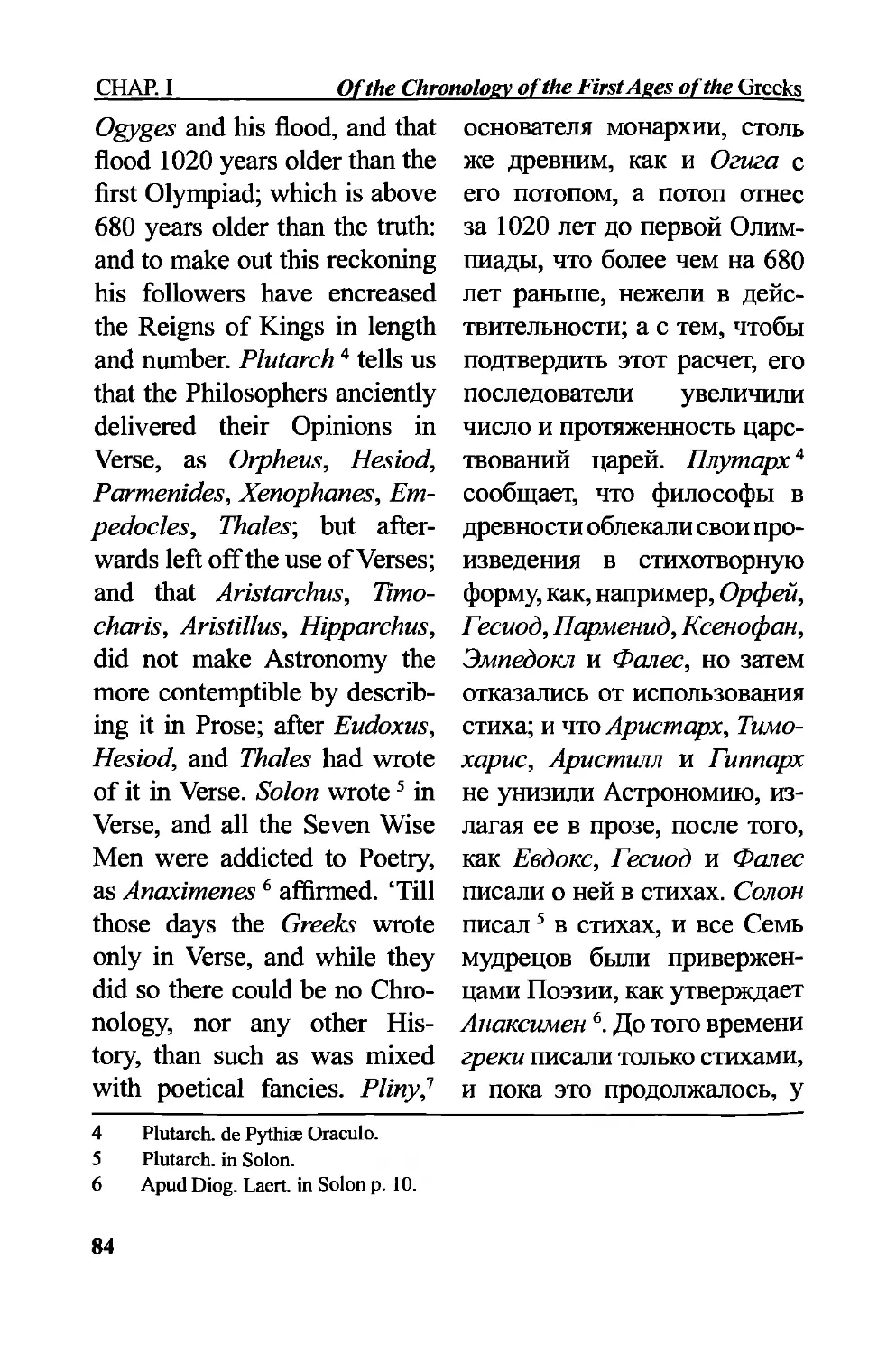
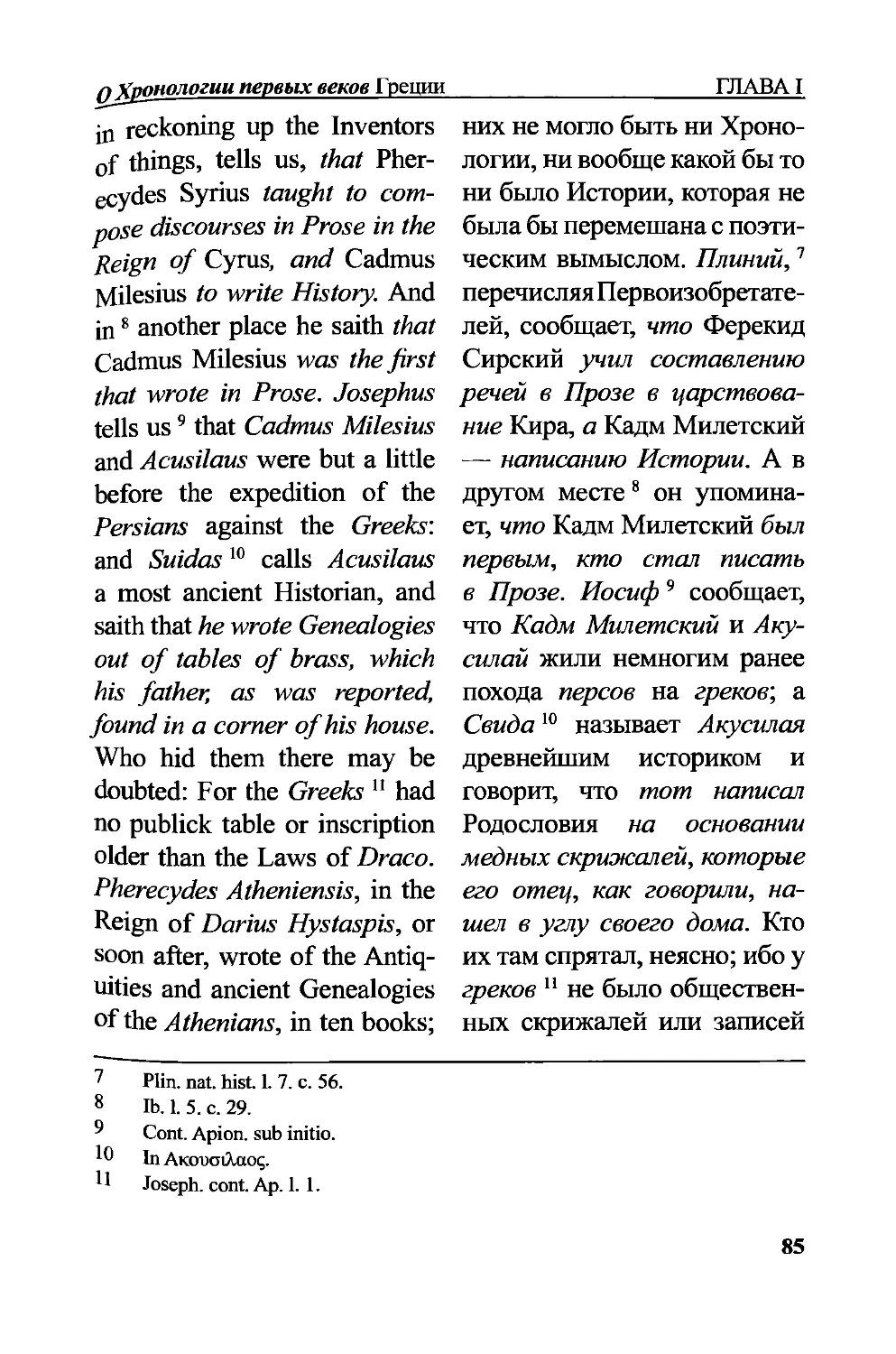
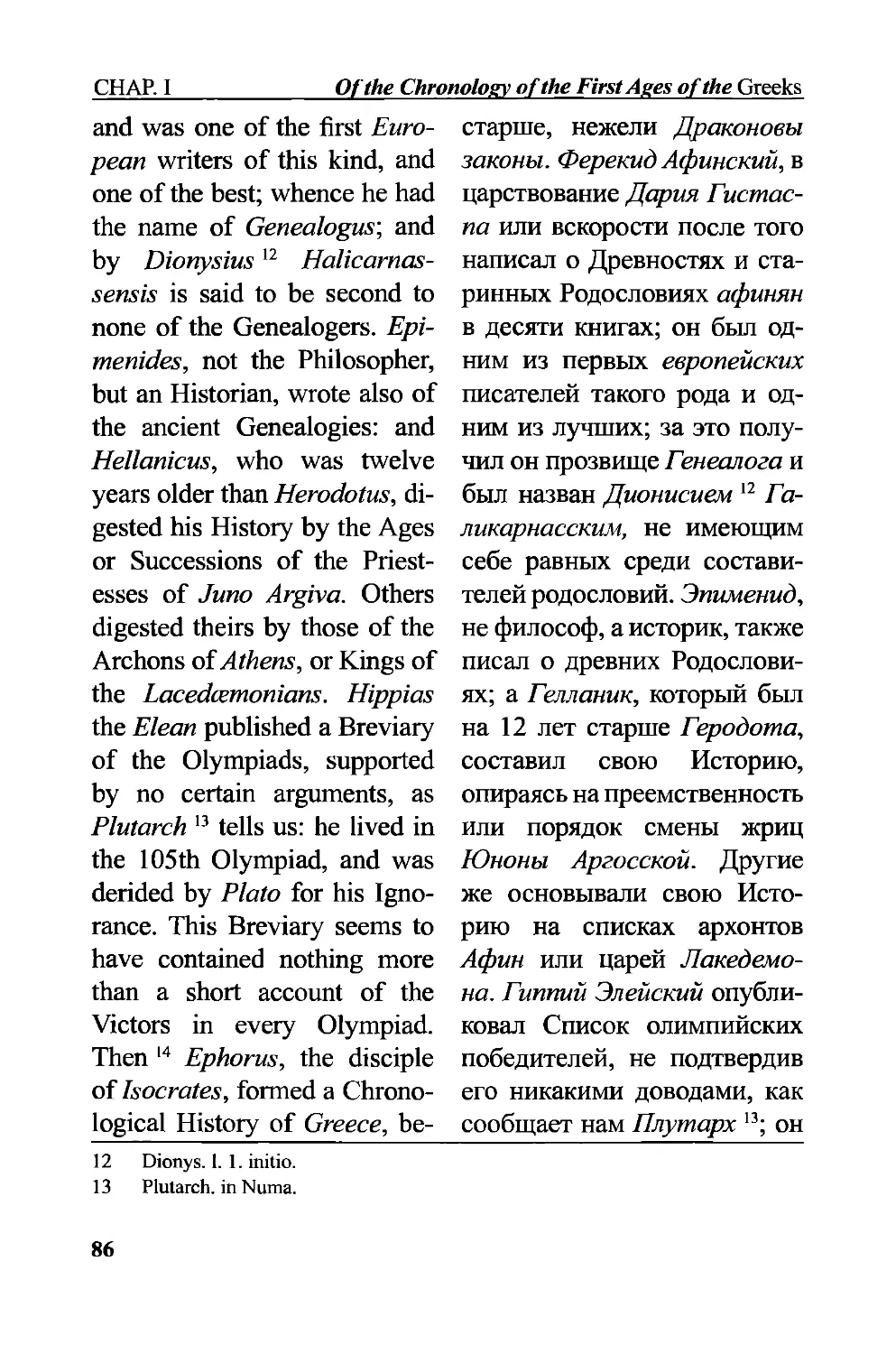
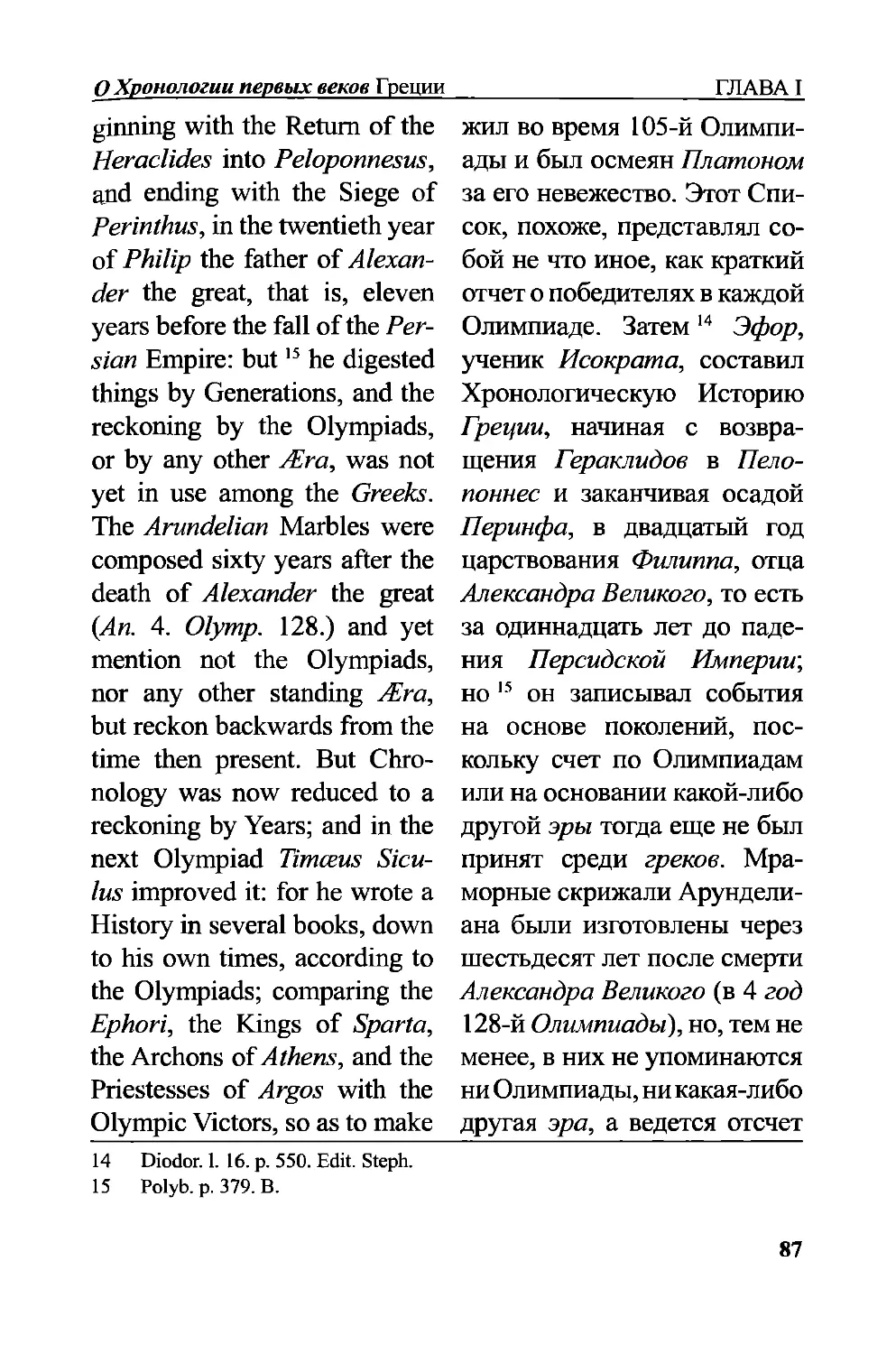
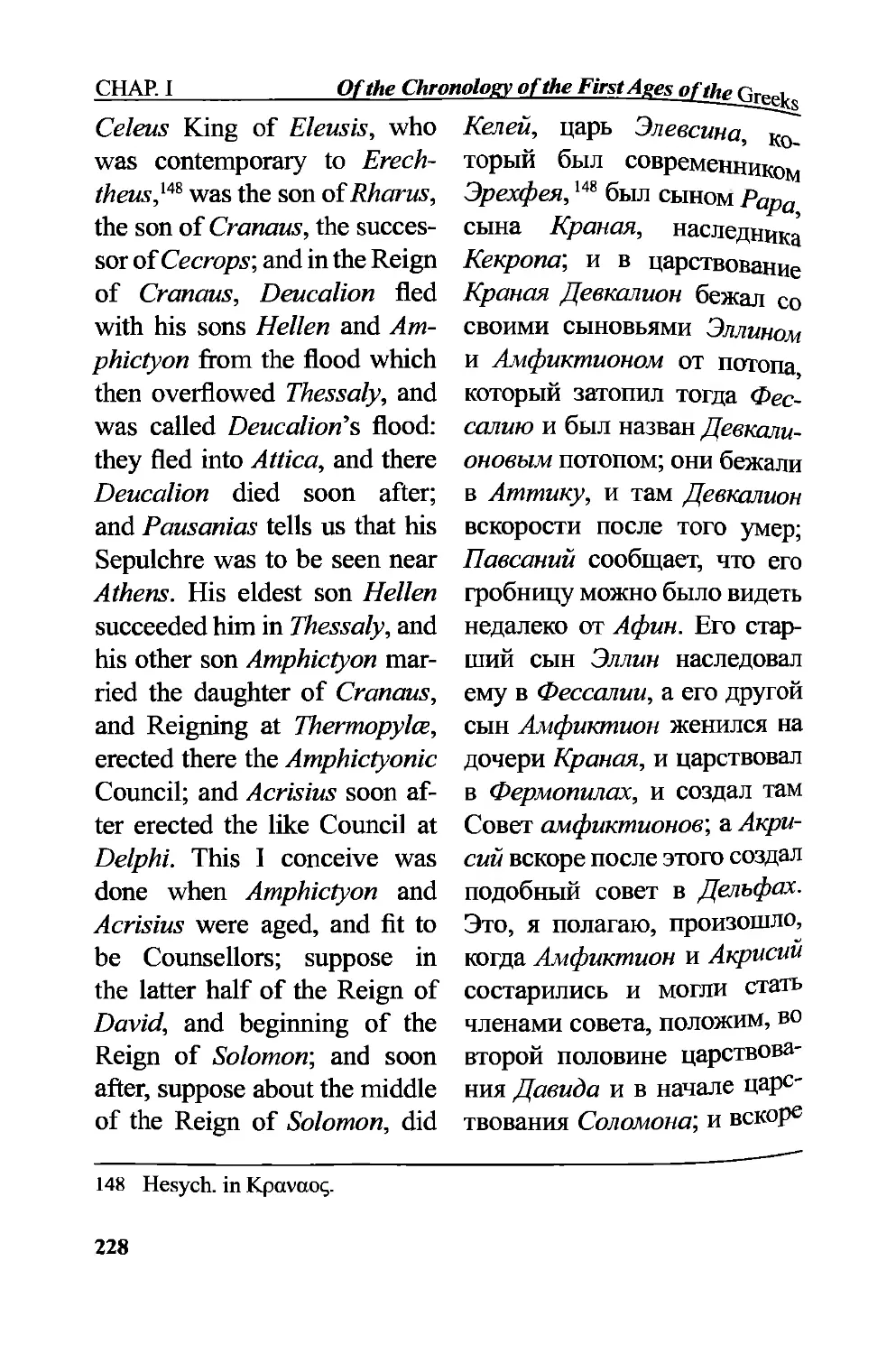
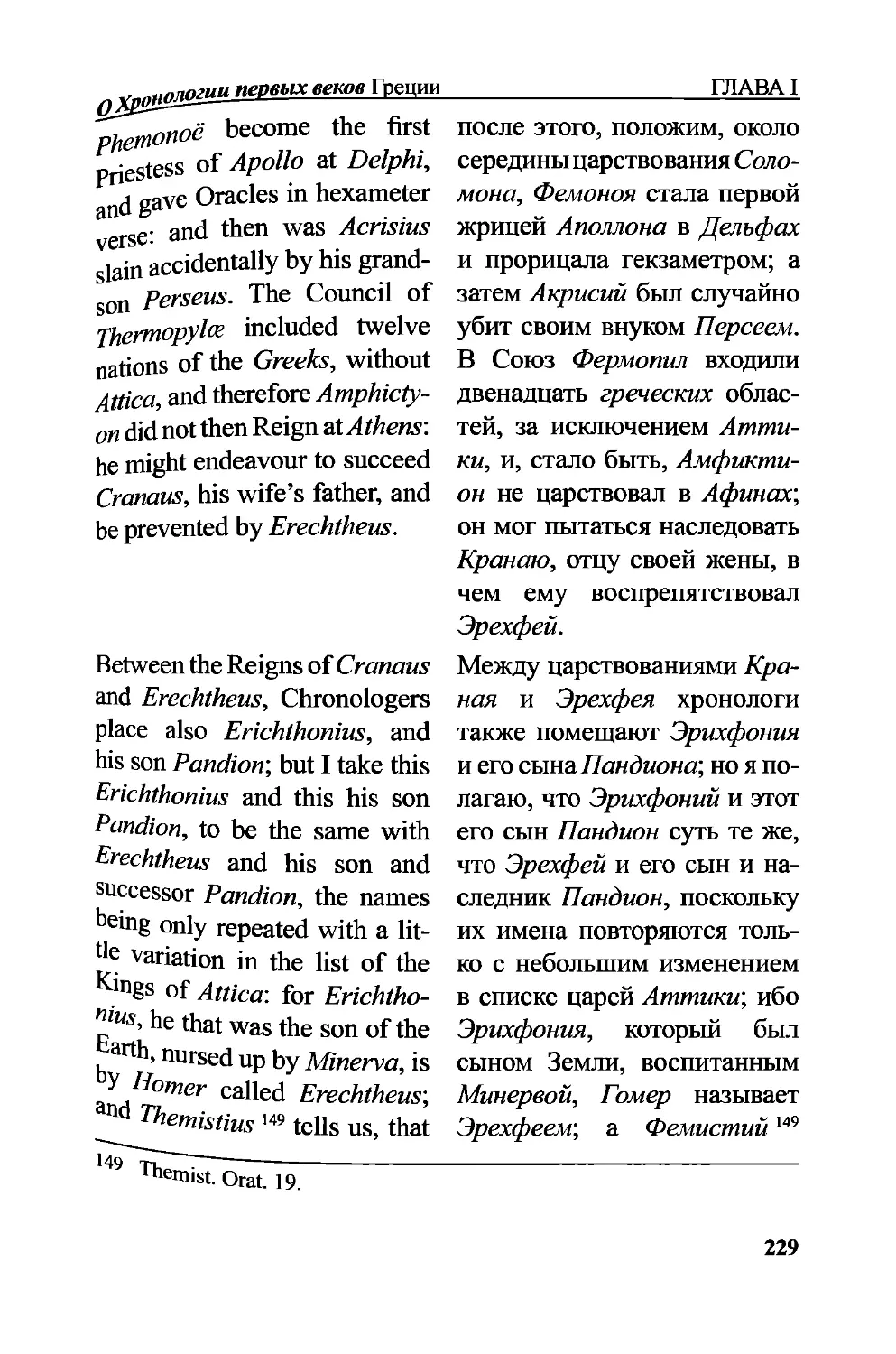
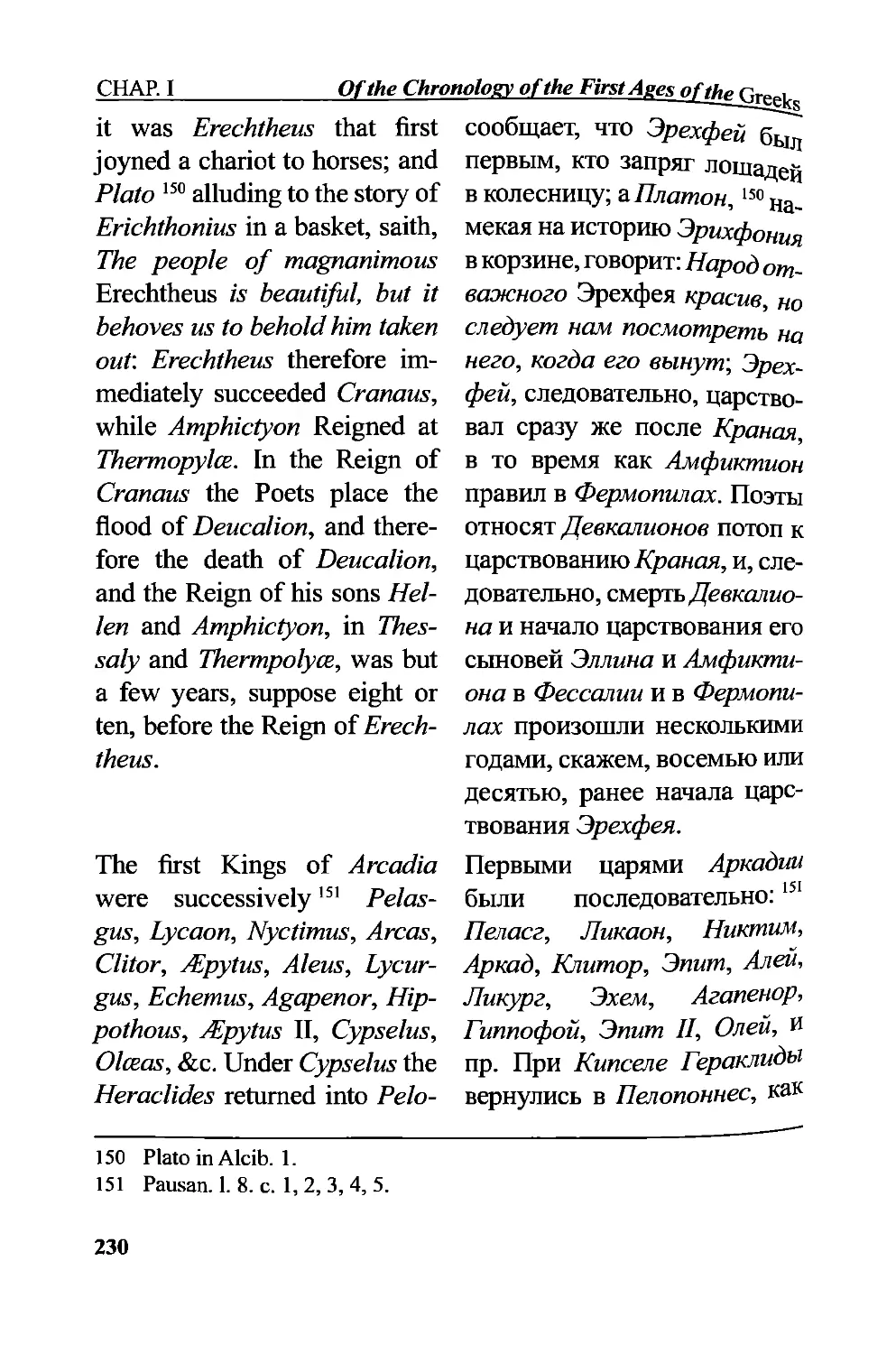
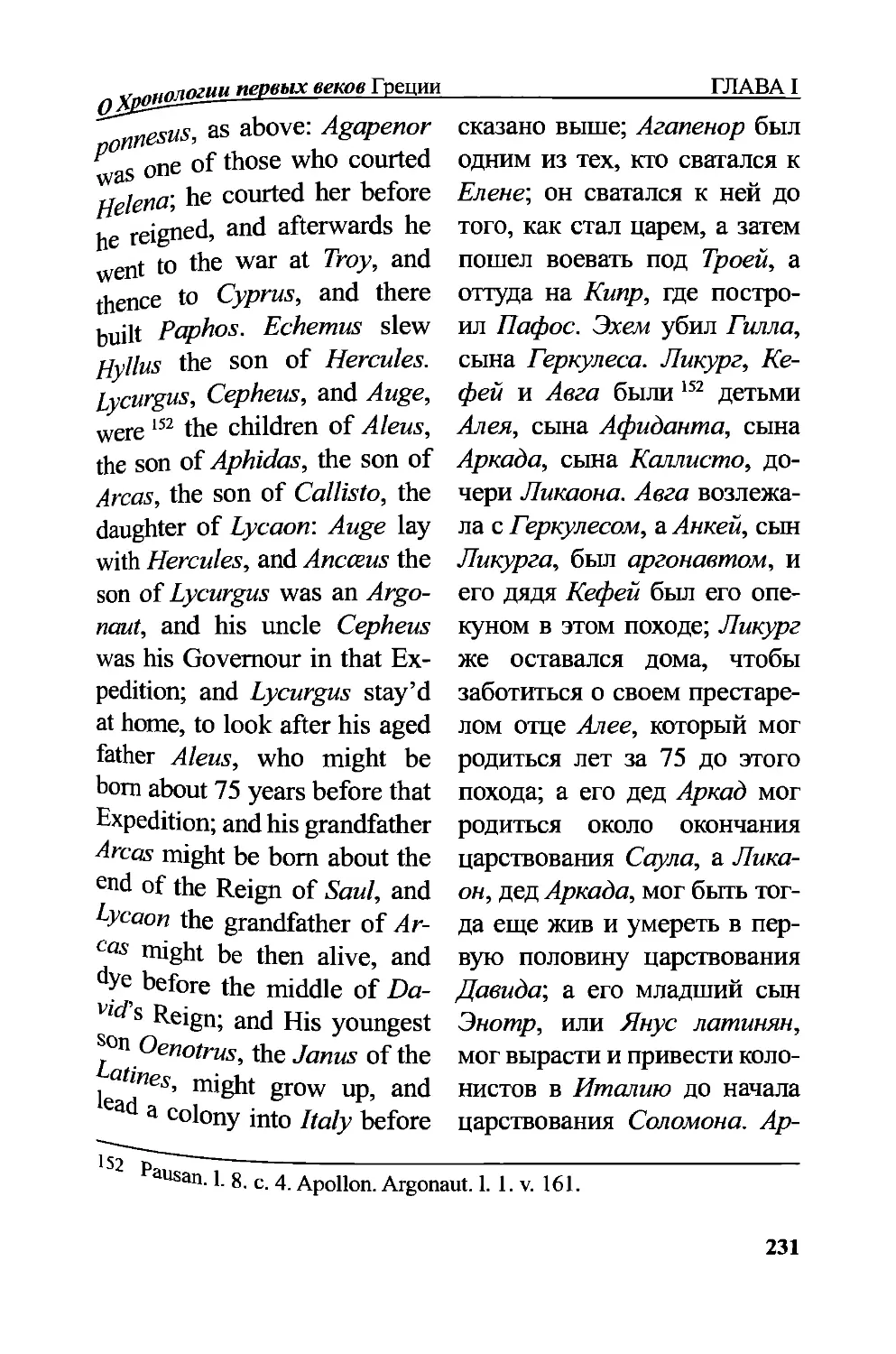
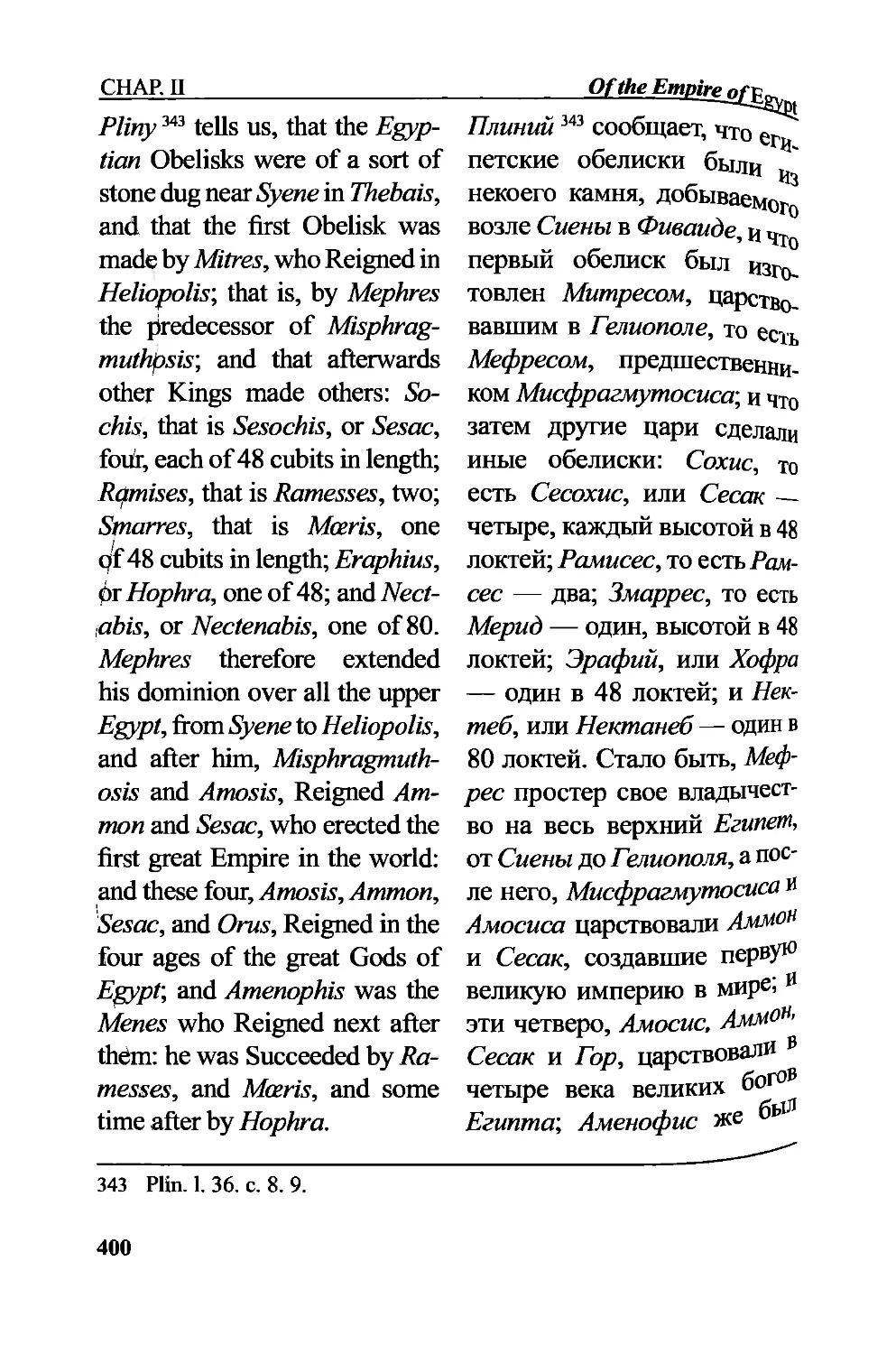
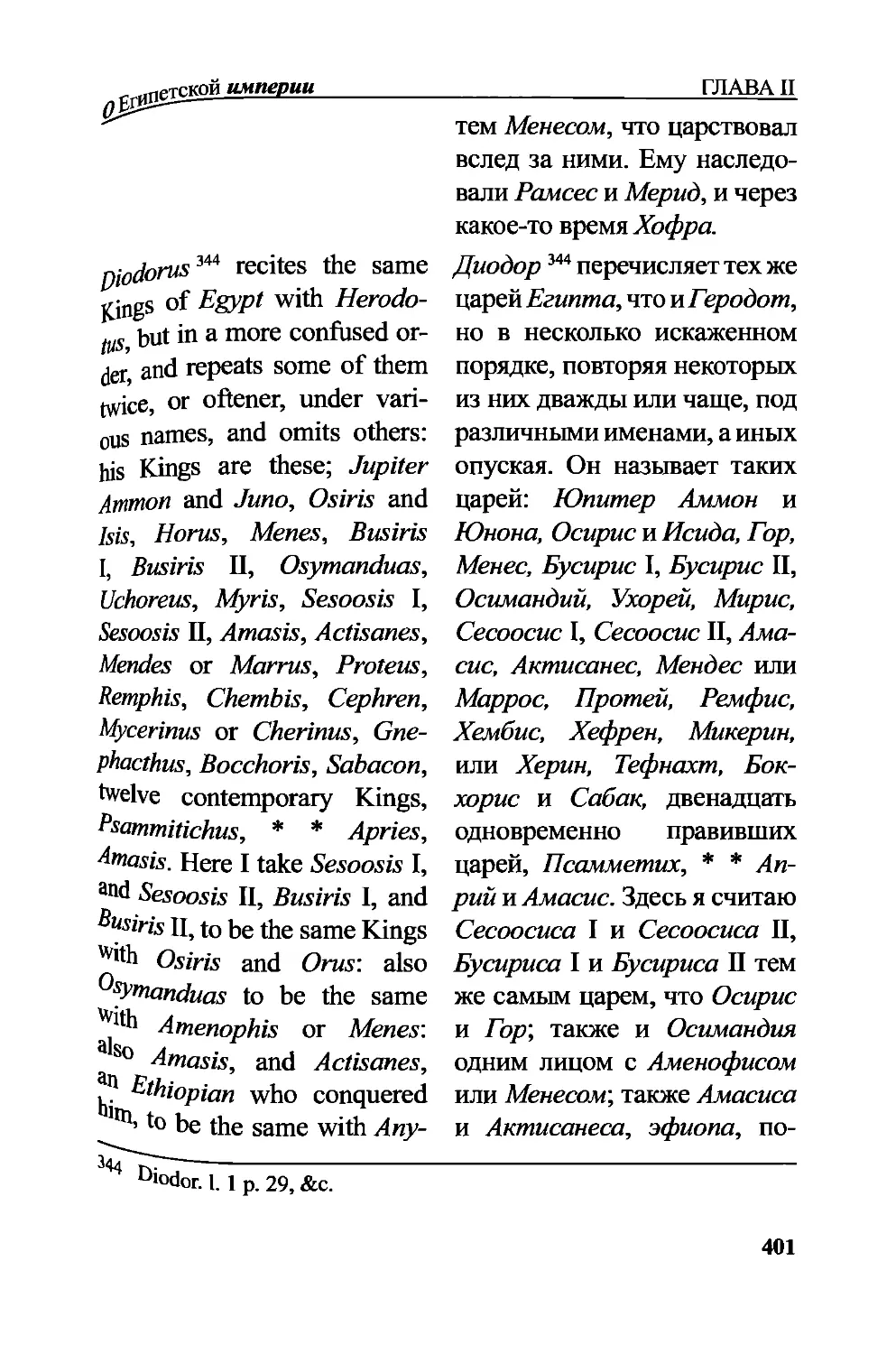
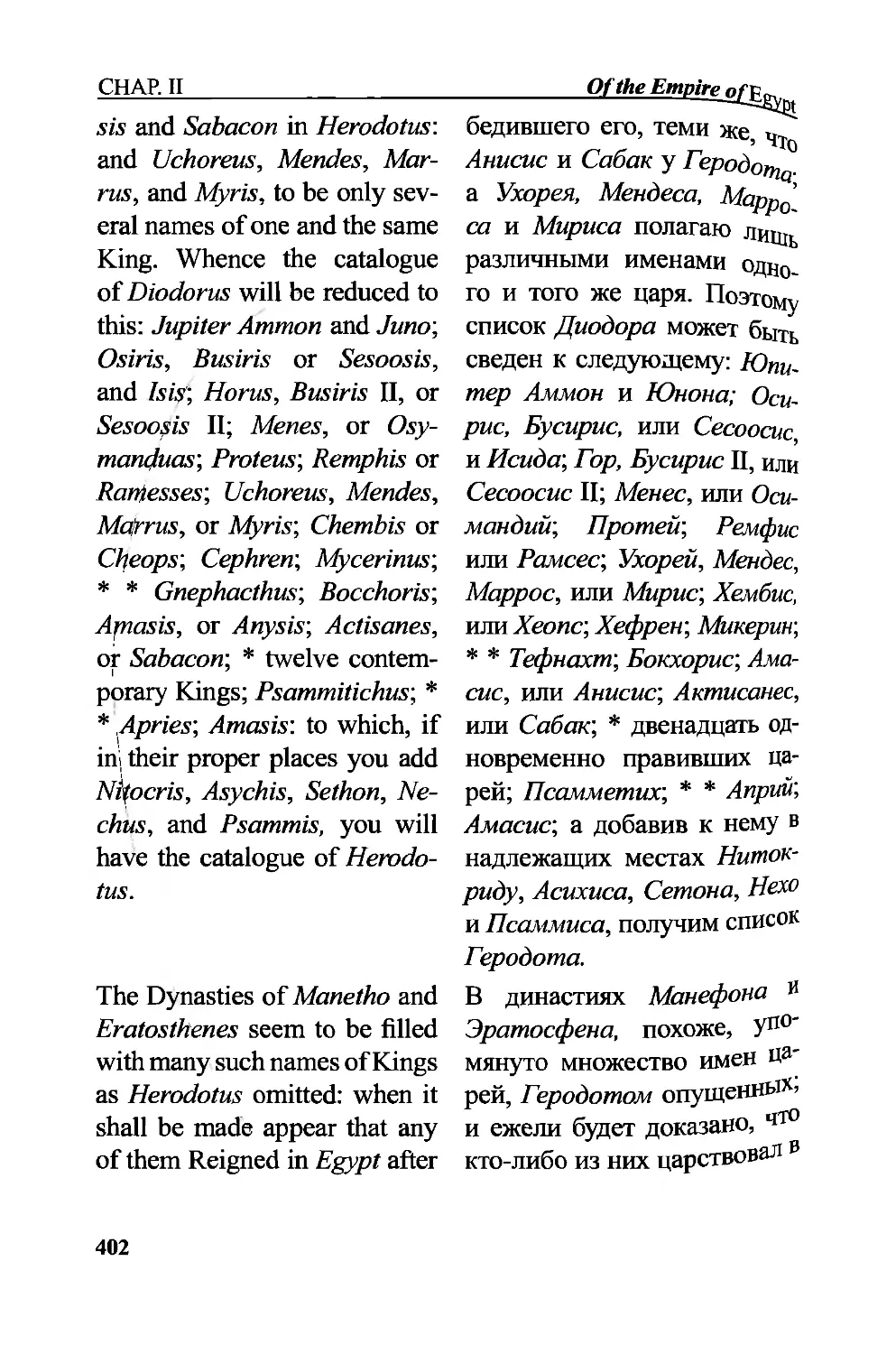
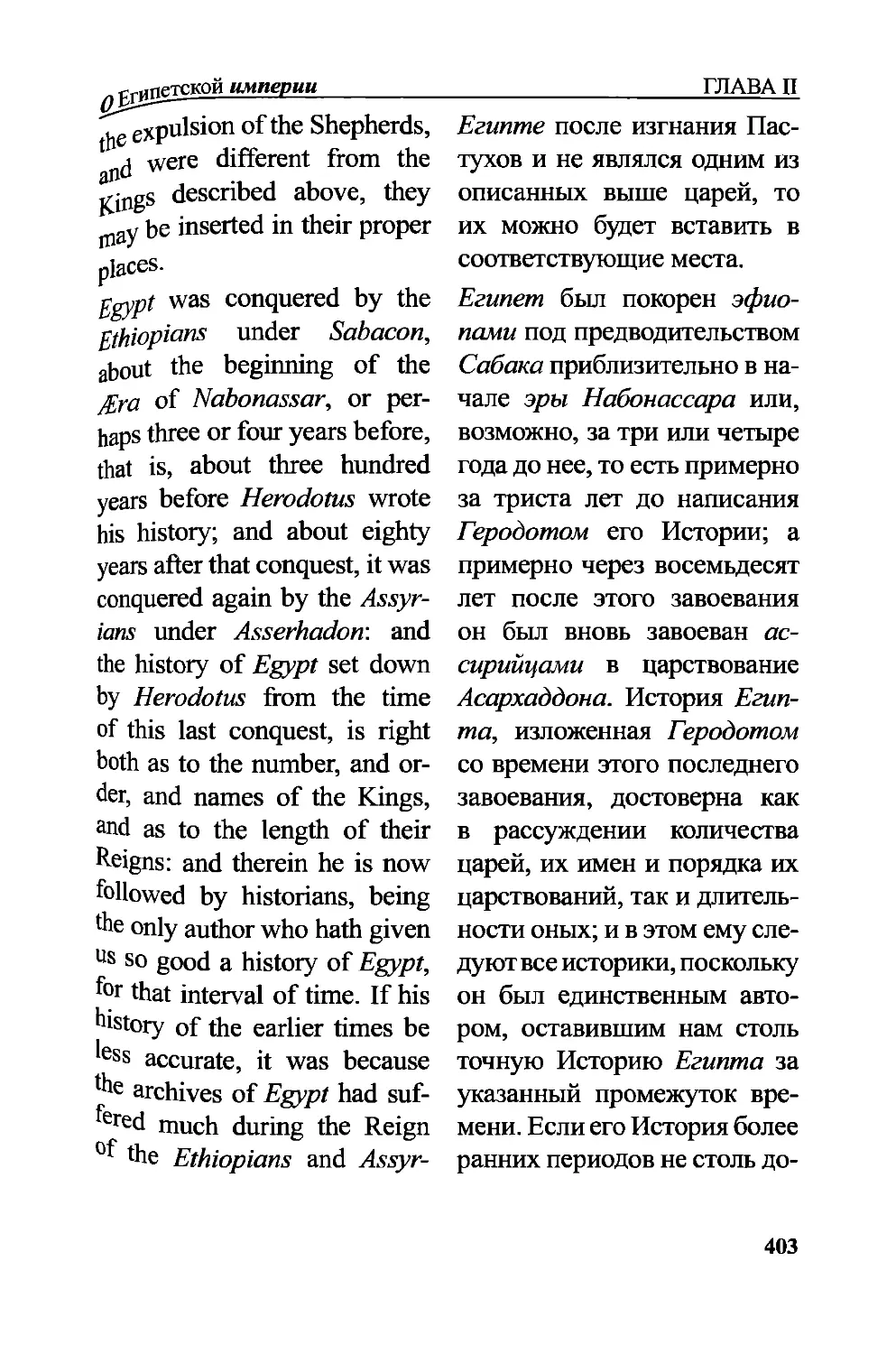
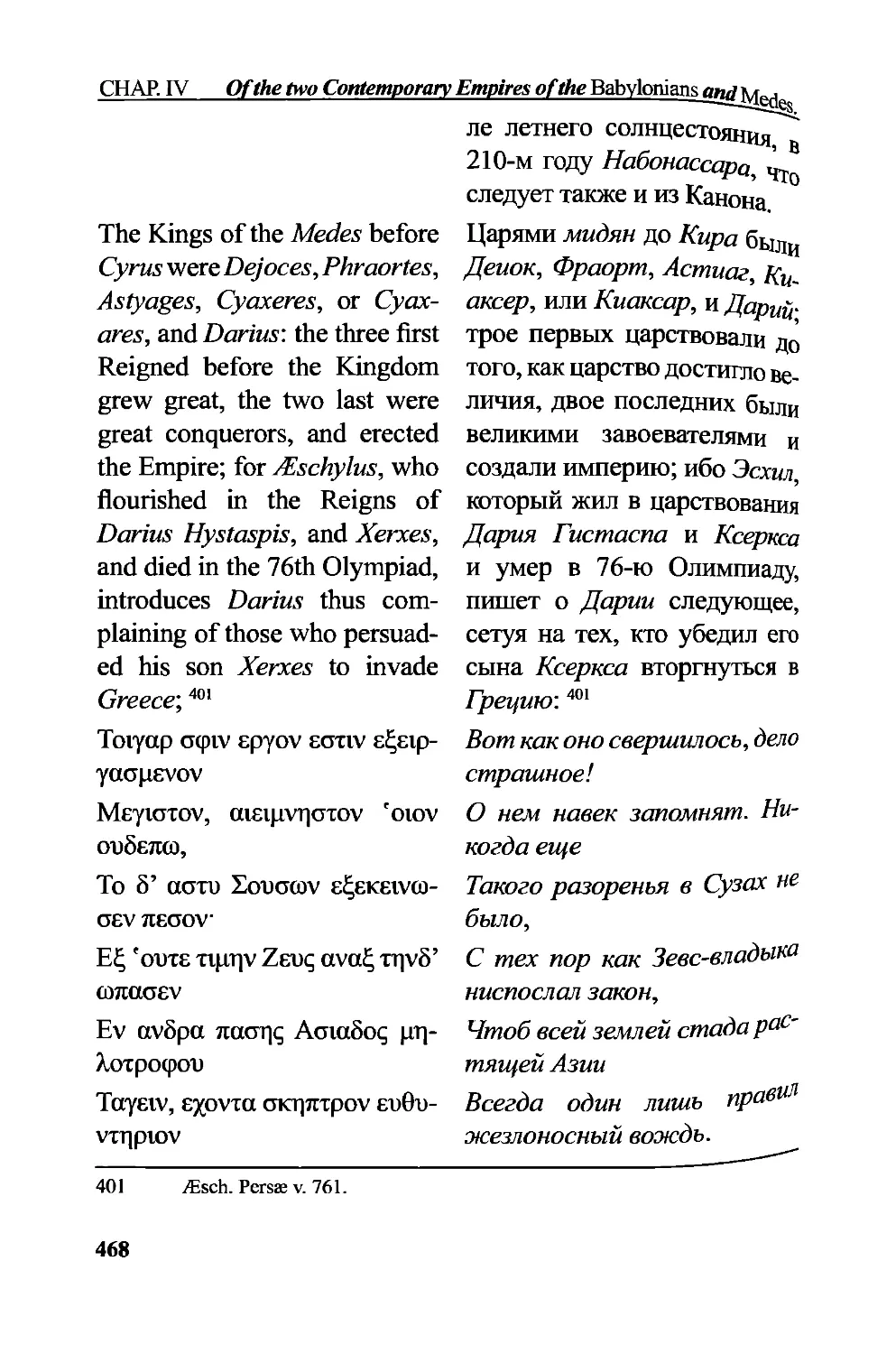
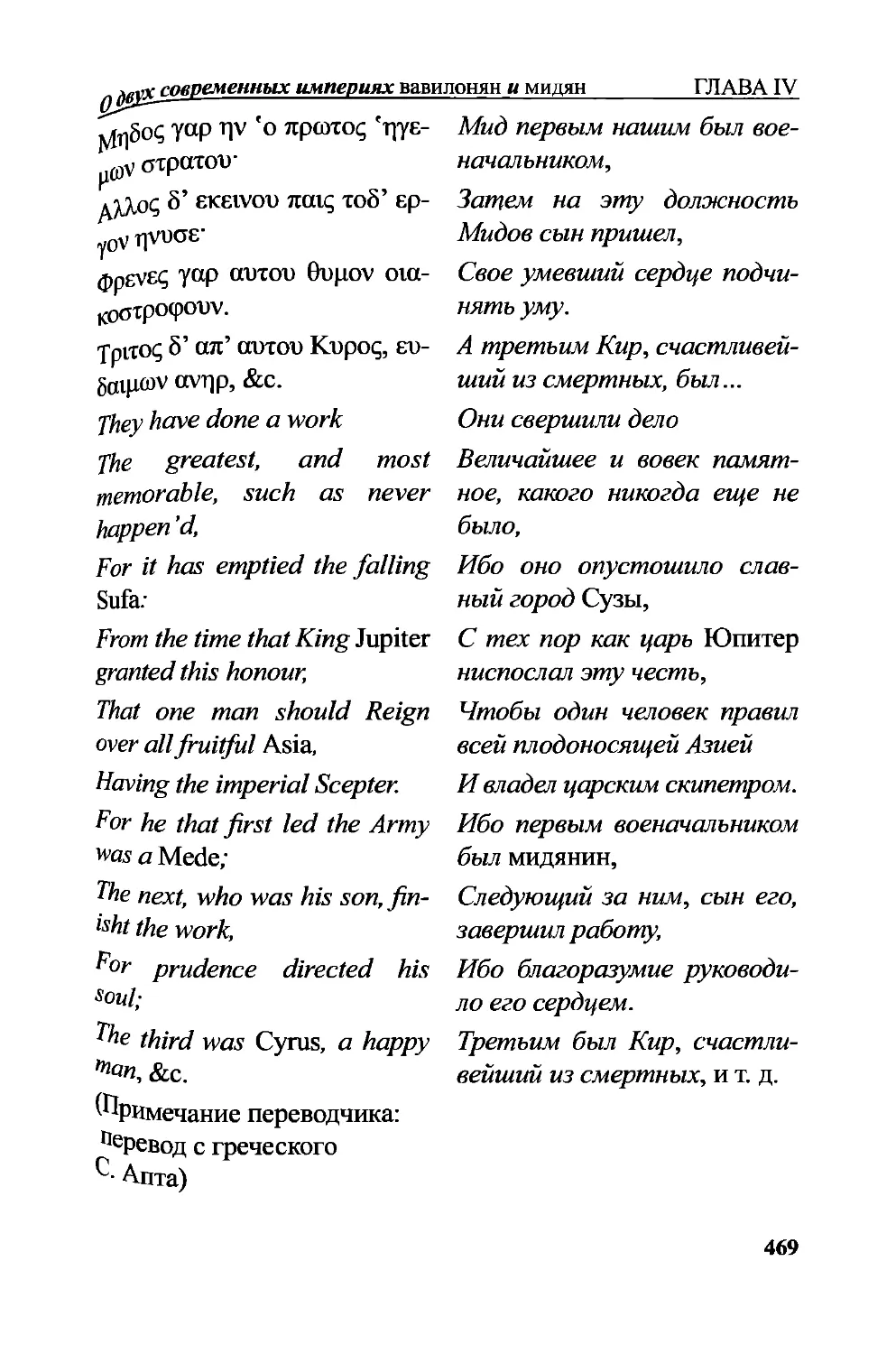
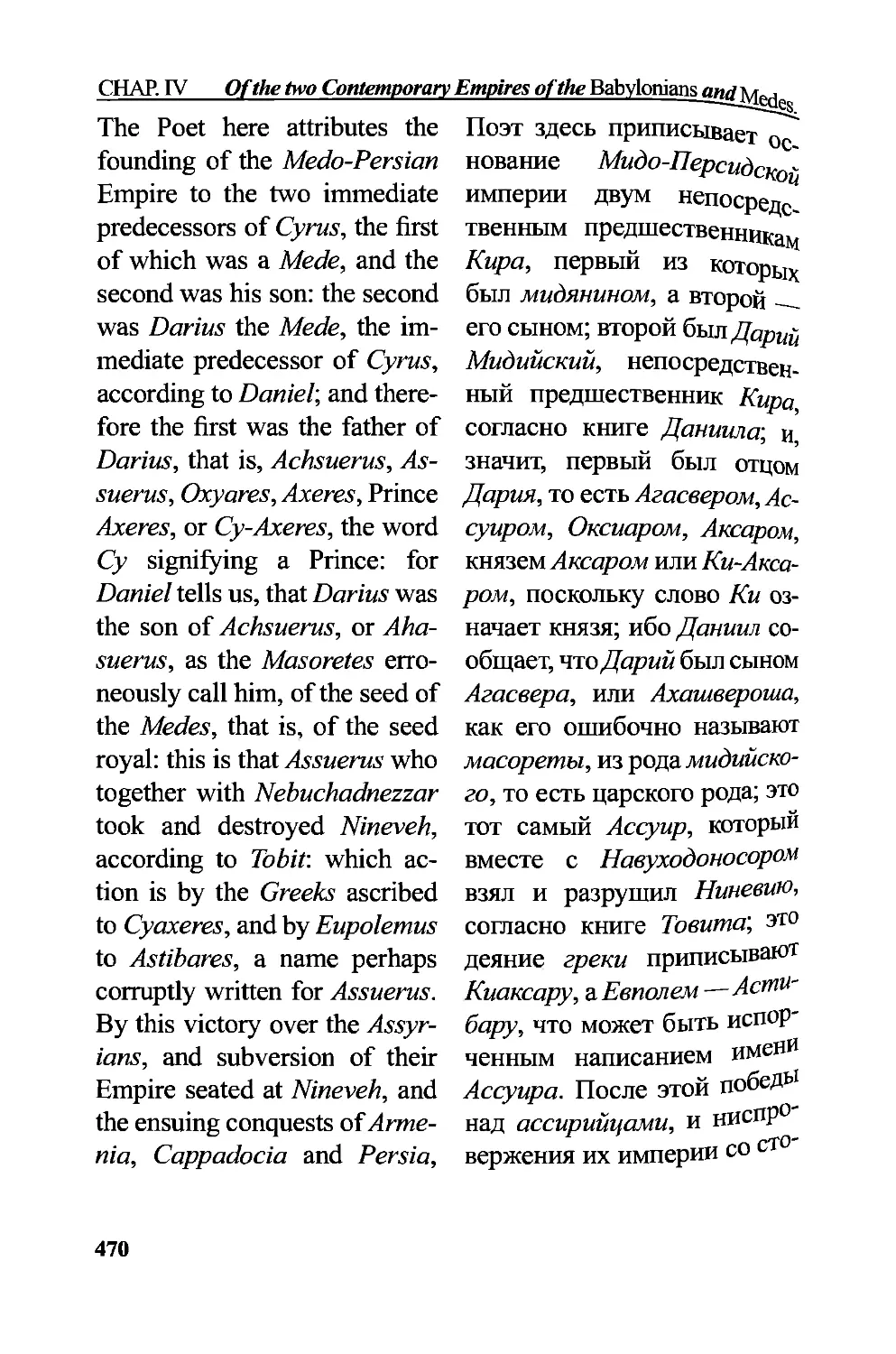
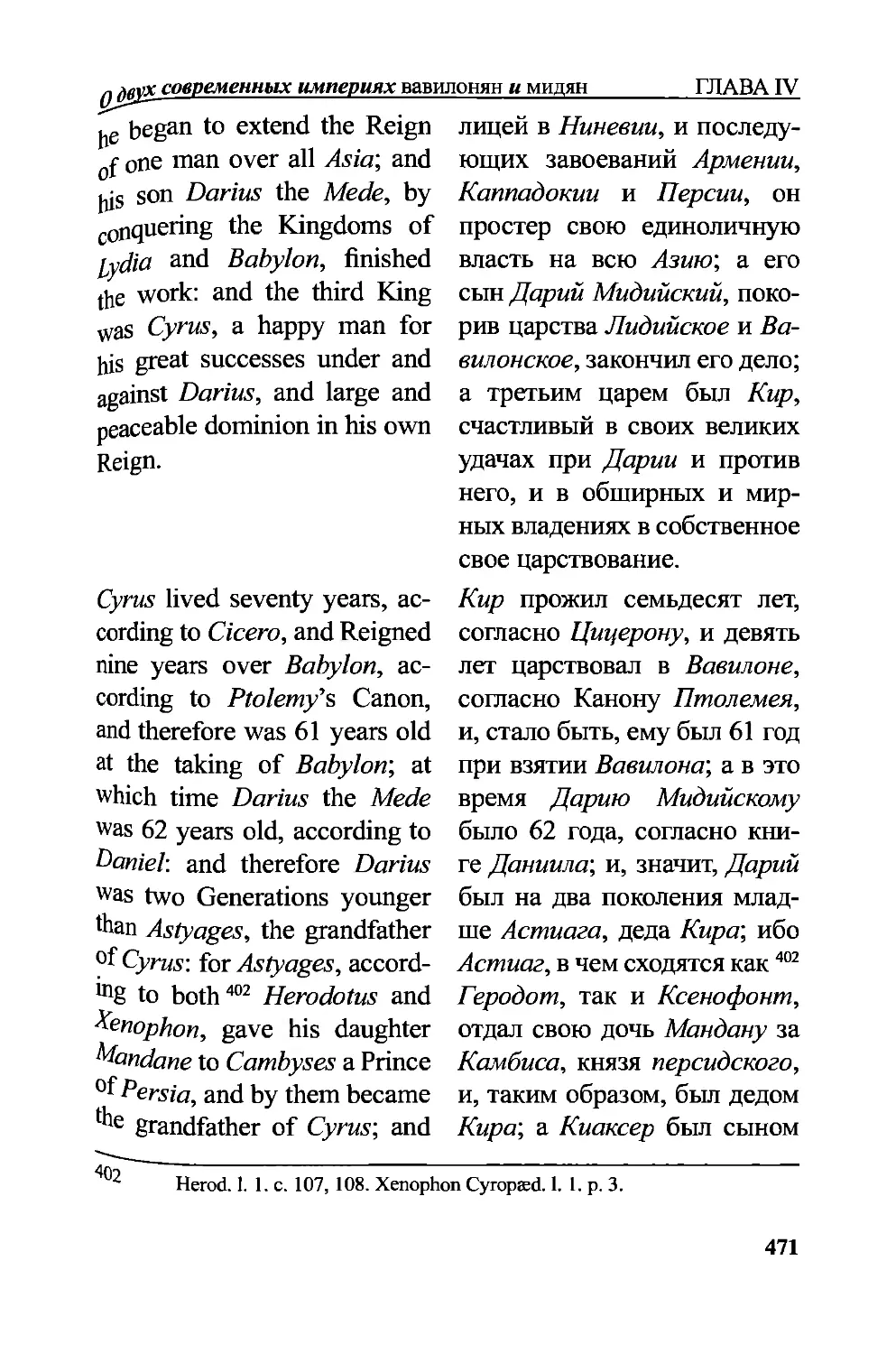
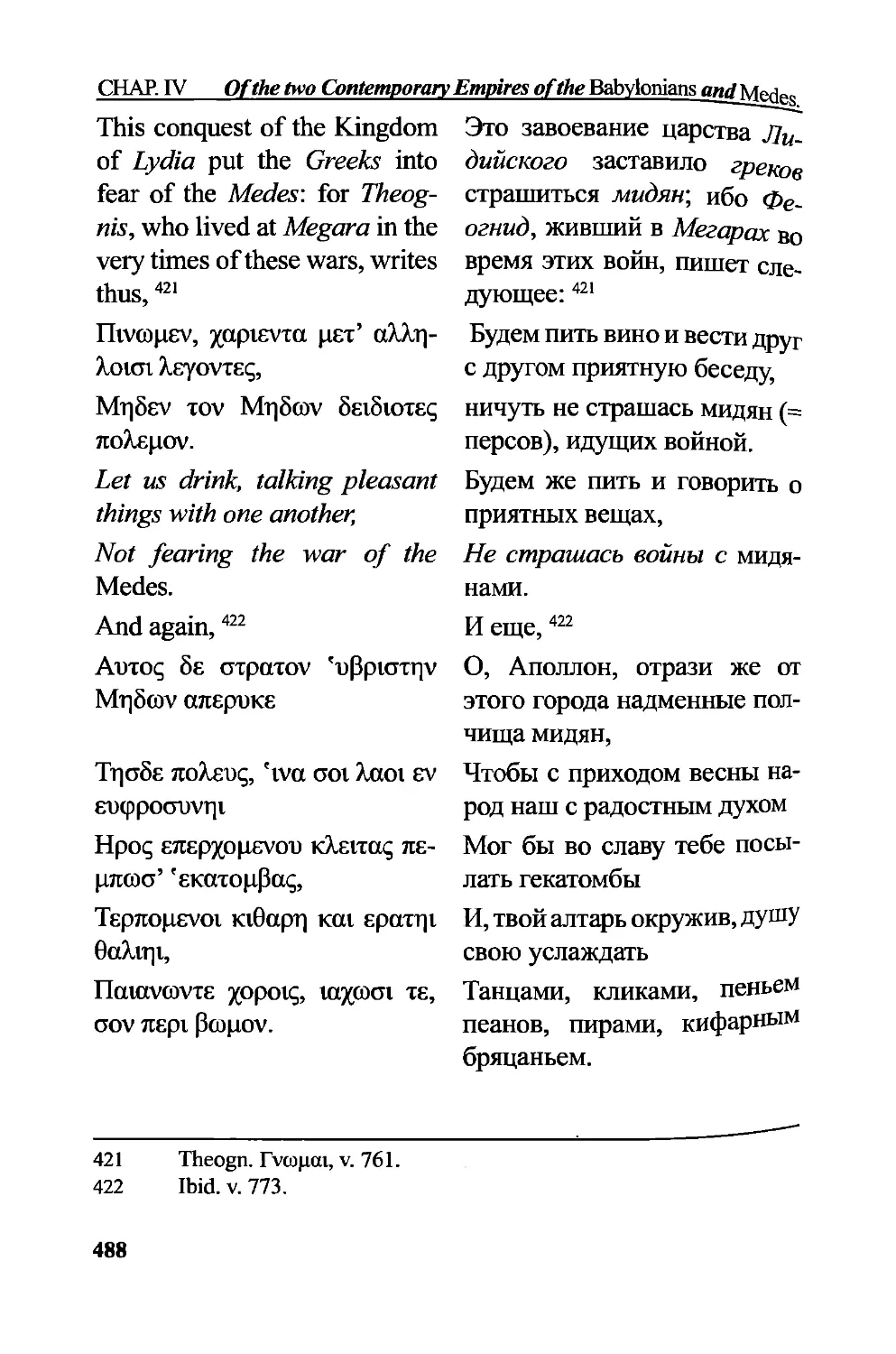
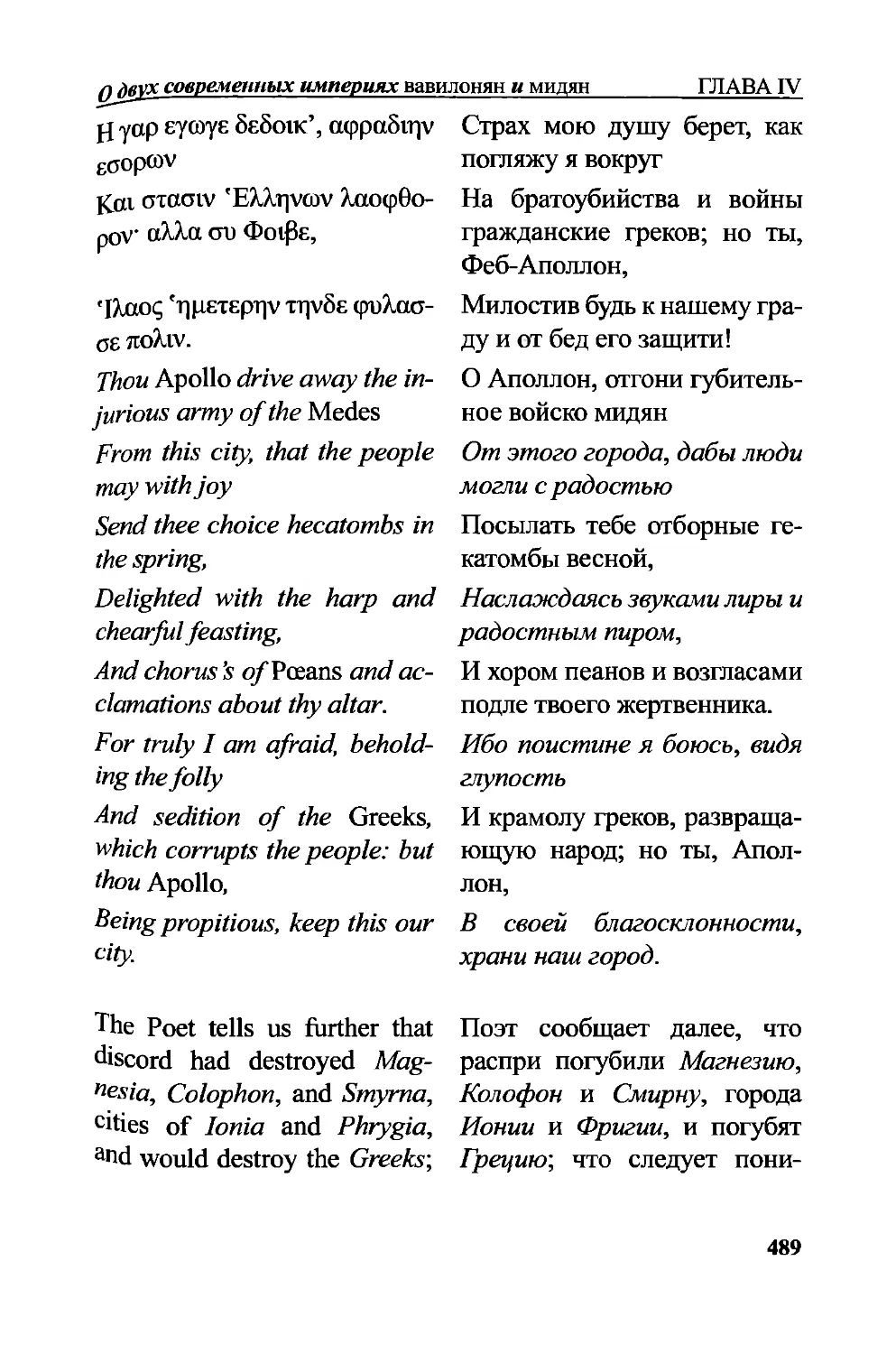
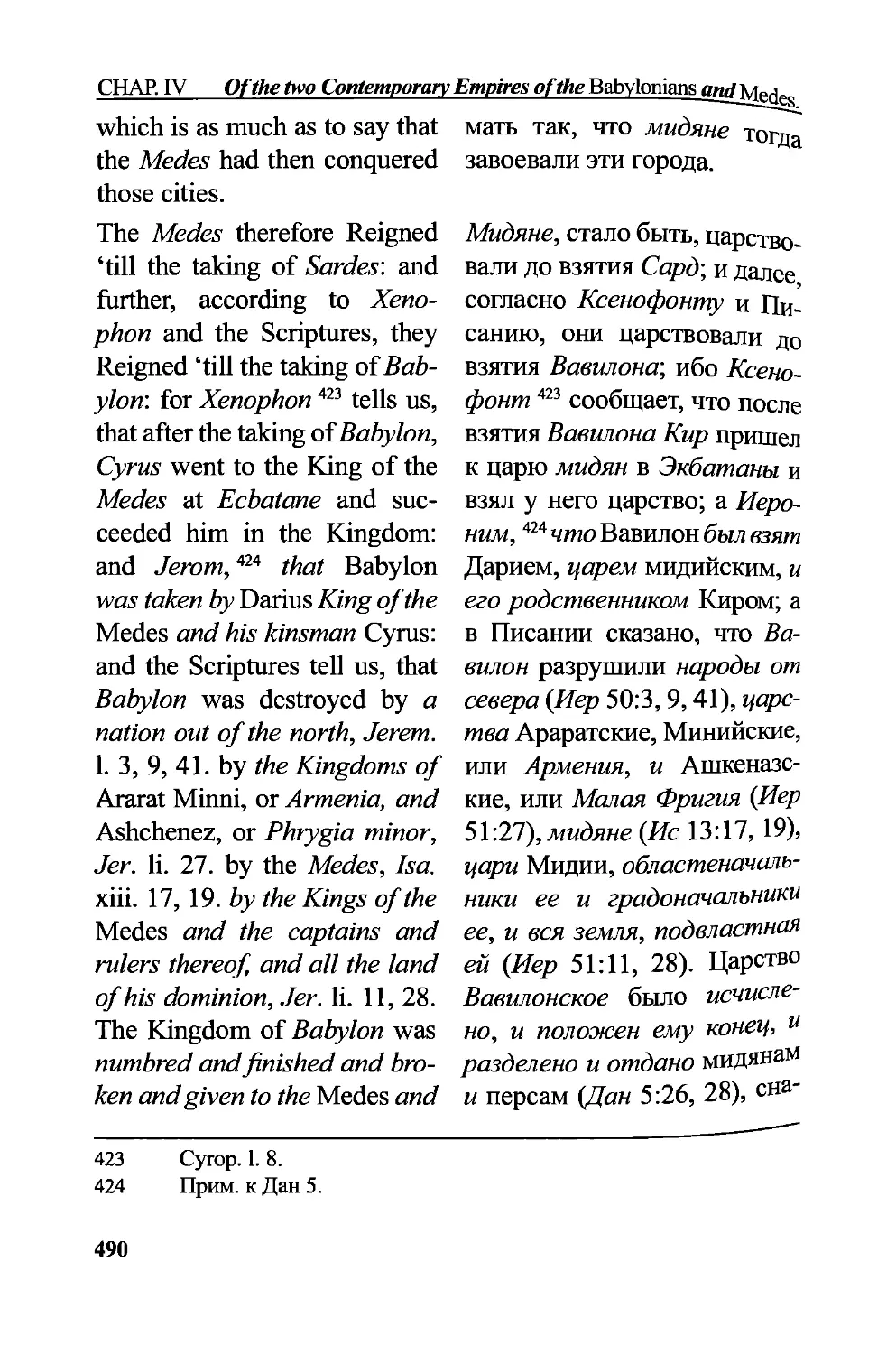
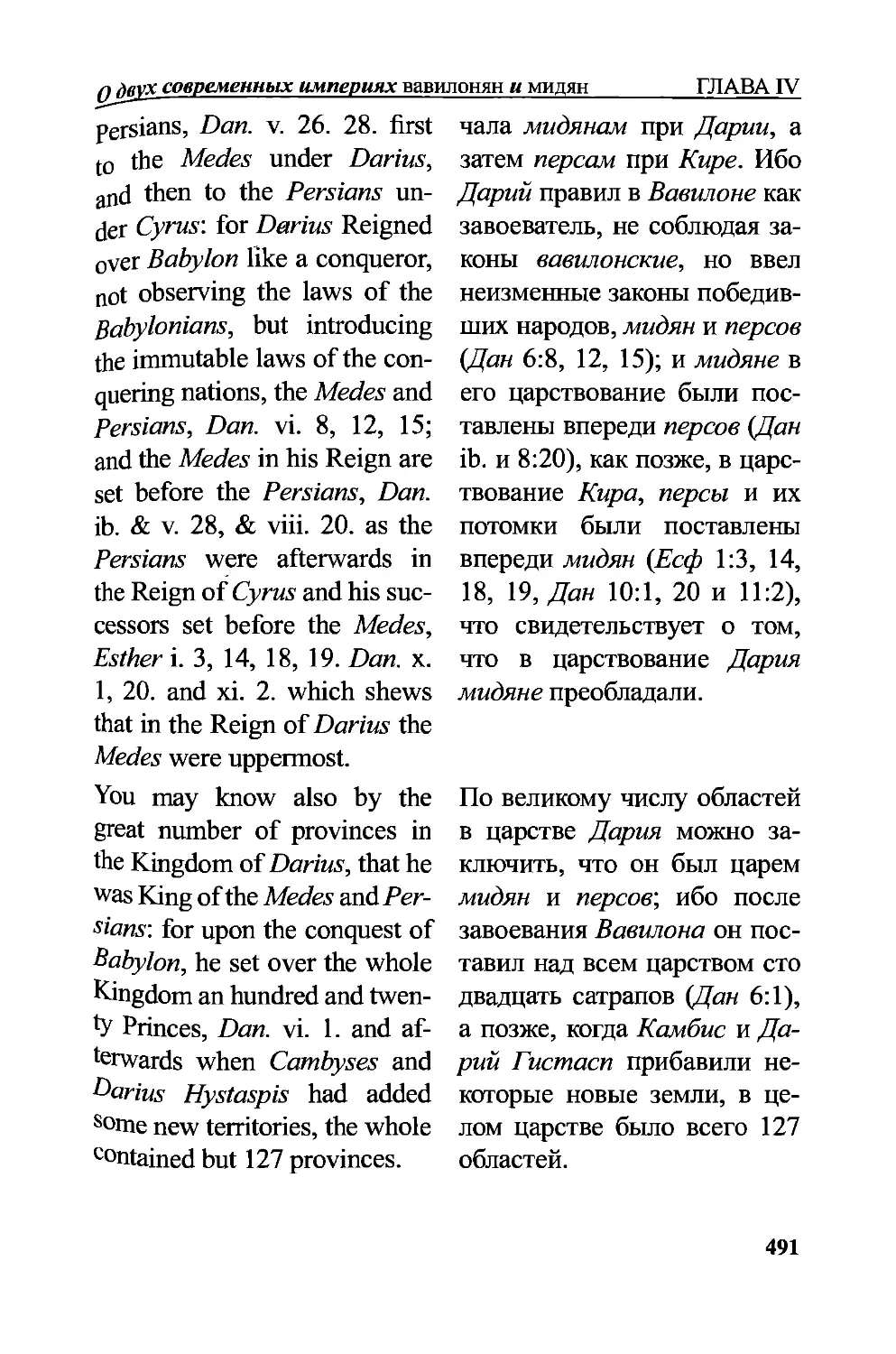



Автор: Ньютон И.
Теги: всеобщая история математика древний и античный мир хронология историческая хронология
ISBN: 5-9650-0034-0
Год: 2007


Текст
                    THE
CHRONOLOGY
OF
ANCIENT KINGDOMS
AMENDEI)
ИСААК НЬЮТОН
ИСПРАВЛЕННАЯ
ХРОНОЛОГИЯ
древних царств
THE
CHRONOLOGY
OF
ANCIENT KINGDOMS
AMENDED
ИСААК НЬЮТОН
ИСПРАВЛЕННАЯ
ХРОНОЛОГИЯ
ДРЕВНИХ ЦАРСТВ
РИ1М1ИС
УДК94(3):51
ББК 63.3(0)3
Н92
Н 92 Исправленная хронология древних царств.
Исаак Ньютон. — М.: Издательство «РИМИС», 2007. — 656 с.
ISBN 5-9650-0034-0
Сегодня далеко не все знают, что Исаак Ньютон, великий английский
ученый XVIII века, много лет своей жизни отдал изучению исторической
хронологии. Ошибочность общепринятой хронологической версии Скали-
гера-Петавиуса стала ясна Ньютону после длительного и кропотливого изу-
чения. Он систематизировал ее, дал ее сжатое и четкое изложение (в том, что
касается древней истории). Опираясь на естественнонаучные идеи, Ньютон
подверг скалигеровскую версию истории сильному преобразованию в сто-
рону СОКРАЩЕНИЯ и приближения к нашему времени. Книга Ньютона
вызвала бурное обсуждение в печати, но потом была замолчана и, по сути,
выведена из научного обращения. Ньютон опередил свое время. Научно-ис-
торическая ценность и значимость для мировой культуры этого труда Нью-
тона становится понятной только в свете открытий и исследований авторов
Новой Хронологии Фоменко А. Т. и Носовского Г. В.
На русском языке книга выходит впервые. Русский перевод сопровож-
дается оригинальным английским текстом. Книга предназначена всем, кто
интересуется исторической хронологией и естественнонаучными методами
ее изучения.
УДК94(3):51
ББК 63.3(0)3
© Издательство «РИМИС» 2007
ISBN 5-9650-0034-0
fican Jig Witautub
ПРЕДИСЛОВИЕ
Предисловие
к русскому изданию
Автор книги, лежащей перед читателем, настолько знаме-
нит, что в представлении не нуждается. Однако, возможно,
далеко не все знают, что Исаак Ньютон, великий английский
ученый XVIII века, математик, механик, астроном и физик,
создатель классической механики, основ дифференциально-
го и интегрального исчисления, человек, открывший закон
всемирного тяготения и построивший теорию движения не-
бесных тел, много лет своей жизни отдал изучению истори-
ческой хронологии и попыткам ее исправить. Ошибочность
общепринятой хронологической версии Скалигера-Петавиу-
са стала ясна Ньютону лишь после длительного и кропотли-
вого исследования. Поняв, в чем дело, он предпринял попыт-
ку систематизировать ошибочную версию Скалигера, дать
ее сжатое и четкое изложение (в том, что касается древней
истории) и исправить ее ошибки. Первые две задачи Ньютон
выполнил блестяще, как читатель сам убедится при чтении
данной книги. Что касается исправления хронологии Скали-
гера-Петавиуса, то здесь великий англичанин успеха не до-
бился, хотя и высказал ряд исключительно ценных мыслей и
замечаний.
В 80-х годах XX века А. Т. Фоменко впервые после долгого
забвения обнаружил и ввел в научный оборот сам факт того,
что Ньютон занимался хронологией и написал на эту тему
объемистый труд. Приведенный ниже анализ книги Ньюто-
на и истории ее публикации в значительной мере основан на
3
ПРЕДИСЛОВИЕ
соответствующем разделе книги А. Т. Фоменко «Основания
истории».
В наше время исследования Ньютона по хронологии вся-
чески замалчиваются. Однако было время, когда вокруг них
велись бурные споры. Сегодня с развитием Новой Хроно-
логии становится ясно, насколько грандиозной была задача,
которую поставил перед собой Ньютон. Гениальный ученый
выбрал совершенно верное направление научного поиска.
Опираясь на естественнонаучные идеи, Ньютон подверг ска-
лигеровскую версию хронологии древности сильному пре-
образованию в сторону ее СОКРАЩЕНИЯ. Большинство
событий, датируемых историками ранее эпохи Александра
Македонского, Ньютон передатировал со сдвигом в сторону
нашего времени. Правда, предлагаемые им изменения хро-
нологии были не столь радикальны, как в позднейших тру-
дах Николая Александровича Морозова, который независимо
от Ньютона показал, что скалигеровская версия хронологии
древности неверна вплоть до IV века н. э. Ньютон, в своих
попытках исправления хронологии, не продвинулся выше ру-
бежа начала новой эры. Он подверг ревизии лишь даты при-
мерно ранее 200 года до н. э. При этом обнаружить какую-
либо систему в возникающих передатировках он не смог.
Сравнивая выводы Ньютона с принятой сегодня скали-
геровской версией хронологии, современные комментаторы
приходят к мысли, что великий ученый, дескать, «ошибался»,
а историки, «конечно же, правы». Так, например, один из био-
графов Исаака Ньютона, М. И. Орленко, писал: «Конечно, не
имея расшифровки клинописи и иероглифов, не имея данных
археологии, ТОГДА ЕЩЕ НЕ СУЩЕСТВОВАВШЕЙ, ско-
ванный презумпцией достоверности библейской хронологии
и верой в реальность того, что рассказывалось в мифах, Нью-
тон ошибался не на десятки и даже не на сотни лет, а на ты-
4
ПРЕДИСЛОВИЕ
сячелетия, и его хронология далека от истины даже в том, что
касается самой реальности некоторых событий. В. Уинстон
писал в своих воспоминаниях: «Сэр Исаак в области матема-
тики нередко прозревал истину только путем интуиции, даже
без доказательств... Но этот же сэр Исаак Ньютон составил
хронологию... Однако эта хронология убеждает не больше,
чем остроумный исторический роман, как я окончательно до-
казал в написанном мной опровержении этой хронологии. О,
каким слабым, каким чрезвычайно слабым может быть вели-
чайший из смертных в некоторых отношениях»».
Итак, что же предлагал Исаак Ньютон? Основное внима-
ние он уделил хронологии Древнего Египта и Древней Гре-
ции ранее начала новой эры. Например, общепринятая версия
хронологии относит начало правления первого египетского
фараона Менеса (Мены) примерно к 3000 году до н. э. Нью-
тон же утверждал,что это событие датируется 946 годом до
н. э. Хронологический сдвиг составляет здесь ни много ни
мало — около двух тысяч лет.
Миф о Тезее датируется историками XV веком до н. э.
Ньютон же доказывал, что соответствующие события имели
место около 936 года до н. э. То есть примерно на 700 лет
позднее.
Знаменитая Троянская война датируется историками при-
мерно 1225 годом до н. э. Ньютон утверждает, что она про-
изошла гораздо позже - в 904 году до н. э. Хронологический
сдвиг составляет в данном случае примерно 330 лет. И так
далее.
Кратко основные выводы Ньютона в области исправле-
ния скалигеровской хронологии можно сформулировать
так. Часть истории Древней Греции смещена им во времени
в среднем на 300 лет и передвинута ближе к нам. История
Древнего Египта, охватывающая, согласно скалигеровской
5
ПРЕДИСЛОВИЕ
версии, несколько тысяч лет и начинающаяся якобы за 3-4
тысячелетия до н. э., сдвинута Ньютоном в короткий отрезок
времени длиной всего в 330 лет от 946 года до н. э. до 617
года до н. э.
Очень интересна и поучительна сама история публикации
трудов Исаака Ньютона по исправлению хронологии. Нью-
тон, по-видимому, опасался, что выход в свет его работ по
хронологии доставит ему много неприятностей и не спешил
с публикацией. Исследования по хронологии велись Ньюто-
ном на протяжении многих лет, вплоть до самой его смерти
в 1727 году. Со временем слухи о хронологических исследо-
ваниях Ньютона стали проникать в общество, и принцесса
Уэльская выразила желание ознакомиться с его трудом. Нью-
тон передал ей рукопись при условии, что та не попадет в
руки посторонним лицам.
Через какое-то время рукопись была передана на тех же
условиях приехавшему из Франции в Лондон аббату Конти
(Abbe’ Conti). Однако, вернувшись в Париж, аббат Конти
стал давать читать ее заинтересованным лицам. Дело кон-
чилось тем, что М. Фрере (М. Freret) перевел рукопись на
французский язык, добавив к ней собственный исторический
обзор. Этот перевод вскоре попал к парижскому книготоргов-
цу Ж. Гавельеру (G. Gavelier), который, мечтая опубликовать
новую книгу Ньютона, написал ему в мае 1724 года письмо.
Однако ответа от Ньютона он не получил, после чего напи-
сал в марте 1725 года новое письмо, сообщая, между прочим,
что будет рассматривать молчание автора как его согласие
на публикацию книги вместе с замечаниями Фрере. Ответа
снова не последовало. Тогда Гавельер попросил своего лон-
донского друга добиться ответа от Ньютона лично. Встреча
состоялась 27 мая 1725 года, и Ньютон дал отрицательный
6
ПРЕДИСЛОВИЕ
ответ. Однако было поздно. Книга вышла в свет на француз-
ском языке под следующим названием:
Abrege de Chronologic de M.Le Chevalier Newton, fait par
lui-meme, et traduit sur le manuscript Angelois. (With observation
by M. Freret). Edited by the Abbe Conti, 1725.
Ньютон получил это французское издание 11 ноября 1725
года. Он опубликовал письмо в Философских Трудах Коро-
левского Общества (Transactions of the Royal Society, v. 33,
1725, p. 315), где обвинил аббата Конти в нарушении данно-
го им обещания и в публикации книги помимо воли автора.
В 1726 году, с появлением нападок со стороны о. Сусьета
(Father Souciet), Ньютон сообщил, что готовит к печати но-
вую, более обширную книгу по древней хронологии.
Все эти события происходили уже незадолго до смерти
Ньютона. Он скончался в 1727 году, так и не успев завершить
свои исследования по древней истории. В 1728 году вышло
посмертное английское издание его хронологических тру-
дов.
Вскоре после выхода в свет указанных изданий (француз-
ского и английского) в печати появилось довольно много от-
кликов. В основном они принадлежали историкам и филоло-
гам и были крайне отрицательными. Книга Ньютона очень
не понравилась историкам скалигеровской школы, однако
возражений по существу они так и не смогли привести. Как
обычно в таких случаях, в ход были пущены высказывания
вроде «заблуждения почетного дилетанта» и тому подобное.
К этому хору оскорблений фактически примкнул впоследс-
твии и Чезаре Ламброзо, который в своей известной книге
«Гениальность и помешательство» писал: «Ньютон, поко-
ривший своим умом все человечество, как справедливо писа-
ли о нем современники, в старости тоже страдал настоящим
психическим расстройством (!? — Авт.), хотя и не настолько
7
ПРЕДИСЛОВИЕ
сильным, как предыдущие гениальные люди. Тогда-то он и
написал, вероятно, «Хронологию», «Апокалипсис» и «Пись-
мо к Бентелю», сочинения туманные, запутанные и совер-
шенно непохожие на то, что было написано им в молодые
годы». Комментарии, как говорится, излишни.
Звучали и отдельные голоса в поддержку Ньютона. Но со
временем волна откликов спала, и работы Ньютона по хроно-
логии были фактически замолчаны и выведены из научного
обращения. Ньютон опередил свое время. Интерес к его хро-
нологическим изысканиям возобновился лишь в последнее
время, на волне наших исследований по Новой Хронологии.
Неожиданно выяснилось, что некоторые отдельные идеи Но-
вой Хронологии были высказаны Ньютоном еще в начале
XVIII века. И вот, спустя 278 лет после выхода первого анг-
лийского издания, книга великого ученого, плод его сорока-
летних трудов, благодаря усилиям издательства «РИМИС»,
наконец-то переведена на русский язык и лежит перед чита-
телем.
Перевод на русский язык трудов Исаака Ньютона по хро-
нологии осуществляется впервые. Он стал возможен благо-
даря усилиям А. Т. Фоменко, который, уже после разработки
им основ Новой Хронологии, совершенно случайно узнал о
том, что Исаак Ньютон также много занимался вопросами
хронологии и даже написал на эту тему объемистую книгу
под откровенным названием «ИСПРАВЛЕННАЯ хронология
древних царств». Открытие было весьма неожиданным. Ведь
даже Н. А. Морозов, долгие годы занимавшийся вопросами
хронологии и имевший широкий доступ в библиотеки и хра-
нилища, так и не узнал о существовании книги Ньютона по
хронологии. Однако достать саму книгу и ознакомиться с ее
содержанием удалось далеко не сразу. Лишь благодаря значи-
тельным усилиям А. Т. Фоменко со временем удалось разуз-
8
ПРЕДИСЛОВИЕ
нать, что несколько лет назад в США ограниченным тиражом
вышло репринтное переиздание первого английского изда-
ния книги Ньютона, вышедшего в Лондоне в 1728 году, вско-
ре после смерти автора. Репринт был куплен А. Т. Фоменко
— и как раз во время. Предпринятая вскоре за тем по просьбе
А. В. Нерлинского вторичная попытка купить еще несколько
экземпляров репринта кончилась уже ничем. К изумлению
А. Т. Фоменко и А. В. Нерлинского, репринт был изъят не
только из продажи в США, но даже из книжных каталогов.
Как будто его никогда не существовало. Что поразило даже
американцев, оказывавших содействие А. Т. Фоменко в по-
купке книги.
Таким образом, данное издание, по сути дела, является
единственным в настоящее время доступным изданием тру-
да Ньютона не только на русском, НО И НА АНГЛИЙСКОМ
языке. Книга Ньютона сегодня практически недоступна ни в
США, ни даже в Англии, на родине автора. Хочется надеятся,
что данное издание все-таки изменит неестественное поло-
жение дел. Созданное, по-видимому, «обиженными Ньюто-
ном» историками.
Несмотря на то, что текст Ньютона местами достаточно
сложен для восприятия, особенно для человека, имеющего
лишь гуманитарное образование, следует отметить, что пе-
ревод выполнен на очень высоком уровне с точки зрения
исключения смысловых ошибок. Впрочем, читатель имеет
возможность самостоятельно сравнить те или иные места
перевода с оригинальным текстом, который приводится в на-
стоящем издании параллельно с переводом.
При переводе имен собственных и географических на-
званий на русский язык были приняты следующие правила.
Имена переводились как можно ближе к тому написанию, ко-
торое употребил автор. Исключение составили библейские
9
ПРЕДИСЛОВИЕ
имена и имена известных античных авторов (таких как Ге-
родот, Фукидид и т. п.), которые переведены в соответствии
с устоявшимися правилами: библейские имена — по сино-
дальному переводу Библии, имена античных авторов — так,
как они стоят на обложках русских переводов их трудов. Од-
нако даже в этих случаях, если перевод того или иного имени
оказывался существенно отличным от его английского напи-
сания у Ньютона, то это английское написание приводилось
в скобках после переведенного имени.
Вообще, как мне известно, переводчики постарались пере-
вести книгу Ньютона как можно ближе к исходному английс-
кому тексту. Ведь даже сам язык, которым пишет Ньютон на
тему истории и хронологии — четко и ясно, — мог бы стать
примером для некоторых историков. Надо сказать, что пере-
водчики отлично справились со своей достаточно непростой
задачей. Благодаря их стараниям — и конечно же благодаря
усилиям издательства «РИМИС», без которых данный пере-
вод не был бы осуществлен, — русский читатель может, на-
конец, ознакомиться с незаслуженно забытым трудом вели-
кого английского ученого. Причем — в ТОЧНОМ переводе.
Г. В. Носовский
Москва, январь 2007 года
10
ПОСВЯЩЕНИЕ КОРОЛЕВЕ
ТО THE	ПОСВЯЩЕНИЕ
QUEEN.	КОРОЛЕВЕ
MADAM,	ГОСУДАРЫНЯ!
AS I could never hope to write
any thing my self, worthy to be
laid before YOUR MAJESTY; I
think it a very great happiness,
that it should be my lot to ush-
er into the world, under Your
Sacred Name, the last work of
as great a Genius as any Age
ever produced: an Offering of
such value in its self, as to be
in no danger of suffering from
the meanness of the hand that
presents it.
The impartial and universal
encouragement which YOUR
MAJESTY has always given to
Arts and Sciences, entitles You
to the best returns the learned
world is able to make: And the
many extraordinary Honours
YOUR MAJESTY vouchsafed
the Author of the following
sheets, give You a just right to
his Productions. These, above
Поскольку сам я никогда не
смел бы надеяться написать
что-либо, достойное быть
представленным вниманию
ВАШЕГО ВЕЛИЧЕСТВА, то
почитаю за великое счастье,
что на долю мою выпало оз-
накомить мир, от Вашего
Священного Имени, с послед-
ним трудом величайшего из
Гениев, когда-либо живших;
дар сам по себе столь цен-
ный, что мог бы быть при-
нижен ничтожностью руки,
его подносящей.
Непредвзятая и всеобъем-
лющая поддержка, которую
ВАШЕ ВЕЛИЧЕСТВО всегда
даровали Искусствам и На-
укам, требует величайшей
отдачи, на какую только
способен ученый мир; а мно-
гие необычайные почести,
коими ВАШЕ ВЕЛИЧЕСТ-
ВО пожаловали Автора сле-
дующих листов, дают Вам
11
TO THE QUEEN.
the rest, lay the most particular
claim to Your Royal Protection;
For the Chronology had never
appeared in its present Form
without YOUR MAJESTY’S In-
fluence; and the Short Chron-
icle, which precedes it, is en-
tirely owing to the Commands
with which You were pleased
to honour him, out of your sin-
gular Care for the education
of the Royal Issue, and earnest
desire to form their minds be-
times, and lead them early into
the knowledge of Truth.
The Author has himself ac-
quainted the Publick, that the
following Treatise was the fruit
of his vacant hours, and the re-
lief he sometimes had recourse
to, when tired with his other
studies. What an Idea does it
raise of His abilities, to find
that a Work of such labour and
learning, as would have been a
sufficient employment and glory
for the whole life of another,
неотъемлемое право на его
Произведения. Оные, к тому
же, особо претендуют на
Ваше Высочайшее Покрови-
тельство; ибо Хронология в
своем настоящем виде поя-
вилась единственно под вли-
янием BAIIIEFO ВЕЛИЧЕС-
ТВА; а Краткая Хроника, ей
предшествующая, целиком
обязана своим существова-
нием Повелениям, коими Вам
было угодно его удостоить
вследствие Вашей исключи-
тельной Заботы о воспита-
нии Королевских Отпрысков
и искреннего желания рано
образовать их умы и своевре-
менно приобщить их к позна-
нию Истины.
Автор самолично довел до
всеобщего сведения, что сле-
дующий Трактат явился пло-
дом его праздных часов и был
тем развлечением, к коему он
иногда прибегал, устав от
других своих трудов. Каковы
же были его Способности,
ежели Произведение, требу-
ющее такого труда и уче-
ности, какое иному могло бы
дать занятие и славу, коих
12
ПОСВЯЩЕНИЕ КОРОЛЕВЕ
•was to him diversion only, and
amusement! The Subject is in its
nature incapable of that demon-
stration upon which his other
writings are founded, but his
usual accuracy and judicious-
ness are here no less observ-
able; And at the same time that
he supports his suggestions,
with all the authorities and
proofs that the whole compass
of Science can furnish, he offers
them with the greatest caution;
And by a Modesty, that was nat-
ural to Him and always accom-
panies such superior talents,
sets a becoming example to oth-
ers, not to be too presumptuous
in matters so remote and dark.
Tho ’ the Subject be only Chro-
nology, yet, as the mind of the
Author abounded with the most
extensive variety of Knowledge,
he frequently intersperses Ob-
servations of a different kind;
and occasionally instills prin-
ciples of Virtue and Humanity,
which seem to have been always
uppermost in his heart, and, as
they were the Constant Rule of
his actions, appear Remarkably
in all his writings.
достало бы на всю жизнь,
для него было лишь времяп-
репровождением и забавой!
Сам Предмет по природе
своей не поддается доказа-
тельствам, на каких пост-
роены другие его творения,
но его всегдашние точность
и здравомыслие и здесь не
менее очевидны; и приводя
в поддержку своих предпо-
ложений все авторитеты и
доказательства, какие толь-
ко способен предоставить
весь круг Наук, он в то же
самое время преподносит их
с величайшей осторожнос-
тью; и своею Скромностию,
столь ему присущей и всегда
сопровождающей талант
столь великий, дает другим
надлежащий пример того,
как не следует быть слиш-
ком самонадеянными в де-
лах столь далеких и темных.
Хотя Предметом сего труда
и является лишь Хроноло-
гия, тем не менее, поскольку
разум Автора преисполнен
был пространнейших и раз-
нообразнейших Знаний, он
зачастую разнообразит его
13
TO THE QUEEN.
Here YOUR MAJESTY will see
Astronomy, and a just Obser-
vation on the course of Nature,
assisting other parts of Learn-
ing to illustrate Antiquity; and a
Penetration and Sagacity pecu-
liar to the great Author, dispel-
ling that Mist, with which Fable
and Error had darkened it; and
will with pleasure contemplate
the first dawnings of Your fa-
vourite Arts and Sciences, the
noblest and most beneficial of
which He alone carried farther
in a few years, than all the most
Learned who went before him,
had been able to do in many
Ages. Here too, MADAM, You
will observe, that an Abhor-
rence of Idolatry and Persecu-
tion (the very essence and foun-
dation of that Religion, which
Наблюдениями иного рода;
и порою внушает правила
Добродетели и Человечнос-
ти, каковые, как представля-
ется, всегда главенствовали
в его сердце и, служа пос-
тоянным руководством его
действиям, замечательным
образом проявляются во всех
его творениях.
Здесь ВАШЕ ВЕЛИЧЕСТВО
найдет Астрономию и спра-
ведливые замечания о зако-
нах Природы, споспешес-
твующие другим разделам
Знаний при освещении Древ-
ности; и Проницательность
и Здравомыслие, с коими сей
великий Автор рассеивает
туман, которым ее покрыли
Вымысел и Заблуждение; и
с отрадой будет созерцать
первую зарю милых Вашему
сердцу Искусств и Наук, из
коих наиболее благородные и
полезные Он один в несколько
лет продвинул далее, чем все
великие ученые, бывшие до
него, смогли за многие столе-
тия. Здесь также, ГОСУДА-
РЫНЯ, Вы увидите, что от-
вращение к Идолопоклонству
14
ПОСВЯЩЕНИЕ КОРОЛЕВЕ
makes so bright a part of YOUR
MAJESTY’S character) was
one of the earliest Laws of the
Divine Legislator, the Morality
of the first Ages, and the primi-
tive Religion of both Jews and
Christians; and, as the Author
adds, ought to be the standing
Religion of all Nations; it being
for the honour of God, and good
of Mankind. Nor will YOUR
MAJESTY be displeased to find
his sentiments so agreeable to
Your own, whilst he condemns
all oppression; and every kind
of cruelty, even to brute beasts;
and, with so much warmth, in-
culcates Mercy, Charity, and
the indispensable duty of doing
good, and promoting the gen-
eral welfare of mankind: Those
great ends, for which Govern-
ment was first instituted, and to
which alone it is administred
in this happy Nation, under a
KING, who distinguished him-
self early in opposition to the
Tyranny which threatned Eu-
rope, and chuses to reign in the
hearts of his subjects; Who, by
his innate Benevolence, and
Paternal Affection to his Peo-
u Гонениям (сама сущность и
основаниетойВеры, которая
являет столь живую часть
характера ВАШЕГО ВЕЛИ-
ЧЕСТВА) было одним из пер-
вых Законов Божественного
Законодателя, Нравствен-
ным Законом первых Веков
и первобытной Религией как
Иудеев, так и Христиан, ко-
торой, прибавляет Автор,
надлежало бы быть неизмен-
ной религией всех народов,
ибо она во славу Господу и
во благо человечеству. Так-
же ВАШЕМУ ВЕЛИЧЕСТВУ
доставит удовольствие най-
ти его мнения столь сходны-
ми с Вашими собственными,
ибо он осуждает всякий
гнет; и любую жестокость,
даже к диким зверям; и с ве-
ликим пылом внушает идеи
Сострадания, Милосердия и
необходимости делать доб-
ро и способствовать общему
благоденствию человечества.
Такова великая цель, какую
изначально имеет Правле-
ние, и к каковой единственно
оно направлено в нашей счас-
тливой Стране, управляе-
шь
TO THE QUEEN.
pie, establishes and confirms
all their Liberties; and, by
his Valour and Magnanimity,
guards and defends them.
That Sincerity and Openness of
mind, which is the darling qual-
ity of this Nation, is become
more conspicuous, by being
placed upon the Throne; And
we see, with Pride, OUR SOV-
EREIGN the most eminent for a
Virtue, by which our country is
so desirous to be distinguished.
A Prince, whose views and
heart are above all the mean
arts of Disguise, is far out of
the reach of any temptation to
Introduce Blindness and Igno-
rance. And, as HIS MAJESTY
is, by his incessant personal
cares, dispensing Happiness at
home, and Peace abroad; You,
MADAM, lead us on by Your
мой Королем, который давно
прославился как противник
Тирании, грозившей Европ^,
и который предпочитает ца-
рить в сердцах своих поддан-
ных; который, по природно-
му своему Человеколюбию и
Отеческому Расположению
к Народу своему, установил
и утвердил все его Свободы;
и по своей Доблести и Вели-
кодушию оберегает и защи-
щает их.
Та Искренность и Непреду-
бежденность, что состав-
ляют лучшие качества сего
Народа, проявились еще
более, будучи возведены на
Трон; и мы с Гордостию ви-
дим в НАШЕМ ГОСУДАРЕ
столь замечательную Добро-
детель, коей так стремится
отличаться наша страна.
Правитель, чьи суждения и
душа превыше всех низких
ухищрений Лжи, не может
поддаться соблазну ввести
в обществе Слепоту и Неве-
жество. И подобно тому, как
ЕГО ВЕЛИЧЕСТВО своей
непрестанной личной забо-
той устанавливает Счастье
16
ПОСВЯЩЕНИЕ КОРОЛЕВЕ
great Example to the most no-
ble use of that Quiet and Ease,
which we enjoy under His Ad-
ministration, whilst all Your
hours of leisure are employed
in cultivating in Your Self That
Learning, which You so warmly
patronize in Others.
YOUR MAJESTY does not
think the instructive Pursuit, an
entertainment below Your ex-
alted Station; and are Your Self
a proof, that the abstruser parts
of it are not beyond the reach of
Your Sex. Nor does this Study
end in barren speculation; It
discovers itself in a steady at-
tachment to true Religion; in
Liberality, Beneficence, and all
those amiable Virtues, which
increase and heighten the Fe-
licities of a Throne, at the same
time that they bless All around
it. Thus, MADAM, to enjoy, to-
gether with the highest state of
publick Splendor and Dignity
all the retired Pleasures and
в стране и Мир за ее преде-
лами, так и Вы, ГОСУДА-
РЫНЯ, научаете нас Вашим
великим Примером наиболее
достойно употреблять тот
Мир и Покой, коими мы поль-
зуемся в Его Правление, в то
время как все часы Вашего
досуга посвящены взращива-
нию в себе той Учености, ко-
торой Вы оказываете столь
горячее покровительство в
других.
ВАШЕ ВЕЛИЧЕСТВО не
считает стремление к Обра-
зованию занятием слишком
низким для Вашего высокого
положения; а сами Вы являе-
тесь доказательством того,
что высокие материи не яв-
ляются недосягаемыми для
Вашего пола. Труд сей не ог-
раничивается бесплодными
рассуждениями; он обнару-
живает твердую привязан-
ность к истинной Вере; Тер-
пимость, Любовь к ближнему
и все те милые Добродетели,
что возвеличивают и возвы-
шают Счастливое Правле-
ние, в то же время осеняя
все вокруг. Так, ГОСУДАРЫ-
17
TO THE QUEEN.
domestick Blessings of private
life; is the perfection of human
Wisdom, as well as Happiness.
НЯ, наслаждаться, вместе
с высочайшим положением
общественного Величия (и
Достоинства, и всеми уеди-
ненными удовольствиями и
домашними радостями час-
тной жизни есть величай-
шая человеческая Мудрость
и Счастье.
The good Effects of this Love of
knowledge, will not stop with
the present Age; It will diffuse
its Influence with advantage
to late Posterity: And what
may we not anticipate in our
minds for the Generations to
come under a Royal Progeny,
so descended, so educated, and
formed by such Patterns!
The glorious Prospect gives us
abundant reason to hope, that
Liberty and Learning will be
perpetuated together; and that
the bright Examples of Virtue
and Wisdom, set in this Reign by
the Royal Patrons of Both, will
be transmitted with the Scepter
Благодатное Действие этой
Любви к знаниям не ограни-
чится Настоящим; влияние
ее распространится ко бла-
гу далеких Потомков; и мы
в душе можем позавидовать
грядущим Поколениям, кото-
рыми будут править Коро-
левские Отпрыски, имеющие
такое происхождение, такое
образование и воспитанные
на таких Образцах!
Сия славная Будущность
дает нам в избытке основа-
ния для надежды, что Сво-
бода вместе с Ученостию
сохранятся навсегда; и что
великий Образец Добродете-
ли и Мудрости, преподанный
в сие Царствование их Вы-
18
th their Posterity, till this and
the other Works of Sir ISAAC
NEWTON shall be forgot, and
Time it self be no more: Which
is the most sincere and ardent
wish of
MADAM,
May it please YOUR
MAJESTY,
YOUR MAJESTY’S
most obedient
and most dutiful
subject and servant,
John Conduitt.
ПОСВЯЩЕНИЕ КОРОЛЕВЕ
сочайшими Покровителями,
будут переходить вместе со
Скипетром к их Потомкам,
пока этот и прочие Труды
Сэра Исаака Ньютона не бу-
дут забыты, и самого Време-
ни не будет уже; и это есть
наиболее искреннее и горячее
желание,
ГОСУДАРЫНЯ,
с позволения ВАШЕГО
ВЕЛИЧЕСТВА,
покорнейшего
и преданнейшего
подданного и слуги
ВАШЕГО ВЕЛИЧЕСТВА,
Джона Кондуитта.
19
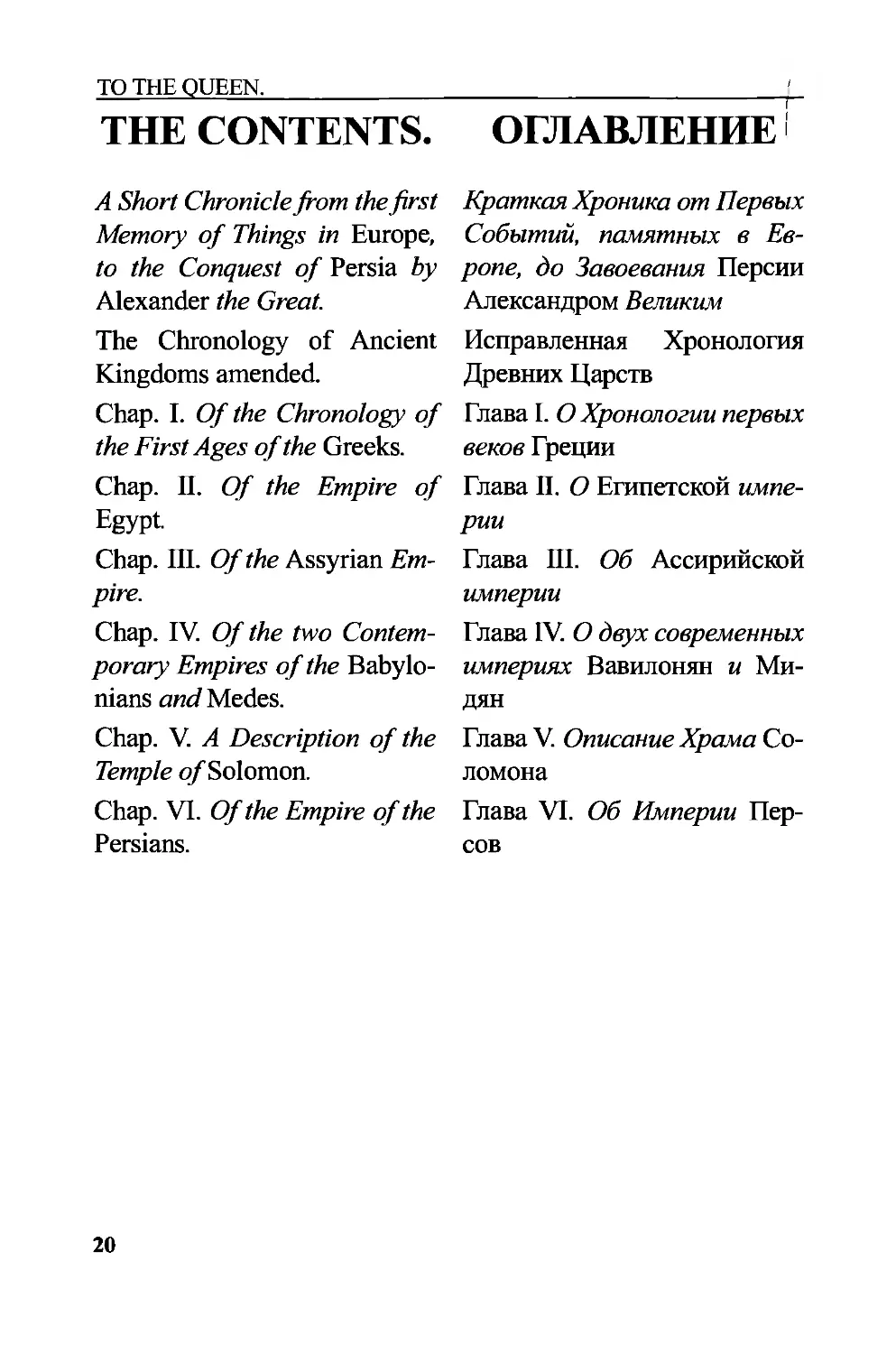
TO THE QUEEN.
THE CONTENTS.
A Short Chronicle from the first
Memory of Things in Europe,
to the Conquest of Persia by
Alexander the Great.
The Chronology of Ancient
Kingdoms amended.
Chap. I. Of the Chronology of
the First Ages of the Greeks.
Chap. П. Of the Empire of
Egypt.
Chap. III. Of the Assyrian Em-
pire.
Chap. IV. Of the two Contem-
porary Empires of the Babylo-
nians and Medes.
Chap. V. A Description of the
Temple о/Solomon.
Chap. VI. Of the Empire of the
Persians.
ОГЛАВЛЕНИЕ
Краткая Хроника от Первых
Событий, памятных в Ев-
ропе, до Завоевания Персии
Александром Великим
Исправленная Хронология
Древних Царств
Глава I. О Хронологии первых
веков Греции
Глава П. О Египетской импе-
рии
Глава Ш. Об Ассирийской
империи
Глава IV. О двух современных
империях Вавилонян и Ми-
дян
Глава V. Описание Храма Со-
ломона
Глава VI. Об Империи Пер-
сов
20
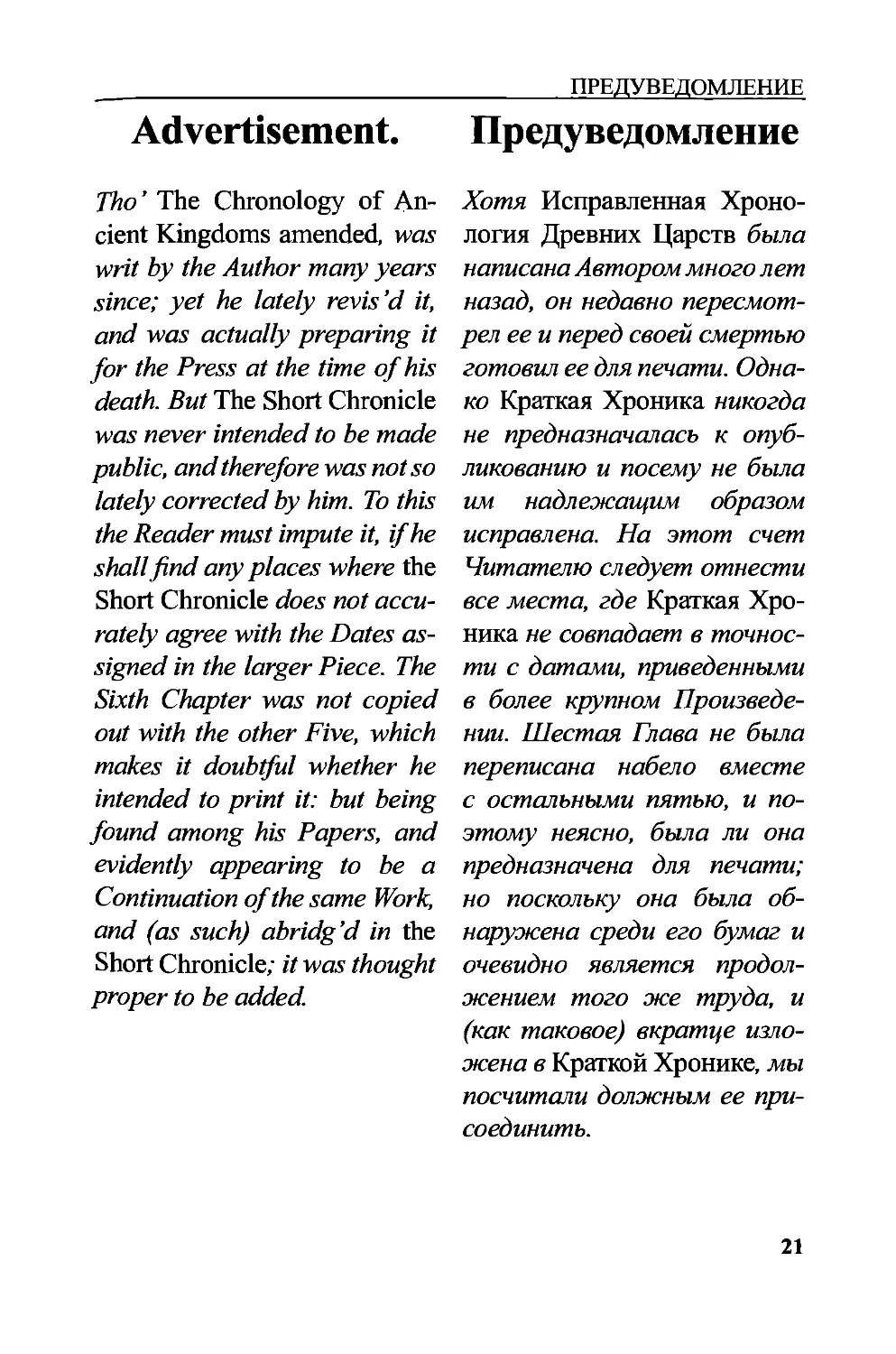
ПРЕДУВЕДОМЛЕНИЕ
Advertisement. Предуведомление
Tho’ The Chronology of An-
cient Kingdoms amended, was
writ by the Author many years
since; yet he lately revis’d it,
and was actually preparing it
for the Press at the time of his
death. But The Short Chronicle
was never intended to be made
public, and therefore was not so
lately corrected by him. To this
the Reader must impute it, if he
shall find any places where the
Short Chronicle does not accu-
rately agree with the Dates as-
signed in the larger Piece. The
Sixth Chapter was not copied
out with the other Five, which
makes it doubtful whether he
intended to print it: but being
found among his Papers, and
evidently appearing to be a
Continuation of the same Work,
and (as such) abridg’d in the
Short Chronicle; it was thought
proper to be added.
Хотя Исправленная Хроно-
логия Древних Царств была
написана Автором много лет
назад, он недавно пересмот-
рел ее и перед своей смертью
готовил ее для печати. Одна-
ко Краткая Хроника никогда
не предназначалась к опуб-
ликованию и посему не была
им надлежащим образом
исправлена. На этот счет
Читателю следует отнести
все места, где Краткая Хро-
ника не совпадает в точнос-
ти с датами, приведенными
в более крупном Произведе-
нии. Шестая Глава не была
переписана набело вместе
с остальными пятью, и по-
этому неясно, была ли она
предназначена для печати;
но поскольку она была об-
наружена среди его бумаг и
очевидно является продол-
жением того же труда, и
(как таковое) вкратце изло-
жена в Краткой Хронике, мы
посчитали должным ее при-
соединить.
21
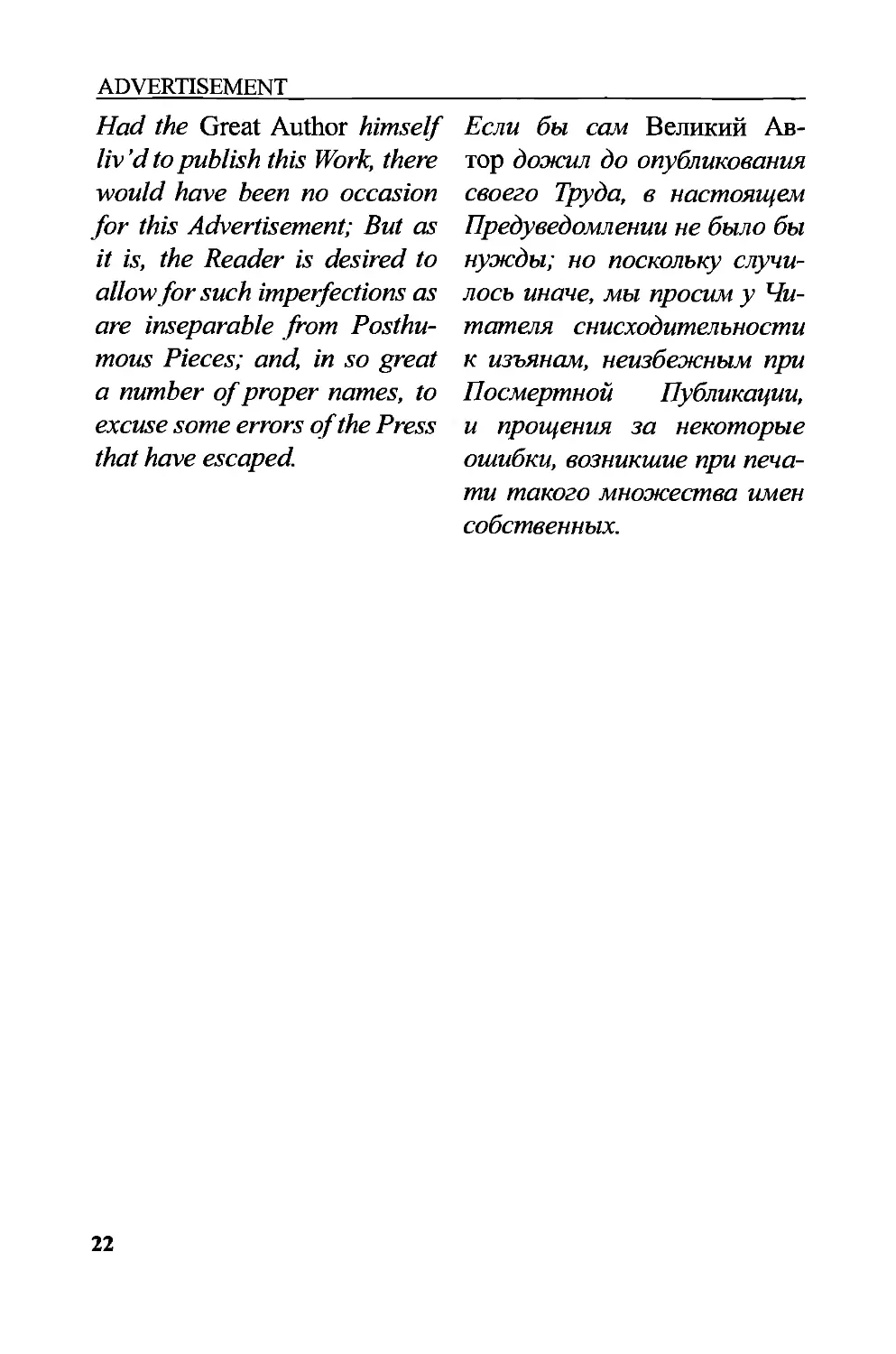
ADVERTISEMENT
Had the Great Author himself
liv’d to publish this Work, there
would have been no occasion
for this Advertisement; But as
it is, the Reader is desired to
allow for such imperfections as
are inseparable from Posthu-
mous Pieces; and, in so great
a number of proper names, to
excuse some errors of the Press
that have escaped.
Если бы сам Великий Ав-
тор дожил до опубликования
своего Труда, в настоящем
Предуведомлении не было бы
нужды; но поскольку случи-
лось иначе, мы просим у Чи-
тателя снисходительности
к изъянам, неизбежным при
Посмертной Публикации,
и прощения за некоторые
ошибки, возникшие при печа-
ти такого множества имен
собственных.
22
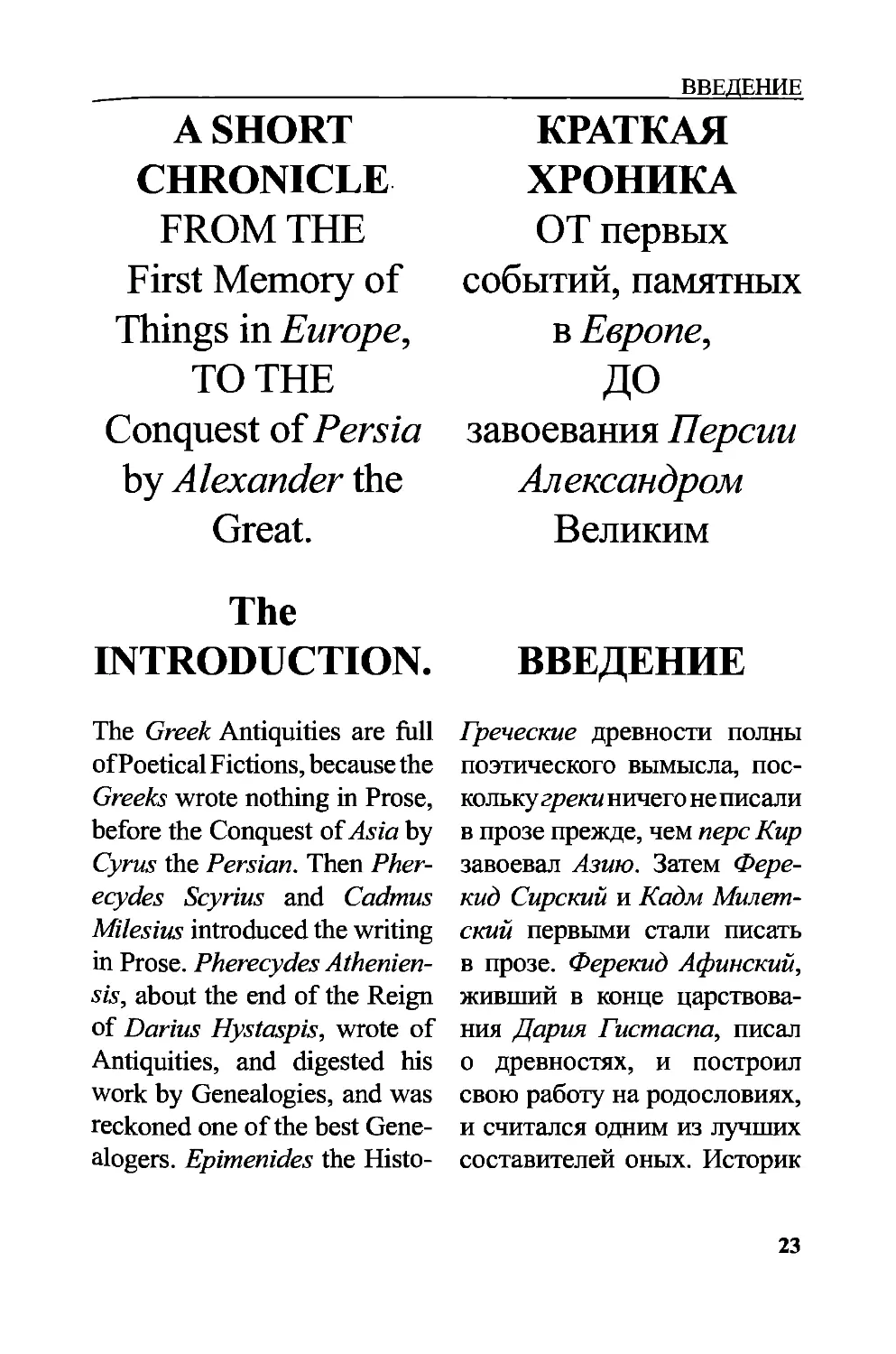
A SHORT
CHRONICLE
FROM THE
First Memory of
Things in Europe,
TO THE
Conquest of Persia
by Alexander the
Great.
The
INTRODUCTION.
The Greek Antiquities are full
of Poetical Fictions, because the
Greeks wrote nothing in Prose,
before the Conquest of Asia by
Cyrus the Persian. Then Pher-
ecydes Scyrius and Cadmus
Milesius introduced the writing
in Prose. Pherecydes Athenien-
sis, about the end of the Reign
of Darius Hystaspis, wrote of
Antiquities, and digested his
work by Genealogies, and was
reckoned one of the best Gene-
alogers. Epimenides the Histo-
ВВЕДЕНИЕ
КРАТКАЯ
ХРОНИКА
ОТ первых
событий, памятных
в Европе,
ДО
завоевания Персии
Александром
Великим
ВВЕДЕНИЕ
Греческие древности полны
поэтического вымысла, пос-
кольку греки ничего не писали
в прозе прежде, чем перс Кир
завоевал Азию. Затем Фере-
кид Сирский и Кадм Милет-
ский первыми стали писать
в прозе. Ферекид Афинский,
живший в конце царствова-
ния Дария Гистаспа, писал
о древностях, и построил
свою работу на родословиях,
и считался одним из лучших
составителей оных. Историк
23
The INTRODUCTION
rian proceeded also by Gene-
alogies; and Hellanicus, who
was twelve years older than
Herodotus, digested his History
by the Ages or Successions of
the Priestesses of Juno Argiva.
Others digested theirs by the
Kings of the Lacedaemonians,
or Archons of Athens. Hippias
the Elean, about thirty years
before the fall of the Persian
Empire, published a breviary or
list of the Olympic Victors; and
about ten years before the fall
thereof, Ephorus the disciple
of Isocrates formed a Chrono-
logical History of Greece, be-
ginning with the return of the
Heraclides into Peloponnesus,
and ending with the siege of
Perinthus, in the twentieth year
of Philip the father of Alexan-
der the great: But he digested
things by Generations, and the
reckoning by Olympiads was
not yet in use, nor doth it ap-
pear that the Reigns of Kings
were yet set down by numbers
of years. The Arundelian mar-
bles were composed sixty years
after the death of Alexander the
great (An. 4. Olymp. 128.) and
Эпименид продолжил, опи-
раясь также на родословия;
а Гелланик, бывший на две-
надцать лет старше Геродо-
та, построил свою Историю
на преемственности или по-
рядке смены жриц Юноны
Аргосской. Другие излагали
свои Истории на основании
правлений царей Лакедемона
или архонтов Афин. Гиппий
Элейский примерно за трид-
цать лет до падения Персид-
ской империи обнародовал
краткий список олимпийс-
ких победителей; а пример-
но за десять лет до ее паде-
ния Эфор, ученик Исократа,
составил Хронологическую
Историю Греции, начиная с
возвращения Гераклидов в
Пелопоннес и заканчивая оса-
дой Перинфа, в двенадцатом
году царствования Филиппа,
отца Александра Великого.
Он изложил события на ос-
нове поколений, ибо счет по
Олимпиадам тогда еще не
велся, и не похоже также,
чтобы тогда уже записыва-
лись годы правления царей.
Мраморные скрижали Арун-
24
ВВЕДЕНИЕ
yet mention not the Olympi-
ads: But in the next Olympiad,
Timceus Siculus published an
history in several books down
to his own times, according to
the Olympiads, comparing the
Ephori, the Kings of Sparta,
the Archons of Athens, and the
Priestesses of Argos, with the
Olympic Victors, so as to make
the Olympiads, and the Ge-
nealogies and Successions of
Kings, Archons, and Priestess-
es, and poetical histories suit
with one another, according to
the best of his judgment. And
where he left off, Polybius be-
gan and carried on the history.
So then a little after the death
of Alexander the great, they
began to set down the Genera-
tions, Reigns and Successions,
in numbers of years, and by
putting Reigns and Successions
делиана (имеется в виду Хро-
ника на Паросском Мраморе
из коллекции лорда Аронде-
ля — прим, перев.) были из-
готовлены через шестьдесят
лет после смерти Александра
Великого (в 4 год 128-й Олим-
пиады), но, тем не менее, в
них не упоминаются Олим-
пиады; однако в следующую
Олимпиаду Тимей Сицилий-
ский обнародовал Историю в
нескольких книгах, доведя ее
до своего времени на основа-
нии Олимпиад, сопоставив
эфоров, спартанских царей,
афинских архонтов и аргос-
ских жриц с победителями
Олимпиад и приведя в соот-
ветствие, в меру своего разу-
мения, Олимпиады, родосло-
вия, порядок смены царей и
жриц и поэтические преда-
ния. А там, где он закончил,
начал Полибий и повел Исто-
рию дальше.
Затем, вскоре после смерти
Александра Великого, греки
стали записывать поколе-
ния, царствования и порядок
преемственности в годах и,
принимая царствования и по-
25
The INTRODUCTION
equipollent to Generations, and
three Generations to an hun-
dred or an hundred and twen-
ty years (as appears by their
Chronology) they have made
the Antiquities of Greece three
or four hundred years older
than the truth. And this was the
original of the Technical Chro-
nology of the Greeks. Eratos-
thenes wrote about an hundred
years after the death of Alexan-
der the great: He was followed
by Apollodorus, and these two
have been followed ever since
by Chronologers.
But how uncertain their Chro-
nology is, and how doubtful it
was reputed by the Greeks of
those times, may be understood
by these passages of Plutarch.
Some reckon, saith he, 1 Lycur-
gus contemporary to Iphitus,
and to have been his compan-
ion in ordering the Olympic fes-
tivals: amongst whom was Ar-
istotle the Philosopher, arguing
from the Olympic Disc, which
had the name q/’Lycurgus upon
it. Others supputing the times
by the succession of the Kings
рядок преемственности рав-
новеликими поколениям и
считая по три поколения в сто
двадцать лет (как следует из
их Хронологии), они сделали
древности Греции на триста
или четыреста лет старше,
нежели в действительности.
И таково было начало Вспо-
могательной Хронологии
греков. Эратосфен творил
примерно через сто лет после
смерти Александра Велико-
го. Ему следовал Аполлодор,
а этим двум следовали с тех
пор все хронологи.
Но насколько недостоверна
их Хронология и насколько
ненадежной считали ее греки
в то время, можно понять из
следующих отрывков Плу-
тарха. Одни утверждают,
пишет он, будто Ликург
был современником Ифита и
вместе с ним учредил Олим-
пийские празднества', среди
них и философ Аристотель,
который ссылается в ка-
честве доказательства на
олимпийский диск, который
сохранял имя Ликурга. Дру-
1 В Жизнеописании Ликурга.
26
of the Lacedaemonians, as Era-
tosthenes and Apollodorus, af-
firm that he was not a few years
older than the first Olympiad.
First Aristotle and some oth-
ers made him as old as the first
Olympiad; then Eratosthenes,
Apollodorus, and some others
made him above an hundred
years older: and in another
place Plutarch 2 tells us: The
congress o/Solon with Croesus,
some think they can confute by
Chronology. But an history so
illustrious, and verified by so
many witnesses, and (which is
more) so agreeable to the man-
ners of Solon, and so worthy of
the greatness of his mind and of
his wisdom, I cannot persuade
my self to reject because of
some Chronological Canons, as
they call them: which hundreds
of authors correcting, have not
yet been able to constitute any
thing certain, in which they
could agree among themselves,
about repugnancies. It seems
the Chronologers had made the
Legislature of Solon too ancient
to consist with that Congress.
ВВЕДЕНИЕ
гие, исчисляя время по пре-
емственности спартанских
царей, как Эратосфен и Апол-
лодор, заключают, что он
жил немногими годами ранее
первой Олимпиады. Понача-
лу Аристотель и прочие сде-
лали его столь же древним,
как и первую Олимпиаду;
затем Эратосфен и Аполло-
дор и прочие сделали его еще
более чем на сто лет старше;
а в другом месте Плутарх2
сообщает: Что касается сви-
дания Солона с Крезом, то
некоторые думают, что мо-
гут его опровергнуть на ос-
новании хронологии. Однако
предание, столь известное
и засвидетельствованное
столькими лицами, и (что
еще важнее) столь соот-
ветствующее характеру Со-
лона, и столь достойное его
высокого образа мыслей и
его мудрости, я не решаюсь
отвергнуть из-за каких-то
хронологических сводов, как
их называют, которые уже
сотни ученых исправляли, но
тем не менее все еще не при-
2 В Жизнеописании Солона.
27
The INTRODUCTION
For reconciling such repugnan-
cies, Chronologers have some-
times doubled the persons of
men. So when the Poets had
changed Io the daughter of
Inachus into the Egyptian Isis,
Chronologers made her hus-
band Osiris or Bacchus and his
mistress Ariadne as old as Io,
and so feigned that there were
two Ariadnes, one the mis-
tress of Bacchus, and the other
the mistress of Theseus, and
two Minos’s their fathers, and
a younger Io the daughter of
Jasus, writing Jasus corruptly
for Inachus. And so they have
made two Pandions, and two
Erechtheus’s, giving the name
of Erechthonius to the first;
Homer calls the first, Erech-
theus: and by such corruptions
they have exceedingly per-
plexed Ancient History.
шли к чему-либо определенно-
му, что позволило бы им при-
мирить содержащиеся в них
противоречия. Думается, что
хронологи сделали законо-
дательство Солона слишком
древним, чтобы согласовать
его с этой встречей.
Для примирения таких про-
тиворечий хронологи иногда
раздваивали исторические
фигуры. Поэтому когда поэты
сделали из Ио, дочери Инаха,
египетскую Исиду, хроноло-
ги сделали ее мужа Осириса,
или Вакха, и его возлюблен-
ную Ариадну столь же древ-
ними, как Ио, и таким обра-
зом придумали, что были две
Ариадны, одна возлюбленная
Вакха, а другая возлюбленная
Тесея, и два Миноса, их отца,
и что младшая Ио была доче-
рью Иаса, что есть искажен-
ное написание имени Инах. И
так они придумали двух Пан-
дионов и двух Эрехфеев, дав
первому из них имя Эрихфо-
ния, в то время как Гомер на-
зывает первого Эрехфеем', и
такими искажениями крайне
запутали Древнюю Историю.
28
And as for the Chronology of
the Latines, that is still more
uncertain. Plutarch repre-
sents great uncertainties in the
Originals of Rome-, and so doth
Servius. The old records of
the Latines were burnt by the
Gauls, sixty and four years be-
fore the death of Alexander the
great; and Quintus Fabius Pic-
tor, the oldest historian of the
Latines, lived an hundred years
later than that King.
In Sacred History, the Assyr-
ian Empire began with Pul
and Tiglathpilaser, and lasted
about 170 years. And accord-
ingly Herodotus hath made
Semiramis only five genera-
tions, or about 166 years older
than Nitocris, the mother of the
last King of Babylon. But Cte-
sias hath made Semiramis 1500
years older than Nitocris, and
feigned a long series of Kings
of Assyria, whose names are
not Assyrian, nor have any af-
finity with the Assyrian names
in Scripture.
ВВЕДЕНИЕ
Что же касается Хронологии
латинян, то она еще более не-
достоверна. Плутарх излага-
ет сведения о происхождении
Рима с большими неточнос-
тями, также как и Сервий. Все
старые записи латинян были
сожжены галлами, за шесть-
десят четыре года до смерти
Александра Великого', а Квинт
Фабий Пиктор, старейший
историк латинян, жил через
сотню лет после этого царя.
Согласно Священной Истории
Ассирийская империя была со-
здана Фулом (Pul) и Феглаф-
фелласаром (Tiglathpilaser) и
просуществовала около 170
лет. И в соответствии с этим
Геродот сделал Семирамиду
всего на пять поколений, или
примерно на 166 лет, старше
Никотриды, матери послед-
него царя Вавилона (Babylon).
Однако Ктесий сделал Семи-
рамиду на 1500 лет старше
Никотриды и выдумал длин-
ный ряд царей Ассирии, имена
которых не ассирийские и не
имеют ни малейшего сходс-
тва с ассирийскими именами
в Писании.
29
The INTRODUCTION
The Priests of Egypt told
Herodotus, that Menes built
Memphis and the sumptuous
temple of Vulcan, in that City:
and that Rhampsinitus, Moeris,
Asychis and Psammiticus add-
ed magnificent porticos to that
temple. And it is not likely that
Memphis could be famous, be-
fore Homer s days who doth
not mention it, or that a temple
could be above two or three
hundred years in building. The
Reign of Psammiticus began
about 655 years before Christ,
and I place the founding of this
temple by Menes about 257
years earlier: but the Priests of
Egypt had so magnified their
Antiquities before the days of
Herodotus, as to tell him that
from Menes to Maris (who
reigned 200 years before Psam-
miticus) there were 330 Kings,
whose Reigns took up as many
Ages, that is eleven thousand
years, and had filled up the in-
terval with feigned Kings, who
had done nothing. And before
the days of Diodorus Siculus
they had raised their Antiqui-
ties so much higher, as to place
Жрецы Египта сообщили
Геродоту, что Менее постро-
ил Мемфис и великолепный
храм Вулкана в этом городе;
и что Рампсинит, Мерид,
Асихис и Псамметих допол-
нили этот храм величествен-
ными преддвериями. Однако
маловероятно, чтобы Мем-
фис славился во времена Го-
мера, о нем не упоминающе-
го, или чтобы строительство
храма заняло более двухсот
или трехсот лет. Царствова-
ние Псамметиха началось
примерно за 655 лет до Рож-
дества Христова, и я пола-
гаю, что Менее заложил этот
храм примерно за 257 лет до
того. Однако жрецы Египта
столь преувеличили свою
древность до дней Геродо-
та, что сообщили ему, будто
между Менесом и Меридом
(царствовавшим за 200 лет
до Псамметиха) правили
330 царей, царствования ко-
торых заняли столько же по-
колений, то есть одиннадцать
тысяч лет, и заполнили этот
промежуток вымышленными
царями, ничего не совершив-
30
ВВЕДЕНИЕ
six, eight, or ten new Reigns
of Kings between those Kings,
whom they had represented to
Herodotus to succeed one an-
other immediately.
In the Kingdom of Sicyon,
Chronologers have split Apis
Epaphus or Epopeus into two
Kings, whom they call Apis
and Epopeus, and between
them have inserted eleven or
twelve feigned names of Kings
who did nothing, and thereby
they have made its Founder
AEgialeus, three hundred years
older than his brother Pho-
roneus. Some have made the
Kings of Germany as old as
the Flood: and yet before the
use of letters, the names and
actions of men could scarce
be remembred above eighty
or an hundred years after their
deaths: and therefore I admit
no Chronology of things done
in Europe, above eighty years
before Cadmus brought letters
into Europe-, none, of things
шими. А ко времени Диодора
Сицилийского они настолько
возвеличили свою древность,
что поместили шесть, восемь
или десять новых царствова-
ний между теми царями, о ко-
торых Геродоту они сообщи-
ли, будто те непосредственно
наследовали один другому.
В царстве Сициона хронологи
сделали из Аписа, Эпафа или
Эпопея двух царей, которых
они назвали Апис и Эпопей, и
между ними поместили один-
надцать или двенадцать вы-
мышленных имен царей, ни-
чего не совершивших, и тем
самым сделали его основателя
Эгиалея на триста лет старше
брата его Форонея. Некоторые
сделали правителей Германии
столь же древними, как потоп;
однако до начала употребле-
ния письменности память об
именах и деяниях людей едва
ли могла сохраняться более
восьмидесяти или ста лет пос-
ле их смерти; и вследствие
этого я не допускаю сущес-
твования Хронологии собы-
тий в Европе ранее, чем за
восемьдесят лет до того, как
31
The INTRODUCTION
done in Germany, before the
rise of the Roman Empire.
Now since Eratosthenes and
Apollodorus computed the
times by the Reigns of the
Kings of Sparta, and (as ap-
pears by their Chronology still
followed) have made the sev-
enteen Reigns of these Kings in
both Races, between the Return
of the Heraclides into Pelopon-
nesus and the Battel of Thermo-
pylae, take up 622 years, which
is after the rate of 36!6 years
to a Reign, and yet a Race of
seventeen Kings of that length
is no where to be met with in
all true History, and Kings at a
moderate reckoning Reign but
18 or 20 years а-piece one with
another: I have stated the time
of the return of the Heraclides
by the last way of reckoning,
placing it about 340 years be-
fore the Battel of Thermopylae.
And making the Taking of Troy
eighty years older than that Re-
turn, according to Thucydides,
and the Argonautic Expedition
a Generation older than the
Кадм принес в Европу пись-
менность, или событий в Гер-
мании ранее возникновения
Римской империи.
Далее, поскольку Эратосфен
и Аполлодор вели счет време-
ни на основании правлений
царей Спарты и (как явству-
ет из их Хронологии, которой
придерживаются и по сей
день) отвели на семнадцать
правлений этих царей из обо-
их родов, между возвращени-
ем Гераклидов в Пелопоннес
и битвы при Фермопилах, 622
года, то есть по 36*Л года на
царствование; и поскольку
правления такой длительнос-
ти для семнадцати последо-
вательных царей одного рода
нигде не встречаются на про-
тяжении всей достоверной
Истории, а цари при здравом
подсчете царствуют в сред-
нем лишь по 18 или 20 лет,
то я установил время возвра-
щения Гераклидов, используя
последний способ подсчета, и
отнес его примерно к 340 году
до битвы при Фермопилах. И
отнеся взятие Трои за восемь-
десят лет до этого возвра-
32
Trojan War, and the Wars of
Sesostris in Thrace and death
of Ino the daughter of Cad-
mus a Generation older than
that Expedition: I have drawn
up the following Chronologi-
cal Table, so as to make Chro-
nology suit with the Course of
Nature, with Astronomy, with
Sacred History, with Herodo-
tus the Father of History, and
with it self; without the many
repugnancies complained of by
Plutarch. I do not pretend to
be exact to a year: there may
be Errors of five or ten years,
and sometimes twenty, and not
much above.
ВВЕДЕНИЕ
щения, согласно Фукидиду,
а поход аргонавтов за одно
поколение до Троянской вой-
ны, а войны Сесостриса во
Фракии и смерть Ино, доче-
ри Кадма, за одно поколение
до этого похода, я составил
следующую Хронологичес-
кую Таблицу, дабы привести
Хронологию в соответствие с
законами Природы, Астроно-
мией, Священной Историей,
Геродотом, отцом Истории, и
с ней самой, устранив много-
численные противоречия, на
которые жаловался Плутарх.
Я не утверждаю, что она точ-
на до одного года; в ней мо-
гут быть ошибки в пять или
десять лет, а где и в двадцать,
но не более того.
2 Исправленная хронология древних царств
33
A SHORT CHRONICLE
A SHORT
CHRONICLE
FROM THE
First Memory of
things in Europe to
the Conquest of
Persia by Alexander
the great.
The Times are set down in
years before Christ.
The Canaanites who fled from
Joshua, retired in great num-
bers into Egypt, and there con-
quered Timaus, Thamus, or
Thammuz King of the lower
Egypt, and reigned there un-
der their Kings Salatis, Bceon,
Apachnas, Apophis, Janias,
Assis, &c. untill the days of
Eli and Samuel. They fed on
flesh, and sacrificed men after
the manner of the Phoenicians,
and were called Shepherds by
the Egyptians, who lived only
on the fruits of the earth, and
abominated flesh-eaters. The
КРАТКАЯ
ХРОНИКА
ОТ Первых
Событий, памят-
ных в Европе, до
Завоевания Персии
Александром
Великим
Времена указаны в годах
до Рождества Христова
Хананеи, бежавшие от Иисуса
Навина (Joshua), отступили в
великом множестве в Египет
и там покорили Тимая, Таму-
са, или Таммуза, царя нижне-
го Египта, и господствовали
там со своими царями Сали-
тисом, Беоном, Апахнаном,
Апофисом, Ианнасом, Асси-
сом и пр. до времен Илия (ЕН)
и Самуила. Они питались
мясом и приносили людей в
жертву подобно финикиянам,
и египтяне, кои кормились
лишь плодами земли и коим
отвратительно было мясоеде-
34
КРАТКАЯ ХРОНИКА
upper parts of Egypt were in
those days under many Kings,
Reigning at Coptos, Thebes,
This, Elephantis, and other
Places, which by conquering
one another grew by degrees
into one Kingdom, over which
Misphragmuthosis Reigned in
the days of Eli.
In the year before Christ 1125
Mephres Reigned over the up-
per Egypt from Syene to He-
liopolis, and his Successor
Misphragmuthosis made a last-
ing war upon the Shepherds
soon after, and caused many
of them to fly into Palestine,
Idumcea, Syria, and Libya', and
under Lelex, AEzeus, Inachus,
Pelasgus, AEolus the first, Ce-
crops, and other Captains, into
Greece. Before those days
Greece and all Europe was
peopled by wandring Cimme-
rians, and Scythians from the
backside of the Euxine Sea,
who lived a rambling wild sort
of life, like the Tartars in the
northern parts of Asia. Of their
Race was Ogyges, in whose
days these Egyptian strangers
ние, называли их Пастухами.
В верхнем Египте в то время
правили многие цари, царс-
твовавшие в Коптосе, Фивах,
Фисе, Элефантине и в дру-
гих местах, которые, покоряя
друг друга, постепенно объ-
единились в единое царство,
царем которого во времена
Илия был Мисфрагмутосис.
В 1125 году до Рождества
Христова в верхнем Египте
от Сиены до Гелиополя воца-
рился Мефрес, а его преем-
ник Мисфрагмутосис вскоре
после этого затеял длитель-
ную войну с Пастухами и за-
ставил многих из них бежать
в Палестину, Идумею, Сирию
и Ливию, а также в Грецию
под предводительством Ле-
лега, Эзея, Инаха, Пеласга,
Эола первого, Кекропа и про-
чих вождей. До того времени
Греция и вся Европа были
населены кочующими ким-
мерийцами и скифами, при-
шедшими из-за Евксинского
моря, которые вели дикий
бродячий образ жизни, как
татары в северных преде-
лах Азии. Из их племени был
35
A SHORT CHRONICLE
came into Greece. The rest of
the Shepherds were shut up by
Misphragmuthosis, in a part of
the lower Egypt called Abaris
or Pelusium.
In the year 1100 the Philistims,
strengthned by the access of the
Shepherds, conquer Israel, and
take the Ark. Samuel judges Is-
rael.
1085. Hcemon the son of Pelas-
gus Reigns in Thessaly.
1080. Lycaon the son of Pelas-
gus builds Lycosura; Phorone-
us the son of Inachus, Phoroni-
cum, afterwards called Argos;
AEgialeus the brother of Phoro-
neus and son of Inachus, AEgia-
leum, afterwards called Sicyon:
and these were the oldest towns
in Peloponnesus. ‘Till then they
built only single houses scat-
tered up and down in the fields.
About the same time Cecrops
built Cecropia in Attica, after-
wards called Athens; and Ele-
usine, the son of Ogyges, built
Eleusis. And these towns gave
a beginning to the Kingdoms
О г иг, во времена которого
эти чужестранцы из Египта
прибыли в Грецию. Осталь-
ные Пастухи были заперты
Мисфрагмутосисом в облас-
ти нижнего Египта, называе-
мой Аварис, или Пелусий.
В 1100 году филистимляне,
усилившиеся благодаря при-
току Пастухов, завоевывают
Израиль и завладевают Ков-
чегом завета. Самуил — су-
дья в Израиле.
1085. Царствование Гемона,
сына Пеласга, в Фессалии.
1080. Ликаон, сын Пеласга,
строит Ликосуру; Фороней,
сын Инаха — Фороник, впос-
ледствии названный Аргосом;
Эгиалей, брат Форонея и сын
Инаха — Эгиалей, впоследс-
твии названный Опционом;
то были древнейшие города
Пелопоннеса. До того вре-
мени они строили лишь от-
дельные дома, разбросанные
тут и там в полях. Примерно
в то же время Кекроп основал
Кекропию в Аттике, впос-
ледствии названную Афина-
ми; а Элевсин, сын О гига, ос-
новал Элевсин. И эти города
36
КРАТКАЯ ХРОНИКА
of the Arcadians, Argives, Si-
cyons, Athenians, Eleusinians,
&c. Deucalion flourishes.
1070. Amosis, or Tethmosis,
the successor of Misphrag-
muthosis, abolishes the Phoe-
nician custom in Heliopolis of
sacrificing men, and drives the
Shepherds out of Abaris. By
their access the Philistims be-
come so numerous, as to bring
into the field against Saul 30000
chariots, 6000 horsemen, and
people as the sand on the sea
shore for multitude. Abas, the
father of Acrisius and Proetus,
comes from Egypt.
1069. Saul is made King of Is-
rael, and by the hand of Jona-
than gets a great victory over
the Philistims. Eurotas the son
of Lelex, and Lacedaemon who
married Sparta the daughter of
Eurotas, Reign in Laconia, and
build Sparta.
1060. Samuel dies.
1059. David made King.
положили начало царствам
Аркадскому, Аргосскому, Си-
ционскому, Афинскому, Элев-
синскому и др. Время жизни
Девкалиона.
1070. Амосис, или Тетмосис,
наследник Мисфрагмутоси-
са, уничтожает в Гелиополе
финикийский обычай челове-
ческих жертвоприношений и
изгоняет Пастухов из Авари-
са. Благодаря их притоку фи-
листимляне становятся столь
многочисленны, что выводят
на поле брани против Саула
30000 колесниц, 6000 конни-
цы и людей множество, как
песка на берегу моря. Абае,
отец Акрисия и Прета, при-
бывает из Египта.
1069. Саул помазан царем Из-
раиля и с помощью Ионафана
(Jonathan) одерживает вели-
кую победу над филистим-
лянами. Еврот, сын Лелега,
и Лакедемон, женившийся
на Спарте, дочери Еврота,
царствуют в Лаконии и стро-
ят Спарту.
1060. Смерть Самуила.
1059. Давид помазан на царс-
тво.
37
A SHORT CHRONICLE
1048. The Edomites are con-
quered and dispersed by Da-
vid, and some of them fly into
Egypt with their young King
Hadad. Others fly to the Per-
sian Gulph with their Com-
mander Cannes', and others
from the Red Sea to the coast of
the Mediterranean, and fortify
Azoth against David, and take
Zidon', and the Zidonians who
fled from them build Tyre and
Aradus, and make Abibalus
King of Tyre. These Edomites
carry to all places their Arts and
Sciences; amongst which were
their Navigation, Astronomy,
and Letters; for in Idumcea they
had Constellations and Letters
before the days of Job, who
mentions them: and there Mo-
ses learnt to write the Law in a
book. These Edomites who fled
to the Mediterranean, translat-
ing the v/oxdErythrcea into that
of Phoenicia, give the name of
Phoenicians to themselves, and
that of Phoenicia to all the sea-
coasts of Palestine from Azoth
to Zidon. And hence came the
tradition of the Persians, and
of the Phoenicians themselves,
1048. Идумеяне побеждены и
рассеяны Давидом, и некото-
рые из них бегут в Египет со
своим молодым царем Гада-
дом. Другие бегут к Персид-
скому Заливу со своим воена-
чальником Оанном', а прочие
— с Красного Моря к бере-
гам Средиземного моря, и
укрепляют Азот против Да-
вида, и берут Сидон (Zidon)',
а сидоняне, бежавшие от них,
строят Тир и Арад и делают
Абибала царем Тира. Эти
идумеяне несут с собой пов-
сюду свои искусства и науки,
среди коих было мореплава-
ние, астрономия и письмен-
ность; ибо в Идумее они зна-
ли созвездия и письмена до
времени Иова (Job), который
их упоминает; и там Моисей
(Moses) научился записать За-
кон в книгу. Те идумеяне, что
бежали на Средиземное море,
сделали из слова Эритрея
слово Финикия и назвали
себя самих финикиянами, а
все морские побережья Па-
лестины от Азота до Сидона
— Финикией. И отсюда берет
начало предание персов и са-
38
КРАТКАЯ ХРОНИКА
mentioned by Herodotus, that
the Phoenicians came originally
from the Red Sea, and presently
undertook long voyages on the
Mediterranean.
1047. Acrisius marries Eu-
rydice, the daughter of Lacedce-
mon and Sparta. The Phoeni-
cian mariners who fled from
the Red Sea, being used to long
voyages for the sake of traffic,
begin the like voyages on the
Mediterranean from Zidon',
and sailing as far as Greece,
carry away Io the daughter of
Inachus, who with other Gre-
cian women came to their ships
to buy their merchandize. The
Greek Seas begin to be infested
with Pyrates.
1046. The Syrians of Zobah
and Damascus are conquered
by David. Nyctimus, the son
of Lycaon, reigns in Arcadia.
Deucalion still alive.
1045. Many of the Phoeni-
cians and Syrians fleeing from
Zidon and from David, come
under the conduct of Cadmus,
Cilix, Phoenix, Membliarius,
^ycteus, Thasus, Atymnus, and
мих финикиян, упоминаемое
Геродотом, что финикияне
когда-то пришли с Красного
моря и вскорости пустились
в дальние плавания по Сре-
диземному морю.
1047. Акрисий женится на Ев-
ридике, дочери Лакедемона и
Спарты. Финикийские мо-
ряки, бежавшие с Красного
моря и привыкшие ходить в
дальние плавания по делам
торговли, пускаются в по-
добные плавания по Среди-
земному морю из Сидона', и,
дойдя до Греции, увозят Ио,
дочь Инаха, которая с други-
ми гречанками взошла на их
корабль, чтобы купить их то-
вар. Греческие моря начина-
ют кишеть пиратами.
1046. Сирийцы Сувы (Zobah)
и Дамаска покорены Дави-
дом. Никтима, сын Ликаона,
царствует в Аркадии. Девка-
пион все еще жив.
1045. Многие из финикиян и
сирийцев, бежавших из Сидо-
на и от Давида, приходят под
предводительством Кадма,
Киликса, Феникса, Мемблиа-
ра, Никтея, Фасоса, Атим-
39
A SHORT CHRONICLE
other Captains, into Asia mi-
nor, Crete, Greece, and Libya',
and introduce Letters, Music,
Poetry, the Octaeteris, Metals
and their Fabrication, and other
Arts, Sciences and Customs of
the Phoenicians. At this time
Cranaus the successor of Ce-
crops Reigned in Attica, and
in his Reign and the beginning
of the Reign of Nyctimus, the
Greeks place the flood of Deuc-
alion. This flood was succeeded
by four Ages or Generations of
men, in the first of which Chiron
the son of Saturn and Philyra
was bom, and the last of which
according to Hesiod ended with
the Trojan War; and so places
the Destruction of Troy four
Generations or about 140 years
later than that flood, and the
coming of Cadmus, reckoning
with the ancients three Genera-
tions to an hundred years. With
these Phoenicians came a sort
of men skilled in the Religious
Mysteries, Arts, and Sciences
of Phoenicia, and settled in sev-
eral places under the names of
Curetes, Corybantes, Telchines,
and Idoei Dactyli.
на и прочих вождей в Малую
Азию, на Крит, в Грецию и в
Ливию, и вводят в употребле-
ние письмо, музыку, поэзию,
восъмилетний цикл, металлы
и их обработку, а также про-
чие искусства, науки и обы-
чаи финикиян. В это время
Кранай, наследник Кекропа,
правит в Аттике, и к его
царствованию и началу царс-
твования Никтима греки от-
носят Девкалионов потоп. За
этим потопом последовали
четыре Века, или людских
поколения, в первом из ко-
торых родился Хирон, сын
Сатурна и Филиры, а пос-
ледний из которых, согласно
Гесиоду, закончился Троянс-
кой войной; и таким образом
разрушение Трои произошло
через четыре поколения, или
примерно через 140 лет, пос-
ле потопа и прибытия Кад-
ма, ежели считать вместе с
древними по три поколения
на сто лет. Вместе с этими
финикиянами пришло некое
племя, искусное в религиоз-
ных таинствах, искусствах и
науках Финикии, и рассели-
40
КРАТКАЯ ХРОНИКА
1043. Hellen, the son of Deuc-
alion, and father of AEolus, Xu-
thus, and Dorus, flourishes.
1035. Erectheus Reigns in At-
tica. JEthlius, the grandson of
Deucalion and father of En-
dymion, builds Elis. The Idoei
Dactyli find out Iron in mount
Ida in Crete, and work it into
armour and iron tools, and
thereby give a beginning to the
trades of smiths and armourers
in Europe, and by singing and
dancing in their armour, and
keeping time by striking upon
one another’s armour with
their swords, they bring in Mu-
sic and Poetry; and at the same
time they nurse up the Cretan
Jupiter in a cave of the same
mountain, dancing about him
in their armour.
1034. Ammon Reigns in Egypt.
He conquered Libya, and re-
duced that people from a wan-
dering savage life to a civil
°ne, and taught them to lay up
лось в различных местах под
именами куретов, корибан-
тов, телъхинов и идейских
дактилов.
1043. Время жизни Эллина,
сынаДевкалиона и отца Эола,
КсуфапДора.
1035. Царствование Эрехфея
в Аттике. Аэтлий, внук Де-
вкалиона и отец Эндимио-
на, строит Элиду. Идейские
дактилы находят железо в
горе Ида на Крите и делают
из него доспехи и железные
орудия, и тем самым дают
начало ремеслу кузнецов
и оружейников в Европе', и
своими пением, и танцами, и
ритмом, который они отмеря-
ли, ударяя мечами по доспе-
хам друг друга, они вводят в
употребление музыку и по-
эзию; и в то же самое время
они воспитывают Критского
Юпитера в пещере на той же
горе, танцуя вкруг него в сво-
их доспехах.
1034. Царствование Аммона
в Египте. Он покорил Ливию
и привел народ ее от бродя-
чей дикой жизни к цивилизо-
ванной, и научил их запасать
41
A SHORT CHRONICLE
the fruits of the earth; and from
him Libya and the desert above
it were anciently called Ammo-
nia. He was the first that built
long and tall ships with sails,
and had a fleet of such ships on
the Red Sea, and another on the
Mediterranean at Irasa in Lib-
ya. ‘Till then they used small
and round vessels of burden,
invented on the Red Sea, and
kept within sight of the shore.
For enabling them to cross the
seas without seeing the shore,
the Egyptians began in his days
to observe the Stars: and from
this beginning Astronomy and
Sailing had their rise. Hitherto
the Lunisolar year had been in
use: but this year being of an un-
certain length, and so, unfit for
Astronomy, in his days and in
the days of his sons and grand-
sons, by observing the Helia-
cal Risings and Setting of the
Stars, they found the length of
the Solar year, and made it con-
sist of five days more than the
twelve calendar months of the
old Lunisolar year. Creusa the
daughter of Erechtheus marries
Xuthus the son of Hellen. Ere-
плоды земные; и в честь его
Ливия и пустыня подле нее
в древности назывались Ам-
мония. Он был первым, кто
начал строить длинные и вы-
сокие парусные корабли, и
держал флот таких кораблей
на Красном море, и другой
на Средиземном море в Ира-
се в Ливии. До того времени в
употреблении были неболь-
шие круглые грузовые суда,
изобретенные на Красном
море, которые держались в
виду берега. Дабы дать кораб-
лям возможность пересекать
моря, не видя берега, египтя-
не стали в его время наблю-
дать звезды; и это положило
начало астрономии и море-
ходству. До тех пор исполь-
зовался лунно-солнечный
год; но поскольку этот год не
имел определенной длины и,
следовательно, не подходил
для нужд астрономии, в его
время и во времена его сыно-
вей и внуков была установле-
на длительность солнечного
года путем наблюдения ге-
лиактических восходов и за-
катов звезд и добавлены пять
42
КРАТКАЯ ХРОНИКА
chtheus having first celebrated
the Panathenoea joins horses to
a chariot. JEgina, the daughter
of Asopus, and mother of AEa-
cus, bom.
1030. Ceres a woman of Sicily,
in seeking her daughter who
was stolen, comes into Attica,
and there teaches the Greeks
to sow com; for which Bene-
faction she was Deified after
death. She first taught the Art
to Triptolemus the young son
of Celeus King of Eleusis.
1028. Oenotrus the youngest
son of Lycaon, the Janus of the
Latines, led the first Colony
of Greeks into Italy, and there
taught them to build houses.
Perseus bom.
1020. Areas, the son of Cal-
listo and grandson of Lycaon,
and Eumelus the first King of
Achaia, receive bread-com
from Triptolemus.
дополнительных дней к две-
надцати календарным меся-
цам лунно-солнечного года.
Креуса, дочь Эрехфея, ста-
новится женой Ксуфа, сына
Эллина. Эрехфей, первым уч-
редивший Панафинеи, запря-
гает коней в колесницы. Рож-
дение Эгины, дочери Асопа и
матери Эака.
1030. Церера, сицилианка, в
поисках своей похищенной
дочери приходит в Аттику
и там учит греков сеять хлеб,
за каковое благодеяние она
была после смерти обожест-
влена. Первым она обучила
этому Искусству Триптоле-
ма, юного сына Келея, царя
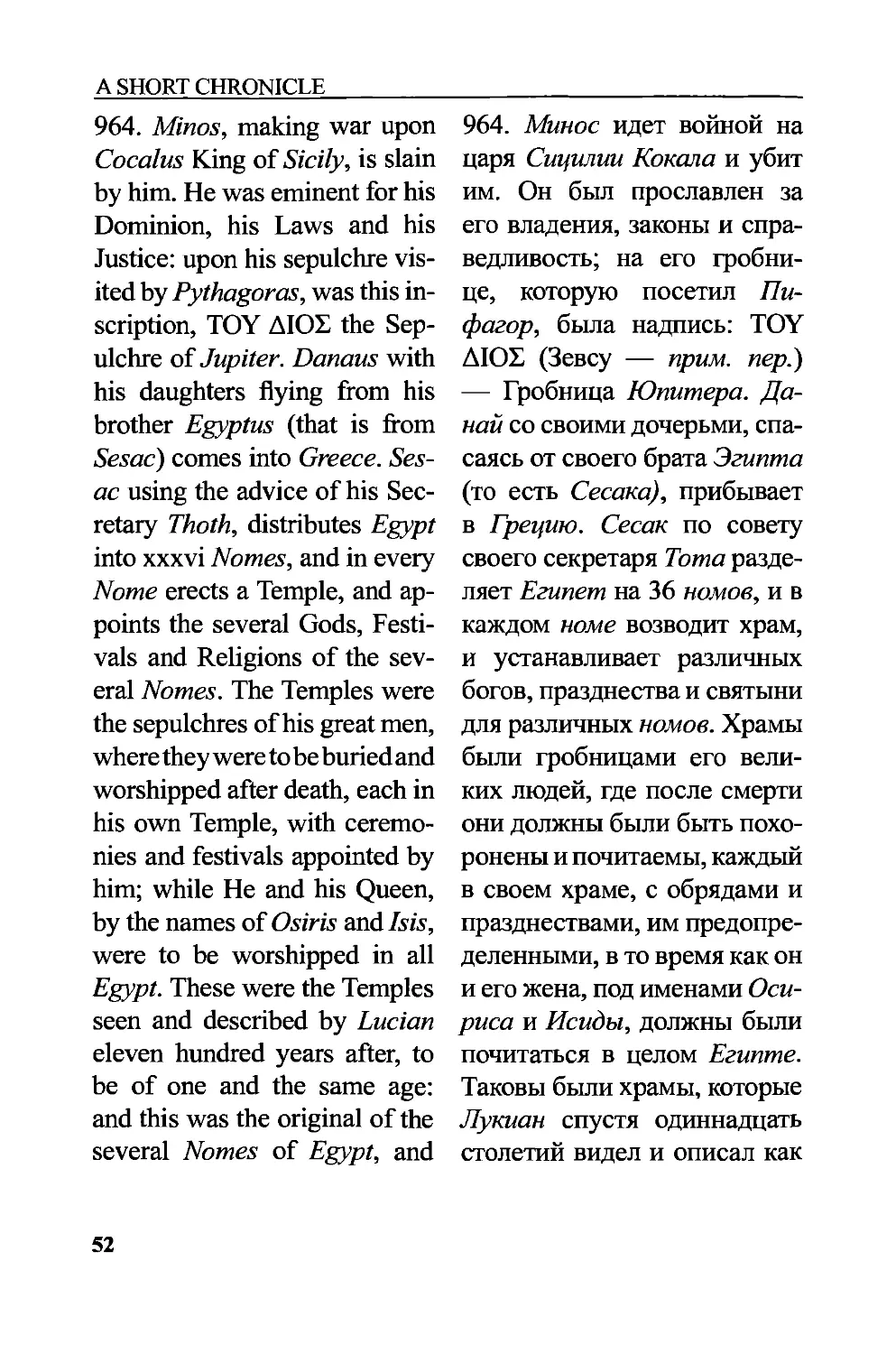
Элевсина.
1028. Энотр, младший сын
Ликаона, Янус латинян,
привел первых греческих ко-
лонистов в Италию и там
научил их строить дома. Рож-
дение Персея.
1020. Аркад, сын Каллисто и
внук Ликаона, и Евмел, пер-
вый царь Ахеи, получают от
Триптолема хлебные злаки.
43
A SHORT CHRONICLE
1019. Solomon Reigns, and
marries the daughter of Am-
mon, and by means of this affin-
ity is supplied with horses from
Egypt', and his merchants also
bring horses from thence for
all the Kings of the Hittites and
Syrians', for horses came origi-
nally from Libya', and thence
Neptune was called Equestris.
Tantalus King of Phrygia steals
Ganimede the son of Tros King
of Troas.
1017. Solomon by the assis-
tance of the Tyrians and Aradi-
ans, who had mariners among
them acquainted with the Red
Sea, sets out a fleet upon that
sea. Those assistants build new
cities in the Persian Gulph,
called Tyre and Aradus.
1015. The Temple of Solomon
is founded. Minos Reigns in
Crete expelling his father As-
terias, who flees into Italy,
and becomes the Saturn of the
Latines. Ammon takes Gezer
from the Canaanites, and gives
it to his daughter, Solomon’s
wife.
1014. Ammon places Cepheus
at Joppa.
1019. Соломон восходит на
царство и женится на доче-
ри Аммона, и благодаря это-
му родству получает коней
из Египта', и также его куп-
цы поставляют оттуда коней
для всех царей хеттеев и си-
рийцев', ибо кони изначально
происходят из Ливии', посему
и Нептун был прозван Кон-
ником. Тантал, царь Фригии,
похищает Ганимеда, сына
Троса, царя Троады.
1017. Соломон с помощью
тирцев и арадцев, среди кото-
рых были моряки, знакомые
с Красным морем, выводит
флот на это море. Помощни-
ки его строят в Персидском
Заливе новые города, назван-
ные Тир и Арад.
1015. Заложен Храм Соло-
мона. Манос воцаряется на
Крите, изгнав своего отца
Астерия, который бежит в
Италию и становится Са-
турном латинян. Аммон от-
нимает у хананеев Гезер и от-
дает его своей дочери, жене
Соломона.
1014. Аммон помещает Ке-
фея в Иоппе.
44
КРАТКАЯ ХРОНИКА
1010. Sesac in the Reign of his
father Ammon invades Arabia
Foslix, and sets up pillars at the
mouth of the Red Sea. Apis,
Epaphus orEpopeus, the son of
Phroroneus, and Nycteus King
of Bceotia, slain. Lycus inher-
its the Kingdom of his brother
Nycteus. AEtolus the son of En-
dymion flies into the Country
of the Curetes in Achaia, and
calls it xEtolia', and of Pronoe
the daughter of Phorbas be-
gets Pleuron and Calydon, who
built cities in AEtolia called by
their own names. Antiopa the
daughter of Nycteus is sent
home to Lycus by Lamedon the
successor of Apis, and in the
way brings forth Amphion and
Zethus.
1008. Sesac, in the Reign of his
father Ammon, invades Afric
and Spain, and sets up pillars in
all his conquests, and particu-
larly at the mouth of the Medi-
terranean, and returns home by
the coast of Gaul and Italy.
1007. Ceres being dead Eu-
molpus institutes her Mysteries
1010. Сесак в царствование
своего отца Аммона вторга-
ется в Счастливую Аравию и
устанавливает столпы у вхо-
да в Красное море. Гибель
Аписа, Епафа, или Эпопея,
сына Форонея, и Никтея,
царя Беотии. Лик наследует
царство своего брата Ник-
тея. Этол, сын Эндимиона,
бежит в страну куретов в
Ахее и называет ее Этолиещ
и с Проноей, дочерью Фор-
банта, рождает Плеврона и
Калидона, которые основали
в Этолии города, носящие
их имена. Антиопа, дочь
Никтея, отправлена домой к
Лику Ламедоном, наследни-
ком Аписа, и по дороге рожа-
ет Амфиона и Зета.
1008. Сесак в царствование
своего отца Аммона вторга-
ется в Африку и Испанию,
и устанавливает столпы во
всех завоеванных землях, в
том числе при входе в Среди-
земное море, и возвращается
домой вдоль побережья Гал-
лии и Италии.
1007. После смерти Цереры
Евмолп учреждает таинства
45
A SHORT CHRONICLE
in Eleusine. The Mysteries of
Rhea are instituted in Phrygia,
in the city Cybele. About this
time Temples begin to be built
in Greece. Hyagnis the Phry-
gian invents the pipe. After the
example of the common-coun-
cil of the five Lords of the Phi-
listims, the Greeks set up the
Amphictyonic Council, first at
Thermopylae, by the influence
of Amphictyon the son of Deu-
calion', and a few years after at
Delphi by the influence of Ac-
risius. Among the cites, whose
deputies met at Thermopylae, I
do not find Athens, and there-
fore doubt whether Amphictyon
was King of that city. If he was
the son of Deucalion and broth-
er of Hellen, he and Cranaus
might Reign together in several
parts of Attica. But I meet with
a later Amphictyon who enter-
tained the great Bacchus. This
Council worshipped Ceres, and
therefore was instituted after
her death.
1006. Minos prepares a fleet,
clears the Greek seas of Py-
в ее честь в Элевсине. Таинс-
тва в честь Реи установлены
во Фригии, в городе Кибеле.
Около того же времени в Гре-
ции начинают строить храмы.
Фригиец Гиагнид изобретает
флейту. По примеру обще-
го совета пяти правителей
филистимлян греки создают
Совет амфиктионов, понача-
лу в Фермопилах, под влия-
нием Амфиктиона, сына Де-
вкалиона, а спустя несколько
лет в Дельфах, под влиянием
Акрисия. Среди городов, чьи
представители собирались
в Фермопилах, я не нахожу
Афин, и потому не уверен,
был ли Амфиктион царем
этого города. Если он был
сыном Девкалиона и братом
Эллина, то он и Кранай могли
царствовать одновременно в
различных областях Аттики.
Однако мне встречался также
и более поздний Амфиктион,
который принимал великого
Вакха. Этот Совет почитал
Цереру и, стало быть, был
учрежден после ее смерти.
1006. Минос снаряжает флот,
очищает Греческие моря от
46
КРАТКАЯ ХРОНИКА
rates, and sends Colonies to the
Islands of the Greeks, some of
which were not inhabited be-
fore. Cecrops II. Reigns in At-
tica. Caucon teaches the Mys-
teries of Ceres in Messene.
1005. Andromeda carried away
from Joppa by Perseus. Pan-
dion the brother of Cecrops II.
Reigns in Attica. Car, the son
of Phoroneus, builds a Temple
to Ceres.
1002. Sesac Reigns in Egypt and
adorns Thebes, dedicating it to
his father Ammon by the name of
No-Ammon or Ammon-No, that
is the people or city of Ammon:
whence the Greeks called it Dio-
spolis, the city of Jupiter. Sesac
also erected Temples and Oracles
to his father in Thebes, Ammonia,
and Ethiopia, and thereby caused
his father to be worshipped as
a God in those countries, and I
think also in Arabia Fcelix: and
this was the original of the wor-
ship of Jupiter Ammon, and the
first mention of Oracles that I
meet with in Prophane History.
War between Pandion and Lab-
dacus the grandson of Cadmus.
пиратов и посылает коло-
нистов на греческие остро-
ва, некоторые из которых до
той поры не были заселены.
Царствование Кекропа II в
Аттике. Кавкон посвящает в
таинства Цереры Мессену.
1005. Персей увозит из Поп-
пы Андромеду. Царствование
Пандиона, брата Кекропа II,
в Аттике. Кар, сын Форонея,
строит храм Цереры.
1002. Сесак воцаряется в
Египте и украшает Фивы,
посвятив их своему отцу Ам-
мону под именем Но-Аммон,
или Аммон-Но, то есть народ
или город Аммона', поэтому
греки называли его Диосполъ,
или город Юпитера. Сесак
также воздвиг храмы и ора-
кулы своему отцу в Фивах,
Аммонии и Эфиопии, заста-
вив таким образом почитать
своего отца как бога в этих
странах и, я полагаю, также
и в Счастливой Аравии', и это
было началом поклонения
Юпитеру Аммону и первым
упоминанием об оракулах,
которое мне встретилось в
47
A SHORT CHRONICLE
994. AEgeus Reigns in Attica.
993. Pelops the son of Tanta-
lus comes into Peloponnesus,
marries Hippodamia the grand-
daughter of Acrisius, takes
AEtolia from AEtolus the son of
Endymion, and by his riches
grows potent.
990. Amphion and Zethus slay
Lycus, put Laius the son of
Labdacus to flight, and Reign
in Thebes, and wall the city
about.
989. Dcedalus and his nephew
Talus invent the saw, the tum-
ing-lath, the wimble, the chip-
ax, and other instruments of
Carpenters and Joyners, and
thereby give a beginning to
those Arts in Europe. Daeda-
lus also invented the making of
Statues with their feet asunder,
as if they walked.
988. Minos makes war upon the
Athenians, for killing his son
Androgeus. AEacus flourishes.
Светской Истории. Война
между Пандионом и Лабда-
ком, внуком Кадма.
994. Царствование Эгея в
Аттике.
993. Пелоп, сын Тантала,
прибывает в Пелопоннес, же-
нится на Гипподамии, внучке
Акрисия, отнимает Этолию
у Этола, сына Эндимиона, и
обретает могущество благо-
даря его богатствам.
990. Амфион и Зет убивают
Лика, обращают в бегство
Лая, сына Лабдака, и воца-
ряются в Фивах, и окружают
город стеной.
989. Дедал и его племянник
Тал изобретают пилу, и воро-
ток, и сверло, и косарь (вид
топора — прим, ред.), и про-
чие плотничьи и столярные
инструменты, и тем самым
дают начало искусствам в Ев-
ропе. Дедал также придумал
делать изваяния с расстав-
ленными ногами, словно бы
идущие.
988. Минос идет войной на афи-
нян за то, что те убили его сына
Андрогея. Время жизни Эака.
48
КРАТКАЯ ХРОНИКА
987. Dcedalus kills his nephew
Talus, and flies to Minos. A
Priestess of Jupiter Ammon, be-
ing brought by Phoenician mer-
chants into Greece, sets up the
Oracle of Jupiter at Dodona.
This gives a beginning to Ora-
cles in Greece', and by their dic-
tates, the Worship of the Dead
is every where introduced.
983. Sisyphus, the son of JEolus
and grandson of Hellen, Reigns
in Corinth, and some say that
he built that city.
980. Laius recovers the King-
dom of Thebes. Athamas, the
brother of Sisyphus and father
of Phrixus and Helle, marries
Ino the daughter of Cadmus.
979. Rehoboam Reigns. Thoas
is sent from Crete to Lemnos,
Reigns there in the city Hep-
hcestia, and works in copper
and iron.
978. Alcmena bom of Electryo
the son of Perseus and Androm-
eda, and of Lysidice the daugh-
ter of Pelops.
974. Sesac spoils the Temple,
and invades Syria and Per-
sia, setting up pillars in many
987.Дедал убивает своего пле-
мянника Тала и бежит к Мино-
су. Жрица Юпитера Аммона,
привезенная в Грецию фини-
кийскими купцами, учреждает
оракул Юпитера Аммона в
Додоне. Это дает начало ора-
кулам в Греции', и по их ука-
занию повсеместно вводится
почитание умерших.
983. Сисиф, сын Эола и внук
Эллина, царствует в Коринфе
(Corinth) и, как утверждают
некоторые, строит этот город.
980. Лай возвращает себе Фи-
ванское царство. Афамант,
брат Сисифа и отец Фрикса и
Геллы, женится на Ино, доче-
ри Кадма.
979. Царствование Ровоама
(Rehoboam). Фоант отправ-
лен с Крита на Лемнос, царс-
твует там в городе Гефестия и
обрабатывает медь и железо.
978. Рождение Алкмены от
Электриона, сына Персея и
Андромеды, и Лисидики, до-
чери Пелопа.
974. Сесак разоряет Храм и
вторгается в Сирию и Пер-
сию, установив столпы во
49
A SHORT CHRONICLE
places. Jeroboam, becoming
subject to Sesac, sets up the
worship of the Egyptian Gods
in Israel.
971. Sesac invades India, and
returns with triumph the next
year but one: whence Trieteri-
ca Bacchi. He sets up pillars on
two mountains at the mouth of
the river Ganges.
968. Theseus Reigns, having
overcome the Minotaur, and
soon after unites the twelve
cities of Attica under one gov-
ernment. Sesac, having carried
on his victories to Mount Cau-
casus, leaves his nephew Pro-
metheus there, and AEetes in
Colchis.
967. Sesac, passing over the
Hellespont conquers Thrace,
kills Lycurgus King thereof,
and gives his Kingdom and
one of his singing-women to
Oeagrus the father of Orpheus.
Sesac had in his army Ethiopi-
ans commanded by Pan, and
Libyan women commanded
by Myrina or Minerva. It was
the custom of the Ethiopians to
dance when they were entring
многих местах. Иеровоам
(Jeroboam), став подданным
Сесака, вводит почитание
египетских богов в Израиле.
971. Сесак вторгается в Ин-
дию и возвращается оттуда с
торжеством через год; отсю-
да берут начало тригодичные
таинства Вакха. Он устанав-
ливает столпы на двух горах
в устье реки Ганга.
968. Тесей воцаряется, одолев
Минотавра, и вскоре после
того объединяет двенадцать
городов Аттики под единым
правлением. Сесак, прошес-
твовав победоносно до гор
Кавказа, оставляет там свое-
го племянника Прометея, а в
Колхиде — Ээта.
967. Сесак, переправившись
через Геллеспонт, покоряет
Фракию, убивает Ликурга, ее
царя, и отдает его царство и
одну из его певиц Эагру, отцу
Орфея. В войске Сесака были
эфиопы под началом Пана и
ливийки под началом Мири-
ны, или Минервы. В обычае
эфиопов было плясать перед
началом сражения, и вследс-
твие этих прыжков их стали
50
КРАТКАЯ ХРОНИКА
into a battel, and from their
skipping they were painted
with goats feet in the form of
Satyrs.
966. Thoas, being made King
of Cyprus by Sesac, goes thith-
er with his wife Calycopis, and
leaves his daughter Hypsipyle
in Lemnos.
965. Sesac is baffled by the
Greeks and Scythians, loses
many of his women with their
Queen Minerva, composes the
war, is received by Amphiction
at a feast, buries Ariadne, goes
back through Asia and Syria into
Egypt, with innumerable cap-
tives, among whom was Titho-
nus, the son of Laomedon King
of Troy, and leaves his Libyan
Amazons, under Marthesia and
Lampeto, the successors of Mi-
nerva, at the river Thermodon.
He left also in Colchos Geo-
graphical Tables of all his con-
quests: And thence Geography
had its rise. His singing-women
were celebrated in Thrace by
the name of the Muses. And the
daughters of Pierus a Thracian,
imitating them, were celebrated
by the same name.
изображать с козлиными но-
гами в облике Сатиров.
966. Фоант, которого Сесак
сделал царем Кипра, отправ-
ляется туда со своей женой
Каликопидой и оставляет дочь
свою Гипсипилу на Лемносе.
965. Сесаку оказывают сопро-
тивление греки и скифы, он те-
ряет многих из своих воитель-
ниц с их царицей Минервой,
завершает войну, принят на
пиру Амфиктионом, хоронит
Ариадну, возвращается через
Азию и Сирию в Египет, с бес-
численными пленными, среди
коих был Тифон, сын Лаоме-
донта, царя Трои, и оставляет
в Ливии амазонок, под началом
Мартезии и Лампето, пре-
емниц Минервы, на реке Фер-
модонт. Он также оставил в
Колхосе географические скри-
жали со всеми своими завоева-
ниями; и отсюда берет начало
География. Его певицы почи-
тались во Фракии под именем
Муз. А дочери фракийца Пие-
ра, в подражание им, почита-
лись под тем же именем.
51
A SHORT CHRONICLE
964. Minos, making war upon
Cocalus King of Sicily, is slain
by him. He was eminent for his
Dominion, his Laws and his
Justice: upon his sepulchre vis-
ited by Pythagoras, was this in-
scription, TOY AIOE the Sep-
ulchre of Jupiter. Danaus with
his daughters flying from his
brother Egyptus (that is from
Sesac) comes into Greece. Ses-
ac using the advice of his Sec-
retary Thoth, distributes Egypt
into xxxvi Nomes, and in every
Nome erects a Temple, and ap-
points the several Gods, Festi-
vals and Religions of the sev-
eral Nomes. The Temples were
the sepulchres of his great men,
where they were to be buried and
worshipped after death, each in
his own Temple, with ceremo-
nies and festivals appointed by
him; while He and his Queen,
by the names of Osiris and Isis,
were to be worshipped in all
Egypt. These were the Temples
seen and described by Lucian
eleven hundred years after, to
be of one and the same age:
and this was the original of the
several Nomes of Egypt, and
964. Минос идет войной на
царя Сицилии Кокала и убит
им. Он был прославлен за
его владения, законы и спра-
ведливость; на его гробни-
це, которую посетил Пи-
фагор, была надпись: TOY
AIOL (Зевсу — прим, пер.)
— Гробница Юпитера. Да-
най со своими дочерьми, спа-
саясь от своего брата Эгипта
(то есть Сесака), прибывает
в Грецию. Сесак по совету
своего секретаря Тота разде-
ляет Египет на 36 номов, и в
каждом номе возводит храм,
и устанавливает различных
богов, празднества и святыни
для различных номов. Храмы
были гробницами его вели-
ких людей, где после смерти
они должны были быть похо-
ронены и почитаемы, каждый
в своем храме, с обрядами и
празднествами, им предопре-
деленными, в то время как он
и его жена, под именами Оси-
риса и Исиды, должны были
почитаться в целом Египте.
Таковы были храмы, которые
Лукиан спустя одиннадцать
столетий видел и описал как
52
КРАТКАЯ ХРОНИКА
of the several Gods and sev-
eral Religions of those Nomes.
Sesac divided also the land of
Egypt by measure amongst his
soldiers, and thence Geometry
had its rise. Hercules and Eu-
rystheus bom.
963. Amphictyon brings the
twelve Gods of Egypt into
Greece, and these are the DU
magni majorum gentium, to
whom the Earth and Planets
and Elements are dedicated.
962. Phryxus and Helle fly
from their stepmother Ino the
daughter of Cadmus. Helle is
drowned in the Hellespont, so
named from her, but Phryxus
arrived at Colchos.
960. The war between the
Lapithce and the people of
Thessaly called Centaurs.
958. Oedipus kills his father
Laius. Sthenelus the son of
Perseus Reigns in Mycene.
956. Sesac is slain by his broth-
er Japetus, who after death was
имеющие одинаковый воз-
раст; и это положило начало
разделению Египта на номы,
и различным богам и различ-
ным религиозным установ-
лениям этих номов. Сесак
также отмерил участки зем-
ли Египта для своих воинов,
что дало начало Геометрии.
Рождение Геркулеса и Еврис-
фея.
963. Амфиктион принес две-
надцать египетских богов в
Грецию, и то были Великие
Боги древнейших родов, коим
посвящены Земля, Планеты
и Стихии.
962. Фрике и Гелла бегут от
своей мачехи Ино, дочери
Кадма. Гелла тонет в Геллес-
понте, названном так в ее
честь, а Фрике прибывает в
Колхос.
960. Война между лапитами
и народом Фессалии, называ-
емым кентаврами.
958. Эдип убивает своего отца
Лая. Царствование Сфенела,
сына Персея, в Микенах.
956. Сесак убит своим бра-
том Напетом, который пос-
53
A SHORT CHRONICLE
deified in Afric by the name of
Neptune, and called Typhon by
the Egyptians. Orus Reigns and
routs the Libyans, who under
the conduct of Japetus, and his
Son Antceus or Atlas, invaded
Egypt. Sesac from his making
the river Nile useful, by cutting
channels from it to all the cit-
ies of Egypt, was called by its
names, Sihor or Siris, Nilus
and Egyptus. The Greeks hear-
ing the Egyptians lament, О
Siris and Bou Siris, called him
Osiris and Busiris. The Arabi-
ans from his great acts called
him Bacchus, that is, the Great.
The Phrygians called him Ma-
jors or Mavors, the valiant,
and by contraction Mars. Be-
cause he set up pillars in all his
conquests, and his army in his
father’s Reign fought against
the Africans with clubs, he is
painted with pillars and a club:
and this is that Hercules who,
according to Cicero, was bom
upon the Nile, and according to
Eudoxus, was slain by Typhon',
and according to Diodorus,
was an Egyptian, and went
over a great part of the world,
ле смерти был обожествлен
в Африке под именем Не-
птуна и которого Египтяне
называли Тифоном. Гор во-
царяется и обращает в бегс-
тво ливийцев, которые под
предводительством Напета
и его сына Антея, или Ат-
ланта, вторглись в Египет.
Сесак за то, что сделал реку
Нил полезной, проведя от
нее каналы ко всем городам
Египта, был прозван по ее
именам Сихором, или Сири-
сом, Нилом и Эгиптом. Гре-
ки, слыша жалобные воскли-
цания египтян, О Сирис и Бу
Сирис, прозвали его Осири-
сом и Бусирисом. Арабы за
его великие деяния прозвали
его Вакхом, то есть Великим.
Фригийцы называли его Ма-
форс, или Маворс, доблест-
ным, или, сокращенно, Марс.
Поскольку он установил
столпы во всех завоеванных
землях, а его войско в царс-
твование его отца победило
африканцев в бою палицами,
то его изображают со столпа-
ми и палицей; и это тот Гер-
кулес, который, согласно Ци-
54
КРАТКАЯ ХРОНИКА
and set up the pillars in Afric.
He seems to be also the Belus
who, according to Diodorus,
led a Colony of Egyptians to
Babylon, and there instituted
Priests called Chaldeans, who
were free from taxes, and ob-
served the stars, as in Egypt.
Hitherto Judah and Israel la-
boured under great vexations,
but henceforward Asa King of
Judah had peace ten years.
947. The Ethiopians invade
Egypt, and drown Orus in the
Nile. Thereupon Bubaste the
sister of Orus kills herself, by
falling from the top of an house,
and their mother Isis or Astrcea
goes mad: and thus ended the
Reign of the Gods of Egypt.
946. Zerah the Ethiopian is over-
thrown by Asa. The people of the
lower Egypt make Osarsiphus
their King, and call in two hun-
церону, был рожден на Ниле
и, согласно Евдоксу, был убит
Тифоном', а согласно Диодору
был египтянином, и прошел
большую часть мира, и уста-
новил столпы в Африке. Он,
возможно, был также Белом,
который, согласно Диодо-
ру, привел египетских коло-
нистов в Вавилон и учредил
там жрецов, называвшихся
халдеями, которые были сво-
бодны от налогов и наблюда-
ли звезды, как в Египте. До
сего времени Иудея и Изра-
иль страдали от великих при-
теснений, но в эту пору Аса,
царь Иудеи, установил мир
на десять лет.
947. Эфиопы вторгаются в
Египет и потопляют Гора
в Ниле. Вслед за тем Бубас-
тида, сестра Гора, кончает с
собой, бросившись с крыши
дома, а их мать Исида, или
Астрея, сходит с ума; и на
том завершилось правление
богов в Египте.
946. Эфиоп Зарай (Zerah) раз-
бит Асой. Жители нижнего
Египта делают своим царем
Осарсифа и призывают двес-
55
A SHORT CHRONICLE
died thousand Jews and Phoe-
nicians against the Ethiopians.
Menes or Amenophis the young
son of Tjerah and Cissia Reigns.
944. The Ethiopians, under
Amenophis, retire from the
lower Egypt and fortify Mem-
phis against Osarsiphus. And
by these wars and the Argonau-
tic expedition, the great Empire
of Egypt breaks in pieces. Eu-
rystheus the son of Sthenelus
Reigns in Mycence.
943. Evander and his mother
Carmenta carry Letters into
Italy.
942. Orpheus Deifies the son
of Semele by the name of Bac-
chus, and appoints his Ceremo-
nies.
940. The great men of Greece,
hearing of the civil wars and
distractions of Egypt, resolve to
send an embassy to the nations,
upon the Euxine and Mediter-
ranean Seas, subject to that
Empire, and for that end order
the building of the ship Argo.
939. The ship Argo is built af-
ter the pattern of the long ship
ти тысяч иудеев и финикиян
против Эфиопов. Царствова-
ние Менеса, или Аменофиса,
юного сына Зарая и Киссии.
944. Эфиопы под началом Аме-
нофиса отступают из нижнего
Египта и укрепляют Мемфис
против Осарсифа. И вследс-
твие этих войн и похода ар-
гонавтов великая Египетская
империя распадается на части.
Царствование Еврисфея, сына
Сфенела, в Микенах.
943. Евандр и его мать Кар-
мента приносят письмен-
ность в Италию.
942. Орфей обожествляет
сына Семелы под именем
Вакха и устанавливает обря-
ды в его честь.
940. Великие мужи Греции,
прослышав о гражданских
войнах и смутах в Египте,
решают отправить посоль-
ство ко всем народам по бе-
регам Евксинского и Среди-
земного морей, подвластным
этой империи, и с этой целью
велят строить корабль Арго.
939. Корабль Арго построен
по образцу длинного кораб-
56
КРАТКАЯ ХРОНИКА
in which Danaus came into
Greece: and this was the first
long ship built by the Greeks.
Chiron, who was bom in the
Golden Age, forms the Constel-
lations for the use of the Argo-
nauts; and places the Solstitial
and Equinoctial Points in the
fifteenth degrees or middles of
the Constellations of Cancer,
Chelce, Capricorn, and Aries.
Meton in the year of Nabonas-
sar 316, observed the Summer
Solstice in the eighth degree of
Cancer, and therefore the Sol-
stice had then gone back seven
degrees. It goes back one de-
gree in about seventytwo years,
and seven degrees in about 504
years. Count these years back
from the year of Nabonassar
316, and they will place the Ar-
gonautic expedition about 936
years before Christ. Gingris the
son of Thoas slain, and Deified
by the name of Adonis.
ля, на котором Данай прибыл
в Грецию; и это был первый
длинный корабль, постро-
енный греками. Хирон, ро-
дившийся в Золотом Веке,
вычерчивает созвездия для
использования их аргонав-
тами и помещает точки сол-
нцестояний и равноденствий
в пятнадцатых градусах, или
посередине, созвездий Рака,
Клешней (Клешни Скорпио-
на — другое название созвез-
дия Весов — прим, ред.), Ко-
зерога и Овна. Метон в 316
году Набонассара наблюдал
летнее солнцестояние в вось-
мом градусе Рака, и, стало
быть, солнцестояние отсту-
пило назад к тому времени
на семь градусов. Оно отсту-
пает на один градус пример-
но за семьдесят два года, а на
семь градусов — примерно
за 504 года. Отсчитаем эти
годы назад от 316 года Набо-
нассара, и поход аргонавтов
придется примерно на 936
год до Рождества Христова.
Гингрис, сын Фоанта, убит
и обожествлен под именем
Адониса.
57
A SHORT CHRONICLE
938. Theseus, being fifty years
old, steals Helena then seven
years old. Pirithous the son of
Ixion, endeavouring to steal
Persephone the daughter of Or-
cus King of the Molossians, is
slain by the Dog of Orcus', and
his companion Theseus is taken
and imprisoned. Helena is set
at liberty by her brothers.
937. The Argonautic expedi-
tion. Prometheus leaves Mount
Caucasus, being set at liberty
by Hercules. Laomedon King
of Troy is slain by Hercules.
Priam succeeds him. Talus
a brazen man, of the Brazen
Age, the son of Minos, is slain
by the Argonauts. Aesculapius
and Hercules were Argonauts,
and Hippocrates was the eigh-
teenth from Aesculapius by
the father’s side, and the nine-
teenth from Hercules by the
mother’s side; and because
these generations, being noted
in history, were most probably
by the chief of the family, and
for the most part by the eldest
sons; we may reckon 28 or at
the most 30 years to a genera-
tion: and thus the seventeen in-
938. Тесей, будучи пятиде-
сяти лет от роду, похищает
Елену, которой тогда было
семь лет. Пирифой, сын Ик-
сиона, пытавшийся похитить
Персефону, дочь Орка, царя
молоссов, убит псом Орка, а
его товарищ Тесей схвачен и
брошен в тюрьму. Елена ос-
вобождена своими братьями.
937. Поход аргонавтов. Про-
метей покидает горы Кавка-
за, будучи освобожден Герку-
лесом. Лаомедонт, царь Трои,
убит Геркулесом. Ему насле-
дует Приам. Тал, медный че-
ловек из Медного Века, сын
Миноса, убит аргонавтами.
Асклепий и Геркулес были
аргонавтами, а Гиппократ
был восемнадцатым от Ас-
клепия по отцовской линии и
девятнадцатым от Геркулеса
по материнской; а поскольку
эти поколения, упоминаемые
в Истории, были скорее все-
го поколениями глав семей и
отсчитывались по большей
части по старшим сыновьям,
то мы можем считать по 28
или самое большее по 30 лет
в одном поколении; и, таким
58
КРАТКАЯ ХРОНИКА
tervals by the father’s side and
eighteen by the mother’s, will
at a middle reckoning amount
unto about 507 years; which
being counted backwards from
the beginning of the Pelopon-
nesian war, at which time Hip-
pocrates began to flourish, will
reach up to the time where we
have placed the Argonautic ex-
pedition.
936. Theseus is set at liberty by
Hercules.
934. The hunting of the Calydo-
nian boar slain by Meleager.
930. Amenophis, with an army
out of Ethiopia and Thebais,
invades the lower Egypt, con-
quers Osarsiphus, and drives
out the Jews and Canaanites:
and this is reckoned the second
expulsion of the Shepherds.
Calycopis dies, and is Deified
by Thoas with Temples at Pa-
phos and Amathus in Cyprus,
and at Byblus in Syria, and with
Priests and sacred Rites, and
becomes the Venus of the an-
cients, and the Dea Cypria and
Dea Syria. And from these and
other places where Temples
were erected to her, she was
образом, семнадцать проме-
жутков по отцовской линии и
восемнадцать по материнской
при среднем подсчете соста-
вят 507 лет; отсчитав каковые
назад от начала Пелопонес-
ской войны, на время которой
приходится начало деятель-
ности Гиппократа, достиг-
нем времени, к коему мы от-
несли поход аргонавтов.
936. Тесей освобожден Герку-
лесом.
934. Охота на калидонского
вепря, убитого Мелеагром.
930. Аменофис, с войском
из Эфиопии и Фиваиды, за-
хватывает нижний Египет,
побеждает Осарсифа и изго-
няет иудеев и хананеев', и это
считается вторым изгнанием
Пастухов. Смерть Калико-
пиды, которая обожествле-
на Фоантом, учредившим в
ее честь храмы в Пафосе и
Амате на Кипре, и в Библе
в Сирии, со жрецами и свя-
щенными обрядами, и ста-
новится Венерой древних,
или Dea Cypria и Dea Syria.
А по этим и прочим местам,
где были воздвигнуты храмы
59
A SHORT CHRONICLE
also called Paphia, Amathusia,
Byblia, Cytherea, Salaminia,
Cnidia, Erycina, Idalia, &c.
And her three waiting-women
became the three Graces.
928. The war of the seven Cap-
tains against Thebes.
927. Hercules and AEsculapius
are Deified. Eurystheus drives
the Heraclides out of Pelopon-
nesus. He is slain by Hyllus the
son of Hercules. Atreus the son
of Pelops succeeds him in the
Kingdom of Mycence. Menes-
theus, the great grandson of
Erechtheus, Reigns at Athens.
925. Theseus is slain, being cast
down from a rock.
924. Hyllus invading Pelopon-
nesus is slain by Echemus.
919. Atreus dies. Agamemnon
Reigns. In the absence of Mene-
laus, who went to look after
what his father Atreus had left
to him, Paris steals Helena.
918. The second war against
Thebes.
912. Thoas, King of Cyprus
and part of Phoenicia dies;
в ее честь, ее также называли
Пафией, Амафусией, Библи-
дой, Кифереей, Саламинией,
Книдией, Эрикиной, Идалией
и пр. А три ее прислужницы
стали тремя Грациями.
928. Поход семерых вождей
против Фив.
927. Обожествление Герку-
леса и Асклепия. Еврисфей
изгоняет Гераклидов из Пе-
лопоннеса. Он убит Гиллом,
сыном Геркулеса. Атрей,
сын Пелопа, наследует ему в
Микенском царстве. Царство-
вание Менесфея, правнука
Эрехфея, в Афинах.
925. Тесей убит, будучи сбро-
шен со скалы.
924. Гилл, вторгшийся в Пе-
лопоннес, убит Эхемом.
919. Смерть Атрея. Царство-
вание Агамемнона. В отсутс-
твие Менелая, отправившегося
позаботиться о наследстве, ос-
тавленном ему его отцом Ат-
реем, Парис похищает Елену.
918. Второй поход против
Фив.
912. Фоант, царь Кипра и
части Финикии, умирает и за
60
КРАТКАЯ ХРОНИКА
and for making armour for the
Kings of Egypt', is Deified with
a sumptuous Temple at Mem-
phis by the name of Baal Ca-
naan, Vulcan. This Temple was
said to be built by Menes, the
first King of Egypt who reigned
next after the Gods, that is, by
Menoph or Amenophis who
reigned next after the death of
Osiris, Isis, Orus, Bubaste and
Thoth. The city, Memphis was
also said to be built by Menes',
he began to build it when he
fortified it against Osarsiphus.
And from him it was called
Menoph, Moph, Noph, &c; and
is to this day called Menufby
the Arabians. And therefore
Menes who built the city and
temple Was Menoph or Ameno-
phis. The Priests of Egypt at
length made this temple above
a thousand years older then
Amenophis, and some of them
five or ten thousand years older:
but it could not be above two or
three hundred years older than
the Reign of Psammiticus who
finished it, and died 614 years
before Christ. When Menoph
or Menes built the city, he built
изготовление доспехов для
царя Египта обожествлен,
с величественным храмом в
Мемфисе, под именем Баал
Ханаан, или Вулкан. Счита-
лось, что этот храм был пос-
троен Me несом, первым ца-
рем Египта, царствовавшим
сразу после богов, то есть
Менофом, или Аменофисом,
который царствовал сразу
после смерти Осириса, Иси-
ды, Гора, Бубастиды и Тота.
Считалось также, что Менее
основал и город Мемфис, он
начал строить его, когда ук-
репил его против Осарсифа.
И в честь его он был назван
Меноф, Моф, Ноф и пр., и до
сего дня именуется арабами
Менуф. И, стало быть, Менее,
построивший город и храм,
был Меноф или Аменофис.
Жрецы Египта со временем
сделали этот храм на тысячу
лет более древним, чем Аме-
нофис, а некоторые из них
— на пять или десять тысяч
лет более древним; но он не
мог быть более чем на двес-
ти или триста лет древнее
царствования Псаммети-
61
A SHORT CHRONICLE
a bridge there over the Nile: a
work too great to be older than
the Monarchy of Egypt.
909. Amenophis, called Mem-
non by the Greeks, built the
Memnonia at Susa, whilst
Egypt was under the govern-
ment of Proteus his Viceroy.
904. Troy taken. Amenophis
was still at Susa', the Greeks
feigning that he came from
thence to the Trojan war.
903. Demophoon, the son of
Theseus by Phaedra the daugh-
ter of Minos, Reigns at Athens.
901. Amenophis builds small
Pyramids in Cochome.
896. Ulysses leaves Calypso
in the Island Ogygie (perhaps
Cadis or Cales.} She was the
daughter of Atlas, according to
Homer. The ancients at length
feigned that this Island, (which
from Atlas they called Atlantis}
ха, который завершил его и
умер в 614 году до Рождества
Христова. Когда Меноф или
Менее основал город, он пос-
троил там мост через Нил; а
это деяние слишком великое,
чтобы быть старше Египетс-
кого царства.
909. Аменофис, которого
греки называли Мемноном,
построил Мемнонию в Сузах,
пока Египет находился под
управлением Протея, его на-
местника.
904. Взятие Трои. Аменофис
все еще был в Сузах, посколь-
ку греки считают, что оттуда
он отправился на Троянскую
войну.
903. Царствование Демофон-
та, сына Тесея от Федры, до-
чери Миноса, в Афинах.
901. Аменофис строит малые
пирамиды в Кохоме.
896. Улисс оставляет Калипсо
на острове Огигия (возможно,
Кадис или Колес). Она была
дочерью Атланта, согласно
Гомеру. Древние со временем
стали считать, что этот остров
(который по имени Атланта
62
КРАТКАЯ ХРОНИКА
had been as big as all Europe,
Africa and Asia, but was sunk
into the Sea.
895. Teucer builds Salamis in
Cyprus. Hadad or Benhadad
King of Syria dies, and is Dei-
fied at Damascus with a Temple
and Ceremonies.
887. Amenophis dies, and is
succeeded by his son Ramesses
or Rhampsinitus, who builds
the western Portico of the Tem-
ple of Vulcan. The Egyptians
dedicated to Osiris, Isis, Orus
senior, Typhon, and Nephthe
the sister and wife of Typhon,
the five days added by the
Egyptians to the twelve Calen-
dar months of the old Luni-so-
lar year, and said that they were
added when these five Princes
were bom. They were therefore
added in the Reign of Ammon
the father of these five Princ-
es: but this year was scarce
brought into common use be-
fore the Reign of Amenophis'.
for in his Temple or Sepulchre
at Abydus, they placed a Circle
of 365 cubits in compass, cov-
они называли Атлантидой)
был столь же велик, как вся
Европа, Африка и Азия, но
погрузился в море.
895. Тевкр строит Соломин
(Salamis) на Кипре. Гадад,
или Венадад (Benhadad), царь
Сирии, умирает и обожест-
влен в Дамаске, с храмом и
обрядами в его честь.
887. Аменофис умирает, и
ему наследует его сын Рам-
сес, или Рампсинит, постро-
ивший западное преддверие
храма Вулкана. Египтяне
посвятили Осирису, Исиде,
Гору Старшему, Тифону и
Нефтиде, сестре и жене Ти-
фона, пять дней, добавлен-
ные египтянами к двенад-
цати календарным месяцам
старого лунно-солнечного
года, говоря, что они были
добавлены при рождении
этих правителей. Стало быть,
они были добавлены в царс-
твование Аммона, отца этих
пятерых. Но этот год вряд ли
вошел во всеобщее употреб-
ление прежде царствования
Аменофиса', ибо в его храме
или гробнице в Абидосе они
63
A SHORT CHRONICLE
ered on the upper side with a
plate of gold, and divided into
365 equal parts, to represent all
the days of the year; every part
having the day of the year, and
the Heliacal Risings and Set-
tings of the Stars on that day,
noted upon it. And this Circle
remained there ‘till Cambyses
spoiled the temples of Egypt'.
and from this monument I col-
lect that it was Amenophis who
established this year, fixing the
beginning thereof to one of
the four Cardinal Points of the
heavens. For had not the begin-
ning thereof been now fixed,
the Heliacal Risings and Set-
tings of the Stars could not have
been noted upon the days there-
of. The Priests of Egypt there-
fore in the Reign of Amenophis
continued to observe the Helia-
cal Risings and Settings of the
Stars upon every day. And when
by the Sun’s Meridional Alti-
tudes they had found the Sol-
stices and Equinoxes according
to the Sun’s mean motion, his
Equation being not yet known,
they fixed the beginning of this
year to the Vernal Equinox, and
поместили круг 365 локтей
в окружности, покрытый с
верхней стороны золотой
пластиной и разделенный на
365 равных частей, представ-
ляющих все дни года, на каж-
дой из которых был отмечен
день года и гелиактические
восходы и заходы звезд в тот
день. И этот круг оставался
там, пока Камбис не разгра-
бил храмы Египта', и по это-
му памятнику я заключаю,
что этот год установил Аме-
нофис, привязав начало его к
одной из четырех кардиналь-
ных небесных точек. Ибо
если бы начало его тогда не
было установлено, то гелиак-
тические восходы и заходы
звезд не могли бы быть от-
мечены для дней года. Жре-
цы Египта, следовательно,
в царствование Аменофиса
продолжали наблюдать гели-
актические восходы и заходы
звезд для каждого дня. А ког-
да по меридиональной высоте
Солнца они нашли точки сол-
нцестояний и равноденствий
в соответствии со средним
движением Солнца, посколь-
64
КРАТКАЯ ХРОНИКА
in memory thereof erected this
monument. Now this year be-
ing carried into Chaldcea, the
Chaldceans began their year of
tfabonassar on the same Thoth
with the Egyptians, and made
it of the same length. And the
Thoth of the first year of Na-
bonassar fell upon the 26th
day of February, which was
33 days and five hours before
the Vernal Equinox, according
to the Sun’s mean motion. And
the Thoth of this year moves
backwards 33 days and five
hours in 137 years, and there-
fore fell upon the Vernal Equi-
nox 137 years before the A^ra
of Nabonassar began; that is,
884 years before Christ. And if
it began upon the day next af-
ter the Vernal Equinox, it might
begin three or four years earli-
er; and there we may place the
death of this King. The Greeks
feigned that he was the Son of
Tithonus, and therefore he was
bom after the return of Sesac
into Egypt, with Tithonus and
other captives, and so might be
about 70 or 75 years old at his
death.
ку уравнение его движения
еще не было известно, то
привязали начало этого года
к весеннему равноденствию,
и в память о том создали этот
памятник. Далее, когда этот
год был перенесен в Халдею,
халдейский год от Набонасса-
ра начинался в том же месяце
Тот, что и у египтян, и был
той же длины. А Тот первого
года эры Набонассара выпал
на 26-й день февраля, и при-
шелся за 33 дня и пять часов
до весеннего равноденствия,
согласно среднему движению
Солнца. И Тот этого года
сместился назад на 33 дня и
пять часов за 137 лет и, стало
быть, приходился на весен-
нее равноденствие за 137 лет
до начала эры Набонассара,
или за 884 года до Рождества
Христова. А если он начался
в день, следующий сразу за
весенним равноденствием,
то он мог начаться на три или
четыре года ранее; и к этому
времени мы можем отнес-
ти смерть этого царя. Греки
считали его сыном Тифона,
и, следовательно, он родился
3 Исправленная хронология древних царств	65
A SHORT CHRONICLE
883. Dido builds Carthage, and
the Phoenicians begin present-
ly after to sail as far as to the
Straights Mouth, and beyond.
/Eneas was still alive, accord-
ing to Virgil.
870. Hesiod flourishes. He hath
told us himself that he lived in
the age next after the wars of
Thebes and Troy, and that this
age should end when the men
then living grew hoary and
dropt into the grave; and there-
fore it was but of an ordinary
length: and Herodotus has told
us that Hesiod and Homer were
but 400 years older than him-
self. Whence it follows that
the destruction of Troy was not
older than we have represented
it.
860. Moeris Reigns in Egypt.
He adorned Memphis, and
translated the seat of his Em-
pire thither from Thebes. There
he built the famous Labyrinth,
после возвращения Сесака в
Египет, с Тифоном и прочи-
ми пленными, и мог дожить
до 70 или 75 лет.
883. Дидона строит Карфа-
ген (Carthage), и вскоре пос-
ле этого финикияне начина-
ют ходить до самого устья
Пролива и заплывать за него.
Эней еще был жив, согласно
Виргинию.
870. Время жизни Гесиода.
Он сам поведал нам, что жил
в век, следующий за похо-
дами на Фивы и Трою, и что
этот век должен закончиться,
когда люди, тогда жившие,
покроются сединами и сой-
дут в могилу, и, следователь-
но, был обычной длины; а. Ге-
родот сообщил, что Гесиод и
Гомер были лишь на 400 лет
старше его самого. Отсюда
следует, что разрушение Трои
произошло не ранее, чем как
было нами указано.
860. Царствование Мерида в
Египте. Он украсил Мемфис
и перенес туда из Фив сто-
лицу своей империи. Там он
построил знаменитый Лаби-
66
КРАТКАЯ ХРОНИКА
and the northern portico of the
Temple of Vulcan, and dug the
great Lake called the Lake of
fyfoeris, and upon the bottom
of it built two great Pyramids
of brick: and these things be-
ing not mentioned by Homer
or Hesiod, were unknown to
them, and done after their days.
Mceris wrote also a book of Ge-
ometry.
852. Hazael the successor of
Hadad at Damascus dies and is
Deified, as was Hadad before:
and these Gods, together with
Arathes the wife of Hadad,
were worshipt in their Sepul-
chres or Temples, ‘till the days
of Josephus the Jew, and the
Syrians boasted their antiquity,
not knowing, saith Josephus,
that they were novel.
844. The AEolic Migration. Boeo-
da, formerly called Cadmeis, is
seized by the Boeotians.
838. Cheops Reigns in Egypt.
He built the greatest Pyramid
f°r his sepulchre, and for-
bad the worship of the former
ринт и северное преддверие
храма Вулкана, и выкопал
великое озеро, именуемое
Меридовым озером, и на дне
его построил две великие
пирамиды из кирпича; а пос-
кольку ни Гомер, ни Гесиод
не упоминают об этих собы-
тиях, то, значит, они не были
им известны и свершились
после их времени. Мерид
также написал книгу по гео-
метрии.
852. Азаил (Hazael), наслед-
ник Гадада в Дамаске, уми-
рает и обожествлен, как до
него Гадад', и эти боги, вмес-
те с Арафой, женой Гадада,
почитались в их гробницах
или храмах до времени Ио-
сифа Иудея', и сирийцы пох-
валялись своей древностью,
не ведая, говорит Иосиф, что
те жили лишь недавно.
844. Эолийское переселение.
Беотия, прежде называвша-
яся Кадмеей, захвачена бео-
тийцами.
838. Хеопс царствует в Егип-
те. Он построил величай-
шую пирамиду для своего
погребения и запретил почи-
67
A SHORT CHRONICLE
Kings; intending to have been
worshipped himself.
825. The Heraclides, after
three Generations, or an hun-
dred years, reckoned from their
former expedition, return into
Peloponnesus. Henceforward,
to the end of the first Mes-
senian war, reigned ten Kings
of Sparta by one Race, and
nine by another; ten of Mes-
sene, and nine of Arcadia:
which, by reckoning (accord-
ing to the ordinary course of
nature) about twenty years to a
Reign, one Reign with another,
will take up about 190 years.
And the seven Reigns more
in one of the two Races of the
Kings of Sparta, and eight in
the other, to the battle at Ther-
mopylae', may take up 150 years
more: and so place the return of
the Heraclides, about 820 years
before Christ.
824. Cephren Reigns in Egypt,
and builds another great Pyra-
mid.
808. Mycerinus Reigns there,
and begins the third great Pyra-
mid. He shut up the body of his
тание прежних царей, с на-
мерением ввести почитание
себя самого.
825. Гераклиды через три по-
коления, или через сто лет,
считая от их предыдущего
похода, возвращаются в Пе-
лопоннес. С этого времени и
до конца первой Мессенской
войны сменились десять ца-
рей Спарты одного рода и
девять другого; десять царей
Мессении и девять царей Ар-
кадии', что, считая в среднем
(согласно с обычной при-
родой вещей) по двадцати
лет на царствование, займет
около 190 лет. А еще семь
царей одного из двух родов
спартанских царей и восемь
царей другого, до битвы при
Фермопилах, могли занять
еще 150 лет; и, таким обра-
зом, возвращение Гераклидов
произошло около 820 года до
Рождества Христова.
824. Хефрен воцаряется в
Египте и строит вторую ве-
ликую пирамиду.
808. Микерин воцаряется и
начинает третью великую
пирамиду. Он заключил тело
68
КРАТКАЯ ХРОНИКА
daughter in a hollow ox, and
caused her to be worshipped
daily with odours.
804. The war, between the Athe-
nians and Spartans, in which
Codrus, King of the Athenians,
is slain.
801. Nitocris, the sister of My-
cerinus, succeeds him, and fin-
ishes the third great Pyramid.
794. The Ionic Migration, un-
der the conduct of the sons of
Codrus.
790. Pul founds the Assyrian
Empire.
788. Asychis Reigns in Egypt,
and builds the eastern Portico
of the Temple of Vulcan very
splendidly; and a large Pyra-
mid of brick, made of mud dug
out of the Lake of Moeris. Egypt
breaks into several Kingdoms.
Gnephactus and Bocchoris
Reign successively in the upper
Egypt', Stephanathis', Necepsos
and Nechus, at Sais', Anysis or
Amosis, at Anysis or Hanes',
and Tacellotis, at Bubaste.
своей умершей дочери в пус-
тотелого быка и велел почи-
тать ее ежедневными воску-
рениями благовоний.
804. Война между афиняна-
ми и спартанцами, в которой
убит Кодр, царь афинян.
801. Нитокрида, сестра Ми-
керина, наследует ему и за-
канчивает третью великую
пирамиду.
794. Ионийское переселение,
под предводительством сы-
новей Кодра.
790. Фул основывает Асси-
рийскую империю.
788. Асихис царствуеть в Егип-
те и строит восточное пред-
дверие храма Вулкана, с ве-
ликою роскошью, и большую
пирамиду из кирпича, изготов-
ленного из грязи, добытой из
Меридова озера. Египет рас-
падается на несколько царств.
Гнефакт и Бокхорис царству-
ют один за другим в верхнем
Египте', Стефанафис, Нехеп-
со и Нехо в Саисе', Анисис, или
Амосис, в Анисисе или Ханесе',
а Такелот в Бубасте.
69
A SHORT CHRONICLE
776. Iphitus restores the Olym-
piads. And from this AEra the
Olympiads are now reckoned.
Gnephactus Reigns at Mem-
phis.
772. Necepsos and Petosiris in-
vent Astrology in Egypt.
760. Semiramis begins to flour-
ish; Sanchoniatho writes.
751. Sabacon the Ethiopian,
invades Egypt, now divided
into various Kingdoms, bums
Bocchoris, slays Nechus, and
makes Anysis fly.
747. Pul, King of Assyria, dies,
and is succeeded at Nineveh by
Tiglathpilasser, and at Babylon
by Nabonassar. The Egyptians,
who fled from Sabacon, carry
their Astrology and Astronomy
to Babylon, and found the AEra
of Nabonassar in Egyptian
years.
740. Tiglathpilasser, King of
Assyria, takes Damascus, and
captivates the Syrians.
729. Tiglathpilasser is suc-
ceeded by Salmanasser.
776. Ифит восстанавливает
Олимпиады; и с этой эры до-
ныне ведется счет Олимпиад.
Гнефакт царствует в Мемфи-
се.
772. Нехепсо и Петосирис
изобретают астрологию в
Египте.
760. Начало деятельности
Семирамиды, творчество
Санхуниатона.
751. Эфиоп Сабак вторгается
в Египет, разделенный тогда
на многие царства, сжигает
Бокхориса, убивает Нехо и
обращает в бегство Анисиса.
747. Фул, царь Ассирии, уми-
рает, ему наследует в Ни-
невии Феглаффелласар, а в
Вавилоне Набонассар. Егип-
тяне, бежавшие от Сабака,
приносят свою астрологию
и астрономию в Вавилон и
учреждают эру Набонассара,
используя египетский год.
740. Феглаффелласар, царь
Ассирии, берет Дамаск и уво-
дит в плен сирийцев.
729. Феглаффелласару на-
следует Салманассар (Salma-
nasser).
70
КРАТКАЯ ХРОНИКА
721- Salmanasser, King of As-
syria, carries the Ten Tribes
into captivity.
719. Sennacherib Reigns over
Assyria. Archias the son of
Evagetus, of the stock of Her-
cules, leads a Colony from
Corinth into Sicily, and builds
Syracuse.
717. Tirhakah Reigns in Ethio-
pia.
714. Sennacherib is put to flight
by the Ethiopians and Egyp-
tians, with great slaughter.
711. The Medes revolt from the
Assyrians. Sennacherib slain.
Asserhadon succeeds him. This
is that Asserhadon-Pul, or Sar-
danapalus, the son of Anacyn-
daraxis, or Sennacherib, who
built Tarsus and Anchiale in
one day.
710. Lycurgus, brings the po-
ems of Homer out of Asia into
Greece.
708. Lycurgus, becomes tutor
to Charillus or Charilaus, the
Young King of Sparta. Aristo-
tte makes Lycurgus as old as
Iphitus, because his name was
721. Салманассар, царь Ас-
сирии, уводит в пленение Де-
сять Колен.
719. Сеннахирим (Sennacherib)
воцаряется в Ассирии. Архий,
сын Евагета, из потомков
Геркулеса, приводит колонис-
тов из Коринфа на Сицилию и
строит Сиракузы.
717. Царствование Тиргаки в
Эфиопии.
714. Эфиопы и египтяне обра-
щают в бегство Сеннахирима,
с великим кровопролитием.
711. Мидяне восстают про-
тив ассирийцев. Сеннахирим
убит. Ему наследует Асар-
хаддон (Asserhadon). Это тот
Асархаддон-Фул, или Сарда-
напал, сын Анасиндаракса,
или Сеннахирима, который
в один день построил Таре и
Анхиал.
710. Ликург приносит тво-
рения Гомера из Азии в Гре-
цию.
708. Ликург становится на-
ставником Харилла, или Ха-
рилая, юного царя Спарты.
Аристотель делает Ликур-
га столь же древним, как и
71
A SHORT CHRONICLE
upon the Olympic Disc. But
the Disc was one of the five
games called the Quinquer-
tium, and the Quinquertium
was first instituted upon the
eighteenth Olympiad. Socrates
and Thucydides made the insti-
tutions of Lycurgus about 300
years older than the end of the
Peloponnesian war, that is, 705
years before Christ.
701. Sabacon, after a Reign of
50 years, relinquishes Egypt
to his son Sevechus or Sethon,
who becomes Priest of Vulcan,
and neglects military affairs.
698. Manasseh Reigns.
697. The Corinthians begin
first of any men to build ships
with three orders of oars, called
Triremes. Hitherto the Greeks
had used long vessels of fifty
oars.
687. Tirhakah Reigns in Egypt.
681. Asserhadon invades Baby-
lon.
Ифит, поскольку его имя
было начертано на Олимпий-
ском диске. Однако метание
диска было одной из пяти игр,
называемых пятиборьем, а
пятиборье было впервые вве-
дено в восемнадцатую Олим-
пиаду. Сократ и Фукидид от-
несли установления Ликурга
ко времени примерно за 300
лет до окончания Пелоннес-
ской войны, то есть к 705 году
до Рождества Христова.
701. Сабак, процарствовав 50
лет, оставляет Египет своему
сыну Севеху или Сетону, ко-
торый становится жрецом
Вулкана и пренебрегает дела-
ми военными.
698. Царствование Манассии.
697. Коринфяне первыми из
всех начинают строить ко-
рабли с тремя рядами весел,
называвшиеся триремами.
До тех пор греки пользова-
лись длинными пятидесяти-
весельными кораблями.
687. Царствование Тиргаки в
Египте.
681. Асархаддон вторгается в
Вавилон.
72
КРАТКАЯ ХРОНИКА
673. The Jews conquered by
Asserhadon, and Manasseh
carried captive to Babylon.
671. Asserbadon invades Egypt.
The government of Egypt com-
mitted to twelve princes.
668. The western nations of
Syria, Phoenicia and Egypt, re-
volt from the Assyrians. Asser-
hadon dies, and is succeeded
by Saosduchinus. Manasseh
returns from Captivity.
658. Phraortes Reigns in Me-
dia. The Prytanes Reign in
Corinth, expelling their Kings.
657. The Corinthians overcome
the Corcyreans at sea: and this
was the oldest sea fight.
655. Psammiticus becomes
King of all Egypt, by conquer-
ing the other eleven Kings with
whom he had already reigned
fifteen years: he reigned about
39 years more. Henceforward
the lonians had access into
Egypt', and thence came the
Ionian Philosophy, Astronomy
and Geometry.
673. Иудеи, покоренные Acap-
хаддоном, и Манассия уведе-
ны в плен в Вавилон.
671. Асархаддон вторгается
в Египет. Управление Егип-
том вверено двенадцати пра-
вителям.
668. Западные народы Сирии,
Финикии и Египта восстают
против ассирийцев. Асархад-
дон умирает, ему наследует
Саосдухин. Возвращение Ма-
нассии из плена.
658. Фраорт царствует в Ми-
дии. Пританы правят в Ко-
ринфе, изгнав своих царей.
657. Коринфяне побеждает
керкирян на море; и это было
древнейшее морское сраже-
ние.
655. Псамметих становится
царем всего Египта, покорив
остальных одиннадцать ца-
рей, с которыми он уже разде-
лял царствование пятнадцать
лет; он процарствовал еще
около 39 лет. С этого времени
ионийцы получили доступ в
Египет', и отсюда произошли
ионийская философия, астро-
номия и геометрия.
73
A SHORT CHRONICLE
652. The first Messenian war
begins: it lasted twenty years.
647. Charops, the first decen-
nial Archon of the Athenians.
Some of these Archons might
dye before the end of the ten
years, and the remainder of the
ten years be supplied by a new
Archon. And hence the seven
decennial Archons might not
take up above forty or fifty
years. Saosduchinus King of
Assyria dies, and is succeeded
by Chyniladon.
640. Josiah Reigns in Judcea.
636. Phraortes> King of the
Medes, is slain in a war against
the Assyrians. Astyages suc-
ceeds him.
635. The Scythians invade the
Medes and. Assyrians.
633. Battus builds Cyrene,
where Irasa, the city of Antceus,
had stood.
627. Rome is built.
625. Nabopolassar revolts
from the King of Assyria, and
652. Начало первой Мессен-
ской войны; она продлилась
двадцать лет.
647. Харопс становится пер-
вым десятилетним архонтом
Афин. Некоторые из этих ар-
хонтов могли не дожить до
истечения их десятилетнего
срока, и на остаток их деся-
ти лет мог назначаться новый
архонт. И таким образом,
правление семи десятилет-
них архонтов не могло занять
более сорока или пятидесяти
лет. Саосдухин, царь Ассирии,
умирает, и ему наследует Хи-
ниладон.
640. Царствование Иосии в
Иудее.
636. Фраорт, царь мидян,
убит в войне с ассирийцами.
Ему наследует Астиаг.
635. Вторжение скифов в
земли мидян и ассирийцев.
633. Батт строит Кирену
там, где прежде стояла Ира-
са, город Антея.
627. Основание Рима.
625. Набополассар восстает
против царя Ассирии и воца-
74
КРАТКАЯ ХРОНИКА
Reigns over Babylon. Phalan-
tliS leads the Parthenians into
Italy, and builds Tarentum.
617. Psammiticus dies. Necha-
oh reigns in Egypt.
611. Cyaxeres Reigns over the
Medes.
610. The Princes of the Scyth-
ians slain in a feast by Cyax-
eres.
609. Josiah slain. Cyaxeres and
Nebuchadnezzar overthrow
Nineveh, and, by sharing the
Assyrian Empire, grow great.
607. Creon the first annual
Archon of the Athenians. The
second Messenian war begins.
Cyaxeres makes the Scythians
retire beyond Colchos and Ibe-
ria, and seizes the Assyrian
Provinces of Armenia, Pontus
and Cappadocia.
606. Nebuchadnezzar invades
Syria and Judcea.
604. Nabopolassar dies, and
is succeeded by his Son Nebu-
chadnezzar, who had already
Reigned two years with his fa-
ther.
600. Darius the Mede, the son
°f Cyaxeres, is bom.
ряется в Вавилоне. Фалант
приводит парфян в Италию
и строит Тарент.
617. Смерть Псамметиха.
Царствование Нехао в Египте.
611. Царствование Киаксара
в Мидии.
610. Вожди скифов убиты
Киаксаром на пиру.
609. Иосия убит. Киаксар мНа-
вуходоносор (Nebuchadnezzar)
повергают Ниневию и, поде-
лив Ассирийскую империю,
обретают могущество.
бШ.Креон становится первым
годичным архонтом Афин.
Начало второй Мессенской
войны. Киаксар принуждает
скифов отступить за Колхос
и Иверию и захватывают ас-
сирийские области Армению,
Понт и Каппадокию.
606. Навуходоносор вторга-
ется в Сирию и Иудею.
604. Набополоссар умирает,
ему наследует его сын На-
вуходоносор, который уже
царствовал два года при жиз-
ни отца.
600. Рождение Дария Мидий-
ского, сына Киаксара.
75
A SHORT CHRONICLE
599. Cyrus is bom of Man-
dane, the Sister of Cyaxeres,
and daughter of Astyages.
596. Susiana and Elam con-
quered by Nebuchadnezzar.
Caranus and Perdiccas fly
from Phidon, and found the
Kingdom of Macedon. Phidon
introduces Weights and Mea-
sures, and the Coining of Silver
Money.
590. Cyaxeres makes war upon
Alyattes King of Lydia.
588. The Temple of Solomon is
burnt by Nebuchadnezzar. The
Messenians being conquered,
fly into Sicily, and build Mes-
sana.
585. In the sixth year of the
Lydian war, a total Eclipse of
the Sun, predicted by Thales,
May the 28th, puts an end to a
Battel between the Medes and
Lydians: Whereupon they make
Peace, and ratify it by a mar-
riage between Darius Medus
the son of Cyaxeres, an&Ariene
the daughter of Alyattes.
584. Phidon presides in the
49th Olympiad.
580. Phidon is overthrown.
599. Рождение Кира от Май-
даны, сестры Киаксара и до-
чери Астиага.
596. Завоевание Навуходо-
носором Сузианы и Елама.
Каран и Пердикка бегут от
Фидона и основывают Ма-
кедонское царство. Фидон
вводит единообразие весов
и мер и чеканит серебряную
монету.
590. Киаксар идет войной на
Алиатта, царя Лидии.
588. Храм Соломона сожжен-
Навуходоносором. Жители
завоеванной Мессении бегут
на Сицилию, где строят Мес-
сану.
585. В шестой год войны с
Лидией полное солнечное
затмение 28-го мая, предска-
занное Фалесом, кладет ко-
нец битве между мидянами и
лидийцами. После этого они
заключают мир, скрепив его
браком между Дарием Ми-
дийским, сыном Киаксара, и
Ариеной, дочерью Алиатта.
584. Фидон председательс-
твует на 49-й Олимпиаде.
580. Свержение Фидона. Избра-
76
КРАТКАЯ ХРОНИКА
Two men chosen by lot, out of
the city Elis, to preside in the
Olympic Games.
572. Draco is Archon of the
Athenians, and makes laws for
them.
568. The Amphictions make
war upon the Cirrheans, by
the advice of Solon, and take
Cirrha. Clisthenes, Alcmceon
and Eurolicus commanded the
forces of the Amphictions, and
were contemporary to Phidon.
For Leocides the son of Phi-
don, and Megacles the son of
Alcmceon, at one and the same
time, courted Agarista the
daughter of Clisthenes.
569. Nebuchadnezzar in-
vades Egypt. Darius the Mede
Reigns.
562. Solon, being Archon of
the Athenians, makes laws for
them.
557. Periander dies, and
Corinth becomes free from Ty-
rants.
555. Nabonadius Reigns at
Babylon. His Mother Nitocris
adorns and fortifies that City.
ние по жребию двух граждан
Элиды для председательствова-
ния на Олимпийских Играх.
572. Дракон становится ар-
хонтом Афин и устанавлива-
ет для них законы.
568. Амфиктионцы идут
войной на жителей Кирры,
по совету Солона, и берут
Кирру. Клисфен, Алкмеон и
Евролик предводительство-
вали силами амфиктионцев
и были современниками Фи-
дона, поскольку Леокед, сын
Фидона, и Мегакл, сын Алк-
меона, в одно и то же время
искали руки Агаристы, доче-
ри Клисфена.
569. Навуходоносор вторга-
ется в Египет. Царствование
Дария Мидийского.
562. Солон, будучи архонтом
Афин, устанавливает для них
законы.
557. Периандр умирает, и Ко-
ринф освобождается от тира-
нов.
555. Царствование Набона-
дия в Вавилоне. Его мать Ни-
токрида украшает и укреп-
ляет этот город.
77
A SHORT CHRONICLE
550. Pisistratus becomes Ty-
rant at Athens. The Conference
between Croesus and Solon.
549. Solon dies, Hegestratus
being Archon of Athens.
544. Sardes is taken by Cyrus.
Darius the Mede recoins the
Lydian money into Daries.
538. Babylon is taken by Cyrus.
536. Cyrus overcomes Darius
the Mede, and translates the
Empire to the Persians. The
Jews return from Captivity, and
found the second Temple.
529. Cyrus dies. Cambyses
Reigns,
521. Darius the son of Hystas-
pes Reigns. The Magi are slain.
The various Religions of the
several Nations of Persia, which
consisted in the worship of their
ancient Kings, are abolished;
and by the influence of Hystas-
pes and Zoroaster, the worship
of One God, at Altars, without
Temples is set up in all Persia.
520. The second Temple is built
at Jerusalem by the command
of Darius.
550. Писистрат становится
тираном Афин. Встреча Кре-
за и Солона.
549. Солон умирает, в быт-
ность Гегестрата архонтом
Афин.
544. Кир берет Сарды. Дарий
Мидийский перечеканивает
лидийские монеты, обратив
их в дарики.
538. Кир берет Вавилон.
536. Кир одерживает победу
над Дарием Мидийским и пе-
редает империю персам. Иу-
деывозвращаются из плена и
основывают второй Храм.
529. Смерть Кира. Царство-
вание Камбиса.
521. Царствование Дария,
сына Гистаспа. Избиение ма-
гов. Различные религии раз-
ных народов Персии, состояв-
шие в поклонении их древним
царям, упразднены, и под вли-
янием Гистаспа и Зороастра
во всей Персии установлено
поклонение Единому Богу без
храмов, у жертвенников.
520. В Иерусалиме построен
второй Храм по велению Да-
рия.
78
КРАТКАЯ ХРОНИКА
515. The second Temple is fin-
ished and dedicated.
513. Harmodius and Aristogi-
ton, slay Hipparchus the son of
pisistratus, Tyrant of the Athe-
nians.
508. The Kings of the Romans
expelled, and Consuls erected.
491. The Battle of Marathon.
485. Xerxes Reigns.
480. The Passage ofXerxes over
the Hellespont into Greece, and
Battles of Thermopylce and Sa-
lamis.
464. Artaxerxes Longimanus
Reigns.
457. Ezra returns into Judcea.
Johanan the father of Jaddua
was now grown up, having a
chamber in the Temple.
444. Nehemiah returns into
Judcea. Herodotus writes.
431. The Peloponnesian war
begins.
428. Nehemiah drives away
Manasseh the brother of Jad-
dua, because he had married
Nicaso the daughter of Sanbal-
lat.
515. Второй Храм завершен
и освящен.
513. Гармодий и Аристоги-
тон убивают Гиппарха, сына
Писистрата, тирана Афин.
508. Изгнание царей Рима и
избрание консулов.
491. Битва при Марафоне.
485. Царствование Ксеркса.
480. Переправа Ксеркса че-
рез Геллеспонт в Грецию и
битвы при Фермопилах и Са-
памине.
464. Царствование Артак-
серкса Долгорукого.
457. Возвращение Ездры
(Ezra) в Иудею. Иоханан, отец
Иаддуя, уже стал взрослым и
имел свою комнату в Храме.
444. Возвращение Неемии в
Иудею. Время творчества Ге-
родота.
431. Начало Пелопоннесской
войны.
428. Неемия прогоняет Ма-
нассию, брата Иаддуя, за то,
что тот женился на Никасо,
дочери Санваллата.
79
A SHORT CHRONICLE
424. Darius Nothus Reigns.
422. Sanballat builds a Temple
in Mount Gerizim and makes
his son-in-law Manasseh the
first High-Priest thereof.
412. Hitherto the Priests and
Levites were numbered, and
written in the Chronicles of the
Jews, before the death of Ne-
ll emia It. at which time either
Johanan or Jaddua was High-
Priest, And here Ends the Sa-
cred History of the Jews.
405. Artaxerxes Mnemon
Reigns. The end of the Pelo-
ponnesian war.
359. Artaxerxes Ochus Reigns.
338. Arogus Reigns.
336. Darius Codomannus
Reigns.
332. The Persian Empire con-
quered by Alexander the great.
331. Darius Codomannus, the
last King of Persia, slain.
424. Царствование Дария
Нота.
422. Санваллат строит храм
на горе Геризим и делает
своего зятя Манассию его
Первосвященником.
412. До этого времени велся
счет священникам и левитам,
и они записывались в Летопи-
си Иудеев, до смерти Неемии',
в это время первосвященни-
ком был либо Иоханан, либо
Иаддуй. И здесь заканчивается
Священная История иудеев.
405. Царствование Артак-
серкса Мнемона. Конец Пе-
лопоннесской войны.
359. Царствование Артак-
серкса Оха.
338. Царствование Арога.
336. Царствование Дария Ко-
домана.
332. Завоевание Персидской
империи Александром Вели-
ким.
331. Убийство Дария Кодома-
на, последнего царя Персии.
80
q Хронологии первых веков Греции
ГЛАВА I
THE
CHRONOLOGY
OF ANCIENT
KINGDOMS
AMENDED.
CHAP. I.
Of the Chronology
of the First Ages of
the Greeks.
All Nations, before they began
to keep exact accounts of Time,
have been prone to raise their
Antiquities; and this humour
has been promoted, by the
Contentions between Nations
about their Originals. Herodo-
tus 3 tells us, that the Priests of
Egypt reckoned from the Reign
of Menes to that oiSethon, who
put Sennacherib to flight, three
hundred forty and one Gen-
erations of men, and as many
Priests of Vulcan, and as many
Kings of Egypt, and that three
3 Herod. 1. 2.
ИСПРАВЛЕННАЯ
ХРОНОЛОГИЯ
ДРЕВНИХ
ЦАРСТВ
ГЛАВА I
О Хронологии
первых веков
Греции
Все народы, прежде чем на-
чали вести точный счет вре-
мени, склонны были возве-
личивать свою древность;
этот обычай поддерживался
и соперничеством между
народами относительно их
происхождения. Геродот3
сообщает, что жрецы Египта
насчитывали от царствова-
ния Менеса до царствования
Сетона., который обратил в
бегство Сеннахирима, триста
сорок одно поколение людей,
и столько же жрецов Вулкана,
81
CHAP. I Of the Chronology of the First Ages of the Greeks
hundred Generations make ten
thousand years; for, saith he,
three Generations of men make
an hundred years', and the re-
maining forty and one Genera-
tions make 1340 years: and so
the whole time from the Reign
of Menes to that of Sethon was
11340 years. And by this way
of reckoning, and allotting
longer Reigns to the Gods of
Egypt than to the Kings which
followed them, Herodotus tells
us from the Priests of Egypt,
that from Pan to Amosis were
15000 years, and from Hercules
to Amosis 17000 years. So also
the Chaldceans boasted of their
Antiquity; for Callisthenes, the
Disciple of Aristotle, sent As-
tronomical Observations from
Babylon to Greece, said to be of
1903 years standing before the
times of Alexander the great.
And the Chaldceans boasted
further, that they had observed
the Stars 473000 years; and
there were others who made
the Kingdoms of Assyria, Me-
dia and Damascus, much older
than the truth.
и столько же царей Египта',
и что триста поколений со-
ставляют десять тысяч лет,
ибо, говорит он, три поко-
ления людей равняются ста
годам', остающиеся же сорок
одно поколение составляют
1340 лет; и, таким образом,
всего от царствования Мене-
са до царствования Сетона
прошло 11340 лет. Пользуясь
таким способом исчисления
и отпуская богам Египта
царствования более долгие,
чем царям, которые за ними
следовали, Геродот передает
нам от жрецов Египта, что
от Пана до Амосиса прошло
15000 лет, а от Геркулеса до
Амосиса — 17000 лет. Подоб-
ным образом и Халдеи хвали-
лись своей древностью; ибо
Каллисфен, ученик Аристо-
теля, переслал из Вавилона
в Грецию астрономические
наблюдения, которые, как
утверждают, были произве-
дены за 1903 года до времени
Александра Великого. Халдеи
хвалились также, что они
наблюдали звезды в течение
473000 лет; были и такие, ко-
82
q Хронологиипервых веков Греции
Some of the Greeks called the
times before the Reign of Ogy-
ges, Unknown, because they
had No History of them; those
between his flood and the be-
ginning of the Olympiads, Fab-
ulous, because their History
was much mixed with Poetical
Fables: and those after the be-
ginning of the Olympiads, His-
torical, because their History
was free from such Fables. The
fabulous Ages wanted a good
Chronology, and so also did the
Historical, for the first 60 or 70
Olympiads.
The Europeans, had no Chro-
nology before the times of the
Persian Empire: and whatsoev-
er Chronology they now have
of ancienter times, hath been
framed since, by reasoning
and conjecture. In the begin-
ning of that Monarchy, Acusi-
laus made Phoroneus as old as
ГЛАВА I
торые приписывали царствам
Ассирии, Мидии и Дамаска
гораздо большую древность,
чем в действительности.
Некоторые из греков называ-
ли времена до царствования
Огига — Неведомыми, пос-
кольку не располагали исто-
рическими сведениями о них;
времена от потопа и до начала
Олимпиад — Мифическими,
поскольку история этих вре-
мен была перемешана с поэ-
тическим Вымыслом; а вре-
мена после начала Олимпиад
— Историческими, посколь-
ку История их была свободна
от подобного Вымысла. Для
Мифической эпохи отсутс-
твует надежная Хронология,
как нет ее и для эпохи Исто-
рической на протяжении пер-
вых 60 или 70 Олимпиад.
Европейцы не имели ника-
кой Хронологии до времен
Персидской Империи', а вся
Хронология, которой они те-
перь располагают для более
древних времен, построена
позднее на основании дога-
док и предположений. Аку-
силай представил Форонея,
83
CHAP. I Of the Chronology of the First Ages of the Greeks
Ogyges and his flood, and that
flood 1020 years older than the
first Olympiad; which is above
680 years older than the truth:
and to make out this reckoning
his followers have encreased
the Reigns of Kings in length
and number. Plutarch4 tells us
that the Philosophers anciently
delivered their Opinions in
Verse, as Orpheus, Hesiod,
Parmenides, Xenophanes, Em-
pedocles, Thales', but after-
wards left off the use of Verses;
and that Aristarchus, Timo-
charis, Aristillus, Hipparchus,
did not make Astronomy the
more contemptible by describ-
ing it in Prose; after Eudoxus,
Hesiod, and Thales had wrote
of it in Verse. Solon wrote5 in
Verse, and all the Seven Wise
Men were addicted to Poetry,
as Anaximenes6 affirmed. ‘Till
those days the Greeks wrote
only in Verse, and while they
did so there could be no Chro-
nology, nor any other His-
tory, than such as was mixed
with poetical fancies. Pliny,1
основателя монархии, столь
же древним, как и Огига с
его потопом, а потоп отнес
за 1020 лет до первой Олим-
пиады, что более чем на 680
лет раньше, нежели в дейс-
твительности; а с тем, чтобы
подтвердить этот расчет, его
последователи увеличили
число и протяженность царс-
твований царей. Плутарх4
сообщает, что философы в
древности облекали свои про-
изведения в стихотворную
форму, как, например, Орфей,
Гесиод, Парменид, Ксенофан,
Эмпедокл и Фалес, но затем
отказались от использования
стиха; и что Аристарх, Тимо-
харис, Аристилл и Гиппарх
не унизили Астрономию, из-
лагая ее в прозе, после того,
как Евдокс, Гесиод и Фалес
писали о ней в стихах. Солон
писал5 в стихах, и все Семь
мудрецов были привержен-
цами Поэзии, как утверждает
Анаксимен6. До того времени
греки писали только стихами,
и пока это продолжалось, у
4	Plutarch, de Pythiae Oraculo.
5	Plutarch, in Solon.
6 Apud Diog. Laert. in Solon p. 10.
84
^Хронологии первых веков Греции
ГЛАВА I
jn reckoning up the Inventors
of things, tells us, that Pher-
ecydes Syrius taught to com-
pose discourses in Prose in the
Reign of Cyrus, and Cadmus
Milesius to write History. And
in* 8 another place he saith that
Cadmus Milesius was the first
that wrote in Prose. Josephus
tells us 9 that Cadmus Milesius
and Acusilaus were but a little
before the expedition of the
Persians against the Greeks'.
and Suidas10 calls Acusilaus
a most ancient Historian, and
saith that he wrote Genealogies
out of tables of brass, which
his father, as was reported,
found in a corner of his house.
Who hid them there may be
doubted: For the Greeks 11 had
no publick table or inscription
older than the Laws of Draco.
Pherecydes Atheniensis, in the
Reign of Darius Hystaspis, or
soon after, wrote of the Antiq-
uities and ancient Genealogies
of the Athenians, in ten books;
них не могло быть ни Хроно-
логии, ни вообще какой бы то
ни было Истории, которая не
была бы перемешана с поэти-
ческим вымыслом. Плиний,7
перечисляя Первоизобретате-
лей, сообщает, что Ферекид
Сирский учил составлению
речей в Прозе в царствова-
ние Кира, а Кадм Милетский
— написанию Истории. А в
другом месте 8 он упомина-
ет, что Кадм Милетский был
первым, кто стал писать
в Прозе. Иосиф 9 сообщает,
что Кадм Милетский и Аку-
силай жили немногим ранее
похода персов на греков', а
Сеида 10 называет Акусилая
древнейшим историком и
говорит, что тот написал
Родословия на основании
медных скрижалей, которые
его отец, как говорили, на-
шел в углу своего дома. Кто
их там спрятал, неясно; ибо у
греков 11 не было обществен-
ных скрижалей или записей
' Plin. nat. hist. 1. 7. с. 56.
8	lb. 1. 5. с. 29.
9	Cont. Apion. sub initio.
I® In АкоиоЛаод.
4 Joseph, cont. Ap. 1. 1.
85
CHAP. I Of the Chronology of the First Ages of the Greeks
and was one of the first Euro-
pean writers of this kind, and
one of the best; whence he had
the name of Genealogus', and
by Dionysius12 Halicarnas-
sensis is said to be second to
none of the Genealogers. Epi-
menides, not the Philosopher,
but an Historian, wrote also of
the ancient Genealogies: and
Hellanicus, who was twelve
years older than Herodotus, di-
gested his History by the Ages
or Successions of the Priest-
esses of Juno Argiva. Others
digested theirs by those of the
Archons of Athens, or Kings of
the Lacedcemonians. Hippias
the Elean published a Breviary
of the Olympiads, supported
by no certain arguments, as
Plutarch 13 tells us: he lived in
the 105th Olympiad, and was
derided by Plato for his Igno-
rance. This Breviary seems to
have contained nothing more
than a short account of the
Victors in every Olympiad.
Then 14 Ephorus, the disciple
of Isocrates, formed a Chrono-
logical History of Greece, be-
старше, нежели Драконовы
законы. Ферекид Афинский, в
царствование Дария Гистас-
па или вскорости после того
написал о Древностях и ста-
ринных Родословиях афинян
в десяти книгах; он был од-
ним из первых европейских
писателей такого рода и од-
ним из лучших; за это полу-
чил он прозвище Генеалога и
был назван Дионисием 12 Га-
ликарнасским, не имеющим
себе равных среди состави-
телей родословий. Эпименид,
не философ, а историк, также
писал о древних Родослови-
ях; а Гелланик, который был
на 12 лет старше Геродота,
составил свою Историю,
опираясь на преемственность
или порядок смены жриц
Юноны Аргосской. Другие
же основывали свою Исто-
рию на списках архонтов
Афин или царей Лакедемо-
на. Гиппий Элейский опубли-
ковал Список олимпийских
победителей, не подтвердив
его никакими доводами, как
сообщает нам Плутарх 13; он
12 Dionys. 1. 1. initio.
13 Plutarch, in Numa.
86
О Хронологии первых веков Греции ГЛАВА I
ginning with the Return of the
Heraclides into Peloponnesus,
and ending with the Siege of
Perinthus, in the twentieth year
of Philip the father of Alexan-
der the great, that is, eleven
years before the fall of the Per-
sian Empire: but14 15 he digested
things by Generations, and the
reckoning by the Olympiads,
or by any other AEra, was not
yet in use among the Greeks.
The Arundelian Marbles were
composed sixty years after the
death of Alexander the great
(An. 4. Olymp. 128.) and yet
mention not the Olympiads,
nor any other standing AEra,
but reckon backwards from the
time then present. But Chro-
nology was now reduced to a
reckoning by Years; and in the
next Olympiad Timceus Sicu-
lus improved it: for he wrote a
History in several books, down
to his own times, according to
the Olympiads; comparing the
Ephori, the Kings of Sparta,
the Archons of Athens, and the
Priestesses of Argos with the
Olympic Victors, so as to make
жил во время 105-й Олимпи-
ады и был осмеян Платоном
за его невежество. Этот Спи-
сок, похоже, представлял со-
бой не что иное, как краткий
отчет о победителях в каждой
Олимпиаде. Затем14 Эфор,
ученик Исократа, составил
Хронологическую Историю
Греции, начиная с возвра-
щения Гераклидов в Пело-
поннес и заканчивая осадой
Перинфа, в двадцатый год
царствования Филиппа, отца
Александра Великого, то есть
за одиннадцать лет до паде-
ния Персидской Империи',
но 15 он записывал события
на основе поколений, пос-
кольку счет по Олимпиадам
или на основании какой-либо
другой эры тогда еще не был
принят среди греков. Мра-
морные скрижали Арундели-
ана были изготовлены через
шестьдесят лет после смерти
Александра Великого (в 4 год
128-й Олимпиады), но, тем не
менее, в них не упоминаются
ни Олимпиады, ни какая-либо
другая эра, а ведется отсчет
14 Diodor. 1. 16. р. 550. Edit. Steph.
15 Polyb. р. 379. В.
87
CHAP. I Of the Chronology of the First Ages of the Greeks
the Olympiads, and the Ge-
nealogies and Successions of
Kings and Priestesses, and the
Poetical Histories suit with one
another, according to the best
of his judgment: and where he
left off, Polybius began, and
carried on the History. Eratos-
thenes wrote above an hundred
years after the death of Alexan-
der the great: He was followed
by Apollodorus', and these two
have been followed ever since
by Chronologers.
But how uncertain their Chro-
nology is, and how doubtful it
was reputed by the Greeks of
those times, may be understood
by these passages of Plutarch.
Some reckon Lycurgus, saith
лет от настоящего времени в
прошлое. Но Хронология в то
время была сведена к погод-
ному летописанию, и в сле-
дующую Олимпиаду Тимей
Сицилийский усовершенство-
вал ее; он написал Историю в
нескольких книгах, доведя ее
до своего времени на основа-
нии Олимпиад, сопоставив
эфоров, спартанских царей,
афинских архонтов и аргос-
ских жриц с победителями
Олимпиад и приведя в соот-
ветствие, в меру своего разу-
мения, Олимпиады, родосло-
вия, порядок смены царей и
жриц и поэтические преда-
ния; а там, где он закончил,
начал Полибий и повел Ис-
торию дальше. Эратосфен
писал более чем через сто
лет после смерти Александра
Великого-, ему следовал Апол-
лодор, а этим двум следовали
с тех пор все хронологи.
Но насколько недостоверна
их Хронология и насколько
ненадежной считали ее греки
в то время, можно понять из
следующих отрывков Плу-
тарха. Одни утверждают,
88
q Хронологии первых веков Греции
ГЛАВА 1
pje,16 contemporary to Iphitus,
and to have been his companion
in ordering the Olympic festi-
vals, amongst whom was Aris-
totle the Philosopher; arguing
from the Olympic Disc, which
had the name of Lycurgus upon
it. Others supputing the times
by the Kings of Lacedaemon, as
Eratosthenes and Apollodorus,
affirm that he was not a few
years older than the first Olym-
piad. He began to flourish in
the 17th or 18th Olympiad, and
at length Aristotle made him as
old as the first Olympiad; and
so did Epaminondas, as he is
cited by AElian and Plutarch'.
and then Eratosthenes, Apol-
lodorus, and their followers,
made him above an hundred
years older.
And in another place Plutar-
ch 17 tells us: The Congress of
Solon with Croesus, some think
they can confute by Chronol-
пишет он,16 будто Ликург
был современником Ифита и
вместе с ним учредил Олим-
пийские празднества; среди
них и философ Аристотель,
который ссылается в ка-
честве доказательства на
олимпийский диск, который
сохранял имя Ликурга. Дру-
гие, исчисляя время по пре-
емственности спартанских
царей, как Эратосфен и Апол-
лодор, заключают, что он
жил немногими годами ранее
первой Олимпиады. Начало
его деятельности пришлось
на 17-ю или 18-ю Олимпиа-
ду, но в конце концов Арис-
тотель отнес срок его жизни
к первой Олимпиаде; так же
сделал и Эпаминонд, судя по
его цитатам у Элиана и Плу-
тарха, а затем Эратосфен,
Аполлодор и их последовате-
ли сделали его более чем на
сто лет старше.
А в другом месте Плутарх17
сообщает: Что касается сви-
дания Солона с Крезом, то
некоторые думают, что мо-
'6 In vita Lycurgi, sub initio.
In Solone.
89
CHAP. [______________Of the Chronology of the First Ages of the Greeks
ogy. But a History so illustri-
ous, and verified by so many
witnesses, and which is more,
so agreeable to the manners of
Solon, and worthy of the great-
ness of his mind, and of his
wisdom, I cannot persuade my
self to reject because of some
Chronological Canons, as they
call them, which hundreds of
authors correcting, have not
yet been able to constitute any
thing certain, in which they
could agree amongst them-
selves, about repugnancies.
As for the Chronology of the
Latines, that is still more uncer-
tain. Plutarch 18 represents great
uncertainties in the Originals of
Rome, and so doth Servius 19
The old Records of the Latines
were burnt20 by the Gauls, an
hundred and twenty years after
the Regifuge, and sixty-four
years before the death of Al-
exander the great: and Quin-
tus Fabius Pictor,21 the oldest
гут его опровергнуть на ос-
новании хронологии. Однако
предание, столь известное
и засвидетельствованное
столькими лицами и, что еще
важнее, столь соответству-
ющее характеру Солона и
столь достойное его высокого
образа мыслей и его мудрос-
ти, я не решаюсь отвергнуть
из-за каких-то хронологичес-
ких сводов, как их называют,
которые уже сотни ученых
исправляли, но тем не менее
все еще не пришли к чему-либо
определенному, что позволило
бы им примирить содержа-
щиеся в них противоречия.
Что же касается Хронологии
латинян, то она еще более
недостоверна. Плутарх18
излагает сведения о проис-
хождении Рима с большими
неточностями, также как и
Сервий19 Все старые запи-
си латинян были сожжены20
галлами, через сто двадцать
лет после установления Рим-
ской Республики и за шесть-
десят четыре года до смерти
18	Plutarch, in Romulo & Numa.
19	In /Encid. 7. v. 678.
20	Diodor. 1. 1.
90
^Хронологии первых веков Греции
historian of the Latines, lived
an hundred years later than that
King, and took almost all things
from Diocles Peparethius, a
Greek. The Chronologers of
Gallia, Spain, Germany, Scyth-
ia, Swedeland, Britain and Ire-
land are of a date still later; for
Scythia beyond the Danube had
no letters, ‘till Ulphilas their
Bishop formed them; which
was about six hundred years
after the death of Alexander the
great: and Germany had none
‘till it received them, from the
western Empire of the Latines,
above seven hundred years af-
ter the death of that King. The
Hunns, had none in the days
of Procopius, who flourished
850 years after the death of that
King: and Sweden and Norway
received them still later. And
things said to be done above
one or two hundred years be-
fore the use of letters, are of
little credit.
ГЛАВА I
Александра Великого', а Квинт
Фабий Пиктор,21 старейший
историк латинян, жил через
сотню лет после этого царя и
почерпнул почти все свои све-
дения у грека Диокла Пепа-
рефского. Хронологи ъГаллии,
Испании, Германии, Скифии,
Швеции, Британии и Ирлан-
дии появились еще позже; ибо
Скифия по ту сторону Дуная
не имела письменности, пока
епископ Вулъфила не изобрел
ее; а это было около шестисот
лет после смерти Александра
Великого', и Германия не име-
ла письменности, пока не по-
лучила ее от Западной Импе-
рии латинян, более чем через
семьсот лет после смерти это-
го царя. Гунны не имели пись-
менности во времена Проко-
пия, который жил через 850
лет после смерти этого царя; а
Швеция и Норвегия получили
письменность еще позже. А
все, что говорится о событи-
ях, произошедших за сто или
двести лет до появления пись-
менности, не заслуживает до-
верия.
21 Plutarch, in Romulo.
91
CHAP. [______________Of the Chronology of the First Ages of the Greeks
Diodorus,22 in the beginning of
his History tells us, that he did
not define by any certain space
the times preceding the Trojan
War, because he had no certain
foundation to rely upon: but
from the Trojan war, according
to the reckoning of Apollodorus,
whom he followed, there were
eighty years to the Return of the
Heraclides into Peloponnesus',
and that from that Period to the
first Olympiad, there were three
hundred and twenty eight years,
computing the times from the
Kings of the Lacedcemonians.
Apollodorus followed Eratos-
thenes, and both of them fol-
lowed Thucydides, in reckoning
eighty years from the Trojan war
to the Return of the Heraclides'.
but in reckoning 328 years from
that Return to the first Olym-
piad, Diodorus tells us, that the
times were computed from the
Kings of the Lacedcemonians',
and Plutarch23 tells us, that
Apollodorus, Eratosthenes and
others followed that computa-
tion: and since this reckoning is
still received by Chronologers,
Диодор22 в начале своей Ис-
тории сообщает, что он не
установил какой-либо опре-
деленной протяженности для
времен, предшествующих
Троянской войне, поскольку
не имел надежных основа-
ний, на которые мог бы по-
ложиться; но что со времен
Троянской войны, согласно
расчетам Аполлодора, кото-
рым он следовал, прошло
восемьдесят лет до возвра-
щения Гераклидов в Пело-
поннес, а с этого периода и до
первой Олимпиады прошло
триста двадцать восемь лет,
если вести счет времени по
царям Лакедемона. Аполло-
дор следовал Эратосфену, и
оба они следовали Фукидиду,
насчитывая восемьдесят лет
от Троянской войны до воз-
вращения Гераклидов', что же
касается исчисления 328 лет
от этого возвращения до пер-
вой Олимпиады, то Диодор
сообщает, что счет времени
велся по царям Лакедемо-
на', а Плутарх23 говорит, что
Аполлодор, Эратосфен идру-
22 Lib. I. in Ргогып.
23 Plutarch, in Lycurgo sub initio.
92
О Хронологии первых веков Греции ГЛАВА I
and was gathered by computing
the times from the Kings of the
Lacedcemonians, that is from
their number, let us re-examin
that Computation.
The Egyptians reckoned the
Reigns of Kings equipollent
to Generations of men, and
three Generations to an hun-
dred years, as above; and so
did the Greeks and Latines'. and
accordingly they have made
their Kings Reign one with
another thirty and three years
а-piece, and above. For they
make the seven Kings of Rome
who preceded the Consuls to
have Reigned 244 years, which
is 35 years а-piece: and the
first twelve Kings of Sicyon,
AEgialeus, Europs, &c. to have
Reigned 529 years, which is 44
years а-piece: and the first eight
Kings of Argos, Inachus, Pho-
roneus, &c. to have Reigned
371 years, which is above 46
years а-piece: and between the
Return of the Heraclides into
Peloponnesus, and the end of
гие следовали этому счету; и
поскольку это исчисление до
сих пор принимается хроно-
логами и основано на счете
времен по царям Лакедемо-
на, то есть на основании их
числа, то давайте проверим
эти вычисления.
Египтяне считали правления
царей равновеликими чело-
веческим поколениям, а три
поколения равными сотне
лет, как сказано выше; так же
считали греки и латиняне', и
согласно с этим они застави-
ли каждого из своих царей
править в среднем по трид-
цать три года и более того.
Ибо считается, что семь ца-
рей Рима, которые предшес-
твовали Консулам, правили
244 года, то есть по 35 лет
каждый; и что первые две-
надцать царей Сициона: Эги-
алей, Европ и другие, прави-
ли 529 лет, то есть по 44 года
каждый; и что первые восемь
царей Аргоса'. Инах, Фороней
и другие, правили 371 год,
то есть по 46 лет каждый;
и что между возвращением
Гераклидов в Пелопоннес и
93
CHAP. I______________Of the Chronology of the First Ages of the Greeks
the first Messenian war, the ten
Kings of Sparta in one Race;
Eurysthenes, Agis, Echestra-
tus, Labotas, Doryagus, Ag-
esilaus, Archelaus, Teleclus,
Alcamenes, and Polydorus'. the
nine in the other Race; Procles,
Sous, Eurypon, Prytanis, Eu-
nomus, Polydectes, Charilaus,
Nicander, Theopompus'. the ten
Kings of Messene; Cresphon-
tes, Epytus, Glaucus, Isthmius,
Dotadas, Sibotas, Phintas, An-
tiochus, Euphaes, Aristodemus'.
and the nine of Arcadia; Cy-
pselus, Olceas, Buchalion, Phi-
alus, Simus, Pompus, JEgineta,
Pofymnestor, sEchmis, accord-
ing to Chronologers, took up
379 years: which is 38 years a-
piece to the ten Kings, and 42
years а-piece to the nine. And
the five Kings of the Race of
Eurysthenes, between the end
of the first Messenian war, and
the beginning of the Reign of
Darius Hystaspis; Eurycrates,
Anaxander, Eurycrates II,
Leon, Anaxandrides, Reigned
202 years, which is above 40
years a-piece.
окончанием первой Мессен-
ской войны в Спарте было
десять царей из одного рода:
Еврисфен, Агис, Эхестрат,
Лабота, Дориаг, Агесилай,
Архелай, Телекл, Алкамен и
Полидор; и девять царей из
другого рода: Прокл, Сой,
Еврипон, Пританид, Евном,
Полидект, Харилл, Никандр
и Феопомп; и десять царей в
Мессении: Кресфонт, Эпит,
Главк, Истмий, Дотад, Си-
бота, Финт, Антиох, Евфай
и Аристодем; и девять царей
в Аркадии'. Кипсел, Олей, Бу-
колион, Фиал, Сим, Помп,
Эгинет, Полиместор и Эх-
мид; и правили они, согласно
хронологам, на протяжении
379 лет; то есть по 38 лет на
каждого из десяти царей и по
42 года на каждого из девя-
ти. А пять царей из рода Ев-
рисфена, между окончанием
первой Мессенской войны и
началом царствования Дария
Гистаспа, Еврикрат, Анак-
сандр, Еврикрат II, Леон и
Анаксандрид, правили 202
года, то есть более чем по 40
лет каждый.
94
£1 Хронологии первых веков Греции
ГЛАВА I
Thus the Greek Chronologers,
vvho follow Umceus and Eratos-
thenes, have made the Kings of
their several Cities, who lived
before the times of the Persian
Empire, to Reign about 35 or 40
years а-piece, one with anoth-
er; which is a length so much
beyond the course of nature, as
is not to be credited. For by the
ordinary course of nature Kings
Reign, one with another, about
eighteen or twenty years a-
piece: and if in some instances
they Reign, one with another,
five or six years longer, in oth-
ers they Reign as much shorter:
eighteen or twenty years is a
medium. So the eighteen Kings
of Judah who succeeded Solo-
mon, Reigned 390 years, which
is one with another 22 years
а-piece. The fifteen Kings of
Israel after Solomon, Reigned
259 years, which is 17% years
а-piece. The eighteen Kings
of Babylon, Nabonassar &c.
Reigned 209 years, which is
11% years а-piece. The ten
Rings of Persia', Cyrus, Cam-
byses, &c. Reigned 208 years,
which is almost 21 years a
Таким образом греческие
хронологи, которые следова-
ли за Тимеем и Эратосфе-
ном, дали царям нескольких
своих городов, жившим до
времен Персидской империи,
в среднем по 35 или 40 лет
царствования каждому; одна-
ко это настолько противно за-
конам природы, что не заслу-
живает доверия. Поскольку
в соответствии с обычными
законами природы правления
царей длятся в среднем около
восемнадцати или двадцати
лет каждое; а если в некото-
рых случаях они царствуют
в среднем на пять или шесть
лет дольше, то в других слу-
чаях их царствования длятся
намного меньше; средняя же
их продолжительность со-
ставляет восемнадцать или
двадцать лет. Так, восемнад-
цать царей Иудеи, наследо-
вавшие Соломону, царствова-
ли 390 лет, то есть в среднем
по 22 года каждый. Пятнад-
цать царей Израиля после
Соломона царствовали 259
лет, то есть по 17% года каж-
дый. Восемнадцать царей Ва-
95
CHAP. [_______________Of the Chronology of the First Ages of the Greeks
piece. The sixteen Successors
of Alexander the great, and of
his brother and son in Syria',
Seleucus, Antiochus Soter, &c.
Reigned 244 years, after the
breaking of that Monarchy into
various Kingdoms, which is
15% years а-piece. The eleven
Kings of Egypt', Ptolomceus
Lagi, &c. Reigned 277 years,
counted from the same Period,
which is 25 years а-piece. The
eight in Macedonia', Cassander,
&c. Reigned 138 years, which
is 17% years а-piece. The thir-
ty Kings of England', William
the Conqueror, William Rufus,
&c. Reigned 648 years, which
is 21% years а-piece. The first
twenty four Kings of France',
Pharamundus, &c. Reigned
458 years, which is 19 years
а-piece: the next twenty four
Kings of France', Ludovicus
Balbus, &c. 451 years, which
is 18% years а-piece: the next
fifteen, Philip Valesius, &c.
315 years, which is 21 years
а-piece: and all the sixty three
Kings of France, 1224 years,
which is 19% years a-piece.
Generations from father to son,
вилона: Набонассар и другие,
царствовали 209 лет, то есть
по 11% года каждый. Десять
царей Персии'. Кир, Камбис
и другие, правили 208 лет, то
есть почти по 21 году каж-
дый. Шестнадцать наслед-
ников Александра Великого
и его брата и сына в Сирии'.
Селевк, Антиох Сотер и дру-
гие, правили 244 года после
распада его империи на раз-
личные царства, то есть по
15% года каждый. Одиннад-
цать царей Египта: Птоле-
мей Лагид и другие, правили
277 лет, считая с того же пе-
риода, то есть по 25 лет каж-
дый. Восемь правителей Ма-
кедонии: Кассандр и другие,
правили 138 лет, то есть по
17% года каждый. Тридцать
королей Англии: Вильгельм
Завоеватель, Вильгельм Ру-
фус и другие, царствовали
648 лет, то есть по 21% года
каждый. Первые двадцать ко-
ролей Франции: Фарамонд и
другие, царствовали 458 лет,
то есть по 19 лет каждый;
следующие двадцать королей
Франции: Людовик Косно-
96
qXjioho.iozuu первых веков Греции
даау be reckoned one with an-
other at about 33 or 34 years
a_piece, or about three Genera-
tions to an hundred years: but
if the reckoning proceed by the
eldest sons, they are shorter, so
that three of them may be reck-
oned at about 75 or 80 years:
and the Reigns of Kings are still
shorter, because Kings are suc-
ceeded not only by their eldest
sons, but sometimes by their
brothers, and sometimes they
are slain or deposed; and suc-
ceeded by others of an equal or
greater age, especially in elec-
tive or turbulent Kingdoms. In
the later Ages, since Chronol-
ogy hath been exact, there is
scarce an instance to be found of
ten Kings Reigning any where
in continual Succession above
260 years: but Timceus and
his followers, and I think also
some of his Predecessors, after
the example of the Egyptians,
have taken the Reigns of Kings
for Generations, and reck-
oned three Generations to an
hundred, and sometimes to an
hundred and twenty years; and
founded the Technical Chro-
^сПравленная хронология древних царств
ГЛАВА I
язычный и другие, правили
451 год, то есть по 18% года
каждый; следующие пятнад-
цать: Филипп Валуа и другие
— 315 лет, то есть по 21 году
каждый; а все шестьдесят
три короля Франции — 1224
года, то есть по 19% года
каждый. Длительность поко-
лений, от отца к сыну, может
считаться в среднем по 33
или 34 года каждое, или око-
ло трех поколений в сто лет;
но если счет ведется по стар-
шим сыновьям, то они будут
короче, и можно считать по
три поколения на 75 или 80
лет; а длительность царство-
ваний еще меньше, посколь-
ку наследовать царям могут
не только их старшие сыно-
вья, но иногда и их братья;
а иногда цари бывают убиты
или низложены, и наслед-
ники их могут быть одного
с ними возраста или старше
их, особенно в тех царствах,
где цари избираются, или же
во времена возмущений. В
более поздние эпохи, после
установления точной Хро-
нологии, редко можно найти
97
CHAP. I______________Of the Chronology of the First Ages of the Greeks
nology of the Greeks upon this
way of reckoning. Let the reck-
oning be reduced to the course
of nature, by putting the Reigns
of Kings one with another, at
about eighteen or twenty years
а-piece: and the ten Kings of
Sparta by one Race, the nine
by another Race, the ten Kings
of Messene, and the nine of
Arcadia, above mentioned, be-
tween the Return of the Hera-
clides into Peloponnesus, and
the end of the first Messenian
war, will scarce take up above
180 or 190 years: whereas ac-
cording to Chronologers they
took up 379 years.
случай, чтобы десять царей
один за другим правили где-
либо на протяжении более
260 лет; но Тимей и его после-
дователи и, я полагаю, также
некоторые из его предшест-
венников, следуя примеру
египтян, приняли длитель-
ность царствования равной
одному поколению и считали
по три поколения на сто, а
иногда и на сто двадцать лет;
и основали Вспомогательную
Хронологию греков на таком
способе исчисления. Давайте
согласуем расчет с законами
природы и примем длитель-
ность правления одного царя
в среднем за восемнадцать
или двадцать лет; тогда прав-
ления десяти царей Спарты
одного рода, девяти другого
рода, десяти царей Мессе-
нии и девяти царей Аркадии,
упомянутых выше, между
возвращением Гераклидов
в Пелопоннес и окончанием
первой Мессенской войны,
едва ли займут более 180 или
190 лет; в то время как со-
гласно хронологам они дли-
лись 379 лет.
98
р Хронологии первых веков Греции
por confirming this reckoning,
I may add another argument.
fcuryleon the son of AEgeus,2A
commanded the main body
of the Messenians in the fifth
year of the first Messenian
war, and was in the fifth Gen-
eration from Oiolicus the son
Theras, the brother-in-law of
Aristodemus, and tutor to his
sons Eurysthenes and Erodes,
as Pausanias25 relates: and by
consequence, from the return
of the Heraclides, which was in
the days of Theras, to the battle
which was in the fifth year of
this war, there were six Gen-
erations, which, as I conceive,
being for the most part by the
eldest sons, will scarce exceed
thirty years to a Generation; and
so may amount unto 170 or 180
years. That war lasted 19 or 20
years: add the last 15 years, and
there will be about 190 years to
the end of that war: whereas the
followers of Timaeus make it
about 379 years, which is above
sixty years to a Generation.
_____________________ГЛАВА I
В подтверждение данного
расчета я могу привести дру-
гой аргумент. Еврилей, сын
Эгея,24 командовал главны-
ми силами Мессении в пятый
год первой Мессенской вой-
ны и был в пятом поколении
от Эолика, сына Феры, шу-
рина (английское brother-in-
law, «брат по закону», может
означать шурина, зятя, деве-
ря или свояка — прим, ред.)
Аристодема и учителя его
сыновей Еврисфена и Про-
кла, как передает Павсаний25;
и, следовательно, от возвра-
щения Гераклидов, произо-
шедшего во времена Феры,
до битвы, случившейся в пя-
тый год этой войны, прошло
шесть поколений, которые,
как я полагаю, отсчитываясь
в основном по старшим сы-
новьям, едва ли превышали
тридцать лет, составив, та-
ким образом, 170 или 180 лет.
Эта война длилась 19 или 20
лет; добавим остающиеся 15
лет и получим около 190 лет
до окончания этой войны, в
___	то время как последователи
24 Pausan. 1. 4. с. 13. р. 28. & с. 7. р. 296 & 1. 3. с. 15. р. 245.
25 Pausan. 1. 4. с. 7. р. 296.
99
CHAP. I
Of the Chronology of the First Ages of the Greeks
By these arguments, Chronolo-
gers have lengthned the time,
between the return of the Hera-
clides into Peloponnesus and
the first Messenian war, adding
to it about 190 years: and they
have also lengthned the time,
between that war and the rise of
the Persian Empire. For in the
Race of the Spartan Kings, de-
scended from Eurysthenes', af-
ter Polydorus, reigned26 these
Kings, Eurycrates, Anaxander,
Eurycratides, Leon, Anaxan-
drides, Cleomenes, Leonidas,
&c. And in the other Race de-
scended from Procles', after
Theopompus, reigned27 these,
Anaxandrides, Archidemus,
Anaxileus, Leutychides, Hip-
pocratides, Ariston, Demara-
tus, Leutychides II. &c. accord-
ing to Herodotus. These Kings
reigned ‘till the sixth year of
Xerxes, in which Leonidas was
slain by the Persians at Ther-
mopylce', and Leutychides II,
Тимея насчитывают 379 лет,
то есть более шестидесяти
лет на одно поколение.
На основании таких аргумен-
тов хронологи удлинили вре-
мя от возвращения Геракли-
дов в Пелопоннес до первой
Мессенской войны, добавив
к нему около 190 лет; и они
также удлинили время от этой
войны и до возвышения Пер-
сидской империи. Ибо в роду
царей Спарты, потомков
Еврисфена, после Полидора
царствовали26 следующие
цари: Еврикрат, Анаксандр,
Еврикратид, Леон, Анак-
сандрид, Клеомен, Леонид
и другие. А в другом роду,
потомков Прокла, после Фе-
опомпа27 царствовали: Анак-
сандрид, Архидам, Анакси-
лай, Леотихид, Гиппократид,
Аристон, Демарат, Леоти-
хид II и другие, согласно Ге-
родоту. Эти цари правили до
шестого года Ксеркса, когда
Леонид был убит персами в
Фермопилах', а Леотихид II
вскоре после того бежал из
26	Herod. 1. 7.
27	Herod. 1. 8.
100
ГЛАВА I
sOon after, flying from Sparta
to Tegea, died there. The seven
Reigns of the Kings of Sparta,
which follow Polydorus, being
added to the ten Reigns above
mentioned, which began with
that of Eurysthenes-, make up
seventeen Reigns of Kings, be-
tween the return of the Hera-
clides into Peloponnesus and
the sixth year of Xerxes-. and the
eight Reigns following Theo-
pompus, being added to the
nine Reigns above mentioned,
which began with that of Pro-
cles, make up also seventeen
Reigns: and these seventeen
Reigns, at twenty years a-piece
one with another, amount unto
three hundred and forty years.
Count these 340 years upwards
from the sixth year of Xerxes,
and one or two years more for
the war of the Heraclides, and
Reign of Aristodemus, the fa-
ther of Eurysthenes and Pro-
ves-, and they will place the
Return of the Heraclides into
Peloponnesus, 159 years after
the death of Solomon, and 46
years before the first Olympiad,
ln which Corcebus was victor.
Спарты в Тегею, где и умер.
Семь царствований царей
Спарты, следовавших за По-
лидором, будучи прибавле-
ны к десяти царствованиям,
помянутым выше, начиная
с царствования Эратосфе-
на, вместе дают семнадцать
царствований от возвраще-
ния Гераклидов в Пелопоннес
до шестого года правления
Ксеркса', а восемь царствова-
ний, последовавших за Фе-
опомпом, будучи прибавле-
ны к девяти царствованиям,
помянутым выше, начиная с
царствования Прокла, вместе
дают также семнадцать царс-
твований; а эти семнадцать
царствований, длительнос-
тью в среднем двадцать лет
каждое, составляют триста
сорок лет. Отсчитав эти 340
лет вперед от шестого года
правления Ксеркса и добавив
еще год или два на войну Ге-
раклидов и на царствование
Аристодема, отца Еврисфена
и Прокла, получим, что воз-
вращение Гераклидов в Пело-
поннес произошло через 159
лет после смерти Соломона и
101
CHAP. I_______________Of the Chronology of the First Ages of the Greeks
But the followers of Timceus
have placed this Return two
hundred and eighty years earli-
er. Now this being the computa-
tion upon which the Greeks, as
you have heard from Diodorus
and Plutarch, have founded the
Chronology of their Kingdoms,
which were ancienter than the
Persian Empire; that Chronol-
ogy is to be rectified, by short-
ening the times which preceded
the death of Cyrus, in the pro-
portion of almost two to one;
for the times which follow the
death of Cyrus are not much
amiss.
The Artificial Chronologers,
have made Lycurgus, the leg-
islator, as old as Iphitus, the
restorer of the Olympiads; and
Iphitus, an hundred and twelve
years, older than the first
Olympiad: and, to help out the
Hypothesis, they have feigned
twenty eight Olympiads older
than the first Olympiad, where-
in Coroebus was victor. But
these things were feigned, af-
за 46 лет до первой Олимпи-
ады, в которой победителем
был Кореб. Однако последо-
ватели Тимея поместили это
возвращение на двести во-
семьдесят лет ранее. Итак,
поскольку таковы вычисле-
ния, на которых греки, как
вам известно, от Диодора и
Плутарха, основали Хроно-
логию своих царств, которые
были прежде Персидской
империи, то такая Хроноло-
гия нуждается в исправле-
нии путем сокращения эпох,
предшествовавших смерти
Кира, в пропорции почти два
к одному; ибо в эпохах, сле-
дующих за смертью Кира, не
столь уж много неточностей.
Создатели Искусственной
Хронологии сделали законо-
дателя Ликурга современни-
ком Ифита, восстановителя
Олимпиад; а самого Ифита
сделали на сто двенадцать лет
старше, чем первая Олимпи-
ада; в поддержку этой гипо-
тезы они выдумали двадцать
восемь Олимпиад, предшест-
вовавших первой Олимпиаде,
на которой победителем был
102
р Хронологии первых веков Греции
ter the days of Thucydides and
plato'. for Socrates died three
years after the end of the Pelo-
ponnesian war, and Plato28 in-
troduced! him saying, that the
institutions of Lycurgus were
but of three hundred years
standing, or not much more.
And29 Thucydides, in the read-
ing followed by Stephanus,
saith, that the Lacedaemonians,
had from ancient times used
good laws, and been free from
tyranny; and that from the time
that they had used one and the
same administration of their
commonwealth, to the end of
the Peloponnesian war, there
were three hundred years and
a few more. Count three hun-
dred years back from the end
of the Peloponnesian war, and
they will place the Legisla-
ture of Lycurgus upon the 19th
Olympiad. And, according to
Socrates, it might be upon the
22d or 23d. Athenceus 30 tells
us out of ancient authors (Hel-
lanicus, Sosimus and Hierony-
mus) that Lycurgus the Leg-
28 Plato in Minoe.
’ Thucyd. 1. l.p. 13.
A then. 1. 14 p. 605
___________________ГЛАВА I
Кореб. Но это все измышле-
ния, появившиеся после вре-
мени Фукидида и Платона',
ибо Сократ умер через три
года после окончания Пело-
понесской войны, а Платон 28
представляет его, говоря, что
установления Ликурга сущес-
твуют только триста лет
или немногим более того. А 29
Фукидид в тексте, которому
следует Стефан, сообщает,
что лакедемоняне с древних
времен пользовались хороши-
ми законами и были свободны
от тирании', и что с того
времени, как было установ-
лено общее управление их со-
юзом, и до конца Пелопонес-
ской войны прошло немногим
более трехсот лет. Отсчитав
триста лет назад от оконча-
ния Пелопонесской войны,
получим, что законодатель-
ство Ликурга относится ко
времени 19-й Олимпиады. А
согласно Сократу оно отно-
сится к 22-й или 23-й Олим-
пиаде. Афиней30 сообщает,
ссылаясь на древних авторов
103
CHAP. I______________Of the Chronology of the First Ages of the Greeks
islator, was contemporary to
Terpander the Musician; and
that Terpander was the first
man who got the victory in the
Camea, in a solemnity of mu-
sic instituted in those festivals
in the 26th Olympiad. He over-
came four times in those Pythic
games, and therefore lived at
least ‘till the 29th Olympiad:
and beginning to flourish in
the days of Lycurgus, it is not
likely that Lycurgus began to
flourish, much before the 18th
Olympiad. The name of Lycur-
gus being on the Olympic Disc,
Aristotle concluded thence,
that Lycurgus was the compan-
ion of Iphitus, in restoring the
Olympic games: and this argu-
ment might be the ground of
the opinion of Chronologers,
that Lycurgus and Iphitus were
contemporary. But Iphitus did
not restore all the Olympic
games. He31 restored indeed
the Racing in the first Olym-
piad, Corcebus being victor. In
the 14th Olympiad, the double
stadium was added, Hypcenus
being victor. And in the 18th
(Гглланика, Зосиму и Иерони-
ма), что законодатель Ликург
был современником музыкан-
та Терпандра', и что Терпандр
был первым, кто победил в
музыкальных торжествах, ус-
тановленных на Карнейских
празднествах в 26-ю Олимпи-
аду. Он четыре раза побеждал
в Пифийских играх и, следо-
вательно, дожил по меньшей
мере до 29-й Олимпиады; а
поскольку он жил во времена
Ликурга, маловероятно, что-
бы Ликург жил многим ранее
18-й Олимпиады. Поскольку
имя Ликурга было начертано
на Олимпийском диске, Арис-
тотель на основании этого
заключил, что Ликург был со-
товарищем Ифита в восста-
новлении Олимпийских игр;
и этот аргумент, возможно,
послужил основанием для
мнения хронологов о том, что
Ликург и Ифит были совре-
менниками. Однако Ифит
не восстанавливал Олимпий-
ских игр. Он31 в самом деле
возобновил состязания в беге
в первой Олимпиаде, победи-
31 Pausan. 1. 5. с. 8.
104
р Хронологии первых веков Греции
ГЛАВА I
Olympiad the Quinquertium
and Wrestling were added,
Pampas and Eurybatus, two
Spartans, being victors: And
the Disc was one of the games
of the Quinquertium.32 Pau-
sanias tells us that there were
three Discs kept in the Olympic
treasury Aids'. these therefore
having the name of Lycurgus
upon them, shew that they were
given by him, at the institution
of the Quinquertium, in the 18th
Olympiad. Now Polydectes
King of Sparta, being slain be-
fore the birth of his son Charil-
lus or Charilaus, left the King-
dom to Lycurgus his brother;
and Lycurgus, upon the birth
of Charillus, became tutor to
the child; and after about eight
months travelled into Crete and
Asia, till the child grew up, and
brought back with him the po-
ems of Homer, and soon after
published his laws, suppose
upon the 22d or 23d Olym-
piad; for he was then growing
old: and Terpander was a Lyr-
lc Poet, and began to flourish
about this time; for33 he imi-
телем которых был Кореб. В
14-й Олимпиаде были введе-
ны состязания в беге на два
стадия, победителем в ко-
торых стал Гипен. А в 18-ю
Олимпиаду были добавлены
Пятиборье (Quinquertium) и
борьба, в которых победите-
лями стали два спартанца,
Ламп и Еврибат', метание же
диска входило в состязания
по Пятиборью. Павсаний32
сообщает, что в Олимпий-
ской сокровищнице в роще
Алътис хранились три диска;
следовательно, имя Ликурга
на них указывает на то, что он
даровал их при учреждении
Пятиборья, в 18-ю Олимпи-
аду. Далее, Полидект, царь
Спарты, убитый до рожде-
ния своего сына Харилла или
Харилая, оставил царство
своему брату Ликургу, и Ли-
кург, после рождения Харил-
ла, стал воспитателем ребен-
ка; а по прошествии около
восьми месяцев отправился
в странствие на Крит и в
Азию, которое длилось, пока
ребенок не вырос, и из кото-
32 Pausan. 1. 6. с. 19.
105
CHAP. I______________Of the Chronology of the First Ages of the Greeks
tated Orpheus and Homer, and
sung Homer’s verses and his
own, and wrote the laws of Lyc-
urgus in verse, and was victor
in the Pythic games in the 26th
Olympiad, as above. He was
the first who distinguished the
modes of Lyric music by sever-
al names. Ardalus and Clonas
soon after did the like for wind
music: and from henceforward,
by the encouragement of the
Pythic games, now instituted,
several eminent Musicians and
Poets flourished in Greece', as
Archilochus, Eumelus Corin-
thius, Polymnestus, Thaletas,
Xenodemus, Xenocritus, Saca-
das, Tyrtceus, Tlesilla, Rhianus,
Aleman, Arion, Stesichorus,
Mimnermnus, Alcceus, Sappho,
Theognis, Anacreon, Ibycus,
Simonides, AEschylus, Pindar,
by whom the Music and Poetry
of the Greeks were brought to
perfection.
рого он привез с собой поэмы
Гомера', и вскоре после того
издал свои законы, предполо-
жительно во время 22-й или
23-й Олимпиады, ибо он тог-
да уже был стар; а Терпандр,
лирический поэт, жил при-
мерно в то же время; ибо 33 он
подражал Орфею и Гомеру,
и пел поэмы Гомера и свои
собственные, и переложил в
стихах законы Ликурга, и был
победителем Пифийских игр
в 26-ю Олимпиаду, как сказа-
но выше. Он был первым, кто
различил лады лирической
музыки и дал им имена. Ар-
дал и Клон вскорости сделали
то же самое для духовых инс-
трументов; и с тех пор, благо-
даря поощрению установлен-
ных тогда Пифийских игр, в
Греции появились различные
выдающиеся музыканты и
поэты, такие как: Архилох,
Евмел Коринфский, Полим-
нест, Фалет, Ксенодам, Ксе-
нокрит, Сакад, Тиртей, Теле-
силла, Риан, Алкман, Арион,
Стесихор, Мимнерм, Алкей,
Сапфо, Феогнид, Анакреонт,
33 Plutarch, de Musica. Clemens Strom. 1. 1. p. 308.
106
р Хронологии первых веков Греции
ГЛАВА I
Lycurgus, published his laws in
the Reign of Agesilaus, the son
and successor of Doryagus,
in the Race of the Kings of
Sparta descended from Eurys-
thenes. From the Return of the
Heraclides into Peloponnesus,
to the end of the Reign of Ag-
esilaus, there were six Reigns:
and from the same Return to the
end of the Reign of Polydec-
tes, in the Race of the Spartan
Kings descended from Procles,
there were also six Reigns: and
these Reigns, at twenty years a-
piece one with another, amount
unto 120 years; besides the
short Reign of Aristodemus,
the father of Eurysthenes and
Procles, which might amount
to a year or two: for Aristode-
mus came to the crown, as34
Herodotus and the Lacedaemo-
nians themselves affirmed. The
times of the deaths of Agesilaus
ar*d Polydectes are not certainly
known: but it may be presumed
Ивик, Симонид, Эсхил и Пин-
дар, которые довели до со-
вершенства музыку и поэзию
греков.
Ликург издал свои законы в
царствование Агесилая, сына
и наследника Дориага, из ди-
настии царей Спарты, веду-
щих свой род от Еврисфена.
От времени возвращения Ге-
раклидов в Пелопоннес и до
конца царствования Агесилая
было шесть царствований; и
от того же возвращения и до
конца царствования Полидек-
та из династии спартанских
царей, ведущих свой род от
Прокла, было также шесть
царствований; эти царство-
вания, в среднем дливши-
еся по 21 году каждое, со-
ставляют 120 лет; и сверх
того короткое царствование
Аристодема, отца Еврисфе-
на и Прокла, которое могло
продлиться год или два, ибо
Аристодем также взошел на
царство, как утверждает34
Геродот и сами лакедемоня-
не. Время смерти Агесилая
и Полидекта достоверно не
34 Herod. 1. 6. с. 52.
107
CHAP. I______________Of the Chronology of the First Ages of the Greeks
that Lycurgus did not meddle
with the Olympic games be-
fore he came to the Kingdom;
and therefore Polydectes died
in the beginning of the 18th
Olympiad, or but a very little
before. If it may be supposed
that the 20th Olympiad was
in, or very near to the middle
time between the deaths of the
two Kings Polydectes and Ag-
esilaus, and from thence be
counted upwards the aforesaid
120 years, and one year more
for the Reign of Aristodemus',
the reckoning will place the
Return of the Heraclides, about
45 years before the beginning
of the Olympiads.
Iphitus, who restored the Olym-
pic games,35 was descended
from Oxylus, the son of Hce-
mon, the son of Thoas, the son
of Andrcemorr. Hercules and
Andrcemon married two sisters:
Thoas warred at Troy. Oxylus
returned into Peloponnesus with
the Heraclides. In this return
he commanded the body of the
AEtolians, and recovered Elea',36
известно; но можно предпо-
ложить, что Ликург занялся
Олимпийскими играми не
ранее чем стал царем; и, сле-
довательно, Полидект умер в
начале 18-й Олимпиады или
немногим ранее. Если пред-
положить, что 20-я Олимпи-
ада пришлась на середину
или очень близко к середине
отрезка времени между смер-
тями двух царей, Полидекта
и Агесилая, и отсюда отсчи-
тать вперед вышесказанные
120 лет с добавлением од-
ного года на царствование
Аристодема, то окажется,
что возвращение Гераклидов
произошло примерно за 45
лет до начала Олимпиад.
Ифит, восстановивший
Олимпийские игры,35 был
потомком Оксила, сына Гемо-
на, сына Фоанта, сына Анд-
ремона; Геркулес и Андремон
были женаты на двух сестрах:
Фоант воевал под Троей', Ок-
сил же вернулся в Пелопоннес
вместе с Гераклидами. После
своего возвращения он ко-
мандовал силами этолийцев
35 Pausan. 1. 5. с. 4.
108
р Хронологии первых веков Греции
g.om whence his ancestor AEto-
lus, the son of Endymion, the son
of Aethlius, had been driven by
Saltnoneus the grandson of Hel-
len. By the friendship of the Her-
aclides, Oxylus had the care of
the Olympic Temple committed
to him: and the Heraclides, for
his service done them, granted
further upon oath that the coun-
try of the Eleans should be free
from invasions, and be defended
by them from all armed force:
And when the Eleans were thus
consecrated, Oxylus restored the
Olympic games: and after they
had been again intermitted, Iphi-
tus their King* 37 restored them,
and made them quadrennial. Iphi-
tus is by some reckoned the son
of Hcemon, by others the son of
Praxonidas, the son of Hcemon'.
but Hcemon being the father of
Oxylus, I would reckon Iphitus
the son of Praxonidas, the son of
Oxylus, the son of Hcemon. And
by this reckoning the Return of
the Heraclides into Peloponne-
Sus will be two Generations by
the eldest sons, or about 52 years,
bgfore the Olympiads.__________
Pausan. 1. 5. с. 1, 3, 8. Strabo, 1. 8, p.
7 Pausan. 1. 5. c.4.
_____________________ГЛАВА I
и отвоевал Элею,36 откуда его
предок Этол, сын Эндимио-
на, сына Аэтлия, был изгнан
Салмонеем, внуком Эллина.
По дружбе его с Гераклида-
ми Оксилу поручили заботу
об Олимпийском храме; а Ге-
раклиды, в благодарность за
услуги, которые он им оказал,
поклялись также, что стра-
на элейцев будет свободна от
набегов и защищена ими от
любых военных действий. И
когда Элида была таким об-
разом освящена, Оксил вос-
становил Олимпийские игры;
а после того, как они вновь
прекратились, царь Ифит 37
восстановил их и положил
их проведение раз в четыре
года. Ифита некоторые счи-
тают сыном Гемона, а дру-
гие сыном Праксонида, сына
Гемона', но поскольку Гемон
был отцом Оксина, я склонен
считать Ифита сыном Прак-
сонида, сына Оксила, сына
Гемона. И при таком расчете
окажется, что возвращение
Гераклидов в Пелопоннес
произошло за два поколения,
357.
109
CHAP. I
Of the Chronology of the First Ages of the Greeks
Pausanias38 represents that
Melas the son of Antissus, of
the posterity of Gonussa the
daughter of Sicyon, was not
above six Generations older
than Cypselus King of Corinth',
and that he was contemporary
to Aletes, who returned with the
Heraclides into Peloponnesus.
The Reign of Cypselus began
An. 2, Olymp. 31, according
to Chronologers; and six Gen-
erations, at about 30 years to a
Generation, amount unto 180
years. Count those years back-
wards from Ли. 2, Olymp. 31,
and they will place the Return
of the Heraclides into Pelopon-
nesus 58 years before the first
Olympiad. But it might not be
so early, if the Reign of Cypse-
lus began three or four Olympi-
ads later; for he reigned before
the Persian Empire began.
отсчитываемых по старшим
сыновьям, или примерно за
52 года до начала Олимпиад.
Павсаний38 сообщает, что
Мелас, сын Антисса, из по-
томков Гонуссы, дочери Си-
циона, был не более чем на
шесть поколений старше Кип-
села, царя Коринфа', и что он
был современником Алеша,
который вернулся в Пелопон-
нес вместе с Гераклидами.
Царствование Кипсела нача-
лось во 2 год 31-й Олимпи-
ады, согласно хронологам; а
шесть поколений, считая одно
поколение за 30 лет, составля-
ют 180 лет. Отсчитав эти годы
назад от 2 года 31-й Олимпи-
ады, получим, что возвраще-
ние Гераклидов в Пелопоннес
произошло за 58 лет до пер-
вой Олимпиады. Но оно не
могло произойти так рано,
если царствование Кипсела
началось на три или четыре
Олимпиады позже; ибо он
царствовал до установления
Персидской империи.
38 Pausan. 1. 5. с.18.
110
р Хронологии первых веков Греции
ГЛАВА I
Hercules the Argonaut was
the father of Hyllus', the fa-
ther of Cleodius', the father of
Aristomachus", the father of Te-
menus, Cresphontes, and Aris-
todemus, who led the Hera-
clides into Peloponnesus: and
Eurystheus, who was of the
same age with Hercules, was
slain in the first attempt of the
Heraclides to return: Hyllus
was slain in the second attempt,
Cleodius in the third attempt,
Aristomachus in the fourth at-
tempt, and Aristodemus died
as soon as they were returned,
and left the Kingdom of Sparta
to his sons Eurysthenes and
Procles. Whence their Return
was four Generations later than
the Argonautic expedition:
And these Generations were
short ones, being by the chief
of the family, and suit with the
reckoning of Thucydides and
the Ancients, that the taking
of Troy was about 75 or eighty
years before the return of the
Heraclides into Peloponnesus',
and the Argonautic expedition
°ne Generation earlier than the
taking of Troy. Count therefore
Аргонавт Геркулес был от-
цом Гилла, отцаКлеодия, отца
Аристомаха, отца Темена,
Кресфонта и Аристодема,
который был предводителем
похода Гераклидов в Пело-
поннес, а Еврисфей, который
был одного возраста с Герку-
лесом, был убит при первом
походе Гераклидов', Гилл был
убит во втором походе, Кле-
одий в третьем, Аристомах
в четвертом, а Аристодем
умер сразу после их возвра-
щения и оставил Спартанс-
кое царство своим сыновьям
Еврисфену и Проклу. Таким
образом, возвращение Герак-
лидов произошло на четыре
поколения позже, чем поход
Аргонавтов', а эти поколения
были короткими, будучи по-
колениями глав семей, что
совпадает с мнением Фукиди-
да и древних о том, что Троя
была взята за 75 или восемь-
десят лет до возвращения
Гераклидов в Пелопоннес, а
поход Аргонавтов состоялся
за одно поколение до взятия
Трои. Отсчитав таким обра-
зом восемьдесят лет назад
111
CHAP. I______________Of the Chronology of the First Ages of the Greeks
eighty years backward from
the Return of the Heraclides
into Peloponnesus to the Tro-
jan war, and the taking of Troy
will be about 76 years after
the death of Solomon'. And the
Argonautic expedition, which
was one Generation earlier,
will be about 43 years after it.
From the taking of Troy to the
Return of the Heraclides, could
scarce be more than eighty
years, because Orestes the son
of Agamemnon was a youth at
the taking of Troy, and his sons
Penthilus and Tisamenus lived
till the Return of the Hera-
clides.
AEsculapius and Hercules were
Argonauts, and Hippocrates
was the eighteenth inclusively
by the father’s side fxova Aescu-
lapius, and the nineteenth from
Hercules by the mother’s side:
and because these Generations,
being taken notice of by writ-
ers, were most probably by the
principal of the family, and so
for the most part by the eldest
sons; we may reckon about 28
or at the most about 30 years to
a Generation. And thus the sev-
ot возвращения Гераклидов
в Пелопоннес до Троянской
войны, получим, что взятие
Трои произошло примерно
через 76 лет после смерти
Соломона', а поход Аргонав-
тов, который был на одно
поколение ранее, произошел
примерно через 43 года пос-
ле нее. От взятия Трои до воз-
вращения Гераклидов едва ли
может быть более восьмиде-
сяти лет, поскольку Орест,
сын Агамемнона, во время
взятия Трои был юношей, а
его сыновья Пенфил и Тиса-
мен дожили до возвращения
Гераклидов.
Асклепий к Геркулес были Ар-
гонавтами, а Гиппократ был
восемнадцатым, включитель-
но, потомком Асклепия по от-
цовской линии, и девятнад-
цатым потомком Геркулеса
по материнской; а поскольку
эти поколения, как указывают
писатели, были скорее всего
поколениями глав семей, то
есть отсчитывались по боль-
шей части по старшим сыно-
вьям, то мы можем считать
одно поколение равным при-
112
ГЛАВА I
enteen intervals by the father’s
side, and eighteen by the moth-
er’s, will at a middle reckoning
amount unto about 507 years:
which counted backwards from
the beginning of the Pelopon-
nesian war, at which time Hip-
pocrates began to flourish, will
reach up to the 43 d year after
the death of Solomon, and there
place the Argonautic expedi-
tion.
When the Romans conquered
the Carthaginians, the Ar-
chives of Carthage came into
their hands: And thence Ap-
pian, in his history of the Pu-
nic wars, tells in round num-
bers that Carthage stood seven
hundred years: and39 Solinus
adds the odd number of years
in these words: Adrymeto atque
Carthagini author est a Tyro
Populus. Urbem istam, ut Cato
ln Oratione Senatoria autumat,
cum rexHiarbas rerum in Libya
Potiretur, Elissa mulier extrux-
lt- domo Phoenix, & Cartha-
d°m dixit, quod Phoenicum ore
мерно 28 или самое большее
30 годам. И таким образом
семнадцать поколений по
отцовской линии и восем-
надцать по материнской со-
ставят при среднем подсчете
примерно 507 лет; отсчитав
которые назад от начала Пе-
лопонесской войны, на время
которой пришлось начало
деятельности Гиппократа,
получим 43-й год по смерти
Соломона, к которому и отне-
сем поход Аргонавтов.
После победы римлян над
карфагенянами в их руки по-
пали архивы Карфагена. На
их основании Аппиан в сво-
ей Истории Пунических войн
указывает, для ровного счета,
что Карфаген просущество-
вал семьсот лет;39 Солин же
сообщает точное число лет
в следующих словах: Насе-
ление Адрумета и Карфаге-
на происходит из Тира. Как
утверждает Катон в Речи в
сенате, этот город был воз-
веден женщиной Элиссой в
то время, когда царем Ливии
был Гиарб. Элисса, будучи по
Solin. с. 30.
113
CHAP. I______________Of the Chronology of the First Ages of the Greeks
exprimit civitatem novam; mox
sermone verso Carthago dicta
est, quce post annos septingen-
tos triginta septem exciditur
quam fuerat extructa. Elissa
was Dido, and Carthage was
destroyed in the Consulship of
Lentulus and Mummius, in the
year of the Julian Period 4568;
from whence count backwards
737 years, and the Enccenia or
Dedication of the City, will fall
upon the 16th year of Pygma-
lion, the brother of Dido, and
King of Tyre. She fled in the
seventh year of Pygmalion,
but the ./Era of the City began
with its Enccenia. Now Vir-
gil, and his Scholiast Servius,
who might have some things
from the archives of Tyre and
Cyprus, as well as from those
of Carthage, relate that Teucer
came from the war of Troy to
Cyprus, in the days of Dido, a
little before the Reign of her
brother Pygmalion-, and, in con-
junction with her father, seized
Cyprus, and ejected Cinyras'.
and the Marbles say that Teucer
came to Cyprus seven years af-
ter the destruction of Troy, and
происхождению финикиян-
кой, и город назвала «Кар-
тада», что на финикийском
языке означает «новый го-
род». Вскоре название пре-
терпело изменение, и город
стал именоваться Карфаге-
ном. С момента основания
Карфагена до его разруше-
ния прошло 737 лет. Элисса
— это Дидона, а Карфаген
был разрушен при консулах
Лентуле и Муммии, в год
4568 Юлианского периода-,
отсчитав отсюда назад 737
лет, получим, что основание
или освящение города при-
ходится на 16-й год Пигма-
лиона, брата Дидоны и царя
Тира. Бегство ее относится к
седьмому году Пигмалиона,
однако летоисчисление этого
города начинается с его освя-
щения. Далее, Виргилий и eix)
комментатор Сервий, кото-
рые могли располагать каки-
ми-то сведениями из архивов
Тира и Кипра, а также и Кар-
фагена, сообщают, что Тевкр
после окончания Троянской
войны пришел на Кипр, во
времена Дидоны, немногим
114
q Хронологии первых веков Греции
ГЛАВА I
built Salamis', апо. Apollodorus,
that Cinyras married Metharme
the daughter of Pygmalion, and
built Paphos. Therefore, if the
Romans, in the days of Augus-
tus, followed not altogether the
artificial Chronology of Era-
tosthenes, but had these things
from the records of Carthage,
Cyprus, or Tyre', the arrival of
Teucer at Cyprus will be in
the Reign of the predecessor
of Pygmalion: and by conse-
quence the destruction of Troy,
about 76 years later than the
death of Solomon.
Dionysius Halicamassensis 40
tells us, that in the time of the
Trojan war, Latinus was King
°f the Aborigines in Italy, and
that in the sixteenth Age after
that war, Romulus built Rome.
Ages he means Reigns of
ранее правления ее брата
Пигмалиона, и вместе с ее
отцом захватил Кипр и про-
гнал Кинира', однако, соглас-
но Мраморным скрижалям
Арунделиана, Тевкр пришел
на Кипр через семь лет после
разрушения Трои и основал
Соломин; а согласно Аполло-
дору, Кинир женился на Ме-
фарме, дочери Пигмалиона,
и основал Пафос. Посему
ежели Римляне во времена
Августа пользовались не
только Искусственной Хроно-
логией Эратосфена, но также
имели и записи из Карфагена,
Кипра или Тира, то прибытие
Тевкра на Кипр относится к
царствованию предшествен-
ника Пигмалиона; и, следо-
вательно, разрушение Трои
произошло через 76 лет после
смерти Соломона.
Дионисий Галикарнасский40
сообщает, что во время Тро-
янской войны царем жителей
Италии был Латин, и что
в шестнадцатое поколение
после этой войны Ромул ос-
новал Рим. Под поколения-
40 Dionys. 1. l.p. 15.
115
CHAP. I______________Of the Chronology of the First Ages of the Greeks
Kings: for after Latinus he
names sixteen Kings of the
Latines, the last of which was
Numitor, in whose days Romu-
lus built Rome', for Romulus
was contemporary to Numitor,
and after him Dionysius and
others reckon six Kings more
over Rome, to the beginning of
the Consuls. Now these twenty
and two Reigns, at about 18
years to a Reign one with an-
other, for many of these Kings
were slain, took up 396 years;
which counted back from the
consulship of Junius Brutus
and Valerius Publicola, the two
first Consuls, place the Trojan
war about 78 years after the
death of Solomon.
The expedition of Sesostris
was one Generation earlier
than the Argonautic expedi-
tion: for in his return back into
Egypt he left AEetes in Colchis,
and AEetes reigned there ‘till
the Argonautic expedition;
and Prometheus was left by
Sesostris with a body of men at
ми он разумел царствования
царей: ибо после Латина он
называет шестнадцать царей
латинян, последним из кото-
рых был Нумитор, в дни ко-
торого Ромул построил Рим-,
ибо Ромул был современни-
ком Нумитора, а после него
Дионисий и другие насчиты-
вают еще шесть царей Рима
до начала правления консу-
лов. Далее, эти двадцать два
царствования, в среднем дли-
тельностью по 18 лет каж-
дое, ибо многие из этих ца-
рей были убиты, заняли 396
лет, отсчитав которые назад
от консульства Юния Брута
и Валерия Публиколы, друх
первых консулов, получим,
что Троянская война была
примерно через 78 лет после
смерти Соломона.
Поход Сесостриса состоял-
ся одним поколением ранее
похода Аргонавтов', ибо при
возвращении своем в Египет
он оставил Ээта в Колхиде, и
Ээт царствовал там до при-
хода Аргонавтов', Прометей
же был оставлен Сесостри-
сом с отрядом людей у гор
116
@ Хронологии первых веков Греции
ГЛАВА I
Mount Caucasus, to guard that
pass, and after thirty years was
released by Hercules the Argo-
naut'. and Phlyas and Eumedon,
the sons of the great Bacchus,
so the Poets call Sesostris, and
of Ariadne the daughter of Mi-
nos, were Argonauts. At the
return of Sesostris into Egypt,
his brother Danaus fled from
him into Greece with his fifty
daughters, in a long ship; after
the pattern of which the ship
Argo was built: and Argus, the
son of Danaus, was the master-
builder thereof. Nauplius the
Argonaut was bom in Greece,
of Amymone, one of the daugh-
ters of Danaus, and of Nep-
tune, the brother and admiral
of Sesostris: And two others of
the daughters of Danaus mar-
ried Archander and Archilites,
the sons of Achceus, the son of
Creusa, the daughter of Ere-
chtheus King of Athens: and
therefore the daughters of Da-
naus were three Generations
younger than Erechtheus', and
by consequence contemporary
t° Theseus the son of AEgeus,
the adopted son of Pandion, the
Кавказа охранять тамош-
ний проход и через тридцать
лет был освобожден от этой
службы аргонавтом Герку-
лесом: а Флиант и Евмедон,
сыновья великого Вакха, как
называют поэты Сесостри-
са, и Ариадны, дочери Ми-
носа, были Аргонавтами. По
возвращении Сесостриса в
Египет брат его Данай бежал
от него в Грецию со своими
пятьюдесятью дочерьми на
длинном корабле, построен-
ном по образцу корабля Арго:
а Аргус, сын Даная, был его
строителем. Аргонавт Нав-
плий был рожден в Греции от
Амимоны, одной из дочерей
Даная, и Нептуна, брата и
адмирала Сесостриса: а две
другие дочери Даная вышли
замуж за Архандра и Архили-
та, сыновей Ахея, сына Кре-
усы, дочери Эрехфея, царя
Афин: таким образом, дочери
Даная были тремя поколе-
ниями младше Эрехфея: И,
следовательно, были совре-
менницами Тесея, сына Эгея,
приемного сына Пандиона,
сына Эрехфея. Тесею во вре-
117
CHAP. I_______________Of the Chronology of the First Ages of the Greeks
son of Erechtheus. Theseus, in
the time of the Argonautic ex-
pedition, was of about 50 years
of age, and so was bom about
the 33d year of Solomon', for
he stole Helena^ just before
that expedition, being then 50
years old, and she but seven, or
as some say ten. Pirithous the
son of Ixion helped Theseus to
steal Helena, and then41 42 The-
seus went with Pirithous to
steal Persephone, the daughter
of Aidoneus, or Orcus, King of
the Molossians, and was taken
in the action: and whilst he lay
in prison, Castor and Pollux
returning from the Argonautic
expedition, released their sister
Helena, and captivated Aithra
the mother of Theseus. Now
the daughters of Danaus be-
ing contemporary to Theseus,
and some of their sons being
Argonauts, Danaus with his
daughters fled from his brother
Sesostris into Greece about one
Generation before the Argonau-
tic expedition; and therefore
Sesostris returned into Egypt
in the Reign of Rehoboam. He
мя похода Аргонавтов было
около 50 лет от роду, и, сле-
довательно, он родился при-
мерно в 33-й год Соломона-,
ибо он похитил Елену41 как
раз перед этим походом, ког-
да ему было 50 лет, а ей всего
лишь семь, или, как говорят
некоторые, десять. Пирифой,
сын Иксиона, помог Тесею
похитить Елену, а затем 42 Те-
сей отправился вместе с Пи-
рифоем добывать Персефону,
дочь Аидонея, или Орка, царя
молоссов, и был при этом
схвачен; и пока он был заперт
в тюрьме, Кастор и Поллукс,
возвращавшиеся из похо-
да Аргонавтов, освободили
свою сестру Елену и взяли в
плен Эфру, мать Тесея. Да-
лее, поскольку дочери Даная
жили в одно время с Тесеем,
а некоторые из их сыновей
были Аргонавтами, то Данай
со своими дочерьми бежал
от своего брата Сесостриса
в Грецию примерно за одно
поколение до похода Арго-
навтов', и, значит, Сесострис
вернулся в Египет в царс-
41 Apollon. Argonaut. 1. 1. V. 101.
42 Plutarch, in Theseo.
118
дХуОНОЛОгии
первых веков Греции
ГЛАВА I
came out of Egypt in the fifth
year of Rehoboamf3 and spent
nine years in that expedition,
against the Eastern Nations and
Greece', and therefore returned
back into Egypt, in the four-
teenth year of Rehoboam. Ses-
ac and Sesostris were therefore
Kings of all Egypt, at one and
the same time: and they agree
not only in the time, but also
in their actions and conquests.
God gave Sesac ПКПХ1Г1
the Kingdoms of the lands, 2
Chron. xii. Where Herodotus
describes the expedition of
Sesostris, Josephus44 tells us
that he described the expedi-
tion of Sesac, and attributed his
actions to Sesostris, erring only
in the name of the King. Cor-
ruptions of names are frequent
in history; Sesostris was oth-
erwise called Sesochris, Seso-
chis, Sesoosis, Sethosis, Seson-
chis, Sesonchosis. Take away
the Greek termination, and the
names become Sesost, Sesoch,
$esoos, Sethos, Sesonch'. which
names differ very little from
jgggcft. Sesonchis and Sesach
Diodor. 1. l.p. 35.
4 Joseph. Antiq. 1. 4. c. 8
твование Ровоама. Он вы-
шел из Египта на пятом году
царствования Ровоама,43 а
поход его против восточных
народов и Греции длился де-
вять лет; следовательно, он
вернулся в Египет в четыр-
надцатый год царствования
Ровоама. Сесак и Сесострис,
таким образом, были царями
всего Египта в одно и то же
время; но они совпадают не
только во времени, но также
и в их деяниях и завоеваниях.
Бог дал Сесаку Л12ПКЛ
— царства земные (2 Пар
12). Об описании Геродотом
похода Сесостриса Иосиф 44
сообщает, что тот описал по-
ход Сесака и приписал его де-
яния Сесострису, ошибаясь
только в имени царя. Искаже-
ния имен нередки в Истории;
Сесостриса иначе называли
Сесохрисом, Сесохисом, Се-
соосисом, Сетосисом, Сесон-
хисом и Сесонхосисом. От-
бросив греческие окончания,
получим имена Сесост, Се-
сох, Сесоос, Сетос, Сесонх,
которые лишь незначительно
119
CHAP. I______________Of the Chronology of the First Ages of the Greeks
differ no more than Memphis
and Moph, two names of the
same city. Josephus 45 tells us
also, from Manetho, that Setho-
sis was the brother of Armais,
and that these brothers were
otherwise called AEgyptus and
Danaus', and that upon the re-
turn of Sethosis or AEgyptus,
from his great conquests into
Egypt, Armais or Danaus fled
from him into Greece.
Egypt was at first divided into
many small Kingdoms, like
other nations; and grew into
one monarchy by degrees: and
the father of Solomon s Queen,
was the first King of Egypt, who
came into Phoenicia with an
Army: but he only took Gezir,
and gave it to his daughter.
Sesac, the next King, came out
of Egypt with an army of Liby-
ans, Troglodites and Ethiopi-
ans, 2 Chron. xii. 3. and there-
fore was then King of all those
countries; and we do not read
in Scripture, that any former
King of Egypt', who Reigned
отличаются от имени Сесах.
Сесонхис и Сесах различны
не более, чем Мемфис и Моф,
два названия одного города.
Иосиф45 сообщает также,
ссылаясь на Манефона, что
Сетосис был братом Арма-
иса и что этих братьев иначе
называли Эгиптом иДанаем;
и что по возвращении Сето-
сиса, или Эгипта, в Египет
после его великих завоеваний
Армаис, или Данай, бежал от
него в Грецию.
Египет был сначала разделен
на множество мелких царств,
как и прочие народы, и объ-
единился в одно государство
постепенно; а отец жены Со-
ломона был первым царем
Египта, который пришел с
войском в Финикию', но он
взял только Гезир и отдал его
своей дочери. Сесак, следую-
щий царь, вышел из Египта
с войском ливийцев, трогло-
дитов и эфиопов (2 Пар 12:
3) и, следовательно, был ца-
рем всех этих стран; но ниг-
де в Писании мы не читаем,
чтобы какой-либо из более
45 Contra Apion. 1. 1.
120
рТ^юнологии первых веков Греции
ГЛАВА I
over all those nations, came out
of Egypt with a great army to
conquer other countries. The
sacred history of the Israelites,
from the days of Abraham to
the days of Solomon, admits
of no such conqueror. Sesostris
reigned over all the same na-
tions of ths Libyans, Troglodites
and Ethiopians, and came out
of Egypt with a great army to
conquer other Kingdoms. The
Shepherds reigned long in the
lower part of Egypt, and were
expelled thence, just before the
building of Jerusalem and the
Temple; according to Mane-
tho', and whilst they Reigned
in the lower part of Egypt, the
upper part thereof was under
other Kings: and while Egypt
was divided into several King-
doms, there was no room for
any such King of all Egypt
as Sesostris', and no historian
makes him later than Sesac:
and therefore he was one and
the same King of Egypt with
Sesac. This is no new opinion:
Josephus discovered it when he
affirmed that Herodotus erred,
ln ascribing the actions of Ses-
ранних царей Египта, царс-
твовавший над всеми эти-
ми народами, выступил из
Египта с великим войском
для покорения других стран.
Священная История израиль-
тян, от дней Авраама (Abra-
ham) до дней Соломона, не
позволяет допускать сущес-
твования такого завоевателя.
Сесострис был царем всех
тех же самых народов — ли-
вийцев, троглодитов и эфио-
пов — и вышел из Египта с
великим войском для покоре-
ния других царств. Пастухи
долгое время господствова-
ли в нижнем Египте и были
оттуда изгнаны незадолго до
строительства Иерусалима и
Храма, согласно Манефону,
и в то время, как они царили
в нижней области Египта, в
верхней его области правили
другие цари; и пока Египет
был разделен на различные
царства, не могло существо-
вать такого царя всего Егип-
та, каким был Сесострис,
а ни у кого из историков не
сказано, чтобы он жил пос-
ле Сесака', следовательно,
121
CHAP. I______________Of the Chronology of the First Ages of the Greeks
ac to Sesostris, and that the er-
ror was only in the name of the
King: for this is as much as to
say, that the true name of him
who did those things described
by Herodotus, was Sesac, and
that Herodotus erred only in
calling him Sesostris', or that
he was called Sesostris by a
corruption of his name. Our
great Chronologer, Sir John
Marsham, was also of opinion
that Sesostris was Sesac. and if
this be granted, it is then most
certain, that Sesostris came out
of Egypt in the fifth year of Re-
hoboam to invade the nations,
and returned back into Egypt in
the 14th year of that King; and
that Danaus then flying from
his brother, came into Greece
within a year or two after: and
the Argonautic expedition be-
ing one Generation later than
that invasion, and than the com-
ing of Danaus into Greece, was
certainly about 40 or 45 years
later than the death of Solomon.
Prometheus stay’d on Mount
Caucasus46 thirty years, and
then was released by Hercules'.
and therefore the Argonautic
он был тем же самым царем
Египта, что и Сесак. Это
мнение не является новым:
Иосиф сделал это открытие,
когда утверждал, что Геро-
дот ошибался, приписывая
деяния Сесака Сесострису,
и что ошибка была только в
имени царя; а это означает,
что истинное имя того, кто
совершил все, описанное Ге-
родотом, было Сесак', и что
Геродот ошибался лишь на-
зывая его Сесострисом, или
что он был назван Сесостри-
сом в результате искажения
его имени. Наш великий хро-
нолог, сэр Джон Маршем,
также был того мнения, что
Сесострис — это Сесак', и
если принять это утвержде-
ние, то совершенно несом-
ненно, что Сесострис вышел
из Египта в пятый год царс-
твования Ровоама для заво-
евания народов и вернулся в
Египет в 14-й год его царс-
твования; и что Данай, бежав
затем от своего брата, при-
шел в Грецию через год или
два после того; а поскольку
поход Аргонавтов состоялся
122
^фонологии первых веков Греции
eXpediti°n was thirty years af-
ter Prometheus had been left on
]v[ount Caucasus by Sesostris,
that is, about 44 years after the
death of Solomon.
All nations, before the just
length of the Solar year was
known, reckoned months by
the course of the moon; and
years by the47 returns of win-
ter and summer, spring and au-
tumn: and in making Calendars
for their Festivals, reckoned
thirty days to a Lunar month,
and twelve Lunar months to a
Year; taking the nearest round
numbers: whence came the
division of the Ecliptic into
360 degrees. So in the time of
ГЛАВА I
через одно поколение после
этого завоевания, то Данай
пришел в Грецию несомнен-
но спустя примерно 40 или 45
лет после смерти Соломона.
Прометей оставался в горах
Кавказа 46 тридцать лет, пос-
ле чего был освобожден Гер-
кулесом', и, следовательно,
поход Аргонавтов состоял-
ся через тридцать лет после
того, как Прометей был ос-
тавлен Сесострисом в горах
Кавказа, то есть примерно
через 44 года после смерти
Соломона.
Все народы, прежде чем ста-
ла известна точная длитель-
ность солнечного года, отсчи-
тывали месяцы по движению
луны, а годы по 47 возвраще-
нию зимы и лета, весны и
осени; а составляя календари
для своих празднеств, счита-
ли по тридцати дней в лунном
месяце и по двенадцати лун-
ных месяцев в году, исполь-
зуя наиболее близкие целые
числа; отсюда происходит
разделение эклиптики на 360
Hygin. Fab. 144.
Gen. i. 14. & viii. 22. Censorinus c. 19 & 20. Cicero in Verrem. Geminus c. 6.
123
CHAP. I______________Of the Chronology of the First Ages of the Greeks
Noah’s flood, when the Moon
could not be seen, Noah reck-
oned thirty days to a month:
but if the Moon appeared a day
or two before the end of the
month,48 they began the next
month with the first day of her
appearing: and this was done
generally, ‘till the Egyptians of
Thebais found the length of the
Solar year. So 49 Diodorus tells
us that the Egyptians о/The-
bais use no intercalary months,
nor subduct any days [from the
month] as is done by most of
the Greeks. And50 Cicero, est
consuetudo Siculorum ccetero-
rumque Grcecorum, quod suos
dies mensesque congruere vol-
unt cum Solis Lunceque ratio-
ne, ut nonnumquam siquid dis-
crepet, eximant unum aliquem
diem aut summum biduum ex
mense [civili dierum triginta]
quos Uli E^aipECipoug dies
nominant. And Proclus, upon
Hesiod's трихкад mentions the
same thing. And51 Geminus’.
ПроОвоц yap r]v wig apyaiotq,
roue; pEv pr]vag ayEtv ката oe-
градусов. Поэтому во време-
на Ноева потопа, когда Луна
не была видна, Ной (Noah)
считал по тридцати дней в
месяце; а если Луна появля-
лась за день или два до конца
месяца,48 то начинали следу-
ющий месяц в первый день
ее появления; и так делалось
повсеместно, пока египтяне
Фиваиды не установили дли-
тельность солнечного года.
Так, ^Диодор сообщает, что
египтяне Фиваиды не исполь-
зовали вставных месяцев и не
отнимали дней [от месяца],
как это делало большинство
греков. А50 Цицерон, — что
у сицилийцев и некоторых
греков есть обычай, соглас-
но которому они предпочи-
тают согласовывать свои
дни и месяцы с движением
солнца и луны, а если иног-
да возникает противоречие,
они изымают какой-либо
один день или, самое боль-
шее, два дня из [гражданско-
го] месяца, [состоящего из
тридцати дней]. Такие ис-
48	Cicero in Verrem.
49	Diodor. 1. 1.
50	Cicero in Verrem.
124
j^vryv, тоид 8e EviauTOug каО’
'T]Xtov. To yap 'ило tcov vopcov,
Kat tcov хРПаНЮ¥ лараууеХко-
p£vov, то 0deiv ката у’, r]youv
талатрш, pr]vo^, 'nPePa<;, evi-
аитоид: тоото 6teXaPov ала-
Vxeg 'oi 'EXXr]VEg tcoi тоид |iev
'cviaoTOog avpcpcovcog ayEiv
tcoi 'tricot тад 8e 'тщврад Kai
тоид p.T]vag ttji oeXt]vt]. eoti 8e
to pev каО’ 't]Xiov ayEiv тоид
EViauTOug, то Kept тад аитад
'copag too EviaoToo тад аитад
бгкяад тогд 0£oig елиеХеЮш,
каг tt]v p.EV EapivTjv 0ixnav 8ia
лаутод ката то Eap ctvvteXei-
6av tt]v 8e 0Epivr]v, ката то 08-
pog- 'opoicog 8e Kai ката тоид
Xoinoog Kaipovg too Етоод тад
аитад 0ixnag xotteiv. Тоото
yap 'iMEXaPov rcpooiyvEg, Kai
KE^apiapevov Eivai Toig 0Eoig.
Тоото 8’ aXXcog ook av Sovano
yEVEo0ai, Ei цт] 'ai тролац Kai
ai iOT]p.£piai 7t£pi тоод аотоод
толоод yiyvoiVTO. To 8e ката
oeXt]vt]v ayEiv тад 'тцдЕрад,
toiovtov eotv то акоХоо0сод
Toig TT]g oeXr|vr|g (pcoTiopoig тад
^poonyopiagTCOv 'r]ji£p(ovyiv£-
°®«i. ало yap tcov тт]д OEXrivqg
_________________ГЛАВА I
ключенные дни по-гречески
называются «вынутыми». И
Прокл, ссылаясь на Гесиодо-
ву «Тридцатку», упоминает о
том же. А51 Гемин сообщает:
Ведь у древних было принято
исчислять месяцы по луне,
а годы — по солнцу. Поэто-
му отеческими законами и
оракулами предписывалось
совершать жертвоприноше-
ния строго в соответствии
с определенными месяцами,
днями, годами; точно таким
образом поступали все гре-
ки: годы они считали по сол-
нцу (сообразно солнечному
циклу), а дни и месяцы — по
луне (сообразно лунному цик-
лу). В свою очередь, счет лет
по солнцу привел к тому, что
и жертвы божествам стали
приноситься приблизительно
в одни и те же периоды года:
весенние жертвоприноше-
ния — всегда совершаться
весной, летние же — летом:
подобным же образом и в ос-
тальные времена года при-
носились соответствующие
жертвы. Ведь люди счита-
51 Gem. с. 6.
125
CHAP. I_______________Of the Chronology of the First Ages of the Greeks
cpcoTtopcov 'ai npoaqyopiat tcov
'qpepcov KaT(ovopao0r]oav. Ev
'i]i pev yap 'ripepai vea 'tj oe-
Xr)vq cpatvETat, ката GDvaXot-
<pr]v v£opr]via лроот]уор£В0т]‘
ev 'r]i 8e 'тщерах tt]v 8edtepov
cpaotv noiEixat, 8EDTEpav лро-
oriyopEuaav tt]v 8e ката jiecjov
tod pr]vog yivopEvrjv cpaaiv тт]д
OEXrivqg, ало odtod tod <rup-
PatvovTog 8r/opr]\Tav ЕкаХЕ-
aav. Kat koOoXod 8e лаоад тад
'тщерад ало tcov тт|д OEXr]vr]g
cpcoTiopaTCOV лроосоуоцаоау.
'o0ev Kat tt]v тршкоотгр TOD
pqvog 'ripepav Eu%aTT]v oooav
ало odtod tod cropPatvovTog
тршкаба ekoXeoov. Proposi-
tion enim fuit veteribus, men-
ses quidem agere secundum
Lunam, annos vero secundum
Solem. Quod enim a legibus &
Oraculis prcecipiebatur, ut sac-
rificarent secundum tria, videli-
cet patria, menses, dies, annos;
hoc ita distincte faciebant uni-
versi Grceci, ut annos agerent
congruenter cum Sole, dies
vero & menses cum Luna. Por-
ro secundum Solem annos age-
re, est circa easdem tempesta-
tes anni eadem sacrificia Diis
ли, что это угодно и прият-
но божествам. По-другому
же поступать было нельзя,
если только летние солнцес-
тояния, а также равноде-
нствия не выпадали на одни
и те же знаки зодиакального
круга. Исчисление же дней
по луне состоит в том, что
наименования дней согласо-
вываются с фазой луны, ведь
названия даны дням в соот-
ветствии с фазой свечения
луны. Тот день, когда появ-
ляется месяц («новая луна»),
по-латински называется но-
волунием вследствие и по об-
разцу стяжения двух гречес-
ких слов («новый» и «месяц»)
в одно — «новолуние». Тот
день, когда луна появляется
во второй раз, назвали вто-
рой луной. Появление луны
примерно в середине месяца
вследствие самого события
по-гречески было названо
«полнолунием», т. е. середи-
ной месяца. И в целом, все
дни получили свои названия
в соответствии с фазами
луны. От этого и тридцатый
— последний — день месяца
126
zi Упгмологии первых веков Греции	ГЛАВА I
erfici, & vernum sacrificium selyiper in vere consummari, cestivum autem in cestate: simi- liter & in reliquis anni tempo- ribus eadem sacrificia cadere. Hoc enim putabant acceptum & gratum esse Diis. Hoc autem aliter fieri non posset nisi con- versiones solstitiales & cequi- noctia in iisdem Zodiaci locis fierent. Secundum Lunam vero dies agere est tale ut congruant cum Lunce illuminationibus appellationes dierum. Nam a Lunce illuminationibus appel- lationes dierum sunt denomi- nates. In qua enim die Luna ap- paret nova, ea per Synalcephen, seu compositionem vsopqvia id est, Novilunium appellatur. In qua vero die secundam facit apparitionem, earn secundam Lunam vocarunt. Apparitio- nem Lunce quee circa medium mensis fit, ab ipso eventu br/o- Pijviav, id est medietatem men- Sls nominarunt. Ac summatim, °mnes dies a Lunce illumina- tlonibus denominarunt. Unde	в силу своего положения был назван по-гречески тршкаба — «тридцаткой».
etlam tricesimam mensis diem,
CUfn ultima sit, ab ipso eventu
тР1о.каёа vocarunt.
127
CHAP. I______________Of the Chronology of the First Ages of the Greeks
The ancient Calendar year of
the Greeks consisted therefore
of twelve Lunar months, and
every month of thirty days: and
these years and months they
corrected from time to time,
by the courses of the Sun and
Moon, omitting a day or two
in the month, as often as they
found the month too long for
the course of the Moon; and
adding a month to the year, as
often as they found the twelve
Lunar months too short for
the return of the four seasons.
Cleobulus,52 one of the seven
wise men of Greece, alluded to
this year of the Greeks, in his
Parable of one father who had
twelve sons, each of which had
thirty daughters half white and
half black: and Thales53 called
the last day of the month rpi-
акаба, the thirtieth: and Solon
counted the ten last days of the
month backward from the thir-
tieth, calling that day Evqv Kai
veav, the old and the new, or
the last day of the old month
and the first day of the new:
for he introduced months of 29
Древний календарный год
греков состоял, таким обра-
зом, из двенадцати лунных
месяцев, а каждый месяц из
тридцати дней; и эти годы
и месяцы они время от вре-
мени исправляли, согласуя с
движением Солнца и Луны
и опуская в месяце день или
два каждый раз, когда нахо-
дили месяц слишком длин-
ным по сравнению с движе-
нием луны, и добавляя к году
месяц каждый раз, когда на-
ходили двенадцать лунных
месяцев слишком короткими
по сравнению с круговоро-
том времен года. Клеовул,52
один из семи греческих муд-
рецов, намекает на этот год
греков в его притче об одном
отце, у которого было две-
надцать сыновей, у каждого
из которых было по трид-
цать дочерей, наполовину
белых и наполовину черных;
Фалес53 называл последний
день месяца тршкаба, или
тридцатым; а Солон отсчи-
тывал последние десять дней
месяца назад от тридцатого
52 Apud Laertium, in Cleobulo.
53 Apud Laertium, in Thalete. Plutarch, in Solone.
128
ГЛАВА I
and 30 days alternately, making
the thirtieth day of every other
month to be the first day of the
next month.
To the twelve Lunar months 54
the ancient Greeks added a
thirteenth, every other year,
which made their Dieteris', and
because this reckoning made
their year too long by a month
in eight years, they omitted an
intercalary month once in eight
years, which made their Oc-
taeteris, one half of which was
their Tetraeteris'. And these Pe-
riods seem to have been almost
as old as the religions of Greece,
being used in divers of their
Sacra. The55 Octaeteris was
the Annus magnus of Cadmus
and Minos, and seems to have
been brought into Greece and
Crete by the Phoenicians, who
came thither with Cadmus and
дня, называя этот день evt]v
каг veav, старым и новым,
или последним днем старого
месяца и первым днем меся-
ца нового; поскольку он ввел
чередование месяцев по 29 и
30 дней, сделав таким обра-
зом тридцатый день каждого
второго месяца первым днем
следующего месяца.
К двенадцати лунным ме-
сяцам 54 древние греки до-
бавляли тринадцатый ме-
сяц каждый второй год, что
составляло их двухлетний
цикл', а поскольку при таком
счете лет каждые восемь лет
набирался лишний месяц, то
они опускали вставной ме-
сяц один раз в восемь лет, что
составляло их восьмилетний
цикл, половина которого со-
ставляла их четырехлетний
цикл. Эти циклы являются,
очевидно, почти столь же
древними, как и сама рели-
гия Греции, поскольку ис-
пользовались в различных их
священнодействиях. Вось-
милетний 55 цикл — это то
Censorinus с. 18. Herod. 1. 2. prope initium.
5 Apollodor 1. 3. р. 169. Strabo 1. 16. р. 476. Homer. Odyss. Т. v. 179.
5 Оправленная
хронология древних царств
129
CHAP. I______________Of the Chronology of the First Ages of the Greek?
Europa, and to have continued
‘till after the days of Herodo-
tus'. for in counting the length
of seventy years56, he reckons
thirty days to a Lunar month,
and twelve such months, or 360
days, to the ordinary year, with-
out the intercalary months, and
25 such months to the Dieteris:
and according to the number of
days in the Calendar year of the
Greeks, Demetrius Phalereus
had 360 Statues erected to
him by the Athenians. But the
Greeks, Cleostratus, Harpa-
lus, and others, to make their
months agree better with the
course of the Moon, in the times
of the Persian Empire, varied
the manner of intercaling the
three months in the Octaeteris',
and Meton found out the Cycle
of intercaling seven months in
nineteen years.
же, что Великий год Кадма
и Миноса, он был, очевид-
но, принесен в Грецию и на
Крит финикиянами, которые
пришли туда с Кадмом и Ев-
ропой, и использовался еще
во времена Геродота', ибо
высчитывая продолжитель-
ность семидесяти лет56, он
считает по тридцати дней в
лунном месяце, по двенад-
цати таких месяцев, или 360
дней, в обычном году, без
вставного месяца, и по 25
таких месяцев в двухлетнем
цикле', и в соответствии с чис-
лом дней календарного года
греков афиняне воздвигли
Димитрию Фалерскому 360
изваяний. Но греки, такие как
Клеострат, Гарпал и другие,
дабы лучше согласовать свои
месяцы с движением Луны,
во времена Персидской им-
перии изменили способ ис-
пользования трех вставных
месяцев восьмилетнего цик-
ла; а Метон открыл девят-
надцатилетний цикл с семью
вставными месяцами.
56 Herod. 1.1.
130
демонологии первых веков Греции
-j^e Ancient year of the Latines
was also Luni-solar; for Plu-
tarch 57 tells us, that the year
of Numa consisted of twelve
Lunar months, with intercalary
months to make up what the
twelve Lunar months wanted
of the Solar year. The Ancient
year of the Egyptians was also
Luni-solar, and continued to be
so ‘till the days of Hyperion,
or Osiris, a King of Egypt, the
father of Helius and Selene, or
Orus and Bubaste\ For the Is-
raelites brought this year out
of Egypt, and Diodorus tells 58
us that Ouranus the father of
Hyperion used this year, and59
that in the Temple of Osiris
the Priests appointed thereunto
filled 360 Milk Bowls every
day: I think he means one Bowl
every day, in all 360, to count
the number of days in the Cal-
endar year, and thereby to find
out the difference between this
and the true Solar year: for the
year of 360 days was the year,
to the end of which they added
five days.
Plutarch, in Numa.
8 Diodor. 1. 3. p. 133.
Diodor. 1. 1. p. 13.
_____________________ГЛАВА I
Древний год латинян также
был лунно-солнечным; ибо
Плутарх51 сообщает, что год
Нумы состоял из двенадцати
лунных месяцев со вставными
месяцами, призванными допол-
нить то, что двенадцати меся-
цам недоставало до солнечно-
го года. Древний год Египтян
также был лунно-солнечным
и оставался таковым до дней
Гипериона, или Осириса, царя
Египта, сацаГелиоса и Селены,
или Гора и Бубастиды. Ибо из-
раильтяне вынесли этот год из
Египта, а Диодор сообща-
ет, что Уран, отец Гипериона,
пользовался этим годом и59 что
в храме Осириса назначенные
для этого жрецы наполняли 360
чаш молока каждый день. Я
полагаю, он имел в виду одну
чашу каждый день, всего 360,
чтобы вести счет дней в кален-
дарном году и таким образом
установить разницу между та-
ковым и истинным солнечным
годом; ибо этот год из 360 дней
был год, к концу которого они
добавляли пять дней.
131
CHAP. I
Of the Chronology of the First Ages of the Greek-
That the Israelites used the
Luni-solar year is beyond
question. Their months began
with their new Moons. Their
first month was called Abib,
from the earing of Com in that
month. Their Passover was
kept upon the fourteenth day of
the first month, the Moon be-
ing then in the full: and if the
Com was not then ripe enough
for offering the first Fruits, the
Festival was put off, by adding
an intercalary month to the end
of the year; and the harvest was
got in before the Pentecost, and
the other Fruits gathered before
the Feast of the seventh month.
Simplicius in his commentary60
on the first of Aristotle's Physi-
cal Acroasis, tells us, that some
begin the year upon the Sum-
mer Solstice, as the People of
Attica; or upon the Autumnal
Equinox, as the People of Asia;
or in Winter, as the Romans; or
about the Vernal Equinox, as
the Arabians and People ofDa-
To, что израильтяне поль-
зовались лунно-солнечным
календарем, не подлежит
сомнению. Их месяцы начи-
нались с появлением новой
луны. Их первый месяц на-
зывался Авив, от жатвы хле-
ба в этом месяце. Их Пасха
приходилась на четырнад-
цатый день первого месяца,
выпадая на полнолуние; а
если злаки к тому времени не
поспевали для подношения
первин урожая, то праздник
откладывался путем добавле-
ния вставного месяца в конце
года; и жатва хлеба проис-
ходила до Пятидесятницы,
а другие плоды собирали до
праздника, приходящегося на
седьмой месяц.
Симплиций в своем коммен-
тарии 60 к первой книге Арис-
тотелевой Физики говорит,
что у некоторых народов
начало года приходится на
летнее солнцестояние, как
у жителей Аттики, или на
осеннее равноденствие, каку
жителей Азии, или на зиму,
каку римлян, или на весеннее
60 Apud Theodorum Gazam de mentibus.
132
ГЛАВА I
j^ascus: and the month began,
according to some, upon the
Full Moon, or upon the New.
The years of all these Nations
were therefore Luni-solar, and
kept to the four Seasons: and
the Roman year began at first in
Spring, as I seem to gather from
the Names of their Months,
Quintilis, Sextilis, September,
October, November, December.
and the beginning was after-
wards removed to Winter. The
ancient civil year of the Assyr-
ians and Babylonians was also
Luni-solar: for this year was
also used by the Samaritans,
who came from several parts of
the Assyrian Empire; and the
Jews who came from Babylon
called the months of their Luni-
solar year after the Names of
the months of the Babylonian
year: and Berosus 61 tells us that
the Babylonians celebrated the
Feast Saccea upon the 16th day
°f the month Lous, which was
a Lunar month of the Macedo-
nians, and kept to one and the
Sarne Season of the year: and
the Arabians, a Nation who
равноденствие, как у Ара-
бов и жителей Дамаска; и
что месяц начинается у од-
них в полнолуние, а у других
в новолуние. Календари всех
этих народов были, следова-
тельно, лунно-солнечными и
связанными со сменой вре-
мен года; а римский год начи-
нался поначалу весной, как я
могу судить из названий ме-
сяцев: квинтилис, секстилис,
сентябрь, октябрь, ноябрь и
декабрь', а позже его начало
было передвинуто на зиму.
Древний гражданский год ас-
сирийцев и вавилонян также
был лунно-солнечным, ибо
такой год использовался так-
же самаритянами, пришед-
шими из различных частей
Ассирийской империи; а иу-
деи, пришедшие из Вавилона,
сохранили названия месяцев
вавилонского года для меся-
цев своего лунно-солнечного
года. NBepoc61 сообщает, что
вавилоняне отмечали праз-
дник Сакея 16-го числа ме-
сяца Лооса, лунного месяца
македонян, и что он выпадал
Apud Athenteum, 1. 14.
133
CHAP. I______________Of the Chronology of the First Ages of the Greek»?
peopled Babylon, use Lunar
months to this day. Suidas62
tells us, that the Sarus of the
Chaldeans contains 222 Lu-
nar months, which are eighteen
years, consisting each of twelve
Lunar months, besides six in-
tercalary months: and when63
Cyrus cut the River Gindus
into 360 Channels, he seems to
have alluded unto the number
of days in the Calendar year of
the Medes and Persians', and
the Emperor Julian64 writes,
For -when all other People, that
I may say it in one -word, ac-
commodate their months to the
course of the Moon, -we alone
-with the Egyptians measure the
days of the year by the course
of the Sun.
At length the Egyptians, for
the sake of Navigation, ap-
plied themselves to observe
the Stars; and by their Heliacal
Risings and Settings found the
true Solar year to be five days
longer than the Calendar year,
and therefore added five days
на одно и то же время года-
а арабы, народ, населявший
Вавилон, и до сего дня поль-
зуются лунными месяцами.
Сеида62 сообщает, что Сарос
халдеев заключает в себе 222
лунных месяца, то есть во-
семнадцать лет, каждый по
двенадцать лунных месяцев,
и шесть вставных месяцев;
а когда63 Кир разделил реку
Гинд на 360 каналов, он, оче-
видно, подразумевал чис-
ло дней в календарном годе
мидян и персов', а император
Юлиан64 пишет: Ибо в то
время как все другие народы,
говоря кратко, сообразуют
свои месяцы с движением
Луны, только мы с египтяна-
ми измеряем дни года по дви-
жению Солнца.
Co временем египтяне, в
целях навигации, занялись
наблюдением звезд и на ос-
новании гелиактических вос-
ходов и заходов нашли, что
истинный солнечный год на
пять дней длиннее календар-
ного года, и посему добавили
62	Свида в Eapoi.
63	Herod. 1. 1.
64	Julian. Or: 4.
134
^Хронологии первых веков Греции
to the twelve Calendar months;
making the Solar year to con-
sist of twelve months and five
jays. Strabo 65 and66 Diodorus
ascribe this invention to the
Egyptians of Thebes. The The-
ban Priests, saith Strabo, are
above others said to be Astron-
omers and Philosophers. They
invented the reckoning of days
not by the course of the Moon,
but by the course of the Sun. To
twelve months each of thirty
days they add yearly five days.
In memory of this Emendation
of the year they dedicated the67
five additional days to Osiris,
Isis, Orus senior, Typhon, and
Nephthe the wife of Typhon,
feigning that those days were
added to the year when these
five Princes were bom, that is,
in the Reign of Our anus, or Am-
mon, the father of Sesac. and
in68 the Sepulchre of Ameno-
phis, who Reigned soon after,
they placed a Golden Circle
°f 365 cubits in compass, and
divided it into 365 equal parts,
ГЛАВА I
пять дней к двенадцати ка-
лендарным месяцам, устано-
вив длительность солнечного
года в двенадцать месяцев и
пять дней. Страбон 65 и 66 Ди-
одор приписывают это изоб-
ретение египтянам из Фив.
Фиванские жрецы, расска-
зывает Страбон, более дру-
гих славятся как астрономы
и философы. Они изобрели
счет дней не по движению
Луны, но по движению Сол-
нца. К двенадцати месяцам,
каждый по тридцати дней,
они ежегодно добавляют
пять дней. В память такого
исправления года они посвя-
тили 67 пять дополнительных
дней Осирису, Исиде, Гору
Старшему, Тифону и Нефти-
де, жене Тифона, считая, что
эти дни года были добавле-
ны при рождении этих пяти
правителей, то есть в царс-
твование Урана или Аммона,
отца Сесака. А в 68 гробницу
Аменофиса, который царс-
твовал вскорости после того,
65 Strabo 1. 17. р. 816.
66 Diodor. I. 1. р. 32.
67 Plutarch de Osiride & Iside. Diodor. 1. 1. p. 9.
Hecataeus apud Diodor. 1. 1. p. 32.
135
CHAP. I Of the Chronology of the First Ages of the Greek?
to represent all the days in the
year, and noted upon each part
the Heliacal Risings and Set-
tings of the Stars on that day;
which Circle remained there
‘till the invasion of Egypt by
Cambyses King of Persia. ‘Till
the Reign of Ouranus, the fa-
ther of Hyperion, and grandfa-
ther of Helius and Selene, the
Egyptians used the old Luniso-
lar year: but in his Reign, that
is, in the Reign of Ammon, the
father of Osiris or Sesac, and
grandfather of Orus and Bu-
baste, the Thebans began to
apply themselves to Naviga-
tion and Astronomy, and by
the Heliacal Risings and Set-
tings of the Stars determined
the length of the Solar year;
and to the old Calendar year
added five days, and dedicated
them to his five children above
mentioned, as their birth days:
and in the Reign of Amenophis,
when by further Observations
they had sufficiently deter-
mined the time of the Solstices,
they might place the beginning
of this new year upon the Ver-
nal Equinox. This year being at
поместили золотой круг 365
локтей в окружности и раз-
делили его на 365 равных
частей, представляющих дни
года, отметив на каждой час-
ти гелиактические восходы и
заходы звезд в тот день; ка-
ковой круг оставался там до
вторжения в Египет Камби-
са, царя Персии. До правле-
ния Урана, отца Гипериона и
деда Гелиоса и Селены, егип-
тяне пользовались старым
лунно-солнечным годом; но в
его правление, то есть в прав-
ление Аммона, отца Осириса,
или Сесака, и деда Гора и
Бубастиды, фиванцы начали
заниматься навигацией и ас-
трономией и по гелиактичес-
ким восходам и заходам звезд
определили длину солнечно-
го года, добавили к старому
календарному году пять дней
и посвятили их вышеназван-
ным пятерым его дет^м как
дни их рождений; а в царс-
твование Аменофиса, ког-
да дальнейшие наблюдения
позволили им с достаточной
точностью определить время
солнцестояний, они могли
136
ГЛАВА I
length propagated into Chal-
dcea, gave occasion to the year
of Nabonassar, for the years of
Nabonassar and those of Egypt
began on one and the same
day, called by them Thoth, and
were equal and in all respects
the same: and the first year of
Nabonassar began on the 26th
day of February of the old Ro-
man year, seven hundred forty
and seven years before the Vul-
gar /Era of Christ, and thirty
and three days and five hours
before the Vernal Equinox, ac-
cording to the Sun’s mean mo-
tion; for it is not likely that the
Equation of the Sun’s motion
should be known in the infancy
of Astronomy. Now reckoning
that the year of 365 days wants
five hours and 49 minutes of
the Equinoctial year; the be-
ginning of this year will move
backwards thirty and three days
and five hours in 137 years: and
by consequence this year began
at first in Egypt upon the Ver-
nal Equinox, according to the
Sun’s mean motion, 137 years
before the /Era of Nabonassar
began; that is, in the year of
переместить начало этого но-
вого года на весеннее равно-
денствие. Этот год, со време-
нем перешедший в Халдею,
послужил основанием для
года Набонассара', ибо годы
Набонассара и годы египтян
начинались в один и тот же
день, который они называли
Тот, и были равны и во всех
отношениях тождественны; а
первый год эры Набонассара
начался 26-го февраля старо-
го римского года, за семьсот
сорок семь лет до начала об-
щепринятой (Vulgar) эры от
Христа и за тридцать три дня
и пять часов до весеннего рав-
ноденствия, в соответствии
со средним движением Солн-
ца; ибо маловероятно, чтобы
уравнение движения Солнца
было известно во времена
младенчества Астрономии.
Далее, учитывая, что году
из 365 суток недостает пяти
часов и 49 минут до равно-
денственного (тропического
— прим, ред.) года, начало
этого года (то есть года из
365 суток — прим, ред.) от-
ступает назад на тридцать
137
CHAP. I Of the Chronology of the First Ages of the Greek?
the Julian Period 3830, or 96
years after the death of Solo-
mon'. and if it began upon the
next day after the Vernal Equi-
nox, it might begin four years
earlier; and about that time
ended the Reign of Amenophis'.
for he came not from Susa to
the Trojan war, but died after-
wards in Egypt. This year was
received by the Persian Em-
pire from the Babylonian', and
the Greeks also used it in the
AEra Philippcea, dated from the
Death of Alexander the great;
and Julius Ccesar corrected it,
by adding a day in every four
years, and made it the year of
the Romans.
Syncellus tells us, that the five
days were added to the old year
by the last King of the Shep-
три дня и пять часов в 137
лет; и, следовательно, впер-
вые начало этого года в Егип-
те пришлось на весеннее
равноденствие, в соответс-
твии со средним движением
Солнца, за 137 лет до начала
эры Набонассара, то есть в
год 3830 Юлианского пери-
ода или через 96 лет после
смерти Соломона', а если он
начался в день, следующий
за весенним равноденствием,
то он мог начаться четырьмя
годами ранее; и примерно
в то же время закончилось
царствование Аменофиса',
ибо он не отправился из Суз
на Троянскую войну, но умер
вскорости в Египте. Этот год
Персидская империя получи-
ла от вавилонян', греки также
использовали его в эру Фи-
липпа, которая считалась от
смерти Александра Великого',
а Юлий Цезарь исправил его,
добавив один день к каждому
четвертому году, и сделал его
годом римлян.
Синкелл сообщает, что пять
дней были добавлены к ста-
рому году последним царем
138
^Хронологии первых веков Греции
herds: and the difference m
time between the Reign of this
gjng, and that of Ammon, is
but small; for the Reign of the
Shepherds ended but one Gen-
eration, or two, before Ammon
began to add those days. But
the Shepherds minded not Arts
and Sciences.
The first month of the Luni-
solar year, by reason of the In-
tercalary month, began some-
times a week or a fortnight
before the Equinox or Solstice,
and sometimes as much after
it. And this year gave occasion
to the first Astronomers, who
formed the Asterisms, to place
the Equinoxes and Solstices in
the middles of the Constella-
tions of Aries, Cancer, Chelce,
and Capricorn. Achilles Ta-
tius 69 tells us, that some anti-
ently placed the Solstice in the
beginning of Cancer, others in
fhe eighth degree of Cancer,
others about the twelfth degree,
and others about the fifteenth
degree thereof. This variety of
opinions proceeded from the
Precession of the Equinox, then
ГЛАВА I
Пастухов; а разница во време-
ни между правлением этого
царя и Аммона невелика; ибо
правление Пастухов заверши-
лось лишь за одно или за два
поколения до того, как Аммон
стал добавлять эти дни. Од-
нако Пастухи не заботились
об искусствах и науках.
Первый месяц лунно-сол-
нечного календаря, в силу
существования вставного
месяца, начинался иногда за
неделю или за две до равно-
денствия или солнцестояния,
а иногда через то же время
после него. Использование
этого года стало причиной
того, что первые астрономы,
сформировавшие созвездия,
поместили точки равноде-
нствий и солнцестояний в со-
звездия Овна, Рака, Клешней
(Клешни Скорпиона — дру-
гое название созведия Весов
— прим, ред.) и Козерога.
Ахилл Татий 69 сообщает, что
в древности одни помещали
точку солнцестояния в на-
чале созвездия Рака, другие
— в восьмом градусе Рака,
Isagoge Sect. 23, a Petavio edit.
139
CHAP. I______________Of the Chronology of the First Ages of the Greek t
not known to the Greeks. When
the Sphere was first formed, the
Solstice was in the fifteenth de-
gree or middle of the Constel-
lation of Cancer, then it came
into the twelfth, eighth, fourth,
and first degree successively.
Eudoxus, who flourished about
sixty years after Melon, and an
hundred years before Aratus,
in describing the Sphere of the
Ancients, placed the Solstices
and Equinoxes in the middles
of the Constellations of Aries,
Cancer, Chelce, and Capricorn,
as is affirmed by70 Hipparchus
Bithynus', and appears also by
the Description of the Equi-
noctial and Tropical Circles
in Aratus,71 who copied after
Eudoxus', and by the positions
of the Colures of the Equinox-
es and Solstices, which in the
Sphere of Eudoxus, described
by Hipparchus, went through
the middles of those Constella-
tions. For Hipparchus tells us,
that Eudoxus drew the Colure
of the Solstices, through the
middle of the great Bear, and
the middle of Cancer, and the
третьи — примерно в две-
надцатом градусе, а иные
— примерно в пятнадцатом
его градусе. Такая разни-
ца во мнениях объясняется
прецессией равноденствий
неизвестной в то время гре-
кам. Когда впервые была
начертана небесная сфера,
точка солнцестояния нахо-
дилась в пятнадцатом граду-
се, или в середине созвездия
Рака', затем она перемести-
лась поочередно в двенад-
цатый, восьмой, четвертый
и первый градусы. Евдокс,
который жил примерно через
шестьдесят лет после Мето-
на и за сто лет до Арата, при
описании сферы древних по-
местил точки равноденствий
и солнцестояний в середины
созвездий Овна, Рака, Клеш-
ней и Козерога, как утверж-
дает 70 Гиппарх Вифинский
и как следует также из опи-
сания равноденственного и
тропического кругов у Ара-
та, 71 заимствовавшего его у
Евдокса, и из положения осей
равноденствий и солнцестоя^
70 Hipparch. ad Phecnom. 1.2. Sect. 3. a Petavio edit.
71 Hipparch. ad Pheenom. 1.1. Sect. 2.
140
ГЛАВА I
neck of Hydrus, and the Star
between the Poop and Mast of
zlrgo, and the Tayl of the South
Fish, and through the middle
of Capricorn, and of Sagitta,
and through the neck and right
wing of the Swan, and the left
hand of Cepheus', and that he
drew the Equinoctial Colure,
through the left hand of Arcto-
phylax, and along the middle of
his Body, and cross the middle
of Chelce, and through the right
hand and fore-knee of the Cen-
taur, and through the flexure
of Eridanus and head of Cetus,
and the back of Aries a-cross,
and through the head and right
hand of Perseus.
Now Chiron delineated o%qpa-
Ta oXupnou the Asterisms, as
the ancient Author of Gigan-
tomachia, cited by72 Clemens
Alexandrinus informs us: for
Chiron was a practical Astrono-
lller, as may be there understood
ний, которые в сфере Евдок-
са, описанной Гиппархом,
проходили через середины
этих созвездий. Ибо Гиппарх
сообщает, что Евдокс прочер-
тил оси солнцестояний через
середину Большой Медведи-
цы, и середину Рака, шею
Гидры, и звезду между Кор-
мой и Мачтой Корабля Арго,
и хвост Южной Рыбы, и се-
редину Козерога и Стрелы,
и через шею и правое крыло
Лебедя и левую руку Цефея',
и что он прочертил ось рав-
ноденствий через левую руку
Волопаса и через середину
его тела, и через середину
Клешней, и через правую
руку и переднее колено Кен-
тавра, и через изгиб Эрида-
на и голову Кита, поперек
спины Овна и через голову и
правую руку Персея.
Далее, Хирон начертал фор-
мы небесного свода — со-
звездия, как сообщает нам
древний автор Гигантома-
хии, которого цитирует12 Кли-
мент Александрийский. Ибо
Хирон был опытным астроно-
72 Strom. 1. р. 306, 352.
141
CHAP. I_______________Of the Chronology of the First Ages of the Greeks
also of his daughter Hippo: and
Musoeus, the son of Eumolpus
and master of Orpheus, and
one of the Argonauts,13 made a
Sphere, and is reputed the first
among the Greeks who made
one: and the Sphere it self
shews that it was delineated
in the time of the Argonautic
expedition; for that expedition
is delineated in the Asterisms,
together with several other an-
cienter Histories of the Greeks,
and without any thing later.
There’s the golden RAM, the
ensign of the Vessel in which
Phryxus fled to Colchis', the
BULL with brazen hoofs tamed
by Jason', and the TWINS, CAS-
TOR and POLLUX, two of the
Argonauts, with the SW4N of
Leda their mother. There’s the
Ship ARGO, and HYDRUS the
watchful Dragon; with Medea'?,
CUP, and a RAVEN upon its
Carcass, the Symbol of Death.
There’s CHIRON the master
of Jason, with his ALTAR and
SACRIFICE. There’s the Ar-
gonaut HERCULES with his
DART and VULTURE falling
mom, и то же можно понять и
о его дочери Гиппо', а Мусей,
сын Евмолпа и учитель Ор-
фея и один из Аргонавтов,73
изготовил небесную сферу и
считается первым из греков,
кто ее сделал. Также и сама
сфера указывает на то, что
она была начертана во време-
на похода Аргонавтов', ибо
созвездия отображают этот
поход, а также несколько бо-
лее древних историй греков,
но ничего более позднего.
Вот золотой ОВЕН, символ
барана, на котором Фрике бе-
жал в Колхиду, ТЕЛЕЦ с мед-
ными копытами, укрощен-
ный Ясоном', и БЛИЗНЕЦЫ,
КАСТОР и ПОЛЛУКС, двое
Аргонавтов, с ЛЕБЕДЕМ Ле-
дой, их матерью. Вот Корабль
АРГО, и ГИДРА, Дракон, сто-
рожащий руно, рядом с ЧА-
ШЕЙ Медеи и с ВОРОНОМ,
Символом Смерти, сидящим
на его Корме. Вот ХИРОН,
учитель Ясона, с его АЛТА-
РЕМ и ЖЕРТВЕННИКОМ.
Вот Аргонавт ГЕРКУЛЕС,
с его СТРЕЛОЙ и падаю-
73 Laertius Proem. 1. 1.
142
ГЛАВА I
joWn; andtheZJTMGCW, CRAB
and LION, whom he slew; and
the HARP of the Argonaut Or-
pheus. All these relate to the
Argonauts. There’s ORION the
son of Neptune, or as some say,
the grandson of Minos, with his
DOGS, and HARE, and RIVER,
and SCORPION. There’s the
story of Perseus in the Con-
stellations of PERSEUS, AN-
DROMEDA, CEPHEUS, CAS-
SIOPEA and CETUS'. That of
Callisto, and her son Areas,
in URSA MAJOR and ARC-
TOPHYLAX: That of Icareus
and his daughter Erigone in
BOOTES, PLAUSTRUM and
VIRGO. URSA MINOR re-
lates to one of the Nurses of
Jupiter, AURIGA to Erechtho-
nius, OPHIUCHUS to Phor-
bas, SAGITTARIUS to Crolus
the son of the Nurse of the
Muses, CAPRICORN to Pan,
and AQUARIUS to Ganimede.
There’s Ariadne’s CROWN,
Bellerophon’s HORSE, Nep-
tune’s DOLPHIN, Ganimede’s
EAGLE, Jupiter’s GOAT with
her KIDS, Bacchus’s ASSES,
and the FISHES of Venus and
щей вниз хищной ПТИЦЕЙ,
и ДРАКОН, РАК и ЛЕВ, ко-
торых (которого) он убил; и
ЛИРА аргонавта Орфея. Все
это имеет отношение к ар-
гонавтам. Вот ОРИОН, сын
Нептуна, или, как некоторые
считают, внук Миноса, со
своими ПСАМИ и ЗАЙЦЕМ,
и ЭРИДАН, и СКОРПИОН.
Вот история Персея в созвез-
диях ПЕРСЕЯ, АНДРОМЕ-
ДЫ, ЦЕФЕЯ, КАССИОПЕИ
и КИТА', история Каллисто и
ее сына Аркада в созвездиях
БОЛЬШОЙ МЕДВЕДИЦЫ и
ВОЛОПАСА', и история Ика-
рия и его дочери Эригоны
в созвездиях ВОЛОПАСА,
ВОЗНИЧЕГО и ДЕВЫ. МА-
ЛАЯ МЕДВЕДИЦА связана с
одной из кормилиц Юпите-
ра, ВОЗНИЧИЙ — с Эрих-
фонием, ЗМЕЕНОСЕЦ — с
Форбантом, СТРЕЛЕЦ — с
Кротосом, сыном кормилицы
Муз, КОЗЕРОГ— с Паном, а
ВОДОЛЕЙ — с Ганимедом.
Вот ВЕНЕЦ Ариадны, КОНЬ
Беллерофона, ДЕЛЬФИН
Нептуна, ОРЕЛ Ганимеда,
КОЗА Юпитера с ее КОЗЛЯ-
143
CHAP. I______________Of the Chronology of the First Ages of the Greek?
Cupid, and their Parent the
SOUTH FISH. These with
DELTOTON, are the old Con-
stellations mentioned by Ara-
tus: and they all relate to the
Argonauts and their Contem-
poraries, and to Persons one
or two Generations older: and
nothing later than that Expedi-
tion was delineated there Orig-
inally. ANTINOUS and COMA
BERENICES are novel. The
Sphere seems therefore to have
been formed by Chiron and
Musoeus, for the use of the Ar-
gonauts'. for the Ship Argo was
the first long ship built by the
Greeks. Hitherto they had used
round vessels of burden, and
kept within sight of the shore;
and now, upon an Embassy to
several Princes upon the coasts
of the Euxine and Mediterra-
nean Seas,74 by the dictates of
the Oracle, and consent of the
Princes of Greece, the Flower
of Greece were to sail with Ex-
pedition through the deep, in a
long Ship with Sails, and guide
their Ship by the Stars. The
People of the Island Corcyra75
ТАМИ, ОСЛЫ Вакха, РЫБЫ
Венеры и Купидона и их пре-
док, ЮЖНАЯ РЫБА. Та-
ковы, вместе с ТРЕУГОЛЬ-
НИКОМ, старые созвездия,
упомянутые Аратом-, и все
они связаны с аргонавтами
и их современниками, или же
с героями, старшими на одно
или два поколения; и изна-
чально на сфере не было на-
чертано ничего относящегося
ко временам более поздним,
чем их поход. Созвездия АН-
ТИНОЙ и ВОЛОСЫ ВЕРО-
НИКИ являются новыми. По-
этому думается, что небесная
сфера была создана Хироном
и Мусеем для использования
аргонавтами, ибо корабль
Арго был первый длинный
корабль, построенный гре-
ками. Прежде они использо-
вали круглые грузовые суда
и держались в виду берега;
теперь же, после посольства
к нескольким правителям на
берегах Евксинского и Сре-
диземного морей,74 по ука-
занию Оракула и с согласия
правителей Греции, лучшие
74 Apollodor. 1. 1. с. 9. Sect. 16.
144
рт^юнологии
первых веков Греции
ГЛАВА I
attributed the invention of the
Sphere to Nausicaa, the daugh-
ter of Alcinous, King of the
pheaces in that Island: and it’s
most probable that she had it
from the Argonauts, who76 in
their return home sailed to that
Island, and made some stay
there with her father. So then
in the time of the Argonautic
Expedition, the Cardinal points
of the Equinoxes and Solstices
were in the middles of the Con-
stellations of Aries, Cancer,
Chelae, and Capricorn.
In the end of the year of our
Lord 1689 the Star called Pri-
ma Arietis was in 28° 51 ’
00», with North Latitude 7° 8’
58». And the Star called ultima
caudce Arietis was in 19°
3’. 42», with North Latitude 2°
34’. 5». And the Colurus AEqui-
мужи Греции должны были
отправиться в плавание через
море, на длинном парусном
корабле, и вести свой корабль
по звездам. Жители остро-
ва Керкира75 76 приписывали
изобретение небесной сферы
Навсикае, дочери Алкиноя,
царя феаков на этом острове;
и вполне возможно, что она
получила его от аргонавтов,
которые,76 при своем воз-
вращении домой, зашли на
этот остров и оставались там
какое-то время с ее отцом.
Следовательно, во времена
похода аргонавтов важней-
шие астрономические точки
равноденствий и солнцесто-
яний находились посередине
созвездий Овна, Рака, Клеш-
ней и Козерога.
В конце лета Господня 1689-
го звезда под названием Prirna
Arietis (первая звезда из со-
звездия Овна — прим, пер.)
находилась в 28° 5 Г 00",
имея 7° 8' 58" северной ши-
роты. А звезда под названи-
ем ultima caudoe Arietis (пос-
7s
Свида в AvafcAXn;.
76 Apollodor. 1. 1. с. 9. Sect. 25.
145
CHAP. I______________Of the Chronology of the First Ages of the Greek»
noctiorum passing through the
point in the middle between
those two Stars did then cut the
Ecliptic in ft’. 6° 44’: and by
this reckoning the Equinox in
the end of the year 1689 was
gone back 36° 44’ since the
Argonautic Expedition: Sup-
posing that the said Colure
passed through the middle of
the Constellation of Aries, ac-
cording to the delineation of
the Ancients. The Equinox goes
back fifty seconds in one year,
and one degree in seventy and
two years, and by consequence
36° 44’ in 2645 years, which
counted back from the end of
the year of our Lord 1689, or
beginning of the year 1690,
will place the Argonautic Expe-
dition about 25 years after the
Death of Solomon', but it is not
necessary that the middle of the
Constellation of Aries should
be exactly in the middle be-
tween the two Stars called pri-
ma Arietis and ultima Caudoe'.
and it may be better to fix the
Cardinal points by the Stars,
through which the Colures
passed in the primitive Sphere,
ледняя звезда хвоста Овна
— прим, пер.) находилась в
ft 19° 3' 42", имея 2° 34' 5"
северной широты. А ось рав-
ноденствий, проходящая че-
рез точку посередине между
этими двумя звездами, тогда
пересекала эклиптику в ft
6° 44'; при таком расчете ока-
жется, что Равноденствие в
конце 1689 года отступило на
36° 44' со времени похода ар-
гонавтов. Предположим, что
указанная ось проходила че-
рез середину созвездия Овна,
в соответствии с начертани-
ем древних. Равноденствие
отступает назад на пятьде-
сят секунд за один год, или
на один градус за семьдесят
два года и, следовательно, на
36° 44' за 2645 лет, отсчитав
которые назад от конца лета
Господня 1689 или же от на-
чала 1690, получим, что по-
ход аргонавтов произошел
через 25 лет после смерти
Соломона. Однако середина
созвездия Овна не обязатель-
но должна была находиться
точно посередине расстоя-
ния между двумя звездами,
146
ГЛАВА I
according to the description
of Eudoxus above recited. By
the Colure of the Equinoxes,
I mean a great Circle passing
through the Poles of the Equa-
tor, and cutting the Ecliptic in
the Equinoxes in an Angle of
66/2 degrees, the complement
of the Sun’s greatest Declina-
tion; and by the Colure of the
Solstices I mean a great Circle
passing through the same Poles,
and cutting the Ecliptic at right
Angles in the Solstices: and by
the Primitive Sphere, that which
was in use before the motions
of the Equinoxes and Solstices
were known: now the Colures
passed through the following
Stars according to Eudoxus.
bt the back of Aries is a Star of
the sixth magnitude, marked v
hy Bayer, in the end of the year
1689, and beginning of the year
называемыми prima Arietis
и ultima Caudce; вероятно,
лучше будет определить кар-
динальные точки по звездам,
через которые проходили оси
на древней сфере, в соответс-
твии с описанием Евдокса,
приведенным выше. Под
осью равноденствий я разу-
мею большой круг, проходя-
щий через полюса экватора
и пересекающий эклиптику
в точках равноденствия под
углом 66!4 градусов, допол-
нительным к максимально-
му склонению солнца; а под
осью солнцестояний я разу-
мею большой круг, проходя-
щий через те же полюса и пе-
ресекающий эклиптику под
прямым углом в точках солн-
цестояния; а под древней сфе-
рой — ту, что использовали
прежде, чем стало известно
предварение равноденствий
и солнцестояний. Далее, оси
проходили через следующие
звезды, согласно Евдоксу.
В спине Овна имеется звез-
да шестой величины, обоз-
наченная Байером как v; в
конце 1689 года и в начале
147
CHAP. I______________Of the Chronology of the First Ages of the Greek?
1690, its Longitude was ft. 9°
38’ 45», and North Latitude
6° 7’ 56»: and the Colurus
./Equinoctiorum drawn though
it, according to Eudoxus, cuts
the Ecliptic in ft. 6° 58’ 57».
In the head of Cetus are two
Stars of the fourth Magnitude,
called v and £, by Bayer, in the
end of the year 1689 their Lon-
gitudes were ft. 4° 3’ 9». and
ft. 3° 7’ 37», and their South
Latitudes 9° 12’ 26». and 5°
53’ 7»; and the Colurus ^Equi-
noctiorum passing in the mid
way between them, cuts the
Ecliptic in ft. 6° 58’ 51». In
the extreme flexure of Erida-
nus, rightly delineated, is a Star
of the fourth Magnitude, of late
referred to the breast of Cetus,
and called p by Bayer, it is the
only Star in Eridanus through
which this Colure can pass; its
Longitude, in the end of the
year 1689, was V 25° 22’
10». and South Latitude 25°
15’. 50». and the Colurus^Equi-
noctiorum passing through it,
cuts the Ecliptic in ft. 7° 12’
40». In the head of Perseus,
rightly delineated, is a Star of
1690 года ее долгота была ft
9° 38' 45", а северная широта
6° Т 56"; а проведенная через
нее в соответствии с указа-
ниями Евдокса ось равноде-
нствий пересекает эклипти-
ку в ft 6° 58' 57" В голове
Кита находятся две звезды
четвертой величины, назван-
ные Байером v и £; в конце
1689 года их долгота состав-
ляла ft 4° 3' 9" и ft 3° 7' 37",
а их южная широта 9° 12' 26"
и 5° 53' 7"; а ось равноде-
нствий, проходящая посере-
дине между ними, пересека-
ет эклиптику в ft 6° 58' 51"
В последнем изгибе Эрида-
на, правильно очерченного,
находится звезда четвертой
величины, с недавних пор
называемая грудью Кита и
обозначенная Байером как
р; это единственная звезда в
созвездии Эридана, через ко-
торую может проходить ось;
ее долгота в конце 1689 года
была Т 25° 22' 10", а юж-
ная широта 25° 15' 50" Ось
равноденствий, проходящая
через нее, пересекает эклип-
тику в ft 7° 12' 40" В голове
148
демонологии
первых веков Греции
ГЛАВА I
fourth Magnitude, called
г Bayer, the Longitude of
this Star, in the end of the year
1689, was ft. 23° 25’ 30»,
and North Latitude 34° 20’
12»: and the Colurus JEquinoc-
tiorum passing through it, cuts
the Ecliptic in 6° 18’ 57».
[n the right hand of Perseus,
rightly delineated, is a Star of
the fourth Magnitude, called
r| by Bayer, its Longitude in
the end of the year 1689, was
ft. 24° 25’ 27», and North
Latitude 37° 26’ 50»: and the
Colurus jpquinoctiorum pass-
ing through it cuts the Ecliptic
in ft. 4° 56’. 40»: and the fifth
part of the summ of the places
in which these five Colures cut
the Ecliptic, is ft. 6°. 29’ 15»:
and therefore the Great Circle
which in the Primitive Sphere
according to Eudoxus, and by
consequence in the time of the
Argonautic Expedition, was the
Colurus ^Equinoctiorum pass-
ing through the Stars above
described; did in the end of the
year 1689, cut the Ecliptic in
Ъ- 6° 29’ 15»: as nearly as
We have been able to determin
созвездия Персея, правильно
очерченного, есть звезда чет-
вертой величины, обозначен-
ная Байером как т; долгота
этой звезды в конце 1689 года
была ft 23° 25' 30", а север-
ная широта 34° 20' 12"; а ось
равноденствий, проходящая
через нее, пересекает эклип-
тику в ft 6° 18' 57". В правой
руке созвездия Персея, пра-
вильно очерченного, имеется
звезда четвертой величины,
обозначенная Байером как т|;
ее долгота в конце 1689 года
была ft 24° 25' 27", а север-
ная широта 37° 26' 50"; а ось
равноденствий, проходящая
через нее, пересекает эклип-
тику в ft 4° 56' 40" Пятая
часть суммы долгот, в кото-
рых эти пять осей пересека-
ют эклиптику, составляет ft
6° 29' 15" (Ньютон вычисля-
ет здесь среднее значение,
чтобы уменьшить разброс
ошибки — прим, ред.); и по-
тому большой круг, который
на сфере древних согласно
Евдоксу и, следовательно, во
времена похода аргонавтов
был осью равноденствий,
149
Of the Chronology of the First Ages of the Greece
CHAP. I
by the Observations of the An-
cients, which were but coarse.
In the middle of Cancer is the
South Asellus, a Star of the
fourth Magnitude, called by
Bayer 5; its Longitude in the
end of the year 1689, was &[.
4° 23’ 40». In the neck of Hy-
drus, rightly delineated, is a Star
of the fourth Magnitude, called
5 by Bayer, its Longitude in the
end of the year 1689, was . 5°
59’ 3». Between the poop and
mast of the Ship Argo is a Star
of the third Magnitude, called i
by Bayer, its Longitude in the
end of that year, was <Q. 7° 5’
31». In Sagitta is a Star of the
sixth Magnitude, called 9 by
Bayer, its Longitude in the end
of the same year 1689, was
6° 29’ 53». In the middle of
Capricorn is a Star of the fifth
Magnitude, called r] by Bayer,
its Longitude in the end of the
same year was 8°. 25’. 55»:
проходящей через звезды,
описанные выше, в конце
1689 года пересекал эклипти-
ку в 6° 29' 15", насколько
возможно установить из на-
блюдений древних, которые
были лишь приблизительны-
ми.
В середине Рака находит-
ся Южный Ослик, звезда
четвертой величины, обоз-
наченная Байером как 5; ее
долгота в конце 1689 была
4° 23' 40" В шее Гидры, пра-
вильно очерченной, имеется
звезда четвертой величины,
обозначенная Байером как 5;
ее долгота в конце 1689 была
5° 59' 3" Между кормой
и мачтой Корабля Арго есть
звезда третьей величины,
обозначенная Байером как
i; ее долгота в конце указан-
ного года была 7° 5'31"
В Стрельце находится звез-
да шестой величины, обоз-
наченная Байером как 6; ее
долгота в конце того же 1689
года была £2 6° 29' 53" В
середине Козерога имеет-
ся звезда пятой величины,
обозначенная Байером как
150
ГЛАВА I
and the fifth part of the summ of
the three first Longitudes, and
of the complements of the two
last to 180 Degrees; is 6°
28’ 46». This is the new Lon-
gitude of the old Colurus Sol-
stitiorum passing through these
Stars. The same Colurus passes
also in the middle between the
Stars T] and к, of the fourth and
fifth Magnitudes, in the neck of
the Swaw, being distant from
each about a Degree: it passeth
also by the Star к, of the fourth
Magnitude, in the right wing of
the Swan-, and by the Star o, of
the fifth Magnitude, in the left
hand of Cepheus, rightly delin-
eated; and by the Stars in the
tail of the South-Fish-, and is at
right angles with the Colurus
AEquinoctiorum found above:
and so it hath all the characters,
of the Colurus Solstitiorum
rightly drawn.
The two Colures therefore,
which in the time of the Ar-
Sonautic Expedition cut the
Ecliptic in the Cardinal Points,
did in the end of the year 1689
r|; ее долгота в конце того же
года была 8° 25' 55"; а пя-
тая часть суммы трех первых
долгот и дополнений послед-
них двух до 180 градусов дает
6° 28' 46". Это — еще одно
вычисление долготы старой
оси солнцестояний, проходя-
щей через эти звезды. Та же
ось проходит также посере-
дине между звездами г] и к,
четвертой и пятой величины,
в шее Лебедя и отстоит от
каждой из них примерно на
один градус; он также прохо-
дит через звезду к, четвертой
величины, в правом крыле
Лебедя', и через звезду о, пя-
той величины, в левой руке
Цефея, правильно очерчен-
ного; и через звезды в хвосте
Южной Рыбы-, и пересекает
под прямым углом ось равно-
денствий, найденную выше;
таким образом, он имеет все
признаки правильно вычер-
ченной оси солнцестояний.
Таким образом, эти две оси,
которые во время похода ар-
гонавтов пересекали эклип-
тику в кардинальных точках,
в конце 1689 года пересекали
151
CHAP. I
Of the Chronology of the First Ages of the Greek?
cut it in ^.6° 29’; ф. 6° 29’;
Щ,. 6°. 29’; and 6°. 29’; that
is, at the distance of 1 Sign, 6
Degrees and 29 Minutes from
the Cardinal Points of Chiron',
as nearly as we have been able
to determin from the coarse ob-
servations of the Ancients: and
therefore the Cardinal Points,
in the time between that Expe-
dition and the end of the year
1689, have gone back from
those Colures one Sign, 6 De-
grees and 29 Minutes; which,
after the rate of 72 years to a
Degree, answers to 2627 years.
Count those years backwards
from the end of the year 1689,
or beginning of the year 1690,
and the reckoning will place
the Argonautic Expedition,
about 43 years after the death
of Solomon.
By the same method the place of
any Star in the Primitive Sphere
may readily be found, counting
backwards one Sign, 6° 29’
from the Longitude which it
had in the end of the year of our
Lord 1689. So the Longitude of
the first Star of Aries in the end
of the year 1689 was 28°.
ее в 6° 29’, Q 6° 29', ft]
6° 29' и 6° 29'; то есть на
расстоянии одного знака, б
градусов и 29 минут от кар-
динальных точек Хирона,
насколько мы смогли уста-
новить из неточных наблю-
дений древних; и, следова-
тельно, кардинальные точки
за время, прошедшее между
походом аргонавтов и кон-
цом 1689 года, сместились
назад от этих осей на один
знак, 6 градусов и 29 минут,
что, при скорости один гра-
дус за 72 года, дает 2627 лет.
Отсчитаем эти годы назад от
конца 1689 года или от на-
чала 1690 года, и при таком
расчете окажется, что поход
аргонавтов произошел при-
мерно через 43 года после
смерти Соломона.
Пользуясь тем же методом,
можно найти место любой
звезды на древний сфере,
отсчитывая назад один знак,
6° 29' от долготы, на которой
она находилась в конце лета
Господня 1689. Так, долгота
первой звезды Овна в кон-
це 1689 была Т 28° 5 Г, как
152
ГЛАВА I
51’ as above: count backward
1 Sign, 29’ and its Longi-
tude, counted from the Equinox
in the middle of the Constella-
tion of Aries, in the time of the
Argonautic expedition, will be
X. 22° 22’: and by the same
way of arguing, the Longitude
of the Lucida Pleiadum in the
time of the Argonautic Expedi-
tion will be V 19° 26’ 8»:
and the Longitude of Arcturus
И},. 13°. 24’ 52»: and so of any
other Stars.
After the Argonautic Expedi-
tion we hear no more of As-
tronomy ‘till the days of Tha-
les: He77 revived Astronomy,
and wrote a book of the Tropics
and Equinoxes, and predicted
Eclipses; and Pliny78 tells us,
that he determined the Occasus
Matutinus of the Pleiades to be
upon the 25th day after the Au-
tumnal Equinox: and thence79
Petavius computes the Longi-
tude of the Pleiades in ‘Y’ 23°
53’: and by consequence the
Idjcida Pleiadum had, since the
77 Laert. in Thalete. Plin. 1. 2. c. 12.
78 plin. 1. 18. c. 23.
79 Petav. Var. Disk 1. 1. c. 5.
указано выше; отсчитав на-
зад 1 знак, 6° 29', получим,
что ее долгота, считая от
точки равноденствия в се-
редине созвездия Овна, во
времена похода аргонавтов
была И 22° 22'; и, рассуждая
подобным образом, получим,
что долгота Lucida Pleiadum
(ярчайшей звезды Плеяд
— прим, пер.) во времена
похода аргонавтов была ‘У1
19° 26' 8", а долгота Арктура
13° 24' 52"; и так для лю-
бой другой звезды.
После похода аргонавтов мы
больше ничего не слышим
об Астрономии до времен
Фалеса. Он77 возродил Ас-
трономию, и написал книгу
о Солнцеворотах и Равноде-
нствиях, и предсказывал за-
тмения; г. Плиний 78 сообщает,
что он определил, что утрен-
ний заход Плеяд приходится
на 25-й день после осеннего
равноденствия; на основании
этого79 Петавиус установил
долготу Плеяд в ‘У’ 23° 53'; и,
следовательно, звезда Lucida
153
CHAP. I
Argonautic Expedition, moved
from the Equinox 4° 26’ 52”:
and this motion, after the rate of
72 years to a Degree, answers
to 320 years: count these years
back from the time in which
Thales was a young man fit to
apply himself to Astronomical
Studies, that is from about the
41st Olympiad, and the reckon-
ing will place the Argonautic
Expedition about 44 years after
the death of Solomon, as above:
and in the days of Thales, the
Solstices and Equinoxes, by
this reckoning, will have been
in the middle of the eleventh
Degrees of the Signs. But Tha-
les, in publishing his book about
the Tropics and Equinoxes,
might lean a little to the opin-
ion of former Astronomers, so
as to place them in the twelfth
Degrees of the Signs.
Meton and Euctemon,w in or-
der to publish the Lunar Cycle
Of the Chronology of the First Ages of the Greeb
Pleiadum co времени похода
аргонавтов переместилась
от точки равноденствия на
4° 26' 52"; и это смещение,
при скорости один градус в
72 года, соответствует 320
годам. Отсчитаем эти годы
назад от того времени, когда
Фалес был молодым челове-
ком, который мог заниматься
астрономической наукой, то
есть примерно от 41-й Олим-
пиады, и расчет покажет, что
поход аргонавтов состоялся
примерно через 44 года после
смерти Соломона, как указано
выше; а во времена Фалеса
точки солнцестояний и рав-
ноденствий, согласно такому
расчету, должны были нахо-
диться в середине одиннадца-
тых градусов знаков зодиака.
Но Фалес, составляя свою
книгу о Солнцеворотах и Рав-
ноденствиях, мог несколько
склоняться к мнению более
древних астрономов и помес-
тить их в двенадцатые граду-
сы зодиакальных знаков.
Метон и Евктемон,80 чтобы
обнародовать девятнадцати-
80 Petav. Doct. Temp. 1. 4. с. 26.
154
О^юнологии
первых веков Греции
ГЛАВА I
of nineteen years, observed
the Summer Solstice in the
year of Nabonassar 316, the
year before the Peloponnesian
war began; and Columella81
tells us that they placed it in
the eighth Degree of Cancer,
which is at least seven Degrees
backwarder than at first. Now
the Equinox, after the rate of
a Degree in Seventy and two
years, goes backwards seven
Degrees in 504 years: count
backwards those years from the
316th year of Nabonassar, and
the Argonautic Expedition will
fall upon the 44th year after
the death of Solomon, or there-
about, as above. And thus you
see the truth of what we cited
above out of Achilles Tatius',
viz. that some anciently placed
the Solstice in the eighth De-
gree of Cancer, others about
the twelfth Degree, and oth-
ers about the fifteenth Degree
thereof.
летний лунный цикл, наблю-
дали точку летнего солнцес-
тояния в 316 тодНабонассара,
за один год до начала Пелопо-
несской войны; а Колумелла 81
сообщает, что они поместили
ее в восьмой градус Рака, то
есть со смешением по мень-
шей мере на семь градусов
назад по сравнению с началь-
ным положением. Далее, точ-
ка равноденствия, при скоро-
сти смещения один градус в
семьдесят два года, отступа-
ет назад на семь градусов за
504 года; отсчитав назад эти
годы от 316-го года Набонас-
сара, получим, что поход ар-
гонавтов пришелся на 44-й
год после смерти Соломона
или около того, как указано
выше. И таким образом мож-
но видеть справедливость
приведенной выше цитаты из
Ахилла Татия', а именно, что
в древности некоторые поме-
щали точку солнцестояния в
восьмой градус Рака, другие
— около двенадцатого граду-
са, а третьи — около пятнад-
цатого его градуса.
81 Columel. 1. 9. с. 14. Plin. 1. 18. с. 25.
155
CHAP. I______________Of the Chronology of the First Ages of the Greeks
Hipparchus the great Astrono-
mer, comparing his own Ob-
servations with those of former
Astronomers, concluded first
of any man, that the Equinoxes
had a motion backwards in re-
spect of the fixt Stars: and his
opinion was, that they went
backwards one Degree in about
an hundred years. He made his
observations of the Equinoxes
between the years of Nabonas-
sar 586 and 618: the middle
year is 602, which is 286 years
after the aforesaid observation
of Meton and Euctemon', and in
these years the Equinox must
have gone backwards four de-
grees, and so have been in the
fourth Degree of Aries in the
days of Hipparchus, and by
consequence have then gone
back eleven Degrees since the
Argonautic Expedition; that
is, in 1090 years, according
to the Chronology of the an-
cient Greeks then in use: and
this is after the rate of about
99 years, or in the next round
number an hundred years to a
Degree, as was then stated by
Hipparchus. But it really went
Гиппарх, великий астроном
сопоставляя собственные
наблюдения с наблюдения-
ми своих предшественников
первым из всех пришел к
выводу, что точки равноде-
нствий смещаются назад по
сравнению с неподвижными
звездами; он считал, что они
отступают на один градус
примерно за сто лет. Он на-
блюдал за точками равноде-
нствия между 586 и 618 го-
дами Набонассара', средним
между ними будет 602 год,
то есть 286 лет спустя после
упомянутых выше наблюде-
ний Метона и Евктемона', за
эти годы точка равноденствия
должна была отступить на
четыре градуса и, значит, во
времена Гиппарха находить-
ся в четвертом градусе со-
звездия Овна', следовательно,
на то время она отступила
на одиннадцать градусов со
времени похода аргонавтов,
то есть за 1090 лет, в соот-
ветствии с использовавшейся
тогда Хронологией древних
греков. Но это при скорости
смещения в один градус за 99
156
q Х^ологии первых веков Греции
back a Degree in seventy and
two years, and eleven Degrees
in 792 years: count these 792
years backward from the year
of Nabonassar, 602, the year
from which we counted the 286
years, and the reckoning will
place the Argonautic Expedi-
tion about 43 years after the
death of Solomon. The Greeks
have therefore made the Argo-
nautic Expedition about three
hundred years ancienter than
the truth, and thereby given
occasion to the opinion of the
great Hipparchus, that the
Equinox went backward after
the rate of only a Degree in an
hundred years.
ГЛАВА I
лет, или для ровного счета за
сто лет, как считал тогда Гип-
парх. На самом же деле сме-
щение происходит со скоро-
стью один градус в семьдесят
два года, то есть одиннадцать
градусов за 792 года; отсчи-
тав эти 792 года назад от 602
года Набонассара, то есть
того года, от которого мы от-
считывали 286 лет, получим,
что поход аргонавтов состо-
ялся примерно через 43 года
после смерти Соломона. Та-
ким образом, греки сделали
поход аргонавтов примерно
на триста лет более древним,
нежели в действительности,
что и послужило основани-
ем для заключения великого
Гиппарха о том, что точка
равноденствий отступает со
скоростью всего лишь одно-
Hesiod tells us that sixty days
after the winter Solstice the
Star Arcturus rose just at Sun-
set: and thence it follows that
Hesiod flourished about an
hundred years after the death
°f Solomon, or in the Genera-
tion or Age next after the Tro-
го градуса за сто лет.
Гесиод сообщает, что через
шестьдесят дней после зим-
него солнцестояния звезда
Арктур взошла точно на за-
кате; и отсюда следует, что
Гесиод жил примерно через
сто лет после смерти Соломо-
на, то есть в поколение или в
157
Of the Chronology of the First Ages of the Greeb
CHAP. I
jan war, as Hesiod himself de-
clares.
From all these circumstances,
grounded upon the coarse obser-
vations of the ancient Astrono-
mers, we may reckon it certain
that the Argonautic Expedition
was not earlier than the Reign
of Solomon-, and if these Astro-
nomical arguments be added
to the former arguments taken
from the mean length of the
Reigns of Kings, according to
the course of nature; from them
all we may safely conclude that
the Argonautic Expedition was
after the death of Solomon, and
most probably that it was about
43 years after it.
The Trojan War was one Gener-
ation later than that Expedition,
as was said above, several Cap-
tains of the Greeks in that war
being sons of the Argonauts'.
and the ancient Greeks reck-
oned Memnon or Amenophis,
King of Egypt, to have Reigned
in the times of that war, feign-
век, следующие за Троянской
войной, как признает и сам
Гесиод.
По всем этим обстоятельс-
твам, основанным на неточ-
ных наблюдениях древних
астрономов, мы можем пола-
гать несомненным, что поход
аргонавтов состоялся не ра-
нее царствования Соломона-,
а если подкрепить этими ас-
трономическими доводами
приведенные ранее и осно-
ванные на средней продол-
жительности царствований
сообразно с законами при-
роды, то из всего этого мы
можем с уверенностью за-
ключить, что поход аргонав-
тов произошел после смерти
Соломона и что, скорее всего,
он состоялся примерно через
43 года после нее.
Троянская война была на одно
поколение позже этого похо-
да, как сказано выше, пос-
кольку некоторые из предво-
дителей греков в этой войне
были сыновьями аргонавтов',
а древние греки считали, что
Мемнон или Аменофис, царь
Египта, правил во времена
158
ГЛАВА I
ng him to be the son of Titho-
nUS the elder brother of Priam,
and in the end of that war to
have come from Susa to the
assistance of Priam. Ameno-
phis was therefore of the same
age with the elder children of
Priam, and was with his army
at Susa in the last year of that
war: and after he had there fin-
ished the Memnonia, he might
return into Egypt, and adorn it
with Buildings, and Obelisks,
and Statues, and die there about
90 or 95 years after the death
of Solomon', when he had de-
termined and settled the begin-
ning of the new Egyptian year
of 365 days upon the Vernal
Equinox, so as to deserve the
Monument above-mentioned
in memory thereof.
Rehoboam was bom in the
last year of King David, be-
ing 41 years old at the Death of
Solomon, 1 Kings xiv. 21. and
therefore his father Solomon
was probably bom in the 18th
year of King David’s Reign, or
efore: and two or three years
этой войны, полагая его сы-
ном Тифона, старшего брата
Приама, и что в конце этой
войны он пришел из Суз на
помощь Приаму. Аменофис,
следовательно, был одного
возраста со старшими детьми
Приама и был со своим вой-
ском в Сузах в последний год
этой войны. После того, как
он завершил там строитель-
ство Мемнонии, он мог вер-
нуться в Египет, и украсить
его зданиями, обелисками и
изваяниями, и умереть там
примерно через 90 или 95
лет после смерти Соломона,
после того, как он определил
и установил начало нового
египетского года из 365 дней
на весеннее равноденствие
и удостоился таким образом
упомянутого выше памятни-
ка в честь этого.
Ровоам родился в последний
год жизни царя Давида и ему
был 41 год, когда умер Со-
ломон (3 Цар 14:21). Следо-
вательно, его отец Соломон,
вероятно, родился в 18-й год
правления царя Давида или
ранее; а за два или три года до
159
CHAP. I
Of the Chronology of the First Ages of the GreeK
before his Birth, David be-
sieged Rabbah the Metropolis
of the Ammonites, and commit-
ted adultery with Bathsheba'.
and the year before this siege
began, David vanquished the
Ammonites, and their Confed-
erates the Syrians of Zobah,
and Rehob, and Ishtob, and
Maacah, and Damascus, and
extended his Dominion over
all these Nations as far as to the
entring in of Hamath and the
River Euphrates', and before
this war began he smote Moab,
and Ammon, and Edom, and
made the Edomites fly, some of
them into Egypt with their King
Hadad, then a little child; and
others to the Philistims, where
they fortified Azoth against Is-
rael; and others, I think, to the
Persian Gulph, and other plac-
es whither they could escape:
and before this he had several
Battles with the Philistims: and
all this was after the eighth year
of his Reign, in which he came
from Hebron to Jerusalem.
We cannot err therefore above
two or three years, if we place
this Victory over Edom in the
его рождения Давид осадил
Равву, столицу аммонитян
и совершил прелюбодеяние
с Вирсавией (Bathsheba); а
за год до начала осады Да-
вид победил аммонитян и их
союзников, сирийцев Сувы,
и Рехова (Rehob), и Истова
(Ishtob), и Маахи (Maacah),
и Дамаска, и простер свое
владение над всеми этими
народами от входа в Емаф
(Hamath) до реки Евфрат; а
до начала этой войны он раз-
бил Моав (Moab), и Аммон,
и Ед ом , и обратил в бегство
едомитян; некоторых из них
в Египет с их царем Адером,
который тогда был ребенком,
а других к филистимлянам,
где они укрепили Азот про-
тив Израиля; а третьих, я по-
лагаю, к Персидскому Заливу
и в другие места, куда они
могли бежать; а перед тем
он несколько раз сразился с
филистимлянами; и все это
произошло после восьмого
года его царствования, в ко-
торый он пришел из Хеврона
(Hebron) в Иерусалим. Стало
быть, мы ошибемся не более
160
д^понологии первых веков Греции
eleventh or twelfth year of his
Reign; and that over Ammon
and the Syrians in the four-
teenth. After the flight of Edom,
the King of Edom grew up, and
married Tahaphenes or Daph-
nis the sister of Pharaoh’s
Queen, and before the Death of
David had by her a son called
Genubah, and this son was
brought up among the children
of Pharaoh, and among these
children was the chief or first
born of her mother’s children,
whom Solomon married in the
beginning of his Reign; and
her little sister who at that time
had no breasts, and her brother
who then sucked the breasts of
his mother, Cant. vi. 9. and viii.
1,8: and of about the same Age
with these children was Sesac
or Sesostris', for he became
King of Egypt in the Reign of
Solomon, 1 Kings xi. 40; and
before he began to Reign he
warred under his father, and
whilst he was very young, con-
quered Arabia, Troglodytica
and Libya, and then invaded
Ethiopia-, and succeeding his
father Reigned ‘till the fifth
пРавленная хронология древних царств
ГЛАВА I
чем на два или три года, если
отнесем эту победу над Едо-
мом на одиннадцатый или
двенадцатый год его царс-
твования; а победу над Ам-
моном и сирийцами — на че-
тырнадцатый. После бегства
едомитян царь Едома вырос
и женился на Тахпенесе, или
Дафниде, сестре жены фара-
она, которая родила ему еще
при жизни Давида сына по
имени Генуват (Genubah), и
этот сын вырос вместе с де-
тьми фараона', и среди этих
детей была старшая, или пер-
вородная у матери своей, на
которой Соломон женился в
начале своего царствования;
и ее младшая сестра, у кото-
рой в то время не было сосцов,
и ее брат, который тогда со-
сал груди матери своей (Песн
6:9 и 8:1, 8). И примерно од-
ного возраста с этими детьми
был Сесак, или Сесострис,
ибо он стал царем Египта в
правление Соломона (3 Цар
11:40); а до начала своего
царствования он вел войны
в правление своего отца и,
будучи еще очень молод, за-
161
CHAP. I
Of the Chronology of the First Ages of the GreeV?
year of Asa: and therefore he
was of about the same age with
the children of Pharaoh above-
mentioned; and might be one of
them, and be bom near the end
of David's Reign, and be about
46 years old when he came out
of Egypt with a great Army to
invade the East: and by reason
of his great Conquests, he was
celebrated in several Nations
by several Names. The Chal-
dceans called him Belus, which
in their Language signified
the Lord: the Arabians called
him Bacchus, which in their
Language signified the great:
the Phrygians and Thracians
called him Ma-fors, Mavors,
Mars, which signified the val-
iant: and thence the Amazons,
whom he carried from Thrace
and left at Thermodon, called
themselves the daughters of
Mars. The Egyptians before his
Reign called him their Hero or
Hercules', and after his death, by
reason of his great works done
to the River Nile, dedicated
that River to him, and Deified
him by its names Sihor, Nilus
and AEgyptus: and the Greeks
воевал Аравию, Троглодити-
ку и Ливию, а затем захватил
Эфиопию', и, заняв трон свое-
го отца, правил до пятого года
царствования Асы', и, стало
быть, был примерно одного
возраста с выше помянутыми
детьми фараона. Возможно,
он был одним из них, родив-
шись около конца царствова-
ния Давида, и имел около 46
лет от роду, когда он вышел
из Египта с великим войс-
ком для покорения Востока.
А поскольку он был великим
завоевателем, то разные на-
роды знают его под разными
именами. Халдеи называли
его Белом, что на их языке
означало господин', арабы
называли его Вакхом, что на
их языке означало великий:
фригийцы и фракийцы назы-
вали его Ma-форс, Маворс,
Марс, что означало доблес-
тный: и поэтому амазонки,
которых он вывел из Фра-
кии и оставил на Фермодон-
те, называли себя дочерьми
Марса. Египтяне до начала
его царствования называли
его Героем или Геркулесом:
162
0 Хронологии первых веков Греции
ГЛАВА I
hearing them lament 0 Sihor,
рои Sihor, called him Osiris
and Busiris. Arrian 82 tells us
that the Arabians worshipped,
only two Gods, Coelus and
Dionysus', and that they wor-
shipped Dionysus for the glory
of leading his Army into India.
The Dionysus of the Arabians
was Bacchus, and all agree that
Bacchus was the same King of
Egypt with Osiris ', and the Coe-
lus, or Uranus, or Jupiter Ura-
nius of the Arabians, I take to
be the same King of Egypt with
His father Ammon, according
to the Poet:
Quamvis AEthiopum populis,
Arabumque beads
Gentibus, atque Indis unus sit
Jupiter Ammon.
I place the end of the Reign
°f Sesac upon the fifth year of
^Sa> because in that year Asa
82 Arrian. 1. 7.
а после его смерти, ради ве-
ликих дел, которые он совер-
шил для реки Нил, посвятили
ему эту реку и обожествили
его с ее именами Сихор, Нил
и Эгипт', а греки, слыша их
крики О Сихор, Бу Сихор, на-
звали его Осирисом или Бу-
сирисом. Арриан 82 сообщает,
что арабы почитали только
двух богов, Келия и Диониса,
и что Диониса они почитали
за прославленный поход его
войска в Индию. Дионис ара-
бов — это Вакх, и все согла-
шаются с тем, что Вакх был
тем же царем Египта, что и
Осирис, а Келия, или Урана,
или Юпитера Урания арабов
я считаю тем же царем Егип-
та, что его отец Аммон, как
сказал поэт:
У бесчисленных эфиопских
народов, и у счастливых
арабских
Племен, и у жителей Индии
— у всех один лишь Юпитер
Аммон.
Я отношу конец царствова-
ния Сесака к шестому году
правления Асы, поскольку
163
CHAP. I
Of the Chronology of the First Ages of the Greek e
became free from the Domin-
ion of Egypt, so as to be able
to fortify Judcea, and raise that
great Army with which he met
Zerah, and routed him. Osiris
was therefore slain in the fifth
year of Asa, by his brother Ja-
petus, whom the Egyptians
called Typhon, Python, and
Neptune', and then the Libyans,
under Japetus and his son Atlas,
invaded Egypt, and raised that
famous war between the Gods
and Giants, from whence the
Nile had the name of Eridanus'.
but Orus the son of Osiris, by
the assistance of the Ethiopians,
prevailed, and Reigned ‘till the
15th year of Asa: and then the
Ethiopians under Zerah invad-
ed Egypt, drowned Orus in Eri-
danus, and were routed by Asa,
so that Zerah could not recover
himself. Zerah was succeeded
by Amenophis, a youth of the
Royal Family of the Ethiopi-
ans, and I think the son of Zer-
ah'. but the People of the lower
Egypt revolted from him, and
set up Osarsiphus over them,
and called to their assistance a
great body of men from Phceni-
в этот год Аса освободился
от египетского владычест-
ва и таким образом смог ук-
репить Иудею и собрать то
великое войско, с которым
он встретил Зарая и обратил
его в бегство. Осирис, таким
образом, был убит в пятый
год царствования Асы своим
братом Иапетом, которого
египтяне называли Тифоном,
Пифоном и Нептуном', а за-
тем ливийцы, при Иапете и
его сыне Атланте, захватили
Египет, и произошла та зна-
менитая война Богов и Тита-
нов, вследствие которой Нил
получил название Эридан.
Однако Гор, сын Осириса, с
помощью эфиопов одержал
победу и правил до 15-го года
царствования Асы, а затем
эфиопы, предводительствуе-
мые Зараем, захватили Еги-
пет, утопили Гора в Эридане
и были разбиты Асой так, что
Зарай уже не смог оправить-
ся. Наследником Зарая был
Аменофис, юноша из царской
эфиопской семьи и, я пола-
гаю, сын Зарая', однако про-
тив него возмутились жители
164
ГЛАВА I
cia, Ithink a Part of the АгтУ
of Asa: and thereupon Ameno-
phis, with the remains of his
father’s Army of Ethiopians,
retired from the lower Egypt to
Memphis, and there turned the
River Nile into a new channel,
under a new bridge which he
built between two Mountains;
and at the same time he built
and fortified that City against
Osarsiphus, calling it by his
own name, Amenoph or Mem-
phis'. and then he retired into
Ethiopia, and stayed there thir-
teen years; and then came back
with a great Army, and subdued
the lower Egypt, expelling the
People which had been called
in from Phoenicia: and this I
take to be the second expulsion
of the Shepherds. Dr. Castel83
tells us, that in Coptic this City
is called Manphtha', whence
by contraction came its Names
Moph, Noph.
нижнего Египта и выслали
против него Осарсифа, при-
звав на помощь большой от-
ряд финикиян, который был,
как я полагаю, частью войска
Асы. После этого Аменофис,
с остатками войска эфиопов
своего отца, отошел из ниж-
него Египта в Мемфис и там
повернул реку Нил в новое
русло, под новым мостом, ко-
торый он воздвиг между дву-
мя горами; и в то же самое
время он построил и укрепил
этот город против Осарси-
фа и назвал его в свою честь
Аменофом или Мемфисом.
Потом он отошел в Эфиопию
и оставался там тринадцать
лет, а затем вернулся с вели-
ким войском и покорил ниж-
ний Египет, изгнав народ,
который был призван из Фи-
никии', и это я считаю вторым
изгнанием Пастухов. Доктор
Кастель 83 сообщает, что на
языке коптов этот город на-
зывается Манфта', откуда
путем стяжения произошли
его названия Моф, Ноф.
83 In Moph.
165
CHAP. I
Of the Chronology of the First Ages of the Greece
While Amenophis staid in Ethi-
opia, Egypt was in its greatest
distraction: and then it was, as
I conceive, that the Greeks hear-
ing thereof contrived the Argo-
nautic Expedition, and sent the
flower of Greece in the Ship
Argo to persuade the Nations
upon the Sea Coasts of the Eux-
ine and Mediterranean Seas to
revolt from Egypt, and set up
for themselves, as the Libyans,
Ethiopians and Jews had done
before. And this is a further argu-
ment for placing that Expedition
about 43 years after the Death
of Solomon', this Period being in
the middle of the distraction of
Egypt. Amenophis might return
from Ethiopia, and conquer the
lower Egypt about eight years
after that Expedition, and hav-
ing settled his Government over
it, he might, for putting a stop to
the revolting of the eastern Na-
tions, lead his Army into Persia,
and leave Proteus at Memphis
to govern Egypt in his absence,
and stay some time at Susa, and
build the Memnonia, fortifying
that City, as the Metropolis of
his Dominion in those parts.
Пока Аменофис оставался в
Эфиопии, в Египте происхо-
дило величайшее смятение-
и тогда-то, как я полагаю
греки, прослышав о том, за-
теяли поход аргонавтов и
послали лучших мужей Гре-
ции на корабле Арго, дабы
убедить народы на берегах
Евксинского и Средиземно-
го морей восстать против
Египта и вернуть себе не-
зависимость, как это до них
сделали ливийцы, эфиопы и
иудеи. И это является допол-
нительным доводом в пользу
того, что поход этот состоял-
ся через 43 года после смер-
ти Соломона, поскольку это
время пришлось на середи-
ну периода смут в Египте.
Аменофис мог вернуться из
Эфиопии и завоевать ниж-
ний Египет примерно через
восемь лет после этого похо-
да, а установив над Египтом
свое господство, он мог для
усмирения возмутившихся
восточных народов повести
свое войско в Персию, и ос-
тавить Протея в Мемфисе
для управления Египтом в
166
р Хронологии первых веков Греции
ГЛАВА I
свое отсутствие, и остаться
на какое-то время в Сузах, и
построить Мемнонию, укре-
пив этот город как столицу
своих владений в тех краях.
Androgeus the son of Mi-
nos, upon his overcoming in
the Athencea, or quadrennial
Games at Athens in his youth,
was perfidiously slain out of
envy: and Minos thereupon
made war upon the Athenians,
and compelled them to send ev-
ery eighth year to Crete seven
beardless Youths, and as many
young Virgins, to be given as a
reward to him that should get
the Victory in the like Games
instituted in Crete in honour of
Androgeus. These Games seem
to have been celebrated in the
beginning of the Octaeteris,
and the Athencea in the begin-
ning of the Tetraeteris, then
brought into Crete and Greece
by the Phoenicians and upon
the third payment of the tribute
°f children, that is, about sev-
enteen years after the said war
was at an end, and about nine-
teen or twenty years after the
death of Androgeus, Theseus
Андрогей, сын Миноса, пос-
ле его победы в молодости в
Афинеях, или проводивших-
ся в Афинах раз в четыре года
играх, был вероломно убит из
зависти; и Минос после этого
пошел войной на Афины и за-
ставил их посылать каждый
восьмой год на Крит семь
безбородых юношей и столь-
ко же юных девушек в качес-
тве вознаграждения тому, кто
одержит победу в подобных
играх, учрежденных на Кри-
те в честь Андрогея. Эти
игры, судя по всему, происхо-
дили в начале восъмилетнего
цикла, а Афинеи — в начале
четырехлетнего цикла, ко-
торые тогда были принесены
на Крит и в Грецию финики-
янами', и после третьей вы-
платы дани детьми, то есть
примерно через семнадцать
лет после окончания назван-
ной войны и около девятнад-
цати или двадцати лет после
167
CHAP. I
Of the Chronology of the First Ages of the Greeks
became Victor, and returned
from Crete with Ariadne the
daughter of Minos', and coming
to the Island Naxus or Dia,M
Ariadne was there relinquished
by him, and taken up by Glau-
cus, an Egyptian Commander
at Sea, and became the mistress
of the great Bacchus, who at
that time returned from India in
Triumph; and84 85 by him she had
two sons, Phlyas and Eume-
don, who were Argonauts. This
Bacchus was caught in bed in
Phrygia with Venus the mother
of AEneas, according86 to Hom-
er, just before he came over the
Hellespont, and invaded Thra-
ce', and he married Ariadne the
daughter of Minos, according
to Hesiod*1', and therefore by
the Testimony of both Homer
and Hesiod, who wrote before
the Greeks and Egyptians cor-
rupted their Antiquities, this
Bacchus was one Generation
older than the Argonauts', and
so being King of Egypt at the
same time with Sesostris, they
смерти Андрогея, Тесей стал
победителем и вернулся с
Крита с Ариадной, дочерью
Миноса. А доплыв до остро-
ва Наксос, или Диа,84 он ос-
тавил Ариадну, которую взял
Главк, командующий еги-
петским флотом; и она стала
возлюбленной великого Вак-
ха, который в это время вер-
нулся с победой из Индии.
От него 85 у нее было двое
сыновей, Флиант и Евмедон,
которые были аргонавтами.
Этот Вакх был пойман в пос-
тели во Фригии с Венерой,
матерью Энея, как сказано86
у Гомера, как раз перед тем,
как он переправился через
Геллеспонт и завоевал Фра-
кию', а женой его была Ариад-
на, дочь Миноса, как сказано
у Гесиода87; и, следователь-
но, как Гомер, так и Гесиод,
который писал до того, как
греки и египтяне исказили
свои древности, свидетельс-
твуют, что этот Вакх был на
одно поколение старше арго-
84 Euanthes apud Athenaeum, 1. 67. р. 296.
85 HyginusFab. 14.
86 Homer. Odyss. 1. 8. v. 292.
87 Hesiod. Theogon. v. 945.
168
О^юнологии
первых веков Греции
ГЛАВА I
jnust be one and the same King:
for they agree also in their ac-
tions; Bacchus invaded India
and Greece, and after he was
routed by the Army of Perseus,
and the war was composed, the
Greeks did him great honours,
and built a Temple to him at Ar-
gos, and called it the Temple of
the Cresian Bacchus, because
Ariadne was buried in it, as
Pausanias88 relates. Ariadne
therefore died in the end of the
war, just before the return of
Sesostris into Egypt, that is, in
the 14th year of Rehoboam'. She
was taken from Naxus upon the
return of Bacchus from India,
and then became the Mistress
of Bacchus, and accompanied
him in his Triumphs; and there-
fore the expedition of Theseus
to Crete, and the death of his
father AEgeus, was about nine
or ten years after the death of
Solomon. Theseus was then a
beardless young man, suppose
about 19 or 20 years old, and
Androgeus was slain about
twenty years before, being then
about 20 or 22 years old; and
навтов', а поскольку он пра-
вил Египтом в одно время
с Сесострисом, то это дол-
жен был быть один и тот же
царь. Ибо они схожи также и
в своих деяниях: Вакх захва-
тил Индию и Грецию, и после
того, как он был разбит Пер-
сеем и война завершилась,
греки воздали ему великие
почести и построили храм в
его честь в Аргосе, назвав его
храмом Вакха Критского,
поскольку там была похоро-
нена Ариадна, как передает
Павсаний88. Ариадна, следо-
вательно, умерла в конце этой
войны, незадолго до возвра-
щения Сесостриса в Египет,
то есть в 14-й год царствова-
ния Ровоама. Она была взята
с Наксоса после возвраще-
ния Вакха из Индии, а затем
стала возлюбленной Вакха и
сопровождала его в его по-
бедах; и, следовательно, по-
ход Тесея на Крит и смерть
его отца Эгея произошли
примерно через девять или
десять лет после смерти Со-
ломона. Тесей был тогда без-
88 Pausan. 1. 2. с. 23.
169
CHAP. I______________Of the Chronology of the First Ages of the Greek?
his father Minos might be about
25 years older, and so be bom
about the middle of David's
Reign, and be about 70 years
old when he pursued Dcedalus
into Sicily, and Europa and her
brother Cadmus might come
into Europe, two or three years
before the birth of Minos.
Justin, in his 18th book, tells
us: A rege Ascaloniorum ex-
pugnati Sidonii navibus ap-
pulsi Tyron urbem ante annum
* * Trojance cladis condiderunt
And Strabo?9 that Aradus was
built by the men who fled from
Zidon. Hence90 Isaiah calls
Tyre the daughter o/Zidon, the
inhabitants of the Isle whom
the Merchants of Zidon have
replenished', and91 Solomon
in the beginning of his Reign
calls the People of Tyre Zido-
nians. My Servants, saith he,
89 Strabo 1. 16.
90 Ис 23:2, 12.
91 3 Цар 5:6.
бородым юношей, допустим
19 или 20 лет от роду, а Анд-
рогей был убит примерно за
двадцать лет до того, будучи
20 или 22 лет отроду; а его
отец Минос мог быть лет на
25 старше и, таким образом,
мог родиться примерно в се-
редину царствования Дави-
да, и ему могло быть около
70 лет, когда он преследовал
Дедала до Сицилии', а Европа
и ее брат Кадм могли прийти
в Европу за два или три года
до рождения Миноса.
Юстин в своей 18-й книге
сообщает: Сидоняне, побеж-
денные царем аскалонцев,
спаслись на кораблях и за
год до падения * * Трои ос-
новали город Тир. А Стра-
бон говорит,89 что Арад был
построен людьми, бежав-
шими из Сидона. Поэтому90
Исайя называет Тир дочерью
Сидона, островом, который
наполняли купцы Сидонские;
а91 Соломон в начале своего
царствования называет жите-
лей Тира сидонянами. Рабы
170
ГЛАВА I
•n a Message to Hiram King
of Tyre, shall be with thy Ser-
vants, and unto thee will I give
hire for thy Servants accord-
ing to all that thou desirest: for
thou knowest that there is not
among us any that can skill to
hew timber like the Zidonians.
The new Inhabitants of Tyre
had not yet lost the name of Zi-
donians, nor had the old Inhab-
itants, if there were any consid-
erable number of them, gained
the reputation of the new ones
for skill in hewing of timber,
as they would have done had
navigation been long in use at
Tyre. The Artificers who came
from Zidon were not dead, and
the flight of the Zidonians was
in the Reign of David, and by
consequence in the beginning
of the Reign of Abibalus the
father of Hiram, and the first
King of Tyre mentioned in His-
tory. David in the twelfth year
of his Reign conquered Edom,
as above, and made some of the
Edomites, and chiefly the Mer-
chants and Seamen, fly from the
Red Sea to the Philistims upon
the Mediterranean, where they
мои, говорит он в послании
к Хираму, царю Тира, будут
вместе с твоими рабами, и
я буду давать тебе плату за
рабов твоих, какую ты на-
значишь', ибо ты знаешь, что
у нас нет людей, которые
умели бы рубить дерева так,
как сидоняне. Новые жите-
ли Тира еще не утратили на-
звание сидонян, а старые его
жители, если их было сколь-
нибудь значительное число,
не приобрели славу новых
за умение рубить деревья,
которое у них было бы, если
бы мореплавание издавна су-
ществовало в Тире. Мастера,
пришедшие из Сидона, были
еще живы, а бегство сидонян
произошло в царствование
Давида, следовательно, в на-
чале царствования Абибала,
отца Хирама и первого царя
Тира, упоминаемого в Ис-
тории. Давид в двенадцатом
году своего царствования
завоевал Едом, как сказано
выше, вынудив некоторых из
едомитян, в основном куп-
цов и мореплавателей, бежать
с Красного Моря к филис-
т
CHAP. I
Of the Chronology of the First Ages of the Greeks
fortified Azoth. For92 Stepha-
nas tells us: Taurriv ektioev
'eu; tcov etuxveXBovtcov an’
EpuGpag BaXaoaqg OEuyaScov:
One of the Fugitives from the
Red Sea built Azoth: that is, a
Prince of Edom, who fled from
David, fortified Azoth for the
Philistims against him. The
Philistims were now grown
very strong, by the access of
the Edomites and Shepherds,
and by their assistance invaded
and took Zidon, that being a
town very convenient for the
Merchants who fled from the
Red Sea: and then did the Zi-
donians fly by Sea to Tyre and
Aradus, and to other havens in
Asia Minor, Greece, and Libya,
with which, by means of their
trade, they had been acquainted
before; the great wars and vic-
tories of David their enemy,
prompting them to fly by Sea:
for93 they went with a great
multitude, not to seek Europa
as was pretended, but to seek
new Seats, and therefore fled
from their enemies: and when
some of them fled under Cad-
тимлянам на Средиземное
море, где они укрепили Азот.
Ибо92 Стефан сообщает, что
его основал один из беглецов
пришедших с Красного моря:
Один из беглецов с Красного
Моря: построил Азот; то есть
правитель Едома, бежавший
от Давида, укрепил против
него Азот для филистимлян.
Филистимляне тогда весьма
усилились благодаря притоку
едомитян и Пастухов и с их
помощью вторглись в Сидон
и захватили его, поскольку
город этот был весьма удо-
бен для купцов, бежавших с
Красного Моря', и тогда си-
доняне бежали морем в Тир
и Арад и в другие гавани в
Малой Азии, Греции и Ливии,
с которыми, благодаря своей
торговле, они были знакомы
ранее, поскольку великие
войны и победы их врага Да-
вида вынуждали их бежать
морем. Ибо93 их пришло ве-
ликое множество, не на поис-
ки Европы, как говорилось,
но на поиски новых земель,
и, стало быть, они бежали от
92 Steph, in Azoth.
93 Conon. Narrat. 37.
172
О^юнологии первых веков Греции
ГЛАВА I
fnus and his brothers to Cilicia,
jisia minor, and Greece; others
fled under other Commanders
to seek new Seats in Libya, and
there built many walled towns,
aS Nonnus94 affirms: and their
leader was also there called
Cadmus, which word signifies
an eastern man, and his wife
was called Sithonis a Zido-
nian. Many from those Cities
went afterwards with the great
Bacchus in his Armies: and by
these things, the taking of Zi-
don, and the flight of the Zido-
nians under Abibalus, Cadmus,
Cilix, Thasus, Membliarius,
Atymnus, and other Captains, to
Tyre, Aradus, Cilicia, Rhodes,
Caria, Bithynia, Phrygia, Cal-
liste, Thasus, Samothrace,
Crete, Greece and Libya, and
the building of Tyre and Thebes,
and beginning of the Reigns
of Abibalus and Cadmus over
those Cities, are fixed upon the
fifteenth or sixteenth year of
David's Reign, or thereabout.
Sy means of these Colonies
°f Phoenicians, the people of
Caria learnt sea-affairs, in such
своих врагов; и когда одни из
них, предводительствуемые
Кадмом и его братьями, бе-
жали в Киликию, Малую Азию
и Грецию, другие, под води-
тельством других вождей,
бежали искать новых земель
в Ливии, где они построили
много укрепленных городов,
по утверждению Нонна94; и
их предводитель также был
там, по имени Кадм, что оз-
начает человек с востока, и
его жена по имени Сифония,
сидонянка. Многие из этих
городов позже пошли с вели-
ким Вакхом и его войсками;
и по тому можно судить, что
взятие Сидона, и бегство си-
донян под предводительством
Абибала, Кадма, Киликса,
Фасоса, Мемблиара, Атимна
и других вождей в Тир, Арад,
Киликию, Родос, Карию, Ви-
финию (Bithynia), Фригию,
Каллисту, Фасос, Самофра-
кию, Крит, Грецию и Ливию,
и строительство Тира и Фив,
и начало правления в этих го-
родах Абибала и Кадма при-
ходятся на пятнадцатый или
94 Nonnus Dionysiac 1. 13 v. 333 a sequ.
173
CHAP. I
Of the Chronology of the First Ages of the Greeb
small vessels with oars as were
then in use, and began to fre-
quent the Greek Seas, and peo-
ple some of the Islands therein,
before the Reign of Minos', for
Cadmus, in coming to Greece,
arrived first at Rhodes, an Is-
land upon the borders of Caria,
and left there a Colony of Phoe-
nicians, who sacrificed men
to Saturn, and the Telchines
being repulsed by Phoroneus,
retired from Argos to Rhodes
with Phorbas, who purged the
Island from Serpents; and Trio-
pas, the son of Phorbas, carried
a Colony from Rhodes to Car-
ia, and there possessed himself
of a promontory, thence called
Triopium', and by this and such
like Colonies Caria was fur-
nished with Shipping and Sea-
men, and called95 Phoenice.
Strabo and Herodotus96 tell
us, that the Cares were called
Leleges, and became subject
to Minos, and lived first in
the Islands of the Greek Seas,
and went thence into Caria, a
country possest before by some
of the Leleges and Pelasgi'.
шестнадцатый год царство-
вания Давида или около того
Благодаря этим финикийским
колониям жители Карии на-
учились морскому делу на
небольших гребных судах,
какие были тогда в упот-
реблении, и стали ходить в
греческие моря и к жителям
некоторых тамошних остро-
вов, до начала царствования
Миноса. Ибо Кадм, придя в
Грецию, сначала прибыл на
Родос, остров у берегов Ка-
рии, и оставил там колонию
финикиян, которые приноси-
ли людей в жертву Сатурну,
а Телъхин, изгнанный Форо-
неем, отправился из Аргоса
на Родос с Форбантом, кото-
рый очистил остров от змей;
а Триоп, сын Форбанта, пе-
ренес колонию с Родоса в
Карию и завладел там мысом,
который поэтому был назван
Триопием', и благодаря этой и
подобным ей колониям Кария
получила кораблестроение
и мореплавание и была на-
звана 95 Финикией. Страбон
и Геродот 96 сообщают, что
95 Athen. 1. 4. с. 23.
96 Strabo. 1. 10. р. 661. Herod. 1. 1.
174
дХррнолоеич пеРвых веков Греции
ГЛАВА I
whence it’s probable that when
^elex and Pelasgus came first
into Greece to seek new Seats,
they left part of their Colonies
in Caria and the neighbouring
Islands.
The Zidonians being still pos-
sessed of the trade of the Medi-
terranean, as far westward as
Greece and Libya, and the trade
of the Red Sea being richer; the
Tyrians traded on the Red Sea
in conjunction with Solomon
and the Kings of Judah, ‘till af-
ter the Trojan war; and so also
did the Merchants of Aradus,
Arvad, or Arpad-, for in the Per-
sian Gulph97 were two Islands
called Tyre and Aradus, which
had Temples like the Phoeni-
cian-, and therefore the Tyrians
^ndAradians sailed thither, and
beyond, to the Coasts of India,
карийцы назывались лелега-
ми, были подвластны Миносу
и жили сначала на островах
греческих морей, а оттуда
пришли в Карию, страну, ко-
торой до этого владели неко-
торые из лелегов и пеласгов',
поэтому вероятно, что когда
Лелег и Пеласг поначалу при-
шли в Грецию искать новых
мест для жительства, они ос-
тавили часть своих колоний
в Карии и на близлежащих
островах.
Поскольку торговля на Сре-
диземном море все еще при-
надлежала сидонянам, до
Греции и Ливии на западе, а
торговля на Красном море
была выгоднее, то жители
Тира торговали на Красном
море вместе с Соломоном и
царями Иудеи до окончания
Троянской войны, а также и
купцы из Арада, Арвада или
Арпада. Ибо в Персидском
Заливе91 были два острова,
называемые Тир и Арад, на
которых стояли храмы, по-
добные финикийским-, и, ста-
ло быть, жители Тира и Ара-
97 Strabo. 1. 16.
175
CHAP. I
Of the Chronology of the First Ages of the Greeb
while the Zidonians frequented
the Mediterranean: and hence
it is that Homer celebrates Zi-
don, and makes no mention
of Tyre. But at length,98 in the
Reign of Jehoram King of Ju-
dah, Edom revolted from the
Dominion of Judah, and made
themselves a King; and the
trade of Judah and Tyre upon
the Red Sea being thereby in-
terrupted, the Tyrians built
ships for merchandise upon
the Mediterranean, and began
there to make long Voyages to
places not yet frequented by
the Zidonians', some of them
going to the coasts of Afric be-
yond the Syrtes, and building
Adrymetum, Carthage, Leptis,
Utica, and Capsa', and others
going to the Coasts of Spain,
and building Carteia, Gades
and Tartessus', and others go-
ing further to the Fortunate Is-
lands, and to Britain and Thule.
Jehoram Reigned eight years,
and the two last years was sick
in his bowels, and before that
sickness Edom revolted, be-
cause of JehoranTs wicked
да ходили туда и еще далее, к
берегам Индии, в то время как
сидоняне плавали по Среди-
земному морю', потому-то Го-
мер и воспевает Сидон, но не
упоминает о Тире. Но со вре-
менем, 98 в царствование Ио-
рама (Jehoram), царя Иудеи,
Едом вышел из-под власти
Иуды и поставил над собою
царя; и поскольку вследствие
этого торговля Иудеи и Тира
на Красном море прекрати-
лась, то жители Тира постро-
или корабли для ведения тор-
говли на Средиземном море
и начали совершать дальние
плавания к местам, куда еще
не доходили сидоняне. Неко-
торые из них ходили к бере-
гам Африки за Сирт и пост-
роили Гадрумет, Карфаген,
Лептис, Утику и Капсу', а
другие ходили к берегам Ис-
пании и построили Картею,
Гадес и Тартесс', а третьи
шли еще дальше, к Счастли-
вым Островам и к Британии
и Фуле. Иорам царствовал
восемь лет и последние два
года был болен болезнью
98 2 Пар 21:8, 10 и 4 Цар 8:20, 22.
176
ГЛАВА I
geign: if we place that revolt
about the middle of the first
sjx years, it will fall upon the
fifth year of Pygmalion King of
tyre, and so was about twelve
or fifteen years after the taking
of Troy, and then, by reason of
this revolt, the Tyrians retired
from the Red Sea, and began
long Voyages upon the Medi-
terranean', for in the seventh
year of Pygmalion, his Sister
Dido sailed to the Coast of Af-
ric beyond the Syrtes, and there
built Carthage. This retiring of
the Tyrians from the Red Sea
to make long Voyages on the
Mediterranean, together with
the flight of the Edomites from
David to the Philistims, gave
occasion to the tradition both
of the ancient Persians, and
of the Phoenicians themselves,
that the Phoenicians came orig-
inally from the Red Sea to the
coasts of the Mediterranean,
and presently undertook long
Voyages, as Herodotus" re-
lates: for Herodotus, in the
beginning of his first book, re-
lates that the Phoenicians com-
ing from the Red Sea to the
внутренностей, а до этой
болезни восстал Едом из-
за нечестивого правления
Иорама-, если мы поместим
это восстание примерно на
середину первых шести лет,
то оно выпадет на пятый год
правления Пигмалиона, царя
Тира, и, следовательно, оно
произошло через двенадцать
или пятнадцать лет после
взятия Трои. Затем, вследс-
твие этого восстания, жители
Тира оставили Красное море
и начали дальние плавания
по Средиземному морю, ибо
в седьмой год царствования
Пигмалиона его сестра Дидо-
на переправилась к берегам
Африки по ту сторону Сирта
и там построила Карфаген.
Это отступление жителей
Тира с Красного моря для со-
вершения длительных плава-
ний по Средиземному морю,
вместе с бегством едомитян
от Давида к филистимлянам,
послужило основанием для
преданий как древних пер-
сов, так и самих финикиян о
том, что финикияне поначалу
прибыли с Красного моря к
177
CHAP. I
Of the Chronology of the First Ages of the Greeks
Mediterranean, and beginning
to make long Voyages with
Egyptian and Assyrian wares,
among other places came to
Argos, and having sold their
wares, seized and carried away
into Egypt some of the Grecian
women who came to buy them;
and amongst those women was
Io the daughter of Inachus. The
Phoenicians therefore came
from the Red Sea, in the days of
Io and her brother Phoroneus
King of Argos, and by conse-
quence at that time when David
conquered the Edomites, and
made them fly every way from
the Red Sea', some into Egypt
with their young King, and oth-
ers to the Philistims their next
neighbours and the enemies of
David. And this flight gave oc-
casion to the Philistims to call
many places Erythra, in mem-
ory of their being Erythreans
or Edomites, and of their com-
ing from the Erythrean Sea; for
Erythra was the name of a City
in Ionia, of another in Libya, of
another in Locris, of another in
Boeotia, of another in Cyprus,
берегам Средиземного и тот-
час же пустились в дальние
странствия, как сообщает
Геродот99 Ибо Геродот, в
начале своей первой книги
рассказывает, что финикия-
не, прибыв с Красного моря
на Средиземное и начав даль-
ние плавания с египетскими
и ассирийскими товарами,
среди других мест прибыли
в Аргос и, распродав свой
товар, схватили и увезли в
Египет нескольких гречанок,
которые пришли купить его;
и среди этих женщин была
Ио, дочь Инаха. Финикия-
не, таким образом, пришли
с Красного моря во времена
Ио и ее брата Форонея, царя
Аргоса, и, следовательно, в
то время, когда Давид побе-
дил едомитян и обратил их
в бегство во все стороны с
Красного моря', некоторых в
Египет с их молодым царем,
а других к филистимлянам,
их соседям и врагам Давида.
И это бегство стало причиной
того, что филистимляне на-
звали многие места Эритра
99 Herod. 1. 1. initio, & 1. 7. circa medium.
178
Океанологии первых веков Греции
of another in AEtolia, of another
in Asia near Chius', and Erythia
дсга was a promontory in Lib-
ya, and Erythrceum a promon-
tory in Crete, and Erythros a
place near Ту bur, and Erythini
a City or Country in Paphlago-
nia: and the name Erythea or
Erythrce was given to the Island
Gades, peopled by Phoenicians.
So Solinus,100 In capite Bceticce
insula a continenti septingen-
tis passibus memoratur quam
Tyrii a rubro mart profecti
Erytheam, Poeni sua lingua Ga-
dir, id est sepem nominarunt.
And Pliny,101 concerning a lit-
tle Island near it; Erythia dicta
est quoniam Tyrii Aborigines
eorum, orti ab Erythrceo mari
ferebantur. Among the Phoeni-
cians who came with Cadmus
into Greece, there were102
Arabians, and103 Erythreans
or Inhabitants of the Red Sea,
that is Edomites', and in Thrace
there settled a People who were
circumcised and called Odo-
wantes, that is, as some think,
Edomites. Edom, Erythra and
Phoenicia are names of the same
100 Solin. c. 23, Edit. Salm.
101 Plin. 1. 4. c. 22.
___________________ГЛАВА I
в память о том, что они были
эритрейцами или едомитя-
нами, и об их происхожде-
нии с Эритрейского моря.
Ибо Эритра было название
города в Ионии, и другого в
Локриде, и другого в Беотии,
и другого на Кипре, и друго-
го в Этолии, и другого в Азии
рядом с Хиосом', а Эрития
Акра было название мыса в
Ливии, а Эритрей — мыса
на Крите, а Эритрос — мес-
та около Тибура, а Эритини
— города или страны в Паф-
лагонищ а имя Эрифея или
Эритрея было дано острову
Гадесу, населенному финики-
янами. Так, Солин 100 пишет:
Сообщают, что на границе
Бетики, в семистах шагах
от материка, находится
остров, который тирийцы,
пришедшие с Красного моря,
называют Эритея, а пуний-
цы на своем языке именуют
Гадир, т. е. «ограда». А Пли-
ний 101 сообщает о неболь-
шом островке около него:
Эритея называется так
потому, что тирийцы, або-
179
CHAP. I
Of the Chronology of the First Ages of the Greece
signification, the words denot-
ing a red colour: which makes
it probable that the Erythreans
who fled from David, settled
in great numbers in Phoenicia,
that is, in all the Sea-coasts of
Syria from Egypt to Zidon', and
by calling themselves Phoeni-
cians in the language of Syria,
instead of Erythreans, gave the
name of Phoenicia to all that
Sea-coast, and to that only. So
Strabo')M 'Oi pev yap Kai тоид
Фомкад, Kai тоид Libovioug
тоид каб’ 'тщад алоисоид Eivai
rcov ev ran Qkeovcdi (раси, лро-
OTi0EVTEg Kai 5ia ri Ooivikei;
EKaXouvTO, 'on Kai 'т] 0аХатта
Epu0pa. Alii referunt Phoenices
& Sidonios nostros esse colo-
nos eorum qui sunt in Oceano,
addentes illos ideo vocari Phoe-
nices [puniceos] quod mare ru-
brum sit.
ригены тех мест, пришед-
шие с Эритрейского моря
принесли с собой это назва-
ние. Среди финикиян, при-
шедших с Кадмом в Грецию
были 102 арабы и 103 эритрей-
цы, или обитатели Красного
моря, то есть едомитяне. А
во Фракии поселился народ,
который был обрезан и назы-
вался одоманты, то есть, как
полагают некоторые, едоми-
тяне. Едом, Эритра и Фини-
кия суть имена с одним и тем
же значением, то есть слова,
означающие красный цвет;
поэтому вероятно, что эрит-
рейцы, бежавшие от Давида,
поселились в великом мно-
жестве в Финикии, то есть на
всем протяжении морского
побережья Сирии, от Егип-
та до Сидона', и, назвав себя
финикиянами на языке Сирии
вместо эритрейцев, дали на-
звание Финикии всему это-
му побережью, и только ему.
Так, у Страбона читаем:104
Некоторые утверждают,
что наши сидоняне являются
102 Strabo. 1. 9. р. 401. & 1. 10. р. 447.
103 Herod. 1. 5.
104 Strabo. 1. 1. р. 42.
180
О^юнологчи первых веков Греции
ГЛАВА I
Strabo 105 mentioning the first
men who left the Sea-coasts,
and ventured out into the deep,
and undertook long Voyages,
names Bacchus, Hercules, Ja-
son, Ulysses and Menelaus-, and
saith that the Dominion of Mi-
nos over the Sea was celebrated,
and the Navigation of the Phoe-
nicians who went beyond the
Pillars of Hercules, and built
Cities there, and in the middle
of the Sea-coasts of Afric, pres-
ently after the war of Troy.
These Phoenicians 106 were the
Tyrians, who at that time built
Carthage in Afric, and Carteia
in Spain, and Gades in the Is-
land of that name without the
Straights-, and gave the name of
Hercules to their chief Leader,
because of his labours and suc-
cess, and that of Heraclea to the
city Carteia which he built. So
колонистами финикийцев на
Океане, добавляя, что причи-
на, почему их зовут финикий-
цами («пурпурными»), — это
красный цвет Персидского
залива.
Страбон105 среди первых
людей, которые оставили
морское побережье, и отва-
жились выйти в открытое
море, и пустились в дальние
плавания, называет Вакха,
Геркулеса, Ясона, Улисса и
Менелая-, и говорит, что гос-
подство Миноса над морем
было столь же прославлено,
сколь и морские походы фи-
никиян, которые заплыли за
Геркулесовы Столпы и пос-
троили города там, а также
на побережье Африки, сразу
после Троянской войны. Эти
финикияне106 были выход-
цами из Тира, которые в то
время построили Карфаген
в Африке, и Картею в Ис-
пании, и Гадес на острове
того же имени за Проливом',
и дали имя Геркулеса своему
главному вождю за его под-
105 Strabo. 1. l.p. 48.
106 Bochart. Canaan. 1. 1. с. 34.
181
CHAP. I
Strabo'.™1 EkkXeodoiv odv ек
тт]д 'гцдЕТЕрад 0аХаттт]<; еЧ TT1V
е^ю, 5e£iov EOTl TODTO’ кш лрод
аъто КаХлг| [Карттра]* 108 лоХгд
ev теттаракотта отабюгд а^ю-
Хоуод кш лаХага, уапотабцоу
ЛОТЕ YEVOpEVT| TCOV iPppCOV
evioi 5e каг НракХЕОъд ктгоца
Xsyottoiv at)TT|v, 'cov eoti каг
Tipoo0£vr|g' 'og Фцог каг Нра-
клсгау ovopa^EoOai то лаХаг-
ov SsiKVDoOai те psyav лврг-
PoXov, каг VECoooiKovg. Mons
Calpe ad dextram est e nostro
mariforas navigantibus, & ad
quadraginta inde stadia urbs
Carteia vetusta ac memorabi-
lis, olim statio navibus Hispa-
norum. Hanc ab Hercule qui-
dam conditam aiunt, inter quos
est Timosthenes, qui earn anti-
quitus Heracleam fuisse appel-
latam refert, ostendique adhuc
magnum murorum circuitum &
navalia. This Hercules, inmem-
ory of his building and Reign-
ing over the City Carteia, they
called also Melcartus, the King
of Carteia. Bochart109 writes,
that Carteia was at first called
Of the Chronology of the First Ages of the Greeks
виги и удачу, и имя Гераклеи
городу Kapmee, который он
построил. У Страбона чита-
ем:107 Если плыть из Нашего
моря во Внешнее, гора Каль-
па окажется справа; в 40
стадиях от нее находится
древний и заслуживающий
упоминания город Калъпа
(Картея) ’°8, бывший некогда
стоянкой кораблей иберий-
цев. Некоторые писатели и
среди них Тимосфен утверж-
дают даже, что город был
основан Геркулесом; Тимос-
фен сообщает далее, что в
древности город назывался
Гераклеей, и там до сих пор
видны большая городская
стена и корабельные верфи.
Этого Геркулеса, в память ос-
нования им города Картеи и
правления в нем, называли
также Мелъкарт, царь Кар-
теи. Бохарт 109 пишет, что
Картея сначала называлась
Мелъкартея, по имени свое-
го основателя Мелъкарта,
или, путем усечения, Кар-
тея', и что Мелъкарт означа-
ют Strabo. 1. 3. р. 140.
108 Vid. Phil. Transact. № 359.
109 Canaan, 1. 1. с. 34. p. 682.
182
ГЛАВА I
Melcarteia, from its founder
Melcartus, and by an Aphcere-
siS, Carteia', and that Melcar-
tus signifies Melee Kartha, the
King of the city, that is, saith
jie of the city Tyre-, but con-
sidering that no ancient Author
tells us, that Carteia was ever
called Melcarteia, or that Mel-
cartus was King of Tyre-, I had
rather say that Melcartus, or
Melecartus, had his name from
being the Founder and Gover-
nor or Prince of the city Car-
teia. Under Melcartus the Tyri-
ans sailed as far as Tartessus or
Tarshish, a place in the Western
part of Spain, between the two
mouths of the river Boetis, and
there they 110 met with much
silver, which they purchased
for trifles: they sailed also as far
as Britain before the death of
Melcartus-, for111 Pliny tells us,
Plumbum ex Cassiteride insula
primus apportavit Midacritus\
And Bochart112 observes that
Midacritus is a Greek name
corruptly written for Melcar-
tus-, Britain being unknown to
110	Aristot. de Mirab.
111	Plin. 1. 7 c. 56.
112	Canaan. 1. 1. c. 39.
ет Мелек Карта, царь города,
то есть, говорит он, города
Тира. Однако, приняв в рас-
суждение, что ни один древ-
ний автор не сообщает о том,
чтобы Картея когда-либо на-
зывалась Мелъкартеей, или
чтобы Мелъкарт был царем
Тира, я бы скорее сказал, что
Мелъкарт, или Мелекарт,
получил свое имя как осно-
ватель и правитель или князь
города Картеи. При Мелъкар-
те жители Тира доплывали
до Тартесса или Таршиша,
места в западной части Ис-
пании, между двумя устьями
реки Бетис, и там они 110 на-
шли много серебра, которое
покупали недорого; они до-
ходили также и до Британии
еще при жизни Мелъкарта-,
ибо 111 Плиний сообщает: Ми-
дакрит первым привез олово
с Касситерид. А Бохарт 112
замечает, что Мидакрит есть
искаженное греческое на-
писание имени Мелъкарт,
поскольку Британия стала
известна грекам много поз-
183
CHAP. I
Of the Chronology of the First Ages of the Greeb
the Greeks long after it was
discovered by the Phoenicians.
After the death of Melcar-
tus, they 113 built a Temple to
him in the Island Gades, and
adorned it with the sculptures
of the labours of Hercules, and
of his Hydra, and the Horses
to whom he threw Diomedes,
King of the Bistones in Thrace,
to be devoured. In this Temple
was the golden Belt of Teucer,
and the golden Olive of Pygma-
lion bearing Smaragdine fruit:
and by these consecrated gifts
of Teucer and Pygmalion, you
may know that it was built in
their days. Pomponius derives
it from the times of the Trojan
war; for Teucer, seven years
after that war, according to the
Marbles, arrived at Cyprus, be-
ing banished from home by his
father Telamon, and there built
Salamis', and he and his Posteri-
ty Reigned there ‘till Evagoras,
the last of them, was conquered
by the Persians, in the twelfth
year of Artaxerxes Mnemon.
Certainly this Tyrian Hercules
could be no older than the Tro-
же ее открытия финикияна-
ми. После смерти Мелъкар-
та они 113 построили храм в
его честь на острове Гадес и
украсили его скульптурами,
изображающими подвиги Ге-
ракла, и его Гидру, и коней,
которым он бросил Диомеда,
царя Бистонов во Фракии, на
съедение. В этом храме на-
ходился золотой пояс Тевкра
и золотая олива Пигмалиона
со смарагдовыми плодами;
и по этим священным дарам
Тевкра и Пигмалиона можно
понять, что он был построен
в их время. Помпоний возво-
дит его ко времени Троянской
войны. Ибо Тевкр, через семь
лет после этой войны, как явс-
твует из Мраморных скрижа-
лей Арунделиана, прибыл на
Кипр, будучи изгнан из дому
своим отцом Теламоном, и
построил там Соломин; он
и его потомки правили там,
пока Евагор, последний из
них, не был побежден перса-
ми в двенадцатом году царс-
твования Артаксеркса Мне-
мона. Конечно, этот тирскии
113 Philostratus in vita Apollonii 1. 5. с. 1. apud Photium.
184
демонологии первых веков Греции
jan war, because the Tyrians
did not begin to navigate the
Mediterranean ‘till after that
war: for Homer and Hesiod
knew nothing of this naviga-
tion, and the Tyrian Hercules
went to the coasts of Spain, and
was buried in Gades: so Amo-
bius |14; Tyrius Hercules sep-
ultus in finibus Hispanice: and
Mela, speaking of the Temple
of Hercules in Gades, saith,
Cur sanctum sit ossa ejus ibi
sepulta efficiunt. Carthage 114 115
paid tenths to this Hercules,
and sent their payments yearly
to Tyre: and thence it’s probable
that this Hercules went to the
coast of Afric, as well as to that
of Spain, and by his discoveries
prepared the way to Dido: Oro-
sius 116 and others tell us that
he built Capsa there. Josephus
tells of an earlier Hercules, to
whom Hiram built a Temple at
Tyre: and perhaps there might
be also an earlier Hercules of
Tyre, who set on foot their trade
°n the Red Sea in the days of
T>avid or Solomon.
___________________ГЛАВА I
Геркулес не мог быть старше
Троянской войны, поскольку
жители Тира стали совер-
шать плавания по Средизем-
ному морю только после этой
войны; ибо Гомер и Гесиод
ничего не знали о таких пла-
ваниях, а тирский Геркулес
отправился к берегам Испа-
нии и был похоронен в Га-
десе. Так, Арнобий 114 пишет:
Фиванец Геркулес похоронен
на территории Испании, а
Мела, говоря о храме Герку-
леса в Гадесе, сообщает: По-
чему они и считают, что его
кости, захороненные там,
являются священными. Кар-
фагеняне 115 платили десяти-
ну этому Геркулесу и посыла-
ли ежегодно свою дань в Тир:
и поэтому вероятно, что этот
Геркулес дошел до берегов
Африки, а также Испании, и
своими открытиями подгото-
вил путь Дидоне. Оросий 116 и
другие сообщают, что там он
построил Капсу. Иосиф гово-
рит о более раннем Геркулесе,
в честь которого Хирам пост-
114 Amob. 1.1.
115 Bochart. in Canaan. 1. 1. с. 24.
116 Oros. 1. 5. с. 15. Florus 1. 3. с. 1. Sallust, in Jugurtha.
185
CHAP. [
Of the Chronology of the First Ages of the Greeks
роил храм в Тире', и, возмож-
но, существовал также и бо-
лее ранний Геркулес Тирский
который начал их торговлю в
Красном море во времена Да-
вида или Соломона.
Tatian, in his book against the
Greeks, relates, that amongst
the Phoenicians flourished three
ancient Historians, Theodotus,
Hysicrates and Mochus, who
all of them delivered in their
histories, translated into Greek
by Latus, under which of the
Kings happened the rapture of
Europa; the voyage of Mene-
laus into Phoenicia; and the
league and friendship between
Solomon and Hiram, when Hi-
ram gave his daughter to Solo-
mon, and furnished him with
timber for building the Temple:
and that the same is affirmed
by Menander p/’Pergamus. Jo-
sephus 117 lets us know that the
Annals of the Tyrians, from the
days of Abibalus and Hiram,
Kings of Tyre, were extant in
his days; and that Menander of
Pergamus translated them into
Greek, and that Hiram's friend-
Татиан, в своей книге про-
тив греков, рассказывает, что
у финикиян было три древ-
них историка: Феодот, Ип-
сикрат и Мох, которые все
сообщают в своих Истори-
ях, переведенных на гречес-
кий язык Летом, при каком из
царей случилось похищение
Европы, прибытие Менелая
в Финикию и установление
союза и дружбы между Со-
ломоном и Хирамом, когда
Хирам отдал свою дочь за
Соломона и доставлял ему
дерево для строительства
Храма', и то же самое под-
тверждает Менандр Пер-
гамский. Иосиф 117 сообщает,
что анналы Тира со времен
Абибала и Хирама, царей
Тира, дошли до его времени,
и что Менандр Пергамскии
перевел их на греческий', и
что дружба Хирама с Соломо-
117 Antiq. 1. 8. с. 2, 5. & 1. 9. с. 14.
186
q Хронологии первых веков Греции
ГЛАВА I
ship to Solomon, and assistance
in building the Temple, was
mentioned in them; and that
the Temple was founded in the
eleventh year of Hiram\ and
by the testimony of Menander
and the ancient Phoenician his-
torians, the rapture of Europa,
and by consequence the com-
ing of her brother Cadmus into
Greece, happened within the
time of the Reigns of the Kings
of Tyre delivered in these his-
tories; and therefore not before
the Reign of Abibalus, the first
of them, nor before the Reign of
King David his contemporary.
The voyage of Menelaus might
be after the destruction of Troy.
Solomon therefore Reigned in
the times between the raptures
of Europa and Helena, and Eu-
ropa and her brother Cadmus
flourished in the days or Da-
vid. Minos, the son of Europa,
flourished in the Reign of Solo-
mon, and part of the Reign of
Rehoboam: and the children
°f Minos, namely Androgeus
his eldest son, Deucalion his
youngest son and one of the Ar-
gonauts, Ariadne the mistress
ном и его помощь в построй-
ке Храма в них упоминались;
и что Храм был заложен в
одиннадцатый год правления
Хирама. Таким образом, по
свидетельству Менандра и
древних финикийских исто-
риков, похищение Европы и,
следовательно, прибытие ее
брата Кадма в Грецию про-
изошли во времена правле-
ния царей Тира, упомянутых
в этих Историях; и, стало
быть, не ранее царствования
Абибала, первого из них, и не
ранее царствования Давида,
его современника. Путешес-
твие Менелая могло произой-
ти после разрушения Трои.
Соломон, следовательно,
царствовал во время между
похищениями Европы и Еле-
ны, а Европа и ее брат Кадм
жили во времена Давида. Ми-
нос, сын Европы, жил во вре-
мя царствования Соломона
и части царствования Рово-
ама; а дети Миноса, а имен-
но: Андрогей, его старший
сын, Девкалион, его младший
сын — и один из аргонавтов,
Ариадна, возлюбленная Те-
187
CHAP. I
Of the Chronology of the First Ages of the Greeb
of Theseus and Bacchus, and
Phcedra the wife of Theseus',
flourished in the latter end of
Solomon, and in the Reigns of
Rehoboam, Abijah and Asa:
and Idomeneus, the grandson
of Minos, was at the war of
Troy: and Hiram succeeded his
father Abibalus, in the three
and twentieth year of David:
and Abibalus might found the
Kingdom of Tyre about sixteen
or eighteen years before, when
Zidon was taken by the Phi-
listims', and the Zidonians fled
from thence, under the conduct
of Cadmus and other command-
ers, to seek new seats. Thus
by the Annals of Tyre, and the
ancient Phoenician Historians
who followed them, Abibalus,
Alymnus, Cadmus, and Europa
fled from Zidon about the six-
teenth year of David's Reign:
and the Argonautic Expedition
being later by about three Gen-
erations, will be about three
hundred years later than where
the Greeks have placed it.
сея и Вакха, и Федра, жена
Тесея, жили в конце царство-
вания Соломона и во времена
царствований Ровоама, Авии
(Abijah) и Асы. А Идоменей,
внук Миноса, был на войне
с Троей', а Хирам наследовал
своему отцу Абибалу в двад-
цать третий год царствования
Давида', а Абибал мог осно-
вать Тирское царство около
шестнадцати или восемнад-
цати лет до того, когда Сидон
был взят филистимлянами,
и сидоняне бежали оттуда,
предводительствуемые Кад-
мом и другими военачаль-
никами, на поиски новых зе-
мель. Таким образом, анналы
Тира и древние финикийские
историки, которые на них ос-
новывались, свидетельству-
ют о том, что Абибал, Атимн,
Кадм и Европа бежали из
Сидона около шестнадцатого
года царствования Давида', а
поход аргонавтов, состояв-
шийся примерно на три по-
коления позже, произошел,
следовательно, примерно на
триста лет позже, чем счита-
ли греки.
188
qYwhoWZUU первых веков Греции
дйег Navigation in long ships
with sails, and one order of
oars, had been propagated from
Egypt to Phoenicia and Greece,
and thereby the Zidonians had
extended their trade to Greece,
and carried it on about an hun-
dred and fifty years; and then
the Tyrians being driven from
the Red Sea by the Edomites,
had begun a new trade on the
Mediterranean with Spain, Af-
ric, Britain, and other remote
nations; they carried it on about
an hundred and sixty years; and
then the Corinthians began to
improve Navigation, by build-
ing bigger ships with three or-
ders of oars, called Triremes.
For118 Thucydides tells us that
the Corinthians were the first
of the Greeks who built such
ships, and that a ship-carpenter
of Corinth went thence to Sa-
mos, about 300 years before the
end of the Peloponnesian war,
and built also four ships for the
Samians-, and that 260 years be-
fore the end of that war, that is,
about the 29th Olympiad, there
Was a fight at sea between the
118 Thucyd. 1. 6. initio. Euseb. Chr.
___________________ГЛАВА I
После того, как судоходство
на длинных кораблях под па-
русами и с одним рядом весел
распространилось из Египта
в Финикию и Грецию, сидоня-
не благодаря ему простерли
свою торговлю до Греции и
вели ее около ста пятидеся-
ти лет; а затем жители Тира,
после изгнания их с Красно-
го Моря едомитянами, нача-
ли новую торговлю на Сре-
диземном море с Испанией,
Африкой, Британией и дру-
гими отдаленными народами.
Они вели ее около ста шести-
десяти лет, а затем коринфя-
не начали совершенствовать
судоходство и строить боль-
шие корабли с тремя рядами
весел, называемые триремы.
Ибо118 Фукидид сообщает,
что коринфяне были пер-
выми греками, начавшими
строить такие корабли, и что
корабельный плотник из Ко-
ринфа отправился оттуда на
Самос примерно за 300 лет
до окончания Пелопонесской
войны и построил также че-
тыре корабля для самосцев', и
189
CHAP. I
Of the Chronology of the First Ages of the Greppc
Corinthians and the Corcyreans
which was the oldest sea-fight
mentioned in history. Thucy-
dides tells us further, that the
first colony which the Greeks
sent into Sicily, came from
Chaicis in Euboea, under the
conduct of Thucles, and built
Naxus', and the next year Ar-
chias came from Corinth with
a colony, and built Syracuse',
and that Lamis came about the
same time into Sicily, with a
colony from Megara in Achaia,
and lived first at Trotilum, and
then at Leontini, and died at
Thapsus near Syracuse', and
that after his death, this colony
was invited by Hyblo to Mega-
ra in Sicily, and lived there 245
years, and was then expelled by
Gelo King of Sicily. Now Gelo
flourished about 78 years before
the end of the Peloponnesian
war: count backwards the 78
and the 245 years, and about 12
years more for the Reign of La-
mis in Sicily, and the reckoning
will place the building of Syra-
cuse about 335 years before the
end of the Peloponnesian war,
or in the tenth Olympiad; and
что за 260 лет до окончания
этой войны, то есть около
29-й Олимпиады, произошла
морская битва между корин-
фянами и керкирянами, кото-
рая была древнейшей морс-
кой битвой, упоминаемой в
Истории. Фукидид далее со-
общает, что первые колонис-
ты, которых греки послали
на Сицилию, пришли из Хал-
киды на Евбее под предводи-
тельством Фукла и постро-
или Наксос, а в следующем
году Архий пришел из Корин-
фа с колонистами и построил
Сиракузы', и что Ламис при-
был около того же времени
на Сицилию с колонистами из
Мегар в Ахее, и жил сначала
в Тротиле, а затем в Леонти-
нах, и умер в Тапсе непода-
леку от Сиракуз', и что после
его смерти эти колонисты
были приглашены Гиблоном
в Мегары на Сицилии, и про-
жили там 245 лет, и были за-
тем изгнаны Гелоном, царем
Сицилии. Далее, Гелон жил
примерно за 78 лет до окон-
чания Пелопонесской войны;
отсчитаем назад 78 и 245 лет,
190
ГЛАВАI
G Хронологии первых веков Греции
about that time Eusebius and
others place it: but it might be
twenty or thirty years later, the
antiquities of those days hav-
ing been raised more or less by
the Greeks. From the colonies
henceforward sent into Italy
and Sicily came the name of
Grcecia magna.
Thucydides 119 tells us further,
that the Greeks began to come
into Sicily almost three hundred
years after the Siculi had invad-
ed that Island with an army out
of Italy, suppose it 280 years
after, and the building of Syra-
cuse 310 years before the end
of the Peloponnesian war; and
that invasion of Sicily by the
Siculi will be 590 years before
the end of that war, that is, in the
27th year of Solomon's Reign,
и еще около 12 лет на прав-
ление Ламиса на Сицилии, и
при таком расчете окажется,
что основание Сиракуз про-
изошло примерно за 335 лет
до окончания Пелопонесской
войны, или в десятую Олим-
пиаду; примерно к этому же
времени его относят Евсевий
и другие. Но это могло быть
и лет на двадцать или трид-
цать позже, поскольку древ-
ность тех времен была более
или менее преувеличена гре-
ками. От этих колоний, с тех
пор возникавших в Италии
и на Сицилии, произошло на-
звание Великая Греция.
Фукидид 119 далее сообщает,
что греки начали прибывать
на Сицилию почти через трис-
та лет после того, как сикулы
вторглись на этот остров с
войском из Италии', предпо-
ложим, что это случилось че-
рез 280 лет, и что Сиракузы
были построены за 310 лет
до окончания Пелопонесской
войны; тогда вторжение на
Сицилию сикулов произошло
за 590 лет до окончания этой
49 Thucyd. ib.
191
CHAP. I
Of the Chronology of the First Ages of the Creels
or thereabout. Hellanicus120
tells us, that it was in the third
Generation before the Trojan
war; and in the 26th year of the
Priesthood of Alcinoe, Priest-
ess of Juno Argiva: and Phi-
listius of Syracuse, that it was
80 years before the Trojan war:
whence it follows that the Tro-
jan war and Argonautic Expe-
dition were later than the days
of Solomon and Rehoboam, and
could not be much earlier than
where we have placed them.
The Kingdom of Macedon 121
was founded by Caranus and
Perdiccas, who being of the
Race of Temenus King of Ar-
gos, fled from Argos in the
Reign of Phidon the brother of
Caranus. Temenus was one of
the three brothers who led the
Heraclides into Peloponnesus,
and shared the conquest among
themselves: he obtained Argos;
and after him, and his son Cisus,
the Kingdom of Argos became
войны, то есть на 27-м году
царствования Соломона, или
около того. Гелланик120 сооб-
щает, что это было в третьем
поколении перед Троянской
войной и в 26-м году жречес-
тва Алкинои, жрицы Юноны
Аргосской; а Филист Сира-
кузский — что это было за 80
лет до Троянской войны. От-
сюда следует, что Троянская
война и поход аргонавтов
были позже времени Соломо-
на и Ровоама и не могли про-
изойти намного раньше того
времени, к которому мы их
отнесли.
Македонское царство 121 было
основано Караном и Пердик-
кой, которые, происходя из
рода Темена, царя Аргоса,
бежали из Аргоса в царство-
вание Фидона, брата Карана.
Темен был одним из троих
братьев, которые привели
Гераклидов в Пелопоннес и
поделили между собой заво-
еванные земли; ему достал-
ся Аргос, и после него и его
сына Кейса Аргосское царе-
120 ApudDionys. 1. 1. р. 15.
121 Herod. 1. 8. с. 137.
192
о Уууу»1,,гии первых веков Греции
divided among the posterity of
pernenus, until Phidon reunited
it expelling his kindred. Phi don
grew potent, appointed weights
and measures in Peloponnesus,
and coined silver money; and
removing the Pisceans and El-
eans, presided in the Olympic
games; but was soon after sub-
dued by the Eleans and Spar-
tans. Herodotus 122 reckons that
Perdiccas was the first King of
Macedon', later writers, as Livy,
Pausanias and Suidas, make
Caranus the first King: Justin
calls Perdiccas the Sucessor of
Caranus', and Solinus saith that
Perdiccas succeeded Caranus',
and was the first that obtained
the name of King. It’s probable
that Caranus and Perdiccas
were contemporaries, and fled
about the same time from Phi-
don, and at first erected small
principalities in Macedonia,
which, after the death of Cara-
nus, became one under Perdic-
cas. Herodotus 123 tells us, that
after Perdiccas Reigned Arceus,
or Argceus, Philip, JEropus, Al-
cetas, Amyntas, and Alexan-
122 Herod. 1. 8.
пРанленнаи хронология древних царств
___________________ГЛАВА I
тво было поделено между по-
томками Темена, пока Фидон
не объединил его вновь, из-
гнав своих сородичей. Фидон
достиг большого могущест-
ва, установил единообразие
мер и весов в Пелопоннесе
и стал чеканить серебряную
монету; и, отстранив писей-
цев и элейцев, руководил
Олимпийскими играми, но
вскорости элейцы и спартан-
цы покорили его. Геродот 122
считает, что Пердикка был
первым царем Македонии',
более поздние писатели, та-
кие как Ливий, Павсаний и
Сеида, делают первым царем
Карана. Юстин называет
Пердикку наследником Кара-
на', Солин также говорит, что
Пердикка наследовал Карану
и был первым, кто стал име-
новаться царем. Возможно,
что Каран и Пердикка были
современниками и бежали
примерно в одно время от
Фидона и сначала создали
небольшие княжества в Ма-
кедонии, которая после смер-
ти Карана была объединена
193
CHAP. I______________Of the Chronology of the First Ages of the Greek
der, successively. Alexander
was contemporary to Xerxes
King of Persia, and died An. 4.
Olymp. 79, and was succeeded
by Perdiccas, and he by his son
Archelaus: and Thucydides 124
tells us that there were eight
Kings of Macedon before this
Archelaus: now by reckon-
ing above forty years a-piece
to these Kings, Chronologers
have made Phidon and Cara-
nus older than the Olympiads;
whereas if we should reckon
their Reigns at about 18 or 20
years а-piece one with another,
the first seven Reigns counted
backwards from the death of
this Alexander, will place the
dominion of Phidon, and the
beginning of the Kingdom of
Macedon under Perdiccas and
Caranus, upon the 46th or 47th
Olympiad, or thereabout. It
could scarce be earlier, because
Leocides the son of Phidon,
and Megacles the son of Alc-
mceon, at one and the same time
courted Agarista, the daughter
of Clisthenes King of Sicyon,
as Herodotus 125 tells us; and
123 Herod. 1. 8. c. 139.
124 Thucyd. 1. 2. prope finem.
под властью Пердикки. Геро-
дот 123 124 сообщает, что после
Пердикки царствовали АреЦ
или Аргей, Филипп, Аероп
Алкет, Аминта и Александр
один за другим. Александр
был современником Ксеркса,
царя Персии, и умер в 4-й год
79-й Олимпиады; ему насле-
довал Пердикка, а тому — его
сын Архелай', а Фукидид 124 со-
общает, что перед этим Архе-
лаем было восемь царей Ма-
кедонии. На этом основании,
считая длительность правле-
ний каждого из этих царей по
сорока лет с лишним, хроно-
логи сделали Фидона и Кара-
на старше Олимпиад; однако
если принять длительность
каждого из этих царствова-
ний в среднем за 18 или 20
лет и отсчитать первые семь
царствований назад от смер-
ти этого Александра, то полу-
чим, что правление Фидона
и начало Македонского царс-
тва при Пердикке и Каране
приходятся на 46-ю или 47-ю
Олимпиаду, или около того.
Это вряд ли могло быть Р^2
194
ГЛАВА I
^eAmphictyons, by the advice
of Solon, made Alcmceon, and
Clisthenes, and Eurolycus King
of Thessaly, commanders of
their army, in their war against
Cirrha; and the Cirrheans were
conquered An. 2. Olymp. 47.
according to the Marbles. Phi-
don therefore and his brother
Caranus were contemporary
to Solon, Alcmceon, Clisthenes,
and Eurolycus, and flourished
about the 48th and 49th Olym-
piads. They were also contem-
porary in their later days to
Croesus', for Solon conversed
with Croesus, and Alcmceon
entertained and conducted the
messengers whom Croesus sent
to consult the Oracle at Delphi,
An. 1. Olymp. 56. according to
the Marbles, and was sent for
by Croesus, and rewarded with
much riches.
нее, поскольку Леокед, сын
Фидона, и Мегакл, сын Алк-
меона, в одно и то же время
сватались к Агаристе, доче-
ри Клисфена, царя Сициона,
как сообщает Геродот125;
а амфиктионцы, по совету
Солона, сделали Алкмеона, и
Клисфена, и Евролика, царя
Фессалии, военачальниками
своего войска в войне против
Кирры', а Кирра была завое-
вана во 2-й год 47-й Олим-
пиады, согласно Мраморным
скрижалям Арунделиана. Фи-
дон, стало быть, и его брат
Каран были современниками
Солона, Алкмеона, Клисфена
и Евролика и жили около 48-
й или 49-й Олимпиады. На
склоне своих дней они также
были современниками Кре-
за, ибо Солон разговаривал с
Крезом, а Алкмеон принимал
и провожал послов, которых
Крез отправил просить сове-
та у Дельфийского Оракула, в
1-й год 56-й Олимпиады, со-
гласно Мраморным скрижа-
лям, и был призван Крезом, и
щедро награжден.
125 Herod 1. 6. с. 127.
195
CHAP. I
Of the Chronology of the First Ages of the Greeb
But the times set down in the
Marbles before the Persian
Empire began, being collected
by reckoning the Reigns of
Kings equipollent to Genera-
tions, and three Generations to
an hundred years or above; and
the Reigns of Kings, one with
another, being shorter in the
proportion of about four to sev-
en; the Chronology set down
in the Marbles, until the Con-
quest of Media by Cyrus, An.
4, Olymp. 60, will approach the
truth much nearer, by shorten-
ing the times before that Con-
quest in the proportion of four
to seven. So the Cirrheans were
conquered An. 2, Olymp. 47,
according to the Marbles, that
is 54 years before the Conquest
of Media', and these years being
shortened in the proportion of
four to seven, become 31 years;
which subducted from An. 4,
Olymp. 60, place the Conquest
of Cirrha upon An. 1, Olymp.
53: and, by the like correction
of the Marbles, Alcmceon enter-
tained and conducted the mes-
sengers whom Croesus sent to
consult the Oracle at Delphi,
Однако поскольку времена
указанные на Мраморных
скрижалях Арунделиана д0
начала Персидской империи
были изложены, принимая
правления царей равновели-
кими поколениям, по три по-
коления в сто лет или более,
и поскольку правления царей
в среднем короче в соотно-
шении около четырех к семи,
то Хронология, указанная на
Мраморных скрижалях до
завоевания Мидии Киром, в
4-й год 60-й Олимпиады, на-
много более приблизится к
истине, если сократить вре-
мена до этого завоевания в
соотношении четыре к семи.
Так, Кирра была завоевана
во 2-й год 47-й Олимпиады,
согласно Мраморным скри-
жалям, то есть за 54 года до
завоевания Мидии', сократив
этот срок в соотношении че-
тыре к семи, получим 31 год,
отняв которые от 4-го года 60-
й Олимпиады, получим, что
завоевание Кирры пришлось
на 1-й год 53-й Олимпиады.
И при подобном исправлении
Мраморных скрижалей вы-
196
ГЛАВА I
О^унологии первых веков Греции
Ап. °1УтР- 58; that is, four
vears before the Conquest of
Sardes by Cyrus: and the Tyr-
anny of Pisistratus, which by
the Marbles began at Athens,
An. 4, Olymp. 54, by the like
correction began An. 3, Olymp.
57; and by consequence Solon
died An. 4, Olymp. 57. This
method may be used alone,
where other arguments are
wanting; but where they are not
wanting, the best arguments are
to be preferred.
Iphitus 126 presided both in the
Temple of Jupiter Olympius,
and in the Olympic Games,
and so did his Successors ‘till
the 26th Olympiad; and so long
the victors were rewarded with
a Tripos-, but then the Pisceans
getting above the Eleans, be-
gan to preside, and rewarded
1 e victors with a Crown, and
ходит, что Алкмеон принимал
и провожал послов, которых
Крез отправил просить сове-
та у Дельфийского Оракула, в
1-й год 58-й Олимпиады, то
есть за четыре года до взятия
Сард Киром’, а тирания Пи-
систрата, которая согласно
Мраморным скрижалям на-
чалась в Афинах в 4-й год 54-
й Олимпиады, с учетом тако-
го исправления должна была
начаться в 3-й год 57-й Олим-
пиады, и, следовательно, Со-
лон умер в 4-й год 57-й Олим-
пиады. Этим методом можно
пользоваться в тех случаях,
когда нет других доводов; там
же, где таковые налицо, сле-
дует предпочесть наилучший
способ доказательства.
Ифит 126 председательство-
вал как в храме Юпите-
ра Олимпийского, так и на
Олимпийских Играх, так же
как и его наследники, до 26-й
Олимпиады; и до тех пор по-
бедители награждались тре-
ножником-, но затем писей-
цы взяли верх над элейцами,
стали председательствовать,
126 Strabo. 1. 8. р. 355
197
CHAP. I
Of the Chronology of the First Ages of the Greet-
instituted the Carnea to Apol-
lo', and continued to preside
‘till Phidon interrupted them,
that is, ‘till about the time of
the 49th Olympiad: for 127 in
the 48th Olympiad the Eleans
entered the country of the
Pisceans, suspecting their de-
signs, but were prevailed upon
to return home quietly; after-
wards the Pisceans confeder-
ated with several other Greek
nations, and made war upon
the Eleans, and in the end were
beaten: in this war I conceive
it was that Phidon presided,
suppose in the 49th Olympiad;
for 128 in the 50th Olympiad, for
putting an end to the conten-
tions between the Kings about
presiding, two men were cho-
sen by lot out of the city Elis to
preside, and their number in the
65th Olympiad was increased
to nine, and afterwards to ten;
and these judges were called
Hellenodicce, judges for or in
the name of Greece. Pausanias
tells us, that the Eleans called in
Phidon and together with him
celebrated the 8th Olympiad;
и награждали победителей
венком, и установили Кар-
нейские празднества в честь
Аполлона', и продолжали
председательствовать, пока
Фидон не воспрепятство-
вал им, то есть примерно до
времени 49-й Олимпиады.
Ибо127 в 48-ю Олимпиаду
элейцы вторглись в страну
писейцев, подозревая, что
они замышляют недоброе,
но те убедили их вернуться
домой с миром; позже пи-
сейцы вошли в союз с неко-
торыми другими греческими
народами и пошли войной на
элейцев, и в итоге потерпели
поражение. Я полагаю, что
Фидон председательствовал
в эту войну, предположитель-
но в 49-ю Олимпиаду; ибо 128
в 50-ю Олимпиаду, дабы по-
ложить конец спорам между
царями о том, кому председа-
тельствовать, были выбраны
распорядителями по жребию
двое граждан Элиды, а в 65-ю
Олимпиаду их число возрос-
ло до девяти, а затем до деся-
ти; эти судьи назывались эл-
127 Pausan. 1. 6. с. 22.
128 Pausan. 1. 5. с. 9.
198
ГЛАВА I
демонологии первых веков Греции
he should have said the 49th
Olympiad; but Herodotus tells
uS that Phidon removed the
Eleans', and both might be true:
the Eleans might call in Phidon
against the Pisceans, and upon
overcoming be refused presid-
ing in the Olympic games by
Phidon, and confederate with
the Spartans, and by their as-
sistance overthrow the King-
dom of Phidon, and recover
their ancient right of presiding
in the games.
Strabo 129 tells us that Phidon
was the tenth from Temenus',
not the tenth King, for between
Cisus and Phidon they Reigned
not, but the tenth from father to
son, including Temenus. If 27
years be reckoned to a Genera-
tion by the eldest sons, the nine
intervals will amount unto 243
Years, which counted back from
1 e 48th Olympiad, in which
ленодиками, то есть судьями
от имени Греции. Павсаний
сообщает, что элейцы при-
звали Фидона и вместе с ним
праздновали 8-ю Олимпиа-
ду; ему следовало бы сказать
49-ю Олимпиаду; однако Ге-
родот сообщает, что Фидон
отстранил элейцев. И то, и
другое могло быть правдой:
элейцы могли призвать Фидо-
на против писейцев, а после
победы быть отстранены от
руководства Олимпийскими
играми Фидоном, и вступить
в союз со спартанцами, и с
их помощью ниспровергнуть
царство Фидона и восстано-
вить свое древнее право ру-
ководства играми.
Страбон129 сообщает, что
Фидон был десятым после
Темена', не десятым царем,
ибо между Кейсом и Фи-
доном они не царствовали,
но десятым от отца к сыну,
включая Темена. Если счи-
тать по 27 лет в поколении,
считаемом по старшим сыно-
вьям, то девять промежутков
составят 243 года, отсчитав
129 Strabo. 1. 8. р. 358.
199
CHAP. I
Of the Chronology of the First Ages of the Greej--
Phidon flourished, will place
the Return of the Heraclides
about fifty years before the
beginning of the Olympiads,
as above. But Chronologers
reckon about 515 years from
the Return of the Heraclides
to the 48th Olympiad, and ac-
count Phidon the seventh from
Temenus', which is after the rate
of 85 years to a Generation, and
therefore not to be admitted.
Cyrus took Babylon, accord-
ing to Ptolomy's Canon, nine
years before his death, An. Na-
bonass. 209, An. 2, Olymp. 60:
and he took Sardes a little be-
fore, namely An. 1, Olymp. 59,
as Scaliger collects from Sosi-
crates\ Croesus was then King
of Sardes, and Reigned four-
teen years, and therefore be-
gan to Reign An. 3, Olymp. 55.
After Solon had made laws for
the Athenians, he obliged them
upon oath to observe those laws
‘till he returned from his trav-
els; and then travelled ten years,
going to Egypt and Cyprus, and
visiting Thales of Miletus-, and
которые назад от 48-й Олим-
пиады, в которую жил Фи.
дон, получим, что возвраще-
ние Гераклидов произошло
примерно за пятьдесят лет до
начала Олимпиад, как сказа-
но выше. Однако хронологи
насчитывают около 515 лет
от возвращения Гераклидов
до 48-й Олимпиады и счита-
ют Фидона седьмым после
Темена, что составляет 85 лет
в поколении и, стало быть, не
может быть принято.
Кир взял Вавилон, согласно
Канону Птолемея, за девять
лет до своей смерти, в 209
году Набонассара или во
2-ом году 60-й Олимпиады;
и взял Сарды немногим ра-
нее, а именно в 1-ом году 59-
й Олимпиады, как заключает
Скалигер из Сосикрата. Крез
был тогда царем Сард и пра-
вил четырнадцать лет и, зна-
чит, начал царствовать в 3-й
год 55-й Олимпиады. После
того как Солон составил за-
коны для афинян, он обязал
их клятвой соблюдать эти
законы, пока он не вернется
из своих странствий; а затем
200
О^онрлогии первых веков Греции
upon His Return to Athens, Pi-
sistratus began to affect the Tyr-
anny of that city, which made
Solon travel a second time; and
nOw he was invited by Croesus
to Sardes; and Croesus, before
Solon visited him, had subdued
all Asia Minor, as far as to the
River Halys; and therefore he
received that visit towards the
latter part of his Reign; and we
may place it upon the ninth year
thereof, An. 3, Olymp. 57: and
the legislature of Solon twelve
years earlier, An. 3, Olymp. 54:
and that of Draco still ten years
earlier, An. 1, Olymp. 52. Af-
ter Solon had visited Croesus,
he went into Cilicia and some
other places, and died130 in his
travels: and this was in the sec-
ond year of the Tyranny of Pi-
sis tratus. Comias was Archon
when Solon returned from his
first travels to Athens; and the
next year Hegestratus was Ar-
chon, and Solon died before the
Cn^ of the year, An. 3, Olymp.
57, as above: and by this reck-
°n>ng the objection of Plutarch
ab°ve mentioned is removed.
ГЛАВА I
странствовал десять лет, посе-
тив Египет и Кипр и навестив
Фалеса Милетского. После
же его возвращения в Афины
Писистрат установил ти-
ранию в этом городе, что за-
ставило Солона отправиться
в странствия во второй раз; и
тогда он посетил Креза в Сар-
дах. А Крез, до того как его
посетил Солон, покорил всю
Малую Азию до реки Галис;
и, стало быть, это посещение
произошло ближе к концу его
царствования, и мы можем
отнести его на девятый год
оного, то есть на 3-й год 57-й
Олимпиады; а написание зако-
нов Солона на двенадцать лет
ранее, на 3-й год 54-й Олим-
пиады; а законов Дракона еще
на десять лет ранее, на 1 -й год
52-й Олимпиады. После того,
как Солон побывал у Креза,
он посетил Киликию и неко-
торые другие места и умер 130
в своих странствиях; это было
во второй год тирании Пи-
систрата. Комий был архон-
том, когда Солон возвратился
в Афины из своего первого
Phanias Eph. ар. Plut. in vita Solonis.
201
CHAP. I
Of the Chronology of the First Ages of the Gnyp..
странствия; а на следующий
год архонтом был Гегестращ
и Солон умер до истечения
3-го года 57-й Олимпиады,
как сказано выше; и благода-
ря такому расчету снимается
упомянутое выше возражение
Плутарха.
We have now shewed that the
Phoenicians of Zidon, under the
conduct of Cadmus and other
captains, flying from their en-
emies, came into Greece, with
letters and other arts, about the
sixteenth year of King David's
Reign; that Europa the sister
of Cadmus, fled some days be-
fore him from Zidon and came
to Crete, and there became the
mother of Minos, about the 18th
or 20th year of David's Reign;
that Sesostris and the great Bac-
chus, and by consequence also
Osiris, were one and the same
King of Egypt with Sesac, and
came out of Egypt in the fifth
year of Rehoboam to invade
the nations, and died 25 years
after Solomon', that the Argo-
nautic expedition was about 43
years after the death of Solo-
mon', that Troy was taken about
Теперь мы показали, что фи-
никияне из Сидона, под пред-
водительством Кадма и дру-
гих военачальников, спасаясь
бегством от своих врагов,
пришли в Грецию, принеся с
собой письменность и другие
искусства, примерно в шест-
надцатом году правления царя
Давида', что Европа, сестра
Кадма, бежала несколькими
днями ранее его из Сидона и
прибыла наКрит, и там стала
матерью Миноса, около 18-го
или 20-го года царствования
Давида', что Сесострис и ве-
ликий Вакх и, следовательно,
также Осирис, был одним и
тем же царем Египта, что и
Сесак, и пришел из Египта в
пятый год царствования Рово-
ама для покорения народов,
и умер спустя 25 лет после
царствования Соломона', что
202
О^юнодогии первых веков Греции
76 or 78 years after the death of
Solomon', that the Phoenicians
of Tyre were driven from the
Red Sea by the Edomites, about
87 years after the death of Sol-
omon, and within two or three
years began to make long voy-
ages upon the Mediterranean,
sailing to Spain, and beyond,
under a commander whom for
his industry, conduct, and dis-
coveries, they honoured with
the names of Melcartus and
Hercules', that the return of the
Heraclides into Peloponnesus
was about 158 years after the
death of Solomon', that Lyc-
urgus the Legislator Reigned
at Sparta, and gave the three
Discs to the Olympic treasury,
An. 1, Olymp. 18, or 273 years
after the death of Solomon, the
Quinquertium being at that time
added to the Olympic Games;
that the Greeks began soon
after to build Triremes, and to
send Colonies into Sicily and
^aly, which gave the name of
^rcecia magna to those coun-
ties; that the first Messenian
war ended about 350 years af-
ter the death of Solomon, An.
ГЛАВА I
поход аргонавтов состоялся
примерно через 43 года пос-
ле смерти Соломона', что Троя
была взята примерно через 76
или 78 лет после смерти Со-
ломона', что финикияне Тира
были прогнаны с Красного
моря едомитянами пример-
но через 87 лет после смерти
Соломона, и через два или
три года начали совершать
дальние плавания по Среди-
земному морю, доходя до Ис-
пании и далее, под началом
вождя, которого за его искус-
ность, деяния и открытия они
удостоили имен Мелъкарта и
Геркулеса', что возвращение
Гераклидов в Пелопоннес про-
изошло примерно через 158
лет после смерти Соломона',
что законодатель Ликург был
царем в Спарте и даровал
три диска в Олимпийскую
сокровищницу, в 1-й год 18-
й Олимпиады, или через 273
года после смерти Соломона,
когда к Олимпийским Играм
было добавлено пятиборье',
что греки вскоре после это-
го стали строить триремы и
посылать колонистов на См-
203
CHAP. I
Of the Chronology of the First Ages of the Greek-
1, Olymp. 37; that Phidon was
contemporary to Solon, and
presided in the Olympic Games
in the 49th Olympiad, that is,
397 years after the death of
Solomon, that Draco was Ar-
chon, and made his laws, An.
1, Olymp. 52; and Solon, An. 3,
Olymp. 54; and that Solon vis-
ited Croesus Ann. 3, Olymp. 57,
or 433 years after the death of
Solomon-, and Sardes was taken
by Cyrus 438 years, and Baby-
lon by Cyrus 443 years, and
Echatane by Cyrus 445 years
after the death of Solomon:
and these periods being settled,
they become a foundation for
building the Chronology of the
antient times upon them; and
nothing more remains for set-
tling such a Chronology, than
to make these Periods a little
exacter, if it can be, and to shew
how the rest of the Antiqui-
ties of Greece, Egypt, Assyria,
Chaldoea, and Media may suit
therewith.
цилию и в Италию, что дало
этим странам название Вели-
кой Греции', что первая Мес-
сенская война закончилась
примерно через 350 лет пос-
ле смерти Соломона, в 1-й год
37-й Олимпиады; что Фидон
был современником Солона
и руководил Олимпийскими
Играми в 49-ю Олимпиаду,
то есть через 397 лет после
смерти Соломона', что Дракон
был архонтом и установил
свои законы в 1-ом году 52-й
Олимпиады, а Солон в 3-ем
году 54-й Олимпиады; и что
Солон посетил Креза в 3-ем
году 57-й Олимпиады, или
через 433 года после смерти
Соломона', что Сарды были
взяты Киром — спустя 438
лет, а Вавилон Киром спустя
443 года, а Экбатаны Киром
— спустя 445 лет после смер-
ти Соломона. Установление
этих сроков дает основание
для построения по ним Хро-
нологии древних времен; и
для установления такой Хро-
нологии не остается ничего
более, как по возможности
уточнить эти сроки и пока-
204
^Хронологии.
первых веков Греции
ГЛАВА I
Whilst Bacchus made his expe-
dition into India, Theseus left
Ariadne in the Island Naxus or
Dia, as above, and succeeded
his father AEgeus at Athens', and
upon the Return of Bacchus
from India, Ariadne became his
mistress, and accompanied him
in his triumphs; and this was
about ten years after the death
of Solomon: and from that time
reigned eight Kings in Athens,
viz. Theseus, Menestheus, De-
mophoon, Oxyntes, Aphidas,
Thynuetes, Melanthus, and
Codrus', these Kings, at 19
years а-piece one with another,
might take up about 152 years,
and end about 44 years before
be Olympiads: then Reigned
twelve Archons for life, which
at 14 or 15 years а-piece, the
State being unstable, might take
UP about 174 years, and end An.
2, Olymp. 33: then reigned sev-
er* decennial Archons, which
are Usually reckoned at seventy
^ears; but some of them dying
затъ, каким образом с ними
согласуются остальные древ-
ности Греции, Египта, Асси-
рии, Халдеи и Мидии.
Пока Вакх совершал свой по-
ход в Индию, Тесей оставил
Ариадну на острове Наксос
или Диа, как сказано выше,
и унаследовал трон своего
отца Эгея в Афинах', а после
возвращения Вакха из Индии
Ариадна стала его возлюблен-
ной и сопровождала его в его
победах; это было примерно
через десять лет после смерти
Соломона. После этого вре-
мени в Афинах было восемь
царей, а именно Тесей, Ме-
несфей, Демофонт, Оксинт,
Афидант, Фимет, Меланф и
Кодр', эти царстования, длив-
шиеся в среднем по 19 лет,
могли занять около 152 лет и
завершиться примерно за 44
года до начала Олимпиад. За-
тем правили двенадцать по-
жизненных архонтов, прав-
ления которых могли длиться
14 или 15 лет, поскольку го-
сударственное устройство
было непрочным, занять
около 174 лет и завершиться
205
CHAP. I
Of the Chronology of the First Ages of the Greeb
in their Regency, they might
not take up above forty years,
and so end about An. 2, Olymp.
43, about which time began the
Second Messenian war: these
decennial Archons were fol-
lowed by the annual Archons,
amongst whom were the Leg-
islators Draco and Solon. Soon
after the death of Codrus, his
second Son Neleus, not bearing
the Reign of his lame brother
Medon at Athens, retired into
Asia, and was followed by his
younger brothers Androcles
and Cyaretus, and many others:
these had the name of lonians,
from Ion the son of Xuthus,
who commanded the army of
the Athenians at the death of
Erechtheus, and gave the name
of Ionia to the country which
they invaded: and about 20 or
25 years after the death of Co-
drus, these new Colonies, being
now Lords of Ionia, set up over
themselves a common Council
called Panionium, and com-
posed of Counsellors sent from
twelve of their cities, Miletus,
Myus, Priene, Ephesus, Colo-
phon, Lebedus, Teos, Clazo-
bo 2-й год 33-й Олимпиады
Затем правили семь десяти-
летних архонтов, что обыч-
но считается за семьдесят
лет; но поскольку некоторые
из них умерли до истечения
своего срока, то их правле-
ния не могли занять более
сорока лет и, значит, завер-
шились около 2-го года 43-й
Олимпиады, около времени
начала второй Мессенской
войны. За этими десятилет-
ними архонтами последова-
ли годичные архонты, среди
которых были законодатели
Дракон и Солон. Вскоре пос-
ле смерти Кодра его второй
сын Нелей, не снеся правле-
ния своего слабого брата Ме-
донта в Афинах, отправился
в Азию, и за ним последовал
его младший брат Андрокл,
и Киарет, и многие другие;
они назывались ионийцами,
от Иона, сына Ксуфа, ко-
торый командовал войском
афинян, когда погиб Эрех-
фей, и дал имя Ионии стране,
в которую они переселились.
И около 20 или 25 лет спустя
после смерти Кодра эти но-
206
ОХронологии первых веков Греции
щеп№-> Phocoea, Samos, Chios,
and Erythroea'. and this was the
Ionic Migration.
When the Greeks and
Latines were forming their
Technical Chronology, there
were great disputes about the
Antiquity of Rome', the Greeks
made it much older than the
Olympiads: some of them said
it was built by AEneas', others,
by Romus, the son or grandson
of /Eneas', others, by Romus,
the son or grandson of Latinus
King of the Aborigines', others,
by Romus the son of Ulysses,
Or of Ascanius, or of Italus'.
and some of the Latines at first
fell in with the opinion of the
Greeks, saying that it was built
i’y Romulus, the son or grand-
son of Aeneas. Timaeus Siculus
ГЛАВА I
вые колонисты, став теперь
хозяевами Ионии, поставили
над собою общий совет, на-
зывавшийся Панионион, чле-
ны которого посылались их
двенадцатью городами: Ми-
летом, Миунтом, Приеной,
Эфесом, Колофоном, Лебе-
досом, Теосом, Клазоменами,
Фокеей, Самосом, Хиосом и
Эритреей', и это было ионий-
ское переселение.
Когда131 греки и латиня-
не составляли свою Вспо-
могательную Хронологию,
существовали
разногласия
древности Рима', греки сдела-
ли его намного более старым,
чем Олимпиады. Некоторые
из них говорили, что он был
построен Энеем', другие, что
Ромом, внуком Энея', другие,
что Ромом, сыном или вну-
ком Латина, царя туземцев;
другие, что Ромом, сыном
Улисса, или Аскания, или
Итала', и некоторые из лати-
нян поначалу соглашались с
мнением греков, говоря, что
он был построен Ромулом,
31 Vid. Dionys. Halicamass. 1. 1. р. 44, 45.
большие
относительно
207
CHAP. I
Of the Chronology of the First Ages of the Grepp-
represented it built by Romulus,
the grandson of JEneas, above
an hundred years before the
Olympiads; and so did Ncevi-
us the Poet, who was twenty
years older than Ennius, and
served in the first Punic war,
and wrote the history of that
war. Hitherto nothing certain
was agreed upon, but about 140
or 150 years after the death of
Alexander the Great, they be-
gan to say that Rome was built
a second time by Romulus, in
the fifteenth Age after the de-
struction of Troy, by Ages they
meant Reigns of the Kings of
the Latines at Alba, and reck-
oned the first fourteen Reigns
at about 432 years, and the
following Reigns of the seven
Kings of Rome at 244 years,
both which numbers made up
the time of about 676 years from
the taking of Troy, according
to these Chronologers; but are
much too long for the course
of nature: and by this reckon-
ing they placed the building of
Rome upon the sixth or seventh
Olympiad; Varro placed it on
the first year of the Seventh
сыном или внуком Энея. Ти-
мей Сицилийский считал, что
он был построен Ромулом
внуком Энея, более чем за
сто лет до Олимпиад; и также
считал поэт Невий, который
был на двадцать лет старше
Энния, и участвовал в пер-
вой Пунической войне, и на-
писал Историю этой войны.
В то время они не сошлись
ни на чем определенном, но
примерно через 140 или 150
лет после смерти Александра
Великого стали говорить, что
Рим был построен во второй
раз Ромулом, в пятнадцатом
поколении после разрушения
Tpow, под поколениями они
разумели правления Латинс-
ких царей в Альбе и считали
первые четырнадцать царс-
твований равными примерно
432 годам, а последующие
правления семи царей Рима
244 годам. Обе цифры, взя-
тые вместе, дают примерно
676 лет после взятия Трои,
согласно упомянутым хроно-
логам, но цифры эти слиш-
ком велики с точки зрения
законов природы; однако,
208
(}¥р0н0Л0гии пеРвых веков Греции
ГЛАВА I
Olympiad, and was therein
generally followed by the Ro-
mans; but this can scarce be
reconciled to the course of na-
ture: for I do not meet with any
instance in all history, since
Chronology was certain, where-
in seven Kings, most of whom
were slain, Reigned 244 years
in continual Succession. The
fourteen Reigns of the Kings of
the Latines, at twenty years a-
piece one with another, amount
unto 280 years, and these years
counted from the taking of Troy
end in the 38th Olympiad: and
the Seven Reigns of the Kings
of Rome, four or five of them
being slain and one deposed,
may at a moderate reckoning
amount to fifteen or sixteen
years а-piece one with another:
let them be reckoned at seven-
teen years а-piece, and they will
amount unto 119 years; which
being counted backwards from
the Regifuge, end also in the
38th Olympiad: and by these
tVv° reckonings Rome was
built in the 38th Olympiad, or
thereabout. The 280 years and
the 119 years together make up
следуя такому расчету, осно-
вание Рима отнесли к шес-
той или седьмой Олимпиаде.
Баррон отнес его к первому
году седьмой Олимпиады, и
в этом отношении ему обыч-
но следовали римляне; но это
с трудом можно примирить
с природой вещей; ибо мне
не встречалось примеров
во всей Истории, со времен
установления точной Хро-
нологии, чтобы семь царей,
большинство из которых
были убиты, правили один за
другим 244 года подряд. Че-
тырнадцать правлений царей
латинян, в среднем по двад-
цать лет каждое, составляют
280 лет, и, отсчитав эти годы
от взятия Трои, получим 38-
ю Олимпиаду; и семь правле-
ний царей Рима, четыре или
пять из которых были убиты,
а один низложен, могут при
здравом расчете составлять
в среднем пятнадцать или
шестнадцать лет каждое; по-
ложим по семнадцать лет на
каждое из них, и они займут
119 лет, отсчитав которые
назад от установления Рес-
209
CHAP. I
Of the Chronology of the First Ages of the Greek;
399 years; and the same num-
ber of years arises by counting
the twenty and one Reigns at
nineteen years а-piece: and this
being the whole time between
the taking of Troy and the Regi-
fuge, let these years be counted
backward from the Regifuge,
An. 1, Olymp. 68, and they will
place the taking of Troy about
74 years after the death of Solo-
mon.
When Sesostris returned from
Thrace into Egypt, he left
AEetes with part of his army in
Colchis, to guard that pass; and
Phryxus and his sister Helle
fled from Ino, the daughter of
Cadmus, to ALetes soon after,
in a ship whose ensign was a
golden ram: Ino was therefore
alive in the fourteenth year of
Rehoboam, the year in which
Sesostris returned into Egypt,
and by consequence her fa-
публики, также получим 38-
ю Олимпиаду. И, исходя из
этих двух расчетов, Рим был
построен в 38-ю Олимпиаду,
или около того. Эти 280 и 119
лет вместе составляют 399
лет; то же число лет получим
посчитав двадцать одно царс-
твование по девятнадцать лет
каждое; и поскольку это бу-
дет все время, прошедшее от
взятия Трои до установления
Республики, то отсчитав эти
годы назад от установления
Республики, в 1-ом году 68-й
Олимпиады, получим, что
взятие Трои произошло при-
мерно 74 года спустя после
смерти Соломона.
Когда Сесострис вернулся из
Фракии в Египет, он оставил
Ээта с частью своего войска
в Колхиде для охраны тамош-
него прохода; а Фрике и его
сестра Гелла вскоре после
того бежали от Ино, дочери
Кадма, к Ээту, на корабле,
символом которого был зо-
лотой овен. Ино, стало быть,
была еще жива в четырнадца-
тый год царствования Ровоа-
ма, в год, когда Сесострис
210
демонологии
первых веков Греции
ГЛАВА I
ther Cadmus flourished in the
Reign of David, and not be-
fore. Cadmus was the father
of Polydorus, the father of
Labdacus, the father of Laius,
the father of Oedipus, the fa-
ther of Eteocles and Polynices
who slew one another in their
youth, in the war of the seven
Captains at Thebes, about ten
or twelve years after the Argo-
nautic Expedition: and Ther-
sander, the son of Polynices,
warred at Troy. These Genera-
tions being by the eldest sons
who married young, if they be
reckoned at about twenty and
four years to a Generation, will
place the birth of Polydorus
upon the 18th year of David's
Reign, or thereabout: and thus
Cadmus might be a young man,
not yet married, when he came
first into Greece. At his first
coming he sail’d to Rhodes,
and thence to Samothrace, an
Island near Thrace on the north
side of Lemnos, and there mar-
ried Harmonia, the sister of
dasius and Dardanus, which
gave occasion to the Samothra-
Clan mysteries: and Polydorus
вернулся в Египет", и, следо-
вательно, ее отец Кадм жил
во времена царствования Да-
вида, и не ранее. Кадм был
отцом Полидора, отца Лаб-
дака, отца Лая, отца Эдипа,
отца Этеокла и Полиника,
убивших друг друга в моло-
дости, во время Похода Се-
мерых против Фив, пример-
но десять или двенадцать лет
спустя после похода аргонав-
тов", а Ферсандр, сын Поли-
ника, участвовал в Троянской
войне. Поскольку это были
поколения старших сыновей,
женившихся молодыми, то,
приняв около двадцати четы-
рех лет в одном поколении,
получим, что Полидор родил-
ся в 18-м году царствования
Давида, или около того; и, та-
ким образом, Кадм мог быть
молодым человеком, еще не
женатым, когда он впервые
прибыл в Грецию. В это свое
первое прибытие он отпра-
вился на Родос, а оттуда на
Самофракию, остров рядом с
Фракией к северу от Лемно-
са, и там женился на Гармо-
нии, сестре Иасия аДардана,
211
CHAP. I
might be their son, bom a year
or two after their coming; and
his sister Europa might be then
a young woman, in the flower
of her age. These Generations
cannot well be shorter; and
therefore Cadmus, and his son
Polydorus, were not younger
than we have reckoned them:
nor can they be much longer,
without making Polydorus too
old to be bom in Europe, and
to be the son of Harmonia the
sister of Jasius. Labdacus was
therefore bom in the end of Da-
vid's Reign, Laius in the 24th
year of Solomon’s, and Oedipus
in the seventh of Rehoboam’s,
or thereabout: unless you had
rather say, that Polydorus was
bom at Zidon, before his father
came into Europe', but his name
Polydorus is in the language of
Greece.
Polydorus married Nycteis, the
daughter of Nycteus a native
of Greece, and dying young,
Of the Chronology of the First Ages of the Greek о
что дало начало самофракий-
ским таинствам; а Полидор
мог быть их сыном, рожден-
ным через год или два после
их прибытия; а его сестра Ев-
ропа могла быть тогда моло-
дой женщиной, в цвете своих
лет. Эти поколения не могут
быть многим короче; и, стало
быть, Кадм и его сын Поли-
дор были не моложе, чем по
нашему расчету; не могут
они быть и многим длиннее,
поскольку в таком случае По-
лидор оказался бы слишком
стар, чтобы родиться в Евро-
пе и быть сыном Гармонии,
сестры Иасия. Лабдак, та-
ким образом, родился в кон-
це царствования Давида, Лай
— в 24-й год царствования
Соломона, а Эдип — в седь-
мой год царствования Ровоа-
ма, или около того; разве что
допустить, что Полидор ро-
дился в Сидоне до того, как
его отец пришел в Европу, но
имя его Полидор греческого
происхождения.
Полидор женился на Никтеи-
де, дочери Никтея, уроженца
Греции и, умерев молодым,
212
ОУронологии первых веков Греции
left his Kingdom and young
son Labdacus under the ad-
ministration of Nycteus. Then
Epopeus King of AEgialus, af-
terwards called Sicyon, stole
Antiope the daughter of Nyc-
teus,m and Nycteus thereupon
made war upon him, and in a
battle wherein Nycteus over-
came, both were wounded and
died soon after. Nycteus left the
tuition of Labdacus, and ad-
ministration of the Kingdom,
to his brother Lycus', and Ep-
opeus or, as Hyginus 133 calls
him, Epaphus the Sicyonian,
left his Kingdom to Lamedon,
who presently ended the war,
by sending home Antiope'. and
she, in returning home, brought
forth Amphion and Zethus. Lab-
dacus being grown up received
the Kingdom from Lycus, and
soon after dying left it again
to his administration, for his
young son Laius. When Amphi-
otl and Zethus were about twen-
ty years old, at the instigation
°f their mother Antiope, they
killed Lycus, and made Laius
-g£jo Pelops, and seized the
132 Pausan. 1. 2. c. 6.
33 Hygin. Fab. 7 & 8.
ГЛАВА I
оставил свое царство и юного
сына Лабдака на попечение
Никтея. Затем Эпопей, царь
Эгиала, позже названного
Сиционом, похитил Антиопу,
дочь Никтея,132 и Никтей
после этого пошел на него
войной, и в битве, в кото-
рой превозмог Никтей, оба
были ранены и вскоре умер-
ли. Никтей оставил воспи-
тание Лабдака и управление
царством своему брату Лику,
а Эпопей, или, как его назы-
вает Гигин 133, Эпаф Сицион-
ский, оставил свое царство
Ламедону, который вскорос-
ти закончил войну, отправив
домой Антиопу, а та по доро-
ге домой родила Амфиона и
Зета. Лабдак, став взрослым,
получил царство от Лика и
умер вскоре после того, ос-
тавив царство вновь на попе-
чение Лика для своего юного
сына Лая. Когда Амфиону и
Зету было около двадцати
лет от роду, они по науще-
нию своей матери Антиопы
убили Лика и вынудили Лая
бежать к Пелопу, и захватили
213
CHAP. I
Of the Chronology of the First Ages of the Greek?
city Thebes, and compassed it
with a wall; and Amphion mar-
ried Niobe the sister of Pelops,
and by her had several children,
amongst whom was Chloris,
the mother of Periclymenus the
Argonaut. Pelops was the fa-
ther of Plisthenes, Atreus, and
Thyestes; and Agamemnon and
Menelaus, the adopted sons of
Atreus, warred at Troy. sEgist-
hus, the son of Thyestes, slew
Agamemnon the year after the
taking of Troy, and Atreus died
just before Paris stole Helena,
which, according to 134 Homer,
was twenty years before the
taking of Troy. Deucalion the
son of Minos,135 was an Argo-
naut; and Talus another son
of Minos, was slain by the Ar-
gonauts; and Idomeneus and
Meriones the grandsons of
Minos were at the Trojan war.
All these things confirm the
ages of Cadmus and Europa,
and their posterity, above as-
signed, and place the death of
Epopeus or Epaphus King of
Sicyon, and birth of Amphion
and Zethus, upon the tenth year
город Фивы, и окружили его
стеной; и Амфион женился
на Ниобе, сестре Пелопа, и
она родила ему нескольких
детей, среди которых была
Хлорида, мать аргонавта Пе-
риклимена. Пелоп был отцом
Плисфена, Атрея и Фиеста;
а Агамемнон и Менелай, при-
емные сыновья Атрея, вое-
вали под Троей. Эгисф, сын
Фиеста, у бил Агамемнона на
следующий год после взятия
Трои; а Атрей умер незадол-
го до того, как Парис похи-
тил Елену, а это было, соглас-
но 134 Гомеру, за двадцать лет
до взятия Трои. Девкалион,
сын Миноса,135 был аргонав-
том; а Тал, другой сын Ми-
носа, был убит аргонавтами;
а Идоменей и Мерион, внуки
Миноса, участвовали в Троян-
ской войне. Все это позволя-
ет подтвердить возраст Кад-
ма и Европы и их потомков,
как изложено выше, и отнес-
ти смерть Эпопея или Эпафа,
царя Опциона, и рождение
Амфиона и Зета к десятому
году царствования Соломона,
134 Homer. Iliad. О.
135 Hygin. Fab. 14.
214
& фитологии первых веков Греции
ГЛАВА I
of Solomon-, and the taking of
Thebes by Amphion and Ze-
thus, and the flight of Laius to
Pelops, upon the thirtieth year
of that King, or thereabout.
Amphion might marry the sister
of Pelops, the same year, and
Pelops come into Greece three
or four years before that flight,
or about the 26th year of Solo-
mon. In the days of Erechtheus
King of Athens, and Celeus
King of Eleusis, Ceres came
into Attica', and educated Trip-
tolemus the son of Celeus, and
taught him to sow com. She 136
lay with Jasion, or Jasius, the
brother of Harmonia the wife
of Cadmus', and presently after
her death Erechtheus was slain,
in a war between the Athenians
and Eleusinians-, and, for the
benefaction of bringing till-
age into Greece, the Eleusinia
Sacra were instituted to her 137
with Egyptian ceremonies,
by Celeus and Eumolpus-, and
a Sepulchre or Temple was
erected to her in Eleusine, and
in this Temple the families of
O^us and Eumolpus became
J36 Homer. Odys. Н. Diodor. 1. 5. р.237.
37 Diodor. 1. 1. р. 17.
г. взятие Фив Амфионом и Зе-
том и бегство Лая к Пелопу
— к тринадцатому году прав-
ления этого царя, или около
того. Амфион мог жениться
на сестре Пелопа в тот же год,
а Пелоп пришел в Грецию за
три или четыре года до это-
го бегства, или около 26-го
года царствования Соломона.
Во времена Эрехфея, царя
Афин, и Келея, царя Элевси-
на, Церера пришла в Атти-
ку и воспитала Триптолема,
сына Келея, и научила его
сеять хлеб. Она 136 возлежа-
ла с Иасионом, или Иасием,
братом Гармонии, жены Кад-
ма-, а вскоре после ее смерти
Эрехфей был убит в войне
между афинянами и элевсин-
цами. В благодарность за рас-
пространение земледелия в
Греции в ее честь 137 Келей и
Евмолп установили Элевсин-
ские таинства с египетски-
ми обрядами, и в Элевсине
ей была воздвигнута гробни-
ца, или храм, и в этом храме
роды Келея и Евмолпа стали
ее жрецами; этот храм и тот,
215
CHAP. I
Of the Chronology of the First Ages of the Greeb
her Priests: and this Temple,
and that which Eurydice erect-
ed to her daughter Danae, by
the name of Juno Argiva, are
the first instances that I meet
with in Greece of Deifying the
dead, with Temples, and Sa-
cred Rites, and Sacrifices, and
Initiations, and a succession of
Priests to perform them. Now
by this history it is manifest that
Erechtheus, Celeus, Eumolpus,
Ceres, Jasius, Cadmus, Har-
monia, Asterius, and Dardanus
the brother of Jasius, and one
of the founders of the Kingdom
of Troy, were all contemporary
to one another, and flourished
in their youth, when Cadmus
came first into Europe. Erech-
theus could not be much older,
because his daughter Procris
convers’d with Minos King of
Crete', and his grandson Thes-
pis had fifty daughters, who lay
with Hercules', and his daugh-
ter Orithyia was the mother of
Calais and Zetes, two of the
Argonauts in their youth; and
his son Orneus 138 was the fa-
ther of Peteos the father of Me-
что Евридика воздвигла сво-
ей дочери Данае, под именем
Юноны Аргосской, суть пер-
вые примеры обожествления
мертвых, которые мне встре-
чались в Греции, с храмами
и священными обрядами, и
жертвоприношениями, и пос-
вящениями, и преемствен-
ностью жрецов для их выпол-
нения. Далее из этой истории
следует, что Эрехфей, Келей,
Евмолп, Церера, Иасий, Кадм,
Гармония, Астерий пДардан,
брат Иасиона и один из осно-
вателей Троянского царства,
все были современниками и
находились в расцвете лет,
когда Кадм впервые пришел в
Европу. Эрехфей не мог быть
ни намного старше, посколь-
ку его дочь Прокрида разго-
варивала с Миносом, царем
Крита', а у его внука Феспия
было пятьдесят дочерей, ко-
торые возлегли с Геркулесом',
а его дочь Орифия была мате-
рью Калаида и Зета, которые
оба были в молодости арго-
навтами', а его сын Орней
был отцом Петея, отца Ме-
138 Pausan. 1. 2. с. 25.
216
0Ур0НОЛ°гии
первых веков Греции
ГЛАВА I
nestheus, who warred at Troy.
nor much younger, because
his second son Pandion, who
with the Metionides deposed
his elder brother Cecrops, was
the father of AEgeus, the father
of Theseus', and Metion, an-
other of his sons, was the fa-
ther of Eupalamus, the father
of Dcedalus, who was older
than Theseus', and his daugh-
ter Creusa married Xuthus, the
son of Hellen, and by him had
two sons, Achceus and Ion; and
Ion commanded the army of
the Athenians against the Ele-
usinians, in the battle in which
his grandfather Erechtheus was
slain: and this was just before
the institution of the Eleusinia
Sacra, and before the Reign of
Pandion the father of AEgeus.
Erechtheus being an Egyptian
procured com from Egypt, and
for that benefaction was made
King of Athens; and near the
beginning of his Reign Ceres
came into Attica from Sicily, in
quest of her daughter Proser-
Ргпа. We cannot err much if we
ttiake Hellen contemporary to
^e Reign of Saul, and to that
несфея, который воевал под
Троей; ни намного моложе,
поскольку его второй сын
Пандион, который вместе с
Метионидами сверг своего
старшего брата Кекропа, был
отцом Эгея, отца Тесея; а Ме-
тион, другой его сын, был от-
цом Евпалама, отца Дедала,
который был старше Тесея;
а его дочь Креуса вышла за-
муж за Ксуфа, сына Эллина,
и родила от него двух сыно-
вей, Ахея и Иона; а Ион воз-
главил силы афинян против
элевсинцев в битве, в которой
был убит его дед Эрехфей; а
это было незадолго до уста-
новления Элевсинских та-
инств и до начала царство-
вания Пандиона, отца Эгея.
Эрехфей, будучи египтяни-
ном, смог доставить зерно из
Египта и за это благодеяние
был сделан царем Афин; и
около начала его царствова-
ния Церера пришла в Атти-
ку с Сицилии в поисках своей
дочери Прозерпины. Мы не
можем намного ошибиться,
если сделаем Эллина совре-
менником царствований Ca-
in
CHAP. I
Of the Chronology of the First Ages of the Greeks
of David at Hebron', and place
the beginning of the Reign of
Erechtheus in the 25th year, the
coming of Ceres into Attica in
the 30th year, and the disper-
sion of com by Triptolemus
about the 40th year of David's
Reign; and the death of Ceres
and Erechtheus, and institution
of the Eleusinia Sacra, between
the tenth and fifteenth year of
Solomon.
Teucer, Dardanus, Erichtho-
nius, Tros, Ilus, Laomedon, and
Priamus Reigned successively
at Troy, and their Reigns, at
about twenty years а-piece one
with another, amount unto an
hundred and forty years: which
counted back from the taking
of Troy, place the beginning of
the Reign of Teucer about the
fifteenth year of the Reign of
King David', and that of Darda-
nus, in the days of Ceres, who
lay with Jasius the brother of
Dardanus'. whereas Chronolo-
gers reckon that the six last of
these Kings Reigned 296 years,
which is after the rate of 49 Уз
years а-piece one with another;
ула и Давида в Хевроне и от-
несем начало царстовавния
Эрехфея к 25-му году, при-
бытие Цереры в Аттику к
30-му году, распространение
хлебопашества Триптолемом
примерно к 40-му году царс-
твования Давида, а смерть
Цереры и Эрехфея и установ-
ление Элевсинских таинств
поместим между десятым и
пятнадцатым годом царство-
вания Соломона.
Тевкр, Дардан, Эрихфо-
ний, Трос, Ил, Лаомедонт
и Приам царствовали один
за другим в Трос, и их царс-
твования, длительностью в
среднем около двадцати лет
каждое, составили сто сорок
лет, отсчитав которые назад
от взятия Трои получим, что
начало царствования Тевк-
ра приходится примерно на
пятнадцатый год правления
царя Давида, а царствование
Дардана — на время жизни
Цереры, которая возлегла с
Иасием, братом Дардана', в
то время как хронологи счи-
тают, что последние шесть из
этих царей правили 296 лет,
218
ГЛАВА I
дуррнологии первых веков Греции
and that they began their Reign
in the days of Moses. Dardanus
married the daughter of Teucer,
rhe Son of Scamander, and
succeeded him: whence Teucer
was of about the same age with
David.
Upon the return of Sesostris
into Egypt, his brother Danaus
not only attempted his life, as
above, but also commanded
his daughters, who were fifty
in number and had married the
sons of Sesostris, to slay their
husbands; and then fled with his
daughters from Egypt, in a long
ship of fifty oars. This Flight
was in the fourteenth year of
Rehoboam. Danaus came first
to Lindus, a town in Rhodes,
and there built a Temple, and
erected a Statue to Minerva,
and lost three of his daughters
by a plague which raged there;
and then sailed thence with the
test of his daughters to Argos.
He came to Argos therefore in
fhe fifteenth or sixteenth year of
Rehoboanv. and at length con-
tending there with Gelanor the
r°ther of Eurystheus for the
то есть в среднем по 49% год
каждый, и что царствование
их началось во дни Моисея.
Дардан женился на дочери
Тевкра, сына Скамандра, и
наследовал ему; стало быть,
Тевкр был примерно одного
возраста с Давидом.
После возвращения Се-
состриса в Египет его брат
Данай не только покушал-
ся на его жизнь, как сказано
выше, но также и приказал
своим дочерям, коих было
пятьдесят числом и которые
были замужем за сыновьями
Сесостриса, убить своих му-
жей; а затем бежал со своими
дочерьми из Египта в длин-
ном пятидесятивесельном
корабле. Это бегство про-
изошло в четырнадцатый год
царствования Ровоама. Да-
най поначалу пришел в Линд,
город на Родосе, и построил
там храм, и воздвиг изваяние
Минервы, и потерял трех из
своих дочерей из-за чумы,
которая там свирепствовала;
а затем отплыл оттуда с ос-
тальными своими дочерьми
в Аргос. Значит, он прибыл
219
CHAP. I Of the Chn
crown of Argos, was chosen by
the people, and Reigned at Ar-
gos, while Eurystheus Reigned
at Mycence', and Eurystheus was
bom 139 the same year with Her-
cules. Gelanor and Eurystheus
were the sons of Sthenelus, by
Nicippe the daughter of Pelops',
and Sthenelus was the son of
Perseus, and Reigned at Argos,
and Danaus, who succeeded
him at Argos, was succeeded
there by his son in law Lyn-
ceus, and he by his son Abas',
that Abas who is commonly,
but erroneously, reputed the
father of Acrisius and Prcetus.
In the time of the Argonautic
expedition Castor and Pollux
were beardless young men,
and their sisters Helena and
Clytemnestra were children,
and their wives Phcebe and II-
aira were also very young: all
these, with the Argonauts Lyn-
ceus and Idas, were the grand-
children of Gorgophone, the
daughter of Perseus, the son of
Danae, the daughter of Acri-
sius and Eurydice', and Perieres
and Oebalus, the husbands of
в Аргос в пятнадцатый иди
шестнадцатый год царство-
вания Ровоама, и через неко-
торое время, поспорив там с
Геланором, братом Еврисфея
за трон Аргоса, был выбран
народом и царствовал в Ар-
госе, пока Еврисфей царство-
вал в Микенах', а Еврисфей
родился 139 в один год с Гер-
кулесом. Геланор и Еврисфей
были сыновьями Сфенела
от Никиппы, дочери Пелопа',
а Сфенел был сыном Пер-
сея и царствовал в Аргосе, а
Данаю, который наследовал
ему в Аргосе, наследовал его
зять Линкей, а ему — его сын
Абае, тот самый А бас, кото-
рого обычно ошибочно счи-
тают отцом Акрисия и Прета.
Во времена похода аргонав-
тов Кастор и Поллукс были
безбородыми юношами, их
сестры Елена и Клитемнес-
тра были детьми, а их жены
Феба и Гилаира были так-
же очень молоды; все они, и
аргонавты Линкей и Идас,
были внуками Горгофоны,
дочери Персея, сына Данаи,
139 Apollodor. 1. 2. Sect. 5.
220
ГЛАВА I
д^р^ологии первых веков Греции
Qorgophone, were the sons of
the son of Amyclas,
the brother of Eurydice. Mester
or Master, the brother of Sthen-
elus, married Lysidice, another
of the daughters of Pelops', and
Pelops married Hippodamia,
the daughter of Evarete, the
daughter of Acrisius. Alcmena,
the mother of Hercules, was
the daughter of Electryo', and
Sthenelus, Mester and Electryo
were brothers of Gorgophone,
and sons of Perseus and An-
dromeda'. and the Argonaut
Aesculapius was the grandson
of Leucippus and Phlegia, and
Leucippus was the son of Peri-
eres, the grandson of Amyclas
the brother of Eurydice, and
Amyclas and Eurydice were
the children of Lacedaemon
and Sparta', and Capaneus, one
of the seven Captains against
Thebes, was the husband of
Euadne the daughter of Iphis,
the son of Elector, the son of
Anaxagoras, the son of Mega-
Penthes, the son of Prcetus the
brother of Acrisius. Now from
these Generations it may be
gathered that Perseus, Peri-
дочери Акрисия и Евриди-
ки', а Периер и Ойбал, мужья
Горгофоны, были сыновья-
ми Кинорта, сына Амикла,
брата Евридики. Местор или
Мастор, брат Сфенела, же-
нился на Лисидике, другой из
дочерей Пелопа', а Пелоп же-
нился на Гипподамии, дочери
Евареты, дочери Акрисия.
Алкмена, мать Геракла, была
дочерью Электриона', а Сфе-
нел, Местор и Электрион
были братьями Горгофоны и
сыновьями Персея и Андро-
меды. А аргонавт Асклепий
был внуком Левкиппа и Фле-
гия, а Левкипп был сыном Пе-
риера, внука Амикла, брата
Евридики, а Амикл и Евриди-
ка были детьми Лакедемона и
Спарты. А Капаней, один из
семерых вождей похода про-
тив Фив, был мужем Евадны,
дочери Ифия, сына Алекто-
ра, сына Анаксагора, сына
Мегапенфа, сына Прета,
брата Акрисия. Итак, из этих
поколений можно заключить,
что Персей, Периер и Анак-
сагор были примерно одного
возраста с Миносом, Пело-
221
Of the Chronology of the First Ages of the GreH
СНАР. I
eres and Anaxagoras were of
about the same age with Mi-
nos, Pelops, AEgeus and Sesac,
and that Acrisius, Prcetus, Eu-
rydice, and Amyclas, being two
little Generations older, were of
about the same age with King
David and Erechtheus', and that
the Temple of Juno Argiva was
built about the same time with
the Temple of Solomon', the
same being built by Eurydice to
her daughter Danae, as above;
or as some say, by Pirasus or
Piranthus, the son or successor
of Argus, and great grandson of
Phoroneus: for the first Priest-
ess of that Goddess was Cal-
lithea the daughter of Piran-
thus', Callithea was succeeded
by Alcinoe, about three Gen-
erations before the taking of
Troy, that is about the middle of
Solomon's Reign: in her Priest-
hood the Siculi passed out of
Italy into Sicily, afterwards Hy-
permnestra the daughter of Da-
naus became Priestess of this
Goddess, and she flourished in
the times next before the Argo-
nautic expedition: and Admeta,
the daughter of Eurystheus, was
---
пом, Эгеем и Сесаком; и что
Акрисий, Прет, Евридика и
Амикл, будучи старше на дВа
коротких поколения, были
примерно одного возраста с
царем Давидом и Эрехфеем-,
и что храм Юноны Аргосской
был построен около того же
времени, что и Храм Соломо-
на, поскольку он был постро-
ен Евридикой в честь ее доче-
ри Данаи, как сказано выше,
или, как говорят некоторые,
Пирасом или Пиранфом, сы-
ном или наследником Аргуса
и правнуком Форонея. Ибо
первой жрицей этой богини
была Каллифея, дочь Пиран-
фа; за Каллифеей следовала
Алкиноя, примерно за три
поколения до взятия Трои, то
есть около середины царство-
вания Соломона', в бытность
ее жрицей сикулы пересели-
лись из Италии на Сицилию',
затем Гипермнестра, дочь
Даная, стала жрицей этой бо-
гини, а она жила во времена,
предшествовавшие походу
Аргонавтов', а Адмета, дочь
Еврисфея, была жрицей этой
Юноны около времен Троян-
222
^^нрлогии первых веков Греции
priestess of this Juno about the
times of the Trojan war. An-
dromeda the wife of Perseus,
was the daughter of Cepheus
an Egyptian, the son of Belus,
according to 140 Herodotus', and
the Egyptian Belus was Am-
mon'. Perseus took her from
Joppa, where Cepheus, I think
a kinsman of Solomon’s Queen,
resided in the days of Solomon.
Acrisius and Prcetus were the
sons of Abas: but this Abas was
not the same man with Abas
the grandson of Danaus, but a
much older Prince, who built
Ahcea in Phocis, and might be
the Prince from whom the is-
land Eubcea 141 was anciently
called Abantis, and the people
thereof Abantes: for Apollonius
Rhodius 142 tells us, that the Ar-
gonaut Canthus was the son of
Canethus, and that Canethus
was of the posterity of Abas',
and the Commentator upon
Apollonius tells us further, that
from this Abas the inhabitants
°f Eubcea were anciently called
^jjjntes. This Abas therefore
140 Herod 1. 7.
j41 Bochart. Canaan part. 2. cap. 13.
2 Apollon. Argonaut. 1. 1. v. 77.
ГЛАВА I
ской войны. Андромеда, жена
Персея, была дочерью егип-
тянина Кефея, сына Бела,
согласно 140 Геродоту, а еги-
петский Бел — это Аммон:
Персей взял ее из Поппы, где
Кефей, как я полагаю, срод-
ник Соломоновой жены, жил
во времена Соломона. Акрис-
ий и Протей были сыновья-
ми Абаса: но этот Абае был
не тот Абае, что был внуком
Даная, но намного более
древний правитель, кото-
рый построил Абы в Фокиде
и мог быть правителем, по
имени которого остров Ев-
бея 141 в древности называл-
ся Абантидой, а жители его
— абантами: ибо Аполлоний
Родосский 142 сообщает, что
аргонавт Канф был сыном
Канефа, и что Канеф был из
потомков Абаса: а коммента-
тор Апполона сообщает так-
же, что от этого Абаса жите-
ли Евбеи в древности звались
абантами. Этот Абае, стало
быть, жил за три или четыре
поколения до похода арго-
223
CHAP. I
навтов и, следовательно, мог
быть отцом Акрисия', предков
flourished three or four Gen-
erations before the Argonautic
expedition, and so might be the
father of Acrisius'. the ances-
tors of Acrisius were accounted
Egyptians by the Greeks, and
they might come from Egypt
under Abas into Eubcea, and
from thence into Peloponne-
sus. I do not reckon Phorbas
and his son Triopas among the
Kings of Argos, because they
fled from that Kingdom to the
Island Rhodes', nor do I reckon
Crotopus among them, because
because he went from Argos,
and built a new city for him-
self in Megaris, as 143 Conon
relates.
We said that Pelops came into
Greece about the 26th year of
Solomon: he144 came thither
in the days of Acrisius, and in
those of Endymion, and of his
sons, and took AEtolia from Ae-
tolus. Endymion was the son of
A&hlius, the son of Protogenia,
the sister of Hellen, and daugh-
ter of Deucalion: Phrixus and
Helle, the children of Athamus,
Акрисия греки считали егип-
тянами, и они могли при-
быть из Египта при Абасе в
Евбею, а оттуда в Пелопон-
нес. Я не считаю Форбанта и
его сына Триопа среди царей
Аргоса, поскольку они бежа-
ли из этого царства на остров
Родос, не считаю я среди них
и Кротопа, поскольку он по-
кинул Аргос и построил для
себя новый город в Мегари-
де, как сообщает 143 Конон.
Мы сказали, что Пелоп при-
был в Грецию около 26-го
года царствования Соломона',
он 144 пришел туда в дни жиз-
ни Акрисия, и Эндимиона, и
его сыновей, и отобрал Это-
лию у Этола. Эндимион был
сыном Аэтлия, сына Про-
тогении, сестры Эллина и
дочери Девкалиона', Фрике и
Гелла, дети Афаманта, брата
143 Conon. Narrat. 13.
144 Pausan. 1. 5. с. 1. Apollodor. 1. 1. с. 7.
224
^ус^гюгии первых веков Греции
the brother of Sisyphus and
Son of Aolus, the son of Hel-
len, fled from their stePmother
Ino, the daughter of Cadmus,
to JEetes in Colchis, presently
after the return of Sesostris into
Egypt: and Jason the Argonaut
was the son of Ason, the son of
Cretheus, the son of Aolus, the
son of Hellen: and Calyce was
the wife с$АёМш8, and mother
of Endymion, and daughter of
Aolus, and sister of Cretheus,
Sisyphus and Athamas: and by
these circumstances Cretheus,
Sisyphus and Athamas flour-
ished in the latter part of the
Reign of Solomon, and in the
Reign of Rehoboam: Aethlius,
Aolus, Xuthus, Dorus, Tanta-
lus, and Danae were contem-
porary to Erechtheus, Jasius
and Cadmus', and Hellen was
about one, and Deucalion about
two Generations older than
Erechtheus. They could not be
much older, because Xuthus
the youngest son of Hellen 145
married Creusa the daughter of
rechtheus; nor could they be
^^£h_younger, because Ceph-
146 ^ausan-L 7-c. 1.
pausan. 1. 1. c. 37. & 1. 10. c. 29.
нная хронологил древних царств
___________________ГЛАВА I
Сисифа и сына Эола, сына
Эллина, бежали от своей ма-
чехи Ино, дочери Кадма, к
Ээту в Колхиду, вскоре пос-
ле возвращения Сесостриса
в Египет', а аргонавт Ясон
был сыном Эсона, сына Кре-
фея, сына Эола, сына Эллина;
а Калика была женой Аэт-
лия, и матерью Эндимиона,
и дочерью Эола, и сестрой
Крефея, Сисифа и Афаман-
та. И отсюда следует, что
Крефей, Сисиф и Афамант
жили в конце царствования
Соломона и в царствование
Ровоама; Аэтлий, Эол, Ксуф,
Дор, Тантал и Даная были
современниками Эрехфея,
Иасия и Кадма; а Эллин был
примерно на одно, ьДевкали-
он на два поколения старше
Эрехфея. Они не могли быть
ни многим старше, посколь-
ку Ксуф, младший сын Эл-
лина, 145 женился на Креусе,
дочери Эрехфея; ни многим
моложе, поскольку Кефал,
сын Деиона, сына Эола, стар-
шего сына Эллина,146 женил-
ся на.Прокриде, дочери Эрех-
225
CHAP. I
Of the Chronology of the First Ages of the Gre-T
alus the son of Deioneus, the
son of AEolus, the eldest son
of Hellen,™3 married Procris
the daughter of Erechtheus',
and Procris fled from her hus-
band to Minos. Upon the death
of Hellen, his youngest son
Xuthus 147 was expelled Thes-
saly by his brothers Aeolus and
Dorus, and fled to Erechtheus,
and married Creusa the daugh-
ter of Erechtheus', by whom he
had two sons, Achceus and Ion,
the youngest of which grew up
before the death of Erechtheus,
and commanded the army of
the Athenians, in the war in
which Erechtheus was slain:
and therefore Hellen died about
one Generation before Erech-
theus.
Sisyphus therefore built Corinth
about the latter end of the Reign
of Solomon, or the beginning of
the Reign of Rehoboam. Upon
the flight of Phrixus and Helle,
their father Athamas, a little
King in Bceotia, went distracted
and slew his son Learchus', and
his wife Ino threw her self into
the sea, together with her other
фея, а Прокрида бежала от
своего мужа к Миносу. После
смерти Эллина его младший
сын Ксуф 147 был изгнан из
Фессалии своими братьями
Эолом и Дором, и бежал к
Эрехфею, и женился на Кре-
усе, дочери Эрехфея, от кото-
рой у него было двое сыно-
вей, Ахей и Ион, младший из
которых стал взрослым при
жизни Эрехфея и предводи-
тельствовал войску афинян
в войне, в которой Эрехфей
был убит; и, стало быть,
Эллин умер примерно за
одно поколение до Эрехфея.
Сисиф, следовательно, пост-
рмшКоринф около окончания
царствования Соломона или
в начало царствования Рово-
ама. После бегства Фрикса
и Геллы их отец Афамант,
царек Беотии, в припадке
безумия убил своего сына
Леарха', а его жена Ино бро-
силась в море вместе со сво-
147 Pausan. 1. 7. с. 1.
226
ГЛАВА I
первых веков Греции
^Melicertus-, and thereupon
typhus instituted the Isthmia
at Corinth to his nephew Me-
licertus. This was presently af-
ter Sesostris had left AEetes in
Colchis, I think in the fifteenth
or sixteenth year of Rehoboanv.
so that Athamas, the son of
jgolus and grandson of Hellen,
and Ino the daughter of Cad-
mus, flourished ‘till about the
sixteenth year of Rehoboam.
Sisyphus and his successors
Ornytion, Thoas, Demophon,
Propodas, Doridas, and Hyan-
thidas Reigned successively at
Corinth, ‘till the return of the
Heraclides into Peloponnesus'.
then Reigned the Heraclides,
Aletes, Ixion, Agelas, Prumnis,
Bacchis, Agelas II, Eudamus,
Aristodemus, and Telestes suc-
cessively about 170 years, and
then Corinth was governed by
Prytanes or annual Archons
about 42 years, and after them
У Cypselus and Periander
a °ut 48 years more.
им другим сыном Меликер-
том; и после этого Сисиф
установил Истмийские игры
в Коринфе в честь своего
племянника Меликерта. Это
случилось сразу после того,
как Сесострис оставил Ээта
в Колхиде, я полагаю, в пят-
надцатый или шестнадцатый
год царствования Ровоама',
таким образом, Афамант,
сын Эола и внук Эллина, и
Ино, дочь Кадма, жили при-
мерно до шестнадцатого года
правления Ровоама. Сисиф и
его наследники Орнитион,
Фоант, Демофонт, Пропод,
Дорид и Гианфид царствова-
ли один за другим в Коринфе
до возвращения Гераклидов
в Пелопоннес, потом царс-
твовали Гераклиды, Алет,
Иксион, Агелай, Прумнид,
Вакхид, Агелай II, Евдам,
Аристодем и Телест, пооче-
редно, на протяжении около
170 лет, а затем в Коринфе
около 42 лет правили прито-
ны или годичные архонты, а
после них еще около 48 лет
— Кипсел и Периандр.
227
CHAP. I
Celeus King of Eleusis, who
was contemporary to Erech-
theus, 148 was the son of Rharus,
the son of Cranaus, the succes-
sor of Cecrops', and in the Reign
of Cranaus, Deucalion fled
with his sons Hellen and Am-
phictyon from the flood which
then overflowed Thessaly, and
was called Deucalion's flood:
they fled into Attica, and there
Deucalion died soon after;
and Pausanias tells us that his
Sepulchre was to be seen near
Athens. His eldest son Hellen
succeeded him in Thessaly, and
his other son Amphictyon mar-
ried the daughter of Cranaus,
and Reigning at Thermopylce,
erected there the Amphictyonic
Council; and Acrisius soon af-
ter erected the like Council at
Delphi. This I conceive was
done when Amphictyon and
Acrisius were aged, and fit to
be Counsellors; suppose in
the latter half of the Reign of
David, and beginning of the
Reign of Solomon-, and soon
after, suppose about the middle
of the Reign of Solomon, did
Of the Chronology of the First Ages of the Cjr-^i
Келей, царь Элевсина,
торый был современником
Эрехфея,148 был сыном Рара
сына Краная, наследника
Кекропсг, и в царствование
Краная Девкалион бежал co
своими сыновьями Эллином
и Амфиктионом от потопа
который затопил тогда Фес-
салию и был назван Девкали-
оновым потопом; они бежали
в Аттику, и там Девкалион
вскорости после того умер;
Павсаний сообщает, что его
гробницу можно было видеть
недалеко от Афин. Его стар-
ший сын Эллин наследовал
ему в Фессалии, а его другой
сын Амфиктион женился на
дочери Краная, и царствовал
в Фермопилах, и создал там
Совет амфиктионов', а Акри-
сий вскоре после этого создал
подобный совет в Дельфах.
Это, я полагаю, произошло,
когда Амфиктион и Акрисии
состарились и могли стать
членами совета, положим, во
второй половине царствова-
ния Давида и в начале царс-
твования Соломона', и вскоре
148 Hesych. in Kpavaoq.
228
первых веков Греции
phemonoe become the first
priestess of Apollo at Delphi,
and gave Oracles in hexameter
verse: and then was Acrisius
slain accidentally by his grand-
son Perseus. The Council of
Thermopylae included twelve
nations of the Greeks, without
Attica, and therefore Amphicty-
on did not then Reign at A thens:
he might endeavour to succeed
Cranaus, his wife’s father, and
be prevented by Erechtheus.
Between the Reigns of Cranaus
and Erechtheus, Chronologers
place also Erichthonius, and
his son Pandion', but I take this
Erichthonius and this his son
Pandion, to be the same with
Erechtheus and his son and
successor Pandion, the names
being only repeated with a lit-
de variation in the list of the
ings of Attica-, for Erichtho-
^Us, that was the son of the
b arth’ nursed up by Minerva, is
У Homer called Erechtheus-,
nd Thernistius 149 tells us, that
149 Themist. Orat. 19.
ГЛАВА I
после этого, положим, около
середины царствования Соло-
мона, Фемоноя стала первой
жрицей Аполлона в Дельфах
и прорицала гекзаметром; а
затем Акрисий был случайно
убит своим внуком Персеем.
В Союз Фермопил входили
двенадцать греческих облас-
тей, за исключением Атти-
ки, и, стало быть, Амфикти-
он не царствовал в Афинах',
он мог пытаться наследовать
Кранаю, отцу своей жены, в
чем ему воспрепятствовал
Эрехфей.
Между царствованиями Кра-
ная и Эрехфея хронологи
также помещают Эрихфония
и его сына Пандиона-, но я по-
лагаю, что Эрихфоний и этот
его сын Пандион суть те же,
что Эрехфей и его сын и на-
следник Пандион, поскольку
их имена повторяются толь-
ко с небольшим изменением
в списке царей Аттики-, ибо
Эрихфония, который был
сыном Земли, воспитанным
Минервой, Гомер называет
Эрехфеем-, а Фемистий149
229
CHAP. I
Of the Chronology of the First Ages of the GreN
it was Erechtheus that first
joyned a chariot to horses; and
Plato 150 alluding to the story of
Erichthonius in a basket, saith,
The people of magnanimous
Erechtheus is beautiful, but it
behoves us to behold him taken
out: Erechtheus therefore im-
mediately succeeded Cranaus,
while Amphictyon Reigned at
Thermopylce. In the Reign of
Cranaus the Poets place the
flood of Deucalion, and there-
fore the death of Deucalion,
and the Reign of his sons Hel-
len and Amphictyon, in Thes-
saly and ThermpolycE, was but
a few years, suppose eight or
ten, before the Reign of Erech-
theus.
The first Kings of Arcadia
were successively151 Pelas-
gus, Lycaon, Nyctimus, Areas,
Clitor, AEpytus, Aleus, Lycur-
gus, Echemus, Agapenor, Hip-
pothous, AEpytus II, Cypselus,
Olceas, &c. Under Cypselus the
Heraclides returned into Pelo-
сообщает, что Эрехфей был
первым, кто запряг лошадей
в колесницу; ъ Платон,150 Ha.
мекая на историю Эрихфония
в корзине, говорит: Народ от-
важного Эрехфея красив, но
следует нам посмотреть на
него, когда его вынут-, Эрех-
фей, следовательно, царство-
вал сразу же после Краная,
в то время как Амфиктион
правил в Фермопилах. Поэты
относят Девкалионов потоп к
царствованию Краная, и, сле-
довательно, смерть Девкал ио-
на и начало царствования его
сыновей Эллина и Амфикти-
она в Фессалии и в Фермопи-
лах произошли несколькими
годами, скажем, восемью или
десятью, ранее начала царс-
твования Эрехфея.
Первыми царями Аркадии
были последовательно:151
Пеласг, Ликаон, Никтим,
Аркад, Клитор, Эпит, Алей,
Ликург, Эхем, Агапенор,
Гиппофой, Эпит II, Олей, И
пр. При Кипселе Гераклиды
вернулись в Пелопоннес, как
150 Plato in Alcib. 1.
151 Pausan. 1. 8. с. 1, 2, 3, 4, 5.
230
^^июгии первых веков Греции
"'^esus, as above: Agapenor
^,aS one of those who courted
Helena', he courted her before
he reigned, and afterwards he
went to the war at Troy, and
thence to Cyprus, and there
built Paphos. Echemus slew
Hyllus the son of Hercules.
Lycurgus, Cepheus, and Auge,
were 152 the children of Aleus,
the son of Aphidas, the son of
Areas, the son of Callisto, the
daughter of Lycaorr. Auge lay
with Hercules, and Ancceus the
son of Lycurgus was an Argo-
naut, and his uncle Cepheus
was his Govemour in that Ex-
pedition; and Lycurgus stay’d
at home, to look after his aged
father Aleus, who might be
bom about 75 years before that
Expedition; and his grandfather
Areas might be bom about the
end of the Reign of Saul, and
Lycaon the grandfather of Ar-
Cas might be then alive, and
dye before the middle of Da-
vids Reign; and His youngest
^°n Oenotrus, the Janus of the
^atines, might grow up, and
ea a colony into Italy before
Pausan. 1. 8. c. 4. Apollon. Argon:
______________________ГЛАВА I
сказано выше; Агапенор был
одним из тех, кто сватался к
Елене', он сватался к ней до
того, как стал царем, а затем
пошел воевать под Троей, а
оттуда на Кипр, где постро-
ил Пафос. Эхем убил Гилла,
сына Геркулеса. Ликург, Ке-
фей и Авга были 152 детьми
Алея, сына Афиданта, сына
Аркада, сына Каллисто, до-
чери Ликаона. Авга возлежа-
ла с Геркулесом, а Анкей, сын
Ликурга, был аргонавтом, и
его дядя Кефей был его опе-
куном в этом походе; Ликург
же оставался дома, чтобы
заботиться о своем престаре-
лом отце Алее, который мог
родиться лет за 75 до этого
похода; а его дед Аркад мог
родиться около окончания
царствования Саула, а Лика-
он, дед Аркада, мог быть тог-
да еще жив и умереть в пер-
вую половину царствования
Давида', а его младший сын
Энотр, или Янус латинян,
мог вырасти и привести коло-
нистов в Италию до начала
царствования Соломона. Ар-
ut. 1.1. v. 161.
231
CHAP. I
Of the Chronology of the First Ages of the Greeb
the Reign of Solomon. Areas
received153 bread-com from
Triptolemus, and taught his
people to make bread of it; and
so did Eumelus, the first King
of a region afterwards called
Achaia: and therefore Areas and
Eumelus were contemporary to
Triptolemus, and to his old fa-
ther Celeus, and to Erechtheus
King of Athens', and Callisto to
Rharus, and her father Lycaon
to Cranaus'. but Lycaon died
before Cranaus, so as to leave
room for Deucalion’s flood be-
tween their deaths. The eleven
Kings of Arcadia, between this
Flood and the Return of the
Heraclides into Peloponnesus,
that is, between the Reigns of
Lycaon and Cypselus, after the
rate of about twenty years to a
Reign one with another, took
up about 220 years; and these
years counted back from the
Return of the Heraclides, place
the Flood of Deucalion upon
the fourteenth year of David’s
Reign, or thereabout.
кад получил 153 хлебные злаки
от Триптолема и научил свой
народ делать из них хлеб; То
же сделал и Евмел, первый
царь области, названной впос-
ледствии Ахея-, и, стало быть,
Аркад и Евмел были совре-
менниками Триптолема и его
старого отца Келея, и Эрех-
фея царя Афин', а Каллисто
— современницей Papa, а ее
отец Ликаон — современни-
ком Краная', но Ликаон умер
раньше Краная, с тем, чтобы
оставить место Девкалионову
потопу между их смертями.
Одиннадцать царей Аркадии,
правившие между этим пото-
пом и возвращением Герак-
лидов в Пелопоннес, то есть
между царствованиями Лика-
она и Кипсела, если считать в
среднем примерно по двадца-
ти лет на царствование, заня-
ли около 220 лет; и, отсчитав
эти годы назад от возвраще-
ния Гераклидов, получим, что
Девкалионов потоп пришелся
на четырнадцатый год царс-
твования Давида, или окол°
того.
153 Pausan. 1. 8. с. 4.
232
первых веков Греции
Z^dotus 154 tells us, that the
phanicians who came with
Cadmus brought many doc-
trines into Greece: for amongst
those Phoenicians were a sort of
men called Curetes, who were
skilled in the Arts and Sciences
of Phoenicia, above other men,
and 155 settled some in Phrygia,
where they were called Cory-
bantes; some in Crete, where
they were called Idcei Dactyli",
some in Rhodes, where they
were called Telchines", some in
Samothrace, where they were
called Cabiri; some in Euboea,
where, before the invention of
iron, they wrought in copper,
in a city thence called Chaicis
some in Lemnos, where they
assisted Vulcan; and some
in Imbrus, and other places:
and a considerable number of
them settled in Atolia, which
Was thence called the country
of the Curetes; until Atolus
e son of Endymion, having
sjam АРй King of Sicyon, fled
/ther, and by the assistance of
JS ^Ьег invaded it, and from
~~^-2^n_name called it Atolia:
155
Strabo 1. io. p. 464, 465, 466.
___________________ГЛАВА I
Геродот154 сообщает, что
финикияне, пришедшие с
Кадмом, принесли в Грецию
многие знания; ибо среди
этих финикиян было племя,
называемое куреты, кото-
рые более других были ис-
кусны в искусствах и науках
Финикии и155 поселились
некоторые во Фригии, где их
называли корибанты; неко-
торые на Крите, где их на-
зывали идейские дактилы;
некоторые на Родосе, где их
называли телъхины; некото-
рые на Самофракии, где их
называли кабиры; некоторые
на Евбее, где, до изобретения
железа, они обрабатывали
медь, в городе, названном по-
этому Халкидой; некоторые
на Лемносе, где они помога-
ли Вулкану; а некоторые на
Имбросе и в других местах;
а значительная их часть по-
селилась в Этолии, которая
поэтому называлась страной
куретов, пока Этол, сын Эн-
димиона, убив Аписа, царя
Сициона, не бежал туда, и с
помощью своего отца не за-
233
CHAP. I______________Of the Chronology of the First Ages of the Greek
and by the assistance of these
artificers, Cadmus found out
gold in the mountain Pangceus
in Thrace, and copper at The-
bes', whence copper ore is still
called Cadmia. Where they set-
tled they wrought first in cop-
per, ‘till iron was invented, and
then in iron; and when they had
made themselves armour, they
danced in it at the sacrifices
with tumult and clamour, and
bells, and pipes, and drums,
and swords, with which they
struck upon one another’s ar-
mour, in musical times, ap-
pearing seized with a divine
fury; and this is reckoned the
original of music in Greece: so
Solinus 156 Studium musicum
inde cceptum cum Idcei Dac-
tyli modulos crepitu & tinnitu
ceris deprehensos in versificum
ordinem transtulissent'. and 157
Isidorus, Studium musicum ab
Idceis Dactylis cceptum. Apollo
and the Muses were two Gen-
erations later. Clemens 158 calls
the Idcei Dactyli barbarous, that
is strangers; and saith, that they
reputed the first wise men, to
156 Solin. Polyhist. c. 11.
157 Isidor. originum. lib. xi. c. 6.
воевал ее, и по своему имени
не назвал ее Этолией', и с по-
мощью этих мастеров Кадм
нашел золото на горе Пангей
во Фракии и медь в Фивах-
потому медная руда до сих
пор называется кадмея. Там,
где они поселились, они сна-
чала обрабатывали медь, до
изобретения железа, а затем
железо; и когда они сделали
себе доспехи, то танцевали в
них на жертвоприношениях с
шумом и криками, и с коло-
кольцами, и свирелями, и ба-
рабанами, и мечами, которы-
ми они ударяли друг друга по
доспехам, в такт музыке, как
бы охваченные божествен-
ным неистовством; и таковым
считается происхождение
музыки в Греции. Так, чита-
ем у Солина'. 156 Музыкальное
искусство возникло тогда,
когда идейские дактилы пе-
реложили на стихотворный
размер ритмы, порожден-
ные звуком и звоном воздуха,
и у Исидора’. 157 Музыкальное
искусство берет начало от
идейских дактилов. Аполлон
234
ГЛАВА I
^^01!^.гии neP‘<h,x веков Греции
hom both the letters which
call Ephesian, and the in-
vention of musical rhymes are
referred: it seems that when
the Phoenician letters, ascribed
to Cadmus, were brought into
Greece, they were at the same
time brought into Phrygia and
Crete, by the Curetes', who
settled in those countries, and
called them Ephesian, from
the city Ephesus, where they
were first taught. The Curetes,
by their manufacturing copper
and iron, and making swords,
and armour, and edged tools for
hewing and carving of wood,
brought into Europe a new way
of fighting; and gave Minos an
opportunity of building a Fleet,
and gaining the dominion of the
seas; and set on foot the trades
°f Smiths and Carpenters in
Greece, which are the founda-
tion of manual trades: the 159
fleet of Minos was without sails,
and Dcedalus fled from him by
adding sails to his vessel; and
erefore ships with sails were
^ot Used by the Greeks before
e flight of Dcedalus, and
и Музы были двумя поколе-
ния позже. Клемент 158 назы-
вает идейских дактилов вар-
варами, то есть иноземцами,
и говорит, что они считаются
первыми мудрецами, кото-
рым приписывается изобре-
тение как букв, которые они
называли эфесскими, так и
музыкальной гармонии. По-
хоже, что когда финикийское
письмо, приписываемое Кад-
му, было принесено в Гре-
цию, в то же самое время оно
было принесено во Фригию и
на Крит куретами, которые
поселились в этих странах,
и названо эфесским, от го-
рода Эфеса, где ему сначала
обучали. Куреты, которые
изготовляли медь и железо,
и делали мечи, и доспехи, и
заостренные инструменты
для рубки и обработки дере-
ва, принесли в Европу новые
способы ведения войны; и
дали Миносу возможность
построить флот и установить
господство на морях; и по-
дарили Греции кузнечное и
плотничье ремесло, которые
158 C1«n. Strom. 1.1.
235
CHAP. I
death of Minos, who was slain
in pursuing him to Sicily, in the
Reign of Rehoboam. Dceda-
lus and his nephew Talus, in
the latter part of the Reign of
Solomon, invented the chip-ax,
and saw, and wimble, and per-
pendicular, and compass, and
turning-lath, and glew, and the
potter’s wheel; and his father
Eupalamus invented the an-
chor: and these things gave a
beginning to manual Arts and
Trades in Europe.
есть основа всякого произ-
водства; флот 159 Миноса бцл
без парусов, и Дедал бежал
от него, поставив паруса на
свое судно; и, стало быть
парусные корабли не были
в употреблении у греков д0
бегства Дедала и смерти
Миноса, который был убит
преследуя его до Сицилии,
во времена Ровоама. Дедал
и его племянник Тал, ближе
к окончанию царствования
Соломона, изобрели топор,
и пилу, и сверло, и отвес, и
циркуль, и вороток, и клей,
и гончарный круг, а его отец
Евпалам изобрел якорь; и это
положило начало всем искус-
ствам и ремеслам в Европе.
The 160 Curetes, who thus intro-
duced Letters, and Music, and
Poetry, and Dancing, and Arts,
and attended on the Sacrifices,
were no less active about reli-
gious institutions, and for their
skill and knowledge and mys-
tical practices, were accounted
wise men and conjurers by the
vulgar. In Phrygia their mys-
Куреты 16°, которые таким
образом ввели письмен-
ность, и музыку, и поэзию, и
танцы, и искусства, и совер-
шали жертвоприношения,
имели не менее деятельные
религиозные установления,
и за их искусство, и знания,
и тайные обряды считались
в простонародье мудреиа'
159 Pausan. 1. 9. с. 11.
160 Strabo 1. 10. р. 472, 473. Diodor. 1. 5. с. 4.
236
ГЛАВА I
первых веков Греции
teries were ab°ut Rhea, called
^a Mater, and from the
laces where she was wor-
shipped Cybele, Berecynthia,
pessinuntia, Dindymene, Myg-
donia, and Idcea Phrygia: and
in Crete, and the Terra Cure-
turn, they were about Jupiter
Olympias, the son of the Cre-
tan Rhea: they represented,161
that when Jupiter was bom in
Crete, his mother Rhea caused
him to be educated in a cave
in mount Ida, under their care
and tuition; and 162 that they
danced about him in armour,
with great noise, that his father
Saturn might not hear him cry;
and when he was grown up,
assisted him in conquering his
father, and his father’s friends;
and in memory of these things
instituted their mysteries. Bo-
chart 163 brings them from Pal-
estine, and thinks that they had
de name of Curetes from the
People among the Philistims
called Crethim, or Cerethites:
Jek- xxv. 16. Zeph. ii. 5. 1
14, for the Philistims
162 гГаЬо 110’р’468’472’ Diodor-L 5-с-4-
1бз Ucian de sacrificiis. Apollod. 1. 1. с. 1. sect. 3. & с. 2. sect. 1.
Boch. in Canaan. 1. l.c. 15.
ми и чародеями. Во Фригии
их таинства были посвяще-
ны Рее, прозванной Великой
Матерью, а также по назва-
ниям мест, где она почита-
лась, Кибелой, Берекинтией,
Пессинунтией, Диндименой,
Мигдонией и Идейской Ма-
терью’, а на Крите, и в земле
куретов, они были посвяще-
ны Юпитеру Олимпийскому,
сыну критской Реи. Они счи-
тали, 161 что когда Юпитер
родился на Крите, его мать
Рея отдала его на воспитание
в пещеру на горе Ида, на их
заботу и попечение; и 162 что
они танцевали вокруг него в
доспехах, с великим шумом,
так что его отец Сатурн не
мог слышать его плача; а ког-
да он вырос, помогли ему по-
бедить его отца и друзей его
отца; и в память об этих собы-
тиях установили свои таинс-
тва. Бохарт 163 производит их
из Палестины и считает, что
название куреты происхо-
дит от одного из филистим-
ских народов, именуемого
237
CHAP. I(
conquered Zidon, and mixed
with the Zidonians.
The two first Kings of Crete,
who reigned after the coming
of the Curetes, were Asterius
and Minos', and Europa was the
Queen of Asterius, and mother
of Minos', and the Idcean Cu-
retes were her countrymen, and
came with her and her brother
Alymnus into Crete, and dwelt
in the Idcean cave in her Reign,
and there educated Jupiter, and
found out iron, and made ar-
mour: and therefore these three,
Asterius, Europa, and Minos,
must be the Saturn, Rhea and
Jupiter of the Cretans. Minos is
usually called the son of Jupi-
ter, but this is in relation to the
fable, that Jupiter in the shape
of a bull, the Ensign of the Ship,
carried away Europa from Zi-
don'. for the Phoenicians, upon
their first coming into Greece,
gave the name of Jao-pater,
Jupiter, to every King: and thus
both Minos and his father were
Jupiters. Echemenes, an ancient
Of the Chronology of the First Ages of the Grp»b
1 кретим, или керетиты {Цез
25:16, Соф 2:5, 1 Цар 30:14;
ибо филистимляне завоевали
Сидон и смешались с сидоня-
нами.
Первые два царя Крита, ко-
торые правили после прихо-
да куретов, были Астерий и
Минос, а Европа была женой
Астерия и матерью Миноса', а
идейские куреты были ее со-
отечественниками, и пришли
с ней и ее братом Атимном
на Крит, и жили в ее царс-
твование в идейской пещере,
и там вырастили Юпитера, и
нашли железо, и изготовили
доспехи; и, стало быть, эти
трое, Астерий, Европа и Ми-
нос, должны быть Сатурн,
Рея и Юпитер жителей Кри-
та. Миноса обычно называ-
ют сыном Юпитера, но это
связано с преданием о том,
что Юпитер в облике быка,
символа корабля, унес Евро-
пу из Сидона', а финикияне,
после их первого прибытия в
Грецию, называли всех царей
Jao-pater, Jupiter, и, таким
образом, как Минос, так и его
отец были Юпитерами. Эхе-
238
^]СГЦ!1огии пеРвых веков Греции
uthor cited by Athenceus,l(A
aid that Minos was that Ju-
iter who committed the rape
upon Ganimede'. though oth-
ers said more truly that it was
Tantalus'. Minos alone was that
jupiter who was most famous
among the Greeks for Domin-
ion and Justice, being the great-
est King in all Greece in those
days, and the only legislator.
Plutarch 165 tells us, that the
people of Naxus, contrary to
what others write, pretended
that there were two Minos’s,
and two Ariadnes; and that the
first Ariadne married Bacchus,
and the last was carried away
by Theseus', but166 Homer, He-
siod, Thucydides, Herodotus,
and Strabo, knew but of one
Minos', and Homer describes
him to be the son of Jupiter
and Europa, and the brother of
Rhadamanthus and Sarpedon,
and the father of Deucalion the
Argonaut, and grandfather of
°meneus who warred at Troy,
®^d that he was the legislator
—^jjgll: Herodotus 167 makes
1б5 J.then l-13.p-601.
166 pUtarchinTheseo.
01Tler II. N. & S. & Odys. A. &
____________________ГЛАВА I
мен, древний автор, коего ци-
тирует Афиней,164 сообщает,
что Минос был тем Юпите-
ром, который похитил Гани-
меда, хотя другие более спра-
ведливо утверждают, что им
был Тантал. Только Минос
мог быть тем Юпитером,
который наиболее славился
среди греков своими владе-
ниями и справедливостью,
поскольку он был величай-
шим царем во всей Греции в
те дни, и единственным за-
конодателем. Плутарх 165 со-
общает, что жители Наксоса,
вопреки тому, что пишут дру-
гие, считали, что было два
Миноса и две Ариадны', и что
первая Ариадна была женой
Вакха, а вторую увез Тесей',
но 166 Гомер, Гесиод, Фуки-
дид, Геродот и Страбон зна-
ли только одного Миноса', и
Гомер пишет о нем как о сыне
Юпитера и Европы, и брате
Радаманта и Сарпедона, и
отце аргонавта Девкалиона,
и деде Идоменея, который
воевал под Троей, и что он
239
CHAP. I
Minos and Rhadamanthus the
sons of Europa, contemporary
to ALgeus: and 167 168 Apollodorus
and Hyginus say, that Minos,
the father of Androgeus, Ari-
adne and Phcedra, was the son
of Jupiter and Europa, and
brother of Rhadamanthus and
Sarpedon.
Lucian 169 lets us know that Eu-
ropa the mother of Minos was
worshipped by the name of
Rhea, the form of a woman sit-
ting in a chariot drawn by lions,
with a drum in her hand, and a
Corona turrita on her head,
like Astarte and Isis; and the
Cretans170 anciently shewed
the house where this Rhea
lived: and 171 Apollonius Rho-
dius tells us, that Saturn, while
he Reigned over the Titans in
Olympus, a mountain in Crete,
and Jupiter was educated by
the Curetes in the Cretan cave,
deceived Rhea, and of Philyra
begot Chiron-, and therefore the
Of the Chronology of the First Ages of the Gre^T
был законодателем царства
мертвых; Геродот 167 делает
Миноса и Радаманта сыно-
вьями Европы, современни-
ками Эгея; и168 Аполлодор
и Гигин говорят, что Минос
отец Андрогея, Ариадны и
Федры, был сыном Юпитера
и Европы и братом Радаман-
та и Сарпедона.
Лукиан 169 сообщает, что Ев-
ропа, мать Миноса, почи-
талась под именем Реи, в
образе женщины, сидящей
в колеснице, запряженной
львами, с барабаном в руке и
с короной в виде башни на го-
лове, как Астарта и Исида; а
критяне 170 в древности пока-
зывали дом, где жила эта Рея.
А171 Аполлоний Родосский
говорит, что Сатурн, когда
он был правителем титанов
на Олимпе, горе на Крите, и
когда Юпитер воспитывался
куретами в критской пеще-
ре, обманул Рею и с Филирой
зачал Хирона; и, стало быть,
167 Herod. 1. 1.
168 Apollod. 1. 3. с. 1. Hygin. Fab. 40,41,42. 178.
169 Lucian, de Dea Syria.
170 Diodor. 1. 5. c. 4.
171 Argonaut. 1. 2. v. 1236.
240
ГЛАВА I
^^»£л0гии пеРвых веков Греции
Cretan Saturn and Rhea, were
l,ut one Generation older than
Chiron, and by consequence
not older than Asterius and Eu-
ropa, the parents of Minos', for
Chiron lived ‘till after the Argo-
nautic Expedition, and had two
grandsons in that Expedition,
and Europa came into Crete
above an hundred years before
that Expedition: Lucian 172 tells
us, that the Cretans did not
only relate, that Jupiter was
bom and buried among them,
but also shewed his sepulchre:
and Porphyry 173 tells us, that
Pythagoras went down into the
Idoean cave, to see sepulchre:
and Cicero,174 in numbering
three Jupiters, saith, that the
third was the Cretan Jupiter,
Saturn’s son, whose sepulchre
was shewed in Crete: and the
Scholiast upon Callimachus 175
lets us know, that this was the
sepulchre of Minos: his words
are’ Ev Крт]тг] eni xcoi Toupcoi
Mivcoog Елеуеуралто, MI-
TOY AIOI ТАФОЕ.
^2 Lucian, de sacrificiis.
174	111 Vlta Pythag.
175 S1Cero de Nat. Deor. 1. 3.
Callimac. Hymn 1. v. 8.
критские Сатурн и Рея были
лишь на одно поколение стар-
ше Хирона и, следовательно,
не старше Астерия и Евро-
пы, родителей Миноса', ибо
Хирон был еще жив во вре-
мя похода аргонавтов, и два
его внука участвовали в этом
походе, а Европа пришла на
Крит более чем за сто лет до
этого похода. Лукиан 172 сооб-
щает, что критяне не только
рассказывали, что Юпитер
родился и был похоронен у
них, но также и показывали
его гробницу; а Порфирий 173
сообщает, что Пифагор спус-
кался в идейскую пещеру,
чтобы увидеть гробницу; а
Цицерон,174 перечисляя трех
Юпитеров, говорит, что тре-
тий из них был критский
Юпитер, сын Сатурна, гроб-
ницу которого показывали на
Крите', а комментатор Калли-
маха 175 говорит, что это было
погребение Миноса, в следу-
ющих словах: На Крите, на
могиле Миноса было написа-
241
CHAP. I Of the Chronology of the First Ages of the Grep|<
tcoi xpovcot 5e tod Mivcoog алт]-
ХекрОт], 'сйоте K£piX£«p0r]vai,
ЛЮЕ ТАФОЕ. £к todtod odv
£/£tv Хсуооо! Крт]Т£д tov та-
ipov tod Люд. In Crete upon the
Sepulchre of Minos was writ-
ten Minois Jovis sepulchrum;
but in time Minois wore out so
that there remained only, Jovis
sepulchrum, and thence the
Cretans called it the Sepulchre
of Jupiter. By Saturn, Cicero,
who was a Latine, understood
the Saturn so called by the
Latines'. for when Saturn was
expelled his Kingdom he fled
from Crete by sea, to Italy, and
this the Poets exprest by say-
ing, that Jupiter cast him down
to Tartarus, that is, into the Sea:
and because he lay hid in Italy,
the Latines called him Saturn',
and Italy, Satumia, and La-
tium, and themselves Latines'.
so 176 Cyprian', Antrum Jovis
in Creta visitur, & sepulchrum
ejus ostenditur: & ab eo Satur-
num fugatum esse manifestum
est: unde Latium de latebra
ejus nomen accepit: hie literas
imprimere, hie signare nummos
но — ГРОБНИЦА МИНОСА
СЫНА ЗЕВСА. Со временем
слова МИНОСА, СЫНА стер-
лись, так что осталось лишь
ГРОБНИЦА ЗЕВСА. Поэто-
му критяне говорят о том
что они обладают гробницей
Зевса. На Крите на гробнице
Миноса было начертано Mi-
nois Jovis sepulchrum; но со
временем Minois стерлось,
так что осталось только
Jovis sepulchrum, и поэтому
критяне называли ее гробни-
цей Юпитера. Под Сатурном
Цицерон, будучи латиняни-
ном, разумел Сатурна, на-
зываемого так латинянами',
ибо когда Сатурн был изгнан
из своего царства, то бежал
с Крита морем в Италию;
и это имели в виду поэты,
когда говорили, что Юпи-
тер бросил его в Тартар, то
есть в море. А поскольку он
скрылся в Италии, то лати-
няне назвали его Сатурном,
а Италию Сатурнией и Ла-
циумом, а себя самих лати-
нянами. Так, у 176 Киприана
читаем: На острове Крите
176 Cypr. de Idolorum vanitate.
242
ГЛАВА I
дХ^питогии первых веков Греции
ip Italia primus instituit, unde
^rarium Satumi vocatur; &
rustiritatis hie cultor fuit, inde
falcetn ferens senex pingitur:
and Minutius Felix', Satumus
Creta profugus, Italiam metu
filii scevientis accesserat, &
Jani susceptus hospitio, rudes
illos homines & agrestes multa
docuit, ut Grceculus & politus,
literas imprimere, nummos sig-
nare, instrumenta conficere:
itaque latebram suam, quod
tuto latuisset, vocari maluit
Latium, & urbem Satumiam
de suo nomine. * * Ejus filius
Jupiter Cretce excluso parente
regnavit, illic obiit, illic filios
habuit; adhuc antrum Jovis vis-
itur, & sepulchrum ejus ostendi-
tur, & ipsis sacris suis humani-
tatis arguitur. and Tertullianj11
Quantum rerum argumenta do-
cent, nusquam invenio fideliora
quam apud ipsam Italiam, in
cllla ^oturnus post multas expe-
ditiones, postque Attica hospi-
tia consedit, exceptus ab Jano,
vri Jane ut Salii volunt. Mons
inc°luerat Saturnius dic-
Sat C^tas 4uam depalaverat
Urnia usque nunc est. Tota
можно видеть пещеру Юпи-
тера, и там показывают его
гробницу. Известно, что он
изгнал оттуда Сатурна, и
поэтому страна, куда тот
скрылся, получила название
Лация. Местных жителей
Сатурн научил письменам и
первым в Италии стал че-
канить монету, отчего и
казнохранилище называет-
ся Сатурновым. Занимался
он и земледелием, и потому
изображается стариком,
несущим косу; у Минуция Фе-
ликса'. Сатурн, который бе-
жал с Крита, опасаясь сви-
репости своего сына, прибыл
в Италию. Пользуясь гос-
теприимством Януса, этот
образованный грек многому
научил диких и неграмот-
ных италийских крестьян:
использовать письменность,
чеканить монету, изготав-
ливать орудия. Таким обра-
зом, и область эта стала
называться Лацием от слова
«убежище», так как именно
здесь Сатурну удалось найти
себе надежное пристанище,
и город стал именоваться
243
CHAP. I
Of the Chronology of the First Ages of the Grreb
denique Italia post Oenotriam
Satumia cognominabatur. Ab
ipso primum tabuice, & imag-
ine signatus nummus, & inde
cerario prcesidet. By Saturn's
carrying letters into Italy, and
coyning money, and teaching
agriculture, and making instru-
ments, and building a town,
you may know that he fled
from Crete, after letters, and the
coyning of money, and manual
arts were brought into Europe
by the Phoenicians', and from
Attica, after agriculture was
brought into Greece by Ceres',
and so could not be older than
Asterius, and Europa, and her
brother Cadmus', and by Italy's
being called Oenotria, before it
was called Satumia, you may
know that he came into Italy
after Oenotrus, and so was not
older than the sons of Lycaon.
Oenotrus carried the first colo-
ny of the Greeks into Italy, Sat-
urn the second, and Evander
the third; and the Latines know
nothing older in Italy than Ja-
nus and Saturn', and therefore
Oenotrus was the Janus of the
Сатурнией от его имени. Его
сын Юпитер после изгнания
отца царствовал на Крите
там у него появились дети
там же он и скончался; до
сих пор на острове можно
увидеть пещеру Юпитера,
там же показывают его
гробницу, и сами его останки
свидетельствуют о его че-
ловеческой природе. И у Тер-
туллиана: 177 Сколько бы ни
приводилось доводов, я нигде
не нахожу более верных до-
казательств, нежели в са-
мой Италии, куда отбыл Са-
турн после многочисленных
походов и после временного
пристанища в Аттике и где
он был принят Янусом, либо
Яном, как предпочитают
произносить это имя салии.
Холм, на котором он обитал,
называется Сатурновым; ос-
нованный им город и поныне
именуется Сатурнией. Вооб-
ще вся Италия, расположен-
ная за Энотрией, известна
под названием «Сатурновои
земли». Сатурн сначала по-
явился на табличках, затем
177 Tert. Apologet. с. 10.
244
дХрдшмогии первых веков Греции
Ratines, and Saturn was con-
temporary to the sons of Ly-
caon, and by consequence also
to Celeus, Erechtheus, Ceres,
and Asterius: for Ceres edu-
cated Triptolemus the son of
Celeus, in the Reign of Ere-
chtheus, and then taught him
to plow and sow com: Areas
the son of Callisto, and grand-
son of Lycaon, received com
from Triptolemus, and taught
his people to make bread of it;
and Procris, the daughter of
Erechtheus, fled to Minos the
son of Asterius. In memory of
Saturn’s coming into Italy by
sea, the Latines coined their
first money with his head on
one side, and a ship on the oth-
er. Macrobius 178 tells us, that
when Saturn was dead, Janus
erected an Altar to him, with
sacred rites as to a God, and in-
stituted the Saturnalia, and that
humane sacrifices were offered
to him; ‘till Hercules driving
the cattle of Geryon through
^oly, abolished that custom: by
e human sacrifices you may
r °w that Janus was of the
306 of Lycaon, which charac-
____________________ГЛАВА I
его изображение чеканили на
монетах, и вследствие этого
он стал считаться покрови-
телем государственной каз-
ны. По тому, что Сатурн при-
нес в Италию письменность,
и чеканил монету, и учил
земледелию, и делал инс-
трументы, и построил город,
можно судить, что он бежал
с Крита после того, как фи-
никияне принесли в Европу
письменность, и чеканку мо-
нет, и ремесла; и из Аттики,
после того, как Церера при-
несла в Грецию земледелие;
и, таким образом, он не мог
быть старше Астерия, и Ев-
ропы, и ее брата Кадма-, а из
того, что Италия называлась
Энотрией до того, как стала
называться Сатурнией, мож-
но заключить, что он пришел
в Италию после Энотра и,
таким образом, был не стар-
ше сыновей Ликаона. Энотр
привел в Италию первую
греческую колонию, Сатурн
— вторую, а Евандр — тре-
тью; а латиняне не знают ни-
чего более древнего в Ита-
лии, чем Янус и Сатурн', и,
245
CHAP. I Of the Chronology of the First Ages of the Greek
ter agrees to Oenotrus. Diony-
sius Halicamassensis tells us
further, that Oenotrus having
found in the western parts of
Italy a large region fit for pas-
turage and tillage, but yet for
the most part uninhabited, and
where it was inhabited, peopled
but thinly; in a certain part of it,
purged from the Barbarians, he
built towns little and numerous,
in the mountains; which man-
ner of building was familiar to
the ancients: and this was the
Original of Towns \n Italy.
стало быть, Энотр был Яну-
сом латинян, а Сатурн был
современником сыновей Ли-
каона и, следовательно, так-
же Келея, Эрехфея, Цереры и
Астерия-, ибо Церера воспи-
тала Триптолема, сына Ке-
лея, в царствование Эрехфея,
и затем научила его пахать и
сеять хлеб; Аркад, сын Кал-
листо и внук Ликаона, полу-
чил хлебные злаки от Трип-
толема и научил своей народ
делать из них хлеб; а Прок-
рида, дочь Эрехфея, бежала к
Миносу, сыну Астерия. В па-
мять о прибытии Сатурна в
Италию морем латиняне че-
канили свои первые монеты
с его головой на одной сто-
роне и с кораблем на другой.
Макробий 178 сообщает, что
когда Сатурн умер, то Янус
установил ему жертвенник и
священные обряды, как богу,
и ввел Сатурналии, и что
ему приносились человечес-
кие жертвы, пока Геркулес,
гнавший стадо Гериона че-
рез Италию, не отменил это-
го обычая. По человеческим
178 Macrob. Satumal. lib. 1. с. 7.
246
Off
(..^)гии первых веков Греции
__________________ГЛАВА I
жертвоприношениям можно
заключить, что Янус был из
рода Ликаона, что совпадает
с образом Энотра. Дионисий
Геликарнасский сообщает да-
лее, что Энотр, обнаружив в
западной части Италии об-
ширную область, пригодную
для пастбищ и пашен, но еще
по большей части незаселен-
ную, а если где и заселен-
ную, то с малочисленным на-
селением, в одной из частей
ее, очищенной от варваров,
построил города, небольшие
и многочисленные, в горах,
способ строения которых
был известен древним; и это
были первые города в Ита-
лии.
Pausanias 179 tells us that the Павсаний 179 сообщает, что
people o/ Elis, who were best
skilled in Antiquities, related
this to have been the Original
°f the Olympic Games: that
Saturn Reigned first and had a
emple built to him in Olym-
pia by the men of the Golden
ge’ and that when Jupiter was
nev^ly born, his mother Rhea
Commended him to the care
жители Элиды, которые
лучше прочих знали толк в
древностях, связывали эти
события с началом Олим-
пийских Игр', что Сатурн
поначалу правил в Олимпии,
где ему люди Золотого Века
построили храм', и что, ког-
да Юпитер только родился,
мать его Рея поручила его
179 Pausan. 1. 5. с. 7, vid. et. с. 13. 14. & 1. 8. с. 2.
247
CHAP. I
Of the Chronology of the First Ages of the Gre4-:
of the Idasi Dactyli, who were
also called Curetes: that af-
terwards five of them, called
Hercules, Pceonius, Epimedes,
Jasius, and Ida, came from Ida,
a mountain in Crete, into Elis;
and Hercules, called also Her-
cules Idasus, being the oldest
of them, in memory of the war
between Saturn and Jupiter,
instituted the game of racing,
and that the victor should be
rewarded with a crown of ol-
ive', and there erected an altar
to Jupiter Olympius, and called
these games Olympic: and that
some of the Eleans said, that
Jupiter contended here with
Saturn for the Kingdom; others
that Hercules Idasus instituted
these games in memory of their
victory over the Titans: for the
people of Arcadia 180 had a tra-
dition, that the Giants fought
with the Gods in the valley of
Bathos, near the river Alpheus
and the fountain Olympias.^'
Before the Reign of Asteri-
us, his father Teutamus came
into Crete with a colony from
Olympia', and upon the flight
заботам идейских дактилов
которых также называли
куретами; что позже пяте-
po из них, именуемые Герку-
лес, Пеон, Эпимед, Иасий и
Ида, пришли с Иды, горы на
Крите, в Элиду; а Геркулес,
именуемый также Геркуле-
сом Идейским, будучи из них
старшим, в память о войне
между Сатурном и Юпите-
ром установил соревнования
в беге и награждение победи-
теля в них оливковым венком',
и воздвиг там жертвенник
Юпитера Олимпийского, и
назвал эти игры Олимпий-
скими; и что некоторые из
элейцев говорили, что Юпи-
тер спорил здесь с Сатурном
за царство', другие же, что
Геркулес Идейский устано-
вил эти игры в память об
их победе над Титанами; ибо
жители Аркадии 180 рассказы-
вали, что гиганты сражались
с богами в долине Бафос, не-
подалеку от реки Алфея и ис-
точника Олимпий. 181 До нача-
ла царствования Астерия его
отец Тектам пришел яаКриМ
180 Pausan. 1. 8. с. 29.
181 Diodor. 1. 5. р. 183.
248
^Ес^2Ргии пеРвых веков Греции
fAsterius, some of his friends
might retire with him into their
own country, and be pursued
and beaten there by the Idcean
Hercules- the Eleans said also
that Clymenus the grandson
of the Idcean Hercules, about
fifty years after Deucalion's
flood, coming from Crete, cel-
ebrated these games again in
Olympia, and erected there an
altar to Juno Olympia, that is,
to Europa, and another to this
Hercules and the rest of the
Curetes: and Reigned in Elis
‘till he was expelled by Endy-
mion, 182 who thereupon cel-
ebrated these games again: and
so did Pelops, who expelled
Atolus the son of Endymion',
and so also did Hercules the
son of Alcmena, and Atreus the
son of Pelops, and Oxylus: they
might be celebrated originally
io triumph for victories, first by
Hercules Idceus, upon the con-
quest of Saturn and the Titans,
^od then by Clymenus, upon
^1S COrning to Reign in the Ter-
o Curetum; then by Endymion,
P°n his conquering Clymenus:
182 Pausan. 1. 5. c. 8. 14.
____________________ГЛАВА I
с колонией из Олимпии: a
после бегства Астерия неко-
торые из его друзей могли от-
ступить с ним в свою землю,
и там их мог преследовать и
разбить Идейский Геркулес.
Элейцы рассказывали также,
что Климен, внук Идейского
Геркулеса, примерно через
пятьдесят лет после Девка-
лионова потопа, придя с Кри-
та, снова проводил эти игры
в Олимпии и воздвиг там
жертвенник Юноне Олим-
пийской, то есть Европе, а
другой — этому Геркулесу и
прочим куретам: и правил
в Элиде, пока его не изгнал
Эндимион,182 который затем
возобновил проведение этих
игр; и так же поступил Пе-
лоп, который изгнал Этола,
сына Эндимиона: и так же
сделали Геркулес, сын Алк-
мены, и Атрей, сын Пелопа,
и Оксил. Поначалу их мог-
ли справлять в ознаменова-
ние побед, сначала Геркулес
Идейский после победы над
Сатурном и Титанами, а по-
том Климен, после того, как
249
CHAP. I
Of the Chronology of the First Ages of the Gn^i-
and afterwards by Pelops, upon
his conquering AEtolus', and by
Hercules, upon his killing Au-
geas', and by Atreus, upon his
repelling the Heraclides', and
by Oxylus, upon the return of
the Heraclides into Peloponne-
sus. This Jupiter, to whom they
were instituted, had a Temple
and Altar erected to him in
Olympia, where the games were
celebrated, and from the place
was called Jupiter Olympius'.
Olympia was a place upon the
confines of Pisa, near the river
Alpheus.
In the 183 Island Thasus, where
Cadmus left his brother Thasus,
the Phoenicians built a Temple
to Hercules Olympius, that Her-
cules, whom Cicero 184 calls ex
Idceis Dactylis; cui inferias af-
ferunt. When the mysteries of
Ceres were instituted in Eleu-
sis, there were other mysteries
instituted to her and her daugh-
взошел на царство в земле
куретов', а затем Эндимион
после победы над Клименом-
а затем Пелоп, после побе-
ды над Этолом, и Геркулес
после убийства им Авгия, и
Атрей после изгнания им
Гераклидов, и Оксил, пос-
ле возвращения Гераклидов
в Пелопоннес. Этому Юпи-
теру, в честь которого они
были установлены, были воз-
двигнуты храм и жертвенник
в Олимпии, где проводились
игры, и по имени этого места
он стал называться Юпите-
ром Олимпийским', Олимпия
же была местом возле пре-
делов Писы, рядом с рекой
Алфей.
На183 острове Фасос, где
Кадм оставил своего брата
Фасоса, финикияне построи-
ли храм Геркулесу Олимпий-
скому, тому Геркулесу, кото-
рого Цицерон 184 называет из
идейских дактилов, которо-
му приносят поминальные
дары. В то время как таинства
в честь Цереры были уста-
183 Herod. 1. 2. с. 44.
184 Cic. de nature Deorum. lib. 3.
250
daughter’s
веков Греции
msband, in
the Island Samothrace, by the
Phoenician names of Dii Cabiri
Axieros, Axiokersa, and Axio-
kerses, that is, the great Gods
Ceres, Proserpina and Pluto'.
for 185 Jasius a Samothracian,
whose sister married Cadmus,
was familiar with Ceres', and
Cadmus and Jasius were both
of them instituted in these mys-
teries. Jasius was the brother of
Dardanus, and married Cybele
the daughter of Meones King of
Phrygia, and by her had Cory-
bas', and after his death, Darda-
nus, Cybele and Corybas went
into Phrygia, and carried thither
the mysteries of the mother of
the Gods, and Cybele called the
goddess after her own name,
and Corybas called her priests
Corybantes'. thus Diodorus', but
Dionysius saith 186 that Darda-
nus instituted the Samothracian
mysteries, and that his wife
Chryses learnt them in Arcadia,
and that Idceus the son of Dar-
ius instituted afterwards the
^ysteries of the mother of the
/—^^Dhrygia'. this Phrygian
E*iodor. p. 223.
D1°nys. 1. 1. p 38; 42
ГЛАВА I
новлены в Элевсине, сущес-
твовали и другие таинства,
установленные в ее честь и в
честь ее дочери и мужа доче-
ри на острове Самофракия,
где они почитались как Боги
Кабиры под финикийскими
именами Аксиер, Аксиокерса
и Аксиокерс, то есть великие
боги Церера, Прозерпина и
Плутон. Ибо 185 самофраки-
ец Иасий, чья сестра была
замужем за Кадмом, был
знаком с Церерой, а Кадм и
Иасий были оба посвящены
в эти таинства. Иасий был
братом Дардана и женился
на Кибеле, дочери Меона,
царя Фригии, которая родила
ему Корибанта', а после его
смерти Дардан, Кибела и Ко-
рибант пришли во Фригию и
принесли туда таинства ма-
тери Богов, и Кибела назвала
богиню своим именем, а Ко-
рибант назвал ее жрецов ко-
рибантами', так утверждает
Диодор. Но Дионисий 186 го-
ворит, что самофракийские
таинства установил Дардан,
и что его жена Хрисеида на-
251
CHAP. I
Of the Chronology of the First Ages of the Cr^-'l
Goddess was drawn in a char-
iot by lions, and had a corona
turrita on her head, and a drum
in her hand, like the Phoenician
Goddess Astarte, and the Cory-
bantes danced in armour at her
sacrifices in a furious manner,
like the Idcei Dactyli', and Lu-
cian 187 tells us that she was the
Cretan Rhea, that is, Europa
the mother of Minos: and thus
the Phoenicians introduced the
practice of Deifying dead men
and women among the Greeks
and Phrygians', for 1 meet with
no instance of Deifying dead
men and women in Greece, be-
fore the coming of Cadmus and
Europa from Zidon.
From these originals it came
into fashion among the Greeks,
KTEpi^ew, parentare, to cel-
ebrate the funerals of dead par-
ents with festivals and invoca-
tions and sacrifices offered to
their ghosts, and to erect mag-
училась им в Аркадии, и что
Идей, сын Дардана, устано-
вил затем таинства в честь
матери богов во Фригии. Эта
фригийская богиня ездила
в колеснице, запряженной
львами, на голове имела ко-
рону в виде башни, а в руке
барабан, как финикийская
богиня Астарта, и корибан-
ты неистово танцевали в до-
спехах на жертвоприноше-
ниях в ее честь, как идейские
дактилы', а Лукиан 187 сооб-
щает, что она была критской
Реей, то есть Европой, мате-
рью Миноса', отсюда следует,
что финикияне ввели обычай
обожествления мертвых у
греков и фригийцев', ибо мне
не встречалось случаев обо-
жествления мертвых в Гре-
ции до прибытия Кадма и
Европы из Сидона.
Отсюда берет свое нача-
ло у греков обычай ктери-
зейн (parentare на латыни)
— справлять похороны умер-
ших родственников празд-
нествами, и вызыванием ДУ'
хов, и жертвоприношениями
187 Lucian, de saltatione.
252
г1,опогии первых веков Греции
•ficent sepulchres in the form
of temples, with altars and stat-
ues to persons of renown; and
Jhere to honour them publickly
with sacrifices and invocations:
every man might do it to his an-
cestors; and the cities of Greece
did it to all the eminent Greeks'.
as to Europa the sister, to Alym-
nus the brother, and to Minos
and Rhadamanthus the neph-
ews of Cadmus', to his daughter
Ino, and her son Melicertus', to
Bacchus the son of his daugh-
ter Semele, Aristarchus the
husband of his daughter Au-
tonoe, and Jasius the brother of
his wife Harmonia', to Hercules
a Theban, and his mother Alc-
mena, to Danae the daughter
of Acrisius', to Aesculapius and
Polemocrates the son of Mach-
aon, to Pandion and Theseus
Kings of Athens, Hippolytus
the son of Theseus, Pan the son
°f Penelope, Proserpina, Trip-
tolemus, Celeus, Trophonius,
!^Stor'' P°lhtx, Helena, Mene-
au^, Agamemnon, Amphiaraus
tor h*S S°n Amphilochus, Hec-
цAlexandra the son and
ter of Priam, Phoroneus,
__________________ГЛАВА I
их теням, и воздвигать извес-
тным людям величественные
гробницы в форме храмов, с
жертвенниками и изваяния-
ми, и всенародно чествовать
их там жертвоприношения-
ми и призыванием их духов.
Каждый человек мог почи-
тать таким образом своих
предков; а города Греции
удостаивали подобной почес-
ти всех знаменитых греков'.
Европу, сестру, и Атимна,
брата, и Миноса и Радаман-
та, племянников Кадма', его
дочь Ино, и ее сына Мели-
керта', Вакха, сына его до-
чери С смелы, Аристарха,
мужа его дочери Автонои, и
Иасия, брата его жены Гар-
монии', Геркулеса, фиванца,
и его мать Алкмену, Данаю,
дочь Акрисия, Асклепия и
Полемократа, сына Махао-
на, Пандиона и Тесея, царя
Афин, Ипполита, сына Тесея,
Пана, сына Пенелопы, Про-
зерпину, Триптолема, Келея,
Трофония, Кастора, Поллук-
са, Елену, Менелая, Агамем-
нона, Амфиарая и его сына
Амфилоха, Гектора и Алек-
253
CHAP. I Of the Chronology of the First Ages of the Greeks
Orpheus, Protesilaus, Achilles
and his mother Thetis, Ajax,
Areas, Idomeneus, Meriones,
AEacus, Melampus, Britomar-
tis, Adrastus, lolaus, and divers
others. They Deified their dead
in divers manners, according
to their abilities and circum-
stances, and the merits of the
person; some only in private
families, as houshold Gods or
DU Pcenates\ others by erecting
gravestones to them in publick,
to be used as altars for annual
sacrifices; others, by building
also to them sepulchres in the
form of houses or temples; and
some by appointing myster-
ies, and ceremonies, and set
sacrifices, and festivals, and
initiations, and a succession
of priests for performing those
institutions in the temples, and
handing them down to poster-
ity. Altars might begin to be
erected in Europe a little before
the days of Cadmus, for sacri-
ficing to the old God or Gods
of the Colonies, but Temples
began in the days of Solomon',
for 188 AEacus the son of AEgina,
who was two Generations older
сандру, сына и дочь Приама,
Форонея, Орфея, Протеси-
лая, Ахилла и его мать Фети-
ду, Аякса, Аркада, Идоменея,
Мериона, Эака, Мелампа,
Бритомартиду, Адраста,
Иолая, и многих других. Они
обожествляли своих мертвых
различным образом, в зави-
симости от их возможностей
и обстоятельств, и от заслуг
умершего; одних почита-
ли только в пределах семьи,
как домашних богов, или DU
Pcenates', другим воздвигали
надгробия в общественных
местах, служившие жерт-
венниками для ежегодных
жертвоприношений; третьим
строили также гробницы в
форме домов или храмов; а в
честь некоторых устраивали
таинства, и обряды, и уста-
навливали жертвоприноше-
ния, и празднования, и пос-
вящения, и преемственность
жрецов для выполнения этих
обрядов в храмах, и для пере-
дачи их потомкам. Жертвен-
ники могли начать возводить
в Европе немногим ранее
времени Кадма, для совер-
254
О Хронологии первых веков Греции ГЛАВА I
than the Trojan war, is by some
reputed one of the first who
built a Temple in Greece. Ora-
cles came first from Egypt into
Greece about the same time, as
also did the custom of forming
the images of the Gods with
their legs bound up in the shape
of the Egyptian mummies: for
Idolatry began in Chaldcea and
Egypt, and spread thence into
Phoenicia and the neighbouring
countries, long before it came
into Europe', and the Pelas-
gians propagated it in Greece,
by the dictates of the Oracles.
The countries upon the Tigris
and the Nile being exceeding
fertile, were first frequented by
mankind, and grew first into
Kingdoms, and therefore began
first to adore their dead Kings
and Queens: hence came the
Gods of Laban, the Gods and
Goddesses called Baalim and
Ashtaroth by the Canaanites,
the Daemons or Ghosts to whom
they sacrificed, and the Moloch
to whom they offered their chil-
dren in the days of Moses and
the Judges. Every City set up
шения жертвоприношений
древнему богу или богам ко-
лонистов, но строительство
храмов началось во времена
Соломона', ибо 188 Эака, сына
Эгины, который был на два
поколения старше Троянской
войны, некоторые считают
одним из первых, кто пост-
роил храм в Греции. Прори-
цатели впервые пришли из
Египта в Грецию примерно
в то же время, также и обы-
чай создавать изображения
богов с ногами, спеленатыми
в форме египетских мумий;
ибо идолопоклонство берет
свое начало в Халдее и Егип-
те, и оттуда проникло в Фи-
никию и близлежащие стра-
ны задолго до того, как оно
попало в Европу, и пеласги
распространили его в Греции
по указанию оракулов. Стра-
ны на Тигре и Ниле, в силу
их чрезвычайной плодород-
ности, были первыми, куда
пришли люди, и первыми
превратились в царства, и,
стало быть, первыми стали
боготворить своих умерших
188 Amob. adv. gent. 1. 6. р. 131.
255
CHAP. I______________Of the Chronology of the First Ages of the Greeks
the worship of its own Founder
and Kings, and by alliances and
conquests they spread this wor-
ship, and at length the Phoeni-
cians and Egyptians brought
into Europe the practice of De-
ifying the dead. The Kingdom
of the lower Egypt began to
worship their Kings before the
days of Moses', and to this wor-
ship the second commandment
is opposed: when the Shep-
herds invaded the lower Egypt,
they checked this worship of
the old Egyptians, and spread
that of their own Kings: and at
length the Egyptians of Coptos
and Thebais, under Misphrag-
muthosis and Amosis, expel-
ling the Shepherds, checked
the worship of the Gods of the
Shepherds, and Deifying their
own Kings and Princes, propa-
gated the worship of twelve of
them into their conquests; and
made them more universal than
the false Gods of any other na-
tion had been before, so as to
be called, DU magni majorum
gentium. Sesostris conquered
Thrace, and Amphictyon the
son of Prometheus brought the
царей и цариц. Отсюда берут
начало боги Лавана, боги и
богини, которых хананеи на-
зывали Ваалами (Baalim) и
Астартами (Ashtaroth), де-
моны и духи, которым они
приносили жертвы, и Молох,
которому они жертвовали
своих детей во времена Мои-
сея и Судей. В каждом городе
было принято почитать его
основателя или царя, а в силу
союзов и завоеваний это по-
читание распространялось, и
с течением времени финикия-
не и египтяне принесли в Ев-
ропу обычай обожествления
умерших. Царство нижнего
Египта начало поклоняться
своим царям до времени Мо-
исея', и такому поклонению
противостоит вторая запо-
ведь. Когда Пастухи вторг-
лись в нижний Египет, они
прекратили это поклонение
старых Египтян и распро-
странили почитание собс-
твенных царей. И, наконец,
египтяне Коптоса и Фива-
иды, при Мисфрагмутосисе
и Амосисе, изгнав Пастухов,
прекратили почитание бо-
256
(^Хронологии первых веков Греции
twelve Gods from Thrace into
Greece'. Herodotus 189 tells us
that they came from Egypt',
and by the names of the cities
of Egypt dedicated to many of
these Gods, you may know that
they were of an Egyptian origi-
nal: and the Egyptians, accord-
ing to Diodorus,190 usually rep-
resented, that after their Saturn
and Rhea, Reigned Jupiter and
Juno, the parents of Osiris and
Isis, the parents of Orus and
Bubaste.
___________________ГЛАВА I
гов Пастухов, и, обожествив
собственных царей и прави-
телей, распространили по-
читание двенадцати из них
на все завоеванные земли, и
сделали их более всеобщи-
ми, чем были до того ложные
боги какого-либо другого на-
рода, так что они получили
название Великие боги древ-
нейших родов. Сесострис
завоевал Фракию, а Амфик-
тион, сын Прометея, принес
двенадцать богов из Фракии
в Грецию', Геродот 189 сооб-
щает, что они происходят из
Египта', а из названий горо-
дов Египта, посвященных
многим из этих богов, мож-
но судить об их египетском
происхождении; а египтяне,
по сообщению Диодора,190
обычно рассказывали, что
после их Сатурна и Реи царс-
твовали Юпитер и Юнона,
родители Осириса и Исиды,
родителей Гора и Бубасти-
ды.
J89 Herod. 1. 2. initio.
190 Diodor. 1. 1. р. 8.
9
пЬавленная хронология древних царств
257
CHAP. I______________Of the Chronology of the First Ages of the Greeks
By all this it may be under-
stood, that as the Egyptians
who Deified their Kings, began
their monarchy with the Reign
of their Gods and Heroes, reck-
oning Menes the first man who
reigned after their Gods; so the
Cretans had the Ages of their
Gods and Heroes, calling the
first four Ages of their Deified
Kings and Princes, the Golden,
Silver, Brazen, and Iron Ages.
Hesiod191 describing these four
Ages of the Gods and Demi-
Gods of Greece, represents
them to be four Generations
of men, each of which ended
when the men then living grew
old and dropt into the grave,
and tells us that the fourth end-
ed with the wars of Thebes and
Troy, and so many Generations
there were, from the coming
of the Phoenicians and Curetes
with Cadmus and Europa into
Greece unto the destruction
of Troy. Apollonius Rhodius
saith that when the Argonauts
came to Crete, they slew Talus
a brazen man, who remained
of those that were of the Bra-
Из всего этого можно за-
ключить, что как египтяне,
обожествлявшие своих бо-
гов, считали, что начало их
монархии положили царс-
твования их богов и героев,
полагая Менеса первым че-
ловеком, который царствовал
после богов; так же и критя-
не имели века своих богов и
героев, называя первые четы-
ре поколения своих обожест-
вленных царей и правителей
Золотым, Серебряным, Мед-
ным и Железным Веками. Ге-
сиод, 191 описывая эти четыре
поколения богов и полубогов
Греции, считает их четырьмя
поколениями людей, каждое
из которых заканчивалось,
когда жившие тогда люди
старились и сходили в моги-
лу, и сообщает, что четвертое
завершилось войнами с Фи-
вами и Троей', и столько же
было поколений от прибытия
финикиян и куретов с Кад-
мом и Европой в Грецию до
разрушения Трои. Аполлоний
Родосский говорит, что когда
аргонавты пришли на Крит,
191 Hesiod, opera, v. 108.
258
О Хронологии первых веков Греции
ГЛАВА I
zen Age, and guarded that pass:
Talus was reputed 192 the son of
Minos, and therefore the sons of
Minos lived in the Brazen Age,
and Minos Reigned in the Sil-
ver Age: it was the Silver Age
of the Greeks in which they be-
gan to plow and sow Com, and
Ceres, that taught them to do it,
flourished in the Reign of Cele-
us and Erechtheus and Minos.
Mythologists tell us that the
last woman with whom Jupiter
lay, was Alcmena', and thereby
they seem to put an end to the
Reign of Jupiter among mor-
tals, that is to the Silver Age,
when Alcmena was with child
of Hercules', who therefore was
bom about the eighth or tenth
year of Rehoboam s Reign, and
was about 34 years old at the
time of the Argonautic expedi-
tion. Chiron was begot by Sat-
urn of Philyra in the Golden
Age, when Jupiter was a child
in the Cretan cave, as above;
and this was in the Reign of
Asterius King of Crete', and
therefore Asterius Reigned in
Cre/e in the Golden Age; and
они убили Тала, медного че-
ловека, который оставался от
людей Медного Века и охра-
нял тамошний путь; Тал счи-
тался 192 сыном Минотавра,
и, стало быть, сыновья Ми-
носа жили в Медном Веке, а
Минос правил в Серебряном
Веке; в Серебряном Веке
греки начали пахать и сеять
хлеб, а Церера, научившая их
этому, жила в царствование
Келея и Эрехфея и Миноса.
Мифологи говорят нам, что
последней женщиной, с кото-
рой возлег Юпитер, была Лл-
кмена; и таким образом они,
похоже, ставят предел царс-
твованию Юпитера среди
смертных — то есть Сереб-
ряному Веку, — временем,
когда Алкмена родила Герку-
леса', который, таким обра-
зом, родился около восьмого
или десятого года царство-
вания Ровоама и был около
34-х лет от роду во время по-
хода аргонавтов. Хирон был
зачат Сатурном с Филирой в
Золотом Веке, когда Юпитер
был ребенком в критской
Apollon. Argonaut. 1. 4. v. 1643.
259
CHAP. I
Of the Chronology of the First Ages of the Gigei-
the Silver Age began when
Chiron was a child: if Chiron
was bom about the 35th year of
Davids Reign, he will be bom
in the Reign of Asterius, when
Jupiter was a child in the Cre-
tan cave, and be about 88 years
old in the time of the Argo-
nautic expedition, when he in-
vented the Asterisms; and this
is within the reach of nature.
The Golden Age therefore falls
in with the Reign of Asterius,
and the Silver Age with that of
Minos', and to make these Ages
much longer than ordinary gen-
erations, is to make Chiron live
much longer than according to
the course of nature. This fable
of the four Ages seems to have
been made by the Curetes in
the fourth Age, in memory of
the first four Ages of their com-
ing into Europe, as into a new
world; and in honour of their
country-woman Europa, and
her husband Asterius the Sat-
urn of the Latines, and of her
son Minos the Cretan Jupiter
and grandson Deucalion, who
Reigned ‘till the Argonautic
expedition, and is sometimes
пещере, как сказано выше; а
это было в царствование Ас-
терия, царя Крита. И, стало
быть, Астерий царствовал на
Крите в Золотом Веке, а Се-
ребряный Век начался, когда
Хирон был ребенком; если
Хирон родился около 35-го
года царствования Давида,
то он родился в царствование
Астерия, когда Юпитер был
ребенком в критской пещере,
и имел около 88 лет от роду
во время похода аргонавтов,
когда он изобрел Созвездия;
и это сообразно законам при-
роды. Золотой Век, стало
быть, совпадает с царство-
ванием Астерия, а Серебря-
ный Век — с царствованием
Миноса', а если считать эти
Века намного более длинны-
ми, чем обычные поколения,
то это значило бы, что Хирон
прожил намного дольше, чем
позволяют законы природы-
Это предание о четырех Ве-
ках, похоже, было составлено
куретами в четвертом Веке,
в память о первых четыреХ
Веках после их прибытия в
Европу, как в новый мир; 11
260
"Mgiazuu первых веков Греции
eckoned among the Argo-
X auts, and of their great grand-
son Idomeneus who warred at
W- Hesiod tells us that he
himself lived in the fifth Age,
the Age next after the taking
of Troy, and therefore he flour-
ished within thirty or thirty five
years after it: and Homer was of
about the same Age; for he 193
lived sometime with Mentor in
Ithaca, and there learnt of him
many things concerning Ulyss-
es, with whom Mentor had been
personally acquainted: now
Herodotus, the oldest Historian
of the Greeks now extant,194
tells us that Hesiod and Homer
were not above four hundred
years older than himself, and
therefore they flourished with-
in 110 or 120 years after the
death of Solomon', and accord-
ing to my reckoning the taking
of Troy was but one Generation
earlier.
'^4 uiU ^orner’ Herodoto adfer.
Herod. 1. 2
______________________ГЛАВА I
в честь своей соотечествен-
ницы Европы и ее мужа Ас-
терия, Сатурна латинян, и
ее сына Миноса, критского
Юпитера, и внука Девкали-
она, который царствовал до
похода аргонавтов и иногда
считается одним из аргонав-
тов, и их правнука Идоменея,
который воевал под Троей.
Гесиод говорит, что сам он
жил в пятом Веке, веке, пос-
ледовавшем за взятием Трои,
и, стало быть, он жил через
тридцать или тридцать пять
лет после того; а Гомер был
примерно того же возраста;
ибо он 193 жил некоторое вре-
мя с Ментором на Итаке и
там узнал от него многое ка-
сательно Улисса, с которым
Ментор был знаком лично;
далее, Геродот, старейший
из дошедших до нас гречес-
ких историков,194 сообщает,
что Гесиод и Гомер были не
более чем на четыреста лет
старше его самого, и, стало
быть, они жили не позднее
чем через ПО или 120 лет
после смерти Соломона', а по
261
CHAP. I______________Of the Chronology of the First Ages of the Greeks
Mythologists tell us, that Niobe
the daughter of Phoroneus was
the first woman with whom Ju-
piter lay, and that of her he begat
Argus, who succeeded Phoro-
neus in the Kingdom of Argos,
and gave his name to that city;
and therefore Argus was bom
in the beginning of the Silver
Age: unless you had rather say
that by Jupiter they might here
mean Asterius; for the Phoeni-
cians gave the name of Jupiter
to every King, from the time of
their first coming into Greece
with Cadmus and Europa, until
the invasion of Greece by Seso-
stris, and the birth of Hercules,
and particularly to the fathers
of Minos, Pelops, Lacedcemon,
JEacus, and Perseus.
The four first Ages succeeded
the flood of Deucalion; and
some tell us that Deucalion was
the son of Prometheus, the son
of Japetus, and brother of At-
las'. but this was another Deu-
calion; for Japetus the father
of Prometheus, Epimetheus,
моим расчетам взятие Трои
произошло всего одним по-
колением ранее.
Мифологи говорят, что Нио-
ба, дочь Форонея, была пер-
вой женщиной, с которой
возлежал Юпитер, и что она
родила ему Аргуса, который
унаследовал от Форонея Ар-
госское царство и дал свое
имя этому городу. И, стало
быть, Аргус родился в нача-
ле Серебряного Века; разве
что сказать, что под Юпите-
ром здесь мог иметься в виду
Астерий; ибо финикияне на-
зывали Юпитером всех ца-
рей, со времени их первого
прихода в Грецию с Кадмом
и Европой и до вторжения в
Грецию Сесостриса и рожде-
ния Геркулеса, в особенности
же отцов Миноса, Пелопа,
Лакедемона, Эака и Персея.
Первые четыре Века следо-
вали за Девкалионовым пото-
пом; а некоторые говорят, что
Девкалион был сыном Про-
метея, сына Иапета и брата
Атланта. Но это был другой
Девкалион; ибо Иапет, отец
Прометея, Эпиметея и Ат-
262
() Хронологии первых веков Греции ГЛАВА I
and Atlas, was an Egyptian,
the brother of Osiris, and flour-
ished two generations after the
flood of Deucalion.
I have now carried up the Chro-
nology of the Greeks as high as
to the first use of letters, the first
plowing and sowing of com, the
first manufacturing of copper
and iron, the beginning of the
trades of Smiths, Carpenters,
Joyners, Turners, Brick-mak-
ers, Stone-cutters, and Potters,
in Europe-, the first walling of
cities about, the first building
of Temples, and the original
of Oracles in Greece', the be-
ginning of navigation by the
Stars in long ships with sails;
the erecting of the Amphicty-
onic Council; the first Ages of
Greece, called the Golden, Sil-
ver, Brazen and Iron Ages, and
the flood of Deucalion which
immediately preceded them.
Those Ages could not be ear-
lier than the invention and use
°f the four metals in Greece,
from whence they had their
names; and the flood of Ogyges
could not be much above two
°r three ages earlier than that
панта, был египтянином,
братом Осириса, и жил два
поколения спустя после Де-
вкалионова потопа.
Итак, я довел Хронологию
греков до самого начала ис-
пользования письменности,
начала хлебопашества, начала
обработки меди и железа, до
возникновения ремесел куз-
неца, плотника, столяра, тока-
ря, кирпичника, каменотеса,
и гончара в Европе', до строи-
тельства первых укрепленных
городов и первых храмов, и до
появления Оракулов в Греции',
до начала мореплавания по
звездам в длинных парусных
кораблях; до создания Совета
амфиктионов', до первых ве-
ков Греции, называемых Золо-
тым, Серебряным, Медным и
Железным Веком, и до Девка-
лионова потопа, который им
непосредственно предшест-
вовал. Эти Века не могут быть
старше изобретения и исполь-
зования в Греции четырех ме-
таллов, от которых они полу-
чили свои названия; а Огигов
потоп не мог случиться мно-
гим ранее двух или трех веков
263
CHAP. I Of the Chronology of the First Ages of the Greeks
of Deucalion', for among such
wandering people as were then
in Europe, there could be no
memory of things done above
three or four ages before the
first use of letters: and the ex-
pulsion of the Shepherds out of
Egypt, which gave the first oc-
casion to the coming of people
from Egypt into Greece, and
to the building of houses and
villages in Greece, was scarce
earlier than the days of Eli and
Samuel', for Manetho tells us,
that when they were forced to
quit Abaris and retire out of
Egypt, they went through the
wilderness into Judcea and built
Jerusalem'. I do not think, with
Manetho, that they were the Is-
raelites under Moses, but rather
believe that they were Canaan-
ites', and upon leaving Abaris
mingled with the Philistims
their next neighbours: though
some of them might assist Da-
vid and Solomon in building
Jerusalem and the Temple.
до потопа Девкалиона', ибо
среди кочевых народов, кото-
рые населяли тогда Европу,
не моша сохраниться память
о событиях, произошедших
более чем за три или четыре
века до начала употребления
письменности. А изгнание
Пастухов из Египта, которое
стало первой причиной пере-
селения людей из Египта в
Грецию, и строительства до-
мов и селений в Греции, было
едва ли ранее, чем времена
Илия и Самуила; ибо Мане-
фон сообщает, что когда они
были вынуждены покинуть
Аварис и уйти из Египта, они
прошли через пустыню в Иу-
дею и построили Иерусалим.
Я не думаю, как Манефон, что
это были израильтяне, пред-
водительствуемые Моисеем,
но скорее склонен считать их
хананеями, которые после вы-
хода из Авариса смешались
с филистимлянами, своими
ближайшими соседями; хотя
некоторые из них и могли по-
могать Давиду и Соломону при
строительстве Иерусалима и
Храма.
264
О Хронологии первых веков Греции
ГЛАВА I
Saul was made King 195, that
he might rescue Israel out of
the hand of the Philistims, who
opressed them; and in the sec-
ond year of his Reign, the Phi-
listims brought into the field
against him thirty thousand
chariots, and six thousand
horsemen, and people as the
sand which is on the sea shore
for multitude', the Canaanites
had their horses from Egypt',
and yet in the days of Moses
all the chariots of Egypt, with
which Pharaoh pursued Israel
were but six hundred, Exod. xiv.
7. From the great army of the
Philistims against Saul, and the
great number of their horses, I
seem to gather that the Shep-
herds had newly relinquished
Egypt', and joyned them: the
Shepherds might be beaten
and driven out of the greatest
part of Egypt, and shut up in
Abaris by Misphragmuthosis
in the latter end of the days of
^li', and some of them fly to the
Philistims, and strengthen them
against Israel, in the last year
°f ЕЦ-, and from the Philistims
Саул был помазан на царс-
тво 195, дабы он спас Израиль
от руки филистимлян, кото-
рые угнетали их; и во второй
год его царствования филис-
тимляне вывели на поле про-
тив него тридцать тысяч
колесниц, и шесть тысяч
конницы, и народа множест-
во, как песок на берегу моря.
Своих коней хананеи получа-
ли из Египта', а еще во вре-
мена Моисея всех колесниц
Египта, на которых фараон
преследовал Израиль, было
всего шестьсот (Исх 14:7). По
великому войску филистим-
лян против Саула и многочис-
ленности их конницы я могу
судить, что Пастухи только
что покинули Египет и при-
соединились к ним. Пастухи
могли быть разбиты, и изгна-
ны с большей части Египта,
и заперты в Аварисе Мис-
фрагмутосисом в конце жиз-
ни Илия', а некоторые из них
бежали к филистимлянам и
усилили их против Израиля,
в последний год Илия', а от
филистимлян некоторые из
195 1 Цар 9:16. и 13:5, 19,20.
265
CHAP. I Of the Chronology of the First Ages of the Greeks
some of the Shepherds might
go to Zidon, and from Zidon, by
sea to Asia minor and Greece'.
and afterwards, in the begin-
ning of the Reign of Saul, the
Shepherds who still remained
in Egypt might be forced by
Tethmosis or Amosis the son
of Misphragmuthosis, to leave
Abaris, and retire in very great
numbers to the Philistims', and
upon these occasions several of
them, as Pelasgus, Inachus, Le-
lex, Cecrops, and Abas, might
come with their people by sea
from Egypt to Zidon and Cy-
prus, and thence to Asia minor
and Greece, in the days of Eli,
Samuel and Saul, and thereby
begin to open a commerce by
sea between Zidon and Greece,
before the revolt of Edom from
Judcea, and the final coming of
the Phoenicians from the Red
Sea.
Pelasgus Reigned in Arcadia,
and was the father of Lycaon,
according to Pherecydes Athe-
niensis, and Lycaon died just
before the flood of Deucalion',
and therefore his father Pelas-
gus might come into Greece
Пастухов могли направиться
в Сидон, а из Сидона морем
в Малую Азию и Грецию. А
позже, в начале царствова-
ния Саула, Пастухи, которые
все еще оставались в Егип-
те, могли быть принуждены
Тетмосисом или Амосисом,
сыном Мисфрагмутосиса,
покинуть Аварис и отойти в
великом множестве к филис-
тимлянам', и после этих со-
бытий некоторые из них, та-
кие как Пеласг, Инах, Лелег,
Кекроп и Абае, могли прийти
со своими людьми из Египта
в Сидон и на Кипр, а оттуда
в Малую Азию и Грецию, во
времена Илия, Самуила и Са-
ула, и тем самым положить
начало морской торговле
между Сидоном и Грецией,
до отпадения Едома от Иудеи
и затем прихода финикиян с
Красного Моря.
Пеласг царствовал в Аркадии
и был отцом Ликаона, как со-
общает Ферекид Афинский,
а Ликаон умер перед самым
Девкалионовым потопом; и,
значит, его отец Пеласг мог
прийти в Грецию примерно
266
^)Хр°нологии пеРвых веков Греции
ГЛАВА I
about two Generations before
Cadmus, or in the latter end of
the days of Eli'. Lycaon sacri*-
ficed children, and therefore
his father might come with his
people from the Shepherds in
Egypt, and perhaps from the
regions of Heliopolis, where
they sacrificed men, ‘till Amo-
sis abolished that custom. Mi-
sphragmuthosis the father of
Amosis, drove the Shepherds
out of a great part of Egypt, and
shut the remainder up in Abaris'.
and then great numbers might
escape to Greece', some from
the regions of Heliopolis un-
der Pelasgus, and others from
Memphis and other places, un-
der other Captains: and hence
it might come to pass that the
Pelasgians were at the first very
numerous in Greece, and spake
a different language from the
Greek, and were the ringlead-
ers in bringing into Greece the
worship of the dead.
Inachus is called the son of
Geeanus, perhaps because
he came to Greece by sea: he
^ght come with his people to
за два поколения до Кадма,
или в конце жизни Илия. Ли-
каон приносил в жертву де-
тей, и, стало быть, его отец
мог прийти со своим народом
от Пастухов в Египте и, воз-
можно, из области Гелиопо-
ля, где приносили человечес-
кие жертвы, пока Амосис не
отменил этот обычай. Мис-
фрагмутосис, отец Амосиса,
изгнал Пастухов с большей
части Египта и запер остат-
ки их в Аварисе', а затем они
во множестве могли бежать в
Грецию, некоторые из облас-
ти Гелиополя под предводи-
тельством Пеласга, другие из
Мемфиса и других мест, под
предводительством других
военачальников; и потому
могло статься, что пеласгий-
цы в Греции были поначалу
весьма многочисленны, и го-
ворили на языке, отличном от
греческого, и были первыми,
кто принес в Грецию почита-
ние умерших.
Инаха называют сыном Оке-
ана, возможно потому, что он
пришел в Грецию морем. Он
мог прийти со своим народом
267
CHAP. I______________Of the Chronology of the First Ages of the Greeks
Argos from Egypt in the days
of Eli, and seat himself upon
the river Inachus, so named
from him, and leave his ter-
ritories to his sons Phoroneus,
AEgialeus, and Phegeus, in
the days of Samuel', for Car
the son of Phoroneus built a
Temple to Ceres in Megara,
and therefore was contempo-
rary to Erechtheus. Phoroneus
Reigned at Argos, and Aegiale-
us at Sicyon, and founded those
Kingdoms; and yet AEgialeus is
made above five hundred years
older than Phoroneus by some
Chronologers: but196 Acusi-
laus,191 Anticlides and 198 Pla-
to, accounted Phoroneus the
oldest King in Greece, and 199
Apollodorus tells us, AEgialeus
was the brother of Phoroneus.
AEgialeus died without issue,
and after him Reigned Europs,
Telchin, Apis, Lamedon, Si-
cyon, Polybus, Adrastus, and
Agamemnon, &c. and Sicyon
gave his name to the Kingdom:
в Аргос из Египта во времена
Илия, и осесть на реке Инах,
названной так в его честь, и
оставить свои земли своим
сыновьям Форонею, Эгиалею
и Фегею, во времена Саму-
ила', ибо Кар, сын Форонея,
построил храм Цереры в Ме-
гарах и, значит, был совре-
менником Эрехфея. Фороней
царствовал в Аргосе, а Эгиа-
лей в Сиционе, и основали эти
царства. И все же некоторые
хронологи считают Эгиа-
лея более чем на пятьсот лет
старшим Форонея', но 196 Аку-
силай,197 Антиклид и 198 Пла-
тон почитали Форонея са-
мым древним царем Греции,
а 199 Аполлодор сообщает, что
Эгиалей был братом Форо-
нея. Эгиалей умер, не оставив
потомков, и после него царс-
твовали Европ, Телъхин,Апис,
Ламедон, Сицион, Полиб, Ад-
раст и Агамемнон и пр., а
Сицион дал свое имя царству.
Геродот 200 говорит, что Апис
196 Clem. Al. Strom. 1. р. 321.
197 Plin. 1.7.
198 Plato in Timeeo.
199 Apollodor. 1. 3. c. 1.
200 Herod. 1. 2.
268
О Хронологии первых веков Греции
Herodotus 200 saith that Apis in
the Greek Tongue is Epaphus',
and Hyginus,™ that Epaphus
the Sicyonian got Antiopa
with child: but the later Greeks
have made two men of the two
names Apis and Epaphus or
Epopeus, and between them
inserted twelve feigned Kings
of Sicyon, who made no wars,
nor did any thing memorable,
and yet Reigned five hundred
and twenty years, which is, one
with another, above forty and
three years а-piece. If these
feigned Kings be rejected, and
the two Kings Apis and Epope-
us be reunited; AEgialeus will
become contemporary to his
brother Phoroneus, as he ought
to be; for Apis or Epopeus, and
Nycteus the guardian oiLabda-
cus, were slain in battle about
the tenth year of Solomon, as
above; and the first four Kings
of Sicyon, AEgialeus, Europs,
Telchin, Apis, after the rate of
about twenty years to a Reign,
take up about eighty years; and
these years counted upwards
ГЛАВА I
на греческом языке — это
Эпаф, а Гигин,201 что Антпи-
опа забеременела от сицион-
ца Эпафа\ но более поздние
греки сделали двух людей из
двух имен Апис и Эпаф или
Эпопей, и между ними вста-
вили двенадцать вымышлен-
ных царей Сициона^ которые
не вели войн и не соверши-
ли ничего достопамятного,
и тем не менее царствовали
пятьсот двадцать лет, то есть
в среднем более сорока трех
лет каждый. Если отбросить
этих вымышленных царей и
объединить двух царей, Апи-
са и Эпопея, то Эгиалей ока-
жется современником своего
брата Форонея, как ему и сле-
дует; ибо Апис или Эпопей
и Никтей, опекун Лабдака,
были убиты в битве пример-
но в десятый год царствова-
ния Соломона, как сказано
выше; а первые четыре царя:
Сициона, Эгиалей, Европ,
Телъхин, Апис, если считать
примерно по двадцать лет на
царствование, займут около
восьмидесяти лет. Отсчитав
201 Hygin. Fab. 7.
269
CHAP. I Of the Chronology of the First Ages of the Greeks
place the beginning of the Reign
of AEgialeus upon the twelfth
year of Samuel, or thereabout:
and about that time began the
Reign of Phoroneus at Argos',
Apollodorus 202 calls Adrastus
King of Argos; but Homer203
tells us, that he Reigned first at
Sicyorr. he was in the first war
against Thebes. Some place
Janiscus and Phcestus between
Polybus and Adrastus, but
without any certainty.
Lelex might come with his peo-
ple into Laconia in the days of
Eli, and leave his territories to
his sons Myles, Eurotas, Cle-
son, and Polycaon in the days
of Samuel. Myles set up a quern,
or handmill to grind com, and
is reputed the first among the
Greeks who did so: but he
flourished before Triptolemus,
and seems to have had his com
and artificers frova Egypt. Euro-
tas the brother, or as some say
эти годы вверх от десятого
года Соломона, получим, что
начало царствования Эгиалея
приходится на двенадцатый
год Самуила, или около того;
а около этого времени нача-
лось царствование Форонея
в Аргосе. Аполлодор 202 назы-
вает Адраста царем Аргоса;
однако Гомер 203 сообщает,
что он правил сначала в Си-
ционе; он участвовал в пер-
вом походе против Фив. Не-
которые помещают Ианиска
и Феста между Полибом и
Адрастом, но без какой-либо
определенности.
Лелег мог прийти со своим
народом в Лаконию во време-
на Илия и оставить свои зем-
ли своим сыновьям Милесу,
Евроту, Клесону и Поликао-
ну во времена Самуила. Ми-
лее создал жернов, или руч-
ную мельницу для перемола
зерна, и считается первым
среди греков, кто это сделал;
но он жил до Триптолема и,
думается, получал зерно и
мастеров из Египта. Еврот,
202 Apollodor. 1. 3. с. 6.
203 Homer. II. Г. vers 572.
270
^Хронологии первых веков Греции ГЛАВА I
the son of Myles, built Sparta,
and called it after the name of
his daughter Sparta, the wife of
Lacedcemon, and mother of Eu-
rydice. Cleson was the father of
Pylas the father of Sciron, who
married the daughter of Pan-
dion the son of Erechtheus, and
contended with Nisus the son of
Pandion and brother of sEgeus,
for the Kingdom; and AEacus
adjudged it to Nisus. Polycaon
invaded Messene, then peopled
only by villages, called it Mes-
sene after the name of his wife,
and built cities therein.
Cecrops came from Sais in
Egypt to Cyprus, and thence
into Attica', and he might do this
in the days of Samuel, and mar-
ry Agraule the daughter of Ac-
tceus, and succeed him in Attica
soon after, and leave his King-
dom to Cranaus in the Reign of
Saul, or in the beginning of the
Reign of David', for the flood
^Deucalion happened in the
Reign of Cranaus.
Of about the same age with
Pelasgus, Inachus, Lelex,
ar>d Actceus, was Ogyges'. he
брат или, как некоторые го-
ворят, сын Милеса, построил
Спарту и назвал ее по име-
ни своей дочери Спарты,
жены Лакедемона и матери
Евридики. Клесон был бра-
том Пиласа, отца Скирона,
который женился на дочери
Пандиона, сына Эрехфея, и
оспаривал царство у Ниса,
сына Пандиона и брата Эгея;
и Эак присудил его Нису. По-
ликаон захватил Мессению,
в которой тогда были только
селения, назвал ее Мессенией
в честь своей жены и постро-
ил в ней города.
Кекроп пришел из Саиса в
Египте на Кипр, а оттуда в
Аттику, и мог сделать это во
времена Самуила', и женился
на Агравле, дочери Актея, и
вскоре после того наследовал
ему в Аттике, и оставил свое
царство Кранаю в царствова-
ние Саула или в начале царс-
твования Давида', ибо Девка-
лионов потоп произошел в
царствование Краная.
Примерно одного возраста
с Пеласгом, Инахом, Леле-
гом и Актеем был Огиг; он
271
CHAP. I Of the Chronology of the First Ages of the Greeks
Reigned in Boeotia, and some
of his people were Leleges'. and
either he or his son Eleusis built
the city Eleusis in Attica, that is,
they built a few houses of clay,
which in time grew into a city.
Acusilaus wrote that Phorone-
us was older than Ogyges, and
that Ogyges flourished 1020
years before the first Olympi-
ad, as above; Acusilaus was
an Argive, and feigned these
things in honour of his country:
to call things Ogygian has been
a phrase among the ancient
Greeks, to signify that they
are as old as the first memory
of things; and so high we have
now carried up the Chronology
of the Greeks. Inachus might be
as old as Ogyges, but Acusilaus
and his followers made them
seven hundred years older than
the truth; and Chronologers, to
make out this reckoning, have
lengthened the races of the
Kings of Argos and Sicyon, and
changed several contemporary
Princes of Argos into succes-
sive Kings, and inserted many
feigned Kings into the race of
the Kings of Sicyon.
царствовал в Беотии, и сре-
ди его народа были лелегщ и
либо он, либо его сын Элев-
син построил город Элевсин
в Аттике, то есть они пос-
троили несколько глиняных
хижин, которые со временем
превратились в город. Акуси-
лай писал, что Фороней был
старше Огига и что Огиг жил
за 1020 лет до первой Олим-
пиады, как сказано выше; но
Акусипай был аргивянином и
выдумал это все для прослав-
ления своей родины. Назы-
вать вещи огиговыми вошло
в поговорку у древних греков
и означало, что они стары,
как память о начале вещей;
и так далеко мы теперь дове-
ли Хронологию греков. Инах
мог быть одного возраста с
Огигом, но Акусилай и его
последователи сделали его
на семьсот лет старше, не-
жели в действительности; а
хронологи, для поддержания
этого расчета, удлинили роды
царей Аргоса и Сициона, и
заменили несколько живших
одновременно правителей
Аргоса на царей, правивших
272
рХронологии первых веков Греции ГЛАВА I
Inachus had several sons, who
Reigned in several parts of
Peloponnesus, and there built
Towns; as Phoroneus, who
built Phoronicum, afterwards
called Argos, from Argus his
grandson; AEgialeus, who built
AEgialea, afterwards called Si-
cyon, from Sicyon the grand-
son of Erechtheus', Phegeus,
who built Phegea, afterwards
called Psophis, from Psophis
the daughter of Lycaon'. and
these were the oldest towns in
Peloponnesus then Sisyphus,
the son of AEolus and grand-
son of Hellen, built Ephyra,
afterwards called Corinth', and
Aethlius, the son of AEolus, built
Elis: and before them Cecrops
built Cecropia, the cittadel of
Athens', and Lycaon built Ly-
cosura, reckoned by some the
oldest town in Arcadia', and his
sons, who were at least four and
twenty in number, built each of
them a town; except the young-
est, called Oenotrus, who grew
UP after his father’s death, and
последовательно, и вставили
много вымышленных царей в
род царей Сициона.
У Инаха было несколько сы-
новей, которые царствовали
в различных частях Пелопон-
неса и построили там города:
как Фороней, построивший
Фороникум, позже названный
Аргосом, по имени Аргоса,
его внука; Эгиалей, постро-
ивший Э гнал ею, позже на-
званную Опционом, по име-
ни Сициона, внука Эрехфея',
Фегей, построивший Фегею,
позже названную Псофидой,
по имени Псофиды, дочери
Ликаона', и это были древ-
нейшие города в Пелопонне-
се', затем Сисиф, сын Эола и
внук Эллина, построил Эфи-
ру, позже названную Корин-
фом', а Аэтлий, сын Эола,
построил Элиду', а до них
Кекроп построил Кекропию,
цитадель Афин', а Ликаон
построил Ликосуру, которую
некоторые считают древней-
шим городом в Аркадии', а
его сыновья, которых числом
было не менее двадцати че-
тырех, построили каждый из
273
CHAP. I Of the Chronology of the First Ages of the Greeks
sailed into Italy with his people,
and there set on foot the build-
ing of towns, and became the
Janus of the Latines. Phorone-
us had also several children and
grand-children, who Reigned
in several places, and built
new towns, as Car, Apis, &c.
and Hcemon, the son of Pelas-
gus, Reigned in Hcemonia, af-
terwards called Thessaly, and
built towns there. This division
and subdivision has made great
confusion in the history of the
first Kingdoms of Peloponne-
sus, and thereby given occasion
to the vain-glorious Greeks, to
make those kingdoms much
older than they really were: but
by all the reckonings above-
mentioned, the first civilizing
of the Greeks, and teaching
them to dwell in houses and
towns, and the oldest towns in
Europe, could scarce be above
two or three Generations older
than the coming of Cadmus
from Zidon into Greece-, and
might most probably be oc-
casioned by the expulsion of
the Shepherds out of Egypt in
the days of Eli and Samuel,
них по городу, кроме самого
младшего, по имени Энотр,
который вырос после смер-
ти своего отца, и отплыл в
Италию со своим народом,
и там начал строительство
городов, и стал Янусом лати-
нян. У Форонея также были
несколько детей и внуков, ко-
торые царствовали в различ-
ных областях и построили
новые города, такие как Кар,
Апис и пр., а Гемон, сын Пе-
ласга, царствовал в Гемонии,
позже названной Фессалией,
и построил там города. Это
разделение и подразделение
привнесло великую путани-
цу в Историю первых царств
Пелопоннеса и тем самым
дало возможность тщеслав-
ным грекам сделать эти царс-
тва намного более древними,
чем они были в действитель-
ности; но по всем расчетам,
приведенным выше, выхо-
дит, что греки впервые при-
общились к цивилизации и
научились жить в домах и го-
родах, и первые города в Ев-
ропе появились едва ли более
чем за два или три поколения
274
рХронологии первых веков Греции ГЛАВА I
and their flying into Greece in
considerable numbers: but it’s
difficult to set right the Gene-
alogies and Chronology of the
Fabulous Ages of the Greeks,
and I leave these things to be
further examined.
Before the Phoenicians intro-
duced the Deifying of dead
men, the Greeks had a Coun-
cil of Elders in every town for
the government thereof, and a
place where the elders and peo-
ple worshipped their God with
Sacrifices: and when many of
those towns, for their common
safety, united under a common
Council, they erected a Pry-
taneum or Court in one of the
towns, where the Council and
People met at certain times, to
consult their common safety,
and worship their common
God with sacrifices, and to buy
and sell: the towns where these
Councils met, the Greeks called
&ПЦ01, peoples or communities,
до прихода Кадма из Сидона
в Грецию', причиной же тому,
скорее всего, послужило из-
гнание Пастухов из Египта
во времена Илия и Самуила,
и их бегство в Грецию в ве-
ликом множестве. Однако
затруднительно исправить
Родословия и Хронологию
Мифической эпохи греков, и
я оставляю это для дальней-
ших исследований.
Прежде чем финикияне вве-
ли обожествление умерших,
греки имели в каждом городе
совет старейшин, им управ-
лявший, и место, где старей-
шины и народ чтили своего
бога жертвоприношениями.
И когда многие из этих горо-
дов, ради своей общей безо-
пасности, объединялись под
властью общего Совета, они
возводили Пританей, или
двор, в одном из городов, где
Совет и народ собирались
в определенное время для
того, чтобы обсудить свою
общую безопасность и поч-
тить своих общих богов жер-
твоприношениями, и также
для торговли. Города, в ко-
275
CHAP. I_______________Of the Chronology of the First Ages of the Greeks
or Corporation Towns: and at
length, when many of these
St)(j.ol for their common safety
united by consent under one
common Council, they erected
a Prytaneum in one of the 8r|-
poi for the common Council
and People to meet in, and to
consult and worship in, and
feast, and buy, and sell; and
this Зтщод they walled about
for its safety, and called tt]v
rcoXiv the city: and this I take
to have been the original of
Villages, Market-Towns, Cit-
ies, common Councils, Vestal
Temples, Feasts and Fairs, in
Europe, the Prytaneum, 7VU-
pog rapEtov, was a Court with
a place of worship, and a per-
petual fire kept therein upon
an Altar for sacrificing: from
the word 'Ecma fire, came the
name Vesta, which at length the
people turned into a Goddess,
and so became fire-worship-
pers like the ancient Persians'.
and when these Councils made
war upon their neighbours,
they had a general commander
to lead their armies, and he be-
came their King.
торых собирались эти Сове-
ты, греки называли демами
- народом, или общиной, или
объединением селений; и со
временем, когда многие из
этих демов, ради своей общей
безопасности, добровольно
объединялись под властью
общего Совета, они возводи-
ли Пританей в одном из де-
мов, где Совет и народ могли
собираться, и совещаться, и
отправлять богослужения, и
пировать, и торговать. И эти
демы они обнесли стенами
для их безопасности, и на-
звали полисами — городами;
и это я полагаю началом се-
лений, торговых острогов,
городов, общих Советов,
храмов Весты, празднеств и
ярмарок в Европе. Пританей,
хранилище огня, был двором
с местом для богослужений
и с постоянным огнем, под-
держиваемым в нем на жерт-
веннике для жертвоприноше-
ний. От слова Гестия (огонь)
происходит имя Весты, кото-
рую люди со временем пре-
вратили в богиню, и стали
таким образом огнепоклон-
276
^Хронологии первых веков Греции
So Thucydides 204 tells us, that
under Cecrops and the ancient
Kings, untill Theseus; Attica
was always inhabited city by
city, each having Magistrates
and Prytanea: neither did they
consult the King, when there
was no fear of danger, but
each apart administred their
own common-wealth, and had
their own Council, and even
sometimes made war, as the
Eleusinians with Eumolpus did
against Erechtheus: but when
Theseus, a prudent and potent
man obtained the Kingdom,
he took away the Courts and
Magistrates of the other cit-
ies, and made them all meet in
one Council and Prytaneum at
Athens. Polemon, as he is cited
by 205 Strabo, tells us, that in
this body of Attica, there were
^0 5r|poi, one of which was
204 Thucyd. 1. 2. p. 110. & Plutarch.
205 Strabo. 1. 9. p. 396.
ГЛАВА I
никами, как древние персы', а
когда эти Советы воевали со
своими соседями, то их вой-
ска вел общий военачальник,
который и становился их ца-
рем.
Так, Фукидид 204 сообщает,
что при Кекропе и древних ца-
рях, до Тесея, в Аттике всегда
жили отдельными городами,
каждый из которых имел
свой магистрат и Пританей;
и они не просили совета у
царя, пока не было опаснос-
ти, но каждый по отдельнос-
ти управляли своим общим
благом, и имели собственные
Советы, и даже иногда во-
евали, как элевсинцы с Ев-
молпом против Эрехфея; но
когда Тесей, благоразумный
и могущественный муж, по-
лучил царство, он разрушил
дворы и магистраты других
городов, и заставил их всех
собираться в одном Совете
и Пританее в Афинах. Поле-
мон, на которого ссылается205
Страбон, сообщает, что в
этом объединении Аттики
in Theseo.
277
CHAP. I
Of the Chronology of the First Ages of the Greeks
Eleusis: and Philochorus206
relates, that when Attica was
infested by sea and land by
the Cares and Boeoti, Cecrops
the first of any man reduced
the multitude, that is the 170
towns, into twelve cities, whose
names were Cecropia, Tetrapo-
lis, Epacria, Decelia, Eleusis,
Aphydna, Thoricus, Brauron,
Cytherus, Sphettus, Cephissia,
andPhalerus; and that Theseus
contracted those twelve cities
into one, which was Athens.
The original of the Kingdom of
the Argives was much after the
same manner: for Pausanias 207
tells us, that Phoroneus the son
of Inachus was the first who
gathered into one community
the Argives, who ‘till then were
scattered, and lived every where
apart, and the place where
they were first assembled was
called Phoronicum, the city of
Phoroneus: and Strabo 208 ob-
serves, that Homer calls all the
places which he reckons up in
206 Apud Strabonem, 1. 9. p. 397.
207 Pausan. 1. 2. c. 15.
208 Strabo. 1. 8. p. 337.
было 170 демов, одним из ко-
торых был Элевсин; а Филох-
ор 206 рассказывает, что когда
Аттика была опустошаема с
моря и с суши карийцами и
беотийцами, Кекроп первым
из всех людей сократил это
множество, то есть 170 горо-
дов, до двенадцати, которые
назывались Кекропия, Тет-
раполис, Эпакрия, Декелея,
Элевсин, Афидна, Форик,
Браврон, Кифер, Сфетт, Ке-
фисия и Фалер; и что Тесей
объединил эти двенадцать
городов в один, Афины.
Аргосское царство образова-
лось весьма схожим образом;
ибо Павсаний 207 сообщает,
что Фороней, сын Инаха, был
первым, кто собрал в одну
общину аргивян, которые до
того были рассеяны и жили
везде порознь, а место, где
они впервые собрались вмес-
те, называлось Фороник, го-
род Форонея. А Страбон 208
замечает, что Гомер назы-
вает все места, которые он
насчитывает в Пелопонне-
278
О Хронологии первых веков Греции ГЛАВА I
Peloponnesus, a few excepted,
pot cities but regions, because
each of them consisted of о
convention of many 8т)ЦО1,/гее
towns, out of which afterward
noble cities were built and fre-
quented: so the Argives com-
posedlfantvaata in Arcadia out
of five towns, and Tegea out of
nine; and out of so many was
Heraea built by Cleombrotus, or
by Cleonymus: so also TEgium
was built out of seven or eight
towns, Patras: out of seven, and
Dyme out of eight; and so Elis
was erected by the conflux of
many towns into one city.
Pausanias 209 tells us, that the
Arcadians accounted Pelasgus
the first man, and that he was
their first King; and taught the
ignorant people to built hous-
es, for defending themselves
from heat, and cold, and rain;
and to make them garments of
skins; and instead of herbs and
roots, which were sometimes
n°xious, to eat the acorns of
се, за немногими исключения-
ми, не городами, но областя-
ми, поскольку каждая из них
состояла из собрания многих
демов, свободных городов, из
которых впоследствии были
построены величественные
города', так, аргивяне соста-
вили Мантинею в Аркадии
из пяти городов, а Тегею из
девяти', и из стольких же
городов состояла Герея, пос-
троенная Клеомбротом или
Клеонимом; также Эгий
был построен из семи или
восьми городов, Патры — из
семи, а Дима из восьми', и
также Элида была создана
при слиянии многих селений в
один город.
Павсаний 209 сообщает, что
аркадцы считали Пеласга
первым человеком, и что он
был их первым царем; и на-
учил невежественных людей
строить дома для защиты
от жары, и холода, и дож-
дя', и делать себе одежды из
шкур; а вместо трав и кор-
ней, которые были иногда
ядовиты, есть буковые оре-
209 Pausan. 1. 8. с. 1. 2.
279
CHAP. I Of the Chronology of the First Ages of the Greeks;
the beech tree-, and that his son
Lycaon built the oldest city in
all Greece', he tells us also, that
in the days of Lelex the Spar-
tans lived in villages apart.
The Greeks therefore began to
build houses and villages in the
days of Pelasgus the father of
Lycaon, and in the days of Le-
lex the father of Myles, and by
consequence about two or three
Generations before the Flood
of Deucalion, and the coming
of Cadmus', ‘till then210 they
lived in woods and caves of the
earth. The first houses were of
clay, ‘till the brothers Euryalus
and Hyperbius taught them to
harden the clay into bricks, and
to build therewith. In the days
of Ogyges, Pelasgus, jEzeus,
Inachus and Lelex, they began
to build houses and villages of
clay, Doxius the son of Ccelus
teaching them to do it; and in
the days of Lycaon, Phoroneus,
jEgialeus, Phegeus, Eurotas,
Myles, Polycaon, and Cecrops,
and their sons, to assemble the
villages into bqpoi, and the 8q-
pot into cities.
xw, и что его сын Ликаон пос-
троил самый старый город во
всей Греции-, он также сооб-
щает, что во времена Лелега
спартанцы жили в разроз-
ненных селениях. Греки, ста-
ло быть, начали строить дома
и селения во времена Пелас-
га, отца Ликаона, и во вре-
мена Лелега, отца Милеса, и,
следовательно, примерно за
два или три поколения до Де-
вкалионова потопа и прибы-
тия Кадма-, а до того 210 они
жили в лесах и в земляных
пещерах. Первые дома были
из глины, пока братья Еври-
ал и Гипербий не научили их
закалять глину в кирпичи и
строить из них. Во времена
Огига, Пеласга, Эзея, Инаха
и Лелега они стали строить
дома и селения из глины,
когда их научил этому Док-
сий, сын Келия-, а во времена
Ликаона, Форонея, Эгиалея,
Фегея, Еврота, Милеса, По-
ликаона и Кекропа и их сы-
новей — объединять селения
в демы, а демы в города.
210 Plin. 1. 7. с. 56.
280
дХронологии первых веков Греции
When Oenotrus the son of Ly-
caon carried a Colony into Ita-
ly, he211 found that country for
the most part uninhabited; and
where it was inhabited, peopled
but thinly: and seizing a part of
it, he built towns in the moun-
tains, little and numerous, as
above: these towns were with-
out walls; but after this Colony
grew numerous, and began to
want room, they expelled the
Siculi, compassed many cities
with walls, and became poss-
est of all the territory between
the two rivers Liris and Tibre:
and it is to be understood that
those cities had their Councils
and Prytanea after the manner
of the Greeks', for Dionysius 212
tells us, that the new Kingdom
of Rome, as Romulus left it,
consisted of thirty Courts or
Councils, in thirty towns, each
with the sacred fire kept in the
Prytaneum of the Court, for
the Senators who met there to
Perform Sacred Rites, after the
banner of the Greeks', but when
^uma the successor o/Romu-
^Reigned, he leaving thesev-
211 Dionys. 1. 1. p. 10.
212 Dionys. 1. 2. p. 126.
ГЛАВА I
Когда Энотр, сын Ликаона,
привел колонистов в Италию,
он 211 нашел эту страну боль-
шей частью незаселенной',
а если где и заселенной, то
лишь с малочисленным насе-
лением', и, захватив часть ее,
он построил города в горах,
небольшие и многочисленные,
как сказано выше. Эти города
были без стен; но после того,
как колония разрослась, и ей
стало недоставать места, они
изгнали сикулов, окружили
многие города стенами и за-
владели всеми землями между
двумя реками, Лирис и Тибр.
И надо понимать, что в этих
городах были свои Советы
и Пританеи, по греческому
образцу; ибо Дионисий212
сообщает, что новое Римс-
кое царство, как оставил его
Ромул, состояло из тридцати
дворов, или Советов, в трид-
цати городах, каждый со свя-
щенным огнем, поддержива-
емым в Пританее двора, для
Сенаторов, которые собира-
лись там для исполнения свя-
щенных обрядов, по образцу
281
CHAP. I______________Of the Chronology of the First Ages of the Greeks
eral fires in their own Courts,
instituted one common to them
all at Rome: whence Rome was
not a compleat city before the
days Numa.
When navigation was so far
improved that the Phoenicians
began to leave the sea-shore,
and sail through the Mediter-
ranean by the help of the stars,
it may be presumed that they
began to discover the islands
of the Mediterranean, and for
the sake of trafic to sail as far as
Greece', and this was not long
before they carried away Io
the daughter of Inachus, from
Argos. The Cares first infested
the Greek seas with piracy, and
then Minos the son of Europa
got up a potent fleet, and sent
out Colonies: for Diodorus213
tells us, that the Cyclades is-
lands, those near Crete, were
at first desolate and uninhab-
ited; but Minos having a potent
fleet, sent many Colonies out
of Crete, and peopled many
греков. Но когда царствовал
Нума, наследник Ромула, он,
оставив несколько огней в их
собственных дворах, уста-
новил один общий для всех в
Риме; таким образом, образо-
вание Рима не было заверше-
но до времени Нумы.
Когда мореплавание усовер-
шенствовалось настолько, что
финикияне начали покидать
берега моря и отправляться
в плавание по Средиземно-
му морю при помощи звезд,
можно предположить, что
они начали открывать Среди-
земноморские острова и ради
торговли доходили до Греции',
и это было незадолго до того,
как они увезли Ио, дочь Ина-
ха, из Аргоса. Греческие моря
поначалу кишели карийски-
ми пиратами, а затем Минос,
сын Европы, собрал сильный
флот и выслал колонистов;
ибо Диодор213 сообщает, что
Кикладские острова, что не-
далеко от Крита, были пона-
чалу пустынными и безлюд-
ными; но Минос, имевший
сильный флот, послал много
213 Diodor 1. 5. р. 224. 225. 240.
282
Хронологии первых веков Греции
ГЛАВА I
of them; and particularly that
the island Carpathus was first
seized by the soldiers of Minos:
Syme lay waste and desolate
‘till Triops came thither with
a Colony under Chthonius:
Strongyle or Naxus was first in-
habited by the Thracians in the
days of Boreas, a little before
the Argonautic Expedition:
Samsos was, at first desert, and
inhabited only by a great multi-
tude of terrible wild beasts, ‘till
Macareus peopled it, as he did
also the islands Chius and Cos.
Lesbos lay waste and desolate
‘till Xanthus sailed thither with
a Colony: Tenedos lay desolate
‘till Tennes, a little before the
Trojan war, sailed thither from
Troas. Aristceus, who married
Autonoe the daughter of Cad-
mus, carried a Colony from
Thebes into Ccea, an island
not inhabited before: the is-
land Rhodes was at first called
Cphiusa, being full of serpents,
before Phorbas, a Prince of Ar-
Sos, went thither, and made it
habitable by destroying the ser-
₽ents, which was about the end
°f Solomon's Reign; in memory
колонистов с Крита и посе-
лил там многих из них; и, в
частности, что остров Карпа-
фос был первым захвачен во-
инами Миноса. Остров Сима
был пуст и безлюден, пока
Триоп не пришел туда с ко-
лонией при Хтпонии. Остров
Стронгила, или Наксос, был
впервые заселен фракийцами
во времена Борея, незадолго
до похода аргонавтов. Самос
был по началу пустынен и
населен лишь великим мно-
жеством ужасных диких зве-
рей, пока Макарей не заселил
его, а также острова Хиос и
Кос. Лесбос был пуст и без-
люден, пока Ксанф не при-
был туда с колонией; Тенедос
был безлюден, пока Теннес,
незадолго до Троянской вой-
ны, не переправился туда из
Троады. Аристей, который
женился на Автоное, дочери
Кадма, привел колонистов из
Фив на Кею, остров, прежде
незаселенный. Остров Родос
сначала назывался Офиуса,
поскольку был полон змей,
пока Форбант, правитель
Аргоса, не прибыл туда и не
283
CHAP. I Of the Chronology of the First Ages of the Greeks
of which he is delineated in the
heavens in the Constellation
of Ophiuchus. The discovery
of this and some other islands
made a report that they rose
out of the Sea: in Asia Delos
emersit, & Hiera, & Anaphe,
& Rhodus, saith214 Ammianus'.
and215 Pliny, clarce jampridem
insulce, Delos & Rhodos memo-
rice produntur enatce, postea
minores, ultra Melon Anaphe,
inter Lemnum & Hellespontum
Nea, inter Lebedum & Teon
Halone, &c.
Diodorus216 tells us also,
that the seven islands called
AEolides, between Italy and Sic-
ily, were desert and uninhab-
ited ‘till Lipparus and AEolus,
a little before the Trojan war,
went thither from Italy, and
peopled them: and that Malta
214 Ammian. 1. 17. c. 7.
215 Plin. 1. 2. c. 87.
216 Diodor. 1. 5. p. 202. 204.
сделал его обитаемым, унич-
тожив змей, что произошло
ближе к концу Соломонова
царствования; в память о чем
он был перенесен на небе в
виде созвездия Змееносца.
Открытие этих и некоторых
других островов заставило
думать, будто они поднялись
из моря: в Азии появились из
воды Делос, иГиера, иАнафа,
и Родос, говорит214 Аммиак,
а у215 Плиния читаем: Слав-
ные с давних пор острова,
Делос и Родос, появившись
перед глазами, остаются в
памяти, затем идут более
мелкие острова, за Мелосом
— Анафа, между Лемносом и
Геллеспонтом — Неа, между
Лебедосом и Теосом — Гало-
несс, и т. д.
Диодор216 сообщает также,
что семь островов, именуе-
мые Эолиды, между Италией
и Сицилией, были пустынны
и необитаемы, пока Липпар
и Эол, незадолго до Троянс-
кой войны, не пришли туда
из Италии и не населили их;
284
О Хронологии первых веков Греции ГЛАВА I
and Gaulus or Gaudus on the
other side of Sicily, were first
peopled by Phoenicians', and
so was Madera without the
Straits: and Homer writes that
Ulysses found the Island Ogy-
gia covered with wood, and
uninhabited, except by Calypso
and her maids, who lived in a
cave without houses; and it is
not likely that Great Britain
and Ireland could be peopled
before navigation was propa-
gated beyond the Straits.
The Sicaneans were reputed the
first inhabitants of Sicily, they
built little Villages or Towns
upon hills, and every Town had
its own King; and by this means
they spread over the country,
before they formed themselves
into larger governments with
a common King: Philistus2^
saith that they were transplanted
into Sicily from the River Sica-
nus in Spain; and Dionysius217 218,
that they were a Spanish people
who fled from the Ligures in
и что Мальта и Гавлос, или
Гавдос, с другой стороны
Сицилии были поначалу за-
селены финикиянами, также
как и Мадера за Проливом.
А Гомер пишет, что Улисс
нашел остров Огигия пок-
рытым лесом и никем не на-
селенным, за исключением
Калипсо с ее девами, которые
жили в пещере, без домов;
также маловероятно, чтобы
Великобритания и Ирландия
были населены до того, как
распространилось морепла-
вание за пределами Пролива.
Сиканы считались первы-
ми жителями Сицилии', они
строили небольшие селе-
ния или города на холмах,
и в каждом городе был свой
царь; и таким образом они
расселились по всей стране
прежде, чем объединились в
более крупные области с об-
щим царем. Филист 217 гово-
рит, что они были переселены
на Сицилию с реки Сикан в
Испании; а Дионисий,218 что
они были испанским наро-
217 Apud Diodor. L 5. р. 201.
218 Dionys. 1. 1. р. 17.
285
CHAP. I
Of the Chronology of the First Ages of the Greeks
Italy; he means the Ligures219
who opposed Hercules when
he returned from his expedition
against Geryon in Spain, and
endeavoured to pass the Alps
out of Gaul into Italy. Hercu-
les that year got into Italy, and
made some conquests there, and
founded the city Croton', and220
after winter, upon the arrival of
his fleet from Erythra in Spain,
sailed to Sicily, and there left the
Sicani: for it was his custom to
recruit his army with conquered
people, and after they had assist-
ed him in making new conquests
to reward them with new seats'.
this was the Egyptian Hercu-
les, who had a potent fleet, and
in the days of Solomon sailed
to the Straits, and according to
his custom set up pillars there,
and conquered Geryon, and re-
turned back by Italy and Sicily
to Egypt, and was by the ancient
Gauls called Ogmius, and by
Egyptians221 Nilus'. for Ery-
thra and the country of Geryon
were without the Straits. Diony-
sius 222 represents this Hercules
contemporary to Evander._________
219 Dionys. 1. 1. p. 33. 34.
220 Dionys. ib.
дом, бежавшим от лигуров
в Италию; он разумеет тех
лигуров,219 которые оказали
сопротивление Геркулесу при
его возвращении из похода в
Испанию против Гериона и
предприняли переход через
Альпы из Галлии в Италию.
Геркулес в этом году прибыл
в Италию, и одержал там не-
сколько побед, и основал го-
род Кротон', а 220 по прошес-
твии зимы и по прибытии его
флота из Эритры в Испании
отплыл на Сицилию и оста-
вил там сиканов', ибо в обы-
чае его было набирать свое
войско из завоеванных на-
родов, а после того, как они
помогали ему одержать но-
вые победы, вознаграждать
их новыми землями. Это был
египетский Геркулес, кото-
рый имел сильный флот, и
во времена Соломона отплыл
к Проливу, и по своему обы-
чаю установил там столпы, и
победил Гериона, и вернулся
назад через Италию и Си-
цилию в Египет, и которого
древние галлы называли Ог~
286
ОХронологии первых веков Греции
ГЛАВА I
The first inhabitants of Crete,
according to Diodorus 223 were
called Eteocretans', but whence
they were, and how they came
thither, is not said in history:
then sailed thither a Colony of
Pelasgians from Greece', and
soon after Teutamus, the grand-
father of Minos, carried thither
a Colony of Dorians from La-
conia, and from the territoiy of
Olympia in Peloponnesus', and
these several Colonies spake
several languages, and fed on
the spontaeous fruits of the
earth, and lived quietly in caves
and huts, ‘till the invention of
iron tools, in the days of Aste-
rius the son of Teutamus', and
at length were reduced into one
Kingdom, and one People, by
Minos, who was their first law-
giver, and built many towns and
ships, and introduced plowing
221 Ptol. Hephsest. 1. 2.
222 Dionys. 1. 2. p. 34.
223 Diodor. 1. 5. p. 230.
мием, а египтяне221 Нилом-,
ибо Эритра и страна Герио-
на были с той стороны Про-
лива. Дионисий 222 считает
этого Геркулеса современни-
ком Евандра.
Первые жители Крита, со-
гласно Диодору, 223 называ-
лись этеокритяне', но откуда
они были и как они пришли
туда, История умалчивает. За-
тем туда прибыла колония пе-
ласгийцев из Греции', а вскоре
после этого Тектам, дед Ми-
носа, привел туда колонию
дорийцев из Лаконии и из об-
ласти Олимпия в Пелопонне-
се. Эти различные колонисты
говорили на разных языках,
и кормились дикорастущи-
ми плодами земли, и мирно
жили в пещерах и хижинах
до изобретения железных
орудий во времена Астерия,
сына Тектама', а со време-
нем были объединены в одно
царство и один народ Мино-
сом, который был их первым
законодателем, и построил
много городов и кораблей, и
287
CHAP. I______________Of the Chronology of the First Ages of the Greeks
and sowing, and in whose days
the Curetes conquered his fa-
ther’s friends in Crete and Pelo-
ponnesus. The Curetes 224 sac-
rificed children to Saturn and
according to Bochart225 were
Philistims', and Eusebius faith
that Crete had its name from
Cres, one of the Curetes who
nursed up Jupiter, but whatever
was the original of the island, it
seems to have been peopled by
Colonies which spake differ-
ent languages, ‘till the days of
Asterius and Minos', and might
come thither two or three Gen-
erations before, and not above,
for want of navigation in those
ввел земледелие и хлебопа-
шество; и в то время куреты
победили друзей его отца на
Крите и в Пелопоннесе. Ку-
реты 224 приносили детей в
жертву Сатурну и, согласно
Бохарту, 225 были филистим-
лянами', а Евсевий говорит,
что Крит получил свое имя
от Креса, одного из куретов,
который воспитывал Юпи-
тера', но какова бы ни была
первоначальная история сего
острова, представляется, что
он был населен колонистами,
которые говорили на разных
языках, до времени Астерия
и Миноса. Они могли прийти
seas.
туда на два или три поколе-
ния ранее, и не более того, за
отсутствием мореплавания в
тех морях.
The island Cyprus was dis-
covered by the Phoenicians
not long before; for Eratos-
thenes 226 tells us, that Cyprus
was at first so overgrown with
wood that it could not be tilled,
and that they first cut down the
wood for the melting of cop-
Остров Кипр был открыт фи-
никиянами незадолго до того;
ибо Эратосфен 226 сообщает,
что Кипр поначалу был на-
столько покрыт лесом, что
невозможно было возделы-
вать землю, и что сначала
рубили лес для плавки меди
224 Ister apud Porphyr. abst. 1. 2. s. 56.
225 Bochart. Canaan. 1. 1. c. 15.
226 Apud Strabonem. lib. 14. p. 684.
288
^Хронологии первых веков Греции
ГЛАВА I
per and silver, and afterwards
when they began to sail safely
upon the Mediterranean, that is,
presently after the Trojan war,
built ships and even na-
vies of it: and when they could
not thus destroy the wood, they
gave every man leave to cut
down what wood he pleased,
and to possess all the ground
which he cleared of wood. So
also Europe at first abounded
veiy much with woods, one of
which, called the Hercinian,
took up a great part of Germa-
ny, being full nine days journey
broad, and above forty long, in
Julius Ccesar’s days: and yet
the Europeans had been cut-
ting down their woods, to make
room for mankind, ever since
the invention of iron tools, in
the days of Asterius and Mi-
nos.
All these footsteps there are of
the first peopling of Europe,
and its Islands, by sea; before
those days it seems to have
been thinly peopled from the
n°rthern coast of the Euxine-
Sea by Scythians descended
и серебра, а затем, после на-
чала безопасных плаваний по
Средиземному морю, то есть
сразу после Троянской войны,
стали строить из него ко-
рабли и даже флоты, а ког-
да таким образом не смогли
уничтожить лес, то каж-
дому было дозволено рубить
лес, как ему было угодно, и
владеть землей, очищенной
им от леса. Также и Европа
поначалу изобиловала леса-
ми, один из которых, назы-
ваемый Геркинский, занимал
большую часть Германии и
тянулся на девять дней пути
в ширину и более чем на со-
рок в длину, во времена Юлия
Цезаря', а между тем европей-
цы рубили свои леса, чтобы
освободить место человечес-
тву, с тех пор, как были изоб-
ретены железные орудия, во
времена Астерия и Миноса.
Таковы следы первого засе-
ления Европы и ее островов
со стороны моря; до того
времени она, возможно, была
скудно заселена с северного
берега Евксинского моря ски-
фами, потомками Иафета,
fobu
Травленная
хронология древних царств
289
CHAP. I______________Of the Chronology of the First Ages of the Greeks
from Japhet, who wandered
without houses, and sheltered
themselves from rain and wild
beasts in thickets and caves
of the earth; such as were the
caves in mount Ida in Crete, in
which Minos was educated and
buried; the cave of Cacus, and
the Catacombs in Italy near
Rome and Naples, afterwards
turned into buiying-places;
the Syringes and many other
caves in the sides of the moun-
tains of Egypt', the caves of the
Troglodites between Egypt and
the Red Sea, and those of the
Phaurusii in Afric, mentioned
by 227 Strabo', and the caves,
and thickets, and rocks, and
high places, and pits, in which
the Israelites hid themselves
from the Philistims in the days
of Saul, 1 Sam. xiii. 6. But of
the state of mankind in Europe
in those days there is now no
history remaining.
The antiquities of Libya were
not much older than those of
Europe', for Diodorus 228 tells
us, that Uranus the father of
которые кочевали без домов
и укрывались от дождя и ди-
ких зверей в чаще и земля-
ных пещерах; таких как пе-
щеры в горе Ида на Крите,
в которых воспитывался и
был похоронен Минос', пе-
щера Какуса и катакомбы в
Италии неподалеку от Рима
и Неаполя, позже превращен-
ные в некрополи; Сирианки
и многие другие пещеры по
склонам гор в Египте', пе-
щеры троглодитов между
Египтом и Красным морем, и
пещеры фаврусиев в Африке,
упоминаемые 227 Страбоном',
и пещеры, и чащи, и скалы,
и высоты, и рвы, в которых
израильтяне скрывались от
филистимлян во времена Са-
ула (1 Цар, 13:6). Однако о
состоянии человечества в Ев-
ропе в те дни до нас не дошло
никаких известий.
Древности Ливии не намно-
го старше европейских', ибо
Диодор 228 сообщает, что
Уран, отец Гипериона и деД
227 Strabo. 1. 17. р. 828.
228 Diodor. 1. З.р. 132.
290
^Хронологии первых веков Греции
Hyperion, and grandfather of
fjelius and Selene, that is Am-
tnOn the father of Sesac, was
their first common King, and
caused the people, who ‘till
then wandered up and down,
to dwell in towns', and Herodo-
tus229 tells us, that all Media
was peopled by брцог, towns
without walls, ‘till they revolted
from the Assyrians, which was
about 267 years after the death
of Solomon', and that after that
revolt they set up a King over
them, and built Ecbatane with
walls for his seat, the first town
which they walled about; and
about 72 years after the death
of Solomon, Benhadad King
of Syria 230 had two and thirty
Kings in his army against Ahab:
and when Joshuah conquered
the land of Canaan, every city
of the Canaanites had its own
King, like the cities of Europe,
before they conquered one an-
other; and one of those Kings,
Adonibezek, the King of Bezek
bad conquered seventy other
Kings a little before, Judg. i. 7.
^[therefore towns began to be
229 Herod. 1. 1.
230 3 Цар 20:16.
ГЛАВА I
Гелиоса и Селены, то есть
Аммон, отец Сесака, был их
первым общим царем и побу-
дил народ, который до того
кочевал там и сям, жить в
городах', а Геродот 229 сооб-
щает, что вся Мидия была
населена демами, или горо-
дами без стен, пока они не
восстали против ассирийцев,
что произошло примерно
через 267 лет после смерти
Соломона', и что после этого
восстания они поставили над
собою царя и построили Эк-
батаны со стенами для его
пребывания, первый город,
который они окружили сте-
нами. И примерно через 72
года после смерти Соломо-
на Венадад, царь Сирии,230
имел тридцать двух царей
в своем войске, собранном
против Ахава (Ahab)', а когда
Иисус завоевал землю Ханаа-
на (Canaan), в каждом городе
хананеев был свой царь, как в
городах Европы, пока они не
завоевали друг друга; и один
из этих царей, Адони-Везек
(Adonibezek), царь Везека (Ве-
291
CHAP. I
Of the Chronology of the First Ages of the Greeks
built in that land not many ages
before the days ofJoshuah: for
the Patriarchs wandred there in
tents, and fed their flocks where-
ever they pleased, the fields of
Phoenicia not being yet fully
appropriated, for want of peo-
ple. The countries first inhab-
ited by mankind, were in those
days so thinly peopled, that231
four Kings from the coasts of
Shinar and Elam invaded and
spoiled the Rephaims, and the
inhabitants of the countries of
Moab, Ammon, Edom, and the
Kingdoms of Sodom, Gomor-
rah, Admah and Zeboinv, and
yet were pursued and beaten by
Abraham with an armed force of
only 318 men, the whole force
which Abraham and the princes
with him could raise: and Egypt
was so thinly peopled before the
birth of Moses, that Pharaoh
said of the Israelites'?32 behold
the people of the children of\s-
rael are more and mightier than
we: and to prevent their multi-
plying and growing too strong,
he caused their male children to
be drowned.
zek), покорил семьдесят дру-
гих царей незадолго до этого
(Суд 1:7), и, стало быть, горо-
да начали строить в этой зем-
ле не за много веков до вре-
мени Иисуса', ибо Патриархи
странствовали там в шатрах
и пасли свои стада там, где
им хотелось, поскольку поля
Финикии еще не все имели
владельцев за недостатком
людей. Страны, первыми за-
селенные людьми, были в те
времена столь мало населены,
что231 четыре царя с берегов
Сеннаара (Shinar) и Елама
захватили и поразили рефаи-
мов, и жителей стран Моава,
Аммона, Едома, и царств Со-
дома, Гоморры, Адмы и Це-
воима (Zeboim)', а между тем
их преследовал и разбил Ав-
раам с вооруженными людь-
ми числом всего 318, всеми
силами, которые Авраам и
князья, бывшие с ним, могли
собрать; а Египет был столь
скудно населен до рождения
Моисея, что фараон сказал об
израильтянах: 232 вот, народ
сынов Израилевых многочису
231 Быт 14; Втор 2:9,12,19-22.
232 Исх 1:9.22.
292
^Хронологии первых веков Греции
ГЛАВА I
These footsteps there are of the
first peopling of the earth by
mankind, not long before the
days of Abraham', and of the
overspreading it with villag-
es, towns and cities, and their
growing into Kingdoms, first
Smaller and then greater, until
the rise of the Monarchies of
Egypt, Assyria, Babylon, Me-
dia, Persia, Greece, and Rome,
the first great Empires on this
side India. Abraham was the
fifth from Peleg, and all man-
kind lived together in Chaldea
under the Government of Noah
and his sons, untill the days
of Peleg-. so long they were of
one language, one society, and
one religion: and then they di-
vided the earth, being perhaps,
disturbed by the rebellion of
Nimrod, and forced to leave off
building the tower of Babel: and
thence they spread them-
Selves into the several coun-
tr*es which fell to their shares,
пеннее и сильнее нас, и дабы
не допустить, чтобы они рас-
плодились и стали слишком
сильны, он приказал топить
их детей мужского пола.
Таковы следы первого заселе-
ния земли людьми, незадолго
до времени Авраама, и рас-
пространения на ней селений,
острогов и городов, и превра-
щения их в царства, сначала
небольшие, а затем великие,
до возвышения монархий
Египта, Ассирии, Вавило-
на, Мидии, Персии, Греции и
Рима, первых великих им-
перий по сю сторону Индии.
Авраам был пятым после Фа-
лека (Peleg), и все человечес-
тво жило вместе в Халдее под
предводительством Ноя и его
сыновей, до дней Фалека', до
тех пор был один язык, и один
народ, и одна вера. А затем
они поделили землю, потре-
воженные, возможно, восста-
нием Нимрода и вынужден-
ные оставить строительство
Вавилонской башни; и оттуда
они рассеялись в различные
страны, которые выпали на
их долю, неся с собой зако-
293
CHAP. I
Of the Chronology of the First Ages of the Greeks
carrying along with them the
laws, customs and religion, un-
der which they had ‘till those
days been educated and gov-
erned, by Noah, and his sons
and grandsons: and these laws
were handed down to Abraham,
Melchizedek, and Job, and their
contemporaries, and for some
time were observed by the
judges of the eastern countries:
so Job 233 tells us, that adultery
was an heinous crime, yea an
iniquity to be punished by the
judges', and of idolatry he234
saith, If 1 beheld the sun when
it shined, or the moon walk-
ing in brightness, and my heart
hath been secretly indeed, or
my mouth hath kissed my hand,
this also were an iniquity to
be punished by the judge: for
I should have denied the God
that is above', and there being
no dispute between Job and
his friends about these mat-
ters, it may be presumed that
they also with their country-
men were of the same religion.
Melchizedek was a Priest of the
most high God, and Abraham
233 Иов 31:11.
234 Иов 31:26.
ны, обычаи и религию, в со-
ответствии с которыми они до
того времени воспитывались
и управлялись Ноем и его сы-
новьями и внуками; и эти за-
коны были переданы Авраа-
му, Мелхиседеку (Melchizedek)
и Иову, и их современникам,
и какое-то время соблюдались
судьями восточных стран. Так,
Иов 233 говорит о прелюбодея-
нии, что это преступление,
беззаконие, подлежащее суду;
а об идолопоклонстве он234
говорит: Смотря на солнце,
как оно сияет, и на луну, как
она величественно шествует,
прельстился ли я в тайне сер-
дца моего, и целовали ли уста
мои руку мою? Это также
было бы преступление, под-
лежащее суду; потому что
я отрекся бы тогда от Бога
Всевышнего. И поскольку
между Иовом и его друзьями
не было спора по этому пово-
ду, то можно предположить,
что они вместе с их соотечес-
твенниками придерживались
той же веры. Мелхиседек был
священником Бога вссвыш-
294
рХронологии первых веков Греции
voluntarily paid tythes to him;
which he would scarce have
done had they not been of one
and the same religion. The first
inhabitants of the land of Ca-
naan seem also to have been
originally of the same religion,
and to have continued in it ‘till
the death of Noah, and the days
of Abraham', for Jerusalem
was anciently 235 called Jebus,
and its people Jebusites, and
Melchizedek was their Priest
and King: these nations revolt-
ed therefore after the days of
Melchizedek to the worship of
false Gods; as did also the pos-
terity of Ismael, Esau, Moab,
Ammon, and that of Abraham
by Keturah'. and the Israelites
themselves were very apt to re-
volt: and one reason why Terah
went from Ur of the Chaldees
to Haran in his way to the land
of Canaan', and why Abraham
afterward left Haran, and went
into the land of Canaan, might
be to avoid the worship of false
Gods, which in their days began
ln Chaldea, and spread every
Way from thence; but did not
ГЛАВА I
него, и Авраам добровольно
платил ему десятину, что он
вряд ли бы делал, если бы
они не были одной и той же
веры. Первые жители земли
Ханаана, кажется, изначально
так же были той же веры, и
держались ее до смерти Ноя и
дней Авраама', ибо Иерусалим
в древности 235 назывался Не-
вусом (Jebus), а народ его ие-
вусеями, а Мелхиседек был их
священником и царем. Эти на-
роды, стало быть, обратились
после времени Мелхиседека к
почитанию ложных богов, так
же как и потомки Измаила,
Исава (Esau), Моава, Аммона
и потомство Авраама ст Хет-
туры (Keturah). Также и сами
израильтяне были весьма
склонны обратиться; и одной
из причин, по которой Фарра
(Terah) вышел из Ура Халдей-
ского в Харран на своем пути
в землю Ханаана, а Авраам
впоследствии оставил Харран
и пошел в землю Ханаана,
могло быть то, что они хотели
избежать служения ложным
богам, которое в те време-
235 1 Пар 11:4. 5; Суд 1:21; 2 Цар 5:6.
295
CHAP. I Of the Chronology of the First Ages of the Greeks
yet reach into the land of Ca-
naan. Several of the laws and
precepts in which this primi-
tive religion consisted are men-
tioned in the book of Job, chap,
i. ver. 5, and chap, xxxi, viz.
not to blaspheme God, nor to
worship the Sun or Moon, nor
to kill, nor steal, nor to commit
adultery, nor trust in riches, nor
oppress the poor or fatherless,
nor curse your enemies, nor re-
joyce at their misfortunes: but
to be friendly, and hospitable
and merciful, and to relieve the
poor and needy, and to set up
Judges. This was the morality
and religion of the first ages,
still called by the Jews, The
precepts of the sons о/Noah:
this was the religion of Moses
and the Prophets, comprehend-
ed in the two great command-
ments, of loving the Lord our
God with all our heart and soul
and mind, and our neighbour
as our selves', this was the reli-
gion enjoyned by Moses to the
uncircumcised stranger within
the gates of Israel, as well as
to the Israelites', and this is the
primitive religion of both Jews
на началось в Халдее и отту-
да распространилось во все
стороны, но еще не достигло
земли Ханаана. Некоторые из
законов и заповедей, которые
включала эта первобытная
вера, упомянуты в книге Иова
(гл. 1, с. 5 и гл. 31), а именно:
не хулить Бога, не поклонять-
ся Солнцу и Луне, не убивать,
не красть, не прелюбодейс-
твовать, не верить в богатс-
тво, не притеснять бедных и
сирот, не проклинать врагов
своих, не радоваться их не-
счастьям', но быть благоже-
лательными, и радушными,
и милосердными, и помогать
бедным и нуждающимся, и
вершить праведный суд. Тако-
вы были нравственный закон
и религия первых веков, кото-
рые иудеи до сего дня назы-
вают заповедями сынов Ноя;
такова была религия Моисея
и Пророков, содержащаяся в
двух великих заповедях: воз-
любить Господа Бога нашего
всем нашим сердцем и душею
и разумением, и ближнего на-
шего, как самих себя. Такова
была религия, предписанная
296
О Хронологии первых веков Греции
ГЛАВА I
and Christians, and ought to
be the standing religion of all
nations, it being for the honour
of God, and good of mankind:
and Moses adds the precept of
being merciful even to brute
beasts, so as not to suck out
their blood, nor to cut off their
flesh alive with the blood in it,
nor to kill them for the sake
of their blood, nor to strangle
them; but in killing them for
food, to let out their blood and
spill it upon the ground, Gen.
ix. 4, and Levit. xvii. 12, 13.
This law was ancienter than
the days of Moses, being given
to Noah and his sons long be-
fore the days of Abraham: and
therefore when the Apostles
and Elders in the Council at Je-
rusalem declared that the Gen-
tiles were not obliged to be cir-
cumcised and keep the law of
Moses, they excepted this law
of abstaining from blood, and
things strangled as being an
earlier law of God, imposed not
°n the sons of Abraham only,
but on all nations, while they
bved together in Shinar under
the dominion of Noah: and of
Моисеем как необрезанному
пришельцу у ворот Израиля,
так и израильтянам', и такова
первобытная религия как Иу-
деев, так и Христиан, которой
надлежало бы быть неизмен-
ной религией всех народов,
ибо она во славу Господу и во
благо человечеству. А Моисей
добавил заповедь быть мило-
сердными даже к диким зве-
рям, и не выпивать их крови, и
не отрезать плоти их живьем
с кровью в ней, и неубиватъ их
ради их крови, и не удушать
их', но, убивая их ради пищи,
выпускать их кровь и давать
ей вытечь на землю (Быт 9:4
и Лев 17:12, 13). Этот закон
древнее времени Моисея, ибо
был дан Ною и его сыновьям
задолго до времени Авраама',
и поэтому когда Апостолы и
старейшины Собора в Иеру-
салиме объявили, что иноп-
леменники не обязаны быть
обрезаны и соблюдать закон
Моисея, они сделали исклю-
чение для этого закона возде-
ржания от крови и удушен-
ных животных как для более
древнего закона Бога, данного
297
CHAP. I______________Of the Chronology of the First Ages of the Greeks
the same kind is the law of ab-
staining from meats offered to
Idols or false Gods, and from
fornication. So then, the believ-
ing that the world was framed
by one supreme God, and is
governed by him; and the lov-
ing and worshipping him, and
honouring our parents, and
loving our neighbour as our
selves, and being merciful even
to brute beasts, is the oldest of
all religions: and the Original
of letters, agriculture, naviga-
tion, music, arts and sciences,
metals, smiths and carpenters,
towns and houses, was not
older in Europe than the days
of Eli, Samuel and David', and
before those days the earth was
so thinly peopled, and so over-
grown with woods, that man-
kind could not be much older
than is represented in Scrip-
ture.
не только сынам Авраама, но
всем народам, пока они жили
вместе в Сеннааре под влас-
тью Ноя', и того же рода закон
воздержания от мяса, прино-
симого идолам, или ложным
богам, и от прелюбодеяния.
Таким образом, верить, что
мир был сотворен единым
вышним Богом и управляется
им', и любить и почитать его,
и чтить родителей наших, и
любить ближнего нашего как
самих себя, и быть милосер-
дными даже к диким зверям
есть древнейшая из всех ре-
лигий; а начала письменнос-
ти, земледелия, мореплава-
ния, музыки, искусств и наук,
металлов, кузнечного и плот-
ничьего ремесла, строительс-
тва городов и домов в Европе
были не древнее, чем време-
на Илия, Самуила и Давида; а
до этого времени земля была
столь скудно населена и столь
покрыта лесами, что челове-
чество не может быть намно-
го старше, нежели указано в
Писании.
298
^-Египетской империи ГЛАВА II
CHAP. II
Of the Empire of
Egypt
The Egyptians anciently boast-
ed of a very great and lasting
Empire under their Kings Am-
mon, Osiris, Bacchus, Sesos-
tris, Hercules, Memnon, &c.
reaching eastward to the Indies,
and westward to the Atlantic
Ocean', and out of vanity have
made this monarchy some thou-
sands of years older than the
world: let us now try to rectify
the Chronology of Egypt', by
comparing the affairs of Egypt
with the synchronizing affairs
of the Greeks and Hebrews.
Bacchus the conqueror loved
hvo women, Venus and Ari-
adne-. Venus was the mistress
°f Anchises and Cinyras, and
mother of AEneas, who all
lived ‘till the destruction of
Тг°У, and the sons of Bacchus
and Ariadne were Argonauts',
ГЛАВА II
О Египетской
империи
Египтяне издревле похваля-
лись тем, что во времена царс-
твования их царей Аммона,
Осириса, Вакха, Сесостриса,
Геркулеса, Мемнона и про-
чих существовала великая и
древняя империя, на востоке
простиравшаяся до Индии,
а на западе до Атлантичес-
кого океана', и из тщеславия
сделали эту монархию на ты-
сячи лет старше мира. Поп-
робуем же теперь исправить
Хронологию Египта, срав-
нив события, происходившие
в Египте, с одновременными
событиями, имевшими место
у греков и евреев.
Ваюс-завоеватель любил двух
женщин, Венеру и Ариадну.
Венера была возлюбленной
Анхиса и Кинира и матерью
Энея, и все они жили до раз-
рушения Трощ сыновья же
Вакха и Ариадны были арго-
навтами, как сказано выше;
299
CHAP. II Of the Empire ofbgyyi
as above: and therefore the
great Bacchus flourished but
one Generation before the Ar-
gonautic expedition. This Bac-
chus 236 was potent at sea, con-
quered eastward as far as India
returned in triumph, brought
his army over the Hellespont',
conquered Thrace, left mu-
sic, dancing and poetry there;
killed Lycurgus King of Thra-
ce, and Pentheus the grandson
of Cadmus', gave the Kingdom
of Lycurgus to Tharops', and
one of his minstrells, called by
the Greeks Calliope, to Oea-
grus the son of Tharops', and
of Oeagrus and Calliope was
bom Orpheus, who sailed with
the Argonauts', this Bacchus
was therefore contemporary to
Sesostris', and both being Kings
of Egypt, and potent at sea, and
great conquerors, and carrying
on their conquests into India
and Thrace, they must be one
and the same man.
The antient Greeks, who made
the fables of the Gods, related
и, стало быть, великий Вакх
жил всего за одно поколение
до похода аргонавтов. Этот
Вакх236 был могущественен
на море, завоевал земли на
востоке до Индии, возвратил-
ся оттуда с победой, перепра-
вил свои войска через Гел-
леспонт, покорил Фракию,
оставив там музыку, танцы
и поэзию; убил Ликурга,
царя Фракии, и Пенфея, вну-
ка Кадма, передал царство
Ликурга Фаропсу; а одну из
своих певиц, которую греки
называли Каллиопой, отдал
Эагру, сыну Фаропса', Орфей
же, участвовавший в походе
аргонавтов, был сыном Эаг-
ра и Каллиопы. Стало быть,
этот Вакх был современни-
ком Сесостриса; а поскольку
оба они были царями Египта,
могущественными на море и
великими завоевателями, со
своими завоеваниями дошед-
шими до Индии и Фракии,
они должны были быть од-
ним и тем же человеком.
Древние греки, сложившие
предания о богах, рассказы-
236 Vide Hermippum apud Athenaeum, I.
300
^Египетской империи
ГЛАВА П
that Io the daughter of Inach-
us was carried into Egypt', and
there became the Egyptian Isis;
and that Apis the son of Pho-
roneus after death became the
God Serapis; and some said
that Epaphus was the son of
Io: Serapis and Epaphus are
Osiris, and therefore Isis and
Osiris, in the opinion of the
ancient Greeks who made the
fables of the Gods, were not
above two or three Generations
older than the Argonautic expe-
dition. Diccearchus, as he is cit-
ed by the scholiast upon Apol-
lonius, 237 represents them two
Generations older than Sesos-
tris, saying that after Orus the
son of Osiris and Isis, Reigned
Sesonchosis. He seems to have
followed the opinion of the
people of Naxus, who made
Bacchus two Generations older
than Theseus, and for that end
feigned two Minos’s and two
Ariadnes; for by the consent
°f all antiquity Osiris and Bac-
chus were one and the same
King of Egypt: this is affirmed
by the Egyptians, as well as by
вали, что Ио, дочь Инаха,
была увезена в Египет и там
стала египетской Исидой; и
что Апис, сын Форонея, после
смерти стал богом Сераписом;
некоторые же утверждали,
что Эпаф был сыном Ио. Пос-
кольку Серапис и Эпаф — это
Осирис, то Исида и Осирис,
по мнению древних греков,
сложивших предания о бо-
гах, жили не более чем за два
или три поколения до похода
аргонавтов. Дикеарх, как его
приводит комментатор Апол-
лония, 237 относит их за два
поколения до Сесостриса, ут-
верждая, что после Гора, сына
Осириса и Исиды, царствовал
Сесонхосис. Похоже, что он
в этом следует мнению жи-
телей Наксоса, относивших
Вакха за два поколения до
Тесея и с этой целью приду-
мавших двух Миносов и двух
Ариадн. Ибо по единодушно-
му представлению древних
Осирис и Вакх были одним и
тем же царем Египта; это ут-
верждали как египтяне, так и
греки; некоторые же из древ-
237 Argonaut. 1.4. v. 272.
301
CHAP. II___________________________________Of the Empire ofEgypt
the Greeks-, and some of the
antient Mythologists, as Eu-
molpus and Orpheus, 238 called
Osiris by the names of Di-
onysus and Sirius. Osiris was
King of all Egypt, and a great
conqueror, and came over the
Hellespont in the days of Trip-
tolemus, and subdued Thrace,
and there killed Lycurgus', and
therefore his expedition falls in
with that of the great Bacchus.
Osiris, Bacchus and Sesostris
lived about the same time, and
by the relation of historians
were all of them Kings of all
Egypt, and Reigned at Thebes,
and adorned that city, and were
very potent by land and sea: all
three were great conquerors,
and carried on their conquests
by land through Asia as far as
India', all three came over the
Hellespont and were there in
danger of losing their army: all
three conquered Thrace, and
there put a stop to their victo-
ries, and returned back from
thence into Egypt', all three left
pillars with inscriptions in their
conquests: and therefore all
них творцов мифов, такие как
Евмолп и Орфей, 238 называли
Осириса Дионисом и Сириу-
сом. Осирис был царем всего
Египта, и великим завоева-
телем, и переправился через
Геллеспонт во времена Трип-
толема, и подчинил Фракию,
и там убил Ликурга', и, стало
быть, его поход совпадает с
походом великого Вакха. Оси-
рис, Вакх и Сесострис жили
примерно в одно и то же вре-
мя и, по сообщениям истори-
ков, были царями всего Егип-
та, и царствовали в Фивах, и
украсили этот город, и были
могущественны как на море,
так и на суше. Все трое были
великими завоевателями, и
распространили свои завое-
вания через всю Азию до Ин-
дии', все трое переправились
через Геллеспонт, чуть не
потеряв при этом свое войско;
все трое покорили Фракию, и
на этом ограничились в своих
победах, и вернулись оттуда
в Египет. Все трое остави-
ли на пути своих завоеваний
столпы с надписями и, стало
238 Diodor. 1. 1. р. 7.
302
р Египетской империи
ГЛАВА II
three must be one and the same
King of Egypt', and this King
can be no other than Sesac. All
Egypt, including Thebais, Ethi-
opia and Libya, had no com-
mon King before the expulsion
of the Shepherds who Reigned
in the lower Egypt', no Con-
queror of Syria, India, Asia mi-
nor and Thrace, before Sesac;
and the sacred history admits
of no Egyptian conqueror of
Palestine before this King.
Thymcetes 239 who was contem-
porary to Orpheus, and wrote
a poesy called Phrygia, of the
actions of Bacchus in very
old language and character,
said that Bacchus had Libyan
women in his army, amongst
whom was Minerva a woman
born in Libya, near the river
Triton, and that Bacchus com-
manded the men and Minerva
the women. Diodorus 240 calls
her Myrina, and saith that she
was Queen of the Amazons in
Tibya, and there conquered the * 40
быть, все трое должны были
быть одним и тем же царем
Египта; царь же этот не мог
быть никем иным, как Сеса-
ком. Во всем Египте, включая
Фиваиду, Эфиопию и Ливию,
не было единого царя ранее
изгнания Пастухов, царство-
вавших в нижнем Египте; не
было завоевателя Сирии, Ин-
дии, Малой Азии и Фракии ра-
нее Сесака; и Священная Ис-
тория не упоминает никакого
египетского завоевателя Па-
лестины прежде этого царя.
Фимет, 239 бывший современ-
ником Орфея и написавший
поэму под названием Фригия
о деяниях Вакха на весьма
древнем языке и древними
письменами, утверждал, что
в войске Вакха были женщи-
ны из Ливии, среди которых
была Минерва, родившаяся в
Ливии, у реки Тритон; и так-
же, что Вакх предводительс-
твовал мужчинами, а Минер-
ва — женщинами. Диодор240
называет ее Мириной и сооб-
щает, что она была царицей
239 Apud Diodorum 1. 3. р. 140.
40 Diodor. 1.3. р. 131. 132.
303
CHAP. II Of the Empire o/'Egypt
Atlantides and Gorgons, and
then made a league with Orus
the son of Isis, sent to her by
his father Osiris or Bacchus
for that purpose, and passing
through Egypt subdued the
Arabians, and Syria and Cili-
cia, and came through Phrygia,
viz. in the army of Bacchus to
the Mediterranean', but pass-
ing over into Europe, was slain
with many of her women by
the Thracians and Scythians,
under the conduct of Sipylus a
Scythian, and Mopsus a Thra-
cian whom Lycurgus King of
Thrace had banished. This was
that Lycurgus who opposed the
passage of Bacchus over the
Hellespont, and was soon after
conquered by him, and slain:
but afterwards Bacchus met
with a repulse from the Greeks,
under the conduct of Perseus,
who slew many of his women,
as Pausanias241 relates, and was
assisted by the Scythians and
Thracians under the conduct
of Sipylus and Mopsus-, which
repulses, together with a revolt
of his brother Danaus in Egypt',
амазонок в Ливии и покорила
там атлантид и горгон, после
чего заключила союз с Гором,
сыном Исиды, которого к ней
с этой целью послал отец его
Осирис, или Вакх, и, миновав
Египет, покорила арабов, и
Сирию, и Киликию, и прошла
через Фригию. То есть она
прошла с войсками Вакха до
Средиземного моря, однако
затем, при переходе в Евро-
пу, была убита со многими из
своих женщин фракийцами и
скифами, под предводительс-
твом скифа Сипила и фракий-
ца Мопса, изгнанных царем
Фракии Ликургом. Это был тот
самый Ликург, который проти-
востоял переправе Вакха через
Геллеспонт и вскорости был
им побежден и убит; однако
впоследствии Вакх столкнулся
с отпором греков, под предво-
дительством Персея, которые
убили многих из его женщин,
как сообщает Павсаний,241 и
которым помогали, скифы и
фракийцы под предводитель-
ством Сипила и Мопса', этот
отпор, а также восстание его
241 Pausan. 1. 2. с. 20. р. 155.
304
^Египетской империи ГЛАВАII
put a stop to his victories: and
in returning home he left part
of his men in Colchis and at
Mount Caucasus, under AEetes
and Prometheus', and his wom-
en upon the river Thermodon
near Colchis, under their new
Queens Marthesia and Lampe-
to: for Diodorus 242 speaking of
the Amazons who were seated
at Thermodon, saith, that they
dwelt originally in Libya, and
there Reigned over the Atlan-
tides, and invading their neigh-
bours conquered as far as Eu-
rope: and Ammianus, 243 that
the ancient Amazons breaking
through many nations, attack’d
the, Athenians, and there receiv-
ing a great slaughter retired to
Thermodon: and Justin, 244 that
these Amazons had at first, he
means at their first coming to
Thermodon, two Queens who
called themselves daughters of
Mars-, and that they conquered
Part of Europe, and some cities
Asia, viz. in the Reign of Min-
erva, and then sent back part of
their army with a great booty,
брата Даная в Египте поло-
жили конец его победам. Воз-
вращаясь домой, он оставил
часть своих людей в Колхиде
и в горах Кавказа, с Ээтом и
Прометеем, а своих женщин
— на реке Фермодонт, неда-
леко от Колхиды, с их новыми
царицами Мартезией и Лам-
пето. Об этом свидетельс-
твует Диодор, 242 сообщая, что
амазонки, расселившиеся по
Фермодонту, поначалу жили
в Ливии, и там царствовали
над атлантидами, и завоева-
ли соседние земли, дойдя до
Европы, Аммиак243 же сооб-
щает, что древние амазонки,
пробившись через множество
народов, напали на афинян,
однако, потерпев от них ве-
ликое поражение, удалились
на Фермодонт. А Юстин244
сообщает, что у этих амазонок
поначалу, то есть когда они
впервые пришли на Фермо-
донт, было две царицы, назы-
вавших себя дочерьми Марса',
и что они завоевали часть Ев-
ропы и некоторые города Азии,
242 Diodor. 1. 3. р. 130 & Schol. Apollonii. 1. 2.
243 Ammian. 1. 22. с. 8.
244 Justin. 1. 2. с. 4.
305
CHAP. II Of the Empire of Egypt
under their said new Queens;
and that Marthesia being after-
wards slain, was succeeded by
her daughter Orithya, and she
by Penthesilea', and that The-
seus captivated and married
Antiope the sister of Orithya.
Hercules made war upon the
Amazons, and in the Reign of
Orithya and Penthesilea they
came to the Trojan war: whence
the first wars of the Amazons in
Europe and Asia, and their set-
tling at Thermodon, were but
one Generation before those ac-
tions of Hercules and Theseus,
and but two before the Trojan
war, and so fell in with the ex-
pedition of Sesostris: and since
they warred in the days of Isis
and her son Orus, and were a
part of the army of Bacchus or
Osiris, we have here a further
argument for making Osiris
and Bacchus contemporary to
Sesostris, and all three one and
the same King with Sesac.
то есть в царствование Минер-
вы, а затем отправили часть
своего войска с огромной
добычей назад под предводи-
тельством упомянутых новых
цариц; и что Мартезии, позже
убитой, наследовала дочь ее
Орифия, а той—Пенфесилея\
и что Тесей пленил Антиопу,
сестру Орифии, и женился на
ней. Геркулес воевал с ама-
зонками, а в царствование
Орифии и Пенфесилеи они
участвовали в Троянской вой-
не; и, значит, первые набеги
амазонок на Европу и Азию и
их поселение на Фермодонте
произошли всего за одно по-
коление до упомянутых похо-
дов Геркулеса и Тесея, и лишь
за два — до Троянской войны
и, таким образом, совпадали с
походом Сесостриса. А пос-
кольку они воевали во времена
Исиды и ее сына Гора и были
частью войск Вакха, или Оси-
риса, то это дает нам еще один
довод утверждать, что Осирис
и Вакх были современниками
Сесостриса, и все трое были
тем же самым царем, что и Се-
сак.
306
fl Египетской империи_________
"The Greeks reckon Osiris and
Bacchus to be sons of Jupi-
ter, and the Egyptian name of
Jupiter is Ammon. Manetho
in his 11th and 12th Dynas-
ties, as he is cited by Africanus
and Eusebius names these four
Kings of Egypt, as reigning in
order; Ammenemes, Gesonges-
es or Sesonchoris the son of
Ammenemes, Ammenemes who
was slain by his Eunuchs, and
Sesostris who subdued all Asia
and part of Europe. Gesonges-
es and Sesonchoris are cor-
ruptly written for Sesonchosis}
and the two first of these four
Kings, Ammenemes and Ses-
onchosis, are the same with the
two last, Ammenemes and Ses-
ostris, that is, with Ammon and
Sesac-, for Diodorus saith245
that Osiris built in Thebes a
magnificent temple to his par-
ents Jupiter and Juno, and
fivo other temples to Jupiter, a
larger to Jupiter Uranius, and
a less to his father Jupiter Am-
nion who reigned in that city:
and 246 Thymcetes abovemen-
tl°ned, who was contemporary
Греки считали Осириса и
Вакха сыновьями Юпитера,
египетское же имя Юпитера
— Аммон. Манефон в своих
11-й и 12-й династиях, как
его приводят Африкан и Евсе-
вий, называет четырех таких
царей Египта, правивших
друг за другом: Амменемес,
Гесонгесес, или Сесонхорис,
сын Амменемеса, Амменемес,
убитый собственными евну-
хами, и Сесострис, покорив-
ший всю Азию и часть Евро-
пы. Гесонгесес и Сесонхорис
суть ошибочные написания
имени Сесонхосис, первые
же двое из этих четырех ца-
рей, Амменемес и Сесонхо-
сис — это те же самые, что и
два последние, Амменемес и
Сесострис, то есть Аммон и
Сесак. Ибо Диодор сообща-
ет, 245 что Осирис построил в
Фивах великолепный храм,
посвященный его родителям
Юпитеру и Юноне, и два
других храма, посвященных
Юпитеру, больший — Юпи-
теру Уранию, а меньший —
его отцу Юпитеру Аммону,
245 Diodor. 1. l.p. 9.
307
CHAP. II Of the Empire ofEgypt
to Orpheus, wrote expresly
that the father of Bacchus was
Ammon, a King Reigning over
part of Libya, that is, a King of
Egypt Reigning over all that
part of Libya, anciently called
Ammonia. Stephanus 246 247 saith
Паса 'i| Лфит] 'оитсод ека-
XetTO ало Appcovog- All Libya
was anciently called Ammonia
from Ammon: this is that King
of Egypt from whom Thebes
was called No-Ammon, and
Ammon-no the city of Ammon,
and by the Greeks Diospolis,
the city of Jupiter Ammon: Ses-
ostris built it sumptuously, and
called it by his father’s name,
and from the same King the248
River called Ammon, the peo-
ple called Ammonii, and the249
promontory Ammonium in Ara-
bia fcelix had their names.
царствовавшему в этом го-
роде; а упомянутый выше246
Фимет, бывший современ-
ником Орфея, ясно указал,
что отцом Вакха был Аммон,
царь, правивший частью Ли-
вии, то есть царь Египта, пра-
вивший той частью Ливии,
что в древности называлась
Аммонией. По свидетельству
Стефана 247: Таким образом,
вся Ливия стала называться
по имени Аммона, вся Ливия
в древности называлась Ам-
монией, от имени Аммона; и
это тот самый царь Египта, в
честь которого Фивы называ-
лись Но-Аммон, или Аммон-
но, город Аммона', греки же
называли его Диосполем, то
есть городом Юпитера Ам-
мона. Сесотрис выстроил
его с большой пышностью,
и назвал его по имени свое-
го отца, и от имени того же
царя 248 получили свои назва-
ния река Аммон, народ ам-
мониев и 249 мыс Аммоний в
Счастливой Аравии.
246 Apud Diodor. 1. 3. р. 141.
247 Step, in Apptovia.
248 Plin. 1. 6. с. 28.
249 Ptol. 1. 6. с. 7.
308
р Египетской империи
ГЛАВА II
-fhe lower part of Egypt being
yearly overflowed by the Nile,
was scarce inhabited before the
invention of com, which made
it useful: and the King, who
by this invention first peopled
it and Reigned over it, per-
haps the King of the city Mesir
where Memphis was afterwards
built, seems to have been wor-
shipped by his subjects after
death, in the ox or calf, for this
benefaction: for this city stood
in the most convenient place
to people the lower Egypt,
and from its being composed
of two parts seated on each
side of the river Nile, might
give the name of Mizraim to
its founder and people; unless
you had rather refer the word to
the double people, those above
the Delta, and those within it:
and this I take to be the state
°f the lower Egypt, ‘till the
Shepherds or Phoenicians who
fled from Joshuah conquered
fl, and being afterwards con-
quered by the Ethiopians, fled
mto Afric and other places: for
there was a tradition that some
°f them fled into Afric, and St.
Нижняя часть Египта, еже-
годно затопляемая Нилом,
была малонаселена до изоб-
ретения зерна, сделавшего
ее полезной; а царь, благода-
ря этому открытию впервые
заселивший ее и ставший ее
правителем, возможно, был
царем города Месир, на мес-
те которого был позже вы-
строен Мемфис, и, похоже,
после смерти почитался сво-
ими подданными за это бла-
годеяние в образе быка или
тельца. Ибо город этот стоял
в самом удобном для заселе-
ния нижнего Египта месте, а
поскольку он состоял из двух
частей, лежавших по обоим
берегам Нила, то он мог дать
имя Мицраим своему осно-
вателю и его народу; или же,
скорее, слово это могло обоз-
начать один народ, живший в
двух областях, частью выше
Дельты, а частью в ее преде-
лах. В таком состоянии, как
я полагаю, нижний Египет
пребывал до тех пор, пока
Пастухи, или финикияне, бе-
жавшие от Иисуса, не захва-
тили его, и впоследствии, бу-
309
CHAP. II Of the Empire ofEgypt
Austin 250 confirms this, by tell-
ing us that the common people
of Afric being asked who they
were, replied Chanani, that is,
Canaanites. Interrogati rustici
nostri, saith he, quid sint, Puni-
ce respondentes Chanani, cor-
rupta scilicet voce sicut in tali-
bus solet, quid aliud respondent
quam Chanaancei? Procopius
also251 tells us of two pillars in
the west of Afric, with inscrip-
tions signifying that the peo-
ple were Canaanites who fled
from Joshuah'. and Eusebius 252
tells us, that these Canaanites
flying from the sons of Israel,
built Tripolis in Afric, and the
Jerusalem Gemara, 253 that the
Gergesites fled from Joshua,
going into Afric. and Proco-
pius relates their flight in this
manner. Ettei 5e 'гщад 'о тг]д
'шторtag Хоуод evrauO’ т]уа-
yEv. ETtavayKEg euteiv (xvcoOev,
'oOev те та Maupouoicov E0vq
Eg AiPur]v t]X0e, каг 'отаод coi-
KT]oavTO. EtteiSt] 'EPpatoi e£
Агуилтои avE%copT]oav, каг
дучи покорены эфиопами, не
спаслись бегством в Африку
и другие земли; поскольку
существовало предание, что
некоторые из них бежали в
Африку. Это подтвержда-
ет также и Св. Августин,250
когда сообщает, что простые
люди в Африке на вопрос,
кто они, отвечали: ханани,
то есть хананеи. Наши крес-
тьяне на вопрос, говорит он,
кто они, на пуническом языке
отвечают — «ханани». Что
это егце может означать в
исковерканном наречии, при-
нятом у этих простецов,
как не «ханаанеи»? Также и
Прокопий251 сообщает о двух
столпах на западе Африки, с
надписями, свидетельство-
вавшими о том, что народ этот
был хананеями, бежавшими
от Иисуса', а Евсевий 252 сооб-
щает, что эти хананеи, бежав-
шие от сынов Израилевых,
основали Триполис в Африке',
в Иерусалимской Гемаре253
же сказано, что гергесеи, бе-
250 D. Augustin, in exposit. epist. ad Rom. sub initio.
251 Procop. de bello Vandal. 1. 2. c. 10.
252 Chron. 1. 1. p. 11.
253 Gemar. ad tit. Shebijth. cap. 6.
310
0 Египетской империи_________
ay%i tcov HaXatoTivrig 'opt-
0)V Eyevovio’ Мсооцд psv oo-
cpog avT]p, 'og аитод тт]д 'обои
'т]уг|оато, 0vt]gkei. SiaSE/Eiat
6e tt|v 'r]yEpoviav Ir]ooug 'o
tod Naur] raxig- 'og Eg те tt]v
naXatcmvT]v tov Xecov todtov
ei0T)YaYE’ Kat apErqv ev таи
noXspcot крЕюосо 'т| ката av-
Орсолои cpuoiv EmSEi^apEvog,
tt]v %copav so/E’ каг та e0vt]
'алаута катаотрЕсрарЕУод,
тад noXfiig ЕЮТЕтсод тсарЕотт]-
аато, aviKTjTog те navTanacnv
eSo^ev Eivai. tote 5e 't| ЕтаОа-
Xauoia %copa, ek ZiScovog pe/pi
tcov Агуюттои 'optcov, Фомкт]
^ирлаоа covopa^ETo. PaoiXeug
8e Eig to TiaXaiov ЕСрЕотт]КЕГ
'соолЕр 'arcaoiv 'сороХоуцтаг,
'oi Фопаксог та ар%аютата
avEypayavTO. evtou0’ cokt]vto
eOvt] тюХиауОрсотютата, ГЕр-
YEoaioi те Kat lEpouoaioi, каг
акла атта ovopara E%ovTa, '01g
8т) аита 'т| tcov 'EPpaicov 'юто-
Pta каХЕ1. 'оитод 'о Xaog etcei
apa/ov ti %pr]pa tov елцХо-
Tr|v oTpaTT]yov eiSov e£ t]0cov
W narpicov E^avaoTavTEg,
£7t’ AiyuiTTOv 'opopou ODOT|g
eXwpr]oav. EvOa %copov ouSfiva
ГЛАВА II
жав от Иисуса, направились в
Африку, Прокопий же так по-
вествует об их бегстве: Ког-
да наша история добралась
мавров, нам надлежит объяс-
нить происхождение народа,
обосновавшегося в Африке. В
то время, когда вышедшие
из Египта евреи находились
уже вблизи пределов Палес-
тины, умер Моисей, мудрый
муж, бывший их проводни-
ком. Наследником его власти
стал Иисус Навин, который
и привел в Палестину народ-
ные массы; обладая сверх-
человеческой доблестью, он
захватил землю и после ис-
требления местных племен
своею властью приказал воз-
водить города, снискав славу
непобедимого героя. Морское
побережье, протянувшееся
от Сидона до пределов Егип-
та, называется Финикией.
Один из еврейских царей при-
казал свести воедино сочине-
ния всех авторов, писавших о
финикийской истории. В со-
ставленном трактате упо-
минались многочисленные
племена, гергесеи, иевусеи,
311
CHAP. II Of the Empire ofEpyx^
ocpiotv 'ikcxvov EvoiKTjoaoOai
'EUpOVTEg, Е7ГЕ1 EV АфЖТСО
rcoXvavOpama ek лакаюи r]v
Eg AiPvqv pe/pt ott]Xcov tcov
'НракХеоид eo/ov EvrauOa те
Kat Eg еце тт]1 Фомкал> cpcovr]i
XpcopEvoi coiKT]VTat. Quando ad
Mauros nos historia deduxit,
congruens nos exponere unde
orta gens in Africa sedes fixer-
it. Quo tempore egressi AEgypto
Hebrcei jam prope Palestine?
fines venerant, mortuus ibi Mo-
ses, vir sapiens, dux itineris.
Successor imperii factus Jesus
Navce filius intra Palcestinam
duxit popularium agmen; &
virtute usus supra humanum
modum, terram occupavit, gen-
tibusque excisis urbes ditionis
suce fecit, & invicti famam tulit.
Maritima ora quee a Sidone ad
AEgypti limitem extenditur, no-
men habet Phcenices. Rex unus
[Hebraeis] imperabat ut omnes
qui res Phcenicias scripsere
consentiunt. In eo tractatu nu-
meroscegentes erant, Gergescei,
Jebuscei, quosque aliis nomini-
bus Hebrceorum annales mem-
orant. Hi homines ut impares
se venienti imperatori videre,
и все прочие народности,
память о названиях кото-
рых сохранилась в еврейских
хрониках. Те люди, которые
были не в состоянии вынес-
ти приход нового правителя,
решили покинуть отеческую
землю и вначале отправились
в соседний Египет, но не най-
дя там достаточного места
для столь великого количес-
тва поселенцев (ведь Египет
с глубокой древности изоби-
ловал народами), они ушли в
Африку, основали там мно-
жество городов и заселили
весь континент вплоть до
Геркулесовых столпов, где и
в наше время живут люди,
говорящие на финикийском
наречии. По языку и крайней
бедности мавров, описанных
также и Прокопием, а также
по тому, что они не были зна-
комы с торговым и морским
делом, можно судить о том,
что по происхождению они
были хананеями и заселили
Африку до того, как туда доб-
рались тирские купцы. Эти
хананеи, придя с Востока,
поставили свои бесчислен-
312
р Египетской империи____________
derelicto patrice solo ad finiti-
matn primum venere AEgyptum,
sed ibi capacem tantce multi-
tudinis locum non reperientes,
erat enim AEgyptus ab antiquo
facunda populis, in Africam
profecti, multis conditis ur-
bibus, отпет earn Herculis
columnas usque, obtinuerunt:
ubi ad теат cetatem sermone
Phoenicia utentes habitant. By
the language and extreme pov-
erty of the Moors, described
also by Procopius and by their
being unacquainted with mer-
chandise and sea-affairs, you
may know that they were Ca-
naanites originally, and peo-
pled Afric before the Tyrian
merchants came thither. These
Canaanites coming from the
East, pitched their tents in great
numbers in the lower Egypt,
in the Reign of Timaus, as 254
Efanetho writes, and easily
seized the country, and fortify-
lng Pelusium, then called Aba-
ris> they erected a Kingdom
there, and Reigned long under
Jj^irown Kings, Salatis, Bceon,
___________________ГЛАВА II
ные шатры в нижнем Египте
в царствование Тимая, как
пишет 254 Манефон, и легко
захватили страну, и, укре-
пив Пелусий, называвшийся
тогда Аварисом, установили
там свое господство и долго
правили там со своими собс-
твенными царями: Салати-
сом, Беоном, Апахнаном, Ano-
фисом, Ианнасом, Ассисом и
прочими, следовавшими за
ними. В то же самое время
верхней частью Египта, име-
нуемой Фиваидой, которая у
Геродота 255 названа Эгип-
том, а в Писании — землей
Пафрос (Pathros), правили
другие цари, царствовавшие,
возможно, в Коптосе, и Фи-
вах, и Фисе, и Сиене, и256
Пафросе, и Элефантине, и
Гераклеополе, и Месире, и в
других больших городах, до
тех пор, пока они не покори-
ли друг друга или же пока их
не покорили эфиопы. Ибо в
те времена города, бывшие
столицами царств, станови-
лись могущественны; однако
Manetho apud Josephum cont. Appion. 1. 1. p. 1039.
55 Herod. 1. 2.
256 Hep 44:1; Иез 29:14.
313
CHAP. II
Of the Empire ofEgypt
Apachnas, Apophis, Janias,
Assis, and others successively:
and in the mean time the upper
part of Egypt called Thebais,
and according to 255 Herodotus,
AEgyptus, and in Scripture the
land of Pathros, was under oth-
er Kings, Reigning perhaps at
Coptos, and Thebes, and This,
and Syene, and 256 Pathros, and
Elephantis, and Heracleopolis,
and Mesir, and other great cit-
ies, ‘till they conquered one an-
other, or were conquered by the
Ethiopians', for cities grew great
in those days, by being the seats
of Kingdoms: but at length one
of these Kingdoms conquered
the rest, and made a lasting war
upon the Shepherds, and in the
Reign of its King Misphrag-
muthosis, and his son Amosis,
called also Tethmosis, Tuthmo-
sis, and Thomosis, drove them
out of Egypt, and made them
fly into Afric and Syria, and
other places, and united all
Egypt into one Monarchy; and
under their next Kings, Am-
mon and Sesac, enlarged it into
a great Empire. This conquer-
257 Menetho apud Porphyrium Kepi <
Praep. 1. 4. c. 16. p. 155.
в конце концов одно из этих
царств завоевало остальные,
и вступило в затяжную войну
с Пастухами, и в царствова-
ние царя Мисфрагмутосиса
и его сына Амосиса, назы-
ваемого также Тетмосисом,
Тутмосисом и Томосисом,
изгнало Пастухов из Егип-
та, и обратило их в бегство
в Африку и в Сирию и в дру-
гие земли, и объединило весь
Египет в единое царство, а
во время правления следую-
щих царей, Аммона и Сесака,
расширило его до пределов
великой империи. Этот по-
бедивший народ не покло-
нялся царям Пастухов, кото-
рых они покорили и изгнали,
но, 257 упразднив их религию
человеческих жертвоприно-
шений, по обычаю того вре-
мени обожествил собствен-
ных царей, основавших их
новое владение, и отсчиты-
вал Историю своей империи
с царствования и великих
деяний собственных богов и
героев. Поэтому их боги Ам-
мон и Рея, или Уран и Титея,
covnc** 1. 1. Sect. 55. Et. Euseb.
314
Л Египетской империи_____________
jng people worshipped not the
Kings of the Shepherds whom
they conquered and expelled,
but 257 abolished their religion
of sacrificing men, and after the
manner of those ages Deified
their own Kings, who founded
their new Dominion, beginning
the history of their Empire with
the Reign and great acts of their
Gods and Heroes: whence their
Gods Ammon and Rhea, or Ura-
nus and Titcea; Osiris and Isis',
Orus and Bubaste'. and their
Secretary Thoth, and Generals
Hercules and Pan; and Admiral
Japetus, Neptune, or Typhon;
were all of them Thebans, and
flourished after the expulsion
of the Shepherds. Homer plac-
es Thebes in Ethiopia, and the
Ethiopians reported that 258 the
Egyptians were a colony drawn
out of them by Osiris, and that
thence it came to pass that most
°f the laws of Egypt were the
same with those of Ethiopia,
and that the Egyptians learnt
from the Ethiopians the custom
of Deifying their Kings.
~______________________________
258 Diodor. 1.3. p. 101.
__________________ГЛАВА II
Осирис и Исида, Гор и Бу-
бастида, и их министр Тот,
и военачальники Геркулес и
Пан, и флотоначальник Иа-
пет, Нептун или Тифон, все
происходили из Фив, и жили
после изгнания Пастухов. Го-
мер помещает Фивы в Эфи-
опии, а эфиопы утверждали,
что 258 египтяне были их ко-
лонистами, выведенными
оттуда Осирисом, и что по-
этому большинство законов
Египта совпадали с закона-
ми Эфиопии, и что египтяне
переняли у эфиопов обычай
обожествлять своих царей.
315
CHAP. II Of the Empire ofEgypt
When Joseph entertained his
brethren in Egypt, they did eat
at a table by themselves, and he
did eat at another table by him-
self; and the Egyptians who did
eat with him were at another
table, because the Egyptians
might not eat bread with the He-
brews; for that was an abomi-
nation to the Egyptians, Gen.
xliii. 32. These Egyptians who
did eat with Joseph were of the
Court of Pharaoh', and therefore
Pharaoh and his Court were
at this time not Shepherds but
genuine Egyptians', and these
Egyptians abominated eating
bread with the Hebrews, at one
and the same table: and of these
Egyptians and their fellow-sub-
jects, it is said a little after, that
every Shepherd is an abomina-
tion to the Egyptians: Egypt at
this time was therefore under
the government of the genuine
Egyptians, and not under that
of the Shepherds.
After the descent of Jacob and
his sons into Egypt, Joseph
lived 70 years, and so long
continued in favour with the
Kings of Egypt', and 64 years
Когда Иосиф принимал сво-
их братьев в Египте, они ели
за особым столом, а он — за
особым; также и египтяне,
бывшие с ним, ели за особым
столом, ибо Египтяне не мо-
гут есть с Евреями, потому
что это мерзость для Егип-
тян {Быт 43:32). Те египтя-
не, что ели с Иосифом, были
придворными фараона, и,
стало быть, фараон и его при-
дворные в те времена были
не Пастухами, но истинными
египтянами, и для этих егип-
тян было мерзостью есть с
евреями за одним столом. И
об этих египтянах и их со-
отечественниках немногим
далее сказано, что мерзость
для Египтян всякий пастух
овец', стало быть, Египтом в
то время правили подлинные
египтяне, а не Пастухи.
После того, как Иаков (Jacob) и
его сыновья спустились в Еги-
пет, Иосиф прожил 70 лет, все
это время находясь в милос-
ти у царей Египта, а через 64
316
р Египетской империи ГЛАВА II
after his death Moses was
born: and between the death of
Joseph and the birth of Moses,
there arose up a new King over
Egypt, which knew not Joseph,
Exod. i. 8. But this King of
Egyptwas not one °f the Shep-
herds; for he is called Pharaoh,
Exod. i. 11, 22: and Moses told
his successor, that if the peo-
ple of Israel should sacrifice in
the land of Egypt, they should
sacrifice the abomination of
the Egyptians before their eyes,
and the Egyptians would stone
them, Exod. viii. 26. that is,
they should sacrifice sheep or
oxen, contrary to the religion of
Egypt. The Shepherds therefore
did not Reign over Egypt while
Israel was there, but either were
driven out of Egypt before Is-
rael went down thither, or did
not enter into Egypt ‘till after
Moses had brought Israel from
thence: and the latter must be
true, if they were driven out of
Egypt a little before the build-
lng of the temple of Solomon,
as Manetho affirms.
года после его смерти родил-
ся Моисей', но между смертью
Иосифа и рождением Моисея
восстал в Египте новый царь,
который не знал Иосифа {Исх
1:8). Однако этот новый царь
Египта не был одним из Пас-
тухов, ибо он назван фараоном
{Исх 1:11,22); и Моисей сказал
его преемнику, что если народ
Израиля совершит жертвопри-
ношение на земле Египта, и
отвратительную для Египтян
жертву станет приносить в
глазах их, то Египтяне побьют
их камнями {Исх 8:26); что зна-
чит, что они должны были при-
нести в жертву овец или быков,
вопреки религии Египта. Пас-
тухи, стало быть, не правили
в Египте, когда там пребывал
Израиль, но либо были изгна-
ны из Египта до того, как туда
сошел Израиль, либо пришли
в Египет уже после того, как
Моисей вывел оттуда народ
Израилев. И последнее скорее
похоже на правду, ежели они
в самом деле были изгнаны из
Египта незадолго до строи-
тельства храма Соломона, как
утверждает Манефон.
317
CHAP. II
Diodorus 259 saith in his 40th
book, that in Egypt there were
formerly multitudes of stran-
gers of several nations, who
used foreign rites and ceremo-
nies in worshipping the Gods,
for which they were expelled
Egypt; and under Danaus,
Cadmus, and other skilful com-
manders, after great hardships,
came into Greece, and other
places; but the greatest part
of them came into Judaea, not
far from Egypt, a country then
uninhabited and desert, being
conducted thither by one Mo-
ses, a wise and valiant man,
who after he had possest him-
self of the country, among other
things built Jerusalem, and the
Temple. Diodorus here mistakes
the original of the Israelites, as
Manetho had done before, con-
founding their flight into the
wilderness under the conduct
of Moses, with the flight of
the Shepherds from Misphrag-
muthosis, and his son Amosis,
into Phoenicia and Afric’, and
not knowing that Judoea was
inhabited by Canaanites, be-
__________Of the Empire o/~Egypt
Диодор259 в своей 40-й кни-
ге сообщает, что в Египте
прежде было множество чу-
жеземцев из разных народов,
которые чтили богов чужими
обрядами и торжествами, и
за то были изгнаны из Египта,
и под предводительством Да-
ная, Кадма и других искусных
военачальников, после великих
лишений, прибыли в Грецию и
в другие земли; однако боль-
шая часть их пришла в Иу-
дею, страну неподалеку от
Египта, тогда незаселенную
и пустынную, куда привел их
Моисей, мудрый и доблест-
ный муж, который, завладев
этой землей, помимо прочего
построил Иерусалим и Храм.
Диодор здесь, как ранее Ма-
нефон, ошибается в проис-
хождении израильтян, сме-
шивая их бегство в пустыню
под предводительством Мо-
исея с бегством Пастухов от
Мисфрагмутосиса и его сына
Амосиса в Финикию и Африку,
и не зная, что Иудея, прежде
чем туда пришли израильтя-
не, ведомые Моисеем, была
259 Diodor, apud Photium in Biblioth.
318
^ргипетской империи
ГЛАВА II
fore the Israelites under Moses
came thither: but however, he
jets us know that the Shepherds
were expelled Egypt by Amo-
sis, a little before the building
of Jerusalem and the Temple,
and that after several hard-
ships several of them came into
Greece, and other places, under
the conduct of Cadmus, and
other Captains, but the most of
them Settled in Phoenicia next
Egypt- We may reckon there-
fore that the expulsion of the
Shepherds by the Kings of The-
bais, was the occasion that the
Philistims were so numerous
in the days of Saul', and that so
many men came in those times
with colonies out of Egypt and
Phoenicia into Greece', as Lelex,
Inachus, Pelasgus, zEzeus,
Cecrops, AEgialeus, Cadmus,
Phoenix, Membliarius, Alym-
nus, Abas, Erechtheus, Peteos,
Phorbas, in the days of Eli,
Samuel, Saul and David: some
°f them fled in the days of Eli,
from Misphragmuthosis, who
conquered part of the lower
Egypt-, others retired from his
SUccessor Amosis into Phoeni-
заселена хананеями. Тем не
менее он сообщает, что Пас-
тухи были изгнаны из Египта
Амосисом незадолго до строи-
тельства Иерусалима и Храма,
и что после различных лише-
ний некоторые из них добра-
лись до Греции и до других
земель, под предводительс-
твом Кадма и других вождей,
однако большая их часть осе-
ла в Финикии, неподалеку от
Египта. Поэтому мы можем
считать изгнание Пастухов
царями Фиваиды причиной
того, что филистимляне стали
столь многочисленны во вре-
мена Саула', и что в те времена
в Грецию прибыло такое мно-
жество колонистов из Египта
и Финикии, под предводитель-
ством Лелега, Инаха, Пелас-
га, Эзея, Кекропа, Эгиалея,
Кадма, Феникса, Мемблиара,
Атимна, Абаса, Эрехфея, Пе-
тея, Форбанта, во времена
Илия, Самуила, Саула и Дави-
да. Некоторые из них бежали
во дни Илия от Мисфрагму-
тосиса, завоевавшего часть
нижнего Египта, другие же
отступили от его наследника
319
CHAP. II Of the Empire ofEgypt
cia, and Arabia Petrcea, and
there mixed with the old inhab-
itants; who not long after being
conquered by David, fled from
him and the Philistims by sea,
under the conduct of Cadmus
and other Captains, into Asia
Minor, Greece, and Libya, to
seek new seats, and there built
towns, erected Kingdoms, and
set on foot the worship of the
dead: and some of those who
remained in Judcea might assist
David and Solomon, in build-
ing Jerusalem and the Tem-
ple. Among the foreign rites
used by the strangers in Egypt,
in worshipping the Gods, was
the sacrificing of men; for
Amosis abolished that custom
at Heliopolis', and therefore
those strangers were Canaan-
ites, such as fled from Joshua',
for the Canaanites gave their
seed, that is, their children, to
Moloch, and burnt their sons
and their daughters in the fire
to their Gods, Deut. xii. 31.
Manetho calls them Phoenician
strangers.
Амосиса в Финикию и Каме-
нистую Аравию, где смеша-
лись с коренным населением,
и вскорости после того были
завоеваны Давидом, и бежали
морем от него и филистим-
лян, под предводительством
Кадма и других вождей, в
Малую Азию, Грецию и Ли-
вию, в поисках новых земель,
и построили там города, и ос-
новали царства, и установили
поклонение умершим; некото-
рые же из оставшихся в Иудее
могли помогать Давиду и Со-
ломону при строительстве Ие-
русалима и Храма. Среди ино-
земных обрядов, которыми
чужестранцы в Египте чти-
ли богов, были человеческие
жертвоприношения, ибо Амо-
сис упразднил этот обычай в
Гелиополе. И, стало быть, эти
чужеземцы были хананеями,
бежавшими от Иисуса, ибо
хананеи отдавали семя свое,
то есть детей своих, Молоху, w
сожигали на огне богам своим
сыновей своих и дочерей сво-
их {Втор 12:31). Манефон Же
называет их чужеземцами из
Финикии.
320
Египетской империи____________
дйег Amosis had expelled the
Shepherds, and extended his
dominion over all Egypt, his
son and Successor Ammenemes
or Ammon, by much greater
conquests laid the foundation
of the Egyptian Empire: for by
the assistance of his young son
Sesostris, whom he brought up
to hunting and other laborious
exercises, he conquered Ara-
bia, Troglodytica, and Libya’.
and from him all Libya was
anciently called Ammonia’, and
after his death, in the temples
erected to him at Thebes, and
in Ammonia and at Meroe in
Ethiopia, they set up Oracles to
him, and made the people wor-
ship him as the God that acted
in them: and these are the old-
est Oracles mentioned in histo-
ry; the Greeks therein imitating
the Egyptians’, for the 260 Ora-
cle at Dodona was the oldest in
Greece, and was set up by an
Egyptian woman, after the ex-
ample of the Oracle of Jupiter
Ammon at Thebes.
ГЛАВА II
После того, как Амосис из-
гнал Пастухов и простер
свою власть на весь Египет,
его сын и наследник Амме-
немес, или Аммон, намного
превзойдя отца в своих за-
воеваниях, положил начало
Египетской империи; ибо с
помощью своего молодого
сына Сесостриса, которого
он приучил к охоте и к иным
трудным занятиям, он поко-
рил Аравию, Троглодитику
и Ливию’, и по его имени вся
Ливия в древности называ-
лась Аммонией. А после его
смерти в храмах, возведен-
ных в его честь в Фивах, и в
Аммонии, и в Мерое в Эфи-
опии, были учреждены его
оракулы, и люди должны
были почитать его как бога, в
них говорившего; и это были
древнейшие оракулы, упо-
мянутые в Истории, которые
греки переняли у египтян;
ибо 260 оракул в Додоне был
древнейшим в Греции, и был
установлен египтянкой, по
образцу оракула Юпитера
Аммона в Фивах.
260 Herod. 1.2.
11 Ис
Равленная хронология древних царств
321
CHAP. П
In the days of Ammon a body
of the Edomites fled from Dav-
id into Egypt, with their young
King Hadad, as above; and car-
ried thither their skill in navi-
gation: and this seems to have
given occasion to the Egyptians
to build a fleet on the Red Sea
near Coptos, and might ingra-
tiate Hadad with Pharaoh', for
the Midianites and Ishmaelites,
who bordered upon the Red Sea,
near Mount Horeb on the south-
side of Edom, were merchants
from the days of Jacob the
Patriarch, Gen. xxxvii. 28, 36.
and by their merchandise the
Midianites abounded with gold
in the days of Moses, Numb.
xxxi. 50, 51, 52. and in the days
of the judges of Israel, because
they were Ishmaelites, Judg.
viii 24. The Ishmaelites there-
fore in those days grew rich by
merchandise; they carried their
merchandise on camels through
Petra to Rhinocolura, and
thence to Egypt, and this trafic
at length came into the hands
of David, by his conquering the
Edomites, and gaining the ports
of the Red Sea called Eloth and
Of the Empire
Во времена Аммона отряд
едомитян, с их юным царем
Адером, как сказано выше,
бежал от Давида в Египет-,
туда они принесли свое ис-
кусство мореплавания, и это
могло стать причиной стро-
ительства египтянами фло-
та на Красном море, рядом с
Коптосом, и снискать Адеру
расположение фараона', ибо
мадианитяне и измаилыпя-
не, земли которых выходи-
ли на Красное море, рядом
с горой Хорив (Horeb) к югу
от Едома, были купцами со
времен патриарха Иакова
(Быт 37:28, 36), и вследствие
своей торговли мадианитяне
имели золота в изобилии во
времена Моисея (Чис 31:50,
51, 52) и во времена судей
Израилевых, потому что
они были Измаильтяне (Суд
8:24). Стало быть, измаилъ-
тяне в те времена разбога-
тели за счет торговли; они
возили свои товары на верб-
людах через Петру в Риноко-
руру (Rhinocolura), а оттуДа
— в Египет', и этот товарный
путь в конце концов перешел
322
£1 Египетской империи___________
fizion-Geber, as may be under-
stood by the 3000 talents of gold
of Ophir, which David gave to
the Temple, 1 Chron. xxix. 4.
The Egyptians having the art
of making linen-cloth, they
began about this time to build
long Ships with sails, in their
port on those Seas near Coptos,
and having learnt the skill of
the Edomites, they began now
to observe the positions of the
Stars, and the length of the So-
lar Year, for enabling them to
know the position of the Stars
at any time, and to sail by them
at all times, without sight of the
shoar: and this gave a begin-
ning to Astronomy and Naviga-
tion: for hitherto they had gone
only by the shoar with oars, in
round vessels of burden, first
invented on that shallow sea by
the posterity of Abraham, and
m passing from island to island
guided themselves by the sight
°f the islands in the day time,
or by the sight of some of the
Stars in the night. Their old year
Was the Lunisolar year, derived
from Noah to all his posterity,
hll those days, and consist-
_____________________ГЛАВА II
в руки Давида, покоривше-
го едомитян и захватившего
порты на Красном море, на-
зывавшиеся Елаф (Eloth) и
Ецион-Гавер (Ezion-Geber),
как можно судить по 3000
талантов золота Офирского,
отданным Давидом для Хра-
ма (1 Пар 29:4). Египтяне,
владевшие искусством изго-
товления льняного полотна,
примерно в это же время на-
чали строить длинные кораб-
ли с парусами в своей гавани
в тех морях возле Коптоса
и, переняв искусство едоми-
тян, принялись наблюдать за
положением звезд и за дли-
тельностью солнечного года,
чтобы уметь узнавать поло-
жение звезд в любое время, и
плыть по ним в любое время,
не видя берега; и это положи-
ло начало Астрономии и На-
вигации; ибо до тех пор они
ходили только вдоль берега,
на веслах, на круглых грузо-
вых кораблях, впервые изоб-
ретенных на этом мелком
море потомством Авраама, и,
переходя от острова к остро-
ву, определяли направление в
323
CHAP. II Of the Empire of'E^ypy
ed of twelve months, each of
thirty days, according to their
calendar: and to the end of this
calendar-year they now added
five days, and thereby made up
the Solar year of twelve months
and five days, or 365 days.
The ancient Egyptians
feigned261 that Rhea lay secret-
ly with Saturn, and Sol prayed
that she might bring forth nei-
ther in any month, nor in the
year; and that Mercury playing
at dice with Luna, overcame,
and took from the Lunar year
the 72d part of every day, and
thereof composed five days,
and added them to the year of
360 days, that she might bring
forth in them; and that the Egyp-
tians celebrated those days as
the birth-days of Rhea's five
дневное время по этим остро-
вам, а в ночное по некоторым
звездам. Их старый год был
лунно-солнечным, унаследо-
ванным от Ноя и бывшим в
употреблении всех его потом-
ков до того времени; он со-
стоял из двенадцати месяцев,
по 30 дней в каждом, соглас-
но их календарю; и в конце
этого календарного года они
теперь добавили пять дней,
благодаря чему длительность
солнечного года составила
двенадцать месяцев и пять
дней, или 365 дней.
Древние египтяне261 счита-
ли, что Рея тайно сожитель-
ствовала с Сатурном, и что
бог Солнца пожелал, чтобы
она не могла произвести на
свет ни в один из месяцев и
ни в целый год; и что Мерку-
рий, играя в кости с Луной,
выиграл, и забрал из лунно-
го года одну 72-ю часть от
каждого дня, составив из них
5 дней, и добавил их к году
в 360 дней, чтобы в эти дни
она могла рождать. Египтя-
не праздновали эти дни как
261 Plutarch, de Iside. р. 355; Diodor. 1. 1. р. 9.
324
Р Египетской империи
ГЛАВА II
children, Osiris, Orus senior,
Typhon, Isis, and Nephthe the
wife of Typhon: and therefore,
according to the opinion of
the ancient Egyptians, the five
days were added to the Luniso-
lar calendar-year, in the Reign
of Saturn and Rhea, the parents
of Osiris, Isis, and Typhon', that
is, in the Reign of Ammon and
Titcea, the parents of the Ti-
tans', or in the latter half of the
Reign of David, when those Ti-
tans were bom, and by conse-
quence soon after the flight of
the Edomites from David into
Egypt: but the Solstices not be-
ing yet settled, the beginning
of this new year might not be
fixed to the Vernal Equinox be-
fore the Reign of Amenophis
the successor of Orus junior,
the Son of Osiris and Isis.
When the Edomites fled from
David with their young King
Hadad into Egypt, it is probable
that they carried thither also the
Usc of letters: for letters were
then in use among the posterity
дни рождения пятерых детей
Реи: Осириса, Гора старшего,
Тифона, Исиды и Нефтиды,
жены Тифона', и, стало быть,
по мнению древних египтян,
эти пять дней были добавле-
ны к лунно-солнечному ка-
лендарному году в царствова-
ние СатурнатлРеи, родителей
Осириса, Исиды и Тифона', то
есть в царствование Аммона
и Титеи, родителей тита-
нов, или во второй половине
царствования Давида, ког-
да родились эти титаны, и,
следовательно, вскоре после
бегства едомитян от Давида
в Египет. Однако, поскольку
дни солнцестояний еще не
были установлены, начало
этого нового года не могло
быть привязано к весеннему
равноденствию ранее царс-
твования Аменофиса, преем-
ника Гора младшего, сына
Осириса и Исиды.
Когда едомитяне со своим
юным царем Адером бежали
от Давида в Египет, они, воз-
можно, принесли туда с собой
и письменность; ибо потомки
Авраама в Каменистой Ара-
315
CHAP. II
of Abraham in Arabia Petrcea,
and upon the borders of the
Red Sea, the Law being written
there by Moses in a book, and
in tables of stone, long before:
for Moses marrying the daugh-
ter of the prince of Midian, and
dwelling with him forty years,
learnt them among the Midi-
anites'. and Job, who lived262
among their neighbours the
Edomites, mentions the writing
down or words, as there in use
in his days, Job. xix. 23, 24.
and there is no instance of let-
ters for writing down sounds,
being in use before the days of
David, in any other nation be-
sides the posterity of Abraham.
The Egyptians ascribed this in-
vention to Thoth, the secretary
of Osiris; and therefore Letters
began to be in use in Egypt in
the days of Thoth, that is, a little
after the flight of the Edomites
from David, or about the time
that Cadmus brought them into
Europe.
Of the Empire ofEgypt
вии и на побережье Красно-
го моря тогда пользовались
письмом, поскольку Закон их
был записан Моисеем в кни-
ге и на каменных скрижалях
задолго до того. Ибо Моисей,
женившийся на дочери князя
мадианского и проживший
с ним вместе сорок лет, вы-
учился письму от мадиани-
тян; а Иов, живший 262 среди
их соседей едомитян, упо-
минает начертание слов как
бывшее в употреблении в его
время {Иов 19:23, 24); одна-
ко нет никаких свидетельств
использования письма для
записи звуков до времени
Давида в каком-либо другом
народе, кроме потомков Ав-
раама. Египтяне приписы-
вали это изобретение Тоту,
министру Осириса, и, стало
быть, письмо вошло в упот-
ребление в Египте во време-
на Тота, то есть вскоре после
бегства едомитян от Давида,
или примерно тогда, когда
Кадм привел их в Европу.
262 Augustin, de Civ. Dei. 1. 18. с. 47
326
р Египетской империи____________
ffelladius 263 tells us, that a man
called Oes, who appeared in
the Red Sea with the tail of a
fish, so they painted a sea-man,
taught Astronomy and Letters:
and Hyginus, 264 that Euhadnes,
who came out of the Sea in
Chaldcea, taught the Chal-
dceans Astrology the first of any
man; he means Astronomy: and
Alexander Polyhistor 265 tells
us from Berosus, that Oannes
taught the Chaldceans Letters,
Mathematicks, Arts, Agricul-
ture, Cohabitation in Cities,
and the Construction of Tem-
ples; and that several such men
came thither successively. Oes,
Euhadnes, and Oannes, seem
to be the same name a little
varied by corruption; and this
name seems to have been given
in common to several sea-men,
who came thither from time to
time, and by consequence were
merchants, and frequented
those seas with their merchan-
dise, or else fled from their
enemies: so that Letters, As-
tronomy, Architecture and Ag-
263 Apud Photium, c. 279.
2f>4 Fab. 274.
265 Apud Euseb. Chron.
ГЛАВА II
Гелладий 263 сообщает, что
человек по имени Оес, поя-
вившийся в Красном море и
имевший рыбий хвост, как
они обычно изображали мо-
реплавателей, учил Астро-
номии и Письму; а Гигин 264
сообщает, что Еваднес, вы-
шедший из моря в Халдее,
научил халдеев Астрологии
первым из всех людей; здесь
он имеет в виду Астрономию.
Александр Полигистор 265 со-
общает, со слов Бероса, что
Оанн научил халдеев пись-
му, математике, искусствам,
земледелию, совместному
жительству в городах и стро-
ительству храмов; и что не-
сколько таких людей пришли
туда один за другим. Оес,
Еваднес и Оанн, возможно,
было одним и тем же име-
нем, немного разнящимся
из-за искажений, данным,
возможно, сразу нескольким
мореплавателям, которые по-
являлись там время от вре-
мени и, следовательно, были
купцами, и бывали в тех мо-
327
CHAP. II Of the Empire ofEgypf
riculture, came into Chaldcea
by sea, and were carried thither
by sea-men, who frequented
the Persian Gulph, and came
thither from time to time, after
all those things were practised
in other countries whence they
came, and by consequence in
the days of Ammon and Sesac,
David and Solomon, and their
successors, or not long before.
The Chaldceans indeed made
Oannes older than the flood of
Xisuthrus, but the Egyptians
made Osiris as old, and I make
them contemporary.
The Red Sea had its name
not from its colour, but from
Edom and Erythra, the names
of Esau, which signify that co-
lour: and some 266 tell us, that
King Erythra, meaning Esau,
invented the vessels, rates,
in which they navigated that
Sea, and was buried in an is-
рях co своим товаром или же
спасались от своих врагов.
Таким образом, Письмо, Аст-
рономия, Архитектура и Зем-
леделие пришли в Халдею по
морю, и были принесены туда
мореплавателями, которые
ходили в Персидский Залив и
появлялись там время от вре-
мени, после того как все эти
искусства развились в других
странах, откуда они приходи-
ли, и, значит, во времена Ам-
мона и Сесака, Давида и Со-
ломона, и их преемников, или
же незадолго до них. Халдеи
в самом деле сделали Оанна
более древним, чем потоп
Ксисуфра, однако египтяне
сделали Осириса столь же
древним, и я полагаю их сов-
ременниками.
Красное море получило свое
название не по цвету своему,
но по именам Исав, Едом и
Эритра, означающих этот
цвет; и по некоторым 266 со-
общениям, царь Эритра, то
есть Исав, изобрел суда, в
которых они ходили по этому
морю, и был похоронен на
266 Plin. 1. 6. с. 23,28. & 1. 7. с. 56.
328
р Египетской империи_________
land thereof near the Persian
Gulph: whence it follows, that
the Edomites navigated that
Sea from the days of Esau-, and
there is no need that the oldest
Oannes should be older. There
were boats upon rivers before,
such as were the boats which
carried the Patriarchs over Eu-
phrates and Jordan, and the
first nations over many other
rivers, for peopling the earth,
seeking new seats, and invad-
ing one another’s territories:
and after the example of such
vessels, Ishhmael and Midian
the sons of Abraham, and Esau
his grandson, might build larg-
er vessels to go to the islands
upon the Red Sea, in searching
for new seats, and by degrees
learn to navigate that sea, as
far as to the Persian Gulph: for
ships were as old, even upon
the Mediterranean, as the days
of Jacob, Gen. xlix. 13. Judg.
v- 17. but it is probable that
the merchants of that sea were
n°t forward to discover their
Arts and Sciences, upon which
their trade depended: it seems
therefore that Letters and As-
ГЛАВА II
одном из его островов, рядом
с Персидским Заливом. От-
сюда следует, что едомитя-
не плавали по тому морю со
времен Исава, и нет причин
делать самого древнего Оан-
на еще древнее. Прежде су-
ществовали суда, плававшие
по рекам, как те, на которых
патриархи переправились
через Евфрат и Иордан, и
первые народы через многие
другие реки, чтобы населить
землю, найти новые места и
захватить области друг друга;
и по образцу таких судов Из-
маил и Мадиан (Midian), сы-
новья Авраама, и Исав, внук
его, могли построить корабли
больших размеров, чтобы от-
правиться на острова в Крас-
ном море в поисках новых
мест для поселения, и пос-
тепенно научиться плавать в
том море, доходя до Персид-
ского Залива. Ибо корабли,
даже в Средиземном море,
существовали уже во време-
на Иакова (Быт 49:13; Суд
5:17); однако возможно, что
купцы, ходившие тем морем,
не были склонны раскрывать
329
CHAP. II____________________________________Of the Empire ofEgyxA
tronomy, and the trade of Car-
penters, were invented by the
merchants of the Red Sea, for
writing down their merchan-
dise, and keeping their ac-
counts, and guiding their ships
in the night by the Stars, and
building ships; and that they
were propagated from Arabia
Petrcea into Egypt, Chaldcea,
Syria, Asia minor, and Europe,
much about one and the same
time; the time in which David
conquered and dispersed those
merchants: for we hear noth-
ing of Letters before the days
of David, except among the
posterity of Abraham-, noth-
ing of Astronomy, before the
Egyptians under Ammon and
Sesac applied themselves to
that study, except the Constel-
lations mentioned by Job, who
lived in Arabia Petrcea among
the merchants; nothing of the
trade of Carpenters, or good
Architecture, before Solomon
sent to Hiram King of Tyre, to
supply him with such Artificers,
saying that there were none in
Israel who could skill to hew
timber like the Zidonians.
свои Искусства и Науки, от
которых зависела их тор-
говля. Поэтому похоже, что
Письмо и Астрономия, а так-
же плотничье ремесло были
изобретены купцами с Крас-
ного моря, чтобы записывать
товар, и вести счета, и на-
правлять корабли свои ночью
по звездам, и строить суда; и
что из Каменистой Аравии
они распространились в Еги-
пет, Халдею, Сирию, Малую
Азию и Европу, примерно в
одно и то же время, то есть
тогда, когда Давид победил
и рассеял этих купцов. Ибо о
Письме мы не слышим ниче-
го до времени Давида, кроме
того, что оно было в упот-
реблении у потомков Авраа-
ма', и ничего об Астрономии
прежде, чем египтяне при
Аммоне и Сесаке принялись
за ее изучение, кроме упо-
минания созвездий Иовом,
жившим среди купцов Ка-
менистой Аравии-, и ничего
о плотничьем деле или хо-
рошей Архитектуре прежде,
чем Соломон попросил Хира-
ма, царя Тира, прислать ему
330
О Египетской империи
ГЛАВА II
Diodorus 267 tells us, that the
Egyptians sent many colonies
out of Egypt into other coun-
tries; and that Belus, the son
of Neptune and Libya, carried
colonies thence into Babylonia,
and seating himself on Euphra-
tes, instituted priests free from
taxes and pub lick expences, af-
ter the manner о/Egypt, who
were called Chaldaeans, and
who after the manner of Egypt,
might observe the Stars: and
Pausanias 268 tells us, that the
Belus of the Babylonians had
his name from Belus an Egyp-
tian, the son o/Libya: and Apol-
lodorus-, 269 that Belus the son of
Neptune Libya, and King of
Egypt, was the father of^igyp-
tus wzdDanaus, that is, Ammon:
be tells us also, that Busiris the
son o/Neptune and Lisianassa
[Libyanassa] the daughter of
Epaphus, was King of Egypt;
'^fyEusebius calls this King,
267 Diodor. 1. 1. p. 17.
Pausan. 1. 4. c. 23.
269 Apollodor. 1. 2. c. 1.
ремесленников, говоря, что в
Израиле нет людей, которые
умели бы рубить дерева так,
как Сидоняне.
Диодор 267 сообщает, что
египтяне послали многих ко-
лонистов из Египта в другие
страны; и что Бел, сын Не-
птуна и Ливии, привел коло-
нистов оттуда в Вавилонию,
а сам, осев на Евфрате, завел
там свободных от налогов
и государственных пошлин
жрецов, по обычаю Египта,
которые звались халдеями
и которые, по египетскому
обычаю, могли наблюдать
звезды; а Павсаний 268 сооб-
щает, что вавилонский Бел
получил свое имя от егип-
тянина Бела, сына Ливии;
а Аполлодор 269 — что Бел,
сын Нептуна и Ливии и царь
Египта, был отцом Эгипта и
Даная, то есть Аммоном-, он
сообщает также, что Буси-
рис, сын Нептуна и Лисиа-
нассы [Ливианассы], дочери
Эпафа, был царем Египта; а
Евсевий называет этого царя
331
CHAP. II___________________________________Of the Empire ofEgypt
Busiris the son o/Neptune, and
of Libya the daughter ofEpa-
phus. By these things the later
Egyptians seem to have made
two Belus s, the one the father
of Osiris, Isis, and Neptune, the
other the son of Neptune, and
father of ^Egyptus and Danaus:
and hence came the opinion of
the people of Naxus, that there
were two Minos s and two Ari-
adnes, the one two Generations
older than the other; which we
have confuted. The father of
AEgyptus and Danaus was the
father of Osiris, Isis, and Ty-
phon', and Typhon was not the
grandfather of Neptune, but
Neptune himself.
Sesostris being brought up to
hard labour by his father Am-
mon, warred first under his fa-
ther, being the Hero or Hercu-
les of the Egyptians during his
father’s Reign, and afterward
their King: under his father,
whilst he was very young, he
invaded and conquered Troglo-
dytica, and thereby secured the
harbour of the Red Sea, near
Coptos in Egypt, and then he
invaded Ethiopia, and carried
Бусирисом, сыном Непту-
на и Ливии, дочери Эпафа.
По этому можно судить, что
позднейшие египтяне, веро-
ятно, выдумали двух Белов,
один из которых был отцом
Осириса, Исиды и Нептуна,
а другой — сыном Нептуна и
отцом Эгипта и Даная; и от-
сюда пошло мнение жителей
Наксоса о том, что существо-
вали два Миноса и две Ариад-
ны, первые на два поколения
старше вторых, ложность
которого мы доказали. Отец
Эгипта и Даная был отцом
Осириса, Исиды и Тифона;
Тифон же был не дедом Не-
птуна, но самим Нептуном.
Сесострис, которого отец его
Аммон приучил к самым труд-
ным занятиям, воевал спер-
ва под началом своего отца,
став во время его царствова-
ния Героем, или Геркулесом,
египтян, а затем их царем;
под предводительством отца,
когда он был еще совсем юн,
он захватил и покорил Трог-
лодитику, и тем самым завла-
дел гаванью на Красном море
рядом с Коптосом в Египте,
332
fl Египетской империи ГЛАВА II
on his conquest southward, as
far as to the region bearing cin-
namon: and his father by the
assistance of the Edomites hav-
ing built a fleet on the Red Sea,
he put to sea, and coasted Ara-
bia Fcelix, going to the Persian
Gulph and beyond, and in those
countries set up Columns with
inscriptions denoting his con-
quests; and particularly he Set
up a Pillar at Dira, a promonto-
ry in the straits of the Red Sea,
next Ethiopia, and two Pillars
in India, on the mountains near
the mouth of the rivers Ganges',
so 270 Dionysius:
Ev0a те Kai orqXat, 0r]PaiyE-
VEog Aiovuoou 'Eoraoiv ли-
цатою лара 'poov QKEavoio,
Iv8cov 'uoxaTioioiv ev oupsoiv
ev0a те Гауупд Aeukov 'обор
Nuooaiov ел1 лХатащоуа ku-
^iv6ei. UM etiamnum columnce
Thebis geniti Bacchi Stant ex-
tremi juxta fluxum Oceani In-
dorum ultimis in montibus: ubi
& Ganges Claram aquam Nys-
s&am adplanitiem devolvit.
а затем захватил Эфиопию и
продолжил свои завоевания
далее на юг, до области, где
родится корица. А поскольку
отец его с помощью едомитян
построил на Красном море
флот, то он вышел в море и
ходил вдоль побережья Счас-
тливой Аравии, направляясь к
Персидскому Заливу и далее,
и в тех странах устанавливал
столпы с надписями, отме-
чавшими его завоевания; так,
он установил столп на Дире,
мысе в проливе Красного
моря рядом с Эфиопией, и
два столпа в Индии, на горах
рядом с устьем реки Ганг. У
Дионисия 270 же читаем:
Где еще и теперь рожден-
ного в Фивах Вакха стоят
столпы, на краю света, у те-
чения Океана, в отдаленней-
ших индийских горах; где и
Ганг катит светлые нисские
воды к равнине.
2^0 Dionys. in Репе. v. 623.
333
CHAP. II_________________________________________Of the Empire ofEgvxst
After these things he invaded
Libya, and fought the Africans
with clubs, and thence is paint-
ed with a club in his hand: so271
Hyginus', Afri & AEgyptii pri-
mum fustibus dimicaverunt, po-
stea Belus Neptuni filius gladio
belligeratus est, unde bellum
dictum est: and after the con-
quest of Libya, by which Egypt
was furnished with horses, and
furnished Solomon and his
friends; he prepared a fleet on
the Mediterranean, and went
on westward upon the coast of
Afric, to search those countries,
as far as to the Ocean and island
Erythra or Gades in Spain', as
Macrobius 272 273 informs us from
Panyasis and Pherecydes: and
there he conquered Geryon,
and at the mouth of the Straits
set up the famous Pillars.
273 Venit ad occasum mundique
extrema Sesostris.
После сих свершений он за-
воевал Ливию и победил аф-
риканцев в бою палицами,
и поэтому его изображают
с палицей в руке. Так, Ги-
гин 271 сообщает: Африканцы
и египтяне сначала сража-
лись с помощью дубинок;
впоследствии Бел, сын Не-
птуна, воевал мечом, откуда
и происходит слово «война»
— «bellum»; и после завое-
вания Ливии, благодаря кото-
рому кони были доставлены
в Египет, а также и Соломо-
ну и его друзьям, он собрал
флот на Средиземном море
и направился на запад вдоль
побережья Африки искать
новые земли, до самого оке-
ана и острова Эритры, иди
Гадеса, в Испании, как со-
общает Макробий 272 со слов
Паниасида и Ферекида, и там
победил Гериона, и у устья
Пролива установил знамени-
тые Столпы.
Сесострис дошел до за-
падной окраины мира.
271 Fab. 275.
272 Satumal. 1. 5. с. 21.
273 Lucan. I. 10.
334
Л Египетской империи
ГЛАВА II
Then he returned through Spain
aI1d the southern coasts of
prance and Italy, with the cat-
tel of Geryon, his fleet attend-
ing him by sea, and left in Sic-
ily the Sicani, a people which
he had brought from Spain'.
and after his father’s death he
built Temples to him in his
conquests; whence it came to
pass, that Jupiter Ammon was
worshipped in Ammonia, and
Ethiopia, and Arabia, and as
far as India, according to the 274
Poet:
Quamvis ./Ethiopian populis,
Arabumque beads Gentibus,
atque Indis unus sit Jupiter
Ammon.
The Arabians worshipped
only two Gods, Ccelus, other-
wise called Ouranus, or Jupi-
ter Uranius, and Bacchus', and
these were Jupiter Ammon and
Sesac, as above: and so also the
People of Meroe above Egypt275
worshipped no other Gods but
Jupiter an£i Bacchus, and had
an Oracle of Jupiter, and these
Затем он вернулся назад че-
рез Испанию и южное побе-
режье Франции и Италии, со
стадом Гериона и с флотом,
следовавшим за ним морем,
и оставил на Сицилии сика-
нов, народ, приведенный им
из Испании', и после смерти
своего отца построил храмы
в его честь на завоеванных
землях; и вследствие этого
Юпитеру Аммону поклоня-
лись в Аммонии, и Эфиопии,
и Аравии, и до самой Индии,
как сказал 274 поэт:
У бесчисленных эфиопских
народов, и у счастливых
арабских Племен, и у жите-
лей Индии —у всех один лишь
Юпитер Аммон.
Арабы поклонялись лишь
двум богам: Келию, иначе
называемому Ураном, или
Юпитеру Уранию, и Вакху,
и это были Юпитер Аммон
и Сесак, как сказано выше;
также и жители Мерое, что
выше Египта, 275 поклоня-
лись лишь Юпитеру и Вакху,
и имели оракул Юпитера, и
274 Lucan. 1.9.
275 Herod. 1. 1.
335
CHAP. II Of the Empire ofEgyw
two Gods were Jupiter Ammon
and Osiris, according to the
language of Egypt.
At length Sesostris, in the fifth
year of Rehoboam, came out
of Egypt with a great army of
Libyans, Troglodytes and Ethi-
opians, and spoiled the Temple,
and reduced Judcea into servi-
tude, and went on conquering,
first eastward toward India,
which he invaded, and then
westward as far as Thrace: for
God had given him the king-
doms of the countries, 2 Chron.
xii. 2, 3, 8. In 276 this Expedi-
tion he spent nine years, set-
ting up pillars with inscriptions
in all his conquests, some of
which remained in Syria ‘till
the days of Herodotus. He was
accompanied with his son Orus,
or Apollo, and with some sing-
ing women, called the Muses,
one of which, called Calliope,
was the mother of Orpheus an
Argonaut: and the two tops of
the mountain Parnassus, which
were very high, were dedicat-
ed 277 the one to this Bacchus,
эти два бога были Юпитер
Аммон и Осирис на языке
египтян.
В конце концов Сесострис, в
пятый год царствования Ро-
воама, вышел из Египта с
великим войском ливийцев,
троглодитов и эфиопов, и
разорил Храм, и обратил Иу-
дею в рабство, и продолжил
завоевания, дойдя сначала на
востоке до Индии, которую он
захватил, а затем на западе до
Фракии: ибо Господь дал ему
царства земные (2 Пар 12:2,
3,8). В 276 этом походе он про-
вел девять лет, устанавливая
столпы с надписями во всех
завоеванных землях, некото-
рые из которых оставались в
Сирии до дней Геродота. Его
сопровождал сын его Гор,
или Аполлон, и несколько пе-
виц, называвшихся Музами,
одна из которых, по имени
Каллиопа, была матерью ар-
гонавта Орфея. А две весьма
высокие вершины горы Пар-
нас были посвящены 277 одна
этому Вакху, а другая его
276 Diodor. 1. 1. р. 35. Herod. 1. 2 с. 102, 103,106.
277 Pausan. 1. 10; Свида в Hapvaotoi.
336
О Египетской империи
ГЛАВАП
and the other to his son Apollo'.
whence Lucan',278
pamassus gemino petit cethera
colic, Mons Phcebo, Bromioque
sacer.
In the fourteenth year of Re-
hoboam he returned back into
Egypt', leaving Aletes in Col-
chis, and his nephew Prometh-
eus at mount Caucasus, with
part of his army, to defend his
conquests from the Scythians.
Apollonius Rhodiusm and his
scholiast tell us, that Sesoncho-
sis King of all Egypt, that is Ses-
ac, invading all Asia, and a great
part of Europe, peopled many
cities which he took; and that
AEa, the Metropolis of Colchis,
remained stable ever since his
days with the posterity of those
Egyptians which he placed
there, and that they preserved
Pillars or tables in which all the
Joumies and the bounds of sea
°nd land were described, for the
Use °f them that were to go any
^hither, these tables therefore
gave a beginning to Geography.
сыну Аполлону, о чем сказано
у Лукана:278
Парнас вздымается к небу
двумя вершинами, одна пос-
вящена Фебу, другая — Бро-
мию.
В четырнадцатом году царс-
твования Ровоама он вернул-
ся в Египет, оставив Ээта
в Колхиде, а его племянника
Прометея у гор Кавказа, с
частью своего войска, защи-
щать завоеванные им земли
от скифов. Аполлоний Родос-
ский 279 и его комментатор
сообщают, что Сесонхосис,
царь всего Египта, то есть
Сесак, захватив всю Азию и
большую часть Европы, на-
селил многие из взятых им
городов; и что Эа, столица
Колхиды, прочно стояла с
самых его дней, заселенная
потомками египтян, остав-
ленных им здесь, и что они
сохраняли столпы или скри-
жали, на которых были опи-
саны все путешествия и все
границы, по морю и по земле,
для использования теми, кто
Lucan 1. 5.
79 Argonaut. I. 4. v. 272.
337
CHAP. II
Of the Empire ofEgyyy
должен был отправиться
куда-либо; и, таким образом,
скрижали эти положили на-
чало Географии.
Sesostris upon his return-
ing home 280 divided Egypt by
measure amongst the Egyp-
tians', and this gave a begin-
ning to Surveying and Geom-
etry: and281 Jamblicus derives
this division of Egypt, and
beginning of Geometry, from
the Age of the Gods of Egypt.
Sesostris also 282 divided Egypt
into 36 Nomes or Counties, and
dug a canal from the Nile to
the head city of every Nome,
and with the earth dug out of
it, he caused the ground of the
city to be raised higher, and
built a Temple in every city for
the worship of the Nome, and
in the Temples set up Oracles,
some of which remained ‘till
the days of Herodotus', and by
this means the Egyptians of
every Nome were induced to
worship the great men of the
Kingdom, to whom the Nome,
the City, and the Temple or
280 Herod. 1. 2. c. 109.
281 In vita Pythag. c. 29.
282 Diodor. 1. 1. p. 36
Сесотрис по возвращении
домой 280 разделил Египет,
пользуясь мерой, меж егип-
тян', и это положило начало
науке о межевании и Геомет-
рии; Ямвлих™ относит это
деление Египта и начало
Геометрии к веку богов Егип-
та. Также 282 Сесострис раз-
делил Египет на 36 номов,
или округов, и прокопал ка-
налы от Нила к главному го-
роду каждого нома, а землю,
вынутую из каналов, повелел
использовать для поднятия
уровня земли в этих городах,
и в каждом из них постро-
ил храм, в котором этот ном
чтил своих богов, а в храмах
учредил оракулы, некоторые
из которых сохранялись до
дней Геродота. И этими ус-
тановлениями он вынудил
египтян в каждом .номе по-
читать великих людей царс-
тва, которым были посвя;
338
р Египетской империи__________
Sepulchre of the God, was ded-
icated: for every Temple had
its proper God, and modes of
worship, and annual festivals,
at which the Council and Peo-
ple of the Nome met at certain
times to sacrifice, and regulate
the affairs of the Nome, and ad-
minister justice, and buy and
sell; but Sesac and his Queen,
by the names of Osiris and Isis,
were worshipped in all Egypt:
and because Sesac, to render
the Nile more useful, dug chan-
nels from it to all the capital
cities of Egypt, that river was
consecrated to him, and he was
called by its names, ^Egyptus,
Siris, Nilus. Dionysius 282 tells
us, that the Nile was called Siris
by the Ethiopians, and Nilus by
the people of Siene. From the
word Nahal, which signifies
a torrent, that river was called
Nilus; and Dionysius 284 tells
us, that Nilus was that King
who cut Egypt into canals, to
uiake the river useful: in Scrip-
htfe the river is called Schichor,
°r Sihor, and thence the Greeks
-SS^ed the words Siris, Sirius,
эо3 Dionys. de situ Orbis.
4 Diodor. 1. 1. p. 39.
ГЛАВА II
щены каждый ном, город и
храм, или гробница бога; ибо
каждый храм имел своего
бога, и обряды поклонения,
и ежегодные празднества, на
которых совет и народ нома
собирались в установленное
время для жертвоприноше-
ния и управления делами
нома, и отправления право-
судия, и торговли; Сесак же
и его жена, носившие имена
Осириса и Исиды, были по-
читаемы в целом Египте. И
поскольку Сесак, дабы уве-
личить полезность Нила,
прокопал каналы ко всем
стольным городам Египта,
то эту реку посвятили ему,
а его назвали ее именами,
Эгипт, Сирис и Нил. Диони-
сий 283 сообщает, что эфиопы
называли эту реку Сирисом,
а жители Сиены — Нилом.
От слова нагал, что означа-
ет поток, эту реку назвали
Нил, аДионисий 284 сообщает,
что Нил был царем, который
прорезал Египет каналами,
чтобы сделать реку полезнее.
В Писании река названа Ши-
339
CHAP. II
Of the Empire
Ser-Apis, O-Siris; but Plutar-
ch 285 tells us, that the syllable
O, put before the word Siris by
the Greeks, made it scarce in-
telligible to the Egyptians.
I have now told you the origi-
nal of the Nomes of Egypt and
of the Religions and Temples
of the Nomes, and of the Cit-
ies built there by the Gods, and
called by their names: whence
Diodorus2*6 tells us, that of
all the Provinces of the World,
there were in Egypt only many
cities built by the ancient Gods,
as by Jupiter, Sol, Hermes,
Apollo, Pan, Eilithyia, and,
many others', and Lucian 287 an
Assyrian, who had travelled
into Phoenicia and Egypt, tells
us, that the Temples of Egypt
were very old, those in Phoeni-
cia built by Cinyras as old, and
those in Assyria almost as old
as the former, but not altogeth-
er so old: which shews that the
Monarchy of Assyria rose up
285 Plutarch, de Iside & Osiride.
286 Diodor. 1. 1. p. 8.
287 Lucian, de Dea Syria
хор, или Сихор, и отсюда гре-
ки произвели слова Сирис
Сириус, Cep-Апис и О-Сирис-
однако Плутарх2*5 сообща-
ет, что слог О, поставленный
греками перед словом Сирис
делал его невразумительным
для египтян.
Я теперь рассказал о том, как
в Египте появились номы,
и верования, и храмы этих
номов, и города, построен-
ные там богами и названные
по их именам; поэтому-то
Диодор 286 сообщает, что из
всех областей мира только
в Египте было множество
городов, построенных древ-
ними богами, как, например,
Юпитером, богом Солнца,
Гермесом, Аполлоном, Па-
ном, Илифией и многими дру-
гими', ассириец же Лукиан,287
побывавший в Финикии и
Египте, сообщает, что храмы
Египта были весьма древни-
ми, те, что в Финикии, пос-
троенные Киниром,—столь
же древними, а те, что в Ас-
Сирии, — почти такими
340
^Египетской империи
ГЛАВА II
after the Monarchy of Egypt',
as is represented in Scripture;
and that the Temples of Egypt
then standing, were those built
l,y Sesostris, about the same
time that the Temples of Phoe-
nicia and Cyprus were built by
Cinyras, Benhadad, and Hiram.
This was not the first original
of Idolatry, but only the erect-
ing of much more sumptuous
Temples than formerly to the
founders of new Kingdoms:
for Temples at first were very
small;
Jupiter angusta vix totus stabat
in cede.
Ovid. Fast. 1. 1.
Altars were at first erected with-
out Temples, and this custom
continued in Persia ‘till after
fee days of Herodotus', in Phoe-
nicia they had Altars with little
°uses for eating the sacrifices
^uch earlier, and these they
^Hed High Places: such was
e High Place where Samuel
древними, как эти последние,
но все же не столь древни-
ми; что доказывает, что Ас-
сирийское царство возникло
после царства Египетского,
как это указано в Писании; и
что храмы Египта, стоявшие
в те времена, были построе-
ны Сесострисом примерно
тогда же, когда храмы Фини-
кии и Кипра были построены
Киниром, Венададом и Хи-
рамом. Это не было началом
идолопоклонства, но всего
лишь возведением храмов,
гораздо более пышных, чем
ранее построенные, в честь
основателей новых царств;
ибо храмы поначалу были
весьма невелики:
Юпитер едва помещался в
тесном храме.
(Ovid. Fast. 1. 1.).
Жертвенники поначалу стави-
ли без храмов, и этот обычай
сохранился в Персии до вре-
мени Геродота', в Финикии
гораздо ранее были жертвен-
ники с небольшими помеще-
ниями при них, где поедались
жертвы, и назывались они
высотами. Такова была высо-
341
CHAP. II Of the Empire ofEgynt
entertained Saul', such was the
House of Dagon at Ashdod, into
which the Philistims brought
the Ark; and the House of Baal,
in which Jehu slew the Proph-
ets of Baal', and such were the
High Places of the Canaanites
which Moses commanded Isra-
el to destroy: he 288 commanded
Israel to destroy the Altars, Im-
ages, High Places, and Groves
of the Canaanites, but made no
mention of their Temples, as
he would have done had there
been any in those days. I meet
with no mention of sumptu-
ous Temples before the days
of Solomon: new Kingdoms
begun then to build Sepulchres
to their Founders in the form of
Sumptuous Temples; and such
Temples Hiram built in Tyre,
Sesac in all Egypt, and Benha-
dad in Damascus.
For when David289 smote Ha-
dad Ezer King of Zobah, and
slew the Syrians of Damascus
та, где Самуил принимал Са-
ула', таково было святилище
Дагона в Азоте (Ashdod), в
которое филистимляне при-
несли Ковчег; и святилище
Ваала, в котором Ииуй (Jehu)
убил пророков Ваала', таковы
же были и высоты хананеев,
которые Моисей повелел Из-
раилю разрушить; ибо он288
повелел Израилю разрушить
жертвенники, идолов, высо-
ты и рощи хананеев, однако
не упомянул об их храмах,
что не преминул бы сделать,
если бы они существовали в
его время. Мне не встреча-
лось упоминаний о пышных
храмах до времени Соломо-
на', в те времена новые царс-
тва начали строить гробницы
своим основателям в виде
пышных храмов, и именно
такие храмы были построе-
ны Хирамом в Тире, Сесаком
по всему Египту, а Венада-
дом в Дамаске.
Ибо когда Давид 289 поразил
Адраазара (HadadEzer), царя
Сувы, и убил сирийцев из ДД'
288 Исх 34:3; Чис 33:52; Втор 7:5 и 12:3.
289 2 Цар 8:10 и 3 Цар 11:23.
342
^Египетской империи__________
came to assist him, Rezon
the son o/Eliadah fled from his
lord Hadad-Ezer, and gathered
jnen unto him and became Cap-
tain over a band, and Reigned
in Damascus, over Syria: he is
called Hezion, 1 King. xv. 18.
and his successors mentioned
in history were Tabrimon, Ha-
dad or Ben-hadad, Benhadad
II. Hazael, Benhadad III. * *
and Rezin the son of Tabeah.
Syria became subject to Egypt
in the days of Tabrimon, and
recovered her liberty under
Benhadad I; and in the days of
Benhadad III, until the reign
of the last Rezin, they became
subject to Israel', and in the
ninth year of Hoshea King of
Judah, Uglath-pileser King of
Assyria captivated the Syrians,
and put an end to their King-
dom: now Josephus 290 tells us,
that the Syrians 'till his days
worshipped both Adar, that is
Hadad or Benhadad, and his
successor Hazael as Gods,
f°r their benefactions, and for
building Temples by -which they
Qd°rned the city of Damascus:
ГЛАВА II
маска, пришедших тому на
помощь, Разон (Rezon), сын
Елиады, убежал от государя
своего Адраазара, и собрал
около себя людей, и сделался
начальником шайки, и вла-
дычествовал в Дамаске над
Сирией; он назван Хезионом
(3 Цар 15:18), а его преем-
никами, упоминаемыми в
Истории, были Тавримой (Ta-
brimon), Гадад или Венадад,
Венадад II, Азаил, Венадад
III, * * и Рецин, сын Табеи.
Сирия подпала под владычес-
тво Египта во времена Таври-
мона и вернула себе свободу
при Венададе I; а во времена
Венадада III и до царствова-
ния последнего Рецина они
были в подчинении у Израи-
ля', а в девятый год правления
Осии, царя Иудеи, царь Ас-
сирии Феглаффелласар взял
в плен сирийцев и положил
конец их царству. Далее, Ио-
сиф 290 сообщает, что сирий-
цы до его дней поклонялись
и Адару, то есть Гададу, или
Венададу, и его преемнику
Азаилу как богам, за их бла-
290 Antiq 1. 9. e. 2.
343
CHAP. П_______________________
for, saith he, they daily cel-
ebrate solemnities in honour
of these Kings, and boast their
antiquity, not knowing that they
are novel, and lived not above
eleven hundred years ago. It
seems these Kings built sump-
tuous Sepulchres for them-
selves, and were worshipped
therein. Justin291 calls the first
of these two Kings Damascus,
saying that the city had its name
from him, and that the Syrians
in honour of him worshipped
his wife Arathes as a Goddess,
using her Sepulchre for a Tem-
ple.
Another instance we have in
the Kingdom of Byblus. In
the 292 Reign of Minos King of
Crete, when Rhadamanthus the
brother of Minos carried colo-
nies from Crete to the Greek
islands, and gave the islands to
his captains, he gave Lemnos
__________Of the Empire ofEgynt
годеяния и за постройку хра-
мов, которыми они украсили
город Дамаск; ибо, пишет он,
в честь этих царей жители
Дамаска ежедневно устра-
ивают пышные процессии и
хвастаются древностью их
правления, не зная, что это
недавние правители, кото-
рые жили не более одиннад-
цати сотен лет назад. Ка-
жется, эти цари построили
для себя пышные гробницы,
в которых были почитаемы.
Юстин291 называет первого
из этих двух царей Дамас-
ком, утверждая, что город по-
лучил свое имя от него и что
сирийцы, чтобы почтить
его, поклонялись и его жене
Арафе как богине, пользуясь
ее гробницей как храмом.
Другой пример мы находим
в царстве Библоса. В 292 царс-
твование Миноса, царя Кри-
та, когда Радамант, брат
Миноса, привел колонистов
с Крита на греческие остро-
ва и отдал эти острова сво-
им военачальникам, он дал
291 Justin. 1. 36.
292 Diodor. 1. 5. р. 238.
344
£> Египетской империи
ГЛАВА II
to Thoas, or Theias, or Tho-
antes, the father of Hypsipyle,
a Cretan worker in metals, and
E,y consequence a disciple of
the Idcei Dactyli, and perhaps a
Phoenician: for the Idcei Dacty-
li and Telchines, and Coryban-
tes brought their Arts and Sci-
ences from Phoenicia: and293
Suidas saith, that he was de-
scended from Pharnaces King
of Cyprus', Apollodorus, 294 that
he was the son of Sandochus a
Syrian; and Apollonius Rhodi-
us, 295 that Hypsipyle gave Ja-
son the purple cloak which the
Graces made for Bacchus, who
gave it to his son Thoas, the fa-
ther of Hypsipyle, and King of
Lemnos: Thoas married 296 Ca-
lycopis, the mother of AEneas,
and daughter of Otreus King
of Phrygia, and for his skill on
the harp was called Cinyras,
and was said to be exceedingly
beloved by Apollo or Orus: the
great Bacchus loved his wife,
and being caught in bed with
Лемнос Фою, или Феасу, или
Фоанту, отцу Гипсипилы,
критскому кузнецу, который,
следовательно, был учеником
идейских дактилов и, воз-
можно, финикиянином; ибо
идейские дактилы, и телъ-
хины, и корибанты принес-
ли свои искусства и науки из
Финикии; а 293 Сеида говорит,
что он был потомком Фар-
нака, царя Кипра; Аполлодор
же, 294 что он был сыном си-
рийца Санд ока; а Аполлоний
Родосский 295, что Гипсипила
дала Ясону пурпурный плащ,
изготовленный Грациями
для Вакха, который передал
его своему сыну Фоанту, отцу
Гипсипилы и царю Лемноса.
Фоант женился 296 на Кали-
копиде, матери Энея и доче-
ри Отрея, царя Фригии, и за
умение играть на арфе был
прозван Киниром, и, как гово-
рили, его чрезвычайно любил
Аполлон, или Гор. Великий
Вакх любил его жену и, буду-
?93 94 95 Свида в ZapSavanaZoc.
94 Apollod.1.3.
95 Argonaut. 1.4. v. 424. & 1. 1. v. 621.
6 Homer Odyss. 0. v. 268. 292. & Hymn. 1. & 2. in Venerem. & Hesiod.
he°gon. v. 192.
345
CHAP. II
Of the Empire
her in Phrygia appeased him
with wine, and composed the
matter by making him King of
Byblus and Cyprus', and then
came over the Hellespont with
his army, and conquered Thra-
ce: and to these things the poets
allude, in feigning that Vulcan
fell from heaven into Lemnos,
and that Bacchus 297 appeased
him with wine, and reduced
him back into heaven: he fell
from the heaven of the Cre-
tan Gods, when he went from
Crete to Lemnos to work in
metals, and was reduced back
into heaven when Bacchus
made him King of Cyprus and
Byblus: he Reigned there ‘till
a very great age, living to the
times of the Trojan war, and
becoming exceeding rich: and
after the death of his wife Ca-
lycopis, 298 he built Temples to
her at Paphos and Amathus, in
Cyprus', and at Byblus in Syria,
and instituted Priests to her with
Sacred Rites and lustful Orgia;
whence she became the Dea
Cypria, and the Dea Syria: and
чи пойман с нею в постели в0
Фригии, ублажил его вином и
уладил дело, сделав его царем
Библоса и Кипра', а затем пе-
реправился со своим войском
через Геллеспонт и покорил
Фракию', и эти события под-
разумевают поэты, когда рас-
сказывают о том, что Вулкан
упал с неба на Лемнос, и что
Вакх 297 ублажил его вином и
возвратил на небеса: он упал
с неба критских богов, когда
перебрался с Крита на Лем-
нос, чтобы обрабатывать там
металл, и был возвращен на
небеса, когда Вакх сделал
его царем Кипра и Библоса.
Он царствовал там до весь-
ма преклонного возраста,
дожив до времен Троянской
войны, и стал чрезвычайно
богат. После смерти своей
жены Каликопиды 298 он пос-
троил храмы в ее честь в Па-
фосе и Амате на Кипре и в
Библосе в Сирии', и учредил
жрецов, проводивших в ее
честь священные обряды и
страстные оргии', так она ста-
297 Pausan. 1. 1. с. 20.
298 Clem. Al. Admon. ad Gent. p. 10. Apollodor. 1. 3. c. 13. Pindar. Pyth.
Ode 2. Hesych. in KtvupaSai. Steph, in ApaOoui;. Strabo. 1. 16, p. 755.
346
£1 Египетской империи
ГЛАВА II
from Temples erected to her in
these and other places, she was
a]so called Paphia, Amathusia,
gyblia, Cytherea Salaminia,
Cnidia, Erycina, Idalia. Fama
tradit a Cinyra sacratum vetu-
stissimum Paphice Veneris tern-
plum, Deamque ipsam concep-
tam mart hue appulsarrr. Tacit.
Hist. 1. 2. c. 3. From her sail-
ing from Phrygia to the island
Cythera, and from thence to be
Queen of Cyprus, she was said
by the Cyprians, to be bom of
the froth of the sea, and was
painted sailing upon a shell. Ci-
nyras Deified also his son Gin-
gris, by the name of Adonis',
and for assisting the Egyptians
with armour, it is probable that
he himself was Deified by his
friends the Egyptians, by the
name of Baal-Canaan, or Vul-
can-. for Vulcan was celebrated
Principally by the Egyptians,
and was a King according to
Homer, and Reigned in Lemnos ',
and Cinyras was an inventor of
arts, anj found out copper
111 Cyprus, and the smiths ham-
^ег> and anvil, and tongs, and
Veri and imployed workmen
ла Dea Cypria и Dea Syria, a
по храмам, возведенным в ее
честь в этих и других местах,
ее также назвали Пафией,
Амафусией, Библидой, Кифе-
реей, Саламинией, Книдией,
Эриконой и Идалией. Преда-
ние гласит, что древнейший
храм Венере Пафийской пос-
вятил Кинир, поставив его
на том самом месте, куда
прибой вынес рожденную мо-
рем богиню (Tacit. Hist. 1. 2. с.
3). Оттого, что она приплыла
из Фригии на остров Кифера,
а затем стала царицей Кипра,
киприоты говорили о ней,
что она родилась из пены
морской, и изображали ее
плывущей на раковине. Ки-
нир обожествил также и сына
своего Гингриса, под именем
Адониса-, а за помощь егип-
тянам с оружием, возможно,
его и самого обожествили его
друзья египтяне, под именем
Ваал-Канаан, или Вулкан.
Ибо Вулкана почитали глав-
ным образом египтяне, а со-
гласно Гомеру, он был царем
и правил на Лемносе-, а Ки-
нир был изобретателем ис-
347
CHAP. II
Of the Empire of Egypt
in making armour, and other
things of brass and iron, and
was the only King celebrated
in history for working in met-
als, and was King of Lemnos,
and the husband of Venus-, all
which are the characters of Vul-
can: and the Egyptians about
the time of the death of Ci-
nyras, viz. in the Reign of their
King Amenophis, built a very
sumptuous Temple at Memphis
to Vulcan, and near it a small-
er Temple to Venus Hospita',
not an Egyptian woman but a
foreigner, not Helena but Vul-
can ’s Venus: for 299 300 Herodotus
tells us, that the region round
about this Temple was inhab-
ited by Tyrian Phoenicians, and
that301 Cambyses going into
this Temple at Memphis, very
much derided the statue of Vul-
can for its littleness; For, saith
he, this statue is most like those
Gods -which the Phoenicians
call Pataeci, and carry about
in the fore part of their Ships
in the form of Pygmies: and302
Bochart saith of this Venus
кусств, 299 и открыл на Кипре
медь, и кузнечный молот, ц
наковальню, и клещи, и ку-
пель; и поставил работников
изготовлять оружие и прочую
утварь из бронзы и железа, и
был единственным царем
вошедшим в Историю как
кузнец, и был царем Лемноса
и мужем Венеры. Все это от-
носится к Вулкану, египтяне
же около времени смерти Ки-
нира, то есть в царствование
их царя Аменофиса, постро-
или Вулкану весьма пышный
храм в Мемфисе, а рядом с
ним меньший храм Венере
Гостеприимной, не египтян-
ке, но иноземке, и не Елене,
но Вулкановой Венере-, ибо300
Геродот сообщает, что об-
ласть вкруг этого храма была
населена финикиянами из
Тира, и что 301 Камбис, вой-
дя в этот храм в Мемфисе,
высмеял изваяние Вулкана за
его малые размеры; ибо, го-
ворит он, это изваяние было
очень похоже на изображе-
ния богов, называемых
299 Clem. Al. Admon. ad Gent. p. 21. Plin. 1. 7. c. 56.
300 Herod. 1. 2.
301 Herod. 1. 3. c. 37.
348
Египетской империи
ГЛАВА II
ffospita, Phoenician? Venerem
in JEgypt° Pro peregrina habi-
tan-
ts the Egyptians, Phoenicians
and Syrians in those days Dei-
fied their Kings and Princes,
so upon their coming into Asia
minor and Greece, they taught
those nations to do the like, as
hath been shewed above. In
those days the writing of the
Thebans and Ethiopians was in
hieroglyphicks; and this way of
writing seems to have spread
into the lower Egypt before
the days of Moses', for thence
came the worship of their Gods
in the various shapes of Birds,
Beasts, and Fishes, forbidden
ln the second commandment.
Now this emblematical way
°f writing gave occasion to
Thebans and Ethiopians,
who in the days of Samuel, Da-
Solomon, and Rehoboam
C°nquered Egypt, and the na-
никиянами патеки, которые
находятся на носах их кор-
балей и имеют вид карликов;
а 302 Бохарт говорит об этой
Венере Гостеприимной, что
финикийскую Венеру в Егип-
те считают чужеземной бо-
гиней.
Поскольку египтяне, фини-
кияне и сирийцы в те времена
обожествляли своих царей
и правителей, то, придя в
Малую Азию и Грецию, они
научили тамошние народы
поступать так же, как было
показано выше. В те времена
фиванцы и эфиопы писали
иероглифами, и похоже, что
такой способ письма распро-
странился до нижнего Египта
до времени Моисея-, ибо от-
сюда происходит поклонение
их богам в образе различных
птиц, тварей и рыб, запре-
щенное второй заповедью.
Такой символический способ
письма давал возможность
фиванцам и эфиопам, во дни
Самуила, Давида, Соломо-
на и Ровоама покорившим
Египет и окрестные народы
t^ochart. Canaan. 1. 1. с. 4.
349
Of the Empire ofEgypt
CHAP. II
tions round about, and erected
a great Empire, to represent
and signify their conquering
Kings and Princes, not by writ-
ing down their names, but by
making various hieroglyphi-
cal figures; as by painting Am-
mon with Ram’s horns, to sig-
nify the King who conquered
Libya, a country abounding
with sheep; his father Amosis
with a Scithe, to signify that
King who conquered the low-
er Egypt, a country abound-
ing with com; his Son Osiris
by an Ox, because he taught
the conquered nations to plow
with oxen; Bacchus with Bulls
horns for the same reason, and
with Grapes because he taught
the nations to plant vines, and
upon a Tiger because he sub-
dued India', Orus the son of
Osiris with a Harp, to signify
the Prince who was eminently
skilled on that instrument; Ju-
piter upon an Eagle to signify
the sublimity of his dominion,
and with a Thunderbolt to rep-
resent him a warrior; Venus in a
Chariot drawn with two Doves,
to represent her amorous and
и создавшим великую импе-
рию, представлять и обоз-
начать своих победоносных
царей и правителей, не запи-
сывая их имена, но создавая
различные иероглифические
рисунки. Так, например, они
изображали Аммона с рогами
овна для обозначения царя,
покорившего Ливию, землю,
изобиловавшую овцами; отца
его Амосиса — с серпом, для
обозначения царя, покорив-
шего нижний Египет, зем-
лю, изобиловавшую хлебом;
сына его Осириса — в виде
вола, поскольку он научил
покоренные народы пахать
на волах; Вакха — с бычьими
рогами, по той же причине, и
с виноградом, поскольку он
научил народы выращивать
виноград, и на тигре, посколь-
ку он покорил Индию', Гора,
сына Осириса, — с арфой,
для обозначения правителя,
особо искусного в игре на
этом инструменте; Юпитера
— на орле, что означало вы-
соту его власти, и с молнией,
символом воинственностй,
Венеру — в колеснице, влек0'
350
£> Египетской империи__________
lustful; Neptune with a Trident,
to signify the commander of a
f^eet composed of three Squad-
rons; JEgeon, a Giant, with 50
heads, and an hundred hands,
to signify Neptune with his men
in a ship of fifty oars; Thoth
with a Dog’s head and wings
at his cap and feet, and a Ca-
duceus writhen about with two
Serpents, to signify a man of
craft, and an embassador who
reconciled two contending na-
tions; Pan with a Pipe and the
legs of a Goat, to signify a man
delighted in piping and danc-
ing; and Hercules with Pillars
and a Club, because Sesostris
set up pillars in all his con-
quests, and fought against the
Libyans with clubs: this is that
Hercules who, according to303
Eudoxus, was slain by Typhon',
and according to Ptolomceus
Hephcestion 304 was called Ni-
hts, and who conquered Gery-
°n with his three sons in Spain,
and set up the famous pillars
at the mouth of the Straits: for
Diodorus 305 mentioning three
^SLSules's, the Egyptian, the
Apud Athenseum 1. 9. p. 392.
304 Ptol.1.2.
ГЛАВА II
мой двумя голубками, чтобы
показать ее любвеобильность
и страстность; Нептуна — с
трезубцем, означавшим на-
чальника флота, состоявшего
из трех эскадр; Эгеона — ве-
ликаном, пятидесятиголовым
и сторуким, что означало Не-
птуна с его людьми на пя-
тидесятивесельном корабле;
Тота — с головой собаки и
крыльями на шлеме и на но-
гах, и с кадукеем, обвитым
двумя змеями, что означало
человека ловкого и вестни-
ка, сумевшего примирить два
соперничавших народа; Пана
— со свирелью и козлиными
ногами, что означало челове-
ка, наслаждавшегося игрой
на свирели и танцами; и Гер-
кулеса — со столпами и па-
лицей, поскольку Сесострис
установил столпы во всех
завоеванных им землях и
сражался с ливийцами пали-
цами. Это тот Геркулес, ко-
торый, согласно 303 Евдоксу,
был убит Тифоном', а соглас-
но Птоломею Гефестиону304
его называли Нилом, и он
351
CHAP. II______________________
Tyrian, and the son otAlcmena,
saith that the oldest flourished
among the Egyptians, and hav-
ing conquered a great part of
the world, set up the pillars
in Afric: and Vasceus, 305 306 that
Osiris, called also Dionysius,
came into Spain and conquered
Geryon, and was the first who
brought Idolatry into Spain.
Strabo 307 tells us, that the
Ethiopians called Megabars
fought with clubs: and some
of the Greeks 308 did so ‘till the
times of the Trojan war. Now
from this hieroglyphical way
of writing it came to pass, that
upon the division of Egypt into
Nomes by Sesostris, the great
men of the Kingdom to whom
the Nomes were dedicated, were
represented in their Sepulchers
or Temples of the Nomes, by
various hieroglyphicks; as by
an Ox, a Cat, a Dog, a Cebus,
a Goat, a Lyon, a Scarabceus,
an Ichneumon, a Crocodile, an
Hippopotamus, an Oxyrinchus,
an Ibis, a Crow, a Hawk, a
_________Of the Empire ofEgy^
победил Гериона с его трем^
сыновьями в Испании, и ус-
тановил знаменитые столпы
у устья Пролива', ибо Дио-
дор 305, упоминая трех Герку-
лесов'. египетского, тирского
и сына Алкмены, — говорит
что старший из них жил сре-
ди египтян и, покорив боль-
шую часть мира, установил
столпы в Африке; а Вазий306
сообщает, что Осирис, назы-
ваемый также Дионисием,
пришел в Испанию и победил
Гериона, и был первым, кто
принес идолопоклонство в
Испанию. Страбон*01 сооб-
щает, что эфиопы, называв-
шиеся мегабарами, бились
палицами; и некоторые из
греков 308 поступали так же
до времени Троянской войны.
Итак, благодаря иероглифи-
ческому способу письма слу-
чилось так, что после разде-
ления Сесострисом Египта
на номы великие люди царс-
тва, которым были посвяти6'
ны номы, были обозначены
305 Diod. 1. 3. р. 145.
306 Vas. Chron. Hisp. с. 10.
307 Strabo 1. 16. р. 776.
308 Homer.
352
^Египетской империи_________
^еек, and were worshipped by
t^e Homes in the shape of these
creatures.
The 309 Atlantides, a people
upon mount Atlas conquered
by the Egyptians in the Reign
of Ammon, related that Uranus
was their first King, and reduced
them from a savage course of
life, and caused them to dwell
in towns and cities, and lay up
and use the fruits of the earth,
and that he reigned over a great
part of the world, and by his
wife Titcea had eighteen chil-
dren, among which were Hy-
perion and Basilea the parents
°f Helius and Selene', that the
brothers of Hyperion slew him,
ar*d drowned his son Helius,
the Phaeton of the ancients, in
die Nile, and divided his King-
ona amongst themselves; and
e country bordering upon the
Cean fell to the lot of Atlas,
30g~~n~~7
'Jwdor. 1. 3.p.l32, 133
___________________ГЛАВА II
на их гробницах, или храмах
номов, различными иерогли-
фами, такими как бык, кош-
ка, собака, павиан, козел, лев,
скарабей, ихневмон, кроко-
дил, гиппопотам, рыба, ибис,
сокол, лук; и были почитаемы
в своих номах в образе этих
существ.
Атлантиды, 309 народ, жив-
ший на горе Атлас и поко-
ренный египтянами в царс-
твование Аммона, сообщали,
что Уран был их первым ца-
рем, и вывел их из дикого об-
раза жизни, и приучил жить
в городах и селениях, и за-
готавливать и использовать
плоды земли; и что он пра-
вил большей частью мира, и
от своей жены Титеи имел
восемнадцать детей, среди
которых были Гиперион и Ба-
силея, родители Гелиоса и Се-
лены', что братья Гипериона
убили его и утопили сына его
Гелиоса, Фаэтона древних, в
Ниле, и поделили его царство
между собой; и что область,
граничащая с океаном, до-
сталась на долю Атланта,

хронология древних царств
353
CHAP. II
Of the Empire of Egy^
from whom the people were
called Atlantides. By Uranus
or Jupiter Uranius, Hyperion,
Basilea, Helius and Selene, I
understand Jupiter Ammon,
Osiris, Isis, Orus and Bubaste',
and by the sharing of the King-
dom of Hyperion amongst his
brothers the Titans, I under-
stand the division of the earth
among the Gods mentioned in
the Poem of Solon.
For Solon having travelled into
Egypt, and conversed with the
Priests of Sais\ about their an-
tiquities, wrote a Poem of what
he had learnt, but did not fin-
ish it;310 and this Poem fell into
the hands of Plato who relates
out of it, that at the mouth of
the Straits near Hercules's Pil-
lars there was an Island called
Atlantis, the people of which,
nine thousand years before the
days of Solon, reigned over
Libya as far as Egypt, and over
Europe as far as the Tyrrhene
sea; and all this force collected
into one body invaded Egypt
and Greece, and whatever was
по имени которого народ этот
был назван атлантидамц
Под Ураном, или Юпитеров
Уранием, Гиперионом, Баси-
леей, Гелиосом и Селеной я
разумею Юпитера Аммона
Осириса, Исиду, Гора и Бу.
бастиду; а под разделением
царства Гипериона между его
братьями титанами я разу-
мею разделение земли между
богами, упомянутое в поэме
Солона.
Ибо Солон, побывавший в
Египте и говоривший со жре-
цами Саиса об их древностях,
написал поэму об услышан-
ном, но не закончил ее;310 эта
поэма попала в руки Плато-
на, который из нее заключил,
что у устья Пролива возле
Геркулесовых столпов был
остров, называвшийся Ат-
лантидой, народ которого, за
девять тысяч лет до времени
Солона, правил Ливией Д°
самого Египта и Европой Д°
Тирренского моря; и что все
его силы, собранные вместе,
захватили Египет и Греци^0'
и все, что было по сю сторонУ
310 Plato in Timseo. & Critia.
354
^jj-ипетской империи
ГЛАВА II
contained within the Pillars of
Hercules, but was resisted and
stopt by the Athenians and oth-
er Greeks, and thereby the rest
of the nations not yet conquered
were preserved: he saith also
that in those days the Gods, hav-
ing finished their conquests, di-
vided the whole earth amongst
themselves, partly into larger,
partly into smaller portions,
and instituted Temples and Sa-
cred Rites to themselves; and
that the Island Atlantis fell to
the lot of Neptune, who made
his eldest Son Atlas King of the
whole Island, a part of which
was called Gadir, and that in
the history of the said wars
mention was made of Cecrops,
Erechtheus, Erichthonius, and
others before Theseus, and also
of the women who warred with
the men, and of the habit and
statue о/Minerva, the study of
War in those days being com-
mon to men and women. By all
^ese circumstances it is mani-
fest that these Gods were the
^ti magni majorum gentium,
lived between the age of
ecr°ps and Theseus', and that
Геркулесовых столпов, одна-
ко встретили сопротивление
и были остановлены афиня-
нами и другими греками, бла-
годаря чему сохранились ос-
тальные, еще не покоренные,
народы. Он говорит также,
что в те дни боги, завершив
свои завоевания, поделили
по жребию всю землю между
собой, на большие и мень-
шие части, и поставили хра-
мы, и учредили священные
обряды самим себе; и что
остров Атлантида достался
по жребию Нептуну, сделав-
шему своего старшего сына
Атланта царем всего ост-
рова, часть которого называ-
лась Гадир', и что в истории
сказанных войн встречается
упоминание о Кекропе, Эрех-
фее, Эрихфонии и других
предшественниках Тесея, и
также о женщинах, воевав-
ших вместе с мужчинами, и
о виде и изображении Ми-
нервы, говоривших о том,
что в те времена занятия
воинским делом были общими
и у мужчин, и у женщин. По
всему этому видно, что боги
355
CHAP. II
the wars which Sesostris with
his brother Neptune made upon
the nations by land and sea,
and the resistance he met with
in Greece, and the following
invasion of Egypt by Neptune,
are here described; and how the
captains of Sesostris shared his
conquests amongst themselves,
as the captains of Alexander
the great did his conquests long
after, and instituting Temples
and Priests and sacred Rites to
themselves, caused the nations
to worship them after death as
Gods: and that the Island Ga-
dir or Gades, with all Libya,
fell to the lot of him who after
death was Deified by the name
of Neptune. The time therefore
when these things were done
is by Solon limited to the age
of Neptune, the father of Atlas',
for Homer tells us, that Ulysses
presently after the Trojan war
found Calypso the daughter of
Atlas in the Ogygian Island,
perhaps Gadir, and therefore it
was but two Generations before
the Trojan war. This is that Nep-
tune, who with Apollo or Orus
fortified Troy with a wall, in the
эти были Великие Боги древ,
нейших родов и жили между
временами Кекропа и Тесел-
и что здесь описаны войны
которые Сесострис со своим
братом Нептуном вел про-
тив народов на земле и на
море, и отпор, встреченный
им в Греции, и последующее
завоевание Египта Непту-
ном', и то, как военачальники
Сесостриса делили завое-
ванные земли между собой,
подобно тому, как военачаль-
ники Александра Великого
делили его завоевания много
позже; и учредили храмы, и
жрецов, и священные обря-
ды самим себе, и вынудили
народы почитать их после
смерти как богов; и что ост-
ров Гадир, или Гадес, со всей
Ливией, достался тому, кого
после смерти обожествили
под именем Нептуна. Стало
быть, время, когда все это
происходило, Солон ограни-
чивает веком Нептуна, отпа
Атланта', ибо Гомер сооб-
щает, что Улисс вскоре после
окончания Троянской ВОЙНЫ
нашел Калипсо, дочь Атл^П'
356
^Египетской империи
of Laomedon
the father
pf priamus, and left many nat-
ural children in Greece, some
of which were Argonauts, and
others were contemporaiy to
the Argonauts', and therefore
he flourished but one Genera-
tion before the Argonautic ex-
pedition, and by consequence
about 400 years before Solon
went into Egypt', but the Priests
of Egypt in those 400 years had
magnified the stories and antiq-
uity of their Gods so exceed-
ingly, as to make them nine
thousand years older than So-
lon, and the Island Atlantis big-
ger than all Afric and Asia to-
gether, and full of people; and
because in the days of Solon
this great Island did not appear,
they pretended that it was sunk
into the sea with all its people:
thus great was the vanity of the
Priests of Egypt in magnifying
their antiquities.
__________________ГЛАВА II
та, на острове Огигия или,
возможно, Гадир-, и, следова-
тельно, это было всего лишь
за два поколения до Троянс-
кой войны. Это тот Нептун,
который вместе с Аполлоном,
или Гором, укрепил Трою сте-
ной, во времена царствования
Лаомедонта, отца Приама, и
оставил в Греции множество
незаконнорожденных детей,
некоторые из которых стали
аргонавтами, а другие были
современниками аргонав-
тов', и, значит, он жил лишь
за одно поколение до похода
аргонавтов и, следовательно,
примерно за 400 лет до пу-
тешествия Солона в Египет.
Однако жрецы Египта за те
400 лет возвеличили историю
своих богов и их древность
настолько, что сделали их на
девять тысяч лет старше Со-
лона, а остров Атлантиду
сделали больше, чем вся Аф-
рика и Азия вместе взятые, и
полным людей. А поскольку
великий этот остров во вре-
мена Солона увидеть было
нельзя, то они придумали, что
он погрузился в море со всем
357
CHAP. II
The Cretans3" affirmed that
Neptune was the man who set
out a fleet, having obtained this
Proefecture of his father Sat-
urn; whence posterity reckoned
things done in the sea to be un-
der his government, and mari-
ners honoured him with sacri-
fices: the invention of tall Ships
with sails311 312 is also ascribed to
him. He was first worshipped in
Africa, as Herodotus 313 affirms,
and therefore Reigned over that
province: for his eldest son At-
las, who succeeded him, was not
only Lord of the Island Atlantis,
but also Reigned over a great
part of Afric, giving his name to
the people called Atlanta, and
to the mountain Atlas, and the
Atlantic Ocean. The314 outmost
parts of the earth and promon-
tories, and whatever bordered
upon the sea and was washed
by it, the Egyptians called Nep-
своим народом: настолько ве_.
лико было тщеславие жрецов
Египта при возвеличении
своих древностей.
Критяне3" утверждали, что
Нептун был человеком, пос-
троившим флот и получив-
шим эту должность от отца
своего Сатурна-, поэтому
потомки считали, что всем
происходящим в море управ-
лял он, и моряки чтили его
своими жертвоприношения-
ми-, ему приписывали также
изобретение высоких парус-
ных кораблей312. Его понача-
лу почитали в Африке, по ут-
верждению Геродота, 313 и,
значит, он правил в этой об-
ласти; ибо старший его сын
Атлант, наследовавший ему,
был не только властителем
острова Атлантида, но пра-
вил также и большей частью
Африки, дав свое имя народу
атлантов, и горе Атлас, и
Атлантическому океану. Са"
мые 314 отдаленные земли й
мысы, и все, что выходило^
311 Apud Diodor. 1. 5. р. 233.
312 Pamphus apud Pausan. 1. 7. с. 21.
313 Herod. 1. 2. с. 50.
314 Plutarch in Iside.
358
Египетской империи_______________
and on the coasts of Mar-
^orica and Cyrene, Bochart
and Arius Montanus place the
tfaphthuhim, a people sprung
from Mizraim, Gen. x. 13; and
thence Neptune and his wife
tfeptys might have their names,
the words Neptune, Neptys and
Naphthuhim, signifying the
King, Queen, and people of
the sea-coasts. The Greeks tell
us that Japetus was the father
of Atlas, and Bochart derives
Japetus and Neptune from the
same original: he and his sonyfr-
las are celebrated in the ancient
fables for making war upon the
Gods of Egypt', as when Zw-
cian315 saith that Corinth be-
ing full of fables, tells the fight
of Sol and Neptune, that is, of
Apollo and Python, or Orus and
Typhon', and where Agathar-
cides3i( relates how the Gods
of Egypt fled from the Giants,
hll the Titans came in and
Saved them by putting Neptune
to flight; and where Hyginus317
tells the war between the Gods
°f AEgypt, anfl the Titans com-
S^^ndedby^tZas.
315	------------------------
3|6 Lucian de Saltatione.
^gatharc. apud Photium.
ГЛАВА II
море и омывалось им, егип-
тяне называли Нефтидою', а
на побережье близ Мармори-
ки и Кирены Бохарт и Арий
Монтан помещают нафту-
хим, народ, произошедший от
Мицраима (Быт 10:13); и от-
сюда, возможно, происходят
имена Нептуна и его жены
Нефтиды, поскольку слова
Нептун, Нефтида и Нафту-
хим означали царя, царицу и
народ морских побережий.
Греки считали Напета отцом
Атланта, а Бохарт произво-
дит Напета и Нептуна из од-
ного и того же источника. Он
и сын его Атлант воспева-
лись в древних преданиях за
то, что пошли войной против
богов Египта', также и Луки-
ан 315 сообщает, что в напол-
ненном преданиями Коринфе
рассказывали о битве между
богом Солнца и Нептуном,
то есть между Аполлоном и
Пифоном, или Гором и Тифо-
ном', а Агафаркид 316 переда-
ет, как боги Египта бежали
от Великанов, пока не вме-
шались титаны и не спасли
359
CHAP. II
__________Of the Empire of
их, обратив Нептуна в беге,
тво; в то время, как Гигин
сообщает о войне между б0_
гами Египта и титанами
под предводительством Ат-
ланта.
The Titans аге the posterity of
Titcea, some of whom under
Hercules assisted the Gods,
others under Neptune and Atlas
warred against them: for which
reason, saith Plutarch,318 the
Priests of Egypt abominated
the sea, and had Neptune in no
honour. By Hercules, I under-
stand here the general of the
forces of Thebais and Ethiopia
whom the Gods or great men of
Egypt called to their assistance,
against the Giants or great men
of Libya, who had slain Osiris
and invaded Egypt', for Dio-
dorus 319 saith that when Osiris
made his expedition over the
world, he left his kinsman Her-
cules general of his forces over
all his dominions, and Antaeus
governor of Libya and Ethio-
pia. Antceus Reigned over all
Afric to the Atlantic Ocean, and
317 Hygin. Fab. 150.
318 Plutarch, in Iside.
319 Diodor. 1. 1. p. 10.
Титаны были потомками
Tumeu, одни из которых
под началом Геркулеса, по-
могали богам, а другие, под
началом Нептуна и Атлан-
та, воевали против них; по
каковой причине, говорит
Плутарх318, жрецы Египта
питали отвращение к морю
и не почитали Нептуна. Под
Геркулесом я здесь разумею
военачальника войска Фиваи-
ды и Эфиопии, которого боги,
или великие люди Египта,
призвали на помощь против
Великанов, или великих лю-
дей Ливии, убивших Осириса
и захвативших Египет', ибо
Диодор319 говорит, что когда
Осирис отправился в свой по-
ход по миру, он оставил свое-
го сродника Геркулеса воена-
чальником своего войска в°
всех его владениях, a
360
дндпетской империи_____________
boilt Tingis or Tangieres: Pin-
Jar 320 te^s us he Reigned
nilrosa a town of Libya, where
Qyrene was afterwards built: he
invaded Egypt and Thebais', for
was beaten by Hercules and
the Egyptians near Antcea or
Afitceopolis, a town of Thebais',
and Diodorus321 tells us that
this town had its name from
Antaeus, whom Hercules slew
in the days of Osiris. Hercules
overthrew him several times,
and every time he grew stron-
ger by recruits from Libya, his
mother earth; but Hercules in-
tercepted his recruits, and at
length slew him. In these wars
Hercules took the Libyan world
from Atlas, and made Atlas pay
tribute out of his golden or-
chard, the Kingdom of Afric.
Antxus and Atlas were both of
them sons of Neptune both of
them Reigned over all Libya
Afric, between Mount At-
and the Mediterranean to
* e Very Ocean; both of them
Evaded Egypt, and contended
^thf/ercw/es in the wars of the
T^^and therefore they are but
321 ^lndar-Pyth. Ode 9.
D,odor. 1. 1. p. 12.
__________________ГЛАВА II
— правителем Ливии и Эфи-
опии. Антей правил во всей
Африке до Атлантического
океана и построил Тингис,
или Танжер. Пиндар 320 сооб-
щает, что тот правил в Ира-
се, городе в Ливии, где позже
была построена Кирена', он
вторгся в Египет и Фиваиду,
ибо был разбит Геркулесом и
египтянами рядом с Антеей,
или Антеополем, городом
в Фиваиде', Диодор 321 сооб-
щает, что город этот полу-
чил свое название от Антея,
которого Геркулес убил во
времена Осириса. Геркулес
несколько раз одолевал его,
но каждый раз тот становил-
ся сильнее с прибытием све-
жих сил из Ливии, его родной
земли; однако Геркулес пере-
хватил эти свежие части и в
конце концов убил его. Благо-
даря этим военным походам
Геркулес отобрал Ливийскую
область у Атланта и заста-
вил его платить дань из его
золотого сада, то есть царс-
тва Африки. Антей и Атлант
оба были сыновьями Непту-
361
CHAP. II
Of the Empire of^
two names of one and the same
man; and even the name Atlas
in the oblique cases seems to
have been compounded of the
name Antceeus and some other
word, perhaps the word Atal,
cursed, put before it: the inva-
sion of Egypt by Antceus, Ovid
hath relation unto, where he
makes Hercules say,
Scevoque alimenta parentis An-
tceo eripui.
This war was at length com-
posed by the intervention of
Mercury, who in memory
thereof was said to reconcile
two contending serpents, by
casting his Ambassador’s rod
between them: and thus much
concerning the ancient state of
Egypt, Libya, and Greece, de-
scribed by Solon.
The mythology of the Cretans
differed in some things from

на, оба правили всей Ливиец
и Африкой, от гор Атласа и
Средиземного моря до са.
мого океана; оба завоевали
Египет и противостояли Гер.
кулесу в войнах богов, и, сле-
довательно, это не более чем
два имени одного человека-
и даже самое имя Атлант в
непрямых падежах, похоже
составлено из имени Антей и
какого-то другого слова, сто-
явшего перед ним, возможно,
слова Атал, проклятый; это
вторжение Антея в Египет
имеет в виду Овидий, когда
говорит устами Геркулеса'.
Я вырвал отеческую пищу у
свирепого Антея.
Война эта в конце концов
была прекращена вмеша-
тельством Меркурия, и в па-
мять об этом стали говорить,
что он примирил двух боров-
шихся змей, бросив между
ними свой посох вестника;
это имеет отношение к состо-
янию дел в Египте, Ливии и
Греции в древности, как опИ'
сал его Солон.
Мифология критян несколь
ко отличалась от мифологи Л
362
£Г1Ц-етсК0Й НЛ<ИСРИИ_________
that of Egypt and Libya-, for in
the Cretan mythology, Coelus
and Terra, or Uranus and Titoea
^vere the parents of Saturn and
ghea, and Saturn and Rhea were
the parents of Jupiter and Juno',
and Hyperion, Japetus and the
Titans were one Generation
older than Jupiter, and Saturn
was expelled his Kingdom and
castrated by his son Jupiter.
which fable hath no place in the
mythology of Egypt.
During the Reign of Sesac, Je-
roboam being in subjection to
Egypt; set up the Gods of Egypt
in Dan and Bethel; and Israel
was without the true God, and
without a teaching Priest and
without law: and in those times
there was no peace to him that
went out, nor to him that came
ln, but great vexations were
uPon all the inhabitants of
fhe countries; and nation was
destroyed of nation, and city
°f city: for God did vex them
all adversity. 2 Chron.
3, 5, 6. But in the fifth year
° Asa the land of Judah be-
^nie quiet from war, and from
ence had quiet ten years;
ГЛАВА II
Египта и Ливии; ибо в крит-
ской мифологии Келий и Тер-
ра, или Уран и Титея, были
родителями Сатурна и Реи,
а Сатурн и Рея были родите-
лями Юпитера и Юноны; а
Гиперион, Иапет и титаны
были на одно поколение стар-
ше Юпитера, а Сатурн был
изгнан из своего царства и
оскоплен его сыном Юпите-
ром; в мифологии же Египта
такой миф отсутствует.
В царствование Сесака Ие-
ровоам, находясь в подчине-
нии у Египта, установил бо-
гов Египта в Дане и Вефиле
(Bethel); и Израиль был без
Бога истинного, и без священ-
ника учащего, и без закона; в
те времена не было мира ни
выходящему, ни входящему,
ибо великие волнения были у
всех жителей земель; и народ
сражался с народом, и город
с городом, потому что Бог
привел их в смятение всяки-
ми бедствиями (2 Пар 15:3,
5, 6). Однако в пятнадцатый
год царствования Асы земля
Иудеи успокоилась от войны
и провела десять спокойных
363
CHAP. II
Of the Empire ofEgy^
and Asa took away the altars
of strange Gods, and brake
down the Images, and built
the fenced cities of Judah with
walls and towers and gates and
bars, having rest on every side,
and got up an army of 580000
men, with which in the fif-
teenth year of his Reign he met
Zerah the Ethiopian, who came
out against him with an army
of a thousand thousand Ethio-
pians and Libyans: the way of
the Libyans was through Egypt,
and therefore Zerah was now
Lord of Egypt: they fought at
Mareshah near Ger ar, between
Egypt and Judcea, and Zerah
was beaten, so that he could not
recover himself: and from all
this I seem to gather that Osiris
was slain in the fifth year of
Asa, and thereupon Egypt fell
into civil wars, being invaded
by the Libyans, and defended
by the Ethiopians for a time;
and after ten years more being
invaded by the Ethiopians, who
slew Orus the son and successor
of Osiris, drowning him in the
Nile, and seized his Kingdom.
By these civil wars of Egypt,
лет; и Асы разрушил жертвен,
ники чужих богов, и разбил
идолов, и построил укреп-
ленные города Иудеи, со сте-
нами и башнями, воротами и
заставами, покуда везде царил
мир, и собрал войско в 580000
человек, с которым на пятнад-
цатом году своего царствова-
ния он встретил Зарая Ефи-
оплянина, вышедшего против
него с войском в тысячу ты-
сяч эфиопов и ливийцев. Путь
ливийцев лежал через Египет,
и, стало быть, Зарай был тог-
да властелином Египта', они
сразились у Мареши подле
Герара, между Египтом и Иу-
деей, и Зарай был разбит, так
что уже не мог восстановить
свои силы. И по этому всему я
могу, судить, что Осирис был
убит в пятый год царствова-
ния Асы, после чего Египет
погряз в междоусобных вой-
нах; ибо в него вторглись ли-
вийцы, от которых его какое-
то время защищали эфиопы',а
еще через десять лет он был
завоеван эфиопами, которые
убили Гора, сына и наслеД'
ника Осириса, утопив его в
364
лЕгипетской империи___________
t|jC land of Judah had rest
ten years- Osiris or Sesostris
reigned long, Manetho saith 48
years; and by this reckoning he
began to Reign about the 17th
year of Solomon', and Orus his
son was drowned in the 15 th
year of Asa: for Pliny 322 tells
us, JEgyptiorum bellis attrita
est /Ethiopia, vicissim imperi-
tando serviendoque, clara &
potens etiam usque ad Tro-
jana bella Memnone regnante.
Ethiopia, served Egypt ‘till
the death of Sesostris, and no
longer; for Herodotus 323 tells
us that he alone enjoyed the
Empire of Ethiopia: then the
Ethiopians became free, and
after ten years became Lords of
Egypt and Libya, under Zerah
and Amenophis.
i22 Plin. 1. 6. c. 29.
23 Herod. 1.2. c. 110.
__________________ГЛАВА II
Ниле, и захватили его царс-
тво. Вследствие этих междо-
усобных войн в Египте земля
Иудеи обрела покой на десять
лет. Осирис, или Сесострис,
правил долго, 48 лет, соглас-
но Манефону, и при таком
подсчете он взошел на царс-
тво примерно в семнадцатом
году царствования Соломона',
а Гор, его сын, был утоплен в
пятнадцатом году царствова-
ния Асы. Ибо Плиний322 со-
общает: Эфиопия была исто-
щена войнами с египтянами,
временами покорявшими ее и
обращавшими в рабство. А
ведь в правление Мемнона и
вплоть до Троянской войны
она являла собою прекрасную
и могущественную страну.
Эфиопия была в подчинении у
Египта до смерти Сесостри-
са, и не более того; ибо Геро-
дот 323 сообщает, что он был
единственным, кто властво-
вал также и над Эфиопией;
затем эфиопы обрели свобо-
ду, и через десять лет завладе-
ли Египтом и Ливией, при их
царях Зарае и Аменофисе.
365
CHAP. II
Of the Empire
When Asa by his victory over
Zerah became safe from Egypt,
he assembled all the people,
and they offered sacrifices out
of the spoils, and entered into
a covenant upon oath to seek
the Lord; and in lieu of the ves-
sels taken away by Sesac, he
brought into the house of God
the things that his father had
dedicated, and that he himself
had dedicated, Silver and Gold,
and Vessels. 2 Chron. xv.
When Zerah was beaten, so
that he could not recover him-
self, the people 324 of the lower
Egypt revolted from the Ethio-
pians, and called in to their as-
sistance two hundred thousand
Jews and Canaanites', and un-
der the conduct of one Osarsi-
phus, a Priest of Egypt, called
Usorthon, Osorchon, Osorchor,
and Hercules A^gyptius by Ma-
netho, caused the Ethiopians
now under Memnon to retire
to Memphis', and there Mem-
non turned the river Nile into
a new channel, built a bridge
over it and fortified that pass,
and then went back into Ethio-
Когда Асы своей победой над
Зараем обезопасил себя от
Египта, он собрал весь свой
народ, и они принесли Жер-
твы из военной добычи, и
вступили в клятвенный завет
взыскать Господа; и вместо
сосудов, захваченных Сеса-
ком, внес он посвященное от-
цом его и свое посвящение в
дом Божий, серебро и золото
и сосуды (2 Пар 15).
Когда же Зарай был разбит,
так что не мог уже восстано-
вить силы, народ 324 нижнего
Египта восстал против эфио-
пов, и призвал себе на помощь
двести тысяч иудеев и ханане-
ев', и под предводительством
Осарсифа, египетского жре-
ца, которого называли так-
же Усорфоном, Осорконом,
Осоркором и Геркулесом Еги-
петским, согласно Манефону,
вынудили эфиопов, над кото-
рыми тогда царствовал Мем-
нон, отступить в Мемфис', И
там Мемнон отвел реку Нил в
новое русло, выстроил через
нее мост и укрепил этот пр0'
324 Manetho apud Josephum cont. Apion. p. 1052, 1053.
366
^Египетской империи____________
а- but after thirteen years, he
and his young son Ramesses
carne down with an army from
Ethiopia, conquered the lower
Egypt, and drove out the Jews
and Phoenicians', and this ac-
tion the Egyptian writers and
their followers call the second
expulsion of the Shepherds,
taking Osarsiphus for Moses.
Tithonus a beautiful youth, the
elder brother of Priamus, went
into Ethiopia, being carried
thither among many captives by
Sesostris: and the Greeks, be-
fore the days of Hesiod, feigned
that Memnon was his son: Mem-
non therefore, in the opinion of
those ancient Greeks, was one
Generation younger than Titho-
nus, and was bom after the
return of Sesostris into Egypt:
suppose about 16 or 20 years
after the death of Solomon. He
ls said to have lived very long,
and so might die about 95 years
after Solomon, as we reckoned
above: his mother, called Cis-
sia by JEschylus, in a statue
erected to her in Egypt, 325 was
^Presented as the daughter,
325 Diodor. 1. l.p. 31.
____________________ГЛАВА II
ход, а затем вернулся в Эфио-
пию. Однако через 13 лет он и
его юный сын Рамсес пришли
с войском из Эфиопии, поко-
рили нижний Египет и изгна-
ли иудеев и финикиян', и это
событие египетские авторы
и их последователи называют
вторым изгнанием Пастухов,
считая Осарсифа Моисеем.
Тифон, прекрасный юноша,
старший брат Приама, при-
шел в Эфиопию, будучи при-
веден туда среди множества
пленников Сесостриса', а
греки, до времени Гесиода,
считали, что Мемнон был его
сыном. Стало быть, Мемнон,
по мнению древних греков,
был на одно поколение моло-
же Тифона, и родился после
возвращения Сесостриса в
Египет, предположим, через
16 или 20 лет после смерти
Соломона. Считается, что он
жил очень долго, и поэтому
он мог умереть примерно че-
рез 95 лет после Соломона,
как мы подсчитали выше;
его мать, которую Эсхил на-
зывает Киссией, 325 судя по
367
CHAP. II
Of the Empire of Egy^
the wife, and the mother of a
King, and therefore he was the
son of a King; which makes it
probable that Zerah, whom he
succeeded in the Kingdom of
Ethiopia, was his father.
Historians 326 agree that Menes
Reigned in Egypt next after the
Gods, and turned the river into a
new channel, and built a bridge
over it, and built Memphis and
the magnificent Temple of Vul-
can: he built Memphis over-
against the place where Grand
Cairo now stands, called by
the Arabian historians Mesir:
he built only the body of the
Temple of Vulcan, and his suc-
cessors Ramesses or Rhamp-
sinitus, Moeris, Asychis, and
Psammiticus built the western,
northern eastern, and southern
portico’s thereof: Psammiticus,
who built the last portico of this
Temple, Reigned three hundred
years after the victory of Asa
over Zerah, and it is not likely
that this Temple could be above
three hundred years in build-
изваянию, установленному B
ее честь в Египте, была доче-
рью, женой и матерью царя
и, значит, он был сыном царя-
что позволяет допустить, что
Зарай, которому он насле-
довал в Эфиопском царстве
был его отцом.
Историки 326 согласны в том,
что Менее царствовал в Егип-
те сразу же после богов, и
повернул реку в новое русло,
и построил через нее мост,
и возвел Мемфис и величес-
твенный храм Вулкана. Он
построил Мемфис в том мес-
те, где сейчас стоит Большой
Каир, называемый арабскими
историками Месир', он возвел
лишь главное здание хра-
ма Вулкана, а его преемни-
ки Рамсес, или Рампсинит,
Мерид, Асихис и Псамметих
построили западное, северо-
западное и южное его пред-
дверия; Псамметих, постро-
ивший последнее преддверие
этого храма, царствовал через
триста лет после победы Acbl
над Зараем, и маловероятно,
чтобы строительство этого
326 Herod. 1. 2.
368
£1 Египетской империи_________
ing,ог ^at апУ Menes could be
King of all Egypt before the ex-
pulsion of the Shepherds. The
|aSt of the Gods of Egypt was
Orus, with his mother Isis, and
sister Bubaste, and secretary
Thoth, and unkle Typhorr, and
the King who reigned next af-
ter all their deaths, and turned
the river and built a bridge over
it, and built Memphis and the
Temple of Vulcan, was Mem-
non or Amenophis, called by
the Egyptians Amenoph', and
therefore he is Menes: for the
names Amenoph, or Menoph,
and Menes do not much dif-
fer; and from Amenoph the city
Memphis built by Menes had its
Egyptian names Moph, Noph,
Menoph or Menu/, as it is still
called by the Arabian histori-
ans: the necessity of fortifying
this place against Osarsiphus
gave occasion to the building
of it.
n the time of the revolt of the
°Wer Egypt under Osarsiphus,
a°d the retirement of Amenophis
____________________ГЛАВА II
храма заняло более трехсот
лет, или чтобы какой-либо
Менее мог быть царем все-
го Египта до изгнания Пас-
тухов. Последними богами
Египта были Гор, с мате-
рью своей Исидой и сестрой
Бубастидой, и министром
Тотом, и дядей Тифоном', а
царь, правивший сразу же
после смерти их всех, и по-
вернувший реку, и возведший
через нее мост, и построив-
ший Мемфис и храм Вулкана,
был Мемнон, или Аменофис,
которого египтяне называли
Аменоф. И поэтому он был
Менесом: ибо имена Аме-
ноф, или Меноф, или Менее,
довольно схожи; и в честь
Аменофа город Мемфис, вы-
строенный Менесом, получил
свои египетские имена Моф,
Ноф, Меноф или Менуф, как
его и доселе называют араб-
ские историки; поводом для
его строительства послужила
необходимость укрепить это
место против Осарсифа.
Во времена восстания в ниж-
нем Египте под предводи-
тельством Осарсифа и беге-
369
CHAP. II
Of the Empire ofEgy^
into Ethiopia, Egypt being then
in the greatest distraction, the
Greeks built the ship Argo, and
sent in it the flower of Greece to
AEetes in Colchis, and to many
other Princes on the coasts of
the Euxine and Mediterranean
seas; and this ship was built af-
ter the pattern of an Egyptian
ship with fifty oars, in which
Danaus with his fifty daughters
a few years before fled from
Egypt into Greece, and was the
first long ship with sails built
by the Greeks', and such an im-
provement of navigation, with
a design to send the flower of
Greece to many Princes upon
the sea-coasts of the Euxine
and Mediterranean seas, was
too great an undertaking to be
set on foot, without the concur-
rence of the Princes and States
of Greece, and perhaps the ap-
probation of the Amphictyonic
Council; for it was done by
the dictate of the Oracle. This
Council met every half year
upon state-affairs for the wel-
fare of Greece, and therefore
knew of this expedition, and
might send the Argonauts upon
тва Аменофиса в Эфиопию
когда в Египте царило вели,
чайшее смятение, греки пос-
троили корабль Арго, и пос-
лали на нем лучших мужей
Греции к Ээту в Колхиду и ко
многим другим правителям
на побережьях Евксинского и
Средиземного морей; и этот
корабль был построен по об-
разцу египетского пятиде-
сятивесельного корабля, на
котором Допой со своими пя-
тьюдесятью дочерьми за не-
сколько лет до того бежал из
Египта в Грецию, и это был
первый длинный парусный
корабль, построенный гре-
ками. И такое усовершенс-
твование в мореплавании, с
намерением послать лучших
мужей Греции ко многим
правителям по берегам Евк-
синского и Средиземного мо-
рей, было слишком великим
предприятием, чтобы свер-
шиться без согласия прави-
телей и государств Греции, и,
возможно, одобрения Совета
амфиктионов', ибо это дела-
лось по указанию оракула-
Этот Совет собирался каЖ'
370
^тРгипетской империи
ГЛАВА II
an embassy to the said Princes;
and f°r concealing their de-
sign might make the fable of
the golden fleece, in relation
to the ship of Phrixus whose
ensign was a golden ram: and
probably their design was to
notify the distraction of Egypt,
and the invasion thereof by the
Ethiopians and Israelites, to the
said Princes, and to persuade
them to take that opportunity
to revolt from Egypt, and set
up for themselves, and make a
league with the Greeks', for the
Argonauts went through 327 the
Kingdom of Colchis by land
to the Armenians, and through
Armenia to the Medes', which
could not have been done if
they had not made friendship
with the nations through which
they passed: they visited also
haomedon King of the Trojans,
Ehineus King of the Thracians,
Cyzicus King of the Doliones,
Lycus King of the Mariandyni,
coasts of Mysia and Taurica
Chersonesus, the nations upon
Tanais, the people about
yzantium, and the coasts of
дне полгода, чтобы обсудить
государственные дела во бла-
го Греции, и, значит, знал об
этом походе и мог послать
аргонавтов с посольством
к упомянутым правителям;
а затем, чтобы скрыть ис-
тинную цель похода, мог
выдумать предание о золо-
том руне, оттолкнувшись от
корабля Фрикса, на знамени
которого был золотой овен.
Возможно, их целью было
сообщить упомянутым пра-
вителям о смуте в Египте и
о вторжении в него эфиопов
и израильтян, дабы убедить
их воспользоваться этой воз-
можностью восстать против
Египта и освободиться от
него, заключив союз с гре-
ками-, ибо аргонавты про-
следовали через 327 царство
Колхиды по суше к армянам,
а через Армению к мидянам,
что было бы невозможно,
не подружись они с наро-
дами, через земли которых
они проходили. Они посети-
ли также Лаомедонта, царя
троянцев, Финея, царя фра-
3?7	---------------
Strabo. 1. 1. р. 48.
371
CHAP. II______________________
Epirus, Corsica, Melita, Italy,
Sicily, Sardinia, and Gallia
upon the Mediterranean', and
from thence they 328 crossed
the sea to Afric, and there con-
ferred with Euripylus King of
Cyrene'. and 329 Strabo tells us
that in Armenia and Media,
and the neighbouring places,
there were frequent monu-
ments of the expedition of Ja-
son; as also about Sinope, and
its sea-coasts, the Propontis
and the Hellespont, and in the
Mediterranean: and a message
by the flower of Greece to so
many nations could be on no
other account than state-policy;
these nations had been invaded
by the Egyptians, but after this
expedition we hear no more of
their continuing in subjection
to Egypt.
кийцев, Кизика, царя долио,
нов, Лика, царя мариандинов
побережья Мизии и Тавриду
народы, жившие вдоль
наиса, и окрест Византии, ц
по берегам Эпира, Корсики
Мелиты, Италии, Сицилии
Сардинии и Галлии на Сре-
диземном море; а оттуда328
они переправились морем в
Африку, и там держали со-
вет с Еврипилом, царем Ки-
рены, а Страбон 329 сообща-
ет, что в Армении и Мидии
и в соседних землях часто
встречались памятники по-
ходу Ясона; так же как и в
окрестностях Синопа и его
побережий, и Пропонтиды w
Геллеспонта, и Средиземного
моря. А посольство лучших
мужей Греции к столь мно-
гим народам не могло касать-
ся ничего иного, кроме как
дел государственных; народы
эти прежде были завоеваны
египтянами, но после этого
похода мы больше ничего не
слышим об их дальнейшей
покорении Египту.
328 Pindar. Pyth. Ode 4.
329 Strabo. 1. 1. p. 21, 45, 46.
372
да ззо Egyptians originally
jived on the fruits of the earth,
fared hardly, and abstained
frOm animals, and therefore
abominated Shepherds: Menes
taught them to adorn their beds
and tables with rich furniture
and carpets, and brought in
amongst them a sumptuous,
delicious and voluptuous way
of life: and about a hundred
years after his death, Gne-
phacthus one of his successors
cursed him for it, and to reduce
the luxury of Egypt, caused
the curse to be entered in the
Temple of Jupiter at Thebes',
and by this curse the honour of
Menes was diminished among
the Egyptians.
The Kings of Egypt who ex-
pelled the Shepherds and Suc-
ceeded them, Reigned I think
first at Coptos, and then at The-
^es, and then at Memphis. At
C°Ptos I place Misphragmuth-
°Sls and Amosis or Thomosis
wfi° expelled the Shepherds,
abolished their custom of
acrificing men, and extended
3G Diodor. 1. l.p. 29.
ГЛАВА II
Египтяне 330 поначалу пита-
лись плодами земли, живя
впроголодь, и воздержива-
лись от мяса животных, и
вследствие этого ненавидели
Пастухов. Менее научил их
украшать ложа и столы бо-
гатой отделкой и коврами, и
ввел среди них роскошный,
изнеженный и чувственный
образ жизни; а примерно че-
рез сто лет после его смерти
Гнефакт, один из его наслед-
ников, проклял его за это и,
дабы сократить излишества
в Египте, повелел начертать
это проклятие в храме Юпи-
тера в Фивах', и вследствие
этого проклятия почитание
Менеса среди египтян умень-
шилось.
Цари Египта, изгнавшие
Пастухов и наследовавшие
им, царствовали сначала, как
я полагаю, в Коптосе, затем
в Фивах, а затем в Мемфисе.
В Коптосе я помещаю Мис-
фрагмутосиса и Амосиса,
или Томосиса, которые изгна-
ли Пастухов, и упразднили их
обычай человеческих жерт-
373
CHAP. II
Of the Empire
the Coptic language, and the
name of Aia Колтои, Aegyptus,
to the conquest. Then Thebes
became the Royal City of Am-
mon, and from him was called
No-Ammon, and his conquest
on the west of Egypt was called
Ammonia. After him, in the
same city of Thebes, Reigned
Osiris, Orus, Menes or Ameno-
phis, and Ramesses', but Mem-
phis and her miracles were
not yet celebrated in Greece',
for Homer celebrates Thebes
as in its glory in his days, and
makes no mention of Memphis.
After Menes had built Mem-
phis, Maris the successor of
Ramesses adorned it, and made
it the seat of the Kingdom, and
this was almost two Genera-
tions after the Trojan war. Ci-
nyras, the Vulcan who married
Venus, and under the Kings of
Egypt Reigned over Cyprus
and part of Phoenicia, and made
armour for those Kings, lived
‘till the times of the Trojan war:
and upon his death Menes or
Memnon might Deify him, and
found the famous Temple of
Vulcan in that city for his wor-
воприношений, и распростри
нили коптский язык, и назва-
ние Айя Копту, или Египет
на завоеванные земли. Затем
Фивы стали царской столи-
цей Аммона, и в его честь
были названы Но-Аммон, а
завоеванные им земли на за-
паде Египта были названы
Аммонией. После него в том
же городе Фивах царствова-
ли Осирис, Гор, Менее, или
Аменофис, и Рамсес. Однако
Мемфис с его чудесами еще
не был прославлен в Греции',
ибо Гомер воспевает Фивы,
славившиеся в его время, од-
нако ни разу не упоминает
Мемфис. После того как Ме-
нее построил Мемфис, Ме-
рид, преемник Рамсеса, укра-
сил его и сделал его столицей
царства, что было почти через
два поколения после Троян-
ской войны. Кинир, или тот
Вулкан, что женился на Вене-
ре, и при царях Египта правил
Кипром и частью Финикии, и
делал оружие для этих царей,
дожил до времен Троянской
войны; а после его смерти
Менее, или Мемнон, возмо^'
374
0 Египетской империи___________
ship’ but not live to finish it. In
a plain331 not far from Mem-
phis are many small Pyramids,
said to be built by Venephes or
Enephes; and I suspect that Ve-
nephes and Enephes have been
corruptly written for Menephes
or Amenophis, the letters AM
being almost worn out in some
old manuscript: for after the
example of these Pyramids, the
following Kings, Marts and his
successors, built others much
larger. The plain in which they
were built was the burying-
place of that city, as appears by
the Mummies there found; and
therefore the Pyramids were
the sepulchral monuments of
the Kings and Princes of that
city: and by these and such like
works the city grew famous
soon after the days of Homer,
who therefore flourished in the
Reign of Ramesses.
ГЛАВА II
но, обожествил его и заложил
знаменитый храм Вулкана в
том городе в его честь, однако
не дожил до его завершения.
В долине331 неподалеку от
Мемфиса находится множест-
во малых пирамид, построен-
ных, как говорят, Венефесом,
или Энефесом, и я подозре-
ваю, что Венефес и Энефес
суть искаженное написание
имен Менефес или Аменофис,
поскольку буквы AM могли
стереться в какой-нибудь ста-
рой рукописи; ибо по приме-
ру этих пирамид следующие
цари, Мерид и его наследни-
ки, построили другие, много
большего размера. Долина, в
которой они были построены,
была некрополем этого го-
рода, о чем свидетельствуют
найденные там мумии; и, зна-
чит, пирамиды эти были пог-
ребальными памятниками ца-
рей и правителей этого города.
И благодаря этим и подобным
работам город прославился
вскоре после времени Гомера,
который, следовательно, жил
в царствование Рамсеса.
331 Manetho
375
CHAP. II
Herodotus 332 is the oldest his-
torian now extant who wrote of
the antiquities of Egypt, and had
what he wrote from the Priests
of that country: and Diodorus,
who wrote almost 400 years
after him, and had his relations
also from the Priests of Egypt,
placed many nameless Kings
between those whom Herodo-
tus placed in continual succes-
sion. The Priests of Egypt had
therefore, between the days of
Herodotus and Diodorus, out
of vanity, very much increased
the number of their Kings: and
what they did after the days of
Herodotus, they began to do be-
fore his days; for he tells us that
they recited to him out of their
books, the names of 330 Kings
who Reigned after Menes, but
did nothing memorable, except
Nitocris and Mceris the last of
them: all these Reigned at The-
bes, ‘till Mceris translated the
seat of the Empire from The-
bes to Memphis. After Mceris
he reckons Sesostris, Pheron,
Proteus, Rhampsinitus, Che-
ops, Cephren, Mycerinus, Asy-
Геродот 332 был древнейцщ^
из историков, писавших 0
древностях Египта, чьи тру,
ды дошли до нас; сведения
им записанные, он получил
от жрецов этой страны; а
Диодор, который писал поч-
ти через 400 лет после него
и также ссылался на жрецов
Египта, поместил множест-
во безымянных царей между
теми, кого Геродот перечис-
лил как царствовавших один
за другим. Следовательно,
жрецы Египта, между вре-
менами Геродота и Диодора,
из тщеславия значительно
преувеличили число своих
царей; а то, что они делали
после времени Геродота,
они делали и до него. Ибо
он сообщает, что они читали
ему из своих книг имена 330
царей, царствовавших после
Менеса, но не совершивших
ничего примечательного, за
исключением Нитокриды и
Мерида, последнего из них;
все они царствовали в Фивах,
пока Мерид не перенес столи-
цу империи из Фив в МемфиС'
332 Herod. 1. 2
376
Egfl^TCKofi импеРии_________
chis^ Anysis, Sabacon, Anysis
again, Sethon, twelve contem-
orary Kings, Psammitichus,
tfechus, Psammis, Apries,
^masis, and Psammenitus. The
Egyptians had before the days
of Solon made their monar-
chy 9000 years old, and now
they reckon’d to Herodotus a
succession of 330 Kings Reign-
ing so many Generations, that
is about 11000 years, before
Sesostris'. but the Kings who
Reigned long before Sesostris
might Reign over several little
Kingdoms in several parts of
Egypt, before the rise of their
Monarchy; and by consequence
before the days of Eli and Sam-
uel, and so are not under our
consideration: and these names
may have been multiplied by
corruption; and some of them,
as Athothes or Thoth, the sec-
retary of Osiris; Tosorthrus or
Aesculapius a Physician who
mvented building with square
s*°nes; and Thuor or Polybus
^e husband of Alcandra, were
Princes of Egypt. If with
er°dotus we omit the names
those Kings who did noth-
___________________ГЛАВА II
После Мерида он перечисля-
ет Сесостриса, Ферона, Про-
тея, Рампсинита, Хеопса,
Хефрена, Микерина, Асихиса,
Анисиса, Сабака, вновь Ани-
сиса и Сетона, двенадцать
царей, правивших одновре-
менно, Псамметиха, Нехо,
Псаммиса, Априя, Амасиса и
Псамменита. Египтяне еще
до времени Солона установи-
ли древность своей монархии
в 9000 лет, теперь же они пе-
речислили Геродоту последо-
вательность из 330 царей до
Сесостриса, царствовавших
столько же поколений, то есть
примерно 11000 лет. Однако
цари, царствовавшие задолго
до Сесостриса, могли быть
правителями различных ма-
леньких государств в различ-
ных частях Египта до возник-
новения этого царства, то есть
до времен Илия и Самуила, и
поэтому не являются пред-
метом нашего рассмотрения.
Возможно также, что имена
их были преумножены вследс-
твие искажения; а некоторые
из них, как Атотис, или Тот,
министр Осириса; Тосорфрос,
377
CHAP. II
Of the Empire ofEgy^
ing memorable, and consider
only those whose actions are
recorded, and who left splen-
did monuments of their having
Reigned over Egypt, such as
were Temples, Statues, Pyra-
mids, Obelisks, and Palaces
dedicated or ascribed to them,
these Kings reduced into good
order will give us all or almost
all the Kings of Egypt, from
the days of the expulsion of the
Shepherds and founding of the
Monarchy, downwards to the
conquest of Egypt by Carnby-
ses: for Sesostris Reigned in
the Age of the Gods of Egypt.
being Deified by the names of
Osiris, Hercules and Bacchus,
as above; and therefore Menes,
Nitocris, and Maris are to be
placed after him; Menes and his
son Ramesses Reigned next af-
ter the Gods, and therefore Ni-
tocris and Maris Reigned after
Ramesses'. Maris is set down
immediately before Cheops,
three times in the Dynastys of
the Kings of Egypt composed
by Eratosthenes, and once in
the Dynasties of Manetho-,
and in the same Dynasties Ni-
или Асклепий, врачеватель
изобретший строительство
из прямоугольных камней; ц
Фуор, или Полиб, муж Алкан-
дры, были лишь князьями в
Египте. Ежели вслед за Ге-
родотом мы опустим имена
тех царей, что не совершили
ничего примечательного, и
примем к сведению лишь тех,
чьи деяния описаны, и кто
оставил великолепные памят-
ники своего царствования в
Египте, такие как храмы, из-
ваяния, пирамиды, обелиски
и дворцы, посвященные или
приписываемые им, то цари
эти, выстроенные в надле-
жащем порядке, представят
собою всех, или почти всех,
царей Египта, от изгнания
Пастухов и основания царс-
тва и до завоевания Египта
Камбисом. Ибо Сесострис
царствовал в век богов Егип-
та, будучи обожествлен под
именами Осириса, Геркулеса
и Вакха, как сказано выше; и,
значит, Менеса, Нитокриду
и Мерида следует отнести к°
времени после него. Менее и
его сын Рамсес царствовал15
378
^ргипетской империи
ГЛАВА II
tocris is set after the builders
of the three great Pyramids,
and according to Herodotus her
brother Reigned before her, and
was slain, and she revenged his
death; and according to Syn-
cellus she built the third great
Pyramid; and the builders of
the Pyramids Reigned at Mem-
phis, and by consequence after
Mceris. Now from these things
I gather that the Kings of Egypt
mentioned by Herodotus ought
to be placed in this order; Seso-
stris, Pheron, Proteus, Menes,
Rhampsinitus, Mceris, Cheops,
Cephren, Mycerinus, Nitocris,
Asychis, Anysis, Sabacon, Any-
sis again, Sethon, twelve con-
temporary Kings, Psammiti-
chus, Nechus, Psammis, Apries,
Amasis, Psammenitus.
следом за богами, и, значит,
Нитокрида и Мерид царство-
вали после Рамсеса. Мерид
поставлен непосредственно
перед Хеопсом, трижды в ди-
настиях царей Египта, со-
ставленных Эратосфеном, и
один раз в династиях Манефо-
на. В тех же самых династиях
Нитокрида поставлена после
строителей трех великих пи-
рамид, а согласно Геродоту,
брат ее царствовал перед ней
и был убит, и она отомстила
за его смерть. А согласно Син-
келлу, она построила третью
великую пирамиду; а стро-
ители пирамид царствовали
в Мемфисе и, значит, после
Мерида. Итак, из этого всего
я могу заключить, что царей
Египта, упомянутых Геро-
дотом, должно разместить
в таком порядке: Сесострис,
Ферон, Протей, Менее, Рамп-
синит, Мерид, Хеопс, Хефрен,
Микерин, Нитокрида, Асихис,
Анисис, Сабак, вновь Анисис
и Сетон, двенадцать царей,
правивших одновременно,
Псамметих, Нехо, Псаммис,
Априй, Амасис и Псамменит.
379
CHAP. II
Of the Empire
Pheron is by Herodotus said
to be the son and successor of
Sesostris. He was Deified by
the name of Orus.
Proteus Reigned in the lower
Egypt when Paris sailed thither;
that is at the end of the Trojan
war, according to 333 Herodo-
tus'. and at that time Amenophis
was King of Egypt and Ethio-
pia'. but in his absence Proteus
might be governor of some
part of the lower Egypt under
him; for Homer places Proteus
upon the sea-coasts, and makes
him a sea God, and calls him
the servant of Neptune', and
Herodotus saith that he rose
up from among the common
people, and that Proteus was
his name translated into Greek,
and this name in Greek signi-
fies only a Prince or President.
He succeeded Pheron, and was
succeeded by Rhampsinitus ac-
cording to Herodotus', and so
was contemporary to Ameno-
phis.
Ферон, по утверждению _Ге_.
родота, был сыном и на-
следником Сесостриса. Он
был обожествлен под именем
Гора.
Протей царствовал в ниж-
нем Египте, когда туда при-
плыл Парис, то есть в конце
Троянской войны, согласно
Геродоту, 333 и в то время
Аменофис был царем Египта
и Эфиопии. Однако в его от-
сутствие Протей мог от его
имени управлять какой-либо
из частей нижнего Египта,
ибо Гомер помещает Протея
на морском побережье, и де-
лает его морским богом, и
называет его слугой Непту-
на. Геродот же утверждает,
что он вышел из простого
народа, и что Протей было
его имя в переводе на гречес-
кий, на греческом же языке
это имя означает всего лишь
наместника или управителя.
Он наследовал Ферону, а ему
наследовал Рампсинит, с°'
гласно Геродоту, и, значит,
он был современником Аме"
нофиса.
333 Herod. 1. 2.
380
рЕгипетской империи
ГЛАВА II
Amenophis Reigned next af-
ter Orus and Isis the last of
фе Gods; he Reigned at first
oVer all Egypt, and then over
Memphis and the upper parts
of Egypt', and by conquering
Osarsiphus, who had revolted
from him, became King of all
Egypt agmn> about 51 years
after the death of Solomon. He
built Memphis and ordered the
worship of the Gods of Egypt,
and built a Palace at Abydus,
and the Memnonia at This
and Susa, and the magnificent
Temple of Vulcan in Memphis',
the building with square stones
being found out before by 7b-
sorthrus, the AEsculapius of
Egypt, he is by corruption of
his name called Menes, Mines,
Minceus, Mineus, Minies, Mn-
evis, Enephes, Venephes, Pha-
menophis, Osymanthyas, Osi-
mandes, Ismandes, Imandes,
Elemnon, Arminon.
Amenophis was succeeded by
bis son, called by Herodotus,
Rhampsinitus, and by others
^amses, Ramises, Rameses, Ra-
esses, 334 Ramestes, Rhamps-
34 Ammian. 1. 17. с. 4.
Аменофис царствовал после
Гора и Исиды, последних из
богов; он правил поначалу
всем Египтом, а затем Мем-
фисом и областями верхнего
Египта', покорив же Осарси-
фа, восставшего против него,
он вновь стал царем всего
Египта, примерно через 51
год после смерти Соломона.
Он построил Мемфис, и пове-
лел почитать богов Египта, и
выстроил дворец в Абидосе,
и Мемнонию в Фисе и Сузах,
и великолепный храм Вулка-
на в Мемфисе', строительство
же из прямоугольных камней
изобрел перед тем Тосорф-
рос, или египетский Аскле-
пий, которого, вследствие ис-
кажения его имени, называют
Менее, Минее, Мин, Мина,
Мена, Мневис, Энефес, Вене-
фее, Фаменоф, Осимантий,
Осимандес, Исмандес, Иман-
дес, Мемнон и Арминон.
Аменофису наследовал его
сын, которого Геродот на-
зывает Рампсинитом, а дру-
гие — Рамсесом, Рамисесом,
Рамесесом, Рамессесом,334
381
CHAP. II
es, Remphis. Upon an Obelisk
erected by this King in Heliop-
olis, and sent to Rome by the
Emperor Constantius, was an
inscription, interpreted by Her-
mapion an Egyptian Priest, ex-
pressing that the King was long
lived, and Reigned over a great
part of the earth: and Strabo,335
an eye-witness, tells us, that in
the monuments of the Kings of
Egypt, above the Memnonium
were inscriptions upon Obe-
lisks, expressing the riches of
the Kings, and their Reigning
as far as Scythia, Bactria, India
and Ionia', and Tacitus 336 tells
us from an inscription seen at
Thebes by Ccesar Germani-
cus, and interpreted to him by
the Egyptian Priests, that this
King Ramesses had an army
of 700000 men, and Reigned
over Libya, Ethiopia, Media,
Persia, Bactria, Scythia, Arme-
nia, Cappadocia, Bithynia, and
Lycia', whence the Monarchy
of Assyria yvas not yet risen.
This King Was very covetous,
and a great collector of taxes,
and one of the richest of all the
335 Strabo, !. 17. p. 817.
336 Annal. 1. 2. c. 60.
Раместесом, Рампсесом ,
i~	”
Ремфисом. На обелиске, воз,
веденном этим царем в Гелио-
поле и отправленном в
императором Константи-
ном, была надпись, переве-
денная Гермапионом, египет-
ским жрецом, и гласившая
что царь этот жил долго и
правил большей частью зем-
ли; Страбон 335 же, очевидец,
сообщает, что на памятниках
царям Египта, выше Мемно-
ния, на обелисках были над-
писи, описывавшие богатс-
тво этих царей и их царства,
простиравшиеся до Скифии,
Бактрии, Индии и Ионии.
Тацит 336 сообщает — на ос-
новании надписи, виденной в
Фивах Цезарем Германиком,
которую ему перевели еги-
петские жрецы, — что у это-
го царя Рамсеса было войско
в 700000 воинов, и что он был
правителем Ливии, Эфиопии,
Мидии, Персии, Бактрии
Скифии, Армении, Каппадо-
кии, Вифинии и Ликии', чТ°
означает, что Ассирийской
царства в те времена eingj$
382
дЕгиЦетской ил1ПеРии__________
pzfngs of Egypt, and built the
^estem portico of the Temple
of Vulcan.
yfceris inheriting the riches of
Harnesses, built the northern
portico of that Temple more
sumptuously, and made the
Lake of Mceris, with two great
Pyramids of brick in the midst
of it: and for preserving the
division of Egypt into equal
shares amongst the soldiers,
this King wrote a book of sur-
veying, which gave a beginning
to Geometry. He is called also
Maris, Myris, Meres, Marres,
Smarres; and more corruptly,
by changing M into A, T, В, X,
YX, A, &c. Ayres, Tyris, Byires,
Sorts, Uchoreus, Lachares, La-
baris, &c.
EioJorus 337 places Uchoreus
etWeen Osymanduas and My-
is between Amenophis
337 Diodor. 1. 1. p. 32.
___________________ГЛАВА II
существовало. Этот царь был
крайне алчен, и собирал ве-
ликие подати, и был одним из
богатейших царей Египта, и
построил западное преддве-
рие храма Вулкана.
Мерид, унаследовавший бо-
гатства Рамсеса, построил
северное преддверие этого
храма еще более пышным
и выкопал Меридово озеро,
с двумя большими кирпич-
ными пирамидами посреди
него; а для сохранения разде-
ления Египта на равные час-
ти между его воинами царь
этот написал книгу о меже-
вании, положив тем самым
начало Геометрии. Его также
называют Марисом, Мири-
сом, Мересом, Марресом и
Змарресом; а еще более иска-
жая его имя и заменяя М на
А, Т, В, X, YX, А и пр., также
Айресом, Тирисом, Бииресом,
Сорисом, Ухореем, Лахаре-
сом, Лабарисом и тому по-
добное.
Диодор 337 помещает Ухорея
между Осимандием и Мири-
сом, то есть между Аменофи-
383
CHAP. II
and Mceris, and saith that he
built Memphis, and fortified
it to admiration with a mighty
rampart of earth, and a broad
and deep trench, which was
filled with the water of the Nile,
and made there a vast and deep
Lake for receiving the water of
the Nile in the time of its over-
flowing, and built palaces in
the city; and that this place was
so commodiously seated that
most of the Kings who Reigned
after him preferred it before
Thebes, and removed the Court
from thence to this place, so
that the magnificence of The-
bes from that time began to de-
crease* and that of Memphis to
increase, ‘till Alexander King
of Macedon built Alexandria.
These great works of Uchoreus
and those of Mceris savour of
one and the same genius, and
were certainly done by one and
the same King, distinguished
into two by a corruption of the
name as above; for this Lake
of Uchoreus was certainly the
same with that of Mceris.
__________Of the Empire
сом и Меридом, и сообщу
что он построил Мемфис,
укрепил его, ко всеобщему
восхищению, мощным зекь
ляным валом, и широким и
глубоким рвом, наполненным
водами Нила, и сделал общир.
ное и глубокое озеро, чтобы
собирать в него воды Нила во
время его разлива, и выстроил
в городе дворцы; и что место
это было столь удобно распо-
ложено, что большинство ца-
рей, правивших после него,
предпочитали его Фивам, и
перенесли туда двор, так что
великолепие Фив с того вре-
мени начало угасать, а вели-
колепие Мемфиса расти, пока
Александр, царь Македонии,
не построил Александрию.
Великие строительные рабо-
ты Ухорея и Мерида говорят
об одном и том же гении и
были, несомненно, творе-
нием одного и того же царя,
которого разделили на двух
вследствие искажения его
имени, как сказано выше; ибо
это озеро Ухорея было, ие'
сомненно, тем же самым, чТ°
и озеро Мерида.
384
ГЛАВА II
^Египетской
. ftpr the
империи_________
example of the
brick Pyramids made by
tfoeris, the three next Kings,
Cheops, Cephren and Myc-
erinus built the three great
pyramids at Memphis', and
therefore Reigned in that city.
Cheops shut up the Temples of
the Nomes, and prohibited the
worship of the Gods of Egypt,
designing no doubt to have
been worshipped himself after
death: he is called also Chem-
bis, Chemmis, Chemnis, Phi-
ops, Apathus, Apappus, Suphis,
Saophis, Syphoas, Syphaosis,
Soiphis, Syphuris, Anoiphis,
Anoisis: he built the biggest of
the three great Pyramids which
stand together; and his brother
Cephren or Cerpheres built the
second, and his son Mycerin-
us founded the third: this last
King was celebrated for clem-
ency and justice; he shut up the
dead body of his daughter in a
hollow ox, and caused her to be
Worshipped daily with odours:
he is called also Chores, Che-
r*nus, Bicheres, Moscheres,
encheres. He died before the
ird Pyramid was finished, and
По образцу двух кирпичных
пирамид, возведенных Мери-
дом, трое следующих царей:
Хеопс, Хефрен и Микерин, —
построили три великие пира-
миды в Мемфисе и, следова-
тельно, царствовали в этом
городе. Хеопс закрыл храмы
номов и запретил поклонение
богам Египта, с тем умыс-
лом, без сомнения, чтобы ему
самому поклонялись после
смерти. Его также называ-
ют Хембис, Хеммис, Хемнис,
Фиопс, Апаф, Апапп, Суфис,
Саофис, Сифоас, Сифаосис,
Соифис, Сифурис, Аноифис и
Аноисис. Он построил самую
большую из трех великих
пирамид, что стоят вместе;
а брат его Хефрен, или Кер-
ферес, построил вторую, а
сын его Микерин заложил
третью. Этот последний царь
славился своим милосерди-
ем и справедливостью; он за-
ключил тело своей умершей
дочери в полого быка и велел
почитать ее ежедневными
воскурениями благовоний.
Его также называют Херес,
Херин, Бихерес, Мосхерес и
Заиленная
хронология древних царств
385
CHAP. II
his sister and successor Nitocris
finished it.
Then Reigned Asychis, who
built the eastern portico of the
Temple of Vulcan very splen-
didly, and among the small
Pyramids a large Pyramid of
brick, made of mud dug out of
the Lake of Mceris'. and these
are the Kings who Reigned at
Memphis, and spent their time
in adorning that city, until the
Ethiopians and the Assyrians
and others revolted, and Egypt
lost all her dominion abroad,
and became again divided into
several small Kingdoms.
One of those Kingdoms was
I think at Memphis, under
Gnephactus, and his son and
successor Bocchoris. Africa-
nus calls Bocchoris a Saite',
but Sais at this time had other
Kings: Gnephactus, otherwise
called Neochabis and Tech-
natis, cursed Menes for his
luxury, and caused the curse
__________Qfthe Empire
Менхерес. Он умер до завер
шения строительства третье^
пирамиды, а его сестра и на-
следница Нитокрида закон-
чила его.
Затем царствовал Асихис
построивший великолепное
восточное преддверие храма
Вулкана и выстроивший сре-
ди малых пирамид большую
пирамиду из кирпича, сде-
ланного из грязи, добытой из
Меридова озера. И это были
цари, царствовавшие в Мем-
фисе и посвящавшие свое
время украшению этого горо-
да, пока эфиопы, ассирийцы
и другие народы не восстали,
и Египет не потерял все свои
внешние владения, и не был
вновь разделен на несколько
мелких царств.
Одно из этих царств, я пола-
гаю, находилось в Мемфисе,
где правил Тефнахт и его
сын и наследник Бокхорис-
Африкан называет Бокхорисо
саисцем, однако в Саисе в то
время правили другие цар11’
Гнефакт, которого иначе на-
зывают Неохабис и Техник
проклял Менеса за его Р°с
386
гг^петской	___________
entered in the Temple of
^piter at Thebes', and there-
fore Reigne<^ over Thebais'. and
gocchoris sent in a wild bull
upOn the God Mnevis which
waS worshipped at Heliopolis.
Another of those Kingdoms
was at Anysis, or Hanes, Isa.
xxx. 4- under its King Anysis or
^mosis; a third was at Sais, un-
der Stephanathis, Nechepsos,
and Nechus', and a fourth was
at Tanis or Zoan, under Petu-
bastes, Osorchon and Psammis'.
and Egypt being weakened by
this division, was invaded and
conquered by the Ethiopians
under Sabacon, who slew Boc-
choris and Nechus, and made
Anysis fly. The Olympiads be-
gan in the Reign of Petubastes,
and the Ara of Nabonassar in
the22d year of the Reign of
Bocchoris, according to Africa-
ns-, and therefore the division,
°f Egypt into many Kingdoms
began before the Olympiads,
but not above the length of two
^iugs Reigns before them.
ГЛАВА n
кошь и приказал начертать это
проклятие в храме Юпитера
в Фивах', и, следовательно, он
царствовал в Фиваиде', а Бок-
хорис напустил дикого быка
на бога Мневиса, почитав-
шегося в Гелиополисе. Еще
одно из этих царств находи-
лось в Анисисе, или Ханесе
{Ис 30:4), где правил Анисис,
или Амосис, третье было в
Саисе, где правили Стефа-
нафис, Нехепсо и Нехо', чет-
вертое же — в Танисе, или
Цоане, где правили Пету-
бастис, Осоркон и Псаммис.
Египет, ослабленный таким
дроблением, был завоеван
и покорен эфиопами во гла-
ве с Сабаком, который убил
Бокхориса и Нехо и обратил в
бегство Анисиса. Олимпиады
начались в царствование Пе-
тубастиса, а эра Набонасса-
ра в 22-м году царствования
Бокхориса, согласно Афри-
кану, и, значит, разделение
Египта на многие царства
произошло до начала Олим-
пиад, однако не более чем за
два царствования до них.
387
CHAP. II
After the study of Astronomy
was set on foot for the use of
navigation, and the Egyptians
by the Heliacal Risings and
Settings of the Stars had deter-
mined the length of the Solar
year of 365 days, and by other
observations had fixed the Sol-
stices, and formed the fixt Stars
into Asterisms, all which was
done in the Reign of Ammon,
Sesac, Orus, and Memnon', it
may be presumed that they
continued to observe the mo-
tions of the Planets; for they
called them after the names of
their Gods; and Nechepsos or
Nicepsos King of Sais, by the
assistance of Petosiris a Priest
of Egypt, invented Astrology,
grounding it upon the aspects
of the Planets, and the quali-
ties of the men and women to
whom they were dedicated: and
in the beginning of the Reign of
Nabonassar King of Babylon,
about which time the Ethio-
pians under Sabacon invaded
Egypt, those Egyptians who
fled from him to Babylon, car-
ried thither the Egyptian year
of 365 days, and the study of
__________Of the Empire
После того как изучение дс
трономии было поставлено
на службу мореплавания, и
египтяне по гелиакические
восходам и заходам установи-
ли длительность солнечного
года в 365 дней, и с помощью
других наблюдений опреде-
лили точки солнцестояний
и объединили неподвижные
звезды в созвездия, что про-
изошло в царствования Ам-
мона, Сесака, Гора и Мемно-
на, можно предположить, что
они продолжали наблюдать за
движением планет; ибо они
называли их именами своих
богов. А Нехепсо, или Некеп-
со, царь Саиса, с помощью
Петосириса, египетского
жреца, изобрел Астрологию,
основав ее на внешнем виде
планет и на качествах муж-
чин и женщин, которым они
были посвящены. В начале
царствования Набонассара,
царя Вавилона, примерно в то
время, когда эфиопы во главе
с Сабаком вторглись в Еги~
пет, те египтяне, что бежали
от него в Вавилон, принесли
туда египетский год из Зо
388
д^петской империи____________
деспоту and Astrology, and
founded the /Era of Nabonas-
sar dating it from the first year
of that King’s Reign, which
was the 22d year of Bocchoris
as above, and beginning the
year on the same day with the
Egyptians for the sake of their
calculations. So Diodorus 338:
they say that the Chaldaeans in
Babylon, being Colonies of the
Egyptians, became famous for
Astrology, having learnt it from
the Priests о/Egypt: and Hes-
ticeus, who wrote an history of
Egypt, speaking of a disaster of
the invaded Egyptians, saith339
that the Priests who survived
this disaster, taking with them
the Sacra of Jupiter Enyalius,
came to Sennaar in Babylonia.
From the 15th year of Asa, in
which Zerah was beaten, and
Menes or Amenophis began his
Reign, to the beginning of the
^ra of Nabonassar, were 200
Years; and this interval of time
aUows room for about nine or
ten Reigns of Kings, at about
^егцу years to a Reign one
another; and so many
Diodor. 1. l.p. 51.
9 Joseph. Ant. 1. 1. c. 4.
___________________ГЛАВА II
дней, и изучение Астроно-
мии и Астрологии, и положи-
ли начало эре Набонассара,
исчисляя ее от первого года
правления этого царя, кото-
рый был 22-м годом царство-
вания Бокхориса, как сказано
выше, и начиная год в один
день с египтянами ради соб-
людения расчетов. Так, Ди-
одор 338 сообщает: говорят,
что халдеи в Вавилоне, буду-
чи египетскими колониста-
ми, прославились благодаря
Астрологии, которой они на-
учились от египетских жре-
цов', а Гестий, написавший
Историю Египта, повествуя
о бедствиях, постигших по-
бежденных египтян, сооб-
щает, 339 что жрецы, пере-
жившие это несчастье, взяв
с собою таинства Юпитера
Эниалия, пришли в Сеннаар
в Вавилонии. С 15-го года
Асы, когда был разбит Зарай,
и воцарился Менее, или Аме-
нофис, и до начала эры На-
бонассара прошло 200 лет;
в этот промежуток времени
могли царствовать девять или
389
CHAP. II
Of the Empire ofEgy^
Reigns there were, according
to the account set down above
out of Herodotus ', and therefore
that account, as it is the oldest,
and was received by Herodo-
tus from the Priests of Thebes,
Memphis, and Heliopolis, three
principal cities of Egypt, agrees
also with the course of nature,
and leaves no room for the
Reigns of the many nameless
Kings which we have omitted.
These omitted Kings Reigned
before Moeris, and by conse-
quence at Thebes', for Moeris
translated the seat of the Em-
pire from Thebes to Memphis'.
they Reigned after Ramesses',
for Ramesses was the son
and successor of Menes, who
Reigned next after the Gods.
Now Menes built the body of
the Temple of Vulcan, Ramess-
es the first portico, and Mceris
the second portico thereof;
but the Egyptians, for making
their Gods and Kingdom look
ancient, have inserted between
the builders of the first and
second portico of this Temple,
three hundred and thirty Kings
of Thebes, and supposed that
десять царей, если отвести в
среднем около двадцати дет
на правление каждого из них-
а именно столько царствова-
ний и было, согласно счету
изложенному выше по Гер0.
доту; и, следовательно, этот
счет, будучи самым древним
и полученным Геродотом
от жрецов Фив, Мемфиса и
Гелиополя, трех главных го-
родов Египта, согласуется
также с законами природы
и не оставляет места для
царствований многих безы-
мянных царей, которых мы
опустили. Эти безымянные
цари правили прежде Мери-
да и, следовательно, в Фивах;
ибо Мерид перенес столицу
империи из Фив в Мемфис.
Они царствовали после Рам-
сеса, ибо Рамсес был сыном
и наследником Менеса, царс-
твовавшего сразу же после
богов. Итак, Менее построил
основное здание храма Вул-
кана, Рамсес — первое его
преддверие, а Мерид — вто-
рое; однако египтяне, дабЫ
возвеличить древность сво-
их богов и царств, вставили
390
these Kings Reigned eleven
thousand years; as if any Tem-
je could stand so long. This
bejng a manifest fiction, we
have corrected it, by omitting
those interposed Kings, who
did nothing, and placing Mceris
the builder of the second por-
tico, next after Ramesses the
builder of the first.
In the Dynasties of Manetho',
Sevechus is made the succes-
sor of Sabacon, being his son;
and perhaps he is the Sethon of
Herodotus, who became Priest
of Vulcan, and neglected mili-
tary discipline: for Sabacon
ls that So or Sua with whom
Hoshea King of Israel con-
spired against the Assyrians,
ln the fourth year of Hezekiah,
^nno Nabonass. 24. Herodo-
tus tells us twice or thrice, that
Sabacon after a long Reign of
years relinquished Egypt
v°luntarily, and that Anysis
ГЛАВА II
между строителями первого
и второго преддверий этого
храма триста тридцать фиван-
ских царей, и предположили,
что цари эти правили один-
надцать тысяч лет, как будто
какой-нибудь храм мог бы
простоять столь долго. Пос-
кольку это явный вымысел,
то мы его исправили, опус-
тив этих промежуточных ца-
рей, ничего не совершивших,
и поместив Мерида, строите-
ля второго преддверия, сразу
же после Рамсеса, строителя
первого.
В Династиях Манефона Се-
вех наследует Собаку, буду-
чи его сыном; и, возможно,
он был тем самым Сетоном
Геродота, который стал жре-
цом Вулкана и пренебрегал
делами военными; ибо Сабак
— это тот самый Сигор (So),
или Суа, царь египетский, с
которым Осия (Hoshea), царь
Израиля, составил заговор
против ассирийцев на чет-
вертом году царствования
Езекии (Hezekiah), или в 24-м
году Набонассара. Геродот
повторяет дважды или триж-
391
Of the Empire off
CHAP. II
who fled from him, returned
and Reigned again in the lower
Egypt after him, or rather with
him: and that Sethon Reigned
after Sabacon, and went to
Pelusium against the army of
Sennacherib, and was relieved
with a great multitude of mice,
which eat the bow-strings of the
Assyrians; in memory of which
the statue of Sethon, seen by
Herodotus, 340 was made with
a Mouse in its hand. A Mouse
was the Egyptian symbol of de-
struction, and the Mouse in the
hand of Sethon signifies only
that he overcame the Assyrians
with a great destruction. The
Scriptures inform us, that when
Sennacherib invaded Judoea
and besieged Lachish and Lib-
nah, which was in the 14th
year of Hezekiah, Anno Na-
bonass. 34. the King of Judah
trusted upon Pharaoh King of
Egypt, that is upon Sethon, and
that Tirhakah King of Ethiopia
came out also to fight against
Sennacherib, 2 King, xviii. 21.
& xix. 9. which makes it prob-
able, that when Sennacherib
SXEt
ды, что Сабак после долгого
пятидесятилетнего царство
вания добровольно оставил
Египет, и что Анисис, бежав-
ший от него, вернулся и вновь
царствовал в нижнем Египте
после него или, скорее, вместе
с ним; и что Сетон царство-
вал после Сабака, и пошел в
Пелусий против войска Сен-
нахирима, где ему пришло на
подмогу великое множество
мышей, перегрызших тетивы
ассирийских луков; в память
об этом у изваяния Сетона,
виденного Геродотом,340
в руке была мышь. Мышь
была египетским символом
разрушения, и мышь в руке
Сетона означает всего лишь,
что он одолел ассирийцев,
совершенно их сокрушив. В
Писании сказано, что когда
Сеннахирим захватил Иудею
и осадил Лахис (Lachish) и
Лиену (Libnah), что случи-
лось в 14-м году царствова-
ния Езекии, или в 34-м ГОДУ
эры Набонассара, царь ЙУ"
деи уповал на фараона, ПаРя
Египта, то есть на Сепго^а’
340 Herodot. 1. 2. с. 141.
392
^Египетской империи__________
Ijeard of the Kings of Egypt and
Miopia coming against him,
jje went from Libnah towards
pelusium to oppose them,
an£| was there surprized and
set upon in the night by them
both, and routed with as great a
slaughter as if the bow-strings
of the Assyrians had been eat-
en by mice. Some think that
the Assyrians were smitten by
lightning, or by a fiery wind
which sometimes comes from
the southern parts of Chaldoea.
After this victory Tirhakah
succeeding Sethon, carried his
arms westward through Libya
and Afric to the mouth of the
Straits: but Herodotus tells us,
that the Priests of Egypt reck-
oned Sethon the last King of
Egypt, who Reigned before the
division of Egypt into twelve
contemporary Kingdoms, and
by consequence before the in-
vasion of Egypt by the Assyr-
ians.
__________________ГЛАВА II
и что Тиргака, царь Эфио-
пии, также пошел войной на
Сеннахирима (4 Цар 18:21
и 19:9). Поэтому возможно,
что Сеннахирим, прослышав
об идущих на него царях
Египта и Эфиопии, пошел
из Ливны к Пелусию, чтобы
встретить их, и там они вдво-
ем захватили его ночью врас-
плох, и разгромили с таким
великим избиением, как если
бы тетивы ассирийских луков
были съедены мышами. Неко-
торые полагают, что ассирий-
цы были поражены молнией
или же обжигающим ветром,
какой иногда дует из южных
областей Халдеи. После этой
победы Тиргака, наследо-
вавший Сетону, повел свои
войска на запад через Ливию
и Африку к устью Пролива',
однако Геродот сообщает,
что египетские жрецы счита-
ли Сетона последним царем
Египта, правившим до разде-
ления Египта на двенадцать
одновременно существовав-
ших царств и, следовательно,
до вторжения в Египет асси-
рийцев.
393
CHAP. II
For Asserhadon King of As-
syria, in the 68th year of Na-
bonassar, after he had Reigned
about thirty years over As-
syria, invaded the Kingdom of
Babylon, and then carried into
captivity many people from
Babylon, and Cuthah, and Ava,
and Hamath, and Sepharvaim,
placing them in the Regions of
Samaria and Damascus', and
from thence they carried into
Babylonia and Assyria the re-
mainder of the people of Israel
and Syria, which had been left
there by Tiglath-pileser. This
captivity was 65 years after the
first year of Ahaz, Isa. vii. 1, 8.
& 2. King. xv. 37. & xvi. 5. and
by consequence in the twenti-
eth year of Manasseh, Anno
Nabonass. 69. and then Tartan
was sent by Asserhadon with
an army against Ashdod or Az-
oth, a town at that time subject
to Judcea, 2 Chron. xxvi. 6.
and took it, Isa. xx. 1: and this
post being secured, the Assyr-
ians beat the Jews, and capti-
vated Manasseh, and subdued
Judcea'. and in these wars, Isa-
iah was saw’d asunder by the
__________Of the Empire
Ибо Асархаддон, царь Ассц
рии, в 68-м году Набонассц..
ра, процарствовав в AccupUll
около тридцати лет, захвати^
царство Вавилонское, и затем
увел в плен множество народа
из Вавилона, и Куты, и Аввы
(Ava), и Емафа, и Сепарваи-
ма, и поселил их в областях
Самарии и Дамаска', и отту-
да они привели в Вавилонию
и Ассирию остатки народов
Израиля и Сирии, оставлен-
ных там Феглаффелласаром.
Это пленение произошло
через 65 лет после первого
года царствования Ахаза (Ис
7:1, 8 и 4 Цар 15:37, 16:5) и,
следовательно, в двадцатый
год царствования Манассии,
в 69-м году Набонассара. За-
тем Тартан был послан Асар-
хаддоном с войском против
Азота, или Ашдода, города,
в то время подвластного Иу-
дее (2 Пар 26:6), и взял его
(Ис 20:1); обезопасив себя
с этой стороны, ассириицъ1
разбили иудеев, и пленили
Манассию, и подчинили себе
Иудею', и во время этих войИ
Исайя по приказу Манасе^
394
£/ЕгиЦетской импеРии___________
command of Manasseh, for
prophesying against him. Then
the Assyrians invaded and sub-
dued Egypt and Ethiopia, and
carried the Egyptians and Ethi-
opians into captivity, and there-
by put an end to the Reign of
the Ethiopians over Egypt, Isa.
vii. 18. & viii. 7. & x. 11, 12,
& xix. 23. & xx. 4. In this war
the city No-Ammon or Thebes,
which had hitherto continued
in a flourishing condition, was
miserably wasted and led into
captivity, as is described by
Nahum, chap. iii. ver. 8, 9, 10;
for Nahum wrote after the last
invasion of Judcea by the As-
syrians, chap. i. ver. 15; and
therefore describes this captiv-
ity as fresh in memory: and this
and other following invasions
°f Egypt under Nebuchadnez-
zar and Cambyses, put an end
to the glory of that city. As-
Serhadon Reigned over the
Egyptians and Ethiopians three
Years, Isa. xx. 3,4. that is un-
hl his death, which was in the
Уеаг of Nabonassar 81, and
therefore invaded Egypt, and
Put an end to the Reign of the
___________________ГЛАВА II
был распилен пополам за то,
что пророчествовал против
него. Затем ассирийцы за-
хватили и подчинили Египет
и Эфиопию, и увели в плен
египтян и эфиопов, поло-
жив тем самым конец царс-
твованию эфиопов в Египте
(Ис7:18, 8:7, 10:11-12, 19:23,
20:4). Во время этого похода
город Но-Аммон, или Фивы,
до тех пор процветавший,
был совершенно опустошен,
а жители его уведены в плен,
как описано в книге пророка
Наума (гл. 3, стих 8, 9, 10).
Ибо Наум писал после пос-
леднего нашествия на Иудею
ассирийцев (гл. 1, стих 15),
и, следовательно, описывает
это пленение по свежей па-
мяти; это и последовавшие за
ним вторжения в Египет под
предводительством Навухо-
доносора и Камбиса положи-
ли конец славе этого города.
Асархаддон правил египтя-
нами и эфиопами три года
{Ис 20:3, 4), то есть до самой
своей смерти, последовавшей
в 81-м году Набонассара, и,
стало быть, положил конец
395
CHAP. II____________________
Ethiopians over the Egyptians,
in the year of Nabonassar 78;
so that the Ethiopians under
Sabacon, and his successors
Sethon and Tirhakah, Reigned
over Egypt about 80 years:
Herodotus allots 50 years to
Sabacon, and Africanus four-
teen years to Sethon, and eigh-
teen to Tirhakah.
The division of Egypt into more
Kingdoms than one, both be-
fore and after the Reign of the
Ethiopians, and the conquest of
the Egyptians by Asserhadon,
the prophet Isaiah341 seems
allude unto in these words: I
will set, saith he, the Egyptians
against the Egyptians, and they
shallfight every one against his
brother, and every one against
his neighbour, city against city,
and Kingdom against King-
dom, and the Spirit of Egypt
shall fail.—And the Egyptians
will I give over into the hand of
a cruel Lord [viz. Asserhadon}
and a fierce King shall Reign
over them.—Surely the Princ-
es of Zoan [Tanis] are fools,
_________Ofthe Empire о
правлению эфиопов в Египту
в 78-м году Набонассарсг,
что эфиопы со своим Царе^
Сабаком и его наследниками
Сетоном и Тиргакой владели
Египтом около 80 лет. Геро-
дот отпускает на царствова-
ние Сабана 50 лет, & Африкан
на царствование Сетона___
четырнадцать лет, и Тиргаки
— восемнадцать.
Разделение Египта на не-
сколько царств, как до прав-
ления эфиопов, так и пос-
ле него, а также покорение
египтян Асархаддоном, по-
хоже, находит отражение в
словах341 пророка Исаии\ Я
вооружу, говорит он, Егип-
тян против Египтян; и будут
сражаться брат против
брата и друг против друга,
город с городом, царство с
царством, и дух Египта из-
неможет в нем. — И предам
Египтян в руки властителя
жестокого [т. е. Асархаддо-
на\, и свирепый царь будем
господствовать над ними-
— Обезумели князья Ц°ана
[Таниса], совет мудрых сО~
341 Ис 19:2,4,11, 13,23.
396
ГЛАВА II
counsel
империи________
of the wise Coun-
cilors of Pharaoh is become
brutish-’ how long say ye unto
pharaoh, I arn the son of the
anCient Kings.—The Princes
0yZoan are be come fools: the
princes of Noph [Memphis]
are deceived,—even they that
were the stay of the tribes there-
of—In that day there shall be a
high-way out о/Egypt into As-
syria, and the Egyptians shall
serve the Assyrians.
After the death of Asserha-
don, Egypt remained subject
to twelve contemporary Kings,
who revolted from the Assyr-
ians, and Reigned together
fifteen years; including I think
the three years of Asserhadon,
because the Egyptians do not
reckon him among their Kings.
They 342 built the Labyrinth ad-
joining to the Lake of Moeris
which was a very magnificent
structure, with twelve Halls in
it, for their Palaces: and then
^sommitichus, who was one of
ihe twelve, conquered all the
rest. He built the last Portico of
1 e Temple of Vulcan, founded
ветников фараоновых стал
бессмысленным. Как скаже-
те вы фараону: Я сын царей
древних? — Обезумели князья
Цоанские, обманулись князья
Мемфисские,—те, что были
главами племен его. — В тот
день из Египта в Ассирию бу-
дет большая дорога, и Егип-
тяне будут служить Ассири-
янам.
После смерти Асархаддона
Египет остался во власти
двенадцати царей, правив-
ших одновременно, которые
восстали против ассирийцев
и царствовали вместе пятнад-
цать лет; включая, я полагаю,
и три года царствования Асар-
хаддона, поскольку египтя-
не не перечисляют его среди
своих царей. Они 342 постро-
или лабиринт, прилегавший
к Меридову озеру, великолеп-
ное строение с двенадцатью
залами, для палат каждого из
них; а затем Псамметих, быв-
ший одним из них, подчинил
себе остальных. Он построил
342 Herod. 1. 2. с. 148, &с.
397
CHAP. II
by Menes about 260 years be-
fore, and Reigned 54 years, in-
cluding the fifteen years of his
Reign with the twelve Kings.
Then Reigned Nechaoh or Ne-
chus, 17 years; Psammis six
years; Vaphres, Apries, Eraphi-
us, or Hophra, 25 years; Ama-
sis 44 years; and Psammeni-
tus six months, according to
Herodotus. Egypt was subdued
by Nebuchadnezzar in the last
year jbut one of Hophra, Anno
Nabonass. 178, and remained
in subjection to Babylon forty
years, Jer. xliv. 30. & Ezek.
xxjx. 12, 13, 14, 17, 19. that is,
almost all the Reign of Amasis,
a plebeian set over Egypt by
the conqueror: the forty years
ended with the death of Cyrus',
for he Reigned over Egypt and
Ethiopia, according to Xeno-
phon. At that time therefore
those nations recovered their
liberty; but after four or five
years more they were invaded
and conquered by Cambyses,
Anno Nabonass. 223 or 224,
and have almost ever since
remained in servitude, as was
predicted by the Prophets.
последнее преддверие xpaMa
Вулкана, заложенного Меце
сом приблизительно за 2бо
лет до того, и процарствовал
54 года, включая пятнадцать
лет царствования совместно
с двенадцатью царями. Затем
17 лет царствовал Нехао, или
Нехо', шесть лет Псаммис, 25
лет Вафрий, Априй, Эрафий
или Хофра', 44 года Амасис.
и 6 месяцев Псамменитп, со-
гласно Геродоту. Египет был
подчинен Навуходоносором в
предпоследний год царство-
вания Хофры, в 178-м году
Набонассара, и оставался в
подчинении Вавилона сорок
лет (Мер 44:30, Иез 29:12, 13,
14, 17, 19), то есть в продол-
жение почти всего царствова-
ния Амасиса, простолюдина,
поставленного над Египтом
победителем. Эти сорок лет
закончились со смертью Кира',
ибо он, согласно Ксенофон-
ту, царствовал над Египтом
и Эфиопией. Следовательно,
упомянутые народы в это
время вернули себе свободу
однако еще через четыре или
пять лет они были захвачены
398
^ргипетской империи
ГЛАВА II
The Reigns of Psammitichus,
flechus, Psammis, Apries,
Amasis, and Psammenitus, set
down by Herodotus, amount
unto 146!4 years: and so many
years there were from the 78th
year of Nabonassar, in which
the dominion of the Ethio-
pians over Egypt came to an
end, unto the 224th year of Na-
bonassar, in which Cambyses
invaded Egypt, and put an end
to that Kingdom: which is an
argument that Herodotus was
circumspect and faithful in his
narrations, and has given us a
good account of the antiquities
°f£gypf, so far as the Priests of
Egypt at Thebes, Memphis, and
Heliopolis, and the Carians
and lonians inhabiting Egypt,
Were then able to inform him:
f°r he consulted them all; and
the Cares and lonians had been
Egypt from the time of the
Keign of the twelve contempo-
ГагУ Kings.
и покорены Камбисом, в 223-
м или 224-м году Набонасса-
ра, и с тех пор почти все вре-
мя оставались в рабстве, как и
предсказывали пророки.
Царствования Псаммети-
ха, Нехо, Псаммиса, Априя,
Амасиса и Псамменита, как
указано у Геродота, длились
146/4 года; и столько же лет
прошло между 78-мгодом/Аа-
бонассара, когда закончилось
правление эфиопов в Египте,
и 224-м годом Набонассара,
когда Камбис покорил Еги-
пет, положив конец этому
царству. Это доказывает, что
Геродот был осмотрителен и
точен в своих повествованиях
и оставил нам настолько до-
стоверное описание древнос-
тей Египта, насколько тогда
было возможно получить его
от египетских жрецов Фив,
Мемфиса и Гелиополя, а так-
же от карийцев и ионийцев,
населявших Египет', ибо он
справлялся у них у всех, а
карийцы и ионийцы жили в
Египте со времен царство-
вания двенадцати царей, пра-
вивших одновременно.
399
CHAP, II
Pliny 343 tells us, that the Egyp-
tian Obelisks were of a sort of
stone dug near Syene in Thebais,
and that the first Obelisk was
made by Mitres, who Reigned in
Heliopolis', that is, by Mephres
the predecessor of Misphrag-
muthpsis', and that afterwards
other Kings made others: So-
chis, that is Sesochis, or Sesac,
four, each of 48 cubits in length;
Ramises, that is Ramesses, two;
Smarres, that is Marts, one
of 48 cubits in length; Eraphius,
or Hophra, one of 48; and Nect-
.abis, or Nectenabis, one of 80.
Mephres therefore extended
his dominion over all the upper
Egypt, from Syene to Heliopolis,
and after him, Misphragmuth-
osis and Amosis, Reigned Am-
mon and Sesac, who erected the
first great Empire in the world:
and these four, Amosis, Ammon,
Sesac, and Orus, Reigned in the
four ages of the great Gods of
Egypt, and Amenophis was the
Menes who Reigned next after
them: he was Succeeded by Ra-
messes, and Marts, and some
time after by Hophra.
343 Plin. 1. 36. c. 8. 9.
__________Of the Empire nfv
-‘-Egypt
Плиний 343 сообщает, что erjl
петские обелиски были
некоего камня, Добываемого
возле Сиены в Фиваиде, и ЧТо
первый обелиск был изго
товлен Митресом, царство
вавшим в Гелиополе, то есть
Мефресом, предшественни-
ком Мисфрагмутосиса', и что
затем другие цари сделали
иные обелиски: Сохис, то
есть Сесохис, или Сесак —
четыре, каждый высотой в 48
локтей; Рамисес, то есть Рам-
сес — два; Змаррес, то есть
Мерид — один, высотой в 48
локтей; Эрафий, или Хофра
— один в 48 локтей; и Нек-
теб, или Нектанеб — один в
80 локтей. Стало быть, Меф-
рес простер свое владычест-
во на весь верхний Египет,
от Сиены до Гелиополя, а пос-
ле него, Мисфрагмутосиса и
Амосиса царствовали Амм°н
и Сесак, создавшие перву10
великую империю в мире, и
эти четверо, Амосис, Амм°н’
Сесак и Гор, царствовали 13
четыре века великих богов
Египта', Аменофис же
400
^^дтской империи
piodorusw recites the same
£jngs of Egypt with Herodo-
but in a more confused or-
der, and repeats some of them
twice, or oftener, under vari-
ous names, and omits others:
his Kings are these; Jupiter
Ammon and Juno, Osiris and
Isis, Horus, Menes, Busiris
I, Busiris II, Osymanduas,
Uchoreus, Myris, Sesoosis I,
Sesoosis II, Amasis, Actisanes,
Mendes or Marrus, Proteus,
Remphis, Chembis, Cephren,
Mycerinus or Cherinus, Gne-
phacthus, Bocchoris, Sabacon,
twelve contemporary Kings,
Psammitichus, * * Apries,
Amasis. Here I take Sesoosis I,
and Sesoosis II, Busiris I, and
Osiris II, to be the same Kings
Wlth Osiris and Orus'. also
^manduas to be the same
^tth Amenophis or Menes:
0 Amasis, and Actisanes,
Ethiopian who conquered
^Mobe the same withAny-
344 Diodor. 1. 1 p. 29, &c.
___________________ГЛАВА II
тем Менесом, что царствовал
вслед за ними. Ему наследо-
вали Рамсес и Мерид, и через
какое-то время Хофра.
Диодор 344 перечисляет тех же
царей Египта, что м Геродот,
но в несколько искаженном
порядке, повторяя некоторых
из них дважды или чаще, под
различными именами, а иных
опуская. Он называет таких
царей: Юпитер Аммон и
Юнона, Осирис и Исида, Гор,
Менее, Бусирис I, Бусирис II,
Осимандий, Ухорей, Мирис,
Сесоосис I, Сесоосис II, Ама-
сис, Актисанес, Мендес или
Маррос, Протей, Ремфис,
Хембис, Хефрен, Микерин,
или Херин, Тефнахт, Бок-
хорис и Сабак, двенадцать
одновременно правивших
царей, Псамметих, * * Ап-
рий и Амасис. Здесь я считаю
Сесоосиса I и Сесоосиса II,
Бусириса I и Бусириса II тем
же самым царем, что Осирис
и Гор', также и Осимандия
одним лицом с Аменофисом
или Менесом', также Амасиса
и Актисанеса, эфиопа, по-
401
CHAP. II
sis and Sabacon in Herodotus'.
and Uchoreus, Mendes, Mar-
rus, and Myris, to be only sev-
eral names of one and the same
King. Whence the catalogue
of Diodorus will be reduced to
this: Jupiter Ammon and Juno',
Osiris, Busiris or Sesoosis,
and Isis; Horus, Busiris II, or
Sesoosis II; Menes, or Osy-
manduas; Proteus; Remphis or
Ramesses; Uchoreus, Mendes,
Marr us, or Myris; Chembis or
Cheops; Cephren; Mycerinus;
* * Gnephacthus; Bocchoris;
Amasis, or Anysis; Actisanes,
or Sabacon; * twelve contem-
porary Kings; Psammitichus; *
* Apries; Amasis: to which, if
ini their proper places you add
Nitocris, Asychis, Sethon, Ne-
chus, and Psammis, you will
have the catalogue of Herodo-
tus.
The Dynasties of Manetho and
Eratosthenes seem to be filled
with many such names of Kings
as Herodotus omitted: when it
shall be made appear that any
of them Reigned in Egypt after
_________Of the Empire
бедившего его, теми же,
Анисис и Сабак у Геродощц-
а Ухорея, Мендеса, Марр^
са и Мириса полагаю лищь
различными именами одц0
го и того же царя. Поэтому
список Диодора может быть
сведен к следующему: Юпи-
тер Аммон и Юнона; Оси-
рис, Бусирис, или Сесоосис
и Исида; Гор, Бусирис II, или
Сесоосис II; Менее, или Оси-
мандий; Протей; Ремфис
или Рамсес; Ухорей, Мендес,
Маррос, или Мирис; Хембис,
или Хеопс; Хефрен; Микерин;
* * Тефнахт; Бокхорис; Ама-
сис, или Анисис; Актисанес,
или Сабак; * двенадцать од-
новременно правивших ца-
рей; Псамметих; * * Априй;
Амасис; а добавив к нему в
надлежащих местах Ниток-
риду, Асихиса, Сетона, Нехо
и Псаммиса, получим список
Геродота.
В династиях Манефона 15
Эратосфена, похоже, Уп°"
мянуто множество имен Па'
рей, Геродотом опущений^
и ежели будет доказано, чТ°
кто-либо из них царствовал в
402
ГЛАВА II
the expu^s’on °f the Shepherds,
nj were different from the
Kings described above, they
be inserted in their proper
places.
Egypt was conQuered by the
Ethiopians under Sabacon,
about the beginning of the
jEra of Nabonassar, or per-
haps three or four years before,
that is, about three hundred
years before Herodotus wrote
his history; and about eighty
years after that conquest, it was
conquered again by the Assyr-
ians under Asserhadon'. and
the history of Egypt set down
by Herodotus from the time
of this last conquest, is right
both as to the number, and or-
der, and names of the Kings,
and as to the length of their
Reigns: and therein he is now
followed by historians, being
the only author who hath given
US so good a history of Egypt,
f°r that interval of time. If his
history of the earlier times be
less accurate, it was because
the archives of Egypt had suf-
fered much during the Reign
°f the Ethiopians and Assyr-
Египте после изгнания Пас-
тухов и не являлся одним из
описанных выше царей, то
их можно будет вставить в
соответствующие места.
Египет был покорен эфио-
пами под предводительством
Сабака приблизительно в на-
чале эры Набонассара или,
возможно, за три или четыре
года до нее, то есть примерно
за триста лет до написания
Геродотом его Истории; а
примерно через восемьдесят
лет после этого завоевания
он был вновь завоеван ас-
сирийцами в царствование
Асархаддона. История Егип-
та, изложенная Геродотом
со времени этого последнего
завоевания, достоверна как
в рассуждении количества
царей, их имен и порядка их
царствований, так и длитель-
ности оных; и в этом ему сле-
дуют все историки, поскольку
он был единственным авто-
ром, оставившим нам столь
точную Историю Египта за
указанный промежуток вре-
мени. Если его История более
ранних периодов не столь до-
403
CHAP. II
ians: and it is not likely that the
Priests of Egypt, who lived two
or three hundred years after the
days of Herodotus, could mend
the matter: on the contrary, af-
ter Cambyses had carried away
the records of Egypt, the Priests
were daily feigning new Kings,
to make their Gods and nation
look ancient; as is manifest
by comparing Herodotus with
Diodorus Siculus, and both
of them with what Plato re-
lates out of the Poem of Solon:
which Poem makes the wars of
the great Gods of Egypt against
the Greeks, to have been in the
days of Cecrops, Erechtheus
and Erichthonius, and a little
before those of Theseus', these
Gods at that time instituting
Temples and Sacred Rites to
themselves. I have therefore
chosen to rely upon the stories
related to Herodotus by the
Priests of Egypt in those days,
and corrected by the Poem
of Solon, so as to make these
Gods of Egypt no older than
Cecrops and Erechtheus, and
their successor Menes no older
than Theseus and Memnon,
__________Qf the Empire
стоверна, то это потому,
архивы Египта сильно цОс
традали при правлении эфи_
опое и ассирийцев', и мало-
вероятно, чтобы египетские
жрецы, жившие через двести
или триста лет после дней
Геродота, могли поправить
дело. Напротив, после того
как Камбис увез египетские
записи, жрецы ежедневно
придумывали новых царей,
дабы показать своих богов и
народ более древними, как
это явствует из сравнения
книг Геродота и Диодора
Сицилийского, а их обоих —
с тем, что Платон передает
из поэмы Солона. Согласно
же этой поэме военные по-
ходы великих богов Египта
против греков свершились во
времена Кекропа, Эрехфея и
Эрихфония, и немногим ра-
нее времени Тесея, когда эти
боги воздвигали храмы и у4'
реждали священные обряды
в свою собственную честь-
Посему я предпочитаю пола-
гаться на предания, сообщен-
ные Геродоту египетскими
жрецами в те времена, поД'
404
ГЛАВА II
правив их поэмой Солона,
что позволяет сделать этих
богов не более древними,
чем Кекроп и Эрехфей, их на-
следника Менеса — не стар-
шим Тесея и Мемнона, а срок
строительства храма Вулкана
не превышающим 280 лет,
чем исправлять Геродота на
основании Манефона, Эра-
тосфена, Диодора и прочих,
живших после того, как жре-
цы Египта исказили свои
древности намного более, не-
жели во времена Геродота.
405
CHAP. Ill
Of the ASSYRIAN Erngu.
CHAP. III.
Of the ASSYRIAN
Empire.
As the Gods or ancient Deified
Kings and Princes of Greece,
Egypt, and Syria of Damas-
cus, have been made much an-
cieiiter than the truth, so have
those of Chaldcea and Assyria:
for Diodorus 345 tells us, that
when Alexander the great was
in Asia, the Chaldceans reck-
oned 473000 years since they
first began to observe the Stars;
and Ctesias, and the ancient
Greek and Latin writers who
copy from him, have made
the Assyrian Empire as old as
Noah’s flood within 60 or 70
years, and tell us the names
of all the Kings of Assyria
downwards, from Belus and
his feigned son Ninus, to Sar-
danapalus the last King of that
Monarchy: but the names of
his Kings, except two or three,
have no affinity with the names
of the Assyrians mentioned
345 Diodor. 1. 2, p. 83.
ГЛАВА III
Об Ассирийской
империи
Как греки, египтяне и сирий-
цы Дамаска сделали своих
богов или древних обожест-
вленных царей и героев более
древними, нежели в действи-
тельности, так же точно пос-
тупили и халдеи и ассирийцы.
Ибо Диодор 345 сообщает, что
во времена, когда Александр
Великий был в Азии, халдеи
насчитывали 473000 лет с тех
пор, как они впервые стали
наблюдать звезды; а Ктесий
и древние греческие и латин-
ские писатели, его переска-
зывавшие, сделали Ассирий-
скую империю на 60 или 70
лет моложе Ноева потопа и
сообщили по порядку имена
всех царей Ассирии, от Бела и
его выдуманного сына Нина
и далее, до Сарданапала,
последнего правителя этого
царства. Но имена этих Па'
рей, за исключением оДН^З
406
ГЛАВА III
ддссирийской
Scripture;
империи________
for the Assyr-
ians were usually named after
their Gods, Bel or Pul; Chad-
(Jon, Hadon, Adon, or Adonis;
yfelech or Moloch; Atsur or
Nebo; Nergal; Mero-
dach'. as in these names, Pul,
Tiglath-Pul-Assur, Salman-As-
sur, Adra-Melech, Shar-Assur,
Assur-Hadon, Sardanapalus or
Assur-Hadon-Pul, Nabonas-
sar or Nebo-Adon-Assur, Bel
Adon, Chiniladon or Chen-El-
Adon, Nebo-Pul-Assur, Nebo-
Chaddon-Assur, Nebuzaradon
or Nebo-Assur-Adon, Nergal-
Assur, Nergal-Shar-Assur,
Labo-Assur-dach, Sheseb-As-
sur, Beltes-Assur, Evil-Mero-
dach, Shamgar-Nebo, Rabsaris
or Rab-Assur, Nebo-Shashban,
Mardocempad or Merodach-
Enpad. Such were the Assyr-
ian names; but those in Cte-
sias are of another sort, except
Sardanapalus, whose name he
had met with in Herodotus. He
^akes Semiramis as old as the
hrst Belus; but Herodotus tells
Us, that she was but five Gener-
ations older than the mother of
Qbynetus-. he represents that
или двух, не сходны с имена-
ми ассирийцев, упомянутыми
в Писании; ибо ассирийцы
обычно именовались в честь
своих богов: Вила (Bel), или
Фула (Pul); Хаддона, Хадона,
Адона, или Адониса; Мелеха,
или Молоха; Ашшура (Atsur),
млтлАссура; Нево (Nebo); Не-
ргала; Меродаха — и носили
такие имена, как Фул (Pul),
Феглаф-Фул-Ассур, Салман-
Ассур, Адра-Мелех, Шар-Ас-
сур, Ассур-Хадон, Сардана-
пал или Ассур-Хадон-Фул,
Набонассар или Нево-Адон-
Ассур, Вил Адон, Хиниладон,
или Хен-Эл-Адон, Нево-Фул-
Ассур, Нево-Хаддон-Ассур,
Навузардан (Nebuzaradon)
или Нево-Ассур-Адон, Не-
ргал-Ассур, Нергал-Шар-
Ассур, Лаво-Ассур-дах, Ше-
себ-Ассур, Вилтес-Ассур,
Евил-Меродах, Шамгар-
Нево, Рабсарис или Раб-Ас-
сур, Нево-Шашбан, Мардо-
кемпад или Меродах-Эмпад.
Таковы были ассирийские
имена; те же, что приводит
Ктесий, совсем иного свойс-
тва, за исключением Сарда-
407
CHAP. 1П
Of the ASSYRIAN
the city Ninus was founded by
a man of the same name, and
Babylon by Semiramis', whereas
either Nimrod or Assur founded
those and other cities, without
giving 1 is own name to any of
them: he makes the Assyrian
Empire continue about 1360
years, whereas Herodotus tells
us that it lasted only 500 years,
and thb numbers of Herodotus
concerning those ancient times
are all of them too long: he
makes Nineveh destroyed by
the Medes and Babylonians,
three hundred years before the
Reign Of Astibares and Nebu-
chadnezzar who destroyed it,
and sets down the names of
seven or eight feigned Kings of
Media, between the destruction
of Nineveh and the Reigns of
Astibares and Nebuchadnezzar,
as if the Empire of the Medes,
erected upon the ruins of the
Assyrian Empire, had lasted
300 years, whereas it lasted but
72: and the true Empire of the
Assyrians described in Scrip-
ture, whose Kings were Pul,
Tiglath -pilesar, Shalmaneser,
Sennacherib, Asserhadon, &c.
напала, чье имя он нашед
Геродота. Он делает Семи
рамиду столь же древней, как
первый Бел, хотя у Геродощц
сказано, что она была лищь
на пять поколений старше ма-
тери Лабинета', он сообщает
что город Нин был заложен
человеком с тем же именем
а Вавилон — Семирамидой-
в то время как этот и другие
города основали либо Ним-
род, либо Ассур, не дав ни
одному из них своего имени;
он полагает время существо-
вания Ассирийской империи
почти в 1360 лет, тогда как
Геродот сообщает, что она
просуществовала лишь 500
лет, и при этом сроки, ука-
занные Геродотом касатель-
но этих древних времен, все
чересчур велики. Он говорит,
что Ниневия была разрушена
мидянами и вавилонянами за
триста лет до царствования
Астибара и Навуходоносора,
ее разрушивших, и приво-
дит имена семи или восьми
мнимых царей Мидии, пра'
вивших между разрушением
Ниневии и царствованиями
408
^сирийской империи_________
mentions not, tho’ much
earer to his own times; which
shews that he was ignorant of
the antiquities of the Assyrians.
yet something of truth there is
in the bottom of some of his
stories, as there uses to be in
Romances; as, that Nineveh
was destroyed by the Medes
and Babylonians', that Sardan-
apalus was the last King of the
Assyrian Empire; and that Asti-
bares and Astyages were Kings
of the Medes: but he has made
all things too ancient, and out
of vainglory taken too great a
liberty in feigning names and
stories to please his reader.
____________________ГЛАВА III
Астибара и Навуходоносо-
ра, как если бы империя ми-
дян, созданная на развалинах
Ассирийской империи, про-
существовала 300 лет, в то
время как она существовала
лишь 72 года; а настоящую
империю ассирийцев, изоб-
раженную в Писании, царями
коей были Фу л, Феглаффел-
ласар, Салманассар, Сенна-
хирим, Асархаддон и прочие,
он обходит молчанием, хотя
она и была намного ближе
к его собственному време-
ни; что говорит о том, что он
был несведущ в ассирийских
древностях. Однако в неко-
торых из его историй есть и
крупица истины, как это бы-
вает в романах; например, то,
что Ниневия была разрушена
мидянами и вавилонянами',
что Сарданапал был пос-
ледним царем Ассирийской
империи; и что Астибар и
Астиаг были царями мидян',
но он преувеличил древность
всех событий и из тщеславия
самовольно выдумал имена и
события в угоду читателю.
409
CHAP. Ill
When the Jews were newly
returned from the Babylonian
captivity, they confessed their
Sins in this manner, Now there-
fore our God, — let not all the
trouble seem little before thee
that hath come upon us, on our
Kings, on our Princes, and on
our Priests, and on our Proph-
ets, and on our fathers, and on
all thy people, since the time
of the Kings of Assyria, unto
this day, Nehem. ix. 32. that is,
since the time of the Kingdom
of Assyria, or since the rise of
that Empire; and therefore the
Assyrian Empire arose when
the Kings of Assyria began to
afflict the inhabitants of Pales-
tine', which was in the days of
Pul', he and his successors af-
flicted Israel, and conquered
the nations round about them;
and upon the ruin of many
small and ancient Kingdoms
erected their Empire, conquer-
ing the Medes as well as other
nations: but of these conquests
Ctesias knew not a word, no
not so much as the names of the
conquerors, or that there was an
Assyrian Empire then standing;
______Of the ASSYRIAN Enjj^^
Иудеи, только что верную
шись из вавилонского пде
нения, исповедались в сво
их грехах таким образом: ц
ныне, Боже наш, — да не бу.
дет малым пред лицем Тво-
им все страдание, которое
постигло нас, царей наших
князей наших, и священников
наших, и пророков наших, и
отцов наших, и весь народ
Твой, от дней царей Ассирий-
ских до сего дня (Неем 9:32),
то есть от времени Ассирийс-
кого царства, или от времени
возникновения империи; и,
стало быть, Ассирийская им-
перия возникла, когда цари
Ассирии начали досаждать
жителям Палестины', что
было во времена Фула. Он и
его наследники досаждали
Израилю, и покорили все ок-
рестные народы, и на разва-
линах многих небольших и
древних царств создали свою
империю, покорив мидян так
же, как и другие народы-
об этих завоеваниях Ктпесии
не знал ни слова, ни ДаЯ{е
имен завоевателей, ни того,
что в его время АссирийсК^
410
.дссирийсжой империи
T7he supposes that the
Medes
geigned at that time, and that
t|]e Assyrian Empire was at an
end above 250 years before it
began.
however we must allow that
Nimrod founded a Kingdom at
Babylon, and perhaps extended
it into Assyria: but this King-
dom was but of small extent,
if compared with the Empires
which rose up afterwards; be-
ing only within the fertile plains
cfcChaldcea, Chalonitis and As-
syria, watered by the Tigris and
Euphrates: and if it had been
greater, yet it was but of short
continuance, it being the cus-
tom in those early ages for ev-
ery father to divide his territo-
nes amongst his sons. So Noah
Was King of all the world, and
Cham was King of all Afric, and
J°Phet of all Europe and Asia
^inor; but they left no standing
kingdoms. After the days of
inrrod, we hear no more of an
styrian Empire ‘till the days
The four Kings who in
e days of Abraham invaded
ГЛАВА III
империя еще существова-
ла; ибо он полагал, что в то
время царствовали мидяне, и
что Ассирийская империя за-
кончила свое существование
более чем за 250 лет до того,
как возникла.
Однако нам следует при-
знать, что Нимрод основал
Вавилонское царство и, воз-
можно, расширил его до Ас-
сирии', но это царство имело
небольшую протяженность,
по сравнению с империями,
возникшими позже; ибо оно
лежало в пределах плодород-
ных равнин Халдеи, Халони-
тиды и Ассирии, омываемых
водами Тигра и Евфрата', и
если ранее оно и было об-
ширнее, то лишь недолгое
время, поскольку обычаем
всех отцов в те древние вре-
мена было делить свои земли
между сыновьями. Так, Ной
был царем всего мира, Хам
царем всей Африки и Иа-
фет — всей Европы и Малой
Азии', но они не оставили по
себе никаких царств. Пос-
ле дней Нимрода мы более
не слышим об Ассирийской
411
CHAP. Ill
the southern coast of Canaan
came from the countries where
Nimrod had Reigned, and per-
haps were some of his posterity
who had shared his conquests.
In the time of the Judges of Is-
rael, Mesopotamia was under
its own King, Judg. iii. 8. and
the King of Zobah Reigned
on both sides of the River Eu-
phrates ‘till David conquered
him, 2 Sam. viii, and x. The
Kingdoms of Israel, Moab,
Ammon, Edom, Philistia, Zi-
don, Damascus, and Hamath
the great, continued subject to
other Lords than the Assyrians
‘till the days of Pul and his suc-
cessors; and so did the house of
Eden, Amos i. 5. 2 Kings xix.
12. and Haran or Carrhce, Gen.
xii. 2 Kings xix. 12. and Sep-
harvaim in Mesopotamia, and
Calneh near Bagdad, Gen. x.
10, Isa. x. 9, 2 Kings xvii. 31.
Sesac and Memnon were great
conquerors, and Reigned over
Chaldcea, Assyria, and Persia,
but in their histories there is
not a word of any opposition
made to them by an Assyrian
Empire then standing: on the
_______Of the ASSYRIAN
империи до дней Фула. qe
тыре царя, во времена
раама вторгшиеся в южные
пределы Ханаана, прищЛи
из царств, где прежде царс_
твовал Нимрод, и, возможно
были из его потомков, поде-
ливших между собой его за-
воевания. Во времена Судей
Израилевых Месопотамия
имела своего царя (Суд 3:8),
а царь Сувы царствовал по
обоим берегам реки Евфрат,
пока Давид не разбил его (2
Цар 8:10). Царства Израиля,
Моава, Аммона, Едома, Фи-
листии, Сидона, Дамаска и
Емафа великого пребывали
в подчинении не ассирийцев,
но других властителей, до
времени Фула и его наслед-
ников; также и дом Еденов
(Ам 1:5, 4 Цар 19:12), и Хар-
ран или Карры (Быт 12:2, 4
Цар 19:12), и Сепарваим в
Месопотамии, и Калне поДЛе
Багдада (Быт \АУА$,Ис 10.9»
4 Цар 17:31). Сесак иМемно"
были великими завоевателя
ми и царствовали над Халде
ей, Ассирией и Персией,110
их историях нет ни слова
412
ГЛАВА III
.^сирийской империи_______
optrary, Susiana, Media, Per-
sia Badris Armenia, Cappa-
doCia, &c. were conquered by
them, and continued subject to
the Kings of Egypt ‘till after the
long Reign of Ramesses the son
Q[Memnon, as above.
Homer mentions Bacchus and
Memnon Kings of Egypt and
Persia, but knew nothing of an
Assyrian Empire. Jonah proph-
esied when Israel was in afflic-
tion under the King of Syria,
and this was in the latter part
of the Reign of Jehoahaz, and
first part of the Reign of Joash,
Kings of Israel, and I think in
the Reign of Mceris the succes-
sor of Ramesses King of Egypt,
and about sixty years before
the Reign of Pul', and Nineveh
Was then a city of large extent,
but full of pastures for cattle,
s° that it contained but about
120000 persons. It was not yet
^r°Wn so great and potent as
n°t to be terrified at the preach-
lllg of Jonah, and to fear being
том, чтобы существовавшая
тогда Ассирийская империя
оказала им какое-либо сопро-
тивление. Напротив, Сузиа-
на, Мидия, Персия, Бактрия,
Армения, Каппадокия и проч,
были ими покорены и остава-
лись подвластны царям Егип-
та до окончания длительного
царствования Рамсеса, сына
Мемнона, как сказано выше.
Гомер упоминает Вакха и
Мемнона, царей Египта и
Персии, но ему ничего не
было известно об Ассирийс-
кой империи. Иона пророчес-
твовал, когда Израиль стра-
дал под гнетом царей Сирии,
а это было в конце царство-
вания Иоахаза (Jehoahaz) и в
начале царствования Иоаса
(Joash), царей израильских,
и, я полагаю, в царствование
Мерида, наследника Рамсе-
са, царя Египта, и примерно
за шестьдесят лет до царс-
твования Фула', а Ниневия
тогда была городом обшир-
ным, но изобилующим пас-
тбищами для скота, так что
вмещала лишь около 120000
жителей. Она тогда еще не
413
CHAP. Ill____________________
invaded by its neighbours and
ruined within forty days: it had
some time before got free from
the dominion of Egypt, and had
got a King of its own; but its
King was not yet called King
of Assyria, but only King of
Nineveh, Jonah iii. 6, 7. and his
proclamation for a fast was not
published in several nations,
npr in all Assyria, but only in
Nineveh, and perhaps in the
villages thereof; but soon after,
when the dominion of Nineveh
w^s established at home, and
exalted over all Assyria proper-
ly $o called, and this Kingdom
began to make war upon the
neighbouring nations, its Kings
were no longer called Kings of
Nineveh but began to be called
Kings of Assyria.
Amos prophesied in the Reign
of Jeroboam the Son of Joash
King of Israel, soon after
Jeroboam had subdued the
Kingdoms of Damascus and
_______Of the ASSYRIAN
достигла достаточного
“e-
линия и могущества, чтобЬ]
не ужаснуться пророчеству
Ионы и не убояться быть за
хваченной соседями и разру
шенной через сорок дней. За
несколько времени перед тем
она освободилась от египет-
ского владычества и имела
собственного царя; но этот
царь еще не назывался царем
Ассирии, а лишь царем Нине-
вии (Иона 3:6, 7), и объявлен-
ный им пост не был оглашен
среди нескольких народов
или во всей Ассирии, но лишь
в Ниневии и, возможно, в ок-
рестных селениях. Но вско-
ре, когда Ниневия установила
свое господство в собствен-
ной области и распростра-
нила его над всей Ассирией,
и это царство начало воевать
с соседними народами, цари
его более не назывались ца-
рями Ниневии, но стали на-
зываться царями Ассирии.
Амос пророчествовал в царс'
твование Иеровоама, сь1йа
Иоаса, царя израильского
вскоре после покорения
ровоамом царств Дамаска
414
twiaih’ that is’ about ten or
b enty Years before the Reign
pul- and be 346 thus reproves
°srael for being lifted up by
those conquests; Ye which re-
..,ce in a thing of nought,
yvhich say, have we not taken to
uS horns by our strength? But
behold I will raise up against
you a nation, О house of Is-
rael, saith the Lord the God of
Hosts, and they shall afflict you
from the entring in о/Hamath
unto the river of the wilderness.
God here threatens to raise up
a nation against Israel', but
what nation he names not; that
he conceals ‘till the Assyrians
should appear and discover it.
In the prophesies of Isaiah,
Jeremiah, Ezekiel, Hosea, Mi-
cah, Nahum, Zephaniah and
Zechariah, which were writ-
ten after the Monarchy grew
UP, it is openly named upon all
Occasions; but in this of Amos
a°t once, tho’ the captivity of
Srael and Syria be the subject
the prophesy, and that of
^ael be often threatned: he
nly saith in general that Syria 46
46 Am 6:13, 14.
___________________ГЛАВА III
Емафа, то есть примерно за
десять или двадцать лет до
царствования Фула', и он346
в таких словах укоряет Из-
раиль, гордый этими завое-
ваниями: Вы, восхищающи-
еся ничтожными вещами,
говорящие', не своею ли си-
лою приобрели мы себе рога?
Ибо вот, Я против вас, дом
Израилев, говорит Господь,
Бог воинств, воздвигаю на-
род, и будет теснить вас от
самого входа в Емаф до по-
тока пустынного. Бог здесь
угрожает воздвигнуть народ
против Израиля', но какой это
народ, он не называет; это он
скрывает, пока не объявят-
ся ассирийцы и не сделают
это явным. В пророчествах
Исаии, Иеремии, Иезекииля,
Осии, Михея (Micah), Наума,
Софонии (Zephaniah) и Заха-
рии, написанных после того,
как царство это возвеличи-
лось, оно открыто именуется
во всех случаях; но в книге
Амоса ни разу, хотя в про-
рочестве своем он говорит о
пленении Израиля и Сирии и
415
CHAP. Ill
should go into captivity unto
Kir, and that Israel, notwith-
standing her present greatness,
should go into captivity beyond
Damascus', and that God would
raise up a nation to afflict them:
meaning that he would raise up
above them from a lower con-
dition, a nation whom they yet
feared not: for so the Hebrew
word signifies when ap-
plied to men, as in Amos v. 2. 1
Sam. xii. 11. Psal. cxiii. 7. Jen
x. 20. 1. 32. Hab. i. 6. Zech. xi.
16. As Amos names not the As-
syrians; at the writing of this
prophecy they made no great
figure in the world, but were to
be raised up against Israel, and
by consequence rose up in the
days of Pul and his successors:
for after Jeroboam had con-
quered Damascus and Hamath,
his successor Menahem de-
stroyed Tiphsah with its terri-
tories upon Euphrates, because
they opened not to him: and
therefore Israel continued in
its greatness ‘till Pul, probably
grown formidable by some vic-
tories, caused Menahem to buy
his peace. Pul therefore Reign-
Of the ASSYRIAN
——
многократно угрожает цЛе
нением Израиля. Он ли1ць
говорит в общем, что Сирця
должна будет пойти в Пле
нение в Кир, и что Иэрацлъ
несмотря на его нынещНее
величие, пойдет в пленение
за Дамаск; и что Господь воз-
двигнет народ, который будет
притеснять их; что означает
что народ сей будет воздвиг-
нут над ними из низкого по-
ложения, народ, которого они
пока еще не боятся; ибо тако-
во значение древнееврейско-
го слова Срй в применении
к людям (ср. Ам 5:2, 1 Цар
12:11, Пс 112:7, Мер 10:20,
50:32, Авв 1:6, Зах 11:16).
Поскольку Амос не упоми-
нает ассирийцев, то во время
написания этого пророчества
они еще не имели большого
веса в мире; но они должны
были воздвигнуться против
Израиля, и впоследствии они
воздвиглись во времена Фула
и его наследников. Ибо после
того, как Иеровоам покорил
Дамаск и Емаф, его наси-
ни к Менаим (Menahem) Ра3
рушил Типсах с окрестн°с
416
^хлссирийекой империи__________
ing Presently а^ег the Рг°рЬ-
esy °f Amos-> ant* being the first
upon record who began to ful-
fill it, may be justly reckoned
the first conqueror and founder
of this Empire. For God stirred
up the spirit of Pul, and the
spirit o/Tiglath-pileser King of
Assyria, 1 Chron. v. 20.
The same Prophet Amos, in
prophesying against Israel,
threatned them in this manner,
with what had lately befallen
other Kingdoms: Pass ye,347
saith he, unto Calneh and see,
ond from thence go ye to Ha-
math the great, then go down to
Gath of the Philistims. Be they
betfer than these Kingdoms?
hese Kingdoms were not yet
c°nquered by the Assyrians,
e*Cept that of Calneh or Chalo-
47 Am 6:2.
___________________ГЛАВА III
тями на Евфрате за то, что
он не отворил ворот; и, стало
быть, Израиль сохранял свое
величие, пока Фул, возмож-
но, обретший могущество
благодаря каким-либо побе-
дам, не заставил Менаима
купить мир. И, значит, Фул,
царствовавший сразу после
пророчества Амоса и быв-
ший первым из нам извест-
ных, кто стал его исполнять,
может справедливо считаться
первым завоевателем и осно-
вателем этой империи. Ибо
Бог возбудил дух Фула, и дух
Феглаффелласара, царя Ас-
сирийского (1 Пар 5:26).
Тот же пророк Амос, проро-
чествуя против Израиля, гро-
зил ему тем же, что недавно
сталось с другими царства-
ми: Пойдите, говорит он,347
в Калне и посмотрите', а от-
туда пройдите в Емаф вели-
кий и спуститесь в Геф (Gath)
Филистимский', лучше ли они
царств сих? Эти царства еще
не были завоеваны ассирий-
цами, за исключением Калне
или Халонитиды на Тигре,
^Сп
Пленная хронология древних царств
417
CHAP. Ill
nitis upon Tigris, between Bab-
ylon and Nineveh. Gath was
newly vanquished 348 by Uzziah
King of Judah, and Hamath 349
by Jeroboam King of Israel:
and while the Prophet, in threat-
ning Israel with the Assyrians,
instances in desolations made
by other nations, and mentions
no other conquest of the Assyr-
ians than that of Chalonitis near
Nineveh', it argues that the King
of Nineveh was now beginning
his conquests, and had not yet
made any great progress in that
vast career of victories, which
we read of a few years after.
For about seven years after
the captivity of the ten Tribes,
when Sennacherib warred in
Syria, which was in the 16th
Olympiad, he 350 sent this mes-
sage to the King of Judah: Be-
hold, thou hast heard that the
Kings of Assyria have done to
all Lands by destroying them
utterly, and shalt thou be de-
livered? Have the Gods of the
Of the ASSYRIAN F»._.
между Вавилоном и Нине^и
ей. Геф был только что заВо
еван 348 Озией (Uzziah), Царе^
Иудеи, а Емаф 349 — ИерОво
амом, царем Израиля, и пос
кольку пророк, грозя Израи~
лю ассириицами и указывая
на разорение, причиненное
другим народам, не упоми-
нает никаких других завое-
ваний ассирийцев, кроме как
покорение Халонитиды и
Ниневии, то это доказывает
то, что царь Ниневии тогда
только начинал свои завоева-
ния и еще недалеко ушел на
пути великих побед, о кото-
рых мы читаем несколькими
годами спустя.
Ибо примерно через семь
лет после пленения десяти
племен, когда Сеннахири'1
воевал в Сирии, то есть в 16-
го Олимпиаду, он 350 послал
такое письмо царю Иудеи-
Ведь ты слышал, что сдела
ли цари Ассирийские со все
ми землями, положив на
заклятие, и ты ли уцелеешь-
Боги народов, которыхр^^
348 2 Пар 26:6.
349 4 Цар 14:25.
350 4 Цар 19:11.
418
>лгсирийской империи_________
ations delivered them which
Gods of my fathers have
jestroyod os Gozan anJHaran
^Reseph, and the children of
gden which were in [the King-
dom of] Thelasar? Where is the
png of Hamath, and the King
of Arpad, and the King of the
cityo/Sepharvaim, andofUena
and Ivah? And Isaiah 351 thus
introduced! the King of Assyria
boasting: Are not my Princes al-
together as Kings? Is not Calno
[or Calneh] as Carchemish? Is
not Hamath as Arpad? Is not
Samaria as Damascus? As my
hand hath found the Kingdoms
of the Idols, and whose graven
Images did excel them of Jeru-
salem and of Samaria; shall I
not as I have done unto Samaria
and her Idols, so do to Jeru-
salem and her Idols? All this
desolation is recited as fresh
ln memory to terrify the Jews,
and these Kingdoms reach to
^e borders of Assyria, and to
shew the largeness of the con-
gests they are called all lands,
> at ls, all round about Assyria.
Was the custom of the Kings
--------------------------
Ис 10:8.
ГЛАВА III
рили отцы мои, спасли ли их?
Спасли ли Гозан и Харран и
Рецеф (Reseph) и сынов Еде-
на, что в [царстве] Фалассаре
(Thelasar)? Где царь Емафа, и
царь Арпада, и царь города
Сепарваима, Ены (Непа) и
Иввы (Ivah)? А Исаия 351 так
передает похвальбу царя Ас-
сирии: Не все ли цари князья
мои? Халне (Calno) [или Кал-
не (Calnehf] не то же ли, что
Кархемис? Емаф не то же
ли, что Арпад? Самария не
то же ли, что Дамаск? Если
рука моя овладела царствами
идольскими, в которых куми-
ров более, нежели в Иеруса-
лиме и Самарии, то ужели не
могу поступить с Иерусали-
мом и кумирами его так же,
как поступил с Самариею и
идолами ее? Все это разоре-
ние изложено как свежее в
памяти и могущее ужаснуть
иудеев', а царства сии лежат
у пределов Ассирии, и, чтобы
показать обширность завое-
ваний, они названы все земли,
то есть все окрестности Асси-
рии. У царей Ассирии было в
419
CHAP. Ill
of Assyria, for preventing the
rebellion of people newly con-
quered, to captivate and trans-
plant those of several coun-
tries into one another’s lands,
and intermix them variously:
and thence it appears 352 that
Halah, and Habor, and Hara,
and Gozan, and the cities of the
Medes into which Galilee and
Samaria were transplanted;
and Kir into which Damascus
was transplanted; and Babylon
and Cuth or the Susanchites,
and Hamath, and Ava, and Sep-
harvaim, and the Dinaites, and
the Apharsachites, and the Tar-
pelites, and the Archevites, and
fheDehavites, and the Elamites,
or Persians, part of all which
nations were led captive by As-
serhadon and his predecessors
into Samaria', were all of them
conquered by the Assyrians not
long before.
In these conquests are involved
on the west and south side of
Assyria, the Kingdoms of Mes-
opotamia, whose royal seats
were Haran or Carrhce, and
Of the ASSYRIAN	.
обычае, дабы предотврати^
сопротивление вновь завое
ванных народов, уводить
в плен и переселять народа
разных стран на земли одц1;
другого, и различным обра.
зом перемешивать их между
собой; и поэтому представ-
ляется, 352 что народы Хала-
ха, и Хавора (Habor), и Ары
(Нага), и Гозана, и городов
мидийских, куца были пе-
реселены жители Галилеи и
Самарии', и Кира, куда были
отселены жители Дамаска', и
Вавилона и Кута, или сусан-
цы, и Емафа, и Аввы, и Се-
парваима, и динеи, и афарса-
фхеи, и тарпелеи, и арехъяне,
и доги, и еламитяне, или пер-
сы, которые все были частью
уведены в плен в Самарию
Асархаддоном и его предшес-
твенниками, были завоеваны
ассирийцами незадолго пе-
ред тем.
Эти завоевания затронули к
юго-западу от Ассирии ДаРс
тва Месопотамии, царсК11
ми столицами которых были
Харран, или Карры, и Кар*е
352 1 Пар 5:26; 4 Цар 16:9 и 17:6, 24; 1 Езд 4:9.
420
Ассирийской империи_______
gychemish or Circutium, and
Sepharvaim, a city upon Eu-
hrates, between Babylon and
Nineveh, called Sipparce by
gerosus, Abydenus, and Poly-
histor, and Sipphara by Ptolo-
and the Kingdoms of Syria
seated at Samaria, Damascus,
Gath, Hamath, Arpad, and Re-
seph, a city placed by Ptolomy
near Thapsacus: on the south
side and south east side were
Babylon and Calneh, or Calno,
a city which was founded by
Nimrod, where Bagdad now
stands, and gave the name of
Chalonitis to a large region
under its government; and
Thelasar or Talatha, a city of
the children of Eden, placed by
Ptolomy in Babylonia, upon the
common stream of Tigris and
Euphrates, which was therefore
the river of Paradise; and the
^rchevites at Areca or Erech,
a city built by Nimrod on the
*“ast side of Pasitigris, between
P°>nia and the Persian Gulph',
ar|d the Susanchites at Cuth, or
^a, the metropolis of Susi-
' °n the east were Elymais,
s°me cities of the Medes,
____________________ГЛАВА III
muc (Carchemish), или Кирку-
тий, и Сепарваим, город на
Евфрате, между Вавилоном
и Ниневией, который Берос,
Абиден и Полигистор назы-
вают Сиппар, а Птолемей
— Сифара', и царства Сирий-
ские, со столицами в Сама-
рии, Дамаске, Гефе, Емафе,
Арпаде и Рецефе, городе, ко-
торый Птолемей помещает
подле Тапсака. К югу и юго-
востоку находились Вавилон
и Калне, или Кално, город,
основанный Нимродом, там,
где сейчас расположен Баг-
дад, и давший название Хало-
нитиде, обширной области,
находившейся под его управ-
лением; и Фалассар, или Та-
лата, город сынов Едена, ко-
торый Птолемей помещает в
Вавилонии, у общего истока
Тигра и Евфрата, который
был, следовательно, райской
рекой; и арехъяне в Ареке
или Эрехе, городе, построен-
ном Нимродом к востоку от
Паситигра, между Апамией
и Персидским Заливом', и су-
санцы в Куте, или Сузах, сто-
лице Сузианы. К востоку ле-
421
Of the ASSYRIAN F^.
CHAP. Ill____________________
and Kir, 353 a city and large re-
gion of Media, between Ely-
mais, and Assyria, called Ki-
rene by the Chaldee Paraphrast
and Latin Interpreter, and Ca-
rine by Ptolomy-. on the north-
east were Habor or Chaboras,
a mountainous region between
Assyria and Media-, and the
Apharsachites, or men of Ar-
rapachitis, a region originally
peopled by Arphaxad, and
placed by Ptolomy at the bottom
of the mountains next Assyria-.
and on the north between As-
syria and the Gordicean moun-
tains was Halah or Chalach,
the metropolis of Calachene-.
and beyond these upon the
Caspian sea was Gozan, called
Gauzania by Ptolomy. Thus
did these new conquests extend
every way from the province
of Assyria to considerable dis-
tances, and make up the great
body of that Monarchy: so that
well might the King of Assyria
boast how his armies had de-
stroyed all lands. All these na-
tions 354 had ‘till now their sev-
eral Gods, and each accounted
жала Элимаида, и некоторЬ1
мидийские города, и Кир 35з
город и обширная обласТь
Мидии между Элимаидой ц
Ассирией, который в халдейс
ком толковании и латинском
переводе назван Киреной, а у
Птолемея — Кариной. К Се.
веро-востоку располагались
Хавор или Хабор, горная
область между Ассирией и
Мидией', и афарсафхеи, или
народ Аррапахитиды, облас-
ти, изначально населенной
Арфаксадом и помещенной
Птолемеем у подножия гор
возле Ассирищ а к северу
между Ассирией и Кордук-
скими горами лежал Халах,
столица Калахеньг, а за ними,
на Каспийском море, был
расположен Гозан, который
Птолемей называет Гавзани-
ей. Таким образом, эти вновь
завоеванные земли прости-
рались во всех направлениях
от Ассирии на значительные
расстояния и составляли ос-
новную часть этого царства,
так что царь Ассирии неДа
.ттл его
ром хвалился тем, чти
353 Ис 22:6.
422
^дгсирийской империи_________
^js God the God of his own
land, nnd the defender thereof,
gainst the Gods of the neigh-
bouring countries, and particu-
larly against the Gods of As-
syria', and therefore they were
never ‘till now united under the
Assyrian Monarchy, especially
since the King of Assyria doth
not boast of their being con-
quered by the Assyrians oftner
than once: but these being small
Kingdoms the King of Assyria
easily overflowed them: Know
ye not, saith 355 Sennacherib to
the Jews, what I and my fathers
have done unto all the People
of other lands?—jfor no God
of any nation or kingdom was
able to deliver his people out
of mine hand, and out of the
hand of my fathers: how much
less shall your God deliver you
out of mine hand? Не and his
fathers therefore, Pul, Tiglath-
pileser, and Shalmaneser, were
8reat conquerors, and with a
cUrrent of victories had newly mu народ свой от руки моей и
overflowed all nations round от руки отцов моих, то тем
about Assyria, and thereby set более ваш бог не спасет вас
^PJbis Monarchy.от руки моей. Стало быть, он
4 Цар 17:24, 30, 31 и 18:33, 34, 35; 2 Пар 32:15.
55 2 Пар 32:13, 15.
ГЛАВА III
войска разорили все земли.
Все эти народы 354 до того
времени имели различных
богов, и каждый считал свое-
го бога богом собственной
своей земли и защитником ее
от богов соседних народов,
особенно же от богов Асси-
рии. И, стало быть, до того
времени они никогда не были
объединены под властью Ас-
сирийского царства, в особен-
ности потому, что царь Асси-
рии не похвалялся, чтобы те
были покорены ассирийцами
более одного раза. Но пос-
кольку то были небольшие
царства, царь Ассирии с лег-
костью захватил их: Разве вы
не знаете, говорит 355 Сенна-
хирим иудеям, что сделал я и
отцы мои со всеми народами
земель? — Могли ли боги на-
родов земных спасти землю
свою от руки моей? Если не в
силах был ни один бог ни од-
ного народа и царства спас-
423
CHAP. Ill
Between the Reigns of Je-
roboam II, and his son Zacha-
riah, there was an interregnum
of about ten or twelve years in
the Kingdom of Israel', and the
prophet Hosea 356 in the time of
that interregnum, or soon after,
mentions the King of Assyria
by the name of Jareb, and an-
other conqueror by the name
of Shalman', and perhaps Shal-
man might be the first part of
the name of Shalmaneser, and
lareb, or Irib, for it may be read
both ways, the last part of the
name of his successor Sennach-
erib'. but whoever these Princes
were, it appears not that they
Reigned before Shalmaneser.
Pul, or Belus, seems to be the
first who carried on his con-
quests beyond the province of
Assyria', he conquered Calneh
with its territories in the Reign
356 Oc 5:13 и 10:6, 14.
_______Of the ASSYRIAN
и отцы его, Фул, Феглаффед
ласар и Салманассар, быд^
великими завоевателями и
после нескольких недавццх
побед покорили все народы
окрест Ассирии и тем самым
создали это царство.
Между царствиями Иерово-
ама II и его сына Захарии в
царстве Израильском было
десять или двенадцать лет
междуцарствия; и пророк
Осия 356 во время этого меж-
дуцарствия или вскоре после
него упоминает царя Ассирии
по имени Иарев и другого за-
воевателя по имени Салман
(Shalman)', и возможно, что
Салман могло быть первой
частью имени Салманассар,
а Иарев, или Ирив, ибо оно
может быть прочитано двоя-
ко, последней частью имени
его преемника Сеннахирима',
но кто бы ни были эти пра-
вители, не похоже, чтобы они
царствовали прежде Салма-
нассара. Фул, или Бел, каЖеТ"
ся, был первым, кто распр0'
странил свои завоевания за
пределы области Ассирии,
424
^дгсирийской империи
c Terhoam, Amos i. 1.
• 2-
Isa. х. 8, 9. and invaded Is-
r(jel in the Reign of Menahem,
2 King- xv- 19. but stayed not
in the land, being bought off
by Menahem for a thousand
talents of silver: in his Reign
therefore the Kingdom of As-
syria was advanced on this side
Tigris: for he was a great war-
rior, and seems to have con-
quered Haran, and Carchem-
ish, and Reseph, and Calneh,
and Thelasar, and might found
or enlarge the city of Babylon,
and build the old palace.
Herodotus tells us, that one of
the gates of Babylon was 357
called the gate of Semiramis,
and than she adorned the walls
of the city, and the Temple of
Belus, and that she 358 was five
Generations older than Ni-
tocris the mother of Labynitus,
Or Ncibonnedus, the last King
^Babylon-, and therefore she
flourished four Generations,
Oc 5:13 и 10:6,14.
58 Herod. 1. i. c. 184.
ГЛАВА III
захватил Калне с прилежащи-
ми землями в царствование
Иеровоама (Ам 1:1, 6:2 и Ис
10:8, 9) и вторгся в пределы
Израиля в царствование Ме-
наима (4 Цар 15:19), но не ос-
тался в этой земле, поскольку
Менаим откупился от него
тысячью талантов серебра.
В его правление, стало быть,
царство Ассирийское продви-
нулось на эту сторону Тигра',
ибо он был великим воином
и, похоже, завоевал Харран, и
Кархемис, и Рецеф, и Калне,
и Фалассар, и мог также ос-
новать или расширить город
Вавилон и построить старый
дворец.
Геродот сообщает, что одни
из ворот Вавилона 357 называ-
лись воротами Семирамиды,
и что она украсила стены го-
рода и храм Бела, и что она358
была на пять поколений
старше Никотриды, матери
Лабинета, или Набоннида,
последнего царя Вавилона',
и, значит, она жила за четыре
поколения, или за 134 года,
425
CHAP. HI________________________
or about 134 years, before Ne-
buchadnezzar, and by conse-
quence in the Reign of Tiglath-
pileser the successor of Pub.
and the followers of Ctesias tell
us, that she built Babylon, and
was the widow of the son and
successor of Belus, the founder
of the Assyrian Empire; that is,
the widow of one of the sons
of Pub. but 359 Berosus a Chal-
dcean blames the Greeks for as-
cribing the building of Babylon
to Semiramis; and other authors
ascribe the building of this city
to Belus himself, that is to Pul;
so Curtius 360 tells us; Semira-
mis Babylonem condiderat,
vel ut plerique credidere Be-
lus, cujus regia ostenditur: and
Abydenus, who had his history
from the ancient monuments
of the Chaldceans, writes,361
Aeyerat BqXov BaPukcova tei-
/ei 7i£piPaXsiv tcoi xpovcot 5e
тол iKVEupEvcot a(pavio0r]vai.
TEi/toai 5e av0ig NaPou/o5o-
vooopov, to pe/pi тт]д МакЕ-
bovicov apxqg Stapeivav eov
XaX.KO7cvA.ov. ‘Tis reported that
_______Of the ASSYRIAN
до Навуходоносора и, CJle
довательно, в царствований
Феглаффелласара, преем
ника Фула; а последователи
Ктесия сообщают, что она
построила Вавилон и была
вдовой сына и наследника
Бела, основателяАссирийской
империи, то есть вдовой од-
ного из сыновей Фула. Одна-
ко 359 халдей Берос обвиняет
греков в том, что они припи-
сали строительство Вавилона
Семирамиде; а другие авторы
приписывают строительство
этого города самому Белу,
то есть Фулу; так, Куртий360
сообщает: Вавилон основала
Семирамида, а не, как многие
считали, Бел, царский дворец
которого можно увидеть в
городе; а Абиден, составив-
ший свою Историю на осно-
вании древних памятников
халдеев, пишет:361 Рассказы-
вают, что Бел обнес Вавилон
стеной, но со временем она
была разрушена. Впоследс-
твии Навуходоносор возвел
городские стены; постро^.
359 Beros. apud Josep. contr. Appion. 1. 1.
360 Curt. 1. 5. c. 1.
361 Apud Euseb. Рггвр. 1. 9. c. 41.
426
^^Ассирийской империи____
iuS compassed Babylon with
^all, which in time was abol-
jShed: and that Nebuchadnez-
zar afterwards a new waH
^ith brazen gates, which stood
‘till the time of the Macedonian
Empire: and so Dorotheas362
an ancient Poet of Sidon;
Ap/atq BaPuAcov, Тирюи Вт|-
Хою лоХюца.
The ancient city Babylon built
by the Tyrian Belus;
That is, by the Syrian or Assyr-
ian Belus; the words Tyrian,
Syrian, and Assyrian, being an-
ciently used promiscuously for
one another: Herennius 363 tells
us, that it was built by the son
°f Belus; and this son might be
Nabonassar. After the conquest
°f Calneh, Thelasar, and Sip-
Pare, Belus might seize Chai-
ka, and begin to build Baby-
°n, and leave it to his younger
s°n: for all the Kings of Baby-
3^2
3 Doroth. apud Julium Firmicum.
Heren. apud Steph, in Bap.
ГЛАВА III
ные им медные ворота со-
хранялись до установления
господства македонян. Пе-
редают, что Бел окружил
Вавилон стеной, которая со
временем была упразднена;
и что Навуходоносор впос-
ледствии построил новую
стену с медными воротами,
которая простояла до вре-
мен Македонской империи.
И то же говорит Дорофей,362
древний сидонский поэт:
Древний Вавилон, град ти-
рийца Бела.
Древний Вавилон построен
Белом из Тира.
То есть сирийским или асси-
рийским Белом; ибо древние
не делали различия между
словами тирский, сирийский
и ассирийский. Геренний363
сообщает, что он был постро-
ен сыном Бела; и этим сыном
мог быть Набонассар. После
завоевания Калне, Фалассара
и Сиппара Бел мог захватить
Халдею, и начать строительс-
тво Вавилона, и оставить его
своему младшему сыну; ибо
427
CHAP. Ill
Ion in the Canon of Ptolemy are
called Assyrians, and Nabonas-
sar is the first of them: and
Nebuchadnezzar 364 reckoned
himself descended from Be-
lus, that is, from the Assyrian
Pul: and the building of Baby-
lon is ascribed to the Assyrians
by 365 Isaiah: Behold, saith he,
the land of the Chaldeans: This
people was not ‘till the Assyrian
founded it for them that dwell in
the wilderness, [that is, for the
Arabians.] They set up the tow-
ers thereof they raised up the
palaces thereof From all this it
seems therefore that Pul found-
ed the walls and the palaces of
Babylon, and left the city with
the province of Chaldcea to his
younger son Nabonassar, and
that Nabonassar finished what
his father began, and erected
the Temple of Jupiter Belus to
his father: and that Semiramis
lived in those days, and was the
Queen of Nabonassar, because
one of the gates of Babylon was
called the gate of Semiramis, as
Herodotus affirms: but whether
she continued to Reign there
______Of the ASSYRIAN
все цари Вавилона в Кац011
Птолемея названы ассири^
цами, и первый из них_/у
бонассар', а Навуходоносор з&4
считал себя потомком Бела
то есть ассирийского ФуЛц.
а строительство Вавилова
Исаия 365 приписывает асси-
рийцам: Се, говорит он, зем-
ля Халдеев/ Этого народа
прежде не было', Ассур по-
ложил ему начало из обита-
телей пустынь [то есть ара-
бов]. Они поставили башни
его, возвели чертоги его. На
основании всего этого можно
заключить, что Фул заложил
стены и дворцы Вавилона
и оставил город с областью
Халдея своему младшему
сыну Набонассару, и что На-
бонассар закончил начатое
отцом и воздвиг храм Юпи-
тера Бела в честь своего
отца; и что Семирамида жила
в то время и была женой На-
бонассара, поскольку одни
из ворот Вавилона называ-
лись воротами Семирамиды,
по утверждению Геродота,
но неясно, продолжала,-^
364 Abyden apud Euseb. Ргжр. 1. 9. с. 41.
365 Ис 23:13
428
at
figlath-pileser, at
>дсеирийской империи__________
лаг her husband’s death may
ahei A
be doubted.
pul therefore was succeeded
Nineveh by his elder son
I the same
tiine that he left Babylon to his
younger son Nabonassar. П-
glath-pileser, the second King
of Assyria, warred in Phoenicia,
and captivated Galilee with the
two Tribes and an half, in the
days of Pekah King of Israel,
and placed them in Halah, and
Habor, and Hara, and at the
river Gozan, places lying on
the western borders of Media,
between Assyria and the Cas-
pian sea, 2 King. xv. 29, &:
1 Chron. v. 26. and about the
fifth or sixth year of Nabonas-
sar, he came to the assistance
of the King of Judah against
the Kings of Israel and Syria,
and overthrew the Kingdom of
‘Syria, which had been seated
at Damascus ever since the
days of King David, and car-
ried away the Syrians to Kir
10 Media, as Amos had proph-
esied, and placed other nations
the regions of Damascus, 2
^ng- xv. 37, & xvi. 5, 9. Amos
ГЛАВА III
она царствовать после смер-
ти мужа.
Фулу, стало быть, наследовал
в Ниневии его старший сын
Феглаффелласар, в то вре-
мя как Вавилон он оставил
своему младшему сыну На-
бонассару. Феглаффелласар,
второй царь Ассирии, воевал
в Финикии, и увел в плен
Галилею с ее двумя с поло-
виною коленами во времена
Факея (Pekah), царя израиль-
ского, и поселил их в Халахе,
и Хаворе, и Аре, и при реке
Гозан, на землях, лежащих
у западных границ Мидии,
между Ассирией и Каспийс-
ким морем (4 Цар 15:29 и 1
Пар 5:26), и около пятого или
шестого года царствования
Набонассара он пришел на
помощь царю Иудеи против
царей Израиля и Сирии, и
низверг царство Сирийское,
которое имело столицей Да-
маск со времен царя Давида,
и увел сирийцев в Кир в Ми-
дии, согласно пророчеству
Амоса, и поселил другие на-
роды в областях Дамаска (4
Цар 15:37 и 16:5, 9; Ам 1:5;
429
CHAP. Ill_____________________
i. 5. Joseph. Antiq. 1. 9. c. 13.
whence it seems that the Medes
were conquered before, and
that the Empire of the Assyr-
ians was now grown great: for
the God о/Israel stirred up the
spirit of Pul King of Assyria,
and the spirit o/Tiglath-pileser
King of Assyria to make war, 1
Chron. v. 26.
Shalmaneser or Salmanasser,
called Enemessar by Tobit, in-
vaded 366 all Phoenicia, took the
city of Samaria, and captivated
Israel, and placed them in Cha-
lach and Chabor, by the river
Gozan, and in the cities of the
Medes', and Hosea 367 seems to
say that he took Arbela', and his
successor Sennacherib said that
his fathers had conquered also
Gozan, and Haran or Carrhce,
and Reseph or Resen, and the
children of Eden, and Arpad or
the Aradii, 2 King. xix. 12.
Sennacherib the son of Shal-
maneser in the 14th year of He-
zekiah invaded Phoenicia, and
took several cities of Judah, and
______Of the ASSYRIAN
Joseph. Antiq. 1. 9. c. 13)5 4To
должно означать, что мидяНе
были завоеваны ранее и чТо
Ассирийская империя тогда
достигла величия; ибо рОг
Израиля возбудил дух ФуЛа
и дух Феглаффелласара, царя
Ассирийского (1 Пар 5:26).
Шалманасер, или Салманас-
сар, в книге Товита (Tobit)
названный Еменессаром, за-
хватил 366 всю Финикию, взял
город Самарию и увел в плен
Израиль, и поселили их вХа-
лахе и Хаворе, при реке Роза-
не, и в городах мидийских', а у
Осии, 367 возможно, говорит-
ся, что он взял Арбелу, а его
наследник Сеннахирим гово-
рил, что отцы его завоевали
также Гозан, и Харран, или
Карры, и Рецеф или Ресен,
и сынов Едена, и Арпад или
Арвад (4 Цар 19:12).
Сеннахирим, сын Салманас-
сара, в 14-м году царствова-
ния Езекии захватил Фини-
кию и взял несколько гороДоВ
366 Тов 1:13; Armal. Туг. apud Joseph. Ant. 1. 9. с. 14.
367 Ос 10:14.
430
^дссирийской империи_________
attemPted Egypt', and Sethon or
^eVechus King of Egypt and
^irhakah King of Ethiopia
corning against him, he lost in
one night 185000 men, as some
say by a plague, or perhaps by
lightning, or a fiery wind which
blows sometimes in the neigh-
bouring deserts, or rather by
being surprised by Sethon and
Tirhakah'. for the Egyptians in
memory of this action erected
a statue to Sethon, holding in
his hand a mouse, the Egyp-
tian symbol of destruction.
Upon this defeat Sennacherib
returned in haste to Nineveh,
and 368 his Kingdom became
troubled, so that Tobit could
not go into Media, the Medes I
think at this time revolting: and
he was soon after slain by two
of his sons who fled into Ar-
menia, and his son Asserhadon
succeeded him. At that time did
kterodach Baladan or Mardo-
ceinpad King of Babylon send
an embassy to Hezekiah King
°f Judah.
___________________ГЛАВА III
Иудеи, и предпринял поход
на Египет', и когда Сетон,
или Севех, царь Египта, и
Тйргака, царь Эфиопии, вы-
шли против него, он в одну
ночь потерял 185000 воинов,
пораженных чумой, как по-
лагают некоторые, или, воз-
можно, молнией, или обжига-
ющим ветром, какой иногда
дует в тамошних пустынях,
или, скорее всего, застиг-
нутых врасплох Сетоном
и Тиргакой', ибо египтяне в
увековечение этого события
воздвигли изваяние Сето-
на, держащего в руке мышь,
египетский символ разруше-
ния. После этого поражения
Сеннахирим поспешил вер-
нуться в Ниневию, и 368 в его
царстве начались волнения,
так что Товит не мог ходить
в Мидию, поскольку мидя-
не, я полагаю, тогда возму-
тились; и вскоре после того
он был убит двумя из своих
сыновей, которые бежали в
Армению, а сын его Асархад-
дон стал его наследником. В
это время Меродах Валадан,
368 Tob 1:15
431
CHAP. Ill
О/7/if ASSYRIAN _
....................—-Zt'lFe
или Мардокемпад, царь
вилона, отправил посольс
к Езекии, царю Иудеи.
тво
Asserhadon, 369 called Sarche-
don by Tobit, Asordan by the
LXX, and Assaradin in Ptolo-
my’s Canon, began his Reign
at Nineveh, in the year of Na-
bonassar 42; and in the year
68 extended it over Babylon:
then he carried the remainder
of the Samaritans into captiv-
ity, and peopled Samaria with
captives brought from several
parts of his Kingdom, the Di-
naites, the Apharsachites, the
Tarpelites, the Apharsites, the
Archevites, the Babylonians,
the Susanchites, the Dehavites,
the Elamites, Ezra iv. 2, 9. and
therefore he Reigned over all
these nations. Pekah and Rezin
Kings of Samaria and Damas-
cus, invaded Judcea in the first
year of Ahaz, and within 65
years after, that is in the 21st
year of Manasseh, Anno Na-
bonass. 69, Samaria by this
captivity ceased to be a people,
Isa. vii. 8. Then Asserhadon
invaded Judcea, took Azoth,
Асархаддон, который369
книге Товит назван Сахер
дан (Sarchedon), в Септуа
гинте — Асардан (Asordan) а
в Каноне Птолемея — Acca-
радин, воцарился в Ниневии
в 42-м году Набонассара, а
в 68-м году распростер свою
власть и на Вавилон', затем
он увел остаток самаритян в
пленение и заселил Самарию
пленными, приведенными из
различных частей его царства
— динеями, афарсафхеями,
тарпелеями, арапсами, аре-
хьянами, вавилонянами, су-
санцами, дагами, еламитпяна-
ми(\ Езд 4:2,9) и, стало быть,
был царем всех этих народов.
Факей и Рецин, цари Сама-
рии и Дамаска, вторглись в
Иудею в первый год царство-
вания Ахаза, и через 65 лет>
то есть в 21-м году царств0
вания Манассии, в 69-м гоДУ
Набонассара, Самария чеР^
это пленение перестала бь
народом (Ис 7:8). Затем Аса
369 Тов 1:21; 4 Цар 19:37; Ptol. Canon.
432
, „сипийской империи______
(№ j '•
rried Manasseh captive to
bylon, and 370 captivated also
cavPh Thebais, and Ethiopia
Thebais'. and by this war
seems to have put an end
to the Reign of the Ethiopians
over Egypt, in the year of Na-
bonassar 77 or 78.
In the Reign of Sennacherib
and Asserhadon, the Assyrian
Empire seems arrived at its
greatness, being united under
one Monarch, and containing
Assyria, Media, Apolloniatis,
Susiana, Chaldcea, Mesopota-
mia, Cilicia, Syria, Phoenicia,
Egypt, Ethiopia, and part of
Arabia, and reaching eastward
into Elytnais, and Parcetacene,
a province of the Medes', and if
Chalach and Chabor be Colchis
and Iberia, as some think, and
as таУ seem probable from the
circumcision used by those na-
tlOns ‘till the days of Herodo-
we are also to add these
° Provinces, with the two
p^enias-> Eontus and Cap-
£ °cia> as far as to the river
for371 Herodotus tells
37° Ис 20:1,3,4.
ГЛАВА III
хаддон вторгся в Иудею, взял
Азот, увел Манассию в плен
в Вавилон и 370 захватил так-
же Египет, Фиваиду и Эфи-
опию выше Фиваиды, и этой
войной, я полагаю, положил
конец владычеству эфиопов в
Египте, в 77-м или 78-м году
Набонассара.
В царствование Сеннахирима
и Асархаддона Ассирийская
империя, кажется, достигла
своего величия, поскольку
была объединена под влас-
тью единодержца и включала
Ассирию, Мидию, Аполлониа-
тиду, Сузиану, Халдею, Месо-
потамию, Киликию, Сирию,
Финикию, Египет, Эфиопию
и часть Аравии, а на востоке
доходила до Элимаиды и Па-
ретакены, областей Мидии-,
и если Халах и Хабор — это
Колхида и Иверия, как пола-
гают некоторые, и что пред-
ставляется вероятным также
судя и по обрезанию, которое
было в обычае у этих наро-
дов до времени Геродота, то
нам следует добавить также
эти две области, с двумя Ар-
433
CHAP. Ill___________________
us, that the people of Cappado-
cia as far as to that river were
called Syrians by the Greeks,
both before and after the days
or Cyrus, and that the Assyr-
ians were also called Syrians
by the Greeks.
Yet the Medes revolted from
the Assyrians in the latter end
of the Reign of Sennacherib, I
think upon the slaughter of his
army near Egypt and his flight
to Nineveh: for at that time the
estate of Sennacherib was trou-
bled, so that Tobit could not go
into Media as he had done be-
fore, Tobit i. 15. and some time
after, Tobit advised his son to
go into Media where he might
expect peace, while Nineveh,
according to the prophesy of
Jonah, should be destroyed.
Ctesias wrote that Arbaces a
Mede being admitted to see
Sardanapalus in his palace,
and observing his voluptuous
life amongst women, revolted
with the Medes, and in con-
junction with Belesis a Babylo-
nian overcame him, and caused
______Of the ASSYRIAN
мениями, Понтом и Ka^
докией, до реки Галис, ибо 3’i
Геродот сообщает, что народ
Каппадокии до этой реки гре
ки называли сирийцами, как
до времени Кира, так и после
него, и что ассирийцев греки
также называли сирийцами.
Тем не менее мидяне восста-
ли против ассирийцев в конце
царствования Сеннахирима,
я полагаю, после разгрома
его войска близ Египта и его
бегства в Ниневию-, ибо в то
же самое время во владениях
Сеннахирима случились вол-
нения, так что Товит не мог
ходить в Мидию, как прежде
(Тов 1:15), а некоторое время
спустя Товит советовал сыну
пойти в Мидию, где тот мог
надеяться найти мир, в то вре-
мя как Ниневия, по пророчес-
тву Ионы, должна была быть
разрушена. Ктесий писал,
что мидянин Арбак, буДУчй
допущен лицезреть Сарда-
напала в его дворце и увидев
его роскошную жизнь среДй
женщин, восстал с мидяна
ми и вместе с вавилонянином
371 Herod. 1. 1. с. 72. & 1. 7. с. 63.
434
йеной империи_______
 р t0 set fire to his palace and
bum himself: but he is con-
victed by other authors of
better credit; for Duris and372
jiiany others wrote that Arbaces
upon being admitted into the
palace of Sardanapalus, and
seeing his effeminate life, slew
himself; and Cleitarchus, that
Sardanapalus died of old age,
after he had lost his dominion
over Syria', he lost it by the
revolt of the western nations;
and Herodotus 373 tells us, that
the Medes revolted first, and
defended their liberty by force
of arms against the Assyrians,
without conquering them; and
at their first revolting had no
King, but after some time set
up Dejoces over them, and built
Ecbatane for his residence; and
that Dejoces Reigned only over
Media, and had a peaceable
Reign of 54 years, but his son
and successor Phraortes made
War upon his neighbours, and
conquered Persia', and that the
yrians also, and other western
Rations, at length revolted from
"^Assyrians, being encour-
j Apud AtheneEum 1. xii. p. 528.
3 Herod. 1. 1. c. 96. &c.
ГЛАВА III
Белесием превозмог его, и
вынудил его предать пламе-
ни дворец свой и погибнуть
в огне. Но его опровергают
другие авторы, заслуживаю-
щие большего доверия; ибо
Дурис и 372 многие другие пи-
сали, что Арбак, после того,
как был допущен во дворец
Сарданапала и увидел его
изнеженную жизнь, убил
себя; а Клитарх — что Сар-
данапал умер в преклонном
возрасте, после того, как ут-
ратил господство над Сири-
ей', утратил же он его вследс-
твие возмущения западных
народов. А Геродот313 со-
общает, что мидяне восстали
первыми и защищали свою
свободу силой оружия про-
тив ассирийцев, но не одо-
лели их; и что при первом
их восстании у них не было
царя, но через некоторое вре-
мя они поставили над собою
Деиока и построили Экба-
таны для его местопребыва-
ния; и что Деиок царствовал
лишь над Мидией и мирно
правил 54 года, но сын его и
435
CHAP. Ill
aged thereunto by the example
of the Medes', and that after the
revolt of the western nations,
Phraortes invaded the Assyr-
ians, but was slain by them in
that war, after he had Reigned
twenty and two years. He was
succeeded by Astyages.
Now Asserhadon seems to be
the Sardanapalus who died of
old age after the revolt of Syria,
the name Sardanapalus being
derived from Asserhadon-Pul.
Sardanapalus was the 374 son of
Anacyndaraxis, Cyndaraxis, or
Anabaxaris, King of Assyria',
and this name seems to have
been corruptly written for Sen-
nacherib the father of Asserha-
don. Sardanapalus built Tarsus
and Anchiale in one day, and
therefore Reigned over Cilicia,
before the revolt of the western
nations: and if he be the same
King with Asserhadon, he was
succeeded by Saosduchinus in
_______Of the ASSYRIANTtgg^
наследник Фраортп воевал
своими соседями и захвату
Персию', и что также cupu^
цы и иные западные народа
со временем восстали против
ассирийцев, воодушевленные
примеров мидян', и что после
отпадения западных народов
Фраорт выступил в поход на
ассирийцев, но был убит ими
в этом походе, после двадца-
тидвухлетнего царствования.
Ему наследовал Астиаг.
Итак, думается, что Асархад-
дон был тем Сарданапалом,
который умер в преклонном
возрасте после восстания
Сирии, поскольку имя Сар-
данапал происходит от Асар-
хаддон-Фул. Сарданапал был
сыном 374 Анасиндаракса,
Синдаракса или Анабаксара,
царя Ассирии', и возможно,
что это есть испорченное на-
писание имени Сеннахир11'
ма, отца Асархаддона. Сар'
данапал построил в °ДйН
день Таре и Анхиал и, стал0
быть, до возмущения запаД
ных народов царствовал
Киликией', и если он был
374 Athenaeus 1. 12. р. 529, 530.
436
хдгсирийекой империи______
year of Nabonassar 81; and
this revolution Manasseh
^as set at liberty to return
^оП1е and fortify Jerusalem:
the Egyptians also, after
the Assyrians had harrassed
Isa. xx. 3,4. were set at liberty,
and continued under twelve
contemporary Kings of their
own nation, as above. The As-
syrians invaded and conquered
the Egyptians the first of the
three years, and Reigned over
them two years more: and these
two years are the interregnum
which Africanus, from Ma-
netho, places next before the
twelve Kings. The Scythians of
Touran or Turquestan beyond
the river Oxus began in those
days to infest Persia, and by
one of their inroads might give
occasion to the revolt of the
Western nations.
J1 the year of Nabonassar 101,
^sduchinus, after a Reign of
enty years, was succeeded at
ГЛАВА III
же царем, что Асархаддон, то
ему наследовал Саосдухин в
81-м году Набонассара', и это
возмущение дало Манассии
свободу вернуться домой и
укрепить Иерусалим. Также
и египтяне, после того как
ассирийцы досаждали Егип-
ту и Эфиопии в течение трех
лет {Ис 20:3, 4), получили
свободу и далее пребывали
под властью своих собствен-
ных двенадцати царей, пра-
вивших одновременно, как
сказано выше. Ассирийцы
захватили и покорили Еги-
пет в первый из этих трех
лет и царствовали над ним
еще два года; и эти два года
были тем междуцарствием,
которое Африкан, вслед за
Манефоном, помещает сразу
перед правлением двенадца-
ти царей. Скифы Турана, или
Туркестана, за рекой Оке на-
чали в то время вторгаться в
Персию, и один из их набегов
мог стать причиной восста-
ния западных народов.
В 101-м году Набонассара
Саосдухину, после его двад-
цатилетнего царствования,
437
CHAP. Ill
Babylon by Chyniladon, and I
think at Nineveh also, for I take
Chyniladon to be that Nabu-
chodonosor who is mentioned
in the book of Judith’, for the
history of that King suits best
with these times: for there it is
said that Nabuchodonosor King
of the Assyrians who Reigned at
Nineveh, that great city, in the
twelfth year of his Reign made
war upon Arphaxad King of the
Medes, and was then left alone
by a defection of the auxiliary
nations of Cilicia, Damascus,
Syria, Phoenicia, Moab, Am-
mon, and Egypt', and without
their help routed the army of
the Medes, and slew Arphaxad'.
and Arphaxad is there said to
have built Ecbatane and there-
fore was either Dejoces, or his
son Phraortes, who might fin-
ish the city founded by his fa-
ther: and Herodotus 375 tells the
same story of a King of Assyr-
ia, who routed the Medes, and
slew their King Phraortes', and
saith that in the time of this war
the Assyrians were left alone
by the defection of the auxil-
_______Of the ASSYRIANj^^
наследовал Хиниладон в $
вилоне и, я полагаю, так^
в Ниневии, ибо я почитав
этого Хиниладона тем
вуходоносором, что упомя
нут в книге Иудифи (Judith)
поскольку история сего цар^
более всего соответствует
этому времени. Ибо там ска-
зано, что в двенадцатый год
царствования Навуходоносо-
ра, царствовавшего над Ас-
сириянами в великом городе
Ниневии, царь Навуходоно-
сор предпринял войну против
Арфаксада, который царс-
твовал над мидянами, и был
оставлен в одиночестве из-
за измены союзных народов
Киликии, Дамаска, Сирии,
Финикии, Моава, Аммона и
Египта', и без их поддержки
обратил в бегство войско ми-
дян и убил Арфаксада. А об
Арфаксаде там сказано, чт0
он построил Экбатаны, и,
стало быть, это был либоД^
иок, либо сын его Фраор^
который мог завершить стр°
ительство города, заложу
ного его отцом. А Геродот
375 Herod. 1. 1. с. 102.
438
-ассирийской империи_________
7'^nations, being otherwise
* gOOd condition: Arphaxad
^as therefore the Phraortes of
ferodotus, and by consequence
waS slain near the beginning of
the R£*Sn °f Josiah- for this
war was made after Phoenicia,
tfoab, Ammon, and Egypt had
been conquered and revolted,
Judith i. 7, 8, 9. and by conse-
quence after the Reign of As-
serhadon who conquered them:
it was made when the Jews
were newly returned from cap-
tivity, and the Vessels and Al-
tar and Temple were sanctified
after the profanation, Judith iv.
3.	that is soon after Manasseh
their IGng had been carried
captive to Babylon by Asserha-
don; and upon the death of that
King, or some other change in
the Assyrian Empire, had been
Pleased with the Jews from
that captivity, and had repaired
\ e Altar, and restored the sac-
r*fices and worship of the Tem-
^e’ Chron. xxxiii. 11, 16. In
ofe Greek version of the book
that^^’ c^aP- v- 18. it is said,
to	temple of God was cast
* e ground-, but this is not
ГЛАВА III
передает ту же историю о
царе Ассирии, обратившем
в бегство мидян и убившем
их царя Фраорта', и говорит,
что во время этой войны ас-
сирийцы остались одни из-за
измены союзных народов,
будучи в остальном в удов-
летворительном положении.
Арфаксад, стало быть, был
Фраортом Геродота и, сле-
довательно, был убит около
начала царствования Иосии',
ибо эта война произошла
после того, как Финикия,
Моав, Аммон и Египет были
покорены и восстали (Иу-
дифъ 1:7, 8,9) и, следователь-
но, после царствования по-
корившего их Асархаддона.
Она произошла, когда иудеи
недавно вернулись из плена
и были освящены от осквер-
нения сосуды, жертвенник и
дом Господень (Иудифь 4:3),
то есть вскоре после того, как
царь их Манассия был уве-
ден в плен Асархаддоном, и
после смерти этого царя или
каких-либо других перемен
в Ассирийской империи был
отпущен вместе с иудеями из
439
CHAP. Ill____________________
said in J er о tn s version; and in
the Greek version, chap. iv. 3,
and chap. xvi. 20, it is said, that
the vessels, and the altar, and
the house were sanctified after
the prophanation, and in both
versions, chap. iv. 11, the Tem-
ple is represented standing.
After this war Nabuchodono-
sor King of Assyria, in the 13 th
year of his Reign, according to
the version of Jerom, sent his
captain Holofemes with a great
army to avenge himself on all
the west country; because they
had disobeyed his command-
ment: and Holofernes went
forth with an army of 12000
horse, and 120000 foot of As-
syrians, Medes and Persians,
and reduced Cilicia, Mesopota-
mia, and Syria, and Damascus,
and part of Arabia, and Am-
mon, and Edom, and Madian,
and then came against Judcea'.
______Of the ASSYRIAN
этого пленения, и поправ^
жертвенник, и восстанови
жертвоприношения и слу-^к
в Храме (2 Пар 33:11, 1g)
греческом переводе книги Иу
дифи (гл. 5:18) сказано, ЧТо
Храм Бога был разрушен, но
этого не сказано в переводе
Иеронима', в греческом пере-
воде также сказано (гл. 4:3 и
гл. 16:20), что были освящены
от осквернения сосуды, жер-
твенник и дом Господень', и в
обоих переводах (гл. 4:11) ука-
зано, что Храм тогда стоял.
После этой войны Навухо-
доносор, царь ассирийский,
на 13-м году своего царс-
твования, согласно переводу
Иеронима, отправил своего
военачальника Олоферна
(Holofemes) с великим войс-
ком, дабы отомстить земле на
западе за неповиновение сло-
ву его; и Олоф>ерн выступил
с войском ассирийцев, мидян
и персов, насчитывавшим
12000 всадников и 120000
пехотинцев, и покорил
ликию, и Месопотамию,
Сирию, и Дамаск, и чаС1^
Аравии, и Аммон, и ЕдоМ,
440
ГЛАВА III
^ассирийской империи__________
j this was done when the
verninent was in the hands of
the l ligh-Pricst and Antients of
Israel, Judith iv. 8. and vii. 23.
and by consequence not in the
Reign of Manasseh or Amon,
hut when Josiah was a child.
In times of prosperity the chil-
dren of Israel were apt to go af-
ter false Gods, and in times of
affliction to repent and turn to
the Lord. So Manasseh a very
wicked King, being captivated
by the Assyrians, repented; and
being released from captivity
restored the worship of the true
God: So when we are told that
Josiah in the eighth year of his
Reign, while he was yet young,
began to seek after the God
о/David his father, and in the
twelfth year of his Reign began
to purge Judah and Jerusalem
from Idolatry, and to destroy
the High Places, and Groves,
and Altars and Images ofBaa-
^m, 2 Chron. xxxiv. 3. we may
Understand that these acts of
re'>gion were occasioned by
^Pending dangers, and es-
?aPes from danger. When Ho-
j^rnes came against the west-
Мадиам (Madian), а затем по-
шел на/fyde/o; а это произош-
ло, когда управление было
в руках первосвященника и
старейшин израильских (Иу-
дифь 4:8 и 7:23) и, следова-
тельно, не в царствование
Манассии или Амона, но ког-
да Иосия был ребенком. Во
времена процветания сыны
Израилевы склонны были
почитать ложных богов, а во
времена бедствий каяться и
обращаться к Господу. Так,
Манассия, весьма порочный
царь, будучи взят в плен ас-
сирийцами, покаялся; а пос-
ле того, как был отпущен из
пленения, он восстановил
служение истинному Богу.
Поэтому когда мы читаем,
что Иосия в восьмой год царс-
твования своего, будучи еще
отроком, начал прибегать к
Богу Давида, отца своего', а в
двенадцатый год начал очи-
щать Иудею и Иерусалим
от кумиров, и разрушать
высоты, и рощи, и жерт-
венники и изображения Ваа-
лов (2 Пар. 34:3), то следует
понимать, что сии благочес-
441
CHAP. Ill
em nations, and spoiled them,
then were the Jews terrified,
and they fortified Judcea, and
cryed unto God with great fer-
vency, and humbled themselves
in sackcloth, and put ashes on
their heads, and cried unto the
God of Israel that he would not
give their wives and their chil-
dren and cities for a prey, and
the Temple for a profanation:
and the High-priest, and all the
Priests put on sackcloth and
ashes, and offered daily burnt
offerings with vows and free
gifts of the people, Judith iv.
and then began Josiah to seek
after the God of his father Da-
vid. and after Judith had slain
Holofemes, and the Assyrians
were fled, and the Jews who
pursued them were returned
to Jerusalem, they worshipped
the Lord, and offered burnt of-
ferings and gifts, and continued
feasting before the sanctuary
for the space of three months,
Judith xvi. 18, and then did
Josiah purge Judah and Jeru-
salem from Idolatry. Whence
it seems to me that the eighth
year of Josiah fell in with the
______Of the ASSYRIAN/^^
тивые деяния были вызва11ь
грозящими опасностями 1
желанием их избежать.
да Олоферн выступил пр0Тив
западных народов и разорИл
их, иудеи испугались и ук.
репили Иудею, и возопили к
Богу с великим усердием, и
смирили души свои, и нало-
жили вретища, и посыпали
пеплом свои головы, и взыва-
ли к Богу Израилеву, чтобы
он не предал жен их и детей
их и города их в добычу, а
Храм на осквернение', а пер-
восвященник и все священни-
ки препоясались вретищем и
посыпались пеплом, и прино-
сили ежедневные всесожже-
ния, обеты и доброхотные
дары народа (Иудифь 4), а за-
тем Иосия взыскал Бога отца
своего Давида. А после того,
как Иудифь убила Олоферыъ
и ассирийцы были обращены
в бегство, и иудеи, преследо-
вавшие их, вернулись в ИерУ'
салим, они поклонились Бо?У<
и вознесли всесожжения свои
и дары свои, и веселились пс
ред святилищем три месяц0
(Иудифь 16:18), а затемЯ*^*
442
^хдссирийской империи_______
C^teenth or fifteenth of Na-
bUchodonosor, and that the
^elfth year of Nabuchodono-
in which Phraortes was
slain, waS the fifth or s^xth °f
Josiah- Phraortes Reigned 22
years according to Herodotus,
and therefore succeeded his
father Dejoces about the 40th
year of Manasseh, Anno Na-
bonass. 89, and was slain by
the Assyrians, and succeeded
by Astyages, Anno Nabonass.
111. Dejoces Reigned 53 years
according to Herodotus, and
these years began in the 16th
year of Hezekiah', which makes
it probable that the Medes dat-
ed them from the time of their
revolt: and according to all this
reckoning, the Reign of Na-
buchodonosor fell in with that
of Chyniladon', which makes
it probable that they were but
two names of one and the same
King.
___________________ГЛАВА III
очистил Иудею и Иерусалим
от кумиров. Поэтому я пола-
гаю, что восьмой год Иосии
совпал с четырнадцатым или
пятнадцатым годом Навухо-
доносора, и что двенадцатый
год Навуходоносора, в кото-
ром был убит Фраорт, был
пятым или шестым годом
Иосии. Фраорт, согласно Ге-
родоту, царствовал 22 года
и, следовательно, наследо-
вал отцу своему Деиоку око-
ло 40-го года царствования
Манассии, в 89-м году Набо-
нассара, и был убит ассирий-
цами, и его сменил на троне
Астиаг в 111-м году Набо-
нассара. Деиок царствовал
53 года, согласно Геродоту,
и правление его началось в
16-м году царствования Езе-
кии, что дает возможность
предположить, что мидяне
исчисляли оные со времени
своего восстания; и согласно
такому расчету царствование
Навуходоносора совпало с
царствованием Хиниладона,
что позволяет полагать, что
то были лишь два имени од-
ного и того же царя.
443
Of the ASSYRIANF.
CHAP. Ill
Soon after the death of
Phraortes 376 the Scythians un-
der Madyes or Medus invaded
Media, and beat the Medes in
battle, Anno Nabonass. 113,
and went thence towards Egypt,
but were met in Phoenicia by
Psammitichus and bought off,
and returning Reigned over a
great part of Asia: but in the
end of about 28 years were ex-
pelled; many of their Princes
and commanders being slain in
a feast by the Medes under the
conduct of Cyaxeres, the suc-
cessor of Astyages, just before
the destruction of Nineveh, and
the rest being soon after forced
to retire.
In the year of Nabonassar
123, 377 Nabopolassar the com-
mander of the forces of Chyni-
ladon the King of Assyria in
Chaldcea revolted from him,
and became King of Babylon-,
and Chyniladon was either
then, or soon after, succeeded at
Вскоре после смерти фра
та1'6 скифы под предВо^'
тельством Мадия, или Мед
вторглись в Мидию, и р^’
били в битве мидян, в 113-^
году Набонассара, и отгуда
направились в Египет, ц0
в Финикии были встречены
Псамметихом, который от
них откупился, и по своем
возвращении владычествова-
ли над большой частью Азии-,
однако по прошествии около
28 лет были изгнаны, когда
мидяне под предводительс-
твом Киаксара, преемника
Астиага, перебили на пиру
многих из их князей и воена-
чальников, незадолго до раз-
рушения Ниневии, а осталь-
ные вскоре вынуждены были
отступить.
В 123-м году Набонассара377
Набополассар, военачальник
войска Хиниладона, царя Ас-
сирии, в Халдее, восстал про-
тив него и стал царем Вави-
лона', а Хиниладона тогда или
немногим позже сменил на
троне в Ниневии последней
376 Herod. 1. 1. с. 103; Steph, in flapOuaioi.
377 Alexander Polyhist. apud Euseb. in Chron. p. 46 & apud Syncellu111-
p. 210.
444
^лгсирийской империи______
^yeh by the last King of As-
7 ria called Sarac by Polyhis-
lof ar,d a* Nebuchadne-
r, son Nabopolassar,
parried Amyite the daughter of
and sister of Cyax-
eres; and by this marriage the
two families having contracted
affinity, they conspired against
the Assyrians; and Nabopolas-
ser being now grown old, and
Astyages being dead, their sons
Nebuchadnezzar and Cyax-
eres led the armies of the two
nations against Nineveh, slew
Sarac, destroyed the city, and
shared the Kingdom of the As-
syrians. This victory the Jews
refer to the Chaldceans; the
Greeks to the Medes; Tobit,
Polyhistor, Josephus, and Cte-
sias to both. It gave a begin-
Qing to the great successes of
Nebuchadnezzar and Cyaxeres,
and laid the foundation of the
tw° collateral Empires of the
Babylonians and Medes; these
being branches of the Assyrian
Empire: and thence the time of
^be fall of the Assyrian Empire
*s determined, the conquerors
e’ng then in their youth. In the
___________________ГЛАВА Ш
царь Ассирии, которого Поли-
гистор называет Сарак; а че-
рез некоторое время Навухо-
доносор, сын Набополассара,
женился наАмитиде, дочери
Астиага и сестре Киаксара;
и, породнившись между со-
бой благодаря этому браку,
сии два рода составили за-
говор против ассирийцев. А
поскольку Набополассар к
тому времени состарился, а
Астиаг умер, то их сыновья
Навуходоносор и Киаксар
повели войска двух наро-
дов против Ниневии, убили
Сарака, разрушили город и
поделили между собой Асси-
рийское царство. Эту победу
иудеи приписывают халдеям,
греки — мидянам, а Товит,
Полигистор, Иосиф и Кте-
сий — и тем, и другим. Она
стала началом великих удач
Навуходоносора и Киаксара и
положила начало двум союз-
ным империям вавилонян и
мидян, бывших частью Асси-
рийской империи; и по этому
можно определить время па-
дения Ассирийской империи,
поскольку завоеватели были
445
CHAP. Ill___________________
Reign of Josiah, when Zepha-
niah prophesied, Nineveh and
the Kingdom of Assyria were
standing, and their fall was pre-
dicted by that Prophet, Zeph.
i. 1, and ii. 13. and in the end
of his Reign Pharaoh Nechoh
King of Egypt, the successor of
Psammitichus, went up against
the King of Assyria to the riv-
er Euphrates, to fight against
Carchemish or Circutium, and
in his way thither slew Josiah, 2
Kings xxiii. 29. 2 Chron. xxxv.
20. and therefore the last King
of Assyria was not yet slain.
But in the third and fourth year
of Jehoiakim the successor of
Josiah, the two conquerors hav-
ing taken Nineveh and finished
their war in Assyria, prosecuted
their conquests westward, and
leading their forces against the
King of Egypt, as an invader
of their right of conquest, they
beat him at Carchemish, and378
took from him whatever he
had newly taken from the As-
syrians: and therefore we can-
not err above a year or two,
if we refer the destruction of
_______€>/7/?eASSYRIA\p?1 .
тогда еще молоды. В Царс
твование Иосии, когда Прор0
чествовал Софония, Ниневц
и Ассирийское царство
сЩе
существовали, и их падеНИе
было предсказано этим про
роком {Соф 1:1 и 2:13). ц в
конце своего царствования
фараон Нехао, царь египетс-
кий, наследник Псамметиха
пошел против царя ассирий-
ского на реку Евфрат, дабы
сразиться против Кархемиса,
или Киркутия, и по доро-
ге туда убил Иосию (4 Цар
23:29,2 Пар 35:20); и, значит,
последний царь Ассирии тог-
да еще не был убит. Но в чет-
вертый и пятый год царство-
вания Иоакима (Jehoiakim),
наследника Иосии, эти двое
завоевателей, взяв Ниневию
и завершив войну в Ассирии,
продолжили свои завоевания
на западе и повели свои вой-
ска против царя Египта как
посягнувшего на их право на
завоеванные земли, и Р33^
и37
ли его при Кархемисе,
ото ТОТ
отняли у него все, hiu
ранее отобрал у ассирийЦев'
378 4 Цар 24:7; Иер 46:2; Eupolemus apud Euseb. Ргзер. 1. 9. с. 35-
446
лгсирнйской империи________
and fall of the Assyr-
рП Empire, to the second year
^jehoiakim, Anno Nabonass.
140 The name of the last King
Sarac might Perhaps be con-
tracted from Sarchedon, as this
name was from Asserhadon,
ASSerhadon-Pul, or Sardana-
palus.
While the Assyrians Reigned
at Nineveh, Persia was divided
into several Kingdoms; and
amongst others there was a
Kingdom of Elam, which flour-
ished in the days of Hezekiah,
Manasseh, Josiah, and Jehoia-
kim Kings of Judah, and fell
in the days of Zedekiah, Jer
xxv. 25, and xlix. 34, and Ezek.
xxxii. 24. This Kingdom seems
to have been potent, and to
have had wars with the King of
^°uran or Scythia beyond the
nver Oxus with various success,
at length to have been sub-
Ued by the Medes and Babylo-
^Juns, or one of them. For while
e°uchadnezzar warred in the
__________________ГЛАВА III
и, стало быть, мы ошибемся
не более, чем на год или два,
если отнесем разрушение Ни-
невии и падение Ассирийской
империи ко второму году Ио-
акима, или 140-му году На-
бонассара. Имя последнего
царя Сорока, возможно, по-
лучилось стяжением имени
Сахердана, а это последнее
произошло от имени Асар-
хаддон, Асархаддон-Фул, или
Сарданапал.
Пока ассирийцы господс-
твовали в Ниневии, Персия
была разделена на несколь-
ко царств; и среди них было
царство Елам, которое су-
ществовало во времена Езе-
кии, Манассии, Иосии и Ио-
акима, царей иудейских, и
пало во времена Седекии
(Zedekiah) (Иер 25:25 и 49:34
и Иез 32:24). Это царство, ка-
жется, было могущественно,
и вело войны с царями Тура-
на, или Скифии, за рекой Оке
с переменным успехом, и в
конце концов было покорено
мидянами или вавилонянами,
или и теми и другими. Ибо
пока Навуходоносор воевал
447
CHAP. Ill
west, Cyaxeres recovered the
Assyrian provinces of Arme-
nia, Pontus, and Cappadocia,
and then they went eastward
against the provinces of Persia
and Parthia. Whether the Pis-
chdadians, whom the Persians
reckon to have been their old-
est Kings, were Kings of the
Kingdom of Elam, or of that
of the Assyrians, and whether
Elam was conquered by the As-
syrians at the same time with
Babylonia and Susiana in the
Reign of Asserhadon, and soon
after revolted, I leave to be ex-
amined.
_______Of the ASSYRIAN^ .
на западе, Киаксар возврат
ассирийские области: Арл^
нию, Понт и Каппадокию а
затем они двинулись на за
пад против областей ПерСия
и Парфия (Parthia). Были ли
Пишдадиды, коих персы счи
тают своими древнейшими
правителями, царями Елсща
или Ассирии, и был ли Елам
завоеван ассирийцами в то
же время, что Вавилония и
Сузиана, в царствование
Асархаддона, и вскоре после
того восстал, я оставляю для
дальнейших исследований.
448
современных империях вавилонян и мидян
ГЛАВА IV
CHAP. IV.
Of the two
Contemporary
Empires of the
Babylonians and
Medes.
By the fall of the Assyrian Em-
pire the Kingdoms of the Baby-
lonians and Medes grew great
and potent. The Reigns of the
Kings of Babylon are stated in
Ptolemy’s Canon: for under-
standing of which you are to
note that every King’s Reign
in that Canon began with the
last Thoth of his predecessor’s
Reign, as I gather by compar-
mg the Reigns of the Roman
Emperors in that Canon with
their Reigns recorded in years,
Months, and days, by other Au-
thors: whence it appears from
that Canon that Asserhadon
died in the year of Nabonassar
. t, Saosduchinus his successor
the year 101, Chyniladon in
e year 123, Nabopolassar in
15 Ис
Генная хронология древних царств
ГЛАВА IV
О двух
современных
империях
Вавилонян и
Мидян
Ко времени падения Ассирий-
ской империи царства Вави-
лонское и Мидийское стали
велики и могущественны.
Правления царей Вавилона
указаны в Каноне Птолемея,
для понимания коего необхо-
димо заметить, что царство-
вание каждого царя в этом Ка-
ноне начинается с последнего
месяца тот царствования его
предшественника, как я могу
судить, сравнив царствования
Римских императоров в этом
Каноне с их же царствования-
ми, записанными в годах, ме-
сяцах и днях другими автора-
ми; из этого Канона следует,
что Асархаддон умер в 81-м
году Набонассара, Саосду-
хин, его наследник, в 101-м
449
CHAP. IV	Of the two Contemporary Empires of the Babylonians	Ал
the year 144, and Nebuchadne-
zzar in the year 187. All these
Kings, and some others men-
tioned in the Canon, Reigned
successively over Babylon, and
this last King died in the 37th
year of Jechoniah’s captivity,
2 Kings xxv. 27. and therefore
Jechoniah was captivated in
the 150th year of Nabonassar.
This captivity was in the eighth
year of Nebuchadnezzar’s
Reign, 2 Kings xxiv. 12. and
eleventh of Jehoiakim’s'. for the
first year of Nebuchadnezzar’s
Reign was the fourth ofJehoia-
kim’s,Jer. xxv. i. andJehoiakim
Reigned eleven years before
this captivity, 2 Kings xxiii. 36.
2 Chron. xxxvi. 5, and Jecho-
niah three months, ending with
the captivity; and the tenth year
of Jechoniah's captivity, was
the eighteenth year of Nebu-
chadnezzar’s Reign, Jer. xxxii.
1. and the eleventh year of Ze-
dekiah, in which Jerusalem
was taken, was the nineteenth
of Nebuchadnezzar, Jer. lii. 5,
12. and therefore Nebuchadne-
Sdgs.
году, Хиниладон — в 123
Набополассар — в 144>м ’
Навуходоносор — в I87 Э
году. Все эти цари, и нек0
торые другие, упомянутые
в Каноне, царствовали поо-
чередно в Вавилоне, а этот
последний царь умер на 37-м
году переселения Иехонии (4
Цар 25:27), и, стало быть, Ие-
хония был переселен в 150-м
году Набонассара.
Это переселение произош-
ло в восьмой год царствова-
ния Навуходоносора (4 Цар
24:12) и в одиннадцатый год
царствования Иоакима', ибо
первый год царствования На-
вуходоносора был четвертым
годом царствования Иоакима
(Иер 25:1), а Иоаким царство-
вал одиннадцать лет до этого
переселения (4 Цар 23:36, 2
Пар 36:5), и Иехония — три
месяца, закончившихся его
переселением; а десятый год
переселения Иехонии был
восемнадцатым годом ПаРс
твования Навуходоносора
(Иер 23:1), а одиннадцатый
год царствования Седекии,
который был взят HepycaJlU'U’
450
ГЛАВА IV
и'^в^гсовременных империях вавилонян и мидян
r began his Reign in the year
Nabonassar 142, that is, two
°ears before the death of his
father Nabopolassar, he being
then made King by his father;
and Jehoiakim succeeded his
father Josiah in the year of Na-
bonassar 139; and Jerusalem
was taken and the Temple burnt
in the year of Nabonassar 160,
about twenty years after the de-
struction of Nineveh.
был девятнадцатым годом
Навуходоносора (Иер 52:5,
12); и, стало быть, Навухо-
доносор начал царствовать
в 142-м году Набонассара,
то есть за два года до смер-
ти отца его Набополассара,
когда тот сделал его царем;
а Иоаким наследовал своему
отцу Иосии в 139-м году На-
бонассара', а Иерусалим был
взят, и Храм сожжен в 160-м
году Набонассара, примерно
через двадцать лет после раз-
рушения Ниневии.
The Reign of Darius Hystaspis
over Persia, by the Canon and
the consent of all Chronolo-
gers, and by several Eclipses
of the Moon, began in spring
in the year of Nabonassar 227:
and in the fourth year of King
Darius, in the 4th day of the
ninth month, which is the month
Chisleu, when the Jews had sent
Unto the house of God, saying,
sh°uld I weep in the fifth month
Qs I have done these so many
y^ars? foe word of the Lord
c<3lne unto Zechariah, saying,
speak to all the people of the
arid, and to the Priests, say-
Царствование Дария Гистас-
na в Персии, по указанию
Канона и общему согласию
хронологов и на основании
нескольких лунных затмений,
началось весной 227-го года
Набонассара'. и в четвертый
год царя Дария, в четвертый
день месяца девятого, Хис-
лева, когда иудеи прислали
спросить в дом Господа, пла-
кать ли мне в пятом месяце,
как я делал это уже много
лет? было слово Господне к
Захарии: скажи всему наро-
ду земли сей и священникам
так: когда вы постились и
451
ing; whenye fasted and mourn-
ed in thefifth and seventh month
eventhose seventy years, didye
at all fast unto me? Zech. vii.
Count backwards those seventy
years in which they fasted in
the fifth month for the burning
of the Temple, and in the sev-
enth for the death of Gedaliah',
and the burning of the Temple
and death of Gedaliah, will fall
upon the fifth and seventh Jew-
ish months, in the year of Na-
bonassar 160, as above.
As the Chaldoean Astronomers
counted the Reigns of their
Kings by the years of Nabonas-
sar, beginning with the month
Thoth, so the Jews, as their Au-
thors tell us, counted the Reigns
of theirs by the years of Moses,
beginning every year with the
month Nisan\ for if any King
began his Reign a few days be-
fore this month began, it was
reckoned to him for a whole
year, and the beginning of this
month was accounted the be-
ginning of the second year of
his Reign; and according to this
reckoning the first year of Je-
hojakim began with the month
CHAP. IV	Ofthe two Contemporary Empires of the Babylonians
сетовали в пятый и седь
месяц эти семьдесят лещ
для Меня ли вы постились
(Зах 7). Отсчитаем назад
семьдесят лет, в течение к0
торых они плакали в пятом
месяце о сожжении Храма а
в седьмом о смерти Гедалии
и сожжение Храма и смерть
Гедалии придутся на пятый
и седьмой иудейские месяцы
160-го года Набонассара, как
сказано выше.
Как халдейские астрономы
исчисляли царствования
своих царей годами от На-
бонассара, начиная с месяца
тот, так и иудеи, как сооб-
щают их писатели, считали
царствования своих царей от
Моисея, начиная каждый год
месяцем нисан', и если какой-
либо царь начинал свое царс"
твование за несколько дней
до начала этого месяца, т°
это считалось ему за иеЛЬ1й
год, а начало этого месяНа
считалось началом второГ°
т. п со-
года его царствования, и р
ответствии с таким расче
первый год Иоакима нач
452
ГЛАВА [V
(^^-Современных империях вавилонян и мидян
гчдД, Anno Nabonass. 139,
tb0’ his Reign might not really
begin ‘tiU tive or six months
a^er; and the fourth year of
jehoiakim, and first of Nebu-
chadnezzar, according to the
reckoning of the Jews, began
wjth the month Nisan, Anno
pabonass. 142; and the first
year of Zedekiah and of Jeco-
niah's captivity, and ninth year
otNebuchadnezzar, began with
the month Nisan, in the year of
в месяце нисане 139-го года
Набонассара, хотя в действи-
тельности его царствование
могло начаться лишь пять
или шесть месяцев спустя;
а четвертый год Иоакима и
первый Навуходоносора, при
таком расчете, начался в ме-
сяце нисан 142-го года Набо-
нассара', а первый год Седе-
кии и переселения Иехонии
и девятый год Навуходоно-
сора начался в месяце нисан
Nabonassar 150; and the tenth
year of Zedekiah, and 18th of
Nebuchadnezzar, began with
the month Nisan in the year of
Nabonassar 159. Now in the
ninth year of Zedekiah, Ne-
buchadnezzar invaded Judaea
and the cities thereof and in the
tenth month of that year, and
tenth day of the month, he and
bis host besieged Jerusalem,
2 Kings xxv. 1. Jer. xxxiv. 1,
KXxix. 1, and lii. 4. From this
time to the tenth month in the
Sec°nd year of Darius are just
Seventy years, and accordingly,
uP°n the 24th day of the elev-
month of the second year
^ C'ari us, the word of the Lord
в 150-м году Набонассара',
а десятый год Седекии и 18-
й Навуходоносора начался
в месяце нисан 159-го года
Набонассара. Далее, на девя-
тый год царствования Седе-
кии Навуходоносор захватил
Иудею с городами ее, и в де-
сятый месяц этого года, в де-
сятый день месяца, он и его
войско осадили Иерусалим
(4 Цар 25:1, Иер 34:1, 39:1
и 52:4). От этого времени до
десятого месяца второго года
царствования Дария прошло
ровно семьдесят лет и, соот-
ветственно, в 24-й день один-
надцатого месяца, во второй
год Дария, было слово Гос-
453
CHAP. IV	Of the two Contemporary Empires of the Babylonians awdMgj
подне к Захарии, — u д*
Господень сказал: Госгц^
Вседержителю! долго ли Т*
не умилостивишься над jje
русалимом и над города^
иудейскими, на которые уЬ1
came unto Zechariah, — and
the Angel of the Lord said, Oh
Lord of Hosts, how long wilt
thou not have mercy on Jerusa-
lem, and on the cities of Judah,
against which thou hast had in-
dignation, these threescore and
ten years, Zech. i. 7,12. So then
the ninth year of Zedekiah, in
which this indignation against
Jerusalem and the cities of Ju-
dah began, commenced with
the month Nisan in the year
of Nabonassar 158; and the
eleventh year of Zedekiah, and
nineteenth of Nebuchadnezzar,
in which the city was taken and
the Temple burnt, commenced
with the month Nisan in the
year of Nabonassar 160, as
above.
By all these characters the
years of Jehoiakim, Zedekiah,
and Nebuchadnezzar, seem
to be sufficiently determined,
and thereby the Chronology of
the Jews in the Old Testament
is connected with that of later
times: for between the death of
Solomon and the ninth year of
Zedekiah wherein Nebuchadne-
zzar invaded Judaea, and began
гневаешься вот уже семьде
сятлет? (Зах 1:7, 12). Стало
быть, девятый год Седекии
в который начался гнев Гос-
подень против Иерусалима и
городов иудейских, начался в
месяце нисан 158-го года На-
бонассара; а одиннадцатый
год царствования Седекии и
девятнадцатый Навуходоно-
сора, в который был взят го-
род и сожжен Храм, начался
в месяце нисан 160-го года
Набонассара, как сказано
выше.
Все эти указания позволяют
с достаточной определеннос-
тью установить годы парс-
твования Иоакима, Седекии
и Навуходоносора, и пос-
редством их ветхозаветная
Хронология иудеев связыва
ется с Хронологией поздней
ших времен: ибо от смертИ
Соломона до девятого
царствования Седекии,
454
ГЛАВА IV
современных империях вавилонян и мидян
0^
Siege of Jerusalem, there
^ere 19® years, as is manifest
both by the prophesy of Eze-
liiel, chap-iv’ and by summing
the years of the Kings of
judah'-, and from the ninth year
of Zedekiah inclusively to the
^Igar JEra of Christ, there
were 590 years: and both these
numbers, with half the Reign of
Solomon, make up a thousand
years.
In the 379 end of the Reign of
Josiah, Anno Nabonass. 139,
Pharaoh Nechoh, the successor
of Psammitichus, came with a
great army out of Egypt against
the King of Assyria, and being
denied passage through Judaea,
beat the Jews at Megiddo or
Magdolus before Egypt, slew
Josiah their King, marched
to Carchemish or Circutium,
a town of Mesopotamia upon
Euphrates, and took it, possest
himself of the cities of Syria,
Sent for Jehoahaz the new King
Judah to Riblah or Antioch,
ePosed him there, made Je-
да Навуходоносор захватил
Иудею и начал осаду Иеру-
салима, прошло 390 лет, что
явствует как из пророчества
Иезекииля (гл. 4), так и из
сложения годов царствова-
ния царей Иудеи', и от девя-
того года царствования Седе-
кии включительно до начала
общепринятой эры от Хрис-
та прошло 590 лет; и оба эти
числа, с прибавлением поло-
вины царствования Соломо-
на, составляют тысячу лет.
В 379 конце царствования Ио-
сии, в 139-м году Набонасса-
ра, фараон Нехао, наследник
Псамметиха, вышел с вели-
ким войском из Египта про-
тив царя Ассирии, и, не буду-
чи пропущен через Иудею,
разбил иудеев при Мегиддо-
не, или Магдоле, перед Егип-
том, убил Иосию, их царя,
пришел в Кархемис, или Кир-
кутий, город в Месопотамии
на Евфрате, и взял его, и, за-
владев городами Сирии, при-
звал Иоахаза, нового царя
Иудеи, в Ривлу (Riblah) или
Антиох, низложил его там,
4 Цар 23:29 и далее.
455
CHAP. IV	Of the two Contemporary Empires of the Babylonians and^
hojakim King in the room of
Josiah, and put the Kingdom of
Judah to tribute: but the King
of Assyria being in the mean
time besieged and subdued, and
Nineveh destroyed by Assuerus
King of the Medes, and Nebu-
chadnezzar King of Babylon,
and the conquerors being there-
by entitled to the countries be-
longing to the King of Assyria,
they led their victorious armies
against the King of Egypt who
had seized part of them. For
Nebuchadnezzar, assisted380
by Astibares, that is, by Asti-
vares, Assuerus, Acksweres,
Axeres, or Cy-Axeres, King of
the Medes, in the 381 third year
of Jehoiakim, came with an
army of Babylonians, Medes,
Syrians, Moabites and Ammo-
nites, to the number of 10000
chariots, and 180000 foot, and
120000 horse, and laid waste
Samaria, Galilee, Scythopolis,
and the Jews in Galaaditis, and
besieged Jerusalem, and took
King Jehoiakim alive, and382
bound him in chains for a time,
воцарил Иоакима вместо #
сии и наложил дань на ца °
тво Иудейское', но в то же
мое время Ассуир (Assuerus)
царь Мидии, и Навуходоно
сор, царь Вавилона, осадиЛ11
и покорили царя Ассирии, и
разрушили Ниневию, и, По.
лучив таким образом право
завоевателей на страны, при-
надлежавшие царю Ассирии,
повели свои победоносные
войска против царя Египта,
который завладел частью из
них. Ибо Навуходоносор, с
помощью 380 Астибара, то
есть Астивара, Ассуира, Ак-
свера, Аксара или Ки-Акса-
ра, царя Мидии, в 381 третий
год царствования Иоакима
пришел с войском вавилонян,
мидян, сирийцев, моавитян и
аммонитян, насчитывавшей
10000 колесниц, и 180000
пехоты, и 120000 конницы,
и разорил Самарию, Гали-
лею, Скифополис и иудеев в
Галааде (Galaaditis), и °са
дил Иерусалим, и взял
Иоакима живым, и 382 за^_
380 Eupolemus apud Euseb; Рггер. 1. 9. с. 39; 4 Цар 25:2, 7.
381	Дан 1:1.
382	Дан 1:2; 2 Пар 36:6.
456
ГЛАВА IV
мугсовременных империях вавилонян и мидян
^carried to Babylon Daniel
others of the people, and
of what Gold and Silver
gnd Brass they found in the
jeinple: and in 383 the fourth
year of Jehoiakim, which was
the twentieth of Nabopolassar,
they routed the army of Pha-
raoh Nechoh at Carchemish,
and by pursuing the war took
from the King of Egypt what-
ever pertained to him from
the river of Egypt to the river
of Euphrates. This King of
Egypt is called by Berosus,384
the Satrapa of Egypt, Coele-
Syria, and Phoenicia', and this
вал его в оковы на время, и
отправил в Вавилон Даниила
и других из народа, и часть
того золота и меди, что они
нашли в Храме; а в 383 четвер-
тый год царствования Иоа-
кима, то есть в двенадцатый
год Набополассара, они раз-
били войско фараона Нехао
при Кархемисе и, продолжив
войну, отняли у царя Египта
все, что тому принадлежало,
от реки египетской и до реки
Евфрата. Этого царя Египта
Берос называет 384 сатрапом
Египта, Келесирии и Фини-
кии', и эта победа над ним по-
victory over him put an end to
his Reign in Coele-Syria and
Phoenicia, which he had newly
invaded, and gave a beginning
to the Reign of Nebuchadnez-
zar there: and by the conquests
Over Assyria and Syria the
small Kingdom of Babylon was
e^cted into a potent Empire.
Whilst Nebuchadnezzar was
^hng in Syria,
^abopolassar
<jgned 21 ve
385 his father
died, having
ars; and Ne-
Иер 46:2.
Apud Joseph. Antiq. 1. 10. c. 11.
Beros. apud Joseph. Ant. 1. 10. c. 11.
ложила конец его правлению
в Келесирии и Финикии, кото-
рые он только что завоевал, и
стала началом царствования
там Навуходоносора', а с за-
воеванием Ассирии и Сирии
небольшое царство Вавилон-
ское превратилось в могу-
щественную империю.
Пока Навуходоносор дейс-
твовал в Сирии, 385 его отец
Набополассар умер, процарс-
твовав 21 год; и Навуходоно-
buchadnezzar upon the news
thereof, having ordered his af-
fairs in Syria returned to Baby-
lon, leaving the captives and his
army with his servants to follow
him: and from henceforward
he applied himself sometimes
to war, conquering Sittacene,
Susiana, Arabia, Edom, Egypt,
and some other countries; and
sometimes to peace, adorning
the Temple of Belus with the
spoils that he had taken; and
the city of Babylon with mag-
nificent walls and gates, and
stately palaces and pensile gar-
dens, as Berosus relates; and
amongst other things he cut the
new rivers Naarmalcha and
Pallacopas above Babylon and
built the city of Teredon.
Judcea was now in servitude
under the King of Babylon, be-
ing invaded and subdued in the
third and fourth years ofJehoia-
kim, and Jehoiakim served him
three years, and then turned and
rebelled, 2 King. xxiv. 1. While
Nebuchadnezzar and the army
of the Chaldceans continued
in Syria, Jehojakim was under
compulsion; after they returned
CHAP. IV	Of the two Contemporary Empires of the Babylonians
cop, после получения это/
известия, уладил свои деда °
Сирии и вернулся в Вавилон
предоставив пленным и вой’
ску со слугами следовать за
ним; и с тех пор он занимался
то делами военными, завоевав
Ситтакену, Сузиану, Ара.
вию, Едом, Египет и некото-
рые другие страны; то делами
мирными, украсив храм Бела
награбленными трофеями, а
город Вавилон — великолеп-
ными стенами и воротами, и
величественными дворцами
и висячими садами, как рас-
сказывает Берос, и среди про-
чего он проложил новые реки
Наармалха и Паллакопас
выше Вавилона, и построил
город Тередон.
Иудея тогда находилась в за-
висимости от царя Вавилона,
будучи захвачена и покоре-
на в третий и четвертый год
царствования Иоакима', и был
Иоаким подвластным
три года, но потом опяг^ь
отложился от него (А
24:1). Пока Навуходоносор «
халдейское войско оставил
в Сирии, Иоаким был выну
458
ГЛАВА IV
, ..v современных империях вавилонян и мидян
*---------------- ------------------
Babylon, Jehojakim contin-
l°d in fidelity three years, that
° during the 7th, 8th and 9th
ears of his Reign, and rebelled
[p the tenth: whereupon in the
return or end of the year, that
is in spring, he sent 386 and be-
sieged Jerusalem, captivated
jeconiah the son and succes-
sor of Jehoiakim, spoiled the
Temple, and carried away to
Babylon the Princes, crafts-
men, smiths, and all that were
fit for war: and, when none re-
mained but the poorest of the
people, made 387 Zedekiah their
King, and bound him upon oath
to serve the King of Babylon:
this was in spring in the end of
the eleventh year of Jehoiakim,
and beginning of the year of
Nabonassar 150.
Zedekiah notwithstanding his
oath 388 revolted, and made
a covenant with the King of
Egypt, and therefore Nebu-
c^adnezzar in the ninth year
ден повиноваться; после их
возвращения в Вавилон Ио-
аким оставался верным еще
три года, то есть на протяже-
нии 7-го, 8-го и 9-го годов его
царствования, и отложился
на десятый; после чего по
возвращении или по оконча-
нии войны, то есть весной,
он послал 386 и осадил Иеру-
салим, переселил Иехонию,
сына и наследника Иоакима,
и разорил Храм, и увел в Ва-
вилон князей, ремесленников,
кузнецов и всех, пригодных
к войне; и когда не осталось
никого, кроме беднейших из
народа, сделал 387 Седекию их
царем, и связал его клятвой
служить царю Вавилонско-
му, это было весной в конце
одиннадцатого года царство-
вания Иоакима и в начале
150-го года Набонассара.
Седекия, невзирая на свою
клятву, 388 восстал и заклю-
чил союз с царем Египта, и,
стало быть, Навуходоносор
в девятый год царствования
38б
387
388
4 Цар 24:12, 14; 2 Пар 36:10..
4 Цар 24:17. Иез 17:13, 16, 18.
Иез 17:15.
459
of Zedekiah 389 invaded Judcea
and the cities thereof, and in the
tenth Jewish month of that year
besieged Jerusalem again, and
in the eleventh year of Zedeki-
ah, in the 4th and 5th months,
after a siege of one year and an
half, took and burnt the City
and Temple.
Nebuchadnezzar after he was
made King by his father Reigned
over Phoenicia and Coele-Syria
45 years, and 390 after the death
of his father 43 years, and391
after the captivity of Jeconiah
37; and then was succeeded by
his son Evilmerodach, called
Iluarodamus in Ptolemy’s
Canon. Jerome 392 tells us, that
Evilmerodach Reigned seven
years in his father’s life-time,
while his father did eat grass
with oxen, and after his father’s
restoration was put in prison
with Jeconiah King of Judah
‘till the death of his father, and
then succeeded in the Throne.
In the fifth year of Jeconiah’s
captivity, Belshazzar was next
CHAP. IV	Of the two Contemporary Empires of the Babylonians
Седекии 389 захватил Иуд
с ее городами, и в десятый
иудейский месяц этого года
вновь осадил Иерусалим, и в
одиннадцатый год царствова-
ния Седекии, в 4-й и 5-й ме
сяц, после осады, длившейся
полтора года, взял и сжег Го-
род и Храм.
Навуходоносор после того
как отец его сделал его царем
царствовал над Финикией и
Келесирией 45 лет, а 390 пос-
ле смерти своего отца — 43
года, а391 после переселения
Иехонии — 37 лет; и затем
ему наследовал его сын Евил-
меродах, названный в Каноне
Птолемея Илуародамом', Ие-
роним 392 сообщает, что Евил-
меродах царствовал семь лет
при жизни своего отца, пока
тот ел траву с волами, а после
исцеления отца был заключен
в темницу с Иехонией, царем
иудейским, до смерти свое
го отца, а затем наследовал
ему на троне. В пятом гоДУ
переселения Иехонии
389	4 Цар 25:1, 2, 8; Иер 32:1 и 39:1, 2.
390	Canon. & Beros.
391	4 Цар 25:27.
392	Ис 14:19 в переводе Иеронима.
460
^^усовременных империях вавилонян и мидян ГЛАВА IV
 dignity to his father Nebu-
hadnezzar, and was designed
to be his successor, Baruch i.
2 jo, П» 12, 14, and therefore
Evilmerodach was even then in
disgrace. Upon his coming to
the Throne 393 he brought his
giend and companion Jeconiah
out of prison on the 27th day of
the twelfth month; so that Ne-
buchadnezzar died in the end of
winter, Anno Nabonass. 187.
Evilmerodach Reigned two
years after his father’s death,
and for his lust and evil man-
ners was slain by his sister’s
husband Neriglissar, or Ner-
galassar, Nabonass. 189, ac-
cording to the Canon.
Neriglissar, in the name of
his young son Labosordachus,
Or Laboasserdach, the grand-
child of Nebuchadnezzar by his
daughter, Reigned four years,
according to the Canon and
^erosus, including the short
eign of Laboasserdach alone:
°r Laboasserdach, accord-
393
4 Цар 25:27, 29 и далее.
cap (Belshazzar) был сделан
вторым в царстве после отца
своего Навуходоносора и на-
значен его наследником (Вар
1:2, 10, 11, 12, 14), и, стало
быть, Евилмеродах и тогда
еще был в немилости. После
его восшествия на трон 393 он
вывел своего друга и товари-
ща Иехонию из темницы, в
27-й день двенадцатого ме-
сяца; таким образом, Наву-
ходоносор умер в конце зимы
187-го года Набонассара.
Евилмеродах царствовал два
года после смерти своего
отца и за свою похотливость
и дурной нрав был убит му-
жем своей сестры Нериглис-
саром, или Нергалассаром, в
189-м году Набонассара, со-
гласно Канону.
Нериглиссар, от имени своего
младшего сына Лавосордаха,
или Лавоассердаха, внука
Навуходоносора по дочери
его, царствовал четыре года,
согласно Канону и Беросу,
включая краткое царствова-
ние самого Лавоассердаха',
ибо Лавоассердах, согласно
461
ing to Berosus and Josephus,
Reigned nine months after the
death of his father, and then
for his evil manners was slain
in a feast, by the conspiracy of
his friends with Nabormedus a
Babylonian, to whom by con-
sent they gave the Kingdom:
but these nine months are not
reckoned apart in the Canon.
Nabonnedus or Nabonadius,
according to the Canon, began
his Reign in the year of Na-
bonassar 193, Reigned seven-
teen years, and ended his Reign
in the year of Nabonassar 210,
being then vanquished and
Babylon taken by Cyrus.
Herodotus calls this last King
of Babylon, Labynitus, and says
that he was the son of a former
Labynitus, and of Nitocris an
eminent Queen of Babylon-, by
the father he seems to under-
stand that Labynitus, who, as
he tells us, was King of Baby-
lon when the great Eclipse of
the Sun predicted by Thales
put an end to the five years war
between the Medes and Lyd-
ians-, and this was the great
Nebuchadnezzar. Daniel394
CHAP. IV	Ofthe two Contemporary Empires ofthe Babylonians
Беросу и Иосифу, царств0Вал
девять месяцев после смерТ11
своего отца, а затем, за свой
дурной нрав, был убит На
пиру, по сговору его друзей c
вавилонянином Набоннидом
которому они по взаимному
согласию отдали царство; но
эти девять месяцев не учиты-
ваются отдельно в Каноне.
Набоннид, или Набонадий,
согласно Канону, взошел на
царство в 193-м году Набонас-
сара, царствовал семнадцать
лет и завершил свое царство-
вание в 210-м году Набонас-
сара, когда он был побежден,
а Вавилон взят Киром.
Геродот называет этого пос-
леднего царя Вавилона Каби-
нетом и говорит, что он был
сыном предыдущего Кабине-
та и Нитокриды, знамени-
той царицы Вавилонской', под
отцом он, очевидно, разуме-
ет того Кабинета, который,
как он сообщает, был царем
Вавилона, когда великое сои
нечное затмение, предсказан
ное Фалесом, положил коней
пятилетней войне между
дянами и лидийцами; а то
462
ГЛАВА IV
империях вавилонян и мидян
of Babylon,
Belshazzar, and saith that TVe-
buchadnezzar was his father:
and Josephus tells us, 395 that
the last King of Babylon was
called Naboandel by the Baby-
the last King
lonians, and Reigned seven-
teen years; and therefore he is
the same King of Babylon with
Nabonnedus or Labynitus', and
this is more agreeable to sacred
writ than to make Nabonnedus
a stranger to the royal line: for
all nations were to serve Ne-
buchadnezzar and his poster-
ity, till the very time of his land
should come, and many nations
should serve themselves of him,
Jer xxvii. 7. Belshazzar was
bom and lived in honour be-
fore the fifth year of Jeconiah's
captivity, which was the elev-
enth year of Nebuchadnezzar's
Reign; and therefore he was
above 34 years old at the death
°f Evilmerodach, and so could
be no other King than Nabonn-
edus: for Laboasserdach the
grandson of Nebuchadnezzar
Was a child when he Reigned.
великий Навуходоносор. Да-
ниил^ называет последнего
царя Вавилона Валтасаром
и говорит, что Навуходоносор
был его отцом; а Иосиф сооб-
щает, 395 что последний царь
Вавилона носил у вавилонян
имя Навоандил и царство-
вал семнадцать лет; и, стало
быть, он был тот же самый
царь Вавилона, что и Набон-
нид или Лабинет. И это бо-
лее согласно со священными
книгами, чем то, что Набон-
нид был чужд царскому роду;
ибо все народы должны были
служить Навуходоносору,
и сыну его, и сыну сына его,
доколе не придет время и его
земли, когда и его порабо-
тят народы многочисленные
(Иер 27:7). Валтасар родился
и прожил в почете до пятого
года переселения Иехонии, то
есть одиннадцатого года царс-
твования Навуходоносора', и,
стало быть, ему было более 34
лет в год смерти Евилмерода-
ха, и он не мог быть никаким
иным царем, кроме как На-
394
395
боннидом', ибо Лавоассердах,
Дан 5:2.
Jos. Ant. 1. 10. с. 11.
463
CHAP. IV
Of the two
Contemporary Empires of the Babylonians	j
внук Навуходоносора, бьщ n
Herodotus 396 tells us, that there
were two famous Queens of
Babylon, Semiramis and Ni-
tocris', and that the latter was
more skilful: she observing
that the Kingdom of the Medes,
having subdued many cities,
and among others Nineveh, was
become great and potent, inter-
cepted and fortified the passag-
es out of Media into Babylo-
nia', and the river which before
was straight, she made crooked
with great windings, that it
might be more sedate and less
apt to overflow: and on the side
of the river above Babylon, in
imitation of the Lake of Mceris
in Egypt, she dug a Lake every
way forty miles broad, to re-
ceive the water of the river, and
keep it for watering the land.
She built also a bridge over the
river in the middle of Baby-
lon, turning the stream into the
Lake ‘till the bridge was built.
Philostratus saith, 397 that she
made a bridge under the river
бенком, когда тот царствовал
Геродот 396 сообщает о дВух
знаменитых царицах Вави,
донских, Семирамиде и ни
котриде', из них последняя
была более мудрой; увидев
что царство мидян, покорив
многие города, и среди них
Ниневию, стало великим и
могущественным, она пере-
городила и укрепила прохо-
ды из Мидии в Вавилонию',
а реку, которая прежде была
прямой, сделала извилистой,
с великими изгибами, дабы
сделать ее более спокойной и
менее склонной к разливам;
а неподалеку от реки выше
Вавилона, в подражание Ме-
ридову озеру в Египте, она
прокопала озеро шириной
сорок миль во все стороны,
для получения воды из реки и
использования ее для полива
земли. Она также построила
мост через реку посередине
Вавилона, отведя поток в озе
ро, пока мост не был постро?
ен. Филострат сообщает»
396 Herod. 1.1. с. 184, 185.
397 Philost. in vita Apollonii. 1. 1. с. 15.
464
ГЛАВА IV
^^современных империях вавилонян и мидян
fathoms broad, meaning
аП arched vault over which the
yjver flowed, and under which
they might walk cross the river:
lie calls her Мцбеш, a Mede.
Berosus tells us, that Nebu-
chadnezzar built a pensile gar-
den upon arches, because his
wife was a Mede and delight-
ed in mountainous prospects,
such as abounded in Media,
but were wanting in Babylonia:
she was Amyite the daughter
of A sty ages, and sister of Cy-
axeres, Kings of the Medes.
Nebuchadnezzar married her
upon a league between the
two families against the King
of Assyria: but Nitocris might
be another woman who in the
Reign of her son Labynitus, a
voluptuous and vicious King,
took care of his affairs, and for
Securing his Kingdom against
the Medes, did the works above
Mentioned. This is that Queen
Mentioned in Daniel, chap. v.
ver. io.
что она сделала реку под
мостом в две морские сажени
шириной, имея в виду ароч-
ный свод, под которым текла
река и по которому можно
было переходить через нее;
он называет ее Mr]5eia (ме-
дейей — прим, пер.), то есть
мидянкой.
Берос сообщает, что Навухо-
доносор построил висячий
сад на сводах, поскольку жена
его была мидянкой и любила
горные виды, к которым при-
выкла в Мидии, но не нахо-
дила в Вавилонии', она была
Амитидой, дочерью Астиага
и сестрой Киаксара, царя ми-
дян. Навуходоносор женил-
ся на ней после заключения
союза между двумя родами
против царя Ассирии. Но Ни-
копгрида могла быть и другой
женщиной, которая в царс-
твование сына ее Лабинепга,
сластолюбивого и порочного
царя, заботилась о его делах
и для защиты своего царства
от мидян выполнила работы,
описанные выше. Это та ца-
рица, что упомянута в книге
Даниила (гл. 5, стих 10).
465
CHAP. IV	Ofthe two Contemporary Empires of the Babylonians
Josephus 398 relates out of the
Tyrian records, that in the Reign
of Ithobalus King of Tyre, that
city was besieged by Nebuchad-
nezzar thirteen years together:
in the end of that siege Ithoba-
lus their King was slain, Ezek
xxviii. 8, 9, 10. and after him,
according to the Tyrian records,
Reigned Baal ten years, Ecni-
balus and Chelbes one year,
Abbarus three months, Mytgo-
nus and Gerastratus six years,
Balatorus one year, Merbalus
four years, and Iromus twenty
years: and in the fourteenth
year of Iromus, say the Tyrian
records, the Reign of Cyrus be-
gan in Babylonia, therefore the
siege of Tyre began 48 years and
some months before the Reign
of Cyrus in Babylonia', it be-
gan when Jerusalem had been
newly taken and burnt, with
the Temple, Ezek. xxvi and by
consequence after the eleventh
year of Jeconiah’s captivity, or
160th year of Nabonassar, and
therefore the Reign of Cyrus in
Babylonia began after the year
of Nabonassar 208: it ended be-
--------------------—issfey
Иосиф 398 рассказывает
основании тирских записей
что в царствование Итобалц
царя Тира, этот город оса*’
дал Навуходоносор в течение
тринадцати лет; в конце этой
осады Итобал, его царь, был
убит (Иез 28:8, 9,10), а после
него, согласно тирским запи-
сям, царствовал Ваал десять
лет, Экнибал и Хеле один год
Аббар три месяца, Миттон и
Герострат шесть лет, Бала-
тор один год, Мербал четыре
года, и Хиром двадцать лет.
А в четырнадцатый год царс-
твования Хирома, согласно
тирским записям, началось
правление Кира в Вавилонии',
стало быть, осада Тира нача-
лась за 48 лет и несколько ме-
сяцев до царствования Кира
в Вавилонии. Она началась,
когда Иерусалим был только
что взят и сожжен, вместе с
Храмом (Иез 26), и, следова-
тельно, после одиннадцатого
года переселения Иехонии,
или 160-го года Набонассара,
и, стало быть, царствование
Кира в Вавилонии началось
398 Jos. cont. Apion. 1. 1. с. 21.
466
ГЛАВА IV
^^^современных империях вавилонян и мидян
fore the eight and twentieth year
ofJeconiah’s captivity, or 176th
year of Nabonassar, Ezek. xxix.
17 and therefore the Reign of
Cyrus in Babylonia began before
the year °f Nabonassar 211. By
this argument the first year of
Cyrus in Babylonia was one of
the two intermediate years 209,
210. Cyrus invaded Babylonia in
the year of Nabonassar 209;399
Babylon held out, and the next
year was taken, Jen li. 39, 57.
by diverting the river Euphra-
tes, and entring the city through
the emptied channel, and by
consequence after midsummer:
for the river, by the melting of
the snow in Armenia, overflows
yearly in the beginning of sum-
mer, but in the heat of dimmer
grows low. 400 And that night
was the King о/Babylon slain,
and Darius the Mede, or King
°f the Medes, took the Kingdom
being about threescore and two
years old: so then Babylon was
taken a month or two after the
^mmer solstice, in the year of
Nabonassar 210; as the Canon
?^2_represents.
399
400
после 208-го года Набонас-
сара', оно закончилось пре-
жде двадцать восьмого года
переселения Иехонии, или в
176-м году Набонассара (Иез
29:17); и, таким образом,
царствование Кира в Вавило-
нии началось до 211-го года
Набонассара. Следователь-
но, первым годом царство-
вания Кира в Вавилонии был
один из двух промежуточных
годов, 209-й или 210-й. Кир
вторгся в Вавилонию в 209-м
году Набонассара', 399 Вавилон
устоял, и он взял его в следу-
ющем году (Иер 51:39, 57),
отведя реку Евфрат и войдя
в город по обмелевшему рус-
лу, и, следовательно, после
середины лета; ибо эта река,
вследствие таяния снегов в
Армении, выходит из берегов
каждый год в начале лета, а в
летний зной мелеет.400 И в ту
же ночь был царь Вавилона
убит, и Дарий Мидийский,
или царь мидян, принял царс-
тво, будучи шестидесяти
двух лет. Значит, Вавилон был
взят через месяц или два пос-
Herod. 1. 1. с. 189, 190, 191; Xenoph. 1. 7. р. 190, 191, 192. Ed. Paris.
Дан 5:30, 31; Joseph. Ant 1. 10. с. 11.
467
CHAP. IV	Ofthe two Contemporary Empires ofthe Babylonians flwd
The Kings of the Medes before
Cyrus were Dejoces, Phraortes,
Astyages, Cyaxeres, or Cyax-
ares, and Darius', the three first
Reigned before the Kingdom
grew great, the two last were
great conquerors, and erected
the Empire; for Aeschylus, who
flourished in the Reigns of
Darius Hystaspis, and Xerxes,
and died in the 76th Olympiad,
introduces Darius thus com-
plaining of those who persuad-
ed his son Xerxes to invade
Greece', 401
Toiyap oipiv Epyov aonv c^cip-
yaopEvov
Meyiorov, atEipvqcrrov 'oiov
ovSenco,
To 8’ aoTU Eotjowv e^ekeivw-
OEV 71EQOV
'опте Tt|ir]v Zeuc; aval; rqv8’
conaoEv
Ev av8pa лаот]д AoiaSog pq-
Xorpocpou
TayEiv, e/ovra окцлтроу evOu-
vrqpiov
ле летнего солнцестояния
210-м году Набонассара, чТо
следует также и из Канона
Царями мидян до Кира быЛи
Деиок, Фраорт, Астиаг, Ки-
аксер, или Киаксар, и Дарий-
трое первых царствовали до
того, как царство достигло ве-
личия, двое последних были
великими завоевателями и
создали империю; ибо Эсхил,
который жил в царствования
Дария Гиспгаспа и Ксеркса
и умер в 76-ю Олимпиаду,
пишет о Дарии следующее,
сетуя на тех, кто убедил его
сына Ксеркса вторгнуться в
Грецию'. 401
Вот как оно свершилось, дело
страшное!
О нем навек запомнят. Ни-
когда еще
Такого разоренья в Сузах не
было,
С тех пор как Зевс-владыка
ниспослал закон,
Чтоб всей землей стада раС'
тящей Азии
Всегда один лишь правив
жезлоносный вождь.
401
/Esch. Persae v. 761.
468
.	современных империях вавилонян и мидян	ГЛАВА IV
yap T)v 'о лрюто^ 'пуе-	Мид первым нашим был вое-
p(Ov отра-cov	начальником,
д^о<; 8’ EKEivou лац тоЗ’ Ер-	Затем на эту должность
yoVllVUOE-	Мидов сын пришел,
фрЕУЕ<; уар аитоъ 6upov oia-	Свое умевший сердце подчи-
Koorpocpovv.	нятъ уму.
TpiTO<; 5’ ал’ аитон Кирос;, ео-	А третьим Кир, счастливей-
§atp(ov avT]p, &с.	ший из смертных, был...
They have done a work	Они свершили дело
The greatest, and most	Величайшее и вовек помят-
memorable, such as never	ное, какого никогда еще не
happen’d,	было,
For it has emptied the falling	Ибо оно опустошило слав-
Sufa:	ный город Сузы,
From the time that King Jupiter	С тех пор как царь Юпитер
granted this honour,	ниспослал эту честь,
That one man should Reign	Чтобы один человек правил
over all fruitful Asia,	всей плодоносящей Азией
Having the imperial Scepter.	И владел царским скипетром.
For he that first led the Army	Ибо первым военачальником
was a Mede;	был мидянин,
The next, who was his son, fin-	Следующий за ним, сын его,
isht the work,	завершил работу,
F°r prudence directed his	Ибо благоразумие руководи-
Soul;	ло его сердцем.
The third was Cyrus, a happy	Третьим был Кир, счастли-
Kan, &c.	вейший из смертных, и т. д.
(Примечание переводчика:
Перевод с греческого
И- Апта)
469
The Poet here attributes the
founding of the Medo-Persian
Empire to the two immediate
predecessors of Cyrus, the first
of which was a Mede, and the
second was his son: the second
was Darius the Mede, the im-
mediate predecessor of Cyrus,
according to Daniel', and there-
fore the first was the father of
Darius, that is, Achsuerus, As-
suerus, Oxyares, Axeres, Prince
Axeres, or Cy-Axeres, the word
Cy signifying a Prince: for
Daniel tells us, that Darius was
the son of Achsuerus, or Aha-
suerus, as the Masoretes erro-
neously call him, of the seed of
the Medes, that is, of the seed
royal: this is that Assuerus who
together with Nebuchadnezzar
took and destroyed Nineveh,
according to Tobit', which ac-
tion is by the Greeks ascribed
to Cyaxeres, and by Eupolemus
to Astibares, a name perhaps
corruptly written for Assuerus.
By this victory over the Assyr-
ians, and subversion of their
Empire seated at Nineveh, and
the ensuing conquests of Arme-
nia, Cappadocia and Persia,
CHAP. IV Of the two Contemporary Empires of the Babylonians
Поэт здесь приписывает ос
нование Мидо-Персидской
империи двум непосредс_
твенным предшественникам
Кира, первый из которых
был мидянином, а второй —.
его сыном; второй был Дарий
Мидийский, непосредствен-
ный предшественник Кира
согласно книге Даниила, и
значит, первый был отцом
Дария, то есть Агасвером, Ас-
суиром, Оксиаром, Аксаром,
князем Аксаром или Ки-Акса-
ром, поскольку слово Ки оз-
начает князя; ибо Даниил со-
общает, что Дарий был сыном
Агасвера, или Ахашвероша,
как его ошибочно называют
масореты, из рода, мидийско-
го, то есть царского рода; это
тот самый Ассуир, который
вместе с Навуходоносором
взял и разрушил Ниневию,
согласно книге Товита', это
деяние греки приписывают
Киаксару, аЕвполем —Асти-
бару, что может быть испор
ченным написанием имени
Ассуира. После этой победы
над ассирийцами, и ниспр0
вержения их империи со сто
470
ГЛАВА IV
gjwyx современных империях вавилонян и мидян
began to extend the Reign
£ one man over all Asia', and
son Darius the Mede, by
conquering the Kingdoms of
lydia and Babylon, finished
the work: and the third King
was Cyrus, a happy man for
his great successes under and
against Darius, and large and
peaceable dominion in his own
Reign.
Cyrus lived seventy years, ac-
cording to Cicero, and Reigned
nine years over Babylon, ac-
cording to Ptolemy's, Canon,
and therefore was 61 years old
at the taking of Babylon', at
which time Darius the Mede
was 62 years old, according to
Daniel', and therefore Darius
was two Generations younger
than Astyages, the grandfather
of Cyrus', for Astyages, accord-
*ng to both 402 Herodotus and
Xenophon, gave his daughter
Xlandane to Cambyses a Prince
°f Persia, and by them became
grandfather of Cyrus', and
Herod. 1. 1. c. 107, 108. Xenophon Cyropsed. 1. 1. p. 3.
лицей в Ниневии, и последу-
ющих завоеваний Армении,
Каппадокии и Персии, он
простер свою единоличную
власть на всю Азию', а его
сын Дарий Мидийский, поко-
рив царства Лидийское и Ва-
вилонское, закончил его дело;
а третьим царем был Кир,
счастливый в своих великих
удачах при Дарии и против
него, и в обширных и мир-
ных владениях в собственное
свое царствование.
Кир прожил семьдесят лет,
согласно Цицерону, и девять
лет царствовал в Вавилоне,
согласно Канону Птолемея,
и, стало быть, ему был 61 год
при взятии Вавилона', а в это
время Дарию Мидийскому
было 62 года, согласно кни-
ге Даниила', и, значит, Дарий
был на два поколения млад-
ше Астиага, деда Кира', ибо
Астиаг, в чем сходятся как402
Геродот, так и Ксенофонт,
отдал свою дочь Мандану за
Камбиса, князя персидского,
и, таким образом, был дедом
Кира', а Киаксер был сыном
471
Cyaxeres was the son of Asty-
ages, according 403 to Xeno-
phon, and gave his Daughter
to Cyrus. This daughter,404
saith Xenophon, was reported
to be very handsome, and used
to play with Cyrus when they
were both children, and to say
that she would marry him: and
therefore they were much of
the same age. Xenophon saith
that Cyrus married her after the
taking of Babylon', but she was
then an old woman: it’s more
probable that he married her
while she was young and hand-
some, and he a young man; and
that because he was the broth-
er-in-law of Darius the King,
he led the armies of the King-
dom until he revolted: so then
Astyages, Cyaxeres and Darius
Reigned successively over
the Medes', and Cyrus was the
grandson of Astyages, and mar-
ried the sister of Darius, and
succeeded him in the Throne.
CHAP. IV	Ofthe two Contemporary Empires of the Babylonians and
Астиага, согласно 403 Ксено
фонту, и отдал свою дочь За
Кира. Эта его дочь, 404 ГОВо
рит Ксенофонт, была весьма
красива, и играла с Киром
когда оба они были детьми'
и говорила, что станет его
женой; и, значит, они были
примерно одного возраста
Ксенофонт говорит, что Кир
женился на ней после взятия
Вавилона', но тогда она была
старухой; более вероятно,
что он женился на ней, когда
она была молода и красива, а
он был молодым человеком;
и что, будучи зятем царя Да-
рия, он стоял во главе войск
царства, пока не восстал; и
таким образом Астиаг, Ки-
аксар и Дарий царствовали
поочередно над мидянами', а
Кир был внуком Астиага, и
женился на сестре Дария, и
наследовал ему на троне.
403 Cyropffid. 1. 1. р. 22.
404 Cyropced. 1. viii. р. 228, 229.
472
ГЛАВА IV
jjerodotus therefore 405 hath
inverted the order of the Kings
and Cyaxeres, mak-
jng Cyaxeres to be the son and
successor of Phraortes, and the
father and predecessor of As-
tyages the father of Mandane,
and grandfather of Cyrus, and
telling us, that this Astyages
married Ariene the daughter
of Alyattes King of Lydia, and
was at length taken prisoner
and deprived of his dominion
by Cyrus: and Pausanias hath
copied after Herodotus, in tell-
ing us that Astyages the son of
Cyaxeres Reigned in Media in
the days of Alyattes King of
Lydia. Cyaxeres had a son who
married Ariene the daughter of
Alyattes', but this son was not the
father of Mandane, and grand-
father of Cyrus, but of the same
age with Cyrus: and his true
name is preserved in the name
°f the Daries, which upon the
c°nquest of Croesus by the con-
duct of his General Cyrus, he
c°yned out of the gold and sil-
^er of the conquered Lydians:
ls name was therefore Darius,
Геродот, стало быть, 405 по-
менял порядок царствований
Астиага и Киаксара, сделав
Киаксара сыном и наслед-
ником Фраорта, и отцом и
предшественником Астиага,
отца Манданы, и дедом Кира,
и говоря, что эзтАстиаг же-
нился наАриене, дочери Али-
amma, царя Лидии, и был со
временем взят в плен и лишен
своего царства Киром', а Пав-
саний взял у Геродота свое
сообщение о том, что Асти-
аг, сын Киаксара, царствовал
в Мидии во дни Алиатта,
царя лидийского. У Киаксара
был сын, который женился на
Ариене, дочери Алиатта', но
этот сын не был отцом Ман-
даны и дедом Кира, но был
одного возраста с Киром',
подлинное его имя сохра-
нилось в названии дариков,
которые после победы над
Крезом, одержанной его вое-
начальником Киром, он стал
чеканить из золота и сереб-
ра покоренных лидийцев', его
имя, стало быть, было Дарий,
как его называет Даниил', ибо
405
Herod. 1. 1. с. 73.
473
as he is called by Daniel', for
Daniel tells us, that this Darius
was a Mede, and that his fa-
ther’s name was Assuerus, that
is Axeres or Cyaxeres, as above:
considering therefore that Cy-
axeres Reigned long, and that
no author mentions more Kings
of Media than one called Asty-
ages, and that AEschylus who
lived in those days knew but of
two great Monarchs of Media
and Persia, the father and the
son, older than Cyrus', it seems
to me that Astyages, the father
of Mandane and grandfather of
Cyrus, was the father and pre-
decessor of Cyaxeres', and that
the son and successor of Cyax-
eres was called Darius. Cyaxer-
es, 406 according to Herodotus,
Reigned 40 years, and his suc-
cessor 35, and Cyrus, according
to Xenophon, seven: Cyrus died
Anno Nabonass. 219, accord-
ing to the Canon, and therefore
Cyaxeres died Anno Nabonass.
177, and began his Reign Anno
Nabonass. 137, and his father
Astyages Reigned 26 years, be-
ginning his Reign at the death
CHAP. IV	Of the two Contemporary Empires ofthe Babylonians
Даниил сообщает, что этот
Дарий был мидянином, и ЧТо
имя его отца было Ассуир То
есть Аксар или Киаксар, Как
сказано выше; учитывая, Та.
ким образом, что Киаксар
царствовал долго, и что Ни
один из авторов не упомина-
ет других царей Мидии, кро-
ме одного, по имени Астиаг
и что Эсхил, живший в то
время, знал лишь двух вели-
ких царей Мидии и Персии,
отца и сына, которые были
старше Кира, я полагаю, что
Астиаг, отец Манданы и дед
Кира, был отцом и предшес-
твенником Киаксара', и что
сын и наследник Киаксара
звался Дарий. Киаксар, 406 со-
гласно Геродоту, царствовал
40 лет, а его наследник — 35,
а Кир, согласно Ксенофонту,
семь; Кир умер в 219-м году
Набонассара, согласно Ка-
нону, и, стало быть, Киаксар
умер в 177-м году Набонас-
сара, а взошел на царство в
137-м году Набонассара, а
его отец Астиаг царствовал
26 лет, взойдя на царсТБ°
406 Herod. 1. 1. с. 106, 130.
474
ГЛАВА IV
^jggX-CoepeMeHHbix империях вавилонян и мидян
f phraortes, who was slain by
Assyrians, Anno Nabonass.
Ill, as above.
Of all the Kings of the Medes,
Cyaxeres was greatest warrior.
perodotus 407 saith that he was
much more valiant than his an-
cestors, and that he was the first
who divided the Kingdom into
provinces, and reduced the ir-
regular and undisciplined forc-
es of the Medes into discipline
and order: and therefore by the
testimony of Herodotus he was
that King of the Medes whom
ALschylus makes the first con-
queror and founder of the Em-
pire; for Herodotus represents
him and his son to have been
the two immediate predeces-
sors of Cyrus, erring only in
the name of the son. Astyages
did nothing glorious: in the
beginning of his Reign a great
body of Scythians commanded
by Madyes, 408 invaded Me-
dia and Parthia, as above, and
feigned there about 28 years;
ut at length his son Cyaxeres
после смерти Фраорта, кото-
рый был убит ассирийцами в
111 -м году Набонассара, как
сказано выше.
Из всех царей Мидии Киаксар
был величайшим завоевате-
лем. Геродот 407 говорит, что
он был гораздо воинственнее
своих предшественников и
был первым, кто разделил
это царство на области, и
приучил неправильные и не-
дисциплинированные силы
мидян к дисциплине и поряд-
ку; и, значит, по свидетель-
ству Геродота, он был тем
царем мидян, которого Эсхил
сделал первым завоевателем
и основателем империи; ибо
Геродот сделал его и его
сына двумя непосредствен-
ными предшественниками
Кира, ошибаясь лишь в име-
ни сына. Астиаг не сделал
ничего замечательного; в на-
чале его царствования вели-
кие полчища скифов, во главе
с Мадием, 408 вторглись в Ми-
дию и Парфию, как сказано
выше, и владычествовали там
Herod. 1. 1. с. 103.
Herod, ib.
475
circumvented and slew them in
a feast, and made the rest fly to
their brethren in Parthicr, and
immediately after, in conjunc-
tion with Nebuchadnezzar, in-
vaded and subverted the King-
dom of Assyria, and destroyed
Nineveh.
CHAP. IV	Of the two Contemporary Empires of the Babylonians
около 28 лет; но в конце коц
цов его сын Киаксар обман
и убил его на пиру, и изгц^
остальных к их собратьям
Парфикг, и сразу после тоГо
вместе с Навуходоносоров
захватил и ниспроверг Асси
рийское царство и разрущИл
Ниневию.
In the fourth year of Jehoiakim,
which the Jews reckon to be the
first of Nebuchadnezzar, dating
his Reign from his being made
King by his father, or from the
month Nisan preceding, when
the victors had newly shared
the Empire of the Assyrians,
and in prosecuting their victory
were invading Syria and Phoe-
nicia, and were ready to invade
the nations round about; God409
threatned that he would take all
the families of the North, that
is, the armies of the Medes,
and Nebuchadnezzar the King
of Babylon, and bring them
against Judasa and against the
nations round about, and ut-
terly destroy those nations,
and make them an astonish-
ment and lasting desolations,
409 Hep 25.
В четвертый год царствова-
ния Иоакима, который иудеи
считают первым годом царс-
твования Навуходоносора,
исчисляя его правление с того
года, когда отец посадил его
на царство, или с месяца ни-
сан предыдущего года, когда
победители только что разде-
лили Ассирийскую империю,
и в продолжение своей побе-
ды захватили Сирию и Фини-
кию, и были готовы покорить
все окрестные народы, Гос-
подь 409 грозил, что он пош-
лет и возьмет все племена
северные, то есть войска
дян, и Навуходоносора, УаРя
вавилонского, и приведет
на Иудею и на все окрестнь
народы, и совершенно исгП^
бит их, и сделает ихУ^6
416
ГЛАВА IV
^^уусовременных империях вавилонян и мидян
д cause them all to drink
the wine-cup of his fury-, and in
articular, he names the Kings
Py Judah and Egypt, and those
oy Edom, and Moab, and Am-
nion, and Tyre, and Zidon, and
the Isles of the Sea, and Arabia,
a/7(^Zimri, and all the Kings of
Elam, and all the Kings of the
Medes, and all the Kings of the
North, and the King of Sesac;
and that after seventy years, he
и посмеянием и вечным запус-
тением, и напоит все народы
из чаши с вином ярости', и
среди них он называет царей
Иудеи, и Египта, и Едома, и
Моава, и Аммона, и Тира, и
Сидона, и островов морс-
ких, и Аравии, и Зимврии, и
всех царей Елама, и всех ца-
рей Мидии, и всех царей се-
верных, и царя Сесаха; и что
через семьдесят лет он нака-
would also punish the King of
Babylon. Here, in numbering
the nations which should suf-
fer, he omits the Assyrians as
fallen already, and names the
Kings of Elam or Persia, and
Sesac or Susa, as distinct from
those of the Medes and Baby-
lonians', and therefore the Per-
sians were not yet subdued by
the Medes, nor the King of Susa
hy the Chaldoeans', and as by
the punishment of the King of
Babylon he means the conquest
Babylon by the Medes', so by
he Punishment of the Medes
seems to mean the conquest
of the Medes by Cyrus.
жет также царя Вавилона.
Здесь, перечисляя народы,
которые будут наказаны, он
опускает ассирийцев как уже
низверженных, и называет
царей Елама, или Персии, и
Сесаха, или Суз, как отлич-
ных от царей мидян и вавило-
нян', и, стало быть, персы еще
не были покорены мидянами,
а царь Суз — халдеями', и как
под наказанием царя вави-
лонского он разумеет заво-
евание Вавилона мидянами,
так и под наказанием мидян
он, я полагаю, разумеет заво-
евание Мидии Киром.
477
CHAP. IV	Of the two Contemporary Empires of the Babylonians anrf M
After this, in the beginning of
the Reign of Zedekiah, that is,
in the ninth year of Nebuchad-
nezzar, God threatned that he
would give the Kingdoms of
Edom, Moab, and Ammon,
and Tyre and Zidon, into the
hand о/Nebuchadnezzar King
of Babylon, and that all the
nations should serve him, and
his son, and his son s son until
the very time of his land should
come, and many nations and
great Kings should serve them-
selves of him, Jer. xxvii. And at
the same time God thus predict-
ed the approaching conquest
of the Persians by the Medes
and their confederates: Behold,
saith he, I will break the bow of
Elam, the chief of their might:
and upon Elam will I bring the
four winds from the four quar-
ters of heaven, and will scatter
them towards all those winds,
and there shall be no nation
whither the outcasts of Elam
shall not come: for I will cause
Elam to be dismayed before
their enemies, and before them
that seek their life; and I will
bring evil upon them, even my
Затем, в начале Царствования
Седекии, то есть в девятьг
год царствования Навуходо,
носора, Господь грозил, ЧТо
он отдаст царства Едо^а
Моава, и Аммона, и Тира и
Сидона в руку Навуходоносо-
ра, царя вавилонского, и что
все народы будут служить
ему, и сыну его, и сыну сына
его, доколе не придет время и
его земли, когда и его порабо-
тят народы многочисленные
и цари великие (Иер 27). И в
то же самое время Господь
так предсказал близящееся
завоевание Персии мидянами
и их союзниками: Се, гово-
рит он, Я сокрушу лук Елама,
основание могущества их', и
пущу на Елам четыре вет-
ра с четырех краев неба, и
развею их на все ветры сии,
и не будет такого народа, к
которому бы не пришли про-
гнанные еламитяне; И повер-
гну еламитян пред врагами
их, и пред ищущими души их,
и пущу на них зло, жар гис
ва Моего, говорит Господь,
и пошлю за ними меч.
не истреблю их', и поста6-110
478
современных империях вавилонян и мидян
ГЛАВА IV
j. rce anger, saith the Lord;
nd send the sword af-
ier them ‘till I have consumed
fhem; and I set тУ throne
in Elam, and will destroy from
thence the King and the Princ-
& saith the Lord: but it shall
come to pass in the latter days,
viz. in the Reign of Cyrus, that
I will bring again the captiv-
ity ofE\am, saith the Lord. Jer.
xlix. 35, &c. The Persians were
therefore hitherto a free nation
under their own King, but soon
after this were invaded, sub-
dued, captivated, and dispersed
into the nations round about, and
continued in servitude until the
Reign of Cyrus', and since the
Medes and Chaldceans did not
conquer the Persians ‘till after
the ninth year of Nebuchadnez-
zar, it gives us occasion to en-
quire what that active warrior
Cyaxeres was doing next after
the taking of Nineveh.
^hen Cyaxeres expelled the
Scythians,410 some of them
^ade their peace with him, and
staid in Media, and presented
to him daily some of the veni-
престол Мой у Елама, и ис-
треблю там царя и князей,
говоритГосподъ', но случится
это в последние дни, то есть
в царствование Кира, возвра-
щу пленение Елама, говорит
Господь (Иер 49:35 и далее).
Персы, стало быть, тогда еще
были свободным народом под
властью собственного царя,
но вскоре после того были
завоеваны, покорены, взяты
в плен и рассеяны по окрес-
тным народам, и оставались
в порабощении до царство-
вания Кира', а поскольку
мидяне и халдеи завоевали
Персию лишь после девятого
года царствования Навуходо-
носора, то это дает нам повод
спросить, чем же был занят
этот деятельный завоеватель
Киаксар сразу после взятия
Ниневии.
Когда Киаксар изгнал ски-
фов, 410 некоторые из них за-
ключили с ним мир и оста-
лись в Мидии, и приносили
ему ежедневно часть дичи,
410
Herod. 1. 1. с. 73, 74.
479
CHAP. IV	Of the two Contemporary Empires of the Babylonians and MedP?
son which they took in hunting:
but happening one day to catch
nothing, Cyaxeres in a passion
treated them with opprobrious
language: this they resented,
and soon after killed one of the
children of the Medes, dressed
it like venison, and presented
it to Cyaxeres, and then fled to
Alyattes King of Lydia, whence
followed a war of five years
between the two Kings Cyax-
eres and Alyattes'. and thence
I gather that the Kingdoms of
the Medes and Lydians were
now contiguous, and by con-
sequence that Cyaxeres, soon
after the conquest of Nineveh,
seized the regions belonging to
the Assyrians, as far as to the
river Halys. In the sixth year
of this war, in the midst of a
battel between the two Kings,
there was a total Eclipse of the
Sun, predicted by Thales',411
and this Eclipse fell upon the
28th of May, Anno Nabonass.
163, forty and seven years be-
fore the taking of Babylon, and
put an end to the battel: and
thereupon the two Kings made
добытой на охоте; но когда
в один из дней им случилось
ничего не поймать, Киаксар
вспылив, обошелся с ними
оскорбительно; это их возму-
тило, и вскоре после того они
убили одного из детей мидян,
выпотрошили его как дичь и
преподнесли Киаксару, а за-
тем бежали кАлиатту, царю
Лидии', зачем последовала пя-
тилетняя война между двумя
царями, Киаксером и Алиат-
том', из этого я могу судить,
что царства мидян и лидийцев
тогда были сопредельны и
что, следовательно, Киаксар
вскоре после завоевания Ни-
невии захватил области, при-
надлежавшие ассирийцам,
до реки Галис. В шестой год
этой войны, в разгар битвы
между двумя царями, случи-
лось полное солнечное за-
тмение, предсказанное Фале-
сом', 411 это затмение выпало
на 28-й день мая, 163-го года
Набонассара, за сорок семь
лет до взятия Вавилона, и по-
ложило конец битве; и пос-
ле этого два царя заключили
411 Herod. Ibid. Plin. 1. 2. с. 12.
480
gjteyx современных
империях вавилонян и мидян
ГЛАВА IV
peace by the mediation of Ne-
buchadnezzar King of Babylon,
and Syennesis King of Cilicia',
and the peace was ratified by a
marriage, between Darius the
son of Cyaxeres and Ariene the
daughter of Alyattes'. Darius
was therefore fifteen or sixteen
years old at the time of this
marriage; for he was 62 years
old at the taking of Babylon.
In the eleventh year of Zedeki-
ah s Reign, the year in which
Nebuchadnezzar took Jerusa-
lem and destroyed the Temple,
Ezekiel comparing the King-
doms of the East to trees in the
garden of Eden, thus mentions
their being conquered by the
Kings of the Medes and Chal-
dceans: Behold, saith he, theNs-
syrian was a Cedar in Lebanon
with fair branches, — his height
was exalted above all the trees
°f the field, — and under his
shadow dwelt all great nations,
~~ not any tree in the garden of
God was like unto him in his
beauty: — but I have delivered
bim into the hand of the mighty
°ne of the heathen, — I made the
мир при посредничестве На-
вуходоносора, царя Вавилона,
и Сиеннесия, царя Киликии', и
мир был подтвержден бра-
ком между Дарием, сыном
Киаксара, и Ариеной, доче-
рью Алиатта', Дарию, стало
быть, было пятнадцать или
шестнадцать лет во время его
женитьбы; ибо он был 62 лет
от роду при взятии Вавило-
на.
В одиннадцатый год царс-
твования Седекии, в год, в
который Навуходоносор взял
Иерусалим и разрушил Храм,
Иезекииль, сравнивая царства
восточные с деревами в саду
Едемском, так описывает их
завоевание царями мидийс-
кими и халдеями'. Се, говорит
он, был Ассур, кедр на Лива-
не, красовавшийся ветвями,
— рост его перевысил все де-
рева поля, - и под тенью его
жили всякие многочисленные
народы, — ни одно дерево в
саду Божием не равнялось
с ним красотою своею', — но
Я отдал его в руки власти-
телю народов, - шумом па-
дения его Я привел в трепет
Исправленная
хронология древних царств
481
CHAP. IV	Of the two Contemporary Empires of the Babylonians and Мм c
народы, когда Я свел его
преисподнюю, к опгшедшим
nations to shake at the sound of
his fall, when I cast him down
to the grave with them that de-
scend into the pit: and all the
trees of Eden, the choice and
best of Lebanon, all that drink
water, shall be comforted in the
nether parts of the earth: they
also went down into the grave
with him, unto them that be
slain with the sword, and they
that were his arm, that dwelt
under his shadow in the midst of
the heathen, Ezek. xxxi.
The next year Ezekiel, in an-
other prophesy, thus enumer-
ates the principal nations who
had been subdued and slaugh-
tered by the conquering sword
of Cyaxeres and Nebuchadnez-
zar. Asthur is there and all her
company, viz. in Hades or the
lower parts of the earth, where
the dead bodies lay buried, his
graves are about him; all of
them slain, fallen by the sword,
which caused their terrour in
the land of the living. There
is Elam, and all her multitude
round about her grave, all of
them slain, fallen by the sword,
which are gone down uncir-
в могилу, там в преисподнем
мире обрадуются все дерева
Едема, отличные и наилуч-
шие ливанские, все пьющие
воду, ибо и они с ним отош-
ли в преисподнюю, к убитым
мечем, и союзники его, жив-
шее под тенью его, среди на-
родов (Лез 31).
На следующий год Иезеки-
иль в другом пророчестве так
перечисляет основные наро-
ды, которые были покорены
и разбиты победоносным
мечом Киаксара и Навуходо-
носора'. Там Ассур и все пол-
чище его, то есть в Гадесе,
или в преисподних пределах
земли, где погребены тела
умерших, вокруг него гробы
его, все заколотые, падшие
от меча, распространявшие
собою ужас на земле живых-
Там Елам со всем множест-
вом своим, вокруг гробнице1
его, все заколотые, падшие
от меча, которые необрезан-
482
Qjieyx современных империях вавилонян и мидян
ГЛАВА IV
cumcised into the nether parts
of the earth, which caused their
terrour in the land of the living:
yet have they bom their shame
with them that go down into the
pit. — There is Meshech, Tub-
al, and all her multitude 412; her
graves are round about him: all
of them uncircumcised, slain by
the sword, though they caused
their terrour in the land of the
living. — There is Edom, her
Kings, and all her Princes,
which with their might are laid
by them that were slain by the
sword. — There be the Princes
of the North all of them, and all
the Zidonians, which with their
terrour are gone down with
the slain, Ezek. xxxii. Here by
the Princes of the North I un-
derstand those on the north of
Judcea, and chiefly the Princes
of Armenia and Cappadocia,
who fell in the wars which Cy-
axeres made in reducing those
countries after the taking of
Nineveh. Elam or Persia was
conquered by the Medes, and
Susiana by the Babylonians,
after the ninth, and before
ными сошли в преисподнюю,
которые, распространявшие
собою ужас на земле живых,
понесли с собою стыд свой с
отходящими в могилу. — Там
Мешех, Тувал, со всем мно-
жеством своим, 412 вокруг его
гробницы его, все необрезан-
ные, убитые мечем, потому
что они распространяли со-
бою ужас на земле живых. —
Там Едом с царями своими, со
всеми князьями своими, кото-
рые с своею храбростью по-
ложены среди убитых мечем.
- Там властелины севера, все
они, и все Сидоняне, кото-
рые сошли туда с закланны-
ми, быв постыжены среди
ужасного могущества своего
(Иез 32). Здесь под властите-
лями севера я понимаю пра-
вителей к северу от Иудеи, в
особенности князей Армении
и Каппадокии, павших в вой-
нах с Киаксаром, подчинив-
шим эти страны после взятия
Ниневии. Елам, или Персия,
была завоевана мидянами,
а Сузиана — вавилонянами,
между девятым и девятнад-
412 Скифы.
483
CHAP. IV	Of the two Contemporary Empires of the Babylonians and
the nineteenth year of Nebu-
chadnezzar. and therefore we
cannot err much if we place
these conquests in the twelfth
or fourteenth year of Nebu-
chadnezzar. in the nineteenth,
twentieth, and one and twenti-
eth year of this King, he invad-
ed and413 conquered Judcea,
Moab, Ammon, Edom, the Phi-
listims and Zidon1, and414 the
next year he besieged Tyre, and
after a siege of thirteen years he
took it, in the 35th year of his
Reign; and then he415 invaded
and conquered Egypt, Ethio-
pia and Libya', and about eigh-
teen or twenty years after the
death of this King, Darius the
Mede conquered the Kingdom
of Sardes', and after five or six
years more he invaded and con-
quered the Empire of Babylon'.
and thereby finished the work
of propagating the Medo-Per-
sian Monarchy over all Asia, as
AEschylus represents.
цатым годом царствования
Навуходоносора', и, значит
мы не намного ошибемся’
если отнесем эти завоевания
к двенадцатому или четыр-
надцатому году царствования
Навуходоносора', в девятнад-
цатом, двадцатом и двадцать
первом годах царствования
этого царя он захватил и413
подчинил Иудею, Моав, Ам-
мон, Едом, филистимлян и
Сидон', а414 в следующем году
он осадил Тир, и после три-
надцати лет осады взял его,
в 35-м году своего царствова-
ния; а затем он415 захватил и
подчинил Египет, Эфиопию
и Ливию', и примерно через
восемнадцать или двадцать
лет после смерти этого царя
Дарий Мидийский подчинил
Сардское царство; а еще через
пять или шесть лет он захва-
тил и подчинил Вавилонскую
империю; и таким образом
завершил установление гос-
подства Мидо-Персидского
владычества над всей Азией,
как излагает Эсхил. _
413 Иер 27:3, 6; Иез 21:19, 20 и 25:2, 8,12..
414 Иез 26:2 и 29:17, 19.
415 Иез 29:19 и 30:4, 5.
484
ГЛАВА IV
pjteyx современных империях вавилонян и мидян
this is that Darius who
coined a great number of piec-
es of pure gold called Daries,
or Stateres Daricii for Suidas,
jjarpocration, and the Scholiast
of Aristophanes416 tell us, that
these were coined not by the
father oi Xerxes, but by an ear-
lier Darius, by Darius the first,
by the first King of the Medes
and Persians who coined gold
money. They were stamped on
one side with the effigies of an
Archer, who was crowned with
a spiked crown, had a bow in
his left hand, and an arrow in
his right, and was cloathed with
a long robe; I have seen one of
them in gold, and another in
silver: they were of the same
weight and value with the Attic
Stater or piece of gold money
weighing two Attic drachms.
Darius seems to have learnt the
art and use of money from the
conquered Kingdom of the Lyd-
ians, and to have recoined their
gold: for the Medes, before
they conquered the Lydians,
had no money. Herodotus417
416 Свида в AapEiKoq и AapEtKOuq; Нагросг. in AapeiKOt;; Scoliast in
Aristophanis; EKKkqoia^ouoTOV. v. 598.
417 Herod. 1. 1. c. 71.
Далее, это тот Дарий, который
начеканил в великом множес-
тве монеты из чистого золо-
та, называемые дарики, или
Stateres Daricv, ибо Сеида, Гар-
пократион и комментаторы
Аристофана 416 сообщают, что
их чеканил не отец Ксеркса,
но более ранний Дарий, Дарий
первый, первый царь мидян
и персов, ставший чеканить
золотую монету. Они чекани-
лись с изображением на одной
стороне лучника в остроко-
нечном венце, с луком в левой
руке и стрелой в правой и в
длинном одеянии; мне дове-
лось видеть одну такую из зо-
лота и другую из серебра; они
были одного веса и стоимости
с аттическим статером или
золотой монетой весом в две
аттические драхмы. Дарий,
очевидно, научился искусству
чеканки и употребления моне-
ты в завоеванном Лидийском
царстве, и перечеканил их зо-
лото; ибо мидяне до завоева-
ния ими Лидии не знали денег.
Геродотw сообщает, что во
485
tells us, that when Croesus was
preparing to invade Cyrus, a
certain Lydian called Sandanis
advised him, that he was pre-
paring an expedition against a
nation who were cloathed with
leathern breeches, who eat not
such victuals as they would, but
such as their barren country af-
forded; who drank no wine, but
water only, who eat no figs nor
other good meat, who had noth-
ing to lose, but might get much
from the Lydians: for the Per-
sians, saith Herodotus, before
they conquered the Lydians,
had nothing rich or valuable:
and418 Isaiah tells us, that the
Medes regarded not silver, nor
delighted in gold', but the Lyd-
ians and Phrygians were ex-
ceeding rich, even to a proverb:
Midas & Croesus, saith419 Pliny,
infinitum possederant. Jam
Cyrus devicta Asia auri pondo
xxxiv millia invenerat, prceter
vasa aurea aurumque factum,
& in eo folia ac platanum vi-
temque. Qua victoria argenti
quingenta millia talentorum
reportavit, & craterem Semira-
CHAP. IV	Of the two Contemporary Empires of the Babylonians and
время приготовления Креза
походу на Кира один лидиец
по имени Санданис дал царю
совет, сказав, что тот соби-
рается в поход на людей ко-
торые носят кожаные шта-
ны, едят не столько, сколько
пожелают, а столько, сколь-
ко дает их скудная страна
не пьют вина, но лишь воду,
не едят ни смокв, ни других
полезных плодов, и которые
не имеют, что терять, но
могут многое получить у ли-
дийцев; ибо персы, говорит
Геродот, до покорения ими
лидийцев не знали ни роско-
ши, ни богатства. А 418 Иса-
ия сообщает, что мидяне не
ценят серебра и не пристрас-
тны к золоту. Мидас и Крез,
говорит419 Плиний, обладали
несметными сокровищами.
Уже после полного покорения
Азии Кир получил 34 тысячи
фунтов золота, не считая
золотых сосудов и изделии из
золота, и в их числе листья и
платан с виноградной лозой-
Эта победа принесла пять-
сот тысяч талантов cepefiffi-
418	Ис 13:17.
419	Plin. 1. 33. с. 3.
486
@уух современных империях вавилонян и мидян ГЛАВА IV
fpidis cujus pondus quindecim
talentorum colligebat. Talen-
tum eiutem ^Egyptium pondo
octoginta capere Varro tradit.
What the conqueror did with
all this gold and silver appears
by the Daries. The Lydians, ac-
cording to 420 Herodotus, were
the first who coined gold and
silver, and Croesus coined gold
monies in plenty, called Croe-
sei; and it was not reasonable
that the monies of the Kings
of Lydia should continue cur-
rent after the overthrow of their
Kingdom, and therefore Darius
recoined it with his own effi-
gies, but without altering the
current weight and value: he
Reigned then from before the
conquest of Sardes ‘till after
the conquest of Babylon.
And since the cup of Semira-
mis was preserved ‘till the con-
quest of Croesus by Darius, it
is not probable that she could
be older than is represented by
Herodotus.
и чашу Семирамиды, вес ко-
торой достигал пятнадцати
талантов. Египетский же
талант, согласно Варрону,
содержит в себе восемьде-
сят фунтов. Что сделал заво-
еватель со всем этим золотом
и серебром, становится ясно
из чеканки дариков. Лидийцы,
согласно 420 Геродоту, первы-
ми стали чеканить золотую и
серебряную монету, и Крез во
множестве чеканил монеты,
называвшиеся Croeser, а пос-
кольку было бы неразумно
оставить в обращении монеты
царя Лидии после ниспровер-
жения его царства, то, значит,
Дарий перечеканил их со сво-
ими собственными изображе-
ниями, но не изменив их тог-
дашние вес и стоимость; он
царствовал, таким образом,
до завоевания Сард и после
завоевания Вавилона.
А поскольку чаша Семира-
миды сохранилась до победы
Дария над Крезом, то мало-
вероятно, чтобы она была
старше, нежели указано у Ге-
родота.
420 Herod. 1. 1. с. 94.
487
This conquest of the Kingdom
of Lydia put the Greeks into
fear of the Medes', for Theog-
nis, who lived at Megara in the
very times of these wars, writes
thus,421
Ilivcopev, /aptevra цет’ aXXq-
Xoioi XsyovTsg,
Mt]5ev tov Mt]5cov SsiSiorsg
лоХецоу.
Let us drink, talking pleasant
things with one another,
Not fearing the war of the
Medes.
And again,422
Аитод 5e orparov 'uPpiorriv
Mrjdcov аяЕрикЕ
Tt]o5e лоХвид, 'iva ooi Xaoi sv
EU(ppO<TDVT]l
Hpog EKEpxopEvou кХегтад ле-
цлсоо’ 'ЕкатоцРад,
TEpnopsvoi ктОарг] каг Ератт]1
GaXirji,
IfaiavtovTE /opotg, ta/wcn те,
gov ЛЕрг Pcopov.
CHAP. IV	Of the two Contemporary Empires of the Babylonians and Med°?
Это завоевание царства Ли-
дийского заставило греков
страшиться мидян', ибо фе-
огнид, живший в Мегарах во
время этих войн, пишет сле-
дующее: 421
Будем пить вино и вести друг
с другом приятную беседу,
ничуть не страшась мидян (=
персов), идущих войной.
Будем же пить и говорить о
приятных вещах,
Не страшась войны с мидя-
нами.
И еще,422
О, Аполлон, отрази же от
этого города надменные пол-
чища мидян,
Чтобы с приходом весны на-
род наш с радостным духом
Мог бы во славу тебе посы-
лать гекатомбы
И, твой алтарь окружив, душу
свою услаждать
Танцами, кликами, пеньем
пеанов, пирами, кифарным
бряцаньем.
421	Theogn. Tvcogai, v. 761.
422	Ibid. v. 773.
488
Л двух современных империях вавилонян и мидян
ГЛАВА IV
л уар еусоуе бебшк’, a(ppa5ir]v
eoopcov
Kai oraotv 'EXXrjvcDV Хаосрбо-
pov aXXa ao Фофе,
'IXaog 'г]цетерт]¥ tt|v6£ <puXao-
oe 7toXtv.
Thou Apollo drive away the in-
jurious army of the Medes
From this city, that the people
may with joy
Send thee choice hecatombs in
the spring,
Delighted with the harp and
chearful feasting,
And chorus’s of Poeans and ac-
clamations about thy altar.
For truly I am afraid, behold-
ing the folly
And sedition of the Greeks,
which corrupts the people: but
thou Apollo,
Being propitious, keep this our
city.
The Poet tells us further that
discord had destroyed Mag-
nesia, Colophon, and Smyrna,
cities of Ionia and Phrygia,
and would destroy the Greeks',
Страх мою душу берет, как
погляжу я вокруг
На братоубийства и войны
гражданские греков; но ты,
Феб-Аполлон,
Милостив будь к нашему гра-
ду и от бед его защити!
О Аполлон, отгони губитель-
ное войско мидян
От этого города, дабы люди
могли с радостью
Посылать тебе отборные ге-
катомбы весной,
Наслаждаясь звуками лиры и
радостным пиром,
И хором пеанов и возгласами
подле твоего жертвенника.
Ибо поистине я боюсь, видя
глупость
И крамолу греков, развраща-
ющую народ; но ты, Апол-
лон,
В своей благосклонности,
храни наш город.
Поэт сообщает далее, что
распри погубили Магнезию,
Колофон и Смирну, города
Ионии и Фригии, и погубят
Грецию', что следует пони-
489
CHAP. IV	Of the two Contemporary Empires ofthe Babylonians and Mej?-
which is as much as to say that
the Medes had then conquered
those cities.
The Medes therefore Reigned
‘till the taking of Sardes: and
further, according to Xeno-
phon and the Scriptures, they
Reigned ‘till the taking of Bab-
ylon: for Xenophon 423 tells us,
that after the taking of Babylon,
Cyrus went to the King of the
Medes at Ecbatane and suc-
ceeded him in the Kingdom:
and Jerom, 424 that Babylon
was taken by Darius King of the
Medes and his kinsman Cyrus:
and the Scriptures tell us, that
Babylon was destroyed by a
nation out of the north, Jerem.
1. 3, 9, 41. by the Kingdoms of
Ararat Minni, or Armenia, and
Ashchenez, or Phrygia minor,
Jer. li. 27. by the Medes, Isa.
xiii. 17, 19. by the Kings of the
Medes and the captains and
rulers thereof and all the land
of his dominion, Jer. li. 11, 28.
The Kingdom of Babylon was
numbred and finished and bro-
ken and given to the Medes and
мать так, что мидяне тогда
завоевали эти города.
Мидяне, стало быть, царство-
вали до взятия Сард', и далее
согласно Ксенофонту и Пи-
санию, они царствовали до
взятия Вавилона', ибо Ксено-
фонт 423 сообщает, что после
взятия Вавилона Кир пришел
к царю мидян в Экбатаны и
взял у него царство; а Иеро-
ним, 424 что Вавилон был взят
Дарием, царем мидийским, и
его родственником Киром; а
в Писании сказано, что Ва-
вилон разрушили народы от
севера {Иер 50:3, 9,41), царс-
тва Араратские, Минийские,
или Армения, и Ашкеназс-
кие, или Малая Фригия {Иер
51:27), мидяне {Ис 13:17,19),
цари Мидии, областеначаль-
ники ее и градоначальники
ее, и вся земля, подвластная
ей {Иер 51:11, 28). Царство
Вавилонское было исчисле-
но, и положен ему конец, 11
разделено и отдано мидянам
и персам {Дан 5:26, 28), сна-
423	Cyrop. 1. 8.
424	Прим, к Дан 5.
490
ГЛАВА IV
Q двух современных империях вавилонян и мидян
Persians, Dan. v. 26. 28. first
to the Medes under Darius,
and then to the Persians un-
der Cyrus: for Darius Reigned
over Babylon like a conqueror,
not observing the laws of the
Babylonians, but introducing
the immutable laws of the con-
quering nations, the Medes and
Persians, Dan. vi. 8, 12, 15;
and the Medes in his Reign are
set before the Persians, Dan.
ib. & v. 28, & viii. 20. as the
Persians were afterwards in
the Reign of Cyrus and his suc-
cessors set before the Medes,
Esther i. 3, 14, 18, 19. Dan. x.
1, 20. and xi. 2. which shews
that in the Reign of Darius the
Medes were uppermost.
You may know also by the
great number of provinces in
the Kingdom of Darius, that he
was King of the Medes and Per-
sians: for upon the conquest of
Babylon, he set over the whole
Kingdom an hundred and twen-
ty Princes, Dan. vi. 1. and af-
terwards when Cambyses and
C>arius Hystaspis had added
some new territories, the whole
contained but 127 provinces.
чала мидянам при Дарии, а
затем персам при Кире. Ибо
Дарий правил в Вавилоне как
завоеватель, не соблюдая за-
коны вавилонские, но ввел
неизменные законы победив-
ших народов, мидян и персов
(Дан 6:8, 12, 15); и мидяне в
его царствование были пос-
тавлены впереди персов (Дан
ib. и 8:20), как позже, в царс-
твование Кира, персы и их
потомки были поставлены
впереди мидян (Есф 1:3, 14,
18, 19, Дан 10:1, 20 и 11:2),
что свидетельствует о том,
что в царствование Дария
мидяне преобладали.
По великому числу областей
в царстве Дария можно за-
ключить, что он был царем
мидян и персов', ибо после
завоевания Вавилона он пос-
тавил над всем царством сто
двадцать сатрапов (Дан 6:1),
а позже, когда Камбис и Да-
рий Гистпасп прибавили не-
которые новые земли, в це-
лом царстве было всего 127
областей.
491
CHAP. IV	Of the two Contemporary Empires of the Babylonians and
The extent of the Babylonian
Empire was much the same
with that of Nineveh after the
revolt of the Medes. Berosus
saith that Nebuchadnezzar held
Egypt, Syria, Phoenicia and
Arabia', and Strabo adds Ar-
bela to the territories of Baby-
lon', and saying that Babylon
was anciently the metropolis
of Assyria, he thus describes
the limits of this Assyrian Em-
pire. Contiguous, 425 saith he, to
Persia and Susiana are the As-
syrians: for so they call Baby-
lonia, and the greatest part
of the region about it: part of
which is Arturia, wherein is
Ninus or Nineveh; and Apol-
loniatis, and the Elymaeans,
and the Paraetacee, and Chalo-
nitis by the mountain Zagrus,
and the fields near Ninus, and
Dolomene, and Chaiachene,
and Chazene, and Adiabene,
and the nations о/Mesopota-
mia near the Gordyaeans, and
the Mygdones about Nisibis,
unto Zeugma upon Euphra-
tes; and a large region on this
side Euphrates inhabited by the
Границы Вавилонской импе-
рии была почти те же, что и
Ниневии после возмущения
мидян. Берос говорит, что
Навуходоносор властвовал
над Египтом, Сирией, Фини-
кией и Аравией', а Страбон
добавляет к землям Вави-
лона Арбелу, и, говоря, что
Вавилон в древности был
стольным городом Ассирии,
так описывает пределы Ас-
сирийской империи: С Пер-
сией и Сузианой, 425 говорит
он, сопредельна Ассирия; ибо
так называют Вавилонию и
прилежащие области', сре-
ди коих Атурия, где распо-
ложен Нин или Ниневия, и
Аполлониатида, и Элимаида,
и Паретакена, и Халонитида
у горы Загрос, и поля подле
Нина, и Доломена, и Калахе-
на, и Хазена, и Адиабена, и
народы Месопотамии подле
Кордуены, и Мигдонии вок-
руг Нисибина, до Зевгмы на
Евфрате; и большая область
с этой стороны Евфрата, на-
селенная арабами и сирийца-
ми в собственном смысле, до
425 Strabo. 1. 16. initio.
492
q двух современных империях вавилонян и мидян
ГЛАВА IV
Arabians and Syrians properly
so called, as far as Cilicia and
Phoenicia and Libya and the
sea of Egypt and the Sinus Issi-
cus: and a little after describing
the extent of the Babylonian re-
gion, he bounds it on the north,
with the Armenians and Medes
unto the mountain Zagrus', on
the east side, with Susa and
Elymais and Parcetacene, in-
clusively; on the south, with
the Persian Gulph and Chal-
dcea', and on the west, with the
Arabes Scenitce as far as Adia-
bene and Gordycea: afterwards
speaking of Susiana and Sita-
cene, a region between Babylon
and Susa, and of Parcetacene
and Cosscea and Elymais, and
of the Sagapeni and Siloceni,
two little adjoining Provinces,
he concludes, 426 and these are
the nations which inhabit Baby-
lonia eastward: to the north are
Media and Armenia, exclusive-
ly, and westward are Adiabene
and Mesopotamia, inclusively;
the greatest part of Adiabene
w plain, the same being part
°f Babylonia: in same places
Киликии, и Финикии, и Ли-
вии, и до египетского моря и
Исского залива; и немногим
далее, описывая протяжен-
ность вавилонской области,
он ограничивает ее на севере
Арменией и Мидией до горы
Загрос, на востоке — Сузами
и Элимаидой и Паретакеной,
включительно; на юге —
Персидским Заливом и Хал-
деей', а на западе — областью
кочевых арабов до Адиабены
и Кордуены', затем, говоря о
Сузиане и Ситакене, облас-
ти между Вавилоном и Суза-
ми, и о Паретакене и Коссее
и Элимаиде, и о Сагапени и
Силокени, двух небольших
соседних областях, он за-
ключает: 426 таковы народы,
населяющие Вавилонию на
востоке', на севере она про-
стирается до Мидии и Ар-
мении, а на западе включает
Адиабену и Месопотамию;
большая часть Адиабены
равнинна и является частью
Вавилонии; в тех же местах
она граничит с Арменией;
ибо мидяне, армяне и вави-
426 Strab. 1. 16. р. 745.
493
CHAP. IV	Of the two Contemporary Empires of the Babylonians and
it borders on Armenia: for the
Medes, Armenians an J Babylo-
nians warred frequently on one
another. Thus far Strabo.
When Cyrus took Babylon, he
changed the Kingdom into a Sa-
trapy or Province: whereby the
bounds were long after known:
and by this means Herodo-
tus421 gives us an estimate of
the bigness of this Monarchy
in proportion to that of the Per-
sians, telling us that whilst ev-
ery region over which the King
of Persia Reigned in his days,
was distributed for the nourish-
ment of his army, besides the
tributes, the Babylonian region
nourished him four months of
the twelve in the year, and all
the rest of Asia eight: so the
power of the region, saith he,
is equivalent to the third part
of Asia, and its Principality,
which the Persians call a Sa-
trapy, is far the best of all the
Provinces.
Babylon 427 428 was a square city
лоняне часто воевали дру? с
другом. Так сказано у Стра-
бона.
Когда Кир взял Вавилон, он
сделал это царство сатрапи-
ею или областью, границы
которой были известны дол-
гое время спустя; и на этом
основании Геродот421 дает
оценку размеров этого царс-
тва по сравнению с персид-
ским, говоря, что все земли,
которые были подвластны
царю Персии в его время,
обязаны были, кроме обыч-
ной подати, содержать его
войско, и вавилонская земля
поставляла царю продоволь-
ствие четыре месяца из две-
надцати месяцев в году, а во-
семь месяцев — вся остальная
Азия; таким образам, она по
богатству занимает третье
место во всей Азии, говорит
он, а её наместничество, ко-
торое персы называют сат-
рапией, безусловно самое до-
ходное из всех провинции.
Город Вавилон 428 имел форму
427	Herod. 1. 1. с. 192.
428	Herod. 1. 1. с. 178, &с.
494
Qjteyx современных империях вавилонян и мидян
ГЛАВА IV
of 120 furlongs, or 15 miles
on every side, compassed first
yvith a broad and deep ditch,
and then with a waU fifty cubits
thick, and two hundred high.
Euphrates flowed through the
middle of it southward, a few
leagues on this side Tigris', and
in the middle of one half west-
ward stood the King’s new
Palace, built by Nebuchadne-
zzar, and in the middle of the
other half stood the Temple of
Belus, with the old Palace be-
tween that Temple and the riv-
er: this old Palace was built by
the Assyrians, according to429
Isaiah, and by consequence,
by Pul and his son Nabonas-
sar, as above: they founded
the city for the Arabians, and
set up the towers thereof and
raised the Palaces thereof: and
at that time Sabacon the Ethio-
pian invaded Egypt, and made
great multitudes of Egyptians
fly from him into Chaldcea, and
carry thither their Astronomy,
and Astrology, and Architec-
ture, and the form of their year,
which they preserved there in
квадрата с каждой стороной
длиной 120 стадий, или 15
миль, и был окружен сначала
широким и глубоким рвом,
а затем стеной шириною в
пятьдесят локтей и высотою
в двести. Евфрат протекал
через середину его в южном
направлении, несколько лиг
с этой стороны Тигра', и по-
середине западной части го-
рода стоял новый царский
дворец, построенный Наву-
ходоносором', а посередине
другой части стоял храм Бела
и старый дворец на полпути
между этим храмом и рекой.
Этот старый дворец было
построен ассирийцами, со-
гласно429 Исайе, и, следова-
тельно, Фулом и его сыном
Набонассаром, как сказано
выше; они основали город
для арабов, и поставили
башни его, и возвели чертоги
его', в это время эфиоп Сабак
вторгся в Египет, и великое
множество египтян бежали
от него в Халдею, и принес-
ли туда свою астрономию, и
астрологию, и архитектуру, и
429 Ис 23:13.
495
CHAP. IV	Of the two Contemporary Empires ofthe Babylonians and
the AEra of Nabonassar. for the
practice of observing the Stars
began in Egypt in the days of
Ammon, as above, and was
propagated from thence in the
Reign of his son Sesac into Af-
ric, Europe, and Asia by con-
quest; and then Atlas formed
the Sphere of the Libyans, and
Chiron that of the Greeks, and
the Chaldceans also made a
Sphere of their own. But As-
trology was invented in Egypt
by Nichepsos, or Necepsos,
one of the Kings of the lower
Egypt, and Petosiris his Priest,
a little before the days of Sa-
bacon, and propagated thence
into Chaldcea, where Zoroaster
the Legislator of the Magi met
with it: so Paulinus,
Quique magos docuit mysteria
vana Necepsos'.
And Diodorus, 430 they say that
the Chaldsans in Babylonia
are colonies of the Egyptians,
and being taught by the Priests
of Egypt became famous for
свой календарь, который они
сохранили там в эру Набо-
нассара', ибо обычай наблю-
дать звезды возник в Египте
во времена Аммона, как ска-
зано выше, и оттуда распро-
странился в царствование его
сына Сесака в Африку, Евро-
пу и Азию с его завоеваниями;
а затем Атлант составил не-
бесную сферу ливийцев, а Хи-
рон - греков, и халдеи также
сделали свою сферу. Однако
астрология была изобретена
в Египте фараоном Нехепсо,
или Некепсо, одним из царей
нижнего Египта, и Петоси-
рисом, его жрецом, незадолго
до времени Сабака, и после
этого распространилась в
Халдею, где с ней ознакомил-
ся Зороастр, законодатель
магов. Так, Павлин пишет:
...который поведал магам
тайные учения Нехепсо, пол-
ные лжи.
А у Диодора читаем: 430 г0~
ворят, что халдеи в Вавило-
нии были египетскими коло-
нистами и, будучи научены
египетскими жрецами, ста
430 Diod. 1. 1. р. 51.
496
Г) двух современных империях вавилонян и мидян
ГЛАВА IV
Astrology. By the influence of
the same colonies, the Temple
of Jupiter Belus in Babylon
seems to have been erected in
the form of the Egyptian Pyra-
mids: for431 this Temple was
a solid Tower or Pyramid a
furlong square, and a furlong
high, with seven retractions,
which made it appear like eight
towers standing upon one an-
other, and growing less and
less to the top: and in the eighth
tower was a Temple with a bed
and a golden table, kept by a
woman, after the manner of
the Egyptians in the Temple of
Jupiter Ammon at Thebes', and
above the Temple was a place
for observing the Stars: they
went up to the top of it by steps
on the outside, and the bottom
was compassed with a court,
and the court with a building
two furlongs in length on every
side.
The Babylonians were ex-
treamly addicted to Sorcery,
Inchantments, Astrology and
Divinations, Isa. xlvii. 9, 12,
13. Dan. ii. 2, & v. 11. and to
ли прославленными астроло-
гами. Под влиянием тех же
колонистов храм Юпитера
Бела в Вавилоне, кажется,
был возведен в форме еги-
петской пирамиды; ибо431
этот храм был цельной баш-
ней или пирамидой, длиной
и шириной в один стадий, с
семью ступенями, что делало
ее похожей на восемь башен,
стоящих одна на другой и су-
жающихся кверху; и в вось-
мой башне был храм с ложем
и золотым столом, при кото-
ром находилась жрица, так
же как в египетском храме
Юпитера Аммона в Фивах',
а над храмом была площадка
для наблюдения за звездами;
на вершину башни попада-
ли по наружным ступеням, а
основание ее было окружено
двором, и двор со строением
был длиной в два стадия во
все стороны.
Вавилоняне были крайне при-
вержены чародейству, вол-
шебству, астрологии и пред-
вещаниям {Ис 47:9, 12, 13,
Дан 2:2 и 5:11), и идолопок-
431 Herod. 1. 1. с. 181.
497
CHAP. IV	Of the two Contemporary Empires of the Babylonians and MerU
the worship of Idols, Jer. 1. 2,
40. and to feasting, wine and
women. Nihil urbis ejus cor-
ruptius moribus, nec ad irritan-
das illiciendasque immodicas
voluptates instructius. Liberos
conjugesque cum hospitibus
stupro coire, tnodo pretium fla-
gitii detur, parentes maritique
patiuntur. Convivales ludi tota
Perside regibus purpuratisque
cordi sunt: Babylonii maxime
in vinum & quce ebrietatem
sequuntur effusi sunt. Fcemi-
narum convivia ineuntium in
principio modestus est habitus;
dein summa quceque amicula
exuunt, paulatimque pudorem
profanant: ad ultimum, honos
auribus sit, ima corporum vel-
amenta projiciunt. Nec meret-
ricum hoc dedecus est, sed ma-
tronarum virginumque, apud
quas comitas habetur vulgati
corporis vilitas. Q. Curtius,
lib. v. cap. 1. And this lewd-
ness of their women, coloured
over with the name of civility,
was encouraged even by their
religion: for it was the cus-
tom for their women once in
their life to sit in the Temple
лонству (Мер 50:2,40), и пир.
шествам, вину и женщинам
Нет другого города с таки-
ми испорченными нравами
со столькими соблазнами
разжигающими необуздан-
ные страсти. Родители и
мужья позволяют здесь сво-
им дочерям и супругам срам-
ным образом совокупляться с
пришельцами, лишь бы им за-
платили за их позор. Пиршес-
тва и забавы по сердцу царям
и их придворным по всей Пер-
сиде: вавилоняне же больше
остальных падки на вино и
преданы всему, что следует
за опьянением. Вначале вид
у пирующих женщин бывает
скромный; затем снимается
верхняя одежда, оковы сты-
да понемногу спадают, а под
конец - да не слышали бы об
этом позоре мои уши! - они
сбрасывают с себя и нижние
одежды. И такое бесчестье
в обычае не только у профес-
сиональных блудниц, но и У
матрон и девушек, у кото-
рых бесплатное предостав
ление своего тела считается
любезностью. (Квинт КуР
498
рдву’Х современных империях вавилонян и мидян
ГЛАВА IV
of Venus for the use of strang-
ers; which Temple they called
Succoth Benoth, the Temple of
Women: and when any woman
was once sat there, she was not
to depart ‘till some stranger
threw money into her bosom,
took her away and lay with her;
and the money being for sacred
uses, she was obliged to accept
of it how little soever, and fol-
low the stranger.
The Persians being conquered
by the Medes about the mid-
dle of the Reign of Zedekiah,
continued in subjection under
them ‘till the end of the Reign
of Darius the Mede. and Cyrus,
who was of the Royal Family
of the Persians, might be Sa-
trapa of Persia, and command
a body of their forces under
ций Руф, «История Алексан-
дра Македонского», Кн. V, гл.
1, 36-38). И эта распутность
их женщин, прикрываемая
именем любезности, поощ-
рялась также их верой; ибо
обычаем их женщин было
один раз в жизни предлагать
себя незнакомцам в храме
Венеры, храм этот у них на-
зывался Суккот Бенот, храм
женщин. И когда какая-либо
женщина приходила туда, то
не могла уйти, пока какой-
либо незнакомец не бросит
деньги ей в подол, не возьмет
ее и не возляжет с ней; а пос-
кольку деньги предназнача-
лись для священных нужд, то
она была обязана принять их,
сколь бы мало их не было, и
следовать за незнакомцем.
Персы, будучи завоеваны
мидянами около середины
царствования Седекии, на-
ходились в зависимости у
них до окончания царство-
вания Дария Мидийского', а
Кир, который был из царс-
кого персидского рода, мог
быть сатрапом Персии, и
военачальником персидского
499
CHAP. IV	Of the two Contemporary Empires of the Babylonians and Mefo
Darius', but was not yet an ab-
solute and independant King:
but after the taking of Baby-
lon, when he had a victorious
army at his devotion, and Dar-
ius was returned from Babylon
into Media, he revolted from
Darius, in conjunction with the
Persians under him; 432 they be-
ing incited thereunto by Harp-
agus a Mede, whom Xenophon
calls Artagerses and Atabazus,
and who had assisted Cyrus in
conquering Croesus and Asia
minor, and had been injured by
Darius. Harpagus was sent by
Darius with an army against
Cyrus, and in the midst of a
battel revolted with part of the
army to Cyrus'. Darius got up
a fresh army, and the next year
the two armies fought again:
this last battel was fought at
Pasargadoe in Persia, accord-
ing to 433 Strabo', and there
Darius was beaten and taken
Prisoner by Cyrus, and the
Monarchy was by this victory
translated to the Persians. The
last King of the Medes is by Xe-
nophon called Cyaxares, and by
войска при Дарии, но не был
еще самовластным и само-
стоятельным царем; но после
взятия Вавилона, когда в его
распоряжении было предан-
ное победоносное войско а
Дарий вернулся из Вавилона
в Мидию, он восстал против
Дария, вместе с персами, на-
ходившимися под его нача-
лом, 432 к чему их подстрекал
мидянин Гарпаг, которого
Ксенофонт называет Арта-
герсом и Атабазом, и кото-
рый помогал Киру покорить
Креза и Малую Азию и был
ранен Дарием. Гарпаг был
послан Дарием с войском
против Кира и в разгар битвы
перешел с частью войска на
сторону Кира', Дарий собрал
новое войско, и в следующем
году два войска снова встре-
тились; эта последняя битва
состоялась при Пасаргадах в
Персии, согласно 433 Страбо-
ну, и зам Дарий был разбит и
взят в плен Киром, и власть
после этой победы перешла
к персам. Последним цареМ
мидян Ксенофонт называет
432 Свида в Арютар/од; Herod. 1. 1. с. 123, &с.
433 Strabo. 1. 15. р. 730.
500
0двух современных империях вавилонян и мидян
ГЛАВА IV
flerodotus, Astyages the father
of Mandane: but these Kings
were dead before, and Daniel
lets us know that Darius was
the true name of the last King,
and Herodotus, 434 that the last
King was conquered by Cyrus
in the manner above described;
and the Daries coined by the
last King testify that his name
was Darius.
This victory over Darius was
about two years after the taking
of Babylon: for the Reign or
Nabonnedus the last King of the
Chaldees, whom Josephus calls
Naboandel and Belshazzar,
ended in the year of Nabonas-
sar 210, nine years before the
death of Cyrus, according to the
Canon: but after the translation
of the Kingdom of the Medes
to the Persians, Cyrus Reigned
only seven years, according
to 435 Xenophon', and spend-
»ng the seven winter months
yearly at Babylon, the three
spring months yearly at Susa,
and the two Summer months at
Киаксара, а Геродот — Ac-
тиага, отца Манданы', но эти
два царя умерли ранее. Да-
ниил сообщает, что истинное
имя последнего царя было
Дарий, а Геродот — 434 что
этот последний царь был по-
бежден Киром так, как опи-
сано выше; и дарики, кото-
рые чеканил этот последний
царь, свидетельствуют о том,
что имя его было Дарий.
Эта победа над Дарием про-
изошла примерно два года
спустя после взятия Вавило-
на', ибо царствование Набон-
нида, последнего царя халде-
ев, которого Иосиф называет
Навоандил и Валтасар, за-
кончилось в 210-м году На-
бонассара, за девять лет до
смерти Кира, согласно Кано-
ну; но после того как царство
от мидян перешло к персам,
Кир царствовал лишь семь
лет, согласно 435 Ксенофонту,
он проводил семь зимних ме-
сяцев ежегодно в Вавилоне,
три весенних месяца ежегод-
но в Сузах, и два летних ме-
434 Herod. 1. l.c. 127, &с.
435 Cyrop. 1. 8. р. 233.
501
CHAP. IV	Of the two Contemporary Empires of the Babylonians and Medev
Ecbatane, he came the seventh
time into Persia, and died there
in the spring, and was buried
at Pasargadae. By the Canon
and the common consent of all
Chronologers, he died in the
year of Nabonassar 219, and
therefore conquered Darius in
the year of Nabonassar 212,
seventy and two years after
the destruction of Nineveh, and
beat him the first time in the
year of Nabonassar 211, and
revolted from him, and became
King of the Persians, either
the same year, or in the end of
the year before. At his death he
was seventy years old accord-
ing to Herodotus, and therefore
he was bom in the year of Na-
bonassar 149, his mother Man-
dane being the sister of Cyax-
eres, at that time a young man,
and also the sister of Amyite
the wife of Nebuchadnezzar,
and his father Cambyses being
of the old Royal Family of the
Persians.
сяца в Экбатанах, и, придя в
седьмой раз в Персию, умер
там весной, и был похоронен
в Пасаргадах. По Канону и
по общему согласию всех
хронологов, он умер в 219-м
году Набонассара и, значит
победил Дария в 212-м году
Набонассара, семьдесят два
года спустя после разруше-
ния Ниневии, и разбил его в
первый раз в 211-м году На-
бонассара, и отложился от
него, и стал царем персов в
том же году или в конце года
предыдущего. Он умер семи-
десяти лет от роду, согласно
Геродоту, и, стало быть, ро-
дился в 149-м году Набонас-
сара', мать его Мандана была
сестрой Киаксара, в то время
молодого человека, и так-
же сестрой Амитиды, жены
Навуходоносора, а его отец
Камбис был из персидского
царского рода.
502
Описание Храма Соломона
ГЛАВА V
CHAP. V.
A Description of
the TEMPLE of
Solomon.
436 The Temple of Solomon be-
ing destroyed by the Babylo-
nians, it may not be amiss here
to give a description of that edi-
fice.
This * 437 Temple looked east-
ward, and stood in a square
area, called the Separate Place'.
and 438 before it stood the Altar,
in the center of another square
area, called the Inner Court, or
Court of the Priests', and these
two square areas, being parted
only by a marble rail, made an
area 200 cubits long from west
to east, and 100 cubits broad:
this area was compassed on the
west with a wall, and 439 on the
other three sides with a pave-
ment fifty cubits broad, upon
which stood the buildings for
ГЛАВА V
Описание
Храма
Соломона
436 Поскольку Храм Соломо-
на был разрушен вавилоняна-
ми, то было бы уместно по-
местить здесь описание сего
здания.
Этот 437 Храм был обращен
на восток и стоял на квад-
ратной площадке, именуе-
мой отделенной площадью,
а 438 перед ним располагался
Жертвенник, в центре другой
квадратной площади, имену-
емой внутренним двором,
или двором священников', и
эти две квадратные площади,
разделенные лишь мрамор-
ной оградой, образовывали
пространство в 200 локтей
длиной с запада на восток и
в 100 локтей шириной. Это
пространство было ограж-
436
437
438
См. Рисунок I и II.
Иез 41:13, 14.
Иез 40:47.
503
CHAP.V
A Description of the TEMPLE of Solornpn
the Priests, with cioysters un-
der them: and the pavement
was faced on the inside with a
marble rail before the cioysters:
the whole made an area 250 cu-
bits long from west to east, and
200 broad, and was compassed
with an outward Court, called
also the Great Court, or Court
of the People, 439 440 which was an
hundred cubits on every side;
for there were but two Courts
built by Solomon-, and the out-
ward Court was about four cu-
bits lower than the inward, and
was compassed on the west with
a wall, and on the other three
sides441 with a pavement fifty
cubits broad, upon which stood
the buildings for the People. All
this was the 442 Sanctuary, and
made a square area 500 cubits
long, and 500 broad, and was442
compassed with a walk, called
the Mountain of the House: and
this walk being 50 cubits broad,
was compassed with a wall six
cubits broad, and six high, and
six hundred long on every side:
дено с запада стеной, a 439 c
трех других сторон помостом
шириной в пятьдесят локтей
на котором стояли строения
для священников, с галере-
ями под ними; и к помосту
с внутренней стороны была
обращена мраморная огра-
да перед галереями; все это
вместе составляло площадь
250 локтей в длину с запада
на восток и 200 в ширину,
и было окружено внешним
двором, называвшимся так-
же большим двором, или дво-
ром народа, 440 который был
длиной сто локтей с каждой
стороны; ибо Соломон пос-
троил лишь два двора. Вне-
шний же двор был примерно
на четыре локтя ниже внут-
реннего, и был огражден с
запада стеной, а с трех дру-
гих сторон441 помостом ши-
риной в пятьдесят локтей, на
котором стояли помещения
для народа. Все сие 442 Свя-~
тилище представляло собой
квадратную площадь в 500
439	Иез 40:29, 33, 36.
440	Иез 40:19, 23, 27; 4 Цар	21:5;	2 Пар. 4:9.
441	Иез 40:15, 17,21: 1 Пар.	28:12.
442	Иез 40:5, 42:20 и 45:2.
504
Описание Храма Соломона
ГЛАВАV
and the cubit was about 21 !4, or
almost 22 inches of the English
foot, being the sacred cubit of
the Jews, which jyas an hand-
breadth, or the sixth part of its
length bigger than the common
cubit.
The Altar stood in the center of
the whole; and in the buildings
of443 both Courts over against
the middle of the Altar, east-
ward, southward, and north-
ward, were gates444 25 cubits
broad between the buildings,
and 40 long; with porches of
ten cubits more, looking to-
wards the Altar Court, which
made the whole length of the
gates fifty cubits cross the
Pavements. Every gate had two
doors, one at either 445 end, ten
cubits wide, and twenty high,
443	4 Цар 21:5.
444	Иез 40.
44$	Рисунок III.
локтей длиной и в 500 локтей
шириной, и было 442 окруже-
но проходом, и именовалось
Храмовой Горой', этот проход,
шириной в 50 локтей, со всех
сторон был окружен стеной
в шесть локтей толщиной,
в шесть высотой и в шесть-
сот длиной; в локте же было
примерно 21 !6 или почти 22
английских фута, ибо то был
священный локоть иудеев, ко-
торый длиннее обычного лок-
тя на ширину ладони, или на
шестую часть своей длины.
В центре всего находился
Жертвенник', а в строени-
ях 443 обоих дворов напротив
середины Жертвенника, с
востока, юга и севера, были
ворота 444 25 локтей в шири-
ну между строениями и 40 в
длину, с притворами еще по
десяти локтей, обращенны-
ми ко двору Жертвенника,
благодаря чему общая длина
ворот составляла пятьдесят
локтей по помосту. В каждых
воротах было две двери, по
одной с каждой 445 стороны,
505
CHAP.V
A Description of the TEMPLE «/'Solornpn
with posts and thresholds six
cubits broad: within the gates
was an area 28 cubits long be-
tween the thresholds, and 13 cu-
bits wide: and on either side of
this area were three posts, each
six cubits square, and twenty
high, with arches five cubits
wide between them: all which
posts and arches filled the 28
cubits in length between the
thresholds; and their breadth
being added to the thirteen cu-
bits, made the whole breadth of
the gates 25 cubits. These posts
were hollow, and had rooms
in them with narrow windows
for the porters, and a step be-
fore them a cubit broad: and
the walls of the porches being
six cubits thick, were also hol-
low for several uses. 446 At the
east gate of the Peoples Court,
called the King’s gate, 447 were
six porters, at the south gate
were four, and at the north gate
were four: the people448 went
in and out at the south and
north gates: the 449 east gate was
opened only for the King, and
in this gate he ate the Sacrific-
шириной в десять локтей и
высотой в двадцать, с цри.
толоками и преддвериями
шириной в шесть локтей-
внутри ворот была площад-
ка длиной в 28 локтей между
преддвериями и шириной в
13 локтей; а по сторонам этой
площадки стояли три столпа,
каждый шести локтей в дли-
ну и в ширину и двадцати
локтей в высоту, со сводами
шириной в пять локтей меж-
ду ними; все эти столпы и
своды занимали 28 локтей в
длину между преддвериями;
и с прибавлением их ширины
к тринадцати локтям общая
ширина ворот составляла 25
локтей. Эти столпы были по-
лыми, и внутри них имелись
комнаты с узкими окнами
для привратников, и перед
ними выступ в один локоть; и
стены притворов, толщиною
в шесть локтей, были так-
же полыми для различных
нужд.446 У ВОСТОЧНЫХ ворот
двора народа, называвшихся
Царскими воротами, 447 был°
шесть привратников, четверо
446 Рисунок I.
447	1 Пар 26:17.
506
Описание Храма Соломона ГЛАВА V
eS. There were also four gates
or doors in the western wall
of the Mountain of the House'.
of these * * 450 the njost northern,
called Shallecheth, or the gate
of the causey /led to the King’s
palace, the valley between be-
ing filled up with a causey: the
next gate, called Parbar, led to
the suburbs Millo\ the third and
fourth gates, called Asuppim,
led the one to Millo, the other
to the city of Jerusalem, there
being steps down into the val-
ley and up again into the city.
At the gate Shallecheth were
four porters; at the other three
gates were six porters, two
at each gate: the house of the
porters who had the charge of
the north gate of the People’s
Court, had also the charge of
the gates Shallecheth and Par-
bar. and the house of the porters
who had the charge of the south
gate of the People s Court, had
also the charge of the other two
gates called Asuppim.
— у южных ворот и четверо
—у северных ворот; народ448
входил и выходил через юж-
ные и северные ворота;449
восточные же ворота были
открыты лишь для царя, и в
этих воротах он съедал жер-
твы. Также в западной стене
Храмовой Горы было четверо
ворот или дверей; из них450
самые северные назывались
Шаллехет, или ворота клад-
ки, поскольку вели к царско-
му дворцу, а долина, их раз-
делявшая, была заполнена
кладкой; следующие ворота,
называвшиеся Парбар, вели
к пригороду Милло; третьи и
четвертые ворота, называв-
шиеся Асуппим, вели одни в
Милло, а другие в город Иеру-
салим, и от них ступени вели
вниз в долину и снова вверх
в город. При воротах Шалле-
хет было четверо привратни-
ков; при других трех воротах
было шесть привратников,
по двое при каждых воротах;
привратники из дома, несше-
го службу при северных во-
448	Иез 46:8, 9.
449	Иез 44:2, 3.
4*0	1 Пар 26:15, 16,	17, 18.
507
CHAP. V
A Description of the TEMPLE «fSolorQpp
ротах двора народа, также
несли службу при ворогах
Шаллехет и Парбар-, а при-
вратники из дома, несшего
службу при южных воротах
двора народа, также несли
службу при двух других во-
ротах, именуемых Асуппим.
They came through the four
western gates into the Moun-
tain of the House, and451 went
up from the Mountain of the
House, to the gates of the Peo-
ple ’s Court by seven steps, and
from the People s Court to the
gates of the Priest’s Court by
eight steps: 452 and the arches
in the sides of the gates of both
courts led into cioysters453
under a double building, sup-
ported by three rows of marble
pillars, which butted directly
upon the middles of the square
posts, ran along from thence
upon the pavements towards
the comers of the Courts: the
axes of the pillars in the middle
row being eleven cubits distant
from the axes of the pillars in
the other two rows on either
Они проходили через четве-
ро западных ворот к Храмо-
вой Горе и451 поднимались
от Храмовой Горы к воро-
там двора народа по семи
ступеням, а от двора народа
ко двору священников — по
восьми ступеням;452 и сво-
ды по сторонам ворот обо-
их дворов вели в галереи453
под двухъярусным строени-
ем, поддерживаемым тремя
рядами мраморных опор,
начинавшихся сразу у сере-
дин квадратных столпов и
шедших оттуда по помостам
к углам дворов; оси опор в
среднем ряду отстояли на
одиннадцать локтей от осей
опор в остальных двух рядах
с обеих сторон и от строении,
примыкавших к сторонам^.
451 Иез 40:22, 26, 31, 34, 37.
452 Рисунок П и Ш.
453	3 Цар 6:36 и 7:12; Иез 40:17, 18.
508
Описание Храма Соломона
ГЛАВА V
hand; and the building joining
to the sides of the gates: the
pillars were three cubits in di-
ameter below, and their bases
four cubits and aTi half square.
The gates and buildings of both
Courts were alike, and 454 faced
their Courts: the cioysters of all
the buildings, and the porches
of all the gates looking towards
the Altar. The row of pillars
on the backsides of the cioys-
ters adhered to marble walls,
which bounded the cioysters
and supported the buildings:455
these buildings were three sto-
ries high above the cioysters,
and 456 were supported in each
of those stories by a row of ce-
dar beams, or pillars of cedar,
standing above the middle row
of the marble pillars: the build-
ings on either side of every
gate of the People s Court, be-
ing 187!6 cubits long, were dis-
tinguished into five chambers
°n a floor, running in length
from the gates to the comers
°r the Courts: there 457 being in
рот; эти опоры внизу были
трех локтей в диаметре, а их
основания были шириной и
длиной в четыре с полови-
ною локтя. Ворота и строе-
ния обоих дворов были схожи
и обращены 454 к их дворам;
галереи же строений и пред-
дверия всех ворот были об-
ращены к Жертвеннику. Ряд
опор с тыльных сторон гале-
рей примыкал к мраморным
стенам, которые ограничи-
вали галереи и поддержива-
ли строения;455 эти строения
возвышались над галереями
на три яруса, и 456 каждый из
этих ярусов поддерживался
рядом кедровых балок, или
опор из кедра, которые стояли
над средним рядом мрамор-
ных опор. Строения по бокам
всех ворот двора народа, дли-
ной 187!6 локтя, были разде-
лены на пять комнат в каж-
дом ярусе, шедших в длину
от ворот к углам дворов; и457
таким образом всего было
по тридцать комнат в каж-
454	Иез 40:10,	31, 34, 37.
4^5	Рисунок I.
456	3 Цар 6:36	и 7:2.
457	Иез 40:17.
509
CHAP. V_____________________A Description of the TEMPLE o/'Solrirrir'
all thirty chambers in a story,
where the People ate the Sac-
rifices, or thirty exhedras, each
of which contained three cham-
bers, a lower, a middle, and an
upper: every exhedra was 37/2
cubits long, being supported
by four pillars in each row,458
whose bases were 4!6 cubits
square, and the distances be-
tween their bases 6У2 cubits,
and the distances between the
axes of the pillars eleven cu-
bits: and where two 459 exhe-
dras joyned, there the bases of
their pillars joyned; the axes
of those two pillars being only
4’/2 cubits distant from one an-
other: and perhaps for strength-
ning the building, the space
between the axes of these two
pillars in the front was filled
up with a marble column 4%
cubits square, the two pillars
standing half out on either side
of the square column. At the
ends of these buildings 460 in
the four comers of the Peoples
Court, were little Courts fifty
cubits square on the outside
дом ярусе, где народ съедал
жертвы, или тридцать апсид
каждая из которых вмещала
по три комнаты в нижнем
среднем и верхнем ярусе-
каждая апсида была длиной
37!4 локтя и поддерживалась
четырьмя опорами в каждом
ряду, 458 основания которых
были длиной и шириной в 4’/2
локтя, а расстояния между
их основаниями — 6У2 лок-
тя, а расстояния между осями
опор — одиннадцать локтей;
и где смыкались две 459 апси-
ды, там смыкались и основа-
ния их опор, и оси этих двух
опор были на расстоянии
лишь 4!/2 локтя одна от дру-
гой; и, возможно, для укреп-
ления строения, пространс-
тво между осями этих двух
опор в переднем ряду было
заполнено мраморной колон-
ной длиной и шириной в 4*/г
локтя; и с обеих сторон квад-
ратной колонны выступали
до половины две опоры. Там,
где оканчивались эти строе
ния, 460 в четырех углах двор^
458	Рисунок III.
459	Рисунок I и II.
460	Иез 46:21, 22.
510
Описание Храма Соломона_________
of their walls, and forty on the
inside thereof, for stair-cases
to the buildings, and kitchins
to bake and boil the Sacrifices
for the People, the kitchin be-
ing thirty cubits broad, and the
stair-case tea The buildings on
either side of the gates of the
Priests Court were also 37!4
cubits long, and contained each
of them one great chamber in
a story, subdivided into smaller
rooms, for the Great Officers of
the Temple, and Princes of the
Priests: and in the south-east
and north-east comers of this
court, at the ends of the build-
ings, were kitchins and stair-
cases for the Great Officers;
and perhaps rooms for laying
up wood for the Altar.
In the eastern gate of the Peo-
ples Court, sat a Court of Judi-
cature, composed of 23 Elders.
The eastern gate of the Priests
Court, with the buildings on
either side, was for the High-
Priest, and his deputy the Sa-
ГЛАВА V
народа имелись небольшие
дворы длиной и шириной в
пятьдесят локтей по внешней
границе стен и в сорок локтей
по внутренней, для лестниц,
ведущих в строения, и пова-
рень, где пекли и варили жер-
твы народные; поварни были
шириной в тридцать локтей, а
лестницы — в десять. Стро-
ения по обеим сторонам во-
рот двора священников были
также 37!6 локтя в длину, и
каждое из них вмещало одну
большую комнату в каждом
ярусе, разделенную на мень-
шие комнаты, для служителей
Храма и глав священников; а
в юго-восточном и северо-
восточном углах этого двора,
где оканчивались строения,
были поварни и лестницы
для служителей и, возмож-
но, помещения для хранения
дров для Жертвенника.
У восточных ворот двора на-
рода заседал суд, состоявший
из 23 старейшин. Восточные
ворота двора священников,
со строениями по обеим
сторонам, предназначались
для Первосвященника и его
511
CHAP.V
A Description of the TEMPLE ofSolom
gan, and for the Sanhedrim or
Supreme Court of Judicature,
composed of seventy Elders.461
The building or exhedra on the
eastern side of the southern
gate, was for the Priests who
had the oversight of the charge
of the Sanctuary with its trea-
suries: and these were, first,
two Catholikim, who were
High-Treasurers and Secretar-
ies to the High-Priest, and ex-
amined, stated, and prepared all
acts and accounts to be signed
and sealed by him; then seven
Amarcholim, who kept the keys
of the seven locks of every gate
of the Sanctuary, and those
also of the treasuries, and had
the oversight, direction, and
appointment of all things in the
Sanctuary, then three or more
Gisbarim, or Under-Treasur-
ers, or Receivers, who kept the
Holy Vessels, and the Publick
Money, and received or dis-
posed of such sums as were
brought in for the service of the
Temple, and accounted for the
same. All these, with the High-
Priest, composed the Supreme
помощника, сагана, и ддд
Синедриона, или Верховно-
го Судилища, состоявшего
из семидесяти старейшин.461
Строения или апсиды с вос-
точной стороны южных ворот
были предназначены для свя-
щенников, службой которых
был надзор за Святилищем
и его сокровищницами; и это
были, во-первых, двое ка-
фоликим, бывшие старшими
казначеями и делопроизводи-
телями Первосвященника и
проверявшие, утверждавшие
и подготовлявшие все поста-
новления и отчеты, которые
он подписывал и скреплял
печатью; затем семь амар-
холим, хранившие ключи от
семи замков всех ворот Свя-
тилища, а также сокровищ-
ниц, и руководившие, управ-
лявшие и распоряжавшиеся
всем в Святилище', затем три
или более гизбарим, младших
казначеев, или хранителен,
хранившие священные сосу-
ды и общественные деньги, и
распоряжавшиеся суммами,
получаемыми на нужды Хра
461 Иез 40:45.
512
Q^i/сание Храма Соломона_____
Council for managing the af-
fairs of the Temple.
The Sacrifices'462 were killed
on the northern side of the Al-
tar, and flea’d, cut in pieces
and salted in the northern gate
of the Temple; and therefore
the building or exhedra on the
eastern side of this gate, was
for the Priests who had the
oversight of the charge of the
Altar, and Oaily Service: and
these Officers were, He that re-
ceived money of the People for
purchasing things for the Sac-
rifices, and gave out tickets for
the same; He that upon sight of
the tickets delivered the wine,
flower and oyl purchased; He
that was over the lots, whereby
every Priest attending on the
Altar had his duty assigned;
He that upon sight of the tick-
ets delivered out the doves and
Pigeons purchased; He that ad-
ministred physic to the Priests
attending; He that was over the
Waters; He that was over the
—
462 иез 40:39, 41, 42, 46.
Оправленная хронология древних царств
ГЛАВА V
ма, и державшие за них отчет.
Все они, во главе с Первосвя-
щенником, составляли Совет
Старейшин, управлявший
делами Храма.
Жертвы 462 приносились у
северной стороны Жертвен-
ника, и свежевались, разреза-
лись и засаливались у север-
ных ворот Храма; и поэтому
строения или апсиды с вос-
точной стороны этих ворот
были предназначены для свя-
щенников, службой которых
был надзор за Жертвенником
и его ежедневными служба-
ми; и эти служители были:
получавший народные де-
ньги для покупки необходи-
мого для жертвоприношений
и выдававший за тем запис-
ки; поставлявший по получе-
нии записок купленные вино,
муку и масло; распоряжав-
шийся жребием, по которо-
му назначалась служба свя-
щенникам при Жертвеннике',
поставлявший по получении
записок купленных голубок и
голубей; подававший снадо-
бья священникам, исполняв-
513
CHAP.V
A Description of the TEMPLE of Solo^^
times, and did the duty of a cry-
er, calling the Priests or Levites
to attend in their ministeries;
He that opened the gates in the
morning to begin the service,
and shut them in the evening
when the service was done, and
for that end received the keys of
the Amarcholim, and returned
them when he had done his
duty; He that visited the night-
watches; He that by a Cymbal
called the Levites to their sta-
tions for singing; He that ap-
pointed the Hymns and set the
Tune; and He that took care of
the Shew-Bread: there were
also Officers who took care of
the Perfume, the Veil, and the
Wardrobe of the Priests.
The exhedra on the western
side of the south gate, and that
on the western side of the north
gate, were for the Princes of
the four and twenty courses
of the Priests, one exhedra for
twelve of the Princes, 463 and
the other exhedra for the other
шим служение; следивший за
водой; следивший за време-
нем и несший службу глаша-
тая, призывая священников
и левитов к выполнению их
обязанностей; открывавший
ворота утром при начале
службы и закрывавший их
вечером по окончании служ-
бы, и с этой целью получав-
ший ключи у амархолимов, и
возвращавший их после вы-
полнения своей обязанности;
проверявший ночные стра-
жи; призывавший звуками
кимвала левитов на их места
для пения; назначавший пес-
нопения и задававший напев;
и заботившийся о хлебах
предложения; были также
служители, заботившиеся о
благовониях, о завесе и об
облачениях священников.
Апсиды с западной стороны
южных ворот и с западной сто-
роны северных ворот предна-
значались для глав двадцати
четырех черед священников,
одна апсида для двенадцати
глав 463 и другая апсида ДлЯ
остальных двенадцати; а на
463 Рисунок II.
514
Описание Храма Соломона___________
twelve: and upon the pavement
on either side of the Separate
place 464 were other build-
ings without cloisters, for the
four and twenty courses of the
priests to eat the Sacrifices, and
lay up their garments and the
most holy things: each pave-
ment being 100 cubits long,
and 50 broad, had buildings
on either side of it twenty cu-
bits broad, with a walk or alley
ten cubits broad between them:
the building which bordered
upon the Separate Place was
an hundred cubits long, and
that next the Peoples Court but
fifty, the other fifty cubits west-
ward465 being for a stair-case
and kitchin: these buildings466
were three stories high, and the
middle story was narrower in
the front than the lower story,
and the upper story still nar-
rower, to make room for gal-
leries; for they had galleries
before them, and under the gal-
leries were closets for laying
UP the holy things, and the gar-
ments of the Priests, and these
4M	Иез 42:1, 2, 3,4,6, 8,	13, 14.
4«	Иез 46:19, 20.
466	Иез 42:5, 6.
ГЛАВА V
помосте с обеих сторон от-
деленной площади 464 были
другие строения без галерей,
в которых двадцать четыре
череды священников съедали
жертвы и хранили облачения
и священные принадлежнос-
ти; каждый помост был дли-
ной в 100 локтей и шириной
в 50 локтей, и по обеим сто-
ронам его были строения ши-
риною в двадцать локтей, с
проходом или проулком меж-
ду ними шириною в десять
локтей; строение, примыкав-
шее к отделенной площади,
было длиной в сто локтей,
а соседствовавшее с двором
народа — лишь в пятьдесят,
другие же пятьдесят локтей
к западу 465 предназначались
для лестницы и поварень; эти
строения 466 имели три яруса
в высоту, и средний ярус спе-
реди был уже, чем нижний
ярус, а верхний ярус еще уже,
чтобы оставить место для га-
лерей; ибо перед ними были
галереи, а под галереями —
кладовые для хранения свя-
515
CHAP, V
A Description of the TEMPLE of Solpm
galleries were towards the walk
or alley, which ran between the
buildings.
They went up from the Priests
Court to the Porch of the Temple
by ten steps: and the 467 House
of the Temple was twenty cubits
broad, and sixty long within; or
thirty broad, and seventy long,
including the walls; or seventy
cubits broad, and 90 long, in-
cluding a building of treasure-
chambers which was twenty
cubits broad on three sides of
the House; and if the Porch
be also included, the Temple
was 468 an hundred cubits long.
The treasure-chambers were
built of cedar, between the wall
of the Temple, and another wall
without: they were 469 built in
two rows three stories high,
and opened door against door
into a walk or gallery which
ran along between them, and
was five cubits broad in every
story; so that the breadth of the
chambers on either side of the
щенных принадлежностей
и облачений священников, и
эти галереи были обращены
к проходу или проулку меж-
ду строениями.
От двора священников к при-
твору Храма поднимались по
десяти ступеням; а 467 здание
Храма внутри было двадцати
локтей в ширину и шестиде-
сяти в длину, или же тридца-
ти в ширину и семидесяти в
длину, включая стены; или
же семидесяти в ширину и
90 в длину, включая здание
сокровищницы, окружавшее
Храм с трех сторон и имев-
шее двадцать локтей в ши-
рину; а с включением также
и притвора Храм 468 был ста
локтей в длину. Сокровищ-
ницы были выстроены из
кедра, между стеной Храма
и другой внешней стеной:
они были 469 построены в два
ряда, в три яруса высотой, и
выходили, дверь напротив
двери, на проход или гале-
рею, шедшую между ними и
имевшую в ширину
пятьлок:
467	3 Цар 6:2; Иез 41:2, 4, 12, 13, 14.
468	3 Цар 6:3; Иез 41:13.
469	Иез 41:6, 11.
516
Описание Храма Соломона__________
gallery, including the breadth
of the wall to which they ad-
joined, was ten cubits; and the
whole breadth of the gallery
and chambers, and both walls,
was five and'ftventy cubits: the
chambers 470 were five cubits
broad in the lower story, six
broad in the middle story, and
seven broad in the upper story;
for the wall of the Temple was
built with retractions of a cubit,
to rest the timber upon. Ezekiel
represents thp chambers a cubit
narrower, and the walls a cubit
thicker than they were in Sol-
omon’s Temple: there were471
thirty chambers in a story, in all
ninety chambers, and they were
five cubits high in every story.
The 472 Porch of the Temple was
120 cubits high, and its length
from south to north equalled
the breadth of the House: the
House was three stories high,
which made the height of the
Holy Place three times thirty
cubits, and that of the Most
Holy three times twenty: the
upper	rooms were treasure-
470	з Цар 6:6.
471	Иез 41:6.
472	2 Пар 3:4.
ГЛАВА V
тей на каждом ярусе, так что
ширина этих комнат по обеим
сторонам галереи, включая
ширину стены, к которой они
примыкали, была десять лок-
тей; вся же ширина галереи
и комнат с обеими стенами
была двадцать пять локтей;
комнаты 470 нижнего яруса
были в пять локтей шириной,
среднего яруса — в шесть
локтей шириной и верхнего
яруса — в семь локтей ши-
риной; ибо стена Храма была
сделана с уступами, на коих
покоилось дерево. Иезекииль
же говорит, что комнаты были
на локоть уже, а стены на ло-
коть толще, чем в Соломоно-
вом Храме; в каждом471 яру-
се было по тридцать комнат,
всего девяносто комнат, и они
были пяти локтей высотой
в каждом ярусе. Притвор472
Храма был высотою в 120
локтей, а длиною с юга на се-
вер был равен ширине Храма.
Храм имел три яруса, святое
было в высоту в девяносто
локтей, а святое святых — в
517
CHAP. V
A Description of the TEMPLE ofSolomon
chambers; they 473 went up to
the middle chamber by wind-
ing stairs in the southern shoul-
der of the House, and from the
middle into the upper.
Some time after this Temple
was built, the Jews 474 added a
New Court, on the eastern side
of the Priests Court, before the
King’s gate, and therein built475
a covert for the Sabbath: this
Court was not measured by
Ezekiel, but the dimensions
thereof may be gathered from
those of the Womens Court, in
the second Temple, built after
the example thereof: for when
Nebuchadnezzar had destroyed
the first Temple, Zerubbabel,
by the commissions of Cyrus
and Darius, built another upon
the same area, excepting the
Outward Court, which was
left open to the Gentiles', and
this Temple 476 was sixty cubits
long, and sixty broad, being
only two stories in height, and
having only one row of trea-
шестьдесят; в верхних ком-
натах были сокровищницу-
в 473 средний ярус поднима-
лись по винтовым лестницам
с южной стороны Храма, а из
среднего — в верхний.
Через некоторое время после
строительства сего Храма иу-
деи 474 прибавили новый двор
с восточной стороны двора
священников, перед царски-
ми воротами, и там построи-
ли 475 крытый субботний ход;
двор этот не был измерен
Иезекиилем, но о размерах
его можно судить по разме-
рам двора женщин второго
Храма, построенного по его
образцу; ибо когда Навухо-
доносор разрушил первый
Храм, Зоровавелъ, по велени-
ям Кира и Дария, построил
другой на том же месте, за
исключением внешнего дво-
ра, который был оставлен для
язычников; и этот Храм,
имевший шестьдесят лок-
тей в длину и шестьдесят в
ширину, был лишь двух ярУ;
473	3 Цар	6:8.
474	2 Пар	20:5.
475	4 Цар	16:18.
476	1 Езд	6:3, 4.
518
Описание Храма Соломона
ГЛАВА V
sUre-chambers about it: and on
either side of the Priests Court
were double buildings for the
priests, built upon three rows
of marble pillars in the low-
er story, with’'a row of cedar
beams or pillars in the stories
above: and the cioyster in the
lower story looked towards the
Priests Court', and the Separate
Place, and Priests Court, with
their buildings on the north and
south sides, and the Womens
Court, at the,east end, took up
an area three hundred cubits
long, and two hundred broad,
the Altar standing in the cen-
ter of the whole. The Womens
Court was so named, because
the women came into it as well
as the men: there were galler-
ies for the women, and the men
worshipped upon the ground
below: and in this state the sec-
ond Temple continued all the
Reign of the Persians', but af-
terwards suffered some altera-
tions, especially in the days of
Herod.
сов в высоту, и вокруг него
шел лишь один ряд комнат;
а с обеих сторон двора свя-
щенников были двойные
строения для священников,
стоявшие на трех рядах мра-
морных опор в нижнем яру-
се, с рядом кедровых балок
или опор в верхних ярусах; а
галерея в нижнем ярусе была
обращена к двору священни-
ков; и отделенная площадь и
двор священников с их строе-
ниями с южной и с северной
стороны и двор женщин с
восточной стороны занима-
ли площадь длиной в триста
локтей и шириной в двести,
в центре которой помещался
Жертвенник. Двор женщин
так назывался, поскольку в
него входили как женщины,
так и мужчины; для женщин
были хоры, а мужчины моли-
лись внизу на уровне земли;
и в таком состоянии второй
Храм пребывал во все время
персидского владычества; но
затем претерпел некоторые
изменения, особенно во дни
Ирода (Herod).
519
CHAP.V
A Description of the TEMPLE of Solons,,,
This description of the Temple
being taken principally from
Ezekiel's Vision thereof; and
the ancient Hebrew copy fol-
lowed by the Seventy, differ-
ing in some readings from the
copy followed by the editors
of the present Hebrew, I will
here subjoin that part of the Vi-
sion which relates to the Out-
ward Court, as I have deduced
it from the present Hebrew,
and the version of the Seventy
compared together.
Ezekiel chap. xl. ver. 5, &c.
477 And behold a wall on the out-
side of the House round about,
at the distance of fifty cubits
from it, aabb: and in the man s
hand a measuring reed six cu-
bits long by the cubit, and an
hand-breadth: so he measured
the breadth of the building, or
wall, one reed, and the height
one reed. 477 478 Then came he unto
the gate of the House, which
looketh towards the east, and
went up the seven steps thereof,
Сие описание Храма взято
в основном из Видения Ие-
зекииля и из старинного ев-
рейского текста, которому
следует перевод Семидесяти
и который имеет разночте-
ния с еврейским текстом в
его нынешней редакции; и к
нему я присовокупляю ниже
часть Видения, содержащую
описание внешнего двора,
составленную мной из со-
поставления современного
еврейского текста и перевода
Семидесяти.
Иезекииль, гл. 40, стих 5 и
далее:
477 И вот, вне храма стена со
всех сторон, на расстоянии
пятидесяти локтей от него,
aabb; и в руке того мужа
трость измерения в шесть
локтей, в локоть с ладонью;
и намерил он в этом здании,
или стене, одну трость тол-
щины и одну трость выши-
ны. 478 Потом пошел к воро-
там Храма, обращенным
лицом к востоку, и взошел
по семи ступеням их, АВ? и
477	Рисунок 1.
478	Рисунок III.
520
QftucaHue Храма Соломона
ГЛАВА V
дВ, and measured the thresh-
old °f goto, CD, which was
one reed broad, and the Porters
little chamber, EEG, one reed
long, and one reed broad; and
the archedpassage between the
little chambers, FH, five cubits:
and the second little chamber,
HIK, a reed broad and a reed
long; and the arched passage,
IL, five cubits: and the third
little chamber LMN, a reed
long and a reed broad: and the
threshold of the gate next the
porch of the gate within, OP,
one reed: and he measured the
porch of the gate, QR, eight cu-
bits; and the posts thereof ST,
st, two cubits; and the porch of
the gate, QR, was inward, or to-
ward the inward court; and the
little chambers, EF, HI, LM,
ef, hi, Im, were outward, or to
the east; three on this side, and
three on that side of the gate.
There was one measure of the
three, and one measure of the
Posts on this side, and on that
side; and he measured the
breadth of the door of the gate,
Cc, or Dd, ten cubits; and the
breadth of the gate within be-
нашел меры в одном поро-
ге ворот, CD, одну трость
ширины, и в боковой комна-
те привратников, EFG, одну
трость длины и одну трость
ширины, а в сводчатом про-
ходе между комнатами, FH,
пять локтей; и во второй
боковой комнате, HIK, одну
трость длины и одну трость
ширины, а в сводчатом про-
ходе, IL, пять локтей; и в
третьей боковой комнате,
LMN, одну трость длины
и одну трость ширины; и
в пороге ворот у притво-
ра ворот внутри, ОР, одна
же трость; и в притворе у
ворот, QR, намерил восемь
локтей и два локтя в стол-
пах ST, st.; и притвору ворот
был обращен вовнутрь, или к
внутреннему двору; а боко-
вые комнаты, EF, HI, LM, ef,
hi, 1m, вовне, или к востоку;
три — с одной стороны и
три — с другой стороны во-
рот. Одна мера во всех трех
и одна мера в столпах с той
и другой стороны; ширины
в отверстии ворот, Сс или
Dd, он намерил десять лок-
521
CHAP.V
tween the little chambers, Ее
or Ff, thirteen cubits; and the
limit, or margin, or step be-
fore the little chambers, EM,
one cubit on this side, and the
step, em, one cubit on the other
side; and the little chambers,
EFG, HIK, LMN, efg, hik,
Imn, were six cubits broad on
this side, and six cubits broad
on that side: and he measured
the whole breadth of the gate,
from the further wall of one lit-
tle chamber to the further wall
of another little chamber: the
breadth, Gg, or Kk, or Nn, was
twenty andfive cubits through;
door, FH, against door, fh: and
he measured the posts, EF, HI,
and LM, ef, hi, and Im, twenty
cubits high; and at the posts
there were gates, or arched
passages, FH, IL, fh, il, round
about; andfrom the eastern face
of the gate at the entrance, Cc,
to the western face of the porch
of the gate within, Tt, were fifty
cubits: and there were narrow
windows to the little chambers,
and to the porch within the
gate, round about, and likewise
to the posts; even windows were
A Description of the TEMPLE ofSolop^^
шей, а ширины ворот меж
ду боковыми комнатами, Ее
или Ff, тринадцать локтей-
а перед комнатами, ЕМ, вы-
ступ, или предел, или разни-
ца в один локоть, и в один
же локоть с другой стороны
выступ, em; эти комнаты
EFG, HIK, LMN, efg, hik, 1тц
с одной стороны были шес-
ти локтей ширины, и шести
же локтей ширины с другой
стороны. Потом измерил
он всю ширину ворот, от
дальней стены одной комна-
ты до дальней стены другой,
всего двадцать пять локтей
ширины Gg или Kk или Nn;
дверь, FH, была против две-
ри, fh. Л в столпах, EF, HI, и
LM, ef, hi, и 1m, он насчитал
двадцать локтей в высоту, а
у столпов были ворота, или
сводчатые проходы, FH, IL,
fh, il, около них; и от восточ-
ной стороны входа в ворота,
Сс, до западной стороны
внутренних ворот, Tt, пять-
десят локтей; решетчатые
окна были и в боковых ком
нотах и в столпах их, внутРь
и $
ворот кругом, также
522
Описание Храма Соломона
ГЛАВА V
rOlind about within: and upon
each post were palm trees.
phen he brought me into the
Outward Court, “tind lo there
^ erc chambers, andapavement
with pillars upon it in the court
round about, 479 thirty cham-
bers in length upon the pave-
ment, supported by the pillars,
ten chambers on every side, ex-
cept the western: and the pave-
ment butted upon the shoulders
or sides of the gates below, ev-
ery gate having five chambers
or exhedrae on either side. And
he measured the breadth of the
Outward Court, from the fore-
front of the lower-gate, to the
fore-front of the inward court,
an hundred cubits eastward.
Then he brought me northward,
and there was a gate that looked
towards the north; he measured
the length thereof, and the
breadth thereof, and the little
chambers thereof, three on this
side, and three on that side, and
fhe posts thereof, and the porch
thereof, and it was according to
ihe measures of the first gate;
притворах окна были кругом
на внутреннюю сторону, и
на столпах — пальмы.
И привел он меня на внешний
двор, и вот там комнаты, и
каменный помост со столпа-
ми на нем кругом двора был
сделан', 479 тридцать комнат
в длину на том помосте,
поддерживаемые столпами,
по десять комнат с каждой
стороны, кроме западной; и
помост этот был по бокам
ворот, и в каждых воротах
было по пять комнат или ап-
сид по обеим сторонам. И
намерил он ширину внешне-
го двора, от внешнего края
нижних ворот до внешнего
края внутреннего двора, сто
локтей к востоку.
И привел он меня к северу, и
измерил также длину и ши-
рину ворот внешнего двора,
обращенных лицом к севе-
ру, и боковые комнаты при
них, три с одной стороны и
три с другой; и столпы их, и
притвор их были такой же
меры, как у прежних ворот:
длина их пятьдесят локтей,
479
Рисунок I.
523
CHAP. V
A Description of the TEMPLE ofSolom
its length was fifty cubits, and
its breadth was five and twenty:
and the windows thereof, and
the porch and the palm-trees
thereof were according to the
measures of the gate which
looked to the east, and they
went up to it by seven steps:
and its porch was before them,
that is inward. And there was a
gate of the inward court over
against this gate of the north,
as in the gates to the eastward:
and he measured from gate to
gate an hundred cubits.
A Description of THE TEM-
PLE OF SOLOMON
Plate I. p. 346.
ABCD. The Separate Place in
which stood the Temple.
ABEF. The Court of y'{e}
Priests.
G. The Altar.
DHLKICEFD. A Pavement
compassing three sides of the
foremention’d Courts, and
upon which stood the Buildings
for the Priests, with Cioysters
under them.
MNOP. The Court of the People.
MQTSRN. A Pavement com-
a ширина двадцать пять
локтей; и окна их, и высту-
пы их, и пальмы их были той
же меры, как у ворот, обра-
щенных лицом к востоку; и
входят к ним семью ступеня-
ми, и перед ними, то есть об-
ращенные внутрь, выступы.
И во внутренний двор есть
ворота против этих ворот
северных и ворот восточных;
и намерил он от ворот до во-
рот сто локтей.
Описание ХРАМА СОЛО-
МОНА
Рисунок I, стр. 526.
ABCD. Отделеннаяплощадь,
на которой стоял Храм.
ABEF. Двор священников.
G. Жертвенник.
DHLKICEFD. Помост, ок-
ружавший с трех сторон
вышеназванный двор, на ко-
тором стояли строения для
священников, с галереями
под ними.
MNOP. Двор народа.
MQTSRN. Помост, окрУ'
524
Описание Храма Соломона
ГЛАВА V
passing three sides of the Peo-
ples Court, upon which stood
the Buildings for the People,
with Cioysters under them.
UXYZ. The Mountain of the
House.
aabb. A Wall enclosing the
whole.
c. The Gate Shallecheth.
d. The Gate Parbar.
ef. The two Gates Assupim.
g. The East Gate of the Peoples
Court, call’dAhe Kings Gate.
hh. The North and South Gates
of the same Court.
iiii. The chambers over the
Cioysters of the Peoples Court
where the People ate the Sac-
rifices, 30 Chambers in each
Story.
kkkk. Four little Courts serving
for Stair Cases and Kitchins for
the People.
к The Eastern Gate of the
Priests Court, over which sate
the Sanhedrin.
ni. The Southern Gate of the
Priests Court.
жавший с трех сторон двор
народа, на котором стояли
строения для народа, с гале-
реями под ними.
UXYZ. Храмовая Гора.
aabb. Стена, окружавшая
все Святилище.
с. Ворота Шаллехет.
d. Ворота Парбар.
ef. Двое ворот Ассупим.
g. Восточные ворота двора
народа, именуемые Царские
ворота.
hh. Северные и южные воро-
та того же двора.
iiii. Комнаты над галерея-
ми двора народа, где народ
съедал жертвы, 30 комнат в
каждом ярусе.
кккк. Четыре небольших дво-
ра, использовавшихся для лес-
тниц и поваренъ для народа.
1. Восточные ворота двора
народа, у которых заседал
Синедрион.
ш. Южные ворота двора
священников.
525
CHAP. V
A Description of the TEMPLE of SoIornOn
526
QftucaHue Храма Соломона
ГЛАВА V
527
CHAP. V
A Description of the TEMPLE ofSolornon
n. The Northern Gate of the
same Court, where the Sacri-
fices were flea’d &c.
opqrst. The Buildings over the
Cioysters for the Priests, viz six
large Chambers (subdivided)
in each Story, whereof о and
p were for the High Priest and
Sagan, ([for the Overseers of
the Sanctuary and Treasury, r
for the Overseers of the Altar
and Sacrifice and s and t for
the Princes of the twenty four
Courses of Priests.
uu. Two Courts in which were
Stair Cases and Kitchins for
the Priests.
x. The House or Temple which
(together with the Treasure
Chambers y, and Buildings zz
on each side of the Separate
Place) is more particularly
describ ’d on the second Plate.
A Description of the Inner
Court & Buildings for the
Priests in Solomons Temple.
Plate II. p. 346.
ABCD. The Separate Place.
ABEF. The Inner Court, or
Court of the Priests, parted
from the Separate Place, and
n. Северные ворота того же
двора, где жертвы свежева-
лись и пр.
opqrst. Строение для священ-
ников над галереями, а именно
шесть больших комнат (раз-
деленных) в каждом ярусе, из
коих о и р предназначались для
Первосвященника и сагана, q
для Хранителей Святилища
и сокровищницы, г для Храни-
телей Жертвенника и жертв,
и s и t для глав двадцати че-
тырех черед священников.
uu. Два двора, в которых
были лестницы и поварни для
священников.
х. Здание Храма, которое
(вместе с сокровищницами
у и строениями zz по сто-
ронам отделенной площади)
более подробно изображено
на втором рисунке.
Описание внутреннего дво-
ра и строений для священ-
ников Соломонова Храма
Рисунок II, стр. 530.
ABCD. Отделенная площадь.
ABEF. Внутренний двор, или
двор священников, отгоро-
женный от отделенной пло-
528
((писание Храма Соломона ГЛАВА V
and Pavement on the other
three sides, by a marble rail.
G. The Altar.
HHH. The East, South, & North
Gates of the Priests Court.
III. &c. The Cioysters sup-
porting the Buildings for the
Priests.
KK. Two Courts in which were
Stair Cases and Kitchins for
the Priests.
L.	Ten Steps, to the Porch of the
Temple.
M.	The Porch of the Temple.
N.	The Holy Place.
O.	The most Holy Place.
PPPP. Thirty Treasure-Cham-
bers, in two rows, opening into
a gallery, door against door,
and compassing three sides of
the Holy & most Holy Places.
Q. The Stairs leading to the
Middle Chamber.
щади и помоста с трех других
сторон мраморной оградой.
G. Жертвенник.
ННН. Восточные, южные и
северные ворота двора свя-
щенников.
III и пр. Галереи, поддержи-
вавшие строения для свя-
щенников.
КК. Два двора, в которых
были лестницы и поварни для
священников.
L.	Десять ступеней к при-
твору Храма.
М.	Притвор Храма.
N.	Святое.
О.	Святое Святых.
РРРР. Тридцать комнат со-
кровищницы, выходившие по
две на галерею, дверь напро-
тив двери, и окружавшие с
трех сторон Святое и Свя-
тое Святых.
Q. Ступени, ведущие в сред-
ний ярус.
529
CHAP. V
A Description of the TEMPLE of Solornpn
530
Описание Храма Соломона
ГЛАВА V
531
CHAP. V A Description of the TEMPLE o/~Solorj1rir,
RRRR. &c. The buildings for
the four and twenty Courses
of Priests, upon the Pavement
on either side of the Sepa-
rate Place, three Stories high
without Cioysters, but the up-
per Stories narrower than the
lower, to make room for Gal-
leries before them. There were
24 Chambers in each Story and
they opend into a walk or alley,
SS. between the Buildings.
TT. Two Courts in which were
Kitchins for the Priests of the
twenty four Courses.
A Particular Description of
one of the Gates of the Peoples
Court, with part of the Cloys-
ter adjoyning.
Plate Ш.р. 346.
uw. The inner margin of the
Pavement compassing three
sides of the Peoples Court.
xxx. &c. The Pillars of the
Cioyster supporting the Build-
ings for the People.
yyyy. Double Pillars where two
Exhedrce joyned, and whose
interstices in the front zz were
RRRR и пр. Строения для
двадцати четырех черед свя-
щенников на помосте по обе-
им сторонам от отделенной
площади, высотой в три яру-
са, не считая подвальных по-
мещений; верхние ярусы уже
нижних, чтобы оставить
место для галерей перед
ними. В каждом ярусе было
по 24 комнаты, и они выхо-
дили на проход или проулок,
SS, между строениями.
ТТ. Два двора, в которых
были поварни для священни-
ков двадцати четырех черед.
Подробное описание ворот
двора народа, с частью при-
легающих галерей
Рисунок III, стр. 534.
uw. Внутренняя граница по-
моста, окружавшего с трех
сторон двор народа.
ххх и пр. Столпы галерей,
поддерживавшие строения
для народа.
уууу. Двойные столпы, где
соединялись две апсиды, про-
межутки между которыми в
532
Описание Храма Соломона_____
filed up with a square Column
of Marble.
Note The preceding letters of
this Plate refer to the descrip-
tion in pag. '344 345.
__________________ГЛАВА V
переднем ряду zz были запол-
нены квадратной мраморной
колонной.
Примечание. Прочие буквы
на этом рисунке относятся
к описанию на стр. 344, 345.
533
CHAP. V
A Description of the TEMPLE ofSolomon
534
^писание Храма Соломона ГЛАВА V

W
535
CHAP. УТ________________________________________Of the Empire of the Per<j-^-
CHAP. VI.
Of the Empire of
the Persians
Cyrus having translated the
Monarchy to the Persians, and
Reigned seven years, was suc-
ceeded by his son Cambyses,
who Reigned seven years and
five months, and in the three
last years of his Reign subdued
Egypt, he was succeeded by
Mardus, or Smerdis the Ma-
gus, who feigned himself to be
Smerdis the brother of Camby-
ses.
Smerdis Reigned seven months,
and in the eighth month be-
ing discovered, was slain, with
a great number of the Magi',
so the Persians called their
Priests, and in memory of this
kept an anniversary day, which
they called, The slaughter of
the Magi. Then Reigned Mara-
phus and Artaphemes a few
days, and after them Darius
the son of Hystaspes, the son
of Arsamenes, of the family of
Achcemenes, a Persian, being
ГЛАВА VI
Об Империи
персов
После того, как Кир создал
Персидское царство и правил
семь лет, ему наследовал сын
етоКамбис, который царство-
вал семь лет и пять месяцев,
и в третий год своего царс-
твования покорил Египет;
ему наследовал Мард, или же
маг Смердис, который назы-
вал себя Смердисом, братом
Камбиса.
Смердис царствовал семь
месяцев, и на восьмой месяц
был разоблачен и убит, вмес-
те со множеством магов', так
персы называли своих жре-
цов, и в память об этом они
установили ежегодное праз-
днование, которое называли
избиение магов. Затем царс-
твовали Мараф и Артаферн
несколько дней, а после них
Дарий, сын Гистаспа, сына
Арсамена, из рода Ахемена,
перс, избранный царем бла
536
Q6 Империи персов________________
chosen King by the neighing
of his horse: before he Reigned
his 480 name was Ochus. He
seems on this, occasion to
have reformed the constitu-
tion of the Magi, making his
father Hystaspes their Master,
or Archimagus', for Porphy-
rias tells us,481 that the Magi
were a sort of men so vener-
able amongst the Persians, that
Darius the son of Hystaspes
wrote on the monument of his
father, amongst other things,
that he had been the Master of
the Magi. In this reformation
of the Magi, Hystaspes was
assisted by Zoroastres'. so Ag-
athias', The Persians at this day
say simply that Zoroastres lived
under Hystaspes: an&Apuleius',
Pythagoram, aiunt, inter capti-
vos Cambysce Regis ex TEgypto
Babylonem abductos doctores
habuisse Persarum Magos,
& prcecipue Zoroastrem, om-
nis divini arcani Antistitem.
By Zoroastres's conversing at
Babylon he seems to have bor-
rowed his skill from the Chal-
deeans; for he was skilled in
480 Valer. Max. 1. 9. c. 2.
481	Porph. de Abstinentia, lib. 4.
ГЛАВА VI
годаря ржанию его коня; до
своего царствования 480 он
звался Ох. Думается, что он
по этому случаю изменил
установления магов, назна-
чив своего отца Гистаспа
их главой, или архимагом',
ибо Порфирий сообщает,481
что маги были людьми столь
почитаемыми у персов, что
Дарий, сын Гистаспа, написал
на памятнике своему отцу,
среди прочего, что тот был
главою магов. В этом пре-
образовании установлений
магов Гистаспу помогал Зо-
роастр; так, Агафий пишет:
Персы в наше время говорят
просто, что Зороастр жил во
времена Гистаспа; а у Апулея
читаем: Говорят, что Пифа-
гор был знаком с персидски-
ми магами, главным образом
с Зороастром, посвященным
во все божественные тайны.
Маги находились в числе пле-
ненных царем Камбизом учи-
телей. Но поскольку Зоро-
астр обратился в Вавилоне,
то, похоже, он заимствовал
свои знания у халдеев; ибо он
537
CHAP. УТ
Astronomy, and used their year:
so Q. Curtius', 482 Magi proximi
patrium carmen canebant:
Magos trecenti & sexaginta
quinque juvenes sequebantur,
puniceis amiculis velati, diebus
totius anni pares numercr. and
Ammianus', Scientice multa ex
Chaldceorum arcanis Bactria-
nus addidit Zoroastres. From
his conversing in several places
he is reckoned a Chaldcean, an
Assyrian, a Mede, a Persian, a
Bactrian. Suidas calls him483
a Perso-Mede, and saith that
he was the most skilful of As-
tronomers, and first author of
the name of the Magi received
among them. This skill in As-
tronomy he had doubtless from
the Chaldceans, but Hystaspes
travelled into India, to be in-
structed by the Gymnosophists'.
and these two conjoyning their
skill and authority, instituted a
new set of Priests or Magi, and
instructed them in such ceremo-
nies and mysteries of Religion
and Philosophy as they thought
fit to establish for the Religion
and Philosophy of that Empire;
482	Q. Curt. Lib. iii. c. 3.
483	Свида в Zojpoaorpr]<;.
_____Of the Empire of the Pegi^
был искусен в Астрономии и
пользовался их календарем
Так, Куртий 482 сообщает-
Маги пели древние гимны
За магами следовали 365
одетых в пурпурные плащи
юношей, по числу дней полно-
го года', а Аммиан: Многое к
этому учению было добавле-
но бактрийцем Зороастром
на основе тайных знаний
халдеев. Вследствие этого
его обращения в разных мес-
тах его почитали халдеем,
ассирийцем, мидянином, пер-
сом или бактрийцем. Свида
называет его 483 персо-мидя-
нином и говорит, что он был
искуснейшим астрономом и
первым употребил название
магов, принятое у них. Свое
искусство астрономии он не-
сомненно приобрел у халде-
ев; а Гистасп отправился в
странствие в Индию, чтобы
учиться у гимнософистов;
и эти двое, объединив свои
знания и власть, поставили
новых жрецов или магов, и
научили их таким обрядам и
таинствам религии и филосо;
538
дб Империи персов ГЛАВА VI
and these instructed others, ‘till
from a small number they grew
to a great multitude: for Suidas
tells us, that Zoipastres gave a
beginning to'the name of the
Magi: and'Elmacinus; that he
reformed the religion of the Per-
sians, which before was divided
into many sects’, and Agathias’,
that he introduced the religion
of the Magi among the Persians,
changing their ancient sacred
rites, and bringing in several
opinions: and Ammianus484
tells us, Magiam esse divino-
rum incorruptissimum cultum,
cujus scientice seculis priscis
multa ex Chaldceorum arcanis
Bactrianus addidit Zoroastres:
deinde Hystaspes Rex pruden-
tissimus Darii pater; qui quum
superioris Indice secreta fiden-
tius penetraret, ad nemorosam
quamdam venerat solitudinem,
cujus tranquillis silentiis prce-
celsa Brachmanorum ingenia
potiuntur; eorumque monitu
rationes mundani motus & si-
derum, purosque sacrorum ri-
tus quantum colligere potuit
eruditus, ex his quce didicit,
фии, какие считали уместны-
ми для установления религии
и философии этой империи;
а те научили других, пока из
небольшого числа их не ста-
ло великое множество. Ибо
Сеида сообщает, что Зоро-
астр дал начало названию
магов; а Элъмакин — что он
преобразовал религию пер-
сов, которая прежде была
разделена на множество
течений; а Агафий — что он
ввел религию магов среди пер-
сов, изменив их древние свя-
щенные обряды и привнеся
свои воззрения; а Аммиан 484
пишет: Магия — это самое
совершенное богопочитание.
В древние времена многое к
этому учению было добавле-
но бактрийцем Зороастром
на основе тайных знаний хал-
деев, а впоследствии — ца-
рем Гистаспом, мудрейшим
отцом Дария. Смело проник-
нув в неведомые области вер-
хней Индии, прибыл Гистасп
в уединенное лесное место, в
спокойной тишине которо-
го жили только брахманы,
484 Ammian. 1. 23. с. 6.
539
CHAP. VI
aliqua sensibus Magorum in-
fudit; quce Uli cum disciplinis
prcesentiendi futura, per suam
quisque progeniem, posteris
cetatibus tradunt. Ex eo per
scecula multa ad prcesens, una
eademque prosapia multitudo
creata, Deorum cultibus dedi-
catur. Feruntque, si justum est
credi, etiam ignem coelitus lap-
sum apud se sempiternis focu-
lis custodiri, cujus portionem
exiguam ut faustam prceisse
quondam Asiaticis Regibus di-
cunt: Hujus originis apud vete-
res numerus erat exilis, ejusque
mysteriis Persicce potestates in
faciendis rebus divinis solem-
niter utebantur. Eratque pia-
culum aras adire, vel hostiam
contrectare, antequam Magus
conceptis precationibus liba-
menta diffunderet prcecursoria.
Verum aucti paullatim, in am-
plitudinem gentis solidce con-
cesserunt & nomen: villasque
inhabitantes nulla murorum
firmitudine communitas & legi-
bus suis uti permissi, religionis
respectu sunt honorati. So this
Empire was at first composed
of many nations, each of which
_____Ofthe EmPire of
обладающие возвышенной
мудростью. Под ихруководс-
твом он постиг, насколько
был в силах, законы мирового
развития и движения звезд
и чистые обряды священ-
нодействий. Из усвоенного
кое-что он довел до сведения
магов, которые из поколения
в поколение передают эти
знания дальнейшим векам
вместе с наукой предугады-
вания будущего. С тех пор в
течение многих столетий и
до настоящего времени мно-
го поколений, происходящих
из одного и того же рода,
посвящается служению бо-
гам. Рассказывают, — если
только можно этому ве-
рить, — что маги хранят у
себя на никогда не гаснущих
очагах упавший с неба огонь,
маленькая частичка которо-
го, как приносящая благопо-
лучие, была некогда подноси-
ма, как говорят, азиатским
царям. Число магов у древних
было незначительным, и их
услугами пользовались пер-
сидские правители при совер-
шении священнодействии-
540
ОбИмперии персов ГЛАВА VI
had hitherto its own religion:
but now Hystaspes and Zoro-
astres collected what they con-
ceived to be best, established it
by law, and taught it to others,
and those to-others, ‘till their
disciples became numerous
enough for the Priesthood of
the whole Empire; and instead
of those various old religions,
they set up their own institu-
tions in the whole Empire,
much after the manner that
Numa contrived and instituted
the rcligion'of the Romans', and
this religion of the Persian Em-
pire was composed partly of the
institutions of the Chaldceans,
in which Zoroastres was well
skilled; and partly of the insti-
tutions of the ancient Brach-
mans, who are supposed to de-
rive even their name from the
Abrahamans, or sons of Abra-
ham, bom of his second wife
Keturah, instructed by their
father in the worship of ONE
God without images, and sent
into the east, where Hystaspes
was instructed by their succes-
sors. About the same time with
Hystapes and Zoroastres, lived
Достойным кары проступ-
ком считалось приблизиться
к жертвеннику или коснуть-
ся жертвы до того момента,
как маг, произнеся по опре-
деленной формуле молитву,
совершит предварительные
возлияния. Но постепенно
количество магов умножи-
лось, они сформировали зна-
чительную прослойку насе-
ления, которая и носит это
имя. Маги живут в селениях,
не укрепленных стенами. Им
позволено жить по своим
особым законам, и из уваже-
ния к религии они пользуются
большим почтением. Таким
образом, эта империя понача-
лу состояла из разных наро-
дов, у каждого из которых до
той поры была своя религия;
но затем Гистасп и Зороастр
собрали то, что считали луч-
шим, придали ему силу зако-
на и научили других, а те, в
свою очередь, других, пока их
ученики не стали достаточно
многочисленны, чтобы соста-
вить жречество всей империи;
и вместо различных старых
религий они установили свои
541
CHAP. VI_______________________
also Ostanes, another eminent
Magus: Pliny places him under
Darius Hystaspis, and Suidas
makes him the follower of Zo-
roastres: he came into Greece
with Xerxes, and seems to
be the Otanes of Herodotus,
who discovered Smerdis, and
formed the conspiracy against
him, and for that service was
honoured by the conspirators,
and exempt from subjection to
Darius.
Of the Empire of
собственные учреждения ц0
всей империи, подобно тому
как Нума измыслил и уста’
новил религию римлян; и эта
религия Персидской империи
включала частично установ-
ления халдеев, которым был
научен Зороастр; а часгич-
но — установления древних
брахманов, самое название
которых, как полагают, про-
исходит от абрахаманов, или
сынов Авраама, рожденных
от его второй жены Хетту-
ры, которых отец их научил
чтить Единого Бога без обра-
за, и отправил их на восток,
где Гистасп был научен их
потомками. Примерно в одно
время с Гистаспом и Зоро-
астром жил также Остан,
другой великий маг; Плиний
относит его ко времени Дария
Гистаспа, а Сеида делает его
последователем Зороастра.
Он пришел в Грецию с Ксерк-
сом и, возможно, был Отаном
Геродота, который раскрыл
Смердиса, и устроил заговор
против него, и за эту услугУ
был удостоен заговорщиками
чести не подчиняться Дарию-
542
Империи персов
ГЛАВА VI
jp the sacred commentary of
the Persian rites these words
are ascribed to Zoroastres',485
'O 0Eog eon KEcpaXrjv e%iov
hepaKog. 'опта; eotiv 'о лрю-
rot;, acpOaprpj, atSiog, ayEvr]-
xoc, apspriq, avopoiorarog,
'грто/од notVTog каХоо, аЗсп-
ро8окг]тод, ayaOiov ayaOarca-
ro<;, cppovipcuv (ppovipciJTaroq'
eoti Зе кт латцр suvopiag Kat
SiKatocmvrig, ainoSiSaKTog,
(рпткод, Kai teXeioi;, Kai oo-
<pog, Kai 'lEpou ipwiKoi) povog
'еирЕттц;. D&us est accipitris
capite: hie est primus, incor-
ruptibilis, cetemus, ingenitus,
sine partibus, omnibus aliis
dissimillimus, moderator om-
nis boni, donis non capiendus,
bonorum optimus, prudentium
prudentissimus, legum cequita-
tis ac justifies parens, ipse sui
doctor, physicus & perfectus
& sapiens & sacri physici uni-
ces inventor, and the same was
taught by Os lanes, in his book
called Octateuchus. This was
the Antient God of the Persian
Magi, and they worshipped
him by keeping a perpetual fire
В священном толковании пер-
сидских обрядов следующие
слова приписываются Зоро-
астру: 485 Бог имеет голову
ястреба. Он есть первый, не-
тленный, вечный, нерожден-
ный, безмерный, не подобный
ничему иному, кормчий всех
благ, неподкупный, всеблагой,
умнейший из умных, праро-
дитель благозакония и спра-
ведливости, учитель самого
себя, а также естествен-
ный, совершенный, мудрый
и единственный создатель
священного творения при-
роды. Тому же учил Остан
в своей книге, именуемой
Четверокнижие. Таков был
древний бог персидских ма-
гов, и они почитали его, под-
держивая постоянный огонь
для жертвоприношений на
жертвеннике в центре круг-
лой площадки, окруженной
рвом, без какого-либо храма
в этом месте, и без почитания
умерших, и без каких-либо
изображений. Но вскорости
они отклонились от почита-
ния это Вечного, Невидимого
485
Euseb. Ргагр. Evang. 1. 1. с. ult.
543
CHAP. VI
for Sacrifices upon an Altar in
the center of a round area, com-
passed with a ditch, without
any Temple in the place, and
without paying any worship to
the dead, or any images. But in
a short time they declined from
the worship of this Eternal, In-
visible God, to worship the Sun,
and the Fire, and dead men, and
images, as the Egyptians, Phoe-
nicians, and Chaldceans had
done before: and from these su-
perstitions, and the pretending
to prognostications, the words
Magi and Magia, which signify
the Priests and Religion of the
Persians, came to be taken in
an ill sense.
Darius, or Darab, began his
Reign in spring, in the sixteenth
year of the Empire of the Per-
sians, Anno Nabonass. 227,and
Reigned 36 years, by the unani-
mous consent of all Chronolo-
gers. In the second year of his
Reign the Jews began to build
the Temple, by the prophesy-
ing of Haggai and Zechariah,
and finished it in the sixth. He
fought the Greeks at Marathon
in October, Anno Nabonass.
Of the Empire ‘JtheJ^.
Бога ради почитания СолНца
и Огня, и умерших, и изоб-
ражений, как до них египтя-
не, финикияне и халдеи-, и от
этих-то суеверии и мнимых
предсказаний слова маги и
магия, означающие жрецов
и религию персов, приобрели
дурной смысл.
Дарий, или Дараб, начал свое
царствование весной, в шест-
надцатый год Персидской им-
перии, в 227-м году Набонас-
сара, и царствовал 36 лет, по
единодушному согласию всех
хронологов. Во второй год его
царствования иудеи начали
строительство Храма, по про-
рочеству Аггея (Haggai) и За-
харии, и закончили его в шес-
той год. Он разбил греков при
Марафоне в октябре 258-го
544
q6 Империи персов_______________
258, ten years before the battel
at Salamis, and died in the fifth
year following, in the end of
winter, or beginning of spring,
Anno Nabonass, 2бЗ. The years
of Cambyses .and Darius are
determined by three Eclipses
of the Moon recorded by Ptol-
emy, so that they cannot be dis-
puted: and by those Eclipses,
and the Prophesies of Haggai
and Zechariah compared to-
gether, it is manifest that the
years of Darius began after the
24th day of the eleventh Jewish
month, and before the 24th day
of April, and by consequence in
March or April.
Xerxes, Achschirosch, Achswe-
ros, or Oxy a res, succeeded his
father Darius, and spent the
first five years of his Reign, and
something more, in prepara-
tions for his Expedition against
the Greeks: and this Expedition
was in the time of the Olympic
Games, in the beginning of the
first year of the 75th Olympiad,
Callias being Archon at Athens',
as all Chronologers agree. The
great number of people which
8 ^СГ1Рашгенная хронология древних царств
___________________ГЛАВА VI
года Набонассара, за десять
лет до битвы при Соломине,
и умер по прошествии пяти
лет, в конце зимы или начале
весны 263-го года Набонасса-
ра. Годы правления Камбиса
и Дария были установлены
по трем лунным затмениям,
отмеченным Птолемеем, и
таким образом не могут быть
поставлены под сомнение; а
при сравнении этих затмений
и пророчеств Аггея и Заха-
рии становится очевидно, что
годы Дария начались позднее
24-го дня одиннадцатого иу-
дейского месяца и ранее 24-го
дня апреля и, следовательно,
в марте или апреле.
Ксеркс, Ахширош, Агасвер
или Оксиар наследовал свое-
му отцу Дарию и первые пять
лет своего царствия и немно-
гим более был занят подго-
товкой своего похода против
греков; и поход этот состо-
ялся во время Олимпийских
Игр, в начале первого года
75-й Олимпиады, когда Кал-
лий был архонтом в Афинах,
в чем согласны все хроно-
логи. О великом множестве
545
CHAP. VI_____________________
he drew out of Susa to invade
Greece, made AEschylus the
Poet say 486:
То 8’ аоти Xouocijv e^ekeivcd-
gev keoov.
It emptied the falling city of
Susa.
The passage of his army over
the Hellespont began in the end
of the fourth year of the 74th
Olympiad, that is in June, Anno
Nabonass. 268, and took up a
month; and in autumn, after
three months more, on the 16th
day of the month Munychion,
at the full moon, was the battel
at Salamis', and a little after that
an Eclipse of the Moon, which
by the calculation fell on Octob.
2. His first year therefore be-
gan in spring, Anno Nabonass.
263, as above: he Reigned al-
most twenty one years by the
consent of all writers, and was
murdered by Artabanus, cap-
tain of his guards; towards the
end of winter, Anno Nabonass.
284.
Artabanus Reigned seven
months, and upon suspicion
of treason against Xerxes, was
Of the Empire of the Per^^
народа, которое он привел из
Суз для покорения Греции
поэт Эсхил сказал:486
Никогда еще такого разоре-
нья в Сузах не было.
Ибо оно опустошило слав-
ный город Сузы.
Переход его войск через Гел-
леспонт начался в конце чет-
вертого года 74-й Олимпиа-
ды, то есть в июне 268-го года
Набонассара, и занял месяц; а
осенью, еще через три месяца,
в 16-й день месяца мунихион, в
полнолуние, произошла битва
при Сапамине; а вскоре после
нее — лунное затмение, ко-
торое по расчетам пришлось
на 2 октября. Первый год его
правления, стало быть, начал-
ся весной 263-го года Набо-
нассара, как сказано выше;
он царствовал почти двадцать
один год, в чем согласны все
писатели, и был убит Артаба-
ном, начальником своей стра-
жи, в конце зимы 284-го года
Набонассара.
Артабан царствовал семь
месяцев и по подозрению в
предательстве Ксеркса ^был
486 /Esch. Persas v. 763.
546
ЛбИмперии персов
ГЛАВА VI
slain by Artaxerxes Longima-
nus, the son of Xerxes.
Artaxerxes began his Reign
in the autumnal half year, be-
tween the 4th -and 9th Jewish
months, Nehem. i. 1. & ii. 1, &
v. 14. and Ezra vii. 7, 8, 9. and
his 20th year-fell in with the
4th year of the 83d Olympiad,
as Africanus 487 informs us, and
therefore his first year began
within a month or two of the
autumnal Equinox, Anno Na-
bonass. 284. Thucydides relates
that the newjf of his death came
to Athens in winter, in the sev-
enth year of the Peloponnesian
war, that is An. 4. Olymp. 88.
and by the Canon he Reigned
forty one years, including the
Reign of his predecessor Arta-
banus, and died about the mid-
dle of winter, Anno Nabonass.
325 ineunte'. the Persians now
call him Ardschir and Baha-
mian, the Oriental Christians
Artahascht.
Then Reigned Xerxes, two
Months, and Sogdian seven
убит Артаксерксом Долгору-
ким, сыном Ксеркса.
Артаксеркс взошел на царс-
тво во вторую половину года,
между 4-м и 9-м иудейскими
месяцами {Неем 1:1, 2:1, 5:14
и 1 Езд 7:7, 8, 9), а 20-й год
его царствования совпал с
4-м годом 83-й Олимпиады,
как сообщает Африкан, 487 и,
стало быть, его царствование
началось через месяц или
два после осеннего равноде-
нствия 284-го года Набонас-
сара. Фукидид рассказывает,
что известие о его смерти
пришло в Афины зимой, в
седьмой год Пелопонесской
войны, то есть в 4-й год 88-й
Олимпиады, а согласно Кано-
ну он царствовал сорок один
год, включая царствование
его предшественника Арта-
бана, и умер около середины
зимы, в начале 325-го года
Набонассара', персы называ-
ют его ныне Ардашир и Баха-
ман, а восточные христиане
— Артахашт.
Затем царствовал Ксеркс два
месяца, и Согдиан — семь
487 Apud. Hieron in Dan. viii.
547
CHAP. VI
months, and Darius Nothus,
the bastard son of Artaxerxes,
nineteen years wanting four or
five months; and Darius died in
summer, a little after the end of
the Peloponnesian war, and in
the same Olympic year, and by
consequence in May or June,
Anno Nabonass. 344. The 13th
year of his Reign was coin-
cident in winter with the 20th
of the Peloponnesian war, and
the years of that war are stated
by indisputable characters, and
agreed on by all Chronologers:
the war began in spring, Ann. 1.
Olymp. 87, lasted 27 years, and
ended Apr. 14. An. 4. Olymp.
93.
The next King was Artaxerxes
Mnemon, the son of Darius', he
Reigned forty six years, and
died. Anno Nabonass. 390. Then
Reigned Artaxerxes Ochus
twenty one years; Arses, or
Arogus, two years, and Darius
Codomannus four years, unto
the battel of Arbela, whereby
the Persian Monarchy was
translated to the Greeks, Octob.
2. An. Nabonass. 417; but Dar-
месяцев, и Дарий Нот, неза-
коннорожденный сын Артак-
серкса, — девятнадцать лет
без четырех или пяти меся-
цев; Дарий умер летом, вско-
ре после окончания Пелопо-
несской войны, в том же году
Олимпиады и, следовательно
в мае или июне 344-го года
Набонассара. 13-й год его
царствования совпал зимой
с 20-м годом Пелопоннесской
войны, а годы этой войны
указаны непререкаемыми ав-
торитетами, и все хронологи
сходятся в том, что война на-
чалась весной в 1-й год 87-й
Олимпиады, продолжалась
27 лет и закончилась в апреле
4-го года 93-й Олимпиады.
Следующим царем был Ар-
таксеркс Мнемон, сын Да-
рия', он царствовал сорок
шесть, лет и умер в 390-м
году Набонассара. Затем
царствовал Артаксеркс Ох
двадцать один год; Арс, или
Арог, — два года, и Дарий
Кодоман — четыре года, Д°
битвы при Арбеле, после ко-
торой Персидское царство
перешло к грекам, 2 октября
548
дб Империи персов____________________________ГЛАВА VI
ins was not slain untill a year
and some months after.
I have hitherto stated the times
of this Monarchy out of the
Greek and Latin writers: for the
Jews knew nothing more of the
Babylonian and Medo-Persian
Empires than what they have
out of the sacred books of the
old Testament; and therefore
own no more Kings, nor years
of Kings, than they can find in
those books: the Kings they
reckon are only Nebuchadnez-
zar, Evilmerodach, Belshazzar,
Darius the Mede, Cyrus, Aha-
suerus, and Darius the Persian',
this last Darius they reckon to
be the Artaxerxes, in whose
Reign Ezra and Nehemiah
came to Jerusalem, accounting
Artaxerxes a common name of
the Persian Kings: Nebuchad-
nezzar, they say, Reigned for-
ty five years, 2 King. xxv. 27.
Belshazzar three years, Dan.
viii. 1. and therefore Evilm-
erodach twenty three, to make
up the seventy years captivity;
excluding the first year of Ne-
buchadnezzar, in which they
417-го года Набонассара; но
Дарий был убит лишь спустя
год и несколько месяцев.
Доселе я приводил годы это-
го царства по греческим и ла-
тинским авторам; ибо иудеям
было известно о Вавилонс-
кой и Мидийско-Персидской
империях не более того, что
изложено в священных кни-
гах Ветхого Завета; и, стало
быть, они знают о царях или
годах правления царей толь-
ко то, что могут обнаружить
в этих книгах. Из царей они
упоминают только Навуходо-
носора, Евилмеродаха, Вал-
тасара, Дария Мидийского,
Кира, Агасвера и Дария Пер-
сидского', этого последнего
Дария они признают Артак-
серксом, в чье царствование
Ездра и Неемия пришли в
Иерусалим, считая имя Ар-
таксеркс обычным для пер-
сидских царей; Навуходоно-
сор, говорят они, царствовал
сорок пять лет (4 Цар 25:27),
Валтасар — три года (Дан
8:1), и, значит, Евилмеродах
— двадцать три, что вместе
дает семьдесят лет плене-
549
CHAP. VI
Of the Empire of the IW.
say the Prophesy of the seventy
years was given. To Darius the
Mede they assign one year, or
at most but two, Dan. ix. 1. to
Cyrus three years incomplete,
Dan. x. 1. to Ahasuerus twelve
years ‘till the casting of Pur,
Esth. iii. 7. one year more ‘till
the Jews smote their enemies,
Esth. ix. 1. and one year more
‘till Esther and Mordecai wrote
the second letter for the keep-
ing of Purim, Esth. ix. 29. in all
fourteen years: and to Darius
the Persian they allot thirty two
or rather thirty six years, Ne-
hem. xiii. 6. So that the Persian
Empire from the building of
the Temple in the Second year
of Darius Hystaspis, flourished
only thirty four years, until Al-
exander the great overthrew it:
thus the Jews reckon in then-
greater Chronicle, Seder Olam
Rabbah. Josephus, out of the
sacred and other books, reck-
ons only these Kings of Persia-,
Cyrus, Cambyses, Darius Hys-
taspis, Xerxes, Artaxerxes, and
Darius: and taking this Darius,
who was Darius Nothus, to be
one and the same King with the
ния, не считая первого года
Навуходоносора, в который
как сказано, было дано про-
рочество о семидесяти годах
Дарию Мидийскому они отво-
дят один год, или самое боль-
шее — два (Дан 9:1), Киру
— три неполных года (Дан
10:1), Агасверу — двенадцать
лет до того, как был брошен
пур, (Есф 3:7), и еще один
год до того, как иудеи сокру-
шили своих врагов (Есф 9:1),
и еще один год до того, как
Есфирь (Esther) и Мардохей
(Mordecai) написали вто-
рое письмо о праздновании
Пурима (Есф 9:29), итого
четырнадцать лет; а Дарию
Персидскому они отводят
тридцать два года или даже
тридцать шесть лет (Неем
13:6). Таким образом, Пер-
сидская империя от строи-
тельства Храма во второй год
царствования Дария Гистас-
па просуществовала лишь
тридцать четыре года, до по-
корения ее Александром Ве-
ликим; так исчисляют иудеи
в своем более пространном
летописании, Седер Ола-и
550
(^Империи персов
ГЛАВА VI
[ast Darius, whom Alexander
the great overcame; by means
of this reckoning he makes San-
ballat and Jaddug alive when
Alexander the great overthrew
the Persian Empire. Thus all
the Jews conclude the Per-
sian Empire with Artaxerxes
Longimanus, and Darius Noth-
us, allowing no more Kings of
Persia, than they found in the
books of Ezra and Nehemiah',
and referring to the Reigns of
this Artaxerxes, and this Dari-
us, whatever they met with in
profane history concerning the
following Kings of the same
names: so as to take Artaxerxes
Longimanus, Artaxerxes Mne-
mon and Artaxerxes Ochus, for
one and the same Artaxerxes',
and Darius Nothus, and Dar-
ius Codomannus, for one and
the same Darius', and Jaddua,
and Simeon Justus, for one and
the same High-Priest. Those
Jews who took Herod for the
Messiah, and were thence
called Herodians, seem to have
grounded their opinion upon the
seventy weeks of years, which
they found between the Reign
Рабба. Иосиф, на основании
священных и других книг, пе-
речисляет лишь следующих
царей Персии: Кир, Камбис,
Дарий Гистасп, Ксеркс, Ар-
таксеркс и Дарий; и прини-
мая этого Дария, который
был Дарий Нот, за одного
и того же царя с последним
Дарием, которого превозмог
Александр Великий, получа-
ет путем такого расчета, что
Санваллат и Наддуй были
еще живы, когда Александр
покорил Персидскую им-
перию. Таким образом, все
иудеи заканчивают сущест-
вование Персидской импе-
рии царствованиями Артак-
серкса Долгорукого и Дария
Нота, не признавая других
царей Персии, кроме тех,
кого находят в книгах Ездры
и Неемшг, и относят к царс-
твованиям этого Артаксеркса
и этого Дария все, что встре-
чают в светской Истории
связанного с последующими
царями с теми же именами,
то есть считают Артаксерк-
са Долгорукого, Артаксеркса
Мнемона и Артаксеркса Оха
551
CHAP. VI
of Cyrus and that of Herod'.
but afterwards, in applying the
Prophesy to Theudas, and Ju-
das of Galilee, and at length
to Barchochab, they seem to
have shortned the Reign of the
Kingdom of Persia. These ac-
counts being very imperfect, it
was necessary to have recourse
to the records of the Greeks
and Latines, and to the Canon
recited by Ptolemy, for stat-
ing the times of this Empire.
Which being done, we have a
better ground for understand-
ing the history of the Jews set
down in the books of Ezra and
Nehemiah, and adjusting it; for
this history having suffered by
time, wants some illustration:
and first I shall state the history
of the Jews under Zerubbabel,
in the Reigns of Cyrus, Camby-
sis, and Darius Hystaspis.
Of the Empire of the Persian
одним и тем же АртаксерС-
ком, а Дария Нота и Дария
Кодомана одним и тем же
Дарием, а Иаддуя и Симео-
на Праведного одним и тем
же первосвященником. Те
иудеи, что принимали Ирода
за Мессию, и потому называ-
лись иродиане, судя по всему,
основывали свое мнение на
семидесяти седьмицах лет,
которые они насчитывали
между царствованиями Кира
и Ирода; но позже, приме-
няя это пророчество к Февде
и Иуде Галилеянину, а затем
и к Баркохаву (Barchochab),
они, похоже, сократили годы
существования Персидско-
го царства. Поскольку эти
записи весьма неточны, не-
обходимо было прибегнуть к
записям греков и латинян, и
к Канону, приводимому Пто-
лемеем, для установления
сроков существования этой
империи. Проделав это, мы
теперь имеем лучшие осно-
вания для понимания истории
иудеев, изложенной в книгах
Ездры и Неемии, и для ис
правления оной; ибо история
552
дб Империи персов____________________________ГЛАВА VI
This history is contained part-
ly in the three first chapters of
the book of Ezra, and first five
verses of the fourth; and partly
in the book of Nehemiah, from
the 5th verse of the seventh
chapter to the 9th verse of the
twelfth: for'Nehemiah copied
all this out of the Chronicles
of the Jews, written before his
days; as may appear by reading
the place, and considering that
the Priests and Levites who
sealed the Covenant on the
24th day of the seventh month,
Nehem. x. were the very same
with those who returned from
captivity in the first year of
Cyrus, Nehem. xii. and that all
those who returned sealed it:
this will be perceived by the
following comparison of their
names.
The Priests who returned.
эта, претерпевшая co време-
нем искажения, нуждается в
некоторых пояснениях; и сна-
чала я изложу историю иудеев
при Зерувавеле (Zerubbabel), в
царствования Кира, Камбиса
и Дария Гистаспа.
Эта история содержится час-
тично в трех первых главах
первой книги Ездры и в пер-
вых пяти стихах четвертой
главы, а частично в книге
Неемии, с 5-го стиха седьмой
главы до 9-го стиха двенад-
цатой; ибо Неемия переписал
все это из записей иудеев, сде-
ланных до его времени, как
можно заключить из чтения
этого места и принимая в со-
ображение, что священники и
левиты, приложившие печати
к обязательству в 24-й день
седьмого месяца (Неем 10),
были те же самые, что вер-
нулись из пленения в первый
год царствования Кира (Неем
12), и что все вернувшиеся
приложили к нему печати.
Это можно заметить из сле-
дующего сравнения их имен.
Священники, вернувшиеся из
пленения
553
CHAP. VI		Ofthe Empire of the Per^ion.

The Priests who sealed.	Священники, приложившие печати
Nehemiah. Ezra ii. 2. Nehemiah. Serajah. Serajah. *	Неемия (1 Езд 2:2) Неемия Сераия Сераия *
Azariah. Jeremiah. Jeremiah. Ezra. Ezra. Nehem. 8. *	Азария Иеремия Иеремия Ездра Ездра (Неем 8) *
Pashur. Amariah. Amariah. Malluch'. or Melicu, Neh. xii. 2, 14. Malchijah. Hattush. Hattush. Shechaniah or Shebaniah, Neh. xii. 3, 14. Shebaniah. *	Пашхур (Pashur) Амария Амария Маллух, или Мелиху (Неем 12:2, 14) Малхия Хаттуш Хаттуш Шехания, или Шевания (Shebaniah) (Неем 12:3, 14) Шевания *
Malluch. Rehum', or Harim, ib. 3, 15. Harim.	Маллух Рехум, тллмХарим (ib 3, 15) Харим
554
пб Империи персов	ГЛАВА VI
jtferemoth. yferemoth. Iddo. Obadiah or Obdia.	Меремоф (Meremoth) Меремоф Иддо Овадия, или Овдия *
Daniel. Ginnetho'. or Ginnethon, Neh. xii. 4, 16. Ginnethon. *	Даниил Гиннефо, или Гиннефон (Неем 12:4, 16) Гиннефон *
Baruch. *	Варух (Baruch) *
Meshullam. Abijah. Abijah. Miamin. Mijamin. Maadiah. Maaziah. Bilgah. Bilgai. Shemajah. Shemajah. Jeshua. Jeshua. Binnui. Binnui.	Мешуллам Авия Авия Миамин Миямин Маадия Маазия Вита (Bilgah) Витай (Bilgai) Шемаия Шемаия Иисус Иисус Биннуй Биннуй
555
CHAP. VI
Kadmiel.
Kadmiel.
Sherebiah. ипггп.
Shebaniah. ЮГП.
Judah', or Hodaviah, Ezra ii.
40. & iii. 9.
Hodija
QSooia; Septuag.
The Levites, Jeshua, Kadmiel,
and Hodaviah or Judah, here
mentioned, are reckoned chief
fathers among the people who
returned with Zerubbabel, Ezra
ii. 40. and they assisted as well
in laying the foundation of the
Temple, Ezra iii. 9. as in read-
ing the law, and making and
sealing the covenant, Nehem.
viii. 7. & ix. 5. & x. 9, 10.
Comparing therefore the books
of Ezra and Nehemiah to-
gether; the history of the Jews
under Cyrus, Cambyses, and
Darius Hystaspis, is that they
returned from captivity under
Zerubbabel, in the first year of
Cyrus, with the Holy Vessels
and a commission to build the
Temple; and came to Jerusa-
______Of the Empire of the Persian*
Кадмиил
Кадмиил
Шеревия (Sherebiah) №“i:pn
Шевания ЮГП
Иуда, или Годавия (1 Езд 2:40
и 3:9)
Годия
QSouia (Септуаг.). Священ-
ники, приложившие печати
Левиты Иисус, Кадмиил и
Годавия, или Иуда, здесь упо-
мянутые, считались главами
поколений среди народа, вер-
нувшегося с Зерувавелем (1
Езд 2:40), и также участвова-
ли в закладке основания Хра-
ма (1 Езд 3:9) и в пояснении
закона и составлении и под-
писании обязательства (Неем
8:7, 9:5 и 10:9, 10).
Сравнив таким образом кни-
ги Ездры и Неемии, узнаем
об истории иудеев при Кире,
Камбисе и Дарии Гистаспе,
что они вернулись из плене-
ния при Зерувавеле, в первый
год царствования Кира, со
священными сосудами и по-
велением построить Храм; и
пришли в Иерусалим и Jty'
556
дб Империи персов______________
lem and Judah, every one to
his city, and dwelt in their cit-
ies untill the seventh month;
and then coming .to Jerusalem,
they first built the Altar, and
on the first day of the seventh
month began to offer the daily
burnt-offerings, and read in
the book of the Law, and they
kept a solemn fast, and sealed
a Covenant; and thenceforward
the Rulers of the people dwelt
& Jerusalem, and the rest of the
people cast Ipts, to dwell one in
ten at Jerusalem, and the rest in
the cities of Judah: and in the
second year of their coming, in
the second month, which was
six years before the death of
Cyrus, they laid the foundation
of the Temple; but the adver-
saries of Judah troubled them
in building, and hired counsel-
lors against them all the days
of Cyrus, and longer, even un-
til the Reign of Darius King of
Persia: but in the second year
of his Reign, by the prophesy-
ing of Haggai and Zechariah,
they returned to the work; and
by the help of a new decree
from Darius, finished it on the
ГЛАВА VI
дею, каждый в свой город, и
жили в своих городах до седь-
мого месяца; а затем, придя в
Иерусалим, сначала постро-
или жертвенник, и в первый
день седьмого месяца начали
приносить ежедневные все-
сожжения, и читать в книге
Закона, и соблюдали торжес-
твенный пост, и скрепили
печатями обязательство; и с
того времени старейшины
народа жили в Иерусалиме,
а прочие из народа бросали
жребий, чтобы одному из
десяти жить в Иерусалиме,
а остальным в городах Иу-
деи; и на второй год после
их возвращения, во второй
месяц, что было за шесть лет
до смерти Кира, они заложи-
ли основание Храма; однако
враги Иуды препятствовали
им в строении, и подкупа-
ли против них советников,
во все дни Кира и долее, до
царствования Дария, царя
Персидского; но во второй
год его царствования, побуж-
даемые пророчествами Аггея
и Захарии, они вернулись к
работе; и благодаря новому
557
CHAP, VI____________________
third day of the month Adar, in
the sixth year of his Reign, and
kept the Dedication with joy,
and the Passover, and Feast of
Unleavened Bread.
Now this Darius was not Dar-
ius Nothus, but Darius Hystas-
pis, as I gather by considering
that the second year of this
Darius was the seventieth of
the indignation against Jeru-
salem, and the cities of Judah,
which indignation commenced
with the invasion of Jerusa-
lem, and the cities of Judah by
Nebuchadnezzar, in the ninth
year of Zedekiah, Zech. i. 12.
Jen xxxiv. 1, 7, 22. & xxxix.
1. and that the fourth year of
this Darius, was the seven-
tieth from the burning of the
Temple in the eleventh year of
Zedekiah, Zech. vii. 5. & Jen
lii. 12. both which are exactly
true of Darius Hystaspis'. and
that in the second year of this
Darius there were men living
who had seen the first Temple,
Hagg. ii. 3. whereas the second
year of Darius Nothus was 166
years after the desolation of the
______Of die Empire of the Pegi^-
указу Дария закончили его в
третий день месяца адар, в
шестой год его царствования
и свершили освящение с ве-
селием, и Пасху, и Праздник
Опресноков.
Далее, этот Дарий был не Да-
рий Нот, но Дарий Гистасп
как я могу судить по тому,
что второй год этого Дария
был семидесятым годом гнева
Господня на Иерусалим и го-
рода Иудеи, который начался
захватом Иерусалима и горо-
дов Иудеи Навуходоносором,
в девятом году царствования
Седекии (Зах 1:12, Иер 34:1,
7, 22, и 39:1), и что четвертый
год правления этого Дария
был семидесятым от сожже-
ния Храма в одиннадцатом
году царствования Седекии
(Зах 7:5 и Иер 52:12), ибо и то
и другое в точности относит-
ся к Дарию Гистаспу; и что
во второй год правления этого
Дария еще были живы люди,
видевшие первый Храм (А?г
2:3), в то время как второй год
правления Дария Нота был
через 166 лет после разруше'
ния Храма и Города. И далее,
558
Q6 Империи персов_____________________________ГЛАВА VI
Temple and City. And further,
if the finishing of the Temple
be deferred to the sixth year
of Darius Nothus, Jeshua and
Zerubbabel must have been the
one High-Priest, the other Cap-
tain of the people an hundred
and eighteen years together, be-
sides their ages before; which is
surely too long: for in the first
year of Cyrus the chief Priests
were Serajah, Jeremiah, Ezra,
Amariah, Malluch, Shecha-
niah, Rehum, Meremoth, Iddo,
Ginnetho, Abijah, Miamin,
Maadiah, Bilgah, Shemajah,
Joiarib, Jedaiah, Sallu, Amok,
Hilkiah, Jedaiah'. these were
Priests in the days of Jeshua,
and the eldest sons of them all,
Merajah the son of Serajah,
Hananiah the son of Jeremiah,
Meshullam the son of Ezra, &c.
were chief Priests in the days of
Joiakim the son of Jeshua'. Ne-
hem. xii. and therefore the High
Priest-hood of Jeshua was but
of an ordinary length.
I have now stated the history of
the Jews in the Reigns of Cyrus,
если окончание строительс-
тва Храма отнести к шестому
году правления Дария Нота,
то Иисус и Зерувавелъ должны
были бы быть один первосвя-
щенником, а другой — ста-
рейшиной народа вместе сто
восемнадцать лет, не считая
их прежних лет, что, несом-
ненно, слишком долго; ибо
в первый год царствования
Кира главами священников
были Сераия, Иеремия, Ез-
дра, Амария, Маллух, Шеха-
ния, Рехум, Меремоф, Иддо,
Гиннефо, Авия, Миамин, Ма-
адия, Винга, Шемаия, Иоиа-
рив (Joiarib), Иедаия, Саллу,
Амок, Хелкия (Hilkiah) и Иеда-
ия. Они были священниками
во времена Иисуса, а старшие
сыновья всех их, Мераия, сын
Сераии, Ханания, сын Иере-
мии, Мешуллам, сын Ездры
и пр., были главами священ-
ников во дни Иоакима, сына
Иисусова (Неем 12), и, стало
быть, первосвященничество
Иисуса было обычной дли-
тельности.
Теперь я изложил историю
иудеев в царствования Кира,
559
CHAP. VI
Cambyses, and Darius Hystas-
pis: it remains that I state their
history in the Reigns of Xerxes,
and Artaxerxes Longimanus:
for I place the history of Ezra
and Nehemiah in the Reign of
this Artaxerxes, and not in that
of Artaxerxes Mnemoir. for
during all the Persian Monar-
chy, until the last Darius men-
tioned in Scripture, whom I
take to be Darius Nothus, there
were but six High-Priests in
continual succession of father
and son, namely, Jeshua, Joia-
kim, Eliashib, Joiada, Jona-
than, Jaddua, and the seventh
High-Priest was Onias the
son of Jaddua, and the eighth
was Simeon Justus, the Son of
Onias, and the ninth was El-
eazar the younger brother of
Simeon. Now, at a mean reck-
oning, we should allow about
27 or 28 years only to a Genera-
tion by the eldest sons of a fam-
ily, one Generation with anoth-
er, as above; but if in this case
we allow 30 years to a Genera-
tion, and may further suppose
that Jeshua, at the return of the
captivity in the first year of the
Of the Empire of ttfe Persian*
Камбиса и Дария Гистаспа-
остается изложить их исто-
рию в царствования Ксеркса
и Артаксеркса Долгорукого;
ибо я отношу историю Езд-
ры и Неемии к царствованию
этого Артаксеркса, а не Ар-
таксеркса Мнемона; ибо на
всем протяжении существо-
вания Персидского царства,
до последнего Дария, упомя-
нутого в Писании, которого я
считаю Дарием Нотом, было
лишь шесть первосвященни-
ков, сменявших друг друга от
отца к сыну, а именно, Иисус,
Иоаким, Елиашив (Eliashib),
Иоиада, Ионафан и Иаддуй,
а седьмым первосвященни-
ком был Ония, сын Иаддуя,
а восьмым — Симеон Пра-
ведный, сын Онии, а девятым
— Елеазар, младший брат
Симеона. Далее, при среднем
подсчете, нам следует допус-
кать не более 27 или 28 лет на
каждое поколение, отсчиты-
ваемое по старшим сыновь-
ям, как сказано выше; но если
в этом случае мы примем по-
коление за 30 лет, и предпо-
ложим далее, что Иисусу, по
560
(^Империи персов ГЛАВА VI
Empire of the Persians, was
about 30 or 40 years old; Joia-
Icim will be of about that age in
the 16th year of Darius Hystas-
pis, Eliashib in the tenth year
of Xerxes, Joiada in the 19th
year of Artaxerxes Longima-
nus, Jonathan-'m the 8th year of
Darius Nothus, Jaddua in the
19th year of Artaxerxes Mne-
mon, Onias in the 3d year of
Artaxerxes Ochus, and Simeon
Justus two years before the
death of Alexander the Great:
and this reckoning, as it is ac-
cording to the course of nature,
so it agrees perfectly well with
history; for thus Eliashib might
be High-Priest, and have grand-
sons, before the seventh year of
Artaxerxes Longimanus, Ezra
x. 6. and without exceeding the
age which many old men at-
tain unto, continue High-Priest
‘till after the 32d year of that
King, Nehem. xiii. 6, 7. and his
grandson Johanan, or Jona-
than, might have a chamber in
the Temple in the seventh year
of that King, Ezra x. 6. and be
High-Priest before Ezra wrote
the sons of Levi in the book
возвращении из пленения в
первый год империи персов,
было 30 или 40 лет от роду,
то Иоаким должен был до-
стичь примерно того же воз-
раста в 16-й год Дария Гис-
таспа, Елиашив — в десятый
год Ксеркса, Иоиада — в 19-й
год Артаксеркса Долгоруко-
го, Ионафан — в 8-й год Да-
рия Нота, Иаддуй в 19-й год
Артаксеркса Мнемона, Ония
— в 3-й год Артаксеркса Оха,
а Симеон Праведный — за
два года до смерти Алексан-
дра Великого. Такой расчет,
будучи сообразен с законами
природы, также вполне согла-
суется и с Историей; ибо этот
Елиашив мог быть первосвя-
щенником и иметь внуков до
седьмого года царствования
Артаксеркса Долгорукого (1
Езд 10:6) и, не превысив воз-
раста, коего достигают мно-
гие старцы, оставаться пер-
восвященником до 32-го года
правления этого царя (Неем
13:6, 7), а внук его Иоханан,
или Ионафан, мог иметь ком-
нату в Храме в седьмой год
правления этого царя (1 Езд
561
CHAP. VI
Of the Empire of the Persian;
of Chronicles', Nehem. xii. 23.
and in his High-Priesthood, he
might slay his younger brother
Jesus in the Temple, before the
end of the Reign of Artaxerxes
Mnemon'. Joseph. Antiq. 1. xi. c.
7. and Jaddua might be High-
Priest before the death of San-
ballat, Joseph, ib. and before
the death of Nehemiah, Nehem.
xii. 22. and also before the end
of the Reign of Darius Nothus',
and he might thereby give oc-
casion to Josephus and the later
Jews, who took this King for the
last Darius, to fall into an opin-
ion that Sanballat, Jaddua, and
Manasseh the younger brother
of Jaddua, lived till the end of
the Reign of the last Darius'.
Joseph. Antiq. 1. xi. c. 7, 8. and
the said Manasseh might marry
Nicaso the daughter of San-
ballat, and for that offence be
chased from Nehemiah, before
the end of the Reign of Artax-
erxes Longimanus; Nehem.
xiii. 28. Joseph. Antiq. 1. xi. c.
7,8. and Sanballat might at that
time be Satrapa of Samaria,
and in the Reign of Darius No-
thus, or soon after, build the
10:6) и быть первосвященни-
ком прежде, чем Ердра внес
сынов Левия в книгу записей
(Неем 12:23), и ц бытность
свою первосвященником мог
убить своего младЬего брата
Иисуса в Храме, до оконча-
ния царствования Артаксер-
кса Мнемона (Joseph. Antiq. 1.
xi. с. 7). А Иаддуй мог быть
первосвященником при жиз-
ни Санваллата (Joseph, ib.)
и при жизни Неемии (Неем
12:22), и также до окончания
царствования Дария Нота', и
тем самым дать повод Иоси-
фу и более поздним иудеям,
которые считали этого царя
последним Дарием, скло-
ниться ко мнению, что Сан-
валлат, Иаддуй и Манассия,
младший брат Иаддуя, жили
в конце царствования пос-
леднего Дария (Joseph. Antiq.
1. xi. с. 7, 8.), и названный
Манассия мог жениться на
Никасо, дочери Санваллата,
и за это преступление быть
прогнан от Неемии до окон-
чания царствования Артак-
серкса Долгорукого (Неем
13:28, Joseph. Antiq. 1. xi. с. 7,
562
Об Империи персов ГЛАВА VI
Temple of the Samaritans in
Mount Gerizim, for his son-in-
law Manasseh, the first High-
Priest of that Temple; Joseph,
ib. and Simeon Justus might be
High-Priest when the Persian
Empire was invaded by Alex-
ander the Great, as the Jews
represent, Joma fol. 69.1. Liber
Juchasis. R. Gedaliah, &c. and
for that reason he might be tak-
en by some of the Jews for the
same High-Priest with Jaddua,
and be dead some time before
the book of Pcclesiasticus was
writ in Hebrew at Jerusalem,
by the grandfather of him, who
in the 38th year of the Egyptian
AE,ra of Dionysius, that is in the
77th year after the death of Al-
exander the Great, met with a
copy of it in Egypt, and there
translated it into Greek: Eccle-
siast. ch. 50. & in Prolog, and
Eleazar, the younger brother
and successor of Simeon, might
cause the Law to be translated
into Greek, in the beginning of
the Reign of Ptolemaus Phila-
delphus'. Joseph. Antiq. 1. xii. c.
2. and Onias the son of Simeon
Justus, who was a child at his
8); а Санваллат мог в то вре-
мя быть сатрапом Самарии,
и в царствование Дария Нота
или вскоре после него пос-
троить храм самаритян на
Горе Геризим для своего зятя
Манассии, первого священ-
ника в этом храме (Joseph,
ib.). А Симеон Праведный
мог быть первосвященником,
когда Персидская империя
была завоевана Александром
Великим, как считают иудеи
(Joma fol. 69.1, Liber Juchasis,
R. Gedaliah и др.), и по этой
причине некоторые из иудеев
могли считать его одним пер-
восвященником с Наддуем.
Он мог умереть незадолго до
того, как книга Премудрости
Иисуса, сына Сирахова, была
написана на древнееврейском
языке в Иерусалиме дедом
того, кто в 38-м году египет-
ской эры Дионисия, то есть
через 77 лет после смерти
Александра Великого, нашел
копию ее в Египте и там пе-
ревел ее wa. греческий (Сир гл.
50 vl Предисловие), а Елеазар,
младший брат и наследник
Симеона, мог велеть перевес-
563
Of the Empire of the^^^
CHAP. VI
father’s death, and by conse-
quence was bom in his father’s
old age, might be so old in the
Reign of Ptolemceus Euergetes,
as to have his follies excused
to that King, by representing
that he was then grown child-
ish with old age. Joseph. An-
tiq. 1. xii. c. 4. In this manner
the actions of all these High-
Priests suit with the Reigns of
the Kings, without any strain-
ing from the course of nature:
and according to this reckoning
the days of Ezra and Nehemiah
fall in with the Reign of the first
Artaxerxes', for Ezra and Ne-
hemiah flourished in the High
Priesthood of Eliashib, Ezra x.
6. Nehem. iii. 1. & xiii. 4, 28.
But if Eliashib, Ezra and Ne-
hemiah be placed in the Reign
of the second Artaxerxes, since
they lived beyond the 32d year
of Artaxerxes, Nehem. xiii. 28,
there must be at least 160 years
allotted to the three first High-
Priests, and but 42 to the four or
five last, a division too unequal:
for the High Priesthoods of Je-
shua, Joiakim, and Eliashib,
were but of an ordinary length,
ти Закон на греческий язык в
начале царствования Пто-
лемея Филаделъфа (Joseph
Antiq. 1. xii. с. 2); а Ония, сын
Симеона Праведного, быв-
ший ребенком, когда умер
его отец и, следовательно,
родившийся в старости отца
своего, мог быть так стар
в царствование Птолемея
Евергета, что царь простил
ему его безрассудство, счи-
тая, что тот впал в детство от
старости (Joseph. Antiq. 1. xii.
с. 4). Таким образом деяния
всех этих первосвященников
сходятся с правлениями ца-
рей, не противореча законам
природы; и согласно с таким
расчетом времена Ездры и
Неемии совпадают с царство-
ванием первого Артаксерк-
са', ибо Ездра и Неемия жили,
когда первосвященником был
Елиашив (1 Езд 10:6, Неем
3:1 и 13:4, 28). Но если пред-
положить, что Елиашив, Езд-
ра и Неемия жили в царство-
вание второго Артаксеркса,
то, поскольку они дожили до
32-го года правления Артак-
серкса (Неем 13:28), следует
564
Об Империи персов____________________________ГЛАВА VI
that of Jeshua fell in with one
Generation of the chief Priests,
and that oiJoiakim with the next
Generation, as W£ have shewed
already; and that of Eliashib
fell in with the third Genera-
tion: for at the dedication of
the wall, Zechariah the son of
Jonathan, the son of Shemaiah,
was one of the Priests, Nehem.
xii. 35, and Jonathan and his
father Shemaiah, were contem-
poraries to Joiakim and his fa-
ther Jeshua'. Nehem. xii. 6, 18.
I observe further that in the first
year of Cyrus, Jeshua, and Bani,
or Binnui, were chief fathers of
the Levites, Nehem. vii. 7.15. &
Ezra ii. 2. 10. & iii. 9. and that
Jozabad the son of Jeshua, and
Noadiah the son of Binnui, were
chief Levites in the seventh year
of Artaxerxes, when Ezra came
to Jerusalem, Ezra viii. 33. so
that this Artaxerxes began his
Reign before the end of the
second Generation: and that he
Reigned in the time of the third
Generation is confirmed by two
instances more; for Meshullam
the son of Berechiah, the son
of Meshezabeel, and Azariah
отвести не менее 160 лет на
трех первых первосвященни-
ков и только 42 года на четы-
рех или пятерых последних,
что будет слишком неравным
разделением; ибо священства
Иисуса, Иоакима и Елиашива
были обычной длительности,
и священство Иисуса совпало
с одним поколением глав свя-
щенников, а Иоакима — со
следующим поколением, как
мы уже показали; а священс-
тво Елиашива совпало с тре-
тьим поколением; ибо при
освящении стены Захария,
сын Ионафана, сына Шема-
ии, был одним из священни-
ков {Неем 12:35), а Ионафан
и его отец Шемаия были сов-
ременниками Иоакима и его
отца Иисуса {Неем 12:6, 18).
Далее я замечаю, что в пер-
вый год царствования Кира
Иисус и Ваний, или Биннуй,
были главами поколений ле-
витов {Неем 7:7, 15 и 1 Езд
2:2, 10 и 3:9), и что Иозавад
(Jozabad), сын Иисуса, и Но-
адия, сын Биннуя, были гла-
вами левитов в седьмой год
правления Артаксеркса, ког-
565
CHAP. VI
Of the Empire of the Регчгп-
the son of Maaseiah, the son of
Ananiah, were fathers of their
houses at the repairing of the
wall; Nehem. iii. 4,23. and their
grandfathers, Meshazabeel and
Hananiah, subscribed the cov-
enant in the Reign of Cyrus'. Ne-
hem. x. 21, 23. Yea Nehemiah,
this same Nehemiah the son of
Hachaliah, was the Tirshatha,
and subscribed it, Nehem. x. 1,
& viii. 9, & Ezra ii. 2, 63. and
therefore in the 32d year of Ar-
taxerxes Mnemon, he will be
above 180 years old, an age
surely too great. The same may
be said of Ezra, if he was that
Priest and Scribe who read the
Law, Nehem. viii. for he is the
son of Serajah, the son of Aza-
riah, the son of Hilkiah, the son
of Shallum, &c. Ezra vii. 1. and
this Serajah went into captivity
at the burning of the Temple,
and was there slain, 1 Chron. vi.
14. 2 King. xxv. 18. and from
his death, to the twentieth year
of Artaxerxes Mnemon, is above
200 years; an age too great for
Ezra.
да Ездра пришел в Иерусалим
(1 Езд 8:33), и значит этот Ар-
таксеркс начал свое царство-
вание до конца второго поко-
ления; а то, что он правил во
времена третьего поколения
подтверждается еще двумя
примерами; ибо Мещуллам,
сын Берехии, сына Мешеза-
веля (Meshezabeel), и Азария,
сын Маасеи, сына Анании,
были отцами своих домов
при починке стены (Неем 3:4,
23), а их деды, Мешезавелъ и
Ханания, подписали обяза-
тельство в царствование Кира
(Неем 10:21, 23). Сам Нее-
мия, тот самый Неемия, сын
Гахалии, был тиршафой, или
областеначальником, и под-
писал его (Неем 10:1 и 8:9 и
1 Езд 2:2,63), и, стало быть, в
32-й год царствования Артак-
серкса Мнемона ему было бы
более 180 лет от роду, возраст
несомненно слишком пре-
клонный. То же можно ска-
зать о Ездре, если он был тем
священником и книжником,
который читал Закон (Неем
8), ибо он был сыном СераиМ’
сына Азарии, сына Хелкии,
566
Об Империи персов
ГЛАВА VI
I consider further that Ezra,
chap. iv. names Cyrus, *, Dari-
us, Ahasuerus, and Artaxerxes,
in continual-order, as successors
to one another, and these names
agree to Cyrus, *, Darius Hys-
taspis, Xerxes, and Artaxerxes
Longimanus, and to no other
Kings of Persia', some take this
Artaxerxes to be not the Suc-
cessor, but the Predecessor of
Darius Hystaspis, not consid-
ering that in his Reign the Jews
were busy in building the City
and the Wall, Ezra iv. 12. and by
consequence had finished the
Temple before. Ezra describes
first how the people of the land
hindered the building of the
Temple all the days of Cyrus,
and further, untill the Reign of
Darius', and after the Temple
сына Шаллума, и т. д. (7 Езд
7:1), а этот Сераия пошел в
пленение после сожжения
Храма и был там убит (1 Пар
6:14, 4 Цар 25:18), и между
его смертью и двадцатым го-
дом правления Артаксеркса
Мнемона прошло более 200
лет — возраст слишком пре-
клонный для Ездры.
Я полагаю далее, что Ездра (1
Езд 4) называет Кира, *, Да-
рия, Агасвера и Артаксеркса,
в порядке очередности, как
наследовавших один друго-
му, и эти имена соответству-
ют Киру, *, Дарию Гистаспу,
Ксерксу и Артаксерксу Дол-
горукому, и никаким другим
царям Персии', некоторые
считают этого Артаксеркса
не наследником, но предшес-
твенником Дария Гистаспа,
не принимая во внимание,
что в его царствование иудеи
были заняты строительством
Города и Стены (1 Езд 4:12)
и, стало быть, к тому време-
ни закончили строительство
Храма. Ездра описывает сна-
чала, как народ земли пре-
пятствовал строительству
567
CHAP. VI
Of the Empire of the Persia^
was built, how they hindered
the building of the city in the
Reign of Ahasuerus and Artax-
erxes, and then returns back to
the story of the Temple in the
Reign of Cyrus and Darius',
and this is confirmed by com-
paring the book of Ezra with
the book of Esdras: for if in the
book of Ezra you omit the story
of Ahasuerus and Artaxerxes,
and in that of Esdras you omit
the same story of Artaxerxes,
and that of the three wise men,
the two books will agree: and
therefore the book of Esdras,
if you except the story of the
three wise men, was originally
copied from authentic writ-
ings of Sacred Authority. Now
the story of Artaxerxes, which,
with that of Ahasuerus, in the
book of Ezra interrupts the sto-
ry of Darius, doth not interrupt
it in the book of Esdras, but is
there inferred into the story of
Cyrus, between the first and
second chapter of Ezra; and all
the rest of the story of Cyrus,
and that of Darius, is told in
the book of Esdras in continual
order, without any interruption:
Храма во все дни Кира и до-
лее, до царствования Дария-
а после того, как Храм был
построен, как они препятс-
твовали строительству горо-
да в царствование Агасвера
и Артаксеркса, а затем воз-
вращается к истории Храма в
царствования Кира и Дария-,
и это подтверждается срав-
нением первой книги Ездры
со второй книгой Ездры; ибо
если в первой книге Ездры
опустить историю Агасвера
и Артаксеркса, а во второй
книге Ездры опустить iy же
историю Артаксеркса и трех
мудрецов, то две книги бу-
дут согласны между собой;
и, стало быть, вторая книга
Ездры, за исключением ис-
тории о трех мудрецах, была
изначально переписана с под-
линного Священного текста.
Далее, история Артаксерк-
са, которая, вместе с истори-
ей Агасвера, в первой книге
Ездры прерывает историю
Дария, не прерывает ее во
второй книге Ездры, но вклю-
чена в ней в историю Кира,
между первой и второй глава-
568
Об Империи персов ГЛАВА VI
so that the Darius which in the
book of Ezra precedes Ahasu-
erus and Artaxerxes, and the
Darius which in the same book
follows them, is, by the book of
Esdras, one and the same Dar-
ius', and I take the book of Es-
dras to be the best interpreter of
the book of Ezra', so the Darius
mentioned between Cyrus and
Ahasuerus, is Darius Hysas-
pis; and therefore Ahasuerus
and Artaxerxes who succeed
him, are Xerxes and Artaxerxes
Longimanus', and the Jews who
came up from Artaxerxes to
Jerusalem, and began to build
the city and the wall, Ezra iv.
13. are Ezra with his compan-
ions: which being understood,
the history of the Jews in the
Reign of these Kings will be as
follows.
After the Temple was built,
and Darius Hystaspis was
ми первой книги Ездры; а вся
дальнейшая история Кира и
Дария изложена во второй
книге Ездры в правильной
последовательности, без вся-
ких вставок; таким образом,
что Дарий, который в первой
книге Ездры предшествует
Агасверу и Артаксерксу, и
Дарий, который в той же кни-
ге следует за ними, во второй
книге Ездры является одним
и тем же Дарием', и я считаю
вторую книгу Ездры наилуч-
шим толкованием первой
книги Ездры; таким образом
Дарий, упомянутый между
Киром и Агаев ером, это Да-
рий Гистасп', и, значит, Ага-
свер и Артаксеркс, которые
наследовали ему, суть Ксеркс
и Артаксеркс Долгорукий', а
иудеи, которые пришли от
Артаксеркса в Иерусалим и
начали строить город и сте-
ну (1 Езд 4:13), это Ездра со
товарищи; и с учетом сказан-
ного история иудеев в царс-
твование этих царей будет
следующей.
После строительства Храма
и смерти Дария Гистаспа
569
CHAP. VI_______________________________________Of the Empire of the Persian^
dead, the enemies of the Jews
in the beginning of the Reign
of his successor Ahasuerus or
Xerxes, wrote unto him an ac-
cusation against them; Ezra iv.
6. but in the seventh year of
his successor Artaxerxes, Ezra
and his companions went up
from Babylon with Offerings
and Vessels for the Temple,
and power to bestow on it out
of the King’s Treasure what
should be requisite; Ezra vii.
whence the Temple is said to
be finished, according to the
commandment of Cyrus, and
Darius, and Artaxerxes King of
Persia: Ezra vi. 14. Their com-
mission was also to set Mag-
istrates and Judges over the
land, and thereby becoming a
new Body Politic, they called
a great Council or Sanhedrim
to separate the people from
strange wives; and they were
also encouraged to attempt the
building of Jerusalem with its
wall: and thence Ezra saith in
his prayer, that God had ex-
tended mercy unto them in the
sight of the Kings of Persia, and
given them a reviving to set up
враги иудеев в начале царс-
твования его наследника Ага-
свера, или Ксеркса, написали
ему обвинение против них
(1 Езд 4:6), но в седьмой год
царствования его наследника
Артаксеркса Ездра и его то-
варищи пришли из Вавилона
с приношениями и сосудами
для Храма, и с правом брать
на него из казны царской что
будет необходимо (1 Езд 6),
пока Храм не будет закончен,
по велению Кира, и Дария, и
Артаксеркса, царей персид-
ских (1 Езд 6:14). Им было
велено также установить пра-
вителей и судей над землей,
и, став таким образом новой
политической силой, они со-
звали Великий Совет, или
Синедрион, дабы отделить
народ от иноплеменных жен;
и также им было дано указа-
ние отстроить Иерусалим с
его стеной; и поэтому Ездра
говорит в своей молитве, что
Бог склонил к ним милость
царей Персидских, и они дали
им ожить, восстановить
дом Бога их и поднять его
из развалин его, и позволили
570
Об Империи персов ГЛАВА VI
the house of their God, and to
repair the desolations thereof,
and to give them a WALL in
Judah, even in Jerusalem. Ezra
ix. 9. But when they had begun
to repair the wall, their enemies
wrote against them to Artaxerx-
es'. Be it known, say they, unto
the King, that the Jews which
came up from thee to us, are
come unto Jerusalem, build-
ing the rebellious and the bad
city, and have set up the walls
thereof, and joined the founda-
tions, &c. And the King wrote
back that the Jews should cease
and the city not be built, until
another commandment should
be given from him: whereupon
their enemies went up to Jeru-
salem, and made them cease
by force and power, Ezra iv.
but in the twentieth year of the
King, Nehemiah hearing that
the Jews were in great afflic-
tion and distress, and that the
wall of Jerusalem, that wall
which had been newly repaired
by Ezra, was broken down, and
the gates thereof burnt wth fire',
he obtained leave of the King
to go and build the city, and the
им иметь СТЕНЫ в Иудее и
в Иерусалиме (1 Езд 9:9). Но
когда они начали починку сте-
ны, враги их снова написали
против них к Артаксерксу:
Да будет известно, сказали
они, царю, что иудеи, кото-
рые пришли от тебя к нам,
пришли в Иерусалим, строят
мятежный и негодный город,
и делают стены, и основа-
ния их уже исправили, и т. д.
И царь написал в ответ, что
иудеям следует прекратить, и
что город не должно отстра-
ивать впредь до его особого
распоряжения; после чего
враги их пошли в Иерусалим
и сильною вооруженною ру-
кою остановили работу их
(1 Езд 4). Но в двадцатый год
правления этого царя Неемия,
прослышав, что иудеи пребы-
вают в великой скорби и пе-
чали, и что стена Иерусалима,
та стена, что была недавно
починена Ездрой, разруше-
на, и ворота его сожжены
огнем, получил разрешение
от царя пойти и отстроить го-
род и дом областеначальника
(Неем 1:3 и 2:6, 8, 17), и, при-
571
CHAP. VI
Govemour’shouse,Nehem. i. 3.
& ii. 6, 8,17. and coming to Je-
rusalem the same year, he con-
tinued Governor twelve years,
and built the wall; and being
opposed by Sanballat, Tobiah
and Geshem, he persisted in
the work with great resolution
and patience, until the breaches
were made up: then Sanballat
and Geshem sent messengers
unto him five times to hinder
him from setting up the doors
upon the gates: but notwith-
standing he persisted in the
work, until the doors were also
set up: so the wall was finished
in the eight and twentieth year
of the King, Joseph. Antiq. 1. xi.
c. 5. in the five and twentieth
day of the month Elul, or sixth
month, in fifty and two days
after the breaches were made
up, and they began to work
upon the gates. While the tim-
ber for the gates was preparing
and seasoning, they made up
the breaches of the wall; both
were works of time, and are not
jointly to be reckoned within
the 52 days: this is the time of
the last work of the wall, the
Of the Empire of the Persian»
дя в Иерусалим в тот самый
год, он оставался областена-
чальником двенадцать лет, и
построил стену; и, хотя ему
препятствовали Санваллат
Товия (Tobiah) и Гешем, он
продолжал работу с великим
усердием и терпением, пока
не были заделаны повреж-
дения; тогда Санваллат и
Гешем пять раз присылали к
нему послов, чтобы воспре-
пятствовать ему вставить две-
ри в ворота; но тем не менее
он упорствовал в работе, пока
двери также не были установ-
лены; таким образом стена
была закончена в двадцать
восьмой год правления этого
царя (Joseph. Antiq. 1. xi. с. 5),
в двадцать пятый день месяца
элул, или шестого месяца, че-
рез пятьдесят два дня после
того, как были заделаны пов-
реждения, и они приступили
к работе над воротами. Пока
дерево для ворот подготав-
ливалось и выдерживалось,
они заделали повреждения
стены; обе работы требова-
ли времени, и не могли быть
обе завершены за 52 дня; эТ°
572
Об Империи персов ГЛАВА VI
work of setting up the gates
after the timber was seasoned
and the breaches made up.
When he had set up the gates,
he dedicated the wall with
great solemnity, and appointed
Officers over the chambers for
the Treasure, for the Offerings,
for the First-Fruits, and for the
Tithes, to gather into them out
of the fields of the cities, the
portions appointed by the law
for the Priests and Levites; and
the Singers and the Porters
kept the ward of their God', Ne-
hem. xii. but the people in the
city were but few, and the hous-
es were unbuilt: Nehem. vii. 1,
4. and in this condition he left
Jerusalem in the 32d year of
the King; and after sometime
returning back from the King,
he reformed such abuses as had
been committed in his absence.
Nehem. xiii. In the mean time,
the Genealogies of the Priests
and Levites were recorded in
the book of the Chronicles, in
the days of Eliashib, Joiada,
Jonathan, and Jaddua, until the
Reign of the next King Darius
Nothus, whom Nehemiah calls
время последней работы над
стеной, работы по установке
ворот после того, как дерево
было готово и повреждения
заделаны. Установив ворота,
он освятил стену с великою
торжественностью и приста-
вил начальников к кладовым
комнатам для приношений
начатков и десятин, чтобы
собирать с полей при городах
части на положенное зако-
ном для священников и леви-
тов; а певцы и привратники
совершали службу Богу свое-
му (Неем 12); но народа в го-
роде было немного, и домы не
были построены (Неем 7:1,
4), и в таком состоянии он
оставил Иерусалим в 32-й год
правления этого царя; а через
некоторое время, возвратив-
шись от царя, исправил зло-
употребления, совершенные
в его отсутствие (Неем 13).
В то же самое время роды
священников и левитов были
записаны в книге записей, во
дни Елиашива, Иоиада, Ио-
нафана и Иаддуя, до царство-
вания следующего царя Да-
рия Нота, которого Неемия
573
CHAP. VI
Darius the Persian: Nehem. xii.
11, 22, 23. whence it follows
that Nehemiah was Governor
of the Jews until the Reign of
Darius Nothus. And here ends
the Sacred History of the Jews.
The histories of the Persians
now extant in the East, repre-
sent that the oldest Dynasties
of the Kings of Persia, were
those whom they call Pischda-
dians and Kaianides, and that
the Dynasty of the Kaianides
immediately succeeded that of
the Pischdadians. They derive
the name Kaianides from the
word Kai, which, they say, in
the old Persian language signi-
fied a Giant or great King; and
they call the first four Kings
of this Dynasty, Kai-Cobad,
Kai-Caus, Kai-Cosroes, and
Lohorasp, and by Lohorasp
mean Kai-Axeres, or Cyaxer-
es: for they say that Lohorasp
was the first of their Kings
who reduced their armies to
good order and discipline, and
Herodotus affirms the same
thing of Cyaxeres: and they
say further, that Lohorasp went
_____Qf the Empire of the Pegi^
называет Дарием Персидским
(Неем 12:11, 22, 23), откуда
следует, что Неемия был об-
ластеначальником иудеев до
царствования Дария Нота. И
здесь заканчивается Священ-
ная История иудеев.
Истории персов, какие сохра-
нились ныне на Востоке, по-
вествуют, что старейшими ди-
настиями царей Персии были
те, кого они называют Пиш-
дадиды и Кайаниды, и что ди-
настия Кайанидов следовала
сразу за Пишдадидами. Они
производят название Кайани-
дов от слова Кай, что, как го-
ворят они, на древнем персид-
ском языке означало великана
или великого царя; и называ-
ют первых четырех царей этой
династии Кай-Кубад, Кай-Ка-
вус, Кай-Хосров и Лохрасп,
и под Лохраспом разумеют
Кай-Аксара или Киаксара',
ибо они говорят, что Лохрасп
был первым из их царей, кто
ввел в их войсках надлежа-
щий порядок и дисциплину,
а Геродот утверждает то же
самое о Киаксаре; и они гово-
рят далее, что Лохрасп ходил
574
q6 Империи персов ГЛАВА VI
eastward, and conquered many
provinces of Persia, and that
one of his Generals, whom the
Hebrews call Nebuchadnezzar,
the Arabians- Bocktanassar,
and others Raham and Gudars,
went westward, and conquered
all Syria and Judcea, and took
the city of Jerusalem and de-
stroyed it: they seem to call
Nebuchadnezzar the General
of Lohorasp, because he as-
sisted him in some of his wars.
The fifth King of this Dynasty,
they call KiSchtasp, and by this
name mean sometimes Darius
Medus, and sometimes Darius
Hystaspis'. for they say that he
was contemporary to Ozair or
Ezra, and to Zaradust or Zo-
roastres, the Legislator of the
Ghebers or fire-worshippers,
and established his doctrines
throughout all Persia', and here
they take him for Darius Hys-
taspis'. they say also that he
was contemporary to Jeremiah,
and to Daniel, and that he was
the son and successor of Lo-
horasp, and here they take him
for Darius the Mede. The sixth
King of the Kaianides, they
на восток, и завоевал многие
области Персии, и что один из
его военачальников, которого
евреи называют Навуходоно-
сор, арабы — Боктанассар, а
другие — Рахам и Гударс, хо-
дил на запад, и завоевал всю
Сирию и Иудею, и взял город
Иерусалим, и разрушил его;
похоже, что они называют На-
вуходоносора военачальником
Лохраспа, поскольку тот учас-
твовал в некоторых его вой-
нах. Пятого царя этой динас-
тии они называют Гуштасп,
и под этим именем разумеют
иногда Дария Мидийского, а
иногда Дария Гистаспа; ибо
они говорят, что он был совре-
менником Озаира, или Ездры,
и Зарадуста, или Зороастра,
законодателя геберов, или ог-
непоклонников, и установил
свои законы во всей Персии,
и здесь они принимают его за
Дария Гистаспа; они говорят
также, что он был современ-
ником Иеремии и Даниила, и
что он был сыном и наслед-
ником Лохраспа, и здесь они
принимают его за Дария Ми-
дийского. Шестого царя из
575
CHAP. VI
call Bahaman, and tell us that
Bahaman was Ardschir Diraz,
that is Artaxerxes Longimanus,
so called from the great extent
of his power: and yet they say
that Bahaman went westward
into Mesopotamia and Syria,
and conquered Belshazzar the
son of Nebuchadnezzar, and
gave the Kingdom to Cyrus his
Lieutenant-General over Me-
dia-. and here they take Baha-
man for Darius Medus. Next
after Ardschir Diraz, they place
Homai a Queen, the mother of
Darius Nothus, tho’ really she
did not Reign: and the two
next and last Kings of the Kai-
anides, they call Darab the bas-
tard son of Ardschir Diraz, and
Darab who was conquered by
Ascander Roumi, that is Darius
Nothus, and Darius who was
conquered by Alexander the
Greek-, and the Kings between
these two Darius’s they omit,
as they do also Cyrus, Camby-
ses, and Xerxes. The Dynasty
of the Kaianides, was therefore
that of the Medes and Persians,
beginning with the defection
of the Medes from the Assyr-
______Of the Empire of the Persian?
рода Ahwa/шдов они называют
Бахманом и сообщают, что
этот Бахман был Apdauiup
Дираз, то есть Артаксеркс
Долгорукий, названный так за
свою великую власть j и етцр
они говорят, что Бахман ходил
на запад в Месопотамию и
Сирию, и покорил Валтасара,
сына Навуходоносора, и от-
дал это царство Киру, своему
наместнику в Мидии; и здесь
они принимают Бахмана за
Дария Мидийского. Следую-
щей после Ардагиира Дираза
они помещают царицу Хомай,
мать Дария Нота, хотя в дейс-
твительности она не царство-
вала; а двумя следующими и
последними царями из рода
Кайанидов они называют Да-
раба, незаконнорожденно-
го сына Ардашира Дираза,
и Дараба, которого покорил
Аскандер Руми, то есть Дария
Нота и Дария, который был
побежден Александром Гре-
ческим; а царей между этими
двумя Дариями они опускают,
так же как и Кира, Камбиса и
Ксеркса. Династия Кайанидов
была, таким образом, динаС
576
Об Империи персов
ГЛАВА VI
jans, in the end of the Reign
of Sennacherib, and ending
with the conquest of Persia
by Alexander the Great. But
their account of fliis Dynasty
is very imperfect, some Kings
being omitted, and others be-
ing confounded with one an-
other: and their Chronology of
this Dynasty is still worse; for
to the first King they assign a
Reign of 120 years, to the sec-
ond a Reign of 150 years, to
the third a Reign of 60 years, to
the fourth a Reign of 120 years,
to the fifth as much, and to the
sixth a Reign of 112 years.
This Dynasty being the Mon-
archy of the Medes, and Per-
sians', the Dynasty of the Pis-
chdadians which immediately
preceded it, must be that of the
Assyrians', and according to the
oriental historians this was the
oldest Kingdom in the world,
some of its Kings living a thou-
sand years а-piece, and one of
them Reigning five hundred
years, another seven hundred
years, and another a thousand
years.
тией мидян и персов, начав-
шейся с отпадением Мидии от
Ассирии в конце царствования
Сеннахирима и завершив-
шейся с завоеванием Персии
Александром Великим. Но их
сведения об этой династии
весьма неточны, поскольку
некоторые цари опускаются,
а другие смешиваются между
собой; а их Хронология этой
династии еще хуже; ибо пер-
вому царю они приписывают
120 лет царствования, треть-
ему 60 лет царствования, чет-
вертому 120 лет царствования,
пятому столько же, а шестому
112 лет царствования.
Поскольку эта династия была
мидийской и персидской, то
династия Пишдадидов, ей
непосредственно предшест-
вовавшая, должна была быть
ассирийской', а согласно вос-
точным историкам это было
древнейшее царство в мире,
некоторые из царей которого
жили по тысяче лет каждый,
и один из них правил пять-
сот лет, другой семьсот лет, а
третий тысячу лет.
Исправленная хронология древних царств
577
CHAP. VI_____________________
We need not then wonder, that
the Egyptians have made the
Kings in the first Dynasty of
their Monarchy, that which was
seated at Thebes in the days
of David, Solomon, and Re-
hoboam, so very ancient and
so long lived; since the Per-
sians have done the like to their
Kings, who began to Reign in
Assyria two hundred years af-
ter the death of Solomon', and
the Syrians of Damascus have
done the like to their Kings
Adar and Hazael, who Reigned
an hundred years after the death
of Solomon, worshipping them
as Gods, and boasting their an-
tiquity, and not knowing, saith
Josephus, that they were but
modern.
And whilst all these nations
have magnified their Antiqui-
ties so exceedingly, we need
not wonder that the Greeks and
Latines have made their first
Kings a little older than the
truth.
FINIS.
______°fthe EtnPife of
Потому не стоит удивляться
что египтяне сделали царей
первой династии своего царс-
тва, тех, что имели столицей
Фивы во времена Давида
Соломона и Ровоама, таки-
ми древними и такими дол-
говечными; поскольку персы
поступили так же со своими
царями, которые начали пра-
вить в Ассирии через двести
лет после смерти Соломона', а
сирийцы Дамаска поступили
подобным образом со своими
царями Адаром и Азаилом,
которые царствовали через
сто лет после смерти Соло-
мона, почитая их как богов, и
похваляясь их древностью, и
не ведая, говорит Иосиф, что
те жили лишь недавно.
И в то время как все эти на-
роды столь чрезмерно возве-
личивали свою древность, не
следует удивляться, что гре-
ки и латиняне сделали своих
первых царей немного более
древними, нежели в действи-
тельности.
КОНЕЦ
578
ПРИЛОЖЕНИЕ 1
ПЕРЕВОДЫ ИМЕН СОБСТВЕННЫХ
Abas	Абае
„ Abbarus	Аббар
Abibalus	Абибал
Abijah	Авия
Abraham	Авраам
Abydenus	Абиден
Achilles	Ахилл
Achilles Tatius	Ахилл Татий
Achschirosch	Ахширош
Achsweros	Агасвер
Assuerus	Ассуир
Achaemenes	Ахемен
Achaeus	Ахей
Acrisius	Акрисий
Actisanes	Актисанес
Actaeus	Актей
Acusilaus	Акусилай
Adar	Адар
Admeta	Адмета
Adonibezek	Адони-Везек
Adrastus	Адраст
Adrymetum	Гадрумет
Aethlius	Аэтлий
Aetolus	Этол
Africanus	Африкан
Agamemnon	Агамемнон
579
ПРИЛОЖЕНИЕ 1
Agapenor Agatharcides Agathias Agelas Agesilaus Agis Agraule Ahab	Агапенор Агафаркид Агафий Агелай Агесилай Агис Агравла Ахав
Ahasuerus	Агасвер и в одном месте Ахашверош (при ссылке на масоретов)
Ahaz	Ахаз
Aidoneus	Аидоней
Ajax Alcamenes	Аякс Алкамен
Alcandra	Алкандра
Alcetas	Анкет
Alcinoe	Алкиноя
Alcinous	Алкиной
Aleman	Алкман
Alcmena	Алкмена
Alcmaeon	Алкмеон
Alcaeus	Алкей
Aletes	Алеет
Aleus	Алей
Alexander	Александр
Alexandra	Александра
580
ПРИЛОЖЕНИЕ 1
Alyattes Alymnus Amariah Amasis Amathusia Amenoph Amenophis Ammenemes Ammianus Ammon Amok Amon Amos Amosis Amphiaraus Amphictyon Amphilochus Amphion Amyclas Amyite Amymone Amyntas Anabaxaris Anacreon Anacyndaraxis	Алиатт Атимн Амария Амасис Амафусия Аменоф Аменофис Амменемес Аммиан Амон Амок Амон Амос Амосис Амфиарай Амфиктион Амфилох Амфион Амикл Амитида Амимона Аминта Анабаксар Анакреонт Анасиндаракс(найдено в переводе Байрона)
Ananiah	Анания
581
ПРИЛОЖЕНИЕ 1
Anaxagoras	Анаксагор
Anaxander	Анаксандр
Anaxandrides	Анаксандрид
Anaxileus	Анаксилай
Anaximenes	Анаксимен
Anchises	Анхис
Ancaeus	Анкей
Androgens	Андрогей
Andromeda	Андромеда
Andraemon	Андремон
Antiochus	Антиох
Antiochus Soter	Антиох Сотер
Antiope	Антиопа
Antissus	Антисс
Antaeus	Антей
Anysis	Анисис
Apachnas	Апахнан
Aphidas	Афидант
Apis	Апис
Apollo	Аполлон
Apollodorus	Аполлодор
Apollonius	Аполлоний
Apollonius Rhodius	Аполлоний Родосский
Apophis	Апофис
Appian	Аппиан
Apries	Априй
Apuleius	Апулей
582
ПРИЛОЖЕНИЕ 1
Arathes
Aratus
Arbaces
Areas
Archander
Archelaus
Archias
Archidemus
Archilites
Archilochus
Ardalus
Ardschir
Argo
Argus
Argaeus
Ariadne
Ariene
Arion
Aristarchus
Aristillus
Aristodemus
Aristogiton
Aristomachus
Ariston
Aristotle
Арафа (имя принадлежит
царю Ариарафе, 1 кн. Мак-
кавеев)
Арат
Арбак
Аркад
Архандр
Архелай
Архий
Архидам
Архилит
Архилох
Ардал
Ардашир
Арго
Аргус
Аргей
Ариадна
Ариена
Арион
Аристарх
Аристилл
Аристодем
Аристогитон
Аристомах
Аристон
Аристотель
583
ПРИЛОЖЕНИЕ 1
Aristaeus	Аристей
Anus Montanus Armais Arogus Arphaxad Arsamenes Arses Artabanus Artahascht Artaphemes Artaxerxes Artaxerxes Longimanus Artaxerxes Mnemon Artaxerxes Ochus Araeus Asa Ascander Roumi Ascanius Ashtaroth Asopus Asordan Assaradin Asserhadon Asshur Assis Assur Astarte	Арий Монтан Армаис Арог Арфаксад Арсамен Арс Артабан Артахашт Артаферн Артаксеркс Артаксеркс Долгорукий Артаксеркс Мнемон Артаксеркс Ох Арей Аса Аскандер Руми Асканий Астарты (мн.ч.) Асоп Асардан Ассарадин Асархаддон Асур Ассис Асур Астарта
584
ПРИЛОЖЕНИЕ 1
Asterius	Астерий
Astibares	Астибар
Astyages Asychis Athamas	Астиаг Асихис Афамант
Athenaeus	Афиней
Athothes	Атотис
Atlas	Атлант
Atreus	Атрей
Atsur	Ашшур
Atymnus Auge Autonoe	Атимн Авга Автоноя
Axieros	Аксиер
Axiokersa	Аксиокерса
Axiokerses	Аксиокерс
Azariah	Азария
Aethlius	Аэтлий
Baalim	Валы
Bacchis	Вакхид
Bacchus	Вакх, Дионис
Bahaman	Бахман
Balatorus	Балатор
Barchochab	Баркохав
Baruch	Варух
Basilea	Басилея
Bathsheba	Вирсавия
585
ПРИЛОЖЕНИЕ 1
Battus Bayer Bel Belesis Bellerophon	Батт Байер Вил Белесий Беллерофон
Belshazzar	Валтасар
Belus	Бел
Benhadad	Венадад
Berechiah	Берехия
Berecynthia	Берекинтия
Berosus	Берос, Беросс, Бероз
Bilgah	Вилга
Bilgai	Вилгай
Binnui	Биннуй
Bocchoris	Бокхорис
Bochart	Бохарт
Boreas	Борей
Britomartis	Бритомартида
Bubaste	Бубастида
Buchalion	Буколион
Busiris	Бусирис
Byblia	Библида (имя богини, проис-
	ходит от города Библос)
Bceon	Беон
Cacus	Какус
Cadmus	Кадм
Cadmus Milesius	Кадм Милетский
586
ПРИЛОЖЕНИЕ 1
Calais Callias Callimachus Calliope Calliste Callisthenes Callisto Calyce Calycopis Calydon Calypso Cambyses Canethus Canthus Capaneus Car	Калаид Калий Каллимах Каллиопа Каллиста Каллисфен Каллисто Калика Каликопида, жена Фоанта Калидон Калипсо Камбис Канеф Канф Капаней Кар
Caranus	Каран
Carmenta Cassander Castor and Pollux Caucon Cecrops Celeus Cephalus Cephren Ceres Cerpheres	Кармента Кассандр Кастор и Поллукс Кавкон Кекроп Келей Кефал Хефрен Церера Керферес
587
ПРИЛОЖЕНИЕ 1
Cham	Хам
Charilaus	Харилай
Charillus	Харилл
Charops Chelbes	Харопс Хелв
Chembis	Хембис
Chemmis	Хеммис
Chemnis	Хемнис
Cheops Cherinus	Хеопс Херин
Chiron	Хирон
Chloris	Хлорида
Chryses Chthonius	Хрисеида Хтоний
Chyniladon	Хиниладон; возможно Ки- неладан (Птолемей), Канда- лан (Берос), в современных исторических материалах — Кандалану
Cicero	Цицерон
Cilix	Киликс
Cinyras Cissia	Кинир Киссия
Cisus	Кейс
Cleitarchus	Клитарх
Clemens	Клемент
Clemens Alexandrinus	Климент Александрийский
Cleobulus	Клеовул
588
ПРИЛОЖЕНИЕ 1
Cleodius Cleombrotus Cleonymus Cleostratus Cleson Clisthenes Clitor	Клеодай Клеомброт Клеоним Клеострат Клесон Клисфен Клитор
Clomenes Clonas	Клеомен Клонас
Clymenus Clytemnestra Cnidia Cocalus Codrus Colophon Comias	Климен Клитемнестра Книдия Кокал Кодр Колофон Комий
Conon Corybas Coraebus	Конон Корибант Кореб
Cranaus Creon Cresphontes Cretheus Creusa Crolus Crotopus Croesus	Кранай Креон Кресфонт Крефей Креуса Кротос Кротоп Крез
589
ПРИЛОЖЕНИЕ 1
Ctesias
Cupid
Curtius
Cyaxeres
Cybele
Cyndaraxis
Cynortes
Cyprian
Cypselus
Cyrus
Cytherea
Cyzicus
Caelus
Caesar Germanicus
Ccele-Syria
Ccelus
Dagon
Damascus
Danae
Danaus
Daniel
Daphnis
Darab
Dardanus
Darius
Darius Codomannus
Darius Hystaspis
Ктесий
Купидон
Куртий
Киаксар
Кибела
Синдаракс
Кинорт
Киприан
Кипсел
Кир
Киферея
Кизик
Келус
Цезарь Германик
Келесирия
Келий
Дагон
Дамаск
Даная
Данай
Даниил
Дафнида
Дараб
Дардан
Дарий
Дарий Кодоман
Дарий Гистасп
590
ПРИЛОЖЕНИЕ 1
Darius Medus	Дарий Мидийский
Darius Nothus	Дарий Нот
Darius the Mede	Дарий Мидийский
Darius the Persian	Дарий Персидский
Deioneus	Деион
Dejoces	Деиок
Demaratus	Демарат
Demetrius Phalereus	Димитрий Фалерский
Demophoon	Демофонт
Deucalion	Девкалион
Dicaearchus	Дикеарх
Dido	Дидона
Dindymene	Диндимена
Diodes Peparethius	Диокл Пепарефский
Diodorus	Диодор
Diodorus Siculus	Диодор Сицилийский
Diomedes	Диомед
Dionysius	Дионисий
Dionysius Halicamassensis	Дионисий Галикарнасский
Doridas	Дорид
Dorus	Дор
Doryagus	Дориаг
Dotadas	Дотад
Doxius	Доксий
Draco	Драконт
Duris	Дурис
Daedalus	Дедал
591
ПРИЛОЖЕНИЕ I
Echemenes	Эхемен
Echemus	Эхем
Echestratus	Эхестрат
Ecnibalus	Экнибал
Eilithyia	Илифия
Elea	Элея
Eleazar	Елеазар
Elector	Алектор
Electryo	Электрион
Eli	Илий
Eliadah	Елиада
Eliashib	Елиашив
Elissa	Элисса
Elmacinus	Эльмакин
Empedocles	Эмпедокл
Endymion	Эндимион
Enephes	Энефес
Ennius	Энний
Epaminondas	Эпаминонд
Epaphus	Эпаф
Ephorus	Эфор
Epimenides	Эпименид
Epopeus	Эпопей
Epytus	Эпит
Eraphius	Эрафий
Eratosthenes	Эратосфен
Erechtheus	Эрехфей
592
ПРИЛОЖЕНИЕ 1
Erechthonius Erichthonius Erigone Erycina Esau Esther Eteocles Euadne Euctemon Eudamus Eudoxus Euhadnes	Эрихфоний Эрихфоний Эригона Эрикина Исав Есфирь Этеокл Евадна Евктемон Евдам Евдокс Еваднес, халдейское морское чудовище
Eumedon Eumelus Eumelus Corinthius Eumolpus Eunomus Euphaes Eupolemus Euripylus Eurolycus Europa Europs Eurotas Eurybatus Eurycrates	Евмедон Евмел Евмел Коринфский Евмолп Евном Евфай Евполем Еврипил Евролик Европа Европ Еврот Еврибат Еврикрат
593
ПРИЛОЖЕНИЕ 1
Euiycratides	Еврикратид
Eurydice	Евридика
Ешуроп	Еврипон
Eurysthenes	Еврисфен
Eurystheus	Еврисфей
Eusebius	Евсевий
Evagetus	Евагет
Evagoras	Евагор
Evander	Евандр
Evarete	Еварета
Evilmerodach	Евилмеродах
Ezekiel	Иезекииль
Ezra	Ездра
Ganimede	Ганимед
Gedaliah	Гедалия
Gelanor	Геланор
Gelo	Гелон
Geminus	Гемин
Genubah	Генуват
Gerastratus	Герострат
Geryon	Герион
Geshem	Гешем
Gesongeses	Гесонгесес
Gingris	Гингрис
Ginnetho	Гиннефо
Ginnethon	Гиннефон
Glaucus	Главк
594
ПРИЛОЖЕНИЕ 1
Gnephactus	Тефнахт, в другом написа- нии нигде не упоминается
Gonussa Gorgophone Hachaliah Hadad Hadad Ezer Haggai Hananiah Harim Harmodius Harmonia	Гонусса Горгофона Гахалия Гадад (Адер) Адраазар Аггей Ханания Харим Гармодий Гармония
Harpagus Harpalus Hazael	Гарпаг Гарпал Азаил
Hector	Гектор
Hegestratus Helena Helius Helladius Hellanicus Helle Hellen Heraclides Hercules Hercules Idaeus Hermapion	Гегестрат Елена Гелиос Гелладий Гелланик Гелла Эллин Гераклиды Геркулес Геркулес Идейский Гермапион
595
ПРИЛОЖЕНИЕ 1
Hennes
Herod
Herodotus
Hesiod
Hestiaeus
Hezekiah
Hezion
Hieronymus
Hilkiah
Hipparchus
Hipparchus Bithynus
Hippias the Elean
Hippo
Hippocrates
Hippocratides
Hippodamia
Hippolytus
Hippothous
Hiram
Hodaviah
Hodijah
Holofemes
Homai
Homer
Hophra
Horus
Hosea
Гермес
Ирод
Геродот
Гесиод
Гестий
Езекия
Хезион
Иероним
Хелкия
Гиппарх
Гиппарх Вифинский
Гиппий Элейский
Гиппо
Гиппократ
Гиппократид
Гипподамия
Ипполит
Гиппофой
Хирам
Годавия
Годия
Олоферн
Хомай
Гомер
Хофра
Гор
Осия
596
ПРИЛОЖЕНИЕ 1
Hoshea	Осия
Hyagnis	Гиагнид
Hyanthidas	Гианфид
Hyginus	Гигин
Hyllus	Гилл
Hyperion	Гиперион
Hypermnestra	Гипермнестра
Hypsipyle	Гипсипила
Hypaenus	Гипен
Hysicrates	Ипсикрат
Hystaspes	Гистасп
Haemon	Гемон
Ibycus	Ивик
Icareus	Икарий
Idalia	Идалия
Idas	Идас
Iddo	Надо
Idomeneus	Идоменей
Idaea Phrygia	Идейская Матерь
Idaeus	Идей
Ilaira	Гилаира
Ilus	Ил
Imandes	Имандес
Imbrus	Имброс
Inachus	Инах
Ino	Ино
Io	Ио
597
ПРИЛОЖЕНИЕ 1
lolaus	Иолай
Ion	Ион
Iphis Iphitus Iromus	Ифий Ифит Хиром
Isaiah	Исаия
Ishhmael	Измаил
Isidorus	Исидор
Isis	Исида
Ismael	Измаил
Ismandes	Исмандес
Isocrates	Исократ
Isthmius	Истмий
Italus	Итал
Ithobalus	Итобал
Ixion	Иксион
Jacob	Иаков
Jaddua	Иаддуй
Jamblicus	Ямвлих
Janias	Ианнас
Janiscus	Ианиск
Janus	Янус
Japetus Japhet Jasion	Иапет Иафет Иасион
Jasius	Иасий
Jason	Ясон
598
ПРИЛОЖЕНИЕ 1
Jasus	Иас
Jechoniah	Иехония
Jedaiah Jehoahaz	Иедаия Иоахаз
Jehoiakim	Иоаким
Jehoram	Иорам
Jehu	Ииуй
Jeremiah	Иеремия
Jeroboam	Иеровоам
Jerom	Иероним
Jerome	Иероним
Jeshua	Иисус
Joash	Иоас
Job	Иов
Johanan	Иоханан
Joiada	Иоиада
Joiakim	Иоакима
Joiarib	Иоиарив
Jonah	Иона
Jonathan	Ионафан
Joseph Josephus Joshua	Иосиф Иосиф Иисус Навин
Joshuah	Иисус
Josiah	Иосия
Jozabad	Иозавад
Judas of Galilee	Иуда Галилеянин
599
ПРИЛОЖЕНИЕ 1
Judith	Иудифь
Julian	Юлиан
Junius Brutus	Юний Брут
Juno	Юнона
Juno Argiva	Юнона Аргосская
Juno Olympia	Юнона Олимпийская
Jupiter	Юпитер
Jupiter Enyalius	Юпитер Эниалий
Jupiter Olympius	Юпитер Олимпийский
Justin	Юстин
Kadmiel	Кадмиил
Kai-Axeres	Кай-Аксар
Kai-Caus	Кай-Кавус
Kai-Cobad	Кай-Кубад
Kai-Cosroes	Кай-Хосров
Keturah	Хеттура
Kischtasp	Гуштасп
Laboasserdach	Лавоассердах
Labosordachus	Лавосордах
Labotas	Лабота
Labynitus	Лабинет
Lachares	Лахарес
Laius	Лай
Lamedon	Ламедонт [Ламедон популя-
	рен в толкиенистской лите-
	ратуре = не подходит]
Lamis	Ламис
600
ПРИЛОЖЕНИЕ 1
Lampeto Lampus Laomedon	Лампето Ламп Лаомедонт
Latinus	Латин
Latus	Лет
Learchus	Леарх
Lebedus	Лебедос
Leda	Леда
Lelex	Лелег
Lentulus	Лентул
Leocides	Леокед
Leon	Леон
Leonidas	Леонид
Leucippus Leutychides Levi	Левкипп Леотихид Левий
Levites	левиты
Libyanassa Lipparus Lisianassa	Ливианасса Липпар Лисианасса
Locris	Локрида
Lohorasp Lucan	Лохрасп Лукан
Lucian	Лукиан
Ludovicus Balbus	Людовик Косноязычный
Lycaon Lycurgus	Ликаон Ликург
601
ПРИЛОЖЕНИЕ 1
Lycus Lynceus Lysidice Maadiah Maaseiah Maaziah	Лик Линкей Лисидика Маадия Маасея Маазия
Macareus Machaon Macrobius Madian Madyes Malchijah Malluch Manasseh Mandane Manetho Maraphus Mardocempad Mardus Mariandyni Marrus Marthesia	Макарей Махаон Макробий Мадиам Мадий Малхия Маллух Манассия Мандана Манефон Мараф Мардокемпад Мард мариандины Маррос Мартезия, Марфесия (цари- ца амазонок)
Mastor Medea Medus Megapenthes	Мастор Медея Мед Мегапенф
602
ПРИЛОЖЕНИЕ 1
Megaris Melampus Melas Melcartus Melchizedek Meleager Melicertus Melicu Membliarius	Мегарида Меламп Мелий Мелъкарт Мелхиседек Мелеагр Меликерг Мелиху Мемблиар
Memnon Menahem Mcpandcr of Pergamus Mencheres Mendes Menelaus Menes Menestheus Menoph Meones Mephres Merajah Merbalus Meremoth Meriones Merodach Merodach Baladan Meshezabeel	Мемнон Менаим Менандр Пергамский Менхерес Мендес Менелай Менее Менесфей Меноф Меон Мефрес Мераия Мербал Меремоф Мерной Меродах Меродах Валадан Мешезавель
603
ПРИЛОЖЕНИЕ 1
Meshullam	Мешуллам
Mestor	Местор
Metharme	Мефарма
Metion	Метион
Metionides	Метиониды
Meton	Метон
Miamin	Миамин
Micah	Михей
Midacritus	Мидакрит
Midas	Мидас
Midian	Мадиан
Mijamin Mimnermnus	Миямин Мимнерм
Minerva	Минерва
Minos	Минос
Misphragmuthosis Mitres	Мисфрагмутосис Митрес
Mnevis	Мневис
Moab	Моав
Mochus	Мох
Moloch	Молох
Mopsus Mordecai	Мопс Мардохей
Moses	Моисей
Mummius	Мумий
Musaeus	Мусей
Mycerinus	Микерин
604
ПРИЛОЖЕНИЕ 1
Mygdonia Myles Myrina "	Myris Mytgonus Myus Mceris	Мигдония Милее Мирина Мирис Миттон Миунт Мерид
Naboandel Nabonadius Nabonassar Nabonnedus Nabopolassar Nabuchodonosor	Навоандил Набонадий Набонассар Набоннид Набополассар Навуходоносор из греч. кни- ги Иудифи (неканонич.)
Nahum Nauplius Nausicaa Nebo Nebuchadnezzar Nebuzaradon	Наум Навплий Навсикая Нево Навуходоносор Навузардан
Necepsos Nechepsos Nechoh Nechaoh Nechus Nectabis Nectenabis	Нехепсо Нехепсо Нехао (библ.) Нехао (библ.) Нехо Нектеб Нектанеб
605
ПРИЛОЖЕНИЕ 1
Nehemiah	Неемия
Neochabis	Неохабис
Nephthe Neptune Neptys Nergal Neriglissar Nicander	Нефтида Нептун, Посейдон Нефтида (судя по контексту) Нергал Нериглиссар Никандр
Nicaso	Никасо
Nicippe Nimrod	Никиппа Нимрод
Niobe	Ниоба
Nitocris	Нитокрида
Noadiah	Ноадия
Noah	Ной
Nonnus	Нонн
Numa	Нума
Numitor	Нумитор
Nycteis Nycteus Nyctimus Nffivius	Никтеида Никтей Никтим Невий
Oannes	Оанн
Oceanus	Океан
Ochus	Ох
Oeagrus Oebalus	Эагр Ойбал
606
ПРИЛОЖЕНИЕ 1
Oedipus Oenotria Oenotrus Oes	Эдип Энотрия Энотр Оес, халдейский рыбо-че- ловек, принесший письмен- ность
Ogmius Ogyges Oiolicus Olceas Onias Oracles Orcus Orestes Orithya Orithyia Omeus Omytion Orosius Orpheus Orus Orus senior Osarsiphus Osiris Osorchon Ostanes Osymanduas	Огмий Огиг Эолик Олей Ония прорицатели, оракулы Орк, Аид Орест Орифия Орифия Орней Орнитион Оросий Орфей Гор Гор Старший, Великий Гор Осарсиф Осирис Осоркон Остан Осимандий
607
ПРИЛОЖЕНИЕ 1
Otanes	Оган
Otreus	Отрей
Ouranus	Уран
Oxyares Oxylus Oxyntes Pan	Оксиар Оксид Оксинт Пан
Pandion Panyasis Paphia Paphos Paris Parmenides Pashur	Пандион Паниасид Пафия Пафос Парис Парменид Пашхур
Paulinus	Павлин
Pausanias Pekah Pelasgus Peleg Pelops Penelope Penthesilea Pentheus Penthilus Perdiccas Periander Periclymenus	Павсаний Факей Пеласг Фалек Пелоп Пенелопа Пенфесилея Пенфей Пенфил Пердикка Периандр Периклимен
608
ПРИЛОЖЕНИЕ 1
Perieres
Perinthus
Persephone
Perseus
Pessinuntia
Peteos
Petosiris
Petubastes
Phalantus
Phamenophis
Pharamundus
Phamaces
Phegeus
Pherecydes
Pherecydes Atheniensis
Pherecydes Syrius
Pheron
Phialus
Phidon
Philip
Philip Valesius
Philistius of Syracuse
Philistus
Philyra
Phineus
Phintas
Phiops
Периер
Перинф
Персефона
Персей
Пессииунтия
Петей
Петосирис
Петубастис, Петубас
Фалант
Фаменоф
Фарамонд
Фарнак
Фегей
Ферекид
Ферекид Афинский
Ферекид Сирский
Ферон
Фиал
Фидон
Филипп
Филипп Валуа
Филист Сиракузский
Филист
Филира
Финей
Финт
Фиопс
20 Исправленная хронология древних царств
609
ПРИЛОЖЕНИЕ 1
Phlegia Phlyas Phocis	Флегий Флиант Фокида
Phocaea	Фокея
Phorbas	Форбант
Phoroneus	Фороней
Phraortes	Фраорт
Phrixus	Фрике
Phrygia Phryxus Phaedra	Фригия Фрике Федра
Phaestus	Фест
Phcebe	Феба
Phcedra	Федра
Phoenicia	Финикия
Phoenix	Феникс
Pierus	Пиер
Pindar	Пиндар
Piranthus	Пиранф
Pirasus	Пирас
Pirithous	Пирифой
Pisistratus	Писистрат
Plato	Платон
Pleuron	Плеврой
Pliny Plisthenes	Плиний Плисфен
Plutarch	Плутарх
610
ПРИЛОЖЕНИЕ 1
Pluto	Плутон
Polemon	Полемон
Polybius	Полибий
Polybus	Полиб
Polycaon	Поликаон
Polydectes	Полидект
Polydorus	Полидор
Polyhistor	Полигистор
Polymnestor	Полиместор
Polymnestus	Полимнест
Polynices	Полиник
Pomponius	Помпоний
Pompus	Помп
Porphyrius	Порфирий
Praxonidas	Праксонид
Priam	Приам
Priamus	Приам
Priene	Приена
Procles	Прокл
Procopius	Прокопий
Procris	Прокрида
Prometheus	Прометей
Pronoe	Пропоя
Propodas	Пропод
Proserpina	Прозерпина
Protesilaus	Протесилай
Proteus	Протей
611
ПРИЛОЖЕНИЕ 1
Protogenia	Протогения
Prumnis	Прумнид
Prytanis	Пританид
Praetus	Прет
Prcetus	Прет
Psammenitus	Псамменит
Psammis	Псаммис
Psammitichus	Псамметих
Ptolemy	Птолемей
Ptolemaeus Euergetes	Птолемей Евергет
Ptolomy	Птолемей
Ptolomaeus Hephaestion	Птолемей Гефестион
Ptolomaeus Lagi	Птолемей Лагид
Pul	Фул
Pygmalion	Пигмалион
Pythagoras	Пифагор
Python	Пифон
Q. Curtius	Куртий
Quintus Fabius Pictor	Квинт Фабий Пиктор
Rabsaris	Рабсарис
Ramesses	Рамсес
Rehoboam	Ровоам
Rehum	Рехум
Remphis	Ремфис
Rezin	Рецин
Rezon	Разон
Rhadamanthus	Радамант
612
ПРИЛОЖЕНИЕ 1
Rhampsinitus
Rharus
Rhea
Rhianus
Romulus
Romus
Sabacon
Sacadas
Sais
Salaminia
Salatis
Sallu
Salmoneus
Samuel
Sanballat
Sanchoniatho
Sandochus
Saosduchinus
Sappho
Sarac
Sarchedon
Sardanapalus
Sarpedon
Saturn
Saul
Scamander
Scythia
Рампсинит
Pap
Рея
Риан
Ромул
Ром
Сабак
Сакад
Саис
Саламиния
Салитис
Салу
Салмоней
Самуил
Санваллат
Санхуниатон
Сандок
Саосдухин
Сапфо
Сарак
Сахердан
Сарданапал
Сарпедон
Сатурн
Саул
Скамандр
Скифия
613
ПРИЛОЖЕНИЕ 1
Selene	Селена
Semele	Семена
Semiramis	Семирамида
Sennacherib	Сеннахирим (библ.)
Serajah Serapis Servius	Сераия Серапис Сервий
Sesac	Сесак
Sesochris, Sesochis, Sesoosis, Sethosis, Sesonchis, Seson- chosis	Сесохрис, Сесохис, Се- соосис, Сетосис, Сесонхис, Сесонхосис
Sesonchoris	Сесонхорис
Sesonchosis	Сесонхосис
Sesostris	Сесострис
Sethon	Сетон
Sethosis	Сетосис
Sevechus	Севех?
Shallum	Шаллума
Shalman	Салман
Shalmaneser	Салманассар
Salmanasser	Салманассар
Shebaniah	Шевания
Shechaniah	Шехания
Shemaiah	Шемаия
Shemajah Sherebiah	Шемаия Шеревия
Sibotas	Сибота
614
ПРИЛОЖЕНИЕ 1
Sicyon Simeon Simeon Justus Simonides Simus	Сикион Симеон Симеон Праведный Симонид Сим
Sipylus Sir John Marsham Siris Sirius Sisyphus Sithonis	Сипил сэр Джон Маршем Сирис Сириус Сисиф Сифония
Smarres Smerdis So	Змаррес Смердис Сигор
Socrates Sol Solinus Solomon Solon Sosimus Sous Sparta Stephanathis Stephanus Stesichorus Sthenelus Strabo	Сократ бог Солнца Солин Соломон Солон Зосима Сой Спарта Стефанафис Стефан (Византийский) Стесихор Сфенел Страбон
615
ПРИЛОЖЕНИЕ!
Sua	Cya
Suidas	Свида, Суда
Suphis Syennesis Syncellus Tabeah	Суфис Сиеннесий Синкелл Табея?
Tabrimon	Тавримой
Tacellotis	Такелот
Tahaphenes Talus	Тахпенеса Тал
Tantalus	Тантал
Tartan	Тартан
Technatis	Технакт (так у Плутарха)
Telamon	Теламон
Telchines	Тельхин
Teleclus	Телекл
Telestes	Телест
Temenus	Темен
Tennes	Теннес
Teos	Теос
Terah	Фара
Terpander Terra	Терпандр Терра («Земля», лат.)
Tethmosis	Тетмосис
Teucer	Тевкр
Teutamus	Тектам
Thales	Фалес
616
ПРИЛОЖЕНИЕ 1
Thales of Miletus	Фалес Милетский
Thaletas	Фалет
Thammuz Thamus	Таммуз Тамус
Tharops Theodotus	Фаропс Феодот
Theognis Theopompus Theras	Феогнид Феопомп Фера
Thersander	Ферсандр
Theseus	Тесей
Thespis Thetis	Феспий Фетида
Theudas	Февда
Thoas	Фоант
Thomosis	Томосис
Thoth	Тот
Thucles	Фукл
Thucydides Thuor	Фукидид Фуор
Thyestes Thymaetes Tiglath-pileser Tiglathpilaser Timaus	Фиест Фимет Феглаффелласар (библ). Феглаффелласар Тимай
Timocharis	Тимохарис
Timaeus	Тимей
617
ПРИЛОЖЕНИЕ 1
Timaeus Siculus
Tirhakah
Tirshatha
Tisamenus
Tithonus
Titsea
Tlesilla
Tobiah
Tobit
Tosorthrus
Triopas
Triopium
Triops
Triptolemus
Trophonius
Tros
Trotilum
Tuthmosis
Tybur
Typhon
Tyrtaeus
Uchoreus
uctemon
Ulphilas
Ulysses
Тимей Сицилийский
Тиргака (библ.)
Тиршафа
Тисамен
Тифон
Титея (Titsea - жена Урана и
мать Титанов, то есть Гея,
судя по всему)
Телесилла
Товия
Товит
Тосорфрос
Триоп
Триопий
Триоп
Триптолем
Трофоний
Трос
Тротил
Тутмосис
Тибур
Тифон
Тиртей
Ухорей
Евктемон
Вульфила, Ульфила
Улисс
618
ПРИЛОЖЕНИЕ 1
Uranus
Utica
Uzziah
Valerius Publicola
Vaphres
Vasaeus
Venephes
Venus
Venus Hospita
Vesta
Virgil
Vulcan
William Rufus
William the Conqueror
Xanthus
Xenocritus
Xenodemus
Xenophanes
Xenophon
Xerxes
Xisuthrus
Xuthus
Zachariah
Zechariah
Zedekiah
Zephaniah
Zerah
Уран
Утика
Озия
Валерий Публикола
Вафрий
Вазий
Венефес
Венера
Венера Гостеприимная
Веста
Виргилий
Вулкан, Гефест
Вильгельм Руфус
Вильгельм Завоеватель
Ксанф
Ксенокрит
Ксенодам
Ксенофан
Ксенофонт
Ксеркс
Ксисуфр
Ксуф
Захария
Захария
Седекия
Софония
Зарай
619
ПРИЛОЖЕНИЕ 1
Zerubbabel	Зерувавель
Zetes	Зет
Zethus	Зет
Zoroaster	Зороастр
Zoroastres	Зороастр
ZEacus	Эак
ZEchmis	Эхмид
ZEetes	Ээт
ZEgeon	Эгеон
ZEgeus	Эгей
ZEgialeus	Эгиалей
ZEgialus	Эгиал
ZEgina	Эгина
ZEgineta	Эгинет
ZEgisthus	Эгисф
ZEgyptus	Эгипт
ZElian	Элиан
ZEneas	Эней
ZEolus	Эол
ZEpytus	Эпит
ZEropus	Аероп
ZEschylus	Эсхил
ZEsculapius	Асклепий
ZEson	Эсон
ZEthra	Эфра
ZEtolus	Этол
ZEzeus	Эзей
620
ПРИЛОЖЕНИЕ 2
ПЕРЕВОДЫ ГЕОГРАФИЧЕСКИХ ИМЕН, НАЗВАНИЙ
НАРОДНОСТЕЙ И УСТОЙЧИВЫХ СЛОВОСОЧЕТАНИЙ
a book of the Tropics and	книга солнцеворотов и рав-
Equinoxes	ноденствий
Abantes	абанты
Abaris	Аварис
Abrahamans	абрахаманы
Abydus	Абидос
Abaea	Абы
Achaia	Ахея
Adiabene	Адиабена
Admah	Адма
Alba	Альба
Alpheus	Алфей
ALTAR	АЛТАРЬ
Altis	роща Альтис
Amathus	Амат
Amazons	амазонки
Ammonia	Аммония
Ammonii	аммонии
Ammonites	аммонитяне
Amphictions	Амфиктионцы
Amphictyonic Council	Совет амфиктионов
Amphictyons	амфиктионы
Anchiale	Анхиал
ANDROMEDA	АНДРОМЕДА
annual Archons	годичные архонты
Annus magnus	Великий год
621
ПРИЛОЖЕНИЕ 2
Antioch Антиох
Antaea Антея
Antaeopolis
Anysis
Apamia
Apharsachites
Apharsites
Aphydna
Apolloniatis
AQUARIUS
Arabia
Arabia Foelix
Arabia Petraea
Aradii
Aradus
Arbela
Arcadia
Archevites
Archon
Archons for life
Archons of Athens
ARCTOPHYLAX
Антеополь
Анисис
Апамия
афарсафхеи
апарсы
Афидна
Аполлониатида
ВОДОЛЕЙ
Аравия
Счастливая Аравия
Каменистая Аравия
Арвад (синодальный), (вуль-
гата, Иез. 27:8,11)
Арад
Арбела
Аркадия
арехьяне
архонт
пожизненные архонты
архонты афинские
ВОЛОПАС
Arcturus Арктур
Агеса Арека
Argive аргивянин
Argives аргивяне
622
ПРИЛОЖЕНИЕ 2
Argonautic Expedition	Поход аргонавтов
Argos	Аргос
Aries	Овен
~	Ark	Ковчег завета
Arpad	Арпад
Arrapachitis	Аррапахитида (Аррапха)
Arvad	Арвад
Ashdod	Азот
Ashdod	Ашдод, библ. Азот
Asia Minor	Малая Азия
ASSES	ОСЛЫ
Assuerus	Агасвер
Assyria	Ассирия
Assyrians	ассирийцы
Asterisms	Созвездия
Athens	Афины
Athenaea	Афинеи, Панафинеи
Athuria	Атурия
Atlantides	Атлантиды
Atlantides	атлантиды (ж.р., племя типа
	амазонок)
Atlantis	Атлантида
Attica	Аттика
AURIGA	ВОЗНИЧИЙ
Austin	Августин
Ava	Авва
Azoth	Азот
623
ПРИЛОЖЕНИЕ 2
Babylon Babylonia Babylonians Bactriia	Вавилон Вавилония Вавилоняне Бактрия
Bactrian Bethel Bezek Bithynia BOOTES	Бактриец Вефиль Везек Вифиния ВОЛОПАС
Brachmans	брахманы
Brauron	Браврон
Breviary of the Olympiads	Список олимпийских побе- дителей
Bubaste	Бубаст
BULL	ТЕЛЕЦ
Byblus Byzantium Baeotia	Библос Византия Беотия
Boeoti	беотийцы
Boeotia	Беотия
Boeotians	беотийцы
Boetis	Бетис
Cabiri	Кабиры
Cadis	Кадис
Cadmia	Кадмея
Caduceus Calachene	кадукей Калахена
624
ПРИЛОЖЕНИЕ 2
Cales Calneh Calno , Calydonian Canaan	Калес Калне Халне калидонский (вепрь) Ханаан
Canaanites	хананеи
Canon Cappadocia CAPRICORN	Канон [Птолемея] Каппадокия КОЗЕРОГ
Capsa Carchemish Cardinal points of the Equi- noxes and Solstices	Капса Кархемис кардинальные точки равно- денствий и солнцестояний
Cares Caria Carians Carine	карийцы Кария карийцы Карина, Карин
Camea	Карнейские празднества
Carpathus Carrhae Carteia Carthage CASSIOPEA Cecropia Centaurs CEPHEUS Cephissia	Карпафос Карры Картея Карфаген КАССИОПЕЯ Кекропия кентавры ЦЕФЕЙ Кефисия
21 Исправленная хронология древних царств
625
ПРИЛОЖЕНИЕ 2
Cerethites	керетиты
CETUS	КИТ
Chaboras	Хабор
Chaicis	Халкида
Chaldea	Халдея
Chaldeans	Халдеи
Chaldaea	Халдея
Chaldaeans	Халдеи
Chalonitis	Халонитида
Chelae	Клешни
Chios	Хиос
CHIRON	ХИРОН, ЦЕНТАВР
Chius	Хиос
Chronologers Chronological History - Cilicia	хронологи Хронологическая история Киликия
Cimmerians	киммерийцы
Circutium	Киркутий
Cirrha	Кирра
Clazomenae	Клазомены
Cochome	Кохом
Colchis	Колхида
Colchos	Колхос
Colure of the Equinoxes Coptos Corcyra Corcyreans	ось равноденствий Коптос Керкира керкиряне
626
ПРИЛОЖЕНИЕ 2
Corinth	Коринф
Corinthians	коринфяне
Corona turrita	Корона в виде башни
' Corybantes	корибанты
Cos	Кос
Cossaea	Коссея
Council of Thermopylae	Страна Куш, касситы, коссеи
	Союз Фермопил
CRAB	РАК
Crete	Крит
Crethim	Кретим
Croton	Кротон
CROWN	ВЕНЕЦ
CUP	ЧАША
Curetes	Куреты
Cuth	Кут
Cuthah	Кута
Cybele	Кибела (город во Фригии)
Cyprians	киприоты
Cyprus	Кипр
Cyrene	Кирена
Cythera	Кифера
Cytherus	Кифер
Caea	Кея
Daries	Дарики
DART	СТРЕЛА
Decelia	Декелея
627
ПРИЛОЖЕНИЕ 2
decennial Archons	десятилетние архонты
Dehavites	Даги
Delphi DELTOTON	Дельфы ТРЕУГОЛЬНИК, ДЕЛЬТО- ТОН, ДЕЛЬТАТОН
Dia	Диа
Dieteris	двухлетний цикл
Dii Paenates	Пенаты
Dinaites	Динеи
Diospolis Dira	Диосполь Дира
Dodona	Додона
DOGS	ПСЫ
DOLPHIN	ДЕЛЬФИН
Dorians	дорийцы
DRAGON	ДРАКОН
Dyme EAGLE	Дима ОРЕЛ
Ecbatane	Экбатаны
Eden	Еден
Edom	Едом (библ.)
Edomites	едомитяне (библ.)
Elam	Елам
Elamites	еламитяне
Eleans	Элейцы
Elephantis Eleusinia Sacra	Элефантина Элевсинские таинства
628
ПРИЛОЖЕНИЕ 2
Eleusinians	элевсинцы
Eleusis	Элевсин
Elis	Элида
'	Eloth	Елаф
Elymais	Элимаида
Elymaeans	Элимаида
Epacria	Эпакрия
Ephesus	Эфес
Ephyra	Эфира
Equation of the Sun’s motion	уравнение движения Солнца
Equestris	Конник (Нептун)
Erech	Эрех
ErythiaAcra	Эрития Акра
Erythini	Эритини?
Erythra	Эритра
Erythreans	эритрейцы
Erythros	Эритрос
Erythraea	Эритрея
Erythraeum	Эритрей
Esdras	Вторая книга Ездры
Eteocretans	этеокритяне
Ethiopia	Эфиопия
Ethiopian	эфиоп, эфиоплянин (библ.)
Ethiopians	Эфиопы
Euboea	Евбея
Euphrates	Евфрат
Euxine Sea	Евксинское море
629
ПРИЛОЖЕНИЕ?
Ezion-Geber	Ецион-Гавер
fabulous Ages first Fruits	Мифическая эпоха Первины урожая
FISHES	РЫБЫ
Fortunate Islands	Счастливые Острова
Gades	Гадес
Gadir	Гадир
Galaaditis	Галаад
Galilee	Галилея
Gath	Геф
Gaudus	Гавдос
Gaul	Галлия
Gauls	Галлы
Gaulus	Гавлос
Gauzania	Гавзания
Gemara	Гемара
Genealogies Genealogus Gerar	Родословия Генеалог Герар
Gergesites Gezer	Гергесеи Гезер
Gezir	Гезир
Ghebers	Геберы
Gigantomachia Gindus	Гигантомахия Гинд
GOAT	КОЗА
Gomorrah	Гоморра
630
ПРИЛОЖЕНИЕ 2
Gordiaean mountains Gordyaeana Gorgons	Кордукские горы Кордуена горгоны (ж. р., племя типа амазонок)
Gozan Great Circle Greek Seas Graecia magna Habor Hadad Hades Halah Halys Hamath Hanes Hara Haran HARE HARP Hebrews Hebron Heliacal Risings and Settings	Гозан большой круг Греческие моря Великая Греция Хавор Адер Гадес Халах Галис Емаф Ханес Ара Харран ЗАЯЦ ЛИРА Евреи Хеврон гелиактические восходы и заходы
Heliopolis Hellespont Hena Hephcestia	Гелиополь Геллеспонт Ена Гефестия
631
ПРИЛОЖЕНИЕ 2
Heraclea	Гераклея
Heracleopolis	Гераклеополь
Hercinian	Геркинский (лес)
Hittites	Хеттеи
Horeb	Хорив
HORSE	КОНЬ
Hyblo	Гиблон
HYDRUS	ГИДРА
Haemonia	Гемония
Iberia	Иверия
Ida	Ида
Idumaea	Идумея
Idaea Phrygia	Идейская Матерь
Idaean cave	Идейская пещера
Idaei Dactyli	Идейские дактили
Intercalary month	вставной месяц
Ionia	Иония
lonians	Ионийцы
Ionic Migration	Ионийское переселение
Irasa	Ираса
Ishmaelites	измаильтяне
Ishtob	Истов
Israelites	израильтяне
Isthmia	Истмийские игры
Ithaca	Итака
Ivah	Ивва
Jebus	Иевус
632
ПРИЛОЖЕНИЕ 2
Jebusites	Иевусеи
Jews	Иудеи
Joppa	Иоппа
'	Jordan	Иордан
Judah	Иудея
Judaea	Иудея
Julian Period	Юлианский период
Julius Caesar	Юлий Цезарь
Kaianides	Кайаниды
KIDS	КОЗЛЯТА
Kings of the Lacedaemonians	Цари Лакедемона
Kir	Кир
Labdacus	Лабдак
Lacedaemon	Лакедемон
Lacedaemonians	лакедемоняне
Lachish	Лахис
Laconia	Лакония
Lapithae	лапиты
Latines	латиняне
Laws of Draco	Драконовы законы
Leleges	лелеги
Lemnos	Лемнос
Leontini	Леонтины
Leptis	Лептис
Libnah	Ливна
Libya	Ливия
Ligures	лигуры
633
ПРИЛОЖЕНИЕ 2
LION little King Lous Lycia Lycosura Lydia Lydians Maacah Macedon	ЛЕВ царек Лоос Линия Ликосура Лидия лидийцы Мааха Македония
Macedonians Madera Magdolus Magi Magna Mater Magnesia Magus Malta Mantinaea Marathon Marbles	македоняне Мадера Магдол Маги Великая Матерь Магнезия Маг Мальта Мантинея Марафон Мраморные скрижали Арун- делиана
Mareshah Marmorica Masoretes Mede Medes Media	Мареша Марморика Масореты Мидянин Мидяне Мидия
634
ПРИЛОЖЕНИЕ 2
Megabars Megara Megiddo Melita	Мегабары Мегары Мегиддон Мелита
Memnonia	Мемнония
Memphis Mentor	Мемфис Ментор
Menuf	Менуф
Meroe	Мерое
Mesir	Месир
Mesopotamia Messana	Месопотамия Мессана
Messene	Мессения
Messenian war	Мессенская война
Messenians	Мессенцы
Midianites	мадианитяне
Miletus	Милет
Mizraim	Мицраим
Moab	Моав
Moabites	Моавитяне
Molossians	Молоссы
Moph Mount Caucasus	Моф гора Кавказ
Mount Gerizim	гора Геризим
Munychion Mycenae Mygdones	Мунихион Микены Мигдония
635
ПРИЛОЖЕНИЕ 2
Mysia mysteries Naarmalcha	Мизия Таинства Наармалха
Naxus	Наксос
Nilus	Нил
Nineveh	Ниневия
Ninus	Нин
Nisibis	Нисибин
No-Ammon	Но-Аммон
Nomes	Номы
Noph Octaeteris	Ноф восьмилетний цикл
Octateuchus	Четверокнижие
Odomantes	Одоманты
Oenotria	Энотрией
Ogygia Ogygie Olympias Olympus Ophir OPHIUCHUS	Огигия Огигия Олимпиада Олимп Офир ЗМЕЕНОСЕЦ
Ophiusa Orgia ORION	Офиуса Оргии ОРИОН
Oxus	Оке
Palestine	Палестина
Pallacopas	Паллакопас
636
ПРИЛОЖЕНИЕ 2
Panathenaea	Панафинеи
Panionium	Панионион
Parnassus	Парнас
Parthenians	Парфяне
Parthia	Парфия
Paraetacene	Паретакена
Paraetacae	Паретакена
Pasargadae	Пасаргады
Pasitigris	Паситигр
Pathros	Пафрос
Patrae	Патры
Pelasgi	пеласги
Pelasgians	пеласгийцы
Peloponnesus	Пелопоннес
Pelusium	Пелусий
PERSEUS	ПЕРСЕЙ
Persia	Персия
Persians	персы
Petra	Петра
Phalerus	Фалер
Phaurusii	фаврусии
Pheaces	Феаки
Phegea	Фегея
Philistims	филистимляне
Phoronicum	Фороник
Physical Acroasis	Физика Аристотеля
Phcenice	Финикия
637
ПРИЛОЖЕНИЕ 2
Phoenicians	финикияне
Pisa	Писа
Pischdadians	Пишдадиды
Pisaeans	писейцы
PLAUSTRUM	ВОЗНИЧИЙ
Pontus	Понт
Propontis	Пропонтида
Prytanes	пританы
Prytaneum	Пританей
Psophis	Псофида
Ptolemaus Philadelphus	Птолемей Филадельф
Ptolomy’s Canon	Канон Птолемея
Pythic games	Пифийские игры
Pceans	пеаны
Quinquertium	пятиборье
RAM	ОВЕН
RAVEN	ВОРОН
Regifuge	установление Римской рес-
	публики
Rehob	Рехов
Reign of Cyrus	остров Кира
Rephaims	Рефаимы
Reseph	Рецеф
Rhinocolura	Ринокорура
Rhodes	Родос
Riblah	Ривла
RIVER	ЭРИДАН
638
ПРИЛОЖЕНИЕ 2
Romans	римляне
Sacra	священнодействия, таинства, мистерии, празднества
SACRIFICE	ЖЕРТВЕННИК
Sacaea	Сакея
SAGITTARIUS	СТРЕЛЕЦ
Saite	Саисец
Salamis	Сал амин
Samaria	Самария
Samos	Самос
Samothrace	Самофракия
Sanhedrim	Синедрион
Sanhedrin	Синедрион
Sardes	Сарды
Sarus	Сарос
Satrapa Scholiast	сатрап комментатор
SCORPION	СКОРПИОН
Scythians Scythopolis Seder Olam Rabbah	скифы Скифополис Седер Олам Рабба
Sepharvaim Seven Wise Men	Сепарваим Семь мудрецов
seven wise men of Greece	семь греческих мудрецов
Shepherds Shinar	Пастухи Сеннаар
Ship ARGO	Корабль АРГО
639
ПРИЛОЖЕНИЕ?
Sicaneans	Сиканы
Sicani	Сиканы
Sicanus	Сикан
Siculi	Сикулы
Sihor	Сихор
Sinope	Синоп
Sinus Issicus	Исский залив
Sippare	Сиппар
Sipparae	Сиппар
Sipphara	Сифара
Sitacene	Ситакена
Smyrna	Смирна
Sodom	Содом
SOUTH FISH	ЮЖНАЯ РЫБА
Sphere of the Ancients	сфера древних
Sphettus	Сфетт
Straits	Пролив
Strongyle	Стронгила
Sun’s greatest Declination	Максимальное склонение
	Солнца
Sun’s mean motion	Среднее движение Солнца
Susa	Сузы
Susanchites	Сусанцы
Susiana	Сузиана
SWAN	ЛЕБЕДЬ
Syene	Сиена
Syme	Сима
640
ПРИЛОЖЕНИЕ?
Syracuse	Сиракузы
Syria	Сирия
Syrians	Сирийцы
'	Syringes	Сиринги (пещеры)
Syrtes	Сирт
Talatha	Талата
Tanais	Танаис
Tangieres	Танжер
Tanis	Танис
Tarentum	Тарент
Tarpelites	Тарпелеи
Tarsus	Таре
Tartars	Татары
Tartarus	Тартар
Tartessus	Тартесс
Taurica Chersonesus	Таврида
Technical Chronology	Техническая хронология
Tegea	Тегея
Ten Tribes	десять колен
Tenedos	Тенедос
Teredon	Тередон
Terra Curetum	земля куретов
Tertullian	Тертуллиан
Tetraeteris	четырехлетний цикл
Tetrapolis	Тетраполис
Thapsacus	Тапсак
Thapsus	Тапс
641
ПРИЛОЖЕНИЕ 2
Thasus	Фасос
The Artificial Chronologers	создатели Искусственной хронологии
the war of the seven Captains Thebais Thebans Thebes Thelasar Thermodon Thermopylae Thessaly This Thoricus Thrace Thracians Thule Tigris Tingis Titans Touran Tripos Triton Troas Troglodites Troglodytica Trojan war Turquestan	Поход Семерых вождей Фиваида Фиванцы Фивы Фалассар Фермодонт Фермопилы Фессалия Фис Форик Фракия Фракийцы Фула Тигр Тингис Титаны Туран Треножник Тритон Троада Троглодиты Троглодитика Троянская война Туркестан
642
ПРИЛОЖЕНИЕ 2
TWINS Tyre	БЛИЗНЕЦЫ Тир
Ur of the Chaldees	Ур Халдейский
'URSA MAJOR	БОЛЬШАЯ МЕДВЕДИЦА
URSA MINOR	МАЛАЯ МЕДВЕДИЦА
VIRGO	ДЕВА
Vulgar /Era of Christ	Общепринятая эра от Христа
VULTURE	ОРЕЛ
Zagrus	Загрос
Zeboim	Цевоим
Zeugma	Зевгма
Zidon	Сидон
Zidonians	Сидоняне
Zoan	Цоан
Zobah	Сува
Aigialea	Эгиалея
/Egialeum	Эгиалей (Сикион)
TEgium	Эгий
/Eolic Migration	Эолийское переселение
TEolides	Эолиды
/Era of Nabonassar	Эра Набонассара
/Etolia	Этолия
TEtolians	Этолийцы
5т]|Л01	демы
'Eoria	Гестия
KTEpi^ElV	Ктеризейн, ктеридзейн; пыш- ный похоронный обычай
643
ПРИЛОЖЕНИЕ?

parentare TOYAIOZ Тргакаба evt] v кт veav	Пышный похоронный обычаи Ту даос; Зевса Триакада - тридцатка Энен кай неан - первый и новый, т. е. ЗО-й день месяца
о%гщата оХоцлоо	Формы звездного неба
PrimaArietis	Первая звезда созвездия Овна
ultima caudae Arietis	Последняя звезда хвоста Овна
ultima caudae	Последняя звезда Овна
Lucida Pleiadum	Ярчайшая звезда созвездия Плеяд
Dii Cabiri	Боги Кабиры
Ata Колтои	Айя Копту - Египет
Mr]5£ia	Медейя, мидянка
Stateres Darici	Дарики
Dii Penates	Домашние боги, боги пена- тов
Dea Siria	Дея Сирия, Сирийская богиня
Dea Cypria	Дея Киприя, Кипрская богиня
644
ОГЛАВЛЕНИЕ
Предисловие к русскому изданию...................3
Джон Кондуитт. ПОСВЯЩЕНИЕ КОРОЛЕВЕ..............11
Джон Кондуитт. ОГЛАВЛЕНИЕ.......................20
Джон Кондуитт. Предуведомление .................21
КРАТКАЯХРОНИКА
ВВЕДЕНИЕ ..................................23
КРАТКАЯХРОНИКА
ОТ Первых Событий, памятных в Европе, до Завоевания
Персии Александром Великим.....................34
ИСПРАВЛЕННАЯ ХРОНОЛОГИЯ ДРЕВНИХ ЦАРСТВ
ГЛАВА I
О Хронологии первых веков Греции...............81
ГЛАВА!!
О Египетской империи..........................299
ГЛАВА III
Об Ассирийской империи........................406
ГЛАВА IV
О двух современных империях Вавилонян и Мидян.449
ГЛАВА V
Описание Храма Соломона.......................503
ГЛАВА VI
Об Империи персов.............................536
Приложение 1...................................579
Приложение 2...................................621
Перевод с английского — бюро переводов
ООО «Переведем.ру»
Над книгой работали:
Ответственный редактор Бодрова Ж. Л.
Художественный редактор Бузилкина П. А
Компьютерная верстка Бузилкин С. А
Администратор Тилипкин С. А.
Издательство «РИМИС»
www.rimis.ru
123007, г. Москва, 2-й Силикатный пр-д, д. 8
Оптовые продажи: (495) 946-22-06
E-mail: info@rimis.ru
Подписано в печать 22.01.2007
Формат 60x90 '/16. Усл. печ. л. 41.
Гарнитура «Таймс». Тираж 2000 экз.
Заказ 316.
Отпечатано в ОАО «Тверской ордена Трудового Красного Знамени
полиграфкомбинат детской литературы им. 50-летия СССР».
170040, г. Тверь, проспект 50 лет Октября, 46.
£
Для заметок