/



Текст
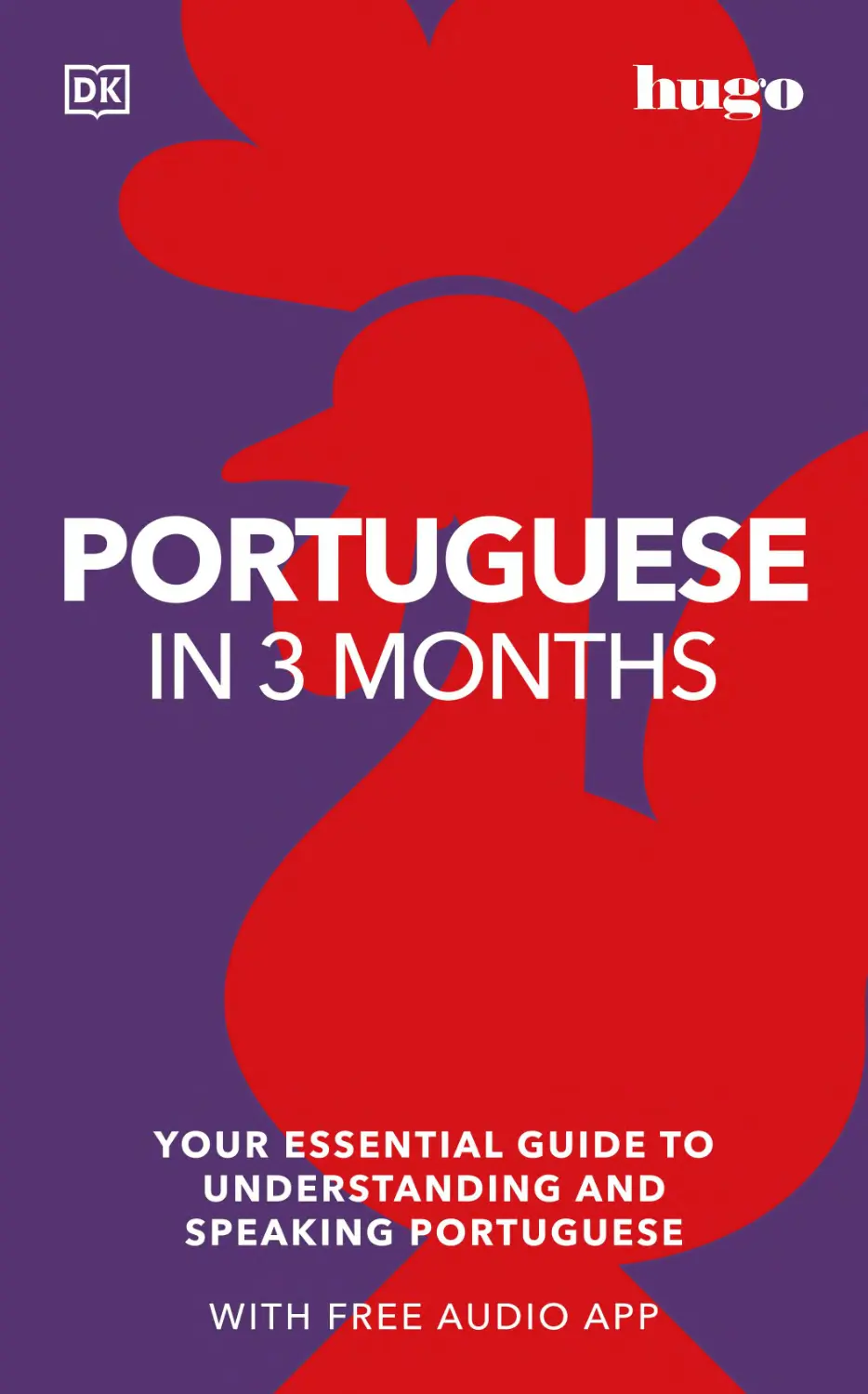
PORTUGUESE
IN 3 MONTHS
Maria Fernanda Allen
YOUR ESSENTIAL GUIDE TO
UNDERSTANDING AND
SPEAKING PORTUGUESE
FREE AUDIO APP
Uploaded by S. M. Safi
About this eBook
Due to the complex integration of images
and text, this DK eBook has been formatted
to retain the design of the print edition.
As a result, all elements are fixed in place,
but can easily be enlarged by using
the pinch-to-zoom function.
If you are previewing this eBook on a mobile
phone, portrait mode is recommended.
If previewing on a tablet or larger display,
landscape mode will allow you to see
facing pages at the same time (two page view).
Uploaded by S. M. Safi
THIRD EDITION
Series Editor Elise Bradbury
Senior Editor Amelia Petersen
Senior Art Editor Jane Ewart
Managing Editors Christine Stroyan, Carine Tracanelli
Managing Art Editor Anna Hall
Production Editor Robert Dunn
Senior Production Controller Samantha Cross
Jacket Project Art Editor Surabhi Wadhwa-Gandhi
Jacket Design Development Manager Sophia MTT
Art Director Karen Self
Associate Publishing Director Liz Wheeler
Publishing Director Jonathan Metcalf
DK INDIA
Project Art Editor Anjali Sachar
Senior DTP Designer Shanker Prasad
Managing Editor Rohan Sinha
Managing Art Editor Sudakshina Basu
This revised edition published in Great Britain in 2022 by
Dorling Kindersley Limited
DK, One Embassy Gardens, 8 Viaduct Gardens,
London, SW11 7BW
First published in Great Britain by
Hugo’s Language Books Limited
The authorised representative in the EEA is
Dorling Kindersley Verlag GmbH. Arnulfstr. 124,
80636 Munich, Germany
Copyright © 1997, 2003, 2022 Dorling Kindersley Limited
A Penguin Random House Company
10 9 8 7 6 5 4 3 2 1
001–326925–Jan/2022
Written by
Maria Fernanda Allen
Former lecturer in Portuguese at The University of Westminster,
London (Post-Graduate Dept. and other courses)
and a Fellow of the Institute of Linguists
All rights reserved.
No part of this publication may be reproduced, stored in
or introduced into a retrieval system, or transmitted, in any form,
or by any means (electronic, mechanical, photocopying,
recording, or otherwise), without the prior written permission
of the copyright owner.
A CIP catalogue record for this book
is available from the British Library.
ISBN: 978-0-2415-3740-4
Printed and bound in Latvia
www.dk.com
This book was made with Forest Stewardship
Council™ certified paper – one small step
in DK’s commitment to a sustainable future.
For more information go to
www.dk.com/our-green-pledge
Uploaded by S. M. Safi
Preface
This edition of Hugo Portuguese in 3 Months was written by
Maria Fernanda Allen, whose experience in teaching her
native tongue ranges from beginners to post-graduate level.
The course is designed for people learning at home who
want to acquire a good working knowledge of Portuguese
in a short time. The grammar is presented concisely and
clearly, maintaining the Hugo principle of teaching only
what is really essential, and yet providing a complete
introduction to written and conversational Portuguese.
The course is designed to teach the language as it is
spoken in Portugal, but common variations between this
and Brazilian Portuguese are noted in the book. It begins
with an explanation of Portuguese pronunciation, as far as
this is possible in print. We strongly encourage you to
download the free DK Hugo in 3 Months app (see p.4) and to
listen to the accompanying audio as you work through the
course – this will enable you to learn the distinctive sounds
of the Portuguese language. Referring to our system of
‘imitated pronunciation’ in the initial weeks of the course
will also help.
The grammar is presented in a practical way, in an order
designed for the learner to make rapid progress.
Constructions are clearly explained, and the exercises are
designed to consolidate what you’ve learned. The
conversations reinforce the points that have been seen,
as well as introduce idioms and colloquialisms for a
thorough grasp of everyday Portuguese.
Ideally, you should try to spend about an hour a day on
the course, although there is no hard and fast rule on this.
Do as much as you feel capable of doing; it’s much better to
learn a little at a time, and to learn that thoroughly.
Before beginning a new section, always spend ten minutes
revising what you learned the day before. Then read each
new section carefully, ensuring that you have fully
understood the grammar, before listening to the audio to
learn the pronunciation of sample sentences and new
vocabulary. Finally, complete the exercises that accompany
Uploaded by S. M. Safi
PREFACE
3
each section. Repeat them until the answers come easily.
With the conversations, we suggest that you listen to them
first, then read them aloud and see how closely you can
imitate the voices on the recording. Repetition is vital to
language learning. The more often you listen to a
conversation or repeat an oral exercise, the faster your
listening skills and fluency in speaking will improve.
The course is rounded off with a list of useful expressions.
These will add to your comprehension, widen your
vocabulary, and will prove useful if you decide to take your
study of Portuguese to a more advanced level.
When you’ve completed the course, you should have a very
good understanding of the language – more than sufficient
for general holiday or business purposes, and enough to lead
to language validation tests if this is your eventual aim. We
hope you enjoy Hugo Portuguese in 3 Months, and wish you
success with your studies!
About the audio app
The audio app that accompanies this Portuguese course contains
audio recordings for all numbered sections, vocabulary boxes,
conversations, and many of the exercises. There is no audio for
Weeks 11 and 12. All audio is European Portuguese.
Where you see this symbol, it indicates that there is no
audio for that section.
To start using the audio with this book, go to dk.com/hugo and
download the DK Hugo In 3 Months app on your smartphone or
tablet from the App Store or Google Play. Then select
Portuguese from the list of titles.
Please note that this app is not a stand-alone course. It is
designed to be used together with the book, to familiarize
you with Portuguese speech and to provide examples for you
to repeat aloud.
4
PORTUGUESE IN 3Uploaded
MONTHS
by S. M. Safi
Contents
Pronunciation
Week 1
7
Week 5
80
Forming the feminine
15 Forming the plural
Introduction: some useful phrases The preterite
Gender and plural of nouns
The imperative
Articles: ‘the’, ‘a’, ‘an’, ‘some’
Useful verbs: andar and ficar
Greetings, farewells, and polite
Exercises, vocabulary,
expressions
conversation & practice
Useful verbs: ter and haver
99
Saying ‘yes’ and ‘no’
Forming questions
The imperfect tense (‘was doing’,
Subject pronouns: ‘I’, ‘you’, ‘he’,
‘used to do’)
‘she’, etc.
Verbs for expressing ‘to know’,
Exercises, vocabulary,
‘to play’, and ‘to take’
conversations & practice
Vocabulary for meals
Adverbs of place (‘here’, ‘there’)
31 More on personal pronouns
Exercises, vocabulary & practice
Ser and estar (‘to be’)
Adjectives: describing things
119
Prepositions: ‘of’, ‘in’, ‘at’, ‘for’, etc.
Addressing people using titles
‘Either … or’, ‘neither … nor’
Vocabulary for asking directions
More negatives: ‘nothing’, ‘never’,
Exercises, vocabulary,
‘no one’, etc.
conversation & practice
The use of já
‘Certain’, ‘few’, ‘all’, ‘some’, etc.
47 Making comparisons (‘more/less
than’, ‘as .... as’, etc.)
Present tense (regular verbs)
Expressions for ‘love’ and ‘hate’
Asking ‘how’, ‘when’,
The future and conditional
‘where’, etc.
(‘I will …’, ‘I would …’)
Demonstratives: ‘this’, ‘that’,
Exercises, vocabulary,
‘these’, ‘those’
conversation & practice
Exercises, vocabulary,
conversation & practice
Week 6
Week 2
Week 7
Week 3
Week 4
139
Week 8
62 Past participles (the -ed form, e.g.
Possessives: ‘my’, ‘mine’, ‘your’,
‘yours’, etc.
Numbers
Asking the time
Days, months & seasons
Exercises, vocabulary,
conversations & practice
‘talked’, etc.)
The present and past perfect
(‘I have done …’, ‘I had done …’)
Reflexive verbs (e.g. levantar-se)
Reciprocal forms (‘each other’,
‘one another‘)
The passive
Impersonal verbs (e.g. ‘it’s raining’)
Exercises, vocabulary,
conversations & practice
Uploaded by S. M. Safi
CONTENTS
5
Week 9
155
The subjunctive: use and
formation
‘If’ clauses (‘if we go, we will …’)
Exercises, vocabulary,
conversation & practice
Week 10
174
The personal infinitive
The present participle (the -ing
form: ‘saying’, ‘doing’, etc.)
Uses of the infinitive
Por and para (‘for’, ‘to’, ‘along’,
‘through’, etc.)
Special uses of the definite article
Exercises, vocabulary,
conversations & practice
Week 11
192
Week 12
198
Appendix
213
Key to exercises
225
Mini-dictionary
243
Index
253
Verb tables
Verbs requiring prepositions
English–Portuguese
Reading practice:
Uma viagem pela Europa
Writing letters
Useful expressions:
Expressions linked to certain
verbs: dar, deixar, etc.
Portuguese equivalents of some
English idioms
More useful words and phrases:
Em viagem / Travelling
No consultório médico / At the
doctor’s
Dentista / Dentist
No hotel / At the hotel
No restaurante / In the
restaurant
As casas e situações
domésticas / House
and household situations
Compras / Shopping
Roupa e cores / Clothes
and colours
Cabeleireiro / Hairdresser
Divertimentos e desportos /
Entertainment and sports
6
PORTUGUESE IN 3Uploaded
MONTHS
by S. M. Safi
Pronunciation
STRESS
Before starting to learn the sounds of Portuguese vowels and
consonants, it is essential to learn a few rules about stress.
Words are made up of syllables – groups of two or three letters,
which must include a vowel. In both English and Portuguese,
some of these syllables are stressed and some unstressed.
In English, the stress is variable. For example, the first syllable
is stressed in ´ENG-land’, while the stress falls on the second
syllable in ‘gir-AFFE’. In Portuguese, there are certain rules about
which syllable is stressed.
A Portuguese word is normally stressed on the second-to-last
syllable. For example, marmelada, which has four syllables
(mar-me-la-da), is stressed on the penultimate la.
The exceptions to this rule are:
if the word has an accent on a vowel, in which case the
accented syllable is stressed.
■ if the word ends in an l, r, z, or i, in which case the last
syllable is stressed.
■ if the word ends in a diphthong or nasal vowel (see pages
11–12), in which case the last syllable is stressed.
■
As in English, the sound of letters may vary depending on
whether they are stressed. So in marmelada, the stressed a is
pronounced [ah], while the unstressed a’s are pronounced [uh].
Accent marks you will see in Portuguese are: the acute (´), the
grave ( `), the tilde (~), and the circumflex (^).
PRONUNCIATION
The following tips on pronouncing the vowels and consonants in
Portuguese should help you to master the most elusive as well
as the most obvious sounds.
Naturally, the best way to perfect your pronunciation is to
practise with the audio available on the app that accompanies this
course. At the end of each subsection, as another aid to learning,
you can sound out the phonetic transcriptions in the ‘imitated
pronunciation’ provided in the first few weeks of the course.
Uploaded by S. M. Safi PRONUNCIATION
7
When reading the imitated pronunciation, avoid pauses between
the syllables. Pronounce them as if they formed part of an
English word, putting the stress on the syllable with a stress
mark (') before it. Italicized letters are barely sounded.
The Portuguese have an irrepressible tendency to link the sound
of a terminal (or final) vowel with the beginning of the next
word; this liaison results in ele era sounding like el-'leh-ruh, or
nove horas ('noh’veh and 'oh-rush) becoming noh-'voh-rush.
THE PORTUGUESE ALPHABET
A
B
C
D
E
F
G
H
I
J
L
M
(ah)
(bay)
(say)
(day)
(eh)
(effe)
(zhay*)
('ah-gah)
(ee)
(zhah-tuh*)
(elle)
(emme)
N
O
P
Q
R
S
T
U
V
X
Z
(enne)
(oh)
(pay)
(kay)
(erre)
(esse)
(tay)
(oo)
(vay)
(sheesh)
(zay)
The letters K ['kah-puh], W ['doo-ble vay], and Y [ee-'gray-goo]
are not in use today, except in foreign words.
*The letters ‘zh’ in the imitated pronunciation represent the
sound of the s in the English word ‘measure’.
8
PORTUGUESE IN 3Uploaded
MONTHS
by S. M. Safi
VOWELS
a
This is an open vowel, like the long ‘ah’ in ‘father’, in a
stressed syllable, before a final l or r , and when it has an
acute or grave accent. Otherwise, it is like the short ‘uh’
sound in ‘about’.
For example:
camada [kuh-'mah-duh] layer
falar [fuh-'lahr] to speak
animal [uh-nee-'mahl] animal
chá [shah] tea
It becomes nasal when it has a tilde (ã); the italic n we
use to indicate this sound should not be pronounced as a
proper n, but more like the end of ‘sing’, without strongly
vocalizing the g.
For example:
irmã ['eer-man] sister
When the a has a circumflex accent (â) the sound is
unchanged, but this syllable is stressed instead of the
usual second-to-last syllable.
For example:
alfândega [al-'fahn-de-guh] customs
e
This is an open vowel sound (as in ‘vet’) in a stressed
syllable, before l, and with grave or acute accents.
Unstressed, it is barely voiced, which we indicate with
an italicized e. In Brazil, however, the unstressed e is
pronounced like the double ‘ee’ in ‘see’. For example:
metro ['meh-troo] metre, metro
café [kuh-'feh] coffee
mel [mehl] honey
secretária (se-kre-'tah-ree-uh) secretary
The closed vowel e is pronounced similarly to ‘ay’ in
‘they‘. It occurs in some stressed syllables, when it has
a circumflex accent (ê) and before a final r.
For example:
pelo ['pay-loo] fur
comer [koo-'mayr] to eat
vê [vay] he/she sees
Uploaded by S. M. Safi PRONUNCIATION
9
When an e is by itself or forms the first syllable on its
own, it is pronounced like the ‘ee’ in ‘see’.
For example:
edifício [ee-dee-'fee-sy’oo] building
i
This is always pronounced ‘ee’, but when unstressed it
should be given a slightly shorter sound. For example:
parti [par-'tee] I left
o
If it is stressed or has an acute accent or comes before l,
the o is an open vowel sound similar to the ‘aw’ sound
in ‘rock’). For example:
avó [uh-'vo] grandmother
sol [sol] sun
morte ['mor’te] death
It has a closed vowel sound similar to the long o in ‘no’ in
some stressed syllables, before a final r, and with the
circumflex accent. This is the most common sound for
o in Brazil. For example:
avô [uh-'voh] grandfather
amor [uh-'mohr] love
folha ['foh-l’yuh] leaf
It has the sound of ‘oo’ in unstressed syllables and when
it is on its own. For example:
tomar [too-'mahr] to take
gato ['gah-too] cat
When it has a tilde (õ) or precedes an n, it has a nasal
sound, which we transcribe in the same way as explained
under ã. See also the section on nasal vowels and
diphthongs.
u
10
This is always pronounced ‘oo’: For example:
rua [roo’uh] street
PORTUGUESE IN 3Uploaded
MONTHS
by S. M. Safi
DIPHTHONGS: VOWEL COMBINATIONS
When two vowels are pronounced as one syllable, this is called
a diphthong. Examples of diphthongs in English are ‘coin’ or
‘loud’. In Portuguese there are various vowel combinations that
are pronounced as diphthongs, notably:
ai
= ah’ee as in ‘my‘ vai ['vah’ee] he/she/it goes
au
= ah’oo
mau ['mah’oo] bad
ao
= ah’oh
ao ['ah’oh] at the, to the
ei
= ay as in ‘tame’ falei [fuh-'lay’ee] I spoke
eu
= ay’oo
meu [may’oo] my
oi
= oy’e
foi [foy’e] he/she/it went
ou
= o
falou [fuh-'lo] he/she spoke
ui
= oo’e
fui [foo’e] I went
Although the transcriptions are indicated as syllables, note that
these vowel combinations blend together to form a single
sound. Run the sounds together as if you were speaking quickly.
Note: when there is an accent over one of two vowels
appearing together, you should treat the two vowels separately,
not as a diphthong: seu is a diphthong, but céu ['say-oo] is not.
NASAL VOWELS AND DIPHTHONGS
Whenever the vowels a, e, i, o, and u precede m and n, or
have a tilde accent (õ), they become nasal. If you speak any
French, you should be familiar with the sound – for example, in
vin or mon. The closest approximation in English is the nasalized
sound in words ending in -ng, such as ‘sing’ or ‘wrong’, but note
that the -ng is barely pronounced. We indicate this in the
transcriptions with an n in italics.
The nasal diphthongs ão, ãe, ãi, and õe similarly need to be
sounded through your nose in this way. For example:
encanto [en-'kahn-too] charm
jardim [zhar-'deen] garden
ontem ['on-ten] yesterday
untar [oon-'tahr] to grease
não [nah’oon] no
limões [lee-'maw’insh] lemons
Uploaded by S. M. Safi PRONUNCIATION
11
CONSONANTS
These are pronounced as in English, with these exceptions:
c
This sounds like s in ‘silver’ when it comes before e or i, or
like the hard c in ‘cat’ before a, o, and u, unless it has a
cedilla (ç), which changes the sound to s. The combination
ch is pronounced like an English ‘sh’. For example:
cinema [see-'nay-muh] cinema
comer [koo-'mayr] to eat
começar [koo-me-'sahr] to begin
chave ['shah-ve] key
d
In Portugal, the d sounds almost like ‘th’ in ‘though’.
In Brazil, it is a harder sound, almost as in English.
g
Sounds like the ‘zh’ sound of the s in ‘treasure’ when
coming before e or i. For example:
geral [zhuh-'rahl] general
gigante [zhee-'gahn-te] giant
It is hard, as in ‘get’, before a, o, u, and preceding a
consonant. For example:
gordo ['gohr-doo] fat
When in the combination gu, before e or i, the u is not
pronounced – it is only there to ensure a hard g.
For example:
guerra ['gehr-ruh] war
guitarra [gee-'tahr-ruh] guitar
12
h
This is never pronounced.
j
Sounds like the ‘zh’ sound in ‘treasure’. It precedes a, o, u,
but hardly ever e. For example:
jardim [zhar-'deen] garden
joia ['zhoh-yuh] jewel
PORTUGUESE IN 3Uploaded
MONTHS
by S. M. Safi
l
The final l is pronounced strongly in Portugal, but in Brazil
it has a faint quality. For example:
fácil ['fah-seel] easy [in Brazil: 'fah-see’oo]
lh
Give this a liquid sound, like the ‘ly-’ in ‘billiards’.
For example:
melhor [me-'l’yohr] better
milho ['mee-l’yoo] maize
nh
Pronounced like the the ‘ny-’ in ‘onion‘:
minha ['mee-n’yuh] mine
qu
Has a hard k sound as in ‘kit’. The u that follows it
is not pronounced before e or i. For example:
qual [kwal] which
quem [ken] who
r
Has a soft sound, close to the Italian r, when between
vowels. It is more strongly rolled, like the Scottish or
Spanish r, when it is doubled or comes at the beginning
of a word. At the end of a word or syllable, it is
emphasized even more. But in Brazil the final r is usually
not sounded. For example:
barato [buh-'rah-too] cheap
carro ['kah-rroo] car
amor [uh-'mohr] love
s
Is like the s in ‘salt’ when beginning a word, doubled, or
after a consonant. Between vowels it is less sibilant, like
s in ‘rose’ or z in ‘zebra’. In Portugal, the final s of a word
or syllable sounds like ‘sh’ in ‘sheep’, although Brazilians
sound a final s more as we do in English. For example:
sonho ['so-n’yoo] dream
rosa ['roh-zuh] rose
lápis ['lah-peesh] pencil
cesto ['say-shtoo] basket
Uploaded by S. M. Safi PRONUNCIATION
13
When a word with a final s is followed by a word
beginning with a vowel, the s is pronounced like z,
not as ‘sh’.
14
t
In Portugal, this is always pronounced as in ‘tea’. In Brazil,
it sounds more like ‘ch’ – especially before e and i.
x
This has five sounds. It is like the English ‘sh’ when at
the beginning of a word or between vowels. Also
between vowels it can sound like s in ‘some’. It has the
sound of z when in the prefix ex plus a vowel, but
sounds like ‘eysh’ when ex is followed by a consonant. In
words of foreign derivation, it should be pronounced ‘ks’,
as in English. For example:
xadrez [shuh-'draysh] chess
queixa ['kay-shuh] complaint
trouxe [trose] I brought
exército [ee-'zehr-see-too] army
explicar [ey’sh-plee-'kahr] to explain
táxi ['tah-ksee] taxi
z
Pronounce this as in ‘zebra’, except when it comes at the
end of a word. A final z sounds like ‘sh’. For example:
zanga ['zahn-guh] anger
fazer [fuh-'zayr] to do, to make
luz [loosh] light
PORTUGUESE IN 3Uploaded
MONTHS
by S. M. Safi
Week 1
■
■
■
■
■
■
■
■
■
some useful phrases
the gender of nouns
forming the plural
definite articles ('the') and indefinite articles ('a', 'an',
'some')
greetings, farewells, and polite phrases
the useful verbs ter and haver
saying ‘yes’ and ‘no’ and forming questions
subject pronouns (‘I’, ‘you’, ‘he’, ‘she’, etc.)
different registers for saying ‘you’
INTRODUCTION: SOME USEFUL PHRASES
Bom dia. [bon 'dee-uh]
Good morning.
Boa tarde. ['boh-uh 'tahr-de]
Good afternoon.
Boa noite. ['boh-uh 'noyte]
Good evening./Good night.
Eu chamo-me ...
['ay’oo 'shah-moome]
My name is … (I am called …)
Como se chama o senhor?
['kom-oo se 'shah-muh oo sen-'yor]
What’s your name? (addressing a man formally)
Como se chama a senhora?
['kom-oo se 'shah-muh oo sen-'yor-uh]
What’s your name? (addressing a woman formally)
Como se chama você?
['kom-oo se 'shah-muh 'voh-seh]
What’s your name? (intermediate level of politeness,
either sex)
Uploaded by S. M. Safi
WEEK 1
15
Como te chamas?
['kom-oo te 'shah-mush]
What’s your name? (informal, familiar)
Sou a sua professora. [so ah 'soo-uh proofe-'so-ruh]
I am your teacher.
Sou portuguesa. [so poor-too-'gay-zuh]
I am Portuguese.
O senhor é inglês? [oo sen-'yor eh eeng-'laysh]
Are you English? (addressing a man formally)
A senhora é inglesa? [uh sen-'yor-uh eh eeng-lay-zuh]
Are you English? (addressing a woman formally)
Eu moro em Londres. ['ay’oo 'moh-roo en …]
I live in London.
Onde mora? [on’de 'moh-ruh]
Where do you live?
Fala português? ['fah-luh poor-too-'gaysh]
Do you speak Portuguese?
Não faz mal. [nah-oon fahsh mahl]
It doesn’t matter.
Vamos agora aprender a falar português.
['vah-moosh uh-'goh-ruh ah-pren-'dair ah fuh-'lahr
poor-too-'gaysh]
We are now going to learn (to speak) Portuguese.
16
PORTUGUESE IN 3Uploaded
MONTHS
by S. M. Safi
1.1 GENDER AND PLURAL OF NOUNS
All Portuguese nouns are either masculine or feminine.
When you learn a new noun, try to remember its gender.
Here are some rules of thumb to help you: nouns and
adjectives ending in -o, -im, -om, and -um are generally
masculine, while those ending in -a, -ã, -gem, -dade,
-ice, -ez, -ção, -são, and -ude are feminine. Nouns
ending in -r, -l, and -e can be either feminine or
masculine. For more on gender, see section 5.1.
For example:
a flor (f.) the flower
but
o amor (m.) love
a capital (f.) the capital (city)
but
o capital (m.) capital (i.e. money)
a noite (f.) the night
but
o perfume (m.) perfume
The plural of nouns and adjectives is formed, in general,
by adding -s to words ending in a vowel (a/e/i/o/u), and
-es to words ending in a consonant. Words ending in -m
change the -m to -ns. For other rules regarding how to
form the plural, see section 5.2.
1.2 THE DEFINITE ARTICLE (‘THE’)
The definite article ‘the’ is either o or a, depending on
whether the noun is masculine or feminine, as you may
have noticed in the examples above. The definite article
also changes if the noun is plural, to os or as:
Masc. singular
Masc. plural
Fem. singular
Fem. plural
o
os
a
as
o perfume
os perfumes
a noite
as noites
Uploaded by S. M. Safi
WEEK 1
17
Exercise 1
This exercise doubles as a vocabulary list. Use the rules
in sections 1.1 and 1.2 to help you fill in the blanks with
the appropriate definite article.
1 … rapariga
2
3
4
5
6
7
8
9
10
…
…
…
…
…
…
…
…
…
rapaz
escritório
casa
flores
empregos
gatos
alunas
mesa
mesas
the young woman
(in Brazil: moça)
the young man
the office
the house, home
the flowers
the jobs (employment)
the cats
the students (f.)
the table
the tables
IMITATED PRONUNCIATION
oo; oo per-'foo-muh; oosh; oosh per-'foo-mush; uh; uh
'noy-te; ush; ush 'noy-tush; ruh-puh-'ree-guh;
ruh-'pahsh; sh-kree-'toh-ree’o; 'kah-zuh; flo’resh;
en-'pray-goosh; 'gah-toosh; uh-'loo-nush; 'may-zuh;
'may-zush
18
PORTUGUESE IN 3Uploaded
MONTHS
by S. M. Safi
1.3 THE INDEFINITE ARTICLE (‘A’, ‘AN’, ‘SOME’)
In Portuguese, ‘a’ and ‘an’ are translated as um before
a masculine singular noun, and uma before a feminine
singular noun. These articles also have plural forms:
uns (m. pl.) and umas (f. pl.). These can translate as
‘some’ in certain contexts.
Masc. singular
Masc. plural
Fem. singular
Fem. plural
um
uns
uma
umas
um homem (a man)
uns homens (some men)
uma mulher (a woman)
umas mulheres (some women)
Exercise 2
Use the rules you’ve learned so far to fill in the blanks
with the appropriate indefinite article.
1
2
3
4
5
6
7
8
9
10
…
…
…
…
…
…
…
…
…
…
viagem
escritório
avião
cidade
bilhete (m.)
homens
mulheres
viagens
escritórios
raparigas
a trip
an office
a plane
a city, town
a ticket
men
women
trips, journeys
offices
young women
IMITATED PRONUNCIATION
oon; 'oo-muh, oon 'oh-men; 'oo-muh mool-'yair; oonsh;
'oo-mush; oonsh 'oh-mensh; 'oo-mush mool-'yairsh; vee'ah-zhen; shkree-'toh-ree’o; uh-vee’'ah-oon; see-'dah-de;
beel-'yay-te; 'oh-mensh; mool-'yairesh; vee-'ah-zhensh;
shkree-'toh-ree’oosh; ruh-puh-'ree-gush
Uploaded by S. M. Safi
WEEK 1
19
VOCABULARY 1
Some greetings, farewells, and polite phrases:
Olá!
Hello!
Como está?
How are you? (polite)
Estou bem, obrigada. (Woman’s reply) I’m well,
thank you.
Estou bem, obrigado. (Man’s reply) I’m well,
thank you.
de nada
you’re welcome, not at all
não tem de quê
don’t mention it
Adeus!
Goodbye!
(in Brazil: Até logo!)
Até logo!
See you later!
Até amanhã!
See you tomorrow!
faz favor
please, after you, please do,
excuse me (drawing
someone’s attention)
por favor
please
faça o favor de …
please … (more formal)
se faz favor …
if you please …
Desculpe!
Sorry!
Com licença!
Excuse me! (e.g. if you need
to get past someone)
1.4 USEFUL VERBS: TER (‘TO HAVE’)
The present tense in Portuguese can convey the English
present tense (e.g. ‘I do’) or the present continuous (‘I am
doing’). It can also be used to refer to the near future
(‘I’ll do’): the context usually makes the time frame clear.
Here is the present tense of the useful verb ter (‘to have’):
singular
eu tenho
tu tens
você tem
o senhor tem
a senhora tem
20
I have
you have
you have
you have
you have
(familiar)
(more polite)
(most formal) (m.)
(most formal) (f.)
PORTUGUESE IN 3Uploaded
MONTHS
by S. M. Safi
ele tem
ela tem
he has
she has
plural
nós temos
vocês têm
os senhores têm
as senhoras têm
eles têm
elas têm
we have
you have (familiar & polite)
you have (most formal) (m.)
you have (most formal) (f.)
they have (m.)
they have (f.)
NOTE: As you can see from these conjugations, the
Portuguese language has several possible registers when
addressing someone, from familiar to very formal. More
on this in section 1.8.
IMITATED PRONUNCIATION
'ay’oo 'ten-yoo; too ten’sh; 'voh-seh ten;
oo sen-'yor ten; uh sen-'yor-uh ten; ell ten; 'eh-luh ten;
nosh 'tay-moosh; 'voh-sehsh 'tay’en;
oosh sen-'yorsh 'tay’en; ush sen-'yor-ush 'tay’en;
'ehl-esh 'tay’en; 'ehl-ush 'tay’en
1.5 EXPRESSIONS WITH THE VERB TER THAT
IN ENGLISH USE THE VERB ‘TO BE’
ter
ter
ter
ter
ter
ter
ter
ter
fome
sede
frio
calor
sono
razão
pressa
vinte anos
to
to
to
to
to
to
to
to
be
be
be
be
be
be
be
be
hungry
thirsty
cold
warm
sleepy
right
in a hurry
twenty years old
ter saudades to feel longing, nostalgia for, to miss:
Tenho saudades de Portugal.
I miss Portugal.
Uploaded by S. M. Safi
WEEK 1
21
Another common expression is:
Que é que tem?
What’s the matter with you?
ter de expresses a strong necessity or obligation
(‘to have to’):
Tenho de terminar este trabalho.
I have to finish this work.
Você tem de partir imediatamente.
You must leave immediately.
IMITATED PRONUNCIATION
tair fome; saide; 'free’oo; kuh-'lohr; 'soh-noo;
ruh-'zah’on; 'preh-suh, 'veen-tee ah-noosh;
sau’oo-'dah-d’sh; poor-too-'gahl; kee’'eh ke teng;
'tun-yoo ke ter-mee-'nahr eshte truh-'bahl-yoo;
'voh-seh ten de per-'teer eeme-'dyah-tuh-mente
1.6 SAYING ‘YES’ AND ‘NO’ AND FORMING
QUESTIONS
1 The affirmative ‘yes’ is sim:
Sim, tenho dinheiro.
Yes, I have money.
2 The negative não means both ‘no’ and ‘not’:
Não, não tenho dinheiro.
No, I don’t have any money.
3 To ask a question, you usually simply give an enquiring
intonation to what would otherwise be a statement:
Fala inglês?
Do you speak English?
22
PORTUGUESE IN 3Uploaded
MONTHS
by S. M. Safi
Tem troco?
Do you have (any) change?
Você quer mais vinho?
(Do) you want more wine?
However, when the sentence begins with a question
word (for example, ‘What...?’), the word order is reversed:
Que disse você?
What did you say? (‘What said you?’)
NOTE: The auxiliary verb ‘do’ appears in the English
construction of many of these sentences, but does not
exist in Portuguese. The verb ‘to do’ (as in ‘To do’ an
activity) is fazer:
Que faz?
What are you doing?
Ela não faz nada.
She doesn’t do/isn’t doing anything.
(The verb fazer can also mean ‘to make’.)
1.7 THE IMPERSONAL VERB HAVER
This is a useful verb that is mainly used for forms of
‘there is’, and ‘there are’. The third-person singular present
tense há is used for both cases: the singular ‘there is’
and the plural ‘there are’. Há can also mean ‘ago’ and
‘for’ (relating to time).
For example:
Há muita gente aqui.
There are a lot of people here.
Há quanto tempo está em Lisboa?
How long have you been in Lisbon? (‘There is how much
time you are in Lisbon?’)
O avião partiu há cinco minutos.
The plane left five minutes ago.
Uploaded by S. M. Safi
WEEK 1
23
Haver de plus the infinitive of another verb expresses a
strong intention to do something in the future. Its
nearest equivalent in English is ‘I will’:
Hei de ir ao Brasil. I will go to Brazil (some day).
present tense
eu hei de
I will …
tu hás de
you will …
você há de
you will …
ele há de
he will …
ela há de
she will …
nós havemos de we will …
vocês hão de
you will …
eles hão de
they will …
elas hão de
they will …
(familiar sing.)
(polite sing.)
(pl.)
(m.)
(f.)
IMITATED PRONUNCIATION
ah 'moon-tuh 'gen-te uh-'kee; ah 'kwan-too 'ten-poo
sh-'tah en leesh-'bo’uh, oo uh-vee-'ah’oon per-'tyoo ah
'seen-koo mee-'noo-toosh; uh 'vair de; 'ay’oo ai de;
too 'ahsh de; 'voh-seh ah de; el ah de; 'eh-luh ah de;
nosh uh-'vay-moosh de; 'voh-sesh 'ah’oon de;
ellsh 'ah’oon de; 'ehl-ush 'ah’oon de
1.8 SUBJECT PRONOUNS: ‘I’, ‘YOU’, ‘HE’,
‘SHE’, ETC.
Here are the Portuguese personal pronouns when they
are used as the subject of the verb.
eu
tu
você
ele
ela
nós
vocês
eles
elas
24
I
you (familiar sing.)
you (polite sing.)
he, it (m.)
she, it (f.)
we
you (pl.)
they (m.)
they (f.)
PORTUGUESE IN 3Uploaded
MONTHS
by S. M. Safi
Often the subject pronouns are omitted before the verb
because the conjugation ending is enough to indicate
who is doing the action (e.g. Fala inglês? ‘Do you speak
English?’). When the subject pronoun is used, it is usually
for emphasis or to avoid ambiguity.
The most informal register for addressing someone is tu
(‘you’, familiar). This is used between friends, relatives,
and people of the same age group who are on informal
terms. It is seldom used in Brazil.
The more polite register você is used in situations such
as employer to employee, teacher to student, etc., or if
you don’t know someone. It is widely used in Brazil.
The plural ‘you’, vocês, is used when addressing more
than one person where either tu or você applies (i.e. in
both informal and more polite contexts).
The most formal way of saying ‘you’ is o senhor, a
senhora, os senhores, as senhoras. When talking to a
mixed group of people, the masculine form is used.
Both você and o/a senhor/a take the third-person
singular form of the verb (i.e. the same as ele and ela).
Vocês and os/as senhores/as take the third-person plural
(i.e. eles/elas). As mentioned above, the subject pronoun
‘you’ may be omitted completely once the form of
address has been established.
Falas português?
Do you (familiar) speak Portuguese?
Fala português?
Do you (polite & formal) speak Portuguese?
There is another plural ‘you’ form, vós, but it is no longer
used, except by elderly people in northern Portugal. You
may also come across it in literature or prayers.
In referring to an individual who represents a group, a
company, a shop, etc., use the plural ‘you’ pronoun,
vocês, with the appropriate verb form.
Uploaded by S. M. Safi
WEEK 1
25
Again, note that the pronoun may be omitted:
(Vocês) têm os planos prontos?
Do you have the plans ready?
A que horas abrem?
What time do you open?
A big difference with English is that there is no neuter word
for ‘it’. You need to use ele to refer to a masculine object
and ela for a feminine object. The same applies for the
plural eles (‘they’, m.) and elas (‘they’, f.).
In English, ‘it’ is also used in many impersonal
expressions, such as ‘it is easy …’. In similar expressions,
Portuguese uses the verb on its own: é fácil.
Exercise 3
Translate the following, using the vocabulary you’ve
already seen in the previous exercises and sections:
1
2
3
4
5
6
7
8
9
10
11
12
13
14
15
26
Tenho.
Você tem?
Não temos.
Vocês têm.
Ela tem?
Os senhores não têm.
Eles não têm?
I have no money.
Do you (f. sing. formal) have a ticket?
They (m.) have good jobs.
Do you (pl.) have a house?
You (sing. familiar) have an office.
We are hungry.
There is no table.
How long have you (sing. polite) been
speaking English?
PORTUGUESE IN 3Uploaded
MONTHS
by S. M. Safi
CONVERSATIONS
1
a
b
a
b
2
a
b
a
3
a
b
a
b
Bom dia. O senhor tem troco de cinco
euros?
Agora não tenho, desculpe. Mas aquela loja
à esquina tem troco, com certeza.
Muito obrigado.
De nada.
Você tem tempo para um café?
Sim, tenho, com muito prazer.
Então vamos aqui ao lado. Têm um café
muito bom e há pouca gente.
Os seus amigos ainda têm o andar
em Lisboa?
Agora não, mas têm uma linda casa no
Algarve, com um grande jardim e piscina.
Que sorte! Quem me dera ter uma
casa assim!
Eu também.
TRANSLATIONS
1
a
b
a
b
2
a
b
a
3
a
b
a
b
Hello. Do you have change for five euros?
I don’t at the moment, I’m sorry. But that shop
on the corner certainly has change.
Thank you very much.
You’re welcome.
Do you have time for a coffee?
Yes, I do (‘have’), with pleasure.
So let’s go next door. They have
great coffee and there aren’t many people.
Do your friends still have a (‘the’) flat in Lisbon?
Not anymore, but they have a lovely house in
the Algarve, with a big garden and a pool.
What luck! I wish I had a house like that!
Me too.
Uploaded by S. M. Safi
WEEK 1
27
VOCABULARY 2
agora não
[uh-'goh-ruh 'nah-oon]
desculpe [desh-'kool-pe]
mas [mahsh]
aquele (m.) [uh-'kay-le]
loja (f.) ['loh-zhuh]
esquina (f.) [esh-'kee-nuh]
com certeza
[kon ser-’tay-zuh]
tempo para ['ten-poo par-uh]
muito prazer
[moo’in-too pruh-'zayr]
então [en-'tah’oon]
Vamos aqui ao lado.
[vuh-moosh uh-'kee
ah’oo 'lah-doo]
pouca gente
[poh-kuh 'zhen-te]
Os seus amigos ainda têm
o andar em Lisboa?
[osh 'say’osh uh-'mee-gosh
uh-'een-duh 'tay’en oo an'dahr en leesh-'boh-uh]
lindo [leen-doh]
grande [grahn-de]
jardim (m.) [zhuhr-'deen]
piscina (f.) [peesh-'see-nuh]
Que sorte! [ke 'sohr-te]
not at the moment
I’m sorry (polite)
but
that
shop
corner
definitely, certainly,
for sure
time for
with great pleasure
then, in that case
Let’s go next door.
not many people,
few people
Do your friends still
have the flat in
Lisbon? (polite)
beautiful
big, large
garden
swimming pool
What luck!, How
fortunate!
how I wish …
quem me dera
[ken me 'deh-ruh]
assim [uh-'seen]
like that
eu também [ay‘oo tahn-'ben] me too, so would I
Note that adjectives are given in the masculine
singular form.
28
PORTUGUESE IN 3Uploaded
MONTHS
by S. M. Safi
Practice
Read and listen to the text using the vocabulary to help
you, then answer the questions in the exercise. You can
check your answers in the key at the back of the book.
PRACTICE TEXT
A senhora Smith é inglesa. Ela é de Londres, mas
agora mora em Lisboa. Ela tem um bom emprego
como auditora de uma grande empresa. Tem um
escritório no Estoril. O marido dela é um bom
professor de inglês. Eu sou portuguesa. Chamo-me
Maria Helena. Sou do Algarve, mas agora moro em
Lisboa porque sou médica em Lisboa. Lisboa é a capital
de Portugal e é uma linda cidade.
VOCABULARY
ela é de
em
como
grande
no
médico/médica
não
mas agora
ela tem
auditor/auditora
empresa (f.)
o marido dela
lindo
porque
she is from
in
as
large, big
in the
doctor (m./f.)
no, not
but now (at present)
she has
auditor (m./f.)
company
her husband
beautiful
because
Uploaded by S. M. Safi
WEEK 1
29
PRACTICE EXERCISE
Answer the following questions, basing your replies on
the text you’ve just read.
1 A senhora Smith é portuguesa?
2 Onde mora agora?
3 Ela tem um bom emprego?
4 Como médica?
5 Onde tem ela um escritório?
6 Que faz o marido dela? (What does her
husband do?)
7 A Maria Helena é de Lisboa?
8 Que faz ela?
9 Lisboa é a capital de Espanha?
10 Lisboa é uma cidade linda?
30
PORTUGUESE IN 3Uploaded
MONTHS
by S. M. Safi
Week 2
■
■
■
■
■
two very important verbs: ser and estar, both meaning
‘to be’
adjectives and how they must agree in number
and gender with the noun they describe
some important prepositions (‘of’, ‘in’, ‘at’, ‘for’, etc.)
addressing people using titles
vocabulary for asking directions
2.1 SER AND ESTAR: TWO VERBS FOR ‘TO BE’
Portuguese has two verbs that mean ‘to be’: ser [sair]
and estar [esh-'tahr] (for conjugation, see section 2.4).
In general, ser denotes an inherent or permanent
characteristic. It also refers to certain things that might be
considered temporary, such as a profession or a stage in
life: for example, Sou uma aluna. ‘I’m a student (f.).’
Sou um turista. ‘I’m a tourist (m.).’ Sou solteiro/a. ‘I’m
single.’ In short, ser is used to describe what or who you
are. The verb estar is used to describe temporary states
or locations. Here are some examples of the use of ser:
Sou português/portuguesa. I am Portuguese (m./f.).
Lisboa é linda. Lisbon is beautiful.
Ele é casado. He is married.
Nós somos amigos. We are friends.
2.2 SER PLUS THE PREPOSITION DE
The construction ser de denotes possession or origin.
Although if ser is followed by a possessive adjective or
pronoun, de is omitted:
Eles são de Londres.
They are from London.
Esta chave é do senhor Gomes.
This key belongs to Mr Gomes.
Esta casa é minha.
This house is mine.
Uploaded by S. M. Safi
WEEK 2
31
Ser is also used to form the passive voice, in impersonal
phrases, to give the time, and to describe a permanent
location (e.g. of a well-known place).
For example:
Este trabalho é sempre feito por mim.
This work is always done by me.
É uma hora da tarde.
It is 1 p.m.
Onde é o castelo de Windsor?
Where is Windsor Castle?
2.3
THE USE OF ESTAR
The verb estar is used to describe a temporary state,
action, or place.
Eles estão em Londres. They are in London.
Compare the above with Eles são de Londres. ‘They are
from London.’ Notice that ser is followed by the
preposition de and estar by em. This is a useful clue –
with the preposition em, you know that estar must be
used. Here are some examples of the usage of estar:
Ele está bonito. He is looking handsome. (temporarily)
But
Ele é bonito. He is handsome. (always)
Nós estamos cansados. We are tired.
Estar plus the preposition a followed by the infinitive is
used to express the present continuous tense.
For example:
Eu estou a trabalhar. I am working.
(In Brazil, the present participle is used instead of the
infinitive. Thus: Eu estou trabalhando.)
Estar com expresses the same meaning as ter in
certain expressions.
32
PORTUGUESE IN 3Uploaded
MONTHS
by S. M. Safi
Estou com fome. ( = Tenho fome.) I am hungry.
Estou com sono. ( = Tenho sono.) I am sleepy.
See also section 1.5.
2.4 PRESENT TENSE OF SER AND ESTAR
ser
estar
eu (I)
tu (you, familiar)
você (you, polite)
ele, ela (he, she, it)
sou
és
é
é
estou
estás
está
está
nós (we)
vocês (you, pl.)
os senhores (you, formal m. pl.)
as senhoras (you, formal f. pl.)
eles, elas (they, m./f.)
somos
são
são
são
são
estamos
estão
estão
estão
estão
Here are more examples of the uses of ser and estar:
Ela é linda. She is beautiful.
Ela está linda. She is looking beautiful.
O homem é velho. The man is old.
O homem está velho. The man is looking old.
Elas são aborrecidas. They (f.) are boring.
Elas estão aborrecidas. They (f.) are bored.
Eu sou enganada por todos.
I (f.) am misled (‘cheated’) by everyone.
Eu estou enganada.
I am mistaken.
Remember that the present tense can be used to convey
a variety of different time frames in Portuguese. It can
correspond to the English:
• present tense (e.g. ‘I stay’)
• present continuous (e.g. ‘I am staying’)
• near future (e.g. ‘I’ll stay’)
The context should make the meaning clear.
Uploaded by S. M. Safi
WEEK 2
33
In certain contexts, the present tense is used where
English requires the present perfect: for example, in time
expressions with há (refer to the explanation of the
various uses of há in section 1.7):
Estou aqui há dois dias.
I have been here for two days. (lit. ‘I am here there are
two days.’)
IMITATED PRONUNCIATION
so; ehsh; eh; 'so-moosh; 'sah-oon …; ish-'to;
ish-'tahsh; ish-'tah; ish-'tuh-moosh; ish-'tah-on …;
'leen-duh; 'vehl-yoo; uh-boor-re-'seed-ush;
en-guh-'nah-duh; poor 'to-doosh
Exercise 1
Practise using ser. Read through the list of vocabulary
words that follows this exercise and then try to
translate the sentences.
1
2
3
4
5
6
7
8
9
10
11
12
13
14
34
I (f.) am English.
Are you (formal) the manager of this hotel?
He is boring.
She is a secretary.
This is very important.
We (f.) are friends.
They (m.) are old.
Are these the suitcases? (meaning ‘your suitcases’)
Estas malas não são minhas.
Isto é impossível.
Eu não sou secretária, sou professora.
Nós somos amigas.
Vocês são casados?
Eles são turistas?
PORTUGUESE IN 3Uploaded
MONTHS
by S. M. Safi
VOCABULARY 1
inglês/inglesa
[een-'glaysh/'glay-zuh]
gerente [zhe-'ren-te]
deste ['daysh-te]
hotel (m.) [o-'tel]
secretário/a
[se-kre-’tah-ree-oo/uh]
isto ['eesh-too]
importante [een-poor-'tan-te]
estes ['ehsh-tush]
mala (f.) ['mah-luh]
minha ['meen-yuh]
impossível [een-poss-'ee-vel]
casado/a [kuh-'zah-doo/duh]
aborrecido
[uh-boor-re-see-doo]
English
manager (m.&f.)
of this
hotel
secretary
this
important
these (m.)
suitcase
mine (f. sing.)
impossible
married
bored, boring
Exercise 2
Now practise using estar. Translate:
1
2
3
4
5
6
7
8
9
10
11
12
13
14
I am in London.
Are you (f. familiar) tired?
She is not at home.
We are working every day.
They (m.) are mistaken.
The train is late.
I (f.) am bored.
Estou a comer./Estou comendo.
Você está em casa hoje?
Nós não estamos enganados.
O senhor está com fome.
Elas estão lindas.
As raparigas (Brazilian ‘moças’) estão prontas.
Hoje, não estou no escritório.
Uploaded by S. M. Safi
WEEK 2
35
VOCABULARY 2
Londres ['lon-dresh]
cansado [kan-'sah-doo]
em casa [en-'kah-suh]
trabalhar [truh-bul-'yahr]
todos os dias
['to-doosh oosh 'dee-ush]
comboio (m.) [kon-'boh’e-oo]
(in Brazil, ‘train’ is trem)
atrasado [uh-truh-'zah-doo]
comer [koo-'mayr]
hoje ['o-zhe]
fome (f.) ['fo-me]
pronto ['pron-too]
escritório (m.)
[esh-kree-'toh-re’oo]
London
tired
at home
to work
every day
train
late
to eat
today
hunger
ready
office
2.5 ADJECTIVES: DESCRIBING THINGS
In Portuguese, adjectives need to agree in gender and
number with the noun they describe. The adjective
usually comes after the noun: a língua portuguesa
(‘the Portuguese language’). If the masculine form of the
adjective ends in -o, this changes to -a in the feminine. If
it ends in -s, -z, -r, you add -a. Adjectives ending in other
consonants or e do not change. In the plural, adjectives
are formed like plural nouns. (See also 5.1 and 5.2.)
When the adjective precedes the noun, its meaning may
be different to when it follows the noun.
For example:
um homem pobre a poor man
(meaning he has no money)
um pobre homem a poor man
(an unfortunate man)
Before a noun, grande usually means ‘great’. When it
follows a noun, it means ‘big’ or ‘large’.
36
PORTUGUESE IN 3Uploaded
MONTHS
by S. M. Safi
um grande homem a great man
(meaning distinguished)
um homem grande a big man
(referring to his physique)
There are some adjectives that are almost always placed
before the noun:
bom/boa
belo/bela
mau/má
longo/longa
breve
muito/muita*
muitos/muitas
good
beautiful
bad
long
soon, short
much
many
* When muito is used as an adverb, meaning ‘very much’
or ‘very’, it is invariable, with no feminine or plural forms.
The ordinal numbers (‘first’, ‘second’, ‘third’, etc.) also
usually precede the noun, as in English: no terceiro dia
on the third day.
Past participles (the -ed form of the verb) when used with
ser or estar also need to agree in gender and number
with the subject: elas estão cansadas they are tired.
2.6 PREPOSITIONS: ‘OF’, ‘IN’, ‘AT’, ‘FOR’, ETC.
de
em
a
por
para
of, from
in, on, at
at, to
for, by, through
for, to, in order to (see section 10.4)
Some of these prepositions combine with the articles:
de plus the definite article o, a, os, as becomes:
do, da, dos, das of the, from the
Uploaded by S. M. Safi
WEEK 2
37
de plus the indefinite article is usually:
de um, de uma, de uns, de umas of a, of some
but you may also see dum, duma, duns, dumas
em plus the definite article becomes:
no, na, nos, nas in the, on the, at the
em plus the indefinite article becomes:
num, numa, nuns, numas in a, in some, etc.
(though the words are sometimes separated)
a plus the definite article becomes:
ao, à, aos, às to the, at the
(a does not combine with the indefinite article)
por plus the definite article becomes:
pelo, pela, pelos, pelas by the, etc.
(por does not combine with the indefinite article)
para does not combine with any article.
de, em, and a also combine with demonstrative
adjectives; for example, nesta in this (f.), disto of/from
this (neuter). And with third-person object pronouns, e.g.
dele of/from him, nelas in them (f. pl.). As well as with
aqui, ali: e.g. daqui from here, dali from there, etc.
When a combines with aquele, aquela, aquilo it
becomes àquele to/at that, etc. (see section 3.3).
SHOWING POSSESSION
Note that there is no equivalent of the apostrophe + s, as
in ‘Mary’s house’. Instead, use the preposition de:
a casa da Maria Maria’s house (‘the house of the Maria’)
IMITATED PRONUNCIATION
de, en, uh, poohr, 'par-uh, doo, duh, doosh, dush, doon,
'doo-muh, doonsh, 'doo-mush, noo, nuh, noosh, nush,
noon, 'noo-muh, noonsh, 'noo-mush, 'ah’oon, ah,
'ah’oonsh, ahsh, 'pehl-oo, 'pehl-uh, 'pehl-oosh, 'pehl-ush
38
PORTUGUESE IN 3Uploaded
MONTHS
by S. M. Safi
Exercise 3
Translate the following:
1
2
3
4
5
6
7
8
9
10
11
12
13
14
The book is on the table.
The woman is at the door.
She is going through the park.
Uncle Tomás’s office.
I am on the (at the) telephone.
The water is in the glass.
I am here on holiday.
Vamos ao mercado.
Vou para casa.
Ela está na casa de banho.
Numa situação como esta.
Ele entrou pela janela.
Falo do acidente.
Ele deu o dinheiro ao rapaz.
VOCABULARY 3
livro (m.) ['lee-vroo]
mesa (f.) ['may-suh]
porta (f.) ['pohr-tuh]
ela vai ['eh-luh 'vah-ee]
parque (m.) [par-ke]
tio/tia ['tee-oo 'tee-uh]
telefone (m.) [te-'leh-foh-ne]
mercado (m.) [mer-'kah-doo]
água (f.) ['ah-goo’uh]
copo (m.) ['koh-poo]
vou [voh]
casa (f.) ['kah-zuh]
casa de banho (f.) [buhn-yoo]
(Br: banheiro)
como esta ['koh-moo 'esh-tuh]
situação (f.) [see-too-uh-'sa’on]
ele entrou ['eh-le en-'troh]
janela (f.) [zhuh-'neh-luh]
book
table
door
she is going
park
uncle/aunt
telephone
market
water
glass
I am going
home, house
bathroom
like this (one)
situation
he came in
window
Uploaded by S. M. Safi
WEEK 2
39
falo do … ['fah-loo doo]
I’m talking about the …
acidente (m.) [uh-see-'den-te] accident
ele deu ['eh-le day’oo]
he gave
2.7
ADDRESSING PEOPLE USING TITLES
Sr. is the abbreviation of Senhor (‘Mr’) and Sr.ª is the
abbreviation of Senhora (‘Mrs’/’Ms’). When politely
addressing a married woman, you use her first name
preceded by Senhora (Sr.ª) or Dona (D.ª). If you don’t
know her first name, then Senhora (Sr.ª) followed by her
family name is the usual form of address. Use the
abbreviated form when writing. Unmarried women (up to
a certain age) may be addressed as Menina plus their
first name in Portugal. In Brazil, they are addressed by
their first name, or Senhorita plus the first name or
family name.
Just try to listen to how Portuguese people address each
other in public and private contexts, and you’ll gradually
become familiar with the maze of Portuguese forms of
address with their various degrees of formality!
When addressing a doctor (medicine, law, PhD), Senhor
Doutor (Sr. Dr.) is used. For example: Como está o
Senhor Doutor? How are you, doctor? (Senhora
Doutora is used for a female doctor.) Generally, when
addressing someone with a degree, use Doutor/a.
When addressing an engineer (university level) use
Senhor Engenheiro (Sr. Eng.º) or Senhora
Engenheira (Sr.ª Eng.ª). An architect (university level) is
Senhor Arquiteto (Sr. Arq.º) or Senhora Arquiteta
(Sr.ª Arq.ª).
40
PORTUGUESE IN 3Uploaded
MONTHS
by S. M. Safi
VOCABULARY 4
Some useful phrases for asking the way and for giving
directions:
Pode dizer-me, por favor, qual é o melhor
caminho para …?
Can you tell me, please, which is the best way to …?
vá …
sempre a direito
sempre em frente
vire/volte à direita
vire/volte à esquerda
atravesse a rua
chegando/ao chegar
ao fundo
vê logo
os semáforos
a encruzilhada
a bifurcação
a rotunda
a passagem de peões
continue …
straight on
straight on
turn to your right
turn to your left
cross the road
at (on reaching) the end
you’ll see
the traffic lights
the intersection
the fork
the roundabout
the pedestrian crossing
Take careful note of the difference between a direito
(straight on) and à direita (to your right, on the
right). Getting this wrong could be problematic in
finding the way to where you want to go!
You’ll get a chance to use this vocabulary in the
Practice section at the end of week 3.
Uploaded by S. M. Safi
WEEK 2
41
CONVERSATION
Um encontro
sr. smith
Olá, Dona Linda. Como está?
Estou bem, obrigada. E você?
sr. smith Bem, obrigado.
sr.ª pereira Então por aqui?
sr. smith Sim, estou aqui há dois dias,
em negócios.
sr.ª pereira E quanto tempo vai ficar em
Lisboa?
sr. smith Vou ficar uma semana, pelo menos.
Estou na casa dos meus amigos
Bosomworth. Você lembra-se deles?
sr.ª pereira Sim, muito bem, por causa do nome.
Creio que o nome deles quer dizer
em português, ‘peito de valor’.
Que cómico!
sr. smith Não é mais cómico que o seu, que
quer dizer em inglês ‘bonita pereira’.
sr.ª pereira Bem, é uma questão de opinião. Ah,
aqui vem a minha amiga Angélica!
Angélica, apresento-lhe o Sr. Tomás
Smith … Doutora Angélica dos
Santos da Purificação.
sr. smith Muito prazer, minha senhora.
dr.ª santos da p. Igualmente.
sr. smith Desculpe, por favor, repita o
seu nome e devagar. Não
compreendi bem.
dr.ª santos da p. Angélica dos Santos da Purificação.
sr.ª pereira Bem, desculpe, Tomás, mas temos de
nos ir embora. Estamos com muita
pressa. Telefone-me. Adeus.
sr. smith Adeus Dona Linda e pura Doutora
Angélica. Até breve.
sr.ª pereira
42
PORTUGUESE IN 3Uploaded
MONTHS
by S. M. Safi
TRANSLATION
A meeting between acquaintances
Hello, (‘Mrs’) Linda. How are you?
I’m very well, thank you. And you?
mr smith Well, thank you. [Notice a man says obrigado
and a woman says obrigada.]
mrs pereira Fancy meeting you here. (lit. ‘So by here?)
mr smith Yes, I’ve been here for (lit. ‘I am here since’)
two days, on business.
mrs pereira And how long (lit. ‘how much time’) are you
going to stay in Lisbon?
mr smith I’m going to stay for a week at least. I’m at
my friends the Bosomworths’ house. Do you
remember them?
mrs pereira Yes, very well, because of their name. I believe
their name (lit. ‘the name of them’) means
(lit. ‘wants to say’) in Portuguese, ‘bosom of
worth’. How funny!
mr smith No funnier than yours, which means ’beautiful
peartree‘ in English.
mrs pereira Well, it’s a matter of opinion. Ah, here comes
my friend Angelica. Angelica, let me introduce
you to Mr Thomas Smith … Dr Angela dos
Santos da Purificação.
mr smith Pleased to meet you, ma’am.
santos da p. Likewise [lit. ‘Equally’].
mr smith I’m sorry, please repeat your name, and
slowly. I didn’t understand [it] well.
santos da p. Angela of the Saints of the Purification.
mrs pereira Well, I’m sorry, Thomas, but we’re going to
have to go. We’re in a hurry. Give me a ring.
Goodbye.
mr smith Goodbye, Linda and pure Angelica.
See you soon.
mr smith
mrs pereira
Uploaded by S. M. Safi
WEEK 2
43
VOCABULARY 5
em negócios [en ne-'goh-see-oosh] on business
pelo menos ['pay-loo 'may-noosh] at least
lembra-se de …? ['len-bruh-se de] do you remember?
creio que ['kray-o ke]
I believe
quer dizer [kehr dee-'zayr]
it means
apresento-lhe [uh-pre-'zen-too-l’ye] May I introduce to
you ...
apresento-te [uh-pre-'zen-too-te] (polite/fam.)
muito prazer
It’s a real
['moo’in-too pruh-'zayr]
pleasure.
igualmente* (ee-gwahl-'men-te)
likewise
* This is a useful word for returning a compliment or
reciprocating a wish such as Muito prazer. (It’s a
pleasure.), Boa sorte! (Good luck!), Feliz Natal!
(Happy Christmas!), etc.
44
PORTUGUESE IN 3Uploaded
MONTHS
by S. M. Safi
Practice
Read and listen to the following text, then answer the
questions in the exercise.
DIALOGUE
Na esplanada
It is 5 p.m. and people crowd the pavement cafés.
Complete strangers often share the same table. Paula
makes her way to a table where just one man is sitting.
paula Está aqui alguém?
homem Não, não. Faz favor!
paula Obrigada. Está tanta gente!
homem É verdade! E está tanto calor!
paula [calling the waiter] Faz favor! Um chá forte com
leite, um pastel de nata e um copo de água.
homem Desculpe, você é inglesa?
paula Não, sou americana, mas vivo há muito tem
po na Inglaterra. [She reaches across for the
sugar.] Com licença! O senhor é português?
homem Não, sou brasileiro, mas minha família é
portuguesa. Estou aqui em negócios. E você?
paula Estou de férias e quero praticar o meu português.
homem Fala muito bem.
paula Obrigada. Pode dizerme onde são os lavabos?
homem Sim, são ali à sua direita.
paula Muito obrigada e adeus. Vou pagar a conta
ao balcão.
homem Adeus e boas férias!
VOCABULARY
aqui
alguém
tanto
gente (f.)
verdade (f.)
calor (m.)
chá (m.)
forte
com
here
anyone, someone
so much
people
truth, true
heat, hot
tea
strong
with
Uploaded by S. M. Safi
WEEK 2
45
leite (m.)
pastel (m.) de nata
copo (m.) de água
mas vivo
vivo há muito tempo
a minha família
em negócios
de férias/em férias
e
quero
praticar
pode dizer-me
lavabos (m.)
à sua direita
vou
pagar ao balcão (m.)
conta (f.)
milk
a kind of custard tart
a glass of water
but I live
I have lived for a long time
my family
on business
on holiday
and
I want
to practise (to put into practice)
can you tell me (polite)
toilets, restrooms
on your right
I go, I’m going
to pay at the desk (lit. counter)
bill
PRACTICE EXERCISE
Answer the questions in Portuguese, then have a go at
re-enacting the dialogue out loud. Since the answers are
found in the preceding text, they’re not included in the
key at the back of the book.
1 Que pergunta Paula ao homem?
(What does Paula ask the man?)
2 Está pouca (= few) gente?
3 Está frio?
4 Que deseja a Paula?
5 Ela é portuguesa?
6 Ela vive há pouco tempo na Inglaterra?
7 O homem é americano?
8 O homem está de férias?
9 Porque (= why) está Paula em Portugal?
10 Onde são os lavabos?
11 Onde vai ela pagar a conta?
46
PORTUGUESE IN 3Uploaded
MONTHS
by S. M. Safi
Week 3
■
■
■
■
the present tense of three regular -ar, -er and -ir verbs:
falar, comer, abrir
question words (‘who?’, ‘when?’, ‘why?’, etc.)
relative pronouns (‘who’, ‘that’, ‘which’, ‘whose’, etc.)
demonstrative adjectives and pronouns (‘this’, ‘that’,
‘these’, ‘those’)
3.1 PRESENT TENSE (REGULAR VERBS)
There are three groups of verbs in Portuguese, each of
which conjugates with a certain pattern. The infinitives
(e.g. ‘to do’) in these groups end in -ar, -er, or -ir.
To conjugate a simple (single word) tense, the infinitive
ending is removed and the conjugation ending is added to
the stem. Below, the conjugation endings for the present
tense are shown underlined. Since the subject pronoun
is often omitted in Portuguese, it is the verb form that
indicates who is performing the action.
Present tense
eu (I)
tu (you, familiar)
você (you, polite)
ele, ela (he, she, it)
nós (we)
vocês (you, pl.)
eles, elas (they, m./f.)
falar
to speak
comer
to eat
abrir
to open
falo
falas
fala
fala
falamos
falam
falam
como
comes
come
come
comemos
comem
comem
abro
abres
abre
abre
abrimos
abrem
abrem
IMITATED PRONUNCIATION
'fah-loo, 'fah-lush, 'fah-luh, fuh-'luh-moosh, 'fah-lawn;
'ko-moo, 'koh-mesh, 'koh-me, koo-'meh-moosh, 'koh-men;
'ah-broo, 'ah-bresh, 'ah-bre, uh-'bree-moosh, 'ah-bren
Uploaded by S. M. Safi
WEEK 3
47
Exercise 1
Translate, referring to new vocabulary below:
1 Procuramos uma casa.
2 Eles não falam português muito bem, mas
compreendem tudo.
3 Ela nunca aceita o meu convite.
4
5
6
7
8
9
10
Que toma o senhor?
Ele abre a janela.
Estudo todos os dias.
Vocês não comem muito.
Parto às nove horas.
Os senhores trabalham muito.
As senhoras compram os bilhetes?
VOCABULARY 1
procurar [proo-koo-'rahr]
muito bem [moo’in-too ben]
compreender [kon-pre-en-'dayr]
perceber [per-se-'bayr]
tudo ['too-doo]
nunca ['noon-kuh]
aceitar [uh-say-'tahr]
meu ['may-oo]
convite (m.) [kon-'vee-te]
que [ke]
tomar [too-'mahr]
estudar [ish-too-'dahr]
todos os dias
['to-doosh oosh 'dee-ush]
partir [par-'teer]
às nove horas
[ahsh 'noh-ve 'oh-rush]
muito ['mween-too]
comprar [kon-'prahr]
48
PORTUGUESE IN 3Uploaded
MONTHS
by S. M. Safi
to look for
very well
to understand
to understand/
perceive
everything
never
to accept
my (m. sing.)
invitation
what
to take, to have
(food or drink)
to study
every day
to leave, to
depart
at nine o’clock
very much, a lot
to buy
Exercise 2
Translate, using the polite você form for ‘you’
where appropriate:
1 My brother is looking for a job in Mozambique.
2 He is learning Portuguese.
3 Do you need help?
4
5
6
7
8
9
10
I accept your invitation with pleasure.
They eat and drink too much.
The train is leaving on schedule.
He is selling his car.
Today I’m not buying anything.
My sister doesn’t eat at one o’clock.
She is on a diet.
VOCABULARY 2
o meu irmão
[oh 'may-oo eer-'mah’oon]
Moçambique [moo-san-'bee-ke]
aprender [uh-pren-'dayr]
precisar de [pre-see-'zahr de]
ajuda (f.) [uh-'joo-duh]
seu ['say-oo]
my brother
Mozambique
to learn
to need
help
your (formal) (for
a singular
masculine object)
beber [be-'bayr]
to drink
comer [ko-'mayr]
to eat
demasiado [de-muh-zee-'ah-doo] too much
partir [par-'teer]
to leave
a horas [ah oh-rush]
on time, on
(In Brazil: no horário certo)
schedule
vender [ven-'dayr]
to sell
carro (m.) ['kahr-roo]
car
nada ['nah-duh]
nothing
a minha irmã
my sister
[ah 'meen-yuh 'eer-man]
à uma hora [ah 'oo-muh 'oh-ruh] at one o’clock
de dieta [de dee-'ay-tuh]
on a diet
Uploaded by S. M. Safi
WEEK 3
49
3.2 ASKING ‘HOW’, ‘WHEN’, ‘WHERE’, ETC.
como …? (adverb) ‘how …?’
Como está?
How are you? (polite sing.)
Como se chama?
What’s your name? (lit. ‘How are you called?’)(polite sing.)
Como se diz ‘table’ em português?
How do you say (‘one says’) ‘table’ in Portuguese?
Como estão as peras?
How much are the pears?
como (conjunction) ‘as’, ‘like’
Ela é como a mãe.
She is like her mother.
… como eu não queria dizer …
… as I did not want to say …
quando …? (adverb) ‘when …?’
Quando vais ao Brasil?
When are you going to Brazil? (fam. sing.)
quando (conjunction) ‘when’
Quando ele falou comigo …
When he spoke with me …
onde …? (adverb) ‘where …?’
Onde moram os senhores?
Where do you live? (formal pl.)
De onde vêm?
Where are you coming from? (pl.)
Por onde é a saida?
Where is the way out?
Note also the use of aonde? and para onde?
‘where to?’.
50
PORTUGUESE IN 3Uploaded
MONTHS
by S. M. Safi
quem …? (interrogative and relative pronoun) ‘who …?’,
‘whom …’/’whose …’
Quem foi que fez isto?
Who (‘was it that’) did/made this?
De quem é esta caneta?
Whose pen is this?
Não foi ele quem me disse …
It was not he who told me …
porque …?, por que (adverb and conjunction)
‘why …?’, ‘for what (reason)?’
Porque é que ele comprou esta casa?
Why did he buy this house? (‘Why is it that he bought …’)
Por que motivo …? For what reason …?
Note also porque não? ‘why not?’; porquê? ‘why?’;
porque (conjunction) ‘because’
que …?, o que …? (interrogative pronouns) ‘what …?’,
‘which …?’
Que diz (você)? O que foi que ele fez?
What are you saying? What was it that he did?
Que rua? Which street?
que (relative pronoun) ‘that’, ‘which’, ‘whom’
O jantar que tive … The dinner that I had …
A mulher que você viu falar comigo …
The woman whom you saw speaking to me …
Note also que in exclamations such as Que chatice!
‘What a nuisance!’ (slang), and also the interrogative
pronoun (used on its own) Quê? ‘What?’.
quanto …? (adverb, pronoun, adjective) ‘how much …?’
Quanto custa?
How much does it cost?
Uploaded by S. M. Safi
WEEK 3
51
Só Deus sabe quanto ela sofreu.
God alone knows how much she has suffered.
Note also: quanto mais que … particularly/especially
as …, because, and quanto a … as to, as for,
regarding …
quantos/quantas …? (m./f.) ‘how many …?’
Quantos quartos?
How many bedrooms?
Quantas libras deseja trocar?
How many pounds do you want to change? (polite sing.)
qual, quais (interrogative and relative pronoun, adjective,
conjunction) ‘which’, ‘which one’, ‘who’, ‘whom’, ‘what’,
‘that’ (denotes a preference, a limited number, or
emphasizes the subject)
Qual é o melhor hotel em Londres?
Which is the best hotel in London?
Quais são as calças que preferes?
Which are the trousers (that) you prefer? (fam. sing.)
A irmã do meu amigo, a qual escreveu um livro
muito controverso.
My friend’s sister, (the one) who wrote a very
controversial book.
Note also: cada qual ‘each one’, ‘each person’, and tal
qual … ‘just like …’
Other relative pronouns are cujo (m.), cuja (f.), and
their respective plural forms cujos and cujas ‘whose’,
‘of which’, ‘of whom’.
A minha secretária, cuja mãe vive na América do
Norte, vai-se embora.
My secretary, whose mother lives in North America, is
going away.
A sua carta, cujo conteúdo me surpreendeu …
Your letter, the contents of which surprised me …
52
PORTUGUESE IN 3Uploaded
MONTHS
by S. M. Safi
IMITATED PRONUNCIATION
'ko-moo, 'kwan-doo, 'on-de, ken, poor-'ke, ke, oo ke
'kwan-too, 'kwan-toosh, 'kwan-tush, kwal, 'kwa’eesh,
'koo-zhoo, 'koo-zhuh, 'koo-zhoosh, 'koo-zhush
Exercise 3
Translate the following, using the polite você form for
‘you’ where appropriate:
1 Qual é a estação mais próxima daqui?
2 Qual é a sua morada? (Also: ‘endereço’, ‘direção’)
3 Ela nunca faz o que eu quero.
4
5
6
7
8
9
10
11
12
13
14
Porque não vai de automóvel?
Creio que é muito longe.
Como vão os seus negócios?
Não sei a quem devo pagar.
Where are you going?
How much do I owe?
You haven’t told me your name.
What did you say?
Who is that handsome man?
When are you going to France?
The keys (that) she gave me are not mine.
Uploaded by S. M. Safi
WEEK 3
53
VOCABULARY 3
estação (f.)
[ish-tuh-'sah’oon]
o mais próximo
[oh 'mah-ish 'proh-see-mo]
daqui [duh-'kee]
morada (f.) [moo-'rah-duh]
nunca ['noon-kuh]
faz [fahsh]
quero ['keh-roo]
vai ['vah-ee]
automóvel (m.)
[ah’oo-too-'moh-vel]
creio ['kray-oo]
longe ['lon-zhe]
vão ['vah-oon]
seus ['say-oosh]
negócios (m. pl.)
[ne-'goh-see-oosh]
devo ['deh-voo]
pagar [puh-'gahr]
não me disse
[nah’oon me 'dee-se]
disse? ['dee-se]
aquele (m.) [uh-'kay-le]
lindo ['leen-doo]
simpático
[seen-'pah-tee-koo]
a França ['fran-suh]
chave (f.) ['shah-ve]
ela deu-me
['eh-luh day’oo-me]
54
station
nearest
to here, from here
address
never
he/she/it makes, does
I want
he/she/it goes
car
I believe
far
they go
your (formal) (for
plural masculine
objects)
business
I should/must,
I owe (from dever,
ought, should,
must; also: to owe)
to pay
you didn’t tell me
(polite)
did you say? (polite)
that (over there)
attractive
nice, charming
to France
key
she gave me
PORTUGUESE IN 3Uploaded
MONTHS
by S. M. Safi
3.3 DEMONSTRATIVES: ‘THIS’, ‘THAT’,
‘THESE’, ‘THOSE’
this
este (m.)
esta (f.)
isto (indeterminate)
these
estes (m.)
estas (f.)
that
esse (m.)
essa (f.)
isso (indeterminate)
those
esses (m.)
essas (f.)
that (over there)
aquele (m.)
aquela (f.)
aquilo (indeterminate)
those (over there)
aqueles (m.)
aquelas (f.)
When used after the prepositions de and em, the
demonstrative adjectives and pronouns above combine
to form one word as shown below. The demonstrative
adjective aquele/a also combines with the preposition a.
For example:
de + este = deste of/from this (m.)
de + aquilo = daquilo of/from this (neuter)
em + este = neste in/on this (m.)
em + essa = nessa in/on that (f.)
em + aquele = naquele in/on that over there (m.)
a + aquele = àquele to/at that over there (m.)
Note that a only combines with aquele/a, etc.
(see section 2.6).
The neuter forms isto, isso, aquilo are used to refer to
objects with an unknown or indeterminate gender (for
example, when referring to something abstract).
IMITATED PRONUNCIATION
'aysh-te, 'aysh-tesh, 'esh-tuh, 'esh-tush, 'ish-too,
'ay-se, 'ay-sesh, 'es-suh, 'es-sush, 'e-soo, uh-'kay-le,
uh-'kay-lesh, uh-'keh-luh, uh-'keh-lush, uh-'kee-loo
Uploaded by S. M. Safi
WEEK 3
55
Exercise 4
Translate the following:
1
2
3
4
5
6
7
8
9
10
11
12
13
14
Aquela loja à esquina.
Vamos àquela praia.
O que é isto?
Isto é um computador.
Por favor, feche essa porta.
Este é o meu marido e aquele é o meu filho.
Estas chaves não são minhas.
This house is large.
What is that? (unknown object)
I do not want those books over there.
This is impossible.
He is in that hotel.
This suitcase is that man’s.
The tickets are in this handbag.
VOCABULARY 4
praia (f.) ['prah-yuh]
beach
computador (m.)
computer
[kon-poo-tuh-'dor]
feche ['fay-she]
shut (imperative)
o meu marido
my husband
[oh 'may-oo muh-'ree-doo]
a minha esposa
my wife
[ah 'meen-yuh 'shpo-zah]
filho/a ['fee-l’yoo/yah]
son/daughter
mala (f.) ['mah-luh]
suitcase, handbag
carteira (f.) [kar-'tay-ruh] handbag, wallet, school desk
grande ['gran-de]
large, big, great
56
PORTUGUESE IN 3Uploaded
MONTHS
by S. M. Safi
CONVERSATION
Um telefonema
maria
antónio
maria
antónio
maria
antónio
maria
antónio
maria
antónio
maria
antónio
maria
antónio
maria
antónio
maria
antónio
maria
antónio
maria
antónio
Estou.
Está lá? É a Maria?
Sou sim. Quem fala?
Daqui fala o António. Bom dia, como está?
Bem, obrigada. E você e a sua família?
Menos mal, obrigado. Estou muito cansado.
Ontem à noite voltei de Londres.
E então teve férias boas?
Sim, mas o tempo estava péssimo.
Você fez muitas compras?
Não muitas. Está tudo tão caro! Mas
comprei uma lembrança para você que,
infelizmente, se quebrou na viagem.
Não faz mal. Você é muito amável.
Agradeço-lhe da mesma maneira.
Aonde vai passar as férias este ano?
Estou a pensar em ir a Londres também.
Fala inglês?
Não muito bem, mas faço-me compreender.
Londres é uma grande cidade, e linda, mas
está sempre a chover. Você terá de levar
um guarda-chuva.
Claro.
Então, Maria, que há de novo? E sua irmã
Emília? Que é feito dela?
Mas eu não tenho nenhuma irmã.
Você não se chama Maria dos Anjos
da Silva?
Não, chamo-me Maria da
Conceição Lopes.
Desculpe, enganei-me
no número.
Uploaded by S. M. Safi
WEEK 3
57
TRANSLATION
A telephone call
maria
antónio
maria
antónio
maria
antónio
maria
antónio
maria
antónio
maria
antónio
maria
antónio
maria
antónio
maria
antónio
maria
antónio
maria
antónio
58
Hello? (lit. ‘I am’)
Hello? (lit. ‘Are you there?’) Is that you, Maria?
Yes, it’s me. Who’s speaking?
António (lit. ‘from here speaks António’).
Good morning, how are you?
Well, thank you. And you and your family?
Not too bad, thank you. I’m very tired.
Last night (lit. ‘yesterday at night’) I returned
from London.
And so did you have a good holiday?
Yes, but the weather was awful.
Did you do much shopping (lit. ‘purchases’)?
Not much (lit. ‘not many’). Everything is so
expensive! But I bought a gift for you which,
unfortunately, broke during the trip.
It doesn’t matter. You’re very kind. Thank you
all the same.
Where are you going to spend your holidays
this year?
I’m thinking of going to London too.
Do you speak English?
Not very well, but I make myself understood.
London’s a great city, and beautiful, but it’s
always raining. You’ll have to take an umbrella.
Naturally.
Well, Maria – what’s new? (lit. ‘What is of
new?’) And what about your sister Emilia?
What’s become of her?
But I don’t have a sister.
Isn’t this (lit. ‘don’t you call yourself’) Maria dos
Anjos da Silva?
No. This is (lit. ‘I am called’) Maria da
Conceição Lopes.
Oh, I’m sorry. I have the wrong number
(lit. ‘I made a mistake in the number’).
PORTUGUESE IN 3Uploaded
MONTHS
by S. M. Safi
VOCABULARY 5
menos mal ['may-noosh mahl]
ontem à noite
['on-ten ah 'noy-te]
então [en-'tah-oon]
férias boas (or boas férias)
['feh-ree-ush 'boh-ush]
infelizmente
[een-feh-leesh-'men-te]
Não faz mal.
['nah-oon fahsh mahl]
É muito amável.
[eh 'mween-too uh-'mah-vel]
Agradeço.
[uh-gruh-'da-soo]
da mesma maneira
[duh 'maysh-muh
muh-'nay-ruh]
este ano [aysh-t’uh-noo]
claro ['klah-roo]
not too bad
last night
so, well, well then
good holidays
unfortunately
It doesn’t matter.
You are (or he/she
is) very kind.
(I) thank you.
all the same, in
the same way
this year
of course, certainly,
obviously, it goes
without saying
Que há de novo?
What’s new? What’s
[kee ah de 'no-voo]
your news?
Que é feito dela?
What has become
[kee eh fay-too 'deh-luh]
of her? What has
she been doing?
Enganei-me. [en-guh-'nay-me] I made a mistake.
Uploaded by S. M. Safi
WEEK 3
59
Practice
Read and listen to the following text (if you need to,
you can check back to the vocabulary list on page 41),
then answer the questions in the exercise.
DIALOGUE
A senhora Smith procura um banco e Centro de
Turismo …
sr.ª smith O senhor desculpe, dizia-me, por favor, se
há um banco aqui perto?
transeunte Sim, há. Fica a dois minutos daqui.
A senhora vai por aqui, sempre a direito
e depois de passar uma garagem vê logo
o banco.
sr.ª smith Obrigada. Quero também ir ao Centro
de Turismo. Onde fica?
transeunte Fica um pouco longe daqui. É melhor a
senhora apanhar um táxi. A praça de
táxis está ali à sua esquerda depois de
virar aquela esquina.
sr.ª smith E eles sabem onde fica o Centro de
Turismo?
transeunte Claro, minha senhora, eles conhecem
Lisboa como a palma da mão.
sr.ª smith Muito obrigada.
transeunte De nada!
VOCABULARY
transeunte
dizia-me
se há
um banco (m.)
perto
aqui perto
fica
60
passerby (m. & f.)
would you tell me
if there is
a bank
near
nearby
it is (located) (see ficar,
to stay, to remain, to be
located, section 5.5)
PORTUGUESE IN 3Uploaded
MONTHS
by S. M. Safi
sim, há
vai por aqui
e depois de passar
uma garagem (f.)
vê logo
quero
também
ir ao …
centro (m.)
onde fica
um pouco longe
daqui
melhor
apanhar
praça (f.) de táxis
ali
aquela esquina (f.)
e eles sabem …?
claro
conhecem
como a palma (f.)
da mão (f.)
yes, there is/are
(you) go this way
and after passing
a garage
you see straightaway
I want
also, too
to go to the …
centre
where it is (located)
not far from here (lit. ‘a
little far …’)
better
to catch (here, to take)
taxi rank
there
that corner
and do they know …?
(verb saber)
naturally, of course
they know (see saber,
conhecer section 6.2)
like the back of one’s hand
(lit. ‘palm of the hand’)
PRACTICE EXERCISE
Complete the following sentences (the answers are in
the key at the back of the book):
Desculpe, … … se … um banco aqui …? Fica a … …
…. A senhora vai … …, sempre … … e depois de …
uma garagem … … o banco. Quero também … …
Centro de Turismo. Onde …? Fica … … longe daqui.
É … a senhora … um táxi. A praça de táxis …
… à sua … depois de … aquela …. E eles … onde … o
Centro de Turismo? …, minha senhora, eles … Lisboa
como … … … ….
Uploaded by S. M. Safi
WEEK 3
61
Week 4
■
■
■
■
■
■
possessive adjectives and pronouns (‘my’, ‘mine’, ‘your’,
‘yours’, etc.)
numbers (cardinal and ordinal)
asking and giving the time
days of the week
months and seasons
expressions for best wishes
4.1 POSSESSIVES: ‘MY’, ‘MINE’, ‘YOUR’,
‘YOURS’, ETC.
In Portuguese, possessive adjectives and pronouns must
agree in number and gender with the thing possessed: o
meu marido my husband, but a minha esposa my wife.
my, mine
your(s) (fam.)
your(s) (pol.)
his/her(s)/its
our, ours
your, yours
their, theirs
m. sing.
o meu
o teu
o seu
o seu
o nosso
o vosso
o seu
f. sing.
a minha
a tua
a sua
a sua
a nossa
a vossa
a sua
m. pl.
os meus
os teus
os seus
os seus
os nossos
os vossos
os seus
f. pl.
as minhas
as tuas
as suas
as suas
as nossas
as vossas
as suas
Since the forms seu, sua, seus, suas can mean ‘his’,
‘her’, ‘its’, or ‘their’ as well as ‘your’ (formal), to avoid
ambiguity the forms dele, dela, deles, delas (literally
‘of him’, ‘of her’, ‘of them’) are often used instead.
For example:
o seu lápis his/her/your pencil
o lápis dele his pencil
o lapis dela her pencil
as suas casas his/her/your/their houses
as casas deles their houses
as casas dela her houses
Note that the dele, dela, deles, delas forms reflect the
number and gender of the possessor (the subject: ‘he’,
62
PORTUGUESE IN 3Uploaded
MONTHS
by S. M. Safi
‘she’, etc.), and also that they are placed after what is
possessed (e.g. ‘houses’).
In Portugal, a possessive adjective is normally preceded
by a definite article (e.g. o meu copo my glass), although
in Brazilian Portuguese this is often omitted. The
possessive pronouns (‘mine’, ‘yours’, etc.) do not
usually have an article, e.g. isto é meu this is mine.
Unlike in English, in Portuguese when there is no doubt
about an object’s ownership, the possessive adjective can
be replaced with the definite article. A common instance
is when referring to parts of the body or clothing.
For example:
Vou lavar as mãos. [voh luh-'vahr ush 'mah-oonsh]
I’m going to wash my hands.
Vista o casaco. [‘vee-stuh oo kuh-’zah-koo]
Put on your coat.
Exercise 1
Translate the following:
1
2
3
4
5
6
7
8
9
10
11
12
13
14
Gosto muito da vossa casa.
Este é o seu copo e aquele é o dele.
A tua filha é muito simpática.
As nossas férias começam em junho.
A minha mulher chega sempre atrasada.
Vai lavar as mãos.
Vamos a casa deles.
Are these your (polite) suitcases?
My telephone is always out of order.
This is not mine.
I don’t know their name.
Your (pl.) house is very far.
Our daughter is arriving tomorrow.
His friend (m.) is American.
Uploaded by S. M. Safi
WEEK 4
63
VOCABULARY 1
gosto de ['gohsh-too de]
copo (m.) ['koh-poo]
filho/a ['feel-yoo/yuh]
simpático [seen-'pah-tee-koh]
férias (f. pl.) ['feh-ree-ush]
começam [koo-'meh-sawn]
junho ['zhoon-yoo]
mulher [mool-'yehr]
chega ['shay-guh]
atrasado [uh-truh-'zah-duh]
avariado [uh-vuh-ree-'ah-doo]
não sei ['nah-oon say]
nome (m.) ['noh-me]
longe ['lon-zhe]
amanhã [uh-'muhn-yahn]
amigo/a [uh-'mee-goo/guh]
americano/a
[uh-me-ree-'kuh-noo/nuh]
I like
glass
son/daughter
nice, charming
holidays
they begin
June
woman, wife
he/she/it arrives
late
out of order
I don’t know
name
far
tomorrow
friend
American
4.2 CARDINAL NUMBERS
1
2
3
4
5
6
7
8
9
10
11
12
13
14
15
16
17
18
64
um (m.), uma (f.)
dois (m.), duas (f.)
três
quatro
cinco
seis
sete
oito
nove
dez
onze
doze
treze
catorze
quinze
dezasseis
dezassete
dezoito
19
20
21
22
23
30
40
50
60
70
80
90
100
101
102
PORTUGUESE IN 3Uploaded
MONTHS
by S. M. Safi
dezanove
vinte
vinte e um/uma
vinte e
dois/duas
vinte e três
trinta
quarenta
cinquenta
sessenta
setenta
oitenta
noventa
cem
cento e um/uma
cento e
dois/duas
120
125
200
201
300
400
500
600
700
800
900
1000
1100
1101
2000
100,000
1,000,000
2,000,000
cento e vinte
cento e vinte e cinco
duzentos (m.), duzentas (f.)
duzentos/as e um/uma
trezentos/as
quatrocentos/as
quinhentos/as
seiscentos/as
setecentos/as
oitocentos/as
novecentos/as
mil
mil e cem
mil cento e um/uma
dois/duas mil
cem mil
um milhão
dois milhões
IMITATED PRONUNCIATION
(1–10) oon, 'oo-muh, 'do’ish, 'doo-ush, traysh,
'kwah-tro, 'seen-koo, 'say’ish, sett, 'oh’it-too,
'noh-ve, daysh. (10–20) 'on-ze, 'doh-ze, 'tray-ze,
kuh-'tor-ze, 'keen-ze, de-zuh-'say’ish, de-zuh-'se-te,
de-'zoh’it-too, de-zuh-'noh-ve, 'veen-te. (30–50) 'treen-tuh,
kwar-'ren-tuh, seen-'kwen-tuh. (100, 200, 1000,
1,000,000) sen, doo-'zen-toosh, meel, meel'yah-oon
Uploaded by S. M. Safi
WEEK 4
65
Note that when 100 is used as a noun, it is a centena.
When 1000 is used as a noun, it is um milhar. Here are
a few examples of numbers used in sentences:
Já te disse centenas de vezes.
I have told you hundreds of times.
Estamos em dois mil e vinte e dois.
We are in 2022.
Quero dois selos; um de oitenta e oito cêntimos e
outro de cinquenta e três cêntimos.
I’d like two stamps; one 88 cent stamp and the other a
53 cent stamp.
O meu pai faz hoje sessenta anos.
My father is sixty years old today.
(Note the use of the verb fazer in the Portuguese.)
Os nossos amigos chegam no dia vinte e oito
de maio.
Our friends arrive on the 28th of May.
(Note that the date is expressed by a cardinal number,
‘28’, rather than an ordinal, ‘28th’.)
Há dois meses que não como carne.
I have not eaten meat for two months.
(Note the use of há meaning ‘for’, ‘since’ – see section 1.7.)
4.3 ORDINAL NUMBERS
1st
2nd
3rd
4th
5th
6th
7th
8th
9th
10th
11th
12th
etc.
20th
66
primeiro/a
segundo/a
terceiro/a
quarto/a
quinto/a
sexto/a
sétimo/a
oitavo/a
nono/a
décimo/a
décimo primeiro/a
décimo segundo/a
vigésimo/a
PORTUGUESE IN 3Uploaded
MONTHS
by S. M. Safi
30th
40th
50th
60th
70th
80th
90th
100th
1000th
1,000,000th
4.4
trigésimo/a
quadragésimo/a
quinquagésimo/a
sexagésimo/a
septuagésimo/a
octogésimo/a
nonagésimo/a
centésimo/a
milésimo/a
milionésimo/a
ASKING THE TIME
Que horas são? What time is it?
(Note the use of hora (f.) ‘hour’ when referring to the time
of day, used in the plural except to refer to one o’clock.)
São onze horas em ponto.
It’s 11 o’clock on the dot. (‘They are 11 hours ...’)
São cinco horas e dez minutos.
It’s ten past five.
São oito e meia.
It’s half past eight.
São duas e vinte e cinco.
It’s twenty-five past two.
São quatro e um quarto.
It’s a quarter past four.
São vinte para as seis.
It’s twenty to six. OR
Faltam vinte para as seis.
Colloquial, literally ‘twenty missing out of six’ OR
São seis menos vinte.
Literally ‘six less twenty’
São cinco e quarenta.
It’s five forty.
É uma hora.
It’s one o’clock.
É meio-dia./É meia-noite.
It’s midday./It’s midnight.
Uploaded by S. M. Safi
WEEK 4
67
Exercise 2
Translate the following:
1 Acabo o trabalho às seis horas.
2 Vamos passar quinze dias na praia.
3 Ela tem quatro irmãos.
4 O livro custa quinze euros.
5 Este elevador leva só cinco pessoas.
6 Vou a Paris de quatro em quatro semanas.
7 Faço anos no dia 20 de setembro.
8 He begins work at 8 o’clock.
9 She has two boys and three girls.
10 I write to my mother every five days.
11 He leaves on the 20th of May.
12 He has not worked for ten days.
13 I am thirty-five years old.
14 It is a quarter to six.
VOCABULARY 2
acabo [uh-'kah-boo]
passar [puh-'sahr]
custa ['koosh-tuh]
elevador (m.) [ill-vuh-'dor]
leva ['leh-vuh]
só [soh]
pessoas (f. pl.) [puh-'soh-ush]
de quatro em quatro semanas
[... se-'muh-nush]
faço anos ['fah-soo 'uh-noosh]
começa [koo-'meh-suh]
escrevo [ish-'kre-voo]
pai/mãe [pa’ee/mah’en]
trabalha [truh-'bahl-yuh]
menino/a [me-'nee-noh/nuh]
68
I finish
to spend
it costs
lift, elevator
he/she/it takes, carries
only
people
every four weeks
my birthday is
he/she/it begins
I write
father/mother
he/she works
boy/girl (before
puberty); rapaz/
rapariga after
puberty)
PORTUGUESE IN 3Uploaded
MONTHS
by S. M. Safi
4.5 DAYS OF THE WEEK (DIAS DA SEMANA)
domingo [doo-'meen-goo] Sunday
segunda-feira [se-'goon-duh 'fay-ruh] Monday
terça-feira ['tayr-suh ...] Tuesday
quarta-feira ['kwahr-tuh ...] Wednesday
quinta-feira ['keen-tuh ...] Thursday
sexta-feira ['saysh-tuh ...] Friday
sábado ['sah-buh-doo] Saturday
Hoje é domingo.
Today is Sunday.
Amanhã será segunda-feira.
Tomorrow will be Monday.
Depois de amanhã será terça-feira.
The day after tomorrow will be Tuesday.
Ontem foi sábado.
Yesterday was Saturday.
Anteontem (also: antes de ontem) foi sexta-feira.
The day before yesterday was Friday.
hoje à noite tonight
esta tarde this afternoon
esta manhã this morning
amanhã de manhã tomorrow morning
amanhã à noite tomorrow evening/night
daqui a quinze dias in two weeks
na próxima semana next week
(also: na semana que vem)
no mês passado last month
véspera the day before
Uploaded by S. M. Safi
WEEK 4
69
4.6 MONTHS OF THE YEAR (MESES DO ANO)
janeiro [zhuh-'nayr-roo] January
fevereiro [fev-'rayr-roo] February
março ['mahr-soo] March
abril [uh-'breel] April
maio ['mah-yoo] May
junho ['zhoon-yoo] June
julho ['zhool-yoo] July
agosto [uh-'goh-stoo] August
setembro [se-'ten-broo] September
outubro [oh-'too-broo] October
novembro [noo-'ven-broo] November
dezembro [de-'zen-broo] December
4.7 SEASONS OF THE YEAR & GOOD WISHES
as estações do ano [ish-tah-'saw’insh ...]
seasons of the year
a primavera [uh pree-muh-'veh-ruh] spring
o verão [oo ve-'rah’oon], o estio
[oo ush-'tee-oo] summer
o outono [oo oh-'toh-noo] autumn
o inverno [oo een-'vehr-noo] winter
a Consoada Christmas Eve
o Natal Christmas
a Véspera de Ano Novo New Year’s Eve
Ano Novo New Year
a Quaresma Lent
a Páscoa Easter
Feliz Natal! Merry Christmas!
Um próspero Ano Novo! A prosperous New Year!
Páscoa feliz! Happy Easter!
Parabéns! Happy Birthday! (also: Congratulations! for a
wedding, birth, etc.)
Boa sorte! Good luck!
Felicidades! Best wishes! (also: Many happy returns! lit.
‘Much happiness!’)
Feliz aniversário! Happy anniversary!
70
PORTUGUESE IN 3Uploaded
MONTHS
by S. M. Safi
Exercise 3
Translate the following:
1 Na próxima semana vou a casa da minha tia.
2 No mês passado o meu irmão foi para o
Brasil trabalhar.
3 Os meus filhos chegam daqui a quinze dias.
4 Hoje à noite vamos ao teatro.
5 A primavera é a minha estação favorita.
6 Ontem esteve muito frio.
7 Depois de amanhã temos os resultados dos
nossos exames.
8 I’m going to spend Christmas with my friends
in Lisbon.
9 This year I have no holidays.
10 She is going to spend the summer in the Algarve.
11 Yesterday was hot.
12 My birthday is on Sunday.
13 Tomorrow morning I begin work.
14 July, August, and September are very hot
months in Portugal.
VOCABULARY 3
foi [foy’e]
vamos ['vuh-moosh]
esteve [ish-'tay-ve]
fez [faysh]
passar [puh-'sahr]
férias (f. pl.) ['feh-re-ush]
faço ['fah-soo]
começo [koo-'meh-soo]
meses muito quentes
['may-zesh 'mween-too 'ken-tesh]
he/she/it went
we go
he/she/it was
he/she/it made/
did
to spend time
holidays
I do/make
I begin
very hot months
Uploaded by S. M. Safi
WEEK 4
71
CONVERSATIONS
Three conversations about the time and weather (all
using the polite você, as the first conversation is
with a stranger and the other two are acquaintances
rather than people on close or casual terms).
1
a
b
a
2
a
b
a
b
a
b
a
b
a
72
Desculpe. Dizia-me, por favor, que
horas são?
Desculpe, mas não lhe posso dizer as horas,
porque o meu relógio está parado. Mas,
oiça! Parece-me que o relógio da catedral
está a dar horas.
Tem razão. Está, na verdade, a dar horas.
São três horas.
Estou muito preocupada.
Então porquê?
Já são seis e vinte e o meu marido ainda
não chegou. Está sempre atrasado.
Não estou de acordo. No meu relógio
tenho seis e um quarto. O seu relógio deve
estar adiantado.
Não pode ser; o meu relógio está sempre
certo. Além disso ouvi, ainda há pouco, as
notícias das dezoito horas (18h00).
Nesse caso, é o meu que não está a trabalhar
bem. Mas, quanto ao seu marido, não se
esqueça que é a hora de ponta* e que é
sexta-feira.
Já se faz tarde para o teatro. Há que
tempos que eu ando a tentar arranjar
bilhetes. Finalmente consegui. Mas, esta
noite, o espetáculo começa às sete
e quinze.
Ainda tem tempo. Olhe, aqui vem o
seu marido.
Ainda bem!
*In Brazil: a hora do rush
PORTUGUESE IN 3Uploaded
MONTHS
by S. M. Safi
3
a
b
a
b
Você acha que faz calor de mais no Algarve
em junho?
Não. Creio que ainda é suportável e as
praias não têm tanta gente como nos
outros meses do verão. Eu confesso que
prefiro ir para o sul da Europa no outono.
Não aguento o calor. E em outubro e
novembro ainda há muito sol em Portugal
mas não faz tanto calor.
Eu só posso ter férias em junho; e, além
disso, dou-me muito bem com o calor.
Detesto a chuva, o vento e o frio.
Eu também.
TRANSLATIONS
1
a
b
a
2
a
b
a
b
a
b
a
Excuse me. Would you please tell me what
time it is?
I’m sorry, but I can’t tell you the time because
my watch has stopped. But listen – I think (lit. ‘it
seems to me that’) the cathedral clock is striking.
You’re right. It is indeed striking. It’s three
o’clock.
I’m very worried.
Well, why?
It’s already twenty past six and my husband
hasn’t arrived yet. He’s always late.
I don’t agree. My watch says it’s (lit. ‘on my
watch I have’) a quarter past six. Your watch
must be fast.
It can’t be. My watch is always right. Besides, I
heard the six o’clock news a while ago.
In that case, it’s mine that’s not working [well].
But, about your husband – don’t forget it’s the
rush hour and that it’s Friday.
It’s getting late for the theatre. I’ve been trying
to get tickets for ages. I finally managed to.
But tonight the show starts at 7:15.
Uploaded by S. M. Safi
WEEK 4
73
b
a
3
a
b
a
b
74
You still have time. Look – here comes
your husband.
Thank goodness! (lit. ‘Just as well!’)
Do you think it’s too hot in the Algarve in June?
No. I believe that it’s still bearable, and the
beaches don’t have as many people as in the
other summer months. I admit that I prefer to go
to the south of Europe in the autumn. I can’t
bear the heat. And in October and November it’s
still very sunny in Portugal (lit. ‘still there is
much sun’), but it’s not so hot (lit. ‘it does not
do so much heat’).
I can only have holiday time in June, and
besides, I like (‘I get on very well with’) the heat.
I hate the rain, wind, and cold.
Me too.
PORTUGUESE IN 3Uploaded
MONTHS
by S. M. Safi
VOCABULARY 4
For Conversation 1
dizia-me* [dee-'zee’uh-me]
Could you tell me?,
(lit. ‘Did you
tell me?’)
oiça ['oh’ee-suh]
listen ..., hear ...
(imperative of
ouvir to hear)
parece-me [puh-'reh-se-me]
it seems to me, it
appears to me
dar horas [dahr 'oh-rush]
to strike the hour
(‘to give hours’)
na verdade [nuh ver-'dah-de] indeed, in fact, in
truth
*This is the imperfect (a past tense) of the verb dizer
[dee-'zayr] ‘to say’, ‘to tell’. In Portuguese, this tense is
often used instead of the conditional.
For Conversation 2
estou muito preocupado/a
I’m very worried
[... pre’oh-koo-'pah-doh/duh]
ainda não chegou [...'she-goh] he/she/it has not
yet arrived
estou de acordo
I agree
[ish-'toh duh-'kohr-doo]
não pode ser
it can’t be
além disso [ah-'len 'dee-soo]
besides that, besides
ainda há pouco
a while ago
[uh-'een-duh ah 'po-koo]
nesse caso ['neh-se 'kah-zoo]
in that case
quanto a
as to, as for,
regarding
não se esqueça
don’t forget ...
['nah’oon s’ish-'keh-suh]
(imperative)
hora de ponta/
rush hour
hora de movimento
[... 'pon-tuh/moo-vee-'men-too]
já se faz tarde
it’s getting late
[zhah se fahsh 'tar-de]
há que tempos [ah ke 'ten-posh] for ages
Uploaded by S. M. Safi
WEEK 4
75
ando a tentar
ainda tem tempo
ainda bem
I’ve been trying
you still have time,
there’s still time
thank goodness
For Conversation 3
não aguento [uh-'gwen-too]/
não suporto [soo-'pohr-to]
dou-me muito bem com
['do-me 'moo’in-too ben kon]
posso ['poss-soo]
eu também
I can’t bear, I can’t
stand
I get on very well
with (from
dar-se bem)
I can
me too
Other Vocabulary
relógio (m.) [re-'loh-zhe’oo]
watch, clock
atrasado [uh-truh-'zah-doo]
slow, late
adiantado [uh-dee’an-'tah-doo] fast
certo ['sehr-too]
right, correct
arranjar [uh-'ran-jahr]
to get, obtain, arrange
bilhete (m.) [bee-'yeh-te]
ticket
finalmente [fee-nahl-'men-te] finally, at last
conseguir
to succeed, to
[kon-seh-'geer]
manage, to achieve
espetáculo (m.)
show, performance
[ish-peh-'tah-koo-loo]
achar ['ah-shur]
to think
gente* (f.) ['zhen-te]
people
*Note that gente (‘people’) is singular in Portuguese,
so requires a singular verb, singular article, singular
adjective, etc.: a gente é the people are. Colloquially,
gente + the third-person singular of the verb has come
to mean ‘we’. Thus, a gente é = nós somos.
As you’re getting more familiar with Portuguese, from
now on the translations of the conversations will no
longer appear, apart from new expressions and words.
We’ll no longer provide the imitated pronunciation either,
but you can always listen to the audio.
76
PORTUGUESE IN 3Uploaded
MONTHS
by S. M. Safi
Practice
Read and listen to the following text, then answer the
questions in the exercise.
DIALOGUE
No banco
sr. jones
funcionário
sr. jones
funcionário
sr. jones
funcionário
sr. jones
funcionário
sr. jones
funcionário
sr. jones
funcionário
sr. jones
funcionário
Bom dia!
Muito bom dia. Faça favor!
Queria abrir uma conta, por favor.
Muito bem. Conta a prazo ou à ordem?
Queria uma à ordem agora e mais tarde
a prazo.
A taxa de juros agora está muito boa …
Sim?
O senhor é residente em Portugal?
Sim, decidi viver neste lindo país de que
gosto muito.
Ainda bem! Faça o favor de preencher
este impresso com o seu nome e morada
nesta cidade e a sua última na
Inglaterra; o nome do seu banco
naquele país e o número da sua conta lá
para obtermos referências. E, por último,
a sua assinatura aqui em baixo.
Aqui está o impresso com todos os
pormenores e devidamente assinado.
Preciso de dinheiro. Posso trocar as
minhas libras aqui ou tenho de ir para
aquela fila?
Não, pode trocar aqui.
Como está o câmbio da libra esterlina?
A libra esterlina agora está mais baixa
em relação ao Euro. Está a sessenta e
quatro cêntimos. Aqui tem a sua ficha,
número 41. Dirija-se ali à caixa nº. 3 e
espere que chamem o seu número para
receber o dinheiro.
Uploaded by S. M. Safi
WEEK 4
77
VOCABULARY
funcionário/a
queria
employee, civil servant
I would like, I wanted
(queria is the imperfect
tense of querer ‘to want’;
this tense is often used in
place of the conditional)
muito bem
very well
conta (f.) a prazo
deposit account
conta (f.) à ordem
current account
(in Brazil: a conta corrente)
mais tarde
later (on)
Sim?
Yes?, Really?
taxa (f.) de juros
the interest rate
muito bom/boa
very good (m./f.)
decidi
I decided
viver
to live
país (m.)
country, nation
de que gosto muito
that I like so much
Ainda bem!
So glad! (also ‘Fortunately!’
or, by changing the
intonation, ‘Just as well!’)
preencher este
to fill in this form
impresso (m.)
último
last
lá
there (over there)
para obtermos
so that we get
por último
lastly
assinatura (f.)
signature
aqui em baixo
down here (at the bottom)
pormenor (m.)
detail
devidamente assinado duly signed
precisar (de)
to need
dinheiro (m.)
money
Posso trocar as
Can I exchange my
minhas libras (f.)?
pounds?
ou
or
ir
to go
fila (f.)
queue
78
PORTUGUESE IN 3Uploaded
MONTHS
by S. M. Safi
Como está o câmbio?
ficha (f.)
número (m.)
dirigir-se
caixa (f.)
esperar
que chamem
receber
What is the exchange rate?
numbered token, record
number
to head for
cashier, cash desk
to wait
that they call
to receive
PRACTICE EXERCISE
Complete the following sentences, checking back to
the text in the dialogue to choose which words to put
in the spaces:
1
2
3
4
5
6
7
8
Queria … uma ….
Conta a … ou … …?
A taxa de … agora … … ….
Sim, decidi … neste … … de que … ….
Faça o favor de …este … com o seu nome e
… nesta … e a sua … na Inglaterra; o … do seu
banco … país e o … da sua conta … para … …
E, por último, a sua … aqui … ….
Aqui está o … com … … … e devidamente … …
de dinheiro. Posso … as minhas libras … ou … …
… para … …?
A … está o câmbio da … …?
A libra hoje está … … Aqui … a sua …, número
41. Dirija-se ali à … 3 e espere que … o seu …
para … o dinheiro.
Uploaded by S. M. Safi
WEEK 4
79
Week 5
■
■
■
■
feminine and plural forms of nouns and adjectives
the preterite tense (simple past) in regular -ar, -er
and -ir verbs
giving commands (the imperative) in both regular and
irregular verbs
useful verbs: andar and ficar
5.1 FORMING THE FEMININE
As we’ve seen, nouns in Portuguese are either masculine
or feminine, and certain other parts of speech such as
articles and adjectives have to agree with the gender.
Nouns that refer to people or animals typically change
form to indicate the gender, with a final -a usually
indicating a female. For example:
o gato, a gata cat
o velho, a velha old man, old woman
António, Antónia
pintor, pintora painter
francês, francesa French
espanhol, espanhola Spanish
alemão, alemã German
However, there are some variants and exceptions to
this pattern.
Firstly, there are certain nouns, chiefly of Greek origin,
which end in -a but are masculine.
These include:
o tema theme
o sistema system
o clima climate
o telefonema telephone call
o quilograma kilogram
o panorama panorama, view
o poeta poet (a female poet is a poetisa)
o dia day
o mapa map
80
PORTUGUESE IN 3Uploaded
MONTHS
by S. M. Safi
The noun criança (‘child’) is always preceded by the
feminine article (a criança) and refers to both sexes.
Nouns and adjectives ending in -e generally do not
change form, but the preceding article needs to be
masculine or feminine to indicate the gender:
o estudante, a estudante student (m. & f.)
o lápis verde the green pencil
a caneta verde the green pen
um quarto grande a large bedroom
uma sala grande a large living room
As mentioned in week 4, gente (‘people’) is always
singular. It is feminine and is always preceded by a
feminine article: a gente.
Nouns and adjectives ending in -ista also refer to both
genders; just the preceding article changes:
o
o
o
o
o
pianista, a pianista pianist
artista, a artista artist, performer
jornalista, a jornalista journalist
vigarista, a vigarista crook, swindler
dentista, a dentista dentist, etc.
Adjectives ending in a consonant generally don’t change
form for gender (although they do have a plural form):
um homem agradável a pleasant man
uma mulher agradável a pleasant woman
o rapaz está feliz the young man is happy
a rapariga está feliz the young woman is happy
uma lição simples an easy lesson
um caso simples a simple case
-eu usually changes to -eia:
Europeu, Europeia European
Some nouns ending in -or change to -riz:
ator, atriz actor, actress
embaixador, embaixatriz ambassador (m. & f.)
Uploaded by S. M. Safi
WEEK 5
81
Other -or words add an -a for the feminine:
embaixadora ambassador (f.)
encantador, encantadora charming man/woman
Adjectives that end in -u (not -eu) form their feminine by
adding -a. For example:
cru, crua raw, uncooked (m. & f.)
nu, nua naked, bare (m. & f.)
Nouns ending in -ão generally lose the -o in the
feminine. Some irregular nouns, however, change to
-ona, while cão is an exception to any rule:
comilão, comilona glutton (m. & f.)
mandrião, mandriona lazy man/woman
cão, cadela dog, bitch
Some irregular adjectives include:
mau, má
bad (m. & f.)
bom, boa good (m. & f.)
dois, duas two (m. & f.)
In certain nouns, the feminine is altogether different from
its masculine counterpart, or changes in ways that don’t
follow the previously described patterns:
homem, mulher man, woman
pai, mãe father, mother
avô, avó grandfather, grandmother
82
PORTUGUESE IN 3Uploaded
MONTHS
by S. M. Safi
Exercise 1
Fill in the blanks:
1 Hoje o tempo está …. (bad).
2 Ela é uma … …. (good athlete).
3 Não sei onde está … … … …. (my
French map).
4 … … … (My sister) é mais … (old) do que eu.
5 … … … (My friend, f.) é … (Spanish)
mas o marido dela é …. (English).
6 É uma … … (good thing) que (você) faz.
7 Há … … … (many pleasant people) neste mundo.
8 O meu colega está muito … (happy) no Brasil.
9 É uma instituição …. (European).
10 A mãe da minha amiga é … ….(a poet).
11 Tenho um … … …. (large green car).
12 O meu primo é um … … … (good writer)
e a mulher dele é também .… … …. (writer).
13 O António é um … …. (Portuguese journalist).
14 Esta galinha está …. (uncooked).
VOCABULARY 1
tempo (m.)
atleta
não sei
coisa (f.)
simpático
contente
neste mundo
escritor/
escritora
primo/a
jornalista
galinha (f.)
weather, time (general)
athlete (m. & f.)
I don’t know (from saber, to know)
thing
pleasant, nice
happy
in this world
writer
cousin
journalist (m. & f.)
chicken, hen
Uploaded by S. M. Safi
WEEK 5
83
5.2 FORMING THE PLURAL
To form the plural, we’ve seen that the general rule is to
add an -s to words ending in a vowel, and -es to words
ending in -r, -s, -z.
For example:
casa becomes casas
amante becomes amantes (lovers)
feliz becomes felizes
flor becomes flores
francês becomes franceses
Note that nouns and adjectives ending in -ês lose the
circumflex accent in the plural.
In nouns and adjectives ending in -m, this changes to -ns
in the plural.
For example:
o homem (man) becomes os homens (men)
a viagem (journey) becomes as viagens (journeys)
In nouns and adjectives ending in -al, -el, -ol, -ul, the
-l changes to -is in the plural.
For example:
a capital (capital) becomes as capitais (capitals)
espanhol becomes espanhóis (Spanish)
o papel (paper) becomes os papéis (papers)
azul becomes azuis (blue)
When the noun ends in -el or -ol in the singular, the
plural ending takes an acute accent for phonetic reasons.
In certain words, the vowel sound can also change in the
plural. This can occur in masculine words with an o in the
second-to-last syllable: this letter has a closed vowel
sound in the singular, but an open vowel sound in the
feminine and plural.
For example:
formoso, formosa, formosos (beautiful)
84
PORTUGUESE IN 3Uploaded
MONTHS
by S. M. Safi
There are also a few nouns and adjectives that end in -s in
the singular – they don’t change in the plural:
um lápis (pencil) > dois lápis
um caso simples (a simple case) > uns casos simples
Words ending in -il form the plural in two different
ways, depending on whether the -il is stressed or not.
If stressed, -il is changed to -is. For example:
civil > civis
If unstressed, -il is changed to -eis. For example:
fácil > fáceis
Nouns and adjectives ending in -ão form the plural in one
of three ways:
-ão to -oes
This is the most usual plural form for -ão words.
For example:
o limão (lemon) > os limões
a lição (lesson) > as lições
o leão (lion) > os leões
-ão to -ães
The most common nouns following this rule are:
o
o
o
o
capitão (captain) > os capitães
alemão (German) > os alemães
cão (dog) > os cães
pão (bread) > os pães
-ão to -ãos
There are very few words that take this plural form.
The most common are the following:
o irmão (brother) > os irmãos
a mão (hand) > as mãos
Uploaded by S. M. Safi
WEEK 5
85
o cristão (Christian) > os cristãos
o órfão (orphan) > os órfãos
o cidadão (citizen) > os cidadãos
Note that in Portuguese, the masculine plural is used for
a mixed-gender situation. For example, os pais can mean
‘fathers’, but frequently means ‘parents’. Similarly, filhos
can mean ‘sons’, but can also refer to one’s sons and
daughters; tios can mean ‘uncle and aunt’, and so on.
Exercise 2
Translate the following:
1
2
3
4
5
6
7
8
9
10
11
12
13
14
15
16
86
Two living rooms.
My brother and sister.
The flowers are beautiful.
These problems are difficult.
In the summer, there are many people on
the beaches.
Three English students.
Four sheets.
My friends (m. & f.) are very kind.
I don’t know these men.
The German children do not like dogs.
I buy five loaves of bread every day.
She likes all animals.
My sister has blue eyes.
I have dirty hands.
These lemons are good.
My parents are always so happy.
PORTUGUESE IN 3Uploaded
MONTHS
by S. M. Safi
VOCABULARY 2
sala (f.)/sala de estar
lindo
problema (m.)
praia (f.)
lençol (m.)
amável
não conheço
criança (f.)
todo
olho (m.)
sujo
saúde (f.)
tão
gostar de
living room, lounge
pretty, beautiful
problem
beach
sheet
kind, nice
I don’t know (am not
familiar with)
child (used for both genders)
all
eye
dirty
health
so, as
to like
5.3 THE PRETERITE
The preterite is the equivalent of the simple past (e.g. ‘I
spoke‘, ‘I ate’, ‘I opened’). Here are its regular conjugation
endings for -ar, -er and -ir verbs:
falar
to speak
comer
to eat
abrir
to open
eu
tu
ele, ela, você
falei
falaste
falou
comi
comeste
comeu
abri
abriste
abriu
nós
eles, vocês
falámos
falaram
comemos
comeram
abrimos
abriram
It is used to convey a completed action in the past. It can
also translate to the English present perfect (‘I have
spoken’, ‘I have eaten’, ‘I have opened’), but only when
the action is completely finished: Eles partiram para a
praia. They have left for the beach.
Uploaded by S. M. Safi
WEEK 5
87
Exercise 3
Translate:
1 Ontem recebi uma carta da minha amiga.
2 Nós gostámos muito da sua casa.
3 Na semana passada, visitámos uma escola
muito moderna.
4 Eles partiram para o Brasil.
5 Vocês já venderam a vossa casa?
6 Não, ainda não vendemos a nossa casa.
7 Eles ainda não escreveram.
8 I did not understand.
9 What did they drink?
10 I have already eaten.
11 When did they leave?
12 At what time did the train leave?
13 We didn’t open the window.
14 He didn’t eat last night.
15 Did you (polite) speak to your mother?
16 I met (knew) your brother in Lisbon.
VOCABULARY 3
beber
já
a que horas
chegar
janela (f.)
ontem à noite
pai/mãe
conhecer*
Lisboa
to drink
already
at what time
to arrive
window
last night
father/mother
to know, to meet
Lisbon
*The verb conhecer (‘to know’ in the sense of ‘to be
familiar with’) is used in Portuguese to express ‘to
meet someone for the first time’ – on being
introduced, for example. In other situations, the verb
‘to meet’ is normally encontrar. See section 6.2 for
more on conhecer.
88
PORTUGUESE IN 3Uploaded
MONTHS
by S. M. Safi
5.4 THE IMPERATIVE
To make a command or request, there are different forms
depending on who is being addressed: tu (familiar sing.),
você (polite sing.), nós (‘us’), or vocês (plural). Here are
the regular imperative forms for -ar, -er and -ir verbs:
(tu)
(você)
(nós)
(vocês)
falar
to speak
comer
to eat
abrir
to open
Fala! Speak!
Fale!
Falemos!
Falem!
Come! Eat!
Coma!
Comamos!
Comam!
Abre! Open!
Abra!
Abramos!
Abram!
The nós imperative translates to ‘Let’s ...’ (e.g. Vamos!
Let’s go!).
Note that all the forms except for the tu imperative are
the same as the present subjunctive (see section 9.1).
The present subjunctive is also used for the imperative
of the familiar tu in negative commands (‘Don’t ...’).
For example:
Não fales tanto! Don’t talk so much!
Não faças isso! Don’t do that!
IRREGULAR VERBS
With certain exceptions, the imperative of irregular verbs
is formed from the stem of the first-person singular of the
present indicative (the present tense) plus the endings
shown below for some common irregular verbs:
ver
to see
(você)
(vocês)
(nós)
trazer
to bring
Veja!
Traga!
Vejam!
Tragam!
Vejamos Tragamos
fazer
to do
dar
to give
Faça!
Dê!
Façam!
Deem!
Façamos Dêmos
Uploaded by S. M. Safi
WEEK 5
89
(você)
(vocês)
(nós)
dizer
to say
Diga!
Digam!
Digamos
ser
to be
Seja!
Sejam!
Sejamos
(você)
(vocês)
(nós)
ter
vir
to have
to come
Tenha!
Venha!
Tenham! Venham!
Tenhamos Venhamos
estar
querer
to be
to want
Esteja!
Queira!
Estejam! Queiram!
Estejamos Queiramos
ir
to go
Vá!
Vão!
Vamos
pôr
to put
Ponha!
Ponham!
Ponhamos
Here is the tu affirmative imperative for some common
irregular verbs: Vê! ‘See!’, Faz! ‘Do!’/’Make!’, Traz! ‘Bring!’,
Dá! ‘Give!’, Diz! ‘Speak!’, Está! ‘Be!’, Tem! ‘Have!’,
Vem! ‘Come!’, Vai! ‘Go!’, Põe! ‘Put!’
Exercise 4
Translate (use você for ‘you’, sing.):
1 Venha cá.
2 Fale devagar.
3 Não faça barulho.
4 Vá por ali.
5 Não seja tonto.
6 Esteja quieto.
7 Traga a lista dos vinhos.
8 Speak slowly.
9 Let’s open the window.
10 Shut (pl.) the door.
11 Don’t eat (pl.) so quickly.
12 Let’s see …
13 Come (pl.) at once.
14 Let’s go!
15 Don’t speak (pl.) so loudly.
16 Don’t say anything.
90
PORTUGUESE IN 3Uploaded
MONTHS
by S. M. Safi
VOCABULARY 4
cá
devagar
barulho (m.)
por ali
tonto
quieto
lista (f.)
vinho (m.)
fechar
tão depressa
já
nada
ali
alto
here
slowly
noise
that way, over there, through there
silly
quiet, still
list
wine
to close
as quickly
already, at once, straightaway
nothing
there
loud, high, tall
5.5 USEFUL VERBS: ANDAR AND FICAR
Apart from ser and estar, certain other verbs can
translate ‘to be’ in Portuguese. One example is andar,
which literally means ‘to go’ or ‘to walk’, but when used
with another verb acts as a verb of ‘movement’: not only
in respect to space, but also to time. So when it is used
instead of estar, it conveys the idea of a continuing action
over a certain period of time. For example:
ando a tentar I have been trying (over time)
ela anda grávida she is pregnant
The verb andar is also used (rather than ir) for many
types of transport and movement, for example:
andar
andar
andar
andar
andar
andar
a pé
a cavalo
de avião
de barco
de comboio
de carro
to
to
to
to
to
to
walk
ride, to go on horseback
fly
go by boat
go by train
drive, to go by car
Uploaded by S. M. Safi
WEEK 5
91
The verb ficar, which literally means ‘to stay’ or ‘to
remain’, can also mean ‘to be’ in certain contexts.
For example, it is used to describe locations:
Onde fica o Centro de Turismo?
Where is the Tourist Office?
(In this case, you could equally well use either estar
or ser.)
You’ll also often find ficar used rather than estar in
expressions of emotion resulting from some news:
Fiquei tão contente ao ler a tua carta.
I was so pleased to read your letter.
Note also the following uses:
Fico à espera da tua resposta.
I await (‘remain waiting for’) your reply.
Vou ficar naquela casa.
I am going to stay in that house.
ficar com to keep, to have:
Fico com as chaves.
I’ll keep the keys.
Fico com este.
I’ll have this one.
ficar bem/mal to suit/not to suit, to pass/not to pass
an exam:
Esta cor fica-lhe bem.
This colour suits you.
Ela ficou bem no exame.
She passed the exam.
Ela ficou mal no exame.
She failed the exam.
92
PORTUGUESE IN 3Uploaded
MONTHS
by S. M. Safi
CONVERSATION
Um emprego em Moçambique / A job in Mozambique
luísa
joão
luísa
joão
luísa
joão
luísa
joão
luísa
joão
luísa
joão
luísa
A tua irmã Ana sempre conseguiu o tal
emprego em Moçambique?
Sim, recebeu a resposta há duas semanas,
depois de muitas entrevistas e de esperar seis
meses. Está nas suas sete quintas, porque já
temia não ser aceite. O ordenado é bom, mas
o que mais lhe agrada é a oportunidade de
conhecer um país em vias de
desenvolvimento.
Que género de trabalho é? Não me lembro
do que ela me disse.
Ela vai dar aulas de matemática numa escola
secundária. Aparentemente, há lá falta de
professores. Já está tudo organizado. Só falta
o visto. Sabes que ela vai primeiro a Lisboa
por dois meses para um curso de verão com
todas as despesas pagas?
Não, não sabia nada disto. Que bom!
É verdade. Tanto mais que o noivo também
espera ir para lá. Precisam de engenheiros
civis. Ele respondeu a um anúncio e agora
está à espera de resposta. Tanto ele como a
Ana querem conhecer a África.
Mas ele fala português?
Fala sim, e fluentemente. Ele tirou um curso
de português há anos, e depois esteve a
trabalhar em Lisboa uns anos.
E quando se casam?
Tencionam casar-se daqui a dois anos se tudo
correr bem.
Quando parte a Ana para Lisboa?
Na próxima quinta-feira, no voo da TAP Air
Portugal. Oxalá não haja nevoeiro ou greves.
Vou telefonar-lhe esta noite a desejar-lhe boa
sorte. Adeus, até à vista.
Uploaded by S. M. Safi
WEEK 5
93
VOCABULARY 5
tal
receber
conseguir
conseguir + infinitive
sempre
sempre conseguiu
(idiomatic use of sempre)
responder
resposta (f.)
há duas semanas
há anos
depois de
entrevista (f.)
quinta (f.)
Está nas suas
sete quintas.
aula (f.)
temer
aceitar
ser aceite
ordenado (m.)
agradar
o que mais lhe
agrada …
país (m.) em vias de
desenvolvimento
género (m.)
lembrar-se de
ensinar
escola (f.) secundária
faltar
falta (f.)
Há lá falta.
94
such, that
to receive
to get, to obtain
to manage to …,
to succeed in …
always, after all, in the
end, finally
in the end she obtained
to reply
answer, reply
two weeks ago
years ago
(see haver in section 1.7)
after
interview
farm
He/she is in seventh
heaven/over the moon.
(lit. ‘in his/her seven
farms’)
lesson, course
to dread
to accept
to be accepted
salary
to please
what pleases her most …
developing country
type, kind
to remember
to teach
secondary school
to be lacking, to be missing
shortage
There is a shortage
over there.
PORTUGUESE IN 3Uploaded
MONTHS
by S. M. Safi
organizar
Já está tudo
organizado.
visto (m.)
curso (m.) de verão
despesas (f.)
todas as despesas pagas
saber
Não sabia nada disto.
Que bom!
verdade (f.)
É verdade.
tanto mais
noivo/a
esperança (f.)
precisar de
engenheiro/a civil
anúncio (m.)
Tanto ele como
a Ana …
uns anos (m.)
to organize
Everything is already
organized.
visa
summer course
expenses
all expenses paid
to know (a fact)
I didn’t know anything
about it.
How great!
truth
That’s right. That’s true.
besides, moreover,
particularly as
fiancé, bridegroom/
fiancée, bride
hope
to need
civil engineer
advertisement
Both he and Ana …
a few years, for a few years
(see uses of indefinite
article in section 1.3)
tencionar + infinitive
to intend to
casar-se
to marry, to get married
daqui a dois anos
in two years from now
correr
to run, to proceed
se tudo correr bem
if all goes well
voo (m.)
flight
Oxalá …
Hopefully …
(This idiomatic expression derives from the Arabic
Inshallah, meaning ‘God willing’.)
nevoeiro (m.)
fog
greve (f.)
strike
desejar
to wish
Adeus.
Goodbye.
Até à vista.
Bye for now. See you.
Uploaded by S. M. Safi
WEEK 5
95
Practice
DIALOGUE
Problemas nos Correios
A Joana entra nos Correios para enviar uma
encomenda.
joana Por favor! Queria enviar esta
encomenda.
funcionário A minha colega no número três está livre.
Faça favor!
joana Quanto custa enviar esta encomenda para
o norte?
funcionário É o mesmo para todo o país. O preço
depende do peso. Também precisa da
morada completa.
joana Vou ter de telefonar à minha amiga para
saber o código postal.
[Joana marca o número, mas não
consegue estabelecer ligação.]
joana Desculpe, não consigo obter sinal do
número que desejo.
funcionário Não estará impedido?
joana Não, a linha parece estar em baixo.
funcionário Qual é o número que pretende?
joana 54-0345.
funcionário Falta um algarismo. Depois do indicativo
54 tem que ter cinco algarismos. É
melhor dirigir-se às informações online
para confirmar o número.
joana Só preciso de verificar o código postal da
minha amiga.
funcionário Qual é a morada dela?
joana Rua do Torto, número dezasseis.
funcionário Em que cidade?
joana Braga.
funcionário Rua do Porto em Braga…
joana Não, minha senhora… do Torto. ‘T’ como
em tonta, como eu hoje!
funcionário Pronto! Já compreendi. Não se aflija!
96
PORTUGUESE IN 3Uploaded
MONTHS
by S. M. Safi
VOCABULARY
entrar
to go in, to enter
enviar
to send
correios (m.)
post, post office
encomenda (f.)
parcel, package
balcão (m.)
counter
colega
colleague (m. & f.)
é o mesmo
it’s the same
o norte
the north
preço (m.)
price
peso (m.)
weight
morada (f.)
address
telefonema (m.),
phone call
chamada (f.) telefónica
marcar
to dial
ligação (f.)
connection
não consegue
he/she doesn’t succeed (from the
verb conseguir)
obter
to obtain
que desejo
that I want/wish
sinal (m.)
tone, signal
Não estará impedido? Might it be engaged?
a linha (f.) parece
the line appears to be down
estar em baixo
que pretende
that you want
falta um algarismo
a digit is missing
depois do indicativo after the code number
é melhor
it is better
dirigir-se às …
to contact the …
Informações
Enquiries
confirmar
to confirm
verificar
to check
pronto
OK
Já compreendi.
I have understood. I’ve got it.
Não se aflija.
Don’t worry.
tonto/a
idiot
(in Brazil: bôbo/a)
Uploaded by S. M. Safi
WEEK 5
97
PRACTICE EXERCISE
Answer the following questions based on the
preceding dialogue:
1 Porque precisa a Joana de ir aos correios?
2 Qual é o número do balcão que está livre?
3 De que depende o custo do envio de uma
4
5
6
7
8
9
10
11
98
encomenda?
Porque precisa de telefonar à sua amiga?
Ela consegue fazer a ligação?
Não estará impedido?
Qual é o problema com o número da Joana?
Qual é o conselho (advice) que a funcionária
lhe dá?
De que precisa a Joana?
Que informação dá a Joana à funcionária para
descobrir o código postal?
Que respondeu a funcionária?
PORTUGUESE IN 3Uploaded
MONTHS
by S. M. Safi
Week 6
■
■
■
■
■
the imperfect tense (‘was doing’, ‘used to do’)
verbs to express ‘to know’, ‘to play’, and ‘to take’
useful vocabulary for meals
adverbs of place (e.g. ‘here’, ‘there’)
more about personal pronouns: direct and indirect objects
and reflexive pronouns (‘him’, ‘to him’, ‘himself’, etc.)
6.1 THE IMPERFECT TENSE (‘WAS DOING’,
‘USED TO DO’)
The imperfect is used to talk about a regular, repeated
action or a continuous action in the past. It is the
equivalent of ‘was/were’ + present participle, or ‘used to’
+ infinitive in English – what was happening or used to
happen in the past. (Remember that the preterite is used
to describe a one-off completed action.)
In Portuguese, the imperfect is a simple (single word)
tense. For all verbs ending in -ar, the infinitive ending is
replaced with -ava, etc. For all verbs ending in -er and
-ir, the infinitive ending is replaced with -ia, etc. The full
conjugations are shown below.
eu
tu
ele, ela,
você
nós
eles, elas,
vocês
falar
to speak
comer
to eat
abrir
to open
falava
falavas
falava
comia
comias
comia
abria
abrias
abria
falávamos
falavam
comíamos
comiam
abríamos
abriam
There are only four exceptions in the second group:
ter (‘to have’) tinha, tinhas, tinha, tínhamos, tinham
vir (‘to come’) vinha, vinhas, vinha, vínhamos, vinham
pôr (‘to put’) punha, punhas, punha, púnhamos,
punham ser (‘to be’) era, eras, era, éramos, eram
Uploaded by S. M. Safi
WEEK 6
99
Here are some examples of the use of the imperfect:
Era uma vez …
Once upon a time … (‘It used to be a time …’)
Estava ao telefone quando ele entrou.
I was on the phone when he came in.
(Estava is in the imperfect as it describes an ongoing
action that took place in the past, whereas entrou is in
the preterite as it describes a one-off event.)
Quando era pequena, brincava com as tuas bonecas.
When I was little I used to play with your dolls.
Ela jogava ténis todas as manhãs.
She used to play tennis every morning. (habitual action)
Ela nunca comia bolos.
She never used to eat cakes. (imperfect)
But
Ela nunca comeu bolos.
She has never eaten cakes. (preterite)
In Portuguese, the imperfect is frequently used in place
of the conditional. For example, ‘I would like to have …’ is
very often expressed by gostava de ter … instead of
gostaria (see section 7.7).
6.2 VERBS FOR ‘TO KNOW’, ‘TO PLAY’, ‘TO TAKE’
1 In Portuguese, there are two verbs for ‘to know’:
conhecer (‘to be acquainted with’) and saber (‘to have
knowledge of’, ‘to know how to’).
Não sabia se vinham.
I didn’t know whether they were coming.
Conhecia-os bem há muito tempo.
I used to know them well a long time ago.
100
PORTUGUESE IN 3Uploaded
MONTHS
by S. M. Safi
To express ability (e.g. ‘Can you swim?’), saber is used in
Portuguese: Sabes nadar? (‘Do you know how to swim?’).
If you were to use poder (‘to be able to’) it would imply
permission to do so: Podes nadar? (‘Are you allowed to
swim?’) Não posso nadar. (‘I’m not allowed to swim’ or
‘I’m unable to’, due to some physical condition.)
Besides ‘to know’ in the sense of ‘to be familiar with’,
conhecer also means ‘to meet’ (for the first time):
Conheci-os o ano passado.
I met them last year.
(Note the use of the preterite.)
2 ‘To play’ can be translated in a variety of ways in
Portuguese, depending on the context. The verb brincar
is used to talk about playing with toys, playing with
children, or teasing. The verb jogar is used for playing
games or sports, while tocar means to play music or to
ring a doorbell. (Coupled with the preposition em, tocar
also means ‘to touch’.) And desempenhar (um papel)
means ‘to play (a role)’. Here are some examples:
Ela brinca no jardim.
She is playing in the garden.
Não ligues nenhuma, ele está a brincar contigo.
Don’t pay any attention, he is teasing you.
Jogo as cartas.
I play cards.
Ela toca guitarra.
She plays the guitar.
O ator desempenhou o papel de Otelo muito bem.
The actor played the part of Othello very well.
3 There are several Portuguese verbs that can convey
‘to take’ in English in different contexts.
tomar
to take (touch, seize, grasp with one’s hands)
to take a bus or a train
to take a bath
(also, to have food or drink)
Uploaded by S. M. Safi
WEEK 6
101
Eu vou tomar um café com leite.
I’m going to have (‘take’) a coffee with milk.
levar
to take (in the sense of carrying)
to take (in relation to time)
idiomatic: to charge (money)
Levo estas malas comigo.
I’m taking these suitcases with me.
É importante levar o tempo necessário.
It is important to take the time necessary.
Quanto me leva (você) por isto?
How much will you charge me for this?
tirar
to take away, out, from
to take off, remove
to take photos, a course, an exam, a copy
Ele tirou o casaco.
He took off his coat.
Ela tirou-me a escova do cabelo.
She took away my hairbrush.
(Você) tira muito boas fotografias.
You take very good photos.
But
O avião levanta voo (Brazil: vôo).
The plane takes off.
It can be easy to confuse levar (‘to take’) and trazer (‘to
bring’) or ir (‘to go’) and vir (‘to come’). Try to remember
that levar and ir convey movement away from the
speaker (‘taking’, ‘going’), while trazer and vir refer to
movement towards the speaker (‘bringing’, ‘coming’).
Thus, rather than ‘I am coming to your house to bring
flowers’, in Portuguese you would say:
Vou (I’m going) a tua casa para levar (to take) flores.
102
PORTUGUESE IN 3Uploaded
MONTHS
by S. M. Safi
Exercise 1
Translate the following:
1
2
3
4
5
6
7
8
9
10
11
12
13
14
Quando era criança aprendia tudo mais facilmente.
Eu antes comia muito, mas agora não.
Íamos todos os dias à praia.
Ontem fomos ao campo.
Era debaixo desta árvore que eu costumava sentar-me.
Que estava (você) a fazer?
Eu estava a tomar banho.
What time did you have your breakfast?
Would you please tell me where the bus stop is?
Can you (fam.) play the guitar?
It was raining cats and dogs when we went out.
He was listening while I was speaking.
I was already eating.
Last night I had dinner (dined) with my mother-in-law.
VOCABULARY 1
aprender
to learn
tudo
everything
facilmente
easily
antes
before
agora não
not now
fomos
we went (preterite of the verb ir)
campo (m.)
country, countryside, field
debaixo
under, underneath
costumava
I used to, I was in the habit of
sentar-se
to sit down
a tomar banho to take a bath
paragem (f.)
bus stop
do autocarro (m.)
É verdade?
Is it true?
chover a
to rain (cats and dogs)
cântaros/potes
enquanto
while
sair
to go out, to leave
ouvir
to listen
sogro/a
father/mother-in-law
Uploaded by S. M. Safi
WEEK 6
103
6.3 MEALS (REFEIÇÕES)
o pequeno-almoço breakfast
(in Brazil: café da manhã)
o almoço lunch
o lanche tea time, mid-afternoon snack; also a merenda
o jantar dinner
a ceia supper (light meal taken in the evening)
and their respective verbs:
tomar o pequeno-almoço to have breakfast
almoçar to have lunch
lanchar to have a snack
jantar to have dinner
6.4 ADVERBS OF PLACE (‘HERE’, ‘THERE’)
aqui, cá here (practically no difference between these,
but cá tends to be used more idiomatically)
ali
there (for something you can see)
lá
there (you don’t have to be able to see it, it is
also employed in a more abstract sense)
aí
there (something close to the person you’re
speaking to; it can also mean ‘somewhere
there’)
acolá
there (further than ali, i.e. ‘over there’, ‘yonder’)
Some examples:
Estou aqui há muito tempo.
I have been here for a long time.
Cá estou a escrever-te …
Here I am, writing to you …
Venha cá! (also: Venha aqui!)
Come here!
O meu irmão está ali.
My brother is there. (pointing to the place)
Como estava o tempo lá?
How was the weather there? (speaking of a place away
from both speakers)
104
PORTUGUESE IN 3Uploaded
MONTHS
by S. M. Safi
Lá vai ela!
There she goes!
Como está o tempo aí?
How is the weather there? (when telephoning or writing
to a friend about the place where she/he is now)
Onde estão as minhas luvas?
Where are my gloves?
[Your friend in the next room might reply:]
Estão aí.
They are around somewhere.
Vejo uma águia acolá, naquela montanha.
I see an eagle over there, on that mountain.
Note that aqui, ali, aí, and lá, often combined with a
preposition, can be used in expressions of time:
Daqui a 15 dias.
In two weeks’ time.
Dali, ele foi para Macau.
From there, he went to Macau.
Já lá vão cinco anos!
Five years have gone by!
When speaking outside the door of the person you are
talking to:
Nunca mais sais daí?
Aren’t you ever going to come out of there?
Uploaded by S. M. Safi
WEEK 6
105
Exercise 2
1 O avião levou 6 horas para lá chegar.
2 Hoje não quero brincar com as crianças;
prefiro jogar xadrez.
3 Ele vem cá muitas vezes.
4 Ela foi para Nova Iorque e dali foi para o México.
5 Senhor doutor, quantos comprimidos (pills/tablets)
tenho de tomar?
6 Tive de (I had to) tirar dinheiro da minha
conta-depósito.
7 How is the weather there? (speaking to someone
on the phone)
8 Your gloves are around somewhere.
9 The bus stop is there.
10 Here I am!
11 I see a boat over there. (far away)
12 Your keys are here.
6.5 MORE ON PERSONAL PRONOUNS
Below are the direct object pronouns (e.g. ‘him’/’her’),
the indirect object pronouns (e.g. ‘to him’/’her’), and the
reflexive pronouns (e.g. ‘himself’/’herself’):
106
direct object
indirect object
reflexive
me me
te you (fam.)
o you (form.)
a you (form.)
o him, it
a her, it
nos us
vos you (pl.)
os you (pl. form.)
as you (pl. form.)
os them
as them
me to/for me
te to/for you
lhe to/for you
lhe to/for you
lhe to/for him, it
lhe to/for her, it
nos to/for us
vos to/for you
lhes to/for you
lhes to/for you
lhes to/for them
lhes to/for them
me myself
te yourself
se yourself
se yourself
se himself, itself
se herself, itself
nos ourselves
vos yourselves
se yourselves
se yourselves
se themselves
se themselves
PORTUGUESE IN 3Uploaded
MONTHS
by S. M. Safi
COMBINED FORMS
When one of the direct object pronouns o, a, os, or as
and an indirect object pronoun occur together – as in the
sentence ‘he gave it to me’ – they form compound
words. The indirect object pronoun always comes first:
me
te
lhe
mo, ma, mos, mas
to, ta, tos, tas
lho, lha, lhos, lhas
plus o, a, os, as gives
nos
vos
lhes
no-lo, no-la, no-los, no-las
vo-lo, vo-la, vo-los, vo-las
lho, lha, lhos, lhas
For example:
Dou-lhe a minha morada. I give my address to him.
Dou-lha. I give it (f.) to him. (i.e. morada)
Note that before another pronoun, the -s of nos and vos is
omitted and replaced by a hyphen. However, these forms
(no-lo, vo-lo, etc.) are seldom used in conversation.
WORD ORDER
In affirmative main sentences, the object pronouns follow
the verb and are joined to it by a hyphen. But there are
certain circumstances in which they precede the verb:
1 In negative sentences
Não o vejo. I don’t see him/it.
2 In questions
Porque não nos fala? Why don’t you speak to us?
3 After some prepositions, conjunctions, and adverbs
Sempre me detestou.
He/she/you (formal) always hated me.
Uploaded by S. M. Safi
WEEK 6
107
Depois de lhe dar a receita …
After giving him/her/you (formal) the prescription …
Antes que me esqueça …
Before I forget …
Eles mal me falam.
They hardly speak to me.
Note that the verb esquecer-se (‘to forget’) is reflexive
in Portuguese.
PRONOUNS AFTER VERBS ENDING IN
-R, -S, AND -Z
When a verb ends in -r, -s, or -z, this letter is dropped
before the pronouns o, a, os, as. The letter l- is then
prefixed to the pronoun, which is joined to the verb by a
hyphen. The verb is stressed, so an acute accent is added
over the letter a or a circumflex accent over e and o. Here
are some examples of this:
Eu quero ver o António.
I want to see Anthony.
Eu quero vê-lo.
I want to see him.
Eu desejo comprar uvas.
I want to buy some grapes.
Eu desejo comprá-las.
I want to buy them.
Ela faz cestos.
She makes baskets.
Ela fá-los.
She makes them.
Nós vemos a sua amiga muitas vezes.
We often see your friend.
Nós vemo-la muitas vezes.
We often see her.
108
PORTUGUESE IN 3Uploaded
MONTHS
by S. M. Safi
PRONOUNS AFTER VERBS ENDING IN -M, -ÃO
AND -ÕE
When the pronouns o, a, os, as come immediately after a
verb ending in -m, -ão, or -õe, the letter n- is prefixed to
the pronoun, resulting in the forms no, na, nos, nas,
which are then joined to the verb by a hyphen as shown
in the following examples:
Eles dão aulas ao ar livre.
They give lessons in the open air.
Eles dão-nas ao ar livre.
They give them in the open air.
Elas viram o irmão da Maria.
They saw Maria’s brother.
Elas viram-no.
They saw him.
Ela põe a mesa.
She sets the table.
Ela põe-na.
She sets it.
But the rule governing the position of object pronouns in
negative sentences and questions still applies:
Elas não o viram.
They didn’t see him.
Ela a põe?
Is she setting it? (i.e. a mesa)
WORD ORDER IN BRAZIL
In Brazilian Portuguese, the object pronouns nearly always
come before the verb. Therefore in Brazil, the word order
in the above examples would be:
Eles as dão ao ar livre.
Elas o viram.
Ela a põe.
Uploaded by S. M. Safi
WEEK 6
109
In Brazil, the reflexive pronoun also comes before the verb.
For example:
Eu me sinto cansada. I (f.) feel tired.
But in Portugal:
Eu sinto-me cansada.
OBJECT PRONOUNS AFTER PREPOSITIONS
All of the preceding information applies to object
pronouns used with verbs. If a pronoun is used after a
preposition, it takes a different form. These are called
disjunctive (or stressed) pronouns and are employed in
the case of verb + preposition (such as gostar de).
The disjunctive pronouns are:
mim
ti
si,* você,
o senhor,
a senhora
ele
ela
nós
vós, vocês
os senhores,
as senhoras
eles, elas
me
you (sing. familiar)
you (sing. formal)
him
her
us
you (plural fam. & formal)
you (plural, most formal)
them
* si can also mean himself/herself, themselves.
Ele fala de si para si. He is speaking to himself.
Here are some examples of the use of these pronouns
after prepositions:
Este livro é para mim.
This book is for me.
Ele gosta de ti.
He likes you (familiar).
Gosto dela.
I like her.
110
PORTUGUESE IN 3Uploaded
MONTHS
by S. M. Safi
Eu paguei por ela.
I paid for her.
Eu acredito em si.
I believe in you (formal).
These pronouns are especially useful for avoiding the
ambiguity that can arise from the combined forms.
For this reason, the disjunctive forms are much more
common in speech. For example:
Dei-lhes o lápis. I gave them the pencil.
becomes
Dei-o a eles. I gave it to them. (rather than Dei-lho.)
An exception: com
The preposition com, meaning ‘with’, combines with the
pronouns mim, ti, si, nós, and vós, resulting in the
following special forms:
singular
com + mim = comigo
com + ti = contigo
com + si = consigo
with me
with you (familiar)
with you (formal) Also: with
himself/herself/oneself
But note:
com ele, com ela
with him, with her
plural
com + nós = connosco
(or conosco in
com + vós = convosco
com eles, com elas
with us
Brazil)
with you
with them (m. & f.)
When addressing someone politely, ‘with you’ can also be
com o senhor, com os senhores, com você, etc.
There are a number of adverbs and prepositions that are
commonly followed by these pronouns.
Uploaded by S. M. Safi
WEEK 6
111
atrás de
perto de
longe de
em frente de
em cima de
por baixo de
contra
sem
entre
antes de
depois de
behind
near
far from
in front of
on, on top of
under, below
against
without
between, among
before
after
OMISSION OF THE THIRD-PERSON PRONOUN
When the third-person pronoun corresponds to an
inanimate object or an abstract idea and comes at the
end of a phrase or sentence, it is often omitted, as in the
following examples:
(Você) viu o filme ‘E tudo o vento levou’?
Have you seen the film ‘Gone with the Wind’?
Sim, vi.
Yes, I’ve seen it.
O senhor come carne?
Do you eat meat?
Sim, como.
Yes, I eat it.
Gosta de Portugal?
Do you like Portugal?
Sim, gosto.
Yes, I like it.
Vocês beberam o vinho?
Did you drink the wine?
Sim, bebemos.
Yes, we drank it.
112
PORTUGUESE IN 3Uploaded
MONTHS
by S. M. Safi
Exercise 3
Translate the following:
1
2
3
4
5
6
7
8
9
10
11
12
Dê-lhe os meus cumprimentos.
Ela telefonou-me ontem à noite.
Viu-o na semana passada.
Não as conheço bem.
Eles visitam-nos todos os anos.
Queremos vê-lo.
Vou ajudá-la.
Vocês ajudam-no muito.
Ele não quer as maçãs, mas eu vou dar-lhas.
Você mora perto de mim.
Não como sem você.
Venha comigo agora tomar um café e depois eu
vou consigo ao cabeleireiro.
13 Os cães estão connosco, mas os gatos estão com elas.
14 Quem lho disse?
VOCABULARY 2
dê
cumprimentos
telefonar
viu
conhecer
visitar
querer
ajudar
depois
cabeleireiro/a
cão (m.) (pl. cães)
gato (m.)
disse
give (polite imperative of dar)
regards, best regards
to telephone
he/she sees (preterite of ver)
to know (to be acquainted with)
to visit
to want
to help
after, afterwards, then
hairdresser
dog (see section 5.2)
cat
I, you, he/she said (preterite
of dizer)
Uploaded by S. M. Safi
WEEK 6
113
Exercise 4
Translate the following:
1
2
3
4
5
6
7
8
9
10
11
12
13
14
15
Show us what you (polite sing.) found.
Go (familiar sing.) and look for her.
Are these flowers for me?
Before I forget, I have to tell you (pl.).
He waited for us.
Come (polite sing.) with me.
There are no secrets between us.
I am counting on you (familiar sing.).
He did not lend it to me.
They help him.
My mother didn’t ring me up.
I don’t need him.
I called him, but he didn’t hear me.
I saw them (m.) last week.
He is going to see her.
VOCABULARY 3
mostrar
procurar
esperar
segredo (m.)
contar com
emprestar
ajudar
telefonar
precisar de
chamar
ouvir
vi
114
to show
to look for (in Brazil: buscar)
to wait
secret
to count on, to count with
to lend
to help
to telephone, to ring up
to need
to call
to hear
I saw (preterite of ver)
PORTUGUESE IN 3Uploaded
MONTHS
by S. M. Safi
Practice
DIALOGUE
Um aniversário/A birthday
antónia O domingo passado foi o dia dos anos
do meu sogro. Foi uma grande festa.
Estava lá, praticamente, toda a família:
os sobrinhos americanos do meu sogro,
a tia do meu marido que veio do Brasil,
os meus cunhados e cunhadas e os netos
todos dos meus sogros que, ao todo,
são nove.
miguel Meu Deus, tanta gente! Deve ter sido
um pandemónio com essa malta toda.
antónia Não, nem por isso. Estava tudo muito
bem organizado. Como estava calor,
mandámos os mais novos para a piscina e
pusemos a gente mais velha a jogar xadrez.
Nós, os anfitriões, estávamos encarregues
de todos os preparativos, enquanto os
convidados bebiam e discutiam os últimos
acontecimentos.
miguel Quantos anos fez o teu sogro?
antónia Fez sessenta e cinco anos.
miguel Não parece, está muito bem conservado.
Quando o vires, dá-lhe os meus sinceros
parabéns. Tem graça que a minha enteada
também fez anos no dia vinte e oito.
Fez dezoito anos. Mas com essa não
tivemos problema. Ela foi para a discoteca
com os amigos e nós só pagámos a conta.
Voltando ao assunto da tua festa,
que comeram?
antónia Bem, para o almoço tivemos saladas,
ovos, queijo, camarões, azeitonas e fruta –
muitas uvas e melões e também melancia.
Depois da sesta lanchámos: chá, torradas,
biscoitos feitos em casa e o bolo dos anos
com as velas. E por volta das oito jantámos.
Uploaded by S. M. Safi
WEEK 6
115
Era leitão assado no espeto – no jardim, é
claro – ervilhas, batatas e outros legumes.
Para sobremesa tivemos uma grande
variedade de pudins. O vinho era do
melhor, das adegas do meu cunhado e,
naturalmente, não faltava o champanhe.
VOCABULARY
dia (m.) dos anos
uma grande festa (f.)
ao todo
tanta gente (f.)
deve ter sido
essa malta (f.) toda
nem por isso
quantos anos fez …
não parece
birthday
a big party
in all
so many people
it must have been
all that crowd (colloquial)
not really, not too bad
how old was …
he doesn’t look it, he
doesn’t seem …
bem conservado
well preserved
quando o/a vir
when you see him/her
Parabéns!
Happy Birthday! (also
Congratulations!)
tem graça
how funny, it’s funny,
what a coincidence
mas com essa
but with that one (f.), with her
voltando ao assunto coming back to the subject
e por volta das oito
and around eight o’clock
era do melhor
it was of the best
não faltava
we were not short of, there
was no lack of
sogro/a
father/mother-in-law
praticamente
practically
toda a família (f.)
the whole family
sobrinho/a
nephew/niece
cunhado/a
brother/sister-in-law
neto/a
grandson / granddaughter
pandemónio (m.)
pandemonium
(in Brazil: pandemônio)
organizado
organized (past participle of
organizar)
116
PORTUGUESE IN 3Uploaded
MONTHS
by S. M. Safi
mandámos
os mais novos
pusemos
we sent (preterite of mandar)
the younger ones
we put, we set (preterite of
irregular verb pôr)
older
chess
host
in charge
while
guest
to discuss
latest events
mais velho
xadrez (m.)
anfitrião/anfitriã
encarregado
enquanto
convidado/a
discutir
últimos
acontecimentos (m.)
How old were you (polite)?
Quantos anos fez?
How old was he/she?
dá-lhe
give him (familiar imperative
of dar)
enteado/a
stepson/stepdaughter
tivemos
we had (preterite of ter)
foi
he/she/it went, he/she/it was
pagar
to pay
ovo (m.)
egg
queijo (m.)
cheese
camarão (m.)
prawn, shrimp (pl. camarões)
azeitona (f.)
olive
uva (f.)
grape
melão (m.)
melon (pl. melões)
melancia (f.)
watermelon
sesta (f.)
nap
chá (m.)
tea
torrada (f.)
toast
biscoito (m.)
biscuit
feito em casa
home-made (past part. of fazer)
vela (f.)
candle
leitão (m.)
suckling pig
assado
roasted
espeto (m.)
spit
jardim (m.)
garden
é claro
of course, naturally
ervilha (f.)
pea
batata (f.)
potato
Uploaded by S. M. Safi
WEEK 6
117
outros
legume (m.)
sobremesa (f.)
variedade (f.)
pudim (m.)
vinho (m.)
adega (f.)
others
vegetable
dessert
variety
pudding (pl. pudins)
wine
wine cellar
PRACTICE EXERCISE
Answer the following questions based on the
preceding dialogue:
1 Quem são as protagonistas deste diálogo?
2 De quem falam?
3 O que aconteceu (what happened) no domingo?
4
5
6
7
8
9
10
11
12
118
Havia pouca gente?
Descreva a família.
Que faziam os jovens?
Quantos anos fez o sogro?
Ele parece muito velho?
Quem mais fez anos no dia vinte e oito?
Ela teve uma grande festa?
Quem pagou a conta?
Descreva o que comeram na festa dos anos –
ao almoço, lanche e jantar.
PORTUGUESE IN 3Uploaded
MONTHS
by S. M. Safi
Week 7
■
■
■
■
■
■
■
‘either … or’, ‘neither … nor’
negatives such as ‘nothing’, ‘never’, etc.
how to use já
indefinite adjectives and pronouns (e.g. ‘certain’, ‘few’,
‘all’, ‘some’, etc.)
making comparisons (‘more/less than’, ‘as ... as’, etc.)
expressions for love and hate
the future and conditional (‘I will …’, ‘I would …’)
7.1 ‘EITHER … OR’, ‘NEITHER … NOR’
The Portuguese word for ‘or’ is ou, and to say ‘either …
or’ it is simply repeated: ou … ou. ‘Neither … nor’ is
nem … nem.
Quem manda aqui, sou eu ou você?
Who’s in charge here (lit. ‘Who gives orders here’),
is it me or you?
Nem eu nem a minha mulher nem os meus filhos
gostamos de ar condicionado.
Neither I nor my wife nor my children like
air-conditioning.
‘Neither one nor the other’ is translated by nem um
nem outro (m.)/nem uma nem outra (f.).
Two things to note in the sentences above that differ
from English: one is that the pronoun eu comes first
(eu e a minha mulher instead of ‘my wife and I’).
The other is that in Portuguese, nem can be repeated
as many times as necessary.
nem and nem mesmo translate as ‘not even‘.
For example:
Nem quero sonhar uma coisa dessas.
I don‘t even want to think (lit. ‘dream’) of such a thing.
Nem mesmo se o senhor me pagasse.
Not even if you paid me.
Uploaded by S. M. Safi
WEEK 7
119
Nem is sometimes used in place of não. For example:
Nem me diga … You don’t say …, Don’t tell me …
Nem por isso. Not really.
7.2 MORE NEGATIVES (‘NOTHING’, ‘NEVER’,
‘NO ONE’, ETC.)
nada nothing
nunca never
jamais never
nunca … mais never again
já não no longer, not anymore
ainda não not yet
ninguém no one
nenhum (m.), nenhuma (f.),
nenhuns (m. pl.), nenhumas (f. pl.) none, not any
Não conheço ninguém aqui.
I don’t know anyone here.
Ele não tem nenhuma ideia.
He doesn’t have any idea.
Nunca mais compro sapatos de salto alto.
Never again will I buy high-heeled shoes.
Eles não têm nada.
They have nothing.
Nunca o vi na minha vida.
I have never seen him in my life.
Ele já não mora no Porto.
He no longer lives in Porto.
Hoje ainda não comi.
I haven’t eaten yet today.
Be aware of another meaning of já não, for example:
Já não o via há tantos anos!
I hadn’t seen him for so many years!
Note that unlike in English, double negatives are
frequently used in Portuguese.
120
PORTUGUESE IN 3Uploaded
MONTHS
by S. M. Safi
7.3
THE USE OF JÁ
The word já means ‘already’ when used with a past
tense verb, but it appears much more frequently in
Portuguese than in English. For example:
Já comeu?/Já comeste?
Have you eaten? (polite/familiar)
When já is used with a verb in the present tense, it
means ‘soon’ (also often omitted in English):
Eu já vou.
I’m coming.
Here are some other uses or meanings:
já, já (in Brazil)
straightaway (imediatamente in Portugal)
desde já
from this moment on
Já não quero isso.
I don’t want that anymore.
Já agora aproveito para comprar …
While I’m at it, I’ll (take the opportunity to) buy …
Já que a sorte a trouxe aqui …
Since luck brought you here …
já can also mean ‘ever’ when used in a question.
For example:
Já viste uma beleza destas?
Have you ever seen a beauty like this?
Uploaded by S. M. Safi
WEEK 7
121
Exercise 1
Translate the following:
1 (Você) quer tomar chá ou café?
2 Nem quero chá nem café. Prefiro um sumo
de laranja.
3 Ou vou ao cinema ou fico em casa, a ver televisão,
ainda não tenho a certeza.
4 Nunca vi uma exposição tão bem organizada.
5 Ele não tem escrúpulos nenhuns.
6 Nunca mais compro aparelhos elétricos em
segunda mão.
7 (Você) não tem nada a ver com isso.
8 Aqui ninguém fala inglês.
9 Eu não sei nada.
10 Não fomos a lado nenhum.
Exercise 2
Translate the following:
1 Have you (familiar sing.) ever eaten ‘bacalhau à
Gomes de Sá?
2 No one told me that.
3 While I’m here, I’ll also send this email.
4 We have never seen him.
5 I don’t have any (f.).
6 I haven’t seen this film yet.
7 She no longer likes him.
8 He is bringing the file soon.
9 As she has apologized (‘asked pardon’), I consider
the matter closed.
10 They (f.) never went anywhere.
122
PORTUGUESE IN 3Uploaded
MONTHS
by S. M. Safi
VOCABULARY 1
café (m.)
coffee
sumo (m.)
orange juice
de laranja (f.) (in Brazil: suco de laranja)
ficar
to stay, to remain
ainda
yet, still
não tenho
I’m not sure
a certeza
(in Brazil: não estou certo/a)
exposição (f.)
exhibition
escrúpulos (m.) scruples
aparelho (m.)
electrical appliance
elétrico
segunda mão (f.) secondhand
não ter nada a
to have nothing to do with
ver com …
sei
I know (present tense of saber)
fomos
we went (preterite of ir)
lado nenhum
nowhere, not anywhere
bacalhau (m.)
dried cod (bacalhau) fried
à Gomes de Sá
with onions, potatoes, etc.
filme (m.)
film
pedir desculpa
to apologize
ficha (f.)
file, form
o assunto (m.)
the matter is closed
está encerrado/acabou
7.4 ‘CERTAIN’, ‘FEW’, ‘ALL’, ‘SOME’, ETC.
Note the feminine and plural forms of these indefinite
adjectives and pronouns:
certo, certa, certos, certas certain
outro, outra, outros, outras other
pouco, pouca little, poucos, poucas few
todo, toda, todos, todas every, all
algum, alguma, alguns, algumas some, any
um, uma, uns, umas one, some
(often used in place of algum, algumas)
Uploaded by S. M. Safi
WEEK 7
123
tudo everything
tanto, tanta so much, tantos, tantas so many
tal, tais such
qualquer, quaisquer any, whatever (of a choice)
ambos, ambas both
alguém someone, anyone
cada each
7.5 MAKING COMPARISONS
The comparative is usually formed using mais (‘more’) or
menos (‘less’) + adjective + do que (or merely que):
Ela é mais bonita do que a irmã.
or Ela é mais bonita que a irmã.
She is prettier than her sister.
Ela tem menos dinheiro do que eu.
She has less money than I do.
tão … como as … as
Ela é tão rica como eu. She is as rich as I am.
tanto/a … como, tantos/as … como
as much/many … as
Tem tanto dinheiro como eu.
She has as much money as I do.
In Brazil, ‘as … as‘ is tão … quanto (or tanto … quanto,
which is also occasionally used in Portugal).
THE SUPERLATIVE
The superlative is formed by putting the articles o, a, os,
as before mais (‘more’) or menos (‘less’), turning them
into ‘the most’, ‘the least’. For example:
Ela é a mais bonita. She is the prettiest.
The intensifier ‘very‘ can be rendered by muito:
Ela é muito bonita. She is very pretty.
124
PORTUGUESE IN 3Uploaded
MONTHS
by S. M. Safi
And the superlative intensifier ‘extremely‘ is conveyed by
adding -íssimo to the adjective after dropping the final
vowel. For example:
lindo (beautiful) > lindíssimo (extremely beautiful)
barato (cheap) > baratíssimo (extremely cheap)
Some superlatives are irregular:
fácil (easy) > facílimo
rico (rich) > riquíssimo
feliz (happy) > felicíssimo
amável (kind) > amabilíssimo
pobre (poor) > paupérrimo
And some adjectives/adverbs have irregular comparatives:
bom, boa, bem melhor
good, well
better
o melhor
the best
ótimo
super
mau, má, mal
bad, badly
pior
worse
o pior
the worst
péssimo
extremely bad
grande
large, big
maior
larger
o maior
the largest
máximo
maximum
pequeno
small, little
mais
o mais
mínimo
pequeno pequeno
minimum
or menor or o menor
alto
tall, high, loud
mais alto o mais alto supremo
or superior
baixo
low, short
mais
o mais
baixo
baixo
or inferior
muito
very
mais
more/-er
pouco
little/few
menos
less
ínfimo
o mais
the most/-est
o menos or o mínimo
the least
Uploaded by S. M. Safi
WEEK 7
125
Ele é a autoridade suprema. He is the highest authority.
O tempo está péssimo. The weather is awful.
Uma ótima ideia. A super idea.
Ela é a mais linda das irmãs. She is the prettiest of the sisters.
Adverbs ending in -ly in English are generally formed in
Portuguese by adding -mente to the feminine singular
of the adjective. For example:
raro > raramente rarely
absoluto > absolutamente absolutely
fácil > facilmente easily
When two or more adverbs of this type come together,
-mente is added only to the last one. For example:
Ele falou clara e vagarosamente.
He spoke clearly and slowly.
Exercise 3
Translate the following:
1 Does anyone speak English here?
2 Did you (‘o senhor’) ask me for a spoon or a knife?
3 Neither. I asked you for a fork.
4 He has some hope (hopes).
5 Each to his/her own taste.
6 Everything is very expensive.
7 Do you (pl.) have any English magazines?
8 They are both writers.
9 The dinner was awful.
10 My aunt is very ill.
11 He is the richest man in the world.
12 I have good news for you (familiar).
13 She is as happy as I am.
14 Camões was the greatest Portuguese poet.
126
PORTUGUESE IN 3Uploaded
MONTHS
by S. M. Safi
VOCABULARY 2
pedir
to ask for
colher (f.)
spoon
faca (f.)
knife
nem um(a)
neither (one nor the other)
nem outro/a
garfo (m.)
fork
esperança (f.) hope
cada qual
each (one)
gosto (m.)
taste
caro
expensive
revista (f.)
magazine
escritor/
writer
escritora
do mundo
in the world
notícias (f.)
news
para ti/si
for you (familiar/polite)
(in Brazil: para você)
7.6 EXPRESSIONS FOR ‘LOVE’ AND ‘HATE’
The verb amar is less commonly used in Portuguese
than in English. It is reserved for deep feelings, for
example, between a couple: Amo-te (‘I love you’).
In most other situations, the Portuguese tend to use
gostar muito de … or adorar:
Gosto muito de ti.
I like you very much.
Adoro cantar.
I love singing.
By the same token, odiar (‘to hate’) is a very strong
word. In most cases, the verb detestar is used:
Adoro a Inglaterra, mas detesto o frio e a chuva.
I love England, but I hate the cold and the rain.
In the text that follows, you’ll see an example of this
cultural difference between Portuguese and English.
Uploaded by S. M. Safi
WEEK 7
127
Quando vim a Londres, pela primeira vez, ouvi o
condutor do autocarro chamar-me ‘amor’ quando
me pedia que bilhete eu queria. Fiquei visivelmente
chocada e corei até às raízes do cabelo.
condutor(a) do autocarro
corar
raiz (f.)
cabelo (m. sing.)
bus conductor
to blush
root
hair
7.7 THE FUTURE AND CONDITIONAL (‘I WILL …’,
‘I WOULD …’)
The future (e.g. ‘I will speak’) and the conditional (e.g. ‘I
would speak’) are simple (single word) verb forms in
Portuguese. To form them, the conjugation endings are
simply added to the infinitive. Here are the endings for
-ar, -er and -ir verbs.
Future tense
eu
tu
ele, ela,
você
nós
eles, elas,
vocês
Conditional
eu
tu
ele, ela,
você
nós
eles, elas,
vocês
128
falar
to speak
ter
to have
ir
to go
falarei
falarás
falará
terei
terás
terá
irei
irás
irá
falaremos
falarão
teremos
terão
iremos
irão
falaria
falarias
falaria
teria
terias
teria
iria
irias
iria
falaríamos teríamos
falariam
teriam
PORTUGUESE IN 3Uploaded
MONTHS
by S. M. Safi
iríamos
iriam
There are only three exceptions to this: dizer (‘to say’),
fazer (‘to make’, ‘to do’), and trazer (‘to bring’). While
the conjugation endings for these three verbs follow the
pattern just described, the infinitive to which the endings
are added is modified:
dizer becomes:
direi, -ás, -á, -emos, -ão (future)
diria, -ias, -ia, -íamos, -iam (conditional)
fazer becomes:
farei, -ás, -á, -emos, -ão (future)
faria, -ias, -ia, -íamos, -iam (conditional)
trazer becomes:
trarei, -ás, -á, -emos, -ão (future)
traria, -ias, -ia, -íamos, -iam (conditional)
When the future and conditional are followed by an object
pronoun, the pronoun is inserted between the stem –
that is, the infinitive – and the ending. For example:
Dar-lhe-ei ... I will give him … (not Darei-lhe …)
Eu far-lho-ia. I would do it for you.
Eles falar-me-ão. They will speak to me.
Apart from this, the rules governing the formation and
position of pronouns apply to the future and conditional in
exactly the same way as explained in section 6.5.
1 The pronouns precede the verb in negative
sentences and questions, and after certain adverbs,
prepositions, and conjunctions. For example:
Eles não me falarão. They will not speak to me.
2 The final -r of the infinitive is dropped before thirdperson pronouns and an accent (acute or circumflex) is
placed over the final vowel to indicate that it should be
stressed, as if the -r were still present.
Uploaded by S. M. Safi
WEEK 7
129
For example:
Fá-lo-ei. I will do it.
Eles comê-lo-ão. They will eat it.
OTHER WAYS OF EXPRESSING THE FUTURE
1 The present tense
In Portuguese, especially conversationally, the present
tense is frequently used to express a future intention or
action. For example:
Saio amanhã. I’ll go out tomorrow.
(I‘m going out tomorrow.)
2 Use of ir + infinitive
Just as in English, it is possible and common in
Portuguese to use the present tense of ir (‘to go’) with
an infinitive to express future intention. For example:
Vou sair amanhã. I‘m going to go out tomorrow.
3 Use of haver de + infinitive
The present tense of haver + de + infinitive is another
method of expressing a strong intention to perform a
future action. For example:
(Você) há-de aprender português.
You will learn Portuguese.
For the present tense of haver, see section 1.7.
130
PORTUGUESE IN 3Uploaded
MONTHS
by S. M. Safi
IDIOMATIC USES OF THE FUTURE AND
CONDITIONAL
1 In Portuguese, the future and conditional can be used
to express the idea of ‘approximately’. In a situation
pertaining to the present, the future tense is used, and in
a situation pertaining to the past, the conditional is used.
For example:
O nosso professor terá uns cinquenta anos.
Our teacher is about fifty years old.
Seriam cinco horas quando ele entrou.
It was about five o’clock when he came in.
2 It is possible to use the future and conditional to
convey uncertainty in situations conveyed by the English
expression ‘to wonder whether … ’. For example:
Será esta a rua que procuramos?
I wonder whether this is the street we are looking for?
(In Brazil, instead of procuramos, you would use
buscamos.)
Seria ele culpado?
I wonder whether he was guilty?
As shown in the preceding examples, the future
tense is used to refer to present circumstances and
the conditional to the past.
Note also that the imperfect tense can be used as a
substitute for the conditional when the meaning is
‘I would’, etc. For example:
Gostava de ir ao Brasil. = Gostaria de ir ao Brasil.
I would like to go to Brazil.
Uploaded by S. M. Safi
WEEK 7
131
Exercise 4
Translate the following:
1
2
3
4
5
6
7
8
9
10
11
12
13
14
When will you (polite) write to him?
He has to work a lot.
We won’t take it.
I’ll begin my story.
Who will win?
We will arrive (in the) next month.
I wonder if it was true?
Eu diria que ele está a mentir.
Não me esquecerei de ti.
Faria tudo por ela.
Eles dar-lhe-ão a minha nova morada.
Hei de ir ao Japão.
Tenho de ir ao dentista.
Será muito caro?
VOCABULARY 3
escrever
muito
começar
ganhar
chegar
verdade (f.)
mentir
novo
esquecer-se
Japão
dentista
caro
132
to write
a lot
to begin
to win
to arrive
truth
to lie
new
to forget
Japan
dentist (m. & f.)
expensive
PORTUGUESE IN 3Uploaded
MONTHS
by S. M. Safi
CONVERSATION
Um lugar ao sol / A place in the sun
maria
carlos
maria
carlos
maria
carlos
Ando à procura de casa no Algarve, mas
não encontro nada em conta. Devia ter
comprado há anos quando o Algarve ainda
não era tão conhecido no estrangeiro.
Já procuraste nas listas imobiliárias online?
Sim, mas ainda não encontrei nada de jeito.
É sempre a mesma história: as casas de que
gosto são caras demais e aquelas que são
baratas precisam de muitas obras e são
muito longe do mar. Quanto aos
apartamentos, fazem-me lembrar caixas
de fósforos.
És muito exigente. Já sabes que se queres
coisa boa tens de pagar, especialmente num
sítio como o Algarve.
Sim, já sei; no entanto, continuarei a tentar.
Ainda tenho esperanças de arranjar uma
casinha de pescadores à beira-mar com um
pequeno jardim com três ou quatro quartos,
sala, casa de jantar, cozinha e casa de banho
com chuveiro, e que não seja muito cara.
É tudo? Quando encontrares essa raridade,
vê lá se arranjas duas; eu até te pagaria uma
comissão com muito prazer.
Uploaded by S. M. Safi
WEEK 7
133
VOCABULARY 4
à procura de
in search of
(In Portuguese there are a number of nouns deriving
from verbs – in this case, procurar ‘to look for’)
em conta
reasonably priced
Devia ter comprado I should have bought
há anos.
(something) years ago.
tão conhecido
so well known
caro demais
too expensive
(or: demasiado caro)
quanto a …
as for ...
fazem-me lembrar … they remind me of … (lit.
‘they make me remember’)
muito exigente
very demanding, hard to
please
Já sabes.
You know. (familiar)
Já sei.
I know. (I am well aware.)
no entanto
nevertheless
Ainda tenho
I still have hopes.
esperanças.
casinha* (f.)
a little fishermen’s cottage
de pescadores
(diminutive of casa)
e que não seja
and that isn’t too expensive
muito cara
(The use of the subjunctive is explained in section 9.2.)
É tudo?
Is that all?
Vê lá se arranjas duas. See if you can get two.
(lá is often used in an abstract sense colloquially,
much as the English say ‘Look here.’)
E eu até te pagaria.
I would even pay you.
(até, meaning ‘until’, means ‘even’ in this context.)
encontrar
to find, to meet
no estrangeiro
abroad
estrangeiro/a
foreigner
Já procuraste …?
Have you looked …?
lista (f.) imobiliária
property listings
jeito (m.)
way, manner
resposta (f.)
reply, answer
história (f.)
story, history
barato
cheap
134
PORTUGUESE IN 3Uploaded
MONTHS
by S. M. Safi
obra (f.)
caixa (f.) de fósforos
se
querer
coisa (f.) boa
sítio (m.)
tentar
beira-mar
mar (m.)
quarto (m.)
sala (f.) (de visitas)
casa (f.) de jantar
cozinha (f.)
chuveiro (m.)
comissão (f.)
repairs (to house),
construction (lit. ‘work’,
‘opus’)
a box of matches
if, whether
to want
a good thing
place
to try, to attempt
by the sea
sea
bedroom
living room
dining room
kitchen
shower
commission
* The diminutive suffixes -inho/a, -zinho/a,
-zito/a, -ito/a are often used in Portuguese,
denoting smallness, affection, or pity. For example,
you may find favor changed to favorzinho, and
obrigada changed to obrigadinha.
Uploaded by S. M. Safi
WEEK 7
135
Practice
DIALOGUE
For help with some of the vocabulary in this dialogue,
refer to the section ‘Clothes and colours’, page 219.
Um senhor muito chato entra numa loja …
empregada Bom dia. Faz favor?
cliente Bom dia, desejo comprar uma gravata
que vi na montra.
empregada Sim senhor. Pode descrever-me a gravata
que viu, se faz favor.
cliente Bem, creio que é às riscas. Talvez não.
Parece-me que a que eu vi tinha pintinhas.
empregada Uma grande diferença!
cliente Bem, a diferença está na cor.
empregada E de que cor era a gravata que viu?
cliente Julgo que era azul, mas não tenho a
certeza. Em todo o caso, eu não gosto de
azul; prefiro encarnado, da cor do Benfica.
empregada Tenho aqui uma encarnada, às pintinhas
que veio da Itália.
cliente Não quero nada da Itália. De qualquer
outro país menos da Itália.
empregada Então porquê?
cliente Então a senhora não sabe que eles nos
venceram no futebol?
empregada O que tem a ver isso com a gravata? E a
propósito de gravata. Tenho aqui uma de
xadrez que veio da Inglaterra.
cliente Não gosto; pareço um homem que vai
tocar a gaita de foles. De qualquer modo,
minha senhora, eu prefiro comprar
coisas portuguesas. Haja patriotismo!
empregada Há aqui alguma coisa que lhe agrade?
cliente Não, não vejo nada.
empregada O senhor é muito esquisito.
cliente Pois sou; mas não sou malcriado.
empregada [entredentes] Mas é chato. [em voz alta]
Tenho aqui uma verde e encarnada,
muito bonita. Ficava-lhe bem.
cliente E eu vou andar com a bandeira
portuguesa ao pescoço?
136
PORTUGUESE IN 3Uploaded
MONTHS
by S. M. Safi
empregada
cliente
empregada
[já irritada] Mas afinal, o que é que o
senhor deseja?
Nada. E agora que a chuva já passou
vou-me embora. Para a próxima, vou
escolher uma camisa.
As nossas camisas não são nada boas.
Vá a outra loja.
VOCABULARY
chato/a
montra (f.)
descrever
que viu
creio que é às
riscas
talvez não
creio que
parece-me que
julgo que
penso que,
acho que
a que eu vi
tinha pintinhas
cor (f.)
não tenho a certeza
em todo o caso
Benfica
veio
menos
nos venceram
o que tem a ver
isso com …
xadrez (m.)
gaita (f.) de foles
de qualquer modo
haja ...
que lhe agrade
(slang) (n.): a nuisance;
(adj.): boring, tiresome
shop window
to describe
that he/she/you (polite) saw
(preterite of ver)
I believe that it has stripes
maybe (perhaps)
I think that …, it seems to me
that … , I believe that ...
(two more ways of saying ‘I think
that’, etc. not found in this text)
the one I saw had polka dots
colour
I’m not sure
anyway, in any case
Portuguese football club
he/she/it came (preterite of vir)
except, aside from
they defeated us
what does that have to do
with …
checkered cloth (also: chess)
bagpipes
anyway
may there be ... (subjunctive of
haver)
that pleases you (polite)
Uploaded by S. M. Safi
WEEK 7
137
vejo
esquisito
malcriado
entredentes
em voz alta
ficava-lhe bem
bandeira (f.)
ao pescoço (m.)
mas, afinal
agora que a
chuva já passou
vou-me embora
para a próxima
escolher
não são nada
bons/boas
I see (present of ver)
fussy
rude
(muttering) between one’s teeth
aloud
it should suit you (polite)
flag
(hanging) from the neck
but, after all
now that the rain has stopped
(lit. ‘passed’)
I’m going
next time
to choose
they (m./f.) aren’t good at all
PRACTICE EXERCISE
Now answer these questions based on the preceding
dialogue:
1 Por que razão se chama ‘chato’ a este homem?
2 Descreva as gravatas todas que ele viu.
3 Que cor disse ele que era a sua favorita? E porquê?
4 Porque não quis ele (didn’t want) a gravata italiana?
5 Qual foi a razão para ele não querer a gravata
de xadrez?
6 Repita a expressão que este cliente usou como
patriota.
7 Que lhe disse a empregada já desesperada?
8 E a resposta (reply) dele?
9 O que lhe chamou ela entredentes?
10 Do que lhe fez lembrar (what reminded him of)
as cores encarnada e verde?
11 Por último, qual era a razão dele para estar
naquela loja?
12 Que conselho (advice) lhe deu a empregada?
138
PORTUGUESE IN 3Uploaded
MONTHS
by S. M. Safi
Week 8
■
■
■
■
■
■
past participles (the -ed form: ‘talked’, etc.)
the present perfect and past perfect
reflexive verbs
the reciprocal form (‘each other’, ‘one another’)
how to form the passive voice
impersonal verbs (‘it’s raining’)
8.1 PAST PARTICIPLES (THE -ED FORM)
The past participle is formed by replacing the infinitive
endings -ar, -er, or -ir with -ado, -ido, or -ido
respectively. Three regular examples are below:
infinitive
past participle
dar
to give
vender to sell
mentir to lie
dado
given
vendido sold
mentido lied
A number of common verbs have irregular past participles:
infinitive
past participle
pôr
to put
abrir
to open
fazer
to do, to make
escrever to write
dizer
to say, to tell
vir
to come
ver
to see
gastar to spend
ganhar to earn, to win,
to gain
posto
aberto
feito
escrito
dito
vindo
visto
gasto
ganho
put
opened
done, made
written
said, told
come
seen
spent
earned, won,
gained
Some verbs have two past participles: a regular form that
remains invariable and is used with the auxiliary verb ter
to form compound tenses, and an irregular form that is
used as an adjective with the auxiliary verbs ser and
estar. When used as an adjective, the participle must
agree with the noun it qualifies in number and gender.
Uploaded by S. M. Safi
WEEK 8
139
The most frequent ‘double past participle’ forms are:
infinitive
regular
irregular
aceitar to accept
acender to light
enxugar to dry
expulsar to expel
juntar to join
limpar to clean
matar to kill
morrer to die
pagar to pay
prender to arrest
romper to tear
suspender to suspend
aceitado
acendido
enxugado
expulsado
juntado
limpado
matado
morrido
pagado
prendido
rompido
suspendido
aceito, aceite
aceso
enxuto
expulso
junto
limpo
morto
morto
pago
preso
roto
suspenso
A roupa está quase enxuta.
The clothes are nearly dry.
Eu já tinha enxugado a louça.
I had already dried the dishes.
A luz está acesa. The light is on.
Ele já tinha acendido o fogão.
He had already lit the fire.
8.2 THE PRESENT AND PAST PERFECT
These compound tenses are formed, as in English, with
the auxiliary verb ter (‘to have’) and the past participle of
the main verb. In the present perfect, ter is conjugated in
the present tense. In Portuguese, it is only used when
the action is still happening – never when the action has
been completely finished – so it often translates to the
English present perfect continuous:
Tenho falado. I have been speaking.
The preterite is used in Portuguese to express an action
completed in the past: falei (‘I spoke’) or (‘I have spoken’)
(I have spoken in the past, but am no longer speaking).
140
PORTUGUESE IN 3Uploaded
MONTHS
by S. M. Safi
In the past perfect, ter is conjugated in the imperfect.
It indicates an action in the past that occurred prior to
another past action, the same as in English:
Tinha falado. I had spoken.
Here are a few examples showing how the different past
tenses are used:
Ontem falei com a tua irmã.
Yesterday I spoke to your sister. (preterite)
Falava com a tua mãe.
I was speaking to your mother. (imperfect)
Ultimamente tenho falado muito francês.
Lately, I have been speaking a lot of French.
(present perfect)
Já tinha falado com o meu patrão antes de (você)
me pedir para o fazer.
I had already spoken to my boss before you asked me to
do it. (past perfect)
There is another past tense called the pretérito maisque-perfeito (pluperfect), but it is rare in spoken
Portuguese. We show how to form this simple (single
word) tense in the Appendix (see page 222).
8.3 REFLEXIVE VERBS (E.G. LEVANTAR-SE)
A reflexive verb is used for actions that one does to
oneself: that is, when the object of the verb is the same
person or thing as the subject.
Reflexive verbs exist in English (e.g. ‘I wash myself’, ‘I
hurt myself’), but are much more common in Portuguese.
They are always used with a reflexive pronoun (e.g. me,
te, se, etc.) – this is essential to include with the verb.
The pronoun comes before or after the verb according to
the rules explained in section 6.5. Although the reflexive
pronoun can be translated as ‘myself’, ‘yourself’, etc., in
most cases it isn’t natural in English to translate it at all.
Uploaded by S. M. Safi
WEEK 8
141
Here are some common reflexive verbs:
levantar-se
lembrar-se de
esquecer-se de
sentar-se
lavar-se
barbear-se
deitar-se
vestir-se
despir-se
pentear-se
banhar-se
divertir-se
habituar-se a
sentir-se
decidir-se a
to
to
to
to
to
to
to
to
to
to
to
to
to
to
to
get up
remember
forget
sit down
wash oneself, to have a wash
shave oneself
go to bed, to lie down
get dressed
get undressed
comb one’s hair
bathe, to take a dip
enjoy oneself
get used to
feel
decide to
Não me lembrava da tua morada.
I couldn’t remember your address.
Eles vão lavar-se.
They are going to wash (themselves).
Divertimo-nos muito na tua festa.
We enjoyed ourselves very much at your party.
Por favor, sente-se.
Please sit down.
Avie-se. or Despache-se.
Hurry up.
(Você) enganou-se.
You made a mistake.
Sirva-se.
Help yourself.
In English, ‘myself’, ‘yourself’, etc. are often used for
emphasis (‘I did it myself’). In Portuguese, this is
expressed not with the reflexive pronoun, but by the use
of the adjectives mesmo or próprio, which must agree
with the subject in number and gender:
Eu própria lhe contei a história.
I (f.) myself told him the story.
142
PORTUGUESE IN 3Uploaded
MONTHS
by S. M. Safi
Nós mesmos não queríamos ir.
We (ourselves) did not want to go.
Ele próprio veio falar comigo.
He came to speak to me himself.
8.4 RECIPROCAL FORMS (‘EACH OTHER’, ‘ONE
ANOTHER’)
The reflexive pronouns are also used to express reciprocal
actions, conveying ‘each other’ or ‘one another’.
Nós encontrámo-nos por acaso.
We met each other by chance.
Eles amam-se. They love each other.
Elas não se conhecem. They don’t know each other.
Nunca nos vimos. We have never seen each other.
To avoid ambiguity if a reciprocal meaning is intended, the
phrase um ao outro (‘one another’) is sometimes added.
This is especially the case with a reflexive verb. The
phrase um ao outro needs to agree with the number
and gender of the subjects involved:
um ao outro (two m. sing. subjects)
uma à outra (two f. sing. subjects)
uns aos outros (more than two m. or mixed
m. & f. subjects)
umas às outras (more than two f. subjects)
Here’s an example to illustrate this: eles enganam-se
would normally mean ‘they are making a mistake’. But it
could mean ‘they are deceiving each other’. To make the
latter meaning absolutely clear, it is necessary to add the
appropriate form of um ao outro:
A minha irmã e o cunhado enganam-se um
ao outro.
My sister and brother-in-law deceive each other.
Uploaded by S. M. Safi
WEEK 8
143
8.5
THE PASSIVE
The passive is formed with the verb ser and the past
participle, which must agree in number and gender with
the subject. The passive is followed by the preposition
por (‘by’), combined with the articles in the usual way:
A carta foi escrita pela irmã.
The letter was written by his/her sister.
Ela é amada por todos.
She is loved by everyone.
The passive is not used as often in Portuguese as in
English. It is more common in Portuguese to use the
active voice with the pronoun se – this is similar to saying
‘one speaks’ or ‘they speak’, for example.
Aqui fala-se português.
Portuguese is spoken here.
Diz-se que ela é muito rica.
It is said that she is very rich.
Vê-se muita gente nas ruas no Natal.
Many people are seen in the streets at Christmas.
Aqui vendem-se jornais.
Newspapers are sold here.
This use of the active instead of the passive is especially
apparent with dizer:
Disseram-me que …
I was told that … (‘They told me that …’)
Dizem que ela é muito rica.
It is said that she is very rich. (‘They say that …’)
144
PORTUGUESE IN 3Uploaded
MONTHS
by S. M. Safi
Exercise 1
Translate the following:
1
2
3
4
5
6
7
8
9
10
Ela já tinha estudado português quando era criança.
Este ano tem havido muitos desastres de avião.
A mulher já estava morta quando o médico chegou.
As mesas já estavam postas, mas os convidados
ainda não tinham chegado.
Eu nunca tinha visto tanta gente na minha vida.
Ela foi expulsa da escola.
Diz-se que a firma Agiota & Co. vai falir.
Não se deve enganar os outros.
Elas ainda não se tinham lavado.
Tem feito muito mau tempo.
VOCABULARY 1
criança (f.)
desastre (m.)
convidado/a
tanta gente (f.)
vida (f.)
falir
enganar
fazer bom/mau
tempo
child (used for both genders)
accident, disaster
guest
so many people
life
to fold, to go bankrupt
to cheat
to be good/bad weather
8.6 IMPERSONAL VERBS (E.G. ‘IT’S RAINING’)
There are a number of verbs that are used only in the
third-person singular. The most common of these are há
(‘there is’, ‘there are’) and expressions describing the
weather (such as chove ‘it’s raining’, neva ‘it’s snowing’).
Other examples are:
faz calor (‘it’s hot’), faz frio (‘it’s cold’), faz sol
(‘it’s sunny’), faz vento (‘it’s windy’).
Uploaded by S. M. Safi
WEEK 8
145
Exercise 2
Translate the following:
1
2
3
4
5
6
7
8
9
10
11
12
13
14
Eles sentiam-se desanimados.
Levantei-me muito cedo.
Ele nunca se lembra dos meus anos.
Ela vestiu-se à pressa.
Ele cheira mal porque nunca se lava.
Como se diz ‘table’ em português?
Eles olharam-se um ao outro.
Sirva-se enquanto a comida está quente.
Não nos conhecemos.
Eu queixei-me à polícia.
Vá-se embora.
Faz sol.
Esqueci-me dele.
Aqui vendem-se jornais ingleses.
VOCABULARY 2
desanimado
cedo
meus anos
pressa (f.)
cheirar
cheirar mal
olhar
comida (f.)
queixar-se
ir-se embora
146
disappointed
early
my birthday (or o meu aniversário)
hurry
to smell
to smell bad
to look at
food
to complain
to go away, to leave
PORTUGUESE IN 3Uploaded
MONTHS
by S. M. Safi
Exercise 3
Translate the following:
1 I remember him.
2 I was not feeling well.
3 We complained about the food.
4 It has been raining a lot this year.
5 I had already mailed the letter.
6 A lot of wine is drunk in Portugal, but the
Portuguese do not often get drunk.
7 The window was open.
8 The lottery was won by a poor woman.
9 My skirt was torn.
10 They were all arrested.
11 They looked at each other.
12 I have not been travelling this year.
13 One hears a lot of English music in Portugal.
14 I don’t want to serve myself.
15 We saw each other by chance.
16 Newspapers are sold here.
VOCABULARY 3
pôr a carta no
correio
embriagar-se
com frequência
lotaria (f.)
saia (f.)
viajar
rasgar
ganhar
prender, preso
to post a letter
to get drunk
often, frequently
lottery
skirt
to travel
to tear
to win
to arrest, arrested
Uploaded by S. M. Safi
WEEK 8
147
CONVERSATIONS
No restaurante / At the restaurant
sr. carvalho
empregado
sr. carvalho
empregado
sr. carvalho
empregado
sr. carvalho
empregado
sr. carvalho
empregado
sr. carvalho
empregado
sr. carvalho
148
Boa noite, tem uma mesa livre?
O senhor não reservou?
Não, não tive tempo, foi uma coisa
decidida à última hora.
Vou ver. Quantas pessoas são?
Quatro. Preferia uma mesa ao pé da
janela, pois está muito calor.
Lamento muito, mas as mesas ao pé das
janelas estão todas reservadas. Esta aqui
agrada-lhe?
Que remédio! Traga-nos a ementa, por
favor, e a lista dos vinhos. O que nos
recomenda?
Recomendo-lhes o prato do dia que é
especialidade cá da casa bacalhau de
cebolada, ou então porco com ameijoas à
alentejana que é um grande petisco
português.
Pois bem, traga esse para mim,
bacalhau de cebolada para a minha
filha, um bife à transmontana para a
minha mulher e para o meu amigo
frango na púcara.
Que legumes?
Ervilhas e batatas fritas para dois, puré de
batata e feijão verde para outro e arroz e
salada de alface e pepino para mim.
E para beber, o que desejam?
Vinho da casa. Uma garrafa de tinto e
uma de branco. Traga também dois
cafezinhos – um simples e um com leite
para terminar o jantar, pois não queremos
sobremesa. Queria também que me
trouxesse a conta porque estamos com
muita pressa; vamos a um concerto e não
podemos chegar atrasados.
PORTUGUESE IN 3Uploaded
MONTHS
by S. M. Safi
No hotel / At the hotel
sr. jones
rececionista
sr. jones
rececionista
sr. jones
rececionista
sr. jones
rececionista
Boa tarde. Chamo-me Jones.
Escrevi a marcar um quarto de casal
e um quarto individual.
Um momento, se faz favor. Ora aqui
está. Senhor Jones, dois quartos para o
dia dezoito. Há aqui um problema:
aparentemente o meu colega deu estes
quartos a outras pessoas porque
pensava que os senhores não viessem.
Nós só reservamos os quartos até ao
meio-dia. É a época dos turistas e há
falta de acomodação.
Que falta de consideração! Não sabe
que hoje em dia os aviões chegam e
partem quando lhes apetece? Não é
nossa culpa se chegamos atrasados. Nós
já lhe tínhamos escrito a fazer esta
marcação e os senhores responderam a
confirmá-la. Estamos cansados e
aborrecidos e agora não temos quartos.
Peço imensa desculpa por este lapso da
nossa parte. Vou ver o que se pode
arranjar. [A rececionista regressa.]
Estamos com sorte. Falei com o gerente
que me disse para lhes dar um
apartamento de luxo que está
normalmente reservado. Os senhores
podem tê-lo pelo mesmo preço que os
quartos que tinham reservado. É claro
que só o podemos dar por duas noites.
Não faz mal. A que horas servem o
pequeno-almoço?
Das sete às nove e meia. Desejam
meia-pensão ou pensão completa?
Preferimos pensão completa. E
gostaríamos que nos acordassem às
oito em ponto.
Muito bem. Aqui está a vossa chave.
Uploaded by S. M. Safi
WEEK 8
149
VOCABULARY 4
At the restaurant
Foi uma coisa decidida
à última hora.
ao pé da
Esta aqui agrada-lhe?
bacalhau (m.)
de cebolada (f.)
It was something decided
at the last minute.
near, close to
Will this one do?
cod with onions
(bacalhau, salted cod,
is the national dish)
bife (m.) à transmontana beef cooked in the style
of Trás-os-Montes, a
northern province of
Portugal
porco (f.) com ameijoas (f.) pork with clams in the
à alentejana
style of Alentejo, a
province south of the
River Tagus
frango (f.) na púcara
traditional Portuguese
dish (‘chicken in the
pot’), which is cooked
in an earthenware pot
with herbs
legume (m.)
vegetable
ervilha (f.)
pea
batatas (f.) fritas
fried potatoes
puré (m.) de batata
mashed potato
feijão-verde (m.)
green bean
arroz (m.)
rice
alface (f.)
lettuce
pepino (m.)
cucumber
garrafa (f.)
bottle, carafe
vinho (m.) tinto/
red/white wine
branco
cafezinho* (m.)
coffee (diminutive
form)
um café (m.)
a black coffee (also
simples
known as uma bica)
* See footnote on page 135.
150
PORTUGUESE IN 3Uploaded
MONTHS
by S. M. Safi
café (m.) com leite
pois
sobremesa (f.)
conta (f.)
white coffee
(slang: garoto)
as, for, because
dessert
bill
At the hotel
marcar
quarto (m.) de casal
individual (m.&f.)
falta de
Que falta de
consideração!
quando lhes apetece
hoje em dia
Não é nossa culpa.
marcação (f.)
peço imensa desculpa
lapso (m.) da nossa parte
o que se pode arranjar
gerente
Não faz mal.
pequeno-almoço (m.)
(in Brazil: café da manhã)
meia-pensão (f.)
pensão completa (f.)
acordar
chave (f.)
to book
double room
single room
shortage of
What a lack of
consideration!
when they feel like it
nowadays
It’s not our fault.
booking
I’m so very sorry
oversight on our part
what can be done
manager (m. & f.)
It doesn’t matter.
breakfast
half board
full board
to wake someone up
key
Uploaded by S. M. Safi
WEEK 8
151
Practice
DIALOGUE
Uma senhora, que tinha visto um ladrão fugir de uma
loja, foi à esquadra dar pormenores.
polícia O nome da senhora, faz favor, morada,
lugar onde nasceu e data do seu nascimento.
sr.ª antunes Chamo-me Maria Antunes, moro na Rua
das Flores, n.º 18, 1.º Esq. e nasci em Viana
do Castelo a 18 de outubro de 1970.
polícia … nome de pai e mãe.
sr.ª antunes Ó Senhor guarda, mas isso é necessário?
polícia É, senão não tinha perguntado.
sr.ª antunes Bem, a minha mãe era Antónia Maria
Antunes, a ‘padeira’.
polícia Não estamos interessados em alcunhas.
E o seu pai?
sr.ª antunes Sei lá! Foi antes do meu tempo!
polícia Ora bem! Pode descrever-me o ladrão
que viu?
sr.ª antunes Vi-o muito bem. Era alto. Não. Estou
enganada. Era mais baixo que alto.
Moreno. Pensando bem, eu não podia
ver-lhe a cara porque ele tinha um lenço
por sobre o rosto.
polícia [em voz baixa] Estes pormenores vão
ajudar-me muito, não há dúvida
nenhuma. [em voz alta] Gordo ou magro?
sr.ª antunes Gordo. Mais gordo do que eu.
polícia Cor do cabelo?
sr.ª antunes Sei lá! Talvez loiro ... Estava muito escuro.
polícia Estava escuro? Como é possível quando
o roubo aconteceu pela manhã?
sr.ª antunes Ah, Senhor guarda, então foi outro
roubo que eu vi.
polícia Na mesma loja? Um de manhã e outro
de tarde?
sr.ª antunes Pois, é verdade. Agora há tantos roubos!
polícia Desculpe-me, minha senhora, mas eu
tenho de entrevistar outras pessoas.
Obrigada por ter vindo. Adeus!
152
PORTUGUESE IN 3Uploaded
MONTHS
by S. M. Safi
VOCABULARY
ladrão/ladra
fugir
esquadra (f.)
pormenor (m.)
nasceu
thief
to run away, to flee
police station
detail
he/she was born, you (polite)
were born (preterite of nascer,
to be born)
nascimento (m.)
birth
1.º Esq.
1st floor on the left
Senhor/Senhora
(the polite way to address a
guarda
police officer)
senão
otherwise
padeiro/a
baker
alcunha (f.)
nickname
Sei lá!
How should I know? God knows!
Ora bem!
Well now!
moreno
dark complexion (olive skin)
pensando bem
on second thoughts
cara (f.), rosto (m.) face
lenço (m.)
handkerchief
não há dúvida
there is no doubt at all
nenhuma
cabelo (m.)
hair
roubo (m.)
theft
aconteceu
it happened (preterite of
acontecer, to happen)
Pois, é verdade!
So it is!, That’s true!, Indeed!
entrevistar
to interview
Uploaded by S. M. Safi
WEEK 8
153
PRACTICE EXERCISE
Now answer the following questions based on the
previous dialogue:
1 Porque foi a senhora à Polícia?
2 Como se chamava ela? Onde tinha ela nascido
e quando?
3 Qual era a morada dela?
4 Que alcunha tinha a mãe dela?
5 Qual foi a resposta dela quando o polícia lhe
perguntou o nome do pai?
6 A senhora Antunes deu pormenores corretos
a respeito do ladrão? (Dê exemplos.)
7 Porque não pôde ela ver o rosto do ladrão?
8 Quando tinha acontecido o roubo?
9 Na sua opinião, acha que a Sr.ª Antunes tinha
visto algum roubo?
10 Que conclusão tirou deste caso?
154
PORTUGUESE IN 3Uploaded
MONTHS
by S. M. Safi
Week 9
■
■
■
the subjunctive: uses and formation in the present,
past, and future
regular, irregular, and exceptional subjunctive forms
‘if’ clauses
9.1 THE PRESENT SUBJUNCTIVE
The next section will explain when the subjunctive is
used, but first let’s look at its conjugations when referring
to the present. To form the present subjunctive, in -ar
verbs the conjugation endings begin with e, whereas in
-er and -ir verbs the endings begin with a. The following
table shows the regular conjugations for the present
subjunctive for the three types of verb.
REGULAR VERBS
eu
tu
ele, ela,
você
nós
eles, elas,
vocês
falar
to speak
comer
to eat
partir
to leave
fale
fales
fale
coma
comas
coma
parta
partas
parta
falemos
falem
comamos
comam
partamos
partam
EXCEPTIONS AND IRREGULAR VERBS
The present subjunctive of irregular verbs is formed
from the stem of the first-person singular of the present
indicative (the present tense) and replacing the final -o
with the endings -a, -as, -a, -amos, -am. For example:
fazer→ faço→ faça, faças, faça, façamos, façam
There are seven exceptions to this general rule.
Uploaded by S. M. Safi
WEEK 9
155
ser
estar
dar
seja
sejas
seja
sejamos
sejam
esteja
estejas
esteja
estejamos
estejam
dê
dês
dê
dêmos
deem
saber
querer
ir
saiba
saibas
saiba
saibamos
saibam
queira
queiras
queira
queiramos
queiram
vá
vás
vá
vamos
vão
The seventh exception is haver, whose third-person
singular present subjunctive is haja. (See also the table of
verbs in the Appendix, page 213.)
9.2 USES OF THE SUBJUNCTIVE
Generally, the subjunctive expresses a possibility, doubt,
wish, or something contrary to actual fact. It often
corresponds to ‘may’, ‘should’, or ‘might’ in English.
The subjunctive is used in subordinate clauses:
1 After a verb that expresses doubt, command, denial,
wish, prohibition, permission, hope, request, regret, or
following verbs of emotion (‘to be sorry’, ‘to be sad’,
‘to be happy’, ‘to fear’), etc.
main clause
Quero
I want
subordinate clause
que (você) saia.
you to leave. (literally, ‘that you leave’)
Duvido que ele venha hoje.
I doubt whether he will come today.
(literally, ‘that he come’)
156
PORTUGUESE IN 3Uploaded
MONTHS
by S. M. Safi
Espero que ela esteja melhor.
I hope she is better.
Lamento que não possamos ir.
I regret that we are not able to come.
Folgo muito que seja assim.
I am so happy that it is so.
Temo que haja uma guerra.
I fear there may be a war.
Temos pena que eles não falem português.
We are sorry that they don’t speak Portuguese.
2 In impersonal sentences.
É preciso que (vocês) estudem muito.
It is necessary for you to study hard.
(You must study hard.)
É provável que eu vá ao Japão.
I will probably go to Japan.
3 After verbs in the negative that express an opinion
or thought.
Não acho que ele seja malcriado.
I don’t think he is ill-mannered.
Não creio que o governo vá mudar.
I don’t believe the government is going to change.
But note that the affirmative does not require
the subjunctive.
Creio que o governo vai mudar.
I believe the government is going to change.
4 When speaking about something that may or may
not exist.
Há aqui alguém que fale inglês?
Is there anyone here who speaks English?
Procuro uma casa que seja barata.
I am looking for a house that is cheap.
Uploaded by S. M. Safi
WEEK 9
157
But compare these two statements:
Procuro uma casa que seja barata.
I am looking for a house that is cheap.
Procuro a casa que está anunciada no site.
I am looking for the house advertised on the website.
In the second example, the subject is specifically
identified, so the subjunctive is not used.
5 After talvez, tomara, and oxalá (see week 5,
conversation vocabulary).
Talvez seja verdade.
Maybe it is true.
Oxalá amanhã não chova.
I hope it doesn’t rain tomorrow.
Tomara que ele não venha.
I hope he doesn’t come.
Note that tomara is used in northern Portugal and Brazil,
while oxalá (due to its Arabic derivation) is more
frequently heard in Lisbon and southern Portugal.
6 After the following conjunctions (adverbial clauses).
a não ser que
antes que
até que
ainda que
embora
mesmo que
se bem que
contanto que
para que
sem que
unless
before
until
although, though
though, although
even if
though, although
provided that
so that, in order that
without
Janto consigo contanto que você pague a conta.
I’ll dine with you provided you pay the bill.
Vamos agora sair antes que chova.
We’re going to leave now before it rains.
158
PORTUGUESE IN 3Uploaded
MONTHS
by S. M. Safi
Exercise 1
Translate the following (use você for ‘you’):
1 É preciso que eles estudem muito.
2
3
4
5
6
7
8
9
10
11
12
13
14
15
16
Oxalá eles não venham tarde.
Talvez eu saia amanhã.
Quero que (você) faça isso imediatamente.
Diga-lhe que não entre até que eu o chame.
Espero que a sua mulher esteja melhor.
Não acho que ele seja um bom jogador de futebol.
Queremos um homem que tenha a coragem das
suas convicções.
Quer queira quer não queira, tenho de assistir à
reunião amanhã.
Tell him not to go to the meeting.
Although I don’t speak Portuguese very well,
I understand everything.
Do you want me to bring you the wine list?
It is better for me to go now.
I don’t think there are any newspapers today.
They are sorry you can’t come tonight.
Please don’t make any noise.
NOTE: remember that the polite form of the
imperative uses the subjunctive.
VOCABULARY 1
até
jogador/a
quer queira quer
não queira
reunião (f.)
lista (f.)
dos vinhos
barulho (m.)
until
player
whether I like it or not
meeting
wine list
noise, commotion
Uploaded by S. M. Safi
WEEK 9
159
9.3 THE IMPERFECT SUBJUNCTIVE
The same rules apply to the imperfect subjunctive, but it
is used to refer to the past. It is formed by removing the
final -r from the infinitive and adding the endings below:
eu
tu
ele, ela,
você
nós
eles, elas,
vocês
falar
to speak
comer
to eat
partir
to leave
falasse
falasses
falasse
comesse
comesses
comesse
partisse
partisses
partisse
falássemos
falassem
comêssemos
comessem
partíssemos
partissem
The imperfect subjunctive of irregular verbs is formed by
removing the ending -mos from the first-person plural of
the preterite tense (see section 5.3), and adding the
endings shown in the table above. For example:
fazer→ fize|mos (preterite)→ fizesse, fizesses,
fizessemos, fizessem
There are no exceptions to this rule. Here is the imperfect
subjunctive of some common irregular verbs:
dar
haver
160
→ de|mos→ desse, desses, déssemos, dessem
→ houve|mos→ houvesse, houvesses,
ser/ir
ter
→
→
vir
→
ver
estar
→
→
dizer
→
houvéssemos, houvessem
fo|mos→ fosse, fosses, fôssemos, fossem
tive|mos→ tivesse, tivesses, tivéssemos,
tivessem
vie|mos→ viesse, viesses, viéssemos,
viessem
vi|mos→ visse, visses, víssemos, vissem
estive|mos→ estivesse, estivesses,
estivéssemos, estivessem
disse|mos→ dissesse,dissesses,
disséssemos, dissessem
PORTUGUESE IN 3Uploaded
MONTHS
by S. M. Safi
The imperfect subjunctive is used in precisely the same
circumstances as the present subjunctive, but when the
verb in the main clause is in the past tense or conditional.
For example:
Queria que ele arranjasse um emprego melhor.
I wanted him to get a better job.
Disse-lhe que não se fosse embora.
I told him not to go away.
Ele pediu-me que lhe dissesse que não podia vir.
He asked me to tell you that he couldn’t come.
9.4 THE FUTURE SUBJUNCTIVE
The regular conjugations of the future subjunctive are as
follows for the three verb types:
eu
tu
ele, ela,
você
nós
eles, elas,
vocês
falar
to speak
comer
to eat
partir
to leave
falar
falares
falar
comer
comeres
comer
partir
partires
partir
falarmos
falarem
comermos
comerem
partirmos
partirem
The future subjunctive of irregular verbs is formed by
removing the ending -mos from the first-person plural of
the preterite tense and adding the endings shown in the
table above.
For example:
fazer
→ fize|mos→ fizer, fizeres, fizermos, fizerem
The future subjunctive is not a factual future. It is used
when referring to possible or probable actions and events in
a vague or unknown future.
Uploaded by S. M. Safi
WEEK 9
161
The future subjunctive is introduced by the following
conjunctions and adverbs:
quando when, whenever
se if
enquanto while
assim que as soon as
logo que as soon as
como as
conforme according to
o que whatever
quem whoever
aquele, aquela que whoever
aqueles, aquelas que those who
onde wherever (also used with the present subjunctive)
Here is an example to better illustrate the use of the
future subjunctive:
Quando formos a Portugal, escrever-te-emos.
When we go (future subjunctive) to Portugal [which we
may or may not], we will write to you.
9.5 SET EXPRESSIONS USING THE PRESENT AND
FUTURE SUBJUNCTIVE
There are a number of set phrases in Portuguese that
follow the pattern of present + future subjunctive. The
most common of these are listed below:
Aconteça o que acontecer… Whatever happens …
Haja o que houver… Whatever there may be …
Seja quem for… Whoever it may be …/Whoever you
may be … (formal)
Diga o que quiser… Say what you like …
Seja onde for… Wherever it may be …
Faça como quiser… Do as you please …
Many other permutations are possible, following the
same basic pattern.
162
PORTUGUESE IN 3Uploaded
MONTHS
by S. M. Safi
9.6 THE PERFECT SUBJUNCTIVE
These compound tenses are formed either with the
present subjunctive or imperfect subjunctive of the
auxiliary verb ter, followed by the past participle. Here is
the present and past perfect subjunctive of falar.
eu
tu
ele, ela,
você
nós
eles, elas,
vocês
present perfect subj. past perfect subj.
tenha falado
tivesse falado
tenhas falado
tivesses falado
tenha falado
tivesse falado
tenhamos falado
tenham falado
tivéssemos falado
tivessem falado
These perfect subjunctive tenses are used in the same
situations described in section 9.2. The following
examples illustrate this:
After verbs of emotion
Espero que tenha vindo.
I hope he has come.
Esperava que tivesse vindo.
I hoped he had come.
After impersonal expressions
É provável que ele tenha ido a Lisboa.
It is likely that he has gone to Lisbon.
Era provável que ele tivesse ido a Lisboa.
It was likely that he had gone to Lisbon.
After verbs expressing an opinion in the negative
Não creio que tenham chegado.
I don’t think they have arrived.
Não pensei que tivessem chegado.
I didn’t think they had arrived.
Uploaded by S. M. Safi
WEEK 9
163
Speaking of something that may or may not exist
Há aqui alguém que tenha visto o meu irmão?
Is there anyone here who has seen my brother?
Havia lá alguém que tivesse visto o teu irmão?
Was there anyone there who had seen your brother?
After talvez, tomara, and oxalá
Talvez tenham chegado.
Perhaps they have arrived.
Talvez não o tivessem ouvido.
Maybe they had not heard him.
Oxalá não tenha falado com os meus pais!
Hopefully he hasn’t spoken to my parents!
Oxalá me tivesses dado ouvidos!
If only you had listened to me!
Tomara que ele não tivesse vindo.
I wish he had not come.
In adverbial clauses
Dar-lhe-ei as mercadorias contanto que tenha
pagado a conta.
I’ll give you the goods provided you’ve paid the bill.
Ter-lhe-ia dado as mercadorias contanto que (você)
tivesse pagado a conta.
I would have given you the goods provided you had
paid the bill.
The past perfect subjunctive is also used in ‘if’ clauses
referring to hypothetical or impossible situations. This is
explained in more detail in the next section.
164
PORTUGUESE IN 3Uploaded
MONTHS
by S. M. Safi
9.7 ‘IF’ CLAUSES (‘IF WE GO, WE WILL …’)
The word for ‘if’ in Portuguese is se. The sequence of
tenses used with se is determined according to the
following system:
1 se referring to real facts
These sentences follow the pattern ‘If A is true then
B is true.’ In such cases, se must be followed by the
indicative mood. For example:
Se ela compra uma propriedade, é porque tem
dinheiro.
If she buys a property, it’s because she has the money.
Se o marido chegava atrasado, ela inquietava-se.
If her husband arrived late, she used to worry.
In this type of sentence it should normally be possible
to substitute ‘when’ for ‘if’ without substantially
changing the meaning. This is a useful identification
test in ‘if’ sentences.
2 se meaning ‘whether’
When se means ‘whether’, it is always followed by the
indicative mood, not the subjunctive. For example:
Não sei se ele vem.
I don’t know whether he is coming.
Ao rei não lhe importava se morriam os súbditos.
The king did not care whether his subjects were dying.
Não me disse se eles tinham chegado.
He didn’t tell me whether they had arrived.
3 se referring to possible events that have not
yet happened
In sentences involving actions or events that are possible
but have not yet been completed or fulfilled at the time of
speaking, then the future subjunctive must be used.
Uploaded by S. M. Safi
WEEK 9
165
For example:
Se te lembrares, traz-me pêssegos de Portugal.
If you remember, bring me some peaches from Portugal.
Se formos a Portugal, trar-te-emos pêssegos.
If we go to Portugal, we will bring you peaches.
4 se referring to impossible or hypothetical events
When se refers to actions or events that are imaginary or
speculative, such as those invented for the sake of
argument, then the imperfect subjunctive is used.
For example:
Se fosse rico, iria dar uma volta ao mundo.
If I were rich, I would travel around the world.
Se ela tivesse dinheiro, comprava uma propriedade.
If she had money, she would buy a property.
When referring to actions or events in the past that might
have happened but did not in fact take place, the past
perfect subjunctive is used. For example:
Se tivéssemos sabido disso, não teríamos dito nada.
If we had known that, we would not have said anything.
166
PORTUGUESE IN 3Uploaded
MONTHS
by S. M. Safi
Exercise 2
Translate the following:
1 Foi pena que ele não pudesse vir.
2 Eu queria que vocês aprendessem português tão
depressa quanto possível.
3 Não vi nenhuma casa que me agradasse.
4 Talvez ele tivesse já partido.
5 Se não fosse tão caro comprávamos uma quinta
no Algarve.
6 Não queríamos que vocês trouxessem presentes.
7 Não sei se chove.
8 Se chover levo um guarda-chuva.
9 Enquanto os operários não recomeçarem o
trabalho não podemos aumentar a produção.
10 Vem a nossa casa quando quiseres.
11 Assim que você arranjar um emprego em
Moçambique, diga-me.
12 Faça o que puder.
13 Convidem quem desejarem.
14 Aquele que quiser vir comigo que venha.
VOCABULARY 2
tão depressa
quanto possível
agradar
guarda-chuva (m.)
enquanto … não
operário/a
recomeçar
aumentar
vem
faça
convidar
desejar
que venha
as soon as possible
to please
umbrella
until
worker, factory worker
to start again
to increase
come (familiar singular
imperative of vir)
he/she may do (present subj.)
to invite
to wish
may he/she come (pres. subj.)
Uploaded by S. M. Safi
WEEK 9
167
Exercise 3
Translate the following:
1 As soon as you (familiar) can, please ring me up.
2 If he were not so lazy, he would not have lost
that job.
3 It was necessary for them to call the police.
4 I told them to go away.
5 Whatever you say, I don’t believe she is dishonest.
6 When I retire, I will write many books.
7 You may do as you wish.
8 Whatever happens and in spite of the weather,
I will always love England.
9 There was no one who spoke English.
10 While you (pl.) are in my house, you are my
guests.
11 I was sorry they were not able to come.
12 If you have lost this opportunity, it is because
you wanted to.
13 Although they protested many times, the situation
remained the same.
14 Perhaps she has told the truth.
VOCABULARY 3
preguiçoso,
lazy
mandrião/mandriona (f.)
ir-se embora
to go away
desonesto
dishonest
reformar-se,
to retire
aposentar-se
apesar de
in spite of
convidado/a
guest
oportunidade (f.)
opportunity
protestar
to complain, to protest
muitas vezes (f.)
many times
continuou na mesma
it remained the same
168
PORTUGUESE IN 3Uploaded
MONTHS
by S. M. Safi
CONVERSATION
Uma avaria de automóvel / A car breakdown
joaquina
antónio
joaquina
antónio
joaquina
antónio
joaquina
antónio
joaquina
Olá, como estás? Então, por cá?
Sim cheguei ontem, às quatro da tarde.
Ainda tentei telefonar-te, mas o teu
telefone estava impedido.
Pois estava. Era o meu marido que estava a
fazer um telefonema para a França. Foi, por
sinal, uma chamada caríssima, porque ele
esteve a falar com o sócio francês dele,
quase uma hora. E tu que me contas? Vieste
de barco?
Não, por acaso não. Vim de automóvel por
França e Espanha.
O quê? Vieste sozinho por aí fora?
Não, não. Vim com dois amigos. A viagem
correu muito bem até chegarmos à
vizinhança de Salamanca. De repente, o
carro deu um solavanco, derrapou para o
sentido contrário e parou, felizmente sem
nenhum embate. A surpresa foi tão grande
e tudo se passou tão rapidamente que nem
nos apercebemos do perigo. O susto veio
depois do sucedido, por assim dizer.
Descobrimos que era um furo no pneu.
Infelizmente, tinha-me esquecido de
trazer as ferramentas.
Mas que disparate que fizeste!
Bem sei, e jurei nunca mais fazê-lo. Enfim,
lá veio um carro que parou. Calcula tu que
o motorista era um médico! Fiquei
consternado, pois talvez ele estivesse a
caminho da casa de um doente. Ele foi
muito amável e mudou-nos a roda. Ainda
bem que não me tinha esquecido do pneu
sobresselente!
Também digo! Foi este o único azar
que tiveram?
Uploaded by S. M. Safi
WEEK 9
169
antónio
joaquina
antónio
joaquina
Não. Assim que passámos a fronteira, o
carro teve outra avaria.
Não me digas! Mas que pouca sorte!
É verdade! Graças a Deus, encontrámos um
bom mecânico que verificou a embraiagem,
afinou os travões e carregou a bateria.
Foi uma despesa com que não contávamos
e a falta deste dinheiro faz-nos uma
grande diferença.
Mas naturalmente! Faria a qualquer pessoa.
Olha! Vê lá que já são cinco horas. Ai, meu
Deus, como o tempo voa! Tenho de me
encontrar com o meu marido às cinco e
meia para depois irmos à soirée de uma peça
que tem tido muito êxito. Telefona-me
amanhã para marcarmos o dia que vens a
minha casa para jantar. Um dia que estejas
disponível. Adeus, até amanhã.
VOCABULARY 4
avaria (f.)
breakdown (applies to anything
out of order, like the TV, etc.)
Então, por cá?
What? You’re over here?
tentar
to try, to attempt
impedido, ocupado engaged, busy (telephone)
por sinal
as it happens, as a matter of fact
sócio/a
partner
contar
to tell
por acaso
actually, as a matter of fact
sozinho/a
alone
por aí fora
all that way
correu muito bem it went very well
vizinhança (f.)
neighbourhood, outskirts of
de repente,
suddenly
de súbito
solavanco (m.)
jolt
derrapar
to skid
contrário
opposite
170
PORTUGUESE IN 3Uploaded
MONTHS
by S. M. Safi
embate (m.)
collision
(in Brazil: descontrole)
embater
to collide with
perigo (m.)
danger
susto (m.)
fright, shock
sucedido (m.)
event
por assim dizer
so to speak
furo (m.)
puncture in the tyre
no pneu (m.)
infelizmente
unfortunately
ferramenta (f.)
tool
disparate (m.)
foolish mistake, silly thing,
nonsense
bem sei
I know
jurei
I swore
fiquei
I was dismayed, aghast
consternado/a
roda (f.)
wheel
ainda bem
just as well, so pleased, so relieved
pneu (m.)
spare tyre
sobresselente
Também digo!
I’ll say so! I agree!
o único azar (m.) the only piece of bad luck
fronteira (f.)
frontier
que pouca sorte
what bad luck
Graças a Deus
Thank God
embraiagem (f.)
clutch
afinar os travões
to adjust the brakes
(in Brazil: acertar os freios)
carregar a bateria to charge the battery
despesa (f.)
expense
com que não
which we did not expect,
contávamos
which we weren’t counting on
Olha!
Oh look!
vê lá
just imagine (fam. imperative)
como o tempo voa how time flies
soirée (f.)
evening show (from the French)
peça (f.)
play
êxito (m.)
success
disponível
available, free
Uploaded by S. M. Safi
WEEK 9
171
Practice
DIALOGUE
ana
pedro
ana
pedro
ana
pedro
ana
pedro
ana
As férias estão quase a acabar. Quem me dera
que elas nunca acabassem.
Eu também seria mais feliz se não tivesse de
trabalhar. Mas, no ano que vem vou ter este
desejo, isto é, se eu obtiver a minha licenciatura.
Que sorte! E o que vais fazer?
Vou visitar Macau, assim como Hong Kong e,
já que estou naquela parte do mundo, irei
visitar o Japão e a China, se Deus quiser.
E quem vai pagar isso tudo?
O meu pai, claro. Ele tinha-me dito que se eu
não ‘chumbasse’ nos exames, ele me oferecia
esta viagem. Oxalá ele não falte ao prometido.
Claro que ele não vai fazer isso. Quem me dera
que o meu fizesse o mesmo. Não seria bom se
nós fôssemos juntos?
Seria. Mas, mesmo que não vás comigo, eu
lembrar-me-ei sempre de ti. E, aconteça o que
acontecer, a nossa amizade não morrerá.
Espero que não.
VOCABULARY
Quem me dera!
How I wish! (pretérito maisque-perfeito of dar)
obtiver
if I get, obtain
(future subj. of obter)
licenciatura (f.)
BA, university degree
se Deus quiser
God willing
(future subj. of querer)
se eu não chumbasse if I didn’t flunk (the exams)
(imperfect subj.)
faltar ao prometido to go back on one’s word, to fail
in a promise
se fôssemos juntos
if we went together
(imperfect subj. of ir)
amizade (f.)
friendship
172
PORTUGUESE IN 3Uploaded
MONTHS
by S. M. Safi
PRACTICE EXERCISE
Answer the questions based on the dialogue:
1 O que desejam o Pedro e a Ana?
2 O Pedro que espera fazer no próximo ano?
3 Quem lhe oferece essa viagem?
4 Que condição lhe impôs o pai?
5 Por que razão ele vai visitar Macau e Hong Kong?
6 Que receia o Pedro?
7 Qual é o desejo da Ana?
8 Que lhe promete o Pedro?
9 Se o/a estudante tivesse muito dinheiro,
o que faria?
10 Concorda que seria bom nunca trabalhar?
Uploaded by S. M. Safi
WEEK 9
173
Week 10
■
■
■
■
■
the personal infinitive
the present participle (the -ing form)
uses of the infinitive
por and para (‘for’, ‘to’, ‘along’, ‘through’)
special uses of the definite article
10.1 THE PERSONAL INFINITIVE
The personal infinitive is unique to Portuguese. It is an
infinitive with conjugation endings to indicate the person
to whom the infinitive refers. It can serve to
grammatically simplify sentences, for instance, by
replacing the more complicated subjunctive.
The formation of the personal infinitive is the same for all
verbs, without exception. It has only one set of endings,
whether the verb is regular or irregular, and it can be used
with subject pronouns (‘I’, ‘you’, ‘he’, ‘she’, etc.).
Conjugating the personal infinitive
singular
1st person
falar
2nd person (familiar)
falares
3rd person
falar
(& 2nd person polite)
plural
falarmos
falarem
falarem
USES OF THE PERSONAL INFINITIVE
1 In place of the subjunctive.
The personal infinitive can replace the subjunctive after
such verbs as lamentar, agradar, surpreender, folgar,
estranhar, recear, and similar verbs.
subjunctive: Surpreende-me que estejas cansado.
pers. inf.:
Surpreende-me estares cansado.
It surprises me that you are tired.
subjunctive: Lamento que estejamos atrasados.
pers. inf.:
Lamento estarmos atrasados.
I am sorry (regret) that we are late.
174
PORTUGUESE IN 3Uploaded
MONTHS
by S. M. Safi
NOTE: When expressing a wish or hope, use the
subjunctive if the subject of the second verb is different
from the subject in the main clause:
Espero que venhas amanhã.
I hope you come tomorrow.
The personal infinitive can also replace the subjunctive
in impersonal expressions:
subjunctive: E bom que estudes muito para que
fiques aprovada no exame.
pers. inf.:
E bom estudares muito para ficares
aprovada no exame.
It’s good that you study hard so that
you pass the exam.
subjunctive: É pena que não estejam aqui.
pers. inf.:
É pena não estarem aqui.
It’s a shame they are not here.
It can also replace the subjunctive after certain
conjunctions, if they can be turned into prepositions, i.e.
para que = para; até que = até; sem que = sem, etc.
antes que becomes antes de; depois que becomes
depois de:
subjunctive: Partiram sem que lhes disséssemos adeus.
pers. inf.:
Partiram sem lhes dizermos adeus.
They left without us saying goodbye to them.
subjunctive: Vou sair antes que chova.
pers. inf.:
Vou sair antes de chover.
I’m going out before it rains.
subjunctive: Não te perdoo até que peças perdão.
pers. inf.:
Não te perdoo até me pedires perdão.
I’m not forgiving you until you apologize
to me.
The following conjunctions must use the subjunctive:
embora, contanto que, ainda que, se bem que, a não
ser que; mesmo que (which turns into mesmo se) and
logo que both require the future subjunctive.
Uploaded by S. M. Safi
WEEK 10
175
2 To express ‘on doing something’.
The personal infinitive is a simple and convenient way of
expressing the English construction ‘on’ + present
participle. It can be used in combination with past,
present and future tenses. For example:
Ao chegarem, encontraram-se logo com o
Primeiro-Ministro.
On arriving, they immediately met the Prime Minister.
In English, to avoid ambiguity, we would say, ‘On their
arrival … ’. But in Portuguese, the ending -em clearly
identifies ‘them’ as the subject. Another example:
Ao entrarmos, vimos o ladrão.
On entering (as we entered), we saw the thief.
(Note: Do not use subject pronouns after ao + pers. inf.)
3 After the preposition a in a concessional clause.
A portarem-se deste modo, vão/irão parar na
prisão.
If they behave in this way, they will end up in prison.
4 To express the reason for doing something.
por plus the personal infinitive is a succinct way of
replacing porque + indicative. For example:
indicative: Não te escrevemos porque não sabíamos
a tua morada.
pers. inf.: Não te escrevemos por não sabermos a
tua morada.
We did not write to you because we did not
know your address.
indicative: Inácio partiu porque chegou a sua sogra.
pers. inf.: Inácio partiu por chegar a sua sogra.
Inácio departed because his mother-in-law
arrived.
176
PORTUGUESE IN 3Uploaded
MONTHS
by S. M. Safi
5 Colloquial use to express irony, sarcasm, or incredulity.
When the personal infinitive is used in this way, the
meaning is conveyed as much by intonation as by the
form of verb. Such expressions are usually best rendered
as below:
Tu? Estudares?
You? Studying?
(or What? You’re actually studying?)
Nós? Mentirmos por tua causa?
Us? Tell lies on your account?
(or Do you really expect us to tell lies for your sake?)
Exercise 1
Translate the following:
1
2
3
4
5
6
7
8
9
10
11
Este livro é para lermos.
Não quero comprar o carro sem tu concordares.
É pena não poderes vir no próximo domingo.
Foi bom trazerem os vossos casacos porque
vai estar frio.
Receio estarem zangados comigo.
Não vieram por estarem cansados.
Foi impossível irmos à tourada.
Vocês? Ganharem a taça mundial?
They are going to leave before we arrive.
It was impossible for us to see the minister.
It surprises me, you (familiar sing.) saying a
thing like that.
12 I said goodbye to them before they left.
13 I cannot give an opinion until we know
everything.
14 We didn’t have lunch because we didn’t
have time.
Uploaded by S. M. Safi
WEEK 10
177
VOCABULARY 1
concordar
casaco (m.)
recear
zangado
tourada (f.)
taça (f.)
mundial
uma coisa
assim/uma
coisa destas
to agree
coat
to fear
cross, angry
bullfight
World Cup (In Brazil: copa do mundo)
a thing like that
10.2 THE PRESENT PARTICIPLE (THE -ING FORM:
E.G. ‘SAYING’, ‘DOING’, ETC.)
The present participle is formed by removing the -r from
the infinitive ending and adding -ndo to the stem.
falar > falando
comer > comendo
abrir > abrindo
speaking
eating
opening
The use of the present participle in Portuguese is much
more limited than in English. It cannot be used as a noun.
It is used principally in adverbial clauses.
For example:
Lá continuaram a sua viagem, passando por aldeias,
atravessando rios e subindo montanhas.
There they continued their journey, passing through
villages, crossing rivers, and ascending mountains.
The Portuguese present participle can be used to
translate ‘on’ + present participle in English (‘on doing’)
only when the action described by the present participle
precedes the action of the verb in the main clause, or the
two actions are simultaneous.
For example:
Dizendo isto, desapareceu.
On saying this, he disappeared.
178
PORTUGUESE IN 3Uploaded
MONTHS
by S. M. Safi
Sendo assim, aceito com prazer.
This being the case, I accept with pleasure.
10.3 USES OF THE INFINITIVE
It is important to note that there are some instances in
Portuguese in which the infinitive must be used where in
English we use the present participle.
1 Continuous actions
In Portuguese, continuous actions are not expressed by
the present participle, as they are in English. Instead, the
infinitive is used with the appropriate form of estar a.
For example:
Estou a ler o jornal.
I am reading the paper.
Estavam a jogar futebol.
They were playing football.
However, when the action takes place over a prolonged
period of time, it is preferable to use andar a + infinitive
instead of estar a.
For example:
Ando a aprender português.
I am learning Portuguese.
Andam a construir uma nova câmara municipal.
They are building a new town hall.
As we’ve seen, it’s also common in Portuguese to use
the simple present and imperfect tenses to express
continuous action in the present and past respectively.
For example:
Aonde vais? Where are you going?
Que fazias? What were you doing?
Uploaded by S. M. Safi
WEEK 10
179
In Brazilian Portuguese, however, the present participle is
used in continuous tenses. Thus, it follows the English
usage exactly:
Eles estão jogando futebol.
They are playing football.
2 In place of the gerund
In English, when the present participle is used as a noun,
it is called a gerund (e.g. ‘I love dancing’). In Portuguese,
the infinitive performs the function of a gerund.
For example:
É proibido fumar. No smoking allowed.
10.4 POR AND PARA
The prepositions por and para are easily confused by
English speakers as they can both be used to mean ‘for’
in various situations, as well as having other meanings in
different contexts. The examples below will help to
distinguish between their uses, but it is important to
carefully observe how they are employed when you come
across them in speech or writing and try to memorize
individual cases when this doesn’t seem obvious.
USES OF POR
1 On behalf of, on account of
Eu pago a conta por você.
I will pay the bill for you. (on your behalf)
Ele lutou por ti.
He fought for you. (on your behalf or on your account)
2 In exchange for
Troco este casaco pelo seu chapéu.
I will give you this coat for your hat.
180
PORTUGUESE IN 3Uploaded
MONTHS
by S. M. Safi
3 In expressions of time
por is used in a number of time expressions, mainly
relating to duration or frequency. When it relates to
frequency, it corresponds exactly to the use of ‘per’
in English:
Eles vieram por duas semanas.
They came for two weeks. (duration)
Ele vai a Paris duas vezes por semana.
He goes to Paris twice a week. (frequency)
Pela primeira vez, vi que ela era bonita.
For the first time, I noticed that she was pretty.
4 por meaning ‘by’, ‘through’, ‘along’, etc.
In most contexts, ‘by’ is translated by por. It is also used
to translate ‘through’ and ‘along’, especially with verbs of
motion. It is frequently used in conjunction with other
adverbs to imply motion. For example:
Vou pela praia.
I’m going along the beach.
Viajo para Portugal por França.
I travel to Portugal through France.
Vamos pela TAP, naturalmente.
We are going by TAP, of course.
É por aqui ou por ali?
Is it this way or that way?
Por onde desapareceu?
Where did it disappear to?
USES OF PARA
1 Destination, purpose
In this case, para is used mainly with verbs of motion
and in expressions where giving or sending is implied:
Ele vai para o Brasil. He is going to Brazil.
(See section 10.5 for more on para meaning ‘to’.)
Uploaded by S. M. Safi
WEEK 10
181
Estas flores são para ti.
These flowers are for you.
Para que faz (você) isso?
What are you doing that for?
2 Expressions of fixed time
While por is used to express duration (‘the time within
which …’) or frequency, para refers to ‘time at which …’:
Tenho hora marcada para as três.
I have an appointment for three o’clock.
3 ‘About to’
Os pais dele estão para chegar.
His parents are about to arrive.
Estava para comprar um carro alemão, mas mudei
de ideias.
I was about to buy a German car, but I changed my mind.
4 Viewpoint
Esse trabalho é muito difícil para mim.
This work is very difficult for me.
Este casaco é demasiado grande para ele.
This coat is too big for him.
10.5 THE PREPOSITIONS A AND PARA
As we saw in section 2.6, a can mean ‘at’ and ‘to’; para,
apart from its other meanings, can also mean ‘to’. When
referring to a destination, para expresses permanency or
a longer duration than a. For example, when going to
work in the morning or returning from it at the end of the
day, you’d say:
Vou para o escritório. I’m going to the office.
Vou para casa. I’m going home.
182
PORTUGUESE IN 3Uploaded
MONTHS
by S. M. Safi
But if you were dropping in for a fleeting visit, you’d say:
Vou ao escritório buscar a correspondência.
I’m going to the office to get my mail.
Vou a casa buscar as chaves.
I’m going to my house to get the keys.
Similarly:
Ela vai para o Brasil trabalhar.
She is going to Brazil to work.
Vamos a Paris passar o fim de semana.
We are going to Paris to spend the weekend.
10.6 SPECIAL USES OF THE DEFINITE ARTICLE
In previous sections, we’ve seen that in Portuguese,
unlike in English, the definite article is usually required
before possessive adjectives. However, note that in Brazil,
the definite article is not necessary when speaking about
family members. For example:
a minha irmã (Portugal)/minha irmã (Brazil) my sister
Generally, when the relationship between the possessor
and the thing possessed is unmistakably clear – such as
in the case of parts of the body or personal clothing – the
possessive adjective is omitted altogether and only the
definite article is used. For example:
O meu pai abanou a cabeça.
My father shook his (‘the’) head.
O homem tirou o chapéu.
The man took off his (‘the) hat.
The most common occasions when the definite article is
used in Portuguese but not in English are:
Before names of people
a Rita, o José, a dona (D.ª) Amélia, o senhor
doutor Silva, etc.
Uploaded by S. M. Safi
WEEK 10
183
Before continents
a Europa, a África
Before countries
a Inglaterra
Before provinces
a Estremadura, o Alentejo
(Portugal and its former overseas colonies do not require
the definite article, although the autonomous regions of
the Azores and Madeira do: os Açores, a Madeira.)
Before cities
but these do not require the article unless they have a
physical meaning, as in o Porto, o Rio de Janeiro.
Before rivers
o Tejo the Tagus, o Tamisa the Thames,
o Sena the Seine
The definite article is used before Senhor, Senhora,
and Menino/a except in correspondence – in addressing
an envelope, for example.
Before generalized nouns
When referring to a category of persons or things in
general, the definite article is used. For example:
As cidades cada vez estão maiores.
Cities (in general) are getting bigger and bigger.
Os cães ladram.
Dogs (in general) bark.
In expressions of time, in combination with the
prepositions em and a
na quarta-feira passada last Wednesday
no inverno in winter
às três horas at three o’clock
184
PORTUGUESE IN 3Uploaded
MONTHS
by S. M. Safi
Exercise 2
Translate the following:
1 Não tenho tempo para escrever cartas.
2 A Sr.ª (senhora) D.ª (dona) Amélia vai ao médico
na quarta-feira.
3 A minha irmã vai para o hospital na terça-feira
para fazer uma operação à garganta.
4 Digo-lhe isto para seu bem.
5 Não foi por querer que o magoei.
6 No mês passado, fui a Paris visitar a minha tia.
7 Muito obrigado pela sua amabilidade.
8 Por mim não me importo.
9 I have no news for you. (familiar sing.)
10 He fought for the rights of humankind.
11 He has gone to London on business.
12 Are you (m. formal sing.) going home now?
13 António went to Africa to work.
14 I beg your pardon for arriving late.
15 I am going to bed.
VOCABULARY 2
garganta (f.)
por querer/
de propósito
magoar
não me importo
throat
on purpose
to hurt
I don’t mind
Uploaded by S. M. Safi
WEEK 10
185
CONVERSATIONS
Acidentes e incidentes / Accidents and incidents
1 Catástrofes domésticas
senhora a
senhora b
senhora a
senhora b
186
Hoje tem sido um daqueles dias de azar.
O meu autoclismo recusa-se a funcionar,
o cano do lava-louças está entupido e a
torneira da banheira continua a pingar
sem cessar.
Você tem de chamar um canalizador.
Sim, e não é só ele. A campainha da porta
não toca, não sei porquê. A televisão está
avariada e os eletricistas estão em greve.
A minha mulher a dias não está em
greve, mas fez gazeta hoje, dizendo que
tinha uma grande constipação. E amanhã
tenho estes convidados que chegam de
Londres para virem passar uma semana
connosco. Valha-me Deus! Que vou fazer?
Coitada! Mas não se apoquente desse modo
porque não remedeia nada. Eu
aconselhava-a a que recebesse os seus
convidados muito calmamente e que lhes
apresentasse a situação de uma maneira
cómica. Diga-lhes que o
ambiente é primitivo.
Os ingleses têm um
extraordinário sentido de
humor e apreciam muito
as pessoas que fazem
brincadeira de tudo
quanto é aborrecido.
PORTUGUESE IN 3Uploaded
MONTHS
by S. M. Safi
2 Fogo
homem a
homem b
homem a
homem b
homem a
homem b
Socorro! Socorro! Chamem os bombeiros e
a ambulância.
O que é? Onde é o incêndio?
É ali no mato, está a alastrar-se
rapidamente. E oiço crianças a chorar e
pessoas a gritar. Devem ser famílias que
foram lá hoje fazer piquenique. Com um
dia tão lindo! E é por isso que as labaredas
avançam rapidamente porque está tudo
tão seco! Oxalá não haja mortos ou
ferimentos graves.
Se Deus quiser não haverá. Olhe, cá estão
as ambulâncias e os bombeiros. Levaram
só dois minutos. São muito competentes!
Que pena o mato ficar queimado! Tinha
árvores tão antigas e majestosas!
Possivelmente foi um irresponsável que
atirou o cigarro para o chão, sem pensar
nas consequências.
3 Uma anedota
No comboio, um passageiro viu um outro cuspir no
chão. Muito chocado com esta ação imprópria, ele
decidiu dizer ao outro:
– O senhor não leu o aviso na parede que diz ‘É
proibido aos senhores passageiros cuspirem no chão’?
– Sim, li. Mas eu não sou passageiro, sou empregado
da Carris.
Uploaded by S. M. Safi
WEEK 10
187
VOCABULARY 3
For Conversation 1
azar (m.)
bad luck
autoclismo (m.)
flush (of the cistern)
cano (m.)
pipe of the sink
do lava-louças (m.)
entupido
blocked
torneira (f.)
tap, faucet
banheira (f.)
bathtub
pingar
to drip
canalizador/a
plumber
(in Brazil: bombeiro/a, tanoeiro/a)
campainha (f.)
door bell
da porta (f.)
tocar
to ring (also, to play music)
A televisão (f.)
The TV is out of order.
está avariada.
em greve
on strike
homem/mulher
cleaner, domestic help
a dias or empregado/a doméstico/a
Fez gazeta hoje.
She has not turned
up today.
uma grande
a nasty cold
constipação (f.)
convidado/a
guest
Valha-me Deus.
May God help me.
Coitado/a!
Poor you!
Não se apoquente
Don’t worry yourself like
desse modo.
that. Don‘t upset yourself
in this way.
Não remedeia.
It doesn’t help. It doesn’t
solve anything.
aconselhava
I would advise (imperfect of
aconselhar, to advise)
ambiente (m.)
environment
sentido (m.)
sense of humour
de humor (m.)
fazer brincadeira (f.) to make fun of
de
(brincadeira joke, game)
188
PORTUGUESE IN 3Uploaded
MONTHS
by S. M. Safi
For Conversation 2
Socorro!
bombeiros (m.)
incêndio (m.)
mato (m.)
alastrar-se
oiço
chorar
gritar
labareda (f.)
avançar
seco
morto
ferimento (m.) grave
se Deus quiser
Olhe!
competente
Que pena!
queimado
atirar
cigarro (m.)
chão (m.)
Help!
firefighters
fire
woods, undergrowth, scrub
to spread
I hear
to cry
to shout, to scream
flame
to advance
dry
dead (or dead person)
serious injury
God willing
Look! (polite)
competent, skilled
What a shame!
burned
to throw
cigarette
floor, ground
For Conversation 3
cuspir
aviso (m.)
parede (f.)
empregado/a
da Carris
to spit
notice
wall
railway employee (Carris
is the name of a Lisbon
public transport company)
Uploaded by S. M. Safi
WEEK 10
189
Practice
PRACTICE EXERCISE
Fill in each blank with the appropriate form of the
verb shown in brackets. When the subject pronoun
is shown after the verb form, this indicates that the
personal infinitive is required. You’ll find the answers
in the key on page 242.
Querida amiga Antónia,
Recebi a tua estimada carta há já um mês e …
[sentir-se] muito envergonhada por não te ter …
[escrever, past part.] ainda.
Acredita que não … [ser] falta de amizade ou
indiferença, mas falta de tempo. Tudo … [parecer] ter
… [conspirar, past part.] para que eu não … [ter] um
minuto de vagar. Tenho … [ter] pessoas de família em
minha casa, uma delas, doente. Ao mesmo tempo, as
obras na minha casa … [começar]. E já não … [ser,
imp.] sem tempo! Em face disto tudo, acho que tu …
[ir] desculpar-me.
Como … [estar] vocês? Como … [estar] o tempo aí? Já
… [eu, saber] que tem … [chover, past part.] muito no
Algarve. Ainda bem! Oxalá chova mais, pois vocês …
[sofrer] uma prolongada seca, no ano passado, a qual …
[dever] ter … [causar, past part.] grande prejuízo à
agricultura. Quando me … [lembrar] da boa fruta e
legumes que eu … [comer] nessa paradisíaca região!
Aqui tem … [chover, past part.] muito, … [eu, estar]
farta de chuva. Se nós … [poder] exportar chuva para
o vosso país, … [estar, cond.] mais ricos e vocês em
melhor situação … [ficar, cond.].
… [Eu, agradecer]-te muito o teu convite para …
[ir, nós] a Portugal para vossa casa. Vocês … [ser] muito
amáveis, mas … [eu, crer] que não … [ir] ser possível
porque já … [nós, aceitar] o convite que a tua irmã nos
… [fazer] para … [passar, nós] o … verão em Lisboa e
… [assistir, nós] ao Torneio Europeu de Futebol que
tanto … [querer, nós] ver. Talvez tu … [poder] ir
190
PORTUGUESE IN 3Uploaded
MONTHS
by S. M. Safi
também. Se vocês … [ir], diz-me para … [poder, nós]
estar lá todos juntos. Espero que … [haver] quartos
para todos. Deste modo, eu … [matar, imp.] dois
coelhos de uma cajadada. Mas … [dizer] me com
antecedência porque tenho que marcar as passagens
muito antes, senão não … [conseguir, fut.] ter
nenhum lugar.
Bem, por hoje termino. Cá fico aguardando as tuas
notícias que me … [dar] sempre muito prazer, …
[prometer, pres. part.] ser pontual para próxima vez,
envio beijinhos aos teus filhos, uma festinha ao cão,
cujo nome não me … [recordar], um abraço à tua mãe,
cumprimentos ao teu marido e, para ti, muitas
saudades desta tua amiga muito grata.
Mariana
VOCABULARY
envergonhado
ashamed, embarrassed
amizade (f.)
friendship
vagar
to loiter, to wander
obras (f.) (na casa)
building work (at home)
Já não era sem tempo! About time too!
prolongada seca (f.)
long drought
prejuízo (m.)
loss, damage
legumes (m. pl.)
vegetables
paradisíaco
like paradise
farta de
fed up with
agradecer
to thank
juntos
together
matar dois coelhos (m.) to kill two birds with
de uma cajadada (f.)
one stone
com antecedência
in advance, beforehand
marcar as passagens (f.) to book the flights
senão
otherwise
cá fico aguardando
I’m looking forward to it
festinha (f.)
pat, caress
saudade (f.)
love (‘yearning’, ‘longing’)
Uploaded by S. M. Safi
WEEK 10
191
Week 11
■
■
Reading practice
Writing letters, both informal and formal
Reading practice
Uma viagem pela Europa
Quando recebi o convite para um casamento em Verona, na Itália, fiquei
muito entusiasmada. Podia apanhar o comboio e viajar pela Europa!
Assim, numa manhã de julho, parti com uma mochila às costas, um
passe de comboio e uma carteira cheia de euros e comecei a minha
aventura!
Apanhei um comboio de Londres para Amesterdão e passei um fim de
semana agradável a andar de bicicleta pelos canais e a experimentar os
deliciosos queijos holandeses. Depois, parti para Munique e explorei o
seu enorme parque central, o Englischer Garten. De seguida, viajei pelos
Alpes até Lyon e depois pela costa oeste de França. A viagem levou
vários dias, mas a paisagem era tão espetacular que não me importei.
Após uma paragem em Bordéus para desfrutar do seu famoso vinho,
cruzei a fronteira com Espanha e viajei ao longo da costa norte, parando
para experimentar os pintxos em San Sebastián e visitar a catedral de
Santiago de Compostela. Em Portugal, explorei a encantadora Baixa de
Lisboa de elétrico. Depois, regressei a Espanha onde visitei o Museu do
Prado em Madrid e descobri a extraordinária arquitetura de Gaudí em
Barcelona. Daí, voltei a França e passei alguns dias nas requintadas
estâncias balneares da Côte d’Azur.
Quando cruzei a fronteira italiana e cheguei a Génova, sabia que a
minha maravilhosa viagem estava quase a terminar. Mas havia ainda
um sítio a visitar: a cidade histórica e romântica de Verona. O casamento
foi incrível e desfrutei de uma das melhores refeições da minha vida. Foi
o final perfeito de uma viagem inesquecível.
VOCABULARY
casamento
parti
mochila às
costas
passe de
comboio
192
wedding
set off
backpack
rail pass
agradável
canais
deliciosos
explorei
enorme
paisagem
PORTUGUESE IN 3Uploaded
MONTHS
by S. M. Safi
enjoyable
canals
delicious
explored
huge
scenery
A tour of Europe
When I received an invitation to a wedding in Verona, Italy, I was really
excited. I could take the train and go on a tour of Europe! So, one
morning in July, I set off with a backpack, a rail pass and a wallet full of
euros, and began my adventure!
I took a train from London to Amsterdam and spent an enjoyable
weekend cycling along the canals and trying delicious Dutch cheeses.
Then I went to Munich and explored its huge central park, the
Englischer Garten. Next, I travelled through the Alps to Lyon and then
to the west coast of France. It took several days, but the scenery was so
spectacular that I didn’t mind. After stopping in Bordeaux to enjoy its
famous wine, I crossed the border into Spain and travelled along the
north coast, stopping to try pinxos in San Sebastián and visit the
cathedral in Santiago de Compostela. I explored Lisbon’s charming old
town by tram, visited the Prado museum in Madrid, and discovered the
extraordinary architecture of Gaudí in Barcelona. From there, I returned
to France and spent a few days in the stylish seaside resorts of the Côte
d’Azur.
When I crossed the Italian border and arrived in Genoa, I knew my
amazing tour was almost over. But I had one place left to visit: the
historic and romantic city of Verona. The wedding was incredible and I
had one of the best meals of my life. It was the perfect end to an
unforgettable trip.
espetacular
não me
importei
encantadora
descobri
extraordinária
arquitetura
requintadas
didn’t mind
estâncias
charming
balneares
discovered
incrível
extraordinary inesquecível
spectacular
Uploaded by S. M. Safi
architecture
stylish
seaside resorts
incredible
unforgettable
WEEK 11
193
Writing letters
Here is some guidance on how to begin and end
correspondence, followed by a model business letter.
Refer also to the personal letter in week 10’s Practice
section on page 190.
The date is generally prefaced by the name of the place
the sender is writing from:
Londres, 23 de setembro de 2021 or Londres,
23-09-2021.
(Note that months are officially spelled with an initial
lower-case rather than capital letter; however, many
Portuguese speakers write the months with an initial
capital letter, so you may see this written both ways.)
If writing to friends or colleagues, begin with Querido or
Querida… (Dear …), depending, of course, on the
friend’s gender. Equally, you could start with Caro/a…:
Querida Natália; Caro Paulo; Querida amiga
1 Depending on the degree of familiarity or friendship, use
either the familiar tu or the polite você:
A
Então, como vais? Já viste o Pedro? Dá-lhe um
abraço da minha parte. Quando vens a Londres?
Já sinto saudades de ti e de Sintra.
Well, how are things with you? Have you seen Peter?
Give him a hug from me. When are you coming to
London? I’m missing you and Sintra.
B
Espero que (você) esteja bem e o seu marido vá
melhor. Quando é que vocês vêm cá?
I hope you are well and that your husband is better.
When are you (pl.) coming here?
2 There is another form of address that is neither
familiar nor formal, but which is friendly and at the same
time courteous. It uses the first name followed by the
194
PORTUGUESE IN 3Uploaded
MONTHS
by S. M. Safi
verb conjugations for você and third-person pronouns.
This style is preferred by those who don’t like using você:
Cara Rita, Como está? Há quanto tempo que ando
para lhe escrever! Infelizmente não tenho tido um
momento para o fazer. Eu sei que a Rita vai desculparme. Quero agradecer à Rita o seu amável convite para
eu ir a Lisboa passar o Carnaval consigo …
Dear Rita, How are you? I have been meaning to write to
you for so long! Unfortunately, I haven’t had one
moment to do so. I know that you will forgive me. I
want to thank you for your kind invitation for me to
come to Lisbon and spend Carnival with you …
3 In formal or business letters, ‘Dear sir’ or ‘Dear
madam’ is expressed by Ex.mo Senhor or Ex.ma
Senhora. The equivalent of ‘Dear sirs’ is Ex.mos
Senhores or simply Senhores.
Ex.mo/a is an abbreviation of Excelentíssimo/a. In Brazil
the abbreviation is written as Ilmo./a., which is short for
Ilustríssimo/a.
Thereafter in such letters, ‘you’ is normally translated by
V. Ex.a for Vossa Excelência (both genders, singular)
and V. Ex.as in the plural. (In Brazil: V.S.a (Vossa
Senhoria), plural V.S.as) Thus:
Acuso a receção (or: o recebimento) de vossa carta
datada 23-09-2021, na qual V. Ex.as nos
perguntavam se ainda estávamos interessados em
manter relações com a vossa firma…
I acknowledge receipt of your letter dated 23 September
2021, in which you were asking if we were still
interested in maintaining our relations with your firm …
4 When it comes to ending your letter, as you’d expect,
the closing formula depends on how well you know your
correspondent. The following examples refer to the
contexts in paragraphs 1A, 1B, 2, and 3.
Uploaded by S. M. Safi
WEEK 11
195
(1A)
Um grande abraço para ti; Um beijinho; Saudades
A big hug, Kisses, Missing you (all equivalent to ‘Love’)
saudades, which means ‘longing’, ‘yearning’, can be
used to signify anything from ‘love’ to ‘regards’.
(1B and 2)
Abraços para si e o seu marido
Love (‘embraces’) to you and your husband
Cumprimentos ao seu marido/à sua família
Best regards to your husband/to your family
Carta comercial em resposta a uma queixa
Lisboa, 8 de maio de 20_
Ex.mos Senhores
Fonseca & Ca.
Porto
Ex.mos Senhores
Venho acusar a receção da v/ estimada carta de 17 do mês
findo, na qual V. Ex.as se queixam da demora na entrega das
mercadorias encomendadas em 11 de agosto.
Não foi por culpa nossa que elas não foram expedidas, mas
devido à greve dos trabalhadores da doca, que durou uns
15 dias. Logo que seja possível informarei por e-mail a data
do embarque.
Lamentando a inconveniência que esta demora lhes cause,
somos com estima e consideração.
De V. Ex.as
Atenciosamente
Assinatura
196
PORTUGUESE IN 3Uploaded
MONTHS
by S. M. Safi
(3)
Com os melhores cumprimentos; Com estima e
consideração, subscrevo-me
Best regards, Yours sincerely, Yours faithfully
De V. Ex.as
Atenciosamente
Yours faithfully
or
In Brazil: V.S.as
Atentamente
Yours faithfully
Commercial letter in reply to a complaint
Lisbon, 8 May 20_
Messrs Fonseca & Co.
Porto
Dear sirs,
I acknowledge receipt of your [esteemed] letter of the 17th of
last month, in which you complained about the delay in the
delivery of the goods you ordered on the 11 August.
It was not through any fault of our own that they were not
dispatched, but due to a strike by dock workers, which lasted
15 days. As soon as it is possible, I will inform you by email of
the shipment date.
We very much regret the inconvenience this delay may have
caused you and send our esteem and consideration.
Yours faithfully,
Signature
Uploaded by S. M. Safi
WEEK 11
197
Week 12
■
■
■
idiomatic expressions with the verbs dar, deixar, estar,
fazer, ficar, ir, pôr, querer, and ser
Portuguese equivalents of some English idioms
useful words and phrases for specific situations
EXPRESSIONS LINKED TO CERTAIN VERBS
dar
dar horas to strike the hour
dar corda ao relógio to wind a clock/watch
dar baixa ao hospital to be admitted into hospital
O médico deu-lhe alta. The doctor discharged him/her
(from the hospital). (see also ter)
A janela dá para o mar. The window looks out on the sea.
dar para to have a flair for, to be enough for
Ela dá para a música. She has a flair for music.
Este peixe não dá para todos. This fish is not enough
for everyone.
dar por to notice
O polícia não deu por isso. The police didn’t notice it/
weren’t aware of it/didn’t realize it.
dar com to come across, to bump into (someone)
Dei com o Carlos no cinema. I bumped into Carlos in
the cinema.
dar-se bem/mal em… to be well and happy/unhappy
in … (a place)
Dou-me muito bem no Algarve. The Algarve suits
me (the climate, etc.).
dar-se bem/mal com… to get along well/badly with …
Dou-me muito mal com ela. I don’t get on with her.
dar em nada to come to nothing
Ele deu em louco. He became mad/crazy.
dar à luz to give birth
dar por certo to take for granted
Quem me dera! How I wish! Would that I might!
(pretérito mais-que-perfeito of dar)
ao Deus dará aimlessly (left to one’s own fate)
dar uma vista de olhos to take a quick look at/through
198
PORTUGUESE IN 3Uploaded
MONTHS
by S. M. Safi
deixar
Ele deixou de fumar. He stopped smoking.
Deixe-me em paz. Leave me alone.
Ela deixou as cartas para outro dia. She put off
(writing) the letters until another day.
Elas deixaram as camas por fazer. They left the beds
unmade.
estar
estar para sair to be on the point of going out
O teatro estava às moscas. The theatre was empty
(literally ‘to the flies’).
O cinema estava à pinha. The cinema was packed.
O trabalho está por fazer. The work remains undone.
A gasolina está pela hora da morte. Petrol has
become very expensive.
estar de boa maré/má maré to be in a good mood/
bad mood
estar em dia com … to be up to date with …
estar com fome/sede (in Brazil: sêde) to be
hungry/thirsty
estar com sono/frio/calor to be sleepy/cold/hot
estar com sorte/ciúmes/medo (in Brazil: mêdo)
to be lucky/jealous/afraid
estar com pressa/vontade de/razão to be in a
hurry/to feel like/to be right
um mal-estar indisposition, discomfort, embarrassment
fazer
fazer a barba to shave (‘the beard’)
fazer anos to have one’s birthday
Ele faz trinta anos hoje. He is thirty today.
Faz bom/mau tempo. The weather is good/bad.
Ela só faz asneiras. She only makes mistakes.
Você fez muito bem/mal. You did the right/wrong thing.
Nadar faz bem à saúde. Swimming is good for the health.
Uploaded by S. M. Safi
WEEK 12
199
fazer as vontades de … to do the will of/to give in to
the wishes of someone
Farei o possível. I will do my best.
Que é feito dela? What has happened to her?
fazer-se de bobo to play dumb
fazer uma viagem to take a trip/to go on a journey
ficar
Este chapéu fica-lhe bem. This hat suits you.
Ele ficou bem no exame. He passed the exam.
Fica para a semana. Let’s make it next week.
Fica para a outra vez. We‘ll make it another time.
Fique descansado/a. Don’t worry./Rest assured.
Fico contente. I am so happy. (in respect of good news)
Isto fica entre nós. This is between us.
Ele ficou sem dinheiro. He was left without money.
ir
ir ter com to go to meet
ir de encontro a to collide with
ir de avião/de autocarro (in Brazil: omnibus)/de barco
to fly/to go by bus/boat
ir a pé/a cavalo to walk, to go on foot/to ride
Vai mal de saúde. He is in poor health.
(also: Está muito mal.)
Como vão? How are you (pl.)?
Ir a Roma e não ver o Papa. To go to Rome and not
see the Pope. (i.e. to go to a place and not see what it’s
famous for or not to accomplish one’s mission)
Ela vai aos ares. She hits the ceiling/blows up in a rage.
Vamos! Let’s go!
Sempre foi a Portugal? Did you go to Portugal
(in the end/after all)?
200
PORTUGUESE IN 3Uploaded
MONTHS
by S. M. Safi
pôr
pôr a mesa to set/lay the table
pôr de castigo to punish
Ela pô-lo na rua. She turned him out of doors.
(literally ‘put him in the street’)
pôr-se a to begin to
Ela pôs-se a falar muito depressa. She began to
speak hurriedly.
O homem põe e Deus dispõe. Man proposes and
God disposes.
sem tirar nem pôr precisely/just like that
o pôr do sol sunset
querer
se quiser if you like
como quiser (queira) as you wish
sem querer unintentionally
Ela fez por querer. She did it on purpose.
Queira sentar-se. Please sit down.
Quem quer vai, quem não quer manda. If you want
a thing done, do it yourself.
ser
É isso mesmo. That’s just it.
É sempre assim. It always happens that way.
Como foi que…? How did it happen that …?
É por minha conta. It’s on me. (i.e. I’ll get the bill.)
a não ser que unless
se eu fosse você/a ti… if I were you . . .
Seja como for… Be that as it may ...
tal como deve ser as it should be
É a minha vez. It’s my turn.
o ser humano human being
Uploaded by S. M. Safi
WEEK 12
201
PORTUGUESE EQUIVALENTS OF SOME
ENGLISH IDIOMS
What’s it about? De que se trata?
Say no more about it. Não fale mais nisso.
Forget about it. Não pense mais nisso.
ages ago há muito tempo
all at once de repente
all the better tanto melhor
It’s all the same to me. É-me indiferente. / Tanto se me dá.
as it were/so to speak por assim dizer
as you like como quiser
to back out (of an agreement) faltar ao prometido
Stop beating around the bush. Deixe-se de rodeios.
I hope you’ll get better soon. Desejo-lhe/-te as melhoras.
By the way … A propósito…
How did it happen? Como aconteceu isso?
Come on!/Come along!/Let’s go! Vamos!
to be at ease pôr-se/estar à vontade
Take it easy. Não se canse./Não te canses.
to fall asleep adormecer
to fall in love apaixonar-se
to get dark escurecer/anoitecer
It’s getting late. Está a fazer-se tarde.
(in Brazil: entardecendo)
to get fired/dismissed ser despedido
Get out! Fora! / Rua!
How’s life?/How are things? Como lhe/te corre a
vida?/Como vão as coisas?
I couldn’t get a word in edgeways. Não consegui abrir
a boca./Não abri bico.
I give in. Desisto./Dou-me por vencido.
I give up. Desisto.
I’m going to get ready. Vou-me arranjar./Vou-me
aprontar.
going like hot cakes vendendo-se muito bem
He is hard up. Ele está em apuros/sem dinheiro.
I work hard. Trabalho muito.
hard to please difícil de contentar
He has hardly said a word. Ele mal disse uma palavra.
Help! Socorro!
202
PORTUGUESE IN 3Uploaded
MONTHS
by S. M. Safi
Can’t be helped! Não há remédio!/Que remédio!
Help yourself! Sirva-se!/Serve-te!
a long way off a uma grande distancia
So long! Adeus!/Até logo!
to look after tomar conta de/olhar por
to look like parecer-se com
to make a mistake enganar-se
to make the most of it tirar o melhor partido
to make up one’s mind decidir-se a
It doesn’t matter./Never mind. Não faz mal./
Não tem importância.
Do you mind? Importa-se?/Importas-te?
Mind the step! Cuidado com o degrau!
Mind your own business. Meta-se/Mete-te na sua/tua
vida./Isto não tem nada que ver consigo/contigo.
to be in a good frame of mind/in a good mood estar
bem-disposto
She doesn’t mince words. Ela não tem papas na língua.
more or less mais ou menos
to the right à direita
to be right ter razão
It’s all right. Está bem.
You have no right. Não tem/tens o direito.
right and wrong o bem e o mal
It serves you right! É bem feito!
You don’t say!/Don’t tell me! Não me diga/digas!
to be out of one’s senses perder o juízo
to drive out of his/her senses fazer perder a cabeça a…
It doesn’t make any sense. Não faz sentido nenhum.
so so assim-assim
to take advantage of/to take the opportunity
aproveitar-se de
to take (unfair) advantage of tirar partido de/abusar
to take a photograph tirar uma fotografia
to take place realizar-se/efetuar-se
It takes all the fun out of it. Tira-lhe a graça toda.
Where there’s a will there’s a way. Querer é poder.
That’s up to you. Isso é consigo/contigo.
against my will contra minha vontade
If God wills it. Se Deus quiser.
It isn’t worth it. Não vale a pena.
Uploaded by S. M. Safi
WEEK 12
203
More useful words & phrases
em viagem travelling
Há uma demora/um atraso de duas horas.
There’s a delay of two hours.
O avião está atrasado. The plane is late.
devido ao nevoeiro/greve due to fog/strike
Onde é a alfândega/a saída/o Posto de Primeiros
Socorros? Where is Customs/the exit/the First Aid
post? (in Brazil: o Posto de Pronto-Socorro)
Tem alguma coisa a declarar? Do you have anything
to declare?
Falta-me uma mala. One of my suitcases is missing.
o cinto de segurança safety belt
É proibido fumar. Smoking is not allowed.
Sinto-me enjoado/a. I feel airsick/seasick.
Onde são os lavabos/é o toilete/é a retrete?
Where are the toilets?
A que horas atracou o barco?
What time did the boat arrive?
Os passageiros já estão a desembarcar.
The passengers are already disembarking.
As passagens são caras.
The fares (by boat or plane) are expensive.
o bagageiro porter
no comboio on the train
Quero dois bilhetes de ida e volta para o Porto.
I’d like two return tickets to Porto.
É preciso marcar os lugares?
Is it necessary to book the seats?
De que linha parte o comboio (rápido) para …
From which platform does the (fast) train leave for …
(in Brazil: train = trem)
É direto ou tenho de mudar (in Brazil: … de
trocar)? Is it direct or do I have to change?
o vagão-restaurante dining car
o vagão-cama (in Brazil: vagão-dormitório) sleeping car
a sala de espera waiting room
o carregador porter
204
PORTUGUESE IN 3Uploaded
MONTHS
by S. M. Safi
o depósito de bagagens left luggage office
O comboio vem as horas (in Brazil: … no horário
certo)/atrasado/adiantado? Will the train be
on time/late/early?
a estação de caminho de ferro railway station
de carro by car
a autoestrada motorway, highway
a estrada nacional national road, trunk road
a passagem de nível level crossing, railroad crossing
a passagem de peões/passadeira pedestrian crossing
o sentido único one way
o perigo danger
o desvio diversion, detour
a curva perigosa dangerous bend
o estacionamento proibido no parking
trabalhos/obras (in Brazil: trabalhadores) road works
a estação de serviço service station
a bomba de gasolina petrol pump
Mostre-me a sua carta de condução (in Brazil:
carteira de motorista/carta de direção).
Show me your driving licence.
a matrícula registration number
as avarias car problems (‘breakdowns’)
Rebentou-me um pneu. I have a flat tyre.
A bateria está descarregada. The battery is flat.
afinar os travões (in Brazil: acertar os freios)
to adjust the brakes
Preciso de ar nos pneus. I need air in the tyres.
uma lata de óleo a tin of oil
água no radiador water in the radiator
os faróis headlights
o tubo de escape exhaust pipe
as velas spark plugs
as mudanças gears
a caixa de velocidades gearbox
Uploaded by S. M. Safi
WEEK 12
205
a embraiagem clutch
o para-brisas windshield
o limpa-para-brisas wipers
a roda sobresselente spare tyre
marcha-atrás (in Brazil: marcha a ré) reverse
ponto-morto neutral
os acidentes accidents
ferido/morto injured/dead
Mande chamar o médico. Send for the doctor.
Desmaiou./Está a sangrar. He/she has fainted./
He/she is bleeding.
A ambulância já vem. The ambulance is on its way.
Embateu em.../Chocou com…
It hit …/It crashed against …
a camioneta lorry, coach
a bicicleta bicycle
Tentava ultrapassar o outro. He/she was trying to
overtake the other.
Ia a grande velocidade. He/she was going at
high speed.
O carro derrapou. The car skidded.
a rua escorregadiça/escorregadia slippery road
testemunhas witnesses (m. & f.)
Ouvi o barulho. I heard the noise.
Onde fica a esquadra/o posto de polícia?
Where is the police station?
no consultório médico at the doctor’s
Estou constipado (in Brazil: resfriado). I have a cold.
O senhor está com a gripe. You (m.) have the flu.
a receita/os remédios prescription/medicine
Tenho dores de cabeça/das costas/da garganta/
da barriga. I have a headache/backache/sore throat/
stomachache.
a insolação sunstroke
a intoxicação alimentar food poisoning
206
PORTUGUESE IN 3Uploaded
MONTHS
by S. M. Safi
a enxaqueca migraine
a febre/fraco fever/weak
Desloquei o braço/o tornozelo. I sprained my
arm/my ankle.
Deite-se./Dispa-se./Vista-se.
Lie down./Get undressed./Get dressed.
a injeção/o xarope/os comprimidos/a pomada
injection/cough syrup/tablets/ointment
dar entrada no hospital to go into hospital
Teve alta do hospital. He/she was discharged
from hospital.
Estimo as melhoras. I hope you’ll get better soon.
o/a enfermeiro/a nurse
a prisão de ventre constipation
a tontura/os arrepios de frio dizziness/cold shivers
o/a dentista dentist
as dores de dentes toothache
Abra a boca. Open your mouth.
Vou tirar uma radiografia. I’m going to take an X-ray.
Precisa de arrancar este dente. You need to have this
tooth pulled out.
Este dente precisa de ser chumbado. This tooth
needs to be filled.
Tem uma cárie. You have a cavity.
Quanto é a consulta? How much is the consultation
fee?
Está a doer-me/magoar-me. You are hurting me.
no hotel at the hotel
A que horas é o pequeno-almoço (in Brazil: café
da manhã)? What time is breakfast (served)?
O horário das refeições está no seu quarto.
The list of mealtimes is in your room.
Pode acordar-me às sete horas?
Can you wake me up at seven?
pensão completa/meia-pensão full board/half-board
Uploaded by S. M. Safi
WEEK 12
207
só dormida room only
o quarto de casal com casa de banho (in Brazil: com
banheiro) double room with bathroom
o quarto para pessoa só com chuveiro single room
with shower
Tem Wi-Fi? Do you have Wi-Fi?
Qual é a palavra-passe? What’s the password?
Tem aqui facilidades para enviarmos um e-mail?
Are there any facilities here for us to send an email?
Preciso de uma outra almofada/cobertor.
I need another pillow/blanket.
Como se acende/apaga a televisão/a luz?
How do you switch on/off the TV/the light?
Onde se pode alugar um automóvel?
Where can I hire a car?
O ar condicionado/aquecimento central está avariado.
The air-conditioning/central heating is not working.
Como se abrem os estores?
How do you work these blinds?
O serviço e o imposto estão incluídos?
Does that include all service and taxes?
Onde fica a piscina? Where is the swimming pool?
Tenho uma reclamação/queixa a fazer.
I have a complaint to make.
Onde está o gerente? Where is the manager?
Gostei da estada. I enjoyed my stay.
É muito amável. You are very kind.
Obrigado/a pela sua ajuda. Thank you for your help.
no restaurante in the restaurant
Traga-me a ementa/a conta. Bring me the menu/bill.
a garrafa de vinho tinto/branco bottle of red/white wine
o pão com manteiga/compota bread and butter/jam
a torrada toast
O que me recomenda/aconselha?
What do you recommend?
Tem algo vegetariano/vegan?
Do you have anything vegetarian/vegan?
Não como carne/peixe. I don‘t eat meat/fish.
208
PORTUGUESE IN 3Uploaded
MONTHS
by S. M. Safi
É orgânico? Is it organic?
o prato do dia dish of the day
malpassado/bem passado/picante
rare/well-done/spicy
Preciso de sal/pimenta/mostarda.
I need salt/pepper/mustard.
Não tenho guardanapo. I don’t have a napkin.
Esqueceu-se da salada. You have forgotten the salad.
o jarro de água jug of water
Este copo está sujo. This glass is dirty.
Falta uma faca/uma colher/um garfo.
A knife/spoon/fork is missing.
A refeição estava ótima/excelente.
The meal was super/excellent.
a gorjeta tip
Fique com o troco. Keep the change.
Não quero mais. Basta./Chega. I don’t want
any more. I’ve had enough.
um pouco mais a little more
as casas e situações domésticas house and household
situations
o anúncio advertisement
venda/compra/renda
sale/purchase/rent
senhorio/a/inquilino/a/notário/a
landlord/tenant/solicitor
a escritura/a câmara deeds/town hall
a contribuição predial/a camarária
municipality rates/council tax
as casas assoalhadas/divisões rooms (not counting
kitchen, bathroom)
Já dei o sinal. I have already paid the deposit.
Ela vai mudar-se. She is going to move (house).
o orçamento/as despesas estimate (budget)/expenses
O autoclismo não funciona. The flush is not working.
A torneira da banheira/do lavatório está a pingar.
The tap of the bath/sink is dripping.
Os canos estão entupidos. The pipes are blocked.
Uploaded by S. M. Safi
WEEK 12
209
O/a empregado/a doméstico/a hoje fez gazeta.
Today the cleaner has not turned up.
passar a ferro/engomar to iron
lavar a louça/a roupa to wash the dishes/clothes
O frigorífico/Esta mesa está sujo/a. The refrigerator/
This table is dirty.
Tem muitas nódoas. It has many stains.
A campainha da porta não toca.
The doorbell doesn’t ring.
o quarto/a sala de visitas/a cozinha
bedroom/living room/kitchen
a casa de jantar/a casa de banho/a varanda
dining room/bathroom/balcony
O leite está azedo. The milk has gone sour.
As maçãs estão podres. The apples are rotten.
Há falta de batatas. There aren’t enough potatoes.
Vou descascar estas laranjas. I’m going to peel
these oranges.
as compras em geral shopping (in general)
a drogaria pharmacy
a mercearia grocer
o mercado market
Quero dois pacotes/quilos de... I want two packets/
kilos of ...
De que marca? Which brand?
Quanto custa? How much is it?
a caixa/carteira de fósforos box/book of matches
os lenços de papel tissues, kleenex
os postais ilustrados/a revista/o jornal
postcards/magazine/newspaper
Tem um carregador de telemóvel?
Do you have a phone charger?
o posto dos correios/os selos/via aérea
post office/stamps/by airmail
Onde se levantam as encomendas postais?
Where does one collect registered parcels?
210
PORTUGUESE IN 3Uploaded
MONTHS
by S. M. Safi
a roupa ou o vestuário e as cores clothes and colours
a sapataria shoe shop
Qual é o tamanho/o número que calça/que veste?
What size do you take in shoes/clothes?
Estes sapatos não me servem.
These shoes don’t fit me.
o salto alto/baixo/raso high/low/flat heel
o departamento de roupa desportiva/infantil
sportswear/children’s department
o tecido/a seda (in Brazil: sêda)/o algodão/a lã
cloth/silk/cotton/wool
Este casaco (in Brazil: paletó) está-me apertado.
This coat is tight on me.
Esta cor (in Brazil: côr) não me fica bem.
This colour does not suit me.
o fato (in Brazil: terno)/a saia/o casaco
suit/skirt/coat (jacket)
o vestido/as calças/os calções (in Brazil: calças de
esporte) dress/trousers/shorts
o fato de banho (in Brazil: maiô de banho) swimsuit
o sobretudo/a camisola/a blusa
overcoat/jumper/blouse
o impermeável/o guarda-chuva/o cinto/as luvas
raincoat/umbrella/belt/gloves
as meias/as cuecas/o sutiã stockings/underpants/bra
as peúgas/a camisa de noite (in Brazil: camisola)/
a roupa interior socks/nightgown/underwear
a gravata/o pijama/o colete/a camisa
tie/pyjamas/waistcoat (vest)/shirt
verde/azul/branco/preto/encarnado/roxo
green/blue/white/black/red/purple
vermelho/amarelo dark red/yellow
cinzento/castanho (in Brazil: marron)/cor-de-rosa
grey/brown/pink
cor de laranja/claro/escuro/dourado
orange/light/dark/gold
prateado/bege/cor de camelo/creme
silver/beige/camel coloured/cream
Esta saia precisa de ser limpa a seco.
This skirt needs to be dry cleaned.
Uploaded by S. M. Safi
WEEK 12
211
o/a cabeleireiro/a, o barbeiro hairdresser, barber
Quero madeixas. I want highlights.
um penteado simples/elegante a simple/elegant hairstyle
um corte/só aparado/ripado (in Brazil: desfiado/a
unhas feitas) a cut/just trimmed/back-combed
Deixe-o comprido/curto. Leave it long/short.
Tenho o cabelo encaracolado/ondulado/liso.
I have curly/wavy/straight hair.
Não quero o cabelo frisado. I don’t want my hair frizzy.
Quanto tempo preciso de esperar?
How long do I need to wait?
Quero arranjar as unhas. I want my nails done.
Quero só fazer a barba. I just want a shave.
Não toque no bigode. Don‘t touch the moustache.
Faça o risco ao lado/ao meio. Part it on the side/centre.
os divertimentos e desportos (in Brazil: esportes)
entertainment and sport
ir a um concerto/ir ver uma peça de teatro/
ir ao cinema go to a concert/play/film
o jogo de futebol (in Brazil also: partida de futebol)/
o empate football match/draw
a bilheteira/lotação esgotada (in Brazil: bilheteria/
ingressos esgotados) ticket office/sold out
ir à discoteca go clubbing
andar a cavalo to ride (a horse)
ir andar de bicicleta/fazer caminhada em montanha
go cycling/go hiking
jogar às cartas/o xadrez to play cards/chess
o barco à vela/a motor/remar sailing/boating/to row
a natação swimming
esquiar/fazer esqui to ski
ir surfar/praticar surf go surfing
a caça submarina scuba diving
o corte/recinto de ténis (in Brazil: quadra de tênis)
tennis court
o campo de golfe golf course
212
PORTUGUESE IN 3Uploaded
MONTHS
by S. M. Safi
Appendix
– verbs
Regular, stem-changing, and irregular verbs, and verbs
requiring a preposition
REGULAR VERBS
[only the conjugation endings are given]
INDICATIVE MOOD
Present tense
-ar
-er
-o
-o
-as
-es
-a
-e
-amos -emos
-am
-em
-ir
-o
-es
-e
-imos
-em
Preterite
-ar
-er
-ei
-i
-aste -este
-ou
-eu
-ámos -emos
-aram -eram
-ir
-i
-iste
-iu
-imos
-iram
Future*
-ar
-er
-ei
-ei
-ás
-ás
-á
-á
-emos -emos
-ão
-ão
-ir
-ei
-ás
-á
-emos
-ão
Conditional*
-ar
-er
-ia
-ia
-ias
-ias
-ia
-ia
-íamos -íamos
-iam -iam
-ir
-ia
-ias
-ia
-íamos
-iam
Imperfect
-ar
-er
-ir
-ava
-ia
-ia
-avas
-ias
-ias
-ava
-ia
-ia
-ávamos -íamos -íamos
-avam -iam -iam
Past participle
-ar
-er
-ir
-ado
-ido
-ido
(used in compound
tenses, such as the
perfect tenses, etc.)
SUBJUNCTIVE MOOD
Present
-ar
-er
-e
-a
-es
-as
-e
-a
-emos -amos
-em
-am
-ir
-a
-as
-a
-amos
-am
Imperative
-ar
-er
-a
-e
-e
-a
-emos -amos
-em
-am
-ir
-e
-a
-amos
-am
Imperfect
-ar
-er
-ir
-asse -esse -isse
-asses -esses -isses
-asse -esse -isse
-ássemos -êssemos -íssemos
-assem -essem -issem
(you, familiar)
(you, formal)
(let us . . . )
(you, plural)
Future**
-ar
-er
-ar
-er
-ares
-eres
-ar
-er
-armos -ermos
-arem -erem
-ir
-ir
-ires
-ir
-irmos
-irem
Present participle
-ar
-er
-ir
-ando -endo -indo
Uploaded by S. M. Safi
APPENDIX
213
NOTES:
* When forming the future and conditional, the endings in the
previous table are added to the infinitive form of the verb: e.g.
falar → falarei, falaria. In other tenses, the conjugated endings
are added just to the stem (i.e. without ir, ar, er): falo, falei, etc.
** The personal infinitive of regular verbs (see section 10.1 for more)
is formed in the same way as the future subjunctive.
STEM-CHANGING VERBS
In these verbs, the stem of the infinitive changes in the first-person
singular of the present tense indicative, and consequently in all
persons of the subjunctive.
e to i
Infinitive
seguir (to follow)
preferir (to prefer)
mentir (to lie)
vestir (to dress)
servir (to serve)
sentir (to feel)
divertir-se (to enjoy)
despir (to undress)
conseguir
(to succeed,
manage, achieve)
repetir (to repeat)
o to u
cobrir (to cover)
descobrir
(to discover)
dormir (to sleep)
tossir (to cough)
Present tense
sigo
prefiro
minto
visto
sirvo
sinto
divirto-me
dispo
Present subjunctive
siga, -as, -a, -amos, -am
prefira, etc.
minta, etc.
vista, etc.
sirva, etc.
sinta, etc.
me divirta, etc.
dispa, etc.
consigo
consiga, etc.
repito
repita, etc.
cubro
cubra, etc.
descubro
durmo
tusso
descubra, etc.
durma, etc.
tussa, etc.
Certain verbs, such as subir (‘to climb’, ‘to go up’), fugir (‘to run
away’, ‘to flee’), destruir (‘to destroy’), and construir (‘to build’),
have a different type of stem change, as in the following example
in the present indicative.
214
PORTUGUESE IN 3Uploaded
MONTHS
by S. M. Safi
eu subo
tu sobes
ele/ela sobe
nós subimos
eles/elas sobem
Other stem-changing verbs that alter only in the first-person singular
present tense and the subjunctive:
perder (to lose)
medir (to measure)
valer (to be worth)
pedir (to ask for)
ouvir (to hear, listen)
perco
meço
valho
peço
ouço
perca, etc.
meça, etc.
valha, etc.
peça, etc.
ouça, etc.
VERBS WITH A SPELLING CHANGE
In certain verbs, the last consonant of the stem is modified or
changed in certain persons and tenses in order to preserve the
original pronunciation of the infinitive. The most common examples
are as follows:
-car→ -qu before e or i
brincar (to play) brinquei (I played)
-çar→ -c before e or i
começar (to begin) comecei (I began)
-cer→ -ç before a, o, or u
conhecer (to know) conheço (I know)
-gar→ -gu before e or i
chegar (to arrive)→ cheguei (I arrived)
-ger, -gir→ j before a, o, or u
fugir (to flee) fujo (I flee)
-guer, -guir→ g before a, o, or u
perseguir (to pursue) persigo (I pursue)
Uploaded by S. M. Safi
APPENDIX
215
IRREGULAR VERBS
In order to make it easier to remember these irregular conjugations,
they are listed by similarity where applicable. Only the first-person
singular is given for tenses (imperfect, future, etc.) in which the verb
conjugates following the pattern for regular verbs.
dar
to give
216
estar
to be
ser
to be
ir
to go
Present tense
dou
estou
dás
estás
dá
está
damos
estamos
dão
estão
sou
és
é
somos
são
vou
vais
vai
vamos
vão
Preterite
dei
deste
deu
demos
deram
estive
estiveste
esteve
estivemos
estiveram
fui
foste
foi
fomos
foram
fui
foste
foi
fomos
foram
Imperfect
dava
estava
era
ia
Future
darei
estarei
serei
irei
Conditional
daria
estaria
seria
iria
Present subjunctive
dê
esteja
dês
estejas
dê
esteja
dêmos
estejamos
deem
estejam
seja
sejas
seja
sejamos
sejam
vá
vás
vá
vamos
vão
Imperfect subjunctive
desse
estivesse
fosse
fosse
PORTUGUESE IN 3Uploaded
MONTHS
by S. M. Safi
Future subjunctive
der
estiver
for
for
Personal infinitive
dar
estar
dares
estares
dar
estar
darmos
estarmos
darem
estarem
ser
seres
ser
sermos
serem
ir
ires
ir
irmos
irem
Imperative
dá
dê
dêmos
deem
sê
seja
sejamos
sejam
vai
vá
vamos
vão
Past participle
dado
estado
sido
ido
Present participle
dando
estando
sendo
indo
ter
to have
ver
to see
pôr
to put
Present tense
tenho
venho
tens
vens
tem
vem
temos
vimos
têm
vêm
vejo
vês
vê
vemos
veem
ponho
pões
põe
pomos
põem
Preterite
tive
tiveste
teve
tivemos
tiveram
vi
viste
viu
vimos
viram
pus
puseste
pôs
pusemos
puseram
está
esteja
estejamos
estejam
vir
to come
vim
vieste
veio
viemos
vieram
Uploaded by S. M. Safi
APPENDIX
217
218
Imperfect
tinha
vinha
via
punha
Future
terei
virei
verei
porei
Conditional
teria
viria
veria
poria
Present subjunctive
tenha
venha
veja
ponha
Imperfect subjunctive
tivesse
viesse
visse
pusesse
Future subjunctive
tiver
vier
vir
puser
Personal infinitive
ter
vir
ver
pôr
Imperative
tem
tenha
tenhamos
tenham
vê
veja
vejamos
vejam
põe
ponha
ponhamos
ponham
Past participle
tido
vindo
visto
posto
Present participle
tendo
vindo
vendo
pondo
vem
venha
venhamos
venham
PORTUGUESE IN 3Uploaded
MONTHS
by S. M. Safi
trazer
to bring
dizer
to say
fazer
to do
saber
to know
haver
to have
poder
to be able to
Present tense
trago
digo
trazes
dizes
traz
diz
trazemos dizemos
trazem
dizem
faço
fazes
faz
fazemos
fazem
sei
sabes
sabe
sabemos
sabem
hei
hás
há
havemos
hão
posso
podes
pode
podemos
podem
Preterite
trouxe
disse
trouxeste disseste
trouxe
disse
trouxemos dissemos
trouxeram disseram
fiz
fizeste
fez
fizemos
fizeram
soube
soubeste
soube
soubemos
souberam
houve
houveste
houve
houvemos
houveram
pude
pudeste
pôde
pudemos
puderam
Imperfect
trazia
dizia
fazia
sabia
havia
podia
Future
trarei
trarás
trará
traremos
trarão
farei
farás
fará
faremos
farão
(regular)
(regular)
(regular)
Conditional
traria
diria
trarias
dirias
traria
diria
traríamos diríamos
trariam diriam
faria
(regular)
farias
faria
faríamos
fariam
(regular)
(regular)
Present subjunctive
traga
diga
tragas
digas
traga
diga
tragamos digamos
tragam digam
faça
faças
faça
façamos
façam
direi
dirás
dirá
diremos
dirão
saiba
saibas
saiba
haja
saibamos
saibam
Uploaded by S. M. Safi
possa
possas
possa
possamos
possam
APPENDIX
219
220
Imperfect subjunctive
trouxesse dissesse fizesse
soubesse houvesse pudesse
Future subjunctive
trouxer disser
fizer
souber
houver
puder
Personal infinitive
trazer
dizer
fazer
saber
haver
poder
Past participle
trazido dito
feito
sabido
havido
podido
Present participle
trazendo dizendo
fazendo
sabendo havendo podendo
Imperative
traz(e)
diz(e)
traga
diga
tragamos digamos
tragam digam
faz(e)
faça
façamos
façam
sabe
saiba
haja
saibamos
saibam
ler
to read
querer
to want
rir*
to laugh
crer
to think,
believe
Present tense
leio
creio
lês
crês
lê
crê
lemos
cremos
leem
creem
quero
rio
queres
ris
quer(e) ri
queremos rimos
querem riem
Preterite
li
leste
leu
lemos
leram
quis
quiseste
quis
quisemos
quiseram
cri
creste
creu
cremos
creram
pode
possa
possamos
possam
caber
to fit in,
be contained
caibo
(otherwise
conjugates
like saber in
all tenses)
ri
riste
riu
rimos
riram
PORTUGUESE IN 3Uploaded
MONTHS
by S. M. Safi
Imperfect
lia
cria
queria
ria
Future
lerei
crerei
quererei
rirei
Conditional
leria
creria
quereria
riria
Present subjunctive
leia
creia
queira
ria
Imperfect subjunctive
lesse
cresse
quisesse
risse
Future subjunctive
ler
crer
quiser
rir
Personal infinitive
ler
crer
querer
rir
Past participle
lido
crido
querido
rido
Present participle
lendo
crendo
querendo
rindo
Imperative
lê
crê
leia
creia
leiamos
creiamos
leiam
creiam
quer(e)
queira
queiramos
queiram
ri
ria
riamos
riam
* sorrir (‘to smile’) conjugates like rir.
Uploaded by S. M. Safi
APPENDIX
221
SOME REMARKS
1 The pretérito mais-que-perfeito (or pluperfect) is seldom used
in speech, but may be encountered in writing. In speech, the past
perfect (tinha falado) is preferred.
To conjugate the pluperfect, -ara, -era, -ira is added to the stem of
the infinitive: e.g. falara, comera, partira (first- and third-person
sing.) In irregular verbs, the endings are added to the stem of the
preterite or future subjunctive: e.g. dissera, fizera, fora, dera,
trouxera, vira, tivera.
2 The subjunctive mood can also be used to form perfect tenses:
the present perfect subjunctive (e.g. tenha falado), the past perfect subjunctive (e.g. tivesse falado), and the future perfect subjunctive (e.g. tiver falado).
3 The auxiliary verb haver sometimes replaces the verb ter in perfect tenses, especially in literary works. This is usually the only time
you will come across it fully conjugated.
Typically, haver is used as an impersonal verb and so is only conjugated in the third-person singular in all tenses, e.g. há, which means
‘there is’/‘there are’, etc.
222
PORTUGUESE IN 3Uploaded
MONTHS
by S. M. Safi
SOME VERBS THAT REQUIRE A PREPOSITION
BEFORE THE INFINITIVE OF ANOTHER VERB
acabar de to finish (doing
something)
acabar por to end up
(doing …)
aconselhar a to advise
ajudar a to help
começar a to begin
começar por to begin by
esquecer-se de to forget
gostar de to like
Acabo de comer.
I have just eaten/finished eating.
Ele acabou por consentir.
Aconselho-o a ver o médico.
Ela ajuda-me a lavar a louça.
Ele começou a falar.
Ele começou por dizer.
Esqueci-me de te dizer que…
Gosto de comer.
(with this verb, a preposition is
also needed before a noun)
lembrar-se de to remember
Não me lembro do seu nome.
obrigar a to force, compel
Obriguei-a a dizer a verdade.
pedir para to ask (to)
Pedi-lhe para fazer isso.
pensar em to think of
Pensei em falar contigo.
precisar de to need
Preciso de falar com ele.
(prep. also needed before a noun)
voltar a to do something again Voltei a vê-lo.
voltar para to return (in order Voltei para te ver.
to do something)
SOME VERBS FOLLOWED BY A PREPOSITION
acreditar em to believe
aproximar-se de to go near
assistir a to attend
casar-se com to get married
chegar a to arrive at
dar com to come across,
to bump into
dar para to overlook
dar para to be enough for
dar por to notice
Acredito em ti.
Aproximei-me dele.
Assisti a uma tourada.
Ela casou-se com um inglês.
Cheguei à conclusão. Cheguei
a Faro.
Dei com a Manuela no
armazém.
O meu quarto dá para o
jardim.
Esta carne dá para cinco
pessoas.
Não dei por ela.
Uploaded by S. M. Safi
APPENDIX
223
duvidar de to doubt
Duvido da sua palavra.
encontrar-se com to meet
Vou-me encontrar com eles.
(by arrangement, mostly)
ir a, ir para to go to
Vou a Paris em negócios.
(ir a implies a shorter stay than ir para)
olhar para to look at
Ele olhou para mim.
parecer-se com to look
Ela parece-se com o pai.
like, resemble
pegar em to pick up
Ele pegou na mala.
(in Brazil: pegar without preposition)
queixar-se de to complain
Eu queixei-me da comida.
about
reparar em to notice
Reparei no teu vestido.
sonhar com to dream of
Sonhei contigo.
sorrir para to smile at
Ela sorriu para a menina.
vir a, vir para to come
Ele veio a Londres.
(vir a implies a shorter stay than vir para)
224
PORTUGUESE IN 3Uploaded
MONTHS
by S. M. Safi
Key to exercises
WEEK 1
1 A rapariga. 2 O rapaz. 3 O escritório.
4 A casa. 5 As flores. 6 Os empregos. 7 Os gatos.
8 As alunas. 9 A mesa. 10 As mesas.
Exercise 1:
1 Uma viagem. 2 Um escritório.
3 Um avião. 4 Uma cidade. 5 Um bilhete.
6 Uns homens. 7 Umas mulheres. 8 Umas
viagens. 9 Uns escritórios. 10 Umas raparigas.
Exercise 2:
1 I have. 2 Do you have? (polite)
3 We don‘t have. 4 You have (pl.). 5 Does she
have? 6 You do not have (pl. formal). 7 Don’t
they have? 8 (Eu) Não tenho dinheiro.
9 A senhora tem um bilhete? 10 Eles têm bons
empregos. 11 Vocês têm uma casa? 12 Tu tens
um escritório. 13 (Nós) Temos fome. 14 Não há
uma mesa. 15 Há quanto tempo fala inglês?
Exercise 3:
1 Não. A senhora Smith é
inglesa. 2 Ela agora mora em Lisboa. 3 Sim, tem
um bom emprego. 4 Não, como auditora de uma
grande empresa. 5 Ela tem um escritório no
Estoril. 6 O marido dela é professor de inglês.
7 Não. A Maria Helena é do Algarve. 8 Ela é
médica. 9 Não. Lisboa é a capital de Portugal.
10 Sim, Lisboa é uma cidade linda.
Practice exercise:
KEY TO EXERCISES
Uploaded by S. M. Safi
225
WEEK 2
1 Sou inglesa. 2 O senhor é o gerente
deste hotel? 3 Ele é aborrecido. 4 Ela é uma
secretária. 5 Isto é muito importante. 6 Nós
somos amigas. 7 Eles são velhos. 8 São estas as
malas? 9 These suitcases are not mine. 10 This is
impossible. 11 I’m not a secretary, I’m a teacher.
12 We are friends. 13 Are you (pl.) married?
14 Are they tourists?
Exercise 1:
Exercise 2: 1 Estou em Londres. 2 Tu estás
cansada? 3 Ela não está em casa. 4 Estamos a
trabalhar todos os dias. 5 Eles estão enganados.
6 O comboio (in Brazil: trem) está atrasado.
7 Estou aborrecida. 8 I am eating. 9 Are you at
home today? 10 We are not mistaken.
11 You (sing. formal) are hungry. 12 They are
looking beautiful. 13 The young women are
ready. 14 Today I am not in the office.
1 O livro está na mesa. 2 A mulher
esta à porta. 3 Ela vai pelo parque. 4 O escritório
do tio Tomás. 5 Estou ao telefone. 6 A água está
no copo. 7 Estou aqui em férias. 8 We are going
to the market. 9 I am going home. 10 She is
in the bathroom. 11 In a situation like this.
12 He came in through the window. 13 I am
speaking of the accident. 14 He gave the money
to the young man.
Exercise 3:
226
PORTUGUESE IN 3Uploaded
MONTHS
by S. M. Safi
WEEK 3
1 We are looking for a house.
2 They don’t speak Portuguese very well, but
they understand everything. 3 She never accepts
my invitation. 4 What (will) you (formal) have?
5 He opens/is opening the window. 6 I study
every day. 7 You (pl.) don’t eat much. 8 I am
leaving at 9 o’clock. 9 You (formal pl.) work a
lot. 10 Are you (formal pl.) buying the tickets?
Exercise 1:
Exercise 2: 1 O meu irmão procura um emprego
em Moçambique. 2 Ele aprende português.
3 Precisa de ajuda? 4 Aceito o seu convite com
prazer. 5 Comem e bebem demasiado.
6 O comboio parte a horas. (in Brazil: O trem
parte no horário certo.) 7 Ele vende o carro.
8 Hoje não compro nada. 9 A minha irmã não
come à uma hora. 10 Ela está de dieta.
1 Which is the nearest station from
here? 2 What is your address? 3 She never does
what I want. 4 Why don’t you go by car?
5 I believe it is very far. 6 How is business
going? 7 I don’t know whom I should pay.
8 Onde vai? 9 Quanto devo? 10 Não me disse o
seu nome. 11 Que disse (você)? 12 Quem é
aquele homem lindo? 13 Quando vai a França?
14 As chaves que ela me deu não são minhas.
Exercise 3:
KEY TO EXERCISES
Uploaded by S. M. Safi
227
1 That shop on the corner. 2 We are
going to that beach. 3 What is this? 4 This is a
computer. 5 Please shut that door. 6 This is my
husband and that is my son. 7 These keys are
not mine. 8 Esta casa é grande. 9 O que é isso?
10 Não quero aqueles livros ali. 11 Isto é
impossível. 12 Ele está naquele hotel. 13 Esta
mala é daquele homem. 14 Os bilhetes estão
nesta mala (de senhora).
Exercise 4:
dizia-me; há; perto; dois
minutos daqui; por aqui; a direito; passar; vê
logo; ir ao; fica; um pouco; melhor; apanhar;
está ali; esquerda; virar; esquina; sabem; fica;
Claro; conhecem; a palma da mão.
Practice exercise:
228
PORTUGUESE IN 3Uploaded
MONTHS
by S. M. Safi
WEEK 4
1 I like your house very much.
2 This is your glass and that one (over there) is
his. 3 Your daughter is very nice. 4 Our holidays
begin in June. 5 My wife always arrives late.
6 Go and wash your hands. 7 We are going to
their house. 8 São estas as suas malas? 9 O meu
telefone está sempre avariado. 10 Isto não é
meu. 11 Não sei o nome deles. 12 A vossa casa é
muito longe. 13 A nossa filha chega amanhã.
14 O amigo dele é americano.
Exercise 1:
1 I finish work at six o’clock.
2 We’re going to spend two weeks at the
beach. 3 She has four brothers (or brothers
and sisters). 4 The book costs 15 euros. 5 This lift
only takes five people. 6 I go to Paris every four
weeks. 7 My birthday is on the 20th of
September. 8 Ele começa o trabalho às oito
horas. 9 Ela tem dois meninos e três meninas.
10 Eu escrevo à minha mãe de cinco em cinco
dias. 11 Ele parte a vinte de maio (or Ele parte
no dia vinte de maio). 12 Ele não trabalha há dez
dias. 13 Tenho trinta e cinco anos. 14 São seis
menos um quarto.
Exercise 2:
KEY TO EXERCISES
Uploaded by S. M. Safi
229
1 Next week I’m going to my aunt’s
(house). 2 Last month my brother went to work
in Brazil. 3 My sons (or children) will arrive in
15 days’ time. 4 Tonight we are going to the
theatre. 5 Spring is my favourite season.
6 Yesterday it was very cold. 7 The day after
tomorrow we will have the results of our
examinations. 8 Vou passar o Natal com os meus
amigos em Lisboa. 9 Este ano não tenho
férias. 10 Ela vai passar o verão no Algarve.
11 Ontem esteve (fez) calor. 12 Faço anos no
domingo. 13 Amanhã de manhã começo o
trabalho (começo a trabalhar). 14 Julho, agosto e
setembro são meses muito quentes em Portugal.
Exercise 3:
230
PORTUGUESE IN 3Uploaded
MONTHS
by S. M. Safi
WEEK 5
Exercise 1:
1 Hoje o tempo está mau. 2 Ela é uma
boa atleta. 3 Não sei onde está o meu mapa
francês. 4 A minha irmã é mais velha do que
eu. 5 A minha amiga é espanhola, mas o marido
dela é inglês. 6 É uma boa coisa que (você) faz.
7 Há muitas pessoas simpáticas neste mundo (or
Há muita gente simpática neste mundo).
8 O meu colega está muito contente no Brasil.
9 É uma instituição europeia. 10 A mãe da
minha amiga é (uma) poetisa. 11 Tenho um
grande carro verde. 12 O meu primo é um bom
escritor e a mulher dele é também uma boa
escritora. 13 O António é um jornalista
português. 14 Esta galinha está crua.
1 Duas salas. 2 Os meus irmãos.
3 As flores são lindas. 4 Estes problemas são
difíceis. 5 No verão, há muita gente nas praias.
6 Três estudantes ingleses. 7 Quatro lençóis.
8 Os meus amigos são muito amáveis. 9 Não
conheço estes homens. 10 As crianças alemãs
não gostam de cães. 11 Compro cinco pães todos
os dias. 12 Ela gosta de todos os animais.
13 A minha irmã tem olhos azuis. 14 Tenho as
mãos sujas. 15 Estes limões são bons.
16 Os meus pais estão sempre tão felizes/
contentes.
Exercise 2:
KEY TO EXERCISES
Uploaded by S. M. Safi
231
1 Yesterday I received a letter from
my friend. 2 We liked your home very much.
3 Last week we visited a very modern school.
4 They have left for Brazil. 5 Have you sold your
house yet (already)? 6 No, we haven’t sold our
house yet. 7 They haven’t written yet.
8 Não compreendi. 9 Que beberam eles?
10 Já comi. 11 Quando partiram eles? 12 A que
horas partiu o comboio? 13 Não abrimos a
janela. 14 Ele não comeu ontem à noite.
15 Você falou com a sua mãe? 16 Conheci o seu
irmão em Lisboa.
Exercise 3:
1 Come here. 2 Speak slowly.
3 Don’t make a noise. 4 Go that way. 5 Don’t be
silly. 6 Be still. 7 Bring the wine list. 8 Fale
devagar. 9 Abramos a janela. 10 Fechem a
porta. 11 Não comam tão depressa. 12 Vejamos
… 13 Venham já. 14 Vamos! 15 Não falem tão
alto. 16 Não diga nada.
Exercise 4:
232
PORTUGUESE IN 3Uploaded
MONTHS
by S. M. Safi
WEEK 6
1 When I was a child I used to learn
everything more easily. 2 Before I used to eat a
lot, but not now. 3 We used to go to the beach
every day. 4 Yesterday we went to the
countryside. 5 It was underneath this tree that
I used to sit. 6 What were you doing? 7 I was
taking a bath. 8 A que horas tomou o seu
pequeno-almoço? 9 Dizia-me, por favor, onde é
(fica) a paragem do autocarro (in Brazil: a parada
do ônibus)? 10 Sabes tocar guitarra? 11 Chovia a
cântaros/potes quando saímos. 12 Ele ouvia
enquanto eu falava. 13 Já comia. 14 Ontem
(à noite) jantei com a minha sogra.
Exercise 1:
1 The plane took six hours to get there.
2 Today I don’t want to play with the children;
I prefer to play chess. 3 He comes here a lot.
4 She went to New York, and from there she
went to Mexico. 5 Doctor, how many tablets do
I have to take? 6 I had to take out (withdraw)
money from my deposit account. 7 Como está o
tempo aí? 8 As suas/tuas luvas estão por aí.
9 A paragem do autocarro (in Brazil: A parada do
ônibus) fica (está) ali. 10 Cá estou (Aqui estou)!
11 Vejo um barco acolá. 12 As suas/tuas chaves
estão aqui.
Exercise 2:
KEY TO EXERCISES
Uploaded by S. M. Safi
233
1 Give him/her my regards. 2 She
rang me up last night. 3 He/she saw him last
week. 4 I don’t know them well. 5 They visit us
every year. 6 We want to see him. 7 I’m going to
help you/her. 8 You (pl.) help him very much.
9 He does not want the apples, but I’m going
to give them to him. 10 You live near me.
11 I won’t eat without you. 12 Come with me
now to have a coffee, and afterwards I’ll come
with you to the hairdresser. 13 The dogs are with
us, but the cats are with them (f.). 14 Who told
you that?
Exercise 3:
Exercise 4: 1 Mostre-nos o que encontrou
(achou). 2 Vai procurá-la. (in Brazil: Vá buscar
a ela.) 3 Estas flores são para mim? 4 Antes que
me esqueça tenho de lhes dizer… 5 Ele esperou
por nós. 6 Venha comigo. 7 Não há segredos
entre nós. 8 Conto contigo. 9 Ele não mo
emprestou. 10 Eles ajudam-no. 11 A minha
mãe não me telefonou. 12 Não preciso dele.
13 Chamei-o, mas ele não me ouviu. 14 Vi-os
a semana passada. 15 Ele vai vê-la.
234
PORTUGUESE IN 3Uploaded
MONTHS
by S. M. Safi
WEEK 7
Exercise 1:
1 Do you want (to have) tea or
coffee? 2 I don’t want either tea or coffee.
I prefer an orange juice. 3 I’ll either go to the
cinema or stay at home and watch television,
I’m not sure yet. 4 I’ve never seen such a wellorganized exhibition. 5 He has no scruples at
all. 6 I’ll never again buy electrical appliances
secondhand. 7 You have nothing to do with it.
(It’s none of your business.) 8 No one speaks
English here. 9 I don’t know anything.
10 We didn’t go anywhere.
Exercise 2:
1 Já comeste bacalhau à Gomes de Sá?
2 Ninguém me disse isso. 3 Já que estou aqui,
envio este e-mail também. 4 Nunca o vimos.
5 Não tenho nenhuma. 6 Ainda não vi este
filme. 7 Ela já não gosta dele. 8 Ele já traz a
ficha. 9 Já que ela pediu desculpa, considero o
assunto encerrado/considero que o assunto está
encerrado/considero que o assunto acabou.
10 Elas nunca foram a lado nenhum.
KEY TO EXERCISES
Uploaded by S. M. Safi
235
Exercise 3:
1 Alguém aqui fala inglês? 2 O senhor
pediu-me uma colher ou uma faca? 3 Nem uma
nem outra, pedi-lhe um garfo. 4 Ele tem algumas
esperanças. 5 Cada qual tem o seu gosto.
6 Está tudo caríssimo. 7 Têm algumas revistas
inglesas? 8 São ambos escritores. 9 O jantar
estava péssimo. 10 A minha tia está muito
mal. 11 Ele é o homem mais rico do mundo.
12 Tenho boas notícias para ti. 13 Ela está
tão feliz como eu. 14 Camões foi o maior
poeta português.
1 Quando lhe escreverá? (or Quando
lhe vai escrever?) 2 Ele tem de trabalhar
muito. 3 Não o tomaremos. 4 Começarei a
minha história. 5 Quem ganhará? 6 Chegaremos
no próximo mês. 7 Seria a verdade? 8 I would
say he is lying. 9 I won’t forget you. 10 I would
do everything for her. 11 They will give him/her/
you my new address. 12 I will go to Japan.
13 I have to go to the dentist. 14 Will it be very
expensive?
Exercise 4:
236
PORTUGUESE IN 3Uploaded
MONTHS
by S. M. Safi
WEEK 8
1 She had already studied Portuguese
when she was a child. 2 This year there have
been many plane accidents. 3 The woman was
already dead when the doctor arrived.
4 The tables were already set/laid, but the guests
had not arrived yet. 5 I had never seen so many
people in my life. 6 She was expelled from
school. 7 It is said (They say) that the firm
(Messrs) Agiota & Co. is going bankrupt.
8 One must not deceive (cheat, mislead)
others. 9 They had not washed themselves
yet. (They had not yet had a wash.)
10 The weather has been very bad.
Exercise 1:
1 They felt (were) disappointed.
2 I got up very early. 3 He never remembers my
birthday. 4 She got dressed in a hurry. 5 He
smells awful because he never washes himself.
(… he never has a wash.) 6 How do you say
‘table’ in Portuguese? 7 They looked at each
other. 8 Serve yourself while the food is hot.
9 We don’t know each other. 10 I complained to
the police. 11 Go away. 12 It’s sunny. 13 I forgot
about him. 14 English newspapers are sold here.
Exercise 2:
KEY TO EXERCISES
Uploaded by S. M. Safi
237
1 Lembro-me dele. 2 Não me sentia
bem. 3 Queixámo-nos da comida. 4 Tem chovido
muito este ano. 5 Já tinha posto a carta no
correio. 6 Bebe-se muito vinho em Portugal,
mas os portugueses não se embriagam com
frequência. 7 A janela estava aberta. 8 A lotaria
foi ganha por uma mulher pobre. 9 A minha saia
estava rota. 10 Foram todos presos. 11 Eles
olharam-se um ao outro. 12 Não tenho viajado
este ano. 13 Ouve-se muita música inglesa em
Portugal. 14 Não quero servir-me. 15 Vimo-nos
por acaso. 16 Aqui vendem-se jornais.
Exercise 3:
238
PORTUGUESE IN 3Uploaded
MONTHS
by S. M. Safi
WEEK 9
1 It is necessary for them to study
hard. (They must study hard.) 2 Hopefully they
won’t come in late. 3 Perhaps (Maybe) I will go
out tomorrow. 4 I want you to do that at once.
5 Tell him not to come in until I call him.
6 I hope your wife is better. 7 I don’t think he
is a good football player. 8 We want a man who
has the courage of his convictions. 9 Whether I
like it or not, I have to attend the meeting
tomorrow. 10 Diga-lhe que não vá à reunião.
11 Embora eu não fale português muito bem,
compreendo tudo. 12 Quer que lhe traga a lista
dos vinhos? 13 É melhor que eu vá agora.
14 Não creio que haja jornais hoje. 15 Eles têm
pena (Lamentam) que não possa vir esta noite.
16 Por favor, não faça (nenhum) barulho.
Exercise 1:
Exercise 2: 1 It was a pity (a shame) he could not
come. 2 I wanted you (pl.) to learn Portuguese
as quickly as possible. 3 I didn’t see any house
that pleased me (that I liked). 4 Perhaps he had
already left. 5 If it were not so expensive, we
would buy a farm in the Algarve. 6 We did not
want you (pl.) to bring presents. 7 1 don’t know
whether it is raining. 8 If it rains I’ll take an
umbrella. 9 Until the factory workers go back to
(resume) work, we cannot increase production.
10 Come to our house whenever you want.
11 As soon as you get a job in Mozambique,
let me know (tell me). 12 Do what you can.
13 Invite (pl.) whom you wish. 14 Whoever
wants to come with me should come.
KEY TO EXERCISES
Uploaded by S. M. Safi
239
1 Assim que puderes, telefona-me,
por favor. 2 Se ele não fosse tão preguiçoso
(mandrião), não teria perdido esse emprego.
3 Foi preciso que eles chamassem a polícia.
(Foi preciso chamarem a polícia.) 4 Disse-lhes
para se irem embora. (Disse-lhes que se fossem
embora.) 5 Diga o que disser, eu não acredito
que ela seja desonesta. 6 Quando me reformar,
escreverei muitos livros. 7 Faça como quiser.
(Faça o que quiser.) 8 Aconteça o que acontecer,
e apesar do tempo (clima), sempre amarei a
Inglaterra. 9 Não havia ninguém que falasse
inglês. 10 Enquanto estiverem em minha casa,
são meus convidados. 11 Lamentei que não
pudessem vir. (Lamentei não poderem vir.)
12 Se (você) perdeu esta oportunidade, foi
porque quis. 13 Embora protestassem (tivessem
protestado) muitas vezes, a situação continuou a
ser a mesma. 14 Talvez ela tenha dito a verdade.
Exercise 3:
Note: The alternatives given above demonstrate
the use of the personal infinitive, which is
explained in week 10.
240
PORTUGUESE IN 3Uploaded
MONTHS
by S. M. Safi
WEEK 10
1 This book is for us to read. 2 I don’t
want to buy the car unless you agree (without
you agreeing). 3 It’s a shame (pity) you cannot
come next Sunday. 4 It was good that you
brought your coats, because it’s going to be cold.
5 I fear they are cross with me. 6 They didn’t
come because they were tired. 7 It was
impossible for us to go to the bullfight. 8 You?
Winning the World Cup? (doubt and mild
derision implied) 9 Eles vão partir antes de
chegarmos. 10 Foi impossível vermos o
ministro. 11 Surpreende-me tu dizeres uma coisa
dessas. (Surpreende-me que tu digas uma …)
12 Disse-lhes adeus antes de partirem (… antes
de eles partirem). 13 Não posso dar uma opinião
até sabermos tudo. (… até que saibamos tudo / ...
enquanto não soubermos tudo). 14 Não
almoçámos por não termos tempo (… porque não
tivemos tempo).
Exercise 1:
KEY TO EXERCISES
Uploaded by S. M. Safi
241
1 I have no time to write letters.
2 (Mrs) Amelia is going to the doctor on
Wednesday. 3 My sister is going into hospital on
Tuesday for an operation on her throat.
4 I am telling you this for your own good.
5 I didn’t mean to hurt him. (It was not
intentional that I hurt him.) 6 Last month I went
to Paris to visit my aunt. 7 Thank you for your
kindness. 8 As far as I’m concerned (Personally),
I don’t mind. 9 Não tenho nenhumas notícias
(novidades) para ti. 10 Ele lutou pelos direitos do
ser humano. 11 Ele foi a Londres em
negócios. 12 O senhor vai para casa agora?
13 O António foi trabalhar para a África.
14 Peço desculpa (Desculpe-me) por chegar
atrasada/o. 15 Vou para a cama.
Exercise 2:
sinto-me; escrito; foi; parece;
conspirado; tenha; tido; começaram; era; vais;
estão; está; sei; chovido; sofreram; deve;
causado; lembro; comi; chovido; estou;
pudéssemos; estaríamos; ficariam; Agradeço;
irmos; são; creio; vai; aceitámos; fez;
passarmos; assistirmos; queremos; possas;
forem; podermos; haja; mataria; diz-;
conseguirei; dão; prometendo; recordo.
Practice exercise:
242
PORTUGUESE IN 3Uploaded
MONTHS
by S. M. Safi
Mini-dictionary
ENGLISH—PORTUGUESE
Although the following is not an exhaustive list of words found in
the course, it should be helpful as a quick reference. Reference
numbers after certain entries indicate sections where more
information is given. See sections 4.2–4.3 and 4.5–4.7 for the
numbers, days of the week, months, seasons, etc.
a, an um, uma
able capaz;
to be able to poder
abolish abolir
about acerca de
to be about to estar para
above acima (de)
abroad no estrangeiro (m.)
accept aceitar
accident acidente (m.)
address morada (f.), endereço (m.),
direção (f.)
to address (someone) dirigir-se a
admire admirar; admired
admirado/a
advertise pôr um anúncio
advertisement anúncio (m.)
after depois de
afternoon tarde (f.)
against contra
age idade (f.)
agree concordar, estar de acordo
all todo/a/s
allow permitir, deixar
almost quase
alone só, sozinho/a
already já
also também
always sempre
American americano/a
among entre
and e
angry zangado/a
to be angry/cross
zangar-se com
animal animal (m.)
announce anunciar
announcement anúncio (m.)
any nenhum/nenhuns (m.),
nenhuma/as (f.),
qualquer, quaisquer
anyone ninguém, qualquer
pessoa
anything nada, qualquer coisa
appear aparecer
apple maçã (f.)
arrival chegada (f.)
arrive chegar
as como, tão
as much/many tanto/a/s
as much as possible tanto
quanto possível
as soon as assim que
as soon as possible tão depressa
ask (to enquire) perguntar
ask for pedir
assist ajudar
at (section 2.6)
at least pelo menos
at once já, imediatamente
attend assistir a
aunt tia
awful terrível, péssimo/a
bad mau, má
badly mal
bank banco (m.)
banker banqueiro/a
bankruptcy falência (f.)
to go bankrupt falir
bath banho (m.)
bathtub banheira (f.)
bathroom casa (f.)/quarto (m.) de
banho, banheiro (m.) (Br.)
Uploaded by S. M. SafiMINI-DICTIONARY
243
be ser, estar (section 2.1–2.3)
beach praia (f.)
bear (animal) urso (m.)
bear (v.) aguentar, suportar
beautiful lindo/a, belo/a
bed cama (f.), leito (m.)
bedroom quarto (m.) (de dormir)
beer cerveja (f.)
before antes de, perante
begin começar, principiar
behind atrás de
believe crer em, acreditar em
beside ao lado de
besides além de
better melhor
between entre
big grande
bill conta (f.)
birthday aniversário (m.)
to have one’s birthday
fazer anos
black preto, negro
blue azul
boat barco (m.)
book livro (m.)
book (v.) marcar, reservar
boring/bored aborrecido/a
borrow pedir emprestado
both ambos/as
both he and I tanto eu como ele
bottle garrafa (f.)
box caixa (f.), caixote (m.)
boy menino (before puberty),
rapaz (after puberty)
bread pão (m.)
break (v.) quebrar, partir
breakdown (car) avaria (f.);
(nervous) esgotamento (m.)
nervoso
breakfast pequeno-almoço (m.),
café da manhã (m.) (Br.)
bring trazer
brother irmão
brother-in-law cunhado
brown castanho, marron (Br.)
brush (n.) escova (f.), pincel (m.)
244
bull touro, toiro (m.)
bullfight tourada (f.)
bus autocarro (m.), ônibus (m.)
(Br.), machimbombo (m.)
(Mozambique)
business negócio, negócios (m.)
but mas
buy comprar
by por, através
call (v.) chamar;
to be called chamar-se
can (to be able to) poder
car carro (m.), automóvel (m.)
care cuidado/a
careless descuidado/a
carry levar
cat gato/a
certainly certamente, claro,
com certeza
chance oportunidade (f.)
by chance por acaso
change mudança (f.); (v.) mudar,
trocar
cheap barato/a
cheat (v.) enganar, fazer batota
check (v.) verificar
cheese queijo (m.)
chicken galinha (f.) (hen), frango
(m.) (food & male chicken)
child/children criança/as (f.)
choice escolha (f.)
choose escolher
Christmas Natal (m.)
Christmas Eve Consoada (f.)
church igreja (f.)
cigarettes cigarros (m.)
cigars charutos (m.)
citizen cidadão / cidadã
city cidade (f.)
climb (v.) subir, trepar
clock relógio (m.)
coach camioneta (f.), carruagem (f.)
coat casaco (m.), paletó (m.) (Br.)
coffee café (m.)
cold frio/a
PORTUGUESE IN 3Uploaded
MONTHS
by S. M. Safi
come vir
come back voltar
come in entrar
complain queixar-se
complaint queixa (f.)
computer computador (m.);
(laptop) computador portátil
contents conteúdo (m.)
continue continuar
cost custo (m.); (v.) custar
count (v.) contar
country país (m.)
countryside campo (m.)
courage coragem (f.)
course curso (m.)
(of) course com certeza
cousin primo/a
cover (v.) cobrir
cross cruz (f.); (v.) atravessar
to be cross estar zangado/a,
zangar-se
cup chávena (f.), xícara (f.)
customer cliente (m. & f.),
freguês/freguesa
customs costumes (m.), alfândega (f.)
customs officer funcionário/a
da alfândega
damage prejuízo (m.), dano (m.)
dark escuro/a
darling querido/a
daughter filha
day dia (m.)
dead morto/a
decide decidir
dentist dentista (m. & f.)
die morrer, falecer
diet dieta (f.)
difficult difícil
dinner jantar (m.)
to dine jantar
dirty sujo/a
disappear desaparecer
disappointed desanimado/a,
desiludido/a, desapontado/a
dishonest desonesto/a
do (v.) fazer
doctor doutor/doutora, médico/a
door porta (f.)
down (not working) em baixo
downstairs em baixo, lá/cá em
baixo
dream sonho (m.); (v.) sonhar
dress vestido (m.)
to get dressed vestir-se
drink bebida (f.); (v.) beber
drive conduzir, guiar
drought seca (f.)
drunk bêbado/a, embriagado/a
to get drunk embriagar-se
dye (v.) tingir
each cada
each one cada cual
each other um ao outro/
uma à outra
ear orelha (f.), ouvido (m.)
early cedo
easy fácil
easily facilmente
eat comer
either ou
employee empregado/a,
funcionário/a
employment emprego (m.)
English inglês/inglesa
enjoy divertir-se, gozar
enough bastante
enter entrar
equally igualmente
evening tarde (f.), noite (f.),
tardinha (f.)
every cada
every day todos os dias
everyone toda a gente,
todo o mundo (Br.)
everything tudo
exam exame (m.)
examine examinar
example exemplo (m.)
except exceto
exercise exercício (m.)
Uploaded by S. M. SafiMINI-DICTIONARY
245
exhibition exposição (f.)
expect esperar, contar com
expenses despesas (f.)
expensive caro/a
explain explicar
eye olho (m.)
fall (v.) cair
far longe, distante
farm quinta (f.)
fast depressa, adiantado/a
father pai
father-in-law sogro
fault culpa (f.)
favour favor (m.)
fear medo (m.); (v.) ter medo,
temer, recear
feel (v.) sentir, sentir-se
fetch buscar, ir buscar
few alguns/algumas, poucos/as
fight (v.) lutar
fill encher
fill in preencher
find achar
finish (v.) acabar, terminar
fire fogo (m.), incêndio(m.),
lume (m.)
flat raso/a
(apartment) andar (m.)
flight voo (m.)
floor chão (m.), soalho (m.);
andar (storey) (m.)
flower flor (f.)
fog nevoeiro (m.)
follow seguir
foot pé (m.)
football futebol (m.)
for (sections 2.6, 10.4)
foreign estrangeiro/a
forget esquecer, esquecer-se de
fork garfo (m.)
fortnight quinzena (f.), quinze dias
fortunately felizmente
freeze gelar, congelar
French francês/francesa
friend amigo/a
246
from de
fruit fruta (f.)
full cheio/a, pleno/a
furniture mobília (f.)
pieces of furniture móveis (m.)
garden jardim (m.)
general geral;
(army) general
gentleman cavalheiro, senhor
German alemão/alemã
get obter, arranjar
get up levantar-se
girl menina (before puberty),
rapariga, moça (after puberty)
give dar
glass vidro (m.), copo (m.), taça (f.)
go ir, ir-se embora
go out sair
gold ouro, oiro (m.)
good bom/boa
goodness bondade (f.)
goodbye adeus
goods mercadoria (f.), géneros (m.)
grape uva (f.)
great (important) grande
green verde
grey cinzento
grow crescer
guess (v.) adivinhar
guest convidado/a
hair cabelo (m.)
half metade, meio/a
hand mão (f.)
happen acontecer
happy feliz
hardly mal
hat chapéu (m.)
have ter (section 1.4)
hazard azar (m.)
head cabeça (f.)
health saúde (f.)
healthy saudável
hear ouvir
heavy pesado/a
PORTUGUESE IN 3Uploaded
MONTHS
by S. M. Safi
height altura (f.)
help ajuda (f.), socorro (m.);
(v.) ajudar
help yourself sirva-se (polite),
serve-te (fam.)
here aqui, cá
high alto/a
holidays férias (f.)
home casa (f.), lar (m.)
hope esperança (f.); (v.) esperar
horse cavalo (m.)
host anfitrião/anfitriã
hot quente, calor
hotel hotel (m.)
hour hora (f.)
house casa (f.)
how como (section 3.2)
however contudo
humanity humanidade (f.)
humankind homem (m.), os
homens, o ser humano
hunger fome (f.)
hurry pressa (f.)
hurt (v.) magoar, ferir
husband marido, esposo
if se
ill doente
immediately imediatamente
important importante
impossible impossível
in em
increase aumento (m.);
(v.) aumentar
information informação (f.)
intend tencionar
introduce apresentar
invitation convite (m.)
invite (v.) convidar
Italian italiano/a
Japan Japão
Japanese japonês/japonesa
job emprego (m.), trabalho (m.)
journey viagem (f.)
juice sumo (m.), suco (m.) (Br.)
keep (v.) guardar, manter
key chave (f.)
kind amável;
kindness amabilidade (f.)
king rei
kingdom reinado (m.)
knife faca (f.)
know (be acquainted with)
conhecer
know (how or a fact) saber
knowledge sabedoria (f.),
conhecimento (m.)
lady senhora
lamp candeeiro (m.), lâmpada (f.)
large grande
last último/a
late tarde, atrasado/a
laugh (v.) rir
laughter riso (m.)
law lei (f.), direito (m.)
lawyer advogado/a
lazy mandrião / mandriona,
preguiçoso/a
learn aprender
leave (v.) partir, sair;
(leave something) deixar
lemon limão (m.)
lend emprestar
less menos
lesson aula (f.), lição (f.)
let (rent) alugar;
(allow) deixar
letter carta (f.)
lie mentira (f.)
to tell a lie mentir
lie down deitar-se
lift elevador (m.); (v.) levantar,
elevar; (get a ride in a car) boleia
(f.), carona (f.)(Br.)
light luz (f.); (v.) acender;
(colour) claro
like como, semelhante
like (v.) gostar de
Lisbon Lisboa
listen ouvir, escutar
Uploaded by S. M. SafiMINI-DICTIONARY
247
little pequeno/a, pouco/a
live (v.) viver
to live at morar
living room sala (f.) de estar/de
visitas
loan empréstimo (m.)
London Londres
long longo/a, comprido/a
long for (v.) ter saudades de
longing saudade/s (f.)
look (v.) olhar
look for procurar, buscar (Br.)
lose perder
loss prejuízo, perda
loud alto/a
love (v.) amar, gostar de
love (n.) amor (m.)
low baixo/a
luck sorte (f.)
bad luck azar (m.), má sorte
luggage malas (f.), bagagem (f.)
lukewarm morno/a
lunch almoço (m.)
magazine revista (f.)
mail correio (m.); (v.) pôr no
correio
majority maioria (f.),
maioridade (f.)
make (v.) fazer
made feito
man homem
manager gerente (m. & f.)
many muitos/as
market mercado (m.), praça (f.)
married casado/a
to get married casar-se
me/mine (section 6.5)
meat carne (f.)
meet encontrar, encontrar-se com
meeting encontro (m.), reunião (f.)
memories memórias (f.),
recordações (f.)
message recado (m.),
mensagem (f.)
milk leite (m.)
248
mind cérebro (m.), mente (m.)
mind (v.) importar-se
miss (the train, etc.) perder;
miss (someone/something)
ter saudade(s) de
mistake erro (m.)
to be mistaken estar enganado
(section 2.4)
money dinheiro (m.)
month mês (m.)
more mais
moreover além disso, tanto
mais que
morning manhã (f.)
most mais, a maior parte de,
máximo
mother mãe
mother-in-law sogra
move (v.) mover, transportar,
mexer-se, comover;
move house mudar-se
much muito
music música (f.)
must dever
my (section 6.5)
naked nu/nua
name nome (m.)
near perto de
nearly quase
necessary preciso/a, necessário/a
need (v.) precisar de
neighbour vizinho/a
neither nem
nephew sobrinho
never nunca, jamais
new novo/a
news notícias (f.), novidades (f.)
newspaper jornal (m.)
next próximo/a, a seguir
nice simpático/a
niece sobrinha
night noite (f.)
no, not não
noise barulho (m.)
no one ninguém
PORTUGUESE IN 3Uploaded
MONTHS
by S. M. Safi
nor nem
nothing nada
notice aviso (m.), comunicado (m.);
(v.) notar
now agora
number número (m.)
obey obedecer
of de
office escritório (m.)
officer funcionário/a;
(police) polícia
often muitas vezes, frequentemente
on em
once uma vez;
at once já, imediatamente
only só, somente, apenas
open (v.) abrir
operation operação (f.)
opinion opinião (f.)
opportunity oportunidade (f.)
or ou
orange laranja (f.)
order encomenda (f.);
(v.) encomendar, mandar,
mandar vir
organize organizar
other outro/a;
otherwise senão
ought dever
our, ours nosso/a/s (section 4.1)
out fora
owe dever
page página (f.)
painter pintor/pintora
paper papel (m.)
parcel embrulho (m.), pacote (m.)
park parque (m.)
part parte (f.)
partner sócio/a, parceiro/a
pay (v.) pagar
pea ervilha (f.)
pear pera (f.)
pen caneta (f.)
pencil lápis (m.)
people gente (f.), pessoas (f.)
pepper pimenta (f.)
perhaps talvez
permit autorização (f.), licença (f.)
person pessoa (f.)
photograph fotografia (f.)
pick up (v.) apanhar
picture quadro (m.), gravura (f.)
pin alfinete (m.)
pink cor-de-rosa
pipe cano (m.);
(smoking) cachimbo (m.)
pity pena (f.), lástima (f.)
plane avião (m.)
plate prato (m.)
play (v.) brincar, jogar, tocar
(section 6.2)
pleasant agradável
please por favor, faz favor,
faça o favor; (v.) agradar
pleasure prazer (m.), gosto (m.)
pocket algibeira (f.), bolso (m.)
police polícia (f.)
poor pobre
Portuguese português/portuguesa
possible possível
post correio (m.);
postman/woman carteiro/a
pound (money) libra (f.)
poverty pobreza (f.)
prefer preferir
present (gift) presente (m.)
prevent evitar, impedir
price preço (m.)
print (v.) imprimir
promise prometer
proof prova (f.)
protest (v.) protestar
prove provar
purchase compra, compras (f.)
purple roxo
put (v.) pôr
put in meter
quarter quarto (m.)
queen rainha
Uploaded by S. M. SafiMINI-DICTIONARY
249
question pergunta (f.), questão (f.)
quickly depressa
quiet calado/a
rabbit coelho (m.)
race corrida (f.)
railways caminho de ferro (m.),
ferrovias (m.)
rain chuva (f.); (v.) chover
rare raro/a
(steak) malpassado
raw cru/crua
read ler
ready pronto/a
receive receber
recommend recomendar
red encarnado
refuse (v.) recusar, recusar-se
regards cumprimentos (m.)
remain ficar, continuar
remember lembrar-se de
repeat (v.) repetir
reply resposta (f.); (v.) responder
resolve (v.) resolver, decidir-se a
respect (v.) respeitar
rest resto (m.), descanso (m.);
(v.) descansar
result resultado (m.)
resume recomeçar, retomar
retire reformar-se, aposentar-se;
afastar-se
return (v.) voltar, regressar
rich rico/a;
richness riqueza (f.)
right (direction) direito/a;
(correct) certo/a
to be right ter razão
ring (v.) tocar, telefonar
river rio (m.)
room quarto (m.), sala (f.), casa (f.)
run (v.) correr
sad triste
safe (strongbox) cofre (m.)
(to be) safe seguro/a, salvo/a,
livre
250
salary ordenado (m.), salário (m.)
salt sal (m.)
same mesmo
sample amostra (f.)
satisfy satisfazer
say dizer
scarcely apenas, mal
(on) schedule a tempo,
a horas
school escola (f.)
scruples escrúpulos (m.)
sea mar (m.)
season estação (f.)
seat lugar (m.), assento (m.)
secret segredo (m.)
secretary secretário/a
see ver
seem parecer
send mandar, enviar
serious sério/a, grave
several vários/as
shame vergonha (f.)
sheet lençol (m.)
ship barco (m.), navio (m.)
shoe sapato (m.)
shop loja (f.)
short curto/a;
in short em suma;
shortly em breve
shortage falta (f.)
show espetáculo (m.); (v.) mostrar
shut (v.) fechar, encerrar
silly tonto/a, parvo/a
silver prata (f.)
sing cantar
sir senhor
sister irmã
sit down sentar-se
situation situação (f.)
skirt saia (f.)
sleep (v.) dormir;
to be sleepy ter sono
slow lento/a, devagar
slowly devagar, lentamente
small pequeno/a
smell cheiro (m.), aroma (f.)
PORTUGUESE IN 3Uploaded
MONTHS
by S. M. Safi
smile (v.) sorrir
smoke (v.) fumar
so assim, portanto; tão
some algum/a/s (section 7.4)
something alguma coisa
sometimes às vezes
son filho
son-in-law genro
soon em breve
as soon as assim que, logo que
sorry desculpe
to be sorry ter pena, pedir
desculpa
Spain Espanha
Spanish espanhol/espanhola
speak falar
spend gastar
spoon colher (f.)
stamp selo (m.)
start (v.) começar, principiar
station estação (f.)
stay (v.) ficar
still ainda
story história (f.), conto (m.)
street rua (f.)
strength força (f.)
strike greve (f.)
strong forte
student aluno/a,
estudante (m. & f.)
study estudo (m.), (v.) estudar
sugar açúcar (m.)
suit fato (m.), terno (m.) (Br.)
suitcase mala (f.)
sun/sunshine sol (m.)
supply (v.) fornecer
sure (to be) ter a certeza
swim (v.) nadar
swimming pool piscina (f.)
table mesa (f.)
take tomar, levar, tirar
tall alto/a
tea chá (m.)
teach ensinar
teacher professor/professora
telephone telefone (m.);
(call) telefonema (m.),
chamada (f.); (mobile phone)
telemóvel (m.), celular (m.) (Br.)
television televisão (f.)
tell dizer, contar
than que, do que
thank (v.) agradecer;
thank you obrigado/a
that (sections 3.2–3.3)
the (section 1.2)
theatre teatro (m.)
then então
there ali, acolá, lá, aí
there is/are há
therefore portanto
these, this, those
(section 3.3)
thing coisa (f.)
think pensar, crer, achar
thirst sede (f.)
throat garganta (f.)
throw (v.) atirar
thunder trovoada (f.)
thus assim
ticket bilhete (m.)
time tempo (m.) (general), vez (f.)
(occasion), hora (f.) (of day),
vagar (m.) (leisure)
tired cansado/a
to a, para
today hoje
together juntos/as
too também
too much demasiado, de mais
tool ferramenta (f.)
touch (v.) tocar, apalpar,
mexer em
town cidade (f.)
train comboio (m.), trem (m.) (Br.)
travel (v.) viajar
traveller viajante (m. & f.)
trip volta (f.), giro (m.), pequena
excursão (f.), viagem (f.);
(v.) tropeçar
true verdade, verdadeiro/a
Uploaded by S. M. SafiMINI-DICTIONARY
251
truth verdade (f.)
try tentar, provar, experimentar
turn (v.) voltar, virar
ugly feio/a
umbrella guarda-chuva (m.),
sombrinha (f.), para-sol (m.)
uncle tio
underneath debaixo de, sob,
debaixo
understand perceber,
compreender, entender
understanding compreensão (f.),
entendimento (m.)
unfortunately infelizmente
until até
upstairs em cima, lá em cima
useful útil
very muito
village aldeia (f.), povoação (f.)
visa visto (m.)
visit visita (f.); (v.) visitar
wait (v.) esperar
waiting espera (f.), à espera,
esperando
waiter empregado/a
walk (v.) andar a pé,
caminhar, passear;
(n.) passeio (m.)
want (v.) querer, desejar
warm quente (m.), calor (m.)
wash (v.) lavar,
(oneself) lavar-se
watch relógio (m.); (v.) vigiar
water água (f.)
way (route) caminho (m.);
(manner) jeito (m.)
we/us etc. (sections 2.4, 6.5)
weak fraco/a
weather tempo (m.)
week semana (f.)
weight peso (m.)
well (adv.) bem; (n.) poço (m.)
252
what/when/where/which
(section 3.2)
whether se
white branco
who/whose/whom (section 3.2)
whole todo, inteiro
why porque, porquê
wife esposa, mulher
win (v.) ganhar
wind vento (m.)
windy ventoso
window janela (f.)
wine vinho (m.)
winter inverno (m.)
wish desejo (m.); (v.) desejar
with com
without sem
woman mulher
word palavra (f.)
work trabalho (m.); (v.) trabalhar
worker operário/a,
trabalhador/trabalhadora
world mundo (m.)
worried preocupado/a,
apoquentado/a, inquietado/a,
aflito/a
worry (v.) preocupar-se,
apoquentar-se
worse pior
worth valor (m.)
to be worth ter o valor de,
ser digno de
wound ferida (f.); (v.) ferir
write escrever
writer escritor/escritora
written escrito/a
year ano (m.)
yearly anual, por ano, anualmente
yellow amarelo
yes sim
yesterday ontem
yet ainda, no entanto, contudo
you/yours etc. (sections 1.8, 4.1)
young jovem
youth juventude (f.)
PORTUGUESE IN 3Uploaded
MONTHS
by S. M. Safi
Index
The numbers refer to sections, not pages.
‘a’, ‘an’ 1.3
a and para 10.5
Address (forms of) 2.7
Adjectives:
agreement 2.5
as past participles 2.5
comparison 7.5
demonstrative 3.3
gender of 1.1, 5.1
indefinite 7.4
irregular endings 5.1
plural of 5.2
possessive 4.1
Adverbs: comparison 7.5
Adverbs of place 6.4
amar and odiar 7.6
andar 5.5
Articles:
definite (‘the’) 1.2, 4.1, 10.5
indefinite (‘a’, ‘an’) 1.3
‘to be’ 2.1–2.4
Cardinal numbers 4.2
Comparison 7.5
Conditional 7.7
future subjunctive 9.4
pronominal future 7.7
‘to have’ (ter) 1.4
‘to have’ (aux.) (haver) 1.7
haver present tense
(‘I will … ’) 1.7
‘if’ clauses 9.6
Imperative form 5.4
Imperfect tense 6.1
used instead of conditional
6.1, 7.7
imperfect subjunctive 9.3
Impersonal verbs 8.6
Indefinite adjectives and
pronouns 7.4
Indefinite article 1.3
Infìnitive – uses of 10.2
personal infinitive 10.1
Informal personal pronoun
1.4
Interrogative form 1.6
Interrogative pronouns 3.2
Já 7.3
Days of the week 4.5
Definite article 1.2, 4.1, 10.6
Demonstrative adjectives
and pronouns 3.3
Disjunctive pronouns 6.5
‘either … or’ 7.1
estar 2.1, 2.3–2.4
Familiar/formal 1.4, 2.7
Feminine of nouns and
adjectives (special cases) 5.1
Future tense 7.7
Meals 6.3
Months 4.6
Negatives: ‘nothing’, ‘never’,
etc. 7.2
‘not’ (não) 1.6
‘neither … nor’ (nem …
nem) 7.1
Nouns:
gender of 1.1, 5.1
plural of 1.1, 5.2
Numbers 4.2–4.3
Uploaded by S. M. Safi
INDEX
253
Object pronouns 6.5, 7.7
Passive voice 8.5
Past participle 8.1
Perfect tenses 8.2
present/past perfect
subjunctive 9.5
Personal infinitive 10.1
Plurals (nouns, adjectives)
1.1, 5.2
por and para 10.4
Possessive 4.1
Prepositions 2.6
com with disjunctives 6.5
por and para 10.4
Present participle 10.2
Present tense 3.1
present subjunctive 9.1–9.2
Preterite tense 5.3
Pronouns:
demonstrative 3.3
disjunctive 6.5
indefinite 7.4
interrogative 3.2
object 6.5, 7.7
omission of the third
person 6.5
possessive 4.1
reflexive 8.3, 8.5
relative 3.2
subject 1.4, 1.8
Reflexive verbs/pronouns
8.3–8.5
reciprocal form 8.4
Regular verbs 3.1
Relative pronouns 3.2
254
se as impersonal subject
pronoun 8.6
Seasons 4.7
ser 2.1–2.2, 2.4
Subject pronouns 1.8
Subjunctive mood 9.1–9.5
Superlatives 7.5
‘to take’ 6.2
ter (‘to have’) 1.4
used as in English ‘to be’
1.5
‘the’ 1.2
Time 4.4
Verbs:
future and conditional 7.7
imperative 5.4
imperfect tense 6.1
impersonal 8.6
interrogative form 1.6
negative form 1.6
passive 8.5
past participle 8.1
perfect tenses 8.2
personal infinitive 10.1
present participle 10.2
present tense 3.1
preterite tense 5.3
reciprocal form 8.4
reflexive 8.3
regular (introduction) 3.1
subjunctive 9.1–9.5
uses of infinitive 10.3
PORTUGUESE IN 3Uploaded
MONTHS
by S. M. Safi