/




Текст
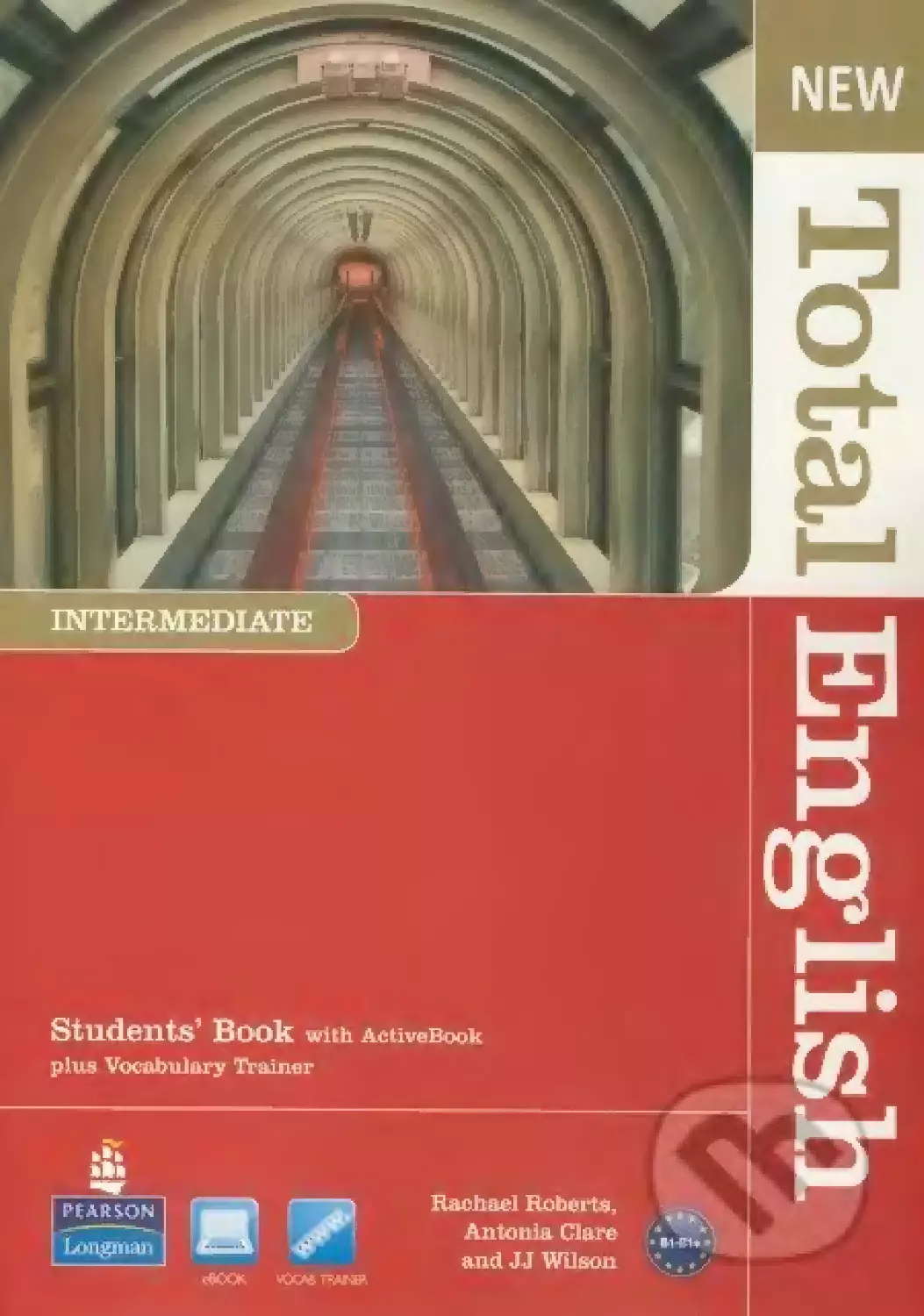
Students’ Book with ActiveBook
plus Vocabulary Trainer
W
PtAlUON
Lrt 'igman
cWX> «jOM.
English.
Rachael Roberta,
Antonia Clare
and JJ Wilson
Contents
Contents
UNIT
Can do
Grammar
Vocabulary
Speaking and Pronunciation
Listening and Reading
Do you know...? p 6
1
Friends
p 7-20
1.1 A lot in common?
1.2 How many friends?
1.3 Brotherly love?
Vocabulary p 17
Communication p 18
Writing bank p 153
Encourage further conversation by
expressing interest in what is said
Start a conversation with a stranger
Auxiliary verbs (do, be, have)
Intonation in echo questions
Unusual hobbies
Not in my culture...
Present Simple and Present
Continuous
Personality
Sounds and spelling: ‘ea’
How to... start a conversation with a stranger
A best friend
How many friends should you have?
Retell a simple narrative in your own words Present Perfect Simple and Past Simple
Phrasal verbs
Describe a friend
Write a semi-formal email, introduce yourself How to... write informal/semi-'ormal emails
Arguing
Falling out with someone
Brotherly love?
Reference p 19, Review and practice p 20
2
Media
p 21-34
2.1 Silver screen
2.2 Built to last
2.3 Stories in the news
Vocabulary p 31
Communication p 32
Writing bank p 154
Give opinions and agree/disagree
Defining relative clauses
How to... give opinions and agree/disagree
Describe an object
The passive
Television
How to... describe an object
/п/ and /rj/
Man on Wire
Dubbing or subtitling in foreign language films
Eco-gadgets
Completely reliable... and built to last
Describe an important event from your life
Past Simple and Past Continuous
Word stress on word endings
The news
News stories
In the news
Describe a film
Write a description of an event Howto... sequence a narrative
Reference p 33, Review and practice p 34
3
Lifestyle
P 35-48
3.1 Your place or mine?
3.2 City life
3.3 Eco-homes
Vocabulary p 45
Communication p 46
Writing bank P155
Make a complaint Future plans
Compare cities Comparatives and superlatives
Take notes while listening Future possibility
Prefixes and suffixes
Describe hopes, dreams and ambitions
Write an email of complaint How to... complain
Adjectives describing places
Compound nouns
How to... complain politely
Word stress in compound nouns
Yourhome-Myhome
A home exchange
Problems with the home exchange
City I love
Kyoto, Japan
Why not move to ... ?
What does the future hold?
Future predictions
Reference p 47, Review and practice p 48
4
Wealth
p 49-62
4.1 Catch me if you can
4.2 Getting rich quick
Use intonation to check and confirm
information
Carry out a survey and present results
Question tags
Phrasal verbs
Intonation in question tags
4.3 Spend more!
Ask for and give clarification
Modal verbs of obligation and
prohibition
Personal qualities (1)
Shopping
Zero and First Conditionals with if/
when/unless/as soon as
Connected speech
How to... report survey results
How to... ask for clarification
The true story of a real fake
Frank Abagnale
The Ghosh test
Duncan Bannatyne
A seminar on entrepreneurial qualities
Good with money
How you are persuaded to buy more
Behavioural advertising
Vocabulary p 59
Communication p 60
Writing bank p 156
Confusing words
Give reasons for opinions
Write a report on factual information How to... use formal linkers
Reference p 61, Review and practice p 62
5
Free time
p 63-76
5.1 Are you creative?
5.2 Time well spent?
5.3 Memorable meals
Vocabulary p 73
Communication p 74
Writing bank p 157
Describe your response to a picture
Present Perfect Continuous and
Present Perfect Simple
Describe a pastime
Describe a restaurant
Verb patterns with -ing and infinitive
Countable and uncountable nouns
Explaining what you mean
Make a short presentation
Write a detailed description of an object How to... describe an object
Describing pastimes
Food
How to... describe your response to a picture
Weak forms
Sounds and spelling: ‘a’
Describing paintings
3 ways to become more creative
Hannah Cheung - film-maker
Reviews
How to... describe a restaurant
The world’s best restaurant
A restaurant in Bruges
Reference p 75, Review and practice p 76
I Contents
Contents
UNIT
Can do
Grammar
Vocabulary
Speaking and Pronunciation
Listening and Reading
6
Holidays
P 77-90
6.1 Across Africa
6.2 Down under
6.3 Travellers’ tales
Vocabulary p 87
Communication p 88
Writing bank p 158
Describe a memorable photo
Get around a new place
Talk about unexpected events
Past Perfect Simple
Descriptive language
Howto... describe a memorable photo
Extract from Travels Across Africa
Travel photos
Uses of like
Places in a city
Articles
Travelling
Howto... get around a new place
Intonation in questions
Sentence stress
Expressions with get
Suggest and respond to ideas
Write a detailed description of a place How to... write a description of a place
Travelling around Australia
Dannii Minogue in Melbourne
Lady Mary Wortley Montagu
Strange things happen when you travel...
Reference p 89, Review and practice p 90
7
Learning*
p 91-104
7.1 Teaming from experience Describe a learning experience Subject and object questions
7.2 Great teachers Describe a teacher from your past Used to and would
7.3 It’s never too late Carry out an interview Modals of ability, past and present
Vocabulary p 101 Learning: idioms and phrasal verbs
Communication p 102 Discuss options and make a decision
Writing bank p 159 Summarise a short article How to... write a summary
Learning
Personal qualities (2)
Word building
Education
How to... describe a learning experience
Word stress in word building
Connected speech
Howto... carry out an interview
Learning experiences
Mistakes that work...
Extract from Matilda
Memorable teachers
U3A
It’s never too late
Old age
Reference p 103, Review and practice p 104
8
Change
p 105-118
8.1 Changing the rules
8.2 Change the world
8.3 Making the right decisions
Vocabulary p 115
Communication p 116
Writing bank p 160
Discuss problems and suggest changes
Express and respond to opinions
Second Conditional
Adverbs
Describe the effect of important decisions Third Conditional
Word building
Express and respond to feelings
Write about change How to... write a personal email
9
Jobs
p119-132
9.1 Freedom at work
9.2 Skills and experience
9.3 New on the job
Vocabulary p 129
Communication p 130
Writing bank p 161
Ask for clarification
Make, let, allow
Take notes while listening Reported speech
Describe job skills Past obligation/permission
10
Memories
p133-146
10.1 Childhood memories
10.2 Memorable people
10.3 Saying goodbye
Vocabulary p 143
Communication p 144
Writing bank p 162
UK and US English
Answer interview questions
Write a formal email/letter of application Howto... write a formal email/letter of application
Respond to a poem / wish/If only
Briefly describe a famous person Review of past tenses
Understand cultural differences Phrasal verbs
The senses
Talking about memories
Write a simple essay How to... write a simple essay
Communication activities p 147-152
Writing bank p 153-162
Pronunciation bank p 163-164
The law
Cities
Global issues
Life decisions
-ed and -ing adjectives
Job requirements
Biographies
Irregular verb table p 165
Howto... discuss problems and suggest changes
Sounds and spelling: ‘o’
Howto... express attitude and respond to opinions
Sentence stress in the Third Conditional
Intonation for pausing
Howto... ask for clarification and deal with difficult
questions
Pronouncing numbers
Howto... say numbers
Word stress in phrasal verbs
Howto... say goodbye (in person)
Audioscripts p 166-176
The Forbidden Apple
Edinburgh and Madrid
Comic marathon man raises £200,000
Changes in the world
Your life, your decisions
Important decisions
Reference p 117, Review and practice p 118
Jobs
Semco
A talk
Management styles
The Engineer and the Manager
Operatunity
Different jobs
Reference p 131, Review and practice p 132
It was long ago
Childhood memory
Erma Bombeck
Some famous people
The Making of
Gianni Versace
We’re letting you go
Some goodbyes
Saying goodbye on the phone
Reference p 145, Review and practice p 146
a Do you know these tenses? Match the
sentences (1-7) with the tenses (a-g).
1 I’ve lived here since I was a child.
2 She’s studying French at the Sorbonne.
3 We left the office at about 7:00 p.m.
4 I’d already eaten lunch so I wasn’t hungry.
5 He was playing his guitar when the string broke.
6 I’m leaving the company in July.
7 I write about fifteen emails a day.
a Present Simple
b Present Continuous (for ongoing actions)
c Present Continuous (for future actions)
d Present Perfect
e Past Simple
f Past Continuous
g Past Perfect
b Complete the sentences with the tenses (a-g)
from exercise 1a.
1 We use the to describe something that
started and finished in the past.
2 We use the to describe a future plan.
3 We use the to describe something that
started in the past and continues in the present.
4 We use the to describe something that is a
state, habit or general truth.
5 We use the to describe a temporary
situation that is happening around now.
6 We use the to describe something that
happened before another event in the past.
7 We use the to describe something
temporary that was in progress at a time in the
past.
EX Can you recognise the underlined parts of the
sentences? Label them with the headings in the
box.
a Complete the mind maps with words from the
box.
beach coffee colleague daughter
doorbell hall husband island potato
roof sightseeing stepmother tourist
vacuum cleaner vegetable yoghurt
food and drink home
travel
relationships
b Underline any /э/ sounds in the words in
exercise 3a.
c Add some more words to each mind map.
a Complete the table with the correct verbs,
nouns and adjectives.
verb noun adjective
educate (1) educated
(2) improvement improved
televise (3) XXX
govern (4) xxx
XXX expense (5)
xxx beauty (6)
attract attraction (7)
(8) application xxx
idiom (хг) phrasal verb (хг) prefix (хг)
suffix (хг)
b Mark the main stress in the words in the table
in exercise 4a. How many syllables are there in
each word?
i The story was unbelievable!
2 Can you give me a hand with this?
3 She grew up in Ecuador.
4 I’ve given up eating chocolate!
5 This meat is overcooked.
6 Happiness is the most important thing.
7 This is the poem that I learned by heart.
8 I was always useless at Maths.
EH5 the words in the correct order to make useful
phrases for the classroom.
1 could/a/little,/speak/you/please/up ?
2 dictionary,/l/could/your/borrow ?
3 you/paper,/give/some/couLd/please/me ?
4 these/down/words/write .
5 in/do/English/say/you/how/‘X’ ?
6 mean/does/’X’/what ?
7 and/the/between/what’s/'X’/'Y’/difference ?
8 you/again/say/can/that ?
9 are/page/on/we/what ?
Lead-in
11B Work in pairs and look at the photos. What relationship do
you think the people in each photo might have?
f | Put the words in the box under these headings:
(a) work/school, (b) family, (c) friends, (d) other. Can you add
any more words under each heading?
acquaintance best friend boss classmate
ex-girlfriend father-in-law friend of a friend
stranger old friend team-mate
close friend colleague
husband stepmother
qB Match the phrases in bold from A with the correct definition from B.
A
i I’m sorry you’re leaving. Let’s keep in touch.
2 We have the same sense of humour and like the
same jokes.
3 We’re both sporty. In fact, we have a lot in common.
4 I hope we don’t lose touch when you move away.
5 He’s really nice when you get to know him.
6 I really enjoy her company.
7 They fell out over money and didn’t speak to each
other for years.
8 We’re really on the same wavelength.
a not stay in contact
b like to be with him/her
c know him/her better
d find the same things funny
e like/enjoy the same things
f stop being friends
g understand each other well
h stay in contact
£B Look at the words from the box in exercise 2 and think of four people you
know. Work in pairs and describe your relationship with the people you chose.
1.1 A lot in common?
Speaking and listening
ilnMl auxiliary verbs (do, be, have)
encourage further conversation by expressing interest in what is said
Grammar I auxiliary verbs (do, be, have)
QB a Look at the Active grammar box. Complete the example
sentences with an auxiliary verb. Make sure you use the
correct tense.
b 1.3 Listen and check your answers.
Active grammar
A Wh- questions
1 A: How you learn to do that?
B: Well, I started off...
В Yes/No questions
2 she have a telescope then?
3 you been there?
C Echo questions (to check understanding or show
interest)
4 A: I'm quite good at juggling.
B:you?
D Negatives
5 A: Can you juggle with plates?
B: No, I think I could do that!
6 I even been skiing!
E Short answers
7 A: Do you do it regularly?
B: No, I.
8 A: Have you been there?
B: Yes, I
9 A: Isn't it terrifying?
B: Yes, it. That's the whole point!
Pronunciation I intonation in
echo questions
£B a Write echo questions for these
sentences.
I grew up in Peru.
Did you?
1 I live in a seven-bedroom house.
2 My boyfriend has travelled round
South America.
3 Next year I’m going to university.
4 Last year I won a medal for swimming.
5 I’m learning to drive at the moment.
6 We both hate spaghetti.
7 They’ve just moved to Egypt.
8 He eats six eggs a day.
b 1.4 Listen and check your
answers.
c Listen again, and notice if the
person asking the echo questions
sounds interested or not. What
happens to the intonation when he
sounds interested?
d Work in pairs. Practise the
dialogues in exercise 7a. Try to show
that you are interested and encourage
your partner to say more.
A: / grew up in Peru.
B: Did you?
A: Yes, my father was the ambassador
to Peru.
see Pronunciation bank page 264
| В Work in pairs. Match the hobbies (1-5) with the photos
(A-E).
1 snowkiting 3 juggling 5 sudoku
2 t’ai chi 4 astronomy
@B a Complete the phrases in bold with the prepositions
from the box.
b Work in pairs. Choose five
questions from exercise 2a and write
down what you think your partner’s
answers will be.
c Ask your partner your questions.
Were your ideas correct?
see Reference page 19
QB F'nd and correct two mistakes in each dialogue.
about (хз) at for on (хг)
1 What subjects do you like reading?
2 What do you use the Internet?
3 What activities and hobbies are you good
4 What do you spend too much time?
5 What do you worry ?
6 What types of exercise are you keen?
7 What do you usually talk with friends?
8 What cultures are you interested?
9 What clubs do you belong?
10 How many languages are you fluent?
QB a 12 Listen to five dialogues about
the hobbies in the photos. Which
questions from exercise 2a do the
speakers answer?
b What were their answers? Write one
key word for each speaker.
c Listen again and make notes about
the different hobbies. Then work in
pairs and compare your notes.
Work in pairs. Do you do any of the
activities in the photos? Do you have
any other unusual hobbies?
1 A: What subjects do you likes reading about?
B: Oh, I’m quite interested in sport.
A: Are you? What sports you like?
B: Tennis and football, mainly.
2 A: What do you worry about?
В: I not worry much. I guess sometimes I worry about money.
A: Does you? I do too.
3 A: Use you the Internet a lot?
B: No, not really. I not have time. Do you?
A: Yes, all the time.
4 A: Have you seen that film yet?
B: No, I didn’t. What about you?
A: Yes. I saw it last week.
B: Was it any good?
A: Yes, it were.
Speaking
QB a You are going to try to find
something in common with someone
in the class you don’t know very well.
First, complete the following sentence
in different ways.
I’d like to find someone who ...
• writes poetry.
• is a really good cook.
b Ask your classmates questions to
try and find someone for each of your
sentences. Show your interest through
echo questions.
A: Do you write poetry?
B: No, I don't, but I do write novels.
A: Do you? Have you had anything
published?
Reading and speaking
Work in pairs and discuss the
questions.
i Look at the photos. What aspects of
culture do they represent?
2 What are some typical features of
your culture?
3 How is your culture different from
other cultures you know about? How
is it similar?
Not in my culture...
‘Ah, Kyle, gordita, сото estas?’ (translation: ‘Ah, Kyle,
fatty, how are you?’).'
This is how my father-in-law would greet me every time
we went over to his house. At first, I thought I needed
to be on my best behaviour for my husband’s parents, so
I would just smile and nod, when really I felt furious as he
insulted me about my weight over and over again.
fUI a Work in pairs. You are each going to
read about a cultural misunderstanding.
Student A: read the text on this page
and answer the questions below.
i What did Kyle’s father-in-law keep
doing?
2 How did she usually react?
3 What happened when she got angry?
4 What did her husband explain?
Student B: read the text and answer
the questions on page 147.
b Tell your partner about the story
you read and listen to your partner’s
story. Ask questions about anything
you don’t understand.
c Have you ever had a cultural
misunderstanding? Tell your partner
what happened.
Finally, one day I'd had enough. When my father-in-law mentioned my
weight at the dinner table once again, in front of everybody, telling
me I looked ‘even fatter than normal', I lost my temper, ‘Well, you
look older and more wrinkly than normal.’ Silence. I turned bright
red as I realised I'd just said something truly offensive. Eventually
someone coughed politely and changed the subject. But, after dinner
my husband took me aside. 'Why in the world would you insult my
dad like that?!’ he asked. I told him, ‘I’ve had enough of the weight
comments, tell him to stop insulting me.’ And then my husband told
me that in Chile, 'gordita' is a term of endearment and is only used
lovingly. He also explained that it's not at all impolite to bring up other
people’s weight loss/weight gain and that if people do, that just means
they care about you enough to notice.
So I explained to my husband that telling someone they look fat/fatter
is one of the rudest things you can possibly do in my culture. Well, my
husband had a little chat with my father-in-law and my size was never
mentioned again.
How many friends?
Grammar
Present Simple and Present Continuous
Can do
start a conversation with a stranger
Listening'
Pronunciation I sounds and spelling: ea
£9 a Work in pairs and discuss the
questions.
i Who do you consider to be your best
friend?
2 Where and when did you meet them?
3 What do you like about them?
4 How are they different from you?
b i-5 Listen to Pete answering the
same questions about his best friend,
and note down his answers.
Q2B a 16 Listen to the four ways in which ‘ea’ can be
pronounced. Then put the adjectives from the box in the
correct column.
fearful jealous kind-hearted mean pleasant upbeat
Vocabulary I personality
a Work in pairs. Complete the
definitions (1-10) with the adjectives
from the box.
b i-7 Listen and check your answers.
C Put more words that you know with ‘ea’ into the correct
column.
see Pronunciation bank page 163
dependable encouraging generous
jealous kind-hearted mean
pleasant selfish sulky upbeat
A/An .person ...
i is friendly and well-behaved.
2 cares about you and wants to help
you.
3 always does what you need them to.
4 is unhappy if you have something
they’d like themselves.
5 happily gives you whatever you need.
6 has a positive, optimistic attitude.
7 tries to give you the confidence to
succeed.
8 is angry and unhappy for long periods.
9 thinks of themselves first.
io doesn’t like giving anything away.
b Choose three adjectives in exercise
га which you think are most important
in a good friend. Explain why.
c Work in pairs. Tell your partner
about a friend who one of the
adjectives in exercise 2 describes.
Explain why.
When I lost my job last year, my friend
Lucia was really encouraging. She kept
telling me I would get a better job
soon, and I have!
Speaking
a Work in pairs and discuss the questions.
1 When was the last time you made a new friend?
2 How did you meet?
b Complete the How to... box with the headings below.
• at a bus stop • at a party • on public transport
How to... start a conversation with a
stranger
A ; Cold today, isn't it?
‘ Excuse me, could you tell me the time?
В • Excuse me, is anyone sitting here?
• Is it always this crowded?
C So how do you know Jason? (the host)
Have you tried this chicken? It's delicious!
c Respond to each conversation starter in the table in
exercise 4b.
d Work in pairs. Choose a conversation starter and write a
short conversation.
A: Have you tried this chicken? It's delicious!
B: No, it looks good though. You should try some of the
fish. I think Mary made it herself.
Q
How many friends should you have?
People often say that while money may bring wealth,
friends bring riches. New research, however, shows that
friends may bring both kinds of riches. An American study
asked eightcen-y car-olds to list their three best friends. Years
later, it was discovered that those named most often tended
to be earning the most. In fact, every extra friend added two
percent to their salary. The researchers believed that this
is because people with better social skills do better in the
workplace. So, the more friends the better?
One theory states that we all have about 150 friends.
This may sound like a lot, but only about five of those
arc really close friends, the kind you can ring at 4:00 a.m.
About another ten arc part of an inner group, and these
can include iamily members. Then there arc about thirty-
five not so close friends, and the other 100 arc really just
acquaintances. Susie, a market researcher, agrees: 'I have
loads of friends, but I’m studying as well as working at the
moment, so I only see a few triends once a week or so.'
Have social networking websites changed this?
Facebook™, one of the most popular social
networking sites, has more than 300 million active
users worldwide, all making new friends online.
The average number of Facebook friends is 130,
but many people have hundreds or even thousands
of online friends. Paulo, a graphic designer, thinks
he is fairly typical of his generation: I have more
than 700 Facebook friends, many of them from
other countries. It is as easy nowadays to have a
friend on the other side of the world as one round
the comer.’ However, research indicates that while
some people may have more than 150 friends, the
number of close friends remains exactly the same
— about five.
It appears that whatever technology may make
possible, human beings can only manage a small
number of ‘true1 friends.
Reading
a Work in pairs. Do you think that the following
statements are true (T) or false (F)?
Qxl Read the article again and answer the questions.
i People who have more friends usually earn more
money.
2 Most people have about 150 friends.
3 The average number of online friends on
Facebook is 700.
4 Most people only have one or two close friends,
b Read the article above and check your
answers.
1 According to the American study, how much was
each friend ‘worth’?
2 Why did the researchers believe that more
popular children earned more as adults?
3 How many of the 150 friends mentioned are really
acquaintances?
4 How many people use Facebook worldwide?
5 What is the writer’s opinion about the effect of
technology on how many close friends we have?
(Л1 Read the comments below from a website. Then work in pairs
and discuss which opinions you agree or disagree with.
I Г*! Put the verbs in brackets into the
correct form of the Present Simple
or Present Continuous.
I would never accept an
How can you
Sylwia, UK
online 'friend' who I didn't already know,
be friends with someone you've never met?
r^Tading this at work - it's my lunchbreak - and I wanted to
comment about the fact that most companies won t let you 9°
commem even own t|me. j don t think
the main way I communicate with my friends.
on
Facebook while you're
it's fair because this is
Jon, UK
I think people who have hundreds of friends online must just be
really self-obsessed and looking for attention.
Rui, Portugal
QB Work in pairs. How many friends do you think is the ‘right’
number to have? Why?
Grammar I Present Simple and Present Continuous
QB a Look at the Active grammar box. Match the example
sentences (1-5) with the rules (A-E).
b Complete the table in the Active grammar box with the verbs
in the box.
1 (you/read) that book? Can
I see it?
2 Sasha(not/work) on
Tuesdays, so she’s at home now.
3 I’m so tired. I(need) a
holiday!
4 That looks hard.(you/
want) any help?
5 I’m afraid we(not/have)
any tea because I always drink
coffee.
6 Where(you/live) at the
moment?
7 (you/understand) this
computer manual?
8 You look very happy! Who
(you/think) about?
9 I(not/want) to leave
too late because I(hate)
driving in the dark.
10 What horrible weather! I
(stay) inside until the rain stops.
Active grammar
1 People with better social skills do better in the workplace.
2 I hove more than 700 Facebook friends.
3 /’m studying as well as working.
4 / see them once a week.
5 I’m reading this at work.
We use the Present Simple for...
A habits/routines, e.g. sentence.
В things that are always true/permanent, e.g. sentence
________ *
C describing a state, e.g. sentence.
We use the Present Continuous for...
D things that are happening now at this precise moment,
e.g. sentence.
E temporary situations that are happening around now,
e.g. sentence.
believe do eat go have like live need
play think understand want
v У
Action verbs State verbs Both
go,... believe,... live,...
We do not usually use state verbs in continuous tenses.
I ? ‘I Make questions from the prompts
using the Present Simple or
Present Continuous.
1 What/you/do? (job/occupation)
2 What/you/do/at work (or
school)/at the moment?
3 How often/you/go out with
friends?
4 What/you/like/do?
5 What films/you/like/watch?
6 What/you/usually/do/at the
weekends?
7 You/read/a good book/at the
moment?
8 You/play (or watch)/any sports/
these days?
9 Why/you/study/English/this
year?
10 You/do/апу other courses/at the
moment?
I 1.1 Work in pairs. Ask your partner
the questions in exercise 11. Tell
the class anything interesting you
learned.
see Reference page 19
1.3 Brotherly love?
Grammar
Present Perfect Simple and Past Simple
Can do
retell a simple narrative in your own words
Reading
ЕЛ a You are going to read a true story
about two brothers. Work in pairs and
look at the photos on page 15. How could
the items in the box be significant?
an argument a business
a nickname a shoemaker
the 1932 Olympic games
a wild cat
b Now read the article on page 15 and
check your ideas.
ЁЛ Read the article again. Write true (T) or
false (F).
Listening1 and speaking
1.8 Listen to three people talking about someone
who they fell out with. Match the speakers (1-3) with the
photos (A-C).
1 The Dasslers’ father was a
sportsman.
2 The brothers first made sports
shoes at home.
3 They argued about the shoes.
4 They decided to start their own
companies.
5 Puma sells more shoes than Adidas.
6 People in the town have now
forgotten the argument.
b Listen again and complete the notes in the table.
Speaker 1 Speaker 2 Speaker 3
Who do they talk about? Romina - best friend
How long have they known/did they know each other? one year
Why/When did they fall out?
How is their relationship now?
c Work in pairs and check your answers.
(?Л Read the Lifelong learning box. Then
practise the skill by finding words in the
story which mean the following;
1 provided a product (paragraph 1)
2 created (an institution/company, etc.)
(paragraph 4)
3 moved permanently to a different place
(paragraph 5)
4 one or more of the most successful
companies (paragraph 6)
Vocabulary I arguing
I;/ Л Listen to the three people in exercise 1a again and complete
the table with phrases which have a similar meaning.
get angry
lose your
see________
have an argument
have a_______
over something
Guessing from context
When you are reading, it is
often better to try to guess
the meaning of a new word
rather than stopping to use
a dictionary. It will help you
to read more fluently.
£»Л Work in pairs and discuss the questions.
1 Do you ever have arguments with your friends?
2 Have you ever fallen out with a close friend? What happened?
3 What do friends/family usually argue about?
I Л Work in pairs. Take it in turns to retell
the story using the words/phrases from
exercise 2 and the verbs from exercise 6.
Adidas® and Puma® have been two of the biggest names in
sports shoe manufacturing for over half a century.
Since 1928 they have supplied shoes for Olympic athletes, World Cup-winning
football heroes, Muhammad Ali, hip hop stars and rock musicians famous all
over the world. But the story of these two companies begins in one house in the
town of Herzogenaurach, Germany.
Adolph and Rudolph Dassler were the sons of a shoemaker. They loved sport
but complained that they could never find comfortable shoes to play in. Rudolph
always said, 'You cannot play sports wearing shoes that you'd walk around town
with.1 So they started making their own. In 1920 Adolph made the first pair of
athletics shoes with spikes, produced on the Dasslers’ kitchen table.
On 1st July 1924 they formed a shoe company, Dassler Brothers Ltd and they
worked together for many years. The company became successful and it provided
the shoes for Germany’s athletes at the 1928 and 1932 Olympic Games.
But in 1948 the brothers argued. No one knows exactly what happened, but family
members have suggested that the argument was about money or women. The
result was that Adolph left the company. His nickname was Adi, and using this and
the first three letters of the family name, Dassler, he founded Adidas.
Rudolph relocated across the River Aurach and founded his own company too.
At first he wanted to call it Ruda, but eventually he called it Puma, after the wild
cat. The famous Puma logo of the jumping cat has hardly changed since.
After the big split of 1948 Adolph and Rudolph never spoke to each other
again and their companies have now been in competition for over sixty years.
Both companies were for many years the market leaders, though Adidas has
always been more successful than Puma. A hip hop group, Run DMC, has even
written a song called My Adidas and in 2005 Adidas bought Reebok®, another
big sports shoe company.
The terrible family argument should really be forgotten, but ever since it
happened, over sixty years ago, the town has been split into two. Even now,
some Adidas employees and Puma employees don’t talk to each other.
15
Grammar I Present Perfect Simple and Past
Simple
QB Read the texts below about other famous
brothers and sisters and choose the correct
words in italics.
QB a Work in pairs. Look at the extracts (1-8) from the
story on page 15. Does each one use the Present
Perfect Simple or the Past Simple?
1 Since 1928 they have supplied shoes for Olympic
athletes.
2 Adidas has always been more successful than Puma.
3 On 1st July 1924 they formed a shoe company, Dassler
Brothers Ltd.
4 Run DMC has even written a song called My Adidas.
5 They worked together for many years.
6 The family argument happened ... over sixty years ago.
7 The companies have now been in competition for over
sixty years.
8 Ever since it happened ... the town has been split into
two.
b Read the Active grammar box and choose the
correct underlined words to complete the rules. Use
the sentences from exercise 8a and the examples to
help you.
Venus and Serena Williams are both famous
tennis stars. They (1) have played/played each
other professionally more than twenty times.
In 2001, the actors Jake
and Maggie Gyllenhaal
(2) starred/have starred
together in the film
Donnie Darko> where
they (3) played/have
played brother and sister.
Active grammar
1 We use the Past Simple/Present Perfect
Simple to talk about actions or states which
happened in a finished period of time in the
past There is no connection to now.
2 We use ago/for with the Past Simple to say
when something happened and ago/for to talk
about the period when something happened.
3 We use the Post Simple/Present Perfect Simple
to talk about actions or states which happened
in a period of time that is connected to now.
4 We often use for and since with the Present
Perfect. We use for + a point/period of time
and since + a point/period of time.
5 We use just with the Present Perfect Simple/
Past Simple to show that an action is very
recent.
I’ve just bought some newshoes.
6 We use not yet/already with the Present
Perfect Simple to emphasise that a situation
has not started. We use not yet/already to
emphasise that a situation has started or an
action has finished.
/ haven’t done the shopping yet.
I’ve already finished cooking.
Penelope Cruz is a world famous actor, but
her siblings, Eduardo and Monica are also
quite famous. Eduardo (4) had/has had several
international hits and Monica is a well-known
Spanish actor. She would like to star internationally
but she (5) didn’t learn/hasn’t learnt English yet.
Complete the sentences with the time
expressions from the box.
ago already for just since yet
1 Kylie and Dannii Minogue have been
professional performers they were
children.
2 Kylie’s first performance on television took
place over thirty years.
3 Kylie has achieved a lot in her career,
but she still seems to have plenty more to
offer.
4 Kylie hasn’t had as much success in
America.
5 Dannii has been a judge on a TV talent
show a few years now.
6 Dannii has started a family. She had
her first baby last year.
Speaking
see Reference page 19
ft! Work in pairs. Do you think it’s a good idea
to go into business with your friends and
family? Why/Why not?
1 Vocabulary I phrasal verbs
Q| a Read the text below and answer the questions.
i What languages did the author speak? Why?
2 What language did her father tell her off for using? Why?
3 Why did the author want to become a painter? Why was she
not successful?
ВЯ Complete the sentences with a phrasal
verb from exercise 2 in the correct
form. Use each verb once.
b Brought up is a phrasal verb. Which other phrasal verbs
can you find in the text?
mall town near Paris. My parents
father, who wasn’t artistic, and so
T was brought up in a s
arc English, so I grew up speak.ng English and French.
A young English student lived with us during the school
holidays, and she looked after me when my parents were
father always told us off
away on business. I remember my
if he heard us speaking in English, because she was studying
French. Usually we changed to French for a few minutes,
and then carried on in English when he couldn’t hear us
because it was easier for both of us. She was an artist, an
we got on very well. 1 looked up to her, and later tried to
become a painter myself. Unfortunately, I took after my
1 was never successful.
Use the text in exercise i to help you match the phrasal
verbs from A with the definitions from B.
A
В
1 grow up
2 bring up
3 tell (someone) off
4 take after (someone)
5 look after (someone or
something)
6 get on (with) (someone)
7 look up to (someone)
8 carry on (doing
something)
a admire and respect someone
b continue (doing something)
c develop from being a child to being
an adult
d take care of (someone or something)
e talk angrily to someone because they
have done something wrong
f have a friendly relationship with
someone
g look or behave like another member
of your family
h care for children until they are adults
2
3
4
5
6
7
8
You really your father.
You look just like him!
I don’t very well with my
mother; we argue a lot.
I in Brazil. It was a happy
childhood.
We arguing, even though
Dad had told us to stop.
My brother always for
borrowing his records because I
always scratched them!
After their mother died, the children
were by their aunt.
I still my older brother,
and ask him for advice.
My sister me when I was
ill.
Work in groups and answer the
questions.
1 Where did you grow up?
2 When you bring up a child, what do
you think is the most important thing
to teach him/her?
3 As a child, did anyone tell you off?
Why? Did this make you stop or did
you carry on anyway?
4 Which member of your family do you
get on with best?
5 Who in your family do you take after?
6 Who looks after you when you are ill?
7 As a child, who did you look up to?
с В Read the Lifelong learning box and
follow the instructions.
Personalising vocabulary
One of the best ways to
remember vocabulary is to make
it mean something to you.
Using the ideas from exercise 4,
write one sentence for each phrasal
verb that is true for you.
/ grew up in a small country town.
1
Communication
Can do
describe a friend
a Which of the following are the best ways
to meet a new partner? Why?
• through friends
• at a party
• at the gym
• on holiday
• while studying
• on an Internet dating site
b 19 Listen to a short talk about
Internet dating and answer the questions.
1 How many people used an Internet dating
site in the UK last year?
2 What specialist dating websites does the
speaker mention?
3 How is the website Canlintroduceyou.com
different from the others?
the life and soul of the party!
I ve known Nadia for years.
In fact we went to school
together and we’re still best
friends.
Nadia is genuine, loyal
and honest. She would do
anything for her friends, and
is really thoughtful and caring.
She is also one of the funniest
people I know, and always
IB Read the profiles of Nadia and Sam, which
were written by their friends. Answer the
questions below for each profile.
1 How did they meet?
2 What does each friend say about their
friend’s personality?
3 What does each friend say about their
friend’s interests?
She is a fabulous cook and her dinner г
She enjoys socialising and has lots of friends - she
hasn t met that special репюп yet. J
So what are you waiting for? Get in touch with her!
Richard
Key facts:
L. В Work in pairs and look at the qualities
below. Which five qualities do you think are
most attractive in a partner?
• gets on with everyone
• has a great sense of humour
• has an opinion on everything
• is a really good listener
• is genuine, loyal and honest
• is great fun to be around
• is one of the funniest people I know
• is really thoughtful and caring
• is the life and soul of the party
• would do anything for his/her friends
• you will never have a dull moment in his/her
company
Write a similar profile about a friend of
yours. Include the following paragraphs:
1 How you met
2 Personality
3 Interests
4 Conclusion
Occupation: Engineer
Location: Liverpool
Name: Sam Walker
Age: 26
Il Sam and I have been tri ends
since we shared a house
together at university. We
have kept in touch ever since
as we were always on the
same wavelength.
He has a great sense of
humour and you will never
have a dull moment in his
„ company. He has an opinion
on everything, but is also a very good listener. He’s kind,
gets on with everyone and is great fun to be around.
He’s quite a sporty person, and often spends his weekends
mountain climbing or surfing. I think you’d need to be
pretty active too - just to keep up with him.
Sam is well worth getting to know, so why not send him
an email?
Jen no
Auxiliary verbs: do, be, have
Questions
Invert the subject and the auxiliary verb. If there is no
auxiliary verb, use do/does or did.
Yes/No questions
Are you Polish?
Wh- questions
Where are you going? How did you leorn to do that?
Echo questions
’He lives in the country. ’ ’Does he?’
Negatives
We use not or add n’t to the auxiliary. If there is no
auxiliary verb use doesn’t, don’t, didn’t.
I’m not afraid.
Short answers
Repeat the auxiliary verb used in the question.
’Have you finished yet?’ ’Yes, I have. ’
Present Simple and Present
Continuous
We use the Present Simple for habits/routines, things
that are always true/permanent and describing a state.
Seung-Ah starts work at eight o’clock.
Spain is a hot country.
Dimitri is really happy about his new job.
We use the Present Continuous for things that are
happening now, at this moment and temporary
situations that are happening around now (but not at
this exact moment).
Jade’s having a shower. I’m learning Spanish for my job.
Main verbs can describe actions or states.
Some verbs have an action meaning as well as a state
meaning, so can be used in continuous tenses.
I/Ve’re having a wonderful holiday, (have = action/
experience - can be used in the continuous)
We have a lovely room by the sea. (have = possess -
can’t be used in the continuous)
Present Perfect Simple and
Past Simple
We use the Past Simple to talk about completed
actions or states which happened in a finished period
of time in the past. There is no connection to now.
I went to Disneyland last year.
We use ago with the Past Simple to say when something
happened and for to talk about the period of time.
They met ten years ago and worked together for two years.
We use the Present Perfect Simple to talk about
completed actions which happened in an unfinished
period of time that is connected to now.
I’ve eaten out twice this week, (this week is not yet
finished)
I’ve been to Disneyland, (some time in my life up to now)
We often use for and since with the Present Perfect.
We use for+ a period of time and since + a point in time.
I’ve known her for two months/since April.
We use just with the Present Perfect Simple to show
that an action is very recent.
I’ve Just bought some new trainers.
We use not yet with the Present Perfect Simple to
emphasise that a situation has not started, and already
to emphasise that a situation has started or an action
has finished.
I haven’t done the shopping yet.
I’ve already finished cooking.
Phrasal verbs
Form: verb + one or two prepositions (or adverb)
He grew up in France. I got on well with her.
One phrasal verb can have more than one meaning.
Take off: The plane took off at 6:oo. I took off my coat.
The meaning often has no connection with the verb.
We ran out of money. (= there is none left)
Phrasal verbs are often informal/spoken English. Often
there is a more formal word which means the same.
She looks up to him. (= she respects him)
Key vocabulary
Relationships and arguing
acquaintance be on the same wavelength boss
classmate close/old/best friend colleague
enjoy his/her company ex-girlfriend
fall out (about/over sthg) father-in-law
friend of a friend get angry get on well
get to know him/her have a lot in common
have an argument/row have the same sense of humour
husband keep in touch lose touch lose your temper
see red stepmother stranger team-mate
Verbs/Adjectives + prepositions
belong to fluent in good at keen on read about
spend money on talk about interested in
use (something) for worry about
Personality
dependable encouraging generous kind-hearted
jealous mean pleasant selfish sulky upbeat
Phrasal verbs
bring up carry on get on with
look up to take after tell off
grow up look after
ACTIVEBOOK
Listen to the explanations and vocabulary.
see Writing bank page 153
Choose the correct words in italics.
i Mary is/has taking a shower.
2 Does/Has the postman delivered the post yet?
3 They are/do writing in their journals now.
4 Had/Have your friends spoken to you today?
5 I don’t/haven’t understand this question.
6 Do/Are we going to the theatre tonight?
7 She has/is never been to Hawaii before.
8 Doesn’t/Don’t his mother live here?
9 Haven’t/Didn’t we seen this film already?
Complete the dialogues with auxiliary verbs.
i A: Hi.you know many people here?
B: Yes, a few. Some of us doing an English course
together.
2 A: you live near here?
B: No, we. We live in Italy.
3 A: you staying in a nice hotel?
B: Actually, we Like it very much.
4 A: you know this area well?
B: No, we. We never been here before.
5 A: you like the city?
B: Yes, we enjoying our stay here.
6 A: you worked here long?
B: No, I. Only one year.
7 A: Liz! What you doing here in Rio?!
В: I travelling around South America!
8 A: we met before?
B: Yes, we. We met in Jakarta.
^9 Complete the telephone conversation with the Present
Simple or Present Continuous form of the verbs in brackets.
Sara: Hi, It’s me. I’m just ringing for a chat. How are you?
Lucy: Oh, fine, you know. How are things?
Sara: Well, I (i)(not/feel) very well, actually.
Lucy: Oh no, what’s the matter?
Sara: I (2)(not/know) exactly. Probably just a cold.
What about you?
Lucy: Well, I (3)(work) in a different office this week.
Sara: Why’s that?
Lucy: I (4)(help out) at another branch because there
are a lot of people away. Actually, I (5)(enjoy)
the change this week. I (6)(like) meeting new
people.
Sara: (7)(do) the same job?
Lucy: More or less, but I (8)(deal) with clients more
here. I (9)(think) I might try and do more of that
when I go back to my own office.
Sara: Well, it sounds great.
Lucy: Yes, mmm. I’m a bit tired though. I usually (10)
(get up) at about 7:30, but this week 1 (11)(get
up) at about six! You know I (12)(hate) getting
up that early.
Complete the email with the Past
Simple or Present Perfect Simple form
of the verbs in brackets.
Hi Mateus,
(1)
It's amazing to get in touch with you again on
Facebook. You asked for my news. Well, since 1
(leave) university three years ago, I
(2)________(do) a Master's degree in Portuguese
literature. I'm now teaching at London University -
j /3)________(be) here for nearly a year now. Its
hard work, but the students are great! Last year I
(4)________(get) married - to Sheila, remember
her? She (5) _____ (work) in Portugal for a year,
but (6)________ (come) back to the UK last year so
we could be together. What else? We (7)----------
(buy) a house and we (8)----------(be) very busy
re-decorating it. It's nearly finished now. Why don t
you come and stay?
Hope to hear from you again soon,
Chris
E3B Complete the sentences with a word or
phrase which means the same as the
words or phrases in brackets.
Let me introduce you to my colleague
Gustav, (someone you work with)
1 He was a complete . (someone
you don’t know)
2 We get on well because we have a lot
. (share similar interests)
3 Barbara is Spanish, (speaks
very well)
4 When she told me what she’d done, I
really. (lost my temper)
5 Are you sure? That’s very of
you! (happily give you whatever you
need)
6 I told my boss I was having problems
at work, but he wasn’t very.
(positive towards me)
7 Sophie really her big brother,
(admires and tries to be like)
8 Mike smoking even when he
felt ill. (continue)
9 I’m not very watching TV. (like/
interested in)
10 When we left school, I with him.
(stopped being in contact)
Lead-in
Work in pairs and discuss the questions.
i Which of the different forms of media shown in the photos
do you use most?
2 Has this changed in recent years? Why?
| В Read the article. Are your habits similar to those described?
Work in pairs and compare your habits with your partner’s.
Recent research has shown that young
people now spend more time on the
Internet than watching TV. This is partly
explained by the fact that the average
person surveyed does five other things at
the same time as watching TV, including
going online to look at websites or to
IM (instant message) their friends.
Television remains popular, however,
particularly reality shows and soaps.
Young people are less likely to watch
._J
documentaries or chat shows and tend to
get their news online. If they do read a
newspaper, their favourite sections are the
sports pages, gossip and human interest
stories, rather than current affairs or the
business section.
Film is also still very popular, particularly
comedies and horror films. In recent years,
the docu-drama, such as Morgan Spurlock's
Super-size Me, about McDonald's, has also
become fashionable.
£ В a What vocabulary can you find in the article in exercise 2 connected with
different media? Complete the table.
Computers Television Film Newspapers
Internet
b Add any other words you know to each category in exercise 3a. Then
work in pairs and compare your ideas.
Grammar
Can do
Silver screen
defining relative clauses
give opinions and agree/disagree
Speaking and reading
Work in pairs. Look at the photos from the film
Man on Wire. What do you think the film is about?
2
3
b
2
3
Read the film review and answer the questions.
What type of film is it?
What is the film about?
Did the critic like the film? Why/Why not?
Do you think you would enjoy it? Why/Why not?
Read the review again and write true (T) or false (F).
The World Trade Center had just been completed
when Petit decided to do his high wire walk. EZ
He finally made his walk between the twin towers
six years later. EZ
He was already an experienced high wire walker
when he made the crossing at the twin towers. EZ
Petit and his team managed to get permission to
walk between the towers. IZZ
They used a bow and arrow to get the wire across
from one tower to the other.
Petit’s team filmed him as he crossed the wire. EZ
As soon as he saw the policemen waiting he came
off the wire and let them arrest him.
MAN ON WIRE
A film to make you feel alive
11 n 1968 a young Frenchman, Philippe Petit, saw a picture in
II a newspaper which would change his life. He was sitting in
a dentists waiting room when he saw an artist’s impression of
the soon-to-be-built World Trade Center and decided that one
day he would walk on a high wire between the twin towers.
Man on Wire is the gripping story of a man who made his
dream happen. The film starts on Tuesday August 7th, 1974,
the day when Petit finally achieved his goal. We see him
heading for the twin towers and then, through interviews and
flashbacks, we see everything that led up to that day.
The film first shows us how Petit made his earlier high wire
walks at Notre Dame and Sydney Harbour Bridge, using film
and photos taken from the time.
Then the film almost becomes a crime thriller as we see how
Petit and his team forged documents, got past security guards
and somehow managed to set up the wire between the towers
without anyone seeing them or hearing anything.
I Finally Petit makes his great walk between the
towers. There is no film of the original walk, so the
whole thing is shown using photos that were taken
at the time, a poignant reminder of how the towers
used to look. He stayed 1,350 feet above the
ground, apparently quite relaxed, for 45 minutes.
The policemen whose job it was to arrest Petit,
could only stand and watch while he smiled and
laughed at them.
There were hundreds of unforeseen difficulties; not least how
to get the wire from the tower where they stood across to the
other tower. They finally solved this by shooting it across with a
bow and arrow!
What Petit did was, of course, actually a crime, but
that doesn't seem as important as the fact that it
was a fascinating and inspiring adventure. A film to
make you feel alive.
Grammar I defining relative clauses
Add who, which or where to each sentence.
E9 a Complete the extracts from the review with the
words in the box.
that when where which who whose
i In 1968 a young Frenchman, Philippe Petit, saw a
picture in a newspaper would change his
life.
2 Man on Wire is the gripping story of a man
made his dream happen.
3 The film starts on Tuesday August 7th 1974, the
day Petit finally achieved his goal.
4 There were hundreds of unforeseen difficulties;
not least how to get the wire from the tower
they stood, across to the other tower.
5 The whole thing is shown using photos
were taken at the time.
6 The policemen job it was to arrest Petit,
could only stand and watch while he smiled and
laughed.
b Complete the Active grammar box with the
relative pronouns in the box in exercise 3a.
Active grammar
Man on Wire is the gripping story of a man
who made his dream happen.
‘who made his dream happen’ is an example
of a defining relative clause; it defines
exactly who or what we are talking about.
This is essential information about a person,
a place or a thing.
We use that or for people.
We use or for things or animals.
We use for places.
We use for possessions.
We use for time.
In spoken English we often use that instead
of who or which.
The actress that stars in that film has
beautiful eyes...
We can leave out the pronouns who, which
or that if they are the object of the relative
clause.
The director was able to use film (which)
Petit took in the 70s.
1 That’s the studio the last Bond film was made.
2 Goldeneye is the name of the house Ian Fleming
wrote the original stories.
3 Dr No is the first Bond book was made into a film.
4 George Lazenby is the man only played Bond once.
5 Daniel Craig is another actor took the role.
6 Derby County is the football team Bond actor
Timothy Dalton supports.
I В Rewrite the sentences using a relative pronoun.
Make any necessary changes.
Daniel Radcliffe stars in the Harry Potter films.
Daniel Radcliffe is the actor who stars in the Harry
Potter films.
1 The first Harry Potter film was made in 2001.
2001 is the year...
2 Joanne Rowling’s books were turned into the
Harry Potter films.
Joanne Rowling is the author...
3 Most of the outdoor scenes were filmed in Scotland.
Scotland is the country...
4 Warner Brothers produced the films.
Warner Brothers is the company...
5 Richard Harris and Michael Gambon have taken
the role of Dumbledore.
Richard Harris and Michael Gambon are the actors...
6 The first three films made $1.3 billion.
$1.3 billion is the amount of money ...
Speaking
Work in pairs. Tell your partner about a film you
have seen. Describe ...
see Reference page 33
• the type of film.
• the main characters.
• what happens in the film.
• some scenes you remember.
^.«йгдаШ»’
Il ГТ ICh m> J n *
МНЕ В?Л1В1йиГ Е&Л£>1Н? РИЪЕйТЕ
JOSiANE BALASKO
LE HERiSSON
. U3H(t4FHT ISpitf 0|
«LELEGANCE DU HERiSSON»
i c rtURrti me ей? - Foments «яшм ard
МВД*.-
«HI Md nil 1 ABuip л.д,
t TLt.d . LCH> « . Л1 * . ад.И
**5*™ *iHRb L’: *ЧЙ!’ИЙЛ*
«* г«а55- даIf№v"
ляЧ RiHfl il PfflXJUhj
JI 1 J- Cf Lt 'All. LHJti
- MMtaM-Hv.Hi “"
HMiiian l-F к-и гфЛ 1
10
к__J
^W?hR#e
MONA ACHACHE
QB Complete the How to... box by putting the
headings in the box in the correct places (A-E).
Agreeing Asking for an opinion
Disagreeing Giving an opinion
Saying it may change (according to what happens)
““ ' - L л -и- . j-ь ; В
Г Я * IV
Speaking and listening
How to..* * give opinions and
agree/disagree
A * I think...
• I guess...
В • What do you think?
What's your opinion?
I agree actually.
That makes sense.
D ; That’s true, but...
; I’m not sure about that.
r _ _
E I Well, maybe it Just depends (on/
I who/when)...
a i.ii Listen to five statements. Decide if you
agree or disagree with them.
b Listen again and write a response using a
phrase from the How to... box in exercise 9.
Work in pairs. Look at the posters and discuss the
questions.
i Do you ever watch foreign language films? Why/
Why not?
2 What kind of foreign language films do you like/
dislike?
(*B a Work in pairs. When you watch a foreign
language film, do you prefer dubbing or
subtitling? Why?
b i.io Listen to three people discussing the
same question and compare their ideas to yours.
c Listen again and answer the questions. Write
Sue, Ekaterina or Ben.
i Who doesn’t like the original actors’ voices being
replaced?
2 Who thinks subtitles are too short to carry all the
meaning of the original?
3 Who thinks that subtitles can be quite
inaccurately translated?
4 Who thinks it’s di licult to concentrate on
watching and reading subtitles?
5 Who thinks it may be confusing to have one voice
translating the lines of every character?
6 Who thinks that it depends on what you’re used to?
c Work in pairs and discuss your opinions.
Read the Lifelong learning box and follow the
instructions.
Using the media!
1 A great way to improve your English is
to interact with the language outside the
classroom. Make a list of...
• the magazines that you read in English.
• the books that you have read and
enjoyed in English.
• the websites that you read in English.
• the TV programmes that you watch in
English.
2 Work in pairs and exchange lists. Ask your
partner about their list.
A: What’s Australianetwork.com?
B: It’s a website where you can download
short videos in English.
A: What’s this book about?
B: It’s about a man who...
Lifelong learning
Grammar
Built to last
the passive
Listening
Speaking
a Look at the gadgets (А-D). They all have
something in common. What do you think it
might be?
£Л Complete the How to... box with the prepositions
of, for, by and to.
b 1.12 Listen to a radio programme about the
gadgets (А-D). Match a gadget to each speaker
(1-4).
i Julian
2 Anna
3 Chris
4 Joe
c What do all the gadgets have in common?
How to... describe an object
Comparing it
to something
else
Describing
its function
It's a kind music player.
it's similar an mp3.
it looks like an mp3 player.
It's used playing music.
It's used joggers.
It's a thing playing music.
Listen again and make a list of the good and bad
points of each gadget (А-D). Work in pairs and
compare your lists.
Describing
its features
It's made plastic.
It's rectangular/square/circular
etc.
H w Work in pairs. Decide which gadget you would
most like/least like to have. Explain why.
a Think of a gadget you or someone you know
owns. Think about how to describe it using the
language in the How to... box in exercise 4.
b Work in pairs and tell your partner about the
gadget.
Vocabulary I television
b Put the word in brackets in the
correct place. Then complete the
sentences with your own ideas.
1 The best television
(channel) is...
2 My favourite television
(presenter) is...
3 ... is the worst thing television
______(on).
4 television(digital) is
better because ...
5 ... is the most exciting
television , (programme) I’ve
ever seen.
QB a Work in pairs. The words in the box
collocate with television. Does each
word go before or after television?
Completely reliable ...
and built to last
pletel
c Divide the adjectives in the box
below into positive and negative.
annoying
exciting
inspiring
nonsense
boring entertaining
gripping incredible
moving nauseating
unrealistic unwatchable
Pronunciation I /п/ and /rj/
a “З Look at the word entertaining.
How many letter ‘n’s are there? Listen to
the word being pronounced. How is the
last ‘n’ pronounced?
b Underline the ‘n’s in all the words
in exercise 6c. Which ones are
pronounced /п/ and which /jq/?
A television that was around for King George Vl’s 1937 Coronation and survived
the Second World War is now thought to be Britain's oldest working set.
The black-and-white Marconi ph one 702 dates back to 1936 and is still in
its original condition. It has a 12-inch screen and was manufactured around
November 1936, the same month as the BBC television service from Alexandra
Palace was first broadcast.
The set is likely to have screened landmark occasions including George Vl’s
Coronation Procession, the 1948 London Olympic Games and the Queen’s
Coronation in 1953. When new, it cost 60 Guineas - the equivalent of around
£11,000 today.
The set has been converted from analogue to digital, bringing it firmly into the
twenty-first century. Jeffrey Borinsky, a consultant engineer from North London,
entered a competition to find the country’s oldest TV. He has owned the set
for ten years. He said: ‘I still enjoy watching my Marconiphone occasionally,
especially cartoons from the 1930s, which the original owner might also have
seen on the set. Now it is digital, it can be used for many years to come.'
The competition was set up in May by lain Logie Baird, television curator at the
National Media Museum in Bradford and grandson of the inventor of TV, John
Logie Baird. He said: ‘A small fraction of pre-War televisions still exist - many
stopped working or were simply thrown out when a newer set arrived, and we
know about 3,000 were lost in the London bombings.’
The set will join a display of televisions from across the ages at the National
Media Museum.
C 1.14 Listen and check your
answers. Repeat the words.
d Work in pairs. Think of programmes
you have seen which you could
describe using the adjectives in
exercise 6c.
/ thought it was...
/ found it...
Reading'
QB Work in pairs. Look at the photos of televisions and discuss
the questions.
1 When do you think they were made?
2 How are they similar or different from televisions today?
QBI Read the article. What do the numbers in the box refer to?
3,000
1936 11,000 12
10
L___J
Read the article again and write true (T), false (F) or not
given (NG).
f Complete the second sentence so it means
the same as the first.
i The television is in excellent working order.
2 It was removed from London during the Second
World War.
3 It is possible to use the television to watch
digital TV.
4 Jeffrey Borinsky has owned the television since it
was made.
5 Jeffrey particularly likes watching old programmes
on the set.
6 tain Logie Baird is an inventor.
7 The majority of pre-War TVs were destroyed during
the War.
8 The television will now go to a museum.
Grammar I the passive
(Q Look at the Active grammar box. Complete the example
sentences using the article on page 26 to help you.
Then match the rules (A-C) with the sentences (1-3).
Active grammar
Present Simple It thought to be
Britain’s oldest working
set.
Past Simple It made over seven
decades ago.
Present Perfect Simple The set converted
from analogue to digital.
Modal verbs It can used for
many years to come.
A We use the active to describe what someone/
something does.
В We use the passive to describe what happens
to someone or something.
We often use the passive to describe processes:
Then the glass is heated...
and in more formal or written contexts:
It is thought to be...
and to avoid saying who is responsible:
The washing-up hasn’t been done yet!
C If we want to say who or what does the action
in a passive sentence we often use by.
1 The competition was set up in May by lain
Logie Baird.
2 lain Logie Baird set up the competition in May.
3 The competition was set up in May.
1 In 1939 people could only receive one
channel-the BBC.
In 1939 only one channel- the
BBC.
2 In the 1930s a television was owned for ten
to fifteen years.
In the 1930s people a
television for ten to fifteen years.
3 Nowadays people replace their television
every two to three years.
Nowadays a television every
two to three years.
4 All pre-War televisions were made in Britain.
The British all pre-War
televisions.
5 The Chinese make ninety percent of
televisions now.
Ninety percent of televisions
the Chinese now.
6 In 1936 people could watch the BBC for just
two hours a day.
In 1936 the BBC for just two
hours a day.
pKI a Add one missing word to each sentence.
1 A father and son who made millions of
pounds from fake DVDs have jailed for six
years.
2 Hundreds of thousands of DVDs were
produced workers hired by the gang.
3 The DVDs sold cheaply in pubs and
markets.
4 It is estimated the police that the criminals
made around £43,000 a day from the
operation.
5 The gang members lived a life of luxury
until they caught.
6 However, police believe that most of the
money the gang made been taken out of
the country.
7 Is estimated that criminal gangs in the UK
make about £300 million a year from fake
DVDs.
8 Police dogs have now trained to find hidden
DVDs.
b 1-15 Listen and check your answers to
exercise 13a.
see Reference page 33
Grammar
Stories in the news
Past Simple and Past Continuous
Can do
describe an important event from your life
Speaking and listening
1
2
Work in pairs and discuss the questions.
Do you believe everything you read in the
news? Why/Why not?
Read the opinions below. Do you agree with
them?
Different newspapers report the same story in
different ways.
Newspapers sometimes try to make news
stories sound worse than they are.
Newspapers have to make stories sound
exciting in order to sell.
b 116 Listen to Eben and Rachel
discussing question i in exercise la. Look at
the opinions in exercise la and note down
who agrees with them - Eben, Rachel or both.
a Complete the newspaper headlines (i-6)
with the words in the box.
delivers escapes inherits saves
survives takes
i Traffic police officer in Bangkok baby
in car
2 Lost driver a wrong turn for 5,000
miles
3 Circus monkey and destroys a restaurant
4 Top chef giant lobster from cooking
pot
5 Sailor four months at sea
6 Cat£350,000 house and £100,000
from owner
b Match the headlines (1-6) in exercise 2a
with the pictures (A-F). Then work in pairs
and describe what you think happened in
each situation.
Reading
(ПВ a Read news stories (A-F) quickly.
Match the headlines (1-6) from exercise 2a
with the stories.
b Write the letter(s) of the news story/
stories next to the topics (1-7) below.
1 restaurants: B, D
2 travel
3 animals
4 people getting lost
5 food or drink
6 babies or pets
7 survival
c Work in pairs and compare your answers.
A nervous driver who went on a day-trip to Calais
ended up in Gibraltar after a five-day mystery tour
Mrs Bright, a recent divorcee, was planning to go to
France to buy some wine for a party to celebrate her
divorce. However; as she was driving around Calais
looking for the supermarket, she took a wrong turn
and lost her way. Without a map, and unable to speak
French, she was too embarrassed to ask for directions
and eventually she found herself in Gibraltar.
A giant lobster, saved from the cooking pot by a top chef,
has been returned to the sea. Chef Anton Gretzky said
he was planning to serve the lobster at his expensive
restaurant, but decided he couldn't boil such a fine
creature. An employee from the Aquarium Restaurant
in Victoria, Australia, took the lobster, named Billy, to
the coast to free him. Gretzky said; He has been on this
Earth much longer than I have.'
Pooker, a grey and white cat ho к
most famous pet The eiehr Н T°me Britain’s
a £350.000 house and £100 000 ^ taherited
Mrs Rafaella Barese, died M dfter,lts owner>
will use the £100,000 to buv f neighbours
«£ The rich and famous аГ™ . °Г
new friends easily. After iust T® '° Шаке
cats were trying to mm • °Пе tWo ^oca^
У ng to move in with Pooker.
ЕЯ Read the news stories again. Answer the questions.
i a Where did Mrs Bright want to go?
b Why didn’t she ask for directions?
2 a Why didn’t the chef cook the lobster?
b What did the chef do with the lobster?
3 Who will look after Pooker the cat now?
4 What damage did Lala the monkey do?
5 What did Parn Hung Kuk eat for four months?
6 a What special skills does Sergeant Sakchai Kodayan
have?
b Why did the taxi driver ask for help?
сЯ a Look at the table. Complete the collocations (1-7)
from the news stories with the words in the box. Then
match them to the correct definitions (a-g).
cause get give return move take (хг)
A monkey, who escaped from a local circus,
caused € 10,000 of damage to a pizzeria after the
owner of the restaurant tried to feed it bread and
salad.The monkey, named Lala, was sitting in the
restaurant bathroom when the owner found her
The escapee dropped a vase, then started
throwing paper towels around, and finally turned
on the water taps and flooded the restaurant in
Lehre, Germany.
Collocation Definition
1_______a wrong turn a stop working for a short time
(story A)_________________
2 lost (story E) b go to live in the same house
3 in with someone (story C) c go/give back to
4 damage (story D) d help someone when they have an injury
5 to the sea (story B) e not know where you are
6 first aid (story F) f drive in the wrong direction
7 a break (story F) g break something by physically attacking it
b Work in pairs. Use the phrases (1-7) in the table in
exercise 5a to retell the stories.
'He was eating a seagull when we found him л
member of the Чш ин cwo him, sad a
Vietnamese refugee Parn^ team rescued
four months later. 'He was living on seaoZZ
and a miracle heZflllXe SZ hT
rescue ship's captain. d the
c Work in pairs and discuss the questions.
1 Which stories did you find most interesting/
unbelievable/funny?
2 What interesting stories have you heard/seen/read
about recently?
Pronunciation I word stress on word endings
(•Я a Look back at the news stories and complete the
table with words ending with the following letters.
Bangkok traffic police helped to deliver another
baby yesterday. Sergeant Sakchai Kodayan is
one of 130 members of the city traffic police
whose special skills include giving first aid to
motorists and helping mothers as they give
birth. T was drinking a coffee and having a
cigarette in a cafe by the road when a taxi driver
shouted for help,’ said Sakchai. ‘His passenger
was having a baby. It was a boy. The woman said
she would call it Sakchai as a way to say thank
you.’ Sakchai has so far assisted with the birth
of twenty-eight babies in his career.
-ее -eer -ese -ette
divorcee
b 1.17 Listen to the words from exercise 6a. What
do you notice about the stress pattern? There is one
exception - what is it?
c Can you add any other words to the columns in
exercise 6a?
see Pronunciation bank page 163
Grammar I Past Simple and Past Continuous
QJB Complete the story by putting the verbs/verb
phrases from the box in the correct place.
a Read the Active grammar box and answer
question i.
b Read rules A and 8 and find more examples of
the Past Continuous in the news stories on pages
28-29. Then answer question 2.
Active grammar
Mrs Bright was planning to go to France ...
She was driving around Calais...
1 Do the underlined verbs describe
something complete or something
temporary and in progress?
A We use the Past Continuous and Past
Simple together to say that something
happened in the middle of a longer action.
/ was taking a break in a cafe by the road
when a taxi driver shouted for help,
В The Past Continuous is often used to set
the scene at the beginning of an article
or story.
This happened about eight years ago
when I was studying for my degree. I was
feeling a bit tired and...
2 Which verbs are not normally used in the
continuous form?
see Reference page 33
QB Complete the sentences with the Past Simple or
Past Continuous form of the verbs in brackets.
They were watching (watch) a film in the cinema
so they didn't realise (not/realise) it was snowing
(snow) outside.
1 I(work) in a school in Prague when I
(meet) my boyfriend.
2 When I(be) a child, I(tike)
swimming.
3 My sister(arrive) just as I(cook)
some lunch.
4 I(know) I wanted to marry him the first
time I(meet) him.
5 He(not/break) his arm while he
(play) rugby. He(fall) down the stairs.
6 I(check) on the children and both of them
(sleep).
7 The phone rang while I(listen) to my mp3
player and I(not/hear) it.
8 I think I(see) you yesterday in the station,
(wear) a blue shirt?
didn’t know fell hoping visited was
was expecting was having was staying
I remember when my little sister was born. I was
ten years old, and I was staying in London with my
parents. I knew my mother a baby, but I how soon
it would arrive. I was really for a girl. It happened
when I at a friend’s house. It was her birthday and
so she a party. My grandmother came to collect me,
but when she told me the news I was so excited that
I ran down the stairs, and I and broke my arm. I my
mother and sister in hospital, and I had to spend the
night there with my arm in plaster too.
Speaking and writing
( } Look at the stages for organising a story below. Then
identify the four stages in the story in exercise 9.
1 Setting the scene: who? when? what? where?
2 The main sequence of events: what happened?
3 The big event: usually something unexpected.
4 Result: what happened in the end.
f || a Choose one of the events below. Make notes
on what you were doing, where you were living
and what you were hoping for at the time.
• someone was born
• you received some good news
• you received your exam results
• something important happened in your country
• an important/interesting event in your life
b Plan the sequence of your story using the four
stages in exercise 10.
c Work in groups. Take it in turns to talk about
your events.
2
(b) a discovery
(b) money
(c) a profit
(c) movement
make
come into
(a) a job
(a) fashion
a Find the odd one out in these phrases,
go on (a) strike / (b) holiday / (c) work X
You can go to work, but not go on work.
3 win
4 commit
5 develop
6 have
7 perform
8 cause
9 break
(a) a team
(a) a crime
(a) news
(a) a baby
(a) a match
(a) trouble
(a) a price
(b) a race
(b) business
(b) an idea
(b) death
(b) a song
(b) an accident
(b) a record
(c) a match
(c) suicide
(c) a product
(c) plastic surgery
(c) a play
(c) time
(c) up with someone
b Which collocations from exercise la can you use to describe the
photos (A-D)?
a Write the name of a
famous person who...
i has had plastic surgery.
2 won a race recently.
3 performs songs on TV.
4 committed a crime.
5 causes trouble regularly.
6 has broken a record.
b Work in pairs and compare
t; Я Which collocations use ‘a’ and which use no article? Make two lists.
your answers.
Он which newspaper pages might you find the collocations from
exercise i? Choose from the words and phrases in the box.
go on strike, go on holiday = from news and current affairs
(•Я a Work in pairs. Do you
enjoy reading or hearing
gossip about famous people?
Why/Why not?
arts section business section current affairs
science section sports pages
news and gossip
Complete the sentences with expressions from exercise i. Use the
correct tense.
i Yesterday The Rolling Stones that did the most to make them
famous: I Can't Get No Satisfaction.
2 When his father died, Paul Getty billions of dollars.
3 Marie Curie that changed the world: she found radium.
4 When a food or drinks company for the international market, it
takes years to test it.
5 Many ageing celebrities in order to look young, but it doesn’t
guarantee everlasting beauty!
6 In the UK there is a 45 percent possibility that criminals will after
their release from prison.
7 Ice on the roads yesterday, but luckily no one was hurt.
b Work in groups. Take it
in turns to tell your group
a piece of gossip about a
famous person (you can
make it up if you like!). End
by giving your opinion on
their behaviour.
/ can’t believe anyone could
do that!
That’s a terrible way to
behave, don’t you think?
I feel quite sorry for her...
c Take it in turns to give
your opinion about each
piece of gossip. Look at the
How to... box on page 24 to
help you.
Communication
Can do
describe a film
|F.B Work in pairs and discuss the questions.
i Which of the following makes you want to go and see a
film?
• advertising • who directed it
• what your friends say about it • reviews
• who is starring in it
2 Look at the film posters (A-C). Which film would you
prefer to see? Why?
a l ie Listen to a description of a film. Which film
(A-C) is it about?
b Listen again and complete the notes.
Type of film It’s a film.
Summary of plot It’s about who buys the house where as a child. Her son starts to see in the house and then he suddenly .
Characters The main characters are . There is also a rather spooky .
1.19 Listen to more information about the film in
exercise 2 and make notes. Work in pairs and compare.
£B a Work in pairs. Choose a well-known film you have
both seen and prepare to describe it. Make notes using
the headings in exercise 2b.
b Work with another pair and tell them about your
film. Can they guess which film you are describing?
2 Reference
Defining relative clauses
A ‘clause’ is part of a sentence. A defining relative
clause makes it clear who or what we are talking about
in a sentence. It gives essential information.
The man who lives next door had an accident
Relative clauses begin with relative pronouns:
who for people; which for things and animals, and
whose for possessions.
After place, area, room, etc. we use where.
After time, day, year, etc. we use when.
We don’t use what as a relative pronoun.
The vase that I broke was very expensive. (NOT: The
vase what / broke was very expensive.)
In less formal and spoken English we often use that
instead of who or which.
The police caught the man that robbed the bank.
We can leave out the pronouns who, which or that if
they are the object of the relative clause.
The film which I saw was called Heroes.
The film I saw was called Heroes.
The boy who she met was nice.
The boy she met was nice.
Past Simple and Past
Continuous
The Past Continuous form: was/were + -ing
We use the Past Continuous to talk about what was
happening at a particular moment in the past.
What were you doing at 10 o’clock last night?
We use the Past Simple for complete, finished actions
in the past.
When the Past Simple and Past Continuous are used
together, the Past Continuous refers to the longer,
background action or situation. The Past Simple refers
to the shorter action or main event that happened to
interrupt it.
I was walking through the park when the storm began.
We use the Past Continuous for temporary actions and
situations.
I was living in Barcelona last summer.
We use the Past Simple for longer or permanent
situations.
I lived in Berlin for ten years when I was a child.
We do not usually use the continuous form with ‘state’
verbs such as like, want, know and understand.
The passive
We make the passive with the verb to be + past participle.
James is paid a lot of money.
Are you being followed?
We were given a new car to drive.
She has been told this before.
In active sentences, the person (or thing) who does the
action comes first.
The man kissed the baby.
In passive sentences, the person (or thing) affected by
the action comes first and is the main focus.
The baby was kissed by the man.
The person (or thing) who did the action is often not
known or not the main focus.
The programme has been shown since 1959. Che focus
is on the programme, not who has shown it.)
We use by to include the person (or thing) who did the
action in a passive sentence.
The book was written by Faulks.
The passive often sounds ‘impersonal’. It is used in
formal English and often in the news.
The President was asked to resign. (It isn’t important
who asked him to resign.)
Key vocabulary
Internet
IM (instant messaging) online website
Film
comedy docu-drama horror film romantic film
thriller
Television
channel commercial digital documentary
reality/chat show live presenter producer
programme satellite screen soap (television) set
viewers
Describing films and TV
annoying boring entertaining exciting gripping
incredible inspiring moving nauseating nonsense
unrealistic unwatchable
Newspapers
arts/business section current affairs gossip
human interest story sports pages
News collocations
go on strike/on holiday make a discovery/а profit
come into fashion/into money win a race/a competition
commit a crime/suicide develop an idea/a product
have a duty/plastic surgery cause trouble/an accident
perform a song/a play break a record/а promise
ACTIVEBOOK
Listen to the explanations and vocabulary.
зз
| В Complete the news stories with the active or
passive form of the verbs from the box. Change
the tense as necessary. You may use some verbs
more than once.
announce
call discover find kill sell
start
A new service which will ft nd anyone’s mobile phone
number has been announced.
One thousand people (i)by a freak storm in
South Africa. The storm (2)in the early hours
of the morning.
Zac Efron (3)as the star of a new film, the
most expensive ever made.
A cure for cancer (4). Scientists (5)the
breakthrough at a conference yesterday.
The film director Richard Attenborough (6)
much of his art collection after claiming that there
was no more room on his walls.
Yesterday a three-year-old boy successfully (7)
an ambulance after he (8)that his mother had
fallen down the stairs.
A ring which once belonged to the opera singer
Maria Callas (9)in an attic. The new owner
(10)it online, with a reserve price of nearly
£100,000.
( В Complete the television guide with the relative
pronouns from the box. In which sentences can
you use that?
when where which who whose
7.30 Brothers in Arms: Marlon is a Sawyer (I)brother
works with ex-criminals. Now he wants Marlon to help
him. Has Marlon reached a time in his career (2)
he can take a risk?
8.00 Home Questions:the quiz show (3)asks
contestants questions about the place (4)they
were bom.
8.30 The Year (5)I Made History: Roy Johns speaks to
the people (6)have been in the news this year
Guests include Milly Chelz, a doctor (7)anti-cancer
treatment is being tested in Australia, and Moses Kenui, an
athlete (8)shocked the world when he broke four
athletics records in one year
9.30 News
10.00 Restaurant: follows the progress of two restaurants
(9)famous chefs have visited.They both opened
last year - one in Clydehead, a town (10)there is
60 percent unemployment, and one inTindell, a city
(II)the rich are happy to pay €350 for dinner
11.00 Fright Kids: comedy horror film about a woman
(12)has twins.
qB Choose the correct words in italics.
1 I was/was being at school when I started/
was starting learning French.
2 We watched/were watching TV when we
heard/were hearing about the accident.
3 A: What did you do/were you doing this time
yesterday?
В: I read/was reading a novel.
4 When I last saw/was seeing my sister, she
looked/was looking for a flat in Madrid.
5 I crashed/was crashing into the car because I
wasn’t looking where I went/was going.
6 A: Did they win /Were they winning when you left
the match?
B: No. They lost/were losing 2-1, but there were
still twenty minutes left.
7 While I studied/was studying yesterday I
found/was finding this great website.
8 A: Did you see/Were you seeing our new boss at
the conference?
B : Yes. He wore/was wearing a white suit.
Didn't you notice/Weren'tyou noticing him?
9 A: What did you do/were you doing under the table?
В: I just looked/was just looking for something I
dropped.
10 I’m quite good at acting because I studied/
was studying drama at university.
Complete the sentences with suitable words or
phrases from the unit.
1 Did you read about the play? It was in the
section of the paper.
2 I saw an interesting about Ancient Egypt
on TV yesterday.
3 I’m sure that actor’s had. He looks twenty
years younger!
4 Which of the paper do you read? I like the
sports pages.
5 The company made a of €50,000 this year.
6 Speeding drivers cause a lot of.
7 Asafa Powell broke the for the 100 metres.
He ran it in 9.77 seconds.
8 There’s an about immigration in the
newspaper today.
9 Platform shoes are back! The shoes from the 70s
have fashion once again.
10 American actor Anne Hathaway is going to
on the London stage in a new play by John Miller.
11 My husband threw his shoe at the television and
broke the into a thousand pieces.
12 The announced the winner of the game show.
Lead-in
a What does home mean to you? Write notes about your
favourite rooms, smells, views, special objects and your
feelings about home.
b Work in groups and compare your answers.
a Decide in which section of the table (А, В, C or D) the words
and phrases in the box belong.
an apartment a cellar a commercial district a fireplace
a garage a gate a park and a playground a studio flat
X____________________________________________________
a garden
the suburbs
House Area/neighbourhood
A 1 live in ... a (semi) detached/terraced house a block of flats a cottage С 1 live in ... a residential area the centre/outskirts of town
В It’s got ... a lift an attic a balcony a good view high ceilings a drive wooden floors stairs D It’s got... lots of green spaces shops and restaurants cinemas and theatres
b Make a list of any other words you know for each section of the table.
qB a Work in pairs. Take it in turns to describe the houses in the photos using
the expressions from exercise 2a.
b Describe the place where you live.
I live in a block of flats. It*s quite modern. It has a...
Grammar
Yourhome -
.Yourhome
future plans
make a complaint
Reading and speaking
Look at the photos. Try to match the outside of
the properties (A-В) to the insides (1-2). How are
they similar to, or different from where you live?
•?.® Read the texts below and match the property
descriptions with the photos. Were your answers
to exercise 1 correct?
Property 2
Property 1
Bright and comfortable apartment in the centre of Seville, in a
quiet street with no heavy traffic around; in fact, the only noise you
can hear during the day is the bells of the cathedral nearby.
The apartment is decorated in a very traditional Sevillian style, with
plenty of plants and sunlight. The property is on the third floor
(there is a lift) and covers an area of 60 square meters. There are
two bedrooms, one with a single bed and one with a double bed.
The apartment has recently been completely refurbished and
opens onto the balcony with a beautiful view of the cathedral.
The area
The apartment is in the historical centre of Seville. It is a very
beautiful area, with narrow bustling streets and little gardens
behind iron gates. There are plenty of local bars and restaurants
serving ‘tapas’ (typical Spanish dishes).
Ideal for a family holiday, this is a beautiful four-bedroomed
Victorian house, situated on a quiet residential road. This
charming property has a large living area and a separate
dining room and well-equipped kitchen. Upstairs there are
four bedrooms, all doubles, and two ensuite bathrooms, one
with a shower and one with a bath. There is a large garden,
with a patio area where you may enjoy a typical English
afternoon tea!
The area
The property is located close to Wimbledon Park, with a
children’s playground. The nearest tube station, just five
minutes walk away, will take you straight into central London,
where you will find all the museums, shops, theatres and
restaurants you could wish for!
ЕЯ а Read property descriptions again and write
property i or property 2 next to each question.
Which property...
i is near the centre of the city?
2 has outside space?
3 has more than one bathroom?
4 is near public transport?
5 is near places where children can play?
6 has a balcony?
7 has been redecorated?
b Work in pairs. Which of the two properties
would you prefer to live in for a month? Why?
Listening
Grammar I future plans
ЕЯ Match the sentences (1-6) in exercise 4b with the
rules (A-C) in the Active grammar box.
Active grammar
We can use the Present Continuous, be
going to or will to talk about future plans.
A We use be going to to talk about
something you've decided to do.
e.g. sentences
В We use will for a decision made at the
time of speaking, or an offer.
e.g. sentences
C We use the Present Continuous to talk
about arrangements (plans that you have
already organised, i.e. you have arranged
the dates).
e.g. sentence
see Reference page 47
Complete the texts with words and phrases from
the box.
is going to (хг) Ye going to (x2)
’s moving ’m starting
’ll (X2)
a 1-20 Listen to two couples talk about their
plans for a home exchange. Write D (Dos Santos)
or A (Armitage) next to the activities they mention.
1 visit museums 4 go shopping
2 see cathedrals 5 visit friends
3 enjoy the local cuisine 6 go to the beach
b Look at the extracts from the listening. Then
listen again and choose the correct words in italics.
Miriam: ... we (1) 7/ spend /'re spending more
than one month in London. We’ve never
been there before.
Miriam: And I’m (2) going to do/doing lots and
lots of shopping.
Interviewer: Great. There are some wonderful shops
in London. I (3) ’ll give/’m giving you
the address of a great shoe shop.
Jeremy: Spain has such a rich culture ... We
(4) 7/ go/’re going to see the cathedrals.
Jeremy: We’re (5) going to try/trying all the local
dishes.
Jeremy: We (6) won’t/aren’t going to go to
McDonald’s. Forget it!
Sarah and Jeremy
I (1)a new job in June and it’s in Oxford,
so we (2)need to move house. We’d
like to buy somewhere in the countryside, so we
(3)to look at some of the small villages
outside the city. Jeremy says he (4)take
a day off next week to go and look.
Miriam and Carlos
My mother (5)in with us next year,
because she’s old and doesn’t want to stay on her
own. She (6)to sell her house. Carlos
isn’t too happy about this plan, but he says he
(7)put up with it to please me. It
(8)be great because I’ll have some help
looking after the baby.
Speaking
a Imagine you are going to live abroad for a
month. Decide on ten things you will need to do
before you go.
f t*l a 121 Listen to interviews with Miriam and
Jeremy and check your ideas for exercise 9.
b Listen again and make notes. List four
problems Miriam and Jeremy each had.
get a passport, buy some suntan lotion
C i-22 Listen to Miriam phoning the company
b Work in pairs. Try to guess what is on your
partner’s list by asking questions.
A: Are you going to get a passport?
B: No, I’ve already got one.
c When you have guessed all you can, look at
your partner’s list and offer to help them.
I'll get you some suntan lotion, Гт going into
town later.
to complain. Answer the questions.
1 How long did it take to get to the centre?
2 What was wrong with the bathroom?
3 Why was the house in such a mess?
4 What did Miriam have to buy and why?
5 What was the problem with the heating and hot
water?
6 What compensation did the representative offer
Miriam?
a Write three or four questions to ask other
students about their plans for...
• their education/career. • their next holiday.
• their (family’s) future. • this evening.
• their home. • this weekend.
itO Look at the How to... box. Listen again and write
M next to the phrases Miriam says and R next to
those the company representative says.
b In groups, ask and answer the questions about
your future plans.
A: Katia, what are you planning for the weekend?
В: Гт going to visit my aunt. She’s having a
party to celebrate her...
Listening
Work in pairs. Look at the pictures of the Armitage
and Dos Santos families during their home
exchange. What do you think the problems were?
How to... complain politely
Stating a I don’t like to complain, but...
complaint * I’m sorry, but...
• I’m sorry but it just isn’t good
• enough.
Disagreeing • Well,...
politely : Actuallyi...
Asking for I I’d like you to ...
what you want. / yOU should...
Apologising/ * I’m sorry to hear that.
sympathising • We must apologise about/for
; that.
* I do apologise for the
’ inconvenience.
Speaking
a Look at your notes from exercise 10b. What
four problems did Jeremy’s family have? What
compensation do you think he should ask for?
b Work in pairs.
Student A: You are Jeremy. Ring the company to
complain and say what you would like them to do
about the problems.
Student B: You are the company representative. Talk
to Jeremy, try to explain and apologise.
City life
Grammar
comparatives and superlatives
Can do
compare cities
Reading
123 Listen to some
sounds. Are you in the city
or the country? Tick (/) the
sounds in the box you hear.
bees buzzing birdsong
car horns engines
people talking sirens
waves crashing
b Think about where you
live. What sounds can you
hear...
• in the morning?
• in the evening?
• in the afternoon?
• at night?
c Do you enjoy these
sounds? Work in pairs and
compare your answers.
a 1-24 Listen and read
the poem. Match the photos
(А-D) with the verses (1-4).
b What can the poet hear
and see in each verse? Does
he enjoy the sounds and
sights of the city?
a What examples can you
find in the poem of words
which rhyme?
sputters - gutters
b Some words, such as
bang, crash, pop, click sound
like the sound they describe.
What examples of words like
this can you find in the poem?
swish
c What examples can you
find of words close together
which begin with the same
sound?
swish - swash
pulse - people
Work in pairs. Do you enjoy
city life, or do you prefer a
smaller town or the country?
Why?
places
I In the city
I live in
city I love
mornings wake
2 In the city
I live in
city I love -
afternoons pulse
Glossary
swish
swash
sputter
swishes, swashes,
sputters
of sweepers
swooshing litter
from gutters
4 In the city
I live in -
city I love -
as dreams
start to creep
my city
of senses
lulls me to sleep
3 In the city
I live in -
city 1 love -
nights shimmer
with lights
competing
with stars
above unknown heights
people hurrying,
scurrying
races of faces
pacing to
(noun) - the sound of something moving quickly and quietly through the air
(noun) - the sound of water hitting a surface
(noun) - a noise like a small explosion
ove
swoosh (verb) - making the sound of air or water moving quickly
scurrying (verb) - moving quickly with short steps
pacing (verb) - walking with regular steps
shimmer (verb) - to shine with a soft light
lull (verb) - to make someone feel calm and ready to sleep
Vocabulary I adjectives describing
places
(3 a Look at the adjectives in the box. Find
pairs of words that mean the opposite.
bustling clean
friendly lively
polluted quiet
traditional ugly
unspoilt - touristy
dull enormous
modern picturesque
tiny touristy
unspoilt unwelcoming
b Think of a town or city for each adjective.
Tokyo is enormous.
Listening
a 11-25 Listen to Heather talking about
Kyoto in Japan. Which of the adjectives in
exercise 5a does she use?
b Listen again. Which of these things did
she like or not like about Kyoto?
• old buildings
• people
• climate
• shops
• restaurants
• temples
• nightlife
a Write a list of what you think makes a city
good or bad to live in.
Good: beautiful views Bad: dirty
b Work in pairs and compare your lists.
Which cities do you think are good to live in?
Reading
QB Read the article on page 41. Does it mention
any of the cities you thought of in exercise 7?
IB Read the article again and find which city or
cities...
1 has/have a very old university.
2 is/are good for skiing.
3 has/have a very good subway system.
4 has/have thirty-seven beaches.
5 is/are quite polluted.
6 has/have a series of gardens round the old
city.
7 has/have beaches within easy reach.
tU-l Work in pairs. Would you ever move to these
cities? Why/Why not?
Fed up with where you’re living, or just fancy a change? We take a look at
some of the best cities in the world to live in. So, why not move to ...
Chile?
Santiago has one of the most attractive settings of any city in the world, circled by snow-
topped mountains. Unfortunately, the mountains hold in the pollution, so it isn't one of the
world's cleanest cities. Despite that, life expectancy is higher than the global average and the
quality of life is very good.
The city is fast becoming a major economic centre, with one of the most efficient subway
systems in the world. It also has a lively arts scene and leafy urban parks. Outside the city,
an hour will take you to the mountains, for skiing, hiking or snowboarding, or to the coast
for surfing or scuba diving.
Sydney, Australia?
If you’re an outdoors type, you won’t find anywhere better to live than Sydney. Hot summers
and mild winters mean that you can be outside most of the time, swimming or surfing at
the city's thirty-seven beaches, walking in the bush ... the list is endless. Sydney was also
recently voted the friendliest city in the world. It is the world’s fifteenth most expensive city,
though, so you’d better be prepared to work hard as well as play hard!
Vancouver, Canada?
Vancouver has been named the world's most liveable city on several occasions over the
last decade. Although the weather is not as good as in some cities, it’s at least very mild.
The city is clean and, perhaps most importantly, it’s very beautiful. The city lies with the
Strait of Georgia on one side and the Coast Mountains on the other, providing some of the
finest skiing in the world. Vancouver has a reputation for being more relaxed than other
cities and, certainly, the Vancouverites have the longest lifespans of any city in Canada,
with an average life expectancy of 81.1 years.
Krakow, Poland?
With more than forty public parks, Krakow is one of Europe's leafiest cities. Perhaps the
most famous park, the Planty, is a collect on of about thirty gardens which go all the way
around the Old Town. Krakow also has one of the best preserved medieval city centres
in Europe, with churches around every comer and the second oldest university in Central
Europe. It also offers hundreds of restaurants and bars, hidden away in narrow streets
and cellars. It is also sunnier, than you, might imagine, with average temperatures of 24
degrees in summer.
Grammar I comparatives and superlatives
fj У Д Match the rules (A—I) in the Active grammar box with the
underlined examples in the article.
Active grammar
Comparatives Superlatives
One-syllable ' A + -er than * F + the -est
adjectives I i
Two (or more) syllable в more + G the most +
adjectives * adjective + than I adjective
Two-syllable C remove-y and H the -iest
adjectives ending in -y add -ierthan
Irregular adjectives: D worse than I the worst
e.g. bad I ;
For negative : E not as + I
comparatives adjective + as
see Reference page 47
F Complete the text with the
comparative or superlative forms
of the adjectives in brackets. Add
than where necessary.
just finished my tour of Russia,
which is (i)(big) country
in the world and one of (2)
(interesting) too. My flight was
much (3)(comfortable) this
time - big seats! Also, the service
was (4) (good) last time -
free food and drink! When I arrived
in Warsaw, the people at Customs
were (5) (friendly) before
(on my first trip I waited an hour
while they checked my passport!).
Fortunately, Poland isn’t (6)
(cold) Moscow, which was freezing!
This afternoon I had (7)
(delicious) lunch of my trip so far:
a Polish speciality called bigos in a
great restaurant in (8)(old)
part of the city.
a Complete the comparative
sentences about cities that you
know.
1 You won’t find anywhere.
than.
2 The is/are not as
in some cities.
3 has a reputation for
being than other cities.
b Now use the phrases in the box
to write five superlative sentences
about cities that you know.
probably the ... in ...
... of any city in ...
one of the most...
one of the world’s...
some of the best... the ...
Speaking
td a Work in groups. Decide
together on the three best places
to live in your country (or the
country where you are studying).
b Tell the other groups which
places you chose and explain
why.
a Read the article again and
answer the questions.
Reading
eco-friendly /'iikau frendli/ adj not harmful to the environment
Work in pairs. Look at the definition above and discuss the questions.
i Have you made any changes to the way you live in order to be more
eco-friendly?
2 If so, explain what you have done and why.
a Read the title and introduction to the article below and look at
the words in the box. How do you think each word is significant in
the article?
adaptable climate flooding fuel household waste
insulated recycling self-sufficient sound waves
i How is a ‘passive house’
mainly heated?
2 What is the advantage of
moveable walls?
3 How will the plants in the fish
tank help the fish?
4 What can the energy created
by the fish tanks be used for?
5 Why will there be no more
private swimming pools?
6 What two things will ‘clever’
fridges be able to do?
b Work in pairs. Which of the
predictions in the article do
you think are likely to happen?
Why?
b Read the article and check your predictions.
We spoke to Professor John Williams,
futurologist, for his expert predictions on
life in the next few decades.
feWell, the first thing to say is that I don’t believe we’re
all going to be living in treehouses and walking or cycling
everywhere. We are going to have to make changes though.
New technology will make us more self-sufficient. Kitchens
may have fish tanks which, as well as providing fish to eat, also
produce fresh vegetables (see photo). The plants will provide
oxygen for the fish. These tanks will be powered by household
What does the future hold?
Unfortunately, it looks quite likely that the climate may change
significantly, with hotter summers, colder winters and more
flooding. At the same time, fuel for heating or air conditioning
will probably become much more expensive. For these reasons,
our houses will definitely have to become much better insulated.
People are already building so-called ‘passive houses’, which
have little or no central heating at all, relying on the bodyheat of
the people who live there.
Homes probably won’t be as big, and so we will need more
adaptable furniture, such as sofa-beds, and when we are not
using our furniture we will be able to fold it away into wall
cabinets. Houses could have moveable walls so that the same
space can be arranged in different ways. Tabletops may double
as computer screens or DVD players.
Listening1
1.26 Listen to Tracy and Stig
discussing the predictions in the
article. Tick (/) the predictions they
think are likely and cross (X) those
they think are unlikely.
Grammar I future possibility
(^8 Complete the Active grammar box using the underlined words
and phrases from the article. Then answer the questions.
Tracy Stig
1 Homes will be smaller.
2 People will stop using cars.
3 People will keep fish to eat.
4 Fridges will be intelligent.
5 Robots will be more common.
Active grammar
Certain
C • Our houses/certainly hove to become
• much better insulated.
l/l/e definitely won't waste so much.
Probable
Q • Fuel become much more expensive.
Homes be as big.
Possible
v . The climate/might/could change significantly.
• We may/all have cars.
waste and create energy, which can then be used
to run the family car — though we might not all
have cars!
1 How does the position of the adverb (probably,
definitely, certainly) change in positive and negative
sentences?
2 Which modal verb can’t be used in the negative to
talk about possibility?
see Reference page 47
Choose the correct words in italics.
1 Technology probably will/will probably become less expensive.
2 We definitely will/will definitely be able to do more and more
online.
3 We probably won’t/won't probably use so much water.
4 We might not/couldn’t all have our own cars.
Look at the sentences about twenty-five years ago and change
them to make predictions about the next twenty-five years.
Water will definitely be more expensive and the
home of the future will probably be designed
to use much less. Washing machines and
dishwashers might use sound waves to shake
dirt off. We may even take showers using sound
waves. What water we do use will be recycled
and used again round the house and private
swimming pools will become a thing of the past.
We will also certainly have more robots in our
houses, though they won't look like the ones
in films. There will probably be small robots
designed to clean the fridge or open the curtains.
Clever fridges will tell us when food is about to
go out of date and even suggest recipes, and we
will be able to communicate with our homes by
mobile phone wherever we are. Ш
Twenty-five years ago...
most people had cars.
In the next twenty-five years there will probably
be fewer cars because of the price of fuel.
1 People wrote more letters.
2 Most people didn’t have the Internet.
3 People watched videos rather than DVDs.
4 People didn’t worry about wasting water.
5 Most people didn’t have mobile phones.
6 People didn’t buy organic food.
QU a Write seven predictions for people in your class. Don’t
write their names.
She’ll probably move to the USA.
He might become a famous musician.
b Exchange your predictions with other students. Guess
who the predictions are about.
Vocabulary I compound nouns
В Read the descriptions (1-4) of different types of home and match them
to the photos (А-D). What would it be like to live in each of them?
1 This treehouse has two floors, with a beautiful wooden staircase,
a full kitchen, bedroom, bathroom and even a fireplace.
2 A motorhome with a difference - instead of being pulled by a car, it’s
powered by a bike. Inside there is a bed, shelves and even pictures
on the walls.
3 Dug into the hillside, a skylight in the roof provides natural light and
solar panels provide electricity.
4 This yurt, a kind of tent, is compact but well-equipped. To save space
there are bunk-beds on the left and a sofabed on the right.
Pronunciation I
word stress in compound nouns
Щ a Look at your answers to
exercise 10b. Which are noun
+ noun and which adjective +
noun?
ta Motorhome is a compound noun (a noun made from two smaller
words put together). Can you find other compound nouns in the
descriptions in exercise 9?
b 1.27 Listen to the
compound nouns from
exercise 10b and mark which
word is stressed.
C What type of compound
noun has the stress on the
second word - noun + noun
or adjective + noun?
see Pronunciation bank page 163
Speaking
b Match words in box A with words in box В to make compound nouns.
A
Г washing central sofa wall computer DVD mobile air
fish swimming bunk
Work in pairs and discuss the
questions.
В
heating cabinets conditioning phone
machine pool player
screen
bed tank bed
1 Which of the items from
exercise 10b have you got?
2 Would life be easier with/
without any of these items?
Why?
3 Which are the most
important to you? Why?
3 Vocabulary I prefixes and suffixes
(OB a Which parts of the words in the box are
prefixes? Which are suffixes? What do you think
the prefixes and suffixes mean?
Read the advertisements below. Then complete
them with the correct form of the words in bold
endless forgetful successful unfair
unspoilt
b Add some more examples to the prefix table
below. Use a dictionary or ask your teacher to
help you.
j • J Write a short advertisement for one of the things
below, or use your own ideas. Try to include at
least three words with prefixes or suffixes.
• a flat to rent
• a flatmate
• a new person for a team or club
Prefixes Examples Your examples
un = not uninteresting unusual un
re = again rearrange review re
ex = former/ previous ex-boyfriend ex-Prime Minister ex-
mis = wrong mispronounced misheard mis
dis = not dislike disappear dis.
Airy flat (60 square metres)
jn_______area of London. Two
bedrooms, sitting room, bathroom
neighbours,
rent — £680.
air
peace
friend
week
Call Mr Johnson on 0207 931674
^B a What are the noun and/or verb forms of the
adjectives in the suffix table below?
b Add some more examples to the table.
Suffixes Example adjectives Your examples
ive creative, attractive,... ive
(Dy dirty, friendly,... y/ly
ful careful, helpful,... ful
less useless, careless,... less
able/ible enjoyable, comprehensible,... able ible
Home needed!
------_ cat, Musa
soon to be ________
needs_________ owner
with large,garden.
Please call Luke on 01823 273305
OB Read the Lifelong learning box. Can you think of
any other words you have learned recently which
use prefixes or suffixes? Use a dictionary to help
you.
Word building
When you learn a new word, find out if it
uses prefixes and suffixes, and if it has
other forms (for example, the noun can
change to a verb). This will help you to
increase your vocabulary.
love
home
response
sun
Read the advertisement looking for people to be on a TV programme.
What happens in the programme? How can you apply to appear on it?
describe hopes, dreams and ambitions
Country or City?
1 Complete the sentences in the
How to... box so they are true for
you.
tan Brown and Chiara Woods help people And their dream home
whether they want to move from the city to the country, or vi
in each programme we find out where the person lives, why they want
to move and what exactly they’re looking for. Theni we.takethem to
oroo thpv’ve chosen and show them round some dream properties we
let them try out their new lifestyle, be it raising animals or clubbing
also
all night!
If you want to change your lifestyle for the one you’ve always dreamed
of, then please apply.
Prepare a short speech explaining ...
• why you dream of moving to the country or city.
• what you plan to do when you move.
Interviews will be held in London.
How to... talk about
hopes, dreams and
ambitions
/ hope to...
My hope is to...
I dream of...
My dream is to...
I have a lifelong dream of...
My ambition is to...
1.28 Listen to two people giving their speeches to the TV
production team and complete the notes in the table.
Speaker 1 Speaker 2
Where do you In the suburbs of the In d .
live now?
What type of lifestyle do you have? It’5 very . It’s quite healthy but a bit dull.
Why do you want to move? 1 hope to . My dream is to 1*
What are your plans for your new home? 1 I’m going to . 1 ’LL probably . 1 might . I’m going to . I’ll definitely . 1 could .
E9 a You are going to apply to be
on Country or City? Make notes
answering the questions in
exercise 2a. Use the Reference
page to help you with grammar
and vocabulary.
b Work in groups of four: two
speakers and two judges.
Speakers: take it in turns to make
your speeches.
Judges: ask questions to find out
more information.
b Listen again and check.
c Work in groups. Should Speaker i or Speaker 2 be chosen for
the programme? Why?
c Change roles and repeat. Then
decide who should be chosen for
the programme. Tell the class and
explain why.
3 Reference
Future plans
We use be going to to talk about plans for the future or intentions
(things you have already decided to do).
/7л going to take a holiday in March.
Sue isn’t going to buy that car.
With the verbs go and come we often use the Present Continuous.
We use the Present Continuous to talk about fixed future arrangements
(usually involving another person).
Pm meeting Sam at 2p.m. (I called him this morning to arrange it)
Are you coming to the party this evening? (You have been invited)
In many cases you can use either be going to or the Present Continuous.
I am playing rugby tomorrow.
I am going to play rugby.
We use will for unplanned decisions (made at the time of speaking),
offers or promises.
PH/won’t tell her I saw you.
Will you carry this box for me?
For general predictions you can use will or be going to.
/ think Brazil will/are going to win the next World Cup.
Future possibility
We use will/won’t + adverb to say how
likely something is in the future. Will
comes before the adverb in affirmative
sentences and after the adverb in
negative sentences.
PH definitely go. (you are certain)
I certainly won’t go. (you are certain)
PH probably stay, (quite certain)
/ probably won’t stay, (quite certain)
We use may/might/could when you are
not certain.
Do not use could in the negative to talk
about possibility.
Alice may meet us later for a drink.
The shop might not be open.
With modal verbs (will, may, might,
could) we use the infinitive without to.
Key vocabulary
Comparatives and superlatives
One-syllable adjectives, or two-syllable adjectives ending in -y
Adjective
Comparative Superlative
Notes
old
big
friendly
older (than)
bigger (than)
(the) oldest
(the)
biggest
Add -er, -est
With short vowels (/i/,
/е/, /о/,/ге/), double the
consonant.
Home
apartment attic balcony
block of flats ceiling cellar
centre of town commercial district
cottage (semi-) detached house
drive fireplace floor gate
green spaces lift neighbourhood
outskirts of town residential area
park playground stairs studio flat
suburbs terraced house view
friendlier
(than)
(the)
friendliest
If the adjective ends in -y,
change it to -/ and add -er,
est.
Two-syllable, and longer adjectives
Adjective
useful
Comparative
more/less
useful (than)
Superlative
(the) most/least
useful
Notes
Add more (+),
or less (-),
Adjectives describing places
bustling clean dull enormous
friendly lively modern picturesque
polluted quiet tiny touristy
traditional ugly unspoilt
unwelcoming
Compound nouns
air conditioning bunkbed(s)
central heating computer screen
DVD player mobile phone sofa bed
swimming pool wall cabinets
washing machine
dangerous
more/less
dangerous
(than)
(the) most/
least dangerous
(the) most (++),
or (the) least (- -)
Environment
adaptable climate flooding fuel
household waste insulated
recycling self-sufficient soundwaves
Irregular adjectives
good - better (than) - (the) best bad - worse (than) - (the) worst
far-further (than) - (the) furthest or far-farther (than) - (the) farthest
(not) as + adjective + as
The train is as expensive as flying, (the same)
It’s not as warm as last week, (different)
ACTIVEBOOK
Listen to the explanations and
vocabulary.
see Writing bank page 155
J Ц Choose the correct words in italics.
i I’m thinking/will think of moving house soon,
2 Will you gof Are you going out tonight?
3 We would love to come and see you at the weekend,
but Lorenzo is working/will work.
4 A: Who is that at the door?
B: Vil go/’m going to go and see.
5 What will/are you going to wear to the theatre tonight?
6 I can’t see you on Sunday because I'm playing/will play
football with some friends.
7 1 am too tired to finish the washing up now. I think
I’ll do/’m doing it in the morning.
8 What are you doing/will you do after class?
| Rewrite the sentences using the phrases in brackets so
that the meaning stays the same.
I don’t know if I’ll find a flat I like.
(might not) I might not find a flat I like.
i I think I’ll go and look at flats tomorrow.
(probably)___________________________________________
2 I don’t think I will be able to afford one right in the
centre.
(probably won’t)_____________________________________
3 But I have a good chance of finding one in the outskirts
of town.
(might)_____________________________________________
4 I don’t have a lot of time, so it’s possible that I won’t
be able to see very many flats tomorrow.
(might not)__________________________________________
5 But I’m almost certain I’ll find one if I keep looking.
(probably)___________________________________________
6 Maybe I’ll find a flatmate to help with the bills.
(co u Id)____________________________________________
fZ В Complete the second sentence so it has the same
meaning as the first.
The blue sofa and the green sofa both cost €200.
The blue sofa is as cheap as the green sofa.
1 The white cabinet is 96 cm tall, the blue one is
78 cm tall.
The white cabinet is the blue one.
2 No rooms in the house are bigger than the sitting room.
The sitting room is in the house.
3 1 thought the curtains were very beautiful, but not
the rug.
The curtains were the rug.
4 The sofa was more comfortable when it was new.
The sofa is not it was when it was new.
5 The bedroom and the bathroom are the warmest
rooms in the house.
The bedroom is one rooms in the house.
EB Complete the sentences with comparative
forms of the words in the box. Use than if
necessary.
cold crowded easy far
old-fashioned picturesque polluted
, рн+ек quiet
It takes such a long time to drive to Scotland.
We usually fly because it’s quicker.
1 Bangkok is such a noisy city. I’d prefer to
live somewhere.
2 There were so many people on the train. It
was usual.
3 We saw them a lot when they lived in Paris,
but now they have moved away.
4 Our old apartment was much our
new one, which is really modern.
5 Look at all the snow! It’s much today
it was yesterday.
6 Cities are so ugly. I prefer living in the
countryside where the views are.
7 Some parts of the city are others
because of all the traffic.
8 It’s to find your way around New York
streets in London because in New
York the streets have numbers.
(- В Rewrite the letter using the opposite of the
underlined words.
Релу
I'vw к eve in 6 Рл$о -Pov sis wohVIaS. 1'ил
shnyuvj м л ко use iw Vke и\оДеун
(kist-ovic^) Vowh. Tke p<*yk o-P
i'u\ is *е«Му
(I) de^vy (Z)
(3) uhSpoilV. Tke kouse is (4-) e^oyvuous.
Duri^ Vke Д^у iVs veyy Ф ^uiek Tke
ciVy сечЬ-е is vevy ) llvdy nigkV
лнА 1 30 -Роу л wi¥U £yien^S wosV
evehih^s. My 1<ачА1л^у is
Ci) lAHwdcOVAi^.
*5релк Vo you sooh.
С1лул
Lead-m
2
3
4
b
Work in pairs. If you won a lot of money, would you ...
spend it on yourself?
spend it on family and friends?
give it away to a good cause?
put it in a bank and not tell anyone about it?
Is it possible to have too much money? Why/Why not?
^9 a Complete the table with the verbs and phrases from the box.
earn good value for have got... to spare inherit invest... in
it’s not worth the lend make not have enough run out of save
spend steal use your... wisely waste
Money Money and time
spend
b Can you add any more words or phrases to the table in exercise 2a?
2
3
4
5
6
b
Write down one thing that...
is a waste of money/good value for money.
you’d like to do but you don’t have enough time to do.
you do to use your time wisely.
you spend a lot of money on.
you would do today if you had tots of money to spare,
you’d like to invest money or time in.
Work in groups and compare your ideas.
4.1 Catch me if you can
Grammar
question tags
use intonation to check and confirm information
Reading and listening
a Look at the photos and film poster. How do
you think they are connected?
b Work in pairs. Look at the words in the box
from the article below. What do you think the
article is about?
charm cheated consultant egotistical
good-looking illegally mystery pretended
prison
trickster
c Read the article. Match the headings | j
(i“5) to the paragraphs (A-E).
2
3
Childhood and tricks
Frank today
Wanted all over the world
The FBI’s opinion of Frank
Three top jobs and five happy years
The true story of a
real fake
Frank Abagnale, a good-looking American boy
with more dreams than money, pretended to be
first a pilot, then a doctor and then a lawyer.
For five years he travelled the world for free, stayed
in expensive hotels and had relationships with
dicaprio hanks
if you can
The true story of a real fane.
тЯшшйЕ'иаЯЙи »м
--а&тшI1 ".«в*~
This allowed him to stay in any hotel he wanted: Pan Am always
paid the bill. He even pretended to be a doctor and worked as a
hospital administrator for a year. With no formal training, he picked
up the skills by reading medical books and watching other doctors
at work.
beautiful women. By the age of twenty-one he had
tricked and cheated his way to $2.5 million.
В_______________________
In the go den age of James Bond, Abagnale really
was an international man of mystery. He was wanted
by the FBI and Interpol (International Police) in
twenty-six countries. His good looks and greying hair
helped him, but his charm was his most important
tool. He dressed well and everybody believed the
stories he made up. Leonardo DiCaprio, who plays
Frank Abagnale in the film Catch me if you can said,
'Frank Abagnale is one of the greatest actors who
has walked the Earth.'
Abagnale was a lonely child. When his mother, who
was French, broke up with his father, a New York
shopkeeper, Abagnale had to choose which parent
to live with. Instead, aged sixteen, he dropped out
of school, ran away from home and began his life
as an international trickster. He used magnetic ink to
change bank code numbers illegally. He managed to
steal $40,000 of other customers' money before the
banks worked out what he was doing. He also got
a Pan Am pilot's uniform by saying that his was lost
at the dry cleaner's and that he had an urgent flight.
D______________________
Abagnale broke the law repeatedly. He ran out of luck in France,
where he spent time in prison, before the FBI finally caught up
with him in the US. Despite his crimes, Abagnale never had any
enemies. Joseph Shea, the FBI man who arrested him and later
became his friend, said, 'I think Frank is close to genius. What he
did as a teenager is incredible. His crimes weren't physical. There
were no guns, no knives, he just used his brain. He's charming and
I admire him. I think he's a good man and a moral character, but,
like anybody, he wants to better himself and in this country, money
is the way to do it. He makes $3 million a year and that's a lot more
than I ever made.'
E______________________
These days Abagnale doesn't need to trick anybody: he is a
successful consultant. He advises companies on security, and he
also lectures - for free - at the FBI Academy. It is ironic that he has
ended up working for the people who were trying to catch him
for so long! He wrote his autobiography in the 1970s and sold the
film rights for $250,000. Abagnale says, 'When I was twenty-eight
I thought it would be great to have a movie about my life, but
when I was twenty-eight, like when I was sixteen, I was egotistical
and self-centred. We all grow up.' That's true. But not many people
grow up like Frank Abagnale.
Vocabulary I phrasal verbs
£B Find nine phrasal verbs in the article and put them in the correct
place in the mind maps.
a____________
learn without
formal study
b________________
invent (a story, a
song, a joke)
become an
adult
up
c________________
be in a particular
situation after a
series of events
e_______________
stop being
together
as a couple
d________________
reach someone after
a period of following/
chasing
а Read the article again and
answer the questions.
i How old was Frank when he
left home?
2 What did he look like?
3 How did he get his first
$40,000?
4 How did he get a pilot’s
uniform?
5 Who was Joseph Shea? What
type of person do you think he
was?
6 What does Frank do now?
7 How does Frank feel about his
past?
b________________
a / have none left,
calculate ..----Ot’s fin'shed)
out
c_______________________________
stop going to school
without finishing your
studies
: One of the sentence endings is not possible. Which one?
He dropped out of (a) his-exams (b) school (c) university.
b 1-29 Close your books
and listen to a summary of
Frank’s story. Write down seven
mistakes in the summary and
correct them.
Frank Abagnale wasn’t English.
He was American.
You can drop out of school and university but not exams.
i I broke up with (a) my girlfriend (b) my relationship (c) my husband.
2 They made up (a) stories (b) an excuse (c) acting.
3 We worked out (a) what the problem was (b) the answer (c) wrong.
4 She picked up (a) Spanish very quickly (b) some information
(c) a new haircut.
5 We ran out of (a) enough milk (b) money (c) things to do.
6 I caught up with (a) my studies (b) myself (c) you easily.
7 She ended up (a) living with me (b) work as a doctor (c) in Warsaw.
Work in pairs and discuss the
questions.
i Joseph Shea said,‘I think
he’s a good man and a moral
character.’ What do you think
of Frank?
2 Frank says, ‘I thought it would
be great to have a movie
about my life.’ Would you like
a movie about your life? Why/
Why not? Which actor would
you choose to act as you?
Speaking
QB Work in pairs and retell Abagnale’s story using the phrases below.
i His mother broke up with ...
2 He dropped out of...
3 He made $40,000 ... the banks worked out what he was doing...
4 He pretended to be ... he picked up the skills by reading medical
books...
5 He ran out of luck in France ...
6 The FBI finally caught up with him ...
7 He ended up working for...
Listening' and speaking
a Read the text about the Ghosh test below and
answer the questions.
i What is the purpose of the Ghosh test?
2 Who or what was it named after?
3 Does it always work? Why/Why not?
The Ghosh test, named after a famous law case, is
a way of judging what are the ‘ordinary standards
of most reasonable and honest people’. It is used in
courts to help the jury decide if the person on trial
knew they were being dishonest or not. A recent
survey of 15,000 people in Britain, however, has
shown that people do not always agree about what
is wrong, and, as a result, the Ghosh test may have
to be changed.
b Work in small groups. Look at the situations
from the Ghosh test survey and try to order them
from most (1) to least (6) dishonest.
ZU Taking stationery (pens, paperclips, etc.) home
from work.
ZU Buying a dress for a special occasion, wearing it,
and then returning it to the shop.
31 Lying about your age on an Internet dating site.
ZU Switching price labels in a shop so you pay less.
ZU Copying a CD from a friend.
3 Copying a piece of written work from the Internet
c 1.30 Listen to two friends doing the same
task. Do they agree with you?
Grammar I question tags
3 a 1-31 Look at these extracts from the listening
in exercise 7c. Some words have been removed.
Listen and add the missing words.
A: OK, so which of these do you think is the most
dishonest thing to do?
B: Right, well, I think it would have to be copying
work from the Internet.
A: I guess so. What about copying a CD from a
friend? I do that a lot.
B: Er, yes, I suppose I shouldn’t really. What about
taking stationery home from work?
A: I think that depends what it is. I don’t think the
odd pen is a problem.
b Does the conversation sound more natural
with or without the missing words?
c 1-32 Now listen to some other extracts (1-7)
and decide if the person is really asking a question,
or expecting agreement. How do you know?
(Ц Read the Active grammar box and choose the
correct underlined words to complete the rules.
Active grammar
To make question tags, we repeat the main
verb / a uxiliary verb. *
If the question is positive, the question tag
is negative/positive.
If the question is negative, the question tag
is negative /positive.
If there is no auxiliary verb, the question tag
uses the main verb/do, does or did*
*The verb to be acts as an auxiliary verb in
question tags.
see Reference page 61
Complete the questions with the correct question
tags.
1 Stealing is wrong,?
2 You didn’t cheat,?
3 It’s illegal,?
4 You have never stolen anything,
5 You don’t do that,?
6 You’re copying my answers,?
7 You will tell me the truth,?
8 I wouldn’t lie to you,?
Pronunciation I intonation in question
tags
Щ a Listen again to the extracts (1-7) from exercise
8c and choose the correct options.
To ask a real question the intonation of the
question tag is:
a b
When we expect the other person to agree with
us, the intonation of the question tag is:
a 4 b \ /
b Work in pairs and practise asking the
questions in exercise 10. Decide if your partner is
asking a real question, or expecting agreement.
see Pronunciation bank page 164
pkj Work in pairs and discuss how you feel about the
following things. Use question tags.
• Telling white lies.
• Keeping money you find in the street.
• Copying someone’s homework.
• Pretending you haven’t got any change when
someone asks you for money.
• Telling someone else’s secret.
Grammar
Getting* rich quick
modal verbs of obligation and prohibition
carry out a survey and present results
Speaking
a Work in pairs. Think of as many
ways as possible to get rich quickly.
Make a list and compare your ideas
with another pair.
b Think of some famous
multimillionaires. What type of
reputation do they have? Do people
like and admire them?
Vocabulary I personal
qualities (i)
a Work in pairs. Check you
Reading
a Read the article
about a British
entrepreneur. Which of
the qualities in exercise
2a do you think he has?
Duncan Bannatyne is a successful
businessman with a chain of
health clubs and hotels. He
also appears on the BBC series
Dragons' Den, where he judges
new entrepreneurial ideas.
understand the expressions in the
box. Check any words you don’t
know with another pair.
be ambitious
be charming
be confident
be determined
be egotistical
be extravagant
be flexible
be generous
be good with figures
be good with people
be mean
be tolerant
have a sense of humour
know your strengths and weaknesses
work long hours
The only thing I enjoyed at school was maths. I had the ability to add up,
but my maths teacher didn't have much time for me because I couldn't
write down how I got the answers. I hated things like English -1 was
slightly dyslexic. I was hopeless at sport, too, having no coordination. I
could see that the kids who went to high school had better toys than me
so I made it my mission to do as well as I could, so that I could pass the
exam and get into the best school. 1 worked hard, and when I passed -1
was the only one in the family who did - my parents were so proud of me.
I started delivering newspapers when my mother said I couldn't have an ice
cream because we were too poor. When I went to the newsagent's, he told
me that there was no need for a delivery boy. I said that my mother would
like her paper delivered, but he told me, 'That's one person; I need 100.' I
knocked on 150 doors. When the ice cream van came around again, I had
enough money to buy ice creams for my whole family.
b Work in pairs and discuss the
questions.
i For which jobs do you need the
qualities in the box in exercise 2a?
2 Which qualities do you think you
have? Which qualities would you
like to have? Why?
3 Look at the definition of
entrepreneur below. Which
qualities and habits do you think
When I left school, I didn't use my entrepreneurial skills for fifteen years. I
was in the Navy and then worked as a garage mechanic. It «iwaya a
the back of my mind, though. When I was twenty-nine, I was on a beach
in the Channel Islands with my girlfriend and we decided to go back to
the mainland and make money. Believe it or not, my first entrepreneurial
venture was Duncan's Super Ices, which expanded from a single ice cream
< , n +л ~ * — — И Л
van to a small fleet. $
Adapted from The Independent.
was always at
are necessary to be a successful
entrepreneur?
b Read the article again and write true (T) or false (F).
entrepreneur / а:п1гэрга'пз:г/
someone who starts a company
and arranges business deals
1 Bannatyne’s favourite school subject was English.
2 He wasn’t very good at sports.
3 He wanted to go to high school to make his parents proud.
4 When he left school he worked as a mechanic before joining
the navy.
5 He was nearly thirty when he set up his first business.
c Do you think Duncan Bannatyne has the qualities and habits
of a typical entrepreneur? Why/Why not?
Listening
ЕВ a 4-33 Listen to the first part of a seminar and answer the
questions. Who is it for? What is the topic?
£B a Complete the second sentence
so it means the same as the first,
using a suitable modal verb. More
than one answer may be possible.
b i-34 Listen to the rest of the seminar. What
entrepreneurial qualities does the speaker mention?
C Listen again and complete the notes below.
How to be an entrepreneur
Be mean. You shouldn’t (i). You should start (2).
You mustn’t (3)your money. Bill Gates doesn’t care about
looking good because he doesn’t have to (4). Be confident
You must (5) in yourself. You have to work (6). Be
ambitious.
Grammar I modats of obligation and prohibition
Match the modal verbs in bold in exercise 4c with the correct
meaning (A-E) in the Active grammar box. Then answer the
question.
Active grammar
A I strongly advise C It’s the right thing to do, in my
you to do it. : opinion.
1 2: 3
В I strongly advise D It isn’t the ' E It is not necessary
you not to do it. right thing to do but you can do
in my opinion. it if you want to.
4 5 6
Look at these pairs of sentences. In each case do the
modal verbs express advice (A) or obligation (0)?
1 You mustn't smoke in here.
You mustn't waste your money.
2 You have to wear a suit to work.
You have to see that film!
3 You must believe in yourself.
You must have a passport if you want to enter the country.
1 It is essential not to give up.
You give up.
2 It is not necessary to work twenty-
four hours a day.
You work twenty-four
hours a day.
3 He can’t go home until he has
switched off all the lights.
He switch off all the
lights before he goes home.
4 Smoking is forbidden here.
You smoke here.
5 I think it’s a good idea to have a
plan.
You have a plan.
6 I strongly suggest you get an
accountant.
You get an
accountant.
b Decide whether each sentence
in exercise 7a is giving advice (A)
or talking about obligation or
prohibition (0).
Pronunciation I connected
speech
QB a 135 Listen to these extracts
from the seminar. What happens to
the sounds in brackets?
See Reference page 61
QB Complete this advice for people setting up their own business
with a suitable modal verb from the Active grammar box in
exercise 5. Use each modal verb once.
1 You have a good idea.
2 It be different from anything else on the market.
3 You have financial skills as well as technical skills.
4 You buy expensive equipment - try renting it.
5 You give up easily.
6 You start a business just because you can’t find a job.
1 You mus(t) believe in yourself.
2 You mus(t)n(’t) waste your money.
3 Bill Gates doesn(’t) wear a suit.
4 Don(’t) spen(d) money on
expensive holidays.
5 You shouldn(’t) think about the
limits of your business.
b Choose the correct rule.
1 /t/ and /d/ are often not sounded
after a vowel sound.
2 /t/ and /d/ are often not sounded
when they come before a
consonant sound.
3 /t/ and /d/ are often not sounded
when they are between two other
consonants.
c Listen again and repeat.
See Pronunciation bank page 164
Reading
a Work in pairs. What advice would you give someone
who wanted to be rich?
b Read the article. Does it mention any of your ideas?
f a Read the article again and complete the following
sentences, according to what the article says.
i If you see a bargain in the sales you should ...
2 You should never go food shopping without...
3 You should only buy high fashion if...
4 If you are buying something expensive, make sure you ...
b Do you think the advice in the article is useful? Why/
Why not?
Vocabulary I shopping
a Look at the article again and find words and phrases
connected with shopping. Put them in the table below.
Verbs Nouns Adjectives
spend money cheap (er)
b Check your ideas on page 147.
Speaking
pK] a You are going to carry out a survey to find out
more about people’s attitudes to money. Work in small
groups. Look at the questions and write four more yes/
no questions. Use ideas from the article, or your own
ideas.
1 Do you often buy things on impulse?
2 Do you think it is a good idea to write a shopping list
before you go food shopping? Why/Why not?
b Now interview other people in your class. Make sure
you each interview different people.
c Tell people in your group what you found out and
combine your information.
d Tell the class your results. Use the language in the
How to... box.
Most people think that being good with money is about
saving it rather than spending it. However, what’s most
important is how and why you spend it. Ask yourself:
Do I need it can I afford ff, can I get it cheaper
somewhere else?
Impulse buys
An impulse buy is when we buy something that we
hadn’t originally planned to. Often this is because we see
something reduced in the sales. Oh look’, we think, ‘what a
bargain, I can save £50 buying this’. But it isn’t saving £50,
it’s spending £100 on something you don’t actually need.
If you are about to buy something like this, put it down and
wait a day. It gives you time to decide if you really do need it.
Food shopping
Very often we end up throwing away part of what we’ve
bought, or ending up with a lot more at the checkout than
we planned. Don’t go food shopping when you’re hungry
- you’ll end up with a trolley full of junk food. And make a
shopping list and stick to it.
Clothes shopping
Fashion is a way for businesses to make lots of money
selling us things we don’t need. A high fashion item can
only be worn a few times before it’s out of fashion. Can you
really afford to pay hundreds of pounds for something you’ll
only wear a few times? If you want to follow high fashion,
make sure you buy it really cheaply.
How to... report survey results
Most (of) I the class * said...
Three (of) ’ the people I thought ...
Quite a few (of) • we interviewed . believed...
Hardly any (of) • PeoP^e
Shop around
Never buy any big ticket item without shopping around to see
where you can get it most cheaply. The Internet can really
help here, with lots of price comparison websites to make
sure you’re getting the best deal. Take a look at the reviews
as well, to make sure you’re not making an expensive
mistake. Always keep the receipt in case you need a refund.
percent of
Supermarkets became very successful after
ntroducing
Олли
М(НВп4и AlllbOiMdCll'
___________of a buyer.
People in the UK buy_____
their food in supermarkets
Supermarkets often________
relax.
VAKESKIN FEEL
OLDEN TOUCH.
ir TM ffnW j/srifm ntrjmeirctfnt Fajrtw>
bjaufoW rfuw iw, Mfaaria.
Most salespeople will get to know their client
by asking questions about__________,
___________and____________.
Salespeople may try to ‘mirror’ the
Reading and speaking
Work in pairs. Look at the photos and discuss
the questions.
i How do supermarkets/salespeople/
advertisements persuade people to spend
money?
2 Have you ever bought something because
you saw an advert, or bought something from
a supermarket you didn’t plan to buy? Why?
Decide what information could complete the
sentences.
i Good salespeople can sell____________, to
Zero and First Conditionals with if!when/unlessIas soon as
ask for and give clarification
3 Spend more!
Grammar
Half
7 Advertisements which use are
ten percent more effective.
8 Advertisements are more memorable if they
are.
9 Chocolate adverts should make your
How you are persuaded to spend more by ...
EB Work in groups of three.
Student A: read about salespeople on this page.
Student B: read about supermarkets on page 147.
Student C: read about advertising on page 151.
Which sentences from exercise 2 are in your
article?
EB Work in your groups and check your answers
to exercise 2. Does any of the information
surprise you?
Work in your groups and discuss the
questions.
salespeople.
If you really believe in a product, this will help you sell it. But
the best professional salespeople can sell anything, to anybody,
at any time. They do this by using very simple psychological
techniques. It is human nature to prefer to speak rather than
to listen, and good salespeople use this. They ask buyers what
they want before showing how their product is the best.
Most salespeople will get to know their client by asking
questions about hobbies, family and lifestyle. If customers
think of the salesperson as a friend, they will probably keep
coming back to the same man or woman.
Salespeople will try to behave like the buyer. If the buyer
makes jokes, the salesperson does too. If the buyer wants
detail, the seller provides it. The salesperson may even try to
'mirror' the body language of the buyer. Lastly, salespeople
will use careful language. They will not say'if you buy ...', but
'when you buy7, so that they cannot fail.
1 What are your favourite/least favourite
advertisements? Why?
2 Do you prefer shopping at supermarkets or
small, specialised shops? Why?
3 Have you ever bought something that
you didn’t really want because of a good
salesperson? What happened?
Warning signs:
• Body language: when the salesperson moves away from the
desk, or towards the door, it gives the impression that the sale is
complete.
• Appointment book open: it is hard to say'no'when the
salesperson is already making an appointment.
• Repetition: the salesperson repeats the last phrase you said. It
gives the illusion of interest.
Grammar I Zero and First Conditionals with if!
when) unless) as soon as
^B Match the beginnings of the sentences
in A with the endings in B.
QB a Read example sentences (1-6) in the Active grammar
box. Use the rules A and В to decide if they are Zero
Conditionals or First Conditionals.
b Look at the sentences (1-6) in the Active Grammar box
again. Then complete the rules in C with the words in the
box below.
c Underline six more examples of the First Conditional in
the three articles on pages 56,147 and 151.
A
1 I will miss everyone
2 I will be home by
six
3 If we study hard,
4 I will show my
friends around the
city
5 I will buy a new suit
6 I am going to have
a barbecue
В
a we might make
fewer mistakes.
b unless it rains.
c when I leave my
job.
d when they arrive.
e as soon as I get
paid.
f unless the train is
delayed.
Active grammar
1 If customers think of the salesperson as a friend,
they wilt probably keep coming back to the same
man or woman,
2 If I buy lots now, I won’t have to come back later.
3 If the advertisement makes us feet good, then we
start to associate good feelings with the product.
4 Supermarkets usually offer these when a fruit and
vegetable is in season.
5 As soon as you walk into the shop, you can smell
bread and coffee.
6 Unless you buy this (face cream), you will look old.
QB a Rewrite the sentences below three
times using the words a-c. How does the
meaning change?
1 If they offer me the job, I will take it.
a when
b might
c as soon as
2 When I see Tom, I’ll tell him.
a as soon as
b If
c can
Zero and First Conditionals
A Zero Conditional sentences describe real or possible
situations that are always true.
We use if + present tense + present tense or a
modal verb.
В First Conditional sentences describe situations in
the future which we see as a real possibility.
We use if+ present tense + will or a modal verb.
The order of the clauses can be reversed.
unless
as soon as
For Zero Conditionals, //and (1)have the
b Rewrite the sentences below using
unless. Make any other necessary
changes.
1 If you don’t pay the bill on time, you’ll
get a fine.
2 If there isn’t something urgent to
discuss, he won’t phone us.
3 I will help you if you help me.
4 If Sandro doesn’t find an apartment
soon, he’ll have to stay at home.
5 If you work hard, you’ll do well in your
exams.
6 It will be a great day out if it doesn’t
rain.
same meaning.
For First Conditionals, we use (2)rather than
if to show that something is 100 percent certain to
happen.
We use (3)instead of if to emphasise that an
event happens immediately.
(4)+ positive verb means the same as if... not.
see Reference page 61
Speaking
a Complete the sentences so they are
true for you.
/7/ study tonight if I have time.
1 I’ll buy a new... as soon as ...
2 I’ll... next weekend if...
3 If there is enough time ..., I’ll...
4 I’ll go on holiday ... unless ...
5 I’ll change my... when ...
b Work in pairs and discuss your
sentences.
the time
BlackBerry Curve
hearing
where do
полк* lunol y«r>S
Hatt yih* tiiri ti'-i
Witft a rug Lrysxid clear screen лпй a btinqh of new near
fc^alS\raftmdi₽5 t^PKtu^ard pt.
nv^iY / . 'r *The tir,alte« and iighteg ru||
OWERTV sUrtiber^srranphone The new ffiacftBwn, Cirrw
a snra rter kina' of sm^npnane,
fiiurK'ws^hife
Oq p tTiotr lh
THE NEW BLACKBERRY CURVE
u.=L ^95SERRY- ALL SMARTPHONE
e0K„e™*MM> ’"/’"CiSi.rf
DoynUCBnMiferii-i ^ешпйетктеИП"
ir v.jqi Hitt -* ti'i l Vetnfft
- his, я utile bm ttHj. 1Fie BhtkBeny Сигов'"
pnorte has evEjything m cdujJ went Not wily iS it
a bTyliitfi btrt lb also the most feature BlattBerry
□hone>et Уж get iW [Ле famObS B!ackflerry services
iu сэр da much more than email, surf, rhatana crgamje
eat drink
and be healthy
' ъв-w »w s™ v™ *™rd*'* *“ “• *”*
loeW, «1 rvn but ».’d r»mm«nd «ал«. pjSns *«m .r»d. wr W
Listening and speaking
г
10
к __ j
Work in pairs. Look at the advertisements and discuss the questions.
innocent
i What are these advertisements for? Do you think they work?
Why/Why not?
2 Do you like watching advertisements on TV? Why/Why not?
3 Are there any advertisements which you particularly Like/dislike?
Describe them to your partner and explain why.
TODAY
Thinking green
К| a What do you think ‘behavioural advertising* might be?
Listen to a radio programme and check your ideas.
b Look at the statements below. Then listen again and write
true (T) or false (F) according to the speakers.
i It is easier to avoid watching ads on TV nowadays.
2 Companies who use behavioural advertising know what
websites you have visited.
3 Companies who use behavioural advertising know where you
live and work.
4 Ninety-five percent of people in a recent poll liked the idea
of behavioural advertising.
5 Sixty percent of people in the same poll would rather have
adverts than pay for online content.
c Work in pairs and discuss the questions.
i How do you feel about behavioural advertising?
2 Would you rather have adverts or pay for online content? Why?
consuma
hydrogen and
emit only water Became when
II comes to
thinking gree
TOMORROW
Planning for blue
,пэдв ,om~
has enrrid t J Г < S,nce its buncb the Ftfus
пев earned the love Df millions of forward^nt^ Z
We estimate OUf hybrid >».»,« ' a linking drivers
of gas antXXX am й ЬЖ°П
Pounds- h’s also pacing tri.B (L J™ Ьу blJJ,ons of
environmental vehicles У e generation of
tat win ™ « boms. Or cars
TOYOTA
loyota.cQrnZfutur.B
a Read the How to... box. Then listen again and tick (/) the
phrases you hear.
How to... ask for clarification
Asking for clarification
* I’m sorry, I didn’t quite get that
Could you explain that again?
Sorry, I’m not with you.
Checking that you have
understood
Are you saying that... ?
So what you’re saying is that... ?
Do you mean ... ?
b Choose a topic from the list
below and make notes about an
object or activity you know about.
• how to make something (e.g. a cake)
• how something works (e.g. a mobile
phone)
• how to do something (e.g. play a
sport)
c Work in pairs. Take it in turns to
explain your object or activity. Ask
your partner for clarification.
4 Vocabulary I confusing words
I ,~B Work in pairs. Discuss the difference in
meaning between each pair of words,
i debit card/credit card
2 receipt/bill
3 coin/note
4 fare/fine
5 price/fee
6 reduction/refund
7 change/cash
IB Read the Lifelong learning box. Then write similar notes
for the other words in italics in exercise 2.
Personalising vocabulary
Write notes to help you remember how to use
new vocabulary. A good dictionary will help you.
For example:
rob/steal
| - Ц Choose the correct word in italics.
i a
b
2 a
b
3 a
b
4 a
b
5 a
b
6 a
b
7 a
b
8 a
b
Hurry up. We’re going to lose/miss the
bus.
I have lost/missed my wallet. I can’t find
it anywhere.
Did you have a good travel/tripl
My job involves a lot of travel /trip.
Yes, I enjoyed the picnic. It was good
fun/funny.
Charlie Chaplin films are so fun/funny
that I laugh out loud.
He said /told me to come at 11:00.
He said/told the train was late.
She found a good work/job in a bank.
She is lazy and doesn’t like work/job.
She is going to lend/borrow me another
book.
Can I borrow/lend your pen?
Can you remember/remind me to call
Giovanni tomorrow?
I can never remember/remind his name!
The National Bank was robbed/stolen
last week.
$200 million was robbed/stolen.
You steal something from someone/somewhere but
you rob a place, e.g. a bank.
travel/ trip
Travel is a general word for talking about moving
from one place to another. Trip refers to a specific
journey and the time you spend there,
e.g. business trip.
fun /funny
Use fun to talk about activities you enjoy doing,
funny describes something that makes you laugh.
say/tell
You say something (to someone) but you tell
someone something, or tell someone to do
something.
Lifelong learning
Complete the sentences with words from exercises i
and 2.
i Am I too early? You me the shop opens at 8:oo a.m.
2 I can you €io. Can you pay me back soon?
3 ‘Waiter! Could we have the, please?’
4 I have come to report a crime. My bag was last
night.
5 Do you have any for the bus? I only have a £5
note and I need the exact money.
6 On my last holiday I went on a to India.
7 I parked my car in a no-parking area and had to pay a
8 That’s great! Jenny got the new she applied for.
9 Do you think the Mr Bean films are? I always
laugh when I watch them.
10 I’m sorry I’m late. I the train.
11 I prefer to use a card so I can pay later.
12 I’m sorry but this jumper doesn’t fit. Can I have a
, please?
13 The museum charges an entrance.
? < Choose ten words on this page you find particularly
difficult to remember. Write sentences which are true
for you using these words.
When I buy something I always put the receipt in my bag.
Communication
Can do
give reasons for opinions
Щ a Work in pairs and look at the photos. What
does each one show? How much money do
you think was spent on each thing? Match the
numbers (1-3) to the photos (A-C).
1 $4.6 billion 2 $140 million 3 $85.00
b Read the article to check your answers.
a 137 Listen to Polly and Jonathon discussing
the article. Which thing(s)...
1 does only Jonathon think is a waste of money?
2 do they both think is a good use of money?
3 do they both think is a waste of money?
b Listen again. What reasons do they give for
their opinions?
($9 a Work in two groups.
Group A: choose three facts from the article. Think
of reasons why they are/were a waste of money.
Use as, //and because.
Spending $13.4 million on an advert is a complete
waste of money because/as most people don't
watch them anyway.
If you've got money to spare, why spend it on a
sandwich? You could have a great meal for that!
Group B: choose three facts from the article.
Think of reasons why they are/were a good use of
money. Use as, //and because.
The Large Hadron Collider is worth the money if it
tells us how the Universe started.
I think Superman 3 was good value for money as/
because it was such a popular film.
b Work with a student from the other group.
Discuss your facts and why you think they were a
waste of money/worth spending money on.
a Work in pairs and choose one of the statements
below that you both agree or disagree with. Think
of three good reasons for your opinions.
1 Taxes should be quite high to make society a
better place.
2 All money should be lent interest-free.
3 Lottery prizes should be no higher than $1 million.
4 People should not be allowed to leave their
money to their children.
5 No one should be starving when there is enough
money in the world to go round.
b Find new partners and discuss your
statements, giving reasons for your opinions.
Film: Superman 3 cost $258 million, the most ever spent on making f
a film However, if you take inflation into account, Cleopatra (1963),
which cost $44 million, beats it, at $295 million in today's money. The
film starring Elizabeth Taylor, nearly bankrupted the film company.
However, the Soviet-produced War and Peace cost $100 million in
1968, which is over $500 million in today's money.
Man on the moon: it cost the US approximately $2.2 billion (which is
around $40-50 billion in today's money) to send a man to the moon.
Painting: Jackson Pollock's painting, Number 5, 1948, sold for $140 '
million in 2006.
I Science: the Large Hadron Collider in Geneva, Switzerland has been
created to try and discover how the Universe began. The cost so far -
I $4.6 billion.
I Advertising: a British insurance company spent $13.4 million in 2008
I on an ad starring Bruce Willis and Elle McPherson. The point of the ad?
I To let the public know the company had changed its name.
I Sandwich: the most expensive sandwich in the world was created
| in 2006 for $85. The cost was due to the beef used, which came from
I Japanese Wagyu cows, raised on a special diet and regularly massaged. I
| Phone number: The phone number 8888 8888 was bought by
| Sichuan Airlines Co. Ltd (China) for $280,723. Why? The number I
| eight is a lucky number in China.
4 Reference
Question tags
Affirmative statements use a negative tag.
They are French, aren’t they?
We use this structure when you think the
answer is yes.
Negative statements use an affirmative
tag.
I won’t be needed, will I?
We use this structure when we think the
answer is no.
If there is no auxiliary verb, use do, does
or did, or their negatives.
She went home, didn’t she?
For short answers, we also use the
auxiliary verb.
She doesn’t eat meat, does she?
No, she doesn’t.
To ask a ‘real’ question, where we want to
check information, the intonation of the
question tag goes down, then up.
When we expect the other person to
agree with us, the intonation of the
question tag goes up, then down.
Zero and First Conditional with
iffwhen/unless/as soon as
Zero Conditional
To talk about real or possible situations which are always true we
can use if+ present tense + present tense (or a modal verb).
If it rains (generally), I stay at home.
First Conditional
To talk about real possibilities in the future we can use if+ Present
Simple + will/can/should/may (and other modal verbs).
If it rains (on a specific future occasion), I’ll stay at home.
when/as soon as/unless
Unless means if not.
Unless it rains, I’ll go out.
We use when to show the situation is certain.
When you visit, I’ll cook dinner. (It’s certain that you will visit)
We use as soon as to emphasise that an event happens immediately.
। As soon as I see him, I’ll tell him.
• We don’t usually use if + will in conditional sentences.
We can reverse the clauses and remove the comma.
If it rains, I stay at home. I stay at home if it rains.
Modals of obligation
and prohibition
Obligation
Have to is often used for rules/
regulations.
You have to show your passport at
Customs. (It’s a law.)
Must is often used when the obligation
comes from the speaker. Must is never
followed by to.
I must stop smoking. (I think this.)
Both have to and must can also be
used to advise someone strongly to do
something.
You must start looking after yourself
better!
Prohibition
Mustn’t means it is prohibited/not allowed.
You mustn’t eat in the classroom.
No obligation
Don’t have to means you have a choice.
You don’t have to wear a suit to work. (It’s
not necessary but you can if you want to.)
Key vocabulary
Time and money verbs
earn good value for have got... to spare inherit invest in
it’s not worth the lend make not have enough run out of
steal use your... wisely waste
Phrasal verbs
break up with catch up with drop out of endup grow up
make up pick up run out of work out
Personal qualities (i)
ambitious charming confident determined egotistical
extravagant flexible generous good with figures
good with people have a sense of humour know your strengths
and weaknesses mean tolerant work long hours
Shopping
afford bargain big ticket item cash cheap checkout
credit card debit card expensive impulse buy
price comparison websites purchase receipt reduced refund
save spend shop around the sales
Easily confused words
coin/note fare/fine fun/funny lend/borrow
receipt/bill change/cash remember/remind
say/tell travel/trip work/job
miss/lose
rob/steal
ACTIVESOOK
Listen to the explanations and vocabulary.
Recommendation
You should go. (It’s a good idea.)
You shouldn’t smoke. (It isn’t a good idea.)
see Writing bank page 156
| В Complete the questions with the correct
question tags.
i I can’t park here,?
2 I need to phone him,?
3 The guests will be here soon,?
4 She had a headache,?
5 This match is boring,?
6 I’m a genius,?
7 We’re going out later,?
8 They haven’t called yet,?
9 I shouldn’t give her the money,?
io You woke up early this morning,
В Complete the sentences with if when or unless.
i you want to make a lot of money, you’ll
have to work hard.
2 You won’t be successful you’re very
determined.
3 you are good with figures, don’t do your
own business accounts.
4 You should leave your desk tidy you finish
work each day.
5 No one else will believe in you you don’t
believe in yourself.
6 you have a good business idea you could
make a lot of money.
^B Match the questions (i-ю) in exercise i with the
answers (a-j).
a No, they haven’t.
b Yes, we are.
c No, you can’t.
d No, you shouldn’t.
e Yes, it is.
f No, you’re not.
g Yes, you do.
h Yes, I did.
i Yes, they will.
j Yes, she did.
BB Read the text. Some lines have one extra,
incorrect word, Write the extra word in the space
or tick (/) if there is no extra word.
(*B Correct the mistake in each sentence.
i If I will see you tomorrow, I will give you the
book.
2 She won’t act in the film unless that she receives
her normal salary.
3 We’ll go as soon the taxi arrives.
4 If I drink another cup of coffee, 1 will be not able
to sleep tonight.
5 I can’t hear you unless you don’t shout.
6 When I next go shopping, I’ll to buy some milk.
7 Unless you drive carefully, you won’t crash.
8 As soon as you will see him, call me.
1 Complete the sentences with the words in
the box.
Memo to: all staff From: management
At the meeting we agreed on some rules. /
AIL staff should look smart to to
at all times but workers don’t never have
to wear a suit unless requested. Staff
must to go outside to smoke and should
try not to blow smoke in through the .
windows. Workers mustn’t not leave dirty
cups in the workspaces and food must not
to be consumed in the office. Staff do
not have to be eat in the canteen, but
lunch breaks must not have exceed one hour.
£B Choose the correct words in italics.
i People under eighteen don't have to/mustn't
smoke in England. It’s illegal.
2 You don't have to/mustn't eat if you don’t want
to. It’s your choice.
3 You don't have to/mustn't be late for work.
4 Ken’s so rich he doesn't have to/mustn't work.
5 We don't have to/mustn't miss the last bus.
6 Markus doesn't have to/mustn’t work on
Sundays, but he often goes into the office.
advert around figures lend picked
refund run trip up value
i I can’t even buy you a coffee because I’ve
out of money.
2 This computer only cost me $400. Do you think
that is good for money?
3 A: What’s wrong with Joe?
B: He’s just broken with his girlfriend.
4 A: I didn’t know you could speak Russian.
B: Yes, I it up when I was living there.
5 My wife deals with the money for the business,
because I’m not very good with.
6 Before I buy anything big, I always shop to
try and get the best price.
7 We need to I ind a new flatmate, so we’re putting
an in the local paper.
8 A: I’m flying to Paris in the morning.
B: Have a good 1
9 The MP3 player I bought didn’t work, so I took it
back for a.
10 Can you me some money until the end of
the month?
Lead-in.
Work in pairs and look at the photos. Do you do any of the
activities in your free time? What kind of person likes these
activities?
ЁВ a Put the activities/equipment in the box into the correct
columns.
aerobics a musical instrument athletics cards climbing
computer games cooking cycling dancing drawing exercise
football horse riding jogging karate painting photography
reading sailing skiing snowboarding socialising squash
surfing swimming volleyball
Play Go Do No verb
aerobics
b i ?8 Listen and check your answers. Mark the word stress.
qB Think of three activities you enjoy. What equipment do you need for them?
Use the words in the box to help you.
belt board boots brush canvas costume goggles helmet
net poles racquet rope saddle trainers
ЕЯ Work in pairs and discuss the questions.
i Which activities do you do now/did you do when you were younger?
2 Which activities are/were you good at/hopeless at?
3 When/Why did you start (or stop) doing these activities?
r1
Speaking and listening
Work in pairs and look at the paintings
Which do you like/dislike? Why?
a i-39 Listen to three people talking about
the paintings at an exhibition. Number the
pictures in the order they talk about them.
b Look at the How to... box. Then listen
again and tick (/) the phrases you hear.
How to... describe your
response to a picture
Present Perfect Continuous and Present Perfect Simple
describe your response to a picture
5.1 Are you creative?
Grammar
I think it's meant to show...
I like the way....
It looks (as if)...
It makes me feel
It reminds me of
EH a Work in pairs. Which of these activities do you think
is creative? Why/Why not?
• painting • discovering a new scientific
c Look at the adjectives in the box. Which
adjectives do the speakers use to describe
each poster? Listen again and check.
colourful depressing disturbing
intriguing odd sad striking
unusual vivid
• learning a language
• writing poems or stories
• housework
theory
• cooking
• solving a problem at work
b Which of these definitions of creativity do you agree
with?
Being creative is about creating works of art: painting;
music; poems and so on.
I Work in pairs. Choose one of the paintings
on this page or another painting you know
and describe it using the phrases in the
How to... box.
Being creative is about using your imagination to do
anything. Everyone is creative in different ways.
To be truly creative you have to be original; to do
something in a completely new way.
а 140 Listen to Mike, Tom and Ruth talking
about creativity and answer the questions.
i Which definition in exercise 4b does each
speaker agree with?
2 What does each speaker do that is creative?
The sentences below use the wrong verb tenses.
Work in pairs and say why the underlined tenses
are wrong.
1 A: How long have you waited?
B: Hours!
b Listen again. Who says these phrases? Write
Mike, Tom or Ruth.
1 I’ve been trying to open my own restaurant for
ages...
2 I’ve given some away as birthday presents...
3 I’ve been playing with my three children this
morning and the room is a complete mess ...
4 I’ve made up lots of my own recipes.
5 I’ve been taking classes... for three months.
c Work in pairs. What do you do that is creative?
Tell your partner.
2 I’ve cleaned this morning. I’ve almost finished.
3 A: I've been giving up smoking!
B: That’s great. Do you feel healthier?
4 A: H0w long have you been knowing Jim?
B: About two months.
5 Sorry I haven’t seen much of you lately, I’ve
played tennis every weekend.
Pronunciation I weak forms
a 141 Listen to the following sentences. What
happens to the pronunciation of have and been?
Grammar I Present Perfect Continuous
and Present Perfect Simple
QU a Look at the sentences in exercise 5b. Which
use the Present Perfect Simple and which use the
Present Perfect Continuous?
1 I’ve been swimming.
2 I’ve been learning Chinese.
3 We’ve been living abroad.
4 They’ve been looking after me.
b Listen again and repeat.
see Pronunciation bank page 164
b Read the Active grammar box. Then match the
example sentences (1-3) with the rules (A-C).
1 I’ve been trying to phone you.
2 I’ve been studying Chmese since last year.
3 I’ve been trying to lose weight for the summer.
СЛ a Read the blog and complete it with the Present
Perfect Simple or Present Perfect Continuous form
of the verb in brackets. Sometimes both may be
possible.
Active grammar
We use both the Present Perfect Simple and
Continuous to talk about actions/states or
activities which have some connection to now.
We use the Present Perfect Continuous
(have/has + been + ing)...
A to emphasise how long something has
taken.
I’ve been trying to start my own business
for ages.
e.g. sentence
В to indicate that an activity or a situation
is temporary or incomplete.
I’ve been staying here while I try to buy
a flat.
e.g. sentence
C to emphasise the repetition of an activity.
I’ve been going jogging every night.
e.g. sentence
What I’ve been doing lately...
This morning is the first time for a while I have
been able to (be able to) to write my blog. The
last few weeks (1)__(be) very busy. 1 (2).-
(work) hard on a new painting. When it’s finished,
it’s going to be part of an exhibition at Newport
Gallery. 1 (з) (never/exhibit) there before but
it is a lovely space.
)on (4)____(start) his new job. He seems to be
enjoying it and he (5)(make) a lot of new
friends.
And we (6)_____(look) at houses. We (7)---
(stay) with my parents while we try to find the
perfect place. It isn’t that easy. I (8)-(see)
one I liked but Jon wasn’t very keen.
b Write your own blog about what you have been
doing lately.
c Work in pairs. Show your partner your blog
and answer their questions about it.
see Reference page 75
ЕБ1 Work in pairs and discuss the questions.
i Is everyone imaginative?
2 Which is more important for artists: hard work
or inspiration?
3 Are there any techniques which can help us to
develop our imagination?
4 Are children more creative than adults?
a Read the first paragraph of the article. Which
of the questions in exercise io does it discuss?
b Read the rest of the article and put the
paragraph headings (a-c) in the correct places 1-3.
a No limits!
b Be someone else!
c Making connections
( / | Read the article again and answer the questions.
1 Which statement is true?
a Most people aren’t imaginative.
b Only children are imaginative.
c We are all imaginative.
2 How does the first technique work?
a You link your problem with an image or word,
b You link your problem with the word ‘match’,
c You have to think of a present for a friend.
3 In the second technique, what must you
imagine?
a That you are rich.
b That you aren’t limited in any way.
c That you can ski.
4 What do you do in the third technique?
a Imagine you are a negotiator.
b Imagine you are a different person.
c Imagine you are a fiction writer.
5 In the third technique, what type of questions
should you ask?
a Questions about other people’s shoes.
b Questions about business techniques.
c Questions about motivation and making
changes.
Speaking
fBl a Work in groups. Look at the problems on
page 147 and discuss how to solve them.
b Tell another group what you discussed,
what creativity techniques you used, and what
solutions you found.
C Read the solutions to the problems on page
148. Are they similar to your ideas?
M
ways to
become more
ost people believe they don't have much
imagination. They are wrong. Everyone has
imagination, but most of us, once we become
adults, forget how to access it. Creativity isn't always
connected with great works of art or ideas. People at work
and in their free time routinely think of creative ways to
solve problems. Maybe you have a goal to achieve, a tricky
question to answer or you just want to expand your mind!
Here are three techniques to help you.
This technique involves taking unrelated ideas and trying to find
links between them. First, think about the problem you have to
solve or the job you need to do. Then find an image, word, idea
or object, for example, a candle. Write down all the ideas/words
associated with candles: light, fire, matches, wax, night, silence,
etc. Think of as many as you can. The next stage is to relate the
ideas to the job you have to do. So imagine you want to buy a
friend an origina present; you could buy him tickets to a match or
take him out for the night.
Imagine that normal limitations don't exist. You have as much
time/space/money, etc. as you want. Think about your goal and the
new possibilities. If, for example, your goal is to learn to ski, you
can now practise skiing every day of your life (because you have
the time and the money). Now adapt this to reality. Maybe you can
practise skiing every day in December, or every Monday in January.
1_________
Look at the situation from a different point of view. Good
negotiators use this technique in business, and so do writers.
Fiction writers often imagine they are the characters in their books.
They ask questions: what does this character want? Why can't she
get it? What changes must she make to get what she wants? What
does she dream about? If your goal involves other people, put
yourself 'in their shoes'. The best fishermen think like fish!
Time well spent?
Grammar
verb patterns with -ing and infinitive
Can do
describe a pastime
Listening'
Grammar I -ing and infinitive
a Look at the activities in the box. How much
time do you think you spend doing these things
each day?
a Read the Active grammar box and put the
words in bold from exercise 3a under the correct
headings (A-D).
playing computer games reading
sport and exercise watching TV and DVDs
working or studying shopping housework
sleeping eating anything else
b Now put the verbs in the box under the
headings (A-D).
adore
refuse
advise agree allow decide
remember remind stop
hate
b Work in pairs and compare your answers
1.42 Read the information about Hannah Cheung.
Then listen to an interview with Hannah and
complete the information in the diagram below.
Hannah Cheung is a film-maker.
Recently she timed everything she
did for one month for a film she is
planning to make.The diagram below
shows how she spends her free time.
(1)___________
HOUSEWORK
WATCHING TV
GOING OUT WITH FRIENDS
READING
(4)___________
CINEMA AND DVDS
OTHER
Active grammar
When one verb follows another, the second
verb is either an -ing form (e.g. going) or an
infinitive (e.g. to go).
A Verbs followed by an -ing form
can't stand, mind,...
В Verbs followed by the infinitive
expect, prefer,...
C Verbs followed by object + infinitive
told, tell, invite,...
D Verbs followed by -ing or infinitive
(usually with a change in meaning)
/ tried to call him but he was out.
(make an attempt)
Have you tried calling him?
(do something to see what will happen)
try,...
see Reference page 75
a Listen again and complete the notes.
| Choose the correct words in italics.
Наплай Says:
I didn't expect to see these results ...
I саг/t stand (1)
I don't mind (Z)
the housework but it's not very interesting ...
less of that kind of thing.
I enjoy reading ,..
I always look forward to (Ч)a new book.
I love cooking ...
I try (5)a proper meal at leajtfour nights a Week.
I often invite (G>)over to have dinner...
I never manage (7)much exercise.
I never seem to find the time.
ThatJ$ one t/iing I<J like (8).
1 What hobbies do you enjoy doing/to do in a big
group/alone?
2 What do you expect doing/to do in your free time
when you are old?
3 Is there any housework that you can’t stand
doing/to do?
4 What should you stop to do/doing if you want to
be healthier?
5 Is there anything you stop to do/doing on your
way home from class?
6 Who would you most like to invite to go/going
out for dinner?
Speaking
b Look at the audioscript for track 1.42 on page
170 to check your answers.
Work in groups. Ask and answer the questions in
exercise 5. Tell other students what you found out.
Theatre
a Work in pairs and discuss the questions.
i Do you prefer books, films or plays? Why?
2 Do you usually read reviews before going to
see a film or play, or buying a book? Why/
Why not?
3 Have you ever liked something that had a
lot of bad reviews, or not liked something
that everyone else loved?
b If a book has been made into a film,
which do you usually prefer, the book or the
film? Which of the following opinions do you
agree or disagree with? Why?
The book is always better than the film
because the film always cuts bits out and
changes too much.
War Horse
War Horse, adapted from the book by Michael Morpurgo, tells
the story of a horse in the First World War. Before seeing the
play i couldn't imagine how this story could work on stage - but
it does. Joey and the other horses in the play are astonishingly
life-like puppets and they steal the show. Very quickly, you
come to completely believe in them and the unfolding story. In
fact they are so good that the human characters seem iess well-
rounded in comparison. The sound effects are also incredible
and with the dramatic lighting create the terrifying sensation
of being right in the middle of battle. Although War Horse is
not a musical, the musical score is a highlight, with simple
but beautifu: melodies and lyrics. The play is altogether an
amazing spectacle and I was unsurprised when the applause
from the audience lasted for more than five minutes at the end.
Now I can’t wait to see Spielberg’s film version!
Books -----
The film has to be seen as a separate thing -
why should it be Just like the book?
You should always see the film first, then read
the book.
I prefer books because you can imagine the
characters in your mind. The film Just spoils
that.
(xB 3l Read the reviews. Which appeals to you
the most? Why?
b Read the reviews again. Are the
sentences true (T) or false (F)?
i The reviewer thinks that the puppets in
War Horse are better than the actors.
2 The reviewer preferred the film of l/l/ar
Horse to the play.
3 The reviewer thinks the play is realistic.
4 The audience were very enthusiastic
about War Horse.
5 The Shadow of the Wind has sold a lot
of copies.
6 The reviewer thinks the story in The
Shadow of the Wind moves slowly.
7 The book Daniel chooses is very rare.
8 The reviewer liked everything about the
book.
9 New Moon is the second in a series of
films.
The Shadow of the Wind
A worldwide best-seller from the Spanish author, Carlos Ruiz
Zafon, The Shadow of the Wind is an unusual and moving book
which will undoubtedly become a modern classic. The book
is set in Barcelona where there is an old bookshop, called the
Cemetery of Forgotten Books, right in the centre of the old city.
As its name suggests, the bookshop sells only forgotten and
out of print books. The main character, Daniel, visits the
bookshop as a child and is allowed to choose a book to keep
and look after. The book he chooses is called The Shadow of
the Wind. As he grows up several people seem very interested
in this book, which is the only copy left in the world. Gradually,
he discovers that he is in great danger from a mysterious man
who has the same name as one of the characters in the book.
The Shadow of the Wind is full of atmosphere and is part
thriller, part love story. Both the descriptions and dialogue are
beautifully written and the plot is a real page-turner. The
first chapter in particular took my breath away. If I have one
complaint, it is that the ending feels rather sudden, but perhaps
that’s just because I couldn’t put it down.
Film
io The reviewer thinks that the acting in
the film is very good.
и The reviewer doesn’t say anything
positive about the film.
12 There are some similarities between the
film and a Shakespeare play.
The Twilight Saga: New Moon
The Twilight Saga, based on the books by Stephenie Meyer, tells
the story of a young girl whose boyfriend is a vampire. Robert
Pattinson plays the role of the vampire, Edward Cullen, and
Kristen Stewart stars as the heroine, Bella. In this sequel to
the first film, Twilight, Bella is abandoned by Edward and starts
a relationship with Jacob, a werewolf. Robert Pattinson is a
well-established heart throb, and the film seems to be aimed
very much at teenage girls, with plenty of romantic scenes.
Fans of the books will love it, of course, but in my opinion the
performances are rather dull, and the film fai.ed to make me
care about any of the leading characters. Some people have
compared elements of the story to Shakespeare’s play Romeo
and Juliet, suggesting that the vampires and werewolves in the
film are like the rival families the Montagues and the Capulets in
the play. However, I don't think Shakespeare would approve of
the plot - it’s completely absurd. In fact the only thing I would
recommend about the film is the soundtrack, which includes
songs from The Killers and Editors, and makes a great album.
Vocabulary I describing pastimes
j Я Look at the Lifelong learning box and read the tip. Then
complete the table with the words and phrases in bold
from the reviews.
Noticing vocabulary
When you read a text about a particular topic,
you will often find words and phrases that you
could use yourself to speak or write about this
topic.
Adjective or
adjectival
phrase
Verb or verb
phrase
Noun
or noun
phrase
Books best-seller author The book is set in... beautifully written
Theatre/ Musicals
Film
Pronunciation I sounds and spelling: V
f Pl a i-ад Listen to the words in the box. Decide if the
underlined letter ‘a* is pronounced /эе/ or /ei/, and put
the words in the correct column.
abandoned album based chapter
classic danger page soundtrack
character
vampire
b ‘a* is often pronounced /ei/, when the pattern is
‘a’ + consonant + ‘e’. What other spelling patterns with
‘a’ make the sound /ei/?
see Pronunciation bank page 163
Speaking
fit a Think about a book you have read or a play or film
you have seen. Then make notes about the topics
below. Try to use some of the words and phrases in the
Lifelong learning box.
• when/why you read or saw it
• the plot
• the characters
• why you enjoyed it
b Work in pairs and describe your book, film or play to
your partner. Use your notes to help you. Answer your
partner’s questions.
5.3
Grammar
Memorable meals
countable and uncountable nouns
Can do
describe a restaurant
Vocabulary I food
a Do you know anything about food in
Argentina? If not, what do you think the food is
like?
b 1.44 Listen to Julia talking about some
typical Argentinian dishes. Complete the notes.
‘Asado’ is grilled (1), on a kind of barbecue.
The world’s best
restaurant
‘Chimichurri’ is a kind of marinade, made with (2).
(3)are a kind of pie, baked in the oven. They are
stuffed with (4)and can be served (5).
‘Dulce de leche’ is a kind of (6). It’s made by
(7)• It is usually served with (8).
c Work in pairs. Use the words in italics in
exercise la to describe some typical dishes from
your country.
When I was working as a civil engineer in Iran I had
to visit a factory in Marinjab - the centre of a recent
earthquake. Marinjab is about 150 miles from Tehran
and is a quiet and isolated place. As we drove back along the long
road, my colleague and I were both hungry and tired.We didn’t
have much hope of finding anything to eat, however, as the next
town was 80 km ahead. Our only hope was of finding a small
roadside cafe, where you are unlikely to get more than some
weak tea and a little sugar to eat.
Reading1
EB a You are going to read about a strange
restaurant experience. First, try to match these
words from the story.
Just then we came to a village made of small huts with flat roofs.
Outside one of the many huts was a sign,‘ghahvehkhaneh’ (cafe)
so we went in. It was cool inside, and there were men sitting
around smoking pipes. The owner, a proud man, came in from the
back and greeted us. 'Good afternoon,' he said, in perfect English.
’My name is Hosseini. My wife is Russian.We do not usually
get any foreigners here. It will be a pleasure and an honour to
prepare a meal for you.'
1 long a cafe
2 roadside b existed
3 delicious c road
4 hungry d soup
5 never e imagination
6 wonderful f and tired
A pale-faced lady appeared with a tablecloth, and some knives
and forks, shortly followed by Mr H himself, carrying a couple
of bowls of soup. Made with spinach and yoghurt, and served
hot, it was the most delicious soup I have ever eaten. Soon, the
next course arrived — dolmas, stuffed vine leaves.These were so
delicious I asked Mr H for the recipe. He replied, 'vine leaves and
rice'. It is not an Iranian dish.
b Work in pairs. What do you think happens in
the story? Use the phrases in exercise 2a and the
photos to help you.
Read the story to check your ideas. Why do you
think the man never found the cafe again?
ЕЯ Read the summary of the story below. Find eight
mistakes and correct them.
The next course was a chelo kebab — the national dish of Iran.
The meat was marinated in yoghurt and spices. We ate in silence,
and finished with Turkish coffee.There was something almost
unreal about the atmosphere of the place. When it was time to
go, we asked Mr H how much it cost, and I can tell you the price
was astonishingly cheap. It was a fantastic meal — the best I have
ever had,and I told him so. Mr H blushed.'l am glad,’ he said.‘As
I told you, we do not see many foreigners here. Do come again,
and tell your friends.’
While two engineers, who were hungry, were driving
through a busy area in Iran, they stopped in a small city.
They found a little cafe.The owner of the cafe, who
spoke a little English, offered to serve the men a meal.
The meal, which was delicious, was surprisingly expensive.
After they had finished eating, the restaurant owner asked
the engineers to recommend his restaurant to their
friends.They did this, but the engineer’s friends didn’t
believe it was possible to find such a poor restaurant in
such a remote area. In the end, the engineer returned
to the village with his wife. However, when they arrived,
they couldn’t find the train station. Eventually, they asked
a local man about the restaurant. He said he had never
heard of it, and he had been there for thirty years.
I told a lot of friends about the meal I had, yet no one believed
me.‘How could you get such a meal in such a remote place?’ an
English engineer friend asked me.
A few months later, I returned on exactly the same route with
this engineer friend and was determined to show him my special
restaurant.We reached the village - I recognised the flat roofs
- but there was no sign of the cafe. It was as if the building had
never existed. I asked a villager. 'Ghahvehkhaneh?' he said. 'There
has never been one here in all the time I have been here. And
that is forty years.'We drove away disappointed. Naturally, my
companion laughed at me. 'You have a wonderful imagination,' he
said. I don’t have any explanation. I only know that I definitely had
a meal in this village, in a cafe which, ever since, I have called 'the
world’s best restaurant'.
Grammar I countable and uncountable nouns
G9 a Read the Active grammar box. Then complete part A with the words
in the box.
and countable counted restaurant rice uncountable
(•9 Some of the following
sentences are incorrect.
Decide which ones and
correct them.
b Complete part В of the Active grammar box using the underlined
examples in the story on page 70.
Active grammar
A Separate objects which we can count are usually (1)
nouns. (2)nouns are often liquids, substances or
abstract qualities, but some just need to be learnt.
Examples:
Countable • Uncountable
village cafe • sugar water money (4) coffee
meal (3); soup luggage travel information news
; advice furniture weather hair bread
Some nouns can be countable (5)uncountable. This is either
because we understand how much someone is talking about:
Can I have a (cup of) coffee please?
Sure. Do you take one (spoonful of) sugar or two?
1 How many money do you
have?
2 We need to buy a new
furniture.
3 Sam ate almost all the
chocolates in the box.
4 She has a beautiful long
blonde hair.
5 I don’t have some luggage.
6 Would you like some rice
with that?
Щ Complete the questions with
a suitable quantifier from the
Active grammar box.
Or it might be because we can look at the noun both as
something that can be (6)and as a substance.
chocolate (a bar) a chocolate (in a box)
ice cream (in a bowl) an ice cream (in a cone)
В Quantifiers
• None
Countable
* A small amount * A large amount
A months Outside one of
* later... • the
: of
• • bowls of soup...
Uncountable* • We didn’t have
* •hope...
• • a sugar...
Countable • We do not... •weak • I told
and • get • tea... • friends about
uncountable * foreigners here.' • the meal...
huts...
1 Do you drink more than a
of cups of coffee a
day?
2 How vegetables can
you name? Which ones do
you eat most often?
3 Do you eat meat?
Why/Why not?
4 Some people only eat
meat. Do you think
this is a good idea?
5 How portions of fruit
and vegetables should you
eat a day?
6 Some people only eat
different kinds of
fruit. Do you think it’s better
to eat a larger variety?
Note that any, much and many are usually used in negatives and
questions.
Speaking
Q9 Work in pairs and discuss the
questions in exercise 7.
see Reference page 75
Listening’
1.45 Listen to Helen describing
a restaurant. Tick (/) the correct
I I Look at the How to... box. Then listen again and tick (/) the
expressions the speaker uses.
summary.
1 The food was good, but it was
much too expensive.
2 The service wasn’t very good but
the food and the atmosphere
were great.
3 The atmosphere was good but
there was no vegetarian food.
4 The food was very good but the
live music made it very noisy in
the restaurant.
How to.,, describe a restaurant
ji Cl 1 Listen again and complete each
sentence with between one and three
words.
1 The speaker went to Bruges to
celebrate.
2 The restaurant they chose used to be
Location It's on the river/on the main square/on a small street/in the centre of... It's near...
Atmosphere Very lively/busy/noisy/romantic/peaceful/ relaxing... It has a bar/live music...
Menu It specialises in... It's famous for... The menu is varied/traditional. The (food) is fresh/good-qua lity/b eautifully-p re pare d.
Service The service is quite slow. The waiters are very friendly/efficient.
Prices The prices are reasonable. It's quite expensive.
3 It was summertime, so they decided
to.
4 She had vegetarian lasagne and her
boyfriend chose.
5 The restaurant was famous for
Speaking
03 a You are going to talk about a restaurant you like. Plan
what you want to say using the phrases in the How to... box.
b Work in groups. Take it in turns to describe your
restaurants. Which would you most like to visit?
5 Vocabulary I explaining what you mean
(OB a Think of situations in which you need to explain something...
i to visitors.
2 to family/friends.
3 to colleagues.
4 to other students.
a Work in groups. Complete
the notes below. Which group
can finish first?
b Work in pairs and compare your ideas.
In a restaurant, I sometimes have to explain the local dishes to
visitors to my country.
$fl ДРЕ ~~ draw something that f "
rectangular
oval
£^B a 146 Listen to five descriptions and guess what the speakers are
describing. Then check your answers on page 148.
b Read the Lifelong learning box. Then listen to the descriptions
again and complete the sentences (1-5).
roun
yy FI(?flT name an animal that У ♦ >
keaVy
!igW"
Paraphrasing
You will not always know the words you need in English. But
you can communicate your meaning by using alternative words
to explain what you mean.
1 It’s a type of...
2 It’s a kind of...
3 It’s the stuff you ...
4 It’s something you use for ...
5 They’re usually made of .../They’re a useful thing to ...
SIZE ~~~ name S'omei'Ainq 1~bai* £ -z
enormouj/Auge — 'The Grand
Canyanj
ti ny
wide
narrow
TEXTU R E
J
material or a tbinq matf ...
;mootb foap
c Which word, thing or stuff, do we use for countable nouns and
which do we use for uncountable nouns?
rough
yti c ky
foft
hard
( В the words in the correct order. Then match the descriptions (1-6)
to the pictures 1A-F).
1 in/windows/something/find/of/you/front/it’s. ЙГЙ
2 you/a/pasta/it’s/type/cheese/which/on/of/put.
3 you/opening/wine/use/bottles/it’s/something/for. |S-<
4 Spain/it’s/kind/a/dish/of/from/rice . Л
5 your/for/use/stuff/you/hair/it’s/washing/the. J u
6 large/made/stone/figure/it’s/of/a. f/ \
b 1-47 Listen to the
sentences. Do they mention
the same things as you?
c ms Listen and repeat
the adjectives in exercise 4a.
> L Work in pairs.
Student A: turn to page 149.
Student B: turn to page 152.
You have the same
crosswords but with different
words completed. Take it in
turns to describe your words
and complete the crossword.
5 Communication
Can do
make a short presentation
a What are the people in
the photo doing?
b 1-49 Listen to Paul
talking about Capoeira. Put
the sections below in the
right order (number 1-5) as
you hear them.
Listen again and complete
the phrases in each section.
Choose a skill (it could be
anything you enjoy or are
good at) and prepare to tell
other students about it. Use
the phrases in bold below to
help you plan your ideas.
Work in groups and describe
your skills. As you listen to
the other students, think of
one or two questions to ask
them when they finish.
7) Background information/History
Capoeira is a kind of________-
It was started by_______•
The music is important because______
□ Afterwards
You can relax and
We often spend.
Other information/Future plans
l have been doing Capoeira for__
I have improved a lot since_— -
I would like to become____•
Capoeira
Personal qualities necessary
You need to be
You have to
You should
Main actions/Activity
Everyone, singing and playing music. Two
people fight in the centre.
As soon as, you have to move away quickly.
You must be careful the other person.
If the other person kicks you, then.
If the white costume is still clean at the end of the game,
that shows.
5 Reference
Present Perfect Continuous
and Present Perfect Simple
We use both the Present Perfect Simple and Present
Perfect Continuous to talk about actions, states or
activities which happened in an unfinished period of
time and have some connection to now,
I’ve been to Paris, (some time before now)
I’ve lost my keys, (it happened some time before now
and they are still lost)
I’ve been waiting for him. (I started in the past and I’m
still waiting)
We use the Present Perfect Continuous ...
i to emphasise how long something has taken.
I’ve been waiting for ages.
2 to indicate that an activity or situation is temporary.
I’ve been living here for a few months now.
Compare with
I’ve lived here all my life.
3 to emphasise the repetition of an activity.
I’ve been ringing and ringing you!
Verb patterns with -ing and
infinitive
i Verbs followed by -ing: verbs of feeling, e.g. can’t
stand, like, love, enjoy, don’t mind, hate, adore
2 Verbs followed by the infinitive: verbs about future
plans, e.g. agree, promise, want, choose, decide,
hope, expect, plan, would like, refuse, prefer
3 Many verbs can use the pattern: verb + somebody +
to + infinitive, e.g. allow, help, want, remind, would
like, advise, invite, tell
4 Some verbs can be followed by both forms but the
meaning may change.
Countable and uncountable
nouns
Countable
A countable noun can be singular or plural. We can
count countable nouns (one apple, two apples, etc.).
She eats an apple a day. I love eating apples.
Uncountable
Uncountable nouns have only one form, no singular or
plural. We cannot count uncountable nouns.
In Asia, people eat rice with every meal.
We cannot say a rice, so we specify a... of...
a bowl of rice, a bottle of water...
Uncountable nouns are generally not used in the plural,
e.g. information, advice, furniture, equipment, travel.
Can I have some information? NOT: informations
Some uncountable nouns are used only in plural form,
e.g. scissors, jeans, news.
I bought some jeans/a pair of jeans. NOT: a jeans
Some uncountable nouns can be used as both
countable and uncountable. Sometimes this is because
we understand a certain quantity is meant.
Can I have a (cup of) coffee?
Sometimes the meaning changes, e.g. chocolate,
ice cream, hair, noise, room, time, chicken, lamb,
potato.
Quantifiers
Before countable nouns, we use a few, a couple, some,
a lot of and many in positive sentences.
Before uncountable nouns, we use a little, some and
a lot of\n positive sentences.
Any, much and many are usually used in negative
sentences and questions.
Key vocabulary
Leisure activities
aerobics a musical instrument athletics camping
cards climbing computer games dancing
drawing exercise jogging karate painting
photography sailing skiing snowboarding
socialising squash surfing volleyball
Equipment
belt board boots brush canvas costume goggles
helmet net poles racquet rope saddle trainers
Responding to a picture
colourful depressing disturbing
sad striking unusual vivid
intriguing odd
Describing pastimes
Theatre: adapted from amazing spectacle applause
audience lighting lyrics melody on stage
puppet score sound effect steal the show
tell the story of well-rounded
Books: a classic atmosphere author
beautifully written best-seller chapter character
couldn’t put it down description dialogue is set in
out of print page turner plot take your breath away
Film: album fan heart throb leading character
performance play the role of plot sequel
soundtrack star as
Describing food
It’s... grilled/baked/boiled/fried/made with .../made by
+ verb + -/np/stuffed with .../served with .../hot/cold.
ACTIVEBOOK
Listen to the explanations and vocabulary.
see Writing bank page 157
f J| Choose the correct words in italics.
i I haven’t bought your present yet because I’ve
worked/been working all morning.
2 How long have you known/been knowing Sally?
3 A: Why are you looking so happy?!
B: I’ve danced/been dancing.
4 Hi. I don’t think we’ve met/been meeting. I’m Tim.
5 Have you finished/been finishing the report yet?
6 How long have you learned/been (earning to
play golf?
7 How many matches have you played/
been playing this season?
8 Л/lolly hasn’t done her homework. She’s
watched/been watching TV all afternoon.
к Complete the dialogues with the correct form of
the verbs in brackets.
i A: You look exhausted. What you(do)?
В: I(play) squash.
2 A: You’re late! I(wait) for nearly an hour.
B: I’m sorry. I(work) late in the office.
3 A: I’m really hungry. I(not/eat) all day.
B: Sit down. I just(finish) making
dinner.
4 A: I haven’t seen you for hours. What(do)?
В: I(play) with the dog.
5 A:you(leave) any messages for him?
B: Yes, I(leave) four messages.
6 A: There’s paint on your clothes!you
(decorate)?
B: Yes, I(paint) the living room. It’s nearly
finished.
^Я Complete the email with the correct form of the
verbs in brackets.
Hi Virginia,
I'd like to (1)__(check) a few things with you
about next week. I am really looking forward to
(2)______(see) you here in New York. The good news
is that my flatmate, Matt, has agreed (3)-(give)
you his room for the week. He said he would prefer
(4)_______(stay) at his girlfriend's place because
he can't stand (5)(listen) to us talking about
university all night!
The other thing is that on Thursday I have been
invited (6)____(go) to dinner with a new colleague
from work. I am sure you can manage (7)------
(entertain) yourself for one night. There is a lot you
can do around here if you don't mind (8)--
(go out) on your own. Remember (9)____ (bring)
your mobile phone, so you can contact me if you get
lost. I forgot (10)(ask) you what time your
train arrives. Let me know and I'll try (11)-
(leave) work early so I can meet you.
Speak soon,
Love Felipa
P.S. I need to warn you (12)(bring) some warm
clothes with you because it is freezing here!
ЕЯ Complete the following pairs of sentences using
the countable and uncountable form of each
noun. Add an article or plural ending if necessary,
chocolate
I’m trying to give up chocolate, it isn’t good for me.
He bought her a huge box of chocolates.
i coffee
is produced in Kenya.
Would you like?
2 hair
Waiter! There’s in my soup!
He has short spiky brown.
3 noise
I jumped when I heard coming from the
bathroom.
There’s a lot of in this street.
4 room
The hotel has юо.
Is there for me at the table?
5 chicken
Susie keeps in her garden.
I had for dinner.
IB Correct the mistake in each sentence. There may
be more than one mistake and more than one way
to correct it.
We went to buy a furniture
l/Ve went to buy some furniture.
i In the evening I love listening to a music.
2 We went out to lovely restaurant.
3 Hurry up! We don’t have many time.
4 I don’t think I can come to the theatre, because I
only have a few money.
5 Would you like a milk in your coffee?
6 I’ve got a bad news - the show has been
cancelled.
7 I’m going to the market to buy some breads.
(•Я Choose the correct words in italics.
i The first film was a great success, so they’re
making the sequel/chapter/performance.
2 To play volleyball you need a racquet/a net/
goggles.
3 The film is starred/set/played in Paris in 2001.
4 I love going aerobics/cooking/climbing.
5 I don’t understand this song because the
melody/lyrics/album are in German.
6 The dialogue/plot/description is really good -
they say such funny things!
7 Flour is the stuff/thing/type you use to make
bread.
8 Pierogi is made by/made with/served potato
flour.
CQ
Lead-in.
а Work in pairs and look at the photos. What type of holidays
do they show? Describe them using words and phrases from
the box.
adventure holiday beach holiday camping holiday
(river) cruise package holiday safari sailing holiday
sightseeing tour
b Which of these holidays are romantic/convenient/dangerous/
expensive/relaxing?
fi'lB Cross out one adjective which does not collocate with the noun.
i rocky/pebbly/snow-capped/scenic mountains
2 dramatic/sandy/scenic waterfall
3 snow-capped/green/lush/scenic valley
4 unspoilt/scenic/pebbly/rocky coastline
5 sandy/pebbly/tropical/rocky/lush beach
6 tropical/snow-capped/desert island
7 sandy/unspoilt/dramatic scenery
I vB Work in pairs and discuss the questions.
i Could any of the places in the photos be in your country? What kind of places
do tourists visit in your country?
2 Have you ever been to any of the types of places in exercise 2?
3 Do you prefer holidays somewhere remote, or in a busy city? Why?
For six hours we shot through the barren landscape of
the Karoo desert in South Africa. Just rocks and sand and
baking sun. Knowing our journey was ending, Daniel and
I just wanted to remember all we had seen and done. He
5 used a camera. I used words. I had already finished three
notebooks and was into the fourth, a beautiful leather
notebook Kd bought in a market in Mozambique. Southern
Africa was full of stories. And visions. We were almost
drunk on sensations. The roaring of the water at Victoria
10 Falls, the impossible silence of the Okavango Delta in
Botswana. And then the other things: dogs in the streets,
whole families in Soweto living in one room, a kilometre
from clean water.
As we drove towards the setting sun, a quietness fell
15 over us. The road was empty - we hadn't seen another
car for hours. And as I drove, something caught my eye,
something moving next to me. I glanced in the mirror of
the car; I glanced sideways to the right, and that was when
I saw them. Next to us, by the side of the road, thirty,
20 forty wild horses were racing the car, a cloud of dust
rising behind them - brown, muscular horses almost
close enough to touch them, to smell their hot breath.
I didn't know how long they had been there next to us.
I shouted to Dan: 'Look!' but he was in a deep sleep,
25 his camera lying useless by his feet. They raced the car
for a few seconds then disappeared far behind us, a
memory of heroic forms in the red landscape. When
Daniel woke up an hour later I told him what had
happened.
30 'Wild horses?' he said. 'Why didn't you wake me up?'
'I tried. But they were gone after a few seconds.'
'Typical,' he said. 'The best photos are the ones we
never take.'
We checked into a dusty hotel and slept the sleep of
35 the dead.
Reading
a Complete the phrases with the words
Read the extract from Travels Across Africa by Sophie
Van Ranst, and answer the questions.
from the box.
emails home photos souvenirs
i Where are Sophie and Daniel?
2 Do they experience the things you talked about in
exercise 2?
3 How do they like to remember their travels?
phone home
i kee p a
2 ta ke
3 buy
4 send postcards/letters/
b Do you do any of the things in exercise la
when you travel?
Read the extract again. Write true (T), false (F) or not
given (NG).
i They drove slowly through the busy desert.
2 Sophie wrote about her experiences in a notebook
3 Daniel took photos of the Victoria Falls.
4 They had seen a lot of things, and heard many
stories.
i . .. Work in pairs and discuss the questions.
i Have you been/Would you like to go to Africa?
2 What you would expect to see/experience
there?
5 Daniel was driving when they saw the horses.
6 They had seen other animals, but they hadn’t seen
wild horses before.
7 The horses didn’t come near the car.
8 Sophie woke Daniel so that he could take photos.
Vocabulary I descriptive language
Г В Look at the descriptive language from the
extract. Choose the correct words in italics
and answer the questions.
We shot through the barren landscape (line i)
This means we moved very fast. Normally
we use the word ‘shoot’ when guns are
involved - ‘He shot someone!’
i drunk on sensations (line 9)
This means that you have seen and heard
so much that you feel incredible/bored.
What normally makes people drunk?
2 roaring of the water (line 9)
This means the water makes a loud noise/
is quiet.
What animal normally roars?
3 quietness fell over us (lines 14-15)
This means that as they drove they had a
small accident/it became silent.
Give some more everyday examples of
things that fall.
4 caught my eye (line 16)
This means that she had something in her
eye/noticed something and looked at it.
What else can you catch?
5 slept the sleep of the dead (lines 34-35)
This means that they slept very well/very
badly.
Grammar I Past Perfect Simple
QB a Look at the Active grammar box and answer the
questions. Then choose the correct underlined words.
b Find other examples of the Past Perfect Simple in
the extract on page 78.
Active grammar
(Past Simple) (Past Perfect Simple)
И/e wanted to remember all we had seen...
Which action happened first?
1 We saw things...
2 We wanted to remember... (the experience)
We use the Past Perfect/Past Simple to make it
clear that one event happened before another
one in the past.
We make the Past Perfect Simple with had/hadn’t
+ past p articiple / in fin iti ve.
see Reference page 8g
i В Read the text and put the verbs in brackets into the
Past Simple or the Past Perfect.
I had been warned about the dangers in Peru, but no one
(1)(tell) me how incredibly beautiful it was. The
mountains (2)(be) all shades of green and purple
and as we arrived at Machu Picchu early in the morning, I
was glad we (3)(decide) to walk there rather than
take the tourist train. The sun had only just come up and
the air (4)(smell) very fresh and sweet.
Machu Picchu (5)(be) built in around 1450 but
archeologists think it (6)(be) abandoned by the
time the Spanish (7)(arrive) in the area a hundred
years later.
GH a Complete the sentences using the Past Perfect and
your own ideas.
1 I got lost in the city because ...
2 My first evening on holiday went well because ...
3 I missed the flight because ...
4 I decided to travel overland because ...
5 There was a traffic jam because ...
b Have you ever been in any of the situations in
exercise 8a? Work in pairs and discuss.
KOI a 2.i Listen to three people describing the photos. Match the
speakers, Helen, Matthew and Tracy with the photos (A-C).
b Listen again. For each speaker make notes about...
• where they took the photo.
• what the weather was like.
• what else they had done that day.
c Look at the How to... box. Then listen again and tick (/) the
phrases you hear.
How to... describe a memorable photo
Say when and where
the photo was taken
This photo shows...
This is a photo I took in...
Listening and
speaking
QB Work in pairs. Look at the
photos and answer the
questions.
i What can you see in the
photos?
2 Where do you think the
photos might have been
taken?
3 What do you think the
people who took the photos
had done earlier that day?
4 How do you think they are
feeling?
Describe what you can
see in the photo
Give background
information/talk about
the people in the photo
In the background/foreground, you can
see ...
On the left-hand side/right you can see
I think this is ...
I/We had been (there) for ...
I was staying ...
We suddenly stumbled upon ...
Afterwards, we...
IVe had always wanted to see —
We had a really amazing day.
Think of a favourite photo, or choose a photo from page 148. Work in
pairs and describe the photo to your partner, using the phrases in the
How to... box.
6.2 Down under
Grammar
uses of like
Can do
get around a new place
Vocabulary I places in a city
2.3 Listen and complete the sentences in the
How to... box.
a Work in pairs. Discuss the differences in
meaning between each pair of words.
i a castle/a palace
2 a museum/an art gallery
3 a pub/a cafe
4 a park/a garden
5 a lake/a fountain
6 a bookshop/a library
7 a shop/а market
8 a square/a roundabout
9 a hostel/a hotel
io acanal/ariver
fl к
How to... get around a new place
Ask about
places in a
town
Ask for
travel
information
What time does the museum
Is there a near here?
Can you recommend a good
restaurant?
How much is a to the city
centre?
this bus go to the airport?
A palace is a large building where a king or queen
lives (or lived), but a castle is an old building,
built to defend people from attack.
b Tell your partner your top three choices of
things to do when you visit a new city.
Number one for me is visiting markets, because
the atmosphere is usually very friendly. You can
meet local people and buy presents too.
Sound
polite
Ask/Give
directions
Excuse me. Could you tell me what
time the train?
Excuse me. Do you know where
_____is?
Can you tell me the way to the?
Just go straight on. It’s on your.
Pronunciation I intonation in questions
Listening1 2
2.2 Mark and Kate are travelling around
Australia. Listen to their dialogues (1-5). Where
do you think they are in each instance?
OB Listen again and answer the questions for each
dialogue.
a 2.4 Listen to the questions (1-3) and match
them with the intonation patterns (a-c).
1 Wh- question:
What time does the museum open?
2 Indirect question:
Could you tell me what time the train leaves?
3 Yes/No question:
Is there a bank near here ?
1 What do they want or need?
2 What is the problem?
b Which type (И/Л-, Yes/No or Indirect) is each
question in the Howto... box? Practise asking the
questions with the correct intonation.
see Pronunciation bank page 164
Speaking
Work in pairs.
Student A: turn to page 148.
Student B: turn to page 152.
Ask and answer questions to find out the
information you/your partner needs. Try to use
expressions from the How to... box in exercise 4.
Reading and speaking
QB Read the article again and answer the following
a What country do you think is shown in
the photos? Why?
b If you went to this country, which of these
things would you like to do?
i eat food from many different cultures
2 visit a rainforest
3 go to the beach
4 see wildlife
5 go deep-sea diving
6 visit a vineyard
c Read the article. Which of the things
above did Dannii do on her trip?
questions.
i Why does Dannii think Melbourne has become more
cosmopolitan?
2 What does Dannii think is “a wonderful challenge’?
3 What is St Kitda well known for?
4 What does the Queen Victoria Market sell?
5 What can you see as you drive along the Great Ocean
Road?
6 What area of Australia does Dannii still hope to visit?
7 Why is it quite d ifficult to visit some of the resort
islands?
8 What is Dannii’s tip for making the long flight to
Australia more comfortable?
Dannii Minogue loves travelling the
world as much as her sister Kylie,
but after working away she says
there’s no place like home...
C Melbourne is where I grew up so
it obviously means a lot to me. It’s
a city that is constantly evolving.
Melbourne people, like all Australians,
enjoy travelling and their increasing
experience of other countries means
local tastes have changed, "he city has
become much more cosmopolitan.
One of the best places to visit is the
Crown Casino, which features more than
forty eating places alt under one roof.
Someone told me that in Melbourne you
can sample the cuisines of seventy-five
different countries; I haven’t managed
to eat my way through them all, but it’s
a wonderful challenge. And besioes the
top-class restaurants, you mustn’t miss
Melbourne’s vibrant cafe culture, with
wonderful beachside places at St Kilda.
If you enjoy your food, you will love
Road, a 150-mile highway that is a scenic
delight. You pass through an area that
includes the world-famous Twelve Apostles
rock formations, the Otways rainforest
and Bells Beach along with resort towns
such as Torquay and Apollo Bay. We loved
spending time on the beach, as well as
visiting vineyards and taking in jazz music.
It really was an amazing summer.
That said, we’ve still got a pretty extensive
to do' list, including a trip to Queensland
and the Barrier Reef. And although I’ve
exploring local produce markets. One I
really like is the Queen Victoria Market on
the corner of Queen and Elizabeth streets,
which is open five days a week and sells
a huge variety of fruit and vegetables.
My boyfriend joined me for my most
recent trip home. It was fun showing him
all the familiar landmarks, but also going
to places I’ve never been before. From
Melbourne, we took the Great Ocean
been to Hayman Island a couple of times,
I’d like to get to know some of the more
exclusive resort islands that can be
reached only by private boat or helicopter.
The flight to Australia is a long one but
perfectly comfortable if you follow a routine
like mine. I get on board and immediately
change into my flight pyjamas - one day
I’m going to work out how to accessorise
them with fashion items, but until then I
just look like someone wearing pyjamas!
I just love to travel. It’s an Aussie thing: as
a people we are up for jumping on a plane
and going off to explore. I can’t wait to see
where ГII go next.
Grammar I uses of like
(KB a Do these extracts from the article use like as a verb or as a
preposition?
Do you like it? (verb) What's it like? (preposition)
i There’s no place like home.
2 Melbourne people, like all Australians ...
3 One I really like is the Queen Victoria Market...
4 I’d like to get to know some of the more exclusive resort islands...
5 ... if you follow a routine like mine.
6 ... I just look like someone wearing pyjamas!
b Complete the Active grammar box with the example sentences
(i-6) in exercise 9a.
Active grammar
The word like can be used as a verb or a preposition.
As a verb
A To enjoy something or to think that something is nice,
good or right.
e.g. sentence
В To say what you want or to ask someone what they want.
e.g. sentence
C To suggest or offer something.
We could go to the art gallery if you like.
As a preposition
D Similar to something else or happening in the same way.
e.g. sentence and
We often use look with this meaning.
e.g. sentence
We also use sound/feel/taste.
What's that noise? it sounds like an aeroplane.
What does papaya taste like?
It's so warm, it feels like summer.
E Used to give an example of something, instead of using
such as.
e.g. sentence
F Used to ask someone to describe or give their opinion
of something.
What is it like? It's very cosmopolitan.
* ,7 Complete the dialogues using
expressions with like.
1 A: I have never been to Paris.
What?
B: Oh, it is a wonderful city.
2 A: What do today?
В: I don’t mind. You decide.
3 I love old buildings
castles and churches.
4 A: What most about
Krakow?
В: I love the market square with
all the cafes and restaurants.
5 A: I am not sure if I will recognise
Mr Williams. What he
?
___________
B: He is tall, with dark hair.
6 A: Why didn’t you like the food?
B: Because it was horrible! It
______________rubber.
7 A: I really modern art.
B: Neither do I. The paintings
often the work of
children.
8 A: Shall we go out tonight?
B: We can.
Speaking1 and writing
IF f t a Work in pairs. Tell your partner
about your home town or a
place you know well. Answer the
following questions.
1 What is it like?
2 What are the people like?
3 Why do you like/dislike it?
4 What do you like doing there?
5 What would you like to change
about it?
6 Does it look like any other cities/
places that you know?
b Write a short article about
a city or place you know well,
recommending things a visitor
should do. Use expressions from
the article on page 82.
One of the best places to visit is...
You mustn't miss ...
If you enjoy..., you will love...
One / really like is...
c Read other students’ articles.
Which city/places would you like
to visit? Why?
6.3 Travellers’
Can do ВЯ!И»МВЯЯЯЯЯ*И11!Я
Vocabulary I travelling
(Щ a Complete the texts with the
adjectives in the box.
barren cultural famous
independent local new
package sandy
unforgettable tropical
A
Tourists ... are not so interested in
(i)experiences and sensations.
When they go abroad, they either
go sightseeing to see (2)
landmarks like St Mark’s Square in
Venice, or to (3)beaches where
they do nothing but sunbathe. Many
tourists prefer (4)holidays,
which include travel, accommodation,
Listening and vocabulary
a Work in pairs. Look at the painting of Lady Mary Wortley
Montagu and discuss the questions.
and sometimes even food. Tourists
just want to have fun and relax.
В
Travellers ... go to the (1)
capitals, just like tourists. However,
travellers also explore (2)
rainforests, (3)deserts and
other places where tourists never go.
Travellers try to experience the
(4)culture and meet the people
who live there. They prefer (5)
travel to package tours and hope to
experience an (6)journey.
1 When do you think she lived?
2 Where do you think she lived?
3 What do you think she was like? Describe her using words from
the box.
adventurous aggressive arrogant beautiful brave
clever confident intelligent open-minded well-off
b 2.5 Listen to a radio programme about Lady Mary and
check your ideas.
QB a Listen again and complete the notes using between one and
three words or a number in each gap.
b Work in pairs. Read the texts
in exercise 1a again. Do you agree
with the definitions of traveller and
tourist? Why/Why not?
Joanne Bright is the author of a book about (1)in the
eighteenth and nineteenth centuries.
Lady Mary Wortley Montagu went to Istanbul, with (2)
in (3). She wrote a series of (4)which
were published (5).
txfll Work in pairs and discuss
the questions. Try to use the
vocabulary from exercise 1.
1 Do you prefer to be a tourist or a
traveller? Why?
2 What are the advantages and
disadvantages of being a traveller
rather than a tourist?
Lady Mary was unusually open to the new (6). She
thought the Turkish ladies were much more (7)than
English ladies. She also copied the Turkish women in having her
(8)inoculated against smallpox and brought the idea
back to England.
b Listen again and correct the following sentences.
1 Most women travellers went abroad to accompany their children.
2 Lady Mary didn’t enjoy living in Turkey.
3 She wore English clothes.
4 She caught smallpox as a child.
5 She had her son inoculated against smallpox in England.
6 She helped to introduce inoculation to Turkey.
Pronunciation I sentence stress
a 2.e Listen to the answers to exercise 4b and
write down which word is most stressed in each
sentence.
Most women travellers went abroad to
accompany their husbands.
b Why are these words stressed? Practise saying
the sentences in exercise 4b with this stress pattern.
Q9 a Turn to page 148 and read about another
traveller. Write four sentences about them.
Include an incorrect fact in each sentence.
b Work in pairs. Take it in turns to read your
sentences. Try to correct your partner’s mistakes,
paying attention to your intonation.
see Pronunciation bank page 164
Reading and speaking
a Work in pairs. Describe what is happening in
the pictures (A-C).
QjB Work in pairs. Retell the stories from the article
using the key words below to help. Try to use
some of the words and phrases in the box.
amazingly ...
turned out...
... didn’t expect to ...
unbelievably,...
Luckily,...
1 family/Australian coast/whale/boat
2 Roger/drowning/saved/beach/Alice/beach/
husband
3 dog/lndiana/3,000 miles/Rocky Mountains
4 Karen/beach/ring
Strange things happen
when you travel...
I whan they chartered a boat to sail around the
Australian coast. But they didn't expect a 30-foot
humpback whale to leap out of the ocean onto their
boat Amazingly, no one was seriously hurt, not even
the whale.
b Read the article. What strange event does each
picture (A-C) show?
QU Work in pairs. Read the article again and answer
the questions.
1 Is the article very serious, semi-serious or not
serious? How do you know?
2 tn your opinion, which are the most amazing
events/coincidences in the article? Which are
lucky? Which could have logical explanations?
3 Have you experienced a strange event/
coincidence? What happened?
If you think that's unbelievable, how about the story of
Roger Lausier? Aged four, he had wandered away from
his mother on Salem beach, Massachusetts and was
saved from drowning by a woman called Alice Blaise.
Nine years later, the thirteen-year-old Roger was on
the same beach when he saw a man fall overboard.
Roger saved his life. The man turned out to be Alice
Blaise's husband.
Some of the most incredible travel stories, it seems,
are about a pet. In August 1923 the Brazier family,
holidaying in Indiana, lost their dog, Bobbie, and had
to return home to Oregon, 3,000 miles away, without
him. Unbelievably, Bobbie travelled across icy rivers,
climbed the Rocky Mountains and, six months later,
arrived back home in Oregon.
Or more recently, Charlie, a cat who decided to take a
nap inside the engine of his neighbour's car and ended
up being driven 160 miles away. Luckily for him, he was
completely unhurt.
What about the things people lose and find when they
are travelling? Rings are top of the list. In Hawaii,
Ken Da Vico, who is a professional diver, claims to
find about fifteen wedding rings a year in the sea. He
returns many of them to their owners. Even if a fish
eats the ring, there is still hope. There are many cases
of rings being found years later inside the stomachs of
sharks, mussels and other kinds offish. Less common
is when the loser finds the lost ring, as happened when
Karen Goode went to a beach in Wales and found a
ring she had lost there ten years before.
Grammar I articles
Look at the Active grammar box and match the
example phrases/sentences (i—8) below with the
rules (A-H).
t Ken de Vico, who is a professional diver, says ...
2 In Hawaii, ...
3 Some of the most incredible travel stories ...
4 Rings are top of...
5 They didn’t expect a 30-foot humpback whale to
leap out of the ocean ...
6 they didn’t expect a зо-foot humpback whale to
leap out of the ocean.
7 No one was seriously hurt, not even the whale.
8 Some of the most incredible travel stories are
about a pet.
I --..J Find and correct the mistake in each sentence.
1 The travellers should always respect other
people’s culture.
2 The Europe is not most beautiful continent.
3 The good way to see a country is to go by train.
4 It’d be really relaxing to go on trip along a river,
like River Nile, for example.
5 The delayed flights are one of greatest problems
travellers face these days.
6 Before going abroad, you should learn a few
words of a local language.
7 The travel is a bit boring for me.
8 I hate travelling in the aeroplanes.
iM Complete the stories with а/an/the or - (no article).
Active grammar
A We use a/an when something is one of
many. e.g. sentence
В We use a/an when it’s the first time
something has been mentioned,
e.g. sentence
C We use a/an with jobs. e.g. sentence
D We use the when something is the only
one. e.g. sentence
E We use the when something has been
mentioned before, e.g. sentence
F We use the with superlatives,
e.g. sentence
G We use no article (-) when we
make generalisations with plural or
uncountable nouns, e.g. sentence
H We use no article (-) with most names of
people and places, e.g. sentence
We use the in names if the title includes
States, Kingdom and Republic: the United
States, the United Kingdom, the Republic of
China.
We use the if the name is a plural: the
Netherlands, the Andes, the Falkland
islands.
We say the south of Spain, but southern
Spain and the north of Africa, but North
Africa.
We use the with rivers, seas, oceans and
deserts: the Pacific Ocean, the River
Thames.
Alvaro Cortez met his girlfriend, (1)musician
called Pilar, at college in Madrid, and she showed
him her favourite guitar. (2)_guitar was
(3)_____same instrument that Alvaro’s grandfather
had played fifty years earlier. It had been lost when
his grandfather moved to (4)new house in
(5)Valencia, Spain.
Michael and Tamara Weisch went on (6)_
two-week holiday to Warsaw. One evening, in
(7)restaurant of (8)small hotel where
they were staying, they started talking to another
couple, who, they soon realised, were also called
Michael and Tamara Weisch, also from (9)
New York City. But (10)best coincidence
of all: both couples had been to (11)_same
hotel in Prague exactly a year before.
Speaking
I Read the corrected sentences in exercise и again.
Write yes (Y) if you agree completely, no (N) if
you disagree, or don’t know (Dl<). Then work in
groups and discuss your answers.
I agree with sentence 1 because... What do you
think?
6 Vocabulary I expressions with get
Look at the mind map and tick (/) the expressions with get that you
know. Can you add any more expressions to the map?
7 fetch/collect:
He’s gone to get janice
from the station.
buy/receive/obtain:
Shall we get some
drinks for our journey?
She got the tickets
through the post.
GET
6 become: (often used with the
present continuous for describing
changes)
I’m getting hungry.
It’s getting dark.
5 have the opportunity to do something:
I’d like to get to know some of the more
exclusive resorts.
I hope i get the chance to travel next year.
f/B Read the Lifelong learning box. Then match each phrase
(a-e) to a section of the mind-map (1-7).
Maps for the mind
Don’t always write new vocabulary in a list. Use maps
like the one above to put related words together. This
will help you to remember them.
a How did you get away with that? (section 3)
b I forgot my umbrella so I got really wet.
с I got some directions to the hotel in an email.
d It’s quite easy to get around the city.
e I got really lost in the old part of town.
2 get + past participle:
Luckily, the cat didn’t get
burnt or scalded.
I don’t know how we got lost.
Phrasal verbs:
/ get on board and immediately
change into my pyjamas.
I’ll call her as soon as I get
back from holiday.
You might have to wait over an
hour to get in.
4 travel/go/arrive:
Can you tell me how to get to
the airport?
What time did you get here?
a Work in groups. Write a story using
the phrases from the box, and other get
phrases you know.
get a taxi get back get bored
get married get cold
get directions get divorced
get home get ill get lost
get on (with) get to the airport late
get to the hotel get someone a drink
get wet
I < B Complete the story with the words/phrases in the box.
get away with get it into get off get on getting on
got got out of
b Write your story for other students
to read. Leave spaces where there is
an expression with get. Can the other
students guess which word/phrase is
missing?
jim was planning to get but on
the way to the church...
The funniest thing that ever happened to me on an airplane was
about twenty years ago, in Brazil. My boyfriend and I were (1)
a flight from Recife to Brasilia. In front of us in the queue to
(2)board was a woman carrying a large cardboard box. She
tried to (3)the overhead locker, but it was too big, so she sat
down directly behind us with the box on her lap.
Before we could take off, there was a squawking noise and all of a
sudden a parrot landed on my boyfriend’s head! Honestly! It had
(4)the cardboard box and the cabin crew had to chase it
round the plane for quite some time before they caught it. The lady
and the parrot both had to (5)the plane. She (6)very
angry, but I don’t know how she thought she would (7)it!
Can do
Communication
suggest and respond to ideas
(Ц Work in groups. When you visit another city, what do you like/not
like doing? Tell your group.
You are going to plan a day trip for your group in London. Look at
the What’s on in London leaflet and find ...
b Look at the audioscript for
track 2.7 on page 171. Underline
the phrases the speakers use to
make suggestions and respond
to ideas. Then work in pairs and
1 a tour which lasts for half a day.
compare.
2 the time it takes to go round the London Eye.
3 a musical you could see.
4 where the piano concert is playing.
5 two museums you could visit.
6 an exclusive shop to buy souvenirs.
ES a Work in groups. Plan your day
in London, using the leaflet.
• You can spend £100 each.
• Plan activities for the morning,
the afternoon and the evening.
a 2.7 Listen to three people planning a day trip. What do they
decide to do...
• Try to include activities for
everyone in your group.
1 during the day? 2 in the evening? 3 if it rains?
b Tell the class about your plans.
What's on in
I LONDON
Museums and Galleries
General
Tour around London on a Big Red Bus. Enjoy
the views from the top of this famous London
bus, as you learn about the sights from one
of our friendly guides. Half-day tour, £25
per person.
London walks - Experience London on foot
with one of our specialised walking tours. £5
per two-hour walk.
Camden market - the perfect place to walk
around and
visit shops,
eat in a local
cafe, buy
some arts
and crafts
and just sit
with a coffee
and watch
London go
by. Colourful,
fun and cheap - this is real London.
Buckingham Palace - Entrance ticket: £12
per person. Watch the Changing of the Guard
outside Buckingham Palace at 2 p.m. every
afternoon.
The London Eye - the Giant Observation
Wheel became operational in January 2000.
The Wheel is the largest of its kind ever to be
built and visitors to London from abroad are
delighted by this new way of seeing the city.
Tickets £12.50, duration 30 minutes.
Philharmonic Orchestra
Hear Rachmaninoff's first piano
concerto (with Michael Pletnev)
accompanied by the Philharmonic
Orchestra. Free.The Royal Festival Hall.
Les Miserables
1 Theatre
MuSlIL a SCrtONBtFb s
Miserables
THE WORLD’S MOST POPULAR MUSICAL
TiMBVt.
M* weM 1
45lh-SVert .
Madame Tussaud's - Visit the
museum to see their world-famous
wax models of famous stars,
past and present. A very popular
attraction, you might have to wait
over an hour to get in. £24.50.
- Palace Theatre
020 7494 5555.'This musical has been
playing for eighteen years, and it is
still like going to a first night'. Eves
7:30, Mats Thu and Sat 2.30. Tickets
from £40.
Music
- milk • »
вЭ IS
J ,! it ii
The British Museum - has
outstanding collections that cover
world cultures from pre-history to
the present day. Free.
The National Gallery-The
National Gallery, London, houses
one of the greatest collections of
European painting in the world,
with over 2,300 paintings covering
the period from about 1250 to 1900.
Free.
s
Shop at Harrods - the most famous
department store in the world. Buy
exclusive souvenirs for family and
friends, and enjoy afternoon tea and
wonderful views across London in
our sky-view cafe.
6 Reference
Past Perfect Simple
We use the Past Simple to talk about something that
happened in the past, e.g. / was ill.
We use the Past Perfect Simple to talk about what
happened before that, e.g. / had eaten something bad.
We use it to make the order of events clear.
/ was /7/ because rd eaten something bad.
I had eaten
something bad
-----*-------
I was ill
—*—
now
We don’t need to use the Past Perfect Simple when the
sequence of events in the past is clear:
/ came home and turned on my computer.
The Past Perfect uses many of the same expressions as
the Present Perfect (since, for, already).
Uses of like
As a verb
i To enjoy something or think that something is nice,
good or right.
/ like fresh coffee. Harry doesn’t like swimming.
2 To say what you want or ask someone what they want.
I’d like a non-smoking room please.
3 To suggest or offer something.
I’ll help you, if you like.
As a preposition
i Similar to something or happening in the same way.
He eats like a horse.
We often use look, sound, feel, taste with this meaning.
Sam looks like a popstar.
We can also use look like and feel like with a more
idiomatic meaning.
It looks like Rachel is going to be late again!
I don’t feel like going.
When like is a preposition and is followed by a verb
we use -ing.
2 Used to give an example (instead of such as).
Big cities like London can be expensive.
3 Used to ask someone to describe or give their opinion.
What’s London like? It’s enormous.
Articles
a/an is used...
i when something is one of many.
I went to an island in the Pacific.
2 when it’s the first time we’ve mentioned the subject.
/ went to an island in the Pacific. The island was
completely isolated.
3 with jobs.
She’s a doctor, he’s a cook.
the is used...
i when the subject is unique (there’s only one).
The President of the US
2 when we already know which one we are talking about.
I went to an island in the Pacific. The island was
completely isolated.
3 with superlatives: It’s the best holiday I’ve ever had...
No article
We use no article when we make generalisations with ...
plural nouns: Trousers are warmer than skirts.
uncountable nouns: Progress is possible.
Articles in place names
We use no article with ...
i most place names: Warsaw, Spain
2 names with South/East, etc. South America
We use the for...
i countries with the word State, Kingdom or Republic:
the United States, the United Kingdom.
2 plural names: the West Indies.
3 rivers, seas, oceans, deserts: the River Seine.
4 describing where in a country: the south of France,
the west coast of Scotland.
Key vocabulary
Holidays and travelling
(river) cruise cultural and historical capitals
barren deserts famous landmarks go abroad
go sightseeing have fun and relax
independent travel adventure/package/beach/
camping/sailing holiday local culture safari
sightseeing tour unforgettable journey
Describing landscape
beach coastline desert dramatic green island lush
mountains pebbly rocky sandy scenery scenic
snow-capped tropical unspoilt valley waterfall
Places in a city
bookshop/library canal/river castle/palace
hostel/hotel museum/art gallery lake/fountain
park/garden pub/cafe shop/market
square/roundabout
Expressions with get
get a letter/an email/a distinction/а job/directions
get a newspaper/a drink get away with something
get hungry/dark/worse/cold/wet/ill/bored
get home/to the airport
get someone from the station/a taxi
get on/get back/get on (with)
get married/dressed/lost get (the chance) to + infinitive
ACTIVE BOOK
Listen to the explanations and vocabulary.
| В Choose the correct words in italics.
i When I got to the restaurant I realised that I left/
had left her phone number at home.
2 By the time she was eighteen she Hved/had lived
in six cities.
3 On my birthday, when I got/had got home I found
that my husband had cooked/cooked dinner.
4 That morning, she got up, had breakfast and
went/had gone to work, as normal.
5 Tibet was incredible. I never saw/had never seen
such a beautiful country before.
6 He called twice but no one answered. They
all went/had all gone to bed.
7 When I arrived in France, my cousins kissed/
had kissed me on the cheek.
8 When I returned a month later, I found that the
weather grew/had grown cold and I had/had had
to buy a new jacket.
9 It was Max! I hadn't seen/didn't see him for
twenty-five years.
Choose the correct words in italics.
i A: Why do you like this hotel so much?
B: It’s a hotel/the hotel where I met Dave.
2 A: How was the restaurant?
B: The food/Food was wonderful.
3 A: Why don’t you go to Australia for your holiday?
В: I don’t like the aeroplanes/aeroplanes.
4 A: Who was Alexander Fleming?
B: He’s а/the man who discovered penicillin.
5 A: Why didn’t you buy a dog?
B: The cats/Cats are easier to look after.
6 A: What happened yesterday?
B: The/А strange man knocked on our door and
asked for water.
7 A: Why does Mariana always win prizes?
B: Because she is the most/most intelligent
person in the class.
8 A: What did you do last night?
В: I went to a/the club.
A: Oh really, which one?
Correct the mistakes in the sentences. Four of the
sentences are correct.
i I don’t feel like to go tonight.
2 A: What’s he like?
B: He’s like really nice.
3 It tastes like coffee.
4 Would you like having a drink?
5 What Madrid like?
6 We could eat out tonight, if you like.
7 I like going to restaurants.
8 Can you hear that noise? It sound likes Joe’s car.
9 I’ll come round tomorrow and help clear up, if
you’re liking.
io I like two tickets please.
| В Complete the names with the or - (no article).
the Black Sea
i Canary Islands
2 Africa
3 Czech Republic
4 Andes (mountains)
5 River Nile
6 Canada
7 United Arab Emirates
8 northern Europe
9 Atlantic Ocean
io Mount Kilimanjaro
и Sahara Desert
12 Mediterranean Sea
Complete the advertisement with the words from
the box. Some words may be used more than once.
get getting go
unforgettable
sandy travel tropical
Would you like to (i)_______abroad? Would you like
to (2)______the world? If you are only interested in
(3)______a tan and lying on a (4)_______beach with
all the other tourists, then AMAZ Tours are not for
you. We organise trips to the (5)_______rainforest
in Brazil. We offer a truly (6)____journey where
you (7)_______the chance to experience something
truly different. The Amazon is (8)______smaller and
smaller. See it before it disappears. We fly every
Saturday. It takes fifteen hours to (9)_____there
and a whole lifetime to leave! (10)______your
ticket before 12th July and we will give you a fifteen
percent discount!
(•9 Choose the correct words in italics.
1 It was a lovely day so I decided to do some
digging in the park/garden.
2 George took a boat out on the lake/fountain.
3 I bought a new paperback at the
library/bookshop.
4 Hostels/Hotels are good places to stay if you’re
on a budget.
5 There’s a market in the square/roundabout
every Friday.
Lead-in
Work in pairs and discuss the questions.
i Which of the learning situations in the photos have you
experienced? When and where did you experience them?
2 Do you prefer learning alone or with others? Why?
I: Make as many verb/noun collocations as possible using the
nouns in the box and the verbs in the table below.
atewse a decision a degree an exam from university good marks
a mistake notes progress some research
a subject (History, Law, Architecture, etc.) a suggestion to a lecture
to class your best well at something
Get Take Do Pass Fail Revise Go Make Graduate
a course
a Complete the sentences with verbs from exercise 2.
1 Before exams do you usually alone or with friends? Which is better?
2 Do you think that to learn anything you have to be willing to mistakes?
Why/Why not?
3 What other courses have you/done in the past? What was good/bad
about them?
4 If you to a lecture, do you make lots of notes or just listen?
5 How can you good marks in your English test?
6 What is more important? To well at something or to your best?
b Work in pairs and discuss the questions in exercise 3a.
7.1
Learning from experience
Grammar
Can do
subject and object questions
describe a learning experience
Listening
2.8-212 Listen to five speakers describing a
learning experience. Match the speakers (1-5)
with the pictures (A-E). What are they doing in
each picture?
a Listen again and complete the sentences with
between one and three words.
1 Natalie started playing the drums when she was
. When she was she
was given her first drum kit.
2 Philip started learning Yiddish about
ago. He found it quite easy because
he had studied at school.
3 When Rachel got a job at a kids’ camp she was
surprised that she had no herself.
4 Sean asked for a parachute jump for his
birthday. He went on a one-day
course with other students and
made his jump at the end of the day.
5 Yvette went to work in Indonesia about
years ago. The job was challenging
because she had to manage as
well as teach classes.
b Which learning experience do you think was
the most interesting/difficult/exciting?
Vocabulary I learning
a Complete the phrases with the words in
Look at the How to... box. Then listen again to
the speakers from exercise 1 and tick (/) the
expressions you hear.
the box.
crash heart picking steep thrown
1 That was one thing that I had to learn by.
2 I was amazed how quickly I started it up.
3 An occasion where I had a really learning
curve was ...
4 I was just into everything.
5 I took a one-day course in parachuting.
b Match the phrases in bold in exercise 3a with
the definitions (a-e).
a a short learning programme in which you study a
subject very quickly
b to memorise something so you can do or say it
without referring to anything written down
c made to deal with something difficult without
being prepared for it. We also say ‘someone was
in at the deep end’.
d when you had to learn something really quickly
to succeed
e learning something without really trying
How to... describe a learning* *
experience
What you About a year ago I took an interest
did/learnt • in...
I was studying (for) ...
• I was training for...
• I needed to learn the basics of...
’ / had to revise for...
I I took a one-day crash course in...
• / used to practise... over and over...
How you I was amazed how quickly I started
felt about picking it up.
* It was important/difficult/easy/
useful/a waste of time.
* What surprised me was...
• Pm not sure I’d want to do it again.
It was a great experience, even
• though it was hard work.
I really didn’t know what to expect...
QB а Think about a good (or bad) learning experience you have had.
Make questions from the prompts below.
Write the questions for the
following answers.
i What/you/learning? Why?
2 Why/experience/good(or bad)?
3 How/you/learn?
4 Learn/in a group/on your own?
5 It/easy/difficult to learn?
6 How/you/make progress?
7 You/learn/useful techniques?
b Answer the questions in exercise 5a. Make notes.
C Work in pairs and tell each other about the experience. Use the
How to... box in exercise 4 and give as much detail as possible.
200
How many of Edison’s
lightbulbs didn’t work?
1 w,ooo
2 2600
3 1968
4 1974
5 600,000
Work in pairs and discuss the
questions.
Reading
QB What do you think is the connection between light bulbs, crisps, bread
and post-it notes? Read the article to find out.
1 Do you agree with what the
article says about mistakes?
2 Give an example of a time
when you did/didn’t learn
from your mistakes.
Read the Lifelong learning
box and complete the
exercise.
People who don’t make mistakes are unlikely to learn anything.
I'he best way to learn something is to make mistakes first.
Thomas Edison, who invented the light bulb, told his colleagues:
‘Of the 200 light bulbs that didn’t work, every failure told me
something I was able to incorporate into the next attempt.’
Benjamin Franklin, the US statesman and scientist once said:
‘1 haven't failed, 1 have had 10,000 ideas that didn’t work.’
Both these people understood that failures and false starts are
the condition of success. In fact, a surprising number of everyday
objects had their beginnings in a mistake or a misunderstanding.
Post-it notes, packets of crisps and even bread are all unexpected
inventions. In 2600 BC, a tired Egyptian slave invented bread
when the dough rose during his sleep. And crisps were first
cooked by a chef in the USA when a customer complained that
his fried potatoes were not thin enough.
In 1968 Spencer Silver was trying to develop a strong adhesive
when he accidentally invented a very weak glue instead. His
colleague, Art Fry, decided to use it six years later, in 1974,
to hold his bookmarks in his books and the post-it note was
invented.
Successful businesspeople have often made big, expensive
mistakes in their past. When an employee of IBM made a
mistake that cost the company $600,000, Thomas Watson, the
chairman, was asked if he would fire the man. ‘Of course not,’ he
replied. T have just spent $600,000 training him. I am not going
to let another company benefit from his experience.’
I'he important thing to remember is that you need to learn from
your mistakes. 1 f you don’t, then there is no sense in making them.
Using a correction
code
Sometimes you can
learn by correcting
your own mistakes.
Your teacher could use
a correction code to
help you.
WW - wrong word
WT - wrong tense
WF- wrong form
WO - wrong order
Sp - spelling
P - punctuation
M - something is missing
Use the correction code
in the text below. Then
correct the mistakes.
I started learning
drive (WF) when I
am seventeen. I very
nervous. My father tort
me in his car to drive
and everyctime I did
a mistake he shouted
to me it took me long
time to learn.
Grammar I subject/object questions
f (Ij Work in pairs and discuss the questions.
i What is the main purpose of education? To
learn facts or to learn how to learn?
2 Do you think you learn more useful things
through experience or through classroom
learning?
3 Do you think it is important to have good
general knowledge now that facts can be
easily looked up online? Why/Why not?
I A famous artist painted Guernica in 1937. (Who?)
2 Mozart started composing music. (When?)
3 A scientist discovered penicillin in 1928.
(Who?)
4 One of the world’s greatest scientists lived from
1879-1955. (Which?)
5 A famous city is nicknamed The Big Apple. (Which?)
6 Guglielmo Marconi is responsible for an invention.
Щ You are going to test your general
knowledge by writing and answering some
questions. First look at the Active grammar
box and choose the correct underlined
words.
Active grammar
Object questions
Thomas Edison invented the light bulb.
What did Thomas Edison invent?
The light bulb is the subject/object of
the question.
Subject questions
Thomas Edison invented the light bulb.
Who invented the light bulb?
Thomas Edison is the subject/object of
the question.
When a Wh- word refers to the subject
in a question we do not use an auxiliary
verb. The word order is the same as the
affirmative.
Subject + verb + object
Who wrote The Lord of the Rings?
(What invention?)
7 This is the largest desert in
the world. (Which?)
3 This man wrote the best-
sellers The Da Vinci Code and
The Lost Symbol. (Who?)
9 This country is the oldest
surviving republic in the
world. (Which?)
10 Tom Daley became Britain’s
youngest ever male Olympics
competitor. (When?)
see Reference page 103
i И1 a Work in pairs.
Student A: write questions for the
statements in quiz A. Then look at the
answers on page 149.
Student B: write questions for the
statements in quiz B. Then look at the
answers on page 152
b Ask each other your quiz questions. Give
one point for each correct answer.
Quiz В
Christopher Columbus discovered these islands in 1492, before
he discovered America. (Which?)
An Italian artist painted the Sistine Chapel. (Who?)
This song about
London was a huge
hit for Lily Allen in
2006. (What?)
This country has the
smallest area of all
European countries.
(Which?)
This team bought
Cristiano Ronaldo for
$163 million. (Which?)
6 A famous Beatle wrote the song Imagine in 1971. (Who?)
7 Laszlo Biro invented something. (What?)
8 This is the world’s longest river. (Which?)
9 One of the world’s most famous writers lived from 1564-1616.
(Which?)
/
2
3
I'M Work in pairs and write your own quiz
questions. Ask and answer the questions in
groups.
/ 0 Hong Kong became part of China again. (When?)
7.2 Great teachers
Grammar
used to and would
Can do
describe a teacher from your past
Reading and speaking
IB What can you remember about your first day at
school? How did you feel? What did you do? What
did you think of the teachers?
a Look at the picture below. What do you think
this teacher is like?
b Now read the extract from Matilda by Roald
Dahl. Were you right about Miss Trunchbull?
В?В1 Read the text again and write true (T) or false (F).
i Miss Honey reads the names of all the
children.
2 The school provides pencils for the children.
3 All the children are new to the school.
4 They will stay at the school for eleven years.
5 Miss Trunchbull is the class teacher.
6 Miss Honey tells the children how to behave
in front of the headmistress.
7 Miss Honey advises the children not to argue
with each other.
8 The children are happy about being at school.
1 After the usual business of going through all the names
of the children, Miss Honey handed out a brand-new
exercise book to each pupil.
‘You have all brought your own pencils, I hope,’ she said.
5 ‘Yes, Miss Honey,’ they chanted.
‘Good. Now this is the very first day of school for each
one of you. It is the beginning of at least eleven long
years of schooling that all of you are going to have to
go through . And six of those years will be spent right
10 here at Crunchem Hall, where, as you know, your
headmistress is Miss Trunchbull. Let me for your own
good tell you something about Miss Trunchbull. She
insists upon strict discipline throughout the school, and if
you take my advice you will do your very best to behave
15 yourselves in her presence. Never argue with her. Never
answer her back. Always do as she says. Tf you get on
the wrong side of Miss Trunchbull she can liquidise you
like a carrot in a kitchen blender. It’s nothing to laugh
about, Lavender. Take that grin off your face. All of you
20 will be wise to remember that Miss Trunchbull deals very
severely with anyone who gets out of line in this school.
Have you got the ‘message?'
‘Yes, Miss Honey,’ chirruped eighteen eager little voices.
From Matilda by Roald Dahl
ЕЯ Look at the words/phrases from the extract and
underline the correct definition.
i strict discipline (line 13): making people obey
rules/have fun
2 take my advice (line 14): do what I suggest/give
me a suggestion
3 behave yourselves (lines 14-15): act like a
good/bad child
4 argue (line 15): agree/disagree with someone by
talking or shouting
5 answer back (line 16): reply politely/rudely
(especially for children)
6 deals severely with (lines 20-21): punishes/rewards
(31 a Complete the sentences using some of the
words and phrases in exercise 4.
1 I didn’t myself when I was at school.
2 I believe that is important when you
are bringing up children.
3 I think you should your father’s
. He is usually right.
4 My brother and I a lot, but we still
get on well.
5 My teacher with anyone who arrives
late at school.
b Change three of the sentences in exercise 5a
so that they are true for you. Work in pairs and
compare.
Vocabulary I personal qualities
(2B a Check you understand the meaning of the
words in the box. Is each one the quality of a
good or a bad teacher?
boring calm clear encouraging
enthusiastic frightening imaginative
inspiring interesting knowledgeable
patient strict tolerant understanding
b Choose the correct words in italics.
1 Her classes were so boring/inspiring that
everyone fell asleep.
2 My teacher is very patient/
knowledgeable. He explains things many times.
3 When students have problems, our teacher helps
them. He is very understanding/calm.
4 The students know everything about the topic.
They are extremely patient/knowledgeable.
5 My teacher is rather strict/interesting. No one
dares to break the rules.
6 Our teacher is very encouraging/boring when we
find things difficult, so we don’t give up.
Vocabulary I word building
a Complete the table with the missing words.
Verb Noun Adjective
1 imagination
2 know
3 fright
4 encourage
5 inspiring
6 tolerance
7 bore boring
8 clarify clear
b Do these endings usually indicate a noun or an
adjective? Write N for noun and A for adjective.
1 -tion/sion/cian N 5 -ance/ence
2 -meat 6 -ive
3 -ing 7 -able
4 -dom
Listening
QBI a 2.13 Listen to two people discussing their
teachers. Write the subjects the teachers taught.
Mr Halsworth
Miss Matthews
Mrs Sharp
Mr Ford ______________________
b Listen again. Make notes about each teacher’s
good/bad qualities. Add any further information.
Pronunciation I word stress in word
building
QB a 2.14 Listen to these pairs of words and mark
the stress.
1 bored - boring
2 inspire - inspiration
3 encourage - encouragement
4 enthusiasm - enthusiastic
5 fright - frightening
6 imagine - imagination
7 knowledge - knowledgeable
b In most cases adding a suffix to a word does
not change the stress. Tick (/) the suffixes in
exercise 9a which change the stress.
c 2.15 Practise saying these pairs of words.
Then listen and check.
1 electric - electrician
2 scientist - scientific
3 educate - education
4 decide - decision
5 artist-artistic
see Pronunciation bank page 163
Grammar I used to and would
f ft) a Complete the sentences (1-5) in the Active grammar box by
looking at the audioscript for track 2.13 on page 172. Then choose
the correct underlined words to complete rules (A-D).
f ft) a Change the sentences in
exercise 12 so that they are true
for you and answer the questions,
b Work in pairs and compare
your sentences.
b Underline other examples of used to and would in the
audioscript.
Active grammar
A We use used to + verb and would + verb to talk about
single actions/repeated actions in the past which don’t
happen now.
1 We throw paper at him. (action)
2 She play us Mozart, (action)
В We only use used to + verb/would + verb to talk about
states in the past.
3 She live in Zimbabwe.
4 /like her lessons at all. (state)
NOT: She would live in Zimbabwe-. or kwauldfbt like her
lessons at all.
C Used to/Would is usually contracted to’d in spoken English.
5 We’learn about the stars.
D The negative and question form is use to/used to.
see Reference page 103
Speaking
Ю a Think about a good (or bad)
teacher from your past. Use the
questions to help you write notes.
1 What did he/she look like? What
clothes did he she use to wear?
2 What subject did he/she use to
teach?
3 What did he/she use to do that
was so special/bad?
4 Did all the students particularly
like/dislike this teacher? Why?
5 How did this teacher treat you
personally? Was he/she very
different from the other teachers
you had?
6 Would you like to meet him/her
again? What would you say to
him/her now?
b Work in groups. Take it in
turns to tell the group about your
teacher.
KI Read the text and decide if one or both of the words in italics are
correct in each case.
Writing
Going to school
I didn’t (1) use to/would like the journey to school. I (2) used
to/would go by bus, but I was afraid of the other children. They were
bigger than me, and they (3) used to/would shout at me. I always
sat at the back of the bus, even though it (4) would/used to be the
hottest place, and I (5) used to/would hope that no one could see me.
It’s funny to think that those boys were probably only eight years old,
but I (6) would /used to be so frightened.
(ft) Use your notes from exercise 14
to write an entry for the website
below about a favourite teacher
from your past.
j | Complete the sentences with use to or used to and a verb from
the box.
be not behave do eat not go like live not watch
1 Did your life very different when you were a child? How?
2 I playing outside with my friends.
3 I TV in the evenings.
4 We in the countryside, but now I live in Vienna.
5 My family to the seaside at the weekend.
6 Did you ice cream every day?
7 My best friend at school was called Sam. We always our
homework together.
8 I very well at school.
GREATTEACHERS
The College of Education is
compiling stories of great teachers
and the qualities that made
them memorable. You can help
by submitting a memory of your
special teacher.
It’s never too late
Grammar
modals of ability, past and present
I it» hl carry out an interview
Vocabulary I education
Reading
Work in pairs. Read the sentences and check
you understand the words in bold. Then
answer the questions.
a Work in pairs. You are going to read three articles
about remarkable people.
Student A: read the articles below.
i What different courses have you taken?
Were they all academic? What were the
subjects?
2 Do you prefer formal assessment, such as
an exam, or continuous assessment by the
teacher? Why?
3 What do you prefer: a lecture or a seminar?
Why?
4 Have you ever tried a distance learning
or blended learning course? What are the
advantages/disadvantages?
5 Have you taken, or would you like to take a
degree at a university? What subject?
Student B: read the articles on page 149.
As you read, make notes about the following:
• name
• current age/age at death
• activity/achievement
• personal philosophy/attitude to being old
b Tell your partner about the people you read about.
Speaking and listening
Work in pairs and discuss the questions.
Listening1
a Listen to a radio programme about
a university. How is it different from other
universities?
1 At what age is someone ‘old’?
2 Do you know any very active elderly people?
3 Are you inspired by them or by the people in the articles?
4 What would you like to do when you are old?
b Work in pairs. Listen again and answer
one set of the questions below.
Student A
i How many branches around the world does
the U3A have?
2 What does the study coordinator do?
3 Give one reason why older people like to
study.
4 What did the Prague branch do last year?
5 How do the U3A students in Valencia study?
Student В
i How many students does the U3A have in
the UK?
2 Name one of the more academic courses
offered.
3 Give one reason why older people like to
study.
4 What did the Cape Town branch do last
year?
5 What do the U3A students in Montreal do
as well as study?
c Tell your partner what you found out in
exercise 2b.
d Listen again and underline the words in
bold from exercise 1 that you hear. What is
said about them?
t’s never too late
At the age of 100, Rose Hacker
started a new career as a
journalist after a newspaper
editor heard her giving a speech.
This career was just one of many
she had in her lifetime. Her first
job was as a clothes designer,
buyer and model for her father’s
fashion business. She also
managed to find the time to do
charity work and teach in the
evenings. Later she became a
marriage counsellor and even a
member of parhament. She said
of old age, ‘You need to keep as
interested as you can. ’ She died
at the age of 101.
Joan Collins can’t believe she’s seventy-seven — she certainly doesn’t
look it. She made her first films in the 1950s rind is still one of
Britain’s best known actors. Probably most famous for her role in the
1980s classic soap, Dynasty, Joan has always been very glamorous.
She recently made a television programme, Joan Does Glamour,
with the aim of showing younger women how they can dress with a
bit more style.
Joan insists that she has never had plastic surgery and that she
never will. She claims that her good looks are a result of good
skincare and make-up.
2.i7 Listen to Eben and Polly discussing
the questions in exercise 4. Look at the
statements and write Eben (E), Polly (P) or
neither (/V).
Grammar I modals of ability, past and present
C9 a Complete the sentences with the words In the box.
You will need to use some words more than once.
Who...
1 thinks someone in their fifties or sixties is old?
2 knows someone in their seventies who
regularly cycles eighty miles?
3 was particularly inspired by Mary Wesley?
4 is looking forward to being a grandparent?
5 plans to write a novel in their old age?
can’t
couldn’t
managed to
was able to
Arma Moses, better known as ‘Grandma Moses’,
began her career as a painter in her seventies after
became very famous in her own lifetime for her
pictures of country scenes in America. At first she
a larger one, but one of her paintings was recently
sold for $1.2 million.
1 Rose Hacker also find the time to do charity
work and teach in the evenings.
2 Rose said of old age, ‘You need to keep as interested
as you.’
3 Joan Collins believe she’s seventy-six.
4 She aims to show younger women how they
dress with a bit more style.
5 Grandma Moses gave up embroidery because she
hold a needle anymore.
6 Somehow Buster Martin and his wife have
seventeen children.
7 Peter Oakley thinks it was lucky that he
stay on at school after the age of fourteen.
8 When her husband died, Mary Wesley
survive on her small pension.
b Now check your answers by looking at the articles
on this page and pages 98 and 149.
Look at the Active grammar box and tick (/) the correct
boxes. Use the sentences in exercise 6a to help you.
Active grammar
General ability Succeed in
1 1 actually doing
I 1 something
can/can’t
could/
couldn’t
be able to/
not be able
to (or be 1
unable to) ’
manage
to/not '
manage to
In the present tense we usually use be able to
after another verb.
I’d like to be able to help you.
V\!e use managed to when the speaker believes
that the action is difficult for the person doing it.
Have you managed to finish that essay yet?
see Reference page 103
QB Underline all the words in italics which
are possible.
Pronunciation I connected speech
i Amazingly, Rose Hacker has been
able to/managed to/could become
more active as she has got older.
2 Joan Collins can’t/isn’t able
to/doesn’t manage to believe
she’s seventy-six.
3 She would like to could/can/be able
to help younger women be more
stylish.
4 Grandma Moses gave up
embroidery because she wasn't able
to/couldn’t/didn't manage to hold a
needle anymore.
5 Peter Oakley thinks it was lucky that
he could/was able to/managed to stay
on at school after the age of fourteen.
1
2
3
4
2.18 Listen and tick (/) the sentence you hear.
I could do it. IZZ
I couldn’t do it. HZ
He was able to stop. CI
He wasn’t able to stop. EZ
They were able to play. IZZ
They weren’t able to play. IZZ
I managed to do it. IZZ
I manage to do it. EZ
|. В Complete the sentences using could
where possible, or managed to where
could is not possible.
i Sir Ranulph Fiennes, aged sixty-five,
climb Mount Everest on
his third attempt.
2 In 2002, Hakan Sukur
score the fastest goal in World Cup
history.
3 Usain Bolt win both the
wo m and 200 m World and Olympic
titles at the same time.
4 In 1954, Emil Zatopek,
break the world record for running 10
kilometres.
5 Mozart compose piano
music at the age of four.
6 Grandma Moses paint
more than 1,000 paintings.
7 People say that Pavarotti was the only
singer who sing better
than Caruso.
b 2.19 Listen to all the sentences in exercise 10a. Look at
the words in bold and find examples of the following:
1 Where a consonant at the end of one word links to a vowel at
the beginning of the next word.
2 Where /t/ and /d/ sounds are next to each other and
become one sound.
3 When the letter ‘r’ in a word is pronounced to make linking
words easier.
c Listen again. Practise saying all the sentences with
connected speech.
see Pronunciation bank page 164
Speaking
Make notes about...
1 something unusual you can do.
2 two things that you can do now that you couldn’t do ten
years ago.
3 something that you could do when you were a child, but you
can’t now.
4 something difficult that you managed to do recently.
b 2.20 Listen to Jake being interviewed about his
abilities. What does he say about the things in exercise 11a?
e You are going to interview your partner about their
abilities. Use the How to... box to prepare some questions.
How to... carry out an interview
Initial I Would you mind telling me...
questions * / wonder if you could tell me ... ?
; Can you give me an example of... ?
Follow-up ’ And how/why did you (learn to) do that?
questions . 77^ sounds interesting, tell me a bit more...
; I'd love to hear a bit more about that.
d Work in pairs and interview each other. Try to find out as
many details as possible.
7 Vocabulary I learning: idioms and phrasal verbs
(OB a Which subjects do you associate with the sentences below?
i I read five novels a week I’m a complete bookworm. Literature
2 I haven’t got a clue about Algebra.
3 The question about bacteria was so difficult. I just made a wild
guess.
4 I know Puccini’s operas inside out.
5 Simon always gets good grades for his paintings. He’s the
teacher’s pet.
6 My teacher gave me a hand with my essay about African deserts.
7 I passed the vocabulary test with flying colours.
8 Learning the table of elements was a piece of cake!
b Match the words and phrases in bold in the sentences (1-8)
in exercise la with the definitions (a-h).
a helped someone
b very easy
c don’t know anything about something
d the teacher’s favourite student
e know a subject or topic very well
f a person who reads a lot of books
g gave an answer without thinking about it (the answer may be
completely wrong)
h did very well indeed in an exam
a Match the phrasal verbs in bold
in the sentences (1-5) with their
definitions (a-e).
OB Which idioms from exercise i do the pictures illustrate?
1 I picked up a lot of new words
when I visited Poland last summer.
2 I need to brush up on the
theories of Nietzsche and Sartre.
3 I always used to mess around in
lessons. The teacher got really
cross,
4 The exam is in a couple of weeks.
I must get down to some work.
5 I found the course really difficult.
Luckily I got through the exam.
a passed
b learned something without trying
c start doing something which
needs time or energy
d do things which are silly or not
useful
e practise something so you are as
good at it as you used to be
b Complete the phrasal verbs
with the correct particle(s).
1 I always find it hard to get
revising.
2 Stop messing and get ready!
3 Joe watched how they did it to see
if he could pick any tips.
4 I must brush my Polish
before I go to Warsaw next month.
5 You’ll never get the exam if
you don’t work harder.
a Choose five of the sentences
below and complete them so that
they are true for you.
1 I know
inside out.
2 I haven’t got a clue about
g Look at the Lifelong learning box and follow the instructions.
The history of words
Knowing the origin of an idiom can often help you
remember it.
Work in pairs.
Student A: look at page 149.
Student B: look at page 150.
Read about the origin of some idioms. Then tell your partner
about them.
3 I picked up some.
4 I sometimes make a wild guess if
5 I’ve learned by heart.
6 is a piece of cake!
7 I need to brush up on
8 The teacher’s pet in my
class was
9 The last time I gave someone a
hand was.
b Work in pairs and discuss your
sentences.
7 Communication
discuss options and make a decision
a You have one minute to look at the photo
above. Try to remember as many objects as
possible.
b Now close your book and write down all the
objects you can remember.
e What methods did you use to try and
remember the items? Did you try to picture them,
repeat their names or group them in some way?
В Work in small groups. You are going to memorise
a list often words and phrases. Decide together
which memorisation method to use. You must all
agree to use the same method.
a Turn to page 149. You have three minutes to
memorise the list of words and phrases.
b Now test yourselves. How many can you
remember?
1 Bl Read the article about memorisation methods.
Which of them...
• do you already use?
• do you think might be useful in the future?
C Which group(s) did the best? Was it the result
of using a particular method?
Some methods for memorisation
Finger Method
Mnemonics Method
Just ‘count’ new words on your fingers to help you remember them.
This technique is useful for things like lists, numbers and days of the
week, though it doesn’t always help you remember things long term.
Linking Method
To use this method, create sound or sight links between the new
word or phrase and a word that actually has a different meaning, but
sounds similar in your own language. For example, an English person
trying to learn the Spanish word 'banco' (bench) could imagine
themselves sitting on a bench outside a bank.
Pictorial Method
Imagine a scene or picture that really reminds you of that word.
It doesn’t have to mean the same, but it needs to be strongly
connected in your mind. Draw the picture.
Take the first letter of a series of words you
want to learn and make a new word from
the first letter of each one. For example:
Boring, Understanding, Calm,
Knowledgeable, Encouraging, Tolerant —►
BUCKET
Or use the words to make a sentence.
For example:
Collect, butterfly, exciting —► Karen collects
exciting butterflies.
Story Method
Make up a story using the new words
in a setting or context that helps you
remember them.
Subject and object questions
Object questions
When a Wh- question word is the object of the
question, we use the normal question word order.
Form: question word + auxiliary + subject + verb
Who did you shout at?
What did you buy?
Most questions that we ask are object questions.
Subject questions
When a Wh- question word is the subject of the
question, the word order is the same as an affirmative
sentence (there is no ‘inversion’ and we don’t use an
auxiliary verb).
Form: question word + verb + object
Who shouted at you? (NOT: Who did shout at you?)
What happened? (NOT: What d+d-happen?)
We do not often use be able to in the present tense
unless it is after another verb.
I want to be able to help my kids with their homework.
We use be able to to describe when someone actually
succeeded in doing something, not could.
She was able to visit him every week.
She could visit him every week. - This means she had
the ability, but NOT that she actually did it.
If we want to emphasise that the action is difficult, we
can use manage to in the present or past.
I usually manage to visit forty countries every year.
I managed to finish the book but it was very boring.
In the negative we can use couldn't, wasn't able to, and
didn't manage to for a specific action.
/ couldn't book the tickets.
I wasn't able to book the tickets.
I didn't manage to book the tickets.
used to and would
I used to live in Rome.
She didn't use to like olives.
She wouldn't return my phone calls.
Did you use to live in Italy? Yes, I did./No, I didn't.
Would your parents tell you off for shouting?
There is no ‘d’ in the spelling of use to in negatives and
questions.
We didn't use to like our teacher.
Did you use to study art?
We use used to and would to talk about repeated
actions in the past which don’t happen now. We only
use used to to talk about states in the past.
They used to/would meet every day. (action)
/ used to love him. NOT: I would love hifFh (state)
We use the Past Simple, not used to, to describe how
long something lasted.
I worked in Italy for five years. NOT: I used to work-in
Italy for five years.
We use the Past Simple, NOT used to/would, to talk
about a single event in the past.
/ broke my leg skiing. NOT: I used to break my log skiing.
We use the Present Simple, not used to, to talk about
habits which are true now.
I usually play football three times a week.
Modals of ability, past and
present
We use can, could and be able to to describe general
ability.
I can swim but I can't dive.
I could speak French, but I couldn't speak German
when I was at school.
I was able to run much faster when I was younger.
Key vocabulary
Learning and education
academic formal/continuous assessment
do a degree/an exam/a course/some research/
a subject/your best/well at something
fail an exam/a subject get good marks/a degree
go to lectures/to class graduate from university
make a mistake/progress/notes/a decision/
a suggestion pass an exam/a subject
revise notes/а subject seminar
distance/blended learning
take an exam/a course/notes/a subject
Personal qualities (2)
calm clear encouraging frightening inspiring
interesting knowledgeable patient strict
understanding
Learning idioms
bookworm crash course be thrown into something
steep learning curve give someone a hand
haven’t got a clue know something inside out
learn by heart make a wild guess
pass with flying colours piece of cake
practice makes perfect teacher’s pet
throw someone in at the deep end
Learning phrasal verbs
brush up on pick (something) up get down to (work)
get through (an exam) mess around
ACTIVE BOOK
Listen to the explanations and vocabulary.
see Writing bank page 159
t В Make questions using the words in brackets.
Something went wrong. (What?)
What went wrong?
i Somebody phoned me last night. (Who?)
2 He gets the train at 18:00. (When?)
3 Maria taught her to play the piano. (Who?)
4 He failed the exam. (Why?)
5 Something fell on the floor. (What?)
6 An old man lives in that house. (Who?)
7 She ran into one of the offices. (Which?)
8 They met at a party. (How?)
I 9 Complete the sentences with use to, used to
or would and a suitable verb from the box. Use
would where possible.
£B Underline all the words in italics which are
possible.
1 I’m studying English because I want to can/
be able to/could speak to overseas visitors.
2 How many languages can/do you manage to/
are you able to speak?
3 When 1 was younger I can/could/was able to
touch my toes easily.
4 The door was stuck but finally I could/
managed to/ was able to open it.
5 I’d like to help you but I couldn’t/can't/
don't manage to.
6 Yesterday I couldn't/can't/wasn't able to drive
home because my car broke down.
(IBl Complete the school reports by choosing the
dream get go out have
wake-up spend stay (x2)
live love read
study think
correct word below (a, b, c or d).
Megan Bradman
Form: 7BI
When I was a child, I would wake ujj at 5:30 in
the morning, and want to get up. My mother
(1)very angry if we went into her
bedroom before it was light. So we (2)
in bed and sing songs until she came to get us. We
didn’t (3)much for breakfast, just a
piece of toast and glass of milk.
I (4)going to school, and playing with all
my friends. We didn’t (5)very much, and
our exam results were never very good. To be honest,
I (6)schoolwork was a waste of time.
We (7)in a village and at weekends,
I (8)a lot of time at home. We didn’t
(9)much, instead we (10)
at home and help my mother. My father
(11)the newspaper, and watch the sport
on television. I (12)of being a famous
footballer.
17 В Correct the mistakes in the sentences. Two
sentences are correct.
1 Sam use to smoke but now he has given up.
2 He didn’t use to go to the gym, but now he goes
every week.
3 Tomas would to go to the market every day with
his father.
4 Emil used love riding horses on the beach.
5 They’d leave the keys in the door so I could open it.
6 Tom didn’t use have a girlfriend, but now he
has lots!
7 Myra used to being a dancer when she was
younger.
8 She would dance for me one time when I
came to visit.
wovkeA kw«A 1ч HisV^y Ekis fem.
<^е Д1Д very well in The W ехлчл, лчД
she k4ows Eke key е^ечВ mside guL.
Ske>sk чееДз Vo (I)---------------04
<Алке$. Ме^лч *елД$ л l$k ~ she is л
ф_____________! - лчД Ekis кл$ к el ре Д her
pick (3) л lot- 1ч-₽оуи1лН0ч лЪоиЕ
Нле subject-. Ач excell ечЕ t-erwd
Dorothy Miller Form: 7TG
Vorokky 5 of- S' регсечк 1ч ker -₽щл| лнЛ
she clearly h«ns4V 50k <д (4) лЪоик
Geography. In Eke ехлил, she several
($)----------guesses лЪоиЕ -P^ivly e«nsy
^uesHohs. *Soi*\e o-P Eke -РлсЕ$ ^we ел$у Ho
Ф------------by heAvl> лцД she чееЛз Ho <Ao
Ekis quickly. The cEhev $Ец<АечЕ$ «ачД 1 сгпч
(У) he* к<ячДх but* DoroEky w\usE
work h«nr<Aev.
(a) perfect(Б)Inside out)(c) inside
(d) up and down
1 (a) push (b) work (c) study (d) brush
2 (a) bookie (b) bookkeeper (c) bookworm
(d) book reader
3 (a) up (b) on (c) to (d) over
4 (a) idea (b) hope (c) knowledge (d) clue
5 (a) errors (b) mad (c) wild (d) crazy
6 (a) study (b) memorise (c) know (d) learn
7 (a) give (b) take (c) help (d) get
Lead-in
a Work in pairs. What different kinds of change do the photos
illustrate? Use ideas from the box.
career change climate change image change
political change
I
b Have you experienced any of these changes? Which ones?
How did they make you feel?
'°? о '-----
aun**09 Pe
| HI Underline the words and phrases in the box which go with the verb change.
an arrangement direction
your address your clothes
places talking time the subject
your hairstyle your happiness your head
your mind
your name your password your tune
qB a 2.21 Listen to Stig and Carol talking about when they changed some of
the things in exercise 2. What did they each change?
b Listen again and answer the questions.
1 Why did Carol want to take her husband’s name?
2 Why did she then decide against changing her name?
3 What three things did Stig not like about his new apartment?
4 How long did he stay there?
QB Work in pairs. Think about when you changed one of the things in exercise 2
and tell your partner about it.
Grammar
Second Conditional
Can do
discuss problems and suggest changes
Reading
a Work in pairs. Decide if the following facts
about New York are true (T) or false (F).
i More than 8 million people Live in New York City.
2 More than half the population of New York was
born outside the US.
3 People often refer to New York as the Big Banana.
4 New York is the capital of the US.
5 New York is the most dangerous city in the US.
E В a Which of the following things are illegal in your
country or city?
i Feeding wild birds.
2 Riding a bicycle without a bell.
3 Letting your mobile ring at the cinema.
4 Putting your bag on a spare seat on public transport.
5 Putting your feet on the seat on public transport.
6 Smoking in bars and restaurants.
7 Smoking in parks and on the street.
8 Keeping a gun at work.
9 Keeping an ashtray on your desk at work.
b Read the rest of the article and find out which
b Read the first paragraph of the article and
check your answers.
lllk™
IIII1IIC
пинт
Ulll-SJIIF
1)11 Illi11
null
irril™
iHmilu-
IRIll""'
I --
T'riT'
зеегели
e::i il fi;
line'll»
i..iu^iik
iiiihciihs
|i la. ll|l>
liurillll* I
The Forbidden Apple
Home to 8.2 million, people, 36 percent of whom were
born outside the United States, New York, known
as the Big Apple, is the biggest city in America. Nearly
twenty times bigger than the capital, Washington DC,
you might expect New York to be twenty times more
dangerous. Actually, it’s safer. Recent figures show that
New York now has fewer crimes per 100,000 people than
193 other US cities. It’s also healthier than it used to be.
For example, the smoking rate has gone down from
21.5 percent a few years ago, to 16.9 percent today.
New Yorkers should be delighted, shouldn’t they? In fact,
many feel that New York is losing its identity. It used to
be the city that never sleeps. These days it’s the city that
never smokes, drinks or does anything naughty (at least,
not in public). The Big Apple is quickly turning into the
Forbidden Apple.
It you decided to have a picnic in Central Park, you’d need
to be careful — if you decided to feed the birds with the
last crumbs ot your sandwich, you could be arrested. It’s
banned. Even riding your bike with your feet off the pedals
is now against the law. And you’d better have a bell on your
handlebars too, or face a fine.
In many countries a mobile phone going off in the cinema
is irritating. In New York it’s illegal. So is putting your bag
on an empty seat in the subway.
If you went to a bar for a drink and a cigarette, that would be OK,
wouldn’t it? Er ... no. You can’t smoke in public in New York ( aty.
In fact, you can’t smoke outdoors on the street or in parks either.
Some of the laws are not actually new, but have never been
enforced before now, so most people are not actually aware that
they are breaking the law.
rhe result is a lot of fines for minor offences. An elderly woman,
advised by her doctor to keep her leg elevated to avoid a blood clot,
was given a $50 fine for resting a foot on the subway chair opposite
her. Her appeal, backed by her doctor, was turned down. Elle and
Serge Schroitman were fined for blocking a driveway with their car.
It was their own driveway.
I’he angry editor of Vanity Fair magazine, Graydon Carter, says,
' L Inder New York City law it is acceptable to keep a gun in your
place of work, but not an empty ashtray. He should know. The
police came to his office and took away his ashtray.
But not all of New York’s inhabitants are complaining. Marcia
Dugarry, seventy-two, said, ‘The city has changed for the better. If
more cities had these laws, America would be a better place to live.’
Nixon Patotkis, thirty-eight, a barman, said, ‘I like the new law’s. If
people smoked in here, we’d go home smelling of cigarettes.
Ihe new laws have helped turn the city into one of the healthiest
and most pleasant places to live in America — very different from its
old image of a dirty and dangerous city. Its pavements are almost
litter-free, its bars clean and its streets among America’s safest. Not
putting your feet on subway seats might be a small price to pay.
Vocabulary and speaking
^9 a Work in pairs and discuss the questions.
i What does the writer think about the new laws in New York? Is
the article 100 percent serious? How do you know?
2 Do you think the laws in the article are ‘stupid’? Why/Why not?
3 Would these laws be popular in your country? Why/Why not?
b Check the meaning of the following words and phrases from
the article on page 106.
against the law an appeal
break the law face a fine
banned be arrested
give someone a fine illegal
a minor offence
c Work in pairs. Discuss the questions using the vocabulary in
the box in exercise 3b.
1 What would happen if you did some of the things in exercise 2a
in your country? Do you agree with the punishment?
2 Should smoking be banned in all public places? Even outside?
3 Which is more important - individual freedom, or health and
safety for everyone?
Make Second Conditional
sentences using the verbs in
brackets.
Grammar I Second Conditional
ЕЯ Read the Active grammar box and choose the correct underlined
words.
Active grammar
We use the Second Conditional to describe an imaginary/
a real situation in the present or future and its result.
If more cities had these laws, America would be a better
place to live.
In the //clause, use the Present Simple/Past Simple.
In the result clause, would (or’d) is used because the
situation is in the past/imaginary (hypothetical).
If people smoked in here, we’d go home smelling of cigarettes.
It is possible to use a modal verb such as could or might
instead of would, if you are certain/not sure of the result.
If you decided to feed the birds with the last crumbs of your
sandwich, you could be arrested.
First and Second Conditional:
In a real/possible situation we use the First Conditional/
Second Conditional.
In an imaginary situation we use the First Conditional/
Second Conditional.
The First Conditional/Second Conditional uses the Present
Simple + will.
The First Conditional/Second Conditional uses the Past
Simple + would.
1 If you(be) a New
York police officer,
(arrest) someone for feeding
birds?
2 I(not/like) the new
laws if I(live) in New
York.
3 Where(go) if you
(want) a cigarette at
work?
4 I(not/be) very happy
if I(have to) pay a
fine for putting my bag on a seat.
5 If New York(not/
have) these laws, tourists
(fi n d) i t d a n ge ro u s
and dirty.
6 If these laws(exist)
in your country,(be)
popular?
7 There(be) less crime
if the police (have)
more power in my country.
see Reference page 117
Work in pairs. Are the situations
below real/possible situations
in your life or imaginary? In what
circumstances would/will you...
• lie to a police officer?
• miss my English lesson?
• live in another country?
• go away next weekend?
• stay in bed until 12:00 p.m.?
• take a taxi?
• make a long distance phone call?
• write to the government?
• sing in public?
• run a ma rath on/five km?
Speaking and listening
^B a Work in groups. If you could propose five new
laws for the town where you are studying, what
would they be?
b Tell the class about your laws/proposals and
together, choose the five best.
If we could propose one new law, we’d stop cars
from entering the city centre.
a Think about your town or city and use the
language in the How to... box to make notes under
the following headings.
a What I like about my town/city
b What I would like to change
c How I feel about the town/city overall
How to... discuss problems and
suggest changes
Vocabulary I cities
QB Complete the table with words and expressions
from the box.
Talking
about what
you’d like to
change
building work construction drilling
exhaust fumes heatwave horns honking
roads being blocked rush hour terribly cold
tower blocks traffic jams
Noise
Congestion
Pollution
Weather
a 2.22 Listen to Emma and Kirsten talking
about things they would like to change about
their cities (Madrid and Edinburgh). Tick (/) the
problems they mention.
Madrid Edinburgh
Noise
Construction
Congestion
Pollution
Weather
Architecture
b Listen again and make notes about each
problem they mention.
c What do they like about each city?
Accepting
what you
can’t change
Concluding
There are just a few things that I’d
like to change...
I suppose I’d like to change...
There always seems to be a lot of...
It would be nicer perhaps if...
... but there’s not much I can do
about that.
But apart from that,...
I don’t think I’d want to live
anywhere else.
I’d rather live in...
b Work in pairs. Use your notes to tell your
partner about your town or city.
Grammar
Can do
adverbs
express and respond to opinions
Comic marathon man raises £200,000
To the cheering of taxi drivers and the honking of
horns, the comedian and actor Eddie Izzard ran into
London yesterday to complete his 43rd marathon in 52
days. In total he had covered 1,100 miles.
Fighting blisters that have caused the nails on his
smaller toes to fall off and his larger toes to swell into
‘alien monsters’, he ran up The Mall and into Trafalgar
Square where he had started 7Уг weeks ago.
In finishing he proved what many thought was an
impossible task: that a 47-year-old comedian with no
sporting experience could do something a top athlete
might find difficult.
His 43 marathons were in aid of the charity Sports
Relief which raises money for the poor all over the
world. So far Izzard has raised more than £200,000.
After only six weeks’ training he started out on a
journey that would take him to every corner of the
British Isles. ‘The first three weeks were the hardest,’ he
said. The non-stop pressure on his body led to sleepless
nights and he would wake exhausted with ‘blisters on
top of blisters’.
But the people he met along the way cheered him up.
‘People stopped their cars and cheered, they gave me
money and food.’
More than 500,000 people ‘followed’ the comedian, in a
different sense, on Twitter. Running into London he looked
lean and muscular. ‘Everyone says my legs look very good
but I thought they looked quite good beforehand,’ he said.
Simon Blease, 51, a sports doctor and mountain runner
who has been following his progress, was waiting on Tower
Bridge. T didn’t think he could do it,’ he said. Tike a lot
of people I thought he would have a good try, but his body
would break down. Someone with so little training, 1 find
it extraordinary that he has done it.’
Asked what he had gained, Izzard said: T know now 1 can
do that. Sport is one of those words that stopped being
part of my life when I was about 14. Sporting success was
not something I ever associated myself with.’ He now plans
to continue jogging and hopes to inspire others into sport.
He then excused himself - to take an ice bath. ‘I’m going
to have a party somewhere that is dry and then I’m going
to sleep for a week,' he said.
Reading
a Work in pairs. Read the newspaper headline and look at the
photo. Before you read the article think of some questions you
would like to ask about the story. У
b Read the article. Does it answer your questions?
Read the article again and answer the questions.
1 What is Izzard’s age and usual job?
2 What was his marathon-running in aid of?
3 How much training did he do for the marathon?
4 What effect did the run have on his body?
5 How did it change his view of himself?
EB Work in pairs and discuss the
questions.
1 Do you think his run is likely
to inspire others? Why/
Why not?
2 What other big charity events
do you know about/have you
participated in?
3 Do you think that raising
money for charity can make
a real difference to people’s
lives? Why/Why not?
Pronunciation I sounds and spelling:‘o’
|;B a 2.23 Listen to the words in the box. How is the
letter ‘0’ pronounced in each one? Put the words in the
correct column.
conflict global mortality organic poverty solar
эо/
b 2-24 Now put the words in the box below in
the correct column in exercise 7a, according to the
pronunciation of ‘o’. Then listen to the words to check.
Vocabulary I global issues
QB Work in pairs and discuss the questions
coast
cold floor hot open own phone
pocket road short throw your
i What can you see in the photo?
2 Do you think this is an effective way to
make things change?
c ‘O’ is often pronounced /oi/when there is an ‘r’ after
the ‘o’. The spelling patterns below can also make the
sound /о:/. Try to think of an example word for each one.
tfB Put the words and phrases in the box under
the following headings. More than one
answer may be possible.
• Environment
• Global economic issues
• Global political issues
• Health
climate change conflict cure debt(s)
disease fairtrade global warming
intensive farming mortality rate
organic farming peace pollution
poverty recycling solar power
standard of living war wealth
OU au al aw ar 00
see Pronunciation bank page 163
Listening and speaking
2.25 Listen to two people discussing how the world
has changed since they were children. Which issues in
exercise 5 do they talk about?
vl'B Look at the How to... box. Listen again and tick (/) the
phrases you hear.
a Complete the sentences with words and
phrases from exercise 5.
1 caused by cars and factories
contributes to. What do you
think can or should be done about it?
2 People argue that is better for the
environment and healthier, but
produces more food. Which do you think is
better?
3 Are you happy to pay a bit extra to buy
goods which are? Why/Why not?
4 Do you think that doctors will find the
for many, such as
cancer?
5 Do you think that poorer countries should
be forced to pay their? Why/
Why not?
b Work in pairs and discuss the questions
in exercise 6a.
How to... express attitude and
respond to opinions
Express your
attitude
Respond to
an opinion
Luckily, ...
Unfortunately,...
(Not) surprisingly,...
Interestingly, ...
Positive
Too right! (informal)
/ completely agree with you.
That’s certainly true.
You have a point there, (informal)
Neutral
Well, that’s your opinion.
Perhaps, perhaps not.
Negative
I can’t agree with you there.
I don’t know about that.
Oh, come on! (informal)
Speaking
РЯ Match the adverbs in the box
with their uses (1-6).
a Work in two groups.
Group i: you are optimists. Write five things that have made the world
better in the last twenty-five years.
Group 2: you are pessimists. Write five things that have made the
world worse in the last twenty-five years.
basically fortunately
hopefully obviously
personally surprisingly
b Take it in turns to read your sentences. Respond to the other
group’s sentences in a positive, negative or neutral way. Use the
How to... box on page no to help you.
Grammar I adverbs
frit a Read the Active grammar box and match the example sentences
(1-4) with the rules (A-D).
1 The situation has really improved.
2 Luckily, doctors and surgeons can cure so many diseases now.
3 In the future, disease probably won’t be such a big problem.
4 The number of cars on the roads is growing quickly.
1 when something good or
lucky happens
2 when something is not as
you would expect
3 when you say what you
hope will happen
4 when you give your opinion
5 to emphasise the most
important fact about
something
6 when describing something
you can understand easily
b Choose the correct underlined words.
Speaking
Active grammar
To make an adverb we usually add -ly to the adjective.
quiet - quietly; dear - dearly
A Adverbs of manner modify verbs. They describe the way in
which something happens.
She talked quietly,
e.g. sentence
These adverbs usually come before/after the main verb.
В Adverbs of frequency/probability describe how often
something happens or how probable it is.
She usually comes to my house on Fridays.
e.g. sentence
These usually come before/after the main verb.
C Adverbs of degree make an adjective or a verb weaker or
stronger. They may be used for emphasis.
I’m completely confused.
The temperature has slightly increased.
e.g. sentence
D Attitude adverbs may be used as discourse markers to
describe your attitude.
Interestingly, she didn't phone back.
e.g. sentence
These usually come at the beqinninq/end of the sentence
because they modify the whole sentence (or clause).
pHl a Work in groups and guess
the answers to the questions.
1 Which continent has the
most people?
2 What percentage of the
world’s people don’t have
enough food to eat?
3 What percentage live in
houses without running
water?
4 What percentage of people
can read/have been to
university/own a computer?
b Look at page 150. Check
your answers and complete
the sentences.
c Compare your sentences
with your group and discuss
your reactions.
see Reference page 117
8.3 Making the right decisions
Grammar
Third Conditional
Can do
describe the effect of important decisions
Reading and vocabulary
Read the problems and advice from a
website. Do you agree with any of the
advice? Do you have any different ideas?
В Match the words and phrases in bold in the
texts with the definitions below.
Problem i
i decide to do something important and
risky, after thinking about it carefully
2 time off work with no salary
3 someone who does work without being
paid
4 given a better job, usually with more money
5 no choice
6 feel sorry about something that has
happened
Problem 2
i a relationship when the two people live
very far apart
2 try to get or do something you want
3 a chance to do something that may never
come again
4 have your first child
5 to have the best result
6 got the perfect job for her
Speaking
^0 a Work in pairs and discuss the questions.
i Are you good or bad at making decisions?
2 If you have an important decision to make,
who do you talk to about it? Why?
b Choose three or four decisions you have
made from the list below, or use your own
ideas. Make notes about the decisions you
made and how you decided.
• which subjects to study at school/university
• to leave school
• to go to university
• to buy or sell a house/flat
• to get married
• to start or change your career
• to start your own business
• to leave a job
• to take up or give up a hobby/sport
• to retire or give up work
e Work in pairs. Tell your partner about the
decisions you made and why.
Listening'
Grammar I Third Conditional
ЕЯ a 2.26 Listen to these people
talking about important decisions
they have taken. Which decisions
from exercise 3 does each person
talk about?
a Read the extracts from the listening and answer the questions.
If I had stayed at work, I wouldn't have spent time with Jack when
he really needed me,
1 Did Roger stay at work?
2 Did he spend time with Jack?
/ wouldn't have met Nancy if I hadn't come to France!
3 Did Tunde come to France?
4 Did he meet Nancy?
b Look at the Active grammar box and choose the correct
underlined words.
Active grammar
We use the Third Conditional to talk about a real/imaginary
situation in the present/past.
We make the Third Conditional with ...
if+ subject + past perfect + would(n’t) have/could (n't) have
+ past participle.
Past condition Past result (hypothetical)
If I had stayed at work, I wouldn't have spent time with Jack.
or
Past result (hypothetical) Past condition
I would have cooked dinner if I'd known you were coming.
In spoken English, have and had are usually contracted to
've and'd.
For a hypothetical situation in the present or future we use
the Second Conditional/Third Conditional.
For a hypothetical situation in the past we use the
Second Conditional/ Third Conditional.
b Listen again and answer the
questions. There may be more
than one answer.
Who...
1 didn’t do what his/her family
wanted?
2 went overseas?
3 has started their own business?
4 is planning to get married?
5 had a life-changing holiday?
6 wanted to spend more time with
his/her family?
7 has bought a new house?
c Check your answers to
exercise 4b in the audioscript for
track 2.26 on page 173.
d Work in pairs. Which speaker
do you think had the most
difficult decision to make? Why?
see Reference page 117
QB Match the sentence beginnings (1-8) with the endings (a-h).
1 If I had known the test was today,
2 I wouldn’t have missed the last train
3 If I’d known it was you on the phone,
4 If you’d asked me out to dinner,
5 I wouldn’t have felt so tired this morning
6 If I hadn’t gone on holiday to Greece,
7 I would have organised a party for you
8 I wouldn’t have spent so much time with my children
a if I’d gone to bed earlier.
b I’d have said 'yes’.
с I would have done some revision.
d if I’d known you were coming.
e I would’ve answered it.
f if I hadn’t stopped work.
g if I had left home earlier.
h I wouldn’t have met my husband.
Read the text and complete
the sentences using the Third
Conditional.
Speaking
There was a lot of snow and Rosa’s
flight was delayed. She decided to
go for a cup of coffee. There was a
bag on the floor but she didn’t see it
and tripped over. She spilt her coffee
on Paulo. They started talking and a
year later they got married.
f {>1 a Draw two large circles in your notebook and label one of them
‘Now’ and the other ‘Ten years ago’. Read the questions and
write short answers in the ‘Now’ circle.
If it hadn't snowed, Rosa's flight
wouldn’t have been delayed.
i If her flight hadn’t been delayed,
I
2 , she wouldn’t have
tripped over.
3_______________tripped over, she
________________her coffee.
4 If
talking to Paulo.
5 talking, they
1 Where are you living?
2 What do you do?
3 Who is your closest friend?
4 How do you spend your free time?
5 Do you spend much time with your family?
6 Are you studying anything?
7 Do you play any sports?
8 What music do you enjoy?
9 What are your dreams/ambitions?
b Change the questions in exercise 10a to make questions
about the past. Write short answers for these questions
anywhere in the ‘Ten years ago’ circle.
I 5 j Work in pairs and show your circles to each other. Tell your
partner about how your life has changed in the past ten years.
Ask questions to find out as much information as possible.
Pronunciation I sentence
stress in the Third Conditional
(OB a 2.27 Listen to this sentence.
Which words are contracted?
If I had left home earlier, I wouldn't
have missed the train.
; Work in pairs and discuss the questions.
1 What have been the important turning points (important
moments or events which have changed things) in your life?
2 How might your life have changed if these turning points had
been different?
3 Do you think you have always made the right decisions?
Writing
b Listen again to the rhythm of
the sentence in exercise 8a. Do the
stressed words fall with a regular
beat in the sentence? How many
‘beats’ are there in the sentence?
(Ц a Underline the stressed words in
these sentences.
i If I’d known the test was today,
I’d have done some revision.
2 If I’d gone to bed earlier,
I wouldn’t have been so tired.
3 If you’d asked me out to dinner,
I’d have said ‘yes’.
b 2.28 Listen and check.
Practise saying the sentences
using the same rhythm.
see Pronunciation bank page 164
I :t;-l Write a paragraph describing an important turning point in your
life and the effect this had. Think about what happened before/
after the event, and how things might have been different.
8 Vocabulary I word building
Look at the table and add your own example words.
Prefix Meaning Example Your examples
over- too much overcook
under- not enough/ below underdeveloped
dis- used to make an opposite meaning dishonest
in-/im- not or no inhuman
ЕЯ Correct the sentences by
changing the form of the
words in bold. Use suffixes
from exercise 3.
Complete the text with prefixes from exercise i.
f L-i-l'6'
CHANGE
Many people dislike their job. Maybe they are (1)-worked or
(2)paid. Maybe they feel (3)valued in the company or
they (4)agree with the company's methods. If you are one
of these people, why not change things? LifeCHANGE workshops
show you howto be (5)dependent.You will see
(6)credible differences in your life as your problems
(7)appear. Change is never (8)possible, but you have
to make the first move.
Cail us on 0879 997 5543 for an (9)formal chat.
Vote for the
Perfect Party
1 Our priority is educate.
2 We will increase employ.
3 We promise to give free
accommodate to people over sixty-five.
4 There will be free hospital
treat for everyone.
5 We promise proper punish for
criminals.
6 We believe in the important of free
speech.
7 Giving you, the voter, your independent.
8 A govern for the twenty-first century.
9 Taking the country in a new direct.
10 Your vote can make a different.
i Look at the table and add your own example words.
Suffix Example Rules Your examples
-tion/-ation creation civilisation If the verb ends in -e, cut the -e. If the verb ends in -se, the suffix is usually -isation.
-ence/-ance intelligence ignorance There are no clear rules about which words end -ence or -ance. You have to learn them.
-ment movement Add -ment to the verb.
-ness darkness If the word ends in -y, change the -y to happy happiness
a Choose one of the topics
below and make some notes
about it.
• an inspiration
• new forms of entertainment
• globalisation
• a great achievement/my
greatest achievement
• what happiness means to me
• cultural differences
• my development
b Work in small groups.
Speak about your topic using
your notes to help you.
c Change groups. Either
speak about the same topic
more fluently, or speak about
a different topic. What new
things did you learn about
your classmates?
express and respond to feelings
8 Communication
Work in pairs. If you could change one
thing in your life, what would you like to
change? Why?
I’d like to have a bigger flat so that I could
invite my friends to stay.
2.29 Listen to the people in the photos answering the
questions above. Which question does each person answer?
Write the number (1-5) next to each photo (A-E).
c How would you respond to what
each speaker says? Use the responses
below or your own ideas.
Your house is too small for your needs. Would you ...
A put up with it for as long as possible because you hate moving?
В be anxious about it, as it is a big decision to make and you might get it wrong?
C draw up a checklist of things to do and plan the move for the future
D love the idea of moving and rush off to the estate agent during your lunch break?
That sounds fascinating!
I wish I could do that!
/ know Just what you mean.
I wouldn't want to do that.
Someone you know suggests that you should change your image. Would you ...
A make an appointment at the hairdresser's and arrange to go shopping with a
friend?
В feel very offended as the way you look has suited you for a long time?
feel you would like to change, but what to? You'll probably go back to how you
always look anyway.
D look through magazines for a few days before making any decisions?
d Work in groups. Take it in turns to
answer the questions in exercise 3.
Respond to what the people in your
group say.
Fj J Read the questions below and note
down your answers.
At an interview, you are offered promotion. It means moving to another city. Would
you ...
A say no immediately as you’d never leave the city where you grew up'?
В ask for time to think about it and start researching the new city?
C feel you should accept the offer because it is a better job, but be a bit worried
that you might regret it later?
D say yes immediately as you are always up for a new challenge?
You get on well with one of your friend’s guests at a party. Would you ...
A take the plunge and suggest meeting for a coffee later that week?
В ask colleagues and friends about them before starting a friendship?
C know you have too many friends already, so you really don't want another?
D worry that they might not find you interesting enough for a further meeting?
1 Does your job/lifestyle give you
enough new, interesting experiences?
2 What changes do you think you might
make in the future?
3 Has anything in your life changed for
the better recently? Think about your
friends/family/town/country.
4 Is it important for people to change
their routine?
5 Do you think you like change?
b Listen again and make notes about what each person
says. Then work in pairs and compare your notes.
£9 a Complete the questionnaire below
about how you deal with change.
b Look at page 150 to find out what
your answers mean.
c Work in pairs and compare your
results. Do you agree with them?
Second Conditional
To talk about an unreal/imaginary/hypothetical
situation and its consequences, we use:
lf+ Past Simple + would Cd)/wouldn't
If I had a car, rd drive to work.
We can use would, could or might in the result
clause.
Pd live in Jamaica if I could live anywhere.
The ‘//clause’ can come first or second in the
sentence. If it is first, there is a comma before the
result clause.
If I could live anywhere, I'd live in Jamaica.
When the subject is / and the verb is to be, we
often say If I were.
If I were you, I wouldn't wear that dress again!
Third Conditional
We use this form to talk about imaginary or hypothetical
past situations, and imagine different consequences.
If there hadn't been so much traffic on the motorway, I
would have got to the meeting on time.
Form: lf+ past perfect + would have + past participle
To indicate possibility, rather than certainty, we can use
might have/could have instead of would have.
If she'd studied harder, she might have passed her exams.
These unreal past situations have unreal past results.
If I'd studied Art I would have been happier.
Sometimes the hypothetical past situation has a present
result.
If I'd finished my university degree, I'd be an architect now.
(Jf+ Past Perfect + would + verb)
Adverbs
Key vocabulary
We usually make an adverb by adding -ly to the
adjective.
interesting - interestingly quick - quickly
Some adverbs are irregular.
good (adj) - well (adv) hard (adj) - hard (adv)
Do you feel well? Natasha works hard.
i Adverbs of manner describe how something
happens - they modify the verb. They usually
come after the verb.
The news spread quickly around the office.
Drive carefully!
2 Adverbs of frequency/probability describe how
often something happens or how probable it is.
They usually come before the main verb.
Newspapers rarely report on these important
issues.
She'll probably arrive at six o'clock.
3 Adverbs of degree modify an adjective or a
verb. They make it weaker or stronger.
It was totally unexpected.
He's quite late.
4 Attitude adverbs describe the speaker’s
attitude towards the information in the clause.
Luckily, the money was still there when I
returned.
Surprisingly, he waited until the bus had left.
(These can come at the beginning/end of
the sentence because they modify the whole
sentence or clause.)
Expressions with change
career change climate change image change
political change change an arrangement/direction/places/
the subject/your mind/your address/your clothes/
your hairstyle/your name/your password/your tune
The law
against the law an appeal
break the law face a fine
a minor offence
banned be arrested
give someone a fine illegal
Cities
architecture building work congestion construction
drilling exhaust fumes heatwave horns honking
noise roads being blocked rush hour terribly cold
tower blocks traffic jams
Global issues
climate change conflict cure debt(s) disease
fairtrade global warming intensive farming
mortality rate organic farming peace pollution poverty
recycling solar power standard of living war wealth
Life decisions
be promoted/be offered a promotion
have no real alternative quit regret something
take the plunge take unpaid leave volunteer
Listen to the explanations and vocabulary.
see Writing bank page 160
There is usually a comma after a sentence adverb.
J Some adjectives look like adverbs because they
end in -ly, but they are not, e.g. silly, lovely, lively.
t. В Make Second Conditional sentences beginning
with the words in brackets
I am too old. I can’t learn to play rugby. (If)
If I was/were younger, I would learn to play rugby.
Complete the sentences with the phrases in
the box.
t She doesn’t have Dave’s number. She wants to
call him. (If)
2 I can’t go out I have an exam tomorrow. (I’c)
had decided had gone dancing hadn’t gone
had known hadn’t listened to the radio
wouldn’t have heard wouldn’t have met
wouldn’t have-woken up wouldn’t have gone
wouldn’t have worked
3 We want to buy a new car. We don’t have enough
money at the moment. (If)
4 There isn’t time. They can’t see the show. (They’d)
5 I don’t have a choice. I want to live in the city. (If)
6 We want to go swimming. The sea is polluted.
(We’d)
7 It’s raining heavily. We want to go for a walk. (If)
| || Complete the First and Second Conditional
sentences with the correct form of the verbs in
brackets.
i She’s coming tomorrow so when she
(arrive), I(pick) her up.
2 If I(win) a million euros, I
(buy) an enormous house.
3 I(leave) my job if I
(have) enough money. Sadly, I don’t.
4 I f у о u(cook) dinner, I
(do) the washing-up. Thanks for the offer.
5 If he(study), he(pass)
the test. But he’s very lazy.
6 If he(study), he(pass)
the test and we can have a big party to celebrate.
7 If you(live) nearer, I
(give) you a lift, but it’s just too far.
QB Make adverbs from the words in brackets. Write
the adverb in the correct space to complete the
sentences.
we will see them at the party, (hopeful)
Hopefully we will see them at the party.
i I go to the supermarket on
Saturdays, (usual)
2 Susana is so busy that I ever see her
any more, (hard)
3 Steve drives when we go on long
journeys, (normal)
4 I exercise in the gym. (regular)
5 We don’t want to damage the
relationship, (certain)
6 , I can’t see how we can do it any
other way. (personal)
7 He did a very poor interview., he got the
job. (surprising)
If I had gone dancing all night, I wouldn’t have
woken up this morning.
i If I to university, I Sam.
2 If I that England was so cold in the
summer, I there.
3 If I to study medicine, I
in an office all my life.
4 If I this morning, I the
news.
? 3 Complete the Third Conditional sentences using
the verbs in brackets.
i
2
3
4
5
6
7
If she(ask) me to help her, we
(finish) the job yesterday.
If I(know) you were coming, I
(cook) some more supper.
If Ken(leave) five minutes earlier this
morning, he(miss) the train.
If you(tell) me you needed to get up
early, I(wake) you.
If she(see) the mess, she
_____(be) angry.
If I(not/drink) that coffee, I
(fall asleep) during the film.
If I(not/lose) my camera last week, I
(take) some photos of the children.
QB Complete the sentences with the words and
phrases from the box.
banned cure environment fine mind
password pollution standard subject
I planned to study Art, but I changed my mind and
studied French.
i He didn’t want to talk about politics so he
changed the.
2 Smoking in the office is.
3 All the traffic in the city causes.
4 Waste from industries is bad for the.
5 We haven’t found a for AIDS yet.
6 You should change your computer every
month.
7 Most African countries have a very low of
living.
8 If you park your car in the wrong place, you may
face a.
Lead-in.
Work in pairs and discuss the questions.
i Describe the working environments in the photos.
2 What are the pros and cons of working in each place?
3 What would be your ideal working environment? Why?
^9 a 2 30 Listen to someone answering the following questions.
Number the questions in the order you hear them.
a When you apply for a job, do you normally send a CV? Do you need to
include references? E
b Do you do a nine to five job then?
c Would you like to work flexitime?
d What are the perks of your job? E
e How do you hear about job vacancies in your profession? E
f How often do you work overtime?
g Would you like to be self-employed or work freelance? Why/Why not?
h Are you employed or self-employed?
r How often do you expect to get a pay rise in your job? Is it easy to
get promoted?
b Work in pairs. Discuss the meaning of the words and phrases in bold in
exercise 2a.
c Listen again and check your answers.
b jB Work in pairs. Think about your job or a job you would like to have, and
discuss the questions.
9.1 Freedom at work
Grammar
make, let, allow
ask far clarification
Speaking and listening
D (disagree), or N (not sure).
‘People who work sitting down get paid
more than people who work standing up.’
(Ogden Nash)
4
The longer the title, the less important
the job.’ (George McGovern)
‘Most workplaces have too many rules.
Employees aren’t children, and the office
isn’t a junior school.’ (Araba Green)
‘Most managers spend their time making it
difficult for workers to work.’ (Paul Shorter)
b Work in pairs and compare your ideas.
c
2.31 Listen to James, Carol and
Verity discussing the quotes in exercise
1a. Tick (/) the opinions (1-7) that you
hear.
2
3
d
Teachers work standing up and don’t
get paid that much.
Some people, such as admin staff,
work sitting down but are not well
paid.
Companies like to give people longer
job titles instead of raising their pay.
Some bosses just enjoy making up
more and more rules.
Some people abuse rules at work and
everyone else suffers.
The person who does the job usually
knows more about it than their
manager.
Managers are usually too busy to make
things difficult for other people.
Work in pairs. Which of the opinions
(1-7) do you agree with?
Reading
V V I IIVI I
receptionists, secretaries,...) normally
do the things below? Write answers,
then compare in pairs.
• decide start/finish times/working hours
• do the photocopying
• meet guests in reception
• set salaries
• type emails
• wear uniforms
Semco has flexible working hours: the employees decide when they need to arrive
at work. The employees also evaluate their bosses twice a year. Also, Semco lets its
workers use the company’s machines fortheir own projects, and makes them take
holidays for at least thirty days a year.
It sounds perfect, but does it work? The answer is in the numbers: in the last six
years, Semco’s revenues have gone from $35 million to $212 million. The company
has grown from eight hundred employees to 3,000. Why?
Semler says it’s because of 'peer pressure'. Peer pressure makes everyone work hard
for everyone else. If someone isn’t doing his job well, the other workers will not
allow the situation to continue. In other words, Ricardo Semler treats his workers like
adults and expects them to act like adults. And they do.
He completely reorganised the office: instead of walls, they have plants at Semco, so
bosses can’t shut themselves away from everyone else. And the workers are free to
decorate their workspace as they want. As for uniforms, some people wear suits and
others wear T-shirts.
a Read the introduction to the
article. Who is Ricardo Semler?
What problem did he have?
b Work in groups. What
changes do you think Semler
made? Write a list. Then read
the rest of the article to check
your ideas.
At twenty-one, Ricardo Semler became the boss of his
father s business in Brazil, Semco, which sold parts for
ships. Knowing his son was still young, Semler senior told him,
‘Better make your mistakes while Гт still alive/
Semler junior worked like a madman, from 7:30 a.m. until
midnight every day. One afternoon, while touring a factory
in New York, he collapsed. The doctor who treated him said,
‘There’s nothing wrong with you. Yet. But if you continue like
this, you’ll find a new home in our hospital.’ Semler got the
message. He changed the way he worked. In fact, he changed
the way his employees worked too.
He let his workers take more responsibility so that they would be the ones worrying
when things went wrong. He allowed them to set their own salaries, and he cut all
the jobs he thought were unnecessary, like receptionists and secretaries. This saved
money and brought more equality to the company. ‘Everyone at Semco, even top
managers, meets guests in reception, does the photocopying, sends faxes, types
letters and dials the phone.’
Semler says, ‘We have an employee named Rubin Agater who sits there reading the
newspaper hour after hour. He doesn’t even pretend to be busy. But when a Semco
pump on the other side of the world fails and millions of gallons of oil are about to
spill into the sea, Rubin springs into action. He knows everything there is to know
about our pumps and how to fix them. That’s when he earns his salary. No one cares
if he doesn't look busy the rest of the time.’
Read the article again and answer the questions.
i What do employees at Semco do that they
probably wouldn’t do in other companies?
2 How does Semco and its staff look different from
other companies?
3 Who is Rubin Agater and why is he important at
Semco?
4 How does Semco show that it trusts its workers?
5 Do Semco’s methods work? How do we know?
6 What is ‘peer pressure’ and why is it important at
Semco?
Work in pairs and discuss the questions.
i What do you think of Semco’s policies?
2 Would you like to work in a company with these
policies?
3 Would any of the ‘rules* at Semco be possible
where you work/in your country? Why/Why not?
J Rewrite each sentence, using make, let or allow
so the meaning stays the same.
He allowed his workers to take more responsibility.
He Iet his workers take more responsibility.
i The managers have to do the photocopying.
Semler makes.
2 Semler doesn’t let the bosses shut themselves
away.
The bosses aren’t.
3 The workers are free to decorate the workspace
as they want.
The workers are.
4 The workers don’t have to wear suits.
Semler doesn’t the workers
5 The workers can use the company’s machines for
their own projects.
Semler the workers use the
company’s machines for their own projects.
Grammar I make, let, allow
QB Complete the sentences with a suitable ending.
QB Read the Active grammar box. Then complete the
sentences/phrases in A and В with the correct
form of make, let or allow.
Active grammar
Semco lets its workers use the company's
machines...
Semco makes the workers take holidays.
The workers are made to take holidays.
Semler allowed the workers to set their own
salaries.
The workers are allowed to set their own
salaries.
A Meaning
and mean give
permission to do something.
means force to do something.
В Form
someone do something
Passive: be to do something
someone to do something
Passive: be to do something
someone do something
cannot be used in the passive.
i Our boss is very relaxed. She lets.
2 The employees have great holidays. They’re
allowed.
3 He was wearing dirty clothes in the office. So the
boss made.
4 It wasn’t a very good job. The workers were made
5 It’s my favourite airline. They allow
6 Don’t go near the computer! You’re not allowed
Speaking
a Work in pairs. Do you agree with the following
statements? Why/Why not?
i Companies should allow people to work
flexitime.
2 Businesses shouldn’t let people smoke in the
workplace.
3 Businesses should allow workers to set their
own salaries.
4 Companies shouldn’t make workers retire
at sixty-five.
b How would you improve your current place of
work/study? Complete the sentence beginnings
below.
rd let...
I'd allow...
rd make...
see Reference page 131
Listening
till a 2.32 Listen to a talk about a new
business and answer the questions.
1 What type of business is it?
2 What is special about this business?
3 What will the chefs be allowed to do?
4 How many people will they employ?
5 What perk will employees get?
6 What is the name of the business?
b Listen again. Note down phrases the
speaker uses to...
1 greet people.
2 introduce the topic.
3 emphasise the key points.
4 conclude.
5 say that the talk is finished.
Asking for
clarification
or more
information
Dealing with
difficult
questions
Read the How to... box and listen again to the questions and
answers in exercise 11. Tick (/) the phrases you hear.
How to... ask for clarification and deal
with difficult questions
What I’d like to know is... ?
Could you say that again?
I wonder if you could explain...
Could you tell me a bit more about... ?
I didn't quite follow what you said about ...
Are you saying... ?
Would it be true to say you agree... ?
Well, let me think about that...
That's a very interesting question...
I'm not really sure...
I'll have to get back to you on that.
2.33 Listen to three questions the
speaker is asked at the end of the talk.
What are the questions and answers?
Make notes.
Speaking
KI a Imagine you are going to set up a new company. Work in
Pronunciation I intonation
for pausing
ifel a Look at the extracts from the
listening (1-3). Divide each of them
into three sections, showing where the
speaker pauses.
1 We’ll allow the chefs to choose the
dishes / and the menu will be very
big, with something for everybody.
2 We won’t make the waiters wear
a uniform, and they will have one
special perk: we’ll let them eat free at
our restaurant.
3 To sum up, our restaurant will be
small and friendly but with a great
international menu.
b 2.34 Listen and check your ideas.
C Listen again and mark where the
speaker’s intonation goes up or down.
How do we know when the speaker
has finished his point, or is going to
continue?
see Pronunciation bank page 164
groups and complete the company profile.
COMPANYPROFILE
Name:_____________________________________
Location:_________________________________
Type of business:
—
Number of employees:
Future plans:
Holidays:
b Think about how you will treat your employees. Will you ...
1 let them work flexitime?
2 make them work long hours/overtime?
3 allow them perks? Give examples.
4 let them take lots of responsibility? How?
5 make them wear uniforms?
c Present your ideas to the rest of the class. Listen to the
other groups’ ideas and make notes and ask questions.
Which company would you want to work for? Why?
Skills and experience
Grammar
reported speech
take notes while listening
Listening and. speaking
Vocabulary I -ed and -ing adjectives
a Look at the picture. What kind of boss do you
think this is? Have you ever known a boss like
this?
b 2 35 Listen to descriptions of the different
management styles (1*3) below. Which style do
you think the boss in the picture has?
1 autocratic 2 democratic 3 laissez faire
c Listen again and complete the notes.
______—
Autocratic
What it means:-----------
How the speaker feels about it:
When it works well: _-------
Democratic
I
What it means:-
How the speaker feels about it:
A disadvantage:---------
rLaissezlaire।
What it means:
When it works well:_____—
A disadvantage:------------
0® Look at the examples and choose the correct
words in italics.
I find that style of management annoying.
I'm much more motivated.
1 We use -ed adjectives to talk about feelings/
situations that cause the feelings.
2 We use -ing adjectives to talk about feelings/
situations that cause the feelings.
Choose the correct adjective in italics to complete
the sentences.
1 Pm going to watch the World Cup final tonight.
I’m so excited/exciting]
2 I’m exhausted/exhausting. I’ve just been for a
long run.
3 Can we stop talking about politics? It’s very
bored/boring.
4 I’m not watching that horror film. It’s too
frightened/ frightening.
5 I hate getting up early every day. It’s so tired/tiring.
6 I don’t watch the news on television, because I
find it too depressed/depressing.
7 I don’t walk on my own at night. I’m too
frightened/frightening.
8 I love sitting in a cafe and reading the newspaper
in the morning, I find it very relaxed/relaxing.
9 I find English grammar a bit confused/confusing.
a Read the questions below and note down your
answers. Think about when you are working/
studying and your freetime.
! 3 Think about a boss or a teacher you have had.
Then work in pairs and discuss the questions.
1 Was he/she more autocratic or democratic?
2 Do you think his/her style worked well in the
circumstances? Why/Why not?
3 What kind of boss or teacher would you like to
be? Why?
1 What do you find interesting?
2 What do you tind confusing?
3 What makes you motivated?
4 What do you do when you are bored?
5 What do you find relaxing?
b Work in pairs and discuss the questions.
Reading
Grammar I reported speech
QB a Work in pairs. Look at the words in the box
from the story below. What do you think the story
is about?
come down engineer hot air balloon lost
manager problem promise
b Read the story and check your ideas.
c Work in pairs. Do you agree with what the
story says about managers and technicians/
engineers? Why/Why not?
The Engineer and the Manager
Look at the sentences (1-4) and write what the
people actually said.
1 The manager asked if the engineer could help him.
‘ ?»
w
2 The manager said (that) he didn’t know where he
was going.
t 9
И
3 The manager told the engineer that everything he
had said was technically correct but that he was
still lost.
< 9
________________________ fr
4 The engineer told the manager that he had made
a promise which he couldn’t keep and that he
expected him to solve his problem.
< J
Read the Active grammar box and complete the
examples (1-5).
A man flying in a hot air
balloon realised he was
lost. He started to
come down until he
could see a man
on the ground
who might hear
him. 'Excuse me,'
he shouted. 'Can
you help me? I
promised my friend
I would meet him
a half hour ago, but I
don't know where I am,
or where I am going.'
The man below responded: r
'Yes. You are in a hot air balloon, $
approximately 30 feet above this
field. You are between 40 and 42
degrees North Latitude, and between
58 and 60 degrees West Longitude.'
'You must be an engineer,' responded the balloonist.
'I am/ the man replied. 'How did you know?' 'Well,'
said the balloonist, 'everything you have told me is
technically correct, but I have no idea what to do with this
information, and the fact is I am still lost.'
Whereupon the man on the ground responded, 'You must
be a manager.' 'I am,' replied the balloonist, 'but how did
you know?' 'Well,' said the man, 'you don't know where
you are, or where you're going. You've made a promise
which you can't keep, and you expect me to solve your
problem. The fact is you are in the exact same position you
were before we met, but now it s my fault.'
Active grammar
With reported speech we usually use say or
tell. Note that say cannot have a person as
its object.
He said (that) he was lost./He told me (that)
he was lost.
When you report speech, you usually change
the tense one step back to show that the
words were said in the past.
Tm going for a job interview.*
She said she was going for a job interview.
Present Simple Past Simple
Carly is in a ’ 1 She told me Carly
meeting. .
Present Continuous Past Continuous
/ am going to meet ' 2 He said.
Marc.
Present Perfect/ ; Past Perfect
Past Simple ’
Tom has been late ; 3 He told me
every day. * .
He didn't buy it . 4 She told me he
yesterday. 1 the day
• before.
will/can . would/could
Гll help you. • 5 He said he
• help me.
see Reference page 131
((Л Complete the sentences with the correct form of
say or tell.
f a Put the words in the correct order to make
questions from the interviews.
i Please Jenny I’ll call tomorrow.
2 Excuse me. Can you me the time?
3 The guide that the museum was closed.
4 I you that we’d be late.
5 I didn’t hear you. Can you that again?
6 me what the interviewer.
7 She that we should wait here.
8 They me not to go to Moscow.
1 you/do/want/why/this/job ?
2 work/experience/have/do/any/you ?
3 good/communicating/people/with/at/are/you ?
4 weakness/biggest/is/what/your ?
5 skills/have/do/what/you ?
6 work/others/with/do/well/you ?
b Read the Active grammar box and complete
the direct questions.
ft* *) Write the sentences in reported speech.
i ‘I’m the new technician.’ He said ...
2 ‘I’ll be back tomorrow.* Mum said ...
3 ‘I’ve been stuck in traffic.’ Mara told us ...
4 ‘He won’t be away for long.’ She said ...
5 ‘I’ll carry your bag for you.’ He said ...
6 ‘We’re going on holiday next week.’ He told me ...
7 ‘I went shopping yesterday.’ He told us ...
8 ‘I’m feeling better.’ She told him ...
Listening
Щ a Work in pairs. What questions might you be
asked in a job interview? Make a list.
b Look at the job profile below. What is the
difference between ‘essential’ and ‘desirable’?
c Put the headings in the box in the correct
section (i“4) of the profile.
Experience and knowledge Personal qualities
Qualifications and training Skills
Job profile: Marketing Assistant
Essential
Desirable
Active grammar
W/icrt are your strengths?'
She asked what his strengths were.
‘Are you good at listening to people?'
She asked if he was good at listening to
people.
We use the verb ask to report questions.
We use if or whether to report Yes/No
questions/Wh- questions and drop the
question word (why, who, etc).
Direct question Reported question
*you like ’ / asked her if/
working in an * whether she liked
office?' I working in an office.
‘is your : / asked her what her
name?' • name was.
see Reference page 131
c Write the questions (1-6) from exercise 12a in
reported speech.
She asked him...
A degree
An understanding of
marketing
Excellent
communication skills
Organisation skills
Self-motivated
Good team member
A degree in
marketing
Experience of
working in marketing
Ability to negotiate
Creative
d 2 36 Listen to two people being interviewed
for this position. Which things listed in the
job profile do they each have? Who would you
choose, and why?
/ think he would be good because he had a
degree in marketing.
Speaking
a Work in pairs. Write five questions to ask your
partner to find out if he/she would suit the job of
marketing assistant.
Do you like... ?
Are you good at... ?
What... ?
Can you... ?
Do you... ?
b Interview your partner and make notes. Would
he/she suit the job of marketing assistant? Why/
Why not?
c Report what your partner said in the interview
to the class.
past obligation/permission
describe job skills
Reading'
Work in pairs and discuss the questions.
2
Read the article and answer the questions.
2
3
9.3 New on the job
Grammar
Can do
What do you think are the best and worst
things about being famous?
Would you like to be famous? What for?
What was Jane and Denise’s dream job?
How did they achieve it?
What problems did they have?
Operatunity is a TV talent show for amateur opera singers. The
winners get the chance to sing with the English National Opera.
When two housewives, Denise Leigh and Jane Gilchrist won in
2002, their lives changed forever. As they sang Verdi's Rigoletto
at the Coliseum in Rome, they were transformed from working
mothers into opera celebrities.
В_______________
'I live in the village I was born in,' says Denise, who is blind and
was a full-time mother. 'Lots of my neighbours are family, and my
life revolved around my three children.' Jane, who worked as a
cleaner and a shop assistant, was in a similar situation. She says,
'All I had to look forward to was seeing my four children grow
up, and I love that, but ... you think "there must be more to life".
Winning Operatunity has opened up avenues I never knew existed.'
C_______________
'This last year has been amazing,' Denise continues. 'Last month
was Paris, before that we were recording at Abbey Road, in
London, and recently we had our album launch at the Royal Opera
House.' 'We've been treated like princesses,' laughs Jane.
'... champagne, chocolates, five-star hotels ...'
But it hasn’t all been about being treated like royalty. For Denise,
the worst part was waiting at the beginning. 'After I'd sent in
my application form I worried for a month. Then I had to wait
ten days after my first audition. That was awful.' Even when they
won the competition they were allowed to tell their close family,
but they weren't allowed to tell anyone else until later. Denise
and Jane also found the travelling difficult. They couldn't take
their children with them while they were away singing so they
had to organise childcare.
They also had to learn to deal with the media. 'The kids loved
the fact that they could stay up and watch us on TV, but I just
couldn't understand why some newspapers were more interested
in the fact I divorced at 21, rather than the fact I had just sung at
the Coliseum,' says Denise.
E______________
When asked if they'd recommend the experience, Denise says,
'It's been the most fantastic thing I've ever done. I wake up in the
morning and think I must be the luckiest person in the world. My
profession is something I used to do as a hobby.' And their advice
to other hopeful singers out there? 'Live your dream,' says Jane.
□Л a Match the headings (1-5)
with the paragraphs (A-E)
in the article. Underline the
phrases in the article that
helped you.
£Л Read the summary. Find nine mistakes and correct them
1 The difficult parts
2 Living the new life
3 The competition
4 Their lives before
5 Advice
b Summarise each
paragraph in just one
sentence.
Jane and Denise won a pop singing competition on the radio, even though
Denise is blind. The competition gave them the opportunity to sing a famous
Beatles' song at Wembley Stadium, and it changed their lives forever.
Although they are both housewives with families - Denise has three children,
and Jane has two - they now get the chance to travel and see the world,
singing. Their new lives have not been very exciting, and they have been
treated very well. They found the travelling easy because their children were
grown-up. They would recommend the experience to other singers, and say
that if your dream is to s ng, you should keep it as a hobby.
Work in pairs. Would you ever enter/consider entering a competition
like Operatunity? Why/Why not?
(•В Look at the Lifelong learning box and find the related words
in each paragraph in the article.
GB Complete the sentences with modal
verbs from the Active grammar box.
More than one answer may be possible.
Lexical cohesion
Vocabulary can be used to make a text ‘stick
together’, using synonyms, antonyms or lexical sets.
i Paragraph A: find another word which means the
same as ‘changed’ (synonym).
2 Paragraph B: find three words or phrases which
describe occupations (lexical set).
3 Paragraph C/D: find another word which means the
same as ‘princesses’ (synonym).
4 Paragraph D: find three adjectives to describe
something negative (lexical set).
5 Paragraph D: find two examples of media (lexical set).
6 Paragraph E: find a word which means the opposite of
‘profession’ (antonym).
Grammar I past obligation/permission
Look at the example sentences (i~6) in the Active grammar
box and complete the sections (A-G) with the appropriate
verbs in bold. Some verbs are used more than once.
1 Martin wasn’t in the office, so I
phone him on his mobile. (I was
obliged to.)
2 When 1 was at school, we
run inside the building. (It was not
permitted.)
3 In my last job, we work from
home for two days a week. (It was
permitted.)
4 Luckily, we had our passports with us,
so we go back to the hotel. (It
wasn’t necessary.)
5 We smoke in the restaurant,
so we go outside. (It was not
permitted/lt was necessary.)
6 I stayed up all night, because I
finish my assignment by today. (It was
necessary.)
7 As a young child, I was travel
alone on buses. (It was permitted.)
8 The flight was delayed, but we
wait very long before take-off. (It
wasn’t necessary.)
Active grammar
i They had to organise childcare.
2 l/Ue didn’t have to worry about that.
3 They were allowed to tell their close family.
4 They weren’t allowed to tell anyone else.
5 They couldn’t take their children with them.
6 They could stay up to watch us on TV.
I Present ' Past
Obligation have to/must : A
No obligation don’t have to : В
Permission be allowed to ;c
’ can * D
No permission not be allowed to E
can’t * F
mustn’t Q
Form
have/had + verb with fo
allowed + verb with to
could (n’t) + verb without to
see Reference page 131
GB a Correct the mistakes in the
sentences.
1 I wasn’t be allowed to stay out late.
2 We could to eat chocolate all day long.
3 Did you were allowed to buy new
clothes?
4 We didn’t allowed to watch television.
5 I couldn’t to use the telephone
because it was too expensive.
6 We didn’t had to help with the
housework.
7 We had to studying very hard.
b Work in pairs. Are the sentences in
exercise 9a true for you when you were
a child? Tell your partner.
Speaking
Work in groups and discuss the
questions.
1 Are there more rules for children
now, or when you were a child? Give
examples.
2 Do schools and universities give
students more or less freedom than in
the past? Give examples.
3 What are some of the rules where you
work/study?
Vocabulary I job requirements
Listening'
OS Match the activities in the box with the definitions (1-8)
controlling budgets delegating explaining things clearly
making decisions persuading people prioritising
solving problems working in a team
a 2.37-2.39 Listen to three people
talking about jobs. What job does each
speaker talk about?
b Listen again and make notes in the
table.
i giving jobs to others to do
2 deciding which jobs are more/less important
3 getting people to do things they don’t want to do
4 working with others
5 finding answers to problems
6 saying what will happen
7 giving good explanations
8 managing money
a Match the qualities in the box with the definitions (1-9).
Speaker Job Activities Abilities/ skills
1 Jonathan
2 Polly
3 Rachel
creative fit flexible formal qualifications
good communication skills methodical
positive and encouraging
stamina
c Work in pairs and compare your
notes. Which job would you most like
to do? Why?
1 able to change easily
2 able to continue doing something for a long time
3 careful and well-organised
4 good at talking to people
5 good at thinking of new ideas
6 healthy and strong
7 something to show you have passed an examination or
course
8 wanting and helping others to succeed
b Complete the sentences with appropriate words from the
box in exercise 12a.
1 In our company we work very long hours, so you need
_______________ *
2 Supply teachers work in a lot of different schools, so they
need to be.
3 You don’t need to be a good salesperson.
4 My boss is great to be around - he’s very.
5 Postal delivery workers have to walk a lot and carry heavy
bags, so they must be.
6 are important in most jobs.
7 Accountancy is a job where’s it’s important to be
____________ Й
8 I’d like to be a designer or an architect - I’m very
c Think of students in the class who you think have the
qualities in exercise 12a. Write a name next to each quality.
Then ask them questions to find out if you are right.
Magda, are you creative?
Yes, my job involves solving problems, which I really enjoy
Speaking
td a Think about your job, or a job you
would like to do in the future. Make
notes about the following:
• the activities involved
• place of work
• main tasks
• skills/abilities needed
• experience/qualifications needed
• good and bad things about the job
b Work in pairs and describe your
jobs. Do you think you would be good
at your partner’s job? Why/Why not?
9 Vocabulary I UK and US English
a 2.40 Listen to an American living and
working in the UK. What does she say about the
a Is the speaker using UK or US English in the
sentences below? Complete the sentences with a
word from exercise 2.
1 Getting fired did not look very good on his.
2 A: How are you getting to the mall?
B: On the.
3 For my holiday I bought a to Paris.
4 There’s a place on the where we can stop
and buy gas.
5 If you want to use the toilet, we can go to my
. I live close to here.
6 I never get any mail, only stupid text messages
on my.
7 Let’s get some burgers and fries and go watch a
8 We went to a restaurant near the shopping
centre. As usual, I paid the.
9 Excuse me. I’d like the check, and could you show
me where the is, please?
b
Listen and check your answers.
b Listen again and answer the questions.
1 What other difference did she notice about the
way in which the Americans and the British
communicate?
a Look at the table showing differences in
spelling between UK and US English. Can you add
any more examples?
2 What did she misunderstand about a colleague?
c Work in pairs and discuss the questions.
1 In which other countries is English spoken?
2 What other languages are used in more than
one country? Do you know about any cultural or
language differences?
Match the US English words in the box with the
UK English words in bold in the sentences (1-15)
below.
apartment cell check freeway fries
gas mail mall movie restroom resume
round trip soccer subway vacation
UK US Explanation
centre center UK words ending in -tre are usually spelled -ter in US English
organise organize Where UK English uses -ise at the end of some verbs, US English generally uses -ize. There are some exceptions, e.g. advertise uses -ise even in US English.
colour color UK nouns (with two syllables) often lose the -u in US English.
1 Can I use your mobile phone?
2 Can we have the bill, please?
3 Do you want chips or a baked potato?
4 Was there any post today?
5 We need to stop for petrol.
6 Turn left to get onto the motorway.
7 See you in the shopping centre at 4:30.
8 When did you buy your flat?
9 I sent in my CV with the application form.
10 How much is a return ticket?
11 The underground is so expensive.
12 We like watching football.
13 Let’s see a film.
14 I’m on holiday!
15 Where’s the toilet?
b Change the spelling of the words in the box to
US English.
criticise flavour humour metre
prioritise summarised theatre
neighbour
realised
Pronunciation I UKand US English
2.42 Listen to the following words said first by
a British person and then by an American person.
What differences can you hear?
1 new tune
2 bath laugh
3 caught saw
4 butter letter
see Pronunciation bank page 164
Can do
answer interview questions
a Look at the photos. What do you think is happening in
each one?
| Ц Read the common interview questions
(1-8) and think about your answers.
b Work in pairs. Which of these things do you think would be
a good idea to do before, or at a job interview? Why/Why not?
i Look the company up online.
2 Practise some possible answers to interview questions.
3 Dress in comfortable, casual clothing.
4 Try to arrive on time.
5 Don’t leave any silences during the interview.
6 Be honest about why you left your last job.
7 Prepare some questions to ask about the company.
c Read the text and check your ideas
A successful jot) interview starts long before you walk in
the interview room. The first thing to do is to research the
company. Have a look at their website and find out as much as
you can. Then practise some common interview questions, and
most importantly, think of examples to back up what you say.
On the day of the interview, dress smartly and try to arrive at
least 10-15 minutes early. This shows you are punctual and gives
you time to calm down.
During the interview, make sure you listen carefully to the
questions. It s OK to think for a few seconds before you answer. If
you are asked about why you are leaving your current job, think of
a positive reason even if the truth is that you hate your boss.
Finally, when they ask you if you have any questions about the
job make sure you have prepared something intelligent to ask
about the company.
1 What has been your greatest
achievement?
2 How do you deal with stress?
3 What is the most difficult situation
you have had to face and how did you
deal with it?
4 What are your ambitions for the next
five years?
5 Describe a situation where you
worked in a team.
6 What are your strengths?
7 What kind of people do you find it
difficult to work with?
8 What are your weaknesses?
a Read some advice from top
managers about the best answers to
the questions in exercise 2.
Student A: turn to page 148 and read
about questions 1-4.
Student B: turn to page 150 and read
about questions 5-8.
b Work in pairs. Tell your partner
what you learned about successful job
interviews.
c Interview each other using the
questions in exercise 2a. Try to follow
the advice from exercise 3a.
9 Reference
make, let, allow
We use make + object + verb (without to) to talk about
obligation imposed by another person or set of rules.
My father makes me clean my room, (She doesn’t want
to clean the room, but she has to clean it.)
She didn’t make/never made us work very hard.
Passive form: be + made + verb with to.
We were made to clean the whole house.
We use let + object + verb (without to) to talk about
permission.
Mum lets/doesn’t 1st me drive. (She says it’s OK/not OK.)
It is not possible to use let in the passive form.
We use allow + object + verb with to to talk about
permission. The meaning is similar to let.
My parents allow me to stay out late.
Passive form: be + allowed + verb with to.
They weren’t allowed to borrow the money.
Reported speech
When we report what someone said, we usually change
the tense one step back to show that the words were
said in the past.
Present Simple —* Past Simple
7 live in Sao Paolo’ She said she lived in Sao Paolo.
Present Continuous —► Past Continuous
’I’m working for a fashion company. ’
He said he was working for a fashion company.
Present Perfect/Past Simple —► Past Perfect
7Ve been here for three months. ’
She told me she had been there for three months,
will —► would
’I’ll go tomorrow.’ He said he would go the next day.
Time references can also change in reported speech.
’Call me later today or tomorrow. ’
She told me to call her later that day or the next day.
Pronouns can also change in reported speech.
77/ see you soon.’ He said he would see us soon.
If what the person said is still true, we can keep the
present tense.
ri still love you. ’ She said she still loves me.
Look at the verb patterns for say and tell.
Say cannot have a person as its object.
She said (that) it was late. NOT: Sho said me ...
Tell must be followed by a person.
He told me I was special. NOT: He told that-..
He told me to lock the door. NOT: He told to me ...
Reported questions
’What time is it?’ He asked me what time it was.
’Do you understand Spanish?’ She asked me if/
whether I understood Spanish.
In reported questions the word order is the same as in
affirmative statements because they are not actually
questions.
The auxiliary verb (do/does/did) is not used,
‘l/l/hat do you do?’ He asked me what I did/! do.
NОТ: He -aske dme what do I do.
In Yes/No questions we use if/whether.
’Do you live in Italy?’ She asked if I lived in Italy.
Tenses may shift back, as for reported statements.
’What time is it?’ She asked what time it was.
Pronouns and time/place references may change.
’Will you still be here tomorrow?’
He asked if I would still be there the next day.
Past obligation/p er mission
To talk about obligation in the past, we use had to + verb.
We cannot use must in the past.
We had to be smart, but we didn’t have to wear suits.
To talk about permission in the past, we use:
allow (see above) and could + verb.
We could watch TV, but we couldn’t stay up late.
Key vocabulary
Work
apply for do a nine to five job employed
get a pay rise get promoted job vacancies
overtime perks references self-employed
send a CV work flexitime/freelance/overtime
-ed and -ing adjectives
annoyed/-ing bored/-ing confused/-ing
depressed/-ing excited/-ing exhausted/-ing
frightened/-ing interested/-!ng motivated/-ing
relaxed/-ing tired/-ing
Job requirements
controlling budgets creative persuading people
delegating explaining things clearly fit flexible
formal qualifications good communication skills
making decisions methodical organising/prioritising
positive and encouraging solving problems stamina
working in a team
UK and US English
bill/check chips/fries CV/resume film/movie
flat/apartment football/soccer holiday/vacation
mobile phone/cell phone motorway/freeway
petrol/gas post/mail return ticket/round trip
shopping centre/mall toilet/restroom
underground/subway
ACTIVEBOOK
Listen to the explanations and vocabulary.
see Writing bank page 161
| В Complete the text with the correct form of
the verbs in brackets.
What makes a great employer?
A great employer allows their employees
(i)(work) flexible hours and
doesn’t make them (2)(do)
too many hours over the week. In fact,
the employer shouldn’t let the employee
(3)(do) too much overtime.
Employees should be made (4)
(take) proper holidays and allowed
(5)(take) time off sick when it is
needed.
Complete the second sentence so it has the
same meaning as the first.
1 In my last job I wasn’t allowed to make
personal phone calls.
My boss didn’t let...
2 My boss also made me work weekends.
I was ...
3 I wasn’t allowed to use the Internet
My boss didn’t allow...
4 But when I was sick she allowed me to have
as much time off as I needed.
But when I was sick she let ...
5 And she let me take my holiday when I
wanted too.
And she allowed...
I; В Report what Jim said yesterday.
1 ‘I’ve just started at Manchester University.’
Jim said he...
2 ‘I’m studying Engineering.’
Jim told me ...
3 ‘I’ve made lots of new friends.’
Jim told me...
4 ‘We went to a fantastic concert last
weekend.’
Jim told me that they ...
5 ‘We’re going to the Lake District at the
weekend.’
Jim told me that...
6 ‘I’ll call you tomorrow.’
Jim said...
7 ‘I went to a brilliant lecture this morning.’
Jim said ...
8 ‘I live in a flat with three other students.’
Jim told me ...
9 ‘We’re having a party tonight.’
Jim said ...
£B Report the questions.
1 ‘Do you know where the post office is?’
She asked ...
2 ‘Where can I change some money?’
He asked...
3 ‘Have you been here before?’
She asked ...
4 ‘What time did the meeting finish this morning?’
He asked me...
5 ‘Will you look after the plants for me?*
She asked ...
6 ‘Did you go to the cinema last night?’
They asked if we ...
7 ‘What time did you arrive?’
She asked ...
8 ‘Are you meeting anyone here?’
He asked ...
Complete the text using had to, didn't have to, could,
couldn't, were allowed and weren't allowed.
Working from home has changed my life. Before, I
(1)be in my office by 9:00 a.m., but now I
work when I want to. And I can wear whatever I like. I
(2)wear pyjamas in the office! In fact, we
(3)wear a suit, which I hated. Another good
thing is that I don’t have to travel. Before, I didn’t use to
get home before 8:00 p.m. because we (4)
to leave the office before 6:00 p.m. and I (5)
spend two hours a day travelling. Working at home is a
bit lonely. In the past I used to talk to my colleagues in
the office. Also, now I have to pay for computer software.
Before, I (6)buy anything. And if my
computer goes wrong, I have to fix it. Before, I
(7)ask the IT technician to do it. And the
Internet is very expensive too. In the office I didn’t pay
anything and we (8)to use the Internet as
much as we wanted. Now I have to pay for every minute!
QB Choose the correct words in italics.
1 The workers are con fused/confusing about the
company’s new rules.
2 When I’m busy I always delegate/persuade some of
the work to my colleagues.
3 My job can be very tired/tiring.
4 Eventually we prioritised/persuaded the boss to give
us a pay rise.
5 It was very annoyed/annoying when my computer
stopped working.
6 Accountancy is a job where you need to be very
creative /me thodical.
7 A successful business executive doesn’t necessarily
need good communication skills/formal qualifications.
8 I find swimming very relaxed/relaxing.
Lead-in
a Complete the sentences with words and phrases from the box.
in memory to commemorate remind us remember
homesick nostalgia
memento memorial
i The Princess Diana was built Princess
Diana and her work.
2 People wear poppies each November to the soldiers who died in
the First World War.
3 This bench was placed here to of a local person.
4 People who live abroad can sometimes feel.
5 Childhood is a time that most of us look back on with.
6 The Taj Mahal was built by Emperor Shah Jahan of his wife.
7 People often take photos to keep as a of a special day or trip.
b Which sentences (1-7) in exercise 1a can you match with the photos?
a 2 43 Listen to Sean talking about the Princess Diana Memorial and
complete the summary below.
The Princess Diana Memorial, in Hyde (1), London, was opened in
(2), seven years after Princess Diana (3). The Memorial is a
(4)in the shape of a large ring. The design is very (5)and not at all
traditional. It is very popular, especially with families with (6).
b Listen again. Why would Princess Diana have liked the fact that the
fountain is popular with families?
c Work in pairs and discuss the questions.
1 What kind of memorial would you choose for someone you admire? Why?
2 Where would you build the memorial? Why?
10.1 Childhood memories
Grammar
I wish/If only
Can do
respond to a poem
ini
tin
A J
I’ll tell you, shall I, something I remember5
Something that still means a great deal to me.
And while she hummed, and the cat purred, I remember
How she filled a saucer with berries and cream for me
It was long ago.
So long ago
A dusty road in summer I remember,
A mountain, and an old house, and a tree
That stood, you know,
Behind the house. An old woman I remember
In a red shawl with a grey cat on her knee.
Humming under a tree.
She seemed the oldest thing I can remember,
But then perhaps I was not more than three.
It was long ago.
I dragged on the dusty road, and I remember
How the old woman looked over the fence at me
And seemed to know
How it felt to be three, and called out, I remember
‘Do you like bilberries and cream for tea?’
I went under the tree
Such berries and such cream as I remember
I never had seen before, and never see
Today, you know.
And that is almost all I can remember
fhe house, the mountain, the grey cat on her knee.
Her red shawl, and the tree.
And the taste of the berries, the feel of the sun I remember,
And the smell of everything that used to be
So long ago,
Till the heat on the road outside again I remember,
And how the long dusty road seemed to have for me
No end, you know.
That is the farthest thing I can remember.
It won’t mean much to you. It does to me.
Then I grew up, you see.
Reading
a Look at the picture and
describe the old woman.
What is she wearing and
doing?
b Read the poem and answer the questions.
i Who is the narrator of the poem?
2 What happened between her and the old lady?
3 What is the effect of the poet using the words ‘you know’ and ‘you see’?
4 How does the poem make you feel?
c Read the poem again and make notes. What can the narrator see,
hear, smell, taste and feel?
Read the Lifelong learning box and answer the
question.
Make it rhyme!
fl
When a word is difficult to pronounce,
e.g. though, think of other words that have
a similar pronunciation, e.g. ago)know.
This will help you to remember.
Which words in the poem rhyme with me?
Listening’ and speaking
qB a Think about one of your earliest memories
and make notes about what you could see, hear,
smell, taste and feel.
b Work in pairs and describe your memories.
E9 a 2 44 Listen to Sarah talking about a
childhood memory and answer the questions.
1 Where did the event take place?
2 Who was she with?
3 How old was she?
4 How did she feel at the time? Why?
5 What did she realise when she grew up?
b Put the sentences (a-j) from the story in the
correct order. Then listen again and check.
a Later I realised that they were probably cows at the
end of the shed and they were completely harmless.
b And there was a very, very strong smell coming
from the sheds and I could hear scuffling, hear
noises at the end of the sheds.
c There was a dark doorway up some steps into
some sheds and I really wanted to go up there,
and I went to the doorway, and it was very dark.
d And my cousin told me there were monsters there.
e I have a very vivid memory of being a child and
visiting a farm with my cousins.
f It was a very, very strong memory,
g But for a long time I thought there were monsters
there.
h I was probably four at the time.
i I was terrified and I remembered it for many years.
j You couldn’t see anything.
c Which sentences in exercise 4b are part of...
a the introduction?
b the main sequence of events?
c the big or surprising event?
d the conclusion?
a From whose viewpoint is the following version
of Sarah’s story?
I was in the kitchen, making some tea. It was a
lovely sunny day and the kids were playing happily
outside in the yard. Suddenly I heard Sarah scream.
I dropped what I was doing and ran outside. What
would I tell my sister if anything had happened to
Sarah when I should have been watching her?! I ran
over to her. She was standing by the cowshed, crying
and shaking. It turned out that the kids had told her
there were monsters in there. Little devils! They were
always teasing her like that.
b Write another version of Sarah’s story from
the viewpoint of her cousin. Use the structure in
exercise 4c to guide you. Think about what the
cousin could see, hear, smell, taste or feel.
Listening
(»B a Erma Bombeck was an American
columnist who wrote humorously about
everyday life. Read this extract from one
of her most famous columns. Do you
agree with any of the points she makes?
Someone asked me the other day if I
had my life to live over, would I change
anything. My answer was no, but then I
thought about it and I changed my mind.
If I had my life to live over, I would have
talked less and listened more.
I would have invited friends over to dinner,
even if the carpet was stained and the
sofa faded.
I would have taken the time to listen to my
grandfather ramble about his youth.
I would have sat cross-legged on the lawn
with my children and never worried about
grass stains.
I would have cried and laughed less while
watching television ... and more while
watching real life.
I would have eaten less cottage cheese
and more ice cream.
There would have been more I love yous
... more I'm sorrys ... more I’m listenings
... but mostly, given another shot at life, I
would seize every minute of it ... look at
it and really see it ... try it on ... live it ...
exhaust it ... and never give that minute
back until there was nothing left of it.
Ъ 2-45 Listen to Matt and Claire
talking about Bombeck’s column. Make
notes in the table of some things they
would like to change about their lives.
Present Past
Claire
Matt
Grammar I iwish/ifoniy
Read the Active grammar box. Then choose the correct
underlined words to complete the rules.
Active grammar
Wish : Actual situation
7 wish I was better at He isn’t good at listening.
listening.’ ;
7 wish I had eaten more She didn’t eat very
healthily.’ healthily.
‘I wish I could sing.’ He can’t sing.
We use wish + Past Simple to talk about imaginary
things we would like in the past/present.
We use wish + Past Perfect to talk about imaginary
things we would like in the past/present.
We use wish + could to talk about ability in the
past/present.
We use wish + someone/something + would when you
want someone or something to change.
/ wish they would be quiet! (They refuse to be quiet.)
You can’t say: I wish / would (Because you can control
what you do.)
We can also use If only instead of / wish. The meaning
is a little bit stronger than / wish.
If only I could dance! (1 can’t dance.)
If only you hadn’t left your bag on the bus! (You did
leave it on the bus.)
see Reference page 245
QB Rewrite the sentences using wish so that they have a similar
meaning. Different answers are possible.
Гт hungry. I didn’t eat earlier.
I wish I had eaten earlier/1 wish I had some food.
1 I’m bad at Maths. I want to be better.
2 You’re late again.
3 We went to a boring museum.
4 I’d love to be a good dancer, but I can’t do it.
5 You always leave your dirty plate on the table!
6 I’m lonely. I’d like to have more friends.
7 I don’t want to smoke any more, but I can’t quit.
I В Write down three wishes about your life (past or present).
Then work in pairs and compare your ideas.
10.2
Memorable people
Grammar
review of past tenses
Can do
briefly describe a famous person
Marie Sklodowska Curie’s family had
lost ail their money so Marie worked as
a governess so her sister could go to
. Marie fell in love with
her employer’s (2)----------> but theV
were not allowed to (3)---------
She paid for her education in Paris by
(Л in the evenings. She
married Pierre Curie in (5)--------
and they discovered radium together.
She won the Nobel Prize in 19°3 anc*
(6)----------—
As a child, Baroness Tanni Grey
Thompson enjoyed a variety of sports,
including swimming, archery and
horse-riding. She entered her first
wheelchair race aged (1)
Two years later she won aTZIi^T ’
event. She won her first Paralympic
medaI in (2)_________ but had
to stop racing because she needed
surgery on (3)
returned to racing and won eleven
(4)______
Listening
a Do you know anything about the people in the
Pele was born into
(1)in Minas
Gerais, Brazil. He started
work aged (2)_____________,
as a shoe shine boy.
He was so poor that he
(3)a proper
football. Nevertheless, he
became one of the greatest
footballers of all time.
Albert Einstein did not
speak well until
(1) _ and one
of his teachers thought
that he would never be
(2) • De5Pite
this, Einstein went on to
publish more than
(3) scientific
works, including his
theories of relativity.
photos? What memorable things do you think they did?
b 2.46 Listen and check your ideas.
c Listen again and complete the texts above about
each person.
Complete the sentences with a suitable word
or phrase (1-6) from exercise 2.
Vocabulary I biographies
Match the phrases (1-6) from the listening with the
meanings (a-f).
1 a difficult start in life
2 one of the greatest... of all times
3 against the odds
4 from an early age
5 is widely considered to be
6 is best known for
a although it seemed very unlikely
b most people agree this person is
c one of the best... ever
d problems in childhood
e from childhood or youth
f is famous because of
1 Tanni Grey Thompson was interested in
sport.
2 Marie Curie discovering
radium.
3 Pele had because he was born
into a very poor family.
4 Einstein the father of modern
physics.
5 Pele is footballers.
6 Despite some problems, all four people
succeeded.
E^B a Think of another famous person, or
someone you know who succeeded against
the odds. Make notes about what they did,
using words and phrases from exercise 2.
b Work in groups. Tell each other about the
person you chose and why.
THE MAKING OF
I She was born in a home for poor people
in Saumur, France, on 19 August 1883, and
christened Gabrielle. Her mother died
when she was just six years old.This left
her father with Gabrielle and four other
young children. What happened next?
a) The father brought them up alone,
b) The children became film stars.
c) The father sent them away.
Read 5 to find out •• •>
7 She had worked for a short time as
a nurse in World War I, but dur,ng
World War II She went to Switzerland.
8he returned to France in 1953 and
dressed many Hollywood stars, such
?л/^Тау1оГ and Catharine Hepburn.
What happened next?
a) She acted in a film about her life.
b) She died in the 1970s,
c) She moved to the West Indies.
Read 4 to find out
attentive a sonht deFrance
' Ju cseun du jpts st
4 She was still working up until
her death on 10 January, 1971, when
her fashion empire brought in over
$ 160 million a year: Before that, in
1969, Katharine Hepburn had starred
in a Broadway musical about her life.
She is considered one of the most
influential fashion designers of the
twentieth century.
THE END
5 He sent them away to grow up with relatives.
In her early twenties, while she was working as
a singer in cafes, she met two wealthy men, one
a soldier; the other an Englishman called Arthur
Capel. What did the men do?
a) They shot each other because they loved her
b) They helped her start a clothes business.
c) They paid for her to travel around the world.
Read 3 to find out •••••>
3 With the men's money and contacts,
she opened a hat shop in 1913.
She soon expanded her business
to include clothes, and opened a
fashion shop at 31 rue Cambon,
Paris. What happened next?
a) She married a politician.
b) She became a singer
c) She designed clothes for women.
Read 6 to find out
6 She began to design clothes for women.
She said,‘Most women dress for men
and want to be admired. But they must
also be able to move, to get into a car.
Clothes must have a natural shape.
What was her other famous product.
a) Shoes.
b) Perfume.
c) Furniture.
Read 2 to find out •••••>
2 In the early 1920s she introduced
Chanel No. 5, which became one of the
world's favourite perfumes. Throughout
the 1920s and 30s her clothes were
becoming more and more popular;
But then, in 1939, World War II began.
What happened to her?
a) She moved to Switzerland.
b) She designed uniforms for soldiers.
c) She worked as a nurse.
Read 7 to find out -A
Reading' and listening
2.47 Listen to a summary of the woman’s
(19 a Work in pairs. Read about another person
who succeeded against the odds. Stop at each
question and guess the answer. Then follow the
instruction to the next stage of the story.
b When you know who the famous person is,
complete the title with her name.
life. Which three facts does the speaker get
wrong?
b Work in pairs. Retell the woman’s life story
using the numbers/dates in the box.
19 August, 1883
six years old two men
1913 31 rue Cambon N0.5 1920s and 1930s
1939 1953 1969 10 January, 1971
twentieth century $160 million
Grammar I review of past tenses
Pronunciation I pronouncing numbers
a Underline the different tenses that are used to
describe the woman’s life in the article on page
138.
b Read the Active grammar box and complete the
rules with Past Perfect, Past Continuous and/or
Past Simple.
a Read the information in the How to... box. Then
look back at the numbers/dates in the box in
exercise 6b and say them aloud.
How to... say numbers
I Written
Active grammar
We use the to describe the main
events of a story.
We use the to make it clear
that something happened before the main
events in the past.
I felt ill because I had eaten bad food.
We use the to describe actions
that were already in progress when the
main events happened.
We often use the and
together when one action was in progress
and the other action happened suddenly.
He was sleeping when the storm began.
Dates
1750s
Cipth
Percentages • 21.2%
Money
Big numbers; 1,265
. 1,000,000
Fractions • 1У2
Spoken
The second of
December, two
thousand and three
The seventeen fifties
The nineteenth
century
Twenty-one point two
percent
Seventy-eight pounds,
thirty-two pence
One thousand, two
hundred and sixty-five
A million/One million
One and a half
Three-quarters
see Reference page 145
(3B a Read about Gianni Versace. Put the verbs in
brackets into the correct tense. There is one passive.
b Find three things Versace had in common with
the woman in the article on page 138.
_ (grow up)
that he learned about making
clothes. In 1972 he (2)------------
(move) to Milan to become a
fashion designer, and in 1978 he
(31(open) his first
Gianni Versace was born in Reggio
Calabria, Italy, in 1946. His mother
had a clothes shop, and it was
GIANNI VERSACE
10
while he (1)
shop, in the same year, he (4)--------------(present) his first
collection for women. He (5)----------------(already/design) a
leather collection for a company called Complice, but now,
he worked for himself.
b Say the numbers.
1 54У2 4 2010 7 €1,300,000 10 6.2%
2 4,076 5 $4,375 8 7% 11 1920s
3 9.3% 6 12/04/13 9 21st May
c 2.48 Listen and check. When do we use and?
When do we use the?
see Pronunciation bank page 164
Work in pairs.
Student A: turn to page 151.
Student B: turn to page 152.
You have the same ideas but with different
information missing. Ask and answer questions to
complete your information.
Speaking
Hl a Write down five numbers that are important to
you. They could be dates, years, code numbers,
prices, etc.
His designs (6)
(be) brightly coloured and sexy,
and he used celebrities like Madonna, Tina Turner and Bon
_ (bring out) his
Jovi as models. In 1984 he (7) __
own fragrance for men, Versace I'Homme.
On 16th July 1997, while he (8) _— --------- (wa,k) outside
his apartment in South Beach, Miami, he (9)-------
(shoot) dead by an unknown killer.
During his life, his fashion empire (10)------—-
(become) so successful that it was worth over $800 million
b Work in pairs and show your partner your
numbers. Ask your partner questions to find out
why each number is important. Then ask follow-
up questions.
A: Why did you write July 1997?
В: I graduated in July 1997.
A: What did you study?
understand cultural differences
Phrasal verbs
10.3
н ши
Й I
*
X
Saying goodbye
Grammar
г
Can do
Reading and speaking
(SI a What types of goodbye are shown in the photos (А-Е)?
b What do you think are the best and worst ways to say
goodbye? Think about the situations shown in the photos.
a Work in pairs.
Student A: read the article on this page.
Student B: read the article on page 151.
Answer the questions below.
1 What type of goodbye is described in your article?
2 How did the companies/people say goodbye?
3 What is the conclusion at the end of the article?
4 What do you think of the behaviour described in the
article?
5 Is there a ‘good* way to say goodbye in these situations?
b Explain your article to your partner. Use your answers
to exercise 2a to help you. Then quickly read your
partner’s article.
(Л Work in pairs. Match the phrasal verbs in bold in the
article on this page and on page 151 with the meanings
in the box.
arriving became continue cancelled discover
experienced (something bad) finished a relationship
happening tolerate think of/invent recover from
returned
We're letting you go.
One company text-messaged its employees, asking them
to check their email to see if they had been retained.
Those who had lost their jobs were not contacted at all.
It's probably not the nicest way to find out that you are
now unemployed. But it's maybe better than some. A
recent survey in New Zealand found that several people
claimed to have been fired by post-it note.
Or, using a newer technology, an employee in the North
of England was recently fired for turning up late. Fair
enough, you might think, but was it reaily acceptable to
sack her by sending her a message on Facebook?
A receptionist for a certain company was asked to train
up a new assistant. One day she came back from lunch
and found that her security card didn't work. 'What's
going on?' she asked. The reply? She had been replaced
by her new 'assistant'.
it is impossible to come up with a 'nice' way to fire
someone, but managers should at least do it in private
and show respect for the employee. The problem is
that bosses often panic. They are worried that the fired
employees will steal important information. And they are
sometimes right: in one company, the fired staff stole
computers and other equipment and nearly destroyed the
company's offices as an argument turned into a riot.
Grammar I phrasal verbs
(•B Use words from boxes A and В to complete each
sentence below. Change the tense if necessary.
ЕЯ the Active grammar box. Match the
phrasal verbs in bold from the articles on
pages 140 and 151 with the phrasal verb
types (A-D).
A
carry come go (x2) put split turn (хг)
В
Active grammar
There are four different types of
phrasal verb:
A The verb takes no object (intransitive).
/ turned up late.
В The verb takes an object (transitive)
and the verb and particle can split.*
/ called off the wedding.
I called the wedding off.
I called it off.
*When the object is a pronoun (he/
she/it, etc.) the verb and particle
must split. NOT: / called off it.
C The verb takes an object but the
verb and particle cannot split
(transitive, inseparable).
He’s going through a difficult time.
NOT: He’s going a difficult time
through.
D The verb has two particles
and doesn’t split (transitive,
inseparable).
We came up with a new idea.
NOT: We came up idea wtihz
into on (хг) up (x4) through with (хг)
1 I won’t this noise! If it continues, I’ll call the
police!
2 The book was a film.
3 I don’t need a break. I’m going to.
4 It was a quiet party. There were only six of us, though
later more people.
5 Can someone explain? I have no idea what’s.
6 She a difficult period when she lost her job,
but she’s OK now.
7 Couples usually because of jealousy or
boredom, or because they find other partners!
8 You need to a plan to improve your business,
because you are losing money.
Pronunciation I word stress in phrasal verbs
Listen to the sentences from exercise 6.
Which part of the phrasal verb is the main stress on?
b Which phrasal verbs in exercise 6 have the main
stress on the verb? Which type (А-D) are they?
see Pronunciation bank page 163
QB Work in pairs. Make a sentence about a picture (A-F)
using a phrasal verb. Can your partner guess which
picture it is?
see Reference page 145
QB Put the words in the correct order to make
sentences and questions.
1 girlfriend/l/up/split/my/with.
2 we/unti 1/out/didn’t/later/find .
3 back/when/you/coming/are ?
4 carry/couldn’t/l/tired/because/l/was/on .
5 always/she/late/up/turns.
6 with/good/they/up/did/any/ideas/come ?
7 going/is/here/on/what ?
8 match/because/rain/the/called/off/was/of.
9 period/is/company/going/the/a/difficult/
through .
10 anymore/l/him/up/can’t/with/put.
11 ice/water/the/turned/into.
12 it/get/over/a/serious/illness/take/weeks/
can/to .
Listening
a 2-50 Listen to four goodbyes. Number the
situations below in the order you hear them.
ft*! a You are going to listen to two friends
saying goodbye. First try to complete B’s
part of the dialogue using the phrases in
the box.
a father and daughter before she goes away
friends at the end of a party
a speaker at the end of a conference
two colleagues at the end of the day
b Listen again. In which situation (1-4) in
exercise 9a...
a might some people meet again the
following weekend?
b will someone wait for an email?
c is someone in a hurry?
d will someone wait for a phone call?
c Look at the How to... box. Then listen again and
tick (/) the phrases you hear. Which phrases are more
formal?
How to,,, say goodbye (in person)
Signalling
that you’re
going
; Right then, it’s time I made a move.
' ... I’m off.
• (is that the time?) Sorry, I've got to
• dash.
Yes, that sounds good. See you then
Yes, me too.
Yeah, bye.
I’ve got loads to do.
You too.
A: Right well, I’d better be going.
B: .
A: Maybe see you next Wednesday then?
B: .
A: Have a good weekend.
B: .
A: See you.
B: .
b 2.51 Listen and check your answers.
Which phrases do they use ...
1 to signal they are going?
2 just before they say goodbye?
3 to say goodbye?
c British and American speakers tend to take
a long time to say goodbye, to make sure that
the other person has definitely finished. Is it
the same in your country or different?
Thanking (if • Thank you very much for coming.
appropriate) ; Thank you and goodbye.
• Thanks for everything. I really
I enjoyed it.
*
Pre-closing • We’ll see you in a couple of weeks.
Maybe see you next weekend.
I Have a safe trip/nice weekend.
Saying • Take care.
goodbye See you.
I Catch you later.
f И Work in pairs. Look at the role cards and
roleplay each situation. Then swap roles and
repeat.
Situation 1
Student A: You have been to a friend’s house
for dinner. You have just realised
that you need to go or you will be
late for the babysitter. Say goodbye
appropriately.
Student B: You are hosting a dinner party.
Say goodbye appropriately to your
guest.
Situation 2
Student A; You have been speaking on the
telephone to your best friend for
an hour. Now you need to go. Say
goodbye appropriately.
Student B: You have been talking to your best
friend on the phone for an hour.
Now they need to go. Say goodbye
appropriately.
4 The smell of...
5 The taste of...
It looks beautiful.
It tastes delicious.
It sounds like a
mechanical problem.
It looks tike a nice day.
a Which senses - sight, sound, smell, touch or
taste - do you associate with the photos (А-Е)?
b Which senses do you first associate with the
words in the box?
a cold wind a cotton shirt a mountain stream
a stone floor drums fish fresh bread
olives petrol red roses sunshine the sea
c Complete the phrases below with words/
phrases from the box in exercise ib.
2
3
d
The look/sight of
The sound of...
The feel of...
Work in pairs. Tell your partner which things in
exercise ib you like/dislike.
/ love the taste of olive oil and fresh coffee
a Look at the table below. Then match sentences
from A and В to make dialogues.
looks
feels
sounds
smells
tastes
A
+ adjective
noun phrase
2
3
4
8
I love this dress.
Shall we go to the cinema?
I cooked the soup myself.
Can you hear the birds
singing?
Miguel went home early.
Have you been in the
garden?
Are you sure this fish is
fresh?
Is the skirt made of silk?
a
d
e
Yes, he looked terrible.
Yes, the roses smell
beautiful.
Yes, touch it. It feels very
soft.
Yes, it looks great on you.
That sounds like a great
idea.
Yes, they sound lovely.
It tastes delicious.
No, it smelts a bit strange.
b Complete the sentences with the verbs from
exercise 3a.
2
3
b Work in pairs and practise the dialogues.
Can you _
heavy.
Have you
this bag for me? It’s very
Jo’s car? It’s very fast.
Can you speak up, please? I can’t
you.
Don’t____
I was just
Shall we _
Did you _
night?
that wire! It looks dangerous,
these beautiful photos,
some music on the radio?
that TV programme last
c
Listen to someone reacting to five
different situations. What do you think has just
happened in each instance? Which sense is she
using?
a Work in pairs. Discuss the difference in
meaning between the following verbs.
i see/look at/watch
2 listen to/hear
3 touch/hold
a Read the poem below. Then write your own
version by changing the words in italics.
I love the look of mountains with snow on top,
I love the smell of fresh coffee beans,
I love the taste of pasta with garlic,
I love the sound of a young boy singing,
But most of all I love the feel of a warm wind on my
face,
It reminds me of walking by the sea.
b Work in groups. Take it in turns to read your
poems.
Can do
talking about memories
How to play...
| В Spend a few minutes thinking about the
topics in the game below. Then read the
instructions on how to play the game.
1 Play in two teams: A and B. Teams can have one or more
members.
2 The teams take it in turns to choose a block. When a team has
chosen a block, one of the team members must try to talk about
the topic in the block for one minute. If they succeed they win
the block.
3 The aim of the game is to win a line of blocks from top to
bottom (team A) or side to side (team B). When a block has been
? В Work in groups and play Memory
Blockbusters.
An older
person you
admire
Your first
school
An interesting
person you met
A story you
have heard
in the news
recently
How your
home town
has changed in
your lifetime
Your best
birthday
(U10)
A city you
know well
A favourite
book
You ten
years ago
(U10)
A teacher
you remember
Music you
used to listen to
The most
precious thing
you own
A place
you didn’t like
in the past
The best
film you have
ever seen
won, it cannot be used by the other team.
The first team to make a line of blocks is the winner
The house
you lived in
when you were
younger
A beautiful
place you have
been to
How you
met your best
friend
' The first ’
time you earned
some money and
what you did
u with it (U4) .
A special day
you remember
(U10)
Happy
memories from
your childhood
(U10)
r A TV
programme you
used to watch
as a child
A sport or
hobby you don’t
do any more
r Your favourite
food and the first
things you learned
to cook (U5)
Something
you loved learning
as a child
f Jobs you 1
had to do as a
child to help round
the house
10 Reference
I wish/If only
We use wish to say we would like something to be
different from the reality.
To talk about a wish in the present, or a permanent
wish, use wish + Past Simple. The most common verbs
are wish + was/were and wish + had.
She wishes she was taller.
I wish I had a pen.
With the verb to be you can also say I wish I were/she
wishes she were.
She wishes she were taller.
To talk about a wish in the past, use wish + past
perfect.
He wishes he had gone to the exhibition yesterday.
I wish I hadn’t eaten that sandwich.
We use wish + object + would to show you want
something to change. We often use this structure to
show anger or annoyance.
I wish she would come on time.
/ wish you wouldn’t make that noise.
• We can’t say: I wish I would.
We use wish + could to talk about an ability that you
want but don’t have.
/ wish I could play chess as well as you.
_ I wish I could fly.
I
• We don’t usually use wish + couldn’t.
We can also use if only instead of / wish. The meaning
is a little bit stronger than I wish.
If only we could go home!
If only they hadn’t taken the money!
Review of past tenses
We often use the Past Simple, Past Perfect and Past
Continuous for narratives.
The Past Simple is used for the main completed events
of a story.
/ took the money and ran.
The Past Perfect is used to make it clear that one action
happened before another action.
/ knew I’d seen him before.
The Past Continuous is used for an action in progress
when the main events happened. It’s often a
background action in the narrative.
When I got outside, it was raining hard.
I was living in Paris when I married Lily. I’d met her in
Austria.
Phrasal verbs
There are four main types of phrasal verbs:
i Intransitive
The verb takes no object.
/ grew up.
2 Transitive - separable
The verb takes an object and the verb and particle can
split.
/ turned off the light.
I turned the light off.
I turned it off.
When the object is a pronoun (he/she/it, etc.) the verb
and particle must split.
NOT: 4 turned off ft;
3 Transitive - inseparable
The verb takes an object, but the verb and particle
cannot split.
He got on the bus.
N ОТ: He get the bus-on-;
4 Three-part
The verb has two particles and doesn’t split (transitive,
inseparable).
l/lfe’re looking forward to seeing you.
NOT: -We're looking forward seeing you to.
Key vocabulary
Memory
commemorate homesick in memory of memento
memorial nostalgia remember remind us of
Biographies
a difficult start in life against the odds
from an early age is best known for
is widely considered to be
one of the greatest... of all times
Phrasal verbs
call off carry on come back come up with
get over go on go through find out
put up with split up turn into turnup
The senses
feel hear hold listen to look look at see
smell sound taste touch watch
ACTIVEBOOK
Listen to the explanations and vocabulary.
see Writing bank page 162
| Ц Complete the sentences using the verbs in
brackets. You may need to use some extra words.
He has to wash all the dishes. He probably wishes he
(have) a dishwasher.
He has to wash all the dishes. He probably wishes
he had a dishwasher.
i I have to read so many books! I wish I
(be) such a slow reader.
2 She’s so full she can’t sleep. She probably wishes
she(eat) so much.
3 I loved Disneyland! I wish I(go) there
the last time I was in the US.
4 He hates taking trains. He wishes he
(have) a car.
5 There are some job vacancies in the Bahamas.
Don’t you wish you(can/work)
there?
6 My favourite film was on TV yesterday, but at
i:oo a.m. I wish they(show) it
earlier.
7 Those children have been inside all day. They
probably wish they(can/play)
outside.
8 It is such beautiful weather! Do you wish you
(be) on holiday?
f В Complete the dialogues using the correct form of
the verbs in the box.
not answer do listen not hear
A: I knocked on the door last night but you (1)
What (2)?
B: Oh, sorry. I (3)to music and I (4)
you.
BIB Write sentences in the Past Perfect or Past
Continuous using the words in brackets.
We tried to call her. (She/switch off her phone)
She had switched off her phone.
1 I saw a friend after many years. She looked very
different.
(She/change/a lot).
2 The book was completely new to me.
(l/never/read/before).
3 Tom was in the pool from 6:15 a.m. to 6:45 a.m.
(At 6:30 a.m. he/swim).
4 Javed didn’t break the window at midnight.
(He/sleep/in his room/at midnight)
5 I couldn’t cross the border into Mexico.
(I/lose/my passport).
6 Lola went to an interview every day.
(She/look for/а job).
Replace the underlined verbs with the correct
form of the phrasal verbs in the box.
call off carry on come up with find out
goon put up with split up turnup
1 My husband and I separated last year.
2 She arrived nearly an hour late!
3 What’s happening?
4 I can’t tolerate your behaviour any longer.
5 They cancelled the wedding at the last minute.
6 I’ll probably need to continue working until I’m
seventy.
7 Don’t worry. He won’t discover what we did with
the money!
8 He thought of a brilliant new idea.
go have stop
A: (5)a good weekend?
B: Yes, we (6)for a picnic.
A: In the rain?
B: No! The rain (7).by the time we got to the
park.
get back not go visit
A: Why (8)to the New Year party? We missed
you.
В: I was exhausted because I (9)from
Australia that morning.
A: Really? What were you doing there?
В: I (10)my cousins.
Complete the text with the words and phrases in
the box.
against the odds best known for
from an early age is widely considered to be
of all time remembered
Luciano Pavarotti came from a very poor family but,
(1), he became rich and famous. He
(2)one of the most commercially
successful singers (3). Pavarotti enjoyed
singing (4)but originally dreamed of
being a football goalkeeper. He is perhaps
(5)his version of Nessun Dorma, sung for
the 1990 World Cup in Italy. He died in 2007 and will
be (6)for a long time to come.
Communication, activities
Unit 1 Lesson 1.1 Exercise 10a
Unit 4 Lesson 4.3 Exercise 3
Student В
Read the text below and answer the questions.
i How did Francois behave at the restaurant?
2 What did his parents-in-law think?
3 Why did he behave that way?
4 How did he feel afterwards?
Not in my culture...
The first time they met Francois, my parents insisted
on taking him to the nicest Persian restaurant in
Los Angeles. My father ordered some starters, which
Francois ate enthusiastically while questioning my
mother about the ingredients:
'Are these Persian cucumbers?'
‘Is the cheese made with sheep's milk?’
Once the starters were finished, Francois selected the biggest
dish on the menu, the sultani, a combination of lamb, beef, and
chicken on an enormous pile of rice. His order arrived, looking as
if someone had just cooked an entire zoo. Francois ate and ate
and ate. My father asked me, in Persian, whether he always ate
like this. My mother said, in Persian, that she hoped he wasn't
going to get sick. Meanwhile, Francois kept eating.
By the time he was finished, there was not a grain of rice left on
his plate. My mother told him how lucky he was that he could eat
enough food for three people and not be fat.
Unbelievably, he ordered dessert, explaining that he couldn't
possibly not have the rose water and pistachio ice cream.
By then, I was just hoping that if he did throw up, it wouldn’t
happen in my father’s car.
Once we arrived at my house, I asked Francois why he had eaten
so much. 'I know that Middle Easterners love to feed people and
I wanted to make a good impression on your parents,' he said.
'But now I need to go and lie down.'
Student В
How you are persuaded to spend
more by...
supermarkets.
We spend more time in them than we want to, we
buy seventy-five percent of our food from them and
we buy a lot of products that we don't even need.
Supermarkets always have good marketing ideas.
When shopping baskets were introduced in the
1950s'stores, they were an immediate success. Now
shoppers could walk around and pick up items they
previously didn't even look at. Soon came trolleys,
and the bigger the trolley, the more people buy.
Customers think,'If 1 buy lots now, I won't need to
come back later.'
Supermarkets help us enjoy shopping by making the
environment pleasant. They play music to help us
relax and blow air from the in-store bakery around
the shop.
Some stores have'greeters'to welcome you. This
gives the illusion of community - the notion that
shopping in a giant store isn't so different from
visiting a village shop.
Warning signs:
• Two-for-one deals: supermarkets usually offer these
when a fruit or vegetable is in season, and so there is a
lot of it, and it's cheap.
• Music: if the experience is relaxing, you will stay in the
shop longer. The longer you stay, the more you buy.
• The influence of smell: as soon as you walk into the
shop, you can smell the bread and coffee. Pleasant
aromas can make you buy more.
Unit 4 Lesson 4.2 Exercise 11b
Words and phrases connected with shopping:
Unit 5 Lesson 5.1 Exercise 13a
Verbs Nouns Adjectives
spend afford buy... cheaply pay (hundreds of pounds) shop around get the best deal money impulse buy the sales (what a) bargain checkout shopping list big ticket item price comparison websites an expensive mistake receipt refund cheap (er) reduced
lB Your hotel has been receiving complaints from the
customers because the lifts are too slow. They are
very old, expensive lifts with material on the walls.
The cost of buying new lifts is extremely high, and the
hotel doesn’t have enough money. Think of a solution.
Щ You work in a university hospital. You want to
persuade the students to get an injection against
tetanus. You have been sending brochures to the
students for one year, but only three percent of
the students have come for an injection. Another
university hospital has been doing the same thing,
but twenty-eight percent of their students have had
injections. They’ve been sending out one extra piece
of paper with the brochure. What is on this piece of
paper? |
Unit 5 Lesson 5.1 Exercise 13c
Unit 6 Lesson 6.2 Exercise 6
Student A
The hotel manager put mirrors in the lifts. The
complaints stopped immediately. When people
have something interesting to look at, they don’t
mind a delay!
Q The piece of paper contained a map of the
university area showing exactly where the hospital
was, and the times it was open for students to
have their injection. The students knew the dangers
of tetanus but wanted to know how to ‘fit’ the
injections into their lives.
Unit 5 Vocabulary Exercise 2a
i surfing 4 vacuum cleaner/Hoover
2 curry 5 bookshelves
3 mud/earth
Situation 1: In a train station:
You work in the ticket office.
Trains from Sydney to Canberra.
Dep. 06:58 - Arr. 11:21 (Mon-Sat)
Dep. 12:10 - Arr. 16:29, Tues, Thurs, Sat, Sun.
Dep. 18:15 - Arr. 22:31, Mon, Wed, Fri, Sun
One-way tickets cost:
Economy $57, 1st class $80
Situation 2: In a tourist office:
You would like to see the Dreamers exhibition of
aboriginal art at the Art Gallery of New South
Wales in Sydney next Wednesday.
Find out ...
• how to get to the art gallery.
• what time it opens/closes.
• how much the exhibition costs.
Unit 6 Lesson 6.3 Exercise 6a
Unit 6 Lesson 6.1 Exercise 11
Marco Polo
Marco Polo was born in around 1254 into a wealthy
family of merchants in Venice. At the age of sixteen
or seventeen he travelled to the court of Kublai
Khan in China with his father and uncle.They stayed
in China for seventeen years, and Marco travelled
round the country on various diplomatic missions
for Khan. In 1292 the Polos left China to accompany
a Mongol Princess to Iran, from where they finally
returned to Venice in 1295. On his return the stories
of Marco's travels were turned into a very popular
book which was translated into many languages.
Unit 9 Communication Exercise 3a
Student A
Questions 1-4
1 What has been your greatest achievement?
Think of a specific example and explain exactly how you made it
happen. If possible, make sure that it is related to the job you are
applying for now.
2 How do you deal with stress?
It is important to say that you enjoy working under pressure and
give an example of how you handle stress.
3 What is the most difficult situation you have had to face and
how did you deal with it?
Think of a specific example and describe what happened and
exactly how you dealt with it. This is something you can prepare
in advance.
4 What are your ambitions for the next five years?
Don’t say that you would like to have your interviewer's job!
Unit 7 Lesson 7.1 Exercise 12a
Unit 5 Vocabulary Exercise 5
Student A
Who painted Guernica in 1937? Picasso.
When did Mozart start composing music? When he was
four years old. /1760.
Who discovered penicillin in 1928? Sir Alexander Fleming.
4 Which of the world’s greatest scientists lived from
1879-1955? Albert Einstein.
5 Which famous city is nicknamed The Big Apple? 'ew York.
6 What invention is Guglielmo Marconi responsible for? The
radio.
Which is the largest desert in the world? he Sahara.
8 Who wrote the best-sellers The Da Vinci Code and The Lost
Symbol? Dan Brown.
9 Which country is the oldest surviving republic in the
world? San Marino.
10 When did Tom Daley become Britain’s youngest ever male
Olympics competitor? In 2008 in Beijing.
Unit 7 Lesson 7.3 Exercise 3a
Student В
Student A
Unit 7 Vocabulary Exercise 3
Student A
i Learn by heart comes from the Ancient Greek belief
that the heart was where intelligence and memory
were found, not the brain.
2 A piece of cake - this means that something is as
easy as eating a piece of cake, not making one!
3 Haven’t got a due - a clue was originally a ball of
string which could be used to mark your path in a
maze so you could find your way out safely.
|| Buster Martin retired at ninety-seven,
but three years later he decided to go
back to work because he was getting
bored. He was told to take the day
off for his 100th birthday, but turned
up to work anyway.
Buster, born in 1906, started work
at fifteen and has worked hard ever
since. Somehow he and his wife also
managed to have seventeen children.
He doesn’t believe in healthy eating
and refuses to drink water.
I
Peter Oakley, born 1927, is perhaps better
known as ‘geriatric1927’, his username on
the video-sharing website YouTube™. He
has made over 200 videos describing his life
and is one of the most popular directors on
the site. In some of the videos he talks about
his school days and how lucky he was that
he was able to stay on at school after the age
of fourteen — in those days only the most
intelligent were allowed to do this.
He also recently released a pop song,
together with other old age pensioners, to
raise money for the charity Age Concern.
Unit 7 Communication Exercise 4a
The words and phrases to memorise are:
correct, manage, exam, mistake, older, every,
learn by heart, teacher, children, in at the deep end.
P When her husband died in 1970, Mary Wesley found
she couldn’t survive on her very small pension, so she
decided to try and make a living as an author. Her first
novel for adults was published when she was seventy-one
years old and over the next twenty years before her death,
she went on to write ten best-sellers, selling over three
million copies. One of her books, The Camomile Lawn,
was made into a television series and she suddenly found
herself rich and even quite famous.
Unit 7 Vocabulary Exercise 3
Student В
i Pass with flying colours - the ‘colours’ are actually
Hags, like a fleet of ships sailing into harbour with their
flags flying after winning a battle.
2 A bookworm is a kind of insect which eats paper,
particularly old books, so someone who is a bookworm
‘eats up’ books.
3 Teacher's pet - this meaning of ‘pet’ actually means
‘favourite’. You can also have a ‘pet project’ -
something you particularly like to work on or a ‘pet
hate’ - something you love to hate.
Unit 8 Communication Exercise 2b
Look at your answers to the quiz on page 116 and write
down the letter (LHWP) for each one. Then read your
results below.
B = W
B = H
0 = w
C = P
D = W
Unit 8 Lesson 8.2 Exercise 13b
Mostly LI
You love change
i Asia isn’t the biggest continent, but actually it
has the most people.
2 Rich countries regularly throw away food, but fifty
percent of the world’s population don’t have enough,
3 Sadly, less than twenty percent of the world’s
population has running water.
4 Perhaps surprisingly, almost eighty percent of the
world’s population can read, but only one percent go
to university. About five percent of the world’s
population now owns a computer, up from less than
one percent five years ago.
Complete the sentences with your reactions to the
facts above.
i Personally, I was most surprised by the fact that...
2 Actually, I wasn’t surprised by the fact that...
because...
3 Obviously,...
4 I was really shocked/surprised/interested to find
out that...
Unit 9 Communication Exercise 3a
Student В
Questions 5-8
5 Describe a situation where you worked in a team.
Companies usually want people who work well as part of a team,
so this is an important question.
6 What are your strengths?
Before the interview think of three key strengths that are relevant
to the job and an example for each of them.
7 What kind of people do you find it difficult to work with?
You should say that you get on with most people, but sometimes
find it hard when other people don’t do their job properly.
8 What are your weaknesses?
This is a difficult question because you don’t really want to tell
the interviewer this! Either choose something which is not really a
weakness at all - like working too hard - or describe something
which used to be a weakness, but that you have now improved.
You find it difficult to understand why others find change
a problem because you really enjoy it. People who love
change can be exciting people to be with, but don’t forget
to explain your ideas to friends, colleagues and family.
Mostly P
You like to plan for change
You think that change is necessary but you like to have a
careful plan. This usually works very well, but be careful
that you don’t miss a good opportunity because you want
more time to plan.
Mostly H
You hate change and will do anything to
avoid it
Change can be difficult, but we all need to make changes
sometimes. If you don’t change, then others around you
will, and leave you behind. With a little planning and small
steps you can feel more comfortable about change.
Mostly
You worry a lot about change
People who worry about change always think that the
outcome will be negative, but it usually isn’t. Instead of
worrying about what is ahead, think about good change,
with positive outcomes.
Unit 10 Lesson 10.2 Exercise 10
Student A
As stated in legislation
Section 1(d) of the
Code of Amsterry
Sports Club, 1962, the
carrying of firearms is
strictly forbidden on
these premises.
Madison Hall. Date:
Economic report:
• We made a percent profit
during the fiscal year of 2010,
making that year the most successful
in the company’s long history.
3/4 of all accidents take
place in the home.
BE CAREFUL!
Second-hand car.
You can save up to £1,999
on household furnishings
if you buy our Millennium
package.
Unit 4 Lesson 4.3 Exercise 3
Student C
How you are persuaded to spend more by ...
advertising.
Adverts focus either on what products do, or how the
products make us feel. Our emotional response to a
product is very important. If the advertisement makes us
feel good, i.e. it has images which we enjoy and remember,
then we start to associate good feelings with the product.
We respond well to adverts which demonstrate a lifestyle we
would like to have. Famous people are often used in adverts
because of their successful lifestyle. Footballers advertise
sports drinks. We buy the drink, and sense the success. A
survey of 4,000 adverts found that adverts with celebrities
were ten percent more effective than adverts without.
Humour is also used, as funny adverts are remembered
for longer. In addition, advertisers appeal to our senses.
Unless your mouth waters, a chocolate advert is probably
a failure. They want you to want their product.
Warning signs:
• High price: if a product costs a lot of money, it won't
necessarily be good quality. It might be just part of its image.
• Famous people: advertisers want you to believe that if you
buy their product, you can start to live the lifestyle of the
celebrity who advertises it.
• Reward and punishment: 'If you buy this, you will stay young'
(the reward), also means'Unless you buy this, you will look
old' (the punishment).
Unit 10 Lesson 10.3 Exercise 2
Student В
How not to spilt up with your partner
OK, so the rich and famous always say 'It was an amicable
break-up' or 'We split up because of work pressures'. Don't
believe a word of it. They may carry on smiling for the
cameras, but behind the smiles there are some angry people.
Here are some examples why.
One famous actress was expecting a baby when her long-
term partner, and the father of the child, sent her a fax to
inform her that he was leaving her.
But maybe that's not as bad as what one famous actor did.
He split up with his celebrity girlfriend on a chat show, live,
in front of the US public. How do you get over that?!
Or the fiance of a famous supermodel, who called off their
wedding by emailing all the guests - before he mentioned it
to her.
But if you think they went through hell, times were even
harder for women a few centuries ago. Take King Henry
Vlll's wives. Out of his six wives, he divorced two and he
had another couple executed. When it's time to say the Big
Goodbye, it seems that some unlucky people have always
had to put up with a lot from their partners.
Unit 5 Vocabulary Exercise 5
Unit 10 Lesson 10.2 Exercise 12
Student В
Madison Hall. Date: 15th January 2010
Second-hand car.
In good condition.
$2,500
Unit 6 Lesson 6.2 Exercise 6
Student В
Situation. 1: In a train station:
You would like two one-way tickets to Canberra. Find out ...
• what time you can catch the train next Monday.
• how long the journey will take.
• how much the tickets will cost if you travel first class.
Situation 2: In a tourist office:
You work in the tourist office and have the following
information about the Art Gallery of New South Wales:
Open every day (except Christmas)
Late closing Wed at 9:00 p.m.
Free admission.
10:00 a.m. - 5:00 p.m.
Economic report:
• We made a 15.6 percent profit during the
fiscal year of 2010, making that year the most
successful in the company’s long history
As stated in legislation
Section 1(d) of the
Code of Amsterry
Sports Club, 19___?
the carrying of firearms
is strictly forbidden on
these premises.
SERVICE STATION
V/z KILOMETRES
Nearest train stations are St James and Martin Place, both
about 10 minutes walk.
The Gallery Is also on the Sydney Explorer bus route - stop 6.
__of all accidents take
place in the home.
UE CAREFUL!
Unit 7 Lesson 7.1 Exercise 12a
Student В
Quiz answers
You can save up to £
on household furnishings
if you buy our Millennium
package.
Quiz В
• Which islands did Christopher Columbus discover in 1492,
before he discovered America? The Bahamas.
Who painted the Sistine Chapel? Michelangelo.
3 What song about London was a huge hit for Lily Allen in 2006?
Smile.
4 Which European country has the smallest area? The Vatican City.
Which team bought Cristiano Ronaldo for $ 163 million? Real
Madrid in 2009.
6 Who wrote the song imagine in 1971? John Lennon.
7 What did Laszlo Biro invent? The biro pen.
8 Which is the world’s longest river? The Nile.
9 Which famous writer lived from 1564-1616? William Shakespeare.
When did Hong Kong become part of China again? 1997.
1
Informal and semi-formal email
Can do
write a serm-formal email, introduce yourself
Hi there,
Great that we're going to be e-pals. Well, what
about me? I'm 22, work in an office (boring) and
hobbies are snowboarding and skiing. I've attached
a photo of me on my last skiing holiday - it was
great! Do you get much snow? I LOVE it!!!
Also listen to a lot of music. What bands do you
like? I love Lady Gaga. Cool.
Can't wait to find out all about you! :)
Cheers,
Tomas
| В Read the emails and make notes in the table.
Tomas Margarita
Job
Interests
Family
Writing bank
Read the emails in exercise i again. Which one is
informal and which is semi-formal?
qJB a Look at the features of informal writing in the
How to... box. Find one example of each feature in
email A.
How to... write informal and
semi-formal emails
Informal * Semi-formal
Dear Sophie, .
Mv name is Margarita and I will У0^^е
т thouaht that it would be nice н we
could get to know each other a little before the
term started, so ! am emailing everyone^
First something about me. I live quitenea the
IS"™ pZSX”. "
r« «is-XK
do have some spare time, I like walking
and cycling. It keeps me fit as well I also enjoy
watching films. What are your hobbies .
It would be great if you could write back and
me a little about yourself.
My name is
this year.
Best wishes,
i Using capitals for
emphasis
2 Missing out
pronouns
3 Mostly short
sentences
4 Emoticons e.g. :o
5 Using lots of
exclamation marks
6 Greeting with Hi, or
Hi there
; Not using capitals
; except to start a
I sentence or for a
' proper noun.
♦
:2____________
; pronouns
• з Sentences are
I usually___________
*
--------------
. emoticons
♦
:5------------
. exclamation marks
• 6 Greeting with
Margarita.
7 Saying goodbye with ; 7 Saying goodbye
Cheers, Bye, Love • with
b Read email В again. Look at each feature of an
informal email in the How to... box and complete
the same points for semi-formal emails, noting
how they are different.
a Prepare to write a reply to Margarita. Make
notes about your job or studies, your family and
your interests.
b Write your reply in a semi-formal style.
Margarita
153
I
R'° DE JANEIRO 2016
a Work in pairs and look at the photos. How are
they connected?
b Read the article and check your ideas.
^B Look at the How to... box. Tick (/) the phrases
used in each paragraph of the article.
How to... sequence a narrative
i Setting the
scene
I remember when we heard the news. We had
been on the beach all day, waiting to hear.
Luckily, it was a sunny day after a week of rain!
There were thousands of people on the beach
because it was a public holiday and everyone was
in a party mood. We just hoped we were going to
get what we wanted.
There were two big screens on the beach so we could
see the results, and we were also listening to live
music. One of my favourite singers was on in the
morning and after that there was a samba band and
everyone danced.
Suddenly, the news came through on the screens and
there was a huge roar from the crowd. Brazil had won
the bid to host the 2016 Olympics! A wave of emotion
swept over me. Thousands of people were dancing
and singing and the sand disappeared under a sea of
yellow and green Brazilian flags. There was confetti
everywhere. It was unbelievable.
In the end the party went on all night, and it was
definitely one of the best days of my life.
2 The main
sequence of
events
3 The big
event (usually
something
unexpected)
/ remember when...
! This ali happened when ...
• A few years ago ...
*
’ ... then...
! next... after that...
• Suddenly...
To my surprise...
! However,...
4 Result
• In the end...
; ... and/Ve never forgotten that
• day.
... we never... again.
It was one of the best/ worst
! days of my life.
^B a Prepare to write about an important or
interesting event in your own life. Make notes on
what to say in each of the paragraphs below.
i Setting the scene
2 The main sequence of events
3 The big event
4 The result
b Write about your event. Try to use some of the
language in the How to... box.
3 Written complaint
Can do
write an email of complaint
| В Work in pairs. Have you ever written to a company
to complain about something? Why? What
happened? Tell your partner.
a Read the emails of complaint below. Why is
each person complaining?
b Read the emails again and match the topics
(1-3) with the paragraphs (A-C) in each email.
1 What has happened since
2 The problem
3 What you want the company to do now
Dear Sir/Madam,
A On 27th April I emailed you to say that I
had not received my latest rental DVD. Yo
hv cavina that you would send out
responded by saying uia у
another copy immediately.
It is now two
j weeks later and 1 have still not
received this DVD. In the meantime I have
continued to pay my monthly subscnption
Writing bank
ES Look at the How to... box. Complete the useful
phrases from the emails in exercise 2.
How to... complain
Details of the
transaction
I recently purchased
I am very disappointed with the service
and would like you to refund me thi
month's subscription and cancel any further
payments.
look forward to your reply,
joe Clarkson
Dear Sir/Madam,
A I recently decided to start ordering my
groceries online, as it seemed that this would
be much more convenient for me. However
my very first delivery this week was nearly"
three hours late. I was not able to wait this
long and, as a result, missed the delivery
completely.
В Your company has, however, still charged me
for the groceries.
С I consider this to be completely unacceptable
and would like an immediate refund.
I hope to hear from you soon,
Emilia Padano
What has
happened
since
How you feel
about it
What you want
the company
to do now
Signing off
I have still not this
DVD I the item.
Your company has still
__________me for the
groceries/the items.
I am very with the
service.
I consider this to be
completely..
I would like an immediate
I look forward to your
' I hope to hear from you soon.
a Prepare to write an email of complaint. Look
at the situation below and make notes to answer
each question.
You bought an MP3 player and, after only a few
weeks it has stopped working.
1 What did you buy and when?
2 What happened next?
3 How do you feel about it?
4 What do you want the company to do now?
b Write your email of complaint. Use your notes
and the phrases in the How to... box to help you.
^Le- SrMd'n'' S""-™.. Peae,,ey.Sc3ddi„g
J«r.y
e.Wbu„aredpounds- 1Z_T_ '
' 45,570,835.50
Garnftiot Group P|C
Pna; Paymenr Десант
sfit Lh® R°yaJ Bank
лл of Scotland plc
0СЛ1Л9
the underlined linkers in the report.
How to... use formal linkers
i Adding an idea
2 Making a contrast
3 Concluding
Moreover,
Furthermore,
Nevertheless,
Overall,
J
9
QB a Work in pairs. If you won the lottery, what
would you spend the money on?
b Read the report below and compare the
findings with your ideas.
The purpose of this report is to present the findings
of a small survey into how people in our class would
spend a large lottery win.
Most of the class said that they would share at least
some of the money with their friends and family.
However, fewer people said that they would give much
of the money away to charity. In fact, just one person
was willing to do this.
The next most popular choice was to buy a house.
Nearly everyone we spoke to would invest their money
in property. In addition, several people said that they
would buy a boat or a car. 7
Qn the other hand, some people would prefer to
spend their money on a luxuiy holiday or a trip round
the world.
Relatively few people decided that they would save the
money. Nevertheless, a few people claimed they would
use some money to pay off existing debts.
Conclusion, it appears that most people would
choose to share some money with family and friends.
However, our survey also showed that they would
spend most of it on themselves.
b Choose the correct words in italics.
i Most people would choose to spend their winnings.
Furthermore/In conclusion/Nevertheless, some
people would save most of the money.
2 Nearly everyone we spoke to would buy a house.
However/ Moreover/ On the other hand, some
people would buy a holiday home as well.
3 A lot of people wanted to go abroad.
However/Furthermore/Overall, some people
wanted to emigrate.
4 Most people would not give much money to
charity. However/Furthermore/In conclusion,
they said they would give some money away to
friends and family.
5 Overall/In addition/Nevertheless, our survey
showed that most people would share some
money with their friends and family and spend
some on themselves.
Read the report again and underline ...
i a phrase to introduce a report.
2 phrases to say how many people said something.
3 two phrases to conclude a report.
a Prepare to write a report. Look at your survey
results from exercise 12 on page 55 and decide on
the key points you want to present.
b Write a report on your findings using linkers
from the How to... box and phrases from exercise 3.
Can do
write a detailed description of an object
Family heirlooms
It's a kind of jug, though I'm not sure if it was used for tea
or water. It’s made of metal and beautifully decorated with
blue and red painted flowers. The part of it that is used for
pouring is very long and thin, and the handle isjong and
narrow
too. It has a long neck and a rounded body, with an
I “ _ I
oval decorative panel.
It used to belong to my grandmother. She kept it orai shelf in
and whenever I visited her I used to admire
the sitting room ana wnenever iv^ilcu ।
It. So one day she asked me if I would like to have it for
myself. I love it because it's so old and unusual and one ay
hope I'll give it to my children.
QB Read extract above from an online article about family
heirlooms. Which object (A, В or C) is being described?
Read the How to... box and tick (/) the words and
phrases used in the extract.
How to... describe an object
Explaining It’s a kind of/type of...
I It’s made of...
• It’s used for...
; It’s something you use to...
Talking about * rectangular/oval/square/curved/
how it looks triangular/diamond-shaped
tiny/wide/narrow/long/short
• shiny/decorated/modern/
• old-fashioned
Giving
background
information
It (used to) belong(s) to ...
I/we keep it in/on...
I’m not sure if...
It’s been in my family since...
I love it because...
QB a Think of a family heirloom you have, or imagine you
own one of the other objects on this page. Make notes
about the object. Think about...
• how to describe it.
• how long it has been in your family.
• who it belongs/belonged to and why/how they got it.
• why it is important to you or your family.
• how you feel about it.
b Write about your heirloom for the magazine. Use
your notes and language from the How to... box.
Writing bank
Can do
write a detailed description of a place
Look at the photos and read the competition entry below.
Which view (A, В or C) is being described?
sandy
snow-capped thick traditional tropical
I
Language
The view from my window is
day.
• On the left there is
A little nearer (there is)
The whole scene is
It makes me feel
Detail:
what you can
see and where
; Nearby there are_____
I In the distance I can see
Conclusion:
how it makes you^
feel/why you
tike or dislike it •
A little way off on the right
there's
dramatic lush relaxing rocky
It
111
Sara Inman is the latest winner in our
weekly travel writing competition for her
description of the view from her window.
The view from my window is so green and peaceful. It's a
beautiful sunny day and the sky is a bright turquoise, with
just a few white clouds.
On the left, there is a (1)
Swiss church, surrounded by
trees. Nearby, there are a few houses, all set in a (2)
green valley, with a handful of trees dotted about.
In the distance I can see the (3)
mountains and, a little
nearer, a mountain covered with trees. A little way off on the
right there’s a small road, which leads to the village.
The whole scene is so perfect, it almost doesn’t look real. It
makes me feel glad to be alive.
To enter next month's competition and win £50,
email your entry to www.viewfrommywindow, co.uk
Complete the competition entry in exercise i with
suitable adjectives from the box.
Read and complete the How to... box with
examples from the competition entry in exercise i.
How to... write a description of
Structure
Introduction: •
give your general •
impressions of
the place '
a Prepare to write about the view from your
window or a place you remember well. Make
notes about what you can see.
b Write an entry for the competition in exercise i
using your notes and the How to... box to help you.
I В Read the article and answer the questions
by mobile phi ne
i Why was Sara happy to be asked to go to Bangladesh?
2 What idea for using mobile phones did she have?
3 Was her idea a success? How do you know?
a Read the article again and match the summaries
(1-7) with the paragraphs (A-G).
Writing bank
1 The weather and traffic in Dhaka were awful.
2 Sara is planning to stay in Bangladesh for a while longer.
3 Sara’s idea was to use mobile phones to offer cheap
English lessons.
4 Sara has travelled a lot.
5 Sara agreed to take part in some research in Bangladesh.
6 It took a long time but in the end the project was
successful.
7 Sara grew up in India and missed it when she left.
b Decide which three of the paragraph summaries in
exercise 2a are not really main points of the article.
by Sara Chamberlain
A Although I'm American, I've always considered South
Asia my home. The minute I get off the plane I relax. I
suppose this is because I grew up n India. When I was
eighteen, I went back to America, to go to university.
Leaving the vibrancy and exoticism of India behind for
America was a little bit like going from technicolor to
black and white.
В Since then I’ve always been a bit of a traveller, but
I've always been looking for a chance to return to
my roots.
C Two years ago I was finally given the opportunity. I
was asked if I would like to do some research into the
mobile telephone industry in Bangladesh, to help with
the planning of an English language teaching project.
Two weeks later I was on a plane.
D It was thirty-eight degrees and raining when I arrived
in Dhaka. It took more than an hour to navigate
through the cycle rickshaws, scooters, trucks and
buses to our office in Kawran bazaar.
E Accompanied by a friend from our office, I began
trying to gather information about mobile phone use
in Bangladesh. My idea was to use basic technology to
enable low-income people to access English language
lessons using a simple voice call or text.
F What followed were fourteen months of very hard
work developing the project. Eventually all six of
Bangladesh's mobile phone operators agreed to offer
English language lessons to their mobile subscribers
at fifty percent less than the standard rate. We are
now offering hundreds of three-minute English lessons
on mobile phones across the country for less than
four pence each.
G In less than two weeks we've already had half a million
calls. I suspect Asia might continue to be my home for
some time.
qB Read summaries A and В below. Which is the best
summary of the whole article. Why?
A
Sara Chamberlain grew up in India and always wanted to
return. One day she was asked to take part in an English
language teaching project in Bangladesh. Her idea was to
use mobile phones to teach English cheaply. Eventually
she got all six mobile providers in Bangladesh to agree to
offer the service and two weeks later they have had half a
million calls.
В
Sara Chamberlain grew up in India until she went back to
the United States to go to university. She missed India and
always wanted to go back. She has lived in different cities
in America and in the UK, but was delighted to be offered
the opportunity to go to Bangladesh. In Bangladesh she
set up a new project using mobile phones to teach English.
£B Read the How to... box. Choose the correct words in
italics.
How to... write a summary
1 Find the main idea/all the ideas in each paragraph.
2 Cut out/Add any ideas which are not essential.
3 Use the main ideas you have found to make a
shorter text/longer text than the original.
(IB Look at the article on page 93. Write a summary of the
text using the How to... box to help you.
Can do
Personal letter/email
write about change
Work in pairs and discuss the questions.
i Look at the photo of Dubai. What do you think it’s
like to live there?
2 How do you think Dubai might have changed over
the past ten years?
3 What changes have happened where you live?
Read the emails below and write true (T) or
false (F).
i Keith lives in Dubai.
2 Bradley lives in Dubai.
3 Keith’s wife has a new job.
4 Keith and Bradley are old friends.
5 Bradley is unhappy about the new metro
system.
b Read Bradley’s reply again. What has changed
in Dubai over the past ten years? Do you think the
changes are positive or negative?
8
Hi Bradley,
Thanks for your email. Hope you and your family
are all well.
Read the How to... box and complete the
examples from the emails in exercise 2.
I have some exciting news - Гт planning on
coming back to live in Dubai! My wife has got a.job
at the British University, so we're all moving bac .
How to... write a personal email
It must be more than 10 years since I left.
How has it changed since then? I'd be rea
interested to hear all about it.
Hope to hear from you soon,
All the best,
Keith.
Beginning
the email
Introducing
the topic
___________your email.
___________all well.
exciting news.
what has changed in
Dubai.
Dear Keith,
Thanks for your email. We are all well, thanks.
I was really pleased to hear that you're moving
back here. It will be great to see you again.
You asked about what has changed in Dubai
since you left. Well, there has been a lot of
building, including the world's tallest building,
the Burj Khalifa. It looks amazing. I suppose it's
good that Dubai is expanding but I personally
feel that the population is getting a bit too big
these days - there are constant problems with
parking and traffic! On the plus side, we have a
new metro system, which should help a lot with
these problems as more lines are opened.
Give my regards to your family. I look forward to
meeting up soon.
Best wishes,
Bradley.
Giving your it’s good that Dubai is
opinion ; expanding.
*that the population is
I getting...
I, we have a new metro
I system.
Ending the
email
from you soon,
to your family,
meeting up soon I
hearing from you.
Signing off All the/Best
a Imagine that you have received an email from
an old friend, asking about changes in the place
where you live. Make notes about some changes
and your opinion about them.
b Write an email replying to your friend. Use
language from the How to... box.
Emai 1/letter of application
Can do
write a formal email/letter of application
IB Work in pairs. Read the letter of application and
discuss the questions.
i What relevant qualifications» skills and
experience does Judith have for the job?
2 Do you think this is a good example of a letter of
application? Why?
QB Complete the How to... box with phrases from the
letter in exercise 1.
Writing bank
Dear Sir/Madam,
I would like to apply for the job of Tour Guide,
which I saw advertised on your website.
How to... write a formal email/
letter of application
As you can see from my curriculum vitae, I
recently graduated with a good degree in Italian
and I have visited Italy many times. I would be
delighted to have the opportunity to live and
work in the country.
Addressing the
reader...
when you know
their name.
when you don’t
know their name.
Dear Mr Brown,
Dear__________
I believe that I possess excellent communication
skills and I very much enjoy working as part of a
team. While at university, I set up a group which
raised money for charity through sporting events.
Although 1 do not have any directly relevant
experience, I understand that training would be
given and I would come to the job with great
enthusiasm and motivation.
Starting the letter
Finishing the
letter
Signing off ...
when you know
their name.
when you don’t
know their name.
/ would
/ attach ту С. V. (for an
email) and____________
I enclose ту С. И ... (for a
letter)
Yours sincerely,
Yours,
I enclose my C.V. and look forward to hearing
from you in the near future.
Yours faithfully,
Judith Brown
£B a Look at the job advertisements below. Choose
one, or think of a different job you’d like to apply
for. Make notes about the qualifications, skills
and experience needed.
ЁВ a Read the letter in exercise i again and
underline the phrases which have the same
meaning as the sentences (1-5) below.
1 I’d like to have a go at getting your tour guide
job.
2 I really fancy working in Italy.
3 I’m brilliant at communicating with people.
4 I don’t have any experience but you’d train me,
wouldn’t you?
5 Write back soon.
b What is the difference between the phrases in
exercise 2a and those in the letter in exercise 1?
Which phrases are more suitable in a formal
letter?
Travel consultant
Do you have a passion for travel?
As a travel consultant you would work in a
small, friendly team booking holidays and
flights to destinations worldwide.
You should have sales experience and be
excellent at customer relations. I
Wa iter/waitress
li Brand new 5*hotel’ l00kir'g for
enthusiastic and experienced waiting staff.
40-S0 houi-s per week, early and late
shifts, some weekend work.
I_____ Uniform provided.
b Write a formal email/letter of application for the
job you chose. Use phrases from the How to... box.
10
Essay
Can do
ОзВ a Read the essay again and underline the topic
sentence (the sentence which has the main idea) in
each paragraph.
write a simple essay
a Work in pairs and discuss the following
statement.
Fashion is a waste of money.
b Read the essay below. Does the writer
agree or disagree with your opinion?
Some people believe that fashion is a waste of
money. However, I would like to argue that
there arc many positive aspects to fashion.
In the first place, I think that most people
would agree that designers arc wonderfully
creative and that fashion can even be an art
form. Designers such as Chanel or Versace are
still famous long after their deaths for their
beautiful designs.
Secondly, it is well-known that people have
been interested in fashion for hundreds of
years, perhaps even longer. It is natural for
people to want to dress up and look their best.
Fashion gives you an opportunity to express
your own style.
Finally, fashion can be good for the economy.
Italy’s fashion industry, for example, is worth
more than 60 billion euros a year.
b Now find a supporting idea or example for each
main idea in the essay.
Look at the How to... box. Tick (/) the phrases used in
the essay.
How to... write a simple essay
Introduction
I completely agree that ...
In this essay I will set out my reasons.
Some people believe that... However,
I would like to argue that ...
Organising • In the first place, .../Firstly,...
your points : Secondly,...
I Next, .../Thirdly,...
Finally,...
Conclusion ; To conclude,...
1 In conclusion,...
a Look at the following statement. Do you agree or
disagree?
Celebrities should act as good role models.
b Look at the opinions (1-6). Do they agree or
disagree with the statement above?
i Celebrities are just people and they make mistakes like
we all do.
2 The most important thing is that celebrities are good at
what they are famous for.
3 Celebrities can be an inspiration to us all.
4 People who are admired by young people should try to
set a good example.
5 If newspapers didn’t print stories about celebrities* bad
behaviour, it wouldn’t matter what famous people did.
6 Doctors, teachers and firefighters are more important
role models for young people.
c Can you think of any other opinions to either agree
or disagree with the statement in exercise 4a?
d Choose at least three opinions from exercise 4b that
you agree with. For each one, think of a supporting
idea or an example.
Write an essay giving your opinion on the statement in
To conclude, I do not believe that fashion can
be said to be a waste of money when there arc
so many clear benefits.
exercise 4a. Use language from the How to... box.
Pronunciation bank
English phonemes
Consonants
Г p park b bath tie d die к cat 9 give tj church d3 judge
f V e 6 s z I 3
few visit throw they sell zoo fresh measure
Г h m n 1 J1 j w
hot mine not sing lot road yellow warm
Vowels and diphthongs
« 1: 1 e a: D э: и u: A
feet fit bed bad bath bottle bought book boot but
3: Э ei эи SlI au DI 1Э еэ иэ
bird brother |_ grey gold by brown boy here hair tour
Sound-spelling correspondences
Weak forms
Sound Spelling Examples
/1/ i this listen
у gym typical
ui build guitar
e pretty
/i:/ ее green sleep
ie niece believe
ea read teacher
e these complete
ey key money
ei receipt receive
i police
Ле/ a can pasta
/сп/ a can’t dance*
ar scarf bargain
al half
au aunt laugh
ea heart
/л/ u fun husband
0 some mother
ou cousin double
/о/ о hot pocket
a watch want
Sound Spelling Examples
/□:/ or short sport
ou your bought
au daughter taught
al small always
aw draw jigsaw
ar warden warm
00 floor indoor
/ai/ i like time
у dry cycle
ie fries tie
igh light high
ei height
ey eyes
uy buy
/ei/ a lake hate
ai wait train
ay play say
ey they grey
ei eight weight
ea break
/эи/ о home open
ow show own
oa coat road
ol cold told
Word Strong form Weak form
a, an /ае/, /а/, /ап/
/аеп/
at /set/ /at/
and /send/ /эп/
are /а:/ /а/ (or /аг/
before vowels)
been /bi:n/ /bin/
can /каеп/ /кап/
do /du:/ /da/
does /dAZ/ /daz/
has /heez/ /haz/, /az/
have /hsev/ /hav/, /av/
than /баеп/ /бэп/
them /бет/ /бэт/
to /tu:/ Да/ (before
consonants)
was /woz/ /waz/
In American English the sound in words like can’t and dance is the shorter /эе/ sound, like can and man.
Sounds and Spelling
‘ea’ (Lesson 1.2); ‘a’ (Lesson 5.2);
‘o’ (Lesson 8.2)
See the sound-spelling correspondences chart above for
the different ways these sounds (and others) can be spelt.
Prefixes and suffixes (Unit 3 Vocabulary);
(Lesson 7.2)
Word stress may change for different parts of speech.
inspire - inspiration
Prefixes are not stressed.
Word stress
Words ending -ее, -eer, -ese and -ette
(Lesson 2.3)
Words with two or more syllables and these endings
have the stress on the last syllable.
Compound nouns (Lesson 3.3)
With a few exceptions, noun + noun compounds
are stressed on the first word and adjective + noun
compounds are stressed on the second word.
Phrasal verbs (Lesson 10.3)
The stress pattern of phrasal verbs varies depending on
what type of phrasal verb it is.
Types A, В and D have two stresses, with the main
stress on the particle.
/ called him back.
Type C has just one stress on the main verb.
He’s going through a difficult time.
II Pronunciation bank
Sentence stress
Weak forms (Lesson 5.1); (Lesson 8.3)
The mast important words in a sentence (the content
words) are stressed. This means that the other words
(usually grammar words) are unstressed and reduced
to their weak forms.
Questions: Yes/No, Wh- and indirect
(Lesson 6.2)
Question intonation varies, depending on the type of
question:
A Yes/No questions: Is there a bank near here?
I’ve never been to Paris.
/зч/ /bin/
В Wh- questions: What time does the museum open?
If I’d gone to bed earlier, I wouldn’t have been so tired.
/t»/
/wudntavbm/
Using sentence stress to correct (Lesson 6.3)
When we hear a mistake and we correct it, we give
particular stress to the part of the sentence which is
wrong.
A: Is that your son?
B: No, he’s my husband!
Connected speech
(Lesson 4.2); (Lesson 7.3)
To help reduce unstressed words and make the
sentence ‘flow’ there are certain ways that words are
linked together.
A consonant at the end of one word links to a vowel at
the beginning of another.
Whatare you doing?
If /t/ and /d/ are next to each other they can become
one sound.
Can you start doing it now?
/t/ and /d/ are often not sounded when they are
between two other consonants.
I mustn’tforget
In many English accents the final ‘r’ in a word is not
pronounced. But when a vowel comes next it is, to
make the link easier.
Intonation
Echo questions (Lesson 1.1)
To use echo questions to show interest, our voice goes
down and then up.
A: / grew up in Peru.
B: Did you?
Question tags (Lesson 4.1)
To ask a real question the intonation of the question
tag is:
When we expect the other person to agree with us, the
intonation of the question tag is;
C Indirect questions: Could you tell me what time the
train leaves?
Pausing (Lesson 9.1)
When pausing for emphasis the intonation should go up
before the pause when you have not yet finished, and
down when you have.
И/е7/ allow the chefs to choose the dishes and the
menu will be very big, with something for everybody.
Further pronunciation areas
UK and US English (Unit 9 Vocabulary)
Both British and American accents vary, but some
common differences are:
1 Words where the sound /u:/ follows /t/ /d/ or /п/
we have an extra sound, /j/, in UK English.
tune /tju:n/ (UK) /tu:n/ (US)
2 Words with /a:/ in standard UK English can have /её/
in US English.
grass bath laugh
3 Many words pronounced /э:/ in the UK are
pronounced /a:/ in the US.
caught saw bought talk
4 *t* or ‘tt’ in the middle of a word tends to be
pronounced /d/ in US English, or even disappear.
Sutter sounds like budder and twenty tike twenny.
Pronouncing numbers (Lesson 10.2)
Years up until this century are said in two sections:
1979 - nineteen seventy-nine
1802 - eighteen ‘oh’ two
For the years 2000-2009 we saY:
2000 - two thousand
2002 - two thousand and two
However we can say the year 2010 and over in two
ways:
2012 - two thousand and twelve or twenty twelve
Verb
be
beat
become
begin
bend
bite
blow
break
bring
build
burn
burst
buy
can
catch
choose
come
cost
cut
dig
do
draw
dream
drink
drive
eat
fall
fee a
feel
fight
find
fly
forget
forgive
freeze
get
give
go
grow
hang
have
hear
hide
hit
hold
hurt
keep
kneel
know
lay
lead
learn
Past Simple
was/were
beat
became
began
bent
bit
blew
broke
brought
built
burned/burnt
burst
bought
could
caught
chose
came
cost
cut
dug
did
drew
dreamed/dreamt
drank
drove
ate
fell
fed
felt
fought
found
flew
forgot
forgave
froze
got
gave
went
grew
hung
had
heard
hid
hit
held
hurt
kept
knelt
knew
laid
led
learned/learnt
Past Participle
been
beaten
become
begun
bent
bitten
blown
broken
brought
built
burned/burnt
burst
bought
been able
caught
chosen
come
cost
cut
dug
done
drawn
dreamed/dreamt
drunk
driven
eaten
fallen
fed
felt
fought
found
flown
forgotten
forgiven
frozen
got
given
gone/been
grown
hanged/hung
had
heard
hidden
hit
held
hurt
kept
knelt
known
lard
led
learned/learnt
Verb
leave
lend
let
lie
light
lose
make
mean
meet
must
pay
put
read/ri:d/
ride
ring
rise
run
say
see
sell
send
set
shake
shine
shoot
show
shut
sing
sink
sit
sleep
slide
smell
speak
spend
spill
spoil
stand
steal
stick
swim
take
teach
tear
tell
think
throw
understand
wake
wear
win
write
Past Simple
left
lent
let
lay
lit
lost
made
meant
met
had to
paid
put
read/red/
rode
rang
rose
ran
said
saw
sold
sent
set
shook
shone
shot
showed
shut
sang
sank
sat
slept
slid
smelled/smelt
spoke
spent
spilled/spilt
spoiled/spoilt
stood
stole
stuck
swam
took
taught
tore
told
thought
threw
understood
woke
wore
won
wrote
Past Participle
left
lent
let
lain
lit
lost
made
meant
met
had to
paid
put
read/red/
ridden
rung
risen
run
said
seen
sold
sent
set
shaken
shone
shot
shown
shut
sung
sunk
sat
slept
slid
smelled/smelt
spoken
spent
spilled/spilt
spoiled/spoilt
stood
stolen
stuck
swum
taken
taught
torn
told
thought
thrown
understood
woken
worn
won
written
Pearson Education Limited
Edinburgh Gate
Harlow
Essex CM20 2JE
England
and Associated Companies throughout the world.
www.pearsonlongman.com
© Pearson Education Limited 2011
The right of Rachael Roberts, Antonia Clare and JJ Wilson to be identified as authors of this
work has been asserted by them in accordance with the Copyright, Designs and Patents
Act 1988.
Video Interactive Activities written by Grant Kempton.
All rights reserved; no part of this publication may be reproduced, stored in a retrieval
system, or transmitted in any form or by any means, electronic, mechanical, photocopying,
recording, or otherwise without the prior written permission of the Publishers. Individual
purchasers and institutional purchasers may make copies for their own use or for use
by the classes they teach in accordance with the User Licence which accompanies this
product, but this permission does not extend to additional institutions or branches. Under
no circumstances may any part of this book be photocopied for resale.
First published 2011
ISBNs:
978-1-4082-6718^9 (Student’s Book with ActiveBook Pack)
978-i“4o82-67i7“2 (Student’s Book with ActiveBook and MyLabPack)
Set in MetaPlusBook-Roman
Text acknowledgements
The publishers and authors would like to thank the following people and institutions for
their feedback and comments during the development of the material:
Silvia N. Daidone, Argentina; Karina Merrix, Australia; Adriana Lima, Brazil; Marcia
Helena Venancio Faleiros, Brazil; Dario Paredes Restrepo, Colombia; Willis Tonnessen,
Colombia; Maire Martin, France; Michael Parrish, Japan; Witoslaw Awedyk, Poland; Monika
Galbarczyk, Poland; Lech Krzeminski, Poland; Anna t^towska-Mickiewicz, Poland; Sylvia
Maciaszczyk, Poland; Ewa Malesa, Poland; Olga Muratova, Russia; Ruben Barderas Rey,
Spain; Beatriu Cardona i Prats, Spain; Paula Gomez Cernadas, Spain; Gabby Maguire,
Spain; Yolanda Sanchez Gonzalez, Spain; Gareth Mills, Sweden; Yunua Inan, Turkey; Esra
Saribas, Turkey; Zella Phillips, UK
We are grateful to the following for permission to reproduce copyright material:
Extract in unit 1 adapted from “Are you saying Гт fat?”, http://pocketcultures.com/
mypartnerisaforeigner/2oo8/o7/i3/kyle'Usa-and-s-chile/, Source: Pocketcultures,
com; Extract in unit 1 adapted from “Firoozeh (Iran/USA) and Francois (France)”, http://
pQCketcultures.c0m/mypartnerisaf0reigner/page/7/, Source: pocketcultures.com;
Extract in unit 2 adapted from “Still in good working order, the television set made in
1936”, The Daily Mail, 20/07/2009 (Schlesinger, E), copyright © Solo Syndication 2009;
Poetry in unit 3 from the poem “City I Love” from Home to me: Poems Across America,
Orchard Books (Lee Bennett Hopkins, 2002) copyright © 2002 by Lee Bennett Hopkins.
Reprinted by permission of Orchard Books, an imprint of Scholastic Inc.; Extract in unit 4
adapted from “Passed/Failed: An education in the life of Duncan Bannatyne, entrepreneur
and ‘Dragons’ Den’ panellist”, The Independent, 19/03/2009 (Sale, J.), copyright ©The
Independent 2009, www.independent.co.uk; Extract in unit 4 from “Movies give the perfect
conman a new opening”, The Sunday Times, 05/01/2003 (Baxter, S.), copyright ©The
Times 05/01/2003 / www.nisyndication.com; Extract in unit 4 adapted from “How you
are persuaded by advertising, supermarkets and salespeople”, Focus, February 2004 (Jo
Carlowe), copyright © Jo Carlowe; Extract in unit 5 adapted from *The Phantom Diner’, The
Fortean Times, FT177 Special, 2003 (Tony Clark); Extract in unit 6 adapted from “Melbourne
and bred - there’s so much forme here”, The Mail on Sunday, 17/05/2009 (Minogue, D.)
copyright © Solo Syndication 2009; Extract in unit 6 from “What are the chances of that?”,
The Independent, 24/08/2003 (Randall, D.), copyright ©The Independent 2009, www.
independent.co.uk; Extract in unit 7 from Matilda, Jonathan Cape Ltd & Penguin Books Ltd
(Roald Dahl, 1998), copyright © 1988 Roald Dahl. Used by permission of David Higham
Associates Ltd and Puffin Books, a division of Penguin Young Readers Group, a member
of Penguin Group (USA) Inc., 345 Hudson Street, New York, NY 10014. All rights reserved;
Extract in unit 8 from “Killjoy Mayor turns New York into the forbidden apple”, The
Observer, 11/01/2004 (Harris, P.), copyright © Guardian News & Media Ltd 2004; Extract
in unit 8 adapted from “Eddie Izzard finishes 43rd marathon in 52 days, covering 1,100
miles”, The Times, 16/09/2009 (Pavia, W.), copyright ©The Times 16/09/2009 / www.
nisyndication.com; Extract in unit 8 adapted from “Coping with change”, Psychologies
Magazine (Ros Taylor), www.psychologies.co.uk, reproduced with permission of Hachette
Filipacchi (UK) Ltd; Extract in unit 9 adapted from “The luckiest people on Earth” by
Carenza Hugh-Jones, Ideas Factory, www.ideasfactory.com, copyright © Carenza Hugh-
Jones and reproduced with the kind permission of Carenza Hugh-Jones and Maverick
Television Ltd/Channel 4 Television; Extract in unit 10 from the poem “It was long ago”
from Blackbird Has Spoken, Macmillan (Eleanor Farjeon) reproduced by permission of
David Higham Associates Ltd; Extract in unit 10 from If I had my life to live over, Andrew
McMeel (Erma Bombeck 2004) reprinted by permission of the Aaron Priest Literary Agency,
2010; and Extract in Writing Bank adapted from “From London to Bangladesh by mobile
phone”, The Telegraph, 19/11/2009 (Sara Chamberlain), copyright © Sara Chamberlain,
BBC World Service Trust.
Poetry in unit 3 from the poem “City I Love” from Home to me: Poems Across America,
Orchard Books (Lee Bennett Hopkins, 2002) text copyright © 2002 by Lee Bennett
Hopkins. Used by permission of Curtis Brown Ltd. All rights reserved.
Photo acknowledgements
The publisher would like to thank the following for their kind permission to reproduce their
photographs:
(Key: b-bottom; c-centre; Heft; r-right; t-top)
Acestock.com: Acestock 140 (B); Alamy Images: Alex Segre 56c, Chris Charlesworth 17c!,
Jack Sullivan 3obr, John Powell 36 (B), Marc Jackson 39 (D), Michelle Chaplow loti, Mike
Goldwater /o-yitc, Nick Kennedy 39 (B), Peter Erik Forsberg 105c!, Zach Holmes 44 (B);
ArenaPAL: Hilary Shedel 74t; Art Directors and TRIP Photo Library: Jon Jaffa 35c!; Bridgeman
Art Library Ltd: Archives Charmet 137 (4}, Hard Times, 1885 (oil on canvas), Herkomer, Sir
Hubert von (1849-1914) / Manchester Art Gallery, UK64tr, Lady Mary Wortley Montagu
(1689-1762) (oil on canvas), Jervas, Charles (1675-1739) / Chawton House Library,
Hampshire, UK 841г, The Rain It Raineth Every Day, 1883, Watts, George Frederic (1S17-
1904) / © Johannesburg Art Gallery, South Africa &4br, The Siesta, 1891-2 (oil on canvas),
Gauguin, Paul (1848-1903) / Private Collection / Peter Willi 64СГ (C), Water, (oil on canvas),
Arcimboldo, Giuseppe (1527-93) / Kunsthistorisches Museum, Vienna, Austria 64th Corbis:
Bettmann 26tl, 1з8Ьг, Carmen Redondo S6br, Chuck Savage 14 (B), Craig Aurness lotr,
Darren Modricker 14 (C), Flint ubr, Fotoreport adidas i5br, James Leynse i2otr, Jeremy
Horner 36 (A), Larry Williams yt, Mark A. Johnson io8br, NIKOLA SOLIC 94br, Paul Simcock
i8tr, Pete Leonard 142Ы, Philippe Dureuil 140 (C), Stephen Hird io9t, Steve Prezant 116 (D),
Strauss / Curtis 14 (A), Tim Davis 78c, Toni Thorimbert 139Ы; Mary Evans Picture Library:
Mary Evans Picture Library i38tr; Fairfaxphotos.com: Danielle Smith 82Ы; FLPA Images of
Nature: Mitsuaki I wago 143 (B); Fotolia.com: Viktor 129 (chips), Vladislav Gajic 129 (lift),
Zoe 129 (carpark); Getty Images: AFP 159ft, Alistair Berg 91H, altrendo images 140 (A),
Andersen Ross 130H, Bruce Ayres 56tr, Bruno Morandi 7Ы, 77c!, Bruno Morandi 7Ы, 77c!,
Catherine Ladner 140 (E), China Photos i62tl, Chris Jackson 31 (A), Color Day Production
loytr, Davis McCardle i6otr, Dylan Ellis 130г, EIGHTFISH lotc, Fernanda Calfat Studio /
LatinContent i62tc, Fisher / Thatcher 49c!, James Warwick 77t, Jamie Marshall loci, Jan
Pitman 15!, Javier Pierini 43d, Jeff Vespa i6tr, John Cumming 91c!, Julian Finney 31 (B),
Justin Sullivan iiotl, Jutta Klee 63tl, MARTIN BUREAU 94a, Max Oppenheim 39 (C), New
York Daily News Archive 22cr, NY Daily News 22br, Pau! Thomas 113 (Tunde), Peter Cade
8 (A), Peter Dazeley i6itr, Peter Denton 77ft, Phil Walter I33t, Pool i54tr, Popperfoto 137
(3), Sara Press 153Ы (B), Serge Krouglikoff 7+I, i2t, Serge Krouglikoff 7U, I2t, Siri Stafford
55tr, Stuart O’Sullivan 1301г, Thomas Barwick ii9tl, Tim Graham 133Ы, Todd Pearson 116
(A), Tooga 49tl, William Andrew 2icl, Yellow Dog Productions 21Ы, 143 (D), Yellow Dog
Productions 21Ы, 143 (D); Ronald Grant Archive: Cameron Macintosh / RGA 88t, Summitt
Entertainment 69b, Warner Bros 23br; Helen Doran: 8od; http://www.unitedpepper.org:
25 (B); Image courtesy of The Advertising Archives: 58tc, 58tr, 58СГ, Image courtesy of
The Advertising Archives 58tl, The Advertising Archives 56СГ; iStockphoto: aleskramer
4ot, 82tr, aleskramer 4ot, 82tr, claudiaveja io5tl, du 158 (C), DianaDidyk 157b (C), DiVF
157c (B), ErickN i33tl, fotoVoyager i26tr, Imo 143 (C), iofoto 67c!, kemalbas 119c!, 1П1уз
8 (C), linhof 1571 (A), LockieCurrie 158 (B), LUGO 153c (A), MasterLu 148c, mrloz ii9bt,
mysticenergy 40 (Vancouver), niejenoor 40 (krakow), pink cotton_candy i8br, ragsac
105Ы, rusm i48br, sdominick i55tr, ShaniMiller 83th Sportstock 63Ы, stockcam 158 (A),
tifonimages 40b, vnosokin ii2t; Jonathan Maus/BikePortland.org: 44th Kobal Collection
Ltd: DREAMWORKS 50c!; Lonely Planet Images: Tony Burns 721; Masterfile: Kathleen
Finlay i28br; Matthew Dickin: 8otr; National Theatre: 69t; Panos Pictures: Stefan Boness
2it; Pearson Education Ltd: Corbis 79Ы; Pete Nelson: Pete Nelson 44Ы; Philips Design:
42Ы; Photofusion Picture Library: 1131I, Don Gray 37c!; Photolibrary.com: Andrew Watson
8ibl, Anne Montfort 82tl, Bob Skinner 135tr, Brand X Pictures 37c, Craig Holmes 881, David
Jerome Ball 88cr, Eric Sanford 8 (E), FoodCollection 143 (E), Frank Stober /8t, Gavin Hellier
loer, Gunter Lenz 351, Hans Lippert юбег, Herve de Gueltzl 8 (B), 8 (D), Herve de Gueltzl 8
(B), 8 (D), HUGHES Herve io8cr, Imagesource 49Ы, Jacob Halaska 39 (A), JTB Photo i54tl,
Lawrence Lawry 491, Quick Image 36 (2), Radius Images 148Ы, Steven Kazlowski 105!, Tim
OLeary 96Ы, Vincent Mo 63d, Walter Bibikow 1191, Walter Rawlings 77Ы; Plainpicture Ltd:
development.plainpicture.plain 7cI, Kai Jabs 2itl, Peter Gerdehag 631, Siegfried Kuttig 91Ы;
Press Association Images: Colin Davey 149Ы; PunchStock: Brand X Pictures 116 (B), Digital
Vision 116 (C), Fuse 35Ы, Stockbyte 116 (E); Reuters: Darren Staples 156th Rex Features:
ANDREW DUNSMORE 31 (D), Back Page Images 99b!, Brian Rasic 31 (С), 100Ы, Brian Rasic
31 (С), 100Ы, CERN 60 (B), Chris Barham 43br, Col Pics / Everett 32 (C), CSU Archives /
Everett Collection 99c!, Dreamworks / Everett 50-51, Jed Leicester 140 (D), Jonathan Hordle
53tr, Julian Calder i49br, Julian Makey 133d, Magnolia / Everett 24c!, Nils Jorgensen 60
(0,137 (2), Nils Jorgensen 60 (C), 137 (2), Paramount / Everet 32 (B), Pathe / Everett 24tr,
PicHouse / Everett 32 (A), Rex Features 60 (A), Sipa Press 22tr, 138Ы, 149c (Buster), Sipa
Press 22tr, 138Ы, 149c (Buster), Sipa Press 22tr, 138Ы, 149c (Buster), Solent News 25
(A); Robert Harding World Imagery: С. V. DAndrea 3stl, Frans Lemmens nibr, John Miller
143 (A); Science Photo Library Ltd: Leonard Lessin 25 (C), National Library of Medicine
137 (1); Simon Dale: Simon Dale 44 (D); Solo Syndication / Associated Newspapers Ltd:
solo syndication 98г; The Orion Publishing Group Ltd: Phoenix / Orion Publishing 69c;
Thinkstock: изЬс, James Woodson 9it, Thinkstock 88b (LondonEye); TopFoto: Fastfoto
Picture Library 50СГ, 126СГ, Fastfoto Picture Library 50СГ, 126СГ, TopFoto 46th Tracy
Hackston: 8otl; Travel Library Ltd, The: John Lawrence io6cl; Vika Sabo/Photographers
Direct: Vika Sabo 7Я; Visual Media: Dan Jones 26tr; Elizabeth Whiting & Associates:
Michael Dunne 47IT
Cover images: Front: Alamy Images: Malcolm Fairman
All other images © Pearson Education
Every effort has been made to trace the copyright holders and we apologise in advance
for any unintentional omissions. We would be pleased to insert the appropriate
acknowledgement in any subsequent edition of this electronic product.
Illustration acknowledgements
Illustrated by Alana McCarthy and Ian Mitchell (from Three in a box), Roger Penwill.
Video acknowledgements
Unit 1, Jamie’s America: Archive footage courtesy of Channel4/Fresh One Productions/
Fremantle Archive Sales; Unit 2, Breaking news: Archive footage courtesy of BBC Motion
Gallery; Unit 3, City or country?: Produced by Wildside (UK) Productions. Contributors: Ajay
Kidambi, Emlyn Harris, Jennifer Sagala, Sarah Taylor; Unit 4, Warren Buffet: Archive footage
courtesy of BBC Morion Gallery; Unit 5, Favourite films: Trailer for Casablanca Courtesy of
Clips and Footage. Produced by Wildside (UK) Productions, Contributors: Jeanette Burke,
Sean Burke, Rachel Craven, Nick Dawson; Unit 6, Dream holidays: Produced by Wildside
(UK) Productions. Voice over script by Gill Williams; Unit 7, Memory man: Archive footage
courtesy of APTV/AP Archive; Unit 8, Cradle to grave: Archive footage courtesy of BBC
Motion Gallery/ Script by Lord Robert Winston; Unit 9, Ideal workplace: Archive footage
courtesy of BBC Motion Gallery; Unit 10, Great lives: Archive footage of Frida Kahlo and
Rosa Parks courtesy of BBC Motion Gallery. Archive footage of Marilyn Monroe courtesy of
Clips and Footage. Voice over script by Martyn Hobbs
Music: Audio Network
Archive research: Zooid Pictures
Narration: Rufus Wright
NEW Total English INTERMEDIATE
A course for young adults and adults, New Totcrf English has been completely
revised and updated to make it even more engaging and easy to use. With its
clearly defined learning objectives and authentic content, New Total English
includes new reading and listening texts, new video clips and a completely
revised grammatical, lexical and pronunciation syllabus.
Real solutions to real needs
Providing solutions to the challenges teachers and students face every day,
New Total English includes useful Writing and Pronunciation banks as well as
new digital components to enhance the learning experience.
ActiveBook
Students' Book in distal format
Integrated audio and video
* Interactive activity
Vocabulary Trainer
Practise and learn unit vurabu Гагу at wwwnewto^Tunglish.vooab trainer.net
Components:
• Students' Book with ActiveBook and DVD
Students' Book with ActiveBook, DVD and MyTotal English Lab
• Students' Book Au dio CDs
Workbook with Audio CD (with and without key}
Teacher's Book with Resource Disc
ActiveTeach
Vocabulary Trainer www.newtctalenglish.vocabtrainer.net
PEARSON
l^ongnian
www.pe arson! on gman conVnewtotalengliah