/
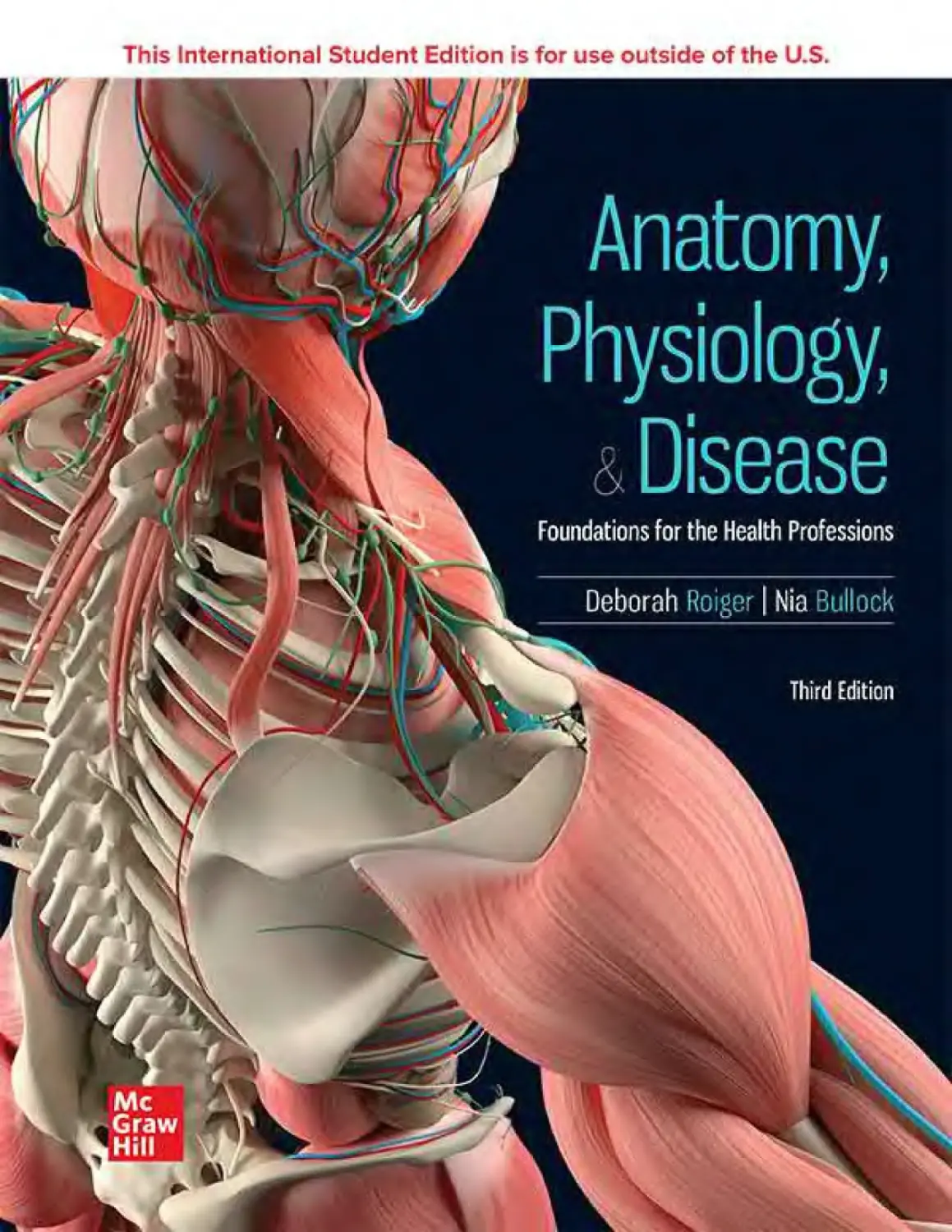


Автор: Roiger D. Bullock N.
Теги: medicine physiology anatomy human anatomy human physiology
ISBN: 978-1-265-13574-4
Год: 2023
Текст
Page i
Anatomy, Physiology, &
Disease
Foundations for the Health Professions
Deborah Roiger | Nia Bullock
Third Edition
Page ii
ANATOMY, PHYSIOLOGY, & DISEASE
Published by McGraw Hill LLC, 1325 Avenue of the Americas, New
York, NY 10019. Copyright © 2023 by McGraw Hill LLC. All rights
reserved. Printed in the United States of America. No part of this
publication may be reproduced or distributed in any form or by any
means, or stored in a database or retrieval system, without the prior
written consent of McGraw Hill LLC, including, but not limited to,
in any network or other electronic storage or transmission, or
broadcast for distance learning.
Some ancillaries, including electronic and print components, may
not be available to customers outside the United States.
This book is printed on acid-free paper.
1 2 3 4 5 6 7 8 9 LWI 27 26 25 24 23 22
ISBN 978-1-265-13574-4
MHID 1-265-13574-6
Cover Image: Anatomy Insider/Shutterstock
All credits appearing on page or at the end of the book are
considered to be an extension of the copyright page.
The Internet addresses listed in the text were accurate at the time of
publication. The inclusion of a website does not indicate an
endorsement by the authors or McGraw Hill LLC, and McGraw Hill
LLC does not guarantee the accuracy of the information presented
at these sites.
mheducation.com/highered
Page iii
Brief Contents
Preface
1 The Basics
2 Levels of Organization of the Human Body
3 The Integumentary System
4 The Skeletal System
5 The Muscular System
6 The Nervous System
7 The Nervous System—Senses
8 The Endocrine System
9 The Cardiovascular System—Blood
10 The Cardiovascular System—Heart and Vessels
11 The Lymphatic System
12 The Respiratory System
13 The Digestive System
14 The Excretory/Urinary System
15 The Male Reproductive System
16 The Female Reproductive System
Appendices
A The Metric System
B Nutrition Table
C Spot Check Answers
D Prefixes, Suffixes, and Additional Word Roots
Endnotes
Glossary
Index
Page iv
Dedication
I would like to dedicate this book to all of my anatomy and
physiology students, who have taught me so much.
∼Deborah Roiger
I would like to dedicate this book to my family for all of their
support and to my students, whose drive and dedication are
awesome sources of inspiration.
∼Nia Bullock
Page v
Contents
Preface
1
The Basics
Stuart Gregory/Getty Images
1.1 Overview
1.2 Terms of Anatomy
Anatomical Terms of Direction
Anatomical Regions
Anatomical Planes
Anatomical Positions
Anatomical Cavities
Serous Membranes
1.3 Terms of Physiology
Homeostasis
1.4 Terms of Pathology
Introduction to Disease
Predisposing Factors of Disease
Signs and Symptoms of Disease
Classification of Disease
Diagnosing Disease
Treatment of the Disease
Epidemiology
2 Levels of Organization of
the Human Body
Fuse/Corbis/Getty Images
2.1 Overview
2.2 Chemical Level
Atoms and Isotopes
Bonding to Form Molecules
Water
Solutions
Acids, Bases, and pH
Organic Molecules
Chemical Reactions
2.3 Organelle Level
Cell Membrane
2.4 Cellular Level
Membrane Transport
Protein Synthesis
Cell Division
Effect of Aging on Cells
2.5 Tissue Level
Epithelial Tissues
Connective Tissues
Muscle Tissues
Nervous Tissue
Modes of Tissue Growth, Change, Shrinkage, and Death
2.6 Organ Level
2.7 System Level
Page vi
3 The Integumentary
System
liza5450/Getty Images
3.1 Word Roots and Combining
Forms
3.2 Overview
3.3 Anatomy of the Skin, Hair, and
Nails
Epidermis
Dermis
Hair
Nails
3.4 Physiology of the Integumentary
System
Functions of Skin
3.5 Injuries to the Skin
Regeneration versus Fibrosis
Burns
3.6 Effects of Aging on the
Integumentary System
3.7 Diagnostic Tests for
Integumentary System Disorders
3.8 Integumentary System Disorders
Skin Cancer
Skin Infections
Other Common Skin Disorders
Putting the Pieces Together–The
Integumentary System
Page vii
4
The Skeletal System
E. Audras/PhotoAlto
4.1 Word Roots and Combining
Forms
4.2 Overview
4.3 Anatomy of the Skeletal System
Classification of Bones
Axial Skeleton
Appendicular Skeleton
Histology of the Skeletal System
Anatomy of a Long Bone
Joints
4.4 Physiology of the Skeletal System
Mineral Deposition
Bone Development
Bone Growth
Bone Remodeling
Nutritional Requirements of the Skeletal System
Hormonal Regulation of Bone Deposition and
Reabsorption
Functions of the Skeletal System
4.5 Effects of Aging on the Skeletal
System
4.6 Fractures
Types of Fractures
Fracture Healing
4.7 Diagnostic Tests for Skeletal
System Disorders
4.8 Skeletal System Disorders
Osteoporosis
Osteomyelitis
Cancers Affecting the Skeletal System
Gout
Cleft Palate
Mastoiditis
Putting the Pieces Together–The
Skeletal System
5
The Muscular System
AAGAMIA/The Image Bank/Getty Images
5.1 Word Roots and Combining
Forms
5.2 Overview
5.3 Anatomy of the Muscular System
Anatomical Terms
Muscle Actions
Muscles by Region
Anatomy of a Skeletal Muscle
Anatomy of a Skeletal Muscle Cell
5.4 Physiology of the Muscular
System
Physiological Characteristics of Muscle Tissue
Neuromuscular Junction
Muscle Contraction at the Molecular Level
Types of Muscle Contractions
Motor Units and Recruitment
Isotonic and Isometric Contractions
Levers
Muscle Metabolism
Fatigue
Comparison of Muscle Tissues
Nutritional Requirements of Muscle Tissue
Functions of the Muscular System
5.5 Effects of Aging on the Muscular
System
5.6 Diagnostic Test for Muscular
System Disorders
5.7 Muscular System Disorders
Hernias
Cramps
Muscular Dystrophy
Sprains
Muscle Strain
Myalgia
Shin Splints
Tendinitis
Fibromyalgia
Atrophy
Putting the Pieces Together–The
Muscular System
Page viii
6
The Nervous System
Diego_Cervo/Getty Images
6.1 Word Roots and Combining
Forms
6.2 Overview
6.3 Anatomy of the Nervous System
Cells
Anatomy of a Neuron
Neuroglia
6.4 Anatomy of the Central Nervous
System
Meninges
Cerebrospinal Fluid
Brain
Spinal Cord
6.5 Anatomy of the Peripheral
Nervous System
Anatomy of a Nerve
Cranial Nerves
Spinal Nerves
Autonomic Nervous System
6.6 Physiology of the Nervous
System
Nerve Impulses
Reflexes
Memory
Language
Pathways
Nutritional Requirements of the Nervous System
6.7 Effects of Aging on the Nervous
System
6.8 Diagnostic Tests for Nervous
System Disorders
6.9 Nervous System Disorders
Cerebrovascular Accident
Alzheimer’s Disease
Huntington’s Disease
Parkinson’s Disease
Multiple Sclerosis
Paralysis
Hydrocephalus
Epilepsy
Cerebral Palsy
Putting the Pieces Together–The
Nervous System
Page ix
7 The Nervous System—
Senses
Jae Rew/Getty Images
7.1 Word Roots and Combining
Forms
7.2 Overview
7.3 General Senses
Anatomy of Receptors in the Skin
Physiology of General Senses in the Skin
7.4 Taste
Anatomy of Receptors for Taste
Physiology of Taste
7.5 Smell
Anatomy of Receptors for Smell
Physiology of Smell
7.6 Hearing
Anatomy of the Ear
Physiology of Hearing
7.7 Equilibrium
Anatomy of the Vestibular Apparatus
Physiology of Equilibrium
7.8 Vision
Anatomy of the Eye
Physiology of Vision
7.9 Effects of Aging on the Senses
Changes in the General Senses
Changes in Taste
Changes in Smell
Changes in Hearing
Changes in Equilibrium
Changes in Vision
7.10 Diagnostic Tests for Disorders
of the Senses
7.11 Disorders of the Senses
Hearing Loss
Cataracts
8
The Endocrine System
Hero Images/Getty Images
8.1 Word Roots and Combining
Forms
8.2 Overview
8.3 Anatomy of the Endocrine
System
Glands
Hormones
Target Tissues
8.4 Physiology of the Endocrine
System
Regulation of Hormone Secretion and Distribution
Receptor Regulation
Hormone Elimination
Functions: Four Scenarios
8.5 Effects of Aging on the Endocrine
System
8.6 Diagnostic Tests for Endocrine
System Disorders
8.7 Endocrine System Disorders
Diabetes Mellitus
Diabetes Insipidus
Growth Disorders
Goiters
Hypothyroidism
Cushing’s Syndrome
Putting the Pieces Together–The
Endocrine System
Page x
9 The Cardiovascular
System—Blood
9.1 Word Roots and Combining
Forms
9.2 Overview
9.3 Anatomy of Blood
Plasma
Formed Elements
9.4 Physiology of Blood
Hemopoiesis
Hemoglobin
Nutritional Requirements for Erythropoiesis
Life Cycle of a Red Blood Cell
Hemostasis
Pathways of Blood Clotting
Elimination of Blood Clots
Preventing Inappropriate Clotting
Blood Typing
Functions of Blood
9.5 Diagnostic Tests for Blood
Disorders
9.6 Blood Disorders
Leukemia
Polycythemia
Anemia
Clotting Disorders
Page xi
10 The Cardiovascular
System—Heart and Vessels
Mark Andersen/Getty Images
10.1 Word Roots and Combining
Forms
10.2 Overview
10.3 Heart Anatomy
Pericardium
Heart Wall
Chambers and Valves
Cardiac Muscle Tissue
10.4 Heart Physiology
Blood Flow through the Heart
Cardiac Conduction System
Cardiac Cycle
Electrocardiogram
Cardiac Output
Heart Regulation
10.5 Vessel Anatomy
Arteries
Capillaries
Veins
10.6 Vessel Physiology
Circulatory Routes
Venous Return
Blood Pressure, Resistance, and Flow
Regulation of Blood Pressure and Flow
Effects of Exercise on Cardiac Output
10.7 Effects of Aging on the
Cardiovascular System
10.8 Diagnostic Tests for Heart and
Vessel Disorders
10.9 Disorders of the Heart and
Vessels
Valve Disorders
Vessel Disorders
Myocardial Disorders
Congenital Heart Defects
Putting the Pieces Together–The
Cardiovascular System
11
The Lymphatic System
Terry Vine/Blend Images/Getty Images
11.1 Word Roots and Combining Forms
11.2 Overview
11.3 Anatomy of the Lymphatic System
Lymph and Lymph Vessels
Cells of the Lymphatic System
Lymphoid Tissues and Organs
11.4 Physiology of the Lymphatic
System
Three Lines of Defense
Nonspecific Resistance versus Specific Immunity
Nonspecific Defenses
Specific Immunity
Humoral (Antibody-Mediated) Immunity
Cellular (Cell-Mediated) Immunity
Forms of Acquired Immunity
Importance of T helper Cells in Nonspecific Resistance
and Specific Immunity
Functions of the Lymphatic System
11.5 Effects of Aging on the Lymphatic
System
11.6 Diagnostic Tests for Lymphatic
System Disorders
11.7 Lymphatic System Disorders
Lymphoma
Multiple Myeloma
Splenomegaly
Allergies
Autoimmune Disorders
Immunodeficiency Disorders
Putting the Pieces Together–The
Lymphatic System
Page xii
12
The Respiratory System
Stephen Marks/Stone/Getty Images
12.1 Word Roots and Combining Forms
12.2 Overview
12.3 Anatomy of the Respiratory
System
Nose
Nasal Cavity
Pharynx
Larynx
Trachea
Lungs and the Bronchial Tree
Alveoli
12.4 Physiology of the Respiratory
System
Mechanics of Taking a Breath
Measurements of Pulmonary Function
Composition of Air
Gas Exchange
Comparison of Inspired and Expired Air
Factors That Influence Gas Exchange
Gas Transport
Regulation of Respiration
Functions of the Respiratory System
12.5 Effects of Aging on the
Respiratory System
12.6 Diagnostic Tests for Respiratory
System Disorders
12.7 Respiratory System Disorders
Respiratory Infections
Chronic Obstructive Pulmonary Disorders
Respiratory Distress Syndrome
Cancers of the Respiratory System
Putting the Pieces Together–The
Respiratory System
Page xiii
13
The Digestive System
Westend61 - WEST/Getty Images
13.1 Word Roots and Combining Forms
13.2 Overview
13.3 Anatomy and Physiology of the
Digestive System
Anatomy in the Mouth
Physiology of Digestion in the Mouth
Anatomy from the Mouth to the Stomach
Physiology of Digestion from the Mouth to the Stomach
Anatomy of the Stomach
Physiology of Digestion in the Stomach
Anatomy of Digestive Accessory Structures
Anatomy of the Small Intestine
Physiology of Digestion in the Small Intestine
Absorption of Nutrients in the Small Intestine
Anatomy of the Large Intestine
Physiology of Digestion in the Large Intestine
Types of Absorbed Nutrients
Circulation of Absorbed Nutrients
Control of Digestion
Functions of the Digestive System
13.4 Effects of Aging on the Digestive
System
13.5 Diagnostic Tests for Digestive
System Disorders
13.6 Digestive System Disorders
Leukoplakia
Gastroenteritis
Diverticular Disease
Abdominal Hernias
Irritable Bowel Syndrome
Crohn’s Disease
Peptic Ulcers
Intussusception
Cirrhosis
Hepatitis
Vomiting
Food Poisoning
Parasites
Malabsorption
Putting the Pieces Together–The
Digestive System
14 The Excretory/Urinary
System
Didi/amanaimages/Getty Images
14.1 Word Roots and Combining
Forms
14.2 Overview
Sources of Nitrogenous Wastes
Overview of Kidney Function
14.3 Anatomy of the Kidney
Anatomy of a Nephron
Flow of Urine Components through a Nephron
Blood Flow to a Nephron
14.4 Physiology of Urine Production
Filtration
Reabsorption
Secretion
14.5 Water Conservation
Water in the Body
14.6 Regulation of Urine Volume and
Concentration
Hormonal Mechanisms of Control
Nervous System Mechanisms of Control
Diuretics
14.7 Anatomy of Ureters, Urinary
Bladder, and Male and Female
Urethras
Ureters
Urinary Bladder
Urethra
14.8 Physiology of the Passing of Urine
14.9 Functions of the Excretory System
14.10 Effects of Aging on the Excretory
System
14.11 Diagnostic Tests for Excretory
System Disorders
14.12 Disorders of the Excretory
System
Urinary Tract Infections
Hydronephrosis
Polycystic Kidney Disease
Kidney Stones
Glomerulonephritis
Renal Failure
Cancers of the Excretory System
Putting the Pieces Together–The
Excretory/Urinary System
Page xiv
15 The Male Reproductive
System
Image Source/Getty Images
15.1 Word Roots and Combining Forms
15.2 Overview
15.3 Male Reproductive Anatomy
Testes
Secondary Sex Organs and Structures
Anatomy of a Sperm
15.4 Physiology of the Male
Reproductive System
Hormonal Control at Puberty
Sperm Production
Spermatogenesis and Spermiogenesis
Hormonal Control in the Adult Male
Pathway for Sperm
Sexual Response in the Male
15.5 Effects of Aging on the Male
Reproductive System
15.6 Diagnostic Tests for Male
Reproductive System Disorders
15.7 Male Reproductive System
Disorders
Prostate Cancer
Testicular Cancer
Hypospadias
Hydrocele
Epididymitis
Phimosis
Sexually Transmitted Diseases
Putting the Pieces Together–The
Reproductive Systems
Page xv
16 The Female Reproductive
System
Mango Productions/Corbis/Getty Images
16.1 Word Roots and Combining
Forms
16.2 Overview
16.3 Female Reproductive Anatomy
Ovaries
Secondary Female Reproductive Organs and Structures
16.4 Physiology of the Female
Reproductive System
Hormonal Control at Puberty
Oogenesis
Hormonal Control in the Adult Female
The Female Sexual Response
16.5 Effects of Aging on the Female
Reproductive System
16.6 Diagnostic Tests for Female
Reproductive System Disorders
16.7 Disorders of the Female
Reproductive System
Breast Cancer
Ovarian Cancer
Cervical Cancer
Fibroids
Endometriosis
Sexually Transmitted Diseases
16.8 Pregnancy
Pathway for Sperm to Meet an Egg
Fertilization to Implantation
Hormonal Control of Pregnancy
A Woman’s Adjustment to Pregnancy
Nutritional Requirements for a Pregnancy
Initiating the Birth Process
The Birth Process
Lactation
Disorders of Pregnancy
Putting the Pieces Together–The
Reproductive Systems
Appendices
A The Metric System
B Nutrition Table
C Spot Check Answers
D Prefixes, Suffixes, and Additional Word Roots
Endnotes
Glossary
Index
Page xvi
About the Authors
Deborah Roiger
M.A. Education, St. Mary’s University of Minnesota; B.S. Biology
and Earth Science, St. Cloud State University
Champa Studios
Deborah Roiger has 17 years of teaching experience, the last 12 of
which were in the Minnesota State Colleges and University
(MNSCU) system of 32 state-sponsored technical colleges,
community colleges, and universities. She was voted instructor of
the year in 2007 by the students at St. Cloud Technical College,
received five awards for excellence by MNSCU for projects she
developed, and was named educator of the year in 2009 by the
MNSCU board of trustees. Deborah’s development of digital
resources for teaching anatomy and physiology online also earned
an Innovation of the Year award in 2009 from the League for
Innovation in the Community College. She has presented her work
in the development of anatomy and physiology resources at four
national conferences. Deborah is the author of Anatomy &
Physiology: Foundations for the Health Professions and its
accompanying workbook. She is a member of the Human Anatomy
and Physiology Society (HAPS) and the National Science Teachers’
Association (NSTA).
Nia Joyner Bullock
Ph.D. Comparative Biomedical Sciences, North Carolina State
University; B.S. Biology, North Carolina Agricultural and Technical
State University
Picture People
Dr. Nia Joyner Bullock has 18 years of teaching experience in
private career colleges and universities. During her tenure at MillerMotte College, she served in various professional capacities,
including Academic Dean and Medical Assisting Program Director.
She also teaches a variety of courses within the curriculum. Dr.
Bullock has developed courses for the online division of the college
and was instrumental in the implementation and use of various
virtual training tools for allied health programs. She has made
scholarly presentations at a number of scientific conferences and
published articles and abstracts on maternal diabetes and its effects
on embryonic heart development. Dr. Bullock lives in Wake Forest,
North Carolina, with her husband and three sons.
Page xvii
Acknowledgments
Thank you to the Product Development staff at McGraw Hill—
Melisa Seegmiller and Matthew Garcia for their guidance on the
revision; to Vicki Krug, who skillfully guided the many details of the
production process; and to Valerie Kramer for her marketing
expertise. We are grateful to Jason McAlexander, medical illustrator
at MPS, for his talents and patience in both guiding and working on
the gorgeously updated illustration program; and to David Hash for
his assistance with the revision of the illustration program, interior
design, and cover. Thanks to Marilynn Taylor for her expert
copyediting skills and to Sharon O'Donnell and A. Nayyer Shamsi
for their attention to detail in proofreading. Christina Gan, our
digital author, worked tirelessly to ensure that the digital program
that accompanies this text ties seamlessly to the learning outcomes
and content in this text. Also, thank you to the reviewers whose
critical eye and constructive suggestions contributed significantly to
this revision. Finally, a special thanks to our families whose
neverending support, patience, and encouragement make all things
possible.
Deborah Roiger
Nia Bullock
Reviewers
Joy Boro
South College, Knoxville, Tennessee
Melissa Brace
Metropolitan Community College
Michelle Carey
Hutchinson Community College
Sharon S. Ellerton
CUNY, Queensborough Community College
Susanne J. Kalup
Westermoreland County Community College
Karan Oliver-Tucci
College of DuPage
Elisa Ratliff
Clark State Community College
Barbara Reitz
Pensacola State College
Ernesto R. Rodriguez M.
Fortis Institute
Amber M. Samaniego
Everett Community College
Aaron Woodyatt
South College
“The authors managed to describe some of the most
complicated physiological processes in a way that novice
students can understand, without skimping on the details.
Sections of the textbook are bookended with real life
examples to immerse the student in the subject matter.
Clinical and disease point boxes with real life examples of
various pathologies that occur in the organs or tissues
discussed are embedded throughout each chapter. This
helps students immediately apply the relevance of what
they'd just learn to medical situations. Content like this
increases the chance of a student consolidating the
information they just read into their long term memory
and thus greatly aids their overall comprehension of the
subject matter.”
–Elisa Ratliff,
Clark State Community College
Page xviii
Preface
The structure of the human body is fascinating. The study of human
anatomy and physiology is vital knowledge for all students, and just
as significant is an understanding of the abnormal functions of the
body. Students seeking careers in the health care field can be doubly
motivated when taking an anatomy, physiology, and pathology
course as the personally relevant content also prepares them for
their chosen careers.
As instructors, we look for a text that is, first and foremost,
accurate; is written at an appropriate level for our students—neither
too high nor too low; can be customized to accommodate the
organization of our individual courses; and will be interesting and
appealing to our students.
This text has been designed specifically for college students
taking an anatomy and physiology course or an anatomy,
physiology, and pathology course.
Reading-level assessments ensure the text is accessible to
students.
Thorough reviewing and meticulous checking of all text and
illustrations ensure accuracy.
All of the textbook and digital learning and assessment content
has been mapped to specific learning outcomes, allowing
instructors the option of building their course around specific
outcomes and related content.
The authors’ illustration program has been expertly executed in
full color and amazing detail by talented and precise medical
illustrators.
Three Key Principles
The pedagogical approach of this text and its learning and
assessment program is founded on three key principles:
1. Tell students what we are going to teach them.
Each chapter in this text begins with a list of specific
learning outcomes.
2. Teach students what we outlined in the learning
outcomes. Everything in this text and all ancillary
materials directly relates to the learning outcomes
outlined in each chapter. Real-life situations, analogies,
and a commonsense, direct approach are used to teach
anatomy, physiology, and pathology concepts.
3. Test students on what they have been taught. All
assignments, activities, discussion questions, review
questions, and test questions in this text and in the
Workbook for Use with Anatomy, Physiology, & Disease
by Roiger/Bullock directly assess only the learning
outcomes stated in each chapter.
This pedagogical approach warrants there will be no surprises for
the student. If the learning outcomes are stressed through lecture
and assignments, students quickly find comfort in having a
guideline to follow in learning the content.
Changes to the Third Edition
This third edition features many macrolevel changes that overlay
each chapter of the book. The universal changes to the third edition
include the following:
Page xix
Learning Objectives list has been moved to the beginning of the
chapter.
Word roots and combining forms are listed on the same page as
the Learning Objectives at the start of the chapter.
Chapter 1
Figure 1.1 Standard Anatomical Position photo replaced with
line art
Figure 1.5 Anatomical Regions photo replaced with line art
Figure 1.7 Anatomical Planes photo replaced with line art
Replaced Figure 1.23 with new figure, R0 Values
Epidemiology section updated and expanded
Revised Spot Check Question #10
Added Spot Check Question #11
Table 1.6 updated
Chapter 3
Replaced Figure 3.10 Keloid photo in Disease Point box
Figure 3.14 Hair color and texture photos replaced
Figure 3.19 Ringworm photo replaced
Skin cancer added to Table 3.3
New Spot Check Question #5 added, which caused a
renumbering of Spot Check questions that follow
Chapter 4
Revised chapter opener figure
Revised Figure 4.2 The axial and appendicular skeletons labels
changed
Revised Figure 4.48 Chloe photo replaced
Revised Figure 4.60 Cleft palate photo added
Updated short bones description
Updated sesamoid bones description
Updated irregular bones description
Updated medial malleolus description
Updated elastic cartilage description
Updated epiphysis description
Updated arthritis statistics in Disease Point box
Chapter 5
Revised Figure 5.2 Flexion and extension photos replaced with
line art
Revised Figure 5.3 Abduction and adduction photos replaced
with line art
Revised Figure 5.4 Protraction, retraction, lateral excursion,
and medial excursion photos replaced with line art
Revised Figure 5.5 Motions of the feet photos replaced with
line art
Revised Figure 5.6 Rotation and circumduction photos replaced
with line art
Revised Figure 5.7 Supination and pronation photos replaced
with line art
Revised Figure 5.8 Opposition and reposition photos replaced
with line art
Revised Figure 5.9 Elevation and depression photos replaced
with line art
Revised Figure 5.24 Protein structure of thick and thin
myofilaments label changes only
Revised Figure 5.33 Areas of tenderness commonly experienced
by fibromyalgia sufferers legend change only
New Spot Check #1
Page xx
Chapter 7
Revised Figure 7.18
New Figure 7.27 Rinne Test new photo
New Figure 7.28 Weber Test new photo
Figure 7.27 (from previous edition) renumbered to Figure 7.29
Chapter 8
Updated description of the pineal gland
New Figure 8.19 Goiter photo
Chapter 9
Rearrangement of bulleted text on hypoxemia
Updated Clinical Point on jaundice
Updated sickle cell disease description in Applied Genetics box
New Figure 9.13 ABO blood typing photos
New Figure 9.17 Leukemia photos
Added a reference in the index for the RDA of iron for pregnant
women
New Spot Check Question #18 added, which caused a
renumbering of Spot Check questions that follow
Chapter 10
New figures added to Table 10.1 Heart CT and cardiac
catherization
Chapter 11
New Figure 11.20 Virus action on a cell, causing a renumbering
of the figures that follow
New Figure 11.23 (old figure 11.22)
Multiple myeloma in plasma cells from a bone marrow
aspiration photo
Updated Clinical Point on vaccines
Updated Disease Point on anaphylaxis
Chapter 12
New Figure 12.3 The nose photo
Figure 12.5 The larynx legend change only
Replaced Figure 12.10 Gross anatomy of the lungs and
bronchial photo (part c)
Page xxi
Chapter 13
New Figure 13.7 Intestinal villi photo
New Figure 13.22 Lisa photo
New Figure 13.23 Leukoplakia photo
Chapter 14
New Figure 14.22 Hydronephrosis photo
Chapter 15
Replaced Disease Point Figure Cryptorchidism photo with line
art
Clinical Point on HPV photo added
Chapter 16
Replaced Figure 16.25 Prolactin secretion in a nursing mother
photo
Replaced Figure 16.26 Ectopic pregnancy photo (part b)
End matter
Appendix B Nutrition table updated with the most current
version (2020–2025)
Appendix C updated to include answers to new Spot Check
questions
Two Glossary definitions have been updated
Page xxii
The Visual Approach
Anatomy, physiology, and disease are often best understood
visually. That’s why this text has a strong, vibrant art program
paired with photos at the microscopic and macroscopic level. The
detailed, 3D illustrations are consistent throughout the text. Each of
the three types of cartilage has a distinct color and texture
throughout the text, as do the three types of muscle tissue. Let’s
look at an example of these features within the cardiovascular
system chapters.
Detailed line art showing anatomical textural differences: See
how the visceral and parietal pericardium are shown in detail,
including the pericardial cavity. Note too that vessels are shown in
relation to the membranes and their cut edges show that there are
three layers to the walls of veins and arteries. The middle layer
(tunica media) is thinner in a vein than the artery and is shown that
way consistently throughout the text. Note too that the smooth
muscle in the tunica media is a different color than the cardiac
muscle.
Cadaver photos: Vibrant, 3D illustrations help students discern
anatomical differences that are not so easily discerned with real
tissue. Cadaver photos are paired with illustrations because our
students will not be working with patients with color coded
anatomy. Note again the cut vessels in the illustrations show three
layers to the vessel walls.
Page xxiii
Dr. P. Marazzi/Science Source
Macroscopic photos: Disorders can be explained with line art.
This text also uses photos at the macrolevel to help the student
visualize what a disorder may look like in a patient.
Ed Reschke
Microscopic photos: This text uses photos of tissue slides to not
only show characteristic histology for tissue identification but also
to show what can go wrong in the body at the microscopic level. See
how the healthy artery compares to the artery with atherosclerosis
showing plaque buildup and reduced lumen.
Physiological processes: Illustrations can often help students
see the steps in processes such as blood flow through the heart. The
student can trace the flow by reading the steps in the text and
following the matching flow in the illustration.
Page xxiv
Pedagogical Features
The following tools are built into this text to facilitate student
learning.
Specific Learning Outcomes
Specific learning outcomes give clear expectations and direct
student learning. Every piece of content, including the text, figures,
and tables in each chapter, directly relates to specified learning
outcomes.
A Chapter Summary section, located at the end of each chapter,
provides relevant bullet points to summarize each text section.
Anatomy, Physiology, and Disease in Context
Physiology concepts are emphasized and put in context with realworld examples. The normal and abnormal functions of each system
are explained in the context of a specific individual, and
interconnections are made between new concepts and content in
previous chapters.
Homeostasis, indicated throughout the text in red lettering, is
discussed in context with relevant chapter topics and emphasizes
the interdependent relationship between homeostasis and acid–
base balance, fluid and electrolytes, and nutrition. These concepts
are covered in the context of the body systems, not isolated in
separate chapters.
Page xxv
Putting the Pieces Together, found at the end of each system
chapter, ties the covered system to the other 10 systems of the
human body.
Study Hint boxes contain useful tips and mnemonics for
remembering structures and learning concepts.
Physiological processes are broken down into detailed, numbered
steps to help build understanding. Relevant figures are correlated to
Anatomy & Physiology REVEALED, where students may locate
additional pertinent illustrations and cadaver images.
Page xxvi
Clinical Point boxes make the connection between anatomy and
physiology concepts and applications in health professions.
Disease Point boxes are placed near descriptions of normal
anatomy and physiology, allowing students to make a direct
comparison between normal and abnormal structure and function.
Applied Genetics boxes focus on genetic applications to
anatomy and physiology.
An effects of aging section is included in each system chapter to
help students understand the ever-increasing geriatric patient
population.
A diagnostic test table precedes the disorders section in each
system chapter. This table explains the common tests and
screenings that health care providers use to determine a patient’s
diagnosis relevant to the particular system.
Disorders common to each system are included in each system
chapter to help students understand the relationship of abnormal
anatomy and physiology to pathology.
Page xxvii
Spot Checks are interspersed throughout each chapter to give
the student an opportunity to check for understanding before
moving on. The answers to these questions are found in Appendix
C.
Common Misconception boxes alert the student to possible
mistakes and misconceptions. Most students come to the course
with preconceived notions of how the body works. These warnings
help dispel common misconceptions.
Key words are defined in context in the chapters. The glossary
defines key words in the context they were used in the chapters to
activate prior knowledge.
A pronunciation key for difficult terms is located immediately
following the first occurrence of the vocabulary word in the text.
Word roots specific to the system are listed at the beginning of
each system chapter, and common prefixes and suffixes are listed in
Appendix D.
Workbook
A full-color workbook, written by the authors, is available to
those instructors who use the text to reinforce the lessons that
students learn in each chapter of the text. Workbook features
include a coloring book section, lab exercises and activities, key
word concept maps, review questions, and instructor resources that
contain group activities and discussion questions, all correlated with
the Learning Outcomes of this text.
Remote Proctoring & Browser-Locking Capabilities
New remote proctoring and browser-locking capabilities, hosted by
Proctorio within Connect, provide control of the assessment
environment by enabling security options and verifying the identity
of the student.
Seamlessly integrated within Connect, these services allow
instructors to control students’ assessment experience by restricting
browser activity, recording students’ activity, and verifying students
are doing their own work.
Instant and detailed reporting gives instructors an at-a-glance
view of potential academic integrity concerns, thereby avoiding
personal bias and supporting evidence-based claims.
Page xxviii
Instructors: Student Success Starts with
You
Tools to enhance your unique voice
Want to build your own course? No problem. Prefer to use an OLCaligned, prebuilt course? Easy. Want to make changes throughout the
semester? Sure. And you’ll save time with Connect’s auto-grading too.
Study made personal
Incorporate adaptive study resources like SmartBook® 2.0 into your
course and help your students be better prepared in less time. Learn
more about the powerful personalized learning experience available in
SmartBook
2.0
at
www.mheducation.com/highered/connect/smartbook
Affordable solutions, added value
Make technology work for you with LMS integration for single
sign-on access, mobile access to the digital textbook, and
reports to quickly show you how each of your students is
doing. And with our Inclusive Access program you can provide
all these tools at a discount to your students. Ask your
McGraw Hill representative for more information.
Padlock: Jobalou/Getty Images
Solutions for your challenges
A product isn’t a solution. Real solutions are affordable,
reliable, and come with training and ongoing support when
you need it and how you want it. Visit
www.supportateverystep.com for videos and
resources both you and your students can use throughout the
semester.
Checkmark: Jobalou/Getty Images
Page xxix
Students: Get Learning that Fits You
Effective tools for efficient studying
Connect is designed to help you be more productive with simple, flexible,
intuitive tools that maximize your study time and meet your individual
learning needs. Get learning that works for you with Connect.
Study anytime, anywhere
Download the free ReadAnywhere app and access your online eBook,
SmartBook 2.0, or Adaptive Learning Assignments when it’s convenient,
even if you’re offline. And since the app automatically syncs with your
Connect account, all of your work is available every time you open it.
Find out more at www.mheducation.com/readanywhere
“I really liked this app—it made it easy to study when
you don't have your textbook in front of you.”
- Jordan Cunningham, Eastern Washington University
Everything you need in one place
Your Connect course has everything you need—whether reading on your
digital eBook or completing assignments for class, Connect makes it easy
to get your work done.
Learning for everyone
McGraw Hill works directly with Accessibility Services Departments and
faculty to meet the learning needs of all students. Please contact your
Accessibility
Services
Office
and
ask
them
to
email
accessibility@mheducation.com,
or
visit
www.mheducation.com/about/accessibility
for
more
information.
Top: Jenner Images/Getty Images, Left: Hero Images/Getty Images, Right: Hero
Images/Getty Images
Page xxx
Page 1
1
The Basics
Stuart Gregory/Getty Images
Module 1: Body Orientation
Welcome to the start of your education on the structures and
functions of the human body. Whether you are pursuing a health
career or reading this book for personal interest, no subject will be
more relevant to you than your own body and how it functions. Take a
moment to consider what happens when the structures of the human
body fail to function normally. You may have a cold you can’t shake, or
a loved one may have been diagnosed with cancer. The topic of disease
and how it can affect your body is also relevant to your everyday life.
Knowing the body’s structures and functions provides greater
understanding of what happens when the body doesn’t function
normally.
Page 2
Learning Outcomes
After completing this chapter, you should be able to:
1. Define anatomy, physiology, and pathology.
2. Describe the location of structures in the human body
using anatomical terms of direction, regions, planes,
positions, and cavities.
3. Locate serous membranes by their individual names and
relative location to organs.
4. Define homeostasis and explain why it is so important in
human physiology.
5. Define negative feedback and positive feedback and
explain their importance to homeostasis.
6. Define disease and describe the relationship between
disease and homeostasis.
7. Define predisposing factors of disease and explain how
specific predisposing factors affect disease.
8. Differentiate between signs and symptoms of disease and
give an example of each.
9. Explain the function of pain and inflammation.
10. Explain the two classifications of disease and the
subcategories of each.
11. Define diagnosis and list the steps involved in diagnosing
diseases.
12. Define differential diagnosis and explain when it may be
used.
13. Summarize four types of treatment plans.
14. Define epidemiology and explain how epidemiology affects
health care.
Page 3
1.1 Overview
Learning Outcome
1. Define anatomy, physiology, and pathology.
Anatomy is the study of body structures, including structures of all
sizes, from microscopic red blood cells to the heart, which is the size of
a fist. Physiology is the study of exactly how all of these structures
function. For example, why are red blood cells thinner in the middle
than they are along the edge? What do red blood cells actually do, and
how does their shape aid in the way they work? What causes your
heart to speed up or slow down, and why does it have four chambers?
These important questions of anatomy and physiology give us an
idea of how interconnected structure and function are. You will need a
fundamental knowledge of the human body and how it works under
normal circumstances before you can begin to understand abnormal
functioning, the study of which is pathology.
In order to develop a foundation for that knowledge, we must first
learn the basic terms of anatomy.
1.2 Terms of Anatomy
Learning Outcome
2. Describe the location of structures in the human body
using anatomical terms of direction, regions, planes,
positions, and cavities.
As a student pursuing a career in allied health, part of the essential
knowledge you need to learn at the start is the vocabulary of anatomy.
To describe the location of various structures, you need to be able to
effectively use anatomical terms of direction, regions, planes,
positions, and cavities.
Picture the body in the standard anatomical position before you
begin to identify and describe the location of a structure. A body in the
standard anatomical position looks like this: The body is upright; the
legs are close together; the feet are flat on the floor; the arms are close
to the sides; and the head, toes, and palms of the hands are facing
forward. See Figure 1.1.
FIGURE 1.1 Standard anatomical position. Head, toes, and
palms of the hands are facing forward.
Anatomical Terms of Direction
Once the standard anatomical position has been considered,
anatomical terms of direction are used to describe the following: the
location of a particular structure in the body, the location of a
structure relative to another structure, or the location of something
within a structure. See Table 1.1 and Figures 1.2 through 1.4.
Page 4
TABLE 1.1 Anatomical Terms of Direction
Term of
Direction
Anterior
or ventral
Definition
Example
Front or belly side
The trachea is
anterior to the
esophagus.
Term of
Direction
Definition
Example
Posterior
or dorsal
Back side
The esophagus is
posterior to the
trachea.
Superior
Closer to the top of
the head (used for
head, neck, and
trunk)
The lungs are
superior to the
diaphragm.
Inferior
Farther from the top The stomach is
of the head (used for inferior to the
head, neck, and
diaphragm.
trunk)
Medial
Toward the midline of The heart is
the body
medial to the
lungs.
Lateral
Away from the
midline of the body
The lungs are
lateral to the
heart.
Bilateral
Relating to or
affecting two sides
She had bilateral
ovarian tumors.
Proximal
Closer to the
connection to the
body
The elbow is
proximal to the
wrist.
Distal
Farther from the
connection to the
body
Fingernails are at
the distal end of
the fingers.
Superficial Closer to the surface
(used for layered
structures)
The epidermis is
superficial to the
dermis of the
skin.
Term of
Direction
Definition
Example
Deep
Farther from the
surface (used for
layered structures)
The hypodermis
is deep to the
dermis of the
skin.
Right
On the body’s right
The liver is on
side (not the viewer’s the right side of
right side)
the body.
Left
On the body’s left
The stomach is
side (not the viewer’s on the left side of
left side)
the body.
Spot Check 1
How would you describe the location of your nose using at
least three anatomical terms?
FIGURE 1.2 Sagittal view of the head: (a) the trachea
anterior to the esophagus, (b) a cadaver head.
(b) Rebecca Gray/McGraw Hill
Page 5
FIGURE 1.3 Chest and abdominal organs. The lungs are
lateral to the heart. The stomach is inferior to the diaphragm.
FIGURE 1.4 Layers of the skin. The epidermis is superficial
to the dermis. The hypodermis is deep to the dermis.
Anatomical Regions
In addition to being described by its location within the body, a
structure may also be described by identifying the specific region in
which it is located. The two major regions of the body are the axial
region (head, neck, and trunk) and the appendicular region (arms
and legs). These regions are further subdivided. See Table 1.2 and
Figure 1.5.
Page 6
TABLE 1.2 Anatomical Regions
Region
Definition Example
Axial
Head,
neck, and
trunk
The ribs are in the axial
region.
Abdominal Belly
She had a measles rash
on her abdomen.
Axillary
Many people apply
deodorant in the axillary
region.
Armpit
Cephalic or Head
cranial
The brain is located in
the cranial region.
Cervical
Neck
He wore a cervical collar
after the car accident.
Facial
Face
The maxilla is a facial
bone.
Inguinal
Groin
He had an inguinal
hernia.
Pelvic
Lower end The urinary bladder is
of the
located in the pelvic
trunk
region.
Thoracic
Chest
The breasts are in the
thoracic region.
Umbilical
Navel
She developed an
umbilical hernia during
her pregnancy.
Appendicular Arms and
legs
The elbow is in the
appendicular region.
Region
Definition Example
Brachial
Arm
The nurse administered
the vaccine to his
brachial region.
Carpal
Wrist
She had pain in the
carpal region from a
wrist sprain.
Cubital
Elbow
The phlebotomist drew
blood from the anterior
cubital region.
Femoral
Thigh
He had a large bruise on
his femoral region.
Palmar
Palms of
the hands
He had blisters on his
palmar surface from
raking.
Patellar
Knee
She was ticklish in her
patellar region.
Plantar
Soles of
the feet
She had her plantar
warts removed.
Tarsal
Ankle
He had pain in his tarsal
region from an ankle
sprain.
FIGURE 1.5 Anatomical regions: anterior (ventral) view.
The abdominal region can be divided in either of two ways: into four
quadrants or into nine regions similar to a tic-tac-toe grid. See Figure
1.6. By mentally dividing this region, you can communicate about it
and the structures within it more quickly and accurately. For example,
when dealing with abdominal pain, you can use either method to
describe the location of the pain. The four quadrants are the right
upper quadrant, left upper quadrant, right lower quadrant, and left
lower quadrant. The nine regions of the abdomen are the right
hypochondriac region, epigastric region, left hypochondriac region,
right lumbar region, umbilical region, left lumbar region, right
inguinal region, hypogastric region, and left inguinal region.
Spot Check 2
Describe the location of liver pain by specific abdominal
region in two different ways.
Page 7
FIGURE 1.6 Abdominal quadrants and nine regions of the
abdomen.
Anatomical Planes
In order to view the location of structures from different angles, the
body may be cut along anatomical planes. Table 1.3 lists the three
anatomical planes and their definitions. See Figure 1.7 for examples.
TABLE 1.3 Anatomical Planes
Plane
Definition
Sagittal
Separates right from left. If the plane is
(SAJ-ih-tal) exactly down the midline of the body, it
is midsagittal.
Transverse Separates top from bottom; commonly
or
called a cross section
horizontal
Frontal or
coronal
Separates anterior from posterior (front
from back)
Page 8
FIGURE 1.7 Anatomical planes: (a) figure showing planes,
(b) sagittal section of the head, (c) transverse section through
the abdomen, (d) frontal section through the right shoulder.
(b) Rebecca Gray/McGraw Hill; (c) Rebecca Gray/Don Kincaid/McGraw Hill
Education; (d) Medical Media Images/SPL/Science Source
Page 9
Anatomical Positions
Anatomical terms may also be used to describe body position, such as
standard anatomical position, which appears earlier in this chapter.
Prone and supine are terms that may be used to describe the
position of either the entire body or individual parts of the body such
as the hands. For example, your hands would be in a supine position if
you held them out in front of you, palms facing up. See Table 1.4.
TABLE 1.4 Anatomical Positions
Position
Definition
Supine
Anterior surface facing up
Prone
Anterior surface facing down
Anatomical Cavities
Most of the body’s organs are located in cavities, which are pocketlike
spaces of various sizes. There are three general cavities—the dorsal
cavity, the thoracic cavity, and the abdominopelvic cavity—that can be
further subdivided. See Table 1.5 for a specific breakdown of cavities,
their associated organs, and the lining membranes.
TABLE 1.5 Anatomical Cavities
Associated
Organs
Lining
Membranes
Cranial cavity
Brain
Meninges
Vertebral cavity
Spinal cord
Meninges
Cavity
Dorsal:
Thoracic:
Pleural cavities (2) Lungs
Pleurae
Pericardial cavity
Pericardium
Abdominopelvic:
Heart
Cavity
Associated
Organs
Lining
Membranes
Abdominal cavity
Digestive
Peritoneum
organs, spleen
Pelvic cavity
Urinary
bladder,
rectum,
reproductive
organs
Peritoneum
As you can see in Figure 1.8, there is no wall dividing the cranial
and vertebral cavities. There is also no wall separating the pleural
and pericardial cavities or the abdominal from the pelvic cavity.
The diaphragm, however, serves as a wall separating the thoracic
cavity from the abdominopelvic cavity. The space between the
pleural cavities that contains the heart, esophagus, trachea, thymus,
and major vessels is called the mediastinum (MEE-dee-ass-TIEnum). Again, see Figure 1.8 for the locations of these cavities in the
body.
Page 10
FIGURE 1.8 Body cavities: (a) lateral view, (b) anterior
view.
Now that you know where the cavities are in relation to the organs
they house, it is important to note that these cavities are lined with
membranes. The cranial and vertebral cavities are lined by the
meninges (meh-NIN-jeez)—three layers of membrane surrounding
the brain and spinal cord. You will learn more about the meninges in
the nervous system chapter. The thoracic and abdominopelvic cavities
contain fluid-filled serous membranes (SEER-us), which line the
cavities and surround the organs.
Spot Check 3
Name the specific cavities that are located in the axial
region of the human body.
Page 11
Serous Membranes
Learning Outcome
3. Locate serous membranes by their individual names
and relative location to organs.
Serous membranes are double-layered membranes that contain fluid
between the two layers. A good analogy for a serous membrane is a
very soft water balloon. You slowly push your fist into the balloon so
that it does not break. Part of the water balloon will be in direct
contact with your fist, and part of the balloon will not. Water exists
between the two layers. Your fist represents the individual organ,
while the layers of the water balloon represent the layers of the serous
membrane. See Figure 1.9.
FIGURE 1.9 Water balloon. A fist (representing an organ)
is slowly pushed into the water balloon (representing a
serous membrane).
A serous membrane called the pleura surrounds each of the lungs in
the thoracic cavity just as the water balloon surrounds your fist. The
part of the pleural membrane in direct contact with the lung is called
the visceral pleura (VISS-er-al PLUR-ah). The part of the pleural
membrane not in direct contact with the lung is the parietal pleura
(pah-RYE-eh-tal PLUR-ah). Pleural fluid fills the space between the
two layers. The heart is surrounded by a similar serous membrane
called the pericardium. The pericardium has two layers: the visceral
pericardium (in contact with the heart) and the parietal
pericardium (not in contact with the heart). Pericardial fluid fills the
space between these two layers. See Figure 1.10.
Page 12
FIGURE 1.10 Pericardial and pleural membranes: (a)
pericardium, (b) pleurae.
The abdominopelvic cavity contains another serous membrane
called the peritoneum. This double-layered serous membrane has
many abdominal organs pushed into it from the posterior wall of the
abdominopelvic cavity. The parietal portion of the peritoneum lines
the anterior wall of the abdominopelvic cavity, while the visceral
portion of the peritoneum covers several, but not all, of the organs in
the abdominal cavity. The kidneys and most of the pancreas are
retroperitoneal, meaning they are between the parietal peritoneum
and the posterior abdominal wall. See Figure 1.11.
FIGURE 1.11 Peritoneal membrane.
Page 13
In Figure 1.11, look closely at the peritoneum surrounding a section
of the small intestine. The membrane starts at the posterior
abdominal wall, extends out and surrounds the section of small
intestine (this part of the membrane is the visceral peritoneum),
and then returns parallel to itself to the posterior wall before
extending out again to surround the next organ. This membrane
repeatedly extends from the posterior wall to surround individual
organs. The membrane then returns parallel to itself before finally
becoming the parietal peritoneum that lines the anterior abdominal
wall. The peritoneal fluid is found between the parietal peritoneum
(lining the anterior wall) and the visceral peritoneum (surrounding
each organ). The sections of the membrane where the peritoneum
comes back parallel to itself are called the mesenteries (MESS-enter-reez). The mesenteries do not involve any fluid because they are
outside the water balloon–like serous membrane. Blood vessels and
nerves, going out to individual organs, can be found neatly arranged in
the mesenteries. See Figure 1.12.
FIGURE 1.12 Anterior view of the abdominopelvic organs.
Mesenteries are shown with arteries and veins neatly
arranged.
Rebecca Gray/Don Kincaid/McGraw Hill Education
Common Misconception
Although there appears to be significant space between
the organs in Figure 1.11, there is actually no extra space
in the abdominopelvic cavity. The diagram has been drawn
with extra space to highlight the peritoneal membrane.
The visceral peritoneum (shown in Figure 1.11) has two extensions.
See Figure 1.13. The greater omentum looks like a fatty apron lying
over all the abdominal viscera; it extends from the inferior margin of
the stomach. The lesser omentum is smaller and extends from the
superior edge of the stomach to the liver.
Spot Check 4
What specific serous membrane is attached to the inferior
surface of the diaphragm? What specific serous
membrane(s) is (are) attached to the superior surface of
the diaphragm?
Page 14
FIGURE 1.13 Anterior view of omentums and mesenteries:
(a) the greater omentum covering the abdominopelvic
organs, and the lesser omentum; (b) the greater omentum
and small intestine retracted to show the mesenteries and the
mesenteric blood vessels neatly arranged within.
1.3 Terms of Physiology
Now that you have become familiar with basic anatomical terms, let’s
look at the basic terms of physiology that will be used throughout this
book. These terms include homeostasis, negative feedback, and
positive feedback.
Homeostasis
Learning Outcomes
4. Define homeostasis and explain why it is so important
in human physiology.
5. Define negative feedback and positive feedback and
explain their importance to homeostasis.
Homeostasis (ho-mee-oh-STAY-sis) is an important unifying
concept in physiology. All structures function together in the human
body to maintain a steady internal environment. Think of homeostasis
as a series of ranges—a range of blood pressure, temperature, blood
oxygen levels, and blood calcium levels that the body must maintain
for normal functioning. If these levels move outside the homeostasis
range (too high or too low), the body will usually attempt to bring the
levels back to the optimal range.
If the body detects a movement outside the homeostasis range, it
may use either of two feedback mechanisms in response. Negative
feedback is the process the body uses to reverse the direction of
movement away from homeostasis. Positive feedback is the process
the body uses to increase the movement away from homeostasis. It is
important to understand that the terms negative and positive in this
context are not value judgments indicating good or bad. They simply
describe the direction of movement. If the body detects a change
outside its normal homeostasis range (either too high or too low) and
it works to reach its homeostasis range by reversing the direction of
movement, that is negative feedback. If the body detects a change and
works to make the levels move even farther away from homeostasis,
that is positive feedback. Examples follow for each type of feedback.
Page 15
Negative Feedback
Jen takes a break from studying and goes to the vending machines for
a soda and a candy bar. Her digestive system digests the soda and the
candy bar and absorbs the digested sugar into her bloodstream,
causing her blood sugar level to rise above normal. Her pancreas
recognizes the increased blood sugar level and, in response to that
stimulus, releases the hormone insulin. The insulin then travels to
most cells in her body, telling these cells to take in sugar from the
blood. Through this process, her blood sugar level is lowered back to
homeostasis. This scenario is an example of negative feedback. The
blood sugar level became too high from the soda and candy, and the
body brought the level back down to normal.
Now consider another example of negative feedback: Chang has not
eaten for a long time, so his blood sugar level has fallen below normal.
His pancreas detects the decreased blood sugar level and, in response
to this stimulus, releases the hormone glucagon. Glucagon then
travels to his liver, telling it to release glucose (sugar) into his
bloodstream. This raises his blood sugar level to homeostasis. The
blood sugar level became too low, and his body brought the level back
up to normal. See Figure 1.14.
FIGURE 1.14 Negative feedback mechanisms for blood
sugar regulation.
Black balance scale: Don Farrall/Getty Images
Positive Feedback
The next scenario is an example of positive feedback as it relates to the
concept of homeostasis. A woman is at the end of her pregnancy. In
homeostasis, the uterus does not contract during pregnancy. As the
fetus reaches full term, its head pushes on the neck of the uterus (the
cervix). The increased pressure on the cervix causes the cervix to
release chemicals (prostaglandins) that cause the uterus to contract,
moving away from homeostasis. The contractions cause the fetal head
to push harder on the cervix, and this increases the pressure. The
cervix responds by making more prostaglandins, leading to more
contractions and further increasing the fetal head’s pressure on the
cervix. As you can see, this has a “runaway-train effect,” creating more
and more contractions until the baby is finally born.
Page 16
Homeostasis as a unifying concept is covered in all the chapters in
this book. You will see homeostasis in color when important
homeostasis topics such as acid–base balance, fluid and electrolyte
balance, and nutrition are covered.
Spot Check 5
It is 90°F (32.2°C) and sunny. You are wearing your cap
and gown for graduation. You want to look your best for
the outdoor graduation photos, but you are sweating
profusely. Is the production of sweat a negative or positive
feedback mechanism?
1.4 Terms of Pathology
Now that we have looked at the basic terms of physiology, let’s discuss
basic terms of pathology. Pathology is the study of disease.
Introduction to Disease
Learning Outcome
6. Define disease and describe the relationship between
disease and homeostasis.
So what exactly is disease? Disease can be defined as abnormally
functioning organs or organ systems resulting from a disruption in
homeostasis. Diseases can be categorized as acute—having rapid
onset, severe symptoms, and a short duration—or chronic—having
slow progression and long duration. The body’s internal balance can be
disrupted by a variety of factors.
Predisposing Factors of Disease
Learning Outcome
7. Define predisposing factors of disease and explain how
specific predisposing factors affect disease.
Predisposing factors are risk factors or activities that people
participate in that play a large role in a person’s overall health status.
These include factors that cannot be controlled, such as age, heredity,
and gender, as well as factors that can be controlled, such as lifestyle
and the environment. All of these risk factors can collectively
influence a person’s ability to either recover from disease or avoid
certain pathological conditions altogether.
Age
A person’s age can affect his or her overall health. Due to the gradual
effects of the aging process, age can be a contributing factor to disease.
For example, as the body gets older, organ systems can become less
efficient, and they do not work as well. There are a number of ways to
help slow the aging process and prevent disease: getting regular
exercise, maintaining healthy eating habits, and keeping current with
your health care provider’s recommended screenings (prostate exams,
mammograms, Pap smears, blood pressure checks for hypertension,
and blood cholesterol checks). Certain age recommendations
accompany these screenings, and this ensures that clinicians keep a
good check on the overall health status of each patient. When
considering specific age ranges in relation to disease, keep in mind
that children and older adults are more susceptible to disease than
young adults.
Page 17
Children
Various categories of disease can affect children. Children can suffer
from infections, congenital disorders, genetic disorders, or
developmental disorders, which are explained in the following list:
Infections are diseases caused by microorganisms. Babies are born
with only partially developed immune systems. The immune
system is responsible for helping fight disease throughout a person’s
lifetime. A child’s immune system continues to mature throughout
childhood (discussed in more detail in the lymphatic system
chapter). For this reason, children are often more vulnerable to
infections caused by a microorganism such as a bacterium or virus.
Before vaccinations for chicken pox were developed, chicken pox was
considered a common childhood disease (see Figure 1.15). You may
recall your parents being very cautious because this disease spreads
quite easily from person to person, especially among children.
Congenital disorders (kon-JEN-ih-tal) are those present at birth. For
example, Figure 1.16 shows a child with a congenital disorder called a
cleft lip. A cleft lip is a birth defect that results in failure of the upper
lip to properly fuse together. A cleft lip occurs as the child is
developing inside the mother’s womb, and it is present when the
child is born.
Genetic disorders are diseases caused by inherited genes, which are
passed to children by their parents.
Developmental disorders are caused by an event that may occur while
the child is developing in the womb, at birth, or after the child is
born. This type of disorder may interrupt normal development,
either in a single area of development or several different areas of
development. For example, cerebral palsy is a disorder caused by
damage to the parts of the brain that control movement and
coordination. The damage to the brain may have occurred
prenatally (before birth), perinatally (during birth), or
postnatally (after birth) and may have been a result of injury or
infection.
FIGURE 1.15 A child suffering with chicken pox.
Mieke Dalle/Getty Images
FIGURE 1.16 A child with a cleft lip.
(b) Medicshots/Alamy Stock Photo
Page 18
Applied Genetics
Familial combined hyperlipidemia (HIGH-per-li-pi-DEEme-ah) is a genetic disorder that causes high cholesterol
and increased fat levels in the blood. The disease is
inherited, or passed down, from family members. The
increased fat and cholesterol within the blood can cause
early heart disease, heart attack, and stroke. Early
diagnosis, medical treatment, and avoidance of lifestyle
risk factors that can contribute to heart attacks are
essential to controlling this disease.
©MOLEKUUL/SPL/age fotostock
With today’s technology, congenital defects can often be detected
before a child is born. Some of these defects can even be fixed while
the child is still inside the womb. It is important to realize that the
potential for a person to have a particular disease or disorder may be
present at birth or during childhood but the actual signs and
symptoms of the disease may not present themselves until later in life.
Diseases that affect children can be more difficult to treat due to the
constant changes that occur as a child is developing. Numerous
diagnostic tools are used throughout pregnancy to determine whether
a child may have a congenital defect. Genetic testing can help
determine the probability of the presence of a genetic defect. Close
monitoring of infants and children by a pediatrician, along with the
administering of vaccines and immunizations as shown in Figure
1.17, can help identify potential developmental disorders and decrease
the instance of infectious diseases.
FIGURE 1.17 A child receiving a vaccination.
Jill Braaten/McGraw Hill Education
Older adults
Older people face a different set of circumstances that make them
more susceptible to disease. Aging causes changes in normal body
function. As the body ages, there is a general reduction in function at
the cellular and organ levels. This reduction of function is
accompanied by the inability of certain organs such as the brain and
heart to regenerate, which leaves the aging individual potentially open
to pathological conditions. Other factors, such as an individual’s
genetic makeup and overall health status, also play a role in how a
person ages. Throughout this text, you will explore how aging affects
each body system and will learn about the common pathologies
associated with the changes. People are generally living longer, and
society is rapidly moving toward expanding the health care industry
for older individuals. So, as a health care provider, you must consider
all aspects of normal body structure and function and of related
pathologies and must recognize the differences that exist between
children, young adults, and the older population.
Gender
Another predisposing factor for disease is gender, which refers to the
sex of an individual—male or female. Some diseases affect only males
or females due to the differences in anatomy: Men and women are
built differently; they have different reproductive organ systems and
different mechanisms that control the function of their bodies.
Therefore, some diseases are more prevalent in one gender than in the
other. For example, women are more prone to develop osteoporosis
than men, while men are more prone to develop Parkinson’s disease
than women.
Lifestyle
Lifestyle contributors to disease include habits that can have a
negative effect on a person’s overall health. For instance, cigarette
smoking, misuse of drugs or alcohol, lack of exercise, poor diet,
multiple sex partners, risky sexual behavior—all can have detrimental
effects on a person’s health. The good thing is that this category of risk
factors can be controlled and altered by the individual. Choosing not to
participate in these and other risky behaviors has a beneficial impact
on a person’s overall health status.
Page 19
Environment
The environment can also be a predisposing factor for disease. For
example, researchers have shown that certain cancers and pulmonary
diseases are more prevalent in people who are exposed to polluted air
or water. Other environmental stressors that can contribute to poor
health include chronic stress, loud noise, poor and unsanitary living
conditions, and contaminated food.
Heredity
A person’s heredity is a combination of the genetic material from
both parents, and it, too, is a major predisposing factor for disease. The
genetic material inherited from one’s parents may come with links to
certain diseases and pathological conditions. Researchers are
constantly uncovering genetic links to diseases, thereby showing that
there is potential for parents to pass these links to their children.
While people cannot control what genetic material they inherit, there
are many instances where a person’s genetic makeup in combination
with the presence of certain lifestyle risk factors makes a person more
prone to a particular disease or condition. It is important to be mindful
of the fact that although a person may have a genetic predisposition
for a disease, good lifestyle choices can be the determining factor in
whether that person actually inherits the particular condition.
When considering a person’s lifestyle, you cannot ignore the fact
that many of the risk factors that increase a person’s susceptibility to
diseases can be controlled by the individual. You can make healthy
lifestyle choices that will help support good health. Eating a balanced
diet, getting regular exercise, having routine health screenings, and
avoiding behaviors such as smoking and alcohol and drug misuse are
ways you can reduce your chances of getting various pathological
conditions. There is a big move in society toward preventive health
care. This supports the idea that there are actions individuals can take
to avoid being sick and unhealthy. Studies have shown that if more
time, effort, and resources are invested in making sure patients are
taking their overall health into consideration, less time and fewer
resources are spent on treating disease.
Spot Check 6
How do predisposing factors play a role in your health?
Signs and Symptoms of Disease
Learning Outcomes
8. Differentiate between signs and symptoms of disease
and give an example of each.
9. Explain the function of pain and inflammation.
Now that you are aware of the predisposing factors that can lead to
disease, how do you recognize disease? When you are coming down
with a cold or the flu, how do you know that you are sick? There are a
few things to consider when determining whether disease is present.
The signals of disease fall into two categories: objective signals,
or signs, of disease and subjective signals, or symptoms, of
disease.
Signs are objective signals that can be measured. For example, a
fever is a sign of a potential pathological condition. Your average
normal body temperature is 98.6°F (37°C). Body temperature can rise
when you have been exposed to infectious agents such as bacteria or
viruses. In some cases, extreme heat exhaustion, cancers,
inflammatory conditions, medications, or immunizations can cause a
fever. A person is considered to have a fever if the body temperature
is above 98.6°F (37°C). Body temperature can be measured using a
thermometer.
Page 20
On the other hand, symptoms are subjective signals relative to the
patient that indicate that something is wrong, but this “something”
cannot be measured. Examples of symptoms are headache and nausea.
There is really no way to measure a headache or nausea. You can
attempt to have the patient describe the degree to which she feels the
headache or nausea, but you cannot apply a normal range or measure
these symptoms with any definitive tool. Signs and symptoms that
may appear—such as a fever, headache, nausea, and malaise (mahLAZE), a feeling of general discomfort or uneasiness—can indicate the
presence of disease. Let’s look at other signs and symptoms.
Spot Check 7
Mateo had a terrible episode of vertigo (dizziness) that
caused him to visit the doctor. Was his vertigo a sign or a
symptom, and what is the rationale of your answer?
Two very important signals of disease in the human body are pain
and inflammation. Recall that the definition of disease is a disruption
in the normal state of the body’s internal environment. Pain and
inflammation are warnings of a disruption in normal function.
Pain
Pain is a symptom indicating physical suffering or distress due to
injury or illness. The physiology, or function, of pain serves as a
defense mechanism to warn the person that there is a problem.
Because everyone’s pain threshold is different, an exact measurement
of pain is not possible. If you fracture a bone, you will experience pain.
This pain will not disappear by itself and may be so severe that you are
unable to use the fractured body part as you did before the injury.
Continued use of the injured body part may cause further damage. So
pain acts in a protective manner, alerting your attention to the
problem and forcing you to take extra care or seek medical attention.
The absence of pain can also be an indication that disease is present.
For example, patients with diabetes mellitus (which will be discussed
further in the endocrine chapter) can experience numbness or a lack
of feeling in their extremities due to nerve damage associated with the
disease. The inability to feel pain in that area may alert clinicians that
the nerve damage is present.
Clinical P int
Pain is a subjective symptom that cannot be measured.
Often, health care professionals attempt to have patients
rank their degree of pain on a pain scale. However, note
that even this ranking is relevant to the specific patient
and his or her own individual pain threshold.
©1983, Wong-Baker FACES Foundation,
www.WongBakerFACES.org. Used with permission. Originally
published in Whaley & Wong’s Nursing Care of Infants and Children.
©Elsevier Inc.
Inflammation
Another symptom of disease is inflammation. Inflammation is the
body’s normal immune response to injury and disease. Sometimes
injury to the skin allows bacteria and other pathogens to enter
underlying tissues. The body’s response to the invasion is
inflammation. Symptoms such as redness, heat, swelling, and pain are
indicators of inflammation. Consider the example of a splinter, shown
in Figure 1.18. The splinter damages tissue of the dermis and pushes
bacteria into the wound.
Page 21
FIGURE 1.18 Splinter in the skin damages tissues and
promotes an inflammatory response.
The damaged tissues produce chemicals that cause any blood vessels
they meet to dilate. This brings more blood flow to the area. The
increased blood flow accounts for the redness and heat. Blood vessels
become more permeable (leaky) when they dilate. Fluid from the
blood leaks out into the surrounding damaged tissue, causing it to
swell. This extra fluid increases pressure on the nerve endings,
creating the pain. Inflammation is discussed in more detail in the
lymphatic system chapter.
Common Misconception
It is important to understand that fluid, not red blood cells,
can leave the dilated blood vessels. Redness is not caused
by the red blood cells out in the tissues. Instead, it is
simply small vessels becoming bigger in diameter, bringing
more blood flow to the area within the vessels.
Pain and swelling are certainly not desirable, so why does the body
have an inflammatory response? Because the pain will cause you to
notice and pay attention to the inflammation. The increased blood
brings more nutrients to the area and carries more wastes away. This
speeds the healing process. Also, the increased heat discourages
bacteria growth. In essence, inflammation is the body’s way of fixing a
problem.
Clinical P int
Some medications are anti-inflammatory agents, which
help reduce pain and swelling. Common mediators of
inflammation produced by damaged tissues are
histamines and prostaglandins. Antihistamines block the
effects of histamines, and aspirin blocks the production of
prostaglandins.
Page 22
Spot Check 8
What is the purpose of inflammation?
Classification of Disease
Learning Outcome
10. Explain the two classifications of disease and the
subcategories of each.
Just as signs and symptoms can be categorized, so can types of
disease. Diseases can be classified as infectious diseases and
noninfectious diseases, with subcategories under each. First, let’s look
at infectious diseases.
Infectious Diseases
Infectious diseases are those caused by pathogens, which are
disease-causing agents. Infectious disease includes a broad category of
pathological conditions, which can have different sources of infection,
modes of transmission, and pathological agents responsible for the
diseases. Disease-causing organisms—bacteria, viruses, parasites, and
fungi—can grow and multiply within the body and cause disease. They
do so either by damaging local tissue or by producing substances that
are toxic to the infected individual. Specific examples of pathogens and
how they attack the body, resulting in disease, are discussed in the
various system chapters throughout the text.
Infectious diseases can be further classified into communicable and
noncommunicable diseases.
Communicable diseases
Communicable diseases are infectious diseases that are
contagious (spread from person to person). An example of a
communicable disease is the flu. The flu is a highly contagious virus
that is easily spread from person to person by direct or indirect
contact. You will learn more about the flu in the respiratory system
chapter.
Noncommunicable diseases
Noncommunicable diseases are infectious diseases that are caused
by pathogens but are not contagious. For example, food poisoning is
caused by either a bacteria present in food or by toxins produced by
that bacteria. In either case, a pathogen is the cause of the infectious
disease, but food poisoning is not contagious and therefore
noncommunicable. Food poisoning is discussed further in the
digestive system chapter.
Noninfectious Diseases
Noninfectious diseases can be classified as cancers, immune disorders,
genetic disorders, mental disorders, or conditions caused by trauma or
injury. Each category is explained in succeeding paragraphs.
Cancers
Cancers are a class of disease characterized by uncontrollable cell
growth and proliferation. These cells form tumors, which compete
with healthy tissue for nutrients. The cancer cells function solely to
grow and divide, and they cause disruptions in tissue and organ
structure and function. The tumors can block passageways; break
through organ and vessel walls, causing hemorrhaging; and reduce the
body’s ability to fight infection. These tumors and types of cancers will
be further defined in “2.5 Tissue Level” in the next chapter.
Page 23
Immune disorders
Immune disorders are a class of diseases that result from the
inability of the body’s immune system to effectively protect and
defend itself. As you will learn in the lymphatic system chapter, the
function of the immune system is to recognize self from nonself and
destroy what is considered nonself. For example, your immune system
should be able to recognize that a particular bacterium, capable of
causing an infectious disease, is not one of your cells. The immune
system sees this cell as foreign, and this will cause an immune
reaction. That reaction involves the destruction of the bacterial cell,
thereby protecting you from the infectious disease. Three general
categories of immune disorders are described in the following list:
Hypersensitivities (allergies) involve an overreaction of the immune
system to an allergen. An allergen is a substance such as pollen or
pet dander that causes the immune system to overreact. This
overreaction results in a variety of symptoms, ranging from hives or
congestion to more severe symptoms that can even result in death.
You will learn more about these reactions in the lymphatic system
chapter.
Immunodeficiency disorders are characterized by a deficiency in the
immune system’s ability to defend the body. Various types of
immunodeficiencies can affect different parts of the immune system.
For example, acquired immune deficiency syndrome (AIDS) is
a disorder caused by HIV. This virus causes the immune system to
be deficient, leaving the body open to pathological conditions that
can result from a variety of causes. You will read more about HIV
and AIDS in the lymphatic system chapter.
Autoimmune disorders are characterized as an inability of the
immune system to distinguish between its own tissues (self) and
foreign tissue or cells (nonself). Because the immune system cannot
distinguish between self and nonself, an attack on normal body cells,
tissues, and organs can result. For example, type 1 diabetes is
considered an autoimmune disease. In a healthy individual, the islet
cells of the pancreas secrete insulin to control blood glucose levels.
In type 1 diabetes, the body’s immune system sees the islet cells of
the pancreas as foreign and attacks them. The attack on these cells
causes them to stop functioning. These cells can no longer secrete
the insulin needed to control blood glucose levels, resulting in type 1
diabetes. This disorder is further explained in the endocrine system
chapter.
Genetic disorders
Genetic disorders are a class of diseases characterized as abnormalities
caused by changes in genetic material. The changes in genetic material
can be inherited, occur spontaneously, or be a result of exposure to a
mutagen (MYU-tah-jen), an agent capable of causing a mutation
(genetic change). For example, research has shown that the ultraviolet
(UV) rays produced by the sun have the ability to alter genetic material
within a cell’s nucleus. This alteration of genetic material in skin cells
can cause cancerous cells to develop. In this particular example, the
UV rays are considered a mutagen.
Now that you have a good idea of how genes can be altered and
result in disease, it’s time to move forward and explore the next
category of disease, mental disorders.
Mental disorders
Mental disorders are a class of conditions of the mind and include
disorders associated with behavior or psychological well-being. Mental
disorders are a very broad category of disease with various etiologies
(EE-tee-OL-oh-jeez) (causes), some of which are still a mystery. It is
important to consider mental disorders with the same urgency as that
with physical disorders, since mental disorders can impair function
and cause disability and pain just as any other illness can.
Page 24
Trauma/injury
Trauma can be defined as a wound or shock (sudden loss of blood
pressure) produced by an injury. Figure 1.19 shows a man who has
fallen and injured himself while playing a sport. Recall that a disease
is the body functioning in an abnormal way. With a trauma, the wound
can cause the body to function improperly. The man in Figure 1.19 has
clearly hurt his knee, and his injury could have an effect on the
function of that body part. If the body part functions abnormally
following the injury, the result is a pathological condition. Trauma can
result in a pathological condition of a specific system or the body as a
whole. Trauma has a wide variety of causes, including burns, physical
abuse, accidents, drowning, wounds inflicted by foreign objects, and
exposure to toxic agents. When dealing with trauma, the patient’s
condition must be properly assessed and the circumstances that
threaten the patient’s life must be managed. Often, this will involve
controlling massive bleeding, preventing or managing shock, and
preventing infection from resulting injuries.
FIGURE 1.19 Trauma to the leg obtained by a sports injury.
Terje Rakke/Getty Images
Diagnosing Disease
Learning Outcomes
11. Define diagnosis and
diagnosing diseases.
list
the
steps
involved
in
12. Define differential diagnosis and explain when it may
be used.
When an individual determines that he or she needs a medical
evaluation from a health care provider, the clinician determines what
steps need to be taken in order to diagnose the problem.
Diagnosis is the process of determining by examination the nature
and circumstances of a diseased condition. Determining a diagnosis is
a step-by-step process that involves collecting a patient history,
performing an examination, and utilizing diagnostic screening tools
and tests. Once the information has been obtained and reviewed by
the clinician, a diagnosis, treatment plan, and prognosis—predicted
patient outcome—can be determined.
Clinical P int
This flowchart shows the order of steps a clinician uses to
determine a diagnosis.
Page 25
Differential Diagnosis
In some cases, the signs, symptoms, and results of the diagnostic
examination do not yield enough information to diagnose the patient
with a specific disease. In cases like this, a differential diagnosis
may be determined. This is used when there is more than one disease
that might be responsible for the patient’s condition. Determining a
differential diagnosis involves a process of elimination performed by
the clinician. The physician first creates a list of possible diagnoses
and ranks them from most severe to least severe. Once the list of
diseases has been established, the physician either rules out or
confirms the diagnosis of each on the basis of the patient’s signs,
symptoms, and diagnostic test results. The use of a differential
diagnosis encourages a physician to leave no stone unturned.
Physicians must consider every possible related diagnosis until it can
be ruled out. This attention to detail not only helps ensure safety for
the patient but also allows for a more comprehensive treatment plan
and prognosis.
Diagnostic Tests and Screenings
A variety of diagnostic tests and procedures are available to help
physicians determine the appropriate diagnosis for a patient. A biopsy
is an example of a diagnostic test that involves the removal of a piece
of tissue or a sample of cells from the body so that it can be examined
in the laboratory. Depending on the results, this test may indicate the
presence of disease. Screenings are also an important diagnostic tool.
For example, it is suggested that at a certain age, women receive an
annual mammogram to screen for breast tissue abnormalities. This
type of routine screening can give health care providers a normal
baseline of what the tissue looks like, which can make it easier to
determine any abnormal changes that may occur in future screenings.
See Figure 1.20. After you have investigated the anatomy and
physiology of each system, the table of diagnostic tests will help you
understand how these procedures relate to the diseases covered in the
specific system.
FIGURE 1.20 Sample of a diagnostic test table.
Page 26
Treatment of the Disease
Learning Outcome
13. Summarize four types of treatment plans.
Once the diagnosis has been established, a treatment plan can be
developed. Treatment plans can have different goals, as described in
the following list:
Palliative treatment (PAL-ee-ah-tiv) is used at any stage of the disease
process. The goal of this type of treatment is to make a patient more
comfortable and improve the quality of life. For example, a
palliative treatment plan may be introduced to treat the side effects
of anticancer drugs. During the terminal stages of disease, palliative
treatment may be the only treatment option available to a patient.
See Figure 1.21.
Curative treatment is a treatment regimen designed to cure the
patient of the disease.
Therapeutic treatment may involve a long-term care plan designed to
restore a patient’s normal body function. An example of therapeutic
treatment is a consistent physical therapy plan, as shown in Figure
1.22. This plan is designed to restore function to an injured limb.
Another example of therapeutic treatment is occupational therapy.
Occupational therapy is designed to help people develop, recover, or
maintain the skills necessary for daily living. A person recovering
from an illness may need occupational therapy to help him or her
live more independently. Both physical and occupational therapy
treatment plans help patients restore body functions, reduce the risk
of a reoccurring injury, and allow them to become more selfsufficient.
Preventive treatment is an increasingly significant approach in health
care today. The idea that steps can be taken to prevent disease from
happening is becoming more accepted. Some insurance carriers have
added incentives for health care maintenance. This cuts down on the
cost of health care overall and allows individuals to live a longer,
healthier life.
FIGURE 1.21 Home health care for a patient who is
terminally ill.
Rick Brady/McGraw Hill
FIGURE 1.22 Patient receiving physical therapy.
ERproductions Ltd/Blend Images LLC
Spot Check 9
Mary has been diagnosed with a terminal form of cancer.
Physicians have tried all treatment options, and there is
nothing they can do to cure her cancer. She has been
given 6 months to live. What kind of treatment could Mary
benefit from at this point?
Epidemiology
Learning Outcome
14. Define epidemiology and explain how epidemiology
affects health care.
Up to this point, you have explored the definition of disease and
various disease classifications. You have also examined what goes into
developing a diagnosis and the different kinds of treatment plans. Now
let’s look at epidemiology (EP-ih-DEE-mee-OL-oh-jee), a branch of
medical science that deals with the scope, distribution, and control of
disease in a population. Epidemiology serves to improve public health
by exposing and controlling diseases that affect a given population.
Let’s look at each part of the definition.
Scope. Epidemiologists collect data that track the number of new
cases of a disease in a population (incidence) and data on the total
number of cases (prevalence).
Distribution. This refers to where the cases of disease are present
within a population by person, place, and time. An epidemic is a
widespread occurrence of a disease in a community at a particular
time. A pandemic is an epidemic over broader regions such as a
continent or even the world.
Page 27
Control. Epidemiologists work to apply the knowledge they gain from
data collection to benefit the health of the population. Connections
made between the data associated with the disease and risk factors
that cause the disease allow public health researchers and
government officials to develop plans to deal with the disease. These
connections also help health care providers properly educate their
patients on such things as method of transmission, risk factors and
how to prevent them, and methods of treatment associated with the
disease. Epidemiology can also impact the direction of
pharmaceutical research as the presence of disease may indicate the
need for drug therapies and vaccines.
Consider the flu pandemic of 1918 as an example. The pandemic was a
widespread influenza infection that claimed the lives of over 50
million people worldwide and infected an estimated one-third of the
world’s population. This historical event has been analyzed to
determine how, when, and where the effects of the 1918 flu were seen.
Researchers collected data that showed the number of cases of the
1918 flu in a given area (prevalence) and how those numbers changed
from one population to another. Data collected also kept track of the
new cases of flu in a population at a given time (incidence).
In addition to tracking the incidence and prevalence of the 1918 flu,
the R0 (pronounced “R naught”—basic reproduction number)
was also determined. R0 of a disease gives us information on the ease
of transmission of the disease to others. R0 values are determined
before a population becomes resistant to a disease either through a
naturally developed immunity or the availability of a vaccine
(discussed in more detail in the lymphatic system chapter). Diseases
with a high R0 are more easily spread than those with a low R0.
Furthermore, diseases with an R0 of less than 1 will typically not
spread throughout the population and eventually die out. This is
because each infected person has a low chance of passing the illness to
another person. Diseases with an R0 of greater than 1 tend to spread
throughout the population from person to person because infected
individuals will likely pass the disease to at least one other person, if
not more. The 1918 flu has an R0 of 1.4 to 2.8, meaning one infected
person could on average affect two additional people. Figure 1.23
shows a comparison of viruses with various R0s and the impact that
one infected person can have on the population.
FIGURE 1.23 R0 values for four viruses. The central, bold,
outlined icon represents an infected individual. The solid
icons represent how many others that person will infect.
Along with the R0, the case fatality rate (CFR) is also followed.
The CFR refers to the occurrence of death from a disease. It is
important to note that just because a disease has a high R0 value does
not mean it has a high CFR. Take measles, for example. Measles is a
highly infectious viral illness that was prevalent in the early to mid-
1900s. Statistics show that measles has an R0 value of between 12 and
18, which means that one person infected with measles will likely pass
the infection to 12 to 18 people. Although measles can have serious
complications, measles does not have a high CFR and therefore does
not cause high rates of death within the population. On the other
hand, a disease such as rabies has a very low R0 value, but if left
untreated, it has a 99% CFR.
Spot Check 10
What are some relevant pandemics and epidemics that
affect society today?
Page 28
Clinical P int
The Centers for Disease Control and Prevention (CDC)
recommends that people receive the yearly flu vaccine
between September and March. By tracking the
prevalence and incidence of the flu, the CDC can make
recommendations as to when patients should receive the
flu vaccine. Studies show that flu outbreaks can begin in
October and continue well past January in some cases.
This research is also used to create the flu vaccine that is
administered. Scientific research, along with data collected
by public health officials, will show which strains of
influenza could potentially be problematic in the upcoming
flu season. The vaccine for a given year will contain
influenza strains that are predicted to be most virulent to
the population. The study and practice of epidemiology
enable health care providers to use the data collected to
serve the health care needs of the community and prevent
or attempt to control various disease outbreaks.
Spot Check 11
Epidemiologists from all over the world studied
coronaviruses in 2020. What are some of the
recommendations that resulted from those studies to
control COVID-19?
Table 1.6 presents data on the epidemiological trends of certain
chronic diseases that are prominent in the United States. This
information can be utilized by health care providers to aid in the
prevention of such diseases. Each of these diseases will be covered in
following chapters.
TABLE 1.6 Most Prominent Chronic Diseases in the United
Statesa
Disease
Epidemiological Trend
Heart
disease
and stroke
Heart disease, stroke, and other
cardiovascular diseases cause 1 in 3
deaths in the United States.b
Cancer
Cancer is the second leading cause of
death in the United States.c
Diabetes
More than 30 million people in the
United States have diabetes.d
Sources: aNational Center for Chronic Disease Prevention and Health Promotion
(NCCDPHP). (n.d.). Centers for Disease Control and Prevention.
www.cdc.gov/chronicdisease/index.htm.
bHeart Disease and Stroke. (n.d.). Centers for Disease Control and Prevention.
www.cdc.gov/chronicdisease/resources/publications/factsheets/heart-diseasestroke.htm.
cDiabetes and Prediabetes. (n.d.). Centers for Disease Control and Prevention.
www.cdc.gov/chronicdisease/resources/publications/factsheets/diabetesprediabetes.htm.
dCancer. (n.d.). Centers for Disease Control and Prevention.
www.cdc.gov/chronicdisease/resources/publications/factsheets/cancer.htm.
Page 29
Summary
1.1 Overview
Anatomy is the study of structures, physiology is the study of how
structures function, and pathology is the study of disease.
1.2 Terms of Anatomy
The standard anatomical position is standing with arms at the sides
and palms and head facing forward.
Anatomical Terms of Direction
Anterior or ventral means front or belly side.
Posterior or dorsal means back side.
Superior is closer to the top of the head and is used for the axial
region only.
Inferior is farther away from the top of the head and is used for the
axial region only.
Medial is toward the midline of the body.
Lateral is away from the midline of the body.
Proximal is closer to the connection to the body and is used for the
appendicular region only.
Distal is farther from the connection to the body and is used for the
appendicular region only.
Superficial is closer to the surface.
Deep is farther from the surface.
Right is on the body’s right side.
Left is on the body’s left side.
Anatomical Regions
Axial is head, neck, and trunk.
Abdominal is belly.
Axillary is armpit.
Cranial or cephalic is head.
Cervical is neck.
Facial is face.
Inguinal is groin.
Pelvic is lower trunk.
Thoracic is chest.
Umbilical is navel.
Appendicular is arms and legs.
Brachial is arm.
Carpal is wrist.
Cubital is elbow.
Femoral is thigh.
Palmar is palms of the hands.
Patellar is knee.
Plantar is soles of the feet.
Tarsal is ankle.
Anatomical Planes
The sagittal plane separates right from left.
The transverse or horizontal plane separates top from bottom.
The frontal or coronal plane separates front from back.
Anatomical Positions
Supine is anterior surface facing up.
Prone is anterior surface facing down.
Page 30
Anatomical Cavities
The dorsal cavity contains the cranial and vertebral cavities, which
are lined by the meninges.
The thoracic cavity contains two pleural cavities lined by pleural
membranes, the pericardial cavity lined by the pericardial
membranes, and the mediastinum.
The abdominopelvic cavity contains the abdominal cavity and the
pelvic cavity, together lined by the peritoneum.
Serous Membranes
Serous membranes form two layers when surrounding an organ,
similar to a water balloon surrounding a fist.
The pericardial membranes surround the heart.
The pleural membranes surround the lungs.
The peritoneal membranes surround many of the abdominopelvic
organs.
The portion of the serous membrane in contact with the organ is the
visceral pericardium, visceral pleura, or visceral peritoneum.
The portion of the serous membrane not in contact with the organ is
the parietal pericardium, parietal pleura, or parietal peritoneum.
The mesenteries are sections of the peritoneum that neatly arrange
blood vessels and nerves to organs.
The greater and lesser omentums are extensions of the peritoneal
membrane.
1.3 Terms of Physiology
Homeostasis
Homeostasis is a steady internal environment in which the body
works best. If the body detects a change away from homeostasis, it
will use either of two feedback mechanisms.
Negative feedback is the process the body uses to reverse the
direction of movement away from homeostasis.
Positive feedback is the process the body uses to increase the
movement away from homeostasis.
1.4 Terms of Pathology
Introduction to Disease
Pathology is the study of disease, and disease is the disruption of the
body’s homeostatic environment as a result of abnormally
functioning organs and organ systems.
Predisposing Factors of Disease
Predisposing factors are risk factors or activities that can affect a
person’s health such as age, gender, lifestyle, environment, and
heredity.
Age can affect the health of both children and older adults.
A person’s gender, whether male or female, can affect his or her
health.
A person’s lifestyle, including his or her negative habits, can have an
effect on that person’s overall health.
Environmental stressors such as chronic stress, loud noise, poor and
unsanitary living conditions, and contaminated food can affect a
person’s overall health.
Heredity or the combination of genetic material from a person’s
parents can affect the health of that individual.
Signs and Symptoms of Disease
The signals of disease fall into two categories: signs of disease, which
are objective and can be measured, and symptoms of disease, which
are subjective and cannot be measured.
The symptom of pain is the physical suffering or distress due to
injury or illness that serves as a protective mechanism to alert a
person that something may be wrong.
Inflammation is the body’s normal immune response to injury and
disease.
Classification of Disease
Diseases can be classified as infectious diseases and noninfectious
diseases, with subcategories under each class.
Infectious diseases are those caused by pathogens and can be further
classified into communicable and noncommunicable diseases.
Noninfectious diseases are not caused by pathogens and can be
classified as cancers, immune disorders, genetic disorders, mental
disorders, or conditions caused by trauma or injury.
Page 31
Diagnosing Disease
Diagnosis is the process of determining by examination the nature
and circumstances of a diseased condition, involving a step-by-step
process that includes collecting a patient history, performing an
examination, and utilizing diagnostic screening tools and tests.
A differential diagnosis is used when there is more than one disease
that may be responsible for the patient’s condition, and it involves a
comprehensive process of elimination performed by the clinician.
A variety of diagnostic tests and procedures are available to help
physicians determine the appropriate diagnosis for a patient.
Treatment of the Disease
Palliative treatment is used at any stage of the disease process. The
goal of this type of treatment is to make a patient more comfortable
and improve his or her quality of life.
Curative treatment is a treatment regimen designed to cure the
patient of the disease.
Therapeutic treatment may involve a long-term care plan designed to
restore a patient’s normal body function.
Preventive treatment involves the idea that steps can be taken to
prevent disease from happening.
Epidemiology
Epidemiology is a branch of medical science that deals with the
scope, distribution, and control of disease in a population.
Key Words for Review
The following terms are defined in the glossary.
abdominal
acute
anatomy
appendicular
axial
chronic
communicable diseases
cranial
diagnosis
disease
epidemiology
etiologies
greater omentum
heredity
homeostasis
hypersensitivity
immunodeficiency
incidence
inflammation
malaise
meninges
mesentery
negative feedback
noncommunicable diseases
palliative
parietal
pathogens
pathology
pelvic
peritoneum
physiology
pleura
positive feedback
prevalence
prognosis
proximal
serous membrane
signs
symptoms
thoracic
visceral
Page 32
2
Levels of Organization of the Human
Body
Fuse/Corbis/Getty Images
Module 2: Cells and Chemistry
Now that you have completed the chapter on the basics, you have started to see the connection
between anatomy and physiology and to understand how the structures of the body work and relate to
the bigger picture of normal functioning. In this chapter, you will learn how the body’s structures and
functions are organized, and this will further clarify precisely how human anatomy and physiology are
so interrelated.
Page 33
Learning Outcomes
After completing this chapter, you should be able to:
1. List the levels of organization of the human body from simplest to most complex.
2. Define the terms matter, element, atom, and isotope.
3. Define molecule and describe three methods of bonding that may form molecules.
4. Summarize the five functions of water in the human body and give an explanation or
example of each.
5. Compare solutions based on tonicity.
6. Determine whether a substance is an acid or a base and its relative strength if given
its pH.
7. Describe the four types of major organic molecules in the body by giving the elements
present in each, their building blocks, an example of each, the location of each
example in the body, and the function of each example.
8. Explain three factors governing the speed of chemical reactions.
9. Write the equation for cellular respiration using chemical symbols, and describe it in
words.
10. Explain the importance of ATP in terms of energy use in the cell.
11. Describe cell organelles and structures and explain their functions.
12. Compare four methods of passive transport and active transport across a cell
membrane in terms of materials moved, direction of movement, and the amount of
energy required.
13. Describe bulk transport, including endocytosis and exocytosis.
14. Describe the processes of transcription and translation in protein synthesis in terms of
location and the relevant nucleic acids involved.
15. Describe what happens to a protein after translation.
16. Explain the possible consequences of mistakes in protein synthesis.
17. Describe the process of mitosis, including a comparison of the chromosomes in a
parent cell to the chromosomes in the daughter cells.
18. Explain the possible consequences of mistakes in replication.
19. Describe the effects of aging on cell division.
20. Describe the four classifications of tissues in the human body.
21. Describe the modes of tissue growth, change, shrinkage, and death.
22. Identify the human body systems and their major organs.
Page 34
2.1 Overview
Learning Outcome
1. List the levels of organization of the human body from simplest to most complex.
As you can see in Figure 2.1, our bodies are organized in a hierarchy, from simplest to most complex.
FIGURE 2.1 Levels of organization in the human body.
Fuse/Corbis/Getty Images
The chemical level—the simplest level—deals with the body’s chemistry and involves individual
atoms and molecules. At the organelle level, molecules work together as organelles to perform
specific functions. Mitochondria, ribosomes, and Golgi complexes are examples of organelles. At the
cellular level, the organelles work together to perform specific functions for a cell (the basic unit of
life). The body is composed of trillions of cells that work together to complete specific functions at the
tissue level. Different tissues work together to perform particular functions at the organ level. The
stomach, liver, and lungs are all organs. The organs work together at the system level to perform
functions such as digestion and respiration. All the body systems must work together to accomplish the
entire organism’s functions. In this case, the organism is a human. The organism level is the most
complex.
This chapter covers the essential information about each level of this hierarchy up through an
introduction to the systems. The individual systems are covered later in their own chapters. Let’s start
at the chemical level.
Page 35
2.2 Chemical Level
The chemical level of organization includes many chemistry concepts: atoms and how they bond to
form molecules, water and how it is the basis for solutions in the body, acids and bases and how they
are measured by pH, organic molecules and their importance in the body, and chemical reactions, such
as cellular respiration. We begin our exploration with the basics.
Atoms and Isotopes
Learning Outcome
2. Define the terms matter, element, atom, and isotope.
All solids, liquids, and gases are composed of matter. Matter is defined as anything that takes up space
and has mass. The chair you are sitting on as you read this, the beverage you may have at your side,
and the air you breathe are all composed of matter. The simplest chemical component of matter is an
element. An element has a unique set of chemical properties and cannot be separated by chemical
methods.
The elements are listed in the Periodic Table of the Elements by their composition and by their
chemical properties. See Figure 2.2. The most common elements in the human body are listed in Table
2.1.
FIGURE 2.2 Periodic Table of the Elements.
TABLE 2.1 Major Elements of the Human Body
Element, by Weight
Symbol
Percentage of Body Weight
Oxygen
O
65.00%
Carbon
C
18.00
Hydrogen
H
10.00
Nitrogen
N
3.00
Calcium
Ca
1.50
Phosphorus
P
1.00
Sulfur
S
0.25
Potassium
K
0.20
The smallest piece of an element still exhibiting the element’s unique set of chemical properties is
an atom. Atoms are composed of protons, electrons, and neutrons. For an example, see the
diagram of a carbon atom in Figure 2.3.
FIGURE 2.3 Carbon atom diagram. Periodic Table information for a carbon atom and a
model of a carbon atom.
The number of protons for each element is fixed and is indicated by the atomic number. For
carbon (C), the number of protons in each atom is six. The number of electrons equals the number of
protons. The atomic mass is the combined number of protons and neutrons. The atomic mass of
carbon is 12.0112. Therefore, one atom of carbon contains six protons and six neutrons. Notice that the
atomic mass listed in Figure 2.3 is not a whole number. The number of neutrons may vary for atoms of
the same element. The atomic mass listed is the average mass for an atom of carbon.
Page 36
Isotopes of an element are atoms that have the same number of protons as every other atom of that
element but have a different number of neutrons. The atomic mass listed in the Periodic Table is an
average taken of all the atoms and isotopes for that element.
The protons in an atom are positively charged, and the electrons are negatively charged. Neutrons
have no charge—they are electrically neutral. Because the number of positive protons is equal to the
number of negative electrons, atoms are also electrically neutral. Electrons travel in orbits or shells
around the centrally located protons and neutrons. See Figure 2.3. Each shell has a set limit as to how
many electrons it can hold.
Page 37
Clinical P int
Some isotopes are unstable and freely emit particles to get to a more stable form. If
they do, they are called radioisotopes, and their decay, called radioactivity, can be
very useful in medicine for diagnosis and treatment. For example, the thyroid gland
(located in the cervical region) is soft tissue and therefore does not show up well on an
X-ray. It is also one of the few parts of the body that requires the element iodine,
which it uses to make thyroid hormone. (You will learn more about this in the
endocrine system chapter.) A physician can inject a small amount of the iodine
radioisotope into a patient. The patient’s thyroid gland quickly takes in the radioisotope
of iodine, and the radiation given off by the isotope causes the thyroid to be visible on
an X-ray. This gives the physician more diagnostic information. For treatment, other
radioisotopes in different strengths may be administered as radioactive seeds to tumor
sites. These seeds can deliver radiation directly to the tumor site to kill cancerous cells.
Spot Check 1
How many protons, electrons, and neutrons are in a typical potassium (K) atom? Use
the Periodic Table in Figure 2.2 to derive your answer.
Bonding to Form Molecules
Learning Outcome
3. Define molecule and describe three methods of bonding that may form molecules.
Atoms will bind with other atoms to form molecules in order to fill their outer shells with electrons.
This makes them more stable. The definition of a molecule is two or more atoms bonded together. A
very stable bond called a covalent bond, which is often formed by carbon atoms, occurs when two or
more atoms share electrons to fill their outer shells. Another type of bond is an ionic bond. Here, two
or more atoms bind to form a molecule by giving up or receiving electrons from each other to fill their
outer shells. The transfer of electrons means each of the individual atoms is no longer electrically
neutral. Sodium (Na) and chlorine (Cl) atoms typically form an ionic bond. The sodium atom, which
gives up an electron, becomes positively charged, while the chlorine atom, which receives an electron,
becomes negatively charged. Atoms with a charge are called ions. Ions are attracted to each other
because of their opposite charges, so they form a bond resulting in an electrically neutral molecule. The
molecule, sodium chloride (NaCl), is table salt. See Figure 2.4.
FIGURE 2.4 Bonding: (a) covalent bonding for carbon dioxide (CO2), in which atoms share
electrons; (b) ionic bonding for sodium chloride (NaCl), in which atoms gain and lose
electrons to form ions.
When placed in water, ionically bonded molecules separate into their individual ions. These ions in
solution, called electrolytes, are capable of conducting electricity. You will study electrolytes more
thoroughly in the muscular and nervous system chapters.
Some examples of electrolytes are sodium (Na+), potassium (K+), calcium (Ca2+), and chloride ions
(Cl−). Electrolyte balance is a very important concept in homeostasis, as it can mean life or death. For
example, diarrhea is a major concern in infants because of the loss of electrolytes in the runny stool.
For this reason, a physician may prescribe a commercial electrolyte solution to restore electrolyte
balance.
Page 38
Another type of bond that is important to physiology is a hydrogen bond. A hydrogen bond is a
weak bond that occurs between a positively charged hydrogen atom and a negatively charged oxygen or
nitrogen atom. Hydrogen bonds are responsible for holding water molecules together. You will cover
the key functions of water in the human body in the next section. Hydrogen bonds are also found in
protein and in deoxyribonucleic acid (DNA). Hydrogen bonds cause these molecules to bend, fold, and
coil in a way that creates a specific three-dimensional shape, which is important to their function. You
will learn more about the structure and function of protein and DNA later in the chapter. Now let’s
discuss the key functions of water in the human body.
Page 39
Water
Learning Outcome
4. Summarize the five functions of water in the human body and give an explanation
or example of each.
Water serves key functions in the body. You have just seen one of them—it can separate ionically
bonded atoms into ions to create electrolytes. The human body is approximately 50% to 75% water
(H2O). As the main component of many body fluids, water carries out the following five functions for
the body:
Water chemically separates ionically bonded molecules into individual ions called electrolytes.
Water works as a lubricant in tears and the fluid of joints.
Water aids in chemical reactions, as in saliva during digestion.
Water is used to transport nutrients and wastes in blood plasma.
Water is used for temperature regulation. It has a high heat capacity to maintain body temperature
and can also be used to cool the body when it evaporates from the surface as sweat.
Solutions
Learning Outcome
5. Compare solutions based on tonicity.
Body fluids, such as tears, sweat, saliva, and plasma, are not pure water. They are solutions. Every
solution is composed of two basic parts: one or more solutes and a solvent.
Consider, for example, a salt solution: If you add a tablespoon of salt to a beaker of water, the salt
settles to the bottom of the beaker. If you stir the contents of the beaker, the salt disappears as it
dissolves. You now have a salt solution. This solution is composed of a solute (the salt) dissolved in a
solvent (the water). Solutes may be solids, liquids, or gases. Examples are salt, alcohol, and carbon
dioxide, respectively. Water is a common solvent in the body. Concentration refers to the amount of
solute present in a solution relative to the amount of solvent. To create a more concentrated salt
solution than the one in our example, you would add more salt to the same amount of water.
The term tonicity is used when comparing solutions. A solution may be hypertonic, isotonic, or
hypotonic when compared to another solution. If a solution is hypertonic, it is more concentrated
with solutes than the other solution. If a solution is isotonic, it has the same concentration of solutes
as the other solution. If a solution is hypotonic, it is less concentrated with solutes than the other
solution. This basic information on solutions will be important for our discussion of transport across
cell membranes later in this chapter. See Figure 2.5.
FIGURE 2.5 Tonicity. The beaker with the hypotonic solution has fewer solutes than
solution A. The beaker with the isotonic solution has the same amount of solutes as solution
A. The beaker with the hypertonic solution has more solutes than solution A.
Acids, Bases, and pH
Learning Outcome
6. Determine whether a substance is an acid or a base and its relative strength if
given its pH.
Page 40
At first glance, the terms acids, bases, and pH may look familiar. You take an antacid to relieve excess
stomach acid, many household cleaners you use are bases, and your shampoo is often pH-balanced.
However, you will need to know these terms chemically to understand their importance in human
physiology.
An acid is a molecule that releases a hydrogen ion (H+) when added to water. A base is a
molecule that will accept the hydrogen ion, often by releasing a hydroxide ion (OH−) when added to
water. You can measure the strength of acids and bases by using a pH (potential of hydrogen) scale.
This scale is a number range from 0 to 14. See Figure 2.6. A molecule with a pH of 7 is considered
neutral because it is composed of equal amounts of hydrogen and hydroxide ions (H+ and OH−). Water
(H2O or HOH) is a good example of a molecule with a pH of 7. Acids have a pH less than 7. Bases have
a pH greater than 7. Each one-number difference in pH indicates 10 times more ions released.
FIGURE 2.6 pH scale. This scale shows the pH of many common substances.
Page 41
Consider three substances, A, B, and C. Substance A has a pH of 3. Substance B has a pH of 4. Both
substances are acids because their pHs are less than 7. Substance A is a stronger acid because its pH is
farther away from neutral than is substance B’s pH. Both substances release H+ when placed in water
because they are acids. Substance A releases 10 times more H+ than substance B because A’s pH is one
number lower than B’s. If substance C has a pH of 2, it too is an acid and it releases H+ when placed in
water. Substance C would release 10 times more H+ than substance A because its pH is one number
lower than A’s. Substance C would release 100 times more H+ than substance B because substance C’s
pH is two numbers lower than B’s pH (10 times 10). The lower than 7 the pH is, the more hydrogen
ions the substance has to release; this makes it more acidic. The same relationship exists for bases.
The higher than 7 the pH is, the more hydroxide ions (OH−) the substance has to release; this makes it
more basic (alkaline). See Figure 2.7.
FIGURE 2.7 pH comparison.
Substance A has a pH of 3.
Substance B has a pH of 4.
Substance C has a pH of 2.
The acid–base balance is very important to the body’s homeostasis. For example, the pH of human
blood needs to be within the very narrow pH range of 7.35 to 7.45. A blood pH lower than 7.35 is
considered acidosis, and a blood pH higher than 7.45 is considered alkalosis. Either condition can be
fatal. In the system chapters of this book, you will investigate how the body’s acid–base balance is
maintained in many body fluids. This investigation will include how the body regulates blood pH, what
may cause an acid–base imbalance in the blood, and what disorders may result from that imbalance.
Spot Check 2
Liquid X has a pH of 8. Liquid Y has a pH of 11. Are these liquids acids or bases? Which
ion will each liquid release (H+ or OH−) when placed in water? Which liquid is stronger
and will release more ions when placed in water? How many times more ions will be
released by the stronger liquid?
Organic Molecules
Learning Outcome
7. Describe the four types of major organic molecules in the body by giving the
elements present in each, their building blocks, an example of each, the location of
each example in the body, and the function of each example.
In common usage, the term organic refers to something that is healthy, free of pesticides, and
naturally grown. The meaning in chemistry is very different. In chemistry, organic molecules come
from life and must contain atoms of the elements carbon and hydrogen. You may know that you are
50% to 75% water (H2O) and that you exhale carbon dioxide (CO2). These molecules are certainly
involved in life, but CO2 contains carbon but not hydrogen and H2O contains hydrogen but not carbon.
Therefore, these molecules are not organic molecules. They are inorganic molecules. The four major
types of organic molecules are carbohydrates, lipids, proteins, and nucleic acids. See Table 2.2.
These organic molecules are discussed in the paragraphs that follow.
TABLE 2.2 Major Organic Molecules
Organic
Molecule
Building
Elements Blocks
Carbohydrate C, H, O in Monosaccharides
a ratio of (simple sugars)
1:2:1
Examples
1. Glucose
2. Glycogen
Location
of
Example
in the
Body
Function
of Example
in the
Body
1. Glucose is a
sugar found
in blood.
1. Main energy
source for
cells
2. Glycogen is
a
starch
found
in
muscles
and
the
liver.
2. Stored
energy
source
(glucose is
converted to
glycogen for
storage)
Organic
Molecule
Building
Elements Blocks
Lipid
C, H, O
not in a
ratio of
1:2:1
Fatty acids and
glycerol
Location
of
Example
in the
Body
Examples
1. Fats
2. Steroids
3. Phospholipids
1. Adipose
tissue
1. Stored
energy
2. Hormones
found
in
blood
2. Regulate the
body
3. Cell
membranes
Protein
C, H, O, N Amino acids (20
different amino
acids)
1. Keratin
collagen
and
1. Skin
2. Blood
2. Hormones
3. Blood
3. Transport
proteins
4. Everywhere
4. Enzymes
5. Antibodies
6. Muscle proteins
Function
of Example
in the
Body
5. Blood
6. Muscles
7. Cell
membranes
7. Binding
and
receptor proteins
3. Give
structure to
cell
and
regulate
what goes in
and out of
the cell
1. Give
strength
2. Regulate the
body
3. Transport
other
molecules
4. Aid
in
chemical
reactions
5. Fight
foreign
invaders
6. Allow
for
contraction
of muscles
7. Hold
cells
together
Nucleic acid
C, H, O,
N, P
Nucleotides
1. Deoxyribonucleic
acid (DNA)
1. Nucleus of
a cell
2. Ribonucleic acid
(RNA)
2. Many
places in a
cell
1. DNA is the
genetic
information.
2. RNA
processes
the genetic
information.
As shown in Table 2.2, building blocks are subunits of complex molecules, and each organic
molecule has a unique building block. Following, we take a closer look at the building blocks for each
of these molecules.
Page 42
Carbohydrates
These organic molecules contain atoms of carbon, hydrogen, and oxygen in a ratio of 1:2:1.
Monosaccharides (MON-oh-SACK-ah-rides) (simple sugars)—the simplest form of a carbohydrate—
are the building blocks of carbohydrates. Glucose is an example of a monosaccharide. If you combine
two monosaccharides to form a single molecule, you have a disaccharide. If you string many
monosaccharides together like beads in a necklace to form a single molecule, you have a
polysaccharide. See Figure 2.8. Glycogen (a starch) is an example of a polysaccharide. Carbohydrates
are an energy source for the cell. You will learn how they are used for energy later in this chapter when
you explore cellular respiration.
Page 43
FIGURE 2.8 Carbohydrates: (a) a monosaccharide, (b) two monosaccharides combined to
form a disaccharide, (c) monosaccharides strung together to form a polysaccharide such as
glycogen.
Lipids
These organic molecules contain atoms of the same elements as those in carbohydrates (carbon,
hydrogen, and oxygen) but not in the 1:2:1 ratio. The building blocks of lipids are fatty acids and
glycerol. See Figure 2.9. The three types of lipids you will focus on in later chapters are fats, steroids,
and phospholipids.
FIGURE 2.9 Triglyceride (fat) synthesis. A glycerol molecule combines with three fatty acid
molecules to form a triglyceride (fat).
Proteins
These organic molecules contain nitrogen in addition to carbon, hydrogen, and oxygen. The building
blocks for proteins are the 20 different amino acids. It is very important that you understand that
proteins function in many ways according to their shape. This shape is determined by the order of the
protein’s amino acids. Parts of amino acids may be attracted to segments of other amino acids. This
attraction causes the amino acid chain to bend, fold, and pleat, which results in a very unique shape.
Consider this comparison: Think about the keys on your key ring. One key opens the front door to
your home, another opens the lock for your bike, a third key unlocks your car. Although your keys are
all basically made from the same metal, they do not open the same locks. A tiny variation in shape
makes a huge difference as to whether or not the key works. The same is true for proteins. You will
investigate how proteins are made later in this chapter and how proteins are used in the body in every
following chapter. See Figure 2.10 for an example of protein structure.
Page 44
FIGURE 2.10 Protein structure. This diagram shows the four levels of protein structure.
Each protein is a string of amino acids that coils, sheets, and folds and may assemble with
additional chains to form the protein’s unique shape.
Page 45
Nucleic Acids
These organic molecules are composed of carbon, hydrogen, oxygen, nitrogen, and phosphorus. The
building blocks for nucleic acids are nucleotides. Nucleotides are composed of a sugar, a phosphate
group, and a nitrogenous base. Nucleotides are strung together in a twisted, double strand (double
helix), as in deoxyribonucleic acid (DNA), or in a single strand, as in ribonucleic acid (RNA). The
nitrogenous bases in DNA are guanine (G), cytosine (C), adenine (A), and thymine (T). In RNA, uracil
(U) is substituted for thymine. The double helix of DNA resembles a twisted ladder with nitrogenous
bases forming base pairs, the rungs of the ladder. Guanine always pairs with cytosine (G-C), and
adenine always pairs with thymine (A-T). See Figure 2.11.
FIGURE 2.11 DNA structure: nucleotides pairing to form the DNA molecule.
Your DNA contains all of the genetic information that is you. It is not written in English; it is written
in DNA language called the genetic code.
English uses 26 letters combined in many different ways to form words of various lengths. The
words are separated by spaces, and thoughts are separated by punctuation to give them meaning. You
must read the letters in correct order to make sense of what is written. For example, tar has a very
different meaning than rat.
DNA language is much simpler. The genetic code has just four letters, the nitrogenous bases of the
nucleotides (G, C, A, T), that are always read three nucleotides at a time (called a codon). If you know
always to read three letters at a time, there is no need for spaces. Punctuation is not necessary. Certain
codons tell you where to begin and where to stop reading the DNA. Your DNA has approximately 3
billion base pairs of nucleotides to record all the information and directions on how your body works. A
gene is the sequence of DNA that must be read to give you the directions to make one specific protein.
Your DNA contains about 35,000 genes. RNA is used to process the DNA genetic information, as you
will learn later in this chapter.
Applied Genetics
Up to this point of the chapter, approximately 4,000 words involving the use of 16,000
letters (A to Z) were used to convey the information on the pages. The gene that
contains the directions on how to make a single chloride channel protein on a cell
membrane uses approximately 250,000 base pairs of nucleotides (G, C, A, T) to convey
the information. Cystic fibrosis, a genetic disorder that reduces life expectancy to
approximately 35 years, results when just 3 of the 250,000 base pairs of nucleotides
are missing. This results in the loss of 1 amino acid from the chain of 1,480 that are
needed to make this chloride channel protein.1 As you will see later in this chapter, this
small mistake in directions results in an amino acid sequence that is slightly off,
causing the shape of the resulting protein to be slightly off too. Because the shape is
not exactly what it is supposed to be, the chloride channel protein does not function
properly. Cystic fibrosis is the result.
©MOLEKUUL/SPL/age fotostock
Spot Check 3
What type of organic molecule is C6H12O6? Use Table 2.2 to derive your answer.
Page 46
Chemical Reactions
Learning Outcomes
8. Explain three factors governing the speed of chemical reactions.
9. Write the equation for cellular respiration using chemical symbols, and describe it
in words.
10. Explain the importance of ATP in terms of energy use in the cell.
Now that we have discussed atoms and molecules, we can look at what happens when they are
combined. Some molecules will react with others in what is called a chemical reaction. The sum
total of all the chemical reactions that take place in the human body is called metabolism. In any
reaction, you start with reactants and end with products:
Reactants
→
Products
or
Products
←
Reactants
Read the arrow as “yield,” and know that it always points to the products. It does not matter in what
order the reaction is written, as long as you remember that you always end with the products.
Speed of Reactions
You must bring molecules together for them to react with one another. Imagine a playland ball pit
where children are playing. The children represent reactants/molecules. You need to have children
collide for them to interact. So what can you do to get them to come together more quickly?
1. Increase the concentration of the reactants. Add more kids to the ball pit. More children
playing increases the likelihood that two or more will come together.
2. Increase the speed of the reactants. Giving all the kids caffeine and energy bars makes them
move faster and therefore more likely to come together. Just as caffeine and energy bars
speed up kids, heat speeds up the motion of molecules.
3. Use a catalyst. Have an adult (the catalyst) step into the pit, grab one child with one
hand and another child with the other hand, and then bring them together. A catalyst
is any molecule that speeds up a reaction without becoming chemically involved.
Enzymes (one of the protein examples) often act as catalysts to speed up chemical
reactions. They facilitate the reaction without becoming chemically involved.
Spot Check 4
How does putting leftovers in the refrigerator relate to bacteria metabolism?
Cellular Respiration
Some reactions require that energy be added for them to occur. Other reactions release the energy held
in the chemical bonds between the atoms in a molecule. Cellular respiration is such a reaction, and
it is one of the most important chemical reactions in the body. Chemical reactions are written using a
shorthand of chemical symbols and numbers. Here is the cellular respiration reaction, followed by the
meaning of the symbols and numbers:
C6H12O6 + O2
→ CO2 + H2O
Glucose + Oxygen yields Carbon dioxide and Water
A law in nature states that matter can neither be created nor destroyed. So there must be an equal
number of atoms of each element on both sides of the sample reaction shown. A subscript number
indicates the number of atoms present for the element just before it. No subscript is understood as 1.
For example, the molecule CO2 (carbon dioxide) contains 1 atom of carbon and 2 atoms of oxygen.
Page 47
Count the atoms on each side of the reaction:
C6H12O6 + O2
Reactant side
Carbon
Hydrogen
Oxygen
⟶
⟶
6
12
8
CO2 + H2O
Product side
Carbon
Hydrogen
Oxygen
1
2
3
As you can see, an unequal number of atoms for each element exists on each side of this reaction. To
balance the equation, numbers are placed in front of the molecules:
If you have H2O, you have 1 molecule of water having 2 hydrogen atoms and 1 oxygen atom.
If you have 3H2O, you have 3 molecules of water, each molecule having 2 hydrogen atoms and 1
oxygen atom. Three molecules of water have a total of 6 hydrogen atoms and 3 oxygen atoms.
Now count the number of atoms for each element on each side of the reaction:
C6H12O6 + 6O2
Reactant side
Carbon
Hydrogen
Oxygen
6
12
18
⟶
⟶
6CO2 + 6H2O
Product side
Carbon
Hydrogen
Oxygen
6
12
18
So the correct, balanced formula for this equation is:
C6H12O6 + 6O2 → 6CO2 + 6H2O
Glucose + Oxygen yields Carbon dioxide and Water
But, hold on, you are not finished just yet. Cellular respiration is performed in cells. It is the reason
you eat—to deliver glucose to cells. It is one of the reasons you breathe—to deliver oxygen to your cells.
But why is cellular respiration important? So that you can produce carbon dioxide and water? Surely
this cannot be the reason. Carbon dioxide is a waste product you get rid of by exhaling. And producing
water is not the reason either, as you can easily add water to your body by drinking. The reason our
cells perform cellular respiration is to release the energy within the bonds of the glucose molecule. You
will learn much more about this in the muscular system chapter.
The final, complete version of this chemical reaction is the one you must remember:
C6H12O6 + 6O2 → 6CO2 + 6H2O + Energy
Glucose + Oxygen yields Carbon dioxide + Water + Energy
ATP
The energy released from the glucose molecule in cellular respiration must be converted to a usable
form. A helpful analogy is that energy is like money. You may have a job for which you earn money (or
energy, in this example), which may be issued as a paper check. There is monetary value in the check
just as there is chemical energy within the bonds of the glucose molecule. However, you cannot take
your paycheck to the vending machine to buy a soda. Although the check has monetary value, it is not
in a usable form. So the check must first be converted to cash before it can be used. The same idea can
be applied to your body cells. These cells cannot use the energy contained in the chemical bonds of a
glucose molecule until this energy has been released through cellular respiration and converted to a
usable form. This involves another chemical reaction that requires the addition of energy:
Page 48
Energy + ADP + P → ATP
Energy + Adenosine diphosphate + Phosphate → Adenosine triphosphate
Adenosine triphosphate (ATP) contains the usable form of energy for the cell. This energy is
released from a glucose molecule’s chemical bonds via cellular respiration, and then it helps form a
chemical bond between adenosine diphosphate and a third phosphate. See Figure 2.12. Cells can easily
break the bond between the third phosphate and adenosine, releasing the energy as needed. The usable
form of energy for the cell contained in the ATP molecule is like the cash in your pocket for the soda in
that vending machine.
FIGURE 2.12 Formation of ATP. ADP combines with P to form ATP, a high-energy
molecule.
You have now finished the basic concepts of chemistry in the chemical level of the human body’s
organization. You will need this understanding for the upcoming levels, including the system levels in
chapters that follow. It is vital that you see each level not as an end point but, instead, as part of a
building process in which the levels build upon and support each other. In the section that follows, for
example, you will see how molecules function together as organelles in the next level of organization.
2.3 Organelle Level
Learning Outcome
11. Describe cell organelles and structures and explain their functions.
Molecules of different types come together to form organelles. Organelles are specialized,
membrane-bound structures of cells. Each organelle has its own function, and together they carry out
the necessary cellular functions. Descriptions of organelles and their functions are listed in Table 2.3.
Not all cells have the same organelles. The type and number of organelles in each cell depend upon the
cell’s function.
TABLE 2.3 Cell Structures and Organelles
Organelle
Description and Location Function
Cell
membrane
(plasma
membrane)
Phospholipid bilayer
Found in all cells
Gives structure to cell, defining
what is intracellular (inside the
cell) and what is extracellular
(outside the cell); regulates what
may enter or leave the cell
Organelle
Description and Location Function
Cilia (SILLee-ah)
Hairlike extensions of cell
membrane
Found in cells needing to
move materials outside
themselves (cells lining
trachea, moving inhaled
dust out of the trachea)
Move in wavelike motion to move
materials past the cell
Microvilli
Hairlike extensions of cell
membrane
Found in cells requiring
extra surface area (cells
lining the intestines,
absorbing nutrients)
Provide extra surface area for the
cell
Nucleus
Enclosed by a membrane
Houses DNA
Found in all cells except red
blood cells
Mitochondria
Rod-shaped; enclosed by a
membrane
Found in large numbers in
cells with high energy
demands
Carry out cellular respiration and
process the energy released to
form ATP
Ribosomes
Large and small subunits
Found in large numbers in
cells that produce proteins
Assemble amino acids into proteins
Endoplasmic
reticulum
(ER)
Sheets of membrane
extending from nuclear
membrane
1. Rough ER
2. Smooth ER
1. Site of protein production
2. Site of lipid production
1. Has ribosomes on its surface
Extensive in cells producing proteins
2. Does not have ribosomes on its
surface Extensive in cells producing
lipids
Golgi complex Membrane-enclosed folds
(GOAL-jee)
usually close to the ER
Extensive in cells involved
in protein and lipid
production
Receives and modifies proteins and
lipids produced in the cell
Secretory
vesicles
Carry materials from the Golgi
complex to the cell membrane for
export outside the cell
Membrane packages
bubbled off the Golgi
complex that contain the
inspected and modified
products of the Golgi
complex
Found in large numbers in
cells that produce proteins
for export out of the cell
Organelle
Description and Location Function
Lysosomes
Membrane-bound packages Store and isolate enzymes often
of enzymes
used for intracellular digestion until
Found in large numbers in they are needed
cells required to destroy
materials (white blood cells
destroy bacteria)
The organelles are suspended within the cell in a fluid called cytoplasm, which is a solution.
Cytoplasm contains electrolytes, nutrients, wastes, and gases (such as oxygen and carbon dioxide) as
the solutes and water as the solvent. A cytoskeleton of protein fibers organizes the organelles within
the cytoplasm. See Figure 2.13.
FIGURE 2.13 Generic cell cut to reveal its organelles.
Page 49
Here are some specific examples of cell types and the organelles they need to perform their
functions. Cells of the pancreas produce the protein insulin for export out of the cell. On the basis of
the organelle functions listed in Table 2.3, you may predict that pancreas cells need the following:
Well-developed, rough endoplasmic reticulum (site of protein production)
Many ribosomes (to assemble proteins)
Many Golgi complexes (to receive and modify proteins produced)
Many secretory vesicles (to serve as packages for export out of the cell)
Page 50
On the other hand, white blood cells that phagocytize (FAG-oh-sit-ize) (eat and destroy) bacteria
do not need the same relative amounts of organelles. White blood cells need many lysosomes
containing digestive enzymes to destroy the bacteria.
Common Misconception
Figure 2.13 may lead to a misconception, as it depicts a generic cell showing the
different possible types of organelles. Each type of cell is unique on the basis of its
structure and function. Each cell has its own unique set and number of organelles to
carry out that function. See Table 2.3.
Spot Check 5
Predict the relative amounts of organelles needed for a cell in a testicle that produces
the steroid hormone testosterone. Use Table 2.3 to derive your answer.
Cell Membrane
By studying the cell membrane, another important cell structure, you will see how different organic
molecules work together.
Page 51
Common Misconception
Be careful of the terminology for this structure, as it is a cell membrane, not a cell
wall. Cell walls are not found in human (animal) cells; they are found in bacteria and
plant cells. Cell walls in plants are made of a carbohydrate called cellulose, which is
indigestible for humans. In nutrition, cellulose is commonly called fiber. Nutrition and
its role in maintaining homeostasis will be covered in many of the system chapters.
But we return here to our discussion of the cell membrane.
The cell membrane is designed to define the cell by separating the extracellular fluid (fluid
outside the cell) from the intracellular fluid (fluid inside the cell). Both fluids are primarily water.
Phospholipids, the primary component of a cell membrane, are composed of a hydrophilic (waterloving) glycerol head and two fatty acid hydrophobic (water-fearing) chains. The phospholipids
arrange themselves in a bilayer. This means that the glycerol heads face the extracellular and
intracellular fluids and that the fatty acid chains face toward each other (away from the fluids). The
phospholipids are not rigidly connected; they float side by side in what is called a fluid mosaic.
Cholesterol molecules (an example of a steroid lipid) may be found between the fatty acid chains of
the phospholipids. Their presence may cause a stiffening of the cell membrane. See Figure 2.14.
FIGURE 2.14 Cell membrane (plasma membrane): (a) phospholipids, (b) cell membrane.
In addition to containing phospholipids and steroids, the cell membrane may also contain a variety
of embedded proteins. Some of these proteins serve as receptors. Their unique shape on the
extracellular side of the cell membrane can make them sensitive to specific chemicals, such as
hormones. Other proteins serve as channels to allow materials (such as those unable to travel
through the phospholipid bilayer) to enter the cell. You will read more about membrane transport
shortly. Still other proteins have a carbohydrate on their extracellular surface. These glycoproteins
serve as an identifying tag that enables the immune system to tell what is self from what is foreign.
You will explore glycoproteins more fully in the cardiovascular and lymphatic system chapters.
Page 52
All of these organic molecules come together to carry out the functions of the cell membrane. These
functions are the following:
To give structure to the cell
To define what is intracellular (inside the cell) and what is extracellular (outside the cell)
To regulate what may enter or leave the cell by a process called membrane transport
Now that you understand the organelle level, you are ready to explore how the organelles (listed in
Table 2.3) work together to complete the functions of the next level of your body’s organization.
2.4 Cellular Level
By now you should be familiar with the anatomy of cells, which are defined by a cell membrane and
contain various organelles depending upon the cell’s function. Protein fibers suspend the organelles in
a solution called cytoplasm, and together the organelles carry out the cell’s functions. We discuss
below the cellular functions of membrane transport, protein synthesis, and cell division.
Membrane Transport
Learning Outcomes
12. Compare four methods of passive transport and active transport across a cell
membrane in terms of materials moved, direction of movement, and the amount of
energy required.
13. Describe bulk transport, including endocytosis and exocytosis.
Movement of ions and molecules across the cell membrane can happen in either of two general ways:
passively (requiring no energy) or actively (requiring energy). Materials can also be moved across the
cell membrane in bulk.
Passive Transport
Passive transport can move materials across the cell membrane in either direction—into or out of the
cell. It is important to remember that with each of the four following methods, no energy is required
for this type of movement to happen.
1. Filtration. Filtration is a passive-transport method that moves materials across a cell
membrane using force but no energy. An analogy for this is a coffee maker. The
membrane is the coffee filter. You place coffee grounds in the filter. The filter allows
materials to pass through according to the size of its pores. It allows water and the
coffee’s essence through, but not the grounds. The coffee maker uses the force of gravity
to move the water and the coffee’s essence through the filter. An example of this method
of transport in the body occurs in the kidneys. Water and some wastes are removed
from the blood in the kidney to form urine. The filter in this case is the cell membranes
of the blood vessel walls. It is not gravity, however, that allows the wastes to cross the
vessel walls in the kidney (you can still produce urine standing on your head). Instead,
the blood pressure forces wastes out of the bloodstream to form urine in the kidney. No
energy is required.
Page 53
2. Simple diffusion. All atoms and molecules maintain a constant state of motion. Even the
molecules in the paper of a book are moving while you are reading. Although they do
not move very far from each other because the paper is a solid, they do in fact move.
Molecules in liquids and gases move more freely. You can see evidence of this
movement if you add a drop of food coloring to a stationary container of water. At first
you can see exactly the position of the food-coloring drop in the water. But, as time goes
on, the food coloring disperses equally throughout the container’s contents. In simple
diffusion, as in all diffusion methods, materials (like the molecules in the drop of food
coloring) move from areas of high concentration to areas of low concentration until the
concentrations become equal. See Figure 2.15.
FIGURE 2.15 Simple diffusion. A drop of red dye is placed in a cup of water and soon diffuses throughout the cup.
Deborah Ann Roiger
Of course, not all materials can pass through the cell membrane by simple diffusion.
In fact, the cell membrane is selectively permeable, which means that only select
molecules can pass through it by simple diffusion. Oxygen is an example of a molecule
that can pass through the phospholipid bilayer on its own.
The following factors govern the speed of simple diffusion:
• Temperature. Heat causes molecules to move faster; increased temperature increases the speed of simple diffusion.
• Molecular weight. Heavy proteins move slower than lighter, smaller molecules such as electrolytes, and gases diffuse faster.
• Concentration gradient. This is the amount of difference in concentration on either side of the membrane; the greater the difference, the
faster the diffusion. Materials are said to move down a concentration gradient (from areas of high concentration to areas of low
concentration) until they are equal on both sides of the membrane.
• Membrane surface area. The speed of diffusion is increased with greater surface area, so there is more membrane for this to occur.
3. Facilitated diffusion. This passive-transport method is used for molecules that cannot
diffuse through the selectively permeable membrane on their own (such as glucose), so
they need help getting through a channel protein. Consider again homeostasis and
the negative feedback example in “Chapter 1, The Basics.” If Jen consumes the soda and
candy bar she bought from the vending machine on her study break, her digestive
system digests the soda and candy bar and absorbs the sugar into her bloodstream.
This causes her blood sugar (glucose) level to rise above normal. Her pancreas
recognizes the increased glucose level and responds by releasing the hormone insulin,
which travels to most cells. Insulin binds to a protein receptor (shaped specifically for
insulin) on the cell’s surface. When insulin is bound to this receptor, a gated channel
protein opens. This allows glucose to diffuse into the cell from an area of high
concentration to an area of low concentration until the concentrations on the outside
and inside of the cell are equal. The transport of glucose across the cell membrane fits
the description of diffusion, but it requires insulin fitting into the receptor before it can
happen. The cell’s glucose uptake lowers the blood glucose level, restoring
homeostasis. This is negative feedback. See Figure 2.16.
Page 54
4. Osmosis (oz-Mo-sis). An important homeostasis concept is fluid and electrolyte balance.
Cell membranes are selectively permeable. As you have seen, some molecules can move
across the membrane by filtration, some by simple diffusion, and others by facilitated
diffusion. Some molecules, however, cannot move across the cell membrane to equalize
their concentration by any passive means. In the human body, the intracellular fluid
(cytoplasm) and the extracellular fluid are both solutions. If the solutes cannot move
across the membrane, water will move across the cell membrane by a process called
osmosis to equalize the concentration of both solutions. Water moves to the more
concentrated solution to dilute it. See Figure 2.17.
FIGURE 2.16 Examples of membrane proteins during transport. In facilitated diffusion,
insulin binds to a protein receptor (a) based on shape. This causes a gated channel for glucose
(b) to open, allowing glucose to diffuse into the cell. A channel protein (c) that is not for
glucose remains closed.
FIGURE 2.17 Osmosis. A selectively permeable membrane separates this container into two
compartments. At the start, shown in part (a), side A contains water and many large protein
molecules. Side B contains water and fewer large protein molecules (hypotonic). The protein
molecules cannot move across the selectively permeable membrane. So, in part (b), water
moves from side B to side A to try to equalize the concentrations.
An example of osmosis can be seen in the blood. Blood is composed of blood cells traveling in
plasma. The cytoplasm inside the blood cells and the plasma on the outside are both solutions
separated by the selectively permeable cell membrane. If the plasma is isotonic (has the same
concentration of solutes relative to the cytoplasm of the blood cells), no movement of water by osmosis
takes place. If the plasma is hypotonic (less concentrated with solutes than the cytoplasm of the blood
cells), water from the plasma will move across the cell membrane by osmosis to reduce the
concentration of solutes in the cytoplasm of the blood cells. The blood cells swell to accommodate the
extra water. If the concentration gradient is too great, the blood cells may lyse (burst). If the plasma is
hypertonic (more concentrated with solutes than the cytoplasm of the blood cells), water from the
cytoplasm will move across the membrane by osmosis to reduce the concentration of solutes in the
plasma. The blood cells may crenate (shrivel and appear spiky) from the water loss. Fluid balance is
an important concept in several upcoming chapters. See Figure 2.18.
Page 55
FIGURE 2.18 Red blood cells in three solutions: (a) hypotonic, (b) isotonic, (c) hypertonic.
David M. Phillips/Science Source
Spot Check 6
It is possible to chemically remove just the shell from a raw egg. You are then left with
a membrane enclosing a highly concentrated solution: the egg white. The egg’s
membrane is selectively permeable and will not let the solutes inside the egg cross this
membrane. Predict what will happen to the egg’s weight if the egg is placed in a beaker
of water. What membrane transport process will be responsible for the change, if any?
Active Transport
Active transport moves materials across the cell membrane from areas of low concentration to areas of
high concentration. This involves moving materials up a concentration gradient against the natural
trend of diffusion. It requires the cell’s usable form of energy contained in ATP molecules. An analogy
for this is a flood. The ceiling, walls, windows, and doors of a basement apartment are like a cell
membrane, regulating what can enter or exit the apartment. In a flood, water enters the apartment
through the somewhat leaky walls, windows, and doors from an area of high concentration (outside the
apartment) to an area of low concentration (inside the apartment) until the levels are equal. This is
simple diffusion, a passive process. The apartment resident, however, will want to make the water
move in the opposite direction, from an area of low concentration (the apartment) to an area of high
concentration (outside), to keep the apartment dry. This requires the work of a pump that needs energy
to run. This is active transport.
An example of this type of membrane transport in the body is a sodium-potassium pump. This
series of channels on the cell membrane regulates the concentration of sodium and potassium ions on
both sides of the cell membrane. This is vital for neurons (cells of the nervous system that carry
electrical messages). Ions are charged atoms. Electricity is the flow of charged particles. The sodiumpotassium pump controls the flow of electricity by controlling the concentration of these ions and their
movement across the cell membrane. About half of the energy you use each day is used to run the
sodium-potassium pump. This is another example of homeostasis and fluid and electrolyte balance.
Without the sodium-potassium pump regulating the concentration of ions on either side of the cell
membrane, the normal physiology of the nerve cell will be disrupted. You will learn more about how
this works in the nervous system chapter.
Spot Check 7
What high-energy molecule will the sodium-potassium pump need?
Page 56
Bulk Transport
This form of membrane transport moves large quantities of materials—not individual ions and
molecules—across a cell membrane at one time. The two forms of bulk transport—depending upon the
direction materials are transported—are explained here:
1. Endocytosis moves materials into the cell in bulk. For example, a white blood cell moves
close to a foreign particle such as a bacterium, engulfs it by surrounding it with its cell
membrane, and then pinches the membrane off, creating a membrane-enclosed vesicle
(packet) of the bacterium inside the cell. Here, in essence, the white blood cell has
phagocytized (eaten) the bacterium. A lysosome, containing digesting enzymes, can
then merge its membrane with the membrane enclosing the bacterium. The enzymes
from the lysosome digest the bacterium, making it harmless.
2. Exocytosis moves materials out of the cell in bulk. Continuing the previous example, the
membrane-enclosed packet of the digested bacterium moves to the inside of the cell
membrane, merges with it, and then opens to the outside, expelling its contents (the
digested bacterium) in bulk. See Figure 2.19.
FIGURE 2.19 Endocytosis and exocytosis. Steps 1 through 3 show endocytosis. Steps 4
through 7 show exocytosis.
Protein Synthesis
Learning Outcomes
14. Describe the processes of transcription and translation in protein synthesis in terms
of location and the relevant nucleic acids involved.
15. Describe what happens to a protein after translation.
16. Explain the possible consequences of mistakes in protein synthesis.
Making proteins, a process called protein synthesis, is another major function of many different
cells. The production process from cell to cell is the same. However, the directions and the assembly of
the amino acid building blocks can result in very different proteins. The directions for assembling the
amino acids into a protein are written in the DNA, housed in the nucleus. It is the ribosome (floating
free in the cytoplasm or located on the rough ER) that actually assembles the amino acid building
blocks in the correct order to produce a functioning protein. Protein synthesis is a two-stage process
involving transcription and translation.
Transcription
Transcription must happen first, and it occurs in the nucleus. The DNA contains all the information on
creating a protein, but it cannot leave the nucleus. Somehow, the information contained in the DNA
must be converted to a form that can be transported to where it needs to be used. This is similar to
taking notes from a book on reserve in a library. You need the information where you will write your
paper, but you cannot take the book from the library. In transcription, the double-stranded DNA is
opened at the section containing the directions for making the protein. Free nucleotides bind to one
side of the open DNA (C’s bind to G’s and U’s bind to A’s) to form a single-stranded messenger RNA
(mRNA) molecule. Uracil (U) replaces thymine (T) in RNA language. The mRNA, carrying the DNA
directions in a usable form, leaves the nucleus and travels to the ribosome. See Figure 2.20.
Page 57
FIGURE 2.20 Protein synthesis: Transcription. Steps 1 and 2 show transcription. (1) The
DNA molecule is opened, and the DNA information is copied, or transcribed, into mRNA; (2)
mRNA leaves the nucleus to attach to a ribosome.
Translation
Translation happens at the ribosome. The ribosome, free or on the rough ER, must use the directions
contained in the mRNA to assemble amino acids into a functioning protein. There are 20 individual
and unique amino acids. The specific amino acids used and their sequence are vital to the protein’s
eventual shape. These amino acids must be transported to the ribosome on the rough ER for assembly.
The process of translation is similar to automobile production. A car is made of auto parts. Each type
of auto part is unique just as amino acids differ from one to another. Trucking companies transport
and deliver the auto parts, which eventually end up in an assembly line at the assembly plant for the
autoworkers. Different trucking companies deliver different parts. One delivers spark plugs; another
delivers windshields. The placement of these auto parts—engine, tires, seat belts—must be specific if
the car is to work properly. For example, a engine cannot be installed in place of a muffler, and a tire
will not work in place of a steering wheel.
In translation, the ribosome reads the directions (on how to make a protein) three nucleotides (a
codon) at a time on the mRNA. A transfer RNA (tRNA) molecule delivers a specific amino acid to
the ribosome by matching its three nucleotides (anticodon) to the codon on the mRNA (C’s match to
G’s and U’s match to A’s). Transfer RNA is the truck delivering a specific auto part (amino acid) to the
plant for assembly. The ribosome “reads” the next codon on the mRNA. The tRNA that has the correct
anticodon to match with it brings its specific amino acid to the ribosome. The amino acids are joined
together at the ribosome, and the first tRNA falls away to pick up another of its specific amino acids
from the cytoplasm (for later use). This process continues until the complete amino acid chain (like a
complete car) is assembled. See Figure 2.21.
Page 58
FIGURE 2.21 Protein synthesis (continued): Translation. Steps 3 and 4 show translation.
(3) Translation begins as tRNA molecules with anticodons that match to mRNA codons bring
specific amino acids to the ribosome; (4) translation continues as the ribosome moves along
the mRNA and more amino acids are added. (5) The ribosome releases the assembled protein
shown here with the mRNA that was used for its assembly.
Page 59
Once the amino acid chain has been formed, the Golgi complex receives it and possibly modifies it
chemically. The cell may use the modified protein directly from the Golgi complex, or the Golgi
complex can package the protein in a secretory vesicle that carries the protein to the cell membrane to
be exocytosed from the cell. See Figure 2.22.
FIGURE 2.22 What happens after translation. Steps 1, 2, and 3 show transcription and
translation. In step 4, the resulting chain of amino acids is received by the Golgi complex and
modified. In step 5, the protein exits the Golgi complex in a secretory vesicle to be exported
out of the cell.
Spot Check 8
If the third codon on the DNA strand in the nucleus coding for a particular protein were
GCC, what corresponding codon would be formed for the mRNA during transcription?
What would have to be the anticodon of the tRNA used to match this mRNA codon
during translation?
Mistakes in Protein Synthesis
Although the preceding examples may give the impression that protein synthesis is always a smooth
and successful process, mistakes can happen. Such mistakes may be catastrophic or of little
consequence. Transfer RNA has a three-nucleotide anticodon on one end and uses the other end to
transport 1 of 20 different amino acids. Four possible nucleotides can be combined to form the threenucleotide anticodon on a tRNA molecule. There are more possible combinations for anticodons than
there are different amino acids. As a result, some amino acids may be transported by more than one
tRNA. If a mistake in transcription results in a faulty mRNA molecule, either of two outcomes may
result:
1. The ribosome reading the faulty mRNA calls for a tRNA that brings an amino acid that
is wrong.
2. The ribosome reading the faulty mRNA calls for a tRNA that just happens to be a tRNA
that brings the correct amino acid.
Page 60
In the first case, a different protein is made, with possible drastic consequences. In the second case,
the correct protein is made and there are no consequences.
Cell Division
Learning Outcomes
17. Describe the process of mitosis, including a comparison of the chromosomes in a
parent cell to the chromosomes in the daughter cells.
18. Explain the possible consequences of mistakes in replication.
Cell division is another key cellular function. Meiosis and mitosis are the two types of cell division.
Meiosis (my-OH-sis) is involved only in sperm and egg production; it is discussed in the reproductive
system chapters (Chapters 15 and 16). Mitosis (my-TOE-sis) is the process all other cells use to divide,
and it is necessary for the development of the human anatomy, which is composed of 40 trillion cells.
In mitosis, a single cell, the parent cell, divides to become two daughter cells. Once the division
has taken place, the parent cell no longer exists. The two daughter cells are identical to each other and
to the parent cell that came before them.
Common Misconception
Do not be confused by the terminology of mitosis. The terms parent cell and daughter
cells have nothing to do with sexual reproduction or gender; they are simply used to
refer to generations, as in parents come before daughters.
During most of a cell’s life cycle, the DNA in the nucleus is loosely spread out in an arrangement
called chromatin (KROH-ma-tin). This arrangement allows information contained in the DNA to be
used more easily. Think of the way you arrange your books and notes when studying. By spreading out
these materials in front of you—books open, notes visible—you have immediate access to the
information. When you have finished studying, you will need to pack these materials in your backpack
to take with you. At that point, it would no longer be an advantage to have everything spread out.
Back to the cell: To divide, the cell packages the chromatin into tight, compact bundles called
chromosomes. There are 46 chromosomes in all human cells other than sperm and eggs (sperm and
eggs each contain 23 chromosomes). In a typical cell, the chromosomes are arranged in 23 pairs: Half
of each pair is from the individual’s mother; the other half is from the individual’s father.
All cells in an individual have the same DNA. Skin cells producing the skin pigment melanin have the
same DNA as pancreas cells producing insulin. Salivary gland cells producing saliva have the same
DNA as stomach cells producing stomach acid. Muscle cells have the same DNA as bone cells. They all
contain the complete set of information, all 3 billion base pairs. Each type of cell uses only the part of
the DNA that is relevant to its specific function.
Clinical P int
The exception to this is red blood cells, which do not have nuclei and, hence, have no
DNA. Forensic scientists use the DNA from white blood cells to test and establish
identity or paternity.
Page 61
The reason that every cell has the same complete set of human DNA is further explained here: A
fully developed human is composed of approximately 40 trillion cells. These cells begin from one
fertilized egg (a zygote). The zygote received half of its DNA from the father’s sperm and the other half
from the mother’s egg. The zygote has 46 chromosomes when it begins its first division by mitosis. It
becomes two identical daughter cells when mitosis is complete. It seems reasonable to conclude that
when a cell with 46 chromosomes divides into two equal parts, the resulting two cells will each have 23
chromosomes. But this is not the case. The parent cell, the zygote in this case, makes an identical copy
of the DNA before dividing so that each daughter cell gets a complete set that is identical to the DNA
set of the other daughter cell and identical to the DNA set of the parent cell. This copying, called
replication, ensures that every cell (other than the exceptions mentioned earlier) has a full identical
set of DNA. The process of mitosis continues over and over until the fetus is fully developed. Even after
birth, mitosis is important for the growth of organs and tissues, the repair of damaged cells, and the
replacement of dead cells. Therefore, mitosis is a multistage process, as you can see in Figure 2.23, and
its basic concept is relatively simple, as shown in Figure 2.24.
FIGURE 2.23 Mitosis. The series of micrographs shows the stages of mitosis in whitefish
eggs. The diagram depicts a hypothetical cell with two chromosome pairs. Human cells
contain 23 pairs of chromosomes. The stages are (1) prophase: chromatin condenses to form
chromosomes, and the nuclear membrane breaks down; (2) metaphase: chromosomes align
along the midline of the cell; (3) anaphase: chromosomes move to opposite poles; (4)
telophase: chromosomes decondense to form chromatin, the nuclear membrane forms, and
the cell finishes division.
Ed Reschke
Page 62
FIGURE 2.24 Mitosis simplified. One parent cell with 46 chromosomes replicates and
divides to form two daughter cells each having 46 chromosomes. The daughter cells’ DNA sets
are identical to each other and to the parent cell’s DNA, which no longer exists once mitosis
has taken place.
Spot Check 9
How does the DNA of a brain cell compare to the DNA of a bone cell? How does the
DNA of a brain cell differ from the DNA of a sperm cell?
Replicating 3 billion base pairs of human DNA each time a cell divides is an amazing feat. Each cell
has special enzymes to check for accuracy during the replication process, but nothing is perfect.
Mistakes happen. Even if the enzymes mistake only a few base pairs of nucleotides, there may be
consequences. If the mistake in replication (mutation) occurs in the part of the DNA that the cell
does not use, there are no consequences. If it occurs in a section of DNA the cell does use, the cell will
be affected. This mutation may or may not be of benefit to the cell. Regardless of the benefit or harm
the mistake causes for the cell, the mutation will be carried on to the next daughter cells when the cell
divides.
Effect of Aging on Cells
Learning Outcome
19. Describe the effects of aging on cell division.
A human cell can divide for only so long. One possible explanation involves telomeres. Telomeres are
sequences of nucleotides that provide a protective cap on the ends of chromosomes. Although they do
not code for the production of proteins, they are believed to stabilize the chromosome by keeping it
from unraveling and preventing it from sticking to other chromosomes. The cell cannot replicate the
very ends of the chromosome. So each time the cell divides, a fraction of the telomeres is lost. Once all
of the telomeres are lost, the protective cap no longer exists and vital protein-coding nucleotide
sequences are then at the ends of the chromosome. The cell still cannot replicate the ends of the
chromosomes, and with vital nucleotides at these ends, more and more mistakes in replication are
bound to happen. As a result, the cell’s chances of producing more and more dysfunctional proteins
increase with age. Eventually the cell becomes nonfunctional and dies. See Figure 2.25.
Page 63
FIGURE 2.25 Telomeres: micrograph of human chromosomes with telomeres highlighted.
Dr. Hesed M. Padilla-Nash, Ph.D., National Cancer Institute/National Institutes of Health
Clinical P int
Cancer cells have an active enzyme that is absent in normal cells. This enzyme,
telomerase, repairs the telomere damage during replication, making the cancer cell
immortal.
You now have a better understanding of cellular functions and the effects of aging on cells. In the
next section, you will see how cells function together at the tissue level.
2.5 Tissue Level
Learning Outcome
20. Describe the four classifications of tissues in the human body.
Histology is the study of tissues. The four basic classifications of tissues are epithelial, connective,
muscle, and nervous. Following you will find a basic explanation of each of these tissue classes.
Specific tissues are covered in the relevant system chapters.
Epithelial Tissues
These tissues cover and line all body surfaces. Epithelial tissues cover organs, vessels, and ducts and
line hollow organs, vessels, and ducts. As a result, all epithelial cells have a free edge that borders an
open area on the outside surface or as a lining of an inside surface. Epithelial tissues are named, first,
for the shape of their cells and, second, for the amount of layering of the cells.
It is important to know that cells are three-dimensional objects—with a width, height, and depth—
that can have different shapes. Epithelial cells can be squamous (SKWAY-mus) (flat and thin),
cuboidal (cube-shaped), or columnar (tall column-shaped). A basement membrane separates
epithelial tissue from other tissues.
Tissue layering is described in three ways: Simple epithelial tissue has a single layer of epithelial
cells; stratified epithelial tissue is composed of stacked layers of epithelial cells; and
pseudostratified epithelial tissue appears to be layered, but all cells have contact with the
basement membrane, so it is a false (pseudo) layering. See Figure 2.26.
FIGURE 2.26 Epithelial cell shapes and layering.
Page 64
The following are some examples of epithelial tissue:
Simple squamous epithelial tissue lining the alveoli (air sacs) of the lung. See Figure 2.27.
Simple cuboidal epithelial tissue that lines the tubules in the kidneys. See Figure 2.28.
Stratified squamous epithelial tissue lining the mouth and esophagus. See Figure 2.29.
Simple columnar epithelial tissue that lines the small intestine. See Figure 2.30.
Pseudostratified ciliated columnar epithelial tissue that lines much of the respiratory tract. In
addition to its ciliated columnar cells that move debris in the respiratory tract, this tissue contains
goblet cells that function to produce mucus. See Figure 2.31.
FIGURE 2.27 Simple squamous epithelial tissue, showing a single layer of squamous cells
(nuclei of epithelial cells appear as dark circles), the free edge (free surface) bordering the
lumen (open space), and the basement membrane separating the epithelial tissue from other
tissue. Micrograph: simple squamous epithelial tissue lining the alveoli (air sacs) of the lung.
Ed Reschke
Page 65
FIGURE 2.28 Simple cuboidal epithelial tissue, showing a single layer of cuboidal (cubeshaped) cells (nuclei of epithelial cells appear as dark circles), the free edge bordering the
lumen (open space), and the basement membrane separating the epithelial tissue from other
tissue. Micrograph: simple cuboidal tissue lining kidney tubules.
Victor P. Eroschenko
FIGURE 2.29 Stratified squamous epithelial tissue, showing stratified squamous cells, the
free edge bordering an open area, and a basement membrane separating the epithelial tissue
from other tissue. Micrograph: stratified squamous epithelial tissue of the skin.
Victor Eroschenko
Page 66
FIGURE 2.30 Simple columnar epithelial tissue, showing a single layer of columnar-shaped
cells, the free edge bordering the lumen, goblet cells that produce mucus, and a basement
membrane separating the epithelial tissue from the connective tissue. Micrograph: simple
columnar epithelial tissue lining the small intestine.
Victor P. Eroschenko
FIGURE 2.31 Ciliated pseudostratified columnar epithelial tissue, showing a
pseudostratified layer of ciliated columnar-shaped cells, the free edge bordering the lumen,
goblet cells that produce mucus, and a basement membrane separating the epithelial tissue
from the connective tissue. Micrograph: ciliated pseudostratified columnar epithelial tissue
lining much of the respiratory tract.
Victor P. Eroschenko
An exception to the naming of epithelial tissue is transitional epithelial tissue. This epithelium
is stratified (layered), but its cell shape is difficult to describe because it is so changeable. Transitional
epithelial tissue is designed to stretch, and it lines structures such as the urinary bladder. If stretched,
the cells appear to be more squamous. If not stretched, they appear to be more cuboidal. See Figure
2.32.
Page 67
FIGURE 2.32 Transitional epithelial tissue, showing the free edge, the transitional
epithelial cells, and the basement membrane separating the epithelial tissue from other
tissue. Notice that part (a) shows this tissue when not stretched and part (b) shows this tissue
stretched. Micrograph: transitional epithelial tissue lining the urinary bladder.
Victor P. Eroschenko
Connective Tissues
Connective tissues all have cells and fibers in a matrix (background substance). The density of the
matrix and the type of cells and fibers determine the type of connective tissue. The density of the
matrix is highly variable; it can be very fluid, as in blood, or as dense and hard as concrete, as in bone.
Types of connective tissue include the following:
1. Loose/areolar connective tissue has a loose arrangement of fibers in a matrix with a thick
fluid consistency. A variety of cells are able to move through the matrix. It is found, for
example, in the middle layer of the skin (dermis) and between the serous layers of the
mesenteries. See Figure 2.33.
2. Dense regular connective tissue has mostly dense bundles of collagen (protein) fibers that
run parallel to each other. Fiber-making cells (fibroblasts) are occasionally interspersed
between fibers. The cells in this tissue are not able to move (immobile). This
arrangement of fibers gives strength and resistance to pulling forces for the tendons
and ligaments composed of this tissue. See Figure 2.34.
Page 68
3. Dense irregular connective tissue has an interwoven pattern to its many composing fibers. It
can be found supporting the skin’s middle layer, and the weave of its fibers is much
denser than that of loose/areolar connective tissue.
4. Adipose connective tissue is composed of lipid-storing fat cells. These cells are so full of
lipids that the nucleus and other organelles seem to be pushed aside to allow room for
the lipid droplet they contain. They are active cells that convert carbohydrates to fats.
Adipose tissue can be found in the deepest layer of the skin, where it serves as
insulation; in the breast; around organs; and in the greater omentum. See Figure 2.35.
Page 69
5. Blood connective tissue is composed of red and white blood cells and platelets in a very
fluid matrix called plasma. This tissue is covered extensively in the cardiovascular
system chapter on blood. See Figure 2.36.
6. Cartilage connective tissue is of three types: hyaline, elastic, and fibrocartilage. The fibers
involved determine their type. All three types of cartilage have cells surrounded by a
very durable gel-like matrix. These tissues are covered extensively in the skeletal system
chapter.
Page 70
• Hyaline cartilage connective tissue (HIGH-ah-lin) has a very smooth, glassy appearance. Its collagen fibers are so fine that they are
virtually invisible. This cartilage is found at the ends of long bones, the larynx, the nose, bronchi, and the cartilages between the ribs
and sternum. See Figure 2.37.
• Elastic cartilage connective tissue has elastic fibers running in all directions. These fibers allow this cartilage to snap back to shape if
bent. Elastic cartilage can be found in the ear and the epiglottis. See Figure 2.38.
• Fibrocartilage connective tissue has dense bundles of collagen fibers all running in the same direction. These fibers allow this cartilage to
function as a shock absorber. Fibrocartilage connective tissue can be found in the disks between vertebrae and in the meniscus of the
knee. See Figure 2.39.
7. Bone connective tissue has bone cells isolated by a dense, concretelike matrix that makes
bone very hard. Collagen fibers in the matrix allow a little bit of flex so that the bone is
not brittle. This tissue is covered extensively in the skeletal system chapter. See Figure
2.40.
Page 71
FIGURE 2.33 Loose/areolar connective tissue, showing cells that produce fibers
(fibroblasts) in a loose weave of collagen and elastic fibers suspended in the ground substance
(matrix). Micrograph: loose/areolar connective tissue of the dermis.
Dennis Strete/McGraw Hill Education
FIGURE 2.34 Dense regular connective tissue, showing cells that produce fibers
(fibroblasts) and a dense arrangement of parallel collagen fibers in a ground substance
(matrix). Micrograph: dense regular connective tissue in a tendon.
Dennis Strete/McGraw Hill Education
FIGURE 2.35 Adipose connective tissue, showing cells filled with lipids (adipocytes) with
their nuclei pushed off to the side. Micrograph: adipose connective tissue in the deepest layer
of the skin.
Dennis Strete/McGraw Hill
FIGURE 2.36 Blood connective tissue, showing blood cells and platelets in a fluid matrix
called plasma. The white blood cell (dark purple) is stained to make it more visible. Red blood
cells are the most numerous. Platelets are cell fragments. Micrograph: blood connective
tissue obtained from any blood vessel.
Al Telser/McGraw Hill
FIGURE 2.37 Hyaline cartilage connective tissue, showing cartilage cells (chondrocytes) in
spaces (lacunae) within the matrix. Micrograph: hyaline cartilage connective tissue in the
costal cartilages that connect the ribs to the sternum.
Al Telser/McGraw Hill
FIGURE 2.38 Elastic cartilage connective tissue, showing cartilage cells (chondrocytes) in
spaces (lacunae) within the matrix and elastic fibers running in all directions. Micrograph:
elastic cartilage connective tissue of the ear.
Al Telser/McGraw Hill
FIGURE 2.39 Fibrocartilage connective tissue, showing cartilage cells (chondrocytes) in
spaces (lacunae) within the matrix and bands of parallel collagen fibers running in one
direction. Micrograph: fibrocartilage connective tissue in an intervertebral disk.
Al Telser/McGraw Hill Education
FIGURE 2.40 Bone connective tissue, showing an organized targetlike arrangement
(osteon), lacunae that house bone cells (osteocytes), and layers of hard matrix (lamellae) in
bone. Micrograph: bone connective tissue found in the compact bone of a bone shaft.
Dennis Strete/McGraw Hill
Muscle Tissues
The three types of muscle tissue are skeletal muscle, smooth muscle, and cardiac muscle. All of these
are composed of cells with a high concentration of proteins. The proteins and their arrangement allow
muscle cells to contract. These tissues are covered extensively in “Chapter 5, The Muscular System.”
1. Skeletal muscle tissue makes up the skeletal muscles that move the body and control body
openings. Skeletal muscle cells are cylindrical, appear striated (striped), and have
multiple nuclei pushed off to the side. See Figure 2.41.
Page 72
2. Smooth muscle tissue can be found in the walls of hollow organs, veins, and arteries. This
tissue allows hollow organs to move materials through them and allows vessels to
change their diameter. Smooth muscle cells are spindle-shaped (taper at the ends), do
not appear striated, and have one nucleus per cell. See Figure 2.42.
3. Cardiac muscle tissue is found in the walls of the heart and is specially adapted to not
fatigue. Cardiac muscle cells branch, appear striated, and have one nucleus per cell.
Specialized junctions between cells (intercalated disks) allow for fast transmission of
electrical impulses. See Figure 2.43.
FIGURE 2.41 Skeletal muscle tissue, showing parallel, cylindrical muscle cells (muscle
fibers) that have striations and multiple nuclei pushed off to the side. Micrograph: skeletal
muscle tissue of the biceps brachii muscle in the arm.
Ed Reschke
FIGURE 2.42 Smooth muscle tissue, showing tapered, nonstriated muscle cells with one
nucleus per cell. Micrograph: smooth muscle tissue in the wall of the stomach.
Victor P. Eroschenko
FIGURE 2.43 Cardiac muscle tissue, showing branching, striated muscle cells with one
nucleus per cell, and intercalated disks between cells. Micrograph: cardiac muscle of the
heart.
Ed Reschke
Page 73
Nervous Tissue
The body uses nervous tissue for communication through electrical and chemical signals. This tissue is
composed of nerve cells called neurons and many more support cells called neuroglia that protect
and assist neurons in their function. Neurons can vary greatly in size and shape. Nervous tissue is
covered extensively in the nervous system chapter. See Figure 2.44.
Spot Check 10
Name the four basic classifications of tissues and give an example of each.
FIGURE 2.44 A neuron and surrounding neuroglial cells of nervous tissue. The neuron has
a long axon and many dendrites radiating from the cell body. Micrograph: a neuron
surrounded by neuroglial support cells.
©Trent Stevens
Page 74
Modes of Tissue Growth, Change, Shrinkage, and Death
Learning Outcome
21. Describe the modes of tissue growth, change, shrinkage, and death.
The tissues you just covered are not stagnant. In fact, they can grow, change, shrink, and die. Let’s look
at what can happen to tissues.
Tissue Growth
Tissues grow normally in either of two ways: hypertrophy or hyperplasia. In hypertrophy, tissues
grow because the existing individual cells grow bigger. An example of hypertrophy is seen in skeletal
muscle tissue in adult body builders. Body builders can greatly increase the size of their muscles, not
by increasing the number of muscle cells but by enlarging their existing cells through training. This
accounts for the apparent muscle tissue growth.
In hyperplasia (high-per-PLAY-zee-ah), tissues grow because more cells are produced. Hyperplasia is
the mode of growth during childhood. Skeletal muscles, organs, vessels, and other structures grow
during childhood because more cells are produced.
On the other hand, neoplasia is the uncontrolled growth and proliferation of cells of abnormal or
nonfunctional tissue. This kind of growth results in a neoplasm, also known as a tumor. Tumors
compete with healthy tissue for nutrients, often causing angiogenesis (AN-jee-oh-JEN-eh-sis) (blood
vessel growth) to feed the tumor cells. There are two major types of tumors, malignant and benign.
Malignant (mah-LIG-nant) tumors are considered cancerous because they have cells that break off
and travel to other parts of the body where they continue to produce more abnormal cells. This
migration is called metastasis. Because malignant cells have the ability to spread to other areas of the
body (metastasize), they can cause tissue and organ damage in various locations, not just where the
malignant cells originated. Benign tumors tend to be encapsulated, remain local, and are considered
noncancerous. Although they are not considered cancerous, benign tumors can be deadly because they
compete for space that healthy tissues would normally occupy. An example of this would be a benign
tumor in the brain. Although it remains local and does not have the ability to spread to other parts of
the body, it competes with normal, healthy brain tissue for space, putting pressure on the brain that
could lead to death.
Cancer has many causes, but most cancers are the result of mutations. For example, mutations can
stem from mistakes made in DNA replication or from environmental factors called carcinogens (karSIN-oh-jens) that affect the DNA. Radiation from ultraviolet (UV) light, chemicals such as nitrites in
bacon and lunch meat, and viruses such as the human papillomavirus (HPV) are all carcinogens. The
mutations may turn on oncogenes, which are genes that code for uncontrolled production of cellular
growth factors stimulating mitosis or the receptors for the growth factors. Either way, the cells grow
and divide uncontrollably. The mutations may also damage tumor suppressor genes. Healthy tumor
suppressor genes inhibit oncogenes. If the tumor suppressor gene is damaged through mutation, there
is little to keep the oncogene from expressing itself.
Cancers are named for their tissue of origin:
Carcinomas originate in epithelial tissues.
Sarcomas originate in connective tissues or muscle.
Lymphomas originate in lymphoid tissue (discussed in the lymphatic system chapter).
Leukemias originate in blood-forming tissues in the red bone marrow (discussed in the cardiovascular
system chapter on blood).
Page 75
Now that we have discussed the different ways that tissues grow, let’s take a look at how tissues can
change over time.
Tissue Change
Tissue type is not absolute. Some types of tissue may change over a lifetime. The change of a tissue
from one type to another is called metaplasia. An example of this can be seen in the normal
development of the lining of the vagina. A female child’s vagina is lined by simple cuboidal epithelial
tissue. At puberty, due to the influence of hormones, the lining changes from simple cuboidal epithelial
tissue to stratified squamous epithelial tissue. The stratified squamous epithelium is a more durable
lining, better adapted for intercourse and childbirth. Environmental factors may also cause metaplasia.
An example is seen in the ciliated pseudostratified columnar epithelium lining the bronchi of a heavy
smoker. The ciliated cells function to move debris (such as dust and smoke particles) out of the
bronchi to the throat to be swallowed. Due to the constant irritation to the respiratory lining caused by
the heavy smoking, the lining changes from ciliated pseudostratified columnar epithelium to stratified
squamous epithelium, a much stronger tissue. The loss of ciliated cells reduces the lining’s capacity to
remove debris normally. The heavy smoker then must cough up what the lining can no longer remove.
This is commonly called “smoker’s hack.”
Tissue Shrinkage and Death
Atrophy (AT-roh-fee) is the shrinkage of tissue due to a decrease in cell size or number. It can be
caused by aging or lack of use. Anyone who has had a cast on a broken arm or leg has experienced
muscle atrophy. The muscles of the broken arm or leg have atrophied beneath the cast from lack of
use. Normal appearance and function can be achieved through exercise.
Necrosis (neh-KROH-sis) is the premature death of tissue, caused by disease, infection, toxins, or
trauma. Gangrene is tissue necrosis resulting from an insufficient blood supply, often associated with
an infection. Infarction is the sudden death of tissue, which often results from a loss of blood supply.
An example is a myocardial infarction (sudden death of heart muscle) due to a blocked coronary artery.
Apoptosis (AP-op-TOE-sis) is programmed cell death. This mode of death removes cells that have
fulfilled their function and are no longer needed. Examples of this type of death can be seen in the
developing fetus. The fingers and toes are originally webbed, but the cells of the webbing die by
apoptosis before birth. The fetus also produces more neurons in early development than will be
needed. The neurons that make connections survive, while any unnecessary neurons die by apoptosis.
The cells that die by apoptosis are quickly consumed by macrophages (large, infection-fighting cells)
that clear them away.
2.6 Organ Level
Learning Outcome
22. Identify the human body systems and their major organs.
Different tissue types work together in organs, the next level in the human body’s hierarchy of
organization. For example, the heart is an organ composed of cardiac muscle tissue that allows its
chambers to forcefully contract to expel blood. It also has a fibrous skeleton of elastic fibers. This
allows the heart chambers to return to shape after a contraction so that they can fill with blood again.
Each of the chambers is lined with epithelial tissue. The epithelial tissue extends between chambers to
cover the heart valves, which regulate blood flow. Coronary blood vessels with smooth muscle in their
walls are located in the heart to feed the cardiac muscle tissue. All of these different types of tissue
work together to form the heart, a functioning pump for blood. See Figure 2.45.
Page 76
FIGURE 2.45 Heart: (a) diagram of heart chambers (atria and ventricles) and valves, (b)
portion of a cadaver heart showing the ventricles and a valve.
Oktay Ortakcioglu/iStock/360/Getty Images
Page 77
Because the major function of the heart is to pump and circulate blood, the heart belongs to the
cardiovascular system. Like many other organs, however, the heart plays a minor role in other systems.
For example, the heart produces a hormone that helps regulate urine production in the excretory
system. You will cover all of the organs in their relevant system chapters. See Table 2.4.
TABLE 2.4 Human Body Systems
System
Major
Organs and
Structures
Accessory
Structures
Function
System
Major
Organs and
Structures
Accessory
Structures
Function
Integumentary
Skin, hair,
nails,
cutaneous
glands
Protection, vitamin D
production,
temperature regulation,
water retention,
sensation, nonverbal
communication
Skeletal
Bones
Ligaments,
cartilages
Support, movement,
protection, acid–base
balance, electrolyte
balance, blood
formation
Muscular
Muscles
Tendons
Movement, stability,
control of body
openings and passages,
communication, heat
production
Nervous
Brain, spinal
cord, nerves
Meninges,
sympathetic chain
of ganglia
Communication, motor
control, sensation
Endocrine
Pineal gland,
hypothalamus,
pituitary
gland, thyroid
gland, adrenal
glands,
pancreas,
testes, ovaries
Communication,
hormone production
Cardiovascular
Heart, aorta, Arteries, veins,
superior and
capillaries
inferior venae
cavae
Transportation,
protection by fighting
foreign invaders and
clotting to prevent its
own loss, acid–base
balance, fluid and
electrolyte balance,
temperature regulation
Lymphatic
Thymus gland, Thoracic duct, right
spleen, tonsils lymphatic duct,
lymph nodes,
lymph vessels,
MALT, Peyer’s
patches
Fluid balance,
immunity, lipid
absorption, defense
against disease
System
Major
Organs and
Structures
Accessory
Structures
Respiratory
Nose,
Diaphragm,
pharynx,
sinuses, nasal
larynx,
cavity
trachea,
bronchi, lungs
Digestive
Esophagus,
stomach,
small
intestine,
large intestine
Function
Gas exchange, acid–
base balance, speech,
sense of smell, creation
of pressure gradients
necessary to circulate
blood and lymph
Liver, pancreas,
Ingestion, digestion,
gallbladder, cecum, absorption, defecation
teeth, salivary
glands
Excretory/urinary Kidneys,
ureters,
urinary
bladder,
urethra
Lungs, skin, liver
Male reproductive Testes
Scrotum, spermatic Production and delivery
ducts (epididymis, of sperm, secretion of
ductus deferens),
sex hormones
accessory glands
(seminal vesicles,
prostate gland,
bulbourethral
glands), penis
Female
reproductive
Uterus, uterine
tubes, vagina,
vulva, breasts
Ovaries
Removal of metabolic
wastes, fluid and
electrolyte balance,
acid–base balance,
blood pressure
regulation
Production of an egg,
housing of the fetus,
birth, lactation,
secretion of sex
hormones
Page 78
2.7 System Level
Organs and other structures work together to carry out the system function. The body systems are the
integumentary system, the skeletal system, the muscular system, the nervous system, the
endocrine system, the cardiovascular system, the lymphatic system, the respiratory system,
the digestive system, the excretory/urinary system, the male reproductive system, and the
female reproductive system. This is the last level of the organization hierarchy to be covered in this
text. Each system of the human body will be covered in individual chapters later in this text. For an
overview, see Table 2.4 and Figure 2.46, which summarize the organ systems, their major components,
and their functions.
Spot Check 11
Name the systems that make up the human body.
Page 79
Page 80
FIGURE 2.46 Human body systems: (a) integumentary system, (b) skeletal system, (c)
muscular system, (d) nervous system, (e) endocrine system, (f) cardiovascular system, (g)
lymphatic system, (h) respiratory system, (i) digestive system, (j) excretory/urinary system,
(k) male reproductive system, (l) female reproductive system.
Page 81
Summary
2.1 Overview
There is a hierarchy of organization to the body:
chemical → organelle → cell → tissue → organ → system → organism
2.2 Chemical Level
All solids, liquids, and gases are composed of matter. The purest form of matter is an element.
Atoms and Isotopes
Atoms contain protons, neutrons, and electrons. Atoms bond to form molecules. Isotopes of an
element are atoms with the same number of protons but a different number of neutrons.
Bonding to Form Molecules
Atoms share electrons to form a covalent bond. Atoms give up and receive electrons in an ionic bond.
Ionically bonded molecules separate to become ions in water. Ions in solution are electrolytes. A
hydrogen bond is a weak bond that occurs between a positively charged hydrogen atom and a
negatively charged oxygen or nitrogen atom.
Water
Water carries out five vital functions in the body: (1) It allows for ions in solution. (2) It works as a
lubricant. (3) It aids in chemical reactions. (4) It helps with transportation. (5) It is used for
temperature regulation.
Solutions
A solution is composed of a solute dissolved in a solvent. Concentration refers to the amount of
solute relative to the amount of solvent. In comparing solutions, a hypertonic solution is more
concentrated, an isotonic solution is the same concentration, and a hypotonic solution is less
concentrated.
Acids, Bases, and pH
Acids are hydrogen ion donors. Bases accept hydrogen ions. The pH scale is used to measure acidity
and alkalinity; every one-number difference is a 10-fold difference in the amount of H+ or OH−.
Organic Molecules
The four major types of organic molecules are carbohydrates, lipids, proteins, and nucleic acids. All
organic molecules must contain carbon and hydrogen. Organic molecules are composed of building
blocks.
Chemical Reactions
Molecules must come together to react. Metabolism is the total of all the chemical reactions in the
body. Reactions happen faster if (1) the concentration of the reactants is increased, (2) the speed of
the reactants is increased by adding heat, and (3) a catalyst is used.
Cellular respiration is one of the most important chemical reactions in the body.
C6H12O6 + 6O2 → 6CO2 + 6H2O + Energy
Glucose + Oxygen yields Carbon dioxide + Water + Energy
The molecule ATP contains the usable form of energy for the cell.
2.3 Organelle Level
Organelles are suspended within the cell in a fluid called cytoplasm. The organelles follow:
1. Nucleus: the part of the cell that houses the DNA.
2. Mitochondria: organelles that perform cellular respiration and process the energy to ATP.
3. Ribosomes: organelles that assemble proteins.
Page 82
4. Endoplasmic reticulum: an extension of the nuclear membrane. Rough ER is the site of protein
synthesis. Smooth ER is the site of lipid synthesis.
5. Golgi complexes: membrane-enclosed folds that receive and modify proteins and lipids produced
in the cell.
6. Secretory vesicles: membrane packages that carry materials from the Golgi complex to the cell
membrane for export from the cell.
7. Lysosomes: membrane-bound packages of digestive enzymes.
Cell Membrane
The cell membrane is a phospholipid bilayer that gives structure to the cell and regulates what may
enter and leave the cell.
2.4 Cellular Level
Membrane Transport
Materials can be moved across the selectively permeable cell membrane through passive, active, or
bulk transport.
Passive transport moves materials from areas of high concentration to areas of low concentration
with no energy required. Methods of passive transport include filtration, simple diffusion, facilitated
diffusion, and osmosis.
Active transport moves materials across a cell membrane from areas of low concentration to areas of
high concentration (against a concentration gradient). Active transport requires energy.
Bulk transport moves large quantities of materials, not individual molecules, across a cell membrane.
Materials are moved out of the cell through exocytosis. Materials are moved into the cell through
endocytosis.
Protein Synthesis
Protein synthesis is a two-step process. Transcription happens in the nucleus. It produces mRNA,
which carries the instructions written in the DNA to the ribosome on the rough endoplasmic
reticulum. Translation happens at the ribosome. The tRNAs transport specific amino acids to the
ribosome for assembly based on the information in the mRNA.
The amino acid sequence that was assembled through translation is received and modified by the
Golgi complex.
Mistakes in protein synthesis may or may not have any consequences.
Cell Division
Human DNA is spread out for use as chromatin. Before dividing, the DNA is tightly packaged into 46
chromosomes.
Mitosis is the method of cell division used by all cells other than those producing sperm and eggs.
A parent cell replicates its 46 chromosomes before dividing to become two daughter cells. Each
daughter has a complete set of 46 chromosomes that is identical to the other daughter’s set and to the
parent cell’s set, which no longer exists once cell division is complete.
Mistakes in replication may or may not have any consequences.
Effect of Aging on Cells
Telomeres are noncoding strings of nucleotides at the ends of chromosomes. Their purpose is
believed to be protection of the chromosome ends. Part of the telomere is lost with each cell division.
When all of the telomeres are lost, more and more mistakes in replication may occur. Therefore,
more mistakes potentially affecting cellular function occur with age.
2.5 Tissue Level
There are four basic classifications of tissues.
Epithelial Tissues
Epithelial tissue covers or lines all of the body’s surfaces. The various types are named for the cell
shape and amount of layering.
Connective Tissues
Connective tissue has cells and fibers in a matrix. The matrix may be very fluid, as in blood, or very
hard and dense as in bone.
Page 83
Muscle Tissues
Muscle tissue has a high concentration of proteins; this arrangement allows the tissues to contract.
Nervous Tissue
Nervous tissue is composed of neurons and support cells called neuroglia. The function of nervous
tissue is communication through electrical and chemical signals.
Modes of Tissue Growth, Change, Shrinkage, and Death
Tissues grow normally through hyperplasia (making more cells) or hypertrophy (making existing
cells bigger).
Tissues grow abnormally to form neoplasms (tumors). Neoplasms may be benign or malignant.
Metaplasia is the change of tissue from one type to another.
Atrophy is the shrinkage of tissue due to age or disuse.
Necrosis is the premature death of tissue. If the death is sudden, it is called an infarction. Gangrene is
the death of tissue due to an insufficient blood supply, usually associated with an infection.
Apoptosis is programmed cell death.
Neoplasia is the uncontrolled growth and proliferation of cells of abnormal or nonfunctional tissue.
Neoplasia results in malignant (cancerous) tumors that metastasize or benign tumors that are
encapsulated and remain local. Tumors compete with healthy tissue for space and nutrients.
Most cancers are caused by mutations through mistakes in replication or through environmental
factors called carcinogens.
Cancers are named for their tissue of origin. Carcinomas originate in epithelial tissues; sarcomas
originate in connective tissues or muscle; lymphomas originate in lymphoid tissue; and leukemias
originate in blood-forming tissues in the red bone marrow.
2.6 Organ Level
Many different types of tissue function collectively as organs to carry out functions in the various
systems.
2.7 System Level
There are 11 systems in the human body: integumentary, skeletal, muscular, nervous, endocrine,
cardiovascular, lymphatic, respiratory, digestive, excretory/urinary, male reproductive, and female
reproductive.
Key Words for Review
The following terms are defined in the glossary.
acid
angiogenesis
atom
base
benign
carcinogens
cellular respiration
chemical reaction
epithelial tissues
histology
integumentary system
malignant
membrane transport
metabolism
metastasize
mitosis
molecule
mutation
oncogenes
organelles
organic molecules
osmosis
protein synthesis
reactants
replication
solution
Page 84
3
The Integumentary System
liza5450/Getty Images
Module 4: Integumentary System
Although you might associate the word organ with the heart or one of
the lungs or kidneys, the skin is in fact the largest organ in the human
body. The skin plays an enormous role in the integumentary system,
which is made up of skin, hair, nails, and cutaneous glands. See Figure
3.1. By its very nature and location, this system is the most visible of all
the body systems, and its structures are constantly changing and growing.
FIGURE 3.1 Integumentary system.
Learning Outcomes
After completing this chapter, you should be able to:
1. Use medical terminology related to the integumentary
system.
2. Describe the histology of the epidermis, dermis, and
hypodermis.
3. Describe the cells of the epidermis and their function.
4. Describe the structures of the dermis and their functions.
5. Compare and contrast the glands of the skin in terms of
their structure, products, and functions.
6. Describe the histology of a hair and hair follicle.
7. Explain how a hair grows and is lost.
8. Describe the structure and function of a nail.
9. Explain how the layers and structures of the skin work
together to carry out the functions of the system.
10. Explain how the skin responds to injury and repairs itself.
11. Compare and contrast three degrees of burns in terms of
symptoms, layers of the skin affected, and method used by
the body for healing.
12. Describe the extent of a burn using the “rule of nines.”
13. Summarize the effects of aging on the integumentary
system.
14. Describe a diagnostic test commonly used when diagnosing
integumentary system disorders.
15. Describe three forms of skin cancer in terms of the body
area most affected, appearance, and ability to metastasize.
16. Describe a common integumentary disorder other than skin
cancer and relate abnormal function to the pathology.
Page 85
3.1 Word Roots and Combining
Forms
Learning Outcome
1. Use medical terminology related to the integumentary
system.
cutane/o: skin
cyan/o: blue
derm/o: skin
dermat/o: skin
kerat/o: hard
melan/o: black
onych/o: nail
seb/o: oil
Page 86
3.2 Overview
In this chapter, you will become familiar with the anatomy and
physiology of the integumentary system. Note that the skin’s physiology
is explained in the context of going out for a morning run. You will also
learn how skin responds to injury, burns, the effects of aging, diagnostic
tests relevant to skin disorders, and common disorders that affect the
skin, as well as how skin repairs itself.
3.3 Anatomy of the Skin, Hair, and
Nails
Learning Outcome
2. Describe the histology of the epidermis, dermis, and
hypodermis.
As the body’s largest organ, the skin makes up approximately 15% of the
body’s total weight. It consists of two layers, the epidermis and the
dermis. The epidermis is the skin’s most superficial layer, composed of
stratified squamous epithelial tissue. Deep to the epidermis is the
dermis, which is composed of loose/areolar connective tissue over dense
irregular connective tissue. The cutaneous glands, the hair follicles, and
most of the skin’s nerve endings can be found in the dermis.
Deep to the dermis is the hypodermis or subcutaneous layer
(subcutaneous tissue). Although it is technically not part of the skin, this
layer attaches the skin to the rest of the body. Mainly composed of
adipose connective tissue, the hypodermis serves as an insulating layer, a
cushioning layer, and an energy source. This layer is generally thicker in
women than in men. See Figure 3.2.
FIGURE 3.2 The skin. Three layers are shown: the epidermis,
the dermis, and the hypodermis (subcutaneous tissue).
Clinical P int
The hypodermis is an ideal site for subcutaneous drug
injections (which are done with a hypodermic needle)
because it has numerous blood vessels and can absorb the
drugs easily. See Figure 3.3.
FIGURE 3.3 Hypodermic needle.
Stockbyte/Getty Images
Epidermis
Learning Outcome
3. Describe the cells of the epidermis and their function.
The epidermis (the superficial layer of the skin) is subdivided into four or
five general layers called strata. These strata can be seen in Figure 3.4.
The deepest layer is the stratum basale (ba-SAL-eh), which contains a
single layer of cuboidal cells. It is the only stratum of the epidermis with
cells that actively grow and divide to produce new epidermis. The stratum
basale dips into the dermis of the skin to form the hair follicles.
Superficial to the stratum basale are the stratum spinosum and the
stratum granulosum. The stratum lucidum (loo-SEE-dum) is found
only in thick skin. It is not found in thin skin. The stratum
corneum is the most superficial stratum. It may have as many as 20
layers of cells. It is composed of tough, waterproof dead cells that
eventually flake off (exfoliate). The human body sheds thousands of
these dead stratum corneum cells every day. The exfoliated cells make up
the majority of all the dust you find on your floor and furniture when
cleaning.
Page 87
Common Misconception
Whether skin is “thick” or “thin” does not have to do with the
depth of the skin or the number of cell layers. It has to do
with the presence of the stratum lucidum, which is present
only in thick skin. Thick skin is found on the lips, on the
palms of the hands, and on the plantar surface of the feet.
Thick skin has no hair, while thin skin does.
Stockbyte/Getty Images
FIGURE 3.4 Strata of the epidermis. This is epidermis of thick
skin. Stratum lucidum is present, and there is no hair.
Spot Check 1
How does the anatomy of the epidermis of your forearm
compare to the anatomy of the epidermis of your lips?
Page 88
Cells of the Epidermis
Several different types of cells that serve specific functions can be found
in the epidermis. These cells are defined in the list below. See Figure 3.5.
FIGURE 3.5 Cells of the epidermis: keratinocytes,
melanocytes, tactile cells, and dendritic cells.
Keratinocytes (ke-RAT-in-oh-sites) begin in the stratum basale and
make up the majority of epidermal cells. Their purpose is to grow and
divide. As they divide, they push the older cells up toward the surface.
The keratinocytes produce and fill themselves with keratin (a hard,
waterproof protein) as they move toward the surface. By the time they
reach the stratum corneum, the keratinocytes are tightly packed, filled
with keratin, and have died. This process is called cornification.
These cells form a very durable stratum corneum at the surface. See
Figures 3.4 and 3.5.
Melanocytes produce skin pigments called melanin. These cells stay in
the stratum basale, but they have projections to more superficial layers.
The keratinocytes take in the melanin produced by pinching off bits of
the melanocyte extensions that contain melanin-filled vesicles called
melanosomes. This is an example of endocytosis (covered in “Chapter 2,
Levels of Organization of the Human Body”). See the inset in Figure
3.5. Melanocytes may not be evenly distributed across the skin, and
denser patches of these cells account for freckles and moles.
Page 89
Common Misconception
The idea that people with dark skin have more melanocytes
than people with light skin is a misconception, as both types
of skin contain the same number. Although the melanocytes
function the same, the difference is the amount of melanin
they produce. This amount is genetically determined. See
Figure 3.6.
Tactile cells serve as receptors for fine touch only. Although they are
found in the stratum basale, they are associated with nerve cells in the
underlying dermis.
Dendritic cells are immune system cells found in the stratum spinosum
and the stratum granulosum. They alert the body’s immune system to
the invasion of pathogens (disease-causing foreign invaders) that
could make it through the stratum corneum.
FIGURE 3.6 Variations in skin color. (a) There are heavy
deposits of melanin in the stratum basale in dark skin. (b) There
is little to no visible melanin in the stratum basale of light skin.
(a) Thomas Northcut/Getty Images (inset); Dennis Strete/McGraw Hill; (b) Arthur
Tilley/Getty Images (inset); Dennis Strete/McGraw Hill
Page 90
Dermis
Learning Outcomes
4. Describe the structures of the dermis and their functions.
5. Compare and contrast the glands of the skin in terms of
their structure, products, and functions.
6. Describe the histology of a hair and hair follicle.
The dermis is sometimes called the “true skin.” Blood vessels, fibers,
nerve endings, hair follicles, and cutaneous glands are found in the
dermis. See Figure 3.7. We explain this layer and its related structures in
the paragraphs that follow.
FIGURE 3.7 The dermis and its structures: papillae, hair
follicles, sebaceous glands, sweat glands, nerve endings, vessels,
and fibers.
Papillae
The superficial edge of the dermis has bumps called papillae, which are
in direct contact with the epidermis. These papillae, arranged in a random
pattern over most of the body, form individual-specific patterns of ridges
on the palmar and plantar surfaces. This unique arrangement creates
fingerprints. The papillae’s numerous small blood vessels provide nearby
stratum basale cells with nutrients they need to grow and divide. The
stratum basale cells are fed by diffusion. Because blood vessels do not
extend into the epidermis, the risk of blood loss if the epidermis becomes
injured is reduced.
Spot Check 2
How deep into layers of the skin would a cut have to be in
order to cause bleeding?
Fibers
The dermis changes from loose/areolar tissue to dense irregular
connective tissue with depth. Both of these tissue types are characterized
by cells and fibers in a matrix, but they lack a neat dividing line between
them. The cells (fibroblasts) of both tissues produce two types of
protein fibers: collagen and elastin. Collagen fibers give the skin
strength. Elastin fibers provide elasticity, which allows the skin to come
back to shape if stretched. The number of fibers increases with depth in
the dermis.
Page 91
Common Misconception
Be careful of the word elastic as it does not mean “the ability
to be stretched.” (That is the definition of extensibility, which
is covered in the muscular system chapter.) Elasticity is the
ability to come back to shape if something has first been
stretched, like a rubber band. For example, think of an
elastic waistband on an old pair of sweatpants. This
waistband is no longer elastic if you stretch out the
waistband, let go, and the pants fall off.
Vitamin A and vitamin C are important for healthy skin because they
are necessary for collagen production. You can get vitamin A (which is
also important in the maintenance of epithelial tissues) by eating green
and yellow vegetables, dairy products, and liver. You can boost your
vitamin C intake by consuming plenty of fruits and green vegetables.
Proper nutrition in this particular case allows the body to maintain
homeostasis resulting in healthy skin.
Page 92
Nerve Endings
Nerve cells have endings in the dermis that serve as receptors (receiving
devices). These receptors include warm receptors, cold receptors, pain
receptors, and pressure receptors. For example, the lamellar and tactile
corpuscles shown in Figure 3.7 are nerve receptors. There are also
receptors associated with hair follicles located in the dermis that can
detect the movement of a single hair. The distribution of receptors varies
by region. All of the skin’s nerve endings are explained in more detail in
the nervous system chapter on senses.
Cutaneous Glands
The skin’s cutaneous glands—which are considered exocrine glands
(EK-soh-krin)—are located throughout the dermis. Exocrine glands
produce and secrete products that are delivered to the appropriate
locations through ducts. There are two basic types of cutaneous glands:
sebaceous glands (se-BAY-shus) and sweat glands. See Figure 3.7.
Sebaceous glands
As you can see in Figure 3.7, sebaceous glands are associated with a hair
follicle. The sebaceous gland duct leads to the hair follicle surrounding
the hair root. Sebum, a very oily, lipid-rich substance, is produced by the
sebaceous gland to moisturize the skin and hair. Sebum exits the hair
follicle to the skin’s surface with the emerging hair. You can remove
sebum from your skin by washing with soap. Once your skin is clean, you
can then replenish its moisture balance by replacing the removed sebum
with a lanolin-containing lotion. Lanolin is sebum produced by sheep.
The hormones estrogen and testosterone increase the amount of
sebum produced. The levels of these hormones greatly increase at
puberty, which causes the sebaceous glands to become much more active,
producing more and more sebum. In this case, the short ducts delivering
sebum to the hair follicle can become plugged with the excess sebum and
cells shed from the sebaceous gland. The gland continues to produce
more sebum even though the duct is plugged. The plug prevents the
sebum from reaching the surface, which results in a comedo (KOM-eedoh) (a whitehead or blackhead). It appears as a blackhead if the plug
reaches the surface. In addition, because Propionibacterium acnes (P.
acnes) bacteria normally live on the skin, oil and excess cells of the plug
allow these bacteria to grow in the plugged follicles. This causes
inflammation that may result in the breakdown in the hair follicle wall. If
the inflammation continues, pus may form, resulting in a pimple. This
condition is called acne. See Figure 3.8. Estrogen levels fluctuate for a
woman both during her menstrual cycle and during pregnancy, making
acne more prevalent for her on certain days of her cycle and during
pregnancy.
FIGURE 3.8 Male teen with acne.
Camerique/ClassicStock/Getty Images
Clinical P int
Methods of treating acne are based on the disorder’s specific
anatomy and physiology. Antibiotics kill the bacteria. Other
drug therapies include the following treatments:
Salicylic acid helps reduce the shedding of cells that line
the sebaceous gland and hair follicles.
Benzoyl peroxide destroys P. acnes and may reduce sebum
production.
Vitamin A derivatives called retinoids unplug comedones
(plural of comedo) to allow other topical medicines to enter
the follicle.
Page 93
Sweat glands
There are several types of sweat glands present in the dermis, and these
glands differ in location, product, and function. See Table 3.1 and Figure
3.7.
TABLE 3.1 Sweat Glands
Gland
Location
Product
Function
Merocrine
sweat
gland
This is the
most
numerous
type of
sweat gland.
Merocrine
glands
deliver their
sweat to the
surface of
the skin
through a
duct whose
opening is
called a
pore. They
are located
all over the
body and
are highly
concentrated
in the
palmar and
plantar
regions.
Watery sweat
composed of
99% water,
lactic acid,
nitrogenous
waste called
urea, and
some salt
Helps cool
the body
through
evaporation
Gland
Location
Product
Function
Apocrine
sweat
gland
This type of
sweat gland
delivers its
sweat
through a
duct leading
to a hair
follicle.
Apocrine
glands are
associated
with axillary
hair, pubic
hair, and the
beard. They
begin to
produce
their sweat
at puberty.
Lipid-rich
sweat that
bacteria feed
on. It is not
the sweat
itself but the
waste from
the bacteria
feeding on the
sweat that
creates body
odor.
Serves as
scent to
influence
the
behavior of
others
Ceruminous This is a
Cerumen
gland
modified
(earwax)
sweat gland.
Ceruminous
glands (sehROO-minus) are
found only
in the ear
canal.
Keeps the
eardrum
flexible,
waterproofs
the ear
canal, kills
bacteria,
and
protects
the ear
canal from
foreign
debris
Gland
Location
Product
Function
Mammary
gland
This is a
modified
sweat gland
found in the
breast.
Mammary
glands begin
to develop
at puberty
and fully
develop
during
pregnancy.
They deliver
their product
to ducts that
end at the
nipple.
Breast milk,
Nourishes
which is
an infant
composed of
water,
carbohydrates,
lipids,
proteins, and
minerals
For an example of how these glands work, consider the merocrine
sweat glands—the most numerous sweat glands in your body—described
in Table 3.1. The presence of lactic acid in merocrine sweat (secreted
from the merocrine gland) causes the pH range of merocrine sweat to be
4 to 6. This forms an acid mantle on the skin that reduces the growth of
bacteria. This is an example of homeostasis and how the maintenance
of the appropriate pH of the skin can help maintain overall skin health.
Hair Follicles
As you have already seen, hair follicles play an important role in the
healthy functioning of the integumentary system. Let’s take a closer look
at precisely how the many hair follicles do their job. See Figure 3.9. The
stratum basale dips down to form the hair follicles in the thin skin’s
dermis. Each hair follicle is positioned at an angle in the dermis with a
dermal papilla at its base. The dermal papilla has a blood vessel, which
feeds the keratinocytes and melanocytes contained in the hair follicle.
The keratinocytes produce the hair, while the melanocytes produce the
hair’s pigment (color). Active keratinocytes form the hair matrix just
above the dermal papilla. The dermal papilla is the hair’s growth
center, and it contains important nerves and blood vessels that provide
amino acids for keratin production.
FIGURE 3.9 Hair follicle: (a) structure of a hair and its
follicle, (b) micrograph of the base of a hair follicle.
(b) Michael Abbey/Science Source
Associated with the hair follicle is a smooth muscle called an arrector
pili muscle (a-REK-tor PYE-lye). This muscle attaches the hair follicle’s
base to the epidermis at an angle. See Figure 3.9. When this muscle
contracts, it pulls on the hair follicle’s base, making the hair stand
perpendicular (in an upright position) to the skin’s surface. For furry
animals, this makes a thicker layer of fur insulation to help keep the skin
warm. For humans, the visible effect is goose bumps.
Page 94
Hair
Learning Outcome
7. Explain how a hair grows and is lost.
Under normal circumstances, hair is present wherever there is thin skin
on the body. There are three types of hair on every human body. They are
the following:
Lanugo hair, which is very fine and unpigmented (colorless), forms on a
fetus during the last 3 months of its development. This hair is usually
replaced by birth.
Vellus hair, which is also unpigmented and very fine, replaces lanugo
hair around the time of birth. An example of vellus hair is the body hair
on most women and children.
Terminal hair, which is thick, coarse, and heavily pigmented, forms the
eyebrows, eyelashes, and hair on the scalp. At puberty, terminal hair
forms in the axillary and pubic regions of both sexes. It also forms on
the face and possibly on the trunk and limbs of men.
All types of human hair can be divided into three sections (shown in
Figure 3.9):
The bulb is a thickening of the hair at the end of the hair follicle.
The root extends from the bulb to the skin’s surface.
The shaft is the section of the hair extending out from the skin’s
surface.
Page 95
A cross section of a hair shows three layers: an inner medulla
composed of soft keratin, a middle cortex composed of hard keratin, and
an outer cuticle that appears as interlocking scaly plates of dead
keratinocytes. The direction of the cuticle plates resists the follicle’s cells,
so the hair cannot be easily pulled from the follicle. The hair is easy to
manage if the plates of the cuticle are lying smooth on the hair and not
sticking out along the length of the shaft. Conditioners can be used to
encourage the cuticle to lay flat.
The hair texture depends on the shaft’s cross-sectional shape. Straight
hair has a round shaft, wavy hair has an oval shaft, and curly hair has a
flatter shaft. Rates of growth within the follicle matter too. Straight hair
grows evenly within the follicle. Wavy and curly hair may grow
alternately faster on one side of the follicle than on the other.
Hair color depends on the amount and type of melanin produced by the
hair follicle’s melanocytes. Gray to white hair results from a lack of
melanin in the hair’s cortex and from the possible presence of air in the
medulla. See Figure 3.10.
FIGURE 3.10 Hair color and texture. Hair colors are shown
with the corresponding type of melanin and textures with the
corresponding shape of hair-shaft cross section. All three layers
of the hair shaft are shown.
(a) RyanKing999/iStock/Getty Images; (b) Cookie Studio/Shutterstock; (c) Y uliya
Evstratenko/Shutterstock; (d) Hero/Corbis/Glow Images
As with most living things, hair has a life cycle. There is a growing
stage, a resting stage, and then a dying stage, when the hair finally falls
out. However, not all of the hairs on the head cycle on the same schedule.
Each hair grows about a half inch per month, and its growth stage lasts
for approximately 3 years. Each hair then goes into a 1- to 2-year resting
stage, and then it falls out. If all the hairs on your head were on the same
schedule, you would go bald every 4 to 5 years. Instead, roughly 90% of
the hairs on your head are somewhere in the growing stage at any given
time. In fact, it is perfectly normal to lose about 100 hairs from your
scalp every day. You probably notice this routine hair loss all the time, as
your fallen hair accumulates in the tub or sink drain, on the bathroom
floor, and in your brush when you wash, style, and blow-dry your hair.
Eyelashes go through a similar cycle. They grow for about 30 days, rest
for 105 days, and then fall out.
Page 96
Disease P int
Alopecia, or baldness, is characterized by an excessive loss
of hair. This disorder affects both men and women and is
caused by various factors such as heredity, infection, or use
of certain medications. Alopecia is diagnosed when you have
significantly more than 100 hairs entering the resting stage
at one time.
wasansos1/Getty Images
Spot Check 3
Describe what eyelashes would look like if they had the same
growth cycle as scalp hair.
Nails
Learning Outcome
8. Describe the structure and function of a nail.
Nails form on the distal end (away from the attachment point) of the
fingers and toes. As you can see in Figure 3.11, the structure of the nail
includes the skin-covered nail root and the visible nail plate. The free
edge of the nail and the nail body make up the nail plate. The nail body
lies over the nail bed. The nail bed appears pink because of the dermis’s
numerous blood vessels. Laterally, the skin rises to form a nail fold over
the nail’s lateral edge. Here the nail fits into a nail groove. An
eponychium (ep-uh-NIK-ee-um), or cuticle, at the proximal edge of
the nail body, is composed of stratum corneum cells extending onto the
nail bed. The nail matrix (the nail’s growth center) at the root of the
nail is composed of active keratinocytes in the stratum basale. The nail is
translucent, although a lunula or lunule (LOON-yule) (white crescent)
may be visible under the nail especially on the thumbs. This is where the
nail matrix is thick enough to hide the blood vessels of the dermis deep
to it. Again, see Figure 3.11.
Page 97
FIGURE 3.11 Anatomy of a nail.
Composed of stratum corneum cells with hard keratin, nails grow
distally throughout life and, unlike hair, do not have a resting stage.
Fingernails grow faster than toenails. Nails protect the ends of the fingers
and toes, aid in grasping small objects, and are used for scratching.
Clinical P int
It is important to note that nails can be a good indicator of
health. Respiratory diseases that result in chronic low blood
oxygen levels can cause clubbed fingertips and cyanosis.
With clubbed fingertips, the fingertips widen and the nails
become more convex. In cyanosis (a bluish skin condition),
the nail beds may appear blue if there is low blood oxygen
circulating to the nail bed.
3.4 Physiology of the Integumentary
System
Learning Outcome
9. Explain how the layers and structures of the skin work
together to carry out the functions of the system.
Now find a pen and draw four dots on the posterior surface of your hand
to represent the corners of a square inch. This 1 square inch of skin you
have on your own hand is typically composed of
20 blood vessels
65 hairs and arrector pili muscles
78 nerve endings for heat
13 nerve endings for cold
160 to 165 sensors for pressure
100 sebaceous glands
650 sweat glands
19,500,000 cells1
All of these structures work together to accomplish the functions
outlined in the following paragraphs. To see how they do this, let’s look
at Nick and Kate as they go for a run on a cool, sunny morning. See
Figure 3.12.
FIGURE 3.12 Nick and Kate on a morning run.
Image Source/Getty Images
Functions of Skin
Your skin has several necessary and important functions. These
functions include
Protection
Vitamin D production
Temperature regulation
Sensation
Nonverbal communication
Water retention
Page 98
Protection
Skin is the body’s first line of defense against the foreign pathogens Nick
and Kate will encounter on their run. Anything they come in contact with
may be a source of potential pathogens. Luckily, the dead, cornified
stratum corneum of their skin makes entry for bacteria difficult. The
skin’s surface is also dry, with an acidic pH, making it an unfriendly place
for bacteria to grow. Dendritic cells of the epidermis stand guard if any
pathogens try to make it past the stratum corneum.
Spot Check 4
How might the histology of the dermis hamper
movement of bacteria as they go deeper into the skin?
the
Remember that the skin protects the body in other ways too. The sun’s
ultraviolet (UV) rays can damage the skin cells’ DNA. Some stratum
basale cells are actively going through mitosis every day to make new
epidermis. Any damage to the DNA of those cells would be carried to
future generations of cells. The stratum basale’s melanocytes react to UV
exposure by producing more melanin. This melanin is then carried
toward the skin’s surface by the keratinocytes. Melanin protects
underlying cells from the potential damage of UV light. The skin exposed
to the sun will begin to darken.
Vitamin D Production
Despite the potential dangers of overexposure to the sun’s UV rays,
minimal exposure to these rays does have a benefit. UV light encourages
skin to produce vitamin D, as it activates a precursor molecule in the
skin. The liver and kidneys then modify this molecule to become active
vitamin D. If you live in a four-season climate, your exposure to UV light
may be greatly reduced during the winter months. Not only is the sun
less intense, but you are more likely to cover most of your skin with
clothing to stay warm, therefore reducing your UV exposure. It is for this
reason that vitamin D is added to most dairy products. Getting enough
vitamin D through proper nutrition is important for homeostasis.
Vitamin D is important for the absorption of calcium from the diet into
the bloodstream. Calcium is needed for bone development and
maintenance. You will revisit this topic in the skeletal system chapter.
Page 99
Temperature Regulation
Let’s get back to Nick and Kate’s workout. They are outside running on a
cool, sunny morning. If it is very cool out, their skin may get paler as the
dermal blood vessels constrict to preserve heat for the body’s core. As
they continue to run, their muscles generate heat and they will notice
that their skin is becoming redder. The dermal blood vessels are now
dilating and increasing blood flow to the skin, which gives it more color.
The increased blood flow radiates off some of the excess heat to keep the
body’s core from getting too warm. If this effort is not sufficient to
remove the excess heat, the brain will trigger sweating. In sweating, fluid
(not blood cells) leaks from the dilated blood vessels. Sweat glands take
in this fluid, process it, and deliver it to the skin’s surface as sweat to
start evaporative cooling. This further reduces body temperature.
The scenario just described is an important homeostasis example of
negative feedback temperature regulation. The body becomes too warm,
so blood vessels dilate and sweat glands produce sweat to cool the body
down to a normal temperature. Another example of negative feedback
concerning core body temperature occurs in freezing conditions. In this
case, you may see the skin first redden as blood vessels dilate in the
dermis to warm the skin and prevent it from freezing. If, however, this
process draws too much heat from the body’s core (heart, lungs, and
other organs), the dermal blood vessels will constrict to preserve the heat
for the core and thus preserve life. Frostbite of the skin may then occur.
Sensation
During the run, the nerve endings in the stratum basale and dermis of
the skin constantly send the brain messages. Nick and Kate will sense the
cool temperature from the cold receptors in their dermis. They will feel
the sun on their faces from the heat receptors and feel the presence of
their clothing and shoes from the pressure sensors. Nick will even detect
the ant crawling on his leg as it disturbs his leg hair, activating the
sensors wrapped around his hair follicles. If Kate stumbles and falls, pain
receptors will alert her to any skin injury.
Nonverbal Communication
Aside from the skin’s fluctuating temperature or any minor injury
sustained from a fall while out running, it is crucial to note that the
condition of their skin and their hair sends nonverbal messages to
anyone seeing them. Nick may blush if he is embarrassed by something
he has done, or Kate’s face may become pale if she is frightened. Even the
color, texture, silkiness, and other qualities of the skin and hair can all be
indicative of overall health. Billion-dollar industries in hair care, skin
care, and cosmetics have been developed to help convey positive
messages to one’s self and others to ensure social acceptance. So it is
quite likely that Nick and Kate will want to freshen up their appearance
after their run.
Water Retention
Taking a bath after the run brings us to the last of the skin’s functions:
water retention. In this case, let’s assume Kate is going to have a bath. As
you know, her body is made up of trillions of cells. You learned in
Chapter 2 that a cell will swell through osmosis if placed in a hypotonic
solution. Yet nothing happens to Kate’s cells when she immerses her
body in a tub of bathwater (a hypotonic solution). As she relaxes in the
tub, her body does not swell and her cells do not gain weight. The skin’s
epidermis waterproofs the body by keeping water from the environment
out and body fluids in. (One of the major dangers in severe burns is fluid
loss when the epidermis is completely destroyed.) If Kate stays in the
bathwater long enough, she may notice that the skin on her fingers and
toes becomes wrinkly, like a raisin. Why? Her fingers and toes are the
areas of the skin most likely to have abrasions to the epidermis through
everyday activities. The abrasions allow some water to pass through the
epidermis, causing swelling in the underlying tissues. The wrinkling she
sees while bathing is the swelling of these underlying cells going through
osmosis.
Spot Check 5
What accounts for making the epidermis waterproof?
Page 100
3.5 Injuries to the Skin
Learning Outcome
10. Explain how the skin responds to injury and repairs itself.
Skin can be damaged by all sorts of injuries, including cuts, punctures,
and burns. These injuries can happen in everyday life and are not
necessarily from a disease process. Let’s look at how the physiology of
the skin works so the skin can repair itself.
Regeneration versus Fibrosis
Wounds to the skin can heal by regeneration or fibrosis. In
regeneration, the wound is healed with the same tissue that was damaged
and normal function is returned. In fibrosis, the wound is healed with
scar tissue and normal function is not returned. Consider a cut to the
skin that goes into the dermis, as shown in Figure 3.13. What happens to
heal the wound?
FIGURE 3.13 Wound healing showing regeneration. Stratum
basale cells reached contact inhibition before fibroblasts filled
the area with a fibrosis (scar).
1. Cutting into the dermis means severing blood vessels, so the
wound bleeds and then clots.
2. A scab forms and pulls the edges of the wound closer together
as it dries. This is called wound contracture.
3. A race begins between the dermis’s fibroblasts and the
stratum basale’s keratinocytes. The fibroblasts’ collagen fibers
produce granulation tissue to fill in the wound’s clot. In
the meantime, stratum basale cells are actively dividing. They
normally divide and push the older cells toward the surface to
form epidermis. But if they are not in contact with other
stratum basale cells, the keratinocytes will divide and push
cells laterally toward other stratum basale cells until the
edges of stratum basale come in contact with each other
again. This is called contact inhibition. Once these edges
are joined, the keratinocytes resume the cornification process
described earlier to form new epidermis. The type of healing
is determined by who wins the race.
4. It all depends on whether the keratinocytes reach contact
inhibition before the fibroblasts can fill the wound with so
much collagen that keratinocytes are prevented from meeting.
If the stratum basale wins, the wound heals by regeneration
and normal function results from the new epidermis. If the
fibroblasts win, the wound heals by fibrosis. The scar tissue
cannot accomplish the same functions as normal epidermis. A
key factor in who wins the race is how far apart the edges are.
See Figure 3.13.
Disease P int
A possible complication of wound healing can be keloid
formation. A keloid is a raised scar that extends beyond the
margins of the wound. Keloids are generally hyperpigmented
or pink in color. A keloid is formed by an overgrowth of scar
tissue. Keloid formation is more common in African
Americans. There are a variety of treatments for keloids,
such as corticosteroid injections, surgical excision, laser
treatment, cryotherapy (freezing the keloid with liquid
nitrogen), and radiation. These treatments may not
completely remove the keloid but can improve the
appearance of the keloid by flattening it and changing the
color.
Karan Bunjean/Shutterstock
Page 101
Spot Check 6
How would the anatomy and physiology of scar tissue formed
during fibrosis differ from the anatomy and physiology of
normal epidermis formed through regeneration?
Page 102
Burns
Learning Outcomes
11. Compare and contrast three degrees of burns in terms of
symptoms, layers of the skin affected, and method used
by the body for healing.
12. Describe the extent of a burn using the “rule of nines.”
Burns are a common skin injury. Just think how easy it is to burn a
finger while lighting a candle or how quickly you can lose track of time
while out in the summer sun without sunscreen. Burns can be
categorized in three degrees by the skin layers involved. These categories
are described here and shown in Figure 3.14.
FIGURE 3.14 Three degrees of burns.
Photos: (Left) Dmitrii Kotin/Alamy Stock Photo; (Middle)
fongbeerredhot/Shutterstock; (Right) Microgen/Shutterstock
First-degree burns are the most common burns. Sunburns are often
first-degree burns. They involve only the skin’s epidermis. Symptoms
are redness, pain, and swelling. New epidermis will be made by the
stratum basale.
Second-degree burns, sometimes called partial-thickness burns,
involve the epidermis and dermis. Symptoms are redness, pain,
swelling, and blisters. New epidermis will be made from the stratum
basale cells at the burn’s edges and the stratum basale of the hair
follicles growing toward each other until contact inhibition is achieved.
Normal epidermis production then proceeds.
Third-degree burns, sometimes called full-thickness burns, are the most
serious burns. They involve the epidermis, dermis, and hypodermis.
The symptoms are charring and no pain. There is no pain at the site of a
third-degree burn because all of the nerve endings have been destroyed
in the dermis. However, there is pain in the second- and first-degree
burns that typically surround the third-degree burn. The size of this
type of burn is crucial to healing. Because the dermis has been
completely destroyed, the third-degree burn site has no hair follicles.
Therefore, there is no additional stratum basale of the hair follicles
available to help heal the burn. The only stratum basale left is at the
burn’s edges. Skin grafting may be necessary if the stratum basale’s
edges are too far apart. The danger with a third-degree burn is infection
and fluid loss. See Figure 3.14.
Page 103
Clinical P int
The treatment options and chance for recovery may be
determined by the severity and extent of a burn. You have
just read about the severity of burns categorized by degree.
The extent of a burn can be determined by applying the “rule
of nines”: The body is divided into 11 areas, each of which
represents approximately 9% of the body’s surface area—
with the exception of the genital area, which is 1% of the
body’s surface area. See Figure 3.15.
FIGURE 3.15 The rule of nines. The body is divided into 11
areas, each with 9% of the body’s surface area—with the
exception of the genital area, which is 1% of the body’s surface
area.
Spot Check 7
Hailey went snow skiing in February on a bright, sunny day.
It was cold and she was adequately dressed. She got a
sunburn on her face, which was exposed. She did not have
any blisters. Classify the severity and extent of her burn.
3.6 Effects of Aging on the
Integumentary System
Learning Outcome
13. Summarize the effects of aging on the integumentary
system.
Skin changes with age. The epidermis becomes dry due to the loss of
some of the sebaceous and sweat glands in the dermis. Also, reductions
in estrogen and testosterone slow the production of sebum from the
existing sebaceous glands. Some melanocytes in the epidermis are also
lost, while others begin to overproduce melanin. The result is uneven
tanning and age spots. Age spots are flat, brown spots produced by
melanocytes, sometimes called “liver spots.” They have nothing to do
with the liver, but they are colored like the liver. They typically occur on
sun-exposed skin surfaces.
Page 104
Over time, the dermis thins and the number of collagen and elastic
fibers is reduced. This, together with gravity, causes the skin to sag and
wrinkle. Blood vessels become more fragile and respond less quickly to
temperature regulation. Combined with the decrease in dermis sweat
glands and the reduction in hypodermis adipose tissue, all of this makes
temperature regulation much more difficult.
The thinning of the hypodermis also reduces the cushioning layer
between the skin and underlying tissues. Bumps resulting in bruises
become more frequent and apparent. In older persons, the skin over bony
prominences may become necrotic (the tissue dies) if the individuals
remain in the same position for too long. This can cause pressure ulcers
or bedsores.
Nails are also affected by aging. The nail plate and nail matrix thin with
age. The thinning of the nail matrix is visible with the loss of the lunule.
Nail fractures become more common as the nail body thins. Toenails may
thicken and yellow due to fungal infections, which the body is less
prepared to fight.
Disease P int
Onychomycosis (tinea unguium) is a fungal infection of the
nails. Onychomycosis causes nails to thicken and become
discolored. While anyone can develop onychomycosis, this
condition often affects older people due to reduced blood flow
and slower-growing nails. Onychomycosis is usually treated
by oral antifungal drugs, medicated nail polish, or an
antifungal nail cream. These medications can be used in
combination with each other to relieve the symptoms of the
infection. Even if onychomycosis is successfully treated, it is
common for a repeat infection to occur.
Dr. P. Marazzi/Science Source
Hair, too, is affected by aging. Terminal hairs on the ears, nose, and
chin become coarser. The loss of hair follicle melanocytes causes hair to
go gray. Because hair does not replace itself as rapidly in later years, the
hair on the scalp becomes thinner. It also becomes drier, as the hair
follicle has a reduced number of sebaceous glands.
Spot Check 8
What could be done to minimize specific effects of aging on
the skin, hair, or nails?
Page 105
3.7 Diagnostic Tests for
Integumentary System Disorders
Learning Outcome
14. Describe a diagnostic test commonly used
diagnosing integumentary system disorders.
when
Before you explore the various types of skin disorders, look at Table 3.2.
This table describes some of the common diagnostic tests and procedures
for integumentary system disorders.
TABLE 3.2 Common Diagnostic Tests Used for Skin
Disorders
Diagnostic
Test
Description
Skin
biopsy
The removal of a piece of tissue or a
sample of cells from a body so that it can
be analyzed in a laboratory
Diagnostic
Test
Description
Skin
scraping
The taking of skin cell scrapings so that
the cells can be viewed under a
microscope
Wood’s
light
The use of a black light to view pigment
changes in the skin
In the following section, you will explore some of the integumentary
disorders that use these diagnostic tests and procedures.
3.8 Integumentary System Disorders
Skin disorders may or may not have anything to do with aging. There are
many types of skin disorders, and in the following paragraphs you will
learn about two: skin cancers and skin infections.
Skin Cancer
Learning Outcome
15. Describe three forms of skin cancer in terms of the body
area most affected, appearance, and ability to
metastasize.
Skin cancer is the most common type of cancer. Although cancer has
many causes, skin cancer is usually associated with sun exposure and it is
more common in older, light-skinned people. The amount of exposure is
cumulative with age. Light-skinned people have less melanin present to
protect them from the sun’s UV rays. The following list explains the three
forms of skin cancer and will help you see how they differ.
Basal cell carcinoma is the most common form of skin cancer. It starts
in stratum basale cells and first appears as a small, shiny bump on the
face, hands, ears, and neck. As it progresses, it develops a central
depression and a pearly edge. It rarely metastasizes. See Figure 3.16a.
Squamous cell carcinoma starts from keratinocytes in the stratum
spinosum. First appearing as a red, scaly patch that develops a central
crust, it commonly forms on the face, hands, ears, and neck. If detected
early, it can be surgically removed. Unlike basal cell carcinoma, this
form of skin cancer can metastasize. See Figure 3.16b.
Malignant melanoma is the rarest but deadliest form of skin cancer. It
metastasizes easily and can occur anywhere on the body. It starts with
melanocytes, usually in a preexisting mole. Malignant melanoma may
be seen as a dark spot under a nail or as a mole that is asymmetrical
and has uneven color and scalloped borders. See Figure 3.16c.
FIGURE 3.16 Skin cancer: (a) basal cell carcinoma, (b)
squamous cell carcinoma, (c) malignant melanoma.
(a) Dr. P. Marazzi/Science Source; (b) Biophoto Associates/Science Source; (c) James
Stevenson/SPL/Science Source
Clinical P int
A change in the number, size, or shape of moles or other
highly pigmented areas of the skin can be evaluated through
the ABCDEs of skin cancer:
Asymmetry. One half does not match the other half.
Border irregularity. The edges are ragged or blurred.
Color. More than one color is present, and the color is uneven.
Diameter. The growth of a mole is in excess of 6 millimeters.
Evolving. The mole looks different from other moles or is changing in size, shape,
and color.2
Page 106
Clinical P int
A biopsy is often used to diagnose skin cancers. This common
diagnostic procedure involves excising or removing an area
of skin that the health care provider may suspect is
cancerous or that may appear suspicious. The excised skin is
viewed under a microscope to determine whether cancer is
present.
Clinical P int
In the 1930s, Dr. Fredrick Mohs developed what is now
known as Mohs micrographic surgery for the treatment of
skin cancer. Treatment of skin cancer involves excising the
cancerous tissue. With Mohs micrographic surgery, the
surgeon removes thin layers of tissue and looks at them
under a microscope. Each layer is examined for cancerous
cells. When the surgeon obtains a layer that is free of
cancerous cells, the excision is complete. The advantages of
Mohs micrographic surgery are preservation of healthy tissue
and precise removal of all cancerous tissue, even malignant
cells that cannot be seen with the naked eye.
Spot Check 9
What common diagnostic test(s) used for skin disorders may
be used to diagnose skin cancer?
Page 107
Skin Infections
Learning Outcome
16. Describe a common integumentary disorder other than
skin cancer and relate abnormal function to the
pathology.
Unlike skin cancers, skin infections can stem from an assortment of
bacterial, viral, and fungal infections. In the following paragraphs, we
discuss one or more representatives of each type of skin infection.
Bacterial Skin Infections
Several common bacterial infections are described in the following list:
Impetigo is an infectious skin disease caused by the bacterium
Staphylococcus or Streptococcus. Impetigo appears as a cluster of
vesicles, which are fluid-filled blisters that burst and crust over. Pain
and itching may be associated with the vesicles, and scratching them
will cause them to spread to other areas of the skin. Risk factors
involved in contracting impetigo include a possible break in the skin,
moist environment of the skin, poor hygiene, and the existence of the
Staphylococcus bacterium in the nose. Impetigo is usually treated with
either oral or topical antibiotics or a combination of both.
Cellulitis is an infection of the skin’s dermis or hypodermis and is
frequently caused by Streptococcus or Staphylococcus bacteria.
Cellulitis commonly occurs on the face and lower legs, characterized by
redness and swelling of an area of the skin that increases in size rapidly.
See Figure 3.17. The infected area has a tight, glossy appearance and is
tender or painful. Cellulitis is also accompanied by other signs of
infection, such as fever, chills, and muscle aches. Cellulitis can be
serious and even deadly. It is treated with antibiotics.
FIGURE 3.17 Cellulitis caused by streptococcal bacteria.
Centers for Disease Control and Prevention/Dr. Thomas F Sellers, Emroy University,
Atlanta, GA.
Viral Skin Infections
These infections, including several types of herpes viral infections, are
described in the following list:
Page 108
Warts are growths caused by an infection of the skin produced by the
human papil lomavirus (HPV). Types of warts include common warts
(found most often on the fingers), plantar warts (found on the soles of
the feet), genital warts (which are sexually transmitted), and flat warts
(found on frequently shaved surfaces). Warts that appear in children
often go away as the immune system develops to fight them, but they
may also be removed by freezing.
Herpes simplex virus (HSV) has two forms: HSV-1 and HSV-2. This virus
is characterized by small, painful blisters that appear on the skin and on
the mucous membranes of the mouth or genitals. Although these
blisters eventually subside, the virus remains dormant in the body for
life. HSV-1 causes viral herpes infections seen on the lips or mouth,
while HSV-2 causes viral herpes infection on the genitals. Both HSV-1
and HSV-2 are extremely contagious and can be spread through direct
contact of the infected area, even when there is no active infection
present. There is no cure for HSV, but antiviral therapy can help slow
the duration and the frequency of the outbreaks.
Herpes varicella-zoster virus, another type of herpes infection, causes
chicken pox in children and shingles in adults:
Chicken pox is a common childhood disorder characterized by red,
itchy, fluid-filled vesicles or pox that appear on the skin. The rash is
also accompanied by fever, headache, and malaise. Chicken pox is
contagious and can be contracted through direct or indirect contact.
The chicken pox vaccine helps prevent or lessen the severity of the
illness. It is recommended that children receive this vaccine at 1
year of age. There is no cure for chicken pox; most treatments are
geared toward making the patient comfortable.
Shingles occurs in adults and is similar in appearance to chicken
pox. It is characterized by small, painful vesicles that usually follow
a path along an area of skin supplied by a spinal nerve. See Figure
3.18. Shingles usually occurs in older individuals or in patients who
are immunocompromised. With shingles, the herpes virus has
remained dormant in the patient’s body from the time that the
person first contracted it. Shingles occurs in adults who have had
chicken pox in the past. When a patient presents with shingles, the
herpes virus has been reactivated. Although there is no treatment
for shingles, pain medications are often used to treat the severe
pain associated with the disease and antiviral medications can be
helpful in speeding up the recovery process.
FIGURE 3.18 Shingles.
N. M. Hauprich/Science Source
Fungal Skin Infections
Now you will explore a common fungal infection of the skin:
Tinea infections are caused by a fungus. Contact with an infected person,
damp surfaces such as shower floors or pool decks, or even pets can
transmit the fungus. Examples of tinea fungal infections include
ringworm, athlete’s foot, and jock itch. Ringworm is a circular
rash that clears from the center, giving it a ringlike appearance. See
Figure 3.19. It is a fungal infection and has nothing to do with worms.
Athlete’s foot causes burning, itching, and cracking of the skin between
the toes. Jock itch causes an itchy, burning rash in the groin region.
Tinea infections are treated with fungicides.
FIGURE 3.19 Ringworm.
alejandrophotography/Getty Images
Parasitic Skin Infections
Following is a description of a parasitic skin infection:
Scabies is a parasitic infection of the skin caused by an infestation of
mites. Scabies causes small red bumps on the skin that itch severely.
See Figure 3.20. The rash and itching result from the burrowing of the
mite into the skin and the deposit and hatching of eggs, which causes
an allergic reaction. Scabies is very contagious and can spread from
direct or indirect contact. A topical ointment can be applied to the skin
to kill the mites.
Page 109
FIGURE 3.20 Scabies: (a) mite that causes scabies, (b)
scabies skin infection.
(a) Eye of Science/Science Source; (b) Dr. P. Marazzi/Science Source
Clinical P int
Skin scrapings can be performed to diagnose fungal
infections and scabies infestations. See Figure 3.21. For
fungal infections, the borders of the infection are scraped,
and the cells are placed on a microscope slide for viewing. If
a fungal infection is present, the health care provider should
be able to see hyphae (filaments characteristic of fungi) and
budding yeast, which is an indication of fungal
reproduction. Skin scrapings can also be used to view the
areas where burrowing from a scabies infection is suspected.
If scabies is present, the health care provider should see the
mites that have burrowed into the skin and the eggs they
have deposited.
FIGURE 3.21 Skin scraping.
Dr. P. Marazzi/Science Source
Other Common Skin Disorders
In addition to understanding the skin disorders you have already
reviewed in this chapter, you should be familiar with some of the other
common skin disorders that you will likely encounter as a health care
provider. These skin disorders include psoriasis, dermatitis, decubitus
ulcers, hives, and scleroderma.
Psoriasis
This is a common skin disease characterized by the overgrowth of skin
cells and improper keratinization of the epidermis and nails. Psoriasis is
a hereditary autoimmune disorder that runs in families. The immune
system is triggered to cause an inflammatory response in the epidermis
and dermis, accompanied by overproduction of keratinocytes. Psoriasis
causes red, irritated skin that appears thick and flaky. Scales (silvery
white patches) can also be seen on the skin. See Figure 3.22. The nails
may appear to have white spots, pitting, ridges, and scaling as well. A
variety of treatments can be used to help with the symptoms associated
with psoriasis, such as topical creams and immunosuppressive drugs.
Antibiotics can also be used to treat any secondary skin infections that
might occur.
FIGURE 3.22 Psoriasis.
Biophoto Associates/Science Source
Dermatitis
Dermatitis is characterized by inflammation of the skin and may also
show symptoms of redness, swelling, oozing, crusting, scaling, pimples or
vesicles, and itching. There are various types of dermatitis, but the two
most common types are contact dermatitis and atopic dermatitis
(eczema):
Page 110
Contact dermatitis is inflammation of the skin caused by direct contact
with a substance that can be categorized as either a skin irritant or one
that causes an allergic reaction. These substances can vary greatly. The
contact causes the skin to become inflamed, red, and itchy; these
symptoms are localized to a specific area. The most important factor in
treating contact dermatitis is to have the patient avoid contact with the
substance that causes the reaction.
Atopic dermatitis, also known as atopic eczema, is an allergic reaction
that causes an infection. Atopic dermatitis or eczema can show the
same symptoms as contact dermatitis and can also cause the skin to
have a leathery appearance and be discolored, as shown in Figure 3.23.
Atopic dermatitis is most common in children and is typically outgrown
by the teenage years. Treatment for atopic dermatitis includes avoiding
anything that makes the symptoms worse. This could include
detergents, soaps, and lotions or even various foods. Over-the-counter
(OTC) antihistamines can help with the itching. If the disease is severe
enough, the health care provider may prescribe corticosteroids to help
with inflammation, antibiotics to help with infection, and allergy shots
to minimize the reaction to the allergen.
FIGURE 3.23 Atopic dermatitis.
CNRI/Science Source
Decubitus Ulcers
Another common skin disorder is decubitus ulcers, also known as
pressure ulcers or bedsores. They are areas of necrotic or ulcerated tissue
caused by the pressure of a bony prominence in the body and another
surface. Although these ulcers are usually seen in people with limited
mobility, other risk factors such as age, poor or inadequate nutrition, and
existing diseases also play a role. Each body system is affected by aging,
which causes a thinning of the hypodermis and decreased blood flow.
This, combined with limited mobility, can cause compressed tissues to
die off or become necrotic. Once the skin has been damaged, further
effects of aging, such as a decrease in the ability of the immune system to
assist in healing, can make recovery very difficult. Treatment of
decubitus ulcers includes reduction of pressure to the site of the ulcer,
wound care, management of any pain or infection associated with the
ulcer, and sometimes surgery.
Page 111
Hives
This skin condition, also known as urticaria, is a skin reaction that can
be caused by insect bites or by contact with substances that cause an
allergic reaction, such as certain foods or drugs. Symptoms of hives
include raised areas of the skin, redness, and itching. See Figure 3.24.
Hives usually resolves without any treatment, but in some cases
antihistamines and corticosteroids may be recommended to reduce
itching and swelling.
FIGURE 3.24 Hives.
SPL/Science Source
Scleroderma
This disease involves the accumulation of excess connective tissue in the
skin and various organs. It is characterized by increased collagen
production in these connective tissues. The excess collagen works to
harden the skin and organs, decreasing their elasticity and therefore
decreasing their ability to function. Scleroderma can be caused by
exposure to certain chemicals or can be associated with autoimmune
diseases such as lupus and polymyositis. Signs and symptoms of
scleroderma can include skin discoloration, skin thickening and
hardening, hair loss, ulcers on fingertips and toes, and tight skin on the
face. See Figure 3.25. Additional symptoms can occur if the disease is
systemic, affecting internal organs as well as the skin. Although there is
currently no treatment for the disease, certain medications—such as
nonsteroidal anti-inflammatory drugs (NSAIDs), corticosteroids, or
immunosuppressants—are used to treat its signs and symptoms.
FIGURE 3.25 Scleroderma.
Dr. P. Marazzi/Science Source
Spot Check 10
Categorize the following skin infections based on their cause:
cellulitis, tinea infection, warts, scabies, herpes, and
impetigo.
Page 112
Table 3.3 summarizes all the skin diseases and disorders described
throughout this chapter.
TABLE 3.3 Skin Diseases and Disorders
Disease/Disorder Description
Acne
Inflammation of sebaceous glands
caused by oil, excess cells, and
bacteria found on the skin
Alopecia
Baldness or excessive loss of hair
Burns
Damage to tissues caused by heat,
chemicals, sunlight, radiation, or
electricity
Cellulitis
An infection of the skin’s dermis or
hypodermis, which is frequently
caused by Streptococcus or
Staphylococcus bacteria
Decubitus ulcers
Areas of necrotic or ulcerated
tissue caused by the pressure of a
bony prominence in the body and
another surface
Dermatitis
Inflammation of the skin
Herpes
Viral infections of the skin,
including the oral and genital
areas
Hives
A reaction of the skin that can be
caused by insect bites or by
contact with substances that cause
an allergic reaction, such as
certain foods or drugs
Impetigo
An infectious disease of the skin
caused by the Staphylococcus or
Streptococcus bacteria
Disease/Disorder Description
Onychomycosis
A fungal infection of the nails
Psoriasis
Skin condition of the nails and
epidermis characterized by an
overgrowth of skin cells and
improper keratinization
Scabies
An infection of the skin caused by
an infestation of mites
Scleroderma
Increased collagen production in
the skin and organs
Skin cancer
Cancerous growths on the skin
most commonly associated with
sun exposure. The three types of
skin cancer are basal cell
carcinoma, squamous cell
carcinoma, and malignant
melanoma.
Tinea infections
Fungal infections of the skin
Warts
Growths caused by an infection of
the skin produced by the human
papillomavirus (HPV)
Page 113
Putting the Pieces Together
The Integumentary System
FIGURE 3.26 Putting the Pieces Together—The
Integumentary System: connections between the
integumentary system and the body’s other systems.
Page 114
Summary
3.1 Word Roots and Combining Forms
See this heading at the beginning of the chapter to learn the medical
terminology that relates to the integumentary system.
3.2 Overview
The integumentary system is composed of the skin, hair, nails, and
cutaneous glands.
3.3 Anatomy of the Skin, Hair, and Nails
The skin is the largest organ of the body.
It is composed of two layers: the epidermis and the dermis.
The epidermis is stratified squamous epithelial tissue.
The dermis is loose/areolar connective tissue over dense irregular
connective tissue.
The hypodermis is adipose connective tissue; it is not part of the skin,
but it attaches the skin to the body.
Epidermis
The stratum basale is composed of keratinocytes and melanocytes. This
stratum actively divides to make new epidermis.
The stratum corneum is composed of dead, keratin-filled cells.
The stratum lucidum is found only in thick skin.
Other cells of the epidermis include tactile cells and dendritic cells.
Dermis
The dermis contains papillae, fibers, nerve endings, cutaneous glands,
and hair follicles.
There are two main types of cutaneous glands: sebaceous glands and
sweat glands.
Sebaceous glands produce sebum and are associated with a hair follicle.
Sweat glands include merocrine glands, apocrine glands, ceruminous
glands, and mammary glands.
Hair follicles are formed by the stratum basale, which is the center for
hair growth.
Hair
The three types of hair are lanugo, vellus, and terminal.
A hair can be divided into three sections: the bulb, the root, and the
shaft.
There are three layers to a hair: the inner medulla, the cortex, and the
cuticle.
Hair goes through a growing stage and a resting stage, and then it falls
out.
Nails
Nails protect the ends of the fingers and toes, aid in grasping objects,
and are used for scratching.
They are composed of hard keratin.
They are formed by stratum basale cells in the nail matrix.
3.4 Physiology of the Integumentary System
Functions of Skin
The functions of the integumentary system include protection from
pathogens and UV light, vitamin D production, temperature regulation,
sensation, nonverbal communication, and water retention.
3.5 Injuries to the Skin
Regeneration versus Fibrosis
Skin can heal by regeneration or fibrosis.
In regeneration, normal function returns.
In fibrosis, normal functioning tissue is replaced by scar tissue.
Page 115
Burns
Burns can be classified by degree.
First-degree burns involve only the epidermis. Symptoms are redness,
pain, and swelling.
Second-degree burns involve the epidermis and dermis. Symptoms
include redness, pain, swelling, and blisters.
Third-degree burns involve the epidermis, dermis, and hypodermis.
Symptoms include charring and no pain at the burn site.
The “rule of nines” is used to determine the extent of a burn.
3.6 Effects of Aging on the Integumentary System
All parts of the integumentary system are affected by aging.
The epidermis becomes drier, with uneven tanning and age spots.
The dermis thins and produces less collagen and elastic fibers; this,
along with gravity, causes sagging and wrinkling of the skin.
The hypodermis thins, providing less cushioning and less insulation.
Nails become thinner and more susceptible to fracture.
Hair thins and turns gray.
3.7 Diagnostic Tests for Integumentary System
Disorders
Common diagnostic tests for integumentary system disorders include
skin biopsy, skin scraping, and Wood’s light skin examination.
3.8 Integumentary System Disorders
Skin Cancer
Skin cancer is the most common cancer, and it is associated with sun
exposure.
Basal cell carcinoma is the most common skin cancer, and it tends not
to metastasize.
Squamous cell carcinoma can metastasize.
Malignant melanoma is the rarest form of skin cancer, but it is also the
most deadly because it metastasizes easily.
Skin Infections
Skin can be infected by a type of bacteria, a virus, or a fungus.
Impetigo and cellulitis are examples of bacterial skin infections.
Human papillomavirus, herpes simplex virus, and herpes varicellazoster virus are examples of viral infections that affect the skin.
Tinea infections of the skin and nails are caused by a fungus.
Scabies is a parasitic infection of the skin caused by an infestation of
mites.
Other Common Skin Disorders
Other common skin disorders include psoriasis, dermatitis, decubitus
ulcers, hives, and scleroderma.
Key Words for Review
The following terms are defined in the glossary.
acne
contact inhibition
cornification
cutaneous
dermatitis
epidermis
exocrine glands
fibrosis
first-degree burn
keratin
melanocytes
papillae
regeneration
scales
sebum
stratum basale
subcutaneous layer
sweat glands
thin skin
urticaria
vesicles
wound contracture
Page 116
4
The Skeletal System
E. Audras/PhotoAlto
Module 5: Skeletal System
Imagine life without bones. How would you move your feet, point your finger, practice a
yoga posture, or chew an apple? How would you communicate with your friends? Would
you be able to hold a phone to your ear or text a message? Your skeletal system makes it
possible for you to do all of these things, as it allows you to function as a human being.
See Figure 4.1.
FIGURE 4.1 Skeletal system.
Page 117
Learning Outcomes
After completing this chapter, you should be able to:
1. Use medical terminology related to the skeletal system.
2. Distinguish between the axial skeleton and the appendicular skeleton.
3. Describe five types of bones classified by shape.
4. Identify bones, markings, and structures of the axial skeleton and
appendicular skeleton.
5. Describe the cells, fibers, and matrix of bone tissue.
6. Compare and contrast the histology of compact and cancellous bone.
7. Compare and contrast the histology of hyaline, elastic, and fibrocartilage
connective tissues.
8. Describe the anatomy of a long bone.
9. Distinguish between two types of bone marrow in terms of location and
function.
10. Describe three major structural classes of joints and the types of joints in
each class.
11. Differentiate between rheumatoid arthritis and osteoarthritis.
12. Explain how minerals are deposited in bone.
13. Compare and contrast endochondral and intramembranous ossification.
14. Compare and contrast endochondral and appositional bone growth.
15. Explain how bone is remodeled by reabsorption.
16. Explain the nutritional requirements of the skeletal system.
17. Describe the negative feedback mechanisms affecting bone deposition and
reabsorption by identifying the relevant glands, hormones, target tissues,
and hormone functions.
18. Summarize the six functions of the skeletal system and give an example
or explanation of each.
19. Summarize the effects of aging on the skeletal system.
20. Classify fractures using descriptive terms.
21. Explain how a fracture heals.
22. Describe a diagnostic test commonly used when diagnosing skeletal system
disorders.
23. Describe skeletal system disorders and relate abnormal function to the
pathology.
4.1 Word Roots and Combining Forms
Learning Outcome
1. Use medical terminology related to the skeletal system.
ankyl/o: bent, crooked, fused
arthr/o: joint
burs/o: sac
carp/o: wrist
chondr/o: cartilage
condyl/o: condyle
cost/o: rib
crani/o: head, skull
femor/o: femur, bone of the thigh
fibul/o: fibula, lateral bone of the lower leg
humer/o: humerus, bone of the upper arm
ili/o: ilium, bone of the hip
ischi/o: ischium, bone of the hip
lumb/o: lower back
maxill/o: maxilla, upper jaw
myel/o: bone marrow, spinal cord
orth/o: straight
oste/o: bone
patell/o: patella, kneecap
phalang/o: phalanges, bones of the fingers and toes
pub/o: pubis, bone of the hip
stern/o: sternum, breastbone
synov/i: synovial fluid, joint, or membrane
tars/o: tarsals, foot
tibi/o: tibia, medial bone of the lower leg
Page 118
4.2 Overview
No one could deny that your skeletal system makes it possible for you to move your body
from one place to another and to communicate with friends using a cell phone or a
friendly wave of the hand. But your skeletal system does so much more than just give
your body support and allow for movement. It protects your organs, produces blood cells,
and helps maintain your electrolyte and acid–base balance. This chapter covers these
functions in the context of everyday activities.
In this chapter, you will also learn about the anatomy of the skeletal system, which
includes the bones, cartilage, and ligaments of the body. See Figure 4.1. You will find that
bone is dynamic tissue, changing daily, and that what you do can affect the changes. You
will need to start at the cellular and tissue levels to understand how the structures of this
system change. But first, you should become familiar with the different bones of the
body.
4.3 Anatomy of the Skeletal System
Learning Outcome
2. Distinguish between the axial skeleton and the appendicular skeleton.
The human skeleton is divided into two major divisions: the axial skeleton and the
appendicular skeleton. The axial skeleton consists of the bones of the head, neck, and
trunk. The appendicular skeleton includes the bones of the arms, legs, and girdles
(the bones that attach the arms and legs to the trunk). See Figure 4.2. All of the bones of
the axial and appendicular skeletons will be discussed later.
Page 119
FIGURE 4.2 The axial and appendicular skeletons: (a) anterior, (b) posterior.
The axial skeleton is shown in blue, and the appendicular skeleton is shown in
gold.
Classification of Bones
Learning Outcome
3. Describe five types of bones classified by shape.
Bones are classified by their shape, and each bone fits into one of five classes:
Long bones
Short bones
Flat bones
Irregular bones
Sesamoid bones
Long Bones
A bone is considered to be a long bone if it is longer than it is wide and it has clubby
ends. The bones of the arms, legs, fingers, and toes are long bones. The most distal finger
bone is not very long, but it fits the definition of a long bone because it is longer than it is
wide and it has clubby ends. See Figure 4.3. You will learn about the anatomy of a long
bone and how it develops and changes later in this chapter.
FIGURE 4.3 Long bones of the hand and short bones of the wrist.
Christine Eckel/McGraw Hill
Short Bones
Short bones are not longer than they are wide. These bones, which include wrist bones
(other than the pisiform) and proximal foot bones, are more cube-shaped. See Figure 4.3.
Pisiform bones are discussed under sesamoid bones.
Flat Bones
Flat bones are just that—flat. They look like a sheet of modeling clay that has been
molded over an object. The sternum (breastbone), the cranial bones of the skull, and the
ribs are all flat bones. See Figure 4.4. We discuss the anatomy and development of a flat
bone later in this chapter.
FIGURE 4.4 Flat bones—sternum and ribs.
Christine Eckel/McGraw Hill
Page 120
Irregular Bones
Irregular bones are also self-explanatory: They do not fit into any of the other categories.
Irregular bones have processes, spines, and ridges that stick out and serve as attachment
points for tendons and ligaments. Tendons attach muscle to bone, and ligaments attach
bone to bone. The vertebrae are good examples of this classification. The three bones in
each ear—the malleus, incus, and stapes—fall into this category. These bones will be
covered in more detail in “Chapter 7, The Nervous System—Senses.” See Figure 4.5.
FIGURE 4.5 Irregular bone—typical vertebra: (a) superior view, (b) lateral
view.
Christine Eckel/McGraw Hill
Common Misconception
It is very easy to mistakenly think ribs are long bones because they are
longer than they are wide. However, ribs do not have clubby ends, so they
are considered flat bones.
Sesamoid Bones
Sesamoid bones look like sesame seeds. They grow in tendons where there is a lot of
friction. Their presence helps protect the tendon from wear and tear as the tendon slides
over a bony prominence. The pisiform bone in the wrist and the patellas, otherwise
known as kneecaps, are examples of sesamoid bones. Granted, the patellas would be very
huge sesame seeds, but they are seed-shaped nonetheless. Each patella protects the
patellar tendon that goes across the anterior surface of the knee. See Figure 4.6.
FIGURE 4.6 Sesamoid bone—the patella: (a) posterior, (b) anterior.
Page 121
The human body contains about 206 bones. This is an approximate figure because each
human body may have a slightly different number of sesamoid bones. The two patellas
are part of the 206 bones. Many people, however, may develop additional, smaller
sesamoid bones in the tendons of their fingers and in the joints of their toes. You would
need an X-ray of a body to know exactly how many bones it contains.
You have now viewed the skeleton as a whole, and you know that the bones of both
parts—axial and appendicular—can be classified by their shape. In the next sections, you
will look more closely at the individual bones and structures of the axial and appendicular
skeletons.
Axial Skeleton
Learning Outcome
4. Identify bones, markings, and structures of the axial skeleton and
appendicular skeleton.
The axial skeleton includes the bones of the head, neck, and trunk. You can further break
it down into the following specific bone types: cranial bones, facial bones, spinal column,
sternum and ribs, and the hyoid bone. We start with the cranial and facial bones of the
head.
The skull is composed of 8 cranial bones and 14 facial bones. The cranial bones form a
cavity to house the brain. The facial bones provide structure, and they are the
attachments for the facial expression muscles. See Figures 4.7 to 4.12.
Page 122
FIGURE 4.7 Anterior view of the skull: (a) colored image, (b) natural skull.
(b) Christine Eckel/McGraw Hill Education
Cranial Bones
Cranial bones include the frontal bone, occipital bone, two temporal bones, and
two parietal bones, which all happen to be flat bones. Learning the location of these
bones is crucial for any student pursuing a career in allied health. When you study the
brain in the nervous system chapter (Chapter 6), you will find that each lobe of the
cerebrum is named for the bone it lies under. See Figures 4.7, 4.8, and 4.12.
Page 123
FIGURE 4.8 Lateral view of the skull: (a) colored image, (b) natural skull.
(b) McGraw Hill Education/Christine Eckel, photographer
Page 124
FIGURE 4.9 Medial view of the skull.
If you look closely at Figure 4.10, you will see many holes or openings in the skull.
These openings are called foramina (plural of foramen), and they allow the passage of
blood vessels and nerves. The occipital bone contains a large opening called the foramen
magnum (fo-RAY-men), which allows the spinal cord to exit the cranial cavity.
FIGURE 4.10 Inferior view of the skull: (a) colored image, (b) natural skull.
(b) Christine Eckel/McGraw Hill Education
The external occipital protuberance is located on the occipital bone’s posterior
surface. See Figure 4.10. This protuberance is typically larger in males, and—like all other
structures that stick out from a bone—it is the attachment point for a tendon to connect a
muscle to the bone. More information about this particular muscle appears in “Chapter 5,
The Muscular System.”
The ethmoid and sphenoid (SFEE-noyd) bones are irregular bones, and they form
the majority of the cranial cavity floor. The ethmoid bone includes a structure called the
cribriform plate. See Figures 4.11 and 4.13a. This plate consists of two depressions in
the cranial cavity’s anterior floor. The cribriform plate is perforated with many holes.
These holes allow nerve endings from the first cranial nerve to have access to the nasal
cavity for the sense of smell. The ethmoid bone also forms lateral bony ridges called
conchae (KON-kee) (plural of concha) in the nasal cavity. The sphenoid bone appears
butterfly-shaped, and it is visible from outside the skull next to the temporal bone. Inside
the skull, the sphenoid bone forms another important structure called the sella turcica
(SELL-ah TUR-sih-kah) (“Turkish saddle”). The pituitary gland sits in this bony saddle,
and the saddle’s broad bar helps protect the pituitary gland by surrounding it in bone. See
Figures 4.11 and 4.13b.
Page 125
FIGURE 4.11 Cranial floor of the skull: (a) colored image, (b) natural skull.
(b) Christine Eckel/McGraw Hill Education
FIGURE 4.12 Superior view of the skull: (a) colored image, (b) natural skull.
(b) Christine Eckel/McGraw Hill
Common Misconception
Like all bones, the ethmoid and sphenoid bones are three-dimensional.
They are difficult to identify because they appear differently depending on
the view of the skull. Together, both bones form the cranial vault floor, and
both are found in the eye socket. The ethmoid bone forms structures in the
nasal cavity, while the sphenoid bone can be seen on the exterior skull. It
is important to look at bones from several angles to understand their
location with respect to other bones.
Page 126
FIGURE 4.13 The ethmoid and sphenoid bones: (a) ethmoid
.
Facial Bones
, (b) sphenoid
The following bones make up your facial bones: two nasal, two lacrimal, two
zygomatic, two inferior nasal concha, two maxilla, two palatine, one mandible,
and one vomer. As you can tell from so many different kinds of bones, the facial part of
the skull is quite complicated. Notice that in Figure 4.7 it takes seven bones (palatine
bone is obscured by the maxilla) to form the eye socket. If you feel the bridge of your
nose, you will notice a change about halfway down. That is where the nasal bones end
and plates of nasal cartilage begin. The vomer forms the inferior part of the nasal septum,
which divides the nostrils into right and left. The ethmoid bone forms the superior part of
the septum. The inferior nasal concha forms the inferior lateral ridge in the nasal cavity,
while the ethmoid bone forms the superior and middle lateral ridges. The zygomatic bone
is the cheekbone. Notice how it arches out to perfectly form an arch with the temporal
bone. Muscles pass deep to this arch.
Again, it is important to realize these are three-dimensional bones. The maxilla forms
the upper jaw, but it also forms the anterior hard palate in the roof of the mouth cavity.
The mandible is the lower jaw. In fact, the only movable joint in your entire skull—the
temporal mandibular joint—is where the mandible meets the temporal bone.
The frontal bone, ethmoid bone, sphenoid bone, and maxilla (a facial bone) have
cavities within the bones themselves. These spaces are the sinuses. Each sinus is named
for the bone that contains it. The sinuses are lined by mucous membranes and filled with
air, and they help warm and moisten inspired air and give resonance to the voice. See
Figure 4.14.
Page 127
FIGURE 4.14 Sinuses.
(left) Ryan McVay/Getty Images
Spinal Column
In an adult, the spinal column is composed of 26 bones. It contains three types of
vertebrae, the sacrum (SAY-crum), and the coccyx. There are 7 cervical vertebrae, 12
thoracic vertebrae, 5 lumbar vertebrae, 1 sacrum, and 1 coccyx. See Figure 4.15.
FIGURE 4.15 Spinal column.
In Figure 4.15, you will notice that the spinal column forms a straight line when viewed
from an anterior or posterior perspective. But when viewed laterally, as in Figure 4.16,
the spinal column has an elongated S-shaped curve. The S curvature develops over time.
The spinal column of a newborn has a C-shaped curvature. This C-shaped curvature
quickly develops the cervical curvature as the infant begins to crawl and raise its head to
look forward. The lumbar curvature starts as the toddler begins to walk.
FIGURE 4.16 Adult spinal column curvatures.
Page 128
Disease P int
Abnormal spinal curvatures can result from congenital defects (present
at birth), disease, aging, obesity, and pregnancy. The most common
abnormal curvature is scoliosis. See Figure 4.17a. It is characterized by a
lateral curvature of the spinal column, often in the thoracic region. During
the screening process, the individual bends over at the waist. The screener
looks to see if the shoulders appear to be level and the spine is straight. If
this is not the case, a follow-up X-ray is taken to look for the lateral
curvature. If diagnosed before the spinal column has fully developed,
scoliosis can be treated with a back brace or surgery. It is important to
treat scoliosis to ensure ample room for organs. In addition to scoliosis,
other abnormal spinal curvatures include kyphosis and lordosis.
Kyphosis, commonly called “hunchback,” is an exaggerated abnormal
curvature of the thoracic vertebrae. It is associated with aging and
osteoporosis. Lordosis, commonly called “swayback,” is an exaggerated
curvature of the lumbar vertebrae, often associated with obesity and
pregnancy. See Figure 4.17b and c.
FIGURE 4.17 Abnormal curvatures of the spinal column: (a) scoliosis, (b)
kyphosis, (c) lordosis.
Each vertebra is an irregular bone. Look closely at the lumbar vertebra shown in Figure
4.18a. It has a body, a vertebral foramen, a spinous process, and two transverse
processes. The body of the vertebra supports the weight of the body. The spinous and
transverse processes are attachment points for tendons and ligaments. The vertebral
foramen (VER-teh-bral) allows the spinal cord to pass through the vertebra. Spinal
nerves exit the spinal cord between vertebrae.
FIGURE 4.18 A vertebra: (a) second lumbar vertebra (L2), (b) intervertebral
disk, (c) herniated disk.
Page 129
Between each of the vertebrae is an intervertebral disk of softer matrix surrounded
by fibrocartilage. The disks support the body weight and act as shock absorbers,
cushioning the vertebrae from the impact of each footstep. See Figure 4.18b.
Disease P int
Improper heavy lifting compresses the intervertebral disks. The pressure of
extra weight may cause one of these disks to bulge out laterally. This bulge
may allow the softer matrix to ooze out. This condition is called a
herniated disk. In common usage, this is often referred to as a ruptured
or slipped disk. Depending on the direction of the bulge, a herniated disk
can put pressure on the spinal cord or spinal nerves, causing severe pain.
See Figure 4.18c.
Page 130
Cervical vertebrae
Look closely at the typical cervical vertebra in Figure 4.19a. Notice that the seven cervical
vertebrae have foramina in the transverse processes. The vertebral arteries pass through
these openings on their way to the head. You will learn more about these in the
cardiovascular system chapter on the heart and vessels (Chapter 10). The cervical
vertebrae are the only vertebrae with transverse foramina. The first two cervical vertebrae
—the atlas and the axis—are unique. The first is the atlas (Figure 4.19b), which has a very
little body and a very large vertebral foramen for the spinal cord. Second comes the axis
(Figure 4.19c), which has a peglike structure called the odontoid process or dens. It
sticks through the large vertebral foramen of the atlas and provides a pivot point so that
the atlas can rotate on the axis. This allows you to turn your head to the right or left.
FIGURE 4.19 Cervical vertebrae: (a) typical cervical vertebra
, (c) axis (C2) .
, (b) atlas (C1)
Christine Eckel/McGraw Hill
Study Hint
Here is an easy hint for remembering which of these vertebrae comes first:
They are in alphabetical order—atlas comes before axis.
Thoracic vertebrae
The 12 thoracic vertebrae are distinctive because they are the only vertebrae in the body
that have smooth surfaces called costal facets. Ribs attach to the facets on the bodies
and transverse processes of these vertebrae. They are numbered T1 through T12. T1 is the
most superior. See Figure 4.20a.
FIGURE 4.20 Thoracic and lumbar vertebrae: (a) thoracic vertebra with costal
facets , (b) lumbar vertebra with no costal facets .
Christine Eckel/McGraw Hill
Page 131
Lumbar vertebrae
The five lumbar vertebrae are the most massive because they support the weight of the
body. There may be little difference in mass between T12 and L1, which are located right
next to each other. T12, however, has facets for ribs to attach, whereas L1 does not. See
Figure 4.20b.
Sacrum and coccyx
The sacrum and the coccyx, which are still part of the axial skeleton, complete the inferior
end of the spinal column. The sacrum is composed of five separate bones in a fetus that
fuse to become one bone in an adult. The coccyx is composed of four to five bones in a
fetus that fuse to become one bone in an adult. Therefore, there are 33 to 34 bones in a
fetal spinal column and just 26 bones in an adult spinal column. See Figure 4.21.
FIGURE 4.21 Sacrum and coccyx: (a) anterior view, (b) posterior view.
Christine Eckel/McGraw Hill
Sternum
The sternum is a flat bone composed of three parts: the manubrium, the body, and the
xiphoid process (ZIE-foyd). Together, they serve as a protective plate for the heart and
as an attachment site for the ribs encasing the thorax. The manubrium is the attachment
point for the pectoral girdle. You will read more about this shortly in regard to the
appendicular skeleton. The xiphoid process is the most inferior part of the sternum. See
Figure 4.22.
FIGURE 4.22 The sternum and ribs: anterior view.
Christine Eckel/McGraw Hill
Clinical P int
Before you administer CPR, care must be taken to locate the xiphoid
process. During CPR, you must apply pressure to the sternum superior to
the xiphoid process to ensure the xiphoid process does not break.
Stockbyte Platinum/Alamy Stock Photo
Page 132
Ribs
As you can see in Figure 4.22, there are 12 pairs of ribs in the human body. They provide
protection for the lungs in the thoracic cavity. The superior 7 pairs of ribs are connected
to the sternum by their individual costal cartilages. These pairs are considered true
ribs. Pairs 8 through 12 are considered false ribs because they do not have individual
costal cartilages connecting them to the sternum. Of the false ribs, pairs 8 through 10
share a costal cartilage to connect to the sternum. Pairs 11 and 12 are considered to be
false floating ribs because they are not connected to the sternum. The costal cartilages
are composed of hyaline cartilage connective tissue. The ribs attach posteriorly to the
thoracic vertebrae at the vertebral bodies and transverse processes. See Figure 4.23.
FIGURE 4.23 Rib 6 attachment to T5 and T6: (a) anterior view, (b) superior
view.
Hyoid Bone
The hyoid bone is a U-shaped bone found in the body’s anterior cervical region between
the mandible and the larynx. This bone is unique because it is not attached to another
bone. Muscles attach to the hyoid bone to form the angle between the chin and the neck.
See Figure 4.24.
FIGURE 4.24 Hyoid bone.
Clinical P int
Forensic pathologists look for fractures of the hyoid bone as an indication
of strangulation.
Spot Check 1
Name three flat bones of the axial skeleton.
Spot Check 2
Name two irregular bones of the axial skeleton.
Page 133
Appendicular Skeleton
The appendicular skeleton is composed of the bones of the limbs and the bones (called
girdles) that attach each limb to the axial skeleton. The pectoral girdle bones attach the
arm bones to the axial skeleton. The pelvic girdle bones attach the leg bones to the axial
skeleton. We begin our discussion with the bones of the pectoral girdle and the upper
limb.
Pectoral Girdle
In the pectoral girdle, the clavicle and scapula connect the arm to the axial skeleton.
The clavicle, commonly called the collarbone, is slightly S-shaped. It holds the shoulder
out from the body laterally, preventing the chest muscles from pulling the shoulder
medially. See Figure 4.25.
FIGURE 4.25 Right clavicle: (a) superior view, (b) inferior view.
The scapula is the shoulder blade. It has a smooth anterior surface that allows it to
slide over the ribs, while its posterior surface has a prominent spine for the attachment of
muscles by tendons. The scapula contains the following three prominent lateral features:
the acromion process (ah-CROW-mee-on) articulates (joins together) with the
clavicle; the coracoid process (KOR-ah-koyd) is an attachment point for muscles (see
the muscular system chapter) by tendons; and the glenoid cavity is a smooth surface
that articulates with the upper arm bone called the humerus. See Figure 4.26.
FIGURE 4.26 Scapula: (a) posterior view, (b) anterior view.
Clinical P int
The only bone-to-bone connection of the arm and scapula to the axial
skeleton is at the point where the clavicle and the manubrium of the
sternum meet. The clavicle is a commonly fractured bone because of the
stress placed on it when people reach out with an arm to break a fall. If a
clavicle is broken, it is very important to immobilize the arm to the body.
This will relieve the stress on the fracture from the weight of the arm.
Page 134
Bones of the Upper Limb
The bones of the upper limb include the humerus, radius, ulna, carpals, metacarpals, and
phalanges.
Humerus
The humerus is the proximal long bone of the arm, and its many features (shown in
Figure 4.27) include the following:
Head. The head is located at the proximal end of the humerus. It articulates with the
glenoid cavity of the scapula.
Greater and lesser tubercles. These are attachment points for muscles by tendons.
Page 135
Deltoid tuberosity. Tuberosities are rough areas on a bone that serve as attachment
points of muscles by tendons. This tuberosity is an attachment point for the deltoid
muscle.
Capitulum. The capitulum (ka-PIT-you-lum) is a rounded smooth surface on the distal
end of the bone. It articulates with the radius, which you will read about shortly.
Trochlea. The trochlea (TROHK-lee-ah) is a pulley-shaped smooth surface on the
distal end of the humerus. It articulates with the ulna, which you will also read about
shortly.
Lateral and medial epicondyles. Condyles (KON-dilz) are smooth bone surfaces that
articulate with another bone at a joint. Head, capitulum, and trochlea are specific
names for the humerus’s condyles. Epicondyles are rough bumps usually to the side
of the condyles that work as attachment points for muscles by tendons. You will need to
be able to determine medial from lateral epicondyles, as this will be very relevant when
you study muscles in the muscular system chapter.
Olecranon fossa. A fossa is a depression in a bone. The olecranon fossa (oh-LEK-kranun) is a depression on the posterior surface of the humerus’s distal end. The
olecranon, a feature of the ulna, fits into this depression. You will learn about the ulna
shortly. Again, see Figure 4.27.
FIGURE 4.27 Humerus: (a) anterior view; (b) posterior view
humerus, anterior view; (d) anterior elbow; (e) posterior elbow
(c, d, e) Christine Eckel/McGraw Hill
; (c) natural
.
Radius
The radius is a long bone of the forearm. See Figure 4.28. Special features of this bone
include the following:
Head. The head is at the proximal end of the radius. It articulates with the capitulum of
the humerus.
Styloid process. Styloid means pointy, while a process is something that sticks out. So
the styloid process is a pointed process at the radius’s distal end. It helps frame the
lateral carpal bones of the wrist (thumb side). See Figure 4.28.
FIGURE 4.28 Radius and ulna: anterior view.
Study Hint
If someone were to show you a humerus, would you be able to tell if it
belonged to the right or left side of the body? You will have a very good
understanding of the features of this bone when you can accomplish that
task. Think about what you already know that may be helpful. You know
that the head articulates with the glenoid cavity of the scapula. So the
head has to face medially—it cannot face laterally away from the body. You
also know that the olecranon fossa is on the posterior surface of the bone.
Knowing the head is medial and the olecranon fossa is posterior is enough
to allow you to determine right from left. It also is enough to help you
determine the medial epicondyle from the lateral epicondyle, as long as
you keep in mind the standard anatomical position.
Page 136
Ulna
The ulna is another long bone of the forearm. Its special features include the following:
Olecranon. The olecranon is a hook at the proximal end of the ulna; it fits into the
olecranon fossa of the humerus.
Trochlear notch. The trochlear notch is a smooth surface at the ulna’s proximal end. It
articulates with the trochlea of the humerus.
Styloid process. The styloid process of the ulna frames the medial carpal bones of the
wrist.
There is also an interosseous membrane that connects the radius and ulna along
the length of the two bones. This is actually a ligament connecting bone to bone. See
Figure 4.28. It helps distribute the pressure put on either bone equally to both bones and
thus helps prevent wear and tear at the elbow joint. You will learn more about this
membrane later in this chapter when you investigate joints.
Carpal bones
There are eight bones in the wrist that are collectively called the carpal bones. They form
two rows of cubelike bones that allow movement from side to side and front to back. The
proximal row of bones (starting from the thumb side) is made up of the scaphoid,
lunate, triquetrum (tri-KWE-trum), and pisiform (PIS-ih-form). The distal row of
bones (starting on the thumb side) is made up of the trapezium, trapezoid, capitate,
and hamate. See Figure 4.29.
FIGURE 4.29 Left wrist and hand: anterior view.
Study Hint
There is a mnemonic device that will help you remember the names of the
carpal bones. The saying uses the first letter of each bone in order, and it
goes like this: “Small little trains pull tiny train cars home.”
Metacarpals
The five metacarpal bones are long bones. They make up the palm of the hand. The
metacarpals are numbered, with 1 being proximal to the thumb and 5 being proximal to
the little finger. See Figure 4.29.
Phalanges
The 14 phalanges (fah-LAN-jeez) are long bones that make up the fingers. They are
named by their position as proximal, middle, or distal and by the finger in which they
reside. The thumb is 1 and the little finger is 5. People often wear a wedding ring on the
left proximal phalanx (FAY-lanks) 4. See Figure 4.29.
Common Misconception
On an X-ray, the metacarpal bones appear to be part of the fingers. For
this reason, it is easy to confuse metacarpal bone 1 with proximal phalanx
1. Take a look at your thumb. There are only two phalanges in the thumb.
All other fingers contain three phalanges. See Figure 4.30.
FIGURE 4.30 X-ray of a hand, including a sesamoid bone.
RNHRD NHS Trust/Getty Images
Now that you have covered the bones of the pectoral girdle and upper limb, it is time to
examine the bones of the pelvic girdle and lower limb.
Pelvic Girdle
The right and left pelvic girdles attach the lower limbs to the axial skeleton at the sacrum.
Each of the pelvic girdles is composed of three bones: the ilium (ILL-ee-um), the
ischium (ISS-kee-um), and the pubis. These three bones are fused together, and they
are referred to collectively as the ossa coxae (OS-sah COCK-see), coxal bone, or hip
bone. See Figure 4.31.
FIGURE 4.31 Pelvic girdle/ossa coxae: (a) lateral view; (b) natural bone,
lateral view; (c) medial view; (d) natural bone, medial view.
(b, d) Christine Eckel/McGraw Hill
Page 137
The ilium is the most superior bone of a pelvic girdle, and the ischium is the most
inferior. The third bone of the pelvic girdle, the pubis, is the most anterior bone. Together
these three bones form a lateral feature called the acetabulum (as-eh-TAB-you-lum).
This is the smooth hip socket that articulates with the thigh bone (femur). It is
remarkable to think that three bones developed together to form a socket that would
perfectly fit a fourth bone.
The right and left pelvic girdles along with the sacrum and coccyx form the pelvis. The
joint between the ilium and the sacrum is called the sacroiliac (say-kroh-ILL-ee-ak)
joint. This knowledge will help you determine the right and left pelvic girdles. The ilium
has a rough area that must be medial to form the sacroiliac joint with the sacrum. The
right and left pelvic girdles are connected anteriorly by fibrocartilage at a joint called the
pubic symphysis (SIM-feh-sis). See Figure 4.32.
FIGURE 4.32 Pelvis: anterosuperior view.
Page 138
The male and female pelvises have specific differences, but, mainly, it is important for
you to know the following: The female pelvis is wider and shallower, has a more rounded
pelvic brim, and has a larger pelvic inlet or opening than the male pelvis. All of these
differences are accommodations for pregnancy and birth. See Figure 4.33.
FIGURE 4.33 Female and male pelvises: (a) female pelvis
.
, (b) male pelvis
Bones of the Lower Limb
The bones of the lower limb include the femur, tibia, and fibula and the tarsals,
metatarsals, and phalanges of the foot.
Femur
The femur is the proximal long bone of the leg. Its special features (shown in Figure 4.34)
include:
Head. The head of the femur is a round ball-like structure at the proximal end of the
femur. It articulates with the acetabulum of the pelvic girdle.
Neck. The neck of the femur connects the head to the bone’s shaft.
Greater and lesser trochanters. The greater and lesser trochanters (troh-KAN-terz) are
similar to the tubercles found on the humerus of the arm. The trochanters are more
massive than the tubercles. Like the tubercles, the trochanters are attachment points
for muscles by tendons.
Page 139
Medial and lateral condyles. The condyles are smooth surfaces at the distal end of the
femur. They articulate with the tibia, which you will read about shortly. The condyles
bulge and are more prominent posteriorly.
Medial and lateral epicondyles. The epicondyles at the distal end of the femur are similar
to the medial and lateral epicondyles of the humerus. They are rough prominences at
the side of the condyles and serve as attachment sites for muscles by tendons. See
Figure 4.34.
FIGURE 4.34 Femur and patella: (a) anterior view; (b) posterior view; (c)
natural femur, anterior view; (d) patella.
(c) Christine Eckel/McGraw Hill Education
Patella
The patella is a sesamoid bone in the patellar ligament. It protects the patellar ligament
from wear and tear as it glides over the femur and tibia at the knee joint. See Figure 4.34.
Tibia
The tibia is the more massive long bone of the lower leg. It articulates with the femur at
the knee. Special features of the tibia (shown in Figure 4.35) include the following:
Medial and lateral condyles. The medial and lateral condyles of the tibia articulate with
the medial and lateral condyles of the femur at the knee.
Tibial tuberosity. The tibial tuberosity is similar to the deltoid tuberosity of the humerus.
It is a roughened area for the attachment of muscles by tendons.
Page 140
Anterior crest. The anterior crest of the tibia is a sharp ridge running along the anterior
shaft of the bone. It is very close to the surface and is commonly referred to as the shin.
Medial malleolus. The medial malleolus (mal-LEE-oh-lus) is a specific name for a
prominent medial epicondyle. It forms the knob of the medial ankle and is an
attachment site for a ligament. See Figure 4.35.
FIGURE 4.35 Right tibia and fibula: (a) anterior view; (b) natural tibia,
anterior view; (c) natural fibula, anterior view.
(b) Christine Eckel/McGraw Hill Education; (c) Christine Eckel/McGraw Hill
Fibula
The fibula is the less massive long bone of the lower leg. See Figure 4.35. It is lateral to
the tibia, and it does not articulate with the femur at the knee. The head at the proximal
end of the fibula articulates with the tibia. The lateral malleolus at the fibula’s distal end
forms the lateral knob of the ankle. It is an attachment point for ligaments. It also
anchors the ankle to prevent it from turning laterally.
Similar to the membrane located between the radius and the ulna, there is another
interosseous membrane that runs between the shafts of the tibia and fibula. You will
examine this further when you learn about joints.
Tarsal bones
The tarsal bones are short bones of the ankle and foot. There are seven tarsal bones,
which are described here and shown in Figure 4.36.
Talus. The talus articulates with the distal end of the tibia.
Calcaneus. The calcaneus (kal-KAY-knee-us) is the heel bone. The calcaneal
(Achilles) tendon attaches the calf muscles to the calcaneus.
Navicular. The navicular is a large, wedge-shaped bone.
Cuneiforms and cuboid. The three cuneiforms (KYU-ni-formz) and the cuboid bone
make up the distal row of tarsals in the foot. The cuboid is the most lateral. See Figure
4.36.
Page 141
FIGURE 4.36 The foot: (a) superior view of right foot; (b) natural foot,
superior view of right foot.
(b) Christine Eckel/McGraw Hill
Metatarsals
There are five metatarsal bones in the foot, which are proximal to the toes and distal to
the tarsals. Like the metacarpals of the hand, they are numbered 1 through 5. The
metatarsal proximal to the great (big) toe is metatarsal 1. See Figure 4.36.
Phalanges
The 14 phalanges are long bones that make up the toes. They are named by their position
as proximal, middle, or distal and by the toe in which they reside. The great toe is 1 and
the little toe is 5. See Figure 4.36.
The tarsals and metatarsals of the foot form a longitudinal arch and a transverse arch
to the sole of the foot. You can see this when viewing a footprint. Not all of the plantar
surface comes in contact with the ground, as the arches are supported by strong
ligaments that attach the bones to each other. See Figure 4.37.
FIGURE 4.37 Arches of the foot: (a) inferior (medial) view; (b) X-ray of right
foot, medial view.
(b) Scott Camazine/Science Source
Spot Check 3
What bones make up the acetabulum?
Spot Check 4
Where does the pelvic girdle join the axial skeleton?
Page 142
Clinical P int
Congenital weakness, obesity, or repetitive stress can cause the foot
ligaments to stretch, leading to a condition called flat feet or fallen arches.
Here, the foot’s entire plantar surface comes in contact with the ground
when standing. People with this condition may be less tolerant to prolonged
standing and walking.
Page 143
Histology of the Skeletal System
Learning Outcomes
5. Describe the cells, fibers, and matrix of bone tissue.
6. Compare and contrast the histology of compact and cancellous bone.
7. Compare and contrast the histology
fibrocartilage connective tissues.
of
hyaline,
elastic,
and
Now that you have a better understanding of the bones of the skeletal system, you are
ready to explore the skeletal system at the microscopic level. At this level, you will need
to look at bone, hyaline cartilage, elastic cartilage, and fibrocartilage connective tissues.
You have already identified these tissues in “Chapter 2, Levels of Organization of the
Human Body.” In this chapter, you will study the cells, fibers, and matrix of these tissues
more completely to see how they function in the skeletal system.
Bone Connective Tissue
Bone is dynamic tissue. It changes daily. You will learn why and how it changes shortly,
but first you need to understand the cells, fibers, and matrix involved.
Osteoblasts and osteoclasts are types of bone cells. Osteoblasts build bone tissue,
while osteoclasts destroy it. Both types of cells are necessary for the skeletal system to
function properly. Osteoblasts build new bone by forming a soft matrix of protein and
carbohydrate molecules with collagen fibers. The osteoblasts then allow hard mineral
crystals to be deposited in the matrix. The mineral crystals are mostly hydroxyapatite,
a calcium phosphate mineral salt. The hydroxyapatite crystals make the matrix hard. The
collagen fibers give the matrix some flexibility. This process is somewhat similar to that
in a sidewalk or bridge decking: Cement makes the sidewalk or decking hard, but steel
rods embedded in the sidewalk or bridge decking give it flexibility that reinforces it. So,
without sufficient hydroxyapatite, bones become soft. Without collagen fibers, bones
become brittle. You can see this at home if you soak a chicken bone in vinegar for a few
days. The acid of the vinegar will dissolve the hard mineral crystals in the chicken bone,
leaving the flexible collagen fibers. You may even be able to tie the bone in a knot if
enough mineral crystals have been dissolved.
Disease P int
Osteogenesis imperfecta, commonly called brittle bones, is a congenital
defect in which the bones lack collagen fibers. With this defect, the bones
are very brittle and break easily. Until this condition is accurately
diagnosed, affected children may appear to be victims of abuse because of
their large number of broken bones.
Rickets is a childhood disorder in which an inadequate amount of
mineral crystals is deposited in the bone. The bones are therefore too soft.
The leg bones may not be able to completely support the weight of the
body. As a result, the legs become bowed and deformed as they develop.
There are two types of bone tissue: compact bone and cancellous bone. Compact
bone is very dense and highly organized. Cancellous bone is spongy in appearance,
characterized by delicate slivers and plates of bone with spaces between.
Page 144
Compact bone
This type of bone is found in the shafts of long bones and the surfaces of flat bones.
Compact bone tissue is arranged in a series of osteons (Haversian systems) that
appear as targets. See Figure 4.38b and c. The central osteonic or Haversian canal
contains blood vessels and a nerve. Matrix is formed around the canal in concentric layers
called lamellae. Osteocytes are mature osteoblasts that are found in spaces called
lacunae arranged in circles around the central canal. They have boxed themselves in the
lacunae by depositing matrix around themselves. Tiny cracks called canaliculi (kan-ahLIK-you-lie) in the matrix allow the osteocytes to reach out to each other and to the
central canal for nutrients. It is important to realize that canaliculi are microscopic. The
one osteon you see in Figure 4.38c has been highly magnified. It represents a very small
sliver of bone on the microscope slide.
FIGURE 4.38 Histology of bone tissue: (a) compact and cancellous bone in a
frontal section of a femur, (b) three-dimensional illustration of an osteon, (c)
microscopic view of an osteon.
(a) Science Stock Photography/Science Source; (c) Steve Gschmeissner/Science Source
It is also important to realize that bone cells have a very good supply of nutrients
through the blood supply to the central (Haversian) canals and the canaliculi. Bone cells
need these features because the matrix is very dense. Diffusion does not work (to supply
osteocytes with the nutrients they need for survival or to remove their wastes) across this
dense mineral crystal matrix.
Page 145
Cancellous bone
This type of bone is found in the end of long bones and in the middle of flat and irregular
bones. If you cut through a flat bone, it would look like a cancellous bone sandwich: It
would have a thin layer of compact bone on the surfaces as the bread, and the filling
would be cancellous bone. Cancellous bone is not as organized as compact bone, and it
does not have Haversian systems. Here, the matrix is arranged in delicate slivers and
plates called trabeculae (tra-BECK-you-lee). The spaces between the interlocking
trabeculae give cancellous bone a spongy appearance. See Figure 4.38a.
You have now explored the cells, fibers, and matrix of bone tissue and compared the
histology of two types of bone: compact bone and cancellous bone. Cartilage—previously
mentioned in regard to the bones and structures of the axial and appendicular skeletons—
also plays an important role in this system. We now explain the histology of cartilage
connective tissue in detail.
Cartilage Connective Tissue
There are three types of cartilage in this system: hyaline, elastic, and fibrocartilage. All
three types of cartilage have the same cells, fibers, and matrix. How the fibers are
arranged is what makes the difference.
In cartilage connective tissue, the cells are called chondrocytes. They produce a
matrix of proteoglycans and water. A proteoglycan is basically a protein molecule with
a carbohydrate added to it. When viewed through a microscope, the matrix looks like
clear gelatin containing bubbles. That is not a bad analogy, as gelatin is basically protein,
sugar (a carbohydrate), and water, just like the matrix. The bubbles are lacunae—spaces
similar to the lacunae of compact bone. Chondrocytes have deposited the matrix in every
direction, trapping themselves in the lacunae. The fibers of cartilage are made of collagen.
See Figure 4.39.
FIGURE 4.39 Cartilage connective tissue: (a) hyaline cartilage
cartilage , (c) fibrocartilage .
, (b) elastic
It is important to notice that this type of tissue lacks a blood supply. Unlike bone,
cartilage does not have blood vessels feeding the chondrocytes. The reason for the
difference is seen in the matrices: The matrix of cartilage is like gelatin, whereas the
matrix of bone is like cement. If you put a drop of ink on the surface of a cube of each
matrix, the ink would be able to diffuse across the cartilage matrix but it would not be
able to diffuse across the mineral matrix of bone. Chondrocytes are therefore fed and
have their wastes removed by diffusion across the matrix. They do not need a direct blood
supply. Diffusion through the matrix is a slower process than having a direct blood
supply.
Hyaline cartilage connective tissue
This type of cartilage is found covering the ends of long bones, in the costal cartilages of
the ribs, and in the nasal cartilages of the nose. The matrix looks like gelatin, smooth and
clear. The lacunae are prominent, with chondrocytes visible within them. Whatever
collagen fibers are present are so fine that they are barely visible. See Figure 4.39a.
Page 146
Elastic cartilage connective tissue
This cartilage is found in the pinna of the ear (outer ear flap) and in the epiglottis in the
throat. It has the same chondrocytes, matrix, and lacunae as the other cartilages. The
difference is the type and direction of the fibers. In elastic cartilage, the abundance of
elastic fibers that run in all directions give the cartilage elasticity. A good example is the
outer ear flap. You can bend it over and let go, and it immediately goes back to shape. See
Figure 4.39b.
Fibrocartilage connective tissue
This type of cartilage is found in the intervertebral disks, the pubic symphysis, and the
meniscus of the knee. Fibrocartilage has the same matrix and chondrocytes in lacunae as
the other types of cartilage. The difference is that the collagen fibers are very visible and
run in only one direction in fibrocartilage. This arrangement of fibers allows
fibrocartilage to serve as a shock absorber. The knee’s meniscus is a prime example.
Each footstep causes the femur to pound against the tibia. The meniscus (made of
fibrocartilage) lies between the femur and the tibia in the knee joint. It absorbs the shock
of the impact and prevents wear and tear on the joint. See Figure 4.39c.
Spot Check 5
How does the matrix of compact bone differ from that of cancellous bone?
How are the matrices of the three types of cartilage similar?
Spot Check 6
How do the matrices of bone and cartilage differ in terms of how cells are
fed and have their wastes removed?
Anatomy of a Long Bone
Learning Outcomes
8. Describe the anatomy of a long bone.
9. Distinguish between two types of bone marrow in terms of location and
function.
Now that you have looked at the bones and the histology of the skeletal system, it is time
to look at the anatomy of a long bone. This will bring the gross anatomy and the histology
together. See Figure 4.40.
Page 147
FIGURE 4.40 Anatomy of a long bone.
The epiphyses are the clubby ends of a long bone. Each epiphysis is covered by
articular cartilage, which is composed of hyaline cartilage connective tissue. The
articular cartilage provides a smooth surface for the end of the long bone to articulate
with another bone. Articular cartilage is firmly attached to the bone. The epiphysis is
mostly cancellous bone with a thin layer of compact bone at the surface. Red bone
marrow fills the spaces between the cancellous bone’s trabeculae.
Common Misconception
Many students mistake articular cartilage for bone when dissecting a
specimen. It appears to be the hard, white, smooth end of the bone. But
articular cartilage can be sliced with a scalpel, and bone cannot.
The diaphysis (die-AF-ih-sis) is the shaft of the long bone. It is composed of compact
bone, but it is not solid bone. The diaphysis is a hollow tube of compact bone filled with
yellow bone marrow in what is called a marrow (medullary) cavity. Why is the
diaphysis hollow? After all, wouldn’t a solid rod of bone be stronger than a pipe of bone?
Yes, it would, but it would also be much heavier. The presence of the marrow cavity
reduces the bone’s weight.
Page 148
The diaphysis has a fibrous covering called the periosteum. It starts where the
articular cartilage ends (at the proximal epiphysis) and goes to where the articular
cartilage begins (at the distal epiphysis). The periosteum encircles the diaphysis, and it is
a source of osteoblasts. The marrow cavity inside the diaphysis is lined by endosteum,
which is a source of osteoclasts. A nutrient artery enters the bone through a foramen in
the diaphysis. This artery branches to form the blood vessels in the many Haversian
canals in the compact bone.
Spot Check 7
If the shaft of the humerus were broken, would the bone bleed? Explain.
Red bone marrow is found in the spaces of cancellous bone. This includes flat bones
like the sternum, irregular bones like the vertebrae, and the epiphyses of long bones. Red
bone marrow is composed of stem cells, which produce both red and white blood cells
and platelets. You will learn more about blood cell production in the cardiovascular
system chapter discussing blood.
Yellow bone marrow is found in the marrow cavity of mature long bones. The
marrow cavity in a developing long bone originally contains red marrow. By the time the
bone matures, the marrow has become yellow marrow composed mostly of fatty tissue.
Yellow marrow reduces the bone’s weight because fat is less dense than bone. Yellow
bone marrow does not produce blood cells, but it can convert back to red bone marrow in
cases of extreme anemia. You can see yellow bone marrow in the meat department of a
grocery store. The round bone seen in a thick slice of ham or a thin beef roast is a
transverse section of the diaphysis of a long bone. The bone is compact bone. The fatty
substance in the center of the bone is yellow bone marrow.
Now you understand the anatomy of a long bone, including the articular cartilage that
covers the ends of the bone. This cartilage provides a smooth surface where two or more
long bones meet. Following, you will learn about other ways bones meet.
Joints
Learning Outcomes
10. Describe three major structural classes of joints and the types of joints
in each class.
11. Differentiate between rheumatoid arthritis and osteoarthritis.
When two or more bones meet, they form a joint or an articulation. Joints can be
classified by their anatomy or by the amount of motion they allow. By their anatomy,
joints can be classified as fibrous, cartilaginous, or synovial. There are subdivisions called
types within each class.
Fibrous Joints
Fibrous joints have fibrous tissue between the bones. There are three types of joints in
this class (see Table 4.1):
Sutures. A suture (SOO-chur) has a fibrous membrane between bones until the suture
is completely closed. It can be found between cranial bones of the skull. Sutures are
immovable joints.
Gomphoses. A gomphosis (gom-FOE-sis) is formed by fibrous ligaments holding a
tooth in its socket. Gomphoses are immovable joints.
Syndesmoses. A syndesmosis (sin-dez-MOH-sis) is formed by an interosseous
membrane. It can be found between the radius and the ulna and between the tibia and
the fibula. Syndesmoses may allow some movement, as in rotating a hand.
Page 149
Page 150
TABLE 4.1 Joints
Class
Type
Fibrous
Description Movement Location
Fibrous
tissue
connecting
bones
together
Suture
Membrane of Immovable
the skull
connecting
bones
together
Between flat
bones of the
skull
Class
Type
Description Movement Location
Gomphosis
Ligament
connecting
bones
together
Immovable
Tooth in socket
Syndesmosis
Formed by
interosseous
ligament
connecting
bones
together
Partly
movable
Between tibia
and fibula;
between radius
and ulna
Cartilaginous
Cartilage
connecting
bones
together
Symphysis
Fibrocartilage Very little
connecting
movement
bones
Synchondrosis Hyaline
cartilage
connecting
bones
Partly
movable
Immovable
Between
vertebrae of the
spinal column;
between pubic
bones
Between the
ribs and
sternum
Between
epiphysis and
diaphysis of a
developing long
bone
Synovial
Bones capped Freely
with cartilage movable
articulate
within a
fluid-filled
cavity
Class
Type
Description Movement Location
Hinge
C-shaped
surface of
one bone
swings about
the rounded
surface of
another bone
Very
movable in
one
direction,
like a door
hinge
Elbow, knee,
interphalangeal
joints
Ball and
socket
Ball of one
bone fits into
a socket of
another
Very
movable in
all
directions
Hip (head of
femur to
acetabulum);
shoulder (head
of humerus in
glenoid cavity)
Saddle
Concave
surfaces of
two bones
articulate
with one
another
Carpometacarpal
All
movements joint of the
thumb
possible,
but rotation
limited
Gliding
Two opposed
flat surfaces
of bone glide
past one
another
Carpal bones
Up-anddown wave
of the hand
at the wrist
Ellipsoid
Reduced ball
and socket
All
movements,
but rotation
severely
limited:
side-to-side
wave of the
hand at the
wrist and
spreading
apart of the
fingers
Pivot
Ring of bone Rotation
articulates
with a post of
bone
Carpal bones;
joint between
metacarpals and
phalanges
Atlas on the
odontoid
process/dens of
the axis
Page 151
Cartilaginous Joints
Cartilaginous joints have cartilage between the bones. There are two types of joints in
this class (see Table 4.1):
Symphyses. The pubic symphysis has fibrocartilage between the two pubic bones. This
joint becomes more elastic and slightly movable during the birth process.
Synchondroses. Synchondroses can be found in the long bones of children. A
synchondrosis (sin-kon-DROH-sis) is the cartilage joint between an epiphysis and the
diaphysis of a long bone. This is an immovable joint.
Synovial Joints
Look at the anatomy of a synovial joint (si-NOH-vee-al) in Figure 4.41. Synovial joints
have a joint cavity. This joint space is formed by a joint capsule that surrounds and
seals the joint space. The capsule is composed of fibrous connective tissue continuous
with the periosteum of the articulating bones. The joint space is lined by a synovial
membrane, which produces a very slippery synovial fluid. This fluid lubricates the
joint, reducing the heat of friction as the bones articulate. The synovial fluid also feeds
and removes wastes from the articular cartilage that covers the bones’ surfaces in the
joint space. The synovial membrane may extend at the joint to form a pocket called a
bursa. The bursa acts as a cushion for tendons rubbing against the bone.
FIGURE 4.41 Anatomy of a synovial joint. The joint space is lined by a
synovial membrane and filled with synovial fluid.
Disease P int
Bursitis is inflammation of the bursa. Bursitis causes pain, tenderness,
and swelling, especially with movement or pressure on the affected body
part. Trauma or repetitive movement can cause bursitis. Athletes such as
tennis players and baseball pitchers who participate in sports requiring
them to repetitively use the same motion may be prone to bursitis. Areas
of the body commonly affected by bursitis are the knee, elbow, shoulder,
and hip. Treatment includes rest and nonsteroidal anti-inflammatory drugs.
If the condition is severe, immobilization of the affected joint may be
recommended.
The knee is a prime example of a synovial joint. The femur, tibia, and patella form the
knee joint. See Figure 4.42. The knee is a relatively unstable joint because the distal end
of the femur articulates with the rather flat-surfaced tibia at the knee. In comparison, the
hip is a more stable joint because the head of the femur fits into a deep, bony socket
called the acetabulum. Five ligaments connect the bones to help support the knee:
Medial and lateral collateral ligaments attach the epicondyles of the femur to the
epicondyles of the tibia and fibula. They prevent side-to-side movement at the knee.
Anterior and posterior cruciate ligaments attach the femur to the tibia. They cross to
form an X between the femur’s condyles, and they are named for their attachment
relative to the tibia: The anterior cruciate ligament attaches to the tibia’s anterior, and
the posterior cruciate ligament attaches to the tibia’s posterior side. These ligaments
prevent the femur from sliding forward or backward relative to the tibia.
The patellar ligament, sometimes called the patellar tendon, attaches the patella to
the tibia. It also attaches the quadriceps muscles of the anterior thigh to the tibia at the
tibial tuberosity. It qualifies as a tendon and a ligament because it attaches muscle to
bone and bone to bone.
Page 152
FIGURE 4.42 The knee: (a) right knee, anterior view with the knee flexed and
the patella and patellar ligament removed; (b) right knee, posterior view; (c) left
knee, midsagittal cut with patella in place; (d) left tibia and menisci, superior
view.
Page 153
There are two C-shaped fibrocartilage pads—the menisci—between the femur and the
tibia. Each meniscus acts as a shock absorber for a femoral condyle and prevents it from
sliding from side to side. See Figure 4.42d. You can also see in Figure 4.42c the many
bursae that cushion the knee joint.
Page 154
The human body contains six types of synovial joints (shown in Table 4.1):
Hinge. A hinge joint is very movable in one direction, like a door hinge. Example: elbow.
Ball and socket. The ball of one bone fits into a socket of another bone. This type of
synovial joint is very movable in all directions. Example: hip.
Saddle. Concave surfaces of the bones articulate with one another. All movements are
possible, but rotation is limited. Example: carpometacarpal joint of the thumb.
Gliding. Flat surfaces of the bones glide past one another. Example: carpal bones, where
this joint produces an up-and-down wave of the hand.
Ellipsoid. This is a reduced ball and socket. Example: carpal bones, where this joint
produces a side-to-side wave of the hand. Another example: metacarpophalangeal
joints, which enable the fingers to be spread apart.
Pivot. A ring of bone articulates with a post of bone. Example: atlas on the odontoid
process of the axis, which enables rotation of the head.
Spot Check 8
What kind (class and type) of joint is formed by an interosseous ligament?
Disease P int
Because we use our joints daily, normal wear and tear can eventually lead
to joint problems, such as arthritis. Arthritis is an inflammation of a joint.
There are more than 100 types of arthritis, and some of them can affect
other tissues beyond the joints. According to the Centers for Disease
Control and Prevention (CDC), arthritis is the most common cause of
disability in the United States, with over 50 million adults affected.1 All
forms of arthritis involve stiff or painful joint movement. With this constant
pain comes fatigue. There are two different forms of the disorder:
osteoarthritis and rheumatoid arthritis.
Osteoarthritis is the most common form of arthritis. It usually occurs in
people over the age of 40, and 85% of people over the age of 70 show
some signs of this condition. It is caused by the normal wear and tear of a
joint or injury to the joint as the articular cartilage wears with age and
becomes rough. Crepitus is the creaking sound that may be heard during
the movement of osteoarthritic joints. This form of arthritis usually occurs
in joints of the fingers, hips, knees, and vertebrae. Osteoarthritis is often
treated with anti-inflammatory drugs to relieve the symptoms and physical
therapy to improve function.
Rheumatoid arthritis (RA) is an autoimmune disease that can happen
to anyone at any age. Children may develop juvenile RA. In rheumatoid
arthritis, the body’s own immune system attacks the structures of the joint.
Antibodies (produced by the body’s immune system) mistakenly attack a
joint’s synovial membranes, causing inflammation. As the synovial
membranes thicken, enzymes produced by inflammatory cells erode the
articular cartilage. The cartilage can be eaten away to the point that the
articulating bones fuse with one another. This is called ankylosis. See
Figure 4.43. Rheumatoid arthritis tends to have periods of remission, and
then it flares up again. Joint damage, however, is progressive. Management
of the disease is important to minimize long-term joint damage. A range of
treatment options exists, from anti-inflammatory and immunosuppressant
drugs to joint replacement surgery.
Joint replacement surgery is an option for badly damaged joints. Here,
the articulating bone surfaces are replaced with a metal alloy, and joint
sockets are lined with plastic. See Figure 4.44. Porous surfaces on the
metal components (where they attach to the bone) allow osteoblasts to
deposit bone into the component surface to ensure a tight bond. Joint
replacement can be very successful in restoring mobility. The majority of
artificial knees last more than 20 years.
Page 155
FIGURE 4.43 Rheumatoid arthritis: (a) a severe case showing ankylosis of
the joints, (b) X-ray of a severe case.
(a) Southern Illinois University/Science Source; (b) CNRI/SPL/Science Source
FIGURE 4.44 Joint replacement: (a) total knee replacement showing the
femoral and tibial components as well as the plastic insert for the meniscus, (b)
femoral component for a hip replacement, (c) X-ray of a hip replacement.
(a) Antonia Reeve/Science Source; (b) TEK Image/SPL/Getty Image; (c) Mehau Kulyk/SPL/Science Source
Page 156
4.4 Physiology of the Skeletal System
Up to this point, you have covered all of the skeletal system’s anatomy. You have looked
at bones, cartilages, and joints. Now it is time to understand how all of the anatomy
functions. As you know, bone is dynamic tissue that changes daily. To show you how the
structures of this system develop, grow, and continue to change throughout life, we
discuss their physiology in the context of Maria and her soon-to-be-born baby, Chloe. See
Figure 4.45.
FIGURE 4.45 Maria.
Brand X Pictures/Getty Images
Mineral Deposition
Learning Outcome
12. Explain how minerals are deposited in bone.
To understand how your bones develop, first you need to learn how bone matrix is
formed. Osteoblasts produce the collagen fibers of bone, but they do not produce bone’s
hydroxyapatite crystals. They simply allow hydroxyapatite to be deposited. Calcium
phosphate is dissolved in body fluids and blood. If it is highly concentrated, it will settle
out of solution and form crystals. Most body tissues make a chemical that prevents
calcium phosphate crystals from forming. This prevents tissues such as those in the
muscles, liver, and eyes from calcifying.
Osteoblasts produce a chemical that allows the dissolved calcium phosphate to
crystallize. This process begins with a single “seed” crystal, and eventually more and more
calcium phosphate crystallizes on this seed crystal. This is a homeostasis positive
feedback mechanism of mineral deposition. More and more crystals continue to form
until they are out of the osteoblasts’ range.
Bone Development
Learning Outcome
13. Compare and contrast endochondral and intramembranous ossification.
Now that you know how osteoblasts deposit matrix in general, you are ready to see how
flat bones and long bones are formed in a fetus. The processes involved follow and are
summarized in Table 4.2.
Page 157
TABLE 4.2 Types of Ossification
Intramembranous
Ossification
Endochondral Ossification
1. This process forms
flat bones of the skull
of the developing
fetus.
1. This process forms long bones, vertebrae, ribs,
sternum, scapula, pelvis, and bones of the
limbs of the developing fetus.
2. Osteoblasts deposit
bones in membranes.
2. Osteoblasts deposit bone in hyaline cartilage
models.
Intramembranous
Ossification
Endochondral Ossification
3. Site of ossification is
the center of the
future bone.
3. Primary site of ossification is the diaphysis,
with deposition toward the epiphyses.
Secondary sites of ossification are in each
epiphysis, depositing toward the diaphysis.
4. Membranes continue
to grow as bone is
being deposited.
4. Cartilage of the model continues to grow as
bone is being deposited.
5. Existing membrane,
not yet bone, present
at birth is called a
fontanelle.
5. Existing cartilage between the epiphyses and
the diaphysis is called an epiphyseal plate.
6. Continued membrane
growth allows bones
of the skull to get
bigger as the child
grows.
6. Epiphyseal plate continues to grow, allowing
bones to increase in length.
7. Development is
finished when sutures
are completely closed.
7. Development is finished when the epiphyseal
plates are completely closed.
Intramembranous Ossification
The flat bones of baby Chloe’s skull are forming through a process called
intramembranous ossification. Osteoblasts start by depositing bone in the skull
membrane. The membrane will eventually be replaced by the flat cranial bones. Look at
the top of Chloe’s skull in Figure 4.46a. Osteoblasts deposit bone at several sites in the
membrane of the head to form the center of the parietal, frontal, and occipital bones. The
deposition proceeds outward until the bones eventually fuse. This will not happen,
however, by the time Chloe is born. At birth, there will be fontanelles (membranous
areas) between the bones of the skull. Chloe’s mom may refer to the larger fontanelle
between the frontal and parietal bones as the baby’s “soft spot.” Once the bones meet,
they form a joint called a suture. The flat bones will cease to grow any bigger once the
sutures have completely closed in adulthood. Until that time, the membranes continue to
grow as the osteoblasts continue to deposit more bone. This allows the skull to continue
to grow larger. Imagine if this were not the case, and the sutures closed prematurely.
How would you look with a head the size of a newborn on your body? See Figure 4.46b.
FIGURE 4.46 Intramembranous ossification of the skull: (a) fetal skull,
superior view; (b) natural baby skull (showing a fontanelle) and a natural adult
skull of comparable size.
b(i) Science Stock Photography/Science Source; b(ii) Christine Eckel/McGraw Hill
Page 158
Endochondral Ossification
The long bones of Chloe’s appendicular skeleton are formed through a different process.
They form while Chloe is a fetus through endochondral ossification. From the term
endochondral, you should understand that this form of bone development happens
inside cartilage. It starts with a small hyaline cartilage model of the long bone. See Figure
4.47. Osteoblasts begin depositing bone around the diaphysis of the model, forming a
bony collar. This blocks the chondrocytes’ blood supply in the diaphysis of the model, so
they die. The lacunae merge to form the marrow cavity. A blood vessel penetrates through
the beginning bone of the fetus and establishes stem cells in the marrow cavity. This
creates red bone marrow. Secondary ossification centers begin in each epiphysis. A blood
vessel penetrates through the beginning bone here also to establish the stem cells of red
bone marrow between the trabeculae. Osteoblasts deposit bone in all directions. In the
meantime, the chondrocytes between the epiphyses and the diaphysis continue to
produce more cartilage, extending the length of the developing bone. This zone of
cartilage is called the epiphyseal plate (eh-PIF-ih-see-al), and the chondrocytes will
continue to expand it. Osteoblasts will continue to deposit bone in the epiphyseal plate
until all long bone growth is finished. You will learn about this type of growth shortly.
Other bones formed through endochondral ossification include the vertebrae, ribs,
sternum, scapula, and pelvic bones.
FIGURE 4.47 Endochondral ossification of a long bone: (a) hyaline cartilage
model, (b) cartilage begins to calcify, (c) a primary ossification center and a
nutrient artery develop, (d) secondary ossification centers develop at the
epiphyses and a marrow cavity begins to form, (e) epiphyseal plates can be seen
between the diaphysis and epiphyses, (f) mature bone.
Spot Check 9
What type of ossification would form a humerus in Chloe as a fetus?
Bone Growth
Learning Outcome
14. Compare and contrast endochondral and appositional bone growth.
Intramembranous and endochondral ossification are processes of bone development in
the fetus. After birth, the bones grow through two processes: endochondral growth and
appositional growth.
Page 159
Endochondral Growth
As you can see in Figure 4.48, Chloe is a happy, healthy baby girl. Her skeletal system is
continuing to grow. The osteoblasts are continuing to deposit bone in the epiphyseal
plates of her long bones while the chondrocytes continue to expand the plates with
cartilage. See Figure 4.49. It is a race between the two types of cells, which will be in the
race until Chloe reaches puberty. At puberty, the hormone estrogen will speed up the
osteoblasts, which will deposit more bone than the chondrocytes can produce cartilage.
The osteocytes will eventually close the epiphyseal plates, and endochondral growth will
have stopped. Chloe’s long bones will not get any longer. All that will remain of the
growth plate is an epiphyseal line indicating where the epiphyseal plate was located. If
Chloe had been a boy, it would have been the hormone testosterone at puberty that
would have caused the osteoblasts to deposit bone faster.
FIGURE 4.48 Chloe.
Photodisc/Getty Images
FIGURE 4.49 X-ray of a child’s hand. The long bones of the hand have only
one epiphyseal plate. The epiphyseal plates are still evident in the long bones of
this hand. When endochondral growth is complete, they will no longer be
visible.
Steven Needell/Science Source
Appositional Bone Growth
Appositional bone growth occurs in all types of bone. In long bones, it does not make
the bone longer, but it makes it more massive. Osteoblasts of the periosteum deposit
more bone on the bone’s shaft. Osteoblasts of the cancellous bone’s trabeculae in the
epiphyses deposit more bone along the bone’s lines of stress. This makes the bone
stronger to handle the stress. See Figure 4.50.
FIGURE 4.50 Appositional bone growth. Bone deposition increases along
lines of stress indicated by the red and purple arrows.
Biophoto Associates/Science Source
Chloe is now already able to sit. She will continue to develop her muscles as she learns
to crawl and walk. This will cause more stress on her bones at the epicondyles where the
muscles are attached by tendons. The tubercles of the humerus and trochanters of the
femur will continue to enlarge through appositional bone growth as more stress is
applied. This is also true of her other epicondyles and the spines and processes of other
bones such as the vertebrae.
Maria, Chloe’s mother, is also experiencing appositional growth as long as she supplies
her osteoblasts with sufficient calcium and continues to put stress on her bones with
exercise. It is important to note that Maria is relatively young. Appositional growth
becomes more difficult with age. You will learn more about this shortly.
Again, bone is dynamic tissue. You have seen how it develops and how it continues to
grow. But bone can also be lost. The next section explains why and how this happens.
Page 160
Bone Remodeling
Learning Outcome
15. Explain how bone is remodeled by reabsorption.
Calcium is used by many systems in your body. Muscles require calcium to contract.
Blood requires calcium to clot. The skeletal, muscular, and cardiovascular systems take
the calcium they need from the blood. If the blood contains sufficient calcium, bone will
be maintained. If there is more calcium than necessary in the blood, appositional bone
growth will take place. If there is insufficient calcium in the blood, calcium will be taken
from the bone to bring blood calcium levels back to normal. It is the job of osteoclasts to
reabsorb calcium by producing hydrochloric acid. The acid dissolves the calcium
phosphate crystals into solution, which then allows the calcium and phosphate ions to
return to the blood. This is an example of homeostasis and how the proper electrolyte
balance in the blood is achieved and maintained.
Common Misconception
The following three terms are often misused by students: deposition,
absorption, and reabsorption. Deposition is the process of putting
calcium phosphate crystals into the bone. Absorption is the process of
putting calcium into the blood for the first time. This occurs through the
diet. Reabsorption is the process of putting calcium into the blood again,
not the first time. To clarify, reabsorption involves dissolving calcium
phosphate crystals from the bone and putting the calcium back into the
blood again.
Bone therefore serves as a reservoir for calcium. While Chloe was a fetus, her
osteoblasts took calcium from Maria’s blood. This reduced Maria’s blood calcium levels.
If Maria did not absorb sufficient calcium from her diet, her osteoclasts would have
reabsorbed calcium from her bones to keep her blood calcium levels normal.
Disease P int
Pregnant women often need to take calcium supplements to ensure
sufficient calcium levels in their blood. The condition osteomalacia is a
softening of the bones due to reabsorption of calcium to meet the needs of
pregnancy. See Figure 4.51.
FIGURE 4.51 Calcium supplements.
Brand X Pictures/Getty Images
Spot Check 10
What happens if there is insufficient calcium in the blood?
Bone remodeling happens daily depending on the calcium levels in the blood and the
stress applied to the bone. Both sufficient calcium and stress on the bone are required to
ensure healthy bone. This can be seen in astronauts returning from extended stays in a
weightless environment. The lack of gravity reduces the bone stress. They may also have
bone loss through remodeling even though their diets may be rich in calcium and vitamin
D.
Page 161
Nutritional Requirements of the Skeletal System
Learning Outcome
16. Explain the nutritional requirements of the skeletal system.
As you can see in Figure 4.52, dairy products are a major source of calcium in the diet.
Calcium is not in the fat portion of the dairy product, so removing some of the fat does
not affect the calcium content. Active vitamin D, also called calcitriol (kal-sih-TRY-ol),
is required for the small intestine to absorb calcium from the diet. As you may remember
from the integumentary system chapter, vitamin D is produced in the skin and modified
by the liver and kidney to become calcitriol. The calcium of the diet moves through the
digestive system without ever being absorbed into the blood if calcitriol is not present.
For that reason, vitamin D is added to most dairy products. Calcium can also be found in
green leafy vegetables, such as broccoli, collards, kale, turnip greens, and bok choy. Again,
see Figure 4.52. The phosphorus for phosphates is found in dairy products and meats. It
is readily absorbed by the small intestine and does not require vitamin D. Proper
nutrition can help support homeostasis and allow for the development of healthy bone.
FIGURE 4.52 Sources of calcium in the diet.
C Squared Studios/Getty Images
Spot Check 11
What specifically can be done to ensure strong, healthy bones in
adulthood? Explain.
Hormonal Regulation of Bone Deposition and Reabsorption
Learning Outcome
17. Describe the negative feedback mechanisms affecting bone deposition
and reabsorption by identifying the relevant glands, hormones, target
tissues, and hormone functions.
How do the osteoblasts and osteoclasts know when to deposit or reabsorb bone? They do
so because their work is regulated by hormones. You have already covered the hormones
estrogen and testosterone. These hormones speed up the work of osteoblasts at puberty
to encourage the epiphyseal plates to begin closing. Testosterone has less of an effect
than estrogen in speeding up the work of osteoblasts. As a result, it takes the epiphyseal
plates in men longer to completely close. Men have a longer growth period and are
therefore typically taller than women. Estrogen is produced by the ovaries in women.
Testosterone is primarily produced by the testes in men. Both estrogen and testosterone
also serve as a lock on calcium in the bone, making it more difficult for osteoclasts to
reabsorb bone.
Two other hormones—from the thyroid gland and the parathyroid glands—regulate
bone deposition and reabsorption based on the level of calcium in the blood through
negative feedback mechanisms. The thyroid gland produces the hormone calcitonin
when blood calcium levels are high. Calcitonin travels through the blood. Although it
comes in contact with many cells, it works only on osteoblasts and osteoclasts because
they have receptors for the hormone. Calcitonin tells osteoblasts to deposit calcium in the
bone, and it prevents osteoclasts from reabsorbing calcium. The net effect of calcitonin’s
action is bone deposition to reduce blood calcium levels.
Page 162
The parathyroid glands look like small buttons on the posterior side of the thyroid
gland. See Figure 4.53. They produce parathyroid hormone (PTH) when blood
calcium levels are low. PTH travels through the blood and has three target tissues. It tells
osteoclasts to reabsorb bone, increasing blood calcium levels. It tells the kidney to
reabsorb any calcium that may be contained in the urine (this does not increase blood
calcium, but it maintains the current levels by preventing the loss of calcium in the
urine). Last, PTH targets the small intestine, telling it to absorb any calcium present in
the small intestine from digestion. See Figures 4.53 and 4.54 and Table 4.3.
FIGURE 4.53 Parathyroid glands on the posterior side of the thyroid gland.
FIGURE 4.54 Homeostasis of calcium.
Don Farrall/Getty Images
Page 163
TABLE 4.3 Hormonal Regulation of Bone Deposition and Reabsorption
Gland
Hormone
Target
Tissue
Function of Hormone
Gland
Hormone
Thyroid
gland
Calcitonin
Target
Tissue
1. Osteoblasts
2. Osteoclasts
Function of Hormone
1. Tells osteoblasts to deposit
bone, reducing blood
calcium levels
2. Inhibits osteoclasts from
reabsorbing bone
Parathyroid Parathyroid
glands
hormone
1. Osteoclasts
2. Kidneys
3. Small
intestine
1. Tells osteoclasts to
reabsorb bone, increasing
blood calcium levels
2. Tells kidneys to reabsorb
calcium, maintaining blood
calcium levels
3. Tells small intestine to
absorb calcium, increasing
blood calcium levels
(Vitamin D is required for
this to work.)
Ovaries
Estrogen
Osteoblasts
Tells osteoblasts to work
faster; serves as a lock on
bone by inhibiting
osteoclasts
Testes
Testosterone Osteoblasts
Tells osteoblasts to work
faster; serves as a lock on
bone by inhibiting
osteoclasts (Testosterone
has less of an effect than
does estrogen.)
You have now covered the anatomy and the physiology of your skeletal system. Next,
you will see how they work together to carry out the system’s functions.
Functions of the Skeletal System
Learning Outcome
18. Summarize the six functions of the skeletal system and give an
example or explanation of each.
The skeletal system serves six important functions for the human body. It provides
support, allows for movement, provides protection for organs, aids in acid–base balance,
aids in electrolyte balance, and is responsible for blood formation. We discuss each of
these functions in the following sections.
Support
Chloe’s spinal column was C-shaped at birth. As she developed, she learned to crawl and
then walk. Her spinal column developed an S shape to support her weight as she became
more upright. The lumbar vertebrae became the most massive to support the majority of
her weight. Her femurs and tibias also became more massive through appositional
growth to support her weight.
Movement
The arrangement of bones is very important in this function. Each of Chloe’s little hands
at birth contained 14 phalanges, so she could grasp Maria’s finger. She would not be able
to grasp anything if her fingers did not have multiple bones and joints. Chloe’s spine
would be nice and straight if it were a single bone, but her adult spinal column will have
26 bones. The joint between each bone allows slight motion. Added together, the motions
of all the joints between vertebrae will allow Chloe to touch her toes when standing. If
you held your arm straight out to the side, would you be able to then touch the tip of your
nose with your index finger if you did not have a shoulder, an elbow, a wrist, and finger
joints?
Protection
Chloe’s flat bones underwent intramembranous ossification to form her skull’s cranial
bones, which provide protection for her brain. Her ribs and sternum developed to protect
her lungs and heart. Her vertebrae developed the central vertebral foramen to protect her
spinal cord. Even within the skull, the sella turcica developed to give added protection to
her pituitary gland.
Acid–Base Balance
Maintaining normal blood pH (7.35 to 7.45) is very important for maintaining
homeostasis. Acidosis results if the blood pH is too low. Acidosis is characterized by too
many free hydrogen ions in the blood. Calcium phosphate is an ionically bonded
molecule that forms calcium ions and phosphate ions in solution. If the pH of the blood
is too low, the phosphate ions will bind to excess free hydrogen ions, causing the pH to
rise. So phosphate ions act as a buffer, resisting a change in normal blood pH.
Page 164
Electrolyte Balance
Bone serves as a reservoir for the electrolyte calcium, which is important for maintaining
homeostasis. Suppose Maria has a glass of milk for breakfast, a grilled cheese sandwich
for lunch, and vegetables with a chicken breast for dinner. During the course of this
particular day, Maria has consumed calcium in her diet. The calcium will be absorbed into
her bloodstream as long as she has sufficient calcitriol. If this process raises her blood
calcium levels above normal, the calcium will be deposited in her bones. If she had not
consumed the calcium and her blood calcium levels fell below normal, calcium would
have been reabsorbed from the bone to bring her blood calcium levels to homeostasis.
Blood Formation
Red blood cells, white blood cells, and platelets are produced by stem cells in the red bone
marrow. You will learn about this in detail when you study the cardiovascular system.
You have looked at how the skeletal system functions as a whole in the human body.
But what are the effects of aging on this system? Does it continue to function normally?
Clinical P int
Red bone marrow may be harvested to give to another person who is a
close match. It can even be harvested to give back to the donor. Some
cancer treatments include chemotherapy so strong that it kills all fastgrowing tissues such as bone marrow along with the cancer cells. In this
case, bone marrow can be harvested before treatment and the harvested
bone marrow can be given back to the patient after the chemotherapy is
over.
4.5 Effects of Aging on the Skeletal System
Learning Outcome
19. Summarize the effects of aging on the skeletal system.
The ratio of deposition and reabsorption changes as we age. In general,
Deposition > Reabsorption
Birth to age 25
Increasing bone mass and density
Deposition = Reabsorption
Ages 25 to 45
Maintaining bone mass and density
Deposition < Reabsorption
Age 45 and over Decreasing bone mass and density
A major reason for this is that the levels of estrogen and testosterone decrease with
age. Both of these hormones serve as a lock on calcium in the bone. It is much easier for
osteoclasts to reabsorb bone when the levels of these hormones are decreased. This has a
greater impact on women, as their production of estrogen ceases after menopause. Men’s
production of testosterone diminishes as they age but not to the extent of women’s
production of estrogen.
Page 165
The effects of the decreased bone mass and density with age are many:
Each vertebra becomes thinner. The spinal column becomes more curved and
compressed, resulting in a shorter trunk and a more stooped posture. The neck may also
become tilted. Compression fractures of the vertebrae become more common.
The change in posture affects the gait and balance. This makes older people more prone
to falls. The decreased bone mass and density result in fractures from falls.
Long bones lose mass but not length. The arms and legs appear longer in relation to the
trunk.
Scapulae thin and become more porous. On an X-ray, they may appear to have holes.
Joints stiffen and become less flexible as osteoarthritis sets in. The amount of synovial
fluid may decrease.
Minerals may deposit in the joints, especially the shoulder.
Phalangeal joints lose cartilage, and the bones may thicken slightly.
Age-related changes occur in the system’s cartilage too. You have already read that
articular cartilage erodes in osteoarthritis. The intervertebral disks become thinner from
the effect of gravity over the years. This, along with the vertebrae compressing, accounts
for the way we seem to get shorter as we age.
The effects of aging can be minimized but not eliminated. The best way to ensure good
bone health for life is to build strong bones while deposition exceeds reabsorption. Proper
nutrition with ample calcium and vitamin D, along with exercise, throughout life can
reduce the effects of aging.
Now that you are familiar with what normally happens to structures in this system
over the years, it is time to consider what can happen when things are not quite normal,
as in the case of fractures and bone disorders.
4.6 Fractures
Learning Outcome
20. Classify fractures using descriptive terms.
A fracture is a break in a bone. It can result from injury or trauma, like a fall, or it can
result from a disease process that has weakened the bone. Fractures may produce a
simple crack, a dent, or a bone that is shattered in many pieces. X-rays can be used to
view fractured bones, as you can see in Figure 4.55.
FIGURE 4.55 X-rays of fractures: (a) nondisplaced, (b) displaced, (c)
comminuted, (d) greenstick.
(a) Scott Camazine/Science Source; (b) Howard Kingsnorth/The Image Bank/Getty Images; (c) Lester V.
Bergman/Corbis NX/Getty Images; (d) Biophoto Associates/Science Source
Types of Fractures
There are several descriptive terms used to classify fractures, and they include the
following:
Closed. A closed fracture (formerly called a simple fracture) does not cause a break in
the skin. A shattered bone may not break through the skin, but it hardly seems
appropriate to refer to it as simple.
Open. An open fracture (formerly called a compound fracture) breaks through the skin.
Complete. The bone is in two or more pieces.
Displaced. The bone is no longer in proper alignment.
Nondisplaced. The bone is in proper alignment.
Hairline. There is a crack in the bone.
Greenstick. The bone has broken through one side but not completely through the other
side.
Depressed. The bone has been dented. This fracture is found where there is cancellous
bone, as in skull fractures.
Page 166
Transverse. The bone is broken perpendicular to its length.
Oblique. The break in the bone is at an angle.
Spiral. The break in the bone spirals up the bone. This type of break often results from
twisting the bone. This may occur when children fall while kneeling on a chair at the
table with their feet sticking through the chair’s spokes.
Epiphyseal. The break occurs at the epiphyseal plate in a child.
Comminuted. The bone is broken into three or more pieces (commonly referred to as
shattered).
Compression. Cancellous bone has been compressed. This type of fracture may occur in
the vertebrae.
Spot Check 12
What terms would be used to describe a fracture that broke the shaft of a
humerus at an angle into two separate pieces, with one of the pieces
sticking out of the skin?
Clinical P int
The integumentary system chapter covered injuries to the skin. As you
read in that chapter, it is important to bring the edges of a cut together as
much as possible for proper healing or a primary union. It is just as
important to bring the edges of a fractured bone together as close as
possible with the proper alignment to ensure the best healing. A closed
reduction sets the edges of the fracture in proper alignment by
manipulating the bone without surgery. An open reduction sets the bones
in proper alignment through surgery. Plates, pins, and screws may be used
in an open reduction to ensure that the bone fragments stay in proper
alignment. It is important to immobilize the break once either type of
reduction is performed to give the body the best chance of healing the
fracture properly. See Figure 4.56.
FIGURE 4.56 Open reduction of a fractured tibia.
Feellife/E+/Getty Images
Fracture Healing
Learning Outcome
21. Explain how a fracture heals.
The body uses several processes, in steps, to heal a complete transverse fracture of a long
bone (see Figure 4.57):
1. A bone bleeds when broken. Not only is the bone broken, but so are the
blood vessels in all of the Haversian canals. Blood clots once it is out of the
vessels, and a hematoma is formed.
2. Stem cells from the periosteum deposit collagen and fibrocartilage in the
break to form a soft callus. The callus is thicker than the original bone.
3. Osteoblasts deposit bone in the soft callus, forming a hard callus. Bone
deposition extends into the marrow cavity.
4. Osteoblasts continue forming compact bone in the break while osteoclasts
from the endosteum remodel the bone to reestablish the marrow cavity. The
remnant of the hard callus can be seen as a thickening of the bone after the
bone has healed.
Page 167
FIGURE 4.57 The healing of a bone fracture. (1) Bone breaks and a hematoma
is formed. (2) Fibrocartilage is deposited in the break. (3) A bony callus is
formed. (4) Bone is remodeled restoring bone structure.
Page 168
4.7 Diagnostic Tests for Skeletal System
Disorders
Learning Outcome
22. Describe a diagnostic test commonly used when diagnosing skeletal
system disorders.
Before you explore the other disorders in this chapter, look at Table 4.4, which describes
common diagnostic tests and procedures for skeletal system disorders.
TABLE 4.4 Common Diagnostic Tests for Skeletal System Disorders
Diagnostic Test
or Screening
Description
DEXA (dualenergy X-ray
absorptiometry)
scan
The use of low-dose radiation to measure bone
density in the hip and vertebrae
X-ray
The use of electromagnetic radiation that sends
photons through the body to create a visual
image of dense structures such as bone
Spot Check 13
What diagnostic tool can be used to view a bone fracture?
4.8 Skeletal System Disorders
Learning Outcome
23. Describe skeletal system disorders and relate abnormal function to the
pathology.
You have already studied several bone disorders in the context of the anatomy and
physiology of the skeletal system, but there are a few more that need to be included in
your understanding of skeletal system disorders. They include osteoporosis,
osteomyelitis, some cancers, and other conditions.
Osteoporosis
Osteoporosis (OS-tee-oh-poh-ROE-sis) is a severe lack of bone density. It affects all
bone but is more evident in cancellous bone. A diet deficient in calcium and vitamin D,
lack of exercise, and diminished estrogen and testosterone due to aging are the major
causes of osteoporosis. The presence of this disorder may not be apparent until a fracture
occurs. A comparison between healthy cancellous bone and bone from a person with
osteoporosis, shown in Figure 4.58a, shows decreased bone density in bone with
osteoporosis. Figure 4.58b and c show the effect that this disorder can have on the shape
of the vertebral column. Oftentimes, patients with osteoporosis suffer from kyphosis, as
shown in Figure 4.58c. Diagnostic tools such as X-rays, bone scans, and bone density
tests can help diagnose osteoporosis and determine its severity.
Spot Check 14
Which abnormal
osteoporosis?
curvature
of
the
spine
is
often
associated
with
Page 169
FIGURE 4.58 Osteoporosis: (a) comparison of healthy cancellous bone and
bone showing osteoporosis, (b) X-ray of lumbar vertebrae showing osteoporosis,
(c) kyphosis due to osteoporosis.
(a) Michael Klein/Photolibrary/Getty Images; (b) Dr. P. Marazzi/Science Source; (c) Dr. P.
Marazzi/SPL/Getty Images
Clinical P int
A DEXA (dual-energy X-ray absorptiometry) scan uses low-dose radiation
to measure bone density in the hip and vertebrae. It can be performed on
a yearly basis to detect a decrease in bone density before osteoporosis
progresses to the point of causing fractures.
Treatment for osteoporosis includes improving nutrition, increasing
exercise,
preventing
falls,
and
using
therapeutic
medications.
Bisphosphonates are a class of drugs that inhibit the reabsorption of bone
by osteoclasts. Drugs in this class include Fosamax, Actonel, and Boniva.
Other medications for this disorder include calcitonin and estrogen therapy.
Osteomyelitis
Osteomyelitis is a bone infection that can reach the bone from the blood, from
surrounding tissues, or from trauma that exposes the bone to a pathogen (such as a
bacterium or fungus). This type of trauma is typical of an open fracture or a break in the
shin’s skin because the anterior surface of the tibia is very superficial. The infection may
be acute (lasting several months or less), or it may be chronic (lasting several months to
years). Treatment may include antibiotics and/or surgery to drain the area and remove
damaged bone.
Cancers Affecting the Skeletal System
As you will recall from the levels of organization chapter, sarcomas are cancers of
connective tissues. Following, you will explore two different kinds of sarcomas that affect
bone and cartilage: osteosarcomas and chondrosarcomas.
Osteosarcomas are malignant bone tumors that occur in immature bone at any age,
although they tend to be more common in people between the ages of 10 and 25. These
bone tumors often occur near the knee or in other long bones in the body. Treatment
usually involves chemotherapy and surgery.
Chondrosarcomas are cancerous tumors that occur in cartilage. Most
chondrosarcomas are primary tumors, which means that they originate in cartilage, not
from a tumor located in another organ or tissue within the body. These tumors may also
occur in patients who have osteosarcomas. Treatment for chondrosarcomas involves
surgical removal of the tumor.
Spot Check 15
What type of cancer causes malignant tumors in immature bone?
Page 170
Gout
Gout is characterized by the deposit of monosodium urate crystals in the tissues and
joints throughout the body. Hyperuricemia, or excess uric acid in the blood, can cause
this deposition of crystals in tissues and joints. A decrease in uric acid secretion by the
kidneys, an increase in the production of urate in the body, or an increase in intake of
high-protein foods can all lead to hyperuricemia. The excess urate in the blood
precipitates as crystals and collects in tissues, especially the larger joints of the body. The
collection of the crystals in the joints can cause acute or chronic arthritis, described as
gouty arthritis. Usually, this affects the first metatarsophalangeal joint or the big toe.
See Figure 4.59. The symptoms of gout include pain, redness, tenderness, and
inflammation. Gout is commonly treated with anti-inflammatory drugs and cholchicine,
which helps relieve the arthritis symptoms. If necessary, health care professionals may
also prescribe medications that help treat hyperuricemia.
FIGURE 4.59 Gout: (a) deposit of uric acid crystals in the
metatarsophalangeal joint, (b) X-ray of gout in the metatarsophalangeal joint,
(c) foot showing inflammation caused by gout in the metatarsophalangeal joint.
(b) Du Cane Medical Imaging Ltd./Science Source; (c) Dr. P. Marazzi/Science Source
Cleft Palate
Cleft palate is a common craniofacial congenital defect characterized by the failure of
the hard or soft palate to fuse during gestation. Many factors can potentially lead to a
cleft palate, including environmental and genetic factors. There is some evidence that
mothers who use alcohol or tobacco while pregnant may be more at risk for having a baby
with a cleft palate. It has also been shown that increasing folic acid intake before and
during pregnancy can decrease the risk of a cleft palate. This is one reason that prenatal
vitamins are highly recommended for women who are pregnant. A cleft palate can vary in
severity, affecting either the hard or soft palate in the roof of the mouth or both. There
are instances where the cleft also affects the lip, as shown in Figure 4.60. This defect can
interfere with the ability of the infant to feed, affect speech in later years, and possibly
increase the instance of ear infections. Treatment of a cleft palate involves surgical repair
to close the palate and restore normal function.
Page 171
FIGURE 4.60 Cleft palate: (a) drawing of a cleft palate, (b) infant with cleft
palate, (c) infant with cleft lip.
(b) Biophoto Associates/Science Source; (c) PeopleImages/Getty Images
Mastoiditis
Mastoiditis is an infection of the mastoid process of the temporal bone in the skull. This
condition is usually caused by an untreated middle-ear infection that has spread to the
mastoid process. Symptoms of mastoiditis include pain, fever, redness, tenderness, and
swelling near the mastoid process. See Figure 4.61. The patient may also have pus or
discharge from the ear. The infection is usually treated with antibiotics intravenously. If
the infection has caused an abscess or a pus-filled cavity to form within the mastoid
process, surgery may be required to drain the infection.
Page 172
FIGURE 4.61 Mastoiditis: (a) infection of the mastoid process of the temporal
bone, (b) child with inflamed mastoid process of the temporal bone due to
mastoiditis.
(b) Mediscan/Alamy Stock Photo
Table 4.5 summarizes the skeletal diseases and disorders described throughout the
chapter.
TABLE 4.5 Summary of Diseases and Disorders of the Skeletal System
Type of
Disease/Disorder Disease/Disorder Description
Bone softening
Brittle bones
Abnormal spinal
curvatures
Osteoporosis
Osteomalacia
Rickets
Osteogenesis
imperfecta
Kyphosis
Lordosis
Scoliosis
Severe lack of bone density
Bone loss due to reabsorption
of calcium to meet the demands
of pregnancy
Lack of bone deposition in
children
Lack of collagen fibers in
bone
Exaggerated
thoracic
curvature
Exaggerated lumbar curvature
Lateral curvature of vertebral
column
Type of
Disease/Disorder Disease/Disorder Description
Bursitis
Gout
Osteoarthritis
Rheumatoid
arthritis
Inflammation of the bursa
Excessive buildup of uric acid
crystals within the joints and
soft tissues
Wear and tear on a joint
Autoimmune disease
Infection
Mastoiditis
Osteomyelitis
Inflammation of the mastoid
process caused by infection
Acute or chronic infection
usually from bacteria or fungi
Cancers
Chondrosarcoma
Malignant tumor found in
Osteosarcoma
cartilage
Malignant bone tumor
Other disorders of
the skeletal system
Cleft palate
Fractures
Herniated disk
Joint inflammation
A congenital defect resulting
in failure of the hard and/or soft
palate to fuse
A break in the bone
The lateral bulge of an
intervertebral disk
Spot Check 16
Compare and contrast the disorders of the skeletal system that specifically
affect the joints.
Page 173
Putting the Pieces Together
The Skeletal System
FIGURE 4.62 Putting the Pieces Together—The Skeletal System:
connections between the skeletal system and the body’s other systems.
Page 174
Summary
4.1 Word Roots and Combining Forms
See the heading at the beginning of the chapter to learn the medical terminology that
relates to the skeletal system.
4.2 Overview
The skeletal system is composed of bones, cartilages, and ligaments. It is a dynamic
system that changes daily.
4.3 Anatomy of the Skeletal System
The skeleton can be divided into two parts: the axial skeleton and the appendicular
skeleton.
Classification of Bones
Bones can be classified by shape:
Long bones are longer than they are wide and have clubby ends. Example: tibia.
Short bones are cubelike. Example: carpal bones.
Flat bones look like they are a sheet of clay that has been molded. Example: parietal
bone.
Irregular bones have many projections and spines. Example: vertebrae.
Sesamoid bones grow in tendons where there is a lot of friction. Example: patella.
Axial Skeleton
The axial skeleton contains the following bones:
Cranial bones: frontal, occipital, temporal, parietal.
Ethmoid and sphenoid.
Facial bones: nasal, lacrimal, zygomatic, inferior nasal concha, maxilla, palatine,
mandible, vomer.
Spinal column: 7 cervical vertebrae, 12 thoracic vertebrae, 5 lumbar vertebrae, sacrum,
coccyx.
Sternum.
Ribs: 12 pairs. Of these, 7 pairs are true ribs with individual costal cartilages and 5 pairs
are false ribs. Of the 5 pairs of false ribs, 2 pairs are floating because they do not have or
share a costal cartilage.
Hyoid bone.
Appendicular Skeleton
The appendicular skeleton is composed of the bones of the limbs and the bones of the
girdles that connect the limbs to the axial skeleton.
Pectoral girdle: clavicle and scapula.
Bones of the upper limb: humerus, radius, ulna, carpal bones, metacarpals, phalanges.
Pelvic girdle: ilium, ischium, pubis.
Bones of the lower limb: femur, patella, tibia, fibula, tarsal bones, metatarsals,
phalanges.
Histology of the Skeletal System
The skeletal system contains bone connective tissue and cartilage connective tissue.
Bone connective tissue:
Osteoblasts build bone tissue by making matrix with collagen fibers and allowing
hydroxyapatite (calcium phosphate crystals) to deposit.
Collagen fibers give bone some flexibility.
Calcium phosphate crystals make bone hard.
Osteoclasts destroy bone.
Compact bone is well organized into osteons (Haversian systems).
Cancellous bone is loosely organized as trabeculae.
Page 175
Cartilage connective tissue:
Chondrocytes produce a matrix composed of proteoglycans and water.
Hyaline cartilage matrix is smooth and clear. It is found as nasal cartilages, costal
cartilages, and articular cartilages covering the ends of long bones.
Fibrocartilage matrix has fibers going in one direction to act as a shock absorber. It is
found in the intervertebral disks, the menisci of the knee, and the pubic symphysis.
Elastic cartilage matrix has an abundance of elastic fibers going in all directions so as to
be elastic. It is found in the pinna of the ear and the epiglottis.
Anatomy of a Long Bone
Epiphyses are the clubby ends of the bone. They are composed of mostly cancellous
bone with a thin layer of compact bone at the surface.
The diaphysis is the shaft of the bone. It is composed of compact bone.
The periosteum covers the diaphysis of the bone. The endosteum lines the marrow
cavity.
Red bone marrow is found in the epiphyses.
The marrow cavity in the diaphysis is filled with yellow marrow.
Joints
Joints can be classified on the basis of their anatomy:
Fibrous joints have fibrous tissue between bones.
• Suture. This is formed by the membranes of intramembranous ossification.
• Gomphosis. This is formed by ligaments holding the tooth in its socket.
• Syndesmosis. This is formed by an interosseous membrane.
Cartilaginous joints have cartilage between the bones.
• Symphysis. This is formed by fibrocartilage between the pubic bones.
• Synchondrosis. This is formed by hyaline cartilage between the diaphysis and the epiphyses of bones in children.
Synovial joints are lined by a synovial membrane and have synovial fluid in the joint
space.
The knee is a relatively unstable joint held together by five ligaments: the medial and
lateral collateral ligaments, the anterior and posterior cruciate ligaments, and the
patellar ligament. It also contains fibrocartilage pads called menisci that act as a shock
absorber.
There are six types of synovial joints: hinge, ball and socket, saddle, gliding, ellipsoid,
pivot.
Osteoarthritis is wear and tear on a joint. Most people develop osteoarthritis as they
age.
Rheumatoid arthritis is an autoimmune disease. Anyone, including children, can
develop rheumatoid arthritis.
4.4 Physiology of the Skeletal System
Mineral Deposition
Osteoblasts produce a chemical that allows calcium phosphate crystals to be deposited.
This is a positive feedback mechanism starting with a seed crystal.
Bone Development
Flat bones are formed through intramembranous ossification.
Long bones are formed through endochondral ossification.
Bone Growth
Long bones continue to grow longer after birth through endochondral growth until the
epiphyseal plates are closed.
Appositional growth makes bones more massive. It occurs along lines of stress.
Bone Remodeling
Bone remodeling is done by osteoclasts. They remove bone by producing hydrochloric
acid, which dissolves the calcium phosphate crystals.
Bones act as a reservoir for calcium.
Nutritional Requirements of the Skeletal System
Calcium can be found in dairy products and in green leafy vegetables such as broccoli,
collards, kale, turnip greens, and bok choy.
Phosphorus for phosphates is found in dairy products and meats.
Vitamin D is needed for calcium absorption.
Page 176
Hormonal Regulation of Bone Deposition and Reabsorption
Bone deposition and reabsorption are regulated by hormones on the basis of blood
calcium levels.
If blood levels of calcium are too high, calcitonin tells osteoblasts to deposit bone.
If blood levels of calcium are too low, PTH tells osteoclasts to reabsorb bone.
Estrogen and testosterone speed up deposition at puberty and serve as a lock on calcium
in the bone.
Functions of the Skeletal System
Support. Vertebral column allows the body to be erect.
Movement. The arrangement of bones and joints allows a range of movements.
Protection. The cranial bones protect the brain. The sternum and rib cage protect the
lungs and heart.
Acid–base balance. Phosphate ions can bind to excess hydrogen ions to buffer the pH of
the blood.
Electrolyte balance. Bones serve as a reservoir for calcium.
Blood formation. Red blood cells, white blood cells, and platelets are produced in the
red bone marrow.
4.5 Effects of Aging on the Skeletal System
The ratio of deposition to reabsorption changes as we age.
Decreases in estrogen and testosterone levels are responsible for the change.
More reabsorption decreases the bone mass and density.
Vertebrae thin, and the spinal column becomes more curved and compressed.
Older people are more prone to falls, resulting in fractures.
Joints stiffen and become less flexible.
Minerals may deposit in joints.
The best way to ensure good bone health in later life is to build strong bones when
deposition exceeds reabsorption.
Exercise and good nutrition, including calcium and vitamin D, can minimize the effects
of aging.
4.6 Fractures
Types of Fractures
Fractures can be classified by using descriptive terms.
Fractured bones can be set back into proper alignment by closed or open reduction.
Fracture Healing
The healing of a fracture starts with stem cells forming a soft callus in a hematoma.
Osteoblasts deposit bone in the soft callus to form a hard callus.
Osteoclasts finish the healing of the fracture by remodeling the hard callus to
reestablish the marrow cavity.
4.7 Diagnostic Tests for Skeletal System Disorders
Common diagnostic tests for skeletal system disorders include dual-energy X-ray
absorptiometry and X-ray.
4.8 Skeletal System Disorders
Bone-softening disorders include osteoporosis, rickets, and osteomalacia.
Brittle bones is another name for osteogenesis imperfecta.
Abnormal spinal curvatures include scoliosis, kyphosis, and lordosis.
Joint inflammations include osteoarthritis and rheumatoid arthritis.
Osteoporosis is a severe lack of bone density.
Osteomyelitis is a bone infection.
Two different kinds of sarcomas affect bone and cartilage: Osteosarcomas are malignant
bone tumors that occur in immature bone, and chondrosarcomas are cancerous tumors
that occur in cartilage.
Gout is characterized by the deposit of monosodium urate crystals in the tissues and
joints throughout the body.
Cleft palate is a common craniofacial congenital defect characterized by the failure of
the hard or soft palate to fuse during gestation.
Mastoiditis is an infection of the mastoid process of the temporal bone.
Page 177
Key Words for Review
The following terms are defined in the glossary.
absorption
appendicular skeleton
appositional bone growth
axial skeleton
cancellous bone
chondrocyte
cleft palate
comminuted
compact bone
deposition
diaphysis
endochondral ossification
epiphyseal plate
fontanelle
foramen magnum
hydroxyapatite
hyperuricemia
mastoiditis
meniscus
metatarsophalangeal joint
osteon (Haversian system)
reabsorption
synovial membrane
trabeculae
Page 178
5
The Muscular System
AAGAMIA/The Image Bank/Getty Images
Module 6: Muscular System
When you open your text to Chapter 5 or start your computer to access this
chapter online, muscle action is required. Even the expression on your face
as you read the learning outcomes puts your muscles to use. While you are
reading, you are breathing and your heart is pumping. Your muscles contract
to give you control over areas that, on first thought, you might not associate
with muscles, such as your bladder and bowels. In fact, muscles have many
functions. See Figure 5.1. They are even responsible for much of your body
heat.
FIGURE 5.1 The muscular system.
Page 179
Learning Outcomes
After completing this chapter, you should be able to:
1. Use medical terminology related to the muscle system.
2. Define terms concerning muscle attachments and the ways
muscles work in groups to aid, oppose, or modify each other’s
actions.
3. Demonstrate actions caused by muscles.
4. Identify muscles, giving the origin, insertion, and action.
5. Describe the structural components of a muscle, including the
connective tissues.
6. Describe the structural components of a skeletal muscle fiber,
including the major proteins.
7. Explain the five physiological characteristics of all muscle
tissue.
8. Explain how a nerve stimulates a muscle cell at a
neuromuscular junction.
9. Describe a muscle contraction at the molecular level.
10. Compare and contrast a muscle twitch and tetany with regard
to the steps of a muscle contraction at the molecular level.
11. Define motor unit and explain the effect of recruitment.
12. Compare and contrast isotonic and isometric contractions.
13. Describe an example of a lever system in the human body,
giving the resistance, effort, and fulcrum.
14. Compare aerobic and anaerobic respiration in terms of amount
of ATP produced, speed, and duration.
15. Explain the basis of muscle fatigue and soreness.
16. Compare and contrast skeletal, cardiac, and smooth muscle
tissue in terms of appearance, structure, type of nerve
stimulation, type of respiration, and location.
17. Explain the nutritional requirements of the muscular system.
18. Summarize the five functions of the muscular system and give
an example or explanation of each.
19. Summarize the effects of aging on the muscular system.
20. Describe a common diagnostic test used to diagnose disorders
of the muscular system.
21. Describe muscle disorders and relate abnormal function to
pathology.
5.1 Word Roots and Combining Forms
Learning Outcome
1. Use medical terminology related to the muscle system.
muscul/o: muscle
my/o: muscle
sarc/o: flesh
sthen/o: strength
Page 180
5.2 Overview
Skeletal muscles are the primary structures in the muscular system. Each
skeletal muscle contains muscle fibers that contract, connective tissues that
focus the force of the contraction, and nerves that control the contraction.
These muscles contract to move most of the bones you learned about in the
skeletal system chapter in a variety of motions. This chapter covers
prominent skeletal muscles by region and the motions they cause in the
body. It also covers skeletal muscle cell anatomy and metabolism to help you
learn precisely how a muscle cell contracts at the molecular level and how it
produces the energy needed for the contractions to happen.
Although skeletal muscles are the primary structures in the muscular
system, there are actually three types of muscle tissue in this system:
skeletal, cardiac, and smooth muscle tissue. This chapter compares the
different types of muscle tissue in terms of appearance, location, and the
kind of metabolism used by each to process energy.
Once you have become familiar with the different types of muscle tissue,
you can then combine this knowledge to see how the functions of this
system are accomplished. This chapter ends with information about the
effects of aging on the muscular system and muscular system disorders.
5.3 Anatomy of the Muscular System
To explore the skeletal muscles of the human body, you must first
understand the definitions of muscle terms and of the different muscle
actions. You will need to use these terms effectively when describing the
muscles of the body and their actions.
Page 181
Anatomical Terms
Learning Outcome
2. Define terms concerning muscle attachments and the ways
muscles work in groups to aid, oppose, or modify each
other’s actions.
Definitions follow for terms of muscle attachment and terms that indicate
the interrelated actions of muscles.
Terms of Muscle Attachment
Origin: the attachment of a muscle to a bone or structure that does not
move when the muscle contracts. A muscle has an attachment to a bone or
another structure at each end. One attachment must be anchored for the
muscle to be able to pull at the other end. The origin is the site of the
anchored end.
Insertion: the attachment of a muscle to a bone or structure that does move
when the muscle contracts.
Intrinsic muscle: a muscle that has its origin and insertion located in the
same body region. Example: The temporalis muscle is intrinsic to the head
because its origin and insertion are both in the head. (To see this, look
ahead at Figure 5.10.)
Extrinsic muscle: a muscle that has its origin located in a body region
different from that of its insertion. Example: The sternocleidomastoid
muscle is extrinsic to the head because its origin is in the head but its
insertion is in the thorax. (Again, turn to Figure 5.10.)
Terms That Indicate the Interrelated Actions of Muscles
The following terms classify muscles according to how they work together to
aid, oppose, or modify each other’s actions. Examples of how these terms are
used are provided in the descriptions of the muscles later in the chapter.
Fixator: a muscle that holds an origin stable for another muscle.
Synergists: muscles that have the same action.
Prime mover: the main muscle that performs the action, helped by
synergists.
Antagonist: a muscle that has an opposing action.
Muscle Actions
Learning Outcome
3. Demonstrate actions caused by muscles.
Muscle actions are the motions caused by the muscle contraction. Figures
5.2 to 5.9 show the following common actions:
Flexion: action that bends a part of the body anteriorly, such as flexing the
elbow. To flex the arm is to bring the entire arm anteriorly, as in using your
entire arm to point at something ahead of you. The exception is the knee.
Flexion of the knee moves the lower leg posteriorly. See Figure 5.2a and b.
Extension: action that bends a part of the body posteriorly, such as
straightening the arm at the elbow. As with flexion, the exception is the
knee. Extending the knee straightens the lower leg. See Figure 5.2a and b.
Abduction: movement of a part of the body away from the midline. See
Figure 5.3a.
Adduction: movement of a part of the body toward the midline. See Figure
5.3b. Doing “jumping jacks” is to alternately abduct and adduct the arms
and legs.
Protraction: movement that brings part of the body forward. See Figure
5.4a.
Retraction: movement that brings part of the body backward. For example, a
chicken protracts and retracts its head as it walks. See Figure 5.4b.
Lateral excursion: movement of the jaw laterally to either side. See Figure
5.4c.
Medial excursion: movement of the jaw back to the midline. See Figure
5.4d.
Dorsiflexion: position of standing on the heels with the toes pointing up off
the floor. See Figure 5.5a.
Plantar flexion: position of standing on tiptoes with the heels off the floor.
See Figure 5.5b.
Inversion: position in which the soles of the feet are together, facing each
other. See Figure 5.5c.
Eversion: position in which the soles of the feet point away from each other.
See Figure 5.5d.
Rotation: the act of spinning on an axis. Pointing your toes to the side
involves lateral rotation of the leg. See Figure 5.6a and b.
Circumduction: the act of making a circle with part of the body. A baseball or
softball pitch involves circumduction at the shoulder. See Figure 5.6c.
Supination: rotation that turns the palms up. You could hold soup in the
palm of your hand when your palm is supinated. See Figure 5.7a.
Pronation: rotation that turns the palms down. You would pour soup from
your hand during pronation. See Figure 5.7b.
Opposition: the act of bringing the thumb to the palm. See Figure 5.8a.
Reposition: the act of taking the thumb away from the palm. See Figure
5.8b.
Elevation: the act of closing the jaw or raising the shoulders. See Figure 5.9a
and b.
Depression: the act of opening the jaw or lowering the shoulders. See
Figure 5.9a and b.
Page 182
FIGURE 5.2 Flexion and extension: (a) flexion of the hip and
knee, (b) flexion and extension of the arm, elbow, hip, and knee.
Page 183
FIGURE 5.3 Abduction and adduction: (a) abduction, (b)
adduction.
FIGURE 5.4 Protraction, retraction, lateral excursion, and medial
excursion: (a) protraction, (b) retraction, (c) lateral excursion, (d)
medial excursion.
Page 184
FIGURE 5.5 Motions of the feet: (a) dorsiflexion, (b) plantar
flexion, (c) inversion, (d) eversion.
FIGURE 5.6 Rotation and circumduction: (a) lateral rotation, (b)
medial rotation, (c) circumduction.
Study Hint
Studying this system can be difficult because there are so many
muscles with names that are difficult to pronounce. Remember,
you have a complete set of muscles with you at all times in your
own body.
A good study technique is to find a muscle on your body and
contract it. Point to the muscle’s origin and insertion and feel
the action while saying the name aloud. If you can hear yourself
say the name, you will have an easier time spelling it.
Spot Check 1
What motions resulted in the positions of the fingers, palms,
wrists, elbows, and arms in Figure 5.9a?
Page 185
FIGURE 5.7 Supination and pronation: (a) supination, (b)
pronation.
FIGURE 5.8 Opposition and reposition: (a) opposition, (b)
reposition.
Page 186
FIGURE 5.9 Elevation and depression: (a) elevation of the
shoulders and depression of the jaw, (b) depression of the shoulders
and elevation of the jaw.
Figures 5.10 and 5.11 show the superficial muscles of the entire body. The
next section of the chapter focuses on the muscles by region. Closer views of
muscles are shown in each body region.
Page 187
FIGURE 5.10 Muscles: full figure, anterior view.
Page 188
FIGURE 5.11 Muscles: full figure, posterior view.
Muscles by Region
Learning Outcome
4. Identify muscles, giving the origin, insertion, and action.
Muscles of the Head and Neck
While larger, more obviously visible muscles might come to mind when you
hear the word muscles, even the head and neck muscles, no matter their size,
are crucial to the body’s functioning. See Figure 5.12. The names, origins,
insertions, and functions of the muscles of the head and neck are outlined in
Table 5.1 and explained in the following list:
The orbicularis oris (or-BIK-you-LAIR-is OR-is) is an example of a
muscle that does not have a bone as an origin or insertion. The insertion is
the lips, and the origin is a complex cord at the corner of the mouth.
The frontalis (fron-TAY-lis) muscle originates on the epicranial
aponeurosis (a membranous sheath that rides and can slide back and forth
slightly over the top of the skull). The occipitalis (ock-SIP-ih-TAY-lis)
contracts when the frontalis raises the eyebrows. In this case, the
occipitalis acts as a fixator holding the origin for the frontalis steady.
The buccinator (BUCK-sih-NAY-tor) is often called the “trumpeter’s
muscle,” but do not be confused and think that this muscle causes a kissing
motion of the lips. That is not how a trumpet is played. The buccinator
flattens and compresses the cheeks.
The temporalis (tem-poh-RAHL-is) and masseter (MASS-eh-ter)
muscles are synergists because they have the same action. When you look
at the insertion for each on the mandible, the masseter has a much broader
connection. It is the prime mover.
The masseter and platysma (plah-TIZ-ma) have opposite functions as far
as the elevation and depression of the mandible are concerned. They are
therefore antagonists.
Each sternocleidomastoid (STIR-noh-KLIDE-oh-MASS-toyd) muscle
rotates the head.
Page 189
FIGURE 5.12 Muscles of the head and neck: (a) lateral view, (b)
anterior view, (c) lateral view of a cadaver.
(c) Rebecca Gray/McGraw Hill Education
Page 190
TABLE 5.1 Muscles of the Head and Neck
Muscle
Origin
Insertion
Orbicularis oris
Complex cord Lips
at the corner
of the mouth
Closes and
protrudes
lips, as in
kissing
Orbicularis oculi
(or-BIK-you-LAIRis OCK-you-lie)
Medial eye
orbit
Closes eye
Eyelids
Function
Muscle
Origin
Insertion
Function
Frontalis
Sheath of
Skin of
fibrous tissue forehead
over the top
of the skull,
called the
epicranial
aponeurosis
Occipitalis
Temporal
bone
Epicranial
Fixes
aponeurosis epicranial
aponeurosis
as an origin
for the
frontalis
muscle
Temporalis
Temporal
bone
Mandible
Elevates,
retracts,
and causes
medial and
lateral
excursion of
the
mandible
Buccinator
Maxilla and
mandible
Orbicularis
oris
Compresses
cheeks
Masseter
Zygomatic
arch
Mandible
Elevates
mandible
Platysma
Fascia of the
deltoid and
pectoralis
major
muscles
Mandible
Depresses
mandible
and draws
the corner
of the
mouth and
lower lip
downward
Raises
eyebrows
and
wrinkles
the skin of
the
forehead
Muscle
Origin
Insertion
Function
Sternocleidomastoid Manubrium
of the
sternum and
medial
portion of
the clavicle
Mastoid
process of
the
temporal
bone
Individually,
each
muscle
rotates the
head.
Together,
the muscles
bring the
head
forward and
down.
Zygomaticus major
Muscles at
angle of
mouth
Draws the
mouth’s
angle
upward and
outward
Zygomatic
bone
Spot Check 2
If you put one finger on the origin of the right
sternocleidomastoid (the mastoid process posterior to your right
earlobe) and another finger on the insertion of the right
sternocleidomastoid (the manubrium at the base of the neck),
you can determine which direction the right sternocleidomastoid
rotates the head. Muscles can shorten only when they contract.
First turn your head right, and then turn your head left. Which
direction caused your fingers to come closer together, indicating
that the muscle shortened?
Muscles of the Thorax and Abdomen
The muscles of the thorax and abdomen are shown in Figure 5.13. The
names, origins, insertions, and functions of these muscles are outlined in
Table 5.2 and explained in the following list:
The pectoralis minor (pek-tor-AL-is) is deep to the pectoralis major.
The serratus anterior (seh-RAY-tus) has a serrated or jagged edge like
that of a serrated knife.
The diaphragm is a dome-shaped skeletal muscle composed of skeletal
muscle tissue. It divides the thorax from the abdomen. A central tendon at
the center of the dome serves as the insertion. The diaphragm is the prime
mover for breathing and flattens as it contracts, increasing the size of the
thoracic cavity.
The rectus abdominis is the “six-pack muscle” you see on abdomens of
people who are very physically fit. Whenever you see the word rectus, think
straight up and down. A fibrous sheath—formed by the tendons of the
internal and external abdominal oblique muscles—encloses the rectus
abdominis.
The abdominal wall on either side of the rectus abdominis has three layers.
The most superficial layer is the external abdominal oblique. Oblique
means that it runs at an angle. Deep to this layer is the internal
abdominal oblique. The deepest layer is the transverse abdominal.
Its cells run on the transverse plane.
The rectus abdominis and the external and internal abdominal
obliques are synergists for flexing the spine, but only the external and
internal abdominal obliques are synergists with the transverse
abdominal for compressing the abdomen.
Page 191
FIGURE 5.13 Muscles of the thorax and abdomen: (a) superficial
and deep muscles, anterior view; (b) deep muscles, anterior view;
(c) abdominal muscles of a cadaver.
(c) Christine Eckel/McGraw Hill Education
Page 192
TABLE 5.2 Muscles of the Thorax and Abdomen
Muscle
Origin
Insertion Function
Pectoralis
major
Clavicle and
costal
cartilages
Humerus
Pectoralis
minor
Ribs
Coracoid
Depresses and
process of protracts
scapula
shoulder
Serratus
anterior
Anterior ribs
Scapula
Flexes and
adducts humerus
Protracts
shoulder
Diaphragm Xyphoid
Central
Prime mover for
process, costal tendon of breathing
cartilages, and diaphragm
lumbar
vertebrae
External
Inferior
Superior
intercostals margins of ribs margin of
nextlower rib
Expand the
thoracic cavity
during
inspiration
Internal
Superior
Inferior
intercostals margins of ribs margin of
nexthigher rib
Compress the
thoracic cavity
during forced
expiration
External
abdominal
oblique
Ribs
Iliac crest
Compresses
abdomen, flexes
spine, and allows
rotation at the
waist
Muscle
Origin
Insertion Function
Internal
abdominal
oblique
Iliac crest
Ribs
Rectus
abdominis
Pubis
Xyphoid
Flexes spine
process
and costal
cartilages
Transverse Inguinal
abdominal ligament, iliac
crest, and
costal
cartilages
Compresses
abdomen, flexes
spine, and allows
rotation at the
waist
Linea alba Compresses
and pubis abdomen
Muscles of the Back
On the opposite side of the body’s abdominal and thoracic muscles are the
muscles of the back, which also include the neck and buttocks muscles. See
Figure 5.14. The names, origins, insertions, and functions of the back
muscles are outlined in Table 5.3. Further detail about these muscles
follows:
The trapezius (trah-PEE-zee-us) is a diamond-shaped muscle that can
have multiple origins, insertions, and actions depending on the way it is
used. If its attachment to the scapula is held steady (fixated), the external
occipital protuberance becomes the insertion and the action is extension of
the head. If the head is held steady as the origin, the scapula then becomes
the insertion and the action is elevation of the shoulders.
The latissimus dorsi (lah-TISS-ih-muss DOOR-sigh) is a very broad back
muscle that comes around the body to insert on the groove between the
greater and lesser tubercles of the humerus. Its job is to extend, adduct, and
medially rotate the humerus. The arm motion of the butterfly stroke in
swimming is a good example of how these three movements are performed
together by this muscle.
The erector spinae (ee-REK-tor SPY-nee) is a whole group of muscles
that runs straight up and down, deep in the back. Its function is to hold the
spine erect for posture and further extension of the spine.
The gluteus maximus is the largest muscle of the buttocks. It extends the
leg and laterally rotates the hip.
The gluteus medius is also located in the buttocks. It is an antagonist to
the gluteus maximus in regard to hip rotation, as it medially rotates the hip.
Page 193
FIGURE 5.14 Muscles of the neck, back, and buttocks: (a)
superficial muscles and deep muscles; (b) back muscles of a
cadaver, with superficial muscles and deep muscles.
(b) Rebecca Gray/Don Kincaid/McGraw Hill Education
TABLE 5.3 Muscles of the Neck, Back, and Buttocks
Muscle
Origin
Insertion
Function
Trapezius
Scapula
External
occipital
protuberance
Extends head
Intertubercular Extends, adducts,
Latissimus Lumbar
vertebrae groove of
and medially
dorsi
humerus
rotates the
humerus
Erector
spinae
Ribs,
Ribs and
vertebrae, vertebrae
and ilium
Holds spine erect
for posture and
extends spine
Gluteus
maximus
Ilium,
sacrum,
and
coccyx
Femur
Extends and
laterally rotates
hip
Gluteus
medius
Ilium
Greater
trochanter of
femur
Abducts and
medially rotates
hip
Page 194
Muscles of the Arm
The muscles of the arm are shown in Figure 5.15. Their names, origins,
insertions, and functions are outlined in Table 5.4, and the following item
provides additional details:
The biceps brachii (BYE-sepz BRAY-kee-eye), brachialis (BRAY-kee-alis), and brachioradialis (BRAY-kee-oh-RAY-dee-al-is) are synergists for
flexing the elbow. The brachialis muscle is the prime mover. The antagonist
to this group is the triceps brachii (TRY-sepz BRAY-kee-eye).
FIGURE 5.15 Pectoral and brachial muscles: (a) lateral view, (b)
anterior view of a cadaver.
(b) Rebecca Gray/McGraw Hill Education
Page 195
TABLE 5.4 Muscles of the Arm
Muscle
Origin
Insertion
Deltoid
Clavicle and Deltoid
scapula
tuberosity of
humerus
Abducts
humerus
Biceps brachii
Scapula
Flexes
elbow
Radius
Triceps brachii Humerus
Olecranon of
and scapula ulna
Brachialis
Humerus
Brachioradialis Humerus
Function
Extends
elbow
Ulna
Flexes
elbow
Radius
Flexes
elbow
Muscles of the Forearm
Connected to the muscles of the arm are the muscles of the forearm. See
Figure 5.16. The names, origins, insertions, and functions of the muscles of
the forearm are outlined in Table 5.5. Further detail about these muscles
follows:
The forearm has many muscles. It is important to pay attention to their
origins because the origins help with understanding the actions of these
muscles. For example, all flexors originate at the medial epicondyle of the
humerus, while all extensors originate at the lateral epicondyle of the
humerus.
Carpi radialis and carpi ulnaris muscles have long and short versions called
longus and brevis components. The longus or brevis components may also
be called carpi radialis or carpi ulnaris.
Flexor carpi ulnaris (FLEK-sor KAR-pee ul-NAR-is) and extensor
carpi ulnaris muscles have different origins, but both run along the ulna.
They are antagonists to each other for wrist flexion and extension, but they
are synergists for wrist adduction.
Flexor carpi radialis (FLEK-sor KAR-pee RAY-dee-al-is) and extensor
carpi radialis muscles have different origins, but both run along the
radius. They are antagonists to each other for wrist flexion and extension,
but they are synergists for wrist abduction.
Palmaris longus (pahlm-AIR-is) is the only muscle of the forearm with a
tendon that is superficial to the carpal ligament (braceletlike ligament at
the wrist). All other tendons, nerves, and vessels travel deep to this
ligament.
FIGURE 5.16 Muscles of the forearm: (a) superficial flexors,
anterior view ; (b) superficial extensors, posterior view ; (c)
superficial muscles of a cadaver, posterior view.
(c) Christine Eckel/McGraw Hill
Page 196
TABLE 5.5 Muscles of the Forearm
Muscle
Origin
Insertion
Function
Extensor carpi
radialis
Lateral
Metacarpals Extends
epicondyle of
and
humerus
abducts
wrist
Extensor carpi
ulnaris
Lateral
Carpals and Extends
epicondyle of metacarpals and
humerus
adducts
wrist
Muscle
Origin
Insertion
Palmaris longus
Medial
Palmar
Flexes
epicondyle of aponeurosis wrist
humerus
Flexor carpi
radialis
Medial
Metacarpals Flexes
epicondyle of
and
humerus
abducts
wrist
Flexor carpi
ulnaris
Medial
Metacarpals Flexes
epicondyle of
and
humerus
adducts
wrist
Extensor
digitorum (DIJih-TOR-um)
Lateral
Posterior
epicondyle of phalanges
humerus
Extends
fingers
Flexor digitorum
Ulna
Flexes
fingers
Phalanges
Function
Disease P int
Prolonged repetitive motions of the fingers and hands, such as
typing on a computer keyboard or regularly working with hand
tools, can cause inflammation of the tendons traveling under
the carpal ligament. See Figure 5.17. Swelling is a characteristic
of inflammation. Because the sheath (fascia) superficial to the
tendons does not stretch to accommodate the swelling caused
by inflammation, pressure increases on nerves traveling deep to
the carpal ligament. The added pressure may cause tingling or
pain in the palm, and this may radiate to the shoulder. This
condition is carpal tunnel syndrome. It can be treated with
anti-inflammatory medications and/or surgery to remove part of
the tendon sheath.
Tetra Images/Shutterstock
Page 197
FIGURE 5.17 Carpal tunnel syndrome: (a) anterior view of
tendons and ligaments of the wrist, (b) cross section of the wrist, (c)
anterior view of a cadaver wrist.
(c) Robert Chase/Science Source
Muscles of the Thigh
Now that you have reviewed the muscles of the arm and upper body, you are
ready to study the body’s lower limbs, focusing first on the thigh muscles.
See Figures 5.18 and 5.19. Table 5.6 outlines the names, origins, insertions,
and functions of the thigh muscles, and the following list provides additional
details:
The psoas major (SO-ahz) originates high on the posterior abdominal
wall (T12–L5), while the iliacus (ill-EE-ah-kuss) originates on and appears
to line the ilium. Both muscles run deep to the inguinal ligament and
insert on the lesser trochanter of the femur. When they pass deep to the
inguinal ligament, they merge to form the iliopsoas.
The rectus femoris, vastus lateralis, vastus medialis, and vastus
intermedius make up the group of muscles called the quadriceps
femoris (KWAD-rih-seps FEM-or-is). They are synergists for knee
extension. Note that they all have the same origin except for the rectus
femoris, which originates above the hip at the ilium. Due to its origin, the
rectus femoris is solely responsible for hip flexion.
The biceps femoris, semitendinosus (sem-ee-TEN-dih-NOH-sis), and
semimembranosus (sem-ee-MEM-bran-OH-sis) make up the group
called the hamstrings, which are synergists for knee flexion. The
hamstrings are antagonists to the quadriceps. The biceps femoris has its
origin above the hip at the ischium, so it is also responsible for hip
extension.
The gracilis (GRASS-ih-lis), adductor longus, and pectineus (pek-TINee-us) are synergists for hip adduction.
Page 198
FIGURE 5.18 Anterior muscles of the thigh: (a) anterior view, (b)
superficial muscles of a cadaver.
(b) Rebecca Gray/McGraw Hill
Page 199
FIGURE 5.19 Posterior muscles of the thigh: (a) posterior thigh
muscles, (b) posterior muscles of a cadaver.
(b) Christine Eckel/McGraw Hill
TABLE 5.6 Muscles of the Thigh
Muscle
Origin
Insertion Function
Tensor fasciae latae Ilium
(TEN-sor FASH-eeee LAY-tee)
Tibia
Abducts and
medially
rotates hip
Gracilis
Pubis
Tibia
Flexes knee
and adducts
hip
Adductor longus
Pubis
Femur
Adducts hip
Pectineus
Pubis
Femur
Adducts and
flexes hip
Muscle
Origin
Insertion Function
Iliacus
Ilium
Lesser
Flexes hip
trochanter
of femur
Iliopsoas
Ilium and
vertebrae
Lesser
Flexes hip
trochanter
of femur
Psoas major
Vertebrae
Lesser
Flexes hip
trochanter
of femur
Sartorius
Ilium
Tibia
Rectus femoris
Ilium
Tibial
Extends
tuberosity knee and
flexes hip
Vastus lateralis
Greater
Tibial
Extends
trochanter tuberosity knee
of femur
Vastus medialis
Femur
Tibial
Extends
tuberosity knee
Vastus intermedius
Femur
Tibial
Extends
tuberosity knee
Biceps femoris
Ischium
Fibula
Flexes knee
and extends
hip
Semitendinosus
Ischium
Tibia
Flexes knee
Semimembranosus
Ischium
Tibia
Flexes knee
Flexes knee
and flexes
hip
Page 200
Study Hint
A study tip for remembering the gracilis, adductor longus, and
pectineus muscles involves the first letter of each muscle. Going
medial to lateral with the first letter of each, you have GAP.
These muscles are in that order, and they close the gap between
the legs (adduction).
Spot Check 3
Which muscles are synergists for hip flexion? Which muscles are
antagonists to hip flexors?
Muscles of the Leg
Figure 5.20 shows the muscles of the leg, and Table 5.7 outlines their names,
origins, insertions, and functions. Additional information follows:
The gastrocnemius (gas-trok-NEE-me-us) and soleus (SO-lee-us) are
synergists for plantar flexion. They are antagonists to the tibialis
anterior (tih-bee-AH-lis), which is responsible for dorsiflexion. The
gastrocnemius and soleus share the calcaneal (Achilles) tendon for their
insertion.
The peroneus muscles may also be called fibularis (FIB-you-LAH-ris)
muscles.
FIGURE 5.20 Muscles of the leg: (a) anterior view
posterior view , (c) lateral view of a cadaver.
, (b)
(c) Rebecca Gray/McGraw Hill Education
TABLE 5.7 Muscles of the Leg
Muscle
Origin
Gastrocnemius Femur
Insertion Function
Calcaneus Plantar-flexes
foot
Soleus
Fibula and Calcaneus Plantar-flexes
tibia
foot
Peroneus, or
fibularis
Fibula
Metatarsal Everts foot
Tibialis
anterior
Tibia
Metatarsal Dorsiflexes and
inverts foot
Page 201
Anatomy of a Skeletal Muscle
Learning Outcome
5. Describe the structural components of a muscle, including
the connective tissues.
Now that you have looked at the prominent muscles by region, it is time to
consider the anatomy of a single muscle and its connective tissues, starting
with the smallest structure in Figure 5.21a. (Follow along with the diagram
while reading this section.)
FIGURE 5.21 Connective tissues and structural components of a
muscle: (a) structural components of a muscle and attachment of
muscle to the humerus, (b) cross section of the lower leg showing
the relationship of individual muscles and fasciae.
An individual muscle cell (muscle fiber) is surrounded by connective
tissue called the endomysium (EN-doh-MISS-ee-um). Muscle fibers are
grouped together to form a fascicle (FAS-ih-kull), which is surrounded by
connective tissue called the perimysium. The fascicles are grouped together
to form the muscle. The entire muscle is surrounded by a connective tissue
called the epimysium. It is important to understand that all of these
connective tissues run through the entire length of the muscle. The
endomysium between muscle fibers, the perimysium surrounding each
fascicle, and the epimysium surrounding the entire muscle merge at the ends
of the muscle to form the tendon that attaches the muscle to the bone. A
tendon is not just a piece of fibrous connective tissue attached to each end of
the muscle. Its components are an integral part of the entire muscle, not just
the ends.
Page 202
A fourth connective tissue, called fascia (FASH-ee-ah), is shown in Figure
5.21b. Fascia is a tough, fibrous tissue that does not allow for expansion. It
surrounds several muscles of an area, forming muscle compartments, and it
separates muscle from the hypodermis.
Disease P int
Overactivity or trauma may cause the muscles of a
compartment to become inflamed and swell. Because the fascia
does not stretch enough to accommodate the swelling, pressure
builds within the compartment. The increased pressure hampers
blood flow and muscle activity. This is called compartment
syndrome. It may require cutting the fascia of the
compartment to relieve the pressure and reestablish blood flow.
Anatomy of a Skeletal Muscle Cell
Learning Outcome
6. Describe the structural components of a skeletal muscle
fiber, including the major proteins.
Figure 5.22 shows the anatomy of a single muscle fiber (muscle cell). Muscle
fibers have specialized names for many of their organelles. The cell
membrane is called the sarcolemma. The smooth endoplasmic reticulum
of the cell is called the sarcoplasmic reticulum (shown in orange). Its
function is to store calcium ions until they are needed. Notice that a muscle
fiber is a bundle of myofibrils, but there is no connective tissue
surrounding each of the myofibrils.
Page 203
FIGURE 5.22 Structure of a muscle fiber: (a) the structures of a
muscle fiber (cell), (b) two sarcomeres.
Myofibrils are composed of a series of repeated functional units called
sarcomeres running end to end. See Figure 5.22. Z lines form the ends of a
sarcomere, which is composed of thick and thin filaments (myofilaments)
made of protein. Only the thin myofilaments are attached at the Z lines. The
thick and thin myofilaments overlap in two areas near the center of the
sarcomere. These sections of the sarcomere (where thick and thin
myofilaments overlap) appear darker. This accounts for the striated
appearance of skeletal muscle tissue when seen on a microscope slide. See
Figure 5.23.
FIGURE 5.23 Muscle fiber (cell) striations and sarcomeres: (a)
micrograph showing striations, (b) the overlapping of thick and thin
myofilaments responsible for the striations.
(a) Don W. Fawcett/Science Source
Thick myofilaments are made of several hundred protein molecules called
myosins. A myosin molecule looks like a golf club with a pincherlike head
that can grab and bend. See Figure 5.24. As shown in the figure, the myosin
molecules are grouped with the heads pointing toward the two ends of the
thick myofilament.
FIGURE 5.24 Protein structure of thick and thin myofilaments.
Active sites are shown as blue dots on actin that are covered by
tropomyosin.
Thin myofilaments are composed of three different protein molecules—
actin, tropomyosin, and troponin. Actin looks like a double chain of beads
twisted together. Tropomyosin resembles a thread running through the
actin chain. It covers spots called active sites on actin where myosin
molecules could grab hold. Troponin is a small protein attached to
tropomyosin. See Figure 5.24.
Page 204
This information about the proteins of the myofilaments will be used later
in the chapter to explain how a muscle fiber contracts at a molecular level.
Spot Check 4
Put the following in order of size from smallest to largest:
muscle fiber, myofilament, fascicle, muscle, myofibril.
5.4 Physiology of the Muscular System
You have become familiar with the prominent skeletal muscles of this
system, the anatomy of a muscle, and the anatomy of a skeletal muscle cell
down to its molecular level. How exactly does that anatomy work to carry out
a muscle contraction? To answer that question, you first need to understand
the physiological characteristics shown by all muscle tissues.
Physiological Characteristics of Muscle Tissue
Learning Outcome
7. Explain the five physiological characteristics of all muscle
tissue.
All muscle tissues display five physiological
characteristics and their meanings are as follows:
characteristics. These
1. Excitability. A muscle cell can be stimulated by a nerve to contract.
2. Conductivity. The stimulation from the nerve moves quickly along
the length of the muscle cell.
3. Contractility. A muscle cell can shorten with force. Muscles can
only pull; they cannot push.
4. Extensibility. A muscle cell can be stretched. If the biceps brachii
contracts to flex the arm, the triceps brachii needs to stretch to
accommodate the motion. Muscles are stretched by the
contraction of other muscles.
5. Elasticity. If a muscle cell is stretched, it will return to its original
shape.
Look for excitability, conductivity, contractility, and elasticity as you study
how a muscle contracts. Extensibility is not included in a description of a
muscle contraction because it is not a characteristic shown by the contracting
muscle. The ability to stretch would be characteristic of the muscle opposing
the contraction.
Neuromuscular Junction
Learning Outcome
8. Explain how a nerve stimulates a
neuromuscular junction.
muscle
cell
at
a
To see how a muscle cell shows excitability, you begin by studying a
neuromuscular junction. See Figure 5.25. There is an indentation in the
muscle cell that forms a gap (synapse, also called a synaptic cleft) where
the nerve ending meets the muscle cell. The nerve ending and muscle cell do
not actually touch. Instead, receptors with a very specific shape are located
on the muscle cell in the space formed by the neuromuscular junction. These
receptors work to communicate information between the nerve ending and
the muscle cell.
Page 205
FIGURE 5.25 A neuromuscular junction: (a) anatomy of a
neuromuscular junction, (b) micrograph of a neuromuscular
junction.
(b) Dr. Thomas Caceci
Stimulating the muscle cell begins with an electrical signal traveling down
the nerve cell (neuron). This signal triggers the release of a chemical
(neurotransmitter) from the synaptic knob at the nerve end. The
neurotransmitter is designed to fit into the receptors on the muscle cell on
the basis of its unique shape, like a key fitting into a lock. Acetylcholine
(ACh) (AS-eh-til-KOH-leen), a protein, is the neurotransmitter released for
skeletal muscle tissue. The presence of acetylcholine in the receptors is the
signal for the muscle cell to contract.
There is a minimum amount, called the threshold, of acetylcholine that
is necessary in receptors for the muscle to react. The muscle cell will not
respond if there is less acetylcholine fitting into receptors than the threshold
amount. A muscle’s response to nerve stimulation is all or nothing, based
on a threshold amount of acetylcholine fitting into receptors. Adding more
acetylcholine than the threshold will not give a bigger response. Once the
threshold is reached, the stimulation is conducted down the length of the
entire muscle cell (conductivity).
Page 206
Muscle Contraction at the Molecular Level
Learning Outcome
9. Describe a muscle contraction at the molecular level.
A skeletal muscle cell also shows contractility. The sliding filament
theory of muscle contraction involves thick myofilaments grabbing thin
myofilaments and pulling them toward the center of the sarcomere. The thin
myofilaments are attached to the Z lines, which are then drawn closer
together as the thick myofilaments pull on the thin. As all of the sarcomeres
are shortened, so too is the muscle cell.
To see how the proteins in the muscle cell work together to shorten the
sarcomere, look at the steps of a contraction at the molecular level. Follow
along with the diagram in Figure 5.26 as you read through the following
steps, which describe this process. Pay close attention to where energy is
required. Remember, the usable form of energy for the cell is contained in an
ATP molecule.
Page 207
FIGURE 5.26 Sliding filament theory of muscle contraction. (1) A
nerve impulse arrives at a muscle; (2) calcium is released from the
sarcoplasmic reticulum, binds to troponin exposing active sites on
actin; (3) myosin grabs hold of active sites; (4) myosin pulls (power
stroke) and sarcomere shortens, ADP + P released; (5) ATP binds to
myosin, which causes it to let go of the active site on actin; (6) ATP
on myosin splits, preparing it for the next power stroke; and (7) ATP
is required to put calcium back in the sarcoplasmic reticulum.
1. An electrical impulse travels down the neuron. Acetylcholine is
released from the synaptic knob of the neuron and fits into the
receptors on the relaxed muscle cell (the neuromuscular junction
is not shown in the figure).
2. This triggers the sarcoplasmic reticulum (specialized smooth ER)
to release calcium ions. The released calcium ions bind to
troponin automatically. This causes tropomyosin to be pulled
aside, uncovering active sites on actin. The active sites are like
handles for myosin to grab hold.
3. The myosin heads have already been energized (“cocked”) with
ATP in a previous contraction. This allows the myosin heads to
grab hold of the active sites on actin as soon as they are exposed.
At this point, the thick myofilament has grabbed the thin
myofilament.
4. Myosin pulls on actin. This is called a power stroke, which
draws the Z lines toward the center, shortening the sarcomere.
An ADP and a P are released from myosin.
5. A new ATP molecule binds to myosin, causing it to let go of the
active site on actin.
6. The ATP molecule bound to myosin splits. This provides the
energy to “cock” the myosin head for the next power stroke. (See
steps 3 and 4.)
7. Several things must happen for the contraction to be over and
the muscle to relax. The calcium must be put back in the
sarcoplasmic reticulum so that tropomyosin can again cover the
active sites on actin. If this does not occur, myosin will again
grab the exposed active sites. It requires ATP to return the
calcium ions back to the sarcoplasmic reticulum by active
transport.
8. The acetylcholine must also be removed from the receptors at the
neuromuscular junction to keep the calcium in the sarcoplasmic
reticulum. As long as acetylcholine is in the receptors, the
sarcoplasmic reticulum will allow calcium ions to diffuse out and
myosin will grab hold of the active sites on actin. The muscle cell
removes the acetylcholine by producing an enzyme called
acetylcholinesterase. This enzyme removes the acetylcholine
from the receptors. (This step is not shown in Figure 5.26.)
Spot Check 5
How much acetylcholine was necessary for the contraction to
happen?
Types of Muscle Contractions
Learning Outcome
10. Compare and contrast a muscle twitch and tetany with
regard to the steps of a muscle contraction at the molecular
level.
What has just been described is a muscle twitch—the contraction of one
muscle cell due to one nerve impulse. A graph of the contraction broken
down into phases is shown in Figure 5.27. These phases are explained in
detail in the following list:
During the latent phase, the nerve impulse comes down the neuron;
acetylcholine is released and fits into the receptors on the muscle cell; the
sarcoplasmic reticulum releases calcium; the calcium binds to troponin;
tropomyosin shifts position to expose the active sites; and myosin grabs
hold of actin. The muscle cell has not shortened during this phase.
During the contraction phase, myosin pulls (power stroke). The muscle
cell shortens.
During the relaxation phase, myosin lets go. The muscle goes back to
shape because it is elastic (elasticity).
Page 208
During the refractory phase, the calcium is actively transported back to
the sarcoplasmic reticulum and the muscle produces acetylcholinesterase
to remove the acetylcholine from the receptors. The muscle still appears to
be relaxed.
FIGURE 5.27 Graph of a muscle twitch: muscle contraction over
time divided into latent, contraction, relaxation, and refractory
phases.
Each muscle twitch has the four phases shown in the graph. However,
your hand is likely not going through a series of twitches (contractions and
relaxations) as you hold a pencil to take notes. Your flexor digitorum muscles
are in a sustained contraction to flex your fingers to hold your pencil. So how
is this done? It is controlled by the frequency of the nerve impulses. If more
and more nerve impulses come and complete their latent phases before the
muscle cell can even begin to enter the relaxation phase from the first nerve
impulse, the effect is a sustained contraction called tetany. It is the
frequency of the nerve impulses that determines the occurrence either of a
series of twitches with relaxation between nerve impulses or of sustained
contractions with no relaxation between nerve impulses. See Figure 5.28.
FIGURE 5.28 Graph of a muscle contraction over time showing
tetany.
Spot Check 6
What happens to the calcium released from the sarcoplasmic
reticulum if there is tetany?
Disease P int
When muscle contractions are not carried out normally, the
body may be dealing with an autoimmune disorder, such as
myasthenia gravis. Myasthenia gravis usually affects women
between the ages of 20 and 40. The immune system produces
antibodies that normally fight foreign pathogens, but in people
with myasthenia gravis the antibodies attack the acetylcholine
receptors in the neuromuscular junctions. This leaves the
muscle with fewer receptors, so it is less sensitive to
acetylcholine. Muscle weakness results because the muscle
cannot fully respond to the nerve impulses.
Page 209
Clinical P int
Electromyography (EMG) is a diagnostic test that can be used
to determine the health of a muscle and its nerve supply. The
test involves inserting a needle, which contains an electrode,
into the muscle. The electrode is able to measure the activity of
the nerve supplying the muscle. With a disorder such as
myasthenia gravis, the lack of nerve transmission to the muscle
caused by this disease could be determined using
electromyography.
Common Misconception
Be careful not to confuse tetany with the disorder tetanus
(sometimes commonly referred to as lockjaw). Tetany is a
purposeful, sustained contraction caused by nerve impulses
coming in rapid succession. Tetanus is a disorder caused by a
powerful neurotoxin produced by the bacterium Clostridium
tetani. Tetanus produces painful, unwanted, sustained muscle
contractions that often begin in the masseter muscle.
You now have a good idea of the difference (and its cause) between a
single muscle twitch and tetany (a sustained contraction for a muscle cell).
But what determines how much a muscle as a whole moves? Imagine a
boxer’s punch. His fist is clenched, involving flexion of the fingers in a
sustained contraction (tetany). But his arm is first pulled back and then
rapidly pushed forward to deliver the punch. There must be a difference in
the use of his muscles, whether he is stopping halfway or going the full
extent. To understand just how much an entire muscle actually moves, you
need to look at motor units and recruitment.
Motor Units and Recruitment
Learning Outcome
11. Define motor unit and explain the effect of recruitment.
A motor unit is defined as a single nerve cell and all the muscle cells it
stimulates. A nerve cell can have more than one nerve ending. For example,
it may have just a few nerve endings stimulating a few muscle cells, or it may
have hundreds of nerve endings stimulating hundreds of muscle cells. A
single nerve cell stimulates all of the muscle cells in its motor unit at the
same time. If the size of the motor unit is small (a few muscle cells per nerve
cell), there is a small motion. If the motor unit is large (a hundred muscle
cells per nerve cell), there is a large motion. You need to be able to do fine,
precise motions with your hands. Therefore, you need small motor units in
the flexors and extensors of the fingers and wrist. However, you do not need
to do fine, precise motions using your hamstrings and quadriceps muscles to
flex and extend your knee, so the motor units are large in these muscles.
Consider again the boxer’s punch, which involves getting more and more
motor units involved during the punch. This is called recruitment. Even
though motor units are small—for muscles moving the arm, wrist, and
fingers—the boxer can get a bigger motion by stimulating more and more
motor units. So there is rapid recruitment in muscles of the shoulder and
arm during his punch.
Spot Check 7
What causes the difference between gently holding an egg in
your fist and crushing an egg in your fist?
Page 210
Isotonic and Isometric Contractions
Learning Outcome
12. Compare and contrast isotonic and isometric contractions.
Another way of looking at muscle contractions is based on whether the
muscle caused movement or just increased the tension within the muscle.
The boxer displayed an isotonic contraction when moving his arm during
the punch. In this type of contraction, the tension in his muscles remained
constant, and motion was the result. He may have displayed an isometric
contraction if he increased the tension of his muscles without moving his
arm. In this type of contraction, his muscles would have bulged with the
increased tension, but movement would not have resulted. Bodybuilders
often demonstrate isometric contractions when posing to show off their
musculature.
Spot Check 8
Put the palms of your hands together at your chest. Now push
your palms together equally as hard as you can. Was pushing
your palms together an isotonic or isometric contraction?
Levers
Learning Outcome
13. Describe an example of a lever system in the human body,
giving the resistance, effort, and fulcrum.
Most isotonic contractions result in the movement of a bone by a muscle
using a lever system. You may have studied lever systems in a physics
course. A lever is a rigid object that can be used to lift something. For
example, you open a can of soup with a can opener. You then use the tip of a
knife to pry under the sharp edge of the lid to lift it so that you can remove
the soup from the can without cutting your finger. In this case, the knife was
used as a lever. In the human body, bones act as levers. A basic lever system
has three parts:
1. Resistance is a weight to be lifted.
2. Effort is the force applied to lift the weight. In a muscle system,
the effort is at the insertion of the muscle.
3. Fulcrum is a pivot point on the lever that does not move. In
muscle lever systems, the fulcrum is a joint.
The order of the resistance (R), effort (E), and fulcrum (F) determines the
class of lever used. Figure 5.29 shows examples of the three classes of levers.
Look closely at Figure 5.29c, the third-class lever, which is the most common
lever system used in the body. The diagram shows the biceps brachii muscle
flexing the elbow. Try this motion yourself. In this lever system, the radius is
the lever. The weight being lifted is the hand (R). The effort is the insertion
of the muscle on the radius (E). Notice that it is very close to the fulcrum,
the elbow joint (F). The elbow is the pivot point for the radius. The radius
does not move at the elbow; it pivots there. All third-class lever systems have
the effort between the resistance and the fulcrum.
Page 211
FIGURE 5.29 Lever systems showing the resistance (R), the effort
(E), and the fulcrum (F): (a) first-class lever—the trapezius muscle
extends the head to lift the chin, (b) second-class lever—the
gastrocnemius muscle does plantar flexion to lift the body (centered
over the base of the tibia), (c) third-class lever—the biceps brachii
muscle flexes the elbow to lift the hand.
Having the effort so close to the fulcrum is a disadvantage mechanically
because it limits how much you can lift. For example, try holding down one
end (F) of a meter stick (the lever) and placing a book (R) on the opposite
end. Now try lifting the book by pulling on the lever close to the end you are
holding down (F), and then try again close to the book (R). It is much easier
to lift the weight if the effort (E) is closer to the resistance than to the
fulcrum. Why then is the insertion for the biceps brachii so close to the
elbow and not closer to the hand? Imagine what the arm would look like if
the biceps brachii’s insertion were closer to the hand. Would you be able to
straighten your arm? If so, imagine how the triceps brachii, the antagonist,
would look and work. Although having the insertion of a muscle so close to
the fulcrum is a disadvantage mechanically, it does allow for a greater range
of motion.
You have now covered how a muscle cell is stimulated and how it contracts
at a molecular level. You have looked at different types of contractions and
how they work. Energy was used during all of the contractions to move the
thin myofilaments and to actively transport calcium ions back to the
sarcoplasmic reticulum. Next, you will see how the muscle cell processes
energy.
Muscle Metabolism
Learning Outcome
14. Compare aerobic and anaerobic respiration in terms of
amount of ATP produced, speed, and duration.
Muscle metabolism can be defined as the chemical reactions a muscle cell
uses to process energy. To better comprehend this process, let’s first review
what you studied in “Chapter 2, Levels of Organization of the Human Body.”
Mitochondria produce energy for a cell through cellular respiration: C6H12O6
+ 6O2 → 6CO2 + 6H2O + Energy. The energy produced in this reaction is
used to form an ATP molecule: Energy + ADP + P → ATP. The third
phosphate bond of the ATP molecule holds the usable energy for the cell.
Page 212
The mitochondria of muscle cells can use two different forms of cellular
respiration—aerobic respiration or anaerobic respiration—to obtain
the energy needed to form ATP. The difference between the two is in the use
of oxygen, the products produced, and the amount of energy made available
to generate ATP. Figure 5.30 and Table 5.8 compare the two methods of
respiration, and a discussion of each method follows.
FIGURE 5.30 Muscle metabolism: (a) aerobic respiration
requiring oxygen, with the dashed black line representing many
steps; (b) anaerobic respiration, which does not require oxygen.
TABLE 5.8 Comparison of Aerobic and Anaerobic Respiration
Aerobic
Respiration
Anaerobic
Respiration
Number of ATPs produced 36
per glucose molecule
2
Oxygen required
Yes
No
Speed of the process
Slower (more Faster (fewer
steps)
steps)
Products other than
energy
Carbon
dioxide and
water
Duration
Long duration Few minutes
(hours)
Lactic acid
Aerobic Respiration
Aerobic respiration begins with a glucose molecule. The first step is to
produce pyruvic acid from the glucose. This step, called glycolysis, produces
enough energy to form two ATP molecules. The dashed line in Figure 5.30a
indicates several further steps in aerobic respiration, beyond glycolysis, that
release additional energy. As you can see in the figure, aerobic respiration is
a multistep process that requires the addition of oxygen, results in carbon
dioxide and water, and produces enough energy to form 36 ATP molecules.
As long as sufficient oxygen is available, aerobic respiration can continue for
long periods of time. For example, you may be able to go on a leisurely walk
for hours.
Page 213
Mitochondria perform aerobic respiration whether or not there is an
immediate need for energy. As you already know, ATP is the usable form of
energy for a cell, but you also need to know that ATP is an unstable molecule.
ATP can waste the energy it contains by releasing the energy when the
energy is not needed. Therefore, mitochondria convert ATP to a more stable
molecule called creatine phosphate (CP) when energy is not immediately
needed. Mitochondria do this by adding creatine to ATP. Creatine phosphate
is a storage molecule only. It must be converted back to ATP for the energy to
be used.
Anaerobic Respiration
As Figure 5.30b shows, anaerobic respiration also begins with a glucose
molecule. The first step is glycolysis, which produces enough energy to form
two ATPs. Notice that this step is the same in both aerobic and anaerobic
respiration. In anaerobic respiration, however, there is insufficient oxygen to
add to the process after glycolysis is completed. Pyruvic acid is then changed
to lactic acid, a waste product that must be removed. Anaerobic respiration
involves fewer steps than aerobic respiration, does not require oxygen, and
produces enough energy to form just two ATP molecules. Why does the body
go through the process of anaerobic respiration if it produces less energy and
a waste product that must be removed? It does so because this process is
faster (has fewer steps) and still provides energy to form ATP molecules
when the supply of oxygen is insufficient to perform aerobic respiration. If
sufficient oxygen is available, the body will perform aerobic respiration
because it is more efficient. The buildup of lactic acid limits the length of
time anaerobic respiration can be done. For example, a long-distance runner
may run aerobically for a long time. But if insufficient oxygen is supplied
during a sprint at the end of her run, during which she runs as fast as she
can, her muscles will have to use anaerobic respiration, and this can last only
for a few minutes.
Fatigue
Learning Outcome
15. Explain the basis of muscle fatigue and soreness.
The runner in the previous example needs to time her sprint at the end of
her run carefully to avoid fatigue. The anaerobic sprint lasts only a few
minutes due to the buildup of lactic acid. As the levels of lactic acid in the
muscle build, the muscle cells become less and less able to respond to nerve
stimuli. Muscle fatigue is the inability to fully respond to a nerve impulse;
eventually, the muscle may weaken to the point of not being able to respond
at all. Physiological contracture is complete fatigue in which the muscle
appears to be stuck. It can no longer contract or relax.
Lactic acid must be removed from the muscles because it is a waste
product bathing the muscle in acid. It is responsible for the muscle soreness
felt during the sprint. Oxygen must be added to the lactic acid to remove it.
This is partly the reason you breathe harder during and after exercise. The
amount of oxygen needed to remove the lactic acid is called the oxygen
debt. When the debt has been paid and sufficient oxygen is present to do
aerobic respiration again, the fatigue is over. Other causes of fatigue include
insufficient acetylcholine from the nerve cell or insufficient glucose supplied
to the muscle. In either case, the muscle cannot fully respond.
Page 214
On the other hand, some skeletal muscle fibers are specially adapted to
stay aerobic, so they are less likely to fatigue. These muscle fibers are called
slow-twitch fibers (aerobic respiration is a slower process). They have
extra mitochondria, a better blood supply to deliver oxygen and glucose,
glycogen stores within the muscle cell that can be converted to glucose, and a
protein called myoglobin to store oxygen until it is needed. Other skeletal
muscle fibers called fast-twitch fibers excel at anaerobic respiration. Each
skeletal muscle in your body has cells of each type. The ratio of slow- to fasttwitch fibers is genetically determined. You can train to increase the
efficiency of the fibers you have, but you cannot train to change their type.
Spot Check 9
Amina and Layla are twins but not identical. They are both
going out for track at their high school. They live together, have
similar diets, and train together. Explain why Amina is better
than Layla at running the 100-meter dash and why Layla is
better than Amina at the 1,600-meter run. What other events
or activities may show similar results?
Comparison of Muscle Tissues
Learning Outcome
16. Compare and contrast skeletal, cardiac, and smooth muscle
tissue in terms of appearance, structure, type of nerve
stimulation, type of respiration, and location.
You have looked at the anatomy and physiology of skeletal muscle tissue.
Now you will see how skeletal muscle tissue compares to the two other types
of muscle tissue in this system. See Table 5.9.
TABLE 5.9 Comparison of Skeletal, Cardiac, and Smooth Muscle
Tissues
Skeletal
Muscle
Tissue
Cardiac Muscle
Tissue
Smooth
Muscle
Tissue
Skeletal
Muscle
Tissue
Cardiac Muscle
Tissue
Smooth
Muscle
Tissue
Appearance
Long,
striated
cells with
many
nuclei per
cell pushed
off to the
side
Type of
nerve
stimulus
Voluntary,
under
conscious
control
Branched, striated
cells with a single
nucleus and
junctions between
cells called
intercalated disks
(covered in the
cardiovascular
system chapter on
heart and vessels)
Autorhythmic,
that is, selfstimulating (No
nerve stimulus is
needed for cardiac
muscle cells to
contract. Nerve
stimuli may
modify the
frequency of
contractions.)
Type of
Aerobic and Aerobic
respiration anaerobic
Spindleshaped cells
with no
striations
and a single
nucleus
Involuntary,
not under
conscious
control
Aerobic
Skeletal
Muscle
Tissue
Location
Cardiac Muscle
Tissue
Associated Heart
with the
bones and
skin and
with
circular
muscles
called
sphincters
that control
body
openings
Smooth
Muscle
Tissue
Hollow
organs and
blood vessel
walls
Page 215
All three types of muscle tissue—skeletal, cardiac, and smooth—are
primarily composed of protein molecules. As you saw with skeletal muscle,
muscle cells use these proteins to contract. To maintain the proteins
necessary for contractions, these muscle tissues must carry out protein
synthesis. The next section, therefore, focuses on the nutritional
requirements of muscle tissue.
Nutritional Requirements of Muscle Tissue
Learning Outcome
17. Explain the nutritional requirements of the muscular system.
As you read in Chapter 2, the building blocks of proteins are the 20 amino
acids. All 20 amino acids must be present in the cell during protein synthesis
to ensure the production of a functioning protein with exactly the right
shape. A nonfunctional protein may be produced if just 1 amino acid is
missing. The body can make 11 amino acids, which are called nonessential
amino acids. See Table 5.10. The 9 other amino acids—essential amino
acids—must come from the diet.
TABLE 5.10 Amino Acids
Nonessential
Essential
Alanine
Histidine
Arginine
Isoleucine
Asparagine
Leucine
Aspartic acid
Lysine
Cysteine
Methionine
Glutamic acid
Phenylalanine
Glutamine
Threonine
Glycine
Tryptophan
Proline
Valine
Serine
Tyrosine
The dietary recommended daily allowance (RDA) of protein for an adult of
average weight is 46 to 56 grams (g). This protein may come from a variety of
sources. Given that the nine essential amino acids must come directly from
your diet, it is important to note that complete proteins have all the amino
acids necessary for the human body. Meat, eggs, and dairy products are good
sources of complete proteins. Incomplete proteins are those that are
missing one or more of the needed amino acids. For example, legumes such
as beans are low in methionine, and cereals such as rice are low in lysine. But
having a vegetarian meal of beans and rice supplies all of the amino acids.
In addition to both nonessential and essential amino acids, the minerals
calcium and potassium are also necessary for muscle cells to function
properly. The RDA for calcium is 1,000 to 1,200 milligrams (mg). Dairy
products, fish, shellfish, and green leafy vegetables are good sources of
calcium. As mentioned in the integumentary system and skeletal system
chapters, vitamin D is necessary for calcium absorption. The RDA for
potassium is 2,600 to 3,400 mg. Red meat, poultry, fish, cereals, spinach, and
bananas are good sources of potassium. Good nutrition is essential to
maintain homeostasis and support muscle development. See Appendix B
for dietary guidelines.
Spot Check 10
Which type of diet, vegetarian or nonvegetarian, requires more
planning to meet the needs of the muscular system? Explain.
Page 216
Study Hint
In the previous paragraphs, the amounts for the muscular
system’s required nutrients are expressed in grams. As a health
care professional, you will need to effectively use the metric
system for measurements of weight (grams), volume (liters),
and length (meters). It may help you associate known quantities
to their equivalents in the metric system. For example, you
already know that a large bottle of soda contains 2 liters (L) of
liquid. The burger of the quarter-pound burger (4 ounces
precooked) you may have had for lunch weighs approximately
113 grams. You can even use your body as a measurement tool.
In Appendix A, you will find metric conversion tables and a ruler
marked in inches and centimeters. Measure the length and
width of your thumb and the maximum distance you can spread
your thumb and index finger apart in both inches and
centimeters. Knowing these measurements will help you
visualize the metric lengths used in future chapters.
Soda: David Planchet/McGraw Hill Education; Cheeseburger: Ryan
McVay/Getty Images
Functions of the Muscular System
Learning Outcome
18. Summarize the five functions of the muscular system and
give an example or explanation of each.
You have now covered all the anatomy, physiology, and requirements of this
system. It is time to put all of that information together to see how the
functions of the muscular system are carried out.
The muscular system carries out five important functions in the human
body: movement, stability, control of body openings and passages,
communication, and heat production. Consider the role of each of these
functions in Sam’s body as he is drinking his tea (see Figure 5.31):
1. Movement. The flexor digitorum muscles of Sam’s right arm are in
tetany to hold his cup while his right biceps brachii,
brachioradialis, and brachialis muscles are working as synergists
to flex his elbow in an isotonic contraction. This allows Sam to
bring his cup to his mouth. A gradual recruitment of additional
motor units makes a smooth contraction going the full distance
to his mouth.
2. Stability. Sam is sitting upright with his head stable. Some of the
motor units in his trapezius muscle are taking turns in isometric
contractions to maintain the stability of his head. This is called
muscle tone. Your posture is the result of muscle tone.
Page 217
3. Control of body openings and passages. As skeletal muscles, Sam’s
urinary and anal sphincters are under his voluntary control. He
will decide when he wants them to relax so that he can pass
urine and defecate.
4. Communication. It may be the sunny day, the tea, the company, or
just a pleasant thought, but something has prompted Sam to use
his facial muscles to communicate through his smile that he is
pleased. Of course, Sam may also use his muscles in his throat,
jaw, tongue, and diaphragm to communicate through speech.
5. Heat production. Sam is sitting at his computer wearing a
lightweight cotton shirt. He does not need to find an outside
heat source to maintain his body temperature, as his muscles
provide body heat. Sam’s muscle cells are performing cellular
respiration to supply the energy for his muscular system, but not
all of the energy is used efficiently. Some energy is lost as heat in
the process. This is similar to a car burning gasoline. The energy
(in the bonds of the gasoline molecules) is released in the engine
to move the drivetrain of a car, but the engine is not totally
efficient. Some energy is lost as heat during the process. The heat
can be felt on the hot hood of the car.
FIGURE 5.31 Sam demonstrating the functions of the muscular
system.
John Lund/Marc Romanelli/Blend Images
In the photo, you can see that Sam is no longer a young man. We focus
next on the effects of aging on this system.
5.5 Effects of Aging on the Muscular
System
Learning Outcome
19. Summarize the effects of aging on the muscular system.
Lean muscle mass decreases with age due to atrophy. Fat is deposited in
muscle, the muscle fibers shrink, and some of the muscle tissue is replaced
by fibrous tissue. Muscle changes begin in the 20s for men and in the 40s for
women. The rate and extent of muscle loss is genetically determined. The
decrease of muscle mass in weight-bearing muscles is fiber-type specific.
Fast-twitch fibers are more affected than slow-twitch fibers.
Changes in the muscle tissue, along with the effects of aging on the
nervous system (covered in Chapter 6 on the nervous system), have several
effects:
Strength is decreased.
Fatigue occurs more quickly.
Reduced muscle tone limits stability.
Movement slows and becomes more limited.
The gait shortens and is slower.
Muscle tremors become more common.
These effects result in decreased mobility and therefore ultimately a
decrease in independence.
Exercise is one of the best ways to limit the effects of aging on the
muscular system. Resistance exercises, such as weight lifting, increase
strength by increasing muscle mass through hypertrophy. Exercises that
increase cardiovascular function, such as brisk walking or jogging, increase
the supply of oxygen and other nutrients to the muscle tissue, so muscles
work more efficiently.
Spot Check 11
What would be the effect of reduced muscle tone on posture?
Page 218
5.6 Diagnostic Test for Muscular
System Disorders
Learning Outcome
20. Describe a common diagnostic test
disorders of the muscular system.
used to
diagnose
Before you explore the other disorders in this chapter, look at Table 5.11,
which describes a common diagnostic test for disorders in the muscular
system. Earlier in the chapter, you saw how this test is used in the diagnosis
of myasthenia gravis. Electromyography can be used in various ways to
determine pathological conditions associated with muscular dysfunction.
TABLE 5.11 Common Diagnostic Test Used for Muscular System
Disorders
Diagnostic Test or
Screening
Description
Electromyography A procedure that assesses the health
(EMG)
of the muscles by testing how a
muscle responds to electric stimuli
Spot Check 12
Explain how electromyography works.
5.7 Muscular System Disorders
Learning Outcome
21. Describe muscle disorders and relate abnormal function to
pathology.
You have already read about carpal tunnel syndrome, compartment
syndrome, and myasthenia gravis in Disease Point boxes earlier in this
chapter. In this section, you will learn about other disorders of the muscular
system, which include hernias, cramps, muscular dystrophy, sprains, muscle
strain, myalgia, shin splits, tendinitis, fibromyalgia, and atrophy.
Hernias
A hernia occurs when any part of the viscera protrudes through the muscle of
the abdominal wall. An inguinal hernia involves a loop of the intestine
protruding through the inguinal canal (an opening in the muscle of the
abdominal wall for blood vessels to reach the testes), as shown in Figure
5.32. This type of hernia can occur if a man improperly lifts heavy weights. A
hiatal hernia involves the stomach protruding through the diaphragm. This
type of hernia is most common in people affected by obesity over the age of
40.
FIGURE 5.32 Inguinal hernia. A loop of small intestine has
pushed through the inguinal canal.
Cramps
A cramp is a painful muscle spasm. Heavy exercise, dehydration, electrolyte
imbalance, extreme cold, low blood glucose levels, or lack of blood flow can
cause painful muscle spasms.
Page 219
Common Misconception
A cramp should not be confused with a charley horse, which is
often an athletic injury involving a painful tear, stiffness, and
blood clotting in a muscle.
Muscular Dystrophy
The term muscular dystrophy is used for a group of genetic disorders that
result in progressive weakening and degeneration of muscle tissue and its
replacement with fibrous scar tissue. There are different forms of muscular
dystrophy that vary in onset of the disease and the kind of symptoms the
patient experiences. Some forms of muscular dystrophy affect infants and
children, while other forms do not affect a person until later in adult life. As
muscular dystrophy progresses, patients grow weaker and sometimes
become disabled. Symptoms of muscular dystrophy include muscle weakness
that worsens over time. The increase in muscle weakness can eventually lead
to drooling, ptosis (drooping eyelids), increased falls, difficulty walking, and
a decrease in muscle coordination. There is no cure for muscular dystrophy.
Current treatments of the disease are targeted at treating the symptoms.
Health care professionals may recommend physical and speech therapy,
devices that aid in walking, medications, and, in some cases, surgery.
Applied Genetics
Duchenne muscular dystrophy is a type of muscular dystrophy
that has a very rapid progression. It is caused by a defect in the
gene that produces dystrophin, a protein needed for muscle
contractions. Males are more likely to have the disease than
females. Symptoms include muscle weakness and fatigue that
progress to severe disability by age 10 or 12.
©MOLEKUUL/SPL/age fotostock
Sprains
As you read earlier in this chapter, ligaments are a type of connective tissue
responsible for attaching bone to bone. A sprain is a stretch or tear in a
ligament, usually caused by trauma. The treatment for a sprain is based on
the severity of the injury. The recommended treatment for a typical sprain
includes rest, ice, compression, and elevation. With severe sprains,
immobilization or surgery may also be necessary to treat and repair the
injury.
Page 220
Muscle Strain
Muscle strain is characterized by a tear in a muscle or a tendon. Be careful
not to get strains confused with sprains. A sprain involves a stretch or tear in
a ligament. Strains can occur from injury or from overuse of a particular
group of muscles. The treatment for a strain is very similar to that for a
sprain. If the strain is severe, medications to control inflammation and
physical therapy may also be recommended.
Clinical P int
Health care providers will often use the acronym RICE to
describe the treatment recommended for muscle sprains and
strain:
R−rest
I−ice
C−compression
E−elevation
Myalgia
Myalgia is the term used for muscle pain. Myalgia can have various causes,
such as the overuse of muscles, injury, tension, or exercise. Some infections
or diseases can also cause myalgia. For example, a person with the flu may
experience muscle aches. In general, rest, gentle exercise, and reduction of
stress can help reduce myalgia. Medications or physical therapy may also be
suggested for more severe forms of myalgia. If myalgia is associated with a
particular disease, treatment of that disease should help relieve the muscle
pain.
Shin Splints
Shin splints are characterized by pain in the front of the lower leg. The pain
usually runs along the tibia toward the inside of the lower leg. Shin splints
commonly occur during physical activity. As the level of physical activity
increases or changes, such as increasing the mileage of a run or running up a
hill instead of on a flat surface, shin splints can result. Shin splints are
caused by inflammation of the posterior and anterior tibialis muscles,
tendons, and the periosteum covering the tibia. Treatment involves resting
and possibly changing the activity to avoid recurrence.
Tendinitis
Tendinitis is a condition of the tendon characterized by inflammation.
Tendinitis can result from injury, overuse, or aging. Similar to other
disorders discussed in this chapter and in the skeletal system chapter,
tendinitis can be a common occurrence in athletes, as a lot of their
movements are repetitive and can cause wear and tear on the muscles, joints,
ligaments, and tendons. Tennis players and golfers suffer from tendinitis of
the elbow, or “tennis elbow.” Symptoms of tendinitis include pain and
tenderness in the affected tendon. This pain usually worsens with movement
of the affected area. Treatment for tendinitis includes rest, immobilization,
nonsteroidal anti-inflammatory drugs, and physical therapy. There are
instances when prolonged tendinitis can result in the rupture or tear of the
tendon. In this case, surgery may be recommended to repair the damage.
Fibromyalgia
Fibromyalgia is a disorder characterized by myalgia, fatigue, and pain in
soft tissues, tendons, and ligaments. People with fibromyalgia may also
experience tenderness when certain areas of the body are touched. These
tender points can be used to help diagnose fibromyalgia. Figure 5.33 shows
the areas on the body where people with fibromyalgia commonly experience
tenderness and discomfort. The cause of fibromyalgia is unknown, but health
care professionals have found a link between certain conditions and
fibromyalgia. Poor sleeping habits, repeated muscle injuries such as strains
and sprains, and a high level of stress or the inability to deal with stress may
all be contributing factors to this disorder. There is also evidence that certain
medical conditions can cause fibromyalgia, such as lupus or rheumatoid
arthritis. Treatment for fibromyalgia includes activities that counteract the
contributing factors. Health care providers may suggest that patients reduce
the stress in their lives, develop better sleeping habits, and exercise to
improve the body’s condition.
Page 221
FIGURE 5.33 Areas of tenderness commonly experienced by
fibromyalgia sufferers.
Atrophy
Atrophy is defined as a decrease in muscle size due to a decrease in muscle
tissue. If a person wore a cast on a broken limb for an extended period of
time, the muscle could atrophy due to the decrease in use of the injured
limb. Once the cast is removed, you may notice the injured limb is smaller
than it was before the injury. Figure 5.34 shows another cause for muscle
atrophy—loss of nerve stimulation to the leg muscles of a man with a neural
disease. Atrophy can occur from decreased muscle use or a loss in the
muscle’s nerve stimulation.
Spot Check 13
What is the difference between a sprain and a strain?
Page 222
FIGURE 5.34 Muscle atrophy: (a) atrophy of the gastrocnemius
muscle, (b) atrophy of a male patient’s leg muscles due to neural
disease.
(b) DrRave/Getty Images
Spot Check 14
What disorders of the muscular system are common to athletes?
Why do you think these disorders affect athletes?
Table 5.12 summarizes all of the muscle diseases and disorders described
throughout the chapter.
TABLE 5.12 Summary of Diseases and Disorders of the
Muscular System
Disease/Disorder Description
Atrophy
A wasting away of muscle tissue
Carpal tunnel
syndrome
Inflammation of tendons under the
carpal ligament, caused by repetitive
movement
Compartment
syndrome
Inflammation of muscles within a
compartment due to overactivity or
trauma
Cramps
A painful muscle spasm
Fibromyalgia
A condition characterized by myalgia,
fatigue, problems with sleep, and
tenderness
Hernias
Protrusion of the viscera through the
muscular wall
Muscle strain
A tear in muscle tissue or tendons
Muscular
dystrophy
A group of genetic disorders that
result in progressive weakening and
degeneration of muscle tissue and its
replacement with fibrous scar tissue
Myalgia
Muscle pain
Myasthenia
gravis
An autoimmune disorder that affects
muscle contractions
Shin splints
Pain along the tibia of the lower leg
due to an increase or sudden change
in activity
Sprain
A stretch or tear in a ligament
Tendinitis
Inflammation of a tendon
Page 223
Putting the Pieces Together
The Muscular System
FIGURE 5.35 Putting the Pieces Together—The Muscular
System: connections between the muscular system and the
body’s other systems.
Page 224
Summary
5.1 Word Roots and Combining Forms
See the heading at the beginning of the chapter to learn the medical
terminology that relates to the muscular system.
5.2 Overview
Skeletal muscles are primary structures in the muscular system.
5.3 Anatomy of the Muscular System
Anatomical Terms
Terms such as origin and insertion are used to indicate muscle
attachments.
Muscle Actions
Muscle actions are the motions produced by muscles.
Muscles by Region
Muscles of the head and neck include orbicularis oris, orbicularis oculi,
frontalis, occipitalis, temporalis, buccinator, masseter, platysma,
sternocleidomastoid, and zygomaticus major.
Muscles of the thorax and abdomen include pectoralis major, pectoralis
minor, serratus anterior, diaphragm, external intercostals, internal
intercostals, external abdominal obliques, internal abdominal obliques,
rectus abdominis, and transverse abdominal.
Muscles of the back and buttocks include trapezius, latissimus dorsi,
erector spinae, gluteus maximus, and gluteus medius.
Muscles of the arm include deltoid, biceps brachii, triceps brachii,
brachialis, and brachioradialis.
Muscles of the forearm include extensor carpi radialis, extensor carpi
ulnaris, palmaris longus, flexor carpi radialis, flexor carpi ulnaris, extensor
digitorum, and flexor digitorum.
Muscles of the thigh include tensor fasciae latae, gracilus, adductor longus,
pectineus, iliacus, iliopsoas, psoas major, sartorius, rectus femoris, vastus
lateralis, vastus medialis, vastus intermedius, biceps femoris,
semitendinosus, and semimembranosus.
Muscles of the leg include gastrocnemius, soleus, peroneus/fibularis, and
tibialis anterior.
Anatomy of a Skeletal Muscle
A muscle has a fibrous covering called the epimysium.
A muscle is composed of a bundle of fascicles.
Each fascicle is surrounded by perimysium.
A fascicle is composed of muscle cells (muscle fibers) surrounded by
endomysium.
The connective tissues of the muscle come together at the end of the
muscle cell, or fiber, to form a tendon.
Anatomy of a Skeletal Muscle Cell
A muscle cell is composed of myofibrils.
Each myofibril is composed of thick and thin myofilaments arranged in
sarcomeres.
Thick and thin myofilaments are composed of protein molecules.
5.4 Physiology of the Muscular System
Physiological Characteristics of Muscle Tissue
All muscle tissues display five physiological characteristics: excitability,
conductivity, contractility, extensibility, and elasticity.
Neuromuscular Junction
Stimulation of a muscle cell by a nerve happens at a neuromuscular
junction.
An electrical stimulation along the nerve cell results in the release of
acetylcholine.
Acetylcholine fits into receptors on the muscle cell to stimulate it to
contract.
A minimal amount of stimulus called a threshold is needed for the muscle
to respond.
As long as the threshold is reached, the muscle cell will contract in an allor-nothing manner.
Page 225
Muscle Contraction at the Molecular Level
The sliding filament theory of muscle contraction involves thick
myofilaments grabbing thin myofilaments and pulling them toward the
center of the sarcomere.
As all of the sarcomeres are shortened, so too is the muscle cell.
Energy contained in ATP is needed for the contraction to happen and to
actively transport calcium ions back to the sarcoplasmic reticulum so that
the muscle can relax.
Types of Muscle Contractions
A twitch is a contraction of a muscle cell in response to a single nerve
stimulus.
A twitch has a latent phase, contraction phase, relaxation phase, and
refractory phase.
Tetany is a sustained contraction due to repetitive nerve signals.
The frequency of the nerve impulses determines whether the contraction
will be a twitch or tetany.
Motor Units and Recruitment
A motor unit is a single nerve cell and all of the muscle cells it stimulates.
Small motor units are needed for fine, precise movements.
Getting more motor units involved is recruitment.
More and more motor units can be recruited to achieve a larger motion.
Isotonic and Isometric Contractions
In an isotonic contraction, tension in the muscle remains constant as the
muscle shortens.
In an isometric contraction, tension in the muscle increases, but there is no
shortening of the muscle.
Levers
Muscles move bones in lever systems.
There are three parts to a lever system: the resistance (the weight to be
moved), the effort (the force applied at the insertion of the muscle), and
the fulcrum (the pivot point for the lever, always a joint).
Lever systems are classified as first, second, or third class on the basis of
the location of the fulcrum, effort, and resistance.
Most levers in the human body are third-class levers.
Muscle Metabolism
Muscle cells can do either aerobic or anaerobic respiration to process
energy.
Aerobic respiration is a many-step process that produces enough energy to
generate 36 ATP molecules for every glucose molecule but requires the
addition of oxygen.
Anaerobic respiration is a shorter process that produces enough energy to
generate 2 ATP molecules per glucose molecule and does not require
oxygen.
Anaerobic respiration results in lactic acid, which must be removed by
adding oxygen.
Aerobic respiration can be done for long periods of time, while anaerobic
respiration can be done only for short periods of time.
Fatigue
Fatigue is the inability of a muscle to fully respond to a nerve stimulus.
Fatigue can result from the buildup of lactic acid, the lack of acetylcholine,
or the lack of glucose.
Fast-twitch fibers are specialized for anaerobic respiration and therefore
fatigue quickly.
Slow-twitch fibers are specialized for aerobic respiration, so they do not
fatigue quickly.
Comparison of Muscle Tissues
Skeletal muscle tissue is composed of long, striated cells with multiple
nuclei pushed off to the side. The cells are under voluntary control, rely on
aerobic or anaerobic respiration for energy production, and are associated
with bones, skin, and body openings.
Cardiac muscle tissue is composed of branched, striated cells with a single
nucleus and junctions between cells called intercalated disks. The cells are
autorhythmic, rely on aerobic respiration for energy production, and are
located in the heart.
Smooth muscle tissue is composed of spindle-shaped cells with a single
nucleus. The cells are not under voluntary control, rely on aerobic
respiration for energy production, and are located in the walls of blood
vessels and hollow organs.
Page 226
Nutritional Requirements of Muscle Tissue
Muscle tissue must maintain the proteins needed for contraction.
Therefore, amino acids, the building blocks of proteins, must be included in
the diet.
The body can make nonessential amino acids.
Essential amino acids must be supplied through the diet.
The mineral potassium is also needed for proper muscle function.
Functions of the Muscular System
The muscular system carries out five important functions in the human
body: movement, stability, control of body openings and passages,
communication, and heat production.
5.5 Effects of Aging on the Muscular System
Lean muscle mass decreases with age.
The amount of loss is genetically determined.
Fast-twitch fibers are more affected than slow-twitch fibers.
The effects of decreased muscle mass include the following: Strength is
decreased, fatigue occurs more quickly, stability is reduced, movement
slows and becomes more limited, and the gait shortens.
Exercise is the best way to limit the effects of aging.
5.6 Diagnostic Test for Muscular System Disorders
A common diagnostic
electromyography.
test
for
muscular
system
disorders
is
5.7 Muscular System Disorders
A hernia is the protrusion of viscera through the muscle of the abdominal
wall.
A cramp is a painful muscle spasm that may have many causes.
Muscular dystrophy is a term for a group of hereditary disorders that
result in the progressive degeneration of muscle tissue.
A sprain is a stretch or tear in a ligament.
A muscle strain is a tear in muscle tissue or tendons.
Myalgia is muscle pain.
Shin splints are pain along the tibia of the lower leg due to an increase or
sudden change in activity.
Tendinitis is inflammation of a tendon.
Fibromyalgia is a condition characterized by myalgia, fatigue, problems
with sleep, and tenderness.
Atrophy is a wasting away of muscle tissue.
Page 227
Key Words for Review
The following terms are defined in the glossary.
acetylcholine (ACh)
aerobic respiration
anaerobic respiration
antagonist
extension
fascicle
fatigue
flexion
insertion
isometric
isotonic
lever
motor unit
muscle twitch
origin
recruitment
sarcomere
sliding filament theory
synergists
tetany
Page 228
6
The Nervous System
Diego_Cervo/Getty Images
Module 7: Nervous System
Whether it is smiling while daydreaming on a sunny day, speeding up the
heart when frightened by a stranger, or squinting in response to a bright
light, the human body’s nervous system is all about communication,
motor control, and sensation. See Figure 6.1. It is a fast, highly efficient
way for one part of the body to communicate with another.
FIGURE 6.1 The nervous system.
Page 229
Learning Outcomes
After completing this chapter, you should be able to:
1. Use medical terminology related to the nervous system.
2. Describe the organization of the nervous system in regard to
structure and function.
3. Describe the anatomy of a neuron.
4. Differentiate among multipolar, bipolar, and unipolar
neurons in terms of anatomy, location, and direction of
nerve impulses.
5. Describe neuroglia and state their function.
6. Describe the meninges covering the brain and spinal cord.
7. Explain the importance of cerebrospinal fluid, including its
production, circulation, and function.
8. Describe the major landmarks and subdivisions of the brain
and state their functions.
9. Describe the spinal cord.
10. Describe the anatomy of a nerve and its connective tissues.
11. List the cranial nerves in order, stating their function and
whether they are sensory, motor, or both.
12. Describe the attachment of nerves to the spinal cord.
13. Compare the parasympathetic and sympathetic divisions of
the autonomic nervous system in terms of anatomy and
function.
14. Describe a resting membrane potential.
15. Compare and contrast a local potential and an action
potential.
16. Describe a specific reflex and list the components of its
reflex arc.
17. Explain the difference between short-term memory and
long-term memory.
18. Differentiate between Broca’s area and Wernicke’s area in
regard to their location and function in speech.
19. Explain the function of the nervous system by writing a
pathway for a sensory message sent to the brain to be
processed for a motor response.
20. Explain the nutritional requirements of the nervous system.
21. Explain the effects of aging on the nervous system.
22. Describe common diagnostic tests used to diagnose disorders
of the nervous system.
23. Describe nervous system disorders and relate abnormal
function to the pathology.
6.1 Word Roots and Combining
Forms
Learning Outcome
1. Use medical terminology related to the nervous system.
cephal/o: head
cerebell/o: cerebellum
cerebr/o: cerebrum
dur/o: tough
encephal/o: brain
gangli/o: ganglion
gli/o: glue
medull/o: medulla
mening/o: meninges
myel/o: spinal cord
neur/o: nerve
poli/o: gray matter
Page 230
6.2 Overview
Learning Outcome
2. Describe the organization of the nervous system in
regard to structure and function.
The nervous system is all about communication. It controls homeostasis
by monitoring what is happening in the body and the outside
environment, analyzing the information, and initiating a response if one
is needed. To do that, the nervous system uses neurons (nervous system
cells) and nerves (bundles of neurons) for communication. The nervous
system has two main divisions. One of these divisions is the central
nervous system (CNS), which is composed of the brain and spinal cord
and serves as the central processing center. The other main division is
the peripheral nervous system (PNS), a network of all the nerves in
the body that sends messages to and from the central processing center.
Study Hint
As you read through this chapter, you may find it helpful to
refer to Figure 6.2 to refresh your mind on the organization
of this complex system.
This chapter will follow the organization of the nervous system that is
shown in Figure 6.2, starting with the central nervous system (CNS),
shown on the left. You will begin your study of the CNS with the four
subdivisions of the brain. These four subdivisions are the cerebrum and
its lobes; the diencephalon, composed of the hypothalamus and
thalamus; the brainstem, composed of the medulla oblongata,
pons, midbrain, and reticular formation; and the cerebellum. You
will also learn about the anatomy of the spinal cord and its functions.
After you become familiar with the brain and the spinal cord, you will
then move on to study the divisions within the peripheral nervous
system (PNS), shown on the right in Figure 6.2.
FIGURE 6.2 Organization of the nervous system into two
divisions: the central nervous system (CNS) and the peripheral
nervous system (PNS).
As you can see in Figure 6.2, the PNS is composed of nerves carrying
messages in two directions. Sensory neurons carry afferent (incoming)
messages to the brain or spinal cord. Motor neurons carry efferent
(outgoing) messages away from the brain and spinal cord.
Some of the efferent messages travel on motor neurons to stimulate
skeletal muscles to move the body, so they belong to the somatomotor
(soma means “body,” motor means “movement”) division. Other efferent
messages go to glands, the cardiac muscle of the heart, or the smooth
muscle of hollow organs and blood vessels. These messages make up the
autonomic division. (Again, see Figure 6.2.)
The autonomic division has two subdivisions: parasympathetic and
sympathetic. The parasympathetic division sends electrical messages to
carry out functions for vegetative activities such as digestion, defecation,
and urination. The sympathetic division sends electrical messages to
prepare the body for physical activity, often referred to as fight or flight.
You will become familiar with the differences in anatomy of these two
subdivisions and learn more about their functions later in the chapter.
Page 231
6.3 Anatomy of the Nervous System
Cells
To understand the divisions of this system, you must first take a look at
the anatomy of a neuron (nerve cell) and the neuroglia (nyu-roh-GLEEah) that aid neurons in their function.
Anatomy of a Neuron
Learning Outcomes
3. Describe the anatomy of a neuron.
4. Differentiate among multipolar, bipolar, and unipolar
neurons in terms of anatomy, location, and direction of
nerve impulses.
A single neuron can be very long (measuring a meter or more), as it may
start at the tip of your finger and end at your spinal cord. A neuron has
three basic parts: one or more dendrites that receive information; a
body containing the nucleus and organelles for protein synthesis; and an
axon that carries the nerve impulse along its length to the synaptic
knobs at the end of the neuron. The basic parts of a neuron are shown in
Figure 6.3 and discussed here:
Dendrites. A neuron may have anywhere from 1 to 1,000 dendrites. The
more dendrites the neuron has, the more information it can process.
The dendrites branch to make multiple connections and form precise
pathways. Incoming messages travel from the dendrites toward the
body of the neuron.
Body. The body contains the nucleus and organelles for protein
synthesis. In Chapter 5, you learned that protein neurotransmitters
were released from the knobs at the end of a nerve cell to stimulate a
muscle cell to contract. In the case of skeletal muscle, the
neurotransmitter
is
acetylcholine,
but
there
are
other
neurotransmitters.
The
nervous
system
uses
about
50
neurotransmitters for communication and proper brain function.
Neurotransmitters are made in the body of the neuron through protein
synthesis. The Golgi complex then packages the neurotransmitter in
secretory vesicles called synaptic vesicles. These vesicles carry the
neurotransmitter down the next part of the neuron (the axon) to the
synaptic knob at the end. This is called axonal transport.
Axon. The axon leaves the neuron body at the axon hillock, also called
the trigger zone. Electrical messages travel away from the body down
to the axon’s end, which branches in the terminal arborization
(arbor means “tree”). A synaptic knob at the end of each branch forms a
synapse (junction) with another cell. This allows for the neuron to
communicate with the other cell. The synapse may be with a muscle
cell, a gland cell, or the dendrite of another nerve cell. As you read in
the muscular system chapter, a motor unit is defined as a single neuron
and all of the muscle fibers it stimulates. By having the terminal
arborization and multiple synaptic knobs, one neuron can potentially
stimulate hundreds of muscle fibers in a large motor unit. Each
synaptic knob meets a muscle cell at a neuromuscular junction (a
synapse). Here, the synaptic vesicles release acetylcholine by exocytosis
to stimulate the muscle cell.
Page 232
FIGURE 6.3 Anatomy of a generic neuron, showing dendrites,
a neuron cell body, myelinated axons, and terminal arborization.
Page 233
Clinical P int
An imbalance in specific neurotransmitters can result in
mental disorders. For example, depression is a mental
disorder that affects a person’s mood by altering the way
someone feels, thinks, sleeps, eats, and works. Research has
shown a relationship between depression and the increase or
decrease of certain neurotransmitters. Treatment of
depression often involves a combination of psychotherapy
and medication. Antidepressant medications are prescribed
to help balance the abnormal levels of neurotransmitters in
these patients.
Disease P int
Axonal transport, in the direction from the body to the
synaptic knob, is relatively fast. The empty synaptic vesicles
are carried in the opposite direction (back to the body) for
reuse in what is called retrograde axonal transport.
Viruses, such as the rabies virus, can hitch a ride with either
type of transport. A bite on the hand or arm from a
rabiesinfected animal may damage a neuron. When the
neuron is damaged, the virus gains entry into the neuron
and travels by axonal and/or retrograde axonal transport to
move from one neuron to another and finally reach the
brain. Once the virus has reached the brain, it causes rapid
inflammation.
It is important to note in Figure 6.3 that the axon is only intermittently
covered with a myelin sheath (MY-eh-lin). Myelin does not cover the
body or dendrites of a neuron, just the axons. Very short axons may not
need this covering at all. Myelin is lipid-rich, and it insulates the axons
much like the wire coating insulates the wires of electrical appliances in
your home. But unlike the coating on wires, the myelin on an axon has
gaps. These gaps, called nodes of Ranvier (rahn-vee-AY), are very
important in the conduction of nerve impulses. Later in this chapter you
will read more about their role. It is also important to note that myelin is
white in color. So it makes sense that white matter, in the brain and
spinal cord, is a concentration of myelinated axons. Gray matter, in the
brain and spinal cord, is a concentration of dendrites, cell bodies, and
unmyelinated axons. Peripheral nerves have myelinated axons.
Page 234
Types of Neurons
There are three basic types of neurons: multipolar, bipolar, and unipolar.
Table 6.1 compares the appearance of their anatomy, their location, the
types of messages they carry, and the direction these messages are sent.
These neuron types and their functions are further described in the
following list:
Multipolar neurons look like the neuron shown in Figure 6.3. They have
multiple dendrites and an axon that may or may not have a collateral
branch. This is the most common type of neuron in the brain and spinal
cord. Motor neurons are multipolar. They carry electrical messages
away from (efferent) the brain and spinal cord.
Bipolar neurons have one dendrite and one axon. They can be found in
the nasal cavity, the retina of the eye, and the inner ear. They are
sensory neurons, so the electrical messages they carry travel toward
(afferent) the brain.
Unipolar neurons seem to have one process that serves as dendrite and
axon with the cell body pushed off to the side. They are sensory
neurons in the body, located in areas such as the skin, organs, and other
areas where bipolar neurons are not present. Since they are sensory, the
electrical messages carried by these neurons are afferent. The cell
bodies of many unipolar neurons are grouped together to form
ganglia. You will learn more about this when you study how nerves
connect to the spinal cord.
TABLE 6.1 Comparison of Basic Neuron Types
Type of Neuron
Multipolar
Bipolar
Unipolar
Type of Neuron
Multipolar
Bipolar
Unipolar
Appearance
Location
CNS and PNS Nasal
Skin, organs,
cavity,
etc.
retina,
inner ear
Type of
message
Motor (for
many
multipolar
neurons)
Direction of Efferent (if
message
they are
motor
neurons)
Sensory
Sensory
Afferent
Afferent
Page 235
Spot Check 1
Which type of neuron would make up the somatomotor
division of the PNS?
In total, the body contains billions of neurons of these three types, but
these neurons cannot function alone. There are many times more
support cells, which are collectively called neuroglia. The term neuroglia
literally means “nerve glue.”
Neuroglia
Learning Outcome
5. Describe neuroglia and state their function.
There are six types of neuroglia in the human body: oligodendrocytes
(OL-ih-goh-DEN-droh-sitz), ependymal cells (ep-EN-dih-mahl),
astrocytes, microglia, Schwann cells (SHWANN), and satellite
cells. We discuss the appearance, location, and function of these cells
below. See Table 6.2 for a comparison.
TABLE 6.2 Comparison of Neuroglia
Type of
Neuroglia
Location Function
Oligodendrocytes CNS
Form myelin in the CNS
Ependymal cells
CNS
Produce cerebrospinal fluid
Astrocytes
CNS
Form the blood-brain
barrier, regulate
composition of CSF, and
form scar tissue
Microglia
CNS
Provide protection by
seeking and removing
damaged cells, debris, and
pathogens
Schwann cells
PNS
Form myelin in the PNS
and help damaged
myelinated axons
regenerate
Satellite cells
PNS
Regulate the chemical
environment of ganglia in
the PNS
As you can see in Figure 6.4, four of the six types of neuroglia are
located solely in the brain and spinal cord:
Oligodendrocytes resemble octopi that reach out with tentacles to
tightly wrap around the axons of neurons in the CNS. These cells form
the myelin in the CNS. Imagine a piece of tape. It would have a top and
a sticky bottom surface. If you wrapped the tape around your finger
several times, you would have several layers of tape. The part of the
oligodendrocyte that wraps around the axon is very thin (like the tape),
but the top and bottom surfaces are cell membranes composed mostly
of phospholipids. The oligodendrocytes wrap around a section of an
axon several times, just as you imagined the tape around your finger. So
there are many layers of phospholipids of the oligodendrocyte cell
membrane wrapped around the axon. This explains why myelin is very
lipid-rich. As you can see in Figure 6.4, an oligodendrocyte can reach
out and form myelin on more than one axon at a time.
Ependymal cells line fluid-filled cavities and spaces in the CNS. They
produce cerebrospinal fluid (CSF). Cilia on the ependymal cells are
responsible in part for the circulation of the fluid. You will learn more
about cerebrospinal fluid shortly.
Astrocytes are the most numerous neuroglia in the CNS. They have a
somewhat star-shaped appearance and have several functions.
Astrocytes cover the nonmyelin portions of neurons and blood vessels
in the CNS, forming a blood-brain barrier. This barrier allows
astrocytes to regulate what can leave the bloodstream to enter the CNS,
protecting the CNS from potentially toxic chemicals. Astrocytes also
regulate the contents of the cerebrospinal fluid by absorbing excess
neurotransmitters and potassium ions. If a neuron in the CNS becomes
damaged, astrocytes fill the space with scar tissue. This process is called
sclerosis.
Microglia are small macrophages in the CNS that look for cell damage,
debris, and pathogens. If these items are found, it is the microglia’s
responsibility to remove them. They constantly wander through the
CNS as an important line of defense.
Page 236
FIGURE 6.4 Neuroglia of the CNS: ependymal cells,
microglia, astrocytes, and oligodendrocytes.
Disease P int
Even though neurons have little capacity for mitosis past
puberty, neoplasms (tumors) may develop in the CNS. It is
often neuroglia that divide out of control to form the tumor.
These tumors (gliomas) tend to be malignant and grow
rapidly, competing with the brain for space in the cranial
cavity. Because the blood-brain barrier formed by the
astrocytes prevents many chemotherapies from reaching the
tumor cells, these tumors often need to be treated with
radiation and/or surgery.
Page 237
The last two types of neuroglia are found only in the PNS:
Schwann cells form the myelin in the PNS. Unlike oligodendrocytes of
the CNS, each Schwann cell forms one piece of myelin on one axon of
one neuron. See Figure 6.5. Like the oligodendrocytes, they wrap their
cell membrane around the axon several times to form the lipid-rich
myelin insulation for the axon. The outermost layer of a Schwann cell is
called the neurolemma. Along with forming myelin, Schwann cells
are important in the PNS if the axon of a myelinated neuron becomes
severed. If the body of the neuron is damaged, the cell dies. However, if
a myelinated axon of a neuron in the PNS is severed, the Schwann cell
past the break is responsible for helping the axon regenerate by
secreting growth factors. The growth factors stimulate the axon to grow
toward the sleeve created by the neurolemma of the Schwann cells. An
analogy will help you understand this concept. You may have seen
someone take a cutting from an ivy plant and place it in a jar of water so
that the cutting can develop roots. After a couple of weeks, extensions
can be seen branching in many directions from the cutting’s severed
end. Just like the ivy cutting, a severed axon will develop extensions
growing out of the severed end, but only the growth in the direction of
the neurolemma sleeve is stimulated to continue to grow by growth
factors released by the Schwann cell. All of the other extensions stop
growing. In this way, the axon regenerates in the proper location.
Satellite cells surround neuron cell bodies in the ganglia of the PNS.
They help regulate the chemical environment of the neurons.
FIGURE 6.5 Anatomy of Schwann cells wrapped around the
axon of a neuron.
Spot Check 2
Encephalitis is often caused by an infection in the brain. It is
difficult to treat with medication. Which neuroglia make it
difficult to treat encephalitis with drugs? Which neuroglia will
fight the pathogen causing the infection?
Now that you have covered the primary and support cells of this
system, you can focus on the anatomy of the CNS and PNS.
Page 238
6.4 Anatomy of the Central Nervous
System
Meninges
Learning Outcome
6. Describe the meninges covering the brain and spinal
cord.
In exploring the anatomy of the CNS, we begin with the role of the
meninges. The brain and spinal cord are covered by meninges, which
are three membranes that line the cranial and vertebral cavities. The
most superficial layer of the meninges is the dura mater (DYU-rah
MAY-ter) (“tough mother”). Deep to it is a very delicate, weblike layer
called the arachnoid mater (“spiderlike mother”). Tight to the brain
and spinal cord is the pia mater (“affectionate mother”). See Figure 6.6.
Each of the meninges forms a continuous covering over the brain and
spinal cord. Between the vertebrae and the dura mater surrounding the
spinal cord is the epidural space, which contains blood vessels, adipose
tissue, and loose connective tissue. Anesthetics can be administered into
this space during surgeries and childbirth. The space between the
arachnoid mater and pia mater is the subarachnoid space. It contains
cerebrospinal fluid.
FIGURE 6.6 The meninges: (a) meninges covering the brain;
(b) meninges covering the spinal cord; (c) transverse section of
the spinal cord between vertebrae, showing the meninges and
epidural space.
Page 239
Cerebrospinal Fluid
Learning Outcome
7. Explain the importance of cerebrospinal fluid, including
its production, circulation, and function.
Cerebrospinal fluid is made by ependymal cells lining cavities in the
brain called ventricles. See Figure 6.7. A bed of capillaries (small blood
vessels), called a choroid plexus, exists in the walls of the ventricles.
Ependymal cells cover the capillaries and take what they need to make
CSF from capillary blood. CSF is a clear, colorless fluid that circulates
between the ventricles and the subarachnoid space to bathe the brain and
spinal cord. The cilia of the ependymal cells, gravity, and the pulsation of
arteries in the brain are responsible for the CSF’s circulation. See Figure
6.7c. Approximately 500 milliliters (mL) of CSF are produced daily. The
same amount of CSF is absorbed through arachnoid villi back into the
bloodstream every day. So there are only approximately 100 to 160 mL of
CSF present at any one time. The CSF has several important functions:
1. Provides buoyancy. The floor of the cranial cavity is bone with
various ridges. The CSF allows the brain to float in the
cranial cavity. Without the CSF, nervous tissue would be
damaged by the sheer weight of the brain against the bony
floor.
2. Provides protection. The CSF cushions the brain from impact.
The following Clinical Point puts this important job of the
CSF into perspective.
3. Facilitates chemical stability. The CSF rinses metabolic wastes
from the brain and spinal cord and helps regulate the
chemical environment. One way it does this is by removing
excess hydrogen ions, which is an example of maintaining
homeostasis through acid–base balance.
4. Provides nutrients. The CSF provides CNS tissues with some
nutrients, such as glucose.
Page 240
FIGURE 6.7 Ventricles of the brain: (a) lateral view; (b)
anterior view; (c) circulation of CSF around the brain and spinal
cord represented by black arrows, circulation of blood to the
dural sinus represented by white arrows.
Clinical P int
If you are traveling 50 miles per hour (mph) in your car, the
car is traveling at 50 mph, you are traveling at 50 mph, and
your brain is traveling at 50 mph. If the car hits a pole, it is
now going 0 mph but you and your brain are still moving at
50 mph. If you are not wearing a seat belt, the window will
slow down your head but the brain is still going 50 mph. The
brain is going to slam into the anterior skull before it
bounces back to hit the posterior skull. CSF limits the
amount of the impact. The resulting condition due to the
impact is a concussion. Concussions often come in pairs
because of the bounce-back effect.
Spot Check 3
What will happen to pH if the CSF removes excess hydrogen
ions?
Page 241
You have studied the meninges and the cerebrospinal fluid
surrounding the brain. You are now ready to study the anatomy of the
brain itself.
Brain
Learning Outcome
8. Describe the major landmarks and subdivisions of the
brain and state their functions.
As mentioned earlier in this chapter, the brain can be divided into four
subdivisions: the cerebrum, the diencephalon, the brainstem, and the
cerebellum. See Figure 6.8 and Table 6.3.
Page 242
FIGURE 6.8 The brain: (a) superior view, (b) lateral view, (c)
superior view of a cadaver brain, (d) lateral view of a cadaver
brain, (e) midsagittal view, (f) midsagittal view of a cadaver
brain.
(c, d, f ) Christine Eckel/McGraw Hill
Page 243
Page 244
TABLE 6.3 Subdivisions of the Brain
Cerebrum
Largest subdivision, divided into two
hemispheres
Characterized by gyri and sulci
Divided into lobes
Frontal lobe
Contains premotor and primary motor
areas
Motivation and aggression are located here.
Contains Broca’s area for language
Parietal lobe
Sense of touch is located here.
Higher-level processes for math and
problem solving are also located here.
Temporal
lobe
Sense of hearing is located here.
Contains Wernicke’s area for language
Occipital
lobe
Insula
Diencephalon
Thalamus
Sense of vision is located here.
Not much is known.
Located deep to the cerebrum
Switching station for incoming sensory
messages
Sends message to appropriate lobe of the
cerebrum
Hypothalamus
Monitoring station for maintaining
homeostasis
Regulates temperature
Performs autonomic and endocrine
functions
Brainstem
Located in the cranial cavity inferior
to the diencephalon and anterior to
the cerebellum
All parts include tracts (bundles of
nerve fibers) of neurons traveling to
and from the spinal cord.
Midbrain
Appears as a hook
Has colliculi for vision and hearing
Pons
Appears as a bulge between the
midbrain and the cerebellum
Serves as a bridge to the cerebellum
for efferent motor messages
Medulla
oblongata
Most inferior part of the brainstem
Motor messages cross sides at the
pyramids.
Contains centers to regulate heart
rate, blood pressure, respiratory rate,
and blood vessel diameter
Reticular
formation
Groups of cell bodies located
throughout the brainstem
Determines if sensory messages will
be consciously perceived by the
cerebrum
Responsible for sleep-wake cycle
Cerebellum
Receives input of body-part location
Uses that information in fine-tuning
efferent motor messages to maintain
coordination, balance, and smooth
motions
Cerebrum
The cerebrum is characterized by a series of grooves and folds on its
surface. The grooves are called sulci (SUL-sye) (singular, sulcus). The
folds are called gyri (JI-rye) (singular, gyrus). The purpose of gyri is to
give extra surface area. There is a longitudinal fissure that separates
the cerebrum into right and left hemispheres. A white fibrous band
called the corpus callosum is deep to the fissure and keeps the right
and left hemispheres connected. The corpus callosum appears white
because it is composed of myelinated axons carrying messages back and
forth between the two hemispheres, allowing them to communicate with
each other. The superficial part of the cerebrum, the cortex, is composed
of gray matter. Most of the brain’s dendrites and cell bodies are located
here. Conscious thought and voluntary actions arise in the cortex. The
rest of the cerebrum is composed of white matter: myelinated axons
carrying messages. See Figure 6.8.
The cerebrum can be divided into four major lobes, named for the
cranial bone they lie beneath, and a fifth lobe, called the insula, that lies
deep to the lateral sulcus. Many of the lobes are responsible for analyzing
sensory information. In each of these lobes, there is a general sensory
area to identify sensory messages coming in and an association area
to interpret the message by comparing it to what has come before. For
detailed information about each of the lobes, see Figure 6.9 and review
the following list:
Frontal lobe. The frontal lobe has two motor areas: a premotor area
that plans efferent skeletal muscle messages and a primary motor
area that then sends out the planned, voluntary skeletal muscle
messages. This lobe is also responsible for motivation, judgment, and
aggression. Broca’s area, an important area involved in language, is
also located in the frontal lobe. It is discussed later in the chapter.
Parietal lobe. The parietal lobe is responsible for the general senses,
such as touch. (The general senses and other senses are discussed in
the nervous system chapter on senses.)
Page 245
Temporal lobe. The temporal lobe is responsible for the sense of
hearing. Wernicke’s area (WUR-ni-kehz), another important area for
language, is located here. It is discussed later in the chapter.
Occipital lobe. The occipital lobe is responsible for vision. It is
remarkable to consider that the receptors for vision are located at the
front of the head (in the eye) but the input received is interpreted at the
back of the brain. You will learn how this is done in the nervous system
chapter on senses.
Insula. This small lobe is located deep in the cerebrum, and it can be
seen only when part of the cerebrum (temporal lobe) is retracted. Not
much is known about the function of this lobe.
FIGURE 6.9 Functional regions of the cerebral cortex.
In addition to having five lobes, the cerebrum contains large parts of
the limbic system. There is no defined anterior boundary for the ring of
structures in the limbic system, as they make up parts of several of the
lobes. The limbic system includes structures important for memory and
learning (hippocampus) and others for emotions (amygdala). See
Figure 6.10. Parts of the limbic system also involve the diencephalon, the
subdivision of the brain you will study next.
FIGURE 6.10 The limbic system, shown in purple.
Diencephalon
The diencephalon has two major components, the thalamus and the
hypothalamus. The description of each follows and is shown in Figure
6.8e.
Study Hint
When you are looking at a midsagittal view of the brain,
such as Figure 6.8e, the diencephalon looks like the head of
a duck. Upon closer inspection, seeing that the diencephalon
has two components, imagine that the thalamus is the head
of the duck and the hypothalamus is its beak.
Page 246
Thalamus. The thalamus serves as a switching station for incoming
sensory messages except those for smell. It directs the sensory
messages to the appropriate lobe of the cerebrum so they can be
identified and interpreted.
Hypothalamus. The hypothalamus is very important in maintaining
homeostasis. It monitors the internal environment and has several
functions, including the following:
Temperature regulation. The hypothalamus monitors body temperature, and it may stimulate an
increase in sweat production to cool the body or promote muscle action (shivering) to produce
heat to warm the body. These are two more examples of how homeostasis is achieved using
negative feedback mechanisms.
Autonomic functions. The hypothalamus helps control heart rate and blood vessel diameter as
well as the release of urine from the bladder. The main centers for heart rate and vessel
diameter are located in the medulla oblongata.
Endocrine functions. The hypothalamus produces the hormones ADH and oxytocin as well as
several releasing hormones that regulate hormone production of the pituitary gland (covered in
the endocrine system chapter).
Food and water intake. The hypothalamus monitors blood glucose and amino acid levels, and it
is responsible for the sensation of hunger if the levels are below homeostasis. The hypothalamus
also monitors the concentration of solutes and blood cells in the blood, and it is responsible for
the sensation of thirst in cases of dehydration. These are examples of homeostasis being
maintained through fluid and electrolyte balance.
Sexual development. The hypothalamus stimulates sexual development and arousal.
Neurons connect the hypothalamus to the posterior pituitary through
the infundibulum, a stalk extending from the tip of the hypothalamus.
You will learn more about this in the endocrine system chapter.
Spot Check 4
List the different ways the hypothalamus functions to
maintain homeostasis.
Brainstem
The brainstem is composed of four parts: the medulla oblongata, pons,
midbrain, and reticular formation. See Figures 6.8e and 6.11.
Page 247
FIGURE 6.11 The brainstem: (a) anterior view, (b) posterior
view.
Medulla oblongata. The medulla oblongata is the most inferior section
of the brainstem. All ascending sensory messages pass through the
medulla oblongata on their way from the spinal cord to the thalamus.
All descending motor messages also travel through the medulla
oblongata on their way from the primary motor area in the frontal lobe
of the cerebrum to the spinal cord and ultimately out to the skeletal
muscles. The efferent motor messages pass through two anterior raised
areas on the medulla oblongata, called the pyramids. The motor
messages cross sides at the pyramids, so messages coming from the
right frontal lobe go to muscles on the left side of the body and motor
messages sent by the left frontal lobe go to muscles on the right side of
the body. The medulla oblongata also contains centers to regulate heart
rate, respiratory rate, and blood vessel diameter. Even the emetic center
that controls vomiting is located in the medulla oblongata. You will
continue to learn more about this section of the brainstem as it
becomes relevant in other systems.
Common Misconception
It is important to realize that all of the brainstem is located
in the cranial cavity; the brainstem does not extend beyond
the cranial cavity into the neck.
Clinical P int
Encephalitis can cause swelling of the brain, which is located
in a bony cavity with no room for expansion. If the swelling
is severe enough, the medulla oblongata (the most inferior
part of the brainstem) will be pressed toward the foramen
magnum (an opening in the skull that cannot stretch). The
medulla oblongata is wider than the foramen magnum. Given
that the medulla oblongata contains the centers for heart
rate, respiratory rate, and vessel diameter, you can see why
this may be a lethal situation if these centers are damaged
from the pressure caused by the swelling. Medication and/or
removal of part of the skull may be necessary to reduce the
swelling or give temporary room for expansion.
Pons. The pons appears as a large bulge on the anterior surface of the
brainstem between the medulla oblongata and the midbrain. Like the
medulla oblongata, the pons has ascending tracts of neurons carrying
sensory messages to the thalamus and descending motor tracts from
the cerebrum. The pons serves as a bridge for motor tracts to the
cerebellum, where they are fine-tuned before continuing on their way
to the medulla oblongata and spinal cord.
Page 248
Midbrain. When viewed in a sagittal section, the midbrain appears as a
hook at the superior end of the brainstem. See Figure 6.8e. The
midbrain has four bulges, called colliculi, on its posterior surface. The
two superior colliculi are important for visual reflexes, as in tracking
the movement of an object or focusing on something seen off to the
side. The two inferior colliculi are important for auditory reflexes, such
as turning your head toward a sound or jumping at the sound of a loud
noise. Colliculi direct the sensory messages on to the thalamus.
Reticular formation. The reticular formation is composed of groups of
cell bodies (called nuclei in the CNS, ganglia in the PNS) scattered
throughout the brainstem. The reticular formation is important for
arousal, as it determines whether sensory messages will be consciously
noticed by the cerebrum. It is also responsible for sleep-wake cycles. If
the reticular formation is not working, a coma results.
Clinical P int
Many drugs such as barbiturates, benzodiazepines, and
opiates depress the CNS by affecting the reticular formation.
The effects can range from mild calming to sleep (sedation)
to loss of sensory sensitivity (anesthesia). On the other
hand, smelling salts stimulate the reticular formation.
Stockbyte/Getty Images
Cerebellum
The cerebellum is the last subdivision of the brain that you need to cover
before moving on to the spinal cord. The cerebellum is located posteriorly
in the brain, inferior to the occipital lobes of the cerebrum. As you can
see in Figure 6.12, the cerebellum has tracts of white matter, called the
arbor vitae, which branch like a tree. The cerebellum receives sensory
messages concerning the position of limbs, muscles, and joints. It uses
this information to fine-tune efferent skeletal muscle messages to
coordinate position, balance, and movement. The effect is smooth,
coordinated movement, such as touching the end of your nose with your
finger while your eyes are closed. People who are proficient at
keyboarding—either typing or playing piano—have reflexive memory.
When they were first learning to keyboard, it may have been necessary
for them to watch their fingers move to each key, but by now their
cerebellum has fine-tuned messages so often that keyboarding seems
effortless.
Page 249
FIGURE 6.12 The anatomy of the cerebellum: midsagittal
view.
Clinical P int
The normally smooth, coordinated movements for which the
cerebellum is responsible are affected by alcohol
consumption. Alcohol can impair cerebellar function. A
sobriety test may include walking a straight line, alternately
touching the right and left index finger to the nose while the
eyes are closed, or standing on one foot. All of these
activities are difficult to perform smoothly if the cerebellum
is impaired.
Dynamic Graphics Group/Getty Images
At this point, you have finished a very basic overview of the human
brain. It is important to know that research is constantly being done to
broaden understanding of this very complicated structure. We focus next
on the other division of the central nervous system, the spinal cord.
Spinal Cord
Learning Outcome
9. Describe the spinal cord.
The spinal cord is a solid cylindrical structure in the vertebral cavity that
extends from the foramen magnum to the inferior margin of the first
lumbar vertebra. From there, a bundle of nerve roots called the cauda
equina (“horse’s tail”) extends from L1 to S5 in the vertebral cavity. See
Figure 6.13. The spinal cord is enlarged in the cervical and lumbar
regions to accommodate the number of nerve fibers going to and from
the limbs. Thirty-one pairs of spinal nerves attach to the spinal cord
between vertebrae. You will learn more about these nerves when you
cover the peripheral nervous system.
Page 250
FIGURE 6.13 The spinal cord: (a) posterior view, (b) close-up
view.
Clinical P int
Meningitis is a serious inflammation of the meninges caused
by viruses or bacteria often acquired through a respiratory,
throat, or ear infection. A test, called a lumbar puncture,
can be done to look for the presence of a pathogen in the
CSF. This test involves inserting a needle through the dura
mater and arachnoid mater to access the CSF in the
subarachnoid space. The test is performed in the lumbar
region below the end of the cord to reduce the risk of
accidental damage to the cord. The strands of the cauda
equina in this region are bathed in CSF. Imagine trying to
stab a single piece of wet spaghetti with a fork. Because the
spaghetti is wet and slippery, it tends to slide away as the
fork approaches. The intent is not to stab the spinal cord or
nerves in a lumbar puncture. However, if the needle does go
too far, the strands of the cauda equina (bathed in CSF) tend
to move out of the way, reducing the risk of injury.
As you can see in Figure 6.14, a cross section of the cord shows both
gray and white matter. The gray matter is in the center of the cord and
arranged in an “H,” the points of which are called horns. The gray
matter is composed of dendrites, cell bodies, and short unmyelinated
neurons (interneurons). These interneurons synapse with other
neurons in the spinal cord to carry a message from the cord up to the
brain or out to the body. You will see them again later when you study
reflexes. The white matter of the spinal cord contains myelinated axons
of neurons arranged in columns. Axons in ascending columns carry
messages to the brain, while axons in descending columns carry
messages away from the brain. The axons are grouped together in tracts
with similar functions. For instance, Figure 6.15a shows how a sensory
(primary) neuron from the skin goes to the spinal cord. There, it
synapses with an interneuron, so its message can be eventually carried to
the brain on myelinated axons in the lateral column on the left side of
the cord. Descending tracts from the cerebral cortex carry motor
messages on myelinated axons in the anterior and lateral columns of the
cord. See Figure 6.15b.
Page 251
FIGURE 6.14 Spinal cord cross section.
FIGURE 6.15 Ascending and descending tracts: (a) A primary
(sensory) neuron with free nerve endings in the skin carries
messages to an interneuron in the spinal cord, which synapses
with another neuron to carry the messages up the cord in
ascending tracts to the thalamus and then the general sensory
area of the cerebral cortex. (b) Motor messages are carried from
the motor cortex of the cerebrum to the pyramids of the medulla
oblongata where they cross over before continuing on
descending tracts through the cord to another interneuron in
the gray matter of the spinal cord that synapses with a motor
neuron going out to a muscle.
Now that you have studied the organization of the central nervous
system, you are ready to explore the nerves of the peripheral nervous
system. The PNS nerves carry messages to and from the CNS. To tackle
this system, you can begin with the basic anatomy of a nerve.
Spot Check 5
What short, unmyelinated neurons located in the spinal cord
synapse with other neurons traveling to and from the brain?
Page 252
6.5 Anatomy of the Peripheral
Nervous System
Anatomy of a Nerve
Learning Outcome
10. Describe the anatomy of a nerve and its connective
tissues.
A nerve is a bundle of nerve fibers with an arrangement and connective
tissues similar to those of the muscle fibers of a muscle. See Figure 6.16.
Endoneurium is the connective tissue surrounding an axon of an
individual neuron. Axons are arranged in bundles called fascicles that are
surrounded by perineurium. The fascicles are bundled to form a nerve,
which is surrounded by epineurium. An individual nerve may contain
all afferent axons and be called sensory, all efferent axons and be called
motor, or both sensory and motor neuron axons carrying messages in
both directions. Two categories of nerves based on their connection to
the CNS are the cranial nerves and the spinal nerves.
FIGURE 6.16 The anatomy of a nerve: a nerve with sensory
and motor neurons. Arrows show the direction of nerve signals.
Page 253
Cranial Nerves
Learning Outcome
11. List the cranial nerves in order, stating their function and
whether they are sensory, motor, or both.
Cranial nerves connect directly to the brain. Their messages do not go
through the spinal cord. The 12 pairs of cranial nerves are numbered in
the order that they come off the inferior surface of the brain. See Figure
6.17 and Table 6.4.
FIGURE 6.17 Cranial nerves: Inferior view of a cadaver brain
showing cranial nerves.
Christine Eckel/McGraw Hill Education
Page 254
TABLE 6.4 Cranial Nerves
Name
I. Olfactory nerve
II. Optic nerve
III. Oculomotor nerve
IV. Trochlear nerve
V. Trigeminal nerve
VI. Abducens nerve
VII. Facial nerve
VIII. Auditory
(vestibulocochlear)
nerve
Type of
Messages:
Sensory,
Motor, or
Both
Function
S
Sensory for smell
S
Sensory for vision
M
Motor for eye
movement
M
Motor for eye
movement
B
Sensory for pain,
touch,
and
temperature for the
eye and lower and
upper jaws
Motor for muscles
for chewing
M
Motor for eye
movement
B
Sensory for taste
Motor for facial
expression
S
Sensory for
hearing and
equilibrium
Name
IX. Glossopharyngeal
nerve
X. Vagus nerve
XI. Accessory nerve
XII. Hypoglossal nerve
Type of
Messages:
Sensory,
Motor, or
Both
Function
B
Sensory for taste
Motor
for
swallowing
B
Sensory and motor
for organs in the
thoracic
and
abdominal cavities
Motor for larynx
M
Motor for the
trapezius,
sternocleidomastoid,
and muscles of the
larynx
M
Motor for the
tongue
Study Hint
Mnemonic devices can help you remember the cranial
nerves. Here is one for remembering the names in order:
Look at the first letter of each name—OOOTTAFAGVAH.
Imagine the three O’s as pills. The rest of the letters then
represent “Take Three Aspirin For A Giant, Very Awful,
Headache.” Here is one for the type of message carried by
nerves, in order, given S = sensory, M = motor, and B =
both: “Some Say Marry Money, But My Brother Says, Bad
Business Marry Money.”
Spot Check 6
Which cranial nerve could be assessed by each of the
following: asking the patient to smile, asking the patient to
stick out her tongue, and asking the patient to move her
head from side to side?
Spot Check 7
Which cranial nerves would contain bipolar neurons?
Spinal Nerves
Learning Outcome
12. Describe the attachment of nerves to the spinal cord.
There are 31 pairs of spinal nerves that connect to the spinal cord. These
nerves are numbered according to where they attach to the cord on the
vertebral column: C1–8, T1–12, L1–5, S1–5, and Co (coccygeal nerve). See
Figure 6.18. All spinal nerves carry sensory and motor messages, so they
are composed of both unipolar and multipolar neuron axons (bipolar
neuron axons are found only in some cranial nerves). Each spinal nerve
splits into two nerve roots as it approaches the cord: a dorsal root and a
ventral root. Notice in Figure 6.18b that the dorsal root has a bulge
whereas the ventral root does not. The bulge is a ganglion (group of cell
bodies) of the unipolar neurons. As you may recall from earlier in the
chapter, unipolar neurons have their cell bodies pushed off to the side. So
the dorsal root carries afferent (sensory) messages, while the ventral root
is composed of multipolar neuron axons that carry efferent (motor)
messages.
Page 255
FIGURE 6.18 Spinal nerves: (a) spinal nerves, (b) attachment
of spinal nerves to the spinal cord, (c) close-up of dorsal and
ventral roots.
Page 256
Study Hint
How can you keep the direction of messages in the roots
straight? Think of naming the spinal cord DAVE (“Dorsal is
Afferent; Ventral is Efferent”).
Each sensory nerve is responsible in part for carrying messages from
specific areas of the skin. These areas are mapped in dermatomes. See
Figure 6.19. Numbness in any given dermatome indicates which spinal
nerve is involved.
FIGURE 6.19 Dermatomes: (a) anterior, (b) posterior.
Page 257
Autonomic Nervous System
Learning Outcome
13. Compare the parasympathetic and sympathetic divisions
of the autonomic nervous system in terms of anatomy
and function.
As you may recall from the organizational chart in the beginning of the
chapter (see Figure 6.2), the autonomic nervous system carries efferent
messages. These messages go out primarily to thoracic and abdominal
viscera as well as the smooth muscle of blood vessel walls. The messages
are involuntary, meaning they are not under conscious control.
The autonomic nervous system is further divided into two parts—the
sympathetic and parasympathetic divisions—based on anatomy and
function. In both divisions, two neurons are involved in carrying the
efferent message from the spinal cord—a preganglionic neuron and a
postganglionic neuron. The anatomical differences in these divisions are
where they exit the CNS and the location of the ganglia. Each division
uses different neurotransmitters to target the same tissue. For example,
the parasympathetic division may slow down the heart rate by using
acetylcholine as a neurotransmitter, while the sympathetic division may
speed up the heart rate by using norepinephrine as a neurotransmitter.
Sympathetic Division
The sympathetic division carries messages to prepare the body for
physical activity, sometimes called fight or flight. Efferent messages
cause blood vessels to the heart and skeletal muscles to dilate to increase
blood flow. The heart is signaled to beat faster. Meanwhile, this division
sends other messages to decrease blood flow in blood vessels that deliver
blood to the digestive organs. If you are preparing for fight or flight, it is
more important to send blood to the heart and skeletal muscles than to
the stomach and intestines.
In the sympathetic division, there is a chain of ganglia just outside and
lateral to the vertebral column. A short preganglionic neuron leaves the
spinal cord from the thoracic and lumbar regions. It synapses with the
postganglionic neuron at the sympathetic chain of ganglia just outside
the vertebral column. As you can see in Figure 6.20, the preganglionic
neuron is very short and the postganglionic neuron is quite long, ending
at the structure it stimulates.
Page 258
FIGURE 6.20 The sympathetic division of the autonomic
nervous system, showing preganglionic neurons leaving the
thoracic and lumbar regions of the spinal cord and synapsing
with postganglionic neurons in the sympathetic chain of ganglia
outside of the spinal column. Notice that all of the ganglia for
this part of the autonomic nervous system are in the
sympathetic chain of ganglia except the three that send
messages via postganglionic neurons to the digestive organs, the
adrenal gland, the kidney, the urinary bladder, and the
reproductive organs.
Prolonged activation of the sympathetic division during times of stress
can lead to various diseases. For example, heart disease from increased
blood pressure (hypertension) or digestive ulcers due to changes in
digestive secretions and motility (amount of movement) may result. The
sympathetic division can even weaken the body’s immune system (as
another effect) by stimulating the production of hormones from the
adrenal gland (glucocorticoids) so that more glucose and amino acids can
be released for the fight-or-flight response. You will learn more about
these hormones in the endocrine system chapter.
Spot Check 8
What parts of the preganglionic and postganglionic neurons
form the synapse at the ganglia?
Parasympathetic Division
The parasympathetic division carries messages for everyday body
maintenance functions such as digestion and elimination of waste. It has
a calming effect on the body. You might think of this as a rest-and-veg
effect. The parasympathetic division slows down the heart rate and
increases blood flow to the digestive organs.
There is no neat chain of ganglia in the parasympathetic division as
there is in the sympathetic division. In the parasympathetic division, the
preganglionic neurons come off the brain and the sacral region of the
spinal cord and synapse with postganglionic neurons in ganglia close to
the structure they stimulate. See Figure 6.21.
Page 259
FIGURE 6.21 The parasympathetic division of the autonomic
nervous system, showing preganglionic neurons leaving the
brainstem and sacral regions of the spinal cord and synapsing
with postganglionic neurons in ganglia near the organ they
enervate.
Spot Check 9
Compare the length of the preganglionic and postganglionic
neurons in the sympathetic and parasympathetic divisions.
You have covered all of the anatomy of the central and peripheral
nervous systems. It is time to see how these structures carry out their
functions. You will start with a basic nerve impulse.
Page 260
6.6 Physiology of the Nervous
System
Nerve Impulses
Learning Outcomes
14. Describe a resting membrane potential.
15. Compare and contrast a local potential and an action
potential.
As you already know from studying a muscle contraction at the molecular
level, a nerve impulse starts as an electrical impulse that travels down a
neuron and results in the release of a chemical neurotransmitter at the
synaptic knob. To understand how an electrical impulse happens, you
need to look at the membrane of a neuron at rest. See Figure 6.22a.
FIGURE 6.22 Resting membrane potential: (a) resting
membrane potential, (b) the sodium-potassium pump restores
resting membrane potential by actively transporting Na+ out of
the cell.
Page 261
In the figure, you see the phospholipid bilayer of the neuron
membrane. This small section includes two channel proteins: one for
sodium ions (Na+) and one for potassium ions (K+). ECF stands for
“extracellular fluid” on the outside of the neuron. ICF stands for
“intracellular fluid” (cytoplasm) inside the neuron. Notice that most of
the Na+ is on the outside of the membrane and most of the K+ is on the
inside of the cell. Na+ cannot freely move across the membrane by simple
diffusion. It needs an open channel to allow it to cross through facilitated
diffusion. Na+ would naturally diffuse across the membrane from an area
of high concentration (outside the cell) to an area of low concentration
(inside the cell) if it could, but it cannot because the channel for Na+ is
closed. K+ is mostly on the inside of the cell. It is attracted to the large
negative ions inside the cell that cannot cross the membrane by any
means. The presence of many large negative ions inside the cell and
many positive sodium ions outside the cell creates a difference in charge
across the cell membrane. The outside is positive and the inside is
negative, so the membrane is polarized. This situation is called a
resting membrane potential. Electricity is the flow of charges, and
there is a potential for a flow of charges with a resting membrane
potential. Once the Na+ channel is opened, the Na+ can diffuse across the
membrane into the cell. This occurs by facilitated diffusion, from an area
of high concentration outside the cell to an area of low concentration
inside the cell, until the concentrations are equal. This flow of charged
ions is electricity. When the positive Na+ flows into the cell, the
difference in charge across the membrane changes. The membrane is
depolarized. An opening of K+ channels follows at a slightly slower rate
to allow the flow of K+ ions to the ECF, which then repolarizes the
membrane.
The sodium-potassium pump is responsible for reestablishing and
maintaining the resting membrane potential by pumping Na+ out of the
cell again through active transport (requiring energy). Running the
sodium-potassium pump uses 70% of the energy needed by the nervous
system. Once the resting membrane potential is restored, the neuron is
ready to begin again with another nerve impulse. See Figure 6.22b.
What causes the Na+ channel to open? The process begins at the
dendrite of a neuron.
Local Potential
A local potential is the flow of electricity begun by stimulating the
dendrite of a neuron. It starts with the opening of an Na+ channel on the
membrane of a dendrite. A chemical, heat, light, or mechanical
disturbance may cause the Na+ channel to open. For example, light
stimulates sensory neurons in the eye, heat stimulates sensory neurons
in the skin, a chemical (such as perfume) may stimulate the neurons in
the nose, and pressure (caused by touching a table) may stimulate a
sensory neuron for touch in the skin of your finger by opening the Na+
channel on a dendrite.
When that gate opens, Na+ rushes in and spreads in all directions.
Some of it may flow on the inside of the membrane to the next Na+
channel and open it from the inside. Na+ rushes into that open channel
too. Some of that Na+ may flow on the inside of the neuron to the next
Na+ channel and open it, and so on, and so on. K+ channels open
following the Na+ channels for repolarization. Meanwhile, the sodiumpotassium pump actively transports the previous Na+ out of the cell again
to restore a resting membrane potential. In effect, this creates a wave of
Na+ moving in and out of the cell, along the dendrite toward the cell
body, and on to the trigger zone of the neuron. See Figure 6.23.
Page 262
FIGURE 6.23 Local potential: conduction of a nerve impulse
along a dendrite.
Local potentials have definite characteristics, which are outlined as
follows:
1. The amount of stimulation in a local potential matters. It
determines how much Na+ enters the cell and how many Na+
channels get opened. Therefore, a local potential is graded.
2. The effects of a local potential decrease with distance.
Therefore, a local potential is also decremental.
3. Local potentials are also reversible, meaning that if the
stimulation is stopped, the resting membrane potential is
quickly restored.
4. In addition, local potentials can be excitatory, meaning
they cause the neuron to send a signal, or they can be
inhibitory, meaning they prevent a neuron from sending a
signal. For example, a needle used for an injection
mechanically disturbs the dendrite of a neuron of a pain
receptor. This is excitatory because it results in a message
being sent to the brain, and as a result you experience the
pain of the needle stick. The chemicals in topical anesthetics
are inhibitory. They bind to the dendrite of a pain receptor
neuron but prevent a pain signal from being sent.
So far you have looked only at a nerve impulse traveling from a
dendrite to the body of a neuron and possibly reaching the trigger zone. If
adequate stimulation occurs so that enough channels are opened and the
wave of depolarization goes all the way to the trigger zone of the neuron,
then an action potential may or may not happen.
Action Potential
An action potential is the flow of electricity along an axon of a neuron
in one direction—from the trigger zone to the synaptic knob. It differs
from a local potential in several ways, including the following:
1. An action potential is not graded. It has a threshold. If that
minimal amount of stimulation is present at the trigger zone,
the action potential happens. This is an all-or-nothing effect.
A stronger stimulus at the trigger zone has no more effect
than the threshold amount. If the local potential is
subthreshold at the trigger zone, no action potential happens.
2. An action potential is not decremental. It does not decrease
with distance. The action potential begun at the trigger zone
of a motor neuron located in the spinal cord will be just as
strong at the synaptic knob as it was at the trigger zone. This
holds true even if the synaptic knob is at a flexor digitorum
muscle 2 feet away.
3. An action potential is also not reversible. Once the threshold
is met at the trigger zone, the action potential happens and it
goes the full extent of the axon.
Page 263
Trigger zone is a good term because action potentials are similar to
shooting a gun. To shoot a gun, you need a minimal amount of pressure
(threshold stimulus) on the trigger. It is an all-or-nothing effect. Unless
you press hard enough, the gun does not fire. If you press the trigger
harder than necessary, the gun fires the same as it would if you pressed
just hard enough (all-or-nothing). If the gun fires, you cannot call the
bullet back (irreversible).
Myelination of an axon allows the action potential to travel very
quickly. The change in charge (depolarization followed by repolarization)
across the membrane needs to happen only at the unmyelinated nodes of
Ranvier. So the action potential can jump from node to node. See Figure
6.24. Neurons with long axons are myelinated. Short interneurons found
in the gray matter of the spinal cord do not need to be myelinated
because of their length.
Page 264
FIGURE 6.24 Action potential: (a) movement of Na+ along an
axon, (b) conduction of a nerve impulse along a myelinated
axon.
Spot Check 10
Sound waves cause vibrations in the ear that mechanically
disturb bipolar neurons. In terms of local and action
potentials, why might you be able to hear a sound that your
friend standing next to you cannot?
Now that you have covered the anatomy of the nervous system and the
physiology of a nerve impulse, you are ready to see how they are used
together in the body in reflexes, memory, and language in carrying out
the functions of this system.
Reflexes
Learning Outcome
16. Describe a specific reflex and list the components of its
reflex arc.
A reflex is an involuntary, predictable motor response to a stimulus
without conscious thought. It is a very fast response, used often as a
protective device. A reflex occurs in what is called a reflex arc that
involves the following anatomy, in order:
1. Receptor: the dendrite of a neuron receiving the stimulus (a
chemical, heat, light, or mechanical disturbance).
2. Afferent neuron (sensory): a neuron that has an action potential
carrying the signal to the CNS.
3. Integrating center: either the brain or spinal cord, where the
signal is received from the afferent neuron and conducted to a
motor neuron. This may or may not require an interneuron.
4. Efferent neuron (motor): a neuron that has an action potential
carrying a signal away from the CNS.
5. Effector: the structure causing the effect. If this structure is
skeletal muscle, it is called a somatic reflex. If the effector
is a gland or smooth muscle, it is called an autonomic
reflex.
Clinical P int
Testing reflexes is an important diagnostic tool for evaluating
the condition of the nervous system. Exaggerated,
decreased, or absent responses indicate damage to the
nervous system from disease or injury. For example, if the
spinal cord is damaged, testing reflexes may help determine
on what level of the cord the damage occurred. Reflex motor
responses above the damage may be normal, while the
reflex motor responses below the damage may be decreased
or absent.
Ingram Publishing/SuperStock
Page 265
An example of a somatic reflex is shown in Figure 6.25. In this case,
the reflex arc begins with the mechanical disturbance of the dendrite of a
pain receptor in the skin of the foot. A local potential is generated along
the afferent neuron. Notice that this is a unipolar neuron whose body is
in the dorsal root ganglion of the spinal cord. An action potential carries
the signal to the gray area of the spinal cord (integrating center). Here,
the synaptic knob of the afferent neuron synapses with a dendrite of a
short, unmyelinated interneuron. A local potential is generated by the
neurotransmitter released by the synaptic knob stimulating the dendrite
of the interneuron. The local potential travels to the trigger zone of the
interneuron and stimulates an action potential to run the short length of
the axon. The synaptic knob of the interneuron synapses with the
dendrite of an efferent motor neuron and releases a neurotransmitter. A
local potential and then an action potential are generated in the motor
neuron to carry the electrical impulse out the ventral root to the effector,
which, in this case, is flexor muscles in the thigh. The involuntary,
predictable motor response to stepping on a tack is flexion resulting in
the withdrawal of the foot and leg.
FIGURE 6.25 A reflex arc for a withdrawal reflex.
Not all reflexes use the spinal cord as the integration center. An
example of an autonomic reflex is the involuntary, predictable
contraction of the iris constricting the size of the pupil within the eye in
response to a bright light. In this case, the receptor (dendrite) in the eye
is stimulated by light. The afferent neuron is part of a cranial nerve, the
integration center is the brain, and the efferent neuron is part of another
cranial nerve. This is an autonomic reflex because the effector, the iris, is
smooth muscle.
Spot Check 11
What nerve would contain the afferent neuron in a pupillary
light reflex?
You have become familiar with reflexes, which are unconscious
responses. Next, you will read about memory, which involves conscious
thought.
Page 266
Memory
Learning Outcome
17. Explain the difference between short-term memory and
long-term memory.
An anatomy and physiology student needs to be able to recall enormous
amounts of data stored, hopefully, in long-term memory. How does this
work? There are three basic types of memory: immediate memory, shortterm memory, and long-term memory. Let’s look at each type
individually.
Immediate Memory
Immediate memory lasts for a few seconds. One example is keeping track
of the beginning words in a sentence long enough to finish the sentence
to get the full meaning. Another example is what it felt like to put on
your shoe this morning. Unless there was something significant about it,
memory of this sensation is gone in a few seconds.
Short-Term Memory
Short-term memory lasts a few seconds to a few hours. It may be lost if
you are distracted by something else, and it is somewhat limited to a few
bits of information. Phone companies base the length of phone numbers
on this. You may have looked up a phone number, repeated it several
times, and still forgotten it by the time you found your phone to enter the
number.
Long-Term Memory
Long-term memory may last a lifetime and is not limited as to the
amount of information it can hold. Each time a dendrite is stimulated, a
local potential is generated. But a chemical change takes place inside the
neuron as well. If the chemical change takes place often enough, the
dendrite is stimulated to grow and make new and broader connections.
As mentioned earlier, the more dendrites a neuron has, the more
information it can process. The added connections form the memory. So
a chemical change at the molecular level causes a physical change in the
size and shape of the neuron.
Spot Check 12
On the basis of how memories are formed, what is the best
way to study for an exam on the nervous system?
Language
Learning Outcome
18. Differentiate between Broca’s area and Wernicke’s area in
regard to their location and function in speech.
Just as memory is an important part of human communication, so is
language, especially in regard to the ability to retain and recall
information that has been communicated verbally and/or in writing. The
cerebrum plays a crucial role in both the interpretation of and the ability
to produce language. As mentioned earlier in the discussion of the
anatomy of the cerebrum, there are two areas in the cerebrum concerned
with language: Wernicke’s area in the temporal lobe and Broca’s area in
the frontal lobe. Aphasia (ah-FAY-zee-ah) is any language deficit
resulting from damage to either Wernicke’s or Broca’s area.
Wernicke’s Area
This area is used to interpret incoming language by sorting out what the
incoming sounds are. People who have had damage to this area may
speak clearly but are unable to understand the language directed to them.
Page 267
Broca’s Area
This area is used to find the words for outgoing language. If brain damage
has occurred in this area, a person is perfectly capable of understanding
incoming language but may not be able to find the words to respond.
Pathways
Learning Outcome
19. Explain the function of the nervous system by writing a
pathway for a sensory message sent to the brain to be
processed for a motor response.
The function of the nervous system is fast, efficient communication of
one body part with another. You have seen how this works for a muscle
contraction, and you have seen how this works with a reflex. Now you
will put more of the parts of the nervous system together by writing a
pathway of nerve impulses that involves a sense and a reaction.
As you can see in Figure 6.26, Miriam is adding an ice cube to her glass
of water. You can write a pathway for Miriam’s touching the ice cube and
saying “cold.” You will start with the type of neuron receiving the
stimulus and end the pathway with skeletal muscle messages being sent
out from the cerebrum:
The pathway begins with a unipolar (sensory) neuron in Miriam’s finger
↓
that carries the message to her spinal cord.
↓
From the spinal cord, the message travels to the medulla oblongata,
↓
to the pons,
↓
to the midbrain,
↓
to the thalamus, which acts as a switching station, and
↓
to the parietal lobe for touch (first the general sensory area and then the
association area).
↓
Miriam now knows the ice feels cold, but her nerve impulses have to go
to Broca’s area in the frontal lobe to find the word cold.
↓
From Broca’s area the message goes to the premotor area in the frontal
lobe to plan the skeletal muscle messages to be sent.
↓
Finally, the messages travel from her premotor area to her primary motor
area, which actually sends the skeletal muscle messages to say the word
cold.
FIGURE 6.26 Miriam adds an ice cube to her glass of water.
Suzie Ross/McGraw Hill
Page 268
So the pathway involving multiple neurons is unipolar neuron →
spinal cord → medulla oblongata → pons → midbrain → thalamus →
parietal lobe (general sensory area, association area) → frontal lobe
(Broca’s area, premotor area, primary motor area). This demonstrates
how complicated, yet how fast and efficient, the nervous system is at
communication.
Spot Check 13
Why does the pathway not include Wernicke’s area in the
temporal lobe?
Nutritional Requirements of the Nervous System
Learning Outcome
20. Explain the nutritional requirements of the nervous
system.
For the body to maintain homeostasis, proper nutrition is essential. For
the nutritional requirements of the nervous system to be met, it is
important throughout life to have adequate sodium and potassium in the
diet. This helps maintain resting membrane potentials. Sodium is found
in table salt (NaCl) and most processed foods. The RDA for sodium is
2,300 mg for an adult. Having enough sodium in the diet is usually not a
problem, as a typical American diet contains much more sodium than is
needed. Too much sodium can lead to hypertension, which is discussed
in the cardiovascular system chapter on heart and vessels. The RDA for
potassium is 2,600 to 3,400 mg. Good sources of potassium include red
meat, poultry, fish, cereals, spinach, bananas, and apricots. It is also
important that children have fat in their diet for proper myelination of
developing neurons. See Appendix B for dietary guidelines.
Spot Check 14
Why is it important for the function of the nervous system to
have an adequate amount of sodium and potassium in the
diet?
6.7 Effects of Aging on the Nervous
System
Learning Outcome
21. Explain the effects of aging on the nervous system.
Cognitive function—the ability to think and reason—increases rapidly in
the young, remains relatively stable in adulthood, and declines with old
age. The definition of old age varies from person to person, due to health,
lifestyle, and genetics, but in general the following holds true:
Short-term memory is affected relatively early.
Verbal skills and vocabulary usually begin to decline around age 70.
Intellectual performance may slow but remain high until about age 80.
Reaction time slows due to a decrease in neuron efficiency.
Overall, the number of neurons in the brain decreases with age. This
does not have to have a drastic effect because the brain has more neurons
than it needs to function. You have also become aware that existing
neurons can grow to make more and broader connections. Exercising the
brain through reading and problem-solving activities can help minimize
the effects of aging. Having a healthy lifestyle that ensures good
cardiovascular health also helps brain function by making sure the brain
has an adequate blood supply. This can be accomplished by maintaining a
healthy diet, exercising, and not smoking.
We now focus on nervous system disorders that may or may not have a
connection to the effects of aging.
Page 269
6.8 Diagnostic Tests for Nervous
System Disorders
Learning Outcome
22. Describe common diagnostic tests used to diagnose
disorders of the nervous system.
Before you explore the disorders in this chapter, look at Table 6.5, which
describes common diagnostic tests and procedures for disorders in the
nervous system. You are already familiar with lumbar puncture, which
can be used to diagnose meningitis. Other disorders we cover may use
nerve conduction studies (NCSs) as a part of the diagnostic procedure.
TABLE 6.5 Common Diagnostic Tests for Nervous System
Disorders
Diagnostic
Test or
Screening Description
Lumbar
puncture
(spinal
tap)
A procedure used to collect and analyze
cerebrospinal fluid (CSF) surrounding the
brain and spinal cord
Nerve
conduction
study
(NCS)
A procedure that assesses the conduction
of nerve impulses along peripheral nerves
by using electrodes to stimulate the nerve
while reading the conduction of the
impulse as it reaches its end point
Spot Check 15
How is a nerve conduction study used to diagnose disorders
of the nervous system?
6.9 Nervous System Disorders
Learning Outcome
23. Describe nervous system disorders and relate abnormal
function to the pathology.
Cerebrovascular Accident
A cerebrovascular accident (CVA), commonly called a stroke,
happens when part of the brain dies due to a lack of blood supply. This is
commonly the result of a blocked artery, but it can also result from the
rupture of an artery feeding part of the brain. The part of the brain past
the rupture does not receive blood due to the bleed. The symptoms of a
stroke occur suddenly and may include muscle weakness, paralysis, loss
in sensation on one side of the body, confusion, vision problems, and
difficulty with speech. It is important to determine the cause of the CVA
before treating it. Medications to dissolve clots are desirable if the cause
is a blockage, but they can be very harmful if the cause is a ruptured
vessel in the brain.
Alzheimer’s Disease
Alzheimer’s disease is another disorder involving the nervous system.
It is a progressive, irreversible disease of the brain that is characterized
by dementia. Dementia is the loss of cognitive function such as
thinking, remembering, and reasoning. The symptoms of Alzheimer’s
disease usually first appear after age 60, but the disease process may
have started 10 to 20 years earlier. The exact cause of Alzheimer’s disease
is unknown. It results in tangles of insoluble proteins within nerve cells
and clumps of dead nerve cells, called plaques. Parts of the brain
degenerate, causing the death of some neurons and reducing the
responsiveness of other neurons to neurotransmitters. An exact
diagnosis is not possible until an autopsy is completed upon death. An
alternative explanation for the dementia is always considered first before
an Alzheimer’s disease diagnosis is made. At this time, there is no
definitive treatment for Alzheimer’s. However, medications to increase
neuron sensitivity to neurotransmitters can help alleviate the severity of
the symptoms to a point.
Page 270
Huntington’s Disease
Huntington’s disease is a genetic disease caused by a defective gene—
passed down from either the mother or the father—that destroys cells in
the brain. Although a person is born with the defective gene, the
symptoms tend to appear during middle age, between the ages of 35 and
50. Huntington’s disease is characterized by degeneration of cells in the
brain. As part of the brain degenerates, patients experience
uncoordinated, jerky movements and deterioration of their mental
abilities. Nerve conduction studies can be performed to help diagnose
this disease by determining the ability of nerves to send signals to
muscles for movement. There is no cure for Huntington’s disease, so
treatments are aimed at relieving the symptoms.
Parkinson’s Disease
Parkinson’s disease is another degenerative brain disorder. Here,
nerve cells in the basal ganglia of the brain degenerate. These cells are
located on the underside of the brain and produce a neurotransmitter
called dopamine, which functions to help control muscle movement and
coordination. When these cells degenerate, dopamine levels decrease,
resulting in tremors and slow, uncoordinated movements. Although
researchers have not identified a cause of Parkinson’s disease, there
appears to be a genetic component, as some patients who have the
disease have also had family members with the disease. Nerve
conduction studies can be used in the diagnosis of Parkinson’s disease.
Because there is no cure for Parkinson’s disease, treatment concentrates
on relieving the symptoms. Treatment of symptoms originating in the
brain can be difficult due to the protective nature of the blood-brain
barrier. The disease is progressive, and those who suffer from
Parkinson’s disease will eventually be severely disabled.
Clinical P int
Current research suggests that the use of stem cells may
help improve the condition of a person with Parkinson’s
disease. Stem cells are undifferentiated cells that have the
ability to differentiate into healthy tissue. Once these cells
differentiate into healthy nervous tissue, they are able to
produce neurotransmitters such as dopamine. Stem cell
research targeted at treating Parkinson’s disease is showing
promise as researchers are able to replace affected brain
cells with new ones using this technique. Replacing the
affected cells would increase dopamine production and cause
a decrease in the severity of the symptoms associated with
the disease.
Multiple Sclerosis
Multiple sclerosis (MS) is a disease characterized by demyelination of
the axon. As you learned in this chapter, myelin covers the axons of the
nerve and helps with conduction of the nerve impulse. With multiple
sclerosis, portions of the myelin sheath are destroyed; this damage can
extend to affect the axon of the nerve as well. There is no known cause of
MS, but the disease may be hereditary. Evidence indicates that people
affected by the disease may have a family member who is also affected.
Evidence also indicates that MS is an autoimmune disease.
Page 271
As you may recall from “Chapter 1, The Basics,” autoimmune disorders
are a type of immune disorder in which the body cannot distinguish self
from nonself. With MS, the body launches an immune response that
results in the destruction of the myelin sheath and damage to the axon.
The severity of symptoms varies from person to person. Due to the
destruction of the myelin sheath, conduction of the nerve impulse is
altered, resulting in a loss of sensation or motor control. Earlier, you saw
that myelin coated the nerve axon like the covering of an electric cord to
an appliance. This covering, or insulation, allows the electricity to travel
only down the wire within the cord from the plug in the wall. If the wire
had no insulation, the direction of the electric impulse would be difficult
to control. Myelin serves the same function with our nerves. When the
insulation, or myelin, of the nerve is damaged, the direction of the
nervous impulse cannot be controlled. The inability to properly direct the
nervous impulse results in problems with sensation or touch, movement,
and vision and in severe cases can cause dementia. Treatment for MS
differs from person to person. Generally, treatment is geared toward
suppressing the immune system to stop or slow the progression of nerve
damage. Health care professionals may also prescribe drugs to treat the
various symptoms that accompany the disease.
Paralysis
Paralysis is the loss of muscle function due to an interruption in the
pathway between the brain and muscles. Paralysis can be caused by
injury to the spinal cord, and various diseases could possibly result in
nerve damage that causes paralysis. There are many different types of
paralysis that affect different parts of the body; a few are explained here:
Hemiplegia is paralysis that affects one side of the body.
Quadriplegia is paralysis that affects the arms and legs.
Paraplegia is paralysis that affects the lower half of the body.
Hydrocephalus
Hydrocephalus is a condition resulting in the buildup of excess
cerebrospinal fluid in the brain. As you learned earlier in this chapter,
cerebrospinal fluid functions to support and cushion the brain and spinal
cord. When there is too much cerebrospinal fluid, this puts pressure on
the brain that can be harmful. Two types of hydrocephalus are congenital
and acquired:
Congenital hydrocephalus is present at birth. In this case, the fetus
developed abnormally, resulting in excess cerebrospinal fluid in the
brain. See Figure 6.27.
Acquired hydrocephalus occurs at any age. This can result from a trauma
to the brain caused by an injury, a stroke, or a tumor.
FIGURE 6.27 Hydrocephalus: transverse section of normal
brain, and transverse section of brain with hydrocephalus.
Dennis K. Burns, MD, Travis G. Brown, MD, Walter L. Kemp, MD/McGraw Hill
Education
Clinical P int
If not treated, hydrocephalus can cause damage to the brain
that results in mental retardation and abnormal physical
development. Treatment of hydrocephalus involves surgery
to insert a shunt into the ventricle of the brain. The shunt is
a tube designed to move the excess fluid from the brain to
the abdominal cavity, where it will be absorbed by the
bloodstream.
Page 272
Epilepsy
Epilepsy is a condition that is characterized by recurring seizures caused
by a misfiring of electrical signals in the brain. Seizures can cause
abnormal behavior in an individual, such as convulsions or loss of
consciousness. There is no cure for epilepsy, but health care providers
can prescribe medications that control the seizures.
Cerebral Palsy
Cerebral palsy is characterized by a group of symptoms that occur
following an injury to the brain in children before the age of 5 years old.
The injury can occur either prenatally (before birth), perinatally (during
birth), or postnatally (after birth). Cerebral palsy can be caused by
infection or illness during fetal development or lack of oxygen to the
fetus at any given time, by an injury during birth, or by an injury after
birth. Symptoms of cerebral palsy vary greatly but do not progress as the
child develops. They can be mild and almost hard to notice, or they can be
severe enough to include spastic movements, mental retardation, and
seizures. With cerebral palsy, the brain damage is permanent, and there
is no treatment. See Figure 6.28.
FIGURE 6.28 Young child with cerebral palsy.
Will & Deni McIntyre/Science Source
Table 6.6 summarizes all of the nervous system diseases and disorders
described throughout the chapter.
TABLE 6.6 Summary of Diseases and Disorders of the
Nervous System
Disease/Disorder Description
Disease/Disorder Description
Alzheimer’s
disease
A progressive, irreversible disease
of the brain that is characterized
by dementia
Cerebral palsy
A group of symptoms that occur
following injury to the brain
prenatally, perinatally, or
postnatally
Cerebrovascular
accident (CVA)
Death of brain tissue due to a lack
of blood supply
Concussion
Injury of the brain resulting from
impact
Depression
A mental disorder caused by an
imbalance of neurotransmitters
that affects a person’s mood by
altering the way he or she feels,
thinks, sleeps, eats, and works
Encephalitis
Swelling of the brain that is
usually caused by a bacterial or
viral infection
Epilepsy
A condition that is characterized
by recurring seizures
Gliomas
Tumor cells formed by neuroglia
Huntington’s
disease
A genetic disease that destroys
brain cells responsible for
movement and coordination
Hydrocephalus
A condition resulting from excess
cerebrospinal fluid buildup in the
brain
Meningitis
Inflammation of the membranes
surrounding the brain and spinal
cord
Disease/Disorder Description
Multiple sclerosis A disease characterized by
(MS)
demyelination of the axon
Paralysis
A loss of muscle function due to an
interruption in the pathway
between the brain and muscles
Parkinson’s
disease
A degenerative disorder of the
brain characterized by tremors and
slow, uncoordinated movements
Rabies virus
A virus transmitted by infected
animals to humans. The virus
causes acute encephalitis.
Spot Check 16
Compare and contrast Alzheimer’s disease, Huntington’s
disease, and Parkinson’s disease.
Page 273
Putting the Pieces Together
The Nervous System
FIGURE 6.29 Putting the Pieces Together—The Nervous
System: connections between the nervous system and the
body’s other systems.
Page 274
Summary
6.1 Word Roots and Combining Forms
See the heading at the beginning of the chapter to learn the medical
terminology that relates to the nervous system.
6.2 Overview
The nervous system uses neurons and nerves for communication.
It monitors what is happening in and outside of the body, analyzes the
information, and initiates a response, if necessary.
The nervous system is divided into two parts: the central nervous
system, consisting of the brain and spinal cord, and the peripheral
nervous system, consisting of all the nerves of the body.
6.3 Anatomy of the Nervous System Cells
Anatomy of a Neuron
Neurons have basically three parts: dendrites that receive information,
cell bodies that are involved in protein synthesis, and axons that
transmit electrical impulses.
Axons may or may not have a myelin sheath.
Neurons may be multipolar, bipolar, or unipolar, depending on
anatomy.
Neuroglia
There are six types of neuroglia that aid in neuron function:
Oligodendrocytes form myelin in the CNS.
Ependymal cells produce cerebrospinal fluid in the CNS.
Astrocytes form the blood-brain barrier in the CNS.
Microglia seek out and fight pathogens in the CNS.
Schwann cells form myelin in the PNS.
Satellite cells control the environment for ganglia in the PNS.
6.4 Anatomy of the Central Nervous System
Meninges
The brain and spinal cord are covered with three membranes called
meninges.
Cerebrospinal Fluid
The brain and spinal cord are bathed in CSF found in the ventricles and
subarachnoid space.
Brain
The cerebrum is characterized by gyri and sulci. It is divided into
hemispheres that are further divided into four main lobes. Each lobe
has a general sensory area and an association area for senses.
The diencephalon contains the thalamus, which acts as a switching
station for incoming sensory messages, and the hypothalamus, which
monitors the internal environment and helps regulate homeostasis.
The brainstem is composed of the medulla oblongata, pons, midbrain,
and reticular formation.
The cerebellum is important for fine-tuning skeletal muscle messages.
Spinal Cord
The spinal cord is a solid structure from the foramen magnum to L1.
The cauda equina extends from the inferior end of the spinal cord.
The spinal cord has gray matter in the form of an “H” and white matter
arranged in columns.
6.5 Anatomy of the Peripheral Nervous System
Anatomy of a Nerve
A nerve is arranged similarly to a muscle, with fascicles and connective
tissues.
Cranial Nerves
Twelve pairs of cranial nerves attach directly to the brain. They can be
classified as sensory, motor, or both.
Page 275
Spinal Nerves
Thirty-one pairs of spinal nerves attach to the spinal cord by dorsal and
ventral roots.
Autonomic Nervous System
The autonomic division of the PNS is subdivided into the sympathetic
and parasympathetic divisions on the basis of anatomy and function.
The sympathetic division has a chain of ganglia and prepares the body
for physical activity (fight or flight).
The parasympathetic division has ganglia close to the structure affected
and prepares the body for vegetative functions (rest and veg).
6.6 Physiology of the Nervous System
Nerve Impulses
A resting membrane potential is the basis for a nerve impulse and
therefore must be maintained.
Local potentials start at a dendrite and travel toward the trigger zone.
They are graded, decremental, and reversible, and may be excitatory or
inhibitory.
Action potentials travel from the trigger zone to the synaptic knob. They
require a threshold stimulus and have an all-or-nothing effect. They are
not graded, decremental, or reversible.
Myelination allows for the speed of an action potential.
Reflexes
A reflex is an involuntary, predictable motor response to a stimulus
without conscious thought.
A reflex occurs in a reflex arc that involves a receptor, an afferent
sensory neuron, an integration center in the CNS, an efferent motor
neuron, and an effector.
Memory
There are three types of memory: immediate, short term, and long
term.
Long-term memory results from chemical changes in the neuron. This
results in cellular changes, including the growth of dendrites and the
formation of new connections.
Language
Wernicke’s area is located in the temporal lobe. It is used to interpret
incoming language.
Broca’s area is located in the frontal lobe. It is used to find the words for
outgoing language.
Pathways
The function of the nervous system is fast, efficient communication of
one part of the body with another part, using action potentials.
The function can be demonstrated through identifying pathways.
Nutritional Requirements of the Nervous System
Sodium and potassium are needed throughout life to maintain resting
membrane potentials.
Fat is necessary in the diet, especially for children, to ensure the proper
myelination of developing neurons.
6.7 Effects of Aging on the Nervous System
Cognitive ability increases in the young, remains stable in adulthood,
and declines in old age.
The definition of old age differs for each individual.
Short-term memory is affected early.
Verbal skills decline around age 70.
Intellectual performance may remain high until around age 80.
Reaction times slow as neurons become less efficient.
The number of neurons in the brain decreases with age.
6.8 Diagnostic Tests for Nervous System Disorders
Common diagnostic tests for nervous system disorders include lumbar
puncture and nerve conduction studies.
Page 276
6.9 Nervous System Disorders
A cerebrovascular accident (CVA), commonly called a stroke, happens
when part of the brain dies due to a lack of blood supply.
Alzheimer’s disease is a progressive, irreversible disease of the brain
that is characterized by dementia.
Huntington’s disease is a genetic disease that destroys brain cells
responsible for movement and coordination.
Parkinson’s disease is a degenerative disorder of the brain characterized
by tremors and slow, uncoordinated movements.
Multiple sclerosis (MS) is a disease characterized by demyelination of
the axon.
Paralysis is the loss of muscle function due to an interruption in the
pathway between the brain and muscles.
Hydrocephalus is a condition resulting in the buildup of excess
cerebrospinal fluid in the brain.
Epilepsy is a condition that is characterized by recurring seizures
caused by a misfiring of electrical signals in the brain.
Cerebral palsy is characterized by a group of symptoms that occur
following an injury to the brain in children before the age of 5 years old.
Key Words for Review
The following terms are defined in the glossary.
action potential
afferent
autonomic
axon
bipolar neuron
cerebrospinal fluid (CSF)
decremental
dendrite
depolarize
efferent
multipolar neuron
myelin
neuroglia
parasympathetic
reflex
repolarize
resting membrane potential
sympathetic
synapse
unipolar neuron
Page 277
7
The Nervous System—
Senses
Jae Rew/Getty Images
Module 7: Nervous System
It is Saturday morning. Although it is chilly outside, it is warm in the
coffee shop you just entered. You can smell the fresh coffee brewing and
see the warm cinnamon rolls displayed on the counter. You cannot wait
to taste them. Your favorite music even happens to be playing in the
background. How sweet it is! This is truly a feast for the senses. At this
very moment, sensory neurons are sending all sorts of messages to the
brain and spinal cord where they are being processed, contributing to the
functions of the nervous system. See Figure 7.1.
FIGURE 7.1 The nervous system.
Learning Outcomes
After completing this chapter, you should be able to:
1. Use medical terminology related to the senses of the
nervous system.
2. Classify the senses in terms of what is sensed and where the
receptors are located.
3. Describe the sensory receptors for the general senses in the
skin.
4. Explain the types of information transmitted by sensory
receptors in the skin.
5. Describe the pathway for pain.
6. Describe the sensory receptors for taste.
7. Describe the different tastes and explain how flavor is
perceived.
8. Describe the pathway for taste.
9. Describe the sensory receptors for smell.
10. Explain how odors are perceived.
11. Describe the pathway for smell.
12. Describe the anatomy of the ear.
13. Explain how sound is perceived.
14. Describe the pathway for hearing.
15. Describe the anatomy of the vestibular apparatus.
16. Explain how equilibrium is perceived.
17. Describe the pathway for equilibrium.
18. Describe the anatomy of the eye.
19. Explain how vision is perceived.
20. Describe the pathway for vision.
21. Describe the effects of aging on the senses.
22. Describe common diagnostic tests used to diagnose disorders
of the senses.
23. Describe disorders of the senses and relate abnormal
function to the pathology.
Page 278
7.1 Word Roots and Combining
Forms
Learning Outcome
1. Use medical terminology related to the senses of the
nervous system
audi/o: hearing
aur/o: ear
cochle/o: cochlea
corne/o: cornea
lacrim/o: tears
lith/o: stone
ocul/o: eye
ophthalm/o: eye
opt/o: eye, vision
ot/o: ear
presby/o: old age
propri/o: own
retin/o: retina
scler/o: sclera
tympan/o: eardrum
Page 279
7.2 Overview
Learning Outcome
2. Classify the senses in terms of what is sensed and where
the receptors are located.
The senses can be classified into two categories: general senses and
special senses. Various types of simple receptors in the skin, muscles,
joints, tendons, and organs are used for general senses. These receptors—
located all over the body—detect touch, pressure, stretch, heat, cold, and
pain. Special senses involve complex sense organs located only in the
head, such as the eye and ear. The special-sense organs are used for taste,
smell, hearing, equilibrium, and vision.
This chapter covers the general and special senses. You will study the
anatomy of the receptors and how the sense is detected. You will also
continue your study of the nervous system by exploring the pathway for
each sense to the brain. Your study begins with the general senses
detected by receptors in the skin.
7.3 General Senses
Learning Outcome
3. Describe the sensory receptors for the general senses in
the skin.
There are many ways to classify receptors for the general senses. One
way is by the type of stimulus detected:
Thermoreceptors detect heat and cold.
Mechanoreceptors detect touch, vibration, stretch, and pressure. They
are stimulated by mechanically disturbing the dendrite of the neuron.
Nociceptors (NO-sih-SEP-torz) are pain receptors that detect tissue
injury or potential tissue injury. These receptors may be stimulated by a
chemical, temperature, or mechanical disturbance.
Following, you will explore the anatomy of receptors in the skin and
then examine the physiology of how they work.
Anatomy of Receptors in the Skin
The skin contains a variety of receptors that vary by anatomy, location,
and function. See Figure 7.2 and Table 7.1.
Page 280
FIGURE 7.2 Three skin receptors: tactile corpuscle, lamellar
corpuscle, and hair receptors.
Page 281
TABLE 7.1 Receptors in the Skin
Name
Anatomy
Location
Function
Free
nerve
endings
Bare
dendrites
with no
associated
connective
tissue
Widespread
throughout
the skin and
mucous
membranes
Thermoreceptors
for heat and cold
Nociceptors for
pain
Two or
Tactile
corpuscles three
nerve
fibers
among
flattened
Schwann
cells,
forming a
pearlike
structure
Dermal
Mechanoreceptors
papillae of
for light touch
the skin;
and texture
highly
concentrated
in the
fingertips
and palmar
skin
Hair
receptors
Wrapped
around the
base of a
hair follicle
Bare
dendrites
with no
associated
connective
tissue
Mechanoreceptors
for any light
touch that bends
a hair
Name
Anatomy
Location
Function
Lamellar Single
corpuscles dendrites
surrounded
by
flattened
Schwann
cells that
in turn are
surrounded
by
fibroblasts,
giving a
layered
appearance
like tree
rings
Deep in the
dermis
(especially
on the
hands,
breasts, and
genitals)
Mechanoreceptors
for deep
pressure, stretch,
and vibration
Long,
Bulbous
flattened
(Ruffini)
corpuscles capsules
with a few
nerve
fibers
Dermis of
the skin
Mechanoreceptors
for heavy touch,
pressure, and
stretching of the
skin
Tactile
disks
Stratum
Mechanoreceptors
basale of the for light touch
epidermis
next to
specialized
tactile cells
Flattened
nerve
endings
Spot Check 1
In what layer of the skin are most of the general-sense
receptors located?
Spot Check 2
In “Chapter 6, The Nervous System,” you learned about four
things that could stimulate a dendrite of a neuron. Which of
the four is not used for general senses?
Physiology of General Senses in the Skin
Learning Outcomes
4. Explain the types of information transmitted by sensory
receptors in the skin.
5. Describe the pathway for pain.
The four kinds of information—type of sensation, location, intensity, and
duration—transmitted to the brain from the receptors of the general
senses are described here:
1. Type of sensation. The brain knows the function of the neuron
sending the signal by the pathway the neuron used. For
example, the end point of a pathway for a bulbous corpuscle
detecting pressure is different from that of a free nerve ending
detecting cold.
2. Location. Each neuron in the skin is responsible for detecting a
stimulus in a given area called a receptive field. A single
sensory neuron on the back has a much larger receptive field
than the combined fields of many neurons on the fingertip.
Stimulating the neuron anywhere in the receptive field sends
the same signal to the brain. The brain does not differentiate
where in the field the stimulus happened but knows just that
it happened in that particular field. So the brain is better able
to distinguish a specific location of a stimulus from the
fingertips because of the many neurons with very small fields.
See Figure 7.3.
3. Intensity. As explained in “Chapter 6, The Nervous System,” an
action potential is an all-or-nothing effect. Yet sensory
neurons do transmit information on the intensity of the
stimulus. They do this in three ways:
• Some receptors are more sensitive than others. If less sensitive receptors are also sending
signals, the stimulus must be intense.
• The number of signals matters. Therefore, the more receptors stimulated, the more intense the
sensation.
• The frequency at which the signals are sent makes a difference; the more frequent the nerve
impulses, the more intense the sensation. (Y ou may recall from the muscular system chapter
that this is applicable for motor neurons in the muscular system as well. The more frequent
the nerve impulse, the larger the contraction.)
4. Duration. Some receptors send a burst of signals when first
stimulated but then adapt quickly and slow the frequency of
their transmissions. Hair receptors are good examples of this.
You may notice the sensation of your shirt on your back when
you first put it on, but it quickly becomes insignificant. Other
receptors such as lamellar corpuscles are slow to adapt, so you
would continue to be aware of a vibration for a longer period
of time.
Page 282
FIGURE 7.3 Receptive fields: a two-point discrimination test.
(a) Touching the back with two points in the same receptive
field is perceived by the brain as one touch even though the
points are relatively far apart. (b) Touching the fingertip with
two points the same distance apart is perceived by the brain as
two touches because it involves two different receptive fields
(field for Neuron 1 and field for Neuron 3).
Pathway for Pain
It is time to investigate how a nociceptor for pain works. Pain may be
undesirable, but it is necessary to alert us that something wrong in the
body needs to be addressed. Damaged tissues secrete chemicals, such as
bradykinin, prostaglandins, and histamine. These chemicals stimulate a
local potential on the dendrites of nociceptors. Even K+ and ATP released
from ruptured cells can stimulate a nociceptor.
If the nociceptor is in the head, cranial nerve V, VII, IX, or X will carry
the sensory message to the brain. If the nociceptor is below the neck, the
relevant spinal nerve will carry the message to the spinal cord. Once at
the cord, the signal can take either of two pathways to ultimately reach
the cortex of the parietal lobe. See Figure 7.4. These two pathway options
are the following:
1. The pathway can be the same as any other sensory input from
the skin:
Unipolar neuron → spinal cord → medulla oblongata → pons
→ midbrain → thalamus → parietal lobe
2. The signal may take a different pathway:
Page 283
FIGURE 7.4 Pathways for pain. One pathway leads to the
parietal lobe. The other pathway leads to the hypothalamus and
limbic system.
In the second pathway, the signal travels from the spinal cord to the
reticular formation in the brainstem. The reticular formation filters the
sensory signals it receives and passes on only important messages—such
as pain signals—to the cerebrum. The reticular formation sends the pain
signal to the parietal lobe directly and to the hypothalamus and limbic
system, where the signal may promote physical and emotional responses
such as nausea and fear.
Spot Check 3
Compare the two pathways for pain as to the destination and
type of response.
Now that you have explored the general senses of the skin, you can
move on to the body’s special senses, starting with taste.
7.4 Taste
Learning Outcome
6. Describe the sensory receptors for taste.
Page 284
Gustation is the term for taste. There are approximately 10,000 taste
buds in the human mouth. Most of the taste buds are on the tongue, but
some are found lining the cheeks and on the soft palate, larynx, and
epiglottis. Following, we focus on the anatomy of a taste bud and the
receptors for taste and then explore the physiology of how they work.
Anatomy of Receptors for Taste
The surface of the tongue is covered with bumps called lingual
papillae. Many of them contain multiple taste buds, which are
composed of several types of cells. See Figure 7.5. These cell types
include the following:
Taste cells are banana-shaped and have hairlike microvilli (taste
hairs) on their surface. Taste hairs are exposed to molecules taken into
the mouth through a taste pore of the taste bud. The microvilli are the
chemoreceptors for taste. Taste cells are not neurons. They are
epithelial cells with sensory neurons at their base. When stimulated by
a chemical binding to a receptor on the taste hairs, the taste cell
secretes a neurotransmitter to stimulate the sensory neuron. Taste cells
live for about 10 days.
Basal cells are stem cells in the taste bud that develop to replace taste
cells as they die.
Support cells physically support the 50 to 150 taste cells in the taste
bud. They do not have a sensory role.
FIGURE 7.5 The tongue: (a) tongue
(c) structure of a taste bud.
, (b) lingual papillae
,
Page 285
Physiology of Taste
Learning Outcomes
7. Describe the different tastes and explain how flavor is
perceived.
8. Describe the pathway for taste.
Molecules taken into the mouth must first dissolve in saliva to enter the
taste pore and come in contact with the taste hairs. Five primary tastes
are recognized by the taste cells. Each of the primary tastes can be
detected by taste cells throughout the mouth. The five primary tastes are
outlined in the following list:
Salt. This taste sensation is caused by ions from salts binding to the
taste hairs. An example is table salt (NaCl), discussed in “Chapter 2,
Levels of Organization of the Human Body.” NaCl is an ionically bonded
molecule that forms Na+ and Cl– when dissolved in the water of saliva.
Sweet. This taste sensation is caused by sugars.
Sour. This taste sensation is associated with acids.
Bitter. This taste is associated with alkaloids such as caffeine, nicotine,
and quinine found in tonic water. It is also associated with spoiled food.
Umami (oo-MOM-ee). This meaty taste is derived from some amino
acids binding to the taste hairs. An example of umami is the taste of
beef or chicken broth.
Sensation is the result of a sensory signal sent to the brain. Perception
is the way the brain interprets the sensory information. You know from
your own experience that there is more to tasting food than these five
tastes. The immense variety is not simply a combination effect of mixing
the five primary tastes. Other sensory inputs such as texture, smell,
temperature, and even pain (for some peppers) are perceived by the brain
along with taste to produce flavors.
Pathway for Taste
Three cranial nerves—the facial nerve, the glossopharyngeal nerve, and
the vagus nerve—carry the sensory messages for taste. The facial nerve
(CN VII) carries sensory messages from taste buds in the anterior twothirds of the tongue. The glossopharyngeal nerve (CN IX) carries sensory
messages from taste buds on the posterior one-third of the tongue. The
vagus nerve (CN X) carries sensory messages for taste from the other
taste buds in the mouth. The pathway for taste ultimately ends in the
association area of the parietal lobe near the lateral sulcus.
The sensory message that takes the path to the hypothalamus and
amygdala may trigger salivation, gagging, and emotional responses to
taste.
Spot Check 4
Would the list of cranial nerves used for taste differ from the
list of cranial nerves used for flavors? Explain.
Page 286
7.5 Smell
Learning Outcome
9. Describe the sensory receptors for smell.
The sense of smell is called olfaction. As you have just read, olfaction
and taste are often paired to produce the flavors you experience in foods.
Even though the human body has about 12 million olfactory receptor
cells, a human’s olfactory ability is poor compared to that of most
mammals.
Receptors for olfaction are located in the mucous membranes of the
roof of the nasal cavity, called olfactory mucosa. The rest of the
mucous membrane lining the nasal cavity, called respiratory mucosa, has
no sensory function. Olfactory cells access the mucosa through foramen
in the cribriform plate of the ethmoid bone (discussed in the skeletal
system chapter).
Anatomy of Receptors for Smell
The 12 million olfactory cells are bipolar neurons. These clublike cells
have cilia called olfactory hairs that have binding sites for odor
molecules. The cilia of the olfactory cell are spread out in the olfactory
mucosa. Once odor molecules have initiated a nerve impulse, the
messages are carried from the cilia to the bipolar neuron’s cell body,
through the cribriform plate to the olfactory bulb of the olfactory nerve
(CN I). See Figure 7.6. Olfactory cells live for approximately 60 days.
Nearby basal cells develop to replace olfactory cells as they die.
FIGURE 7.6 Olfactory receptors: (a) view of the olfactory
bulb, cribriform plate, and nasal cavity; (b) close-up view
showing the olfactory bulb and cribriform plate; (c) olfactory
cell.
Page 287
Physiology of Smell
Learning Outcomes
10. Explain how odors are perceived.
11. Describe the pathway for smell.
Each olfactory cell has one type of receptor to detect one particular odor.
The binding of an odor molecule to the receptor initiates a local potential.
If there is a threshold stimulus at the trigger zone of the olfactory cell, an
action potential is generated that will be passed on to a synapse within
the olfactory bulb of CN I.
Spot Check 5
How might a cold affect your ability to taste your food?
Spot Check 6
Some people cannot smell garlic. How does their anatomy
differ from those who can smell garlic?
Pathway for Olfaction
The pathway for olfaction is the only special-sense pathway that does not
go through the thalamus on its way to a general sensory area. The general
sensory area for olfaction is the temporal lobe, while the association area
is in the frontal lobe. It is in the association area that the brain compares
the message to what has come before and identifies the odor.
Like other special-sense pathways, the pathway for olfaction splits to
carry sensory messages to the hypothalamus and amygdala. Physical
reactions initiated by the hypothalamus include coughing or sneezing,
while the amygdala is responsible for emotional reactions to odors.
7.6 Hearing
Learning Outcome
12. Describe the anatomy of the ear.
Hearing is the interpretation of sound waves traveling in air. To
understand hearing, you first need to understand the characteristics of
sound. Sound travels in waves of air molecules. When a wave of
molecules hits a solid object, it causes the solid object to vibrate. The
frequency of waves (how often the waves are coming) determines the
pitch of the sound. Pitch is measured in cycles per second, called hertz
(Hz). A sound whose waves are coming very frequently has a high pitch
(treble). A sound whose waves come at a slower frequency has a low
pitch (bass). The most sensitive people can hear frequencies of 20 to
20,000 Hz, or up to 20,000 vibrations per second. The average person
can hear frequencies of 1,500 to 5,000 Hz, which includes the normal
range for language.
Volume is determined by the size of the sound wave and therefore the
size of the vibration of the solid object. So the bigger the vibration, the
louder the volume. Volume is measured in decibels (dB). Humans can
typically hear from 0 to 120 dB. See Figure 7.7.
FIGURE 7.7 A graph of the range of human hearing in terms
of loudness and frequency.
The ear is an elaborate sensory organ for hearing. It is also the sensory
organ for equilibrium. You will investigate that special sense later in the
chapter. First, consider the structures of the ear, which are relevant to
hearing.
Anatomy of the Ear
As you can see in Figure 7.8, the anatomy of the ear can be divided into
three sections: the external (outer) ear, the middle ear, and the inner ear.
The outer ear consists of the pinna and the auditory canal. The pinna is
an external ear flap composed of elastic cartilage. It directs sound waves
into the ear. The auditory canal leads from an opening in the temporal
bone, called the external auditory meatus, to the tympanic
membrane, commonly known as the eardrum. The auditory canal is
lined with skin and has ceruminous glands (specialized sweat glands),
which produce cerumen (earwax). The sticky cerumen coats guard hairs
in the canal to deter insects from traveling any farther into the ear.
Cerumen also has lysozymes and a low pH to deter bacteria. The
tympanic membrane separates the outer ear from the middle ear.
FIGURE 7.8 The anatomy of the external ear, middle ear, and
inner ear.
Page 288
Disease P int
An infection anywhere in the outer ear is called otitis
externa, better known as swimmer’s ear. It is usually
associated with repeated exposure of the ear to water, as in
swimming. It is typically a bacterial or fungal infection. An
infection in the outer ear can usually be distinguished from
an infection of the middle ear by pulling on the earlobe. If
the pain increases when the earlobe is pulled, it is typically
an outer-ear infection. If the pain is still present but does not
increase when the lobe is pulled, it is most likely a middleear infection.
Tom Grill/Getty Images
The middle ear contains three tiny bones called ossicles—the
malleus, the incus, and the stapes. Again, see Figure 7.8. The malleus
is attached to the tympanic membrane, and it forms a synovial joint with
the incus. The incus also forms a synovial joint with the stapes, the last
of the three ossicles. The stapes comes in contact with a membranous
oval window located at the beginning of the inner ear. The auditory
tube, also called the eustachian tube, leads from the middle ear to the
nasopharynx. It is normally flattened and closed, but it opens during
yawning or swallowing to allow air to enter the middle ear. This allows
pressure to equalize on both sides of the tympanic membrane. If you
have traveled in an airplane or a fast elevator, you may be familiar with
the feeling of your ears “popping” from the sudden pressure change
experienced when a plane rises or an elevator quickly climbs several
stories. Pain can occur if there is too great a pressure difference between
the outer ear and the middle ear. Swallowing or yawning equalizes the
pressure and alleviates the pain.
Disease P int
Otitis media is an infection of the middle ear. Bacteria can
gain entry into this space by way of the auditory tube. The
growth of bacteria and the buildup of fluid and pus from the
immune system fighting the infection can increase the
pressure in the middle ear, causing pain. Tubes may be
surgically implanted through the tympanic membrane to
drain the fluid and pus from the middle ear. See Figure 7.9.
However, care must be taken when bathing or swimming to
avoid getting water in the ear if tubes have been implanted
because this would open an additional gateway for bacteria
to enter the middle ear. Otitis media is usually treated with
antibiotics.
FIGURE 7.9 A tube inserted in the tympanic membrane to
drain fluid.
The inner ear is a complicated mass of fluid-filled semicircular canals
and a spiral tube embedded in a bony labyrinth (labyrinth means
“maze”) of the temporal bone. Notice in Figure 7.8 that the auditory
nerve (CN VIII) separates into two branches in the inner ear. The
cochlear branch is for hearing. The vestibular branch is for equilibrium.
As you can also see in Figure 7.8, there are semicircular canals in the
inner ear. These canals are not involved with hearing. You will read more
about them later in regard to the sense of equilibrium.
Page 289
The stapes of the middle ear comes in contact with the vestibule at a
membrane called the oval window. The oval window separates the stapes
from a fluid-filled tube that coils to form a snail-like structure called the
cochlea, embedded in the bony labyrinth. The cochlea is 2½ twists of
the fluid-filled tube, which then ends at the round window of the
vestibule. Figure 7.10 shows how this would look if the cochlea were
unwound.
FIGURE 7.10 Anatomy of the cochlea unwound.
The fluid in the tube (perilymph) is shown in blue in Figure 7.10.
This tube begins at the oval window and extends out for some distance
before making a U-turn. It ends at the round window. Also notice in
Figure 7.10 that the tube surrounds another tube, called the cochlear
duct, which is filled with endolymph (shown in pink in Figure 7.10).
The cochlear duct contains hair cells, called such because of stiff
microvilli on their surface. Hair cells are not neurons, but they have
bipolar neurons at their base much like taste cells have neurons at their
base. The hair cells are arranged on the basilar membrane of the
cochlear duct with a stiff tectorial membrane suspended over them.
This arrangement of structures in the cochlear duct is called the spiral
organ or organ of Corti. See Figure 7.11.
FIGURE 7.11 Anatomy of the cochlea: (a) cross section of the
cochlea, with perilymph in blue and endolymph of the cochlear
duct in pink; (b) detail of one cross section of the cochlear duct;
(c) detail of the spiral organ; (d) detail of a hair cell and nerve
endings of the cochlear branch of the auditory nerve.
Now that you have covered the complex anatomy of the ear for hearing,
you are ready to explore how hearing works.
Physiology of Hearing
Learning Outcomes
13. Explain how sound is perceived.
14. Describe the pathway for hearing.
Page 290
The physiology of hearing involves converting sound waves outside the
head into action potentials in the bipolar neurons of the cochlear nerve.
To understand what that means, follow the numbered steps in Figure
7.12, which again presents the cochlea unwound, as you read the
explanation here. Sound waves are directed into the auditory canal by the
pinna. The waves of air molecules hit the tympanic membrane and cause
it to vibrate (1). Because the malleus is connected to the tympanic
membrane, it too begins to vibrate. That causes the incus and then the
stapes to vibrate as well (2). Vibrations of the stapes are transferred to
the oval window of the inner ear (3). So far, the sound waves outside the
head have been converted to mechanical vibrations in the middle ear and
are now being transferred to the inner ear. (But why, then, is a middle ear
even needed? Why not have the oval window serve as the tympanic
membrane? The middle ear is needed because the bones of the middle
ear amplify the vibration of the tympanic membrane 20 times.)
FIGURE 7.12 The effects of sound waves on the cochlea.
Vibrations of the oval window create waves within the perilymph of the
cochlear tube (4). Each time the stapes pushes in on the oval window, a
wave of perilymph starts on its way around the tube. This eventually
causes the round window to bulge, like a soft water balloon. The
perilymph cannot be compressed, so if you push in one side of the tube, it
must bulge out somewhere else. The wave can make it all the way around
the tube if the frequency is slow enough. If the frequency is faster, the
wave pushes on the vestibular membrane, which causes vibrations in the
endolymph of the cochlear duct (5). Vibrations in the endolymph cause
the basilar membrane to vibrate. The basilar membrane is flexible and
can bend and vibrate, unlike the tectorial membrane of the spiral organ,
which is stiff. The hair cells are pushed against the tectorial membrane
and bend each time the basilar membrane vibrates (6). Hair cells are
mechanoreceptors, so each time a hair cell is bent, it releases a
neurotransmitter to the bipolar neuron at its base to start a local
potential. Eventually, the vibrations reach the round window, where the
process ends (7).
Page 291
The frequency of the vibrations determines which hair cell of the spiral
organ is bent. High-frequency sounds bend hair cells close to the oval
window. Low-frequency sounds bend hair cells farther away from the
oval window. So the pitch of the sound is determined by the hair cell that
is bent. How much the hair cells bend determines the volume of the
sound. See Figure 7.13.
FIGURE 7.13 Frequency response of the basilar membrane in
the cochlea.
Spot Check 7
Describe where perilymph and endolymph are found in the
ear and explain why they are necessary for hearing.
Spot Check 8
It is possible to have arthritis in the joints between ossicles.
How might that affect hearing?
Pathway for Hearing
The pathway for hearing begins with the bipolar neurons at the base of
the hair cells. Their axons form the cochlear nerve that joins with the
vestibular nerve to form the auditory nerve (CN VIII). The auditory nerve
delivers the sensory messages to the pons. From there, the messages go
to the inferior colliculi of the midbrain, where the location of the source
of the sound is perceived. The sensory messages then travel to the
thalamus, which directs them to the temporal-lobe general sensory area
and association area for hearing.
Bipolar neurons of CN VIII → pons → midbrain (inferior colliculi) →
thalamus → temporal lobe
The ear is also the sensory organ for equilibrium. We focus next on
how equilibrium is perceived.
Page 292
7.7 Equilibrium
Learning Outcome
15. Describe the anatomy of the vestibular apparatus.
The sense of equilibrium is based on the brain knowing where in space
the head is located and how it may be moving. There are two kinds of
equilibrium: static equilibrium and dynamic equilibrium. Static
equilibrium is perceived when the head is stationary or moving in a
straight line. Holding your head still as you are reading or while you are
accelerating in your car involves static equilibrium. Dynamic
equilibrium is perceived when the head is rotating. The rotation would
be in the transverse plane if you were spinning in a chair, the coronal
plane if you were doing a cartwheel, or the sagittal plane if you were
doing a somersault (forward tuck and roll). See Figure 7.14. The receptors
for both types of equilibrium are located in the vestibular apparatus.
FIGURE 7.14 Dynamic equilibrium: rotation in the (a)
transverse plane, (b) coronal plane, (c) sagittal plane.
Anatomy of the Vestibular Apparatus
The saccule (SACK-yule) and utricle (YOU-trih-kel) in the vestibule of
the inner ear are used to perceive static equilibrium. The saccule is used
to perceive vertical movement of the head, as in going up and down in an
elevator. The utricle is used for horizontal movement of the head, as in
acceleration in a car. Each of these structures contains a patch of hair
cells called a macule that has a gel-like structure called an otolithic
membrane over the top of the hair cells. See Figure 7.15. Calcium
carbonate and protein granules called otoliths (oto means “ear” and
liths means “stones”) are suspended in the gel. As you can see in Figure
7.16, gravity, during a tilt of the head, causes the otoliths to move in the
direction of the force of gravity, which bends the hair cells. The hair cells
are again mechanoreceptors, which, when bent, release a
neurotransmitter to initiate a local potential in the bipolar neurons at
their base. The axons of these neurons form the vestibular branch of the
auditory nerve.
Page 293
FIGURE 7.15 The saccule and utricle: (a) location of the
saccule and utricle of the inner ear; (b) anatomy of the macula
of the utricle, with otoliths suspended in an otolithic membrane
over hair cells that release neurotransmitters when bent to
stimulate neurons of the vestibular branch of the auditory
nerve; (c) a hair cell.
FIGURE 7.16 The effect of gravity on the macula. (a) In an
upright position, the otoliths press equally on the hair cells. (b)
When the head is tilted, the force of gravity causes the otoliths
to bend the hair cells of the macula, which then release
neurotransmitters to stimulate neurons of the vestibular branch
of the auditory nerve.
(a) Hero Images/Getty Images (b) Peter Dressel/Getty Images
Page 294
Dynamic equilibrium is perceived from information transmitted by
neurons associated with the semicircular canals. See Figure 7.17. The
three semicircular canals are oriented in different planes to give the brain
sensory input concerning rotation of the head in the transverse, coronal,
and/or sagittal planes. Each semicircular canal has a patch of hair cells
called the crista ampullaris located in the bulge at its base, called the
ampulla. The crista ampullaris has a gel cap called the cupula. Each
semicircular canal is filled with fluid called endolymph. When the head
rotates, the endolymph starts flowing in the semicircular canal oriented
in that plane. This bends the hair cells of the crista ampullaris. The hair
cells respond by releasing a neurotransmitter to stimulate a local
potential in the bipolar neurons at their base. The axons of these neurons
also form the vestibular nerve.
Page 295
FIGURE 7.17 Semicircular canals: (a) structure of the
semicircular canals; (b) detail of the crista ampullaris and hair
cell; (c) action of the endolymph on the crista ampullaris and
cupula during rotation shown in (d): as the body moves during
rotation, the semicircular canals move but the endolymph
remains stationary (red arrow) in relation to the direction of
movement (blue arrow); (d) rotation in the sagittal plane.
(d) Jerry Wachter/Science Source
Physiology of Equilibrium
Learning Outcomes
16. Explain how equilibrium is perceived.
17. Describe the pathway for equilibrium.
The sense of equilibrium is somewhat more complicated than these
structures in the inner ear can sense alone. To create a sense of
equilibrium, the brain uses additional input, such as sight from the eyes
and body position from proprioceptors (nerve endings in muscles, joints,
and tendons), and combines it with input from the inner ear. Many
people pay to experience a challenge to the brain’s sense of equilibrium
by buying a ticket for a roller coaster or some other amusement park ride.
Spot Check 9
What type of equilibrium is involved if a roller coaster has a
complete vertical loop? What anatomy is used to sense the
equilibrium while you are making the loop?
Clinical P int
Motion sickness may result if the brain cannot accurately
interpret the information it is receiving. This may happen
when you are aboard a boat, in a car, or even in the
weightless environment of space. Giving the brain additional
input, such as staring at the horizon while in the boat or
sitting in the front seat of the car to see where you are
going, can help alleviate the symptoms associated with
motion sickness, such as nausea.
Pathway for Equilibrium
The pathway for sensory messages for equilibrium has more than one
target. It begins with bipolar neurons in the vestibular nerve, which then
merges with the neurons of the cochlear nerve to become the auditory
nerve, which then synapses with other neurons within the medulla
oblongata. The four destinations for these messages are the following:
Spinal cord, which initiates reflexes if the position of the head changes
abruptly.
Cerebellum, which uses the information to determine the position of
the head for coordination and posture.
Neurons in cranial nerves III, IV, and VI, which coordinate eye
movements. They can compensate (balance) the movement of the eyes
based on the position of the head and how it may be moving.
Thalamus, which directs the sensory messages of equilibrium to the
frontal and parietal lobes.
Page 296
7.8 Vision
The eye is a complicated sensory organ for vision. Unlike any of the other
senses, it uses light to stimulate the receptors for vision, called
photoreceptors. To understand the anatomy and physiology of vision,
you first need to explore some characteristics of light. Light is emitted
from a source (e.g., the light bulb in your room). The light travels in all
directions and is reflected (bounced) off objects in straight lines. You can
“see” only the straight lines of light that enter your eye. It is important to
understand that light travels in straight lines but can be bent as it passes
through materials of different densities. This phenomenon is called
refraction. You can demonstrate this by putting a pencil in a glass half
full of water. Light from the source reflects off the portion of the pencil
in the water differently than it reflects off the portion of the pencil out of
the water, surrounded by air. Water is denser than air, so the light is
refracted and the pencil appears bent. As you explore the anatomy of the
eye, you will see how all of this works.
Page 297
Anatomy of the Eye
Learning Outcome
18. Describe the anatomy of the eye.
The Orbital Region
The eyes are protected by the eyebrows, eyelids, and eyelashes. The
eyebrows shade the eyes from the glare of the sun and help prevent sweat
from entering the eyes. The eyelids blink periodically to distribute
moisture across the surface of the eyes. Each eyelid contains tarsal
glands along its edge (tarsal plate), which secrete an oil that helps
lubricate the eye. See Figures 7.18 and 7.20. The eyelids are also involved
in reflexes that prevent foreign matter, such as dust or particles of debris,
from entering the eye. The eyelashes, too, help keep debris from entering
the eye.
FIGURE 7.18 Orbital region.
Tara McDermott/McGraw Hill Education
A lacrimal gland is located deep to the skin, lateral and superior to
each eye. See Figure 7.19. Its function is to produce tears. Tears contain
mostly water, to cleanse the eye, and lysozymes to destroy bacteria in
order to prevent an eye infection. The tears are secreted through ducts,
wash over the eye, and are drained through an opening called the
lacrimal punctum at the medial, inferior corner of the eye. From there,
they are drained through a lacrimal canal to the lacrimal sac to the
nasolacrimal duct to the nose. See Figure 7.19.
FIGURE 7.19 Lacrimal gland and ducts.
Spot Check 10
Which would be the best place to administer eyedrops to a
patient to treat an eye infection: the lateral corner of the
eye, the middle of the eye, or the medial corner of the eye?
Spot Check 11
Why does your nose run when you cry?
Page 298
Figure 7.20 shows another important accessory structure of the eye,
the conjunctiva (kon-junk-TIE-vah). The conjunctiva is a thin,
transparent membrane that lines the eyelids and covers the white,
exposed surface of the eye. Its purpose is to secrete a mucous film to
prevent the eye from drying.
FIGURE 7.20 Accessory structures of the eye.
Disease P int
Inflammation of the conjunctiva—conjunctivitis—results in
redness and pain. A common form of conjunctivitis is called
pink eye. It is a highly contagious bacterial infection that is
treated with antibiotic drops. Two other forms of
conjunctivitis can occur with newborns delivered through an
infected birth canal. They are neonatal gonorrheal
conjunctivitis and neonatal chlamydial conjunctivitis. Both of
these forms of conjunctivitis can cause blindness in the
newborn. So all newborns are typically treated with silver
nitrate and antibiotic drops in the eyes immediately after
birth to prevent either form of conjunctivitis.
Dr. P. Marazzi/Science Source
Page 299
Muscles of the Eye
Just as there are muscles of the shoulders, neck, and head and all
throughout the body, there are also muscles connected to the eye. Figure
7.21a shows the muscles that are attached to the eyeball. The muscles are
termed rectus if they directly approach the front of the eye in a straight
line, and they are oblique if they approach the eye at an angle to the front
of the eye. The muscles control the movement of the eyeball. Figure 7.21b
shows which cranial nerve controls each muscle.
FIGURE 7.21 Muscles of the eye: (a) lateral view, (b) anterior
view showing which cranial nerve controls each eye muscle.
Spot Check 12
The muscles of the eye and the cranial nerves that stimulate
these muscles can be tested by having the subject move the
eye in an “H” pattern. Which eye muscles move the eye in a
transverse, side-to-side motion for the bar of the “H”? Which
cranial nerves stimulate each of these muscles?
The Eyeball
The anatomy of the eyeball is shown in Figure 7.22. Refer to the figure as
you read the following text. The wall of the eye is composed of three
layers:
Page 300
FIGURE 7.22 Sagittal view of the anatomy of the eye.
Sclera. The sclera is the outermost layer. It is a tough, fibrous layer that
does not stretch. It can be seen as the white of the eye. The anterior part
of the sclera is transparent. This section is called the cornea. It needs
to be transparent to allow light to enter the eye.
Uvea. The uvea is the middle layer of the eye’s wall. It consists of three
regions: the choroid layer (KOR-oid), the ciliary body, and the iris.
The choroid layer is dark and has many blood vessels to feed the
neurons located on the inner layer of the eye. It is highly pigmented and
dark so that light is absorbed and not reflected inside the eye. The
ciliary body is composed of smooth muscle and forms a ring around the
lens. Suspensory ligaments extend from the ciliary body and
suspend the lens in a capsule. The ciliary body, the suspensory
ligaments, and the capsule enclosing the lens form a wall within the
eye. The ciliary body also produces a thin, watery fluid called aqueous
humor found in the anterior and posterior chambers of the eye.
Because this fluid is constantly produced, it must constantly be
reabsorbed into the blood through a blood vessel called the canal of
Schlemm (not shown in the figure). The iris of the eye is seen as the
colored part of the eye. It is smooth muscle that regulates the size of
the pupil, the central opening that allows light to pass to the lens.
Retina. The retina is the innermost layer of the eye’s wall. It lines the
vitreous chamber that is filled with vitreous humor, a transparent,
gel-like fluid. The retina contains the photoreceptors and associated
neurons important for vision. The axons of the bipolar neurons come
together to leave the retina of the eye to form the optic nerve.
Disease P int
It is vitally important that the drainage of aqueous humor
keeps up with its production. If more aqueous humor is
produced than is drained, pressure builds up in the anterior
portion of the eye. The sclera does not stretch to
accommodate the added pressure. The increased pressure
instead pushes on the lens, which pushes on the vitreous
humor, which pushes on the fragile neurons of the retina and
compresses the blood vessels feeding the retina. Without a
good blood supply, the neurons on the retina die. This
condition is called glaucoma, and it is a major cause of
blindness. A tonometer can be used in a routine eye exam
to determine the intraocular pressure (pressure inside the
eye). Early detection can stop the progression of glaucoma,
but damaged neurons cannot be restored.
Page 301
There are two types of photoreceptors in the retina of the eye: rods and
cones. Rods are photoreceptors used for gray-scale (noncolor vision) and
low-light conditions. They contain a chemical called rhodopsin that
reacts to light to initiate a local potential. Cones are photoreceptors used
for color vision and are responsible for the best visual acuity (sharpest
vision). They contain the chemical iodopsin that reacts to light to
initiate a local potential. Cones require more light than rods to function.
Cones primarily respond to one color, either green, red, or blue. However,
each cone will have a mild response to the other two colors.
The rods and cones are deep in the retina close to the choroid layer.
They synapse with bipolar connecting neurons, which synapse with still
another layer of neurons called ganglion cells. The axons of these cells
form the optic nerve. Light must pass through the layers of neurons to
reach the rod and cone photoreceptors. See Figure 7.23.
FIGURE 7.23 Neurons of the retina.
Applied Genetics
Color blindness is a genetic disorder that affects the cones
in the retina, resulting in an inability to see color. Color
blindness is an X-linked (sex-linked) trait, meaning that the
defective gene for color blindness is carried on the X
chromosome. Because the defective gene is on the X
chromosome, the disorder occurs mostly in males. You will
learn more about sex-linked traits in the cardiovascular
system chapter on blood.
MOLEKUUL/SPL/age fotostock
Clinical P int
Color blindness can be diagnosed using a series of colored
plates called the Ishihara test. Shown here is an example of
an Ishihara test plate. If a person looks at the series of color
plates and cannot identify the numbers, that may be an
indication of color blindness.
Steve Allen/Brand X Pictures/Getty Images
Page 302
There is a difference in the amount and distribution of rods and cones
in the retina. More specifically, there are approximately 120 million rods,
or 10 to 20 times more rods than cones, in the retina. If you use an
ophthalmoscope to look at the retina at the back of the eye as shown
in Figure 7.24, you can see three distinct areas: the optic disc, the macula
lutea, and the fovea centralis.
FIGURE 7.24 The retina as seen through an ophthalmoscope.
(a) A direct ophthalmoscope shines a fine beam of light into the
eye, so the examiner sees a magnified image of the retina where
the beam falls; (b) diagram of the retina.
(a) Steve Allen/Brand X Pictures/Getty Images
Optic disc. The optic disc is the area where blood vessels enter the eye
and the axons forming the optic nerve leave the eye. It is located
medially on the retina. There are no receptor cells at the optic disc, so it
is a functional blind spot.
Macula lutea. The macula lutea is located on the retina directly posterior
to the center of the lens. The macula lutea has more cones than rods.
Fovea centralis. The fovea centralis appears as a small depression in the
center of the macula lutea. It contains only cones, so it is the area of
sharpest vision. As you read this, you are now moving your eyes across
the page to make sure the letters are focused on the fovea centralis in
each of your eyes.
The rest of the retina contains a mixture of rods and cones, which
allows you to see the color of objects focused anywhere in your field of
vision whether you are looking directly at the objects or not.
Spot Check 13
You are sitting outside in the evening as it is getting dark.
Predict what would be easier: determining the shape of a car
driving by or determining whether the color of the car is dark
blue or black. Explain in terms of the photoreceptors
involved.
You have covered the anatomy of the eye and the photoreceptors
involved. Next, you will see how the anatomy and photoreceptors work
together to provide a sense of vision.
Physiology of Vision
Learning Outcomes
19. Explain how vision is perceived.
20. Describe the pathway for vision.
To understand how the physiology of vision works, look at the two
examples in Figure 7.25. In Figure 7.25a, a stop sign is shown at a
distance (indicated by the broken lines). Light reflected off the top of the
stop sign strikes the cornea and is refracted because the cornea is a
different density than the air. The light passes through the aqueous
humor and then through the lens, where it is again refracted. The light
passes through the vitreous humor and is projected low on the retina. At
the same time, light reflected from the bottom of the stop sign travels in
a straight line too. It hits the cornea and is also refracted. This light then
passes through the aqueous humor and is refracted by the lens as it
passes through the vitreous humor to be projected high on the retina. As
you can see in Figure 7.25a, the image of the stop sign on the retina is
clear and focused but upside down. All images are projected on the retina
upside down, which is okay because the retina is not actually interpreting
the information. It is the association area in the occipital lobe that
interprets the visual signals.
FIGURE 7.25 Focus and accommodation by the eye: (a)
distant vision, (b) near vision.
Page 303
In this case, the smooth curve of the cornea and the smooth curve of
the lens have refracted the light to perfectly focus it on the retina. If the
cornea and lens focused the image ahead of the retina, the condition is
called myopia (nearsightedness). If the cornea and lens focused the
image behind the retina, the condition is called hyperopia
(farsightedness). Either condition can be corrected with artificial lenses
or refractive surgery to reshape the cornea to act as a lens. If the cornea
or the lens is not a perfectly smooth curve, the light rays will not refract
correctly to produce a clearly focused image on the retina. This condition
is called an astigmatism. It too can be corrected with artificial lenses.
Clinical P int
Distance vision can be measured during a routine eye exam
using a vision test called the Snellen test. The Snellen chart
shown here tests how well one can see (visual acuity) at a
distance of 20 feet.
Creatas/Getty Images
Page 304
Now compare the near-vision example in Figure 7.25b with the
example you just reviewed for distant vision. Notice that the image of the
“A” in the near-vision example is clear, focused, and upside down on the
retina. It is larger for near vision because the object is closer. The eye has
to accommodate for the change in distance to keep the image in focus on
the retina. It does that by changing the shape of the lens. For distant
vision, the ring of ciliary muscles around the lens is relaxed (Figure
7.25a). This creates tension in the suspensory ligaments that hold the
lens in place. The tension pulls on the lens from all sides, causing it to
become thinner. But in the near-vision example (Figure 7.25b), the ciliary
muscles contract to take tension off the suspensory ligaments, allowing
the lens to become thicker. Thus, the eye is able to change its focus so
that the image of the “A” is perfectly focused on the retina whether it is
near or far. This ability is called accommodation.
You have now seen the “A,” but how do you locate it in space? Humans
have two eyes to view objects. This is called binocular vision. As you
can see in Figure 7.26, the occipital lobe has two sets of sensory
messages coming in from different angles, one set from the right eye and
one set from the left eye. Binocular vision allows the brain to have depth
perception, knowing where the object is located in space. You can
witness this by holding a small tube in front of someone and having that
person quickly insert his or her pencil in the tube, first with both eyes
open and then with one eye closed. It is much easier to insert the pencil
into the small opening if both eyes are open because of binocular vision
and depth perception.
FIGURE 7.26 Pathway for binocular vision from both eyes to
the visual cortex of the occipital lobe.
Page 305
Spot Check 14
You have injured your eye and now need to wear a patch
over it while it heals. What activities should you avoid while
wearing the patch because of the loss of vision in that eye?
By studying the anatomy of the eye and properties of light, you know
that light enters the eye, is refracted by the different mediums it passes
through, and is projected on the retina. The light penetrates the retina to
activate the rods and cones to start local potentials. The rods work in lowlight conditions, and the cones detect color if there is sufficient light. The
rods and cones stimulate connecting neurons, which further stimulate
other neurons whose axons leave the eye to form the optic nerve.
Following, we look at the pathway from this point.
Pathway for Vision
Notice in Figure 7.26 that the two optic nerves (CN II) come together at
the optic chiasm (KYE-asm) (or chiasma) inferior to the
hypothalamus. At the optic chiasm, some of the nerve fibers from each
nerve cross to the other side to form optic tracts. Therefore, each optic
tract contains neurons carrying messages from both eyes. The optic tracts
continue to the thalamus before going on to the occipital lobe’s general
sensory and association areas for vision. Some of the neurons carry
sensory messages to the superior colliculi of the midbrain, where visual
reflexes are controlled.
Page 306
7.9 Effects of Aging on the Senses
Learning Outcome
21. Describe the effects of aging on the senses.
As you age, the general and special senses are affected, causing a gradual
change in the way you experience the various senses. It is not always
readily apparent if aging itself or lifestyle choices and disease are the
cause of the changes.
Changes in the General Senses
In terms of noticeable differences in the general senses, there may be a
changed sensation of pain, vibration, cold, heat, pressure, and touch. Pain
sensitivity is reduced usually after age 50. An individual may be aware of
the sensation, but it does not bother her as much as it would have at an
earlier age. Older individuals may not be able to differentiate between
cool and cold or warm and hot as easily as when they were younger.
Light-touch sensitivity, however, may be increased due to the thinning of
the skin.
Changes in Taste
The number and size of taste buds decrease beginning about age 50. A
decrease in the sensitivity to taste usually occurs about age 60. With this
decreased sensation, the interest in food may diminish as well. Lifestyle
choices such as smoking and diseases such as diabetes may be the cause
of the changes in taste perception.
Changes in Smell
The number of nerve endings in the human nose typically decreases by
age 70. This may further decrease the perception of flavors of food. Again,
environmental, lifestyle, and/or disease factors may be as responsible as
aging, or even more responsible, for the decrease in sensitivity of this
sense.
Page 307
Changes in Hearing
Hearing is affected by aging. It is estimated that 30% of people over age
65 have significant hearing loss.1 The loss most often involves highfrequency sounds. Repeated exposure to loud noise over a lifetime may
account for the loss. Hearing acuity (or sharpness in hearing) typically
starts to diminish at about age 50. The tympanic membrane thickens
with age and becomes less flexible, which diminishes the conduction of
vibrations. Tinnitus (ti-NAHY-tuhs), a persistent abnormal ear ringing
or roaring noise, is common in older people due to mild hearing loss.
Changes in Equilibrium
The brain uses many sensory clues to sense body position, and an aging
effect on any of these sensory clues affects equilibrium. As you age, it
becomes more difficult for the brain to adapt to the changing input. For
example, age-related changes in the inner ear and the vestibular nerve
can affect the sense of equilibrium. This makes walking more difficult,
which is why falls are more common among the older population. It is
also why roller coasters affect us more as we age.
Changes in Vision
Vision is affected by aging. Fewer tears are produced, making the eyes
drier and more uncomfortable. The lens becomes less flexible and cloudy,
making the sun’s glare or bright lights more of a problem. The iris is not
as fast at changing the size of the pupil in response to changes in the
amount of light. Insoluble proteins called floaters may form in the fluid
of the eye. The ciliary muscles and suspensory ligaments are less able to
accommodate the shape of the lens with age, creating a condition called
presbyopia. The onset of this decreased ability to accommodate is
dramatic at about age 40. Distance vision is not affected with presbyopia,
but corrective lenses (reading glasses) may be required for near vision.
Disease P int
Age-related macular degeneration (AMD) is a disease of
the eye in which the cells of the central portion of the retina
(macula lutea) degenerate, eventually causing vision loss.
Age-related macular degeneration is the leading cause of
vision loss in people ages 50 and older. The most common
symptom of AMD is a blurred area of vision near the center
of the visual field. As the disease progresses, the blurred
area grows larger, objects are not as bright as they once
were, and blank spots may appear in the central vision.
There is no cure for AMD, and age and heredity are major
risk factors for the disease. However, there are lifestyle
choices such as avoiding smoking, regular exercise, proper
diet, and control of blood pressure and cholesterol that can
reduce a person’s risk of developing AMD or slow its
progression.
7.10 Diagnostic Tests for Disorders
of the Senses
Learning Outcome
22. Describe common diagnostic tests used to diagnose
disorders of the senses.
Before you explore the disorders in this chapter, look at Table 7.2, which
describes common diagnostic tests and procedures for disorders of the
senses of the nervous system. You have already learned about tonometry,
which is used to detect glaucoma; the Ishihara test, which tests for color
blindness; and the Snellen test, which is used to assess visual acuity. The
Rinne and Weber tests, which are used to test for hearing loss, are
discussed below. These tests and other common diagnostic procedures
for this system are listed in Table 7.2.
TABLE 7.2 Common Diagnostic Tests for Disorders of
Senses of the Nervous System
Diagnostic Test
or Screening
Description
Ishihara test
A test for color blindness
Rinne test
Weber test
Procedures in which a tuning fork is
used to test for hearing loss
Snellen test
An eye chart used to measure visual
acuity
Tonometry
A procedure that measures the
pressure inside the eye
Page 308
7.11 Disorders of the Senses
Learning Outcome
23. Describe disorders of the senses and relate abnormal
function to the pathology.
Hearing Loss
The two types of hearing loss—conductive and sensorineural—are
dependent on the location of the problem.
Conductive hearing loss. Conductive hearing loss is caused by a lesion in
the external (outer) or middle ear, preventing the proper conduction of
vibrations to the inner ear. This could be anything from a thickened or
ruptured tympanic membrane, to impacted cerumen against the
tympanic membrane, to arthritis in the joints of the ossicles of the
middle ear.
Sensorineural hearing loss. Sensorineural hearing loss is caused by a
problem with the organ of Corti or the auditory nerve.
Conductive and sensorineural hearing loss can be determined by
testing hearing by air and bone conduction. A tuning fork is used in both
tests. The Rinne test involves placing a vibrating tuning fork close to the
ear. See Figure 7.27. Sound waves produced by the fork are normally
received by the ear through the air to the outer ear, and then the
vibrations should be conducted to the middle ear. The Weber test
involves placing the base of a vibrating tuning fork on the bone of the
skull behind the ear, causing the inner ear to vibrate directly. See Figure
7.28. If the person cannot hear the sound produced by the tuning fork
through the air but can hear it when the tuning fork is placed on bone,
the problem is not with the organ of Corti or the auditory nerve. Instead,
this result indicates a conduction problem and conductive hearing loss. If
the subject cannot hear in either case, the problem is sensorineural and
possibly conductive hearing loss.
FIGURE 7.27 Rinne test.
Jill Braaten/McGraw Hill
FIGURE 7.28 Weber test.
Jill Braaten/McGraw Hill
Page 309
Spot Check 15
Explain the differences in how a Rinne test and a Weber test
are performed. What do the results of these tests indicate?
Cataracts
A cataract is a clouding of the lens of the eye that causes a progressive,
painless loss of vision. See Figure 7.29. It can occur at any age but is most
commonly associated with getting older. Cataracts may be caused by
aging, exposure to X-rays, infection, diabetes mellitus, and even some
medications. Surgery may be used to remove the clouded lens and replace
it with an artificial lens.
FIGURE 7.29 Cataract.
Dr. P. Marazzi/Science Source
Table 7.3 summarizes all of the diseases and disorders described
throughout the chapter.
TABLE 7.3 Summary of Diseases and Disorders of the
Senses in the Nervous System
Disease/Disorder
Description
Age-related macular
degeneration (AMD)
A disease of the
eye in which the
cells of the central
portion of the
retina (macula
lutea) degenerate,
eventually causing
vision loss
Cataract
A progressive loss
of vision due to the
clouding of the
lens of the eye
Color blindness
A genetic disorder
that results in the
inability to see
certain colors
Disease/Disorder
Description
Conductive hearing loss
Hearing loss
caused by a lesion
in the outer or
middle ear that
prevents the
proper conduction
of vibrations to the
inner ear
Conjunctivitis
Inflammation of
the conjunctiva
Glaucoma
Increased
intraocular
pressure
Myopia/hyperopia/astigmatism Various shapes of
the eye that affect
vision
Otitis externa
Infection of the
outer ear
(swimmer’s ear)
Otitis media
Infection of the
middle ear
Presbyopia
An inability of the
eye to
accommodate for
near and far vision
that occurs with
aging
Sensorineural hearing loss
Hearing loss
caused by a
problem with the
organ of Corti or
the auditory nerve
Spot Check 16
Compare and contrast hyperopia and presbyopia.
Page 310
Summary
7.1 Word Roots and Combining Forms
See the heading at the beginning of the chapter to learn the medical
terminology that relates to the nervous system senses.
7.2 Overview
General senses are touch, pressure, stretch, heat, cold, and pain.
Receptors for general senses are located throughout the body.
Special senses are taste, smell, hearing, equilibrium, and vision. Specialsense organs are located in the head.
7.3 General Senses
Anatomy of Receptors in the Skin
General senses are detected by thermoreceptors, mechanoreceptors,
and nociceptors.
Physiology of General Senses in the Skin
The neurons for general senses send messages on the type, location,
intensity, and duration of the sensation.
The pathway includes cranial nerves if the general sense is located in
the head. The pathway includes the spinal nerves and spinal cord if the
general sense is located below the head.
Messages sent to the hypothalamus and amygdala may initiate visceral
and emotional responses.
7.4 Taste
Anatomy of Receptors for Taste
The special-sense organ for taste is the taste bud. Taste buds are located
mostly on the tongue.
Taste cells have taste hairs that are chemoreceptors.
Physiology of Taste
There are five primary tastes: salt, sweet, sour, bitter, and umami.
Other sensory inputs are used to produce the sensations of flavors.
The pathway for taste uses three cranial nerves and ends in the parietal
lobe.
7.5 Smell
Anatomy of Receptors for Smell
Olfactory cells are bipolar neurons.
Olfactory cells access the olfactory mucosa of the roof of the nasal
cavity through the foramen of the cribriform plate.
Olfactory hairs are chemoreceptors.
Physiology of Smell
The pathway for smell involves the olfactory nerve and does not go
through the thalamus on its way to the frontal lobe.
7.6 Hearing
Anatomy of the Ear
Frequency of sound waves, measured in hertz, determines pitch.
Volume is measured in decibels.
The ear can be divided into three sections: the external (outer) ear, the
middle ear, and the inner ear.
Physiology of Hearing
Sound waves are directed into the auditory canal and cause the
tympanic membrane to vibrate.
The tympanic membrane causes the ossicles of the middle ear to
vibrate.
The stapes causes the oval window to vibrate.
Waves of perilymph, caused by the vibrations of the oval window, cause
the basilar membrane to vibrate.
The vibrating basilar membrane pushes hair cells against the tectorial
membrane of the organ of Corti, initiating a local potential.
Pitch is determined by which hair cell is bent.
Volume is determined by how much hair cells are bent.
The pathway for hearing starts with the auditory nerve and ends in the
temporal lobe.
Page 311
7.7 Equilibrium
Anatomy of the Vestibular Apparatus
The receptors for equilibrium are housed in the vestibular apparatus of
the inner ear.
Mechanoreceptors in the saccule and utricle detect static equilibrium.
Mechanoreceptors
equilibrium.
in
the
semicircular
canals
Physiology of Equilibrium
The pathway for equilibrium has many destinations.
7.8 Vision
Anatomy of the Eye
detect
dynamic
The eye uses photoreceptors to detect light.
Rectus and oblique muscles stimulated by CN III, IV, and VI move the
eye.
The wall of the eye has three layers: the sclera, the uvea, and the retina.
There are two types of photoreceptors in the eye: rods and cones.
Rods function well in low light and do not detect color.
Cones require more light and detect color. They offer the sharpest
vision.
There are more rods than cones on the retina.
The rods and cones are not evenly distributed. The fovea centralis has
only cones.
Physiology of Vision
Light travels in straight lines and is refracted as it passes through
materials of different densities.
Objects are projected upside down on the retina.
Binocular vision allows for depth perception.
The pathway for vision starts with the optic nerve and ends with the
occipital lobe.
7.9 Effects of Aging on the Senses
In general, the senses are affected by aging, but it is not always clear if it
is aging itself or lifestyle choices, environmental exposures, and/or
diseases that are actually responsible. Most sensory ability decreases
with age, with some senses being more affected than others.
7.10 Diagnostic Tests for Disorders of the Senses
Common diagnostic tests for nervous system disorders of the senses
include the Ishihara test, the Rinne and Weber tests, the Snellen test,
and tonometry.
7.11 Disorders of the Senses
Conductive hearing loss is caused by a lesion in the outer or middle ear
that prevents the proper conduction of vibrations to the inner ear.
Sensorineural hearing loss is a problem with the organ of Corti or the
auditory nerve.
A cataract is a clouding of the lens of the eye that causes a progressive,
painless loss of vision.
Page 312
Key Words for Review
The following terms are defined in the glossary.
accommodation
dynamic equilibrium
gustation
humor
hyperopia
lacrimal
lingual
myopia
nociceptor
olfactory
otoliths
perilymph
presbyopia
receptive field
refraction
sensorineural
static equilibrium
umami
vestibular apparatus
visual acuity
Page 313
8
The Endocrine System
Hero Images/Getty Images
Module 8: Endocrine System
You may have heard about the “raging hormones” of teenagers or a woman “acting hormonal”
after a pregnancy, but hormones produced by the endocrine system affect the homeostasis of
the body in many different ways on a daily basis throughout life for both sexes. See Figure
8.1.
FIGURE 8.1 The endocrine system.
Learning Outcomes
After completing this chapter, you should be able to:
1. Use medical terminology related to the endocrine system.
2. Compare and contrast the endocrine and nervous systems in terms of type,
specificity, speed, and duration of communication.
3. Define gland, hormone, and target tissue.
4. List the major hormones—along with their target tissues and functions—of
each of the endocrine system glands.
5. Locate and identify endocrine system glands.
6. Describe the chemical makeup of hormones, using estrogen, insulin, and
epinephrine as examples.
7. Compare the location of receptors for protein hormones with that of receptors
for steroid hormones.
8. Differentiate among autocrine, paracrine, endocrine, and pheromone chemical
signals in terms of the proximity of the target tissue.
9. Explain the regulation of hormone secretion and its distribution.
10. Explain how the number of receptors can be changed.
11. Explain how hormones are eliminated from the body.
12. Explain the function of hormones by showing how they interact to maintain
homeostasis.
13. Explain the effects of aging on the endocrine system.
14. Describe common diagnostic tests used to diagnose endocrine system
disorders.
15. Describe endocrine system disorders and relate abnormal function to
pathology.
Page 314
8.1 Word Roots and Combining Forms
Learning Outcome
1. Use medical terminology related to the endocrine system.
aden/o: gland
adren/o: adrenal glands
adrenal/o: adrenal glands
andr/o: male
cortic/o: cortex
crin/o: secrete
dips/o: thirst
gluc/o: sugar
glyc/o: sugar
gonad/o: sex glands
hormon/o: hormone
pancreat/o: pancreas
ster/o: steroid
thyr/o: thyroid gland
Page 315
8.2 Overview
Learning Outcome
2. Compare and contrast the endocrine and nervous systems in terms of type,
specificity, speed, and duration of communication.
Like the nervous system, the endocrine system is all about communication. It involves one
part of the body communicating with another part of the body to maintain homeostasis.
There are similarities and differences between the two systems. See Figure 8.2. Both systems
use chemicals as messengers; the nervous system uses chemical neurotransmitters, and the
endocrine system uses chemicals called hormones to carry messages. As you will remember,
the nervous system responds to a stimulus with very fast, electrical action potentials that
result in the release of neurotransmitters. Also, the nervous system can be very specific by
targeting just a few cells of a muscle. The effects of this communication can be stopped
immediately if the nervous system stops sending nerve impulses. In contrast, the endocrine
system responds to a stimulus by producing a chemical hormone and secreting it outside the
gland that produced it. The blood carries this hormone throughout the body. The hormone
will work not just on a few cells but on all of the cells that have a receptor for it. The effects of
the hormone will continue until it has been cleared from the target tissue. Communication
through the endocrine system is much slower to start, is less specific as to its target, and
takes longer to end than communication by the nervous system.
FIGURE 8.2 Communication of the nervous and endocrine systems. (a) A neuron
communicates by using action potentials to deliver neurotransmitters to the specific
target tissue. (b) Endocrine cells secrete a hormone that is taken up into the
bloodstream through capillaries and delivered to a general target tissue, where the
hormone leaves the capillaries to fit into receptors.
In this chapter, you will investigate the anatomy of the endocrine system including the
major glands, hormones, and target tissues. You will study how hormones are regulated,
distributed, and eliminated from the body. You will also learn how target tissues regulate
their sensitivity to hormones. This chapter explores four scenarios that will help you
understand and see the interaction of glands and their hormones as it relates to their
function. Finally, you will cover the effects of aging on the endocrine system and a few
endocrine system disorders.
Your study begins with the anatomy of the endocrine system.
Page 316
8.3 Anatomy of the Endocrine System
Learning Outcome
3. Define gland, hormone, and target tissue.
The anatomy of the endocrine system is fairly simple. The system is composed of glands that
make chemicals called hormones that travel to target tissues to tell them to do something. A
gland may be a separate structure, or it may be made up of groups of cells within an organ
that function together to produce hormones. The hormones produced by the gland are
secreted outside the cells that produce them. There are no special ducts to carry the
hormones to their destinations. Instead, the bloodstream is the transportation system. Once
secreted by the gland, the hormones are picked up by the blood and travel everywhere the
blood travels—to the liver, the eye, even the big toe. Although a hormone travels everywhere,
it has an effect only on its target tissue because the cells of the target tissue have receptors
for that specific hormone.
Spot Check 1
The hormone insulin targets most tissues in the body. What do all of the target
cells for insulin have in common?
Spot Check 2
Can the pancreas target specific cells to respond to insulin?
Glands
Learning Outcomes
4. List the major hormones—along with their target tissues and functions—of
each of the endocrine system glands.
5. Locate and identify endocrine system glands.
The glands of the endocrine system are shown in Figure 8.3. For a list of the glands and their
hormones, target tissues, and functions, see Table 8.1.
Page 317
FIGURE 8.3 Endocrine system glands.
Page 318
TABLE 8.1 Glands, Hormones, Target Tissues, and Functions
Gland
Hormone
Pineal
Melatonin
Hypothalamus GnRH (gonadotropinreleasing hormone)
Target
Tissue
Function
Brain
Helps regulate
Hypothalamus daily biological
rhythms;
inhibits GnRH
production
Anterior
pituitary
Stimulates
secretion of FSH
and LH
Gland
Anterior
pituitary
Posterior
pituitary
Hormone
Target
Tissue
CRH (corticotropin–
releasing hormone)
Anterior
pituitary
Stimulates
secretion of
ACTH
TRH (thyrotropin–
releasing hormone)
Anterior
pituitary
Stimulates
secretion of TSH
Function
GHRH (growth hormone– Anterior
releasing hormone)
pituitary
Stimulates
secretion of GH
TSH (thyroid-stimulating Thyroid
hormone)
Stimulates
secretion of
thyroid
hormone and
growth of the
thyroid
ACTH
(adrenocorticotropic
hormone)
Adrenal
cortex
Stimulates
secretion of
glucocorticoids
and growth of
the adrenal
cortex
FSH (follicle-stimulating
hormone)
1. Ovaries
2. Testes
1. Stimulates
secretion of
estrogen
2. Stimulates
sperm
production
LH (luteinizing hormone) 1. Ovaries
2. Testes
1. Stimulates
ovulation
2. Stimulates
secretion of
testosterone
GH (growth hormone)
Liver, bone,
Stimulates
cartilage,
widespread
muscle,
tissue growth
adipose tissue
ADH (antidiuretic
hormone)
Kidneys
Increases water
retention
Gland
Thyroid
Parathyroids
Pancreas
Hormone
Target
Tissue
Function
Oxytocin
1. Uterus
2. Lactating
breasts
1. Stimulates
uterine
contractions
2. Stimulates
release of milk
T3 and T4 (thyroid
hormone)
Most tissues
Elevates
metabolic rate;
increases heart
and respiration
rates;
stimulates
appetite
Calcitonin
Osteoblasts
Stimulates bone
deposition
PTH (parathyroid
hormone)
1. Osteoclasts 1. Stimulates
bone
reabsorption to
increase blood
calcium levels
Insulin
2. Kidneys
2. Stimulates
reabsorption of
calcium by the
kidneys to
maintain blood
calcium levels
3. Small
intestine
3. Stimulates
calcium
absorption
Most tissues,
liver
Stimulates cells
to take in
glucose to lower
blood glucose
levels; tells
liver to store
glucose as
glycogen
Gland
Adrenal
cortex
Hormone
Target
Tissue
Glucagon
Liver
Stimulates
glycogen
conversion to
glucose and
then its
secretion to
raise blood
glucose levels
Mineralocorticoids
(aldosterone)
Kidneys
Promote sodium
(Na+) and water
reabsorption;
promote
potassium (K+)
excretion;
maintain blood
volume and
pressure
Glucocorticoids
(cortisol)
Most tissues
Stimulate the
breakdown of
protein and fat
to make
glucose;
suppress the
immune
system; reduce
inflammation
Androgens
Most tissues
(dehydroepiandrosterone
[DHEA])
Precursors to
testosterone,
responsible for
male secondary
sex
characteristics
and for sex
drive in both
sexes
Function
Gland
Hormone
Target
Tissue
Adrenal
medulla
Epinephrine
Most tissues
Raises
metabolic rate;
increases heart
and respiration
rates; increases
blood glucose
levels
(complements
sympathetic
nervous
system)
Ovaries
Estrogen
Most tissues
Stimulates
female
secondary sex
characteristics;*
regulates
menstrual cycle
and pregnancy
Testes
Testosterone
Most tissues
Stimulates male
secondary sex
characteristics,†
sex drive, and
sperm
production
Other tissues
Prostaglandins
Many tissues
Have a variety
of functions,
such as relaxing
smooth muscle
in respiratory
airways and
blood vessels
and causing
contraction of
smooth muscle
in the uterus
Function
* Female secondary sex characteristics include breast development, axillary and pubic hair growth,
menstruation, and fat deposition.
† Male secondary sex characteristics include muscle and skeletal development, deeper voice, aggression, and
facial, axillary, and pubic hair growth.
Pineal Gland
This gland is named the pineal gland because it resembles a pine cone. It is located beneath
the posterior end of the corpus callosum in the brain. The pineal gland reaches its maximum
size between the ages of 1 and 5 and usually shrinks to one-fourth that size by the end of
puberty. Although the complete function of the pineal gland is unknown, the hormone,
melatonin, produced by the pineal gland functions to regulate the sleep-wake cycles of daily
biological rhythms. Melatonin is also believed to suppress gonadotropin-releasing hormone
(GnRH) from the hypothalamus. You will learn more about this hormone in one of the
scenarios later in the chapter.
Hypothalamus and Pituitary Gland
You will study these two glands together because their functions are closely linked. The
pituitary gland has two parts—the anterior pituitary and the posterior pituitary—that have
very different jobs dependent on the hypothalamus. The hypothalamus plays a major role as a
gateway for the brain to control the endocrine system.
Spot Check 3
Name and list the functions of all the hormones that target the kidneys.
The hypothalamus is connected to the pituitary gland’s two parts by a stalk called the
infundibulum, which serves as a passageway. Hormones produced by endocrine cells in the
hypothalamus enter the blood through the capillary beds in the hypothalamus. The blood and
hormones are carried through the infundibulum in a portal vessel (blood vessel directly
connecting two capillary beds) to capillary beds in the anterior pituitary. Hormones can then
leave the bloodstream to bind to their receptors in the anterior pituitary. This system of blood
vessels allows for the direct distribution of hormones through the blood from the
hypothalamus to the anterior pituitary without traveling to the rest of the body. Hormones
from the hypothalamus directly affect the release of hormones from the anterior pituitary.
See Figure 8.4.
Page 319
FIGURE 8.4 Hypothalamus–anterior pituitary target-tissue relationship.
Hormones from the hypothalamus enter the bloodstream and target the anterior
pituitary, stimulating the release of hormones from the anterior pituitary into the
bloodstream to travel to their target tissues.
Spot Check 4
What is common in the naming of hormones produced by the hypothalamus
that target the anterior pituitary?
Page 320
The connection between the hypothalamus and the posterior pituitary is very different
from that of the hypothalamus and the anterior pituitary. Groups of neuron cell bodies
(nuclei) in the hypothalamus produce antidiuretic hormone (ADH) and oxytocin. These two
hormones are delivered by axonal transport through the infundibulum to the posterior
pituitary, where they are stored. Nerve signals from the hypothalamus travel through the
infundibulum and trigger the release of ADH and oxytocin from the posterior pituitary when
they are needed. Although these two hormones are technically made in the hypothalamus,
they are referred to as posterior pituitary hormones because they are released from there.
See Figure 8.5.
Page 321
FIGURE 8.5 Hypothalamus-pituitary relationship: (a) location of the
hypothalamus and pituitary gland; (b) the hypothalamus–anterior pituitary
relationship, in which releasing hormones from the endocrine cells in the
hypothalamus enter capillaries and travel through the blood in a portal vessel to
capillary beds in the anterior pituitary; (c) ADH and oxytocin are produced by
neuron cell bodies in the hypothalamus, travel through axons, and are released and
stored in the posterior pituitary until they are needed, at which time they are
released from there into the blood.
Thyroid Gland
This gland, which resembles a bow tie, is anterior and lateral to the trachea and just inferior
to the larynx. T3 and T4 are two forms of the principal hormone produced by the thyroid,
which is called thyroid hormone. Their function is to increase metabolism in most tissues.
Calcitonin is also produced in the thyroid gland. It functions to stimulate the deposition of
calcium in the bone, making it more relevant for children than adults.
Common Misconception
Calcitonin and T3 and T4 are hormones made by the thyroid gland, but only T3
and T4 are referred to as thyroid hormone.
Thyroid hormone is vital to metabolism regulation in the body. The production of this
hormone requires the mineral iodine. The natural nutritional sources of iodine are ocean
fish, shellfish, and seaweed. Because these foods are not common in everyone’s diet on a
regular basis, iodine is added to table salt, which is common in almost everyone’s diet. Iodine
is listed on the packaging as iodized salt. It is necessary to consume an adequate amount of
iodine to maintain homeostasis.
Parathyroid Glands
There are usually four parathyroid glands in the body. They are typically embedded in the
posterior surface of the thyroid gland, with two on each side of the trachea. They release
parathyroid hormone (PTH), which stimulates both the reabsorption of calcium from the
bone and the absorption of calcium in the small intestine and prevents the loss of calcium to
urine in the kidney. See Figure 8.6.
Page 322
FIGURE 8.6 Parathyroid glands embedded on the posterior surface of the thyroid
gland.
Spot Check 5
Is it likely that calcitonin and PTH would be at high levels in the blood at the
same time? Explain
Pancreas
The pancreas is part of the endocrine and digestive systems. This chapter covers only its
endocrine function. The pancreas is an elongated gland and has a pebbly appearance. It is
inferior and posterior to the stomach. Only about 2% of the gland produces hormones for the
endocrine system. The endocrine cells are grouped to form 1 to 2 million pancreatic islets
(islets of Langerhans). See Figure 8.7. The two hormones produced by the islets—insulin
and glucagon—are important in the regulation of blood glucose levels. You will read about
them in detail in one of the scenarios later in the chapter.
FIGURE 8.7 Pancreas. The pancreatic ducts are used for digestive secretions only.
Page 323
Adrenal Glands
The adrenal glands appear to sit as a cap, superior and medial to the kidneys. The two parts of
the adrenal gland—the adrenal cortex and the adrenal medulla—function to produce different
hormones. See Figure 8.8.
FIGURE 8.8 Adrenal cortex and adrenal medulla.
Adrenal cortex
The adrenal cortex is the outer layer of the adrenal gland. It produces over 25 different
hormones classified in three major categories: mineralocorticoids, glucocorticoids, and
androgens. Table 8.1 lists a major example for each class.
Adrenal medulla
The adrenal medulla is the middle of the adrenal gland. It is often stimulated by the
sympathetic nervous system in situations of fear, pain, and stress.
Gonads
The gonads (GO-nadz) are also endocrine glands. Gonads are the ovaries in a female and the
testes in a male, and they function in both the endocrine and reproductive systems. You will
examine their endocrine function in this chapter and again with their reproductive function
in the reproductive system chapters.
Ovaries
The ovaries begin to produce their hormones at puberty and continue producing them until
menopause. A major hormone produced in the ovaries is estrogen, which is responsible for
the development of secondary sex characteristics in the female. (See Table 8.1.) You will
learn about the cells of the ovaries and their production of hormones in depth in the female
reproductive system chapter.
Testes
The testes produce the hormone testosterone in the fetus for the development of male
anatomy. Testosterone production is dormant from birth to puberty, and then it begins again
at puberty to promote the development of male secondary sex characteristics. (See Table 8.1.)
Production of testosterone continues after puberty throughout life but significantly decreases
after midlife. You will learn about the cells of the testes and their production of hormones in
depth in the male reproductive system chapter.
Spot Check 6
Think back to the integumentary system and the skeletal system. What effects
does the increased production of testosterone and estrogen at puberty have on
sebaceous glands and osteoblasts?
Other Tissues
So far, you have covered the major endocrine system glands, but many other tissues in the
body also produce hormones to communicate with other tissues. For example, the heart
produces atrial natriuretic hormone (ANH), a hormone that targets the kidney to regulate
urine production. The uterus makes prostaglandins, hormones that cause the smooth muscle
of the uterus to contract during childbirth. Even endocrine cells of the stomach and small
intestine make several hormones to regulate the production and secretion of digestive juices.
You will continue to explore the role of these and other hormones in many of the upcoming
chapters.
In the next section, you will learn about the chemical composition of hormones produced
by endocrine glands.
Page 324
Hormones
Learning Outcome
6. Describe the chemical makeup of hormones, using estrogen, insulin, and
epinephrine as examples.
There are three general categories of hormones based on chemical structure: steroids, amino
acid derivatives, and proteins. The chemical composition is important because it directly
affects how the hormone relates to its receptor.
Steroids
Steroid hormones are derived from a cholesterol molecule. You will read more about
cholesterol later in this chapter. Examples of steroid hormones include estrogen,
testosterone, progesterone, mineralocorticoids, and glucocorticoids. As lipids, they can pass
through cell membranes to reach receptors anywhere in the cell.
Clinical P int
The ability of steroid hormones to easily pass through cell membranes allows
for the clinical delivery of these hormones through the skin. A birth control
patch applied to the skin delivers doses of estrogen and progesterone through
the skin. Progesterone is covered in detail in the female reproductive system
chapter.
Mike Watson Images/Getty Images
Cholesterol often has a bad reputation as being harmful to the body. However, it is needed
to help maintain homeostasis by synthesizing steroid hormones and other digestive salts that
you will explore in the digestive system chapter. Cholesterol can be acquired through the diet
and can be produced by the liver. It is a steroid found in high concentration in liver and egg
yolks. It is also found in whole milk, butter, cheese, and meats; but cholesterol is not found in
plants.
Amino Acid Derivatives
As the name implies, these hormones are derived from amino acids. Thyroid hormone,
epinephrine (ep-ih-NEF-rin), and melatonin are examples of amino acid derivatives. This
type of hormone may or may not be able to cross cell membranes. For example, thyroid
hormone can easily pass across a cell membrane to reach a receptor inside the cell, while
epinephrine cannot.
Proteins
Protein hormones are made of chains of amino acids. Examples of protein hormones include
insulin, thyroid-stimulating hormone (TSH), follicle-stimulating hormone (FSH), luteinizing
hormone (LH), growth hormone (GH), parathyroid hormone (PTH), antidiuretic hormone
(ADH), adrenocorticotropic hormone (ACTH), glucagon, calcitonin, oxytocin, and hormones
from the hypothalamus. Proteins are too large to pass through cell membranes.
Spot Check 7
What is the chemical composition of the three classes of hormones secreted by
the adrenal cortex?
Page 325
Now that you have reviewed the chemical composition of hormones, you are ready to learn
about how it affects their relationship with receptors.
Clinical P int
As examples of amino acid and protein hormones, epinephrine and insulin
cannot pass through a cell membrane. This means that they cannot be
clinically delivered through the skin. The digestive system further complicates
their clinical delivery. As you will discover in “Chapter 13, The Digestive
System,” proteins are partially digested in the stomach and are not absorbed
until later, in the small intestine. Therefore, if taken orally, epinephrine and
insulin would be broken down before being absorbed into the blood. Medical
administration of epinephrine and insulin must be by injection. See Figure 8.9.
FIGURE 8.9
A teen injecting insulin.
Ian Hooton/SPL/Getty Images
Target Tissues
Learning Outcomes
7. Compare the location of receptors for protein hormones with that of
receptors for steroid hormones.
8. Differentiate among autocrine, paracrine, endocrine, and pheromone
chemical signals in terms of the proximity of the target tissue.
There are many target tissues for the various hormones of the body. What makes a tissue a
target tissue is the presence of specific receptors for specific hormones based on the
hormone’s chemical makeup and shape.
Location of Hormone Receptors
The two basic classes of receptors for hormones are based on their location—either on the cell
membrane or somewhere inside the cell. Protein hormones must bind to receptors on the cell
membrane because they cannot enter the cell. They fit into the receptors on the basis of their
specific shape—like a key fits into a lock. The hormones may initiate a response directly on
the membrane, such as opening a channel; or they may initiate a response inside the cell,
such as initiating protein synthesis. If the response is to occur inside the cell, a secondmessenger system must be used. See Figure 8.10. In this system, the binding of a hormone
in the receptor on the cell membrane causes a chemical reaction inside the membrane. This
reaction creates a second messenger, which then carries the information to where it is needed
in the cell to initiate the function of the hormone. This is much like trying to get an important
message to a friend at a medical clinic. You can call the office and have someone there relay
the information you need to get to your friend.
FIGURE 8.10 Location of receptors—protein hormones. A protein hormone (1)
fits into a receptor on the cell membrane (2), causing a chemical reaction that forms
a molecule called cAMP—a second messenger (3). The second messenger stimulates
changes inside the cell (4) as the function of the hormone. In this case, molecule A
changes to B, which causes molecule C to change to D (5).
Steroid hormones and thyroid hormone can directly cross the membrane and fit into
receptors inside the cell where the function will be carried out. This may be in the cytoplasm
or in the nucleus. See Figure 8.11. They do not need a second messenger. This process is like
calling your friend directly on his cell phone.
FIGURE 8.11 Location of receptors—steroid hormones. A steroid hormone (1)
passes through the cell membrane and fits into a receptor inside the nucleus (2) to
stimulate protein synthesis (3 to 5).
Page 326
Location of the Target Tissue
The location of the target tissue is also relevant to the eventual delivery method of the
hormone, as outlined in the list that follows. Hormone function can be categorized by the
location of the cells producing the hormone relative to the location of their target tissues.
Page 327
Autocrine refers to the secretion of a hormone by cells of the same tissue type that the
hormone targets. An example of this is the production of prostaglandins by the smooth
muscle of the uterus, which causes the smooth muscle of the uterus to contract during
birth.
Paracrine refers to hormones that work on neighboring cells without having to go through
the blood to get to the target tissue. An example of this can be seen with endocrine cells in
the stomach, which cause neighboring cells to produce hydrochloric acid. You will read
more about this in the digestive system chapter.
Endocrine refers to hormones that travel through the blood to get to their target tissue. The
hormones discussed in this chapter are endocrine hormones.
Pheromone refers to chemicals that cause a response outside the body, in another
individual. In developing fragrances, the perfume industry studies possible pheromones
that may attract the opposite sex.
You have now covered the anatomy of the endocrine system—the glands, the type of
hormones they produce, and their target tissues with their receptors. It is time to examine the
physiology of the system.
Spot Check 8
Explain the differences between autocrine hormone and pheromone in terms
of the secretion of the hormone and the location of the target tissue.
Page 328
8.4 Physiology of the Endocrine System
The physiology of this system includes the regulation of hormone secretion and distribution,
the regulation of sensitivity of a target tissue to a hormone through the regulation of its
receptors, and the elimination of hormones.
Regulation of Hormone Secretion and Distribution
Learning Outcome
9. Explain the regulation of hormone secretion and its distribution.
Most hormones are not secreted at a constant rate. In order to maintain homeostasis, they
are secreted when there is a need; their secretion is usually regulated by negative feedback
mechanisms. The secretion of a hormone can be initiated in three ways:
A neuron stimulating a gland. In Chapter 6 on the nervous system, you studied how neurons
can synapse with a gland, a muscle, or the dendrite of another neuron. An example of neural
stimulation of a gland occurs when sympathetic neurons stimulate the adrenal medulla to
secrete epinephrine in times of pain, fear, and/or stress.
Another hormone stimulating a gland. An example of this can be seen when the hormones
released by the hypothalamus stimulate the secretion of hormones from the anterior
pituitary. For example, GnRH from the hypothalamus results in the secretion of FSH and
LH from the anterior pituitary.
A substance other than a hormone stimulating a gland. An example of this can be seen with
the pancreas, which monitors blood glucose levels. Glucose is not a hormone, but if glucose
levels are high, the pancreas responds to that stimulation by secreting insulin.
Page 329
It will be helpful to look at an example of the secretion of a thyroid hormone and the
negative feedback mechanism that regulates it. If you go outside when it is very cool, but you
are underdressed, the hypothalamus may try to speed up your metabolism to generate more
body heat. See Figure 8.12. This figure shows the following:
FIGURE 8.12 Negative feedback inhibition of the hypothalamus and pituitary
gland by the thyroid gland. Steps 1 to 4 are stimulatory, while steps 5 and 6 are
inhibitory.
1. The hypothalamus releases thyrotropin-releasing hormone (TRH), which goes
to its target tissue, the anterior pituitary, and fits into receptors.
2. The anterior pituitary is then stimulated to release TSH, which goes to its
target tissue, the thyroid gland, and fits into receptors.
3. The thyroid is then stimulated to release thyroid hormone, which travels to
several target tissues.
4. Thyroid hormone travels to most cells, stimulating them to increase
metabolism (heat is given off as a by-product).
5. Thyroid hormone also travels to the anterior pituitary, where it inhibits the
further secretion of TSH.
6. Thyroid hormone also travels to the hypothalamus, where it inhibits the
further secretion of TRH.
This negative feedback mechanism is an example of homeostasis and is the thyroid’s
method of saying to the anterior pituitary and hypothalamus that it has received the message
to secrete thyroid hormone and is following through on the message. It keeps the secretion
rate from going too high.
Page 330
Spot Check 9
Which of the three ways of stimulating a gland is used to stimulate the
anterior pituitary and thyroid glands?
The chemical composition affects how the hormone is distributed in the blood. Thyroid
hormone, in the last example, can easily pass through cell membranes. However, if it were
allowed to do that, much of the thyroid hormone would immediately go into the cells, causing
a huge spike in metabolism and then a dramatic fall when the hormone was used up. The
body has a way to time-release thyroid hormone and steroid hormones that can easily pass
through cell membranes. Transport proteins, called plasma proteins, made by the liver are
used to bind to some of the hormone in the blood. The bond is a reversible one, meaning that
at any one time, some of the hormone will be free to enter the cell and some of the hormone
will be bound to plasma proteins, making it too large to enter the cell. As time goes by, more
of the hormone is freed from the plasma proteins so that it can enter the cell. See Figure 8.13.
The process is similar to the way a time-released cold medicine works: You may take the
medicine only once every 12 hours, but its effect is released evenly throughout that time.
Hormones that cannot cross a cell membrane do not need to bind to plasma proteins.
FIGURE 8.13 Transport and action of protein and steroid hormones.
Now that you have reviewed how hormone secretion and distribution are regulated, you are
ready to explore how a target tissue can regulate its sensitivity to a hormone.
Receptor Regulation
Learning Outcome
10. Explain how the number of receptors can be changed.
Target tissues can regulate their sensitivity to a hormone by adjusting the number of
receptors for that hormone. Up-regulation is an increase in the number of receptors for a
given hormone. In this case, the cell has more receptors for the hormone to bind, so it has
become more sensitive to the hormone and the effects of the hormone are increased. Downregulation occurs when a cell decreases the number of receptors for a hormone. Here, there
are fewer opportunities to bind a hormone to a receptor, so the cell is less sensitive to the
hormone and the effects of the hormone are reduced. See Figure 8.14. Down-regulation is
often a response to chronically high levels of a hormone. An example of this can be seen with
adipocytes (fat cells) of an obese individual. In this individual, chronically high carbohydrate
consumption results in chronically high glucose levels, and the pancreas responds with
chronically high insulin levels. The adipocytes respond to the chronically high insulin levels
by down-regulating their receptors for insulin. This is similar to the response of individuals in
an arena who cover their ears to reduce their sensitivity to a loud sound system.
FIGURE 8.14 Receptor regulation: (a) up-regulation, (b) down-regulation.
Page 331
Hormone Elimination
Learning Outcome
11. Explain how hormones are eliminated from the body.
The effects of a hormone will continue until the hormone is eliminated from the system.
Therefore, the method of hormone elimination is important in regulating the duration of the
hormone’s effects. Hormones may be eliminated from the body in four ways:
1. Excretion. The kidneys can remove a hormone from the blood and excrete it in
urine, or the liver can remove a hormone from the blood and excrete it in bile.
2. Metabolism. Enzymes in the blood, liver, kidneys, or other target tissues can
break down the hormone and excrete it or use it for cellular processes. For
example, the breakdown of protein hormones results in amino acids that can
be used for protein synthesis.
3. Active transport. A hormone such as epinephrine can be taken back up by a cell
through active transport so that it can be recycled and released at another time.
4. Conjugation. The liver can bind water-soluble molecules to a hormone so that it
will be excreted at a faster rate.
Page 332
Half-life is the length of time it takes for one-half of a substance to be eliminated from the
circulatory system. Steroid hormones and thyroid hormone have their half-lives extended by
binding to plasma proteins. Their levels tend to be more constant. Protein hormones and
epinephrine have relatively short half-lives because they are quickly degraded, recycled, or
excreted.
Spot Check 10
Why might it be an advantage to have a short half-life for epinephrine?
Functions: Four Scenarios
Learning Outcome
12. Explain the function of hormones by showing how they interact to maintain
homeostasis.
Four scenarios can help you understand the interaction of the glands and hormones of this
system: insulin and glucagon secretion, consequences of reduced melatonin production at
puberty, adrenal cortex degeneration, and hormonal regulation of childbirth. It is always
helpful to create a chart of the relevant gland, hormone, target tissue, and function when
working with endocrine questions. Always remember that if the function of a hormone
involves another hormone, you must chart that hormone too.
Insulin and Glucagon Secretion
This scenario analyzes the role of insulin and glucagon over a 12-hour period. Paul has a
dinner at 6 p.m. He eats pasta and garlic bread with chocolate cake for dessert, a meal rich in
carbohydrates. His digestive system will work to break down the carbohydrates into their
building blocks, monosaccharides (simple sugars), so that they can be absorbed into the
bloodstream. Soon after his meal, his blood sugar level rises above homeostasis. Cells need
glucose (blood sugar), but too much sugar in the blood is harmful to the body. Over time, it
can lead to coronary artery disease, peripheral nerve damage, and damage to small blood
vessels in the kidney and retina. So how does the body maintain normal, homeostatic blood
glucose levels?
C Squared Studios/Photodisc/Getty Images
Look at the chart for insulin and glucagon. See Table 8.2.
TABLE 8.2 Insulin and Glucagon
Gland
Target
Hormone Tissue Function
Pancreas Insulin
Most
Stimulates cells to take in glucose to lower
tissues, blood glucose levels; tells liver to store
liver
glucose as glycogen
Glucagon Liver
Stimulates glycogen conversion to glucose
and then its secretion to raise blood
glucose levels
After the meal, Paul’s pancreas recognizes the increased blood glucose levels, and it
releases the hormone insulin, which travels through the bloodstream to any cell that has an
insulin receptor. Once insulin fits into the receptor, that cell takes in glucose from the blood,
lowering blood glucose levels. Most cells have an insulin receptor, including the liver. The
liver will convert the glucose it takes in to glycogen, a starch that is used as a storage
molecule for glucose. Through the secretion of insulin, the cells have taken in the glucose
they need, and blood sugar levels are brought back to homeostasis.
Page 333
Paul does not snack before going to bed. By 6 a.m., it has been 12 hours since he last ate.
His cells have used the available glucose, but they still need more glucose to carry out cellular
respiration. Blood glucose levels have fallen below homeostasis. In this case, Paul’s pancreas
recognizes that blood glucose levels are below normal. His pancreas responds by releasing
glucagon. Glucagon travels everywhere through the bloodstream, but it affects cells of the
liver because they have receptors for glucagon. Glucagon in the liver’s receptors causes the
liver cells to convert stored glycogen back to glucose for release back into the blood.
Homeostatic blood glucose levels are restored.
Spot Check 11
Which of the three ways to stimulate a gland caused the release of the
hormones in this scenario?
Spot Check 12
What type of feedback mechanism is involved in this case?
Spot Check 13
Would the pancreas ever release large quantities of insulin and glucagon at
the same time? Explain.
Consequences of Reduced Melatonin Production at Puberty
Natalie and Nate (sister and brother) are about to enter puberty. Normally, the pineal gland’s
production of melatonin is reduced at puberty. This creates a chain of events that involves
many hormones. What are the consequences for Natalie of this decrease in melatonin?
To answer this question, first look at the chart for melatonin. See Table 8.3. Keep in mind
that if the function of a hormone involves another hormone, you should continue charting.
TABLE 8.3 Effects of Melatonin
Gland
Hormone
Pineal
Melatonin
Target
Tissue
Function
Brain
Helps regulate daily
Hypothalamus biological rhythms;
inhibits GnRH
production
Hypothalamus GnRH
Anterior
(gonadotropin- pituitary
releasing
hormone)
Releases FSH and LH
Anterior
pituitary
Stimulates secretion of
estrogen
Ovaries
FSH (folliclestimulating
hormone)
Ovaries
LH (luteinizing Ovaries
hormone)
Stimulates ovulation
Estrogen
Stimulates female
secondary sex
characteristics;
regulates menstrual
cycle and pregnancy
Most tissues
Melatonin normally inhibits the production of GnRH by the hypothalamus. When the
melatonin is reduced, so is the inhibitory effect on the hypothalamus. The hypothalamus is
free to produce GnRH, which then goes to the anterior pituitary, telling it to produce FSH and
LH. FSH targets Natalie’s ovaries to stimulate the production of estrogen, which will promote
the development of secondary sex characteristics. LH targets Natalie’s ovaries to stimulate
ovulation.
Page 334
Spot Check 14
What physical changes will we see in Natalie due to these hormone
interactions?
Spot Check 15
How would the charting differ if it had been for Nate instead of Natalie?
Spot Check 16
What are the physical consequences of reduced melatonin production at
puberty for Nate?
Adrenal Cortex Degeneration
This scenario looks at how the body deals with an endocrine gland that is not functioning
properly. Darius has just been diagnosed with Addison’s disease. Addison’s disease is the
result of adrenal cortex degeneration. His adrenal cortex no longer functions to produce
hormones. What are the consequences of this disease for Darius?
To determine the answer to this question, begin by reviewing the chart for the adrenal
cortex. See Table 8.4. Note the three major classes of hormones produced by the adrenal
cortex.
TABLE 8.4 Hormones of the Adrenal Cortex
Gland
Hormone
Adrenal Mineralocorticoids
cortex (aldosterone)
Glucocorticoids
(cortisol)
Target
Tissue Function
Kidneys Promote sodium (Na+)
and water reabsorption;
promote potassium (K+)
excretion; maintain blood
volume and pressure
Most
tissues
Stimulate the breakdown
of protein and fat to make
glucose; suppress the
immune system; reduce
inflammation
Androgens
Most
(dehydroepiandrosterone tissues
[DHEA])
Precursor to testosterone,
responsible for male
secondary sex
characteristics and for sex
drive in both sexes
Aldosterone is a major mineralocorticoid hormone that helps maintain homeostasis by
controlling fluid and electrolyte balance. It targets the kidney to promote Na+ and water
reabsorption and K+ excretion. The amount of water reabsorbed affects blood volume and
therefore blood pressure. Without production of aldosterone, Darius will have decreased
ability to regulate blood pressure and blood volume. He will also lose more Na+ in his urine
and keep more K+ in his blood, disrupting his electrolyte balance.
Another hormone important in maintaining homeostasis is cortisol. Cortisol is a major
glucocorticoid that is used to promote the breakdown of fat and protein to make glucose, thus
raising blood glucose levels. It also raises the amount of amino acids in the blood. Cortisol is
a major hormone for dealing with stress. It provides the means to acquire the necessary
glucose and amino acids in the blood to respond to stress. It also suppresses the immune
system and reduces inflammation. Without cortisol, Darius’s ability to use fat and protein as
fuel is reduced, as is his body’s ability to deal with stress and inflammation.
Dehydroepiandrosterone (DHEA) is an androgen produced by the adrenal cortex. It is a
precursor to testosterone. The effects for Darius of decreased DHEA are minimal because the
adrenal cortex is not his main source of testosterone. The majority of his testosterone comes
from his testes.
Page 335
Clearly, the body has lost some of its ability to maintain homeostasis if the adrenal cortex
is not producing its hormones. That in itself is a move from homeostasis. How does the body
try to fix this? The hypothalamus will recognize the need for cortisol, especially in times of
stress. To see how it will respond, refer to Table 8.5.
TABLE 8.5 Hypothalamus Response to Decreased Cortisol
Gland
Hormone
Hypothalamus CRH (corticotropinreleasing hormone)
Anterior
pituitary
Target
Tissue
Function
Anterior Releases ACTH
pituitary
ACTH
Adrenal Stimulates secretion of
(adrenocorticotropic cortex
glucocorticoids and
hormone)
growth of the adrenal
cortex
The hypothalamus responds to the need for cortisol by producing corticotropin-releasing
hormone (CRH). The CRH goes to the anterior pituitary, telling it to produce ACTH. The
ACTH travels to the adrenal cortex to stimulate its production of glucocorticoids only—not
mineralocorticoids or androgens. This negative feedback response is intended to correct only
the low cortisol levels and restore homeostasis. If the adrenal cortex has degenerated, it will
not be able to respond to the ACTH. The hypothalamus will continue to see the need, so it
will continue to produce more CRH, which will cause the anterior pituitary to produce more
ACTH. The high ACTH levels in the blood, along with low cortisol levels, are one means of
diagnosis for Addison’s disease.
Spot Check 17
What other levels in the blood might be examined to diagnose this disease?
Spot Check 18
Would Addison’s disease have a different effect on a female? Explain.
Hormonal Regulation of Childbirth
This final scenario focuses on one of the hormones involved in childbirth—oxytocin. See
Table 8.6.
TABLE 8.6 Hormone Involved in Childbirth
Gland
Posterior
pituitary
Target
Hormone Tissue
Oxytocin Uterus
Function
Stimulates uterine
contractions
Carmen is in her ninth month of pregnancy. In Figure 8.15, you can see that Carmen’s
pregnancy is at full term. The fetal head is pushing on the neck of the uterus (called the
cervix), which causes the cervix to send nerve impulses to the brain. The hypothalamus in the
brain responds by stimulating the posterior pituitary to release oxytocin. Oxytocin goes to its
target tissue, the uterus, and causes it to contract. The uterine contractions push on the fetus,
causing more pressure on the cervix. The whole cycle keeps repeating itself until the baby is
born.
FIGURE 8.15 Oxytocin’s effect on childbirth.
Spot Check 19
Which of the three ways to stimulate a gland was used to stimulate the
posterior pituitary in this scenario?
Spot Check 20
What type of feedback mechanism was involved in this case?
Page 336
8.5 Effects of Aging on the Endocrine System
Learning Outcome
13. Explain the effects of aging on the endocrine system.
In general, the levels of hormones decline with age. This can be seen most dramatically with
the hormones estrogen and testosterone. The production of both hormones is dramatically
reduced during midlife. Estrogen production by the ovaries ceases with menopause.
Testosterone production continues after midlife, but it gradually declines and at age 80 is
about 20% of what its peak was at age 20. Both estrogen and testosterone serve as a lock on
calcium in the bone. Therefore, the effects of osteoporosis may be seen as the production of
these hormones decreases with age.
Even if the levels of some other hormones remain high with age, the sensitivity of their
target tissues often decreases with down-regulation of receptors. This is often seen in the
development of diabetes mellitus in older people. We focus on that disorder in the next
section.
Clinical P int
As women age, their ovaries stop releasing eggs and their menstrual periods
eventually stop. This is called menopause, which you will read more about in
“Chapter 16, The Female Reproductive System.” To assess whether a woman is
in menopause, blood tests can be used to determine the level of FSH and
estrogen. Women in menopause will have increased levels of FSH and
decreased levels of estrogen. During the onset of menopause, periods may be
irregular. Clinicians may also test thyroid hormone levels to ensure that the
irregular periods are caused by menopause and not caused by a problem with
the thyroid gland.
Page 337
8.6 Diagnostic Tests for Endocrine System
Disorders
Learning Outcome
14. Describe common diagnostic tests used to diagnose endocrine system
disorders.
Before you explore the disorders in this chapter, look at Table 8.7, which describes common
diagnostic tests and procedures for disorders of the endocrine system. Many of these tests
may be familiar as they have been mentioned in other chapters. How they specifically work to
help diagnose endocrine system disorders is explained in the table.
TABLE 8.7 Common Diagnostic Tests for Endocrine System Disorders
Diagnostic Test
or Screening
Blood test
Description
A procedure that involves obtaining a sample of
blood and analyzing its contents. Blood tests can
reveal whether the appropriate amount of hormone
is present.
Computed
An imaging technique used to visualize internal
tomography (CT) structures. The scan produces images in “slices” of
areas throughout the body. A CT scan can be used
to determine whether a tumor is present.
DEXA (dualenergy X-ray
absorptiometry)
scan
A test that uses low-dose radiation to measure bone
density in the hip and vertebrae. DEXA scans can be
used to determine changes in bone as bones age.
Magnetic
resonance
imaging (MRI) or
nuclear magnetic
resonance
imaging (NMRI)
An imaging technique used to visualize internal
structures. This test provides great contrast
between various soft tissues in the body. MRI can be
used to detect a tumor or changes in soft tissue.
Urinalysis
A test that involves a physical, chemical, and
microscopic examination of urine. Results that do
not fall within normal limits may indicate a
condition or disease. A urinalysis may reveal
inappropriate levels of certain chemicals in the
urine.
X-ray
Electromagnetic radiation that sends photons
through the body, allowing the visualization of
dense structures such as bone. X-rays can be used
to determine changes in bone growth.
Spot Check 21
Which diagnostic tests listed in Table 8.7 can also be used to help diagnose
disorders in systems other than the endocrine system? Give examples of the
other uses.
Page 338
8.7 Endocrine System Disorders
Learning Outcome
15. Describe endocrine system disorders and relate abnormal function to
pathology.
By looking at the pathology of a disorder, you can often gain a better understanding of the
normal physiology of a system. You will begin this section by examining two disorders termed
diabetes: diabetes mellitus and diabetes insipidus.
Diabetes Mellitus
Diabetes mellitus is a problem with the use of insulin in blood glucose regulation. Either
insufficient insulin is produced, or the response to the insulin that is produced is insufficient.
There are two forms of this disease, distinguished by the cause.
Type 1 Diabetes Mellitus (Insulin Dependent)
Type 1 diabetes mellitus is usually diagnosed before age 30. The exact cause of this disease is
unknown, but many think that it occurs because the body is challenged with a viral infection.
The immune system responds by making antibodies to fight the pathogen, but the antibodies
also attack the cells of the pancreatic islets that produce insulin. Once most of the islets have
been destroyed, the ability to regulate glucose levels in the blood is lost. Type 1 diabetics need
to monitor their blood glucose levels closely and inject insulin to maintain homeostasis of
blood glucose levels.
Type 2 Diabetes Mellitus
Most diabetics have type 2 diabetes mellitus. This form of the disease is characterized by the
inability to respond to the insulin produced by the pancreas. The number of receptors is
insufficient to adequately respond to the insulin produced in the regulation of blood glucose
levels. In the beginning of the disease, insulin levels may be high, but the cells have downregulated their receptors, so they are not responsive to the insulin produced. As a result,
blood glucose levels stay chronically high. The pancreas responds accordingly with more and
more insulin that has less and less of an effect. Eventually, the pancreas stops responding to
the high blood glucose levels, and insulin levels fall. If the disease is diagnosed early in its
progression, type 2 diabetics can be treated with medications that increase cells’ sensitivity to
insulin, dietary changes that moderate blood glucose levels, and exercise, which encourages
up-regulation of receptors. If not treated early, however, the type 2 diabetic may have to be
treated with insulin as well.
Both types of this disease have similar symptoms. If cells cannot use the glucose in the
blood, they must turn to other sources of energy in the body, such as fat and protein.
Therefore, diabetes mellitus, left untreated, is a wasting disease characterized by visible
weight loss and loss of muscle mass, even though the individual may be eating a high-caloric
diet. Normally, the kidney filters out the glucose in the blood while removing wastes. It then
reabsorbs all of the glucose so that none is lost in urine. However, in either type of diabetes
mellitus, there is too much glucose in the blood. The kidney filters out the glucose but does
not have time to completely reabsorb all of it. As a result, some of the glucose is lost in urine
(glucosuria). Water follows the glucose, so urine output is increased (polyuria). The
water for the extra urine is taken from the blood, reducing blood volume. The hypothalamus
recognizes this and sends the signal for thirst, so the individual drinks to replace the lost
water (polydipsia, excessive thirst). The glucose lost in urine is unable to enter the cells
where it should be converted into ATP to be used for energy. This causes a lack of energy and
results in excessive hunger and increased appetite (polyphagia).
Page 339
Both types of diabetes mellitus have possible life-threatening complications. Therefore,
blood glucose levels need to be monitored closely. See Figure 8.16. Hyperglycemia (too
much sugar in the blood) has a devastating effect on the walls of blood vessels. Even
blindness and kidney failure can be the direct result of the deterioration of vessels of the
retina and kidney. Uncontrolled diabetes mellitus also leads to other degenerative
cardiovascular disease complications and neurological diseases. Circulation to the tissues and
nerves of the extremities may be compromised, leading to neuropathy (diseases involving the
nervous system) and tissue death.
FIGURE 8.16 A glucometer measures the blood glucose level.
Jill Braaten/McGraw Hill Education
Clinical P int
Prediabetes is a condition in which the blood glucose levels and results of the
hemoglobin A1c test, a measurement of the average glucose concentration
in plasma over a 2- to 3-month period, are higher than normal but not high
enough to be classified as diabetes mellitus. The statistic of 79 million
Americans over 20 years of age having prediabetes gives insight on how many
new cases of diabetes can potentially exist. The screening for prediabetes is
helpful in that it allows health care providers to work with patients on
measures that might decrease their blood glucose and hemoglobin A1c levels
and potentially avoid the onset of the disease. Diabetes mellitus not only
affects blood glucose levels but can cause many other health complications,
such as heart disease and stroke, hypertension, eye disorders, kidney disease,
nervous system disorders, amputations, weakened immune system, dental
disease, and depression. Weight loss and increased physical activity have been
shown to prevent or delay the onset of type 2 diabetes mellitus.1
Spot Check 22
Compare and contrast type 1 and type 2 diabetes mellitus in terms of the
cause, symptoms, and treatment of the disease.
Diabetes Insipidus
Diabetes insipidus is a totally different disease than diabetes mellitus. It has nothing to do
with glucose, insulin, or the pancreas. Diabetes insipidus is a problem with the posterior
pituitary. In this disease, the posterior pituitary does not release sufficient ADH to cause
water reabsorption in the kidneys. Therefore, too much water goes out in urine (polyuria),
and the water for the extra urine is taken from the blood, reducing blood volume. The
hypothalamus recognizes this and sends the signal for thirst, so the individual drinks to
replace the lost water (polydipsia).
Even though diabetes mellitus and diabetes insipidus are totally different diseases that
have totally different causes, two symptoms—polyuria and polydipsia—are common to both
disorders.
Growth Disorders
In addition to diabetes, other disorders of the endocrine system include growth disorders.
Growth disorders can be the result of improper secretion of GH from the anterior pituitary.
GH is secreted during childhood to promote the growth of most tissues. Levels of GH
normally decrease in adulthood.
Growth disorders that result in a hypersecretion of GH are usually caused by a pituitary
tumor. Hypersecretion of GH will result in either gigantism or acromegaly.
Page 340
Gigantism
If hypersecretion of GH happens during childhood, before the epiphyseal plates close,
gigantism results. Individuals with gigantism have accelerated bone growth, resulting in a
larger than usual stature due to excessive endochondral growth. They can also suffer from
swelling of soft tissues, peripheral nerve damage, and delayed onset of puberty.
Acromegaly
If there is normal secretion of GH in childhood but hypersecretion of GH in adulthood,
acromegaly results. In acromegaly, the epiphyseal plates have closed normally, preventing
any further elongation of long bones, but all of the bones become more massive through
excessive appositional bone growth (covered in the skeletal system chapter) in adulthood.
This can be especially seen in the bones of the face. See Figure 8.17. Adults suffering from
acromegaly may also have thickened skin, a deeper voice, degenerative arthritis, peripheral
nerve damage, headaches, and organ enlargement. Hypersecretion of GH throughout life can
occur and would result in a giant with acromegaly.
FIGURE 8.17 Acromegaly.
A. R. Coster/Hulton Archive/Getty Images
Diagnosis of hypersecretion growth disorders involves blood tests to measure hormone
levels. In addition, CT, MRI, or X-rays can be used to locate the presence of a pituitary tumor
and determine any changes in tissues and bone that might indicate gigantism or acromegaly.
Page 341
Pituitary Dwarfism
If there is hyposecretion of GH during childhood, pituitary dwarfism results. The
individual is abnormally short in stature. See Figure 8.18. Growth during childhood may be
less than 2 inches per year, and puberty may be delayed or not come at all. There is no main
cause of hyposecretion of GH in children. A deficiency in GH secretion can result from a
congenital defect or from a brain injury, a tumor, or other health conditions that occurred
after the child was born. Diagnosis of hyposecretion growth disorders involves blood tests to
measure hormone levels. Repeat physical examinations and growth charting will show
whether growth has slowed down or whether it is on track. MRI can be used to examine the
pituitary gland. X-rays and DEXA scans can be used to examine bone size and age.
FIGURE 8.18 Pituitary dwarfism: person of normal height (right) and person of
short stature resulting from pituitary dwarfism (left).
SPL/Science Source
Clinical P int
The treatment for growth disorders involves adjusting the hormone levels back
to normal. For individuals suffering from a hypersecretion of GH, adjustment
of the GH levels might result from removing the tumor that is responsible for
the hypersecretion. This may be done by surgery or radiation therapy. For
individuals who suffer from hyposecretion of GH, treatment involves GH
injections to increase the levels of GH in the body.
Goiters
Another endocrine system disorder involves the presence of goiters. A goiter is an
enlargement of the thyroid gland. Figure 8.19 shows an endemic goiter that resulted from
an iodine deficiency. As stated earlier, iodine is necessary in the diet for the production of
thyroid hormone. Normally, the anterior pituitary produces TSH to stimulate the thyroid
when metabolism is low. However, if iodine is not available in the diet, hyposecretion of
thyroid hormone results. This sets up a positive feedback loop of continued stimulation of the
thyroid gland by TSH from the anterior pituitary. Even though the thyroid gland continues to
enlarge with all the stimulation, functional thyroid hormone is not produced. Other than the
goiter, the effects of hyposecretion of thyroid hormone include weight gain, reduced appetite,
constipation, dry skin, and lethargy.
FIGURE 8.19 Endemic goiter resulting from an iodine deficiency.
Karan Bunjean/Shutterstock
Hypersecretion of thyroid hormone can also result in an enlarged thyroid gland, called a
toxic goiter. The most common cause of this condition is Graves’ disease. Graves’ disease
is a type of hyperthyroidism caused by an autoimmune disorder. In Graves’ disease, an
antibody made by white blood cells to fight a foreign invader mistakenly fits into TSH
receptors of the thyroid gland and acts like TSH. The antibody is made for life and has no
regard for metabolism levels, so the thyroid gland is constantly stimulated to produce more
and more thyroid hormone no matter what the metabolism or anterior pituitary gland would
indicate. Other than the goiter, the effects of hypersecretion of thyroid hormone can include
weight loss, increased appetite, bouts of diarrhea, soft skin, exophthalmos (bulging eyes),
and hyperactivity. Graves’ disease is diagnosed by testing the blood for TSH levels, T4 levels,
TSH-receptor antibody levels, and radioactive iodine uptake. Treatment can include iodine
and other drugs that inhibit the release of thyroid hormone or interrupt thyroid hormone
production. Surgery may also be used to decrease the size of the goiter. It is important to note
that radiation treatment or removal of part of the thyroid can cause hypothyroidism, which
we discuss next.
Page 342
Hypothyroidism
Hypothyroidism is characterized by a hyposecretion of thyroid hormone. There are two
main causes of hypothyroidism, Hashimoto’s disease and hypothyroidism that results
from the treatment of hyperthyroidism:
Hashimoto’s disease is an autoimmune disorder that results in the chronic inflammation of
the thyroid gland. The inflammation of the gland does not allow it to function properly and
results in hyposecretion of thyroid hormone.
As mentioned previously, the treatment of hyperthyroidism can involve radiation of the
thyroid gland or surgical removal of part of the thyroid gland. Either of these treatments can
result in hyposecretion of thyroid hormone.
Symptoms of hypothyroidism include fatigue, weight gain, an enlarged thyroid gland,
intolerance of cold temperatures, joint and muscle pain, constipation, impaired fertility,
depression, and a slow heart rate. Hypothyroidism is more likely to affect women between
the ages of 40 and 60. Blood tests can be used to diagnose hypothyroidism. These tests would
detect TSH levels, T4 levels, and the presence of thyroid autoantibodies, which are
antibodies formed against one’s own tissues. Physical examination can be used to determine
whether the thyroid is enlarged. Treatment of hypothyroidism involves methods to reduce
the size of the thyroid gland and the use of synthetic thyroid hormone to increase thyroid
hormone levels.
Spot Check 23
Compare and contrast the causes of hypothyroidism and hyperthyroidism.
Disease P int
Myxedema is a serious complication that occurs in people suffering from
hypothyroidism. It usually occurs in the older population and can be triggered
by infection, trauma, surgery, certain medications, and other health conditions
such as hypoglycemia and stroke. Symptoms of myxedema include an altered
mental state, hypothermia, cardiovascular and gastrointestinal problems, and
a myxedematous face (characterized by puffiness, drooping eyelids, swelling
around the eyes, and hair loss). Myxedema is diagnosed by testing the blood
for thyroid hormone levels and testing electrolyte levels. It is very important
for people suffering from myxedema to get treatment immediately as the
condition can quickly become lethal. Patients are usually placed in intensive
care and treated for shock, electrolyte imbalances, and infection. They are
monitored closely for heart attacks, and they receive synthetic thyroid
hormone to increase thyroid hormone levels.
Central Manchester University Hospitals NHS Foundation Trust, UK/Science Source
Earlier in the chapter you explored how Addison’s disease affected Darius. Addison’s
disease is caused by the hyposecretion of ACTH. In contrast, Cushing’s syndrome involves
the hypersecretion of ACTH, as you will learn next.
Page 343
Cushing’s Syndrome
Cushing’s syndrome is a collection of disorders that results from the excess production of
ACTH from the pituitary gland. The hypersecretion of ACTH is usually caused by a pituitary
tumor. The excess ACTH causes high levels of cortisol in the blood. Individuals with
Cushing’s syndrome have a variety of symptoms, such as a moon face, obesity in the trunk of
the body, collection of fat on the lower neck and shoulders, muscle weakness, thin skin,
compromised immunity, poor wound healing, hypertension, kidney stones, osteoporosis,
glucose intolerance, and mental disturbances. See Figure 8.20. Blood tests, urinalysis, and
MRI can be used to diagnose Cushing’s syndrome. Cushing’s syndrome is treated with drugs
that block cortico-steroid secretion or with surgery or radiation to remove tumors.
FIGURE 8.20 Cushing’s syndrome.
(a) Mediscan/Alamy Stock Photo; (b) Biophoto Associates/Science Source
Table 8.8 summarizes all of the diseases and disorders described throughout the chapter.
TABLE 8.8 Endocrine Diseases and Disorders
Disease/Disorder Description
Acromegaly
Hypersecretion of GH from the anterior pituitary
gland, which happens during adulthood, resulting in
bones becoming excessively massive
Addison’s
disease
Degeneration of the adrenal cortex, which results in
the inability to produce adequate amounts of
glucocorticoid hormones, mineralocorticoid
hormones, and androgens
Cushing’s
syndrome
A collection of health problems related to excess
cortisol in the blood as a result of hypersecretion of
ACTH from the pituitary gland
Diabetes
insipidus
A disorder in which the posterior pituitary does not
release sufficient ADH to cause water reabsorption
in the kidney
Diabetes mellitus A disorder that results from insufficient insulin
produced by the pancreas or an insufficient response
to the insulin that is produced. There are two forms
of this disease, based on the cause: type 1 diabetes
mellitus and type 2 diabetes mellitus.
Gigantism
Hypersecretion of GH from the anterior pituitary
gland, which happens during childhood, before the
epiphyseal plates close, resulting in excessive
growth of bones
Disease/Disorder Description
Graves’ disease
An autoimmune disorder characterized by
hypersecretion of thyroid hormone from the thyroid
gland
Hashimoto’s
disease
An autoimmune disorder characterized by
hyposecretion of thyroid hormone from the thyroid
gland
Myxedema
A complication of hypothyroidism, usually triggered
by infection or trauma, that can result in shock,
coma, or death if not treated
Pituitary
dwarfism
Hyposecretion of GH from the anterior pituitary
gland, which happens during childhood, resulting in
unusually short stature
Spot Check 24
List and describe the diseases covered in this chapter that are associated with
hyposecretion of a particular hormone.
Page 344
Putting the Pieces Together
The Endocrine System
FIGURE 8.21 Putting the Pieces Together—The Endocrine System:
connections between the endocrine system and the body’s other systems.
Summary
8.1 Word Roots and Combining Forms
See the heading at the beginning of the chapter to learn the medical terminology that relates
to the endocrine system.
8.2 Overview
The endocrine system and nervous system are used for communication to maintain
homeostasis.
Both of these systems use chemicals as messengers.
Communication through the endocrine system is much slower to start, is less specific as to
its target, and takes longer to end than communication by the nervous system.
8.3 Anatomy of the Endocrine System
A gland may be a separate structure all on its own, or it may be groups of cells within an
organ that function together to produce hormones.
A target tissue has receptors for a hormone based on shape.
Glands
Pineal gland function is not completely known.
The hypothalamus and pituitary gland are connected by the infundibulum and work closely
with one another.
The thyroid gland produces calcitonin and thyroid hormone, which requires iodine.
The pancreas is part of the endocrine and digestive systems. It produces hormones to
regulate blood glucose levels.
The adrenal gland is divided into two parts: the adrenal cortex and adrenal medulla. Each
part produces different hormones.
The gonads are ovaries and testes.
Other tissues also make hormones.
Hormones
There are three categories of hormones based upon chemical composition: steroids, amino
acid derivatives, and proteins.
The composition of a hormone affects how it relates to a receptor.
Target Tissues
Receptors for hormones can be on the cell membrane or inside the cell.
The location of the target tissue is relevant to the delivery method of a hormone.
8.4 Physiology of the Endocrine System
Regulation of Hormone Secretion and Distribution
A gland may be stimulated to produce a hormone by a nerve, another hormone, or a
substance other than a hormone.
Thyroid hormone and steroid hormones bind to plasma proteins in the blood, so not all of
the hormone enters the cell at once.
Protein hormones do not bind to plasma proteins because they cannot enter a cell.
Receptor Regulation
Up-regulation is the increase in the number of receptors for a given hormone. It increases
the cell’s sensitivity to a hormone and therefore increases the effects of the hormone.
Down-regulation is the decrease in the number of receptors for a given hormone. It
decreases the cell’s sensitivity to a hormone and therefore decreases the effects of the
hormone.
Hormone Elimination
Hormones can be eliminated from the system through excretion, metabolism, active
transport, or conjugation.
Half-life is the length of time it takes for one-half of a substance to be eliminated from the
circulatory system.
Page 345
Functions: Four Scenarios
Hormones such as insulin and glucagon are used to maintain homeostasis.
Hormones interact to bring about changes in the body.
The endocrine system uses negative feedback mechanisms to achieve homeostasis.
The endocrine system can use positive feedback mechanisms.
8.5 Effects of Aging on the Endocrine System
In general, the levels of hormones decline with age.
Even if the levels of some hormones remain high with age, the sensitivity of the target
tissue often decreases with down-regulation of receptors.
8.6 Diagnostic Tests for Endocrine System Disorders
Common diagnostic tests for endocrine system disorders include blood tests, CT scan,
DEXA scan, MRI, urinalysis, and X-ray.
8.7 Endocrine System Disorders
Diabetes mellitus is a problem with insulin in blood glucose regulation. It has two forms:
type 1 and type 2. Symptoms for both types are excessive thirst, excessive urine production,
and glucose in the urine. If uncontrolled, both types may lead to life-threatening
complications.
Diabetes insipidus is a problem of insufficient ADH secretion from the posterior pituitary.
The symptoms are excessive thirst and excessive urine production.
Growth disorders are a problem of GH secretion from the anterior pituitary. They include
acromegaly, gigantism, and pituitary dwarfism.
Goiters can result from hyposecretion or hypersecretion of thyroid hormone.
Hypothyroidism is characterized by a hyposecretion of thyroid hormone. The two main
causes of hypothyroidism are Hashimoto’s disease and hypothyroidism that results from
the treatment of hyperthyroidism.
Cushing’s syndrome is a collection of disorders that results from the excess production of
ACTH from the pituitary gland.
Key Words for Review
The following terms are defined in the glossary.
androgens
autocrine
down-regulation
endocrine
gland
glucocorticoids
gonads
half-life
hormone
mineralocorticoids
pancreatic islets
paracrine
pheromone
plasma protein
receptor
second messenger
secondary sex characteristics
target tissue
thyroid hormone
up-regulation
Page 346
9
The Cardiovascular System—Blood
Module 9: Cardiovascular System
By this time in your life, you have undoubtedly seen your own blood. You may have seen it oozing
from a cut on your finger, being drawn from your arm into a tube at the doctor’s office, or forming
a bruise under the skin of your knee after a fall. The sight of it may have fascinated you, scared
you, or even made you feel faint. Regardless of how the sight of blood makes you feel, you
certainly appreciate that blood is vital to your health and the way your cardiovascular system
functions. See Figure 9.1.
FIGURE 9.1 The cardiovascular system.
Learning Outcomes
After completing this chapter, you should be able to:
1. Use medical terminology related to the cardiovascular system.
2. Identify the components of blood.
3. List the constituents of plasma and their functions.
4. Identify the formed elements and list their functions.
5. Compare the various forms of hemopoiesis in terms of location, starting cell,
factors influencing production, and final product.
6. Describe the structure and function of hemoglobin.
7. Summarize the nutritional requirements of red blood cell production.
8. Describe the life cycle of a red blood cell from its formation to removal.
9. Describe the body’s mechanisms for controlling bleeding.
10. Describe two pathways for blood clotting in terms of what starts each, their
relative speed, and the clotting factors involved.
11. Describe what happens to blood clots when they are no longer needed.
12. Explain what keeps blood from clotting in the absence of injury.
13. Explain what determines ABO and Rh blood types.
14. Explain how a blood type relates to transfusion compatibility.
15. Determine from a blood type the antigens and antibodies present and the
transfusion compatibility.
16. Predict the compatibility between mother and fetus given Rh blood types for both,
and describe the possible effects.
17. Summarize the functions of blood by giving an example or explanation of each.
18. Describe common diagnostic blood tests and explain what can be learned from
them.
19. Describe disorders of the cardiovascular system concerning blood and relate
abnormal function to pathology.
Page 347
9.1 Word Roots and Combining Forms
Learning Outcome
1. Use medical terminology related to the cardiovascular system.
agglutin/o: clumping
blast/o: primitive cell
coagul/o: clot
cyt/o: cell
erythr/o: red
granul/o: granules
hem/o: blood
hemat/o: blood
leuk/o: white
phag/o: eat, swallow
thromb/o: clot
Page 348
9.2 Overview
The cardiovascular system has three components: the heart, blood, and blood vessels. The heart
serves as a pump to circulate blood through a closed circuit of blood vessels out to the tissues of
the body and back again to the heart. The heart and blood vessels are covered in the next chapter.
This chapter focuses on the anatomy of blood and the physiology of how blood works, which
includes how blood is produced, serves as a transportation system, fights foreign invaders, and
protects the body against its own loss. You will investigate how blood maintains the body’s
homeostasis by regulating the fluid and electrolyte balance and the acid–base balance. You will
also learn about blood typing, common blood tests, and disorders of the blood. Your study begins
with the anatomy of blood.
9.3 Anatomy of Blood
Learning Outcome
2. Identify the components of blood.
As you may recall from “Chapter 2, Levels of Organization of the Human Body,” blood is a
connective tissue. As such, it is composed of different types of cells and cell parts that exist in a
fluid matrix known as plasma. The cells and cell parts are called formed elements. An average
adult has 4 to 6 liters of blood, which is approximately 8% of the body’s weight. A hematocrit
blood test measures the ratio of the volume of red blood cells to the total volume of blood. In this
test, a tube of whole blood is spun in a centrifuge and the formed elements separate from the
plasma. As you can see in Figure 9.2, three layers are formed. Although the formed elements are
heavy and settle to the bottom, they are not all the same. Red blood cells (RBCs)—45% of whole
blood—are the heaviest, so they settle at the very bottom of the tube. Above the red blood cells is a
thin, buff-colored layer of white blood cells (WBCs) and platelets—less than 1% of whole blood.
Above this layer is the clear, straw-colored plasma (55% of whole blood). We discuss the
components of blood in detail in the following sections, beginning with plasma.
FIGURE 9.2 Composition of blood.
Patient having blood drawn: liquidlibrary/Jupiterimages/Getty Images
Spot Check 1
Why is blood classified as a connective tissue?
Plasma
Learning Outcome
3. List the constituents of plasma and their functions.
As you can see in Figure 9.2, 91% of the total volume of plasma is water. The following three types
of dissolved proteins make up another 7% of plasma’s total volume:
Page 349
Albumins. Albumins are transport proteins dissolved in plasma. An example of an albumin is the
plasma protein that binds to thyroid hormone to extend its half-life while traveling in the blood
(covered in the endocrine system chapter).
Globulins. The globulins are another class of plasma proteins. Examples of globulins are the
antibodies produced by white blood cells to fight foreign pathogens. Antibodies are discussed
later in this chapter and again in the lymphatic system chapter.
Fibrinogen and clotting factors. Fibrinogen is a clotting protein dissolved in plasma. Later in this
chapter, we explain how fibrinogen comes out of solution to form a clot. Other chemicals, called
clotting factors, are needed for the clot to form. Serum is plasma with the fibrinogen and
clotting factors removed. It is discussed later in this chapter in the section on blood typing.
The last 2% of plasma shown in Figure 9.2 is composed of many items already mentioned in this
text:
Page 350
Ions in solution are electrolytes. You studied several of them in previous chapters. An example of
an ion transported in plasma is Ca2+. Osteoblasts deposit excess calcium ions from the blood
into bone (the skeletal system chapter). Other ions in plasma include Na+, K+, and Cl−.
Nutrients are necessary chemicals for normal body function. Glucose is a good example. If the
blood glucose level falls below normal, the liver converts glycogen to glucose and releases it to
the blood (“Chapter 8, The Endocrine System”). Other examples of nutrients are amino acids,
fatty acids, and vitamins. These and other nutrients are usually absorbed into the blood through
the digestive system.
Waste products are by-products of chemical reactions that occur in the cells. They are secreted
into the blood for removal. An example is bilirubin (bill-ee-RU-bin), a waste produced from the
breakdown of worn-out red blood cells. Bilirubin is discussed later in the chapter. Other wastes—
such as the nitrogenous wastes removed from the blood by the kidneys—are covered in the
excretory/urinary system chapter.
Gases, which enter or leave the body through the lungs, may be required by cells for chemical
reactions to occur. Gases may also be produced as a waste product of cellular reactions. Examples
of gases dissolved in plasma are oxygen and carbon dioxide. However, most of the oxygen and
carbon dioxide in the blood is carried by red blood cells—not dissolved in plasma. How these
gases are transported is discussed in the respiratory system chapter.
Regulatory substances are chemicals used for communication. Examples of regulatory
substances dissolved in plasma are the endocrine hormones, covered in the endocrine system
chapter.
Remember that the components of plasma are dissolved. Plasma is a solution with proteins,
ions, nutrients, waste products, gases, and regulatory substances as the solutes and water as the
solvent. The concentrations of these solutes are important for homeostasis.
Spot Check 2
Give an example of one regulatory substance that may be found in plasma. Include
where it is produced and its destination.
Now that you have covered the composition of plasma, you are ready to examine the cells and
cell parts—also known as formed elements—of whole blood.
Formed Elements
Learning Outcome
4. Identify the formed elements and list their functions.
Unlike the components of plasma, the formed elements of blood are not dissolved. They include
erythrocytes (eh-RITH-roh-sitz) (red blood cells), leukocytes (white blood cells), and
thrombocytes (platelets). Erythrocytes and leukocytes are cells, but thrombocytes are cell
fragments, not complete cells. You should be able to identify each formed element and its function.
Each is discussed here and summarized in Table 9.1. Normal values for the amount of each of the
formed elements are given in Table 9.3.
TABLE 9.1 Formed Elements
Formed
Element
Description
Function
Erythrocytes
(RBCs)
Red, biconcave disks with no
nucleus; 7.5 μm in diameter
Mainly, transport oxygen
and carbon dioxide
Leukocytes
(WBCs):
Spherical cells that must be
stained to be seen
Have various functions,
depending on type. (See
following entries.)
Faint granules; nucleus with
multiple lobes connected by a
filament; stains pink to purple;
10–12 μm in diameter
Phagocytizes
microorganisms.
Numbers increase in
bacterial infections.
Neutrophil
Basophil
Prominent granules that stain
Releases histamine to
blue-purple; lobed nucleus; 10– promote inflammation
12 μm in diameter
and heparin to prevent
unnecessary clot
formation. Numbers
increase with allergies.
Eosinophil
Prominent granules that stain
orange to bright red; lobed
nucleus; 11–14 μm in diameter
Attacks some worm
parasites. Numbers can
increase with allergies.
Monocyte
Large cell, two to three times
the size of an RBC; nucleus that
is round, kidney-shaped, or
horseshoe-shaped; contains
more cytoplasm than a
lymphocyte; 12–20 μm in
diameter
Leaves the blood to
become a macrophage in
the tissues Phagocytizes
bacteria, dead cells, and
other debris
Formed
Element
Lymphocyte
Description
Function
Round nucleus with little
Is important for the
cytoplasm; 6–14 μm in diameter immune system Produces
antibodies and other
chemicals to fight foreign
pathogens and is
important for tumor
control
Thrombocytes Cell fragments surrounded by a Form platelet plugs and
membrane; 2–4 μm in diameter release clotting factors
(platelets)
Note: μm = micrometer.
(all photos) Alvin Telser/McGraw Hill
Page 351
Erythrocytes
These cells are commonly called red blood cells, a term that can be used interchangeably with
erythrocytes. Each erythrocyte is a biconcave disk, thick around its rim and thin at its center. This
shape gives the cell a greater surface area for an exchange of gases in the lungs and at the tissues.
Erythrocytes—the most plentiful of the formed elements—function to transport oxygen and carbon
dioxide. Note the absence of a nucleus. In fact, there are very few organelles in the cytoplasm of a
red blood cell. Without mitochondria, erythrocytes cannot carry out aerobic respiration. So red
blood cells do not use the oxygen they transport.
Page 352
Clinical P int
Without a nucleus, red blood cells do not contain any DNA. Yet you are probably
aware of blood DNA testing to establish paternity and forensic testing of blood DNA
to determine who committed a crime. The DNA housed in the nuclei of white blood
cells is what is actually tested during blood DNA tests. It is amazing how few blood
cells are truly needed to supply sufficient DNA for these tests.
Spot Check 3
What percentage of a single drop of blood is leukocytes?
Red blood cells spend their lives in blood vessels. They do not move out into the tissues unless
one of the vessels is broken. You will learn more about the life cycle of a red blood cell later in the
chapter.
Page 353
Leukocytes
These cells are commonly called white blood cells. Each of the five types of leukocytes has a
different appearance and function, but all have prominent nuclei that must be stained to be seen.
Three of the types—neutrophils (NEW-troh-fillz), basophils, and eosinophils (ee-oh-SIN-ohfillz)—contain small granules that differ in color when stained. These leukocytes are classified as
granulocytes. Monocytes and lymphocytes (LIM-foh-sitz) are agranulocytes because they
do not contain visible granules. The size and shape of the nucleus, the presence or absence of
granules, and the color they stain help distinguish one type of leukocyte from another.
Unlike erythrocytes, leukocytes can move out of blood vessels into the tissues. They are often in
circulation only as a means of getting to the tissues where they perform their functions. These
functions provide various defenses against foreign pathogens. How leukocytes perform their
functions is discussed in the lymphatic system chapter.
Neutrophils
Neutrophils are the most common type of leukocyte. Neutrophils typically make up 40% to 70% of
all the white blood cells in circulation. Each neutrophil has a lobed nucleus and faint granules in
the cytoplasm that contain lysozymes used to destroy bacteria. The number of neutrophils in
circulation rises in response to bacterial infections.
Basophils
Basophils are the least common type of leukocyte. Basophils average from 0% to less than 2% of all
the white blood cells in circulation. The large, dark blue-purple granules of a basophil are so
prominent that it is difficult to see the S- or U-shaped nucleus. The number of basophils in
circulation tends to increase with allergies. A basophil’s primary function is to release two
chemicals—histamine and heparin—for defense:
1. Histamine released from basophils causes vessels to dilate (expand). This brings
more blood to an area and causes blood vessel walls to become more permeable. The
increased blood flow and permeability allow more leukocytes to move out of the
blood vessels into injured tissues more quickly.
2. Heparin released from basophils is an anticoagulant, which means it prevents
clotting. This chemical allows other leukocytes to move more freely.
Eosinophils
Eosinophils make up 0% to 6% of the total circulating white blood cells. Their granules stain
orange to bright red, making them easy to distinguish from other WBCs. Eosinophil numbers
increase with parasitic infections and allergies. The chemicals they secrete can be effective against
large parasites such as hookworms and tapeworms.
Monocytes
Monocytes make up 4% to 8% of the total circulating white blood cells. Although monocytes and
lymphocytes stain similarly, there are significant differences between the two types. Monocytes are
the largest of the WBCs, measuring two to three times the size of a red blood cell. They have a
large, round, kidney-shaped or horseshoe-shaped nucleus surrounded by abundant cytoplasm.
Monocytes migrate to tissues where they become macrophages (MAK-roh-fayj-ez) and function
to phagocytize (eat) dead and dying tissue, microorganisms, and any other foreign matter or
debris. The number of monocytes in circulation increases with inflammation and viral infections.
Lymphocytes
Lymphocytes are fairly common in circulating blood, making up 20% to 50% of the total WBCs.
Although lymphocytes and monocytes stain similarly, lymphocytes are smaller and have less
cytoplasm. Two of the subclasses of lymphocytes are B cells and T cells. Although they look alike,
they have different immune system functions. B cells and T cells are discussed in detail in the
lymphatic system chapter.
Spot Check 4
Why are the white blood cells shown in Table 9.1 not white?
Spot Check 5
Which leukocyte(s) would you expect to increase in number if you had hay fever?
Page 354
Thrombocytes
These formed elements are commonly called platelets, a term that may be used interchangeably
with thrombocytes. Platelets are not actually cells but cell fragments. Together, platelets and
leukocytes make up approximately 1% of whole blood, but platelets outnumber leukocytes.
Platelets in the human body have many important functions:
Platelets secrete vasoconstrictors (chemicals that reduce the size of broken blood vessels) to
slow the flow of blood.
Platelets secrete clotting factors to promote the formation of blood clots.
Platelets form platelet plugs, which are discussed later in the chapter.
Platelets secrete chemicals to attract neutrophils and monocytes to sites of inflammation.
Platelets destroy bacteria.
Platelets secrete growth factors to stimulate mitosis to repair vessel walls.
You have covered the anatomy of blood by examining the composition of plasma and studying
each of the formed elements. Next, you will focus on the physiology of blood, starting with how
blood is produced.
9.4 Physiology of Blood
Hemopoiesis
Learning Outcome
5. Compare the various forms of hemopoiesis in terms of location, starting cell,
factors influencing production, and final product.
Hemopoiesis (HE-moh-poy-EE-sis) is blood production. It is a continual process designed to
meet the demand of replacing circulating cells that have worn out or been lost through bleeding.
There are three types of hemopoiesis: thrombopoiesis, leukopoiesis, and erythropoiesis. In each
form of production, note where the production happens, what the beginning cell is, what causes
the production to occur, and what the final product is. See Table 9.2.
TABLE 9.2 Hemopoiesis
Type of
Hemopoiesis
Where Starting Cell
Factor
Causing
Production
What
Produces
the Factor
Thrombopoiesis Red
Hemocytoblast Thrombopoietin Liver and
bone
kidneys
marrow
Final
Product
Platelets
Leukopoiesis
Red
Hemocytoblast Colonybone
stimulating
marrow
factors
Lymphocytes White
and
blood
macrophages cells
Erythropoiesis
Red
Hemocytoblast Erythropoietin
bone
marrow
Kidneys
Red
blood
cells
Figure 9.3 will be helpful while you are learning about each form of hemopoiesis. The two most
important rows in this figure are the top row (showing the starting cell) and the bottom row
(showing the final product).
Page 355
FIGURE 9.3 Hemopoiesis.
Page 356
Notice that the hemocytoblast (stem cell) is the starting cell for the production of all the
formed elements. A stem cell is said to be pluripotent, which means it can become cells of
differing types. In hemopoiesis, a hemocytoblast can become any one of the seven formed
elements. Hemocytoblasts are located in red bone marrow. They must be stimulated to grow and
divide to become one of the formed elements. It is important for you to know (in each form of
hemopoiesis) what chemical (factor) causes the hemocytoblast to commit to production of each
formed element.
Myeloid hemopoiesis is the production of all the formed elements in the red bone marrow.
Only lymphocytes can also be produced in lymphoid tissues such as the lymph nodes, thymus, and
spleen. This additional production in sites outside the red bone marrow is lymphoid
hemopoiesis. It is covered in the lymphatic system chapter.
Thrombopoiesis
Thrombopoiesis is the production of platelets. It begins with a hemocytoblast in the red bone
marrow. When there is a need for more platelets, the liver and kidneys produce a chemical called
thrombopoietin. The target tissue for thrombopoietin is the hemocytoblast. Thrombopoietin
causes the hemocytoblast to grow and divide to become a megakaryocyte (MEG-ah-KAIR-ee-ohsite). See Figure 9.3. The megakaryocyte eventually breaks apart to become many platelets.
Although most of the platelets go into blood circulation immediately, 25% to 40% of the newly
formed platelets are stored in the spleen until they are needed.
Leukopoiesis
Leukopoiesis is the production of leukocytes, which also begins with a hemocytoblast in the red
bone marrow. See Figure 9.3. Lymphocytes and macrophages out in the tissues produce chemicals
called colony-stimulating factors (CSFs) when there is a challenge to the immune system.
These factors also target a hemocytoblast. There is a different CSF for each type of leukocyte
production. The production of each CSF is dependent on the immune system challenge. If it is a
bacterial infection, the CSF that stimulates neutrophil production is released. The CSF travels to
the red bone marrow to fit into a receptor on a hemocytoblast so that the hemocytoblast grows and
divides to produce neutrophils. Different CSFs would be produced to promote the production of
basophils or eosinophils in the case of allergies. So each type of leukocyte can be produced in
abundance, depending on the need. An increase in any of their numbers can indicate the type of
immune system challenge.
Once produced, granulocytes and monocytes are stored in the red bone marrow until they are
needed. For example, neutrophils may be stored in the red bone marrow until they are needed to
fight an infection in an open wound. There are typically 10 to 20 times more granulocytes and
monocytes in red bone marrow than in circulation. Lymphocytes are made in red bone marrow but
then migrate to tissues. T lymphocytes migrate to the thymus, while B lymphocytes migrate to
other lymphoid tissues such as the lymph nodes and spleen. Lymphocytes are covered in more
detail in the lymphatic system chapter.
Circulating white blood cells do not stay in the blood long. They may be in circulation only for a
few hours before migrating to the tissues. Monocytes become macrophages once they are in the
tissues, and they may last a few years. Lymphocytes migrate to the tissues but may continue to
migrate back and forth between the tissues and the blood. Lymphocytes typically last for weeks to
decades.
Erythropoiesis
Erythropoiesis is erythrocyte production. Erythropoiesis, too, begins with a hemocytoblast in red
bone marrow. The kidneys produce erythropoietin (EPO) to stimulate red blood cell production
when the oxygen blood level is low, a condition called hypoxemia. EPO travels from the kidneys
through blood to the red bone marrow in all cancellous bone. There, EPO fits into receptors on
hemocytoblasts to stimulate them to grow and divide to become red blood cells. Additional red
blood cells increase the blood’s capacity to carry oxygen, thereby increasing the oxygen level in the
blood. This is a negative feedback response to a move away from homeostasis. If blood oxygen
levels are too low, more red blood cells are produced to carry more oxygen to restore homeostasis.
See Figure 9.4.
FIGURE 9.4 Negative feedback correction of hypoxemia.
Page 357
What causes hypoxemia? Certainly lung disorders may cause low blood oxygen levels, but
hypoxemia can also occur without a disorder as the cause. Certain environments and activities can
promote hypoxemia, including the following:
High altitudes. The air is thinner at high altitudes and contains less oxygen. Erythropoiesis is
accelerated at high altitudes to provide more red blood cells to carry any available oxygen.
Exercise. Starting an exercise program increases the demand for oxygen in the tissues to perform
increased aerobic respiration. Erythropoiesis production increases the number of red blood cells,
so more oxygen can be carried to meet the demand.
Blood loss. There are many reasons for blood loss. The loss may occur from disease, from an
injury, or through donation to the local blood drive. The kidneys recognize the diminished blood
oxygen level and secrete EPO to stimulate additional erythropoiesis to make up for any loss.
Exposure to carbon monoxide (CO). Carbon monoxide is a by-product of burning. Exposure to
carbon monoxide may happen through car exhaust, improperly vented furnaces, and even
cigarette smoke. A smoker inhales carbon monoxide in every puff of a cigarette. A molecule
found in the cytoplasm of erythrocytes, called hemoglobin, normally carries oxygen for transport.
However, hemoglobin more readily carries carbon monoxide than it carries oxygen. Once the
hemoglobin picks up carbon monoxide, it does not carry oxygen again under normal conditions.
This makes the hemoglobin nonfunctional for oxygen transport. Erythropoiesis is accelerated to
make up for any nonfunctioning hemoglobin. Hemoglobin will be more fully explained shortly.
Clinical P int
Carbon monoxide (CO) is an odorless, colorless, and tasteless gas. Carbon
monoxide poisoning is one of the most common fatal gas poisonings. Depending on
its severity, carbon monoxide poisoning can cause headache, nausea, weakness,
loss of consciousness, and coma. Treatment includes removing the patient from the
source of carbon monoxide and giving him or her oxygen; in cases in which the
poisoning is severe, a hyperbaric chamber may be used. When using items that are
sources of carbon monoxide, great care should be taken to make sure the area is
well ventilated to avoid the buildup of carbon monoxide gas in the environment.
Additionally, the use of carbon monoxide detectors in the home is another way to
prevent carbon monoxide poisoning.
Page 358
Common Misconception
Do not confuse carbon monoxide (CO) with carbon dioxide (CO2). Carbon dioxide is
produced by the body and is a gas normally found in the air we breathe.
Spot Check 6
Professional basketball players train to be able to use aerobic respiration
continually during a game. How would the red blood count of a Miami Heat player
compare to that of a Denver Nuggets player? (Hint: Miami is at sea level; Denver is
the “mile-high city.”) Explain.
Spot Check 7
How would the red blood count of a Miami Heat player likely compare to that of a
University of Miami anatomy and physiology professor? Explain.
Many changes to a hemocytoblast occur during the process of erythropoiesis. For example, one
large hemocytoblast becomes many smaller red blood cells. In the process, hemoglobin is formed,
the nucleus is lost, and the shape of the cell is changed to a biconcave disk. Again, see Figure 9.3.
All of this takes place in approximately 3 to 5 days in the red bone marrow once EPO has
stimulated the hemocytoblast. Following, you will learn more about the hemoglobin that must be
produced.
Hemoglobin
Learning Outcome
6. Describe the structure and function of hemoglobin.
The cytoplasm of erythrocytes contains hemoglobin, a red, complex protein made of four chains
of amino acids called globins. See Figure 9.5. Each chain contains a heme group with an iron ion
at its center that can bind to one oxygen molecule, so each hemoglobin molecule can carry four
oxygen molecules. There are approximately 280 million hemoglobin molecules dissolved in the
cytoplasm of each erythrocyte. This makes the cytoplasm of a red blood cell a 33% solution of
hemoglobin.
FIGURE 9.5 Hemoglobin molecule composed of four amino acid chains. Each chain
has a heme group with an iron ion at its center to carry oxygen.
In addition to transporting oxygen from the lungs to the tissues, hemoglobin transports
hydrogen ions (H+) and carbon dioxide from the tissues to the lungs. Gas transport is discussed
more in the respiratory system chapter. Binding to H+ means that H+ will not be free in the blood
to lower the blood’s pH. In order to maintain homeostasis, hemoglobin acts as a buffer to resist a
change in the pH of blood.
Page 359
Applied Genetics
Some people have a recessive gene in their DNA that codes for a different form of
hemoglobin. This alternative hemoglobin causes red blood cells to change shape
and sickle (form a crescent with points) in low blood oxygen situations. See Figure
9.6. Having one copy of the gene results in a condition called sickle cell trait,
which typically has mild symptoms, if any. Having two copies of the gene results in
sickle cell disease, a much more serious condition that can cause death if not
treated. The sickled cells are sticky and can clump together, blocking blood flow to
small vessels. Although the consequences of the gene can be life-threatening,
there is an advantage to this form of hemoglobin for people living in areas plagued
with malaria. The parasite that causes malaria feeds on hemoglobin, but sickle cell
hemoglobin is harmful to the parasite. Thus, people with sickle cell hemoglobin are
resistant to malaria. Sickle cell disease is therefore more common in certain ethnic
groups that live in hot and humid climates. This includes people of African, Central
and South American, Middle Eastern, Asian, Indian, and Mediterranean descent.
MOLEKUUL/SPL/age fotostock
FIGURE 9.6 Sickle cell disease. The crescent-shaped red blood cell has been deformed
by sickle cell hemoglobin.
Eye of Science/Science Source
Next, you will read about what is needed in a diet to form hemoglobin and carry out
erythropoiesis.
Nutritional Requirements for Erythropoiesis
Learning Outcome
7. Summarize the nutritional requirements of red blood cell production.
The key ingredient in hemoglobin is iron, because it carries the oxygen needed for red blood cells
to function. Some iron is normally lost each day in urine and feces. The average loss is slightly
higher for women than men because of their additional blood loss with menstruation. Note that
not all iron from consumed food is absorbed. Acid in the stomach converts only some of the iron
consumed to a usable form that can be absorbed. In order to maintain homeostasis and carry out
erythropoiesis, iron must be a part of a healthy diet. On average, the recommended dietary
allowance (RDA) for iron is 18 mg/day for a female between the ages of 19 and 50. (See Appendix
B.) That value increases to 27 mg/day to supply sufficient iron for erythropoiesis for a pregnant
woman and her developing fetus.1 Iron can be supplied in a diet through meat, eggs, vegetables,
and legumes.
Other nutrients necessary for erythropoiesis include the following:
Folic acid and vitamin B12 for cell division. Folic acid is supplied in orange juice and vegetables.
Vitamin B12 is found in meat and dairy products.
Copper and vitamin C for the enzymes necessary to form hemoglobin. Copper is supplied in the
diet through seafood, organ meats, and legumes. Vitamin C is found in fruits and green
vegetables.
You have reviewed the production of all the formed elements. Now it is time to examine the life
cycle of a red blood cell after it is produced from a hemocytoblast in red bone marrow.
Page 360
Spot Check 8
Given what you have read about the role of iron, what happens when iron levels
are too low?
Life Cycle of a Red Blood Cell
Learning Outcome
8. Describe the life cycle of a red blood cell from its formation to removal.
The primary function of red blood cells is to transport oxygen and carbon dioxide between the
lungs and the tissues. To do this, red blood cells must be in constant circulation, traveling under
pressure through smaller and smaller blood vessels and getting squeezed into single file in the
capillaries. Because it is not an easy journey, red blood cells survive only 110 to 120 days. After 110
to 120 days, the worn-out red blood cells must be broken down. As these exhausted red blood cells
are destroyed, new red blood cells are produced to replace them. Erythropoiesis is an impressive
process. The body produces, on average, 2.5 million new red blood cells every single second.
Spot Check 9
Why can lymphocytes last for decades if erythrocytes last only 110 to 120 days?
The liver and spleen function to remove old, worn-out red blood cells. These two organs break
down the cells and process the hemoglobin. In both organs, hemoglobin is broken down to heme
and globin. Globins are the four chains of amino acids. The chains are broken down to free amino
acids, which are then recycled to the red bone marrow. These are the exact amino acids that will be
needed later to form new hemoglobin during erythropoiesis. The heme is further broken down to
iron (recycled to the red bone marrow) and bilirubin (a waste that must be removed from the
body). The liver secretes bilirubin in bile, an important digestive juice that is discussed in the
digestive system chapter. The bilirubin is then removed from the body with feces. The spleen
secretes bilirubin into the blood for the kidneys to remove and put in urine. As mentioned earlier
in the chapter, bilirubin is one of the wastes found in plasma. It is yellow in color, which accounts
for the straw color of plasma. The bilirubin that is put in urine by the kidneys gives urine its yellow
color. See Figure 9.7.
FIGURE 9.7 The breakdown of hemoglobin by the liver and spleen.
In the next section, you will see what happens if a blood vessel is broken.
Page 361
Clinical P int
If the liver is not functioning, the spleen alone must process all the hemoglobin
from worn-out red blood cells. That means all of the bilirubin will be secreted into
the blood instead of into bile. The added bilirubin in the blood gives a yellow
appearance to the skin and eyes, a condition called jaundice. Jaundice is a good
indicator of liver malfunction.
Bacteria, normally found in the intestines, change the color of bilirubin (secreted
by the liver in bile) to brown. This is why feces are brown no matter what food was
consumed. So light-clay–colored stools are also an indicator of liver trouble.
Infant jaundice is common in newborns, especially in preterm and breast-fed
babies. Jaundice can happen in newborns when the developing liver is not fully
capable of getting rid of bilirubin in the blood. It may or may not require treatment.
Dr. Thomas F. Sellers, Emory University/Centers for Disease Control and Prevention
Hemostasis
Learning Outcome
9. Describe the body’s mechanisms for controlling bleeding.
Hemostasis (he-moh-STAY-sis) means “the stopping of bleeding,” and it is more than just blood
clotting. Hemostasis is a three-step process: vascular spasm, platelet plug formation, and blood
clotting or coagulation (koh-ag-you-LAY-shun). Platelets are important in all three steps of
hemostasis. See Figure 9.8.
FIGURE 9.8 Hemostasis: (a) vascular spasm, (b) platelet plug formation, (c)
coagulation.
Vascular Spasm
This is the immediate constriction of a broken vessel that reduces blood flow. Vascular spasm can
be started in several ways:
Pain receptors in injured tissue can directly stimulate a vessel to constrict.
Platelets in a broken vessel can release vasoconstrictors.
Injury to the smooth muscle of a vessel wall can cause the vessel to constrict.
Vascular spasm lasts only a few minutes, but this allows time for the next two hemostatic
mechanisms to take effect.
Platelet Plug Formation
Normally, platelets are prevented from sticking to vessel walls because the walls are coated with a
platelet repellent (like a nonstick coating on a frying pan) to ensure that blood flows through the
vessels easily. However, if a vessel is broken, collagen fibers of the vessel wall are exposed on the
broken edges. Platelets stick to the exposed collagen fibers, forming a platelet plug—another
mechanism of hemostasis. Note that a platelet plug is different from a blood clot. Once in the plug,
platelets begin to secrete factors that initiate the last mechanism of hemostasis—coagulation.
Page 362
Blood Clotting (Coagulation)
Blood clotting is the last mechanism of hemostasis to occur, but it has the most lasting effects. The
process of coagulation involves a series of events that result in the dissolved protein fibrinogen
coming out of solution to form a solid fiber called fibrin. Fibrin then acts as a net to trap blood
cells and platelets to form a solid clot attached to the vessel walls. There are two different
pathways to get the process started. See Figure 9.9.
FIGURE 9.9 Pathways of coagulation.
Page 363
Pathways of Blood Clotting
Learning Outcome
10. Describe two pathways for blood clotting in terms of what starts each, their
relative speed, and the clotting factors involved.
As shown in Figure 9.9, the two pathways at the top of the figure merge to form a common
pathway at the bottom of the figure. As you study this figure, keep in mind the following important
details:
1. The extrinsic pathway, shown in the orange box, is begun by damaged tissues.
2. The intrinsic pathway, shown in the yellow box, is started by platelets.
3. Both the extrinsic and intrinsic pathways require the addition of calcium.
4. Both the extrinsic and intrinsic pathways require clotting factors, but it is a
different set of factors for each pathway.
5. There are fewer steps in the extrinsic pathway, so it is faster (15 seconds). The
intrinsic pathway involves more steps, so it is slower (3 to 6 minutes).
6. Both the extrinsic and intrinsic pathways lead to a common pathway, shown in
purple.
7. Additional, different clotting factors are required in the common pathway.
8. All of the clotting factors are present in the blood at all times but in an inactive
form. Each step activates the next step, and this results in what is called a reaction
cascade, much like falling dominoes.
9. The end result is the formation of a fibrin polymer (solid fibrin strands). See Figure
9.10.
FIGURE 9.10 Blood clot. Red blood cells and platelets are caught up in a web of fibrin
polymer strands forming a clot.
Steve Gschmeissner/Science Photo Library/Getty Images
It is important to have two pathways to accomplish the same end. For example, as you can see in
Figure 9.9, if you were missing factor VIII, you would not be able to use the intrinsic pathway but
could still form a clot using the extrinsic pathway because it does not require factor VIII. However,
if you were missing clotting factors from both the intrinsic and extrinsic pathways, or from just the
common pathway, you would not be able to form a clot.
Most of the clotting factors are produced in the liver, which requires vitamin K for their
production. Half of the required vitamin K comes from bacteria in the intestines, while the other
half is supplied through diet. Vitamin K is found in liver, cabbage, spinach, and vegetable oils. In
order to maintain homeostasis, the adult RDA for vitamin K is 90 micrograms (μg) for adult
females and 120 μg for adult males. (See Appendix B.)
Once a clot is formed, platelets shrink to draw the edges of the broken vessel together. This is
called clot retraction. It is similar to wound retraction, in which the drying scab brings the edges
of a wound closer together (discussed in the integumentary system chapter). Platelets then secrete
growth factors to encourage cells in the vessel walls to undergo mitosis to repair the break.
Spot Check 10
What are the similarities and differences between pathways of coagulation in terms
of initiation, clotting factors, need for calcium, and time?
Spot Check 11
How are platelets involved in each of the three mechanisms of hemostasis?
Page 364
Elimination of Blood Clots
Learning Outcome
11. Describe what happens to blood clots when they are no longer needed.
A clot is vital if a vessel is broken, but once the vessel is healed, the clot is no longer necessary. As
soon as the vessel is repaired, another mini-reaction cascade of events happens to change an
inactive enzyme called plasminogen to plasmin. Plasmin dissolves the now unnecessary blood
clot in a process called fibrinolysis.
Preventing Inappropriate Clotting
Learning Outcome
12. Explain what keeps blood from clotting in the absence of injury.
Inappropriate clotting—clotting that occurs when vessels are not broken—can have disastrous
consequences. Such clots may block vessels and disrupt the flow of blood to the point of causing
death. A stationary unwanted clot is called a thrombus. A moving unnecessary clot is called an
embolus. There are several control mechanisms to prevent inappropriate clotting:
Platelet repulsion. This has already been mentioned. The lining of a vessel is very smooth and
coated with a platelet repellent to make sure platelets do not stick to vessel walls.
Dilution. Some small amounts of thrombin may always be in circulation, but the circulation of the
blood keeps the thrombin diluted and does not allow it to accumulate enough in any one place to
change fibrinogen to fibrin. See Figure 9.9.
Anticoagulants. These chemicals interfere with the pathways of clotting. For example, the liver
produces antithrombin, which deactivates circulating thrombin; and basophils release heparin,
which blocks prothrombin activator, a necessary step in the reaction cascade. See Figure 9.9.
You have explored the three mechanisms of hemostasis and the way beneficial clots are removed
when they are no longer needed. You have also seen how inappropriate clots are prevented. But
what if bleeding cannot be stopped? Then medical intervention and possibly a transfusion may be
necessary. In the next section, you will learn about another important topic concerning blood—
blood typing.
Blood Typing
Learning Outcomes
13. Explain what determines ABO and Rh blood types.
14. Explain how a blood type relates to transfusion compatibility.
15. Determine from a blood type the antigens and antibodies present and the
transfusion compatibility.
16. Predict the compatibility between mother and fetus given Rh blood types for
both, and describe the possible effects.
Page 365
A blood type might be A+ or AB−. But what do the letters and positive or negative sign mean? The
surface of blood cells may or may not have molecules called antigens. These antigens have a
unique shape, which marks cells as being self (part of an individual, not foreign). The presence or
absence of specific antigens on the cells is genetically determined. Remember that blood type is
determined by the antigens on the surface of the cells.
There are two basic groups of antigens: ABO and Rh. In the ABO group, there are A antigens, B
antigens, but no O antigens—O means no antigens of that group. So if cells have just A antigens on
their surface, the blood is type A. If cells have just B antigens on their surface, the blood is type B.
If cells have both A and B antigens, the blood is type AB. If cells have neither A nor B antigens, the
blood is type O.
The Rh group contains several antigens named for the rhesus monkeys in which they were first
found. If an individual has any antigen from this group, the individual is said to be Rh+ (positive).
Most people are Rh+. If the Rh antigen is not present on cells, the blood is Rh− (negative). Thus, if
a blood type is AB−, it has A antigens, B antigens, and no Rh antigens. If blood is type O+, it has no
A or B antigens but does have Rh antigens on the surface of its cells.
Antigens, however, are only part of the story. Antibodies are dissolved proteins in plasma.
Some of the globulins mentioned in the “Plasma” section at the beginning of the chapter are
antibodies. The role of an antibody is to seek out foreign antigens and mark them for removal.
Each antibody is specific to an antigen on the basis of its shape. Anti-A antibodies react to A
antigens; anti-B antibodies react to B antigens; and anti-Rh antibodies react to Rh antigens. See
Figure 9.11.
FIGURE 9.11 Antigens and antibodies for each ABO blood type.
Dealing with ABO first, consider a young boy named Andre as an example. If Andre is type B, he
has B antigens on the surface of his cells and has anti-A antibodies dissolved in his plasma. Anti-A
antibodies travel through Andre’s blood seeking out any A antigens that would be foreign to him. If
the anti-A antibodies find any cells with A antigens, they bind to the antigens and clump up several
cells at a time. This clumping is called agglutination. See Figure 9.12. The agglutination of cells
marks them for removal by macrophages. So, if foreign cells with A antigens enter Andre’s
bloodstream, his anti-A antibodies see them as foreign and mark them for removal through
agglutination. Macrophages then come along and get rid of them. This is a safety system to protect
the body from foreign pathogens.
FIGURE 9.12 Agglutination. (a) Foreign type-A blood is introduced to Andre’s anti-A
antibodies; (b) Andre’s anti-A antibodies bind to A antigens on the foreign cells to
agglutinate them for removal; (c) agglutinated blood.
(c) Chassenet/Science Source
Page 366
Type-A blood would never have anti-A antibodies because these antibodies would agglutinate the
blood’s cells and mark them for removal. Type-AB blood would never have anti-A or anti-B
antibodies because they would result in the destruction of blood cells. Type-O blood would have
both anti-A and anti-B antibodies because both A and B antigens would be foreign. Appropriate
ABO antibodies for each type are believed to be acquired as a result of a childhood immune system
response to bacteria normally present in the intestines or other antigenic stimuli.
Spot Check 12
What antigens and antibodies would be present in a person with type-A blood?
Where would the antigens and antibodies be located?
Anti-Rh antibodies are a little different. An Rh− individual acquires the anti-Rh antibodies only
if exposed to the Rh antigen. The immune system first recognizes the antigen as foreign and then
starts to produce anti-Rh antibodies to fight it. Once started, anti-Rh antibody production will
continue for life. This is very important for pregnant women who are Rh−, as you will see shortly.
Spot Check 13
Would an Rh+ person produce anti-Rh antibodies?
Determining a Blood Type and Transfusion Compatibility
Blood type can be determined by mixing a drop of blood with drops of different sera
(plural, serum). As you may recall from the section on plasma earlier in the chapter, serum is
plasma with the clotting proteins removed. Antibodies are present in serum. Figure 9.13 shows two
bottles of serum: The blue bottle contains serum with anti-A antibodies, and the yellow bottle
contains serum with anti-B antibodies. In the rows of test slides below the bottles, agglutination
appears as clumping of the cells. The clumping can be seen with the naked eye—no microscope is
needed. Notice there is no clumping for type-O blood mixed with either serum. This is because
there are no A or B antigens on the surface of the type-O cells for the antibodies in the sera to
agglutinate.
FIGURE 9.13 ABO blood typing. The blue bottle is anti-A sera, and the yellow bottle is
anti-B sera. Each row shows the reaction of that type blood with each of the sera.
Agglutination appears as clumping of the cells. Type-A blood shows agglutination when
mixed with anti-A serum.
(a) Upamali Hanz/Shutterstock; (b) Chadsikan Tawanthaisong/Shutterstock
Page 367
Why is blood-typing information important? If bleeding cannot be stopped, a transfusion may be
necessary. The purpose of a transfusion of whole blood is to get more red blood cells to the
recipient’s bloodstream to carry more oxygen. Remember: In a transfusion, the donor’s red blood
cells must survive the recipient’s antibodies. A type-A+ recipient could not receive type-B+ blood
because the anti-B antibodies in the recipient’s blood would agglutinate the donated blood cells.
The clumped cells would block small vessels and cause a transfusion reaction that could result
in kidney failure and death. A type-AB person, with no anti-A or anti-B antibodies, is considered to
be a universal recipient. A type-O person, who has neither A nor B antigens, is considered to be a
universal donor. The anti-A and anti-B antibodies present in type-O blood limit this type to being
able to receive blood only from type-O donors.
Spot Check 14
To which blood types could a person with type B− donate blood? From which blood
types could a person with type B− receive blood?
Mother-Fetus Blood-Type Compatibility
As mentioned before, anti-Rh antibodies can have severe consequences for Rh-negative mothers.
For example, if a woman is Rh−, she does not have Rh antigens on her cells and she does not have
anti-Rh antibodies in her plasma unless she has been previously exposed to the Rh antigen.
Suppose she has not been exposed. If all of her children are also Rh−, there will never be any
incompatibility. But assume her first child is Rh+. While she is carrying the fetus, her placenta acts
as a barrier to the mixing of blood. The fetal blood cells are kept from the mother’s circulation and
all is well. At delivery, the placenta tears away from the wall of the uterus so that it can be
delivered after the baby. Mixing of some of the fetal blood cells with the mother’s blood is likely
during the process. As a result, the mother has now been exposed to the Rh antigen and begins to
make anti-Rh antibodies. She will continue to produce the anti-Rh antibodies for the rest of her
life. Anti-Rh antibodies can cross the placenta to fetal circulation in future pregnancies. If the next
fetus is Rh−, there will be no problem because the fetus does not have any Rh antigens for the
anti-Rh antibodies to attack. However, if the next fetus is Rh+, the now present anti-Rh antibodies
in the mother’s blood will cross the placenta and attack all of the fetal blood cells. The agglutinated
cells are then cleared away. This condition—called hemolytic disease of the newborn (HDN)
or erythroblastosis fetalis—may result in anemia (the condition of too few red blood cells) so
severe as to cause the death of the fetus. See Figure 9.14.
FIGURE 9.14 Hemolytic disease of the newborn. (a) First pregnancy: Fetal Rh+ red
blood cells enter mother’s circulation through a tear in the placenta, usually when the
placenta is delivered. (b) Between pregnancies: Mother produces anti-Rh antibodies. (c)
Second pregnancy: Mother’s anti-Rh antibodies cross the placenta and agglutinate fetal
Rh+ blood.
Clinical P int
An Rh− mother can be given anti-Rh antibodies by injection during her pregnancy
and immediately after delivery. The anti-Rh antibodies quickly target and bind to
any Rh antigen that may have entered her system from the fetus. If the Rh
antigens are removed before her immune system becomes aware, her production of
anti-Rh antibodies is prevented.
This is similar to a child cleaning up milk spilled on the carpet while his mother
was at work. If all evidence of the spill is removed before his mother returns, she
may never know the spill ever happened.
Page 368
Spot Check 15
Explain why hemolytic disease of the newborn will most likely not affect the first
Rh+ child of an Rh- mother.
Functions of Blood
Learning Outcome
17. Summarize the functions of blood by giving an example or explanation of each.
As you can see in Figure 9.15, Andre has severely scraped his knee. His wound is continuing to
bleed through its dressing. In this section, you will explore what the blood in his body is doing for
Andre under normal circumstances and specifically with his injury.
FIGURE 9.15 Andre’s knee is bleeding.
Bellurget Jean Louis/Jupiterimages/Getty Images
Page 369
The functions of blood include the following:
1. Transportation:
• Andre’s blood is transporting important nutrients throughout his body while carrying away wastes and debris from the wound.
• Andre’s blood is carrying oxygen to his tissues and carbon dioxide away.
• Notice that Andre is wearing shorts. Andre’s blood is transporting heat from his core to his skin, where it can radiate off on a
warm, sunny day, thereby regulating his temperature.
• Andre’s blood is transporting hormones to regulate his body and maintain homeostasis.
2. Protection:
• Andre’s white blood cells are fighting off any foreign pathogens that may have entered his wound. Neutrophils are moving in
large numbers to the site to fight off any bacteria, and his macrophages are getting rid of the damaged tissue and debris at the
wound site.
• Andre’s blood is actively involved in hemostasis to prevent its own loss. By the time the dressing was applied, Andre had moved
past vascular spasm and platelet plug formation to coagulation. By the dressing, you can see coagulation has not been completed
yet.
3. Regulation:
• In order to maintain homeostasis, blood must be maintained in a very narrow range of pH: 7.35 to 7.45. Free hydrogen ions
lower the blood pH. The hemoglobin in Andre’s blood binds to hydrogen ions at the tissues, thereby acting as a buffer resisting a
change in pH. Y ou will learn more about this in the respiratory system chapter.
• Another aspect of homeostasis is the maintenance of fluid balance in the tissues. This is achieved by adjusting the volume of
plasma. More water can be taken into Andre’s blood from the tissues or can be given out from his blood to the tissues, depending
on need.
You have examined the anatomy and physiology of the blood. Next, you will learn about the
various common blood tests used in medicine to assess the blood.
9.5 Diagnostic Tests for Blood Disorders
Learning Outcome
18. Describe common diagnostic blood tests and explain what can be learned from
them.
Many tests can be done to assess the health and composition of blood. Table 9.3 shows some of the
more common tests along with the normal values. Instrumentation and laboratory methods may
vary from one laboratory to the next, so it is always best to rely on the normal (reference) values
from the laboratory performing the test. Notice that there is a difference in values for men and
women in the tests pertaining to red blood cells. Men tend to have more red blood cells because
testosterone encourages erythropoiesis and because women have more fat deposition. There is an
inverse proportion between the amount of fat and erythropoiesis.
Page 370
TABLE 9.3 Blood Tests
Diagnostic Test
Function and Normal Values
TESTS TO DETERMINE BLOOD COMPOSITION
Hematocrit
This test measures the ratio of the volume of red blood
cells to the total volume of blood. The volume of red
blood cells accounts for 38.8%–50.0% of the total blood
volume in males and 34.9%–44.5% in females. See
Figure 9.16.
Hemoglobin
A hemoglobin measurement determines the amount of
hemoglobin in a given amount of blood. The normal
hemoglobin measurement is 13.5–17.5 grams per
deciliter (g/dL) of blood for males and 12.0–15.5 g/dL of
blood for females.
Red blood cell
(RBC) count
The normal number of red blood cells is 4.32–5.72
million cells/μL of blood for males and 3.90–5.03 million
cells/μL of blood for females.
White blood cell
(WBC) count
The normal number of all the leukocytes is 3,500–
10,500 cells/μL of blood.
Diagnostic Test
Function and Normal Values
TESTS TO DETERMINE BLOOD COMPOSITION
White blood cell
(WBC)
differential:
A WBC differential gives the percentage of each type of
leukocyte in the total number of leukocytes. Normal
values follow:
Neutrophils
Neutrophils: 40%–70%
Basophils
Basophils: 0%–2%
Eosinophils
Eosinophils: 0%–6%
Monocytes
Monocytes: 4%–8%
Lymphocytes
Lymphocytes: 20%–50%
Platelet count
A normal platelet count is 150,000–450,00/μL of blood.
OTHER DIAGNOSTIC TESTS FOR BLOOD DISORDERS
Blood clotting
study:
Prothrombin
time (PT)
The PT test evaluates the ability of blood to clot properly,
and the PTT test evaluates the function of clotting
factors within the blood.
Partial
thromboplastin
time (PTT)
Bone marrow
aspiration and
biopsy
This procedure involves collecting and examining bone
marrow for the presence of abnormal cells.
Lumbar puncture
This procedure involves collecting and looking at
cerebrospinal fluid (CSF) surrounding the brain and
spinal cord for the presence of abnormal WBCs.
Source: Mayo Clinic Staff, Complete blood count (CBC), accessed: April 4, 2017. www.mayoclinic.org.
Fuse/Getty Images
Page 371
FIGURE 9.16 Hematocrit. Blood is drawn and then placed in a centrifuge to separate
the formed elements from the rest of the blood.
Disease P int
Leukocytosis is a high white blood cell count. This is a normal response to a
challenge to the immune system. Here, more leukocytes are made to fight a
particular pathogen. Leukopenia (loo-koh-PEE-nee-ah), on the other hand, is a
low white blood cell count.
Spot Check 16
What should the total of all the values of a white blood cell differential equal?
9.6 Blood Disorders
Learning Outcome
19. Describe disorders of the cardiovascular system concerning blood and relate
abnormal function to pathology.
Each of the blood tests in Table 9.3 can be important in assessing an individual’s health and
helping determine a diagnosis. We now focus on some disorders involving the blood.
Page 372
Leukemia
Leukemia is a type of blood cancer. Like leukocytosis, leukemia also involves a high white blood
cell count, but the white blood cells in leukemia are immature and incapable of fighting off
pathogens. See Figure 9.17. The four major types of leukemia are described in the list below:
FIGURE 9.17 Leukemia: (a) normal blood smear showing a variety of healthy white
blood cells, (b) abundant immature myeloid cells in leukemia, (c) immature blood cells in
leukemia.
(a) Ed Reschke/Stone/Getty Images; (b) Jose Luis Calvo/Science Source; (c) toeytoey2530/Getty Images
Acute myeloid leukemia (AML) usually occurs in adult males. This cancer causes abnormal
granulocytes to quickly proliferate in the bone marrow. These abnormal cells prevent healthy
white blood cells from growing. Symptoms of AML are abnormal bleeding and bruising, bone
pain, fatigue, fever, skin rash, and weight loss. AML is diagnosed by a physical exam, bone
marrow aspiration and biopsy, and blood tests such as a CBC and WBC.
Chronic myeloid leukemia (CML) occurs in middle-aged adults and in children. CML causes the
rapid growth of immature granulocytes in the bone marrow. CML has three phases: chronic,
accelerated, and blast crisis. The chronic phase usually shows no symptoms; the accelerated
phase is characterized by rapid cancerous cell growth; and the blast crisis phase happens when
CML goes untreated, causing individuals to suffer from bleeding and infection due to the failure
of the bone marrow. CML is diagnosed by blood tests, such as CBC, WBC, and platelet count, and
a bone marrow biopsy.
Acute lymphoblastic leukemia (ALL) usually occurs in children between the ages of 3 and 7. It is
the most common type of leukemia in children. ALL causes an abnormal increase of
lymphocytes. Symptoms include bone and joint pain, abnormal bruising and bleeding, fatigue,
fever, weight loss, petechiae (peh-TEE-kee-aye) (small red or purple spots on the skin, caused
by broken capillaries), swollen glands, and night sweats. ALL is diagnosed using CBC, WBC, and
platelet count blood tests. Bone marrow aspiration, bone marrow biopsy, and lumbar puncture
may also be performed.
Chronic lymphoblastic leukemia (CLL) usually occurs in people over the age of 70. CLL affects the
B lymphocytes, causing the cancerous cells to spread from the bone marrow to the blood and
potentially the lymph nodes, liver, and spleen. Symptoms of CLL include abnormal bruising,
excessive sweating, fatigue, fever, reoccurring infections, weight loss, and enlarged lymph nodes,
liver, and spleen. CLL is diagnosed using CBC, white blood cell differential, and immunoglobulin
(antibody) testing. Bone marrow biopsy and a CT of the chest, abdomen, and pelvis may also be
performed.
Page 373
There are various treatments for leukemia based on the type, cause, and stage of the disease.
Treatments include bone marrow transplants, chemotherapy, radiation therapy, and blood
transfusions. Antibiotics are used to fight infections that result from having leukemia.
Polycythemia
Polycythemia is a condition of too many cells in the blood. Since most of the formed elements in
blood are erythrocytes, polycythemia is often caused by overproduction of red blood cells. There
are two forms of this disorder.
Primary polycythemia is cancer of the blood. Too many immature cells are produced that do not
function. Red blood cell counts can go as high as 11 million RBCs/mm3 in polycythemia, and
hematocrits may get as high as 80%.
Secondary polycythemia is far more common than primary polycythemia. With this form of the
disorder, the RBC count typically ranges from 6 to 8 million RBCs/mm3 of blood. Secondary
polycythemia can result from dehydration, which lowers the ratio of plasma to formed elements,
or accelerated erythropoiesis due to hypoxemia caused by elevation, smoking, increased oxygen
demand due to exercise, pollution, or disease. An elevated hematocrit means that there are more
formed elements than normal for the amount of plasma. This makes the blood thicker. It is
harder for the heart to pump thicker blood in the vessels, so this increases the heart’s workload
and elevates blood pressure.
Spot Check 17
Explain the cardiovascular side effects of smoking.
Anemia
Anemia is a disorder that results from insufficient red blood cells or hemoglobin to carry enough
oxygen to maintain homeostasis. There are three categories of anemia:
Page 374
Inadequate erythropoiesis or hemoglobin production. This may be caused by inadequate iron in the
diet (iron deficiency anemia) or lack of intrinsic factor from the stomach that allows vitamin
B12 to be absorbed (pernicious anemia). Other causes of this type of anemia include kidney
failure, which results in reduced EPO production, and red bone marrow destruction by some
poisons, drugs, viruses, and radiation (hypoplastic or aplastic anemia).
Excessive bleeding (hemorrhagic anemia). This type of anemia may be caused by trauma, failure
to clot, or ulcers.
Red blood cell destruction (hemolytic anemia). This type of anemia may result from a drug
reaction (penicillin allergy) or a blood incompatibility such as hemolytic (HE-moh-LIT-ik)
disease of the newborn. Other causes include inherited factors (sickle cell disease, mentioned
earlier, and thalassemia) and parasitic infections (malaria).
Clotting Disorders
Hemophilia is a group of inherited disorders caused by the inability to make one or more clotting
factors. This prevents the reaction cascade necessary for clot formation. Hemophilia is a sex-linked
disorder resulting from a chromosomal abnormality that occurs mostly in males. See Figure 9.18.
The genetic abnormality causes a deficiency in clotting factors VIII (hemophilia A) or IX
(hemophilia B). People with this disorder can have abnormal bleeding into tissues or joints.
Hemophilia is diagnosed by a platelet count and clotting factor assays. Purified clotting factors
from blood donations are given to patients to treat this disease.
FIGURE 9.18 Inheritance of a sex-linked disease: the sex chromosomes of the possible
children when the parents do not have hemophilia but the mother has one X
chromosome with the recessive gene for hemophilia.
Common Misconception
Hemophilia has nothing to do with the number of platelets.
Applied Genetics
Human DNA consists of 23 pairs of chromosomes. Twenty-two pairs are called
autosomes. The sex chromosomes make up the last pair. They are designated as
XX for females and XY for males. The mother can contribute only one of her X
chromosomes in her egg. The father can contribute an X or a Y chromosome in his
sperm. If the resulting child is a girl, she will have inherited an X from her mother
and an X from her father. If the resulting child is a boy, he will have inherited an X
chromosome from his mother and a Y chromosome from his father. The genes for
sex-linked disorders are located on the X chromosome. They are most often passed
from mother to son. See Figure 9.18.
MOLEKUUL/SPL/age fotostock
Spot Check 18
Would it be possible for a daughter to have a sex-linked disorder if both her mother
and father had a recessive gene for the disorder? Explain.
Page 375
Thrombocytopenia is a low platelet count (less than 100,000/mL of blood) that may be
caused by bone marrow destruction. One of the signs is excessive bruising after minor trauma.
Thrombocytopenia can have various causes that are categorized in one of three ways: low
production of platelets, increased destruction of platelets in the bloodstream, or increased
destruction of platelets in the liver or spleen. Symptoms of thrombocytopenia include bruising,
bleeding from the nose or in the mouth, and petechiae. Thrombocytopenia can be diagnosed with a
CBC, blood clotting studies, and bone marrow aspiration and biopsy. Treatment depends on the
cause of the disease; there are times when a transfusion of platelets may be necessary to control
abnormal bleeding.
Disseminated intravascular coagulation (DIC) is the widespread coagulation of blood in
unbroken vessels caused by abnormally active blood clotting proteins. This can occur during severe
inflammation, cancer, or a systemic infection of the blood called septicemia. It can also occur if
blood flow slows significantly as in a cardiac arrest. Circulating thrombin may then accumulate
enough to form clots. In the latter case, the clots may be more localized to an organ. Symptoms
include bleeding from multiple body sites, blood clots, bruising, and a decrease in blood pressure.
DIC is diagnosed using CBC, clotting tests, and platelet count blood tests. Treatment is largely
based on determining the cause of DIC and treating it. Platelet transfusions can be used to increase
blood count, and heparin can be used to stop clotting.
Table 9.4 summarizes all of the blood diseases and disorders described throughout the chapter.
Page 376
TABLE 9.4 Summary of Diseases and Disorders of the Blood
Type of
Disease/Disorder Disease/Disorder
Description
Type of
Disease/Disorder Disease/Disorder
Leukemia
Polycythemia
Clotting disorders
Description
Acute myeloid
leukemia (AML)
Usually occurs in adult males and
causes abnormal granulocytes to
quickly proliferate in the bone
marrow
Chronic myeloid
leukemia (CML)
Occurs in middle-aged adults and
in children and causes the rapid
growth of immature granulocytes
in the bone marrow
Acute
lymphoblastic
leukemia (ALL)
Is the most common type of
leukemia in children and causes an
abnormal increase of lymphocytes
Chronic
lymphoblastic
leukemia (CLL)
Usually occurs in people over the
age of 70 and causes cancerous B
lymphocytes to spread from the
bone marrow to other parts of the
body
Primary
polycythemia
Cancer of the blood that results in
the production of too many red
blood cells
Secondary
polycythemia
Increased number of red blood cells
due to dehydration or hypoxemia
Disseminated
intravascular
coagulation
The widespread coagulation of
blood in unbroken vessels
Embolus
A moving blood clot
Hemophilia
An inherited disorder that results
in a deficiency of one or more
clotting factors
Thrombocytopenia Low platelet count (less than
100,000/mL of blood)
Thrombus
Anemia
A stationary blood clot
Hemolytic anemia Red blood cell destruction resulting
from inherited factors such as
sickle cell disease and thalassemia
Hemolytic disease Red blood cell destruction resulting
of the newborn
from a blood incompatibility
between mother and fetus
Hemorrhagic
anemia
Anemia resulting from excessive
bleeding caused by trauma, failure
to clot, or ulcers
Type of
Disease/Disorder Disease/Disorder
Description
Hypoplastic or
aplastic anemia
Inadequate erythropoiesis or
hemoglobin production caused by
kidney failure, resulting in reduced
EPO, and red bone marrow
destruction by some poisons,
drugs, viruses, and radiation
Iron deficiency
anemia
Inadequate erythropoiesis or
hemoglobin production caused by
inadequate iron in the diet
Pernicious anemia Inadequate erythropoiesis or
hemoglobin production caused by
lack of intrinsic factor from the
stomach, which allows vitamin B12
to be absorbed
Other blood
disorders
Carbon monoxide
poisoning
Blood poisoning caused by
inhalation exposure to excessive
levels of carbon monoxide gas
Leukocytosis
High white blood cell count
Leukopenia
Low white blood cell count
Sickle cell disease A genetic disorder that causes red
blood cells to become sickled in
shape, resulting in those cells
clumping together and blocking
blood flow
Spot Check 19
Does leukocytosis always indicate a disorder or disease? Explain your answer.
Page 377
Summary
9.1 Word Roots and Combining Forms
See the heading at the beginning of the chapter to learn the medical terminology that relates to
the cardiovascular system.
9.2 Overview
The cardiovascular system is composed of the heart, blood vessels, and blood.
9.3 Anatomy of Blood
Blood is a connective tissue of formed elements in a matrix of plasma.
Plasma
Plasma is 91% water; 7% protein; and 2% ions, nutrients, waste products, gases, and regulatory
substances.
Plasma is a solution, and its concentration is important for homeostasis.
Formed Elements
The formed elements of the blood are erythrocytes, leukocytes, and thrombocytes.
Erythrocytes are biconcave disks with no nuclei. They contain hemoglobin that has iron to carry
oxygen. In addition, red blood cells carry carbon dioxide and hydrogen ions.
There are five types of leukocytes that must be stained in order to be seen. Each type has its own
function. These leukocytes are neutrophils, basophils, eosinophils, monocytes, and lymphocytes.
Thrombocytes, also called platelets, are fragments of cells that have many functions.
9.4 Physiology of Blood
Hemopoiesis
Hemopoiesis is blood production. There are three forms: erythropoiesis, leukopoiesis, and
thrombopoiesis.
Thrombopoiesis starts from a hemocytoblast in the red bone marrow. The liver and kidneys start
the process by producing thrombopoietin when there is a need for more platelets.
Leukopoiesis starts from a hemocytoblast in the red bone marrow. Lymphocytes and
macrophages produce CSFs when there is a challenge to the immune system. There is a different
CSF for each type of leukocyte production.
Erythropoiesis starts from a hemocytoblast in the red bone marrow. The kidneys start the
process by releasing EPO in situations of hypoxemia. Hypoxemia can result from disease, high
elevation, increased exercise, blood loss, and carbon monoxide.
Iron, folic acid, vitamin B12, copper, and vitamin C are needed for erythropoiesis.
Hemoglobin
The cytoplasm of erythrocytes contains hemoglobin, which is a red, complex protein made of four
amino acid chains called globins.
Each globin chain contains a heme group with an iron at its center, which binds one oxygen
molecule.
The function of hemoglobin is to transport oxygen and act as a buffer to resist pH change in
blood.
Nutritional Requirements for Erythropoiesis
Iron is required for erythropoiesis; the RDA for iron is 18 mg/day for a female and 27 mg/day for
a pregnant woman.
Other nutrients required for erythropoiesis are folic acid, copper, and vitamin C.
Life Cycle of a Red Blood Cell
Red blood cells are produced in the red bone marrow.
Red blood cells carry oxygen and carbon dioxide through the bloodstream for 110 to 120 days
before wearing out.
The liver and spleen remove old, worn-out blood cells.
Hemoglobin is broken down to heme and globin.
Heme is further broken down to iron, which is recycled, and bilirubin, a waste product. The liver
puts bilirubin in bile, which eventually leaves the body in feces. The spleen secretes bilirubin into
the blood, where it is removed by the kidneys and excreted with urine.
Globin is broken down by the liver and spleen to free amino acids, which are recycled.
Page 378
Hemostasis
Hemostasis is the stopping of bleeding.
Hemostasis is a process with three stages—vascular spasm, platelet plug formation, and
coagulation.
Vascular spasm constricts the broken vessel to slow blood flow.
Platelet plug formation occurs when platelets stick to exposed collagen fibers of broken vessel
walls.
Coagulation is the last stage to occur, but it is the most effective. It involves two pathways that
result in a reaction cascade of one clotting factor activating the next until a clot is formed.
When blood clots are no longer needed, they are dissolved by a process called fibrinolysis.
Inappropriate clotting is prevented by platelet repulsion, dilution of thrombin, and
anticoagulants.
Pathways of Blood Clotting
There are two pathways for blood clotting: extrinsic started by damaged tissues, and intrinsic
started by platelets.
Both pathways require calcium and clotting factors (a different set for each pathway).
The extrinsic pathway is faster than the intrinsic pathway.
Both pathways lead to a common pathway.
Elimination of Blood Clots
A cascade of events changes an inactive enzyme called plasminogen to plasmin.
Plasmin dissolves the unnecessary blood clot in a process called fibrinolysis.
Preventing Inappropriate Clotting
A stationary unwanted clot is called a thrombus.
A moving unnecessary clot is called an embolus.
Mechanisms to control inappropriate clotting include platelet repulsion, dilution, and
anticoagulants.
Blood Typing
Blood typing is based on the presence of ABO and Rh antigens on the surface of cells.
Antibodies are dissolved proteins in plasma that react to foreign antigens in a process called
agglutination.
Antibodies for the ABO group are acquired as a child.
Antibodies for Rh antigens are acquired only through an exposure to the antigen.
Determining a blood type and transfusion compatibility:
Blood types can be determined by mixing a drop of blood with sera containing known antibodies.
In a transfusion, the donor’s cells must survive the recipient’s antibodies.
Mother-fetus blood-type compatibility:
Rh− mothers need to be concerned about blood incompatibility with Rh+ babies.
Functions of Blood
The functions of blood fall into three categories: transportation, protection, and regulation.
Blood transports nutrients, waste products, gases, regulatory chemicals, and heat.
Blood protects the body from its own loss through hemostasis. Leukocytes in the blood protect
the body from foreign pathogens.
Blood regulates the fluid and electrolyte balance as well as the body’s acid–base balance.
9.5 Diagnostic Tests for Blood Disorders
Common diagnostic tests for cardiovascular system disorders of the blood include hematocrit,
hemoglobin, blood count, WBC differential, blood clotting tests (PT and PTT), bone marrow
aspiration, and lumbar puncture.
Page 379
9.6 Blood Disorders
Leukemia
Leukemia is a type of blood cancer characterized by an increase in immature white blood cells
incapable of fighting off pathogens.
There are four major types of leukemia: acute and chronic myeloid leukemia, which both involve
granulocytes; and acute and chronic lymphoblastic leukemia, which both involve lymphocytes.
Polycythemia
Polycythemia is too many red blood cells in the blood. Primary polycythemia is cancer of the
blood. Secondary polcythemia is due to dehydration or hypoxemia.
Anemia
Anemia is a type of disorder that provides insufficient red blood cells or hemoglobin to carry
enough oxygen to maintain homeostasis. There are three categories of anemia: inadequate
erythropoiesis, hemorrhagic anemia, and hemolytic anemia.
Clotting Disorders
Clotting disorders include hemophilia, thrombocytopenia, and disseminated intravascular
coagulation.
Key Words for Review
The following terms are defined in the glossary.
agglutination
clotting factor
coagulation
erythrocyte
erythropoietin
fibrin
fibrinogen
formed elements
granulocyte
hematocrit
hemocytoblast
hemoglobin
hemopoiesis
hemostasis
leukocyte
lymphoid
myeloid
pluripotent
serum
thrombocyte
Page 380
10
The Cardiovascular System
—Heart and Vessels
Mark Andersen/Getty Images
Module 9: Cardiovascular System
You often encounter mechanical fluid pumps in everyday life. For
example, your car has an oil pump, a fuel pump, and a water pump to
circulate their respective fluids through the appropriate hoses. Your body
has a similar pump—the heart—that circulates blood through your body’s
vessels to carry out the functions of the circulatory system. See Figure
10.1. Unlike the mechanical pumps that run only when occasionally
needed, the heart pumps constantly and is far more durable and longlasting. Your heart began beating around day 22 while you were in your
mother’s womb, and it will likely continue to beat and pump blood every
minute of every day until the day you die. How efficiently your heart
works may determine the quality and the length of your life.
FIGURE 10.1 The cardiovascular system.
Page 381
Learning Outcomes
After completing this chapter, you should be able to:
1. Use medical terminology related to the cardiovascular
system.
2. Identify the chambers, valves, and features of the heart.
3. Relate the structure of cardiac muscle to its function.
4. Explain why the heart does not fatigue.
5. Trace blood flow through the heart.
6. Describe the heart’s electrical conduction system.
7. Describe the events that produce the heart’s cycle of
contraction and relaxation.
8. Interpret a normal EKG, explaining what is happening
electrically in the heart.
9. Calculate cardiac output given heart rate and stroke volume.
10. Explain the factors that govern cardiac output.
11. Summarize nervous and chemical factors that alter heart
rate, stroke volume, and cardiac output.
12. Locate and identify the major arteries and veins of the body.
13. Compare the anatomy of the three types of blood vessels.
14. Describe coronary and systemic circulatory routes.
15. Explain how blood in veins is returned to the heart.
16. Explain the relationship between blood pressure, resistance,
and flow.
17. Describe how blood pressure is expressed and how mean
arterial pressure and pulse pressure are calculated.
18. Explain how blood pressure and flow are regulated.
19. Explain the effect of exercise on cardiac output.
20. Summarize the effects of aging on the cardiovascular
system.
21. Describe common diagnostic tests used to diagnose heart
and vessel disorders.
22. Describe heart and vessel disorders and relate abnormal
function to pathology.
10.1 Word Roots and Combining
Forms
Learning Outcome
1. Use medical terminology related to the cardiovascular
system.
arter/o: artery
arteri/o: artery
ather/o: fatty substance
atri/o: atrium
brady/: slow
cardi/o: heart
coron/o: heart
pericardi/o: pericardium
rhythm/o: rhythm
sphygm/o: pulse
steth/o: chest
tachy: rapid
vas/o: vessel
vascul/o: vessel
ven/i: vein
ven/o: vein
ventricul/o: ventricle
Page 382
10.2 Overview
In Chapter 9, you explored part of the cardiovascular system—the blood.
In this chapter, you will study this system further to include the heart
and vessels, which work together to distribute blood to the body. You will
see the anatomy of the heart and revisit cardiac muscle tissue, which
enables the heart to function a lifetime without fatigue. You will explore
the physiology of the heart in terms of its blood flow, electrical
conduction system, cycle of contraction and relaxation, and regulation.
You will then move on to the vessels, covering first their anatomy and
then the physiology of how the heart and vessels function together to
maintain blood pressure and flow.
Your study begins with heart anatomy.
10.3 Heart Anatomy
Learning Outcome
2. Identify the chambers, valves, and features of the heart.
The heart is a hollow organ about the size of an adult fist and weighs
approximately 300 grams (g), or 10 ounces (oz). See Figure 10.2. It has a
broad, superior base attached to the great vessels and a pointed apex
(end) immediately superior to the diaphragm. The heart is located
between the chest’s pleural cavities in the mediastinum, deep to the
sternum. Normally tilted, approximately two-thirds of the heart rests left
of the midsagittal plane. Depending on body size and type, the heart may
be positioned more upright (tall bodies) or more tilted (barrel-chested
bodies).
Page 383
FIGURE 10.2 The position of the heart in the thorax: (a)
relationship of the heart to the sternum and ribs, (b)
relationship of the heart to the pleural cavities of the lungs and
the diaphragm, (c) frontal view with the lungs retracted and the
pericardial sac cut.
Spot Check 1
Which is more inferior, the base of the heart or the apex of
the heart?
Pericardium
The pericardial sac that you see in Figure 10.2 is part of the
pericardium—a serous membrane. As you may recall from “Chapter 1,
The Basics,” the pericardium is a fluid-filled, double-walled membrane.
The pericardial sac (parietal pericardium) anchors the heart to the
great vessels (aorta and venae cavae), the posterior wall of the thorax,
the sternum, and the diaphragm. It has a tough outer fibrous layer that
does not allow for expansion. It also has a thin serous lining of epithelial
tissue. The epicardium (visceral pericardium) is a more delicate layer
composed of simple squamous epithelial tissue over loose areolar
connective tissue. It is in direct contact with the surface of the heart.
Normally, the two layers of the pericardium are close together with
pericardial fluid between the layers to reduce the friction caused by the
heart’s pumping action. However, disease or inflammation may cause the
amount of pericardial fluid to increase, restricting room for the heart to
expand. Figure 10.3 shows the pericardium in relation to the heart wall.
FIGURE 10.3 The pericardium and the heart wall.
Disease P int
Cardiac tamponade (tam-po-NAID) is the buildup of
excessive fluid within the pericardium. Disease or
inflammation can cause this fluid buildup, resulting in more
pericardial fluid produced. An injury, causing internal
bleeding into the pericardial space, can also result in cardiac
tamponade. Because the pericardial sac does not allow for
expansion, the excess serous fluid or blood compresses the
heart and may lead to heart failure.
Page 384
Heart Wall
In addition to showing the pericardium, Figure 10.3 shows the three
layers of the heart wall—the epicardium, the myocardium, and the
endocardium. These layers are described in the following list:
The epicardium is the most superficial layer, composed of simple
squamous epithelial tissue over loose areolar connective tissue.
The myocardium is composed of cardiac muscle tissue and a fibrous
skeleton of collagen and elastic fibers. The cardiac muscle of the
myocardium does the heart’s work by contracting to pump blood out of
the heart and then relaxing so that the heart can refill. The muscle is
arranged in a spiral pattern, which creates a twisting or wringing
motion when the heart contracts. See Figure 10.4. The collagen fibers in
the myocardium are nonconductive, so they act as insulators for cells
carrying electrical signals within the heart wall. These fibers also give
structural support to the heart around the valves and the vessel
openings. The elastic fibers in this layer enable the heart to return to
shape after contractions.
The endocardium lines the four chambers of the heart. Like the
epicardium, it is also composed of simple squamous epithelial tissue
over loose areolar connective tissue. Extensions of the epicardium cover
the surface of the heart’s valves and continue on as the lining of vessels.
Page 385
FIGURE 10.4 Spiral arrangement of cardiac muscle in the
heart: (a) anterior view; (b) view from the apex of the heart,
showing the spiral pattern.
(a, b) Photo and illustration by Roy Schneider, University of Toledo. Heart model
courtesy of Dr. Carlos Baptista.
Disease P int
Inflammation of the heart’s various layers can result in a
serious medical condition. Pericarditis, or inflammation of
the pericardium, can be associated with other medical
conditions such as autoimmune disorders, cancers, HIV,
hypothyroidism, and kidney failure. It can also result from a
heart attack, surgery, or an injury to the thoracic cavity. If
the inflammation of the pericardium is not treated, it can
cause arrhythmias or cardiac tamponade, or it can restrict
the heart’s movement, which may lead to heart failure.
Myocarditis, or inflammation of the myocardium, is usually
caused by a viral, bacterial, or fungal infection that makes its
way to the heart’s myocardium. If left untreated, myocarditis
can result in heart failure, cardiomyopathy (disease of the
heart muscle), or pericarditis. Endocarditis is inflammation
of the inside lining of the heart. The inflammation associated
with endocarditis affects the tissue lining the heart chambers
and covering the valves. Endocarditis is commonly caused by
a bacterial infection. The bacteria can stick to the heart’s
endocardium and eventually grow into a vegetation (mass
of bacterial growth) in the heart chamber or on the valve.
The vegetation will interfere with the valve’s function,
allowing blood to regurgitate (leak) into the heart chamber.
Untreated endocarditis can lead to congestive heart failure,
arrhythmias, or the formation of emboli from pieces of
vegetation that have broken off and are traveling in the
blood vessels.
Page 386
Chambers and Valves
The human heart is divided into four chambers, which can be seen
externally in Figure 10.5. The two superior chambers—the right and left
atria (A-tree-uh)—receive blood for the heart, while the two inferior
chambers—the right and left ventricles—pump blood out of the heart.
Figure 10.5 also shows the atria’s small, hollow, earlike flaps called
auricles (AW-ri-kulz), which slightly increase the atria’s volume. Sulci
are depressions on the surface of the heart and mark the division of the
chambers externally. The coronary sulcus marks the separation of the
atria from the ventricles. The anterior interventricular sulcus and
posterior interventricular sulcus mark the separation of the right
and left ventricles.
FIGURE 10.5 Surface anatomy of the heart: (a) anterior view
, (b) posterior view , (c) anterior view of a cadaver heart.
(c) Christine Eckel/McGraw Hill
If you were to look at the internal workings of the heart in Figure 10.6,
you would see a complete wall called the interatrial septum, which
separates the two atria from each other. The wall is complete because a
hole has closed that existed in the fetal heart (this will be covered soon
with blood flow through the heart). The closure of the hole is called the
fossa ovalis. Another wall, the interventricular septum, separates
the two ventricles. These two myocardial walls effectively divide the heart
into right and left sides. Each side of the heart serves as a separate pump
for blood. The right side of the heart pumps blood to the lungs (short
distance), while the left side of the heart pumps blood to the rest of the
body (long distance). Because the left side’s workload is greater than the
right side’s, the left ventricle has a thicker myocardium. Always look at
the outer walls of the ventricles on a dissected heart or illustration to
determine right from left. See Figure 10.6 for anterior and posterior views
of the internal anatomy of the heart.
Page 387
FIGURE 10.6 Internal anatomy of the heart: (a) anterior
view, (b) dissection of a cadaver heart.
(b) Christine Eckel
Page 388
Spot Check 2
How can you determine the right ventricle from the left
ventricle?
You can also see the presence of valves in Figure 10.6. The atria are
separated from the ventricles by the atrioventricular (AV) valves—the
tricuspid valve lies between the right atrium and the right ventricle,
and the bicuspid (mitral) valve (MY-tral) lies between the left atrium
and the left ventricle. Notice that there are tendinous cords attaching
the cusps of the AV valves to mounds of papillary muscle in the
ventricles. These cords resemble parachute cords anchoring the valve
(parachute) to the muscle. You will learn how these structures work
together to direct blood flow when the cardiac cycle is discussed later in
the chapter.
Semilunar valves—the pulmonary valve and the aortic valve—are
located between each ventricle and the vessel that carries the pumped
blood away from the heart. The pulmonary valve (not shown in Figure
10.6) lies between the right ventricle and the pulmonary trunk. The aortic
valve lies between the left ventricle and the aorta. See Figure 10.6. The
purpose of all the heart’s valves is to ensure the flow of blood in one
direction by preventing backflow. You will learn more about how valves
work later in the chapter.
Disease P int
Rheumatic heart disease is an inflammatory condition of
the heart associated with rheumatic fever, which causes
inflammation in various body systems. Rheumatic fever is
caused by a group A streptococcal bacterial infection, usually
in cases of untreated inflammation of the pharynx—
pharyngitis (referred to as streptococcal pharyngitis or
strep throat). Rheumatic fever can affect the joints, skin,
central nervous system, and heart. In the heart, rheumatic
fever can cause carditis (inflammation of the heart), which
affects all of the heart layers, including the valves. Damage
caused by this disease can be long-lasting and affect an
individual years later, resulting in chronic rheumatic heart
disease. In this case, the heart’s valves have undergone
stenosis (a narrowing or constriction) from the presence of
the group A streptococcal infection. Arrhythmias and
ventricular dysfunction can also result from chronic
rheumatic heart disease. Depending on how severe the heart
damage is, heart failure may also occur. Rheumatic fever is
diagnosed by physical examination and by testing for group
A streptococcal infection. Electrocardiograms (explained later
in the chapter) are done to assess the damage to the heart.
Treatment for recurring carditis associated with rheumatic
fever may include nonsteroidal anti-inflammatory drugs or
corticosteroids to treat the inflammation.
So far, you have become familiar with the anatomy of the heart. Now it
is time to revisit cardiac muscle tissue to expand on what you learned
about histology in “Chapter 2, Levels of Organization of the Human
Body.”
Page 389
Cardiac Muscle Tissue
Learning Outcomes
3. Relate the structure of cardiac muscle to its function.
4. Explain why the heart does not fatigue.
As you recall from Chapter 2 and can see in Figure 10.7, cardiac muscle is
striated (striped) and branching and has one nucleus per cell. The
specialized junctions between cells—intercalated disks (in-TER-kahlay-ted)—enable the fast transmission of electrical impulses from one cell
to another. With this feature, contractions of both atria are stimulated
simultaneously, so they contract together as one. The same holds true for
the ventricles.
FIGURE 10.7 Cardiac muscle tissue.
Ed Reschke
Unlike skeletal muscle cells that can perform tetany if nerve impulses
are frequent enough, all cardiac muscle cells have an absolute refractory
period (recall a muscle twitch, discussed in the muscular system
chapter). The absolute refractory period prevents the cardiac muscle from
going into tetany and gives the heart chambers a chance to fill between
contractions.
By staying aerobic, cardiac muscle cells avoid fatigue, oxygen debt, and
the buildup of lactic acid. Cardiac muscle cells also have the following
special adaptations that enable them to use aerobic respiration almost
exclusively:
Cardiac muscle cells have many very large mitochondria to perform
aerobic respiration.
Cardiac muscle cells are rich in myoglobin (protein for storing oxygen).
Cardiac muscle cells are rich in glycogen (a starch that can be converted
to glucose to be used as fuel).
Cardiac muscle cells can use a variety of fuels as energy sources
(glucose, fatty acids, amino acids, and ketones).
Some cardiac muscle cells are further adapted to generate and carry
electrical impulses. You will learn more about them during the
discussion of the heart’s electrical conduction system.
Spot Check 3
How does myoglobin help prevent the heart from fatiguing?
Page 390
10.4 Heart Physiology
The function of the heart is to pump blood to meet the needs of the body.
It is a sophisticated pump that can be regulated to meet the level of need,
whether it is to pump faster or slower. Now that you are familiar with the
heart’s anatomy, you are ready to explore how the heart works, starting
with blood flow through the heart.
Blood Flow through the Heart
Learning Outcome
5. Trace blood flow through the heart.
Common Misconception
All blood is red. In Figure 10.8, the colors orange and violet
are used to signify the level of oxygen in the blood. Other
illustrations or models you may have seen use red and blue.
Thus, many people believe oxygen-rich blood is red and
oxygen-poor blood is blue. This common misconception is
very strong and is unfortunately reinforced by the models,
charts, and book illustrations used in education. Some
students will insist that oxygen-poor blood in their veins is
blue and will try to prove it by pointing to the vessels on the
anterior surface of their wrists. However, these vessels are
deep to the collagen in the skin, and collagen makes the
vessels appear blue. When asked if they have ever had blood
drawn and, if so, what the color was, these same students
will answer, “Yes, but as soon as the blood hit the air, it was
exposed to oxygen and then turned red.” The reason blood
enters a tube when drawn from a vein in the doctor’s office
or lab is because there is a vacuum in the tube. No oxygen
or air is present. All blood is red.
liquidlibrary/PictureQuest/Getty Images
FIGURE 10.8 The pathway of blood flow through the heart.
Steps 4 to 6 illustrate the circulation of blood through the lungs.
Steps 8 to 10 illustrate the circulation of blood through the body.
Violet arrows indicate oxygen-poor blood, while orange arrows
indicate oxygen-rich blood.
Look at Figure 10.8 closely, and read the following description of its
steps. It shows the pathway of blood through the heart. You may find it
helpful to review this figure several times before moving on.
1. Blood enters the right atrium of the heart from the superior
and inferior venae cavae.
2. Blood passes through the tricuspid valve to the right
ventricle.
3. Blood is forced through the pulmonary valve to the
pulmonary trunk.
4. Blood travels through the pulmonary trunk to the pulmonary
arteries.
5. Blood travels to the lungs, where CO2 is unloaded and O2 is
loaded.
6. Blood returns to the heart from the lungs through the four
pulmonary veins to enter the left atrium.
7. Blood passes through the bicuspid (mitral) valve to the left
ventricle.
8. Blood is forced through the aortic valve to the aorta.
9. Blood travels from the aorta to the rest of the body.
0. Blood returns to the heart through the superior and inferior
venae cavae.
Page 391
As you can see in Figure 10.8, the right side of the heart pumps blood
to the lungs and back (pulmonary circuit). At the lungs, CO2 is
unloaded from the blood and O2 is loaded into the blood. Once the blood
is returned from the lungs, the left side of the heart pumps blood out to
all parts of the body to be returned once again to the right side of the
heart (systemic circuit). At the tissues of the body, O2 is unloaded and
CO2 is loaded. See Figure 10.9.
Page 392
FIGURE 10.9 General diagram of the pulmonary and systemic
circuits.
Spot Check 4
Where will blood be immediately after passing through the
tricuspid valve?
Spot Check 5
Through what valve will blood pass next after the left
ventricle?
Now that we have discussed the flow of blood through the heart, note
that while a fetus is developing inside of its mother, the flow of blood
through the fetal heart is different than previously described. In a fetal
heart, an opening called the foramen ovale is located in the interatrial
septum. This opening allows blood in fetal circulation to bypass the right
ventricle and the lungs. There is also a blood vessel called the ductus
arteriosus that connects the aorta and the pulmonary artery. A fetus
does not need to send blood to its own lungs because it receives
oxygenated blood from its mother. Once the baby is born, the foramen
ovale closes and becomes the fossa ovalis. The ductus arteriosus also
closes, completely separating the blood within the aorta and the
pulmonary artery. See Figure 10.10.
Page 393
FIGURE 10.10 Fetal heart anatomy and circulation. The
foramen ovale allows blood to bypass the right ventricle and
lungs, and the ductus arteriosus allows blood to enter the aorta
from the pulmonary artery.
You have now seen the direction of flow as blood moves through the
heart, but how is blood pumped? To understand this, you must first
understand how the cardiac muscle of the heart is stimulated to contract.
Cardiac Conduction System
Learning Outcome
6. Describe the heart’s electrical conduction system.
As you may recall from the muscular system chapter, cardiac muscle is
autorhythmic, meaning it does not need to be stimulated by the brain to
contract. Modified cardiac muscle cells initiate and carry the electrical
impulses as part of a conduction system that stimulates heart
contractions. The nervous system may further modify the amount and
frequency of the contractions (as you will see later in the chapter), but
nerve impulses are not needed to initiate a heart contraction.
Page 394
Follow along with Figure 10.11 to understand the pathway of signals in
the heart’s conduction system.
FIGURE 10.11 The cardiac conduction system.
1. A heartbeat (heart contraction) is started by the sinoatrial
(SA) node, a patch of specialized cardiac muscle cells
located in the wall of the right atrium near the opening for
the superior vena cava. The SA node is the heart’s
pacemaker.
2. From the SA node, modified cardiac muscle cells carry
electrical impulses across the myocardium of both atria,
causing them to depolarize and contract together as one
(shown by black arrows).
3. While step 2 is happening, other modified cardiac muscle
cells carry electrical impulses from the SA node to the
atrioventricular (AV) node, located on the right atrium’s
interatrial septum. It is from this node that the ventricles will
be stimulated to contract.
4. The atrioventricular (AV) bundle (bundle of His) divides
into branches that continue to carry the electrical impulses
from the AV node down the interventricular septum toward
the heart’s apex. Collagen fibers of the heart’s fibrous
skeleton insulate the specialized cardiac muscle cells, so the
electrical impulses go only to their proper destination.
5. Purkinje fibers (per-KIN-jee) fan out from the ends of the
AV bundle to the walls of the ventricles, stimulating the
cardiac muscle cells of the ventricular myocardium to
depolarize and contract.
Spot Check 6
List in order the parts of the electrical conduction system
used to stimulate ventricular contractions.
Now that you have studied the blood flow through the heart and the
conduction system that stimulates the heart to contract, you are ready to
put these two concepts together to begin to understand a cardiac cycle.
Cardiac Cycle
Learning Outcome
7. Describe the events that produce the heart’s cycle of
contraction and relaxation.
Page 395
A cardiac cycle is one complete contraction and relaxation of the heart.
This cycle may be repeated 70 to 80 times every minute. Before you
examine the events of a cardiac cycle, you need to become familiar with
the terms systole and diastole. Systole (SIS-toe-lee) is contraction, and
diastole (die-AS-toe-lee) is relaxation. These terms can be used for
individual chambers, but if no chamber is specified, they usually refer to
the action of the ventricles.
You also need to understand the concepts of volume, pressure, and
flow. Think of a heart chamber as a syringe. See Figure 10.12a. As you
pull back on the plunger of a syringe, the volume inside the syringe
increases and the pressure decreases. The air pressure outside the
syringe is greater than the air pressure inside the syringe, so air rushes
into the syringe until the pressures are equal. Now see Figure 10.12b. As
you push the plunger into the syringe, the volume inside the syringe
decreases and the pressure increases. The air pressure inside the syringe
is greater than the air pressure outside the syringe, so air rushes out of
the syringe until the pressures are equal. Keep this analogy in mind as
you go through the phases of the cardiac cycle.
FIGURE 10.12 Concepts of volume, pressure, and flow. (a) As
the volume increases, the pressure decreases within the syringe,
so air rushes in to equalize the pressure inside and outside the
syringe. (b) As the volume decreases, the pressure increases
within the syringe, so air rushes out to equalize the pressure
inside and outside the syringe.
Phases of the Cardiac Cycle
Note that the right and left atria go through systole and diastole together
at the same time and that the right and left ventricles also work together
with each other. Similarly, the AV valves function together, as do the
semilunar valves. The four phases of a cardiac cycle happen in the
following order:
1. Atrial systole. After the SA node fires, the atria depolarize and
contract together, creating decreased volume and higher
pressure in the atria than in the ventricles. The increased
pressure pushes blood through the AV valves (tricuspid and
bicuspid) into the ventricles. It is important to note that the
pressure of the blood due to the atria’s contracting is what
forces the AV valves to open.
2. Atrial diastole. The atria then repolarize and relax. The elastic
fibers in the walls of the atria return the atria to shape,
increasing the volume and decreasing the pressure in the
atria. The blood pressure in the superior and inferior venae
cavae (on the right side of the heart) and the pulmonary veins
(on the left side of the heart) is then greater than the pressure
inside the atria, so blood rushes in from these vessels to fill
the right and left atria.
3. Ventricular systole. Once the conduction system has carried the
electrical impulses from the AV node to the Purkinje fibers,
the ventricles depolarize and contract together. Papillary
muscles also contract, pulling on the tendinous cords
(chordae tendineae) to ensure that the AV valves stay
closed and do not swing open toward the atria. This prevents
the backflow of blood to the atria—as you can see in Figure
10.13a. Contraction of the ventricles decreases the volume
and increases the pressure inside the ventricles. As a result,
blood is pushed through the pulmonary and aortic valves into
the pulmonary trunk and aorta, respectively.
4. Ventricular diastole. The ventricles then repolarize and relax.
The elastic fibers in the ventricle walls return the ventricles to
shape, increasing the volume and decreasing the pressure in
the ventricles. The pressure inside the now full atria is greater
than that inside the relaxed ventricles, so blood moves
through the AV valves from the atria to the ventricles. (Note:
The atria are not contracting in this phase. Blood is passively
moving from the atria to the ventricles due to a difference in
pressure.) The pressure is also greater in the pulmonary trunk
and aorta than inside the ventricles, but blood is caught in
the cup-shaped semilunar pulmonary and aortic valves as it
tries to return from these vessels to the ventricles. Once filled
with blood, these valves are tightly closed to prevent backflow
to the ventricles from the pulmonary trunk and aorta. See
Figure 10.13b. Blood traveling passively from the atria to the
ventricles in this phase reduces the pressure in the atria, so
blood also moves passively from the venae cavae and
pulmonary veins to the atria. All four chambers fill with
blood during ventricular diastole.
Page 396
FIGURE 10.13 The action of heart valves on the left side of the
heart. (a) Ventricular systole: The bicuspid valve is closed
because the papillary muscle contracts to keep the cusps of the
valve from opening toward the atria, and blood flowing toward
the left atrium causes the cusps of the valve to overlap. The
aortic semilunar valve is open because the cusps of the valve are
pushed open by the blood flowing toward the aorta. (b)
Ventricular diastole: The bicuspid valve is opened by the blood
flowing into the left ventricle. The semilunar valve is closed
because the cusps of the valve overlap as they are pushed by the
blood in the aorta toward the dilated left ventricle. Similar
action is taking place on the right side of the heart at the same
time.
Page 397
The heart rests after the four phases have been completed to ensure
enough time for all of the chambers to fill. The contraction of the atria in
the next cycle pushes more blood into the already full ventricles, which
expands the ventricular walls, making the ventricles more likely to
contract.
Heart Sounds during the Cardiac Cycle
You may have had an opportunity to listen to a heart through a
stethoscope (instrument for hearing heart sounds). The sounds you
hear—lubb-dupp, lubb-dupp, lubb-dupp—are caused not by the valves
themselves but by the turbulence of the blood when the valves close. The
lubb corresponds to the turbulence on the AV valves, and the dupp
corresponds to the turbulence created when the pulmonary and aortic
valves close. The pause between heart sounds corresponds to the rest
between heartbeats.
Spot Check 7
What chambers are filling during ventricular diastole before
atrial systole?
Cardiac Rhythm
How often cardiac cycles occur is determined by the pacemaker—the SA
node. A normal pace (sinus rhythm) is usually 70 to 80 beats per
minute, although common rates may be in the range of 60 to 100 beats
per minute. The SA node would set a faster pace, but the pace is normally
kept in check by the autonomic nervous system through the vagus nerve.
This is called vagal tone.
An ectopic focus occurs when any part of the conduction system
other than the SA node is setting the pace. Any cardiac muscle cell is
capable of becoming a pacemaker. A nodal rhythm occurs if the AV
node is the ectopic focus. Hypoxemia, caffeine, nicotine, electrolyte
imbalance, and some drugs may cause an ectopic focus.
An arrhythmia (a-RITH-mee-ah) is an abnormal heart rhythm. One
cause for an arrhythmia is heart block, in which one part of the heart’s
conduction system fails to send its signals. If the ventricles do not receive
the signals from the SA node via the AV node and AV bundle, they will
beat at their own pace of 20 to 40 beats per minute. Their contractions,
however slow, will not be coordinated with the contractions of the atria,
and the efficiency of the heart will be compromised.
Disease P int
Atrial fibrillation is the most common type of arrhythmia.
In this case, the “faulty” electrical signals cause the atria to
beat very rapidly in an irregular pattern. An irregular, fast
atrial contraction results in pooling of the blood in the atria
and an uncoordinated heartbeat. When the contractions of
the atria and ventricles are not in sync, blood is not
efficiently pumped out of the ventricles or to the rest of the
body. Atrial fibrillation can result in stroke or heart failure if
not monitored and treated.
Page 398
Clinical P int
A defibrillator is a device used to deliver an electric shock to
the heart when the heart has an arrhythmia. The electric
shock interrupts the abnormal rhythm of the heart, allowing
the normal heart rhythm to resume.
Exactostock/SuperStock
Electrocardiogram
Learning Outcome
8. Interpret a normal EKG, explaining what is happening
electrically in the heart.
An electrocardiogram (ECG or EKG) is a means of looking at cardiac
rhythms. It is a graph showing the electrical activity in the heart, not the
amount of contraction of the cardiac muscle. Figure 10.14 shows a
normal ECG. The five waves on an ECG per cardiac cycle represent only
three electrical events, outlined in the following list:
FIGURE 10.14 A normal electrocardiogram.
The P wave shows the depolarization of the atria.
The Q, R, and S waves together represent the ventricles depolarizing.
The T wave represents the ventricles repolarizing.
You may ask, Where does a normal ECG show the atria repolarizing? It
does not show that event because repolarization of the atria occurs at the
same time that the ventricles are depolarizing (a much larger event).
Figure 10.15 shows the relationship of an ECG and the contraction of
the myocardium.
Page 399
FIGURE 10.15 The relationship of an ECG and contraction of
the myocardium. The purple areas in each drawing (a–g)
indicate where tissues are depolarizing, and the green areas
indicate where tissues are repolarizing. The graphs next to each
drawing show the corresponding portion of the ECG pattern.
Spot Check 8
What is happening in the atria and ventricles in the interval
between the T wave and the next P wave?
The sole purpose of all the physiology you have covered so far in this
chapter is to efficiently pump blood out of the heart. But questions
remain: How much blood? Does the amount ever change, and if so, how
does it change? We now answer these questions focusing first on the
amount of blood pumped by the heart.
Page 400
Cardiac Output
Learning Outcomes
9. Calculate cardiac output given heart rate and stroke
volume.
10. Explain the factors that govern cardiac output.
Cardiac output is the amount of blood ejected by each ventricle of the
heart each minute. This output is highly adjustable to meet the needs and
activity level of the body. Cardiac output (CO) is calculated by
multiplying the heart rate (HR: beats per minute) by the stroke
volume (SV: the amount of blood ejected from each ventricle per beat).
So CO = HR × SV. If the heart rate is 75 beats/min and the stroke volume
is 70 mL/beat, then the cardiac output equals 5,250 mL/min. As you may
recall, the volume of blood in the body is typically 4 to 6 liters. At this
heart rate and stroke volume, all of the blood in the body is pumped
through the heart in 1 minute.
Spot Check 9
What is the cardiac output if the heart rate is 100 beats/min
and the stroke volume is 80 mL/beat?
Exercise can greatly increase cardiac output. The difference between
the cardiac output of a heart at rest and the maximum cardiac output the
heart can achieve is the cardiac reserve. Aerobic exercise and training
can increase the cardiac reserve and make the heart work more
efficiently. You will explore the impact of exercise on the heart later in
the chapter.
Next, you will learn more about cardiac output by studying heart rate
and stroke volume.
Heart Rate
This measurement is made by feeling a pulse in an artery. Each
heartbeat creates a surge in pressure that can be felt in the arteries
carrying blood away from the heart. Commonly, the radial artery is felt
on the anterior surface of the wrist, but arteries in the neck and legs can
also be used. See Figure 10.16.
FIGURE 10.16 Arterial pressure points. (a. = artery)
As you will learn later in the chapter (under “Heart Regulation”), heart
rate varies on a minute-by-minute basis. However, at rest, the normal
heart rate for adult males is 64 to 72 beats/min and for adult females is
72 to 80 beats/min. The human heart may at times beat too fast or too
slow. Tachycardia and bradycardia are two of the conditions in which this
may be the case.
Disease P int
Tachycardia (tak-ih-KAR-dee-ah) is a persistent resting
adult heart rate greater than 100 beats/min. Stress, anxiety,
drugs, heart disease, and fever can all cause tachycardia. On
the opposite end of the spectrum is bradycardia, which is a
persistent resting adult heart rate that is less than 60
beats/min. Causes for this condition can be sleep, endurance
training for athletes, and hypothermia.
Page 401
Stroke Volume
This volume also plays a key role in determining cardiac output. Stroke
volume is the amount of blood ejected by each ventricle with each
heartbeat, but it is not the amount of blood each ventricle can hold.
Ventricles cannot completely empty themselves with each contraction.
There are three factors that affect stroke volume:
Preload is the amount of tension in the myocardium of the ventricular
walls. If the walls have been stretched by the amount of blood entering,
the ventricles will contract more forcibly. This follows the FrankStarling law of the heart, which basically states that the heart must
pump out the amount of blood it receives. If more blood comes in, more
blood must go out.
Contractility refers to the responsiveness of the cardiac muscle to
contract. You may recall that stretching smooth muscle makes it more
likely to contract, but this works differently. In this case, calcium makes
cardiac muscle more excitable, resulting in greater contractility.
Afterload concerns the pressure in the pulmonary trunk and aorta
during diastole. As you may remember from the cardiac-cycle
discussion, the ventricles return to shape after systole. Blood pressure
is then higher in the arteries than in the ventricles, so blood tries to
flow back to the ventricles. The cuplike valves in the pulmonary trunk
and aorta catch the blood, and this closes the valves. The increased
pressure of the blood in these vessels is afterload. This pressure on the
valves must first be overcome before the ventricles can eject additional
blood. This is like someone going through a swinging door and then
standing on the other side. You must apply enough pressure on the
door to move the door and the person ahead of you before you can go
through the door yourself.
Heart Regulation
Learning Outcome
11. Summarize nervous and chemical factors that alter heart
rate, stroke volume, and cardiac output.
Adjusting either the heart rate or the stroke volume can change the
cardiac output. Anything that changes the heart rate is called a
chronotropic factor. Positive factors increase the heart rate, while
negative factors decrease the rate. Consider the following examples.
Page 402
Chronotropic Factors of the Autonomic Nervous System
As mentioned before, the nervous system does not initiate heart
contractions, but it can modify their frequency. Two centers located in
the medulla oblongata are the cardiac accelerator center and the
cardiac inhibitory center:
The cardiac accelerator center uses sympathetic neurons to stimulate
the SA and AV nodes to speed up the heart rate.
The cardiac inhibitory center uses parasympathetic neurons of the
vagus nerve to keep the SA node at 70 to 80 beats/min (vagal tone). If
the vagus nerve is severed, the SA node will typically set the pace at 100
beats/min.
The three types of sensors that feed information to the centers in the
medulla oblongata are the proprioceptors, baroreceptors, and
chemoreceptors. They are explained in the following list:
Proprioceptors (pro-PREE-oh-sep-torz). As you will remember from the
nervous system chapters, these nerve endings are located in the body’s
muscles, joints, and tendons. The information they send alerts the
centers to any change in the body’s activity level.
Baroreceptors. These sensors are located in the aorta and carotid
arteries. See Figure 10.17. They maintain homeostasis by alerting the
centers to any changes in blood pressure. If blood pressure falls, the
cardiac accelerator center stimulates the SA and AV nodes to increase
the heart rate in an effort to restore blood pressure to homeostasis.
Chemoreceptors. These sensors monitor pH, carbon dioxide, and
oxygen in the blood. They are located at the aortic arch, on carotid
arteries, and in the medulla oblongata. See Figure 10.17. Although these
sensors do have an effect on heart rate, they are much more important
for setting the respiratory rate. You will learn more about how they
work in the respiratory system chapter.
FIGURE 10.17 Baroreceptors and chemoreceptors in arteries
superior to the heart.
Page 403
Chronotropic Effects of Chemicals
As you may suspect, epinephrine from the adrenal medulla has a positive
chronotropic effect on heart rate, as it complements the sympathetic
nervous system. Other positive chronotropic chemicals are caffeine,
norepinephrine, nicotine, and thyroid hormone. Potassium ions have a
negative chronotropic effect because they interfere with repolarization of
the myocardium. Increased potassium can slow the heart. Potassium ions
are used as part of a lethal injection to stop a heart.
Spot Check 10
What would be the effect on heart rate of a breakfast of two
cups of coffee and a cigarette? Explain.
You will be exploring more about heart physiology once you have
studied blood vessel anatomy. Then you will be able to begin to
understand how the heart and vessels work together to maintain blood
pressure and flow.
10.5 Vessel Anatomy
Learning Outcomes
12. Locate and identify the major arteries and veins of the
body.
13. Compare the anatomy of the three types of blood vessels.
The three types of blood vessels in the body differ by location and
direction of flow, as explained in the following list:
Arteries carry blood away from the heart to capillaries.
Capillaries allow for the exchange of materials between the blood and
tissues.
Veins deliver blood from the capillaries back to the heart.
See Figures 10.18 and 10.19 for the major arteries and veins in the
body.
Page 404
FIGURE 10.18 The major systemic arteries. Many vessels are
shown on only one side for clarity but occur on both sides (a. =
artery).
Page 405
FIGURE 10.19 The major systemic veins. Many vessels are
shown on only one side for clarity but occur on both sides (v. =
vein, vv. = veins).
Along with direction of blood flow and location, the histology of the
walls of arteries, veins, and capillaries also differs. See Figure 10.20 for a
comparison of the walls of arteries and veins.
FIGURE 10.20 The structural differences of arteries and
veins: (a) artery, (b) vein, (c) micrograph showing cross
sections of a small artery (arteriole) at the bottom and a small
vein (venule) at the top.
(c) Al Telser/McGraw Hill Education
Notice, in Figure 10.20, that arteries and veins have three basic layers
to their walls, called tunics. These different tunic layers are explained in
the following list:
Tunica externa is the outermost layer of the vessel wall. It is composed
of loose connective tissue, which serves to anchor the vessel to
surrounding tissue and provide passage for nerves and small vessels
supplying blood to the external wall. Internal walls are fed by diffusion.
Tunica media is the middle layer of the vessel wall. It is the thickest
layer, composed mostly of smooth muscle. This tunic is more muscular
in arteries than in veins of comparable size. There may be elastic fibers
in this layer, depending on the vessel. You will learn about this shortly.
Tunica interna is the lining of the vessel wall. It is composed of
endothelium (simple squamous epithelial tissue and fibrous tissue).
It is vital that this layer is very smooth and secretes a chemical to repel
platelets so that blood can easily flow through the vessel.
Page 406
Arteries and veins have subtypes based on size. Following, you will
explore examples of each type of vessel and the subtypes in the order of
blood flow.
Arteries
Conducting Arteries
These are the largest of the arteries. Examples of conducting arteries
include the pulmonary arteries, the aorta, and the common carotid
arteries. They carry blood away from the heart. Because of their
proximity to the heart, they need to withstand the high pressure
generated by ventricular systole. For this reason, they have the most
muscle and elastic fibers in their walls so that they can expand with each
heartbeat and then return to shape.
Page 407
Distributing Arteries
These arteries are medium-size. They distribute blood from the
conducting arteries to organs. Examples include the hepatic artery, which
carries blood to the liver, and the renal arteries, which carry blood to the
kidneys. They have some elastic fibers in their walls to hold their shape,
but they do not need to expand as much as conducting arteries with every
heartbeat.
Resistance Arteries
These are the smallest of the arteries. Examples are the small arterioles
that deliver blood to the capillaries. Arterioles have little, if any, elastic
fibers. Each arteriole can feed a bed of approximately 100 capillaries.
Precapillary sphincters (circular muscles) in the arterioles open or
close to regulate blood flow to the capillaries. See Figure 10.21.
FIGURE 10.21 Blood flow to a capillary bed. (a) Arterioles
have circular, smooth muscle cells that act as precapillary
sphincters to control blood flow to capillaries. (b) Some
arterioles connect directly to small veins (venules), forming an
arteriovenous shunt (explained later in the chapter). (c)
Capillary walls are a single endothelial cell thick, allowing for
the exchange of materials between blood and tissue fluid.
Page 408
Capillaries
Microscopic capillaries are the smallest of all the vessels. Their one wall
is composed of endothelium—only one cell thick with its basement
membrane (this is similar to epithelial tissue, discussed in “Chapter 2,
Levels of Organization of the Human Body”). See Figure 10.21c. This
thin-walled anatomy is necessary so that fluids and other materials can
be exchanged between the tissues and the capillary blood. For example,
oxygen is loaded to the red blood cells in the capillaries in the lungs,
while carbon dioxide is being unloaded from the capillary blood to the
lungs so that it can be exhaled. Blood cells move through the capillaries
in single file to ensure the maximum transfer of materials.
The body has approximately a billion capillaries arranged in capillary
beds, yet not every cell is bordered by a capillary. How materials are
transferred between the capillary blood and these cells is explained in the
lymphatic system chapter. From the capillaries, blood moves to the
smallest of the veins—the venules.
Veins
The volume of the vessels continually decreases as blood moves from
larger to smaller arteries to the capillaries. The opposite is true as blood
continues on its path to the heart through the veins. Small veins called
venules lead to medium and then large veins before returning blood to
the heart. As the diameter of the veins increases, so does their volume.
The total volume of all the veins is greater than that of the arteries. If you
remember the discussion earlier about the concepts of volume and
pressure, you will understand that the increased volume means blood
pressure is less in veins than it is in arteries. The decreased pressure
means the walls of the veins do not need to be as thick and sturdy as
those of the arteries. Arterial walls will hold an artery open even if empty.
The thinner walls of veins collapse when a vein is empty.
Venules
These are the smallest of the veins, and they receive blood from the
capillaries. Unlike the larger veins, there is no smooth muscle in the
tunica media of venules.
Medium Veins
Unlike venules, medium veins do have smooth muscle in the tunica
media of their walls. Examples of medium veins are the radial and ulnar
veins in the forearms. Many of these veins, especially in the limbs, have
valves formed by folds of the tunica interna. See Figure 10.20b. The
valves help direct the flow of blood to the heart by preventing backflow.
You will see how this works later in the chapter, in the section “Venous
Return.”
Large Veins
These veins have some smooth muscle in all three tunics. Examples of
large veins are the venae cavae, pulmonary veins, internal jugular vein,
and renal veins.
Spot Check 11
Explain how the histology of arteries, veins, and capillaries,
respectively, allows for these structures to transport blood
away from the heart, transport blood to the heart, and
facilitate gas exchange.
Page 409
10.6 Vessel Physiology
Blood vessels serve as the pipelines in the heart’s distribution system for
blood. The anatomy of the various routes directly affects the system
physiology. Following, we discuss the possible routes, starting with
coronary circulation.
Circulatory Routes
Learning Outcome
14. Describe coronary and systemic circulatory routes.
Coronary Route
The heart makes up only 0.5% of the body’s weight, yet receives 5% of the
circulating blood. This rich blood supply is another reason the heart can
stay aerobic. The heart’s myocardium is not fed by the blood passing
through the chambers. It has its own circulation route composed of
coronary arteries and veins. See Figure 10.22.
FIGURE 10.22 Coronary circulation: (a) anterior view, (b)
posterior view, (c) polymer cast of coronary arteries.
(c) Martin Dohrn/Royal College of Surgeons/Science Source
If you take a close look at Figure 10.23, you will see two openings
within the aortic valve. The pressure of blood filling the cusps of the
valve as it tries to return to the heart during ventricular diastole forces
oxygen-rich blood into the right and left coronary arteries. These two
arteries then branch to form the coronary arteries that lead to capillary
beds in the heart’s tissues. See Figure 10.22c.
FIGURE 10.23 Superior view of the aortic valve with a section
of the aorta removed.
Twenty percent of the blood from the capillaries is directly returned to
the right atrium of the heart from small veins. The rest of the blood in
coronary circulation is collected by the great cardiac vein and the middle
cardiac vein and then emptied into the coronary sinus before entering the
right atrium. See Figure 10.22.
Page 410
Spot Check 12
What is the term for the pressure of blood filling the cusps of
the valve as it is trying to return to the heart during
ventricular diastole?
Systemic Routes
These routes carry blood from the heart to tissues in the body (other than
the heart) and back again. The simplest route goes like this:
Heart → arteries → capillaries → veins → heart
Notice that capillaries are mentioned only once in this route. Consider
the following example of this circulatory route.
Blood leaves the heart’s right ventricle to travel through the pulmonary
trunk to pulmonary arteries, to arterioles, to capillaries covering air sacs
(alveoli) in the lungs. Oxygen is loaded into the blood within the
capillaries, and carbon dioxide is unloaded. From these capillaries, blood
travels through venules to pulmonary veins to the left atrium of the
heart. See Figure 10.24.
FIGURE 10.24 Pulmonary circulation (pulmonary circuit).
The microscopic capillaries and air sacs in the lungs are greatly
enlarged for clarity.
Common Misconception
The red and blue colors for the vessels in Figure 10.24
indicate the amount of oxygen in the blood. Red is oxygenrich, while blue is oxygen-poor. Some students make the
mistake of thinking arteries are always shown in red and
veins are always shown in blue. Here is the prime example of
the error of that misconception: The pulmonary arteries are
shown in blue because they are carrying oxygen-poor blood
away from the heart to the lungs. Pulmonary veins are
shown in red because they are returning oxygen-rich blood
to the heart. It is better to know arteries and veins by
direction of flow than by color in an illustration. Arteries
carry blood away from the heart, and veins carry blood to
the heart.
Page 411
Alternative Routes
There are two types of alternative systemic routes in the body: portal
routes and anastomoses.
Portal routes
A portal route contains two capillary beds before blood is returned to
the heart. In this type of circulation, blood travels in the following route:
Heart → arteries → capillaries → intervening vessels → capillaries →
veins → heart
Because there are two capillary beds, this type of route allows materials
to be exchanged twice between the blood and tissues before returning to
the heart. Examples of portal routes can be found between the
hypothalamus and pituitary gland (covered in the endocrine system
chapter), in the kidney (covered in the excretory/urinary system chapter),
and between the intestines and the liver.
To better understand portal routes, take a close look at the example of
the hepatic portal route between the intestines and the liver. See
Figure 10.25. In this route, blood travels from the heart to arteries to
capillary beds in the small intestine and other digestive organs. Here,
digested nutrients are absorbed into the blood through capillaries. Blood
then travels through small veins leading to the hepatic portal vein
(intervening vessels) to capillary beds in the liver, where the nutrients
are processed. Blood then exits the liver via the hepatic vein on its way
back to the heart. Again, blood travels through two capillary beds in this
route before returning to the heart. Understanding this route will be
important when you study the digestive system.
FIGURE 10.25 Hepatic portal route: a diagram of circulatory
system routes. Note that blood travels from the mesenteric
artery to capillaries in the small intestine, where nutrients are
absorbed, and on to the hepatic portal vein that delivers blood to
a second bed of capillaries in the liver, where the absorbed
materials are processed.
Page 412
Anastomoses
Anastomoses (ah-NAS-tah-MO-seez), which are the second type of
alternative routes, involve vessels merging together. The three types of
anastomoses are explained in the following list:
1. Arteriovenous anastomoses. This type of route is often called a
shunt. It merges an artery with a vein, skipping a capillary
bed. You may ask why this would ever be done. After all, the
point of circulation is to deliver materials to the tissues and
take other wastes away, and that happens in the capillaries.
This type of route is used in the fingers, palms, toes, and ears
in conditions of extreme cold. The capillary beds are then
temporarily bypassed so that heat is not lost. This is a
protective mechanism. See Figure 10.21b.
2. Arterial anastomoses. This type of circulatory route merges two
arteries to provide collateral routes to the same area. These
routes can be found in the heart, to make sure all parts of the
heart are adequately fed, and at joints, where movement may
block one of the routes.
3. Venous anastomoses. This type of route is the most common of
the anastomoses. It merges veins to drain an organ.
Page 413
Venous Return
Learning Outcome
15. Explain how blood in veins is returned to the heart.
You now understand that the pressure created by ventricular systole
propels blood through the arteries and capillaries, but what causes the
blood to move through the veins on its way back to the heart?
Five mechanisms aid in venous return:
Pressure gradient. Even though there is less pressure in the veins than
in the arteries, the pressure in veins due to the action of the heart does
propel blood toward the heart.
Gravity. Blood moves through veins above the heart due to gravity, and
it flows downhill.
Thoracic pump. The chest expands every time a breath is inhaled. This
increases the volume and decreases the pressure within the chest. As
air rushes in to equalize the pressure, blood in the veins of the
abdominal cavity is sucked into the inferior vena cava of the thoracic
cavity by the same principle.
Cardiac suction. You were introduced to this mechanism during the
cardiac-cycle discussion. Atria return to shape during atrial diastole.
This creates less pressure in the atria than in the superior and inferior
venae cavae and the pulmonary veins, so blood is sucked into the atria
from the veins.
Skeletal muscle pump. This mechanism is especially effective in the
limbs. Skeletal muscle action massages blood through the veins, while
the valves in the veins prevent backflow. See Figure 10.26.
FIGURE 10.26 The skeletal muscle pump. Skeletal muscle
action massages blood through the veins in the direction of the
heart.
As you are aware, ventricular contractions force blood out of the heart
under pressure. That same pressure causes blood to continue on its
journey through the arteries, capillaries, and veins (to a lesser extent) as
blood is returned to the heart. We focus next on the dynamics of blood
pressure, resistance, and flow.
Blood Pressure, Resistance, and Flow
Learning Outcomes
16. Explain the relationship
resistance, and flow.
between
blood
pressure,
17. Describe how blood pressure is expressed and how mean
arterial pressure and pulse pressure are calculated.
Blood flow is the amount of blood flowing to an area in a given amount
of time, and it is usually expressed in milliliters per minute (mL/min).
Blood pressure is the force of the blood against the vessel walls, and it is
dependent on three things: cardiac output, blood volume, and resistance.
You can use a garden hose as an analogy for the vessel. As you read the
following list, think of the pressure and flow of water as it moves through
a hose:
Cardiac output is a factor because it takes into account the force of
ventricular contractions. (How strong is the pump for the hose?)
Blood volume makes a difference because more blood exerts a greater
force on the vessel walls. (How far is the hose’s water faucet turned
on?)
Resistance makes a difference in these three ways:
1. Blood viscosity (thickness). The amount of albumins and red blood cells
determines the thickness of blood. Thicker blood offers more
resistance to flow and requires more pressure to get it to move.
(What if the hose contained honey instead of water?)
2. Vessel length. The greater the vessel length, the more friction occurs
between the blood and the vessel walls. Friction slows the blood.
(What would be the force of the same amount of water coming out of
a 100-foot hose versus a 10-foot hose?) Vessel length becomes a
factor in people who are obese. More pressure is needed to propel
blood through their longer system of vessels to feed their increased
tissue mass.
3. Vessel radius. Vessel radius becomes a factor because the smaller the
radius, the more blood comes in contact with the walls of the vessel.
(What happens to the amount of flow if the hose diameter is
reduced?) As you will see shortly, vessel radius (through
vasoconstriction and vasodilation) can be controlled in several
different ways to regulate blood pressure.
Page 414
Spot Check 13
Would blood flow be faster in the aorta or in the femoral
artery? Explain in terms of resistance.
Blood pressure is usually measured in the brachial artery by using a
sphygmomanometer (SFIG-moh-mah-NOM-ih-ter) that has a
pressure cuff and a device to inflate the cuff. The original instruments
(sphygmomanometers) measured blood pressure as the amount of
pressure necessary to lift a column of mercury a certain distance, so the
units for blood pressure are millimeters of mercury (mmHg). Newer
sphygmomanometers typically use a dial to indicate pressure using the
same units. Two pressures are recorded and expressed as systolic
pressure/diastolic pressure. For example, a normal blood pressure for a
20- to 30-year-old is 120/72 mmHg. The systolic pressure created in the
brachial artery during ventricular systole is 120 mmHg. The diastolic
pressure created in the brachial artery during ventricular diastole is 72
mmHg.
Page 415
Pulse pressure indicates the surge of pressure that small arteries
must withstand with each ventricular contraction. It is determined by
this equation: Pulse pressure = systolic pressure − diastolic pressure. The
pulse pressure for our 20- to 30-year-old is 120 − 72 = 48 mmHg. As
stroke volume increases, pulse pressure also increases.
Disease P int
Hypotension is chronic low pressure below 90/60 mmHg. It
can be caused by dehydration, blood loss, or anemia.
Prehypertension is diagnosed when the resting systolic
pressure is 120 to 139 mmHg and/or diastolic pressure is 80
to 89 mmHg. Hypertension results when resting pressures
are greater than 140/90 mmHg. Usually, there are no
symptoms associated with hypertension unless the blood
pressure is dangerously high. Because symptoms are absent,
the disease can cause organ damage such as heart or kidney
disease before individuals even know they have it.
Hypertension is treated with medications that lower blood
pressure and with lifestyle modifications. Physicians may
suggest that patients alter their diet to limit salt intake, lose
weight, reduce stress, stop smoking, and exercise. It is
important to control hypertension because if left untreated,
it can lead to kidney disease, heart attack, stroke, poor
vision, and poor blood supply to extremities. Hypertension
can also weaken small arteries and can cause aneurysms,
which are weaknesses in arterial vessel walls that can
balloon out and even rupture.
Don Farrall/PhotoDisc/Getty Images
Mean arterial pressure (MAP) is the average pressure arteries
must be able to withstand. It is determined by the following equation:
MAP = diastolic pressure + ⅓ pulse pressure. But if this is an average,
why isn’t the equation simply systolic pressure + diastolic pressure
divided by 2? This would be the case if the amount of time of ventricular
systole in the cardiac cycle was the same as the amount of time of
ventricular diastole, but the cardiac cycle includes a rest between
heartbeats. So there is more time in a relaxed state than in a contracted
state. Blood pressure is further altered by arteries expanding and then
recoiling, so pressure does not reach a peak and then drop to zero. The
MAP for the 20- to 30-year-old in our example is 72 + ⅓(48) = 88 mmHg.
Spot Check 14
What are the pulse pressure and mean arterial pressure for a
25-year-old individual whose blood pressure is 150/96
mmHg?
Page 416
Regulation of Blood Pressure and Flow
Learning Outcome
18. Explain how blood pressure and flow are regulated.
Blood pressure and flow can be regulated locally (by the tissues),
hormonally (by the endocrine system), or neurally (by the nervous
system). How each of these works is discussed here.
Local Control
Tissues can autoregulate their own blood supply in four different ways:
1. Opening of precapillary sphincters. If there is inadequate blood
flow, wastes such as carbon dioxide, lactic acid, and hydrogen
ions build up in the tissues. The presence of wastes stimulates
vasodilation and the opening of precapillary sphincters,
creating more blood flow. Increased blood flow to the
capillaries brings more oxygen to the tissues (to remove the
lactic acid) and removes the wastes. The waste removal ends
the vasodilation and closes the precapillary sphincters. Think
about this: There are about a billion capillaries in the human
body arranged in beds. Sphincters control the blood flow to
these capillary beds, and three-fourths of the capillary beds
are empty at any given time because the sphincters are closed
to them. You do not have enough blood to fill all of the
capillaries, nor do you have a heart strong enough to pump
all the blood that would be necessary to fill all of the
capillaries at any one time. This is a lot like a sprinkler
system. Imagine a house on a lake. A lake pump is used to
water the yard. All of the grass needs to be watered, but
Nadine, the owner, does not have a lake pump big enough to
run the 70 sprinklers necessary to water all of the grass at one
time, so her sprinklers are arranged in zones. At 5 a.m., zone 1
turns on its seven sprinklers, and zone 1 grass is watered for
30 minutes. When that is finished, the lake pump sends
water to the seven sprinklers covering zone 2’s grass, and so
on. By 10 a.m., all of the grass has been watered one zone at a
time. All the grass is satisfied, and Nadine did not have to
buy a bigger pump. The body’s system is even better!
Nadine’s grass gets watered on a schedule whether it needs it
or not. Grass in shady areas is probably overwatered, and
grass in sunny areas is underwatered. Local control related to
the body’s capillaries, however, is based solely on need. When
waste builds up in an area, precapillary sphincters open and
blood flow increases to take the waste away—immediately—
when it is needed, not on some arbitrary schedule. When the
wastes are gone, the precapillary sphincters close, so blood is
diverted to other areas where it is needed. All the tissues are
fed and wastes are taken away efficiently without any more
strain on the pump (heart) than is absolutely necessary.
2. Inflammation. In response to an injury or the presence of a
pathogen, damaged tissues or basophils release vasodilators
in the local area to stimulate inflammation. This
inflammatory response dilates vessels and makes them more
permeable, thereby increasing blood flow to the area. The
increased blood flow delivers more white blood cells to the
area to fight pathogens, which accounts for the redness, heat,
and swelling associated with inflammation.
3. Reactive hyperemia. If circulation to an area is cut off for a time
and then restored, vessels overdilate, flushing an area with
blood. An example of this can be seen when you cross your
legs at the knee. When you remove the top knee, you may
notice a red area on the knee where the leg rested. Here is
another example: If you are out in the cold so long that
vessels have constricted in the skin to save heat for the core
(the skin appears white) and then you come inside where it is
warm, the vessels in the skin overdilate and the skin appears
red.
4. Angiogenesis. Persistent buildup of metabolic waste causes new
vessel growth (angiogenesis) to increase the blood supply
to the area. Heart patients, depending on their condition,
may be encouraged to exercise. The buildup of wastes in
cardiac muscle tissue promotes the growth of new vessels to
provide collateral (additional) circulation in the heart. Fastgrowing cancer tumors can also stimulate angiogenesis to
feed a tumor and remove its wastes. This is an important area
of cancer research. If angiogenesis can be prevented in this
case, the tumor can be starved and the tumor’s growth may be
slowed.
Page 417
Hormonal Control
The endocrine system can also be used to maintain homeostasis by
regulating blood pressure and flow by the use of the following four
hormones:
ADH (also called vasopressin). As you may recall from the endocrine
system chapter, ADH targets the kidney to cause water retention. By
preventing water loss in urine, blood volume and therefore pressure are
maintained.
Aldosterone. This mineralocorticoid (studied in the endocrine system
chapter) targets the kidney to cause sodium to be retained in the blood.
Water follows the sodium, so again, by preventing water loss in urine,
blood volume and pressure are maintained.
Angiotensin II. Angiotensin II is a vasoconstrictor produced by the liver
when blood pressure falls below homeostasis. Widespread
vasoconstriction increases blood pressure.
Epinephrine. Epinephrine complements the sympathetic nervous system
by causing vasoconstriction, which limits blood flow to most vessels
except those vessels going to cardiac and skeletal muscle.
Clinical P int
An enzyme, ACE, is needed to produce angiotensin II. People
who have high blood pressure may be prescribed ACE
inhibitors to lower their blood pressure.
Neural Control
The brain also regulates blood pressure and flow. The vasomotor
center in the medulla oblongata uses sympathetic fibers to constrict
most vessels except those going to cardiac and skeletal muscles. This
center and the cardiac centers of the medulla oblongata are influenced by
three reflexes—the baroreflex, chemo-reflex, and medullary ischemic
reflex—which are explained in the following list:
Baroreflex. Baroreceptors in the aortic arch and carotid arteries (covered
earlier in the chapter) constantly send signals. If the pressure is too
high, messages from these receptors cause the medulla oblongata’s
cardiac inhibitory center to increase vagal stimulation of the heart,
thereby decreasing the heart rate and blood pressure.
Chemoreflex. Chemoreceptors monitor oxygen, carbon dioxide, and pH.
If oxygen levels fall, carbon dioxide levels rise, and pH falls, the
vasomotor center will initiate widespread vessel constriction. This
increases blood pressure, increasing blood flow to the lungs for more
gas exchange. Oxygen levels then rise, carbon dioxide levels fall, and pH
rises.
Medullary ischemic reflex. If blood flow to the brain decreases, the
cardiac accelerator center and the vasomotor center send sympathetic
signals to increase heart rate and increase vasoconstriction. This
increases pressure and blood flow to the brain. The medullary ischemic
reflex is effective for even simple actions, such as standing suddenly
after being in a supine position, as when you lie on your back. In this
case, change of position reduces blood flow to the brain temporarily.
You have covered a great deal of anatomy and physiology in this
system. Now you can put it all together by revisiting Nick and Kate (from
the integumentary system chapter) on their morning run to see the effect
of exercise on their cardiac output (Figure 10.27).
FIGURE 10.27 Nick and Kate on a morning run.
Image Source/Getty Images
Spot Check 15
How might damage to the medulla oblongata affect how the
vasomotor and cardiac centers control blood pressure and
flow?
Page 418
Disease P int
Shock is a serious, life-threatening condition characterized
by the body’s organ systems not getting enough blood flow to
sustain normal function. The different categories of shock,
based on their causes, follow:
Cardiogenic shock happens when the heart cannot pump
enough blood to meet the body’s needs. This can be caused
by a variety of factors such as damage of the heart muscle
from a heart attack, extreme arrhythmias, dysfunctional
valves, or a rupture in the heart’s ventricular septum.
Hypovolemic shock occurs when the body undergoes
severe fluid and blood loss, which results in not having
enough blood to pump to meet the body’s needs. Often,
hypovolemic shock can be caused by internal bleeding or
bleeding from cuts or injuries. It can also be caused by fluid
loss through extreme perspiration, diarrhea, burns, and
vomiting.
Septic shock can be caused by any microorganism that
causes an infection. Usually, people who suffer from septic
shock either are very young or older or have a
compromised immune system. In either case, the person
does not have the ability to fight the infection, so it takes
over and eventually enters the bloodstream. The infection
causes very low blood pressure, which can lead to organ
dysfunction and shock.
Neurogenic shock is a condition of the nervous system in
which stimulus to the sympathetic nervous system is lost,
resulting in the inability to keep the appropriate amount of
muscle tone in the tunica media of the blood vessels. This
results in the pooling of blood, as opposed to the adequate
pumping of blood to the body’s systems.
In any category of shock, the low blood pressure interferes
with normal blood circulation, preventing organs from
getting enough blood to function properly. Symptoms of
shock include cyanosis, chest pain, confusion, dizziness,
rapid and weak pulse, shallow breathing, and, in some cases,
loss of consciousness. Shock is an emergency situation that
requires immediate attention. Emergency medical assistance
should be obtained and first-aid procedures for treatment of
shock should be performed until help arrives.
Effects of Exercise on Cardiac Output
Learning Outcome
19. Explain the effect of exercise on cardiac output.
Nick and Kate begin their morning run with a resting heart rate and
resting cardiac output. Once the run has started, proprioceptors in their
joints, muscles, and tendons alert the cardiac accelerator center in the
medulla oblongata of the increased activity level. The center sends
messages along sympathetic neurons to increase their heart rates.
Meanwhile, Nick’s and Kate’s muscles are doing increased aerobic
respiration, which causes more metabolic wastes to build up in the
tissues. Locally, vasodilation and the opening of precapillary sphincters
in the muscles increase blood flow, so more of the accumulating wastes
are carried away in the blood. This stimulates a chemoreflex to increase
blood flow to the lungs. If Nick and Kate make a habit of regular exercise,
the chronic buildup of wastes stimulates angiogenesis to improve the
collateral circulation in their coronary arteries.
As Nick and Kate continue to run, their muscles are massaging their
veins, which increases the venous return to the heart. This added preload
results in a greater stroke volume because the heart must pump out what
it receives. So Nick’s and Kate’s heart rates and stroke volumes have
increased during the run, and these increases, together, greatly increase
their cardiac output. Their cardiac reserve may easily be four to five times
larger than their resting cardiac output.
Page 419
10.7 Effects of Aging on the
Cardiovascular System
Learning Outcome
20. Summarize the effects of aging on the cardiovascular
system.
You have seen how the cardiovascular system works in the previous
scenario, but Nick and Kate are relatively young adults. What would be
the effects of aging on their cardiovascular systems?
If their cardiovascular systems maintain homeostasis within a normal
blood pressure range, there may be little to no effect of aging on their
hearts. If either Nick or Kate is hypertensive, however, there may be
dramatic changes. These changes include the following:
Vascular resistance increases with age in individuals with hypertension.
This increases afterload, which then requires higher diastolic and mean
arterial pressure to move the same amount of blood through the
system.
Decreased resting stroke volume decreases cardiac output, which
means the heart becomes less efficient.
The vessels thicken and become less elastic. This makes the vasculature
more susceptible to developing atherosclerosis (discussed in the final
section of this chapter).
The effects of lifestyle can also make a difference in how this system
ages. Here are some of the effects:
Physical conditioning can improve aerobic capacity in older individuals
by increasing their cardiac output and ability to use oxygen effectively.
It is possible for well-conditioned older people to exceed the aerobic
capacity of people who are much younger and not as well conditioned.
Physical conditioning slows or reduces the vascular stiffening that may
occur with aging.
Exercise over a lifetime can significantly increase the collateral
circulation in the heart. This provides multiple avenues for blood to
feed areas of myocardium that may have otherwise died if a coronary
artery becomes blocked.
A diet low in sodium helps keep blood pressure under control.
Nonsmokers avoid the associated polycythemia that develops in
smokers, whose blood cells carry carbon monoxide instead of oxygen.
Not smoking helps keep the blood from becoming too thick and adding
to the workload of the heart.
Spot Check 16
What can you do now to ensure a more efficient
cardiovascular system as you age? Explain in terms of
physiology.
Page 420
10.8 Diagnostic Tests for Heart and
Vessel Disorders
Learning Outcome
21. Describe common diagnostic tests used to diagnose heart
and vessel disorders.
Before you explore the disorders in this chapter, look at Table 10.1, which
describes common diagnostic tests and procedures for disorders of the
heart and vessels. Although you have already covered electrocardiography
in detail, there are other diagnostic tools to consider when studying
cardiovascular system disorders.
TABLE 10.1 Diagnostic Tests Used for Heart and Vessel
Disorders
TESTS USED TO ASSESS THE PHYSIOLOGY OF THE
HEART AND VISUALIZE ITS ANATOMY
Echocardiography
3D CT scan of a
normal heart.
ZEPHY R/Getty
Images
A test that
uses sound
waves to
create a
picture of
the heart
TESTS USED TO ASSESS THE PHYSIOLOGY OF THE
HEART AND VISUALIZE ITS ANATOMY
Electrocardiography A test that
(ECG or EKG)
records the
heart’s
electrical
activity and
shows
certain
problems,
such as
abnormal
heartbeats
or damage
to the heart
Heart CT scan
Computed
tomography
of the heart
Nuclear heart scan
A procedure
that uses a
radioactive
dye to view
the heart
TESTS USED TO ASSESS CARDIAC FUNCTION DURING
ACTIVITY
TESTS USED TO ASSESS THE PHYSIOLOGY OF THE
HEART AND VISUALIZE ITS ANATOMY
Charles
Thatcher/Getty
Images
Holter monitor
A machine
worn by the
patient that
continuously
monitors
the heart’s
rhythms
during
everyday
activities
Stress test
A test that
monitors
the heart’s
electrical
activity,
blood
pressure,
and heart
rate while
the patient
is exercising
TESTS USED TO VISUALIZE CORONARY VESSELS,
ARTERIES, AND VEINS
TESTS USED TO ASSESS THE PHYSIOLOGY OF THE
HEART AND VISUALIZE ITS ANATOMY
Cardiac
catheterization
A procedure
in which
contrast dye
is injected
through a
catheter
into the
heart. The
movement
of the dye
through the
valves,
heart
chambers,
and
coronary
arteries is
monitored
by X-ray.
CT angiography
A
noninvasive
way to
perform
coronary
angiography
using
computed
tomography
Cardiac
catheterization
showing the
coronary arteries.
kalus/iStock/Getty
Images
TESTS USED TO ASSESS THE PHYSIOLOGY OF THE
HEART AND VISUALIZE ITS ANATOMY
Ultrasound
An imaging
technique,
using sound
waves, to
visualize
internal
structures
Venography
A test used
to view
vessels in
the body.
Contrast
dye is
injected into
the vein.
The
movement
of the dye
through the
vein is
monitored
by X-ray.
Spot Check 17
Compare and contrast a stress test and the Holter monitor.
Page 421
10.9 Disorders of the Heart and
Vessels
Learning Outcome
22. Describe heart and vessel disorders and relate abnormal
function to pathology.
You have already read about a few different heart and vessel disorders
throughout the chapter. Now it is time to expand your knowledge about
pathological conditions that affect the cardiovascular system. First you
will explore disorders of the heart valves.
Valve Disorders
Within the chapter, you have examined the importance of the heart
valves in making sure that blood flows in one direction and that mixing
of deoxygenated and oxygenated blood does not occur. You have also read
about how rheumatic fever can cause chronic rheumatic heart disease
resulting in valve stenosis. Two additional valve disorders—murmurs and
prolapse—affect the function of the valve.
Murmur
A murmur is an abnormal heart sound. It may be a functional
murmur (not a problem) or a pathological murmur (possible leaky
valve). The murmur often makes a ssh sound. If the heart sound is
lubbssh dupp, lubbssh dupp, the AV valves may be suspected of leaking
because the abnormal sound is occurring with the first sound in the
cardiac cycle.
Prolapsed Valve
A prolapsed valve is characterized by a valve leaflet that “billows” or
bends in a way that prevents it from closing properly. This can be caused
by degeneration of the valve or the chordae tendineae. While mitral
valve prolapse is the most common type of prolapse, this condition can
affect any valve found within the heart. Inability of the valve to close can
cause regurgitation (backflow) of blood in the heart, as shown in Figure
10.28. If the regurgitation is severe enough, ventricular enlargement,
arrhythmias, endocarditis, or stroke may occur. A prolapsed valve is
diagnosed using echocardiography. Treatment usually involves
monitoring the disorder. Some individuals may be medicated to treat the
arrhythmias, and others may eventually need the faulty valve replaced.
FIGURE 10.28 Mitral valve prolapse. Inability of the valve to
close causes regurgitation (backflow) of blood to the left atrium.
Next, you will learn about disorders involving the cardiac vessels.
Vessel Disorders
As you have already read, the vessels are responsible for transporting
blood all over the body. Various disorders can affect the ability of vessels
to transport blood. We discuss a few of them here.
Page 422
Atherosclerosis
Atherosclerosis results in the buildup of fatty deposits within arterial
walls, which causes the walls to roughen and project to the lumen (open
space) within the vessel. Atherosclerosis often begins as a result of
hypertension or viral infection that weakens the arterial wall. Monocytes
stick to the tunica interna at the weakened area and then proceed to the
tunica media, where they become macrophages. As macrophages, they
consume fats and cholesterol from the blood and develop a foamy
appearance. The buildup of the fatty deposits (plaque) thickens the
arterial wall and makes the lining of the artery rough. This obstructs
blood flow and provides a surface to which platelets stick. Platelets
complicate the condition by secreting growth factors to stimulate mitosis
in the vessel walls, further reducing the size of the lumen. The narrowed,
rough interior of the artery is a prime location for developing blood clots
to form. If the atheroma (fatty deposit) becomes calcified, the condition
is called arteriosclerosis. See Figure 10.29. When atherosclerosis or
arteriosclerosis obstructs the coronary arteries that supply blood to the
heart, coronary artery disease, or CAD, results. If not treated, CAD
can go on to cause further damage to the heart by potentially causing
myocardial infarction, which you will read about in the next section. A
variety of tests are used to diagnose CAD, such as coronary angiography,
echocardiography, electrocardiography, stress test, and nuclear stress
test. See Table 10.1. Treatment for CAD may include medications that
lower blood pressure. Surgery may also be required to restore blood flow
to the heart. Physicians may also suggest lifestyle changes that include
eating a heart-healthy diet low in sodium, not smoking, reducing stress,
and limiting alcohol intake.
FIGURE 10.29 Atherosclerosis: (a) a healthy artery; (b) an
artery with atherosclerosis, showing plaque buildup and reduced
lumen.
(a, b) Ed Reschke
Page 423
Clinical P int
Blocked coronary arteries can be treated through
angioplasty or coronary bypass surgery. Angioplasty
involves threading a balloon-tipped catheter through a vessel
in the leg to the blocked coronary artery. The balloon is
inflated within the blockage to open the vessel lumen. A
stent may be used as part of the balloon system to hold the
vessel open after the catheter is withdrawn.
Coronary bypass surgery involves harvesting a vessel and
inserting its ends before and after the obstruction to
effectively bypass the blockage. Several vessels can be used,
such as the great saphenous vein of the leg or a collateral
branch of a mammary artery. But, as you will remember, the
anatomy of the walls of arteries differs from that of veins in
regard to how much pressure the vessels can withstand.
Thrombophlebitis
Thrombophlebitis (THROM-boh-fleh-BY-tis) is inflammation of a vein
caused by thrombosis (formation of a blood clot in a blood vessel).
There are many causes of thrombosis, including surgery, immobility, and
pathological conditions that cause the blood to clot abnormally. The two
types of thrombophlebitis are
deep venous thrombosis, which affects deep veins; and
superficial thrombophlebitis, which affects veins close to the skin’s
surface.
Symptoms of thrombophlebitis include inflammation of the body part
with the affected vein, pain, redness, and tenderness over the inflamed
vein. See Figure 10.30. Thrombophlebitis is diagnosed using tests that
allow physicians to visualize the vein, such as ultrasound and
venography. Although superficial thrombophlebitis does not usually
cause any major health issue, deep venous thrombosis can result in
chronic pain and swelling and pulmonary embolism (a blood clot that
has traveled to the lungs). Treatment involves controlling the pain with
analgesics, treating any infection that might be present, controlling the
inflammation with nonsteroidal anti-inflammatory drugs, using
anticoagulants to thin the blood, and administering thrombolytic drugs
designed to dissolve the blood clot. If severe, the vein can be surgically
removed.
FIGURE 10.30 Thrombophlebitis: (a) normal blood flow
compared to thrombus within vein, (b) inflammation caused by
deep venous thrombosis.
(b) Dr. P. Marazzi/Science Source
Page 424
Varicose Veins
Varicose veins are veins in which the valves that prevent the backflow
of blood are not working properly. The dysfunctional valves allow the
blood to pool, causing the vein to enlarge. See Figure 10.31. Varicose
veins are usually secondary to some other condition, such as
thrombophlebitis or pregnancy, and are commonly found in the legs.
While visibly unattractive, most varicose veins do not cause significant
health problems. If the varicose veins cause pain, treatment can include
raising the legs while sitting or sleeping, avoiding standing for long
periods, and wearing support hose. As with thrombophlebitis, if the
varicose veins are severe, they can be surgically removed.
FIGURE 10.31 Varicose veins: (a) normal vein compared to a
varicose vein, (b) varicose veins in the legs.
(b) DIGIcal/E+/Getty Images
Now it is time to move on to disorders that affect the myocardium.
Page 425
Myocardial Disorders
Up to this point, we have discussed cardiac disorders that affect specific
parts of the heart (such as the valves) or a part of the cardiovascular
system (such as the vessels). In this section, we explain disorders that
affect the muscular layer of the heart.
Myocardial Infarction
As mentioned earlier, atherosclerosis may cause CAD, which results in
blocked blood flow in a coronary artery. This lack of blood flow—
ischemia (is-KEE-mee-ah)—can lead to a myocardial infarction
(MI)—the death of myocardial tissue fed by the affected artery—
commonly called a heart attack. Symptoms can vary for men and women,
but most people experience the following:
A crushing pain in the chest that may radiate to the neck and jaw and
down the left arm
Shortness of breath or difficult breathing
Sweating
Nausea
A feeling of impending doom
In addition to the symptoms mentioned here, women may experience
lightheadedness, sleep disturbances, indigestion, anxiety, and unusual
fatigue lasting for several days.
Angina Pectoris
Angina pectoris is a heaviness or pain in the chest caused by a
temporary or reversible myocardial ischemia. The hypoxemia from the
reduced blood flow causes the heart to use anaerobic respiration to
produce the energy it needs. The buildup of lactic acid produces the
associated pain.
Congestive Heart Failure
Congestive heart failure occurs if one of the ventricles is not working
as efficiently as the other. As you can see in Figure 10.32a, if the right
ventricle’s output exceeds the left ventricular output, more blood is going
to the lungs than can return to the left side of the heart. Blood pressure
then builds in the lungs, forcing more fluid out into the pulmonary tissue
(pulmonary edema), which interferes with gas exchange in the lungs. If
the left ventricle’s output exceeds the output of the right ventricle, the
pressure builds out in the systemic circuit and systemic edema results.
This can be seen as swelling of the hands, fingers, and feet but also leads
to enlargement of the liver and kidney damage. See Figure 10.32b.
FIGURE 10.32 Congestive heart failure. The relative amount
of blood ejected from each side of the heart is shown with blue
arrows. (a) Left-sided heart failure leads to pulmonary edema.
(b) Right-sided heart failure leads to systemic edema.
To complete your study of heart and vessel disorders, you will now
focus on heart defects that are present at birth.
Spot Check 18
Discuss how stroke volume, including preload, contractility,
and afterload, may be affected in a patient with heart failure.
Page 426
Congenital Heart Defects
As you read in Chapter 1, congenital defects are those present at birth.
The heart is an organ that has a unique physiology during gestation,
which changes once the baby is born. Earlier in this chapter, you read
about the anatomy and physiology of the fetal heart and the transition of
the fetal heart to that of a newborn. There are times when that transition
is not complete, resulting in congenital heart defects such as patent
ductus arteriosus (PDA). As you have already read, once the baby is
born, the ductus arteriosus should close, resulting in a completely
separate aorta and pulmonary artery. When the ductus arteriosus does
not close after birth, a patent ductus arteriosus results. See Figure 10.33.
Because the aorta remains open to the pulmonary artery, deoxygenated
blood and oxygenated blood mix. This can cause the heart to become
overworked and increase the pressure in the arteries in the lungs. The
most common symptom of a PDA is a heart murmur. Babies can also
experience difficulty breathing and feeding and poor growth. PDAs can be
treated with medication or surgical procedures to close the ductus
arteriosus.
Page 427
FIGURE 10.33 Three congenital heart defects: an atrial septal
defect, a patent ductus arteriosus, and a ventricular septal
defect.
Other common congenital heart defects are covered here:
Atrial septal defect (ASD) is a hole in the septum that separates the
right and left atria. See Figure 10.33. This allows oxygenated blood from
the left atrium to mix with deoxygenated blood from the right atrium.
Ventricular septal defect (VSD) is a hole in the septum that separates
the right and left ventricles. See Figure 10.33. The oxygenated blood in
the left ventricle that should normally flow to the aorta and the rest of
the body mixes with the deoxygenated blood in the right ventricle.
Valve defects include stenosis (narrowing of the valves), atresia (a
valve that lacks a hole for blood to travel through), and regurgitation (a
valve does not close tightly enough and allows blood to flow back
through). Any valve defect will alter the flow of blood through the heart.
Tetralogy of Fallot (teh-TRAL-oh-jee of fah-LOW) is a combination of
four heart defects: pulmonary valve stenosis, VSD, overriding aorta,
and right ventricular hypertrophy. See Figure 10.34. Valve stenosis
and VSD were covered in the previous two list items. An overriding
aorta is a defect involving the position of the aorta. In this case, the
aorta is positioned between the right and left ventricles, allowing the
deoxygenated blood from the right ventricle to flow to the aorta instead
of the pulmonary artery. Right ventricular hypertrophy is the
enlargement of the ventricle, which results from the ventricle working
harder than normal.
Table 10.2 summarizes all of the diseases and disorders described
throughout the chapter.
Page 428
FIGURE 10.34 Tetralogy of Fallot: four abnormalities that
result in insufficiently oxygenated blood pumped to the body.
Spot Check 19
Describe the relationships among atherosclerosis, CAD,
myocardial infarction, and angina pectoris.
Page 429
TABLE 10.2 Summary of Diseases and Disorders of the
Cardiovascular System
Type of
Disease/Disorder Disease/Disorder Description
Valve disorders
Heart rate and
rhythm disorders
Murmur
An abnormal
heart sound
Prolapse
A valve in
which the
leaflet
“billows” or
bends in a way
that prevents
it from closing
properly
Stenosis
A narrowing of
the valve,
causing
incomplete
closure
Arrhythmia
An abnormal
heart rhythm
Atrial fibrillation
A condition in
which faulty
electrical
signals cause
the atria to
beat very
rapidly and in
an irregular
pattern
Bradycardia
A persistent
resting adult
heart rate that
is less than 60
beats/min
Type of
Disease/Disorder Disease/Disorder Description
Blood pressure
disorders
Tachycardia
A persistent
resting adult
heart rate that
is greater than
100 beats/min
Hypertension
The condition
that results
when resting
pressures are
greater than
140/90 mmHg
Hypotension
Chronic low
pressure,
below 90/60
mmHg
Prehypertension
The condition
diagnosed
when the
resting systolic
pressure is
120 to 139
mmHg and/or
diastolic
pressure is 80
to 89 mmHg
Type of
Disease/Disorder Disease/Disorder Description
Cardiac vessel
disorders
Shock
A lifethreatening
condition
characterized
by the body’s
organ systems,
especially the
brain, not
getting enough
blood flow to
sustain normal
function.
There are
different
categories of
shock:
cardiogenic
shock,
hypovolemic
shock, septic
shock, and
neurogenic
shock.
Aneurysm
A weakness in
arterial vessel
walls that can
balloon out
and possibly
rupture
Type of
Disease/Disorder Disease/Disorder Description
Arteriosclerosis
Calcification of
the atheroma,
or fatty
deposit, within
the blood
vessel
Atherosclerosis
A condition
that results in
the buildup of
fatty deposits
within arterial
walls, which
causes the
walls to
roughen and
project into
the lumen
(open space)
within the
vessel
Coronary artery
disease (CAD)
Obstruction of
the coronary
arteries that
supply blood to
the heart,
usually caused
by
arteriosclerosis
or
atherosclerosis
Type of
Disease/Disorder Disease/Disorder Description
Thrombophlebitis Inflammation
of a vein,
caused by
thrombosis
Myocardial
disorders
Varicose veins
Veins in which
dysfunctional
valves cause
the backflow
and pooling of
blood,
resulting in
enlarged veins
Angina pectoris
A heaviness or
pain in the
chest caused
by a
temporary or
reversible
myocardial
ischemia
Congestive heart A condition in
failure
which one of
the ventricles
is not working
as efficiently
as the other
Myocardial
infarction (MI)
The death of
myocardial
tissue due to
ischemia
Type of
Disease/Disorder Disease/Disorder Description
Inflammatory
cardiac disorders
Congenital heart
defects
Endocarditis
Inflammation
of the
endocardium
Myocarditis
Inflammation
of the
myocardium
Pericarditis
Inflammation
of the
pericardium
Atrial septal
defect (ASD)
A hole in the
septum that
separates the
right and left
atria
Type of
Disease/Disorder Disease/Disorder Description
Congenital valve
disorders
Valve defects
including
stenosis, or
narrow valves;
atresia, in
which a valve
lacks a hole
for blood to
travel
through; and
regurgitation,
in which the
valve does not
close tightly
enough and
allows blood to
flow back
through the
valve
Patent ductus
The failure of
arteriosus (PDA) the ductus
arteriosus to
close after
birth
Type of
Disease/Disorder Disease/Disorder Description
Other
cardiovascular
disorders
Tetralogy of
Fallot
A combination
of four
congenital
heart defects:
pulmonary
valve stenosis,
VSD,
overriding
aorta, and
right
ventricular
hypertrophy
Ventricular
septal defect
(VSD)
A hole in the
septum that
separates the
right and left
ventricles
Cardiac
tamponade
A buildup of
excessive fluid
within the
pericardium
Rheumatic heart
disease
Heart disease
caused by
rheumatic
fever, which
results in
carditis and
valve stenosis
Page 430
Putting the Pieces Together
The Cardiovascular System
FIGURE 10.35 Putting the Pieces Together—The
Cardiovascular System: connections between the
cardiovascular system and the body’s other systems.
Page 431
Summary
10.1 Word Roots and Combining Forms
See the heading at the beginning of the chapter to learn the medical
terminology that relates to the cardiovascular system.
10.2 Overview
The heart serves as a pump to circulate blood through a system of
vessels.
10.3 Heart Anatomy
The heart is located in the mediastinum and is tilted, with two-thirds
resting left of the midsagittal plane.
The heart is the size of an adult fist and weighs approximately 300 g, or
10 oz.
Pericardium
The heart is surrounded by the pericardium.
Heart Wall
The heart is composed of three walls: the epicardium, the myocardium,
and the endocardium.
Chambers and Valves
The heart has four chambers: two atria, which receive blood; and two
ventricles, which pump blood out of the heart.
There are two AV valves located between the atria and the ventricles,
and there are two semilunar valves between the ventricles and the
arteries taking blood away from the heart.
Cardiac Muscle Tissue
Cardiac muscle is striated, is branching, has one nucleus per cell, and
has intercalated disks.
Cardiac muscle tissue is specially adapted to stay aerobic.
10.4 Heart Physiology
Blood Flow through the Heart
Blood flows from the venae cavae to the right atrium, through the
tricuspid valve to the right ventricle, through the pulmonary valve to
the pulmonary trunk, to pulmonary arteries, and to the lungs. Blood
then returns from the lungs through the pulmonary veins, to the left
atrium through the bicuspid valve, to the left ventricle through the
aortic valve, to the rest of the body.
Cardiac Conduction System
Cardiac muscle is autorhythmic.
Electrical impulses start at the SA node and proceed to the right atria
and to the AV node, which then send the signals to the AV bundle and
bundle branches to the Purkinje fibers.
Cardiac Cycle
A cardiac cycle is one complete contraction and relaxation of the heart.
Systole is contraction, and diastole is relaxation.
The cardiac cycle includes atrial systole, atrial diastole, ventricular
systole, ventricular diastole, and a rest.
The SA node normally sets the cardiac rhythm.
Electrocardiogram
An electrocardiogram shows the electrical activity of the heart during a
cardiac cycle.
It includes P, Q, R, S, and T waves.
Cardiac Output
Cardiac output is the amount of blood ejected by each ventricle of the
heart each minute.
Cardiac output is dependent on heart rate and stroke volume.
CO = HR × SV.
Stroke volume is dependent on preload, contractility, and afterload.
Page 432
Heart Regulation
The heart can be regulated by the autonomic nervous system through
the cardiac accelerator and inhibitory centers in the medulla oblongata,
which get information from proprioceptors, baroreceptors, and
chemoreceptors.
The heart can be regulated by chemicals.
10.5 Vessel Anatomy
Arteries
The three types of blood vessels are arteries, capillaries, and veins.
Arteries and veins have three layers (tunics) to their walls, while
capillary walls have only one layer.
Arteries carry blood away from the heart.
Capillaries
Capillaries are the site of exchange of materials between the blood and
tissues.
Veins
Veins return blood back to the heart.
10.6 Vessel Physiology
Circulatory Routes
The coronary route supplies blood to the heart.
The typical systemic route includes one capillary bed.
Alternative routes vary in the number of capillary beds or involve the
merging of vessels.
Venous Return
Blood is returned to the heart through veins by five mechanisms: a
pressure gradient, gravity, the thoracic pump, cardiac suction, and the
skeletal muscle pump.
Blood Pressure, Resistance, and Flow
Blood flow is the amount of blood flowing to an area in a given amount
of time.
Blood pressure is the force of blood against the vessel walls.
Blood pressure is dependent on cardiac output, blood volume, and
resistance.
Blood pressure is measured as systolic pressure/diastolic pressure.
Pulse pressure = systolic pressure – diastolic pressure.
MAP = diastolic pressure + ⅓ pulse pressure.
Regulation of Blood Pressure and Flow
Blood pressure and flow can be regulated locally, hormonally, and
neurally.
Effects of Exercise on Cardiac Output
Exercise increases cardiac output by raising the heart rate and the
stroke volume.
10.7 Effects of Aging on the Cardiovascular System
If blood pressure remains normal throughout life, age-related changes
to the cardiovascular system may be minimal.
If an individual is hypertensive, age-related changes may include an
increase in vascular resistance, decreased stroke volume, and thicker,
less elastic vessels that are prone to atherosclerosis.
Lifestyle choices such as exercising, dieting, and not smoking can make
a difference.
10.8 Diagnostic Tests for Heart and Vessel Disorders
Common diagnostic tests for cardiovascular system disorders include
echocardiography, electrocardiography, heart CT scan, nuclear heart
scan, Holter monitor, stress test, cardiac catheterization, CT
angiography, ultrasound, and venography.
Page 433
10.9 Disorders of the Heart and Vessels
Valve Disorders
A murmur is an abnormal heart sound.
A prolapsed valve is a valve in which the leaflet “billows” or bends in a
way that prevents it from closing properly.
Vessel Disorders
Atherosclerosis is a condition that results in the buildup of fatty
deposits within arterial walls.
Thrombophlebitis is inflammation of a vein, caused by thrombosis.
Varicose veins are veins in which dysfunctional valves cause the
backflow and pooling of blood.
Myocardial Disorders
Myocardial infarction is the death of myocardial tissue due to ischemia.
Angina pectoris is a heaviness or pain in the chest caused by a
temporary or reversible myocardial ischemia.
Congestive heart failure is a condition in which one of the ventricles is
not working as efficiently as the other.
Congenital Heart Defects
Atrial septal defect is a hole in the septum that separates the right and
left atria.
Ventricular septal defect is a hole in the septum that separates the right
and left ventricles.
Congenital valve defects include stenosis, atresia, and regurgitation.
Tetralogy of Fallot is a combination of four congenital heart defects:
pulmonary valve stenosis, VSD, overriding aorta, and right ventricular
hypertrophy.
Key Words for Review
The following terms are defined in the glossary.
afterload
anastomoses
angiogenesis
arrhythmia
atherosclerosis
baroreceptors
cardiac cycle
cardiac output
chronotropic factor
diastole
intercalated disks
ischemia
mean arterial pressure (MAP)
portal route
preload
pulse pressure
stroke volume
systole
tunics
venous return
Page 434
11
The Lymphatic System
Terry Vine/Blend Images/Getty Images
Module 10: Lymphatic System
Deborah is in her 60s, so she has had plenty of experience with
vaccinations. As an infant, she had polio before the polio vaccine became
available. When she was 5, she received a smallpox vaccination, which
left a scar on her arm that remains to this day. She also had chicken pox
as a child and, as a result, developed some immunity to the virus.
However, Deborah is still susceptible to developing shingles later in her
life from the same virus that caused her chicken pox. It is now
recommended that people over 60 years old receive a shingles
vaccination to help prevent the disease. Deborah’s grandchildren receive
multiple vaccinations, even one for chicken pox.
All the vaccinations you have received up to this point in your life have
activated cells of your lymphatic system to better prepare you to defend
yourself against specific pathogens. Along with providing immunity, your
lymphatic system does much more. See Figure 11.1.
FIGURE 11.1 The lymphatic system.
Learning Outcomes
After completing this chapter, you should be able to:
1. Use medical terminology related to the lymphatic system.
2. Explain the origin and composition of lymph.
3. Describe lymph vessels.
4. Explain the route of lymph from the blood and back again.
5. Describe cells of the lymphatic system and list their
functions.
6. Identify lymphoid tissues and organs and explain their
functions.
7. Summarize three lines of defense against pathogens.
8. Contrast nonspecific resistance and specific immunity.
9. Describe the body’s nonspecific defenses.
10. Explain the role of an APC in specific immunity.
11. Explain the process of humoral immunity.
12. Explain the process of cellular immunity.
13. Compare the different forms of acquired immunity.
14. Explain the importance of Thelper cells to specific and
nonspecific defense.
15. Explain the functions of the lymphatic system.
16. Summarize the effects of aging on the lymphatic system.
17. Describe common diagnostic tests used for lymphatic system
disorders.
18. Describe lymphatic system disorders and relate abnormal
function to pathology.
Page 435
11.1 Word Roots and Combining
Forms
Learning Outcome
1. Use medical terminology related to the lymphatic system.
immun/o: protection
lymph/o: lymph
lymphaden/o: lymph node
splen/o: spleen
thym/o: thymus gland
Page 436
11.2 Overview
The human body contains two systems of circulating fluids—the
cardiovascular system and the lymphatic system. In the cardiovascular
system chapters, you studied the circulation of blood. In this chapter, you
will explore the lymphatic system, which involves the circulation of
lymph, a fluid derived from blood.
Your exploration of the lymphatic system will begin by examining the
anatomy—the lymph, vessels, and lymphoid tissues—of lymph
circulation. You will learn about the body’s three lines of defense against
pathogens and see how specific immunity differs from nonspecific
defenses. Then, as you did in all of the system chapters, you will explore
the effects of aging and disorders of the system. Your first topic is the
fluid of the system—lymph.
Page 437
11.3 Anatomy of the Lymphatic
System
Lymph and Lymph Vessels
Learning Outcomes
2. Explain the origin and composition of lymph.
3. Describe lymph vessels.
4. Explain the route of lymph from the blood and back
again.
Lymph is a fluid derived from plasma, but it has fewer dissolved proteins.
This fluid from plasma leaves the capillaries to become interstitial
fluid (extracellular fluid out in the tissues), which washes over the
tissues delivering nutrients to the cells and washing away wastes, cellular
debris, viruses, bacteria, and loose (possibly cancerous) cells. Lymph
reaches cells that are not immediately adjacent to blood capillaries, so it
helps these cells meet their nutrient and waste-removal needs.
Unlike the circulation of blood through a closed system of blood
vessels, this fluid leaves the system of blood vessels through the
capillaries due to blood pressure and must then return to the
cardiovascular system through a network of open lymph capillaries and
vessels that drain the tissues of what is now called lymph. As you can see
in Figure 11.2, gaps between the endothelial cells of the lymph capillaries
allow lymph, bacteria, and even loose cells to enter the vessel. Valves
inside the lymph vessels (shown in Figure 11.3) direct the flow of lymph
to larger and larger lymph vessels. These vessels eventually drain into
one of two collecting ducts—the thoracic duct and the right
lymphatic duct.
FIGURE 11.2 Lymphatic capillaries: (a) interspersed with a
blood capillary bed, (b) lymph entering a lymph capillary.
FIGURE 11.3 Valves in lymphatic vessels: (a) micrograph, (b)
diagram showing one-way direction of flow.
(a) Dennis Strete/McGraw Hill
The thoracic and right lymphatic ducts deliver lymph to the subclavian
veins, where it rejoins the circulating blood. As you can see in Figure
11.4, the right lymphatic duct drains lymph from the right side of the
head, the right arm, and the right side of the thorax to the right
subclavian vein. The thoracic duct delivers lymph from the rest of the
body to the left subclavian vein.
FIGURE 11.4 Lymph drainage to the subclavian veins: (a) in
the thoracic region, (b) of the whole body.
The pressure from the buildup of interstitial fluid in the tissues causes
this fluid to enter lymph capillaries as lymph. Once lymph is in the
capillaries, the skeletal muscle pump moves lymph through the lymph
vessels to the collecting ducts and back into blood circulation at the
subclavian veins. This is the same skeletal muscle pump that is partially
responsible for venous return in the cardiovascular system.
Page 438
Page 439
In summary, the cardiovascular and lymphatic systems are
interconnected by this shared fluid—called plasma while in blood,
interstitial fluid when it leaves the capillaries with fewer proteins to go to
the tissues, and lymph when it is drained into lymph capillaries. It must
be returned to the bloodstream to make up for the lost volume at the
blood capillaries. See Figure 11.5.
FIGURE 11.5 Fluid exchange between the cardiovascular and
lymphatic systems. Arrows within the blood vessels show the
path of blood. Arrows outside the blood vessels show the path of
lymph leaving the blood capillaries and rejoining the circulatory
system at the subclavian veins.
Spot Check 1
Where specifically will lymph in the tissues of the left leg
reenter the bloodstream?
Spot Check 2
Which collecting duct delivers the lymph from the left leg to
that location?
Page 440
Disease P int
The lymphatic drainage process is an important part of a
healthy, functioning lymphatic system. However, certain
conditions may block drainage. For example, elephantiasis is
a tropical disease caused by a roundworm that blocks
lymphatic drainage. The roundworm gets into the system
through a mosquito bite and infects a lymph node (to be
discussed shortly), which blocks the flow of lymph, causing
edema in the area before the blockage. Typical areas include
the legs, arms, breasts, and scrotum.
R. Umesh Chandran, TDR, WHO/Science Source
You now understand how a common fluid links the cardiovascular and
lymphatic systems and you are aware of the blood vessels they share for
this fluid’s delivery to the tissues. Next, you will examine the lymphatic
system’s cells.
Cells of the Lymphatic System
Learning Outcome
5. Describe cells of the lymphatic system and list their
functions.
The primary cells of this system are leukocytes—particularly,
lymphocytes. As you may recall from the cardiovascular system chapter
on blood, all of the formed elements are produced in the red bone
marrow. The cells of this system fall into the following five categories:
Natural killer cells (NK cells). These large lymphocytes are important in
nonspecific defense, which is covered in detail later in this chapter. NK
cells destroy bacteria, fight against transplanted tissues, attack cells
infected by viruses, and destroy cancer cells.
T lymphocytes (T cells). These lymphocytes migrate from the red bone
marrow to the thymus gland, where they mature. Several classes of T
cells, based on their function, include the following:
1. Thelper cells are important for nonspecific defense and specific
immunity by recognizing foreign pathogens and activating the cells to
fight them.
2. Tcytotoxic cells directly kill cells infected by viruses and cancer cells in
specific immunity.
3. Tmemory cells are also used in specific immunity. They remember
pathogens that have been introduced to the body so that repeat
exposure can be fought more swiftly.
4. Tregulatory cells suppress an immune response by inhibiting
multiplication and chemical secretions from other T cells. Tregulatory
cells are important in limiting and preventing autoimmune
responses.
B lymphocytes (B cells). These lymphocytes migrate from the red bone
marrow to lymphoid tissues, such as lymph nodes, tonsils, and the
spleen (covered in the next section). B cells also function as antigenpresenting cells (APCs) by constantly sampling material from their
environment, processing it, and then displaying it for other cells to see.
You will learn how this works when you review the physiology of this
system. There are two basic types of B cells:
1. Bplasma cells are important in specific immunity because they produce
antibodies, which are dissolved proteins in plasma that seek out
specific foreign antigens for their destruction.
2. Bmemory cells, like Tmemory cells, remember pathogens that have been
introduced to the body so that repeat exposure can be fought more
swiftly. You will learn more about this when we discuss humoral
immunity later in this chapter.
Macrophages. These cells are not lymphocytes. They are monocytes
that were produced in the red bone marrow and have migrated to the
tissues to become macrophages. Their purpose, in the nonspecific
defense of the body, is to phagocytize bacteria, debris, and dead
neutrophils. Like B cells, macrophages are APCs.
Dendritic cells. These are immune system cells of the epidermis that
stand guard to alert the body of pathogens entering through the skin.
They also function as APCs. You were introduced to these cells in the
integumentary system chapter.
Page 441
Lymphoid tissues were mentioned as the location for several of the
preceding cells. These tissues and organs are discussed in the next
section.
Spot Check 3
What important functions of the immune system might be
affected by a disease that decreases a person’s number of
viable T cells?
Lymphoid Tissues and Organs
Learning Outcome
6. Identify lymphoid tissues and organs and explain their
functions.
Lymphoid tissues and organs may be as small as a scattering of
lymphocytes in mucous membranes or may be full-size organs, such as
the spleen. Many of the tissues are shown in Figure 11.6.
FIGURE 11.6 Lymphoid tissues and organs.
Spot Check 4
Red bone marrow is shown in Figure 11.6. Why is red bone
marrow relevant to this system?
Mucosa-Associated Lymphatic Tissue
Mucosa-associated lymphatic tissue (MALT) is a scattering of
lymphocytes located throughout the mucous membranes lining tracts to
the outside environment, such as the tracts for the digestive, respiratory,
urinary, and reproductive systems. The purpose of MALT is to stand
guard against and fight any pathogens trying to enter the body.
Peyer’s Patches
These patches of lymphatic tissue are located at the distal end of the
small intestine, just before the opening to the large intestine. Peyer’s
patches are an example of more densely packed pockets of lymphocytes
called nodules. These particular nodules fight any bacteria moving into
the small intestine from the colon, where they naturally reside.
Lymph Nodes
These lymphatic structures act as filters along lymph vessels. Lymph
nodes remove anything that may be potentially harmful in lymph, much
like a water-purification filter may remove impurities in the drinking
water arriving at your kitchen faucet. Each lymph node has many nodules
packed with lymphocytes and macrophages. As you can see in Figure 11.7,
several lymph vessels direct lymph flow into the lymph node. There,
fibers trap debris, cells, and bacteria picked up by the lymph in the
tissues. Macrophages phagocytize the debris, while lymphocytes mount
an attack on the pathogens. If an infection is present, germinal centers
(sites for cloning lymphocytes) in the lymph nodes produce more B
lymphocytes. Meanwhile, the lymph circulates through the lymph node
on its way to larger lymph vessels.
FIGURE 11.7 Lymph node: (a) lymph node showing direction
of lymph flow, (b) micrograph of a lymph node, (c) dissection of
lymph node and lymph vessels.
(b) Alvin Telser/McGraw Hill; (c) Dr. Kent M. Van De Graaff
Lymph nodes are located in specific areas, as outlined in the following
list, to filter lymph as it is drained from different regions. See Figure 11.6.
Page 442
Page 443
Cervical lymph nodes are located in groups in the neck. They filter
lymph from the head and neck.
Axillary lymph nodes are located in the axillary region and the lateral
margin of the breast. They filter lymph from the breasts and arms.
Thoracic lymph nodes are located in the mediastinum surrounding the
trachea and bronchi. They filter lymph from organs in the thoracic
cavity.
Abdominal lymph nodes are located in the posterior wall of the
abdominopelvic cavity. They filter lymph from the urinary and
reproductive systems.
Pelvic lymph nodes are deep in the pelvic region and surround the iliac
arteries and veins. They also filter lymph from the urinary and
reproductive systems.
Intestinal and mesenteric lymph nodes are located in the mesenteries
and surround the mesenteric arteries and veins. They filter lymph from
the digestive organs. Lymph from the digestive system appears milky
because it carries the products of lipid digestion.
Popliteal lymph nodes are located in the popliteal region (behind the
knee). They filter lymph from the leg.
Inguinal lymph nodes are superficial in the groin. They filter lymph
from the lower limbs. See Figure 11.8.
FIGURE 11.8 Inguinal lymph nodes of a cadaver.
Rebecca Gray, photographer/McGraw Hill Education
Page 444
When a pathogen is under attack by the lymph node’s lymphocytes, the
lymph node may become swollen and painful to the touch. This condition
is called lymphadenitis (lim-FAD-eh-neye-tis). Understanding lymph
drainage is helpful in locating the primary site of the cause of the attack.
Clinical P int
For example, look at Figure 11.9, which shows the lymph
drainage for the right breast. Swollen, painful lymph nodes
in the right axillary region may indicate the presence of
cancer cells that have metastasized from the right breast and
have been trapped in the right axillary lymph nodes.
Likewise, if breast cancer in the right breast has been found
through other means (self-exam, mammography, or needle
biopsy), a biopsy of the right axillary lymph nodes may give
a good indication of whether the tumor has metastasized. If
it has, the lymph should have carried any loose, metastatic
cancer cells to the right axillary lymph nodes.
FIGURE 11.9
Lymph drainage of the right breast.
Spot Check 5
Which lymph nodes may be tender to the touch if Satya has
a strep throat infection?
Page 445
Tonsils
Like lymph nodes, tonsils are lymphoid tissue with high concentrations
of lymphocytes. As you can see in Figure 11.10, three types of tonsils—
one pharyngeal, two palatine, and numerous lingual tonsils—ring the
pharynx (throat) to guard against pathogens entering the body through
the nose or mouth. Each tonsil has pits (crypts) to give the lymph
nodules (small, localized collections of lymphoid tissue) more exposure
to whatever may be passing by. The locations of the tonsils are as follows:
FIGURE 11.10 Tonsils: (a) location of tonsils, (b) histology of
a pharyngeal tonsil showing crypts.
(b) Biophoto Associates/Science Source
The pharyngeal tonsil (adenoids) is located on the roof of the
nasopharynx (section of throat at the back of the nasal cavity).
The palatine tonsils, located laterally in the oropharynx (section of
the throat at the back of the mouth) are commonly recognized as the
tonsils. These tonsils often swell and become inflamed during a throat
infection and can be seen by looking in the mouth.
The lingual tonsils have many nodules filled with lymphocytes at the
root of the tongue.
Page 446
Thymus Gland
Another important lymphoid tissue is the thymus gland, which is
located in the superior mediastinum between the sternum and the aortic
arch. It is well developed at birth and continues to develop during
childhood, but it starts to shrink around the age of 14. See Figure 11.11 for
a relative size comparison between a fetal thymus and that of an adult.
FIGURE 11.11 Thymus gland: (a) of a fetus, (b) of an adult.
T cells migrate from the red bone marrow to the thymus gland, where
they mature. In the maturation process, the thymus introduces selfantigens to the developing T cells. If the T cell reacts to the self-antigen,
the T cell is destroyed. Only those T cells that do not react to selfantigens are stimulated to further develop by chemicals secreted by the
thymus. These T cells are an important part of the immune system
because they react only to foreign (not self-) antigens.
Spleen
You have already studied the spleen in relation to its role in the life cycle
of a red blood cell and as a reservoir for blood, but it also has functions in
the lymphatic system. The spleen is located in the upper left quadrant
(ULQ), posterior and lateral to the stomach. See Figure 11.12. Tissues in
the spleen consist of two types—red pulp and white pulp. Red pulp serves
as a reservoir for RBCs and destroys old, worn-out red blood cells. White
pulp is a reservoir for lymphocytes and macrophages, and it functions
similarly to lymph nodes as a site of battle between lymphatic cells and
pathogens. The spleen also maintains homeostasis by regulating blood
volume by transferring excess fluid in the blood to the lymphatic system
as lymph.
FIGURE 11.12 The spleen: (a) spleen in a cadaver with the
stomach removed, (b) medial surface of the spleen, (c) white
and red pulp.
(a) Dennis Strete/McGraw Hill; (c) Al Telser/McGraw Hill
Clinical P int
Trauma to the spleen can be dangerous because it is such a
highly vascular organ. In cases of trauma, surgical removal
of the spleen is often easier than trying to deal with a repair
and possible fatal hemorrhaging. It is possible to live a
normal life without a spleen. Without a spleen, there is no
reservoir for blood. However, the other functions of the
spleen can be accomplished by the liver (breakdown of
erythrocytes) and other lymphoid tissues (storage of
lymphocytes and site to fight pathogens).
Page 447
11.4 Physiology of the Lymphatic
System
You are already familiar with the circulation of lymph. It is forced out of
capillaries due to blood pressure and washes over tissues to deliver
nutrients and remove wastes. The pressure of the lymph in the tissues
forces lymph back into lymph capillaries so that the lymph vessels can
return it to the bloodstream at the subclavian veins. But how does this
system fight pathogens? To understand the answer to this question, you
need to study the physiology of defense.
Three Lines of Defense
Learning Outcome
7. Summarize three lines of defense against pathogens.
Page 448
The three basic lines of defense against pathogens are the following:
1. External barriers
2. Inflammation, antimicrobial proteins, fever, and other active
attacks
3. Specific immunity
Nonspecific Resistance versus Specific Immunity
Learning Outcome
8. Contrast nonspecific resistance and specific immunity.
The first two lines of defense are considered to be nonspecific
resistance, while the third is specific immunity. The lines of defense
are not mutually exclusive, as more than one line of defense is likely to
be at work at the same time to eliminate the same pathogen. What is the
difference between nonspecific resistance and specific immunity?
Nonspecific defenses are widespread, meaning they work to fight many
pathogens without prior exposure. These defenses work to fend off any
pathogen in the same way every time the pathogen comes along in the
body.
Specific immunity is just that—specific. It requires a prior exposure to a
pathogen so that the system can recognize the pathogen, react to the
pathogen to fight it off, and then remember the specific pathogen so
that it can be fought off faster and stronger if it ever occurs in the body
again.
Now that you are familiar with the differences of the two types of
defenses, you are ready to explore the three lines of defense, starting with
the two lines of nonspecific defenses.
Nonspecific Defenses
Learning Outcome
9. Describe the body’s nonspecific defenses.
The two lines of nonspecific defense are
1. external barriers; and
2. inflammation, antimicrobial proteins, fever, and other active
attacks.
Most of these have been mentioned in chapters you have already
covered, but it will be helpful to refresh your memory in regard to how
they relate to this system.
External Barriers
This first line of defense protects body tissues from pathogens in the
outside environment.
Skin
Skin acts as an external barrier to pathogens for several reasons:
Keratin is a tough protein that bacteria cannot easily break through.
Skin is dry, with few nutrients for bacteria and other pathogens.
The skin has an acid mantle, which makes it inhospitable for bacteria
and other pathogens.
Mucous membranes
Mucous membranes (lining all the tracts through the body for the
respiratory, digestive, urinary, and reproductive systems) also serve as an
external barrier for the following reasons:
Page 449
Mucus traps microbes.
Mucus, tears, and saliva contain lysozymes to destroy pathogens.
Deep to the mucous membranes is loose areolar connective tissue with
fibers to hamper the progress of pathogens.
We turn now to the body’s second line of nonspecific defense.
Inflammation, Antimicrobial Proteins, Fever, and Other
Active Attacks
Like external barriers, each of these non-specific defenses works against
a variety of pathogens in the same way regardless of the number of
exposures to the pathogen. You will investigate each of them individually.
Inflammation
The functions of inflammation are threefold. See if you can picture how
the steps in the inflammatory process meet the following functions of
inflammation:
To limit the spread of pathogens
To remove debris and damaged tissue
To initiate tissue repair
As you will recall from “Chapter 1, The Basics,” the signs of
inflammation are redness, heat, pain, and swelling. (Follow along with
Figure 11.13 as you read more about inflammation.) The steps in the
inflammatory process are as follows (in order of occurrence):
FIGURE 11.13 The inflammatory response, illustrating
margination, diapedesis, chemotaxis, and phagocytosis.
1. Chemicals (vasodilators) are released by damaged tissues and
basophils. The chemicals diffuse across the surrounding
tissues and affect any blood vessels in the area. The dilation
of these vessels causes increased blood flow to the area and
increased vessel permeability. The increased blood flow
accounts for the signs of redness and heat (blood from the
core transports heat), while the increased permeability
accounts for the swelling and pain (more fluid to tissues
causes the swelling, which puts pressure on nerve endings,
causing the pain). The heat increases the local metabolic rate
to increase cell division and healing. The increased blood flow
dilutes possible toxins produced by pathogens, provides cells
with more oxygen and nutrients, and removes more wastes.
The increased permeability facilitates the movement of
leukocytes to the tissues.
2. WBCs stick to the walls of the dilated vessels in the inflamed
area (margination). See Figure 11.13. Neutrophils will be
the first on the scene.
3. WBCs crawl through the vessel walls (diapedesis).
4. WBCs move to where the concentration of chemicals from
damaged tissues is the greatest (chemotaxis). Since the
chemicals move by diffusion, the greatest concentration will
be at the source of the damage.
5. WBCs phagocytize foreign material, debris, and pathogens
along the way (phagocytosis). The accumulation of WBCs,
debris, bacteria, and interstitial fluid is called pus.
Page 450
Spot Check 6
How does inflammation help with tissue repair?
Spot Check 7
How does inflammation help remove debris and damaged
tissue?
Spot Check 8
How does inflammation limit the spread of pathogens?
Inflammation works this way for all sorts of pathogens to limit their
spread, to remove debris and damaged tissue, and to initiate tissue repair.
If another splinter (like the one in Figure 11.13) damages tissue a week
from Tuesday, the response will be the same because this is a nonspecific
line of defense.
Antimicrobial proteins
There are two types of antimicrobial proteins that provide the body with
nonspecific resistance to pathogens. These antimicrobial proteins—
interferons and the 20 inactive proteins that make up the complement
system—are explained as follows:
Interferons are chemicals released by virally infected cells. They do
not help the cell that produced them. Instead, interferons encourage
surrounding healthy cells to make antiviral proteins so that the virus
will not invade them. Interferons also activate macrophages and NK
cells to fight cancer cells.
The complement system includes 20 inactive proteins (always
present in the blood) that may be activated by the presence of a
pathogen. Once activated, the proteins initiate one of several different
pathways to ensure pathogen destruction through increased
inflammation, breaking apart of the pathogen (cytolysis), or coating a
pathogenic cell to make it easier for a macrophage to phagocytize it
(opsonization).
Fever
Most people view a fever as a bad thing, but it is another method of
nonspecific defense. A fever is initiated by the production of chemicals
(pyrogens) from activated macrophages. These pyrogens travel to the
hypothalamus, which then raises the set point for body temperature. The
body responds by shivering to produce more heat, while the blood vessels
in the skin constrict to preserve the heat being generated. Once the new
set point is reached (a stage called stadium), the liver and spleen hoard
zinc and iron, which are necessary for bacteria growth. This gives time for
other defenses to work to defeat the pathogen and increase cellular
metabolism needed to heal damaged tissue. Once the pathogen is
defeated, the hypothalamus resets the temperature to normal and the
brain may initiate sweating to cool the body to homeostasis
(defervescence). See the graph of body temperature in Figure 11.14.
FIGURE 11.14 Graph of a fever. Normal body temperature
approximates the temperature set by the hypothalamus. (1) The
onset of a fever begins when the hypothalamus raises the set
point. (2) The body temperature then approximates the new set
point; this is called stadium. (3) Once the infection ends, the
hypothalamus resets the body temperature to normal. (4) The
body temperature decreases in a process called defervescence.
Other active attacks
This line of defense refers to the functions of leukocytes other than
lymphocytes. You have already studied them in the cardiovascular system
chapter on blood. As a means of nonspecific resistance, these cells make
their attacks with the same speed and strength each time any pathogen
enters the body. Here is how each of these cell types works:
Neutrophils fight bacteria.
Basophils release histamine to promote inflammation.
Eosinophils attack worm parasites.
Monocytes become macrophages to phagocytize bacteria.
Page 451
Specific Immunity
Learning Outcome
10. Explain the role of an APC in specific immunity.
As mentioned earlier, specific immunity differs from nonspecific
resistance because it requires a prior exposure to a pathogen in order to
work. During the first exposure, the immune system recognizes the
specific pathogen as being foreign, reacts to it, and then remembers it.
The process starts with an antigen-presenting cell. How does an APC
work?
Figure 11.15 shows an APC in the process of presenting an antigen. In
this case, the APC is a macrophage, but the process is the same for B cells
and other APCs. Imagine that the APC is in an axillary lymph node. Its
job is to sample antigens in the surrounding environment by
phagocytosis (1). It may sample a foreign antigen or a self-antigen. Next,
a lysosome fuses with the vesicle carrying the phagocytized antigen (2).
The antigens and the enzymes of the lysosome mix (3). The antigen is
broken down to fragments, or degraded (4). Most of the antigen residue
is expelled from the cell by exocytosis (5). Some of the antigen fragments
(epitopes) are displayed on an MHC protein on the surface of the APC
(6).
FIGURE 11.15 Antigen-presenting cell in the process of
antigen presentation.
An MHC protein is like a billboard posting what the APC has sampled.
MHC stands for major histocompatibility complex. Other cells in
the body have MHC proteins too. Unlike APC cells that sample their
surrounding environment and post what they find, these other body cells
present what is inside themselves on their MHC protein. In that case, the
MHC protein is posting, “This is me.” Therefore, an MHC protein displays
what is self and what is foreign. Specific immunity hinges on being able
to tell the difference. If the MHC protein displays self-antigens, nothing
happens. However, if the epitope in the MHC is foreign, a specific
immune response is initiated. In the next section, we explain how that is
accomplished in humoral immunity, one form of specific immunity.
Page 452
Spot Check 9
Explain the relationship between an APC and MHC proteins
and the role they play in specific immunity.
Humoral (Antibody-Mediated) Immunity
Learning Outcome
11. Explain the process of humoral immunity.
This form of specific immunity involves B cells making antibodies to
attack a foreign antigen. It begins when a B cell (APC) in lymphoid tissue
displays an epitope from its environment on an MHC protein. A Thelper
cell passing by either does nothing because the epitope is self or reacts to
it by binding to the B cell because it recognizes the epitope as foreign.
(Remember: All T cells that react to self are destroyed in the thymus.)
The Thelper cell then communicates to the B cell by releasing a chemical
(interleukin-2) that tells the B cell that the epitope is foreign and that
the B cell should clone itself. The steps up to this point have been the
recognize stage of specific immunity. See Figure 11.16.
FIGURE 11.16 Humoral immunity: (1) antigen presentation
and Thelper cell recognition, (2) cloning and differentiation, (3)
antibody production for the attack.
Under the direction of the Thelper cell, the B cell (still in the lymphoid
tissue) begins to clone itself in the germinal centers in the lymphatic
nodules. This clone develops (differentiates) into two types of B cells—
plasma B cells that start to produce specific antibodies (to attack the
specific antigen that was displayed previously) and memory B cells (that
do nothing now). The antibodies produced by the plasma B cells leave the
lymphoid tissue with the lymph and enter the blood at the subclavian
veins. From there, they travel throughout the body seeking out the
specific antigen from the specific pathogen wherever it may be. The
antibodies may cover up the binding sites of the foreign invader
(rendering the invader harmless), activate the complement system, or
agglutinate the antigen so that macrophages can phagocytize it. Note that
the B cell does not need to be present at the attack site because
antibodies, which act as guided missiles, are sent from bunkers in the
lymphoid tissues where the B cells reside. This paragraph describes the
react stage of humoral immunity. Again, see Figure 11.16.
Page 453
Spot Check 10
What method of attack do antibodies to blood-typing
antigens (A, B, Rh) use? (Hint: See the cardiovascular
system chapter on blood.)
It takes 3 to 6 days for humoral immunity to accomplish antibody
production in the first exposure to the pathogen. It will take another 10
days before the amount of antibody production reaches its peak. Once the
pathogen is defeated, the amount of antibody in the system decreases,
but it never totally drops to zero. If the pathogen enters the body again,
Bmemory cells will recognize it immediately. The Bmemory cells will then
increase antibody production to reach a peak in approximately 2 to 5
days, instead of 13 to 16. See Figure 11.17. In this way, the pathogen will
likely be defeated before any signs of its presence are even noticed. With
a repeated exposure like this, antibody production will stay high because
the immune system has learned that this pathogen reoccurs. Specific
immunity does not prevent a pathogen from entering the body. Instead, it
fights it so much faster and stronger with repeated exposure that the
pathogen is defeated before it can make you sick. This paragraph
describes the remember stage of specific immunity.
FIGURE 11.17 Graph of primary and secondary response in
humoral immunity.
Page 454
Cellular (Cell-Mediated) Immunity
Learning Outcome
12. Explain the process of cellular immunity.
This is another form of specific immunity, and, as such, it works on the
principles of recognize, react, and remember. However, cellular
immunity is a little more complicated.
Like humoral immunity, cellular immunity starts with an antigenpresenting cell, or any other cell presenting something on an MHC
molecule. The epitope can be an antigen the cell sampled from its
external environment (such as an APC) or a fragment of something in the
cytoplasm of the cell itself (such as other body cells). The epitope may
even be a part of an unusual (foreign) protein formed inside a cancer cell.
In this form of immunity, a Thelper or Tcytotoxic cell reacts by binding to the
APC because it recognizes the epitope as being foreign. It verifies that the
epitope is foreign by binding to a costimulation protein on the APC, if
there is one. Then either T cell releases interleukin-1 to cause the T cell
to clone itself to become many Tcytotoxic cells (TC), Thelper cells (TH), and
Tmemory cells (TM) that all recognize this antigen as foreign (recognize
stage). See Figure 11.18.
FIGURE 11.18 Cellular immunity: (1) antigen recognition, (2)
costimulation to verify the epitope is foreign, (3) cloning and
differentiation, (4) lethal hit or interleukin secretion to initiate
other outcomes.
An activated Tcytotoxic cell then travels throughout the body seeking
cells with this specific foreign antigen. If it finds the foreign antigen, it
docks to the cell and delivers a lethal hit to the cell. Unlike the antibodies
released from B cells safe and secure in lymphoid tissue, Tcytotoxic cells
mount a direct cell-to-cell attack. The Thelper cells of the clone secrete
interleukins to attract neutrophils and NK cells to the area, attract and
activate macrophages to clean up any debris, and further activate more
Tcytotoxic and B cells. Of the T cells, only Tcytotoxic cells directly attack a
pathogen or cancer cell (react stage) in this form of specific immunity.
See Figure 11.19.
FIGURE 11.19 Tcytotoxic cell attacking a cancer cell. (a) Tcytotoxic
cell docks to a cancer cell. (b) Tcytotoxic cell delivers a lethal hit to
the cancer cell.
(a, b) Dr. Andrejs Liepins/Science Source
Cellular immunity is effective against virally infected cells. Viruses are
basically pieces of nucleic acids surrounded by a protein coat. They
penetrate a cell of choice (specific to each virus) and insert their viral
(foreign) nucleic acid into the DNA of the cell. The cell then drops its
normal function to become a viral factory, producing more and more
virus until the cell bursts with all of the virus it has produced. The free
virus (enclosed in its protein coat) then seeks out other cells to invade.
Tcytotoxic cells destroy the self cell that has been turned into a viral
factory. See Figure 11.20.
FIGURE 11.20 Virus action on a cell: (a) The virus enters the
body, (b) the virus binds to cell of choice, (c) the virus inserts its
RNA into the cell’s nucleus, (d) the cell’s function is turned off
and it becomes a virus factory, (e) the virus-filled cell bursts to
release new virus to infect other cells.
Tmemory cells stand by until the pathogen reoccurs in the body. If it
does reoccur, these cells mount a cellular immunity response that is
faster and stronger than the initial response (remember stage).
Clinical P int
In some instances, organ transplantation is a viable
treatment option for thousands of patients with dysfunctional
organs damaged by disease or trauma. Organ transplantation
in the United States exceeded 30,000 for the first time
annually in 2015.1 But transplanted organs are considered
foreign tissue, so the body’s immune system naturally
attacks this foreign tissue. Important breakthroughs in tissue
typing and the development of immunosuppressant (antirejection) drugs allow for more organ transplants and
increased survival rates. For example, the first human heart
transplant occurred in 1967 but the patient survived just 18
days.2 In 2016, 88% of patients were expected to survive
the first year after surgery and the 5-year survival rate
expectation was 75%.3 Advancements in scientific research
and the improved development of these drugs over time
have made successful organ transplantation possible.
Page 455
Page 456
Spot Check 11
How do the locations of the lymphocytes involved in humoral
and cellular immunity differ during the attack on the
pathogen?
Forms of Acquired Immunity
Learning Outcome
13. Compare the different forms of acquired immunity.
Another way of looking at specific immunity is to consider how it is
acquired. The four terms that become relevant in this discussion of
acquired immunity are explained in the following list:
Passive is used to indicate that the immunity was acquired through
someone or something else (an animal such as a horse or pig).
Active is used to indicate that the body actively created its own
immunity.
Natural is used to indicate that the immunity was accomplished through
naturally occurring means.
Artificial is used to indicate that the immunity was not acquired through
naturally occurring means.
These terms are used to classify the four types of acquired immunity:
Natural active immunity is what has been described in the previous
explanations of humoral and cellular immunity. A pathogen invades the
body through everyday activities; the body responds by recognizing the
specific pathogen as foreign and reacting to it by producing antibodies
or activating Tcytotoxic cells to destroy the pathogen. The body then
remembers the specific pathogen so that it can fight the pathogen faster
and stronger if it reappears. An example of this is catching a cold from
someone in your class. Your body recognizes the cold virus as foreign,
activates Tcytotoxic cells to destroy your virally infected cells, and then
remembers that specific cold virus so you do not get that cold again.
The fact that you may get a cold every year does not mean your immune
system is faulty. It just means that there are many different cold
viruses. Specific immunity is specific to each cold virus.
Natural passive immunity means that the body has acquired specific
immunity through natural means from someone else. Some antibodies
can pass from mother to child through breast milk. The child has
specific immunity to some pathogens because the child has acquired its
mother’s antibodies. This is one of many reasons some mothers choose
to nurse their infants.
Artificial active immunity occurs when the body acquires a pathogen in an
artificial way and then develops its own humoral or cellular immunity.
Examples of this are the smallpox, polio, and chicken pox vaccinations
mentioned at the beginning of this chapter. Deborah was vaccinated on
her arm with weakened antigens from the smallpox virus. So she did
not come in contact with the antigens through normal, everyday
activities—a health care worker scratched the skin of Deborah’s arm
with a substance prepared in a laboratory that was designed to expose
Deborah to a harmless smallpox virus antigen without causing her to
get smallpox. Deborah’s body recognized the antigen as foreign, reacted
to it by making antibodies, and now remembers that antigen, so it will
attack it faster and stronger if it should ever enter Deborah’s body
again.
Artificial passive immunity is acquired when an individual receives an
injection of serum containing antibodies from another person or an
animal such as a horse or pig. Antibodies can also be synthetically made
or produced by bacteria. The effect is temporary because the body has
not actively developed the mechanism to replace the injected antibodies
that will eventually be used up. This type of immunity is used for the
emergency treatment of tetanus, rabies, and snakebites.
Page 457
Spot Check 12
Which of the four types of acquired immunity listed in the
preceding paragraphs is provided by an injection of Rhogam
for Rh- mothers?
Clinical P int
Vaccines are preparations of pathogenic particles that have
been killed or weakened so that they do not cause disease.
These harmless particles provide cells of the lymphatic
system a first exposure to a specific, potentially lethal
pathogen. As a result of the clinical administration of a
vaccine, APCs present epitopes of the killed or weakened
pathogen and Thelper cells respond by starting the recognize,
react, and remember steps of humoral and cellular immunity
to that particular pathogen. In this way, the body develops
specific immunity to mount a faster and stronger attack on a
live, stronger version of the pathogen in future exposures.
Some vaccines require more than one dose to induce specific
immunity to a pathogen. The immunity induced by the
vaccine may be time-limited, in which case, booster shots of
the vaccine may be required.
You have now become familiar with the three lines of defense in the
body. Note that T cells are important in more than one line of defense.
We summarize their role in the following section.
Importance of Thelper Cells in Nonspecific
Resistance and Specific Immunity
Learning Outcome
14. Explain the importance of Thelper cells to specific and
nonspecific defense.
As you can see in Figure 11.21, Thelper cells provide a vital role in
nonspecific defense and specific immunity. Thelper cells activate
macrophages for nonspecific defenses such as inflammation and fever.
Thelper cells are also important for both forms of specific immunity. In
humoral immunity, these cells first recognize what is foreign and then
release interleukin-2 to have B cells react by cloning themselves and
producing antibodies. In cellular immunity, Thelper cells recognize what is
foreign and release interleukin-1 to get Tcytotoxic cells to clone themselves
and attack. Keep in mind the importance of these cells when you read
about disorders and HIV later in the chapter.
FIGURE 11.21 Importance of Thelper cells.
Page 458
You can now combine all of this information concerning anatomy and
physiology to clearly understand the functions of this system.
Spot Check 13
Describe the role of Thelper cells in both nonspecific and
specific immunity.
Functions of the Lymphatic System
Learning Outcome
15. Explain the functions of the lymphatic system.
Remember Andre from the cardiovascular system chapter on blood? See
Figure 11.22. In the following list, we explain the different functions of
Andre’s lymphatic system as a general example of how a healthy
lymphatic system works.
FIGURE 11.22 Andre is bleeding through the bandage on his
knee.
Bellurget Jean Louis/Jupiterimages/Getty Images
Page 459
Fluid balance. Every minute of every day, Andre loses fluid (lymph)
from his cardiovascular system. In order to maintain homeostasis, the
interstitial fluid washes over his tissues, delivering nutrients and
removing wastes. It is collected by open-ended lymph vessels, which
return it back to his bloodstream at his subclavian veins as lymph.
Lipid absorption. The lymph drained from Andre’s digestive system
organs carries the products of lipid digestion from the glass of milk he
had for breakfast this morning. You will learn more about this in the
digestive system chapter.
Defense against disease. Although the skin as an external barrier has
been broken with the scrape on his knee, Andre’s other nonspecific
defenses are at work to destroy any pathogens that may have entered
the damaged tissue. Dendritic cells in the skin are serving as APCs to
present foreign antigens to Thelper cells so that macrophages can be
activated. These Thelper cells may also activate the complement
system. The inflammatory process has started, too, and will bring
neutrophils to the area. The neutrophils will crawl out of the dilated
blood vessels and move to the damaged tissue, consuming bacteria
along the way.
Immunity. Andre is still very young. His thymus gland is still growing
and maturing the T cells that detect foreign antigens and destroying
those that react to his own cells. His T cells will be vital for his
lymphatic system to accomplish the third line of defense, whether it be
humoral or cellular immunity. Andre’s immune system is capable of
making at least 10 billion different antibodies, each specific to a
particular pathogen. Hopefully, Andre will never be exposed to that
many different pathogens, but his capacity for developing specific
immunity is there as he needs it.
What will happen to this system as Andre ages? We focus next on the
effects of aging on the lymphatic system.
Page 460
11.5 Effects of Aging on the
Lymphatic System
Learning Outcome
16. Summarize the effects of aging on the lymphatic system.
Andre’s ability to move fluid between his cardiovascular system and the
lymphatic system does not decrease with age. Lymph will continue to
leave his blood vessels to nourish cells far from his blood capillaries and
remove their wastes. Lymph will also continue to carry the products of
lipid digestion in his old age.
The number of B cells in Andre’s lymphoid tissues will remain
relatively stable. What will be affected is his number of new T cells
because his thymus will have shrunk and much of the tissue will have
been replaced with connective tissue. His T cells in other lymphoid
tissues will still be able to clone themselves, but not as many will be
made with each clone. The decrease in Thelper cells could mean that his
recognition of pathogens will be slower. This slowdown may be a reason
that cancer is more prevalent in older people.
Vaccinations might not offer as much protection as they did when
Andre was younger. A good example of this is Deborah, who had chicken
pox as a child and developed natural active immunity to the virus. The
virus remained latent in her nerves while her immune system kept it
from becoming active. But as Deborah ages, her immune system slows
down, and the same virus may reemerge to cause painful lesions called
shingles.
The age-related changes to the immune system may have a positive
effect if the older individual has allergies because this hyperimmune
response may be slowed as well. Allergies and other lymphatic system
disorders are discussed in the final section of this chapter.
Page 461
11.6 Diagnostic Tests for Lymphatic
System Disorders
Learning Outcome
17. Describe common diagnostic tests used for lymphatic
system disorders.
Like the tables for other systems, Table 11.1 presents common diagnostic
tests used for lymphatic system disorders. A lot of the tests may be
familiar to you as they have been mentioned in previous chapters, but
their specific relation to the lymphatic system is explained in Table 11.1.
TABLE 11.1 Diagnostic Tests for Lymphatic System
Disorders
Diagnostic
Test
Function and Normal Values
Bone marrow A procedure used to collect and examine
aspiration and bone marrow for the presence of abnormal
biopsy
cells
Computed
tomography
(CT)
An imaging technique used to visualize
internal structures. The scan produces
images in “slices” of areas throughout the
body. In regard to lymphatic system
disorders, CT can be used to determine
changes in lymphatic organs.
Lumbar
puncture
A procedure used to collect and look at
cerebrospinal fluid (CSF) surrounding the
brain and spinal cord for the presence of
abnormal WBCs
Lymph node
biopsy
A procedure used to collect and examine
part of a lymph node for the presence of
abnormal cells
Diagnostic
Test
Function and Normal Values
Magnetic
resonance
imaging (MRI)
or nuclear
magnetic
resonance
imaging
(NMRI)
An imaging technique used to visualize
internal structures. This test provides great
contrast between various soft tissues in the
body. In regard to disorders of the lymphatic
system, MRI can be used to detect changes
in lymphatic organs.
White blood
cell (WBC)
count
A blood test that determines the number of
leukocytes. The normal number of all the
leukocytes is 3,540–9,060/mm3 of blood.
White blood
cell (WBC)
differential:
A blood test that gives the percentage of
each type of leukocyte in the total number
of leukocytes. Normal values:
Neutrophils
Basophils
Eosinophils
Lymphocytes
Monocytes
X-ray
Neutrophils: 40%–70%
Basophils: 0%–2%
Eosinophils: 0%–6%
Lymphocytes: 20%–50%
Monocytes: 4%–8%
Electromagnetic radiation that sends
photons through the body, allowing the
visualization of dense structures. In regard
to lymphatic system disorders, X-rays can be
used to view the spleen for diagnosis of
splenomegaly.
Spot Check 14
How can imaging tests such as X-rays, MRIs, and CT scans be
used to help diagnose lymphatic system disorders?
11.7 Lymphatic System Disorders
Learning Outcome
18. Describe lymphatic system disorders and relate abnormal
function to pathology.
Page 462
Lymphoma
Lymphoma is a type of cancer that affects white blood cells and can
develop in the organs of the lymphatic system.
There are two types of lymphoma: Hodgkin lymphoma and nonHodgkin lymphoma. Both types of lymphoma are characterized by
abnormal B-cell or T-cell lymphocytes. Hodgkin lymphoma is
characterized by the presence of abnormal B cells called ReedSternberg cells. These cells are large, multinucleated macrophages that
do not function as normal lymphocytes. They also proliferate and grow
into tumors. Similar to Hodgkin lymphoma, non-Hodgkin lymphoma is
characterized by abnormal B cells and T cells; however, these abnormal
cells are not considered to be the Reed-Sternberg cells distinctive of
Hodgkin lymphoma.
Hodgkin lymphoma is less common than non-Hodgkin lymphoma. The
symptoms of both Hodgkin and non-Hodgkin lymphomas are similar.
Individuals may suffer from lymph node swelling, fever, weight loss,
fatigue, and night sweats. Diagnosis is accomplished by physical
examination, blood tests to determine the presence of abnormal WBCs or
the presence of Reed-Sternberg cells (in the case of Hodgkin lymphoma),
and bone marrow and lymph node biopsies. Treatment options for these
cancers are also similar and include chemotherapy, radiation,
medications, and bone marrow transplants.
Multiple Myeloma
Multiple myeloma is cancer of the plasma cells in the bone marrow.
See Figure 11.23. As you may recall, B cells differentiate into two types of
cells, memory cells and plasma cells. Plasma cells are responsible for
secreting antibodies to fight infections. In multiple myeloma, plasma cell
growth is accelerated and eventually forms tumors in bone tissue.
Symptoms include abnormal bleeding and infection resulting from
anemia, fatigue, fever, and bone fractures. Multiple myeloma is
diagnosed using a variety of blood tests, including CBC, bone X-rays,
bone density testing, and bone marrow biopsy. Treatment involves a
combination of therapies such as chemotherapy, radiation, bone marrow
transplant, and medications used to reduce pain and prevent fractures.
FIGURE 11.23 Multiple myeloma in plasma cells from a bone
marrow aspiration.
David A Litman/Shutterstock
Splenomegaly
Splenomegaly is an enlargement of the spleen that can be caused by
any number of pathological conditions, including anemia, cancers, and
certain infections. Symptoms include tenderness or pain in the upper left
abdomen or back, hiccups, and the inability to eat a large meal. Doctors
can diagnose splenomegaly by physical examination, X-ray, CT scan, or
MRI. The danger of an enlarged spleen is its effect on circulating blood
cells. The enlarged spleen will trap blood cells, therefore reducing the
number of circulating blood cells in the body. Trapped red blood cells are
eventually destroyed in the spleen along with abnormal red blood cells.
The excess cells can clog the organ, preventing it from functioning
properly. Treatment of splenomegaly involves treating the cause of the
condition. A splenectomy (surgical removal of the spleen) may also be
performed.
Allergies
As you discovered in the “Chapter 1, The Basics,” allergies are
hypersensitivities to a foreign antigen (allergen). The process in an
allergy is the same as an immune response—the immune system
recognizes the foreign antigen, reacts to it, and then remembers it so that
it can mount a faster and stronger attack if it should ever occur in the
body again. The difference between an allergic reaction and a normal
immune response is that the allergic response produces undesirable side
effects such as increased inflammation. The effect may even be lethal.
Asthma is an example of an immediate hypersensitivity in which the
allergen is inhaled. The allergen triggers the release of histamines in the
bronchioles of the lungs, and this causes the bronchioles to constrict,
making breathing difficult. You will learn more about asthma in the
respiratory system chapter.
Disease P int
Anaphylaxis (AN-ah-fih-LAK-sis) is an example of an
immediate allergic reaction that can be life-threatening. An
immune response to penicillin or bee stings is the most
common cause. In anaphylaxis, systemic vasodilation
(systemwide dilation of blood vessels) within a few minutes
of exposure to the allergen can cause a drop in blood
pressure and even cardiac failure. An EpiPen® can be used
in emergencies to deliver a dose of epinephrine. This
counteracts
anaphylaxis
by
causing
systemic
vasoconstriction, thus raising blood pressure.
Marco Uliana/Shutterstock
Other allergies, called delayed hypersensitivities, may take hours or
even days to develop side effects. Examples of these allergies include
contact hypersensitivities to poison ivy, poison oak, soaps, or cosmetics.
The allergen in this type of allergy comes in contact with epithelial cells
(skin, mucous membranes). Next, T cells initiate inflammation, which
causes excessive itching. Scratching the affected area further damages
tissue.
Allergies are hypersensitivities to foreign antigens, but some disorders
of the lymphatic system do not involve foreign antigens at all. These
disorders are autoimmune disorders, in which the body’s immune system
attacks the body’s own tissues.
Autoimmune Disorders
Rheumatoid arthritis, Graves’ disease, and myasthenia gravis are
examples of some of the autoimmune disorders you have already studied
in previous chapters. Why does the immune system attack its own
tissues? One explanation is molecular mimicry (in which one
molecule is so similar in structure to another molecule that it is mistaken
for the other molecule). To understand this, picture an action movie with
a highly paid star. The movie studio protects its investment in the star by
replacing the star with a stunt double during dangerous action scenes.
Since the stunt double’s appearance is so similar to the star, the viewer
never notices the difference. The same mistaken identity happens in
molecular mimicry. An APC presents an epitope for a newly acquired
foreign pathogen on its MHC protein. This epitope is unique but is very
similar in shape to a self-antigen in the body. A Thelper cell recognizes the
epitope as foreign and continues the process for humoral immunity,
cellular immunity, or both forms of specific immunity. After the
pathogen is defeated, the immune system continues to act against the
self-antigen that is so similar. Here, the immune system is mistaking
self-tissue as foreign tissue. The immune system is designed to fight the
pathogen for life, which makes this mistake a lifelong problem that is
very difficult to treat. Immunosuppressant drugs may help manage the
progression of the disease.
Page 463
You have seen how the immune system can overreact in the case of
allergies and mistakenly react in autoimmune disorders. The immune
system can also fail to react whatsoever in immunodeficiency disorders,
which you will explore next.
Clinical P int
A treatment option for rheumatoid arthritis and other
autoimmune system disorders is a class of drugs called
biologic disease-modifying antirheumatic drugs (biologic
DMARDs). These drugs are genetically engineered to mimic
the immune system proteins we naturally produce. With
rheumatoid arthritis, the immune system is attacking the
joints, causing damage and inflammation. Biologic DMARDs
function by altering the specific signals used by the immune
system to cause the inflammation associated with
rheumatoid arthritis. This alteration in the immune system
results in a decrease in joint inflammation and a decrease in
the progression of rheumatoid arthritis.
Immunodeficiency Disorders
As you recall from “Chapter 1, The Basics,” immunodeficiency disorders
are disorders that affect a part of the immune system, resulting in the
inability of the immune system to adequately defend the body from
pathogens. This usually involves lymphocytes not working properly or an
inadequate production of antibodies. Immunodeficiency disorders can fit
into two categories based on what caused the immunodeficiency:
Congenital immunodeficiency disorders are those present at birth. These
disorders are usually inherited and are very rare.
Acquired immunodeficiency disorders are those that develop from a
disease or disorder acquired during one’s lifetime. Use of certain
prescribed drugs can also cause an individual to develop an acquired
immunodeficiency.
An example of an acquired immunodeficiency disorder is AIDS. AIDS
is an acronym for acquired immune deficiency syndrome. Acquired
means that it is not inherited. Immune deficiency means that the
immune system fails to provide protection against pathogens. Syndrome
refers to the collection of symptoms and signs of disease. Acquired
immune deficiency syndrome is the final stage of an HIV (human
immunodeficiency virus) infection.
Page 464
How does this virus render the immune system deficient? The answer
lies in the cells HIV invades—Thelper cells. By invading these T cells and
turning them into viral factories, HIV prevents the processes of specific
immunity and nonspecific resistance from even starting (explained
earlier in the chapter, in the section on the importance of Thelper cells). As
soon as an infected T cell has produced its fill of new HIV particles, it
bursts and is destroyed. With the loss of Thelper cells, the immune system
loses its ability to recognize what is foreign. See Figure 11.24.
FIGURE 11.24 Infected T cell: (a) HIV virus, (b) dying T cell
with emerging HIV.
(b) NIBSC/SPL/Science Source
An HIV test is used to determine whether a person is infected with the
virus. The test detects the presence of HIV antibodies, but confirming an
actual HIV infection is complicated by HIV’s invasion of Thelper cells.
Antibodies should normally peak in 13 to 16 days, but in the case of HIV
infections, antibodies may take 2 to 8 weeks to reach detectable levels. In
some rare cases, it may take 6 months before there are sufficient
antibodies to produce an HIV-positive result.
A T-cell count is a good indicator of an HIV infection’s progression.
Note that a normal T-cell count is 600 to 1,200 cells/mm3. AIDS is
indicated if the T-cell count is less than 200 cells/mm3. Without enough
Thelper cells to recognize a foreign pathogen, the body loses its ability to
fight opportunistic infections (infections normally fought off by
healthy immune systems).
One common opportunistic infection is Kaposi sarcoma—a cancer of
the epithelial cells lining blood vessels that is characterized by bruiselike
lesions on the skin. See Figure 11.25. Other opportunistic infections
include pathogens such as Pneumocystis (a group of respiratory fungi),
herpes simplex virus, tuberculosis bacteria, and cytomegalovirus. Death
from infection is inevitable once AIDS has been diagnosed. However, it
may take a few months to several years from the time of an AIDS
diagnosis.
FIGURE 11.25 Kaposi sarcoma.
National Cancer Institute (NCI)
Page 465
Currently, there is no cure for AIDS. However, many people have been
able to live decades with an HIV infection before it develops into AIDS
because of the availability of effective combinations of drugs introduced
in the 1990s.
Table 11.2 summarizes all of the diseases and disorders described
throughout the chapter.
TABLE 11.2 Summary of Diseases and Disorders of the
Lymphatic System
Disease/Disorder Description
Allergies
Hypersensitivities to a foreign antigen
Autoimmune
disorders
Disorders that result from the immune
system attacking self-antigens
Elephantiasis
A tropical disease caused by a
roundworm that blocks lymphatic
drainage
Immunodeficiency Disorders that affect a part of the
disorders
immune system, resulting in the
inability of the immune system to
adequately defend the body from
pathogens. Congenital
immunodeficiency disorders are those
present at birth. Acquired
immunodeficiency disorders are those
that develop from a disease or disorder
acquired during one’s lifetime.
Disease/Disorder Description
Lymphoma
A type of cancer that affects white
blood cells and can develop in the
organs of the lymphatic system. There
are two types of lymphoma: Hodgkin
lymphoma and non-Hodgkin
lymphoma.
Multiple myeloma
Cancer of the plasma cells in the bone
marrow
Splenomegaly
An enlargement of the spleen that can
be caused by any number of
pathological conditions, including
anemia, cancers, and certain infections
Spot Check 15
Explain the difference in the following types of lymphatic
system disorders: hypersensitivities, autoimmune disorders,
and immunodeficiency disorders.
Page 466
Putting the Pieces Together
The Lymphatic System
FIGURE 11.26 Putting the Pieces Together—The
Lymphatic System: connections between the lymphatic
system and the body’s other systems.
Page 467
Summary
11.1 Word Roots and Combining Forms
See the heading at the beginning of the chapter to learn the medical
terminology that relates to the lymphatic system.
11.2 Overview
The lymphatic system involves the circulation of lymph, a fluid derived
from blood.
11.3 Anatomy of the Lymphatic System
Lymph and Lymph Vessels
Lymph is derived from plasma but has fewer dissolved proteins.
Lymph washes over tissues to deliver nutrients and remove wastes, cell
debris, bacteria, viruses, and loose (possibly cancerous) cells.
Lymph leaves blood vessels due to blood pressure.
Lymph is returned to the bloodstream by open-ended lymph vessels
through the skeletal muscle action.
Lymphatic collecting ducts return lymph to the bloodstream at the
subclavian veins.
Cells of the Lymphatic System
NK cells are lymphocytes that destroy bacteria, fight against
transplanted tissues, attack virally infected cells, and destroy cancer
cells.
T cells are lymphocytes that are important in nonspecific defense and
specific immunity.
There are four types of T cells: Thelper cells, Tcytotoxic cells, Tmemory
cells, and Tregulatory cells.
B cells are lymphocytes that serve as APCs and are important in
humoral immunity because they produce antibodies.
Macrophages are monocytes that have migrated to the tissues, where
they phagocytize bacteria, debris, and dead neutrophils.
Dendritic cells are located in the epidermis and serve as APCs.
Lymphoid Tissues and Organs
MALT is a scattering of lymphocytes in mucous membranes lining
tracks to the outside environment.
Peyer’s patches are nodules of lymphocytes at the distal end of the
small intestine.
Lymph nodes filter lymph from different regions of the body on its way
back to the bloodstream.
Tonsils ring the pharynx to guard against pathogens entering the body
through the nose or mouth.
The thymus gland matures T cells that recognize foreign antigens and
destroys T cells that react to self-antigens.
The spleen has red pulp to store red blood cells and white pulp to store
lymphocytes and macrophages.
The spleen is a battle site for lymphocytes to attack pathogens. It
regulates the amount of fluid in the blood by transferring excess fluid to
the lymphatic system as lymph.
11.4 Physiology of the Lymphatic System
Three Lines of Defense
The three lines of defense against pathogens are (1) external barriers;
(2) inflammation, antimicrobial proteins, fever, and other active
attacks; and (3) specific immunity.
The first two lines are nonspecific defenses, while the third is specific
immunity.
Nonspecific Resistance versus Specific Immunity
Nonspecific defenses are widespread and function the same way every
time.
Specific immunity requires a prior exposure to a pathogen so that it can
recognize, react, and remember the pathogen.
Specific immunity reacts faster and stronger to repeated exposures to a
pathogen.
Nonspecific Defenses
External barriers include the skin and mucous membranes.
Inflammation functions to limit the spread of pathogens, to remove
debris and damaged tissue, and to initiate tissue repair.
Inflammation involves the release of vasodilators from damaged tissue
and basophils and the margination, diapedesis, and chemotaxis of
leukocytes that phagocytize pathogens along the way.
Antimicrobial proteins include interferon, produced by virally infected
cells so that other healthy cells will make antiviral proteins, and the
complement system of 20 inactive proteins that, when activated, can
destroy pathogens in several ways.
Fever is a defense initiated by pyrogens from macrophages that cause
the hypothalamus to reset the body’s temperature.
Other attacks from leukocytes complete the list of nonspecific defenses.
Page 468
Specific Immunity
APCs present epitopes of what they have sampled from their external
environment on MHC proteins.
Other cells present internal self-antigens on MHC proteins.
Humoral (Antibody-Mediated) Immunity
Humoral immunity involves B cells producing antibodies.
Cellular (Cell-Mediated) Immunity
Cellular immunity involves Tcytotoxic cells directly killing cells with
foreign antigens.
Both types of specific immunity require Thelper cells to recognize what
is foreign.
Forms of Acquired Immunity
Immunity can be acquired naturally or artificially through passive or
active processes.
Importance of Thelper Cells in Nonspecific Resistance and
Specific Immunity
Thelper cells activate macrophages for nonspecific defense such as
inflammation and fever.
Thelper cells recognize what is foreign and release interleukin-2 to
activate B cells in humoral immunity.
Thelper cells recognize what is foreign and release interleukin-1 to
activate Tcytotoxic cells in cellular immunity.
Functions of the Lymphatic System
The lymphatic system helps maintain the fluid balance in the blood.
The lymphatic system distributes lymph to wash over tissues (as
interstitial fluid) to deliver nutrients and remove wastes.
The lymphatic system carries absorbed products of lipid digestion.
The lymphatic system provides nonspecific defenses.
The lymphatic system provides specific immunity against specific
pathogens.
11.5 Effects of Aging on the Lymphatic System
The ability to move fluid between the cardiovascular and lymphatic
systems does not decrease with age.
The number of B cells in the lymphoid tissues will remain relatively
stable with age.
The thymus gland shrinks with age.
The number of new T cells decreases with age.
The immune response may slow with age.
11.6 Diagnostic Tests for Lymphatic System Disorders
Common diagnostic tests for lymphatic system disorders include bone
marrow aspiration, CT scan, lumbar puncture, lymph node biopsy, MRI,
WBC count, WBC differential, and X-ray.
11.7 Lymphatic System Disorders
Lymphoma is a type of cancer that affects white blood cells and can
develop in the organs of the lymphatic system.
Multiple myeloma is cancer of the plasma cells in the bone marrow.
Splenomegaly is an enlargement of the spleen.
Allergies are hypersensitivities to a foreign antigen.
Autoimmune disorders result from the immune system attacking selfantigens.
Immunodeficiency disorders result in the inability of the immune
system to adequately defend the body from pathogens.
Page 469
Key Words for Review
The following terms are defined in the glossary.
acquired immune deficiency syndrome (AIDS)
acquired immunity
anaphylaxis
antigen-presenting cell
cellular immunity
chemotaxis
complement system
diapedesis
epitope
humoral immunity
interferons
interleukins
interstitial fluid
lymph
lymphadenitis
major histocompatibility complex (MHC)
margination
molecular mimicry
nonspecific resistance
pyrogen
specific immunity
Page 470
12
The Respiratory System
Stephen Marks/Stone/Getty Images
Module 11: Respiratory System
Everyone is anxiously waiting to hear that first breath as a baby is born.
The parents may breathe a sigh of relief when they hear her first cry. It is
the result of their baby’s first intake of air from outside her body, but it
certainly will not be her last. Her body will continue the process of
breathing until death—24 hours a day, 365 days a year, for possibly 75
years or more. Rarely will she give her breathing conscious thought, yet
day after day, her respiratory anatomy will continue to perform the
functions of the system. See Figure 12.1.
FIGURE 12.1 The respiratory system.
Learning Outcomes
After completing this chapter, you should be able to:
1. Use medical terminology related to the respiratory system.
2. Trace the flow of air from the nose to the pulmonary alveoli
and relate the function of each part of the respiratory tract
to its gross and microscopic anatomy.
3. Explain the role of surfactant.
4. Describe the respiratory membrane.
5. Explain the mechanics of breathing in terms of anatomy and
pressure gradients.
6. Define the measurements of pulmonary function.
7. Define partial pressure and explain its relationship to a gas
mixture such as air.
8. Explain gas exchange in terms of the partial pressures of
gases at the capillaries and the alveoli and at the capillaries
and the tissues.
9. Compare the composition of inspired and expired air.
10. Explain the factors that influence the efficiency of alveolar
gas exchange.
11. Describe the mechanisms for transporting O2 and CO2 in the
blood.
12. Explain how respiration is regulated to homeostatically
control blood gases and pH.
13. Explain the functions of the respiratory system.
14. Summarize the effects of aging on the respiratory system.
15. Describe common diagnostic tests used for respiratory
system disorders.
16. Describe respiratory system disorders and relate abnormal
function to pathology.
Page 471
12.1 Word Roots and Combining
Forms
Learning Outcome
1. Use medical terminology related to the respiratory
system.
alveol/o: alveolus, air sac
bronch/o: bronchial tube
bronchi/o: bronchus
bronchiol/o: bronchiole
capn/o: carbon dioxide
cyan/o: blue
laryng/o: larynx
lob/o: lobe
nas/o: nose
pharyng/o: pharynx
phren/o: diaphragm
pneum/o: air
pneumon/o: air
pulmon/o: lung
rhin/o: nose
sinus/o: sinus
spir/o: breathing
thorac/o: chest
trache/o: trachea
Page 472
12.2 Overview
The word respiration has several usages. In “Chapter 2, Levels of
Organization of the Human Body,” you studied cellular respiration as a
cellular process performed by mitochondria to release energy from the
bonds in a glucose molecule. In the muscular system chapter, you
studied aerobic and anaerobic respiration as variations of cellular
respiration. In this chapter, you will study respiration first as breathing
(ventilation), which is the movement of air into (inspiration) and out
of the lungs (expiration). Then you will explore respiration as the
exchange of gases in two areas—between the air in the lungs and the
blood in capillaries and between the blood in the capillaries and the
tissues out in the body. Once you understand how the exchange of gases
takes place, you will be prepared to investigate how gases are transported
in the blood.
As with all of the other human body systems you have covered so far, it
is important to understand the anatomy of the system before tackling the
physiology. So you will begin by studying the anatomy of this system.
12.3 Anatomy of the Respiratory
System
Learning Outcome
2. Trace the flow of air from the nose to the pulmonary
alveoli and relate the function of each part of the
respiratory tract to its gross and microscopic anatomy.
As you can see in Figure 12.2, the entire respiratory system’s anatomy is
housed in the head, neck, and thorax. In general, the anatomy in the head
and neck is the upper respiratory tract, while the anatomy from the
trachea through the lungs is the lower respiratory tract.
FIGURE 12.2 The respiratory system anatomy.
You have already studied some of this anatomy, such as the pleurae
(serous membrane), in “Chapter 1, The Basics.” To refresh your memory,
a serous membrane is a double-walled, fluid-filled membrane. In the case
of the pleurae, the visceral pleura is in contact with the lung’s surface,
while the parietal pleura is not. The parietal pleura lines the thoracic
cavity and covers the diaphragm’s superior surface. Fluid exists between
the visceral and parietal pleurae. This anatomy will be important when
you study the mechanics of breathing later in the chapter.
Before you get started on the rest of the anatomy, consider the way air
enters and moves through the body. Take a deep breath now with your
mouth closed, and trace the air in that breath as it travels on its route
(follow along with Figure 12.2). The air enters the nasal cavity through
the nose. From there it goes to the pharynx (FAIR-inks), to the larynx
(LAIR-inks), to the trachea (TRAY-kee-ah), to the bronchi (BRONGkye) (where it enters the lungs), to the bronchial tree, to the
bronchioles, and finally to the tiny air sacs called alveoli (al-VEE-ohlye) (not shown in the figure). At the alveoli, the second part of
respiration—the exchange of gases—takes place.
Now you are ready to zoom in on all of the respiratory system’s specific
anatomy (that we have just mentioned) in the order that the air traveled
through it in your deep breath. You will need to become familiar with the
gross and microscopic anatomy along the way because this is important
in understanding precisely how the anatomy functions.
Page 473
Disease P int
Pleurisy is characterized by inflammation of the pleurae.
This condition has a variety of causes, including respiratory
infections such as tuberculosis or pneumonia, cancer, trauma
or injury to the chest, inflammatory conditions such as lupus
or rheumatoid arthritis, pulmonary embolus, or conditions
related to asbestos exposure. Pleurisy causes pain in the
chest, especially when taking a deep breath or coughing. The
pain is caused by the friction of the two inflamed membranes
rubbing against each other. Breathing can become difficult,
and this could lead to additional symptoms such as cyanosis,
tachypnea, and shortness of breath. To diagnose pleurisy,
physicians listen to breath sounds and may order a series of
tests including a blood test, CT scan, chest X-ray, and
ultrasound.
Nose
Air enters the nasal cavity through the nose’s two nares (NAH-reez)
(nostrils). The nasal bones superiorly and the plates of hyaline cartilage
at the end of the nose are responsible for the nose’s shape. You can feel
where the nasal bone ends and cartilage begins at the bridge of the nose.
See Figure 12.3.
FIGURE 12.3 The nose.
PhotosIndia.com/Glow Images
Page 474
Nasal Cavity
As you can see in Figure 12.4c, a septum divides the nasal cavity into
right and left sides. The ethmoid bone (superiorly), the vomer
(inferiorly), and a septal cartilage anteriorly form the septum. The
anterior part of the nasal cavity (the vestibule) is lined by stratified
squamous epithelial tissue with stiff guard hairs to block debris from
entering the respiratory tract.
Page 475
FIGURE 12.4 The anatomy of the upper respiratory tract: (a)
sagittal view of cadaver, (b) sagittal section showing internal
anatomy (nasal septum has been removed), (c) nasal septum
and regions of the pharynx.
(a) Rebecca Gray/McGraw Hill
The nasal cavity widens posterior to the vestibule to make room for
three bony, lateral ridges called the nasal conchae (KON-kee). See
Figure 12.4b. The ethmoid bone forms the superior and middle nasal
conchae, while the inferior nasal concha is a separate bone. This portion
of the nasal cavity is lined by mucous membranes that trap debris and
warm and moisturize the incoming air. The nasal conchae provide extra
surface area for the mucous membranes to function. The mucous
membranes are composed of ciliated pseudostratified columnar epithelial
tissue. The cilia move mucus and any trapped debris posteriorly so that it
can be swallowed. Olfactory neurons located in the roof of the posterior
nasal cavity detect odors and provide the sense of smell.
Page 476
Study Hint
Take a look up your own nose by using a flashlight and a
mirror. You can see the hairs in the vestibule and notice that
the posterior nasal cavity appears very red and moist. These
are the moist, mucous membranes, and their rich blood
supply moisturizes and warms the air. You should also see
that there is limited space for air to pass because of the
protruding nasal conchae. This causes more air to come in
contact with the mucous membranes, so they are better able
to function.
Richard Hutchings
Spot Check 1
Why do you think the vestibule is stratified epithelial tissue
instead of mucous membranes?
Sinuses
You studied the sinuses of the frontal, ethmoid, sphenoid, and maxilla
bones in the skeletal system chapter. The frontal and sphenoidal sinuses
are shown in Figure 12.4. These cavities within the bones are also lined
with respiratory epithelial tissue to warm and moisturize the air. The
mucus produced in the sinuses is drained to the nasal cavity through
small openings.
Disease P int
Inflammation of the epithelium in the sinuses (sinusitis)
causes increased mucus production, and the accompanying
swelling may block its drainage to the nasal cavity. The
pressure within the sinuses created by the buildup of mucus
causes a sinus headache. Decongestants (vasoconstrictors)
help reduce the swelling, thereby improving mucus drainage,
which reduces the increased pressure.
Ingram Publishing/Superstock
At this point in your deep breath, the inspired air leaving the nasal
cavity has been partially warmed and moistened, and some of its debris
has been trapped. The structure the air encounters next—the pharynx—is
explained now.
Pharynx
The pharynx, commonly called the throat, is divided into three regions
based on location and anatomy—the nasopharynx, the oropharynx,
and the laryngopharynx (lah-RING-oh-FAIR-inks). You will explore
these in the paragraphs that follow.
Nasopharynx
As you can see in Figure 12.4c, the nasopharynx is located posterior to
the nasal cavity and the soft palate. This passageway is also lined by
ciliated pseudostratified columnar epithelial tissue whose cilia move
mucus and trapped debris to the next region of the pharynx so that they
can be swallowed. The pharyngeal tonsils and the opening to the auditory
tube (eustachian tube) are located in this region.
Oropharynx
This region of the pharynx (shown in Figure 12.4c) is inferior to the
nasopharynx. The oropharynx is common to the respiratory and digestive
systems as a passageway for air, food, and drink. For the oropharynx to
withstand the possible abrasions caused by the passage of solid food, it
must be lined with a more durable tissue—stratified squamous epithelial
tissue. In addition, the palatine tonsils are located in this region to deal
with any incoming pathogens.
Page 477
Laryngopharynx
This region of the pharynx extends from the level of the epiglottis to the
beginning of the esophagus. Like the oropharynx, the laryngopharynx is
lined by stratified squamous epithelial tissue to handle the passage of air,
food, and drink. See Figure 12.4c. Solids and liquids continue on from the
laryngopharynx to the esophagus, but inspired air moves through an
opening (glottis) to the larynx, the next structure in the respiratory
pathway.
Larynx
The larynx is a cartilage box (voice box) of nine separate cartilages, eight
of which are composed of hyaline cartilage connective tissue. The
epiglottis (the ninth cartilage of the larynx) is composed of elastic
cartilage connective tissue. As you can see in Figure 12.4b, the epiglottis
stands almost vertically over the glottis. Its function is to fold over the
glottis during swallowing to prevent solids and liquids from entering the
larynx. You will learn more about how this works in the digestive system
chapter. The epiglottis remains in its vertical position at all other times to
ensure the easy passage of air from the laryngopharynx through the
glottis to the larynx.
Figure 12.5 gives you a closer look at the larynx. Here you can see the
laryngeal prominence (“Adam’s apple”) of the thyroid cartilage. It
enlarges to be more visible in men than women due to the presence of
testosterone. You can also see (in this figure) the two arytenoid
cartilages (ah-RIT-en-oyd) and the two corniculate cartilages (korNIK-you-late) that operate the vocal cords.
FIGURE 12.5 The larynx: (a) anterior view, (b) posterior view,
(c) sagittal section.
Vocal Cords
The walls of the larynx are muscular to operate the vocal cords shown
in Figures 12.5b, 12.6, and 12.7. There are two sets of folds in the inner
wall of the larynx—the vestibular folds and the vocal cords. The
vestibular folds have no function in speech. They are important in closing
the larynx during swallowing.
FIGURE 12.6 Action of laryngeal muscles on the vocal cords:
(a) adduction showing just the cartilages and the vocal cords, (b)
adduction as seen with all tissues present, (c) abduction
showing just the cartilages and the vocal cords, (d) abduction as
seen with all tissues present.
FIGURE 12.7 Endoscopic view of the vocal cords as seen with
a laryngoscope.
CNRI/Science Photo Library
Page 478
Figure 12.6 shows how the vocal cords are abducted (spread apart) and
adducted (brought closer together) by muscles pulling on the arytenoid
and corniculate cartilages. The opening formed by abducting the vocal
cords is the glottis. Air passing through adducted vocal cords causes
them to vibrate to make sounds of varying pitch depending on the
tautness of the cords. So speech is a very active process, which involves
muscles pulling on cartilages of the larynx to operate the vocal cords. The
larynx at the vocal cords is lined with stratified squamous epithelial
tissue to withstand the vibrations.
Trachea
From the larynx, inspired air travels to the trachea, a rigid tube with 18 to
20 C-shaped cartilages composed of hyaline cartilage connective tissue.
See Figure 12.8. These cartilages hold the trachea open for the easy flow
of air. The C-shaped cartilages are open posteriorly with smooth muscle
bridging the gap. This feature allows the esophagus (directly posterior to
the trachea) room to expand into the tracheal space when swallowed food
passes on its way to the stomach. If the cartilages were circular instead of
C-shaped, a swallowed piece of meat could get hung up on each cartilage
as it passed down the esophagus.
FIGURE 12.8 The trachea and bronchi: (a) anterior view, (b)
longitudinal view of the trachea showing cilia moving mucus
and debris , (c) transverse section of the trachea showing Cshaped cartilage.
Page 479
Like the nasal cavity and the nasopharynx, the trachea is lined with
ciliated pseudostratified columnar epithelial tissue with goblet cells that
secrete mucus. See Figures 12.8 and 12.9. The air you breathe is full of
particles, such as dust, pollen, and smoke particles. You may have seen
the dust in the air as the sun shines through a window. Even during
sleep, the cilia of the trachea move mucus and any trapped debris up (like
an escalator) toward the pharynx to be swallowed. See Figure 12.8b. This
prevents the accumulation of debris in the lungs.
FIGURE 12.9 Lining of trachea: epithelial tissue of the
trachea, showing ciliated cells and goblet cells.
NIBSC/SPL/Getty Images
Disease P int
The smoke inhaled with each drag on a cigarette contains a
lot of particles, but the respiratory anatomy is designed to
prevent this debris from accumulating in the lungs. However,
the increased amount of debris may, over time, cause the
lining of a habitual smoker’s trachea to go through
metaplasia, changing from ciliated epithelial tissue to a more
durable, nonciliated tissue. Without the ciliated escalator, the
respiratory system resorts to coughing up the debris. As a
result, the long-term smoker develops the smoker’s hack
each morning to move the debris inspired each night.
PictureNet/Getty Images
Page 480
Spot Check 2
Compare the direction the cilia move debris in the
nasopharynx to the direction they move debris in the
trachea. How do they differ?
Spot Check 3
A patient on a ventilator has a tube inserted into the trachea
through a procedure called a tracheostomy. What should be
done to the air delivered through a ventilator considering the
respiratory anatomy leading to the trachea has been
bypassed?
The trachea splits to become the right and left main bronchi, each of
which enters its respective lung. You will explore the lungs and bronchial
tree together, looking first at their gross anatomy, as shown in Figure
12.10.
FIGURE 12.10 Gross anatomy of the lungs and bronchial
(a) anterior view; (b) medial views of the right and left
tree:
lungs; (c) bronchogram (radiograph of the bronchial tree),
anterior view.
(c) Ed Reschke/Getty Images
Lungs and the Bronchial Tree
As you can see in Figure 12.10b, the right and left main bronchi each
enters its respective lung at an area on the medial surface of the lung
called the hilum. This is the same location used by pulmonary arteries
and veins to enter and leave the lung. The left bronchus (BRONG-kuss)
is slightly more horizontal than the right bronchus due to the location of
the heart. The main bronchi and all of their further branches make up the
bronchial tree. See Figure 12.10c.
Upon entering the lung, each main bronchus branches to become the
lobar bronchi, each going to a separate lobe of the lung. The left lung
has fewer lobes (two) than the right, again because of the position of the
heart. The right lung has three lobes and, therefore, three lobar bronchi.
Page 481
Common Misconception
The lungs fill with air, but they are not hollow like a balloon.
A cross section of a lung appears solid—more like Styrofoam
composed of tiny beads. Each of the tiny beads is a tiny,
hollow air sac that can fill with inspired air. See Figure
12.11.
FIGURE 12.11
Cross section of a cadaver through the thoracic
cavity.
Rebecca Gray/Don Kincaid/McGraw Hill
Page 482
Lobar bronchi further divide to smaller and smaller bronchi that
branch to form the bronchial tree. See Figure 12.10c. All of the bronchi
are supported by cartilage plates, which hold them open for the easy
passage of air. The smallest bronchi further branch to form bronchioles.
These small tubes do not have cartilage in their walls. Instead, their walls
have smooth muscle that allows them to dilate or constrict to adjust
airflow. You will learn more about this later in the chapter. Each
bronchiole supplies air to a lobule (subsection of a lobe) of the lung
composed of tiny air sacs called alveoli. See Figure 12.12a.
FIGURE 12.12 Bronchiole, alveoli, and the respiratory
membrane: (a) clusters of alveoli at the end of a bronchiole and
the network of capillaries covering them, (b) cells of the alveoli,
(c) respiratory membrane.
Spot Check 4
Talia is an inquisitive 18-month-old girl who likes to see what
fits into what. One morning, she put a small, metal washer
that she found on the floor into her nose just as her mother
entered the room. Her mother gasped when she saw what
Talia had done. This scared Talia, so she gasped, too, and the
metal washer was gone. She had inhaled it. What route do
you think the metal washer will take (trace the pathway)?
Spot Check 5
In which lung will the doctor at the clinic find the metal
washer? Explain.
Alveoli
Page 483
Learning Outcome
3. Explain the role of surfactant.
4. Describe the respiratory membrane.
The alveoli are clustered like grapes at the end of the bronchiole. As you
can see in Figure 12.12, a network of capillaries covers the alveoli. This is
vital for gas exchange, as you will read shortly. Figure 12.13 shows the
histology of the alveoli with respect to the bronchioles and blood supply
to the capillaries. There are approximately 150 million alveoli in each
human lung. Each alveolus is a tiny air sac with two types of cells in its
walls—simple squamous cells and great (type II) alveolar cells. Most
of the alveolar wall is composed of one layer of thin squamous cells that
allow for rapid gas exchange across their surface. The great alveolar cells
(shown in Figure 12.12b) are important because they secrete a fluid called
surfactant. Next, you will find out why this fluid is so important.
FIGURE 12.13 Histology of the lung: micrograph of alveoli, a
bronchiole, and a branch of a pulmonary artery.
Ed Reschke/Photolibrary/Getty Images
Spot Check 6
Why must the vessel represented in Figure 12.13 be an
artery and not a capillary, and why must the tube be a
bronchiole and not a bronchus of the bronchial tree? (Hint:
Look at the histology.)
Surfactant
To understand the importance of surfactant, you must first understand a
property of water: high surface tension. This basically means that water
will always try to have the smallest surface area to volume ratio possible.
In other words, water forms beads or drops because a sphere has a
smaller surface area to volume ratio than a flat sheet. This is why water
forms beads or drops on smooth surfaces such as glassware in your
dishwasher.
Surfactant reduces the surface tension of water much like the rinse
agent you may add to your dishwasher to avoid water spots. The rinse
agent reduces the surface tension of water (sheeting action), so water
sheets off your glassware instead of forming beads that leave water spots
as the glasses dry. Surfactant also causes water to form a thin sheet
instead of a bead. Why is this important? By the time air has entered the
alveoli, it has been thoroughly moisturized by all the mucous membranes
it has passed along the respiratory route. If a bead of water were to form
inside the tiny alveoli, the plump bead might touch the wall on the
opposite side of the air sac and cause the thin, delicate walls of the alveoli
to stick together, and this would cause the alveoli to collapse. A thin
sheet of water in the alveoli (instead of a plump bead) reduces the chance
of the alveoli walls collapsing on each other. Collapsed alveoli do not
easily fill with air.
Disease P int
A fetal respiratory system does not mature until late in
pregnancy. The alveoli in infants born before the lungs are
mature often collapse because of the lack of sufficient
surfactant. This condition, called respiratory distress
syndrome (hyaline membrane disease), is a common
cause of neonatal death. Oxygen under positive pressure can
be administered along with surfactant to keep the lungs
(alveoli) inflated between breaths.
Steve Allen/Brand X Pictures/Getty Images
Respiratory Membrane
So far, you have seen in Figure 12.12a and b the relationship of the alveoli
to the bronchioles and the cells that make up the alveoli. In Figure
12.12c, you can see the structure formed by the capillary network
adjacent to the alveoli—the respiratory membrane. This is a very
important structure because it is the location of gas exchange in the lung.
Take a closer look at this figure. The respiratory membrane is composed
of the thin layer of water with surfactant in the alveoli, the single
squamous cell alveolar wall, and the single cell capillary wall. If all of the
respiratory membrane in one lung were laid out in a single layer, it would
cover approximately 70 square meters (m2), equivalent to the floor of a
room 25 feet by 30 feet.
You have now covered all of the anatomy that the air of your deep
breath encountered along its way to the respiratory membrane. It is time
to explore the way this respiratory anatomy functions, starting with how
you took the deep breath in the first place.
Page 484
12.4 Physiology of the Respiratory
System
Mechanics of Taking a Breath
Learning Outcome
5. Explain the mechanics of breathing in terms of anatomy
and pressure gradients.
Take a deep breath. How did you do that? Air moves (but is not pushed)
along the respiratory passageways on its way to the lungs because of
pressure differences within the chest. This is much like the syringe
example you became familiar with while studying blood flow through the
heart (see Figure 10.12 in “Chapter 10, The Cardiovascular System—Heart
and Vessels”). The syringe example explained the relationship between
volume, pressure, and flow. If the volume of space in the syringe is
increased, the pressure inside the syringe is decreased, so air flows into
the syringe to equalize the pressures inside and outside the syringe.
Likewise, if the volume of space in the syringe is decreased, the pressure
inside the syringe is increased, so air flows out of the syringe to equalize
the pressures. As a result, pushing or pulling on the plunger changes the
volume of the syringe.
How does the body change the volume of the chest? See Figure 12.14.
Concentrate on the major muscles for breathing in this figure. As you can
see in Figure 12.14a and b, during inspiration the external intercostal,
pectoralis minor, and sternocleidomastoid muscles contract to expand
the rib cage, and the diaphragm contracts to flatten its dome shape. The
combined effect of these contractions is an increase in the size (volume)
of the chest cavity. All that needs to be done for normal expiration is to
have the same muscles relax. Then the rib cage returns to its normal
position and the diaphragm becomes dome-shaped again due to the recoil
of abdominal organs. See Figure 12.14c. The volume of the chest is
decreased, and air flows from the body. Expiration during normal
breathing is a passive process (no energy required) involving the
relaxation of muscles. But you can also see in Figure 12.14d that forced
expiration involves the contraction of muscles too. The internal
intercostals and abdominal wall muscles do contract in forced expiration;
however, these muscles are not used for expiration during normal
breathing. Forced expiration is intentionally forcing air out of the lungs,
which happens when blowing out a candle or inflating a balloon. In this
case, energy for muscle contraction is required.
Page 485
FIGURE 12.14 Respiratory muscles: (a) external intercostal
muscles and diaphragm at the beginning of inspiration; (b)
additional muscle action to continue inspiration; (c) recoil of
abdominal organs, causing diaphragm to dome when it relaxes;
(d) muscle actions during forced expiration.
Page 486
So far in this explanation of the mechanics of breathing, you have seen
how the muscles of the chest can increase the volume of the chest, but
what about the volume of each lung? How is the volume of the lungs
increased? This involves the pleural membranes and the pleural fluid.
The parietal pleura is attached to the thoracic wall and diaphragm, while
the visceral pleura is attached to the lung. The pleural fluid between the
parietal and visceral pleurae cause the two pleurae to stick together and
move as one. As the respiratory muscles expand the thoracic wall and
flatten the diaphragm, the parietal pleura moves with the wall and
diaphragm. As the parietal pleura moves with the thoracic wall and
diaphragm, the visceral pleura and the lung move with it—expanding the
lung along with the thoracic cavity. As the lung expands, the pressure
within the lung (intrapulmonary pressure) decreases, so air moves in
until the pressure inside the lung is equal to the pressure outside the
body. The intrapulmonary and atmospheric pressures are then equal.
When inspiration ends, the thoracic wall returns to its original position
and its volume is diminished. The pressure is now greater in the lung
than outside the body, so air flows from the body until the
intrapulmonary and atmospheric pressures are again equal. Figure 12.15
shows the muscle action and the pressure changes during inspiration and
expiration.
Page 487
FIGURE 12.15 A respiratory cycle of inspiration, expiration,
and rest. (1) At rest, atmospheric and intrapulmonary pressures
are equal, and there is no airflow. (2) In inspiration, the thoracic
cavity expands laterally, vertically, and anteriorly;
intrapulmonary pressure falls below atmospheric pressure; and
air flows into the lungs . (3) In expiration, the thoracic cavity
contracts in all three directions, intrapulmonary pressure rises
above atmospheric pressure, and air flows out of the lungs .
There is a rest between breaths.
Disease P int
A pneumothorax (collapsed lung) occurs if air is introduced
in the pleural cavity between the pleural membranes. Just as
fluid holds the parietal and visceral pleurae together, air
between the pleurae allows them to separate. Normally,
there is tension on the lung, keeping it partially inflated at
all times. However, in a pneumothorax, the pleurae separate,
so the lung may recoil and separate from the thoracic wall.
The air in a pneumothorax may be introduced by a
penetrating trauma such as a knife wound or broken rib,
medical procedures such as inserting a needle to withdraw
pleural fluid, or even a disease such as emphysema (covered
later in this chapter). Diagnosis of a pneumothorax involves
listening to breath sounds to determine if they are absent or
decreased, doing a chest X-ray, and testing arterial blood
gases to determine if there is an adequate ratio of O2 and
CO2 in the blood. In mild cases, the pneumothorax may
correct itself without medical intervention. In more severe
cases, a chest tube may need to be introduced into the
pleural space to remove the air to inflate the lung, and
surgery may be required to repair the opening into the
pleural space. In a hemothorax, blood is introduced into the
pleural cavity. This can be caused by blood clotting defects,
thoracic surgery, severe respiratory infections, or lung
cancer. If the hemothorax is not treated, it can lead to a
pneumothorax, among other severe complications. Diagnosis
of a hemothorax includes listening to breath sounds to
determine if they are absent or decreased, doing a chest Xray and a CT scan of the lungs, and analyzing pleural fluid to
determine the presence of blood. Treatment involves
controlling the cause of the bleeding and inserting a chest
tube to remove the blood from the pleural cavity. In severe
cases, surgery may be necessary.
Page 488
Measurements of Pulmonary Function
Learning Outcome
6. Define the measurements of pulmonary function.
How well the respiratory system functions to move air into and out of the
lungs can be measured in pulmonary function (spirometry) tests. A
spirometer is a device used to measure the volume of air moved. Figure
12.16 shows a photo of Gabe, who is breathing into the spirometer to
determine his various lung volumes and lung capacities (capacities
are determined by adding two volumes). Table 12.1 defines the various
values, and Figure 12.17 shows a graph of Gabe’s values.
FIGURE 12.16 Spirometry. A spirometer is used to measure
lung volumes and capacities.
EDWIGE/BSIP/Alamy Stock Photo
FIGURE 12.17 Graphs of pulmonary volumes and capacities:
(a) graph showing normal breaths and maximum inspiration
and expiration; (b) graph representing the volumes (shown in
blue) and capacities (shown in green) represented in graph (a)
(TV = tidal volume, IRV = inspiratory reserve volume, ERV =
expiratory reserve volume, RV = residual volume, IC =
inspiratory capacity, VC = vital capacity, TLC = total lung
capacity).
Page 489
TABLE 12.1 Lung Volumes and Capacities
Volume or
Capacity
Definition
Tidal
volume
(TV)
The tidal volume is the amount
of air moved in a normal breath
(inspired or expired) at rest.
Typical
Value
500 mL
Volume or
Capacity
Definition
Typical
Value
Inspiratory
reserve
volume
(IRV)
The inspiratory reserve volume
is the amount of air that can be
forcefully inspired beyond the
amount inspired in a normal
breath at rest.
3,000
mL
Expiratory
reserve
volume
(ERV)
The expiratory reserve volume is
the amount of air that can be
forcefully expired beyond the
amount expired in a normal
breath at rest.
1,100
mL
Residual
volume
(RV)
The residual volume is the
amount of air in the lungs that
cannot be moved.
1,200
mL
Functional
residual
capacity
(FRC)
The functional residual capacity
is the amount of air remaining in
the lungs after the expiration of
a normal breath at rest. FRC =
ERV + RV
2,300
mL
Inspiratory The inspiratory capacity is the
maximum amount of air that can
capacity
be inspired after the expiration
(IC)
of a normal breath at rest. IC =
TV + IRV
3,500
mL
Vital
capacity
(VC)
Vital capacity is the maximum
amount of air that can be
moved. VC = IC + FRC
4,600
mL
Total lung
capacity
(TLC)
The total lung capacity is the
maximum amount of air the lung
can hold. TLC = VC + RV
5,800
mL
Exercise may temporarily increase the tidal volume for an individual,
but this does not mean that all of the other values will increase. The
maximum amount of air the respiratory system can move (vital capacity)
does not change on a temporary (minute-by-minute) basis. So if there is
an increase in tidal volume during a workout, there must be a decrease in
the inspiratory and expiratory reserve volumes.
Lung volumes and capacities vary from one individual to another due
to gender, size, age, and physical condition. In general, a woman’s vital
capacity is less than a man’s; a tall, thin person has a greater vital
capacity than someone short and obese; and a trained athlete has a
greater vital capacity than someone who has a sedentary lifestyle.
Compliance is another measurement of pulmonary function. It
measures how well the lung can expand and return to shape (elasticity).
It is harder to expand the lungs and the thorax if there is decreased
compliance. This may be due to the buildup of scar tissue in the lung
(pulmonary fibrosis), collapse of the alveoli (respiratory distress
syndrome), skeletal disorders (scoliosis or kyphosis), or chronic
obstructive pulmonary disorders (COPDs)
such as asthma,
chronic bronchitis, emphysema, and lung cancer (discussed later in the
chapter).
Page 490
At this point, you have become familiar with the anatomy of the
respiratory system and how it works to deliver air into and out of the
lungs. You can now begin to explore the second part of respiration—the
exchange of gases—by looking at the gases present in the air you breathe.
Composition of Air
Learning Outcome
7. Define partial pressure and explain its relationship to a
gas mixture such as air.
Gases diffuse across membranes from high concentration to low
concentration until the concentrations are equal. So it is important to be
able to talk about quantities of gases. The air you breathe is a mixture of
gases—78.6% nitrogen, 20.9% oxygen, 0.04% carbon dioxide, and variable
amounts of water vapor depending on humidity levels. Gases fill
whatever space is available to them and can be compressed, so volume is
not a good measure of the amount of a gas. For example, an open scuba
tank (of a given volume) will fill with air, but more air can be pumped
under pressure into the same tank before it is sealed (compressed air).
Therefore, the amount of a gas is expressed not as volume but in terms of
the pressure a gas exerts. In the case of a mixture of gases, such as air,
the amount of each gas is expressed as a partial pressure—the amount
of pressure an individual gas contributes to the total pressure of the
mixture. So, if the total pressure of the air (atmospheric pressure) is 760
mmHg, then the partial pressure of nitrogen (PN2) is 78.6% of 760, or 597
mmHg; the partial pressure of oxygen (PO2) is 20.9% of 760, or 159
mmHg; the partial pressure of carbon dioxide (PCO2) is 0.04% of 760, or
0.3 mmHg; and the remainder, 3.7 mmHg, is the partial pressure of water
vapor. All of the partial pressures of the gases added together equal the
total pressure of the air (760 mmHg).
You will need to understand partial pressures as a measurement of the
amount of a gas when you study gas exchange in the lung and out at the
tissues in the next section of this chapter.
Spot Check 7
The atmospheric pressure in Miami on Wednesday was 760
mmHg. However, the atmospheric pressure in Denver on the
same day was 640 mmHg. What was the partial pressure of
CO2 in Denver that day? What was the partial pressure of
O2 ?
Gas Exchange
Learning Outcome
8. Explain gas exchange in terms of the partial pressures of
gases at the capillaries and the alveoli and at the
capillaries and the tissues.
Before studying gas exchange, it will be helpful for you to keep these
two facts in mind: (1) Carbon dioxide is a waste product produced in the
tissues through cellular respiration, and (2) blood travels to the lungs to
be oxygenated. With that stated, we begin by explaining gas exchange at
the respiratory membrane
between an alveolus and a capillary in
the lung. In this discussion, we use general symbols—greater than (>),
less than (<), and equal (=)—instead of worrying about specific values for
the moment. Follow along with the numbered steps in Figure 12.18 as
you read this section on gas exchange.
FIGURE 12.18 Gas exchange between capillaries and alveoli in
the lung and between capillaries and tissues in the body.
Page 491
Common Misconception
Oxygen and carbon dioxide diffuse across a membrane
because of a difference in concentration (concentration
gradient) of the same gas. You must compare apples to
apples and oranges to oranges, never apples to oranges. In
other words, always compare the PO2 on one side of the
respiratory membrane to the PO2 on the other side of the
membrane, and then compare the PCO2 on one side of the
respiratory membrane to the PCO2 on the other side of the
membrane. Never compare the PCO2 to the PO2. Oxygen
diffuses only if there is a concentration gradient for oxygen
across the respiratory membrane. Carbon dioxide diffuses
only if there is a concentration gradient for carbon dioxide
across the respiratory membrane.
Page 492
1. Blood coming from the right side of the heart to the lung is
low in oxygen. In comparison, the air inspired to the alveolus
in the lung is high in oxygen. PO2 alveolus > PO2 capillary, so
oxygen diffuses across the respiratory membrane into the
blood of the capillary until the partial pressures on both sides
of the respiratory membrane are equal: PO2 alveolus = PO2 capillary.
Will there still be some oxygen left in the alveolus after the
gas exchange has taken place? Yes, because not all of it
diffused into the blood; only the amount of oxygen necessary
to make the partial pressures equal on both sides diffused.
Some oxygen will be expired from the alveolus.
2. The oxygen-rich blood travels from the lung to the left side of
the heart before traveling to the capillaries at the tissues of
the body. Here the tissues have been using oxygen to perform
cellular respiration: C6H12O6 + 6O2 → 6CO2 + 6H2O. As a
result, the tissues are relatively low in oxygen compared to
the high amount in the blood in the capillary: PO2 capillary >
PO2 tissues. So oxygen diffuses into the tissues until the
partial pressure of oxygen in the blood equals the partial
pressure of oxygen in the tissues: PO2 capillary = PO2 tissues.
3. Meanwhile, mitochondria in the cells of the tissues have been
producing carbon dioxide as a waste product of cellular
respiration. As a result, the concentration of carbon dioxide is
much higher in the tissues than in the blood of the capillary:
PCO2 tissues > PCO2 capillary. So carbon dioxide diffuses into
the blood of the capillary until the concentrations are equal:
PCO2 tissues = PCO2 capillary.
4. The blood leaving the capillaries at the tissues of the body
travels to the right side of the heart before returning to the
lungs. It has lost some of its oxygen and has gained carbon
dioxide through diffusion at the tissues of the body. So it
makes sense to have started this explanation of gas exchange
by saying the blood coming to the lungs was oxygen-poor. It
makes just as much sense to say the partial pressure of
carbon dioxide is greater in the blood of the capillary at the
alveolus than in the air of the alveolus because there is so
little carbon dioxide in inspired air (0.04%): PCO2 capillary >
PCO2 alveolus. So carbon dioxide diffuses across the respiratory
membrane to the alveolus until the partial pressure of carbon
dioxide in the capillary equals the partial pressure of carbon
dioxide in the alveolus: PCO2 capillary = PCO2 alveolus.
Comparison of Inspired and Expired Air
Learning Outcome
9. Compare the composition of inspired and expired air.
Given what you have read about the composition of air and gas exchange,
you should be able to compare the composition of inspired and expired
air. For this comparison, you will examine gas exchange using specific
values. See Figure 12.19. As you can see in this figure, inspired air has
more oxygen than expired air, and inspired air has less carbon dioxide
than expired air.
Page 493
FIGURE 12.19 Changes in PO 2 and PCO 2 along the respiratory
route. Values are expressed in mmHg. (a) Oxygen diffuses into
the arterial ends of pulmonary capillaries, and CO2 diffuses into
the alveoli because of differences in partial pressures. (b) As a
result of diffusion (at the venous ends of the pulmonary
capillaries), the concentrations of O2 are equal on both sides of
the respiratory membrane, as are the concentrations of CO2 on
both sides of the respiratory membrane. (c) The partial pressure
of O2 is reduced in the pulmonary veins due to the mixing of
blood drained from the bronchi and bronchial tree. (d) Oxygen
diffuses out of the arterial end of capillaries to the tissues, and
CO2 diffuses out of the tissues to the capillaries due to the
differences in partial pressures. (e) As a result of diffusion (at
the venous ends of tissue capillaries), the concentrations of O2
are equal in the capillaries and the tissues, as are the
concentrations of CO2 in the capillaries and the tissues.
Factors That Influence Gas Exchange
Learning Outcome
10. Explain the factors that influence the efficiency of
alveolar gas exchange.
Several factors influence the effectiveness of alveolar gas exchange. They
are explained in the following list:
Page 494
Concentration of the gases. The concentration of the gases matters
because the greater the concentration gradient, the more diffusion
takes place. For example, gas exchange of oxygen will increase if a
patient is administered oxygen instead of breathing room air. In
contrast, gas exchange of oxygen will be less at higher altitudes because
the air is thinner and does not contain as much oxygen.
Membrane area. Membrane area matters because the greater the area
of the respiratory membrane, the greater the opportunity for gas
exchange. For example, Figure 12.20 shows alveolar tissue for a healthy
individual, a patient with pneumonia, and a person with emphysema.
You will notice the lack of respiratory membrane for the patient with
emphysema. This is because emphysema breaks down the alveolar
walls. The reduced membrane area means less gas will be exchanged.
Membrane thickness. The thickness of the respiratory membrane
matters because the thicker the membrane, the harder it is for gases to
diffuse across it. Look again at Figure 12.20. Pneumonia may cause
excess fluid in the alveoli and swelling of the alveolar walls, which
make gas exchange much more difficult.
Solubility of the gas. Gases must be able to dissolve in water if they are
to diffuse across a membrane into the blood. For example, nitrogen is
78.6% of the air you breathe, but it does not diffuse across the
respiratory membrane because it is not soluble at normal atmospheric
pressure. Oxygen and carbon dioxide are soluble at normal atmospheric
pressure.
FIGURE 12.20 Influences on gas exchange: (a) normal
alveoli, (b) alveoli of patient with pneumonia, (c) alveoli of
patient with emphysema.
Spot Check 8
Grace administered CPR to a nonbreathing accident victim
without a pulse. She did chest compressions to help circulate
the victim’s blood. She also inspired air and then blew
expired air into the victim. Why does Grace’s expired air help
the patient in terms of gas exchange? Explain in terms of the
partial pressures involved.
Clinical P int
Scuba divers breathe air from their tanks. It is not pure
oxygen; it is air that has been compressed so that the tank
can hold more. If divers go to significant depths, nitrogen
becomes soluble because of the increased pressure—every
10 meters of water is equal to another full atmosphere of
pressure. Although nitrogen can then diffuse across the
respiratory membrane, this is all right because nitrogen does
not react with anything in the blood. It becomes very
relevant, however, during the ascent from the dive. If the
diver comes up too quickly, nitrogen comes out of solution as
a gas wherever it is in the body. This is similar to club soda
being uncapped and poured. See Figure 12.21. Removing the
cap relieves the pressure within the can or bottle. The
carbon dioxide in the club soda quickly comes out of solution
as bubbles with the reduced pressure. The nitrogen bubbles
can cause severe damage to the diver’s nerves and other
tissues. Divers must ascend very slowly to allow nitrogen to
slowly come out of solution, diffuse across the respiratory
membrane in the alveoli, and be exhaled. Decompression
sickness, or the bends, is the disorder that results if a diver
ascends from depths too quickly. The treatment is to put the
diver immediately in a hyperbaric (increased-pressure)
chamber and put the body under sufficient pressure to have
the nitrogen dissolve again and then to slowly decrease the
pressure so that the nitrogen can be exhaled.
FIGURE 12.21
Glass of club soda.
robert-sijan/Getty Images
Page 495
Ventilation-perfusion coupling. This basically means that the airflow
to the lung must match the blood flow to the lung. Ideally, the
maximum amount of air should go to where there is the maximum
amount of blood in the lung. This is accomplished through local control
in two ways:
1. Lung perfusion (blood flow to alveoli). As blood flows toward alveolar
capillaries, it is directed to lobules in the lung where the partial
pressure of oxygen is high. How? Precapillary sphincters constrict in
vessels feeding alveolar capillaries where the partial pressure of
oxygen is low, so blood is diverted to where the partial pressure of
oxygen is high.
2. Alveolar ventilation (airflow to alveoli). Smooth muscles in the walls of
bronchioles are sensitive to the partial pressure of carbon dioxide. If
the partial pressure of carbon dioxide increases, the bronchioles
dilate. If the partial pressure of carbon dioxide decreases, the
bronchioles constrict. Airflow is therefore directed to lobules where
partial pressure of carbon dioxide is high.
Ventilation-perfusion coupling is very important because it allows the
respiratory system to compensate for damaged lung tissue. If an area of
the lung is damaged, less air and less blood are directed to that area. See
Figure 12.22.
FIGURE 12.22 Ventilation-perfusion coupling: (a) perfusion
adjusted to changes in ventilation, (b) ventilation adjusted to
changes in perfusion.
Spot Check 9
The atmospheric pressure is 760 mmHg in New York City and
630 mmHg in Breckenridge, Colorado. In which city should
more gas exchange take place? Explain.
Gas Transport
Page 496
Learning Outcome
11. Describe the mechanisms for transporting O2 and CO2 in
the blood.
You have now studied how carbon dioxide and oxygen are exchanged
across membranes into and out of the blood, but how are these gases
carried in the blood from one place to another? To understand gas
transport, first look at Figures 12.23 (systemic gas exchange and
transport) and 12.24 (alveolar gas exchange and transport). Notice the red
and blue arrows in these figures. The blue arrows represent CO2, while
the red arrows represent O2. The thickness of the arrows represents the
relative amounts of the gases being exchanged. Although there are three
blue arrows and two red arrows in each figure, concentrate on the largest
blue arrow (representing 70% of the CO2) and the largest red arrow
(representing 98.5% of the O2). These two arrows explain the majority of
gas transport in the blood happening at the body’s tissues (Figure 12.23)
and at the alveoli (Figure 12.24).
FIGURE 12.23 Systemic gas exchange and transport. The blue
arrows represent CO2 transport , while the red arrows
represent O2 transport . The thickness of the arrows
represents the relative amounts of the gases being transported.
Compound formulas are included in the figure for Hb
(hemoglobin), HbO2 (oxyhemoglobin), and HHb
(deoxyhemoglobin).
Systemic Gas Exchange and Transport
You should already be aware that the tissues of the body produce CO2 as
a waste product of cellular respiration and that, because the PCO2 tissues >
PO2 capillary, CO2 diffuses from the tissues into the capillaries. Now you
need to understand that the diffused carbon dioxide mixes with water in
the blood to form carbonic acid (H2CO3). Carbonic acid, because it is in
water, separates into its two ions: a bicarbonate ion (HCO3−) and a
hydrogen ion (H+)—remember from “Chapter 2, Levels of Organization
of the Human Body,” that water allows for ions in solution. This reaction
is shown in Figure 12.23 where the largest blue arrow enters the blood:
Page 497
CO2
+ H2O
→
−
HCO3
+
+ H
Free hydrogen ions in the blood would lower the pH of the blood, but
notice in Figure 12.23 that the free hydrogen ion (H+) reacts with
oxyhemoglobin (HbO2) to become deoxyhemoglobin (HHb) and
oxygen (O2):
+
H
+
HbO2
→
HHb
+ O2
Hemoglobin releases oxygen in the presence of a hydrogen ion and then
binds to it (H+). By binding to the free hydrogen ions, hemoglobin helps
maintain homeostasis by acting like a buffer, resisting a change of pH in
the blood. PO 2 capillar y > PO 2 tissu es so oxygen diffuses to the tissues until
PO 2 tisu es = PO 2 capillar y .
Page 498
The blood containing deoxyhemoglobin and bicarbonate ions continues
to the right side of the heart and on to the alveoli of the lung. You will
now learn what happens in alveolar gas exchange and transport, as
shown in Figure 12.24.
FIGURE 12.24 Alveolar gas exchange and transport. The blue
arrows represent CO2 transport , while the red arrows
represent O2 transport. The thickness of the arrows represents
the relative amounts of the gases being transported. Compound
formulas are included in the figure for Hb (hemoglobin), HbO2
(oxyhemoglobin), and HHb (deoxyhemoglobin).
Alveolar Gas Exchange and Transport
Again, you should focus on the largest red and blue arrows representing
oxygen and carbon dioxide in Figure 12.24. In the alveolus, the PO2 alveolus
> PO2 capillary so oxygen diffuses into the capillaries. When it does,
deoxyhemoglobin reacts with oxygen to release hydrogen ions and form
oxyhemoglobin:
HHb
+ O2
→
HbO2
+
+ H
Page 499
The now free hydrogen ions (H+) in the capillary at the alveolus bind to
the bicarbonate ions (HCO3−) to form carbonic acid (H2CO3) in the blood.
This results in carbon dioxide and water. Notice that this is the reverse of
the reaction happening for carbon dioxide at the tissues. PCO 2 capillar y >
PCO 2 alv eolu s so carbon dioxide diffuses across the respiratory membrane to
the alveolus until PCO 2 capillar y = PCO 2 alv eolu s.
+
H
+
HCO3 −
→
H2 CO3
→
CO2
+ H2O
Basically, most of the oxygen is transported in the blood by hemoglobin
as oxyhemoglobin, and most of the carbon dioxide is transported in the
blood as bicarbonate ions. Hemoglobin functions to carry oxygen from
the lungs to the tissues and hydrogen ions from the tissues to the lungs.
Clinical P int
You have already read about hemoglobin carrying carbon
monoxide (CO) in the cardiovascular system chapter on
blood. Hemoglobin binds to carbon monoxide 210 times more
tightly than to oxygen, and it does not carry oxygen as long
as it is bound to carbon monoxide. CO is produced during
combustion, so it can be emitted from improperly vented
furnaces, cars (exhaust), and even cigarettes as they are
smoked. Typically, less than 1.5% of hemoglobin is bound to
carbon monoxide in nonsmokers, while 10% of a heavy
smoker’s hemoglobin may be bound to carbon monoxide.
Mechanics need to ventilate their garages while they work
because even just a 0.1% concentration of CO in the air can
bind to 50% of the worker’s hemoglobin, and a 0.2%
atmospheric concentration can be lethal.
Hisham F. Ibrahim/Photodisc/Getty Images
Regulation of Respiration
Learning Outcome
12. Explain how respiration is regulated to homeostatically
control blood gases and pH.
Now that you have become familiar with how oxygen and carbon dioxide
are transported in the blood, you are ready to examine how the
respiratory system is regulated to homeostatically control blood gases
and pH.
The main control centers for respiration are located in the medulla
oblongata. See Figure 12.25. From there, messages to stimulate
inspiration travel through inspiratory (I) neurons that go to the spinal
cord and then out to the diaphragm and intercostal muscles (by way of
the phrenic and intercostal nerves). Expiratory (E) neurons in the
medulla oblongata send signals only for forced expiration.
FIGURE 12.25 Control centers for respiration.
As you have previously learned, increasing the frequency of nerve
impulses causes longer muscle contractions and, therefore, deeper
inspirations. If the length of time (duration) is increased for each
stimulus, the inspiration is prolonged and the breathing is slower. When
nerve impulses from the inspiratory neurons end, muscles relax and
expiration takes place.
Information concerning the need for regulation comes to the
respiratory centers in the medulla oblongata from several sources. These
sources are explained in the following list:
Page 500
Stretch receptors located in the walls of bronchi and bronchioles of the
lung send signals to the medulla oblongata as to the degree of the
chest’s expansion. When maximum expansion has been reached, the
medulla oblongata stops sending inspiratory messages. This prevents
overinflation of the lungs, and it is most important in infants. This
action is called the Hering-Breuer reflex.
Proprioceptors in the muscles and joints send signals to respiratory
centers during exercise so that ventilation is increased. The respiratory
centers in the medulla oblongata can increase the depth and rate of
respiration.
The pontine respiratory group in the pons receives input from the
hypothalamus, limbic system, and cerebral cortex. It then sends signals
to the medulla oblongata to adjust the transitions from inspiration to
expiration. In that way, the breaths become shorter and shallower or
longer and deeper. This center helps adjust respirations to special
circumstances, such as sleep, exercise, or emotional responses such as
crying.
The cerebral cortex can exert voluntary control over the respiratory
system, but this is limited control. For example, a stubborn child may
threaten to hold his breath to get his way. However, if he is allowed to
do so, he will eventually pass out and will start breathing again.
Peripheral chemoreceptors in the aortic arch and carotid arteries
(discussed in the cardiovascular system chapter on the heart and
vessels) and central chemoreceptors in the medulla oblongata send
information to the respiratory centers in the medulla oblongata
concerning pH, CO2, and O2. The peripheral chemoreceptors (shown in
Figure 12.26) monitor the blood, while the central chemoreceptors
monitor the cerebrospinal fluid (CSF). Why monitor both fluids? Both
fluids must be monitored in order to maintain homeostasis. Hydrogen
ions in the blood cannot pass the blood-brain barrier, but carbon
dioxide does cross the barrier. When it does, it reacts with the water in
the CSF to form H+, just as it does at the tissues when mixing with the
water in the blood. An increased concentration of hydrogen ions in
either fluid means reduced pH. The most important driver of
respiration is pH, the next is CO2, and the driver of minor importance is
O2. Respiration is adjusted by the medulla oblongata to maintain pH in
the homeostasis range for blood of 7.35 to 7.45. Acidosis occurs if the
pH of the blood is less than 7.35. The medulla oblongata then
stimulates hyperventilation (increased respiratory rate) to blow off
CO2 through expiration to raise the pH. Alkalosis results if the pH of
the blood is greater than 7.45. The medulla oblongata then stimulates
hypoventilation (decreased respiratory rate) to keep CO2 in the blood
to lower the pH. Hypercapnia, increased carbon dioxide in the blood,
causes the pH to fall in both fluids. Oxygen is of minor importance as a
driver of respiration because the blood’s hemoglobin is usually 97%
saturated with oxygen during normal breathing. Oxygen drives
respiration only during extreme conditions, such as mountain climbing
at high altitudes, and when it does, this is called hypoxic drive.
FIGURE 12.26 Peripheral chemoreceptors of respiration.
These chemoreceptors monitor blood gases (CO2 and O2) and
blood pH. They send signals to the respiratory centers in the
medulla oblongata along the vagus and glossopharyngeal nerves.
You have now explored all of the respiratory anatomy and the
physiology of this system. It is time to put that information together to
see how the functions of this system are carried out for Carol, who is on a
break from her job in the business office at the hospital. See Figure 12.27.
FIGURE 12.27 Carol smoking a cigarette.
ZenShui/Frederic Cirou/Getty Images
Page 501
Functions of the Respiratory System
Learning Outcome
13. Explain the functions of the respiratory system.
Carol appears to be a relatively young, healthy woman who is a smoker.
Although her respiratory system functions normally at present, her
lifestyle choice to continue to smoke may have harmful, long-term
effects on her respiratory system. In the following list, we explain the
effects on each of the functions of this system:
Page 502
Gas exchange. Carol’s respiratory system functions to exchange carbon
dioxide and oxygen across the respiratory membranes of her lungs and
out to the tissues of her body. However, each time she inspires through
a lit cigarette, she also exchanges carbon monoxide across her
respiratory membrane, which then binds to the hemoglobin in her
blood. Hemoglobin bound to CO no longer functions to carry oxygen, so
her levels of O2 in the blood will fall (hypoxia). Her kidneys notice the
decreased O2 levels and secrete erythropoietin (EPO, discussed in the
cardiovascular system chapter on blood) to stimulate erythropoiesis to
increase the RBC count and the available hemoglobin to carry O2.
Acid–base balance. Carol’s respiratory system regulates her acid–base
balance by increasing respirations whenever the pH of her blood begins
to fall below homeostasis. Hyperventilation gets rid of more CO2, so the
pH of the blood increases. If Carol’s blood pH rises above homeostasis,
her respiratory rate will slow (hypoventilation), so any CO2 in her
system remains in the blood longer, thus lowering her pH to normal
levels.
Speech. The muscles of Carol’s larynx contract to move the arytenoid
and corniculate cartilages that operate her vocal cords and cause them
to vibrate to produce sound. Even the sinuses connected to her nasal
cavity will aid in her speech by giving resonance to her voice. However,
her smoking tends to irritate and dry the lining of her larynx. This may
lead to laryngitis and a scratchy voice.
Sense of smell. Olfactory neurons in the epithelium of the roof of
Carol’s nasal cavity detect odors for her sense of smell (covered in detail
in the chapter on the senses). Carol’s smoking may cause these
receptors to become less sensitive, limiting her ability to sense odors
and appreciate flavors.
Creation of pressure gradients necessary to circulate blood and lymph.
The muscles used during respiration increase the volume of the
thoracic cavity, causing the pressure inside the cavity to fall. As you
have learned in this chapter, this pressure decrease will cause air to
flow into Carol’s lungs. However, you have also studied this mechanism
in the circulatory and lymphatic systems as the thoracic pump. This
pressure decrease in the thorax also helps Carol’s blood return (through
the inferior vena cava) to her heart and helps her lymph return
(through the thoracic duct) to her left subclavian vein. The thoracic
pump created by this system will be less effective if Carol’s blood
becomes thicker due to smoking-related polycythemia (discussed in the
chapter on blood).
Carol’s respiratory system is functioning now, but what can she expect
to be the effects of growing older even if she decides to stop smoking?
Spot Check 10
Other than smoking, what other environmental and lifestyle
choices would have an adverse effect on the respiratory
system? Explain.
Page 503
12.5 Effects of Aging on the
Respiratory System
Learning Outcome
14. Summarize the effects of aging on the respiratory
system.
Aging has many effects on the respiratory system, which basically lead to
a decline in maximum function. These effects are as follows:
With age, more mucus accumulates in the respiratory tract because the
ciliated escalator becomes less efficient. The inability to efficiently clear
debris leaves older people open to more respiratory infections. So
vaccines to prevent infections, such as flu and pneumonia, are highly
recommended for older individuals.
Thoracic wall compliance decreases due to the diminished ability to
expand the chest that comes with age. This can be due to weakened
respiratory muscles, stiffening of the cartilages in the rib cage,
decreased height of the vertebrae from age-related osteoporosis, and
kyphosis. The net effect of the reduced compliance is reduced vital
capacity because the ability to fill the lungs (inspiratory reserve
volume) and the ability to empty the lungs (expiratory reserve volume)
are both decreased.
Some of the alveolar walls may break down, and this reduces the area of
the respiratory membrane. The remaining membrane thickens with age,
reducing alveolar gas exchange. Tidal volume gradually increases with
age to compensate for the reduced area and thickening of the
respiratory membrane.
Obstructive sleep apnea (breathing repeatedly stops and starts during
sleep) may develop in older people as the pharyngeal muscles
intermittently relax and block the airway during sleep. This form of
apnea may or may not be accompanied by snoring, and it is more
prevalent in people who are overweight.
Spot Check 11
How might obstructive sleep apnea alter blood pH and O2
and CO2 levels?
The effects of aging may not be readily apparent in a healthy
individual, but they may diminish even the healthy individual’s ability to
perform vigorous exercise. After exploring the relevent diagnostic tests,
you will complete your study of this system by examining what can go
wrong—respiratory disorders.
12.6 Diagnostic Tests for Respiratory
System Disorders
Learning Outcome
15. Describe common diagnostic tests used for respiratory
system disorders.
Table 12.2 presents common diagnostic tests used for respiratory system
disorders. A lot of the tests may be familiar to you as they have been
mentioned in previous chapters, but their specific relation to the
respiratory system is explained.
TABLE 12.2 Diagnostic Tests for Respiratory System
Disorders
Diagnostic
Test or
Screening
Description
Arterial blood A test of the arterial blood that
gas
determines the level of O2 and CO2 in
the blood
Biopsy
A procedure in which tissue is collected
and examined for the presence of
abnormal cells
Chest X-ray
The use of electromagnetic radiation
that sends photons through the body
to create a visual image of dense
structures such as the lungs
Complete
blood count
(CBC)
A series of blood tests including
hematocrit, hemoglobin, red blood cell
count, white blood cell differential,
white blood cell count, and platelet
count
Diagnostic
Test or
Screening
Description
Computed
tomography
(CT)
An imaging technique used to visualize
internal structures. The scan produces
images in “slices” of areas throughout
the body. In regard to disorders of the
respiratory system, CT can be used to
determine changes in the organs of
the respiratory system located in the
head, neck, and chest
Cultures and
sputum
analysis
A procedure that involves collecting a
culture or sputum from a patient and
performing various tests to identify the
microorganism causing an infection
Mantoux test
for TB
A test that determines whether a
person has developed an immune
response to the bacterium that causes
tuberculosis
Monospot
test
A test used to determine the presence
of antibodies to infectious
mononucleosis
Oxygen
saturation
test
A test that measures the amount of
oxygen being carried by red blood cells
Peak flow
meter
A test that measures the rate at which
a person can exhale air
Pulmonary
angiogram
An X-ray of the blood vessels in the
lungs
Pulse
oximetry
The use of infrared light to determine
the amount of oxygenated hemoglobin
in the blood
Diagnostic
Test or
Screening
Description
Rapid
A test used to determine the presence
influenza test of influenza antigens
Rapid strep
test
A test used to determine whether
strep bacteria are present in the
patient’s throat
Spirometry
A test that measures the respiratory
system functions of moving air into the
lungs and moving air out of the lungs
Thoracentesis A procedure in which fluid is removed
from the chest through a needle or
tube
Ultrasound
An imaging technique in which sound
waves create visual images of internal
structures
Spot Check 12
Consider all of the diagnostic tests listed in Table 12.2. Which
tests can be used to diagnose a respiratory infection?
Page 504
12.7 Respiratory System Disorders
Learning Outcome
16. Describe respiratory system
abnormal function to pathology.
disorders
and
relate
The respiratory disorders discussed in this section fall into three
categories: infections, chronic obstructive pulmonary diseases (COPDs),
and lung cancer.
Respiratory Infections
Cold
The most common respiratory infection is the common cold, which is
commonly caused by a rhinovirus. Its symptoms include congestion,
sneezing, and increased mucus production. This infection can easily
spread to the sinuses, throat, and middle ear. Typically, a cold runs its
course in about a week.
Applied Genetics
Cystic fibrosis is the most common fatal genetic disease in
the United States. As you read in “Chapter 2, Levels of
Organization of the Human Body,” cystic fibrosis is caused by
a single gene in the human DNA that codes for a faulty
chloride channel on cell membranes. People with a faulty
cystic fibrosis transmembrane regulator (CFTR) gene produce
a sticky mucus that cannot be easily moved by the
respiratory epithelium’s ciliated escalator. As a result, the
sticky mucus accumulates in the lungs and airways, and this
then leads to infection. Gene therapy for cystic fibrosis began
in 1990 when scientists were successful in introducing
correct copies of the gene to cells in laboratory cultures. In
1993, common rhinoviruses were tried as a delivery
mechanism (vector) to deliver the correct gene. These
viruses were tried as vectors because rhinoviruses
specifically invade respiratory cells and deliver a piece of
nucleic acid to the invaded cell. If the rhinovirus could be
modified to carry and insert the correct copy of the CFTR
gene, it would deliver it to the appropriate type of cell in
a patient with cystic fibrosis. Since then, other vectors have
been tried in an effort to find the most efficient way of
introducing the correct gene to the affected cells. Life span of
the respiratory cells also needs to be considered to
determine the correct vector and treatment schedule. The
research into gene therapy for this disease continues.1
©MOLEKUUL/SPL/age fotostock
Influenza
Flu is a respiratory—not digestive—illness caused by a virus. In addition
to its cold symptoms, flu is characterized by fever, chills, and muscle
aches. Flu can be diagnosed by physical examination. A rapid flu test can
also be performed to test for the presence of influenza viral antigens. The
mortality rate for influenza is approximately 1%, with most of the deaths
occurring in very young children and older people. Influenza viruses
mutate and change often, so vaccines are created each year to protect
against the expected viral flu strains for that year.
Pharyngitis
This condition is commonly known as a sore throat. Pharyngitis is caused
by inflammation of the pharynx, which usually results from respiratory
infections such as the cold or flu. Other symptoms associated with
pharyngitis are fever, headache, rash, swollen lymph nodes in the neck,
and muscle aches. Physical examination of the throat and laboratory tests
such as a rapid test or throat culture may be done to determine which
type of organism (bacterium or virus) is responsible for the infection.
Page 505
Disease P int
Strep throat (a) is a common bacterial infection that causes
pharyngitis. Group A streptococcus comprises the bacteria
responsible for this infection. Symptoms of strep throat can
include fever, sore throat, malaise, painful swallowing,
headache, rash, and loss of appetite. Health care providers
can perform a rapid strep test or a throat culture to
determine whether the group A streptococcus bacteria are
present. If the test shows the presence of group A
streptococcus bacteria, then antibiotics can be prescribed for
treatment.
Biophoto Associates/Science Source
Mononucleosis (mono) (b) is a viral infection that
causes pharyngitis. It is known as the kissing disease
because it is often transmitted through saliva and close
contact with an infected person. Symptoms of mono include
fatigue, fever, a sore throat that gets progressively worse,
swollen tonsils that become covered with white or yellow
patches, loss of appetite, muscle aches, rash, swollen lymph
nodes, and a swollen spleen. Similar to the test for strep
throat, a monospot test is a rapid test that can be performed
to determine whether a patient is positive for mononucleosis.
Because mono is caused by a virus, antibiotics will not treat
the disease; therefore, treatment is usually geared toward
relieving the symptoms.
Dr. P. Marazzi/Science Source
Laryngitis
This condition is characterized by the inflammation of the larynx
accompanied by the loss of the voice (hoarseness). Usually, a respiratory
viral infection such as a cold or flu causes laryngitis. Other causes include
pneumonia, croup, bronchitis, gastroesophageal reflux (which is covered
in the digestive system chapter), allergies, or exposure to irritants and
chemicals. Because viral infections commonly cause laryngitis,
antibiotics may not be helpful in treating this condition. Resting the voice
and using certain medications can help with the discomfort associated
with laryngitis.
Croup
Croup is characterized by a loud, seal-like, barking cough and difficulty
breathing. It is common in infants and children and is usually caused by
a viral or bacterial respiratory infection that results in inflammation of
the larynx. In severe cases, the airway can become so inflamed that it
swells shut, cutting off the air supply and possibly resulting in death if
not treated. Croup is diagnosed by listening to the characteristic cough
associated with the disease. Physicians will also listen to breath sounds
to determine whether they are decreased or accompanied by wheezing or
whether expiration and inspiration are prolonged. Visual examination of
the chest during respiration may also indicate difficulty breathing.
Treatment depends on the cause of the disease, but medications are used
to manage the symptoms and inflammation associated with croup.
Page 506
Tuberculosis
This infection is caused by the Mycobacterium tuberculosis bacterium
that enters the lungs by way of air, blood, or lymph. The lungs react to
the infection by walling off bacterial lesions with scar tissue that
diminishes lung compliance. See Figure 12.28. Health care workers are
tested for exposure to the bacteria with a Mantoux test.
FIGURE 12.28 Lung X-ray showing tuberculosis.
stockdevil/Getty Images
Pertussis
This highly contagious bacterial infection causes the paralysis of cilia in
the respiratory epithelium. The accumulation of mucus and debris
results in a whooping cough, which gives this disorder its common name.
Pertussis can be diagnosed by the symptoms present (the whooping
cough), a CBC (which would show elevated lymphocytes), and sputum
cultures (which would determine the presence of the bacterium that
causes pertussis). Pertussis vaccine is one part of the DPT shot routinely
given in the United States to children. (D stands for diphtheria, P stands
for pertussis, and T stands for tetanus).
Acute Bronchitis
Sometimes, inflammation of the bronchial tubes follows a respiratory
infection, such as the ones already discussed. This is known as acute
bronchitis. The bacterium or virus responsible for the respiratory
infection may travel to the bronchi and the lungs, causing a productive
cough (cough with mucus), wheezing, shortness of breath, and pain in
the chest. Other symptoms can include fatigue and fever. To determine
whether a patient has acute bronchitis, a health care provider listens to
the lungs and may perform the following diagnostic tests: chest X-ray,
pulse oximetry, and/or examination of sputum samples for evidence of
bacteria. Treatment for chronic bronchitis is based on the cause of the
disease. Antibiotics may be given if the cause is a bacterial infection.
Other treatments may be geared toward relieving the symptoms
associated with acute bronchitis.
Pneumonia
This infection can be caused by bacteria, a virus, a fungus, or even a
protozoan. Symptoms include fever, difficulty breathing, and chest pain.
In this type of infection, fluid accumulates in the alveoli (pulmonary
edema), and inflammation causes the respiratory membrane to thicken,
thereby reducing gas exchange. Diagnosis of pneumonia occurs through a
variety of tests such as arterial blood gas, CT scan, CBC, and sputum
cultures.
Chronic Obstructive Pulmonary Disorders
Chronic obstructive pulmonary disorders (COPDs) cause the long-term
decrease in ventilation of the lungs. Many COPDs are the result of
cigarette smoking.
Chronic Bronchitis
You have previously covered acute bronchitis and its relation to
respiratory infections. Chronic bronchitis often results from long-term
irritation of the epithelium of the bronchial tree. With the subsequent
inflammation, cilia are lost and mucus is overproduced. Without the cilia
escalator, mucus and debris accumulate, leading to further chronic
inflammation and infections. The long-term effect is a decrease in the
diameter of the bronchioles, which reduces ventilation of the alveoli.
Chronic bronchitis often leads to emphysema.
Page 507
Emphysema
In this disorder, constant inflammation from irritants narrows
bronchioles, reducing the airflow to the lungs. The respiratory system
tries to clear built-up mucus and debris—often from chronic bronchitis—
by coughing. The coughing causes increased pressure in the alveoli that
results in rupturing of the alveolar walls. See Figure 12.29. This loss of
respiratory membrane reduces gas exchange and reduces the recoil of the
lung (compliance). Symptoms of emphysema include shortness of breath
and an enlargement of the thoracic cavity (barrel chest).
FIGURE 12.29 Ruptured alveoli from a lung of a patient with
emphysema.
Dr. Tony Brain/Science Source
Asthma
This disorder involves increased constriction of the lower respiratory
tract due to a variety of stimuli. The symptoms include wheezing,
coughing, and shortness of breath. Although no definitive cause has been
found, asthma and allergies often go together. Whatever the cause,
asthma is characterized by chronic airway inflammation, airway
obstruction, and airway hyperreactivity in which the smooth muscle
overreacts to a stimulus by constricting the bronchioles. Treatment
involves avoiding the stimulus—if it can be determined—and drug
therapy.
Respiratory Distress Syndrome
Respiratory distress syndrome is a condition of the lungs that results in a
lack of oxygen in the blood. Acute respiratory distress syndrome
(ARDS) typically occurs in patients who are already experiencing
chronic illness or have had major trauma. Infection or an injury causes
inflammation of the lung tissue, which results in collapsed alveoli and
excess fluid accumulation in the alveoli. This in turn affects gas exchange
in the following ways:
By interfering with membrane area (Collapsed alveoli reduce the
amount of membrane area available for gas exchange.)
By interfering with membrane thickness (Inflammation of lung tissue
increases respiratory membrane thickness, which makes it harder for
gas to diffuse across the respiratory membrane.)
By interfering with ventilation-perfusion coupling (Damaged parts of
the lung receive less air and less blood flow.)
Common infections that can lead to ARDS are sepsis (presence of
bacteria in the bloodstream) and pneumonia. Symptoms of ARDS include
difficulty breathing, tachypnea, and the feeling of not getting enough air.
Patients may also experience confusion and low blood pressure, which is
related to organs not getting enough oxygen due to the low amounts of
oxygen in the bloodstream. Diagnosis of ARDS involves an arterial blood
gas test to check the oxygen levels in the blood. Chest X-rays are done to
determine whether there is excess fluid in the lungs. Additional tests,
such as CBC, blood cultures, and sputum cultures, are performed in an
effort to find the source of possible infection. ARDS is treated by
administering oxygen therapy to increase the levels of oxygen in the
blood. Intravenous fluids may also be given to improve circulation and
provide nutrients. Medications may be prescribed to treat an infection.
Cancers of the Respiratory System
Two types of respiratory system cancers are laryngeal cancer and lung
cancer.
Laryngeal Cancer
Laryngeal cancer (cancer of the larynx) is commonly associated with
the use of tobacco products or excessive alcohol consumption. See Figure
12.30. The cancer starts in the larynx and can metastasize to other areas
of the head and neck. Symptoms of laryngeal cancer include a hoarse
voice, a lump in the neck, and difficulty swallowing or breathing.
Laryngeal cancer is diagnosed by biopsy to determine whether cancerous
cells are present. If cancer is present, the physician may also perform CT
scans and chest X-rays to determine whether the cancer has spread to
other areas. Treatment of laryngeal cancer involves removal of the
cancerous tumor by surgery, radiation, or chemotherapy. Depending on
the extent of the tumor, a laryngectomy (removal of the larynx and vocal
cords) may be performed. It is likely that treatment for laryngeal cancer
will affect a person’s ability to speak and swallow, and rehabilitation may
be necessary.
FIGURE 12.30 Laryngeal cancer: (a) normal larynx compared
to a cancerous larynx (b) cancerous larynx.
(b) Biophoto Associates/Science Source
Page 508
Lung Cancer
There are three different types of lung cancers:
Squamous cell carcinoma originates in the bronchial epithelium. In this
form of lung cancer, the ciliated epithelium undergoes metaplasia first,
changing to stratified epithelial tissue. Cancerous cells further divide,
invading tissues of the bronchial walls and forming tumors that can
block airways.
Adenocarcinoma originates in the mucous glands of the bronchial tree
in the lung. Like squamous cell carcinoma, it also invades other tissues
of the bronchial tree and lung.
Oat cell carcinoma is the least common form of lung cancer, but it is the
most deadly because it easily metastasizes to other tissues. It usually
begins in a main bronchus and then invades the mediastinum and
travels to other organs.
The symptoms of lung cancer include chest pain, blood in the sputum,
cough, weight loss, and difficulty breathing. Lung cancer is diagnosed by
a variety of tests including biopsy, CT, MRI, chest X-ray, thoracentesis,
sputum test, bone scan, and CBC. As with laryngeal cancer, treatment of
lung cancer involves removing the cancerous cells and preventing the
growth of new cancerous cells. Surgery may be performed to remove part
of the lung (lobectomy) or the entire lung (pneumonectomy).
Radiation therapy and chemotherapy may also be used to kill cancerous
cells. See Figure 12.31.
FIGURE 12.31 Lung cancer.
Science Source
Page 509
Table 12.3 summarizes all of the diseases and disorders described
throughout the chapter.
TABLE 12.3 Summary of Diseases and Disorders of the
Respiratory System
Type of
Disease/Disorder Disease/Disorder Description
Infections
Acute bronchitis
Inflammation of
the bronchial
tubes following a
respiratory
infection
Type of
Disease/Disorder Disease/Disorder Description
Cold
The most
common
respiratory
infection, which
is caused by a
rhinovirus
Croup
A viral or
bacterial
respiratory
infection that
results in
inflammation of
the larynx;
characterized by
a loud, seal-like,
barking cough
and difficulty
breathing
Flu
A respiratory
infection caused
by an influenza
virus
Laryngitis
Inflammation of
the larynx
accompanied by
loss of the voice
or hoarseness of
the voice
Mononucleosis
A viral infection
that causes
pharyngitis
Type of
Disease/Disorder Disease/Disorder Description
Pertussis
A bacterial
respiratory
infection that
causes the
paralysis of cilia
in the
respiratory
epithelium. The
resulting
accumulation of
mucus and
debris causes a
distinctive
whooping cough.
Pharyngitis
Inflammation of
the pharynx,
which usually
results from
respiratory
infections such
as a cold or flu
Pneumonia
An infection
resulting in
pulmonary
edema and
inflammation,
which causes
the respiratory
membrane to
thicken, thereby
reducing gas
exchange
Type of
Disease/Disorder Disease/Disorder Description
Strep throat
A common
bacterial
infection caused
by group A
streptococcus
Tuberculosis
A respiratory
infection caused
by the
Mycobacterium
tuberculosis
bacterium
Chronic obstructive Asthma
pulmonary
disorders (COPDs)
Chronic
bronchitis
Increased
constriction of
the lower
respiratory tract
due to a variety
of stimuli
Long-term
irritation of the
bronchial tree’s
epithelium,
resulting in
inflammation,
loss of cilia, and
overproduction
of mucus
Type of
Disease/Disorder Disease/Disorder Description
Respiratory
distress
Emphysema
Loss of
respiratory
membrane
caused by
chronic
coughing, which
results in
increased
pressure in the
alveoli that
leads to
rupturing of the
alveolar walls
Acute respiratory
distress
syndrome
(ARDS)
Respiratory
distress in
patients who are
already
experiencing
illness or have
had major
trauma
Hyaline
membrane
disease
Respiratory
distress in
premature
infants due to
the collapse of
alveoli from the
lack of
surfactant
Type of
Disease/Disorder Disease/Disorder Description
Cancers
Other respiratory
disorders
Laryngeal cancer Cancer of the
larynx, which is
commonly
associated with
the use of
tobacco products
or excessive
alcohol
consumption
Lung cancer
Cancer of the
lungs. There are
three types:
squamous cell
carcinoma,
adenocarcinoma,
and oat cell
carcinoma.
Acidosis
Condition in
which the pH of
the blood is less
than 7.35
Alkalosis
Condition in
which the pH of
the blood is
greater than
7.45
Type of
Disease/Disorder Disease/Disorder Description
Cystic fibrosis
A genetic
disease that
causes the
production of a
sticky mucus
that cannot be
easily moved by
the respiratory
epithelium’s
ciliated
escalator. The
mucus
accumulation in
the lungs and
airways leads to
infection.
Hemothorax
Blood in the
pleural cavity
Hypercapnia
Increased
carbon dioxide
in the blood
Pleurisy
Condition
characterized by
inflammation of
the pleurae
Pneumothorax
A collapsed lung,
which occurs if
air is introduced
in the pleural
cavity between
the pleural
membranes
Type of
Disease/Disorder Disease/Disorder Description
Sinusitis
Inflammation of
the epithelium
in the sinuses,
which results in
increased mucus
production
Page 510
Spot Check 13
What is the difference between acute respiratory distress
syndrome and hyaline membrane disease?
Page 511
Putting the Pieces Together
The Respiratory System
FIGURE 12.32 Putting the Pieces Together—The
Respiratory System: connections between the respiratory
system and the body’s other systems.
Page 512
Summary
12.1 Word Roots and Combining Forms
See the heading at the beginning of the chapter to learn the medical
terminology that relates to the respiratory system.
12.2 Overview
Cellular respiration is performed by mitochondria in cells to process
energy.
Respiration as a system refers to the movement of gases into and out of
the lungs and the exchange of gases between the alveoli and capillaries
in the lung and capillaries and tissues in the body.
12.3 Anatomy of the Respiratory System
The air in an inspiration enters the nasal cavity through the nose and
continues on to the nasopharynx, oropharynx, and laryngopharynx. It
then travels through the glottis to the larynx, to the trachea, to the main
bronchi, to the bronchial tree, and finally to the alveoli.
Nose
The nasal bones and nasal cartilages shape the nose.
Nasal Cavity
The mucous membranes of the nasal cavity warm and moisturize the
air and remove debris.
Nasal conchae provide extra surface area.
Pharynx
The pharynx is composed of the nasopharynx, oropharynx, and
laryngopharynx.
The epithelial tissue varies in each part of the pharynx based on the
materials that travel through each area.
Larynx
The larynx is a cartilaginous box that contains the vocal cords.
Muscles in the larynx move cartilages that allow the vocal cords to
vibrate to produce sound.
Trachea
The trachea has 18 to 20 C-shaped cartilages that hold it open for the
easy passage of air.
The trachea splits to form the main bronchi.
Lungs and the Bronchial Tree
Each main bronchus enters a lung and then further divides to form the
bronchial tree.
Bronchioles have smooth muscle in their walls and lead to small air
sacs in the lung called alveoli.
Alveoli
Alveoli have walls of simple squamous cells and great alveolar cells that
produce surfactant.
Surfactant reduces the surface tension of water so that alveoli do not
collapse.
The respiratory membrane is composed of the thin layer of water with
surfactant in the alveoli, the single squamous cell alveolar wall, and the
single cell capillary wall.
12.4 Physiology of the Respiratory System
Mechanics of Taking a Breath
Inspiration results from intercostal muscles and the diaphragm’s
contracting to increase the volume of the thoracic cavity, thereby
decreasing its pressure.
Air flows due to pressure gradients.
Pleural membranes cause the lung to expand with the thoracic cavity.
Normal expiration is caused by the relaxation of the intercostal muscles
and diaphragm.
Forced expiration is caused by muscle contraction.
Page 513
Measurements of Pulmonary Function
A spirometer can be used to measure lung volumes and capacities.
Compliance measures how well the lung can expand and return to
shape.
Composition of Air
Air is a mixture of gases including nitrogen, oxygen, carbon dioxide, and
water vapor.
Partial pressure is the amount of pressure an individual gas contributes
to the total pressure of the mixture.
Gas Exchange
Gas exchange happens between the alveoli and the capillaries in the
lung and between the capillaries and the tissues of the body.
Gases diffuse across membranes because of a concentration gradient
until the concentrations on both sides of the membrane are equal.
Comparison of Inspired and Expired Air
Inspired air has more oxygen and less carbon dioxide than expired air.
Factors That Influence Gas Exchange
Gas exchange is influenced by concentration of the gases, membrane
area, membrane thickness, solubility of the gas, and ventilationperfusion coupling.
Gas Transport
Most of the oxygen is transported in the blood by hemoglobin as
oxyhemoglobin, and most of the carbon dioxide is transported in the
blood as bicarbonate ions.
Hemoglobin functions to carry oxygen from the lungs to the tissues and
to carry hydrogen ions from the tissues to the lungs.
Regulation of Respiration
Respiration is controlled by respiratory centers in the medulla
oblongata.
The medulla oblongata receives information concerning the need to
control respiration from stretch receptors, the pons, the cerebral cortex,
and chemoreceptors.
The drivers of respiration are pH, CO2, and O2 (in that order).
Functions of the Respiratory System
The functions of the respiratory system include gas exchange, acid–
base balance, speech, sense of smell, and creation of pressure gradients
necessary to circulate blood and lymph.
12.5 Effects of Aging on the Respiratory System
The ciliated escalator becomes less efficient, so more mucus and debris
accumulate in the respiratory tract, and this can lead to infection.
Thoracic wall compliance decreases, causing reduced vital capacity.
Some alveolar walls break down with age and thicken, thereby reducing
gas exchange.
Obstructive sleep apnea may occur if the pharyngeal muscles block the
airway.
12.6 Diagnostic Tests for Respiratory System Disorders
Common diagnostic tests for respiratory system disorders include:
arterial blood gas, biopsy, chest X-ray, CBC, CT, culture and sputum
analysis, Mantoux test, monospot test, oxygen saturation test, peak flow
meter, pulmonary angiogram, pulse oximetry, rapid influenza test,
spirometery, thoracentesis, and ultrasound.
12.7 Respiratory System Disorders
A cold is the most common respiratory infection, which is caused by a
rhinovirus.
Influenza (flu) is a respiratory illness caused by a virus.
Pharyngitis is inflammation of the pharynx.
Laryngitis is inflammation of the larynx accompanied by the loss of the
voice.
Croup is a viral or bacterial respiratory infection characterized by a seallike cough and breathing difficulty.
Tuberculosis is a respiratory infection caused by the Mycobacterium
tuberculosis bacterium.
Pertussis is a bacterial infection that causes the paralysis of cilia in the
respiratory epithelium.
Acute bronchitis is inflammation of the bronchial tubes following a
respiratory infection.
Pneumonia is an infection resulting in pulmonary edema and
inflammation.
Chronic obstructive pulmonary disorders (COPDs) include chronic
bronchitis, emphysema, and asthma.
Respiratory distress syndrome is a condition of the lungs that results in
a lack of oxygen in the blood.
Cancers of the respiratory system include laryngeal cancer and lung
cancer.
Page 514
Key Words for Review
The following terms are defined in the glossary.
alveoli
bronchial tree
chronic obstructive pulmonary disorders (COPDs)
compliance
expiration
functional residual capacity (FRC)
gas exchange
gas transport
inspiration
inspiratory reserve volume (IRV)
partial pressure
pharynx
pneumothorax
respiratory membrane
spirometry
surfactant
tidal volume (TV)
ventilation
ventilation-perfusion coupling
vital capacity (VC)
Page 515
13
The Digestive System
Westend61 - WEST/Getty Images
Module 12: Digestive System
Hungry? Perhaps you would like a cheeseburger? Your burger could be
made of beef, turkey, soy, or even vegetables. All of these burger choices are
good sources of protein. The bun is made of carbohydrates, and the cheese
is composed of lipids (fat). So, a cheeseburger is a perfect food to use in
studying how the digestive system works to digest proteins, carbohydrates,
and lipids. Although the digestion of a cheeseburger starts with the first
bite, this is only the beginning of the functions of this system. See Figure
13.1.
FIGURE 13.1 The digestive system.
Learning Outcomes
After completing this chapter, you should be able to:
1. Use medical terminology related to the digestive system.
2. Differentiate between mechanical digestion and chemical
digestion.
3. Describe the digestive anatomy of the oral cavity.
4. Explain the physiology of mechanical and chemical digestion in
the mouth.
5. Describe the digestive anatomy from the mouth to the
stomach.
6. Explain how materials move from the mouth to the stomach.
7. Describe the digestive anatomy of the stomach.
8. Explain the physiology of mechanical and chemical digestion in
the stomach.
9. Explain the feedback mechanism of how food moves from the
stomach to the small intestine.
10. Describe the anatomy of the digestive accessory organs
connected to the duodenum by ducts.
11. Describe the digestive anatomy of the small intestine.
12. Explain the physiology of chemical digestion in the duodenum,
including the hormones and digestive secretions involved.
13. Explain how nutrients are absorbed in the small intestine.
14. Describe the anatomy of the large intestine.
15. Explain the physiology of the large intestine in terms of
absorption, preparation of feces, and defecation.
16. Summarize the types of nutrients absorbed by the digestive
system from the diet.
17. Trace the circulation of the nutrients once they have been
absorbed.
18. Explain the control of digestion.
19. Summarize the functions of the digestive system.
20. Summarize the effects of aging on the digestive system.
21. Describe common diagnostic tests used for digestive system
disorders.
22. Describe digestive system disorders and relate abnormal
function to pathology.
Page 516
13.1 Word Roots and Combining
Forms
Learning Outcome
1. Use medical terminology related to the digestive system.
chol/e: gall, bile
col/o: colon
cyst/o: bladder, sac
duoden/o: duodenum
emet/o: vomit
enter/o: intestine
esophag/o: esophagus
gastr/o: stomach
gingiv/o: gums
gloss/o: tongue
hepat/o: liver
peps/o: digestion
rect/o: rectum
sigmoid/o: sigmoid colon
Page 517
13.2 Overview
Learning Outcome
2. Differentiate between mechanical digestion and chemical
digestion.
The anatomy of the digestive system is like a complicated tube—one end of
the tube is the mouth and the other end is the anus. This tube—called the
alimentary canal or gastrointestinal (GI) tract—may be as long as 8
meters. See Figure 13.2. It twists and turns, enlarges and narrows as it uses
muscle contractions to push its contents toward its end. You insert food in
the mouth but see a very different product emerge at the anus. In this
chapter, you will be exploring the anatomy of the digestive system and what
happens to food (a cheeseburger) along its journey through each section of
the alimentary canal. You will also look at the way digestion is regulated,
the effects of aging on the system, and digestive system disorders.
FIGURE 13.2 The alimentary canal starting at the oral cavity and
ending at the anus. The relative length of each section is shown.
The cheeseburger’s journey begins in the mouth and continues to the
pharynx, esophagus, stomach, small intestine, large intestine, and anus,
where the journey ends. All along the pathway, mucous membranes and
mucosa-associated lymphatic tissue (MALT) line the alimentary canal to
fight any foreign invaders—such as bacteria—that may enter with the food
(discussed in the lymphatic system chapter). Along with studying the
structures of the alimentary canal, you will need to study the accessory
structures in each section of the tract. These accessory structures—
including the teeth, tongue, salivary glands, liver, gallbladder, bile ducts, and
pancreas (shown in Figure 13.3)—are necessary for the system to carry out
its functions.
FIGURE 13.3 The digestive system, including accessory
structures.
Page 518
Before you get started, it is important to understand the two types of
digestion—mechanical and chemical. Mechanical digestion is the
breakdown of large pieces of complex molecules to smaller pieces of
complex molecules. On the other hand, chemical digestion is the
breakdown of complex molecules to their building blocks so that they can
be absorbed. As a result of chemical digestion, proteins are broken down to
their amino acids, carbohydrates to their monosaccharides, and lipids to
their fatty acids and glycerol. Mechanical digestion must happen first for
chemical digestion to take place.
Spot Check 1
What would be the end result of mechanical digestion of a
complex carbohydrate compared to the end result of chemical
digestion of a complex carbohydrate?
Next, you will learn about the structures of the mouth and how they help
mechanically and chemically digest a cheeseburger.
Page 519
13.3 Anatomy and Physiology of the
Digestive System
Anatomy in the Mouth
Learning Outcome
3. Describe the digestive anatomy of the oral cavity.
Oral Cavity
The mouth can also be called the oral cavity. The roof of the oral cavity
consists of the hard palate, formed by the maxilla and palatine bones, and
the soft palate, composed of soft tissue. As you can see in Figure 13.4, the
soft palate ends with the uvula, a posterior projection that directs materials
downward to the pharynx so that they do not travel to the nose. The
sidewalls of the oral cavity are the cheeks, and the floor of the cavity is
where the tongue is attached. The oral cavity is lined by stratified squamous
epithelial tissue, which is a very durable epithelial tissue that can withstand
the abrasions of manipulating solid food in the mouth.
FIGURE 13.4 The oral cavity.
Teeth
A baby is not born with teeth but will develop two sets of teeth over its
lifetime—a deciduous (primary) set and a permanent (secondary) set.
See Figure 13.5. The baby’s first set of teeth—the deciduous teeth—begin to
erupt, or grow in, at approximately 6 months and will be complete by the
age of 2 years. This primary set consists of 10 teeth in each jaw. Later, as the
permanent teeth erupt, they push out the deciduous teeth. See Figure 13.6.
This secondary set begins to erupt at 6 years of age and will not be fully
complete, with 16 teeth in each jaw, until the individual reaches 17 to 25
years of age.
Page 520
FIGURE 13.5 Teeth of the upper jaw: (a) deciduous teeth, (b)
permanent teeth.
FIGURE 13.6 Cadaver skull of a child, showing permanent teeth
and deciduous teeth. Permanent teeth are shown with an asterisk
and are waiting to erupt.
Rebecca Gray/Don Kincaid/McGraw Hill Education
Spot Check 2
How many teeth do you have in your mouth? If you do not
have 32 teeth, which teeth are missing?
Figure 13.7 shows that a tooth is held in its bony socket (alveolus) in the
jaw by periodontal ligaments. The tissue surrounding a tooth is the
gingiva (JIN-jih-vah), commonly called the gum. The portion of the tooth
emerging from the gingiva is called the crown. The crown is covered by a
very hard, smooth, white layer called enamel. The enamel’s function is to
protect the underlying layer, the dentin. The root of the tooth, below the
gum line, is not covered by enamel. Deep to the dentin is a pulp cavity that
contains the blood vessels and nerve for the tooth.
FIGURE 13.7 Anatomy of a tooth.
Page 521
Tongue
The tongue is composed of skeletal muscle tissue anchored to the floor of
the oral cavity by a medial fold called the lingual frenulum (shown in
Figures 13.4 and 13.8). On the tongue’s superior surface, stratified
squamous epithelial tissue covers the lingual papillae, which house the
taste buds. As you will recall from the nervous system chapter on senses,
taste buds contain nerve endings that sense sweet, sour, salt, bitter, and
umami. The purpose of the tongue is to manipulate what is ingested
(eaten) and to provide the sense of taste.
FIGURE 13.8 Salivary glands.
Salivary Glands
The salivary glands, which produce about 1.0 to 1.5 liters (L) of saliva a day,
consist of the parotid glands (anterior to the ears), the submandibular
glands (inferior to the angle of the mandible on each side), and the
sublingual glands (below the tongue). See Figures 13.3 and 13.8. Each
gland produces saliva that travels to the oral cavity through ducts. The
saliva, which is mostly water, also contains the enzymes amylase and
lingual lipase, along with mucus, lysozymes, and antibodies. Saliva
secretion is initiated by taste receptors that send signals by way of the facial
and glossopharyngeal nerves to centers in the medulla oblongata and pons.
These control centers also receive other stimuli so that odors, sight, or even
the thought of food may stimulate saliva secretion.
Disease P int
A tooth’s enamel wears down and thins with age. A dental
caries, commonly called a cavity, is an erosion through the
enamel into the dentin. If the erosion continues to the pulp
cavity, bacteria may gain access and travel beyond the tooth’s
root. This infection is called an abscess.
The mouth is full of bacteria. Every time you eat, bits of food
are wedged between the teeth and between each tooth and the
gingiva. Bacteria feed on this buffet left out for them, digest
the food, and then excrete their acidic waste in the same
location. This waste erodes the enamel to form a caries and
irritates the gingiva, causing it to become inflamed and infected
(gingivitis). As gingivitis progresses, the gingiva pulls away
from the tooth and recedes. This allows more food to become
wedged between the tooth and the gingiva and more
unprotected dentin to be exposed. The daily bacteria buildup
that forms on the tooth is plaque. Plaque can be flossed and
brushed away, but if it is allowed to remain, it hardens to form
tartar, which must be removed by a dental professional.
If gingivitis goes untreated, the inflammation and infection
can spread to the ligaments and bone that hold the teeth in
place (periodontitis). This causes the teeth to become loose
and eventually fall out. Periodontitis is the most common cause
of tooth loss in adults.
Page 522
Physiology of Digestion in the Mouth
Learning Outcome
4. Explain the physiology
digestion in the mouth.
of
mechanical
and
chemical
Think again of the example of the cheeseburger. You bite into it with your
teeth. The process of chewing, called mastication, uses the masseter and
temporalis muscles to move the jaw in a crushing motion, while the tongue,
orbicularis oris, and buccinator muscles work to keep the food between the
teeth. This begins mechanical digestion—breaking the bite of cheeseburger
into smaller pieces.
Saliva from the salivary glands mixes with the bite of cheeseburger in the
mouth. The saliva’s pH is 6.8 to 7.0. At this pH, amylase partially breaks
down the carbohydrates from the bun. This is the beginning of chemical
digestion. Lingual lipase does nothing at this pH, but it is activated later by
the lower pH of the stomach. Amylase, however, will no longer function at
the lower pH in the stomach. Thus, it is important to masticate the bite of
cheeseburger thoroughly because doing so allows for mechanical digestion
and gives amylase sufficient time to partially break down the carbohydrates
in chemical digestion before the food is swallowed. The mucus in the saliva
moistens the bite of food (now called a bolus), making it easier to swallow.
The lysozymes and antibodies in the saliva are not used for digestion.
They destroy and inhibit the growth of bacteria that may have entered with
the bite. Digestion is finished in the mouth when the tongue pushes the
bolus to the pharynx.
Spot Check 3
Saliva is secreted when you are chewing gum. How might
chewing sugarless gum prevent the formation of dental caries?
Page 523
Anatomy from the Mouth to the Stomach
Learning Outcome
5. Describe the digestive anatomy from the mouth to the
stomach.
Pharynx
The parts of the pharynx were covered in the respiratory system chapter, but
it will be helpful to review them here. The nasopharynx leads from the nasal
cavity to the oropharynx. The oropharynx is a funnel leading from the oral
cavity to the laryngopharynx. This funnel is lined by stratified squamous
epithelial tissue and has smooth muscle in its walls. The laryngopharynx
leads to the trachea and the esophagus. The respiratory and digestive
pathways intersect in the pharynx.
Epiglottis
The epiglottis is made of elastic cartilage connective tissue. It is one of the
cartilages of the larynx. It stands guard over the glottis, which is the opening
of the larynx.
Esophagus
The esophagus is a straight, muscular tube that extends from the
laryngopharynx, travels through the mediastinum, penetrates the
diaphragm, and connects to the stomach. It is lined by stratified squamous
epithelial tissue. Deep to the epithelial lining is a submucosa of connective
tissue containing esophageal glands that secrete protective mucus for the
esophagus. The upper one-third of the esophagus has skeletal muscle in its
walls, while the middle one-third has a mixture of skeletal and smooth
muscle and the lower one-third has just smooth muscle in the walls of the
esophagus. See Figure 13.9. Unlike the trachea that is held open by Cshaped cartilages, the esophagus is normally collapsed.
FIGURE 13.9 The walls of the esophagus inferior to the
diaphragm.
Spot Check 4
Trace the bite of cheeseburger from the oral cavity to the
stomach. What is the swallowed bite called?
Page 524
Physiology of Digestion from the Mouth to the
Stomach
Learning Outcome
6. Explain how materials move from the mouth to the
stomach.
Once the bolus has been sufficiently masticated in the mouth, it is time to
swallow. Swallowing, called deglutition (dee-glue-TISH-un), is a very
complex process controlled by the medulla oblongata. It requires four
cranial nerves (V, VII, IX, and XII) to stimulate the muscle contractions
necessary to move the bolus from the pharynx to the esophagus. Follow
along in Figure 13.10 to see the steps of the process. Swallowing begins with
the tongue pushing the bolus back to the pharynx (1). The larynx pushes up,
causing the epiglottis to close over the glottis (2). This ensures that the
bolus moves into the esophagus and not into the larynx as the pharyngeal
muscles push the bolus down (3). Once in the esophagus, the muscular
walls move the bolus along its length in wavelike contractions called
peristalsis (per-ih-STAL-sis) (4). Gravity aids in the movement toward the
stomach if the individual is in an upright position, but being upright is not
necessary. The bolus can still move to the stomach even if the individual is
upside down.
FIGURE 13.10 Swallowing: the four steps of deglutition.
Page 525
Anatomy of the Stomach
Learning Outcome
7. Describe the digestive anatomy of the stomach.
The stomach is a J-shaped organ found in the upper left quadrant of the
abdomen, immediately inferior to the diaphragm. It is a muscular sac
capable of holding 1.0 to 1.5 L after a meal, but it can stretch to hold up to 4
L when extremely full. Follow along with Figure 13.11 as the anatomy of the
stomach is described.
FIGURE 13.11 Anatomy of the stomach: (a) gross anatomy, (b)
internal surface of a cadaver’s stomach, (c) radiograph of a
stomach.
(b) Rebecca Gray/McGraw Hill Education
(c) ©Dr. Kent M. Van De Graaff
Page 526
The cardiac sphincter (lower esophageal sphincter) controls the
opening to the stomach from the esophagus. This circular muscle’s purpose
is to allow food to enter the stomach and make sure it does not return to the
esophagus. The stomach can be described in terms of the following areas:
the lesser curvature on the inside of the J; the greater curvature on the
outer side of the J; the fundus, superior to the cardiac sphincter; the
body, making up the majority of the stomach; and the pyloric region
leading to the smooth muscle pyloric sphincter, which regulates the
passage of materials to the duodenum. There are three layers of smooth
muscle in the walls of the stomach: outer longitudinal muscles, middle
circular muscles, and inner oblique muscles. Having muscles oriented in
different directions allows for maximum churning of the stomach’s
contents.
Disease P int
It is crucial that the cardiac sphincter closes tightly after the
bolus has entered the stomach, as the mucosa lining the
esophagus provides insufficient protection from the gastric
juices produced in the stomach. Irritation, creating a burning
sensation, results if gastric juices leak back to the esophagus.
This is commonly called heartburn because of the close
proximity of the end of the esophagus to the heart. Chronic
leakage of gastric juices back to the esophagus is called
gastroesophageal reflux disease (GERD).
Colin Anderson Productions pty ltd/Stockbyte/Getty Images
Longitudinal wrinkles called gastric rugae (ROO-guy) can be seen
inside the stomach when the stomach is empty. See Figure 13.11. These
wrinkles become less apparent as the stomach stretches. They also allow for
more surface area to accommodate microscopic depressions in the lining,
called gastric pits, that extend to form gastric glands. Five different
types of cells line the gastric pits and gastric glands. These cells are shown
in Figure 13.12, and their functions are described in the following list. The
cells and their products are summarized in Table 13.1.
FIGURE 13.12 Gastric pits and gastric glands. Regenerative cells
are not shown.
TABLE 13.1 Gastric Juices: Chemicals Produced in the Gastric
Pits and Gastric Glands of the Stomach
Chemical
Produced
By
Function
Chemical
Gastrin
Produced
By
Function
Endocrine Tells chief and parietal cells to
cells
produce their products
Hydrochloric Parietal
acid
cells
Converts pepsinogen to
pepsin, which partially
breaks down proteins through
chemical digestion
Activates lingual lipase, which,
along with gastric lipase,
partially breaks down lipids
through chemical digestion
Converts iron in the diet to a
usable form that can be
absorbed
Destroys some bacteria
Intrinsic
factor
Parietal
cells
Allows vitamin B12 to be
absorbed
Pepsinogen
Chief cells Changes to pepsin to partially
break down proteins
Gastric
lipase
Chief cells Partially breaks down lipids
Mucus
Mucous
cells
Protects the stomach walls
Page 527
Mucous cells secrete a highly alkaline mucus to protect the stomach walls
from the hostile environment caused by the acid and digestive enzymes
produced in the stomach.
Endocrine cells secrete many hormones, but we will focus on the hormone
gastrin. Its function is explained in Table 13.1.
Parietal cells produce and secrete hydrochloric acid and intrinsic factor.
Their functions are explained in Table 13.1.
Chief cells secrete pepsinogen and gastric lipase. Again, their functions are
explained in Table 13.1.
Regenerative cells are stem cells that divide and differentiate to replace
any of the other cells of the gastric pits and gastric glands. Regenerative
cells are very necessary because the cells lining the stomach are shortlived, lasting only 3 to 6 days due to the stomach’s harsh, acidic
environment. The gastric pits’ cells must be continually replaced.
The stomach has several mechanisms it uses to protect itself from the
harsh environment created by the cells of the gastric pits and gastric glands.
These mechanisms include the following:
1. The lining has the highly alkaline mucous coat that resists the
hydrochloric acid and digestive enzymes.
2. There is epithelial cell replacement of the lining by the
regenerative cells.
3. There are tight junctions between epithelial cells, so acid and
enzymes cannot get to the submucosa and smooth muscle walls
made of mostly protein.
Page 528
Physiology of Digestion in the Stomach
Learning Outcomes
8. Explain the physiology
digestion in the stomach.
of
mechanical
and
chemical
9. Explain the feedback mechanism of how food moves from
the stomach to the small intestine.
In this section, you will continue to trace the cheeseburger on its journey
through the digestive system. During swallowing, the medulla oblongata
sends signals to the stomach telling it to relax. As the bolus is moved down
the esophagus by peristalsis to the stomach, the stomach’s cardiac sphincter
opens to allow the bolus to enter. This relaxation of the stomach and the
opening of the cardiac sphincter allow the stomach to fill. As the stomach
fills, the three layers of smooth muscle in the stomach’s walls stretch,
causing the muscular walls to contract. These contractions result in
peristaltic waves in the direction of the pyloric canal. The pyloric sphincter
remains closed, however, making sure the contents stay in the stomach.
As the bolus enters the stomach, the endocrine cells of the gastric pits
produce the hormone gastrin. Gastrin targets chief cells and parietal cells,
telling the chief cells to produce pepsinogen and gastric lipase and telling
the parietal cells to produce hydrochloric acid and intrinsic factor. The
hydrochloric acid (HCl) produced by the parietal cells has a pH of 0.8. It
converts pepsinogen (produced by the chief cells) to pepsin, which partially
breaks down proteins (the burger) in the bolus. This is the start of the
chemical digestion of proteins in the bolus. The hydrochloric acid also
activates lingual lipase from the saliva that mixed with the bolus in the
mouth. The activated lingual lipase works together with the gastric lipase
produced by the chief cells to partially break down the lipids in the bolus
(the cheese). This is the start of chemical digestion of the lipids in the bolus.
The intrinsic factor produced by parietal cells allows vitamin B12 to be
absorbed later in the small intestine.
Spot Check 5
Consider the composition of muscle tissue. What would happen
to the walls of the stomach if the stomach did not have the
protective mechanisms mentioned earlier?
Page 529
The churning of the stomach continues mechanical digestion by mixing
all the gastric juices with the bolus. This liquefies the contents of the
stomach, now called chyme (KYME). At this point, the carbohydrates have
been partially digested in the mouth by amylase, the lipids have been
partially digested in the stomach by lingual lipase and gastric lipase, and the
proteins have been partially digested in the stomach by pepsin. As the
mixing continues, the pH of the chyme falls due to hydrochloric acid’s low
pH. As the pH of the stomach’s contents approaches 2, the endocrine cells
of the gastric pits are prevented from producing any more gastrin. With less
and less gastrin, the chief and parietal cells are also prevented from
producing their products. This is a good example of maintaining
homeostasis using a negative feedback mechanism. This low pH also causes
the pyloric sphincter to begin to open, allowing approximately 3 milliliters
(mL) of chyme to leave the stomach at a time. Digestion in the stomach is
complete when the chyme exits the pyloric sphincter.
Chyme travels within the first part of the small intestine—the
duodenum (du-oh-DEE-num). However, accessory structures play a large
role in the digestion occurring in the duodenum. Therefore, we focus next
on the anatomy of these accessory structures—the liver, the gallbladder, the
pancreas, and the relevant ducts connecting these structures to the
duodenum.
Anatomy of Digestive Accessory Structures
Learning Outcome
10. Describe the anatomy of the digestive accessory organs
connected to the duodenum by ducts.
Liver
The liver is a large, reddish-brown organ immediately inferior to the
diaphragm on the right side of the abdominal cavity. See Figure 13.13. It has
four lobes: the right and left lobes, separated by the falciform
ligament; the quadrate lobe, next to the gallbladder; and the caudate
lobe, which is the most posterior lobe. The falciform ligament is a sheet of
mesentery that suspends the liver from the diaphragm and anterior
abdominal wall. The round ligament is a remnant, or leftover piece, of the
umbilical vein, which had delivered blood from the mother’s placenta to the
liver in the fetus. The liver is a highly vascular organ that is arranged in
hepatic lobules.
Page 530
FIGURE 13.13 Gross anatomy of the liver: (a) location, (b)
anterior view, (c) inferior view.
(a) Colin Anderson Productions pty ltd/Stockbyte/Getty Images (b) Colin Anderson
Productions pty ltd/Stockbyte/Getty Images
As you can see in Figure 13.14, each hepatic lobule has a central vein as a
hub and sheets of liver cells (hepatocytes) radiating out like spokes on a
wheel. The liver receives oxygenated blood from the hepatic artery and
nutrient-rich blood from the hepatic portal vein. The hepatic vein drains
blood from the liver. The digestive function of the hepatocytes is to produce
bile. Bile is a yellow-green fluid containing bile acids, synthesized from
cholesterol (a steroid), and lecithin (a phospholipid). Both of these
components function to aid in the digestion of lipids by emulsifying lipid
droplets. Emulsification involves breaking the lipids into smaller droplets, a
process much like the way detergents emulsify grease when you wash your
dishes. Enzymes can then complete chemical digestion of lipids more
efficiently. The other contents of bile are waste products that include
bilirubin (from the breakdown of hemoglobin), cholesterol, neutral fats, bile
pigments, and minerals. Bile travels within the liver from the hepatocytes,
to hepatic ductules, to the right and left hepatic ducts, and to the common
hepatic duct, which exits the liver and leads to the common bile duct.
The liver produces approximately 500 to 1,000 mL of bile per day, which is
equivalent to one-quarter to one-half of a large 2 L bottle of soda. See
Figures 13.14 and 13.15.
FIGURE 13.14 Hepatic lobule.
Page 531
FIGURE 13.15 Gross anatomy of the gallbladder, pancreas, and
bile ducts.
Page 532
Common Bile Duct
The common bile duct is a tube running from the common hepatic duct to
the duodenum. The cystic duct also feeds into the common bile duct. The
hepatopancreatic sphincter at the opening to the duodenum regulates
the passage of materials from the common bile duct and pancreatic duct
into the duodenum. See Figure 13.15 to understand the location of these
ducts with respect to the liver, gallbladder, pancreas, and duodenum.
Gallbladder
As you can see in Figure 13.15, the gallbladder is a pear-shaped sac on the
inferior side of the liver. It stores and concentrates the bile produced by the
liver. As the liver continually produces bile, it fills the common bile duct.
Between meals, any overflow of bile in the common bile duct accumulates
in the gallbladder through the cystic duct because the hepatopancreatic
sphincter remains closed. The gallbladder then concentrates the bile by
absorbing some of the water and electrolytes. When needed for digestion,
the smooth muscle in the walls of the gallbladder contracts, squeezing the
bile through the cystic duct to the common bile duct through the relaxed
hepatopancreatic sphincter to the duodenum.
Disease P int
If the gallbladder concentrates the bile too much, the
cholesterol in bile may precipitate (settle out as a solid),
forming gallstones (cholelithiasis). When the gallbladder is
directed to release its bile, the stones may block the cystic
duct, causing pain and inflammation (cholecystitis). Surgery
—a cholecystectomy—may be necessary to remove the
gallbladder and the gallstones within.
Pancreas
The ribbonlike pancreas has a pebbly appearance (again, see Figure 13.15),
and it is retroperitoneal, meaning it is posterior to the parietal peritoneum.
The pancreas functions as two glands: (1) as an endocrine gland, because it
produces the hormones insulin and glucagon secreted into the blood; and
(2) as an exocrine gland, because it produces the bicarbonate ions and
enzymes for protein, lipid, and carbohydrate digestion that are secreted into
the pancreatic duct. The bicarbonate ions work to neutralize the low pH
of the chyme entering the duodenum from the stomach. The pancreatic duct
runs the length of the pancreas and joins with the common bile duct as it
opens to the duodenum.
Page 533
Keep in mind that these organs—the liver, gallbladder, and pancreas—are
not part of the cheeseburger’s path. These organs secrete digestive
chemicals that are delivered to the small intestine through ducts. Their
digestive juices go to the duodenum; the cheeseburger does not go through
these ducts to these accessory organs. See Table 13.2.
TABLE 13.2 Digestive Juices from the Liver, Gallbladder, and
Pancreas
Accessory Chemical
Structure Secreted
Liver
Bile
Route Taken
to the
Duodenum
Function
Emulsifies
Hepatic
ductules to the lipids
hepatic ducts
and then to
the common
bile duct;
possibly
overflows
through the
cystic duct into
the gallbladder
between meals
Accessory Chemical
Structure Secreted
Route Taken
to the
Duodenum
Function
Gallbladder Bile
Cystic duct to
the common
bile duct
Emulsifies
lipids
Pancreas
Pancreatic duct
to the
duodenum
Pancreatic duct
to the
duodenum
Pancreatic duct
to the
duodenum
Pancreatic duct
to the
duodenum
Neutralizes
the acids of
chyme
Chemically
digests
carbohydrates
Chemically
digests
proteins
Chemically
digests lipids
Bicarbonate
ions
Enzymes for
carbohydrates
Enzymes for
proteins
Enzymes for
lipids
Now that you are familiar with the accessory organs, their secretions, and
the ducts associated with the digestive system, you are ready to learn about
the small intestine.
Spot Check 6
What fluid(s) flow(s) through the cystic duct? What fluid(s)
flow(s) through the common bile duct? What fluid(s) flow(s)
through the pancreatic duct?
Anatomy of the Small Intestine
Learning Outcome
11. Describe the digestive anatomy of the small intestine.
The small intestine is composed of the duodenum, the jejunum (je-JEWnum), and the ileum. See Figure 13.16. Digestion is completed in the
duodenum, and absorption takes place throughout the small intestine, as
you will read shortly. Although it may look as though the small intestine is
very unorganized, the mesentery membranes neatly arrange the blood
vessels and nerves traveling to and from each section of the small intestine.
See Figure 13.16.
Page 534
FIGURE 13.16 Gross anatomy of the small intestine showing the
circular folds of the lining.
The duodenum—the first section of the small intestine—is the next leg of
the cheeseburger’s journey.
Duodenum
The duodenum is the first 25 cm (10 inches) of the small intestine; it is
located immediately after the stomach’s pyloric sphincter. See Figures 13.15
and 13.16. As with the entire small intestinal tract, there is smooth muscle
in the duodenal walls, and the duodenal lining has circular folds with many
tiny projections called villi. See Figure 13.17. The villi are covered with
simple columnar epithelial cells and mucus-producing goblet cells. The
simple columnar epithelial cells have a brush border of microvilli to give
these cells extra surface area for absorbing nutrients. Inside the villi are
capillaries and small lymphatic vessels called lacteals (LAK-tee-alz).
Absorption of nutrients takes place through the villi, either into the
capillaries or into the lacteals.
FIGURE 13.17 Intestinal villi: (a) micrograph—each villus in the
image is about 1 mm high; (b) structure of a villus, showing simple
columnar epithelial cells with a brush border of microvilli, goblet
cells, capillaries, and a lacteal.
(a) Science Photo Library/Alamy Stock Photo
Page 535
The lining of the duodenum also contains endocrine cells. These cells
make two hormones—secretin and cholecystokinin (KOH-leh-sis-toeKIE-nin)—that target the gallbladder and pancreas, telling them to release
bicarbonate ions, digestive enzymes, and bile to be delivered to the
duodenum.
The duodenum, like the jejunum and ileum, has tight junctions between
cells of the epithelial lining to protect itself from the acidic chyme. Only
small amounts of chyme should enter the duodenum at any one time. This
helps keep the mucous lining from becoming overwhelmed, and it gives the
duodenum time to neutralize the chyme.
Spot Check 7
How much chyme is allowed to enter the duodenum at one
time?
Jejunum
The jejunum—the second part of the small intestine (see Figure 13.16)—
has a very rich blood supply that gives it a pink appearance. The jejunum
measures approximately 2.2 to 2.4 m in length, and its villi are slightly
smaller than those in the duodenum. Circular folds in the lining allow extra
surface area for absorption. Most of the absorption of nutrients takes place
in the jejunum.
Ileum
The ileum is the last part of the small intestine, measuring 3.3 to 3.6 m in
length. Its walls are less muscular and thinner than the jejunum’s. The
ileum’s lining is characterized by nodules of lymphocytes called Peyer’s
patches. These nodules increase in size as they approach the large intestine,
and they function to destroy any bacteria or other pathogens entering the
small intestine from the large intestine. The ileocecal valve (ILL-ee-ohSEE-cal) is a sphincter muscle at the juncture of the ileum and the large
intestine; it regulates the passage of materials from the ileum to the large
intestine. See Figures 13.16 and 13.19.
Physiology of Digestion in the Small Intestine
Learning Outcome
12. Explain the physiology of chemical digestion in the
duodenum, including the hormones and digestive secretions
involved.
When the acidic chyme enters the duodenum, the endocrine cells of the
duodenum begin to secrete their hormones—secretin and cholecystokinin.
One minor role of these two hormones is to target the stomach’s parietal
and chief cells, telling them to stop producing hydrochloric acid and
pepsinogen. If chyme is now entering the duodenum, there is no further
need for digestion in the stomach. This is a second negative feedback
mechanism to stop digestion in the stomach and maintain homeostasis. It
complements the negative feedback mechanism of low pH in the stomach,
mentioned earlier.
Another role of these two hormones is to target the pancreas, telling it to
release enzymes to complete carbohydrate, lipid, and protein digestion.
These digestive enzymes travel through the pancreatic duct to the common
bile duct and through the hepatopancreatic sphincter. Then they move into
the duodenum to complete lipid, carbohydrate, and protein digestion. You
will now investigate how that works.
The low pH of the chyme entering the duodenum stimulates the duodenal
endocrine cells to secrete secretin. This hormone mainly targets the
pancreas, telling the pancreas to release bicarbonate ions to neutralize the
acidic chyme. This bicarbonate solution from the pancreas carries
pancreatic enzymes for lipid, protein, and carbohydrate digestion from the
pancreas, through the pancreatic duct, to the common bile duct, and to the
duodenum. The bicarbonate ions combine with the hydrogen ions of the
hydrochloric acid to form carbon dioxide and water. The carbon dioxide is
absorbed into the blood and carried to the lungs, where it is eventually
expelled. All of these steps are necessary to help protect the duodenum from
the low pH and maintain homeostasis.
Page 536
When partially digested lipids enter the duodenum, the duodenum’s
endocrine cells release cholecystokinin, which travels through the blood to
its main target tissues—the gallbladder and the hepatopancreatic sphincter.
Cholecystokinin tells the gallbladder to squeeze (contract) and release its
bile through the cystic duct to the common bile duct. Cholecystokinin also
tells the hepatopancreatic sphincter to relax so that the bile in the common
bile duct can enter the duodenum.
Spot Check 8
How does cholecystokinin help the bicarbonate ions and
enzymes from the pancreas reach the duodenum?
Bile helps complete lipid digestion by emulsifying (breaking up) the lipids
to tiny droplets so that the lipases (enzymes) from the pancreas can break
down the lipids to their building blocks—fatty acids and glycerol. Bile also
helps activate some of the other digestive enzymes from the pancreas.
The pancreatic enzymes complete protein digestion by breaking down the
protein molecules to their building blocks, amino acids, while carbohydratedigesting enzymes from the pancreas break down the chyme’s
carbohydrates to their building blocks, monosaccharides (simple sugars).
In the small intestine, the mechanical and chemical digestion of the
cheeseburger introduced in the beginning of the chapter is complete. The
fats in the cheese are broken down to fatty acids and glycerol. The proteins
of the burger are broken down to amino acids. And the carbohydrates of the
bun are broken down to monosaccharides. The nutrients, waste products
from the bile, and the indigestible materials continue on to the jejunum and
ileum, where nutrient absorption occurs through the villi.
The chyme moves through the sections of the small intestine via two
types of contractions. See Figure 13.18. Segmentation is a stationary
constriction of the smooth muscle in ringlike patterns. This type of
contraction further churns the chyme, mixing in the bile and digestive
enzymes to finish chemical digestion. It also allows for maximum contact
between chyme and the villi, facilitating maximum absorption of nutrients.
Once the chyme has churned and mixed with the bile and digestive
enzymes, it continues to move through the jejunum and ileum through
peristalsis (wavelike contractions, mentioned earlier, during swallowing).
FIGURE 13.18 Segmentation and peristalsis of the small
intestine: (a) segmentation, (b) peristalsis.
Page 537
Absorption of Nutrients in the Small Intestine
Learning Outcome
13. Explain how nutrients are absorbed in the small intestine.
Monosaccharides and amino acids are absorbed into capillaries through the
epithelium of the villi by facilitated diffusion. Fatty acids and glycerol are
absorbed across the epithelial membranes of the villi by diffusion. They are
then coated with proteins and exocytosed to the lacteals, the small lymph
vessels located in the villi. They will continue to travel through lymph
vessels to the thoracic duct to the left subclavian vein, where they will enter
the bloodstream.
The ileum reabsorbs 80% of the bile acids in the chyme, while the other
20% will leave the body during defecation. This is the body’s way of
removing cholesterol. The liver will make new bile acids from cholesterol to
replace the lost 20% of bile acids. What was not absorbed moves through
the ileocecal sphincter into the large intestine.
Anatomy of the Large Intestine
Learning Outcome
14. Describe the anatomy of the large intestine.
The large intestine (colon) is made up of six regions: the cecum, the
ascending colon, the transverse colon, the descending colon, the
sigmoid colon, and the rectum. See Figure 13.19. Altogether, these
regions measure about 1.5 m in length and 6.5 cm in diameter. Although the
large intestine is shorter than the small intestine, it is termed large because
its diameter is greater.
Page 538
FIGURE 13.19 The large intestine: (a) gross anatomy, (b) the
anal canal.
Cecum
The cecum is a blind pouch (does not lead anywhere) inferior to the
juncture of the ileocecal valve in the lower right quadrant of the abdomen.
The appendix is a dead-end tube extending approximately 7 cm from the
inferior portion of the cecum. It contains many lymphocytes.
Disease P int
Inflammation
of
the
appendix—appendicitis—can
be
extremely serious because the appendix can rupture and spill
its contents into the abdominopelvic cavity. These contents are
filled with bacteria, which may infect the entire abdominopelvic
cavity if released.
Ascending Colon
The ascending colon begins at the ileocecal valve and passes up the right
side of the abdominal cavity toward the right lobe of the liver. As it
approaches the liver, it forms a right-angle bend called the right colic
(hepatic) flexure.
Transverse Colon
The transverse colon is a continuation of the large intestine that extends
from the right colic flexure across the abdomen to the area of the spleen.
There, the colon forms another right angle called the left colic (splenic)
flexure.
Descending Colon
The descending colon is a continuation of the large intestine that extends
from the left colic flexure down the left side of the abdominal cavity.
Sigmoid Colon
The sigmoid colon is a continuation of the large intestine that forms an S
shape in the pelvic cavity. It connects to the last part of the large intestine,
the rectum.
Rectum
The rectum is approximately 15 cm long, and it ends with the anal canal.
See Figure 13.19b. The anus contains two sphincter muscles: the smooth
muscle internal anal sphincter, controlled by the autonomic nervous
system, and the skeletal muscle external anal sphincter, controlled by
the somatic nervous system.
Page 539
All of the large intestine’s regions contain smooth muscle in the walls,
but the ascending, transverse, descending, and sigmoid colons also contain
longitudinal bands of smooth muscle called taenia coli. The taenia coli
cause the large intestine’s walls to bulge, forming pouches called haustra
(HAW-stra). See Figure 13.19. Unlike the small intestine, the large intestine
does not contain villi. Instead, it is lined by simple columnar epithelial
tissue, except for the lower part of the anal canal, which is stratified
squamous epithelial tissue. This tissue needs to be stratified to withstand
the abrasion of materials leaving the body.
Spot Check 9
A major function of the small intestine is to absorb nutrients.
Given what you have just read about the anatomy of the large
intestine, do you think the large intestine will have a similar
function? Explain.
Physiology of Digestion in the Large Intestine
Learning Outcome
15. Explain the physiology of the large intestine in terms of
absorption, preparation of feces, and defecation.
Chyme (minus the absorbed nutrients) enters the large intestine in a very
liquid state. The large intestine functions to absorb water, and this compacts
its contents into feces. This process can take 12 to 24 hours. During that
time, the large intestine also absorbs some electrolytes (especially sodium
and chloride ions) and vitamin K produced by bacteria living in the large
intestine. The large intestine then stores fecal matter until it is removed
(defecation).
The absorption of water in the large intestine is important to maintain
homeostasis. Even after the water is absorbed and the feces have been
compacted, feces are still typically composed of 75% water and 25% solid
matter. The solid matter consists of bacteria that normally live in the colon,
indigestible carbohydrates (dietary fiber), lipids, and a mixture of sloughedoff epithelial cells, digestive juices, mucus, and a small amount of protein.
The lipids and proteins are not from the cheeseburger. They are from
broken-down epithelial cells and bacteria, which normally live in the colon
and have died. Indigestible carbohydrates from the cheeseburger feed the
bacteria that reside in the large intestine. In return, the bacteria produce
some B vitamins and vitamin K, a necessary vitamin for the production of
clotting factors. Although these bacteria provide a very beneficial service,
they also produce a gas called flatus, which is not so desirable, as it can
cause a bloated feeling and an unpleasant odor. The amount of flatus
produced depends on the amount of bacteria present in the colon and the
type of food ingested. The large intestine normally contains 7 to 10 L of gas.
A typical human expels approximately 500 mL of flatus per day.
How do materials move through the large intestine? Upon entering the
large intestine, materials pass up the ascending colon by peristalsis to the
transverse colon, where the materials stop. Distension (expansion) of the
stomach and duodenum causes a mass movement, which moves the feces
from the transverse colon to the descending colon, to the sigmoid colon, and
on to the rectum. Distension of the walls of the rectum triggers the
defecation reflex. This reflex drives the feces downward and relaxes the
internal anal sphincter. Even though this is an involuntary reflex, defecation
occurs only if the external anal sphincter is voluntarily relaxed. See Figure
13.20 for the defecation reflex’s reflex arc.
FIGURE 13.20 As you will recall from Chapter 6, a reflex arc
contains five parts: a receptor, an afferent neuron, an integration
center, an efferent neuron, and an effector. In the defecation
reflex, (1) stretch receptors in the rectal wall (2) send messages via
afferent sensory neurons (3) to the spinal cord (integration
center). The spinal cord (4) sends motor messages via efferent
motor neurons (5) to the rectal wall, causing it to contract
(effector), and to the internal anal sphincter, causing it to relax
(effector). The cerebrum determines whether the external
sphincter will relax so that defecation can occur (this step is not
part of the reflex).
Page 540
Disease P int
If the large intestine absorbs too much water, the feces will
become harder to move, leading to constipation. Increased
fluid intake, increased dietary fiber, and exercise can help move
feces along. The increased pressure to push with constipation
can cause hemorrhoids, which are bulging anal veins. They
may be internal to the rectum or external to the anus.
On the other hand, if the large intestine absorbs too little
water, diarrhea may occur. A runny stool can result from
irritation of the intestine caused by bacteria. In the case of
diarrhea, the ileum’s contents pass through the colon too
quickly for adequate water absorption and compaction of feces
to take place.
Page 541
Types of Absorbed Nutrients
Learning Outcome
16. Summarize the types of nutrients absorbed by the digestive
system from the diet.
Until now, you have concentrated on the digestion and absorption of the
major nutrients of a cheesesburger: proteins, carbohydrates, and lipids. To
maintain homeostasis, the digestive system must absorb these nutrients
from the diet.
The proteins in the burger were chemically digested to amino acids and
were absorbed into the blood of capillaries in the small intestine.
The carbohydrates in the bun were chemically digested to
monosaccharides and were also absorbed into the blood of capillaries in
the small intestine.
The lipids of the cheese were chemically digested to fatty acids and
glycerol and were absorbed into the lacteals in the small intestinal villi.
Other nutrients, such as vitamins and minerals, are also absorbed by the
digestive system.
Vitamins can be categorized as fat soluble or water soluble. Fat-soluble
vitamins (A, D, E, and K) are absorbed along with the products of lipid
digestion, so they must be ingested with fats to be absorbed. On the other
hand, water-soluble vitamins (the B complex and C) are absorbed by
simple diffusion. Vitamin B12 is an exception. It must first bind to
intrinsic factor in the stomach and then be endocytosed by cells of the
ileum for absorption. A list of vitamins and their RDAs can be found in
Appendix B.
Minerals are electrolytes that are absorbed along the length of the small
intestine, and some, such as sodium and chloride, can also be absorbed in
the large intestine. Sodium is absorbed with sugars and amino acids.
Chloride ions are mostly absorbed by active transport in the ileum.
Potassium is absorbed by simple diffusion once water has been absorbed.
Most minerals are absorbed at a constant rate. The kidneys excrete
whatever excess may have been absorbed. Calcium and iron are an
exception, as the body absorbs them to meet its level of need. You may
recall from the skeletal system chapter that the hormone PTH regulates
the absorption of calcium in the small intestine. A list of minerals and
their RDAs can be found in Appendix B.
Spot Check 10
What would be the effects of a fat-free diet on the liver and on
the absorption of nutrients?
Circulation of Absorbed Nutrients
Learning Outcome
17. Trace the circulation of the nutrients once they have been
absorbed.
All blood from the capillaries in the stomach and intestines is circulated
directly to the hepatic portal system so that it can be processed in the liver.
See Figure 13.21. The hepatic portal vein drains the nutrient-rich blood from
the capillaries in the villi and carries it to the capillary beds in the liver.
There, the liver removes excess glucose, amino acids, iron, vitamins, and
other nutrients for storage. It also recycles the 80% of bile acids reabsorbed
from the ileum to form bile for lipid digestion in the future. The fatty acids
and glycerol absorbed into lacteals in the villi will join the bloodstream at
the subclavian veins and eventually reach the liver through the hepatic
artery.
FIGURE 13.21 Veins of the hepatic portal system. Veins drain
nutrient-rich blood from capillary beds in the digestive organs and
deliver it to capillary beds in the liver through the hepatic portal
vein. Once processed, the blood leaves the liver through the hepatic
vein on its way to the inferior vena cava and then the heart.
Page 542
Control of Digestion
Learning Outcome
18. Explain the control of digestion.
Control of digestion is through the autonomic nervous system.
Parasympathetic fibers of the vagus nerve stimulate digestion, while
sympathetic neurons from the celiac ganglion suppress digestion in part by
diverting blood to skeletal muscles and the heart.
Functions of the Digestive System
Learning Outcome
19. Summarize the functions of the digestive system.
Now that you have completed the anatomy and physiology involved in the
digestive system, it is time to summarize the functions of this system while
Sharice enjoys a cheeseburger. See Figure 13.22. These functions include:
FIGURE 13.22 Sharice.
Picturenet/Blend Images/Getty Images
Ingestion. This function involves the intake of food into the mouth. As a
teenager, Sharice saw an orthodontist to straighten her teeth. Sharice
practices good dental hygiene. Healthy teeth and a properly aligned bite
will help Sharice begin the next function of this system.
Digestion. Sharice begins mechanical digestion of her cheeseburger as
soon as she starts to chew. Mechanical digestion breaks down large pieces
of complex molecules to smaller pieces of complex molecules. This type of
digestion continues in the stomach. Chemical digestion breaks complex
molecules into their building blocks. It, too, begins in the mouth, where
carbohydrates are partially broken down, and it continues in the stomach,
where proteins and lipids are partially broken down. Chemical digestion is
completed in the small intestine, where the carbohydrates are completely
broken down to monosaccharides, the lipids are completely broken down
to fatty acids and glycerol, and the proteins are completely broken down to
amino acids.
Page 543
Absorption. The products of digestion are absorbed through the villi in the
small intestine. Monosaccharides and amino acids are absorbed through
facilitated diffusion into the villi’s epithelial cells and then into capillaries
to travel to the liver through the hepatic portal vein. Using simple
diffusion, the epithelial cells of the villi absorb fatty acids and glycerol.
They are then coated with protein and endocytosed to lacteals in the villi
to travel with lymph to subclavian veins.
Defecation. The stretching of Sharice’s stomach and duodenum during the
consumption of this meal will initiate a mass movement in her colon.
When the previously undigested materials and bacteria stretch the walls of
Sharice’s rectum, a defecation reflex will result, but it will be Sharice’s
decision as to when to defecate. It is important to understand that most of
the feces removed from the body are not metabolic wastes, produced by
chemical processes in cells. They are simply what was inserted in the
mouth and never absorbed by the body’s cells.
Sharice's is a healthy young woman whose digestive system is serving her
well. However, what can she expect to happen as she ages?
Spot Check 11
The treatment for colon cancer may involve an ileostomy,
which creates an opening in the abdominal wall so that the
contents of the ileum may be discharged directly from the body,
bypassing the colon. What would the discharge look like? How
does this surgery affect the functions of this system?
13.4 Effects of Aging on the Digestive
System
Learning Outcome
20. Summarize the effects of aging on the digestive system.
The effects of aging on the digestive system can be seen in many of the
structures along the alimentary canal, starting with the mouth.
The effects of aging can be seen in the mouth. The enamel on the teeth
thins and the gingiva recedes, allowing for increased tooth decay and
loosening of the teeth. This interferes with proper mastication. Proper
dental hygiene can minimize these effects. The receptors in the taste buds
and nose become less sensitive, leading to a decreased appetite. This may
compromise the nutritional status. Although the person may be eating less
because of a diminished appetite, there may be weight gain due to a slower
metabolism.
The lining of the stomach begins to atrophy with age. This can result in
less intrinsic factor produced. With less intrinsic factor, less vitamin B12 is
absorbed from the diet, possibly leading to pernicious anemia.
The liver may metabolize drugs differently as it ages. Geriatric patients
may need to have dosages adjusted for drugs they had been taking longterm.
Movement through the large intestine slows with age. The longer
materials stay in the large intestine, the more water is absorbed. This can
lead to constipation.
Page 544
13.5 Diagnostic Tests for Digestive
System Disorders
Learning Outcome
21. Describe common diagnostic tests used for digestive system
disorders.
Like the tables for other systems, Table 13.3 presents common diagnostic
tests used for digestive system disorders. A lot of the tests may be familiar
to you, as they have been mentioned in previous chapters, but their specific
relation to the digestive system is explained in the table.
TABLE 13.3 Common Diagnostic Tests for Digestive System
Disorders
Diagnostic
Test or
Screening
Description
Barium
An X-ray test used to examine the
swallow/upper upper digestive tract, which includes
GI series
the esophagus, stomach, and small
intestine
Colonoscopy
A procedure in which a lighted
colonoscope is used to visualize the
colon
Computed
tomography
(CT)
An imaging technique used to visualize
internal structures. The scan produces
images in “slices” of areas throughout
the body. In regard to digestive system
disorders, CT can be used to determine
changes in digestive organs that might
indicate disease.
Fecal occult
blood test
A noninvasive procedure that detects
the presence of blood in stool
Diagnostic
Test or
Screening
Description
Hepatic
screening
A collection of several tests used to
determine whether the liver is
functioning properly. The tests measure
several different enzymes produced by
the liver.
Laparoscopy
A procedure in which a lighted
laparoscope is used to visualize, collect
biopsies from, or perform surgical
procedures in the abdomen or pelvic
region
Magnetic
An imaging technique used to visualize
resonance
internal structures. This test provides
imaging (MRI) great contrast between various soft
tissues in the body. In regard to
digestive system disorders, MRI can be
used to detect changes in digestive
organs that might indicate disease.
Proctoscopy
A procedure in which a lighted
endoscope is used to visualize the
rectum
Sigmoidoscopy A procedure in which a lighted
sigmoidoscope is used to visualize the
lower colon and rectum
Stool culture
A procedure that involves collecting a
stool sample and performing various
tests to detect the presence of diseasecausing pathogens
Ultrasound
An imaging technique in which sound
waves are used to visualize internal
structures. In the digestive system,
ultrasound may be used to visualize
digestive organs for any abnormalities.
Clinical P int
With age, the cumulative effects of ingested carcinogens on the
walls of the large intestine may lead to polyps, which are
precancerous growths. A colonoscopy is recommended to
check for polyps on a routine basis for individuals with a family
history of colon cancer. The incidence of colon cancer
increases with age.
Page 545
13.6 Digestive System Disorders
Learning Outcome
22. Describe digestive system disorders and relate abnormal
function to pathology.
You have already become familiar, through the course of this chapter, with
many digestive disorders: dental caries, abscesses, gingivitis, periodontitis,
gastroesophageal reflux disease, gallstones, constipation, diarrhea,
hemorrhoids, polyps, and colon cancer. Now you will complete your study of
digestive disorders by exploring additional disorders that affect the digestive
system.
Leukoplakia
Leukoplakia are white patches that occur on the surface of the tongue,
inside the mouth, or on the inside surfaces of the cheek. See Figure 13.23.
The white patches are caused by constant irritation, usually from contact
with rough surfaces such as dentures, tobacco products, or teeth with rough
surfaces. Hairy leukoplakia is a disorder commonly seen in people with
HIV or with compromised immune systems. It is caused by the Epstein-Barr
virus and is characterized by fuzzy, white patches on the tongue.
FIGURE 13.23 Leukoplakia.
Biophoto Associates/Science Source
Gastroenteritis
Gastroenteritis is inflammation of the gastrointestinal tract caused by a
bacterial, viral, or parasitic infection. Gastroenteritis can cause diarrhea,
stomach cramping, vomiting, fever, weight loss, excessive sweating, and
dehydration. A health care provider may perform an examination of the
abdomen and rectum along with a stool culture to diagnose the cause of
gastroenteritis. Although the body will usually fight off the infection, care
must be taken to replace the fluids and electrolytes lost from the vomiting
and diarrhea.
Diverticular Disease
It is common for people to develop small pouches (diverticula) in the
lining of the large intestine as they age. See Figure 13.24. The diverticula
tend to bulge outward through weak portions in the wall of the large
intestine. A person with multiple diverticula has a condition known as
diverticulosis. Diverticulosis is common in people over the age of 60.
Although this condition usually does not cause symptoms of pain or
discomfort, in some people it may cause bloating and constipation.
FIGURE 13.24 Diverticula in the large intestine.
David M. Martin, M.D./Science Source
Diverticulitis is inflammation of the diverticulum. Individuals suffering
from diverticulitis have abdominal pain and tenderness. The pain can be
mild to severe and can be accompanied by nausea, vomiting, fever, or
diarrhea. In severe cases, diverticulitis can cause bleeding, infection, small
tears (perforations), or blockages in the colon. Only some people with
diverticulosis get diverticulitis, in which case a person is said to have
diverticular disease. See Figure 13.25.
FIGURE 13.25 Diverticular disease.
CNRI/Science Source
Page 546
Diverticular disease is diagnosed through colonoscopy to detect the
presence of diverticula. Ultrasound and CT scans can reveal diverticulitis in
specific locations within the colon. Diverticular disease is treated by
maintaining the appropriate amount of fiber in the diet. Antibiotics and pain
medications may also be used to help with any infection or discomfort
associated with the condition.
Abdominal Hernias
Abdominal hernias are protrusions of the contents in the abdomen
through a weak portion in the abdominal wall. The different types of
abdominal hernias—inguinal, umbilical, and incisional hernias—are
described here:
Inguinal hernias are protrusions into the groin. These hernias are more
common in males due to weakness remaining in the abdominal wall
following the descent of the testes through the inguinal canal into the
scrotum (covered in the male reproductive system chapter).
Umbilical hernias are protrusions through the umbilicus. These hernias
occur due to weakness in the abdominal wall where the umbilical cord was
once attached.
Incisional hernias are protrusions through an incision from past abdominal
surgery.
Although most hernias do not cause pain or discomfort, a bulge may be
visible, resulting from the protrusion of the abdominal contents through the
abdominal wall. Some hernias may resolve without treatment, and for those
that do not resolve on their own, surgery is an option.
Irritable Bowel Syndrome
Irritable bowel syndrome (IBS) is a condition characterized by
abdominal pain and discomfort, a change in the frequency of bowel
movements, and a change in the consistency of stool. Patients may
experience cramping, diarrhea, and constipation. The cause of IBS is
unknown. IBS is diagnosed by physical exam, stool cultures, sigmoidoscopy,
colonoscopy, and blood tests. Treatment depends on the symptoms
experienced by the patient.
Crohn’s Disease
Crohn’s disease is a type of autoimmune inflammatory bowel disease that
causes chronic inflammation along the gastrointestinal tract. While any part
of the gastrointestinal tract may be affected, usually the inflammation
associated with Crohn’s affects the intestines. Symptoms of Crohn’s disease
include abdominal cramping, fever, fatigue, diarrhea, and weight loss.
Physical exam, barium enema, colonoscopy, CT scan, endoscopy, MRI,
sigmoidoscopy, upper GI series, blood tests, and stool culture can all be
used when diagnosing this disorder. Treatment can involve dietary changes,
medications, and surgery.
Peptic Ulcers
Peptic ulcers are erosions of the digestive tract lining due to an imbalance
of gastric juices (hydrochloric acid and pepsin) and the protection provided
by the mucosa. Once through the mucosa, the gastric juices may continue to
erode the protein-rich muscular walls. Peptic ulcers are named for where
they occur, such as esophageal ulcers, gastric ulcers, or duodenal ulcers. See
Figure 13.26.
FIGURE 13.26 Peptic ulcers: (a) peptic ulcers, (b) stomach that
has been opened and laid flat to show several ulcers.
(b) Courtesy of Dr. Jill Urban, Dallas County Medical Examiner’s Office, Dallas, TX
Esophageal ulcers may happen in the lower esophagus if there is reflux of
gastric juices through the cardiac sphincter.
Gastric ulcers of the stomach are often the result of a bacterium,
Helicobacter pylori (H. pylori). Continued use of nonsteroidal antiinflammatory drugs (NSAIDs), such as aspirin, may also cause these
ulcers.
Page 547
Duodenal ulcers—the most common—result when the acidic chyme
entering the duodenum through the pyloric sphincter is not sufficiently
neutralized.
Contrary to popular belief, stress does not cause ulcers. Chronic stress
may, however, increase the chances of an ulcer forming and can slow its
healing. During chronic stress, the sympathetic nervous system reduces the
production of mucus in the digestive tract, lowering the protection from the
gastric juices.
Intussusception
Intussusception occurs when a portion of the intestines folds back into
itself, similar to a telescope, resulting in obstruction of the intestines and
possible ischemia. See Figure 13.27. This condition usually occurs in
children, in the area where the small and large intestines meet. Ultrasound
is used to diagnose intussusception, and if confirmed, an air enema
(introduction of air into the larger intestine) may be performed to reduce or
“uncoil” the affected area. If the reduction using the air enema does not
work, surgery is required.
FIGURE 13.27 Intussusception: (a) normal small intestine
compared to an intussuscepted section of the small intestine with
constricted blood supply, (b) section of an intussuscepted section
of the small intestine during surgical repair.
(b) Ryan G. Gates, DVM, Cuyahoga Falls Veterinary Clinic, fallsvetclinic.com
Cirrhosis
Cirrhosis is a condition of the liver characterized by the formation of scar
tissue. The scar tissue will eventually block blood flow to parts of the liver
and interfere with the liver’s ability to function properly. The two main
causes of cirrhosis are excessive alcohol consumption and chronic hepatitis
infection. Although symptoms in the early stages are uncommon, as the
disease progresses, one might experience weakness, weight loss, fatigue,
nausea, fluid accumulation in the abdomen, and itching. Physicians may use
physical exams, blood tests for liver function, CT, MRI, and ultrasound to
diagnose cirrhosis. Treatment for cirrhosis is geared toward treating the
complications of impaired liver function and treating the causes of the
disease. While the liver has the ability to regenerate new cells to replace
damaged ones, a liver with advanced cirrhosis no longer has this capability.
For this reason, a liver transplant may also be necessary.
Page 548
Hepatitis
Hepatitis is inflammation of the liver, usually caused by a viral infection. It
is a serious condition that can lead to cirrhosis, liver cancer, and liver
The five types of hepatitis, distinguished by the viruses that cause
failure.
it, and their modes of transmission are described in the following list:
The hepatitis A virus causes acute liver disease that can last for a few
months. It is transmitted by ingestion of fecal matter, direct contact with a
person who is infected, or ingestion of contaminated food products.
The hepatitis B virus causes liver disease that ranges in severity. Hepatitis
B infections can be acute or chronic. This disease is transmitted by contact
with infected blood or other body fluids, by sexual contact with a person
who is infected, from mother to newborn, or by shared contaminated
needles during drug use.
Page 549
The hepatitis C virus can lead to an acute condition but more likely causes
a chronic infection that can eventually cause cirrhosis or liver cancer.
Hepatitis C usually spreads through contact with infected blood by sharing
contaminated needles during drug use.
The hepatitis D virus causes a very serious liver disease, which is
uncommon in the United States. The hepatitis D virus must have the
hepatitis B virus present in order to spread throughout the body, causing
damage to the liver. This virus spreads in the same way as hepatitis B.
The hepatitis E virus, which causes an acute liver infection, is also
uncommon in the United States but is common in other countries around
the world. It is transmitted by ingestion of fecal matter. Outbreaks of
hepatitis E are usually associated with contaminated water supplies.
Other medical conditions such as alcohol and drug misuse, and certain
medications, can also cause hepatitis. The symptoms of hepatitis include an
enlarged liver, fluid in the abdomen, and jaundice. Hepatitis can be
diagnosed by ultrasound, liver function tests, liver biopsy, and blood tests
for the presence of the virus.
Clinical P int
Because health care providers are often exposed to blood and
other body fluids from patients who may be infected with
hepatitis, it is recommended that they receive the hepatitis B
vaccination to reduce the risk of contracting the disease. The
vaccine is also available and recommended for children and
adults who may be at risk for contracting hepatitis B.
Vomiting
Vomiting can result from irritation anywhere along the digestive tract. It is
controlled by an emetic center in the medulla oblongata. It begins with a
deep breath. The hyoid bone and larynx are elevated, closing off the glottis,
while the soft palate is elevated, closing off the nasopharynx. The
diaphragm and abdominal muscles forcefully contract, putting pressure on
the stomach and its contents. The cardiac sphincter opens and the contents
of the stomach are forcefully expelled.
Food Poisoning
It is important to understand the cause of a food poisoning. Is it caused
by bacteria? Or the toxins the bacteria produce? Heat from cooking may
destroy the bacteria but not the toxins they produce. The various types of
bacteria and/or their toxins, which can cause food poisoning, are explained
in the following list:
Staphylococcal food poisoning is usually contracted from a food handler.
Bacteria contaminating the food make toxins, which cause nausea,
diarrhea, and vomiting. The symptoms occur 1 to 6 hours after eating the
contaminated food.
Salmonellosis is caused by the bacteria in contaminated food (meat,
poultry, milk). These bacteria are destroyed by heat. The symptoms of
nausea, diarrhea, and vomiting can occur up to 36 hours after eating.
Botulism is caused by toxins made by a common bacterium found in the
soil. This toxin is a powerful neurotoxin that prevents muscle
contractions. You may eat a raw green bean directly from the garden and
ingest the bacteria. This is not harmful. However, if the green beans are
improperly canned and not all of the bacteria are destroyed in the process,
the toxins they produce may be fatal.
Page 550
Parasites
A parasite is an organism that lives on or in another organism (the host)
and obtains its nourishment there. Parasites may or may not be harmful to
the host. With digestive parasites, it is important to understand what they
eat. For example, do they eat what is passing by, or do they eat you? The
following list contains specific information about the types of parasites that
might be found in the digestive system.
Pinworms. These small, white worms commonly live in the digestive tract
of humans and feed on the partially digested food going by. They crawl out
the anus to lay their eggs, which causes an itching sensation.
Contaminated fingers then spread the eggs to surfaces on which they are
able to survive. Here is an example of how this worm may be spread:
Jimmy is a kindergarten student who has pinworms. As he is coloring, he
begins to squirm in his chair because of the itching caused by the worms.
It becomes more and more uncomfortable, prompting Jimmy to ask his
teacher to be excused to go to the restroom. There, he solves his problem
by scratching his itch directly. Having been well trained by his parents,
Jimmy washes his hands when he is done. But Jimmy is only 5 years old.
Not all of his fingers necessarily get wet if he is in a hurry, as he is in this
case. So Jimmy returns to color the sky blue in his drawing. Sally, who is
worm-free, asks to borrow Jimmy’s blue crayon. Having learned to share,
Jimmy gives her the now pinworm-egg-contaminated crayon. Sally puts
the end of the crayon in her mouth as she contemplates what she wants to
color blue. Sally has now ingested the pinworms. The ingested eggs will
hatch in her intestine. These worms are easily spread to other individuals
within families and schools.
Tapeworms. The larvae of these worms—from undercooked beef, pork, or
fish—infect the digestive tract. They attach to the intestinal wall by
suckers and feed off the partially digested materials passing by.
Tapeworms are segmented worms, and their segments may break off and
appear in the feces. Tapeworms may live in the digestive tract for years
and can grow up to 6 meters in length. See Figure 13.28.
Roundworms. The ingested eggs of this parasite hatch into larvae in the
upper intestine, enter the bloodstream, and travel to the lungs. Here, they
cause respiratory symptoms. When coughed to the pharynx, the larvae are
then swallowed, returning the worms to the intestine. The adult worms
may stay in the intestine, or they may migrate, cutting through intestinal
walls. See Figure 13.29.
Giardia. These protozoans are prevalent in streams, lakes, and rivers,
especially where beavers are present. This infection results from ingesting
untreated, contaminated water. The symptoms of nausea, abdominal
cramps, and weight loss may last for weeks.
FIGURE 13.28 Adult tapeworm.
Source: Centers for Disease Control and Prevention
FIGURE 13.29 Roundworms. A CDC technician holds a mass of
roundworms passed by a child.
Source: James Gatheny/Centers for Disease Control and Prevention
Page 551
Malabsorption
Malabsorption is the inability to absorb the appropriate nutrients needed
by the body. This inability results from problems with digestion of food,
absorption of nutrients from food, or transport of nutrients from food to the
bloodstream. Symptoms include diarrhea, weight loss (despite the amount
of food consumed), and anemia. Malabsorption can be diagnosed on the
basis of physical exams, blood tests, stool culture, endoscopy, and contrast
imaging tests.
Table 13.4 summarizes all of the diseases and disorders described
throughout the chapter.
TABLE 13.4 Summary of Diseases and Disorders of the Digestive
System
Type of
Disease/Disorder Disease/Disorder Description
Oral cavity
disorders
Dental caries
(cavities)
Erosion through the
enamel into the
dentin of the tooth
Gingivitis
Inflammation of the
gingiva
Hairy leukoplakia Fuzzy, white patches
on the tongue
caused by the
Epstein-Barr virus;
common in people
who are HIV-positive
or
immunocompromised
Type of
Disease/Disorder Disease/Disorder Description
Accessory organ
disorders
Gastrointestinal
tract disorders
Leukoplakia
White patches that
occur on the surface
of the tongue, inside
the mouth, or on the
inside surfaces of the
cheek
Periodontitis
Inflammation and
infection of the
ligaments and bone
that hold the teeth
in place
Cholecystitis
Inflammation of the
gallbladder
Cirrhosis
A condition of the
liver characterized
by the formation of
scar tissue
Gallstones
(cholelithiasis)
A condition in which
cholesterol in bile
precipitates the
forming of gallstones
in the gallbladder
Hepatitis
Inflammation of the
liver, usually caused
by a viral infection.
There are five types
of the hepatitis
virus: A, B, C, D,
and E.
Appendicitis
Inflammation of the
appendix
Type of
Disease/Disorder Disease/Disorder Description
Colon cancer
Cancer of the large
intestine
Constipation
The result of too
much water being
reabsorbed from
feces, making the
feces hard to move
Crohn’s disease
An autoimmune
inflammatory bowel
disease that causes
chronic inflammation
along the
gastrointestinal tract
Diarrhea
The result of not
enough water being
reabsorbed from
feces, resulting in
runny stool
Diverticular
disease
The presence of
diverticula in the
large intestine
(diverticulosis),
which become
inflamed
(diverticulitis)
Gastroenteritis
Inflammation of the
gastrointestinal
tract, caused by a
bacterial, viral, or
parasitic infection
Gastroesophageal Chronic leakage of
gastric juices back to
reflux disease
the esophagus
(GERD)
Type of
Disease/Disorder Disease/Disorder Description
Hemorrhoids
A condition in which
the increased
pressure to push
with constipation
causes anal veins to
bulge
Intussusception
A condition that
occurs when a
portion of the
intestines folds back
into itself, similar to
a telescope,
resulting in
obstruction of the
intestines and
possible ischemia
Irritable bowel
syndrome (IBS)
A condition
characterized by
abdominal pain,
discomfort, changes
in the frequency of
bowel movements,
and changes in the
consistency of stool
Peptic ulcer
Erosion of the
digestive tract lining
due to an imbalance
of gastric juices
(hydrochloric acid
and pepsin) and the
protection provided
by the mucosa
Type of
Disease/Disorder Disease/Disorder Description
Other digestive
disorders
Polyps
Precancerous
growths in the large
intestine
Abdominal
hernias
Protrusions of the
abdomen’s contents
through a weak
portion in the
abdominal wall.
Inguinal hernias are
protrusions into the
groin, umbilical
hernias are
protrusions through
the umbilicus, and
incisional hernias
are protrusions
through an incision
from past abdominal
surgery.
Food poisoning
Gastrointestinal
illness caused by
various types of
bacteria and/or their
toxins
Type of
Disease/Disorder Disease/Disorder Description
Malabsorption
The inability to
absorb the
appropriate nutrients
needed by the body
due to problems with
digestion of food,
absorption of
nutrients from food,
or transport of
nutrients from food
to the bloodstream
Parasites
Organisms that live
on or in another
organism and obtain
their nourishment
there. Some
intestinal parasites
are pinworms,
tapeworms,
roundworms, and
giardia.
Vomiting
The expulsion of the
stomach’s contents
Page 552
Page 553
Putting the Pieces Together
The Digestive System
FIGURE 13.30 Putting the Pieces Together—The Digestive
System: connections between the digestive system and the
body’s other systems.
Page 554
Summary
13.1 Word Roots and Combining Forms
See the heading at the beginning of the chapter to learn the medical
terminology that relates to the digestive system.
13.2 Overview
Structures of the digestive system form the alimentary canal.
Mechanical digestion is the breakdown of large pieces of complex
molecules to smaller pieces of complex molecules.
Chemical digestion is the breakdown of complex molecules to their
building blocks so that they can be absorbed.
13.3 Anatomy and Physiology of the Digestive System
Anatomy in the Mouth
Deciduous teeth are replaced by permanent teeth.
The purpose of the tongue is to manipulate what is ingested and to provide
the sense of taste.
The parotid glands, the submandibular glands, and the sublingual glands
produce saliva.
Physiology of Digestion in the Mouth
Mechanical and chemical digestion takes place in the mouth.
The masseter and temporalis muscles move the jaw for mastication.
Amylase in saliva partially digests carbohydrates.
Mucus mixes with the food to make it easier to swallow.
The bite of food is called a bolus before it is swallowed.
Anatomy from the Mouth to the Stomach
The pharynx is composed of the nasopharynx, the oropharynx, and the
laryngopharynx.
The esophagus is a tube that goes through the diaphragm to connect with
the stomach.
Physiology of Digestion from the Mouth to the Stomach
Deglutition (swallowing) involves four cranial nerves.
The epiglottis closes off the glottis so that the bolus moves to the
esophagus.
Peristalsis moves the bolus through the esophagus.
Anatomy of the Stomach
The stomach has three layers of smooth muscle in its walls, each oriented
in a different direction.
The lining of the stomach has rugae for more surface area to
accommodate gastric pits that lead to gastric glands.
Gastric pits and gastric glands are composed of five types of cells: mucusproducing cells, chief cells, parietal cells, endocrine cells, and regenerative
cells.
Parietal cells produce hydrochloric acid and intrinsic factor.
Chief cells produce pepsinogen and gastric lipase.
Endocrine cells produce gastrin.
Physiology of Digestion in the Stomach
During swallowing, the medulla oblongata sends signals to the stomach,
telling it to relax.
The cardiac sphincter opens to allow the bolus to enter.
Stretching of the stomach walls starts peristaltic contractions.
The pyloric sphincter remains closed until the pH of the stomach contents
reaches 2.
Hydrochloric acid changes pepsinogen to pepsin so that proteins are
partially digested.
Hydrochloric acid activates lingual lipase, which partially digests lipids
along with gastric lipase.
Intrinsic factor binds to vitamin B12 so that it can be absorbed later.
Once gastric secretions are mixed with the bolus, it is called chyme.
Anatomy of Digestive Accessory Structures
The liver’s four lobes are arranged in hepatic lobules.
Hepatocytes produce bile that contains bile acids and lecithin, both of
which aid in the chemical digestion by emulsifying lipids.
Bile is released into hepatic ductules leading to the hepatic duct.
The common bile duct is a tube common to the hepatic duct, the cystic
duct, and the pancreatic duct.
The hepatopancreatic sphincter controls the opening of the common bile
duct to the duodenum.
The gallbladder collects the overflow of bile from the common bile duct
and concentrates it.
The pancreas secretes bicarbonate ions and enzymes for carbohydrate,
lipid, and protein digestion.
Page 555
Anatomy of the Small Intestine
The small intestine is composed of the duodenum, the jejunum, and the
ileum.
All parts of the small intestine have smooth muscle in their walls and are
lined by villi.
Endocrine cells of the duodenum secrete secretin and cholecystokinin.
The ileocecal valve controls the movement of materials from the small
intestine to the colon.
Physiology of Digestion in the Small Intestine
Secretin is released from endocrine cells of the duodenum in response to
the acidic chyme.
Secretin causes the pancreas to release bicarbonate ions to neutralize the
chyme in the duodenum.
Cholecystokinin is secreted by endocrine cells in the duodenum in
response to the presence of lipids.
Cholecystokinin targets the gallbladder (causing it to release bile) and the
hepatopancreatic duct (causing it to relax).
The release of bicarbonate ions from the pancreas carries the digestive
enzymes through the pancreatic duct to the duodenum, where all further
chemical digestion is completed.
Segmentation ensures that all the contents of the small intestine come in
contact with villi for absorption.
Peristalsis further moves the contents through the jejunum and ileum to
the ileocecal valve.
Absorption of Nutrients in the Small Intestine
Monosaccharides and amino acids are absorbed through the epithelium of
the villi into capillaries by facilitated diffusion.
Fatty acids and glycerol are absorbed across the epithelial membranes of
the villi by diffusion, coated with proteins, and exocytosed to lacteals.
Anatomy of the Large Intestine
The colon is composed of the cecum, the ascending colon, the transverse
colon, the descending colon, the sigmoid colon, and the rectum.
The anus contains two sphincter muscles: the smooth muscle internal
anal sphincter, controlled by the autonomic nervous system, and the
skeletal muscle external anal sphincter, controlled by the somatic nervous
system.
Physiology of Digestion in the Large Intestine
The large intestine absorbs water, compacts materials to form feces, and
then stores the feces until they are removed through defecation.
Bacteria living in the large intestine produce vitamin K and flatus.
Stretching of the stomach and duodenum causes a mass movement of
fecal material from the transverse colon to the rectum.
Stretch receptors in the rectal walls initiate the defecation reflex.
Defecation happens voluntarily when the external anal sphincter is
relaxed.
Types of Absorbed Nutrients
Proteins, carbohydrates, lipids, vitamins, and minerals are absorbed in the
small intestine.
Circulation of Absorbed Nutrients
The hepatic portal vein drains nutrient-rich blood from the capillaries in
the villi and carries it to the capillary beds in the liver.
The fatty acids and glycerol absorbed into lacteals in the villi join the
bloodstream at the subclavian veins and eventually reach the liver through
the hepatic artery.
Control of Digestion
The autonomic nervous system controls digestion.
Parasympathetic fibers of the vagus nerve stimulate digestion.
Sympathetic neurons from the celiac ganglion suppress digestion in part
by diverting blood to skeletal muscles and the heart.
Functions of the Digestive System
The functions of the digestive system include ingestion, digestion,
absorption, and defecation.
Page 556
13.4 Effects of Aging on the Digestive System
Tooth enamel thins, and the gingiva recede.
The lining of the stomach atrophies.
The liver may metabolize drugs differently.
Movement of material through the large intestine slows with age.
13.5 Diagnostic Tests for Digestive System Disorders
Common diagnostic tests for digestive system disorders include barium
swallow, colonoscopy, CT, fecal occult blood test, hepatic screening,
laparoscopy, MRI, proctoscopy, sigmoidoscopy, stool culture, and
ultrasound.
13.6 Digestive System Disorders
Leukoplakia are white patches that occur inside the mouth.
Gastroenteritis is inflammation of the gastrointestinal tract.
Diverticular disease is the presence of inflamed diverticula in the large
intestine.
Abdominal hernias are protrusions of the abdomen’s contents through the
abdominal wall.
Irritable bowel syndrome is a condition of abdominal pain, discomfort,
and changes in the frequency and consistency of bowel movements.
Crohn’s disease is an autoimmune inflammatory bowel disease.
A peptic ulcer is erosion of the digestive tract lining.
Intussusception is a condition that occurs when a portion of the intestines
folds back into itself.
Cirrhosis is a condition of the liver characterized by the formation of scar
tissue.
Hepatitis is inflammation of the liver caused by a virus.
Vomiting is the expulsion of the stomach’s contents.
Food poisoning is a gastrointestinal illness caused by various types of
bacteria and/or their toxins.
Parasites are organisms that live on or in another organism and obtain
their nourishment there.
Malabsorption is the inability to absorb the appropriate nutrients.
Key Words for Review
The following terms are defined in the glossary.
alimentary canal
bolus
caries
chemical digestion
chyme
constipation
defecation
deglutition
diarrhea
emulsify
feces
flatus
ingestion
lacteals
mass movement
mastication
mechanical digestion
parasite
peristalsis
segmentation
Page 557
14
The Excretory/Urinary
System
Didi/amanaimages/Getty Images
Module 13: Urinary System
As you well know, no matter how much you reduce, reuse, and recycle,
you still generate waste in your home. You also know that you must
have a system for removing this waste on a regular basis if your
household is going to function properly. While the waste hauler in
your area removes the waste you place in trash bags, your septic
system or city sewer system handles the waste you flush down the
drain. Your body handles waste in a similar fashion. For example, the
liver and spleen recycle the iron and amino acids when they break
down a worn-out red blood cell’s hemoglobin, but the bilirubin
produced in the process is a metabolic waste that must be completely
removed from the body. Bilirubin is carried away in feces during
defecation and is flushed out of the body with urine. The excretory
system’s job is to remove bilirubin and the rest of the body’s metabolic
wastes. See Figure 14.1.
FIGURE 14.1 The excretory/urinary system.
Learning Outcomes
After completing this chapter, you should be able to:
1. Use medical terminology related to the excretory/urinary
system.
2. Define excretion and identify the organs that excrete
waste.
3. List the body’s major nitrogenous wastes and their
sources.
4. List the functions of the kidneys in addition to urine
production.
5. Describe the external and internal anatomy of the
kidneys.
6. Describe the anatomy of a nephron.
7. Trace the components of urine through a nephron.
8. Trace the flow of blood through a nephron.
9. Describe filtration, reabsorption, and secretion in the
kidneys with regard to the products moving in each
process, the direction of movement, and the method of
movement.
10. Describe the fluid compartments of the body and how
water moves between them.
11. Explain how urine volume and concentration are
regulated.
12. Explain how diuretics, such as medications, caffeine, and
alcohol, affect urine production.
13. Describe the anatomy of the ureters, urinary bladder, and
male and female urethras.
14. Describe the micturition reflex and explain how the
nervous system and urinary sphincters control the voiding
of urine.
15. Summarize the functions of the excretory system.
16. Summarize the effects of aging on the excretory system.
17. Describe common diagnostic tests used for excretory
system disorders.
18. Describe excretory system disorders and relate abnormal
function to pathology.
Page 558
14.1 Word Roots and Combining
Forms
Learning Outcome
1. Use
medical
terminology
excretory/urinary system.
azot/o: nitrogen
cyst/o: urinary bladder
glomerul/o: glomerulus
nephr/o: kidney
pyel/o: renal pelvis
ren/o: kidney
ur/o: urinary tract, urine
ureter/o: ureter
related
to
the
urethr/o: urethra
Page 559
14.2 Overview
Learning Outcome
2. Define excretion and identify the organs that excrete
waste.
The excretory system removes the body’s metabolic wastes through a
process called excretion. Excretion of wastes is different from
defecation, which you studied in the digestive system chapter.
Although you may think of defecation as removing waste, the feces
removed from the body through defecation are mostly undigested
materials and bacteria that were not previously present in your body’s
cells. An exception to this is bilirubin, the waste produced from the
breakdown of hemoglobin in the liver and spleen. Metabolic wastes
are wastes produced by the cells—bilirubin is a good example.
Several organs of your body—the skin, lungs, liver, and kidneys—
excrete metabolic wastes. See Figure 14.2. These organs and the
excretions they are responsible for carrying out are explained in the
following list:
The skin removes some salts, lactic acid, and urea with sweat.
The lungs remove carbon dioxide with every humidified, expired
breath.
The liver removes bilirubin by putting it in bile.
The kidneys remove nitrogenous wastes (wastes containing
nitrogen), excess minerals, bilirubin, and excess hydrogen ions by
producing urine.
FIGURE 14.2 Organs of the excretory system: (a) skin, (b)
lungs, (c) liver, (d) kidney.
As you can tell from the preceding list, water is often used to
eliminate metabolic wastes. Sweat, humidified air, bile, and urine all
contain water. Water conservation and its use in excretion are
addressed later in the chapter.
Page 560
Sources of Nitrogenous Wastes
Learning Outcome
3. List the body’s major nitrogenous wastes and their
sources.
Kidneys are the primary organs of this system. The excretory system is
sometimes referred to as the urinary system when the focus is on only
the kidneys and their urine production. The nitrogenous wastes
removed by the kidneys can be lethal to the body if they are allowed to
accumulate in the blood in excessive amounts. These wastes are
described in the following list, and their chemical structures are
shown in Figure 14.3.
FIGURE 14.3 Nitrogenous wastes. Notice that nitrogen is
part of the chemical structure for each waste.
Ammonia is produced from the breakdown of amino acids. It is
extremely toxic, but it is quickly converted by the liver to urea, a less
toxic waste.
Urea is the most common nitrogenous waste produced in the body,
accounting for 50% of that waste. It is ultimately formed from the
breakdown of proteins.
Uric acid is formed from the breakdown of nucleic acids.
Creatinine is formed from the breakdown of creatine phosphate, a
stable energy storage molecule (discussed in the muscular system
chapter, under “Muscle Metabolism”).
Overview of Kidney Function
Learning Outcome
4. List the functions of the kidneys in addition to urine
production.
You have read about the kidneys in earlier chapters because they
function in multiple systems. You may recall that the kidneys are
important in the body’s homeostasis of calcium through their role in
vitamin D synthesis (the integumentary and skeletal system chapters).
They are also important to the cardiovascular system in several ways.
For example, the kidneys produce erythropoietin to stimulate red
blood cell production when blood oxygen levels are low (the
cardiovascular system chapter on blood). The kidneys also help
regulate blood volume, blood pressure, and the blood’s concentration
of solutes by adjusting the amount of water they use to produce urine
(the cardiovascular system chapter on heart and vessels, and later in
this chapter).
Throughout the rest of this chapter, you will explore the following
anatomy and physiology of kidneys and the urinary system:
The kidneys’ excretion of wastes in urine
The kidneys’ role in the regulation of blood volume and pressure by
the formation of urine
The delivery of urine from the body
The way urine production is controlled
In addition to studying the anatomy and physiology of this system,
you will also learn about how aging affects the excretory system and
what can go wrong when the anatomy and physiology do not work.
You will begin by exploring the anatomy of the kidney.
Page 561
14.3 Anatomy of the Kidney
Learning Outcome
5. Describe the external and internal anatomy of the
kidneys.
The kidneys are dark red, bean-shaped organs about the size of a
tightly clenched fist. Like the pancreas, the kidneys are retroperitoneal
(posterior to the parietal peritoneum). See Figure 14.4. The kidneys
extend from T11 to L3 (vertebrae) on each side of the vertebral column
and are somewhat protected superiorly by the ribs. The right kidney is
slightly lower than the left due to the position of the liver. As Figure
14.4 shows, a fibrous renal capsule, surrounded by adipose tissue
(perirenal fat capsule), also protects the kidney. This fatty pad
absorbs the mechanical shock to the kidney that may occur with a fall.
Renal fascia (a connective tissue covering) anchors the kidney to the
posterior muscle wall of the body’s abdomen.
FIGURE 14.4 Retroperitoneal position of the kidney: (a)
transverse section through the torso at the level of the
kidney, (b) sagittal cut through the torso at the right kidney.
Page 562
Spot Check 1
Once the abdominal organs have been pushed aside, what
specific membrane must be pierced to access the kidney?
Figure 14.5 shows the kidney’s external and internal anatomy. In the
figure, you can see a notch on the medial surface of the kidneys. This
notch in a kidney is called the renal hilum. As with the hilum in the
lung, all structures entering or leaving the kidney do so at the hilum.
In this figure, you can see that the renal artery enters the kidney,
while the renal vein and the renal pelvis (leading to the ureter)
exit the kidney. If you were to grab hold and remove the renal pelvis,
renal artery, and renal vein from the kidney, you would be left with the
space they occupied. This space is the renal sinus. Adipose tissue
fills whatever space is available in the renal sinus.
FIGURE 14.5 Gross anatomy of the kidney: (a) major
anatomical features of the kidneys, (b) coronal section of a
cadaver kidney.
(b) Rebecca Gray/Wise Anatomy Collection/McGraw Hill
Page 563
Look at Figure 14.5 (a and b) closely as you explore the internal
anatomy of a kidney. Each kidney has three layers: the thin, outer
fibrous renal capsule; a layer deep to the capsule called the renal
cortex; and the inner renal medulla. In the diagram, the renal
medulla appears to be composed of triangles called pyramids. The
renal pyramids are actually three-dimensional cones, each leading
to a funnel-like structure called a minor calyx (KAY-licks). Two or
more minor calyces (KAY-lih-seez) may merge to form a major
calyx, which empties into the renal pelvis. The calyces look and act
like funnels that collect urine and deliver it to the renal pelvis. You
should also note the many blood vessels that are present in this
frontal section of the kidney. The kidney has and needs a very rich
blood supply to function properly.
All of the structures you have read about so far in this chapter can
be seen with a naked eye. However, the functional unit of the kidney—
a nephron (NEF-ron)—is microscopic. We explain the anatomy of a
nephron next.
Anatomy of a Nephron
Learning Outcome
6. Describe the anatomy of a nephron.
Each kidney contains over 1 million nephrons. These structures
produce urine. The anatomy of a nephron appears fairly complicated
when seen in total. However, Figure 14.6, which shows the location of
a nephron’s anatomy in a kidney, simplifies its arrangement so that
you can understand its components. There are two principal parts to a
nephron—the renal corpuscle and the renal tubule.
FIGURE 14.6 Microscopic anatomy of a nephron: (a)
location of a nephron in a kidney, (b) anatomy of a nephron
stretched out so that the parts can be more easily seen, (c)
the renal corpuscle.
Renal Corpuscle
The renal corpuscle is like an elaborate filter in a cup. It is composed
of a glomerulus (glo-MER-you-lus) and a glomerular capsule
(Bowman’s capsule). See Figure 14.6c. An afferent arteriole
delivers blood to a capillary bed called the glomerulus (the filter)
inside the glomerular capsule (the walls of the cup). Cells of the
capsule extend over each of the capillaries in the glomerulus, forming
a filtration membrane. Whatever is filtered out of the blood through
this membrane is caught in the glomerular capsule space and
delivered to the next part of the nephron—the renal tubule.
Meanwhile, the blood in the glomerular capillaries continues on its
journey out of the renal corpuscle through the efferent arteriole.
Study Hint
You have seen the words afferent and efferent before,
when they were used in describing the direction of nerve
impulses. The direction is important in the nervous system
and here again in the excretory system. Just remember E
stands for exit. Efferent nerve impulses exit the CNS, and
efferent arterioles exit the glomerulus.
Renal Tubule
A tubule is simply a hollow tube. The renal tubule can be divided into
three sections on the basis of anatomy and location—the proximal
convoluted tubule (PCT), the nephron loop (loop of Henle),
and the distal convoluted tubule (DCT). The walls of the tubule
are simple epithelia that allow for the exchange of materials. What
flows through the tubules eventually becomes urine. Figure 14.6b
shows a nephron’s renal tubule stretched out so that you can easily
see each of the sections and the direction of flow for the components
of urine. The proximal convoluted tubule is directly connected to the
glomerular capsule. It twists and turns (convolutes) before descending
to form the nephron loop in the renal pyramid. The renal tubule then
ascends out of the renal pyramid to form the distal convoluted tubule
in the renal cortex. Several distal convoluted tubules connect to a
shared collecting duct that empties at the very end of the renal
pyramid into a minor calyx. When you examine the nephron in Figure
14.6a, you can see that the renal corpuscle, the proximal convoluted
tubule, and the distal convoluted tubule are located in the renal cortex,
while the nephron loop and the collecting duct are located in the renal
pyramid of the renal medulla.
Page 564
Study Hint
The word proximal refers to the position of the tubule
relative to the glomerular capsule. The proximal
convoluted tubule is directly attached to the glomerular
capsule. Although part of the distal convoluted tubule
rests right next to the glomerular capsule (as you will see
shortly), it is termed distal because it is not directly
attached to the glomerular capsule. In fact, it is the third
section of tubule away (distant) from the glomerular
capsule.
Page 565
Unlike Figure 14.6, which shows a nephron stretched out, Figure
14.7 shows a nephron as it occurs in the kidney. You can see in this
close-up of the renal corpuscle that the distal convoluted tubule is very
close to the afferent and efferent arterioles as they enter and leave the
glomerular capsule. Here, the epithelial cells of the distal convoluted
tubule are very close together, forming a structure called the macula
densa. You can also see specialized smooth muscle cells—
juxtaglomerular cells (JUX-ta-glo-MER-you-lar)—surrounding the
afferent arteriole. Together, the juxtaglomerular cells and the macula
densa make up a structure called the juxtaglomerular apparatus.
This structure is discussed later in the chapter in regard to the control
of urine production, but now it is time to get back to the structures
involved in producing urine.
FIGURE 14.7 Nephron: (a) as it occurs in a kidney, (b)
juxtaglomerular apparatus.
Spot Check 2
List the parts of a nephron in order.
Flow of Urine Components through a Nephron
Learning Outcome
7. Trace the components of urine through a nephron.
The glomerular capsule catches whatever is removed from the blood in
the glomerulus. This material collected by the glomerular capsule is
called filtrate. Later in the chapter, you will explore how filtrate is
refined along the way to become the urine that eventually leaves the
body. For now, it is important for you to understand the direction of
flow through the nephron. This flow is clearly shown in Figure 14.6b.
Materials flow in this direction:
Page 566
Glomerular capsule → PCT → nephron loop → DCT → collecting duct
→ minor calyx
It is time to look at a nephron with the blood flow surrounding it.
Figure 14.8 shows a nephron with two networks of capillaries. This
complete figure appears complicated because it does not have the
nephron and its tubules stretched out, but much of what it depicts is
the same as the explanation you have just read. For example, notice
that the renal corpuscle and the convoluted tubules are in the renal
cortex, while the nephron loop and collecting duct extend down into
the renal medulla. This figure also shows the afferent arteriole leading
to the glomerulus and the efferent arteriole exiting out of the
glomerular capsule. What is new in this figure is that the efferent
arteriole leads to a complex capillary bed surrounding the renal tubule
—the peritubular capillaries.
FIGURE 14.8 The renal nephron and the associated blood
vessels.
The two capillary beds—the glomerulus and the peritubular
capillaries—form a portal route so that materials can be exchanged
twice between the nephron and the blood in the capillaries before the
blood exits the kidney. In the next section, you will trace the blood
flow associated with a nephron.
Blood Flow to a Nephron
Learning Outcome
8. Trace the flow of blood through a nephron.
Follow along with Figure 14.8 as you read this section. Blood enters
the kidney through the renal artery. It travels through smaller and
smaller arteries leading to the afferent arteriole, which feeds the
glomerulus. From the glomerulus, blood flows out the efferent
arteriole to the peritubular capillaries, which then feed into venules, to
larger and larger veins, and, finally, to the renal vein that exits the
kidney.
Page 567
Through a series of processes, materials are exchanged between
capillaries and nephrons in both directions. Now that you have studied
the nephron’s anatomy and its associated blood vessels, you are ready
to explore the processes of urine formation.
Spot Check 3
Where does blood go after leaving the efferent arteriole?
14.4 Physiology of Urine
Production
Learning Outcome
9. Describe filtration, reabsorption, and secretion in the
kidneys with regard to the products moving in each
process, the direction of movement, and the method of
movement.
Urine production involves three processes: filtration, reabsorption,
and secretion. For each process, it is important to note what materials
are moving and the direction of the movement. Are the materials
moving from the capillaries to the tubules or from the tubules to the
capillaries? You will start with the first process—filtration.
Filtration
Filtration occurs between the glomerulus and the glomerular capsule
of the renal corpuscle. The thin capillary walls of the glomerulus and
the cells that cover them act as a filter that allows materials to cross,
depending on size—small molecules may pass through, while larger
molecules cannot. You may recall from “Chapter 2, Levels of
Organization of the Human Body,” that filtration is a passive process
(does not require energy). An example of filtration in your home is
your coffee maker: Gravity forces water and the essence of coffee
through the filter because they are small, while coffee grounds remain
behind because they are big.
However, gravity does not drive filtration in the kidney. Instead,
high pressure (blood pressure) forces materials out of the glomerular
capillaries to the space inside the glomerular capsule. Adjusting the
diameter of the afferent and efferent arterioles regulates this high
pressure and ultimately the glomerular filtration rate (GFR). If
the diameter of the afferent arteriole is greater than that of the
efferent arteriole, more blood can enter than can leave the glomerulus.
This causes high pressure in the glomerulus, forcing materials out of
the glomerular capillaries. The higher the pressure, the greater the
glomerular filtration rate and the greater the amount of materials
filtered. You will learn more about how this is regulated later. The
direction of movement in filtration is from the capillaries to the
tubules. The materials moved are water, some nitrogenous wastes,
amino acids, glucose, and mineral salts, such as sodium and calcium.
These materials comprise the beginnings of urine. Blood cells and
proteins do not filter out because they are too big.
If you look at the list of filtered materials closely, you may wonder
why these materials are filtered out of the blood. After all, amino acids
and glucose are the products of digestion, and they are needed by the
cells to build proteins and carry out cellular respiration. The point of
filtration is that it is simply based on size. Filtration does filter out
some small nitrogenous wastes, but at the same time, it also filters out
materials that the body should keep in the blood. So a second process
—reabsorption—is needed to recapture the materials that should stay
in the blood.
Page 568
Reabsorption
Reabsorption begins between the proximal convoluted tubule and the
peritubular capillaries and continues along the renal tubule. In this
process, 100% of the glucose, 100% of the amino acids, and variable
amounts of the mineral salts that were filtered out of the blood are
actively transported (requiring energy) from the tubules to the
capillaries. In addition, 99% of the water that was filtered into the
glomerular capsule is reabsorbed by osmosis into the bloodstream.
Disease P int
Blood glucose levels are higher than normal in
uncontrolled diabetes mellitus. Therefore, more glucose is
filtered out of the blood in the glomerulus. However,
reabsorption is time-limited: It can occur only while the
filtrate is flowing through the renal tubule. If there is
more glucose in the filtrate than can be reabsorbed in that
amount of time, not all of the glucose will be reabsorbed.
So some of the excess glucose will be found in the urine
excreted from the body. Although this does bring down the
abnormally high blood glucose levels, the levels will rise
again with the next meal. This is not a homeostasis
mechanism; it is a sign that the body is not using glucose
properly.
Stockbyte/Getty Images
Spot Check 4
Could reabsorption happen in the renal corpuscle before
filtration? Explain.
At this point in urine production (after reabsorption), the tubules
contain some nitrogenous wastes, some mineral salts, and 1% of the
water that was filtered. The rest of the filtrate has been returned to the
blood. The third process of urine production—secretion—completes
the process of removing wastes from the blood.
Secretion
In secretion, the nephron removes the rest of the wastes that remain
in the blood. In this process, materials move from the peritubular
capillaries to the tubules. These materials include the rest of the
nitrogenous wastes (those that could not be filtered because of their
size), excess hydrogen ions, excess potassium, and the by-products of
drug metabolism.
Removing excess hydrogen ions is crucial if the blood’s pH is to
remain in the homeostatic range of 7.35 to 7.45. Acidosis results if the
blood’s pH falls below this range, and alkalosis results if blood pH
rises above this range. Both conditions are potentially lethal. Acidosis
may first be seen as disorientation that may lead to coma. Alkalosis
may start with hyperexcitability of the PNS along with spontaneous
stimulation of muscle contractions and continue to spasms,
convulsions, and possible death. What causes these acid–base
imbalances, and how are they fixed?
The two forms of acidosis based on cause are described in the
following list:
Respiratory acidosis happens if the respiratory system cannot
eliminate sufficient CO2. For example, a patient with emphysema
may not have sufficient ventilation of the alveoli in his lungs due to
the breakdown of his alveolar walls. So his respiratory system cannot
eliminate enough CO2 to keep up with the CO2 produced from
cellular respiration in his tissues and homeostasis cannot be
maintained.
Metabolic acidosis happens if there is decreased kidney elimination
of hydrogen ions or increased production of acidic substances
through metabolism. For example, anaerobic respiration results in
lactic acid buildup in the muscles, which makes its way into the
bloodstream. Metabolic acidosis can also occur in people with
diabetes who have poor control of their blood sugars. You have
already learned that diabetes mellitus is a wasting disease in which
the body may need to break down fats and proteins for energy
because it cannot use the sugar in the blood. This type of metabolism
produces acidic ketones, and their presence in the blood lowers the
pH.
Page 569
Whatever the cause, whenever the body goes into acidosis, both the
respiratory and the excretory systems will try to fix the imbalance. The
respiratory system increases the respiratory rate (hyperventilation),
and the excretory system increases secretion of the excess hydrogen
ions to bring the pH of the blood back to homeostasis. See Figure 14.9.
FIGURE 14.9 Homeostasis of blood pH.
Don Farrall/Getty Images
Just as there are two forms of acidosis, there are also two forms of
alkalosis based on cause:
Respiratory alkalosis occurs during hyperventilation. In this case,
too much CO2 is being blown off and homeostasis cannot be
maintained.
Metabolic alkalosis is relatively rare, but it can occur if there is
prolonged vomiting, which results in the repeated loss of stomach
acids.
Whatever the cause, whenever the body goes into alkalosis, the
respiratory system will try to fix it by reducing the respiratory rate.
This keeps more CO2 in the blood. The kidneys can raise the pH of the
blood by secreting excess H+ during secretion, but they cannot add
more H+ to the blood to lower the pH. The kidneys can manage only
whatever amount of H+ is in the blood in the first place. They cannot
add to it. See Figure 14.9.
Page 570
Clinical P int
Many drugs are also cleared from the blood by secretion in
the kidneys. Drug dosages are often determined to keep
up with this clearance in the kidneys.
Jeffrey Coolidge/Getty Images
Figure 14.10 summarizes the urine production processes. Through
these three processes—filtration, reabsorption, and secretion—urine
production has cleared wastes, excess hydrogen ions, and excess
potassium from the blood and can now be considered complete. Yet
further reabsorption of water may take place in the distal convoluted
tubule and the collecting duct for water conservation. We explain this
further next.
FIGURE 14.10 The processes of urine production: (1)
filtration, (2) reabsorption, (3) secretion. This figure also
shows the pathway for the components of urine (yellow), as
well as blood flow associated with a nephron (red). Bold blue
arrows show the direction materials are moving during each
process.
Page 571
14.5 Water Conservation
Water conservation by the kidney is truly remarkable. Approximately
1.5 L of urine is excreted per day. This is the same amount as threefourths of a 2 L bottle of your favorite soda. Think about this: This
amount represents only 1% of the water filtered out of the blood at the
glomeruli because the rest was reabsorbed. If there were no
reabsorption, 150 L of urine (75 2 L bottles) would be produced per
day, assuming you would have the time to take in that much water.
Just where is the water in the body, and where does it come from?
Water in the Body
Learning Outcome
10. Describe the fluid compartments of the body and how
water moves between them.
Your body is approximately 50% to 75% water. Men tend to have
slightly more water than women because women deposit more fat,
which does not contain much water. Body water is located in two
major fluid compartments—intracellular and extracellular. Sixtyfive percent of body water is in the cytoplasm of your cells
(intracellular). The other 35% of water is outside your cells
(extracellular), as tissue fluid, blood plasma, lymph, CSF, synovial
fluid, fluids of the eye (humors), bile, and serous fluid.
Water moves between the two fluid compartments by osmosis,
traveling easily across membranes to equalize the concentration of
solutes on both sides and maintain homeostasis. Osmosis occurs very
quickly to minimize the formation of concentration gradients of
solutes in order to maintain homeostasis. Most of the solutes in the
fluids are electrolytes, such as sodium in the extracellular fluids and
potassium in the intracellular fluids. Fluid and electrolyte balance are
therefore tied together. Figure 14.11 shows the movement of water
between the major fluid compartments.
FIGURE 14.11 The movement of water between major fluid
compartments.
In Figure 14.11 you can see that water enters the body through the
fluids you drink. This is the major source of water for the body, but
not the only one. You may remember that water is also formed in the
cells through cellular respiration (C6H12O6 + 6O2 → 6CO2 + 6H2O +
energy). This additional source is considered to be metabolic water
because it is derived from a chemical process that occurs in the cells.
As you can see in Figure 14.12, the body’s daily intake and output of
water should be equal to maintain homeostasis. Although most of the
water you take in is from drinks, food and metabolic water do make
significant contributions to water balance. At the same time, urine
output is the major way the body rids itself of water, while sweat,
water evaporated from the skin, expired air, and feces also make
significant contributions to the amount of water leaving the body.
Since urine output is so vital to maintaining fluid and electrolyte
balance in the body, we focus next on how urine production and its
volume are regulated.
Page 572
FIGURE 14.12 Daily water intake and output.
14.6 Regulation of Urine Volume
and Concentration
Learning Outcome
11. Explain how urine volume and concentration are
regulated.
You can significantly adjust the intake of water and electrolytes by
what you consume. However, the kidney’s urine production is the only
way to significantly adjust the amount of water and electrolytes in the
blood through what leaves the body. The kidney cannot increase the
amount of water or electrolytes in the blood, but it can prevent their
loss by adjusting the amount of water and electrolytes that may exit
during urine production. The principal electrolyte in this process is
sodium. Where sodium goes, water usually follows. The volume of
urine is determined by the amount of water in it, while the
concentration of urine is determined by the relative amount of solutes
it contains. Sodium is a very important solute in the regulation of
urine volume. Another important electrolyte in urine production is
potassium. As you will see in the explanations that follow, potassium
usually moves in the opposite direction of sodium.
Page 573
Consider the two statements that follow, which you may intuitively
agree make sense. They sum up the kidneys’ role in the homeostasis
of fluids and electrolytes in the body. Once you grasp the goal, you can
proceed to investigate how the goal is reached.
If the blood’s concentration of solutes is higher than normal, the
kidneys will put out small volumes of concentrated (many solutes)
urine. In this way, the kidneys conserve water in the blood and
eliminate excess solutes from the blood.
If the blood’s concentration of solutes is lower than normal, the
kidneys will put out large volumes of dilute (few solutes) urine. In
this case, water is removed from the blood, and the solutes in the
blood are conserved.
You may want to keep coming back to these statements as you read
about the hormonal, autonomic, and diuretic mechanisms that control
urine production.
Hormonal Mechanisms of Control
There are three main hormones—antidiuretic hormone (ADH),
aldosterone, and atrial natriuretic hormone (ANH)—that
regulate urine production in the kidneys. Both ADH and aldosterone
result in less urine produced, but they do so in very different ways. On
the other hand, ANH increases urine production. How each of these
hormones work is explained here.
Antidiuretic Hormone
As you may recall from the endocrine system chapter, antidiuretic
hormone (ADH) is produced by the hypothalamus, but it is stored and
then released from the posterior pituitary when commanded by the
hypothalamus. The hypothalamus monitors blood sodium
concentration and blood pressure. If blood sodium concentration
increases or blood pressure falls, the hypothalamus sends nerve
signals to the posterior pituitary telling it to release ADH. ADH targets
distal convoluted tubules and collecting ducts in the nephron. The
effect of ADH on these structures is that it makes them more
permeable, so more water is reabsorbed. This decreases water loss to
urine and therefore helps maintain blood volume, blood pressure, and
homeostasis. It is important to note that ADH has an effect on only
water reabsorption, not sodium reabsorption. Under the influence of
ADH, the kidneys conserve water, but not sodium. Sodium is allowed
to exit with urine, reducing the sodium concentration in the blood. See
Figure 14.13.
FIGURE 14.13 Action of antidiuretic hormone. The
pathway shown in red represents the negative feedback
mechanism to restore homeostasis.
Aldosterone
You studied this hormone in the endocrine system chapter. As you
may recall, aldosterone is a mineralocorticoid produced in the adrenal
cortex that targets the kidneys. It maintains homeostasis by regulating
the amount of active transport in the nephron. If aldosterone levels
are up, more sodium ions are actively transported from the tubule to
the peritubular capillaries and more potassium ions are secreted.
Water follows the sodium by osmosis, so more water moves to the
peritubular capillaries too. The result of aldosterone secretion is
reduced urine output, with both water and sodium conserved in the
blood, and increased potassium in urine.
In the case of ADH, the hypothalamus monitors the blood and sends
the signal for ADH release. How does the adrenal cortex know when to
secrete aldosterone? The juxtaglomerular apparatus, mentioned
earlier (Figure 14.7), regulates aldosterone secretion. The
juxtaglomerular apparatus monitors blood traveling through the
afferent arteriole. It also secretes renin (REE-nin) under any of the
conditions listed here and shown in Figure 14.14.
FIGURE 14.14 Action of aldosterone. The pathway shown
in red represents the negative feedback mechanism to restore
homeostasis.
Blood pressure falls (hypotension).
The level of sodium in the blood is too low (hyponatremia).
The level of potassium in the blood is too high (hyperkalemia).
Page 574
Renin is a chemical that helps maintain homeostasis by converting
angiotensinogen, a protein from the liver, to angiotensin I. An enzyme
called angiotensin-converting enzyme (ACE), produced in the
lungs and kidneys, then converts angiotensin I to angiotensin II.
Angiotensin II targets the adrenal cortex, telling it to secrete
aldosterone. Aldosterone’s effect on urine production prevents a
further drop in blood pressure from the loss of water to urine,
maintains the level of sodium in the blood, and lowers the level of
potassium in the blood. See Figure 14.15.
Page 575
FIGURE 14.15 The renin-angiotensinaldosterone
connection.
Spot Check 5
Jake is a roofer who is applying asphalt to a roof in Miami
in August. His strenuous work in the hot environment
results in profuse sweating, producing 3 L of sweat over 2
hours. His sweat is less concentrated than his extracellular
fluid. What effect will this have on his urine volume and
concentration? Explain the mechanisms involved.
Clinical P int
Patients with high blood pressure (hypertension) may be
prescribed ACE inhibitors. This medication interferes with
the enzyme that converts angiotensin I to angiotensin II.
Aldosterone is produced in the adrenal cortex only when
angiotensin II fits into receptors. So ACE inhibitors inhibit
aldosterone secretion. Without aldosterone, urine output
is increased and blood volume (and therefore blood
pressure) is reduced.
Spot Check 6
Cameron is in a car accident and has internal bleeding. As
a result, his blood pressure suddenly falls. What has to
happen for the kidneys to reabsorb more sodium, and
therefore more water, in an attempt to maintain blood
pressure?
Page 576
Atrial Natriuretic Hormone
This is the third hormone that helps maintain homeostasis by
regulating urine production. Unlike the first two hormones—ADH and
aldosterone—this hormone is likely to be new to you. Cells in the right
atrium of the heart produce atrial natriuretic hormone (ANH) when
the blood pressure in the right atrium is too high. ANH results in
increased urine production in four ways. They are explained in the
following list and shown in Figure 14.16.
FIGURE 14.16 Action of atrial natriuretic hormone. The
pathways shown in red represent negative feedback
mechanisms to restore homeostasis.
ANH dilates the afferent arterioles while constricting the efferent
arterioles in the kidney. This causes increased pressure in the
glomeruli, so the glomerular filtration rate is increased. More water,
glucose, amino acids, and mineral salts move across the filtration
membrane into the glomerular capsule.
ANH inhibits the production of renin by the juxtaglomerular
apparatus. Inhibiting renin means that angiotensin I, angiotensin II,
and aldosterone will not be produced. This inhibits water and sodium
reabsorption.
ANH inhibits the secretion of ADH from the posterior pituitary. This
also limits water conservation.
ANH inhibits sodium reabsorption in the nephron directly. Since
water follows sodium, if less sodium is reabsorbed, it follows that
less water is reabsorbed.
Now that you have become familiar with the three hormonal
mechanisms that control urine production, you are ready to
investigate the autonomic nervous system’s control of urine
production.
Nervous System Mechanisms of Control
The sympathetic nervous system exerts its control of urine production
during heavy exercise or acute conditions such as a traumatic drop in
blood pressure that may occur with sudden blood loss. In these cases,
sympathetic neurons cause constriction in the kidney’s afferent
arterioles. Because this reduces the amount of blood entering the
glomeruli, the glomerular filtration rate is also decreased. In order to
maintain homeostasis, blood is diverted from the kidney and sent to
the brain, heart, and skeletal muscles instead.
Page 577
Diuretics
Learning Outcome
12. Explain how diuretics, such as medications, caffeine,
and alcohol, affect urine production.
In addition to hormonal and nervous mechanisms of control,
diuretics, such as alcohol, caffeine, and diuretic drugs, can also affect
urine production. A diuretic is anything that increases urine volume.
The following list contains more specific information about the
various types of diuretics and their impact on the body:
Alcohol inhibits the secretion of ADH. If large quantities of alcohol
are consumed, this effect may be so great that the large quantity of
dilute urine that is excreted may actually exceed the amount of fluids
consumed. This can lead to dehydration and excessive thirst.
Caffeine increases the blood flow to the kidney, and this increases
the glomerular filtration rate. It also decreases the amount of
sodium reabsorbed, so the net effect is large volumes of urine
containing sodium.
Diuretic drugs are often prescribed for patients who are hypertensive
to reduce their blood pressure. Many of these drugs work by
inhibiting the active transport of sodium. These drugs result in large
volumes of urine containing sodium. Although reducing blood
volume through increased urine production does decrease blood
pressure, care must be given in administering these medications so
that the body’s electrolytes remain balanced and homeostasis is
maintained.
You have studied the anatomy of the kidney, the processes of urine
production, and the mechanisms that control urine production. Next,
you will learn what happens to urine once it is produced. You will
begin by exploring the anatomy involved with urine excretion.
Spot Check 7
In what ways could the glomerular filtration rate be
increased?
14.7 Anatomy of Ureters, Urinary
Bladder, and Male and Female
Urethras
Learning Outcome
13. Describe the anatomy of the ureters, urinary bladder,
and male and female urethras.
Figure 14.17 shows the structures of the urinary system. In it, you can
see the kidneys, the ureters, the urinary bladder, and the urethra. You
have already covered the anatomy of the kidney, but it will be helpful
to review the calyces and renal pelvis that lead to the ureters. See
Figure 14.18.
FIGURE 14.17 The urinary system: (a) anterior view, (b)
view of a cadaver showing the kidneys, ureters, and urinary
bladder (the parietal peritoneum has been removed).
(b) Christine Eckel/McGraw Hill Education
FIGURE 14.18 The calyces and renal pelvis.
Ureters
The minor and major calyces of the kidney deliver urine to the renal
pelvis. The ureters are an extension of the renal pelvis. Like the
kidneys, these muscular tubes are also retroperitoneal. The ureters
carry urine from the renal pelvis to the urinary bladder. Each ureter
travels posterior to the urinary bladder and enters the bladder at its
base. A small flap at the ureter’s opening to the bladder prevents
backflow of urine to the ureter when the urinary bladder contracts.
Page 578
Urinary Bladder
Figure 14.19 shows the urinary bladder in a female and in a male.
Although there are obvious differences in the urethras, the anatomy of
the urinary bladder is the same for both sexes. The urinary bladder is
covered by the parietal peritoneum superiorly, and it sits posterior to
the pubic symphysis. The urinary bladder functions to store urine
until its release. So the bladder’s anatomy has the ability to stretch.
The mucosa lining the bladder is transitional epithelial tissue, and the
lining has many folds (rugae) that are less conspicuous when the
bladder is stretched. Urine fills the bladder from the bottom. As a
result, the urinary bladder stretches and expands upward as it fills.
The rugae flatten, and the transitional epithelium gets thinner. The
maximum amount the bladder can hold is 700 to 800 mL. A feeling of
fullness is typically felt at 500 mL. Three openings at the base of the
bladder—two ureters and a urethral opening—define a triangular area
called the trigone (TRY-gon). This area is often the site of infection in
the urinary bladder. Three layers of smooth muscle make up the
detrusor muscle (de-TRUE-sor) of the bladder’s walls. This muscle
is very important in the physiology of passing urine. At the base of the
bladder, the detrusor muscle thickens to form the internal urethral
sphincter. This muscle compresses the tube leading from the bladder
(the urethra), so urine remains in the bladder. You will read about
passing urine as soon as you have finished studying the anatomy
leading out of the body.
FIGURE 14.19 The urinary bladder and urethra: (a)
female, (b) male.
Common Misconception
Figure 14.19 may lead to a misconception: Although it
appears in this figure that the ureters enter the urinary
bladder at the top, they actually travel behind the bladder
and enter at the bladder’s base. The openings where they
enter the bladder are labeled ureteral openings in this
figure.
Page 579
Urethra
The urethra is a tube that delivers urine from the urinary bladder to
the outside. It begins at the internal urinary sphincter at the urinary
bladder’s base. The urethra passes through the pelvic floor, where it is
encircled by a skeletal muscle called the external urethral
sphincter. Since it is skeletal muscle, the external urinary sphincter
is under voluntary control. The biggest difference in male and female
urinary anatomy is the length of the urethra. A female urethra is
approximately 3 to 4 cm and opens to the outside (external urethral
orifice) between the clitoris and the vaginal opening. In comparison,
the male urethra is approximately 11 to 18 cm long and can be divided
into three distinct areas: The prostatic urethra is surrounded by the
prostate; the membranous urethra penetrates the pelvic floor; and,
finally, the longest section, the penile urethra, passes through the
length of the penis to the external urethral orifice. Male reproductive
structures, such as the prostate gland and bulbourethral glands, also
secrete fluids into the male urethra. These structures are discussed in
the male reproductive system chapter.
Now that you have become familiar with the anatomy that delivers
urine to the outside of the body, it is time to look at how the passing of
urine—micturition (mik-choo-RISH-un)—is initiated.
Page 580
14.8 Physiology of the Passing of
Urine
Learning Outcome
14. Describe the micturition reflex and explain how the
nervous system and urinary sphincters control the
voiding of urine.
The production of urine happens 24/7. In contrast, micturition is the
passing or voiding of urine. A micturition reflex controls the voiding of
urine in infants, but once toilet training has been accomplished,
impulses from higher centers in the brain can, and likely will,
influence the reflex. Follow along with the steps shown in Figure 14.20
as this reflex is explained.
FIGURE 14.20 Neural control of micturition. Steps 1 to 3
involve a reflex, and steps 4 to 6 involve higher brain control.
1. The reflex arc for micturition begins with stretch receptors
in the urinary bladder’s walls (afferent neurons).
2. As the bladder fills, these receptors send signals to the
sacral region of the spinal cord (integration center).
3. Parasympathetic neurons go from the spinal cord to the
detrusor muscle (effector), causing it to contract, and to the
internal urethral sphincter (effector), causing it to relax.
Urine is then voided.
Page 581
Toilet training affects the outcome of the reflex. Continue to follow
along with Figure 14.20 to see the additional steps for micturition to
occur.
4. At the same time as step 3, the afferent signals are also
sent to the pons and ultimately to the cerebrum.
5. If it is timely to pass urine, the pons sends a signal to the
sacral region of the spinal cord.
6. Motor neurons send signals to the external urethral
sphincter, causing it to relax so that urine can be passed.
However, if it is not timely to pass urine, the pons will
respond to the afferent signals from the stretch receptors
by sending inhibitory signals to the external urethral
sphincter. These signals will prevent the external sphincter
from relaxing in order to retain urine in the bladder.
You have now covered the organs of the excretory system, the
anatomy of the urinary system, the processes and control of urine
production, and the way urine is passed from the body. You are ready
to review how all of this relates to the functions of the excretory
system.
14.9 Functions of the Excretory
System
Learning Outcome
15. Summarize the functions of the excretory system.
As you can see in Figure 14.21, Nikki and Chris are healthy kids out for
a movie. They had enough money for the theater tickets and popcorn
but not enough to purchase any beverages. Consider the functions of
the excretory system—listed here—as they relate to Chris while he
watches his movie.
FIGURE 14.21 Nikki and Chris at the theater.
Stockbyte/Getty Images
Removal of metabolic wastes. All the while that Chris is watching the
movie, his skin removes small amounts of urea with sweat, his lungs
remove CO2 from his blood, his liver removes bilirubin from the
breakdown of his hemoglobin and puts it in bile, his spleen puts
bilirubin in plasma for the kidneys to remove, and his kidneys
remove nitrogenous wastes.
Maintenance of the body’s fluid and electrolyte balance. Chris is
eating salty popcorn while he is watching the movie, but he is not
drinking fluids. The net result is increased sodium in his blood. His
kidneys will conserve water to maintain blood volume while allowing
the excess sodium to exit with urine. His net urine output will be a
small volume of concentrated urine.
Maintenance of the body’s acid–base balance. Chris’s kidneys secrete
any excess H+ in the blood, and his lungs remove CO2 from the
blood with every breath to maintain blood pH at homeostatic levels.
His respiratory rate will fluctuate with his blood pH, increasing if his
blood pH falls and decreasing if his pH rises.
Regulation of blood pressure. All the salty popcorn is likely to
increase Chris’s thirst. His hypothalamus monitors the sodium level
of his blood. Because it is high from all the salty popcorn and lack of
additional fluids, his hypothalamus increases his thirst. Once the
movie is over and Chris begins to drink fluids again, his blood
volume will rise. If the increased fluid intake increases his blood
volume and therefore his blood pressure too much, his kidneys will
produce an increased volume of urine to reduce his blood volume
and reduce his blood pressure.
Page 582
Spot Check 8
What hormone is likely to be released to regulate urine
production while Chris is eating all the salty popcorn but
not drinking fluids? Explain.
Spot Check 9
What hormone is likely to be released to regulate urine
production if Chris drinks large amounts of fluids after the
movie? Explain.
Now that you have reviewed the functions of the excretory system,
you can explore the effects of aging on the system.
14.10 Effects of Aging on the
Excretory System
Learning Outcome
16. Summarize the effects of aging on the excretory
system.
Aging of the excretory system primarily affects the urinary system.
Some of the effects involve the kidneys’ production of urine, but the
voiding of urine can be affected as well. The effects on urine
production are as follows:
Typically, the size of the kidneys and the number of functioning
nephrons decrease by one-third by the age of 80. This is partly due to
the narrowing and hardening of the arteries supplying the kidneys
and glomeruli.
With the reduced number of functioning nephrons, the glomerular
filtration rate decreases along with the reserve capacity. Even so, the
waste removal by the kidneys is normally sufficient in older people.
However, other diseases may put pressure on the urinary system and
cause it to fail more quickly in older individuals.
Drugs are cleared less efficiently with age, so drugs remain in
circulation longer. Drug dosages may need to be adjusted in older
people to compensate for the poor clearance.
Responsiveness to ADH also decreases in older persons, making
water balance a problem. The sense of thirst may also be diminished,
which means they may become dehydrated.
The effects of aging on the passing or voiding of urine affect both men
and women:
By the time they are 50 years old, 50% of men experience benign
prostatic hyperplasia (BPH). This will increase to 80% of men
over 80.1 In this condition, the prostate enlarges toward its center,
compressing the urethra. This makes emptying the bladder more
difficult.
Older women are prone to incontinence (urine leakage), especially
if vaginal childbirths have weakened the pelvic floor muscles and
external urethral sphincter.
Now you are aware of what may occur naturally with aging.
However, disorders of the excretory system may or may not have
anything to do with aging, as you will learn in the final section of this
chapter.
14.11 Diagnostic Tests for Excretory
System Disorders
Learning Outcome
17. Describe common diagnostic tests used for excretory
system disorders.
Like the tables for other systems, Table 14.1 presents common
diagnostic tests used for excretory system disorders. A lot of the tests
may be familiar to you as they have been mentioned in previous
chapters, but their specific relation to the excretory system is
explained in the table.
Page 583
TABLE 14.1 Common Diagnostic Tests for Excretory
System Disorders
Diagnostic
Test or
Screening
Description
Biopsy
A procedure in which tissue is
collected and examined for the
presence of abnormal cells
Blood test
A procedure that involves obtaining a
sample of blood and analyzing its
contents. In regard to excretory
disorders, blood tests can reveal the
blood’s composition, which may
indicate a problem with kidney
function.
Computed
An imaging technique used to
tomography visualize internal structures. The scan
(CT)
produces images in “slices” of areas
throughout the body. In regard to
excretory system disorders, CT can be
used to determine changes in the
organs located in the lower abdomen
and pelvic regions.
Cystoscopy
A procedure in which a lighted
cystoscope is used to visualize the
urinary bladder, lower urinary tract,
and prostate
Intravenous An X-ray of the kidneys and the
pyelography urinary tract that involves using
contrast dye injected intravenously
Diagnostic
Test or
Screening
Description
Ultrasound
An imaging technique in which sound
waves create visual images of internal
structures. In the excretory system,
ultrasound may be used to examine
the urinary tract.
Urinalysis
A test that involves a physical,
chemical, and microscopic
examination of urine. Results that do
not fall within normal limits may
indicate a condition or disease.
Spot Check 10
Explain what an intravenous pyelogram is and how it is
used to specifically diagnose disorders of the excretory
system.
14.12 Disorders of the Excretory
System
Learning Outcome
18. Describe excretory system disorders
abnormal function to pathology.
Urinary Tract Infections
and
relate
Urinary tract infections (UTIs) are infections that affect any
structure—including the urethra, urinary bladder, ureters, and kidneys
—along the urinary tract. You will explore a few of these infections in
the following paragraphs.
Urethritis is an infection of the urethra, which can be caused by
bacteria, viruses, or fungi. Usually, the bacteria that cause this
infection reside in or around the anus and make their way to the
urethra, where infection can result. Urethritis is more common in
women because the opening of the urethra is closer to the anus than it
is in men. Other organisms, such as those that cause sexually
transmitted infections, can also cause urethritis in both men and
women. Symptoms of urethritis include painful and frequent
urination. A discharge may also be present if the cause of the infection
is a sexually transmitted organism. If urethritis is not treated, the
infection can travel up to other parts of the excretory system and
continue to cause infections such as cystitis.
Cystitis is an inflammation of the urinary bladder, usually caused
by a bacterial infection. It is far more common in women than men
because the pathway for the bacteria to the urinary bladder (the
urethra) is far shorter in women. The symptoms include the frequent
passing of small amounts of urine accompanied by a burning
sensation. The prevalence of cystitis is increased when women become
sexually active because of the introduction of more bacteria to the
genital area. The infection can travel up the ureters to the renal pelvis
(pyelitis) and even on to the renal cortex (pyelonephritis). In
general, cystitis, pyelitis, and pyelonephritis are classified as urinary
tract infections and are treated with antibiotics.
Hydronephrosis
Hydronephrosis is the buildup of urine in the kidney. This results
when the flow of urine from the kidney is blocked due to factors such
as kidney stones, blood clots, tumors, or birth defects that cause a
narrowing of the ureter. This backup of urine causes the kidney to
swell, and the increased pressure inside the kidney causes damage. See
Figure 14.22. Diagnostic tests used to diagnose this condition are CT,
intravenous pyelography, ultrasound, blood tests, and urine tests. If
diagnosed early, hydronephrosis is treatable with no resulting kidney
damage. Treatment involves removing the obstruction to restore the
normal flow of urine from the kidney.
FIGURE 14.22 Hydronephrosis.
Clinical Photography, Central Manchester University Hospitals NHS Foundation
Trust, UK/Science Source
Page 584
Polycystic Kidney Disease
Polycystic kidney disease (PKD) is an inherited disorder that
causes multiple cysts to form on the kidneys. See Figure 14.23. The
cysts interrupt the normal function of the kidney, causing high blood
pressure and kidney infections. PKD can be diagnosed using CT, MRI,
intravenous pyelography, and blood tests.
FIGURE 14.23 Polycystic kidney.
Arthur Glauberman/Science Source
Applied Genetics
PKD is an inherited kidney disease passed down to family
members as an autosomal dominant trait; this means that
if one parent carries the gene for PKD, the offspring have
a 50% chance of developing the disease. Genetic testing
can be done to determine whether a person has the PKD
gene and is at risk for developing the disease.
©MOLEKUUL/SPL/age fotostock
Kidney Stones
Calcium or uric acid can precipitate out of urine and form solid stones
in the renal pelvis, as shown in Figure 14.24. Small stones often pass
without notice, but larger stones can block the renal pelvis or ureters.
The blocked flow of urine increases the pressure within the kidney and
can result in damage to nephrons. The kidneys continue to produce
urine whether the flow is blocked or not. This increases pressure on
the stone. The continued pressure on the sharp-edged stone may cause
it to move toward the bladder, and the stone may cause intense pain as
it passes along the ureter. Possible treatments include medication to
dissolve the stone, a procedure using sound waves to break up the
stone (lithotripsy), and surgery to remove the stone.
FIGURE 14.24 Kidney stones.
Hank Morgan/Science Source
Glomerulonephritis
From the name glomerulonephritis, you know that this disorder is
an inflammation of the filtration membrane in the glomerulus of the
nephron. There are two forms of this disorder—acute and chronic.
Acute glomerulonephritis usually occurs 1 to 3 weeks after a
severe bacterial infection in the body. Antibodies are produced to fight
the infection, and in doing so, they attach to antigens. The antibody-
antigen complexes batter the walls of the glomeruli in the kidneys due
to the increased pressure. As a result of the irritation, the filtration
membrane in the renal corpuscle becomes inflamed and more
permeable, allowing plasma proteins and leukocytes in the filtrate.
Water follows the plasma proteins, resulting in higher-than-normal
volumes of urine containing protein and blood cells. Acute
glomerulonephritis is usually time-limited. Once the antibody-antigen
complexes are cleared from the blood by macrophages, the
inflammation is resolved. On the other hand, chronic
glomerulonephritis is just that—chronic. In this form of
glomerulonephritis, the constant irritation to the filtration membrane
causes it to thicken and be replaced by connective tissue. This may
decrease the amount of filtration to the point of renal failure.
Page 585
Renal Failure
You really need only part of one kidney to carry out the necessary
functions for a normal life. Yet the body has two kidneys, and this
provides tremendous reserve capacity. As you have already read, the
effects of aging take a toll on kidney function. The ability to clear
nitrogenous waste from the blood can be measured by assessing the
blood urea nitrogen (BUN). This blood test expresses the amount
of one of the nitrogenous wastes—urea—in the blood. Slightly higher
levels indicate renal insufficiency (azotemia). Seriously elevated
levels indicate uremia, characterized by the vomiting, diarrhea, and
arrhythmias associated with increased nitrogenous waste in the blood.
Complete kidney failure usually results in convulsions, coma, and
death within a few days. Treatment for kidney failure is kidney
transplantation or dialysis, in which a machine filters the excess
fluid, salt, and nitrogenous wastes in the blood.
Page 586
Spot Check 11
Dialysis is usually performed at a dialysis center three
times a week for 3 to 5 hours at a time. Why might it be
difficult to manage blood pressure for a patient on
dialysis?
Cancers of the Excretory System
Various cancers can affect the excretory system. Here, you will explore
two of them—kidney cancer and bladder cancer.
Kidney Cancer
The most common type of kidney cancer is renal cell carcinoma. The
malignant tumors involved in renal cell carcinoma are
adenocarcinomas (tumors that originate in glandular epithelial
tissue). Renal cell carcinoma usually affects people between the ages
of 50 and 70 years, occurring more often in men than in women. Other
risk factors for renal cell carcinoma include smoking, obesity, use of
certain drugs, exposure to certain chemicals, and a history of
polycystic kidney disease. Renal cell carcinoma can go undetected for
some time because symptoms often do not appear until the cancer has
progressed, making it harder to treat. Symptoms include blood in the
urine (hematuria), pain between the lower back and the upper
abdomen (flank), fever, and the presence of a mass. Renal cell
carcinoma is usually diagnosed by CT scan or MRI, and its treatment
depends on the stage of the cancer. Surgery to remove the kidney
(nephrectomy) may be performed.
Bladder Cancer
Bladder cancer is usually caused by transitional cell carcinoma. Risk
factors for bladder cancer include smoking and exposure to certain
drugs and chemicals. Symptoms include hematuria, anemia, dysuria,
and possible pelvic pain. Diagnosis of bladder cancer involves the
viewing of the urinary bladder using an endoscope (cystoscopy) and
biopsy to determine the presence of cancerous cells. For cancers that
are noninvasive, removal of the cancerous tissue followed by
chemotherapy may be the preferred treatment method. In more severe
cases, a cystectomy (removal of the urinary bladder) may be
necessary.
Table 14.2 summarizes all of the diseases and disorders described
throughout the chapter.
Page 587
TABLE 14.2 Summary of Diseases and Disorders of the
Excretory System
Type of
Disease/Disorder Disease/Disorder
Urinary tract
infections (UTIs)
Description
Cystitis
Inflammation
of the
urinary
bladder,
usually
caused by a
bacterial
infection
Pyelitis
Infection of
the renal
pelvis
Pyelonephritis
Infection of
the renal
cortex
Urethritis
An infection
of the
urethra
caused by
bacteria,
viruses, or
fungi
Type of
Disease/Disorder Disease/Disorder
Kidney disorders
Description
Glomerulonephritis An
inflammation
of the
filtration
membrane in
the
glomerulus
of the
nephron. The
condition can
be acute or
chronic.
Hydronephrosis
A buildup of
urine in the
kidney,
which results
from an
obstructed
flow of urine
from the
kidney
Kidney stones
Solid stones
in the renal
pelvis formed
by calcium or
uric acid that
has
precipitated
out of urine
Type of
Disease/Disorder Disease/Disorder
Cancers
Description
Polycystic kidney
disease (PKD)
An inherited
disorder that
causes
multiple
cysts to form
on the
kidneys,
interrupting
normal
function
Renal failure
Failure of the
kidneys to
clear
nitrogenous
wastes from
the blood
Bladder cancer
Cancerous
tumor of the
bladder
usually
caused by
transitional
cell
carcinoma
Type of
Disease/Disorder Disease/Disorder
Other excretory
disorders
Description
Kidney cancer
Cancerous
tumor of the
kidney. The
most
common type
of kidney
cancer is
renal cell
carcinoma,
characterized
by malignant
tumors that
originate in
glandular
epithelial
tissue of the
kidney.
Benign prostatic
hyperplasia (BPH)
Enlargement
of the
prostate
gland
Incontinence
Urine
leakage
Page 588
Putting the Pieces Together
The Excretory/Urinary System
FIGURE 14.25 Putting the Pieces Together—The
Excretory/Urinary System: connections between the
excretory/urinary system and the body’s other systems.
Page 589
Summary
14.1 Word Roots and Combining Forms
See the heading at the beginning of the chapter to learn the medical
terminology that relates to the excretory/urinary system.
14.2 Overview
Excretion is the removal of metabolic wastes from the body.
The skin, lungs, liver, and kidneys remove metabolic wastes.
Sources of Nitrogenous Wastes
Nitrogenous wastes include ammonia, urea, uric acid, and creatinine.
Overview of Kidney Function
Kidneys function in the integumentary, skeletal, cardiovascular, and
excretory systems.
14.3 Anatomy of the Kidney
The kidneys are retroperitoneal.
Each kidney has three layers: the renal capsule, the renal cortex, and
the renal medulla.
Pyramids are located in the renal medulla.
Calyces collect urine from the pyramids and deliver it to the renal
pelvis.
The renal sinus is the space occupied by the renal artery, renal vein,
and renal pelvis.
Anatomy of a Nephron
A nephron has two basic parts: the renal corpuscle and the renal
tubule.
The renal corpuscle is composed of the glomerulus and the
glomerular capsule.
The renal tubule is composed of the proximal convoluted tubule, the
nephron loop, and the distal convoluted tubule.
The renal corpuscle and convoluted tubules are located in the renal
cortex.
The nephron loop and collecting duct are located in the pyramid.
The juxtaglomerular apparatus is located between the afferent
arteriole, efferent arteriole, and distal convoluted tubule.
Flow of Urine Components through a Nephron
The components of urine flow from the glomerular capsule, to the
proximal convoluted tubule, to the nephron loop, to the distal
convoluted tubule, to the collecting duct, and to a minor calyx.
Blood Flow to a Nephron
Blood flows from the renal artery, to smaller arteries, to the afferent
arteriole, to the glomerulus, to the efferent arteriole, to the
peritubular capillaries, to venules, to larger veins, and to the renal
vein.
14.4 Physiology of Urine Production
Urine production involves three processes: filtration, reabsorption,
and secretion.
Filtration
Filtration happens in the renal corpuscle.
Materials move from the glomerulus to the glomerular capsule by
filtration.
The materials moved are water, glucose, amino acids, some
nitrogenous wastes, and mineral salts.
Reabsorption
Reabsorption happens along the renal tubule.
Materials move from the tubules to the peritubular capillaries.
The materials moved are 100% of the glucose, 100% of the amino
acids, variable amounts of mineral salts, and water.
Page 590
Secretion
Secretion happens along the renal tubule.
Materials move from the peritubular capillaries to the tubules.
Materials moved include nitrogenous wastes, excess hydrogen ions,
excess potassium ions, and some drugs.
The secretion of hydrogen ions helps to maintain the blood’s acid–
base balance.
14.5 Water Conservation
Water in the Body
The human body is 50% to 75% water, which is held in two fluid
compartments.
Of the body’s water, 65% is intracellular, while the other 35% is
extracellular.
Water moves easily between compartments by osmosis to minimize
concentration gradients.
Daily water intake should equal daily water output.
14.6 Regulation of Urine Volume and Concentration
Urine volume and concentration are regulated through hormones,
the nervous system, and diuretics.
Hormonal Mechanisms of Control
The hormones that control urine production are ADH, aldosterone,
and ANH.
Nervous System Mechanisms of Control
The sympathetic nervous system reduces urine production.
Diuretics
Diuretics increase urine production.
14.7 Anatomy of Ureters, Urinary Bladder, and Male
and Female Urethras
Ureters
The ureters are retroperitoneal.
The ureters deliver urine from the renal pelvis to the urinary bladder.
The ureters go posterior to the bladder and enter the bladder at its
base.
Urinary Bladder
The urinary bladder is a storage sac with smooth muscle in its walls.
The trigone is a triangular area of the bladder floor and is defined by
the openings to the ureters and the urethra.
At the base of the urinary bladder, the detrusor muscle thickens to
form the internal urinary sphincter.
Urethra
The urethra delivers urine from the urinary bladder to the outside.
The urethra of a male is longer than that of a female.
The urethra is surrounded by the external urinary sphincter (made of
skeletal muscle) as it passes through the pelvic floor.
The male urethra can be divided into three sections: the prostatic
urethra, the membranous urethra, and the penile urethra.
14.8 Physiology of the Passing of Urine
The passing of urine is called micturition.
The micturition reflex controls the passing of urine in infants, but
higher brain centers influence the reflex after toilet training.
14.9 Functions of the Excretory System
The functions of the excretory system are removal of metabolic
wastes, maintenance of the body’s fluid and electrolyte balance,
maintenance of the body’s acid–base balance, and regulation of
blood pressure.
Page 591
14.10 Effects of Aging on the Excretory System
The size of the kidneys and the number of nephrons decrease.
The glomerular filtration rate and reserve capacity decrease.
Drugs are cleared less efficiently.
Responsiveness to ADH is decreased.
Eighty percent of older men experience benign prostatic hyperplasia,
which makes micturition difficult.
Older women often experience incontinence due to weakened pelvic
floor muscles.
14.11 Diagnostic Tests for Excretory System
Disorders
Common diagnostic tests for excretory system disorders include
biopsy, blood tests, CT, cystoscopy, intravenous pyelography,
ultrasound, and urinalysis.
14.12 Disorders of the Excretory System
Urinary tract infections can affect any structure along the urinary
tract.
Hydronephrosis is a buildup of urine in the kidney.
Polycystic kidney disease is an inherited disorder that causes
multiple cysts to form on the kidneys.
Kidney stones in the renal pelvis are formed by calcium or uric acid
that has precipitated out of urine.
Glomerulonephritis is inflammation of the filtration membrane in
the glomerulus.
Renal failure usually begins as azotemia and is characterized by
nitrogen wastes in the blood.
Two types of cancer that affect the excretory system are kidney
cancer and bladder cancer.
Key Words for Review
The following terms are defined in the glossary.
cystitis
dialysis
diuretic
excretion
fluid compartments
glomerulonephritis
hyperkalemia
hyponatremia
metabolic acidosis
metabolic alkalosis
metabolic waste
metabolic water
micturition
nephron
nitrogenous wastes
renal corpuscle
renal tubule
respiratory acidosis
respiratory alkalosis
secretion
Page 592
15
The Male Reproductive
System
Image Source/Getty Images
Module 14: Reproductive System
Reproduction is necessary for a species to survive. Each new generation
replaces the generation that is dying, and so human beings continue to
populate the earth. However, it is not necessary for each individual to
reproduce to stay alive. You can live a normal, healthy life without ever
having a child. Yet, even if you choose not to reproduce, your
reproductive system goes a long way in defining who you are, whether
you are male or female. See Figure 15.1.
FIGURE 15.1 Male reproductive system.
Page 593
Learning Outcomes
After completing this chapter, you should be able to:
1. Use medical terminology related to the male reproductive
system.
2. Explain what is needed for male anatomy to develop.
3. Describe the anatomy of the testes.
4. Describe the male secondary sex organs and structures and
their respective functions.
5. Describe the anatomy of a sperm.
6. Explain the hormonal control of puberty and the resulting
changes in the male.
7. Explain the stages of meiosis and contrast meiosis to
mitosis.
8. Explain the processes of sperm production and differentiate
between spermatogenesis and spermiogenesis.
9. Explain the hormonal control of the adult male reproductive
system.
10. Trace the path a sperm takes from its formation to its
ejaculation.
11. Describe the stages of the male sexual response.
12. Explain the effects of aging on the male reproductive
system.
13. Describe common diagnostic tests used for male
reproductive system disorders.
14. Describe male reproductive system disorders and relate
abnormal function to pathology.
15.1 Word Roots and Combining
Forms
Learning Outcome
1. Use medical terminology related to the male reproductive
system.
andr/o: male
crypt/o: hidden
epididym/o: epididymis
orch/o: testis, testicle
orchi/o: testis, testicle
orchid/o: testis, testicle
pen/o: penis
prostat/o: prostate
semin/i: semen
sperm/o: sperm
spermat/o: sperm
test/o: testis, testicle
vas/o: duct, vas deferens
Page 594
15.2 Overview
Learning Outcome
2. Explain what is needed for male anatomy to develop.
Before you explore the specifics of the male reproductive system, you
must first understand what is necessary for an individual to develop as a
male. All humans start from a zygote (fertilized egg). A sperm from the
father penetrates an egg from the mother to combine the genetics of
both. See Figure 15.2. The 23rd pair of chromosomes (sex chromosomes
—X, Y) determines the gender of the offspring. All eggs carry an X
chromosome. If the sperm carries a Y chromosome, the zygote will be
male (XY). If the sperm carries an X chromosome, the resulting zygote
will be female (XX). So the father’s sperm determines the offspring’s
gender.
FIGURE 15.2 Chromosomal sex determination.
However, sex determination is more complicated than just acquiring
the Y chromosome. The Y chromosome contains a gene called the sexdetermining region of the Y (SRY). This gene codes for the
production of a protein that reacts with other genes so that androgen
receptors are produced in the developing fetus. As you may recall from
the endocrine system chapter, androgens are male hormones—
testosterone is a prime example. By 8 to 9 weeks in the embryo, the
developing gonads start producing testosterone if the Y chromosome is
present. Testosterone fitting into the androgen receptors causes the
reproductive anatomy to develop as male. Without testosterone and the
androgen receptors, the fetal reproductive anatomy would develop as
female under the influence of the abundant estrogen in the mother’s
circulation.
Page 595
Applied Genetics
Androgen-insensitivity syndrome is a genetic disorder in
which the external reproductive anatomy of these individuals
is clearly female, but menstruation at puberty does not
occur. These individuals are genetically male (XY). On further
examination, internal testes are found in the abdomen, and
there are no ovaries, uterus, or vagina. This syndrome is the
result of the lack of androgen receptors in the developing
fetus. Even though the testes produce testosterone, there
are no receptors for it to have an effect.
©MOLEKUUL/SPL/age fotostock
In this chapter, you will learn about how the male reproductive
anatomy develops, how this anatomy functions, and how it is controlled.
You will also investigate the effects of aging on this system, as well as
male reproductive disorders. Your study begins with the primary
reproductive organs in the male—the testes.
15.3 Male Reproductive Anatomy
Learning Outcome
3. Describe the anatomy of the testes.
The reproductive system is composed of primary organs that produce
gametes (sex cells, such as sperm and eggs) and secondary organs and
structures that are necessary for reproduction to occur. In the male, the
primary sex organs are the testes.
Testes
The testes (testicles) belong to the endocrine and male reproductive
systems because they produce the hormone testosterone and they
produce sperm. In an adult, each testis (singular, testes) is a slightly
flattened, oval structure measuring approximately 4 cm long, 3 cm deep
(anterior to posterior), and 2.5 cm wide.
Figure 15.3 shows the development of the testes from 3 months in a
fetus to a 1-month-old infant. Notice the testes originate retroperitoneal
in the abdominal cavity. Each testis is attached to the fetal scrotal
swelling by a short cord called the gubernaculum (GOO-ber-NACKyou-lum). As the fetus grows, all the body structures enlarge except the
gubernaculum, which remains firmly attached to the developing scrotum.
As you can see in this figure, the net effect of the gubernaculum’s stable
size is that it pulls the testes down from the abdominal cavity into the
developing scrotum, so that by 1 month the infant’s testes have fully
descended to the scrotum outside the abdominal cavity. The testes
descend through an opening in the abdominal wall called the inguinal
canal.
FIGURE 15.3 Descent of the testes: (a) 3-month fetus, (b) 6month fetus, (c) 1-month-old infant.
Common Misconception
Although Figure 15.3 is meant to show the change in position
of the testes over time in a developing fetus, it does not
show the change in size of the structures over time. The
body size of a 1-month-old infant is much larger than a fetus
at 3 months. The only structure in these images that stays
the same size over this time period is the gubernaculum. The
gubernaculum appears to have shrunk only because all of
the other structures relative to it have grown.
Page 596
Why do testes descend? For the testes to produce viable sperm—those
that can survive outside the testes—the temperature of each testis must
be approximately 2°C cooler than the core body temperature (35°C versus
37°C). It would be too warm in the abdominal cavity for viable sperm
production if the testes did not descend to the scrotum. How this
temperature difference is maintained is discussed later in the chapter.
Disease P int
Approximately 3% of male infants are born with
undescended testes, a condition called cryptorchidism. For
the majority of infants with this condition, the testes descend
sometime during the first year. However, if the testes do not
descend within the infant’s first year of life, the condition
may be corrected by testosterone injections or surgery to
guide the testes through the inguinal canal. If not corrected,
cryptorchidism can lead to sterility and increase the risk for
testicular cancer.
Spot Check 1
Why would cryptorchidism result in sterility?
Page 597
Each testis has an outer fibrous capsule called the tunica albuginea
(TYU-nih-kah AL-byu-JIN-ee-ah). See Figure 15.4. Inside this capsule,
the testis is divided into 250 to 300 wedge-shaped lobules. Each lobule
contains one to four seminiferous tubules (sem-ih-NIF-er-us). These
tubules lead to a network of ducts called the rete testis (REE-tee),
located posteriorly in the testes, still within the fibrous capsule. Sperm
are produced in the seminiferous tubules. You will read more about
sperm production later in the chapter. Interstitial cells (cells of
Leydig) lie between seminiferous tubules in the lobules. These are
endocrine cells that produce testosterone.
FIGURE 15.4 The testes and associated structures: (a)
cadaver testis with the scrotum pulled away and the ductus
deferens separated from the spermatic cord; (b) the anatomy of
the testis, epididymis, and spermatic cord.
(a) Dennis Strete/McGraw Hill
Page 598
Spot Check 2
What is likely the least number of seminiferous tubules per
testis? What is likely the greatest number of seminiferous
tubules per testis?
Now that you have become familiar with the anatomy of the testes, you
can explore the anatomy of the secondary reproductive organs and
structures, starting with where the testes are housed—the scrotum.
Secondary Sex Organs and Structures
Learning Outcome
4. Describe the male secondary sex organs and structures
and their respective functions.
The secondary reproductive organs and structures in the male are the
scrotum, spermatic cord, spermatic ducts, accessory glands, and penis.
These structures allow reproduction to occur.
Scrotum
The scrotum is a pendulous (hanging from the torso) sac that houses the
testes. Along with the penis, the scrotum makes up the external genitalia
of the male. Both structures occupy a diamond-shaped space called the
perineum (PER-ih-NEE-um). Figure 15.5 places the perineum between
the pubic bone (anteriorly), the ischial tuberosities (laterally), and the
coccyx (posteriorly).
FIGURE 15.5 The male perineum.
The walls of the scrotum consist of skin, smooth muscle, and
connective tissue. The smooth muscle wall is the dartos muscle (see
Figure 15.6), which reacts to temperature changes by contracting and
relaxing. It contracts when it is cold, thereby reducing the space in the
scrotum and drawing the testes together. This helps keep the testes
warm. The contraction of the dartos muscle also reduces the surface area
of the scrotum to reduce heat loss. However, if it is warm, the dartos
muscle relaxes, maximizing the space for the testes to help keep them
cool.
FIGURE 15.6 The scrotum and spermatic cord.
A medial wall divides the scrotum into two compartments—one for
each testis. The left testis is usually suspended lower than the right in the
scrotal sac, so the testes are not compressed against each other between
the thighs. The medial septum also protects each testis from possible
infection in the other compartment. An apparent seam—perineal raphe
(RAY-fee)—externally marks the location of the medial septum on the
scrotum. See Figure 15.5.
Page 599
Spermatic Cord
Figure 15.6 displays the spermatic cord. This structure is a composite
of several structures, as the cutaway for the left testis demonstrates. The
right spermatic cord (in Figure 15.6) shows the cremaster muscle as
the outer layer of the spermatic cord completely covering the testis. This
muscle is derived from the internal abdominal oblique muscle. Like the
dartos muscle, the cremaster plays an important role in temperature
regulation for the testes. When cold, the cremaster muscle contracts,
drawing the testis closer to the body for warmth. When warm, the
cremaster muscle relaxes, so the testis hangs farther away from the body
to keep cool.
The cremaster muscle has been cut away on the right in Figure 15.6 so
that you can view the other structures of the spermatic cord. You can see
the ductus (vas) deferens, a red testicular artery, and a blue
network of veins called the pampiniform plexus. All of these
structures and the cremaster muscle make up the spermatic cord. The
ductus deferens is a tube that carries sperm. It is subsequently discussed
as one of the spermatic ducts. Here, we focus on the blood supply to and
from the testes.
Clinical P int
Often, couples seek medical help if they are having trouble
conceiving. The doctor may first ask what type of underwear
the man wears. Briefs and tight jeans hold the testes closer
to the body than boxer shorts and loose-fitting pants. The
closer the testes are to the body, the warmer they will be.
This slight temperature difference may be the cause of the
problem.
khvost/Getty Images
The testicular artery (which originates from the abdominal aorta) is a
very slender artery that has low blood pressure. In fact, the pressure in
the testicular artery is so low that it does not produce a pulse. As a result,
the testicular artery provides a poor oxygen supply to the testes. Sperm
develop large mitochondria to compensate for the diminished oxygen;
this adaptation allows them to make use of any available oxygen.
Although the pressure of the blood delivered to the testes through the
testicular artery is low, the blood is still warm because it comes from the
body’s core. This warm blood would warm the testes if not for the
pampiniform plexus, which works as we explain next.
You should be aware that blood cools once it has reached the testes and
is away from the body’s core. So the blood returning from the testes is
cooler than the blood arriving. The pampiniform plexus is not a single
vein. It is a network of small veins surrounding the testicular artery. It
acts much like the radiator in your car, in that it surrounds the warm
artery with cooler veins to cool the arterial blood even more before it
arrives at the testes. Figure 15.7 shows just one vein of the pampiniform
plexus network next to the testicular artery so that you can see the
transfer of heat.
FIGURE 15.7 The transfer of heat from the testicular artery to
the pampiniform plexus. Warm blood flowing through the
testicular artery is cooled by the blood in the pampiniform
plexus network of veins (shown here as a single vein for
simplicity). The net effect is a lowering of the temperature of
blood arriving at the testes by approximately 2°C.
Spot Check 3
What structures have an effect on the temperature of the
testes?
Page 600
Spermatic Ducts
We continue our discussion of secondary reproductive organs and
structures by examining the ducts that carry sperm. They are shown in
Figure 15.8 and described in the following list:
Efferent ductules. As you read earlier, sperm are produced in the
seminiferous tubules and move to the rete testis inside each testis.
From the testes, sperm travel through efferent ductules to the
epididymis. These tiny ducts have ciliated cells to move sperm along.
Epididymis. The epididymis (EP-ih-DID-ih-miss) is a single-coiled duct
(about 6 m, or 18 ft, long) that forms a ridge adhering to the posterior
side of each testis. Sperm mature and are stored here. However, sperm
are immature when they first arrive at the head of the epididymis from
the efferent ductules. It takes approximately 20 days for sperm to travel
from the head to the tail. All along the way, the epididymis reabsorbs
excess water secreted by the testes. Once the sperm reach the tail of the
epididymis, they are stored. There, sperm remain viable for 40 to 60
days. If not ejaculated, sperm disintegrate and the epididymis reabsorbs
them.
Ductus deferens. At the tail of the epididymis, the sperm duct makes a
180-degree turn to become the ductus (vas) deferens. This muscular
duct travels up the spermatic cord, through the inguinal canal into the
abdominal cavity, and goes posterior to the urinary bladder. There, it
widens to form an ampulla before it merges with a duct from the
seminal vesicle to form the ejaculatory duct. This pathway is shown
in Figure 15.8a and b.
Ejaculatory duct. The ejaculatory duct carries sperm from the ductus
deferens, and fluid from the seminal vesicle, through part of the
prostate gland (PROS-tate) to where it opens to the prostatic urethra.
Again, see Figure 15.8.
FIGURE 15.8 The male reproductive system: (a) sagittal view,
(b) posterior view.
Clinical P int
Just as women are encouraged to perform monthly breast
self-exams, men, starting in their teens, are encouraged to
self-examine their testes. The best place to perform this
exam is in the shower with a soapy hand to palpate the
testes, feeling for lumps. The epididymis can normally be felt
as a ridge along the posterior of each testis. It should not be
confused with something abnormal.
Accessory Glands
The male has five accessory glands—two seminal vesicles, one prostate
gland, and two bulbourethral (Cowper’s) glands. These glands
function together to produce semen, a fluid ejaculated during orgasm.
Semen is 10% sperm; the remainder is the different fluids produced by
these three glands. These accessory glands are shown in Figure 15.8 and
described in the following list:
Page 601
Seminal vesicles. The seminal vesicles are approximately the size of a
little finger. Each of these two glands is associated with a ductus
deferens posterior to the urinary bladder. They secrete a thick,
yellowish fluid that makes up 60% of semen. It contains sugar and
other carbohydrates to nourish sperm and a protein that will help
semen adhere to the vaginal walls, where it is deposited during
intercourse.
Prostate gland. As you may recall from the excretory/urinary system
chapter, the prostate gland surrounds the urethra inferior to the urinary
bladder. It produces a thin, whitish fluid that makes up 30% of semen.
The prostatic fluid is alkaline to help protect sperm from the acidity of
the vagina, where the semen is deposited during intercourse.
Bulbourethral glands. The bulbourethral glands are named for their
position near the bulb of the penis and the urethra. See Figure 15.8b.
They produce trace amounts of a fluid that lubricates the end of the
penis to make intercourse easier and neutralizes the pH of the male
urethra, which usually carries acidic urine.
Spot Check 4
What is the composition of semen? Be specific.
Page 602
Penis
The last secondary reproductive structure you need to understand is the
penis. The reproductive function of the penis is to become erect to
facilitate the deposition of sperm in the vagina during intercourse. It is
the anatomy of the penis that makes this function possible. The anatomy
of the penis is shown from different views in Figures 15.8 and 15.9. You
will find it helpful to compare the views in both figures.
FIGURE 15.9 Anatomy of the penis: (a) superficial dissection,
lateral view; (b) cross section of the shaft.
As you can see in Figure 15.8a, half of the penis—the root—is internal,
so it is not seen externally. The other half, which is visible externally, is
composed of the shaft and glans. The shaft and glans of a nonerect
penis are approximately 8 to 10 cm (3 to 4 in.) long and 3 cm in diameter,
whereas the dimensions of an erect penis range from 13 to 18 cm (5 to 7
in.) in length and 4 cm in diameter.
The glans is the expanded distal tip of the penis. The external urethral
orifice (opening) is located here. The glans is highly sensitive because of
its many nerve endings for sexual stimulation. The skin covering the
shaft of the penis is loose to allow for the enlargement of the penis
during erection. This skin extends to form the prepuce (foreskin), which
covers the skin of the glans. The prepuce is often surgically removed
(circumcision) from newborns. The skin of the glans and the facing
skin of the prepuce have sebaceous glands that produce a waxy substance
called smegma.
The penis is composed of three columns of erectile tissue. All of these
columns have spaces within the tissue that fill with blood to expand the
penis and cause it to become erect during sexual arousal. Two of the
columns—corpora cavernosa (singular, corpus cavernosum)—have
large spaces, while the third column—corpus spongiosum—has
smaller spaces. Partitions between the spaces are composed of smooth
muscle called trabecular muscle. As you can see in Figure 15.8a, the
penile urethra is located in the corpus spongiosum, and the glans is
composed only of corpus spongiosum. The internal end of the corpus
spongiosum is called the bulb. The bulbospongiosus muscle,
composed of skeletal muscle tissue, surrounds the bulb. The internal
ends of the corpora cavernosa form a Y, and each arm of the Y shape is
called a crus (plural, crura). The crura anchor the penis internally to the
pubic arch. The muscles discussed here are new to you, but you will
understand their function when you read about the male sexual response
later in the chapter.
You have now become familiar with the reproductive anatomy of the
male body. Next, you will continue your study of anatomy by examining
the male gamete—a sperm.
Page 603
Anatomy of a Sperm
Learning Outcome
5. Describe the anatomy of a sperm.
As shown in Figure 15.10, a spermatozoon is a single cell with two
principal parts—a head and a tail. The head is basically the nucleus,
containing 23 chromosomes and an acrosome cap. The acrosome is a
lysosome that contains enzymes that are eventually used to penetrate an
egg. The tail contains a central flagellum used to propel the sperm on its
journey. The section of the tail connected to the head (midpiece) is
wider than the rest of the tail. This is because of the large mitochondria
surrounding the flagellum. These mitochondria make use of any
available oxygen to perform cellular respiration, which supplies ATP to
energize the tail. As you may notice in this figure, there is an absence of
cytoplasm and other organelles. Spermatozoa are developed to be as
efficient as possible. Their function is simply to deliver their genetic
material to fertilize an egg. Next, you will investigate the physiology of
this system in the male that ultimately produces these gametes.
FIGURE 15.10 Mature spermatozoon: (a) head and part of
tail, (b) anatomy of a sperm cell.
(a) BSIP SA/Alamy Stock Photo
Spot Check 5
Given the function of a sperm, explain the need for each part
of its anatomy.
15.4 Physiology of the Male
Reproductive System
Learning Outcome
6. Explain the hormonal control of puberty and the resulting
changes in the male.
The physiology of the male reproductive system is governed by genetics
and the endocrine system. You have already read how the SRY gene
results in the formation of androgen receptors in the fetus. The
developing gonads in the fetus produce large amounts of testosterone to
fit into these receptors so that the male anatomy continues to develop.
Testosterone production ceases a few months after birth and remains
dormant until puberty. Puberty is the first few years of adolescence; it
begins with the production of FSH and LH at approximately age 10 to 12
in boys. It ends when sexual maturity is achieved (described below),
usually 2 to 4 years after puberty starts.
Hormonal Control at Puberty
Page 604
As you may remember from the endocrine system chapter, the
hypothalamus secretes GnRH at puberty, which targets the anterior
pituitary. The anterior pituitary responds by producing FSH and LH. FSH
targets the testes to stimulate sperm production. It does this by
stimulating sustentacular (Sertoli) cells in the seminiferous tubules
to produce a protein called androgen-binding protein (ABP). This
protein allows testosterone to accumulate in the tubules to initiate sperm
production. Without this protein, testosterone has little effect in the
testes.
LH targets the interstitial cells between seminiferous tubules in the
testes, telling them to produce testosterone. The testosterone initiates
sperm production in the seminiferous tubules and travels throughout the
body targeting many tissues to produce the male secondary sex
characteristics.
Male Secondary Sex Characteristics
These characteristics were originally discussed in the endocrine system
chapter, but it will be helpful to review them. The male secondary sex
characteristics include the following:
Skeletal and muscle development
Changes in the larynx that cause a deeper voice
Development of axillary and pubic hair with activation of associated
apocrine glands
Development of facial hair and possible thickening of hair on the torso
and limbs
Development of the libido (sex drive)
Spot Check 6
What are the specific target cells for FSH and LH?
It is time to explore how sperm production is accomplished, beginning
at puberty.
Sperm Production
Learning Outcome
7. Explain the stages of meiosis and contrast meiosis to
mitosis.
Sperm production starts at puberty to produce cells with only 23
chromosomes. Until now, you have been aware that mitosis is the type of
cell division that produces all of the body’s cells except gametes. The
body’s cells have 46 chromosomes (23 pairs). The type of cell division
that produces cells with half the normal number of chromosomes is
called meiosis.
Mitosis versus Meiosis
As you may recall from “Chapter 2, Levels of Organization of the Human
Body,” mitosis is a one-division process, in which a parent cell of 46
chromosomes replicates and divides to produce two daughter cells. Each
daughter cell has a set of 46 chromosomes that is identical to the set of
the other daughter cell and to that of the parent cell, which no longer
exists after the division takes place. Meiosis works very differently.
Page 605
As you can see in Figure 15.11, meiosis involves two divisions. Meiosis
I (first division) is shown on the left in this figure. Instead of showing all
46 chromosomes (an amount called diploid, 2n), this figure shows just
two pairs of chromosomes so that you can more easily see what is
happening. Notice that between mid-to-late prophase and metaphase, the
chromosomes no longer look exactly like the original chromosomes. The
chromatids have broken and exchanged parts. This is called crossingover. This event does not happen in mitosis. The chromosomes also
align randomly before this first division occurs. In other words, not all of
the maternal chromosomes are on one side and all of the paternal
chromosomes are on the other before division occurs. This random
arrangement causes an assortment of chromosomes in the resulting two
daughter cells. This independent assortment and crossing-over
creates new combinations of DNA that will provide genetic variety in the
eventual sperm.
FIGURE 15.11 Meiosis. For simplicity, this diagram shows the
stages of meiosis for just two of the 23 pairs of chromosomes.
Notice that crossing-over and independent assortment in the
two divisions of meiosis result in four gametes that are not
identical, but each gamete has half the chromosomes as the
starting cell.
Page 606
Meiosis II (second division) is shown on the right in Figure 15.11. In
this division, note the result. Four cells are produced through meiosis II,
each having half the number of chromosomes (this amount is called
haploid, n) as the original parent cell (23 instead of 23 pairs). You
should also note that the chromosomes in the four resulting cells are not
identical to each other due to the independent assortment and crossingover during meiosis I.
In summary, meiosis is a two-division process that starts with a parent
cell of 46 chromosomes (23 pairs). It results in four daughter cells, each
having 23 chromosomes. The set of chromosomes in each daughter cell is
different from the sets in the other daughter cells due to independent
assortment and crossing-over.
Now that you have seen how meiosis can produce cells with 23
chromosomes, you are ready to examine sperm production specifically. It
involves two processes—spermatogenesis and spermiogenesis.
Spermatogenesis and Spermiogenesis
Learning Outcome
8. Explain the processes of
differentiate
between
spermiogenesis.
sperm production
spermatogenesis
and
and
Spermatogenesis
The first process in sperm production is spermatogenesis. Its purpose
is to produce four cells (each with 23 chromosomes) from a specialized
stem cell (germ cell) with 46 chromosomes. Germ cells are stem cells
designed to form gametes. In the male, these germ cells are called
spermatogonia. These cells are formed in the male fetus, but they
remain dormant until testosterone levels rise at puberty, when sperm
production begins. Spermatogenesis is explained in the following steps
and shown in Figure 15.12.
FIGURE 15.12 Sperm production. (a) Steps 1 through 4 show
spermatogenesis. Spermiogenesis follows spermatogenesis,
causing spermatids to develop into sperm cells. (b)
Sustentacular cells involved in sperm production.
Page 607
1. A spermatogonium near the basement membrane of the
seminiferous tubule first divides by mitosis. This produces
two identical spermatogonia. One spermatogonium (type A)
remains near the basement membrane to serve as a
spermatogonium later. This provides a continual, lifetime
supply of germ cells. The other spermatogonium (type B)
migrates slightly away from the wall toward the lumen
(hollow center) of the seminiferous tubule. It will continue on
in the production process.
2. Spermatogonium B enlarges to become a primary
spermatocyte. Note that at this stage this cell still has 46
chromosomes (2n). Sustentacular cells in the seminiferous
tubule form a blood-testis barrier (BTB) to isolate these
spermatocytes from the immune system. The sustentacular
cells form tight junctions with each other to isolate the
primary spermatocytes on the lumen side of the BTB. This is
like shutting a tight door behind them. A blood supply is still
available to the sustentacular cells but is not available to the
spermatocytes. The sustentacular cells will need to care for
the spermatocytes from now on by providing the developing
cells with nutrients and removing their wastes. Meiosis
(through independent assortment and crossing-over)
produces cells with a different genetic makeup from that of
body cells. These cells would be seen as foreign by the body’s
immune system, but the BTB prevents the immune system
from destroying these cells.
3. Once protected by the BTB, the primary spermatocyte goes
through meiosis I. This produces two equal-size, genetically
unique secondary spermatocytes, each having 23
chromosomes (n). The sustentacular cells, which have a blood
supply, are responsible for continuing to care for these
secondary spermatocytes behind the BTB.
4. Each secondary spermatocyte undergoes meiosis II, which
produces in total four spermatids from the one original
spermatogonium type B. Notice in Figure 15.12 that
spermatids look nothing like sperm. They have cytoplasm and
no tail. These spermatids are ready to go through the next
process—spermiogenesis.
Spot Check 7
How do the
spermatids?
chromosomes
compare
among
the
four
Spermiogenesis
Spermiogenesis, the second process in sperm production, transforms
spermatids to functional sperm. Spermiogenesis is shown in Figure 15.12
and in more detail in Figure 15.13. During this process, each spermatid
forms a tail and sheds its cytoplasm to become a sperm having the
anatomy you studied earlier. Even though a sperm is fully formed at the
end of this process, it will not be able to propel itself until it has matured
in the epididymis. Once spermiogenesis is finished, sustentacular cells
flush sperm out of the seminiferous tubules to move them on their way.
It takes, on average, 74 days to go from one type-B spermatogonium to
four viable, mature sperm. A young man in his prime produces about 400
million sperm per day. Figure 15.14 shows the histology of a testis so that
you can see the result of sperm production.
FIGURE 15.13 Spermiogenesis.
FIGURE 15.14 Histology of a testis: (a) scanning electron
micrograph of a seminiferous tubule with spermatozoa in the
lumen, (b) light micrograph of a seminiferous tubule without
spermatozoa at the time. Source for part (a): Copyright by R. G.
Kessel and R. H. Kardon, Tissues and Organs: A Text-Atlas of
Scanning Electron Microscopy, 1979, W. H. Freeman. All rights
reserved.
(a) Susumu Nishinaga/Science Source (b) Ed Reschke
Spot Check 8
What happens to the sustentacular fluid used to flush sperm
out of the seminiferous tubules?
Sperm production, and the male reproductive system as a whole, is
under hormonal control by the hypothalamus, pituitary, and testes. In
the next section, you will learn how hormones maintain homeostasis for
this system.
Page 608
Spot Check 9
Physical trauma to the testes can result in sterility because
of the immune system’s action. Explain how this might
happen.
Hormonal Control in the Adult Male
Learning Outcome
9. Explain the hormonal
reproductive system.
control
of
the
adult
male
You are already familiar with the green arrows in Figure 15.15 because
they show the same interactions that begin at puberty (discussed earlier).
However, this diagram also shows the negative feedback mechanisms
involved with these hormones. For example, testosterone stimulates
spermatogenesis in the testes if there is androgen-binding protein, and it
stimulates libido and secondary sex characteristics in many other body
tissues. But testosterone also has a negative feedback effect on the
hypothalamus, inhibiting any further production of GnRH, and on the
anterior pituitary, reducing its sensitivity to GnRH. Inhibiting GnRH
production means that FSH and LH production is also inhibited. This
negative feedback loop prevents the overproduction of testosterone and
maintains homeostasis. As a result, testosterone levels are maintained
within homeostatic levels.
FIGURE 15.15 Hormonal control of the male reproductive
system.
Figure 15.15 also includes a hormone called inhibin, which is
produced by sustentacular cells in the seminiferous tubules. Like nurses
who care for patients on a ward, sustentacular cells care for developing
sperm in the tubules. Sustentacular cells produce ABP when they receive
FSH and can handle more sperm production (patients), but they produce
inhibin when their ward is full and they cannot handle any more. This is
like sending a message to the hospital administration to stop sending any
more patients. Inhibin targets the anterior pituitary to inhibit FSH
production. As you may recall, FSH stimulates sustentacular cells to
produce ABP, and both FSH and ABP are needed in the seminiferous
tubules for testosterone to have an effect on sperm production. Without
FSH and ABP, sperm production is put on hold. Inhibin has no effect on
LH production from the anterior pituitary. It affects only the pituitary’s
production of FSH.
Page 609
Page 610
Clinical P int
Anabolic steroids are drugs such as testosterone or drugs
that act like testosterone. They are often prescribed by
doctors to treat conditions such as delayed puberty or
cryptorchidism. As you have already learned about
testosterone, anabolic steroids make muscles bigger and
bones stronger. Some adults and teens take illegal (not
medically prescribed) anabolic steroids to lower body fat and
increase muscle size and strength. The dose of illegal
steroids is often 10 to 100 times higher than what would
normally be prescribed, and more than one steroid may be
taken in combination (called stacking).
Spot Check 10
What effect does inhibin have on testosterone production?
Spot Check 11
Given what you know of the effects of testosterone, predict
the effects of illegal anabolic steroid use on (a) body tissues
in general, (b) the hypothalamus, (c) the anterior pituitary,
(d) levels of FSH and LH, (e) the testes, and (f) sperm
production.
Page 611
Pathway for Sperm
Learning Outcome
10. Trace the path a sperm takes from its formation to its
ejaculation.
You have become familiar with the male anatomy, sperm anatomy,
sperm production, and the hormonal control of the male reproductive
system. But how do sperm get to where they need to go in order to
fertilize an egg? First, review the pathway they must travel to leave the
male body:
Sperm travel from the seminiferous tubules → to the rete testes → to the
efferent ductules → to the epididymis → to the ductus deferens → to the
ejaculatory ducts → to the urethra → to outside the body.
Now that you have reviewed the pathway, you are ready to study how
sperm move from the epididymis to outside the body during the male
sexual response.
Clinical P int
A surgical procedure called a vasectomy can be done to
make the male sterile as a form of birth control. In a
vasectomy, a section of each ductus deferens in the scrotum
is excised (removed). The cut ends are then ligated (tied) or
cauterized (sealed) to ensure complete blockage. This
procedure does not affect sperm or semen production.
Rather, it simply prevents sperm from traveling past the
excision. As a precaution, the patient’s semen should be
tested for sperm after the procedure to make sure the
vasectomy was successful.
Sexual Response in the Male
Learning Outcome
11. Describe the stages of the male sexual response.
The male sexual response has four stages—arousal, emission,
ejaculation, and resolution. Two of these stages—emission and
ejaculation—make up orgasm in the male. These stages are described in
the following list and summarized in Figure 15.16.
FIGURE 15.16 The male sexual response.
Page 612
Arousal. The most obvious sign of this phase is an erection of the
penis. This can be the result of an autonomic reflex from stimulation of
the penis, or it can be initiated by sight, sound, smell, or even thought.
Neural signals cause the arteries in the penis to dilate, so the penile
erectile tissues engorge with blood. This compresses the veins carrying
blood away from the penis. The net effect of more blood coming into
the penis than leaving is that the penis becomes enlarged, rigid, and
erect. This erection makes penetration of a woman’s vagina possible.
The bulbourethral glands also secrete their lubricating fluid during this
stage.
Emission. During emission, sperm are moved by peristaltic contractions
through the ductus deferens to its ampulla. Contractions here move
sperm through the ejaculatory duct to the urethra. In addition, the
prostate and seminal vesicles add their secretions to semen during this
stage.
Ejaculation. This stage is characterized by a pronounced, temporary
increase in heart rate and blood pressure. During this stage, the internal
urethral sphincter closes, so sperm and urine never mix. The presence
of semen in the urethra initiates a reflex, which causes additional
secretion of fluids from the seminal vesicles and prostate, as well as
contractions of the bulbocavernosus muscle at the root of the penis.
The additional fluid and the muscle contractions force semen from the
urethra. A typical ejaculation has a volume greater than 2.5 mL with
more than 20 million sperm/mL, of which 60% are normal-shaped and
motile.1 The release of tension and accompanying intense, pleasurable
sensation for the male during ejaculation make up the male orgasm.
Although it is not typical, it is possible to have orgasm without
ejaculation.
Resolution. This stage immediately follows ejaculation. Sympathetic
neurons constrict the arteries bringing blood to the penis, while
trabecular muscles in the erectile tissues contract to force excess blood
from the penis through the veins. The net result of resolution is that
the penis decreases in size and becomes flaccid again. A refractory
period of 10 minutes to a few hours follows resolution, during which
time the male is unable to have another erection.
Page 613
Disease P int
Infertility in the male—the inability to fertilize an egg—is
considered to be a sperm count less than 20 million
sperm/mL with a larger-than-normal percentage of
misshapen or immobile sperm.
Spot Check 12
What might stimulate an erection?
Spot Check 13
What physically happens to cause a penis to become erect?
You have explored the changes in this system over a life span—from a
fetus, to an adolescent going through puberty, to an adult. You will now
investigate the effects of aging on this system as the male approaches old
age.
15.5 Effects of Aging on the Male
Reproductive System
Learning Outcome
12. Explain the effects of aging on the male reproductive
system.
Testosterone production peaks at age 20 and declines from there, so that
at age 80, a male may make only 20% of his peak production of
testosterone. The decreased level of testosterone does not mean sperm
production ceases. Although it is not common to do so, men in their 70s
and 80s have fathered children.
The negative feedback mechanism of high testosterone is also lost by
the greatly diminished testosterone levels. So GnRH is not inhibited, and
FSH and LH levels increase, rising to significantly higher levels after age
50. The increased levels of these two hormones result in the male
climacteric or andropause. This event is sometimes referred to as the
“male menopause,” but this term is inaccurate. Menopause means the
cessation of the menses (menstrual periods in women), an event that
does not occur in the male. Most men have few symptoms during
andropause, but some may experience hot flashes and mood swings.
Another effect of aging on the male is erectile dysfunction (ED or
impotence). An occasional inability to achieve an erection is not
considered erectile dysfunction. However, ED is the frequent (more than
half the time) inability to achieve an erection sufficient to penetrate a
vagina. ED occurs in about 20% of men in their 60s and increases to 50%
of men in their 80s. In a normal erection, a nerve stimulus results in the
release of a chemical that causes the smooth muscle in the arteries
delivering blood to the penis to relax. So the arteries dilate, and the
erectile tissues become engorged. The arteries remain dilated until an
enzyme degrades the chemical. Drugs, such as sildenafil (Viagra),
vardenafil (Levitra), and tadalafil (Cialis), treat erectile dysfunction by
inhibiting the enzyme that degrades the chemical so that the arteries
remain dilated longer.
Aging in the male also affects the prostate gland. The size of the
prostate remains relatively stable in an adult until about age 45. Then it
slowly enlarges. Eighty percent of men have benign prostatic
hyperplasia (BPH)
by the age of 80. As the name suggests, this is a
noncancerous, nonmetastatic enlargement, which grows toward the
middle of the prostate. This enlargement compresses the urethra, making
micturition and emptying the bladder more difficult. A man with this
condition has frequent micturition because the bladder is not fully
emptied and has difficulty maintaining a steady stream of urine.
15.6 Diagnostic Tests for Male
Reproductive System Disorders
Learning Outcome
13. Describe common diagnostic
reproductive system disorders.
tests
used
for
male
Like the tables for other systems, Table 15.1 presents common diagnostic
tests used for male reproductive system disorders. Some of the tests may
be familiar to you, as they have been mentioned in previous chapters, but
their specific relation to the male reproductive system is explained.
TABLE 15.1 Common Diagnostic Tests for Male
Reproductive System Disorders
Diagnostic Test
or Screening
Description
Digital rectal
exam (DRE)
A procedure in which the doctor
inserts fingers into the rectum to
detect any abnormalities, such as
an enlarged prostate
Laboratory
tests/microscopic
examination of
samples
Procedures that involve collecting
urine or specimen samples from
the urinary tract to determine the
presence of viruses or bacteria
that may cause infection
Prostate-specific
antigen (PSA)
test
A test that measures the presence
of prostate-specific antigens in the
blood. Increased levels may
indicate prostate cancer.
Transrectal
ultrasound and
biopsy of the
prostate
A procedure in which ultrasound
technology is used to assess the
prostate for evidence of cancer. If
a mass is detected, a sample is
collected and examined by a
laboratory for the presence of
cancerous cells.
Ultrasound
An imaging technique in which
sound waves create visual images
of internal structures. In the male
reproductive system, ultrasound
may be used to determine the
cause of a hydrocele, examine a
mass in the testis, and diagnose
epididymitis and cryptorchidism.
Page 614
15.7 Male Reproductive System
Disorders
Learning Outcome
14. Describe male reproductive system disorders and relate
abnormal function to pathology.
During the course of this chapter, you have become familiar with some
male reproductive disorders, including androgen-insensitivity syndrome,
cryptorchidism, erectile dysfunction, and benign prostatic hyperplasia.
You will now explore a few more.
Prostate Cancer
Other than skin cancer, prostate cancer is the most common cancer in
men over 50. In this condition, the prostatic enlargement occurs to the
outside, so there is little effect on the urethra. The lack of the typical
symptoms seen with BPH may allow the cancer to proceed undetected. A
digital rectal exam (DRE) can be performed from the rectum by
palpating the prostate to check its size. See Figure 15.17. This cancer can
also be detected by a blood test measuring prostate-specific antigen
(PSA) levels. This antigen is produced in greater amounts when prostate
cancer is present. Eighty percent of individuals survive prostate cancer if
it is detected and treated early.
FIGURE 15.17 Digital rectal exam for examination of the
prostate.
Page 615
Testicular Cancer
Testicular cancer is most common in white males between the ages of 15
and 34. Routine testicular self-exams are recommended for early
detection. This form of cancer is highly curable if treated early. See
Figure 15.18.
FIGURE 15.18 Testicular cancer: (a) normal testicle, (b)
cancerous testicle.
(a) VideoSurgery/Science Source (b) Boilershot Photo/Science Source
Page 616
Hypospadias
Hypospadias (high-poh-SPAY-dee-as) is a congenital defect (present at
birth) in which the urethra opens on the ventral side or base of the penis
instead of on the tip of the glans. It can usually be surgically corrected
during an infant’s first year.
Hydrocele
A hydrocele is a condition in which fluid has accumulated and caused
swelling in the scrotum. See Figure 15.19. This condition can affect
newborns, as fluid may leak into the scrotum as the testicles descend
from the abdomen into the scrotum. Hydroceles can also affect adult
men, usually resulting from a disorder of the testes such as epididymitis
(covered in the next paragraph) or testicular cancer. Hydroceles in men
may also accompany inguinal hernias (covered in the digestive system
chapter). Hydroceles typically do not cause additional symptoms other
than swelling. Physicians may perform an ultrasound on the testicles to
determine whether the cause is an infection or a tumor. Most hydroceles
are left to resolve (self-correct) on their own.
FIGURE 15.19 Hydrocele.
Biophoto Associates/Science Source
Epididymitis
Epididymitis is inflammation of the epididymis, usually caused by a
bacterial infection. The bacterial infection can be caused by a number of
factors, such as surgery, bladder catheterization, or infections that are
present in other parts of the urinary tract that spread to the epididymis.
Symptoms include swelling, pain, tenderness, fever, and fluid around the
testes (hydrocele). Physical exam, ultrasound, and urinalysis are used to
diagnose this condition. Treatment involves antibiotics for the bacterial
infection and immobilization of the scrotum to reduce pain from
repetitive movements.
Phimosis
Phimosis (fi-MOH-sis) is a condition of the penis characterized by tight
foreskin that cannot be pulled back over the glans penis. See Figure
15.20. This condition usually happens in newborns and young boys and
can resolve on its own. Because the tight foreskin can interfere with
normal function of the penis, such as urination and sexual activity,
unresolved phimosis must be treated. Treatment can include the topical
application of a corticosteroid cream that stretches the foreskin so that it
may be retracted over the glans penis. Circumcision can also be
performed to correct phimosis.
FIGURE 15.20 Phimosis.
Dr. P. Marazzi/Science Source
Sexually Transmitted Diseases
Sexually transmitted diseases (STDs), also known as sexually transmitted
infections (STIs), are infections that are passed through sexual contact.
The most common STDs are herpes, HIV, human papillomavirus (HPV),
gonorrhea, chlamydia, and syphilis.
A few viral infections that are transmitted sexually are herpes, HIV,
and HPV. These should all be familiar, as you have covered them in
previous chapters. As you might recall from the integumentary system
chapter, the herpes simplex virus causes sores on the skin, mucous
membranes, and genitals. The herpes simplex virus can be passed
through sexual contact with an infected person or direct contact with a
sore.
Page 617
You also read about warts in the integumentary system chapter and
should recall that warts are caused by HPV. These warts may appear on
the skin, but they can also affect the genitals. Like the herpes virus, HPV
can be spread through sexual contact with an infected person. You will
revisit HPV in the next chapter to discuss its impact on the female
reproductive system.
Clinical P int
Both the Centers for Disease Control and Prevention and the
American Academy of Pediatrics recommend that boys be
routinely vaccinated against HPV. Boys can begin receiving
the vaccination as early as 9 years old. The vaccine can help
protect boys against genital warts, as shown here; may
reduce the risk of cancers of the head, neck, and anus; and
will reduce the spread of HPV, thus ultimately reducing the
risk of cervical cancer in women.2
Dr. Wiesner/Centers for Disease Control and Prevention
In the lymphatic system chapter, you explored HIV and its resulting
syndrome, AIDS. HIV can be passed through contact with the body fluids
(blood, semen, or vaginal secretions) of an infected person. Currently,
there is no cure for either of these viral infections, and treatment is
aimed at relieving the symptoms of the disease.
Sexually transmitted diseases can also be caused by bacteria. Examples
are gonorrhea, chlamydia, and syphilis:
Gonorrhea is an STD caused by the bacterium Neisseria gonorrhoeae.
Gonorrhea can spread to the genitals, mouth, or anus. The infection
causes burning during urination and a white to yellow or green
discharge from the penis. If not treated, gonorrhea can cause
epididymitis. Gonorrhea is diagnosed by testing a urine sample or
swabbing the urethra for the presence of the bacteria. Antibiotics are
used to treat the infection. Some strains of drug-resistant gonorrhea are
becoming more prevalent, making the disease harder to treat.
Chlamydia is another bacterial infection that is spread through sexual
contact. The bacterium responsible for the infection is Chlamydia
trachomatis. The symptoms of chlamydia are similar to those listed for
gonorrhea: burning during urination and penile discharge. Chlamydia
can spread to the epididymis, causing additional pain and inflammation.
Chlamydia is diagnosed by urinalysis or culture of a specimen collected
from the penis. If Chlamydia trachomatis is found, the disease can be
treated with antibiotics.
Syphilis is an STD caused by the bacterium Treponema pallidum.
Syphilis causes sores on the genitals, anus, rectum, or mouth. The
disease is spread through direct contact with a syphilis sore. See Figure
15.21. There are three stages of this disease: the primary stage (the
appearance of sores), the secondary stage (development of a rash on
various parts of the body), and the latent stage (primary and secondary
symptoms disappear, and the disease lies dormant for years, after which
the infection damages internal organs). Syphilis is diagnosed by a
specimen sample from the sore viewed under a microscope or by a
blood test to determine the presence of the bacterium Treponema
pallidum. Syphilis is easy to treat using antibiotics; but, if untreated,
damage to organs can eventually cause death.
FIGURE 15.21 Syphilis.
M. Rein, VD/Centers for Disease Control and Prevention
Spot Check 14
What can a male do to protect himself from the effects of
reproductive disorders? Be specific.
Table 15.2 summarizes all of the diseases and disorders described
throughout the chapter.
Page 618
TABLE 15.2 Summary of Diseases and Disorders of the Male
Reproductive System
Type of
Disease/Disorder Disease/Disorder Description
Structural
abnormalities
Cancers
Cryptorchidism
A condition of
undescended
testes that
occurs in male
infants
Hypospadias
A congenital
defect in which
the urethra
opens on the
ventral side or
base of the
penis instead
of on the tip of
the glans
Phimosis
A condition of
the penis
characterized
by tight
foreskin that
cannot be
pulled back
over the glans
penis
Prostate cancer
Cancer of the
prostate gland
Type of
Disease/Disorder Disease/Disorder Description
Testicular cancer Cancer in one
or both
testicles
Sexually
transmitted
diseases (STDs)
Chlamydia
An STD caused
by the
Chlamydia
trachomatis
bacterium
Gonorrhea
An STD caused
by the
Neisseria
gonorrhoeae
bacterium
Herpes
A viral
infection that
causes sores
on the
genitals, anus,
or mouth
HIV
The virus that
causes AIDS
HPV
A viral
infection
resulting in
the growth of
warts on the
genitals. The
infection is
caused by the
human
papillomavirus.
Type of
Disease/Disorder Disease/Disorder Description
Syphilis
Other reproductive Epididymitis
disorders
An STD caused
by the
Treponema
pallidum
bacterium
Inflammation
of the
epididymis,
usually caused
by a bacterial
infection
Hydrocele
A condition in
which fluid has
accumulated
and caused
swelling in the
scrotum
Infertility
The inability to
fertilize an egg
Page 619
Putting the Pieces Together
The Reproductive Systems
FIGURE 15.22 Putting the Pieces Together—The
Reproductive Systems: connections between the male and
female reproductive systems and the body’s other systems.
Page 620
Summary
15.1 Word Roots and Combining Forms
See the heading at the beginning of the chapter to learn the medical
terminology that relates to the male reproductive system.
15.2 Overview
All humans start from a zygote.
Gender is determined by sperm from the father.
The SRY gene on the Y chromosome codes for a protein so that
androgen receptors are produced in a male fetus.
Testosterone and androgen receptors are needed in the fetus for male
anatomy to develop.
15.3 Male Reproductive Anatomy
Testes
Testes belong to the endocrine and reproductive systems because they
produce testosterone and sperm.
Testes descend from the abdomen to the scrotum because of the
gubernaculum.
For the testes to produce viable sperm, the temperature of each testis
must be approximately 2°C cooler than the core body temperature.
Each testis is divided into lobules.
Sperm are produced in the seminiferous tubules.
Interstitial cells, located between seminiferous tubules, produce
testosterone.
Secondary Sex Organs and Structures
The testes are housed in the scrotum.
The spermatic cord suspends each testis and is composed of the
cremaster muscle, the ductus deferens, the testicular artery, and the
pampiniform plexus.
The pampiniform plexus is a network of veins surrounding the
testicular artery.
The temperature of the testes is maintained by the dartos muscle, the
cremaster muscles, and the pampiniform plexus.
The spermatic ducts are the efferent ductules, the ductus deferens, and
the ejaculatory ducts.
The five accessory glands in the male are two seminal vesicles, one
prostate gland, and two bulbourethral glands.
The accessory glands produce the fluids in semen.
The penis has an internal root and an external shaft and glans.
The penis is composed of three columns of erectile tissue.
Anatomy of a Sperm
A spermatozoon is a single cell with two principal parts—a head and a
tail.
The head contains 23 chromosomes and an enzyme-filled acrosome
used to penetrate an egg.
The tail contains a midpiece with large mitochondria to produce the
energy to move the tail’s flagellum.
15.4 Physiology of the Male Reproductive System
Testosterone production ceases a few months after birth and does not
resume until puberty.
Puberty begins with the production of FSH and LH, and it ends with the
first ejaculation of viable sperm.
Hormonal Control at Puberty
FSH stimulates sustentacular cells to produce ABP.
ABP and testosterone are needed for testosterone to have an effect on
sperm production.
LH stimulates interstitial cells to produce testosterone.
Sperm Production
Mitosis is a one-division process that forms all body cells.
Meiosis is a two-division process that forms gametes.
Crossing-over and independent assortment in meiosis create new
combinations of DNA that provide genetic variety in sperm.
Sperm production involves two processes—spermatogenesis and
spermiogenesis.
Page 621
Spermatogenesis and Spermiogenesis
Spermatogenesis involves meiosis to form four spermatids from one
spermatogonium.
Spermiogenesis is the development of four sperm from four
spermatids.
Hormonal Control in the Adult Male
Testosterone has a positive effect on many tissues, but it also has a
negative feedback effect on the hypothalamus and the anterior
pituitary.
Sustentacular cells produce the hormone inhibin when they are busy
with sperm production, so that FSH from the anterior pituitary is
inhibited.
Pathway for Sperm
Sperm travel from the seminiferous tubules to the rete testes, to the
efferent ductules, to the epididymis, to the ductus deferens, to the
ejaculatory ducts, to the prostatic urethra, to the penile urethra, and
then to outside the body.
Sexual Response in the Male
The four stages of the male sexual response during intercourse are
arousal, emission, ejaculation, and resolution.
Arousal results in an erection.
During emission, sperm move to the urethra and accessory glands
secrete fluids for semen.
During ejaculation, sperm are forcefully expelled from the urethra.
During resolution, excess blood is forced from the penis, thus causing it
to become flaccid.
15.5 Effects of Aging on the Male Reproductive System
Testosterone production peaks at age 20 and declines from there, so at
age 80 a male may make only 20% of his peak production of
testosterone.
Sperm production continues into old age.
Increased FSH and LH levels rise significantly after age 50, producing
andropause.
Erectile dysfunction occurs in about 20% of men in their 60s and
increases to 50% of men in their 80s.
Eighty percent of men have benign prostatic hyperplasia by the age of
80.
15.6 Diagnostic Tests for Male Reproductive System
Disorders
Common diagnostic tests for male reproductive system disorders
include digital rectal exam, laboratory tests, prostate-specific antigen
test, transrectal ultrasound and biopsy of the prostate, and ultrasound.
15.7 Male Reproductive System Disorders
Prostate cancer is cancer of the prostate gland.
Testicular cancer is cancer in one or both testicles.
Hypospadias is a congenital defect in which the urethra opens on the
ventral side or base of the penis.
Hydrocele is a condition in which fluid has accumulated and caused
swelling in the scrotum.
Epididymitis is inflammation of the epididymis.
Phimosis is a condition of the penis characterized by tight foreskin that
cannot be pulled back over the glans penis.
Sexually transmitted diseases are infections that are passed through
sexual contact.
Key Words for Review
The following terms are defined in the glossary.
blood-testis barrier (BTB)
climacteric
crossing-over
cryptorchidism
ejaculation
emission
erection
gamete
infertility
meiosis
pampiniform plexus
puberty
resolution
secondary sex characteristics
semen
smegma
spermatic cord
spermatogenesis
spermiogenesis
zygote
Page 622
16
The Female Reproductive
System
Mango Productions/Corbis/Getty Images
Module 14: Reproductive System
Men and women are similar, but they are also very different when it
comes to their reproductive systems. For example, a man’s reproductive
system only has to produce and deliver male gametes (sperm) to
contribute to reproduction. On the other hand, a woman’s reproductive
system must supply a gamete (an egg), receive the male gametes, provide
a place for the developing fetus to mature, facilitate the birthing process,
and then nourish the infant. See Figure 16.1. The man’s reproductive
system will produce hormones and gametes every day from puberty into
old age, while the woman’s will not. Her reproductive system works in
monthly cycles, while his does not. However, with all their differences,
women are like men in that they do not need to reproduce to survive. And
even if they both choose not to reproduce, their reproductive systems
define the secondary sex characteristics that contribute greatly to who
they are.
FIGURE 16.1 The female reproductive system.
Page 623
Learning Outcomes
After completing this chapter, you should be able to:
1. Use medical terminology related to the female reproductive
system.
2. Explain what is needed for female anatomy to develop.
3. Describe the anatomy of the ovary and its functions.
4. Describe the female secondary reproductive organs and
structures and their respective functions.
5. Explain the hormonal control of puberty and the resulting
changes in the female.
6. Explain oogenesis in relation to meiosis.
7. Explain the hormonal control of the adult female
reproductive system and its effect on follicles in the ovary
and the uterine lining.
8. Describe the stages of the female sexual response.
9. Explain the effects of aging on the female reproductive
system.
10. Describe common diagnostic tests for female reproductive
system disorders.
11. Describe female reproductive disorders and relate abnormal
function to pathology.
12. List the four requirements of pregnancy.
13. Trace the pathway for a sperm to fertilize an egg.
14. Describe the events necessary for fertilization and
implantation.
15. Explain the hormonal control of pregnancy.
16. Explain the adjustments a woman’s body makes to
accommodate a pregnancy.
17. Explain the nutritional requirements for a healthy
pregnancy.
18. Explain what initiates the birth process.
19. Describe the birth process.
20. Explain the process of lactation.
21. Describe disorders of pregnancy and relate abnormal
function to pathology.
16.1 Word Roots and Combining
Forms
Learning Outcome
1. Use medical terminology
reproductive system.
amni/o: amnion
cervic/o: cervix, neck
chorion/o: chorion
episi/o: vulva
gynec/o: female
hyster/o: uterus
lact/o: milk
mamm/o: breast
mast/o: breast
related
to
the
female
men/o: menses, menstruation
metr/o: uterus
metri/o: uterus
o/o: egg
oophor/o: ovary
ov/o: egg
ovari/o: ovary
ovul/o: egg
salping/o: uterine tube
uter/o: uterus
vagin/o: vagina
vulv/o: vulva
Page 624
16.2 Overview
Learning Outcome
2. Explain what is needed for female anatomy to develop.
Before you start exploring the female reproductive system, you should
understand what is necessary for an individual to develop female
anatomy. As you may recall from the male reproductive system chapter, a
female zygote has XX as the sex chromosomes (23rd pair) instead of XY,
as in the male. Without the SRY gene on the Y chromosome, and
therefore the lack of androgen receptors and testosterone, a zygote
develops female reproductive anatomy. In this chapter, you will study the
female anatomy and how it functions. As with the chapter concerning the
male, you will explore the hormonal changes at puberty and the
hormonal effects of the adult female reproductive system. You will also
examine the way gametes develop, the effects of aging on the female
reproductive system, and reproductive disorders. However, this chapter
does not end there. You will continue your study of this system to include
pregnancy and its effects on a woman’s body should she choose to
reproduce. Your study begins with the female reproductive anatomy.
16.3 Female Reproductive Anatomy
Female gametes (ova, eggs) are produced and developed in the primary
sex organ of the female reproductive system—the ovaries.
Ovaries
Learning Outcome
3. Describe the anatomy of the ovary and its functions.
Ovaries are small, oval organs suspended in the pelvic cavity by
ligaments. Each ovary measures 3 cm long, 1.5 cm wide, and 1 cm thick.
Like the testes, the ovaries are enclosed in a capsule called the tunica
albuginea. Inside the capsule, each ovary has two basic layers: an outer
cortex containing bubblelike follicles that enclose gametes and an inner
medulla that contains the ovary’s arteries and veins. Follicles secrete
hormones each month and go through stages of development along with
the ova. In Figure 16.2, you can see many of their development stages.
These stages are explained more fully later in the chapter, when you will
revisit this figure.
FIGURE 16.2 The anatomy of an ovary showing follicles at
different stages of development over time.
Spot Check 1
Like the testes, the ovaries belong to the endocrine and
reproductive systems. Why do ovaries belong to both
systems?
Figure 16.3 shows the internal female reproductive anatomy. Here you
can see the ovaries and their position relative to the uterus. A broad band
of connective tissue (broad ligament) is an extension of the
peritoneum. It holds the ovaries and uterine tubes in their relative
position to the uterus. The suspensory ligament attaches the lateral
edge of the ovary to the posterior wall of the pelvic cavity and encloses
the ovarian artery and vein, while the ovarian ligament attaches the
medial edge of the ovary to the uterus.
FIGURE 16.3 The internal female reproductive anatomy: (a)
posterior view of the reproductive tract, (b) anterior view of the
reproductive tract of a cadaver.
(b) Rebecca Gray/McGraw Hill Education
Page 625
Secondary Female Reproductive Organs and
Structures
Learning Outcome
4. Describe the female secondary reproductive organs and
structures and their respective functions.
Like the ovaries, much of the secondary female reproductive anatomy—
the uterus, uterine tubes, and vagina—is internal. The external
secondary structures include the vulva, which is composed of the
reproductive structures located in the perineum, and the breasts. Below,
we focus on the internal secondary reproductive structures first.
Page 626
Uterus
The uterus is held in place by the broad and round ligaments and is
usually tipped over the urinary bladder. The uterus is a pear-shaped,
hollow organ with a thick wall composed of three layers. These layers are
shown in Figure 16.3 and described in the following list:
Perimetrium. This is the outermost layer of the uterine wall, and it may
also be called the visceral peritoneum.
Myometrium. This is the thickest layer of the uterine wall. It is
composed of smooth muscle that contracts to expel uterine contents,
whether the contents be the lining that is shed each month or a fetus
during birth.
Endometrium. This layer is the lining of the uterus. It has two sublayers:
the stratum functionalis and the stratum basalis. The stratum
functionalis is the superficial two-thirds of the lining that is typically
shed each month. The stratum basalis is the deep one-third of the
lining. Its purpose is to generate new stratum functionalis each month.
You will learn more about how these layers change later in the chapter.
Three areas describe the uterus: The broad superior curve is the
fundus; the wide midportion is the body; and the narrow, inferior
portion is the cervix (neck). As you can see in Figure 16.3, the uterine
tubes open to the uterus between the fundus and the body, and the cervix
opens to the vagina. Mucous glands in the lining of the cervix produce a
thick mucus to block bacteria from entering the uterus from the vagina.
The uterus measures 4 cm wide at the fundus, 7 cm from the cervix to the
fundus, and 2.5 cm thick. This organ has a tremendous capacity to
expand with a pregnancy, as you will learn later in the chapter. See Figure
16.4.
Page 627
FIGURE 16.4 The female reproductive system (midsagittal
view).
Uterine Tubes
Each uterine tube can also be called a fallopian tube or oviduct. This
tube is open-ended and measures approximately 10 cm from the ovary to
the uterus. Figure 16.3 shows that the uterine tube’s flared end
(infundibulum) near the ovary has fingerlike projections called
fimbriae (FIM-bree-eye). Notice that fimbriae are not attached to an
ovary, nor do they cover it. Instead, the fimbriae sway to coax an egg
released from the ovary into the uterine tube. If that happens, ciliated
cells lining the uterine tube move the egg along the wide part of the tube
(ampulla) to the narrow part of the tube (isthmus) before delivering
the egg to the uterus. See Figure 16.5.
FIGURE 16.5 Ciliated epithelial lining of the uterine tube.
SPL/Science Source
Vagina
The last structure of the female internal reproductive anatomy is the
vagina. It is an 8 to 10 cm canal that has three functions:
1. The vagina allows for the flow of the menses (shedding of
the uterine lining) during a monthly cycle called
menstruation. Through most of the month, the cervix
produces a thick mucus to prevent any microorganisms from
entering the uterus from the vagina. However, during
menstruation, the uterine lining is shed from the uterus by
smooth muscle contractions of the myometrium through the
cervical canal, to the vagina, and out of the body.
2. The vagina is a receptacle for semen. Figures 16.3 and 16.4
show ridges in the vaginal walls called vaginal rugae. The
purpose of these ridges is to provide increased surface area for
extension and stretch.
Page 628
3. The vagina serves as the birth canal. The vagina is highly
extensible (easily stretched) to be able to accommodate the
birth of a baby.
The mucous membranes lining the vagina extend and fold inward to
form a membrane over the external vaginal opening. This somewhat
fragile membrane, called the hymen, usually has some holes in it by
puberty to allow for discharge of the menses, but it may not be totally
ruptured until intercourse. The status of a hymen is not an indication of
virginity as it can also be easily ruptured by strenuous exercise or tampon
use.
As you may recall from “Chapter 2, Levels of Organization of the
Human Body,” the vaginal lining in a young girl is composed of simple
cuboidal epithelial tissue. However, at puberty, estrogen causes the lining
of the vagina to undergo metaplasia. This process changes the lining to a
much more durable tissue called stratified squamous epithelial tissue,
which better accommodates sexual intercourse. This epithelial tissue also
serves another purpose. The epithelial cells are rich in glycogen, which
bacteria (naturally occurring in the vagina) process to produce lactic acid.
This acid lowers the pH of the vagina. A low pH is important to
discourage the growth of, or even kill, harmful microorganisms. It is
possible for microorganisms to travel from the vagina, through the
cervix, up the uterus, and out the open ends of the uterine tubes to the
pelvic cavity. So the low pH due to beneficial bacteria in the vagina helps
prevent harmful bacteria from infecting the pelvic cavity.
Spot Check 2
What else prevents harmful bacteria in the vagina from
infecting the pelvic cavity?
The external vaginal opening is located between the urethral orifice
and the anus in the female perineum. Figure 16.6 shows the perineum
and the external genitalia, collectively called the vulva.
Page 629
FIGURE 16.6 The female perineum: (a) superficial anatomy,
(b) deep anatomy.
Vulva
The vulva is a collection of reproductive structures in the female
perineum. These structures are shown in Figures 16.4 and 16.6 and
explained in the following list:
Mons pubis. This is a mound of adipose tissue, covered with pubic hair,
and is superficial to the pubic symphysis.
Labia. The labia are folds of skin and adipose tissue that frame the
vestibule, which is an area that contains the urethral and vaginal
openings. The labia majora (lateral folds) are thicker and have hair,
while the labia minora (medial folds) are thinner and are hairless.
The prepuce is a fold formed where the labia minora meet anteriorly.
It forms a hood over the clitoris.
Clitoris. This structure is similar to the male penis in that it is composed
of two columns of erectile tissue (corpus cavernosa) and includes a
glans that has many nerve endings for sexual stimulation. See Figure
16.4. Unlike the anatomy of the penis, most of the erectile tissue of the
clitoris is internal, with only the glans exposed externally. The clitoris
does not enclose the urethra as does the penis, and so it does not have
any urinary function.
Vestibular bulbs. The vaginal opening is bracketed on each side by
vestibular bulbs of erectile tissue deep to the labia majora. These bulbs
become engorged with blood during sexual excitement, so they tighten
around the penis. This further increases the sexual stimulation of the
penis.
Vestibular glands. Several vestibular glands surround the vaginal
opening. They secrete a lubricating fluid during excitement to make
sexual intercourse easier. The fluid is released into the lower part of the
vagina and the vestibule. These glands are similar to the bulbourethral
glands in the male.
Page 630
Breasts
The function of a mammary gland housed in a breast is to produce milk
to nourish an infant. There is no correlation between breast size and the
amount of milk that can be produced (Figure 16.7). You will learn how
milk is produced later in the chapter, when you explore lactation (milk
production) after pregnancy.
FIGURE 16.7 The female breast: (a) anterior view of a
lactating breast; (b) sagittal section of a breast; (c) enlargement
of part of a lobe, showing myoepithelial cells important for the
release of breast milk (m.= muscle).
(c) Don W. Fawcett/Science Source
Each breast is superficial to a pectoralis major muscle and is composed
mostly of adipose tissue and collagen. See Figure 16.7c. Suspensory
ligaments support the shape of the breast and attach the breast to the
fascia of the pectoralis major muscle deep to it. Bras can give added
support to these ligaments.
Externally, each breast contains a nipple surrounded by a darker area
called the areola. See Figure 16.7a. This area has many nerve endings
sensitive to cold and touch and responsive to sexual arousal. Smooth
muscle deep to the areola is responsible for erecting the nipple. As you
can see in this figure, there are small bumps in the areola. These bumps
are areolar glands that secrete a substance to prevent chafing and
cracking of the nipple during nursing.
Although a mammary gland is present in young girls and enlarges
during puberty, the mammary gland of each breast does not fully develop
until the first pregnancy. You will examine the hormonal controls for the
mammary glands’ development later in the chapter. For now, you will
continue to concentrate on the breast anatomy.
Each mammary gland is divided into 15 to 20 lobes that are further
divided into lobules in a lactating breast (one producing milk). See Figure
16.7 (a, b, and c). Milk is produced by secretory cells in the lobules,
released through the action of myoepithelial cells, and drained by
lactiferous ducts that widen to form lactiferous sinuses before
reaching the nipple. As you may recall from the integumentary system
chapter, mammary glands are modified sweat glands.
You have now covered all of the female reproductive anatomy. Next,
you will investigate the reproductive physiology, starting with what
happens to a young woman at puberty.
Spot Check 3
Explain ways in which the female reproductive anatomy is
designed to accommodate the male reproductive anatomy
and bring a male to orgasm during intercourse.
Page 631
16.4 Physiology of the Female
Reproductive System
As with the male system, the physiology of the female reproductive
system is governed by genetics and the endocrine system. You have
already read about the genetics, in which a female zygote has XX as the
sex chromosomes. As in a male, a female’s hypothalamus and the
anterior pituitary of her endocrine system produce the hormones—
GnRH, FSH, and LH—to begin puberty.
Hormonal Control at Puberty
Learning Outcome
5. Explain the hormonal control of puberty and the resulting
changes in the female.
Puberty begins between the ages of 8 and 10 for most girls. At that time,
the hypothalamus releases GnRH, which triggers the anterior pituitary to
release FSH and LH. FSH targets follicles in the ovary, telling them to
produce estrogen. Like testosterone, estrogen is a steroid hormone based
on a chemically modified cholesterol molecule. There are several forms
of estrogen: estradiol, estriol, and estrone. Together, these forms of
estrogen target most tissues to produce the female secondary sex
characteristics.
Female Secondary Sex Characteristics
It will be helpful to review (from the endocrine system chapter) these sex
characteristics, which begin to develop at puberty:
Breast development. This is usually the first sign that puberty has
started. The breasts enlarge, and lobules and ducts form, beginning at
puberty. As stated earlier, the breasts do not fully develop until the first
pregnancy.
Development of axillary (armpit) and pubic hair. The ovaries produce
small amounts of androgens, which are responsible for this sex
characteristic and the libido (sex drive) in women. As you may recall
from the endocrine system chapter, androgens are also produced in a
woman’s adrenal cortex.
Widening of the pelvis. As you learned in the skeletal system chapter,
the female pelvis has a rounded pelvic brim and a large pelvic opening
to accommodate the birth of a baby.
Fat deposition. Estrogen causes a girl’s body to deposit more adipose
tissue. This deposition typically takes place in the breasts, hips, mons
pubis, and buttocks. In an adult, a woman’s body fat needs to be at a
minimum of 22% to sustain a pregnancy.
Menstruation. This is the monthly shedding of the uterine lining. It
takes longer for this sex characteristic to develop because menstruation
cannot begin unless the girl’s body fat reaches 17%. Menstruation
typically starts about age 12. Ovulation (the release of an egg from an
ovary) is the result of the hormone LH but does not usually occur
during the first year of menstrual cycles. You will learn more about the
menstrual cycle shortly.
Page 632
Disease P int
Some women experience painful periods (dysmenorrhea)
or the absence of a menstrual period (amenorrhea).
Dysmenorrhea may result from a number of problems such
as endometriosis, fibroids, or pelvic infections (explained
later in the chapter under “Disorders of the Female
Reproductive System”). In some women, the cause is
unknown. Physicians may diagnose dysmenorrhea using
physical examination and other tools such as laparoscopy,
ultrasound, and MRI, which will indicate if there are any
conditions of the reproductive organs that may be causing
the pain. A number of factors that affect the complex
hormonal balance that controls the female reproductive
system can cause amenorrhea, including genetic disorders,
endocrine disorders, autoimmune disorders, infections,
tumors, and certain drugs. Physical examinations along with
blood tests for appropriate hormone levels are used to
determine the cause of this condition.
Spot Check 4
Female athletes who excessively train and rid their diet of fat
often stop menstruating. What might be the reason for this?
Unlike a male, who begins to produce gametes at puberty and
continues to produce them every day for the rest of his life, a female
produces all of her eggs by the time she is born. At puberty, she merely
continues to further develop the eggs that are already present. Next, you
will explore how this happens.
Oogenesis
Learning Outcome
6. Explain oogenesis in relation to meiosis.
Egg production is called oogenesis (oh-oh-JEN-eh-sis). Like
spermatogenesis in the male, oogenesis forms gametes (ova, eggs) that
have a haploid number of chromosomes (23, n). Unlike spermatogenesis,
which produces four viable spermatids from each spermatogonia,
oogenesis produces only one viable ovum from each oogonium (oh-ohGO-nee-um) (germ cell). Each ovum is developed along with the follicle
that surrounds it. A follicle is a group of surrounding cells responsible for
caring for the oocyte—an immature female reproductive cell—by
providing nutrients and removing wastes and also responsible for
producing hormones. Like sustentacular cells in the male, the follicle
also isolates and protects the egg from the mother’s immune system.
This protection is necessary because the egg goes through independent
assortment and crossing-over during meiosis in oogenesis. This results in
genetic variation that would be seen as foreign to the mother’s immune
system. Figure 16.8 shows the steps of this development for both the
ovum and the follicle. Follow along with this figure as the process is
explained in the following paragraphs.
Page 633
FIGURE 16.8 Oogenesis and folliculogenesis: (a) the
production of primary oocytes before birth (shown with a purple
background) and their development each month from
adolescence to menopause (shown with a green background),
(b) the development of follicles before birth (shown with purple
background) and each month from adolescence to menopause.
Oogonia undergo mitosis in the ovaries before birth until they number
6 million to 7 million. Shortly before birth, oogonia begin to go through
meiosis I to become primary oocytes. Not all of the oogonia and primary
oocytes survive. In fact, many degenerate by a process called atresia (aTREE-zee-ah), so only approximately 2 million primary oocytes are
present at birth. All of the surviving oogonia have become primary
oocytes by the time an infant is 6 months old. Unlike the male, whose
germ cells (type-A spermatogonia) continue through life, no oogonia
remain after the female infant is 6 months old. The primary oocytes
remain dormant in mid-meiosis I until adolescence. Notice in Figure 16.8
that primary oocytes are diploid (46 chromosomes, 2n).
Page 634
Further atresia reduces the number of primary oocytes to
approximately 400,000 by puberty. At adolescence, FSH stimulates some
primary oocytes each month to finish meiosis I. In this division, each
primary oocyte produces two daughter cells—a secondary oocyte and a
first polar body. Notice in Figure 16.8 that the daughter cells are not of
equal size. All of the cytoplasm and organelles go to the secondary oocyte.
The first polar body simply has 23 chromosomes. Because it lacks
cytoplasm and organelles, the first polar body is likely to die before going
through meiosis II. This unequal division is very important because the
secondary oocyte must provide all the cytoplasm and organelles
necessary for a fertilized egg to survive. If fertilization occurs, the sperm
will contribute only 23 chromosomes. It was stripped of its cytoplasm
and organelles during spermiogenesis.
The secondary oocyte continues meiosis to mid-meiosis II with a
second polar body still enclosed. The secondary oocyte is ovulated
(released from the ovary) in this state. If, and only if, a sperm fertilizes
the egg, meiosis II is completed and the second polar body is expelled. If
fertilization does not occur, the secondary oocyte with its second polar
body inside is expelled from the uterus with the menses.
Clinical P int
If an egg is surrounded by sperm in a lab (in vitro
fertilization), fertilization is recognized to have taken place
by the expulsion of the second polar body.
Figures 16.8b and 16.9 show the changes in the follicle
(folliculogenesis) during oogenesis. A primordial follicle is a simple
layer of cells surrounding the primary oocyte. If the follicle receives FSH,
it begins to grow and starts secreting hormones. You will explore which
hormones shortly. Notice that as the follicle develops, fluid is produced
in which the secondary oocyte floats. Although FSH stimulates several
follicles and their oocytes to develop each month, most will undergo
atresia during the month so that, typically, only one or two follicles
mature. A mature (Graafian) follicle eventually ruptures to release the
egg and its fluid during ovulation. After ovulation, the follicle changes to
a yellow color. At this stage, it is called a corpus luteum (yellow body).
If the egg is fertilized, the corpus luteum will remain in this stage and
continue to secrete hormones to support the pregnancy for 90 days. If the
egg is not fertilized, the corpus luteum shrinks, turns white, and stops
secreting hormones within 2 weeks. It is then called a corpus albicans
(white body, Figure 16.9).
FIGURE 16.9 Developing follicles within the ovary.
Spot Check 5
What are the functions of a follicle during oogenesis?
Spot Check 6
Why would a woman’s age affect the condition of her eggs
more than a man’s age would affect the condition of his
sperm?
By revisiting the ovary, you can see these changes in the follicles. In
Figure 16.9, each of the follicle stages has been labeled. Notice that the
follicles are located in the ovary’s cortex, where they undergo their
changes.
You have become familiar with oogenesis and the role of follicles. You
have also read about the female reproductive system’s cyclic nature. Now
it is time to explore the hormones that target the follicles and the
hormones that are made by the follicles to produce this system of cycles.
Page 635
Common Misconception
Figure 16.9 may lead to a misconception. It is meant to show
the changes to one follicle over a monthly cycle, and it does
a good job of showing the progression of all the stages you
have just explored. However, you should understand that the
follicle does not move within the ovary. There is no conveyor
belt delivering the mature follicle to a specific spot for
ovulation, as this diagram may suggest. A follicle goes
through all the changes shown in one spot. The first
primordial follicle shown on the right in this figure will go
through all of its stages, and the ovum will be ovulated from
that beginning position near the suspensory ligament. The
first primordial follicle shown on the left in this figure will
have its ovum ovulated at its beginning position near the
ovarian ligament.
Hormonal Control in the Adult Female
Learning Outcome
7. Explain the hormonal control of the adult female
reproductive system and its effect on follicles in the
ovary and the uterine lining.
The female reproductive cycle has two parts: the ovarian cycle,
which affects the follicles and oocytes in the ovary, and the menstrual
cycle, which affects the endometrial lining of the uterus. The two cycles
are in harmony in the sense that they happen together. Figure 16.10
separates the two cycles, but you should be aware that the events in the
ovarian cycle affect events in the menstrual cycle. This figure charts a 28day cycle. Although this is the typical length for a reproductive cycle, it is
not uncommon for a cycle to last anywhere from 20 to 45 days.
FIGURE 16.10 Female reproductive cycle: (a) ovarian cycle,
(b) menstrual cycle. The hormones in the ovarian cycle are to
scale, but the hormones in the menstrual cycle are not. The peak
for progesterone production is 17 times greater than the peak for
estrogen.
Page 636
Figure 16.10 shows what happens beginning on day 1. Follow along
with the figure as you read the explanation:
On day 1, the uterine lining (stratum functionalis) begins to shed. This
is the first day of the woman’s period. The menstrual flow will
typically continue for 4 to 5 days. This is called the menstrual phase
(days 1 to 5) in the menstrual cycle.
Also on day 1, the anterior pituitary secretes FSH, which targets the
primordial follicle in the ovary. This causes the primordial follicle to
develop and to secrete estrogen. As the follicle develops, more and more
estrogen is produced. Estrogen levels reach a peak just before day 14.
This is called the follicular phase (days 1 to 14) in the ovarian cycle.
The increasing amounts of estrogen secreted by the follicle target the
anterior pituitary to inhibit FSH production, so FSH levels go down (day
5). A follicle is already developing, so no further stimulation by FSH is
needed. This is a negative feedback mechanism that helps maintain
homeostasis. Estrogen does not inhibit the anterior pituitary’s
production of LH, so LH levels continue to rise. A peak of estrogen
causes LH levels to reach a peak at day 14. FSH levels also rise slightly
at this time.
The estrogen secreted by the follicle also targets the uterine lining,
causing it to thicken. This is the proliferative phase (days 5 to 14) of
the menstrual cycle.
Page 637
Common Misconception
The length of a woman’s reproductive cycle up to the events
on day 14 is highly variable. It can be days or even weeks
longer than 14 days. Nutrition, activity levels, stress, illness,
and many other variables can cause the length of this
portion of the reproductive cycle to be variable. This makes it
difficult for a woman to predict when she will ovulate. In a
typical cycle, ovulation occurs on day 14. However, once
ovulation happens, the remaining length of the cycle does
not usually vary from another 14 days.
Tom Grill/Getty Images
Figure 16.10 also shows what happens during the rest of a woman’s
reproductive cycle, beginning with day 14. Again, follow along with the
figure while reading the explanation:
The peak of estrogen combined with a peak of LH causes the mature
follicle to rupture and release its egg (ovulation) on day 14. The egg, the
cells immediately surrounding it (cumulus oophorus), and the
follicular fluid are released from the ovary. See Figure 16.11. Currents
created by the movement of the fimbriae of the uterine tubes draw the
egg toward the tube’s infundibulum. If the egg reaches the tube, it
sticks to it and ciliated cells in the lining of the uterine tube start the
egg on its 3-day journey to the uterus. If the egg does not reach the
tube, it is eventually reabsorbed somewhere in the pelvic cavity. The egg
must be fertilized in the uterine tube within 24 hours of ovulation if it
is to remain viable.
Another effect of these ovulation-initiating hormones is the thinning of
the mucus created by the cervix. This effect lasts only a short time so
that sperm have easier access to the uterus.
The ruptured follicle remains in the ovary, but it changes to become a
corpus luteum. The corpus luteum releases two hormones: estrogen
and progesterone (another steroid hormone). This is the luteal
phase in the ovarian cycle. Together these hormones inhibit FSH and
LH production in the anterior pituitary. Again, this is a negative
feedback mechanism that helps maintain homeostasis. If an egg has
just been released for a pregnancy to occur, no new eggs need to be
developed at this time.
High levels of estrogen and progesterone cause the uterine lining to
continue to thicken and its endometrial glands to secrete glycogen, a
nutritional source for a fertilized egg. This secretory phase of the
menstrual cycle is preparation for a possible pregnancy.
FIGURE 16.11 Ovulation in a human (endoscopic view). The
stigma is a bump on the ovary that oozes follicular fluid prior to
the rupture of the follicle. Ovulation takes 2 to 3 minutes.
Petit Format/Science Source
Page 638
If a sperm fertilizes the egg in the uterine tube, the corpus luteum
continues to produce high levels of estrogen and progesterone for 90
days. This hormone production regulates the pregnancy and maintains
the rich lining of the uterus until the placenta (an organ developed in
the uterus to support a pregnancy) is developed to produce pregnancy
hormones. You will study the placenta later when you read about
pregnancy.
If a sperm does not fertilize the egg in the uterine tube, the corpus
luteum will go through involution (shrinkage). This happens typically
on day 22. So you can continue your investigation beginning with that
day:
Although the involution of the corpus luteum begins on day 22, the
estrogen and progesterone output from the corpus luteum are not really
affected until the shrinkage is complete on day 26. Then, the levels of
these two hormones fall drastically. The corpus luteum has now
become a corpus albicans that no longer secretes hormones.
The drop in estrogen and progesterone on day 26 signals the anterior
pituitary that fertilization has not occurred. This signal triggers the
production of FSH in the anterior pituitary. It is time to get a new
primordial follicle started for the next reproductive cycle.
The drop in estrogen and progesterone on day 26 also affects the
uterine lining. It causes arterioles in the stratum functionalis to spasm,
and this disrupts the blood supply and causes menstrual cramps. The
disruption to the blood flow causes the stratum functionalis to die and
begin to break down. See Figure 16.12. This is the premenstrual
phase of the menstrual cycle. The dead tissue mixes with clotted blood
and other fluids to be discharged on day 1 of the next cycle.
FIGURE 16.12 Changes in the endometrium throughout the
menstrual cycle: (a) proliferative phase, (b) secretory phase, (c)
menstrual phase.
Thus, whether this cycle ends and a new cycle begins depends upon
whether an egg is fertilized or not. If the egg is fertilized, the corpus
luteum continues and a new reproductive cycle will not begin again until
after the pregnancy ends. However, if the egg is not fertilized, the corpus
luteum shrinks to become a corpus albicans and a new cycle begins in a
few days. The corpus luteum is in the ovary. If an egg is to be fertilized,
that will happen in a uterine tube. Here is the huge question: How does
the corpus luteum know what happened to the egg?
Page 639
The answer is this: The developing fertilized egg secretes another
hormone—human chorionic gonadotropin (hCG). The hCG targets
the corpus luteum so that it continues to produce estrogen and
progesterone to support a pregnancy for 90 days, at which time the
placenta takes over hormone production. You will learn more about this
soon, when the chapter addresses pregnancy.
Spot Check 7
Megan began to ovulate when she was 13. She chose not to
have children and so never had a pregnancy. She stopped
menstruating when she was 53. How many eggs is she likely
to have ovulated in her lifetime? How does this number
compare to the number of eggs she had at puberty and the
number left at menopause?
Clinical P int
Some hCG is cleared from the system daily by the kidneys,
so it can be found in urine. Early home pregnancy tests work
by detecting this pregnancy hormone in urine. These tests
can be effective as soon as 8 to 9 days after fertilization (day
22 to day 24 of the reproductive cycle). This time frame is
before the woman’s next cycle would have predictably begun.
Photodisc Collection/Getty Images
Spot Check 8
If an early pregnancy test can detect a pregnancy within 8 or
9 days, why does this correlate to day 22 (and after) in the
reproductive cycle?
Now that you have become familiar with the hormones regulating a
woman’s reproductive cycle, you can move on to investigate her sexual
response.
The Female Sexual Response
Learning Outcome
8. Describe the stages of the female sexual response.
The female sexual response goes through four stages—arousal,
plateau, orgasm, and resolution. These stages are shown in Figure
16.13 and explained in the following list. As with the male, a woman’s
sexual response may be initiated by thought, touch, sound, or smell. The
neurological control and vascular events of her sexual response are
similar to those of the male. Here are some of the features of each stage:
Arousal. During this stage, the innermost part of the vagina dilates and
the vaginal lining secretes a fluid that, along with the fluids from the
vestibular glands, lubricates the vestibule and vagina to make
intercourse easier. The nipples of the breasts become erect and are
more sensitive to sexual stimulation, which increases arousal.
Plateau. During this stage, the uterus assumes a more upright position
instead of being tipped over the urinary bladder. The lower one-third of
the vagina constricts around the penis due to the engorgement of the
vestibular bulbs. This constriction, along with the vaginal rugae,
stimulates the penis. The erectile tissue of the clitoris also becomes
engorged with blood. Pelvic thrusting during intercourse pulls the
prepuce (formed by the labia minora) back and forth over the clitoris,
further stimulating it.
Orgasm. The vagina rhythmically contracts during this stage. The
uterus undergoes peristaltic contractions that may cause the cervix to
dip down into the possible pool of semen. This facilitates the journey
for sperm. The woman experiences an intense sensation spreading from
the clitoris to the pelvis, which may be accompanied by pelvic throbbing
and a feeling of warmth. Her heart rate and respiratory rate increase.
Resolution. During this stage, her reproductive anatomy returns to a
prearousal state—the vagina relaxes, the clitoris and vestibular bulbs
are drained of excess blood, the uterus once again tips over the urinary
bladder, and the nipples are no longer erect. Unlike a male, a female
does not usually have a refractory period—she can be immediately
capable of another sexual response.
Page 640
FIGURE 16.13 The female sexual response. The female
reproductive anatomy is shown in an unstimulated state and
through the phases of arousal, plateau, orgasm, and resolution.
Although the sexual response stages do not change as a woman gets
older, aging does affect her reproductive anatomy. You will explore the
effects of aging next.
Page 641
16.5 Effects of Aging on the Female
Reproductive System
Learning Outcome
9. Explain the effects of aging on the female reproductive
system.
Like the male, a female goes through a climacteric in midlife (typically in
her 50s). This stage of her life is often labeled menopause, but that is
only one event of a broader condition (as you will see shortly). Her
climacteric begins due to a decreased number of follicles (1,000 or less)
and their decreased sensitivity to FSH and LH. Because of this
insensitivity, the remaining follicles in her ovaries release less and less
estrogen and progesterone until eventually the secretion of these
hormones from the ovaries ceases altogether. Her anterior pituitary
initially responds to the lack of estrogen and progesterone by secreting
more FSH and LH in a negative feedback effort to keep the system going.
The higher levels of FSH and LH are a means of determining that the
climacteric has begun.
Spot Check 9
Why has the number of follicles decreased?
The diminished levels of estrogen and progesterone have significant
effects on a woman’s anatomy:
Her ovaries stop releasing eggs, and her menstrual periods eventually
stop (menopause). At this point, few if any follicles with oocytes
remain. Her periods may become more irregular before they stop
altogether. Menopause is determined to have occurred when there has
been a lack of menses for a year.
Hot flashes (intense feelings of warmth accompanied by sweating) are
common as blood vessels constrict and then dilate due to the changing
hormone levels. They cease once menopause is complete and the
hormones have stabilized.
The tissues of the vagina, labia minora, clitoris, uterus, uterine tubes,
and breast atrophy. The thinning of the vagina and decreased secretions
from it may cause dryness and make intercourse uncomfortable. If that
is the case, the use of lubricants can facilitate more pleasurable
intercourse. However, the effects of aging do not have to have an effect
on a woman’s enjoyment of a sexual relationship.
Vaginal yeast infections become more common.
Bone mass declines. As you may recall from the skeletal system
chapter, estrogen acts as a lock on calcium in the bone. The risk for
osteoporosis increases during and after the climacteric.
Muscle and connective tissue decrease. This leads to sagging of the
breasts and diminished support for the urinary bladder, uterus, vagina,
and rectum. As a result, these organs can drop out of position
(prolapse). This can lead to loss of control of micturition
(incontinence) or difficult bowel movements. This effect of aging may
be increased if the woman has had children with vaginal deliveries.
The skin becomes thinner. This is due to decreased fat in the
hypodermis.
Cholesterol levels rise, increasing the risk for cardiovascular disease.
Spot Check 10
Vaginal yeast infections often occur due to a lack of
beneficial bacteria in the vagina. How does aging affect the
presence of these bacteria?
Page 642
The effects of these changes can be treated with hormone
replacement therapy (HRT). However, estrogen replacement has
been associated with increased risks of breast cancer, stroke, and heart
disease. A woman and her doctor should weigh the possible risks versus
the benefits in each individual situation.
A woman’s adrenal glands continue to produce androgens, such as
testosterone, throughout and after her climacteric. These hormones are
responsible for maintaining her sex drive and slowing her loss of bone
and muscle mass. Without high levels of estrogen and progesterone to
counteract the masculinizing effects of androgens, a woman’s skin may
coarsen and some facial hair may develop.
You have read about some of the signs and symptoms associated with
the aging of the female reproductive system. It is time to explore some of
the disorders associated with this system.
16.6 Diagnostic Tests for Female
Reproductive System Disorders
Learning Outcome
10. Describe common diagnostic tests for female reproductive
system disorders.
Like the tables for other systems, Table 16.1 presents common diagnostic
tests used for female reproductive system disorders. Some of the tests
may be familiar to you, as they have been mentioned in previous
chapters, but their specific relation to the female reproductive system is
explained.
TABLE 16.1 Common Diagnostic Tests for Female
Reproductive System Disorders
Diagnostic Test
or Screening
Description
Biopsy
A procedure in which tissue is
collected and examined for the
presence of abnormal cells
Blood test
A procedure that involves
obtaining a sample of blood and
analyzing its contents. In regard
to female reproductive system
disorders, blood tests can reveal
hormone levels, pregnancy, and
the presence of infection.
Diagnostic Test
or Screening
Description
Colposcopy
A procedure in which a lighted
colposcope is used to visualize the
vagina and cervix
Hysteroscopy
A procedure in which a lighted
hysteroscope is used to visualize
the uterus
Laboratory
tests/microscopic
examination of
samples
Procedures that involve collecting
urine or specimen samples from
the female reproductive tract to
determine the presence of viruses
or bacteria that may cause
infection
Laparoscopy
A procedure in which a lighted
laparoscope is used to visualize,
collect biopsies from, or perform
surgical procedures in the
abdomen or pelvic region
Mammogram
An X-ray of the breast that is used
in screening for breast cancer or
breast disease
Pap smear
A part of the gynecologic exam
that helps detect abnormal cells in
the lining of the cervix
Pregnancy test
A test that detects human
chorionic gonadotropin (hCG)
hormone in pregnant women
Diagnostic Test
or Screening
Ultrasound
Description
An imaging technique in which
sound waves create visual images
of internal structures. In the
female reproductive system,
ultrasound may be used to
determine whether a woman is
pregnant or detect any structural
abnormalities of the reproductive
organs and the developing fetus.
Page 643
16.7 Disorders of the Female
Reproductive System
Learning Outcome
11. Describe female reproductive
abnormal function to pathology.
disorders
and
relate
Breast Cancer
Breast cancer is the abnormal growth of breast tissue, usually occurring
in the lactiferous ducts and lobules of the breast. Other than skin cancer,
breast cancer is the most common form of cancer in women. Some of the
risk factors are the following:
Breast cancer risk increases with age. Most women are over 60 years
old when they are first diagnosed.
Family history plays a role. You are more likely to develop breast cancer
if a family member has been diagnosed with it.
Personal history also plays a part. Breast cancer often reoccurs in the
other breast.
Genetic mutations can increase the risk of breast cancer. They are
described in the “Applied Genetics” box later in this section.
Reproductive history and menstrual history also matter. Breast cancer
is more common in women who have not had children, who started
menstruating before the age of 12, or who have experienced menopause
after the age of 55.
Lifestyle choices can increase the risk of breast cancer. Obesity, lack of
physical activity, and increased alcohol consumption increase the risk
of breast cancer.
Detection of breast cancer usually begins with a monthly self-exam and
mammography (taking an X-ray of a breast). See Figure 16.14. Because
breast cancer often metastasizes, lymph nodes may be biopsied once the
cancer has been detected. Treatment of breast cancer may include
chemotherapy, surgery (lumpectomy to remove a tumor or mastectomy
to remove the breast and possibly underlying tissue), radiation,
immunotherapy, and hormone therapy.
FIGURE 16.14 Breast cancer detection and treatment: (a)
mammography; (b) mammogram, with a tumor indicated by the
arrow; (c) patient after a mastectomy; (d) same patient after
reconstructive surgery.
(a) Tony Stone Images/Getty Images; (b) The Image Bank/Getty Images; (c, d)
Biophoto Associates/Science Source
Page 644
Clinical P int
Mammography and breast self-exams are important tools in
breast cancer detection. The American Cancer Society
recommends that women should have annual mammograms
starting at age 45 until age 54. Women 55 and older should
continue to have mammograms every 1 to 2 years as long as
they are in good health.
Ovarian Cancer
Ovarian cancer is cancer of the ovaries. This form of cancer can be
difficult to diagnose due to the lack of symptoms some women
experience. An enlarged ovary in a postmenopausal woman may be a sign
of ovarian cancer. If ovarian cancer is suspected, physicians can perform
an ultrasound, CT, MRI, and laparoscopy to confirm the diagnosis. Blood
tests may also be done to look for specific cancer markers. Treatment
depends on the severity of the cancer and can involve surgery,
chemotherapy, and radiation.
Applied Genetics
Women with mutations in their BRCA1 or BRCA2 gene have
a substantially greater risk of developing breast and ovarian
cancer. It is possible to genetically test for these changes.
Once the presence of the mutations in either the BRCA1 or
BRCA2 gene has been determined, some women choose to
have double mastectomies and oophorectomies (surgical
removal of the ovaries) before any cancer has been detected.
The National Cancer Institute reports that this prophylactic
removal of the breasts and ovaries is an effective way to
reduce the risk of breast and ovarian cancer.1
MOLEKUUL/SPL/age fotostock
Cervical Cancer
Cervical cancer—a slow-growing cancer that has few symptoms—is often
caused by human papillomavirus (HPV) infection. Cervical cancer is
typically detected by swabbing the cervix (Pap smear) and examining the
collected cells for abnormal growth. See Figure 16.15. Treatment options
include the removal of the uterus (hysterectomy).
FIGURE 16.15 Pap smear. (a) A tool called a speculum is
inserted in the vagina and then opened to widen the vaginal
walls so the cervix can be seen. (b) Cells are collected from the
cervix to be evaluated in a lab.
Fibroids
A fibroid is a noncancerous growth. The tumor is usually composed of
muscle and fibrous tissue. Fibroids are extremely common and can be
found either in the uterus, in the endometrium, or on the outside of the
uterus. A pelvic exam, ultrasound, hysteroscopy, MRI, and biopsy are all
diagnostic tests that can be used to determine whether a fibroid is
present. If a fibroid is not causing any problems, it is usually left
untreated. However, if the fibroid is causing pain or bleeding, growing
very large, or interfering with fertility, various treatments can be used to
remove it. See Figure 16.16.
FIGURE 16.16 Removal of uterine fibroid.
CNRI/Science Source
Page 645
Endometriosis
Endometriosis is the growth of endometrium in places other than the
uterus. See Figure 16.17. The most likely locations are the uterine tubes
or the lining of the pelvic cavity. Because hormones travel throughout the
entire system, the endometrium responds to hormones no matter where
it is located. Thus, as the endometrium thickens in the uterus in response
to the estrogen and progesterone produced in the ovarian cycle, the
misplaced endometrium also thickens and becomes rich in the uterine
tubes with this condition. Just as the stratum functionalis sheds each
month in the uterus, so does the stratum functionalis lining the pelvic
cavity in endometriosis. However, in endometriosis, there is nowhere for
the shed endometrium to go in the pelvic cavity. Consequently, it irritates
pelvic structures until it is eventually reabsorbed. This happens with each
sexual cycle, and it may cause painful periods (dysmenorrhea).
Endometriosis often blocks the uterine tubes, causing infertility because
the sperm cannot reach the egg.
FIGURE 16.17 Endometriosis in the abdominal cavity.
Dr. Najeeb Layyous/Science Source
Page 646
Spot Check 11
What would happen to the signs and
endometriosis after menopause? Explain.
symptoms
of
Sexually Transmitted Diseases
In “Chapter 15, The Male Reproductive System,” you learned how the
following common sexually transmitted diseases/infections (STDs/STIs)
affect men: herpes, HIV, human papillomavirus (HPV), gonorrhea,
chlamydia, and syphilis. You already know the description of the
diseases, what causes them, and how they are transmitted. Now you will
learn how these same diseases affect women.
Because of the differences in the male and female reproductive tract,
women may experience symptoms differently than men do. For instance,
in women the symptoms of gonorrhea and chlamydia may be mild or
absent. Women may not experience the burning or discharge that might
alert them to the presence of an infection, or they may mistake the
infection for something else. For this reason, women may not get the
infection treated in the early stages, and it may spread to other parts of
their reproductive tracts. Untreated STDs in women can cause pelvic
inflammatory disease (PID). PID is an infection of the reproductive
tract, including the uterus and uterine tubes, that can cause damage to
the reproductive tract, resulting in infertility, ectopic pregnancies,
abscess formation, and chronic pain in the lower abdomen.
All of the common STDs mentioned may also be passed from mother
to baby during a vaginal delivery. This occurs if the baby passes through
the birth canal and comes in contact with any genital sores, vaginal
fluids, or infected blood it encounters. If a woman has been diagnosed
with an STD, the physician will take great care to monitor and treat her
condition throughout the pregnancy. If, at the time of delivery, it appears
unsafe for the fetus to pass through the birth canal due to the infections
present, the physician might opt to do a cesarean section to reduce the
risk of transmitting the disease to the baby during delivery.
16.8 Pregnancy
Learning Outcome
12. List the four requirements of pregnancy.
Just by looking at Joan and Rick in Figure 16.18, you can see that their
reproductive systems are functioning to produce their secondary sex
characteristics. You can easily determine from these obvious signs who is
male and who is female. By their response to the early pregnancy test
results that Joan is holding in her hand, you can assume that they have
also produced gametes, another function of the reproductive system for
both sexes. In the rest of this chapter, you will explore the additional
functions Joan’s reproductive system performs to house a developing
fetus, facilitate the birth, and provide nourishment for the infant.
FIGURE 16.18 Joan and Rick view an early pregnancy test.
Digital Vision/Getty Images
To begin your study of pregnancy, consider the four basic requirements
for a pregnancy to happen:
1. There must be a sperm and an egg.
2. The sperm must meet the egg.
3. The sperm must fertilize the egg.
4. The fertilized egg must implant in the uterus.
Page 647
As you may already know, the mother and father need not be present
for the first three requirements. Eggs and sperm can be collected from
the parents and fertilized in a lab. But there is no substitute for a uterus
to house the developing fetus.
You are already familiar with sperm and egg production. So you can
continue your investigation of pregnancy with the second requirement—
how the sperm meets the egg under typical conditions.
Clinical P int
A variety of contraceptive and family planning methods can
be used by women and men to prevent one or more of the
requirements for a pregnancy from happening. These various
methods have variable rates of success. Contraceptive
methods can include hormonal methods, barrier methods,
intrauterine devices, sterilization, behavioral methods,
emergency contraception, and dual protection methods. Note
that protecting yourself from pregnancy does not
automatically mean that you are protected from sexually
transmitted diseases or infections.
Pathway for Sperm to Meet an Egg
Learning Outcome
13. Trace the pathway for a sperm to fertilize an egg.
Joan’s egg must be fertilized within 24 hours of ovulation if it is going to
survive, but it will have traveled only to the ampulla of her uterine tube
in this amount of time. This means Rick’s sperm must travel the distance
to the ampulla to fertilize the egg. Only one of the millions of sperm
deposited in the vagina will be allowed to fertilize the egg. What happens
to the rest? Some are likely to be deformed, having two heads or faulty
tails. Some will die from the acids of Joan’s vagina. Still others will leak
out of the vagina and not travel to the uterus at all. Not all of the
surviving sperm will accomplish the journey from the vagina along the
mucous threads in the cervical canal to the uterus. Some sperm will be
destroyed in the uterus by leukocytes before they reach the openings to
the uterine tubes. Half the sperm reaching this point will travel into the
wrong tube. However, those sperm that do go the distance can survive in
the female reproductive tract for up to 6 days after ejaculation.
The complete journey for a mature sperm follows:
Epididymis → ductus deferens → ejaculatory duct → urethra → vagina →
uterus (cervix, body) → uterine tube (isthmus, ampulla).
Fertilization to Implantation
Learning Outcome
14. Describe the events necessary
implantation.
for
fertilization
and
Although sperm can make the journey to the egg within 5 to 10 minutes
of ejaculation in the vagina, a sperm cannot fertilize an egg for about 10
hours. During that time, Rick’s sperm must first go through a process
called capacitation. The sperm’s cell membrane is reinforced with
cholesterol. This helps protect Rick’s spermatic ducts from a premature
release of the digesting enzymes in the acrosome cap. During
capacitation, the acids of the vagina and other fluids of Joan’s
reproductive tract break down the cholesterol and stimulate the sperm to
swim faster, so that after 10 hours, the sperm are able to release the
enzymes of the acrosome cap to penetrate an egg.
Page 648
Spot Check 12
At what point in a sperm’s journey does capacitation begin?
Figure 16.19 shows the process of fertilization. Although only one
sperm will be allowed to fertilize the egg, hundreds of sperm may be
needed to break through the cells surrounding the egg (granulosa cells).
Follow along with the figure as you read the steps:
1. The capacitated sperm release their acrosomal enzymes to
penetrate through the cells surrounding the egg.
2. A sperm fuses with the egg’s plasma membrane.
3. The sperm nucleus enters the egg, and the egg immediately
prevents any further sperm from gaining access by forming a
fertilization membrane that sperm cannot penetrate.
Granules inside the egg form this membrane. The fertilization
membrane is important to establish the correct number of
chromosomes in the fertilized egg (just 46).
4. The nuclei of the sperm and egg rupture within the fertilized
egg, and the chromosomes mix to form a single nucleus. The
cell is now called a zygote.
FIGURE 16.19 The process of fertilization. (a) Hundreds of
sperm approach an egg. (b) In step 1, sperm release acrosomal
enzymes to break through surrounding granulosa cells. (c) In
step 2, a single sperm fuses with the plasma membrane of the
egg and its nucleus enters the egg to fertilize it (the merging of
genetic material of the sperm and egg is not shown). As soon as
this one sperm’s nucleus enters the egg, step 3, granules inside
the egg form a fertilization membrane that prevents any other
sperm from entering.
Page 649
The zygote undergoes mitotic division (cleavage) as the ciliated cells
of the uterine tube lining move it along toward the uterus. Figure 16.20
shows the stages of the divisions. As you can see in this figure, 6 to 7 days
after fertilization, a blastocyst implants in the uterine lining. At this
point, all four of the pregnancy requirements have been met.
FIGURE 16.20 Migration from fertilization to implantation:
the stages of development from fertilization of a secondary
oocyte to implantation of a blastocyst.
The developing fertilized egg will be called a blastocyst from
implantation to week 3, an embryo from weeks 3 to 9, and a fetus from
week 9 until birth. Gestation (the time from fertilization to birth) is 266
days, or 280 days from the start of Joan’s last menstrual period.
You have already become aware of some of the hormones that will
control a pregnancy. For example, you have read that a corpus luteum
produces hormones for 90 days if an egg is fertilized. You now continue
your exploration of the female reproductive system by looking at the
many hormones involved in a pregnancy.
Spot Check 13
Sperm can survive in the female reproductive system for 6
days, but they need to have 10 hours after ejaculation to
undergo capacitation. Ovulation typically occurs on day 14 of
a woman’s menstrual cycle. An ovulated egg can survive only
up to 24 hours if it is not fertilized. Given this information,
on what days of a woman’s reproductive cycle could sexual
intercourse result in pregnancy? Explain.
Page 650
Hormonal Control of Pregnancy
Learning Outcome
15. Explain the hormonal control of pregnancy.
In addition to hormones secreted by the zygote and corpus luteum,
hormones are secreted by the placenta and its associated membranes
during pregnancy. The placenta starts to develop soon after the blastocyst
implants, and its development will be complete by 90 days. The placenta
functions to secrete hormones to regulate Joan’s pregnancy, her
mammary development, and fetal development. As you may recall from
the cardiovascular system chapter on blood, the placenta also serves as a
barrier to the mixing of blood between the mother and the fetus while
nutrients are being delivered to the fetus from her blood and wastes are
being taken away.
Each of the hormones that regulate a pregnancy is explained in the
following list:
Human chorionic gonadotropin from the developing blastocyst causes
the corpus luteum to continue to secrete estrogen and progesterone.
Joan’s estrogen levels from the corpus luteum and later the placenta
rise to 30 times normal during a pregnancy. Over the length of the
pregnancy, this hormone causes Joan’s breasts to double in size,
encourages her external genitalia and uterus to grow, causes her uterus
to be more irritable (prone to contract), and causes her pubic symphysis
to become more elastic.
Progesterone is produced first by the corpus luteum and then by the
placenta. Along with estrogen, this hormone suppresses FSH and LH
secretion so that no additional eggs are developed during the pregnancy.
Progesterone suppresses uterine contractions, promotes a rich lining of
the uterus for the developing blastocyst and embryo to feed upon, and
promotes the development of mammary glands and ducts.
The placenta produces human chorionic somatomammotropin
(HCS), which regulates Joan’s carbohydrate and protein metabolism
so that glucose and amino acids are available in the blood for the
developing fetus. However, this is not a self-sacrificing gesture.
Although HCS also reduces Joan’s sensitivity to insulin so that more
glucose stays in her bloodstream for the fetus, it also increases Joan’s
ability to use fatty acids as a fuel substitute for glucose.
Joan’s thyroid hormone levels rise. This hormone increases the
metabolism for both Joan and the fetus.
Joan secretes more parathyroid hormone as her fetus takes more and
more calcium from her blood. PTH increases osteoclast activity to keep
Joan’s calcium levels at homeostasis.
Joan’s adrenocorticotropic hormone levels rise so that more
glucocorticoids are produced by her adrenal glands. This results in
protein breakdown to produce more glucose for the fetus.
Joan’s aldosterone levels increase for fluid retention to increase her
blood volume and maintain homeostasis.
Disease P int
The insulin insensitivity effect produced by HCS may be
responsible for gestational diabetes. This form of diabetes
mellitus affects less than 10% of women during their
pregnancy. Symptoms include increased urine output,
excessive thirst, and hyperglycemia. These symptoms and
the condition itself usually end with the birth of the baby and
the immediate delivery of the placenta. However, the
likelihood of developing type 2 diabetes mellitus within 15
years is significantly increased.
So what are all the effects of these hormones on Joan’s body? In the
next section, you will explore how her body adjusts to a pregnancy.
Page 651
A Woman’s Adjustment to Pregnancy
Learning Outcome
16. Explain the adjustments a woman’s body makes to
accommodate a pregnancy.
Pregnancy puts a strain on many of Joan’s body systems. Some of the
effects are due to hormones, and other effects are simply due to the
growth of the fetus putting pressure on Joan’s anatomy. These effects are
described in the following list and shown in Figure 16.21.
FIGURE 16.21 A full-term fetus in the uterus.
There is decreased motility (movement) in the digestive system,
especially in the first trimester. This may cause nausea (morning
sickness) for Joan.
Pressure builds on Joan’s stomach from the growing fetus. This causes
pressure on the cardiac sphincter of the stomach, which may then leak.
The reflux of stomach acid to the esophagus causes heartburn for the
mother.
Joan’s cardiac output increases 30% due to her increased blood volume.
She has more blood volume because the fetus uses oxygen from her
blood too. This decreases Joan’s blood oxygen levels, so her kidneys
respond by secreting EPO to boost her red blood cell production.
Pressure from the weight of the uterus may cause hemorrhoids or
varicose veins.
Page 652
Joan’s kidneys produce more urine because her blood volume is
increased, and they are filtering more waste—waste from the mother
and the fetus.
Although more urine is produced, the growth of her uterus limits the
amount of urine Joan’s urinary bladder can hold. This causes more
frequent micturition, which often interrupts Joan’s sleep as the
pregnancy progresses.
Joan’s respiratory ventilation increases 50%. This is because the high
level of progesterone makes Joan more sensitive to carbon dioxide. To
move the additional air, her body must breathe either faster or deeper.
Joan’s respiratory rate increases because the depth of her breaths
cannot increase due to the pressure on her diaphragm from the growing
fetus.
The integumentary system is affected in several ways: Stretch marks
may appear on Joan’s rapidly expanding abdomen and breasts, her linea
alba may darken and be referred to as the linea nigra, and melanocytes
may increase melanin production, producing a mask of pregnancy that
is visible on her face.
Increased thyroid secretion raises Joan’s basal metabolic rate by 15%.
She may feel overheated and have an increased appetite.
Nutritional Requirements for a Pregnancy
Learning Outcome
17. Explain the
pregnancy.
nutritional
requirements for
a
healthy
Although Joan’s appetite is increased and she may think she is eating for
two, she really needs only an additional 300 calories per day to support a
pregnancy. It is important not to gain too much weight during a
pregnancy. Normal weight gain over the course of a pregnancy is 24
pounds.
A balanced diet is essential. The Mayo Clinic recommends a balanced
diet during pregnancy with special emphasis on four nutrients: folic acid,
calcium, protein, and iron.2 These nutrients and their recommended daily
allowances are explained in the following list:
Folic acid is important to prevent birth defects, especially those
involving neural development. The Mayo Clinic recommends 800 μg
per day during pregnancy. Sources of folic acid include leafy green
vegetables, citrus fruits, cereals, and beans.
Calcium is necessary for bone development in the fetus and bone
maintenance in the mother. The Mayo Clinic recommends 1,000 mg per
day during pregnancy. Pregnant teens require 1,300 mg per day. Dairy
products are a good source of calcium.
Protein is very important for fetal growth, especially during the second
and third trimesters. The Mayo Clinic recommends 71 g per day during
pregnancy. Good sources of protein include lean meat, poultry, fish,
eggs, dried beans, peanut butter, and dairy products.
Iron is important for increased hemoglobin production to maintain the
increased blood volume. The Mayo Clinic recommends 27 mg per day
during pregnancy. Sources of iron include lean red meat, poultry, fish,
nuts, and dried fruit.
Page 653
Prenatal care is important for the health of both the mother and the
developing fetus. A doctor may prescribe prenatal vitamins and
nutritional supplements to complement Joan’s diet. Proper nutrition is
needed to sustain a pregnancy to full term. You will investigate next the
events that will naturally end the pregnancy at full term and bring about
the birth of Joan’s baby.
Spot Check 14
What would be a good menu for a day while pregnant?
Explain.
Initiating the Birth Process
Learning Outcome
18. Explain what initiates the birth process.
The developing fetus plays a role in the timing of parturition (PARchur-ISH-un), the process of birth. The steps that initiate the birth
process are explained in the following list. Follow along with Figure 16.22
as you read this list:
1. The hypothalamus in the fetus releases corticotropinreleasing hormone (CRH) due to stress (confines of a small
space relative to the growing fetus). CRH targets the fetal
anterior pituitary to release ACTH.
2. ACTH, in turn, targets the fetal adrenal glands so that
glucocorticoids are released. This is similar to what happens
to an adult’s body under stress (the endocrine system
chapter).
3. The fetal glucocorticoids travel to the placenta.
4. The fetal glucocorticoids cause the placenta to adjust the level
of its hormones. Progesterone production levels off at around
6 months, while estrogen levels keep increasing. As stated
earlier, estrogen makes the uterus more irritable (likely to
contract), while progesterone suppresses contractions. So
estrogen begins to have an increased effect, encouraging
uterine contractions as the pregnancy reaches full term. The
placenta and the membranes associated with it also produce
prostaglandins that make the myometrium more likely to
contract.
5. Smooth muscle of Joan’s myometrium stretches more and
more as the pregnancy progresses. As you may recall from the
muscular system chapter, smooth muscle is more likely to
contract if stretched. So this makes Joan’s uterus more likely
to contract. In fact, weak Braxton Hicks contractions
(false labor) are common during pregnancy. Stretch receptors
in the myometrium signal the mother’s hypothalamus.
6. Joan’s hypothalamus signals her posterior pituitary to secrete
oxytocin. This hormone promotes labor (uterine contractions
to bring about birth) in two ways: Oxytocin directly
stimulates the myometrium to contract, and it stimulates the
placenta to produce more prostaglandins.
7. Uterine contractions cause the head of the fetus to press
harder on the cervix. This causes more signals to be sent to
Joan’s hypothalamus, so more oxytocin is released. The fetal
head pushing on the cervix also stimulates Joan’s cervix to
release prostaglandins. As you might guess, this becomes a
positive feedback mechanism that will not end until the fetus
is expelled from the uterus.
Page 654
FIGURE 16.22 Initiating the birth process. The action of the
various hormones are represented by colored arrows.
The Birth Process
Learning Outcome
19. Describe the birth process.
Now that you are familiar with what starts the birth process, you are
ready to explore the three stages of parturition. These stages are shown
in Figures 16.23 and 16.24.
FIGURE 16.23 The birth process: (a) early stage 1, (b) late
stage 1, (c) stage 2, (d) stage 3.
FIGURE 16.24 Childbirth: (a) crowning, (b) expulsion, (c)
delivery of the placenta.
(a, b) Petit Format/Science Source; (c) Jason Edwards/Getty Images
Stage 1
This stage begins with regular uterine contractions. During this stage, the
cervical canal widens (dilation) and the cervix thins (effacement).
Stage 1 ends when the cervical canal reaches 10 cm (the diameter of a
fetal head). The amniotic sac, in which the fetus floats, often ruptures
during this stage. This event is called the breaking of the waters.
Stage 2
During this stage, the baby is expelled. The crowning of the baby’s head
is usually seen first because a fetus most often assumes a head-down
position in the seventh month. At this point, the doctor may make an
incision (episiotomy) in Joan’s perineum to widen the vaginal opening.
The episiotomy is angled away from her anus to prevent the perineum
tearing into her anus as the baby is born. The head is the most difficult
part to expel. Once it is delivered, the rest of the body is expelled more
easily.
Stage 3
The placenta detaches from Joan’s uterus and is expelled during this
stage. Further contractions of the uterus ensure that all of the placenta
and its associated membranes (together, at this time, called afterbirth)
are expelled. These contractions also help close blood vessels that had led
to the placenta. About 350 mL of blood is normally lost when the
placenta detaches.
Page 655
Lactation
Learning Outcome
20. Explain the process of lactation.
Once the placenta is delivered, the major source of pregnancy hormones
is gone. Estrogen and progesterone levels drop drastically. All through
the pregnancy, these two hormones together caused breast development
but also suppressed the effects of prolactin released from the anterior
pituitary. Prolactin is a hormone that stimulates milk production
(lactation) in the mammary glands. The increased prolactin at birth
(without suppression by estrogen and progesterone) causes milk
production within a few days.
Page 656
Late in the pregnancy, Joan’s mammary glands produce colostrum, a
thin, watery fluid containing protein, lactose (milk sugar), and many of
her antibodies but one-third less fat than breast milk. This is all right for
the first 1 to 3 days after birth because the newborn has plenty of fat. By
day 3, prolactin causes the mother’s milk to come in.
Suckling on Joan’s breast causes the milk ejection reflex. The
sensory endings in her nipple send signals to her hypothalamus for
oxytocin release. Oxytocin causes myoepithelial cells (see Figure 16.7c) in
her mammary lobules to contract to release milk to the lactiferous ducts
in the breast. This causes the milk to travel to the nipple for the baby.
The reflex is repeated every time the infant nurses.
Prolactin levels also surge each time the infant nurses. See Figure
16.25. This ensures that there will be ample milk production to meet the
needs of the infant. On average, 1.5 L of milk is produced each day. If
Joan chooses not to nurse or stops nursing, the surges of prolactin cease
and her milk production ends.
FIGURE 16.25 Prolactin secretion in a nursing mother.
Alik Mulikov/Shutterstock
There are many reasons why a mother may choose to nurse a newborn.
Some of them are listed here:
Breast milk provides good nutrition.
Breast milk contains many of the mother’s antibodies to provide
passive natural immunity to the baby.
Breast milk has a laxative effect.
Breast milk helps colonize helpful bacteria in the infant’s intestines.
You have covered the physiology of a healthy pregnancy for Joan and
Rick. To finish the content of this chapter, you will investigate some of
the things that could go wrong in a pregnancy.
Page 657
Disorders of Pregnancy
Learning Outcome
21. Describe disorders of pregnancy and relate abnormal
function to pathology.
Spontaneous Abortion (Miscarriage)
Fifty percent of all zygotes are lost before delivery. Most of these will be
lost because they never implanted. If that is the case, the woman may
never know that her egg had been fertilized.
Of the zygotes that do implant, 10% to 15% will end in a spontaneous
abortion.3 The reasons for this include fetal abnormalities, improper
implantation, or premature detachment of the placenta (placental
abruption).
Common Misconception
It is important to differentiate the term spontaneous abortion
from abortion. An abortion is an intentional medical
procedure to prematurely end a pregnancy so that the fetus
will not survive. On the other hand, a spontaneous abortion
is a natural, premature ending to a pregnancy. It can also be
called a miscarriage.
Ectopic Pregnancy
An ectopic pregnancy occurs when the fertilized egg implants
anywhere other than the uterus. The most likely location is in a uterine
tube. These pregnancies are doomed from the start. A uterine tube
cannot support a pregnancy, and the developing embryo cannot be
relocated. The growing embryo will eventually cause the uterine tube to
rupture, causing a potentially life-threatening situation for the mother.
See Figure 16.26.
FIGURE 16.26 Ectopic pregnancy: (a) ectopic pregnancy
within the uterine tube, (b) ectopic pregnancy in a uterine tube
whose distal end is distended by a blood clot
(b) Biophoto Associates/Science Source
Spot Check 15
A uterine tube is usually removed in an ectopic pregnancy.
Does this affect the woman’s fertility?
Page 658
Preeclampsia
Preeclampsia is pregnancy-induced hypertension accompanied by
protein in the urine that usually occurs after 20 weeks in the pregnancy.
The mother’s blood pressure and weight are closely monitored
throughout a pregnancy to detect this disorder. The hypertension may be
slight (140/90 mmHg or higher). A sudden weight gain (more than 2
pounds in a week) late in pregnancy may indicate edema associated with
the hypertension. Although the cause of this condition is not clear, the
cure is known—the birth of the baby. Preeclampsia can lead to serious,
potentially fatal consequences for the mother and the baby.
Placental Abruption
Placental abruption (abruption placentae) is a condition in which the
placenta becomes prematurely detached from the uterine wall. This is a
serious condition that can potentially cause bleeding, lack of oxygen to
the developing fetus, shock, and death for the mother.
Placenta Previa
Placenta previa is a condition in which the placenta is positioned over
the cervix, blocking the opening to the uterus. See Figure 16.27. In many
cases, placenta previa resolves on its own, but if it does not, the placenta
can detach when labor begins. This premature detachment will deprive
the fetus of oxygen during delivery and could result in brain damage. In
cases in which placenta previa has not resolved, physicians deliver the
baby by cesarean section to avoid the premature detaching of the
placenta during a vaginal delivery.
FIGURE 16.27 Placenta previa.
Zephyr/Science Source
Table 16.2 summarizes all of the diseases and disorders described
throughout the chapter.
TABLE 16.2 Summary of Diseases and Disorders of the
Female Reproductive System
Type of
Disease/Disorder Disease/Disorder Description
Cancers
Sexually
transmitted
diseases (STDs)
Breast cancer
Abnormal
growth of
breast tissue,
usually
occurring in
the lactiferous
ducts and
lobules of the
breast
Cervical cancer
Cancer of the
cervix
Ovarian cancer
Cancer of the
ovaries
Chlamydia
A bacterial
infection
caused by
Chlamydia
trachomatis
Gonorrhea
A bacterial
infection
caused by
Neisseria
gonorrhoeae
Herpes
A viral
infection that
causes sores
on the
genitals, anus,
or mouth
Type of
Disease/Disorder Disease/Disorder Description
Pregnancy
disorders
HPV
A viral
infection
resulting in
the growth of
warts on the
genitals. The
infection is
caused by the
human
papillomavirus.
Syphilis
A bacterial
infection
caused by
Treponema
pallidum.
Ectopic
pregnancy
The type of
pregnancy that
occurs when
the fertilized
egg implants
anywhere
other than the
uterus
Gestational
diabetes
A form of
diabetes
mellitus that
affects women
during their
pregnancy
Type of
Disease/Disorder Disease/Disorder Description
Placenta previa
A condition in
which the
placenta is
positioned
over the
cervix,
blocking the
opening to the
uterus
Preeclampsia
Pregnancyinduced
hypertension
accompanied
by protein in
the urine that
usually occurs
after 20 weeks
in the
pregnancy
Spontaneous
abortion
(miscarriage)
The loss of a
zygote before
delivery, either
before or after
implantation.
Reasons
include fetal
abnormalities,
improper
implantation,
or placental
abruption.
Type of
Disease/Disorder Disease/Disorder Description
Other reproductive Endometriosis
disorders
Fibroids
The growth of
endometrium
in places other
than the
uterus
Noncancerous
tumors found
either in the
uterus, in the
endometrium,
or on the
outside of the
uterus
Page 659
Page 660
Putting the Pieces Together
The Reproductive Systems
FIGURE 16.28 Putting the Pieces Together—The
Reproductive Systems: connections between the female and
male reproductive systems and the body’s other systems.
Page 661
Summary
16.1 Word Roots and Combining Forms
See the heading at the beginning of the chapter to learn the medical
terminology that relates to the female reproductive system.
16.2 Overview
A female zygote has XX as the sex chromosomes.
16.3 Female Reproductive Anatomy
Ovaries produce ova and are therefore the primary sex organs of the
female reproductive system.
Ovaries
An ovary has two layers: a cortex containing follicles and a medulla
containing blood vessels.
Ligaments suspend the ovaries in the pelvic cavity and anchor them to
the uterus.
Secondary Female Reproductive Organs and Structures
The ovaries, uterus, and vagina are internal.
The vulva and breasts are external.
The uterus has three layers: the perimetrium, the myometrium, and the
endometrium.
The uterine tubes transport eggs to the uterus.
The vagina allows for the flow of the menses, is a receptacle for sperm,
and serves as the birth canal.
The vulva includes the following: the mons pubis, labia, clitoris,
vestibular bulbs, and vestibular glands.
The breasts contain mammary glands that do not fully develop until the
first pregnancy.
16.4 Physiology of the Female Reproductive System
Hormonal Control at Puberty
Puberty begins when the GnRH from the hypothalamus stimulates the
anterior pituitary to secrete FSH and LH.
FSH stimulates follicles in the ovaries to produce estrogen.
Estrogen is responsible
characteristics.
for
the
development
of
female
sex
Oogenesis
One haploid gamete is formed from each oogonium.
A follicle is responsible for caring for an oocyte and producing
hormones.
All oocytes have been produced from oogonia by birth.
Many oogonia and oocytes are lost by atresia.
Oogenesis is halted mid-meiosis I until puberty.
Secondary oocytes are formed each month.
Meiosis II is not completed unless an egg is fertilized.
Follicles develop along with an oocyte.
Some primordial follicles develop each month after puberty.
Mature follicles rupture to release an egg during ovulation.
After ovulation, the follicle becomes a corpus luteum, which secretes
hormones.
If the egg does not become fertilized, the corpus luteum becomes a
corpus albicans.
Hormonal Control in the Adult Female
A reproductive cycle is composed of two parts: an ovarian cycle and a
menstrual cycle.
A reproductive cycle is typically 28 days and begins on the first day of a
woman’s period.
The ovarian cycle has a follicular phase and a luteal phase.
The menstrual cycle has the following phases: menstrual, proliferative,
secretory, and premenstrual.
Ovulation typically occurs on day 14.
The Female Sexual Response
The female sexual response includes four stages: arousal, plateau,
orgasm, and resolution.
Unlike the male, a woman does not usually have a refractory period in
her sexual response.
Page 662
16.5 Effects of Aging on the Female Reproductive
System
A woman’s body goes through a climacteric in midlife due to the
decreased production of estrogen and progesterone.
Menstruation ceases during menopause.
Hot flashes are common.
The tissues of the vagina, labia minora, clitoris, uterus, uterine tubes,
and breast atrophy.
Bone mass declines.
Skin becomes thinner.
Cholesterol levels rise.
16.6 Diagnostic Tests for Female Reproductive System
Disorders
Common diagnostic tests for female reproductive system disorders
include biopsy, blood tests, colposcopy, hysteroscopy, laboratory tests,
laparoscopy, mammogram, Pap smear, pregnancy test, and ultrasound.
16.7 Disorders of the Female Reproductive System
Breast cancer is the abnormal growth of breast tissue, usually occurring
in the lactiferous ducts and lobules of the breast.
Ovarian cancer is cancer of the ovaries.
Cervical cancer is cancer of the cervix often caused by human
papillomavirus (HPV) infection.
A fibroid is a noncancerous growth.
Endometriosis is the growth of endometrium in places other than the
uterus.
Sexually transmitted diseases and infections affect women differently
than men because of the differences in their reproductive anatomy.
16.8 Pregnancy
The four requirements of a pregnancy are that there must be a sperm
and an egg, the sperm must meet the egg, the sperm must fertilize the
egg, and the fertilized egg must implant.
Pathway for Sperm to Meet an Egg
An egg must be fertilized within 24 hours of ovulation if it is to survive.
The complete journey for a mature sperm follows:
Epididymis → ductus deferens → ejaculatory duct → urethra → vagina
→ uterus (cervix, body) → uterine tube (isthmus, ampulla).
Fertilization to Implantation
Sperm must go through capacitation to fertilize an egg.
Many sperm may be needed to break through the cells surrounding the
egg.
Only one sperm will be allowed to penetrate the egg—the rest will be
rejected.
The nuclei of the sperm and egg rupture, the chromosomes mix, and a
new nucleus forms.
The zygote undergoes mitotic divisions on its way to the uterus.
The blastocyst implants in the lining of the uterus 6 days after
fertilization.
Hormonal Control of Pregnancy
Hormones are made by the fertilized egg, the corpus luteum, and the
placenta, along with other endocrine glands during a pregnancy.
The hormones that control a pregnancy include HCG, estrogen,
progesterone, HCS, thyroid hormone, PTH, ACTH, glucocorticoids, and
aldosterone.
A Woman’s Adjustment to Pregnancy
Many of the body systems are affected by the pregnancy hormones and
the growing fetus’s pressure on the female anatomy.
Nutritional Requirements for a Pregnancy
Only an additional 300 calories a day are required to sustain a
pregnancy.
A balanced diet rich in folic acid, calcium, protein, and iron is essential
for a pregnancy.
Initiating the Birth Process
The fetus has a role in the timing of parturition.
The hormones involved in initiating parturition lead to a positive
feedback mechanism that ends with the birth of the baby.
The Birth Process
There are three stages to the birth process: dilation of the cervix,
expulsion of the baby, and delivery of the afterbirth.
Lactation
Throughout the pregnancy, estrogen and progesterone suppress the
effects of prolactin.
Once the placenta is delivered and the source of estrogen and
progesterone is gone, prolactin stimulates milk production.
Colostrum production precedes milk production in the first few days
after birth.
Suckling on the breast causes oxytocin release and the milk-ejection
reflex.
Prolactin levels surge with each feeding to ensure ample milk
production to meet the baby’s needs.
The many reasons for nursing include the following: breast milk
provides good nutrition; the antibodies present in breast milk provide
the baby some immunity; the milk has a laxative effect on the baby; and
breast milk helps colonize helpful bacteria in the baby’s intestines.
Disorders of Pregnancy
Of the zygotes that do implant, 15% are miscarried.
An ectopic pregnancy occurs if the fertilized egg implants anywhere
other than in the uterus.
Preeclampsia is pregnancy-induced hypertension accompanied by
protein in the urine.
Placental abruption is a condition in which the placenta becomes
prematurely detached from the uterine wall.
Placenta previa is a condition in which the placenta is positioned over
the cervix.
Page 663
Key Words for Review
The following terms are defined in the glossary.
afterbirth
atresia
capacitation
colostrum
crowning
effacement
episiotomy
folliculogenesis
gestation
labor
lactation
mammography
menopause
menstrual cycle
milk-ejection reflex
oogenesis
ovarian cycle
ovulation
parturition
prolapse
Page 664
Page A-1
Appendix
A
The Metric System
The metric system is commonly used in science and medicine. This
appendix will help you with conversions between the metric and
U.S. systems.
FIGURE A.1 Ruler inch and metric.
Length
TABLE A.1 Units of Length
Metric
Unit
Metric
Equivalent
Conversion to
U.S. System
Metric
Unit
Metric
Equivalent
Conversion to
U.S. System
Kilometer
(km)
1,000 m
0.62 mile; 1.6
km/mile
Meter (m)
100 cm; 1,000
mm
39.4 inches; 1.1
yards
Centimeter 1/100 m; 0.01
(cm)
m; 10 mm
0.39 inch; 2.5
cm/inch
Millimeter
(mm)
0.039 inch
1/1,000 m;
0.001 m
Micrometer 1/1,000 mm;
(μm)
0.001 mm
Examples of metric lengths:
Measure the length and the width of your thumb in inches and
centimeters, using the ruler provided on this page. Also measure the
maximum distance you can spread your thumb and index finger
apart. Knowing these metric measurements will give you a
reference when you read about metric lengths in the text.
Weight
TABLE A.2 Units of Weight
Metric
Unit
Metric
Equivalent
Conversion to U.S.
System
Kilogram
(kg)
1,000 g
2.2 pounds (lb)
Gram (g)
1,000 mg
0.035 ounce (oz);
28.5 g/oz
Metric
Unit
Metric
Equivalent
Milligram
(mg)
1/1,000 g;
0.001 g
Conversion to U.S.
System
Microgram 1/1,000 mg;
(μg)
0.001 mg
Examples of metric weights:
U.S. penny: 2.50 g
U.S. nickel: 5.00 g
5-pound bag of sugar: 2.268 kg
Page A-2
Volume
TABLE A.3 Units of Volume
Metric
Unit
Metric
Equivalent
Conversion to U.S.
System
Liter (L)
1,000 mL
1.06 quarts; 0.264
gallon
Deciliter
(dL)
1/10 L; 0.1 L
Milliliter
(mL)
1/1,000 L;
0.001 L
Microliter
(μL)
1/1,000 mL;
0.001 mL
0.034 ounce (oz);
29.4 mL/oz
Examples of metric volumes:
Large bottle of soda:
2L
12 oz can of soda:
355 mL
Page A-3
Appendix
B
Nutrition Table
The following tables show the nutritional goals for age-gender groups based on dietary intakes and
dietary guidelines recommendations. Table B.1 contains the nutritional goals for ages 6 months to 23
months. Table B.2 contains the information for ages 2 years and older.
Nutritional Goalsa for Age-Sex Groups
TABLE B.1 Daily Nutritional Goals, Ages 6 through 11 Months and 12 through 23 Months
Nutrient
6 through 11 Months
12 through 23 Months
Goal Source of Goalb
Goal
Source of Goalb
Macronutrients
Protein (g)
11
RDA
13
RDA
Carbohydrate (g)
95
AI
130
RDA
Fiber, total dietary (g)
n/ad
n/ad
19
AI
Total lipid (% kcal)
n/ad
n/ad
30-40
AMDR
18:2 Linoleic acid (g)
4.6
AI
7
AI
18:3 Linolenic acid (g)
0.5
AI
0.7
AI
260
AI
700
RDA
Iron (mg)
11
RDA
7
RDA
Magnesium (mg)
75
AI
80
RDA
Phosphorus (mg)
275
AI
460
RDA
Potassium (mg)
860
AI
2,000
AI
Sodium (mg)
370
AI
1,200
CDRR
3
RDA
3
RDA
500
AI
300
RDA
5
AI
6
RDA
Vitamin D (IUc)
400
AI
600
RDA
Vitamin C (mg)
50
AI
15
RDA
Thiamin (mg)
0.3
AI
0.5
RDA
Riboflavin (mg)
0.4
AI
0.5
RDA
Minerals
Calcium (mg)
Zinc (mg)
Vitamins
Vitamin A (mcg RAEc)
Vitamin E (mg ATc)
Nutrient
6 through 11 Months
12 through 23 Months
Goal Source of Goalb
Goal
Niacin (mg)
Source of Goalb
4
AI
6
RDA
Vitamin B-6 (mg)
0.3
AI
0.5
RDA
Vitamin B-12 (mcg)
0.5
AI
0.9
RDA
Choline (mg)
150
AI
200
AI
Vitamin K (mcg)
2.5
AI
30
AI
Folate (mcg DFEc)
80
AI
150
RDA
a Goals reflect Dietary Reference Intakes developed for 7 to 12 months or 6 to 12 months applied to ages 6 to 12 months and
DRIs for 1 to 3 years applied to 12 to 24 months.
b AI = Adequate Intake, CDRR = Chronic Disease Risk Reduction Level, RDA = Recommended Dietary Allowance.
c AT = alpha-tocopherol, DFE = Dietary Folate Equivalent, IU = International Units, RAE = Retinol Activity Equivalents.
d n/a = not applicable to this age group.
Sources: Institute of Medicine. (2006). Dietary Reference Intakes: The Essential Guide to Nutrient Requirements. Washington,
DC: The National Academies Press; Institute of Medicine. (2011). Dietary Reference Intakes for Calcium and Vitamin D.
Washington, DC: The National Academies Press; National Academies of Sciences, Engineering, and Medicine. (2019). Dietary
Reference Intakes for Sodium and Potassium. Washington, DC: The National Academies Press.
Page A-4
Page A-5
TABLE B.2 Daily Nutritional Goals, Ages 2 and Older
Age-Sex Groups
MACRONUTRIENTS,
MINERALS, &
VITAMINS
M/F
2-3
F 9F 4-8 13
F 14- F 19- F 31- F 51
18
30
50
+
M 48
M 913
M
1
1
Calorie Level Source 1,000 1,200 1,600 1,800 2,000 1,800 1,600 1,400 1,800 2
Assessed
of
Goala
Macronutrients
Protein (%
kcal)
AMDR
5-20
1030
1030
1030
1035
1035
1035
1030
1030
Protein (g)
RDA
13
19
34
46
46
46
46
19
34
Carbohydrate AMDR
(% kcal)
4565
4565
4565
4565
4565
4565
4565
4565
4565
Carbohydrate RDA
(g)
130
130
130
130
130
130
130
130
130
14
17
22
25
28
25
22
20
25
Fiber (g)
14g/
1,000
kcal
Age-Sex Groups
MACRONUTRIENTS,
MINERALS, &
VITAMINS
M/F
2-3
F 9F 4-8 13
F 14- F 19- F 31- F 51
18
30
50
+
M 48
M 913
Added
Sugars (%
kcal)
DGA
<10
<10
<10
<10
<10
<10
<10
<10
<10
Total lipid
(% kcal)
AMDR
3040
2535
2535
2535
2035
2035
2035
2535
2535
Saturated
Fatty Acids
(% kcal)
DGA
<10
<10
<10
<10
<10
<10
<10
<10
<10
18:2 Linoleic AI
acid (g)
7
10
10
11
12
12
11
10
12
18:3 Linoleic AI
acid (g)
0.7
0.9
1.0
1.1
1.1
1.1
1.1
0.9
1.2
M
1
1
Minerals
Calcium
(mg)
RDA
700
Iron (mg)
RDA
7
10
8
15
18
18
8
10
8
Magnesium
(mg)
RDA
80
130
240
360
310
320
320
130
240
Phosphorus
(mg)
RDA
460
500
700
700
700
500
Potassium
(mg)
AI
Sodium (mg) CDRR
Zinc (mg)
1,000 1,300 1,300 1,000 1,000 1,200 1,000 1,300 1
1,250 1,250
1,250 1
2,000 2,300 2,300 2,300 2,600 2,600 2,600 2,300 2,500 3
1,200 1,500 1,800 2,300 2,300 2,300 2,300 1,500 1,800 2
RDA
3
5
8
9
8
8
8
5
8
Vitamin A
(mcg RAEd)
RDA
300
400
600
700
700
700
700
400
600
Vitamin E
(mg ATd)
RDA
6
7
11
15
15
15
15
7
11
Vitamin D
(IUd)
RDA
600
600
600
600
600
600
600c
600
600
Vitamin C
(mg)
RDA
15
25
45
65
75
75
75
25
45
Thiamin
(mg)
RDA
0.5
0.6
0.9
1.0
1.1
1.1
1.1
0.6
0.9
Riboflavin
(mg)
RDA
0.5
0.6
0.9
1.0
1.1
1.1
1.1
0.6
0.9
Vitamins
Age-Sex Groups
MACRONUTRIENTS,
MINERALS, &
VITAMINS
M/F
2-3
F 9F 4-8 13
F 14- F 19- F 31- F 51
18
30
50
+
M 48
M 913
Niacin (mg)
RDA
6
8
12
14
14
14
14
8
12
Vitamin B-6
(mg)
RDA
0.5
0.6
1.0
1.2
1.3
1.3
1.5
0.6
1.0
Vitamin B-12 RDA
(mcg)
0.9
1.2
1.8
2.4
2.4
2.4
2.4
1.2
1.8
Choline (mg) AI
200
250
375
400
425
425
425
250
375
30
55
60
75
90
90
90
55
60
150
200
300
400
400
400
400
200
300
Vitamin K
(mcg)
AI
Folate (mcg
DFEd)
RDA
a AI = Adequate Intake, CDRR = Chronic Disease Risk Reduction Level, DGA = Dietary Guidelines for Americans, 2020-2025,
RDA = Recommended Dietary Allowance.
b Calcium RDA for males ages 71+ years is 1,200 mg.
c Vitamin D RDA for males and females ages 71+ years is 800 IU.
d AT = alpha-tocopherol, DFE = Dietary Folate Equivalent, IU = International Units, RAE = Retinol Activity Equivalents.
Sources: Institute of Medicine. Dietary Reference Intakes: The Essential Guide to Nutrient Requirements. Washington, DC: The
National Academies Press; 2006. Institute of Medicine. Dietary Reference Intakes for Calcium and Vitamin D. Washington, DC:
The National Academies Press; 2011. National Academies of Sciences, Engineering, and Medicine. Dietary Reference Intakes for
Sodium and Potassium. Washington, DC: The National Academies Press; 2019.
Page A-6
M
1
1
Page A-7
Appendix
C
Spot Check Answers
Chapter 1:
The Basics
1 Answers may vary. Your nose is on the anterior surface
of your head, superior to your mouth and medial and
inferior to your eyes.
2 The liver is in the right upper quadrant. The liver is in
the right hypochondriac and epigastric regions.
3 The cavities in the axial region are the dorsal cavity, the
thoracic cavity, and the abdominopelvic cavity. These
three cavities can be further divided; the dorsal cavity
includes the cranial and vertebral cavities, the thoracic
cavity includes the pleural cavities and the pericardial
cavity, and the abdominopelvic cavity includes the
abdominal cavity and the pelvic cavity.
4 The parietal peritoneum is attached to the inferior
surface of the diaphragm. The parietal pleural
membranes and the parietal pericardium are attached to
the superior surface of the diaphragm.
5 Negative feedback.
6 Answers will vary based on the student’s age, gender,
lifestyle choices, environment, and heredity.
7 Vertigo is a symptom; it cannot be quantified or
measured.
8 Inflammation is a normal immune response of the body
to pathogens that enter the body through injury and
disease. It involves pain to draw attention to the
problem, increased blood flow to the area to bring
nutrients and carry away wastes to speed the healing
process, and heat to discourage bacterial growth.
9 Palliative treatment.
10 Flu, AIDS, and COVID-19 are some examples: answers
may vary.
11 Answers may include testing with contact tracing, selfisolation, mask wearing, frequent hand washing, social
distancing, and the canceling of events with large
gatherings of people.
Chapter 2:
Levels of Organization of the Human Body
1 Protons: 19; electrons: 19; neutrons: 20.
2 Both liquids are bases. They both release OH−. Liquid Y is
stronger. Liquid Y releases 1,000 times more ions than
liquid X.
3 Carbohydrate—the ratio of C:H:O is 1:2:1.
4 Removing heat slows down the chemical reactions of
bacteria.
5 A cell in a testicle that produces testosterone would need
large amounts of smooth ER and Golgi complexes.
6 The water in the beaker is a hypotonic solution compared
to the egg white. The weight of the egg would increase as
water is transported across the membrane through
osmosis to the inside of the egg.
7 ATP.
8 Codon: CGG; anticodon: GCC.
9 The DNA of a brain cell is identical to the DNA of a bone
cell. There is only half of the amount of DNA in a sperm
cell as there is in a brain cell.
10 Epithelial tissues (example should be one of the
following: simple squamous, simple cuboidal, stratified
squamous, simple columnar, pseudostratified ciliated
columnar, and transitional); connective tissues (example
should be one of the following: loose/areolar, dense
regular, dense irregular, adipose, blood, cartilage, and
bone); muscle tissues (example should be one of the
following: skeletal, cardiac, and smooth); nervous tissues
(example should be one of the following: neurons and
neuroglia).
11 Integumentary system, skeletal system, muscular
system, nervous system, endocrine system,
cardiovascular system, lymphatic system, respiratory
system, digestive system, excretory/urinary system, male
reproductive system, female reproductive system.
Chapter 3:
The Integumentary System
1 The forearm has thin skin; therefore, its epidermis does
not have a stratum lucidum. The lips have thick skin;
therefore, their epidermis does have a stratum lucidum.
2 A cut would need to extend into the dermis to bleed.
3 The eyelashes would be extremely long. Growing ½ inch
per month for 3 years could cause eyelashes to be 18
inches in length!
4 The increasing fibers hamper the movement of bacteria.
5 The tightly packed arrangement of skin cells in the
epidermis along with the presence of keratinocytes that
produce keratin makes the epidermis waterproof.
6 There would be no keratinocytes to generate new
waterproof epidermal cells and no melanocytes to provide
melanin for protection from UV light.
7 Hailey has a first-degree burn over approximately 4.5%
of her body.
8 Discussion question; answers may vary.
9 Wood’s light and skin biopsy.
10 Cellulitis and impetigo are bacterial skin infections. Warts
and herpes are viral infections. Tinea infections are
fungal infections. Scabies is a parasitic infection.
Chapter 4:
The Skeletal System
1 Any three of the following: parietal, frontal, occipital,
temporal, sternum, ribs.
2 Any two of the following: facial bones, ethmoid bone,
sphenoid bone, vertebrae, sacrum, coccyx, incus,
malleus, and stapes.
3 Ilium, ischium, pubis.
4 Sacroiliac joint.
5 The matrix of compact bone is arranged in osteons,
whereas the matrix of cancellous bone is arranged in
trabeculae. The matrix of all three types of cartilage is
the same—proteoglycans and water with fibers.
Page A-8
6 The matrix of bone is hard and does not allow for
diffusion, so bone cells require a blood supply to supply
nutrients and remove wastes. Cartilage matrix does allow
for diffusion to supply nutrients and remove wastes, so
no direct blood supply is necessary.
7 Yes. The shaft (diaphysis) of the humerus is compact
bone arranged in osteons. The central canal of each
osteon contains blood vessels and a nerve. If the
diaphysis is broken, the blood vessels of each osteon
would also be broken.
8 Class: fibrous joint; type: syndesmosis.
9 Endochondral ossification.
10 Calcium will be taken from the bone to bring blood
calcium levels back to normal.
11 Discussion question; answers may vary. They should
include exercise to put stress on the bones and a diet rich
in calcium and vitamin D to ensure appositional bone
growth.
12 Complete, open, oblique fracture of the humerus.
13 X-ray.
14 Kyphosis.
15 Osteosarcomas.
16 Discussion question; answers may vary.
Chapter 5:
The Muscular System
1 Flexion of the fingers, wrists, and elbows, supination of
the palms, and abduction of the arms.
2 Left.
3 Synergists for hip flexion: pectineus, iliacus, psoas major,
iliopsoas, sartorius, and rectus femoris. Antagonists to
hip flexors: biceps femoris and gluteus maximus.
4 Myofilament, myofibril, muscle fiber, fascicle, muscle.
5 A threshold amount.
6 The calcium cannot be actively transported back to the
sarcoplasmic reticulum between nerve impulses.
7 More motor units are recruited when an egg is crushed.
8 Isometric—muscles tensed but no motion resulted.
9 Amina's muscles have a higher ratio of fast-twitch fibers
adapted for anaerobic respiration. Layla's muscles have a
higher ratio of slow-twitch fibers adapted for aerobic
respiration. Answers may vary for additional events.
Layla's events should require endurance. Amina's events
should require quick bursts of energy.
10 Vegetarian. A nonvegetarian diet has more complete
protein sources.
11 The posture becomes more stooped.
12 Electromyography involves inserting a needle containing
an electrode into the muscle. The electrode is able to
measure the activity of the nerve supplying the muscle.
13 A sprain is a stretch or tear in the ligament. A strain is a
tear in muscle tissue or tendons.
14 Discussion question; answers may vary.
Chapter 6:
The Nervous System
1 Multipolar.
2 Astrocytes prevent many medications from crossing the
blood-brain barrier. Microglia will seek out and fight the
pathogen.
3 It will rise.
4 The hypothalamus regulates temperature and autonomic
functions such as heart rate, blood vessel diameter, and
the release of urine from the bladder. It also regulates
endocrine functions such as ADH and oxytocin production
and the secretion of hormones that stimulate hormone
production from the pituitary gland. The hypothalamus
monitors blood glucose and amino acid levels and
regulates hunger, sexual development, and sexual
arousal.
5 Interneurons.
6 Smile: CN VII; stick out tongue: CN XII; move head from
side to side: CN XI.
7 Olfactory, optic, and auditory.
8 The synaptic knob of the preganglionic neuron synapses
with the dendrite of the postganglionic neuron.
9 In the sympathetic division, the preganglionic neuron is
short and the postganglionic neuron is long. In the
parasympathetic division, the preganglionic neuron is
long and the postganglionic neuron is short.
10 The local potential was at threshold when reaching the
trigger zone, resulting in an action potential for you, but
it must have been subthreshold for the friend, so no
action potential resulted.
11 The optic nerve.
12 Answers may vary but should include repetition of input
over time to give the dendrites a chance to grow and
make new connections for long-term memory.
13 Wernicke’s area is for incoming language, of which there
is none in this example.
14 This helps maintain resting membrane potential.
15 A nerve conduction study uses electrodes to stimulate
the nerve while reading the conduction of the impulse as
it reaches its end point.
16 Discussion question; answers may vary.
Chapter 7:
The Nervous System—Senses
1 Dermis.
2 Light.
3 The first pathway can be the same as any other sensory
input from the skin:
Unipolar neuron → spinal cord → medulla oblongata → pons
→ midbrain → thalamus → parietal lobe.
In the second pathway, the signal travels from the
spinal cord to the reticular formation in the brainstem.
The reticular formation filters the sensory signals and
passes important pain messages to the parietal lobe
directly for a physical response and to the hypothalamus
and limbic system for an emotional response to pain such
as nausea and fear.
4 Yes, other sensory input such as texture, smell,
temperature, and pain are perceived by the brain along
with taste to produce flavors.
5 You would still be able to detect the taste but probably
not the flavor of the food due to the impaired sense of
smell because of the cold.
6 The people who cannot smell garlic are missing a
receptor for garlic.
7 Perilymph is the fluid within the tube in the cochlea.
Endolymph is the fluid inside of the cochlear duct. Both
are necessary for hearing because vibrations of the oval
window cause a series of waves in the perilymph and
endolymph that eventually cause the hair cells to bend.
The pitch and volume of sound are determined by which
hair cell is bent and by how much.
8 The ossicles are used to amplify the vibration 20 times
by the time they reach the oval window. The arthritis
may dampen the size of the vibrations reaching the oval
window and, therefore, decrease hearing.
9 Dynamic equilibrium; semicircular canals.
10 The lateral corner of the eye so that the drops will wash
over the entire surface of the eye before being drained at
the lacrimal punctum.
Page A-9
11 Excess tears are being drained to the nose.
12 The medial and lateral rectus muscles move the eye side
to side. The medial rectus muscle is stimulated by the
oculomotor nerve (CN III), and the lateral rectus muscle
is stimulated by the abducens nerve (CN VI).
13 It would be easier to determine the shape. Rods can be
used in low light conditions to determine shape. Cones
are used to determine color, but they require more light.
14 Answers will vary, but activities mentioned should
require depth perception.
15 The Rinne test involves placing a vibrating tuning fork
close to the ear. Sound waves produced by the fork are
received by the ear normally through the air to the outer
ear, and then vibrations should be conducted to the
middle ear. The Weber test involves placing the base of a
vibrating tuning fork on the bone of the skull behind the
ear, causing the inner ear to vibrate directly.
16 Both hyperopia and presbyopia affect near vision.
Hyperopia, or farsightedness, is a condition in which the
cornea and lens focus the image behind the retina;
presbyopia involves ciliary muscles and suspensory
ligaments that are not as able to accommodate the shape
of the lens with age.
Chapter 8:
The Endocrine System
1 Receptors for insulin.
2 No, the insulin will travel throughout the body in the
bloodstream and will affect all cells that have a receptor
for it.
3 Mineralocorticoids (aldosterone) promote sodium and
water reabsorption; promote potassium excretion;
maintain blood volume and pressure.
PTH (parathyroid hormone) stimulates reabsorption of
calcium by the kidneys to maintain blood calcium levels.
ADH (antidiuretic hormone) increases water retention.
4 They are called releasing hormones.
5 No, it is not likely because they have opposite functions.
Calcitonin functions to stimulate the deposition of calcium
in the bone, while PTH stimulates the reabsorption of
calcium from the bone.
6 Both hormones speed the production of sebum by
sebaceous glands and speed the deposition of bone by
osteoblasts.
7 Steroids.
8 Autocrine hormones are secreted by the same tissue that
they target. Pheromones are chemicals that cause a
response outside of the body in another individual.
9 A hormone stimulating a gland.
10 It is important to have epinephrine when it is needed to
complement the sympathetic nervous system. It helps
prepare for fight or flight. A long half-life of epinephrine
during restful times would not be an advantage because
it would put a strain on the heart.
11 A substance other than a hormone. In this case, it was
glucose.
12 Negative feedback.
13 No. Hormones are secreted when there is a need. Insulin
and glucagon have opposite effects, so they would not be
used in response to the same need.
14 Breast development, start of menstruation, greater
deposition of fat, axillary and pubic hair growth.
15 FSH and LH would target the testes instead of the
ovaries, resulting in the production of testosterone and
male secondary sex characteristics.
16 Axillary, facial, and pubic hair; skeletal and muscle
development; deeper voice; aggression; sperm
production.
17 Sodium and potassium.
18 Her sex drive would be reduced. She does not have an
alternative source for androgens.
19 Neural stimulation of a gland.
20 Positive feedback.
21 Discussion question; answers may vary.
22 Type 1 diabetes mellitus is caused by an attack by the
immune system on the islet cells of the pancreas. Type 2
diabetes mellitus is cause by an inability to respond to
insulin produced by the pancreas. Patients with type 1
diabetes must use insulin to regulate their blood glucose
levels. Patients with type 2 diabetes can be treated with
medications that increase cells’ sensitivity to insulin,
dietary changes that moderate blood glucose levels, and
exercise, which encourages up-regulation of receptors
and insulin. Both types of this disease have similar
symptoms, including glucosuria, polyuria, polydipsia, and
polyphagia.
23 Hypothyroidism can be caused by Hashimoto’s disease or
treatment of hyperthyroidism by radiation or surgical
removal of part of the thyroid gland. Hyperthyroidism can
be caused by a goiter or Graves’ disease.
24 Addison’s disease: degeneration of the adrenal cortex,
which results in hyposecretion of glucocorticoid
hormones, mineralocorticoid hormones, and androgens.
Diabetes insipidus: a disorder in which the posterior pituitary
does not release sufficient ADH to cause water
reabsorption in the kidney.
Diabetes mellitus: a disorder that results from insufficient
insulin produced by the pancreas or an insufficient
response to the insulin that is produced.
Hashimoto’s disease: an autoimmune disorder characterized
by hyposecretion of thyroid hormone from the thyroid
gland.
Pituitary dwarfism: hyposecretion of GH from the anterior
pituitary gland, which happens during childhood,
resulting in unusually short stature.
Chapter 9:
The Cardiovascular System—Blood
1 It is cells in a matrix. The cells are the formed elements.
The matrix is plasma.
2 Answers will vary. The answer should include a hormone,
the endocrine gland that produced it, and its target
tissue.
3 Less than 1%.
4 They are stained so that they can be seen and
differentiated from one another.
5 Basophils and eosinophils.
6 The Denver player would have a higher RBC count
because of the increased altitude.
7 The Miami Heat player probably has a higher RBC count
because of the increased demand for oxygen due to the
level of exercise of a professional athlete.
8 Low iron levels will result in a decrease in the amount of
oxygen needed for red blood cells to function. Red blood
cells carry oxygen from the lungs to the tissues;
decreased iron will affect the transport of oxygen to
tissues.
9 Lymphocytes spend much of their lives in tissues, not in
circulation.
10 The extrinsic pathway is initiated by damaged tissues,
while the intrinsic pathway is initiated by platelets. Both
pathways require calcium and their own set of clotting
factors. There are fewer steps in the extrinsic pathway, so
it is faster (15 seconds). The intrinsic pathway involves
more steps, so it is slower (3 to 6 minutes).
Page A-10
11 Platelets secrete vasoconstrictors in vascular spasm, form
platelet plugs, and start the intrinsic pathway of
coagulation.
12 A type-A person would have A antigens on the surface of
the blood cells and anti-B antibodies dissolved in plasma.
13 No, because the Rh antigen is present on the Rh+
person’s cells. It is not foreign. Antibodies are produced
only to respond to foreign antigens.
14 Type B− could donate to blood types B−, B+, AB−, and
AB+. Type B− could receive blood from types B− and O−.
You would not want to expose an Rh-negative person to
Rh antigens to promote an immune response.
15 During the pregnancy, fetal blood and maternal blood do
not mix. At delivery, the placenta tears away from the
wall of the uterus so that it can be delivered after the
baby. Mixing of some of the fetal blood cells with the
mother’s blood is likely during this process. As a result,
the mother is exposed to fetal blood that contains the Rh
antigen. At this point, after delivery, the mother begins
to make anti-Rh antibodies.
16 100. They are percentages.
17 Smoking can cause secondary polycythemia, which
results in more formed elements in the blood than
normal for the amount of plasma. This makes the blood
thicker and harder for the heart to pump the blood in the
vessels. As a result, this increases the heart’s workload
and elevates blood pressure.
18 Yes, a daughter would have the sex-linked disorder if her
mother contributes an X chromosome with the recessive
gene and her father contributes a recessive gene on his
only X chromosome. Her father must have the sex-linked
disorder.
19 Leukocytosis is a normal response to a challenge to the
immune system; it does not always indicate the presence
of disease.
Chapter 10:
The Cardiovascular System—Heart and
Vessels
1 The apex of the heart.
2 The left ventricle has a thicker outer wall because it has
a larger workload.
3 Myoglobin stores oxygen so that cardiac muscle can
continue to perform aerobic respiration.
4 The right ventricle.
5 Aortic valve.
6 SA node, AV node, AV bundle, AV bundle branches,
Purkinje fibers.
7 All chambers.
8 All the chambers are filling with blood. The heart is at
rest.
9 Eight liters per minute.
10 The heart rate would likely increase because of the
caffeine and nicotine.
11 Arteries have a thick tunic media layer composed mostly
of smooth muscle, which provides enough force for the
blood to be transported away from the heart to parts of
the body. Veins have a tunica interna with valves that
help direct the flow of blood to the heart by preventing
backflow. Capillaries have thin walls composed of
endothelium, which allows fluids and other materials to
be exchanged between the tissues and the capillary
blood.
12 Afterload.
13 It would be greater in the aorta because the aorta has a
greater diameter than the femoral artery and it is closer
to the heart.
14 Pulse pressure = 54 mmHg; MAP = 96 + 1/3(54) = 114
mmHg.
15 Damage to the vasomotor and cardiac centers of the
medulla oblongata may result in an inability of the
baroreflex, chemoreflex, and medullary ischemic reflex to
regulate blood pressure and flow.
16 Answers will vary. Some examples may include: regular
exercise to promote efficient myocardium and collateral
circulation, a healthy diet low in sodium to avoid
hypertension, and healthy lifestyle choices such as not
smoking, which may lead to polycythemia and high blood
pressure.
17 Discussion question; answers may vary.
18 Patients with heart failure experience decreased stroke
volume due to the inability of the heart to sufficiently
pump blood. Preload is increased to compensate for a
decrease in contractility. Afterload is decreased.
19 Discussion question; answers may vary.
Chapter 11:
The Lymphatic System
1 The left subclavian vein.
2 The thoracic duct.
3 Without a sufficient number of healthy T cells, a person’s
immune system will have deficiencies in nonspecific
defense and specific immunity. The immune system will
not be able to recognize foreign pathogens and activate
cells to fight them. T cells will not be able to directly kill
cells infected by viruses and cancer in specific immunity;
they will not be able to remember pathogens that have
been introduced to the body; and they will not be able to
suppress an immune response.
4 It produces the cells used in this system (leukocytes and,
specifically, lymphocytes).
5 The cervical lymph nodes.
6 Increased heat from increased blood flow raises the local
metabolic rate to promote cell division.
7 Increased amount of lymph washes away debris, and
increased vessel permeability allows macrophages to
have easier access to the area of damage for
phagocytosis.
8 Increased vessel permeability allows leukocytes to have
access to the area, and chemotaxis draws leukocytes to
the site of the damaged tissues and pathogens so that
they can be destroyed.
9 An antigen-presenting cell phagocytizes an antigen,
processes it, and displays a fragment of the antigen on an
MHC protein on the surface of the cell. If the MHC
displays a foreign epitope, a specific immune response is
initiated.
10 The antibodies agglutinate the antigens.
11 The B cell in humoral immunity is safe and secure in
lymphoid tissue while antibodies attack the pathogen
anywhere in the body. In cellular immunity, the Tcytotoxic
cell is at the site of the pathogen delivering a direct and
lethal cell-to-cell hit.
12 Artificial passive immunity. Rhogam is Rh antibodies.
13 In humoral immunity, Thelper cells bind to B cells
displaying foreign epitopes and direct them to clone
themselves, producing plasma B cells and memory B
cells. In cellular immunity, a Thelper cell reacts by binding
to the APC that it recognizes as foreign. It verifies that
the epitope is foreign by binding to a costimulation
protein on the APC, if there is one. The T cell then
releases interleukin-1 to cause cloning, forming many
Tcytotoxic cells, Thelper cells, and Tmemory cells that all
recognize this antigen as foreign. The Thelper cells of the
clone secrete interleukins to attract neutrophils and NK
cells to the area, attract and activate macrophages to
clean up any debris, and further activate more Tcytotoxic
and B cells.
14 Answers will vary but should mention the ability of
imaging tests to view internal structures of the body.
15 Hypersensitivities or allergies involve an overreaction of
the immune system to an allergen. Immunodeficiency
disorders are characterized as immune disorders that
cause a deficiency in the immune system’s ability to
defend the body. Autoimmune disorders are characterized
as an inability of the immune system to distinguish
between its own tissues (self) and foreign tissue or cells
(nonself).
Page A-11
Chapter 12:
The Respiratory System
1 It is a stronger, more durable tissue to withstand probing
fingers.
2 The cilia in the nasopharynx move the debris down to the
oropharynx, while the cilia of the trachea move the
debris up toward the pharynx.
3 The air should be warmed and moistened because it has
bypassed much of the mucous membranes of the upper
respiratory tract.
4 The washer will travel to the nasal cavity, to the
nasopharynx, to the oropharynx, to the laryngopharynx,
through the glottis to the larynx, to the trachea, to a
main bronchus, and—depending on the size of the washer
—to the bronchial tree.
5 The metal washer will most likely go down the right
bronchus into the right lung because the right bronchus
is more vertical than the left bronchus. The washer is
more likely to follow a straight line than make a turn at
the left bronchus.
6 The vessel does not have a single layer to its wall, so it
cannot be a capillary. The tube does not have any
cartilage, so it cannot be a bronchus.
7 PCO2 = 0.26 mmHg, PO2 = 133.7 mmHg.
8 The relevant gas is O2. Although the partial pressure of
O2 is less in Grace’s expired air than partial pressure of
O2 in her inspired air, the PO2 of expired air from Grace
is still greater than the PO2 of the victim’s blood at the
alveoli, so O2 will diffuse into the victim’s blood at the
alveoli until the partial pressures of O2 are equal.
9 New York City. The partial pressures of each gas are
greater in New York City because the total pressure is
greater than that in Breckenridge. So there is a greater
concentration of each gas in New York City.
10 Answers will vary but can include exposure to a work
environment that contains polluted air or water, lack of
exercise, and drug abuse.
11 Obstructive sleep apnea may cause a decrease in blood
pH and O2 levels and an increase in CO2 levels.
12 Discussion question; answers may vary.
13 Acute respiratory distress syndrome is respiratory
distress in patients who are already experiencing illness
or have had major trauma. Hyaline membrane disease is
respiratory distress in premature infants due to the
collapse of alveoli from the lack of surfactant.
Chapter 13:
The Digestive System
1 Mechanical digestion of a complex carbohydrate results
in small pieces of complex carbohydrates, while chemical
digestion of a complex carbohydrate results in
monosaccharides.
2 Answers will vary.
3 Caries form when acids from bacteria erode a tooth’s
enamel. Lysozymes and antibodies in saliva inhibit
bacteria growth. Chewing sugarless gum increases the
amount of saliva, and therefore lysozymes and
antibodies, without contributing to the feeding of
bacteria.
4 The bolus travels from the oral cavity to the oropharynx,
to the laryngopharynx, to the esophagus, and to the
stomach.
5 The lingual lipase and gastric lipase would digest cell
membranes, and the pepsin that forms in the stomach
would begin to chemically digest the proteins of the
smooth muscle walls.
6 Bile flows through the cystic duct. Bile flows through the
common bile duct. Bicarbonate ions and enzymes for
carbohydrate, protein, and lipid digestion flow through
the pancreatic duct.
7 3 mL.
8 Cholecystokinin causes the hepatopancreatic sphincter to
relax so that the bicarbonate ions and enzymes from the
pancreas can enter the duodenum.
9 Answers will vary. The larger diameter and lack of villi
would suggest that the large intestine is not designed for
nutrient absorption.
10 The liver produces bile necessary for lipid digestion from
cholesterol, a fat commonly found in the diet. A fat-free
diet would limit the liver’s ability to produce the bile
necessary for lipid digestion. If lipids are not digested,
they cannot be absorbed. Fat-soluble vitamins’ absorption
would also be diminished because they are absorbed with
digested lipids.
11 The discharge from an ileostomy would be similar to
diarrhea because water would not have been absorbed in
the colon. The absorption of water, vitamin K, and
electrolytes such as Cl− would be diminished.
Chapter 14:
The Excretory/Urinary System
1 The parietal peritoneum.
2 The renal corpuscle (glomerulus and glomerular capsule),
the proximal convoluted tubule, the nephron loop, and
the distal convoluted tubule, which leads to a collecting
duct.
3 The peritubular capillaries.
4 No. High blood pressure is pushing materials out of the
capillaries in the renal corpuscle during filtration. This
must happen before some of these materials are
reabsorbed back into the capillaries.
5 Losing sweat that is less concentrated than his
extracellular fluid means that water will leave Jake’s
blood to the extracellular fluid compartment, making the
concentration of his blood higher. Jake’s hypothalamus
will recognize the increased concentration of his blood
and respond by increasing his thirst and stimulating his
posterior pituitary to release ADH. ADH will increase
water reabsorption in his nephrons and allow excess
solutes to go out with urine.
6 The juxtaglomerular apparatus must first notice the fall
in blood pressure. It then secretes renin, which changes a
protein from the liver to angiotensin I. ACE converts
angiotensin I to angiotensin II. Angiotensin II travels to
the adrenal cortex, causing it to secrete aldosterone.
Once aldosterone is received by the kidneys, more
sodium is actively transported from the tubule to the
peritubular capillaries, and water follows sodium through
osmosis.
7 Glomerular filtration can be increased by increasing the
diameter of the afferent arteriole leading to the renal
corpuscle, decreasing the diameter of the efferent
arteriole exiting the renal corpuscle, or a combination of
both.
8 ADH will conserve water without conserving sodium.
9 ANH will be released by cells in the right atrium in
response to the increased blood pressure as a direct
result of the increased blood volume.
10 Intravenous pyelography is an X-ray of the kidneys and
the urinary tract that involves using contrast dye injected
intravenously.
11 Fluid intake adds to blood volume. Increased blood
volume means increased blood pressure. Fluid intake
would have to be monitored closely as excess fluids would
be cleared from the system only three times a week.
Page A-12
Chapter 15:
The Male Reproductive System
1 The testes are too warm in the abdominal cavity to
produce viable sperm.
2 The least number is based on 1 seminiferous tubule per
250 lobules = 250 seminiferous tubules. The greatest
number is based on 4 seminiferous tubules per 300
lobules = 1,200 seminiferous tubules.
3 The dartos muscle, the cremaster muscles, and the
pampiniform plexus that is in each spermatic cord.
4 Semen is approximately 10% sperm, 60% nourishing
fluid from the seminal vesicles, 30% alkaline fluid from
the prostate, and trace amounts of a lubricating fluid
from the bulbourethral glands.
5 The acrosome cap contains enzymes to penetrate the
egg. The 23 chromosomes in the head are the genetic
material to fertilize the egg. The large mitochondria are
needed to make use of available oxygen to perform
cellular respiration. This supplies the necessary ATP to
move the tail that propels the sperm to where they have
to go—the egg.
6 FSH targets sustentacular cells, and LH targets
interstitial cells.
7 Each spermatid has a set of 23 chromosomes, but each
set of 23 chromosomes differs from the other sets.
8 It is reabsorbed in the epididymis.
9 If the blood-testis barrier is damaged, immune system
cells will recognize spermatocytes as foreign and will
mount a specific immune response to attack them.
Because a specific immune response involves memory
cells, the attacks against spermatocytes will be lifelong,
which would lead to sterility.
10 None, because it has no effect on LH production.
11
a) The effect of anabolic steroids on the body in general would be that male
secondary sex characteristics would be more pronounced.
b) The hypothalamus would produce less GnRH due to negative feedback effects
from the anabolic steroids.
c) The anterior pituitary’s sensitivity to GnRH would be reduced.
d) Because the anterior pituitary is less sensitive to decreased amounts of GnRH,
the anterior pituitary would produce little or no FSH and LH.
e) Without the stimulation of FSH and LH, the testes have little to do and would
decrease in size.
f) Decreased FSH would result in little or no sperm production.
12 An erection may be stimulated as a reflex by stimulating
the penis, or it may be initiated because of sound, smell,
sight, or thought.
13 The artery delivering blood to the penis dilates, the
erectile tissues fill with blood, and the veins become
compressed so that the excess blood cannot leave the
penis.
14 A male should perform self-testicular exams starting in
his teens to detect testicular cancer and have regular
digital rectal exams and PSA screenings later in life to
detect benign prostatic hyperplasia and prostate cancer,
respectively. He should practice safe sex to avoid sexually
transmitted diseases.
Chapter 16:
The Female Reproductive System
1 Ovaries produce gametes (ova) and hormones.
2 Mucous glands in the cervix produce a thick mucus to
block the entrance to the uterus.
3 The vagina constricts around the penis during plateau in
the sexual response and along with the uterus
rhythmically contracts during orgasm. The vestibular
bulbs also tighten around the penis, and the vestibular
glands secrete a lubricant to make intercourse easier.
4 Their body fat is too low, and they have insufficient
cholesterol to produce estrogen.
5 A follicle cares for the primary and secondary oocyte by
providing nutrients, removing wastes, and protecting it
from the woman’s immune system.
6 A woman’s eggs are as old as she is, whereas a man’s
sperm are at most 40 to 60 days old once they are
mature.
7 If we assume she ovulated 1 egg per cycle and had 28day cycles (13 per year), she would have ovulated 520
eggs over the 40 years between ages 13 and 53. She
likely had 400,000 eggs at puberty and few, if any, after
menopause.
8 The egg is ovulated on day 14. If the egg is fertilized on
that day, 8 or 9 days from then would be day 22 or day
23. However, the egg can remain viable for 24 hours and
still be fertilized. So it could also be fertilized on day 15.
Then early detection would occur as soon as day 23 or
day 24.
9 All of her follicles and oocytes were produced before she
was born. Many have died through atresia, and many
others have been developed, ovulated, and been
discharged from her body with menstruation. Still others
began development each month and underwent atresia
before being ovulated. She does not continue to develop
any more follicles after birth.
10 Beneficial bacteria feed off glycogen, provided by the
stratified squamous epithelial lining of the vagina. This
results in a low pH in the vagina that discourages the
growth of microorganisms, including yeast. Atrophy of
the lining decreases the support for the beneficial
bacteria.
11 They would cease due to the lack of estrogen and
progesterone.
12 The vagina.
13 Assuming the female ovulates sometime on day 14, her
egg would remain viable until sometime on day 15.
Sperm on the other hand can remain viable in her body
up to 6 days, so sperm deposited sometime on day 9
could still fertilize an egg on day 14. The window of
opportunity for an egg to be fertilized is days 9–15 of her
sexual cycle. The problem is not knowing ahead of time
the exact day of ovulation for each cycle.
14 Answers will vary, but the menu should be balanced and
include all of the essential nutrients—folic acid, calcium,
protein, and iron—without a high caloric intake.
15 This would affect a woman’s fertility only each time an
egg is released from the ovary on the side from which the
tube was removed. She would still be able to conceive if
the egg is released from the ovary on the same side as
the remaining tube.
Page A-13
Appendix
D
PREFIXES, SUFFIXES, AND ADDITIONAL WORD
ROOTS
Anatomy and physiology and all health care fields rely on language
that includes medical terminolgy. Word roots with their definitions are
listed in each of the system chapters of this text. Here, common
prefixes, suffixes, and additional word roots are listed with their
definitions. Some of the word roots listed in system chapters are
repeated here if they might be used to answer chapter review
questions outside the system chapters in which the word roots were
introduced.
a-, an-
no; without; lack of
ab-
away from
-able
capable
acr-
extremity
-ad
toward
-al
pertaining to
-algia
pain
-an
pertaining to
-ant
thing that promotes; thing acted
upon
anti-
against; reversed
-ar
pertaining to
arthr/o-
joint
-ary
associated with
-asthenia
lack of strength
auto-
self
bi-
two
bi/o
life
carcin/o
cancerous; cancer
cardi/o
heart
-cele
hernia
-centesis
surgical puncture to remove fluid
-ceptor
taker; receiver
chem/o
drug; chemical
chron/o
time
-cide
killing
-clast
to break
con-
together with
narrowing
constriction
-crit
separate
cyt/o
cell
-cyte
cell
de-
away from
dia-
through
-dilation
widening; expanding
dist/o
far; distant
-duct-
leading
-dynia
pain
dys-
bad; abnormal
-eal
pertaining to
ec-
out; outside
-ectomy
removal; cut out
-edema
swelling
-emia
blood condition
endo-
in; within
epi-
above; upon; on
erythr/o
red
eti/o
cause
eu-
good; normal
ex-
out; away from
extra-
outside
-ferent
to carry
fibr/o
fiber
-form
resembling
-genesis
origin
ger/o
old age
-graphy
process of recording
hem/o
blood
hemi-
half
home/o
same
hydr/o
water
hyper-
above; excessive
hypo-
under; deficient
-ia
condition
-ic
pertaining to
-ile
pertaining to
im-
not
in-
into; in
inter-
between
intra-
within; inside
-ion
process
-ism
process; condition
-itis
inflammation
-kinesia
movement
lapar/o
oabdominal wall; abdomen
-lapse
slide; fall
-logist
person who studies or is an expert in
the dield
-logy
study of
-lysis
breakdown; destruction
macro-
large
mal-
bad
medi/o
middle
-megaly
enlargement
meta-
change; beyond
-metry
process of measuring
mort/o
death
mut/a
genetic change
my/o
muscle
necr/o
death
neo-
new
-oid
resembling; derived from
-oma
tumor; mass; fluid collection
onc/o
tumor
-opia
vision condition
-or
one who
-ose
full of; pertaining to; sugar
-osis
condition, usually abnormal
-ous
pertaining to
ox/o
oxygen
par-
other than; abnormal
para-
near; beside
-paresis
weakness
-pathy
disease
ped/o
child; foot
-penia
deficiency
-pepsia
digestion
per-
through
peri-
surrounding
-phage
eat; swallow
-pheresis
removal
-plasia
development; formation; growth
-plasm
formation; structure
-poiesis
formation
poly-
many; much
post-
after; behind
pre-
before
pro-
before; forward
pseudo-
false
re-
back; again
retro-
behind; back
-rrhea
flow; discharge
-scope
instrument for visual examination
-scopy
visual examination
semi-
half
-sis
state of; condition
-stenosis
tightening
-stomy
new opening
sub-
under; below
agent that reduces or diminishes
suppressant activity
sym-
together; with
-tic
pertaining to
-tomy
process of cutting
-tory
pertaining to
trans-
across; through
-trophy
nourishment; development (condition
of)
-tropin
stimulate; act on
-um
structure; tissue
uni-
one
-us
structure; thing
-verse
to turn
-y
condition; process
Page A-14
Page A-15
Endnotes
Chapter 2
1. Kerem, B., Rommens, J. M., Buchanan, J.A., Markiewicz, D.,
Cox, T. K., Chakravarti, A., Buchwald, M., et al. (1989,
September 8). Identification of the cystic fibrosis gene: Genetic
analysis. Science Magazine, 245, 1073–1080.
Chapter 3
1. Smith, R. R., & Kennedy, J. (1991). Instructor’s resource
manual and test bank to accompany essentials of anatomy and
physiology. St. Louis, MO: Mosby-Year Book.
2. American Academy of Dermatology. (n.d.). How to examine
your skin. Retrieved from www.aad.org/skin-conditions/skincancer-detection/about-skin-self-exams/how-to-examine-yourskin.
Chapter 4
1. Centers for Disease Control and Prevention, National Center
for Chronic Disease Prevention and Health Promotion,
Division of Population Health. (n.d.). National Statistics. Data
and
Statistics,
Arthritis.
Available
from
www.cdc.gov/arthritis/data_statistics/national-statistics.html.
Chapter 7
1. University of Maryland Medical Center. (2009, February 19).
Aging changes in the senses—overview. Retrieved June 3, 2010,
from www.umm.edu/ency/article/004013.htm.
Chapter 8
1. Centers for Disease Control and Prevention. (2011). National
diabetes fact sheet: National estimates and general
information on diabetes and prediabetes in the United States,
2011. Atlanta, GA: U.S. Department of Health and Human
Services.
Chapter 9
1. U.S. Department of Agriculture and U.S. Department of Health
and Human Services. (2020, December). Dietary Guidelines for
Americans,
2020–2025
(9th
ed.).
Available
from
www.DietaryGuidelines.gov.
Chapter 11
1. Organ Procurement and Transplantation Network. (2016,
January 9). More than 30,000 transplants performed annually
for first time in United States. Available from
https://optn.transplant.hrsa.gov/news/more-than-30-000transplants-performed-annually-for-first-time-in-unitedstates/.
2. History.com Staff. (1967, December 3). First human heart
transplant. Available from www.history.com/this-day-inhistory/first-human-heart-transplant.
3. Time. (2009, November 16). A brief history of heart transplants.
Available
from
http://content.time.com/health/article/0,8599,1939493,00.ht
ml.
Chapter 12
1. National Human Genome Research Institute. (2010, July 2).
Learning about cystic fibrosis. Retrieved September 22, 2010,
from www.genome.gov/10001213.
Chapter 14
1. Beers, M. H., Porter, R. S., Jones, T. V., Kaplan, J. L., &
Berkwits, M. (Eds.). (2006). The Merck manual of diagnosis
and therapy (18th ed.). Whitehouse Station, NJ: Merck
Research Laboratories.
Chapter 15
1. Beers, M. H., Porter, R. S., Jones, T. V., Kaplan, J. L., &
Berkwits, M. (Eds.). (2006). The Merck manual of diagnosis
and therapy (18th ed.). Whitehouse Station, NJ: Merck
Research Laboratories.
2. American Academy of Pediatrics. (2012). Policy statement: HPV
vaccine recommendations. Pediatrics, 129(3), 602–605.
Available
from
http://pediatrics.aappublications.org/content/120/3/666.full.
Centers for Disease Control and Prevention. (2011). Vaccines
and preventable diseases: HPV vaccine—questions and answers.
Available
from
www.cdc.gov/vaccines/vpd-vac/hpv/vacfaqs.htm.
Chapter 16
1. National Cancer Institute. (2010, September 7). For women
with BRCA mutations, prophylactic surgery reduces cancer risk.
NCI Cancer Bulletin, 7(17).
2. Mayo Clinic. (2010, December 8). Pregnancy diet: Essential
nutrients when you’re eating for two. Retrieved December 8,
2010,
from
nutrition/PR00110.
www.mayoclinic.com/health/pregnancy-
3. Beers, M. H., Porter, R. S., Jones, T. V., Kaplan, J. L., &
Berkwits, M. (Eds.). (2006). The Merck manual of diagnosis
and therapy (18th ed.). Whitehouse Station, NJ: Merck
Research Laboratories.
Page A-16
Page G-1
Glossary
The following terms are defined in the context in which they were
used in this text.
a
abdominal: pertaining to the belly region.
abdominal hernias: protrusions of the abdomen’s
contents through a weak portion of the abdominal wall.
absorption: the process of putting something into the
blood for the first time. For example, the small intestine
absorbs calcium from the diet, increasing blood calcium
levels.
accommodation: the ability of the eye to change the
shape of the lens to keep an image in focus with a
change in distance.
acetylcholine (ACh): neurotransmitter released to
stimulate a contraction of skeletal muscle tissue.
acid: a molecule that releases a hydrogen ion (H+) when
added to water.
acidosis: condition in which the pH of blood is less than
7.35.
acne: condition in which sebaceous ducts become plugged,
bacteria grow in the plugged ducts causing
inflammation, hair follicle walls break down due to the
increased inflammation, and the pus formed causes
pimples.
acquired immune deficiency syndrome (AIDS): the
final stage of an HIV infection, in which the immune
system fails to provide protection against pathogens.
acquired immunity: term that refers to how the forms of
specific immunity are acquired. Examples are natural
active immunity, natural passive immunity, artificial
active immunity, and artificial passive immunity.
acromegaly: an endocrine disorder resulting from too
much growth hormone in adulthood. Bones become
more massive through excessive appositional bone
growth.
action potential: the flow of electricity along an axon of a
neuron in one direction—from the trigger zone to the
synaptic knob.
active transport: movement of materials across a cell
membrane from areas of low concentration to areas of
high concentration; requires energy.
acute: having rapid onset with severe symptoms and a
short duration.
aerobic respiration: type of cellular respiration
requiring oxygen that results in enough energy to
generate 36 ATP molecules from every glucose molecule
and produces carbon dioxide and water.
afferent: in the direction toward the brain or spinal cord
in the nervous system.
afterbirth: the placenta and its associated membranes
delivered after the baby.
afterload: the pressure in the pulmonary trunk and aorta
during diastole.
agglutination: an immune response in which antibodies
clump cells with specific antigens.
alimentary canal: the gastrointestinal tract that begins
at the mouth and ends at the anus.
alkalosis: condition in which the pH of blood is greater
than 7.45.
alveoli: tiny air sacs in the lung at which gas exchange
takes place.
anaerobic respiration: type of cellular respiration in the
absence of oxygen that results in enough energy to
generate 2 ATP molecules from every glucose molecule
and produces lactic acid.
anaphylaxis: systemic vasodilation (systemwide dilation
of blood vessels) that occurs within a few minutes of
exposure to an allergen and can cause a drop in blood
pressure and even cardiac failure.
anastomoses: circulatory routes that involve vessels
merging together.
anatomy: the study of body structures.
androgens: hormones produced by the adrenal cortex
that are responsible for male secondary sex
characteristics and for sex drive in both genders.
aneurysm: a weakness in an arterial wall that can
balloon out and rupture.
angiogenesis: new blood vessel growth.
antagonist: a muscle that has an opposite action.
antibody: a dissolved protein in plasma that carries out
an immune response to a specific antigen.
antigen: any molecule whose shape promotes an immune
response.
antigen-presenting cell (APC): a cell that samples its
environment and posts what it finds. Examples are B
cells and macrophages.
aphasia: any language deficit resulting from damage to
either Wernicke’s or Broca’s area.
apoptosis: programmed cell death.
appendicular: pertaining to the body region that includes
the arms and legs.
appendicular skeleton: the bones of the arms, legs, and
girdles (the bones that attach the arms and legs to the
trunk).
appositional bone growth: type of growth that occurs
in all bones to make them more massive.
arrhythmia: an abnormal heart rhythm.
arthritis: inflammation of a joint.
articular cartilage: a hyaline cartilage covering over the
epiphyses of long bones.
articulation: joint formed where two or more bones meet.
astigmatism: a condition caused by an irregular curvature
of the cornea or the lens of the eye that results in
images not being clearly focused on the retina.
atherosclerosis: the buildup of fatty deposits within
arterial walls, which causes the walls to roughen and
project to the lumen (open space) within the vessel.
atom: the smallest piece of an element still exhibiting the
element’s unique set of chemical properties.
atresia: process in which oogonia and primary oocytes
degenerate.
atrophy: shrinkage of tissue due to a decrease in cell size
or number.
autocrine: term that refers to the secretion of a hormone
by the cells of the same tissue that it targets.
autonomic: type of nerve message that goes to glands, the
cardiac muscle of the heart, or the smooth muscle of
hollow organs and blood vessels.
axial: pertaining to the body region that includes the
head, neck, and trunk.
axial skeleton: the bones of the head, neck, and trunk.
axon: portion of a neuron that carries electrical impulses
along its length from the cell body to the synaptic knobs
at the end of the neuron.
Page G-2
b
baroreceptors: sensors located in the aorta and carotid
arteries that detect changes in blood pressure.
base: a molecule that will accept a hydrogen ion, often by
releasing a hydroxide ion (OH−) when added to water.
benign: the inability of a tumor to spread or metastasize to
other areas of the body.
bilirubin: a waste produced from the breakdown of wornout red blood cells.
bipolar neuron: type of sensory neuron with one
dendrite and one axon; found in the nasal cavity, the
retina of the eye, and the inner ear.
blood flow: the amount of blood flowing to an area in a
given amount of time, usually expressed in mL/min.
blood-testis barrier (BTB): a barrier formed by
sustentacular cells to isolate spermatocytes from the
immune system in the male.
bolus: a chewed bite of food mixed with saliva.
bronchial tree: series of ever-decreasing-size tubes
branching from the bronchi and ending with
bronchioles in the lungs.
bronchitis: inflammation of the bronchial tubes.
buffer: something that resists a change in pH.
c
calcitriol: active vitamin D.
callus: collagen and fibrocartilage deposited in a fracture
by periosteum stem cells.
cancellous bone: bone connective tissue that has a
spongy appearance and is characterized by plates and
slivers called trabeculae. It is found in the end of long
bones and in the middle of flat and irregular bones.
capacitation: process in which the acids of the vagina
and other fluids of the female reproductive tract break
down the cholesterol of the sperms’ cell membrane and
stimulate the sperm to swim faster so that, after 10
hours, the sperm are able to release the enzymes of the
acrosome cap to penetrate an egg.
carcinogen: chemical or environmental agent that causes
cancer.
cardiac cycle: one complete contraction and relaxation of
the heart.
cardiac output: the amount of blood ejected by each
ventricle of the heart each minute.
cardiac reserve: the difference between the cardiac
output of a heart at rest and the maximum cardiac
output the heart can achieve.
caries: an erosion through the enamel of a tooth into the
dentin.
cataract: a clouding of the lens of the eye that causes a
progressive, painless loss of vision.
cellular immunity: form of specific immunity that
involves Tcytotoxic cells directly attacking cells with a
foreign antigen. Also called cell-mediated immunity.
cellular respiration: important chemical reaction
performed by mitochondria in cells to release energy.
(Glucose + oxygen yields carbon dioxide + water +
energy, C6H12O6 + 6O2 → 6CO2 + 6H2O + energy.)
cerebrospinal fluid (CSF): fluid surrounding the brain
and spinal cord that is made by ependymal cells lining
cavities in the brain called ventricles.
cerebrovascular accident (CVA): a condition that
happens when part of the brain dies due to a lack of
blood supply. Also called stroke.
chemical digestion: the breakdown of complex
molecules to their building blocks so that they can be
absorbed.
chemical reaction: interaction between molecules that
results in products.
chemotaxis: process in which WBCs move to where the
concentration of chemicals from damaged tissues is the
greatest.
chondrocyte: cartilage cell that produces a cartilage
matrix of proteoglycans and water.
chromosomes: tightly bundled packages of DNA that are
present in a cell only for cell division.
chronic: having slow progression and long duration.
chronic obstructive pulmonary disorders (COPDs):
disorders that cause a long-term decrease in ventilation
of the lungs.
chronotropic factor: anything that changes the heart
rate.
chyme: the liquefied contents of the stomach.
cleft palate: a common craniofacial congenital defect
characterized by the failure of the hard or soft palate to
fuse during gestation.
climacteric: a period of life for men and women, usually
beginning about age 50, in which reproductive hormone
levels change. This period is typically called andropause
in the male and menopause in the female.
closed reduction: procedure that sets the edges of a
fracture in proper alignment by manipulating the bone
without surgery.
clotting factor: an inactive chemical in the blood that,
when activated, promotes a reaction cascade to form a
clot.
coagulation: blood clotting; the third step in hemostasis.
colostrum: a thin, watery fluid containing protein, lactose
(milk sugar), and many antibodies but one-third less fat
than breast milk.
comminuted: a fracture in which the bone is broken into
three or more pieces.
communicable diseases: infectious diseases that spread
from person to person.
compact bone: bone connective tissue arranged in a
series of osteons. It is found in the shafts of long bones
and the surfaces of flat and irregular bones.
complement system: 20 inactive proteins (always
present in the blood) that, when activated by the
presence of a pathogen, initiate one of several pathways
to ensure pathogen destruction.
complete proteins: proteins in the diet that contain all
the amino acids necessary for the human body.
compliance: measurement of how well the lungs can
expand and return to shape.
concentration gradient: difference in chemical
concentration from one location to another, such as the
two sides of a cell membrane.
congenital: present at birth.
conjugation: process performed by the liver in which
water-soluble molecules are bound to a hormone so that
it will be excreted at a faster rate.
conjunctivitis: an inflammation of the conjunctiva.
connective tissues: tissues that have cells and fibers in a
matrix (a background substance).
constipation: condition in which defecation is difficult
because too much water has been removed from the
feces.
contact inhibition: the end of keratinocyte lateral growth
because edges of stratum basale cells are in contact with
each other.
cornification: process in which keratinocytes fill with
keratin and die as they move toward the surface of the
epidermis.
covalent bond: formation of a molecule that occurs when
two or more atoms bind by sharing their electrons to fill
their outer shells.
cranial: pertaining to the cavity in the head that houses
the brain.
crossing-over: an event in meiosis in which chromatids
break and exchange parts.
Page G-3
crowning: the appearance of the baby’s head at the
vaginal opening during birth.
cryptorchidism: a condition in which a male infant is
born with undescended testes.
cutaneous: pertaining to the skin.
cystectomy: surgical removal of the urinary bladder.
cystitis: an inflammation of the urinary bladder, usually
caused by a bacterial infection.
cystoscopy: procedure in which the urinary bladder is
viewed by using an endoscope.
d
decremental: decrease with distance.
defecation: the process of removing feces from the body.
deglutition: the process of swallowing.
dementia: the loss of cognitive function such as thinking,
remembering, and reasoning.
dendrite: portion of a neuron that receives information.
depolarize: to change the charge across the cell
membrane of a neuron by the flow of Na+ into the cell.
deposition: the process of putting calcium phosphate
crystals into the bone.
dermatitis: a disorder that is characterized by
inflammation of the skin and that may also show
symptoms of oozing, crusting, scaling, pimples or
vesicles, and itching.
diagnosis: the process of determining by examination the
nature and circumstances of a diseased condition.
dialysis: a treatment for renal failure in which a machine
filters out excess fluid, salt, and nitrogenous wastes in
the blood.
diapedesis: process in which WBCs crawl through vessel
walls.
diaphysis: the shaft of a long bone.
diarrhea: condition of a runny stool.
diastole: relaxation of a heart chamber; usually refers to
the action of the ventricles.
disease: an abnormal functioning of organs or organ
systems resulting from a disruption in the normal state
of the body’s internal environment (homeostasis).
diuretic: a type of drug often prescribed for patients with
hypertension to reduce blood pressure by increasing
urine production.
diverticula: small pouches in the lining of the large
intestine that commonly develop with age.
down-regulation: a decrease in the number of receptors
for a given hormone, causing the cell to become less
sensitive to the hormone.
dynamic equilibrium: equilibrium perceived when the
head is rotating.
e
effacement: the thinning of the cervix in preparation for
birth.
efferent: in the direction away from the brain or spinal
cord in the nervous system.
ejaculation: the discharge of semen.
elasticity: the ability to come back to shape after being
stretched.
electrolyte: an ion in solution capable of conducting
electricity.
embolus: a moving, unnecessary clot.
emission: a stage in the male sexual response in which
sperm are moved by peristaltic contractions through the
ductus deferens to its ampulla and the prostate and
seminal vesicles add their secretions to semen.
emulsify: to break lipids into smaller droplets.
endocarditis: inflammation of the endocardium.
endochondral ossification: process that forms long
bones.
endocrine: term that refers to hormones that travel
through the blood to get to their target tissue.
endocytosis: movement of materials into the cell in bulk.
epidemiology: a branch of medical science that deals
with the scope, distribution, and control of disease in a
population.
epidermis: superficial layer of the skin that is subdivided
into four or five general layers called strata.
epiphyseal plate: zone of cartilage between the epiphysis
and diaphysis in an immature long bone; commonly
called the growth plate.
epiphyses: clubby ends of long bones.
episiotomy: an incision made in a female’s perineum to
widen the vaginal opening during birth.
epithelial tissues: tissues that cover and line all body
surfaces and have a basement membrane.
epitope: antigen fragment.
erection: a stage in the male sexual response in which the
erectile tissues of the penis become engorged with
blood, causing the penis to become enlarged, rigid, and
erect.
erythrocyte: red blood cell.
erythropoietin (EPO): chemical produced by the
kidneys to stimulate red blood cell production when the
oxygen blood level is low.
etiologies: causes.
excretion: the removal of metabolic wastes from the body.
exfoliate: to shed dead keratinocytes from the stratum
corneum.
exocrine glands: glands, such as sebaceous and sweat
glands, that produce and secrete products that are
delivered to the appropriate locations through ducts.
exocytosis: movement of materials out of the cell in bulk.
expiration: movement of air out of the lungs.
expiratory reserve volume: the amount of air that can
be forcefully expired beyond the amount expired in a
normal breath at rest.
extensibility: the ability to be stretched.
extension: action that bends a part of the body
posteriorly, such as straightening the arm at the elbow.
f
facilitated diffusion: passive membrane transport
method used for molecules that cannot diffuse through
the selectively permeable membrane on their own and
therefore require help crossing the membrane through a
channel protein.
fascicle: group of muscle fibers surrounded by
perimysium.
fatigue: the inability of a muscle to fully respond to a
nerve impulse.
feces: the contents of the large intestine, composed of 75%
water and 25% solids.
fibrin: a solid protein fiber necessary for blood clot
formation.
fibrinogen: protein dissolved in plasma that is the
precursor to fibrin.
fibrosis: wound healing with scar tissue; normal function
is not returned.
filtration: passive transport method that moves materials
across a cell membrane using force but no energy.
first-degree burn: a burn that involves only the
epidermis and whose symptoms include redness, pain,
and swelling; the most common type of burn.
flatus: gas that is produced by bacteria and causes bloat,
discomfort, and an unpleasant odor when released.
flexion: action that bends a part of the body anteriorly,
such as flexing the elbow.
fluid compartments: the two locations for water in the
body—intracellular and extracellular.
folliculogenesis: the changes in a follicle during
oogenesis.
fontanelle: membranous area between flat bones of the
skull, eventually replaced by a suture.
Page G-4
foramen magnum: a large opening in the occipital bone
that allows the spinal cord to exit the cranial cavity.
formed elements: the cells and cell parts found in blood.
functional residual capacity (FRC): the amount of air
remaining in the lungs after the expiration of a normal
breath at rest.
g
gamete: a sex cell; a sperm or egg.
gangrene: tissue necrosis resulting from an insufficient
blood supply, often associated with an infection.
gas exchange: the movement of oxygen and carbon
dioxide that occurs between capillary blood and the
alveoli in the lungs and between capillary blood and the
tissues of the body.
gas transport: the movement of gases in the blood to and
from the lungs and tissues.
gene: the amount of DNA that must be read for the
directions to make one specific protein.
gestation: the time from fertilization to birth.
gland: a structure on its own or groups of cells within an
organ that function to produce hormones.
glaucoma: a condition characterized by increased
intraocular pressure.
glomerulonephritis: an inflammation of the filtration
membrane in the glomerulus of the nephron.
glucocorticoids: hormones produced by the adrenal
cortex that stimulate the breakdown of protein and fat
to make glucose, suppress the immune system, and
reduce inflammation.
goiter: an enlargement of the thyroid gland.
gomphosis: fibrous joint holding a tooth in its socket.
gonads: the ovaries in women and the testes in men.
granulation tissue: tissue with many collagen fibers
produced by fibroblasts to fill in a wound’s clot.
granulocyte: any of three types of leukocytes—
neutrophils, basophils, and eosinophils—containing
small granules that differ in color when stained.
greater omentum: an extension of the visceral
peritoneum that looks like a fatty apron lying over all
the abdominal viscera and extends from the inferior
margin of the stomach.
gustation: the sense of taste.
h
half-life: the length of time it takes for one-half of a
substance to be eliminated from the cardiovascular
system.
hematocrit: a test that measures the percentage of
erythrocytes to whole blood.
hemocytoblast: starting cell for the production of all the
formed elements; stem cell.
hemoglobin: a red, complex protein that is made of four
chains of amino acids found in red blood cells and that
functions to carry oxygen.
hemopoiesis: blood production.
hemostasis: a three-step process—vascular spasm,
platelet plug formation, and coagulation—that stops
bleeding.
heredity: a combination of the genetic codes from both
parents that can be a major predisposing factor for
disease.
histology: the study of tissues.
homeostasis: an internal environment that the body
must maintain for normal functioning.
hormone: chemical used in the endocrine system to carry
messages.
humor: fluid found in the eye. Aqueous humor is found in
the anterior portion of the eye, and vitreous humor is
found in the vitreous chamber of the eye lined with the
retina.
humoral immunity: form of specific immunity that
involves B cells making antibodies to attack a foreign
antigen. Also called antibody-mediated immunity.
hydrocele: a condition in which fluid has accumulated
and caused swelling in the scrotum.
hydrocephalus: a condition resulting in the buildup of
excess cerebrospinal fluid in the brain.
hydroxyapatite: calcium phosphate mineral salt that
makes up the mineral matrix of bone connective tissue.
hypercapnia: condition of increased carbon dioxide in
the blood.
hyperkalemia: condition in which the level of potassium
in the blood is too high.
hyperopia: farsightedness caused by the cornea and lens
focusing an image behind the retina.
hyperplasia: the growth of tissue through the production
of more cells.
hypersensitivity: an overreaction of the immune system
to an allergen. Also called allergy.
hypertension: a resting blood pressure greater than
140/90 mmHg.
hypertrophy: the growth of tissue through the growth of
existing cells.
hyperuricemia: an excess of uric acid in the blood.
hypodermis: see subcutaneous layer.
hyponatremia: condition in which the level of sodium in
the blood is too low.
hypospadias: a congenital defect in which the urethra
opens on the ventral side or base of the penis instead of
on the tip of the glans.
hypoxemia: condition of low blood oxygen.
i
immunodeficiency: a disorder that causes a deficiency in
the immune system’s ability to defend the body.
incidence: the rate and range of the occurrence of a
disease.
incomplete proteins: proteins in the diet that are
missing one or more of the necessary amino acids for
the body.
infarction: the sudden death of tissue, which often results
from a loss of blood supply.
infertility: the inability to fertilize an egg.
inflammation: the body’s normal immune response to
injury and disease; characterized by redness, heat,
swelling, and pain.
ingestion: the intake of food into the mouth.
insertion: the attachment of a muscle to a bone or
structure that does move when the muscle contracts.
inspiration: movement of air into the lungs.
inspiratory capacity: the maximum amount of air that
can be inspired after the expiration of a normal breath
at rest.
inspiratory reserve volume (IRV): the amount of air
that can be forcefully inspired beyond the amount
inspired in a normal breath at rest.
integumentary system: body system that includes the
skin, hair, nails, and cutaneous glands.
intercalated disks: specialized junctions between cardiac
muscle cells that enable the fast transmission of
electrical impulses from one cell to another.
interferons: chemicals that are released by virally
infected cells and encourage surrounding healthy cells
to make antiviral proteins so that the virus will not
invade them.
interleukins: chemicals used by lymphocytes to
communicate with one another.
interstitial fluid: extracellular fluid in the tissues.
intramembranous ossification: process that forms flat
bones.
intussusception: a condition that occurs when a portion
of the intestines folds back into itself, similar to a
telescope, resulting in obstruction of the intestines and
possible ischemia.
ion: a charged atom.
Page G-5
ionic bond: formation of a molecule that occurs when two
or more atoms bind by giving up or receiving electrons
from each other to fill their outer shells.
ischemia: the lack of blood flow.
isometric: a type of contraction in which the length of the
muscle remains constant while the tension in the
muscle increases.
isotonic: a type of contraction in which the tension in the
muscle remains constant and motion is the result.
j
jaundice: indicator of liver malfunction caused by added
bilirubin in the blood that gives a yellow appearance to
the skin and eyes.
k
keratin: a hard, waterproof protein found in epidermal
cells, hair, and nails.
l
labor: uterine contractions to bring about birth.
lacrimal: pertaining to tears.
lactation: milk production.
lacteals: small lymphatic vessels that are located in the
villi of the small intestine and into which the products
of lipid digestion are absorbed.
leukocyte: white blood cell.
leukocytosis: a high white blood cell count.
leukopenia: a low white blood cell count.
lever: a rigid object that can be used to lift something.
Bones act as levers in lever systems that muscles use to
move the body.
lingual: pertaining to the tongue.
lithotripsy: a procedure in which sound waves are used to
break up a kidney stone.
lobectomy: a surgical procedure that removes part of a
lung.
local potential: the flow of electricity begun by
stimulating the dendrite of a neuron.
lymph: fluid that is derived from blood and is similar to
plasma but has fewer proteins.
lymphadenitis: condition in which a pathogen is under
attack by a lymph node’s lymphocytes, resulting in the
lymph node becoming swollen and painful to the touch.
lymphoid: type of hemopoiesis that produces lymphocytes
in lymphoid tissues outside the red bone marrow.
lymphoma: a type of cancer that affects white blood cells
and can develop in the organs of the lymphatic system.
m
major histocompatibility complex (MHC): protein
molecule used by antigen-presenting cells to display an
epitope.
malabsorption: the inability to absorb the appropriate
nutrients needed by the body.
malaise: a feeling of general discomfort or uneasiness.
malignant: the ability of a tumor to spread or metastasize
to other parts of the body.
mammography: an X-ray examination of the breast used
to detect breast cancer.
margination: process in which WBCs stick to the walls of
dilated vessels in an inflamed area.
mass movement: the movement of feces from the
transverse colon to the sigmoid colon to the rectum;
initiated by distension of the stomach.
mastication: the process of chewing.
mastoiditis: an infection of the mastoid bone in the skull.
mean arterial pressure (MAP): the average pressure
arteries must be able to withstand.
mechanical digestion: the breakdown of large pieces of
complex molecules to smaller pieces of complex
molecules.
mediastinum: the space between the pleural cavities that
contains the heart, esophagus, trachea, thymus, and
major vessels.
meiosis: a two-division process, used to create sperm and
eggs, that starts with a parent cell of 46 chromosomes
(23 pairs). It results in four daughter cells, each having
23 chromosomes. The set of chromosomes in each
daughter cell is different from the sets in the other
daughter cells due to independent assortment and
crossing-over.
melanocytes: cells found in the stratum basale that
produce skin pigments called melanin.
membrane transport: movement of ions and molecules
across the cell membrane.
meninges: three layers of membrane surrounding the
brain and spinal cord.
meniscus: fibrocartilage pad found between the femur
and the tibia in the knee that serves as a shock
absorber.
menopause: cessation of menstrual periods for at least a
year.
menstrual cycle: part of the female sexual cycle of events
that affects the uterine lining.
mesenteries: sections of the peritoneal membrane where
the parietal peritoneum comes back parallel to itself.
metabolic acidosis: condition in which there is
decreased elimination of hydrogen ions by the kidneys
or increased production of acidic substances through
metabolism.
metabolic alkalosis: a relatively rare condition that can
occur if there is prolonged vomiting, which results in
the repeated loss of stomach acids.
metabolic waste: waste produced by cells.
metabolic water: water formed in the cells through
cellular respiration.
metabolism: the sum of all chemical reactions that occur
in the body.
metaplasia: the change of a tissue from one type to
another.
metastasize: to spread malignant cells to other parts of
the body.
metatarsophalangeal joint: a joint between a
metatarsal bone and a phalanx.
micturition: the passing of urine out of the body.
milk-ejection reflex: a reflex that is initiated by suckling
on a breast and results in myoepithelial cells in the
mammary lobules contracting to release milk to the
lactiferous ducts in the breast.
mineralocorticoids: hormones produced by the adrenal
cortex that promote sodium and water reabsorption and
potassium excretion in the kidney to maintain blood
volume and pressure.
mitosis: the cell division process that creates all body cells
other than sperm and eggs.
molecular mimicry: a situation in which one molecule is
so similar in structure to another molecule that it is
mistaken for the other molecule.
molecule: two or more atoms bonded together.
motor unit: a single nerve cell and all the muscle cells it
stimulates.
multipolar neuron: the most common type of neuron in
the brain and spinal cord; has multiple dendrites and
an axon that may or may not have a collateral branch.
muscle tissue: tissue whose cells have a high
concentration of proteins, which allow the cells to
contract.
muscle twitch: the contraction of one muscle cell due to
one nerve impulse.
mutagen: an agent capable of causing a genetic mutation.
Page G-6
mutation: a change in the DNA of a cell that is carried to
the next generation of cells. It often results in a change
in structure or function.
myalgia: muscle pain.
myelin: a lipid-rich intermittent covering over the axons
of some neurons. Gaps in the myelin sheath are called
nodes of Ranvier.
myeloid: type of hemopoiesis that produces all the formed
elements in the red bone marrow.
myopia: nearsightedness caused by the cornea and lens
focusing an image ahead of the retina.
n
necrosis: the premature death of tissue; caused by
disease, infection, toxins, or trauma.
negative feedback: the process the body uses to reverse
the direction of movement away from homeostasis.
neoplasia: the uncontrolled growth and proliferation of
cells of abnormal or nonfunctional tissue.
nephron: the functional unit of a kidney; composed of a
renal corpuscle, proximal convoluted tubule, nephron
loop, and distal convoluted tubule that drains into a
collecting duct.
nervous tissue: tissue whose cells communicate through
electrical and chemical signals. This tissue is composed
of nerve cells called neurons and many more support
cells called neuroglia that protect and assist neurons in
their function.
neuroglia: cells that aid neurons in their function.
nitrogenous wastes: wastes removed from the blood by
the kidneys; include ammonia, urea, uric acid, and
creatinine.
nociceptor: pain receptor that detects tissue injury or
potential tissue injury.
noncommunicable diseases: infectious diseases that
are caused by pathogens but are not contagious.
nonspecific resistance: type of defense that works to
fight a variety of pathogens without the need for prior
exposure; consists of two lines of defense.
o
olfactory: pertaining to the sense of smell.
oncogenes: potential cancer-causing genes that code for
uncontrolled production of cellular growth factors
stimulating mitosis or the receptors for the growth
factors.
oogenesis: egg production.
open reduction: procedure that sets bones in proper
alignment through surgery.
opportunistic infection: an infection normally fought
off by healthy immune systems.
opsonization: the coating of a pathogenic cell to make it
easier for a macrophage to phagocytize it.
organelles: specialized, membrane-bound structures of
cells (e.g., mitochondria, ribosomes, rough endoplasmic
reticulum, and Golgi complexes).
organic molecules: molecules that come from life and
contain carbon and hydrogen (e.g., carbohydrates,
lipids, proteins, and nucleic acids).
origin: the attachment of a muscle to a bone or structure
that does not move when the muscle contracts.
osmosis: passive movement of water across a cell
membrane to equalize the concentrations on both sides
of the membrane.
osteocyte: bone cell.
osteomyelitis: a bone infection.
osteon (Haversian system): targetlike arrangement of
bone connective tissue found in compact bone.
osteoporosis: condition characterized by a severe lack of
bone density.
otoliths: calcium carbonate and protein granules located
in the saccule and utricle of the inner ear.
ovarian cycle: part of the female sexual cycle of events
that occurs in the ovary.
ovulation: the release of an egg from an ovary.
oxygen debt: the amount of oxygen needed to remove the
lactic acid produced through anaerobic respiration.
p
palliative: a type of treatment whose goals are to make a
patient more comfortable and to improve the quality of
life during a disease.
pampiniform plexus: a network of small veins
surrounding the testicular artery.
pancreatic islets: 1 to 2 million groups of endocrine cells
in the pancreas that produce the hormones insulin and
glucagon.
papillae: (1) bumps on the superficial edge of the dermis
that are in contact with the epidermis; and (2) bumps
on the tongue that house the taste buds.
paracrine: term that refers to hormones that work on
neighboring cells without having to go through the
blood to get to the target tissue.
paralysis: a loss of muscle function due to an interruption
in the pathway between the brain and muscles.
parasite: an organism that lives on or in another
organism (the host) and obtains its nourishment there.
parasympathetic: division of the autonomic nervous
system that sends electrical messages to carry out
functions for vegetative activities such as digestion,
defecation, and urination.
parietal: the part of a serous membrane not in direct
contact with an organ.
partial pressure: the amount of pressure an individual
gas contributes to the total pressure of a mixture of
gases.
parturition: the process of birth.
pathogens: disease-causing foreign invaders.
pathology: the study of disease.
pectoral girdle: the bones—clavicle and scapula—that
connect the arm to the axial skeleton.
pelvic: cavity in the inferior trunk that houses the urinary
bladder, rectum, and reproductive organs.
pelvic girdle: the bones—ilium, ischium, and pubis—that
connect the leg to the axial skeleton.
pelvic inflammatory disease (PID): an infection of the
reproductive tract, including the uterus and uterine
tubes, that can cause damage to the reproductive tract,
resulting in infertility, ectopic pregnancies, abscess
formation, and chronic pain in the lower abdomen.
perilymph: fluid found in the cochlea of the inner ear.
peristalsis: wavelike contractions used to move materials
along the digestive system.
peritoneum: serous membrane located in the
abdominopelvic cavity.
pharynx: an area—commonly called the throat—that is
divided into three sections based on location and
anatomy—the nasopharynx, the oropharynx, and the
laryngopharynx.
pheromone: term that refers to chemicals that cause a
response outside the body, in another individual.
phimosis: a condition of the penis characterized by tight
foreskin that cannot be pulled back over the glans
penis.
physiology: study of how the body’s structures function.
placenta previa: a condition in which the placenta is
positioned over the cervix, blocking the opening to the
uterus.
placental abruption: a condition in which the placenta
becomes prematurely detached from the uterine wall.
Page G-7
plasma: the fluid matrix of blood connective tissue.
plasma protein: transport protein (made by the liver)
that binds to a hormone in the blood to extend its halflife.
pleura: serous membrane surrounding a lung.
pluripotent: the ability to become cells of differing types.
For example, a hemocytoblast can become any one of
seven different formed elements.
pneumonectomy: a surgical procedure that removes an
entire lung.
pneumothorax: a condition in which air is introduced in
the pleural cavity between the pleural membranes;
commonly called a collapsed lung.
polycythemia: a condition of too many cells in the blood.
polydipsia: a condition of excessive thirst.
portal route: a circulatory route that contains two
capillary beds before blood is returned to the heart.
positive feedback: the process the body uses to increase
movement away from homeostasis.
preeclampsia: a pregnancy-induced hypertension
accompanied by protein in the urine that usually occurs
after 20 weeks in the pregnancy.
preload: the amount of tension in the myocardium of the
ventricular walls.
presbyopia: a decreased ability of the eye to
accommodate.
prevalence: a term that refers to how widespread the
occurrence of a disease may be.
prognosis: a predicted outcome.
prolapse: an effect of aging in the female reproductive
system in which organs such as the urinary bladder and
vagina drop out of position.
protein synthesis: production of proteins in a cell
through the processes of transcription and translation.
proximal: closer to the connection to the body.
puberty: the first few years of adolescence that begins
with the production of FSH and LH.
pulse pressure: the surge of pressure that small arteries
must withstand with each ventricular contraction.
pyrogen: chemical that initiates a fever.
r
reabsorption: the process of putting something into the
blood again, not the first time. For example, osteoblasts
reabsorb calcium from the bone, raising the blood
calcium level.
reactants: molecules that come together to interact in a
chemical reaction.
receptive field: an area in which a single neuron is
responsible for detecting a stimulus.
receptor: shape-specific binding site for a hormone.
recruitment: the process of getting more and more motor
units involved in a contraction to create a larger motion.
For example, there is rapid recruitment in a boxer’s
punch.
reflex: an involuntary, predictable motor response to a
stimulus without conscious thought.
refraction: the bending of light as it passes through
materials of different densities.
regeneration: wound healing with the same tissue that
was damaged; normal function is returned.
renal corpuscle: part of a nephron; composed of a
glomerulus and glomerular capsule.
renal tubule: part of a nephron; composed of a proximal
convoluted tubule, nephron loop, and distal convoluted
tubule.
replication: the process of copying DNA before cell
division.
repolarize: to change the charge across the cell
membrane of a neuron by the opening of K+ channels to
allow the flow of K+.
residual volume: the amount of air in the lungs that
cannot be moved.
resolution: a stage in the male sexual response in which
the penis decreases in size and becomes flaccid again.
respiratory acidosis: condition in which the respiratory
system cannot eliminate sufficient CO2.
respiratory alkalosis: condition in which the respiratory
system eliminates too much CO2.
respiratory membrane: a membrane that is composed
of a thin layer of water with surfactant in the alveoli, a
single squamous cell alveolar wall, and a single cell
capillary wall and across which gas exchange takes
place in the lung.
resting membrane potential: a difference in charge
across the cell membrane of a neuron created by the
presence of many large negative ions inside the cell and
many positive sodium ions outside the cell.
s
sarcomere: section of a myofibril extending from one Z
line to the next.
scales: silvery white patches on the skin; indicative of
psoriasis.
sebum: a very oily, lipid-rich substance produced by the
sebaceous gland to moisturize the skin and hair.
second-degree burn: a burn involving the epidermis
and dermis. Symptoms include redness, pain, swelling,
and blisters.
second messenger: chemical created by the binding of a
hormone in a receptor on the cell membrane. The
second messenger then carries the information to where
it is needed in the cell to initiate the function of the
hormone.
secondary sex characteristics: gender-specific
characteristics developed at puberty due to the action of
estrogen (in the female) and testosterone (in the male).
Female secondary sex characteristics include breast
development, axillary and pubic hair growth,
menstruation, and fat deposition. Male secondary sex
characteristics include muscle and skeletal
development, deeper voice, aggression, and facial,
axillary, and pubic hair growth.
secretion: the third process of urine production in the
nephron; removes remaining wastes and excess
hydrogen ions from the blood.
segmentation: a stationary constriction of the smooth
muscle of the small intestine in ringlike patterns to
further churn chyme and mix in bile and digestive
enzymes to finish chemical digestion.
semen: a fluid—composed of 10% sperm, 60% nourishing
fluid from the seminal vesicles, 30% alkaline fluid from
the prostate, and trace amounts of a lubricating fluid
from the bulbourethral glands—that is ejaculated from
the penis during orgasm.
sensorineural: type of hearing loss caused by a problem
with the organ of Corti or the auditory nerve.
sepsis: the presence of bacteria in the bloodstream.
septicemia: a systemic infection of the blood.
serous membrane: double-layered membrane that
contains fluid between the two layers.
serum: plasma with the fibrinogen and clotting factors
removed.
shock: a serious, life-threatening condition characterized
by the body’s organ systems not getting enough blood
flow to sustain normal function.
signs: objective signals that can be measured.
simple diffusion: the passive movement of materials
across a selectively permeable membrane from areas of
high concentration to areas of low concentration until
the concentrations are equal.
sliding filament theory: an explanation of a muscle
contraction that involves thick myofilaments grabbing
thin myofilaments and pulling them toward the center
of the sarcomere.
smegma: a waxy substance produced by the sebaceous
glands of the male prepuce.
Page G-8
solution: a substance that is composed of solutes
dissolved in a solvent.
somatomotor: type of nerve message used to stimulate
skeletal muscles to move the body.
specific immunity: a line of defense that requires a prior
exposure to a specific pathogen so that the system can
recognize, react, and remember the pathogen to fight it
off faster and stronger if the pathogen ever occurs in the
body again.
spermatic cord: a composite of several structures, which
include the cremaster muscle, pampiniform plexus,
testicular artery, and ductus deferens.
spermatogenesis: the first process in sperm production;
produces spermatids (each with 23 chromosomes) from
a specialized stem cell (germ cell) with 46
chromosomes.
spermiogenesis: the second process in sperm production;
transforms spermatids to functional sperm.
spirometry: measurement of lung volumes and capacities.
splenomegaly: an enlargement of the spleen that can be
caused by any number of pathological conditions,
including anemia, cancers, and certain infections.
sprain: a tear in a ligament.
static equilibrium: equilibrium perceived when the head
is stationary or moving in a straight line.
strain: a stretch or tear in muscle tissue or tendons.
stratum basale: the deepest layer of the epidermis and
the only one with cells that actively grow and divide to
produce new epidermis.
stroke volume: the amount of blood ejected from each
ventricle per beat.
subcutaneous layer: the layer, technically not part of
skin, that is deep to the dermis and attaches skin to the
rest of the body. Also called hypodermis.
surfactant: fluid secreted by great alveolar cells in the
lungs that reduces the surface tension of water.
suture: fibrous joint found between cranial bones of the
skull.
sweat glands: four types of exocrine glands—merocrine,
apocrine, ceruminous, and mammary—that are located
in the dermis.
sympathetic: division of the autonomic nervous system
that sends electrical messages to prepare the body for
physical activity often referred to as fight or flight.
symphysis: cartilaginous joint found between the two
pubic bones.
symptoms: subjective signals relative to the patient that
indicate something is wrong but cannot be measured.
synapse: junction formed by the neuron’s synaptic knob
with another cell—gland cell, muscle cell, or dendrite of
another neuron.
synchondrosis: cartilaginous joint found between the
epiphysis and diaphysis of long bones in children.
syndesmosis: fibrous joint formed by an interosseus
membrane between the radius and the ulna or between
the tibia and the fibula.
synergists: muscles that have the same action.
synovial joint: class of joint characterized by a joint
capsule lined by a synovial membrane that produces
synovial fluid.
synovial membrane: membrane lining the joint space of
a synovial joint.
systole: contraction of a heart chamber; usually refers to
the action of the ventricles.
t
target tissue: cells of a tissue that have receptors for a
specific hormone.
telomeres: sequences of nucleotides that provide a
protective cap on the ends of chromosomes.
tetany: a sustained contraction brought about by a high
frequency of nerve impulses.
thick skin: epidermis that contains stratum lucidum and
lacks hair follicles.
thin skin: epidermis that contains hair follicles and lacks
stratum lucidum.
third-degree burn: a burn involving the epidermis,
dermis, and hypodermis. Symptoms include charring
and no pain due to the destruction of nerve endings.
thoracic: cavity in the superior trunk; commonly called
chest.
threshold: minimum amount of a neurotransmitter
necessary to stimulate a response.
thrombocyte: one type of formed element of the blood;
commonly called platelet.
thrombus: a stationary, unwanted clot.
thyroid hormone: collective term for both T3 and T4.
tidal volume (TV): the amount of air moved in a normal
breath (inspired or expired) at rest.
total lung capacity: the maximum amount of air the
lungs can hold.
trabeculae: sliverlike or platelike arrangement of bone
connective tissue found in cancellous bone.
tunics: layers of vessel walls.
u
umami: a meaty taste derived from some amino acids
binding to taste hairs.
unipolar neuron: type of sensory neuron that appears to
have one process that serves as dendrite and axon with
the cell body pushed off to the side.
up-regulation: an increase in the number of receptors for
a given hormone, causing the cell to become more
sensitive to the hormone.
urticaria: a skin disorder, commonly called hives, that is
often caused by insect bites or by contact with
substances that cause an allergic reaction. Symptoms
include raised areas of the skin, redness, and itching.
v
venous return: the process of returning blood to the
heart through veins.
ventilation: airflow to the lungs.
ventilation-perfusion coupling: the matching of
airflow to blood flow in the lungs.
vesicles: fluid-filled blisters that burst and crust over.
vestibular apparatus: anatomy used to perceive
equilibrium; includes the saccule, utricle, and
semicircular canals of the inner ear.
visceral: the part of a serous membrane in direct contact
with an organ.
visual acuity: ability to discern visual detail. The best
visual acuity is the sharpest vision.
vital capacity (VC): the maximum amount of air that can
be moved.
w
wound contracture: scab formation that pulls the edges
of the wound closer together as it dries.
z
zygote: a fertilized egg.
Page I-1
Index
Note: Page numbers followed by f and t indicate figures and tables,
respectively.
a
abdominal, 9
abdominal hernias, 546
abdominal regions, 3, 7f
abdominopelvic cavity, 9, 11
abdominopelvic organs, 13f
abduction, 182, 183f
absorption, 160
acetabulum, 137, 151
acetylcholine (ACh), 205
acid–base balance, 41
acidic, 41
acid mantle, 93
acidosis, 41
acids, 39–41
acne, 92, 92f, 112t
acquired immune deficiency syndrome (AIDS), 23
acquired immunity, 456–457
acromion process, 133
actin, 203
active sites, 203
active transport, 55
acute disease, 16
acute respiratory distress syndrome (ARDS), 507
adduction, 182, 183f
adductor longus, 198
adenosine triphosphate (ATP), 47–48, 48f
adipose connective tissue, 68–69, 69f
adrenal cortex, 323
adrenal cortex degeneration, 333
adrenal glands, 323
adrenal medulla, 323
adult spinal, 128f
age, 16
aging on cells, 62–63
air composition, 490
aldosterone, 573
alimentary canal, 517
alkaline, 41
alkalosis, 41
allergies, 462
all or nothing, 205
alopecia, 96, 112t
alveoli, 483–484
Alzheimer’s disease, 269–270
amino acid derivatives, 324
amino acids, 43, 215, 215t
anatomy
of blood, 348–354
cavities, 9, 9t (See also specific cavities)
defined, 3
of hair, 86–97
heart, 382–389
of long bone, 146–148, 147f
of nails, 96–97, 96f
of nervous system, 231–237
planes, 7, 7t, 8f
positions, 7–9, 9t
prone, 7, 9t
standard anatomical position, 7
supine, 7, 9t
regions, 3–7, 6f, 6t
abdominal, 3, 7f
appendicular, 3
axial, 3
of respiratory system, 472–484
of skeletal muscle, 201–202
of skeletal muscle cell, 202–204
of skeletal system, 118–155
of skin, 86–97
standard anatomical position, 3, 3f
of synovial joint, 151f
terms of direction, 3, 4t
anatomy of nerve, 252–253, 252f
anemia, 373–374
angiogenesis, 74
ankylosis, 154
antagonist, 181
anterior crest, 140
anterior view of skull, 122f
anticodon, 57
antidiuretic hormone (ADH), 573
apoptosis, 75
appendicular region, 3, 6t
appendicular skeleton, 118, 119f, 133–142
appositional bone growth, 159
arrector pili muscle, 93
arteries, 406–407
arthritis, 154
articular cartilage, 146
articulation, 148
astrocytes, 236
athlete’s foot, 108
atlas, 130
atomic mass, 35–36
Page I-2
atomic number, 35
atoms, 35–36
atopic eczema, 110, 110f
atrial natriuretic hormone (ANH), 323, 573
atrophy, 75, 221, 222f
auditory canal, 288
autoimmune disorders, 23, 462–463
autonomic nervous system, 257–259, 258f, 259f
autosomes, 374
axial region, 3, 6t
axial skeleton, 118, 119f, 121–132
axis, 130
axonal transport, 233
axon hillock, 233
b
bacterial skin infections, 107
ball and socket, 154
basal cell carcinoma, 105, 106f
base, 40
basement membrane, 63
bases, 39–41
basic reproduction number, 27
benign tumors, 74
biceps brachii, 194
biceps femoris, 198
bilayer, 51
bipolar neurons, 234
blood
anemia, 373–374
clotting disorders, 374–375
diagnostic tests, 369–371
elimination of blood clots, 364
formed elements, 350–354, 351t–352t
hemoglobin, 358–359, 358f
hemopoiesis, 354–358, 354t, 355f
hemostasis, 361–362
leukemia, 372–373
life cycle of a red blood cell, 360
nutritional requirements for erythropoiesis, 359
pathways of blood clotting, 363
plasma, 348–350
polycythemia, 373
preventing inappropriate clotting, 364
blood connective tissue, 69, 69f
blood flow through heart, 390–393, 391f
blood pressure, 53
blood pressure, resistance, and flow, 413–415
body, 131
body cavities, 10f
body of vertebra supports, 128
bone connective tissue, 70–71, 143–145
bone development, 156–158
bones. See also specific bones
carpal, 136
classification of, 118–121
cranial, 121–123
deposition, 160
ethmoid, 121, 126f
facial, 126
flat, 119, 120f
frontal, 121
growth, 158–159
histology of, 143–146, 144f
irregular, 119–120, 121f
long, 118, 120f
of lower limb, 138–141
metatarsal, 141
occipital, 121
parietal, 121
phalanges, 141
remodeling, 160
sesamoid, 120, 121f
short, 119, 120f
sphenoid, 121, 126f
temporal, 121
of upper limb, 134–136
brachialis, 194
brachioradialis, 194
brain, 241–248, 241f–242f, 243t–244t
breast cancer, 643–644, 643f
breath, 484–487
broad ligament, 624
bronchial tree, 480–482
buccinator, 186
budding yeast, 109
buffer, 164
bulb hair, 95
bulk transport, 56
burns, 102–103, 112t
bursa, 151
bursitis, 151
c
calcaneal (achilles) tendon, 140
calcaneus, 140
calcitriol, 161
callus, 166
canaliculi, 145
cancellous bone, 143, 145
cancers, 22, 74
breast, 643–644, 643f
cervical, 644
of excretory system, 586
ovarian, 644
prostate, 614
of respiratory system, 507–508
skeletal system, 169
skin, 105–106
testicular, 615
Page I-3
capillaries, 408
capitate, 136
capitulum, 135
carbohydrates, 41, 42–43, 42f, 42t
carbon atom diagram, 36f
carcinogens, 74
carcinomas, 74
cardiac conduction system, 393–394, 394f
cardiac cycle, 394–397
cardiac muscle tissue, 72, 73f, 389, 389f
cardiac output, 400–401
cardiovascular system, 77t, 78
aging effects on, 419
blood, 346–376
anatomy of, 348–354
anemia, 373–374
clotting disorders, 374–375
diagnostic tests, 369–371
disorders, 371–375, 376t
elimination of blood clots, 364
formed elements, 350–354, 351t–352t
functions of, 368–369
hemoglobin, 358–359, 358f
hemopoiesis, 354–358, 354t, 355f
hemostasis, 361–362
leukemia, 372–373
life cycle of a red blood cell, 360
nutritional requirements for erythropoiesis, 359
pathways of blood clotting, 363
physiology of, 354–369
plasma, 348–350
polycythemia, 373
preventing inappropriate clotting, 364
tests, 370t
types, 364–367, 364f–365f
heart, 380–430
anatomy, 382–389
blood flow through, 390–393, 391f
cardiac conduction system, 393–394, 394f
cardiac cycle, 394–397
cardiac muscle tissue, 389, 389f
cardiac output, 400–401
chambers and valves, 386–388, 386f
diagnostic tests, 419, 420t
disorders, 421–428, 428t–429t
electrocardiogram, 398–399, 398f–399f
fetal heart anatomy and circulation, 393f
heart regulation, 401–403
heart wall, 384, 384f
pericardium, 382, 383f
physiology, 390–403
pulmonary and systemic circuits, 392f
vessels, 403–419
arteries, 406–407
blood pressure, resistance, and flow, 413–415
capillaries, 408
circulatory routes, 409–413, 409f
effects of exercise on cardiac output, 418–419
physiology, 408–419
regulation of blood pressure and flow, 415–417
veins, 408
venous return, 413
carpal bones, 136
carpal tunnel syndrome, 196, 197f
carpi radialis/ulnaris, 196
cartilage connective tissue, 69–70, 70f, 145, 147f
cartilaginous joints, 151
case fatality rate (CFR), 27
cataracts, 309
cell, 34
cell division, 60–62
cell membrane, 49t, 50–52, 51f
cells of epidermis, 88–89, 89f
cellular (cell-mediated) immunity, 454
cellular level, 52–63
aging on cells, 62–63
cell division, 60–62
membrane transport, 52–56
protein synthesis, 56–60
cellular respiration, 46–47
cellulitis, 107, 107f, 112t
central nervous system (CNS), 230
brain, 241–248
cerebrospinal fluid, 239–241
meninges, 238–239
spinal cord, 249–251
cerebral palsy, 272
cerebrospinal fluid (CSF), 235, 239–241
cerebrovascular accident (CVA), 269
cervical cancer, 644
cervical vertebrae, 129–130, 130f
chambers and valves, 386–388, 386f
channels, 51
chemical level, 35–48
acids, 39–41
atoms, 35–36
bases, 39–41
chemical reactions, 46–48
defined, 34
isotopes, 35–36
molecular bonding, 37–38
organic molecules, 41–45, 42t
pH, 39–41
solutions, 39
water, 39
chemical reactions, 46–48
chest and abdominal organs, 5f
chicken pox, 108
children, 17
cholesterol, 18
Page I-4
cholesterol molecules, 51
chondrocytes, 145
chondrosarcomas, 169
chromatin, 60
chromosomal sex determination, 594f
chromosomes, 60
chronic disease, 16, 28t
chronic obstructive pulmonary disorders (COPDs), 506–507
cilia, 49t
ciliated pseudostratified columnar epithelial tissue, 66f
circulatory routes, 409–413, 409f
circumduction, 184, 184f
cirrhosis, 547
clavicle, 133, 133f
cleft lip, 17, 17f
cleft palate, 170–171, 171f
clinician uses to determine a diagnosis, 24
closed fracture, 165
closed reduction, 166
clotting disorders, 374–375
coccyx, 126
codon, 45
collarbone, 133
collateral ligaments, 151
columnar, 63
comedo, 92
comminuted, 166
common elements in human body, 35t
communicable diseases, 22
compact bone, 143–145
compartment syndrome, 202
complete fracture, 165
complete proteins, 215
compression, 166
concentration, 39
concentration gradient, 53, 55
conchae/concha, 123
condyles, 135
congenital defects, 128
congenital disorders, 17
connective tissues, 67–71
adipose, 68–69, 69f
blood, 69, 69f
bone, 70–71, 71f
cartilage, 69–70, 70f
dense irregular, 68
dense regular, 67–68, 68f
elastic cartilage, 70, 70f
fibrocartilage, 70, 71f
hyaline cartilage, 70, 70f
loose/areolar, 67, 68f
consequences of reduced melatonin production at puberty,
332
contact dermatitis, 110
contact inhibition, 100
contagious, 22
contraction phase, 207
coracoid process, 133
cornification, 88
corticosteroids, 111
costal cartilages, 132
costal facets, 130
covalent bond, 37, 38f
cramps, 218
cranial bones, 121–123
cranial cavities, 9
cranial floor of skull, 125f
cranial nerves, 253, 253f, 254t
creatine phosphate (CP), 213
crenate, 55
crepitus, 154
cribriform plate, 121
Crohn’s disease, 546
cruciate ligaments, 151–153
cuboid, 140
cuboidal, 63
cuneiforms, 140
Cushing’s syndrome, 341–342
cutaneous glands, 86, 92
cuticle, 96
cytoplasm, 52
d
daughter cells, 60
decibel (dB), 287
decubitus ulcers, 110, 112t
dehydroepiandrosterone (DHEA), 333
deltoid tuberosity, 135
dementia, 269
dendritic cells, 89
dens, 130
dense irregular connective tissue, 68
dense regular connective tissue, 67–68, 68f
deoxyribonucleic acid (DNA), 38, 45, 45f
depressed, 165
depression, 185, 186f
dermal papilla, 93
dermatitis, 109–110, 112t
dermis, 86, 90–94, 91f. See also true skin
developmental disorders, 17–18
diabetes insipidus, 338
diabetes mellitus, 337–338
diagnosis
clinician uses to determine a, 24
common tests used for integumentary system disorders, 25
differential, 25
disease, 24–25
tests and screenings, 25
diagnostic tests, 369–371, 419, 420t
diaphragm, 189
Page I-5
diaphysis, 146
differential diagnosis, 25
digestive system, 78, 78t, 515–552, 518f
absorption of nutrients in small intestine, 537
aging effects, 543–544
anatomy
of digestive accessory structures, 529–533
of large intestine, 537–539
in mouth, 519–521
from mouth to stomach, 523
of small intestine, 533–535
of stomach, 525–527
circulation of absorbed nutrients, 541
control of digestion, 542
diagnostic tests for, 544, 544t
disorders, 545–551, 551t–552t
functions of, 542–543
physiology
of digestion from mouth to stomach, 524–525
of digestion in large intestine, 539–540
of digestion in mouth, 522
of digestion in stomach, 528–529
of digestion in small intestine, 535–536
types of absorbed nutrients, 541
disease-causing organisms, 22
diseases, 16
classification of, 22–24
communicable, 22
defined, 16
diagnosing, 24–25
infectious, 22
noncommunicable, 22
noninfectious, 22–24
predisposing factors of, 16–19
signs and symptoms of, 19–21
treatment of, 25–26
disorders, 421–428, 428t–429t
autoimmune, 23
blood, 371–375, 376t
congenital, 17
digestive system, 545–551, 551t–552t
Page I-6
excretory/urinary system, 583–586, 587t
female reproductive system, 643–646
genetic, 23
immune, 22–23
immunodeficiency, 23
integumentary system, 105–112
lymphatic system, 460–465, 465t
mental, 23
nervous system, 269–272
respiratory system, 504–508, 509t–510t
senses, 308–309
skeletal system, 168–172
displaced fracture, 165
disseminated intravascular coagulation (DIC), 375
diuretics, 577
diverticular disease, 545–546
dorsal cavity, 9
dorsiflexion, 182
double strand (double helix), 45
e
ear, 288–290
effects of exercise on cardiac output, 418–419
elastic cartilage connective tissue, 70, 70f, 146
elastin fibers, 90
electrocardiogram, 398–399, 398f–399f
electrolytes, 37
electromyography (EMG), 209
electrons, 35
element, 35
elevation, 185, 186f
elimination of blood clots, 364
ellipsoid, 154
endochondral growth, 159
endochondral ossification, 157–158, 158f
endocrine system, 77t, 78, 313–342, 315f
aging effects of, 335
anatomy of, 316–327
diagnostic tests for, 336
diseases and disorders, 337–342, 342t
physiology of, 327–334
endocytosis, 56, 56f
endometriosis, 645
endomysium, 201
endoplasmic reticulum (ER), 49t
endosteum, 148
environment, 19
ependymal cells, 235
epicondyles, 135
epidemic, 26
epidemiology, 26–28
epidermis, 86–89
epididymitis, 616
epilepsy, 272
epimysium, 201
epiphyseal, 166
epiphyseal line, 159
epiphyseal plate, 158
epiphyses, 146
epithelial cell shapes and layering, 64f
epithelial tissues, 63–64
eponychium, 96
equilibrium, 293–297
erector spinae, 194
essential amino acids, 215
ethmoid bones, 121, 126f
etiologies, 23
eversion, 182
excretory/urinary system, 78, 78t, 557–588
aging effects, 582
diagnostic tests for, 583, 583t
disorders, 583–586, 587t
functions of the excretory system, 581–582
kidney, 561–563
blood flow to a nephron, 566–567
flow of urine components through a nephron, 565–566
function, 560
nephron, 563–565
physiology of, 567–570
physiology of the passing of urine, 580–581
regulation of urine volume and concentration, 572–577
sources of nitrogenous wastes, 560
ureters, 577
urethra, 579
urinary bladder, 578
water conservation, 571–572
exfoliate, 87
exocrine glands, 92
exocytosis, 56, 56f
extension, 181, 182f
extensor carpi radialis, 196
extensor carpi ulnaris, 196
external abdominal oblique, 192
external and internal abdominal obliques, 192
external auditory meatus, 289
external occipital protuberance, 121
extracellular fluid, 51
extrinsic muscle, 181
eye, 298–303
f
facial bones, 126
facilitated diffusion, 53–55
fallen arches, 142
false ribs, 132
familial combined hyperlipidemia, 18
fascia, 202
fascicle, 201
fast-twitch fibers, 214
fatigue, 213–214
fatty acids, 43
female reproductive system, 78, 78t, 622–660
aging effects, 641–642
diagnostic tests for, 642, 642t
diseases and disorders, 658f–659f
disorders, 643–646
female sexual response, 639–640
hormonal control at puberty, 631–632
hormonal control in adult female, 635–639
oogenesis, 632–634
ovaries, 624
pregnancy, 646–658
secondary female reproductive organs and structures, 625–
630
female sexual response, 639–640
femur, 138–139, 139f
fetal heart anatomy and circulation, 393f
fever, 19
fibers, 90–92
fibroblasts, 90
fibrocartilage connective tissue, 70, 71f, 146
fibroids, 644
fibromyalgia, 220–221, 221f
fibrosis versus regeneration, 100
fibrous joints, 148
fibula, 140, 140f
fibularis, 200
filtration, 52–53, 567
first-degree burns, 102
fixator, 181
flat bones, 119, 120f
flat feet, 142
flexion, 181, 182f
flexor carpi radialis, 196
flexor carpi ulnaris, 196
floating ribs, 132
fluid balance, 55
fluid mosaic, 51
follicles, 624
fontanelles, 156
food poisoning, 549–550
foot, 141f
arches of, 142f
foramen magnum, 121
foramina/foramen, 121
force, 52
formed elements, 350–354, 351t–352t
fractures, 165–167
closed, 165
complete, 165
displaced, 165
healing, 166, 167f
nondisplaced, 165
open, 165
types of, 165–166
X-rays of, 165f
frontal bones, 121
frontalis, 186
full-thickness burns, 102. See also third-degree burns
fungal skin infections, 108
g
ganglia, 234
gangrene, 75
gas exchange, 490–495
gas transport, 496–499
Page I-7
gastrocnemius, 200
gastroenteritis, 545
gastrointestinal (GI) tract, 517
gender, 18
gene, 45
general senses, 279–283
genetic code, 45
genetic disorders, 17, 23
girdles, 133
glands, 316–324, 317t–318t
adrenal, 323
hypothalamus and pituitary, 316–320
parathyroid, 320
pineal, 316
thymus, 446f
thyroid, 320
glenoid cavity, 133
gliding, 154
gliomas, 236
glomerulonephritis, 585
gluteus maximus, 194
gluteus medius, 194
glycerol, 43
glycoproteins, 51
goiters, 340
Golgi complexes, 49t, 59
gomphosis, 148
gonadotropin-releasing hormone (GnRH), 316
gonads, 323
gout, 170, 170f
gracilis, 198
granulation tissue, 100
gravity, 52
gray matter, 234
greater and lesser trochanters, 138–139
greater and lesser tubercles, 134
greater omentum, 13
greenstick, 165
growth disorders, 338–340
h
hair, 94–96
bulb, 95
color, 95, 95f
follicles, 93–94, 94f
lanugo, 94
matrix, 93
root, 95
shaft, 95
terminal, 94
texture, 95f
vellus, 94
hairline, 165
hamate, 136
hamstrings, 198
Haversian canal, 145
head, 134, 135, 138
sagittal view of, 4f
hearing, 287–293
hearing loss, 308
heart, 76–77, 76f, 380–430
cardiac conduction system, 393–394, 394f
cardiac cycle, 394–397
cardiac muscle tissue, 389, 389f
cardiac output, 400–401
chambers and valves, 386–388, 386f
diagnostic tests, 419, 420t
disorders, 421–428, 428t–429t
electrocardiogram, 398–399, 398f–399f
fetal heart anatomy and circulation, 393f
heart regulation, 401–403
heart wall, 384, 384f
pericardium, 382, 383f
pulmonary and systemic circuits, 392f
heart regulation, 401–403
heart wall, 384, 384f
hemoglobin, 358–359, 358f
hemophilia, 374
hemopoiesis, 354–358, 354t, 355f
hemostasis, 361–362
hepatitis, 548–549
heredity, 19
hernia, 218
herniated disk, 129
herpes simplex virus (HSV), 108, 112t
herpes varicella-zoster virus, 108
hertz (Hz), 287
hiatal hernia, 218
hinge joint, 154
histology, 63
HIV, 23. See also acquired immune deficiency syndrome
(AIDS)
hives, 110–111, 111f, 112t
homeostasis, 14–16, 37, 41
acid–base balance, 163
acid mantle, 93
blood glucose level, 53
concept of, 54
cortisol, 333
electrolyte balance, 164
electrolyte balance in blood, 160
facilitated diffusion, 53
good nutrition, 215
in healthy skin, 92
mineral deposition, 156
nervous system, 230
nutrition and its role in, 51
sodium-potassium pump, 55
temperature regulation, 99
vitamin D, 98, 161
Page I-8
homeostasis of calcium, 162f
hormonal control at puberty, 604, 631–632
hormonal control in adult female, 635–639
hormonal control in adult male, 609–610
hormonal mechanisms of control, 573–576
hormonal regulation, 161–162, 163t
hormonal regulation of childbirth, 334
hormone, 315, 324–325. See also specific hormones
of adrenal cortex, 333t
calcitonin, 161
elimination, 330–331
hormone replacement therapy (HRT), 642
hormones
antidiuretic, 573
human body systems, 77t–78t, 79f–80f
human papillomavirus (HPV), 74, 107
humerus, 133, 134–135, 134f
humoral (antibody-mediated) immunity, 452–454
Huntington’s disease, 270
hyaline cartilage connective tissue, 70, 70f, 145
hydrocele, 616, 616f
hydrocephalus, 271, 271f
hydrogen bond, 38
hydrogen ion (H+), 40
hydronephrosis, 584
hydrophilic, 51
hydrophobic, 51
hydroxide ion (OH−), 40
hydroxyapatite, 143
hyoid bone, 132, 132f
hyperplasia, 74
hypersensitivities (allergies), 23
hypertonic, 39
hypertrophy, 74
hyperuricemia, 170
hyphae, 109
hypodermic needle, 87f
hypodermis layer, 86
hypospadias, 616
hypothalamus and pituitary gland, 316–320
hypothalamus-pituitary relationship, 320, 321f
hypothyroidism, 341
hypotonic, 39
i
iliacus, 198
iliopsoas, 198
ilium, 136
immune disorders, 22–23
immune systems, 17
immunizations, 18
immunodeficiency disorders, 23, 463–465
immunosuppressants, 111
impetigo, 107, 112t
incidence, 26
incomplete proteins, 215
infarction, 75
infections, 17
infectious diseases, 22
inferior nasal concha, 126
inferior view of skull, 124f
inflammation, 20–21, 21f
infundibulum, 317
inguinal hernia, 218, 219f
inguinal ligament, 198
injuries to skin, 100–103
inspired and expired air, 492
insulin and glucagon secretion, 331–332
integumentary system, 77t, 78, 84–113, 86f, 113f
aging effects on, 103–104
anatomy of the skin, hair, and nails, 86–97
diagnostic tests for disorders, 104–105, 105t
disorders, 105–112
injuries to skin, 100–103
physiology of, 97–99
internal abdominal oblique, 192
interosseous membrane, 136
intervertebral disk, 129
intracellular fluid, 51
intramembranous ossification, 157–158, 157f
intrinsic muscle, 181
intussusception, 547
inversion, 182
ionic bond, 37, 38f
ions, 37
irregular bones, 119–120, 121f
irritable bowel syndrome (IBS), 546
ischium, 136
isometric contraction, 210
isotonic, 39
isotonic contraction, 210
isotopes, 35–36
j
jock itch, 108
joints, 148–154, 149t–150t
capsule, 151
cartilaginous, 151
fibrous, 148
replacement, 155f
k
keloid, 100
keratin, 88
keratinocytes, 88
kidney, 561–563
blood flow to a nephron, 566–567
flow of urine components through a nephron, 565–566
function, 560
nephron, 563–565
Page I-9
kidney stones, 585
knee, 152f
kyphosis, 128, 128f
l
lacrimal, 126
lacunae, 145
lamellae, 145
language, 266–267
lanugo hair, 94
larynx, 477–478
latent phase, 207
lateral and medial epicondyles, 135
lateral excursion, 182, 183f
lateral view of skull, 123f
latissimus dorsi, 192
layers of skin, 5f
lesser omentum, 13
leukemias, 74, 372–373
leukoplakia, 545
levels of organization of human body, 32–80, 34f
cellular level, 52–63
aging on cells, 62–63
cell division, 60–62
defined, 34
membrane transport, 52–56
protein synthesis, 56–60
chemical level, 35–48
acids, 39–41
atoms, 35–36
bases, 39–41
chemical reactions, 46–48
defined, 34
isotopes, 35–36
molecular bonding, 37–38
organic molecules, 41–45, 42t
pH, 39–41
solutions, 39
water, 39
organelle level, 48–52
cell membrane, 49t, 50–52, 51f
cell structures and, 49t
defined, 34
organism level
defined, 34
organ level, 75–77
defined, 34
system level, 78
defined, 34
tissue level, 63–75
connective tissues, 67–71
defined, 34
epithelial tissues, 63–64
modes of, 74–75
muscle tissues, 71–72
nervous tissue, 73
levers, 210–211, 211f
life cycle of a red blood cell, 360
lifestyle, 18
lipids, 41, 42t, 43
long bones, 118, 120f
loose/areolar connective tissue, 67, 68f
lordosis, 128, 128f
lumbar puncture, 249
lumbar vertebrae, 130f, 131
lunate, 136
lungs, 480–482
lunula, 96
lunule, 96
lymph and lymph vessels, 436–440
lymphatic system, 77t, 78, 434–465, 437f–438f
aging effects, 459
cells of, 440–441
diagnostic tests, 460, 460t
disorders, 460–465, 465t
functions of, 458–459
lymph and lymph vessels, 436–440
lymphoid tissues and organs, 441–446, 442f, 443f
physiology of, 447–459
lymphoid tissues and organs, 441–446, 442f, 443f
lymphomas, 74, 460
lyse (burst), 55
lysosomes, 49t
m
malabsorption, 551
malaise, 20
male reproductive system, 78, 78t, 592–619
aging effects, 613
anatomy, 595–603
diagnostic tests for, 614
diseases and disorders, 618t
disorders, 614–617, 614t
physiology of, 603–613
secondary sex organs and structures, 597–602
malignant, 74
malignant melanoma, 105, 106f
mandible, 126
manubrium, 131
marrow (medullary) cavity, 146
masseter, 186
mastoiditis, 171, 172f
matrix, 67
matter, 35
maxilla, 126
medial and lateral condyles, 139
medial and lateral epicondyles, 139
medial excursion, 182, 183f
medial malleolus, 140
Page I-10
medial view of skull, 124f
mediastinum, 9
mediators of inflammation, 21
meiosis, 60
melanin, 88
melanocytes, 88
melanosomes, 88
membrane surface area, 53
membrane transport, 52–56
active transport, 55
bulk transport, 56
passive transport, 52–55
memory, 266
meninges, 9, 238–239
meniscus, 146
mental disorders, 23
mesenteries, 13, 14f
messenger RNA (mRNA), 57
metabolism, 46
metacarpals, 136
metaplasia, 75
metastasis, 74
metastasize, 74
metatarsal bones, 141
metatarsophalangeal joint, 170
microglia, 236
microvilli, 49t
mineral deposition, 156
mistakes in protein synthesis, 59–60
mitochondria, 49t
mitosis, 60, 61f, 62f
Mohs, Fredrick, 106
Mohs micrographic surgery, 106
molecular bonding, 37–38
molecular weight, 53
molecules, 37
monosaccharides, 42
motions of feet, 184f
motor unit, 209
mucosa-associated lymphatic tissue (MALT), 517
multiple myeloma, 461
multiple sclerosis (MS), 270–271
multipolar neurons, 234
muscle, 187f–189f
actions, 181–185
of arm, 194, 195t
attachment, 181
of back, 192–194, 193f, 193t
connective tissues and structural components of, 201f–202f
forearm, 195–196, 195f, 196t
head and neck, 186, 189f
interrelated actions of, 181
of leg, 200, 200f, 200t
metabolism, 211–213, 212f
motor units, 209
neuromuscular junction, 205, 205f
recruitment, 209
by region, 186–200
strain, 220
of thigh, 198, 198f, 199f, 199t
thorax and abdomen, 189–192, 190f, 190t, 191f, 192t
tissues, 71–72, 214–215, 214t
muscle contraction
at molecular level, 206
types of, 206–209
muscle fiber, 201
muscle twitch, 207, 208f
muscular dystrophy, 219
muscular system, 77t, 78, 178–223, 180f
aging effects on, 217
anatomy of, 180–203
diagnostic test for disorders, 218, 218t
diseases and disorders, 222t
disorders, 218–222
functions of, 216–217
physiology of, 204–217
mutagen, 23
mutation, 23, 62
myalgia, 220
myasthenia gravis, 208
myelin sheath, 233
myofibrils, 203
myofilaments, 203
myoglobin, 214
myosins, 203
n
nail bed, 96
nail body, 96
nail fold, 96
nail groove, 96
nail matrix, 96
nail plate, 96
nail root, 96
nails, 96–97
nasal, 126
nasal cavity, 474–476
navicular, 140
neck, 138
necrosis, 75
negative feedback, 14–16, 15f
neoplasia, 74
nephron, 563–565
blood flow to, 566–567
flow of urine components through a, 565–566
nerve endings, 92
nerve impulses, 260–263
nervous system, 77t, 78, 228–273, 230f
aging effects on, 268
anatomy of, 231–237
Page I-11
central nervous system (CNS), 230
brain, 241–248
cerebrospinal fluid, 239–241
meninges, 238–239
spinal cord, 249–251
diagnostic tests, 269, 269t
disorders, 269–272
mechanisms of control, 576–577
nutritional requirements of, 268
organization of, 231f
peripheral nervous system (PNS), 230, 252–259
anatomy of nerve, 252–253, 252f
autonomic nervous system, 257–259, 258f, 259f
cranial nerves, 253, 253f, 254t
spinal nerves, 254–256, 255f
physiology of, 260–268
senses, 277–309
aging effects, 306–307
diagnostic tests, 307–308
disorders, 308–309
equilibrium, 293–297
general senses, 279–283
hearing, 287–293
smell, 286–287
taste, 283–285
vision, 297–306
nervous tissue, 73
neuroglia, 73, 73f, 235–237, 235t
neurolemma, 237
neuromuscular junction, 205, 205f
neurons, 73, 73f, 231–235
bipolar, 234
multipolar, 234
types of, 234, 234t
unipolar, 234
neurotransmitter, 205
neutrons, 35
nitrogenous wastes, 560
nodes of Ranvier, 233
noncommunicable diseases, 22
nondisplaced fracture, 165
nonessential amino acids, 215
noninfectious diseases, 22–24
nonspecific defenses, 448–450
nonspecific resistance versus specific immunity, 448
nonsteroidal anti-inflammatory drugs (NSAIDs), 111
nose, 473, 474f
nucleic acids, 41, 45
nucleotides, 45
nucleus, 49t
nutrient artery, 148
nutritional requirements of erythropoiesis, 359
nutritional requirements of muscle tissue, 215
nutritional requirements of nervous system, 268
nutritional requirements of skeletal system, 161
o
oblique, 166
occipital bones, 121
occipitalis, 186
odontoid process, 130
older adults, 18
olecranon, 136
olecranon fossa, 135
oligodendrocytes, 235
omentums, 14f
oncogenes, 74
onychomycosis (tinea unguium), 104, 112t
oogenesis, 632–634
open fracture, 165
open reduction, 166
opposition, 185, 185f
orbicularis oris, 186
organelle level, 48–52
cell membrane, 49t, 50–52, 51f
cell structures and, 49t
defined, 34
organic molecules, 41–45, 42t
osmosis, 54, 54f
ossa coxae, 137, 138f
ossification
endochondral, 157–158, 158f
intramembranous, 157–158, 157f
types of, 157t
osteoarthritis, 154
osteoblasts, 143
osteoclasts, 143
osteocytes, 145
osteogenesis imperfecta, 143
osteomalacia, 160
osteomyelitis, 169
osteons (Haversian systems), 143
osteoporosis, 168, 169f
osteosarcomas, 169
otitis media, 289
ovarian cancer, 644
ovarian ligament, 624
ovaries, 323, 624
oxygen debt, 213
p
pain, 20
palatine, 126
palliative treatment, 26
palmaris longus, 196
pancreas, 320
pandemic, 27
papillae, 90
paralysis, 271
parasites, 550
Page I-12
parasitic skin infections, 108–109
parathyroid glands, 161, 162f, 320
parathyroid hormone (PTH), 161
parent cell, 60
parietal bones, 121
parietal pericardium, 11
parietal pleura, 11
Parkinson’s disease, 270
partial-thickness burns, 102. See also second-degree burns
passive transport, 52–55
patella, 139, 139f
patellar ligament, 153
pathogens, 22, 89
pathology
defined, 3
disease, 16
classification of, 22–24
defined, 16
diagnosing, 24–25
predisposing factors of, 16–19
signs and symptoms of, 19–21
treatment of, 25–26
epidemiology, 26–28
pathway for sperm, 611
pathways, 267–268
pathways of blood clotting, 363
pectineus, 198
pectoral girdle, 131, 133
pectoralis major, 189
pectoralis minor, 189
pelvic cavity, 9
pelvic girdle, 133, 136–138
pelvises, 138f
pelvis girdle, 137, 138f
peptic ulcers, 546–547
pericardial cavities, 9
pericardial membranes, 12f
pericardium, 382, 383f
perimysium, 201
perinatally, 17
Periodic Table of the Elements, 35, 36f
periosteum, 148
peripheral nervous system (PNS), 230
anatomy of nerve, 252–253, 252f
autonomic nervous system, 257–259, 258f, 259f
cranial nerves, 253, 253f, 254t
spinal nerves, 254–256, 255f
peritoneal membrane, 12f
peritoneum, 11
peroneus, 200
pH, 39–41, 40f, 41f
phagocytize bacteria, 50
phalanges, 136
phalanges bones, 141
phalanx, 136
pharynx, 476–477
phimosis, 616
photoreceptors, 297
physiological contracture, 213
physiology
of blood, 354–369
defined, 3
of equilibrium, 295–297
of hearing, 290–293
heart, 390–403
homeostasis, 14–16
of lymphatic system, 447–459
negative feedback, 14–16
positive feedback, 14–16
of respiratory system, 484–502
of smell, 287
of taste, 285
vessels, 408–419
of vision, 303–306
pineal gland, 316
pinna, 288
pisiform, 136
pitch, 287
pivot, 154
plantar flexion, 182
plasma, 54, 69, 348–350
platysma, 186
pleura, 11
pleural cavities, 9
pleural membranes, 12f
polycystic kidney disease (PKD), 584–585
polycythemia, 373
positive feedback, 14–16
postnatally, 17
power stroke, 206
predisposing factors of disease, 16–19
pregnancy, 646–658
birth process, 654, 655f
disorders of, 657–658
fertilization to implantation, 647–649
hormonal control of, 650–651
initiating the birth process, 653
lactation, 655–656
nutritional requirements for, 652–653
pathway for sperm to meet an egg, 647
woman’s adjustment to, 651–652
prenatally, 17
pressure ulcers/bedsores, 110
prevalence, 26
preventing inappropriate clotting, 364
prime mover, 181
products, 46
prognosis, 24
pronation, 184, 185f
prone, 7, 9t
Propionibacterium acnes, 92
prostate cancer, 614
Page I-13
proteins, 41, 42t, 43, 44f, 324
protein synthesis, 56–60
protein synthesis, mistakes in, 59–60
proteoglycans, 145
protons, 35
protraction, 182, 183f
pseudostratified epithelial tissue, 63
psoas major, 198
psoriasis, 109, 110f, 112t
ptosis, 219
pubic symphysis, 138
pubis, 136
pulmonary and systemic circuits, 392f
pulmonary function, 488–490
q
quadriceps femoris, 198
r
radioactivity, 37
radioisotopes, 37
radius, 135, 135f
reabsorption, 160, 568
reactants, 46
receptor regulation, 329
receptors, 51
recruitment, 209
rectus abdominis, 189, 192
rectus femoris, 198
red blood cells, 55f
red bone marrow, 148
reflexes, 263–265
refraction, 297
refractory phase, 208
regeneration versus fibrosis, 100
regions
abdominal, 3, 7f
appendicular, 3
axial, 3
regulation of blood pressure and flow, 415–417
regulation of hormone secretion and distribution, 327–329
regulation of respiration, 499–500
relaxation phase, 208
renal failure, 585–586
replication, 61
reposition, 185, 185f
respiratory distress syndrome, 507
respiratory infections, 504–506
respiratory system, 77t, 78, 470–510
aging effects on, 502–503
anatomy of, 472–484, 473f
diagnostic tests for, 503, 503t
disorders, 504–508, 509t–510t
physiology of, 484–502
retraction, 182, 183f
retroperitoneal, 11
rheumatoid arthritis (RA), 154, 155f
ribonucleic acid (RNA), 45
ribosomes, 49t
ribs, 131f, 132
rickets, 143
ringworm, 108, 108f
RO “R naught,” 27, 27f
rotation, 182
rule of nines, 103
runaway-train effect, 16
s
sacroiliac, 137
sacrum, 126
sacrum and coccyx, 131, 131f
saddle, 154
sarcolemma, 203
sarcomas, 74
sarcomeres, 203
sarcoplasmic reticulum, 203
satellite cells, 237
scabies, 108–109, 109f, 112t
scales, 109
scaphoid, 136
scapula, 133, 133f
Schwann cells, 237
scleroderma, 111, 112f, 112t
scoliosis, 128, 128f
sebaceous glands, 92
sebum, 92
secondary female reproductive organs and structures, 625–
630
secondary sex characteristics, 323
secondary sex organs and structures, 597–602
second-degree burns, 102. See also partial-thickness burns
secretion, 568–570
secretory vesicles, 49t
sella turcica, 123
semimembranosus, 198
semitendinosus, 198
senses, 277–309
aging effects, 306–307
diagnostic tests, 307–308
disorders, 308–309
equilibrium, 293–297
general senses, 279–283
hearing, 287–293
smell, 286–287
taste, 283–285
vision, 297–306
septicemia, 375
serous membranes, 9, 11–13
serratus anterior, 189
Page I-14
sesamoid bones, 120, 121f
sex chromosomes, 374
sex-determining region of the Y (SRY), 594
sexually transmitted diseases (STDs), 616–617, 646
sexual response in the male, 611–613
shingles, 108, 108f
shin splints, 220
short bones, 119, 120f
signs and symptoms of disease, 19–21
objective signals/signs, 19
subjective signals/symptoms, 19
simple columnar epithelial tissue, 66f
simple cuboidal epithelial tissue, 65f
simple diffusion, 53, 53f
simple epithelial tissue, 63
simple squamous epithelial tissue, 64f
sinuses, 126, 127f, 476
skeletal muscle
anatomy of, 201–202
skeletal muscle tissue, 71, 72f
skeletal system, 77t, 78, 116–173, 118f. See also appendicular
skeleton; axial skeleton
aging effects, 164–165
anatomy of, 118–155
cancers, 169
diagnostic tests for disorders, 168, 168t
diseases and disorders, 172t
disorders, 168–172
fractures, 165–167
functions of, 163–164
histology of, 143–146, 144f
nutritional requirements of, 161
physiology of, 156–164
skin, 87f
anatomy of receptors in, 279, 281t
cancer, 105–106, 112t
color variations, 90f
diseases and disorders, 109–111, 112t
functions of, 97–99
nonverbal communication, 99
protection, 98
sensation, 99
temperature regulation, 99
vitamin D production, 98
water retention, 99
infections, 107–109
injuries to, 100–103
layers of, 5f
physiology of general senses in, 280–283
thick, 87
thin, 87
skin biopsy, 25
skin pigment melanin, 60
skin scraping, 25, 110f
sliding filament theory, 206, 207f
slow-twitch fibers, 213–214
smell, 286–287
smooth muscle tissue, 72, 72f
sodium-potassium pump, 55
soleus, 200
solutes, 39
solutions, 39
solvent, 39
specific immunity, 451
speed of reactions, 46
sperm, 603
pathway for, 611
spermatogenesis and spermiogenesis, 606–609
sperm production, 604–606
sphenoid bones, 121, 126f
spinal column, 126–129, 127f
spinal cord, 249–251, 250f, 251f
spinal nerves, 254–256, 255f
spinous process, 128
spiral, 166
splenomegaly, 461–462
sprain, 219
squamous, 63
squamous cell carcinoma, 105, 106f
standard anatomical position, 3, 3f
Staphylococcus, 107
sternocleidomastoid, 186
sternum, 131, 131f
steroid hormones, 324
strata, 86, 88f
stratified epithelial tissue, 63
stratified squamous epithelial tissue, 65f
stratum basale, 86
stratum corneum, 87
stratum lucidum, 87
Streptococcus, 107
styloid process, 135, 136
subcutaneous layer, 86
superior view of skull, 125f
supination, 184, 185f
supine, 7, 9t
suspensory ligament, 624
suture, 148, 156
sweat glands, 93, 93t
swelling, 21
symphyses, 151
synapse, 205, 233
synaptic cleft, 205
synaptic knob, 205
synaptic vesicles, 232
synchondroses, 151
synchondrosis, 151
syndesmosis, 148
synergists, 181
synovial fluid, 151
synovial joints, 151–154
synovial membrane, 151
Page I-15
t
tactile cells, 89
talus, 140
target tissues, 325–327
tarsal bones, 140
taste, 283–285
physiology of, 285
telomeres, 62–63, 63f
temperature, 53
temporal bones, 121
temporalis, 186
tendinitis, 220
terminal arborization, 233
terminal hair, 94
testes (testicles), 323, 595–597, 596f–597f
testicular cancer, 615
tetanus, 209
tetany, 208
Thelper cells, 457–458
thick skin, 87
thin skin, 87
third-degree burns, 102–103. See also full-thickness burns
thoracic cavity, 9, 11
thoracic vertebrae, 130, 130f
threshold, 205
thrombocytopenia, 375
thymus gland, 446f
thyroid gland, 320
tibia, 139–140, 140f
tibialis anterior, 200
tibial tuberosity, 139
tinea infections, 108, 112t
tissue change, 75
tissue growth, 74–75
tissue level, 63–75
connective tissues, 67–71
epithelial tissues, 63–64
muscle tissues, 71–72
nervous tissue, 73
tissues, 111
tissue shrinkage and death, 75
tongue, 284f
tonicity, 39, 40f
trabeculae, 145
trachea, 478–480
transcription, 56–57, 57f
transfer RNA (tRNA), 57
transitional epithelial tissue, 64, 67f
translation, 57–59, 58f, 59f
transverse, 166
transverse abdominal, 192
transverse processes, 128
trapezium, 136
trapezius, 192
trapezoid, 136
trauma/injury, 23–24, 23f
treatment of disease, 25–26
triceps brachii, 194
trigger zone, 233
triglyceride (fat), 43f
triquetrum, 136
trochlea, 135
trochlear notch, 136
tropomyosin, 203
troponin, 203
true ribs, 132
true skin, 90. See also dermis
tuberosities, 135
tunica albuginea, 624
tympanic membrane, 289
u
ulna, 135f, 136
ultraviolet (UV) rays, 23
unipolar neurons, 234
ureters, 577
urethra, 579
urinary bladder, 578
urinary tract infections (UTIs), 583–584
urticaria, 110–111
v
vaccines, 18
vastus intermedius, 198
vastus lateralis, 198
vastus medialis, 198
veins, 408
vellus hair, 94
venous return, 413
vertebrae, 129f
cervical, 129–130, 130f
lumbar, 130f, 131
thoracic, 130, 130f
vertebral cavities, 9
vertebral foramen, 129
vesicles, 107
vessels, 403–419
arteries, 406–407
blood pressure, resistance, and flow, 413–415
capillaries, 408
circulatory routes, 409–413, 409f
effects of exercise on cardiac output, 418–419
regulation of blood pressure and flow, 415–417
veins, 408
venous return, 413
viral skin infections, 107–108
visceral pericardium, 11
visceral peritoneum, 11
visceral pleura, 11
vision, 297–306
vomer, 126
vomiting, 549
Page I-16
w
warts, 107–108, 112t
water, 39
water conservation, 571–572
white matter, 234
Wood’s light, 25
wound contracture, 100
x
xiphoid process, 131
X-ray of a hand, 137f
y
yellow bone marrow, 148
z
Z lines, 203
zygomatic, 126
Page I-17
Page I-18