/
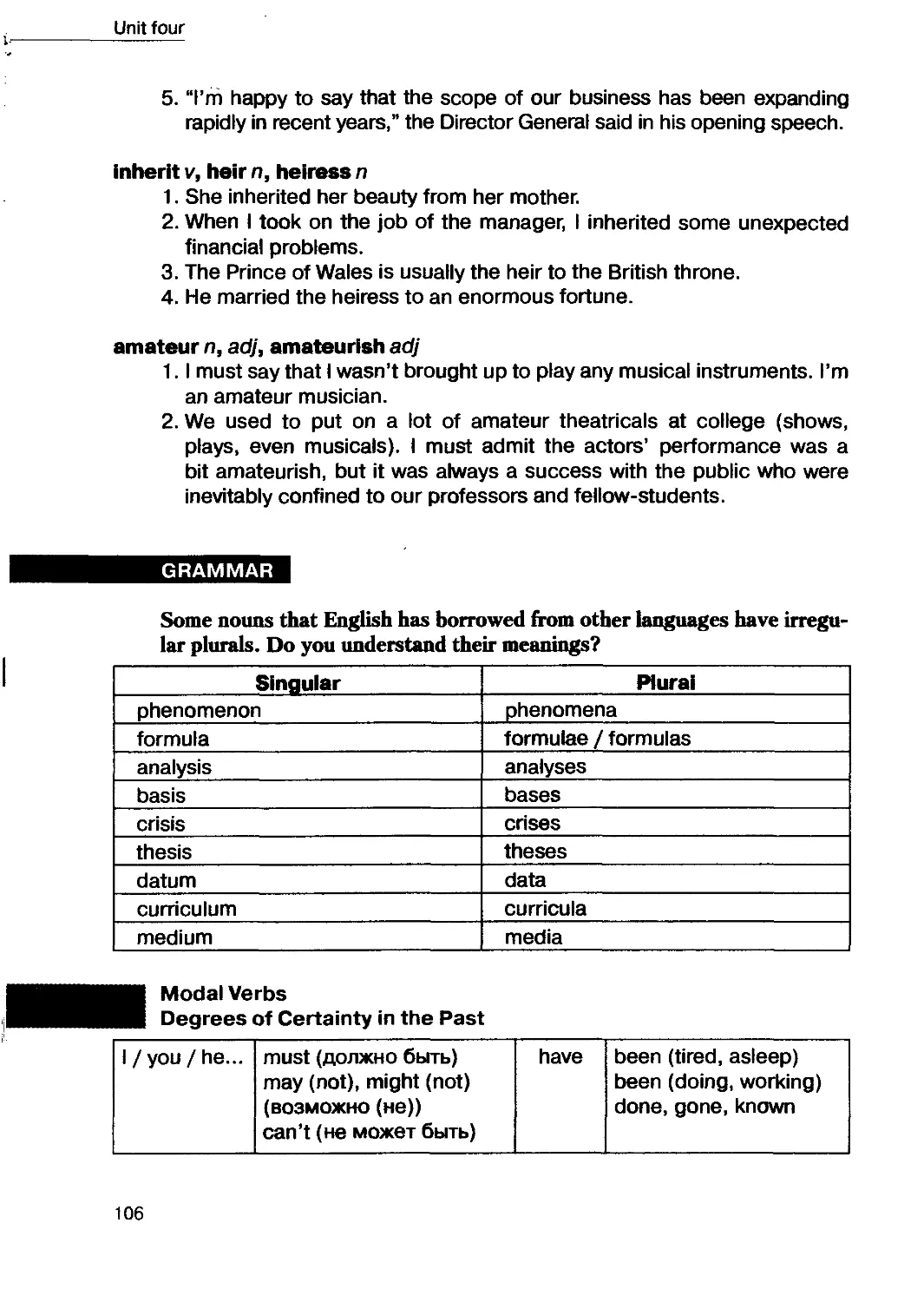
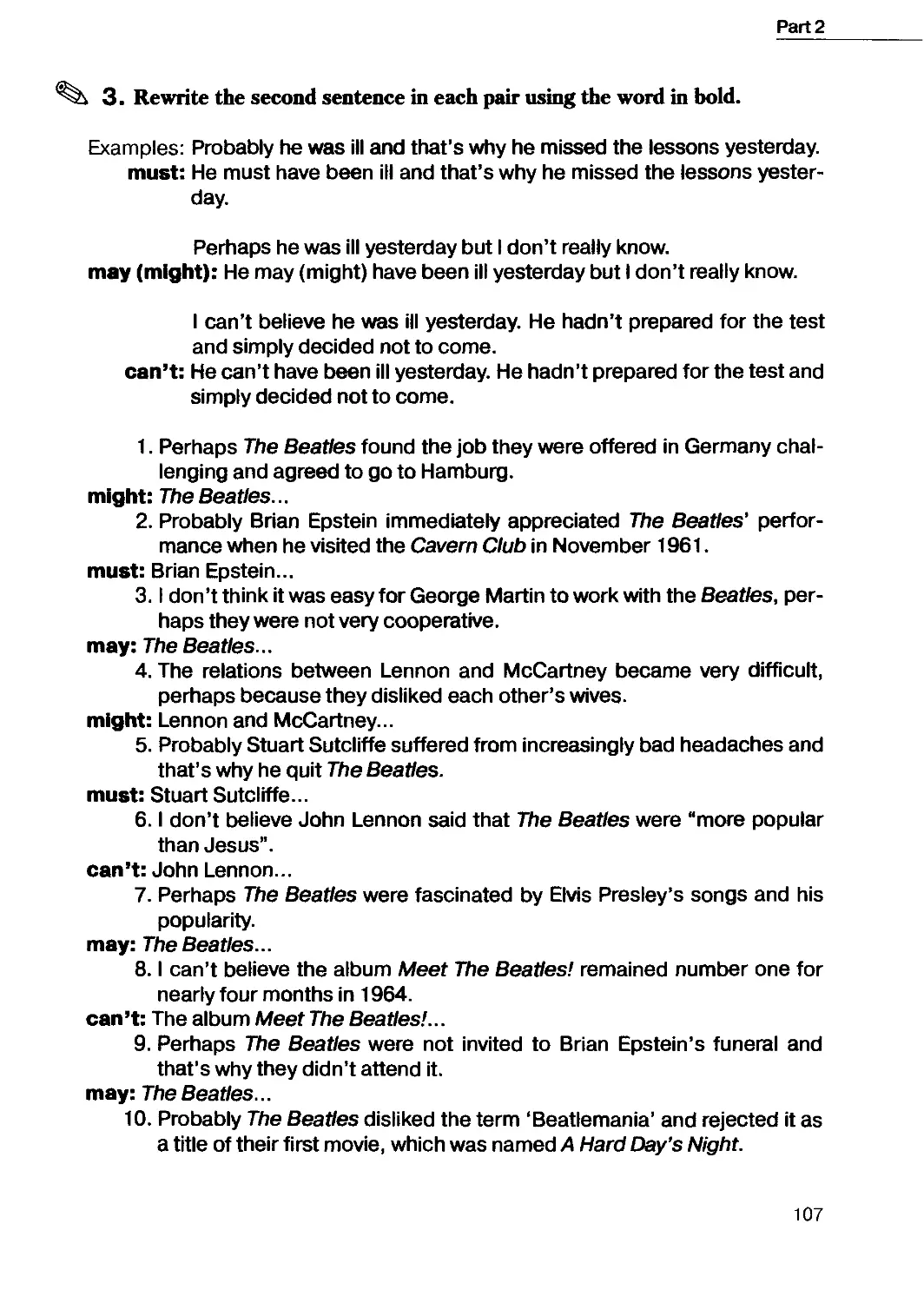
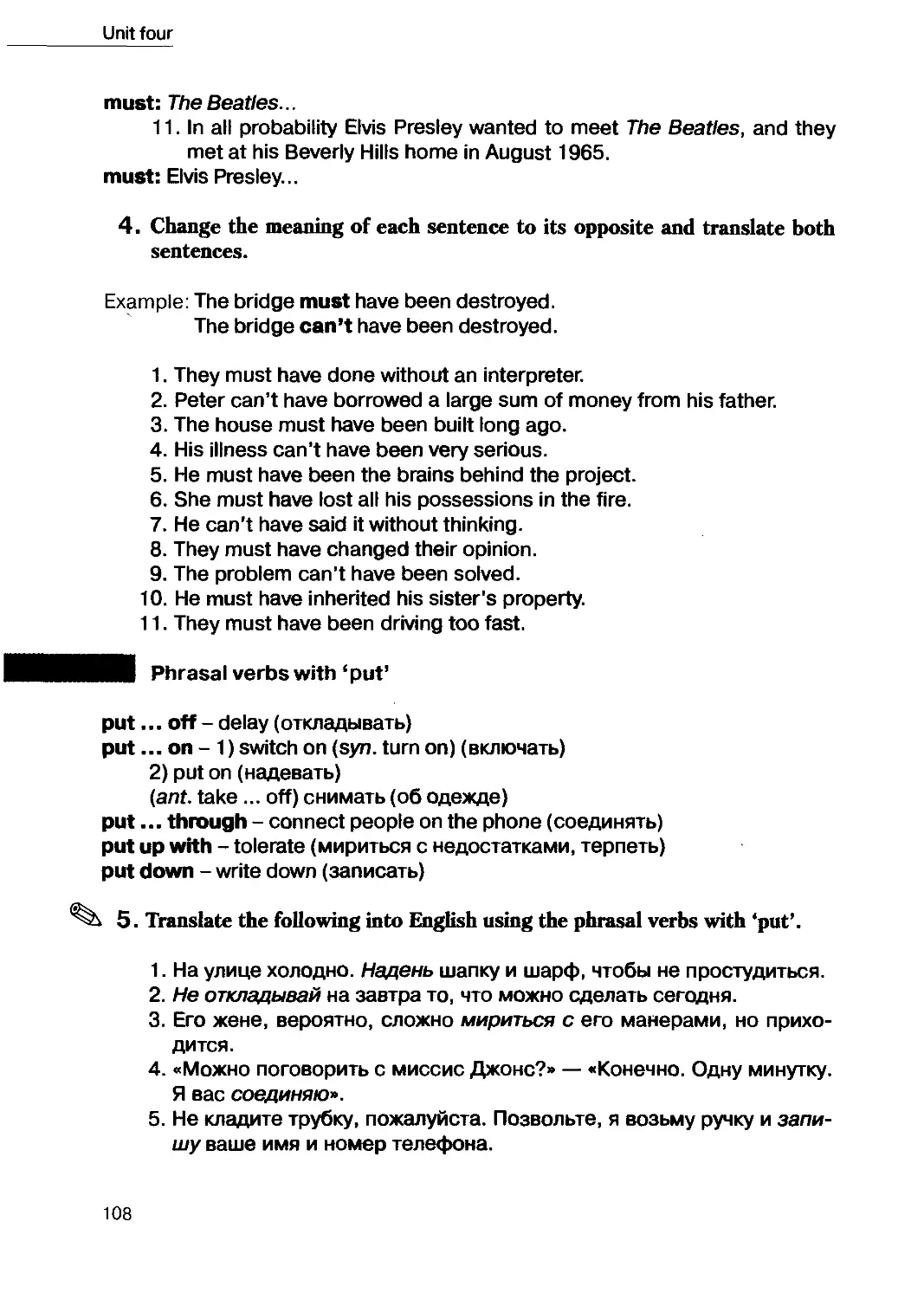
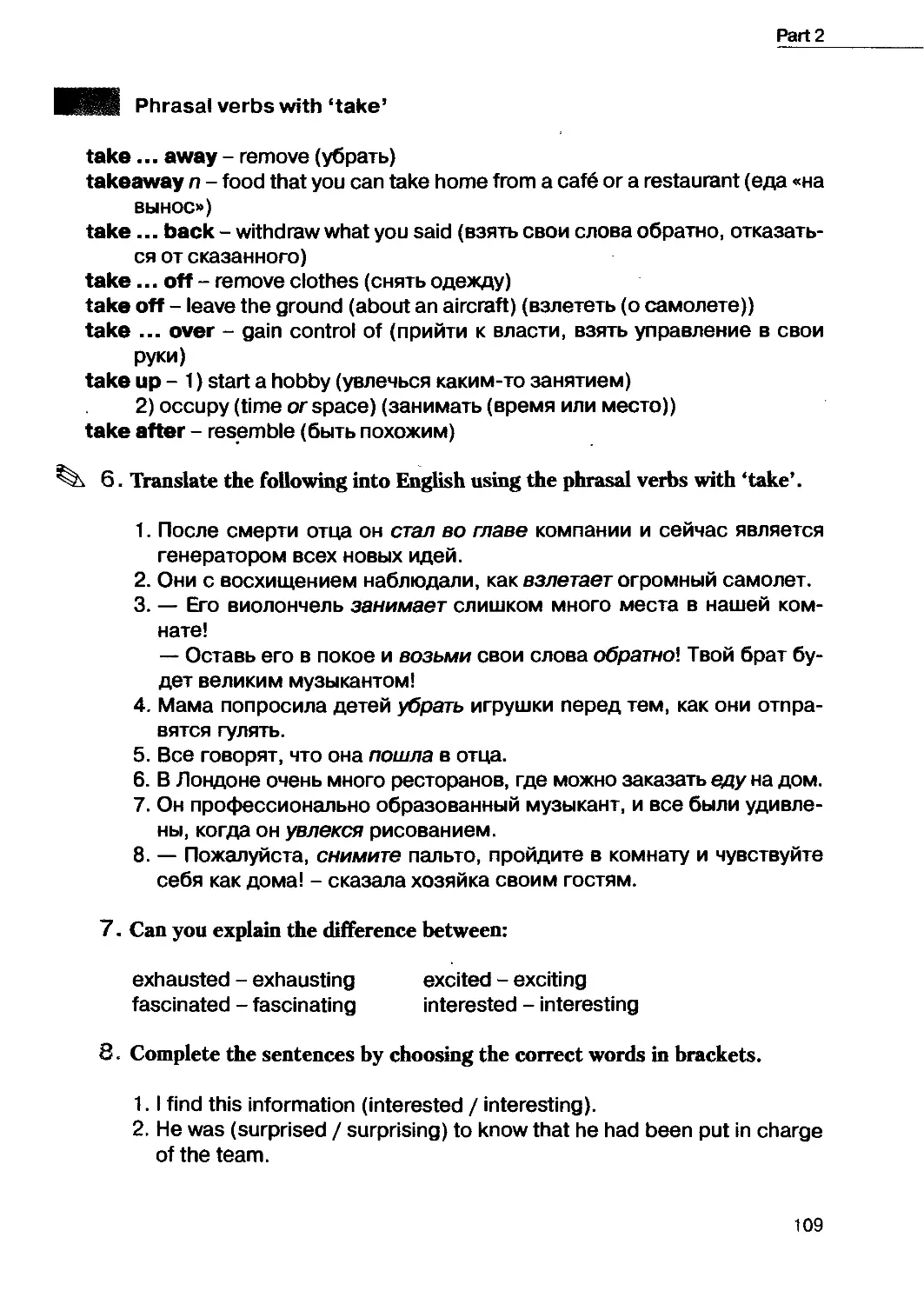

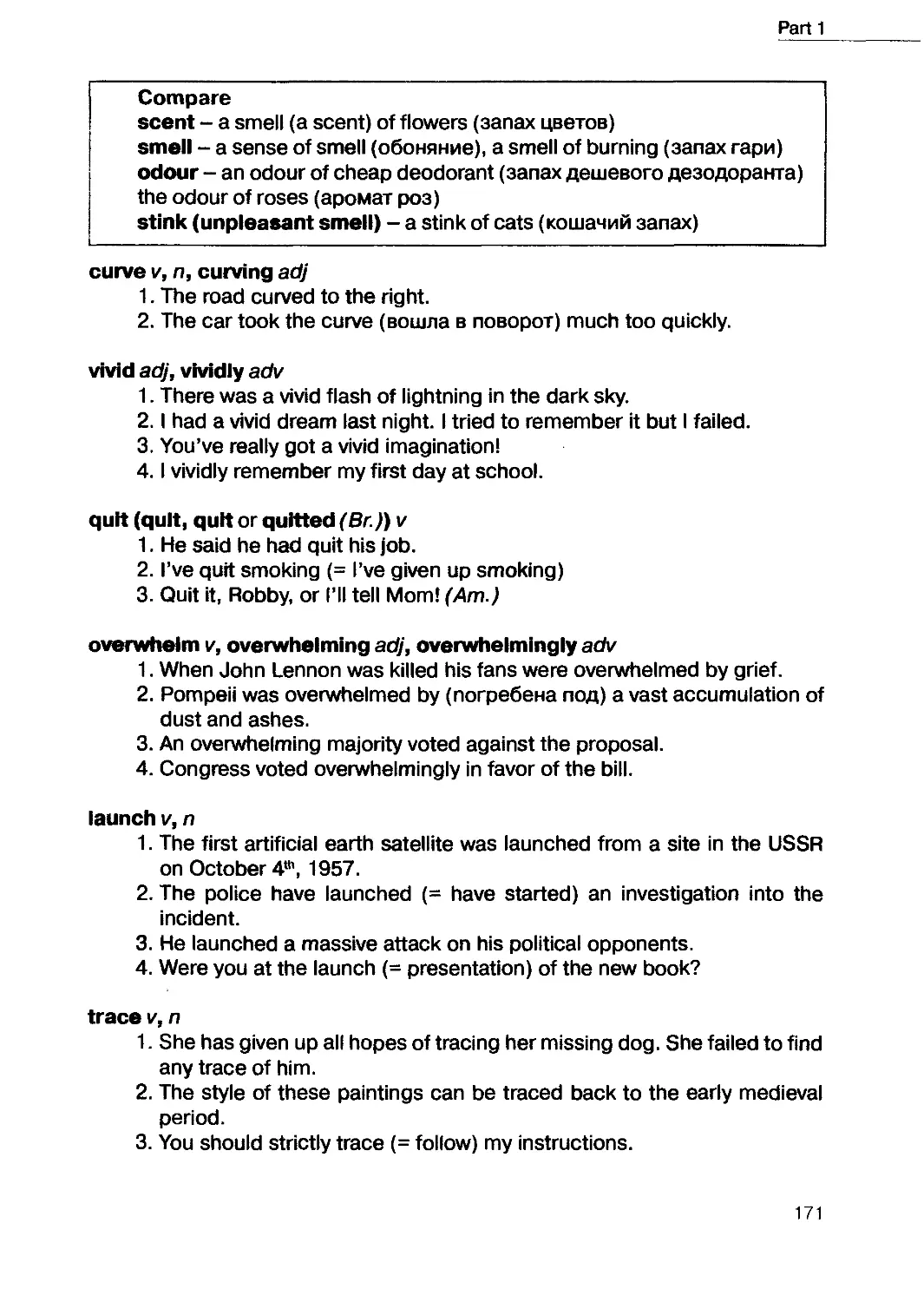
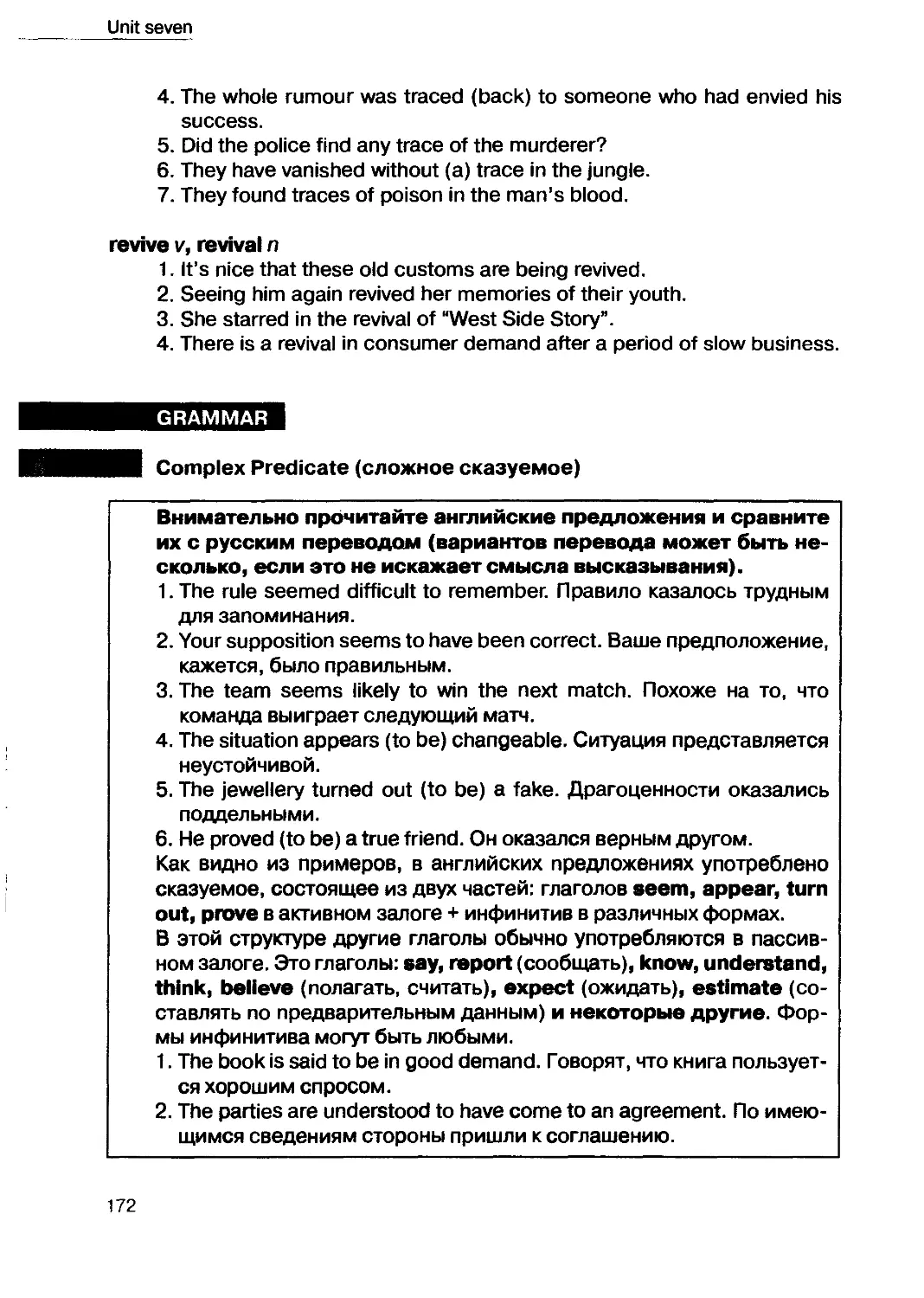
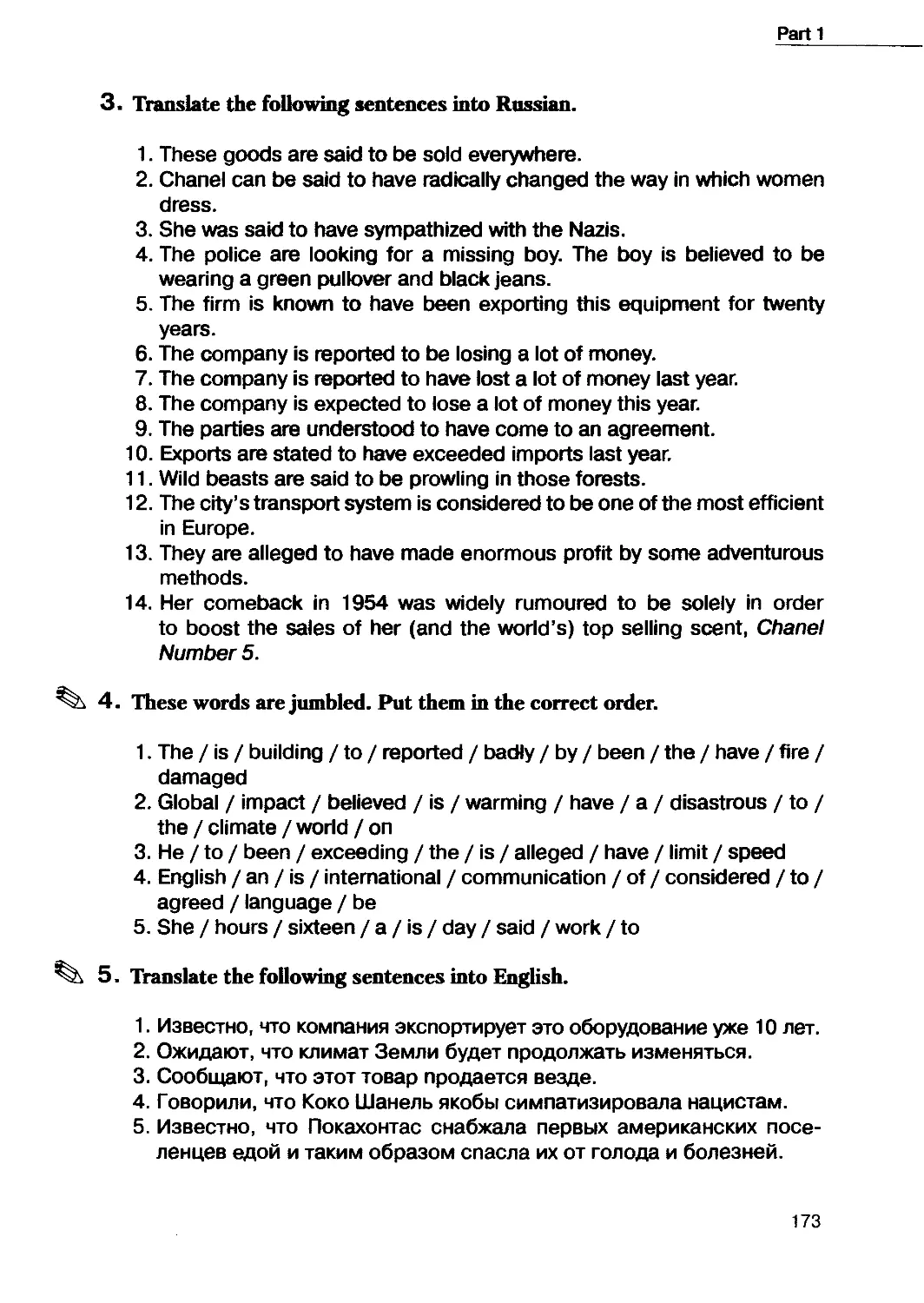
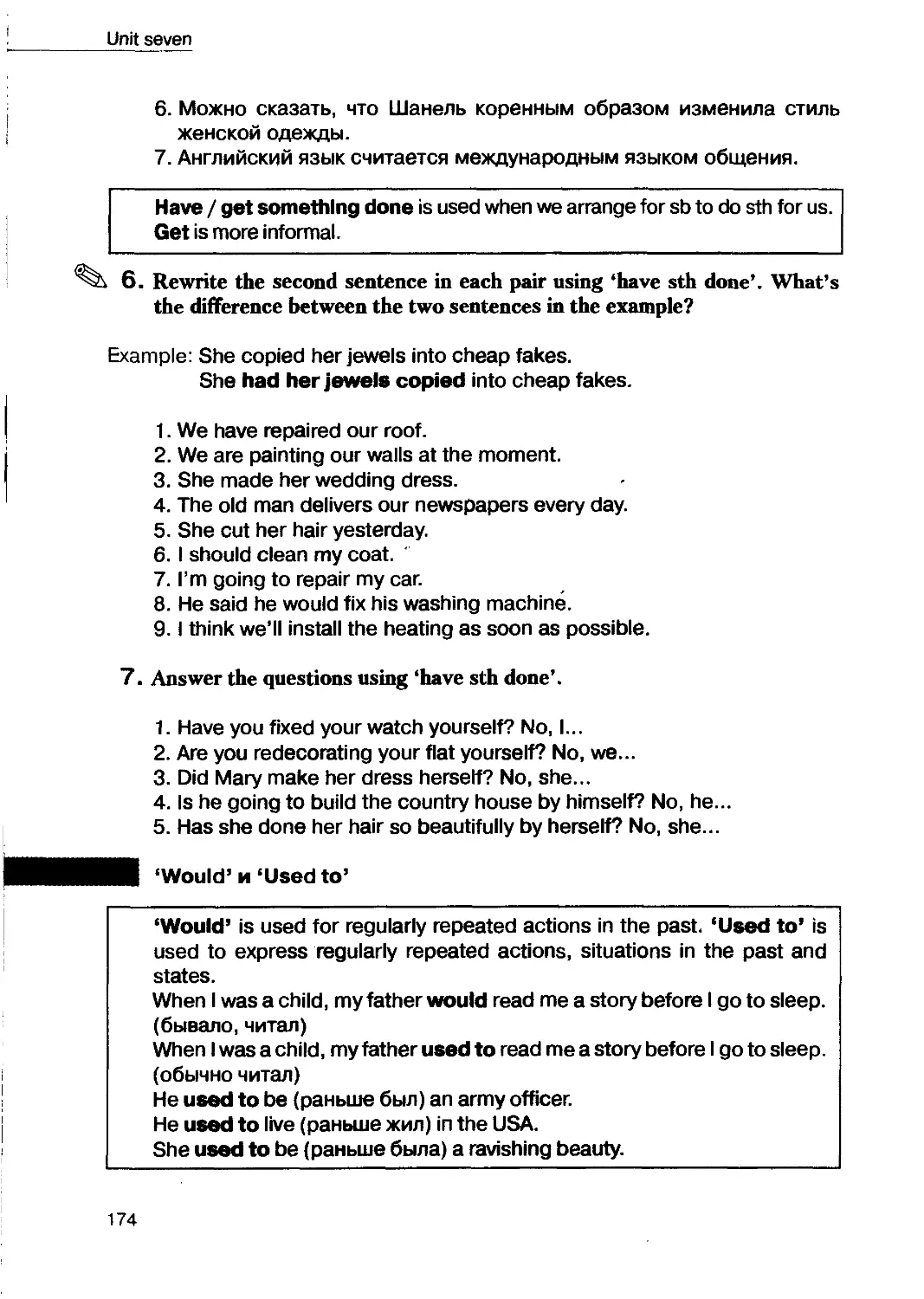

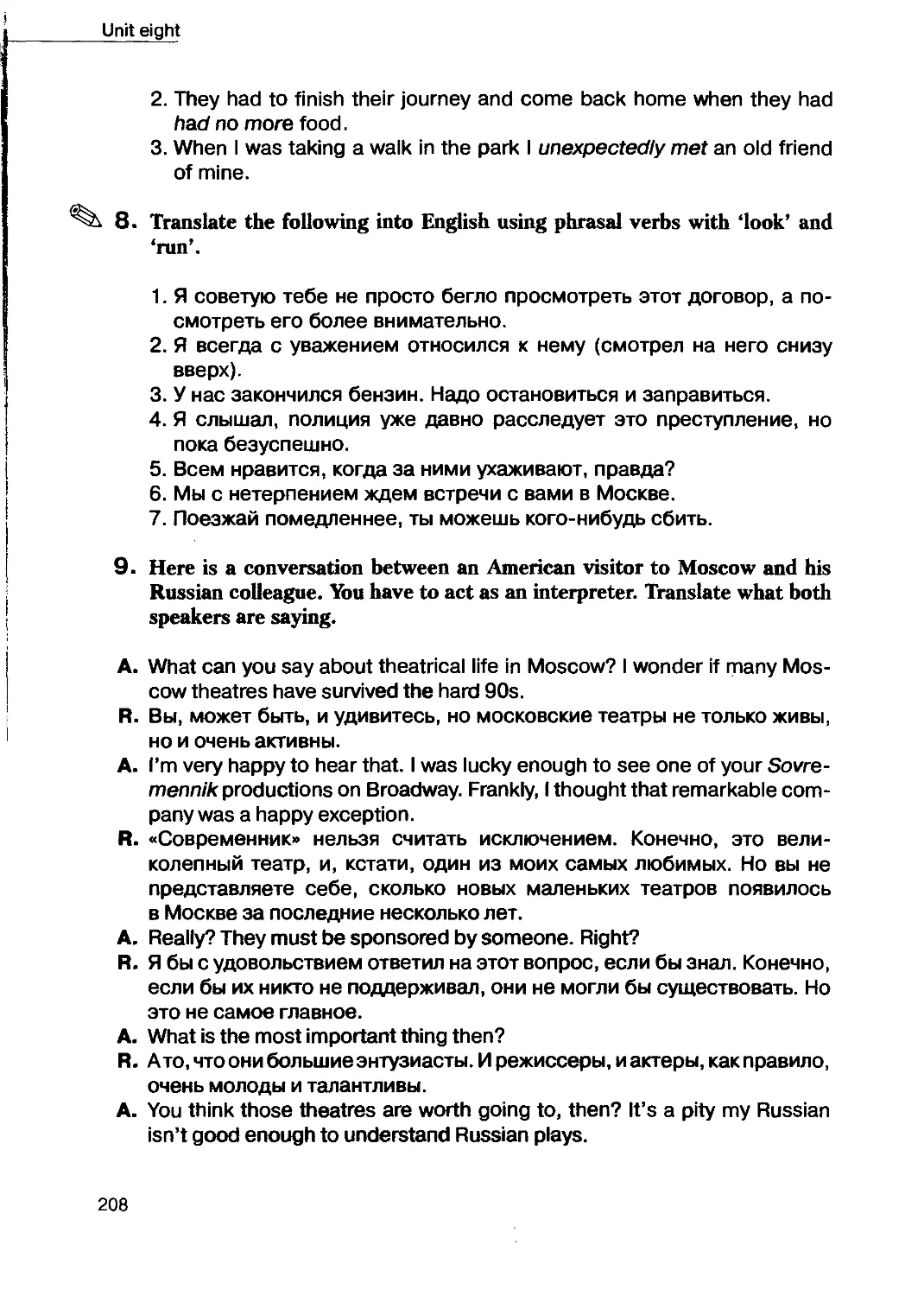
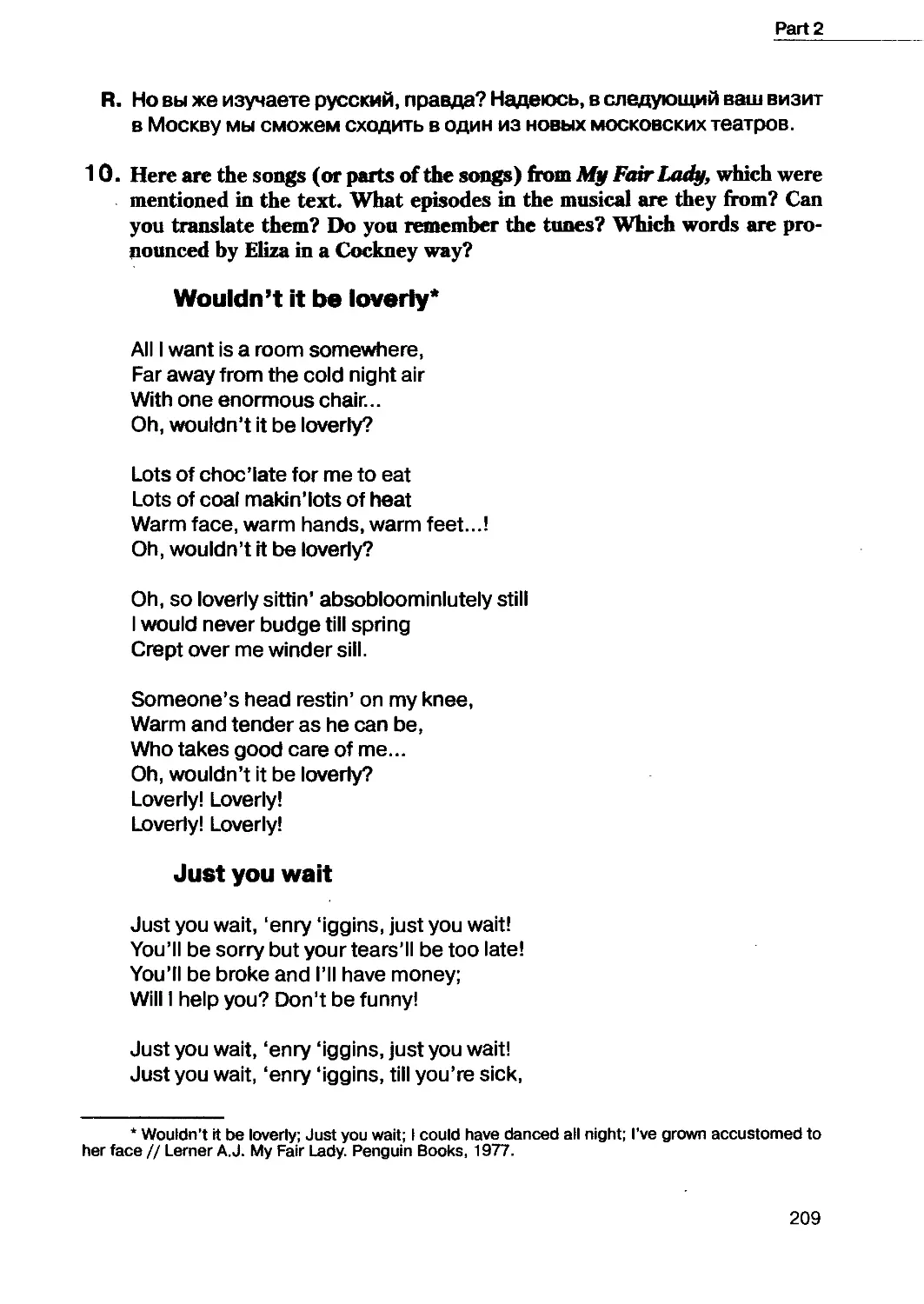
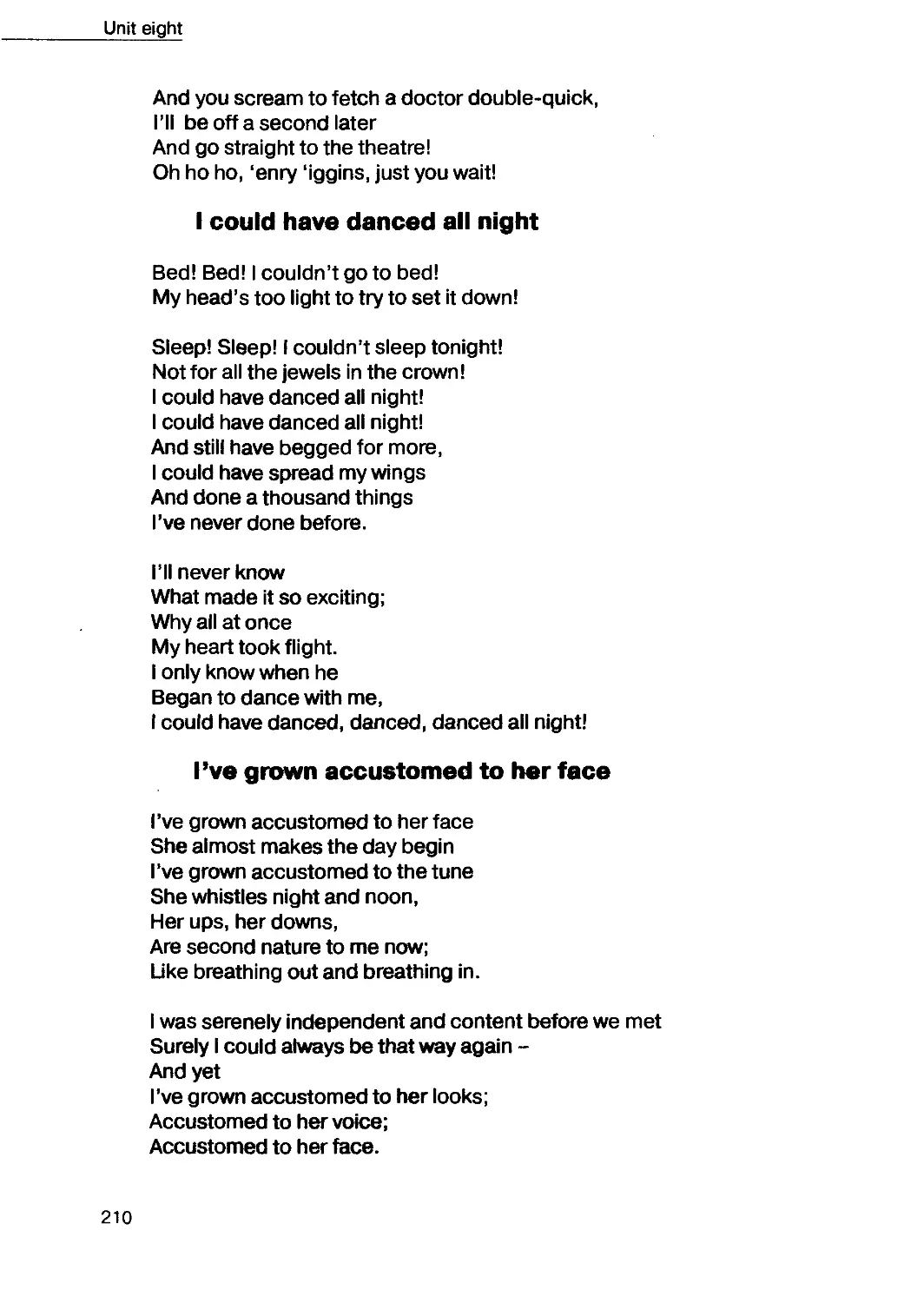
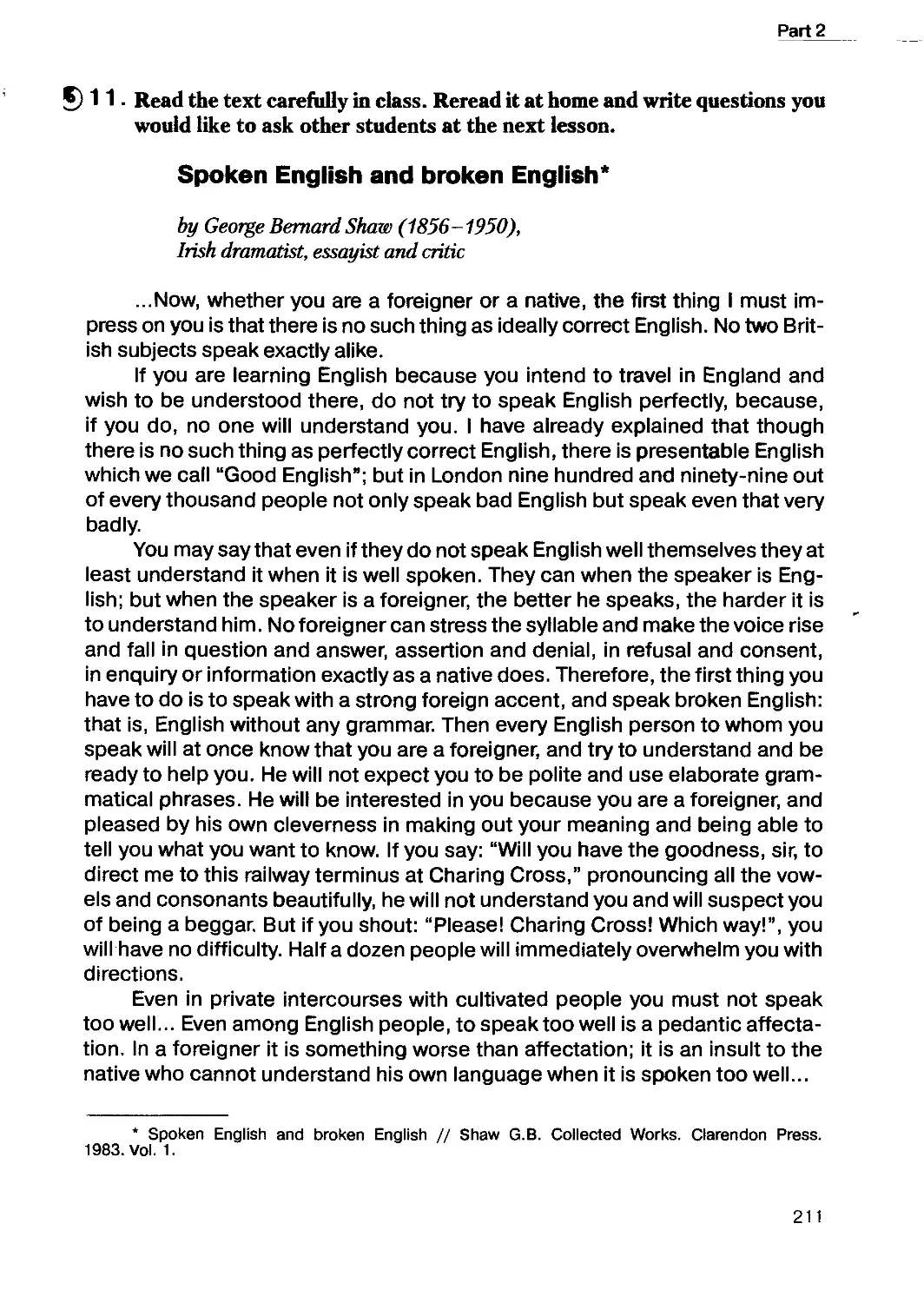

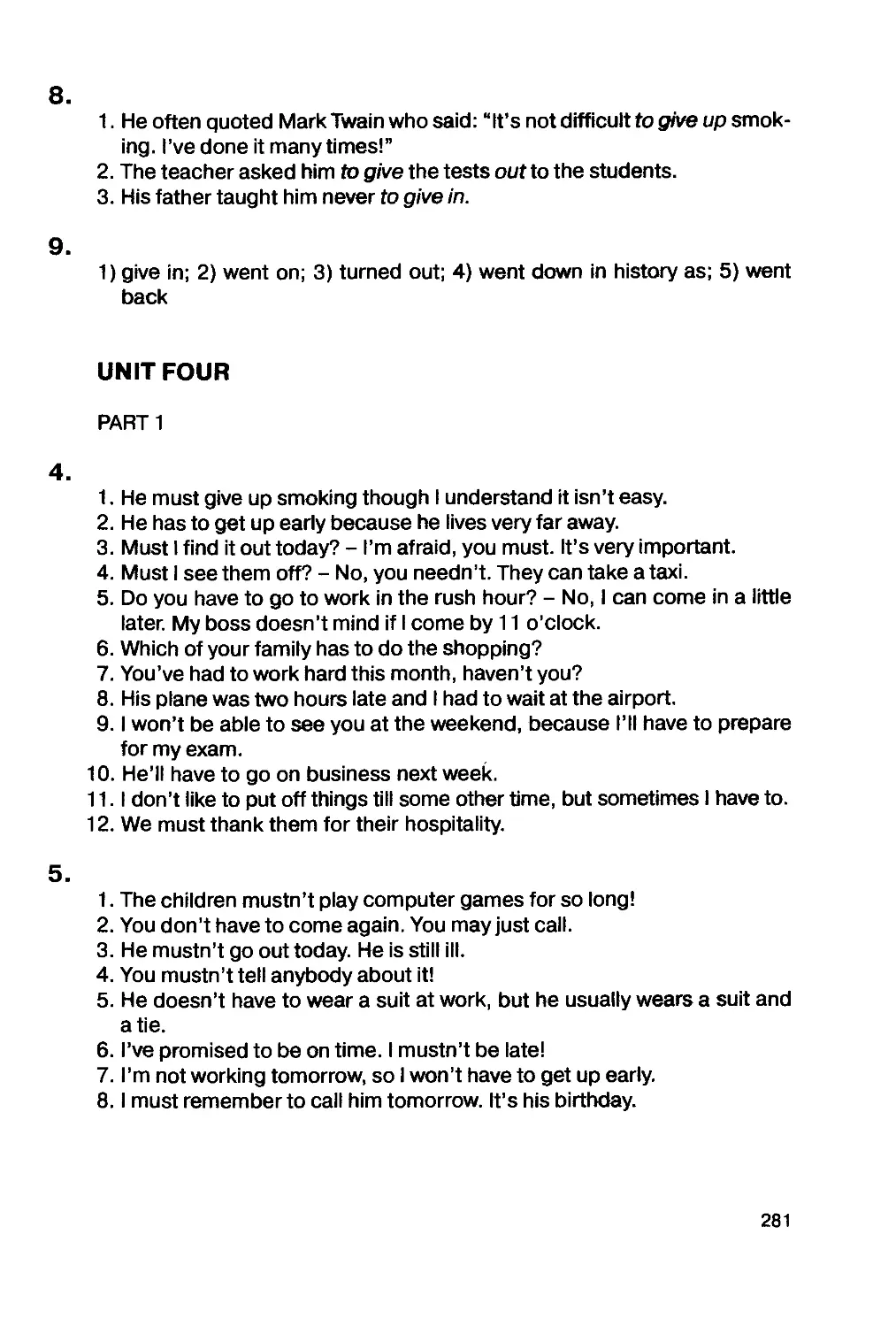
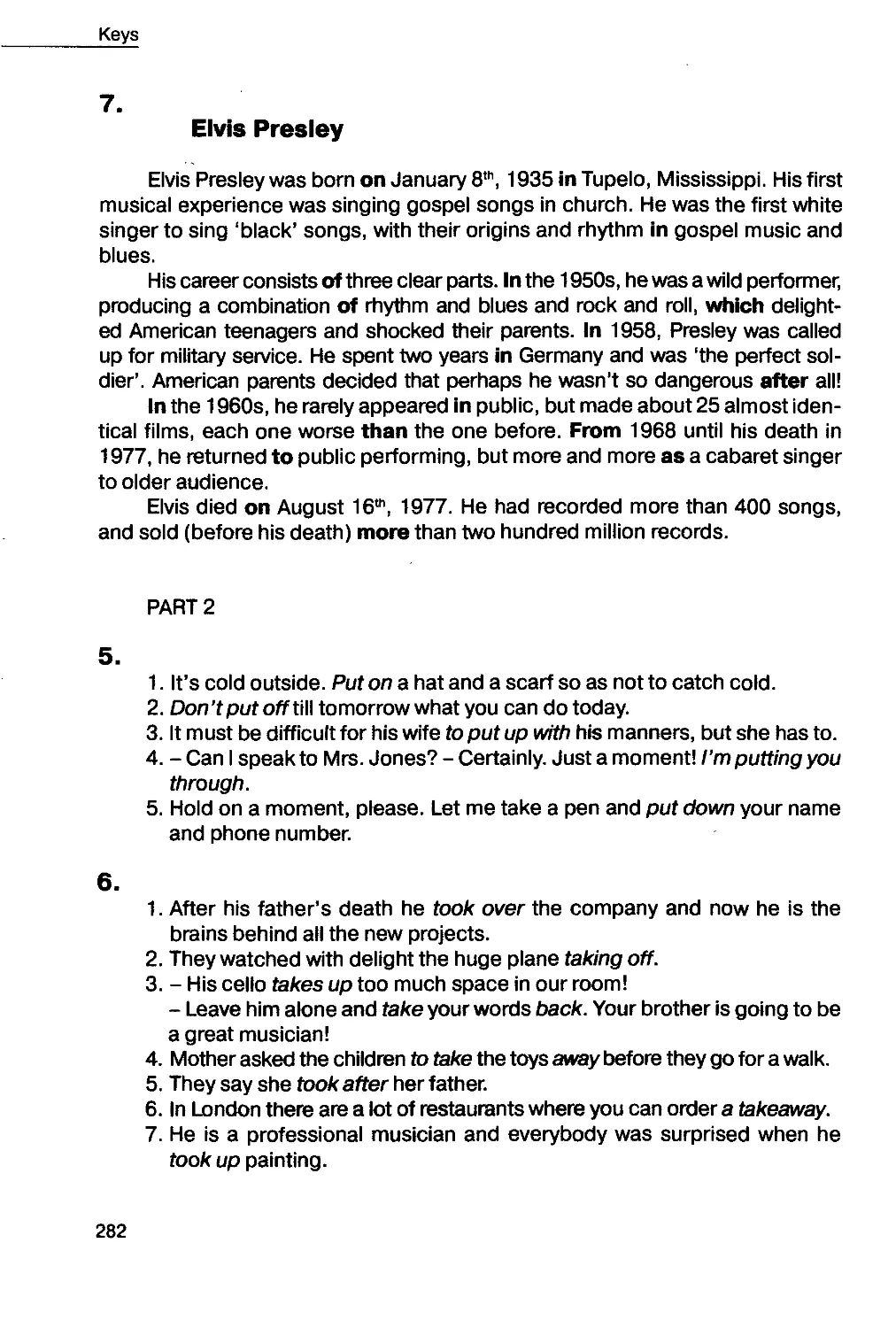
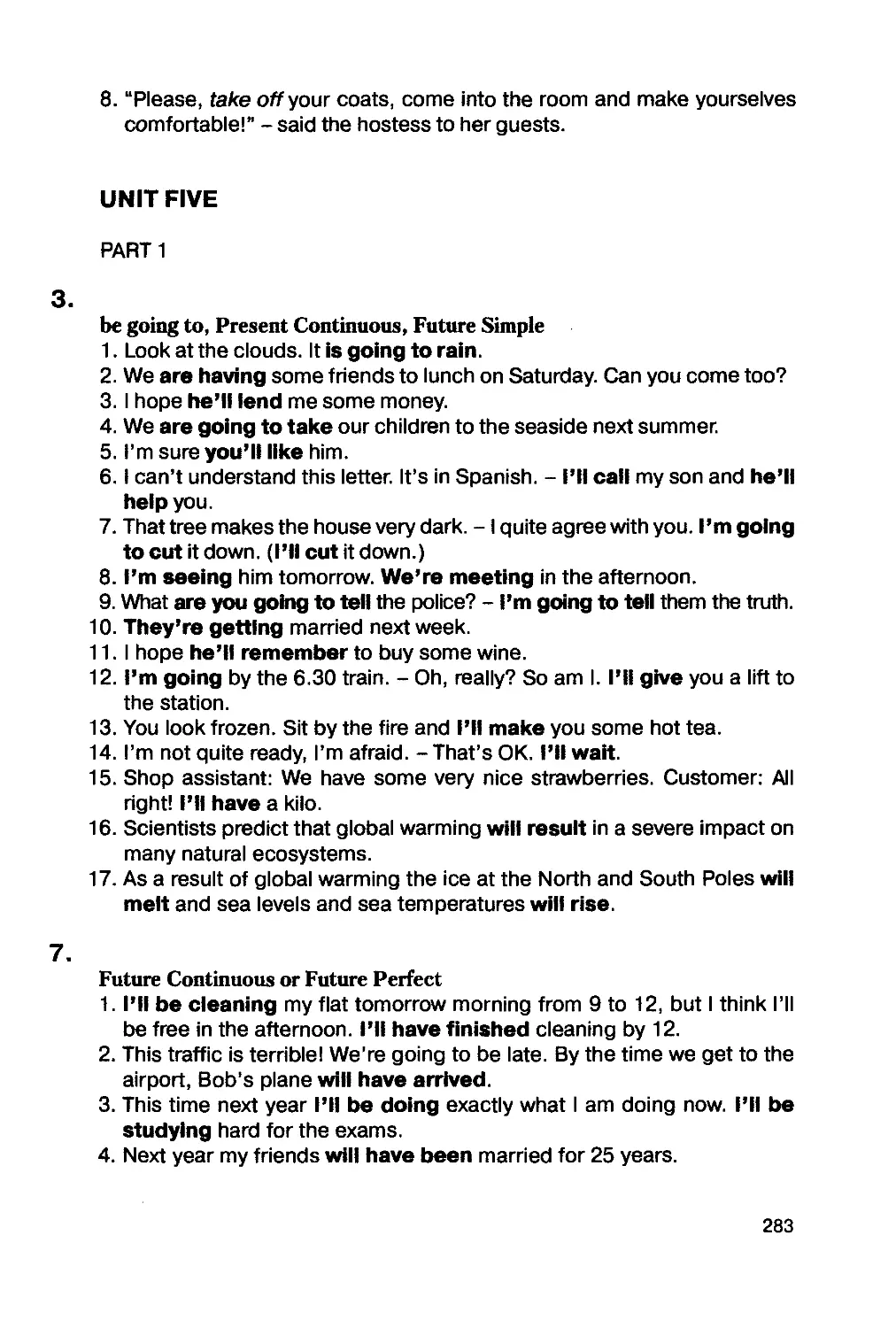
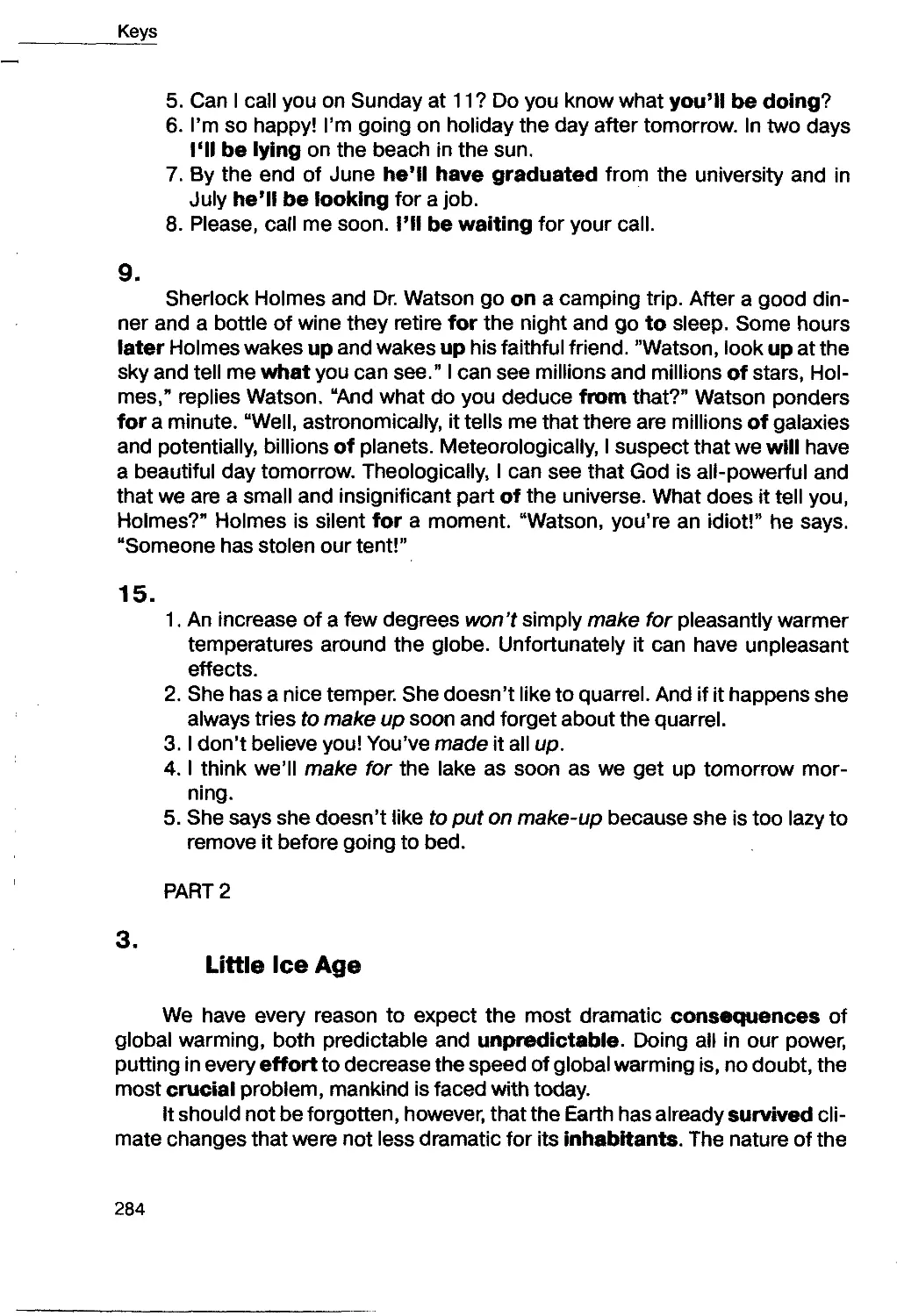
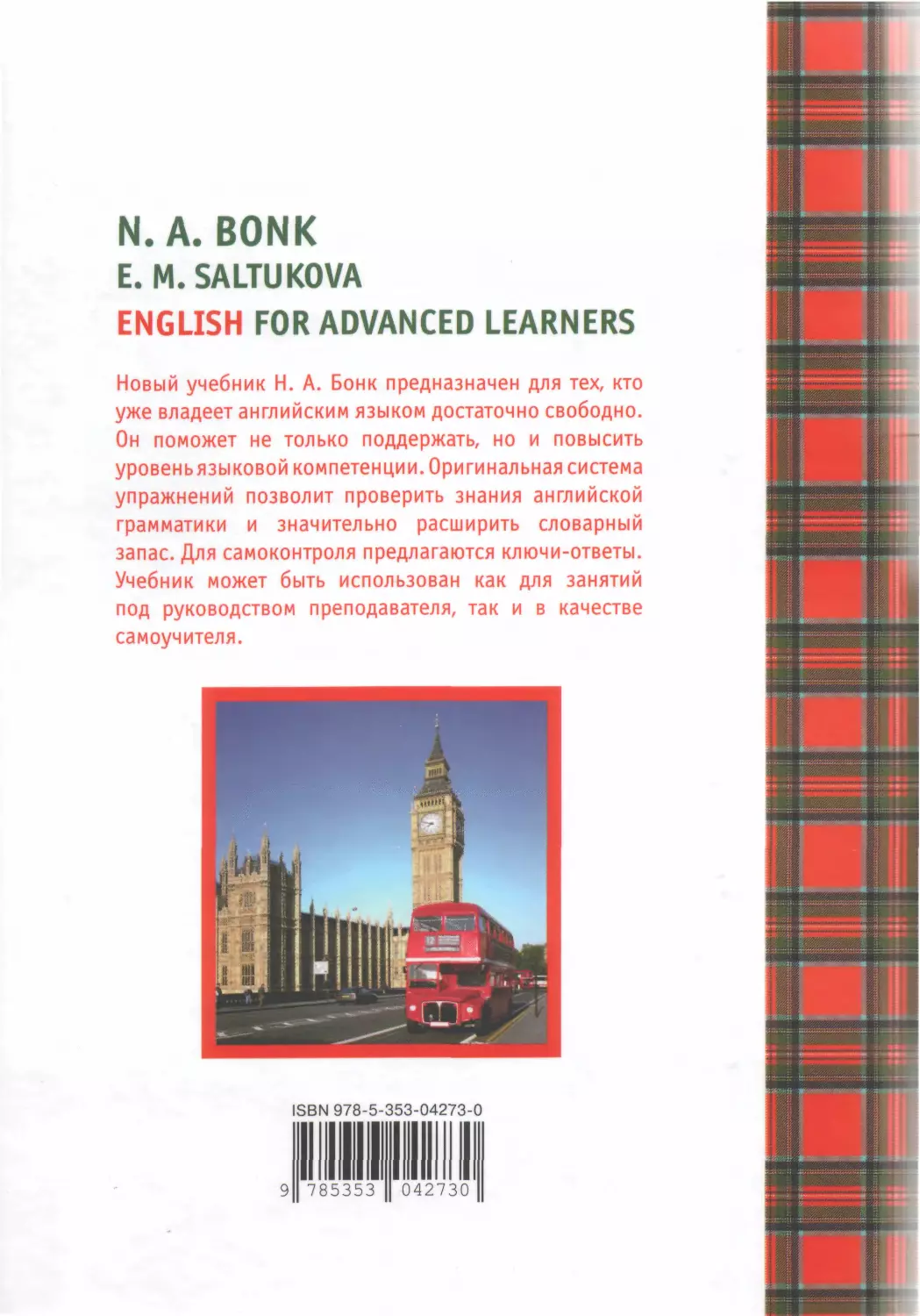
Автор: Бонк Н.А. Салтыкова Е.М.
Теги: английский язык языки мира лингвистика языкознание
ISBN: 978-5-353-04273-0
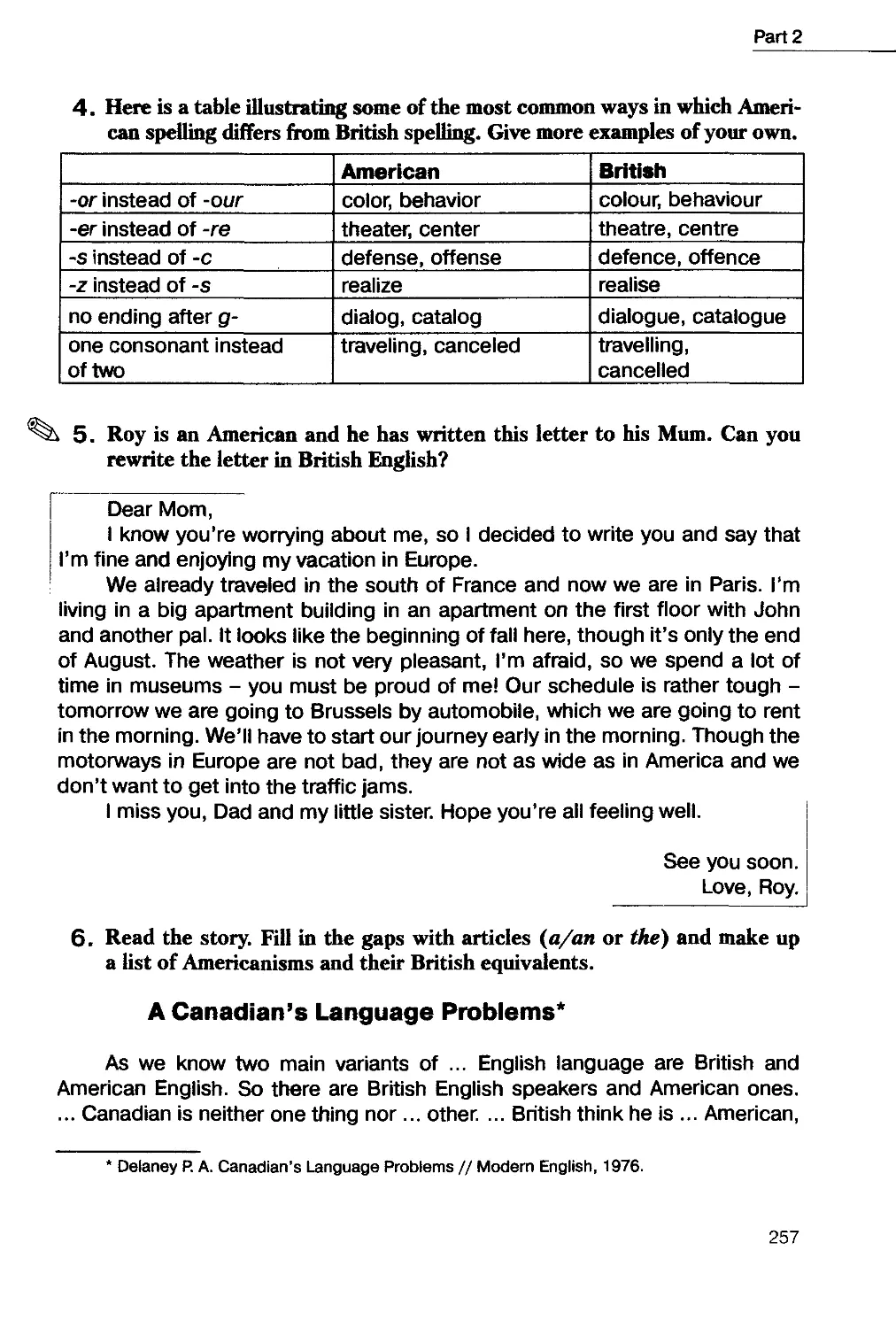
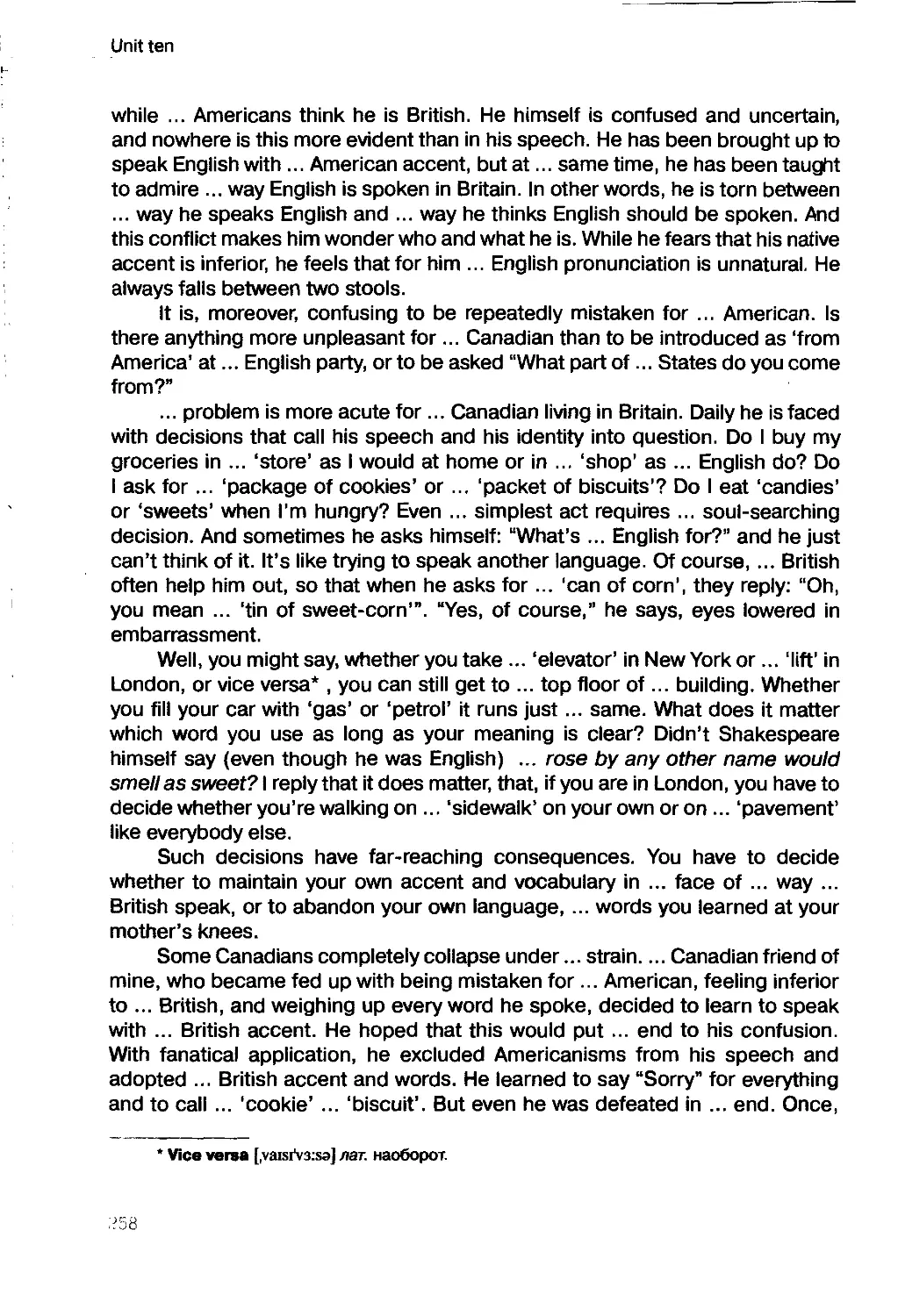
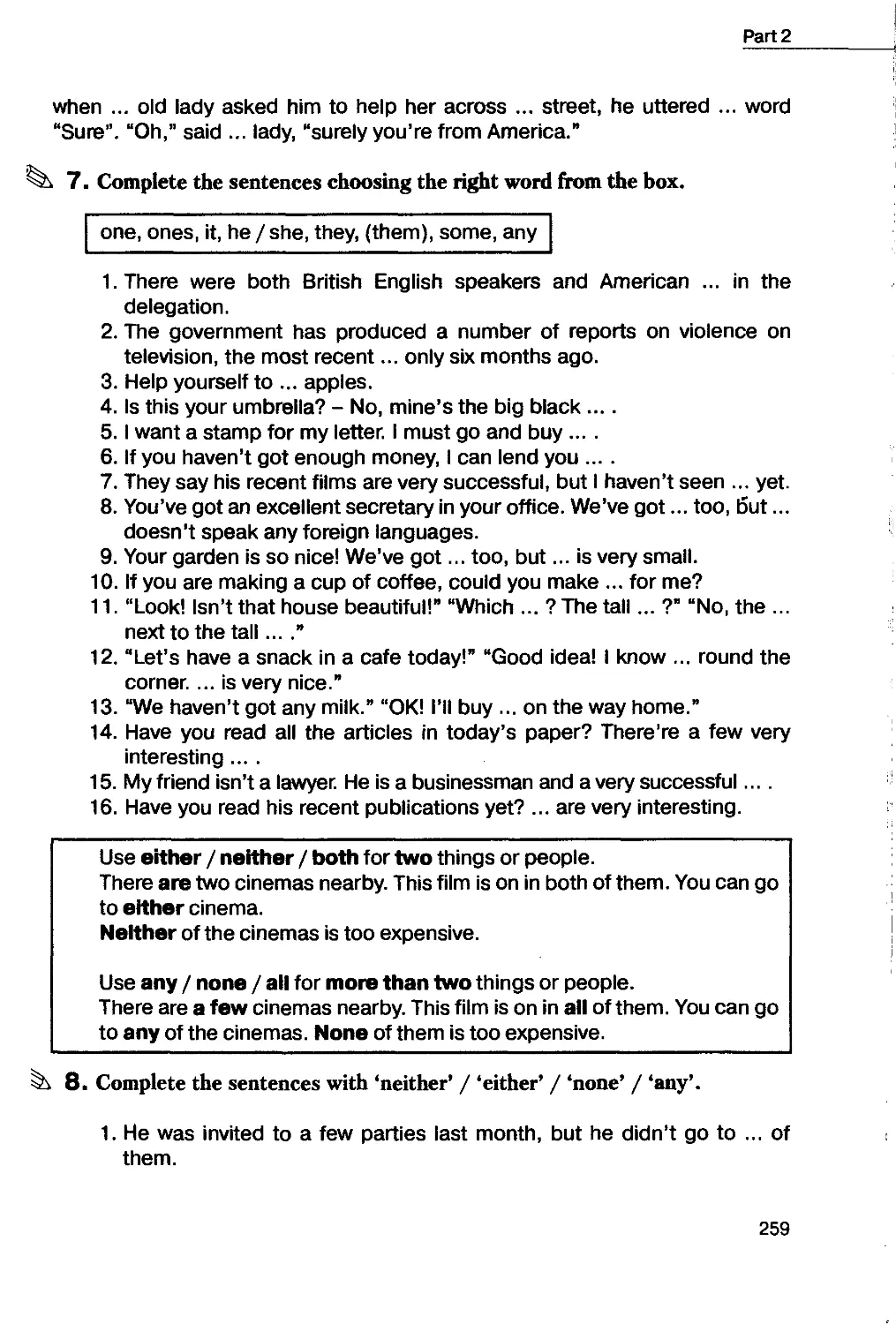
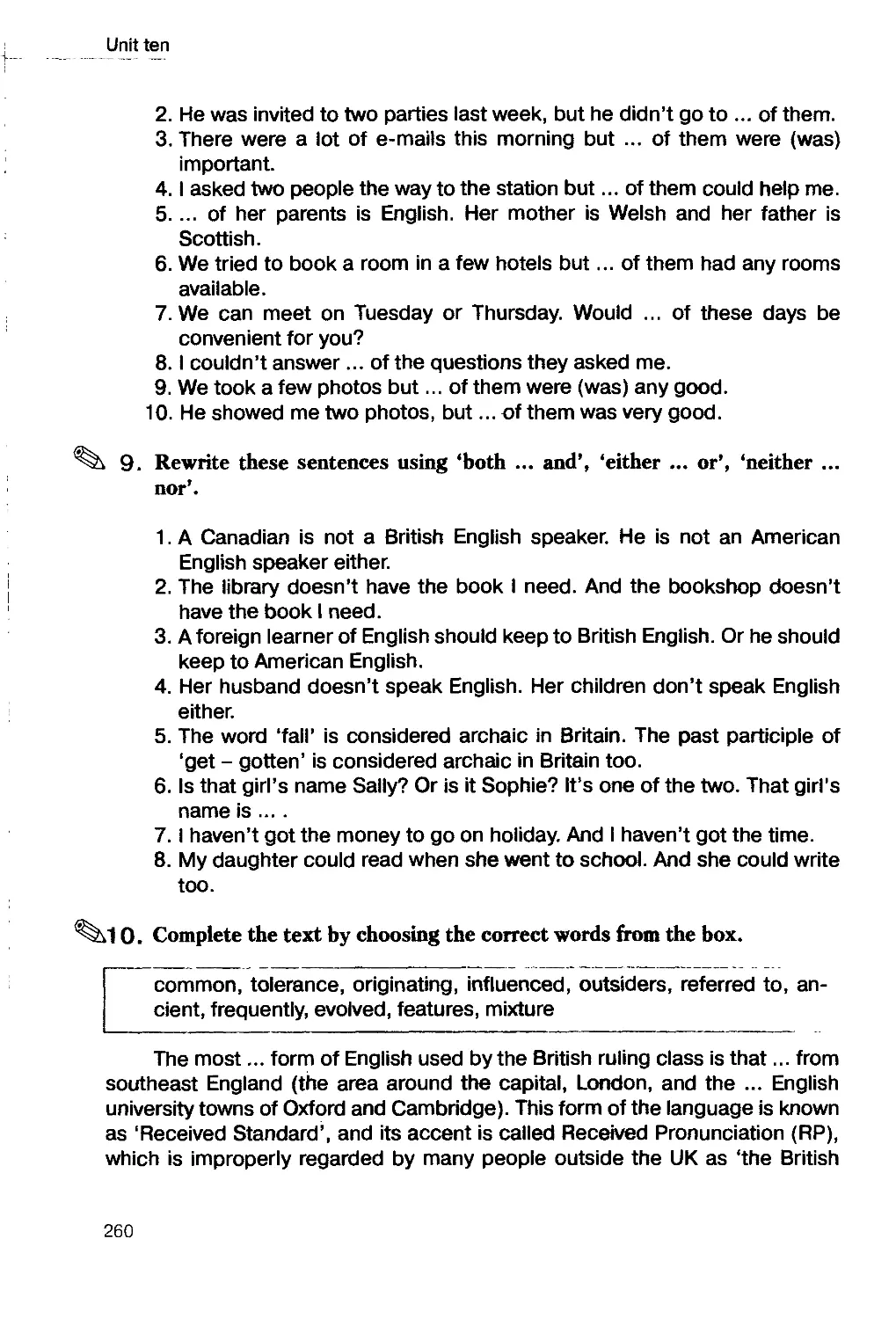
Год: 2009


Текст
                    5} «I
и
X/ Н. А. БОНК I
Е. М. САЛТЫКОВА I
English
ADVANCED
ZU EARNERS
Продвинутый уровень
0'
Englis
Продвинутый уровень
МОСКВА
Р О С м э н
2009
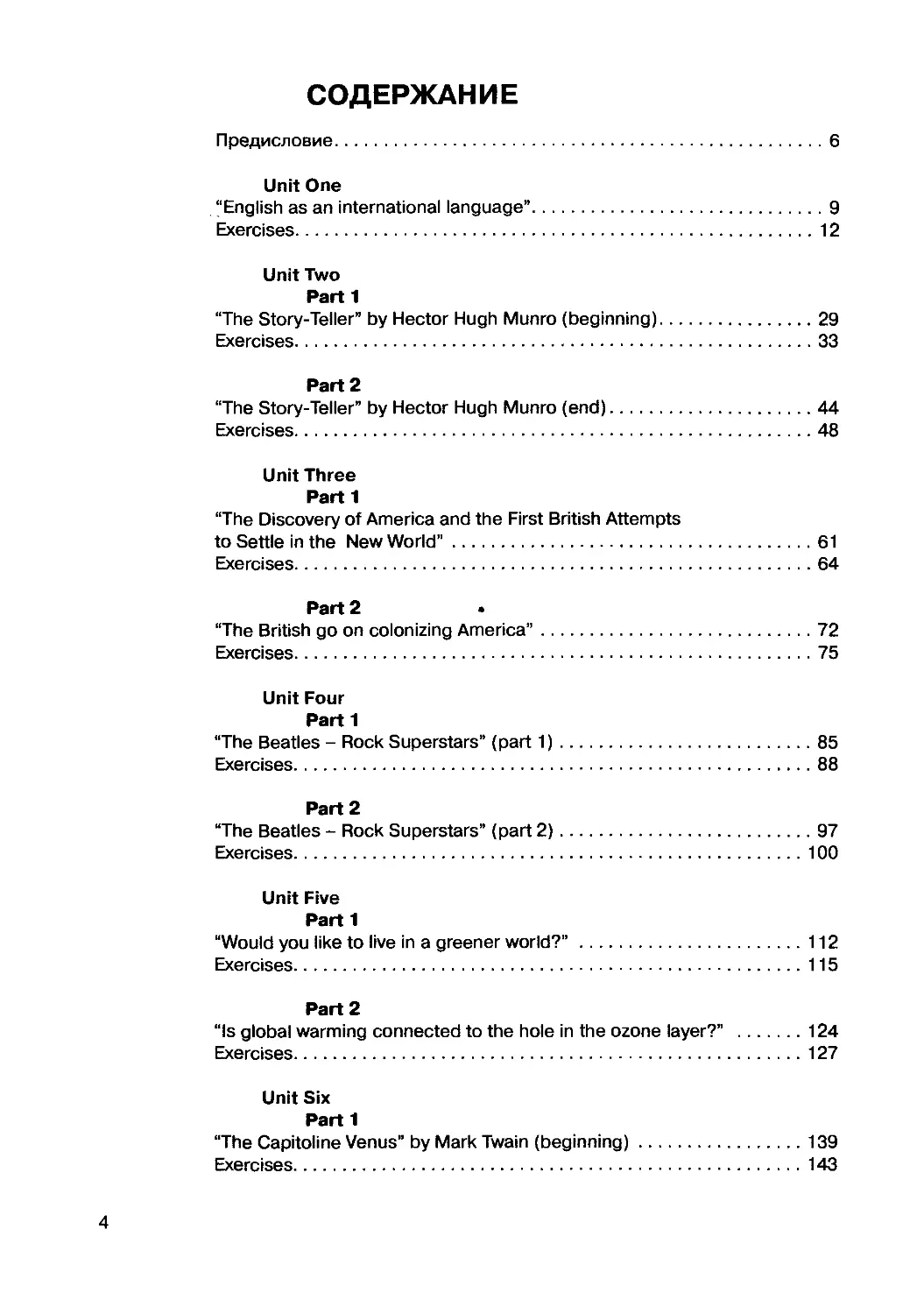
СОДЕРЖАНИЕ
Предисловие............................................................6
Unit One
“English as an international language”.................................9
Exercises.............................................................12
Unit Two
Parti
“The Story-Teller” by Hector	Hugh Munro (beginning)..................29
Exercises.............................................................33
Part 2
“The Story-Teller” by Hector	Hugh Munro (end)........................44
Exercises.............................................................48
Unit Three
Parti
“The Discovery of America and the First British Attempts
to Settle in the	New World”....................................61
Exercises...........................................................64
Part 2	•
“The British go	on colonizing America”..............................72
Exercises...........................................................75
Unit Four
Parti
“The Beatles - Rock Superstars” (part 1)............................85
Exercises...........................................................88
Part 2
“The Beatles - Rock Superstars” (part 2)............................97
Exercises..........................................................100
Unit Five
Part 1
“Would you like to live in a greener world?” ......................112
Exercises..........................................................115
Part 2
“Is global warming connected to the hole in the ozone layer?” .....124
Exercises..........................................................127
Unit Six
Part 1
“The Capitoline Venus” by Mark Twain (beginning)...................139
Exercises..........................................................143
4
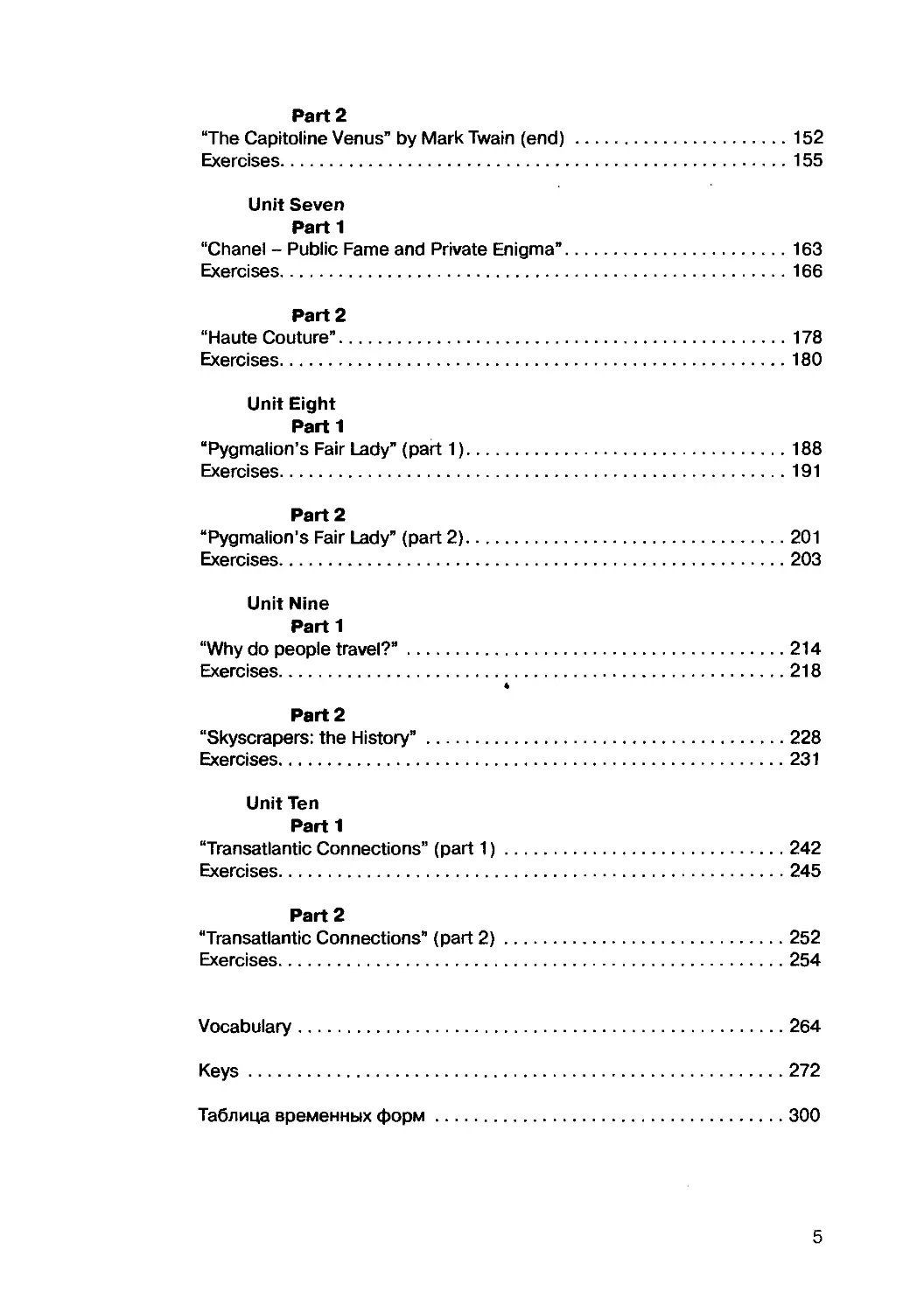
Part 2
“The Capitoline Venus” by Mark Twain (end).........................152
Exercises..........................................................155
Unit Seven
Part 1
“Chanel - Public Fame and Private Enigma”..........................163
Exercises..........................................................166
Part 2
“Haute Couture”....................................................178
Exercises..........................................................180
Unit Eight
Parti
“Pygmalion’s Fair Lady”	(part	1)..................................188
Exercises..........................................................191
Part 2
“Pygmalion’s Fair Lady”	(part	2)..................................201
Exercises..........................................................203
Unit Nine
Part 1
“Why do people travel?”............................................214
Exercises..........................................................218
*
Part 2
“Skyscrapers: the History”.........................................228
Exercises..........................................................231
Unit Ten
Parti
“Transatlantic Connections" (part 1)...............................242
Exercises..........................................................245
Part 2
“Transatlantic Connections” (part 2)...............................252
Exercises..........................................................254
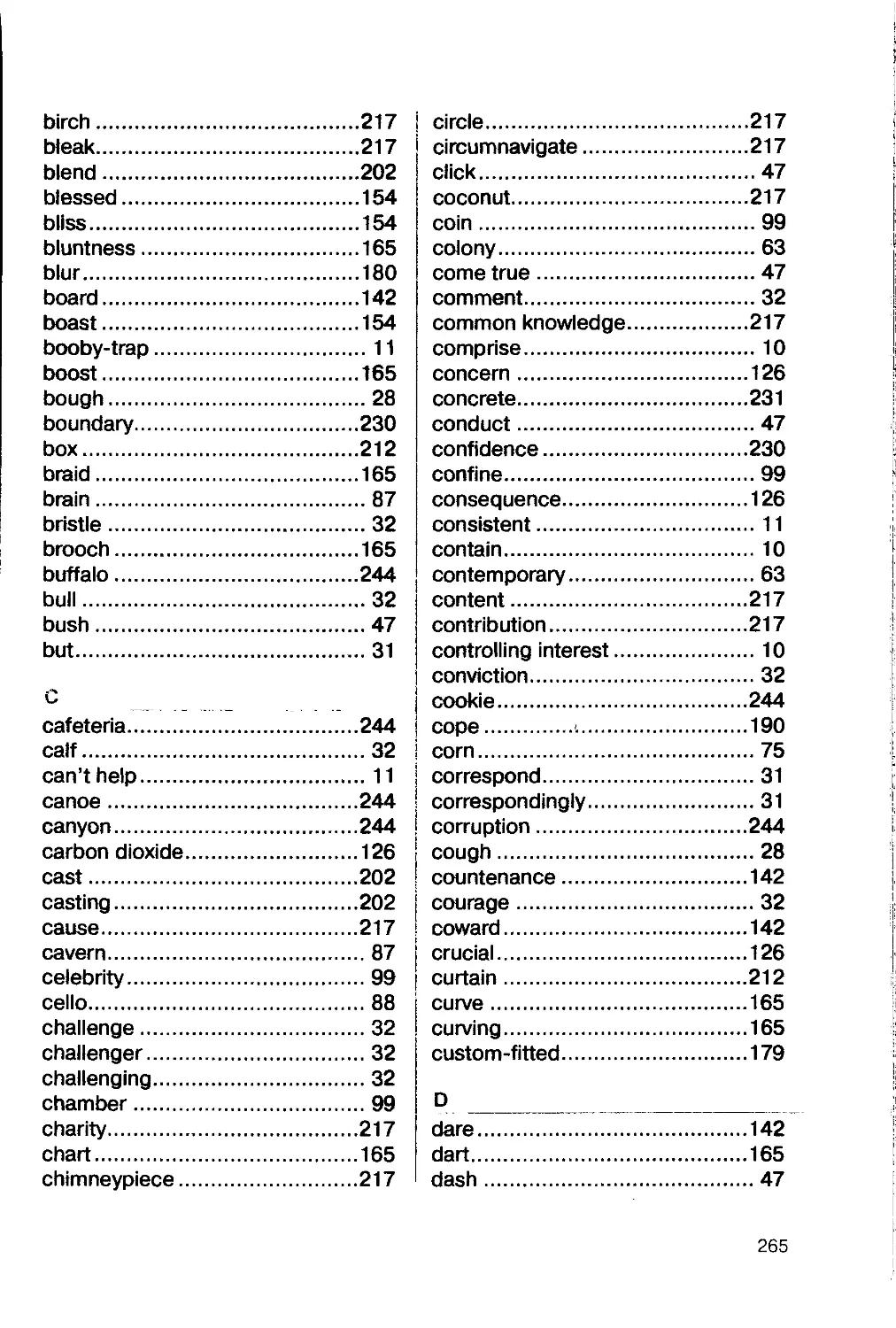
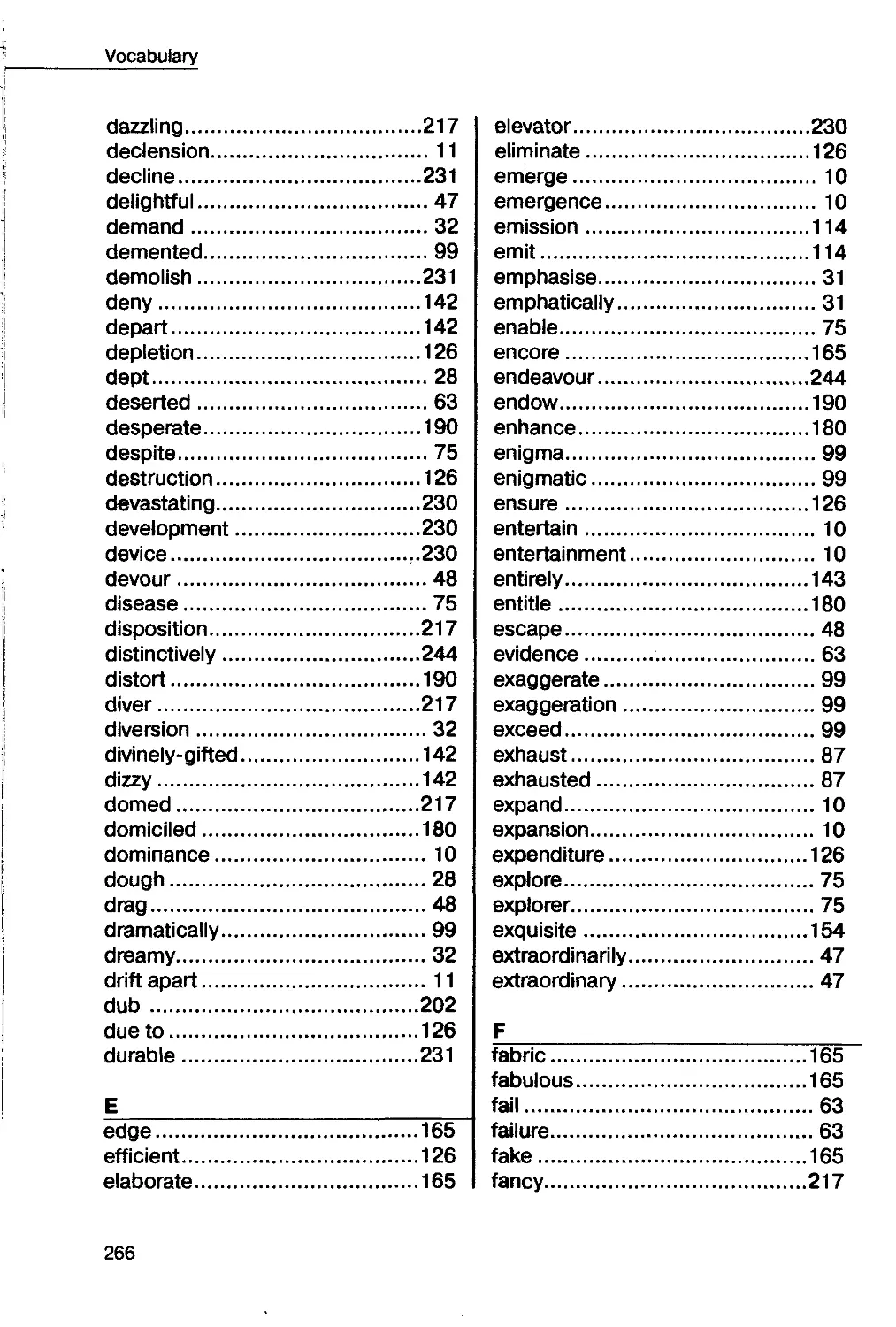
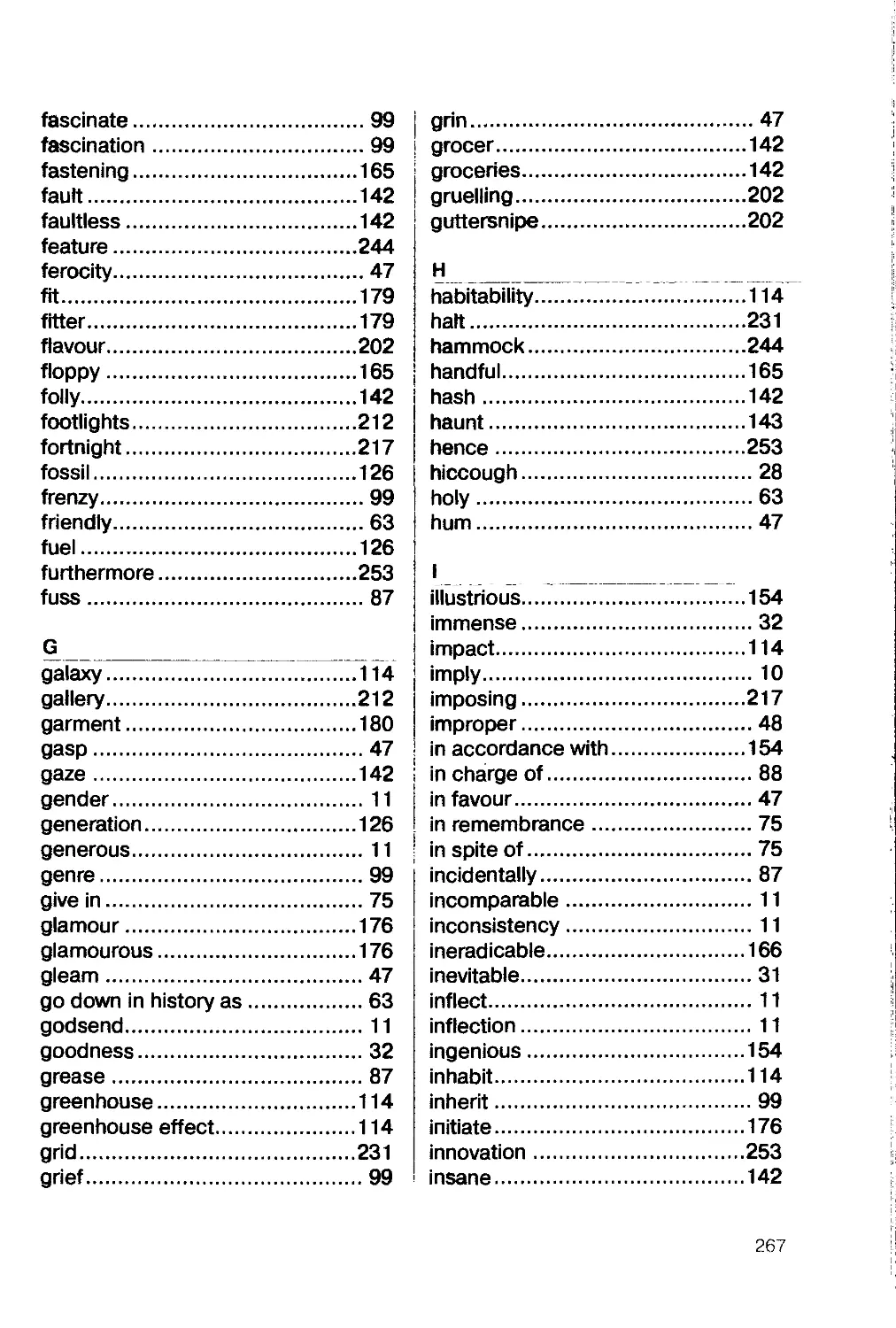
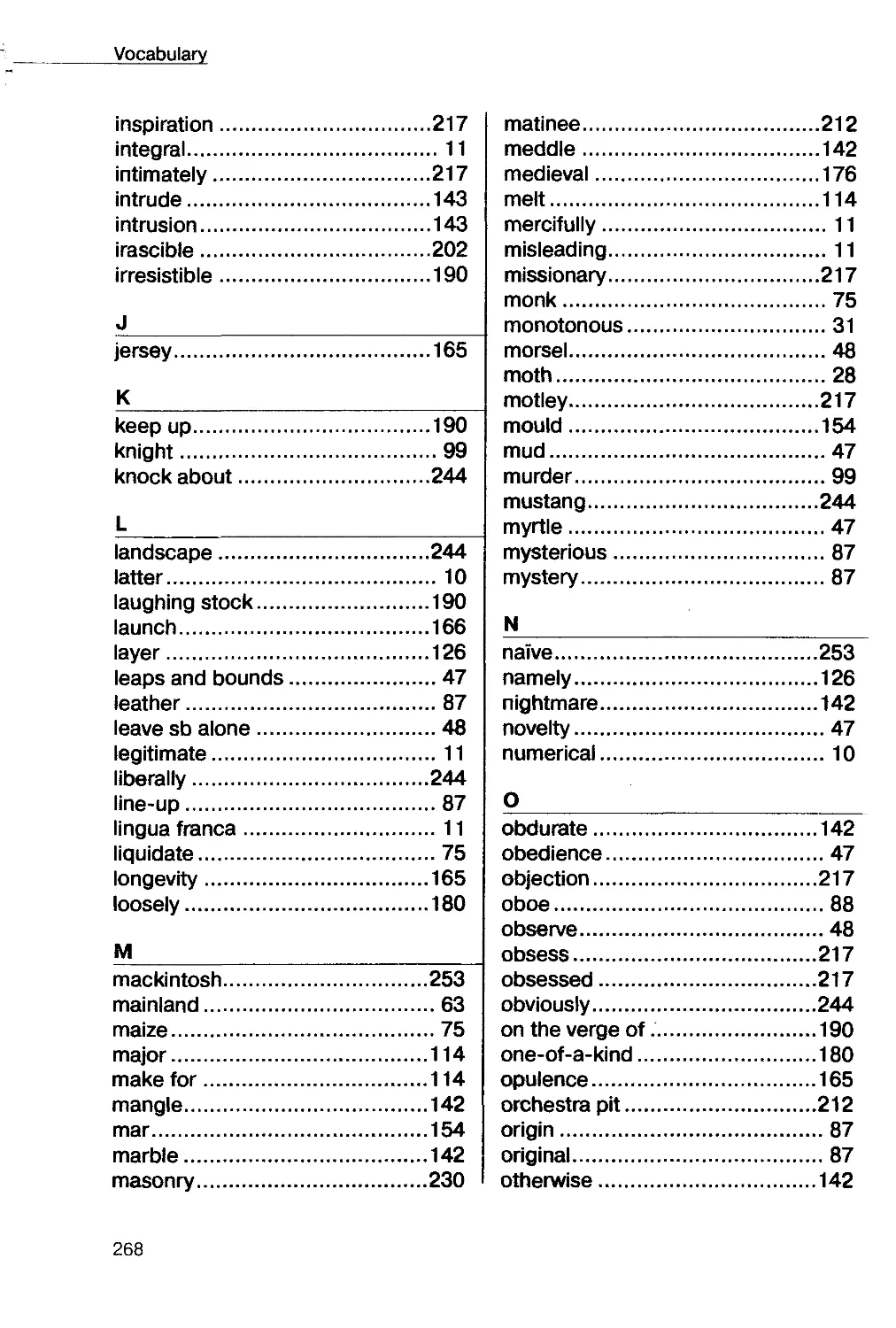
Vocabulary.........................................................264
Keys...............................................................272
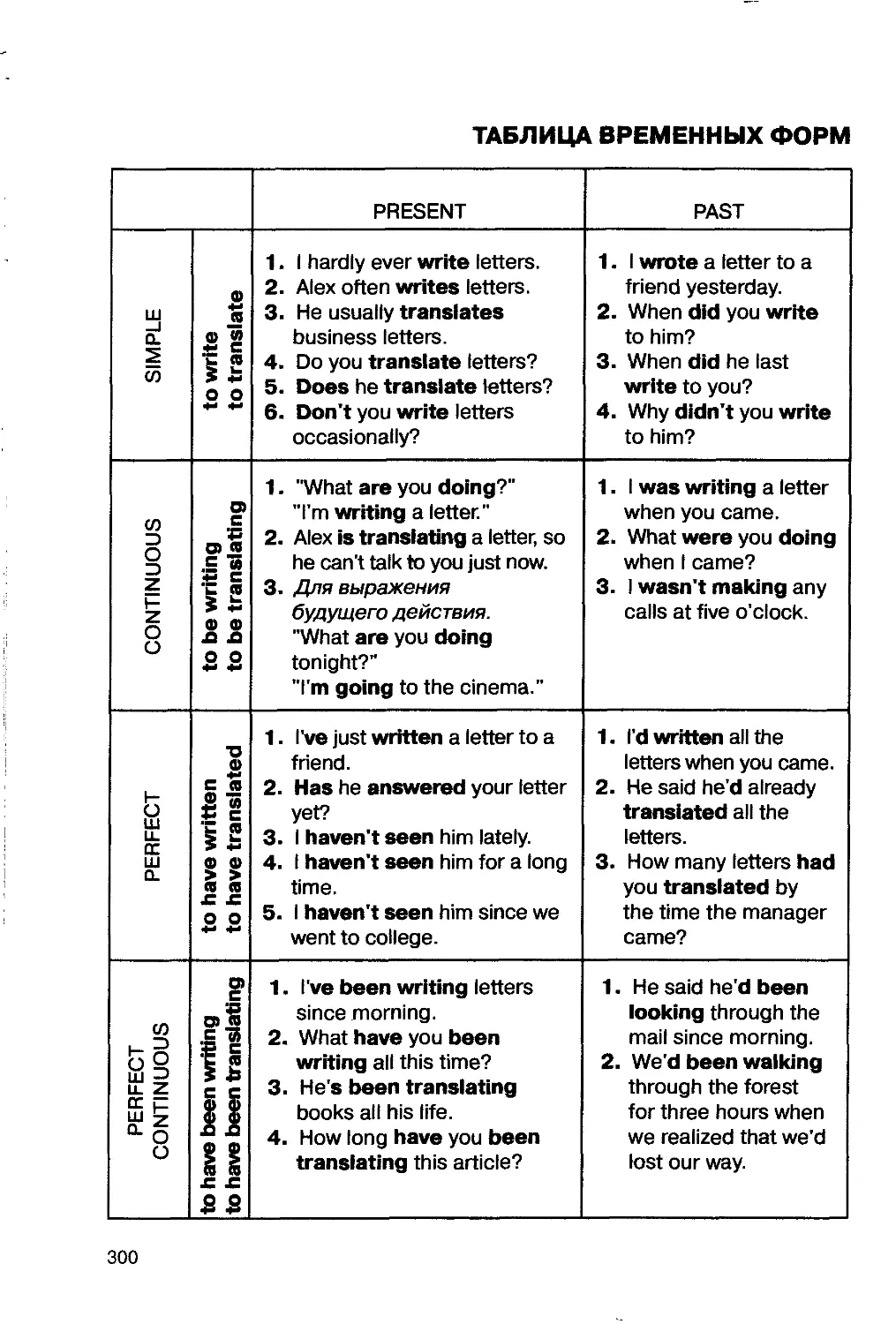
Таблица временных форм.............................................300
5
ПРЕДИСЛОВИЕ
Учебник предназначен для тех, кто может достаточно свободно поль-
зоваться английским языком как в ситуациях повседневного общения,
так и в профессиональной деятельности. Иначе говоря, усвоены основ-
ные грамматические структуры и накоплен активный вокабуляр примерно
в 2500-2700 слов.
Известно, однако, что уровень языковой компетенции не сохраняет-
ся, если его постоянно не поддерживать. Это, разумеется, можно делать
самостоятельно, читая художественную литературу и периодику, целена-
правленно слушая радио- и телепередачи на английском языке, пользу-
ясь в случае необходимости надежными словарями и т. д. Нельзя, разу-
меется, недооценивать и ту или иную форму занятий под руководством
преподавателя.
Именно для групповых и индивидуальных занятий под руководством
преподавателя и предназначена прежде всего эта книга. В то же время
она может быть использована и как самоучитель.
Основой каждого урока-комплекса является текст - познавательный,
проблемный или фабульцый, посвященный определенной теме. Среди
тем - статус английского языка как международного, современная му-
зыка, проблемы глобального потепления, мода, путешествия и ряд дру-
гих тем, интересных для обсуждения. Два художественных произведения
(рассказы Саки (Манро) и Марка Твена) не подверглись адаптации.
Все без исключения тексты насыщены лексикой, широко употребля-
емой в художественной литературе и средствах массовой информации.
Даже свободно владеющий иностранным языком человек столкнется
с большим количеством слов, которых он не знает. Часть этих слов, воз-
можно, войдет в его активный вокабуляр, но в большинстве случаев он
просто научится их правильно понимать и не бояться того, что всего лек-
сического богатства языка усвоить невозможно, даже если речь идет
о родном языке.
Поскольку основой урока является текст, первоочередная задача -
его прочтение с полным, доскональным пониманием. Поэтому в помощь
обучающемуся и преподавателю за текстом следует словарь, содержа-
щий перевод слов в их текстовом значении. Более полное представление
о том, как слово используется в языке, дается в специальном упражне-
нии, содержащем примеры употребления данного слова. Это упражнение
из-за его насыщенности лексической информацией целесообразно рас-
пределить на несколько занятий.
6
До чтения текста предлагается обсудить несколько вопросов, кото-
рые помогут преподавателю начать урок с беседы.
Система упражнений содержит вопросы по содержанию тек-
ста, лексические и грамматические задания. Поскольку предпо-
лагается, что основные грамматические структуры усвоены, под-
робных пояснений не дается, имеются лишь краткие напоминания,
предупреждающие ошибки, типичные для русскоязычных обучающих-
ся. Объясняются лишь те грамматические явления, которые вряд ли
содержались в предыдущем курсе обучения. Это оборот to be likely
(unlikely), употребление глагола wish для того, чтобы выразить сожа-
ление по поводу ситуации в настоящем, прошедшем или будущем,
и сложное сказуемое типа It seems (appears, happens, etc.) + инфинитив
с частицей to.
Грамматические упражнения намеренно не выделяются в самосто-
ятельный раздел, а чередуются с лексическими и речевыми, что, как по-
казал опыт, на этом этапе обучения помогает избежать монотонности на
уроке. Поэтому преподавателю рекомендуется при планировании урока
придерживаться последовательности упражнений, предлагаемой учеб-
ником. Тексты и диалоги, помеченные значком можно прослушать
на CD. Письменные задания, помеченные значком целесообразно
выполнять и дома, и в классе. К наиболее трудным упражнениям дают-
ся ключи-ответы. К упражнениям, где нужно перевести связные тексты
с русского языка на английский, в ключах дается оптимальный (но не
единственно возможный) вариант перевода.
Благодарим Шуан Элинор Джоунс за просмотр рукописи и ценные
замечания стилистического характера. Надеемся, что книга окажется по-
лезной для тех, на кого она ориентирована.
Н. А. Бонк, Е. М. Салтыкова
UNIT ONE
Language is the dress of thought.
SamuelJohnson (1709-1784),
English writer, critic and lexicographer
Discuss this before you read the text.
1.	Why have you decided to go on learning English?
2.	What do you expect of this course?
3.	How old were you when you began learning English?
4.	Did you enjoy your lessons then?
5.	How long have you been learning English?
6.	How do you keep up your English?
7.	Have you ever been abroad?
8.	Have you been to any English-speaking countries?
9.	Do you read books in English?
10.	What kind of books do you like?
11.	Do you read English newspapers?
12.	Do you use the dictionary when reading?
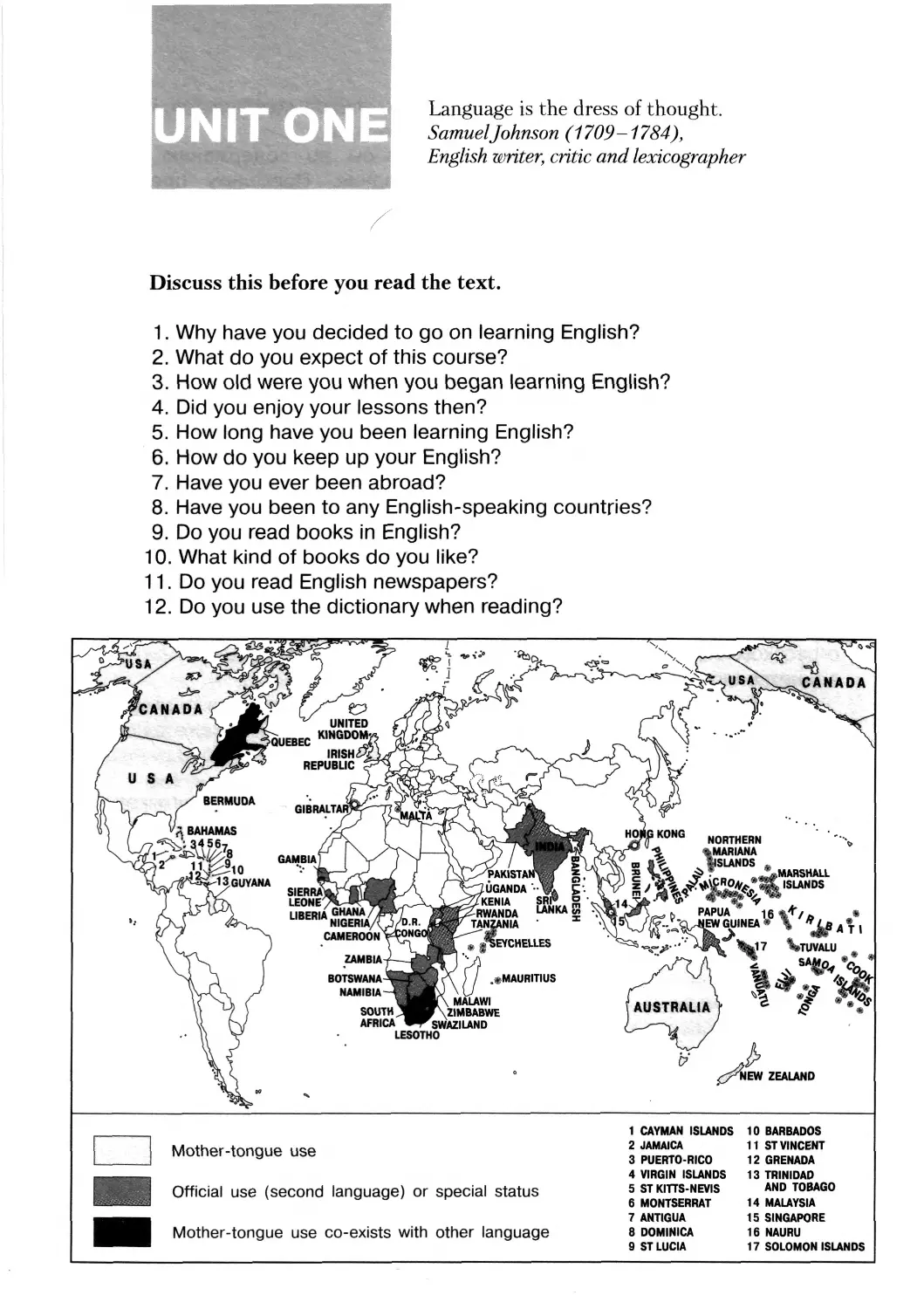
1	CAYMAN ISLANDS	10 BARBADOS
2	JAMAICA	11 ST VINCENT
3	PUERTO-RICO	12 GRENADA
4	VIRGIN ISLANDS	13 TRINIDAD
5	ST KITTS-NEVIS	AND TOBAGO
6	MONTSERRAT	14 MALAYSIA
7	ANTIGUA	15 SINGAPORE
8	DOMINICA	16 NAURU
9	ST LUCIA	17 SOLOMON ISLANDS
> Read the text and make sure that you understand it. The list of new words
on p. 10-11 will help you.
ENGLISH AS AN INTERNATIONAL LANGUAGE*
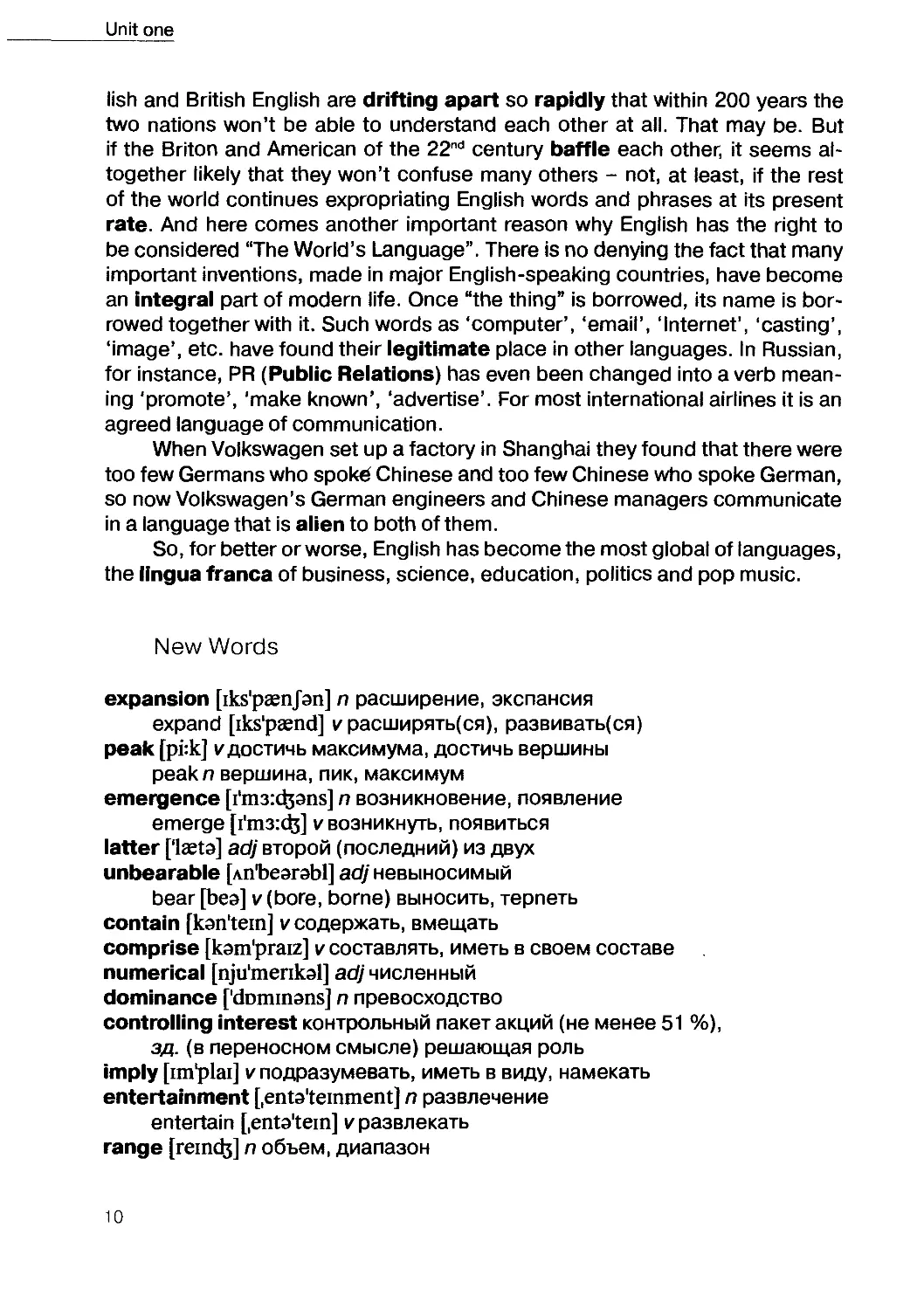
The present-day world status of English is the result of two main factors:
the expansion of British colonial power, which peaked towards the end of
the nineteenth century, and the emergence of the United States as the lead-
ing economic power of the 20th century. It is the latter factor, which explains
the position of the English language today (much to the displeasure of some in
Britain who find the loss of historical linguistic priority unbearable). Nowadays
the USA contains nearly four times as many English mother-tongue (EMT)
speakers as the next most important EMT nation (the UK), and these two coun-
tries comprise 70 per cent of all EMT speakers in the world. Such numerical
dominance, accompanied by political and economic factors, gives the Ameri-
cans a controlling interest in the way the language is likely to develop.
This, however, is a matter of opinion. Most books on English imply in one
way or another that English is superior to all other languages. Robert Burchfield,
the editor of the Oxford English Dictionary, writes: “As a source of intellectual
power and entertainment the whole range of prose writing in English is prob-
ably unequalled anywhere else in the world.” “I would like to think he’s right,”
Bill Bryson retorts in his national bestseller The Mother Tongue, “but I can’t
help wondering if Mr Burchfield would have made the same generous asser-
tion had he been born Russian or German or Chinese.”
Yet there are one or two small ways in which English has an advantage
over other languages. For one thing its pronouns are largely, and mercifully,
uninflected. In Russian, if you wish to say ‘you’, you must choose between at
least eight words: «ты», «вы», «тебя», «вас», «тебе», «вам», «тобой», «вами».
A similar difficulty exists in many other languages. In English these problems
are avoided by relying on just one form: ‘you’. English is free of gender and
declension and is from this point of view a godsend to students everywhere.
At the same time it would be most misleading to assert that English is easy
to learn, for it has its own booby-traps. The number of English tenses is re-
ally frightening and so are the different functions of the so-called /ng-forms, the
stiff word order and the proverbial inconsistency of English spelling. Phrasal
verbs are another learner’s headache. Let’s not forget that in each EMT nation
people speak their own variety of English so that even native speakers cannot
always communicate effectively, as almost every American learns on his first
day in Britain. Indeed, Robert Burchfield created quite a stir in linguistic circles
on both sides of the Atlantic when he announced his belief that American Eng-
* Based on “The Mother Tongue” by Bill Bryson. Bard, 1990.
9
Unit one
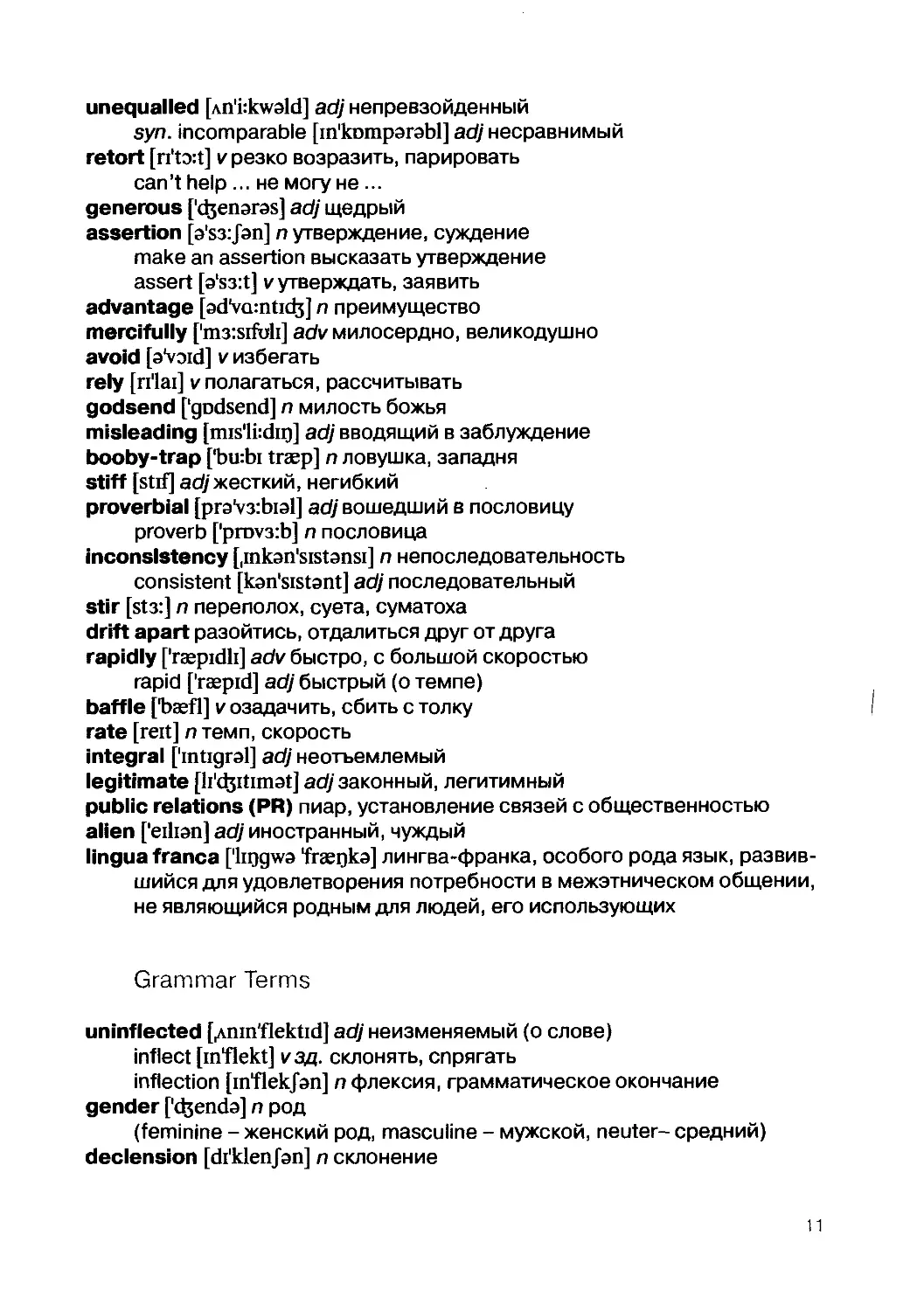
lish and British English are drifting apart so rapidly that within 200 years the
two nations won’t be able to understand each other at all. That may be. But
if the Briton and American of the 22nd century baffle each other, it seems al-
together likely that they won’t confuse many others - not, at least, if the rest
of the world continues expropriating English words and phrases at its present
rate. And here comes another important reason why English has the right to
be considered “The World’s Language”. There is no denying the fact that many
important inventions, made in major English-speaking countries, have become
an integral part of modern life. Once “the thing” is borrowed, its name is bor-
rowed together with it. Such words as ‘computer’, ‘email’, ‘Internet’, ‘casting’,
‘image’, etc. have found their legitimate place in other languages. In Russian,
for instance, PR (Public Relations) has even been changed into a verb mean-
ing ‘promote’, 'make known’, ‘advertise’. For most international airlines it is an
agreed language of communication.
When Volkswagen set up a factory in Shanghai they found that there were
too few Germans who spokd Chinese and too few Chinese who spoke German,
so now Volkswagen’s German engineers and Chinese managers communicate
in a language that is alien to both of them.
So, for better or worse, English has become the most global of languages,
the lingua franca of business, science, education, politics and pop music.
New Words
expansion [iks’paenjan] n расширение, экспансия
expand [iks’paend] v расширять(ся), развивать(ся)
peak [pi:k] v достичь максимума, достичь вершины
peak п вершина, пик, максимум
emergence [i’m3:dpns] п возникновение, появление
emerge [i'm3:<tj] v возникнуть, появиться
latter [‘laeta] adj второй (последний) из двух
unbearable [лп'ЬеагаЫ] adj невыносимый
bear [bea] v(bore, borne) выносить, терпеть
contain [kan'tem] v содержать, вмещать
comprise [kam'praiz] v составлять, иметь в своем составе
numerical [nju'menkal] adj численный
dominance [’dommans] n превосходство
controlling interest контрольный пакет акций (не менее 51 %),
зд. (в переносном смысле) решающая роль
imply [im'plai] v подразумевать, иметь в виду, намекать
entertainment [,enta'teinment] п развлечение
entertain [.enta'tem] v развлекать
range [reindtj] n объем, диапазон
ю
unequalled [An'i:kwald] adj непревзойденный
syn. incomparable [m'komparabl] adj несравнимый
retort [n'to:t] v резко возразить, парировать
can’t help... не могу не...
generous [’d^enaras] adj щедрый
assertion [a's3:Jan] n утверждение, суждение
make an assertion высказать утверждение
assert [a‘s3:t] v утверждать, заявить
advantage [adVomtidj] n преимущество
mercifully [’macsifuli] adv милосердно, великодушно
avoid [aVoid] v избегать
rely [n'lai] v полагаться, рассчитывать
godsend [’godsend] n милость божья
misleading [mis'lfcdirj] adj вводящий в заблуждение
booby-trap [*bu:bi traep] n ловушка, западня
stiff [strf] adj жесткий, негибкий
proverbial [prsVaibial] adj вошедший в пословицу
proverb [’prov3:b] n пословица
inconsistency [jnkan'sistansi] n непоследовательность
consistent [kan'sistant] adj последовательный
stir [st3:] n переполох, суета, суматоха
drift apart разойтись, отдалиться друг от друга
rapidly [’raepidli] adv быстро, с большой скоростью
rapid [’raepid] adj быстрый (о темпе)
baffle [’baefl] v озадачить, сбить с толку
rate [reit] п темп, скорость
integral [’mtigral] adj неотъемлемый
legitimate [li'rijitimat] adj законный, легитимный
public relations (PR) пиар, установление связей с общественностью
alien [’eilian] adj иностранный, чуждый
lingua franca ['lirjgwa iraerjka] лингва-франка, особого рода язык, развив-
шийся для удовлетворения потребности в межэтническом общении,
не являющийся родным для людей, его использующих
Grammar Terms
uninflected [.Anm’flektid] adj неизменяемый (о слове)
inflect [mflekt] узд. склонять, спрягать
inflection [in'flekfan] n флексия, грамматическое окончание
gender [kijenda] n род
(feminine - женский род, masculine - мужской, neuter- средний)
declension [di'klenjan] n склонение
11
Unit one
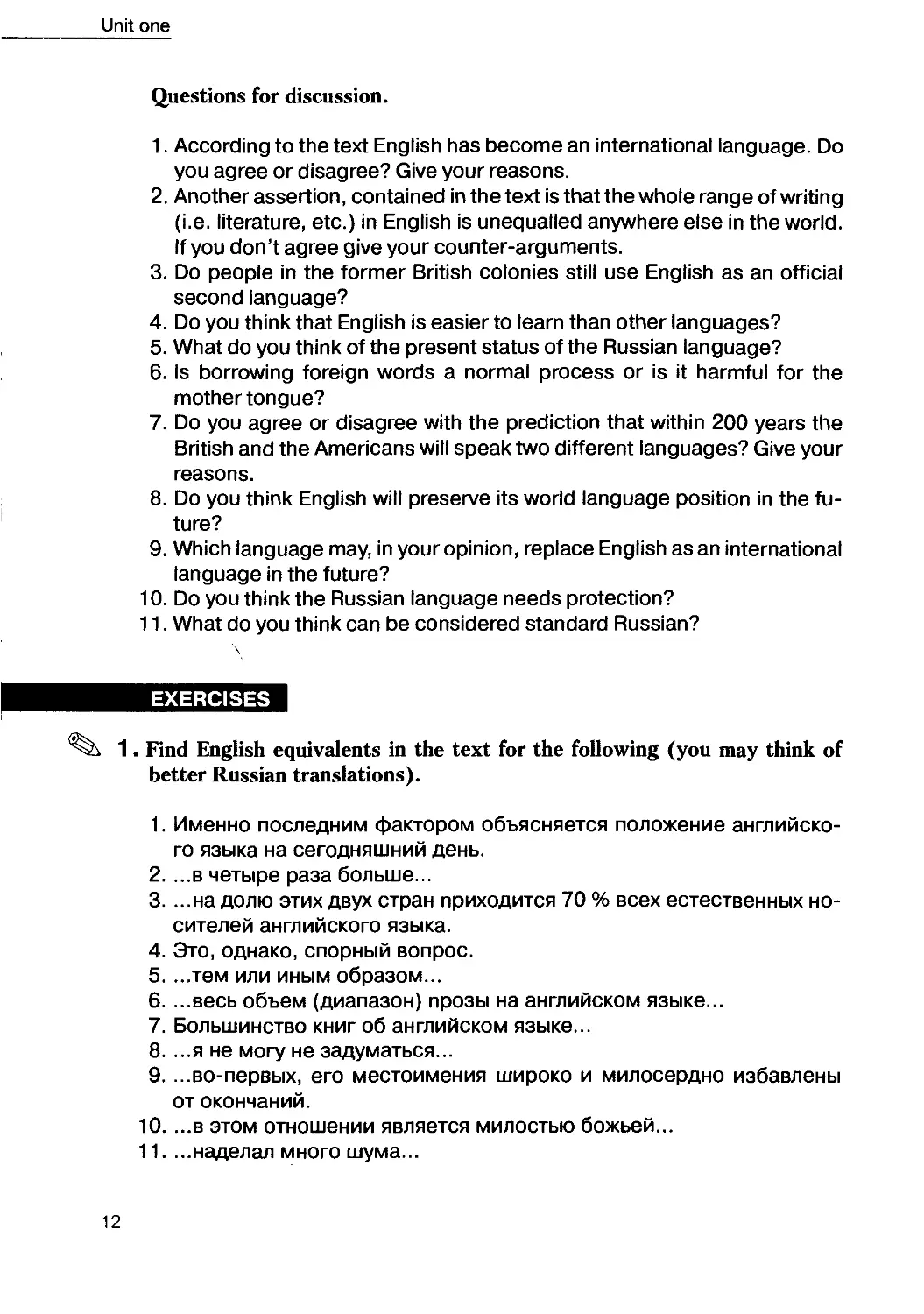
Questions for discussion.
1.	According to the text English has become an international language. Do
you agree or disagree? Give your reasons.
2.	Another assertion, contained in the text is that the whole range of writing
(i.e. literature, etc.) in English is unequalled anywhere else in the world.
If you don’t agree give your counter-arguments.
3.	Do people in the former British colonies still use English as an official
second language?
4.	Do you think that English is easier to learn than other languages?
5.	What do you think of the present status of the Russian language?
6.	Is borrowing foreign words a normal process or is it harmful for the
mother tongue?
7.	Do you agree or disagree with the prediction that within 200 years the
British and the Americans will speak two different languages? Give your
reasons.
8.	Do you think English will preserve its world language position in the fu-
ture?
9.	Which language may, in your opinion, replace English as an international
language in the future?
10.	Do you think the Russian language needs protection?
11.	What do you think can be considered standard Russian?
EXERCISES
1.	Find English equivalents in the text for the following (you may think of
better Russian translations).
1.	Именно последним фактором объясняется положение английско-
го языка на сегодняшний день.
2.	...в четыре раза больше...
3.	...на долю этих двух стран приходится 70 % всех естественных но-
сителей английского языка.
4.	Это, однако, спорный вопрос.
5.	...тем или иным образом...
6.	...весь объем (диапазон) прозы на английском языке...
7.	Большинство книг об английском языке...
8.	...я не могу не задуматься...
9.	...во-первых, его местоимения широко и милосердно избавлены
от окончаний.
10.	...в этом отношении является милостью божьей...
11.	...наделал много шума...
12
12.	...удаляются (отдаляются) друг от друга...
13.	...похоже на то, что они вряд ли затруднят...
14.	...с нынешней (теперешней) скоростью...
15.	...нельзя отрицать того, что...
16.	...стали неотъемлемой частью...
17.	...согласованный международный язык общения...
18.	...к лучшему или к худшему... (к добру или к худу)
VOCABULARY
2.	Read and translate these sentences into Russian so as to have a better
idea of how these words can be used.
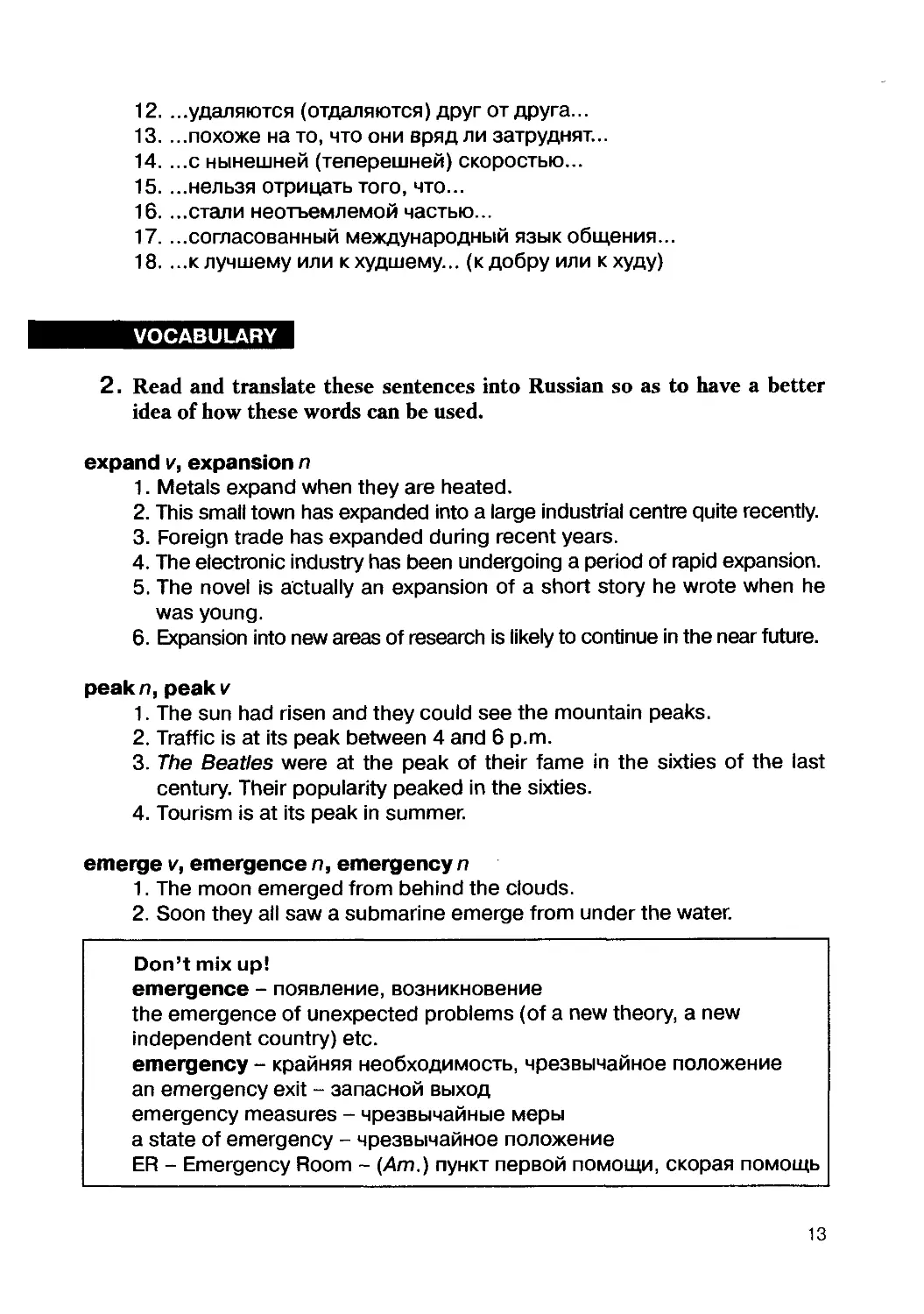
expand v, expansion n
1.	Metals expand when they are heated.
2.	This small town has expanded into a large industrial centre quite recently.
3.	Foreign trade has expanded during recent years.
4.	The electronic industry has been undergoing a period of rapid expansion.
5.	The novel is actually an expansion of a short story he wrote when he
was young.
6.	Expansion into new areas of research is likely to continue in the near future.
peakn, peak v
1.	The sun had risen and they could see the mountain peaks.
2.	Traffic is at its peak between 4 and 6 p.m.
3.	The Beatles were at the peak of their fame in the sixties of the last
century. Their popularity peaked in the sixties.
4.	Tourism is at its peak in summer.
emerge v, emergence n, emergency n
1. The moon emerged from behind the clouds.
2. Soon they all saw a submarine emerge from under the water.
Don’t mix up!
emergence - появление, возникновение
the emergence of unexpected problems (of a new theory, a new
independent country) etc.
emergency - крайняя необходимость, чрезвычайное положение
an emergency exit - запасной выход
emergency measures - чрезвычайные меры
a state of emergency - чрезвычайное положение
ER - Emergency Room - (Am.) пункт первой помощи, скорая помощь
13
Unit one
bear v, unbearable adj
1.	Our plans have borne fruit at last.
2.	He was born British.
3.	Few people can bear rudeness.
4.1 can’t bear his manners. (= I can’t stand his manners.)
5. The heat was just unbearable!
6. This noise is getting unbearable!
contain v
1.	The book contains quite a few useful facts.
2.	Try to avoid food containing a lot of fat.
3.	The assertions contained in his report are not convincing.
4.	How much liquid does this tank contain?
comprise v
1.	The course comprises a student book, a workbook and a lot of taped
material. (= The course consists of...)
2.	This year classes are likely to be comprised of beginners, (...to consist
of...)
3.	Young specialists comprise about 50 per cent of the whole staff.
numerical adj, numerous adj
Don’t mix up!
numerical adj - численный, цифровой
numerical data, numerical superiority, in numerical order
numerous adj - многочисленный
in numerous cases, numerous misprints, numerous questions
imply v, implication n
1.	Silence often implies consent (согласие).
2.	What do you imply by that?
3.	That is likely to imply a lot of work for us.
4.	Little was said, but a lot was implied.
5.	Democracy implies freedom of expression.
6.	She said very little directly, but a great deal by implication.
entertain v, entertainment n
1.	We entertain very little at home. (= We don’t often give parties.)
2.	They love to entertain and do it very well.
3.	He used to entertain us for hours with his stories.
4.	The cinema was her favourite entertainment.
5.	The official dinner was followed by some entertainment.
14
range n
a mountain range
a range of hills
a wide range of research
a wide range of goods
1.	We have the full range of sizes in a wide range of prices.
2.	They’ve produced a new range of cars recently.
3.	He has a wide range of knowledge.
4.	She has a wide range of interests.
5.	They have developed a wide range of activities.
6.	We have covered a wide range of subjects.
equal adj, equality [t'kwoliti] n, unequalled adj
1.	Equal pay for equal work.
2.	One gallon is equal to 4,5 litres.
3.	They are fighting for the equality of women (= ...for women to be equal
with men).
4.	This school’s success rate is unequalled in town.
5.	Though small, this restaurant offers a range of fish dishes unequalled
anywhere else in London.
6.	During these years the country has been enjoying a period of unequalled
economic progress.
retort v
1.	‘To retort’ means to make a quick and clever answer. The best Russian
translation is, perhaps, «парировать».
2.	’ “If I were your wife, I’d put poison in your coffee,” she said.
“If I were your husband, I’d drink it,” he retorted.
can’t help + gerund
Оборот'сапЧ help doing sth’ можно перевести на русский язык
как «не могу не...», «не могу удержаться от...»
1.1 can’t help telling you all about it.
2.	He couldn’t help laughing when he heard it.
3.	She tried to control her feelings but she just couldn’t help crying.
4.1 couldn’t help wondering why they decided not to expand their
business.
generous adj, generously adv, generosity n
1.	It is very generous of you to let us use your findings in our research.
2.	It was most generous of them to finance the expansion of the hospital.
3.	She is too generous with her time, I’m afraid - always ready to help
other people, no matter what kind of people they are.
15
Unit one
4.	He has a very generous (kind) nature.
5.	There’s a generous (= kinder than deserved) review of the book in
today’s newspaper.
6.	Oh, this slice of cake is too generous (= large) for me!
7.	The jacket is unlikely to be too small for you. It is very generously cut.
8.	His generosity is incomparable.
assert v, assertion n, to make an assertion
1. Isn’t it nonsense to assert that smoking doesn’t do you any harm?
2. Though he made numerous assertions that he was innocent, he was
taken to court and found guilty.
advantage n, take advantage over sth or sb, disadvantage n
1.	Our new house has several advantages over the old one.
2.	Those dishonest people just took advantage of the old man’s
generosity.
3.	Had he known how to turn everything to his own advantage, he would
be a rich man now.
4.	If you don’t speak good English, you’ll be at a big disadvantage when
you try to get a job.
mercy n, merciful adj, mercifully adv
1.	When the war broke out a lot of young women volunteered to be sisters
of mercy.
2.	War knows little mercy.
3.	The terrorists showed no mercy towards the hostages.
4.	Oh, Lord, have mercy on us, sinners.
5.	They were lost in the mountains, at the mercy of the wind and the
weather.
6.	In some situations the word ‘mercy’ may be used humorously. For
instance: “Please, have mercy on us! Turn down the sound a bit - this
loud music is just unbearable!”
7.	“God is merciful,” said the priest.
8.	The examiners are most unlikely to be merciful. So you’d better work
hard now, before it’s too late!
9.	Donald Fleming is known to be a merciful referee. Isn’t it our good luck!
10.	Mercifully enough, the storm didn’t last long.
11.	The boy was mercifully allowed to try and take his exam once more.
avoid v, avoid doing sth
С глаголом ‘avoid’ употребляется или существительное, или герун-
дий. Употребление инфинитива с этим глаголом невозможно.
16
1.1 wonder why you avoid speaking to them about your problems.
2.	We mercifully avoided a great danger.
3.	The speaker avoided making any assertions. He only implied that the
new invention was likely to be useful.
4.	If I were you, I’d try to avoid asserting anything at the moment.
rely (on, upon) v, reliable adj
1.1 rely on your word.
2.	He’s an honest and generous man. You can fully rely on him for advice
and support.
3.	The weather can never be relied upon. It is always changing.
4.	He’s not to be entirely relied on, I’m afraid.
5.	Their guarantee [.gaeran'ti:] is absolutely reliable.
6.	This information seems unreliable. No, it can’t be relied on, I’m sure.
7.	My car is seven years old but it’s still fairly reliable.
booby-trap n
Had I known that so many booby-traps would emerge, I would have
never started the business.
stiff adj
1.	A stiff collar (воротничок), a stiff brush, a stiff smile (face, manner),
a stiff battle (ожесточенная битва), stiff resistance (упорное).
2.	My legs felt so stiff that I could hardly go on walking.
3.	He was scared stiff.
4.	His stiff manner makes him unpleasant to deal with.
proverb n, proverbial adj
1.	A proverb is a short well-known statement that contains advice about
life in general.
2.	His generosity has become proverbial.
consistent ad), inconsistent adj, consistency n, inconsistency n
1. Consistent arguments, actions, a consistent policy.
2.1 don’t see any consistency in their actions.
3.	That was the beginning of friendship of lasting consistency.
4.	He couldn’t bear any inconsistency with his principles.
stir v, stir n
1.	Let me have a teaspoon. I want to stir my tea.
2.	Warm the teapot before adding one teaspoonful for each person and
“one for the pot”. Bring fresh water to the boil and pour immediately.
Allow the tea to brew for five minutes, then stir and serve.
17
Unit one
3.	Keep stirring the soup until it boils.
4.	We were all stirred by his speech.
5.1 couldn’t help being stirred by the film.
6. The news caused quite a stir.
drift v, drift apart v
1.	The verb ‘drift’ was borrowed by the Russian language long ago in the
meaning «дрейфовать», «дрейф».
2.	The country slowly drifted into worldwide conflict.
3.	Snow had drifted over all the roads, and we weren’t able to drive on.
4.	Some people drift apart, others drift together.
5.	Their marriage went wrong; they drifted apart and then divorced.
rapid adj, rapidly adv
1. Rapid movement (growth, changes, reading), a rapid worker (thinker),
a rapid river.
2. Rapidly changing events, a rapidly developing economy.
baffle v, baffling adj
1.	Everybody was baffled by her strange behaviour.
2.	Even the most experienced detectives were baffled.
3.	His final decision was really baffling.
4.	We were all baffled by those inconsistent assertions.
raten
1.	The rate of exchange, the dollar rate, the rate of growth, the birth rate, the
death rate, the marriage rate, employment rate, unemployment rate.
2.	Work is progressing at a high rate.
3.	That bank gives credit at a high rate (под высокий процент).
4.	At any rate (in any case), the last variant of the project is consistent.
integral adj, integral n
1.	This condition is considered to be an integral part of our contract.
2.	Consistency should be an integral part of any partnership.
3.	Her talents are integral to the team’s good performance.
legitimate adj, illegitimate adj
1.	A legitimate child (законнорожденный), an illegitimate child (незакон-
норожденный).
2.	A legitimate reason (уважительная причина).
3.	The Mafia uses legitimate business operations as a front.
4.1 think that was a perfectly legitimate question.
5. At any rate, all our actions were consistent and absolutely legitimate.
18
PR (Public Relations)
1.	PR stands for Public Relations. It is the work of explaining to the public
what a company or an organization does so that they will understand
and approve of it. In other words, it is the relationship between an
organization and the public.
2.	They are considered to be the leading PR agency in the city.
3.	My cousin has been a public relations officer in a big company since
2005.
4.	Sponsoring the exhibition is very good for our PR.
alien adj
1.	‘Alien’ means belonging to another country or race (foreign).
2.	‘Alien’ may also mean very different from what you are used to
(strange).
3.	That civilization has been discovered quite recently, and in many ways
still remains alien to us.
4.	Mercy is alien to that person’s nature, I’m afraid.
5.	He couldn’t get used to that alien environment for a very long time.
lingua franca
1.	These two words are both Italian. ‘Franca’ means free, i.e. not observing
any rules. ‘Lingua’ means language. So ‘lingua franca’ is a kind of
language that is clear enough to understand each other in a limited
number or situations. The speakers don’t observe any grammar rules
and mispronounce the words.
2.	The expression ‘lingua franca’ is used ironically, by analogy with ‘porto
franco’ which means a port where foreign goods do not go through any
customs control, and no taxes are paid on them.
GRAMMAR
 Present Simple, Present Continuous, Present Perfect, Present Per-
fect Continuous, Past Simple
3.	Natasha is a Russian girl. She is writing a letter to her friend John, who is
an American and lives in New York. Complete the letter with the correct
form of the verbs in brackets.
Dear John,
I (have) a great time here in London. I (not be) to London before and I
(like) it here very much.
19
Unit one
Now I (stay) with my friends who (live) here for about ten years. So
they (know) the city pretty well. The only problem is they always (quarrel)
over silly things so I (prefer) to walk around London on my own.
I (arrive) three days ago and already (see) some places of interest: the
Tower, Big Ben, Trafalgar Square and some others. And I (visit) the National
Gallery and the British Museum.
I (think) of attending a language school here. I (not make) any en-
quiries about such schools yet, but I (not think) I should miss this op-
portunity to improve my English while I (be) here. People here (seem)
to be friendly and helpful. I (try) to speak English as much as possible.
People (understand) me! It’s wonderful because I (learn) English for only
two years.
It’s a pity you (not be) here with me. I can’t help thinking about you.
You (miss) me?
Love, i
Natasha |
. 4. Katya wants to write a letter to her friend Jan, who is Dutch. She is now
on a short holiday in St. Petersburg. Help her translate this letter into
English.
Дорогой Ян!
Я прекрасно провожу время в Петербурге! Я никогда не была здесь
до этого, и поэтому каждый день приносит что-то интересное и неожи-
данное.
Сейчас я живу у своей подруги. Она снимает квартиру недалеко от
центра города. Мы с ней знакомы со школы. После окончания школы она
уехала в Петербург и поступила в университет, где и учится уже два года.
Моя подруга, конечно, знает, что стоит посмотреть в городе.
Я уже побывала в Эрмитаже и планирую пойти в Русский музей на
днях. Сам по себе город - огромный музей. На днях мы с моей подру-
гой гуляли по городу, и я фотографировала дома и памятники, которые
мне понравились больше всего. Несколько фотографий я посылаю тебе
с этим письмом. В городе очень много туристов со всего мира. Очень
жаль, что тебя нет со мной. Не могу не думать о том, что тебе бы здесь
очень понравилось.
С нетерпением жду ответа от тебя.
С любовью,
Катя. ।
20
5. Read the dialogue. In pairs, act out similar dialogues. You may choose any
subject you like for your conversations.
At an International Conference of Language Teachers
(during the break)
Bob Bennett (a British teacher of Russian)
Svetlana Pavlova (a Russian teacher of English)
B.B. You are an English teacher, aren’t you?
S.P. Quite right. I’ve been teaching English since I graduated from Univer-
sity and that was nearly 20 years ago.
B.B.	I wonder how long English has been the most popular foreign lan-
guage in Russia.
S.P. I think English began to gain popularity right after World War II.
B.B.	That’s very interesting! And what was the situation before the war?
S.P. I know from my parents who were both school teachers that in pre-war
years it was German that was taught in most Soviet schools, some-
times French and very rarely English. In general there was a time when
the most prestigious foreign language in Russia was French. This can
be seen from Tolstoy’s novels. Pushkin’s Tatiana, by the way, wrote
her love letter to Onegin in French, because her Russian wasn’t good
enough to write such a vitally important message.
B.B.	We in Britain don’t often try to learn foreign languages. I believe that
in this regard we are a bit spoilt, because we are sure that no matter
where we find ourselves, there will always be someone who can speak
English.
S.P. I’m afraid you’re right. We, here in Russia, on the contrary, have always
tried to learn languages, though now I find our mother tongue is gain-
ing popularity and good progress has been made in learning how to
teach it.
6.	Complete the sentences choosing the words from the boxes.
A._____________________
few, a few, quite a few
1.	He‘s got... friends; he’s very popular at his college.
2.	He’s got too ... friends and he often feels lonely.
3.	Very ... German engineers could speak Chinese when Volkswagen set
up a factory in Shanghai.
4...	. German engineers and Chinese managers could speak English, so
they were able to communicate in English.
5.	There are very ... people who will agree to low-paid jobs.
21
Unit one
6.	There are ... people who may apply for this job. It’s prestigious and well
paid.
7.	The meals are awful, but strangely enough, very ... people complain.
8.	The meals are awful. No wonder quite ... people complain.
9.	The text was easy to translate. There were very ... words I had to look
up in the dictionary.
10.	The text only seems easy to translate. There are ... booby-traps in it!
11.	Ladies and Gentlemen! Let me say... words about the main advantages
of the new method.
B.
little, a little
1.... is known about that old civilization!
2.	Wait...!
3.	I’m afraid, too ... time is left to discuss everything in detail.
4.	I’m sorry, you can’t stay ... longer.
5...	. was left of that lovely place after the earthquake.
. 7. Put in the correct article a / an or the.
Before you begin reading ... story learn ... few words you might not know.
Without it... humour of... story is likely to be lost on you.
... story is about... importance of punctuation [.pArjktju’eiJh], You must have
guessed ... meaning of... word.... corresponding verb is ‘to punctuate’ [’рлг)к-
tjueit].... wildlife manual is ... reference book about animals. To toss means to
throw. ... mammal is ... animal that feeds its babies with its own milk. Now you
can begin reading ... story.
Eats, Shoots & Leaves*
... panda walks into ... cafe. He orders ... sandwich, eats it, then draws
... gun and fires two shots in ... air.
“Why?” asks ... confused waiter, as ... panda makes towards ... exit. ...
panda produces ... badly punctuated wildlife manual and tosses it over his
shoulder.
“I’m ... panda,” he says, at... door. “Look it up.”
... waiter turns to ... relevant entry** and, sure enough, finds... explanation:
"Panda. Large black-and-white bear-like mammal, native to China. Eats,
shoots and leaves.”
* Based on “Eats, Shoots & Leaves” by Lynne Truss. Profile Books Ltd, 2003.
** Entry ['entn] n зд. запись в справочнике.
22
Can you explain why ... panda took ... gun and fired two shots in ... air?
Do you understand what makes... story funny? If you don’t, you won’t even
smile after reading it. Well, look at... last sentence carefully. There is ... comma
in it, isn’t there? ... comma makes ... word shoots... verb, meaning «стреляет»
in Russian. Then ... Russian translation of leaves would be «уходит». You cer-
tainly know ... Russian for leaves as a noun, don’t you? It’s «листья». But you
may not know ... meaning of shoots as ... noun. It’s ... rare word and you are
unlikely to find it in ... small dictionary. So look it up in ... big one. Shoots as
... noun in ... plural means «ростки», «побеги», «веточки». Then ... story will
become funny, won’t it?
8.	These are the answers. What were the questions?
1.	Every pilot and ship’s captain has to speak English because it’s an
agreed international language of communication In the air and the sea.
2.	Many European multi-national companies now use English as a
common language.
3.	Many important inventions made in recent years have become an
integral part of modern life.
4.	English has been the language of rock and pop music ever since rock
and roll began in America in the 1950s.
9.	Here are some English proverbs. Can you find Russian equivalents?
1.	A friend in need is a friend indeed.
2.	Rome was not built in a day.
3.	Take the bull by the horns.
4.	Tastes differ.
5.	There is no place like home.
6.	A bird in the hands is worth two in the bush.
7.	Every medal has two sides.
8.	Speech is silver, silence is gold.
9.	The best is often the enemy of the good.
Оборот ‘be likely (unlikely) + infinitive with to’ выражает предполо-
жение в отношении будущего.
Возможные варианты перевода на русский язык:
be likely to... - вероятно, скорее всего, похоже на то, что... + рус-
ский глагол в будущем времени
be unlikely to... - вряд ли, скорее всего не, не похоже на то, что... +
+ русский глагол в будущем времени
Не is likely to be late. - Он, скорее всего, опоздает.
The weather is unlikely to change. - Вряд ли погода изменится.
23
Unit one
10.	Which of the existing languages is most likely to take over the status of
an international language?
This table will help you to make your predictions.
Language (country)	Reasons
Spanish (Spain) Italian (Italy) French (France) German (Germany) Danish (Denmark) Dutch (Holland) American English (USA) British English (Great Britain) Russian (Russia) Ukrainian (Ukraine) Chinese (China) Japanese(Japan) Esperanto	economic political numerical military linguistic sociological cultural demographic technological geographical ecological
Example: In my opinion Chinese is likely to take over as a world language for
numerical reasons.
I think English is likely to preserve its status for economic and poli-
tical reasons.
1.	Translate the following into English using ‘be likely (unlikely)’.
1.	Погода вряд ли изменится.
2.	Погода, скорее всего, изменится к лучшему.
3.	Я, скорее всего, поеду на юг летом.
4.	Эта пьеса вряд ли будет иметь успех.
12.	Fill in the spaces with prepositions from the box. Discuss part В in class.
A.___________________________
in, on, between, over, by, of, at
1.	Children under 14 must be accompanied ... an adult.
2.	He is very interested ... modern art. He’s got a lot of books ... art at
home.
3.	The heroine of the book was forced to choose ... happiness and duty.
4.	Do you agree that wood has advantages ... plastic?
5.	Children learn ... a different rate.
24
6.	We can rely ... him. He always keeps his promise.
7.	That happened ... my first day at school.
8.	He said that on hearing that he felt free ... any obligations.
B._________________________
of, for, in, on, up, by, out, to
If you have decided, ... some reason or another, to learn a foreign lan-
guage, you must first ... all have a very clear idea ... what you need it ... .
If it is a matter ... a two-week tourist trip, then it isn’t worth spending your
time and effort trying to learn grammar and looking ... the words you want
to know ... the dictionary. All you need is a reliable phrase-book (Italian-
Russian, French-Russian, etc.), depending ... the country you are going to
visit. Choose the situations you are most likely to find yourself..., and learn the
necessary phrases, practising ... loud, of course. Ideally, your phrase-book
should be accompanied ... a disc ... which these phrases are recorded ... a
native speaker... the language you are interested .... The disc will help you to
avoid mispronunciation and not to be baffled ... the spelling. Believe it or not,
you are most unlikely to forget the phrases you have learnt... this way. They
will remain ... your long-term memory ... a long time.
A much more difficult thing is learning to understand the people you might
want to talk ... . In all probability, you won’t be able to learn that before your
tourist trip.
An absolutely different method is unavoidable if you need a foreign
language ... your profession. ... this case you should be prepared ... a course
that will, probably, take not less than a year, or even longer. A modern course
... this type usually comprises course books, workbooks and is accompanied
... a lot... taped material. It would be most misleading to assert that it will be
easy, but it’s very interesting, indeed, and is, no doubt, worth trying.
^13. A. These words are jumbled. Put them in the correct order.
1.	has / been / expanding / economy / That / country’s / in / the / last I
few / years I rapidly I very.
2.	some I entertainment I was I followed I The / by / meeting.
3.	over / gave / The I dominance / numerical / of / took I part / in /
the I voting / those I who I the I ruling I party / an / the I advantage I
opposition I actually I to.
4.	not I often I are I used / Proverbs I speech I writing / or / in /
ordinary.
5.	was I to emerge I from I his I limousine I Director / General I the I
first / The.
25
Unit one
В. Translate into English, paying special attention to the word order.
1.	Численное превосходство тех, кто фактически принял участие
в голосовании, дало преимущество правящей партии над оппози-
цией.
2.	Первым появился из своего лимузина генеральный директор.
3.	За собранием последовал концерт.
4.	В течение последних нескольких лет экономика этой страны раз-
вивалась очень быстро.
5.	В обычной (устной) речи или письме пословицы употребляются
редко.
.1	4. Here are two reports made by a British professor of linguistics and his
Russian colleague during a discussion of relevant problems at Moscow
University. You are an interpreter and have to translate the first report
into Russian and the other into English. (It’s a paid job!)
1. It is sometimes thought that English has achieved its worldwide status
because of its linguistic features. Some people assert that it is a more logical
or more beautiful language than others, simpler in grammatical structure, or
larger in vocabulary. This kind of reasoning is an example of naive linguistic
thinking: there are no objective standards of logic or beauty in comparing
different languages, and questions of phonetic, grammatical, or lexical
complexity can never be given simple answers. For example, English may not
have many inflectional endings (which is what most people are thinking of
when they talk about English as grammatically ‘simple’), but it has a highly
complex syntax; and the number of endings has nothing to do with the
language being used worldwide (as can be seen from the former success of
Latin). Languages rise and fall as world languages for many kinds of reasons -
political, economic, social, religious, literary - but linguistic reasons do not
rank highly among them.
2. ...И все же я думаю, что английский язык, вероятнее всего, со-
хранит свой статус международного языка на ближайшие сто лет или
около того. Сейчас мне бы хотелось сказать несколько слов об одной
его черте, которая пока что не упоминалась. Он лаконичен. Прежде
всего, в нем множество коротких слов. Есть, конечно, и длинные, та-
кие, как, ‘consistency’, ‘legislation’, ‘financial’, ‘unequal’, ‘misinterpre-
tation’, и многие другие, но в обычных ситуациях численное превос-
ходство коротких слов над длинными совершенно ясно. Это огромное
преимущество в повседневных разговорах, когда вы должны сказать
многое, к тому же ясно и точно, а времени у вас мало. Например,
в переговорах между пилотами двух самолетов в небе или капитанами
26
двух судов в море. Вот почему английский стал согласованным языком
общения для большинства международных авиалиний и служб чрез-
вычайных ситуаций.
При всех своих неприятных «ловушках» английский синтаксис позво-
ляет обойтись одним-двумя словами там, где в других языках вам понадо-
бится несколько слов, возможно, даже целое предложение.
Постарайтесь перевести ‘fitness’ или ‘PR officer’ на русский язык, и
вы получите что-нибудь вроде «хорошая физическая форма» и «сотрудник,
отвечающий за связи с общественностью». Как перевести ‘talk-show’? Вы-
ход уже найден - слово было просто заимствовано.
Если вы сравните английскую книгу (по-настоящему хорошую, конеч-
но) с ее русским переводом (тоже по-настоящему хорошим), вы увидите,
что последний гораздо толще. Книга толще! Почему? Просто подумайте
об этом. Это интересно.
Все это не значит, однако, что английский язык превосходит все
другие языки или что его литература является непревзойденной нигде
в мире. И все же приходится признать, что, к лучшему или к худшему, ан-
глийский язык стал наиболее «глобальным» языком сегодняшнего дня.
Сохранит ли он этот статус в будущем? Прогнозы делать трудно!
5. Read the poem. You needn’t learn the new words. They are just an illus-
tration of the proverbial inconsistency of English spelling.
The Booby-traps of English Spelling
I think you all already know
Of tough and bough and cough and dough,
Some may be baffled, but not you
By hiccough, thorough, tough and through.
Well done! And now you wish, perhaps,
To learn of less familiar traps?
Beware of heard, a dreadful word
That looks like beard and sounds like bird,
And bread', it’s said like bed, not bead -
Misleading, isn’t it, indeed!
Watch out for meat and great and threat -
They rhyme with suite and straight and debt.
A moth is not a moth in mother,
Nor both in bother or in brother.
And here is not a match for there,
Nor dear and fear for bear and pear.
And do and go and said and paid.
And close and come and Rome and some.
27
Unit one
Just wait! The list has not been made.
A dreadful language? Every bit! So what’s the use of learning it?
No learner would emerge alive!
Don’t be afraid! You will survive.
I spoke it at the age of five!
New Words
tough [tAf] adj жесткий
bough [bau] n сук, ветка, ветвь
cough [kof] n, v кашель, кашлять
dough [dau] n тесто
hiccough (= hiccup) [Ътклр] n, v икота, икать
thorough ['Олгэ] adj основательный, тщательный
beware [bi'wea] v остерегаться
beard [brad] n борода
threat [0ret] n угроза
suite [swi:t] n 1) муз. сюита
2) номер люкс (в гостинице)
3)гарнитур
debt [det] п долг
moth [mo0] п моль, мотылек
bear [bea] п медведь
pear [pea] п груша
Part 1
UNIT TWO
If parents would only realise how they bore
their children!
George Bernard Shaw (1856-1950),
Irish dramatist, essayist and critic
Discuss this before you read the story.
1.	Do you like reading?
2.	What kind of prose (or poetry) do you prefer? (detective stories, classi-
cal novels, humorous stories, books by new authors, etc.)
3.	Would you prefer reading from a book or a computer screen? Why?
4.	What kind of information is dominating in your reading?
5.	Do you mostly read for entertainment or for professional information?
6.	How many English books have you read?
7.	Does your English vocabulary expand after reading a book you really
liked?
8.	Do you look up the words in the dictionary or do you rely on your ability
to guess the meaning?
9.	Have you got any reliable dictionaries at home?
10.	Are you sometimes baffled by the grammar you have never learnt?
PART 1
Read the story and make sure that you understand it. The list of new
words on p. 31-32 will help you.
THE STORY-TELLER*
by Hector Hugh Munro (pseudonym Saki, 1870-1916),
short-story writer and novelist
It was a hot afternoon, and the railway carriage was correspondingly
hot and stuffy, and the next stop was nearly an hour ahead. The occupants
* The Best of Saki. Penguin Popular Classics, 1994.
29
Unit two
of the carriage were a small girl, and a smaller girl, and a small boy. An
aunt belonging to the children occupied one corner seat, and the further
corner seat on the opposite side was occupied by a bachelor who was a
stranger to their party, but the small girls and the small boy emphatically
occupied the compartment. Both the aunt and the children were engaged in
a monotonous conversation. Most of the aunt’s remarks seemed to begin
with “Don’t,” and nearly all of the children’s remarks began with “Why?”
The bachelor said nothing out loud.
“Don’t, Cyril, don’t,” exclaimed the aunt, as the small boy began smack-
ing the cushions of the seat, producing a cloud of dust at each blow.
“Come and look out of the window,” she added.
The child moved reluctantly to the window. “Why are those sheep being
driven out of that field?” he asked. “I expect they are being driven to another
field where there is more grass,” said the aunt weakly.
“But there is lots of grass in that field,” protested the boy, “there’s noth-
ing else but grass there. Aunt, there is lots of grass in that field.”
“Perhaps the grass in the other field is better,” suggested the aunt.
“Why is it better?” came the swift, inevitable question.
“Oh, look at those cows!” exclaimed the aunt. Nearly every field along
the line had contained cows or calves, but she spoke as though she were
drawing attention to a rarity.
“Why is the grass in the other field better?” persisted Cyril.
The bachelor couldn’t help seeing and hearing it all and became more
and more irritated, which showed on his face correspondingly. He was
a most unpleasant man, the aunt decided in her mind. She was utterly
unable to come to any satisfactory decision about the grass in the other
field.
The smaller girl created a diversion by beginning to recite On the Road
to Mandalay. She only knew the first line, but she put her limited knowledge to
the fullest possible use. She repeated the line over and over again in a dreamy
but resolute and very audible voice; it seemed to the bachelor as though some
one had had a bet with her that she could not repeat the line aloud two thou-
sand times without stopping. Whoever it was who had made the bet was likely
to lose it.
“Come over here and listen to a story,” said the aunt, when the bachelor had
looked twice at her.
The children moved reluctantly towards the aunt’s end of the carriage. Evi-
dently her reputation as a story-teller did not rank high in their opinion.
In a low, confidential voice, interrupted at frequent intervals by loud, per-
sistent questions from her listeners, she began a story about a little girl who
was good, and made friends with every one thanks to her goodness, and
was finally saved from a mad bull by a number of rescuers who admired her
courage.
30
Part 1
“Wouldn’t they have saved her if she hadn’t been good?” demanded the
bigger of the small girls. It was exactly the question that the bachelor had wanted
to ask.
“Well, yes,” admitted the aunt, “but I don’t think they would have run quite
so fast to her help if they had not liked her so much.”
“It’s the stupidest story I’ve ever heard,” said the bigger of the small girls,
with immense conviction. “I didn’t listen after the first bit, it was so stupid,”
said Cyril.
The smaller girl made no actual comment on the story, but she had long
ago recommenced a murmured repetition of her favourite line.
“You don’t seem to be a success as a story-teller,” said the bachelor sud-
denly from his comer.
The aunt bristled in instant defence at this unexpected attack.
“It’s a very difficult thing to tell stories that children can both understand and ap-
preciate,” she said stiffly.
“I don’t agree with you,” said the bachelor. “Perhaps you would like to
tell them a story,” was the aunt’s retort.
“Tell us a story,” demanded the bigger of the small girls.
“Well, now it’s a challenge, isn’t it?” the bachelor said to himself, “and I’ll
accept it.”
(to be continued)
New Words
pseudonym ['sju:danim] n псевдоним
correspondingly [.kDris'pDndirjli] adj соответственно
correspond to [.kons'pond] v соответствовать
correspond with переписываться
stuffy ['stAfi] adj душный, спертый (о воздухе)
belong [bi'lor)] v принадлежать (зд. употреблено иронически)
bachelor ['baetfala] п зд. холостяк; бакалавр
party п зд. группа, общество
emphatically [im'faetikalr] adv решительно, категорически
emphasise ['emfosaiz] v подчеркнуть, выделить
monotonous [ma'notanasj adj монотонный
out loud вслух
smack vхлопать, шлепать (no)
reluctantly [n'kktantli] adv неохотно
reluctant adj неохотный
sheep n овца, овцы (формы ед. и мн. числа совпадают)
but (= except for) зд. кроме
inevitable [r'nevitabl] adj неизбежный
31
Unit two
calf (pl. calves) [ka:f] ([kcuvz]) n теленок, телята
persist (in) [pa'srst] v упорствовать, настойчиво продолжать что-л. делать
a most unpleasant man неприятнейший (очень неприятный) человек
the most unpleasant man самый неприятный человек (превосходная
степень прилагательного)
utterly ['Atali] adv совершенно
syn. absolutely
diversion [dai*v3:jan] n разнообразие, развлечение, отклонение
recite [n'sait] v декламировать
dreamy adj мечтательный
resolute ['rezalwt] adj решительный
bet n пари, спор
to have a bet I to make a bet поспорить, заключить пари
goodness fgudnis] n доброта
bull n бык
a mad bull бешеный бык
rescuer [’reskjwa] n спасатель
rescue [’reskju;] v спасать
admire [ad'maia] v восхищаться
admiration [.aedma'reifan] n восхищение
courage [’kAndj] n храбрость, мужество
immense [fmens] adj огромный
conviction [kan'vikfan] n убеждение
comment (on) [’koment] n замечание, комментарий
recommence [,ri:ka'mens] v возобновить
bristle [bnsl] v ощетиниться
appreciate [a'pri:Jieit] vпонять, оценить по достоинству
demand [di'ma.-nd] и требовать, предъявлять требования
challenge ['tfaelmdj] п вызов, дело чести, возможность показать, чего ты
стоишь
challenging adj заманчивый, необычайно интересный
challenger п бросающий вызов, вызывающий на состязание, претен-
дент
accept (the challenge) принять (вызов)
Questions for discussion.
1.	Who were the occupants of the compartment?
2.	How old were the children in your opinion?
3.	Why do you think the aunt’s story wasn’t interesting for the children?
4.	What kind of story do you think the bachelor will tell the children?
5.	Think of a story that can arouse children’s interest.
32
Part 1
EXERCISES
1.	Find English equivalents in the text for the following (you may think of
better Russian translations!)
1.	До следующей остановки предстояло ехать еще почти час.
2.	...который не принадлежал к их компании.
3.	Тетя и дети вели монотонную беседу.
4.	Почему этих овец перегоняют с этого поля?
5.	Там нет ничего, кроме травы.
6.	...последовал неизбежный вопрос.
7.	...она говорила так, как будто привлекала внимание к какой-то
редкости.
8.	Младшая девочка внесла некоторое разнообразие, начав декла-
мировать...
9.	Свое скудное знание она использовала на полную мощность.
10.	Было очевидно, что, кем бы ни был человек, заключивший это
пари, он, скорее всего, его проиграет.
11.	Среди детей ее репутация хорошего рассказчика, очевидно, была
не очень высока.
12.	Низким, доверительным тоном (голосом)...
13.	Разве они не спасли бы ее...
14.	Это был как раз тот вопрос, который он сам хотел задать.
15.	...не стала комментировать рассказ...
16.	Тетя ощетинилась, мгновенно приняв оборону от этой неожидан-
ной атаки.
17.	...и понять, и оценить.
18.	Это уже вызов, и я его принимаю.
VOCABULARY
2.	Read and translate these sentences into Russian so as to have a better
idea of how these words can be used.
correspond to
1.	The American Congress corresponds to the British Parliament.
2.	His actions do not correspond to his assertions.
3.	The contents of the box must correspond to the description on the
label.
correspond with
I’ve been corresponding with them for quite a long time.
33
Unit two
correspondence n
1. We fulfil all our obligations in full correspondence with the terms and
conditions of the contract.
2.1 wish our correspondence hadn’t stopped.
correspondence course (заочное обучение)
I have been taking a correspondence course in business English for a
year.
corresponding adj, correspondingly adv
1. The war and the corresponding loss of life and fall in trade had a
dramatic effect on the country.
2. He works longer hours, so his pay is correspondingly higher.
belong v
1.	These books don’t belong to me. I’ve borrowed them from the library.
(= These books aren’t mine!)
2.	The guide explained to the listeners that the picture belonged to a
private collector.
3.	He doesn’t belong here. (He is an alien here; he comes from another
place.)
4.	Who does this file belong to?
5.	The file doesn’t belong here (it isn’t in its place). Let me put it where it
belongs.
6.	He belongs to one of the best tennis clubs.
bachelor n
1. He behaves as if he were still a young bachelor.
2. Martin is a Bachelor of Arts (бакалавр искусств), and his younger
brother is a Bachelor of Sciences (бакалавр естественных наук).
party n
1.	The bus was rented by a party of tourists.
2.	All the interested parties to the matter are invited to take part in a
corresponding exchange of opinions.
3.	A rescue party is being formed to look for people who were lost during
the storm.
4.	In politics ‘a party’ is an organization of people with the same political
beliefs and aims.
emphasize v, emphatic adj, emphatically adv
1.	The speaker emphasized the importance of a pay rise for teachers and
doctors. (He stressed that it was important.)
34
Part 1
2.	Another speaker expressed his emphatic opinion (strong belief) that
other people’s interests couldn’t be ignored.
3.	She answered with an emphatic ‘No’.
reluctant adj, reluctantly adv, reluctance n
1.	He seemed to be reluctant to go on with the talk, and I acted
correspondingly.
2.	His stiff manner showed that he was reluctant to express his opinion
out loud.
3.	Reluctantly, he agreed to join our small party at the table.
4.	His reluctance to join the party of rescuers surprised everybody.
sheep n
1. The word ‘sheep’ has no plural form, but can be followed by either a
singular or a plural verb.
e.g. This sheep belongs to me. Those sheep belong to somebody
else.
2. That man is a wolf in sheep’s clothing. Beware of him!
but
syn. except, except for
1.	The last but one.
2.	No one but an expert could have seen the difference.
3.	Any day but Thursday suits me.
4.	She buys nothing but the best.
inevitable adj, inevitably adv, the inevitable n
1.	“His failure in the presidential campaign wasn’t inevitable, was it?” “Yes,
it was. It was absolutely inevitable because of several unpopular steps
he had made.”
2.	Her reluctance to join us was inevitable. She had never liked big
companies.
3.	Oh, that Sherlock Holmes with his inevitable Dr. Watson!
4.	Given the current financial situation, it was inevitable that the pound
may be devalued.
5.	This policy inevitably leads to a crisis.
6.	You can’t change the inevitable.
calf n (calves pl)
1. There are a few words that form their plural by changing the final letter ‘ -f ’
into ‘-ves’: calf - calves, half - halves, knife - knives, wife - wives.
2. The Russian for ‘calf’ is «теленок», the English for «телятина» is
‘veal’.
35
Unit two
persist v (in sth, in doing sth), persistence n, persistent adj
Don’t mix up!
to persist (in) - упорно продолжать делать что-либо,
to insist (on) - настаивать на чем-либо
1.	They persisted in their efforts to convince everybody that they were
right.
2.	“And what,” he persisted, “makes you so reluctant to take part in the
project?”
3.	If you persist in smoking, you’ll never feel better.
4.	She shows great persistence in her work.
5.	He became so successful through persistence and ambition.
6.	He is very persistent by nature.
7.	It was a time of high and persistent unemployment. The unemployment
rate rose persistently.
utter v, utter adj, utterly adv
1.	As a verb the word ‘utter’ has an utterly different meaning. It means ‘to
say sth out loud’.
e.g. She never uttered a rude word to anyone.
2.	She sat listening, without uttering a word.
3.	They had to walk on in utter darkness.
4.	To my utter surprise I was appointed managing director.
5.	After the earthquake the village was in utter ruin. (The village was utterly
ruined.)
6.	It was utterly impossible to make out anything in that unbearable noise.
recite v, recital n
1. She recited poetry as if she were a professional actress.
2. He will give a recital of his own poems.
dream n, dream (dreamed / dreamt) v, dreamy adj
1. The noun ‘dream’ has two meanings. In the examples above it means
something you saw while you were asleep. The second meaning is a
‘wish’, an ‘ambition’.
e.g. Her dream was to become a film star.
2. Do you believe in dreams?
3.1 had a wonderful dream the other night.
4.	His dream of becoming a champion has come true.
5.	The verb ‘dream’ has two past tense and past participle forms -
‘dreamed’ and ‘dreamt’.
6.	We would never dream of borrowing so much money!
36
Part 1
resolute adj, resolutely adv
1.	His tone was more resolute than usual.
2.	We were surprised because he has never been considered a very
resolute person.
3.	Their resolute refusal to sign the petition was utterly unexpected.
4.	I’m always making resolutions, like giving up smoking.
5.	Everybody but the French delegate (= except for the French delegate)
supported the resolution.
bet n, bet (bet, bet) v
1.	He was told how much to bet and on which horse.
2.	We had a bet whether you’d come.
3.	He looked as if he had lost a bet.
4.	“If I ever made a bet on anything, I’d never win. That’s inevitable! ” he
said resolutely.
rescue v, rescue n, rescuer n
1.	They waited three days to be rescued.
2.	Hundreds are still in the water, waiting to be rescued.
3.	A rescue team is trying to save the trapped miners.
4.	It was my elder brother who came to my rescue.
admire v, admiration n, admirable [aedmaerabl] adj
1.1 didn’t just like the pianist. I admired him!
2.	He is admired for always being willing to come to other people’s
rescue.
3.	We stopped in front of the waterfall, admiring the magnificent view.
4.	My admiration for that person grows daily.
5.1 am just admiring your painting - it’s the best you have ever done!
6.1 think you showed admirable tact and self-control in your answer to the
opponents.
7. “Poirot,” Hastings said, “I have been thinking.” “An admirable exercise,
my friend. Continue it.” Poirot retorted.
courage n, courageous [ka reidjas] adj, courageously adv
1.	People should have the courage to stand up for their beliefs.
2.	She is the most courageous police officer I’ve ever met.
3.	If they hadn’t fought so courageously, they wouldn’t have won the
victory.
immense adj, immensely adv
1.	The square is dominated by an immense statue of the King.
2.	It took an immense effort to get things right.
37
Unit two
3.	She is a woman of immense courage.
4.	He is an immensely resolute man.
5.	“Did you enjoy the play?” “Immensely!”
conviction n
1.	It is my firm conviction that British English and American English will
become one common language in the 22nd century.
2.	All the actors played with conviction.
3.	His political convictions are beyond my understanding.
comment n, v
1.	She was asked about her religious convictions but made no comment.
2.	Asked about the recent political scandal he replied: “No comment!”
3.	The boss refused to comment on the matter.
appreciate v, appreciation n
1.	Your advice is always appreciated.
2.	We all appreciated a holiday after a year of hard work.
3.	You can’t appreciate English poetry unless you understand its rhythm.
4.	It’s my firm conviction that the talent of this actress hasn’t been
correspondingly appreciated yet.
5.	We would appreciate it if you could inform us of all your requirements
in good time.
6.	The audience admired the young violinist’s appreciation of classical
music.
demand v, n
Don’t mix up!
demand — требовать, предъявлять требования
require — требоваться
The workers demanded a pay rise.
The project requires a lot of money.
1.	This kind of work demands (requires) a lot of concentration.
2.	The children emphatically demanded that their aunt (should) tell them
a more interesting story.
3.	The judge demanded that the witness (should) give more details.
4.	1 demand to see the manager.
5.	Her books are in great demand.
6.	The demand for this equipment is rising.
7.	The government is most unlikely to agree to those demands.
38
Part 1
challenge n, v, challenging adj
1.	A ‘challenge’ is something that tests strength or ability especially in a
way that is interesting or demanding.
2.	He liked the speed and challenge of racing.
3.	The White House has to face another foreign policy challenge.
4.	Their splendid research is likely to meet the challenge of the 21st
century.
5.	During the last debates in parliament the prime minister’s authority was
challenged by the opposition.
6.	‘Challenging’ means difficult in an interesting and enjoyable way.
7.	It must be a challenging problem to solve.
GRAMMAR
3.	Do you agree with the following statements? Say “Yes” or “No” and prove
your answer with the statement from the text.
1.	The aunt’s conversation with the children was very lively.
2.	The little boy didn’t even touch the cushions of his seat.
3.	The boy didn’t ask his aunt any questions.
4.	The bachelor wasn’t irritated by their conversation because he didn’t
see or hear anything.
5.	The rescuers wouldn’t have saved her from a mad bull if she hadn’t
been so good.
4.	You remember that most of the aunt’s remarks seemed to begin with
“Don’t” and nearly all of the children’s remarks began with “Why?” Here
are some of the aunt’s remarks and some of the children’s questions. Re-
port the aunt’s direct words and the children’s direct questions.
Example:'“Don’t shout!”
The aunt asked the children not to shout.
1.	“Don’t make so much noise!”
2.	“Don’t jump all the time!”
3.	“Don’t smack the cushions!”
4.	“Don’t stir your tea so loudly!”
5.	“Don’t ask so many silly questions!”
Example: “Why can’t we shout if we want to?”
The children asked why they couldn’t shout if they wanted to.
39
Unit two
1.	“Why is the train going so slowly?”
2.	“Why can’t we jump all the time?”
3.	“Why are there so many clouds in the sky?”
4.	“Why is my tea so hot?”
5.	“Why is the wind blowing?”
6.	“Why are those sheep being driven out of that field?”
. 5. Change these sentences using the Passive Voice as in the example.
Example: The children occupied a corner seat.
A corner seat was occupied by the children.
1.	Shoplifters steal things from supermarkets every day.
2.	Someone stole twenty bottles of whisky yesterday.
3.	Did they ask the aunt many questions?
4.	Why did no one inform me of those changes?
5.	The smaller girl made no actual comment on the story.
6.	They haven’t stamped the letter.
7.	Nobody has used this room for ages.
8.	Why did the rescuers save the girl?
9.	She didn’t introduce the children to him.
10.	They are driving the sheep out of the field.
11.	She is going to punish the children.
12.	Why wasn’t she looking after the children properly?
13.	You can’t wash this dress; you must have it dry-cleaned.
14.	A robot could do this much better.
15.	The children will ask the bachelor to tell them a story.
16.	The girl is going to repeat the line again and again.
6.	Put the verbs in brackets in the correct form.
Example: We wouldn’t insist on doing it if it were not so important.
1.	The child (understand) if you said it out loud more emphatically.
2.	If the book (belong) to me, I would give it to you. But it doesn’t!
3.	We (not / be baffled) if his speech were not so inconsistent.
4.	If they (avoid) having arguments all the time, they wouldn’t be drifting
apart so rapidly.
5.	Your dreams (come) true if you acted more resolutely.
6.	If I (be) you, I would make no comment.
7.	If I knew it is inevitable, I (accept) it.
8.	They would have an advantage if they (recommence) the job
sooner.
40
Part 1
9.	If he (have) enough courage he wouldn’t give up.
10.	Would you admire him, if he (not be) Bachelor of Arts?
Example: They wouldn’t have run so fast to her help if they had not liked her so
much.
1.	If he (not / act) so courageously, the people wouldn’t have been
rescued.
2.1	(win), if we had made the bet!
3.	If he (know) the answer, he could have answered, but he didn’t!
4.	The girl (keep on) reciting the poem, if she hadn’t been interrupted.
5.	If he (not I be) so persistent, he would never have achieved his goals.
6.	He (not I be admired) so much if he hadn’t been so courageous.
7.	The children would have appreciated the story if it (not / sound) so
familiar to them.
8.	His assertions (not / create) such a stir, if his report had not contained
so many contradictions.
9.	If he (not / know) that the horse was going to win he wouldn’t have
made that bet.
10.	The bachelor (not / accept) the challenge if he had known all the booby-
traps awaiting him.
11.	If you had been there, what you (do)?
7.	Rewrite these sentences using ‘if.
Example: She isn’t a good story-teller. The children didn’t appreciate her story
at all.
If she were a better story-teller, the children would have appreciated
her story.
She didn’t work hard at her English at school. Now she has difficulties
with her English at work.
If she had worked harder at her English at school, she wouldn’t have
difficulties with if now.
1.	He isn’t a courageous person. He didn’t come to those people’s
rescue.
2.	1 can’t recite poems. I couldn’t take part in the school competition.
3.	He knows the subject very well. He resolutely made his assertions.
4.	He isn’t patient enough with the children. He made rude comments
about their behaviour.
5.	He belongs to this club. He even managed to take a few of his friends
to their reception.
41
Unit two
6.	He always relies on himself. He was able to accept the challenge.
7.	She is such a merciful person. She came to my help so many times in
the past.
8.1 have been taking a correspondence course in business English for a
year. My boss appreciates my ability to correspond with our partners in
English.
9. He didn’t work hard at school and didn’t go to college. So he does not
have any higher education and can’t find a well-paid job.
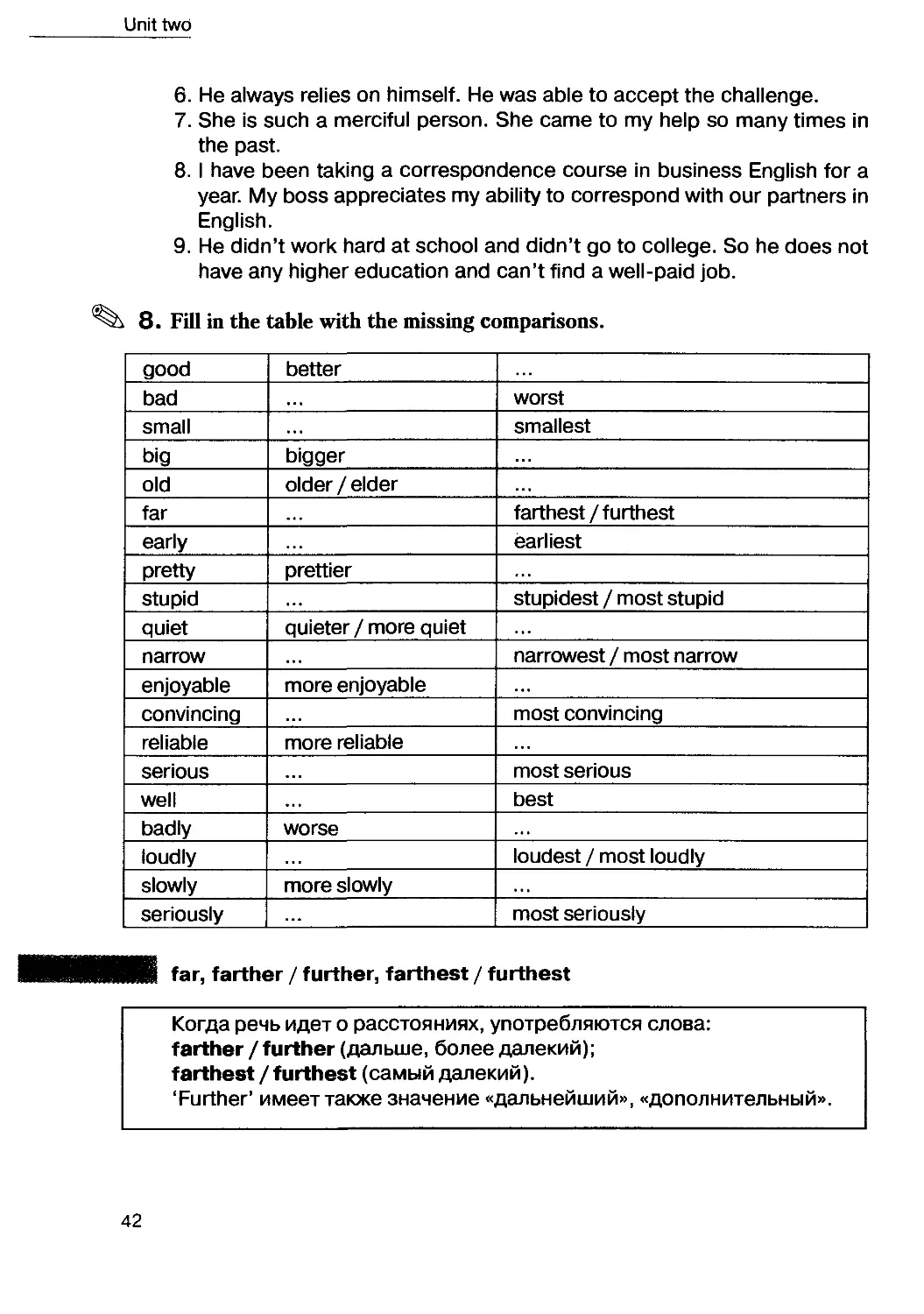
8. Fill in the table with the missing comparisons.
good	better
bad	*..	worst
small		smallest
big	bigger
old	older/elder
far		farthest/furthest
early		earliest
pretty	prettier
stupid		stupidest / most stupid
quiet	quieter / more quiet
narrow		narrowest / most narrow
enjoyable	more enjoyable
convincing		most convincing
reliable	more reliable
serious		most serious
well		best
badly	worse
loudly		loudest / most loudly
slowly	more slowly
seriously		most seriously
far, farther / further, farthest / furthest
Когда речь идет о расстояниях, употребляются слова:
farther / further (дальше, более далекий);
farthest /furthest (самый далекий).
‘Further’ имеет также значение «дальнейший», «дополнительный».
42
Part 1
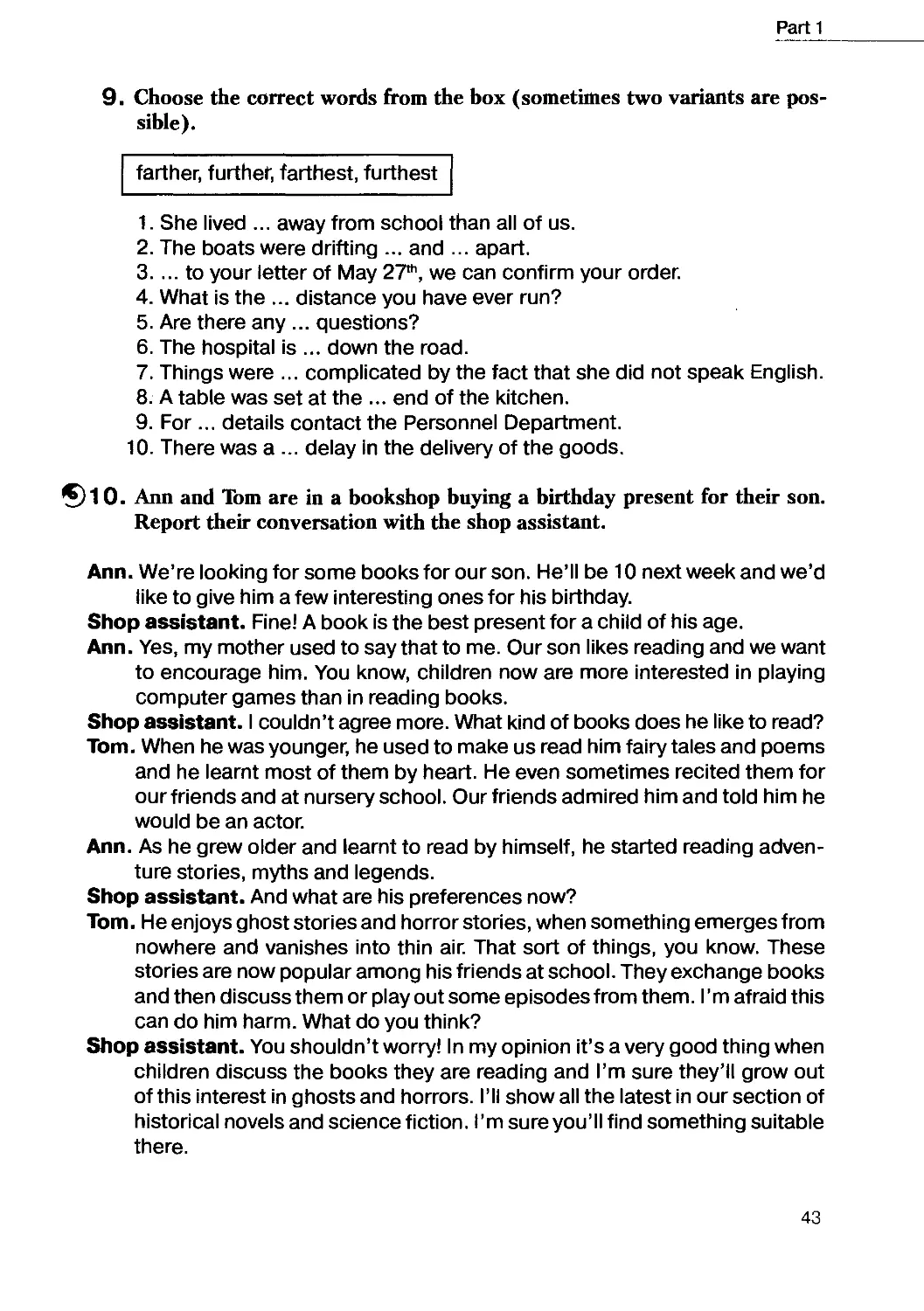
9. Choose the correct words from the box (sometimes two variants are pos-
sible).
farther, further, farthest, furthest
1. She lived ... away from school than all of us.
2. The boats were drifting ... and ... apart.
3...	. to your letter of May 27th, we can confirm your order.
4.	What is the ... distance you have ever run?
5.	Are there any ... questions?
6.	The hospital is ... down the road.
7.	Things were ... complicated by the fact that she did not speak English.
8.	A table was set at the ... end of the kitchen.
9.	For... details contact the Personnel Department.
10.	There was a ... delay in the delivery of the goods.
*)10. Ann and Tom are in a bookshop buying a birthday present for their son.
Report their conversation with the shop assistant.
Ann. We’re looking for some books for our son. He’ll be 10 next week and we’d
like to give him a few interesting ones for his birthday.
Shop assistant. Fine! A book is the best present for a child of his age.
Ann. Yes, my mother used to say that to me. Our son likes reading and we want
to encourage him. You know, children now are more interested in playing
computer games than in reading books.
Shop assistant. I couldn’t agree more. What kind of books does he like to read?
Tom. When he was younger, he used to make us read him fairy tales and poems
and he learnt most of them by heart. He even sometimes recited them for
our friends and at nursery school. Our friends admired him and told him he
would be an actor.
Ann. As he grew older and learnt to read by himself, he started reading adven-
ture stories, myths and legends.
Shop assistant. And what are his preferences now?
Tom. He enjoys ghost stories and horror stories, when something emerges from
nowhere and vanishes into thin air. That sort of things, you know. These
stories are now popular among his friends at school. They exchange books
and then discuss them or play out some episodes from them. I’m afraid this
can do him harm. What do you think?
Shop assistant. You shouldn’t worry! In my opinion it’s a very good thing when
children discuss the books they are reading and I’m sure they’ll grow out
of this interest in ghosts and horrors. I’ll show all the latest in our section of
historical novels and science fiction. I’m sure you’ll find something suitable
there.
43
Unit two
Ann. Thanks a lot.
Tom. Oh, Ann! While you’re making your choice there, I’ll go and choose a nice
detective story for myself!
11.	Retell the story. Begin with: If the children hadn’t been so noisy...
Finish the story with: ...the bachelor wouldn’t have accepted the chal-
lenge.
Example: If the children hadn’t been so noisy... If the children hadn’t been so
noisy the aunt wouldn’t have started telling them a story.
If the aunt hadn’t started telling her story...
PART 2
® Read the end of the story and make sure that you understand it. The list
of new words on p. 47-48 will help you.
THE STORY-TELLER
(the beginning of the story is on p. 29)
“Once upon a time,” began the bachelor, “there was a little girl called Ber-
tha, who was extraordinarily good.”
The children’s interest began at once to vanish; all stories seemed dread-
fully alike, no matter who told them.
“She did all that she was told, she was always truthful, she kept her clothes
clean, ate milk puddings as though they were jam tarts, learned her lessons per-
fectly, and was polite in her manners.”
“Was she pretty?" asked the bigger of the small girls.
“Not as pretty as any of you,” said the bachelor, “but she was horribly
good.”
There was a wave of reaction in favour of the story; the word ‘horrible’ in
connection with goodness was a novelty. It seemed to introduce a ring of truth
that was absent from the aunt’s tales.
“She was so good,” continued the bachelor, “that she won several
medals for goodness, which she always wore, pinned on to her dress.
There was a medal for obedience, another medal for punctuality, and a
third for good behaviour. They were large metal medals and they clicked
against one another as she walked. No other child in the town where she
lived had as many as three medals, so everybody knew that she must be an
extra good child.”
44
Part 2
“Horribly good,” quoted Cyril.
“Everybody talked about her goodness, and the Prince of the country got
to hear about it, and he said that as she was so very good she might be allowed
once a week to walk in his park, which was just outside the town. It was a beau-
tiful park, and no children were ever allowed in it, so it was a great honour for
Bertha to be allowed to go there.”
“Were there any sheep in the park?” demanded Cyril.
“No,” said the bachelor, “there were no sheep.”
“Why weren’t there any sheep?” came the inevitable question arising out
of that answer.
The aunt permitted herself a smile, which might almost have been de-
scribed as a grin.
“There were no sheep in the park” said the bachelor, “because the
Prince’s mother had once had a dream that her son would either be killed by a
sheep or else by a clock falling on him. For that reason the Prince never kept
a sheep in his park or a clock in his palace.” The aunt suppressed a gasp of
admiration.
“Was the Prince killed by a sheep or by a clock?” asked Cyril.
“He is still alive, so we can’t tell whether the dream will come true,” said
the bachelor; “anyway, there were no sheep in the park, but there were lots of
little pigs running all over the place.”
“What colour were they?”
“Black with white faces, white with black spots, black all over, grey with
white patches, and some were white all over.”
The story-teller paused to let a full idea of the park’s treasures sink into the
children’s imaginations; then he went on:
“Bertha was rather sorry to find that there were no flowers in the park. She
had promised her aunts, with tears in her eyes, that she would not pick any of the
Prince’s flowers, and she had meant to keep her promise, so of course it made
her feel silly to find that there were no flowers to pick.”
“Why weren’t there any flowers?”
“Because the pigs had eaten them all,” said the bachelor promptly. “The
gardeners had told the Prince that you couldn’t have pigs and flowers, so he
decided to have pigs and no flowers.”
There was a murmur of approval at the excellence of the Prince’s deci-
sion; so many people would have decided the other way.
There were lots of other delightful things in the park. There were ponds
with gold and blue and green fish in them, and trees with beautiful parrots that
said clever things at a moment’s notice, and humming birds that hummed all
the popular tunes of the day. Bertha walked up and down and enjoyed herself
immensely, and thought to herself: ‘If I were not so extraordinarily good I should
not have been allowed to come into this beautiful park and enjoy all that there is
to be seen in it, ’ and her three medals clinked against one another as she walked
45
Unit two
and helped to remind her how very good she really was. Just then an enormous
wolf came prowling into the park to see if he could catch a fat little pig for his
supper.
“What colour was he?” asked the children, their interest immediately
quickening.
“Mud-colour all over, with a black tongue and pale grey eyes that gleamed
with unspeakable ferocity. The first thing that he saw in the park was Bertha;
her pinafore was so spotlessly white and clean that it could be seen from a
great distance. Bertha saw the wolf and saw that he was stealing towards her,
and she began to wish that she had never been allowed to come into the park.
She ran as hard as she could, and the wolf came after her with huge leaps and
bounds. She managed to reach a shrubbery of myrtle bushes and she hid
herself in one of the thickest of the bushes. The wolf came sniffing among the
branches, his pale grey eyes glaring with rage. Bertha was terribly frightened,
and thought to herself: ‘If I had not been so extraordinarily good I should have
been safe in the town at this moment.’ However, the scent of the myrtle was so
strong that the wolf could not sniff out where Bertha was hiding, and the bushes
were so thick that he might have hunted about in them for a long time without
noticing, so he thought he might as well go off and catch a little pig instead. Ber-
tha was trembling very much at having the wolf prowling and sniffing so near
her, and as she trembled the medal for obedience clinked against the medals for
good conduct and punctuality. The wolf was just moving away when he heard
the sound of the medals clinking and stopped to listen; they clinked again in a
bush quite near him. He dashed into the bush, his pale grey eyes gleaming with
ferocity and triumph and dragged Bertha out and devoured her to the last
morsel. All that was left of her were her shoes, bits of clothing, and the three
medals for goodness.”
“Were any of the little pigs killed?”
“No, they all escaped.”
“The story began badly,” said the smaller of the small girls, “but it had a
beautiful ending.”
“It is the most beautiful story that I have ever heard,” said the bigger of the
small girls, with immense decision.
“It is the only beautiful story I have ever heard,” said Cyril.
A different opinion came from the aunt.
“A most improper story to tell to young children! I wish I hadn’t asked you to
tell them a story. You have undermined the effect of years of careful teaching.”
“At any rate,” said the bachelor, collecting his belongings preparatory to
leaving the carriage, “I kept them quiet for ten minutes, which was more than
you were able to do.”
“Unhappy woman!” he observed to himself as he walked down the plat-
form of the station; “for the next six months or so those children will not leave
her alone, demanding that she should tell them an improper story!”
46
Part 2
New Words
extraordinarily [ik'strcndnsrali] adv необычайно
extraordinary adj необычайный
vanish [‘vasnif] v исчезать
in favour [in 'feiva] в пользу
novelty ['novalti] n новинка, нечто новое
pin (pinned) on [pin, pmd] v приколоть к
pin n булавка
obedience [aTjudians] n послушание
punctuality [.pAnktjdaelati] n пунктуальность
behaviour [bi'heivia] n поведение
click [klik] v звонко щелкнуть
quote [kwaut] v цитировать, процитировать
arise (arose, arisen) [a'raiz, a'rauz, a'nzn] v возникать, возникнуть
permit [pa'mit] v разрешать, разрешить
grin n усмешка, ухмылка
suppress [sa'pres] v подавить
gasp [gcusp] n вздох
come true сбываться (о снах, мечтах)
patch п пятно, заплата
sink (sank, sunk) vтонуть
sink into проникнуть
promptly ['promptli] adv немедленно
approval [a'pru-'val] n одобрение
delightful [di'laitful] adj восхитительный
at a moment’s notice немедленно, как только их попросили
hum (hummed) и жужжать, напевать
prowl [praul] v красться, бродить
mud п грязь
mud-color цвета грязи
gleam [gli:m] v блестеть, поблескивать
ferocity [fa'rosati] п свирепость
pinafore ['pmafo:] п передник
steal (stole, stolen) vкрасться, красть (воровать)
leaps and bounds длинные скачки
shrubbery ['/глЬэп] n кустарник
myrtle [m3:tl] n мирт (растение)
bush [buf] n куст
tremble [trembl] v дрожать
conduct ['konckkt] n поведение
syn. behaviour
dash v броситься, прыгнуть
47
Unit two
triumph [’traiamf] n триумф
drag (dragged) утащить, утащить, волочить
devour [diVaua] v пожирать, сожрать
morsel [‘mo:sal] n кусочек
escape [is'keip] усластись бегством
improper [im'propa] adj неподходящий
ant. proper
undermine [^nda'main] у подрывать, подорвать принципы, устои и т.п.
observe [ab'z3:v] у заметить, сказать
leave sb alone оставить в покое
Questions for discussion.
1.	Did you expect the bachelor’s story to be like that?
2.	How was the bachelor’s story different from the aunt’s story?
3.	Why did the children appreciate the bachelor’s story?
4.	Why do you think the aunt called the bachelor’s story “a most improper
story to tell to young children”?
5.	Did you enjoy reading the story? Was it new for you or did you read it
before?
EXERCISES
1.	Find English equivalents in the text for the following (you may think of
better Russian translations).
1.	Жила-была девочка по имени Берта, которая была необыкновенно
хорошей.
2.	...казалось, что все истории ужасно одинаковые, кто бы их ни рас-
сказывал.
3.	Не такая хорошенькая, как вы обе...
4.	Это, казалось, было хоть немного похожим на правду; то, чего со-
вершенно не хватало в историях тети.
5.	Ни у одного ребенка в городе, где она жила, не было целых трех
медалей.
6.	...принц услыхал о ней (до принца дошел слух о ней)...
7.	...и было большой честью для Берты получить разрешение там гу-
лять.
8.	...погибнет либо из-за овцы (букв, будет либо убит овцой), либо
из-за упавших на него часов.
9.	...подавила вздох восхищения.
10.	...не можем пока сказать, сбудется ли этот сон.
48
Part 2
11.	Отличное решение принца вызвало одобрение; многие решили
бы иначе.
12.	...популярные в настоящий момент мелодии.
13.	...то, что там можно посмотреть...
14.	Первое, что он там увидел...
15.	...кусты были такие густые, что он мог бы там (по ним) долго ры-
скать, не замечая ее.
16.	...он (волк) бросился в кусты, его серые глаза сверкали свирепо
и победоносно...
17.	...разорвал ее в клочья.
18.	Крайне неподходящая для детей история...
19.	Вы разрушили (уничтожили) все многолетние усилия по воспита-
нию детей.
20.	...размышлял он про себя, когда шел по платформе на станции.
VOCABULARY
2.	Read and translate these sentences into Russian so as to have a better
idea of how these words can be used.
extraordinary adj, extraordinarily adv
1.	When she was young, she was a woman of extraordinary beauty.
2.	An extraordinary meeting I session, etc. is a meeting I session, etc.
which takes place in addition to the usual ones.
3.	There will be an extraordinary meeting next Wednesday to discuss the
emergency resolution.
4.	I’m afraid Jane can behave quite extraordinarily sometimes.
Remember!
чрезвычайное положение - a state of emergency
vanish v
1.	To ‘vanish’ means to disappear suddenly or in a way that cannot be
explained.
2.	We started running after the thief but he ran much quicker than any
of us and vanished into thin air (как в воду канул I как сквозь землю
провалился).
3.	The police looked for him everywhere but he had vanished in the
crowd.
4.	He wouldn’t be so upset if all his hopes to get a promotion hadn’t
vanished.
5.	When she heard his name, the smile vanished from her face.
49
Unit two
favour n, favourable adj, favourite adj, favourite n
1. The match ended in favour of our team.
2.1 wonder if everybody will be in favour of our idea.
3.	All those in favour, raise your hands.
4.	Please, do me a favour. Could you do me a favour?
5.	He did us a great favour.
6.	You always were Dad’s favourite.
Compare
favourable (благоприятный, благосклонный), favourite (любимый)
The answer (opinion) was favourable.
The weather (wind) was favourable.
The result of the bet was favourable for Harry.
He is my favourite author (composer, singer).
It’s my favourite book (story, tune, poem, chocolate).
novelty n
1. They showed all the novelties in fashion.
2. When the novelty had worn off, fewer and fewer people watched the
talk-show, and its rating fell.
pin n, pin v
1.	We use pins and needles when sewing, (to sew, sewed, sewn
[sau, saud, saun] шить).
2.	Have you got a safety pin? Do me a favour, let me have one quickly!
3.	A large picture of the Queen was pinned to (on) the wall.
4.	You shouldn’t pin all your hopes on getting that job - why don’t you
apply for some others!
5.	‘To be on pins and needles’ is the American expression corresponding
to the British ‘to be on tenterhooks’, both meaning to be worried or
anxious about something that is going to happen.
6.1 was on pins and needles to find out in whose favor (Am.) the match
had ended.
7. We were kept on pins and needles (tenterhooks) all morning until the
telephone rang.
obey v, obedience n, obedient ad/
ant. disobey, disobedience, disobedient
1.	“You are supposed to obey my orders,” the commander said to the
soldiers.
2.	Obedience to law and order is perfectly natural in any civilized society.
3.	The children were expected to be quiet and obedient in the classroom.
50
Part 2
punctual adj, punctually adv, punctuality n
1.	She is always very punctual for appointments.
2.	The meeting began punctually at nine o’clock.
3.	The boss demands punctuality from us all.
4.	Punctuality is the politeness of princes (believed to be said by Louis
XVIII of France (1755-1824).
behave v, behaviour n (syn. conduct)
1.	He behaved like a gentleman.
2.	The car is behaving better than usual today.
3.	‘Behave yourself’ is only used when speaking to children.
4.	As always with human behavior, there are exceptions to the general
rule.
5.	It was Fleming who discovered the behaviour of penicillin on human
infections.
click v, n
1.	The soldier gave a click of his heels as he saluted the Queen.
2.	Paul clicked his fingers to attract the waiter’s attention.
3.	Liz and I really clicked (with each other) the first time we met.
4.	As he talked about his school days, it suddenly clicked where I had met
him before.
5.	In computer language ‘to click’ means to make a computer instruction
operate by pressing a button on the mouse.
e.g. When you have selected the file you want, click ‘Open’.
quote v, quotation n
1. “Tomorrow is another day,” she was often quoted as saying.
2. I’d like to include a quotation (quote) from Shakespeare: “All the world’s
a stage and all the men and women merely players”.
arise (arose, arisen) v
syn. turn up, emerge
1.	Some unforeseen problems arose (emerged) quite unexpectedly.
2.	Should the opportunity arise (turn up), I’d love to go to China.
3.	Could you work on Saturday should the need arise?
4.	It all arose from a misunderstanding.
permit v, permit ['pa:mit] n, permission n
1.	Flexible working hours permit (allow) parents to spend more time with
their children.
2.	The Government promised further pay rises when economic conditions
permit.
51
Unit two
3.	The security system will not permit you to enter without the correct
password.
4.	A permit is an official document that allows you to do something or go
somewhere, e.g. a work I travel permit.
5.	You will need a parking permit if you want to park in this street.
6.	She has managed to obtain (get) a temporary residence permit.
7.	With your permission, I’ll send a copy of this letter to the doctor.
grin n, v
1. A ‘grin’ is a wide smile. It may be either pleasant or unpleasant.
2. ‘To grin and bear it’ means to accept something without complaining.
3.1 don’t want to do extra paper work for my boss, but I suppose I’ll have
to grin and bear it.
suppress v
1. She could hardly suppress her anger.
2. Human rights can’t be suppressed.
gasp v, n
1.	To gasp means to take a short quick breath through the mouth (with
your mouth open) because of surprise, pain or shock.
2.	When she saw what was hidden in the box she gasped in surprise.
3.	“Help me!” he gasped.
4.	He gave a gasp of amazement, as if he had never seen anything like
that before.
5.	She could hardly suppress a gasp of admiration.
come true
1. If he hadn’t worked so hard, his ambition to make that important
discovery would have never come true.
2. Dreams don’t always come true, do they?
patch n, v
1.	He was wearing an old cardigan with leather patches on the elbows.
2.	A ‘patch’ often means a small area (not necessarily of land), which is
different in some way from the area that surrounds it.
3.	Our dog is called Patch because he’s got a white patch on his back.
4.	If there were not so many icy patches on the road, I wouldn’t drive so
slowly.
5.	The story is good in patches, but I wouldn’t really recommend it.
6.1 need some matching material to patch my old jeans. They are my
favourites, so comfortable to wear!
52
Part 2
sink (sank, sunk) v
1.	The Titanic was a passenger ship that sank to the bottom of the ocean
in 1912.
2.	He was just left ‘to sink or swim’ (= to fail or succeed by his own
efforts).
3.	Rodin’s sculpture The Thinker is the image of a man sunk in thoughts.
4.	The instruction says: “Rub the cream gently on your face until it has all
sunk into your skin.”
5.1 don’t think the new ideas expressed by the speaker have sunk into the
minds of the audience.
prompt adj, promptly adv, prompt n, prompter n
1.	We are grateful for your prompt reply.
2.	The problem requires prompt action.
3.	We try to answer readers’ letters as promptly as we can.
4.	In the theatre ‘a prompt’ is either the words, which are spoken to an actor
who has forgotten what he is supposed to say, or (also ‘a prompter’) a
person whose job is to supply forgotten words to an actor.
5.	In class ‘prompting’ means secretly telling another student the right
thing to say to the teacher.
approve (of) v, approval n
ant. disapprove, disapproval
1.	If I were you I wouldn’t approve of their behaviour.
2.	The decision was approved by everybody.
3.	The decision was met with everybody’s approval.
4.	The new law has to be approved by parliament.
5.	The arrangement was officially approved.
delight n, delightful adj, delighted adj
1. To his great delight his novel was accepted for publication.
2.1 was delighted to hear the news of your success.
3.	I’m sure you’ll have a delightful holiday there.
notice n, v
1.	They’ve put corresponding notice (объявление) in several newspa-
pers.
2.	Please don’t change anything in the original project until further notice
(уведомление).
3.	I’ll give you at least a week’s notice. Use this when you are resigning or
sacking people.
4.1 only found it out at very short notice.
5.1 keep complaining but nobody takes any notice (pays any attention).
53
Unit two
mud n, muddyad/
1.	Mud is a wet and sticky mixture of earth and water.
2.	Mud can become hard when it fries and is used for buildings.
3.	They make their houses of mud and stones.
4.	The road became muddier and muddier. The wheels got stuck in the
mud.
Compare
muddy (грязный, в грязи, в земле), dirty (грязный (в более широком
смысле)
Don’t sit on that bench. It’s dirty.
He likes to tell dirty stories.
She treats him like dirt.
gleam v
1.	If an object or a surface gleams it reflects light because it is shiny and
clean.
2.	He polished his ring until it gleamed.
3.	If your face or eyes gleam they show a particular expression.
e.g. A gleam of pride / pleasure / dislike / hatred.
steal (stole, stolen) v, stealth n
1.	The number of cars, which are stolen every year, has risen
considerably.
2.	The firm is now accusing some of its former employees of stealing
trade secrets.
3.	He stole out of the room and nobody took notice of it.
4.	The weapons had been acquired by stealth.
5.	A Stealth bomber (бомбардировщик) or fighter (истребитель) is an
aircraft which can not be seen on radar.
leap (leapt, leapt) v, n, by leaps and bounds
1.	The reporter leapt forward, holding out her microphone.
2.	If someone or something gets better by (in) leaps and bounds, it means
they improve very quickly.
3.	The economy of those countries is improving by leaps and bounds.
4.	A leap in the dark’ is something you do without being certain what will
happen.
5.	Booking the holiday was a leap in the dark - we got the address out of
the paper.
6.	A leap year happens once every four years and has an extra day on
February 29th.
54
Part 2
tremble v
syn. shiver (only with cold)
1.	One can tremble with anger / fear / cold, but shiver only with cold.
2.	She trembled for her children’s safety.
3.	She trembled at the very thought of possible danger.
4.1 tremble to think what might have happened if the police hadn’t arrived
in time.
conduct n, conduct [kan'ckkt] v, conductor n
syn. behaviour
1.	Someone’s conduct is the way they behave in different situations,
especially with regard to morality.
2.	One has to learn to adapt to the rules of conduct of the society in which
he lives.
3.	The minister had several good reasons for his conduct.
4.	The conduct of an activity or task is the process of organizing it and
carrying it out
5.	The conduct of the Government’s economic policy was criticized in the
media.
6.	Nobody liked the manner in which he conducted his public life.
7.	Public figures have a duty to conduct themselves responsibly.
8.	He is not only a brilliant violinist but also a successful conductor of a
well-known orchestra.
9.	This material is not such a good conductor as metal, but better than
wood.
dash v
1. People dashed out into the street to see what was happening.
2.1 wish I could stay longer, but I can’t. I’ve got to dash.
triumph n, v
1.	The election result was his personal triumph.
2.	The machine is a triumph of advanced technology.
3.	They had met the challenge and triumphed.
drag (dragged, dragged) v
1.	“I saw that man dragging a child along by the hand,” said the witness.
2.	If you hadn’t helped us, we wouldn’t have been able to drag the dogs
apart.
3.	It was absolutely clear that our counterparts were reluctant to accept
our conditions and were dragging out the talks (were making the talks
last longer than necessary).
55
Unit two
devour v
1.	When an animal or insect ‘devours’ another, it ‘eats’ it.
e.g. The wolf dragged the little pig into the forest and devoured it.
2.	When a person ‘devours’ something, they ‘eat a lot and quickly’ at
that.
e.g. He was so hungry that he devoured an enormous piece of meat in
a minute.
3.	If you ‘devour’ a story / book / magazine, etc. you ‘read’ it quickly and
with great interest.
e.g. He used to devour science fiction when he was in his teens (a
teenager).
4.	Don’t you find that the meaning of the verb ‘to devour’ is similar to the
meaning of a corresponding Russian verb?
escape n, v
1.	He must have escaped from prison.
2.	He can’t have escaped punishment.
3.	He may (might) have escaped unnoticed.
4.	Just try to sniff. Gas seems to be escaping.
5.	He escaped certain death thanks to his courage and resolution.
6.	He had a narrow escape from punishment / prison / death, etc. (едва
спасся, был на волоске от...)
7.	Their courageous escape from a gang of terrorists was described in all
the papers.
proper adj, properly adv
ant. improper ad/, improperly adv
1.1 wish it would all be done at the proper time.
2.1 wish it had all been done at the proper time. We wouldn’t have any
trouble now.
3.	Your project would have been approved if it had been presented in a
proper way (= properly).
4.	Everything should be in its proper place.
5.	He is a gentleman in the proper sense of the word.
6.1 can’t give you any advice, I’m afraid. Do as you think proper.
7. It was a most improper remark.
8. His behavior during the discussion was most improper.
9.1 wish you would stop telling improper (неприличные) stories when
there are children around.
undermine v
1.	The sea must have been undermining the shore there for a long time.
Something should be done about it in proper time (before it’s too late).
56
Part 2
2.	His authority was undermined by his improper conduct.
3.	His health was undermined by long years of hard work.
Don’t mix up!
undermine (подрывать), explode (взрывать(ся), blow up (взрывать)
A bomb exploded causing a lot of damage.
The old house was in such a poor condition that it was decided to have
it blown up.
One of the submarines blew up (exploded) and sank.
observe v, observation n
1.	Scientists had been observing the behaviour of birds for a long time
before they made some important discoveries.
2.	While the battle was going on, the general carefully observed its prog-
ress.
3.	Law and order must be observed in a civilized society.
4.	Unfortunately, this escaped observation (ускользнуло от наблюде-
ния).
5.	The patient must still be under careful medical observation.
6.	In his answer he made a few clever observations (comments).
GRAMMAR
BH wish
Wish + Past Simple используется для выражения сожаления по по-
воду ситуации в настоящий момент.
I wish I were rich. - Жаль, что я не богат. (Хотел бы я быть богатым!)
I wish I knew! - Хотел бы я знать! (К сожалению, я не знаю.)
Wish + Past Perfect используется для выражения сожаления по по-
воду ситуации в прошлом.
I wish I hadn’t eaten so much cake. - Зря я съел так много торта! (Если
бы только я не съел так много торта!)
I wish I had told him about it! - Зря я ему не сказал об этом!
Wish + would используется для высказывания пожеланий в отноше-
нии будущего.
I wish somebody would buy my car. - Хотел бы я, чтобы кто-нибудь
купил мою машину.
I wish he would listen to me. - Лучше бы он меня слушал!
57
Unit two
. 3. Rewrite the sentences using ‘wish’.
Example: “It’s a pity I’m so good,” Bertha thought to herself.
“I wish I were not so good,” Bertha thought to herself.
“I’m sorry I didn’t interrupt his horror story,” the aunt thought to
herself.
“I wish I had interrupted his horror story,” the aunt thought to herself.
“I’d like the aunt to tell us something more exciting,” Cyril thought to
himself.
“I wish the aunt would tell us something more exciting,” Cyril thought
to himself.
1.	It’s a pity I haven’t got a car.
2.	I’m sorry I accepted the challenge.
3.	I’m sorry I’m not a good story-teller.
4.	I’d like the aunt to learn to tell good stories.
5.	I’m sorry the children didn’t admire my story.
6.1 want the children to behave well.
7.	I’m sorry I can’t speak English fluently.
8.	I’m sorry I don’t live near my work.
9.	It’s a pity we didn’t book the restaurant.
10.	I’d like Tom to drive more carefully.
11.	I’m sorry I left my last job.
12.	I’d like him to have his hair cut more often.
13.	It’s a pity you didn’t ask him how to get there.
14.	I’m sorry I don’t know the answer.
15.	I’m sorry they didn’t come to his rescue.
16.	I’d like her dreams to come true.
4.	Rewrite these sentences using the other way of comparison.
Example: “Bertha wasn’t as pretty as any of you,” the bachelor said.
“Bertha was less pretty than any of you,” the bachelor said.
“Is the grass in that field better than here?” the small girl asked.
“Is the grass here as good as the grass in that field?” the small girl
asked.
1.	He isn’t as tall as his brother. His brother is...
2.	He is younger than he looks. He doesn’t look as...
3.	I’ve known them longer than you. You haven’t known them as...
Part 2
4.	The winter this year isn’t as cold as it was last year, is it? Last year the
winter was...?
5.	We don't go out as often as we used to. We used to go out...
6.	They live farther (further) from school than me. I don’t live as...
7.	The performance was less enjoyable than we had expected. The
performance wasn’t as...
8.	He doesn’t read as much as he should. He should read...
9.	Nobody had as many medals as she did. She had...
10.	These rhythms and tunes are less popular today than they used to be
in my childhood. These rhythms and tunes aren’t as...
11.	1s anybody here as bored with this exercise as me? Is anybody
here...?
5.	These are the answers. What were the questions?
Example: Bertha saw the wolf.
What did Bertha see?
1.	Children were not allowed in the park.
2.	There were lots of other delightful things in the park.
3.	Everybody talked about her goodness.
4.	For that reason the Prince never kept a sheep in his park or a clock
in his palace.
5.	He decided to have pigs and no flowers.
6.	The wolf was mud-colour all over.
7.	The wolf was just moving away when he heard the sound of the
medals clinking.
8.	The story-teller paused to let a full idea of the park’s treasures sink
into the children’s imaginations.
9.	She hid herself in one of the thickest of the bushes.
10.	The story began badly.
11.	But it had a beautiful ending.
6.	Retell The Story-teller as if you were:
a)	the aunt;
b)	the bachelor;
c)	Cyril;
d)	one of the girls.
Here are some verb patterns, which can help you:
ask sb to do sth, tell sb to do sth, allow sb to do sth, teach sb to do sth,
encourage sb to do sth, invite sb to do sth, make sb do sth, let sb do sth
59
Unit two
enjoy doing sth, can’t help doing sth, appreciate doing sth, be worth
doing sth, suggest doing sth, suggest that sb (should) do sth, insist on doing
sth, keep on doing sth, finish doing sth, give up doing sth
. 7. Write down your own story. Here is a sample beginning, but you can, cer-
tainly, think of your own beginning.
I was born in the family of musicians. My father was a violinist. My mother
was a pianist. They were both in great demand as outstanding performers of
classical music, so, naturally they had to travel a lot, and my younger sister, my
brother Cyril and myself were left to be taken care of by our aunt Agatha (not the
famous detective-story writer, of course, just a namesake). Auntie was the most
boring person I have ever met since that time. She put in an enormous effort to
make us good, obedient children with perfect manners. To make us understand
and appreciate what a good child was supposed to be she used to tell us stories
about perfect children. The heroine of her stories was usually a girl, hardly ever
a boy. The girl was obedient, punctual, neat and admired by all the people who
were lucky enough to know her.
Once when Auntie Agatha and the three of us were travelling from London
to Bath, Auntie had found a compartment in the train that was practically empty
except for a young man who occupied a corner seat just opposite Auntie’s...
Part 1
UNIT THREE
If history were in the form of stories,
it would never be forgotten.
Rudyard Kipling (1865-1939),
English writer
Discuss this before you read the text.
1.	What were your favourite subjects at school: maths (mathematics),
physics, chemistry, history, Russian, foreign languages, etc.?
2.	What made the subject your favourite? Was it the subject as such, the
teacher, the textbook, etc.?
3.	Are you interested in history (even if it wasn’t your favourite subject at
school)? What do you think about how you were / are taught history at
school? Can you say that you have enough knowledge of Russian his-
tory? Are you interested in reading books based on historical events,
seeing theatrical performances or films connected in some way or an-
other with history? Give some examples.
4.	Can you explain the difference between the words ‘historic’ and ‘his-
torical’? Give some examples.
PART 1
5) Read the text and make sure that you understand it. The list of new words
on p. 63 will help you.
THE DISCOVERY OF AMERICA AND
THE FIRST BRITISH ATTEMPTS TO SETTLE
IN THE NEW WORLD*
If anyone were asked “who discovered America”, the inevitable answer
would be “Christopher Columbus”. And this is correct, though the actual pur-
pose of his voyage, ordered and financed by Spanish monarchs, was to find a
shorter way from Europe to Asia (or, to be more specific, to India) which was
known to be rich in silk, spices and, last but not least, gold.
* The Discovery of America and the First British Attempts to Settle in the New World //
O’Callaghan B. An Illustrated History of the USA. Longman, 1994.
61
Unit three
Ten weeks after leaving Spain, on the morning of October 12, 1492, Co-
lumbus stepped ashore on the beach of a sandy island, which he named San
Salvador - Holy Saviour.
He believed that he was close to the mainland of India, and for this reason
he called the friendly brown-skinned people who greeted him Los Indios - In-
dians. Only recently have these first Americans been described more accurately
as Native Americans or Amerindians.
Europeans would soon name the new continent America in honour of the
man who was the first to describe it as a continent.
There are quite a few stories and legends about other adventurous sea-
men who had allegedly reached the New World long before Columbus, but only
one story and one name has so far been confirmed by archeological evidence.
This name is Leif Ericson, “Lucky Leaf”, a Viking sailor from Iceland. Well, any-
how the question that arises is why the language of the largest and most eco-
nomically powerful country in North America is English and not Spanish?
When did the first English-speaking people settle in the New World? Here
is the most widely recognized answer:
It only happened in the sixteenth century AD, when England was ruled by
a woman - Queen Elisabeth the First.
The reign of Elisabeth the First was a great time for great people. One of
such people, a contemporary of William Shakespeare, was Sir Walter Raleigh,
who was an adventurer, a traveller and a poet. In July 1585 he sent ships to find
a land in the New World where English people might settle. He named the land
they found Virginia in honour of Queen Elisabeth who was unmarried and was
considered to be a virgin. Raleigh’s attempt to found an English colony, how-
ever, was not successful, and in less than a year the first British settlers had to
go back to England.
It was very important for Europeans, who wanted to have their own land in
the New World, to establish settlements of their own people there. So Raleigh
made another attempt in 1587, but it turned out to be still more unsuccessful
than the previous one. The leader of the expedition, whose name was John
White, had to go back to England for supplies. It so happened that he was only
able to return to America three years later. He found the place where he had left
the colonists completely deserted, and all his attempts to find them ended in
failure. The colony was lost and went down in history as ‘the lost colony’.
(to be continued)
Names
Christopher Columbus ['knstafa ka'kmbas]
San Salvador [saen'saelvado:]
62
Part 1
Los Indios (Spanish) [ios'mdros]
Leif Ericson* [li:f ’enksan]
Elisabeth the First [t'lizabaO da fs:st]
William Shakespeare [Sviljam 'Jeikspia]
Walter Raleigh [‘wodta 'rah]
Virginia [va'cfcmia]
John White [cfcon *wait]
New Words
attempt [a'tempt] n попытка
specific [spi'sifik] adj определенный, точный, специфический, особый
to be more specific точнее говоря, syn. to be more exact
holy ['hauh] adj святой
The Saviour Спаситель (Иисус Христос)
save v 1) спасать, беречь, syn. rescue
2) копить, экономить (время, деньги), syn. economize
mainland ['memland] n материк
friendly [frendli] adj дружелюбный, дружеский, дружественный
adventurous [ad'ventfaras] adj предприимчивый, опасный, рискованный
adventure n приключение, авантюра
adventurer n искатель приключений, авантюрист
allegedly [a'lecfcidli] adv якобы, будто бы
allege vутверждать без основания, голословно
evidence ['evidans] п доказательство, улика, свидетельские показания
Viking ['vaiknj] п викинг
rule v царствовать, править страной
reign [rem] п царствование
contemporary [kan'temparan] п, adj современник, современный
virgin ['v3:d3in] п, adj девственница, девственный
colony ['kolani] п колония
turn out оказаться
previous ['prkvias] adj предыдущий
supplies [sa'plaiz] n pl. (продовольственные) запасы
deserted [di'z3:tid] adj покинутый, оставленный, заброшенный
failure [feilia] n неудача, провал
fail v потерпеть неудачу
fail to do sth не сделать (не выполнить) чего-либо
go down in history as войти в историю как / под названием / именем
* A Norwegian (?), who is thought to have sailed to North America around the year 1000 and so
is considered by some to be the first European to discover the New World.
63
Unit three
Questions for discussion.
1.	Was Christopher Columbus the first man to describe America as a
continent?
2.	When did Columbus finish his journey from Spain? How long did this
journey take?
3.	What was the purpose of Columbus’s voyage?
4.	What is known about Leif Ericson? Where was he from?
5.	How is the reign of Elisabeth the First described in the text?
6.	Do you know why America was called America?
7.	Can you remember any other examples of great geographical disco-
veries?
8.	Why do you think the first British attempts to settle in America ended
in failure?
EXERCISES
1.	Find English equivalents in the text for the following (you may think of
better Russian translations).
1.	Если бы кого-нибудь спросили...
2.	...хотя действительной целью этого путешествия, заказанного и
финансированного испанскими монархами...
3.	...которая, как известно, была богата шелком, пряностями и, на-
конец, что не менее важно, золотом.
4.	...в скором времени европейцы назовут новый континент Амери-
кой в честь человека, который впервые описал его как континент.
5.	Существует довольно много историй и легенд о других морепла-
вателях - искателях приключений, которые якобы достигли Аме-
рики задолго до Колумба...
6.	Это случилось только в XVI веке, когда Англией правила женщи-
на...
7.	Время правления Елизаветы I в Англии было великим временем
для великих людей.
8.	...где англичане могли бы поселиться...
9.	...и менее, чем через год...
10.	...но она оказалась еще менее удачной, чем предыдущая.
11.	Так случилось, что он смог обратно вернуться в Америку только
через три года.
12.	...все его попытки разыскать их закончились неудачей.
13.	Колония перестала существовать и вошла в историю как «поте-
рянная колония».
64
Parti
VOCABULARY
2.	Read and translate these sentences into Russian so as to have a better
idea of how these words can be used.
attempt n, v, to make an attempt	,
1.	They made several unsuccessful attempts to solve the problem.
2.	His first attempt to write a story was poor.
3.	The protestors made no attempt to resist arrest.
4.	Every time I attempted to convince them, they just wouldn’t listen.
5.	They made no attempt to give an explanation.
specific adj
1. The money is intended to be used for specific purposes.
2.1 asked you a specific question - please, give me a specific answer.
3.	Are you doing anything specific this weekend?
4.	The report gives some specific recommendations.
5.	‘Specific’ also means clear and exact.
6.	She was unable to give a specific description of the man who attacked
her.
7.	Could you be more specific (= more exact), please?
friendly adj
1.	Please, remember that the word ‘friendly’ is an adjective, not an adverb:
a friendly reception (attitude, smile, etc.)
2.	They gave us a friendly reception. (= They received us in a friendly
way.)
3.	Our neighbours have always been very friendly to us.
4.	The restaurant has such a friendly atmosphere!
5.	The teams are playing a friendly match on Sunday.
6.	It was just a friendly piece of advice, nothing specific.
adventure n, adventurer n, adventurous adj
1.	‘An adventure’ is an unusual, exciting and possibly dangerous
experience, journey, activity, etc.
2.	Robin Hood is described as a man who lived a life full of adventures.
3.	We got lost in the forest - it was quite an adventure!
4.	Lewis Carroll describes Alice’s adventures in a wonderland.
5.	‘An adventurer’ is someone who enjoys and looks for dangerous and
exciting experiences.
6.	‘An adventurer’ is also a person who takes risks, acts dishonestly or
uses his / her attractiveness to become rich or powerful.
65
Unit three
7.	There are quite a few books about adventurers, not necessarily
adventure stories. Becky Sharp, the heroine of Thackeray’s Vanity Fair
was a typical adventurer.
8.	The project is too adventurous to be successful.
allege v, allegedly adv, allegation [.aeli'geijan] n
1.	He alleged to illness as a reason for not doing the work.
2.	They are alleged to have made enormous profit by some adventurous
methods.
3.	The alleged murderer turned out to be innocent.
4.	The allegedly adventurous plan proved to be based on very interesting
ideas that were simply new, and that was why it was not appreciated at
once.
5.	He managed to prove in court that all the allegations against him were
absolutely groundless.
evidence n, evident adj, evidently adv
1.	There isn’t enough historical evidence to prove that any Europeans had
stepped on the American mainland before Columbus.
2.	People who give evidence in court are called witnesses.
3.	“We need more reliable evidence to come to the right conclusion,” said
the judge.
4.	He started eating his lunch with evident enjoyment.
5.	He was evidently upset when he heard the news.
6.	Evidently his attempts to succeed in business turned out to be
unsuccessful.
contemporary n, adj, modern adj, up-to-date adj
1.	‘Contemporary’ is used to describe people, events, accounts, etc.
which existed or happened during the same time period in the past.
2.	What do you think would be a more correct assertion: Shakespeare
was a contemporary of Elizabeth the First or Elizabeth the First was
a contemporary of Shakespeare?
3.	Here is a contemporary account (description) of the reign of Peter the
Great.
4.	Another meaning of ‘contemporary’ as an adjective is ‘existing’ or ‘hap-
pening’ now rather than in the past. Then its synonyms are ‘modern’ or
‘present-day’.
5.	“Today we are going to speak about contemporary (modern) English
literature,” said the lecturer.
6.	‘Up-to-date’ means the newest thing of its kind that you can get, or the
latest information available.
7.	1 wish I had enough money to buy a more up-to-date computer.
66
Parti
turn out (phrasal verb), turn v
sun. prove to be
1.	It turned out to be an enjoyable adventure.
2.	Their small business turned out (proved) to be quite profitable.
3.	Surprisingly enough, his adventurous attempts to solve difficult
problems all by himself turned out to be a success.
4.	“Come on, turn out your pockets!" the detective said to the shoplifter.
5.	The evidence against her was that she allegedly didn’t bother to turn
off the gas when leaving the house.
previous adj, previously adv
1. You will find it on the previous page.
2. As all previous experience shows, a story must be really interesting to
make children understand and appreciate it.
3.1 am sorry but we can’t meet today. I have a previous engagement.
4. He was previously a British consul in Karachi, Pakistan.
supplies n pl, supply n, v
1.	The travelers ran out of their supplies of food and had to turn back.
2.	Oil isn’t in short supply any longer.
3.	Occasionally supply exceeds demand (= is higher than demand).
4.	They keep us supplied with all the books we need.
desert v, desert n, deserted adj
1.	He deserted (abandoned) his previous family and married a woman
much younger than himself.
2.	The traveller ran out of all his supplies and felt that his courage was
deserting him.
3.	This place is a cultural desert - nothing interesting happens here.
4.	The village was deserted because of terrorists.
Don’t mix up!
desert fdezat] n пустыня
dessert [di'z3:t] n десерт
Sahara is the largest desert in the world.
Ice cream is my favourite dessert.
fail v, failure n
1.1 wonder why he failed to keep his promise.
2.	1 wish I hadn’t failed to discourage you from supporting that adventurous
project. I had felt it would be a failure, and so it turned out to be.
3.	If they had found more generous sponsors, their work would not have
ended in failure.
67
Unit three
4.	The play turned out to be a complete failure.
5.	Many attempts had been made to irrigate deserts, but most of them
ended in failure.
go down (in history) as... (phrasal verb)
The war for the English Crown between the “Lancastrians”, who remained
loyal to King Henry VI, and the “Yorkists”, who supported the Duke of
York went down in history as “the War of the Roses”. Though this war
took place in the 15th century, the name was invented much later, in
the 19th century by Walter Scott, because York’s symbol was a white
rose and Lancaster’s a red one.
GRAMMAR
 Different ways of expressing Past
3. Put the verb in brackets in the correct tense form.
a) Past Simple, Past Continuous, Past Perfect, used to do
1.1 (hope) to visit the Tower of London before I (leave) London, but it (turn
out) to be closed.
2.	The sun (rise) and they could see the mountain peaks.
3.	Whoever it was who (make) the bet was likely to lose it.
4.	It was exactly the question that I (want) to ask.
5.	The police (look for) him everywhere but he (vanish) in the crowd.
6.	When the novelty (wear off), fewer and fewer people (watch) the talk-
show, and its rating (fall).
7.	At the time of Columbus’s arrival about one million native people (live)
in America.
8.	Columbus (call) these people “Indians” because he (think) that he
(reach) the coast of India.
9.	My friend (give) the book back to me, (thank) me and (say) that he
(enjoy) it very much.
10	.1 (think) my train was due to leave at 9.00 and I (be) baffled when I
(arrive) at the station at 8.50 and (find) that it (already leave).
11	.1 (keep) looking at him wondering where I (see) him.
12.	As he (talk) about his school days, it suddenly (click) where I (meet)
him before.
13.	My sister (be) very slim when she was younger, now she’s put on a lot
of weight.
14.	The economy of those countries (improve) by leaps and bounds during
the late 1990s.
68
Parti
15.	People (dash out) into the street to see what (happen).
16.	When the police (arrive) they (find out) that the criminal (escape).
17.	When she was young, she (be) a woman of extraordinary beauty.
18.	He (give) a gasp of amazement, as if he (never see) anything like that
before.
19.	He (find) the place where he (leave) the colonists completely
deserted.
20.	While you (travel) around the world, I (study) twelve hours a day for
my exams.
b) Past Perfect, Past Perfect Continuous
1. Yesterday Peter went to the station to meet his girlfriend. When he got
there, she (already / wait) for him for ten minutes because her train
(arrive) earlier.
2.	1 wasn’t hungry and didn’t eat anything at lunch because I (have) an
enormous breakfast.
3.	When I met him in the street, he looked very tired. He (work) very hard
for a few days trying to finish an urgent job.
4.	My husband gave up smoking two years ago. He (smoke) for twenty
years.
5.	They were very good friends. They (know) each other for twenty years.
6.	When Paul arrived at the party, most of the guests (already / go)
home.
7.	When Paul arrived at the party, the guests (sit) at the table for two hours
and (eat) almost all the delicious things the hostess (cook).
8.	It wasn’t snowing when we went out. The sun was shining, and there
was a lot of snow. It (snow) the whole night.
c) Past Perfect Continuous, Past Continuous
1. They were very tired when they reached the peak of the mountain. They
(climb) for five hours.
2. When he came in, everybody (sit) at the table and (talk).
3.	1 met Paul and Linda in the park yesterday while I (walk) there. They had
been to the tennis court where they (play) tennis for two hours.
4.	While he (work) in the garden, the telephone kept ringing, but he
couldn’t hear it.
5.	How fast you (drive) when the accident happened?
6.	How long you (drive) when the accident happened?
7.	How long he (try) to find a new job before he found the job in this
firm?
8	.1 heard the footsteps behind me and understood that I (be followed).
69
Unit three
4	. Put in the correct article a/ an or the and discuss the text in class.
English Phrasal Verbs - a Beauty of the English
Language and a Headache for its Learners
What is ... phrasal verb? There are several definitions given by British and
American grammarians who are authorities on... subject. What would be... most
helpful approach for ... learner of English whose mother tongue is Russian?
Does Russian grammar have any similar ways of supplying ... commonly used
verb with ... new meaning?
... answer is - yes, it has. Only it isn’t... adverbial particle (... very-very
short adverb that often looks like ... preposition), but ... prefix ['pri.fiks] that
gives many commonly used verbs ... new meaning: «говорить», «уговорить»,
«переговорить», «приговорить», «оговорить», etc.
You already know quite ... few phrasal verbs. You have been using them
since ... first year you took up your course of English. Here are some of them:
•	Verbs that do not take ... object (intransitive verbs): be in, go in, come
in, go on, hold on, go back, be back, etc.
•	Verbs that take ... object (transitive verbs): turn sth on, turn sth off, see
sb off, give sth back, put sth on, look sth up, etc.
Most phrasal verbs are short. ... adverbial particle that is part of them
is stressed, unlike ... preposition which is not stressed (in either English or
Russian, by... way).
Phrasal verbs are mostly used in everyday informal situations and make
... conversation natural and expressive. They may be used in formal situations,
too, but their more stylistically formal synonyms are preferred.
e.g. The discussion has been put off. (informal)
The discussion has been postponed, (more formal)
Most phrasal verbs have synonyms belonging to ... more formal style:
bring back - return
call off - cancel
carry out - fulfil
give up - stop doing
turn down - 1) reject
2) lower the sound
... advice that can be given for learning phrasal verbs easily is not to try to
remember... long list of such verbs at once.... much better way of memorizing
phrasal verbs would be learning ... very modest portion at... time (за один раз).
H Phrasal verbs with ‘turn*
turn ... down - 1) reject an offer (отклонить предложение)
2) lower the sound (of TV, radio, etc.) (приглушить звук)
70
Parti
turn ... up - make louder (сделать громче)
turn ... into - change into something different (превратиться)
turn ... off - switch off (выключить)
turn ... on - switch on (включить)
turn out - be the result in the end (оказаться, оказываться)
5.	Translate the following into English using the phrasal verbs with ‘turn’.
1.	Оказалось, что все его попытки заняться бизнесом заканчивались
провалом.
2.	Родители попросили детей приглушить звук телевизора, но дети
не послушались их и сделали его еще громче.
3.	Она обратилась в известную фирму по поводу устройства на рабо-
ту, но, к сожалению, ее не приняли.
4.	Не забудь выключить свет, когда будешь уходить!
5.	Когда мы наконец приехали в гостиницу, которую мы заброниро-
вали по Интернету, оказалось, что свободных номеров нет, и нам
пришлось искать другую гостиницу.
6.	Как только он приходит домой, он сразу же включает и телевизор
в гостиной, и радио на кухне. Это просто невыносимо!
7.	Он был очень удивлен, когда, вернувшись после своего долго пу-
тешествия, обнаружил, что она превратилась из подростка в оча-
ровательную молодую женщину.
НМ Phrasal verbs with ‘до*
до after - follow (следовать за)
до down - fall (about prices, demand, production) (снижаться (о ценах,
спросе, производстве)
до up - increase, rise (about prices, demand, production) (расти (о це-
нах, спросе, производстве)
до down as - be considered I remembered I recorded as (запомниться
как..., войти в историю как...)
до down with - become ill with (заболеть чем-л.)
до in for - 1) get interested in (заинтересоваться, заниматься)
2)	enter competitions (участвовать в соревнованиях)
go on - continue (продолжать)
go out with - go to a theatre I cinema, restaurant, etc, with a boy I girl-
friend (встречаться с молодым человеком, девушкой)
go with - match (e.g. colours) (подходить)
71
Unit three
6.	Translate the following into English using the phrasal verbs with ‘go’.
1.	Когда я был молодым, я занимался спортом, но сейчас, к сожале-
нию, у меня нет на это времени.
2.	Ты знаешь, что Джон встречается с Энн?
3.	Он почувствовал, что за ним кто-то идет, и побежал.
4.	Колония пропала и вошла в историю, как «пропавшая колония».
5.	Как ты думаешь, красная сумочка подходит к моему синему пла-
тью?
6.	Он позвонил полчаса назад и сказал, что заболел гриппом и не
может прийти на работу.
7.	Как говорят эксперты, цена этой старинной картины, похоже, бу-
дет расти.
PART 2
®	Read the text and make sure that you understand it. The list of new words
on p. 75 will help you.
THE BRITISH GO ON COLONIZING AMERICA*
The first English colony that succeeded in surviving In spite of the hard
conditions of life in the New World was named Jamestown in honour of King
James the First who took over as the King of England after Queen Elizabeth
died in 1603.
The Jamestown expedition was financed by a group of rich London
investors who had formed a joint stock company called the Virginia Company.
The first Jamestown settlers were recruited by the Virginia Company and the
Company’s directors first of all wanted them to find gold in America and bring
them a quick profit on their investment.
It would only be fair to say that some of the recruits were also thinking of
gold more than of anything else. As travellers and explorers they were very in-
experienced and made many serious mistakes. They had chosen a swampy site
for their settlement and did not think in good time of growing enough food to
feed themselves. They failed to establish good relations with the natives and
were permanently at war with them. As a result they began to die of starva-
tion, diseases and in wars with the Indians.
* The British go on colonizing America; The First Slaves in the New World; Rigrims 11
O'Callaghan B. An Illustrated History of the USA. Longman, 1994.
72
Part 2
In spite of all that new settlers continued to arrive, among them 90 young
women the Virginia Company shipped over in 1619 as wives for the colonists.
Each man who wanted a wife for himself had to pay the Company ‘ 120 pounds
weight of best tobacco leaf’.
By that time a young settler named John Rolfe had discovered a new way
of making tobacco leaves milder, and the export of this new kind of tobacco
began to bring good money, which actually saved Virginia.
Most of the settlers recruited by Virginia to work on tobacco plantations
were poor people from England who had promised to work for the employer for
an agreed period of time in exchange for food and clothes. If by the end of that
period the worker was lucky enough to remain alive, he became free to work
for himself.
But soon another kind of labour force, that practically did not cost anything
at all, appeared in Virginia.
THE FIRST SLAVES IN THE NEW WORLD
In August 1619 a small Dutch warship arrived at Jamestown port. It
brought 20 black Africans, and the ship’s captain sold them to the settlers.
These people became slaves - although it was years before the fact was
openly admitted. This was the beginning of slavery in the New World.
The Virginia Company never made a profit. It turned out to be a failure
and the English Government liquidated it and made itself responsible for the
Virginian colonists.
This, however, didn’t make the colonists’ life in America much easier.
Only the healthiest, the strongest and the toughest were able to survive, but
there were very few of them left. Back at home these early years of the 17th
century were a time of poverty and hardships. So some English people thought
it was worth risking the possibility of hard work and struggle in the New World in
exchange for opportunities that the New World might offer. The main attraction
for a poor man was a piece of land for a farm, something he could never afford
to dream of at home.
PILGRIMS
Another extremely important event in the colonization of the New World by
the English was a dangerous voyage made across the Atlantic Ocean by a small
group of English men and women in 1620. These people had chosen to leave
their native country and try to live in an unexplored land in spite of all the horrible
stories they had heard about it, because their life in England under King James
the First was unbearable.
73
Unit three
The reasons were purely religious. These people disagreed with the cus-
toms and teachings of the Church of England, established by King Henry the
Eighth (the father of Queen Elizabeth the First) and were severely persecuted
for their ideas. They wanted the Church of England to become more simple, or
‘pure’. Because of this they were called Puritans.
In many ways the Puritans can be considered the followers of their Europe-
an predecessors, the Protestants. The name comes from the verb ‘to protest’.
The founders of the protest against the Roman Catholic Church with the Pope
of Rome at its head were a German monk Martin Luther and a French lawyer
John Calvin. They both at slightly different times and in different countries de-
clared that believers did not need the Pope of Rome or the priests of the Catho-
lic Church to enable them to speak to God. They were angry at the wealth and
the power of the Vatican. The Puritans of England had similar ideas.
The small group that sailed to the New World in 1620 came to be called Pil-
grims (i.e. people who travel to holy places for religious reasons) because they
went to America to find religious freedom. Americans call them Pilgrim Fathers
and up to this day see them as the most important among the founders of the
future United States of America.
It took the Pilgrims 65 days to reach a sandy piece of land in what is now the
state of Massachusetts, but then was named by the settlers Plymouth.
The Pilgrims’ chances of surviving were not high. The frozen ground and
deep snow made it difficult for them to build houses. They did not have enough
food. Before spring came, half of the little group of a hundred settlers had died.
But the Pilgrims did not give in. They were determined to succeed. Unlike other
European settlers, they were wise enough to establish friendly relations with the
natives. Indians, who taught them how to fish and hunt, gave them seed corn
and showed them howto plant it. In November 1621 the English settlers and the
Indians sat down to eat together and give thanks to God for enabling them to
survive the hardships of their first year in America.
It was a special time of friendship between two very different groups of
people. It would be very good to say that this friendship lasted a long time, but
unfortunately, it didn’t. More English people came to America, and they were
not in need of the Indians’ help as were the Pilgrims, and within a few years the
children of the people who ate together at the first Thanksgiving were killing one
another in cruel wars. It is sad to think that this happened, but it is important to
understand all of the story and not just the happy part.
Today Thanksgiving is celebrated each year in remembrance of the first
Thanksgiving dinner.
Name
John Rolfe [<fcon rolf]
74
Part 2
New Words
succeed [sak'si:d] v достигать цели, преуспевать (in), иметь успех
survive [sa'vaiv] у выжить, выживать
in spite of несмотря на
syn. despite
recruit [n'knrt] v, n нанимать (людей на работу), наемный работник
profit [‘profit] п прибыль
explorer [iks'pkxra] п исследователь
explore у исследовать
permanently ['psrmanantli] adv постоянно
permanent adj постоянный
be at war быть в состоянии войны, воевать
starvation [sta:'veijan] п голод
starve v голодать
disease [di'zi:z] п болезнь
slave [slerv] п раб
slavery ['sleivan] п рабство
liquidate [’likwideit] v ликвидировать
tough [td] adj крепкий, упрямый
persecute ['p3:sikju:t] v преследовать, подвергать гонениям
predecessor ['pri:disesa] n предшественник
protest f'prautest] n протест
protest [protest] v протестовать
monk [тлг)к] n монах
priest [pri:st] n священник
enable [i'neibl] у давать возможность, делать возможным
wealth [wel0] п богатство
give in (phrasal verb) сдаваться, сдаться
be determined [ditszmmd] быть решительно настроенным
seed corn [si:d ko:n] семена кукурузы
com (Дт.), maize (Sr.) кукуруза
in remembrance [in n'membrans] в память
Thanksgiving [.Oaeqks'givir)] День благодарения
EXERCISES
1.	Hie words in these questions are jumbled. Put them in the correct order
and answer the questions.
1.	Queen Elizabeth / When / die / did?
2.	Jamestown expedition / by / Who / the / financed / was?
75
Unit three
3.	the / to / begin / first I did / of / Why / starvation / die / settlers?
4.	women / How I were I many / in / wives / as/1619 / shipped over I
of I colonists I the?
5.	discovered / milder / of / tobacco / way / Who / a / leaves / new I
making?
2.	Find English equivalents in the text for the following (you may think of
better Russian translations).
1.	Первая английская колония, которой удалось выжить, несмотря на
тяжелые условия жизни...
2.	...управляющие компании, прежде всего, хотели, чтобы они нашли
золото и принесли их капиталовложениям быструю прибыль.
3.	Было бы справедливо отметить...
4.	Как путешественники и исследователи они были очень неопытны
и совершили много серьезных ошибок.
5.	В результате...
6.	...должны были заплатить компании «лучшего табачного листа ве-
сом 120 фунтов».
7.	...которые обещали работать на своих работодателей определен-
ное время в обмен на еду и одежду.
8.	...хотя это было за годы до того, как этот факт был открыто при-
знан.
9.	Она обернулась полным провалом, и английское правительство
ликвидировало ее, взяв на себя финансовую ответственность за
колонистов Вирджинии.
10.	На родине эти ранние годы XVII века были временем нищеты и не-
взгод.
11.	Причины были исключительно религиозными.
12.	Во многом пуритане могут считаться последователями их евро-
пейских предшественников - протестантов.
13.	...стали называться пилигримами, поскольку эти люди приехали
в Америку в поисках религиозных свобод.
14.	У них ушло 65 дней на то, чтобы...
15.	Еще до наступления весны умерла половина из небольшой группы
поселенцев, состоявшей первоначально из ста человек.
16.	Они были полны решимости достичь успеха.
17.	...возблагодарить Бога за то, что он дал им возможность пережить
невзгоды их первого года в Америке.
18.	...и они не нуждались в помощи индейцев так, как нуждались в ней
пилигримы.
19.	...всю историю, а не только ее счастливую часть.
76
Part 2
VOCABULARY
3.	Read and translate these sentences into Russian so as to have a better
idea of how these words can be used.
succeed v, successive adj, successor n
1.	‘To succeed in doing* something means to achieve something you
have been aiming for, to have the desired result after a lot of effort
you’ve put in.
e.g. She’s been working at (on) her thesis for several years and has
finally succeeded in finishing it.
2.	‘To succeed in doing’ something implies more hard work and time than
‘to manage to do’ something, though both words are close synonyms.
3.	Another meaning of ‘succeed’ is ‘to take over / to follow’.
e.g. He succeeded his father as Director General.
4.	Elizabeth the First succeeded her father on the throne.
5.	‘To succeed as / in’ means to achieve success in a career.
e.g. He succeeded as a writer I an actor / a playwright I in business I
in his career, etc.
6.	‘To succeed’ also means to be successful, not to be a failure.
e.g. The attempt succeeded, and everybody was happy.
7.	‘Successive’ means following each other closely.
e.g. It happened on two successive days.
8.	Mr Bennett’s successor as chairman takes over next week.
survive v, survival n, survivor n
1.	Very few people survived the earthquake. (= There were very few
survivors after the earthquake.)
2.	He survived most of his contemporaries.
3.	“Don’t worry, he’ll survive,” said the doctor.
4.	Surprisingly enough, this custom still survives.
5.	The custom is a survival of the past.
in spite of, despite prep
1.	Despite the cold wind, we enjoyed skiing (= In spite of the cold
wind...)
2.	In spite of the rain we went out. (= Despite the rain...)
3.	He managed to eat a big lunch despite having eaten an enormous
breakfast. ( = ...in spite of having eaten...)
recruit v, n, recruitment n
1. We are having difficulty recruiting enough properly qualified staff.
2.1 recruited two of my friends to help me move the furniture.
77
Unit three
3.	Most men in the village were recruited that day.
4.	My daughter-in-law works for a recruitment agency as a headhunter.
5.	They were raw recruits (= ...completely untrained).
profit n, profitable adj
1.	A profit is money, which is earned in trade or business.
2.	You don’t expect to make much profit within the first couple of years
after setting the company.
3.	His small business turned out to be quite profitable.
explore v, explorer n, exploration n
1.	The problem is still being explored.
2.	We are exploring all the possibilities of making the project profitable.
3.	Magellan was a famous sixteenth-century explorer.
4.	In recent years several countries have succeeded in exploring space.
5.	We need to carry out a full exploration (examination) of all the
alternatives.
6.	Livingstone was the first European to make an exploration of the
Zambezy river.
starve v, starvation n, hunger n, famine n
1.	From looking at and talking to former prisoners of war, it was obvious
that they had been starved.
2.	Unlike ‘starvation’, which is an unnatural state of not having enough
food to eat and become very weak or die because of it, ‘hunger’ is a
natural state of wanting to eat some food.
e.g. I’m dying of hunger. Let’s go and have a meal.
3.	Humorously, people often say: “I’m starving!”
4.	‘Famine’ is a longer period of starvation.
e.g. famine years.
disease n
1. A disease is a serious illness of people, animals, plants, etc, caused by
infection or a failure of health.
2. Starvation and disease killed lots of first Europeans in the New World.
slave n, slavery n, serf n, serfdom n
1.	There used to be slaves in America. In Russia there used to be serfs.
2.	Progressive people in both America and Russia used to fight against
laws allowing certain privileged groups of people to own other human
beings.
3.	Serfdom was abolished (liquidated) in Russia in 1861 by Czar Alexander
the Second.
78
Part 2
tough adj
1.	These plants are not tough enough to survive outside in winter.
2.	You have to be tough to succeed in politics.
3.	Tough measures need to be taken to protect the environment.
4.	There is tough competition in the oil market.
5.	Isn’t he a tough guy!
persecute v, persecutor n, persecution n
1.	‘To persecute’ means to treat somebody unfairly or cruelly over a long
period of time because of their race, religion, political beliefs, etc.
2.	Christians were persecuted by the Romans.
3.	He decided to emigrate because of political persecution.
4.	His persecutors wouldn’t leave him alone, and this caused his serious
mental illness.
Don’t mix up!
to persecute [*p3:sikju:t] v преследовать
to prosecute ['prasikjut] v преследовать no суду
To ‘prosecute’ means to take the matter to the court of law.
a persecutor - преследователь
a prosecutor (law) - обвинитель, прокурор
persecution - преследование, гонение
prosecution - судебное разбирательство
pursue v, pursuit n, pursuer n
1.	‘To pursue’ means to follow in order to catch, kill or defeat.
2.	The police car raced through the street in pursuit of another car.
3.	The wolf ran much quicker than its pursuers.
predecessor n
ant. successor
1. Unlike his predecessor, the present prime minister supports closer
political ties with Europe.
2. The latest Toyota is not only faster than its predecessors but also is
more comfortable.
enable v
1. Please, let us know what kind of innovations you would like us to imple-
ment, so as to enable us to fulfill your order as soon as possible.
2. Computerisation should enable us to cut production costs by half.
wealth n, wealthy adj
1.	Health is better than wealth.
79
Unit three
2.	“Early to bed and early to rise, makes a man healthy, wealthy and wise.”
(B. Franklin)
3.	His wealth was immeasurable.
determine v, determination n
1.	The Commander-in-Chief’s strategy and tactics determined the
outcome of the battle.
2.	It is the responsibility of the court to determine whether the man is
innocent or guilty.
3.	I’m determined to get this piece of work finished today.
4.	She was admired for her dogged (= very strong) determination to
succed in business.
Remember! Some English words are formed by a change of stress:
protest ['prautest] n	to protest [protest] v
insult [’insAlt] n	to insult [in'SAlt] V
increase ['mkri:s] n	to increase [m'kri.-s] v
record [’reka:d] n	to record [ri'ko:d] v
export ['ekspo:t] n	to export [iks'port] v
import ['import] n	to import [im'port] v
desert [’dezat] n	to desert [di'zort] v
GRAMMAR
4.	Do you agree with the following statements? Say ‘Yes’ or ‘No’ and prove
your answer with the statement from the text.
Example: A Dutch ship didn’t arrive at Jamestown port, did it?
Yes, it did. It arrived at Jamestown port in August 1619.
1.	It didn’t bring black Africans, did it?
2.	These people didn’t become slaves, did they?
3.	The Virginia Company never made a profit, did it?
4.	The Virginia Company turned out to be a failure, didn’t it?
5.	The liquidation of the Virginia Company didn’t make the colonists’ life
in America much easier, did it?
6.	There were very few of the colonists who survived, weren’t there?
7.	The early years of the 17th century in England weren’t a time of poverty
and hardships, were they?
8.	The main attraction for a poor man was a piece of land for a farm,
wasn’t it?
80
Part 2
9.	The existence of slavery was immediately admitted by the Americans,
wasn’t it?
In spite of, despite (без предлога of!) - несмотря на
Слово ‘despite’ свойственно более формальному стилю.
После ‘in spite of’ и ‘despite’ следует употреблять:
— существительное
We enjoyed our holiday in spite of (despite) the bad weather.
— герундий
We enjoyed our holiday in spite of (despite) staying in a cheap hotel.
— предложение, начинающееся c ‘the fact that’ + подлежащее + ска-
зуемое (более формальный стиль)
We enjoyed our holiday in spite of (despite) the fact that the accommoda-
tion was not good enough.
Though, although, even though - хотя
Слово ‘although’ свойственно более формальному стилю.
После ‘though’, ‘although’ и ‘even though’ следует употреблять при-
даточное предложение с подлежащим и сказуемым.
We enjoyed our holiday though I although I even though the weather was
bad.
5.	Complete the sentences in a logical way.
1.	I’m going to do this exercise even though...
2.	Despite studying all day long...
3.	Although the lecturer spoke very quickly...
4.	In spite of starvation and diseases...
5.	Though I had already read this story...
6.	In spite of the heavy traffic...
7.	Even though we’ve known each other for a long time...
8.	In spite of the fact he had all the necessary qualifications...
9.	Although we have been living in the same street...
10.	In spite of being very busy...
6.	Complete the sentences choosing the words from the box. There are some
examples where two variants are possible. What are they?
who, which, that, whose
1.	A Viking sailor from Iceland, ... name was Leif Eriksson, is believed to
be one of the first sailors ... reached America.
2.	The colony,... was founded by John White, went down in history as ‘the
lost colony’.
81
Unit three
3.	The names of North and South America were given to these lands in
honour of an Italian sailor... name was Amerigo Vespucci.
4.	Amerigo Vespucci wrote a few letters in ... he described the voyages
he had made along the coasts of South America and he proved that the
lands were a new continent.
5.	Columbus called the native people ... were living in America at that time
‘Indians’, because he thought that he had reached India.
6.	Columbus never realized that he had discovered a continent ... lies
between Europe and Asia.
7.	The slaves, ... had been brought to America, were forced to work on
farms ... produced cotton, tobacco and rice.
8.	A young settler, ... name was John Rolfe, discovered a new way of
making tobacco leaves milder.
9.	In August 1619 a small Dutch warship ... brought 20 black Africans
arrived at Jamestown port.
10.	Pilgrims sailed from England on a ship ... was called Mayflower.
11.	The Pilgrims, ... chances of surviving were not high, had to learn how
to farm and fish.
7.	Fill in the spaces with the words from the box.
bear, imply, comprise, avoid, rely, entertain, appreciate, obey, comment,
demand, belong, permit
1.1 wonder why you ... speaking to them about your problems.
2.1... on your word.
3. The security system will not ... you to enter without the correct
password.
4. He used to ... us for hours with his stories.
5.1... to see the manager.
6.	Who does this file ... to?
7.	“You are supposed to ... my orders,” the commander said to the
soldiers.
8.	What do you ... by that?
9.	Young specialists ... about 50 per cent of the whole staff.
10.	Few people can ... rudeness.
11.	The boss refused to ... on the matter.
12.	You can’t... English poetry unless you understand its rhythm.
 Phrasal verbs with ‘give’
give in - surrender (сдаться)
give... back - return (возвратить)
82
Part 2
give ... out - distribute (раздать)
give ... up - stop doing (бросить, отказаться навсегда)
. 8. Translate the following into English using the phrasal verbs with ‘give’.
1.	Он часто цитировал Марка Твена, который сказал: «Бросить курить
нетрудно - я делал это много раз!»
2.	Учитель попросил его раздать студентам копии контрольных
работ.
3.	Его отец научил его не сдаваться даже в трудных ситуациях.
9.	Read the story, try to guess the meanings of the words you don’t know
and fill in the gaps with the correct form of phrasal verbs.
go down as, turn out, go back, give in , go on
Pocahontas*
The Jamestown colonists obeyed the Vir-
ginia Company’s order to search for gold. By
doing so they hoped to become rich them-
selves. But digging gold, washing it and loading
it was not an easy job to do. The first settlers,
however, were full of determination not to ... .
They ... working in spite of starvation and cruel
diseases. The most courageous and deter-
mined of the explorers was Captain John Smith.
If he hadn’t organized the colonists and made
them work, the settlement would have died out
to the last man.
When all the food supplies had run
out, Captain Smith went into the forest to
get some food from the Indians. But that particular tribe ... to be unfriendly.
They took John prisoner and were going to kill him when quite unexpectedly
a twelve-year old girl ran out of the crowd watching the execution and shielded
him with her own body. Her name was Pocahontas. The sight of a man who was
going to be murdered without being able to defend himself (his rifle had been
taken away from him, of course) was unbearable to her. The other people didn’t
dare do the prisoner any harm because Pocahontas was the daughter of the
tribe’s chief.
* Pocahontas // O’Callaghan B. An Illustrated History of the USA. Longman, 1994.
83
Unit three
Pocahontas... in history... a godsend to the English settlers. She supplied
them with food and in this way saved them from famine and diseases.
Five years later, when Pocahontas was already 17 years old she married
John Rolfe, a tobacco planter. Rolfe is known to have been one of the few suc-
cessful British settlers in the New World. He was the first to discover a method
of drying tobacco leaves, which made them milder. In 1613 he shipped the first
load of Virginia tobacco to England where he was paid high prices, because the
excellent quality of his tobacco was highly appreciated by British merchants.
In 1616 Rolfe took his Indian wife to England where she was presented
at court to King James the First, and a portrait of her was made by an English
painter. She would have returned to America with her husband and a newborn
baby named Thomas, if she hadn’t caught smallpox and died in 1617. When
Thomas Rolfe grew up, he... to Virginia. Quite a few Virginians today claim to be
descended from Thomas Rolfe and so from Pocahontas. There is a well-known
Disney cartoon film made in remembrance of that remarkable woman.
10.	Retell the story about Pocahontas.
11.	Complete the following sentences.
1.	If the first settlers hadn’t been full of determination to survive, they...
2.	John Smith wouldn’t have gone to the forest, if all the food supplies...
3.	If Pocahontas hadn’t shielded John Smith with her body, he...
4.	Pocahontas’s orders wouldn’t have been obeyed, if she...
5.	If Pocahontas hadn’t supplied the settlers with food, they...
6.	If Rolfe hadn’t discovered a new method of drying tobacco leaves...
7.	If Pocahontas hadn’t come to England, she...
8.	She would have returned to America with her husband and son, if she...
12.	Questions for discussion,
1	. Have you seen any historical films recently?
2	. Can you remember a film that impressed you most? Tell us what the
film was about, what historical events it was based on. You can use the
following expressions:
•	The film is called...
•	The story takes place in...
•	The film is about...
•	It’s a screen version of a famous novel called...
•	I enjoyed the costumes, the battle scenes, the visual effects, etc.)...
13.	Write a composition about the historical film you like best. Describe what
happens in the film and give your opinion of it.
Parti
UNIT FOUR
Music is the universal language of mankind.
Henry Wadsworth Longfellow (1807-1882),
American poet
Discuss this before you read the text.
1.	Can you say that music plays an important role in your life?
2.	What kind of music do you like more: classical music, jazz, pop music,
rock?
3.	Can you play any musical instruments? Were you taught to play them
or did you learn to play by yourself?
4.	Do you prefer listening to pop songs in Russian or in English? Why?
5.	What do you think is more important for a pop song to be a hit: a catchy
tune or good lyrics?
6.	Are you interested in modern musical trends?
7.	Would you call yourself a fan of any particular pop group or singer?
PART 1
£)	Read the text and make sure that you understand it. The list of new words
on p. 87-88 will help you.
THE BEATLES - ROCK SUPERSTARS*
THE BEGINNING OF THE NATIONAL FAME
AND THE FIRST ‘BIG JOB’
The Beatles became nationally famous in England in October 1962, when
their first single record, Love Me Do, entered the Hit Parade at number 27. The
famous four, who recorded that song, were, of course, John Lennon, Paul Mc-
Cartney, George Harrison and drummer Ringo Starr. This, however, was not the
original line-up of the band.
Three years before, when John Lennon was nineteen and George Harri-
son approaching his seventeenth birthday, the group was offered its first ‘big
* Wrtson K. The Beatles - rock superstars // Mozaika. 1985.
85
Unit four
job’ — playing at the famous Star Club in Hamburg, Germany. In those days
there were five Beatles: Pete Best on drums, Lennon, McCartney, Harrison and
the mysterious fifth Beatle - Stuart Sutcliffe.
When the group arrived in Hamburg, they discovered two things. First of all,
they were not in fact playing at the Star Club. They had to play in an ugly bar in
Grosse Freiheit (the English translation would be Great Freedom), a street that
didn’t enjoy a good reputation in Hamburg, to say the least.
Secondly, the accommodation they had been promised turned out to be
rather strange: five beds behind the screen of an all-day cinema! They played in
the bar until 2 a.m. every night, and then had to wake up at nine o’clock in the
morning to the sound of gunshots from the cinema’s first Western of the day.
They must have found it unbearable, but they had to put up with it. Inciden-
tally, there was another group, playing at the Star Club at the same time. Their
drummer was called Richard Starkey. Recognize the name?
LIVERPOOL’S CAVERN CLUB
The Beatles returned to England penniless and exhausted. Stuart Sutc-
liffe had left the group and stayed in Germany, where he died a few months later.
The Beatles began a series of lunchtime concerts at Liverpool’s Cavern Club.
They were now playing better than ever.
At this time, they were playing American rock and roll of the 1950s, com-
bined with some of their own songs. They wore leather jackets, tight jeans and
put grease in their hair to look like Elvis Presley.
The lunchtime concerts were a great success. The road outside the club
was always crowded with girls who worked in nearby shops and offices. They
came to see The Beatles during their lunch break. Local shopkeepers often
complained about the crowds and the noise. The man who ran the local record
shop went to see what all the fuss was about. His name was Brian Epstein. He
must have had a good ear for talent and when he saw the band he realized im-
mediately that he had found something very special. He became their manager
and immediately began to bombard the major British music companies with let-
ters and tape recordings of the band, finally winning a contract with Parlophone,
a subsidiary of the giant EMI corporation which dealt in electrical goods and
music records. The man in charge of their career at Parlophone was George
Martin, a classically trained musician, who from the start became the brains
behind the recording successes of The Beatles. First he suggested the band
hire a more refined drummer (they chose Starr) and then he rearranged their
second recorded song (and the first big British hit), Please Please Me, changing
it from a sad slow song into a quick-tempo dance.
Martin had some unusual and immensely successful ideas. He persuaded
the group to include some instruments in the backing of their songs that they
hadn’t used before: the cello on Yesterday, the violins on Eleanor Rigby, the
86
Part 1
oboe on You’ve got to hide your love away. Martin himself played the piano on
a number of songs, and taught Lennon some other piano parts. But most of all,
he worked on the best instruments the group possessed: the combined voices
of Lennon and McCartney.
(to be continued)
Names
John Lennon [cfcon 'lensn]
Paul McCartney [po:l msloKtni]
George Harrison [c&xcfc 'haenssn]
Ringo Starr ['nngsu sta:]
Stuart Sutcliffe [stjust 'sAklrf]
Grosse Freiheit [gross Traihart]
Richard Starkey ['nfsd 'stu:ki]
Cavern Club ['kaevsn klxb]
Elvis Presley ['elvis 'presli]
Brian Epstein ['braisn 'epstam]
Partophone ['pculsfsun]
EMI [,i:em'ai]
George Martin [cfcoxft *ma:tm]
Eleanor Rigby ['elms ngbi]
New Words
original [stidjinl] adj первоначальный, подлинный, оригинальный
origin fonc^m] n начало, источник, происхождение
line-up ['lam лр] n состав участников
approach [s'prsutf] v подходить, приближаться
approach n подход
mysterious [mi'stisnss] adj загадочный
mystery n загадка, тайна
put up with (phrasal verb) терпеть, мириться, примириться (с чем-либо)
incidentally [.msi'dentsli] асй/зд. кстати, между прочим
cavern fkaevsn] п пещера
exhausted [ig'zo:stid] adj измученный, обессиленный
exhaust v изнурять, утомлять, исчерпать
leather [leds] adj кожаный
tight [tart] adj тугой, в обтяжку (об одежде), тесный
grease [gri:s] п жир, смазочное вещество, зд. бриолин
fuss [fits] п суета, ажиотаж, шум (перен.)
87
Unit four
subsidiary [sab'sidian] n дочерняя компания
be in charge of быть ответственным за, отвечать за
be the brains behind быть генератором проектов, идей
brain п мозг
refined [nfaind] adj рафинированный, изысканный, утонченный
refine v очищать, облагораживать, усовершенствовать
cello ['tfelau] п виолончель
oboe ['эиЬэи] п гобой
possess [pa'zes] v владеть, обладать
EXERCISES
1.	These are the answers. What were the questions?
1.	The Beatles became nationally famous in England in October 1962.
2.	In those days there were five Beatles.
3.	They had to play in an ugly bar in Grosse Freiheit.
4.	They wore leather jackets and tight jeans.
5.	The road outside the club was always crowded with girls who worked
in nearby shops and offices.
6.	The man who ran the local record shop went to see what all the fuss
was about.
7.	The man in charge of their career at Parlophone was George Martin.
8.	Martin persuaded the group to include some instruments in the
backing of their songs.
2.	Find English equivalents in the text for the following (you may think of
better Russian translations).
1.	...собирался отметить свое семнадцатилетие...
2.	...на улице, которая, мягко говоря, не пользовалась хорошей репу-
тацией в Гамбурге.
3.	Для них, должно быть, это было невыносимо, но им приходилось
с этим мириться.
4.	Владелец местного магазина грампластинок зашел, чтобы узнать,
по какому поводу весь этот ажиотаж.
5.	Он, должно быть, умел сразу распознавать таланты...
6.	...и сразу же стал засыпать ведущие британские музыкальные
компании письмами и музыкальными записями группы...
7.	...корпорацией, которая занималась торговлей электрическими
товарами и музыкальными пластинками.
8.	...стал генератором идей для достижения успеха записей «Битлз».
88
Part 1
9.	Он убедил группу включить в аккомпанемент их песен некоторые
инструменты, которые они до этого не использовали.
10.	Но больше всего он работал над самым лучшим инструментом,
которым владела группа: удачным сочетанием голосов Леннона
и Маккартни.
VOCABULARY
3.	Read and translate these sentences into Russian so as to have a better
idea of how these words can be used.
original n, adj, origin n, originality n, originally adv
1.	The original of the painting is lost. It must have been stolen.
2.	He reads Shakespeare in the original.
3.	We want the original document. We don’t need a copy.
4.	The original inhabitants of both Americas were the Indians.
5.	It’s a highly original piece of work. There has never been anything like
that before. It’s a book of great originality.
6.	His original idea may have been different.
7.	Many of the problems must have had their origin in post-war Europe.
8.	Darwin called his book On the Origin of Species.
9.	The family originally came from France.
approach n, v, approaching adj
1.	The enemy was stopped at the approaches to the capital.
2.	It’s important to find the right approach to the problem.
3.	It was still rather cold, but the approach of spring was already felt.
4.	“We’re now approaching the palace,” the guide said to the tourists.
5.	She was just approaching her eighteenth birthday when she got married.
6.1 think it’s better to approach the manager about it.
7. It’s approaching lunchtime, so I suggest we take a break right now.
8. Everybody was looking forward to the approaching holiday.
mystery n, mysterious adj
1. When and how this wall was built remains a mystery up to this day.
2.1 must say it’s still a mystery to me how they found the right approach
to the matter.
3. There is no mystery about it. You can find it on the Internet without any
particular difficulty.
' 4. His personal life has remained mysterious, despite the many interviews
he has given.
5. His mysterious disappearance created quite a stir in the mass media.
89
Unit four
put up with (phrasal verb)
1.	To ‘put up with’ means to suffer something annoying or unpleasant
without complaining.
2.	“I can’t put up with your rudeness!” she said angrily and left the room.
3.	There’s nothing to be done, I’m afraid. We’ll have to put up with the
changes.
4.1 wonder how you can put up with that absolutely wrong approach to
new ideas.
incident n, incidental adj, incidentally adv
1.	An incident is a single event, often one that’s not very important or that
is part of a larger event.
e.g. She told us some of the amusing incidents from her holiday.
2.	There was an unpleasant incident during the discussion, but the general
atmosphere was friendly.
3.	Police fears of violence during the demonstration proved to be
groundless when it passed without incident.
4.	Keep a record of any incidental expenses on your trip.
5.1 want to tell you, incidentally, (by the way) that if I were you, I wouldn’t
have put up with his behaviour.
6. Quite incidentally, I found out some very useful information in the
book.
accident n, accidental adj, accidentally adv
1.1 came across that information by accident.
2.	He didn’t do it intentionally. It must have been an accident.
3.	A team of rescuers was immediately sent to the scene of the rail acci-
dent (место крушения, аварии).
4.	There was a bad road (car) accident.
5.1 accidentally locked myself out of the house.
exhaust v, exhausted adj, exhausting adj
1.	Ecologically, it’s wrong to exhaust the soil.
2.	The first settlers in the New World must have exhausted all their re-
sources sooner than they had expected.
3.	“Ladies and gentlemen! I have exhausted the subject and have nothing
else to add,” the speaker said to the audience.
4.	We were all exhausted by the heat, but we had to put up with it.
5.	For car drivers it would be useful to know that the Russian for ‘exhaust
valve’ is «выхлопная труба».
6.	You must feel exhausted after your long journey.
7.	The twelve-hour flight to India was really exhausting.
90
Part 1
fuss n, v, to make fuss about I over sth I sb
1. It’s all a fuss about nothing if you ask me.
2.1 said I might be late for work but the boss made such a fuss that I
thought I’d better arrive on time.
3.1	don’t know what all the fuss is about. I really don’t think that singer is
anything special.
4.1	wish we would stop fussing over details.
chargen, v
1.	’To be in charge (of)’ means to be the person who controls or is
responsible for a group of people or an activity.
2.	Excuse me, who’s in charge here?
3.	‘To put sb in charge (of)’ means to give someone complete responsibility
over an activity, a group of people, an organization etc.
4.	He’s likely to be put in charge of the team.
5.	‘To take charge (of sth)’ means to take control of asituation, organization
or a group of people.
6.	George will take charge of the department while I’m away.
7.	The noun ‘charge’ may mean an official statement made by the police
saying that someone is guilty of a crime (e.g. charge of burglary /
murder / theft, etc.)
e.g. They appeared in court on a charge of armed robbery (= They
were charged with armed robbery).
8.	‘Charge’ both as a noun and a verb may refer to money.
e.g. How much did they charge for the repair?
9.	You can charge my accommodation to the company account.
10.	‘Extra charges’ means additional money you have to pay.
11.	Don’t worry about extra charges. There aren’t going to be any, I’m
sure.
brain n
1.1 racked my brain over that problem and have failed to find a solution
so far!
2.1 can’t go into business. I have no brains for commerce.
3.1 think the government should do something to stop the brain drain.
(= to stop talented people emigrating to other countries.)
4. ‘To be the brains behind sth’ means to be the person who thought of
and developed a particular plan, system, etc, especially a successful
one.
possess v, possession n
1.	‘To possess’ means to own or have something, especially something
valuable or important, or have an ability or quality.
91
Unit four
2.	He turned out to possess (= have, own) property (a villa, to be more
exact) in the suburbs of London.
3.	1 wish I possessed (= had) your ability for languages (your ear for music,
etc)!
4.	The painting is in the possession of the artist’s son.
5.	He must have lost all his possessions in the fire.
6.	She is suspected of being in possession of valuable information.
7.	Britain lost a lot of her overseas possessions after World War II.
8.	He faced trial on charges of possession of heroin.
Don’t mix up!
heroin ['herauin] героин, heroine ['herauin] героиня
GRAMMAR
Modal Verbs (Obligation)
Compare
must Must имеет только одну фор- му - форму настоящего времени, не изменяется по лицам и чис- лам и по смыслу близок русским словосочетаниям «обязательно (непременно) должен / должна» ит. д.	have (got) to Have to используется, когда действие необходимо выполнять в силу сложившихся внешних об- стоятельств, может употреблять- ся в различных временах. Рус- ские эквиваленты: «приходится», «вынужден», «должен».
1 must get up early tomorrow. There are lots of things I’d like to do. (Я это осознаю и считаю необхо- димым.)	1 have to get up early tomor- row. My flight is at 9 in the morning. (Я вынужден.) He had to go to hospital. (Past Simple) I’m afraid he’ll have to go to hospital. (Future Simple) Have you had to work hard re- cently? (Present Perfect) He might have to go to hospi- tal. (with ‘might’)
92
Part 1
4.	Translate the following into English.
1.	Он должен бросить курить, хотя я понимаю, что это нелегко.
2.	Он вынужден вставать рано, потому что живет очень далеко.
3.	«Мне обязательно надо выяснить это сегодня?» - «Боюсь, что да.
Это очень важно».
4.	«Мне обязательно пойти их провожать?» - «Нет, не обязательно.
Они могут заказать такси».
5.	«Вам приходится ездить на работу в час пик?» - «Нет. Я могу при-
езжать попозже. Мой начальник не возражает, если я приезжаю
к 11».
6.	Кто в вашей семье должен ходить за покупками?
7.	Тебе пришлось много работать в этом месяце, не так ли?
8.	Его самолет опоздал на два часа, и мне пришлось ждать в аэро-
порту.
9.	Я не смогу встретиться с вами в выходные, мне придется гото-
виться к экзамену.
10.	Ему придется поехать в командировку на следующей неделе.
11.	Я не люблю откладывать дела на «потом», но иногда приходится.
12.	Мы обязательно должны поблагодарить их за гостеприимство.
Compare
mustn’t
‘Mustn’t’ близко по значению
русскому «нельзя».
don’t have to
‘Don’t have to’ может упо-
требляться в различных временах
и переводится как «нет необхо-
димости», «не обязательно», «не
приходится», «не надо».
You mustn’t smoke in a concert
hall.
You don’t have to (don’t need
to) wear uniform in the office.
5.	Translate the following into English.
1.	Детям нельзя так долго играть в компьютерные игры!
2.	Тебе не обязательно приходить еще раз. Можно просто позвонить.
3.	Ему нельзя сегодня выходить из дома. Он все еще болен.
4.	Ты не должен говорить об этом никому!
5.	Ему не обязательно ходить в костюме на работу, но обычно он
приходит в костюме и галстуке.
93
Unit four
6.	Я обещала прийти вовремя. Мне нельзя опаздывать!
7.	Я завтра не работаю, поэтому мне нет необходимости вставать
рано.
8.	Мне надо не забыть позвонить ему завтра. У него день рождения.
I/you/he...	must / должно быть may (not), might (not) / возможно (не) can’t / не может быть	be (tired, hungry) be (doing, joking) do, go, know
6.	Rewrite the second sentence in each pair using the word in bold.
Examples: Probably he’s ill and that’s why he isn’t at the lesson now.
must: He must be ill and that’s why isn’t at the lesson now.
Perhaps he’s ill but I don’t really know,
may (might): He may (might) be ill but I don’t really know.
I can’t believe he’s ill - I spoke to him on the phone this morning
and he sounded OK.
can’t: He can’t be ill - I spoke to him on the phone this morning
and he sounded OK.
1.	Don’t worry! Perhaps they’ll still come.
might: They...
2.	Probably you’re joking.
must: You...
3.	Maybe, you don’t remember me, but I remember you very well.
may not: You...
4.	I’m sure you’re very proud of your daughter - I hear she was admitted
to university.
must: You...
5.1 can’t believe you really mean that!
can’t: You...
6. Can I speak to Ann? - Probably you have the wrong number. There is no
one here by that name.
must: You...
7. Maybe, he knows the answer.
may: He...
8.1 don't believe it’s true.
can’t: It...
94
Parti
9. How old is their son now? -1 don’t know exactly. Perhaps he is 10.
might: He...
10. Where is Tom? - He always plays tennis at this time. Probably he is play-
ing it now.
must: He...
7.	Complete the text choosing the words from the box.
after, more, from, of, in, as, to, than, on, which
Elvis Presley*
Elvis Presley was born ... January 8th, 1935 ... Tupelo, Mississippi. His
first musical experience was singing gospel songs in church. He was the first
white singer to sing ‘black’ songs, with their origins and rhythm ... gospel**
music and blues.
His career consists ... three clear parts. ... the 1950s, he was a wild
performer, producing a combination ... rhythm and blues and rock and roll,
... delighted American teenagers and shocked their parents. ... 1958, Presley
was called up for military service. He spent two years ... Germany and was
‘the perfect soldier’. American parents decided that perhaps he wasn’t so
dangerous... all!
... the 1960s, he rarely appeared ... public, but made about 25 almost
identical films, each one worse ... the one before. ... 1968 until his death in
1977, he returned ... public performing, but more and more... a cabaret singer
to older audience.
Elvis died ... August 16th, 1977. He had recorded more than 400 songs,
and sold (before his death)... than two hundred million records.
8.	Match aline in A with a line in B.
A
Elvis Presley
Daniel Gabriel Fahrenheit
Amerigo Vespucci
Thomas Edison
Alexander Bell
Albert Einstein
Captain James Cook
В
was the first to discover Australia.
was the first to describe America as a continent.
was the first white singer to sing ‘black’ songs.
was the first to create the theory of relativity.
was the first to invent the light bulb.
was the first to invent the telephone.
was the first to produce an accurate
thermometer.
* http://www.wikipedia.org/
" Gospel - Евангелие.
Gospel music - церковное пение.
95
Unit four
9.	You’re planning to go to England for your holiday. You have a friend living
in London. You’ve already been to London and now you’d like to experi-
ence something new. You’ve heard that there are a lot of places connected
with The Beaties* lives in Liverpool and you’ve found the following infor-
mation on the Internet.
Write an e-mail to your friend suggesting you go there together, telling him
what places you’d like to visit and asking him what he thinks about it.
IMAGINE EXPERIENCING THE MOST SENSATIONAL j
STORY THE POP WORLD HAS EVER KNOWN -
IN THE CITY WHERE IT ALL BEGAN!
Liverpool has always been at the
forefront of pop. The city’s artists and
bands have earned it a place in the
Guinness Book of Records, with more
number one hit singles than any other
city in the UK. Many of these chart-
toppers were written by Lennon & Mc-
Cartney, the world’s most successful
songwriting duo ever.
Whether you’re fanatical about The
Beatles or just fanatical about music,
you’ll be absorbed in a unique story of
music, fame and fortune in Beatles Liver-
pool. You can experience Strawberry |
Field and Lennon and McCartney’s child- I
hood homes, take a stroll along Mathew I
Street and Penny Lane, learn about the |
Merseybeat era and even enjoy a drink in |
the lad’sfavourite pubsand clubs. As you I
discover what made the band so special I
you can look forward to some poignant I
and evocative moments in the legendary I
city where they grew up.	I
Make sure you find the heart and soul I
of Beatles Liverpool with these essential I
ingredients:	I
Г Beatles Story - award-winning exhibition where the complete story unfolds
from its Liverpool beginnings to the worldwide phenomenon of Beatlemania
and beyond.
F Beatles Magical Mystery Tour - two-hour tour of places associated with
• the Fab Four, including their homes, schools and places that inspired so many
memorable songs.
Г Cavern Club - the famous basement club where The Beatles first tasted suc-
• cess in the early 1960’s that’s still buzzing with great music today.
® 10. Read the following dialogue.
A. Hi, Sonya! What’s happened? You’ve never looked so beautiful, so radiant
(сияющая) I should say! What’s the matter? Has a prince asked you to
marry him?
S. Is what you’re saying true? I mean about my face, not about the prince.
A. It’s the truth, the truth and only the truth. I can swear it on the Bible.
96
Part 2
S. Well, I’ve just seen and heard a real little genius - a 10-year old Japanese
girl, playing a concerto by Mozart.
A. Did you go to the conservatory?
S. No, I just turned on TV in good time to watch the concert. It was some-
thing unbelievable! I don’t mean the conductor, he’s been world-famous
for years, I mean the girl. It was something just fantastic, as if all that little
Amadeus felt centuries ago and in quite a different place and on quite dif-
ferent occasions has penetrated into that little girl! I wish you could see that
childish face, those beautiful eyes - they poured emotion, understanding,
appreciation - my vocabulary is really too poor to describe it all! And the
hands! Beautiful strong hands of a bom virtuoso and feminine hands at
that!
A. Do you remember her name?
S. Yes, I do. Her name’s Akimi Kobajashi. I’m sure it isn’t the last time we hear
of that little miracle. We can’t miss the next chance of hearing her playing.
A. Quite right! I couldn’t agree more!
11. Make up a story on the basis of this conversation. Do you think the peo-
ple who are talking are musicians, or just music lovers? Have you ever
heard of Akimi Kobajashi? What do you think of her? What do you think
of infant prodigies (вундеркинды)? Do they always become outstanding
musicians?
PART 2
5)	Read the text and make sure that you understand it. The list of new words
on p. 99 will help you.
THE BEATLES - ROCK SUPERSTARS
(the beginning is on p. 85)
THE BEATLEMANIA
During the sixties, it seemed that The Beatles were always in the news
headlines. They made successful records and interesting films.
Throughout the winter and into the spring of 1963, The Beatles continued
their rise to fame in England by producing their own interpretations of popu-
lar tunes and also by playing classical American rock and roll on a variety of
BBC radio programmes. In these months, fascination with The Beatles - at first
confined to young British fans of popular music - exceeded the normal barri-
97
Unit four
ers of behaviour, transforming their live performances into widespread public
frenzy. In the autumn of that year, when they made a couple of appearances
on British television, the evidence of their unprecedented popularity prompted
British newspapermen to coin a new word for the phenomenon: Beatlemania.
Between 1965 and 1967 the music of The Beatles rapidly changed and
evolved, becoming more subtle, sophisticated, and varied. Their repertoire in
these years ranged from the chamber pop ballad Yesterday and the enigmatic
folk tune Norwegian Wood (both 1965) to the hard rock song Tomorrow Never
Knows (1966).
THE BEGINNING OF THE END
When Epstein unexpectedly died in 1967, things began to go wrong for The
Beatles’ industry. The relationship between Lennon and McCartney became
very difficult; they argued about music, they disliked each other’s wives and
they disagreed about who should be the new manager of their affairs.
In the spring of 1970 The Beatles formally drifted apart. Lennon became
a solo performer and then property speculator* in New York, buying and selling
expensive apartments. McCartney formed a pop group called Wings with his wife
Linda. George Harrison was rarely seen, but was known to be collecting money
for charity. Ringo Starr began a surprisingly successful career as a film star.
In 1980 Lennon was murdered by a demented fan outside the Dakota, a
famous apartment building in New York City known for its celebrity tenants. The
event provoked a global outpouring of grief.
In the years that followed, the surviving Beatles continued to record and
perform as solo artists. McCartney in particular remained musically active, both
in the pop field, producing new albums every few years, and in the field of classi-
cal music - in 1991 he completed Liverpool Oratorio, in 1997 he supervised the
recording of another symphonic work Standing Stone and in 1999 he released
a new classical album, Working Classical. In 1997 McCartney was knighted by
the Queen of England.
The Beatles I, a collection of 27 of the group’s number one hits, was re-
leased in 2000 and became one of the best-selling albums in music history.
So what is The Beatles’ role in the evolution of modern music? This is what,
without any exaggeration, can be said:
They effectively reinvented the meaning of rock and roll as a cultural form.
The original songs, The Beatles wrote and recorded, dramatically expanded the
musical range and expressive scope of the genre they had inherited. Their vocal
harmonies and subtle arrangements, combined with specific rhythm, produced
by Starr’s drumming, created new standards of excellence and beauty in a genre
previously considered just a new kind of amateurish music for youngsters.
* Property speculator - риэлтор, посредник в торговле недвижимостью.
98
Part 2
New Words
throughout [dnr'aut] prep, adv (of time and place) на всем протяжении
fascination [.faesi'neifan] n восторг, притягательность
fascinate (with I by) v восхищать, приводить в восторг, очаровывать
confine [kanfain] v ограничивать
exceed [i'ksi:d] v превышать, превосходить
widespread pwaidspred] adj широко распространенный
frenzy [frenzi] n безумие, неистовство
prompt [prompt] v подсказывать, побуждать, внушать мысль
coin [кэш] (/чеканить (о монетах), создавать неологизмы (новые слова и
выражения)
phenomenon [fa'nomman] п событие, феномен, явление
subtle [sAtl] adj утонченный, изысканный, тонкий (напр., о запахе, чувстве)
sophisticated [safistikeitid] adj изысканный, утонченный (о музыке), слож-
ный (о технике), искушенный (о публике)
varied [‘vearid] adj разнообразный
chamber ['tfeimba] adj, зд. камерная (о музыке)
enigmatic [.emg'maetik] adj загадочный, таинственный
enigma п загадка
argue fcugju:] v спорить
affairs [a'feaz] n дела, вопросы
murder ['тз:дэ] v убить
murder n убийство
demented [di'mentid] adj умалишенный, сумасшедший, безумный
celebrity [si'lebrati] n знаменитость
tenant ['tenant] n житель, обитатель
outpouring ['autpo:rir)] n излияние
grief [grid] n горе, печаль
supervise ['swpavaiz] v наблюдать (за кем-либо), отвечать (за что-либо),
руководить (чем-либо)
be knighted [’naitid] получить почетное звание Sir (перед именем) по ука-
зу монарха за заслуги перед страной
knight п рыцарь
release [ri'li:s] v выпускать в свет
exaggeration [ig.zaedp'reijan] п преувеличение
exaggerate [ig'zaectjareit] v преувеличивать
dramatically [dra'maetikali] adv значительно, резко, необычайно
scope [skaup] n границы, рамки, пределы, масштаб (деятельности)
genre [зсиргэ] п жанр
inherit [m'hent] v наследовать, унаследовать (from)
amateurish ['aematanj] adj дилетантский, любительский
(the) youngsters ['jArjstaz] n молодежь
99
Unit four
Questions for discussion.
1.	Was the information about The Beatles new for you? Do you know any of
their songs? Which ones do you particularly like? Why?
2.	Why do you think The Beatles were so popular? Did it happen because
of their talent or was it just their good luck to meet such people as Brian
Epstein and George Martin?
3.	According to the text, The Beatles’ contribution to the evolution of music
in the 20th century is invaluable. Do you agree or disagree? Give your
reasons.
4.	What do you think is the role of a manager in the career of a young musi-
cian or a band of musicians?
5.	What do you think is more important for a musician’s popularity: live
concerts or appearances on TV and the radio programmes? Why?
6.	Do you think you can improve your English by learning the lyrics of Eng-
lish pop songs? Give your reasons.
7.	Do you think that such contractions as ‘wanna’, ‘gonna’, ‘cause’,
etc, often used in pop and rock songs would be proper in a serious
conversation?
8.	What are your favourite pop groups (singers)? What do you like them
for?
EXERCISES
1.	Find English equivalents in the text for the following (you may think of
better Russian translations).
1.	...чувство восторга от группы «Битлз», поначалу охватившее толь-
ко молодых британских любителей поп-музыки, перешло все до-
пустимые нормы поведения и превратило их выступления на сце-
не в безумие всех зрителей.
2.	...их беспрецедентная популярность привела к тому, что журна-
листы изобрели новое слово для описания этого феноменального
явления — битломания.
3.	...известном своими знаменитыми жильцами.
4.	Это событие вызвало повсеместное проявление горя и печали.
5.	В 1997 году королева Англии присвоила Маккартни дворянское
звание (присвоила ему звание сэра).
6.	Вот что можно сказать без всякого преувеличения.
7.	...создали новые образцы качества и красоты в жанре, который до
этого считался просто новым течением любительской музыки для
молодежи.
100
Part 2
VOCABULARY
2. Read and translate these sentences into Russian so as to have a better
idea of how these words can be used.
throughout prep, adv
1. It is known to be an international organization with subsidiaries
throughout the world.
2. He managed to mislead the court throughout the trial.
fascinate v, fascination n, fascinating adj
1.	Many of those who were present were fascinated by the originality of
the speaker’s way of thinking.
2.	What fascinates me most about that group is the wonderful combination
of their voices.
3.	The new findings about the origin of the solar system fascinate me.
4.1 find the project (book, idea, job) both fascinating and challenging.
5. Children often have a fascination for adventure stories.
6. India will always hold a great fascination for me.
confine v, confined adj
1.	“I shall confine myself to the facts before insisting on any specific
charges against the man,” the prosecutor said.
2.	His stories used to be confined to family life before he started writing
historical novels.
3.	I’m so sorry I can’t go, because I’m confined to the house with flu.
4.1 wish my son’s interests weren’t confined to football and hockey!
5. You just can’t confine yourself to reading adapted stories. It’s high time
you started reading English books in the original.
exceed v, excess n, excessive adj, exceedingly adv
1.	If you hadn't exceeded the instructions, nothing would have
happened.
2.	Their success exceeded all expectations.
3.	Demand for electronic equipment is likely to exceed supply in the near
future.
4.	The driver was fined for exceeding the speed limit.
5.	The public’s excess of enthusiasm turned into a frenzy.
6.	Excess of exports over imports is favourable for the country’s economy.
7.	Excess in eating and especially drinking never leads to anything
good.
8.	‘Exceedingly’ is stronger in meaning than ‘very’.
e.g. It was exceedingly interesting (difficult, useful, successful, etc.)
101
i widespread adj
This theory (opinion, idea, etc.) is becoming increasingly widespread.
prompt v, adj
1.1 wonder what prompted you to do that?
2.	The person who prompts the actors the lines of their roles is called
a ‘prompter’, and the place where he sits during the performance is
called the ‘prompt box’.
3.	As an adjective ‘prompt’ means ‘quick’, ‘immediate’.
4.	The service here is very prompt.
5.	We expect a prompt reply from our partners.
subtle adj
1.	A person with such a subtle mind can’t have made a fuss over such
unimportant things.
2.	There’s such a subtle difference between the copy and the original that
it is hardly noticeable.
3.	I’ve got that tune on the brain. It’s simple, but it has such a subtle
charm.
4.	His subtle hint (намек) must have been misunderstood.
sophisticated adj
I	1. A sophisticated machine (system, device, weapon, etc) is very cleverly
'	designed and very advanced, and often works in a complicated way.
e.g. The design of spaceships is highly sophisticated.
2.	This music can only be appreciated by a sophisticated audience.
3.	Most electronic equipment is exceedingly sophisticated.
vary v, various adj, varied adj, variety n
1.	If several things of the same kind vary, they are different from each
other.
2.	Teaching methods vary considerably from college to college.
3.	Modern cars vary in quality, size and price, of course.
4.	There’s little I can do to add variety to my daily routine.
5.	“Variety is the spice of life” is a proverb, which is used to say that doing
a lot of different things, meeting different people, etc. is what makes
life interesting.
6.	Variety entertainment is a type of entertainment for theatre or television
that includes a lot of different short performances.
7.	A variety theatre is a theatre that specialises in short performances of
various types.
8.	‘Varied’ means consisting of or including different kinds of things or
people, especially in a way that seems interesting.
102
Part 2
9.	Your new job must be very varied. You seem to be carried away by your
new duties.
10.	The assortment they offer is exceedingly varied. That explains the
customer’s interest in the shop.
argue v, argument n
1.	I’m not going to argue with you, but I’m deeply convinced you’re wrong.
2.	They argued about the repertoire, with two of them insisting that it
should be more varied.
3.	The family argued bitterly over their common property.
4.	We aren’t going to have an argument about the children, but I do think
they should go to a better school though I admit that the fees are too
high.
5.	Now I’m sorry I got into an argument with the other driver. I shouldn’t
have done it.
6.	1 couldn’t help overhearing the heated argument between them.
7.	For the sake of argument, let’s say that the costs will exceed the profit.
8.	Please, tell me all you think about it. I’m open to hearing your
arguments.
9.	You’ve heard only one side of the argument. Let’s listen to the other.
affair n
1.	It’s a strange affair.
2.	The wedding is going to be a big affair.
3.	News programmes are supposed to deal with the current affairs in the
world.
4.	The British Ministry of Foreign Affairs is called the Foreign Office. In the
USA it is called the State Department.
5.	A friend of mine is going to be a foreign affairs correspondent for
CNN.
6.	The state of affairs in the company was unsatisfactory and the Board of
Directors couldn’t afford to put up with rt.
7.	That’s not my affair (= business).
8.	It’s my own affair (= business) and nobody else’s.
Don’t mix up!
affair - дело, matter - дело
That’s another matter (not affair).
It is a matter of opinion (not affair).
Well, after all it isn’t a matter of life and death (not affair),
affair - роман, novel - роман (литературное произведение)
He went down in history as a man who had a lot of love affairs.
The novel is worth reading.
103
Unit four
murder v, n
1.	‘To murder’ means ‘to kill someone deliberately (намеренно) and il-
legally’.
2.	He was murdered for his money.
3.	The noun ‘murder’ is the crime of deliberately and illegally killing
someone.
4.	He was charged with murder and finally sentenced to life
imprisonment.
demented adj (formal, medical), mad adj, crazy adj, lunatic n
1.	The words ‘mad’ and ‘crazy’ are often used figuratively (in everyday
situations).
2.	You must be mad to leave your job.
3.	That noise just drives me mad!
4.	She’s mad (crazy) about figure skating.
5.	He’s mad about that girl.
6.	That’s a crazy idea!
7.	You’re crazy to drive at this speed.
8.	A ‘lunatic’ is a ‘madman’. The English word for «лунатик» is a ‘sleep-
walker’.
celebrity n, celebrate v, celebration n
1.	Is it easy to be a celebrity? That is the question.
2.	Thanksgiving is celebrated on the fourth Thursday in November, which
in the US is a public holiday.
3.	She was celebrated as one of the finest dancers of her generation.
4.	Lots of celebrities were at the film premiere.
5.	Such good news calls for a celebration.
supervise v, supervisor n, supervision n
1.	He was appointed to supervise the construction.
2.	Dieting should be supervised by a doctor.
3.	A special organization was set up to supervise the activities of casinos.
4.	The work was done under strict supervision.
5.	The project will need supervision.
6.	A ‘supervisor’ is a person who supervises people, activities or places,
e.g. My University supervisor (tutor) said he would strongly recommend
me for the new course.
knight n, v
1. In modem British English a ‘knight’ means a man who has the title Sir,
given to him by the King or Queen. To be knighted is to be given this
title.
104
Part 2
2. ‘Sir’ is spelt with a capital letter and is used before the first name of
a knight.
e.g. Sir James Wilson (Sir James, but not Sir Wilson). If the person is
a woman the corresponding title is Dame. e.g. Dame Ellen Terry was a
famous actress. ‘Lady’ is used as the title of the wife or daughter of a
knight or in the title of women with a high official position.
release n, v
1.1 wish I were released from my duties as supervisor as soon as
possible.
2.	That man ought not to have been released from prison, if you ask me!
3.	The firm released him two days a week for study.
4.	Their new album has just been released.
5.	You must be mad to release the brakes on this slippery road.
6.	Don’t worry. I can release you from your debt. I can do without that
money.
7.1 can’t describe this wonderful feeling of release when the examinations
are over.
8. ‘Press release’ is an official statement giving information to the
newspapers, radio or television.
exaggerate v, exaggeration n
1. He must be exaggerating his pain to get our sympathy.
2.1 can say without exaggeration he’s the best specialist in the company.
3. It is no exaggeration to say your life will be changed forever.
4. “The report of my death was an exaggeration.” (Mark Twain to the New
York Journal after It had reported his death, 1897)
dramatic adj, dramatically adv
1.	There have been dramatic changes for the better (worse, etc.).
2.	Nobody had expected that dramatic turn of events.
3.	We expect dramatic improvements.
4.	The way in which information is transmitted has changed dramatically.
5.	Like in Russian, ‘dramatic’ also means ‘connected with the theatre or
written in the form of a play’.
e.g. Browning’s dramatic works.
scopen
1. Lack of time limits the scope (range) of the course.
2.1 asked at the job interview whether there would be any scope
(opportunity) for me to use my Japanese.
3.	The question you are interested in is beyond the scope of that book.
4.	This job gives him enough scope for his abilities.
105
Unit four
5.	“I’m happy to say that the scope of our business has been expanding
rapidly in recent years,” the Director General said in his opening speech.
inherit v, heir n, heiress n
1.	She inherited her beauty from her mother.
2.	When I took on the job of the manager, I inherited some unexpected
financial problems.
3.	The Prince of Wales is usually the heir to the British throne.
4.	He married the heiress to an enormous fortune.
amateur n, adj, amateurish adj
1.1 must say that I wasn’t brought up to play any musical instruments. I’m
an amateur musician.
2. We used to put on a lot of amateur theatricals at college (shows,
plays, even musicals). I must admit the actors’ performance was a
bit amateurish, but it was always a success with the public who were
inevitably confined to our professors and fellow-students.
GRAMMAR
Some nouns that English has borrowed from other languages have irregu-
lar plurals. Do you understand their meanings?
Singular	Plural
phenomenon	phenomena
formula	formulae / formulas
analysis	analyses
basis	bases
crisis	crises
thesis	theses
datum	data
curriculum	curricula
medium	media
Modal Verbs
Degrees of Certainty in the Past
I / you / he...	must (должно быть) may (not), might (not) (возможно (не)) can’t (не может быть)	have	been (tired, asleep) been (doing, working) done, gone, known
106
Part 2
> 3. Rewrite the second sentence in each pair using the word in bold.
Examples: Probably he was ill and that’s why he missed the lessons yesterday,
must: He must have been ill and that’s why he missed the lessons yester-
day.
Perhaps he was ill yesterday but I don’t really know,
may (might): He may (might) have been ill yesterday but I don’t really know.
I can’t believe he was ill yesterday. He hadn’t prepared for the test
and simply decided not to come.
can’t: He can’t have been ill yesterday. He hadn’t prepared for the test and
simply decided not to come.
1. Perhaps The Beatles found the job they were offered in Germany chal-
lenging and agreed to go to Hamburg.
might: The Beatles...
2. Probably Brian Epstein immediately appreciated The Beatles’ perfor-
mance when he visited the Cavern Club in November 1961.
must: Brian Epstein...
3.1 don’t think it was easy for George Martin to work with the Beatles, per-
haps they were not very cooperative.
may: The Beatles...
4. The relations between Lennon and McCartney became very difficult,
perhaps because they disliked each other’s wives.
might: Lennon and McCartney...
5. Probably Stuart Sutcliffe suffered from increasingly bad headaches and
that’s why he quit The Beatles.
must: Stuart Sutcliffe...
6.1 don’t believe John Lennon said that The Beatles were “more popular
than Jesus”.
can’t: John Lennon...
7. Perhaps The Beatles were fascinated by Elvis Presley’s songs and his
popularity.
may: The Beatles...
8.	1 can’t believe the album Meet The Beatles! remained number one for
nearly four months in 1964.
can’t: The album Meet The Beatles!...
9.	Perhaps The Beatles were not invited to Brian Epstein’s funeral and
that’s why they didn’t attend it.
may: The Beatles...
10.	Probably The Beatles disliked the term ‘Beatlemania’ and rejected it as
a title of their first movie, which was named A Hard Day’s Night.
107
Unit four
must: The Beatles...
11.	In all probability Elvis Presley wanted to meet The Beatles, and they
met at his Beverly Hills home in August 1965.
must: Elvis Presley...
4.	Change the meaning of each sentence to its opposite and translate both
sentences.
Example: The bridge must have been destroyed.
The bridge can’t have been destroyed.
1.	They must have done without an interpreter.
2.	Peter can’t have borrowed a large sum of money from his father.
3.	The house must have been built long ago.
4.	His illness can’t have been very serious.
5.	He must have been the brains behind the project.
6.	She must have lost all his possessions in the fire.
7.	He can’t have said it without thinking.
8.	They must have changed their opinion.
9.	The problem can’t have been solved.
10.	He must have inherited his sister’s property.
11.	They must have been driving too fast.
Phrasal verbs with ‘put’
put... off - delay (откладывать)
put... on - 1) switch on (syn. turn on) (включать)
2)	put on (надевать)
(ant. take... off) снимать (об одежде)
put... through - connect people on the phone (соединять)
put up with - tolerate (мириться с недостатками, терпеть)
put down - write down (записать)
5.	Translate the following into English using the phrasal verbs with ‘put’.
1.	На улице холодно. Надень шапку и шарф, чтобы не простудиться.
2.	Не откладывай на завтра то, что можно сделать сегодня.
3.	Его жене, вероятно, сложно мириться с его манерами, но прихо-
дится.
4.	«Можно поговорить с миссис Джонс?» — «Конечно. Одну минутку.
Я вас соединяю».
5.	Не кладите трубку, пожалуйста. Позвольте, я возьму ручку и запи-
шу ваше имя и номер телефона.
108
Part 2
ШЯ Phrasal verbs with ‘take’
take... away - remove (убрать)
takeaway n - food that you can take home from a cafe or a restaurant (еда «на
вынос»)
take... back - withdraw what you said (взять свои слова обратно, отказать-
ся от сказанного)
take... off - remove clothes (снять одежду)
take off - leave the ground (about an aircraft) (взлететь (о самолете))
take ... over - gain control of (прийти к власти, взять управление в свои
руки)
take up - 1) start a hobby (увлечься каким-то занятием)
2)	occupy (time or space) (занимать (время или место))
take after - resemble (быть похожим)
. 6. Translate the following into English using the phrasal verbs with ‘take’.
1.	После смерти отца он стал во главе компании и сейчас является
генератором всех новых идей.
2.	Они с восхищением наблюдали, как взлетает огромный самолет.
3.	— Его виолончель занимает слишком много места в нашей ком-
нате!
— Оставь его в покое и возьми свои слова обратно*. Твой брат бу-
дет великим музыкантом!
4.	Мама попросила детей убрать игрушки перед тем, как они отпра-
вятся гулять.
5.	Все говорят, что она пошла в отца.
6.	В Лондоне очень много ресторанов, где можно заказать еду на дом.
7.	Он профессионально образованный музыкант, и все были удивле-
ны, когда он увлекся рисованием.
8.	— Пожалуйста, снимите пальто, пройдите в комнату и чувствуйте
себя как дома! - сказала хозяйка своим гостям.
7. Can you explain the difference between:
exhausted - exhausting excited - exciting
fascinated - fascinating interested - interesting
8. Complete the sentences by choosing the correct words in brackets.
1.1 find this information (interested I interesting).
2.	He was (surprised I surprising) to know that he had been put in charge
of the team.
109
Unit four
3.	The audience was (fascinating / fascinated) by her voice.
4.	Why does he always look so (boring / bored)? Is the job he is doing
really so (boring I bored)?
5.	I’m really very (exciting I excited) about my holiday.
6.	Your journey must have been really (exhausted I exhausting).
7.	What’s the matter? You look absolutely (exhausted I exhausting).
8.	It’s been raining all day. I hate this (depressing / depressed) weather. It
makes me (depressing I depressed).
9.	1 don’t often visit art galleries. I’m not particularly (interested / inte-
resting) in art.
10.	The play was (disappointing / disappointed). I expected it to be much
better.
11.	The news must have been (shocked I shocking) for him.
12.	He must have been (shocked / shocking) when he heard the news.
13.	You must be (tiring I tired) after doing all these exercises.
9. Can you sing this song? Can you make a Russian translation of it?
Yesterday*
Yesterday, all my troubles seemed so far away.
Now it looks as though they’re here to stay.
Oh, I believe in yesterday.
Suddenly, I’m not half the man I used to be.
There’s a shadow hanging over me.
Oh, yesterday came suddenly.
Why she had to go, I don’t know, she wouldn’t say.
I said something wrong, now I long for yesterday.
Yesterday, love was such an easy game to play.
Now I need a place to hide away.
Oh, I believe in yesterday.
0. Read the following interview with a popular opera singer.
Ruth Floyd is a world-famous opera singer. She has come to Russia to give
two solo concerts: one in Moscow and the other in St. Petersburg.
Now she is being interviewed by Sergei Belkin - a well-known music ex-
pert and television commentator.
* Текст песни, опубликованный в журнале «Mozaika», 1970.
110
Part 2
S.B. First of all I’d like to apologize for my poor English, but it’s better than noth-
ing. I think we’ll be able to do without an interpreter.
R.F. Oh, your English is very good. I wish my Russian were half as good as your
English.
S.B. So you can speak Russian, can’t you?
R.F. No, I can’t. Russian is a beautiful language. If I had enough time for lan-
guage lessons, it would be Russian I’d try to learn.
S.B. But your pronunciation in the part of Tatyana is faultless and you didn’t take
lessons, did you?
R.F. Yes, I did. Moreover, I began working at the role with very careful reading of
the English translation of Pushkin’s Eugene Onegin and then I took lessons
from a phonetician to learn the scene.
The interview is interrupted for some time to let the televiewers enjoy hearing
Ruth singing Tatyana’s letter to Onegin. Then the talk goes on.
S.B. I can’t help agreeing with those who call your voice golden, magical, and
you’re a superb actress at that!
R.F. An opera singer is supposed to be an actor, too. It was Shalyapin and many
others who strongly insisted upon it.
S.B. You are quite right. Now it’s a universally accepted requirement. But to go
back to singing, when did you decide to make it your profession?
R.F. I was brought up in a family of teachers of opera singing. But I didn’t realize
I could be an opera singer before I was eighteen. My mother was very hap-
py about it and helped me a lot. Then I received a special education at one
of the best music schools in America, something like your conservatory.
S.B. Is it true that you were invited to sing jazz?
R.F. Oh, it was when I was still a student, and I’m glad I didn’t accept the invita-
tion.
S.B. So you don’t like jazz?
R.F. Yes, I do. I love it, and I sometimes sing it. It’s my hobby. But it’s different
from singing opera. It requires a different technique and you have to learn
it if you want to sing jazz or anything written in that style.
The screen shows R.F. singing Summer Time from Gershwin’s Porgy and
Bess.
S.B. Wonderful! It’s such a pity we haven’t got much time left. I do hope it’s not
your last visit to Russia and we’ll meet again soon. Thank you very much
for the interview.
11. Have you seen or heard any interviews with famous musicians recently?
Who was interviewed and who was the interviewer? What was the inter-
view about? Was it interesting for you?
UNIT FIVE
Treat the Earth well. It wasn’t given to you
by your parents, it was loaned* to you by your
children.
Lee Talbot, American ecologist and geographer
Discuss this before you read the text.
1.	How do you understand the epigraph to this unit?
2.	Are you interested in environmental** problems?
3.	Do you think the world’s climate has changed in the last few years?
What are, in your opinion, the reasons for these changes?
4.	The ecological problems aren’t the problems of ordinary people. Only
governments have the opportunities to solve them. Do you agree? Give
your reasons.
5.	What can people do to protect the environment?
6.	Have you ever heard of Greenpeace? What kind of organization is it?
PART 1
® Read the text and make sure that you understand it. The list of new words
on p. 114 will help you.
WOULD YOU LIKE TO LIVE IN A GREENER WORLD
Astronomers these days can do the most amazing things. There isn’t
much in the universe far beyond our solar system that they cannot find when
they want to. They can find out the size and the character and even potential
habitability of planets so distant from the Earth that it would take half a million
years to get there in a spaceship. Some scientists think that there must not
only be life in other galaxies, but even thinking beings like humans, who live
longer than us and have more advanced civilizations.
But if we restrict ourselves to our solar system and try to get all the
available scientific information about it, we will be disappointed to learn that
our Mother Earth is the only inhabited planet among those that orbit the Sun.
* Loan [laun] v давать взаймы, syn. lend, ant. borrow, n ссуда, заем.
Environmental [m.vaiaran'mental] adj относящийся к окружающей среде, environment п
окружающая среда.
112
Part 1
Now, a natural question is why aren’t any other planets inhabited? Why isn’t
there at least any primitive life on them?
It would hardly be an exaggeration to assert that the planets within the
scope of the solar system have been explored fairly well, and according to the
modern range of scientific findings, none of them can have any life on it for
several reasons. To simplify the scientific language it would be enough to say
that some are too big, others are too small, none have the right structure, some
are too far from the Sun and correspondingly too cold, others are too close to it
and, naturally, too hot. There is neither water nor atmosphere on any of them.
So aren’t we lucky to inhabit a planet that has all the necessary properties
for life, and even very advanced forms of life to emerge and evolve?
Our mother planet makes us remember from time to time that it isn’t exactly
a paradise. There are floods and storms, merciless frosts and unbearable heat
and other unpleasant surprises caused by natural reasons.
However, we have realized that we ourselves have a very damaging effect
on the condition of the Earth, caused by the way we live our lives today. Pollution
from cars, factories and power stations is causing harmful greenhouse
gases to build up in the Earth’s atmosphere. These gases prevent heat from
escaping - they trap heat, and as a result our planet is getting warmer. This
process is known as global warming.
HOW MUCH WARMER IS THE EARTH LIKELY TO BECOME?*
Scientists predict that if no major efforts are undertaken to reduce the
greenhouse gas emissions by 2100, the Earth’s average surface temperature
will increase in the range of 1.4’ - 5.8’ C. Even if we stopped emitting heat-
trapping gases immediately, the climate would not stabilize for many decades
because the gases we have already released into the atmosphere will stay
there for years or even centuries.
WOULD A TEMPERATURE RISE OF A COUPLE
DEGREES REALLY CHANGE THE GLOBAL CLIMATE?
In the last 10,000 years the Earth’s average temperature hasn’t varied by
more than 1.0’C. An increase of a few degrees won’t simply make for pleasantly
warmer temperatures around the globe. Even a modest rise of 1.5 °C could
have dramatic effects. As a result the ice at the North and South Poles is going
to melt, and sea levels and sea temperatures are going to rise. Both processes
* How much warmer is the Earth likely to become?; Would a temperature rise of a couple
degrees really change the global climate? // http://www.wikipedia.org/
113
Unit five
lead to serious flooding and violent storms in many parts of the world. In other
places there is going to be less rain, and the land may be turned into desert.
Scientists predict that continued global warming over the next 100 years
will have a severe impact on many forests and other natural ecosystems and
result in greater threats to human health.
(to be continued)
New Words
amazing [a'meizirj] adj поразительный, удивительный
universe [*ju:nrv3:s] n вселенная, мироздание
beyond [bi'jond] adv, prep за пределами
habitability [Jiaebitatilati] n пригодность к обитанию
galaxy ['gaelaksi] n галактика
restrict [n'stnkt] v ограничивать
inhabit [m'haebit] ижить, обитать, заселять
simplify [’simplifai] v упростить
property ['propati] n 1) собственность
2)	отличительная черта, особенность, свойство
paradise ['paeradais] п рай, райское место
greenhouse [’grfcnhaus] п оранжерея, теплица
greenhouse effect парниковый эффект
prevent [pn'vent] v предотвращать, не допускать
predict [pn'dikt] v предсказывать, предсказать
major ['meidja] adj значительный, главный, первостепенной важности
reduce [n'djuzs] v уменьшать, понижать, сокращать
emission п выделение, выброс
emit [I'mit] vвыделять (свет, тепло, запахи т. п.), выбрасывать, извергать
(пепел, дым, лаву)
stabilize [’steibalaiz] истабилизировать(ся)
make for (phrasal verb) способствовать, содействовать
melt v таять
severe [si'via] adj строгий, суровый, ад. крупный, ощутимый
impact ['impaekt] п сильное воздействие, влияние
result in [n'zAlt] приводить (к чему-либо), вызывать
syn. cause, bring about
threat [Gret] n угроза
Questions for discussion.
1.	Why, according to the text, aren’t there any inhabited planets except
the Earth in the solar system?
114
Part 1
2.	What are the properties of a place (a planet, etc.) that are necessary
for life to emerge and evolve?
3.	What is global warming?
4.	What is causing harmful greenhouse gases to build up in the Earth’s
atmosphere?
5.	What will happen if nothing is done to reduce greenhouse gas
emissions?
6.	Would the climate stabilize if we stopped the emission of heat-trapping
gases immediately? How long would it take to stabilize the climate?
7.	What are the effects of global warming? Why are they called dramatic?
8.	Why can global warming result in greater threats to human health?
EXERCISES
1.	Find English equivalents in the text for the following (you may think of
better Russian translations).
1.	...в других галактиках не только должна существовать жизнь, но
даже и живые существа, подобные людям...
2.	Но если мы ограничимся нашей Солнечной системой...
3.	...мы будем разочарованы, узнав...
4.	...среди других планет, вращающихся вокруг солнца.
5.	Почему на них нет, по крайней мере, примитивных форм жизни?
6.	Едва ли было бы преувеличением утверждать, что в пределах Сол-
нечной системы...
7.	Упростив язык науки, было бы достаточно сказать...
8.	Ни на одной из них нет ни воды, ни атмосферы.
9.	...и даже сложные формы жизни могут возникать и развиваться?
10.	...нашим современным образом жизни...
11.	Загрязнение окружающей среды от автомашин, заводов и элек-
тростанций приводит к тому, что в земной атмосфере скаплива-
ются вредные парниковые газы.
12.	...если не будут предприняты значительные усилия по сокраще-
нию...
13.	Даже если бы мы немедленно перестали выбрасывать в атмосфе-
ру газы, задерживающие тепло, климат бы не стабилизировался
в течение десятилетий...
14.	Увеличение температуры на несколько градусов не будет просто
способствовать приятному потеплению на всей планете.
15.	...продолжающееся глобальное потепление в течение последую-
щих 100 лет приведет к жестокому воздействию на многие леса,
естественные экосистемы и увеличит угрозу здоровью человека.
115
Unit five
VOCABULARY
2.	Read and translate these sentences into Russian so as to have a better
idea of how these words can be used.
loan n, v
1.	A loan is a sum of money you borrow, for example, from a bank. You
usually have to pay interest (процент) on a loan.
2.	The government had to make a further loan of $3.3 m to improve the
country’s economic situation.
3.	The money which has been loaned to city councils by the central
government can be repaid at a low rate of interest.
Don’t mix up!
percent (also per cent (%) - процент, одна сотая часть
percentage - процентное отношение
interest - процент, начисление на вклад (в банке)
I agree with you a hundred percent.
A high percentage of married women have part-time jobs.
The interest on the loan is 16.5 % per year.
amaze v, amazement n, amazing adj, amazingly adv
1. If something amazes you, it surprises you so much that you find it
almost impossible to believe it.
2. If you describe something as amazing, you mean that it causes you to
feel (makes you feel) great surprise or wonder and admiration.
3.1 was amazed to hear that Bill was appointed the top manager.
4.	London is an amazing city, isn't it?
5.	When you are in Italy, don’t fail to visit Venice. You will, no doubt, be
amazed by its unique beauty.
6.	Our holiday was amazingly cheap.
beyond prep
1. My friends are going to move to a new house far beyond the boundaries
of the city.
2.	1 was amazed by the beauty of the forest beyond the river.
3.	Do you realize that your new responsibilities will go beyond computers
and visitors?
4.	The situation has changed beyond recognition (our expectations).
5.	How she manages to combine her numerous routine duties with sports
and entertainment is beyond me.
6.	The recent success of our local Greenpeace organization was beyond
our wildest dreams.
116
Part 1
restrict v, restricted adj, restriction n
1.	The number of students joining these faculties is going to be
restricted.
2.	The sale of alcohol is going to be restricted by law to people under the
age of eighteen.
3.	I’m going to restrict myself to one cigarette a day.
4.	A restricted document or place is one that the authorities wish to keep
secret. Only people with special permission are allowed to read a
restricted document or visit a restricted place.
5.	Can press freedom be restricted?
6.	The speaker restricted her remarks to (only talked about) the problems
of health care.
7.	The 1986 law imposed new financial restrictions on private com-
panies.
8.	Some of those restrictions were lifted a few years later.
9.	Speed restrictions were lifted once the road works were completed.
simplify v, simplification n
1.	The government is going to simplify the tax laws. This simplification is
of major importance to tax payers.
2.	I’m going to simplify my stories for very young children.
3.	Textbooks can’t be simplified at the expense of their educational and
scientific value.
property n
1.	As an uncountable noun ‘property’ means the thing or things people
own, including land and buildings, (e.g. private property, personal
property, lost property)
2.	Property prices have gone up recently.
3.	The word property meaning a building, a piece of land or both is often
used as a countable noun. (i.e. with an indefinite article and in plural,
especially by lawyers or estate agents (Br.) or realtors (Am.).
e.g. Several properties in this street are going to be sold.
4.	In its other meaning the word ‘property’ is countable and means a
quality that belongs naturally to something.
e.g. Some new properties of this metal have recently been discovered
by scientists.
prevent v, preventive adj
1.	My only idea was to prevent you from making that serious mistake.
2.	Some of these measures were necessary to prevent a destructive
explosion.
3.	The diplomatic measures were not enough to prevent the war.
117
Unit five
4.	The word ‘preventive’ has been borrowed by the Russian language. We
can speak of preventive measures, actions, etc.
predict v, prediction n, predictable adj, unpredictable adj
1.	Nobody could predict all the dramatic changes that have occurred
recently.
2.	All the teachers predicted a brilliant future for the child.
3.	Predictions hardly ever coma true.
4.	Predictions about the future of Earth vary.
5.1 used to be interested in politics, but now it’s all getting very
predictable.
6. In my opinion the result of their experiments is absolutely unpre-
dictable.
major adj, n
1.	There are two major political parties in the US.
2.	The dramatic increase of cars on the roads is going to create major
traffic problems.
3.	As a noun ‘major’ (майор) means a middle military rank.
Don’t mix up!
major [’meic&a] - майор, mayor [’mea] - мэр
reduce v, reduction n
1. During the sale, prices of many things in shops are reduced and we
expect further reductions.
“We do not expect any significant reduction in the work force,” the per-
sonnel [,p3:sa'nal] manager said.
2. A reduction in industrial investment isn’t expected in the near future.
threat n, threaten v, threatening adj
1.	They firmly decided not to give in to threats.
2.	The government considered this a possible threat to peace and order
in the country.
3.	The factory is still under threat of closure.
4.	The situation threatened to get out of control.
5.	Some scientists predict that the world will face dangers greater and
more threatening than any known in the past.
6.	“I saw him threatening the girl with a knife,” the witness said in court.
severe adj, severely adv
1. He would have enjoyed military service if discipline hadn’t been so
severe.
118
Parti
2.1 have read your report with great interest but you must realize that
there’s going to be severe criticism of it during the discussions.
3.	Taking photos in that particular area was severely restricted.
4.	I’ve always wondered how people can adapt themselves to those severe
weather conditions.
5.	Parents don’t punish their children so severely these days.
impact [’impaekt] n, impact [im'paekt] v
1.	The increasing road traffic has a most undesirable environmental
impact.
2.	Warnings about the danger of smoking seem to have little impact on
heavy smokers.
3.	At the moment of impact the driver lost control of his car.
4.	Though his book was severely criticized by specialists, it turned out to
be a success and had a great impact on the reading public.
5.	‘To impact’ (especially Am.) means to have an impact (on).
GRAMMAR
H Different ways of expressing Future
3.	Put the verb in brackets in the correct tense form (be going to, Present
Continuous, Future Simple).
1.	Look at the clouds. It (rain).
2.	We (have) some friends to lunch on Saturday. Can you come, too?
3.	1 hope he (lend) me some money.
4.	We (take) our children to the seaside next summer.
5.	I’m sure you (like) him.
6.	“I can’t understand this letter. It’s in Spanish.” “I (call) my son and he
(help) you.”
7.	“That tree makes the house very dark.” “I quite agree with you. I (cut)
it down.”
8.	1 (see) him tomorrow. We (meet) in the afternoon.
9.	“What you (tell) the police?” “I (tell) them the truth.”
10.	They (get) married next week.
11.	1 hope he (remember) to buy some wine.
12.	“I (go) by the 6.30 train.” “So am 1.1 (give) you a lift to the station.”
13.	You look frozen. Sit by the fire and I (make) you some hot tea.
14.	“I’m not quite ready I’m afraid." “That’s OK. I (wait).”
15.	Shop assistant: “We have some very nice strawberries.” Customer: “All
right! I (have) a kilo.”
119
Unit five
16.	Scientists predict that global warming (result) in a severe impact on
many natural ecosystems.
17.	As a result of global warming the ice at the North and South Poles
(melt) and sea levels and sea temperatures (rise).
4. Complete the following conversations.
Conversation 1 (in the morning)
J. ... (you I do) anything tomorrow evening, Helen?
H. No, why?
J. Well, would you like to go to the cinema? The Queen is on. I want to see it
but I don’t want to go alone.
H. OK,... (I / come) with you. What time... (we / meet)?
J. Well, the film ... (begin) at 8.00, so... (I / meet) you at about 7.30 outside
the cinema, OK?
H. Fine.... (l/see) Mary later this evening.... (l/ask) her if she wants to come
too?
J. Good idea! See you tomorrow then. Bye.
Conversation 2 (later the same day)
H. Jenny andl... (go) to the cinema tomorrow night to see Queen. Why won’t
you come with us?
M. I’d love to. What time... (the film I begin)?
H. 8.00.
M.... (you I meet) outside the cinema?
H. Yes, at 7.30. Is that OK for you?
M. Yes,... (I / be) there at 7.30.
5. Make up similar dialogues of your own.
, 6. Make sentences using ‘if..., will...’.
Examples: Scientists predict that if no major efforts are undertaken to reduce
the greenhouse gas emissions by 2100, the Earth's average surface
temperature will increase in the range of 1.4* - 5.8* C.
if the Earth’s average surface temperature increases in the range of
1.4’ - 5.8’C, the climate will...
if the climate changes dramatically, the ice at the North and South
Poleswill...
120
Part 1
7.	Put the verb in brackets in the correct tense form (Future Continuous or
Future Perfect).
1.	1 (clean) my flat tomorrow morning from 9 to 12, but I think I’ll be free in
the afternoon. I (finish) cleaning by 12.
2.	This traffic is terrible! We’re going to be late. By the time we get to the
airport, Bob’s plane (arrive).
3.	This time next year I (do) exactly what I am doing now. I (study) hard
for the exams.
4.	Next year my friends (be) married for 25 years.
5.	Can I call you on Sunday at 11 ? Do you know what you (do)?
6.	I’m so happy! I’m going on holiday the day after tomorrow. In two days
I (lie) on the beach in the sun.
7.	By the end of June he (graduate) from the university and in July he
(look) for a job.
8.	Please call me soon. I (wait) for your call.
8.	Make your own predictions about the future. Use Future Continuous and
Future Perfect tenses.
Examples: in the 2050s robots will be doing jobs instead of people.
By 2050 the cure for most human diseases will have been found.
9.	Complete the text choosing the words from the box.
from, for, of, to, on, what, will, up, later
Sherlock Holmes and Dr. Watson go... a camping trip. After a good dinner
and a bottle of wine they retire ... the night and go... sleep. Some hours... Hol-
mes wakes ... and wakes... his faithful friend.
“Watson, look... at the sky and tell me... you can see.”
“I can see millions and millions... stars, Holmes,” replies Watson.
“And what do you deduce*... that?”
Watson ponders** ... a minute.
“Well, astronomically, it tells me that there are millions ... galaxies and po-
tentially, billions... planets. Meteorologically, I suspect that we... have a beauti-
ful day tomorrow. Theologically, I can see that God is all-powerful and that we are
a small and insignificant part... the universe. What does it tell you, Holmes?”
Holmes is silent... a moment. “Watson, you’re an idiot!” he says. “Some-
one has stolen our tent!"
* Deduce (from) [di'djws] v сделать вывод.
** Ponder (on, over, upon) [’ponds] v размышлять.
121
Unit five
10.	Here is another song by The Beaties. Translate it into Russian, paying
attention to the Conditional Sentences.
CAN’T BUY ME LOVE*
John Lennon and Paul McCartney
I’ll buy you a diamond ring, my friend,
If it makes you feel all right.
I’ll get you anything, my friend.
If it makes you feel all right.
I’ll give you all I’ve got to give
If you say you love me, too.
I may not have a lot to give,
But what I’ve got I’ll give to you,
For I don’t care too much for money,
For money can’t buy me love.
1	. Complete the following sentences.
1.	If it rains tomorrow, we won’t...
2.	Unless it stops raining, we’ll...
3.	He’ll pass the exam, if he...
4.	He won’t pass the exam, unless he...
5.	Certain species of animals will soon become extinct unless...
6.	You won’t be able to travel abroad if you...
7.	Unless you have a visa, you...
8.	You’ll get hungry, if you...
9.	Unless you have a good breakfast, you’ll...
1	0.1 won’t say anything unless...
11.	It will be impossible to avoid pollution if we...
12.	We won’t be able to avoid pollution unless...
® 12. Read the following dialogues. Pay attention to the use of Future Tenses.
Who is speaking? Report the dialogues.
♦ t*
A.	Will you be using your car tomorrow, Dad?
B.	No. Why?
* Текст песни, опубликованный в издании Б.Я. Лебединской «Английская грамматика
в стихах». М.: «Астрель», «АСТ», 2006.
122
Parti
A.	May I take it? Ann asked me to give her a lift to the station. She is going
to Bath to visit her parents.
B.	OK. You can take the car, but be careful at the wheel. The forecast says
the roads will be icy tomorrow.
***
A.	Will you be passing the post office on your way to work?
B.	Yes. Why?
A.	I need some stamps. Win you get me some?
В.	I think I have some. Just a second! I’ll try to find them. Oh! Here they are.
A. Thank you, dear.
13. Make similar dialogues of your own.
Щ Articles with geographical names
^14. Fill in the table with your own examples. Look up your dictionary to make
sure that you pronounce the names correctly.
NO Article
	Examples	Your own examples
Planets Continents Countries States, regions Islands Cities, towns Mountains Lakes	Mars* Europe Russia Central Europe, Texas Corsica Moscow** Everest Baikal
* the exception is the Earth
" the exception is the Hague
THE
	Examples	Your own examples
Countries	the USA, the Czech Republic, the Netherlands
Groups of islands	the Bahamas, the British Isles
Rivers	the Thames
Oceans, seas, canals	the Atlantic, the Mediterranean, the Suez Canal
Mountain ranges	the Urals
123
Unit five
 Phrasal verbs with ‘make’
make for - 1) move towards something (быстро продвигаться в
направлении (чего-л.))
2) be likely to make something possible (приводить к (чему-л.),
способствовать, благоприятствовать (чему-л.)
make ... up - invent a story, explanation (придумывать, сочинять, вы-
думывать)
make up - become friends again after you have had an argument (поми-
риться после ссоры)
'make-up (n) -cosmetics (косметика, грим)
put on make-up
remove make-up
make up (v) - put on make-up (пользоваться косметикой)
5.	Translate the following into English using the phrasal verbs with ‘make’.
1.	Увеличение температуры на несколько градусов не приведет
к тому, что климат на земле просто станет мягче. Это, к сожале-
нию, может привести к неприятным последствиям.
2.	У нее легкий характер. Она не любит ссориться. И если это проис-
ходит, она старается побыстрее помириться и забыть о ссоре.
3.	Я не верю тебе! Ты все это придумал.
4.	Я думаю, что мы направимся к озеру, как только встанем завтра
утром.
5.	Она говорит, что не любит краситься потому, что ей лень снимать
косметику перед сном.
PART 2
Read the text and make sure that you understand it. The list of new words
on p. 126 will help you.
IS GLOBAL WARMING CONNECTED TO THE HOLE IN
THE OZONE LAYER?*
Global warming and ozone depletion are two separate but related threats.
Global warming and the greenhouse effect refer to the warming of the lower
* Is global warming connected to the hole in the ozone layer?; Is there anything we can do
about global warming?; Will responding to global warming be harmful to the economy? I I http://www.
wikipedia.org/
124
Part 2
part of the atmosphere (also known as the ‘troposphere’) due to increasing
concentrations of heat-trapping gases. By contrast, the ozone hole refers to
the loss of ozone in the upper part of the atmosphere, called the stratosphere.
This is of serious concern because stratospheric ozone blocks incoming ultra-
violet radiation from the sun, some of which is harmful to plants, animals, and
humans.
Reducing ozone-depleting gases is crucial to preventing further de-
struction of the ozone layer, but eliminating these gases alone will not solve
the global warming problem. Efforts to reduce all types of emissions will also
be required.
IS THERE ANYTHING WE CAN DO ABOUT GLOBAL
WARMING?
Yes! The most important action we can take to slow global warming is to
reduce emissions of heat-trapping gases. Governments, individuals, and busi-
nesses can all help.
Governments can adopt a range of options for reducing greenhouse gas
emissions, namely:.
•	encourage the use of renewable energy sources (such as wind and so-
lar power);
•	increase taxation on the use of oil and coal;
•	protect and restore forests, which naturally balance the amount of car-
bon dioxide in the atmosphere.
Individuals can reduce the need for fossil fuels (coal and oil) and often
save money by:
•	driving less and driving more fuel-efficient and less-polluting cars (the
so-called ‘green’ cars);
•	using energy-efficient appliances;
•	using less electricity in general.
Businesses can increase efficiency and save substantial sums by doing
the same things on a larger scale.
WILL RESPONDING TO GLOBAL WARMING BE
HARMFUL TO THE ECONOMY?
Investing in green practices and technologies may mean that additional
expenditure taken on by the businesses will have a negative impact on
the economy in the short term. But no action now will mean catastrophic
consequences in future. Scientific research carried out recently by several
independent environmental organizations calls this problem crucial.
125
Unit five
Developed countries should seize the opportunity to take the lead in
developing new, clean, energy-efficient technologies and help developing
countries take a greener path to economic prosperity. All of this can be done in
a cost-effective manner by creating jobs and new business opportunities.
Never in the history of mankind has its future been dependent on the actions
of one generation on such a scale. We must act quickly and responsibly to
ensure the future for us and people who will live after us.
New Words
depletion [di'plirjan] n истощение
separate ['seprat] adj отдельный
refer (to) [пТз:] vотноситься
troposphere ['tropssfia] n тропосфера
due to [dju:] в результате, из-за
stratosphere ['straetasfta] n стратосфера
concern [kan's3:n] n отношение, озабоченность
crucial fkrujal] adj ключевой, решающий
destruction [di'strAkfan] n разрушение, уничтожение
layer [‘leia] n слой
eliminate [I'hmineit] v уничтожать, ликвидировать
adopt [a'dopt] v принимать
namely fnennli] adv а именно
renewable [n'njwabl] v способный к восстановлению, возобновляемый
carbon dioxide ['kcuban dai'oksaid] углекислый газ
fossil [fbsl] n (природное) ископаемое
fuel fijwal] n топливо
efficient [ibfant] adj эффективный
expenditure [ik'spenditfa] n расход(ы), расходные статьи бюджета
consequence [’konsikwans] n (по)следствие
seize [si:z] v схватить, не упустить, зд. воспользоваться
generation [.djana'reijan] п поколение
responsibly [n'sponsabli] adv ответственно
ensure [m'jua] v обеспечивать
Questions for discussion.
1.	Why do you think global warming and ozone depletion are two separate
but related threats?
2.	What are the lower and the upper parts of the atmosphere called?
3.	Why is the loss of ozone in the stratosphere of serious concern to the
scientists?
126
Part 2
4.	What, according to the text, can governments, individuals, and
businesses do about global warming?
5.	What do you yourself do to help solve environmental problems? Do you
feel your responsibility to future generations?
EXERCISES
1.	Find English equivalents in the text for the following (you may think of
better Russian translations).
1.	Г повальное потепление и истощение озонового слоя - две раз-
личные, но взаимосвязанные угрозы.
2.	Это вызывает серьезную озабоченность...
3.	Потребуются также и усилия для снижения всех видов вредных
выбросов.
4.	...поощрять использование возобновляемых источников энергии...
5.	...увеличить налоги на использование нефти и угля...
6.	...охранять и восстанавливать леса, которые естественным обра-
зом поддерживают баланс углекислого газа в атмосфере.
7.	...меньше пользуясь автомобилем и используя более эффектив-
ные и менее загрязняющие среду автомобили...
8.	...используя энергосберегающие бытовые приборы.
9.	...в большем масштабе.
10.	...будет оказывать негативное влияние на экономику в ближайшей
перспективе.
11.	Но бездействие сейчас будет иметь катастрофические послед-
ствия в будущем.
12.	Все это может быть сделано экономичным способом, путем со-
здания новых рабочих мест и возможностей для бизнеса.
VOCABULARY
2.	Read and translate these sentences into Russian so as to have a better
idea of how these words can be used.
deplete v, depletion n
1.	To ‘deplete’ means to reduce something that is available.
2.	If we continue to deplete the Earth’s natural resources, we will cause
serious damage to the environment.
3.	The country’s financial reserveswill be rapidly depleted if the government
ignores recommendations given by outstanding economists.
127
Unit five
4.	The last holiday has seriously depleted my bank account.
5.	The depletion of food reserves caused starvation and diseases among
the first settlers in America.
separate v, separate adj, separately adv
1.	On two separate occasions I’ve had to ask my lawyer for advice.
2.	He had his public life and his private life, and as far as possible he tried
to keep them separate.
3.	You can’t separate (consider independently) morality from politics.
4.	Her parents separated when she was six and officially divorced a couple
of years later.
5.	These two problems should be dealt with separately.
refer v, reference n
1.1 referred to a history book to find out all the necessary dates.
2.	He spoke for an hour without once referring to his notes.
3.	In her autobiography she often refers to her schoolteacher of
literature.
4.	(business) With (further) reference to our previous correspondence we
wish to inform you that...
5.	Academic books and articles usually have a list of references at the end
to tell you where the author found the information.
6.	I’m applying for a new job and I hope my ex-boss will give me a
reference.
due adj, due to
1.	The train is due at 8.10.
2.	(expected) The next meeting is due to be held in three month’s time.
3.	(owed as a debt or a right - причитаться, быть положенным) That
money is due to him for his share of the job.
4.	(because of) The accident was due to the fog.
5.	All these problems will be dealt with in due course.
concern n, v, concerning prep
1.	“As to joining the local Greenpeace team, that’s your concern (= ...your
own business).”
“I think it’s of some concern to us all.” (...в какой-то степени каса-
ется...)
2.	As far as I’m concerned (= As for me), I’m going to do as much as I can
for the Greenpeace movement.
3.	All the parties concerned are invited to take part in the discussion.
4.	Where the children are concerned (as to dealing with children) she has
amazing patience.
128
Part 2
5.	I’m sure nearly everything concerning the problem you’re interested in
can be found on the Internet.
crucial adj, crucially adv
1.	Something that is crucial (an event, a decision, a moment, an impact,
etc) is extremely important because everything else depends on it.
2.	This is going to be a crucial decision for the educational institutions
because it concerns all the spheres of education.
3.	The majority of those present enthusiastically supported his project,
and this played a crucial role in his political career.
4.	This case will be crucially (= extremely) important for other people who
have suffered from the new drug (medicine).
destruction n, destructive adj, destroy v
1.	There is a danger that weapons of mass destruction might be used in
the conflict. So it’s of crucial importance that the conflict should be
stopped.
2.	Preserving peace is of crucial importance for all the countries on the
Earth because modern weapons have an extremely high destructive
force (power).
3.	Many parents are very concerned about the destructive effects that
some modem films may have on their children.
4.	Most of that part of the city was destroyed during the war.
eliminate v, elimination n
1.	“Eliminating corruption in all spheres of social life is of crucial importance
for us all,” said the speaker.
2.	The detectives eliminated the possibility that it could have been an
accident because the crime was so well timed.
3.	The team was eliminated (= defeated and so unable to continue) after
the second round of the competition.
adopt v
1. The new tax would force companies to adopt energy-efficient
measures.
2. Besides their own three children they have two adopted ones - a boy
and a girl.
efficient adj, efficiently adv, efficiency n
1.	The city’s transport system is said to be one of the most efficient in
Europe.
2.	We need someone really efficient who can organize the office and make
it work efficiently.
129
Unit five
3.	She runs her small business very efficiently.
4.	The efficiency («коэффициент полезного действия») of a machine or
an engine is the difference between the amount of energy it requires to
work and the amount that comes out in the form of movement.
expenditure n
1. It will not be possible to repair the old houses in the city without
considerable expenditure on repairs.
2. A budget consists of revenues and expenditures.
consequence(s) n
1.	The government’s refusal to increase expenditure on health care has
had undesirable consequences.
2.	If you go on drinking and smoking I’d advise you to look at the
consequences.
3.	The consequences of the tsunami were disastrous.
seize v
1.1 saw him seize the woman by the arm.
2. He seized the chance (the opportunity) with both hands.
3. Journalists seized the opportunity provided by the liberalization to
investigate previously taboo subjects, (to deal with subjects that used
to be taboo)
responsible adj, responsibly adv, responsibility n
1.	1 hope you realize that if you seize the initiative to start the campaign,
you will be responsible for all the consequences.
2.	Her former boss wrote her a reference saying that she was an efficient
and responsible worker.
3.	Many big companies that have been destroying the environment are
now becoming more responsible for the way they operate.
4.	A sense of responsibility is absolutely necessary for anyone, especially
for a politician.
5.	We decided to act on our own responsibility.
6.1 am sure Miss Hobson will take her responsibilities as the head teacher
very seriously.
7. The company has a responsibility to its shareholders, doesn’t it?
ensure v
1.	It’s our responsibility to ensure that the project finishes on time.
2.	It’s the responsibility of the police to ensure law and order.
3.	The 2-0 (two - nil) victory today has ensured our team a place in the
Cup Final.
130
Part 2
3.	Complete the text, choosing the words from the box.
layer, inhabitants, decisive, severely, effort, unpredictable, although,
crucial, inevitably, assert, opinion, consequences, agreed, survived,
due, end
Little Ice Age*
We have every reason to expect the most dramatic ... of global warming,
both predictable and .... Doing all in our power, putting in every ... to decrease
the speed of global warming is, no doubt, the most... problem, mankind is faced
with today.
It should not be forgotten, however, that the Earth has already ... climate
changes that were not less dramatic for its ... . The nature of the other well-
known climate change was diametrically opposed to global warming. It was
global cooling. The most recent period of this kind is called the Little Ice Age.
... there is no scientifically ... opinion concerning the beginning of the Little Ice
Age, there is a consensus that it only ended in the mid-19th century.
The Little Ice Age brought bitterly cold winters to many parts of the world.
Rivers and lakes were frozen, fields were covered with a thick... of snow, which
... affected the crops. The most... affected social group of people was the peas-
ants. Some historians ... that famine, diseases and massive deaths resulted in
important political events, such as the French Revolution of 1789.
Beginning with 1850, the world’s climate began warming again and the
Little Ice Age may be said to have come to an... at that time. Some global warm-
ing critics believe that the Earth’s climate is still recovering from the Little Ice
Age and that human activity is not the... factor in present temperature trends.
However, the prevailing scientific... on climate change is that warming over
the last 60 years is caused primarily by the increased proportion of CO 2 in the
atmosphere ... to human activity. History shows that we have a good chance to
survive global warming. A lot depends on ourselves.
4.	Read the text and discuss it in class.
Do You Know?
Antonio Stradivari, the famous violinmaker, produced his instruments
during the Little Ice Age. It has been proposed** that the colder climate caused
the wood used in his violins to be denser than in warmer periods, contributing
to the superb tone of Stradivari’s instruments.
* http://www.wikipedia.org/
“ Proposed зд. предполагать.
131
Unit five
Some painters were inspired by unusually severe winters and created won-
derful winter paintings. Most of them appeared during the hundred-year period
from 1565 to 1665.
Here is the famous winter painting by Pieter Brueghel the Elder (about
1525-1569) Hunters in the Snow (1565).
5. Describe the picture.
6. Translate the following conversations into English.
А. На улице очень холодно, да?
В. Да. Но по прогнозу к концу недели потеплеет.
А. Правда? Если потеплеет и не будет дождя, мы поедем за город.
***
А. Какая была погода в Лондоне?
В. Мне повезло. Было очень тепло и сухо. А здесь?
А. Здесь была отвратительная погода. Временами даже шел снег.
132
Part 2
В. А какой прогноз на следующую неделю?
А. Холодная погода продержится всю неделю.
А. Посмотри, какие черные тучи! Собирается сильный дождь.
В. Да. А я оставила дома зонтик. Как я доберусь до дома в сильный
дождь без зонта?
А. Не волнуйся, я тебя подвезу.
7.	Complete the following sentences. Put the verb in brackets in the correct
tense form.
1.	She’ll be delighted when she (hear) this.
2.	He (be) here before you go.
3.	He (ring) up when he arrives in England?
4.	Stay here till the lights (turn) green.
5.	As soon as she (learn) to type on the computer, I’ll give her the job.
6.	When the Queen (arrive) the audience will stand up.
7.	When you look at yourself in the mirror you (see) what I mean!
8.	As soon the holidays begin, this beach (become) very crowded.
9.	Don’t forget to turn on the lights before you (leave) the house.
10.	When it (get) warm enough, I’ll turn off the heating.
11.	The computer (not start) until you press this button.
12.	Don’t count on a salary increase before you actually (get) it.
I Real and Unreal Conditions
Examples: The forecast says it’ll get warmer. If the forecast is correct, we’ll go
to the country.
The forecast says it’ll be cooler tomorrow. That’s a pity. I wish
it got warmer. If it got warmer tomorrow, we would go to the
country.
8.	Complete the following sentences and translate them into Russian. What
is the difference between the phrases in each pair? Think of situations
when each phrase can be said.
1.	If you find a wallet in the street, what...?
If you found a wallet in the street, what...?
2.	If you take more exercise, you...
If you took more exercise, you...
3.	If our team wins, we...
If our team won, we...
133
Unit five
4.	If you give up smoking, you...
If you gave up smoking, you...
5.	If they offer me the job, I...
If they offered me the job, I...
6.	If they don’t fulfill their obligations, we...
If they didn’t fulfill their obligations, we...
7.	If he is here right now, he...
If he were here right now, he...
® 9. Read the poem. Compare Conditional Sentences.
WILL YOU COME?*
by Edward Thomas (1878-1917),
Anglo-Welsh poet and journalist
Will you come?
Will you come?
Will you ride
So late
At my side?
Oh, will you come?
Will you come?
Will you come
If the night
Has a moon,
Full and bright?
Oh, will you come?
Would you come?
Would you come
If the noon
Gave light,
Not the moon?
Beautiful, would you come?
Would you have come?
Would you have come
* Текст поэмы, опубликованный в издании Б.Я. Лебединской «Английская грамматика
в стихах». М.: «Астрель», «АСТ», 2006.
134
Part 2
Without scorning*,
Had it been
Still morning?
Beloved, would you have come?
If you come
Haste and come,
Owls have cried;
It grows dark
To ride.
Beloved, beautiful, come.
^10. Brace and John are neighbours and close friends. They live next to each
other in typically English two-storey houses. They are both retired, so
they can afford to have a friendly chat in their gardens before breakfast.
Bruce. Hello, old chap! Nice morning, isn’t it? Not a single cloud in the sky.
John. Hmm. Unusual for this time of the year, eh? By the way, have you read
today’s paper?
Bruce. No, not yet. What do they write?
John. Well, something having to do with this unusually warm weather. Global
warming! We are going to receive a ‘green pledge (зд. обязательство)
card’ from the government.
Bruce. What is it? Why is it ‘green’? A pledge to pay taxes ahead?
John. No, Bruce, not yet. This time we are asked to combat climate change and
do more for the environment.
Bruce. And I’ve just started enjoying life without an umbrella!
John (producing a newspaper clipping out of his pocket). Well, just listen:
“Families will be encouraged to drive their cars less, recycle their house-
hold waste, properly turn off televisions and computers, save energy and,
to make the long story short, become more ‘future friendly”. I think it makes
sense. Do you?
Bruce. I must read it myself. Then I’ll tell you what I think about it. Let’s go to
our dear pub this evening and listen to what other people say. By the way,
old Peter will be playing the piano all the evening. This occasion can’t be
missed! Let’s go and relax a bit. Global warming can wait. Agreed?
John. Right! Till evening then!
11. Report the dialogue, observing all the rales of indirect speech.
* Scorn v презирать, n презрение.
135
Unit five
© 12. Read the story. Guess the meaning of the words you don’t know. Answer
the questions following the story.
The Landing On Planet X10*
The spaceship fired its front rockets and slowed down. The flight had last-
ed for five years. The crew had spent ten years training before the flight began.
Now was the moment of truth. Would their work and the scientific calculations
triumph, or had everything been wasted?
The crew felt tense. On the spaceship you could have heard a pin drop.
The scientists had calculated that planet X10 consisted mainly of hydrogen and
oxygen, was it possible that some primitive form of life existed upon it?
The spaceship was just entering X10’s atmosphere. The President was
speaking to the crew. He wished them good luck and a safe return home. Would
they ever get home, thought the crew, as they remembered the homes and fami-
lies that they had not seen for five years?
The spaceship came through the atmosphere of X10, slowed by the for-
ward rockets. The scientists had told them to try to aim for a firm landing place.
The scientists had also identified areas of X10 where there was a large amount
of light, and they had told the crew to try to land in such an area, as it was likely
to be warmer than a darker place would be. A warm place would make it pos-
sible to work outside in light spacesuits, instead of the heavy insulated ones that
would otherwise be needed.
The captain was looking at his radar screen. He ordered his assistants to
change the spaceship’s direction. “Look!” said a member of the crew, pointing
out of the large window. The crew stared: they could see an X10 creature in an
aircraft looking at them. Full of excitement, they rushed to the radio to tell the
President that there was life on X10. Other aircraft flew along. The crew noticed
red flashes coming from their wings, but the missiles they fired exploded harm-
lessly against the strong sides of the spaceship.
“Full speed ahead!” ordered the captain. He thought it would be a good
thing not to stay too near the aircraft in case they had more dangerous we-
apons.
The captain was looking for a landing ground. He studied his instruments.
He wanted a place where there was solid ground. The crew watched him ner-
vously. “Ah! At last!” thought the captain. He had found an ideal place to land.
He fired a side rocket. The big spaceship went into its landing and slowly began
to glide towards the surface of the mysterious planet.
With a slight bump, the spaceship landed. The captain went to the radio
and said proudly: “Mr President, we are on the surface of another world!”
* Evans J.F. The Landing on Planet X10 // Club, 1984.
136
Part 2
“Captain, I congratulate you,” replied the wise old President. “What can
you see?”
Trembling with excitement, the captain replied:
“It is dark, but there are many small lights. There are many creatures star-
ing at the spaceship. They seem to be hostile. They are jumping up and down.
Some of them are shouting... Now they have stopped shouting. A chief or leader
is approaching. He is wearing black clothes and a tall hat. He is about to speak.
I will ask him to speak slowly so that our scientists can try to understand what he
says .... Now he has spoken. He has said: “This is Piccadilly Circus. Parking is
strictly forbidden!”
Answer these questions.
1.	How long did it take the crew to train before the spaceship was
launched?
2.	How long did the flight last?
3.	Was there any scientific preparation for the flight?
4.	How do you understand the words ‘you could have heard a pin drop’?
5.	What had the scientists calculated before the spaceship was
launched?
6.	Which country did the spaceship belong to (Russia, China, North Korea,
Great Britain, the United States)? Justify your choice.
7.	What did the President say to the crew?
8.	How can you describe the emotions of the crew before the landing?
9.	What was the function of the forward rockets?
10.	What temperature on the surface of planet X10 did the scientists
expect?
11.	What kind of aircraft, do you think, the crew saw through the large
window?
12.	Why was the captain’s order “Full speed ahead!"?
13.	Was the landing successful?
14.	Where did they land?
15.	Do you find the story humorous? If you do, say why?
•13. Translate the following newspaper article into English.
Если бы кто-нибудь поспорил (держал пари), что ни на какой-либо
другой планете, кроме Земли, нет жизни, он, скорее всего, это пари бы
проиграл, потому что астрономы недавно открыли планету, которая фак-
тически обладает всеми свойствами, необходимыми для существования
на ней жизни.
137
Unit five
Планета в пять раз тяжелее Земли и вращается вокруг красного кар-
лика (Dwarf), маленького «солнца». Несмотря на свой малый размер, это
«солнце» выделяет достаточно тепла для того, чтобы температура на по-
верхности этой планеты была подобной температуре поверхности Земли.
На планете имеется вода и, соответственно, какая-то атмосфера.
Вот почему ученые не исключают возможности существования некоторых
форм жизни на ней. Однако было бы чрезвычайно трудно узнать, так ли это
на самом деле.
Планета находится далеко за пределами Солнечной системы на рас-
стоянии около 200 триллионов километров от Земли!
Parti
UNIT SIX
The end justifies the means.
Publius Syrus (42 BC- ?),
Roman poet and painter
Discuss this before you read the text.
1.	Are you interested in art?
2.	Do you often visit museums, art galleries and exhibitions?
3.	Have you ever been to Rome? Did you go to any museums there?
4.	What do you know about the Pushkin Museum of Fine Arts in Moscow?
Who was its founder?
5.	Why do you think people are still amazed by the beauty of ancient works
of art?
6.	What do you appreciate more: ancient paintings and sculpture or mo-
dern art? Why?
7.	Many people say they can't often understand modern art. It’s easier for
them to understand classical art. What about you?
PART 1
5) Read the story and make sure that you understand it. The list of new
words on p. 142-143 will help you.
THE CAPITOLINE VENUS*
by Mark Houin (1835-1910),
American author and humorist
CHAPTER I
(Scene - An Artist’s Studio in Rome)
“Oh, George, I do love you!"
“Bless your dear heart, Mary, I know that - why is your father so obdu-
rate?”
* The Capitoline Venus // Selected Stories by Mark Twain. - M.: «Литература на иностранных
языках», 1949.
139
Unit six
“George, he means well, but art is folly to him - he only understands gro-
ceries. He thinks you would starve me.”
“Oh, why am I not a money-making grocer, instead of a divinely-gifted
sculptor with nothing to eat?"
“Do not give up hope, George, dear - all his prejudiceswill vanish as soon
as you have acquired fifty thousand dol...”
“Fifty thousand demons! Child, I can’t even pay for my board!”
CHAPTER II
(Scene - An Apartment in Rome)
“My dear sir, it is useless to talk. I haven’t anything against you, but I can’t
let my daughter marry a hash of love, art and starvation - I believe you have
nothing else to offer.”
“Sir, I am poor, I can’t deny that. But is fame nothing? Mr Bellamy Foodie,
of Arkansas, says that my new statue of America is a clever piece of sculpture,
and he predicts that my name will one day be famous.”
“What does that Arkansas idiot know about it? Fame’s nothing - the
market price of your marble scarecrow is the thing to look at. It took you
six months to make it, and you can’t sell it for a hundred dollars. No, sir! Show
me fifty thousand dollars and you can have my daughter - otherwise she
marries young Simpler. You have just six months to raise the money in. Good
morning, sir."
CHAPTER III
(Scene - The Studio)
“Oh, John, friend of my boyhood, I am the unhappiest of men.”
“You’re a fool."
“I have nothing left to love but my poor statue of America - and even she
has no sympathy for me in her cold marble countenance - so beautiful and so
heartless. Oh, John!"
“Oh, stupid fool! Didn’t you say you had six months to raise the money in?”
“Six months! If I had six centuries what good would it do? How could it help
a wretch without name, capital or friends?”
“Idiot! Coward! Baby! Six months to raise the money in - and five will do!”
“Are you insane?
“Six months - an abundance. Leave it to me. I’ll raise it.”
“What do you mean, John? How on earth can you raise such a monstrous
sum for me?”
“Will you let that be my business, and not meddle? Will you leave the thing
in my hands? Will you swear to submit to whatever I do? Will you pledge me to
find no fault with my actions?"
140
Parti
“I am dizzy - baffled - but I swear.”
John took up a hammer and deliberately smashed the nose of America!
He made another pass, and two of her fingers fell to the floor - another, and part
of an ear came away - another, and a row of toes was mangled and - another,
and the left leg, from the knee down, lay a fragmentary ruin!
John put on his hat and departed.
George gazed speechless upon the battered and grotesque nightmare
before him for the space of thirty seconds, and then fell on the floor and went
into convulsions.
Having finished his job, John returned with a car, got the broken-hearted
artist and the broken-legged statue aboard, and drove off, whistling low and
tranquilly. He left the artist in his apartment, and drove off and disappeared
down the street with the statue.
CHAPTER IV
(Scene - The Studio)
“The six months will be up at two o’clock today! Oh, agony! My life is ru-
ined. I wish I were dead! I had no supper yesterday. I have had no breakfast to-
day. I dare not enter an eating-house. Hungry? - Don’t mention it! My landlord
haunts me. I am miserable. I haven’t seen John since that awful day. She smiles
at me tenderly when we meet but her merciless father makes her look in the
other direction. Now who is knocking at the door? That villain the landlord, I’m
sure. Come in!"
“A thousand pardons for this intrusion. But I have prepared the beautiful
suite of rooms below for you.”
“Come in!"
“I have called to say your credit at our bank, some time ago unfortunately
interrupted, is entirely and most satisfactorily restored, and we shall be most
happy if you apply to us for any..."
“Come in!”
“My boy, she is yours! She’ll be here in a moment! Take her - marry her -
love her - be happy! God bless you both! Hip-Hip-Hur...”
“COME IN!”
“Oh, George, my own darling, we are saved!"
“Oh, Mary, my own darling, we are saved - but I swear I don’t know why
nor how!”
(to be continued)
Names
Capitoline [ka'pitsulain] adj
141
Unit six
Capitol ['kaepital] Капитолий (один из семи холмов, на которых возник
Древний Рим)
Venus [1vi:nas] Венера
New Words
obdurate ['obdjurat] adj упрямый, неуступчивый, черствый
folly [foil] л глупость, прихоть, причуда
groceries ['grausanz] л бакалейные продукты
grocer n бакалейщик
divinely-gifted [di*vamli 'giftid] божественно одаренный
prejudice ['predjadis] n предубеждение, предрассудок
acquire [a'kwaia] v приобретать, получать
board [ba:d] л зд. жилье и питание
hash [haef] л мешанина, смесь
deny [di'nai] v отрицать
marble [mo:bl] adj мраморный
scarecrow ['skeakrau] л пугало, огородное чучело
otherwise [‘Adawaiz] adv в противном случае, иначе
countenance ['kauntanans] л лицо, лик
raise [reiz] иад. добыть, заработать (о деньгах)
wretch [retf] л несчастный, жалкий человек, бедняга
coward ['клиаб] л трус
Insane [m'sem] adj ненормальный, сумасшедший
abundance [abAndans] л изобилие, избыток
meddle [medl] v вмешиваться
swear [swea] v клясться; ругаться
submit [sab'mit] уподчинять(ся), покоряться)
fault [fo:lt] л ошибка, вина, недостаток, дефект
faultless adj безупречный, совершенный
dizzy ['dizi] adj испытывающий / чувствующий головокружение
I am dizzy у меня кружится голова
smash [smaef] уразбивать(ся) вдребезги
pass [po:s] л зд. пасс, движение рук
toe [tau] л палец ноги
mangle [masijgl] v калечить, уродовать, наносить увечья
depart [di'pcut] v уходить, уезжать
gaze [geiz] v пристально глядеть, уставиться
battered [baetad] adj разбитый
nightmare [’naitmea] n кошмар
tranquilly ['traerjkwih] adv спокойно, тихо
dare [dea] v осмеливаться
142
Parti
haunt [ha:nt] v неотступно преследовать
tenderly [lendali] adv нежно
villain ['vilan] n злодей, негодяй
intrusion [m'triKsan] n вторжение
intrude вторгаться, входить без приглашения / разрешения
suite of rooms [swi:t av ru;mz] эд. большая квартира, номер люкс (в гости-
нице)
entirely [m'taiali] adv полностью, совершенно, совсем
satisfactorily [.sastis'fsktarali] adv удовлетворительно
satisfy v удовлетворить
satisfaction л удовлетворение
restored [n'sto:d] adj восстановленный
restore v восстановить
Questions for discussion.
1.	Do you think George is a talented artist and an American patriot? Why
do you think so?
2.	How long did it take George to make his statue of America?
3.	Why, in spite of George’s talent, didn’t Mary’s father allow her to marry
George?
4.	What does Mary’s father do?
5.	What does John do? Is he an artist like George?
6.	How did George feel when his friend smashed and mangled his beautiful
statue?
7.	What must have happened to make George’s landlord “prepare
the beautiful suite of rooms” for him, his bank manager “restore his
credit” in the bank and Mary’s father give him permission to marry his
daughter?
EXERCISES
1  Find English equivalents in the text for the following (you may think of
better Russian translations).
1.	Почему я не богач-бакалейщик, а божественно-одаренный скуль-
птор, которому нечего есть?
2.	Пятьсот тысяч чертей (букв, дьяволов)! Дитя мое! Я не могу даже
заплатить за мое жилье и питание!
3.	...смесь любви, искусства и голода - как я понимаю, кроме этого,
тебе ей нечего предложить.
143
Unit six
4.	Слава - ничто, рыночная цена твоего мраморного пугала - вот на
что надо смотреть.
5.	Даже если бы у меня было шестьсот лет, что из того? Чем это мог-
ло бы помочь бедняге без имени, денег и друзей?
6.	Позволь мне заняться этим и не вмешивайся, хорошо? Позволь
мне взять это дело в свои руки! Поклянись, что подчинишься мне
во всем! Торжественно поклянись, что не будешь придираться
к тому, что я делаю!
7.	У меня кружится голова, я не знаю, что подумать...
8.	В течение тридцати секунд Джордж в немом ужасе пристально
смотрел на разбитый и нелепый кошмар перед ним, затем он упал
на пол и забился в конвульсиях.
9.	Закончив свое дело, Джон вернулся на машине, посадил в нее ху-
дожника с разбитым сердцем и статую с разбитыми ногами и от-
был, тихонько и спокойно насвистывая.
10.	Я заглянул, чтобы сказать, что ваш кредит в нашем банке, который
некоторое время тому назад был, к сожалению, прерван, сейчас
целиком и полностью и, ко всеобщему удовлетворению, восста-
новлен...
VOCABULARY
2.	Read and translate these sentences into Russian so as to have a better
idea of how these words can be used.
obdurate adj, obstinate adj, stubborn adj
1.	All these three adjectives are synonymous though ‘obdurate’ and
‘obstinate’ are more often used in a negative sense. ‘Obdurate’ is a
slightly old-fashioned word. ‘Stubborn’ can be used in both positive
and negative senses.
2.	‘Obdurate’ means extremely determined to act in a particular way and
not to change at all, despite argument or persuasion.
3.	Most deputies remain obdurate on the question of cutting taxes.
4.	Several obdurate (very difficult to deal with) facts (differences) remain,
preventing a compromise solution.
5.	He has an obstinate (obdurate) belief (тупую самоуверенность) in his
own talent.
6.	‘Stubborn’ can be used in both positive and negative senses.
7.	As a tennis player he was known for his stubborn resistance and his
refusal to accept defeat.
8.	He’s as stubborn as a mule, so difficult to deal with, so persistent in his
follies!
144
Parti
divine adj
1.	Divine means ‘of, ‘from’ or ‘like’ God.
2.	Divine service means the public worship of God.
3.	Used colloquially (in everyday speech), it means excellent, very
beautiful, etc.
4.	She’s a divine cook!
5.	The weather’s divine!
gift n, gifted adj
1.	As a noun the word ‘gift’ has two meanings:
a)	a present and
b)	a natural ability, a talent.
2.	The guide explained that the famous picture was not bought at an
auction, it was a gift given by the artist to the gallery.
3.	Don’t look a gift horse in the mouth! (proverb)
4.1 wonder why she so stubbornly persists in her conviction that she has
a gift for acting!
5. Trevor has a gift for languages. He has learnt to speak fluent Russian
in six months.
6. The child is gifted, no doubt.
prejudice n, v
1.	Racial prejudice is a stubborn problem, which won’t disappear by itself,
we have to be persistent in fighting against it.
2.	“You can all be sure that the case will be considered without prejudice,”
the judge said to the people who had come to the courtroom.
3.	Some serious musicians used to be prejudiced against rock-n-roll,
considering it to be just amateurish music for youngsters.
4.	Jane Austen (1775-1817) is considered a classic of English literature,
who wrote, often humorously, about the way of life of middle class
people of her time, in books such as Pride and Prejudice and Emma.
acquire v, acquisition n [.aekwi'zifan]
1.	If you acquire something, you get or buy it for yourself, or you are given
it as a gift.
Many valuable works of art can be acquired by collectors at auctions
arranged by such auction houses as Sotheby's ['sAdabiz] or Christie’s.
2.	I’ve succeeded in acquiring all the information I needed to finish my
thesis.
3.	When you acquire a skill or a habit, you learn it or develop it.
4.	Knowledge is acquired by hard work.
5.	Using a pronouncing dictionary is a habit well worth acquiring.
6.	He invited me to have a look at his latest acquisitions.
145
Unit six
deny v, denial n
1.	Most people deny the existence of UFOs (unidentified flying objects),
2.	The criminal persisted in denying that he was guilty.
3.	Do you deny having been there? (= that you were there?)
4.	He denied all knowledge of the plot (заговор).
5.	He is rich enough to deny himself nothing (= not to deny himself any-
thing).
6.	The government issued a strong denial of all the allegations of the op-
position.
7.	The denial of a loan had a crucial impact on the company’s activities.
otherwise adv, conj
1.	1 don’t deny that he’s stubborn, but otherwise he’s a nice person and
a good friend.
2.	Under the Bill of Rights, a person is presumed (considered) innocent,
until proved otherwise.
3.	You’d better phone home; otherwise your parents may be worried.
4.	If I were you, I’d write it down. Otherwise you’re likely to forget it.
raise v
1.	The verb ‘to raise’ has synonyms: ‘to lift’ (often sth heavy) and ‘to pick
up’ (usually sth light).
2.	‘To raise’ is a transitive verb, it is followed by an object.
3.	All those for, please raise your hands.
4.	The discussion raised many important problems.
5.1 had to raise my voice in order to make myself heard over the noise in
the room.
6.	The announcement raised a murmur in the audience.
7.	Her parents were too busy to take care of her, so she was actually
raised (Am.) (= brought up (Br.)) by her grandparents.
8.	He wants to start his own business if he manages to raise (= obtain) the
money.
Don’t mix up
raise (raised, raised) переходный глагол поднимать (с одного уровня
на другой)
rise (rose, risen) непереходный глагол подниматься, вставать
Не raised his eyebrows in surprise. Он в большом удивлении поднял
брови.
Не rose from his chair to greet the guests. Он поднялся co стула, что-
бы поприветствовать своих гостей. .
The Sun rises in the East and sets in the West. Солнце восходит на
востоке и заходит на западе.
146
Part 1
abundance n, abundant adj
1.	There’s an abundance of fruit in the market just now.
2.	There was an abundance of food and drink at the party.
3.	There is abundant evidence that cars have a harmful effect on the
environment.
4.	We took an abundant supply of food with us when we went hiking in the
mountains.
meddle v
1. The verb ‘to meddle’ has a negative meaning.
2.1 don’t like people meddling in my affairs (= trying to tell me what I
should do).
3. This experience should have taught them what happens when you
meddle with things you don’t understand properly.
swear (swore, sworn) v
1.	The verb ‘to swear’ has two meanings:
a)	to use bad (rude / obscene) language - swear words,
b)	to state or promise that you are telling the truth or that you will do
something that people expect you to do.
2.	It was a real shock, the first time I heard my father swear.
3.	All swear words are to be eliminated (deleted / crossed out) from the
text.
4.	In some countries witnesses in court have to swear on the Bible. They
must give an oath to tell the truth, the whole truth and nothing but the
truth.
5.	“Do you know who was sworn in as the 42nd President of the USA?”
“I think it was William Jefferson Clinton, but I wouldn’t swear to it.”
submit v
1.	We protested about the changes for a long time, but in the end we had
to submit (to give in).
2.	You must submit your application before January 1st.
3.	The property developers (застройщики) submitted their building plans
to the council for approval.
fault n, faultless adj, faulty adj
1.	“Whose fault was it?” “Well, it wasn’t mine, I swear!”
2.	Profits are down and the fault is (lies) in poor management.
3.	It happened through no fault of mine (his, her, etc.).
4.	Sorry, my fault! (an apology)
5.	I’m not saying that I’m a faultless secretary, but my boss is always
meddling in my work and trying to find fault with it.
147
Unit six
6.	We insist that you should replace all the faulty goods at your expense.
Otherwise we will refer the matter to arbitration.
toe n (toes pl)
1.	We have fingers on our hands and toes on our feet.
2.	A thumb, a forefinger = an index finger, a middle finger, a ring finger,
a little finger.
3.	‘All fingers and thumbs’ (All thumbs’ (Am.) means that you use (move)
your hands in an awkward or clumsy way.
4.	I’m all fingers and thumbs today. That’s the third plate I’ve dropped this
morning!
5.	We’re keeping our fingers crossed (hoping strongly) that he will be
admitted to university.
6.	He never raises (lifts) a finger to help anyone.
GRAMMAR
3.	Do you agree with the following statements? Say “Yes” or “No” and prove
your answer with the statement from the text.
1.	Mary’s father wasn’t obdurate at all!
2.	He didn’t mind if his daughter married a poor man.
3.	John didn’t want to help his friend solve his financial problem.
4.	George immediately understood what his friend was going to do.
4.	Make questions using ‘Do you know?’ and ‘Can (could) you tell me?’
Example: Where is the British Museum?
Where, do you think, the British Museum is?
Can you tell me where the British Museum is?
1.	How far is it?
2.	What time shall we meet?
3.	Where did you park your car?
4.	Do I have to pay to park here?
5.	Is the museum open on Sundays?
6.	How long does it take to get there by bus?
7.	What kind of exhibition is it?
8.	How old is this statue?
9.	Is there a cafd near here?
10.	What does this word mean?
148
Parti
5.	Complete the text choosing the words from the box.
in, since, of, until, to, on, during, for
The Capitol
It is one ... the most interesting architectural areas ... Rome. The whole
complex (square and buildings) was built... the sixteenth century according ...
Michelangelo’s [.maikal'sendjalau] designs.
Today the Capitol is the Town Hall (ратуша). Placed ... the Capitoline Hill, it
had suffered ... the centuries various remaking... it assumed the present shape.
... the ancient times it has been a very important place... the life... Rome, being
first, a religious centre, and then, the seat... Roman Senate.
ШК More about Direct and Reported Speech
6.	Rewrite the reported conversation below in Direct Speech using the exact
words of each speaker.
Mary confessed to George that she loved him very much. George said
that he knew it, but he wondered why her father was so obdurate. Mary replied
that art was folly to her father as he only understood groceries, but he always
meant well. She said that her father was worried about her future. He had ne-
ver had any problems with money in his life and he was afraid that George
would starve her to death. George exclaimed that it would never happen and
promised to do his best to earn money.
Mary admired his new statue of America and admitted that he was a di-
vinely-gifted artist. George was very pleased to hear that but said he would
prefer to be a money-making grocer instead of being a poor artist.
Mary advised him not to give up hope. She suggested showing his new
sculpture to a famous art critic. She said that she had met the critic at a party
a few days before and she was impressed by his intelligence. She added that
the critic had offered his help. Suddenly George became very jealous and said
that he would never accept any help from anybody. He asked Mary if her father
knew about her conversation with the critic.
Mary denied saying even a word about it to her father. She burst into tears
and George apologized for being so stupid.
7.	Now report Chapter II of the story. You can use the following construc-
tions: ‘promise to do something’, ‘threaten to do something’, ‘suggest
that someone should do something’.
149
Unit six
8.	Make sentences beginning with ‘Having...’.
Example: John finished his job. Then he returned with a car.
Having finished his job, John returned with a car.
1.	After he finished his work he went home.
2.	They had spent all their money. They couldn’t afford to go to restau-
rants.
3.	We bought the tickets. Then we went to see the exhibition.
4.	John smashed the statue. Then he departed.
5.	After Mary had cleaned her flat, she went shopping.
6.	1 had already seen the film twice, so I refused to go to the cinema with
my friends.
7.	They signed the contract. Then they congratulated everybody on their
success.
8.	Mark Twain had worked for several newspapers and magazines and
travelled with his lectures all over America. Soon he became very
popular with the public.
Phrasal verbs with‘come’
come across - find by accident (натолкнуться, найти случайно)
come down - be reduced in price (снижаться (о ценах))
syn. go down, ant. go up
come up with - produce, suggest (выступить с идеей)
come round - visit (навестить, заглянуть)
9.	Translate the following into Russian.
1.1 came across this old photo in my Mum’s diary.
2.	I’d be happy if you came round to have a cup of tea with us.
3.	People hope that the price of petrol will come down some day.
4.	Listen to Mike carefully. He always comes up with something very
interesting.
0. Translate the following into English using the phrasal verbs with ‘come’.
1.	Разве они не обещали заглянуть к нам сегодня вечером?
2.	Когда я просматривал старые газеты, я случайно нашел полезную
информацию, которую я решил использовать в своем докладе.
3.	Один из партнеров выступил с идеей создания совместного пред-
приятия.
4.	Похоже, что цены всегда растут и никогда не снижаются.
150
Part 1
1 Articles with
names
11. Fill in the table with your own examples. Look up your pronouncing dic-
tionary to make sure you pronounce the names correctly.
THE
	Examples	Your own examples
Hotels / restaurants Museums / galleries Buildings Newspapers Organizations	the Hilton the British Museum the White House the Financial Times the BBC
12. Put in the correct article a /an or the. Ask each other questions on the text.
Mark Twain*
Mark Twain, whose real name was
Samuel Langhorne Clemens, was born in
Florida, Missouri, on November 30, 1835,
... sixth child of John and Jane Clemens.
Se-veral years later, in 1839, ... family
moved to nearby Hannibal, where ... Cle-
menses spent quite ... long time.
During his youth, Samuel Clemens
had ... strong tie to ... Mississippi River,
along which his town was located.
Steamboats landed at... prosperous town
three times... day, and Samuel's boyhood
dream was to become ... steamboat pilot
on ... river.
His newspaper career began while
he was still ... schoolboy. In 1848, ... year after his father's death, he worked
for... businessman, who published ... Missouri Courier.
Clemens left Hannibal in 1853, at... age of 18, and worked as ... printer in
New York City and Philadelphia over... next year.
At 22, Clemens returned to ... town of Missouri. On his voyage to New
Orleans down ... Mississippi, he decided to start... career of... steamboat pilot;
it was ... richly rewarding profession at that time. He received his steamboat
* http://www.wikipedia.org/
151
Unit six
pilot license in 1859. With the start of... Civil War, in April 1861, river traffic on
... Mississippi was suspended, and Clemens' steamboat pilot career came to
... end.
By that time he had already had several of his stories published and
decided to take ... pen name. Since that time he has been known to ... whole
world as Mark Twain. Written with small letters these words roughly mean:
‘Look out! ... river is only two feet deep here.’ It’s ... warning to other pilots to
be careful of sandbanks (мели).
Mark Twain’s most famous novels The Adventures of Tom Sawyer
(published in 1876) and The Adventures of Huckleberry Finn (published in
1885) were based on ... experiences of his youth in Hannibal.
Having worked for several newspapers and magazines in America and
travelled with his lectures all over... country, Mark Twain became very popular
with ... public. In 1905 he was invited to ... White House to have dinner with
Theodore Roosevelt, President of... USA at that time. In 1907 he received ...
honorary degree from Oxford University.
In November 1835, at... time of Samuel Clemens' birth, Halley's comet
could be seen in ... night sky. Strikingly, ... comet's next appearance came
during April 1910, ... year of his death. Throughout his life, Mark Twain said
that he would “go out with ... comet,” knowing that... interval between Halley’s
comet's appearances was 75 years. His prediction was amazingly accurate.
PART 2
Read the text and make sure that you understand it. The list of new words
on p. 154 will help you.
THE CAPITOLINE VENUS
(the beginning is on p. 139)
CHAPTERV
(Scene - A Roman Cafe)
One of a group of American gentlemen reads and translates from the
weekly edition of an Italian newspaper for foreigners as follows:
“WONDERFUL DISCOVERY! - Some six months ago Signor John Smitthe,
an American gentleman now some years a resident of Rome, purchased for a
trifle a small piece of ground in the Campagna from the owner, a bankrupt rela-
tive of the Princess Borghese. Mr Smitthe afterwards had the piece of ground
transferred to a poor American artist named George Arnold, explaining that
152
Part 2
he did it as payment and satisfaction for damage accidentally done by him long
ago upon some property belonging to Signor Arnold, and further observed that
as additional satisfaction he would improve the ground for Signor A., at his own
expense. Four weeks ago, while making some necessary excavations, Signor
Smitthe unearthed the most remarkable ancient statue that has ever been add-
ed to the art treasures of Rome. It was an exquisite figure of a woman, and
though sadly stained by the soil and the mould of ages, no eye can look un-
moved upon its ravishing beauty. The nose, the left leg from the knee down, an
ear, and also the toes of the right foot and two fingers of one of the hands were
gone, but otherwise the noble figure was in a remarkable state of preservation.
The government appointed a commission of art critics, antiquaries and cardi-
nals to assess its value and determine the remuneration that must go to the
owner of the ground in which it was found. The whole affair was kept a profound
secret until last night, when they decided unanimously that the statue was a
Venus, and the work of some unknown but sublimely gifted artists of the third
century before Christ. They consider it the most faultless work of art the world
has any knowledge of.
At midnight they held a final conference and decided that the Venus was
worth ten million francs! In accordance with Roman law the government, be-
ing half owner of all works of art found in Italy, the State can do nothing but pay
five million francs to Mr Arnold and take permanent possession of the beautiful
statue. This morning the Venus will be removed to the Capitol, there to remain,
and at noon the commission will hand Signor Arnold five million francs in gold
due to him."
Chorus of Voices: “Luck! Incredible!”
Another Voice: “Gentlemen, I propose that we immediately form an Ameri-
can joint-stock company for the purchase of lands and excavations of statues
here, with proper connections in Wall Street.”
All: “Agreed.”
CHAPTER VI
(Scene - The Roman Capitol Ten Years Later)
“Dearest Mary, this is the most celebrated statue in the world. It is the Ca-
pitoline Venus you’ve heard so much about. How strange it seems - this place!
The day I last stood here ten happy years ago, I wasn’t a rich man. I didn’t have a
cent. And yet I had a good deal to do with making Rome the owner of this grand-
est work of ancient art the world contains.”
“And oh, Georgy, how divinely beautiful she js!”
“Ah, yes - but nothing to what she used to be before that blessed John Smith
broke her leg and battered her nose. Ingenious Smith - gifted Smith - noble
Smith! Author of all our bliss! Listen! Do you know what that cough means? Mary,
little Johnny is coughing! Will you never learn to take care of the children?!”
153
Unit six
THE END
The Capitoline Venus is still in the Capitol of Rome and is still the most
charming and most illustrious work of ancient art the world can boast of. But if
you ever happen to stand before it and go into the usual ecstasies over it, don’t
permit this true and secret story of its origin to mar your bliss.
Names
Campagna [kaem'ptrnja]
Princess Borghese [prm'ses bo:'geze]
Signor [’simja:]
New Words
as follows следующее
resident ['rezidant] n житель
purchase [’p3:fas] v покупать, n покупка
trifle [trarfl] n мелочь, пустяк
transfer [traensfs:] v передавать
observe [эЬ*гз:у] v заметить, отметить, сказать
treasure [Чгезэ] n сокровище
exquisite [iks'kwizit] adj изысканный, совершенный
soil [soil] n земля, почва
mould [mauld] n плесень
ravishing ['rasvi/ir)] adj восхитительный
antiquary ['aentikwan] n антиквар
assess [a'ses] v оценивать
remuneration [n.mjwna'reijan] n вознаграждение, оплата, компенсация
profound [prafaund] adj абсолютный, полный
unanimously [jiK'naemmash] adv единогласно
sublimely [sa'blaimh] adv безупречно, безукоризненно
in accordance with в соответствии
blessed [blest] ad/достойный преклонения, святой
ingenious [in'dsknias] adj изобретательный, искусный
bliss n блаженство, счастье
cough [kof] n кашель
to cough v кашлять
illustrious [ikstnas] adj знаменитый, известный, прославленный
boast [boost] v хвастаться), гордиться
mar [ma:] v испортить, омрачить
154
Part 2
Questions for discussion.
1.	How many of the American gentlemen in the cafd were able to read the
newspaper article?
2.	Who, do you think, gave the information to the journalists?
3.	Was the journalist American, British, Russian or Italian?
4.	How do you understand the words: "... for damage accidentally done
by him long ago upon some property belonging to Signor Arnold ...
and ... that as additional satisfaction he would improve the ground for
Signor A., at his own expense?”
5.	Was the commission appointed by the Italian government to examine
the statue sufficiently knowledgeable to do the job? Give your opinion
and your reasons.
6.	Do you think Mary understood every word her husband said about the
statue and his friend John?
7.	The story is written in the form of a play, isn’t it? How many characters
are there in this play? Can you describe them?
8.	What is the difference between humour and satire? In your opinion, is
The Capitoline Venus a humourous story or a satire?
9.	Do you agree that the story illustrates the famous saying “The end
justifies the means”? Give your reasons.
EXERCISES
1.	Find English equivalents in the text for the following (you may think of
better Russian translations).
1.	...а затем передал этот участок земли бедному американскому
художнику по имени Джордж Арнольд, объяснив свой дар тем,
что это является возмещением ущерба, давным-давно случай-
но нанесенного им собственности, принадлежащей синьору Ар-
нольду...
2.	Это была изумительной красоты фигура женщины, и, хотя земля и
плесень веков оставили на ней свои печальные следы, глаз нельзя
оторвать от ее восхитительной красоты.
3.	...но в остальном благородная статуя прекрасно сохранилась.
4.	Все это дело хранилось в строжайшей тайне до вчерашнего вече-
ра, когда они пришли к единогласному мнению...
5.	В соответствии с законами Рима, правительство является вла-
дельцем половины стоимости всех произведений искусства, най-
денных в Италии, и поэтому государству ничего не остается сде-
лать, кроме как заплатить...
155
Unit six
6.	Сегодня утром Венера будет перемещена в Капитолийский музей,
с тем чтобы остаться там навсегда, а в полдень синьору Арнольду
будут переданы причитающиеся ему пять миллионов франков зо-
лотом.
7.	...я предлагаю немедленно организовать совместное предприятие
для покупки земель и добычи статуй здесь (в Италии) с соответ-
ствующими деловыми связями на Уолл-стрит.
8.	Но все же я сделал немало для того, чтобы Рим стал владельцем
самого величайшего произведения древнего искусства в мире.
9.	Но если вам когда-нибудь придется стоять перед ней и безумно
восхищаться ею, как делали, делают и будут делать все вокруг, не
позволяйте этой тайной, но правдивой истории ее происхожде-
ния омрачить ваш восторг.
VOCABULARY
2.	Read and translate these sentences into Russian so as to have a better
idea of how these words can be used.
purchase v, n
1.	The museum is trying to raise money to purchase (= buy) a painting by
Van Gogh.
2.	Except under clearly defined circumstances it is illegal in Britain for a
company to purchase its own shares.
3.	A house is the most expensive purchase that most people ever make.
trifle n, v
1.1 wonder why you get upset by every trifle.
2.	It’s a trifle difficult, but I’ll try to find out all about it as soon as
possible.
3.	(at table): Could I have a trifle (a bit I a little) less?
4.	£100 is a mere trifle for him.
5.1 don’t advise you to trifle with his feelings, dear! He’s not a man to be
trifled with.
transfer ['traensfa:] n, transfer [traensfa:] v
1. He transferred some of his money to his wife’s account.
2. We can transfer the class to Tuesday if you don’t mind.
3.1 hear you’re transferring to another team. Your transfer to a club abroad
will, no doubt, be a shock to your British fans.
4. The office will be transferred to another building.
5. New technology will speed up the transfer of information.
156
Part 2
observe v, observation n, observer n, observatory n
1.	The verb to observe has the following meanings:
a)	to watch (esp. scientifically)
b)	to notice
c)	to say / remark
d)	to keep (rules, customs, traditions, silence).
2.	The role of scientists is to observe the world, not to try to control it.
3.	He spent a year in Africa, observing the behaviour of animals in different
situations.
4.	The suspect was observed leaving the house.
5.	The conference was attended by 200 delegates and by political
observers from 30 countries.
6.	“I’ve always found the old man’s advice extremely useful,” he
observed.
7.	We all agree that law and order must be observed, don’t we?
8.	The book is full of interesting observations on the nature of musical
composition.
9.	May I make an observation (= remark)?
10.	When you are in London, don’t fail to visit the Greenwich Observatory!
treasure n, v
1.	While making the excavations they found treasure beyond their wildest
dreams.
2.	You must all have read Treasure Island by Robert Louis Stevenson.
3.	The museum houses some of the most priceless art treasures in the
world.
4.	Thank you for this gift. I’ll treasure it.
5.	A treasure trove is money, gold or other valuable objects found hidden
usually in the ground and whose owner is unknown.
exquisite adj
1. The room we found ourselves was furnished in exquisite taste.
2.1 admire her exquisite manners.
3. The surgeon worked with exquisite care.
4. Among the museum’s latest acquisitions there were some exquisite
ancient vases.
ravishing adj
1.	Mary was a ravishing sight in her wedding dress.
2.	She was considered a ravishing beauty by her contemporaries.
3.	They make absolutely ravishing dishes at that restaurant.
157
Unit six
assess v, assessment n
syn. evaluate v, evaluation n
1.	To assess’ means ‘to judge or decide’ the amount, value, quality or
importance of something.
2.	His property was assessed at £100.000.
3.	They managed to assess the situation, and acted accordingly.
4.	It’s too easy to assess the long-term consequences of the latest
events.
5.	Whose fault is it that the assessments of possible production costs
were hopelessly inaccurate?
6.	The insurers will have to assess the damage caused by the fire.
7.	The flood damage was assessed at $300,000.
8.	Examinations are not the only means to assess someone’s ability.
profound adj
1.1 was amazed at his profound knowledge of Russian history.
2. When the rescuers had found the mountain climbers some of them
were in a state of profound shock.
3. Global warming has a profound impact on the world’s climate.
Don’t mix up!
in accordance with - в (точном ) соответствии с (условиями, зако-
ном и т. д.)
according to как сказано, как указано...
Compare
1.	We do our business in full accordance with the legislation of this
country.
2.	(from a business letter) In accordance with the contract you are
(supposed) to remunerate the experts at your expense.
3.	According to the map, the place we are looking for is two kilometers
away from here.
4.	According to the weather forecast it will be dry and sunny all week.
boast v, n, boastful adj
1.	He boasts of being the best tennis player in his college. (= He boasts
that he is...)
2.	“How are you getting on?” “There is nothing to boast of (about), I’m
afraid.”
3.	The old man often boasts to his neighbours about (of) the successes
of his grandchildren.
4.	He’s very boastful, isn’t he?
158
Part 2
GRAMMAR
Remember!
They could do nothing but give in. - Им ничего не оставалось, как
уступить.
They had nothing to do and went to a pub. - Им было нечего делать,
и они пошли в паб.
3.	Make sentences by choosing from A and В and translate them into Rus-
sian.
A
I could do nothing
I had nothing to do
The children have nothing to do
They can do nothing
В
and felt bored.
but agree to their conditions.
but apologize.
and behave badly.
4.	Translate the following into English.
1.	Ему ничего не оставалось делать, как только подчиниться правилам.
2.	Детям было нечем заняться, и они вели себя ужасно.
3.	Детям ничего не оставалось делать, кроме как обещать вести себя
хорошо.
4.	Мне ничего не оставалось, кроме как извиниться за мое вторжение.
5.	Он сказал, что ему здесь нечего делать и он собирается уходить.
6.	Мне ничего не остается делать, кроме как признать, что это была
моя вина.
ННК Adjectives (word order)
Your own opinion	Size/ weight	Age	Shape	Colour	Country of origin	Material	NOUN
beautiful		ancient			Greek	marble	statue
	big		round	green		glass	vase
This table might look really frightening if it were supposed to be learnt by
heart. It is a useful reference table showing how close an adjective should be
to the noun it describes.
If you use it this way, you will find that it is actually merciful. It needn’t to be
learnt by heart for two reasons:
1)	A good speaker will never use more than two or three adjectives before
the noun he describes.
159
Unit six
2)	The position of an adjective as an attribute (определение) in an English
sentence is in most cases similar to what we can see in a corresponding Russian
sentence:
a beautiful ancient Greek sculpture - прекрасная древнегреческая
скульптура.
5.	Use the table to put the adjectives in the correct order.
1.	A(n) ancient / charming / work of art
2.	A(n) old / obdurate / man
3.	A(n) French / young / gifted artist
4.	A(n) bronze / enormous / ugly monument
5.	A(n) round / wooden / brand-new table
6.	A(n) silk / snow-white / pretty dress
7.	A(n) Japanese / black I small watch
8.	A(n) light-blue / china / exquisite tea set
6. Which adjectives would you use to describe these things?
7.	You’ve been to an antique shop recently. Write a letter to your friend,
describing some of the things you saw there (vases, desks, pictures, etc).
® 8. Read the dialogues. Who are А, В, C and D? Where are they? Make simi-
lar dialogues of your own.
A.	Excuse me, sir! How do we get to the British museum from here?
B.	You can take a bus. The bus stop is over there across the road. The Brit-
ish Museum is three stops from here.
160
Part 2
С. I think we can take a walk. The weather is divine today, isn’t it! Is it a long
walk?
B. No, no, ladies, not at all! Just follow the bus. It’s about fifteen minutes’
walk from here.
A. Thank you!
C.	We’d like to have two tickets, please.
D.	You don’t need any tickets, ladies. The museum is free. But your do-
nations are most welcome! Here’s the map of the museum with colour
plans and visitor information. You can find any information you need in
it. It’s two pounds, please.
C. Here you are.
D. I suggest you leave your bags in the cloakroom.
A. OK, we will. Thank you.
A. What do you think we should start our tour with?
С. I know the British Museum has one of the greatest ancient Egypt’s col-
lections in the world. Let’s see Egyptian sculpture and mummies first.
They must be on the main floor. Then we can go and see Greek and Ro-
man art. I love ancient Greek vases!
A. Would you like to see their famous collection of coins? Just listen to
what the map says: “The magnificent collection of over 750,000 coins
covers the history of coinage from its origins to the present day.”
C. You are not going to see all 750,000 coins, are you? We can’t spend the
whole day here. We can come again some other time, OK?
A. OK. But first, let me pop into the museum shop!
C. Oh, no!!!!
Revision of Phrasal verbs
9. Complete the sentences by choosing the words from the box.
of, up, out, on, over, round, off, in, down, with, for, across
1. Where did you come ... this information?
2.1 wonder how many times you have already tried to give ... smoking?
3.	It turned ... to be a difficult job.
4.	Prices hardly ever come ... they always seem to go ....
5.	Don’t forget to put... your hat. It’s cold outside.
6.	Nobody believed his story. It was obvious that he had made it... .
161
Unit six
7.	When his father had died he took ... the company.
8.1 wonder why he has turned ... their offer.
9.	This table takes ... too much space. We need something smaller.
10.	She said that she could no longer put.his rudeness.
11.	When will you come ... ? We are always so happy to see you at our
place.
12.	Don’t put... till tomorrow what you can do today.
13.	He used to be a famous athlete but doesn’t go.any competitions
now.
10.	Here are a few witty quotations on art. Do you agree with the ideas ex-
pressed in them?
“To my mind the old masters are not art; their value is in their scarcity.”
Thomas A. Edison (1847-1931),
an American inventor
“We are not interested in the unusual, but in the usual seen unusually.”
Beaumont Newhall (1908-1993),
an American art historian, writer and photographer
“Nobody ever raised a monument to a critic.”
Author unknown
“The people who make art their business are mostly imposters.”
Pablo Picasso (1881-1973),
a Spanish painter and sculptor.
“If my husband would ever meet a woman on the street who looked like
the women in his paintings, he would fall over in a dead faint.”
Mrs Pablo Picasso
“There is no such thing as modern art. There is art - and there is adver-
tising.”
Albert Sterner (1863-1946),
an American painter
Part 1
UNIT SEVEN
Fashion is a form of ugliness so intoler-
able that we have to alter* it every six
months.
Oscar Wilde (1854-1900),
Irish playwright, novelist and poet
Discuss this before you read the text.
1.	Women are more interested in fashion than men. Do you agree?
2.	Are you interested in fashion? Do you always follow the fashion?
3.	What is more important for you to be always dressed in the latest fash-
ion or to have your own style in clothes? Explain why.
4.	Have you ever been to a fashion show? Where was it? What was it like?
Were you impressed? What impressed you most?
PART 1
Read the text and make sure that you understand it. The list of new words
on p. 165-166 will help you.
CHANEL - PUBLIC FAME
AND PRIVATE ENIGMA**
Gabrielle Chanel, who died in her suite
in the Ritz in Paris on January 10, 1971 at
the age of 87, was one of a handful of de-
signers who can be said to have radically
changed the way in which women dress.
She was the winner in terms of publicity,
longevity and mass-market appeal.
Chanel’s contribution to fashion was
to ‘make it smart to look poor’. She cre-
ated a style which was the very opposite of
the Edwardian idea of dress, of opulence.
In place of elaborate, floppy clothes she
ntroduced pleated skirts, trousers, made
* Alter ['o:lta] иизменять(ся), вносить изменения.
** Glynn P. Public fame and private enigma // The Times, 1971; http://www.wikipedia.org/
163
Unit seven
the fabric jersey acceptable and showed bright colours. She had her own fab-
ulous jewels copied into cheap, marvellous fakes and all at once it was smart-
er to wear the false than the real. She designed a shoe, pale flesh-coloured
skin with a black toecap. Her jackets were individual enough to be named after
her - edge to edge, high round neck, no fastenings, made from tweed quilted
onto pure silk and trimmed with thick braid and gold buttons with a lion’s head
on them. Although black dresses had existed before Chanel, the little ones she
designed were considered the haute couture standard.
As with most ancient monuments, Chanel’s life is well documented: her
romances with the English aristocracy, her friends in the artistic circles of the
world, etc.
The origin of her nickname Coco is uncertain. Some sources state that it
was acquired at the turn of the 20th century when Chanel, then a cabaret singer,
performed the song called Ko Ko Ri Ko (French for ‘Cock-a-doodle-do’ or «Ку-
кареку» in Russian) and her audiences cried ‘Coco’ when they wanted an en-
core.
She was said to have had a romance with the Duke of Westminster and
considered getting married to him, but she finally turned him down, explaining
with characteristic bluntness. “There are a lot of duchesses, but only one Coco
Chanel.”
There is a dark stain on her biography. When France was occupied by the
Nazis during World War II, Coco Chanel had a love affair with a German officer of
high rank and was allerged to have sympathized with the Nazis.
She was tough, with a very masculine mind, she was not generous nor was
she particularly loyal to her friends.
Chanel’s original success was in Paris in the twenties and her comeback in
1954 was widely rumoured to be only in order to boost the sales of her (and the
world’s) top-selling scent, Chanel Number 5.
To those who only knew her late in life and professionally, she was a tiny
figure sitting on the curving stairs in the Rue Canbon like a bad-tempered tor-
toise. She would sit there, shelled in vivid tweeds, clinking her beads and
brooches with the noise tortoises make and darting a stare at anyone unfortu-
nate enough to have to quit before the end of the huge collection.
It is impossible to chart pictorially the evolution of Chanel as a designer,
because she did not evolve. Rather fashion evolved round her. She created a
look, which was overwhelmingly successful when it was launched and which
has left ineradicable traces in fashion. That look was revived at her comeback
in the fifties. She created fashion which was aside from the main stream and
yet was always perfectly valid. Chanel’s influence on haute couture was such
that she was the only person in the field to be named in Time’s Magazine’s 100
most influential people of the 20th century. What Coco Chanel thought about her
prospects is an enigma. The things she would never talk about, it seems, were
her clothes and her past.
164
Parti
Names
haute couture (Fr.) [.autktftjua] высокая мода, моделирование и пошив
одежды высокого класса
Gabrielle (Coco) Chanel [.gasbn'el (ко'кэи) Ja'nel]
Edwardian [ed'wordian] эпоха короля Эдуарда VII (1901 -1910)
Rue Canbon [rur клгфод] улица в Париже
New Words
handful [’haendfol] л горсть, зд. небольшая группа
publicity [pAb'lisiti] п известность, слава
longevity [lon'cfceviti] л долголетие
appeal [э’рЫ] л привлекательность, притягательность
smart [smart] adj зд. модный, элегантный
opulence f'opjulans] п изобилие, богатство
elaborate [I'laebant] adj зд. искусно сделанный, тонкой работы
floppy [‘flop! ] adj зд. свободного кроя
pleated ['plirtid] adj в складку
fabric [faebnk] л ткань
jersey л джерси
fabulous [faebjulss] adj потрясающий, изумительный
fake [feik] л подделка, adj поддельный
edge [ed$] л оторочка, кромка
fastening ['farsniijJ л зд. застежка
tweed [twird] п твид
quilted [’kwiltid] adj зд. на подкладке
trimmed [tnmd] adj зд. отделанный
braid [breid] л тесьма
encore [ор'кэ;] л бис
bluntness [’bkntnis] п прямота
stain [stem] л пятно
rumour ['ги:тэ] v распространять слухи, п слух (сплетня)
boost [burst] v поддержать, стимулировать
scent [sent] л зд. духи, приятный запах
curving ['k3:vir)] ad/зд. витая (о лестнице)
curve л изгиб, виток
tortoise ['tortds] л черепаха
shelled [Jeld] adj имеющий раковину, панцирь
vivid ['vivid] adj живой, яркий
brooch [brautf] л брошь
dart [da;t] v бросать, метать
165
Unit seven
quit [kwit] v покидать, уходить
chart [tfa: t] v составить схему, график
pictorially [pik'to:nali] adv графически
overwhelmingly [,auva'welmir)li] adv всеобъемлюще
launch [lo:ntf] изд. выпускать (товар) на рынок
ineradicable [.mi'raedikabl] adj неизгладимый
trace [treis] n след
revive [n’vaiv] изд. возродить
Questions for discussion.
1.	According to the text, Chanel ‘radically changed the way in which
women dress’. Try to prove this assertion if you agree with it.
2.	What was Chanel’s contribution to the fashion world?
3.	How did she acquire her nickname Coco?
4.	What kind of person was she? Describe her character.
5.	Why do you think the title of the text is: “Chanel - public fame and pri-
vate enigma”?
6.	Coco Chanel once said: “Fashion is made to become unfashionable.”
Do you agree? If you do, give your reasons.
7.	Do you know anything about Chanel’s cooperation with Dyagilev
who was famous for his “Russian Seasons” in Paris in the beginning of the
20th century?
EXERCISES
1.	Find English equivalents in the text for the following (you may think of
better Russian translations).
1.	...принадлежала к небольшой группе дизайнеров, о которых мож-
но сказать, что они изменили стиль женской одежды.
2.	Для массового потребителя она была первой и по своей извест-
ности, и по долголетию, и по привлекательности.
3.	«...быть элегантной, но небогатой на вид».
4.	С ее собственных потрясающих драгоценностей были сделаны ве-
ликолепные дешевые копии, и сразу же стало более модным но-
сить не натуральные драгоценности, а бижутерию.
5.	В ее пиджаках было достаточно индивидуальности, чтобы они мог-
ли носить ее имя...
6.	Так же как происходит и с большинством памятников древности,
жизнь Шанель подробно документирована...
166
Parti
7.	...и говорили, что она якобы симпатизировала нацистам.
8.	Она была жесткой, с мужским складом ума, она не была ни ще-
дрой, ни особенно преданной своим друзьям.
9.	...и ее возвращение в 1954 году, по слухам, было специально орга-
низовано для увеличения продаж ее всемирно известных и поль-
зующихся самым большим спросом духов «Шанель № 5».
10.	Для тех, кто знал ее в последние годы ее жизни и с профессио-
нальной стороны...
11.	Скорее мода менялась вокруг нее.
12.	Влияние Шанель на высокую моду было таково, что она была един-
ственным представителем мира моды, которого журнал «Таймс»
назвал среди 100 самых влиятельных людей XX века.
VOCABULARY
2.	Read and translate these sentences into Russian so as to have a better
idea of how these words can he used.
publicity n, publicize v, publicist n
1.	The case has received massive publicity.
2.	He did everything to avoid publicity.
3.	The newspapers gave publicity to their love affair.
4.	Who is in charge of publicity for our show?
5.	The businessman said that he wasn’t in the habit of publicizing his
private life.
6.	He’s a good self-publicist. (= He is good at making himself well-
known.)
appeal n, v, appealing adj
1.	His appeal to his ex-wife for forgiveness went unanswered.
2.	In my opinion he’s a good actor, but he hasn’t got any sex appeal.
3.	He has been sentenced to life imprisonment but his lawyer says he will
lodge (= make) an appeal.
4.	The police are appealing to the public for any information about the
criminal.
5.	Does the idea of working abroad appeal to you?
6.	By appealing to his better nature (= the good side of his character) we
persuaded him to change his mind.
7.	This idea sounds rather appealing to me!
smart adj, smartly adv
1.	She was very smartly dressed.
167
Unit seven
2.	‘Smart’ (especially in British English) means ‘neat and stylish’ in
appearance.
e.g. You look smart in your new dress.
3.	‘Smart’ (especially in American English) also means ‘good’ or ‘quick
thinking’, ‘clever’.
e.g. If he is as smart as he says, why did the cops catch him?
4.	‘Smart’ may also mean disrespectful, especially towards someone
older such as one’s teachers or parents.
e.g. Don’t get smart with me, young lady!
5.	A ‘smart card’ is a credit or debit card with a memory chip. It records
and remembers any business someone does with it.
elaborate adj, elaborately adv, elaborate v
1.	She had made elaborate preparations for the party, but nobody came.
2.	The new curtains have an elaborate pattern of leaves and flowers.
3.	The small wooden statue was elaborately carved.
4.	As a verb ‘to elaborate’ means ‘to give more details or information’,
e.g. What you’ve told us is very interesting. Could you, please, elaborate
on it?
flop v, n, floppy adj
1.	Tortoises flopped into the water.
2.	A bird with an injured wing flopped helplessly along the ground.
3.	She flopped as a stage actress and decided to be a producer.
4.	The show was a complete flop and lasted only one night.
5.	Look at this funny dog with long floppy ears!
6.	A ‘floppy disk’ (= a diskette) is a piece of plastic with a thin coat of
magnetic substance on which information for a computer can be
stored.
fabric n, fabricate v, fabrication n
1.	‘Fabric’ means ‘cloth’, ‘material’, e.g. cotton fabric, silk fabric, synthetic
fabric, woolen fabric.
2.	‘Fabric’ also means ‘structure’, e.g. basic fabric, social fabric, the
fabric of society.
3.	The cost of repairing the fabric of the church was very high.
4.	‘To fabricate’ means ‘to make or invent’ something in order to deceive,
e.g. It turned out that the media had fabricated the whole story. (The
whole story was a complete fabrication.)
Don’t mix up!
fabric - материал, ткань, структура, factory - завод, фабрика
168
Part 1
Compare
clothes, cloth, material, fabric, clothing, garment, dress
Clothes is the usual word for things we wear. Clothes (одежда) are
made from various lends of fabric (ткань), cloth (ткань, часто шер-
стяная), or material (материал). Clothing is a more formal word for
clothes. A garment (предмет одежды) is a single article of clothing.
A dress is a kind of outer garment worn by women. But sometimes
dress is used for a particular type of clothing.
For example: evening dress - фрак, смокинг, вечернее платье
formal dress - официальный костюм
casual dress - неформальная, в свободном стиле одежда
fabulous adj, fabulously adv, fable n
1.	Aesop ['i:sop] wrote some very well known fables.
2.	The dragon is a fabulous creature. No such animal has ever existed.
3.	The bride looked fabulous in her wedding dress.
4.	The painting was sold for a fabulous (an enormous) sum.
5.	He is said to be fabulously wealthy.
fake v, n, adj
1.	He faked the results of the experiment to prove his theory.
2.	She faked illness (= pretended to be ill) so that she didn’t have to go
to school.
3.	He denied faking my signature.
4.	A fake is a person or thing that is not what he I she / it looks like or
pretends to be.
5.	He claimed to be a doctor, but he turned out to be a fake.
6.	We thought we had bought an antique vase, but it was only a fake.
7.	Fake fur coats are often worn because people do not agree with killing
animals for their fur.
Compare
fake - поддельный, фальшивый, false - ложный, ненастоящий, под-
дельный, Imitation - искусственный, поддельный
imitation (fake) jewellery, imitation leather, a fake (фальшивый, неис-
кренний) laugh, false teeth, a false alarm
edge n, v
1.	Be careful! This knife has a very sharp edge.
2.	She was standing by the water’s edge, deep in her thoughts.
3.	He felt he was on the edge of madness.
4.	I’m exhausted. I feel I’m on the edge (на грани срыва)!
169
Unit seven
5.	Some linguists think that the Russian language is ‘on the edge of a ner-
vous breakdown’ and needs protection.
6.	His question had the cutting edge of a razor.
7.	She was wearing a white jacket edged with blue.
8.	Fame fired their courage, freedom edged their swords.
fasten v, fastener n, fastening n
1.	Mother asked the children to fasten their coats.
2.	The plane is landing. Please, fasten your seat belts.
3.	There are different kinds of fasteners (or fastenings) for example: zip-
pers, buttons, buckles (пряжки) etc.
4.	Could you do up the fasteners on the back of my dress, please?
trim v, n
1.	Her new sports car was dark blue with a white trim.
2.	I’m having my hair trimmed tomorrow.
3.	His beard is always neatly trimmed.
blunt adj (ant. sharp), bluntly adv, bluntness n
1.	My knife is blunt. Its edge isn’t sharp enough. May I borrow your
sharpener?
2.	A blunt person is someone who doesn’t try to be polite or to hide
unpleasant facts.
3.	To be quite blunt, I think the government has made a complete mess of
things. (To put it bluntly,...)
4.	Her bluntness was well-known.
rumour n, v
1.	All sorts of rumours are going round the office about him and his
secretary.
2.	Rumour has it (= People say) that he’s going to get married again.
3.	He is rumoured to have left the country.
4.	The rumoured marriage between the prince and the dancer did not in
fact take place.
5.	There’s a rumour circulating (being spread) that the factory is going to
shut down.
scent n,v
1.	A scent is a particular, usually pleasant smell, for example the scent of
roses.
2.	Scent can also mean perfume.
3.	A scent can be left by an animal and followed by hunting dogs.
4.	The air was scented with spring flowers.
170
Part 1
Compare
scent - a smell (a scent) of flowers (запах цветов)
smell - a sense of smell (обоняние), a smell of burning (запах гари)
odour - an odour of cheap deodorant (запах дешевого дезодоранта)
the odour of roses (аромат роз)
stink (unpleasant smell) - a stink of cats (кошачий запах)
curve v, n, curving adj
1.	The road curved to the right.
2.	The car took the curve (вошла в поворот) much too quickly.
vivid adj, vividly adv
1. There was a vivid flash of lightning in the dark sky.
2.1 had a vivid dream last night. I tried to remember it but I failed.
3.	You’ve really got a vivid imagination!
4.1 vividly remember my first day at school.
quit (quit, quit or quitted (Br.)} v
1.	He said he had quit his job.
2.	I’ve quit smoking (= I’ve given up smoking)
3.	Quit it, Robby, or I’ll tell Mom! (Am.)
overwhelm v, overwhelming adj, overwhelmingly adv
1.	When John Lennon was killed his fans were overwhelmed by grief.
2.	Pompeii was overwhelmed by (погребена под) a vast accumulation of
dust and ashes.
3.	An overwhelming majority voted against the proposal.
4.	Congress voted overwhelmingly in favor of the bill.
launch v, n
1.	The first artificial earth satellite was launched from a site in the USSR
on October 4th, 1957.
2.	The police have launched (= have started) an investigation into the
incident.
3.	He launched a massive attack on his political opponents.
4.	Were you at the launch (= presentation) of the new book?
trace v, n
1.	She has given up all hopes of tracing her missing dog. She failed to find
any trace of him.
2.	The style of these paintings can be traced back to the early medieval
period.
3.	You should strictly trace (= follow) my instructions.
171
Unit seven
4.	The whole rumour was traced (back) to someone who had envied his
success.
5.	Did the police find any trace of the murderer?
6.	They have vanished without (a) trace in the jungle.
7.	They found traces of poison in the man’s blood.
revive v, revival n
1.	It’s nice that these old customs are being revived.
2.	Seeing him again revived her memories of their youth.
3.	She starred in the revival of “West Side Story”.
4.	There is a revival in consumer demand after a period of slow business.
GRAMMAR
Complex Predicate (сложное сказуемое)
Внимательно прочитайте английские предложения и сравните
их с русским переводом (вариантов перевода может быть не-
сколько, если это не искажает смысла высказывания).
1.	The rule seemed difficult to remember. Правило казалось трудным
для запоминания.
2.	Your supposition seems to have been correct. Ваше предположение,
кажется, было правильным.
3.	The team seems likely to win the next match. Похоже на то, что
команда выиграет следующий матч.
4.	The situation appears (to be) changeable. Ситуация представляется
неустойчивой.
5.	The jewellery turned out (to be) a fake. Драгоценности оказались
поддельными.
6.	He proved (to be) a true friend. Он оказался верным другом.
Как видно из примеров, в английских предложениях употреблено
сказуемое, состоящее из двух частей: глаголов seem, appear, turn
out, prove в активном залоге + инфинитив в различных формах.
В этой структуре другие глаголы обычно употребляются в пассив-
ном залоге. Это глаголы: say, report (сообщать), know, understand,
think, believe (полагать, считать), expect (ожидать), estimate (со-
ставлять no предварительным данным) и некоторые другие. Фор-
мы инфинитива могут быть любыми.
1.	The book is said to be in good demand. Говорят, что книга пользует-
ся хорошим спросом.
2.	The parties are understood to have come to an agreement. По имею-
щимся сведениям стороны пришли к соглашению.
172
Part 1
3.	Translate the following sentences into Russian.
1.	These goods are said to be sold everywhere.
2.	Chanel can be said to have radically changed the way in which women
dress.
3.	She was said to have sympathized with the Nazis.
4.	The police are looking for a missing boy. The boy is believed to be
wearing a green pullover and black jeans.
5.	The firm is known to have been exporting this equipment for twenty
years.
6.	The company is reported to be losing a lot of money.
7.	The company is reported to have lost a lot of money last year.
8.	The company is expected to lose a lot of money this year.
9.	The parties are understood to have come to an agreement.
10.	Exports are stated to have exceeded imports last year.
11.	Wild beasts are said to be prowling in those forests.
12.	The city’s transport system is considered to be one of the most efficient
in Europe.
13.	They are alleged to have made enormous profit by some adventurous
methods.
14.	Her comeback in 1954 was widely rumoured to be solely in order
to boost the sales of her (and the world’s) top selling scent, Chanel
Number 5.
4.	These words are jumbled. Put them in the correct order.
1.	The / is / building / to / reported / badly / by / been / the / have / fire /
damaged
2.	Global I impact / believed / is / warming / have / a / disastrous / to /
the I climate I world / on
3.	He / to / been / exceeding / the / is / alleged / have I limit / speed
4.	English / an / is / international / communication / of / considered / to /
agreed I language I be
5.	She / hours / sixteen / a / is / day / said / work / to
5.	Translate the following sentences into English.
1.	Известно, что компания экспортирует это оборудование уже 10 лет.
2.	Ожидают, что климат Земли будет продолжать изменяться.
3.	Сообщают, что этот товар продается везде.
4.	Говорили, что Коко Шанель якобы симпатизировала нацистам.
5.	Известно, что Покахонтас снабжала первых американских посе-
ленцев едой и таким образом спасла их от голода и болезней.
173
Unit seven
6.	Можно сказать, что Шанель коренным образом изменила стиль
женской одежды.
7.	Английский язык считается международным языком общения.
Have / get something done is used when we arrange for sb to do sth for us.
Get is more informal.
6.	Rewrite the second sentence in each pair using ‘have sth done’. What’s
the difference between the two sentences in the example?
Example: She copied her jewels into cheap fakes.
She had her jewels copied into cheap fakes.
1.	We have repaired our roof.
2.	We are painting our walls at the moment.
3.	She made her wedding dress.
4.	The old man delivers our newspapers every day.
5.	She cut her hair yesterday.
6.	1 should clean my coat. '
7.	I’m going to repair my car.
8.	He said he would fix his washing machine.
9.1 think we’ll install the heating as soon as possible.
7.	Answer the questions using ‘have sth done’.
1.	Have you fixed your watch yourself? No, I...
2.	Are you redecorating your flat yourself? No, we...
3.	Did Mary make her dress herself? No, she...
4.	Is he going to build the country house by himself? No, he...
5.	Has she done her hair so beautifully by herself? No, she...
‘Would’ и ‘Used to’
‘Would’ is used for regularly repeated actions in the past. ‘Used to’ is
used to express regularly repeated actions, situations in the past and
states.
When I was a child, my father would read me a story before I go to sleep,
(бывало, читал)
When I was a child, my father used to read me a story before I go to sleep,
(обычно читал)
He used to be (раньше был) an army officer.
He used to live (раньше жил) in the USA.
She used to be (раньше была) a ravishing beauty.
174
Part 1
8.	Practice using ‘would’ to express a repeated action in the past. Use ‘would’
whenever possible. Otherwise use ‘used to’.
1.	He (be) very shy when he was a child. Whenever a stranger started
talking to him, he (run) away.
2.	She (be) very elegant. She (wear) elegant suits and matching shoes.
3.	She (sit) on the curving stairs in the Rue Canbon like a bad-tempered
tortoise.
4.	He got his new bicycle when he was 7. His friends (ask) him to let them
ride it. But he (never, let) anybody use it.
5.	What was your daily routine when you (live) in China?
6.	Trains (be) the main means of travel. Now most people travel by
planes.
7.	When she was a child, she (catch) colds and her grandmother (give)
her a lot of hot lemon tea with honey.
8.	1 remember my school English teacher very well. She (be) rather strict
with us. But whenever she was pleased with our answers she (smile
and encourage) us.
9.1 can’t say he (be) a generous person. He (refuse) to lend money
whenever he was asked.
© 9. Read and discuss the text below.
Grammar And Glamour*
It’s strange, isn’t it, that these two words are basically the same.
Who would have thought that ‘glamour’ is a corruption of ‘grammar’?
(‘corruption’ in a linguistic, not in a moral sense). It is fascinating to follow
the course of this transition. How is it that ‘grammar’, which to many people
is perhaps the dullest thing on earth, has become ‘glamour’, which, to some
people at least, suggests all the most exciting things in life? Well, it all goes
back to the Middle Ages.
Grammar, of course, in those days meant Latin grammar. There was no
other. The living languages, French, English, Italian, etc, were used only for con-
versation or for writing unimportant things such as poetry or love letters. When
somebody wanted to write something important, something, which was precise
and could have only one meaning - a law, for example, or a will, or a contract -
they wrote it in Latin. The rules of Latin grammar were therefore analysed and
formulated long before people had any idea that the same process could be
applied to their native tongue.
* Grammar and Glamour // The Merriam-Webster Book of World Histories. Pocket Book, 1978.
175
Unit seven
Grammar, then, was a specialized knowledge, a secret known only to
those who had been initiated; and by means of grammar the people, who
knew it had things done; they made money and governed kingdoms. To the
uneducated peasant this looked like magic. So grammar got its next meaning.
In its medieval form of ‘grammarye’ it meant magic. But what it really meant
was a secret knowledge by which one gets on in the world. If he knows his
grammar, a peasant becomes a clerk, a clerk becomes a merchant and a
merchant - if he is lucky - becomes a lord.
There you have it then. If being a lord means ‘glamour’ - and not all lords
are agreed on this - then glamour comes ultimately from grammar, from
getting your tenses right. If you can write contracts and interpret laws, you will
get to the top. You will enter the world of glamour.
Where the medieval clerk found it essential to know the rules of Latin
grammar, the modern secretary is finding it essential to know English. If he or
she knows English, they get a better job. They are ‘getting on’ in the world.
Grammar leads them to glamour.
New Words
glamour [‘glaema] n обаяние, очарование, блеск, богатство
glamorous ['glaemaras] adj обаятельный, чарующий, шикарный
initiate [I'nijieit] узд. посвящать (в тайну, в секту)
medieval [,medi'i:val] adj средневековый
peasant fpezant] n крестьянин
ultimately ['Altimatli] adv в конечном счете, в конце концов
0. These are die answers. What were the questions?
1.	To many people glamour means all the most exciting things in life.
2.	The living languages, French, English, Italian, etc, were used only for
conversation or for writing unimportant things.
3.	No, there wasn’t any other grammar at that time.
4.	To the uneducated peasant this looked like magic.
5.	Glamour comes ultimately from grammar.
6.	The rules of Latin grammar were analysed and formulated long ago.
7.	People who knew grammar made money and governed kingdoms.
8.	The rules of Latin grammar were analysed and formulated long before
people had any idea that the same process could be applied to their
native tongue.
9.	Grammar led people to glamour.
10.	A modern secretary finds it essential to know English.
176
Part 1
11.	Do you know how to describe clothes? Here is a picture that can help
you. Describe what your classmates are wearing today.
long-
sleeved
shirt
short-
sleeved
shirt
crew neck
jeans
177
Unit seven
12.	Here is a letter and an answer from an advice column in an English maga-
zine. Read them. Do you know what kinds of clothes suit you? Do you
have any questions for Jo?
Ask Jo
Question: I’m a size 10-12 and want to know if high-waisted jeans will slim me
down or just make me look like a big clown. If they suit me, where can I buy
a good pair?
Betty
Answer: This cut creates a great shape, and as denim is a very tough fabric, it
holds you in the right places. The high waist makes your legs look longer
and shows off your waist. Go to River Island for a smart pair in dark denim
with a straight leg (£34.99).
PART 2
®	Read the text and make sure that you understand it. The list of new words
on p. 179-180 will help you.
HAUTE COUTURE*
Haute couture (French for ‘high sewing' or ‘high dressmaking’) refers
to the creation of exclusive custom-fitted fashions. It originally referred to
French fashion.
French leadership in European fashion may perhaps be dated from the
18th century, when art, architecture, music, and fashions of the French court
were imitated across Europe. Visitors to Paris brought back clothing that was
then copied by local dressmakers. Stylish women also ordered fashion dolls
dressed in the latest Parisian fashion to serve as models.
As railroads and steamships made European travel easier, it was
increasingly common for wealthy women to travel to Paris to shop for clothing
and accessories. French fitters and seamstresses were commonly thought
to be the best in Europe, and real Parisian garments were considered better
than local imitations.
The couturier Charles Frederick Worth (1825-1895) is widely considered
the father of haute couture as it is known today. Although born in England, Worth
made his mark in the French fashion industry. While he created one-of-a-kind
* http://www.wikipedia.org/
178
Part 2
designs to please some of his titled or wealthy customers, he is best known for
preparing a portfolio of designs that were shown on live models at the House
of Worth. Clients selected one model, specified colours and fabrics, and had a
duplicate garment tailor-made in Worth's workshop. Worth combined individual
tailoring with a standardization more characteristic of the ready-to-wear
clothing industry, which was also developing during this period.
In France haute couture is a protected name that can be used only by firms
that meet certain well-defined standards. The law states that only “those compa-
nies mentioned on the list drawn up each year by a commission domiciled at the
Ministry are entitled to avail themselves” of the label haute couture. The
criteria for haute couture were established in 1945 and updated in 1992.
However, the term is also used loosely to describe all high-fashion
custom-fitted clothing, whether it is produced in Paris or in other fashion
capitals such as London, New York, Tokyo and Milan.
Haute couture is made to order for a specific customer, and it is usually
made from high-quality, expensive fabric and sewn with extreme attention to
detail and finish, often using time-consuming, hand-executed techniques.
The term haute couture can refer both to the fashion houses or fashion
designers that create exclusive fashions and to the fashions created by them.
However, the term haute couture has been misused by successive ready-
to-wear brands and high street labels since the late 1980s so that its true
meaning has become blurred with that of pr&t-d-porter (the French term for
ready-to-wear fashion) in the public perception. Every haute couture house
also markets pret-&-porter collections, which typically deliver a higher return
on investment than their custom clothing. In fact, much of the haute couture
displayed at fashion shows today is rarely sold; it is created to enhance the
prestige of the house.
Names
Parisian [pa'nzian]
couturier [kiytjuanei]
Charles Frederick Worth [tfadz frednk ws:0]
New Words
sewing ['sauirj] n шитье
to sew [sau] v шить
custom-fitted ['kAstam.fitid] adj изготовленный на заказ
to fit убыть впору, подходить
fitter ['fits] n портной, занимающийся подгонкой одежды; слесарь
179
Unit seven
seamstress ['semstris] n швея
garment ['ga:mant] n предмет одежды
one-of-a-kind [.wAnava'kamd] adj единственный в своем роде
portfolio [,p3:tT9oliau] n набор рисунков, чертежей, работ
ready-to-wear [.redita'wea] adj готовое
syn. ready-made, pret-a-porter
tailoring ['teilanr)] n шитье одежды
tailor портной
domiciled ['domisaild] adj расположенный, сосредоточенный
entitle [m'taitl] v давать право
avail [a*veil] v пользоваться, воспользоваться
loosely [’lu:sli] adv неточно, широко
blur [Ыз:] узд. запятнать (репутацию)
pret-a-porter [.pretA'portei] готовое платье
perception [pa'sepjan] п восприятие, понимание
enhance [m'hcuns] v усиливать, повышать
prestige [pre'sti^] п престиж
Questions for discussion.
1.	What does haute couture refer to?
2.	Who is considered the father of haute couture? What is he famous for?
3.	Which fashion houses or designers can be entitled to avail themselves
of the label haute couture?
4.	Explain the difference between haute couture and pret-a-porter.
5.	Why do haute couture houses also market pret-a-porter collections?
EXERCISES
1.	Find English equivalents in the text for the following (you may think of
better Russian translations).
1.	Первоначально это связывали с французской модой.
2.	По мере того как железные дороги и пароходы упрощали путеше-
ствия по Европе, для богатых дам становилось более обычным де-
лом съездить в Париж за одеждой и аксессуарами.
3.	Французские портные считались лучшими в Европе...
4.	Несмотря на то что Уорт родился в Англии, его имя вошло во фран-
цузскую индустрию моды.
5.	...более всего он известен тем, что создавал коллекции моделей
одежды, которые показывали манекенщицы в Доме Уорта.
180
Part 2
6.	...имя, которое может быть использовано только теми компания-
ми, которые отвечают вполне определенным стандартам.
7.	Критерии, определяющие понятие высокой моды, были введены
в 1945 году и скорректированы в 1992-м.
8.	...и пошив осуществляется с чрезвычайным вниманием к деталям
и отделке, часто с использованием трудоемкого ручного труда.
9.	Термин ‘высокая мода’ может использоваться как в отношении до-
мов моды и модельеров, которые создают эксклюзивные модели
одежды, так и к самим моделям, созданным ими.
10.	...которые обычно приносят более высокий доход, чем одежда по
индивидуальному заказу.
VOCABULARY
2.	Read and translate these sentences into Russian so as to have a better
idea of how these words can be used.
sew (sewed [saud], sewn [saun]) v, sewing n
1.	Would you sew on this button, please? Would you sew this button onto
my shirt, please?
2.	She is said to be very good with her hands - she can sew and knit
beautifully.
3.	When she heard the doorbell she put her sewing away and went to
open the door.
fit v, n, adj, fitter n, fitness n, custom-fitted adj
1.	“Does this jacket fit me?” “Oh, yes. It fits like a glove. (= ...very well)”
2.	“They turned me down because my face doesn’t fit,” he said angrily.
3.	We are having new locks fitted on all the doors at the moment.
4.	This theory fits all the facts.
5.	Her abilities and experience make her a good fit for the job.
6.	A ‘fitter’ is a person who puts together or repairs machines or electrical
parts: a gas fitter.
7.	A ’fitter' is also a person who cuts out clothes and / or makes them the
correct size for other people.
8.	They are doing exercises to improve their fitness.
9.	‘Custom-fitted’, ‘custom-made’, ‘custom-built’ clothes, shoes, etc.
are made especially for one person or group of people.
10.	‘Ready-to-wear’, ‘ready-made’, ‘pret-a-porter’ clothes are bought in
shops and are able to be worn at once.
11.	If you want to try on the clothes you buy in a shop you can do it in a
fitting-room.
181
Unit seven
Compare
fit
These trousers don’t fit me; they are too loose. Эти брюки не подходят
мне по размеру (плохо сидят на мне).
suit
This dress suits you perfectly. Это платье тебе очень идет.
These clothes aren’t really suited to a tropical climate. Эта одежда не
подходит для тропического климата.
match
Do you think this sweater matches my skirt? Как ты думаешь, этот сви-
тер подходит к моей юбке?
tailor п, v, tailoring п, dressmaker п
1.	A ‘tailor’ is a person who makes clothes, especially outer garments for
men such as coats and suits.
2.	A ‘dressmaker’ is a person, usually a woman, who makes clothes
according to customer’s specific requests.
3.	Few people now have their clothes made by tailors or dressmakers as it
is much more expensive than buying them ready-made.
4.	We can tailor the insurance policy according to your special needs.
entitle v
1. This card entitles you to free visits to the museum.
2. Only the residents of the hotel are entitled to use the swimming pool.
avail n, v, available adj
1.	The rescue team searched the whole area but all to no avail (= ...but all
in vain), nobody was found.
2.	‘Avail oneself of’ is used in formal English and means to accept an offer
or use an opportunity to do something.
e.g. The deputies availed themselves of this privilege.
3.	The university is trying to make more accommodation available for
students.
4.	The information is available to anyone.
5.	The president was not available for comment.
loose adj, loosely-fitted adj
ant. tight adj, tightly-fitted adj
1.	‘Loose’ means ‘not firmly or tightly fixed’.
e.g. The piece of wooden stair has come loose.
2.	‘Loose’ also means ‘not fitting tightly’.
e.g. She has lost some weight and her clothes are loose on her.
182
Part 2
3.	‘Loose’ can also mean ‘not exact or controlled’.
e.g. The experts found out that they had used loose accounting
practices that had cost the firm a lot of money over the years.
4.	‘Loose’ can also mean ‘careless or irresponsible’.
e.g. Never tell her anything! She’s got a loose tongue.
5.	This picture is hanging loosely; it’s going to fall down.
6.	She is overweight and so she prefers loosely fitted clothes.
7.	My shoes were far too tight and I was in agony by the time I got home.
blur v
1.	Tears blurred his eyes.
2.	The newspaper report deliberately blurs the distinction between the
union’s members and its leadership.
3.	The differences between two political parties have slowly blurred.
enhance v
1.	Hopefully, the summit will enhance the prospects of world peace.
2.	Your fluency in English and French will enhance your chances of getting
the job.
GRAMMAR
Adjectives and Adverbs
Remember!
Слова ‘well’ и ‘better’ могут употребляться с прилагательными в ка-
честве усилителей.
It’s a paid job. Это оплачиваемая работа.
He’s got a well-paid job. У него высокооплачиваемая работа.
She has a better-paid job than her husband. У нее более высокооплачи-
ваемая работа, чем у ее мужа. (Она зарабатывает больше мужа.)
3.	Complete the sentences using ‘well’ + one of the following words:
dressed, known, paid, done, defined, documented, kept
1.	There are a lot of documents about Chanel’s life. Her life is ... .
2.	Richard’s clothes are always smart. He is always ... .
3.	Congratulations on passing your driving test. ...!
4.	In France haute couture is a protected name that can be used only by
firms that meet certain ... standards.
5.	Although their house is old, it looks very neat. It is very....
183
Unit seven
6.	Mark Twain is a ... American writer.
7.	She is said to have accepted a ... job.
4.	Make sentences of your own using ‘better’ + ‘kept’, ‘paid’, ‘known’, etc.
Remember!
Use adverbs before adjectives, past participles and other adverbs.
Example: terribly sorry, smartly dressed, extremely quickly.
. 5. Complete the sentences using the words in brackets. Translate the com-
pleted sentences into Russian.
Example: She created a look, which was (overwhelming) successful.
She created a look, which was overwhelmingly successful.
1.	She was not (particular) loyal to her friends.
2.	Chanel created fashion which was aside from the main stream and yet
was always (perfect) valid.
3.	They are said to be (happy) married.
4.	Our holiday had been (bad) planned, that’s why so many things went
wrong.
5.	It was (increasing) common for wealthy women to travel to Paris to
shop for clothing and accessories.
6.	He said the exam had been (surprising) easy.
7.	It’s a (reasonable) cheap hotel but the service is (extreme) good.
8.	I’m (awful) sorry. It was my fault.
9.	“Oh, why am I not a money-making grocer, instead of a (divine) gifted
sculptor with nothing to eat?"
10.	His prediction was accurate (amazing).
Remember!
Use adjectives to say how sb / sth looks, fools, sounds, tastes or
smells.
Examples: She looks I feels I sounds tired.
It tastes / smells good.
6.	Translate these into English.
1.	Ты выглядишь великолепно после своего отпуска!
2.	«Что ты готовишь? Пахнет очень вкусно!» - «Надеюсь, на вкус тоже
будет хорошо».
184
Part 2
3.	Он сказал, что чувствует себя очень уставшим и с нетерпением
ждет отпуска.
Compare
1.	It’s more expensive now than it was last year.
Сейчас это дороже, чем было в прошлом году.
2.	It’s twice as expensive now as it was last year.
Сейчас это в два раза дороже, чем было в прошлом году.
3.	There are more exhibits here now than there were last year.
Здесь сейчас больше экспонатов, чем было в прошлом году.
4.	There are twice as many exhibits here as there were last year.
Здесь сейчас в два раза больше экспонатов, чем было в прошлом
году.
7.	Change the sentences using the words in brackets.
Example: It’s more expensive now than it was last year, (twice)
It’s twice as expensive now as it was last year.
1.	Their garden is larger than ours, (three times)
2.	It’s a sale so this coat is cheaper than it was. (twice)
3.1 work harder than him. (twice)
4.	He must read more if he wants to make progress, (five times)
5.	You may have to spend more time if you go by train, (three times)
6.	I’m sure the new method is more economical than the old one. (ten
times)
7.	London has more banks than the rest of South-East England, (twice)
8.	No doubt, he plays tennis better than me. (twice)
9.	He smokes less now than he used to. (three times)
HMI Phrasal verbs with ‘get’
get... down - depress, make unhappy (угнетать, действовать на нервы)
get down to - start doing (приступить к делу, заняться)
get on - make progress (делать успехи)
get on I along with - 1) have a good relationship with (ладить, иметь (хоро-
шие) отношения)
2)	continue doing (продолжать)
get in I out - enter / leave a car (сесть в машину / выйти из машины)
get over - recover from (an illness, suprise, shock) (поправиться, прийти
в себя)
get together - meet (встретиться, собраться)
185
Unit seven
8.	Translate the following into English using the phrasal verbs with ‘get’.
1.	Эта ужасная погода действует на меня угнетающе.
2.	Я слышала, у тебя новый начальник. Ну и как твои отношения
с ним?
3.	Говорят, он поправился и сейчас чувствует себя хорошо.
4.	Это было секретное знание, с помощью которого люди добива-
лись успеха в мире.
5.	Давайте встретимся все вместе и решим, что нам необходимо
сделать.
6.	Я видел, как шофер помог ему сесть в машину.
7.	Привет! Как ты поживаешь?
8.	Мы собираемся продолжить нашу работу и надеемся получить не-
плохие результаты в скором времени.
9.	Complete the text by choosing the words from the box. Look up the words
you don’t know in the dictionary.
contemporaries, strangely, intentionally, predict, fashionably, assertion,
emphatically, generally, casually, emerge, observations, carelessly, prac-
tically, mildly, particular, elaborate, evolve, successful, careful
Do men follow the fashion?
Men are ... considered to care much less about being ... dressed than
women. Is that really so?
If we have a ... look at our.... we will see that this ... is far from being true.
Most men do try to follow the fashion in some way or another.
The rhythm of modem life dictates its laws - it most... requires clothes that
are comfortable to wear. Hence* the manner of being dressed ..., even... the
popularity of jeans (for all seasons,...), all kinds of sweaters, pullovers, blazers,
polo-neck sweaters, T-shirts, etc.
Suits, shirts, ties and waistcoats, let alone tailcoats and tuxidos are only
worn on formal occasions.... enough, all these ... refer not only to young men,
but to quite mature ones (to put it...) as well.
But what men are most ... about is the tie. It is sometimes plain and
sometimes with a most... pattern, sometimes matching the colour of the shirt
and suit and sometimes contrasting it. Another thing most men really care
about is their shoes from laced leather ones and mocassins to boots, running
shoes and trainers.
* Hence adv отсюда, поэтому, следовательно.
186
Part 2
In what direction will men’s fashion ... is hard to .... Perhaps, quite a new
style will... some day. Who knows?
Anyhow, one thing should be remembered by a man who wants to be ...:
it is the well-dressed man who is remembered, not Ns clothes.
S)10. Act out the dialogues. Make similar dialogues of your own.
a)	Tom and his wife Molly are invited to a wedding and they are discussing
the clothes they are going to wear.
Molly. Dear, I think I should buy myself a new dress for the wedding. The diet
I’m on is miraculous. I’ve become twice as thin as I was three months ago,
which is wonderful, of course. But my favourite red dress doesn’t fit me any
longer and I don’t think I’ll look smart in it. Will you go shopping with me on
Saturday, please?
Tom. Molly, you know, my sweetheart, that I hate shopping. Why don’t you ask
Katie to go with you?
Molly. Alright, then. And don’t forget that you must have your suit dry-cleaned.
b)	Now Molly and Katie are in a shop.
Katie. So, Molly, what would you like to buy - a dress or a suit?
Molly. Oh, I haven’t decided yet. Suits are usually businesslike and I think a
dress is better for a wedding. Do you think a little black dress will suit the
occasion?
Katie. I don’t think so. In my opinion a black dress is good for a coctail party, but
not for a wedding. Look at this dark green silk dress. I think it’s smart. And
dark green is your colour, isn’t it? It matches your eyes! And I remember
your high heels are brown with gold. If you put on the matching jewellery,
you’ll look glamourous.
Molly. OK, I’ll try it on and let’s take this creme blouse and this black straight
skirt. Can you imagine, I’m supposed to wear skirts, never trousers in the
office!
Katie. Awful! I can wear whatever I like at my work, even casual clothes, smart
casual, of course! Let’s go to the fitting room and see how it all fits!
11.	Here are a few proverbs, concerning clothes. Do you understand these
proverbs? Are there any proverbs, which contradict each other? Can you
think of any corresponding Russian proverbs?
1.	Fine feathers make fine birds.
2.	The tailor makes the man.
3.	Clothes do not make the man.
4.	Good clothes open all doors.
5.	Borrowed garments never fit well.
187
UNIT EIGHT
All the world’s a stage and all the men and
women merely players.
William Shakespeare (1564-1616),
English playwright, poet and actor
Discuss this before you read the text.
1.	How do you understand the epigraph to this unit? Do you know what
Shakespeare’s play it comes from?
2.	How often do you go to the theatre? Can you call yourself a theatre-
goer?
3.	When did you last go to the theatre? What did you see? Did you enjoy
the play (the show)? What did you enjoy most: the actors, the scenery,
the music, the costumes, etc?
4.	What theatrical genres do you prefer: comedy, tragedy, tragicomedy,
drama, musical or operetta?
5.	Have you seen any musicals? Can you tell the difference between a
musical and an operetta?
6.	Do you know any English or American playwrights? Can you remember
any plays written by them?
7.	Have you ever been to any English or American theatres? What did you
see? What were your impressions?
PART 1
®	Read the text and make sure that you understand it. The list of new words
on p. 190 will help you.
PYGMALION’S FAIR LADY*
It would hardly be an exaggeration to assert that My Fair Lady is the most
popular musical created in the last century. Among those made rich and famous
by the smashing success of My Fair Lady were Alan Jay Lerner, who wrote the
‘Pygmalion’s Fair Lady // English Monthly, 1964; Lerner A. J. My Fair Lady. Penguin Bo-
oks, 1977.	—
188
Parti
book and lyrics, and Frederic Loewe, who did the music (both Americans); Rex
Harrison and Julie Andrews (both British), who starred; and - to coin a phrase -
last, but not least, George Bernard Shaw, the English playwright on whose best
play Pygmalion the musical was based.
George Bernard Shaw (1856-1950) wrote his Pygmalion in 1913. The
name couldn’t have been chosen more correctly. Like the hero of a Greek myth -
the king of Cyprus and a gifted sculptor - who once made a marble statue of
a beautiful girl and fell in love with his own creation, Henry Higgins, a famous
professor of phonetics, challenged by a task that seemed impossible to cope
with, succeeded in transforming a Cockney flower girl into a glamorous aristo-
crat by improving her accent, and felt he couldn’t do without her.
Eliza is a Cockney, i.e. a working class Londoner born in a particular place
in the East End who speaks with a specific Cockney accent, without observing
grammar rules and distorting the words she uses. In the opening pages of Pyg-
malion Shaw tried to record her actual way of speaking, but he was able to keep
it up for no more than a few pages, and reverted to normal English spelling
for the Cockney flower girl, giving a special remark to the readers: “Here, with
apologies, this desperate attempt to represent her dialect without a phonetic
alphabet must be abandoned as unintelligible outside London.”
Bernard Shaw didn’t have to rack his brains to create his Professor Hig-
gins. He simply endowed his hero with many features of his own. Like Henry
Higgins, Bernard Shaw was known to have no manners, to be domineering and
merciless to people around, to possess a specific kind of wit that was capable
of making a laughing stock of anyone he wanted to ridicule, and at the same
time was lucky enough to have irresistible charm that attracted people to him.
The play was immediately appreciated by theatrical directors and had
a long and extremely successful run both at home and abroad a long-long time
before Alan Jay Lerner came across it. After seeing the play more than once and
carefully reading Shaw’s text, he was convinced that sooner or later he would
change it into a musical.
In 1952 he sat down and began to struggle with the task he had set himself.
He worked on it for four years, writing a song here and a bit of dialogue there. At
one point he was on the verge of dropping the whole thing. “I just couldn’t get it
in focus,” he once said to a friend. But the Lady wouldn’t stay dropped. He went
back to his work and, with Loewe, put together five songs.
Lerner was particularly impressed by Rex Harrison as Professor Higgins in
Pygmalion. He realized that in Rex Harrison he had found a Higgins, who would
act rather than sing his songs. He tailored his material to Harrison’s style, the
result being, among other magnetic songs, the gentle, reflective I've grown
accustomed to her face.
For Julie Andrews, who played Eliza Doolittle, Lerner and Loewe wrote the
dreamy I could have danced all night, the revengeful Just you wait and the de-
lightful Wouldn 't it be loverly.
189
Unit eight
The stage version of My Fair Lady opened on Broadway in 1956 with Julie
Andrews as Eliza and Rex Harrison as Henry Higgins and quickly won the hearts
of theatre-goers.
(to be continued)
Names
Alan Jay Lerner ['aelan d^ei '1з:пэ]
Frederic Loewe [frednk '1эш]
Rex Harrison [reks 'haensan]
Julie Andrews ['tfeudi 'aendnuz]
George Bernard Shaw 'b3:nad Jo:]
Eliza Doolittle [r'laiza *du:litl]
New Words
smashing ['smaejirj] adj оглушительный (об успехе), сокрушительный
star [sta:] v играть главную роль
playwright ['pleirait] п драматург
соре (with) исправиться, выдержать
distort [dis'to: t] v искажать
keep up (phrasal verb) поддерживать (на определенном уровне)
revert (to) [n*v3:t] ивозвращать(ся), снова прибегнуть (к)
apology [a’polacfci] п извинение
desperate ['desparat] adj безнадежный, доведенный до отчаяния
abandon [a'baendan] изд. отказываться (от), бросить
unintelligible [дшпТекс^аЫ] adj непонятный, неразборчивый, невразуми-
тельный
rack one’s brain(s) ломать себе голову
rack v напрягать, загружать
endow [m'dau] v наделять
wit п остроумие, ум
laughing stock посмешище
ridicule ['ndikju:!] v высмеивать
irresistible [,in'zistabl] adj неотразимый, непреодолимый
on the verge of на грани
verge [v3:dj] n край, грань
reflective [nflektiv] adj задумчивый
revengeful [nVenc^ful] adj мстительный
delightful [di'laitful] adj очаровательный, восхитительный
190
Part 1
Questions for discussion.
1.	What was the challenge Professor Higgins was faced with and
accepted?
2.	How long did it take Alan Jay Lerner and Frederic Loewe to change
Bernard Shaw’s play into a musical? Why did it take so long?
3.	Why did Lerner tailor his lyrics to Harrison’s style?
4.	Eliza Doolittle was a Cockney flower girl. Do you know anything about
Cockneys?
EXERCISES
1 Find English equivalents in the text for the following (you may think of
better Russian translations).
1.	Можно без преувеличения утверждать, что...
2.	Среди тех, кто стал богатым и знаменитым благодаря оглушитель-
ному успеху «Моей Прекрасной Леди», были...
3.	Название было выбрано более чем правильно.
4.	...увлеченный задачей, которая казалась почти невыполни-
мой...
5.	Пьеса была немедленно высоко оценена театральными режиссе-
рами и долго и успешно шла на сценах Англии и за ее пределами
задолго до того, как...
6.	...время от времени записывая слова песни, иногда часть диа-
лога...
7.	В какой-то момент он был готов бросить всю эту затею.
8.	«У меня просто не было ясного представления»...
9.	Но Леди никак не позволяла себя бросить.
10.	...который будет играть, а не просто петь его песни...
11.	Он подгонял свой материал под стиль Харрисона, в результате
среди других запоминающихся песен получились такие, как...
12.	...и очень быстро завоевала сердца театралов.
VOCABULARY
2. Read and translate these sentences into Russian so as to have a better
idea of how these words can be used.
smash v, smash n, smash-up n, smashing adj
1.1 dropped the glass and it smashed (разбился вдребезги).
191
Unit eight
2.	We heard the smash of plates in the kitchen.
3.	The police claim to have smashed another criminal group.
4.	Jimmy smashed up his car on the motorway.
5.	He smashed his fist down on the table and demanded immediate service.
6.	If a new play (book, film, etc) is a ‘smash hit’, it is a great success.
e.g. I predict this play will be the smash hit of the season (= ...will have
a smashing success).
7.	A ‘smash-up’ is a serious road or railway accident.
e.g. Three people were seriously injured in the smash-up.
star v, n
1.	She has a starring role in a new TV show.
2.	Dustin Hoffman starred in a lot of very good films.
3.	She became a film star at the age of ten.
cope (with) v
1.1 wonder how you cope with three small children on your own?
2. She couldn’t cope with her feelings and burst into tears.
3. The factory coped with the sudden increase in demand without any
problems.
distort v, distorted adj, distortion n
1.	The newspaper gave a distorted account of what had happened.
2.	The journalist was accused of having distorted the facts.
3.	His face was distorted with anger.
4.	He said it was a deliberate distortion of what he had said.
keep up (phrasal verb)
1.1 need to buy a belt to keep my jeans up.
2.	Her job is to keep up correspondence with the foreign partners.
3.	Keep up the good work.
4.	How do you keep up your English?
5.	It’s a good project. Keep it up, don’t stop!
6.	1 can’t keep up with all these changes in fashion!
7.	‘Keep up appearances’ means to behave in an ordinary way when one
is in a difficult situation.
8.	He did his best to keep up appearances and pretend that nothing
terrible had happened.
9.	‘To keep up with the Joneses’ means to compete with one’s neigh-
bours/friends/ acquaintances socially, especially by buying the same
expensive new things that they buy.
e.g. Oh, she only bought those new curtains to keep up with the
Joneses!
192
Part 1
revert v
1.	We shall not fail to revert to your enquiry.
2.	After the settlers left, the land gradually reverted to (снова преврати-
лась) desert.
3.	He has changed a lot. I hope he won’t revert to his old habits.
4.	When the owner dies his collection will revert to the state.
apology n, apologize v
1. Please, accept our apologies for any inconvenience we have caused.
2.1 owe you an apology. I was rather bad-tempered yesterday.
3. The Director sends his apologies for being unable to attend the
meeting.
4.1 must apologize for not replying to your letter sooner.
5. She kept us waiting for more than an hour and didn’t even apologize!
6. You’d better apologize to him, or he’ll never talk to you again!
desperate adj, desperately adv, desperation n, despair n
1.	The old lady was desperate for money.
2.	She confessed that she was desperate to get a job.
3.	Their case seemed desperate, for there was no one to help them.
4.	It was the last desperate attempt to save the company.
5.	He looked around desperately (in desperation), but saw nobody to help
him.
6.	My noisy neighbours really drive me to despair.
abandon v
1.	He abandoned (= left) his wife and children before they officially
divorced.
2.	The captain is always the last to abandon the ship.
3.	The rescue team abandoned all hope of finding the mountaineers.
4.	The game had to be abandoned (= stopped, cancelled) because of
heavy rain.
intelligible adj, unintelligible adj
1. This report would only be intelligible to experts.
2. She was murmuring something unintelligible; we couldn’t make
anything out.
rack v, n
1.	The verb ‘to rack’ means ‘to torture’, cause great mental or physical
pain, or trouble.
2.	Though the injuries were still racking his body, he remained calm and
cheerful.
193
Unit eight
3.	She was racked by I with doubts (guilt, fears, etc).
4.	‘To rack your brain(s)’ means to think very hard.
e.g. I racked my brains all day but I still can’t remember his first
name.
5.	As a noun ‘rack’ means a frame or shelf, which is used to hold things:
a plate rack, a luggage rack, a car-roof rack.
6.	Electronic books take up less space, and one rack of discs replaces
a roomful of paper books.
endow v
1. ‘To be endowed with sth’ means to naturally have a good feature or
quality.
e.g. Eliza turned out to be endowed with both looks and brains.
2. ‘To endow’ also means ‘to donate’, ‘to make a donation’, i.e. to give
money or valuable things to people or organizations such as colleges,
hospitals, research centres, etc. in order to help them.
wit n, wits n pl, witty adj
1.	Wit is an ability to say things that are clever and amusing. He is a person
of great wit and charm.
2.	His sharp wit had them all smiling.
3.	If he weren’t such an unusually witty speaker, his lectures wouldn’t
collect such great audiences.
4.	He was endowed with talent and wit by his famous parents.
5.	His witty remarks are, no doubt, worth being put down.
6.	‘Wits’ means ‘intelligence’.
e.g. It was a real battle of wits.
7.	He didn’t have enough wits to put up with his failure.
8.	Mary didn’t even say ‘hello’ when we met her at the theatre. I don’t
know what had happened to her. I’m at my wits end! (Ума не приложу!
Я в полной растерянности!)
ridicule п, v, ridiculous adj
1.	As a noun ‘ridicule’ means unkind laughter or remarks to make someone
or something seem stupid. The corresponding verb is an action of
similar meaning.
2.	That idea, which used to be ridiculed, turned out to be extremely
fruitful.
3.	Your refusal to accept that offer is just ridiculous.
verge n, v
1.	His theory was so often ridiculed that he was on the verge of giving up
further work on it.
194
Parti
2.	In spite of all the criticism and ridicule the team felt that they were on
the verge of a great discovery.
3.	Twice she was on the verge of a nervous breakdown.
reflect v, reflection n, reflective adj
1.	The moon reflects the sun’s rays.
2.	The trees on the verge of the lake were reflected in the water.
3.	The value of the national currency reflects the state of the country’s
economy.
4.	Do you think the play reflects how the author really felt about his heroes?
5.	Has it ever occurred to you that the coast line of Russia’s Far East is
a mirror reflection of the coast line of North America?
6.	‘Reflection’ also means careful thought (размышление).
e.g. A moment’s reflection would have shown that the speaker’s main
idea was absolutely wrong.
7.	The expression ‘on reflection’ is used when you want to say that you
have thought about something carefully and changed your opinion.
e.g. At first I thought what they suggested was absolutely crazy, but on
reflection, I realized that there was some truth in what they said.
8.	The adjective ‘reflective’ means thinking quietly.
e.g. He was in a reflective mood and did not want to be disturbed.
revenge n, get (take) revenge (on), revengeful adj
1.	Hamlet was seeking revenge for his father’s murder, so he took revenge
on his uncle.
2.	Eliza wasn’t revengeful by nature. She was just in a revengeful mood
when she was inventing a punishment for Mr Higgins for his unfair
attitude to her.
3.	The verb ‘to revenge’ means to do something in revenge for harm done
to someone, especially to oneself: to revenge a defeat / an injustice /
an insult.
delight n, delighted adj, delightful adj
1. For the first time in my life I really appreciated all the delights of country
life.
2.1 read the book you gave me with great delight. (= I enjoyed reading the
book.)
3.	It was a great delight to spend a holiday at the seaside.
4.	To my delight he agreed to sing for us.
5.	(I’m) delighted to meet you. I’ve heard so much about you.
6.	Thank you for the invitation. We shall be delighted to come.
7.	It was a delightful evening.
8.	The delighted audience applauded loudly.
195
Unit eight
GRAMMAR
Names of people are usually used without articles.
However the + plural surname can be used with the name of the whole
family:
the Smiths = Mr and Mrs Smith (and the children)
The + singular name can be used:
a)	to distinguish one person from another of the same name.
We have two Mr Bennetts. Which do you want? -1 want the Mr Bennett
who signed this letter.
b)	with an adjective to describe a person.
the wonderful Rex Harrison.
A / an + singular name means:
a)	belonging to this particular kind of person.
Lerner realized that he had found a Higgins who would act rather
than sing his songs.
b)	can be used before a person’s name if you don’t know the person
yourself.
There’s a Dr. Butler on the phone. Do you want to talk to him?
3.	Put a/an, the in the spaces.
1.	Are we talking about... Tony Blair, who used to be the Prime Minister?
2.	Have you heard that... Johnsons are moving house?
3.	He realized that in Rex Harrison he had found ... Higgins, who would act
rather than sing his songs.
4.	1 found myself sitting next to ... Bill Clinton! Not... Bill Clinton, of course,
but someone with the same name.
5.	That couldn’t be ... Jenny Watson I went to college with. She had
changed beyond recognition.
 Using Passive Voice
4.	Rewrite these sentences using the correct Tense of the Passive Voice.
Leave the unnecessary words out.
1.	Somebody introduced me to Dr. Jones last year.
2.	People are destroying large areas of forests every day.
3.	Somebody has bought the house next to ours.
4.	When we got to the park, they were repairing the tennis court, so we
couldn’t play.
5.	They make these artificial flowers of silk.
6.	They will not admit children under six to the figure skating school.
196
Part 1
7.	Someone has already written a special version of the book for young
children.
8.	People are spending far more money on food now than they used to.
H Questions in Passive Voice
5.	Rewrite these questions using the correct Tense of the Passive Voice.
1.	When did they introduce you to Mr Smith?
2.	Why didn’t they mend the roof in good time?
3.	Who has written a special edition for young children?
4.	What do you make these flowers of?
5.	Why won’t they allow children under sixteen to see that film?
6.	Who wrote the lyrics?
7.	Why didn’t they lock the car?
8.	Does the theatre interest you?
9.	Have they sent for the doctor yet?
10.	Had they already signed the contract when you arrived?
В Models in Passive Voice
6.	Rewrite these questions using the correct Tense of the Passive Voice.
1.	We must fulfil all our obligations under the contract.
2.	You should learn the dialogues by heart.
3.	1 have to send this message off immediately.
4.	We can make all the necessary arrangements very easily.
5.	They had to interrupt their discussion.
6.	They may cancel all the flights because of the terrible storm.
7.	They might have cancelled the flights because of the weather.
8.	We’ll arrange everything in good time.
9.	They can’t settle the matter yet.
10.	They must have settled the matter yesterday.
11.	They can’t have settled the matter so soon.
12.	They couldn’t have changed the plans without letting us know.
Some verbs (give, ask, offer, pay, show, teach, tell, etc.) can have
two objects, so two passive sentences can be made:
Active: The guests gave the boy a lot of nice presents for his birthday.
Passive: The boy was given a lot of nice presents for his birthday.
A lot of nice presents were given to the boy for his birthday.
However, most often the passive sentences begin with the person:
The boy was given a lot of nice presents for his birthday.
197
Unit eight
7.	Rewrite these sentences using Passive Voice.
1.	They asked me some very difficult questions at the interview.
2.	Have they shown you all their new models?
3.	Nobody told me what had happened.
4.	They haven’t invited Jane to the party.
5.1 don’t think they’ll offer her the job.
6.	1 think they should have offered the job to Tom.
7.	They are going to pay the workers $1000 for their job.
8.	They should have given the role to a younger actress.
8.	Translate the following into English using Passive.
1.	«Пигмалион» был написан Бернардом Шоу в 1913 году.
2.	Название было выбрано удачно.
3.	Пьеса была основана на известном мифе о кипрском короле Пиг-
малионе, который создал прекрасную статую женщины и влюбил-
ся в нее, когда работа была завершена.
4.	Пьеса была сразу же высоко оценена театральными режиссерами
и долго успешно шла на сценах Англии и за ее пределами.
5.	Лернер был потрясен игрой Рекса Харрисона в роли профессора
Хиггинса, и эта роль была предложена Харрисону в мюзикле.
6.	Но кто был приглашен на роль Элизы Дулиттл?
7.	Должно быть, эта роль была предложена Джулии Эндрюс.
8.	Не может быть, чтобы эта роль была отдана другой актрисе.
 Phrasal verbs with‘keep’
keep... back (from) - keep secret (скрывать (от кого-то))
keep on - continue doing (продолжать)
keep up - maintain, not allow to end or fall (поддерживать (в хорошем
состоянии))
keep up (with) - go at the same speed (не отставать)
9.	Rewrite these sentences using phrasal verbs with ‘keep’ instead of the
words in italics.
1.	1 got the feeling he was trying to keep something secret from me.
2.	The little boy complained that he couldn’t wa/k as fast as his father.
3.	A lot is being done to maintain the old traditions.
4.	The little girl continued reciting the poem monotonously without paying
any attention to her listeners.
198
Part 1
10.	Translate the following into English using the phrasal verbs with ‘keep’.
1.	Я не хочу, чтобы кто-нибудь узнал об этом происшествии. Пожа-
луйста, никому не говори об этом.
2.	Шоу попытался воспроизвести манеру речи кокни, но смог про-
держаться всего несколько страниц.
3.	Мода меняется так быстро, и я даже не стараюсь поспевать за ней.
4.	«Не сдавайся, продолжай тренироваться, и ты добьешься успе-
ха!» - часто говорил ему тренер.
11.	Complete the text by choosing the words from the box.
valuable, wherever, antiques, generations, predominant, enough, mon-
archs, originally, extremely, refer, handful, variety, exist, hardly
Who are the Cockneys?*
A Cockney is a Londoner born within the sound of Bow Bells that ring out
from a church, called St. Mary-le-Bow, in the East End of London. The East End,
which lies to the north and east of the City of London, has always been the home
of the native London working class.
Quite apart from their accent Cockney people have, over many..., evolved
a colourful, slangy mode of speech that is uniquely their own. How it all began
and how far it goes back is ... difficult to say. But books on English slang ... to it
and Bernard Shaw must have known it very well.
The slang derives from several sources. The most ... is rhyming slang:
a word is replaced with a phrase of two or three words that rhymes with it. For
example: ear - bottle of beer; dress - more or less; dog - London fog; mate
(friend) - china plate; good - Robin Hood, etc. So ... rhyming slang might well
have been a kind of code used by criminal groups to pass on secret information
to each other.
Most native English speakers only know a ... of Cockney phrases and use
them to add a bit of fun and ... to their speech.
You can hear a lot of Cockney spoken at London street markets, such as
Portobello [.poitaubelau] where they sell... and less... things for collectors, and
Petticoat Lane, situated in the City of London. If you go there on a Sunday morn-
ing, you may be lucky... to see a Pearly King and a Pearly Queen. They are the
Cockney .... On important days they wear special costumes, which have thou-
sands of pearl buttons on them.
The Covent Garden fruit and vegetable market, that used to be next to
the world-famous Covent Garden Opera House, and where Eliza Doolittle sold
* Who are the Cockneys? // Mozaika, 1974.
199
Unit eight
her flowers, doesn’t ... any longer, so you can ... hope to hear any Cockney
spoken in that place. But... you go in Cockneyland you will be given a friendly
welcome.
©12. Here are a few anecdotes about Bernard Shaw*. Read them and look up
the words you don’t know in your dictionary. Then retell them using both
direct and indirect speech.
★ ★ ★
A young Irish actress asked Shaw why
he’d come to England instead of seeking his
inspiration in Ireland, the land of his birth.
“I could not stay there, dreaming my life away
on the Irish hills,” he explained. “England had
conquered Ireland, so there was nothing for
the Irish to do but come over and conquer
England. Which, you will notice, I have done
rather thoroughly.”
“Oh, Mr Shaw, what made you ask me
to dance?” a lady, who was neither young nor
pretty, said to Shaw.
“This is a charity ball, isn’t it?” Shaw
replied.
The stout novelist G.K. Chesterton thought he had scored when he told the
skinny vegetarian, “Looking at you, Shaw, one would think there was a famine
in England.”
“Looking at you,” Shaw replied, “one would think you caused it.”
To go on with the verbal duel, Shaw said to Chestertone, “If I were as fat as
you I’d hang myself.” Replied the corpulent Chestertone in his shrill little voice,
“And if I had it in mind to hang myself, I’d use you as the rope.”
One perhaps well-known story has it that Eleanora Duse wrote to Shaw tell-
ing him that every genetic principle cried that they should have a baby. “Think
what a child it would be,” she added, “with my body and your brain!”
Wrote Shaw in reply: “Think how unfortunate it would be if the child were to
have my body and your brain.”
* Hendrichson R. Book of Literary Anecdotes. Wordworth Reference, 1997.
200
Part 2
Shaw came across a book of his in a second-hand bookshop. The volume
had been inscribed to a friend, beneath whose name Shaw had written: “With
the compliments of George Bernard Shaw.” Shaw bought the book and sent it
back to his friend, writing under the original inscriptions: “With renewed compli-
ments, G.B.S."
PART 2
Read the text and make sure that you understand it. The list of new words
on p. 202 will help you.
PYGMALION’S FAIR LADY
(the beginning is on p. 188)
The rest of the story is very natural - the musical became a film with practi-
cally the same cast except... except Julie Andrews, as everybody had expected
when Warner Brothers, the well-known Hollywood company announced that
they were going to make ‘a movie’ (the American word for ‘film’) on the basis of
the musical.
The actress who was invited to play Eliza Doolittle was Audrey Hepburn,
who by that time had already made a name for herself after starring in several
films, among them Roman Holiday (1953, an Oscar for Best Actress), War and
Peace and others. She also acted on Broadway and got a Tony award given to
the best plays and theatre actors.
The world was in love with Audrey Hepburn, her clothes (both for everyday
life and for her roles) were made by a top Paris couturier Hubert de Givanchy,
she was rich and glamourous. Many people, however, were still all for Julie An-
drews whom they had seen on the stage.
While the film was being made the whole team was interviewed several
times by journalists. This is what an American interviewer wrote (note the Ameri-
can spelling!):
“The movie keeps the 1912 London flavor of the original show, with Rex
Harrison repeating his stage role as Professor Higgins and Audrey Hepburn
playing the Covent Garden guttersnipe. Rex Harrison has grown accustomed
to the face of Henry Higgins, having played the irascible professor 1,006 times
in the original New York and London productions. For his 1,007th performance,
he spent “a grueling six months” on the movie. Rather than use recordings of
his song numbers, he did them “live”, with a microphone hidden beneath his
necktie, to keep them spontaneous.
201
Unit eight
My Fair Lady may be the most profitable role ever for Audrey Hepburn. Pro-
ducer Jack L. Warner paid a million dollars for her work. As the “deliciously low,
horribly dirty” flower girl, she plays one of Shaw’s favorite characters. “He wrote
Pygmalion for the woman,” says director George Cukor. “Audrey has never had
a part with this range before - from violence and bawdiness to humor and
romance - and she loved it.” Audrey Hepburn sings in the film, too, but a pro-
fessional singer’s voice will be dubbed in certain songs. “I took singing lessons
from a New York vocal coach and pre-recorded all of Eliza’s songs,” she ex-
plains, “but the final result will be a blend.”
The film was released in 1964 and has been extremely popular ever
since. It won eight Oscars, but Audrey wasn’t given one. Hollywood must
have felt sorry for Julie Andrews and gave her the Oscar for her part in Mary
Poppins.
There are rumours that someone is thinking of a remake, which means that
the story is thought to be of interest to new generations. It isn’t clear, though,
whether it is going to be a stage version or a film. Time will tell.
Names
Warner Brothers (Warner Bros.) [*woma Ъглдэг]
Audrey Hepburn [‘o:dn ЪеЬз:п]
Hubert de Givanchy ['hju:bat da 3i:'va:rjfi]
Covent Garden ['kovant gcudn]
George Cukor [dp:d5 ’kju:ka]
New Words
cast n зд. состав исполнителей (в данном спектакле)
casting распределение ролей
flavour (Br.), flavor (Am.) [Herve] п аромат, зд. атмосфера, изысканность
guttersnipe [’gAtasnarp] л беспризорный, уличный ребенок, дитя улицы
irascible [fraesibl] adj вспыльчивый, несдержанный
gruelling (Br.), grueling (Am.) ['grualig] adj изнурительный
beneath [bi'ni:Q] prep под, ниже, adv внизу, ниже
spontaneous [spon’temias] adj спонтанный, одновременный, неподготов-
ленный
violence ['vaialans] л жестокость, насилие, зд. необузданность
bawdiness ['bo:dmis] л грубость, неотесанность
dub узд. озвучивать, дублировать
blend л смесь, зд. дубляж, совмещение
remake [,ri:'meik] л переделка, зд. римейк, новая постановка
202
Part 2
Questions for discussion.
1.	Why do you think the American journalist wrote: “Rex Harrison has
grown accustomed to the face of Henry Higgins”?
2.	Have you seen the film My Fair Lady? If you have, what can you say
about it? If you haven’t, would you like to see it? Why? Why not?
3.	How do you understand Eliza’s description as the “deliciously low,
horribly dirty” flower girl? Why do you think these words are in quotation
marks?
4.	Have you seen any other films with Audrey Hepburn?
5.	Have you been to any Russian productions of musicals? What do you
think of them?
EXERCISES
1.	Find English equivalents in the text for the following (you may think of
better Russian translations).
1.	Однако многие были на стороне Джулии Эндрюс, которую они ви-
дели на сцене.
2.	...сыграв вспыльчивого профессора 1006 раз...
3.	Вместо того чтобы использовать записи своих песен, он исполня-
ет их с микрофоном, спрятанным под галстуком, чтобы они звуча-
ли спонтанно.
4.	...никогда не играла роли с таким разнообразием состояний - от
необузданности и ругани до юмора и влюбленности.
5.	...но определенные песни будут дублированы профессиональной
певицей.
6.	Должно быть, Голливуд сочувствовал Джулии Эндрюс...
7.	...это означает, что история, по-видимому, может быть интересна
новым поколениям.
VOCABULARY
2.	Read and translate these sentences into Russian so as to have a better
idea of how these words can be used.
cast v, n, casting n
1.	‘To cast (cast, cast)’ means to direct or turn.
e.g. She cast a glance in his direction.
2.	So far, the police investigation has not cast any light on the crime.
203
Unit eight
3.	Would you just cast an eye over (= run through / over) this letter before
I put it in the post?
4.	‘To cast’ also means to choose actors for a play or film.
e.g. Who is casting the play?
5.	‘To cast’ also means to make a vote in an election.
e.g. The TV news showed the vice-president casting his vote.
6.	‘A cast’ means a group of actors in a film or a play, while a group of
actors working in one theatre represent a company (e.g. a theatre /
dance company, The Royal Shakespeare Company).
7.	The film has a strong cast that includes several famous names.
8.	She was surprised to know that she had been invited to the casting
(= audition).
flavour n, flavouring n
1.1 love the dish! It has such a delicate flavour.
2. This bread hasn’t much flavour.
3. They claim that their products are free from artificial colourings and
flavourings.
beneath prep, adv
Compare
below, under, beneath
Below suggests only that one thing is in a lower position than the other.
There is a lake below the village.
It’s cold to day. The temperature is 20 degrees below zero.
Under is the most common word when one thing is directly below the
other thing or covered by it.
The box is under the table.
Beneath can also be used in this way; but may suggest that the two ob-
jects are not close to each other.
We looked down from the plane at the fields spread out beneath.
1.	He enjoyed feeling the warm sand beneath (under) his feet.
2.	She would not speak to people she considered beneath her.
3.	“Your report is beneath criticism!” the professor said to his student.
spontaneous adj, spontaneously adv
1.	Nothing he says is spontaneous - he always thinks twice before he
speaks.
2.	He made a spontaneous offer of help.
204
Part 2
3.	The crowd gave a spontaneous cheer when the result was announced.
4.	Don’t act spontaneously, think twice before making a decision!
violence n, violent adj
1.	There is too much sex and violence shown on television nowadays.
2.	The police claim that there have been acts of violence against the new
immigrants.
3.	She spoke with a violence that surprised everybody who was listening
to her.
4.	He met a violent death at the hands of the criminal.
5.	His father was a violent and dangerous man.
6.	She said she couldn't put up with his behaviour and they had a violent
quarrel.
7.	He said she had a violent temper.
8.1 don’t like violent films. Do you?
dub (dubbed)v
1. ‘To dub’ means to change the original spoken language of a film into
another language.
e.g. It’s a Russian film dubbed into English.
2. ‘To dub’ means to give something or someone a humorous name that
describes their character.
e.g. Mrs Thatcher was dubbed ‘the Iron Lady’.
blend v, n
1.	This soup tastes better if the vegetables have been blended.
2.	These houses seem to blend well with the trees and the surrounding
land.
3.	Our coffee is a 100 % arabica blend with a long and rich aftertaste.
4.1 have to admit that we’ve got a wonderful team with a nice blend of
experience and youthful enthusiasm.
GRAMMAR
i 3. Make one conditional sentence by combining these two simple sentences.
Given: Both the director and the actors were carried away by the film they were
making. The result was a smashing success.
Required: If the director and the actors weren’t (hadn’t been) carried away by
the film they were making, it wouldn’t be (have been) a smashing success.
1.	Alan Lerner was impressed by B. Shaw’s Pygmalion. He decided to
make a musical on the basis of the play.
205
Unit eight
2.	It wasn’t an easy job to do. It took Lerner and Loewe a long time to
make the musical.
3.	Lerner was impressed by Rex Harrison as Professor Higgins in the play.
He realized that he had found the proper Henry Higgins for his future
musical.
4.	George Cukor was sure Audrey Hepburn would be a better Eliza than
Julie Andrews. He gave the part to her.
4.	Complete these sentences as in the model.
A.	Given: If I were you...
Required: If I were you, I would accept the challenge.
If I were you, I would have accepted the challenge.
1.	If I were rich...
2.	If I were younger...
3.	If we had more time...
4.	If I knew that you needed my advice...
5.	If he wanted to be an actor...
B.	Given: ...he would make better progress.
Required: If he weren’t so lazy, he would make better progress.
If he weren’t so lazy, he would have made better progress.
1.	...I would have called you.
2.	...we would buy a better car.
3.	...she would have become a film star.
4.	...he wouldn’t be so domineering.
5.	...we would have invited him to join us.
More about the Passive -ing forms
Compare
I don’t like telling lies. Я не люблю лгать.
I don't like being told lies. Я не люблю, когда мне лгут.
5.	Translate the following pairs of sentences into Russian.
1.	Mr Jones doesn’t like being kept waiting.
Mr Jones doesn’t like keeping other people waiting.
2.1 remember giving him the keys.
I don’t remember being given the keys.
206
Part 2
3.1 enjoyed taking the children to the zoo.
The children enjoyed being taken to the zoo.
4. He denied paying that money.
He denied being paid any money for the job.
5.1 hate advising people what to do. I think they should decide by them-
selves.
I hate being advised what to do.
BB Phrasal verbs with Hook’
look after - take care of (ухаживать за)
took for - search for (искать)
look into - investigate (исследовать, расследовать)
look through - examine, inspect (просматривать)
look up to - respect (уважать)
look... up - search for and find in a (reference) book (смотреть
в справочной литературе)
look forward to - wait impatiently (с нетерпением ждать)
6.	Rewrite these sentences using phrasal verbs with 'look’ instead of the
words in italics.
1.	The police are investigating this accident at the moment.
2.	He said that he had always respected his teachers.
3.	When she went on a business trip she asked her neighbour to take care
of her two cats.
4.	Find the meaning of the new words in the dictionary.
5.	I’m waiting for my summer holidays impatiently.
 Phrasal verbs with‘run’
run into - meet (встретить (случайно)
run out of - have no more (израсходовать)
run ... over - hit and knock down (by the car) (сшибить, переехать)
run through / over - read or examine quickly (бегло, быстро просмо-
треть)
7.	Rewrite these sentences using phrasal verbs with ‘run’ instead of words
in italics.
1.	Let’s read the documents quickly once again before signing them.
207
Unit eight
2.	They had to finish their journey and come back home when they had
had no more food.
3.	When I was taking a walk in the park I unexpectedly met an old friend
of mine.
8.	Translate the following into English using phrasal verbs with ‘look’ and
‘run’.
1.	Я советую тебе не просто бегло просмотреть этот договор, а по-
смотреть его более внимательно.
2.	Я всегда с уважением относился к нему (смотрел на него снизу
вверх).
3.	У нас закончился бензин. Надо остановиться и заправиться.
4.	Я слышал, полиция уже давно расследует это преступление, но
пока безуспешно.
5.	Всем нравится, когда за ними ухаживают, правда?
6.	Мы с нетерпением ждем встречи с вами в Москве.
7.	Поезжай помедленнее, ты можешь кого-нибудь сбить.
9.	Here is a conversation between an American visitor to Moscow and his
Russian colleague. You have to act as an interpreter. Translate what both
speakers are saying.
A. What can you say about theatrical life in Moscow? I wonder if many Mos-
cow theatres have survived the hard 90s.
R. Вы, может быть, и удивитесь, но московские театры не только живы,
но и очень активны.
A. I’m very happy to hear that. I was lucky enough to see one of your Sovre-
mennik productions on Broadway. Frankly, I thought that remarkable com-
pany was a happy exception.
R. «Современник» нельзя считать исключением. Конечно, это вели-
колепный театр, и, кстати, один из моих самых любимых. Но вы не
представляете себе, сколько новых маленьких театров появилось
в Москве за последние несколько лет.
A. Really? They must be sponsored by someone. Right?
R. Я бы с удовольствием ответил на этот вопрос, если бы знал. Конечно,
если бы их никто не поддерживал, они не могли бы существовать. Но
это не самое главное.
A. What is the most important thing then?
R. А то, что они большие энтузиасты. И режиссеры, и актеры, как правило,
очень молоды и талантливы.
A. You think those theatres are worth going to, then? It’s a pity my Russian
isn’t good enough to understand Russian plays.
208
Part 2
R. Но вы же изучаете русский, правда? Надеюсь, в следующий ваш визит
в Москву мы сможем сходить в один из новых московских театров.
10.	Here are the songs (or parts of the songs) from My Fair Lady, which were
mentioned in the text. What episodes in the musical are they from? Can
you translate them? Do you remember the tunes? Which words are pro-
nounced by Eliza in a Cockney way?
Wouldn’t it be loverly*
All I want is a room somewhere,
Far away from the cold night air
With one enormous chair...
Oh, wouldn’t it be loverly?
Lots of choc’late for me to eat
Lots of coal makin’lots of heat
Warm face, warm hands, warm feet...!
Oh, wouldn’t it be loverly?
Oh, so loverly siftin' absobloominlutely still
I would never budge till spring
Crept over me winder sill.
Someone’s head restin’ on my knee,
Warm and tender as he can be,
Who takes good care of me...
Oh, wouldn’t it be loverly?
Loverly! Loverly!
Loverly! Loverly!
Just you wait
Just you wait, ‘enry ‘iggins, just you wait!
You’ll be sorry but your tears’ll be too late!
You’ll be broke and I’ll have money;
Will I help you? Don’t be funny!
Just you wait, ‘enry ‘iggins, just you wait!
Just you wait, ‘enry ‘iggins, till you’re sick,
* Wouldn't it be loverly; Just you wait; I could have danced all night; I've grown accustomed to
her face // Lerner A.J. My Fair Lady. Penguin Books, 1977.
209
Unit eight
And you scream to fetch a doctor double-quick,
I’ll be off a second later
And go straight to the theatre!
Oh ho ho, ‘enry ‘iggins, just you wait!
I could have danced all night
Bed! Bed! I couldn’t goto bed!
My head’s too light to try to set it down!
Sleep! Sleep! I couldn’t sleep tonight!
Not for all the jewels in the crown!
I could have danced all night!
I could have danced all night!
And still have begged for more,
I could have spread my wings
And done a thousand things
I’ve never done before.
I’ll never know
What made it so exciting;
Why all at once
My heart took flight.
I only know when he
Began to dance with me,
I could have danced, danced, danced all night!
I’ve grown accustomed to her face
I’ve grown accustomed to her face
She almost makes the day begin
I’ve grown accustomed to the tune
She whistles night and noon,
Her ups, her downs,
Are second nature to me now;
Like breathing out and breathing in.
I was serenely independent and content before we met
Surely I could always be that way again -
And yet
I’ve grown accustomed to her looks;
Accustomed to her voice;
Accustomed to her face.
210
Part 2
5) 11 • Read the text carefully in class. Reread it at home and write questions you
would like to ask other students at the next lesson.
Spoken English and broken English*
by George Bernard Shaw (1856-1950),
Irish dramatist, essayist and critic
...Now, whether you are a foreigner or a native, the first thing I must im-
press on you is that there is no such thing as ideally correct English. No two Brit-
ish subjects speak exactly alike.
If you are learning English because you intend to travel in England and
wish to be understood there, do not try to speak English perfectly, because,
if you do, no one will understand you. I have already explained that though
there is no such thing as perfectly correct English, there is presentable English
which we call “Good English”; but in London nine hundred and ninety-nine out
of every thousand people not only speak bad English but speak even that very
badly.
You may say that even if they do not speak English well themselves they at
least understand it when it is well spoken. They can when the speaker is Eng-
lish; but when the speaker is a foreigner, the better he speaks, the harder it is
to understand him. No foreigner can stress the syllable and make the voice rise
and fall in question and answer, assertion and denial, in refusal and consent,
in enquiry or information exactly as a native does. Therefore, the first thing you
have to do is to speak with a strong foreign accent, and speak broken English:
that is, English without any grammar. Then every English person to whom you
speak will at once know that you are a foreigner, and try to understand and be
ready to help you. He will not expect you to be polite and use elaborate gram-
matical phrases. He will be interested in you because you are a foreigner, and
pleased by his own cleverness in making out your meaning and being able to
tell you what you want to know. If you say: “Will you have the goodness, sir, to
direct me to this railway terminus at Charing Cross,” pronouncing all the vow-
els and consonants beautifully, he will not understand you and will suspect you
of being a beggar. But if you shout: “Please! Charing Cross! Which way!”, you
will have no difficulty. Half a dozen people will immediately overwhelm you with
directions.
Even in private intercourses with cultivated people you must not speak
too well... Even among English people, to speak too well is a pedantic affecta-
tion. In a foreigner it is something worse than affectation; it is an insult to the
native who cannot understand his own language when it is spoken too well...
* Spoken English and broken English // Shaw G.B. Collected Works. Clarendon Press.
1983. Vol. 1.
211
Unit eight
Useful words for theatre-goers
curtain [кз1п] n занавес
stage [steidj] n сцена
footlights [Totlait] n рампа, огни рампы
orchestra pit ['o:kistra pit] n оркестровая яма
stalls [stadz] n партер
row [гэо] n ряд
aisle [ail] n проход между рядами
balcony ['baslkani] n балкон первого яруса
circle [s3:kl] n ярус
box n ложа
gallery [’gaelan] n галерка
production [pra'dAkfan] n постановка
premiere ['premies] n премьера
matinee ['maetmei] n дневной спектакль или представление
2. Read the dialogue. Who, do you think, the speakers are? Where are they
from? Where are they living now? Say what they are discussing at the mo-
ment. Make up a story about them using indirect speech. Make up similar
dialogues of your own.
T. Listen Sophie, have you got any plans for the weekend?
S. No, not yet. Why?
T. I’d like to go to the theatre on Saturday evening. I think that staying in Lon-
don and not visiting the so-called London Theatreland would be a great
mistake, wouldn’t it? I’ve taken the London Theatre Guide from my hotel
and have already looked through it carefully.
S. Oh, have you? Anything really interesting?
T. Yes, a lot. But what I really want to see is Agatha Christie’s The Mousetrap.
They call it “the cleverest murder mystery of the British theatre”. It’s on in
St. Martin’s. Would you like to keep me company?
S. Oh, I’d love to. I’ve been wanting to see it for ages. Do you know, by the
way, that it’s the world’s longest running play - it’s been on for 55 years!
T. Unbelievable!
S. Yes, that’s true. OK, I’ll try to call the box office and book the tickets for us.
Does your guide say how much the tickets are?
T. Yes, they are from 13 to 37 pounds.
S. The cheapest seats must be in the gallery, I guess. I’ll try to bookthe cheap-
est available in the stalls, if you don’t mind.
T. No, not at all. I’ll be looking forward to your call. Anyhow, thank you ever so
much.
S. Not at all.
212
Part 2
When did you last go to the theatre? Write a composition about your im-
pressions. The following expressions can help you.
•	I last went to the theatre...
•	It was The Vakhtangov Theatre (The Pushkin Theatre, etc.)...
•	It was a new production of...
•	We had the seats in the stalls / gallery / balcony...
•	There were some very famous actors in the cast...
•	It was a drama/tragedy/comedy/musical...
•	It was a premiere I first performance I matinee I evening perfor-
mance...
•	The play... has been running for...
•	The play was directed by...
•	The acting was good / brilliant / amateurish / terrible...
•	...gave a brilliant performance as...
•	...played the leading part (a supporting part).
•	I liked the set for the first / second, etc. act.
•	I was impressed by the acting / music / scenery / sets / lighting I
costumes...
•	The play / production / performance was well / enthusiastically / poorly
received.
•	Some people in the audience...
•	The play had a good / poor reception.
•	I read a review of...
UNIT NINE
Travel is glamorous only in retrospect.
Paul Theroux (1941),
American writer
Discuss this before you read the text.
1.	Do you like travelling in Russia or do you prefer to travel abroad?
2.	Do you often travel on business?
3.	What reasons, in your opinion, may people have for travelling?
4.	A lot of people claim they love travelling and only a few say they don’t.
What about you?
5.	What is your dream holiday: a golden beach and a good book, sight-
seeing in a big city, mountaineering, sailing, skiing or something else?
Describe your best holiday.
6.	Do you agree with the epigraph to this unit? Give your reasons.
PART 1
®	Read the text and make sure that you understand it. The list of new words
on p. 216-217 will help you.
WHY DO PEOPLE TRAVEL?
Им овладело беспокойство,
Охота к перемене мест
(Весьма мучительное свойство,
Немногих добровольный крест).
А.С. Пушкин. «Евгений Онегин»
Не was the slave of a tenacious,
A restless urge for change of place
(An attribute that’s quite vexatious,
Though some support it with good grace).
Translation by Charles H. Johnston
214
Part 1
Before getting down to the text it would be a good idea to compare the
well-known lines from Eugene Onegin with the English translation. It is quite suc-
cessful, isn’t it? Not quite close to the Russian original, though. But translating
poetry is far more difficult than translating prose. To do this the translator must
be a poet himself. Does anyone have any objections to this assertion?
And now let’s go back to the question asked in the title of the story. Why
do people travel? Why, indeed? What makes them leave their homes, their com-
fortable sofas and armchairs in front of fantastic Japanese TV sets and go on
journeys that may be tiresome and even risky?
Though everything on our planet seems to have been discovered, an ho-
norary place among those who travel is well deserved by people who go on dar-
ing expeditions in order to solve scientific problems. Cosmonauts and astro-
nauts are, no doubt, among the first on the list.
Well, it is common knowledge that for quite a few people travelling is one
of the requirements of their occupation. They are a motley company: business-
men, politicians, scientists, doctors, actors, musicians and many-many others,
who travel because they have to. They can hardly be called travellers in the prop-
er sense of the word. Perhaps it would be more appropriate to call them com-
muters, i.e. people who'regularly travel long distances to work. That’s a joke,
of course, because commuters travel to and from work every day and are not
supposed to solve crucial problems, like politicians, for instance.
Another kind of travellers are those who, like Eugene Onegin, are obsessed
with “a restless urge for change of place”. They are adventurers by nature. They
seek challenge, and it turns up. Among them you will find mountaineers strug-
gling to reach new peaks, divers exploring the seabed, lonely sailors, who cir-
cumnavigate the globe to set a world record, and simply holidaymakers - tour-
ists who are anxious to see the treasures of the world with their own eyes. The
21st century has witnessed the emergence of quite a new kind of tourist, who is
prepared to pay enormous fares for a chance to have a good look at our planet
from a spaceship.
Some people travel for quite different purposes. They go on long journeys
to distant countries to share their knowledge, skills, kindness and generosity
with those who need help. They are reluctant to speak about their experiences
and their contribution to the cause of charity. Writers, who travel to get im-
pressions, meet new people and get inspiration for their creative activities are
more outspoken.
This is what Somerset Maugham writes on the subject in two of his char-
ming short stories:
“I am of a roving disposition; but I travel not to see imposing monuments,
which indeed somewhat bore me, nor beautiful scenery, of which I soon tire;
I travel to see men. I avoid the great, I would not cross the road to meet a presi-
dent or a king; I am content to know the writer in the pages of his book and the
painter in his picture; but I have journeyed a thousand miles to see a missionary
215
Unit nine
of whom I had heard a strange story and I have spent a fortnight in a vile hotel
in order to improve my acquaintance with a billiard-marker.”
(Ina Strange Land*)
“The wise traveller travels only in imagination. An old Frenchman (he was
really a Savoyard) once wrote a book called Voyage entour de ma chambre**.
I have not read it and do not even know what it is about, but the title stimulates
my fancy. In such a journey I could circumnavigate the globe. An icon by the
chimneypiece can take me to Russia with its great forests of birch and its
white, domed churches. I stand on the little hill from which Napoleon first saw
Moscow and I look upon the vastness of the city. I will go down and see the
people whom I know more intimately than so many of my friends, Alyosha,
and Vronsky, and a dozen more. But my eyes fall on a piece of porcelain
and I smell the acid odours of China. In England, in London, there are certain
afternoons in winter when the clouds hang heavy and low and the light is so
bleak that your heart sinks; but then you can look out of your window, and you
see the coconut trees crowded upon the beach of a coral island. The strand
is silvery and when you walk along in the sunshine it is so dazzling that you can
hardly bear to look at it. Those are the best journeys, the journeys that you take
at your own fireside, for then you lose none of your illusions.”
(Honolulu)
Names
Eugene Onegin [ju:'<fei;n o'njegm]
Somerset Maugham ['sAmaset mo:m]
Voyage entour de ma chambre [vwajas A,tur da ma JXbr]
Honolulu [,hona'lu:lu:]
New Words
tenacious [ti'neijas] adj крепкий, цепкий
restless frestlas] adj беспокойный, неугомонный
urge [3:<fe] n побуждение, потребность, желание
attribute ['aetnbju:t] n свойство, качество, отличительная черта
vexatious [vek'seijas] ad/досадный, неприятный
with good grace зд. охотно, с достоинством
* In a Strange Land; Honolulu // Maugham W. S. Collected Short Stories. Volumes 1 -2. Penguin
Books, 1982.
“ (Fr) A journey within my own room.
216
Part 1
objection [эЬ'с^ек/эп] n возражение
tiresome f'taiasam] adj утомительный
it is common knowledge общеизвестно
motley ['moth] adj разномастный, пестрый
appropriate [a'praupriat] adj уместный, подходящий
obsessed [ab'sest] adj одержимый, охваченный
obsess (with / by) v завладевать, преследовать, мучить, обуять (о же-
лании, идее и т. д).
seek [si:k] v искать
diver ['daiva] n ныряльщик
seabed fskbed] n морское дно
circumnavigate [,s3:kam'nasvigeit] v плавать вокруг, совершать кругосвет-
ное морское путешествие
witness f'witnas] убыть (стать) свидетелем, увидеть
contribution [,kontn'bju:fan] п вклад
cause [ko:z] п дело
charity pfsenti] п благотворительность
inspiration [jnspa'reifan] п вдохновение
outspoken [aut'spaukan] ad) откровенный, открытый, разговорчивый
roving ['rauvirj] adj бродячий, кочевой
disposition [,dispa'zifan] п зд. предрасположенность, склонность
to be of a roving disposition быть бродягой по натуре
imposing [im'pauzirj] adj производящий сильное впечатление, внушитель-
ный, импозантный
content (with) [kan'tent] adj довольный, удовлетворенный
missionary ['пи/эпэп] п миссионер
fortnight ['fo:tnait] n две недели
vile [vail] adj отвратительный, мерзкий, зд. с дурной репутацией
acquaintance [a'kwemtans] п знакомство, знакомый
billiard-marker ['biljad.mcuka] п маркер
fancy [Taensi] п фантазия, воображение, прихоть, каприз, причуда
chimneypiece ['tfimnipi:s] п полка над камином
birch [Ьз:#] п береза
domed [daumd] adj украшенный куполом, с куполом
vastness [‘vcustnis] п простор(ы)
intimately [‘mtimstli] adv близко, интимно
porcelain [*po:slin] п фарфор
acid [’aesid] adj кислый, острый (о запахе)
bleak [bli:k] ad/зд. унылый, гнетущий
coconut ['кэикэпл!] п кокос
strand [strasnd] п прибрежная полоса, берег
dazzling [‘daezlirj] adj ослепительный
217
Unit nine
Questions for discussion.
1.	They say travel broadens the mind. Do you agree? Give your reasons.
2.	Do you have to travel on business? How often do you have to travel?
Where do you usually go? Describe your typical business trip.
3.	Do you like travelling for pleasure? How often do you spend your holiday
travelling? Do you travel in Russia or do you usually go abroad? Do you
like to come back to the same place or do you prefer to go to different
places? When and where did you travel last?
4.	What are the inconveniences of travelling in your opinion?
5.	What do you think makes people go on risky and dangerous journeys?
6.	The author of the story In a Strange Land claims that he “travels to
see men”. Do you think it’s a good reason for travelling or does it only
concern writers?
7.	In the story Honolulu Somerset Maugham says “the wise traveller
travels only in imagination”. Do you agree with this assertion or do you
have any objections?
8.	Could you guess who Alyosha and Vronsky are?
EXERCISES
1.	Find English equivalents in the text for the following (you may think of
better Russian translations).
1.	А теперь давайте вернемся к вопросу, поставленному в заголовке...
2.	Хотя, как кажется, все на нашей планете уже открыто, достойное
место среди путешественников занимают люди, которые отправ-
ляются в дерзкие экспедиции, чтобы решить научные проблемы,
касающиеся...
3.	Общеизвестно, что для довольно значительного количества людей
путешествия являются частью их профессиональной деятельности.
4.	Другой тип путешественников - это те, которыми, подобно Евге-
нию Онегину, «овладевает охота к перемене мест».
5.	По натуре я бродяга, но я путешествую не для того, чтобы увидеть
внушительный памятник, что на самом деле мне довольно скучно,
и не для того, чтобы полюбоваться прекрасным видом...
6.	Я избегаю великих людей, я бы и дороги не перешел, чтобы позна-
комиться с каким-нибудь президентом или королем...
7.	...в гостинице с дурной репутацией.
8.	Я не читал ее и даже не знаю, о чем она, но название возбуждает
мое воображение.
9.	...с ее березовыми рощами и куполами церквей.
218
Parti
10.	...людей, которых я знаю более близко, чем многих из моих дру-
зей...
11.	Но взгляд мой падает на фарфоровую безделушку, и я ощущаю
кисловатый запах Китая.
12.	...свет такой унылый, что ваше сердце разрывается...
13.	...вы с трудом осмеливаетесь смотреть на него.
14.	...поскольку именно тогда вы не теряете ни одной из своих ил-
люзий.
VOCABULARY
2.	Read and translate these sentences into Russian so as to have a better
idea of how these words can be used.
travel v, n, traveller n
1.	‘To travel’ means to go from one place to another, especially to a distant
place.
2.	They say travel broadens the mind.
3.	A traveller is a person on a journey.
Compare
travel(s), journey, voyage, trip
The general activity of moving from place to place is travel (travelling).
He came home after years of foreign travel.
I prefer travelling by air.
When he retired he wrote a book about his travels.
A journey is the time spent and the distance covered in going from one
place to another.
It was a long journey by train from Moscow to Vladivostok.
A voyage has the same meaning, but is only by sea.
The voyage from England to Australia used to take several months.
A trip is a short journey, or one on which you spend only a short time in
another place, then come back.
He often goes on business trips to France.
tour v, n, tourist n
1.	‘A tour’ is a journey for pleasure, during which several places of interest
are visited.
2.	We went on a guided tour round the castle.
3.	‘A tour’ is also a planned journey from place to place as made by a
theatre company or a famous person.
e.g. The National Youth Orchestra is on tour in Europe now.
219
Unit nine
4.	‘To tour’ means to visit on a tour.
e.g. We’re touring round Italy for our holiday this year.
5.	‘A tourist’ is a person travelling for pleasure and seeing the sights.
commute v, n, commuter n
1.	‘To commute’ means to travel regularly a long distance between your
home and work, especially by train or car.
e.g. A lot of people in Britain now commute to work, especially to London.
2.	‘A commuter’ is a person who commutes to work every day.
3.	In the UK the stereotype of a commuter is of a person wearing formal
business clothes, who sits and reads a newspaper on the train to the
office and does not talk to anyone else.
restless adj
1.1 spent a restless night waiting for the news. I couldn’t sleep at all.
2. After listening to the lecturer for three hours the audience became
restless.
urge n, v, urgent adj, urgency n
1.	He felt a sudden urge to tell his boss what he thought of him.
2.	They urged us to support their idea.
3.	The teacher urged on her students the importance of being well-
prepared for the examination.
4.	It’s not urgent; it can wait until tomorrow.
5.	Please, come at once. It’s urgent!
6.	When the rescue team found the mountaineers, they were in urgent
need of medical attention
7.	There is no urgency about this matter.
attribute n, attribute [a'tribju:t] v
1.	Kindness is one of her best attributes.
2.	What attributes (qualities) should a good manager possess?
3.	The winner of the competition attributed his success to hard work of
his team.
4.	This painting is attributed to Rembrandt.
objection n, object v
1.	If no one has any objections, I’ll declare the meeting closed.
2.	The only objection to this applicant is that he doesn’t have a driving
license.
3.	My mother objected to every boy I brought home.
4.	‘I object’ is used in formal arguments.
e.g. Mr Chairman, I object! That is an unfair allegation!
220
Parti
5.1 object to being spoken to like that.
6.1 think I’ll have a cigarette, if you don’t object (= if you don’t have any
objections).
7.1 wanted to climb the hill and set up the camp there, but my friends
objected, saying that they were too tired.
obsess v, obsessed adj, obsessive adj, obsession n
1.	He was obsessed by / with the idea of discovering a new kind of energy
source. The idea of becoming a great scientist obsessed him.
2.	He has always been obsessed with making money.
3.	She’s obsessed about her health.
4.	Stop obsessing about your weight. You look fine!
5.	She is becoming obsessive about hygiene.
6.	He is convinced he was treated unfairly, and it’s become an ob-
session.
Don’t mix up!
witness - свидетель, очевидец
evidence - свидетельское показание, улика
witness п, v
1.	‘A witness’ (also ‘an eyewitness’) is someone, who is present when
something happens, especially a crime or an accident.
2.	The policemen have appealed for witnesses to call the police as soon
as possible and give evidence.
3.	He was the chief witness for the prosecution and was under police
protection.
4.	Did anyone witness the accident?
5.	She witnessed to having seen the man enter the bank.
6.	The 1980s have witnessed (have been the time of) increasing
unemployment.
contribute [кэп tnbju:t] v, contribution n, contributor n
1.	Fresh air and exercise contribute to good health.
2.	Public opinion can contribute to government decisions.
3.	He contributed (donated) 1000 dollars to the Red Cross.
4.	All contributions, however small, will be greatly appreciated.
5.	She is a well-known critic and a regular contributor (зд. автор) to our
magazine.
cause n, v
1.	Ice on the road was the cause of the accident.
2.	The patient’s condition is giving cause for concern.
221
Unit nine
3.	She was known for her lifelong devotion to the cause of women’s
rights.
4.	In our opinion, the root / underlying cause of the crime problem is
poverty and unemployment.
5.	Why do you always cause so much trouble? You are a real trouble-
maker.
charity n
1.	He’s a regular contributor to charities.
2.	He never does anything out of charity.
3.	The flood victims received money and clothes from several charities
(благотворительных организаций).
4.	The Red Cross is an international charity.
5.	“Charity begins at home” is a saying which means that you must give
help to your own family, people of your own country etc. before other
people.
inspire v, inspiration n
1. Money doesn’t necessarily inspire people to work.
2.1 hope this success will inspire you to greater efforts.
3.	We need a new coach - someone who can inspire the team.
4.	He said that he hadn’t started writing the story yet; he was waiting for
inspiration.
5.	Seasons of Russian ballet in Paris gave Coco Chanel inspiration for
some of her collections.
content adj, n, v
1.	She is content (pleased, satisfied) with her job at the moment.
2.	Not content with having overthrown the government, the military
dictator arrested all his opponents.
3.	Mr Wallace praised the garden to the heart’s content of its owner.
4.	There was something in the tone of her voice that contented him.
acquaint v, acquaintance n
1.	The speaker acquainted them with the facts.
2.	He got I became acquainted with the situation.
3.	On closer acquaintance he proved to be a nice person.
4.	‘An acquaintance’ is a person whom one knows, especially through
work or business, but who is not a close friend.
fancy v, n, adj
1.1 don’t fancy (= feel like) going out in such bad weather.
222
Part 1
2.1 don’t fancy our chances of getting the tickets so late. (I don’t think it’s
possible.)
3.	“The Browns are getting divorced.” “Fancy that!”
4.	‘To fancy yourself’ means to behave in a way that shows you think you
are very attractive or clever (= to show off).
e.g. Look! That boy who is dancing there really fancies himself!
5.	Mr Johnson took a fancy to his secretary.
6.	The idea to go to India was just a passing fancy.
7.	Fancy hotels, restaurants, cars etc. are expensive and fashionable.
8.	‘Fancy dress’ means unusual or amusing clothes worn for a special
occasion or party.
e.g. He went to the fancy-dress party dressed as a pirate.
vast adj, vastness n, vastnesses n pl
1.	The vast plains (равнины) stretch for hundreds of miles.
2.	The vast majority of young people have good computer skills now.
3.	Having returned from his journey to Russia he said he had been
impressed by its vastness and kindness of its people.
4.	His dream has always been to circumnavigate the vastnesses of
space.
intimate adj, intimately adv, intimacy n
1.	They are intimate friends.
2.	We are sure you will enjoy a pleasant intimate atmosphere of our res-
taurant.
3.	He showed such an intimate knowledge of the subject that his examin-
ers unanimously gave him the highest mark.
4.1 used to know him intimately when we were young.
5.	His claims to (an) intimacy (дружеские отношения) with (to be on
terms of intimacy) with the president of the company are exaggerated.
GRAMMAR
HK Gerunds and Infinitives
Герундий - это название действия, в котором именно в силу этого
его значения сочетаются свойства как глагола, так и существитель-
ного. В английском языке герундий можно образовать от любого
глагола. В русском языке близкое герундию по значению отглаголь-
ное существительное может быть образовано далеко не от всякого
глагола (петь - пение, но танцевать - танец), отсюда разнообразие
перевода герундия на русский язык.
223
Unit nine
3.	Translate the following sentences into Russian paying special attention to
the translation of Gerunds.
1.	Choosing the right profession is very important.
2.	Travelling is my hobby.
3.	Seeing is believing, (proverb)
4.	Going to the dentist’s always makes me nervous.
5.	What’s your idea of relaxation? - Having a long bath and reading my
book.
6.	Reading English books regularly will improve your knowledge of the
language.
7.	He left the room without saying good-bye to anybody.
8.	Smoking isn’t allowed here.
9.	Thank you for doing this work for me.
10.	This is a good place for fishing.
11.	What about going out tonight?
12.	Translating poetry is far more difficult than translating prose.
4.	Complete the sentences using Gerunds after prepositions.
1.	He started work after...
2.	What about...?
3.	Thank you for...
4.	You can’t use this equipment without...
5.	You need a special tool for...
6.	He hasn’t found a job since...
7.	Can’t you help instead of...?
8.	This is the only way of...
9.	Don’t leave without...
10.	Excuse me for...
11.	We are thinking of...
12.	He couldn’t write a sentence without...
13.	Could you call me before...?
Обратите внимание на глаголы и выражения, после которых употре-
бляется герундий:
admit, appreciate, avoid, consider, finish, deny, enjoy, imagine,
mind, miss, practise, risk, suggest
go on, keep on, insist on, look forward to, give up, put off, object to,
succeed in
can’t stand, can’t help
be no good / fun / use, be worth, be/get used to
224
Part 1
5.	Make sentences of your own using verbs and expressions followed by Ger-
unds.
Examples: We consider buying a new house.
We look forward to hearing from you.
I think this book is worth reading.
Обратите внимание на глаголы, после которых употребляется инфи-
нитив с частицей to:
afford, agree, arrange, choose, decide, fail, expect, happen, hope,
intend, learn, manage, offer, plan, prepare, pretend, promise, re-
fuse
6.	Make sentences of your own using verbs followed by the Infinitives with
‘to’.
Examples: I can’t afford to buy this expensive car.
He promised to come at five.
. 7. Put the verb in brackets in the correct form (Gerund or Infinitive with ‘to’).
1.	When I’m tired, I enjoy ... television. It’s relaxing, (watch)
2.	They decided ... married, (get)
3.	He is such a violent man! Can you imagine ... married to him? (be)
4.	1 couldn’t help ... when I heard his story, (laugh)
5.	He admitted ... several mistakes, (make)
6.	I’m not in a hurry. I don’t mind ... for you. (wait)
7.	We were hungry, so I suggested ... dinner early, (have)
8.	He offered ... us a lift to the airport, (give)
9.	Do you know whether they have agreed ... part in the project? (take)
10.	She avoids ... to strangers in the street, (talk)
11.	They arranged ... at 8 o’clock outside the cinema, (meet)
12.	He practices ... the piano every day. (play)
13.	I’ll do the shopping after I’ve finished ... the flat, (clean)
14.	He had expected ... work early but he had to stay at work till 10.
(finish)
15.1 can’t stand ... in queues, (wait)
После глаголов like, iove, hate, begin, start может употребляться
как герундий, так и инфинитив с частицей to примерно с одинако-
вым значением.
I don’t like travelling in the rush hour. = I don’t like to travel in the rush
hour.
225
Unit nine
Запомните!
После глаголов stop, remember, forget, regret может употреблять-
ся как герундий, так и инфинитив с частицей to, при этом смысл вы-
сказывания меняется.
I remember posting the letter. - Я помню, что отправил это письмо.
Remember to post this letter! (Don’t forget to post the letter.) - Помни,
что надо отправить это письмо. (Не забудь отправить это письмо.)
I regret saying that. - Я сожалею, что сказал это.
We regret to say I to tell you / to inform you... - К сожалению, мы долж-
ны сказать (сообщить) вам...
8.	Translate the following sentences into English.
1.	He забудь выключить свет перед выходом из дома.
2.	Я сожалею, что сказал ему об этом. Мне не следовало этого делать.
3.	Пожалуйста, перестаньте разговаривать и давайте начнем наш урок!
4.	Я помню, что закрыла машину, но куда я положила ключ?
5.	Мы с сожалением сообщаем Вам, что не сможем выполнить Ваш
заказ.
6.	Мы случайно встретили его на улице и остановились, чтобы по-
говорить.
7.	Извини, я забыл поздравить тебя с днем рождения.
 Revision of Tenses
9.	Complete the story by putting the verbs in brackets in the correct tense.
It (happen) a few years ago. We (arrange) to go to Paris from London for
a short holiday. But it (turn out) to be a bad experience. When we (get) to the
airport in London we (hear) that our flight (be) delayed. We (have) to wait in
the airport for 3 hours, and when, at last, the flight (be) announced, we (feel)
extremely exhausted. Our travel agent (book) a guided tour of Paris at night, but
we (realize) that we (go) to miss it because of our flight’s delay. So we (check
in) at the hotel, which, by the way, (not seem) very nice at all and (go) to bed.
The next day we (decide) to go sightseeing by ourselves. When we (leave)
the hotel, the sun (shine) and it (be) very warm, so we (leave) our coats and
umbrellas at the hotel, because we (not want) to carry heavy bags with us.
While we (stand) in the queue to go up the Eiffel Tower it (start) raining and it
(not stop) till late in the evening. Of course, we could do nothing but go to the
restaurant. We (sit) there eating delicious French food and drinking marvellous
French wine and (wait) for the rain to stop. Then we (catch) a taxi back to our
hotel. The next day we (remember) to take our umbrellas and coats, but the
day (be) warm and sunny.
226
Parti
You may ask me what places of interest in Paris I remember - not many,
I’m afraid. Travelling can be tiring but not memorable sometimes!
^10. Here is the advertisement of two journeys. Which of them would you pre-
fer to go on? Write a composition explaining your choice.
Note the difference!
hike v, n, hiker n
1.	‘A hike’ is a long walk in the country, especially over rough ground,
usually taken for pleasure.
e.g. They went on a hike (went hiking) in Lake District.
2.	‘A hiker’ is a person who goes hiking.
3.	‘A hitchhiker’ means someone who travels by getting free rides from
drivers of passing cars.
trekv, n, trekkern
1. ‘To trek’ means to make a long difficult journey, especially on foot,
e.g. We went trekking in the mountains for our holidays.
2. ‘A trekker’ is a person who goes on I for a trek.
stroll v, n, stroller n
1.	‘To stroll’ means to walk a short distance slowly or lazily, especially
for pleasure.
e.g. We strolled in / around the park for an hour or so.
2.	Let’s go for a stroll.
3.	‘A stroller’ is a person, who strolls.
4.	‘Strolling musicians or players’ are people travelling around the
country giving informal performances on the way.
On foot (Mount Pico, the Azores)
Whether you’re a seasoned trekker (закаленный) or a relaxed stroller, Pico
is perfect walking country, says John Brunton in the Observer. The island, part
of the Azores (which belong to Portugal), has 148 volcanic craters, from gentle
slopes to hard scrambles. Mount Pico (2,351 metres) is the highest mountain
in Portugal and it takes about six hours to climb its steep lava slopes. At the top
you’re rewarded with views of all the islands. It would be impossible to tire of this
extraordinary landscape, but one of the most wonderful attractions on Pico is
located underground at Gruta das Torres, a deep 5 km-long lava tube, created
more than 1,000 years ago. It takes a brave heart - and sturdy boots - to venture
into its echoey darkness.
227
Unit nine
By horse (Andalusia)
Spanish saddles are much bigger and more comfortable, than their Eng-
lish counterparts, says Clover Stround in The Sunday Telegraph, which makes
Spain the ideal country to explore on horseback. There is a farm in the Sierra
de Aracena, run by a British couple, who breed their own horses. Here you can
awaken your inner cowboy I cowgirl, while exploring some of the most glorious
and unspoilt countryside in Europe. Once in the saddle, you can get right into
the heart of the landscape following the mule paths that have linked Spanish vil-
lages since Roman times.
Stop for a picnic in a sunlit field of wildflowers and feel those metropolitan
anxieties melt away!
PART 2
(°) Read the text and make sure that you understand it. The list of new words
on p. 230-231 will help you.
SKYSCRAPERS:
THE HISTORY*
The desire to build big is nothing new.
Big buildings have been used to show
off power and wealth; to honour leaders
or religious beliefs; to stretch the limits of
what's possible; and even as simple
competition among owners, families,
architects, and builders. Some of the most
dramatic buildings of the past include
the pyramids in Egypt, the skinny towers
stretching towards the sky in Italian hill
towns, and the gothic cathedrals of France.
While these types of buildings may look
very different from each other, they all have
one thing in common. They were built with masonry or stone walls supporting
most of the weight. Because of this, the height of these buildings was limited
by how massive and heavy they had to be at the base.
* http://www.wikipedia.org/
228
Part 2
Two developments in the 19th century paved the way for a whole
new type of building: the skyscraper. The first was the development of a safe
elevator. Primitive elevators of various designs had been used for centuries,
and starting in the mid 19th century, steam-operated elevators were used to
move materials in factories, mines, and warehouses. But these elevators were
not considered safe for people; if the cable broke, they would plummet to the
bottom of the elevator shaft. Then in 1853, an American inventor developed a
safety device that kept elevators from falling if a cable should break. This new
development had an enormous impact on public confidence. And later in the
century, the switch to an electric motor made the elevator a practical solution
to the problem of getting up and down tall buildings.
The second development took place in Chicago. In 1871 Chicago suffered
a devastating fire. In the years that followed, however, instead of recovering
slowly, the city experienced explosive growth, and it quickly began to strain
against its natural boundaries. By the 1880s, the available land for new
buildings in this area could not keep up with demand; the only alternative was
to build up. But in order to achieve the desired height, construction techniques
had to change. A new method of building was developed that used a grid of
steel beams and columns that were strong enough to support any stresses
or forces a building might experience. And with this new building method, the
skyscraper was born and the race for the tallest buildings began.
The Home Insurance Building is called “the father of the skyscraper”.
It was constructed in Chicago in 1885 and demolished in 1931. It had 10
stories at 138 feet and was the first building to effectively employ a supporting
skeleton of steel beams and columns, allowing it to have many more windows
than traditional masonry structures.
Since the birth of the skyscraper, builders and engineers have continuously
looked for ways to improve building methods and materials in order to make
structures stronger, taller, and lighter. Skyscrapers are built to last, so they
must be made of materials that are strong, durable, resistant to the sun, wind,
rain, frost, and snow. Concrete is one of the most common materials, beyond
the steel supports, because it is enormously versatile. Its composition can be
changed depending on the needs of the building.
Another very important material is glass. Because the steel skeleton now
supports the main loads of the building, the outer skin only serves to keep the
weather out and let light in, the more light the better. So glass walls became very
popular, because they are weatherproof while providing natural light, and also
because they are so much lighter and cheaper than masonry or concrete.
In the early 20th century, corporations built skyscrapers for the promotion-
al value to increase name recognition. Among the early skyscrapers in
Manhattan was a very famous art deco* Chrysler Building which was built in
* Art deco - архитектурный и художественный стиль начала XX века.
229
Unit nine
1926-30. For about a year, until the completion of the Empire State Building
(1931), Chrysler was the world's tallest building. The Empire State Building
would reign supreme among skyscrapers for 41 years until 1972, when it was
surpassed by the World Trade Center.
The twin towers of the World Trade Center were more than just buildings.
They were proof of New York’s belief in itself. Built at a time when New York's future
seemed uncertain, the towers restored confidence and helped bring a halt to
the decline of lower Manhattan. Bright and grand, they quickly became sym-
bols of New York. However, the towers were ranked as the fifth and sixth tallest
buildings in the world at the time of their destruction on September 11, 2001.
The tallest building so far in the 21st century is Taipei 101, built in Taiwan
in 2004, which tops out at 1,670 feet and 101 stories.
But the race to the sky goes on and soon we will witness the emergence
of taller and taller skyscrapers. Rich countries and corporations compete in
building skyscrapers that will “stimulate our fancy”.
Names
Chicago [Ji’katgauj
The Chrysler Building ['kraizla Ъйдщ]
The Empire State Building ['empaia steit 'bildig]
Taipei ['tai'pei]
Taiwan [*tafwam]
New Words
show off (phrasal verb) пускать пыль в глаза, хвастаться
masonry [’meisann] п каменная кладка
development [di'vehpmant] п развитие, зд. разработка, создание
pave the way прокладывать путь
elevator ['eliveita] п грузоподъемник, лифт (Ат.)
steam-operated [sti:m ‘opareitid] adj приводимый в движение паром
warehouse ['weahaus] п склад, пакгауз
plummet ['pkmit] v быстро и отвесно падать
shaft (Ja:ft] п зд. шахта, шахтный ствол
device [di'vais] п устройство, прибор
confidence ['konfidans] п уверенность
devastating ['devasteitip] adj разрушительное
strain [strem] vтянуться, растягиваться
boundary ['baundan] n граница
technique [tek'ni:k] n техника, технические приемы
230
Part 2
grid [grid] n решетка
beam [bi:m] n балка
demolish [di'mohj] v стирать с лица земли, разрушать
durable ['djuarabl] adj прочный, стойкий
concrete ['konkrirt] n бетон
versatile [*v3:satail] adj универсальный
promotional [pra'maufanl] adj рекламный, содействующий, способствующий
recognition [,гекэ‘дш/эп] n зд. признание, одобрение
surpass [s3:'pa:s] v превосходить, перегонять
halt [hodt] n прекращение
decline [di'klam] n спад, упадок
Questions for discussion.
1.	What are the examples of tall buildings built in the past? What were
these buildings built of?
2.	What were the most important inventions of the 19th century that paved
the way to the appearance of skyscrapers?
3.	What building is considered “the father of the skyscraper”? When was
it built?
4.	Why do you think taller and taller skyscrapers are built nowadays? Do
they beautify cities, in your opinion?
5.	Some people say that skyscrapers are ugly and even dangerous for
people. Do you agree? Give your reasons.
6.	Have you ever been to New York? If you have, what were you impres-
sions of the skyscrapers in Manhattan?
7.	Do you like Moscow skyscrapers? Have you been inside any of them?
What were your impressions?
EXERCISES
1.	Find English equivalents in the text for the following (you may think of
better Russian translations).
1.	Желание строить большие здания не ново.
2.	Хотя, возможно, эти здания выглядят очень по-разному, все они
имеют одну общую черту.
3.	Два изобретения XIX века проложили путь для создания совер-
шенно нового типа зданий...
4.	...если кабель рвался, они стремительно падали на дно...
5.	Это новое изобретение оказало огромное влияние на рост обще-
ственного доверия...
231
Unit nine
6.	...город бурно развивался и начал быстро застраиваться за преде-
лами своих естественных границ.
7.	...было первым зданием, в котором был эффективно приме-
нен несущий каркас из стальных балок и колонн, что позволя-
ло зданию иметь больше окон, чем традиционные кирпичные
здания.
8.	Небоскребы строятся на долгие годы, поэтому они должны быть
построены из прочных, долговечных материалов, устойчивых
к солнечному воздействию, ветру, дождю, морозу и снегу.
9.	...внешняя оболочка служит только для защиты от погодных усло-
вий и для пропускания света, при этом, чем больше света, тем
лучше.
10.	...корпорации строили небоскребы в целях рекламы для достиже-
ния популярности своего имени.
11.	...было знаменитое здание корпорации Крайслер, построенное
в стиле арт-деко.
12.	Башни-близнецы Всемирного торгового центра были не просто
зданиями.
13.	Яркие и величественные, они быстро стали символами Нью-
Йорка.
VOCABULARY
2.	Read and translate these sentences into Russian so as to have a better
idea of how these words can be used.
show off (phrasal verb), show-off n
1.	‘To show off’ means to behave so as to try to get attention and
admiration for oneself.
e.g. I wish you’d stop showing off - I know you are the cleverest man
in the world!
2.	He couldn’t wait to show off his new car.
3.	He is such a show-off!
masonry n, mason n, Freemason (Mason) n
1.	She was injured by a peace of falling masonry.
2.	His grandfather used to work as a mason (stonemason) and was
famous for his skills.
3.	A Freemason (Mason) is a member of an international secret society.
Freemasons have secret ceremonies and use special signs and words
to recognize each other.
232
Part 2
confidence n, confident adj, self-confident adj, confidently adv, confi-
dential adj
Don’t mix up!
confident (sure) - уверенный
confidential (secret) - конфиденциальный, секретный
1.	She is a good student, but she lacks confidence.
2.	“Our company looks forward with confidence to the next year,” said the
manager.
3.	The government failed to win public confidence in its plan for economic
stabilization.
4.	Their little daughter used to be very shy with adults, but I have won her
confidence now.
5.	I’m telling you this in confidence!
6.	The girls exchanged confidences about their boyfriends.
7.	We are confident that next year’s profits will be much higher. We are
confident of success.
8.	He confidently predicted that the business would improve.
9.	You couldn’t help admiring the self-confident way she spoke to the
crowds of her supporters.
10.	This information is strictly confidential.
11.	Please, keep what I am going to tell you confidential.
devastate v, devastating adj
1.	The fire devastated the city.
2.	We were devastated (повергнуты в отчаяние) by the awful news.
3.	It was a devastating storm - a lot of houses were ruined, others were
badly damaged.
4.	‘Devastating’ can also mean very attractive, irresistible,
e.g. You look glamorous, just devastating in this new dress!
5.	He is said to have a devastating charm.
strain v, n, strained adj
1.	He strained his muscle while trying to lift the heavy piece of furniture.
2.	Don’t strain your eyes reading in this dim light!
3.	The singer had to strain to reach the high notes.
4.	My patience has been strained to the limits.
5.	He strained every nerve (tried as hard as possible) to achieve his goal.
6.	The rope broke under the strain.
7.	She says she is under a lot of strain at the moment.
8.	You are looking a bit strained. What has happened?
9.	Relations between them are rather strained.
233
Unit nine
technique n, technical adj, technology n, technological adj
1.	‘Technique’ is a method of doing something that needs skill, especially
in art, music, literature etc.
e.g. new techniques for producing specific effects in film/sophisticated
modern printing techniques, etc.
2.	‘Technical’ means having or giving special practical knowledge,
especially of an industrial or scientific subject.
e.g. technical experts I technical training I technical college
3.	The flight was delayed owing to technical reasons.
4.	‘Technology’ means knowledge dealing with scientific and industrial
methods and their practical use in industry.
e.g. a high level of technology I nuclear technology, etc.
5.	We already have the technology to do this.
6.	The development of the steam engine was the greatest technological
achievement of the 19th century.
promote v, promotion n, promoter n, promotional adj
1.	You’ve been promoted. My congratulations! (My congratulations on
your promotion.)
2.	He was promoted to (the rank of) captain.
3.	It was a big advertising campaign to promote their new product. = It
was a big promotional campaign.
4.	One of our latest promotions is this wonderful washing powder.
5.	The famous advertising agency acted as a promoter of his concerts in
Europe.
recognise (recognize Am.) v, recognition n
1.1 recognised Mary in the photo.
2.	Dogs can recognise people by their smell.
3.	His work was recognised as a work of genius.
4.	The government recognised his services by giving him a medal.
5.	The actress wanted to avoid recognition and was wearing dark glasses
and a hat.
6.	She has changed beyond recognition.
7.	After his death the work of his lifetime received recognition from the
public.
decline v, n
1.	Do you think living standards in this country have declined in recent
years?
2.	The birthrate is on the decline (getting lower).
3.	The government took urgent measures designed to halt (stop) the
decline in the car industry.
234
Part 2
GRAMMAR
НЯЛ Compare
It’s (high) time (for sb) to do sth
It’s time to go home.
Пора идти домой.
It’s time for us to go home.
Нам пора идти домой.
It’s time sb did sth
It’s time we went home.
Нам давно пора идти домой.
3.	Here are a few situations. Read them and write sentences using ‘It’s time
(sb) did sth’.
1.	You haven’t had a holiday for a long time. You say:
It’s time I...
2.	It’s 10 o’clock in the evening. Your children are not in bed yet. You say:
It’s time the children...
3.	You have ordered the taxi. You are waiting for it. It is late. You say:
It’s time it...
4.	John is going on holiday tomorrow. He hasn’t packed his suitcase yet.
You say:
It’s time John...
HB Compare
Use ’had better’ only for a particular situation (not for things in general).
The negative form is ‘had better not’.
You can use ‘should (not)’ or ‘ought (not) to’ for all types of situations to
give an opinion or to give advice.
It’s very cold today. You’d better (should) put on a warm coat.
We’d better not go out today.
I think you should consult a lawyer.
You should not waste so much money.

4.	What will you say in these situations? Use ‘had better (not)’ or ‘should
(not)’. Sometimes either is possible.
1.	It’s going to rain. I... take an umbrella.
2.	You look ill. You ... go to work. You ... stay at home.
235
Unit nine
3.	You may be late. You ... hurry up.
4.	If you are not sure you are right, you ... insist on it.
5.	The problem is very important. We ... consult a specialist.
6.	1 think everybody ... learn foreign languages at school.
7.	1 don’t want to upset her with this bad news. I... tell her anything.
8.	It’s a very beautiful little town. I think you ... visit it.
9.	We’ve almost run out of petrol. We ... stop somewhere to fill up.
10.	We have plenty of time. We ... be in a hurry.
11.	I’m having an exam the day after tomorrow. I ... go out tonight.
I... study for the exam.
12.	If you don’t know how to spell a word, you ... look it up in the
dictionary.
> 5. Complete the following sentences using ‘should (not) do’, ‘should (not)
be doing’, ‘should (not) have done’.
1.	It was a very good party. Why didn’t you come? You .... (come)
2.	The boys are playing football in the garden. It’s late. They... in bed. (be)
3.	Do you think I... for this job? (apply)
4.	1 ate too much at the party. I really feel sick. I... so much, (eat)
5.	1 wonder why they’re so late. They ... here an hour ago. (be)
6.	What a beautiful view! You ... some pictures, (take)
7.	I’m sorry I didn’t follow your advice. I... what you said, (do)
8.	You smoke too much. You ... so much, (smoke)
9.	You ... everything you read in the newspapers, (believe)
10	.1 think you were very rude with her yesterday. You ... to her. (apologise)
11.	You are driving too fast. The speed limit is 60 miles an hour. You ... so
fast, (drive)
12.	You look tired. You ... to bed now. (go)
13.	You went to bed very late last night. You ... to bed earlier, (go)
6. Your friend is going on holiday. Give him / her some advice. Use ‘It’s
time you did...’, ‘If I were you, I’d...’, ‘You should (not)...’, ‘You’d better
(not)...’ .
, 7. Rewrite the following questions beginning with ‘I wonder’.
Example: Why is he late?
I wonder why he is late.
1.	How long does this journey take?
2.	When was this monument set up?
3.	What materials is this skyscraper built of?
236
Part 2
4.	How tall was the first skyscraper?
5.	Will we witness the emergence of even taller buildings?
6.	Why did people build big towers and houses in the past?
7.	When was the Home Insurance Building constructed?
8.	Why was the Home Insurance Building demolished?
9.	How did it happen?
10.	Does the time suit everybody?
11.	Are glass walls cheaper than masonry or concrete ones?
12.	Who wrote this article?
. 8. Put in the correct article a/an or the.
Warwick [worik] Castle*
This is, quite simply, ... greatest medieval castle in Britain. With ... history
that dates back over 1,000 years, Warwick Castle will take you back in time - to
... world of splendid banquets, bloody battles and royal luxury. ... castle really
brings history to life. Visit the waxworks displays of Madame Tussauds, where
you can watch and hear... Earl of Warwick’s preparations for battle. Feeling
brave? Then take ... look at... ghostly dungeons where prisoners were tortured.
Alternatively, relax with ... stroll through ... castle’s beautiful gardens.
Shakespeare’s Stratford
... birthplace of William Shakespeare, ... greatest writer in ... English lan-
guage, and home to ... theatres of... world-known Royal Shakespeare Com-
pany, Stratford is ... charming market city. Our tour includes ... visit to Shake-
speare’s birthplace. Then we enjoy lunch in ... 15th century inn before heading
towards Oxford.
Oxford
... grandest of all... colleges is Christ Church, home to Oxford’s cathedral
and ... university’s largest court. We enjoy ... private tour through ... Alice in
Wonderland gardens where... real Alice chased her Cheshire cat. Then we head
to... college’s spectacular dining hall, chosen as... key location in ... Harry Pot-
terfilm. We offer... special champagne reception in either... gardens or... hall
so you can feel... magic of... film and ... book and learn about... traditions of
college life.
* Тексты “Warwick Castle”, “Shakespeare’s Stratford”, “Oxford" взяты из рекламных листо-
вок британских туристических агенств.
237
Unit nine
ИННННН Phrasal verbs with ‘off’
show off - boast about (хвастаться, пускать пыль в глаза)
doze off - fall into a light sleep (задремать)
put off - delay (отложить)
send off - post (отправить, отослать)
rope off - separate the area with ropes (отгородить веревкой, канатом)
see off - say goodbye to (проводить)
Remember!
He saw us off. Он проводил нас.
He saw us to the bus stop. Он проводил нас до автобусной остановки.
9.	Complete the sentences with the verbs from the box in the correct form.
show, doze, put, see, rope, send
1.	The film was so boring that I... off in the middle of it.
2.	Bernard Shaw said his hobbies were cycling and ... off.
3.	I’m sorry I can’t come to your party tomorrow. I’m ... off my sister. She
is leaving for London.
4.	Look, we can’t drive there! They’ve ... off the road. I wonder what has
happened.
5.	Don’t... off till tomorrow what you can do today.
6.	They wrote to us that they had ... off all the documents a few weeks
before.
0. Read the dialogue and say whose side in the argument you take - Fred-
dy’s or Dave’s.
Two young tourists from Australia have just visited Washington. They were
both greatly impressed by the capital of the United States and now a tourist bus
is taking them to New York. One of the friends called Freddy is so tired that he
dozed off in his seat. But as the bus emerges from the tunnel, the other boy -
Dave, is so amazed at the panorama of Manhattan that he can’t help trying to
wake up his friend.
D. Wake up, you are missing a lot! What a magnificent sight! The skyscrapers
are just breathtaking!
F. Oh, do you really like them? I don’t. I think it’s just unnatural for a house to
be so tall! Rectangular boxes! A jungle made of stones! Who would like to
live or work in one? Looking at the clouds and the walls of another monster
opposite yours?
D. You’re absolutely wrong! Not all of them are rectangular. Look at that one
238
Part 2
over there. I even know its name. It’s the famous Chrysler Building. Isn’t it
marvellous! They are all great achievement of architects and engineers.
You can’t object to that.
F. Yes, I can. They are a great achievement. Only not of architects but of prop-
erty developers!
E) 11. Read the text and try to guess the meaning of the words you don’t know.
Skyscrapers: problems and solutions*
Of course, with new technological developments, problems inevitably oc-
cur. As skyscrapers became taller and lighter they began having trouble with the
wind. When the wind was strong they began to sway, in some cases more than
two feet in any direction! A solution to the problem had to be found urgently. The
best specialists among architects and especially engineers put in a lot of effort
to solve it and eventually they succeeded.
Another dramatic and very visible example of a typical problem caused by
the height of skyscrapers was the John Hancock Tower in Boston, now consid-
ered the city’s most Spectacular building. The structure is a tower of mirrored
glass. The problem started during a winter storm in January 1973 while the
tower was still under construction, when huge panels of glass, each weighing
500 pounds, shattered and fell to the street below. The streets and sidewalks
were roped off as engineers tried to figure out what was going wrong. By April
at least 65 panels had fallen and been replaced by plywood. Theories and ru-
mours persisted, including suppositions that the tower was swaying too much,
causing the windows to pop out, or that the tower’s foundation was settling so
significantly that it broke the windows. The truth was that the glass itself failed.
Ultimately, all 10,344 windows had to be replaced and the building has been
safe ever since.
12.	Comprehension check. Choose the right answer.
What caused the swaying of skyscrapers?
a)	the poor quality of materials
b)	the wind
c) the frost
The problem with the John Hancock Tower started when
a) the building had already been finished.
b)	they were still building the tower.
c)	the construction wasn’t even started yet.
‘http://www.wikipedia.org
239
Unit nine
When huge panels of glass started falling down
a)	the construction was put off.
b)	passers-by were not allowed to approach the area.
c)	engineers gave up the project.
©13. Read the poem below. What is the author’s attitude to skyscrapers, in
your opinion? Learn the poem by heart, if you like it.
Skyscrapers*
by Rachel Field (1894-1942),
novelist, poet and author of children’s fiction
Do skyscrapers ever grow tired
Of holding themselves up high?
Do they ever shiver on frosty nights
With their tops against the sky?
Do they feel lonely sometimes
Because they have grown so tall?
Do they ever wish they could lie right down
And never get up at all?
14. You are working as a guide with a group of tourists. You have some inter-
esting information about the town you’re going to take the group to. The
text is in Russian. Translate it into English.
Всемирно знаменитый Микки-Маус никогда и не подозревал, что у
него в России есть кузены, происходящие от маленькой мышки, в честь
которой называется целый город на Волге.
В легенде говорится (согласно легенде), что приблизительно в то
время, когда Вильгельм Завоеватель стал королем Англии (т. е. в 1066 г.
н. э.), молодой русский князь однажды охотился в глухом лесу на бере-
гу Волги. Он устал после удачной (успешной) охоты и прилег отдохнуть
поддеревом на крутом берегу реки. Он крепко спал, когда его разбудила
мышка, пробежавшая по его лицу. Он хотел спать, поэтому, увидев мышку,
убегавшую в лес, очень рассердился. Но когда он уже собирался бросить
в мышь камень, он заметил, что к нему подползает гадюка. Если бы мыш-
ка не разбудила его, гадюка бы его ужалила и он бы умер. Мышка спасла
ему жизнь! Благодарный князь приказал оградить это место канатами и
построить там часовню. Постепенно люди стали селиться вокруг часовни,
* Текст стихотворения, опубликованный в издании Б.Я. Лебединской «Английская грам-
матика в стихах». М.: «Астрель», «АСТ», 2006.
240
Part 2
и по приказу князя поселок был назван Мышкин, что можно понимать либо
как «принадлежащий мышке», либо «в честь мышки».
Такова легенда. Как и любую другую легенду ее нельзя ни доказать,
ни опровергнуть. Во всяком случае, крутой холм на берегу Волги оказал-
ся идеальным местом для строительства поселения, которое потом стало
городом.
В его истории были драматические периоды, но какими бы трудными
ни были времена, мышка всегда была его верным покровителем. В цар-
ствование Екатерины II городу было позволено иметь собственный герб
с изображением медведя и мыши.
Сейчас это процветающий город и туристический центр с несколь-
кими интересными музеями, в том числе Музеем мыши, единственным
в мире музеем такого рода. И конечно, везде в городе вы можете купить
сувениры, изображающие мышку в различных причудливых нарядах.
UNIT TEN
England and America are two countries separat-
ed by a common language.
George Bernard Shaw (1856-1950),
Irish dramatist, essayist and critic
Discuss this before you read the text.
1.	How do you understand the epigraph to this unit? Is it just another one
of George Bernard Shaw’s jokes or do you think that ‘many a true word
is spoken in jest’?
2.	Do you think British and American English differ greatly? Which variant,
do you think, should foreign learners of English be taught? Give your
reasons.
3.	When you are reading a book in English and you do not know exactly
whether the author is British or American can you guess the origin of
the writer? What helps you do that (lexis, grammar or spelling)?
PART 1
)	Read the text and make sure that you understand it. The list of new words
on p. 244 will help you.
TRANSATLANTIC CONNECTIONS*
Do the Americans and the British really speak the same language? The
question is only seemingly easy to answer. The birthplace of the English
language is most certainly not North America, but England. The language was
exported to the New World by the first British settlers. This is what Bill Bryson,
the renowned American author writes in his book The Mother Tongue, the
subtitle of which is English and How It Got That Way.
"The first American pilgrims happened to live in the midst of perhaps the
most exciting period in the history of the English language - a time when 12,000
words were being added to the language, and revolutionary activities were tak-
ing place in almost every realm of human endeavor, it was also a time of con-
* Based on “The Mother Tongue” by Bill Bryson. Bard, 1990.
242
Part 1
siderable change in the structure of the language. The 104 pilgrims, who sailed
from Plymouth in 1620, were among the first generation of people to use the
‘s’ form on verbs, saying ‘has’ rather than ‘hath*, ‘runs’ rather than ‘runneth’.
Similarly, ‘thee’ and ‘thou’ pronoun forms were dying out. Had the pilgrims
come a quarter of a century earlier, we might well have preserved those forms,
as we preserved other archaisms such as ‘gotten’.
The new settlers in America obviously had to come up with new words to
describe their New World, and this necessity naturally increased as they moved
inland. Partly this was achieved by borrowing from others who inhabited or ex-
plored the untamed continent. From the Dutch we took ‘landscape’, ‘cookie’
and quite a few other words. Often the new immigrants borrowed Indian terms.
Despite the difficulties of rendering them into English, Indian names were bor-
rowed for the names of more than half our states and for countless thousands
of rivers, lakes, and towns. Yet we borrowed no more than three or four dozen
Indian words for everyday objects - among them ‘canoe’, ‘raccoon’, ‘ham-
mock* and ‘tobacco’.
From the early Spanish settlers, by contrast, we took more than 500
words - though many of these, it must be said, were Indian terms adopted
by the Spaniards. Among them: ‘rodeo’, ‘buffalo’, ‘avocado’, ‘mustang’
and ‘canyon’. Many borrowings are more accurately described as Mexican
than Spanish since they did not exist in Spain, among them ‘stampede’ and
‘cafeteria’.
From the French, too, we borrowed liberally, taking the names for
Indian tribes, territories, rivers and other geographical features, sometimes
preserving the pronunciation and sometimes not. We took other words from
the French, but often knocked them about in a way that made them look dis-
tinctively American.
Sometimes words reach us by the most improbable routes. The word for
the American currency, ‘dollar’, is a corruption of ‘Joachimsthaler’, named for a
sixteenth-century silver mine in Joachimsthal, Germany. The first recorded use
of the word in English was in 1553, spelt ‘daler’, and for the next two centuries
it was applied by the English to various continental currencies. Its first use in
America was not recorded until 1782, when Thomas Jefferson, the third Presi-
dent of the US, in Notes on a Money Unit for the United States, chose dollar as
the name of the national currency on the ground that “the [Spanish] dollar is
a known coin and the most familiar of all to the mind of the people.” That may
be its first appearance, but clearly if it was known to the people, the term had
already been in use for some time. At all events, Jefferson had his way: in 1785
the dollar was adopted as America’s currency, though it was not until 1794 that
the first dollars rolled off the presses.
That much we know, but what we don’t know is where the dollar sign ($)
comes from.
(to be continued)
243
Unit ten
Names
Joachimsthater [’jauakimstAla]
Joachimsthal ['jauakimstAl]
Thomas Jefferson ['tomas 'djefasn]
New Woi do
renowned [n'naund] adj известный, знаменитый
syn. famous
realm [relm] n зд. сфера, область
endeavor (Am.), endeavour (Br.) [in’deva] n зд. деятельность
syn. effort, activities
hath [h®0] устар, форма 3 лица ед. числа (совр. - has)
runneth [’runeO] устар, форма 3 лица ед. числа (совр. - runs)
thee [di:] устар., поэт, ты
thou [даи] устар., поэт, тебя, тебе и т. д.
preserve [pn‘z3:v] v сохранять
archaism ['cukenzm] n архаизм, архаичное слово или выражение
obviously ['abviasli] adv очевидно, ясно, явно
untamed [^n'teimd] adj неприрученный, дикий
landscape ['laendskeip] п ландшафт, пейзаж
cookie ['kuki] n печенье
render ['renda] v передать смысл, зд. перевести
canoe [ka'nu.*] n каноэ
raccoon [ra'kwn] n енот
hammock ['haemak] n гамак
adopt [a'dopt] v принимать, перенимать, усыновить, удочерить, зд. заим-
ствовать
rodeo [‘raudiau] п загон для клеймения скота, родео
buffalo [ЪлГэ1эи] п буйвол
avocado [.aeva'kmdau] п авокадо
mustang ['nustaerj] n мустанг
canyon ['kaenjan] n каньон
stampede [st®m'pi:d] n паническое стадное бегство животных
cafeteria [.kaefa'tiana] n кафе-закусочная, кафетерий
liberally [libarali] аЬчзд. обильно, свободно, неограниченно
feature [fi:tfэ] n зд. особенность, характерная черта
knock smth/smb about (phrasal verb) зд. гонять, крутить
distinctively [dis'tirjktivli] аскгзд. определенно, несомненно
corruption [кэ'глр/эп] n зд. изменение, искажение
24.
Part 1
Questions for discussion.
1.	Why does Bill Bryson say “the first American pilgrims happened to live
in the midst of perhaps the most exciting period in the history of the
English language”? What was happening to the English language at
that time?
2.	Why did the first settlers have to “come up with new words”?
3.	What languages did the settlers borrow from? Give some examples.
4.	What is the origin of the word ‘dollar’? Who was the first to introduce
dollar as the name of the American currency? How did he explain his
choice?
EXERCISES
1 • Find English equivalents in the text for the following (you may think of
better Russian translations!)
1.	Этот вопрос только кажется легким.
2.	Новым поселенцам, безусловно, пришлось придумывать новые
слова, чтобы описать свой Новый Свет, и эта необходимость,
естественно, возрастала по мере того, как они продвигались в
глубь страны.
3.	Многие заимствования точнее назвать мексиканскими, чем испан-
скими.
4.	У французов мы также заимствовали (слова) обильно, взяв фран-
цузские названия индейских племен, иногда сохраняя (француз-
ское) произношение, а иногда и нет.
5.	Мы взяли у французов и другие слова, но часто крутили и вертели
их так, что они стали выглядеть определенно американскими.
6.	Порою слова приходят к нам совершенно невероятными путями.
7.	...«доллар» - это искажение слова (денежной единицы) «иоахим-
талер», названной так по имени места, где в Германии добывали
серебро. Впервые употребление этого слова в английском языке
было отмечено в 1553 году. Оно писалось ‘daler’ и в течение по-
следующих двух столетий употреблялось англичанами как назва-
ние различных европейских валют.
8.	Его первое использование в Америке было отмечено только в
1782 году...
9.	...на том основании, что...
10.	Во всяком случае, Джефферсон добился своего...
11.	Это все, что нам доподлинно известно...
245
Unit ten
VOCABULARY
2.	Read and translate these sentences into Russian so as to have a better
idea of how these words can be used.
preserve v, preservation n
1	. Egyptians knew ways to preserve dead bodies from decay.
2	.1 think these old customs and folk songs should be preserved.
3.	All his paintings have been preserved.
4.	The police are responsible for the preservation of law and order.
5.	This old building is in a good state of preservation.
obvious adj, obviously adv
1.	There are obvious disadvantages in this plan.
2.	It was obvious to everyone that he was not telling the truth.
3.	To say we are disappointed would be stating the obvious.
4.	The ending of the book was pretty obvious (довольно банальным).
5.	This key is obviously the wrong one. Try the other!
render v
1.	Certain expressions in other languages cannot be properly rendered
into English.
2.	The villagers were expected to render part of their crops to the lord.
3.	He renders Mozart in a very original manner.
4.	You will be expected to render an account of money that is owed.
5.	‘To render an apology / an explanation / a service etc.’ (formal) means
to say sorry to someone / give someone an explanation / a service etc.
adopt v, adoption n
1.	His mother was adopted when she was four.
2.	A tough approach to the terrorists has been recently adopted by the
government.
3.	The committee adopted his suggestion.
4.	He was not bom here, but this is his country of adoption.
5.	An adoption agency is an organization whose purpose is to connect
people wishing to adopt children.
liberal adj, liberally adv, liberal n
1.	‘Liberal’ means encouraging or leading to a wide general knowledge,
wide possibilities for self-expression, and respect for other people’s
opinions.
2.	He is known as a liberal-minded person.
3.	The Church has become more liberal in this century.
246
Parti
4.	‘Liberally’ also means giving freely and generously.
e.g. He invested liberally into the construction of a new hospital.
5.	‘A liberal’ is a person with liberal opinions or principles.
6.	A ‘Liberal’ is a member or supporter of the former Liberal Party or the
Liberal Democrats in the UK.
feature n, feature v, features n, feature film
1.	It was an essential feature of the plan.
2.	He was a handsome man; he had nice, regular features.
3.	This film features (с участием) Dustin Hoffman as a divorced father.
4.	Fish features (присутствует) very largely in the diet of these islanders.
5.	The report of the match featured (появился) in all the papers.
6.	‘A feature film’ is a full-length cinema film with an invented story and
professional actors.
distinct adj, distinctly adv, distinctive adj, distinctively adv, distinction n
1.	Anything clearly noticed is distinct: There is a distinct smell of burning
in this room.
2.	A thing or quality that is clearly different from others of its kind is
‘distinctive’ or ‘distinct from’ them.
e.g Beer has a very distinctive smell. It’s quite distinct from the smell of
wine.
3.	Those two ideas are quite distinct from each other.
4.	There is a distinct possibility that she’ll be appointed as Director.
5.1 distinctly remember telling you to come at 5 o’clock.
6.1 can’t see any distinction between these two cases.
7.	It’s important to draw a distinction between a politician’s words and his
deeds.
8.	He is a writer of real distinction.
9.	He got his Master’s degree with distinction to the great delight of his
mother.
corrupt v, corrupt adj, corruption n
1.	Do you think people become corrupted by power?
2.	Is Russian being corrupted by the liberal adoption of foreign words?
3.	Corrupt bureaucrat have taken millions of dollars in bribes.
4.	The leaders of the opposition claim that the government was riddled
with (= full of) corruption.
5.	The word Thursday is a corruption of Thor’s Day. Thor is the god of
thunder and the strongest of the gods in Norse (ancient Scandinavian)
mythology.
6.	“Power tends to corrupt and absolute power corrupts absolutely”
(quotation from the English historian Lord Acton (1834-1902).
247
Unit ten
GRAMMAR
HHHBH Compai
There..., It...
There is a computer on his desk.
На его столе стоит компьютер
It’s a new computer.
Это новый компьютер.
3.	Translate the following into Russian, paying attention to the use of
“There...” and “It...”.
1.	There are some differences between American and British English.
2.	If people drove more carefully, there would be fewer accidents on the
roads.
3.	They live in a busy street. There must be a lot of noise from the traffic.
4.	They live in a busy road. It must be very noisy there.
5.	Is there a cinema near here? - No. But there used to be one.
6.	It was a beautiful day yesterday and we went for a walk in the park.
7.	There was nothing interesting on television so I switched it off.
8.	Will there be many people at the party? Do you think it will be a nice
party?
9.	We could see that there was a light on. There must have been somebody
in the house.
10.	It was windy. There was a cold wind blowing from the sea.
11	.1 couldn’t see anything. It was completely dark.
12.	Why did she have an argument with him? There must have been a
reason.
13.	He said that after the lecture there would be an opportunity to ask
questions.
14.	He said that after the lecture it would be possible to ask questions.
15.	1 think everything will be OK. I don’t think there will be any problems.
16.	There is a key here. Is it your car key?
17.	Look at the sky. There is going to be a storm.
18.	Look at the sky. It’s going to rain.
19.	There was something strange about the way he smiled.
20.	Is it far from your house to the nearest underground station?
21.	There was an accident in Green Street, but it wasn’t very serious.
22.	There was a lot of snow last winter. It snowed a lot and it was rather
cold.
23.	There is every reason to believe that the second round of the talks will
be more successful.
248
Parti
Use a singular verb if the first noun is singular or uncountable:
There is only a bottle of milk, some eggs and some butter in the fridge.
Use a plural verb if the first noun is plural:
There are some eggs and a bottle of milk in the fridge.	i
Put in 4s’ or ‘are’ in the gaps.
1.... there anybody here?
2.	There ... a few houses, a shop and a church in the village.
3.	... there any money left?
4.	There ... a very good reason for my decision.
5.	There ... fewer people here today.
6.	There ... some apples and oranges in the bowl.
7.	There ... some fruit and vegetables on the table.
8.	There... a necklace, two rings and a bracelet in her jewellery box.
9.	There ... a woman outside to see you.
10.	There ... some people outside to see you.
Translate the following sentences into English using ‘there is / are (was /
were...)’.
1.	Осталось пять минут. Пора заканчивать нашу дискуссию.
2.	Мне сказали, что в аэропорту кто-то будет меня встречать, но,
к сожалению, там никого не было.
3.	Посмотри, на остановке женщина ждет автобус. Тебе не кажется,
что это Анна?
4.	Не могли бы вы мне сказать, есть ли вечерние рейсы в Лондон по
субботам?
5.	Было очень ветрено. С моря дул холодный ветер.
6.	Я помню, что раньше здесь был кинотеатр. Сейчас здесь большой
супермаркет.
7.	Есть все основания полагать, что экономическая ситуация в стра-
не будет улучшаться.
Fill in the gaps with the correct word from the box.
other, another, the other, others, the others (
1.1 don’t like this caf6. Let’s go to ... one.
2.	They have two children. One goes to school, ... is already at college.
3.	It was a long journey. They visited Italy, Germany, France and some ...
European countries.
4.	Have you got any... questions to ask me?
249
Unit ten
5.	We often write to each ....
6.	I know that they used to write to one ....
7.	There was only one question I couldn’t answer. ... were simple.
8.	This is just... of his crazy ideas. Ignore it.
9.	Let’s meet some ... time and discuss all... questions.
10	.1 don’t like these hats. Have you got any ... ?
11.	What... things do they sell there?
12.	It’s time to begin. Where are all ... ?
13.	When you’re overtaking, make sure there’s nothing coming ... way.
14.	Would you like ... drink?
7.	Fill in the gaps with the correct word from the box.
who, which, whose
Noah Webster*
(1758-1843)
The first man ... described and
systemized the American variant of the
Eng-lish language was a professional
teacher ... name was Noah Webster.
In 1828 he published An American
Dictionary of the English Language
in two volumes - ... in later revisions
has come to be known simply as
Webster’s. His aim was to show that
the English language was developing
independently in America. He
introduced several spelling reforms -
one of the few people ever to have
done so successfully - ... resulted
in such spellings as ‘color’, ‘center’,
‘defense’ and ‘traveler’. He was, no
doubt, a great patriot of his newly independent country, his patriotism acquiring
a clearly nationalistic expression at times. “Our honor,” he wrote, “requires having
a system of our own, in languages as well as in government. Great Britain, ...
children we are, should no longer be our standard: for the taste of her writers
is already corrupted, and her language on the decline.” This, however, does
not affect his role as a great lexicographer. All the best-known dictionaries of
American English have been bearing his name since the first publication.
‘ http://www.wikipedia.org/
250
Part 1
8.	Here are the questions to this text but the words are jumbled. Put the
words in the correct order.
1.	American / first / the / Who / man / the / was / systemized / of / who /
the / variant / language / English?
2.	Noah Webster’s / was / What / aim / main?
3.	American I first / the I When / was / dictionary / published?
4.	bear I best-known / do / American / English / name I Whose I the / of /
dictionaries?
® 9. Read the dialogue. Make up similar dialogues of your own.
Olga. Excuse me. Can you help me, please? I’m an English teacher from Russia
and I’m looking for some books by modern British or American authors,
which can be interesting for both my students and me. I mean the kind of
books we can read and discuss in class. Could you recommend some suit-
able books?
Shop assistant. Oh, madam! That’s not an easy task, is it? Let’s see what we’ve
got here. Have you read any books by Bill Bryson?
Olga. No, I haven’t. But I’ve heard something about him. The name rings a
bell!
Shop assistant. No wonder! He’s the best-selling author and his books are
very popular. He was born in America in 1951, but lived in England for
many years with his English wife and children. Then he moved to Ame-
rica and lived there for several years. They say that now he has returned
to the UK.
He is the author of the famous books Mother Tongue, Neither Here Nor
There, Made in America and many others. Some critics consider his book
A Short History of Nearly Everything the best guide to science. In it he
writes about the most complicated scientific problems and inventions in
Physics, Chemistry, Biology, and so on with humour and wit.
My children have read the book with great interest. My elder son told
me that he wished his science teacher at school had read the book and
made her lessons more fun! I’m a great fan of him myself. I think every kind
of person would find this book enjoyable and stimulating!
Olga. Oh, that’s all very interesting. Thank you for your short lecture. I think I’ll
take this book and I’d like to have Mother Tongue as well. Do you have it in
stock?
Shop assistant. I’m afraid not. I would advise you to order it on the Internet.
And you can search there for his other books.
Olga. Thank you so much for your help! It was so kind of you.
Shop assistant. You’re welcome. Have a nice day! And come again.
251
Unit ten
10. Write down what Olga told her students. Begin your story with:
As you know I always go to bookshops when I’m in London. Last time wasn’t
an exception. I went to a big shop and spoke to a shop assistant. I asked her...
PART 2
®	Read the text and make sure that you understand it. The list of new words
on p. 253 will help you.
TRANSATLANTIC CONNECTIONS
(the beginning of the story is on p. 242)
Well, what can we say about the present situation?
There is, no doubt, a difference between British and American English in
accents, spelling and vocabulary and even in grammar. Numerous territorial ac-
cents that vary greatly within the boundaries of both countries have been the
subject of extensive research and analysis by phoneticians.
Americans have made some attempts to simplify the spelling, but for for-
eign learners of English it would take some time to make sure whether the au-
thor of the written text is British or American unless they are lucky enough to
come across ‘center’, ‘catalog’, ‘color’ or ‘traveler’, spelt American way, on one
of the first pages of the text they are reading.
The difference between spoken British English and spoken American
English is more obvious. Some of the differences in everyday vocabulary could
even lead to amusing situations. Did you know that American buildings have no
ground floor? This doesn’t mean you have to jump up ten feet to get into them,
simply that what the British call the ‘ground floor’ is what Americans call the
‘first floor’ - useful to remember in a department store (which, by the way, is an
American innovation and hence an American word).
If an American says he is wearing his new ‘pants’ and ‘vest’ to a party - do
not be alarmed. He is not going in his underwear, but ‘pants’ and ‘vest’ are the
American words for ‘trousers’ and ‘waistcoat*. On the other hand, if a British
person wears his ‘mackintosh’ and ‘wellingtons* on a rainy day, he will have to
explain to his American cousin that these are his ‘raincoat’ and ‘rubbers’.
When an Englishman goes on his ‘holidays’, an American will go on ‘vaca-
tion’. And whereas an Englishman will be ‘ill in hospital’, an American will be ‘sick
in the hospital’.
Perhaps it is because of the fast-moving American lifestyle and the slower
English way of life that a candidate in Britain ‘stands’ for office, while in the USA
252
Part 2
he ‘runs’. Americans are more ready to accept new ideas and new customs than
their British cousins, and the same goes for new words. Many of these words
belong to a short-lived fashion, but others are here to stay.
In some cases the British seem more modern in their use of English than
Americans. The word ‘fall’ is considered archaic in Britain, where the word ‘au-
tumn’ is used instead. In the USA people use the old-fashioned past participle
of ‘get’ and say ‘He has gotten thin’ or ‘I could have gotten here sooner’ when in
Britain people always use ‘got’.
Two important features of the present state of affairs can be asserted with-
out any exaggeration:
Firstly, there are more than two variants of the English language (Cana-
dian, Australian, South African, etc.), but the main competitors are the British
and the American variants.
Secondly, the tendency to eliminate the differences between these two
variants of English is more likely to increase than to decrease.
Furthermore, if we can speak about the existence of one English language
that has acquired the status of the world language, we can’t ignore the fact that
along with the great English literature a much younger country has succeeded
in creating the great American literature of its own.
What else could be said in conclusion? It would be naive to assert that in
our age of global communication and the Internet the differences would not get
fewer and fewer. Whether a person speaks British or American English is far less
important than the correct or incorrect manner in which either of the versions is
used. Therefore, in matters concerning the use of a common language educa-
tion will be far more important than the place where one was born.
phonetician [.faum'tijan] n фонетист, специалист no фонетике
innovation [,madveijan] n нововведение
hence [hens] adv следовательно, отсюда
underwear ['Andawea] n нижнее белье
pants (Br.) трусы, (Am.) брюки
vest (Br.) нижняя рубашка, (Am.) жилет
waistcoat [’weistkaut] n жилет
mackintosh [maekmtoj] n плащ, непромокаемое пальто
wellingtons ['welirjtans] n резиновые сапоги
short-lived [Jo:t'livd] adj недолговечный
archaic [,a:'kenk] adj архаический, устаревший
furthermore [,1'з:дэ'тэ:] adv кроме того, более того
naive [nai'i:v] adj наивный
therefore [Seafo:] adv поэтому, следовательно
Unit ten
Questions for discussion.
1.	What are the examples of American simplification of British spelling
given in the text? Can you give some other examples of your own?
2.	What American word (from the text) is considered archaic in British
English?
3.	Do you think American English and British English will drift further apart
in future?
4.	Can you give any examples in the grammar rules of British and American
English?
5.	Do you agree that “the tendency to eliminate the differences between
British English and American English is more likely to increase than to
decrease?” Give your reasons.
6.	Do you think that a foreign learner of English should keep to one variant
of English either British or American? Give your reasons.
7.	Do you agree that ‘in matters concerning the use of a common language
education will be far more important than the place where one was born’?
EXERCISES
1. Find English equivalents in the text for the following (you may think of
better Russian translations).
1.	Многочисленные местные акценты, которые значительно отлича-
ются друг от друга даже в пределах каждой из этих стран, давно
являются предметом обширной исследовательской работы и ана-
лиза, ведущихся фонетистами.
2.	...если только им не посчастливится на одной из первых страниц
книги, которую они читают, увидеть такие слова, как..., написан-
ные по американским правилам.
3.	Разница между устной британской и американской речью более
очевидна.
4.	Некоторые различия в словаре повседневного общения могут
даже привести к возникновению забавных ситуаций.
5.	Возможно, из-за стремительного американского стиля жизни
и более спокойного английского образа жизни, в Британии канди-
дат на (высокий) пост «стоит» (во время избирательной кампании),
в то время как в Соединенных Штатах Америки он «бежит».
6.	...то же самое относится к новым словам.
7.	Во-первых... во-вторых... кроме тогб... в заключение... поэтому...
8.	Говорит ли человек на британском варианте английского языка
или на американском, гораздо менее важно, чем...
254
Part 2
VOCABULARY
2.	Read and translate these sentences into Russian so as to have a better
idea of how these words can be used.
phonetics [fs'netiks] n, phonetic adj, phonetician n
1.	‘Phonetics’ is the study and science of speech sounds and intonation.
2.	Phonetic symbols are often different from ordinary letters, representing
the actual sounds of speech.
3.	These are some of phonetic symbols I characters: as, 0, rj...
4.	‘Phonetician’ is a person who has a special knowledge of phonetics.
5.	Professor Higgins in Pygmalion by Bernard Shaw was a famous
phonetician who accepted the challenge of correcting the pronunciation
of a poor Cockney flower girl.
innovate v, innovation n, innovative adj
1.	To innovate means to make changes, introduce new ideas, inventions etc.
2.	His new method is obviously an innovation, and the company is going
to introduce it soon.
3.	Unfortunately, his innovative techniques were never carried out.
hence adv, henceforth adv, henceforward adv, therefore adv
1.	‘Hence’ is often used in a phrase without a verb meaning ‘for this
reason or from this origin’.
2.	The town was built near a bridge on the River Cam: hence (отсюда) the
name Cambridge.
3.	‘Hence’ also means ‘from here or from now’.
e.g. 2 miles hence, 3 days hence
4.	‘Henceforth’ or ‘henceforward’ (formal) both mean ‘from this time on
(from now on)’, e.g. Following our merger with Brown and Co., the
company will henceforth (отныне и впредь) be named Johnson and
Brown Inc.
5.	‘Therefore’ means ‘as a result’, ‘for this reason’, ‘so’.
e.g. These birds are very rare and therefore (поэтому) are protected
by law.
6.1 think, therefore (следовательно) I exist.
furthermore adv, furthermost adj
1.	‘Furthermore’ means ‘in addition to what has been said’.
e.g. The house is too small for the family of four, and furthermore it is
in a bad location.
2.	‘Furthermost’ means ‘most distant’, ‘farthest away’,
e.g. I saw her sitting in the furthermost corner of the room.
255
Unit ten
na’iVe adj, naively adv
1.	The youngest girl was laughed at for her naive remarks.
2.	He told her he was a close friend of a royal family and she was naive
enough to believe him.
3.	She naively believes everything he says.
3.	Here are some other examples of differences in American and British vo-
cabulary. Translate the words into Russian. You can add to the table your
own examples.
American English	British English
apartment	flat
sneakers	trainers
can	tin
candies	sweets
cookie	biscuit
first floor	ground floor
drugstore	chemist!’s)
elevator	lift
gas	petrol
fall	autumn
highway	main road
schedule	timetable
movies	cinema
pants	trousers
sick	ill
subway	tube, underground
truck	van, lorry
vacation	holiday
stove	cooker
rental car	hire car
cell phone	mobile phone
stand in line	queue
sidewalk	pavement
elementary school	primary school
GRAMMAR
Note!
American English often uses Past Simple where British English uses Pres-
ent Perfect.
American. Did you have lunch yet?
British. Have you had lunch yet?
256
Part 2
4. Here is a table illustrating some of the most common ways in which Ameri-
can spelling differs from British spelling. Give more examples of your own.
	American	British
-or instead of -our	color, behavior	colour, behaviour
-er instead of -re	theater, center	theatre, centre
-s instead of -c	defense, offense	defence, offence
-z instead of -s	realize	realise
no ending after g-	dialog, catalog	dialogue, catalogue
one consonant instead of two	traveling, canceled	travelling, cancelled
5.	Roy is an American and he has written this letter to his Mum. Can you
rewrite the letter in British English?
Dear Mom,
I know you’re worrying about me, so I decided to write you and say that
I’m fine and enjoying my vacation in Europe.
We already traveled in the south of France and now we are in Paris. I’m
living in a big apartment building in an apartment on the first floor with John
and another pal. It looks like the beginning of fall here, though it’s only the end
of August. The weather is not very pleasant, I’m afraid, so we spend a lot of
time in museums - you must be proud of me! Our schedule is rather tough -
tomorrow we are going to Brussels by automobile, which we are going to rent
in the morning. We’ll have to start our journey early in the morning. Though the
motorways in Europe are not bad, they are not as wide as in America and we
don’t want to get into the traffic jams.
I miss you, Dad and my little sister. Hope you’re all feeling well.
See you soon.
Love, Roy.
6.	Read the story. Fill in the gaps with articles (a/an or the) and make up
a list of Americanisms and their British equivalents.
A Canadian’s Language Problems*
As we know two main variants of ... English language are British and
American English. So there are British English speakers and American ones.
... Canadian is neither one thing nor... other. ... British think he is ... American,
* Delaney P. A. Canadian’s Language Problems // Modern English, 1976.
257
Unit ten
while ... Americans think he is British. He himself is confused and uncertain,
and nowhere is this more evident than in his speech. He has been brought up to
speak English with ... American accent, but at... same time, he has been taught
to admire ... way English is spoken in Britain. In other words, he is torn between
... way he speaks English and ... way he thinks English should be spoken. And
this conflict makes him wonder who and what he is. While he fears that his native
accent is inferior, he feels that for him ... English pronunciation is unnatural. He
always falls between two stools.
It is, moreover, confusing to be repeatedly mistaken for ... American. Is
there anything more unpleasant for... Canadian than to be introduced as ‘from
America’ at... English party, or to be asked “What part of... States do you come
from?”
... problem is more acute for... Canadian living in Britain. Daily he is faced
with decisions that call his speech and his identity into question. Do I buy my
groceries in ... ‘store’ as I would at home or in ... ‘shop’ as ... English do? Do
I ask for... ‘package of cookies’ or... ‘packet of biscuits’? Do I eat ‘candies’
or ‘sweets’ when I’m hungry? Even ... simplest act requires ... soul-searching
decision. And sometimes he asks himself: “What’s ... English for?” and he just
can’t think of it. It’s like trying to speak another language. Of course,... British
often help him out, so that when he asks for... ‘can of corn’, they reply: “Oh,
you mean ... ‘tin of sweet-corn’”. “Yes, of course,” he says, eyes lowered in
embarrassment.
Well, you might say, whether you take ... ‘elevator’ in New York or... ‘lift’ in
London, or vice versa* , you can still get to ... top floor of... building. Whether
you fill your car with ‘gas’ or ‘petrol’ it runs just... same. What does it matter
which word you use as long as your meaning is clear? Didn’t Shakespeare
himself say (even though he was English) ... rose by any other name would
smell as sweet? I reply that it does matter, that, if you are in London, you have to
decide whether you’re walking on ... ‘sidewalk’ on your own or on ... ‘pavement’
like everybody else.
Such decisions have far-reaching consequences. You have to decide
whether to maintain your own accent and vocabulary in ... face of ... way ...
British speak, or to abandon your own language, ... words you learned at your
mother’s knees.
Some Canadians completely collapse under... strain.... Canadian friend of
mine, who became fed up with being mistaken for... American, feeling inferior
to ... British, and weighing up every word he spoke, decided to learn to speak
with ... British accent. He hoped that this would put... end to his confusion.
With fanatical application, he excluded Americanisms from his speech and
adopted ... British accent and words. He learned to say “Sorry” for everything
and to call ... ‘cookie’ ... ‘biscuit’. But even he was defeated in ... end. Once,
* Vice versa [,vaisfv3:sa] лат. наоборот.
258
Part 2
when ... old lady asked him to help her across ... street, he uttered ... word
“Sure”. “Oh,” said ... lady, “surely you’re from America.”
7.	Complete the sentences choosing the right word from the box.
one, ones, it, he/she, they, (them), some, any
1.	There were both British English speakers and American ... in the
delegation.
2.	The government has produced a number of reports on violence on
television, the most recent... only six months ago.
3.	Help yourself to ... apples.
4.	Is this your umbrella? - No, mine’s the big black....
5.	1 want a stamp for my letter. I must go and buy ....
6.	If you haven’t got enough money, I can lend you ....
7.	They say his recent films are very successful, but I haven’t seen ... yet.
8.	You’ve got an excellent secretary in your office. We’ve got... too, but...
doesn't speak any foreign languages.
9.	Your garden is so nice! We’ve got... too, but... is very small.
10.	If you are making a cup of coffee, could you make ... for me?
11.	“Look! Isn’t that house beautiful!” “Which ... ? The tall... ?” “No, the ...
next to the tall... .”
12.	“Let’s have a snack in a cafe today!” “Good idea! I know ... round the
corner. ... is very nice.”
13.	“We haven’t got any milk.” “OK! I’ll buy ... on the way home.”
14.	Have you read all the articles in today’s paper? There’re a few very
interesting ....
15.	My friend isn’t a lawyer. He is a businessman and a very successful....
16.	Have you read his recent publications yet? ... are very interesting.
Use either I neither / both for two things or people.
There are two cinemas nearby. This film is on in both of them. You can go
to either cinema.
Neither of the cinemas is too expensive.
Use any / none I all for more than two things or people.
There are a few cinemas nearby. This film is on in all of them. You can go
to any of the cinemas. None of them is too expensive.
8.	Complete the sentences with ‘neither’ / ‘either’ / ‘none’ / ‘any’.
1.	He was invited to a few parties last month, but he didn’t go to ... of
them.
259
Unit ten
2.	He was invited to two parties last week, but he didn’t go to ... of them.
3.	There were a lot of e-mails this morning but ... of them were (was)
important.
4.1 asked two people the way to the station but... of them could help me.
5.... of her parents is English. Her mother is Welsh and her father is
Scottish.
6. We tried to book a room in a few hotels but... of them had any rooms
available.
7. We can meet on Tuesday or Thursday. Would ... of these days be
convenient for you?
8.1 couldn’t answer... of the questions they asked me.
9. We took a few photos but... of them were (was) any good.
10. He showed me two photos, but... of them was very good.
9.	Rewrite these sentences using ‘both ... and’, ‘either ... or’, ‘neither ...
nor’.
1.	A Canadian is not a British English speaker. He is not an American
English speaker either.
2.	The library doesn’t have the book I need. And the bookshop doesn’t
have the book I need.
3.	A foreign learner of English should keep to British English. Or he should
keep to American English.
4.	Her husband doesn’t speak English. Her children don’t speak English
either.
5.	The word ‘fall’ is considered archaic in Britain. The past participle of
‘get - gotten’ is considered archaic in Britain too.
6.	Is that girl’s name Sally? Or is it Sophie? It’s one of the two. That girl’s
name is ....
7.1 haven’t got the money to go on holiday. And I haven’t got the time.
8. My daughter could read when she went to school. And she could write
too.
0. Complete the text by choosing the correct words from the box.
common, tolerance, originating, influenced, outsiders, referred to, an-
cient, frequently, evolved, features, mixture
The most... form of English used by the British ruling class is that... from
southeast England (the area around the capital, London, and the ... English
university towns of Oxford and Cambridge). This form of the language is known
as ‘Received Standard’, and its accent is called Received Pronunciation (RP),
which is improperly regarded by many people outside the UK as ‘the British
260
Part 2
accent’. Earlier it was held as better than other accents and ... as the King’s
(or Queen’s) English, and then ‘BBC English’. Originally, this was the form of
English used by radio and television. However, there is now much more ... of
variation than there was in the past; for several decades other accents have
been accepted and are ... heard, although stereotypes about the BBC persist.
English spoken with a mild Scottish accent has a reputation for being especially
easy to understand. Moreover, only approximately two percent of Britons speak
RP, and it has ... quite markedly over the last 40 years.
Even in the south east there are significantly different accents; the local
inner east London accent called Cockney is strikingly different from RP and can
be difficult for... to understand.
There is a new form of accent called Estuary* English that has been gaining
prominence in recent decades: it has some ... of Received Pronunciation and
some of Cockney. In London itself, the broad local accent is still changing, partly
... by Caribbean speech. Londoners speak with a ...of these accents, depending
on class, age, upbringing, education and so on.
1. Write down as many questions to the text as you can, beginning with
‘What ‘What kind of...?’, ‘When...?’, ‘Where...?’, ‘How many...?’,
‘Why...?’
Example: What is the most common form of English?
^12. Put the verbs in brackets in the correct tense (Present Simple, Present
Continuous, Present Perfect, Past Simple or be going to). Read the text
and discuss it in class.
Internet - A New Medium**
Do you know that although the basic applications and guidelines that
make the Internet possible had existed for almost a decade, the network did
not gain a public face until the 1990s?
Since then the world ... (change) immensely because of the Internet.
And its arrival already ... (give) some clear indications about the way in which
languages ... (be going) to be affected. The signs are that we ... (face) a
development whose consequences for English (and indeed for languages in
general)... (be) profound.
The Internet is a genuine new medium of linguistic comminucation, taking
some of the properties of the two traditional mediums, speech and writing,
synthesizing them in a new way, and adding further properties which ... (be)
* Estuary ['estfuan] the wide lower part of the river Thames.
** Internet - A New Medium // Crystal D. The English Language. Penguin Books, 2002.
261
Unit ten
unavailable to either in the past. Because people... (type) their messages on
a screen, there ... (be) obvious similarities with written language; but there
... (be) some important differences. To begin with, most of the interactions
... (be) in the form of a dialogue - doing the job of speech, only in written
forms. Moreover, it... (be) a fast-moving dialogue, especially in chatgroups
and virtual worlds, where people ... (exchange) messages as fast as they can
type.
E-mails ... (be) also dialogic in character. Although there can be quite a
lag before a reply... (be received), the language in which the reply often ... (be
written) is that of a face-to-face conversation. It... (be) this dialogic character
which ... (lead) some commentators to describe Internet communication as
‘written speech’.
But in our real conversations we not only ... (pronounce) words. We ...
(pronounce) them with a definite intonation, stress, speed, rhythm and tone of
voice. The limitaions of the keyboard ... (enable) only some of the properties of
spoken language to be expressed on the screen (punctuation marks, repeating
letters, spacing or capitalization of letters, for example, can be used to stress
the meaning of the word).
But it... (be) impossible to communicate the other properties which ...
(add) so much meaning to face-to-face conversation - facial expressions and
gestures. Remember the saying “It ain’t* what you say, nor the way that you
say it, but the way that you look when you say it?” ... anything (be done) to
compensate for this obvious defect of the Internet communication? Yes, here
they are -‘smileys’!
3. Write a composition answering the question “Will the Internet ever re-
place face-to-face communication?” Begin your composition with an in-
troduction and finish it with a conclusion. Use the following words and
expressions:
to begin with I firstly I first of all
secondly / hence I furthermore / moreover / in addition
so I therefore / as a result
in conclusion / on the whole / to sum up
* Ain’t употребляется в просторечии, в речи Cockney в значениях: ‘am not’, 'is not’, ‘аге
not’, ‘has not’, ‘have not’. Образованные люди употребляют эту форму, когда хотят придать вы-
сказываниям юмористический характер.
Part 2
^\14. Here is the speech Prof. Petrov gave at the graduation ceremony at the
pedagogical college. Translate his speech into English for the ELT (Eng-
lish Language Teaching) journal. It’s a paid job!
Дорогие коллеги!
Да, коллеги. Я имел в виду то, что сказал. Пять лет назад я стал вашим
преподавателем, а вы были моими первокурсниками. Все эти пять лет я
старался научить вас всему, что я знаю сам об искусстве преподавать ино-
странные языки.
Язык - одно из самых замечательных средств общения, которым рас-
полагает человечество. Маленькие дети учатся пользоваться своим род-
ным языком сами, но по мере того, как они взрослеют, им становятся не-
обходимы языки других народов, и вы научились обучать этим языкам. Во
всяком случае, как я уже сказал, я старался рассказать вам о правилах,
радостях и трудностях нашей профессии.
Сегодня мне бы хотелось только напомнить вам кое о чем, что вы мо-
жете посчитать незаслуживающим разговора, потому что это само собой
разумеется. Поэтому разрешите мне извиниться за то, что я попрошу вас
внимательно выслушать.
Во-первых, как бы хорошо вы ни знали язык, который собираетесь
преподавать, вы не сможете сохранить этот уровень без дальнейших уси-
лий его поддерживать. Либо вы продолжите приобретать знания, совер-
шенствовать ваши навыки и делать успехи, либо вы начнете забывать то,
чему научились, и терять навыки, которыми владеете, к тому же очень бы-
стро!
Я понимаю, что могу показаться старомодным, но позвольте мне за-
верить вас, что самым надежным способом сохранения вашего уровня яв-
ляется чтение. Ну, конечно же, нельзя отрицать того, что в наше время мы
имеем массу других возможностей. Например, слушать радио или смо-
треть телевизор и учиться понимать любые варианты разговорного ан-
глийского языка, особенно основные - британский и американский.
И наконец, как бы хорошо вы ни знали учебники, которыми вы будете
пользоваться в классе, никогда не идите на урок неподготовленными. Раз-
решите процитировать выдающегося российского преподавателя ино-
странных языков: «Урок - это тщательно подготовленная импровизация».
В вашей преподавательской деятельности будут взлеты и падения.
Не падайте духом в любой ситуации. Профессия, которую вы избрали,
и творческая, и благодарная. Я желаю вам в ней всяческих успехов!
A
abandon.?....... 7..... 7.7.7.. 777.......... 190
absolutely......................32
abundance......................142
acid...........................217
acquaintance...................217
acquire........................142
admiration......................32
admire..........................32
adopt..........................126
advantage.......................11
adventure.......................63
adventurer......................63
adventurous......................63	i
affairs..........................99	i
aisle..........................212
alien...........................11
allege..........................63
allegedly.......................63
amateurish......................99
amazing........................114
antiquary......................154
apology........................190
appeal.........................165
appreciate......................32
approach........................87
appropriate....................217
approval........................47
archaic........................253
archaism.......................244
argue...........................99
arise............................47	i
as follows.....................154
assert..........................11
assertion.......................11
assess.........................154
at a moment’s notice............47
attempt.........................63
attribute......................216
avail..........................180
avocado........................244
avoid...........................11
в
bachelor........................31
baffle..........................11
balcony........................212
battered.......................142
bawdiness......................202
be at war.......................75
be determined.................  75
beknighted......................99
be the brains behind............88
beam...........................231
bear............................10
beard...........................28
behaviour.......................47
belong..........................31
beneath........................202
bet.............................32
beyond.........................114
beware..........................28
billiard-marker................217
264
birch..........................217
bleak..........................217
blend..........................202
blessed........................154
bliss..........................154
bluntness......................165
blur...........................180
board..........................142
boast..........................154
booby-trap......................11
boost..........................165
bough...........................28
boundary.......................230
box............................212
braid..........................165
brain...........................87
bristle.........................32
brooch.........................165
buffalo........................244
bull............................32
bush............................47
but.............................31

cafeteria......................244
calf............................32
can’t help......................11
canoe..........................244
canyon.........................244
carbon dioxide.................126
cast...........................202
casting........................202
cause..........................217
cavern..........................87
celebrity.......................99
cello...........................88
challenge.......................32
challenger......................32
challenging.....................32
chamber.........................99
charity........................217
chart..........................165
chimneypiece...................217
circle........................217
circumnavigate................217
click..........................47
coconut.......................217
coin...........................99
colony.........................63
come true......................47
comment........................32
common knowledge..............217
comprise.......................10
concern.......................126
concrete......................231
conduct........................47
confidence....................230
confine........................99
consequence...................126
consistent.....................11
contain........................10
contemporary...................63
content.......................217
contribution..................217
controlling interest...........10
conviction.....................32
cookie........................244
cope..........................190
corn...........................75
correspond.....................31
correspondingly................31
corruption....................244
cough..........................28
countenance...................142
courage........................32
coward........................142
crucial.......................126
curtain.......................212
curve.........................165
curving.......................165
custom-fitted.................179
D_________________________________
dare..........................142
dart..........................165
dash...........................47
265
Vocabulary
dazzling.......................217
declension......................11
decline........................231
delightful......................47
demand..........................32
demented........................99
demolish.......................231
deny...........................142
depart.........................142
depletion......................126
dept............................28
deserted........................63
desperate......................190
despite.........................75
destruction....................126
devastating....................230
development....................230
device.........................230
devour..........................48
disease.........................75
disposition....................217
distinctively..................244
distort........................190
diver..........................217
diversion.......................32
divinely-gifted................142
dizzy..........................142
domed..........................217
domiciled......................180
dominance.......................10
dough...........................28
drag............................48
dramatically....................99
dreamy..........................32
drift apart.....................11
dub............................202
due to.........................126
durable........................231
E__________________________________
edge...........................165
efficient......................126
elaborate......................165
elevator.......................230
eliminate......................126
emerge..........................10
emergence.......................10
emission.......................114
emit...........................114
emphasise.......................31
emphatically....................31
enable..........................75
encore.........................165
endeavour......................244
endow..........................190
enhance........................180
enigma..........................99
enigmatic.......................99
ensure.........................126
entertain.......................10
entertainment...................10
entirely.......................143
entitle........................180
escape..........................48
evidence........................63
exaggerate......................99
exaggeration....................99
exceed..........................99
exhaust.........................87
exhausted.......................87
expand..........................10
expansion.......................10
expenditure....................126
explore.........................75
explorer........................75
exquisite......................154
extraordinarily.................47
extraordinary...................47
F__________________________________
fabric.........................165
fabulous.......................165
fail............................63
failure.........................63
fake...........................165
fancy..........................217
266
fascinate........................99
fascination......................99
fastening.......................165
fault...........................142
faultless.......................142
feature.........................244
ferocity.........................47
fit.............................179
fitter..........................179
flavour.........................202
floppy..........................165
folly...........................142
footlights......................212
fortnight.......................217
fossil..........................126
frenzy...........................99
friendly.........................63
fuel............................126
furthermore.....................253
fuss.............................87
G_________________________________
galaxy..........................114
gallery.........................212
garment.........................180
gasp.............................47
gaze............................142
gender...........................11
generation......................126
generous.........................11
genre............................99
give in..........................75
glamour.........................176
glamourous......................176
gleam............................47
go down in history as............63
godsend..........................11
goodness.........................32
grease...........................87
greenhouse......................114
greenhouse effect...............114
grid............................231
grief............................99
| grin............................47
i grocer.........................142
groceries......................142
gruelling......................202
guttersnipe....................202
H_________________ ________________
habitability...................114
halt...........................231
hammock........................244
handful........................165
hash...........................142
haunt..........................143
hence..........................253
hiccough........................28
holy............................63
hum.............................47
I	___________________
illustrious....................154
immense.........................32
impact.........................114
imply...........................10
imposing.......................217
improper........................48
in accordance with.............154
in charge of....................88
in favour.......................47
in remembrance..................75
in spite of.....................75
incidentally....................87
incomparable....................11
inconsistency...................11
ineradicable...................166
inevitable......................31
inflect.........................11
inflection......................11
ingenious......................154
inhabit........................114
inherit.........................99
initiate.......................176
innovation.....................253
insane.........................142
267
Vocabulary
inspiration.....................217
integral.........................11
intimately......................217
intrude.........................143
intrusion.......................143
irascible.......................202
irresistible....................190
J___________________________________
jersey..........................165
К___________________________________
keep up.........................190
knight...........................99
knock about.....................244
L___________________________________
landscape.......................244
latter...........................10
laughing stock..................190
launch..........................166
layer...........................126
leaps and bounds.................47
leather..........................87
leave sb alone...................48
legitimate.......................11
liberally.......................244
line-up..........................87
lingua franca....................11
liquidate........................75
longevity.......................165
loosely.........................180
M___________________________________
mackintosh......................253
mainland.........................63
maize............................75
major...........................114
make for........................114
mangle..........................142
mar.............................154
marble..........................142
masonry.........................230
matinee......................212
meddle.......................142
medieval.....................176
melt.........................114
mercifully....................11
misleading....................11
missionary...................217
monk..........................75
monotonous....................31
morsel........................48
moth..........................28
motley.......................217
mould........................154
mud...........................47
murder........................99
mustang......................244
myrtle........................47
mysterious....................87
mystery.......................87
N_________________________________
naive........................253
namely.......................126
nightmare....................142
novelty.......................47
numerical.....................10
О_________________________________
obdurate.....................142
obedience.....................47
objection....................217
oboe..........................88
observe.......................48
obsess.......................217
obsessed.....................217
obviously....................244
on the verge of..............190
one-of-a-kind................180
opulence.....................165
orchestra pit................212
origin........................87
original......................87
otherwise....................142
268
out loud........................31
outpouring......................99
outspoken......................217
overwhelmingly.................165
P
pants..........................253
paradise.......................114
party...........................31
pass...........................142
patch...........................47
pave the way...................230
peak............................10
pear............................28
peasant........................176
percent........................116
perception.....................180
permanent.......................75
permanently.....................75
permit..........................47
persecute.......................75
persist.........................32
phenomenon......................99
phonetician....................253
pictorially....................167
pin.............................47
pinafore........................47
playwright.....................190
pleated........................165
plummet......................  230
porcelain......................217
portfolio......................180
possess.........................88
predecessor.....................75
predict........................114
prejudice......................142
premiere.......................212
preserve.......................244
prestige.......................180
prSt-a-porter..................180
prevent........................114
previous........................63
priest..........................75
production.....................212
profit..........................75
profound.......................154
j promotional....................231
prompt..........................99
promptly........................47
proper..........................48
property.......................114
protest.........................75
proverb.........................11
proverbial......................11
prowl...........................47
pseudonym.......................31
public relations (PR)...........11
publicity......................165
punctuality.....................47
purchase.......................154
put up with.....................87
Q _________________________________
quilted........................165
•	quit...........................165
quote...........................47
R___________________ __________
raccoon........................244
rack ;.........................190
rack one’s brain(s) ...........190
raise..........................142
i	range...........................10
j	rapid...........................11
j	rapidly.........................11
I	rate............................11
|	ravishing......................154
i	ready-made.....................180
•	ready-to-wear..................180
i	realm..........................244
!	recite..........................32
recognition....................231
recommence......................32
recruit.........................75
reduce.........................114
refer..........................126
269
Vocabulary
refine...........................88
refined..........................88
reflective......................190
reign............................63
release..........................99
reluctant......................  31
reluctantly......................31
rely.............................11
remake..........................202
remuneration....................154
render..........................244
renewable.......................126
renowned........................244
rescue...........................32
rescuer..........................32
resident........................154
resolute.........................32
responsibly.....................126
restless........................216
restore.........................143
restored........................143
restrict........................114
retort...........................11
revengeful......................190
revert..........................190
revive..........................165
ridicule........................190
rodeo...........................244
roving..........................217
row.............................212
rule.............................63
rumour..........................165
S____________________________________
satisfaction....................143
satisfactorily..................143
satisfy.........................143
save.............................63
Saviour, The.....................63
scarecrow.......................142
scent...........................165
scope............................99
seabed..........................217
seamstress.....................180
seed corn.......................75
seek...........................217
seize..........................126
separate.......................126
severe.........................114
sew............................179
sewing.........................179
shaft..........................230
sheep...........................31
shelled........................165
short-lived....................253
show off.......................230
shrubbery.......................47
simplify.......................114
sink............................47
slave...........................75
slavery.........................75
smack...........................31
smart..........................165
smash..........................142
smashing.......................190
soil...........................154
sophisticated...................99
specific........................63
spontaneous....................202
stabilize......................114
stage..........................212
stain..........................165
stalls.........................212
stampede.......................244
star...........................190
starvation......................75
starve..........................75
steal...........................47
steam-operated.................230
stiff...........................11
stir............................11
strain.........................230
strand.........................217
stratosphere...................126
stuffy..........................31
sublimely......................154
270
submit..........................142
subsidiary.......................88
subtle...........................99
succeed..........................75
suite............................28
suite of rooms..................143
supervise........................99
supplies.........................63
suppress.........................47
surpass.........................231
survive..........................75
swear...........................142
T_______	________________________
tailor..........................180
tailoring.......................180
technique.......................230
tenacious.......................216
tenant...........................99
tenderly........................143
therefore....,..................253
thorough.........................28
threat..........................114
throughout.......................99
tight............................87
tiresome........................217
toe.............................142
tortoise........................165
tough............................28
trace...........................165
tranquilly......................142
transfer........................154
treasure........................154
tremble..........................47
trifle..........................154
trimmed.........................165
triumph..........................48
troposphere.....................126
turn out.........................62
tweed...........................165
U ____________________________
ultimately.....................176
unanimously....................154
unbearable......................10
undermine.......................48
underwear......................253
unequalled......................11
uninflected.....................11
unintelligible.................190
i universe.......................114
I untamed........................244
urge...........................216
utterly.........................32
V _________________________________
vanish..........................47
varied..........................99
vastness.......................217
verge..........................190
versatile......................231
vest.........................  253
vexatious......................216
Viking..........................63
vile...........................217
villain........................143
violence.......................202
virgin..........................63
vivid..........................165
W _________________________________
waistcoat......................253
i warehouse......................230
: wealth..........................75
wellingtons....................253
widespread......................99
wit............................190
with good grace................216
witness........................217
wretch.........................142
Y	______________________
youngsters......................99
ст'®
KEYS
UNITONE
3.
Dear John,
I am having a great time here in London. I haven’t been to London before
and I like it here very much.
Now I am staying with my friends who have been living here for about ten
years. So they know the city pretty well. The only problem is they always quar-
rel (are always quarrelling) over silly things so I prefer to walk around London
on my own.
I arrived three days ago and have already seen some places of interest:
the Tower, Big Ben, Trafalgar Square and some others. And I have visited the
National Gallery and the British Museum.
I am thinking of attending a language school here. I have not made any
enquiries about such schools yet, but I don’t think I should miss this opportu-
nity to improve my English while I am here. People here seem to be friendly and
helpful. I am trying to speak English as much as possible. People understand
me! It’s wonderful because I have been learning English for only two years.
It’s a pity you aren’t here with me. I can’t help thinking about you.
Are you missing me? (Do you miss me?)
Love,
Natasha
4.
Dear Jan,
I’m having a nice time here in St. Petersburg. I have not been here before
г and so every day brings something interesting and unexpected.
Now I’m staying with my friend. She rents a flat not far from the city centre.
We have known each other since school. After finishing school she went to St.
Petersburg to study at the university, where she has already been studying for
two years. Of course my friend knows what is worth seeing in the city.
272
I have already been to the Hermitage and I’m going to visit the Rus-
sian Museum one of these days. The city itself is an enormous museum. The
other day my friend and I took a long walk around the city and I took photos
of the buildings and monuments I liked best. I’m sending you a few photos
with this letter. In the city there are a lot of tourists from all over the world. It’s
a pity you are not here with me. I can’t help thinking about how much you’d
like it here.
Looking forward to hearing from you.
Love,
Katya.
6.
A.
1.	He’s got quite a few friends; he’s very popular at his college.
2.	He’s got too few friends and he often feels lonely.
3.	Very few German engineers could speak Chinese when Volkswagen set
up a factory in Shanghai.
4.	A few German engineers and Chinese managers could speak English,
so they were able to communicate in English.
5.	There are very few people who will agree to low-paid jobs.
6.	There are quite a few people who may apply for this job. It’s prestigious
and well paid.
7.	The meals are awful, but strangely enough, very few people complain.
8.	The meals are awful. No wonder quite a few people complain.
9.	The text was easy to translate. There were very few words I had to look
up in the dictionary.
10.	The text only seems easy to translate. There are quite a few booby-
traps in it!
11.	Ladies and Gentlemen! Let me say a few words about the main advan-
tages of the new method.
B.	t.
1.	Little is known about that old civilization!
2.	Wait a little!
3.	I’m afraid, too little time is left to discuss everything in detail.
4.	I’m sorry, you can’t stay a little longer.
5.	Little was left of that lovely place after the earthquake.
7.
Before you begin reading the story learn a few words you might not know.
Without it the humour of the story is likely to be lost on you.
The story is about the importance of punctuation. You must have
guessed the meaning of the word. The corresponding verb is ‘to punctuate’.
273
Keys
A wildlife manual is a reference book about animals. To toss means to throw.
A mammal is an animal that feeds its babies with its own milk. Now you can be-
gin reading the story.
Eats, Shoots & Leaves
A panda walks into a cafe. He orders a sandwich, eats it, then draws a gun
and fires two shots in the air.
“Why?” asks the confused waiter, as the panda makes towards the exit.
The panda produces a badly punctuated wildlife manual and tosses it over
his shoulder.
“I’m a panda,” he says, at the door. “Look it up.”
The waiter turns to the relevant entry and, sure enough, finds the explana-
tion:
“Panda. Large black-and-white bear-like mammal, native to China. Eats,
shoots and leaves.”
Can you explain why the panda took a gun and fired two shots in the air?
Do you understand what makes the story funny? If you don’t, you won’t
even smile after reading it. Well, look at the last sentence carefully. There is a
comma in it, isn’t there? The comma makes the word shoots a verb, meaning
«стреляет» in Russian. Then the Russian translation of leaves would be «ухо-
дит». You certainly know the Russian for leaves as a noun, don’t you? It’s «ли-
стья». But you may not know the meaning of shoots as a noun. It’s a rare word
and you are unlikely to find it in a small dictionary. So look it up in a big one.
Shoots as a noun in the plural means «ростки», «побеги», «веточки». Then the
story will become funny, won’t it?
8.
1.	Why does every pilot and ship’s captain have to speak English?
2.	What language do many European multi-national companies use as a
common language?
3.	What has become an integral part of modern life?
4.	How long has English been the language of rock and pop music?
12.
A.
1.	Children under 14 must be accompanied by an adult.
2.	He is very interested in modern art. He’s got a lot of books on art at
home.
3.	The heroine of the book was forced to choose between happiness and
duty.
4.	Do you agree that wood has advantages over plastic?
5.	Children learn at different rate.
274
6.	We can rely on him. He always keeps his promise.
7.	That happened on my first day at school.
8.	He said that on hearing that, he felt free of any obligations.
B.
If you have decided, for some reason or another, to learn a foreign lan-
guage, you must first of all have a very clear idea of what you need it for. If it is
a matter of a two-week tourist trip, then it isn’t worth spending your time and
effort trying to learn grammar and looking up the words you want to know in
the dictionary. All you need is a reliable phrase-book (Italian-Russian, French-
Russian, etc.), depending on the country you are going to visit. Choose the situ-
ations you are most likely to find yourself in, and learn the necessary phrases,
practising out loud, of course. Ideally, your phrase-book should be accompa-
nied by a disc on which these phrases are recorded by a native speaker of the
language you are interested in. The disc will help you to avoid mispronunciation
and not to be baffled by the spelling. Believe it or not, you are most unlikely to
forget the phrases you have learnt in this way. They will remain in your long-term
memory for a long time.
A much more difficult thing is learning to understand the people you might
want to talk to. In all probability, you won’t be able to learn that before your tour-
ist trip.
An absolutely different method is unavoidable if you need a foreign lan-
guage for your profession. In this case you should be prepared for a course that
will, probably, take not less than a year, or even longer. A modern course of this
type usually comprises course books, workbooks and is accompanied by a lot
of taped material. It would be most misleading to assert that it will be easy, but
it’s very interesting, indeed, and is, no doubt, worth trying.
13.
A.
1.	That country’s economy has been expanding very rapidly in the last few
years.
2.	The meeting was followed by some entertainment.
3.	The numerical dominance of those, who actually took part in the voting,
gave an advantage to the ruling party over the opposition.
4.	Proverbs are not often used in ordinary speech or writing.
5.	The Director General was the first to emerge from his limousine.
B.
1.	The numerical dominance of those, who actually took part in the voting,
gave an advantage to the ruling party over the opposition.
2.	The Director General was the first to emerge from his limousine.
3.	The meeting was followed by some entertainment.
275
Keys
4.	That country’s economy has been expanding very rapidly in the last few
years.
5.	Proverbs are not often used in ordinary speech or writing.
14.
2.
...And still I think that English is most likely to preserve its status of an in-
ternational language for the next hundred years, or so. Now I would like to say a
few words about one of its features which hasn’t been mentioned yet (so far). It
is laconic. For one thing (first/first of all) there are lots of short words in it. There
are some long ones, of course, such as ‘consistency’, ‘legislation’, ‘financial’,
‘unequal’, ‘misinterpretation’ and many others, but in ordinary situations a nu-
merical dominance of short words over long ones is absolutely clear. This is a
great advantage in everyday conversations when you must (have to) say a lot,
clearly and exactly at that, but you don’t have much time. For example, in con-
versations between the pilots of two planes in the air, or the captains of two ships
at sea. That is why English has become an agreed language of communication
for most international airlines and emergency services.
With all its unpleasant booby traps, English syntax allows you to do with
one or two words, where in other languages you will need several (words), per-
haps even a whole sentence.
Try to translate ‘fitness’ or ‘PR officer’ into Russian, and you will get some-
thing like «хорошая физическая форма» or «сотрудник, отвечающий за свя-
зи с общественностью». What is the translation of ‘talk-show’? A way out has
already been found - the word has simply been borrowed.
If you compare an English book (a really good one, of course) with its Rus-
sian translation (a really good one, too), you will see that the latter is much thick-
er. The book is thicker! Why? Just think about it. It’s interesting.
All this does not mean, however, that the English language is superior to all
the others, or that its literature is unequalled anywhere else in the world. And still
we have to admit that for better or worse, English has become the most global
language of today. Will it preserve this status in the future? Predictions (fore-
casts) are difficult to make!
UNIT TWO
PART 2
3.
1.1 wish I had a car.
2.1 wish I hadn’t accepted the challenge.
3.1 wish I were a good story-teller.
276
4.1 wish the aunt would learn to tell good stories.
5.1 wish the children had admired my story.
6.1 wish the children would behave well.
7.1 wish I could speak English fluently.
8.1 wish I lived near my work.
9.1 wish we had booked the restaurant.
10.1 wish Tom would drive more carefully.
11.1 wish I hadn’t left my last job.
12.1 wish he would have his hair cut more often.
13.1 wish you had asked him how to get there.
14.1 wish I knew the answer.
15.1 wish they had come to his rescue.
16.1 wish her dreams would come true.
4.
1.	His brother is taller than him.
2.	He doesn’t look as old as he really is.
3.	You haven’t known them as long as I have.
4.	Last year the winter was colder than this winter, wasn’t it?
5.	We used to go out more often than now.
6.1 don’t live as far from the school as them.
7.	The performance wasn’t as enjoyable as we had expected.
8.	He should read more.
9.	She had more medals than anybody else.
10.	These rhythms and tunes aren’t as popular as they used to be in my
childhood.
11.	Is anybody here more bored with this exercise than me?
5.
1.	Who wasn’t allowed in the park?
2.	What kind of things were there in the park?
3.	Who talked about her goodness?
4.	What didn’t the Prince keep?
5.	What did he decide to have?
6.	What colour was the wolf?
7.	What was the wolf doing when he heard the sound of the medals
clinking?
8.	Why did the story-teller pause?
9.	Where did she hide herself?
10.	How well did the story begin?
11.	What kind of ending did it have?
277
Keys
UNIT THREE
PART1
3.
a) Past Simple, Past Continuous, Past Perfect, used to do
1.1 had hoped to visit the Tower of London before I left London, but it
turned out to be closed.
2.	The sun had risen and they could see the mountain peaks.
3.	Whoever it was who made the bet was likely to lose it.
4.	It was exactly the question that I wanted to ask.
5.	The police were looking for him everywhere but he had vanished in
the crowd.
6.	When the novelty had worn off, fewer and fewer people watched the
talk-show, and its rating fell.
7.	At the time of Columbus’s arrival about one million native people were
living in America.
8.	Columbus called these people “Indians” because he thought that he
had reached the coast of India.
9.	My friend gave the book back to me, thanked me and said that he had
enjoyed it very much.
10.1 thought my train was due to leave at 9.00 and I was baffled when I ar-
rived at the station at 8.50 and found out that it had already left.
11.1 kept looking at him wondering where I had seen him.
12.	As he was talking about his school days, it suddenly clicked where I
had met him before.
13.	My sister used to be very slim when she was younger, now she’s put on
a lot of weight.
14.	The economy of those countries was improving by leaps and bounds
during the late 1990s.
15.	People dashed out into the street to see what had happened.
16.	When the police arrived they found out that the criminal had escaped.
17.	When she was young, she used to be a woman of extraordinary beauty.
18.	He gave a gasp of amazement, as if he had never seen anything like
that before.
19.	He found the place where he had left the colonists completely deserted.
20.	While you were travelling around the world, I was studying twelve
hours a day for my exams.
b)	Past Perfect, Past Perfect Continuous
1.	Yesterday Peter went to the station to meet his girlfriend. When he got
there, she had already been waiting for him for ten minutes because
her train had arrived earlier.
278
2.	1 wasn’t hungry and didn’t eat anything at lunch because I had had an
enormous breakfast.
3.	When I met him in the street, he looked very tired. He had been working
very hard for a few days trying to finish an urgent job.
4.	My husband gave up smoking two years ago. He had smoked for
twenty years.
5.	They were very good friends. They had known each other for twenty
years.
6.	When Paul arrived at the party, most of the guests had already gone
home.
7.	When Paul arrived at the party, the guests had been sitting at the table
for two hours and had eaten almost all the delicious things the hostess
had cooked.
8.	It wasn’t snowing when we went out. The sun was shining and there
was a lot of snow. It had been snowing the whole night.
c)	Past Perfect Continuous, Past Continuous
1.	They were very tired when they reached the peak of the mountain. They
had been climbing for five hours.
2.	When he came in, everybody was sitting at the table and talking.
3.	1 met Paul and Linda in the park yesterday while I was walking there.
They had been to the tennis court where they had been playing tennis
for two hours.
4.	While he was working in the garden, the telephone kept ringing, but
he couldn’t hear it.
5.	How fast were you driving when the accident happened?
6.	How long had you been driving when the accident happened?
7.	How long had he been trying to find a new job before he found the job
in this firm?
8.1 heard the footsteps behind me and understood that I was being
followed.
4.
English Phrasal Verbs...
a, the, the, a, a, a, The, an, a, a, a, a, a, the, an, an, The, a, the, the, a,
The, a, A, a, a
5.
1.	All his attempts to start a business turned out to be a failure.
2.	The parents asked the children to turn down the TV but the children
didn’t obey them and turned it up.
279
Keys
3.	She had applied to a well-known firm for the job, but unfortunately she
was turned down.
4.	Don’t forget to turn the light off, when you leave the house! (= to turn off
the light)
5.	When, at last, we got to the hotel we had booked on the Internet, it
turned out that there were no rooms available and we had to look for
another hotel.
6.	As soon as he gets home, he turns on the TV in the living room and the
radio in the kitchen. It’s unbearable!
7.	He was very surprised when having come back after his long journey,
he found out that she had turned from a teenager into a pretty young
woman.
6.
1.	When I was young I used to go in for sport, but now I haven’t got enough
time to do it, I’m afraid.
2.	Do you know that John is going out with Ann?
3.	He noticed that somebody was going after him and started to run.
4.	The colony was lost and went down in history as ‘the lost colony’.
5.	Do you think the red handbag goes with my blue dress?
6.	He called half an hour ago and said that he had gone down with the flu
and couldn’t come to work.
7.	As the experts say, the price of this old painting is likely to go up.
PART 2
7.
1.1 wonder why you avoid speaking to them about your problems.
2.1 rely on your word.
3. The security system will not permit you to enter without the correct
password.
4. He used to entertain us for hours with his stories.
5.	1 demand to see the manager.
6.	Who does this file belong to?
7.	“You are supposed to obey my orders,” the commander said to the sol-
diers.
8.	What do you imply by that?
9.	Young specialists comprise about 50 per cent of the whole staff.
10.	Few people can bear rudeness.
11.	The boss refused to comment on the matter.
12.	You can’t appreciate English poetry unless you understand its rhythm.
280
8.
1.	He often quoted Mark Twain who said: “It’s not difficult to give up smok-
ing. I’ve done it many times!”
2.	The teacher asked him to give the tests out to the students.
3.	His father taught him never to give in.
9.
1)	give in; 2) went on; 3) turned out; 4) went down in history as; 5) went
back
UNIT FOUR
PART1
1.	He must give up smoking though I understand it isn’t easy.
2.	He has to get up early because he lives very far away.
3.	Must I find it out today? - I’m afraid, you must. It’s very important.
4.	Must I see them off? - No, you needn’t. They can take a taxi.
5.	Do you have to go to work in the rush hour? - No, I can come in a little
later. My boss doesn’t mind if I come by 11 o’clock.
6.	Which of your family has to do the shopping?
7.	You’ve had to work hard this month, haven’t you?
8.	His plane was two hours late and I had to wait at the airport.
9.1	won’t be able to see you at the weekend, because I’ll have to prepare
for my exam.
10.	He’ll have to go on business next week.
11.1 don’t like to put off things till some other time, but sometimes I have to.
12.	We must thank them for their hospitality.
5.
1.	The children mustn’t play computer games for so long!
2.	You don’t have to come again. You may just call.
3.	He mustn’t go out today. He is still ill.
4.	You mustn’t tell anybody about it!
5.	He doesn’t have to wear a suit at work, but he usually wears a suit and
a tie.
6.	I’ve promised to be on time. I mustn’t be late!
7.	I’m not working tomorrow, so I won’t have to get up early.
8.1 must remember to call him tomorrow. It’s his birthday.
281
Keys
7.
Elvis Presley
Elvis Presley was born on January 8th, 1935 In Tupelo, Mississippi. His first
musical experience was singing gospel songs in church. He was the first white
singer to sing ‘black’ songs, with their origins and rhythm in gospel music and
blues.
His career consists of three clear parts. In the 1950s, he was a wild performer,
producing a combination of rhythm and blues and rock and roll, which delight-
ed American teenagers and shocked their parents. In 1958, Presley was called
up for military service. He spent two years in Germany and was ‘the perfect sol-
dier’. American parents decided that perhaps he wasn’t so dangerous after all!
In the 1960s, he rarely appeared in public, but made about 25 almost iden-
tical films, each one worse than the one before. From 1968 until his death in
1977, he returned to public performing, but more and more as a cabaret singer
to older audience.
Elvis died on August 16th, 1977. He had recorded more than 400 songs,
and sold (before his death) more than two hundred million records.
PART 2
5.
1.	It’s cold outside. Put on a hat and a scarf so as not to catch cold.
2.	Don’t put off till tomorrow what you can do today.
3.	It must be difficult for his wife to put up with his manners, but she has to.
4.	- Can I speak to Mrs. Jones? - Certainly. Just a moment! I’m putting you
through.
5.	Hold on a moment, please. Let me take a pen and put down your name
and phone number.
6.
1.	After his father’s death he took over the company and now he is the
brains behind all the new projects.
2.	They watched with delight the huge plane taking off.
3.	- His cello takes up too much space in our room!
- Leave him alone and take your words back. Your brother is going to be
a great musician!
4.	Mother asked the children to take the toys away before they go for a walk.
5.	They say she took after her father.
6.	In London there are a lot of restaurants where you can order a takeaway.
7.	He is a professional musician and everybody was surprised when he
took up painting.
282
8.	“Please, take off your coats, come into the room and make yourselves
comfortable!” - said the hostess to her guests.
UNIT FIVE
PART 1
3.
be going to, Present Continuous, Future Simple
1.	Look at the clouds. It is going to rain.
2.	We are having some friends to lunch on Saturday. Can you come too?
3.	1 hope he’ll lend me some money.
4.	We are going to take our children to the seaside next summer.
5.	I’m sure you’ll like him.
6.	1 can’t understand this letter. It’s in Spanish. - I’ll call my son and he’ll
help you.
7.	That tree makes the house very dark. -1 quite agree with you. I’m going
to cut it down. (I’ll cut it down.)
8.	I’m seeing him tomorrow. We’re meeting in the afternoon.
9.	What are you going to tell the police? - I’m going to tell them the truth.
10.	They’re getting married next week.
11.	1 hope he’ll remember to buy some wine.
12.	I’m going by the 6.30 train. - Oh, really? So am I. I’ll give you a lift to
the station.
13.	You look frozen. Sit by the fire and I’ll make you some hot tea.
14.	I’m not quite ready, I’m afraid. - That’s OK. I’ll wait.
15.	Shop assistant: We have some very nice strawberries. Customer: All
right! I’ll have a kilo.
16.	Scientists predict that global warming will result in a severe impact on
many natural ecosystems.
17.	As a result of global warming the ice at the North and South Poles will
melt and sea levels and sea temperatures will rise.
7.
Future Continuous or Future Perfect
1.	I’ll be cleaning my flat tomorrow morning from 9 to 12, but I think I’ll
be free in the afternoon. I’ll have finished cleaning by 12.
2.	This traffic is terrible! We're going to be late. By the time we get to the
airport, Bob’s plane will have arrived.
3.	This time next year I’ll be doing exactly what I am doing now. I’ll be
studying hard for the exams.
4.	Next year my friends will have been married for 25 years.
283
Keys
5.	Can I call you on Sunday at 11 ? Do you know what you’ll be doing?
6.	I’m so happy! I’m going on holiday the day after tomorrow. In two days
I‘II be lying on the beach in the sun.
7.	By the end of June he'll have graduated from the university and in
July he'll be looking for a job.
8.	Please, call me soon. I’ll be waiting for your call.
9.
Sherlock Holmes and Dr. Watson go on a camping trip. After a good din-
ner and a bottle of wine they retire for the night and go to sleep. Some hours
later Holmes wakes up and wakes up his faithful friend. ’’Watson, look up at the
sky and tell me what you can see.” I can see millions and millions of stars, Hol-
mes,” replies Watson. “And what do you deduce from that?” Watson ponders
for a minute. “Well, astronomically, it tells me that there are millions of galaxies
and potentially, billions of planets. Meteorologically, I suspect that we will have
a beautiful day tomorrow. Theologically, I can see that God is all-powerful and
that we are a small and insignificant part of the universe. What does it tell you,
Holmes?” Holmes is silent for a moment. “Watson, you’re an idiot!” he says.
“Someone has stolen our tent!”
15.
1. An increase of a few degrees won’t simply make for pleasantly warmer
temperatures around the globe. Unfortunately it can have unpleasant
effects.
2. She has a nice temper. She doesn’t like to quarrel. And if it happens she
always tries to make up soon and forget about the quarrel.
3.1 don’t believe you! You’ve made it all up.
4.1 think we’ll make for the lake as soon as we get up tomorrow mor-
ning.
5. She says she doesn’t like to put on make-up because she is too lazy to
remove it before going to bed.
PART 2
3.
Little Ice Age
We have every reason to expect the most dramatic consequences of
global warming, both predictable and unpredictable. Doing all in our power,
putting in every effort to decrease the speed of global warming is, no doubt, the
most crucial problem, mankind is faced with today.
It should not be forgotten, however, that the Earth has already survived cli-
mate changes that were not less dramatic for its inhabitants. The nature of the
284
other well-known climate change was diametrically opposed to global warming.
It was global cooling. The most recent period of this kind is called the Little Ice
Age. Although there is no scientifically agreed opinion concerning the begin-
ning of the Little Ice Age, there is a consensus that it only ended in the mid-19th
century.
The Little Ice Age brought bitterly cold winters to many parts of the world.
Rivers and lakes were frozen, fields were covered with a thick layer of snow,
which inevitably affected the crops. The most severely affected social group
of people was the peasants. Some historians assert that famine, diseases and
massive deaths resulted in important political events, such as the French Revo-
lution of 1789.
Beginning with 1850, the world’s climate began warming again and the
Little Ice Age may be said to have come to an end at that time. Some global
warming critics believe that the Earth’s climate is still recovering from the Little
Ice Age and that human activity is not the decisive factor in present temperature
trends.
However, the prevailing scientific opinion on climate change is that warm-
ing over the last 60 years is caused primarily by the increased proportion of СОг
in the atmosphere due to human activity. History shows that we have a good
chance to survive global warming. A lot depends on ourselves.
6.
★ ★★
A.	It’s very cold outside, isn’t it?
B.	Yes. But the forecast says it’ll get warmer towards the end of the week.
A. Oh, will it? If it gets warmer and it doesn’t rain, we will go to the country.
A.	What was the weather like in London?
В.	I was lucky. It was very warm and dry. And what was it like here?
A.	It was terrible here. It even snowed sometimes.
B.	What’s the forecast for the next week?
A.	It will keep cold for the whole week.
A. Look at these black clouds! It’s going to rain hard.
B.	Oh, yes. And I’ve left my umbrella at home. How will I get home in such
awful rain without an umbrella?
A. Don’t worry; I’ll give you a lift.
7.
1.	She’ll be delighted when she hears this.
2.	He’ll be here before you go.
285
Keys
3.	Will he ring up when he arrives in England?
4.	Stay here till the lights turn green.
5.	As soon as she learns to type on the computer, I’ll give her the job.
6.	When the Queen arrives the audience will stand up.
7.	When you look at yourself in the mirror you’ll see what I mean!
8.	As soon the holidays begin this beach will become very crowded.
9.	Don't forget to turn on the lights before you leave the house,
10.	When it gets warm enough I’ll turn off the heating.
11.	The computer won’t start until you press this button.
12.	Don’t count on a salary increase before you actually get it.
13.
If anyone had a bet that there is no life on any other planet except for the
Earth, he would be most likely to lose it because astronomers have recently
discovered a planet that actually has all the necessary properties for life to
exist on it.
The planet is five times heavier than the Earth, and orbits a Red Dwarf
(a little sun). In spite of its small size, it emits enough heat to keep temperature
of the planet’s surface similar to that of the Earth’s.
There is water on the planet, and correspondingly some kind of atmo-
sphere. That is why the scientists do not eliminate the possibility of some
forms of life on it. It would be extremely difficult, however, to find out whether
it is really so.
The planet is far beyond the scope of the solar system at a distance of
about 200 trillion kilometers from the Earth!
UNIT SIX
PART1
5.
The Capitol
It is one of the most interesting architectural areas in Rome. The whole
complex (square and buildings) was built in the sixteenth century according to
Michelangelo’s designs.
Today the Capitol is the Town Hall. Placed on the Capitoline Hill, it had
suffered during the centuries various remaking until it assumed the present
shape. Since the ancient times it has been a very important place for the life of
Rome, being first, a religious centre, and then, the seat for Roman Senate.
286
10.
1.	Haven’t they promised to come round tonight?
2.	While I was looking through the old newspapers I came across some
useful information, which I decided to use in my report.
3.	One of the partners came up with the idea of setting up a joint venture.
4.	Prices seem to go up all the time and never come down.
12.
Mark Twain
the, the, the, a,
a, the, the, a, a, the,
a, a, a, the,
the, a, the,
the, the, a, a, a, the, the, an,
a, the, the, a,
the,
the, the, the, the, an,
the,the,the,the,the,the
PART 2
4.
1.	He could do nothing but obey the rules.
2.	The children had nothing to do and they behaved badly.
3.	The children could do nothing but promise to behave well.
4.	1 could do nothing but apologize for my intrusion.
5.	He said that he had nothing to do there and he was going to leave.
6.1 can do nothing but admit that it was my fault.
9.
1. Where did you come across this information?
2.1 wonder how many times you have already tried to give up smoking?
3.	It turned out to be a difficult job.
4.	Prices hardly ever come down they always seem to go up.
5.	Don’t forget to put on your hat. It’s cold outside.
6.	Nobody believed his story. It was obvious that he had made it up.
7.	When his father had died he took over the company.
8.	1 wonder why he has turned down their offer.
9.	This table takes up too much space. We need something smaller.
10.	She said that she could no longer put up with his rudeness.
11.	When will you come round? We are always so happy to see you at our place.
12.	Don’t put off till tomorrow what you can do today.
287
Keys
13.	He used to be a famous athlete but doesn’t go in for any competitions
now.
UNIT SEVEN
PART 1
4.
1.	The building is reported to have been badly damaged by the fire.
2.	Global warming is believed to have a disastrous impact on the world cli-
mate.
3.	He is alleged to have been exceeding the speed limit.
4.	English is considered to be an agreed language of international com-
munication.
5.	She is said to work sixteen hours a day.
5.
1.	The company is known to have been exporting this equipment for ten
years.
2.	The Earth’s climate is expected to continue changing.
3.	This product is reported to be on sale everywhere.
4.	Coco Chanel was alleged to have sympathised with the Nazis.
5.	Pocahontas is known to have supplied the first American settlers with
food and thus to have saved them from starvation and diseases.
6.	Chanel can be said to have radically changed the way in which women
dress.
7.	English is considered to be an international language of communication.
PART 2
6.
1.	You look marvellous after your holiday.
2.	‘What are you cooking? It smells delicious!’ - ‘Hope, it’ll taste nice, too’.
3.	He said he was feeling very tired and was looking forward to his holiday.
8.
1. This awful weather is really getting me down.
2.1 hear you’ve got a new boss. How are getting on with him?
3.	He is said to have got over and to feel well now.
4.	It was a secret knowledge by which people got on in the world.
5.	Let’s get together and decide what we have to do.
6.1 saw his driver help him get in the car.
288
7.	Hello! How are you getting on?
8.	We are going to get on/along with our work and hope to achieve good
results in the near future.
9.
Do men follow the fashion?
Men are generally considered to care much less about being fashionably
dressed than women. Is that really so?
If we have a careful look at our contemporaries, we will see that this as-
sertions far from being true.
Most men do try to follow the fashion in some way or another.
The rhythm of modern life dictates its laws - it most emphatically requires
clothes that are comfortable to wear. Hence the manner of being dressed ca-
sually, even intentionally carelessly, the popularity of jeans (for all seasons,
practically), all kinds of sweaters, pullovers, blazers, polo-neck sweaters,
T-shirts, etc.
Suits, shirts, ties and waistcoats, let alone tailcoats and tuxidos are only
worn on formal occasions. Strangely enough, all these observations refer not
only to young men, but to quite mature ones (to put it mildly) as well.
But what men are most particular about is the tie. It is sometimes plain
and sometimes with a most elaborate pattern, sometimes matching the colour
of the shirt and suit and sometimes contrasting it. Another thing most men really
care about is their shoes from laced leather ones and mocassins to boots, run-
ning shoes and trainers.
In what direction will men’s fashion evolve is hard to predict. Perhaps,
quite a new style will emerge some day. Who knows?
Anyhow, one thing should be remembered by a man who wants to
be successful: it is the well-dressed man who is remmembered, not his
clothes.
UNIT EIGHT
PART1
4.
1.1 was introduced to Dr. Jones last year.
2.	Large areas of forests are being destroyed every day.
3.	The house next to ours has been bought.
4.	When we got to the park, the tennis court was being repaired, so we
couldn’t play.
5.	These artificial flowers are made of silk.
289
Keys
6.	Children under six won’t be admitted to the figure skating school.
7.	A special version of the book for young children has already been written.
8.	Far more money is now being spent on food than before.
8.
1.	Pygmalion was written by Bernard Shaw in 1913.
2.	The name was chosen well.
3.	The play was based on the well-known myth about the king of Cyprus,
who made a beautiful statue of a girl and fell in love with his own cre-
ation, when his work had been completed.
4.	The play was immediately appreciated by theatrical directors and had a
long and extremely successful run both at home and abroad.
5.	Lerner was impressed by Rex Harrison as Professor Higgins and he was
offered the role in the musical.
6.	And who was invited to play Eliza Doolittle?
7.	Julie Andrews must have been offered this role.
8.	This role can’t have been offered to any other actress.
10.
1.	1 don’t want anybody to know about this incident. Please, keep it back.
2.	Shaw tried to record Cockney’s actual way of speaking, but he was able
to keep it up for no more than a few pages.
3.	Fashion is changing so quickly; I don’t even try to keep up with it.
4.	“Don’t give in, keep on training and you’ll be a success!”, his coach of-
ten said to him.
11.
Who are the Cockneys?
A Cockney is a Londoner born within the sound of Bow Bells that ring out
from a church, called St. Mary-le-Bow, in the East End of London. The East End,
which lies to the north and east of the City of London, has always been the home
of the native London working class.
Quite apart from their accent Cockney people have, over many genera-
tions, evolved a colourful, slangy mode of speech that is uniquely their own.
How it all began and how far it goes back is extremely difficult to say. But books
on English slang refer to it and Bernard Shaw must have known it very well.
The slang derives from several sources. The most predominant is rhym-
ing slang: a word is replaced with a phrase of two or three words that rhymes
with it. For example:
ear - bottle of beer; dress - more or less; dog - London fog; mate (friend) -
china plate; good - Robin Hood, etc. So originally rhyming slang might well
have been a kind of code used by criminal groups to pass on secret information
290
to each other.
Most native English speakers only know a handful of Cockney phrases
and use them to add a bit of fun and variety to their speech.
You can hear a lot of Cockney spoken at London street markets, such as
Portobello where they sell antiques and less valuable things for collectors, and
Petticoat Lane, situated in the City of London. If you go there on a Sunday morn-
ing, you may be lucky enough to see a Pearly King and a Pearly Queen. They are
the Cockney monarchs. On important days they wear special costumes, which
have thousands of pearl buttons on them.
The Covent Garden fruit and vegetable market that used to be next to the
world-famous Covent Garden Opera House and where Eliza Doolittle sold her
flowers, doesn’t exist any longer, so you can hardly hope to hear any Cockney
spoken in that place. But wherever you go in Cockneyland you will be given a
friendly welcome.
PART 2
8.
1.1 advise you not to run through this contract quickly but to look it through
more carefully.
2.1 always looked up to him.
3. We’ve run out of petrol. We have to stop and fill up.
4.1 hear the police have been looking into this crime for a long time but
without success.
5.	All people like being looked after, don’t they?
6.	We’re looking forward to seeing you in Moscow.
7.	Drive more slowly or you can run somebody over.
UNIT NINE
PART1
7.
1.	When I’m tired, I enjoy watching television. It’s relaxing.
2.	They decided to get married.
3.	He is such a violent man! Can you imagine being married to him?
4.1 couldn’t help laughing when I heard his story.
5.	He admitted making several mistakes.
6.	I’m not in a hurry. I don’t mind waiting for you.
7.	We were hungry, so I suggested having dinner early.
8.	He offered to give us a lift to the airport.
9.	Do you know whether they have agreed to take part in the project?
291
Keys
10.	She avoids talking to strangers in the street.
11.	They arranged to meet at 8 o’clock outside the cinema.
12.	He practices playing the piano every day.
13.	I’ll do the shopping after I’ve finished cleaning the flat.
14.	He had expected to finish work early but he had to stay at work
till 10.
15.1 can’t stand waiting in queues.
8.
1. Don’t forget to turn off the light before leaving the house.
2.1 regret saying it to him. I shouldn’t have done it.
3. Please, stop talking and let’s begin our lesson.
4.1 remember locking the car but where have I put the key?
5.	We regret to say that we won’t be able to fulfil your order.
6.	We came across him in the street and stopped to have a chat.
7.	I’m sorry; I forgot to congratulate you on your birthday.
9.
It happened a few years ago. We arranged to go to Paris from London for
a short holiday. But it turned out to be a bad experience. When we got to the
airport in London we heard that our flight had been delayed. We had to wait in
the airport for 3 hours, and when, at last, the flight was announced, we felt ex-
tremely exhausted. Our travel agent had booked a guided tour of Paris at night,
but we realized that we were going to miss it because of our flight’s delay. So
we checked in at the hotel, which, by the way, didn’t seem very nice at all and
went to bed.
The next day we decided to go sightseeing by ourselves. When we left the
hotel, the sun was shining and it was very warm, so we left our coats and um-
brellas at the hotel, because we didn’t want to carry heavy bags with us. While
we were standing in the queue to go up the Eiffel Tower it started raining and it
didn’t stop till late in the evening. Of course, we could do nothing but go to the
restaurant. We were sitting there eating delicious French food, drinking mar-
vellous French wine and waiting for the rain to stop. Then we caught a taxi back
to our hotel. The next day we remembered to take our umbrellas and coats, but
the day was warm and sunny.
You may ask me what places of interest in Paris I remember - not many, I’m
afraid. Travelling can be tiring but not memorable sometimes!
292
PART 2
8.
Warwick Castle
This is, quite simply, the greatest medieval castle in Britain. With a history
that dates back over 1,000 years, Warwick Castle will take you back in time - to
a world of splendid banquets, bloody battles and royal luxury. The castle really
brings history to life. Visit the waxworks displays of Madame Tussauds, where
you can watch and hear the Earl of Warwick’s preparations for battle. Feeling
brave? Then take a look at the ghostly dungeons where prisoners were tortured.
Alternatively, relax with a stroll through the castle’s beautiful gardens.
Shakespeare’s Stratford
The birthplace of William Shakespeare, the greatest writer in the English
language, and home to the theatres of the world-known Royal Shakespeare
Company, Stratford is a charming market city. Our tour includes a visit to Shake-
speare’s birthplace. Then we enjoy lunch in a 15th century inn before heading
towards Oxford.
Oxford
The grandest of all the colleges is Christ Church, home to Oxford’s cathe-
dral and the university’s largest court. We enjoy a private tour through the Alice
in Wonderland gardens where the real Alice chased her Cheshire cat. Then we
head to the college’s spectacular dining hall, chosen as a key location in the
Harry Potter film. We offer a special champagne reception in either the gardens
or the hall so you can feel the magic of the film and the book and learn about
the traditions of college life.
9.
1.	The film was so boring that I dozed off in the middle of it.
2.	Bernard Shaw said his hobbies were cycling and showing off.
3.	I’m sorry I can’t come to your party tomorrow. I’m seeing off my sister.
She is leaving for London.
4.	“Look, we can’t drive there! They’ve roped off the road. I wonder what
has happened.”
5.	Don’t put off till tomorrow what you can do today.
6.	They wrote to us that they had sent off all the documents a few weeks
before.
293
Keys
14.
The world famous Micky Mouse has never suspected that in Russia he has
cousins descending from a little mouse in whose honour a whole city on the
Volga is named.
The legend has it (according to the legend) that approximately (about) the
time when William the Conqueror became the King of England (that is in 1066
A.D.) a young Russian prince was once hunting in a thick forest on the bank of
the Volga. He got tired and lay down to have a rest under a tree on the steep
bank of the river. He was fast asleep when he was woken up by a little mouse that
had run across his face. He was still sleepy, so seeing the mouse running away
to the forest, he got very angry and was about to throw a stone at it when he no-
ticed a viper creeping towards him. If the mouse hadn’t woken him up, the viper
would have stung him and he would have died. The mouse had saved his life!
The grateful prince ordered the area to be roped off and that a shrine should be
built there. Gradually people began to settle round the shrine and at the prince’s
order the settlement was named Myshkin, which can be understood either ‘be-
longing to the mouse’ or as ‘in honour of the mouse’.
That is the legend. Like any other legend it can be neither proved nor dis-
proved. Anyhow, the steep hill on the bank of the Volga turned out to be an ideal
place for building a settlement that later became a town.
There were dramatic periods in its history, but no matter how hard were the
times the mouse has always been its faithful patron.
In the reign of Katherine II the town was allowed to have its own coat-of-
arms with pictures of a bear and a mouse.
Now it is a flourishing city and a tourist attraction with several interesting
museums, among them the Museum of the Mouse, the only museum in the
world of that kind. And, of course, everywhere in the city you can buy souvenirs
with the mouse in different fancy dress.
UNIT TEN
PART1
4.
1.	Is there anybody here?
2.	There are a few houses, a shop and a church in the village.
3.	Is there any money left?
4.	There is a very good reason for my decision.
5.	There are fewer people here today.
6.	There are some apples and oranges in the bowl.
7.	There is some fruit and vegetables on the table.
8.	There is a necklace, two rings and a bracelet in her jewellery box.
294
9.	There is a woman outside to see you.
10.	There are some people outside to see you.
5.
1.	There are five minutes left. It’s time to finish our discussion.
2.	1 was told that there would be somebody meeting me at the airport, but
unfortunately there was nobody there.
3.	Look! There is a woman waiting for a bus at the bus stop. Don’t you think
it’s Anna?
4.	Could you tell me whether there are any night flights to London on Sat-
urdays?
5.	It was very windy. There was a cold wind blowing in from the sea.
6.1 remember that there used to be a cinema here. Now there is a big su-
permarket.
7. There is every reason to believe that the economical situation in the
country will improve.
6.
1.1 don’t like this caf6. Let’s go to another one.
2.	They have two children. One goes to school, the other is already at col-
lege.
3.	It was a long journey. They visited Italy, Germany, France and some
other European countries.
4.	Have you got any other questions to ask me?
5.	We often write to each other.
6.1 know that they used to write to one another.
7.	There was only one question I couldn’t answer. The others were sim-
ple.
8.	This is just another of his crazy ideas. Ignore it.
9.	Let’s meet some other time and discuss all the other questions.
10	.1 don’t like these hats. Have you got any others?
11.	What other things do they sell there?
12.	It’s time to begin. Where are all the others?
13.	When you’re overtaking, make sure there’s nothing coming the other
way.
14.	Would you like another drink?
8.
1.	Who was the first man who systemized the American variant of the
English language?
2.	What was Noah Webster’s main aim?
3.	When was the first American dictionary published?
4.	Whose name do the best-known dictionaries of American English bear?
295
Keys
PART 2
5.
Dear Mum,.
I know you’re worrying about me, so I decided to write to you and say that
I’m fine and enjoying my holiday in Europe. We have already travelled in the
south of France and now we are in Paris. I’m living in a flat on the ground floor
with John and another friend. It looks like the beginning of autumn here, though
it’s only the end of August. The weather is not very pleasant, I’m afraid, so we
spend a lot of time in museums - you must be proud of me! Our timetable is
rather tough - tomorrow we are going to Brussels by car, which we are going to
hire in the morning. We’ll have to start our journey early in the morning. Though
the roads in Europe are not bad, they are not as wide as in America and we don’t
want to get into the traffic jams.
I miss you, Dad and my little sister. Hope you’re all feeling well.
See you soon.
Love, Roy.
6.
A Canadian’s Language Problems
the, A, the, The, an, the, an, the, the, the, the, the,
an, a, an, the,
The, a, a, a, the, a, a, the, a, the, the, a, a,
an, a, the, a, the, a, the, the,
the,the,the,the,
the, A, an, the, the, an, the, a, a, the, an, the, the, the
7.
1.	There were both British English speakers and American ones in the del-
egation.
2.	The government has produced a number of reports on violence on tele-
vision, the most recent one only six months ago.
3.	Help yourself to some apples.
4.	Is this your umbrella? - No, mine’s the big black one.
5.	1 want a stamp for my letter. I must go and buy one.
6.	If you haven’t got enough money, I can lend you some.
7.	They say his recent films are very successful, but I haven’t seen them
yet.
8.	You’ve got an excellent secretary in your office. We’ve got one too, but
she doesn’t speak any foreign languages.
9.	Your garden is so nice. We’ve got one too, but it is very small.
10.	If you are making a cup of coffee, could you make one for me?
296
11.	“Look! Isn’t that house beautiful!” “Which one? The tall one?” “No, the
one next to the tall one”.
12.	“Let’s have a snack in a cafe today!” “Good idea! I know one round the
corner. It is very nice.”
13.	“We haven’t got any milk." “Ok! I’ll buy some on the way home.”
14.	Have you read all the articles in today’s paper? There are a few very
interesting ones.
15.	My friend isn’t a lawyer. He is a businessman and a very successful one.
16. Have you read his recent publications yet? They are very interesting.
8.
1.	He was invited to a few parties last month, but he didn’t go to any of them.
2.	He was invited to two parties last week, but he didn’t go to either of
them.
3.	There were a lot of e-mails this morning but none of them were (was)
important.
4.	1 asked two people the way to the station but neither of them could
help me.
5.	Neither of her parents is English. Her mother is Welsh and her father
is Scottish.
6.	We tried to book a room in a few hotels but none of them had any
rooms available.
7.	We can meet on Tuesday or Thursday. Would either of these days be
convenient for you?
8.1 couldn’t answer any of the questions they asked me.
9. We took a few photos but none of them were (was) any good.
10. He showed me two photos, but neither of them was very good.
10.
The most common form of English used by the British ruling class is that
originating from southeast England (the area around the capital, London, and
the ancient English university towns of Oxford and Cambridge). This form of the
language is known as «Received Standard», and its accent is called Received
Pronunciation (RP), which is improperly regarded by many people outside
the UK as ‘the British accent’. Earlier it was held as better than other accents
and referred to as the King's (or Queen's) English, and then «BBC English».
Originally, this was the form of English used by radio and television. However,
there is now much more tolerance of variation than there was in the past; for
several decades other accents have been accepted and are frequently heard,
although stereotypes about the BBC persist. English spoken with a mild Scottish
accent has a reputation for being especially easy to understand. Moreover,
only approximately two percent of Britons speak RP, and it has evolved quite
markedly over the last 40 years.
297
Keys
Even in the south east there are significantly different accents; the local
inner east London accent called Cockney is strikingly different from RP and can
be difficult for outsiders to understand.
There is a new form of accent called Estuary English that has been
gaining prominence in recent decades: it has some features of Received
Pronunciation and some of Cockney. In London itself, the broad local accent is
still changing, partly influenced by Caribbean speech. Londoners speak with
a mixture of these accents, depending on class, age, upbringing, education
and so on.
12.
Internet - A New Medium
Do you know that although the basic applications and guidelines that make
the Internet possible had existed for almost a decade, the network did not gain
a public face until the 1990s?
Since then the world has changed immensely because of the Internet.
And its arrival has already given some clear indications about the way in
which languages are going to be affected. The signs are that we are facing
a development whose consequences for English (and indeed for languages in
general) are profound.
The Internet is agenuine newmedium of linguistic comminucation, taking
some of the properties of the two traditional mediums, speech and writing,
synthesizing them in a new way, and adding further properties which were
unavailable to either in the past. Because people are typing their messages
on a screen, there are obvious similariraties with written language; but there
are some important differences. To begin with, most of the interactions are
in the form of a dialogue - doing the job of speech, only in written forms.
Moreover, it is a fast-moving dialogue, especially in chatgroups and virtual
worlds, where people are exchanging messages as fast as they can type.
E-mails are also dialogic in character. Although there can be quite a lag before
a reply is received, the language in which the reply is often written is that of
a face-to-face conversation. It is this dialogic character which has ied some
commentators to describe Internet communication as ‘written speech’.
But in our real conversations we do not only pronounce words. We
pronounce them with a definite intonation, stress, speed, rhythm and tone of
voice. The limitaions of the keyboard enable only some of the properties of
spoken language to be expressed on the screen (punctuation marks, repeating
letters, spacing or capitalization of letters, for example, can be used to stress the
meaning of the word.). But it is impossible to communicate the other properties
which add so much meaning to face-to-face conversation - facial expressions
and gestures. Remember the saying ‘It ain’t what you say, nor the way that you
say it, but the way that you look when you say it’? Has anything been done to
298
compensate for this obvious defect of the Internet communication? Yes, here
they are - ‘smileys’!
14.
My dear colleagues,
Yes, colleagues. I meant what I said. Five years ago I became one of your
teachers and you were my first-year students at this college. I have been trying
to teach you all I know myself about the art of teaching foreign languages.
Language is one of the most wonderful media of communication mankind
possesses. Young children learn to use their mother tongue by themselves, but
as they grow up they need the languages of other peoples and you have learned
how to teach them. Anyhow, I did my best to tell you all I know about the rules,
the joys and pitfalls of our profession. Today I would just like to remind you about
something you might not consider worth speaking about because it is self-un-
derstood. So I apologize for asking you to listen carefully.
Firstly, no matter how well you know the language you are going to teach,
you cannot preserve this level without further efforts to keep it up. You either
go on acquiring knowledge, improving your skills and making progress or you
begin to forget what you have learnt and lose the skills you possess, and very
quickly at that.
I realise that I might seem old-fashioned, but let me assure you that the
most reliable way of keeping up your standards is reading. And, of course, there
is no denying the fact that nowadays we have a lot of other possibilities. For ex-
ample, we can listen to the radio and watch television and learn to understand
different varieties of spoken English, especially the two main ones - British and
American.
And last but not least, no matter how well you know the course-books you
are using in class, never go to the lesson unprepared. Let me quote an out-
standing Russian teacher of foreign languages: “A lesson is a carefully prepared
improvisation”.
There will be ups and downs in your activities as teachers. Do not be dis-
couraged in any situation. The profession you have chosen is both creative and
rewarding and I wish you every success in it.
ТАБЛИЦА ВРЕМЕННЫХ ФОРМ
		PRESENT	PAST
SIMPLE	to write to translate	1.	I hardly ever write letters. 2.	Alex otten writes letters. 3.	He usually translates business letters. 4.	Do you translate letters? 5.	Does he translate letters? 6.	Don't you write letters occasionally?	1.	I wrote a letter to a friend yesterday. 2.	When did you write to him? 3.	When did he last write to you? 4.	Why didn’t you write to him?
CONTINUOUS	to be writing to be translating	1.	"What are you doing?" "I’m writing a letter." 2.	Alex is translating a letter, so he can't talk to you just now. 3.	Для выражения будущего действия. "What are you doing tonight?” "I'm going to the cinema.”	1.	I was writing a letter when you came. 2.	What were you doing when I came? 3.	I wasn't making any calls at five o’clock.
PERFECT	to have written to have translated	1.	I've just written a letter to a friend. 2.	Has he answered your letter yet? 3.	I haven't seen him lately. 4.	I haven't seen him for a long time. 5.	I haven't seen him since we went to college.	1.	I'd written all the letters when you came. 2.	He said he'd already translated all the letters. 3.	How many letters had you translated by the time the manager came?
PERFECT CONTINUOUS	to have been writing to have been translating	1.	I've been writing letters since morning. 2.	What have you been writing all this time? 3.	He's been translating books all his life. 4.	How long have you been translating this article?	1. He said he'd been looking through the mail since morning. 2. We'd been walking through the forest for three hours when we realized that we'd lost our way.
300
АКТИВНОГО ЗАЛОГА
FUTURE	FUTURE IN THE PAST
1.	I think I'll write to him one of these days. 2.	He'll probably write to me soon. 3.	I'll send you a tax as soon as I make all the necessary arrangements. 4.	I'll call you after I've seen everybody about it.	1. He said he'd write to us as soon as he got to London. (...he would write to us...)
1.	I'll be waiting for you at exactly ten. 2.	Will you be using your computer this afternoon? . 3.	Tomorrow we ll be looking at the situation in Panama.	1. He said he'd be waiting for you at exactly ten. (... he would be waiting...) 2. They said (on TV) they would be looking at the situation in Panama tomorrow.
(Употребляется сравнительно редко) 1. We'll have written all the most important letters by one o'clock. 2. You'll understand the problem better after you've studied it more carefully.	1. They said they would have written all the documents by the time you needed them next week. 2. He said you'd (you would) understand the problem better after you'd (you had) studied it more carefully.
(Употребляется сравнительно редко) He 'И have been working for an hour by the time we come to help him.	(Употребляется сравнительно редко) He said he would have been working for an hour by the time we came to help him.
301
ТАБЛИЦА ВРЕМЕННЫХ ФОРМ
		PRESENT	PAST
SIMPLE	to be written to be translated	1.	The mail is always received after 10 o'clock. 2.	New houses are usually built on the outskirts. 3.	All the contracts are signed by Director General. 4.	This work is done with a very thin needle. 5.	What is it made of? 6.	He's often invited to parties. 7.	The boy isn’t often given new toys.	1.	America was discovered by Columbus. 2.	I was asked to wait another week. 3.	When were those houses built? 4.	Who was the palace designed by? 5.	We weren't told about it in time.
CONTINUOUS	to be being written to be being translated	1.	The event's being discussed everywhere. 2.	Are those houses still being built? 3.	Is everybody being served? 4.	Why isn't that lady being served?	1. The problem was still being discussed when the telephone rang. 2. Were those houses still being built when you visited the town last year?
PERFECT	to have been written to have been translated	1.	The contract has just been signed. 2.	Has the doctor been sent for? 3.	The problem hasn't been solved yet.	1. All the necessary documents had been prepared before the discussion started. 2. Had all the tickets been sold out when you came to the booking office?
ВНИМАНИЕ: Группа PERFECT CONTINUOUS в пассивном залоге
отсутствует.
302
ПАССИВНОГО ЗАЛОГА
FUTURE	FUTURE IN THE PAST
1.	I think the answer wB be received one of these days. 2.	When will the work be IHolwd? 3.	How many people wH be invited? 4.	The problem won't be solved soon.	1. I thought the answer would be Km 2. I knew the problem wouldn't be eoivwd soon.
не употребляется	не употребляется
1. The construction of the factory will have been completed by the time you arrive. 2. All the machines will have been Installed by the 5th of April.	They wrote the equipment would have been installed by the 5th of April.
Бонк Наталья Александровна
Салтыкова Евгения Марковна
English for advanced learners
Продвинутый уровень
Художники: Е. В. КАЗАНЦЕВА, А. Н. СИЧКАРЬ, А. С. ШАРОВ
Редактор Н. В. ГОНЧАРУК
Ответственный редактор К. А. ЕЛИСЕЕВА
Художественный редактор А. А. НИКУЛИНА
Технический редактор А. Т. ДОБРЫНИНА
Корректор Л. А. ЛАЗАРЕВА
Издание подготовлено в компьютерном
центре издательства «РОСМЭН».
Подписано к печати 10.06.09.
Формат 70 х 100 ’/„. Печать офс. Бум. офс.
Усл. печ. л. 24,7. Тираж 7000 экз. Заказ Na 3463.
ЗАО «РОСМЭН-ПРЕСС».
Почтовый адрес:
127018, Москва, ул. Октябрьская, д. 4, стр. 2.
Тел.: (495)933-71-30.
Юридический адрес:
129301, Москва, ул. Бориса Галушкина, д. 23, стр. 1.
Наши клиенты и оптовые покупатели могут оформить заказ,
получить опережающую информацию о планах выхода изданий
и перспективных проектах в Интернете по адресу:
www.raeman.ru
ОТДЕЛ ПРОДАЖ:
(495) 933-70-73; 933-71-30;
(495) 933-70-75 (факс).
Отпечатано в ОАО «Тверской ордена Трудового Красного Знамени
полиграфкомбинвт детской литературы им. 50-летия СССР».
170040,г.Тверь,проспект50 лет Октября,46.
Ъ
Бонк Н. А., Салтыкова Е. М.
Б81 English for advanced learners. Продвинутый уровень. — М.: ЗАО «РОСМЭН-
ПРЕСС», 2009. — 304 с.
Учебник предназначен для людей, достаточно свободно владеющих английским
языком, и призван закрепить и значительно расширить приобретенные ранее знания
и навыки.
Каждый урок-комплекс включает интересные и познавательные тексты, новую
лексику, упражнения для закрепления грамматики. К сложным заданиям даются ключи.
Учебник может быть использован в высших и средних учебных заведениях, на кур-
сах, а также для самостоятельного изучения английского языка.
ISBN 978-5-353-04273-0	УДК 811.111
ББК 81.2 Англ
© Бонк Н. А., Салтыкова Е. М., 2009
© Оформление. ЗАО «РОСМЭН-ПРЕСС»,
2009
N.A. BONK
E. M. SALTUKOVA
ENGLISH FOR ADVANCED LEARNERS
Новый учебник H. А. Бонк предназначен для тех, кто
уже владеет английским языком достаточно свободно.
Он поможет не только поддержать, но и повысить
уровеньязыковой компетенции. Оригинальная система
упражнений позволит проверить знания английской
грамматики и значительно расширить словарный
запас. Для самоконтроля предлагаются ключи-ответы.
Учебник может быть использован как для занятий
под руководством преподавателя, так и в качестве
самоучителя.
ISBN 978-5-353-04273-0
9 785353	042730