/

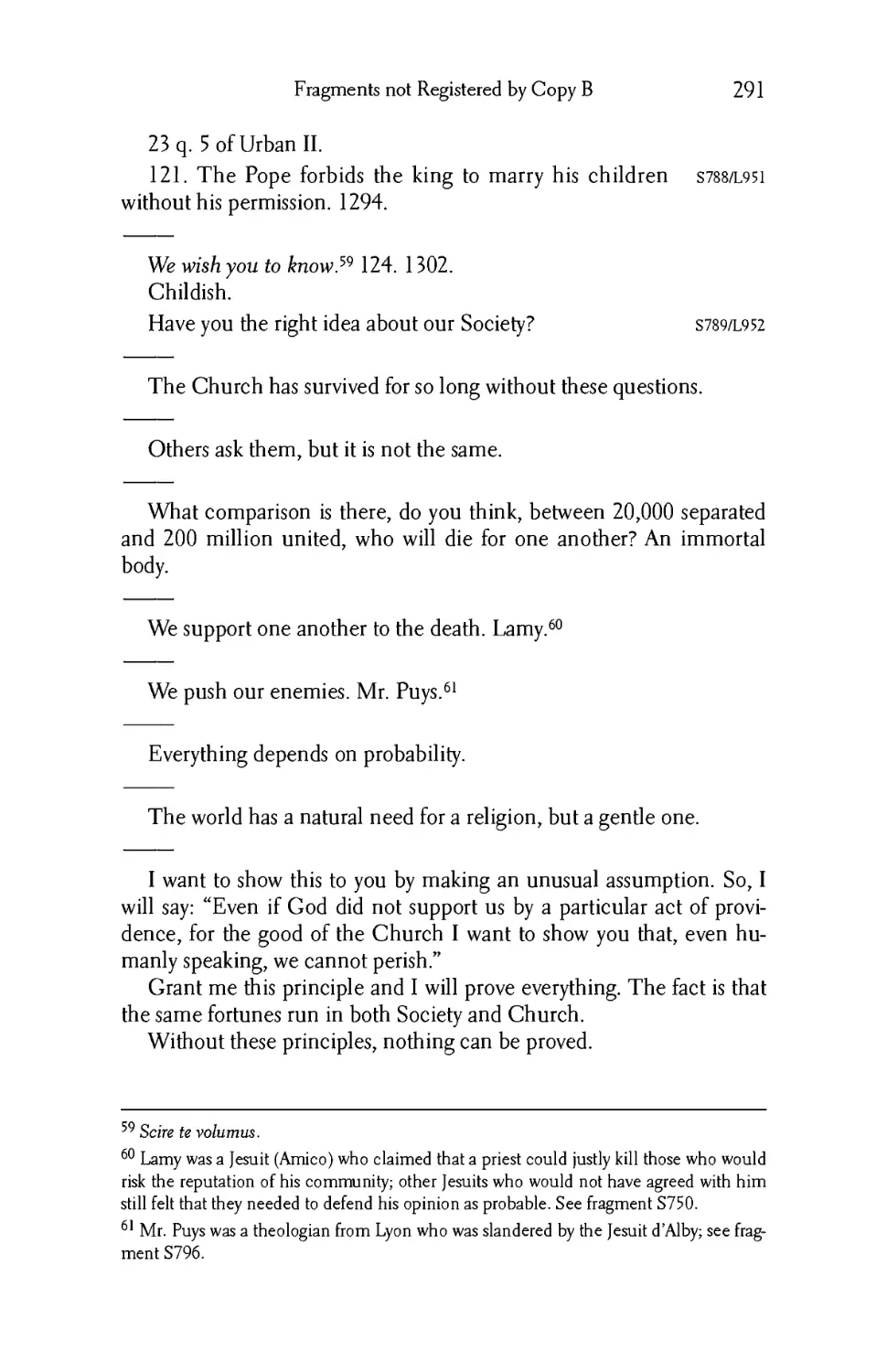
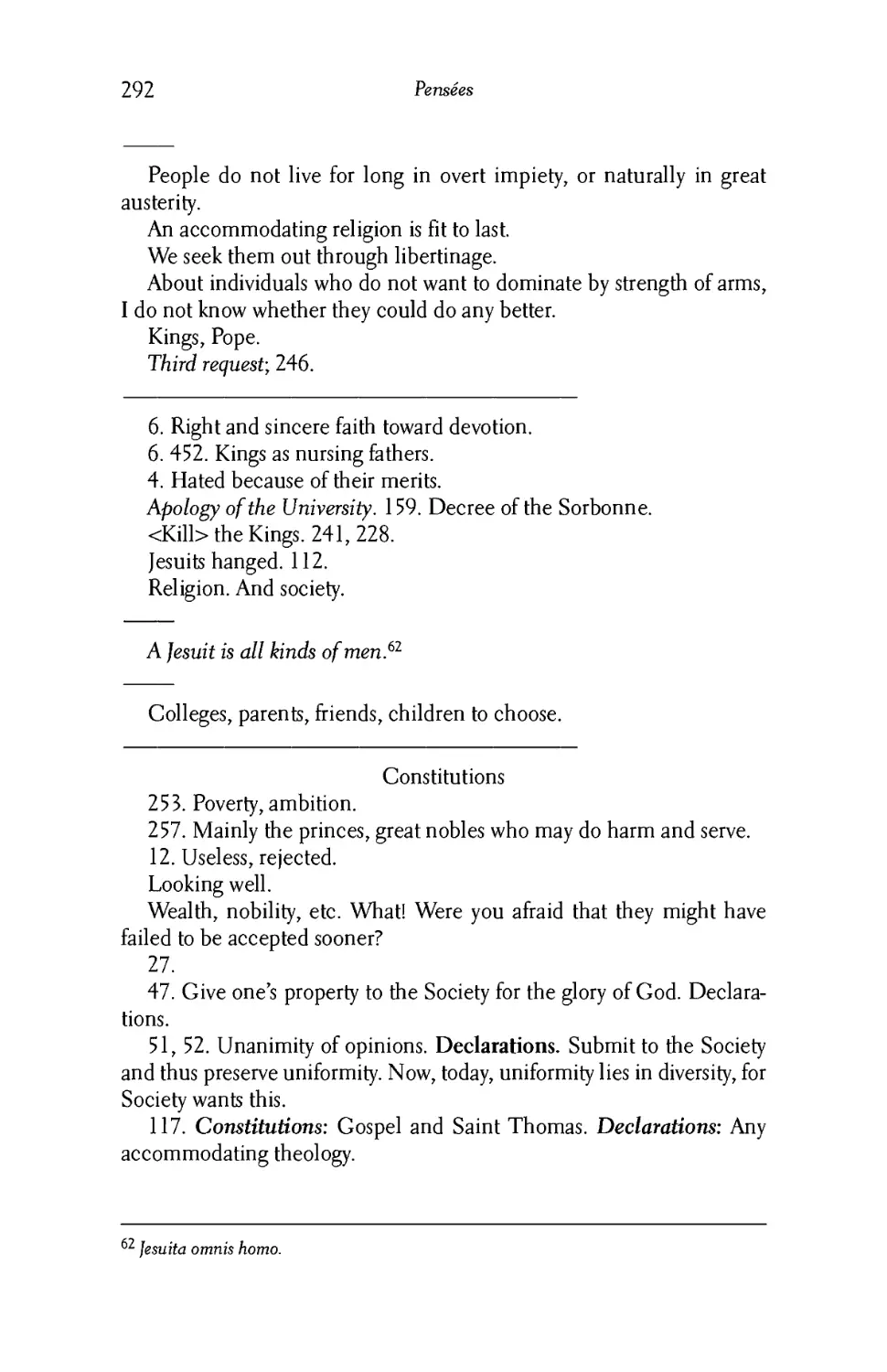
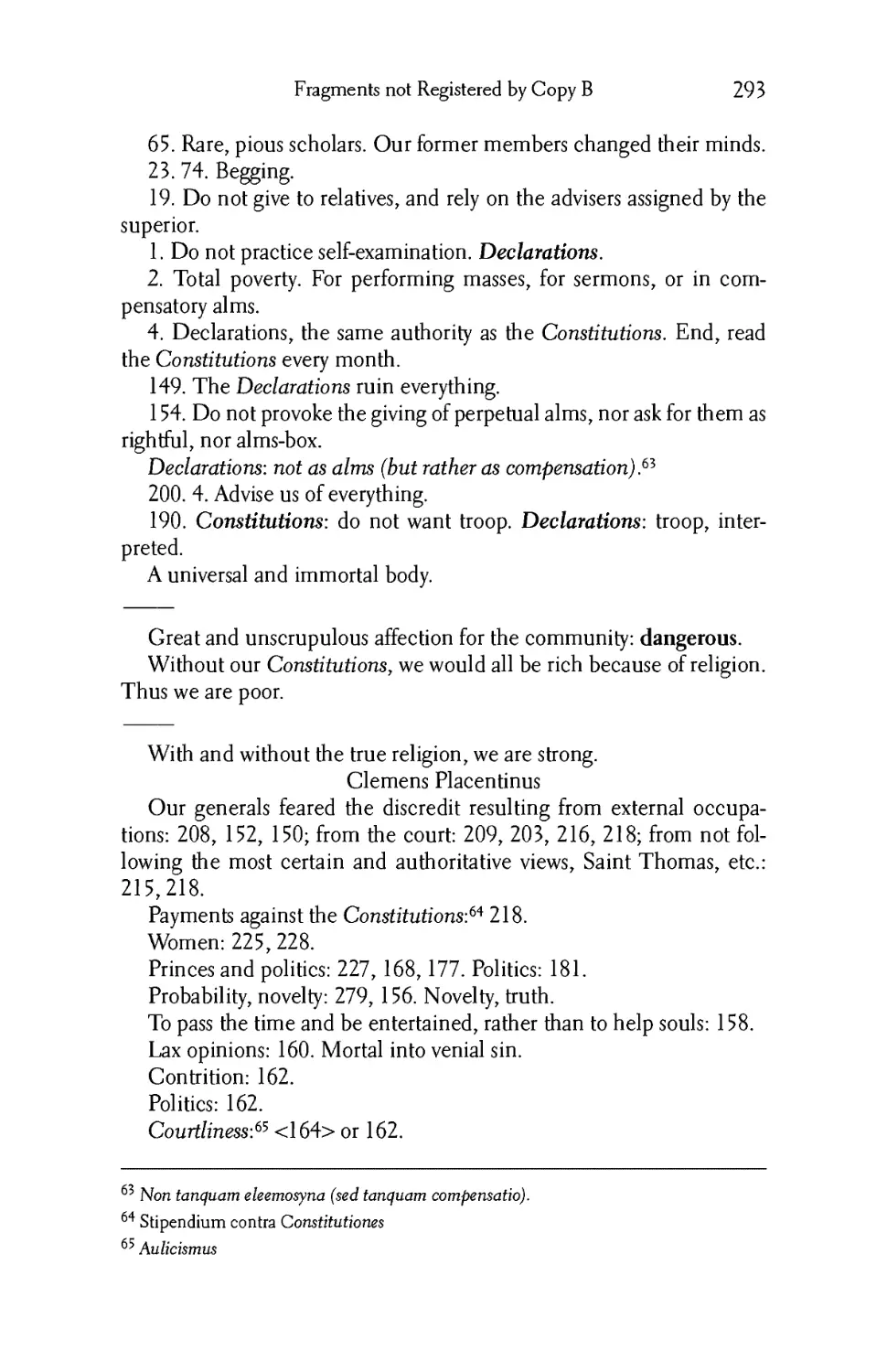
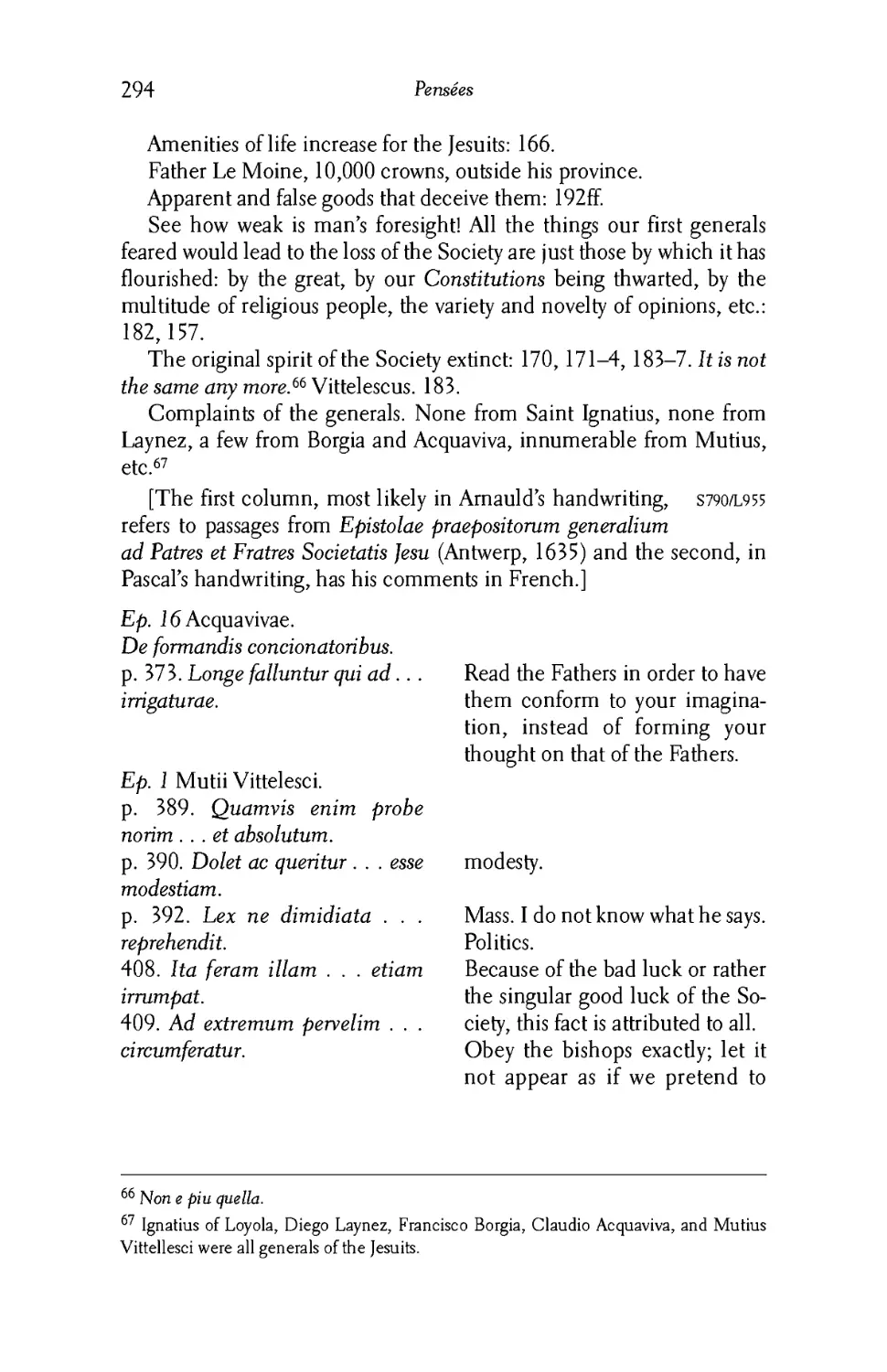



Текст
                    BLAISE PASCAL
Pensees
Edited and Translated by
Roger Ariew
Hackett Publishing Company
Indianapol is/Cambridge

Copyright © 2004 by Hackett Publishing Company, Inc.
All rights reserved
Printed in the United States of America
11 1009 08 07 0605 1234567
For further information, please address:
Hackett Publishing Company, Inc.
P.O. Box 44937
Indianapolis, IN 46244-0937
www.hackettpublishing.com
Auguste Rodin, La Pensee (Thought), Musee D'Orsay, Paris. Reprinted by
permission of the photographer, Dr. Jeffrey Howe, Department of Fine Arts,
Boston College.
Cover design by Abigail Coyle
Text design by Jennifer Plumley
Composition by Professional Book Compositors, Inc.
Printed at Sheridan Books, Inc.
Library of Congress Cataloging-in-Publication Data
Pascal, Blaise, 1623-1662.
[Pensees. English]
Pensees / Blaise Pascal; edited and translated by Roger Ariew.
p. cm.
Includes bibliographical references and index.
ISBN 0-87220-718-8 (cloth) - ISBN 0-87220-717-X (pbk.)
1. Philosophy—Early works to 1800. 2. Apologetics —Early works to
1800. I. Ariew, Roger. II. Title.
B1901.P42E5 2004b
230'.2-dc22 2004021245
The paper used in this publication meets the minimum requirements of
American National Standard for Information Sciences—
Permanence of Paper for Printed Library Materials,
ANSI Z39.48-1984
©

For Roby

Contents
Introduction xi
The Pensees: A Brief History of the Text xi
Selected Bibliography of Primary and Secondary Sources xv
Chronology of Pascal's Life and Times xvii
Pensees
I. The Project of June 1658
1. Table, etc. 1
2. Order 7
3. Vanity 9
4. Wretchedness 17
5. Boredom and the Qualities Essential to Man 24
6. Cause of the Effects 24
7. Greatness 30
8. Oppositions 32
9. Diversion 38
10. Philosophers 43
11. The Supreme Good 44
12. A. P. R. 46
13. Beginning 50
14. Submission and Use of Reason in which True 52
Christianity Consists
15. Excellence of this Way of Proving God 55
16. Transition from the Knowledge of Man to That of God 56
17. Nature Is Corrupt and Falsity of Other Religions 64
18. To Make Religion Attractive 68
19. Foundations of Religion and Reply to Objections 69
20. That the Law Was Figurative 72
21. Rabbinism 84
22. Perpetuity 86
23. Proofs of Moses 89
24. Proofs of Jesus Christ 91
25. Prophecies 96
26. Particular Figures 102

Vlll
Contents
27. Christian Morality 103
28. Conclusion 107
II. Folders Set Aside June 1658
29. Against the Fable of Esdras 109
30. Miracles 1 111
31. Miracles 2 114
32. Miracles 3 127
33. Miscellaneous Thoughts 1 140
34. Miscellaneous Thoughts 2 156
35. Miscellaneous Thoughts 3 165
III. The Final Miscellaneous Folders (July 1658-July 1662)
36. Miscellaneous Thoughts 4 179
37. Miscellaneous Thoughts 5 188
38. Miscellaneous Thoughts 6 194
39. Miscellaneous Thoughts 7 197
40. Miscellaneous Thoughts 8 202
41. Miscellaneous Thoughts 9 205
42. Geometry/Intuition 1 206
43. Geometry/Intuition 2 207
44. Authority 209
IV. Developments from July 1658 to July 1662
45. Discourse on the Machine 211
46. A Letter to Further the Search for God 216
47. Preface to the Second Part 224
48. The State of the Jews 1 228
49. The State of the Jews 2 230
50. The State of the Jews 3 230
51. The State of the Jews 4 233
52. The State of the Jews 5 234
53. Around Corruption 235
54. Prophecies 1 239
55. Prophecies 2 242
56. Prophecies 3 243
57. Prophecies 4 248
58. Prophecies 5 253
59. Prophecies 6 254

Contents
IX
60. Prophecies, Jews, Corruption 259
61. Figurative Law 261
V. Fragments not Registered by Copy B
62. Unregistered Fragments 265
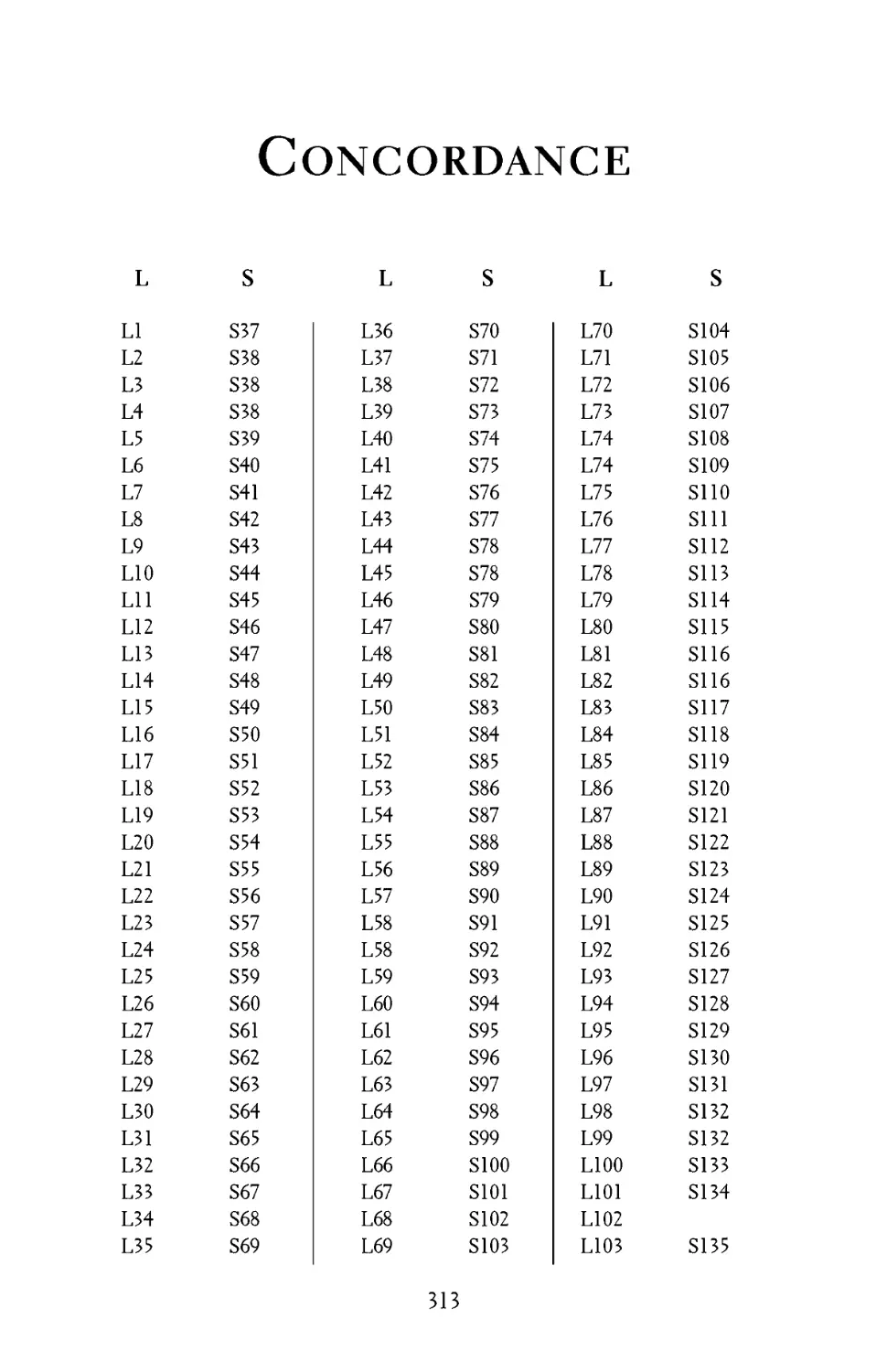
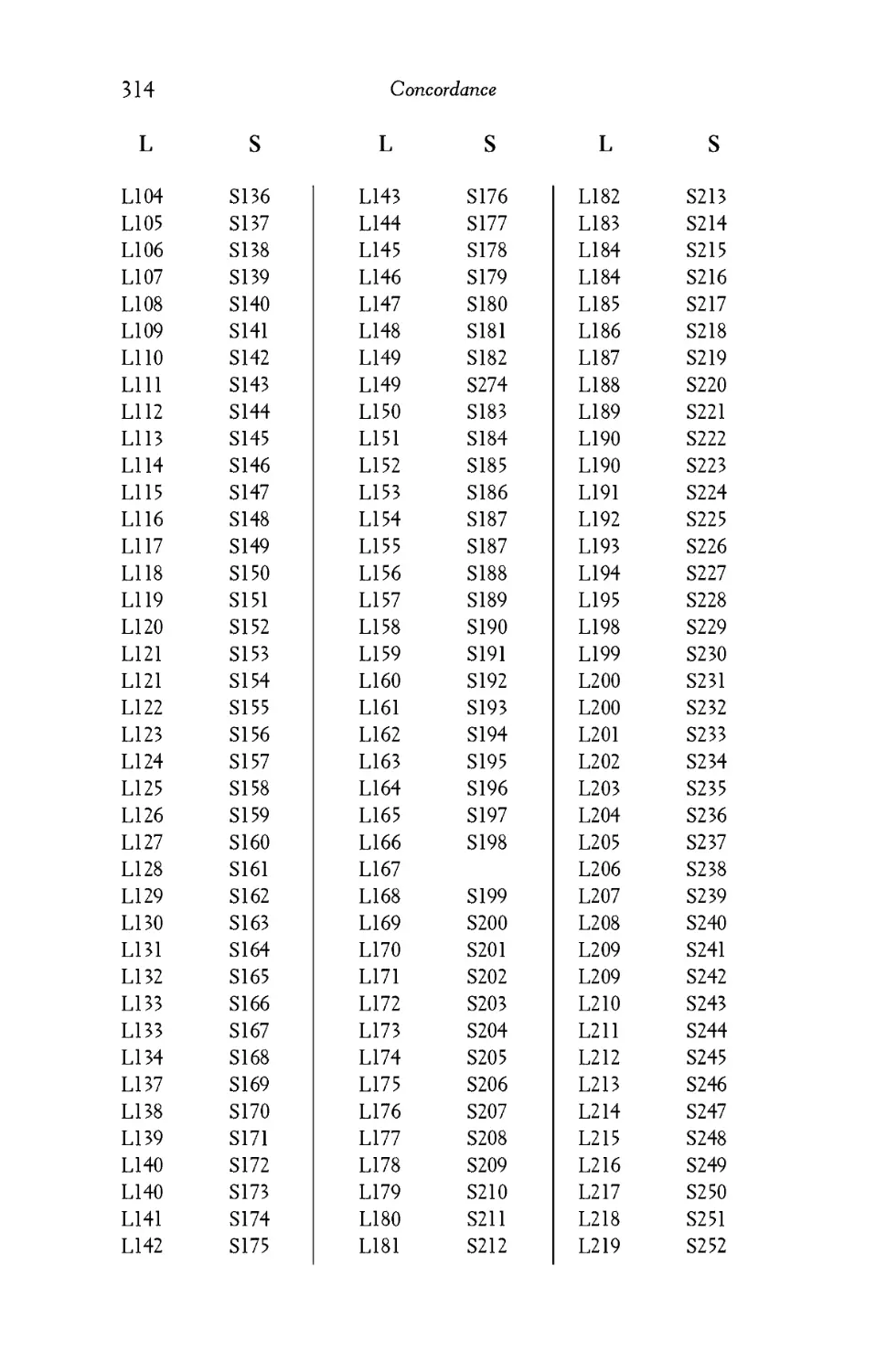
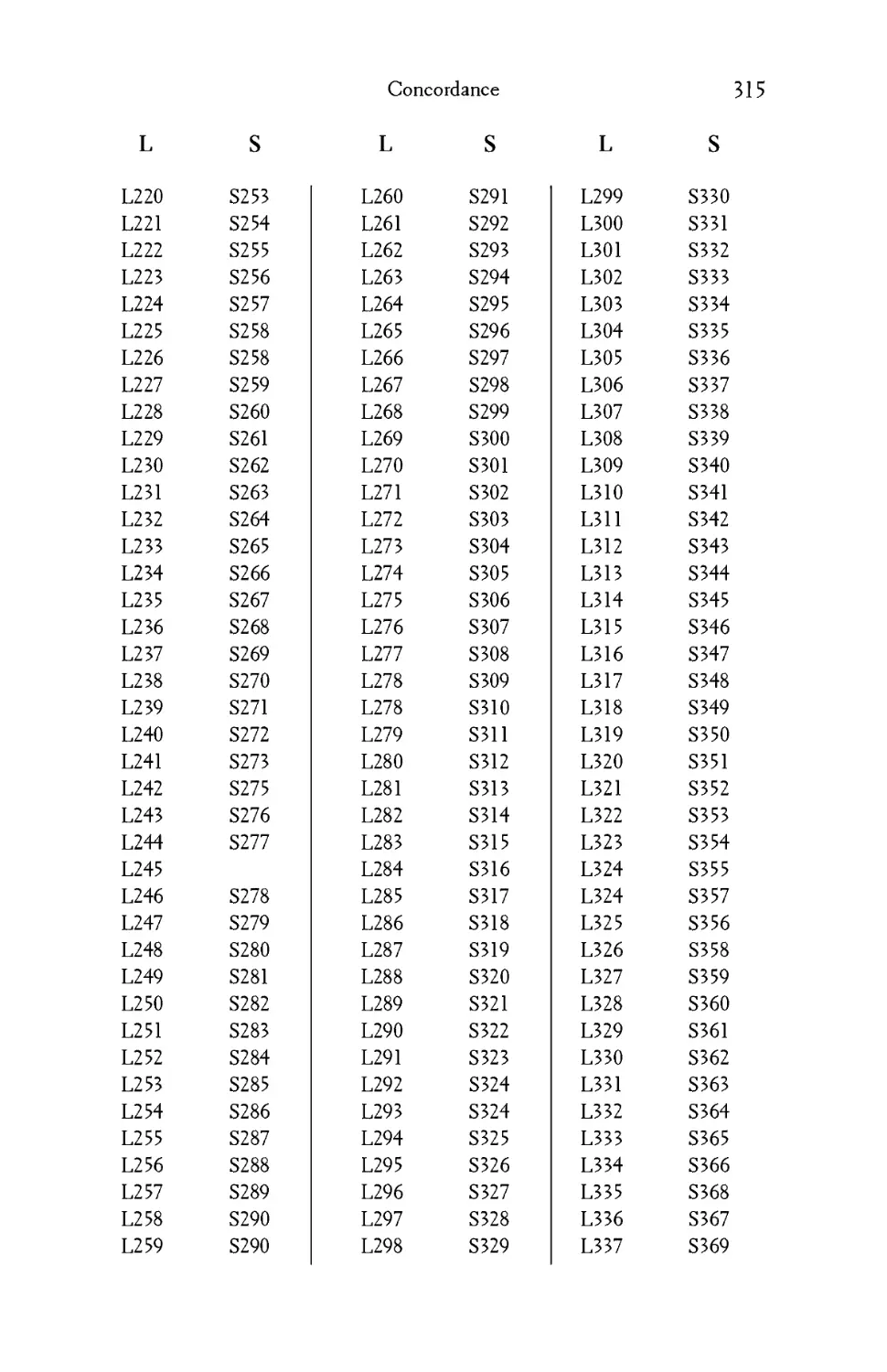
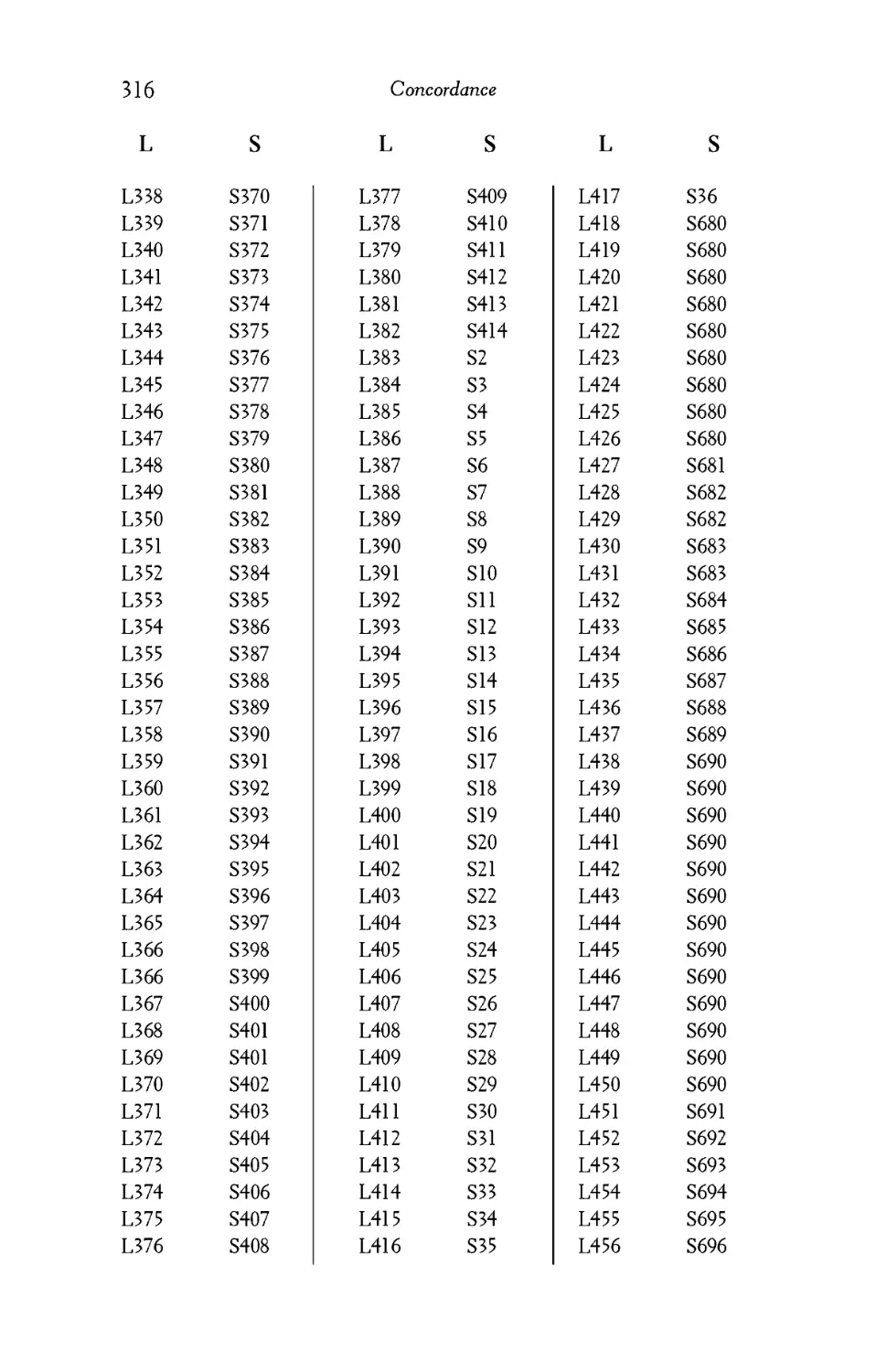
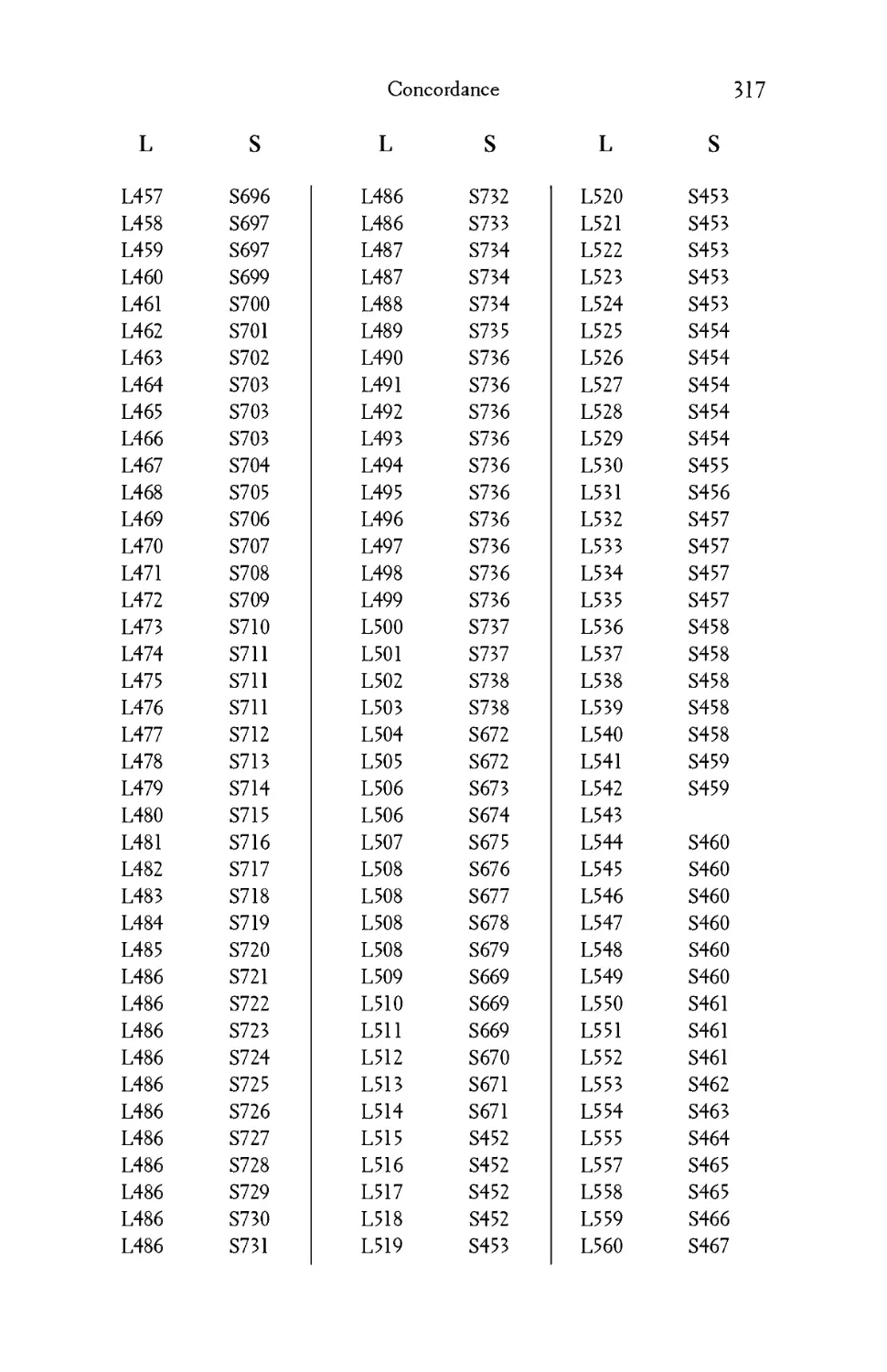
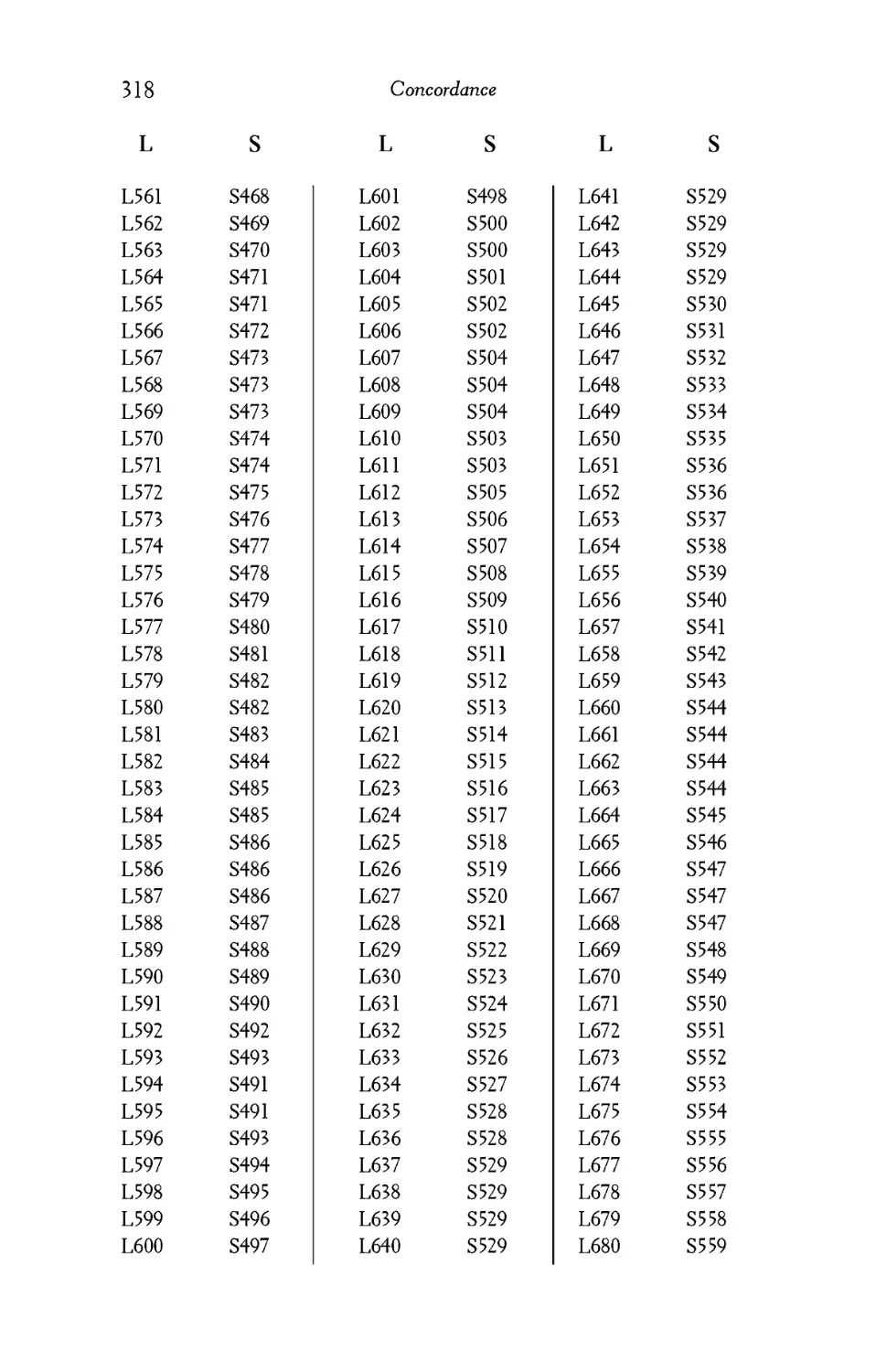
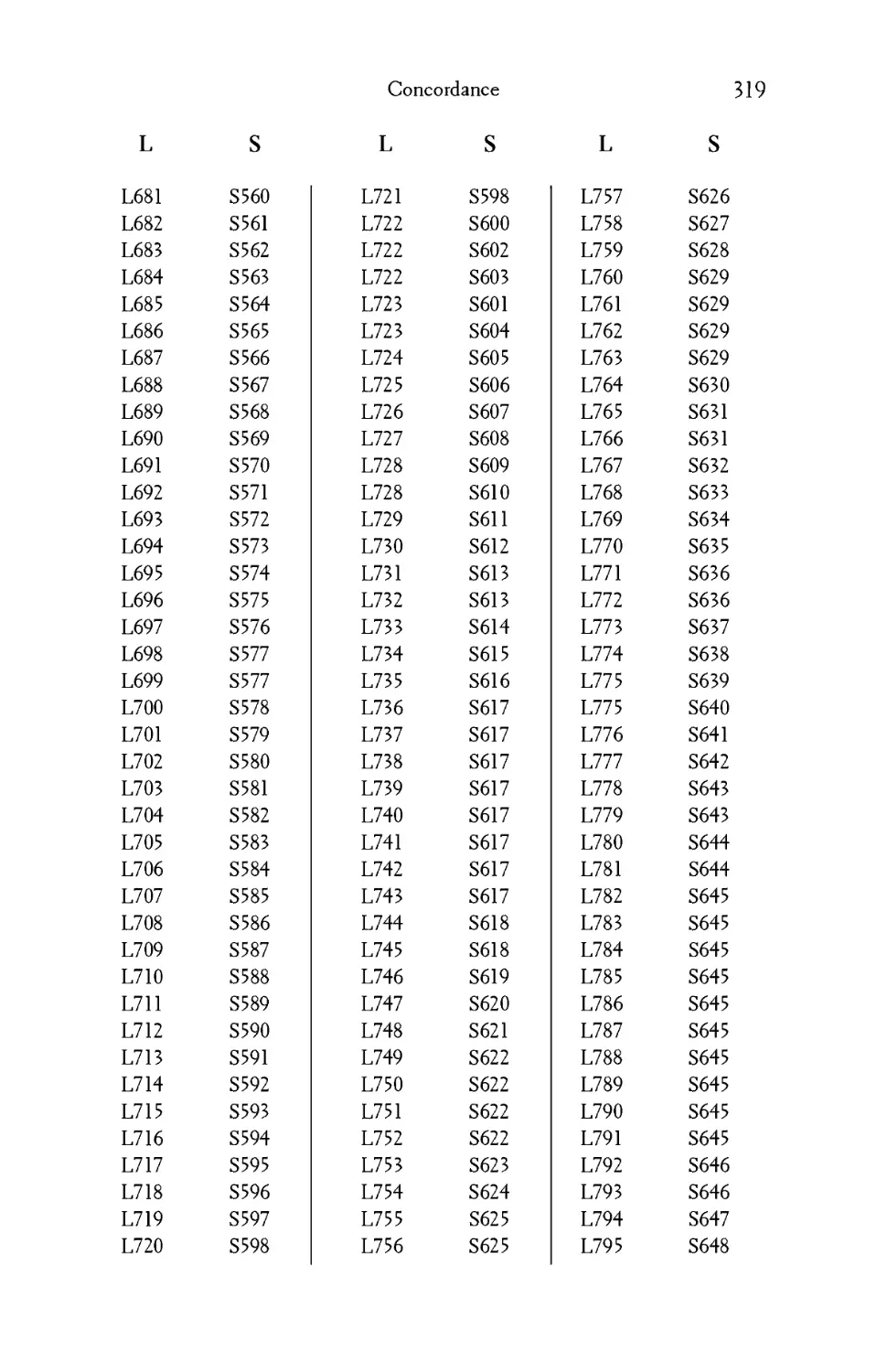
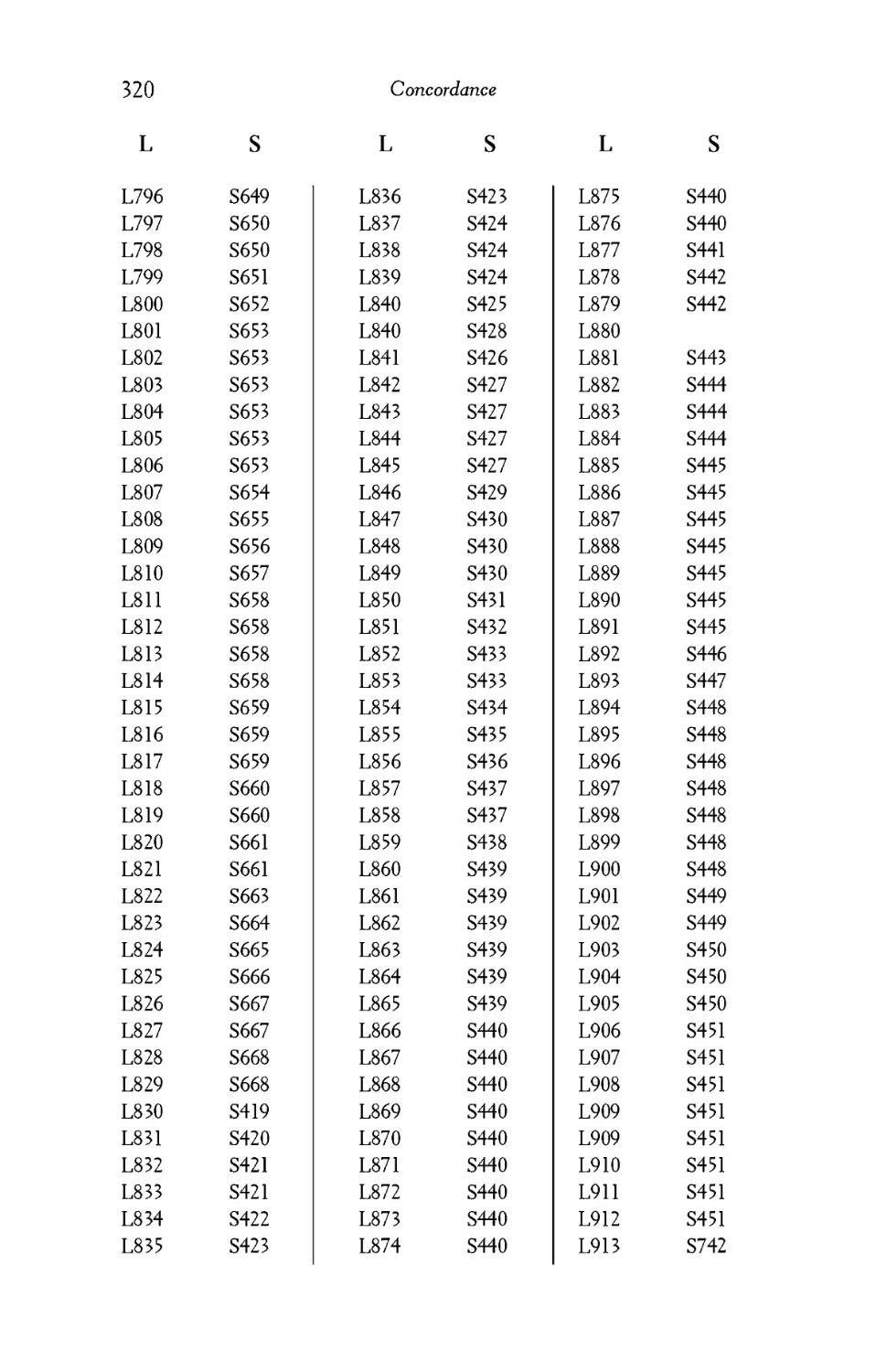
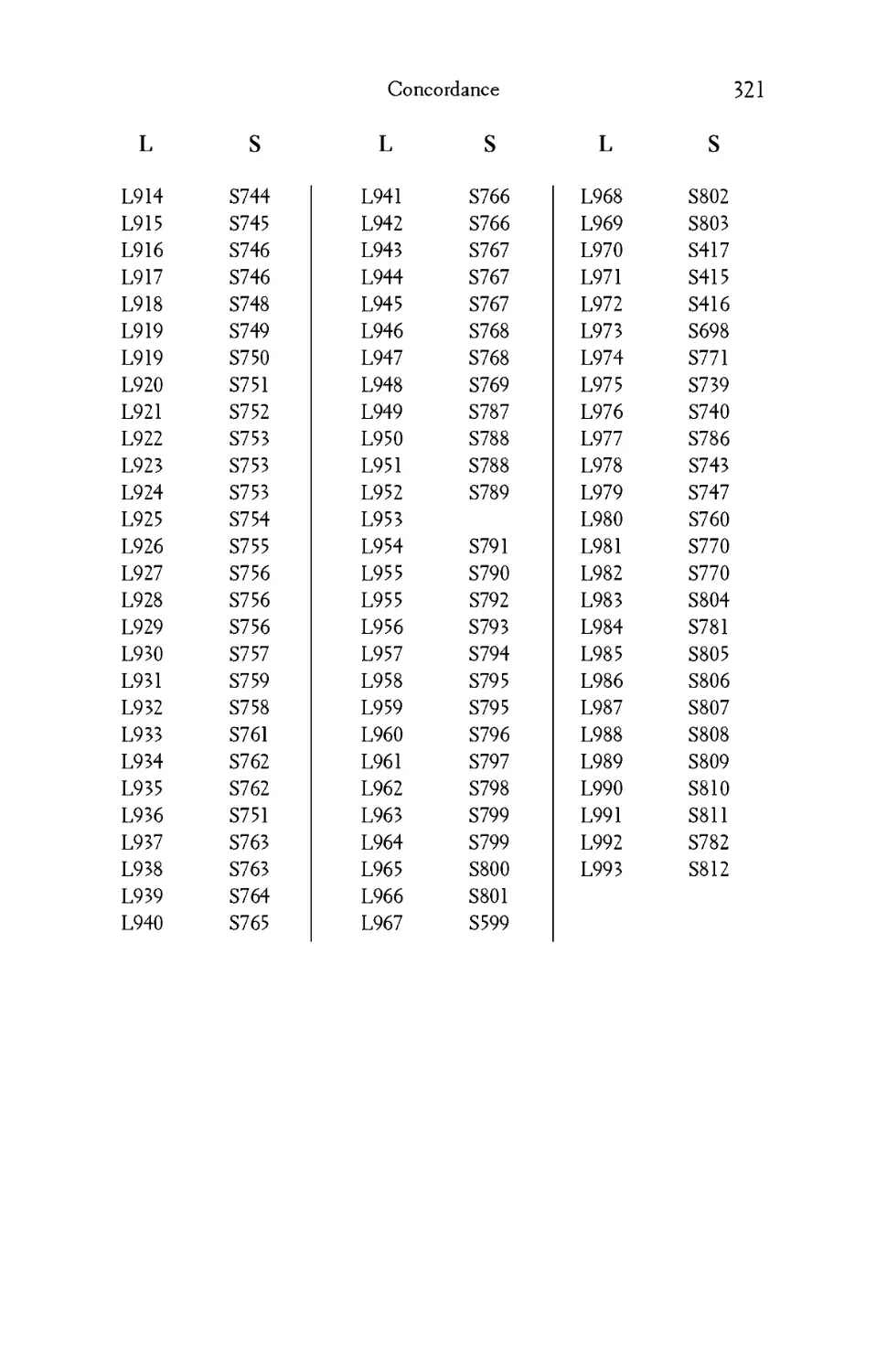
Concordance between Lafuma edition (Copy A) and 313
Sellier edition (Copy B)
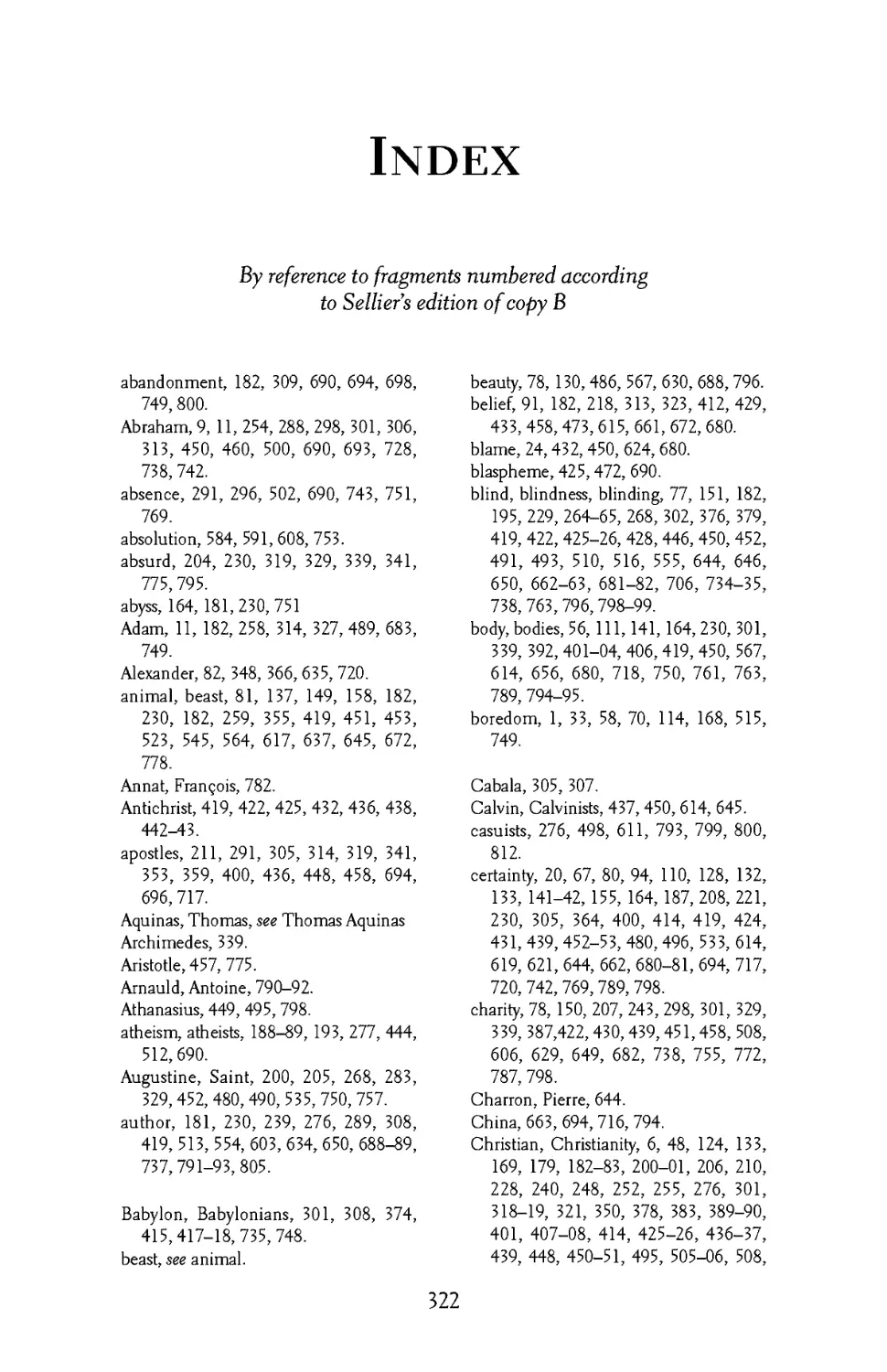
Index 322

Introduction
The Pensees: A Brief History of the Text
Several good biographies of Blaise Pascal have been published, starting
with the one written by Gilberte P£rier, his sister. They all describe the
brilliant universal genius, details of whose life and times are sketched in
the chronology on page xv. During Pascal's very brief life, he made
significant advances in mathematics and physics and contributed several
technological innovations. But he is best known for his religious and
political polemics, the Provincial Letters, and the Pensees. Pascal above all
was a subtle thinker and a master of the French language.
When Pascal died in 1662, he left behind the notes to the project (or
projects) he had been working on, including the Apology for the
Christian Religion, which he had outlined at a meeting at Port-Royal. These
notes became known as the Pensees, though neither Pensees nor Apolo-
gie were Pascal's titles. Pascal's usual procedure while composing was to
write down thoughts on large sheets of paper, separating them from one
another with a short horizontal line, and then cutting the papers along
that line and organizing the fragments into various bundles (liasses)
sewn together. In 1658 (according to Philippe Sellier, or in 1660,
according to Jean Mesnard), Pascal decided on a core twenty-seven
bundles and put seven others aside. These two sets constitute Parts I and II
of the present translation; fragments written afterward or of diverse
origins make up Parts III through V. At Pascal's death, the whole collection
was handed down to his sister Gilberte and her family.
The problem of what to do with Pascal's bundles of fragments,
handwritten by Pascal or recopied by young assistants, then came to the
forefront—a problem of significantly greater magnitude than if, at a given
time, your relative decided to publish all of your computer files or
everything on your desk. Here is how Pascal's nephew, Etienne P£rier,
expresses the difficulty in his preface to what was eventually published
in 1670, known as the Port-Royal edition: Pensees de M. Pascal sur la
religion et sur quelques autres sujets, qui ont este trouvees apres sa mort
parmy ses papiers:
Since we knew Pascal's intent to work on religion, we took great care after
his death to gather together all his writings on the subject. We found
them all sewn together into different bundles, but without any order or
sequence, because, as I have already noted, they were only the first ex-
XI

Xll
Introduction
pressions of his thoughts that he wrote down on small pieces of paper as
they came to his mind. And all these were so imperfect and so badly
written that we had all the pains of the world to decipher them.
The first thing we did was to have them copied such as they were and
in the same confusion in which we had found them. But when we saw
them in this state, with greater facility to read them and to examine them
than when they were in their original state, they seemed at first so infirm,
so badly thought out, and most of them so ill-explained that for a long
time we did not think at all to publish them.
P£rier conveys the embarrassment caused by the condition of
Pascal's work for a 17th-century editor. To publish some mere jottings was
just not something that was done then. Pascal's relatives took a while to
consider their options. But a key to that process was their decision to
make copies of all the fragments at hand. In fact, they had two copies
made: one for themselves and another they sent to Port-Royal, to An-
toine Arnauld and Pierre Nicole, for their editorial assistance. Pascal's
relatives ultimately decided to publish something. But what?
[W]e took some time to determine the path we ought to take.
The first that came to mind, and the one that was no doubt the easiest,
was to have the fragments published immediately in the state in which
we found them. But soon we judged that to do it that way would be to
lose almost the whole fruit for which we could hope. The most perfect
thoughts, those most ordered, clear, and developed, were mixed in and,
as it were, lost among so many other imperfect, obscured, and
half-digested ones—some almost unintelligible to anyone other than the person
who wrote them. Hence, there was reason to believe that the ones could
put off the others and that people would think this volume uselessly
enlarged with so many imperfect thoughts, like a confused mass without
order, without sequence, and of no use to anyone.
There was another way to give these writings to the public, which was
to work on them beforehand: to illuminate the obscure thoughts, to
complete the incomplete ones, and, taking into account Pascal's aim in all
these fragments, to supplement in some way the work he intended to
accomplish. This way was assuredly the most perfect, but also the most
difficult to execute well. We decided on that path and began, in fact, to
work on it. But in the end we rejected it as we did the first path, because
we thought that it was almost impossible to enter very well into the
thought and aim of an author, especially that of a dead author; and that
we would not be giving the work of Pascal, but a completely different
work.
Thus, to avoid the disadvantages in these two ways of producing these
writings, we have chosen a middle path, which we have followed in this
collection. Among the great numbers of thoughts, we have taken only the
ones that seemed clearest and most complete, and have given them such

Introduction
xm
as we have found them without adding anything to them; except that,
instead of their being without sequence, without linkage, and dispersed
confusedly at various places, we have put them in some sort of an order
and placed under the same titles those that were about the same subjects,
and we have suppressed all the others that were either too obscure or too
imperfect.
Accordingly, P£rier's middle path was to publish a selection of
fragments, reordered according to topics imposed externally, and,
ultimately (though he denies it), to retouch and subtly alter Pascal's words.
P£rier's own judgment was that the fragments did not adequately
represent the summary of the project Pascal had sketched at Port-Royal. As
P£rier stated:
We will see among the fragments we give to the public something of
Pascal's design, though we will see rather little of it. The very things we will
find there are so imperfect, so little developed, and so little digested, that
they can only give an extremely crude idea of the way he wanted to treat
them.
Moreover, we should not be surprised if, in the little we give of them,
we have not kept the order and sequence of the distribution of subjects.
Since we had almost nothing that followed, it would have been useless to
keep them in that order; we have been satisfied to dispose them
approximately in the manner we have deemed to be the most suitable to what we
had.
And so began the practice, which continued for about 300 years, of
publishing selections ofPensees and ordering them according to one's
own conception, along externally determined themes. Perhaps the best
such arrangement was that of L£on Brunschvicg at the end of the 19th
century. But Brunschvicg also responded to the call by Victor Cousin
for a more accurate new edition of the Pens£es, producing as well a
photographic reproduction of the fragments extant at the beginning of the
20th century. The "Recueil Original," as it is called, consists of the
fragments as the Bibliotheque Nationale had received them: Pascal's heirs
had cut up and pasted the fragments into sheets, but many of them
(known from their copies) were missing, and the order in which they
were pasted was not at all likely to have been Pascal's.
A generation of scholars followed whose intent was to recover all the
notes that Pascal left, exactly as he had left them, and in the order he
had left them. Most important in this process was Zacharie Tourneur,
with his edition of the Pens6es that showed all variants. In the 1960s,
Louis Lafuma turned to one of the copies made for Pascal's sister—copy
A, as it is called—and produced the first reliable edition of the
fragments. (Another photographic reproduction of the Recueil Original

XIV
Introduction
was published for the tercentennial commemoration of Pascal's death
in 1962, with the fragments rearranged according to Lafuma's
ordering.) But in 1976, Sellier produced a different edition, based on copy B,
arguing convincingly that the order of copy B more likely corresponded
to the way in which Pascal left his notes: copy B is a continuous
manuscript and the sections could not be reordered, while copy A appears as
a collection of discontinuous sections and may well have been
reordered. (These arguments are summarized in Anthony R. Pugh's The
Composition of Pascal's Pensees.)
This is the state of the editions of the Pensees to date, until the
publication of volume VI of Mesnard's critical edition of Pascal's works
(begun in 1964), containing the Pensees. The latest French editions of
the Pensees all follow Sellier's edition, which is also superior for a
number of other reasons: it reproduces Pascal's horizontal line
between thoughts within particular fragments; it reorders some fragments
internally; and it reconsiders the issue of what is to be counted as a
fragment, renumbering Lafuma's 993 fragments into 813 fragments. The
present translation is a complete translation of all the fragments,
following Sellier's edition of copy B. (Deletions by Pascal are placed between
angle brackets < >. This translation uses the King James Version of the
Bible to translate Pascal's biblical references, except in cases where
Pascal's use clearly depends on the Vulgate or its 17th-century French
version. In those cases, the translation reflects Pascal and his sources,
rather than the King James text.)
Still, one should keep in mind the historical importance of a number
of editions and manuscripts, especially those of Port-Royal, the Recueil
original, Lafuma's edition following copy A, and Sellier's edition
following copy B. Thus, the present translation indicates both Sellier's and
Lafuma's numbering of the fragments on the margins and includes a
concordance enabling one to locate a Sellier-numbered passage, if one
has a citation using Lafuma's numbering. Other interesting later
developments include Pol Ernst's attempt to reconstitute the order in which
the fragments were actually written, based on evidence from
watermarks, and Emmanuel Martineau's effort to reorder the fragments
according to their internal logic (not according to topics, as was previously
done). The multiplicity of editions and orders may well be appropriate
for such a challenging and multilayered work as the Pensees.*
*I would like to thank Marjorie Grene, Daniel Garber, and Deborah Wilkes for their
assistance and encouragement with this project. I am also grateful to Prudence Steiner, who
perused the whole translation assiduously and suggested numerous alternative
translations and readings.

Introduction
XV
Selected Bibliography
Primary Sources
Pascal, Blaise. Pensees de M. Pascal sur la religion et sur quelques autres sujets,
qui ont este trouvees apres sa mort parmy ses papiers. Paris, 1670. The Port-Royal
edition with a Preface by Pascal's nephew, Etienne Perier.
L'original des Pensees de Pascal. Leon Brunschvicg, ed. Paris: Hachette,
1905. A facsimile of the original fragments that are extant.
Pensees. W.F. Trotter, trans. London: J.M. Dent, 1908.
Pensees de Blaise Pascal. Zacharie Tourneur, ed. Paris: Vrin, 1942. "Pa-
leographic" edition of the Pensees, showing all variants.
he Manuscript des Pensees de Pascal. Louis Lafuma, ed. Paris: Les
Libraries associes, 1962. A facsimile of the extant original fragments ordered
following copy A.
Oeuvres completes. Louis Lafuma, ed. Paris: Editions du Seuil, 1963.
The complete works in a single volume containing an edition based on copy A.
Oeuvres completes. Jean Mesnard, ed. Paris: Desclee De Brouwer,
1964-?. Critical edition of the complete works; vol. 6, containing the Pensees,
has yet to be published.
Pensees et opuscules. Leon Brunschvicg, ed. Paris: Hachette, 1967.
First ed. 1897.
Discours sur la religion et sur quelques autres sujets, qui ont ete trouves
apres sa mort parmi ses papiers. Emmanuel Martineau, ed. Paris: Fayard/Armand
Colin, 1992. An interesting attempt to reorder the fragments according to their
internal logic.
Pensees. A.J. Krailsheimer, trans. Hammondsworth: Penguin, 1995.
First ed. 1966; an excellent English translation of almost the whole of copy A.
Pensees and Other Writings. Honor Levi, trans. Oxford: Oxford
University Press, 1995. A partial English translation following copy B, with some
other selections.
Oeuvres completes, 2 vols. Michel Le Guern, ed. Paris: Editions Galli-
mard, 1998-2000. The complete works, containing an edition based on copy A
(revised L. Lafuma ordering), in v. 2.
Pensees. Philippe Sellier, ed. Paris: Classiques Gamier, 1999. First ed.
Paris: Mercure de France, 1976; edition based on copy B.
Pensees. Gerard Feyerolles, ed. Paris: Livre de Poche, 2000. Edition
based on copy B (following P. Sellier).
Secondary Sources
Alexandrescu, Vlad. Le Paradoxe chez Blaise Pascal. Berne: Peter Lang, 1997.
Armour, Leslie. "Infini Rien" Pascal's Wager and the Human Paradox. Carbon-
dale, 111.: Southern Illinois University Press, 1993.

XVI
Introduction
Brunschvicg, Leon. Descartes et Pascal lecteurs de Montaigne. Neuchatel: La
Baconniere, 1945.
Carraud, Vincent. Pascal et la Philosophie. Paris: Presses Universitaires de
France, 1992.
Cousin, Victor. Des Pensees de Pascal, rapport a I'Academie franqaise sur la
necessite d'une nouvelle edition de cet ouvrage. Paris: Librairie philosophique de
Ladrange, 1843.
Davidson, Hugh M.. The Origins of Certainty: Means and Meaning in Pascal's
Pensees. Chicago: The University of Chicago Press, 1979.
Davidson, Hugh M., and Pierre H. Dube. A Concordance to Pascal's Pensees.
Ithaca: Cornell University Press, 1975.
Ernst, Pol. hes Pensees de Pascal, Geologie et stratigraphie. Oxford: Voltaire
Foundation, 1996. An attempt to reconstitute the order in which the fragments
were written, based on evidence from watermarks.
Hammond, Nicholas, ed. The Cambridge Companion to Pascal. Cambridge:
Cambridge University Press, 2003.
Krailsheimer, A.J. Pascal. Oxford: Oxford University Press, 1980.
Mesnard, Jean. Pascal, His Life and Works. Harvill, London, 1952. Trans, of
Pascal, I'homme et I'oeuvre. Paris: Boivin, 1951.
Pascal et les Roannez. Paris: Desclee De Brouwer, 1965.
Pascal. Paris: Hatier, 1967.
Les Pensees de Pascal. Paris: Societe d'edition d'enseignement
superieur, 1976.
Perier, Gilberte. La Vie de Monsieur Pascal. Amsterdam, 1684. Pascal's
biography, written by his sister.
Pugh, Anthony R. The Composition of Pascal's Apologia. Toronto: The
University of Toronto Press, 1984.
Sellier, Philippe. Pascal et Saint Augustin. Paris: Armand Colin, 1970.
Port-Royal et la Literature, I: Pascal. Paris: Honore Champion, 1999.

Chronology of
Pascal's Life and Times
1623 Birth of Blaise Pascal at Clermont on June 19 to Etienne (born
1588) and Antoinette Pascal (n£e Begon in 1596); an older
sister, Gilberte, was born in January 1620
1625 Birth of Jacqueline Pascal, younger sister of Blaise
1626 Death of Antoinette Begon
1631 The family moves to Paris in November
1635 Having shown mathematical ability, Blaise begins to
accompany his father to the meetings supervised by Marin Mersenne
at the Minim convent in Paris, where mathematics and
philosophy are regularly discussed
1638 Etienne Pascal takes part in a political demonstration and
must hide to avoid being imprisoned
1639 Jacqueline is instrumental in obtaining a pardon from
Cardinal Richelieu on behalf of her father
1640 The family moves to Rouen, where Richelieu names Etienne
tax commissioner; Blaise publishes Essai pour les coniques;
publication of Jansenius' Augustinus
1641 Marriage of Gilberte to her cousin, Florin P£rier
1642 To assist his father with his work collecting taxes, Pascal
invents one of the first digital calculators; the device allows the
addition or subtraction of two numbers of up to six digits.
Pascal develops it over the course of three years and puts it into
production
1646 In January, Etienne falls on ice and breaks his thigh; the
brothers Deschamps, belonging to a group dedicated to the sick and
connected with the Abbey of Saint-Cyran, help him heal; as a
result, the whole family is gradually converted to a more
intense Christianity; in October, Blaise learns from Mersenne of
Evangelista Torricellfs experiments with the mercury
barometer and undertakes a series of experiments on atmospheric
pressure and the possibility of a void
XVI1

XVI11
Chronology of Pascal's Life and Times
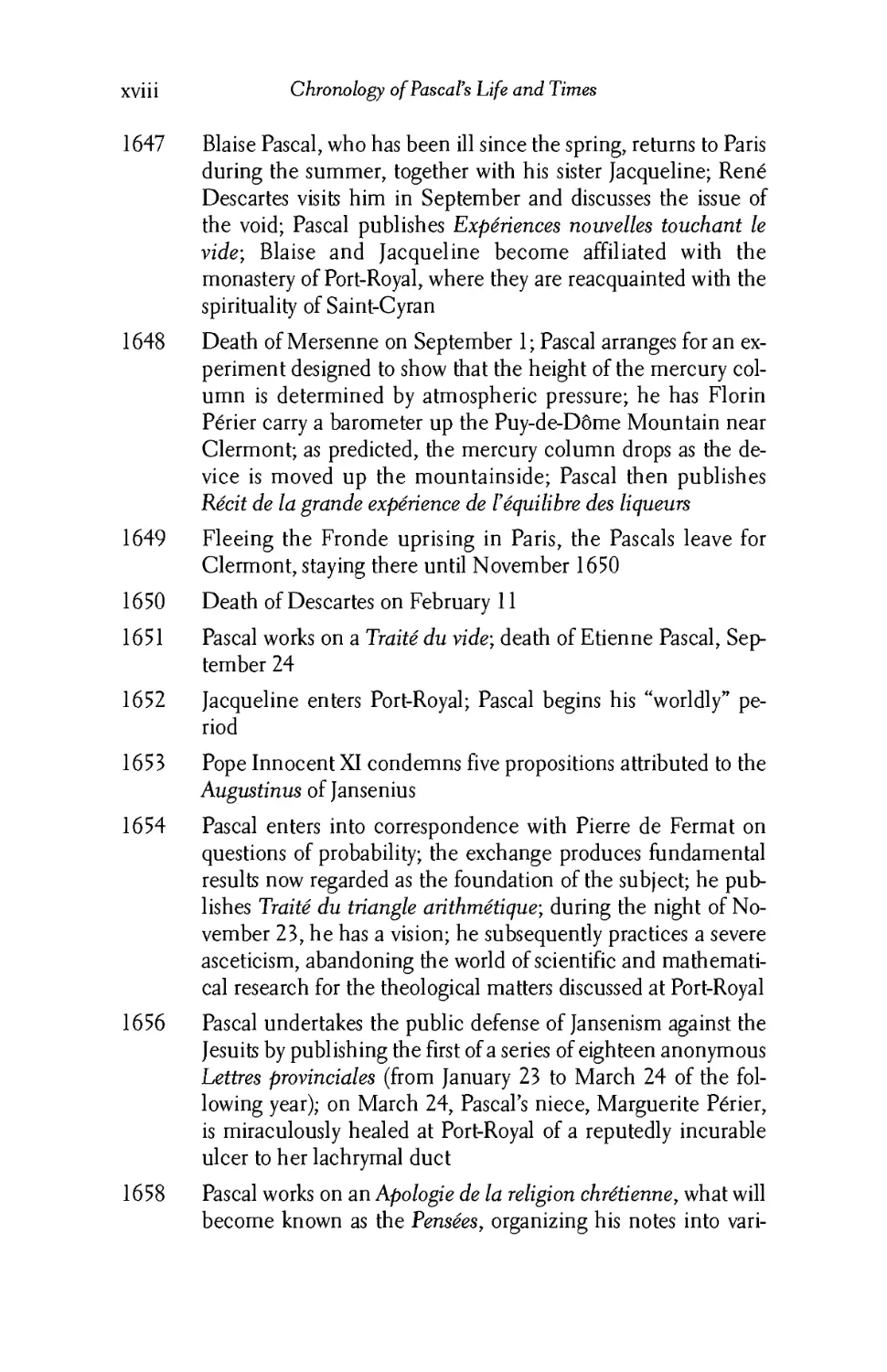
1647 Blaise Pascal, who has been ill since the spring, returns to Paris
during the summer, together with his sister Jacqueline; Rene'
Descartes visits him in September and discusses the issue of
the void; Pascal publishes Experiences nouvelles touchant le
vide; Blaise and Jacqueline become affiliated with the
monastery of Port-Royal, where they are reacquainted with the
spirituality of Saint-Cyran
1648 Death of Mersenne on September 1; Pascal arranges for an
experiment designed to show that the height of the mercury
column is determined by atmospheric pressure; he has Florin
P£rier carry a barometer up the Puy-de-D6me Mountain near
Clermont; as predicted, the mercury column drops as the
device is moved up the mountainside; Pascal then publishes
R6cit de la grande experience de Fequilibre des liqueurs
1649 Fleeing the Fronde uprising in Paris, the Pascals leave for
Clermont, staying there until November 1650
1650 Death of Descartes on February 11
1651 Pascal works on a Traite du vide; death of Etienne Pascal,
September 24
1652 Jacqueline enters Port-Royal; Pascal begins his "worldly"
period
1653 Pope Innocent XI condemns five propositions attributed to the
Augustinus of Jansenius
1654 Pascal enters into correspondence with Pierre de Fermat on
questions of probability; the exchange produces fundamental
results now regarded as the foundation of the subject; he
publishes Traite du triangle arithmetique; during the night of
November 23, he has a vision; he subsequently practices a severe
asceticism, abandoning the world of scientific and
mathematical research for the theological matters discussed at Port-Royal
1656 Pascal undertakes the public defense of Jansenism against the
Jesuits by publishing the first of a series of eighteen anonymous
Lettres provinciates (from January 23 to March 24 of the
following year); on March 24, Pascal's niece, Marguerite P£rier,
is miraculously healed at Port-Royal of a reputedly incurable
ulcer to her lachrymal duct
1658 Pascal works on an Apologie de la religion chre'tienne, what will
become known as the Pensees, organizing his notes into vari-

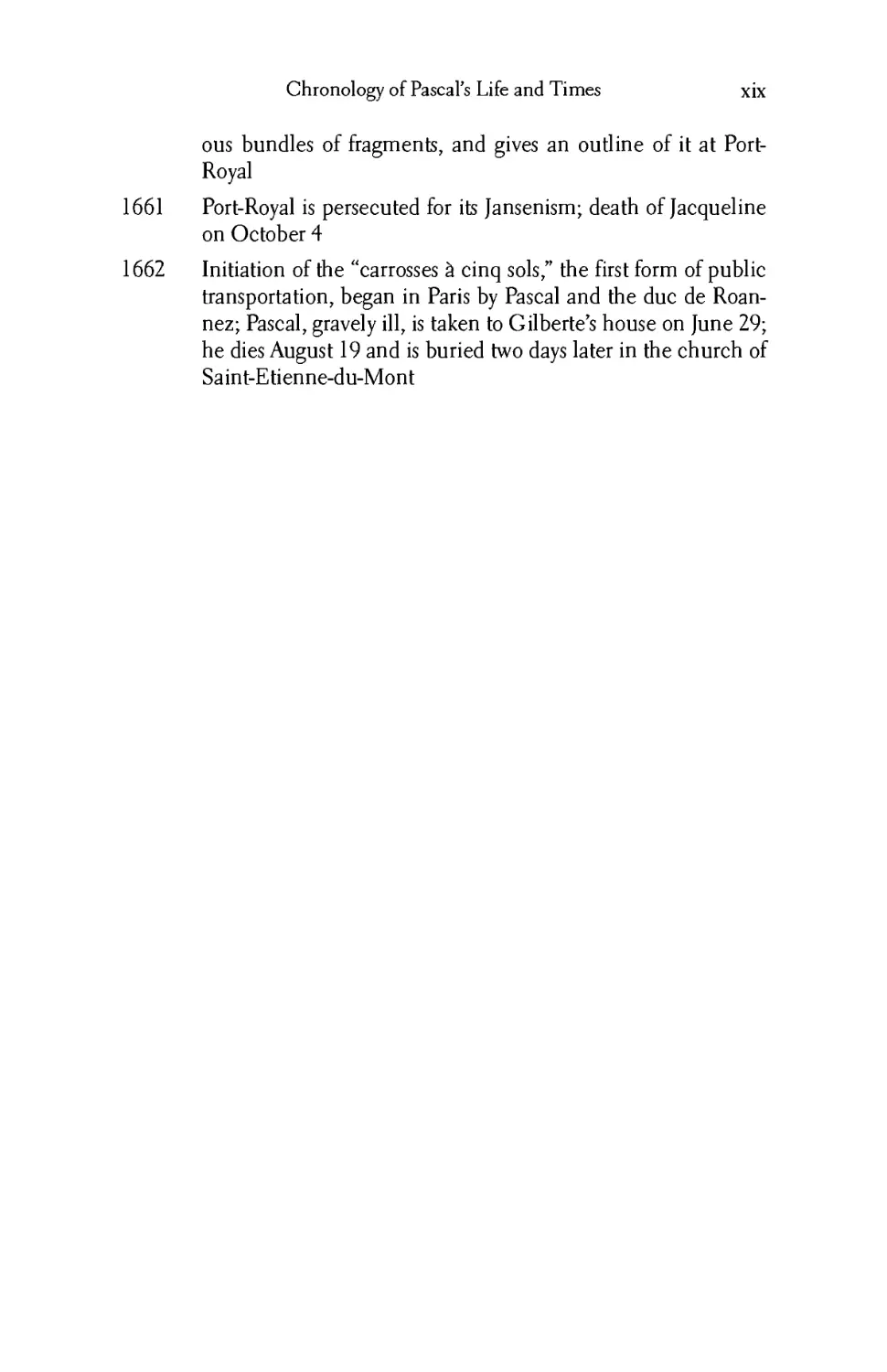
Chronology of Pascal's Life and Times
xix
ous bundles of fragments, and gives an outline of it at Port-
Royal
1661 Port-Royal is persecuted for its Jansenism; death of Jacqueline
on October 4
1662 Initiation of the "carrosses a cinq sols/' the first form of public
transportation, began in Paris by Pascal and the due de Roan-
nez; Pascal, gravely ill, is taken to Gilberte's house on June 29;
he dies August 19 and is buried two days later in the church of
Saint-Etienne-du-Mont

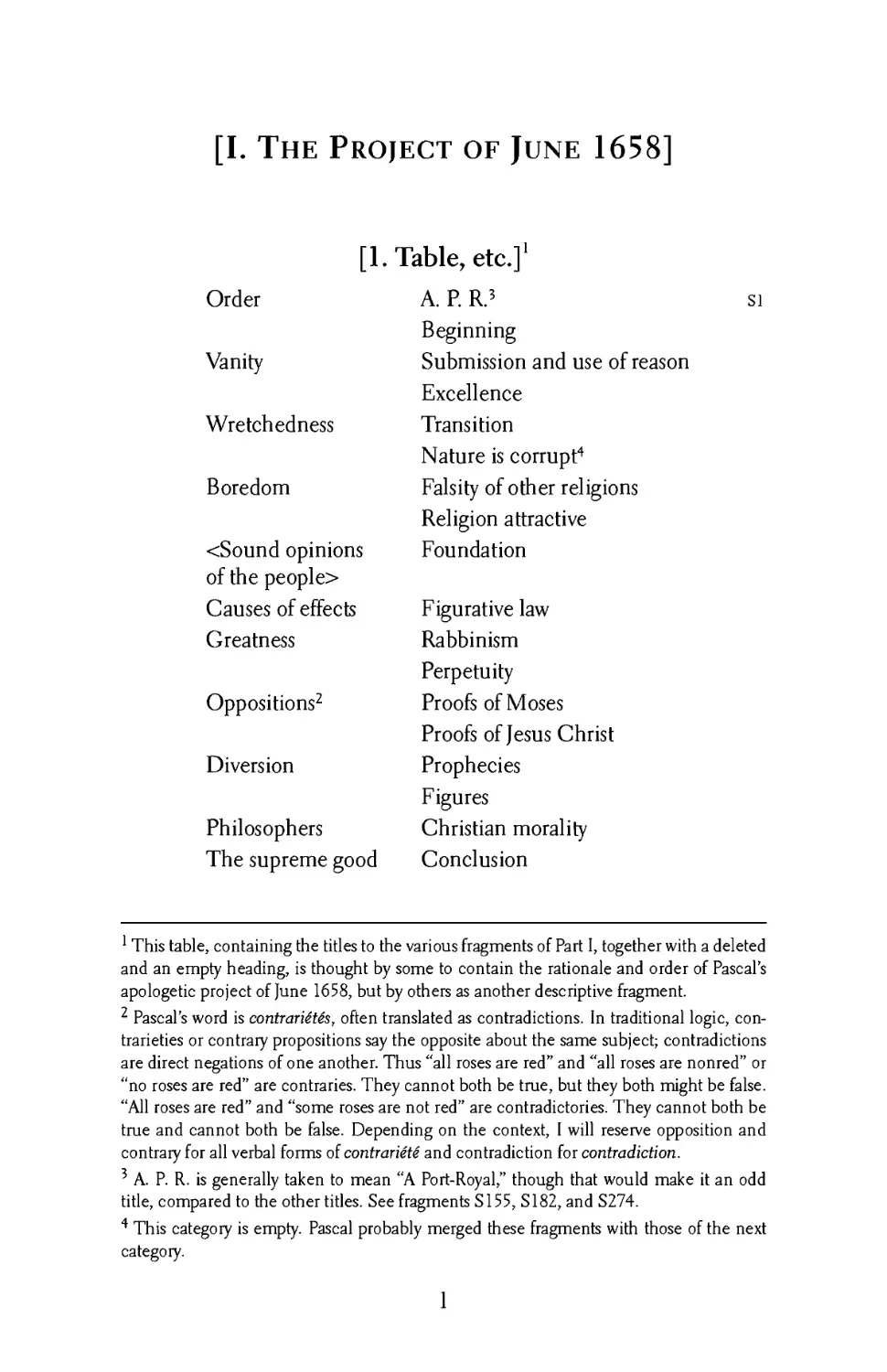
[I. The Project of June 1658]
[l
Order
Vanity
Wretchedness
Boredom
<Sound opinions
of the people>
Causes of effects
Greatness
Oppositions2
Diversion
Philosophers
The supreme good
Table, etc.]1
A. P. R.3
Beginning
Submission and use of reason
Excellence
Transition
Nature is corrupt4
Falsity of other religions
Religion attractive
Foundation
Figurative law
Rabbinism
Perpetuity
Proofs of Moses
Proofs of Jesus Christ
Prophecies
Figures
Christian morality
Conclusion
si
1 This table, containing the titles to the various fragments of Part I, together with a deleted
and an empty heading, is thought by some to contain the rationale and order of Pascal's
apologetic project of June 1658, but by others as another descriptive fragment.
2 Pascal's word is contrarittes, often translated as contradictions. In traditional logic,
contrarieties or contrary propositions say the opposite about the same subject; contradictions
are direct negations of one another. Thus "all roses are red" and "all roses are nonred" or
"no roses are red" are contraries. They cannot both be true, but they both might be false.
"All roses are red" and "some roses are not red" are contradictories. They cannot both be
true and cannot both be false. Depending on the context, I will reserve opposition and
contrary for all verbal forms of contrariete and contradiction for contradiction.
3 A. P. R. is generally taken to mean "A Port-Royal," though that would make it an odd
title, compared to the other titles. See fragments S155, S182, and S274.
4 This category is empty. Pascal probably merged these fragments with those of the next
category.
1

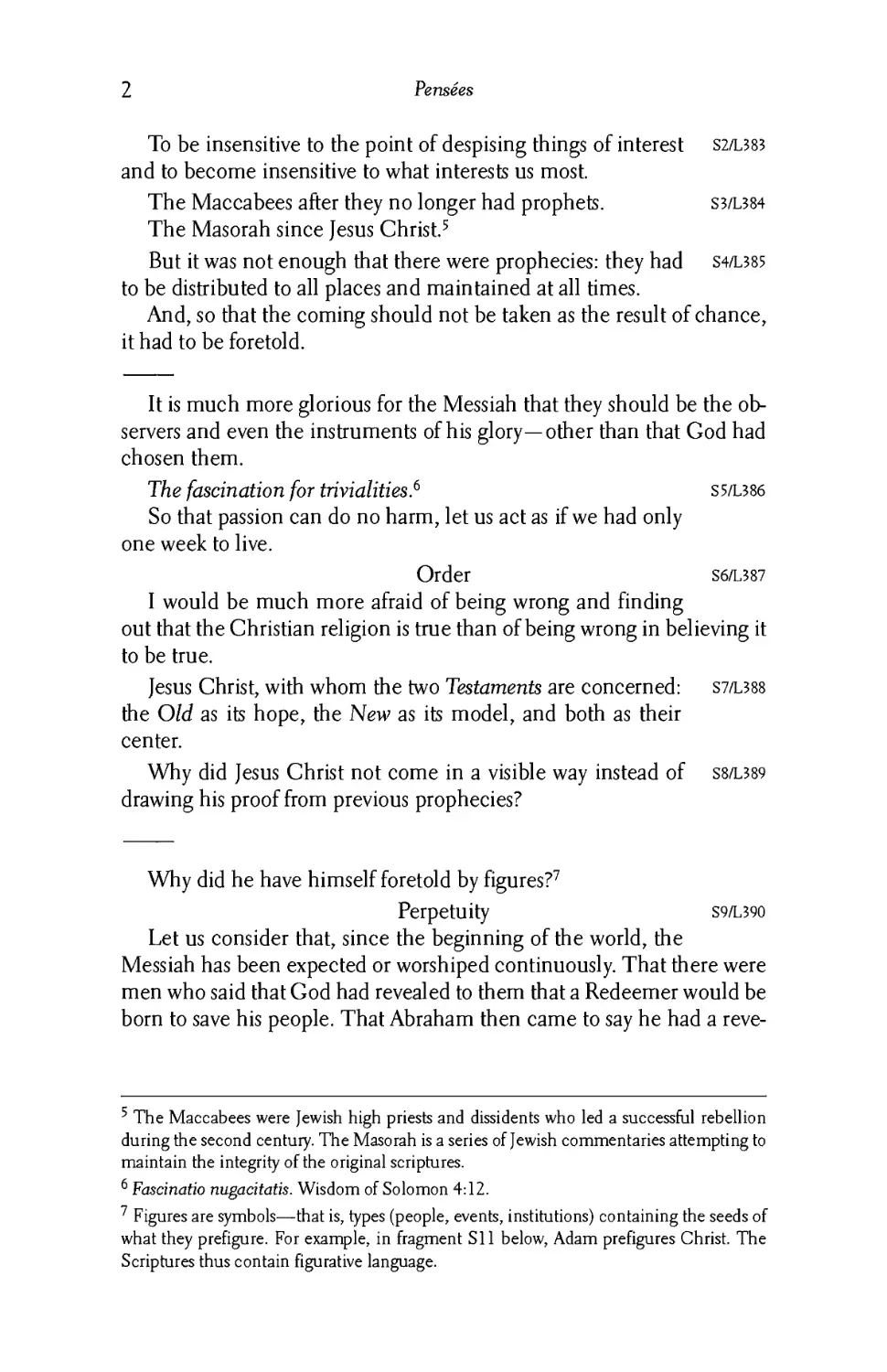
2
Pensees
To be insensitive to the point of despising things of interest S2/L383
and to become insensitive to what interests us most.
The Maccabees after they no longer had prophets. S3/L384
The Masorah since Jesus Christ.5
But it was not enough that there were prophecies: they had S4/L385
to be distributed to all places and maintained at all times.
And, so that the coming should not be taken as the result of chance,
it had to be foretold.
It is much more glorious for the Messiah that they should be the
observers and even the instruments of his glory—other than that God had
chosen them.
The fascination for trivialities.6 s5/L386
So that passion can do no harm, let us act as if we had only
one week to live.
Order S6/L387
I would be much more afraid of being wrong and finding
out that the Christian religion is true than of being wrong in believing it
to be true.
Jesus Christ, with whom the two Testaments are concerned: S7/L388
the Old as its hope, the New as its model, and both as their
center.
Why did Jesus Christ not come in a visible way instead of S8/L389
drawing his proof from previous prophecies?
Why did he have himself foretold by figures?7
Perpetuity S9/L390
Let us consider that, since the beginning of the world, the
Messiah has been expected or worshiped continuously. That there were
men who said that God had revealed to them that a Redeemer would be
born to save his people. That Abraham then came to say he had a reve-
5 The Maccabees were Jewish high priests and dissidents who led a successful rebellion
during the second century. The Masorah is a series of Jewish commentaries attempting to
maintain the integrity of the original scriptures.
6 Fascinatio nugacitatis. Wisdom of Solomon 4:12.
7 Figures are symbols—that is, types (people, events, institutions) containing the seeds of
what they prefigure. For example, in fragment Sll below, Adam prefigures Christ. The
Scriptures thus contain figurative language.

The Project of June 1658
3
lation that the Redeemer was to be born of him through a son he would
have. That Jacob declared that, of his twelve children, the Redeemer
would be born of Judah. That Moses and the prophets then came to
proclaim the time and manner of his coming. That they said the law
they had would last only while awaiting that of the Messiah —until then
it would be permanent—but the latter would last forever. That thus
their law or that of the Messiah of which it was the pledge would always
be on the earth. That in fact it has always lasted. That finally Jesus
Christ came with all the circumstances foretold. This is remarkable.
If this was so clearly foretold to the Jews, why did they not S10/L391
believe it, or why were they not destroyed for resisting so clear
a thing?
I reply. First, it was foretold both that they would not believe so clear
a thing and that they would not be destroyed. And nothing is more
glorious for the Messiah, for it was not enough that there should be
prophets; they had to be kept above suspicion, but, etc.
Figures sn/L392
God, wishing to create a holy people whom he would
separate from all the other nations, whom he would deliver from its
enemies and bring to a place of peace, promised to do it and foretold
through his prophets the time and manner of his coming. And yet, to
strengthen the hope of his chosen in every age, he showed them an
image of it, never leaving them without assurances of his power and his
will for their salvation. For, in the creation of man, when men were still
so close to the Creation that they could not have forgotten their creation
and fall, Adam was the witness and guardian of the promise of a savior,
who would be born of woman. When those who had seen Adam were
no longer in the world, God sent Noah and saved him, and drowned the
whole earth by a miracle that clearly showed his power to save the world
and his will to do it, and to cause the one he had promised to be born
from the seed of woman.
This miracle was sufficient to strengthen the hope of the [chosen].
The memory of the deluge being so fresh among men while Noah
was still alive, God made promises to Abraham, and while Shem was
still alive, he sent Moses, etc.
Man's true nature, his true good, true virtue, and true re- S12/L393
ligion, are things that cannot be known separately.
Instead of complaining that God has hidden himself, you S13/L394
will thank him for revealing so much of himself; and you will
also thank him for not revealing himself to arrogant sages unworthy of
knowing so holy a God.

4
Pensees
Two kinds of persons know him: those who have a humble heart and
who embrace lowliness, whatever their degree of intellect, high or low;
and those who have sufficient understanding to see the truth, whatever
they may have against it.
When we want to think of God, is there nothing that turns S14/L395
us away, tempts us to think of something else? All of this is bad
and is born with us.
It is wrong for anyone to become attached to me, even S15/L396
though they do it gladly and freely. I will disappoint those in
whom I have aroused this desire, for I am nobody's end and do not have
the means of satisfying them. Am I not ready to die? And thus the object
of their attachment will die. Therefore, just as I would be guilty if I
caused a falsehood to be believed, even though I argued for it gently
and they believed it with pleasure and it gave me pleasure, in the same
way I am guilty if I make anyone love me and attract people to become
attached to me. I must warn those who are ready to consent to the lie
that they should not believe it, whatever advantage I might derive from
it; likewise they should not become attached to me because they should
spend their life and efforts in pleasing God or in seeking him.
True nature having been lost, everything becomes his S16/L397
nature.
In the same way, the true good having been lost, everything becomes
his true good.
The philosophers did not prescribe feelings proportionate S17/L398
to the two states.
They inspired impulses of pure greatness, and this is not man's state.
They inspired impulses of pure lowliness, and this is not man's state.
There must be impulses of lowliness, not from nature, but from
penitence; not to retain them, but to go on to greatness. There must be
impulses of greatness, not from merit but from grace, and after having
passed through lowliness.
If man is not made for God, why is he happy only in God? S18/L399
If man is made for God, why is he so opposed to God?
Man does not know what rank he should occupy. He has S19/L400
obviously gone astray and fallen from his true place, lacking
the power to find it again. He looks for it everywhere anxiously and
unsuccessfully, in impenetrable darkness.
We want truth and find only uncertainty in ourselves. S20/L401
We seek happiness and find only wretchedness and death.
We are incapable of not wanting truth and happiness and are
incapable of certainty or happiness.

The Project of June 1658
5
We have been left with this desire as much to punish us as to make us
perceive from whence we have fallen.
Proofs of religion S21/L402
Morality./Doctrine./Miracles./Prophecies./Figures.
Wretchedness S22/L403
Solomon and Job understood best and spoke best about
the wretchedness of man, one the happiest and the other the unhappi-
est of men; one knowing the vanity of pleasures through experience, the
other the reality of pains.
All these oppositions that seemed to take me farthest from S23/L404
the knowledge of religion are what led me most directly to the
true one.
I blame equally those who decide to praise man, those who S24/L405
blame him, and those who amuse themselves; and I can
approve only of those who search in anguish.
Instinct, reason S25/L406
We have an inability to prove that no dogmatism can
overcome.
We have an idea of truth that no skepticism can overcome.
The Stoics say, "Withdraw into yourself, where you will S26/L407
find peace." And this is not true.
Others say, "Go out, seek happiness in diversion." And this is not
true. Illnesses arise.
Happiness is neither outside of us nor within us. It is in God, both
outside and within us.
A Letter on the folly of human knowledge and philosophy. S27/L408
This Letter before the section on Diversion.
Happy is the man who could [know the reason for things].8
Happy is he who is surprised at nothing.9
Two hundred eighty kinds of supreme good in Montaigne.10
The falsity of philosophers who did not discuss the immor- S28/L409
tality of the soul.
The falsity of their dilemma in Montaigne.11
8 Felix qui potuit. Virgil, Georgics, 2. 490.
9 Felix nihil admirari. Horace, Epistles, 1.6.1.
10 See Montaigne, Essays II, chap. 12: "There is no battle so violent among philosophers,
and so bitter, as that which turns on the question of the sovereign good for man, from
which, according to Varro, there sprang 288 sects." (Ariew and Grene trans., p. 138.)
11 See Montaigne, Essays II, chap. 12: "The philosophers always have this dilemma to
console us for our mortal condition on their tongues: 'Either the soul is mortal or it is

6
Pensees
This internal war between reason and the passions has S29/L410
divided those who wanted peace into two sects. Some wanted
to renounce their passions and become gods; others wanted to
renounce reason and become brute beasts. Des Barreaux.12 But neither
can succeed: reason remains to condemn the lowliness and injustice of
the passions and to disturb the peace of those who surrender to them;
and the passions stay alive in those who want to renounce them.
Greatness of man S30/L4H
We have such a lofty idea of man's soul that we cannot
bear being despised and not esteemed by some soul. And all the
happiness of men consists in this esteem.
Men are so necessarily mad that it would be another kind S31/L412
of madness not to be mad.
Whoever wants to know man's vanity fully has only to con- S32/L413
sider the causes and effects of love. The cause is a something I
know not what. Corneille.13 And the effects are frightening. This
something I know not what, so insignificant that we cannot recognize it,
disturbs the whole earth, princes, armies, the entire world.
Cleopatra's nose: had it been shorter, the whole face of the earth
would have been changed.
Wretchedness S33/L414
The only thing that consoles us for our miseries is
diversion, and yet this is the greatest of our miseries. For it is mainly what
prevents us from thinking about ourselves, leading us imperceptibly to our
ruin. Without it we would be bored, and this boredom would drive us to
seek a more solid means of escape. But diversion amuses us and guides
us imperceptibly to death.
Agitation S34/L415
When a soldier, or a laborer, etc., complains of his toils,
give him nothing to do.
Nature is corrupt S35/L416
Without Jesus Christ, man must be mired in vice and
wretchedness.
With Jesus Christ, man is free from vice and wretchedness.
In him are all our virtue and all our happiness.
immortal. If mortal, it will be without pain; if immortal, it will go on improving.' They
never touch the other horn of the dilemma: 'What if it goes on getting worse?' and they
leave to the poets the threats of future pains." (Ariew and Grene trans., pp. 112-13.)
*2 Jacques Vallee Des Barreaux (1599-1673), libertine poet.
*3 je ne sais cjuoi. Pierre Corneille, Medea, II, 6.

The Project of June 1658
7
Apart from him, there is only vice, wretchedness, error, darkness,
death, despair.
Not only do we not know God except through Jesus Christ, S36/L417
but also we do not know ourselves except through Jesus
Christ. We know life and death only through Jesus Christ. Apart from
Jesus Christ, we do not know what is our life, or our death, or God, or
ourselves.
Thus without Scripture, whose only object is Jesus Christ, we know
nothing, and see only darkness and confusion in the nature of God and
in the very nature [of man].
[2] Order
The Psalms are sung throughout the earth. S37/L1
Who bears witness to Mahomet? Himself.
Jesus Christ wants his witness to be nothing.14
The quality of witnesses requires that they always exist, both
everywhere and wretched.15 He is alone.
Order S38/L2
by dialogues
"What should I do? I see only darkness everywhere. Shall I believe
that I am nothing? Shall I believe that I am God?"
"All things change and succeed one another." S38/L3
"You are wrong; there is... "
"Why, do you not yourself say that the sky and the birds prove God?"
No. "And does not your religion say so?" No. For while this is true in a
sense for some souls to whom God gave this illumination, nevertheless
it is false for most of them.
Letter to induce the search for God. S38/L4
And then have them seek him among the philosophers,
skeptics, and dogmatists, who will trouble those studying them.
See John 5:31: "If I bear witness of myself, my witness is not true."
Christ's witnesses are the Jews.

8
Pensees
Order S39/L5
A letter of exhortation to a friend to induce him to seek. And
he will reply, "But what good will seeking do for me? Nothing comes of
it." Then reply to him, "Do not despair." And he will answer that he
would be glad to find some illumination, but that, according to this very
religion, if he believed it in his way, it would not do him any good, and
hence he prefers not to seek. The answer to that is: "The machine."16
First part: Wretchedness of man without God. S40/L6
Second part: Happiness of man with God.
otherwise
First part: That nature is corrupt, proved by nature itself.
Second part: That there is a Redeemer, proved by Scripture.
Letter indicating the usefulness of proofs. By the machine. S41/L7
Faith is different from proof. One is human; the other is a
gift of God. The righteous live through faith.17 It is this faith that God
himself puts into the heart, and proof is often its instrument. Faith
comes by hearing.18 But this faith is in the heart and makes us say not I
know, but I believe.19
Order S42/L8
See what is clear and indisputable in the whole state of the
Jews.
In the letter on injustice can come: S43/L9
The absurdity of first-born sons receiving everything. "My
friend, you were born on this side of the mountain; it is therefore right
that your older brother should have everything."
"Why are you killing me?"
The miseries of human life have unsettled all this. S44/L10
As they have become aware of it, they have taken up
diversion.
Order. After the letter about the necessity of seeking God, S45/LH
put in the letter about removing obstacles, which is
the discourse on the machine, on preparing the machine, on
searching through reason.
16 See below, fragments S41, S45, and S59. What we call "The Wager" (fragment S680)
is found in the chapter called Discourse on the Machine.
*7 Justus ex fide vivit. Romans 1:17.
*8 Fides ex auditu. Romans 10:17.
*9 ". .. et fait dire non Scio mais Credo."

The Project of June 1658
9
Order S46/L12
Men despise religion; they hate it and fear that it is true. To
cure this, we must begin by showing that religion is not contrary to
reason, but worthy of veneration and respect. Next we must make it
attractive, to make the good wish it were true, and then we must show
that it is true.
Worthy of veneration because it has properly understood man.
Attractive because it promises the true good.
[3] Vanity
Two similar faces, though neither by itself is particularly S47/LB
funny, are funny together because of their similarity.
True Christians nevertheless obey these follies, not because S48/L14
they respect them, but rather God's command, which has
subjected them to follies for their punishment. For all creatures are subject to
vanity. [. .. ] They shall be freed.20 Thus Saint Thomas explains the
passage in Saint James on giving preference to the rich, that, if they do not do
it in the sight of God, they are transgressing the order of religion.21
Perseus, King of Macedonia. Paulus Emilius.22 S49/L15
Perseus was criticized for not killing himself.
Vanity S50/L16
That something so obvious as the vanity of the world is so
little known that it would be odd and surprising to say that it is foolish to
seek greatness, this is remarkable.
Inconstancy and oddity S51/L17
To live by one's work alone and to rule over the most
powerful state in the world are very different things. They are combined in the
person of the great Sultan of the Turks.
751. A piece of cowl brings 25,000 monks to arms.23 S52/L18
2" Omnis creatura subjecta est vanitati. Liberabitur. Romans 8:20-21; cf. Ecclesiastes
3:19.
21 Thomas Aquinas, Summa Theologiae II, 2, quest. 63, referring to James 2:1: "Whoever
honors the rich for their riches, sins."
22 Montaigne, Essays I, chap. 20: "There is nothing evil in life for the person who
thoroughly understands that the privation of life is not an evil. Paulus Emilius replied to the
messenger whom that miserable king of Macedonia, his prisoner, sent to beg him not to
lead him in his triumph: 'Let him make that request to himself.'" (Frame trans., p. 60;
Screech trans., p. 96.)
23 "75j» js a page reference to the 1652 edition of Montaigne's Essays, concerning the
emptiness of human affairs.

10
Pensees
He has four lackeys. S53/L19
He lives across the water. S54/L20
Those too young do not judge well; so also those too old. S55/L21
Not thinking enough or thinking too much about things
makes us stubborn and opinionated.
If we look at our work immediately after completing it, we are still
altogether possessed with it; if we delay too long, we can no longer get
involved with it.
It is the same with pictures seen from too far or too near. And there is
only one indivisible point, which is the right place. The others are too
near, too far, too high, or too low. Perspective determines that point in
the art of painting. But in truth and in morality, who will determine it?
The power of flies: they win battles, hinder the activity of S56/L22
our souls, eat our bodies.24
Vanity of the sciences S57/L23
The knowledge of physical things will not console me for
the ignorance of morality in a time of affliction. But the knowledge of
ethics will always console me for ignorance of the physical sciences.
Man's condition S58/L24
Inconstancy, boredom, anxiety.
The custom of seeing kings accompanied by guards, drums, S59/L25
officers, and all the things that direct the machine to yield
respect and fear, makes their faces, when they are sometimes seen alone
without these trappings, impress respect and fear in their subjects,
because we cannot separate in thought their persons from what usually
accompanies them. And the world, which does not know that this effect is
the result of custom, believes that it derives from a natural force. From
this come these words: the character of divinity is stamped on his face, etc.
The power of kings is based on reason and on the folly of S60/L26
the people; indeed, much more on folly. The greatest and
most important thing in the world has weakness as its foundation, and
this foundation is wonderfully secure, for there is nothing more secure
24 See Montaigne, Essays II, chap. 12: "If you let loose even some of our flies, they will
have both the power and the courage to disperse the horde" (Ariew and Grene trans., p.
37). The flies Montaigne refers to are actually honeybees (mouches a miel). Montaigne
gives an example of bees having been used successfully against a Portuguese army that
was laying siege to a town.

The Project of June 1658
11
than that the people will be weak. What is based on reason alone is truly
ill founded, like esteem for wisdom.
Man's nature is not always improving; it has its gains and its S61/L27
losses.
Fever has its shivers and its hot flashes. And the cold indicates the
magnitude of the fever's temperature as well as the hot.
It is the same with man's inventions from century to century. It is the
same with the kindness and the malice of the world in general.
Changes are most always pleasing to princes.25
Weakness S62/L28
All of man's pursuits aim at acquiring some good, but he
cannot have a title to show that he owns the good rightly, for he has only
human fancy; nor does he have the strength to own it securely.
It is the same with knowledge, for illness takes it away.
We are equally incapable of truth and good.
A warlike people for whom there is no life without arms.26 S63/L29
They prefer death to peace; others prefer death to war.
Every opinion can be preferable to life, the love of which seems so
strong and natural.
We do not choose as captain of a ship the passenger who S64/L30
comes from the best home.
We do not worry about being esteemed in the towns we S65/L31
travel through. But when we have to stay there a little while,
we do worry about it. How much time is needed? A time proportionate
to our futile and puny duration.
Vanity S66/L32
Respect means: inconvenience yourself27
What astonishes me most is to see that everyone is not S67/L33
astonished by his own weakness. We behave seriously and
each follows his calling, not because it is in fact good to do so (as
fashion will have it), but as if each knew with certainty where reason and
justice lie. We are constantly disappointed, and with ridiculous humility
think it is our fault and not that of the skill we always boast about. But it
is good for the reputation of skepticism that there are so many people in
the world who are not skeptics, showing that man is quite capable of the
25 Plerumque gratae principibus vices. Horace, Odes, III. xxix. 13.
26 Ferox gens, nullam esse vitam sine armis rati. Montaigne, Essays I, chap. 14 (Frame
trans., p. 42; Screech trans., p. 65.), quoting Livy, 24. 17.
27 See fragment S115 for Pascal's development of this thought.

12
Pensees
most extravagant opinions, since he is capable of believing that he is not
naturally and inevitably weak, and is, on the contrary, naturally wise.
Nothing strengthens skepticism more than the fact that there are some
people who are not skeptics; if all of them were, they would be wrong.
This sect28 is strengthened by its enemies more than by its S68/L34
friends, for man's weakness is much more apparent in those
who do not recognize it than in those who do.
Heel of a shoe S69/L35
Oh, how well shaped it is! Now, there's a skillful workman!
What a brave soldier! This is the source of our inclinations and choice
of conditions. This person drinks too much! That person drinks too
little! This is what makes people sober or drunk, soldiers, cowards, etc.
Anyone who does not see the vanity of the world is himself S70/L36
very vain.
Indeed, who does not see it, other than young people absorbed in
noise, diversion, and thoughts of the future?
But take away their diversion, and you will see them shrivel out of
boredom.
Then they feel their nothingness without recognizing it, for it is
indeed wretched to be insufferably depressed, as soon as you are reduced
to introspection without any means of diversion.
Occupations S71/L37
The sweetness of fame is so great that we love every object
to which it is attached, even death.
Too much and too little wine. Give him none, he cannot S72/L38
find truth. Give him too much, the same thing.
Men spend their time chasing a ball or a hare. It is the S73/L39
entertainment even of kings.
How vain is painting, which attracts admiration by its S74/L40
similarity to originals we do not admire!
When we read too fast or too slowly, we understand S75/L41
nothing.
How many kingdoms are unaware of us! S76/L42
It takes little to console us because it takes little to distress S77/L43
us.
Imagination S78/L44
In man it is that dominant part, that master of error and
falsity, and all the more deceptive because it is not always so; for it
Skepticism.

The Project of June 1658
13
would be an infallible rule of truth, if it were an infallible one of
falsehood. But being more often false, it gives no indication of its quality,
impressing the same mark on the true and the false. I am not speaking of
fools; I am speaking of the wisest, and they are the ones whom
imagination is most entitled to persuade. Reason may well protest; it cannot
determine the price of things.
This arrogant power, which likes to control and dominate reason, its
enemy, to show how all-powerful it is, has established a second nature
in man. It has its happy, its sad, its healthy, its sick, its rich, and its poor.
It makes them believe, doubt, and deny reason. It suspends the senses; it
sharpens them. It has its fools and its wise men, and nothing upsets us
more than to see it satisfy them more fully and completely than reason.
Those with a capable imagination are far more pleased with themselves
than prudent people could reasonably be. They look down on people
with an air of authority. They argue boldly and confidently—the others
timidly and carefully. And this cheerful look often gives them the
advantage in the opinion of their listeners: such is the favor that those wise
by imagination enjoy with their judges of the same nature.
Imagination cannot make fools wise, but it can make them happy, as
opposed to reason, which can only make its friends miserable, the one
covering them with glory, the other with shame.
What dispenses reputation? What gives respect and veneration to
people, works, laws, and the great, other than this imagining faculty?
How insufficient are all the riches of the earth without its consent.
Would you not say that this magistrate whose venerable age
commands everyone's respect is ruled by pure, sublime reason, and that he
judges things by their true nature without considering those trivial
circumstances damaging only the imagination of the weak? See him go to
a sermon, bringing a wholly devout zeal, reinforcing the soundness of
his reason with the warmth of his charity. He is ready to listen with
exemplary respect. When the preacher appears, if nature has given him
a hoarse voice and an odd sort of face, or his barber has shaved him
badly, if by chance he is dirtier than usual, however great the truths he
announces, I wager that our old magistrate will lose his composure.
Put the world's greatest philosopher on a plank hanging over a
precipice, but wider than it needs to be. Although his reason will
convince him of his safety, his imagination will prevail. Many could not
bear the thought of it without getting pale and sweating.29
29 See Montaigne, Essays II, chap. 12: "Put a philosopher in a cage of small bars of thin
iron suspended at the top of the towers of Notre Dame de Paris, he will see for obvious

14
Pensees
I will not relate all the effects of imagination. Who does not know
that the sight of cats or rats, the crunching of coal, etc., can unhinge
reason completely? Tone of voice affects the wisest men and perforce
changes a discourse or a poem. Love or hate alters the face of justice.
How much more righteous does a lawyer, well paid in advance, find the
case he is pleading! How much better does his bold manner make his
case appear to the judges taken in by his appearance! Ludicrous reason,
blowing with the wind in every direction! I would have to enumerate
almost all the actions of men, which hardly waver except under the
assaults of imagination. For reason has had to yield, and the wisest reason
takes as its principles the ones human imagination has rashly
introduced everywhere. <We must, since it has been ordained, work all day
for benefits recognized as imaginary; and, after sleep has refreshed our
tired reason, we must jump up at once to rush after phantoms and
endure the impressions of this master of the world>
Our magistrates have well understood this mystery. Their red robes,
the ermine in which they wrap themselves like furry cats, the palaces in
which they administer justice, the fleurs-de-lis, and all such stately
apparatus were truly necessary. If physicians did not have gowns and
slippers, if learned doctors did not have square caps and robes four times
too large, they would never have duped the world, which cannot resist
so original a display. If they possessed true justice, and if physicians
possessed the true art of healing, they would have no need of square caps.
The majesty of these sciences would command enough respect by itself.
But having only imaginary knowledge, they must take up those vain
tools that strike the imagination to which they must appeal; and in this
way they do, in fact, inspire respect.
Soldiers alone are not disguised in this way, because their role is
really more essential. They establish themselves by force—the others
by affectation.
That is why our kings have not sought such disguises. They have not
masked themselves in extraordinary costumes to appear as they do, but
have accompanied themselves with guards and soldiers. Those armed
troops, whose hands and power are for them alone, the trumpets and
drums marching before them, and the legions surrounding them, make
reasons that it is impossible for him to fall, and yet (unless he is used to the roofer's trade)
he will not be able to keep the vision of that height from frightening and astonishing him.
[ . .. ] There are some who cannot even bear the thought of it. Set a plank between those
two towers, of a size such as is needed for us to walk on it: there is no philosophical
wisdom of such firmness as to give us the courage to walk on it as we would do if it was on the
ground." (Ariew and Grene trans., p. 155.)

The Project of June 1658
15
the steadiest men tremble. They do not just have the trappings; they
have the power. You would need a very refined reason to regard the
Grand Turk, surrounded in his superb seraglio by 40,000 janissaries, as
just another man.
We cannot even see a lawyer in cap and gown without forming a
favorable opinion of his ability.
The imagination disposes of everything. It creates beauty, justice,
and happiness, which are the whole of the world.
I would gladly see the Italian book, of which I know only the title,
Opinion, Queen of the World,30 which alone is worth many books.
Without knowing the book, I approve of what it says, except for any evil
it may contain.
These are more or less the effects of that deceptive faculty, which
seems to have been given to us specifically to lead us into necessary
error. We have many other principles of error.
Old impressions are not the only things that can mislead us; the
charms of novelty have the same power. All disputes arise from this,
people blaming each other for following their false impressions from
childhood or rashly pursuing new ones. Who keeps the golden mean?
Let him come forward and prove it. There is no principle, however
natural it has been ever since childhood, [that cannot] be made to pass for
a false impression whether of education or the senses.
Some people say, "Because you have believed since childhood that a
box was empty when you saw nothing in it, you believed the void
possible. This is an illusion of your senses, strengthened by habit, which
science must correct." Others say, "Because you have been told at
school that there is no such thing as a void, your common sense, which
comprehended it clearly before this false impression, has been
corrupted and must be corrected by returning to your original state."
Which then has deceived you, the senses or education?
We have another principle of error, illnesses. They impair our
judgment and our senses. And if major illnesses disturb them noticeably, I
do not doubt that lesser ones make a proportionate impression.
Our own interest is another marvelous instrument for blinding
ourselves agreeably. The fairest man in the world is not allowed to be judge
in his own case. I know some people who, in order to avoid this partiality
for themselves, have been most unjust as counterbalance. The sure way
of losing a perfectly just case is for people to have their close relatives
recommend it to them. Justice and truth are two points so fine that our
Dell'opinione regina del mondo.

16
Pensees
tools are too blunt to touch them exactly. If they get at it, they either
crush the point or press in all around, more on the false than on the true.
<Man is therefore so happily constituted that he has no exact principle
of the true and several excellent ones of the false. Let us now see how
many.
But the most amusing cause of his errors is the war between the
senses and reason>
Man is but a subject full of natural error that cannot be S78/L45
eradicated without grace. [Nothing] shows him the truth.
Everything deceives him. (The chapter on the deceptive powers must
begin with this.) These two principles of truth, reason and the senses,
besides both lacking authenticity, mutually deceive one another. The
senses deceive reason with false appearances, and in turn receive from
the soul the very tricks they play on it. Reason takes its revenge. The
passions of the soul trouble the senses and give them false impressions.
They rival each other in lying and deception.
But apart from this error that happens accidentally and through a
lack of understanding between these heterogeneous faculties...
Vanity S79/L46
The cause and effects of love.
Cleopatra.
We never keep to the present time. We anticipate the future S80/L47
as too slow in coming, almost to hurry it up, or we remember
the past, to stop it as having gone too fast. So imprudent are we that we
wander about in times that are not ours and do not think of the one that
belongs to us, and so vain are we that we dream of those that are
nothing and let slip away without reflection the one that exists. It is that the
present is usually painful. We hide it from our sight because it distresses
us; and, if it is agreeable, we regret seeing it slip away. We try to support
it with the future and think of arranging things we cannot control, for a
time we have no certainty of reaching.
Examine your thoughts, and you will find them wholly occupied
with the past or the future. We almost never think of the present, and if
we do so, it is only to shed light on our plans for the future. The present
is never our end. The past and the present are our means; only the
future is our end. So, we never live, but hope to live, and, as we are always
planning to be happy, it is inevitable we should never be so.
The mind of this supreme judge of the world is not so S81/L48
independent that it is not liable to be disturbed by the first
noise in its vicinity. The din of a cannon is not necessary to hinder its
thoughts; it needs only the creaking of a vane or pulley. Do not be sur-

The Project of June 1658
17
prised if right now it does not reason well: a fly is buzzing in its ears.
This is enough to render it incapable of good reflection. If you wish it to
be able to reach the truth, chase away the animal holding its reason in
check and disturbing that powerful intellect, ruler of towns and kingdoms.
Here is a comical god! Most ridiculous hero?1
Caesar was too old, it seems to me, to amuse himself by S82/L49
going off to conquer the world. Such entertainment was good
for Augustus or Alexander. They were still young men and difficult to
restrain. But Caesar should have been more mature.
The Swiss are offended by being called gentlemen, and S83/L50
establish their working-class origins in order to be judged
worthy of high office.
"Why are you killing me?" "Well, do you not live on the S84/L51
other side of the water? If you lived on this side, my friend, I
would be a murderer, and it would be wrong to kill you in this way. But
since you live on the other side, I am a brave man and it is right."
Good sense. S85/L52
They are compelled to say, "You are not acting in good
faith, we are not asleep," etc. How I love to see this proud reason
humbled and suppliant! For this is not the language of someone whose rights
are challenged and who defends them with the force of weapons in
hand. He does not bother to say that they are not acting in good faith,
but punishes this bad faith with force.
[4] Wretchedness
The vileness of man, going as far as submission to the S86/L53
beasts, to the point of worshiping them.
Inconstancy S87/L54
Things have diverse qualities and the soul diverse
inclinations; for nothing presented to the soul is simple, and the soul never
presents itself simply to any object. That is why we cry and laugh at the
same thing.
Inconstancy S88/L55
We think we are playing on ordinary organs when playing
on men. They are organs, indeed, but odd, changeable, and variable
<with pipes that do not follow a normal pattern. Those who only know
how to play on ordinary organs> will not produce chords on these. We
must know where [the keys are].
O ridicolosissimo heroe!

18
Pensees
We are so unhappy that we can only take pleasure in S89/L56
something on condition of our being annoyed if it turns out
badly, as thousands of things can and do every hour. Anyone who found
the secret of rejoicing in the good without being annoyed by its contrary
evil would have found the point. It is perpetual motion.
It is not good to be too free. S90/L57
It is not good to have all the necessities.
Tyranny S91/L58
Tyranny is wanting to have by one means what can only be
had by another. We have different duties to different sorts of merits: the
duty of love to charm, fear to strength, belief to knowledge.
We must fulfill these obligations; it is wrong to deny them and wrong
to ask for others.
Thus this discourse is false and tyrannical: "I am handsome, so I
must be feared. I am strong, so I must be loved. I am .. ." And it is even
false and tyrannical to say: "He is not strong, so I will not admire him;
he is not clever, so I will not fear him."
Tyranny consists in the universal desire S92/L58
to dominate beyond one's order
There are various compartments of the strong, the handsome, the
sensible, the pious; each of them rules there but not elsewhere.
Sometimes they intersect. And the strong and the handsome fight to see who
is master, but this is foolish, for their mastery is of different kinds. They
do not understand one another. Their mistake is to want to rule
everywhere. Nothing can do this, not even strength, which is of no use in the
realm of knowledge and governs only external actions.
When it is a question of deciding whether we should make S93/L59
war and kill so many men—condemn so many Spaniards to
death—it is one man alone who decides, and an interested party at that.
It should be a third, disinterested party.
On what will he base the organization (economie) of the S94/L60
world he wants to govern? On the whim of each individual?
What confusion! On justice? He does not know what it is. Certainly, if
he did know, he would not have laid down this maxim, the most general
of all human maxims, that each should follow the customs of his own
country. True equity would have swayed all people by its brilliance and
legislators would not have taken as their model the fancies and whims

The Project of June 1658
19
of Persians and Germans, instead of this steady justice.32 We would have
seen it planted in all the states of the world, at all times; whereas we see
nothing, whether just or unjust, that does not change its quality with a
change in climate. Three degrees of latitude reverse all jurisprudence; a
meridian decides what is true. Fundamental laws change after being
kept for a few years; rights have their terms. The entry of Saturn into Leo
marks the origin of a given crime. Odd kind of justice that is bounded by
a river! Truth on this side of the Pyrenees, error on the other.33
They admit that justice does not reside in these customs, but in
natural laws common to every country. They would certainly maintain this
stubbornly if reckless chance, which has distributed human laws, had
found at least one that was universal; but the joke is that human whim
has so many varieties that there is no such <general> law.
Theft, incest, infanticide, parricide, all have been considered
virtuous actions. Can anything be more ridiculous than that a man should
have the right to kill me because he lives on the other side of the water
and his prince has a quarrel with mine, though I have none with him?
Doubtless there are natural laws, but this fine reason having been
corrupted, it corrupted everything. Nothing more is ours; what we call
ours is by convention.™ It is by virtue of senatorial decrees and plebiscites
that crimes are committed.*5 As we once suffered from our vices, we now
suffer from our laws}6
32 See Montaigne, Essays II, chap. 12: "If it is from ourselves that we draw the regulation
of our customs, into what confusion we throw ourselves! For what our reason advises us as
most likely is, generally, that each person obey the laws of his country, <like the view of
Socrates, inspired, he says, by divine counsels And what can be meant by this, except that
our duty has no rule but chance? Truth must have an identical and universal
countenance. If man knew what gave body and true being to right and justice, he would not
attach them to the condition of the customs of this or that country; it would not be through
the fancy of the Persians or the Indians that virtue would take its form." (Ariew and Grene
trans., p. 140.)
33 See Montaigne, Essays II, chap. 12: "There is nothing subject to more continual
agitation than the laws. [ . . . ] And even among us, I have seen what was a capital offense
become legitimate; and in the same way as we ourselves think of others according to the
uncertainty of the fortunes of war, we go from being one day guilty of lese majeste both
human and divine, our justice falling to the mercy of injustice, to taking an opposite
nature in the space of a few years' possession. [ . . . ] What virtue is it that I see approved
today and not tomorrow, and that crossing a river makes a crime? What truth is it that is
bounded by these mountains, and that is falsehood in the world beyond them?" (Ariew
and Grene trans., p. 140.)
34 Nihil amplius nostrum est; quod nostrum dicimus, artis est. Cicero, De finihus, V. 21.
3^ Ex senatus-consultis et plebiscitis crimina exercentur. Seneca, Epistles, xcv.
36 Ut olim vitiis, sic nunc legibus laboramus. Tacitus, Annals, iii. 25.

20
Pensees
The result of this confusion is that one says the essence of justice is the
authority of the legislator, another the interest of the sovereign, another
present custom.37 And the last is the surest. Nothing, according to
reason alone, is just in itself; everything shifts with time. Custom
constitutes the whole of equity for the sole reason that it is accepted. This is
the hidden (mystique) basis of its authority; whoever tries to reduce it to
its first principles destroys it. Nothing is so faulty as the laws that correct
faults. Whoever obeys them because they are just obeys an imaginary
justice, and not the essence of the law. It is altogether self-contained; it
is the law and nothing more. Whoever wants to examine the basis for
this will find it so weak and trivial that, if he is not used to
contemplating the wonders of human imagination, he will be amazed that it has
gained such pomp and reverence in the course of a century. The art of
subversion and revolution is to unsettle established customs by probing
them to their core to show their lack of authority and justice. We must,
it is said, get back to the primitive and fundamental laws of the state,
which an unjust custom has abolished. It is a game certain to result in
the loss of everything; on these scales nothing will be just. Yet people
readily listen to such discourses. They throw off the yoke as soon as they
recognize it; and the mighty profit by their ruin and by the ruin of those
inquisitive investigators of accepted customs.38 That is why the wisest of
legislators used to say that it was necessary to deceive people for their
own good; and another, a good politician, said: When he searches for the
truth that would bring him freedom, it is good that he should be
misinformed}9 He must not become aware of the usurpation; it was originally
introduced without reason and has become reasonable. It must be
made to seem authentic and eternal, and its origin must be concealed,
if we do not want it to end soon.
37 See Montaigne, Essays II, chap. 12: "Protagoras and Ariston give the justice of laws no
other essence but the authority and opinion of the legislator, and they claim that, apart
from that, goodness and honesty would lose their qualities and remain empty names of
indifferent things. Thrasymachus, in Plato, holds that there is no other right than the
advantage of the superior." (Ariew and Grene trans., p. 141.)
38 See Montaigne, Essays II, chap. 12: "For the common people, [ . . . ] once they have
been given the temerity to despise and contradict the opinions they had held in extreme
reverence, [ . . . ] soon cast into equal uncertainty all the other items of their belief, for
these had no greater authority or foundation among them than those just questioned, and
they shake off like a yoke all the impressions they had received from the authority of the
law or reverence for long usage: For once too much dreaded, now it is easily trampled."
(Ariew and Grene trans., p. 2.)
39 Cum veritatem qua liberetur ignoret, expedit quodfallatur. Saint Augustine, City of God,
iv. 27.

The Project of June 1658
21
Justice S95/L61
As fashion determines charm, so also it determines justice.
<Three hosts> S96/L62
Could anyone who had the friendship of the King of
England, the King of Poland, and the Queen of Sweden ever have
believed he would be without refuge and shelter in the world?40
Glory S97/L63
Admiration spoils everything as early as childhood. "Oh,
well said! Oh, well done! How well behaved!" and so forth. The
children of Port-Royal, who are not spurred on by envy and glory, fall into
indifference.
Mine, yours S98/L64
"This is my dog," said those poor children. "That is my
place in the sun." Here is the origin and image of the usurpation of the
whole earth.
Diversity S99/L65
Theology is a science, but how many sciences is it all at
once? A man is an individual substance (suppot), but if he is dissected,
will he be the head, heart, stomach, veins, each vein, each portion of a
vein, the blood, each humor of the blood?
From afar a town, a farmland, is a town and a farmland; but as you
approach, there are houses, trees, tiles, leaves, grass, ants, ant legs, to
infinity. All this is contained under the word "farmland."
Injustice S100/L66
It is dangerous to tell the people that the laws are not just,
for they obey them only because they believe them to be just. That is
why they must be told at the same time that laws are to be obeyed
because they are laws, just as superiors are to be obeyed because they are
superiors, not because they are just. In this way sedition is prevented if
they can be made to understand this, and that it is the proper definition
of justice.
Injustice sioi/L67
Jurisdiction is not given for the sake of the governor, but
for the governed. It is dangerous to tell the people this. But the people
have too much faith in you; it will not harm them and may serve you. It
40 King Charles I of England was beheaded in 1649, and Charles II was in exile in the
1650s; King Casimir of Poland was deposed for a few months in 1656; Queen Christina of
Sweden abdicated her throne in 1654.

22
Pensees
should, therefore, be disseminated. Feed my sheep, not yours.41 You owe
me pasturage.
When I consider the brief duration of my life absorbed in S102/L68
the eternity that lies before and after—The memory of a guest
who stays only a day42—the small space I occupy and can even see,
engulfed in the infinite immensity of spaces I do not know and that do not
know me, I am frightened and astonished to see myself here rather than
there; for there is no reason why I am here rather than there, why now
rather than then. Who put me here? By whose order and direction have
this place and time been allotted to me?
Wretchedness S103/L69
Job and Solomon.43
If our condition were truly happy, we would not need to S104/L70
divert ourselves from thinking about it.
Contradiction S105/L71
Pride counterbalances all miseries. Either he hides his
miseries or, if he displays them, he glories in knowing them.
You must know yourself. If this does not serve to find the S106/L72
truth, at least it serves to order your life. And nothing is better.
The awareness that present pleasures are false, together S107/L73
with the ignorance that absent pleasures are vain, causes
inconstancy.
Injustice S108/L74
They have not found another means of satisfying their
concupiscence44 without doing harm to others.
Job and Solomon. S109/L74
Ecclesiastes shows that man without God is totally igno- sno/L75
rant and inevitably wretched. For it is wretched to want but
not to have power. Now, he wants to be happy and certain of some
truth, and yet he can neither know nor desire not to know. He cannot
even doubt.
4' Pasce oves meas, non tuas. John 21:17
42 Memoria hospitis unius diei praetereuntis. Wisdom of Solomon 5:15.
43 See fragment S22.
44 Concupiscence is sometimes translated as lust, but this does not do justice to Pascal's
broader concept, which does not refer simply to sensuality and afflictions of the body, but
also to those of the mind and will. For Pascal, concupiscence is similar to inordinate self-
love, which, in its concrete expression, may involve lasciviousness, but may also consist in
excess curiosity or pride.

The Project of June 1658
23
13. <Is the soul therefore too noble a subject for its feeble sin/L76
perceptions? Let us take it down, then, to the level of matter.
Let us see if it knows of what the very body it animates, and the others it
contemplates and moves at its will, are made.
What have these great dogmatists who are ignorant of nothing
known of this?
393.45
On these opinions.*6
This would be sufficient, no doubt, if reason were reasonable. It is
reasonable enough to admit that it has been unable to find anything
firm so far, but it does not yet despair of discovering it. On the contrary,
it is as ardent as ever in this search and confident it has within itself the
necessary strength for this conquest.
We must therefore complete it, and, after having observed its powers
through their effects, examine them in themselves. Let us see if it has
strength enough and a grasp capable of getting hold of the truth.
13 —But perhaps this subject goes beyond the reach of reason. Let us
therefore examine its solutions to things within its powers. If there is
something in its own interest to which it must have applied itself most
earnestly, it is the inquiry into its own supreme good. Let us see then
where these strong and clear-sighted souls have placed it and whether
they agree.
One says that the supreme good consists in virtue, another in
pleasure, another in following nature, another in truth—Happy is he who
could know the causes of things*7—another in peaceful ignorance,
another in idleness, others in resisting appearances, another in wondering
at nothing—To wonder at nothing is almost the only thing that can
produce and maintain happiness*8—and the brave skeptics in their
indifference {ataraxia), doubt, and perpetual suspension of judgment; and
others, still wiser, say that it cannot be found, not even by wishing. We
have been well rewarded.
The page references are to Montaigne, Essays II.
Harum sententiarum. Cicero, Disputationes Tusculanae, i, ii.
Felix qui potuit rerum cognoscere causes. Virgil, Georgics, ii.
Nihil mirari prope res una quae possit facere et servare beatum. Horace, Epistles, I. vi. 1.

24
Pensees
Whether we ought to see if this fine philosophy has
not acquired something certain from so long and so
intent a study. Perhaps at least the soul will know
itself. Let us listen to the leaders of the world on this
subject.
What have they thought about its substance?
395
Have they been luckier in locating it?
395
What have they discovered about its origin, its
duration, and its departure?
399>
[5] Boredom and the Qualities Essential to Man
Pride sm/L77
Curiosity is most often only vanity. We want to know
something simply to talk about it. In other words, we would not travel
the sea in order to say nothing about it, just for the pleasure of seeing
without the hope of ever communicating anything of it.
Description of man S113/L78
Dependence, desire for independence, needs
Our boredom in leaving pursuits to which we are S1H/L79
attached. A man lives happily at home. Let him see an
attractive woman or gamble happily for five or six days; you will find him
miserable if he returns to what he was doing before. Nothing is more
common than that.
[6] Cause of the Effects
Respect means: inconvenience yourself. si 15/L80
This is seemingly empty but quite right, for it says: "I
would truly inconvenience myself if you needed it, since I do it even
when it is of no use to you." Further, respect serves to distinguish the
great. Now, if respect was shown by sitting in an armchair, we would be
showing respect to everybody, and so no distinction would be made; but
by inconveniencing ourselves, a distinction is very well made.
The only universal rules are the laws of the country in SH6/L81
ordinary things and of the majority in others. Where does this
come from? From the power that resides in them.
Transpose
after the
laws the
following
article
I

The Project of June 1658
25
That is why kings, who have power from elsewhere, do not follow the
majority of their ministers.
Equality of goods is no doubt just; but, since we are unable to make
might obey justice, we have made it just to obey might. Unable to
strengthen justice, we have justified might, so that justice and might
should unite and there be peace, which is the supreme good.
Wisdom leads us back to childhood. Unless you become SH6/L82
like little children.*9
The world judges things well, because it is in a state of SH7/L83
natural ignorance, which is man's true state. Knowledge has
two extremes that meet. The first is the pure, natural ignorance of
everyone at birth. The other extreme is reached by great souls who run
through everything that can be known, only to find that they know
nothing and to find themselves in the same ignorance from which they set
out; but this is an erudite ignorance that knows itself. Between the two
are those who have put natural ignorance behind them but have not
been able to reach the other. They possess a tincture of adequate
knowledge and pretend to be learned. They trouble the world and judge
everything badly. Ordinary and clever people are the run of the world;
they despise it and are despised. They judge all things badly, and the
world judges them rightly.
<Descartes SH8/L84
We must say in general: "This happens through shape and
motion," because it is true. But to say which shapes and motions and to
constitute the machine is ridiculous, for it is useless, uncertain, and
laborious. And if it were true, we do not believe all of philosophy to be
worth an hour of labor.>
The strictest law, the greatest injustice.50 si 19/L85
Majority opinion is the best way, because it is visible and has the
strength to make itself obeyed. Yet it is the opinion of the least clever
people.
If it could have been done, we would have put might in the hands of
justice. But since we cannot handle might as we like, because it is a
palpable quality, whereas justice is a spiritual quality we manipulate at will,
we put justice in the hands of might. And so we call just what we are
forced to obey.
49 Nisi efficiamini sicut parvuli. Matthew 18. 3.
™ Summum jus, summa injuria. Terrence, Heauton Timorumenus, iv. 5. 47; Cicero, De
offwiis, i. 10.

26
Pensees
[From this] arises the right of the sword, for the sword gives a true
right.
Otherwise we would see violence on one side and justice on the other.
End of the twelfth Provincial Letter.
Hence the injustice of the Fronde,51 which raises its alleged justice
against might.
It is not the same in the Church, for there is true justice without
violence.
Of true law.52 We no longer have it. If we did have it, we S120/L86
would not accept following the customs of the country as a
rule of justice.
Thus, not finding justice, we have found might, etc.
The chancellor is solemn and dressed in fine clothes, S121/L87
because his position is a false one. Not so the king: he has
power. He has no use for imagination. Judges, physicians, etc., have
only imagination.
It is the effect of might, not of custom, because those S122/L88
capable of originality are rare. The greatest in number want
only to follow and refuse recognition to the ones seeking it by their
originality. And if they persist in wanting recognition and despising those
who are not original, they will be called ridiculous names and
physically abused. Let no one, then, boast of his subtlety, or let him keep it to
himself.
Cause of the effects S123/L89
This is remarkable: they do not want me to honor a man
clothed in brocade and followed by seven or eight lackeys. Why, he will
have me thrashed, if I do not salute him. His costume is power. It is the
same with a horse in fine harness, as compared with another.
Montaigne is amusing when he does not see the difference, wonders at our
finding any, and asks the reason for it.53 "Indeed," he says, "how does it
happen," etc.
51 A reference to the French civil wars, 1648-1653.
52 Veri juris. Cicero, De officiis, iii. 17.
Montaigne, Essays I, chap. 42: "We praise a horse because it is vigorous and skilled .. .
not for its harness. . . . Why do we not likewise esteem a man by what is his own? He has

The Project of June 1658
27
Cause of the effects S124/L90
Gradations. Ordinary people honor persons of high birth.
Semi-clever ones despise them, saying that birth is not a privilege of the
person, but of chance. Clever ones honor them, not for the same reason
as ordinary people, but for a deeper reason in back. Devout ones, who
have more zeal than knowledge, despise them, in spite of the reason
that makes the clever honor them, because they judge them by a new
light that piety gives them. But perfect Christians honor them by
another, higher light.
Thus opinions succeed one another for and against, according to
one's own lights.
Cause of the effects S125/L91
We must have a deeper reason in back and judge
everything by it, while talking like ordinary people.
Cause of the effects S126/L92
It is, therefore, true to say that everyone is under an
illusion; for, although the opinions of ordinary people are sound, they are
not so as conceived by them, since they think the truth to be where it is
not. Truth is indeed in their opinions, but not where they imagine it to
be. It is true that we must honor gentlemen, but not because birth is an
effective privilege, etc.
Cause of the effects S127/L93
Continual reversal of pro and con.
We have, therefore, shown that man is vain because of the value he
places on things that are not essential. And all these opinions are refuted.
Then we have shown that all these opinions are perfectly sound and
that thus, since all these vanities are very well founded, ordinary people
are not as foolish as they are said to be. And so we have refuted the
opinion that refuted the opinion of the people.
But we must now refute this last proposition and show that it remains
always true that the people are vain, although their opinions are sound,
because they do not see the truth where it is and, placing it where it is
not, their opinions are always false and completely unsound.
Sound opinions of the people S128/L94
Civil wars are the greatest of all evils.
a great retinue, a beautiful palace, so much credit, so much income; all that is around
him, not in him." (Frame trans., p. 189; Screech trans., pp. 288-89.)

28
Pensees
Civil wars are certain, if we want to reward merit, because everyone
will claim to be meritorious. The evil to be feared from a fool who
succeeds by right of birth is neither so great nor so certain.
Sound opinions of the people S129/L95
To be elegant (brave) is not mere vanity, for it shows that a
great number of people work for you. Your hair shows that you have a
valet, a perfumer, etc. As does your band, thread, lace, etc. Now it is not
for simple appearance or superficial show that you have many hands at
your service.
The more hands you have, the more powerful you are. To be elegant
is to show your power.
Cause of the effects S130/L96
Human weakness is the reason for many standards of
beauty, like being able to play the lute well. [Not playing the lute] is a
bad thing only because of our weakness.
Cause of the effects S131/L97
Concupiscence and force are the sources of all our
actions. Concupiscence causes voluntary actions, force involuntary ones.
Why does a lame person not annoy us, but a lame mind S132/L98
does? Because a lame person recognizes that we are walking
straight, whereas a lame mind says that it is we who are limping. Were
this not so, we should feel pity and not anger.
Epictetus asks even more strongly: Why do we not get angry if we are
told we have a headache, and we do get angry when we are told we
reason badly, or choose wrongly?54
The reason is that we are quite certain that we do not have S132/L99
a headache and that we are not lame, but we are not so sure
that we are choosing the right thing. So, being certain only to the extent
that we see with all our vision, it puts us into suspense and surprises us
when another sees the opposite with all his vision, and still more so
when a thousand others deride our choice. For we must prefer our own
lights to those of so many others. And this is daring and difficult. This
contradiction of feelings does not happen about a lame person.
Man is so made that, by virtue of telling him he is a fool, he believes
it. And by virtue of telling it to ourselves, we make ourselves believe it.
For man alone holds an internal conversation with himself, which it is
important to keep well in check: Evil communications corrupt good
Epictetus, Discourses, 4.6, 2.14.

The Project of June 1658
29
manners.55 We must maintain silence as much as possible and talk with
ourselves only of God, whom we know to be the truth, and in this way
convince ourselves of it.
Cause of the effects si33/Lioo
Epictetus, those who say: "You have a headache."
It is not the same thing. We are certain about health, but not about
being right. And in fact his own thought was nonsense.
And yet he believed he was proving it by saying: "It is either in our
power or not."
But he did not see that it is not in our power to regulate the heart, and
he was wrong to conclude that it is, since there were Christians then.
The people have very sound opinions. For example: S134/L101
1. In choosing diversion, and the hunt rather than the kill. The semi-
learned scoff at this and glory in showing that this proves the
foolishness of the world. But, for a reason not grasped by these men, the
people are right.
2. In distinguishing men by external marks, as by birth or wealth. Again
the world glories in showing how unreasonable this is. But it is very
reasonable. Cannibals laugh at an infant king.56
3. In taking offense at a slap or in desiring glory so much.
But it is very desirable because of the other essential goods joined
to it. And a man who receives a slap without resentment is
overwhelmed with insults and deficiencies.
4. Working for an uncertain goal; sailing on the sea; walking over a
plank.
Justice, might S135/L103
It is just to follow the just. It is necessary to follow the
strongest.
Justice without might is powerless. Might without justice is tyrannical.
Justice without might is challenged, because there are always evil
people. Might without justice is indicted. We must therefore combine
justice and might and, to that end, make what is just strong, or what is
strong just.
" Gorrumpunt bonos mores colloquia prava. I Corinthians 15. 33.
56 In Essays I, chap. 31, Montaigne relates the surprise of some native Brazilians who,
seeing Charles IX at Rouen, "said that they thought it very strange that so many grown men,
bearded, strong and armed, who were around the king . . . should submit to obey a child,
and that one of them was not chosen to command instead" (Frame trans., p. 159).

30
Pensees
Justice is subject to dispute. Might is easily recognized and beyond
dispute. So, we have not been able to give might to justice, because
might has challenged justice, calling it unjust, and calling itself just.
And thus, being unable to make what is just strong, we have made
what is strong just.
What a great advantage is noble birth, giving an eighteen- S136/L104
year-old the standing, recognition, and respect that someone
else might earn in fifty years. It is thirty years gained without effort.
[7] Greatness
If an animal did with a mind what it does by instinct, and S137/L105
if it spoke with a mind what it speaks by instinct when
hunting and warning its mates that the prey is found or lost, it would
certainly also speak about things that affect it more, as for example, "Gnaw
on this cord that is hurting me and I cannot reach."
Greatness S138/L106
The cause of the effects marks man's greatness, in having
derived so fine an order from concupiscence.
The parrot's beak, which it wipes although it is clean. S139/L107
What feels pleasure in us? Is it the hand, the arm, flesh, smo/lios
blood? We will see that it must be something immaterial.
Against skepticism S141/L109
<It is therefore strange that we cannot define these
things57 without obscuring them> We assume that everybody conceives
of them in the same way. But this assumption is quite gratuitous, since
we have no proof of it. I do see that we use these words on the same
occasions and that every time two men see a body change place, they use
the same words to express their view of this same object, both saying that
it moved. And from this conformity of application, we derive a strong
conviction of conformity of ideas. But, even though it is enough to
support a wager for the affirmative, it is not ultimately fully convincing,
because we know that the same conclusions are often derived from
different premises.
It is enough, at least, to muddle the issue. Not that it completely
extinguishes the natural clarity that makes us certain about such things.
The Academics would have wagered positively, but this tarnishes the
issue and troubles the dogmatists to the glory of the skeptical crowd,
57 Pascal is referring to things such as space, time, motion, number, equality, and so forth,
which, in "On the Geometrical Mind," he says are words that cannot be defined without
being made more obscure (Lafuma ed., p. 350).

The Project of June 1658
31
which revels in this ambiguous ambiguity and in a certain doubtful
obscurity, from which our doubts cannot remove all clarity any more than
our own natural light can chase away all darkness.
We know the truth, not only through reason, but also si42/Liio
through the heart. It is through the latter that we know first
principles, and reason, which has no part in it, tries in vain to challenge
them. The skeptics, who have only this for their object, labor uselessly.
We know we are not dreaming, however powerless we are to prove it by
reason. This inability demonstrates only the weakness of our reason,
and not, as they claim, the uncertainty of all our knowledge.
For knowledge of first principles, such as space, time, motion, number,
[is] as firm as any we derive from reasoning. Reason must use this
knowledge from the heart and instinct, and base all its arguments on it. The
heart feels that there are three dimensions in space and numbers are
infinite, and reason then shows that there are no two square numbers of
which one is double the other. Principles are felt, propositions are proved;
all with certainty, though in different ways. And it is as useless and absurd
for reason to demand from the heart proofs of its first principles before
accepting them, as it would be for the heart to demand from reason an
intuition of all demonstrated propositions before receiving them.
This inability must serve, then, only to humble reason, which would
want to be judge of everything, but not to attack our certainty. As if
reason alone were capable of teaching us! Would to God, on the contrary,
that we never had need of it, and that we knew everything by instinct
and intuition. But nature has refused us this good, giving us instead very
little knowledge of this kind. And all other knowledge can be acquired
only by reasoning.
That is why those to whom God has given religion by intuition of the
heart are very fortunate and, in fact, properly convinced. But [to] those
who do not have it, we can give it only through reasoning, until God
gives it to them by intuition of the heart. Without this, faith is only
human and useless for salvation.
I can certainly conceive of a man without hands, feet, S143/LIH
head, for it is only experience that teaches us the head is
more necessary than the feet. But I cannot conceive of man without
thought. He would be a stone or a beast.
Instinct and reason, marks of two natures. S144/L112
Thinking reed si45/LH3
It is not in space that I must seek my dignity, but in the
ordering of my thought. I will gain no advantage in possessing worlds.
Through space the universe encompasses and swallows me up like a
mere point; through thought I encompass it.

32
Pensees
Man's greatness lies in his knowing himself to be SH6/L1H
wretched.
A tree does not know itself to be wretched.
So it is to be wretched to know oneself wretched, but it is to be great
to know that one is wretched.
Immateriality of the soul. Philosophers who have sub- si47/LH5
dued their passions.
What material thing could have done that?
All these forms of wretchedness prove his greatness. si48/LH6
They are the wretchedness of a great lord, the
wretchedness of a deposed king.
Man's greatness si49/LH7
Man's greatness is so obvious that it can be derived even
from his wretchedness. For what in animals is nature, we call
wretchedness in man. In this way we recognize that, his nature being now like
that of animals, he has fallen from a better nature that once was his own.
For who is unhappy not being a king, except a deposed king? Did
anyone think Paulus Emilius was unhappy no longer being consul? On
the contrary, everybody thought he was happy having been consul,
because the office could not be held indefinitely. But people thought
Perseus was so unhappy no longer being king, because the position was
permanent, that they found it strange he could bear life. Who would be
unhappy having only one mouth? And who would not be unhappy
having only one eye? Probably no person has ever thought of being
distressed not having three eyes, but we are inconsolable having none.
Man's greatness, even in his concupiscence, from having S150/LH8
known how to derive an admirable system of rules from it
and to make it into an image (tableau) of charity.
[8] Oppositions
After having shown the lowliness and greatness of man. si5i/LH9
Let man judge his worth now. Let him love himself, for
there is in him a nature capable of good; but let him not, on that
account, love the lowliness in him. Let him despise himself, because this
capacity is empty; but let him not, on that account, despise this natural
capacity. Let him hate himself; let him love himself. He has in himself
the capacity for knowing truth and being happy, but he possesses no
truth, either constant or satisfactory.
I would then arouse in man the desire to find the truth; to be ready,
free from passions, to follow it where he may find it, knowing how much

The Project of June 1658
33
his knowledge is obscured by the passions. I would want him to hate his
concupiscence, which is self-determined, so that it may not blind him
in making his choice, nor stop him when he has chosen.
We are so presumptuous that we would like to be known S152/L120
throughout the world, even by people who will come when
we are no more. And we are so vain that the esteem of five or six people
close to us pleases and satisfies us.
It is dangerous to show man too clearly how much alike S153/L121
he is to the beasts without showing him his greatness. It is
also dangerous to show him too clearly his greatness without his
lowliness. It is still more dangerous to leave him in ignorance of both, but it
is very advantageous to show both to him.
Man must not believe that he is equal either to the beasts S154/L121
or to angels, nor must he be ignorant of either, but he must
know both.
A. P. R. Greatness and wretchedness S155/L122
Wretchedness being inferred from greatness and
greatness from wretchedness, some have concluded for wretchedness all the
more because they have used greatness to prove it, and others have
concluded for greatness with even more force because they concluded it
from wretchedness. Everything that the former have been able to say as
proof of greatness has served only for the others as an argument for
wretchedness, because the greater our fall, the more wretched we are.
And the others conclude the opposite. They come back on one another
in an endless circle, since it is certain that, to the extent that men
possess enlightenment, they discover both greatness and wretchedness in
man. In short, man knows he is wretched. He is therefore wretched
because he is so. But he is truly great because he knows it.
Contradiction, contempt for our existence, dying for S156/L123
nothing, hatred of our existence.
Oppositions S157/L124
Man is naturally credulous, incredulous, fearful, bold.
What are our natural principles other than our accus- S158/L125
tomed principles? And in children, [are they not] those they
received from the customs of their fathers, like hunting in animals?
A different custom will produce different natural principles. This is
perceived in experience. And if there are some principles custom
cannot erase, there are also customs against nature that nature or a second
custom cannot erase. It depends on one's disposition.
Fathers fear that their children's natural love may be S159/L126
erased. What, then, is this nature that can be erased?

34
Pensees
Custom is a second nature that destroys the first.
But what is nature? Why is custom not natural?
I greatly fear that nature is itself only a first custom, as custom is a
second nature.
Man's nature may be considered in two ways. One S160/L127
according to his end, and then he is great and incomparable.
The other according to the masses, as the nature of the horse and the
dog are judged by the masses, seeing their speed and their dislike of
strangers;58 and then man is abject and vile. These two ways make us
judge him differently and provoke such disputes among philosophers.
For each denies the assumption of the other. One says, "He is not
born for this end, because all his actions are repugnant to it." The other
says, "He falls short of his end when his actions are so base."
Two things teach man about his whole nature: instinct S161/L128
and experience.
Occupations SI62/L129
Thoughts
All is one, all is diverse. How many natures exist in man! How many
vocations, and through what chance! Each person normally takes up
what he has heard praised. A well-turned heel.
If he exalts himself, I humble him. S163/L130
If he humbles himself, I exalt him.
And I continue to contradict him
Until he comprehends
That he is an incomprehensible monster.
The most powerful argument of the skeptics —setting S164/L131
aside the lesser ones—is that we have no certainty of the
truth of these principles (apart from faith and revelation), except insofar
as we naturally perceive them in ourselves. Now, this natural sensation
is not a convincing proof of their truth. There is no certainty, apart from
faith, as to whether man was created by a good God, by an evil demon,
or by chance, so depending on our origin, it is doubtful whether these
principles given to us are true, or false, or uncertain.59
Moreover, no person has any certainty, apart from faith, whether he
is awake or asleep, seeing that during sleep we believe we are awake as
firmly as we are now. We believe we see spaces, shapes, and motions.
We feel the passing of time, we measure it, and in fact we behave as we
et animum arcendi.
Compare these and the following arguments with Descartes, Meditations I.

The Project of June 1658
35
do when we are awake. Given that half of our life is spent in sleep, we
have by our own admission no idea of truth, whatever we may imagine.
All our sensations, then, are simply illusions. Who knows whether this
other half of our life, in which we think we are awake, is not another
sleep slightly different from the first half, from which we awake when
we think we are asleep?60 <Since we often dream that we are dreaming,
piling up dream upon dream, it could well be that this half of our life,
in which we think we are awake, is itself only a dream on which the
others are grafted and from which we awaken at death. During this state
we have as few principles of truth and good as we have during natural
sleep; this flowing of time and life, these various bodies we feel, these
different thoughts disturbing us are perhaps only illusions similar to the
passage of time and the vain phantoms of our dreams.>
These are the strongest arguments of the two sides.61 I set aside the
lesser ones, such as the discourses of the skeptics against the impressions
of custom, education, local manners, and the like. The least puff of
skepticism upsets these, though they influence the majority of common
people, who have only these empty foundations for their dogmas. If we
are not sufficiently convinced, we have only to read their books and very
soon we will be, perhaps too much so.
I pause at the dogmatists' only strong point, which is that, speaking in
good faith and sincerely, we cannot doubt natural principles.
The skeptics oppose against this: in a word, the uncertainty of our
origin, which includes that of our nature. The dogmatists have been
trying to answer this objection ever since the world began.
So, there is open warfare in which each person must take part and
side either with dogmatism or skepticism, for whoever thinks he can
remain neutral will unquestionably be a skeptic. This neutrality is the
essence of the conspiracy. Whoever is not against them is powerfully for
60 Pascal then wrote and crossed out the following sentence not reproduced in Copy B:
<And who doubts that, if we dreamed in company of others and the dreams happened to
agree—something common enough —and if we were always alone when awake, we
would not think that things were reversed?> See also Montaigne, Essays II, chap 12:
"Those who have likened our life to a dream were right, perhaps more so than they
thought. When we are dreaming, our soul lives, acts, exercises all its faculties, no more
nor less than when it is awake [...]. We are awake while asleep and sleeping while awake.
[ . . . ] Since our reason and our soul receive the fancies and opinions that arise in them
while we are sleeping, and authorize the actions of our dreams with the same approval
they give to those of the day, why do we not wonder whether our thought, our action, is
not another state of dreaming and our waking some kind of sleep?" (Ariew and Grene
trans., pp. 156-57.)
61 In fact, Pascal has presented only the arguments of the skeptics so far in this fragment.
For the arguments of the dogmatists, see fragment S142.

36
Pensees
them. They are not for themselves; they are neutral, indifferent, in
suspense as to everything, including themselves.
What then shall man do in this state? Shall he doubt everything?
Doubt whether he is awake, whether he is being pinched, whether he is
being burned? Doubt whether he doubts? Doubt whether he exists? We
cannot go that far, and I advance as fact that there never has been a fully
effective skeptic. Nature sustains our feeble reason and prevents it from
ranting so wildly.
Shall he then say, on the contrary, that he certainly has the truth,
when at the slightest pressure he can produce no evidence for it and is
forced to let go of his grasp?
What a chimera then is man! What a surprise {nouveaute), what a
monster, what chaos, what a subject of contradiction, what a prodigy!
Judge of all things, weak {imbecile) earthworm; repository of truth, sink
of uncertainty and error; glory and garbage of the universe!
Who will unravel this tangle? <Certainly this transcends dogmatism
and skepticism and all of human philosophy. Man transcends man. Let
us grant the skeptics what they have so often proclaimed: that truth is
neither our quarry nor within our grasp; that it does not reside on earth
but is at home in heaven, in God's bosom; and that we can know it only
to the extent it pleases him to reveal it. Let us then learn our true nature
from the uncreated and incarnate truth.
You cannot be a skeptic without stifling nature; you cannot be a
dogmatist without repudiating reason.> Nature confounds the skeptics, and
reason confounds the dogmatists. What then will you become, you who
seek to discover your true condition by your natural reason? You cannot
avoid one of these sects62 nor survive in any of them.
Know then, proud man, what a paradox you are to yourself. Humble
yourself, powerless reason; be silent, dumb nature; learn that man
infinitely transcends man, and hear from your Master your true condition,
of which you are ignorant.
Listen to God.
<Is it not as clear as day that man's condition is dual? Certainly.> For
in the end, if man had never been corrupted, in his innocence he
would enjoy both truth and happiness with confidence. And if man had
never been other than corrupt, he would have no idea of truth or bliss.
But, wretched as we are—and more so than if there had been no great-
62 Pascal had written "one of these <three> sects," following Montaigne, Essays II, chap.
12: "Whoever seeks anything comes to this point: either he says that he has found it, or
that he cannot find it, or that he is still looking for it. All of philosophy is divided into these
three kinds." (Ariew and Grene trans., pp.63-64.)

The Project of June 1658
37
ness in our condition—we have an idea of happiness and cannot reach
it. We perceive an image of truth and possess only a lie. Being incapable
of absolute ignorance and certain knowledge, it is obvious that we once
had a degree of perfection from which we have unhappily fallen.
It is, however, astonishing that the mystery most distant from our
knowledge, that of the transmission of sin, should be a thing without
which we can have no knowledge of ourselves.
For without doubt there is nothing more shocking to our reason than
to say that the sin of the first man has made culpable those who, being
so remote from this source, seem incapable of participating in it. This
transmission not only seems impossible to us, it even appears very
unjust. For what is more contrary to the rules of our wretched justice than
the eternal damnation of a child, incapable of will, for a sin in which he
seems to have so little part that was committed six thousand years before
him? Certainly nothing shocks us more harshly than this doctrine. And
yet without this most incomprehensible of all mysteries, we are
incomprehensible to ourselves. The knot of our condition takes its twists and
turns in this abyss, so that man is more unintelligible without this
mystery than this mystery is unintelligible to man.
<Thus it seems that God, wanting to reserve for himself alone the
right to teach us about ourselves and to render the difficulty of our
existence unintelligible to ourselves, has concealed the knot so high—or
rather we should say so low—that we were quite incapable of reaching
it. As a result, it is not through the proud exertions of our reason, but
through its simple submission, that we can truly know ourselves.
These foundations, solidly established on the inviolable authority of
religion, let us know that there are two equally constant truths of faith.
One is that man in the state of creation or in the state of grace is raised
above all nature, made in some way similar to God and sharing in
divinity. The other is that in the state of corruption and sin, he is fallen
from the first state and made similar to the beasts. These two
propositions are equally firm and certain.
Scripture plainly declares this to us, when it says in some places: My
delights are to be with the sons of men.631 will pour out my spirit upon all
flesh.6* You are gods. Etc.;65 and in other places, All flesh is grass.66 Man
Deliciae meae esse cum film hominum. Proverbs 8:31.
Effundam spiritum meum super omnem camem. Joel 2:28.
Dii estis. Psalms 82:6.
Omnis carofaenum. Isaiah 40:6.

38
Pensees
has been compared with the beasts that perish and has become similar to
them.671 said in my heart about the sons of men. —Eccl. 3.68
Thus it seems clear that through grace man is rendered similar to
God, participating in his divinity, and that without grace he is
considered similar to the brute beasts>
[9] Diversion69
"If man were happy, the less diverted the happier he S165/L132
would be, like the Saints and God."—"Yes, but is not
happiness the ability to be amused by diversion?"—"No, because that comes
from elsewhere and from outside, and thus it is dependent, and subject to
be disturbed by a thousand accidents, which cause inevitable distress."
Despite these miseries, he wants to be happy, wants only S166/L134
to be happy, and cannot want not to be so. But how will he
go about it? The best way would be to render himself immortal, but
since he cannot do this, he has decided to prevent himself from
thinking about it.
As men have not been able to cure death, wretchedness, S166/L133
ignorance, they have decided, in order to be happy, not to
think about these things.70
I feel that I might not have existed, for my self consists in S167/L135
my thoughts. Thus I, who think, would not have existed, if
my mother had been killed before I had been given life. Therefore, I
am not a necessary being. I am also neither eternal nor infinite. But I
quite see that there is in nature a necessary, eternal, and infinite being.
Diversion S168/L136
When I have thought about the various activities of men,
the dangers and pains they face at court or in war, which give rise to so
many quarrels, passions, bold and often bad ventures, etc., I have often
said that man's unhappiness arises from one thing alone: that he cannot
remain quietly in his room. A man who has enough to live on would not
go to sea or lay a siege, if he knew how to enjoy staying at home. Men
would never buy commissions in the army at such expense, unless they
67 Homo assimilatus est jumentis insipientibus, et similis factus est Mis. Psalms 49:12, 13.
68 Dixi in corde meo de filiis hominum. Ecclesiastes 3:18.
69 "Diversion" suggests entertainment, but to divert literally means: "to turn away" or "to
mislead."
70 See Montaigne, Essays I, chap. 20: "The goal of our career is death. [ ... ] The remedy
of the common herd is not to think about it." (Frame trans., pp. 57-58.)

The Project of June 1658
39
found it unbearable not to leave town. They would not seek
conversation and the entertainment of games, except that they do not enjoy
staying at home. Etc.
But, upon further consideration, after finding the cause of all our un-
happiness, I wanted to discover the reason for it and discovered a truly
cogent one in the natural unhappiness of our weak and mortal condition,
so wretched that nothing can console us when we think about it closely.
Whatever situation we assume for ourselves, with all the goods that
can belong to us, royalty is the finest position in the world. However, let
us imagine a king with all the advantages pertaining to his rank. If he is
without diversion, left to ponder and reflect on what he is, this
languishing felicity will not sustain him. He will necessarily come to think
about the threats facing him, revolts that may occur, and, in the end,
inevitable death and disease. As a result, if he is without what is called
diversion, he is unhappy, even unhappier than the least of his subjects
playing and diverting himself.
That is why play and the conversation of women, war, and high
offices are so sought after. Not that in fact they bring happiness, or that we
imagine true bliss to consist in money won at games or in the hares that
are hunted; we would not accept these if they were given to us. We do
not seek that easy and peaceful life that allows us to think about our
unhappy condition, nor the dangers of war, nor the burdens of office, but
the bustle that turns our thoughts away and diverts us. —Reason why we
prefer the hunt to the kill.71
That is why men so love noise and activity. That is why jail is such a
horrible punishment. That is why the pleasure of solitude is
incomprehensible. In fact, the greatest source of happiness in being a king is that
people constantly try to divert him and to procure for him every kind of
pleasure. The king is surrounded by people who think only of diverting
the king and of preventing him from thinking about himself. For,
though he is king, he is unhappy if he thinks about himself.
This is all men have been able to devise to make themselves happy.
Those who philosophize about it, and who think people are quite
unreasonable to spend a whole day chasing a hare they would not have
bought, scarcely know our nature. The hare does not save us from the
sight of death and the miseries distracting us, but the hunt does.
A. And thus, when we reproach them for seeking so eagerly
something that cannot satisfy them, their proper reply, if they thought it
71 Marginal note. See also Montaigne, Essays II, chap. 12: "We should not find it strange
if hunters despairing of their prey have not stopped enjoying the chase." (Ariew and
Grene trans., p. 72.)

40
Pensees
through, should be that they sought only a violent and vigorous
occupation that turned them away from thinking about themselves, and
therefore chose an alluring object to charm and strongly attract them. This
would leave their opponents without a reply. But they do not reply in
this way because they do not know themselves. They do not know that it
is the hunt and not the kill that they seek. They imagine that, if they
reached their goal, they would then enjoy resting and would not feel the
insatiable nature of cupidity. They sincerely believe they seek rest and
in fact seek only activity. They have a secret instinct to seek external
diversion and occupation, coming from their feeling of constant
wretchedness. And they have another secret instinct, a remnant of the
greatness of our original nature, telling them that happiness resides only
in rest and not in tumultuous activity. From these two contrary instincts
they form a confused plan, hidden in the depths of their soul, leading
them to seek rest through activity. They always think that the
satisfaction they are missing will come to them once they overcome the
difficulties they are facing and can open the door to rest.
All our life passes in this way. We seek rest in a struggle against some
obstacles. And when we have overcome these, rest proves unbearable
because of the boredom it produces. We have to escape from it and beg
for excitement. For we think either of our miseries or of those
threatening us. And even if we should feel safe enough from all sides, boredom
of its own accord would not fail to rise from the depths of our heart,
where it is naturally rooted, and to fill our mind with poison.
The advice given to Pyrrhus, to take the rest he was seeking with so
much effort, was not without difficulty.72
Dancing: you have to think about where to put your feet.
A gentleman sincerely believes that hunting is a great sport and a
regal sport, but his huntsman is not of this opinion.
B. Thus man is so unhappy that he would be bored even if he had no
cause for boredom out of his own temperament (complexion). And he is
so empty that, though he has a thousand reasons for boredom, the least
thing, such as pushing a billiard ball with a cue, is enough to amuse
him.
72 See Montaigne, Essays I, chap. 42 (Frame trans., p. 196; Screech trans., p. 298).
Pyrrhus was asked why he wanted to conquer Italy, then Gaul, then Spain. His ultimate
answer was that he would rest after conquering the world. To this, Cyneas, his counselor,
replied that he could rest now and spare himself such effort.

The Project of June 1658
41
C. But, you will say, what is his object in all this? To brag to his
friends the next day that he played better than somebody else. In the
same way, others sweat in their rooms to show the learned they have
solved a problem in algebra that had not as yet been solved. Many more
expose themselves to extreme danger (just as foolishly, in my opinion)
to brag afterward that they have captured a town. Others kill themselves
observing all these things, not to become wiser, but just to show that
they know them; and these are the most foolish of the bunch, because
they are foolish knowingly, while one can think the others would no
longer be so if they had the knowledge.
A man lives his life free from boredom, playing every day for a small
amount. Give him every morning the money he can win that day, on
the condition that he does not play: you make him unhappy. You may
say perhaps that he seeks the entertainment of play and not the
winnings. Make him, then, play for nothing. He will not get excited about it
and will be bored. It is not, therefore, only the amusement he seeks. A
weak and passionless amusement will bore him. He must get excited
about it and trick himself into imagining that he would be happy to win
what he would not accept on the condition of not playing. He must
fashion for himself an object of passion to excite his desire, his anger,
his fear for the fashioned object, like children who become frightened
by the face they have darkened.73
How does it happen that this man who lost his only son a few months
ago and who, bothered by lawsuits and quarrels, was so troubled this
morning, now no longer thinks of them? Do not be surprised. He is
quite busy looking for the path taken by the boar his dogs have been
pursuing so avidly for the last six hours. He needs nothing more.
However full of sadness a man may be, if you can prevail upon him to take
up some diversion, he is happy for that time. And however happy he
may be, he will soon be sad and wretched if he is not diverted and
occupied by some passion or amusement that prevents boredom from
overcoming him. Without diversion there is no joy. With diversion
there is no sadness. This also constitutes the happiness of persons of
73 The image comes from Montaigne, Essays II, chap. 12: "It is too bad that we trick
ourselves with our own monkey business and inventions [ . . . ] as children are frightened by
the very face of their playmates whom they have daubed and darkened." (Ariew and
Grene trans., p. 91.)

42
Pensees
high rank, in that they have a number of people to divert them and the
power to maintain themselves in this state.
D. Consider this: what is it to be superintendent, chancellor, prime
minister, but to have a position in which a great number of people come
each morning from every quarter, so as not to leave any of them an hour
a day when they can think about themselves? And when they are in
disgrace and sent back to their country houses, where they lack neither
wealth nor servants to cater to their needs, they do not fail to be
wretched and desolate, because no one prevents them from thinking
about themselves.
Diversion S169/L137
Is not royal dignity sufficiently great in itself to make its
possessor happy by the mere sight of what he is? Must he be diverted
from this thought like ordinary people? I quite see that it makes a man
happy to be diverted from thinking about his domestic woes by filling
his thoughts with the concern to dance well. But will it be the same
with a king, and will he be happier in the pursuit of these idle
amusements than in considering his greatness? And what more satisfactory
object could be presented to his mind? Would it not spoil his delight to
occupy his soul with the thought of how to adjust his steps to the
rhythm of a tune, or how to place a bar skillfully, instead of leaving him
to enjoy quietly the contemplation of the majestic glory surrounding
him? Let us test this. Let us leave a king all alone to reflect on himself at
his leisure, without anything to satisfy his senses, without any care in his
mind, without company, and we will see that a king without diversion is
a man full of miseries. So this is carefully avoided; there never fail to be
a great number of people near the retinues of kings, people who see to it
that diversion follows the kings' affairs of state, watching over their
leisure to supply them with pleasures and games, so that they have no
empty moments. In other words, they are surrounded by people who
take wonderful care to insure that the king is not alone and able to think
about himself, knowing well that he will be miserable, though he is
king, if he does think about it.
In all this I am not talking of Christian kings as Christians, but only
as kings.
Diversion S170/L138
Death is easier to bear without thinking about it than the
thought of death without danger.
Diversion S171/L139
From childhood men are entrusted with the care of their
honor, their property, their friends, and even with the property and
honor of their friends. They are burdened with duties, the study of

The Project of June 1658
43
languages, and exercises. And they are made to understand that they
cannot be happy unless their health, their honor, their fortune, and
those of their friends are in good shape, and that they will become
unhappy if anything is lacking. So, they are given cares and duties that
torment them from the break of day. This, you will say, is a strange way to
make them happy. Could we do anything more to make them
miserable? Indeed, what could we do? Were we to relieve them of all these
cares, they would then see themselves and think about what they are,
where they came from, where they are going. So, it is not possible to
occupy and divert them too much. This is why, after we have set up so
many duties for them, if they have any time for relaxation, we advise
them to use it on diversion and play and always to keep fully occupied.
How hollow and full of garbage is the heart of man.
[10] Philosophers
Even if Epictetus saw the path perfectly, he only said to S172/L140
men, "You follow the wrong one." He shows that there is
another, but he does not lead to it. It is the path of wanting what God
wants. Jesus Christ alone leads to it: I am the way, the truth.74
The vices of Zeno himself.75 S173/L140
Philosophers S174/L141
A fine thing to cry to a man who does not know himself,
that he should come to God of himself! And a fine thing to say this to a
man who does know himself!
Philosophers S175/LM2
They believe that God alone is worthy of love and
admiration, and have wished to be loved and admired by men. And they do not
know their own corruption. If they feel themselves full of love and
admiration for him and this is their greatest joy, very well, let them think
well of themselves. But if they are ill disposed, if they have no other
inclination than to establish themselves in men's esteem, and if their
whole perfection lies only in persuading men without compulsion to
find their happiness in loving them, I would say that such perfection is
horrible. Why, they have known God, and their sole desire has not been
that men should love him, but that men should stop at them! They have
wanted to be the object of men's intended happiness.
74 Via, Veritas. John 14:6.
75 Zeno of Cittium, founder of Stoicism; the vices may be an allusion to his
homosexuality, referred to by Montaigne, Essays III, chap. 10 (Frame trans., p. 777) and elsewhere.

44
Pensees
Philosophers S176/LH3
We are full of things that move us outward.
Our instinct makes us feel that our happiness must be sought outside
ourselves. Our passions push us outward, even when no objects excite
them. External objects tempt us of themselves and call to us, even when
we are not thinking about them. And so philosophers say in vain:
"Withdraw into yourselves; there you will find your good." We do not believe
them. And those who do believe them are the emptiest and the most
foolish.
What the Stoics propose is so difficult and so worthless. S177/L144
The Stoics claim that all those who are not at the high degree of
wisdom are equally foolish and vicious, as those who are two inches
under water.76
The three kinds of concupiscence have created three S178/L145
sects, and philosophers have done no more than to follow
one of these three kinds of concupiscence.77
StoiCS S179/L146
They conclude that we can always do what we can
sometimes do, and that, since the desire for glory makes those whom it
possesses do a particular thing well, others can also do it well.
These are feverish impulses that health cannot imitate.
Epictetus concludes that, since there are consistent Christians, every
man can easily be so.78
[11] The Supreme Good
Dispute about the supreme good. S180/L147
So that you are content with yourself
and the goods bom from you.79
There is a contradiction, because in the end they advise suicide.
Oh! What a happy life, of which we rid ourselves like the plague!
Part two S181/L148
That man without faith can know
neither the true good nor justice.
76 In Essays II, chap. 2, Montaigne rejects the Stoic doctrine that all vices are the same in
that they are vices.
77 See fragment S761 for the three kinds of concupiscence.
78 Epictetus, Discourses 4.7.
79 Ut sis contentus temetipso et ex te nascentibus bonis. Seneca, Epistles, xx. 8.

The Project of June 1658
45
All men seek to be happy. This is without exception, whatever
different means they use. They all strive toward this end. What makes some
go to war, and others avoid it, is the same desire in both, accompanied
by different perspectives. The will never takes the slightest step except
toward this object. This is the motive of every action of every man, even
of those who go hang themselves.
And yet, after such a great number of years, no one without faith has
ever reached the point at which everyone constantly aims. All
complain: princes, subjects, nobles, commoners, old, young, strong, weak,
learned, ignorant, healthy, sick, from all countries, all times, all ages,
and all conditions.
A test so long, so continuous, and so uniform, should certainly
convince us of our inability to reach the good through our own efforts. But
examples teach us little. No likeness is ever so perfect that there is not
some slight difference; as a result, we expect that our hopes will not be
disappointed on this occasion as they were on the other. And so, since
the present never satisfies us, experience tricks us and leads us from
misfortune to misfortune until death, which is its eternal climax.
What then does this craving and inability cry to us, if not that there
once was a true happiness in man, of which there now remains only the
mark and empty trace? He tries vainly to fill it with everything around
him, seeking from things absent the help he does not receive from
things present. But they are all inadequate, because only an infinite and
immutable object—that is, God himself—can fill this infinite abyss.
He alone is man's true good. And since man has forsaken him, it is
strange that nothing in nature has been capable of taking his place:
stars, heavens, earth, elements, plants, cabbages, leeks, animals, insects,
calves, serpents, fever, pestilence, war, famine, vices, adultery, incest.
And since man has lost the true good, everything can seem equally good
to him, even his own destruction, though it is so contrary to God,
reason, and nature, all at once.
Some seek the good in authority, others in curiosities and in the
sciences, others in pleasure.
Others, who are in fact closer to it, have considered it necessary that
this universal good all men desire should not lie in any of the particular
things able to be possessed only by one person. When shared, these
cause their possessors more distress over the part they lack than pleasure
over the part they enjoy. They have realized that the true good must be
such that everyone can possess it at once, without diminution and
without envy, and that no one can lose it against his will. And their reason is
that this desire, since it is natural to man, because it is necessarily in
everything and he cannot be without it, they therefore conclude . . .

46
Pensees
[12] A. P. R.
A. P. R. Beginning S182/L149
After having explained the incomprehensibility
Man's greatness and wretchedness are so evident that the true
religion must necessarily teach us both that there is a great principle of
greatness and a great principle of wretchedness in man.
It must then account for these astonishing oppositions.
To make man happy, it must show him that God exists; that we are
required to love him; that our true bliss is to be in him and our sole ill to
be separated from him. It must recognize that we are full of darkness
preventing us from knowing and loving him, and that thus, as our duty
requires us to love God and as our concupiscence turns us away from
him, we are full of inequities. It must account for this opposition we
have to God and to our own good. It must teach us the remedies for
these infirmities and the means to obtain the remedies. Let us examine
all the religions of the world on these points and see whether there is
any other than Christianity that satisfies them.
Shall it be the philosophers, who propose the good within us as our
good? Is this the true good? Have they found the remedy for our ills?
Does placing man as the equal with God cure his presumption? Have
those who made us equal to the beasts, or the Mohammedans who
offered us earthly pleasures as our good, even in eternity,80 have they
produced a remedy for our concupiscence?
What religion, then, will teach us to cure pride and concupiscence?
What religion, at last, will teach us our good, our duties, the weakness
turning us away from them, the cause of this weakness, the remedies to
cure it, and the means of obtaining these remedies? All the other
religions have been unable to do so. Let us see what God's wisdom will do.
"O men," it says, "expect neither truth nor consolation from humans.
It is I who made you and who alone can teach you what you are.
But you are no longer in the state in which I made you. I created
man holy, innocent, perfect. I filled him with light and understanding.
I showed him my glory and my wonders. Man's eye then beheld God's
majesty. He was not then in the darkness that blinds him, nor subject to
mortality and the miseries that afflict him. But he could not sustain so
much glory without falling into presumption. He wanted to fashion
himself his own center, independent of my help. He withdrew from my
Montaigne, Essays II, chap. 12: "Mohammed promises his people a carpeted paradise,
paved with gold and jewels, peopled with girls of great beauty, with wines and rare food."
(Ariew and Grene trans., p. 79.)

The Project of June 1658
47
dominion, making himself my equal in his desire to find his felicity
within himself, and I abandoned him to himself. Setting into revolt the
creatures that were subject to him, I made them his enemies, so that man
now has become like the beasts and so estranged from me that there
barely remains in him a confused vision of his author. So much has all
his knowledge been extinguished or troubled! The senses, independent
of reason and often its master, have led him in pursuit of pleasure. All
creatures either torment or tempt him, and dominate him either by
subduing him with their strength or by charming him with their sweetness,
a more terrible and more harmful tyranny.
That is the state men are in today. They retain a weak instinct for the
happiness of their first nature, and are plunged into the misery of their
blindness and concupiscence, which has become their second nature.
From this principle I am disclosing to you, you can recognize the
cause of so many oppositions that have astonished all men and divided
them into such different beliefs. Observe now all the impulses of
greatness and of glory that the experience of so many miseries cannot stifle,
and see whether their cause must not be in another nature."
A. P. R. For tomorrow.
Prosopopaea81
"It is in vain, O men, that you seek within yourselves the remedy for
your miseries. All your enlightenment can only bring you to realize that
you will find neither truth nor good within yourselves.
The philosophers promised you that and could not deliver it.
They know neither what your true good is nor what your true state is.
<I alone can teach you what your true good is and [what your true state
is]. I teach these things to those who listen to me, and the Books I put in
the hands of men reveal them very clearly. But I did not want this
knowledge to be so open. I teach men about what can make them
happy: why do you refuse to listen to me?
Do not look for satisfaction on earth; do not hope for anything from
humans. Your good is only in God, and supreme felicity lies in knowing
God, in being united to him forever in eternity. Your duty is to love him
with all your heart. He created you.> How could they have provided
remedies for your ills, which they did not even know? Your main
maladies are the pride that takes you away from God and the
concupiscence that binds you to the earth; and they have done nothing but
entertain at least one of these maladies. If they gave you God as an end,
it was only to cater to your pride; they made you think you are like him
81 A rhetorical term, designating the personification or impersonation of an absent or
imaginary speaker—here the personification of God's wisdom.

48
Pensees
and of a similar nature. And those who saw the vanity of this claim threw
you over another precipice, by giving you to understand that your
nature was like that of the beasts, leading you to seek your good in the
concupiscence shared by the animals.
This is not the way to cure you of your inequities, which these wise
men never knew. I alone can make you understand what you are." Etc.
<"I do not ask you for blind faith.">
Adam, Jesus Christ.
If you are united to God, it is through grace, not nature.
If you are humbled, it is through penitence, not nature.
Thus this dual capacity:
You are not in the state of your creation.
These two states being available, it is impossible for you not to
recognize them.
Follow your impulses, observe yourself, and see if you do not find the
living characteristics of these two natures.
Could so many contradictions be found in a simple subject?
Incomprehensible
Not all that is incomprehensible fails to exist. Infinite number, an
infinite space equal to the finite.
Incredible that God should unite himself to us.
This consideration derives solely from the perspective of our vile-
ness. But if you are quite sincere about it, follow it as far as I do and
recognize that we are indeed so vile that we are incapable of knowing by
ourselves whether his mercy cannot make us worthy of him. For I would
like to know by what right this animal, who recognizes himself to be so
weak, measures God's mercy and puts in limits suggested by his own
fancy. He has so little knowledge of what God is that he does not know
what he himself is. Disturbed by the perspective of his own state, he
dares to say that God cannot make him capable of communicating with

The Project of June 1658
49
him. But I would ask him if God demands anything else from him than
his knowledge and love, and why he believes that God cannot make
himself known and loved by him, given that he is naturally capable of
love and knowledge. No doubt he knows at least that he exists and loves
something. Therefore, if he sees something in the darkness around him,
and if he finds some object of love among the things on earth, why, if
God imparts to him some inklings of his essence, will he not be capable
of knowing and loving God in whatever manner it pleases him to
communicate himself to us? There is then without doubt an intolerable
presumption in such arguments, although they appear founded on an
apparent humility, which is neither sincere nor reasonable if it does not
make us admit that, not knowing of ourselves what we are, we can only
learn it from God.
"I do not intend you to submit your belief to me without reason, and
I do not claim to subdue you by tyranny. I also do not claim to give you
a reason for everything. To reconcile these oppositions, I intend to make
you see clearly by convincing proofs, by marks of the divine in me that
will convince you of what I am; and to establish my authority by
marvels and proofs you cannot reject. You will then believe the things I
teach, finding no ground for rejecting them, other than that you cannot
by yourself tell whether they are true or not.
God wanted to redeem men and open salvation to those who seek it.
But men make themselves so unworthy that it is right for God to refuse
to some, because of their implacability, what he grants to others by a
mercy not due to them.
If he had wanted to overcome the obstinacy of the most hardened,
he could have done so by revealing himself so manifestly that they
could not doubt the truth of his essence, as he will appear on the final
day, with such bursts of lightning and such convulsions of nature that
the resurrected dead and the most blind will see him.
This is not how he has wanted to appear in the sweetness of his
coming, because, as so many men make themselves unworthy of his mercy,
he has wanted to leave them in the privation of the good they do not
want. It was not, then, right that he should appear in a manner
manifestly divine and completely capable of convincing all men. But it was
also not right that he should come in a manner so hidden that those
who sincerely seek him could not know him. He has wanted to make
himself perfectly knowable by them. Thus wanting to appear openly to
those who seek him with all their heart and hidden from those who flee
him with all their heart, God has tempered

50
Pensees
[A. P. R. for tomorrow. 2
tempered the knowledge of himself by giving signs of himself that
are visible to those who seek him, and not by those who do not seek
him.
There is enough light for those who desire only to see and enough
darkness for those of a contrary disposition.]82
[13] Beginning
Unbelievers who profess to follow reason must be S183/L150
uncommonly strong in reason.
What do they say then?
"Do we not see," they say, "beasts living and dying like men, and
Turks like Christians? They have their ceremonies, their prophets, their
doctors, their saints, their priests, like us," etc.
Is this contrary to Scripture? Does it not say all of this?
If you barely care to know the truth, this is enough to leave you at
peace. But if you desire to know it with all your heart, it is not
sufficiently considered in detail. It would be enough for a philosophical
question, but here, where everything is at stake . . .
And yet, after a light reflection of this kind, we amuse ourselves, etc.
Let us inquire into this religion: even if it does not account for this
obscurity, perhaps it will teach us about it
We are foolish to rely on the company of our peers, S184/L151
wretched like us, powerless like us. They will not help us. We
will die alone.
We must therefore act as if we were alone. And then would we build
fine houses, etc.? We would seek the truth without hesitation. And, if
we refuse to do so, we show that we esteem men's esteem more than the
search for truth.
Between us and hell or heaven, there is only life in the in- S185/L152
terval, the most fragile thing in the world.
What do you promise in the end, in addition to certain S186/L153
pain, but ten years of self-love (for ten years is the portion),
trying hard to please without succeeding?
82 Pascal must have decided to put the conclusion of this fragment in the bundle called
"Foundations" (see fragment S274). The copyist included it here as well to complete the
passage, but left the marginal note indicating that "The conclusion is to be found in the
chapter 'Foundations of Religion.'"

The Project of June 1658
51
Options S187/L154
We must live differently in the world, depending on these
different assumptions:
Whether we could always exist in it.
Whether it is certain we will not exist in it for long and uncertain if
we will exist in it for one hour.
This last assumption is ours.
Heart. S187/L155
Instinct.
Principles.
Pity the atheists who are seeking.83 For are they not S188/L156
unhappy enough? Speak against those who boast about it.
Atheism shows strength of mind,84 S189/L157
but only up to a certain degree.
As for choosing sides, you must take the trouble to seek S190/L158
the truth, because if you die without worshiping the true
principle, you are lost. "But," you say, "if he had wanted me to worship
him, he would have left me some signs of his will." He has done so, but
you neglect them. Seek them, then; it is well worth it.
If we ought to give up eight days of life, we ought to give S191/L159
up a hundred years.
There are only three kinds of people: those who serve S192/L160
God, having found him; those who are busy seeking him, not
having found him; those who live without seeking or finding him. The
first are reasonable and happy, the last are foolish and unhappy; those in
the middle are unhappy and reasonable.
Atheists must say things that are perfectly clear. Now, it is S193/L161
not perfectly clear that the soul is material.
Begin by pitying unbelievers; they are unhappy enough in S194/L162
their condition.
We should revile them only if it is helpful. But this does them harm.
A man is in prison, not knowing whether his sentence has S195/L163
been passed, with only an hour to find out, this hour being
sufficient to obtain its repeal if he knew that it had been passed. It
83 Atheists who are seeking might seem strange, except that atheism had a broader meaning.
One could call a believer in the wrong kind of God, such as a Jew or Protestant, an atheist.
84 Another word for atheist or unbeliever would be esprit fort; thus, strength of mind, or
force d'esprit, is a play on words.

52
Pensees
would be unnatural if he spent the hour not finding out whether his
sentence had been passed, but playing piquet.
So it is beyond nature that man, etc. This is to weigh down the hand
of God.
Thus, not only does the zeal of those who seek him prove God, but
also the blindness of those who do not seek him.
Beginning S196/L164
Prison.
I find it good that we do not further examine Copernicus' opinion,
but this:
It matters to all of life to know whether the soul is mortal or immortal.
The final act is bloody, however fine the rest of the play. S197/L165
In the end they throw some earth over our head, and that is it
forever.
We run carelessly into the precipice after we have put S198/L166
something in front of us to prevent us from seeing it.
[14] Submission and Use of Reason in
which True Christianity Consists Li67
How I hate these stupidities: of not believing in the S199/L168
Eucharist, etc.
If the Gospel is true, if Jesus Christ is God, where is the difficulty?
I would not be a Christian without the miracles, said S200/L169
Saint Augustine.85
Submission S201/L170
We must <have these three qualities: skeptic, geometer,
Christian. Submission. Doubt. And they fit together> know when to
doubt, when to affirm, when to submit. Whoever does not do so fails to
understand the force of reason. There are some who fall short of these
three principles, either by affirming everything as demonstrable, lacking
knowledge about demonstration; or by doubting everything, lacking
knowledge about when to submit; or by submitting to everything,
lacking knowledge about when to judge.
85 In The City of God (xxii. 7), Augustine writes that the human mind cannot accept such
mysteries of Christianity as the Resurrection without the power of miracles confirming
them.

The Project of June 1658
53
They received the word with much readiness and searched S202/L171
the Scriptures daily for whether those things were so.86
The way of God, who disposes all things kindly, is to S203/L172
implant religion into minds through reason and into hearts
through grace. But wanting to implant it into minds and hearts with
force and threats is not implanting religion, but terror, terror rather than
religion.87
If we submit everything to reason, our religion will have S204/L173
nothing mysterious and supernatural.
If we offend the principles of reason, our religion will be absurd and
ridiculous.
Saint Augustine. Reason would never submit, if it did not S205/L174
judge that there are occasions when it should submit.88
It is therefore right for it to submit when it judges that it should submit.
It will be one of the curses of the damned to see that they S206/L175
will be condemned by their own reason, by which they
claimed to condemn the Christian religion.
Those who do not love the truth take as pretext the S207/L176
arguments and the multitude of those who deny it, and so
their error arises only from their dislike of truth or charity. Thus they
have no excuse.
Contradiction is a poor sign of truth. S208/L177
Many certain things are contradicted.
Many false things pass without contradiction.
Contradiction is not a sign of falsity, nor is the absence of
contradiction a sign of truth.
See the two kinds of men under the title "Perpetuity."89 S209/L178
There are few true Christians. I say this even as regards S210/L179
faith. There are many who believe, but out of superstition.
There are many who do not believe, but out of irreligion. Few are in
between.
86 Susceperunt verbum cum omni aviditate, scrutantes Scripturas, si ita se haberent, Acts
17. 11.
87 terrorem potius quam religionem.
88 Augustine, Letters, Letter 120 and elsewhere.
89 See fragment S318, in chap. 22, Perpetuity.

54
Pensees
I do not include in this those whose conduct is truly pious, nor all
those who believe from a feeling of the heart.
Jesus Christ performed miracles, then the apostles, and S211/LI8O
the early saints in great number, because it was miracles that
alone bore witness, and the prophecies had not yet been fulfilled, but
were being fulfilled. It was foretold that the Messiah would convert the
nations. How could this prophecy be fulfilled without the conversion of
the nations? And how could the nations be converted to the Messiah, if
they did not see this final effect of the prophecies that prove him?
Therefore, until he had died, risen again, and converted the nations,
everything was not fulfilled, and so miracles were needed throughout
that time. Now they are no longer needed against the Jews and
unbelievers, since the fulfilled prophecies constitute a lasting miracle.
Piety is different from superstition. S212/L181
To carry piety to the point of superstition is to destroy it.
The heretics reproach us for this superstitious submission. This is
doing what they reproach us for.
Impiety of not believing in the Eucharist because it is not seen.
Superstition of believing some propositions, etc.
Faith, etc.
There is nothing so consistent with reason as this denial of S213/L182
reason.
Two excesses S214/L183
Excluding reason, admitting only reason.
We would not have sinned in not believing in Jesus S215/L184
Christ, lacking miracles.
"See whether I am lying."90 S216/L184
Faith truly says what the senses do not say, but not the S217/L185
contrary of what they see. It is above, not against them.
Videte an mentiar. Job 6:28

The Project of June 1658
55
You abuse the belief people have in the church and cause S218/L186
them to be deceived.
Having to reproach the world for being too docile is not S219/L187
an unusual thing. It is a natural vice, like incredulity, and
just as pernicious. Superstition.
Reason's final step is to recognize that there is an infinity S220/LI88
of things beyond it. It is merely feeble if it does not go as far
as realizing this.
But if natural things are beyond it, what will we say of supernatural
ones?
[15] Excellence of this Way of Proving God
God through Jesus Christ. S221/LI89
We know God only through Jesus Christ. Without this
mediator, all communication with God is cut off; through Jesus Christ
we know God. All those who have claimed to know God and to prove
him without Jesus Christ have had only ineffective proofs. But to prove
Jesus Christ we have the prophecies, which are solid and palpable
proofs. And these prophecies, being fulfilled and proven true by the
event, indicate the certainty of these truths and entail the proof of
Christ's divinity. In him and through him, we therefore know God.
Apart from him and without Scripture, without original sin, without a
necessary mediator who was promised and came, we cannot absolutely
prove God, nor teach right doctrine and right morality. But through
Jesus Christ and in Jesus Christ, we prove God and teach morality and
doctrine. Jesus Christ is therefore the true God of men.
But we know our wretchedness at the same time, for this God is none
other than the redeemer of our wretchedness. Thus we can only know
God well by knowing our iniquities. Those who have known God
without knowing their wretchedness have not glorified him, but themselves.
Seeing that the world did not know him through wisdom, it pleased God
to save, through the foolishness of preaching, those who believe.91
Preface. The metaphysical proofs of God are so remote S222/L190
from men's reasoning and so complicated that they make
little impression. And when they are of service to some, it is only for the
91 Quia [. .. ] non cognovit per sapientiam [. . . ] placuit Deo per stultitiam praedicationis
salvos facere. I Corinthians 1:21

56
Pensees
instant during which they see this demonstration. But an hour later they
fear they have been mistaken.
What they have found through their curiosity, they have lost through
their pride.92
It93 is the result of knowing God without Jesus Christ, S223/L190
which is communicating without a mediator with the God
known without a mediator.
Instead, those who have known God through a mediator know their
own wretchedness.
It is not only impossible, but also useless to know God S224/L191
without Jesus Christ. They have not gotten farther from him,
but closer. They have not humbled themselves, but the better one is, the
worse one becomes, if one ascribes this goodness to oneself.9*
Knowledge of God without knowledge of our wretched- S225/L192
ness makes for pride.
Knowledge of our wretchedness without knowledge of God makes
for despair. Knowledge of Jesus Christ is central, because in him we
find both God and our wretchedness.
[16] Transition from the Knowledge
of Man to That of God
Prejudice leading to error. S226/L193
It is deplorable to see everybody deliberating only about
the means, never the end. Everyone thinks of how he will do with his
position in life, but as for the choice of position, as of country, the luck
of the draw gives it to us.
It is a pity to see so many Turks, heretics, and unbelievers following
their fathers' footsteps simply because they have been prejudiced to
think it is the best way. And this determines each person to his position,
of locksmith, soldier, etc.
92 Quod curiositate cognoverunt superbia amiserunt. Saint Augustine, Sermon 141, lines
1-2.
93 Referring to the subject of the previous sentence in fragment S222: namely superbia, or
pride.
94 Quo quisque optimus est, pessimus, si hoc ipsum, quod optimus est, adscribat sibi. Saint
Bernard, Sermones in Cantica Canticorum, lxxxiv.

The Project of June 1658
57
In this way savages care nothing for Provence.95
Why have limits been placed on my knowledge, my S227/L194
height, my life, which is set at a hundred years rather than a
thousand? What reason did nature have for doing so and choosing this
midpoint, rather than another, from all of infinity, when there is no
more reason to choose one thing over another, since nothing is more
tempting than anything else?
<Since we cannot be universal by knowing everything S228/L195
that can be known about everything, we should know a little
about everything. For it is truly finer to know something about
everything than everything about something. This universality is finest. If we
can have both, better still. But if we must choose, we should choose the
former. The world senses this and does so, for the world is often a good
judge.
My fancy makes me hate someone who makes croaking S228/L196
noises and breathes hard while eating.
Fancy has great weight. Is there any profit in yielding to this weight
because it is natural? No, rather in resisting it.
Nothing shows men's vanity better than considering the S228/L197
cause and effects of love, for the whole universe is changed by
it. Cleopatra's nose.>
H. 5.96 S229/L198
When I see man's blindness and wretchedness, when I
consider the whole silent universe and man left to himself without light,
as though lost in this corner of the universe, not knowing who put him
there, what he has come to do, what will become of him at death,
incapable of any understanding, I become frightened, like someone
brought in his sleep to a frightening desert island who wakes up with no
knowledge97 or means of escape. And then I marvel that we do not fall
95 This is an allusion to Montaigne, Essays I, chap. 23: "It is by the mediation of custom
that everyone is content with the place in which nature has planted him: the savages of
Scotland care nothing for Touraine" (Frame trans., p. 84, note; Screech trans., p. 130,
note).
96 The notation is possibly what remains of a connected series of fragments on man (H:
I'Homme): S229, H. 5; S230, H. 9; S231: H. 3; and perhaps Sill, [H.] 13.
97 Pascal had written "with no knowledge <of where he is>," then crossed the words out.

58
Pensees
into despair in so wretched a state. I see other people around me of a
similar nature. I ask them whether they are better informed than I am.
They tell me they are not. Then these wretched lost souls look around
and see some pleasant objects to which they give themselves and
become attached. As for me, I have not been able to become attached,
and, considering how much more likely it is that there is something
other than what I see, I have sought out whether this God has not left
some sign of himself.
I see many contrary religions, and so all of them false but one. Each
of them wants to be believed on its own authority and threatens
unbelievers. I do not therefore believe them on that account. Anyone can
say this. Anyone can call himself a prophet. But I see Christianity,
where I find prophecies, and this is not something anyone can do.
H. Man's disproportion S230/L199
9. <Here is where natural knowledge leads us: if it is not
true, there is no truth in man; and if it is true, he finds in it a great
source of humiliation, forced to humble himself one way or another.
And since he cannot subsist without believing this knowledge, before
entering into greater explorations of nature, I want him to consider
nature both seriously and at leisure just once, and also to reflect upon
himself and to judge, in a comparison of these two objects, whether any
proportion holds between them>
Let man then contemplate the whole of nature in its lofty and full
majesty, and let him avert his view from the lowly objects around him.
Let him behold that brilliant light set like an eternal lamp to illuminate
the universe. Let the earth seem to him like a point in comparison with
the vast orbit described by that star. And let him be amazed that this vast
orbit is itself but a very small point in comparison with the one
described by the stars rolling around the firmament. But if our gaze stops
here, let our imagination pass beyond. It will sooner tire of conceiving
things than nature of producing them. This whole visible world is only
an imperceptible trace in the amplitude of nature.98 No idea
approaches it. However much we may inflate our conceptions beyond
these imaginable spaces, we give birth only to atoms with respect to the
reality of things. It is an infinite sphere whose center is everywhere and
circumference nowhere. In the end, the greatest perceptible sign of
God's omnipotence is that our imagination loses itself in this thought.
98 Compare with Montaigne, Essays I, chap. 26: "But whoever represents himself, as in a
painting, this great image of our mother Nature in her full majesty .. . whoever finds
himself there, and not just himself, but a whole kingdom, as a trace made with a fine point,
that man alone estimates things according to their true proportions," (Frame trans., p. 116).

The Project of June 1658
59
Let man, returning to himself, consider what he is with respect to
what exists. Let him regard himself as lost in this remote corner of
nature, and from the little cell in which he finds himself lodged, I mean
the universe, let him learn to estimate the just value of the earth,
kingdoms, cities, and himself.
What is a man in the infinite?
But to present him with another equally astonishing prodigy, let him
examine the most delicate things he knows. A mite with its miniscule
body shows him incomparably more minute parts, legs with joints, veins
in its legs, blood in its veins, humors in this blood, drops in the humors,
vapors in these drops. Let him divide these last things again until he
exhausts his powers of conception, and let the final object to which he can
now arrive be the object of our discourse. Perhaps he will think that this
is nature's extremity of smallness.
I want to make him see a new abyss in there. I want to depict for him
not just the visible universe, but the immensity of nature we can
conceive inside the boundaries of this compact atom. Let him see there an
infinity of universes, each with its firmament, its planets, its earth, in the
same proportion as in the visible world; and on this earth animals, and
finally mites, where he will find again what he saw before, and find still
in the others the same thing without end and without cessation. Let
him lose himself in wonders as astonishing in their minuteness as the
others are in their extent! For who will not marvel that our body,
imperceptible a little while ago in the universe, itself imperceptible inside the
totality, should now be a colossus, a world, or rather a whole, with
respect to the nothingness beyond our reach?
Whoever considers himself in this way will be afraid of himself, and,
seeing himself supported by the size nature has given him between
these two abysses of the infinite and nothingness, he will tremble at
these marvels. I believe that, as his curiosity changes into admiration, he
will be more disposed to contemplate them in silence than to examine
them with presumption. For, in the end, what is man in nature? A
nothing compared to the infinite, an everything compared to the
nothing, a midpoint between nothing and everything, infinitely
removed from understanding the extremes: the end of things and their
principle" are hopelessly hidden from him in an impenetrable secret.
<What then will he be able to conceive? He is> equally incapable of
seeing the nothingness from which he derives and the infinite in which
he is engulfed.
99 Principle (principe) here and below means starting point or foundation of things,
referring to one of the two extremities, the other being the end of things.

60
Pensees
What will he do then, but perceive [some] appearance from the
middle of things, in an eternal despair at knowing neither their principle
nor their end? All things come from nothingness and are swept toward
the infinite. Who will follow these astonishing proceedings? The author
of these wonders understands them. No one else can.
Having failed to contemplate these infinites, men have boldly rushed
into the examination of nature, as though they bore some proportion to it.
It is strange that they have wanted to understand the principle of
things and in this way come to know everything, a presumption as
infinite as their object. For there is no doubt we cannot form such a design
without presumption or without infinite capacity, like nature.
If we are knowledgeable, we understand that, since nature has
engraved its image and that of its author on all things, they almost all share
its double infinity. Thus we see that all the sciences are infinite in the
scope of their inquiry. For who can doubt that geometry, for example,
has an infinite infinity of propositions to demonstrate? These too are
infinite in the multiplicity and subtlety of their principles. For who cannot
see that those proposed as ultimate are not self-supporting, but depend
on others that, depending on others for their support, never allow
anything to be final?
But we treat as ultimate those appearing to be so to reason, as in
material things we call a point indivisible when our senses no longer
perceive anything beyond it, although by its nature it is infinitely divisible.
Of these two infinites of science, that of greatness is more observable,
which is why few people have claimed to know all things. "I will speak
about all things," said Democritus.100 <But apart from the fact that it is a
small matter simply to speak about it without proof and knowledge, it is
nevertheless impossible to do so. The infinite number of things is so
hidden from us that what is expressible in speech or thoughts is only an
invisible trace of it. Hence the absurdity, vanity, and ignorance of the
title of some books: Of Everything Knowable.101
We see immediately that arithmetic by itself offers innumerable
properties, as does each scienco
But the infinitely small is much less visible. Philosophers have more
readily claimed they have reached it, and here is where all have
stumbled. It has given rise to such common titles as Of the Principles of
Things, Of the Principles of Philosophy, and the like, as pretentious in
100 See Montaigne, Essays II, chap. 12: "Equally impudent is this promise of Democritus'
book: 'I am going to speak of all things/" (Ariew and Grene trans., p. 51.)
I"1 De omni scibili, title given by Pico della Mirandola to one of his proposed 900 theses,
in 1486.

The Project of June 1658
61
fact, though less so in appearance, as this other one offensive to our
eyes: Of Everything Knowable.102
We naturally believe we are far more capable of reaching the center
of things than of embracing their circumference. The visible extent of
the world visibly surpasses us. But since we surpass the small things, we
believe we are more capable of possessing them, and yet it takes no less
capacity to reach nothingness than totality. Infinite capacity is required
for both. It seems to me that whoever had understood the ultimate
principles of things could also have reached knowledge of the infinite. The
one depends on the other, and one leads to the other. These extremities
touch and reunite by dint of their separation from one another, and find
each other in God and God alone.
Let us, then, understand our condition: we are something and we are
not everything. Such being as we have removes us from knowledge of
first principles, which arise out of nothingness. And the smallness of our
being conceals from us the sight of the infinite.
Our intellect holds the same rank in the order of intelligible things
as our body occupies in the extension of nature.
Limited as we are in every respect, this condition of holding the
midpoint between two extremes is apparent in all our faculties. Our senses
perceive nothing extreme. Too much noise deafens us; too much light
dazzles, too great a distance or proximity hinders our view. A great
length or great brevity obscures the discourse; too much truth confounds
us. I know people who cannot understand that four from zero leaves
zero. First principles are too self-evident for us. Too much pleasure
disagrees with us, too much harmony is annoying in music, and too much
kindness irritates us. We want to have the means to repay our debt with
interest. Kindness is agreeable as long as it seems possible to repay the
debt; when it goes beyond that, gratitude makes way for hatred.103 We feel
neither extreme heat nor extreme cold. Qualities in excess are harmful
to us and cannot be perceived: we no longer feel but suffer them.
Extreme youth and extreme ages disturb the mind, as do too much and too
little learning. In short, extremes are for us as though they did not exist,
nor we for them. They escape us, or we them.
*02 De omni scibili. The two other titles given by Pascal are Des principes de choses and
Des principes de la philosophie. The first is possibly a reference to a work by John Duns
Scotus, De rerum principio; the second is a reference to Descartes' Principia philosophiae
(1644; French language ed., Les principes de la philosophie, 1647).
*0? Beneficia eo usque laeta sunt dum videntur exsolvi posse; ubi multum antevenere, pro
gratia odium redditur. Tacitus, Annals, 4. Montaigne quotes this also in Essays III, chap. 8
(Frame trans., p. 718; Screech trans., p. 1065).

62
Pensees
This is our true state. It is what makes us incapable of certain
knowledge or absolute ignorance. We float on a vast ocean, ever uncertain
and adrift, blown this way or that. Whenever we think we have some
point to which we can cling and fasten ourselves, it shakes free and
leaves us behind. And if we follow it, it eludes our grasp, slides away,
and escapes forever. Nothing stays still for us. This is our natural
condition and yet the one farthest from our inclination. We burn with desire
to find firm ground and an ultimate secure base on which to build a
tower reaching up to the infinite. But our whole foundation cracks, and
the earth opens up into abysses.
Let us, therefore, not seek certainty and stability. Our reason is
always deceived by inconstant appearances; nothing can affix the finite
between the two infinites that both enclose and escape it.
Once this is well understood, I think we will remain at rest, each of
us in the state where nature has placed us.
Since this midpoint allotted to us is always distant from the extremes,
what does it matter if someone has slightly more knowledge of things? If
he has, and he goes a little farther with it, is he not still infinitely remote
from the end? And is not the duration of our life equally insignificant in
relation to eternity, even if it lasts ten years longer?
From the perspective of these infinites, all finites are equal, and I see
no reason for fixing our imagination on one rather than on another.
The only comparison we make of ourselves to the finite is painful to us.
If man studied himself foremost, he would see how incapable he is of
going further. How could a part know the whole? But perhaps he will
aspire to know at least the parts to which he bears some proportion. But
the parts of the world are all so related and so linked to one another that
I believe it impossible to know one without the other and without the
whole.
Man, for example, is related to everything he knows. He needs place
to hold him, time to endure, motion to live, elements to constitute him,
warmth and food to nourish him, air to breathe. He sees light; he feels
bodies. In short, everything falls under his purview. To understand man,
then, we must know why he needs air to live, and, to understand air, we
must know how it is related to man's life, etc.
Flame cannot subsist without air. Therefore, to understand the one,
we must understand the other.
All things, then, are caused and causing, supporting and dependent,
mediate and immediate; and all support one another in a natural, though
imperceptible chain linking together things most distant and different.
So, I hold it is as impossible to know the parts without knowing the
whole as to know the whole without knowing the particular parts.

The Project of June 1658
63
<The eternity of things in themselves or in God must always astonish
our brief duration.
The fixed and constant immobility of nature, compared with the
continual change going on within us, must have the same effect>
And what completes our inability to know things is that they are
simple in themselves and we are composed of two natures, opposite and
different in kind, soul and body. For it is impossible for the part of us
that reasons to be other than spiritual. And anyone claiming we are
simply corporeal would be excluding us far more from knowledge of things,
since there is nothing so inconceivable as saying that matter knows
itself. It is not possible for us to know how it would know itself.
Thus, if we are simple, material, we can know nothing at all. And if
we are composed of mind and matter, we cannot have perfect
knowledge of simple things whether spiritual or corporeal, <since the
instrument that brings about this knowledge is spiritual in part. And how
would we understand spiritual substances, having a body that weighs us
down and drags us toward the earth?>
This is why almost all philosophers confuse their ideas of things and
speak of corporeal things in spiritual terms, and of spiritual things in
corporeal terms. For they say boldly that bodies have a tendency to fall;
that they seek after their center; that they flee from destruction; that
they fear the void; that they have inclinations, sympathies, antipathies-
all things pertaining only to minds. And in speaking of minds, they
consider them as in a place, and attribute to them motion from one place to
another—things pertaining only to bodies.
Instead of receiving the ideas of these things in their purity, we taint
them with our own qualities, and stamp our composite being on all the
simple things we contemplate.
Who would not think, seeing us compose everything of mind and
body, that this mixture would be quite intelligible to us? Yet it is what we
understand the least. Man is to himself the most prodigious object of
nature, for he cannot conceive what body is, still less what mind is, and
least of all how a body can be united to a mind. This is the culmination
of his difficulties, and yet it is his very being. The way the spirit is united
to the body cannot be understood by man, and yet it is man.m
<This is a part of the reason why man is so ineffectual in
understanding nature. It is infinite in two ways; he is finite and limited. It
endures and maintains itself perpetually; he is transient and mortal.
^4 Modus quo corporibus adhaerent spiritus comprehendi ah hominibus non potest, et hoc
tamen homo est; Saint Augustine, City of God, xxi. 10.

64
Pensees
Particular things change and transform every instant; he only sees them
in passing. Things have their principle and their end; he conceives
neither one nor the other. They are simple, and he is composed of two
different natures>
Finally, to complete the proof of our weakness, I will conclude with
these two considerations.
H. 3. B231/L200
Man is only a reed, the weakest thing in nature, but he is
a thinking reed. The whole universe does not need to take up arms to
crush him; a vapor, a drop of water, is enough to kill him. But if the
universe were to crush him, man would still be nobler than what killed
him, because he knows he is dying and the advantage the universe has
over him. The universe knows nothing of this.
All our dignity consists, then, in thought. It is from this S232/L200
that we must raise ourselves, and not from space and
duration, which we could not fill.
Let us labor, then, to think well. This is the principle of morality.
The eternal silence of these infinite spaces frightens me. S233/L201
Take comfort. It is not from yourself that you should S234/L202
expect it; rather, you should expect it by expecting nothing
from yourself.
[17] Nature Is Corrupt [and] Falsity of Other Religions
Falsity of other religions S235/L203
Mahomet without authority.
His reasons, therefore, must have been very powerful, since they had
only their own strength.
What does he say, then? That we must believe him.
Falsity of other religions S236/L204
They have no witnesses. These do.
God challenges other religions to produce such signs. Isaiah
43.9-44.8.105
If there is a single principle of everything, a single end of S237/L205
everything— everything through him, everything for him —
then the true religion must teach us to worship only him, and to love
only him. But as we find ourselves unable to worship what we do not
know, or to love anything other than ourselves, the religion instructing
Pascal translates these passages in fragment S735.

The Project of June 1658
65
us about these duties must instruct us about our inadequacies as well.
And it must also tell us the remedies. It tells us that through one man
everything was lost and the bond broken between God and us, and that
through one man the bond is repaired.
We are born so contrary to this love of God, and it is so necessary that
we must be born guilty, or God would be unjust.
They have seen the thing; they have not seen the cause.m S238/L206
Against Mahomet S239/L207
The Koran is not more of Mahomet than the Gospel is of
Saint Matthew, for many authors quote it from century to century. Even
its enemies, Celsus and Porphyry, never denied it.107
The Koran says Saint Matthew was a good man. Therefore he was a
false prophet, either for calling good men wicked or for disagreeing with
what they said about Jesus Christ.
Without this divine knowledge, what could men do but S240/L208
become elated by the inner feeling of their past greatness
that remains in them or dejected at the sight of their present weakness?
For, not seeing the whole truth, they could not attain perfect virtue.
Some considering nature as incorrupt, the others as irreparable, they
were not able to escape either pride or apathy,108 the two sources of all
vices, since their only choices were to give in through cowardice or to
escape through pride. For if they knew man's excellence, they were
ignorant of his corruption; as a result, they easily avoided apathy, but
became lost in pride. And if they recognized the infirmity of nature, they
were ignorant of its dignity; as a result, they could easily avoid vanity,
but did so by falling into despair.
From this arise the different sects of Stoics and Epicureans, the
dogmatists and Academics, etc.
Only the Christian religion has been able to cure these two vices, not
by using one to expel the other according to the wisdom of the world,
but by expelling both through the simplicity of the Gospel. For it
teaches the righteous, whom it exalts even to participation in divinity
itself, that in this sublime state they still carry the source of all corruption,
rendering them throughout their lives subject to error, wretchedness,
106 Rem viderunt, causam non viderunt. Saint Augustine, Contra Pelagium, iv.
107 Celsus and Porphyry are third-century opponents of Christianity; thus what they did
not deny is Saint Matthew's Gospel.
108 Pascal's term, paresse, is usually translated as sloth. Paresse can mean laziness, but
Pascal's concept is closer to resignation, the counterpart of pride (orgueil). Paresse and orgueil
result from man's wretchedness or greatness and are the foundations for Stoicism and
Epicureanism. See also fragment 637.

66
Pensees
death, and sin. And it proclaims to the greatest unbelievers that they are
capable of their Redeemer's grace. So, having those it renders just
tremble and consoling those it condemns, it tempers fear with hope so
well through that double capacity common to all for grace and sin, that
it humbles infinitely more than reason alone, but without despair. And
it exalts infinitely more than natural pride, but without inflating us,
making it evident in this way that, since it alone is exempt from error
and vice, the duty of instructing and correcting men belongs to it alone.
Who, then, can refuse to believe and worship such heavenly
illumination? For is it not clearer than day that we sense within ourselves
indelible marks of excellence? And is it not equally true that we
experience every hour the results of our deplorable condition?
What does this chaos and monstrous confusion proclaim to us, but
the truth of these two states, with a voice so powerful that it is
impossible to resist it?
Difference between Jesus Christ and Mahomet S241/L209
Mahomet not foretold. Jesus Christ foretold.
Mahomet by killing. Jesus Christ by having his followers killed.
Mahomet by forbidding reading, the apostles by ordering reading.
In fact, the two are so opposite that, if Mahomet took the S242/L209
path of succeeding in a human way, Jesus Christ took that of
perishing in a human way. And instead of concluding that, since
Mahomet succeeded, Jesus Christ could well have succeeded, we must
conclude that, since Mahomet succeeded, Jesus Christ had to perish.
All men naturally hate one another. We have used S243/L210
concupiscence as best as we could to serve the public good.
But this is only a pretense and a false image of charity. For at bottom it
is only hate.
We have established and derived from concupiscence S244/L211
admirable rules of policy, morality, and justice.
But, in the end, this vile foundation of man, this evil component,109
is only covered up, not removed.
Jesus Christ is a God we approach without pride, and S245/L212
before whom we humble ourselves without despair.
Deserving blows more than kisses, I do not fear because I S246/L213
love.no
109 figmentum malum. Genesis 8:21. See fragment S309.
1'" Dignior plagis quam osculis non timeo quia amo. Saint Bernard, Sermones in Cantica
Canticorum, lxxxiv.

The Project of June 1658
67
The true religion must have as mark the obligation to love S247/L2H
its God. This is quite right, and yet none has ordered it. Ours
has.
It must also have understood concupiscence and weakness. Ours has.
It must have brought remedies for them. One is prayer. No other
religion has required of God to love and follow him.
After having perceived all of man's nature, for a religion to S248/L215
be true, it must have known our nature.111 It must have
known its greatness and smallness, and the reason for both. What
religion but Christianity has known this?
The true religion teaches our duties, our weaknesses, S249/L216
pride, and concupiscence, and the remedies, humility,
mortification.
Some figures are clear and demonstrative, but others S250/L217
seem somewhat far-fetched, convincing only those who are
already persuaded. They are like the Apocalyptics.112 But the difference
is that they have none that are indubitable, so that nothing is so wrong
as when they point out that theirs are as well founded as some of ours.
For they have none so demonstrative as some of ours. The cases,
therefore, are not equal. We must not treat as equal and confuse these things
when they seem to agree on one point, while differing so much on
another. Clarity, when it is divine, requires us to revere obscurity.
I would not have Mahomet judged by what is obscure and S251/L218
can pass as mysterious, but by what is clear, such as his
paradise and the rest. In that he is ridiculous. And since what is clear is
ridiculous, it is not right to take his obscurities as mysteries. It is not the
same with Scripture. I agree that in it there are obscurities as strange as
Mahomet's, but in it are admirably clear passages and manifest, fulfilled
prophecies. The cases, therefore, are not equal. We must not treat as
equal and confuse things resembling each other only in their obscurity,
and not in the clarity that requires us to revere the obscurity.
Other religions, such heathen ones, are more popular, for S252/L219
they are wholly external, but they are not for clever people. A
purely intellectual religion would be better suited to the clever, but it
would not serve the common people. The Christian religion alone is
proportionate to all, being a mixture of external and internal. It elevates the
111 Pascal is developing the theme announced in fragment S238.
112 Referring to those who base their predictions on the book of Revelations. See also
fragment S478.

68
Pensees
people to the internal and humbles the proud to the external; it is not
perfect without both, for the people must understand the spirit of the
letter, and the clever must submit their spirit to the letter.113
No other religion has proposed that we should hate S253/L220
ourselves. No other religion, then, can please those who hate
themselves and who seek a being truly worthy of love. And these, if they
had never heard of the religion of a humiliated God, would embrace it
at once.
[18] To Make Religion Attractive
Jesus Christ for everyone. S254/L221
Moses for one people.
The Jews blessed in Abraham. I will bless those who bless you, but all
nations are blessed in his seed.114
It is a light thing, etc. Isaiah.115
A light to enlighten the gentile.n6
He has not dealt in this way with any nation,117 said David, in
speaking of the Law. But, in speaking of Jesus Christ, we must say He has
dealt in this way with all nations; it is a light thing, etc. Isaiah.118
Thus it is for Jesus Christ to be universal. The Church itself offers
the sacrifice only for the faithful.119 Jesus Christ offered that of the cross
for everyone.
Carnal Jews and heathens have their miseries and so do S255/L222
Christians. There is no Redeemer for the heathens, for they
do not even hope for one. There is no Redeemer for the Jews; they hope
for him in vain. There is a Redeemer only for the Christians.
See Perpetuity120
115 This fragment can be better understood by reference to Pierre Charron, De la sagesse
II, chap. 5, sec. 14: "Christianity, like a midpoint, has tempered everything, the sensible
and external with the insensible and internal, serving God with mind and with body."
114 Genesis 12:3, 22:18.
115 Parum est ut. Isaiah 49:6.
116 Lumen ad revelationem gentium. Luke 2:32
117 Non fecit taliteromni nationi. Psalms 147:20.
118 Fecit taliteromni nationi; parum est ut, etc.
119 The sacrifice is a reference to the sacrament of the Eucharist.
120 Chap. 22.

The Project of June 1658
69
[19] Foundations of Religion and Reply to Objections
To the chapter on Foundations must be added what is in S256/L223
Figurative Types regarding the cause of figures. Why [was]
Jesus Christ predicted in his first coming? Why predicted in an obscure
way?
Unbelievers are the most credulous. They believe the S257/L224
miracles of Vespasian121 in order not to believe those of
Moses.
As Jesus Christ remained unknown among men, so his S258/L225
truth remains without external difference in the midst of
ordinary opinions. So the Eucharist in the midst of ordinary bread.
All faith consists in Jesus Christ and Adam, and all moral- S258/L226
ity in concupiscence and grace.
What do they have to say against resurrection and against S259/L227
a Virgin giving birth? Which is more difficult, to produce a
man or animal, or to reproduce one? And if they had never seen a
species of animals, could they guess whether they are produced without
intercourse from one another?
What do the prophets say of Jesus Christ? That he will S260/L228
manifestly be God? No. But that he is a truly hidden God,
that he will not be recognized, that no one will think he is the one, that
he will be a stumbling stone upon which many will fall, etc.122
Let us, then, no longer be criticized for our lack of clarity, since we
proclaim it ourselves. But, they say, there are obscurities, and without
them, we would not have stumbled over Jesus Christ. And this is one of
the formal intentions of the prophets. Harden [their heart].123
What men were able to apprehend by their greatest S261/L229
insights, this religion has taught its children.
Not all that is incomprehensible fails to exist. S262/L230
<If we would say that man is too slight to merit com- S263/L231
munication with God, we must be very great to judge of this>
11 Montaigne, in Essays III, chap. 8, refers to Tacitus, who reports that Vespasian "cured
a blind woman in Alexandria by anointing her eyes with his saliva, and I know not what
other miracles," (Frame trans., p. 720; Screech trans., p. 1068).
122 See fragment S734, quoting the pertinent passages from Isaiah.
123 Excaeca. Isaiah 6:10.

70
Pensees
We understand nothing of God's works, unless we take as S264/L232
a principle that he wanted to blind some people and
enlighten others.
Jesus Christ does not deny he is from Nazareth, so as to S265/L233
leave the wicked in their blindness, nor that he is Joseph's son.
God wants to dispose the will more than the mind. Perfect S266/L234
clarity would serve the mind and harm the will.
Humble your pride.
Jesus Christ came to blind those who see clearly and give S267/L235
sight to the blind, heal the sick and let the healthy die; to call
sinners to repent and justify them and leave the righteous in their sins;
to fill the hungry and send away empty the rich.m
Blind, enlighten S268/L236
Saint Augustine, Montaigne, Sebond.
There is enough light to enlighten the chosen and enough darkness
to humble them. There is enough darkness to blind the reprobate and
enough clarity to condemn them and leave them without excuse.
Jesus Christ's genealogy in the Old Testament is intermingled with
so many other useless ones that it cannot be discerned. If Moses had
recorded only Jesus Christ's ancestors, it would have been too
perceptible. If he had not indicated Jesus Christ's, it would not have been
perceptible enough. But, after all, anyone looking closely easily discerns
Jesus Christ's genealogy through Tamar, Ruth, etc.
Those who ordered these sacrifices knew they were useless, and
those who declared they were useless did not stop performing them.
If God had allowed only one religion, it would have been too easily
recognizable. But looking at it more closely, we easily discern the true
one in this confusion.
Principle: Moses was a clever man. Therefore, if he was governed by
his intellect, he must have put nothing down that would go directly
counter to the intellect.
124 Luke 1:53.

The Project of June 1658
71
Thus all the very obvious weaknesses are strengths—for example, the
two genealogies of Saint Matthew and Saint Luke. What can be clearer
than that this was not done in concert?
If Jesus Christ had come only to sanctify, all of Scripture S269/L237
and all things would tend toward this, and it would be quite
easy to convince unbelievers. If Jesus Christ had come only to blind, his
whole behavior would be obscure and we would have no way to convince
unbelievers. But since he came to be a sanctuary and a stumbling stone,175
as Isaiah says, we cannot convince unbelievers and they cannot convince
us. But by this very fact we do convince them, since we say that in his
whole behavior there is nothing that convinces in one way or another.
Figures S270/L238
Wanting to deprive his people of perishable goods, God
made the Jewish people to show that this was not through a lack of power.
Man is not worthy of God, but he is not incapable of S271/L239
being made worthy.
It is unworthy of God to unite himself to wretched man, but it is not
unworthy of God to draw man out of his wretchedness.
Proof S272/L240
Prophecy with its fulfillment.
What preceded and what followed Jesus Christ.
Source of oppositions. S273/L241
A God humiliated, to the point of death on the cross. Two
natures in Jesus Christ. Two comings. Two states of man's nature. A
Messiah triumphing over death through his own death.126
A. P. R. for tomorrow S274/L149
[Wanting to appear openly to those who seek him with all
their heart and hidden from those who flee him with all their heart,
God has] tempered the knowledge of himself by giving signs of himself
that are visible to those who seek him, and not by those who do not seek
him.
There is enough light for those who desire only to see and enough
darkness for those of a contrary disposition.127
That God wanted to be hidden. S275/L242
If there were only one religion, God would be overly
manifest.
125 In sanctificationem et in scandalum. Isaiah 8:14.
126 Hebrews 2:14. See also fragment S285.
127 See fragments 182.

72
Pensees
If there were martyrs only in our religion, the same.
God being thus hidden, any religion that does not say God is hidden
is not true. And any religion that does not explain it is not instructive.
Our religion does all this. Truly you are a hidden God.m
Heathen religion has no foundation <today. They say it S276/L243
once had a foundation in the oracles that spoke. But what are
the books to assure us of this? Are they so worthy of faith because of their
authors' virtue? Have they been so carefully preserved that we can be
sure they have not been corrupted?>
The Mohammedan religion has the Koran and Mahomet for
foundation. But this prophet, who should have been the world's last hope,
was he foretold? And what sign does he have that every man who would
call himself a prophet does not also have? What miracles does he
himself say he has performed? What mystery did he teach, according to his
own tradition? What morality and what happiness?
The Jewish religion must be regarded differently in the tradition of
their saints and in popular tradition. Its morality and happiness are
ridiculous in popular tradition, but admirable in that of their saints. Its
foundation is admirable. It is the oldest book in the world and the most
authentic, and whereas Mahomet, to preserve his, forbade people to
read it, Moses, to preserve his, ordered everyone to read it. And it is the
same for all religions, for Christianity is quite different in its Sacred
Books and in those of the casuists.
Our religion is so divine that another divine religion is merely its
foundation.
Objection of atheists S277/L244
"But we have no illumination."
[20] That the Law Was Figurative L245
Figure S278/L246
The Jewish and Egyptian peoples visibly foretold by the
two individuals whom Moses met, the Egyptian beating the Jew, Moses
avenging him and killing the Egyptian, and the Jew being ungrateful.129
128 Vere tu es Deus absconditus. Isaiah 45:15.
129 Exodus 2:11-14.

The Project of June 1658
73
Figurative things S279/L247
Do all things according to the pattern shown to you on the
mount.130 Of which Saint Paul says that the Jews shadowed heavenly
things.131
Figure S280/L248
The prophets prophesied in figures, of a girdle, of burnt
beard and hair, etc.132
Figurative things S281/L249
The key to the cipher.
True worshipers.133 Behold the Lamb of God who takes away the sin of
the world.134
Figurative things S282/L250
The terms sword, shield, O most mighty.135
Whoever wants to give the meaning of Scripture without S283/L251
taking it from Scripture is the enemy of Scripture. Saint
Augustine, Of Christian Doctrine.136
Two errors: 1. Taking everything literally. 2. Taking S284/L252
everything spiritually.
Figures S285/L253
Jesus Christ opened their minds to understand the
Scriptures.
These are two great revelations: 1. Everything happened to them in
figures. True Israelite, True freedom, True bread from heaven.137
2. A God humiliated even unto the cross. Christ had to suffer to
enter into his glory. That he should destroy death through his death.138
Two comings.
Speak against excessive figurative language. S286/L254
In order to have the Messiah recognized by the good and S287/L255
not by the wicked, God had him foretold in this way. If the
manner of the Messiah had been clearly foretold, there would have
130 Exodus 25:40.
131 Hebrews 8:5.
132 Jeremiah 13:1-11. Daniel 3:27.
133 Veri adoratores; John 4:23.
134 Ecce agnus Dei qui tollit peccata mundi. John 1:29.
13^ Potentissime. Psalms 44:4.
136 Augustine, De doctrina christiana III, 28, no. 39.
137 Vere Israelitae. John 1:47; Vere liheri. John 8:36. Also John 6:32.
138 Hebrews 2:14.

74
Pensees
been no obscurity, even for the wicked. If the time had been foretold
obscurely, there would have been obscurity even for the good; <for their
goodness of heart> would not have made them understand, for
example, that the closed memB9 signifies 600 years. But the time was foretold
clearly and the manner in figures.
In this way, taking the promised benefits as material, the wicked go
astray, despite the clear prediction of the time; and the good do not
go astray.
For an understanding of the promised benefits depends on the heart,
which calls good that which it loves; but an understanding of the
promised time does not depend on the heart. And thus the clear prediction of
the time and the obscure prediction of the benefits deceive only the
wicked.
The carnal Jews understood neither the greatness nor the S288/L256
abasement of the Messiah foretold in their prophecies. They
did not recognize him in his greatness foretold, as when he said that the
Messiah would be David's lord, though his son,140 and that he is before
Abraham who has seen him.141 They did not believe him so great as to
be eternal, and likewise they did not recognize him in his abasement
and death. The Messiah, they said, abides forever, and this man says he
will die.142 Therefore they believed him neither mortal nor eternal; they
sought in him only a carnal greatness.
Contradiction S289/L257
We can present a good appearance only by harmonizing
all our contrary features, and it is not enough to follow a series of
compatible qualities without reconciling their opposites. To understand the
meaning of an author, we must reconcile all contrary passages.
Thus, to understand Scripture, we must have a meaning in which all
the contrary passages are reconciled. It is not enough to have one that
fits many compatible passages, but one that reconciles even
contradictory passages.
Every author has a meaning in which all the contrary passages agree,
or he has no meaning at all. The latter cannot be said of Scripture and
the prophets; they certainly were full of good sense. We must, then, seek
for a meaning that reconciles all oppositions.
139 A Hebrew letter.
140 Matthew 22:45.
141 John 8:56.
142 John 12:34.

The Project of June 1658
75
The true meaning, then, is not that of the Jews, but all contradictions
are reconciled in Jesus Christ.
The Jews could not reconcile the end of the kings and princes
predicted by Hosea with the prophecy of Jacob.143
If we take the law, the sacrifices, and the kingdom for realities, we
cannot reconcile all the passages. It necessarily follows, then, that they
are only figures. We cannot even reconcile passages by the same author,
in the same book, or sometimes in the same chapter; this indicates
clearly what the author meant. As when Ezekiel, chap. 20, says that we
will live by God's commandments and we will not live by them.
It was not permitted to sacrifice outside of Jerusalem, the S290/L258
place the Lord had chosen, or even to eat the tithes
elsewhere. Deuteronomy 12:5, etc.; Deuteronomy 14:23, etc.; 15:20; 16:2,
7,11,15.
Hosea foretold that they would be without a king, without a prince,
without sacrifice, etc., and without idols. This is now fulfilled, since no
lawful sacrifice can be made outside Jerusalem.
Figure S290/L259
If the law and sacrifices are the truth, they must please
God and not displease him. If they are figures, they must both please
and displease.
Now all through Scripture they both please and displease. It is said
that the Law will be changed; that the sacrifice will be changed; that
they will be without a king, without princes, and without sacrifices; that
a new covenant will be made; that the law will be renewed; that the
precepts they have received are not good; that their sacrifices are
abominable; that God did not ask for them.
It is said, on the contrary, that the law will last forever; that this
covenant will be eternal; that sacrifice will be eternal; that the scepter
will never leave from among them, because it must not leave until the
coming of the eternal king.
Do all these passages indicate what is real? No. Do they then also
indicate what is figurative? No, but that it is either real or figurative. But
the first passages, by excluding what is real, indicate that they are only
figurative.
All these passages together cannot be said of reality. All can be said
figuratively. Therefore they are not said of reality, but figuratively.
143 Hosea 3:4 and Genesis 49:10. See fragments S290, S294, and S719.

76
Pensees
The Lamb was slain from the beginning of the world.1** Perpetual
sacrifice.1*5
A portrait brings absence and presence, pleasure and S291/L260
displeasure. Reality excludes absence and displeasure.
Figures
To know whether the Law and sacrifices are reality or figurative, we
must see whether the prophets, in speaking of these things, thought and
looked no further, so that they saw only the old covenant. Or whether
they saw in them something else of which they were the representation.
For in a portrait we see the thing figured. For this we need only examine
what they say about it.
When they say it will be eternal, do they refer to this covenant that
they say will be changed? And the same for the sacrifices, etc.
A cipher has two meanings. When we come upon an important
letter whose meaning is clear, but where it is said that the meaning is
veiled and obscure, hidden in such a way that we might see the letter
without seeing it, and understand it without understanding it, what
must we think but that the cipher has a double meaning? And the more
so if we find obvious oppositions in the literal meaning? The prophets
clearly said that Israel would always be loved by God and that the law
would be eternal. And they said their meaning would not be understood
and that it was veiled.
How much, then, should we esteem those who solve the cipher and
teach us to understand the hidden meaning, especially if the principles
they derive from it are completely natural and clear? This is what Jesus
Christ and the apostles did. They broke the seal. He lifted the veil and
revealed the spirit. Through this they taught us that the enemies of man
are his passions; that the Redeemer would be spiritual and his reign
spiritual; that there would be two comings, one in misery to humble the
proud, the other in glory to exalt the humble; that Jesus Christ would be
both God and man.
The time of the first coming foretold, not the time of the S292/L261
second, because the first needed to be hidden and the
second brilliant and so manifest that even his enemies had to recognize
Agnus occisus est ah origine mundi. Revelations 13:8.
Juge sacrificium. Daniel 12:11 and elsewhere.

The Project of June 1658
77
him. But, as he had to come in obscurity and be known only by those
who probed the Scriptures...
What could the Jews, his enemies, do? S293/L262
If they receive him, they prove him by their reception, for
then those entrusted with anticipating the Messiah receive him; and if
they reject him, they prove him by their rejection.
Oppositions. S294/L263
The scepter until the Messiah. Without a king or a
prince.146
Eternal Law, changed.147
Eternal covenant, a new covenant.148
Good laws, bad precepts. Ezekiel, 20.149
The Jews were accustomed to great and glorious miracles. S295/L264
And so, having had the great deeds of the Red Sea and land
of Canaan as an epitome of the great things to be done by the Messiah,
they therefore expected something glorious, of which the miracles of
Moses were only the sample.
A figure carries absence and presence, pleasure and S296/L265
displeasure.
A cipher has a double meaning, one clear and one about which it is
said the meaning is hidden.
We might perhaps think that, when the prophets foretold S297/L266
that the scepter would not leave Judah until the eternal King
came, they were speaking to flatter the people and Herod would prove
their prophecy false. But to show that this is not what they meant and,
on the contrary, that they knew well this temporal kingdom must cease,
they said that they would be without a king and without a prince, and
for a long time. Hosea.
Figures S298/L267
Once this secret is revealed, it is impossible not to see it.
Let us read the Old Testament in this light and see if the sacrifices were
real, if Abraham's lineage was the true cause of God's friendship, and if
the Promised Land was the true place of rest. No. Then they are figures.
146 See fragment S719 and Hosea 3:4.
147 See Leviticus 7:34 and fragment S693.
148 See fragment S651 and Jeremiah 31:31.
149 See many passages in Deuteronomy and Ezechiel 20.

78
Pensees
Let us in the same way examine all those ordained ceremonies, all
the commandments not directed toward charity, and we will see that
they are figures.
All these sacrifices and ceremonies were therefore figures or
nonsense. Now some things are too clear and lofty to be thought nonsense.
Know whether the prophets restricted their view in the Old
Testament or saw other things in it.
Figures S299/L268
The letter kills.150
Everything happened in figures.
Christ needed to suffer.
A God humiliated. Here is the cipher Saint Paul gives us.
Circumcision of the heart, true fasting, true sacrifice, true temple.
The prophets indicated that all these must be spiritual.151
Not the meat that perishes, but the one that does not perish.152
"You shall be free indeed."15* Therefore the other freedom is only a
figure of freedom.
I am the true bread from heaven.154
When David foretold that the Messiah would deliver his S300/L269
people from their enemies, we may believe that, according to
the carnal perspective, these would be the Egyptians, and then I cannot
show that the prophecy was fulfilled. But we may also well believe that
the enemies would be iniquities, for in fact the Egyptians are not
enemies, but iniquities are.
The word "enemies," therefore, is equivocal. But if he says
elsewhere, as he does, that he will deliver his people from their sins,155 as do
150 II Corinthians 3:6.
151 See fragment S693.
152 John 6:27.
153 John 8:36.
154 John 6:32.
155 Psalm 129:8.

The Project of June 1658
79
Isaiah and others,156 the equivocation is removed, and the double
meaning of enemies is reduced to the simple meaning of iniquities. For
if he had sins in his mind, he could well denote them by enemies; but if
he thought of enemies, he could not designate them by iniquities.
Now, Moses, David, and Isaiah used the same terms. Who can say,
then, that they did not have the same meaning and that David's
meaning, which is plainly iniquities when he spoke of enemies, was not the
same as that of Moses speaking of enemies?
Daniel (9) prays for the people to be delivered from the captivity of
their enemies. But he was thinking about sins, and to show this, he says
that Gabriel came to tell him that his prayer was heard, and that there
were only seventy more weeks to wait. After this the people would be
freed from iniquity, sin would come to an end, and the Redeemer, the
Holy of Holies, would bring eternal justice—not the justice of the law,
but the eternal one.
There are some who see clearly that man has no other enemy but the
concupiscence that turns him away from God, and not [armies]; no
other good but God, and not a rich land. Let those who believe that
man's good lies in his flesh, and evil in what turns him away from
sensual pleasures, gorge themselves and die of it. But those who seek God
with all their hearts, who are unhappy only at being deprived of the
sight of him, who desire only to possess him and have as enemies only
those who turn them away from him, who are grieved at seeing
themselves surrounded and dominated by such enemies, take comfort. I
bring them happy news. There is a liberator for them. I will show him to
them. I will show them there is a God for them. I will not show him to
others. I will show that a Messiah was promised for deliverance from
enemies, and that one has come for deliverance from iniquities, but not
from enemies.
Figures s 301/1270
The Jews had grown old in these earthly thoughts: that
God loved their father Abraham, his flesh and what came from it; that
because of this he caused them to multiply and distinguished them
from all other peoples, without allowing them to intermingle; that when
156 Isaiah 43:25; Daniel 9:21-24.

80
Pensees
they were languishing in Egypt, he brought them out with all these
great signs of his favor; that he fed them with manna in the desert; that
he led them into a very rich land; that he gave them kings and a well-
built temple to offer up beasts before him and be purified by the shedding
of their blood; and that, at last, he was to send them the Messiah to make
them masters of all the world. And he foretold the time of his coming.
The world having grown old in these carnal errors, Jesus Christ came
at the time foretold, but not with the expected blaze of glory. And thus
they did not think that he was the one. After his death, Saint Paul came
to teach men that all these things had happened figuratively; that the
kingdom of God did not consist in the flesh, but in the spirit; that the
enemies of men were not the Babylonians, but their passions; that God
did not delight in temples made by hands, but in a pure and humble
heart; that circumcision of the body was useless, but that of the heart was
needed; that Moses had not given them the bread from heaven, etc.157
God did not want to reveal these things to people unworthy of them,
and yet he wanted to produce them so that they might be believed.
Thus he foretold the time clearly and sometimes expressed them
clearly, but very often in figures, so that those who loved figurative
things might consider them (I do not say they would do this well) and
those who loved the things figured should see them there.
Everything that does not lead to charity is figurative.
The sole object of Scripture is charity.
Everything that does not lead to the sole end is a figure of it. For,
since there is but one end, everything not leading to it in explicit terms
is figurative.
God thus diversifies that sole precept of charity to satisfy our curiosity,
which seeks diversity, through that diversity which always leads us to our
one necessity. For, one thing alone is necessary159 and we love diversity.
157 I Corinthians 10:11; Romans 4; Romans 8:14-25; Hebrews 9:24; Romans 2:28-29.
158 Augustine, Christian doctrine III, 10. 15-16.
159 Luke 10:42.

The Project of June 1658
81
And God satisfies both needs by these diversities that lead to this one
necessity.
The Jews loved figurative things so much and so fully expected them
that they failed to recognize the real thing when it came in the time and
manner foretold.
The Rabbis take the breasts of the Spouse as a figure,160 like
everything that does not express their only end, that of temporal goods.
And Christians even take the Eucharist as a figure of the glory toward
which they aim.
Jesus Christ did nothing but teach men that they loved B302/L271
themselves, that they were slaves, blind, sick, wretched, and
sinners; that he needed to deliver, enlighten, beatify, and heal them;
that this would be done through their self-hate and by following him
through his misery and death on the cross.
Figures S303/L272
When the word of God, which is true, is literally false, it is
spiritually true. Sit at my right hand161 is literally false, so it is spiritually
true.
In these expressions, God is spoken of in human terms. And this
means nothing else but that the intention that men have in giving a seat
at their right hand, God will have also. It then indicates God's intention,
not his manner of carrying this out.
Thus when it is said, God has received the odor of your perfumes, and
will give you a rich land in recompense,162 it is equivalent to saying that
God will have the same intention toward you that a man would have,
who, pleased with your perfumes, would give you a rich land in
recompense, because you have the same intention toward him as a man has
toward the person to whom he presents perfumes.
So also with the Lord's angertm a jealous God, etc. For, as the things
of God are inexpressible, they cannot be said otherwise, and the
Church still uses them today: For he has strengthened the bars,16* etc.
160 Song of Solomon 4:5.
161 Sede a dextris meis. Psalms 109:1.
162 Genesis 8:21, 27:27-28.
163 hatus est. Isaiah 5:25.
164 Quia confortavit seras. Psalms 147:13.

82
Pensees
It is not permissible to attribute meanings to Scripture it has not
revealed to us that it has. Thus, saying that the closed meml6S of Isaiah
signifies 600, this is not revealed. It is not said that the final tsade and
defective he signify mysteries. Then it is not permissible to say so. And
still less to say that this is the method of the philosopher's stone. But we
say that the literal meaning is not the true one, because the prophets
themselves said so.
Those who find it hard to believe seek an excuse in that S304/L273
the Jews did not believe: "If it was so clear," they say, "why
did they not believe?" And they almost want them to have believed, so
that they would not be held back by the example of their refusal. But
their very refusal is the foundation of our faith. We would be much less
inclined if they were on our side, and would then have a greater pretext.
It is admirable to have made the Jews great lovers of the things
foretold, and great enemies of their fulfillment.
Proof of the two Testaments at once S305/L274
To prove the two with one stroke, we need only see
whether the prophecies of the one are fulfilled in the other.
To examine the prophecies, we must understand them.
For if we believe they have only one meaning, it is certain that the
Messiah has not come. But if they have two meanings, it is certain that
he has come in Jesus Christ.
The whole question is then to know if they have two meanings.
Here are the proofs given by Jesus Christ and the apostles
that Scripture has two meanings.
1. Proof by Scripture itself.
2. Proof by the Rabbis. Moses Maimonides says that it has two aspects,
proved.166 And that the prophets foretold only Jesus Christ.
3. Proof by the Cabala.167
4. Proof by the mystical interpretation the Rabbis themselves give to
Scripture.
16^ Mem, tsade, and he are Hebrew letters. Mem has a closed and open form. Tsade also
has two forms, initial and final. He is said to be defective (deficientes) when it is not
written as a final letter.
166 Moses Maimonides, Guide of the Perplexed.
167 Cabala refers to Jewish mystical writings from the 2nd century on.

The Project of June 1658
83
5. Proof by the Rabbis' principles that there are two meanings.
That there are two comings of the Messiah, glorious or abject,
according to what they merit.
That the prophets foretold only the Messiah.
[That] the Law is not eternal but must change with the Messiah.
That then they will no longer remember the Red Sea.
That the Jews and the Gentiles will be intermingled.168
A. Figures S306/L275
Isaiah 51: the Red Sea, image of the Redemption.
So that you may know that the Son of man has power on earth to
forgive sins [ .. . ] I say to you: Arise.169
Wanting to show that he could form a people holy with an invisible
holiness and fill them with an eternal glory, God made visible things.
Since nature is an image of grace, he made in the blessings of nature
what he would in those of grace, so that we might judge that he could
make the invisible ones, given that he made the visible ones so well.
Therefore he saved the people from the Flood, caused them to be
born from Abraham, redeemed them from the midst of their enemies,
and set them at rest.
God's object was not to save them from the Flood and cause a whole
people to be born from Abraham just to lead them to a rich land.
And even grace is only a figure of glory, for it is not the ultimate end.
It was prefigured by the Law, and it itself prefigures [glory], but it is both
its figure and its principle or cause.
The ordinary life of men is like that of the saints. They all seek
satisfaction and differ only as to the object in which they locate it. They call
those who hinder them their enemies, etc. Thus God has shown the
power he has for conferring invisible blessings by showing the power he
has over visible ones.
168 Pascal had added then crossed out: "6. Proof by the key Jesus Christ and the apostles
give us."
169 Ut sciatis quod Filius hominis habet potestatem remittendi peccata, tibi dico: Surge.
Mark 2:10, 11.

84
Pensees
Two people are telling inane stories, one with a double S307/L276
meaning in a cabalistic framework and another with a single
meaning. If an uninitiated person were to hear them both talking in this
manner, he would judge them alike. But if afterward, in the rest of their
conversation, the first having said angelic things and the other invariably
dull commonplaces, he would judge that the first spoke in mysteries,
but not the other. The first has shown sufficiently that he is incapable of
such inanities and capable of being mysterious, the other that he is
incapable of mystery and capable of inanity.
The Old Testament is a cipher.
[21] Rabbinism
Chronology of Rabbinism. S308/L277
The page references are from the book Pugio.m
Page 27. R. Hakadosh,
author of the Mishna or vocal law,
or second law, year 200.
The one Siphra
<which is a commentary
Commentaries on J on the Mishna> ^ year 340
the Mishna \ Baraitot
Talmud of Jerusalem171
Tosephta
Bereshith Rabbah by R. Hoshaiah Rabbah,
commentary on the Mishna.
Bereshith Rabbah, Bar Nachoni,
are subtle, pleasant, historical, and theological discourses. The same
author wrote books called Rabboth.
17^ These are Pascal's notes on the 1651 edition, by Joseph de Voisin, of the book Pugio
Fidei by the 13th-century Dominican Ram6n Martf.
*71 Talmud Hierosol, here and below.

The Project of June 1658
85
A hundred years after the Talmud of Jerusalem, the Babylonian
Talmud was written by R. Ashi, by the universal consent of all the Jews,
who are necessarily required to observe everything contained in it: 440.
The addition of R. Ashi is called the Gemara, meaning the
commentary on the Mishna.
And the Talmud comprises both the Mishna and the Gemara.
Of original s in s309/L278
Ample tradition of original sin according to the Jews.
On the saying in Genesis 8[:21]: The composition of mans heart is
evil from his youth.
R. Moses Hadarshan: This evil leaven is placed in man from the
moment of his creation.
Massechet Sukkah: This evil leaven has seven names in Scripture. It
is called evil, foreskin, unclean, enemy, scandal, heart of stone, north
wind: all this signifies the wickedness hidden and impressed in the
heart of man. Midrash Tehillim says the same thing, and that God will
deliver man's good nature from his bad.
This wickedness is renewed every day against man, as it is written in
Psalm 37[:32—33]: The wicked watches the righteous and seeks to slay
him, but the Lord will not abandon him.
This wickedness tempts the heart of man in this life and will accuse
him in the other.
All of this is found in the Talmud.
Midrash Tehillim on Psalm 4[:5]: Stand in awe and do not sin. Stand
in awe and frighten your concupiscence and it will not lead you into
sin. And on Psalm 36[: 1 ]: The wicked has said in his heart: there is no
fear of God before me. In other words, the natural wickedness of man
has said that to the wicked.
Midrash el Kohelet: The poor and wise child is better than the old and
foolish king who cannot foresee the future.172 The child is virtue, and the
king is man's wickedness. It is called king because all the members obey
it and old because it is in the human heart from childhood to old age,
and foolish because it leads man into the way of perdition, which he
does not foresee.
The same thing is in Midrash Tehillim.
Bereshith Rabbah on Psalm 3 5 [: 10]: Lord, all my bones will bless you,
who delivers the poor from the tyrant. And is there a greater tyrant than
the evil leaven?
Ecclesiastes 4:13.

86
Pensees
And on Proverbs 25[:21]: If your enemy is hungry, give him bread to
eat. In other words, if the evil leaven is hungry, give him the bread of
wisdom of which it is spoken in Proverbs 9[:5]. And if he is thirsty, give
him the water of which it is spoken in Isaiah 55[:1].
Midrash Tehillim says the same thing and that Scripture in that
passage, speaking of our enemy, means the evil leaven, and that, by [giving]
him this bread and water, we shall heap coals of fire on his head.
Midrash el Kohelet on Ecclesiastes 9[:13—18]: A great king besieged a
little city. This great king is the evil leaven; the great bulwarks
surrounding it are temptations. And a poor wise man has been found who
delivered it—namely, virtue.
And on Psalm 41 [:1]: Blessed is he who considers the poor.
And on Psalm 78[:39]: The spirit passes away and does not come
again.173 This has led some to argue erroneously against the immortality
of the soul, but its meaning is that this spirit is the evil leaven that
accompanies man until death and will not return at the resurrection.
And on Psalm 103[: 15-16]. The same thing.
And on Psalm 16.
Principles of the Rabbis: two Messiahs. S310/L278
[22] Perpetuity
From a single statement of David or of Moses, such as S3H/L279
"God will circumcise their hearts,"174 we can understand
their way of thinking. All their other expressions may be ambiguous and
may cast doubt on whether they are philosophers or Christians, but in
the end a single statement of this kind should determine all the others,
just as a single statement of Epictetus determines all the others to the
opposite meaning. Ambiguity exists until then, but not afterward.
States would perish if their laws did not often give way to S312/L280
necessity. But religion has never tolerated or practiced this.
So, either these compromises or some miracles are needed.
There is nothing strange in being preserved by giving way, but this is
not, strictly speaking, preservation. Moreover, all states wholly perish in
the end; none has endured a thousand years. But the fact that this
religion has always been preserved and is inflexible . . . this is divine.
1 Pascal's word is I'esprit, playing on the ambiguity of the word, which can also mean
breath. The King James Bible gives the passage as "A wind that passeth away and cometh
not again."
174 Deuteronomy 30:6.

The Project of June 1658
87
Perpetuity S313/L281
This religion consists in the belief that man has fallen
from a state of glory and communion with God into a state of sorrow,
penitence, and estrangement from God, but that after this life we will
be restored by a Messiah who was to come. It has always existed on
earth. All things have passed, and this one, for which all things are, has
endured.
In the first age of the world, men were led into all kinds of debauchery,
and yet there were saints, such as Enoch, Lamech, and others, who
waited patiently for the Christ promised ever since the beginning of the
world. Noah saw men's wickedness at its highest degree and had the merit
in his own person to save the world, through the hope for the Messiah,
whom he prefigured. Abraham was surrounded by idolaters when God
made known to him the mystery of the Messiah, whom he hailed from
afar. Abomination spread over all the earth in the time of Isaac and
Jacob, but these saints lived in their faith. And Jacob, blessing his
children as he was dying, cried out in a rapture that caused him to interrupt
what he was saying: J await, O my Lord, the savior you have promised—
Salutare tuum expectabo, Domine.175
The Egyptians were infected with idolatry and magic; even the people
of God were led astray by their example. Yet Moses and others saw him
whom they did not see, and worshiped him, as they looked to the
eternal gifts he was preparing for them.
The Greeks and Romans subsequently erected false deities. The
poets created a hundred different theologies. The philosophers
separated into a thousand different sects. And yet, in the heart of Judaea,
there were always chosen men foretelling the coming of this Messiah,
who was known only to them. He came at last in the fullness of time,
and since then we have witnessed the birth of so many schisms and
heresies, so many states overthrown, so many changes in all things; yet
this Church, which worships him who always has been worshiped, has
continued without interruption. It is wonderful, incomparable, and
altogether divine that this religion, which has always endured, has
continually been under attack. It was on the eve of universal destruction a
thousand times, and every time it was in that state, God restored it by
extraordinary strokes of his power. What is astonishing is that it was
preserved without yielding or bending to the will of tyrants, for it would not
17^ Pascal repeats the phrase in Latin for emphasis: "I have waited for your salvation, O
Lord." Genesis 49:18.

88
Pensees
be strange for a state to endure when its laws are sometimes made to
yield to necessity. But for that, see the circle in Montaigne.176
Perpetuity S314/L282
The Messiah has always been believed in. The tradition
of Adam was still fresh in Noah and in Moses. The prophets have
foretold him ever since, while always foretelling other things, which, being
fulfilled from time to time in the sight of men, showed the truth of their
mission and consequently that of promises they made concerning the
Messiah. Jesus Christ performed miracles, as did the apostles,
converting all the heathens; in this way, with the fulfillment of all the
prophecies, the Messiah has been proven forever.
The six ages, the six fathers of the six ages, the six wonders S315/L283
at the start of the six ages, the six dawns at the start of the six
ages.
The only religion contrary to nature,177 to common sense, S316/L284
and to our pleasures, is the only one that has always existed.
If the ancient Church was in error, the Church has fallen. S317/L285
If the Church should be in error today, it is not the same
thing, because it has always the higher principle of the ancient
Church's tradition of faith. And so this submission and conformity to
the ancient Church prevail and correct everything. But the ancient
Church did not presuppose the future Church and did not consider it,
as we presuppose and consider the ancient Church.
Two kinds of men in each religion S318/L286
Among heathens, those who worship beasts, and others
who worship the one God in natural religion.
Among Jews, carnal and spiritual men, the Christians of the old Law.
Among Christians, coarse men, the Jews of the new Law.
Carnal Jews awaited a carnal Messiah, and coarse Christians believe
that the Messiah has dispensed them from loving God. True Jews and
true Christians worship a Messiah who makes them love God.
Whoever judges of the Jewish religion through the coarse S319/L287
men will misunderstand it. This can be seen in the Holy
Books, and in the tradition of the prophets, who made it clear enough
that they did not interpret the Law literally. Thus our religion is divine
176 Probably a passage that Pascal had circled in his copy of Montaigne's Essays, perhaps
the end of Essays 1, chap. 23, where Montaigne says "fortune . . . sometimes presents us
with such urgent necessity that the laws must make some room for it." (Frame trans., p.
89; Screech trans., p. 138.) See fragments S312 and S313.
177 Nature understood as our second nature—that is, our fallen state; see fragment S509.

The Project of June 1658
89
in the Gospel, in the apostles, and in tradition, but it is absurd in those
who misuse it.
The Messiah, according to the carnal Jews, was to be a great
temporal prince. Jesus Christ, according to carnal Christians, came to
dispense us from loving God and to give us sacraments that are fully
efficacious without our help. Neither of these is the Christian religion
or the Jewish religion.
True Jews and true Christians have always awaited a Messiah who
would make them love God and, through this love, triumph over their
enemies.178
Moses (Deuteronomy 30) promises that God will S320/L288
circumcise their hearts to make them capable of loving him.
The carnal Jews hold the middle place between S321/L289
Christians and heathens. Heathens do not know God and
love only earthly things. Jews know the true God, and love only earthly
things. Christians know the true God and do not love earthly things.
Jews and heathens love the same goods; Jews and Christians know the
same God.
Jews were of two kinds: the first had only heathen sensibilities; the
other had Christian sensibilities.
[23] Proofs of Moses
Another circle179 S322/L290
The longevity of the patriarchs, instead of causing the loss
of past events, served, on the contrary, to preserve them. For the reason
why we are sometimes not sufficiently knowledgeable about the history
of our ancestors is that we have barely lived with them, and often they
died before we reached the age of reason. Now, when men lived so long,
children lived a long time with their fathers. They spent a long time
conversing with them. And what else could they talk about, except the
history of their ancestors? For all history was reduced to that, since they
had no studies, sciences, or arts, which make up a large part of daily
conversation. We see also that, in these days, tribes took particular care
to preserve their genealogies.
178 That is, their sins; see fragment S300.
179 Again this is possibly a passage that Pascal had circled in his copy of Montaigne's
Essays (see fragment S313), this time perhaps Essays 2, chap. 18: "What satisfaction I would
have in hearing someone relating in this way the manners, look, expression, ordinary talk,
and fortunes of my ancestors! How attentive I would be!" (Frame trans., p. 503; Screech
trans., p. 754.)

90
Pensees
This religion, so great in miracles —holy, pious, ir- S323/L291
reproachable, learned, and great witnesses; martyrs;
established kings (David); Isaiah, a prince of the blood—so great in
knowledge, after having displayed all its miracles and all its wisdom, rejects it
all and says that it has neither wisdom nor signs, only the cross and
foolishness.180
For those who have earned your belief by these signs and this
wisdom, and who have proved their character to you, declare to you that
none of this can change us and make us capable of knowing and loving
God, other than the virtue contained in the foolishness of the cross,
without wisdom or signs, and not the signs without this virtue. Thus our
religion is foolish with respect to its efficient cause and wise with respect
to its wisdom, which prepares for it.
Proofs Of MoSeS S324/L292
Why should Moses make men's lives so long, with so few
generations?
Because it is not the length of years, but the multitude of generations
that makes things obscure.
For truth is altered only by the change of men.
And yet he puts the two most memorable things ever imagined,
namely, the Creation and the Flood, so close they can be touched.
If we ought to give up eight days, we ought to give up a S324/L293
whole life.
Proofs Of MoSeS S325/L294
When the prophets were there to maintain the Law, the
people were negligent. But once there were no more prophets, zeal
prevailed.
Josephus hides the shame of his nation. S326/L295
Moses does not hide his own shame nor.. ,181
Would that all people were prophets.182
He was weary of the people.183
180 Paul, I Corinthians 1:18.
181 Moses does not hide the fact that the Jews venerated the golden calf, something the
Jewish historian Josephus does not mention.
182 Quis mihi det ut omnes prophetent? Numbers 11:29.
183 Numbers 11:14. The King James Bible gives this as: "I am not able to bear all this
people alone."

The Project of June 1658
91
Shem, who saw Lamech, who saw Adam, also saw Jacob, S327/L296
who saw those who saw Moses.184 Therefore the Flood and
the Creation are true. This is conclusive among certain people who
understand it properly.
Zeal of the Jewish people for their Law, especially after S328/L297
there were no more prophets.
[24] Proofs of Jesus Christ
Order. Against the objection that Scripture has no order. S329/L298
The heart has its order; the mind has its own, which
consists of principle and demonstration. The heart has another. We do not
prove that we should be loved by displaying in order the causes of love.
That would be absurd.
Jesus Christ and Saint Paul use the rule of charity, not of the mind,
for they wanted to impassion, not to instruct.
The same with Saint Augustine. This order consists mainly in
elaborations on each point relating to the end, so as to indicate it always.
The Gospel only speaks of the Virgin's virginity up to the S330/L299
time of Jesus Christ's birth. All with reference to Jesus Christ.
Jesus Christ is so obscure (according to what the world S331/L300
calls obscure) that historians, writing only of important
matters of state, barely noticed him.
Holiness S332/L301
I will pour out my spirit.185 All nations were given to
unbelief and concupiscence; the whole world became fervent with love.
Princes abandoned their greatness; maidens suffered martyrdom.
Where did this strength come from? The Messiah had come. These
were the effect and signs of his coming.
The combinations of miracles. S333/002
An artisan who speaks of wealth, a lawyer who speaks of S334/L303
war, of royalty, etc. But the rich speak well of wealth, the king
speaks impersonally of a great gift he has just made, and God speaks
rightly of God.
Pascal elaborates upon this in fragment S741.
Effundam spiritum meum. Joel. 2:28.

92
Pensees
Proofs of Jesus Christ S335/L304
Why was the book of Ruth preserved?
Why the story of Tamar?
Proofs of Jesus Christ S336/L305
Captivity, with the assurance of deliverance within seventy
years, was not real captivity. But now they are captives without any hope.
God promised them that, even though he would scatter them to the
ends of the earth, nevertheless, if they were faithful to his Law, he would
bring them together again.186 They are very faithful to it and remain
oppressed.
Testing whether he was God, the Jews showed he was S337/L306
man.
The Church has had as much difficulty in showing Jesus S338/L307
Christ was man, to those who denied it, as in showing he was
God. And the semblances were equally great.
The infinite distance between bodies and minds is a S339/L308
figure of the infinitely more infinite distance between minds
and charity, for charity is supernatural.
All the glory of greatness has no luster for people who are engaged in
the pursuits of the mind.
The greatness of intelligent men is invisible to kings, to the rich, to
leaders, to all these great men of the flesh.
The greatness of wisdom, which is nothing if not of God, is invisible
to carnal or intelligent men. These are three different orders. Of kind.
Great geniuses have their power, their splendor, their greatness, their
victory, and their luster, and do not need carnal greatness, which has no
relevance for them. They are recognized, not with the eyes, but with the
mind. This is sufficient.
Saints have their power, their splendor, their victory, their luster, and
do not need carnal or intellectual greatness, which have no relevance at
all for them, since they neither add nor subtract anything. They are
186 Deuteronomy 28:1-13.

The Project of June 1658
93
recognized by God and the angels, and not by bodies or curious minds.
God is enough for them.
Archimedes, without splendor, would be given the same veneration.
He fought no battles visible to the eyes, but he gave his discoveries to all
minds. And how he has dazzled those minds!
Jesus Christ, without goods and without external show of knowledge,
has his own order of holiness. He made no discoveries; he did not reign.
But he was humble, patient, holy, holy, holy to God, terrible to devils,
without any sin. With what great pomp and magnificent splendor did
he come to the eyes of the heart, which perceive wisdom!
It would have been useless for Archimedes to act the prince in his
books on geometry, even though he was one.
It would have been useless for Our Lord Jesus Christ to come as a
king, in order to shine in his reign of holiness. But he truly came with
the splendor of his own order.
It is most absurd to be shocked by Jesus Christ's lowliness, as if this
lowliness were of the same order as the greatness he came to reveal.
Let us consider this greatness in his life, his passion, his obscurity, his
death, his choice of disciples, their desertion, his secret resurrection,
and the rest. We will see it to be so great that we would have no reason
for being offended by a lowliness that is not there.
But there are those who can only admire carnal greatness, as if there
were no such thing as intellectual greatness. And others who only
admire intellectual greatness, as if there were not infinitely higher
greatness in wisdom.
All bodies, the firmament, the stars, the earth and its kingdoms, are
not worth the least of minds. For mind knows all of these, and itself, and
bodies know nothing.
All bodies together and all minds together and all their productions
are not worth the least impulse of charity. This belongs to an infinitely
higher order.

94
Pensees
From all bodies together we cannot succeed in obtaining a single
small thought; this is impossible and of a different order. From all
bodies and minds we cannot derive a single impulse of true charity; this is
impossible and of a different, supernatural order.
Proofs of Jesus Christ S340/L309
Jesus Christ said great things so simply that he seems not
to have thought about them, and yet so clearly that we easily see what
he thought about them. This clarity joined to this simplicity is wonderful.
Proofs of Jesus Christ S341/L310
The hypothesis that the apostles were impostors is quite
absurd. Let us follow this through. Imagine those twelve men
assembled after the death of Jesus Christ, plotting to say that he has risen from
the dead! They attack in this way all the powers that be. The heart of
man is strangely inclined to fickleness, to change, to promises, to gains.
In whatever small way one of them might have repudiated his story
because of these attractions, or still more because of the fear of prisons,
tortures, and death, all of them would have been lost.
Follow this thought!
It is stunning and worthy of peculiar attention to see the S342/L3H
Jewish people surviving for so many years and to see them
perpetually wretched. But it is necessary, as a proof of Jesus Christ, both
that they should survive to prove him and that they should be wretched
because they crucified him. And although to be wretched and to survive
are contraries, yet they survive always, in spite of their wretchedness.
Read the prophecies. S343/L312
See what has been accomplished.
Cultivate what is left to be accomplished.187
Canonical S344/L313
The heretics at the beginning of the Church serve to
prove the canonical books.
When Nebuchadnezzar led away the people, for fear they S345/L314
should believe that the scepter had been removed from
Judah, God told them beforehand they would not be there for long:
they would be there and they would be restored.188
187 Prodita lege. I Impleta ceme. I Implenda collige.
188 Jeremiah 25:8-13.

The Project of June 1658
95
They were always consoled by the prophets; their kings continued.
But the second destruction is without promise of restoration, without
prophets, without kings, without consolation, without hope, because
the scepter has been taken away forever.
Moses teaches about the Trinity, original sin, the Messiah, S346/L315
from the start.
David a great witness.
Good, merciful king, beautiful soul, good, powerful mind; he
predicts, and his miracle comes to pass. This is infinite.189
He had only to say that he was the Messiah, if he had been vain; for
the prophecies are clearer about him than about Jesus Christ.
And the same with Saint John.190
Who taught the evangelists the qualities of a perfectly S347/L316
heroic soul such that they could depict it so perfectly in Jesus
Christ? Why do they make him weak in his agony? Do they not know
how to depict a resolute death? Yes, for the same Saint Luke depicts
Saint Stephen's death191 as stronger than that of Jesus Christ.
They make him, then, capable of fear before the necessity of dying
has come, and afterward altogether strong.
But when they make him so troubled, it is when he troubles himself.
And when men trouble him, he is altogether strong.
The zeal of the Jews for their law and their temple. S348/L317
Josephus and Philo Judaeus, Ad Caium.192
What other people had such zeal? It was necessary for them to have it.
189 The phrase "miracle comes to pass. This is infinite." is missing from Sellier's edition,
but is present in the Recueil original.
190 John the Baptist.
191 Acts 7:58-60.
192 Philo Judaeus, De Legatione ad Caium, 14ff.

96
Pensees
<Figures>
Jesus Christ foretold as to the time and state of the world. The
nobleman that would be taken from his thigh,193 and the fourth monarchy.194
How lucky we are to have this light amid this darkness!
How fine it is to see with the eyes of faith Darius and Cyrus,
Alexander, the Romans, Pompey and Herod acting unwittingly for the glory of
the Gospel!
The apparent discrepancy of the Gospels.195 S349/L318
The synagogue preceded the church; the Jews, the S350/L319
Christians. The prophets foretold the Christians; Saint John,
Jesus Christ.
Macrobius. On the innocents killed by Herod.196 S351/L320
Any man can do what Mahomet has done, for he S352/L321
performed no miracles; he was not foretold. No man can do
what Christ has done.
The apostles were either deceived or deceivers. Both S353/L322
alternatives are difficult, because it is not possible to accept a
man as having been raised from the dead.
While Jesus Christ was with them, he could sustain them. But
afterward, if he did not appear to them, who made them act?
[25] Prophecies
Jews and heathens ruined by Jesus Christ: S354/L323
All nations will come and worship him.197
It is a light thing, etc., Isaiah.198
193 A literal translation of Genesis 49:10: Non auferetur sceptrum de Juda, et dux de
femore ejus, which is given in the King James Bible as "The scepter shall not depart from
Judah, nor a lawgiver from between his feet."
194 Daniel 7:23.
195 See the end of fragment S268.
196 See fragment S623.
197 Omnes gentes venient et adorabunt eum. Psalms 22:27.
198 Parum est ut, etc. Isaiah 49:6. See fragment S254.

The Project of June 1658
97
Ask of me.199
All kings will adore him.200
False witnesses.201
He gives his cheek to the one who smites him.202
They gave me gall for my meat.20*
That idolatry would be overthrown then,204 that this S355/L324
Messiah would cast down all idols and bring men to worship
the true God.
That the temples of the idols would be cast down and that among all
nations and in all the places of the world, a pure sacrifice, not that of
animals, would be offered to him.205
That he would teach men the perfect path.206 S356/L325
And there has never come, before or after him, any man
who has taught anything divine close to this.
That he would be king of the Jews and Gentiles.207 And S357/L324
here is this king of the Jews and Gentiles, oppressed by both
who conspire to kill him, ruling over both, and destroying the worship
of Moses in Jerusalem, its center, where he creates his first Church; and
also the worship of idols in Rome, its center, where he creates his main
Church.
And what crowns all this is prophecy, so that it should not S358/L326
be said that it was done by chance.
Anyone with only eight days to live will not discover that the best
wager is to believe that all of this is not a stroke of chance.
Now, if the passions had no hold on us, eight days and a hundred
years would amount to the same thing.208
199 Postula a me. Psalms 2:8.
200 Adorabunt eum omnes reges. Psalms 72:11.
01 Testes inicjui. Psalms 35:11.
202 Dabit maxillam percutienti. Lamentations 3:30.
03 Dederunt fel in escam. Psalms 69:21.
204 Ezechiel 30:13.
205 Malachi 1:11.
206 Isaiah 2:3.
207 Psalms 72:11.
208 See fragments S5, S191, and S324.

98
Pensees
After many persons had gone before, Jesus Christ at last S359/L327
came to say: "Here am I and this is the time. What the
prophets said was to come in the fullness of time, I tell you my apostles
will accomplish. The Jews will be cast out, Jerusalem will soon be
destroyed, and the heathens will enter into the knowledge of God (Celsus
laughed at this). My apostles will accomplish this after you have slain
the heir to the vineyard."209
And then the apostles said to the Jews: "You will be accursed." And to
the heathens: "You will enter into the knowledge of God." And then this
came to pass.
Then they will no longer teach their neighbor, saying, S360/L328
"Here is the Lord" for God will make himself known to all.210
Your sons will prophesy.211 I will put my spirit and my fear in your
heart.212
This is all the same thing.
To prophesy is to speak of God, not from external proofs, but from an
internal and immediate feeling.
That Jesus Christ would be small in his beginning and S361/L329
then grow. Daniel's little stone.213
If I had never heard of the Messiah at all, nevertheless, after seeing
fulfilled such wonderful predictions of the course of the world, I should
see that this was divine. And if I knew that these same Books foretold a
Messiah, I would be sure that he should come; and seeing that they set
the time before the destruction of the second temple, I should say that
he had come.
Prophecies S362/L330
Conversion of the Egyptians.
Isaiah (19. 19).
An altar in Egypt to the true God.
At the time of the Messiah, the people were divided. S363/L331
Spiritual men embraced the Messiah; coarse men
remained to serve as witnesses for him.
209 Mark 12:6.
210 Jeremiah 31:34.
211 Joel 2:28.
212 Jeremiah 32:40.
215 Daniel 2:34-35. See the beginning of fragment S720.

The Project of June 1658
99
Prophecies S364/L332
If a single man had written a book predicting the time and
manner of Jesus Christ's coming, and Jesus Christ had come in
conformity to these prophecies, this would carry infinite weight.
But there is much more here. There is a succession of men coming
for 4,000 years, one after the other, constantly and without variation, to
foretell this same advent. It is an entire people who proclaim it and who
survive for 4,000 years to testify as a body to their certainty of it,
something from which they cannot be diverted by whatever threats and
persecutions are made against them. This is of another order of
importance.
Prophecies S365/L333
The time foretold by the state of the Jewish people, by the
state of the heathen people, by the state of the temple, by the number of
years.
Hosea 3. S366/L334
Isaiah 42, 48. J foretold it long since so that they might know that it
was I, 54, 60, 61, last chapter.
Jaddus to Alexander.214
It takes boldness to predict the same thing in so many S367/L336
ways. The four idolatrous or heathen monarchies, the end of
the kingdom of Judah, and the seventy weeks, all had to happen at the
same time. And all this before the second temple was destroyed.
The prophecies are the greatest proof of Jesus Christ. It is S368/L335
also for them that God made most provision, for the event
that fulfilled them is a miracle subsisting from the birth of the Church
to the end. Thus God raised up prophets for 1,600 years, and, for 400
years afterward, scattered all these prophecies with all the Jews, who
brought them to all parts of the world. This was the preparation for the
birth of Jesus Christ. As his Gospel had to be believed by the entire
world, it was not only necessary that there be prophecies to make people
believe it, but these prophecies needed also to be throughout the whole
world to have the whole world embrace it.
214 According to the Jewish historian Josephus, the High Priest Jaddus opposed Alexander
the Great, who consequently worshipped the God of the Jews.

100
Pensees
Herod believed [himself] the Messiah. He had taken S369/L337
away the scepter from Judah, but he was not of Judah. This
gave rise to a considerable sect.
And Bar Kochba and another accepted by the Jews. And the rumor
that was everywhere at that time.
Suetonius, Tacitus, Josephus.215
How was the Messiah to be, since through him the scepter was to be
eternally in Judah, and at his coming the scepter was to be taken away
from Judah?
So that in seeing they should not see and in hearing they should not
understand,216 nothing could have been more effective.
Curse of the Greeks against those who calculate the periods of
time.217
Predictions S370/L338
That in the fourth monarchy, before the destruction of
the second temple, before the Jews lost their dominion in the seventieth
week of Daniel, while the second temple continued, the heathens
would be instructed and brought to the knowledge of the God
worshiped by the Jews. That those who loved him would be delivered from
their enemies and filled with his fear and love.
And it came to pass that in the fourth monarchy, before the
destruction of the second temple, etc., the crowd of heathens worshiped God
and led an angelic life.
Maidens dedicate their virginity and life to God; men renounce all
pleasures. That which Plato could render acceptable only to a few
chosen men so educated, a secret influence renders acceptable to a
hundred thousand ignorant men, by virtue of a few words.
21^ Bar Kochba attacked Rome (from 132 to 135), was proclaimed Messiah and King, but
died in battle. This is referred to by Suetonius, Life of Claudius, 25; and Tacitus, Annals, 15.
216 Isaiah 6:9.
217 Pascal wrote "Greeks" by mistake. He is referring to a passage in Pugio fidei in which
a Rabbi prohibits the Jews from calculating the date of the Messiah's coming. The curse is
that those who calculate the periods of time should die—Expirent ipsi qui supputant ter-
minos. For more on the Pugio fidei, see fragments S308 and S309.

The Project of June 1658
101
The rich abandon their wealth; children abandon their fathers'
opulent homes for the austerity of the desert. See Philo Judaeus.
What is all this? It is what was foretold such a long time ago. For
2,000 years, no heathen has worshiped the God of the Jews, and at the
time foretold, the crowd of heathens worships this only God, temples
are destroyed, and even kings make submission to the cross. What is all
this? It is the Spirit of God spreading on the earth.
No heathen believed from the time of Moses to that of Jesus Christ,
according to the Rabbis themselves. The crowd of heathens after Jesus
Christ believes in the books of Moses, keeps them in essence and spirit,
and only rejects what is useless.
Since the prophets had given various signs that were all to S371/L339
occur at the coming of the Messiah, all these signs had to
occur at the same time. So, the fourth monarchy had to have come
when the seventy weeks of Daniel ended, and the scepter had then to be
removed from Judah. And all this occurred without any difficulty. And
then the Messiah had to come. And then Jesus Christ came, calling
himself the Messiah. And all this again was without difficulty. And this
shows clearly the truth of the prophecies.
We have no king but Caesar.m Therefore Jesus Christ was S372/L340
the Messiah, since they had no longer any king but a
stranger, and they did not want any other.
Prophecies S373/L341
The seventy weeks of Daniel are ambiguous in regard to
when they begin, because of the terms of the prophecy, and in regard to
when they end, because of the differences among chronologists. But all
this difference only amounts to 200 years.
Prophecies S374/L342
The scepter was not interrupted by the captivity in
Babylon, because the return was prompt and foretold.219
Prophecies S375/L343
The great Pan is dead.220
What can we have except reverence for a man who S376/L344
foretells clearly things that come to pass, who declares his
intention both to blind and to enlighten, and who mixes in obscurities
among the clear things that come to pass?
Non habemus regem nisi Caesarem. John 19:15.
See fragment S 345.
Plutarch, De defectu, 17.

102
Pensees
It is a light thing.221 Isaiah. Vocation of the Gentiles. S377/L345
Predictions S378/L346
It was foretold that, in the time of the Messiah, he would
come to establish a new covenant that would make them forget the
exodus from Egypt—Jeremiah 23:5, Isaiah 43:16—that would put his law
not in externals, but in the heart; that he would put his fear, which had
only been on the outside, in the middle of the heart. Who does not see
the Christian law in all this?
Prophecies S379/L347
That the Jews would reject Jesus Christ and that they
would be rejected of God for that reason. That the chosen vine would
bring forth only sour grapes.222 That the chosen people would be
unfaithful, ungrateful, and unbelieving, populum non credentem et con-
tradicentem.223
28:28: That God would strike them with blindness, and they would
grope at high noon like blind men.224
And that a forerunner would come before him.225
The eternal reign of David's race: II Chronicles [7:18]. By S380/L348
all the prophecies, and with an oath. And is not fulfilled
temporally. Jeremiah 33:20.
[26] Particular Figures
Particular Figures S381/L349
A double law, double tables of the law, a double temple, a
double captivity.
<Japhet begins the genealogy.> S382/L350
Joseph crosses his arms, and prefers the younger.226
221 Parum est ut. Isaiah 49:6. See fragment S254.
222 Isaiah 5:1-7. The King James Bible says "wild grapes."
223 Romans 10:21. Pascal repeats the description in Latin for emphasis; the King James
Bible has it as "a disobedient and gainsaying people."
224 Deuteronomy 28:28.
225Malachi3:l.
226 Genesis 48:13-14. Pascal wrote Joseph by mistake; the blessing is by Jacob. Pascal
translates the text in fragment S719.

The Project of June 1658
103
[27] Christian Morality
Christianity is strange. It requires man to recognize that S383/L351
he is vile, and even abominable, and requires him to want to
be like God. Without such a counterweight, this elevation would make
him horribly vain, or this abasement would make him horribly abject.
Wretchedness provokes despair. S384/L352
Pride provokes presumption.
The Incarnation shows man the greatness of his wretchedness
through the greatness of the remedy that was required.
Not an abasement that makes us incapable of good, nor a S385/L353
holiness exempt from evil.
There is no doctrine more appropriate to man than the S386/L354
one that teaches him his double capacity for receiving and
losing grace, because of the double peril to which he is always exposed,
of despair or pride.
Of all that is on earth, he partakes only of the pains, not of S387/L355
the pleasures. He loves his neighbors, but his charity does
not keep itself within these bounds and extends to his enemies, and
then to those of God.
What difference is there between a soldier and a S388/L356
Carthusian monk with respect to obedience? For both are
equally obedient and dependent and engaged in equally painful
exercises. But the soldier always hopes to become a master and never does,
for even captains and princes are always slaves and dependents; still he
always hopes for it and strives to attain it. Instead, the Carthusian monk
vows never to be anything but dependent. So, they do not differ in their
perpetual servitude, which they both possess, but in the hope the one
always has and the other never has.
No one is happy like a true Christian, or so reasonable, or S389/L357
virtuous, or loveable.
With how little pride does a Christian believe himself S390/L358
united to God! With how little abjection does he make
himself equal to earthworms! A fine way to receive life and death, good
and evil!
The examples of the unselfish deaths of Lacedaemonians S391/L359
and others scarcely touch us. For what does this matter to us?
But the example of the death of martyrs touches us, for they are our
members. We have a common bond with them. Their resolution can
inform ours, not only by example, but because it has perhaps deserved ours.

104
Pensees
There is nothing of this in the examples of the heathens. We have no
bond with them. As we do not become rich by seeing a stranger who is
rich, but by seeing our father or husband who is so.
Morality S392/L360
Since God made the heavens and the earth, which do not
feel the happiness of their existence, he wanted to make beings who
would understand it and compose a body of thinking members. For our
members do not feel the happiness of their union, of their wonderful
arrangement (intelligence), of the care taken by nature to infuse them
with spirits and to make them grow and endure. How happy they would
be if they felt this, if they saw it! But they would need to have
intelligence to know it and good will to consent to that of the universal soul.
But if, having received intelligence, they used it to retain nourishment
for themselves without allowing it to proceed to the other members,
they would not only be wrong, but wretched, and would hate
themselves rather than love themselves, since their blessedness, as well as
their duty, consists in consenting to the conduct of the whole soul to
which they belong, which loves them better than they love themselves.
Are you less a slave for being loved and favored by your S393/L361
master? You are indeed well off, slave; your master favors
you. He will soon beat you.
The will itself can never be satisfied, even if it had power S394/L362
over everything it wanted. But we are satisfied the moment
we give it up. Without it we cannot be discontented; with it we cannot
be content.
They let concupiscence act freely and rein in scruples, S395/L363
whereas they should do the contrary.
It is superstitious to put one's hope in formalities, but it is S396/L364
arrogant to be unwilling to submit to them.
Experience shows us an enormous difference between S397/L365
religious devotion and goodness.
Two kinds of men in each religion S398/L366
See Perpetuity
Superstition, concupiscence. S399/L366
Not at all formalists S400/L367
When Saint Peter and the apostles deliberated about
abolishing circumcision, where it was a question of going against God's law,
they did not look to the prophets, but simply to the reception of the
Holy Spirit in the person of the uncircumcised.

The Project of June 1658
105
They judged it more certain that God approves of those he fills with
his Spirit, rather than that the law must be obeyed.
They knew that the intent of the Law was only the Holy Spirit, and
that thus, since it was certainly received without circumcision,
circumcision was not necessary.227
Members S401/L368
Begin with this
To regulate the love we owe to ourselves, we must imagine a body
full of thinking members, for we are members of the whole, and must
see how each member should love itself, etc.
Republic S401/L369
The Christian, and even the Jewish, republic has had
only God for ruler, as Philo Judaeus notes, On Monarchy.
When they fought, it was only for God, and their main hope was in
God alone; they considered their towns as belonging to God alone and
maintained them for God. I Chronicles 19. 13.
To make the members happy, they must have one will and S402/L370
have it conform to the body.
Let us imagine a body full of thinking members! S403/L371
To be a member is to have life, existence, and motion S404/L372
only for the body and through the spirit of the body. The
separated member, no longer seeing the body to which it belongs, has only
a perishing and moribund existence. Yet it believes itself a whole, and,
not seeing the body on which it depends, it believes it depends only on
itself and wants to make itself its own center and body. But not having in
itself any principle of life, it only goes astray and becomes astonished at
the uncertainty of its existence, properly aware that it is not a body, and
still not seeing that it is a member of a body. In the end, when it comes
to know itself, it is as if it has returned home and no longer loves itself
except for the body. It deplores its past wanderings.
It cannot by its nature love another thing except for itself and to
subject it to itself, because each thing loves itself more than anything else.
227 Acts 15.

106
Pensees
But, in loving the body, it loves itself, because it only exists in it, through
it, and for it. He who adheres to God is one spirit.228
The body loves the hand, and, if it had a will, the hand would love
itself in the same way as the soul loves it. All love that goes further is
wrong.
Adhering to God is one spirit229 We love ourselves because we are
members of Jesus Christ. We love Jesus Christ because he is the body of
which we are members. All is one. One is in the other. Like the Three
Persons [of the Trinity].
We must love only God and hate only ourselves. S405/L373
If the foot had never known that it belonged to the body and that
there was a body on which it depended, if it had only known and loved
itself, and if it came to know that it belonged to a body on which it
depended, what regret, what shame it would feel for its past life, for having
been useless to the body that infused it with life, a body that would have
annihilated it if it had rejected it and separated itself, as the foot
separated itself from the body! What prayers would be said so that it might
be kept! And with what submission it would allow itself to be governed
by the will that rules the body, to the point of consenting to be lopped
off, if necessary. Otherwise it would lose its status as member. For every
member must be quite willing to perish for the body, for which alone
everything exists.
If the feet and hands had a will of their own, they would S406/L374
never be in their order except by submitting this particular
will to the primary will governing the whole body. Outside of this, they
are in disorder and misfortune. But in wanting only the good of the
body, they accomplish their own good.
Philosophers have consecrated the vices by placing them S407/L375
in God himself. Christians have consecrated the virtues.
Two laws suffice to rule the whole Christian Republic S408/L376
better than all political laws.230
Qui adhaeret Deo unus spiritus est. I Corinthians 6:17.
Adhaerens Deo unus spiritus est. Ibid.
That is, to love God and one's neighbor. Matthew 22:35.

The Project of June 1658
107
[28] Conclusion
How far it is from the knowledge of God to the love of S409/L377
him.
"If I had seen a miracle," they say, "I would be converted." S410/L378
How can they be sure they would do that of which they are
ignorant? They imagine that this conversion consists in a worship of
God like some communion and conversation they represent to
themselves. True conversion consists in self-annihilation before that
universal Being whom we have so often irritated and who can legitimately
destroy us at any time, in recognizing that we can do nothing without
him and have deserved nothing from him but his disfavor. It consists in
knowing there is an insurmountable opposition between God and us,
and that without a mediator there can be no communion with him.
Miracles do not serve to convert, but to condemn. Part I, S4H/L379
quest. IB,art. 10,ad2.231
Do not be surprised to see simple people believe without S412/L380
reasoning about it: God makes them love him and hate
themselves; he inclines their heart to believe. We will never believe
with an effective belief based on faith unless God inclines our heart.
And we will believe as soon as he inclines it.
And this is what David understood well. Incline my heart, O Lord,
unto, etc.232
Those who believe without having read the Testaments S413/L381
do so because they have an entirely holy inward disposition
and what they hear about our religion resonates with it. They feel that a
God has created them. They want to love only God; they want to hate
only themselves. They feel they do not have this power in themselves,
that they are incapable of going to God, and that if God does not come
to them, they are incapable of any communication with him. And they
hear it said in our religion that we must love only God and hate only
ourselves, but that, as we are all corrupt and incapable of God, God
made himself man to unite himself with us. Nothing more is needed to
convince men who have this disposition in their heart and who have
this knowledge of their duty and their incapacity.
Thomas Aquinas, Summa Theologica.
Incline cor meum, Deus, in. Psalms 119:36.

108
Pensees
Knowledge of God S414/L382
Those we see to be Christians without knowledge of the
prophecies and proofs judge as well as those who have that knowledge.
They judge with the heart as others judge with the mind. God himself
inclines them to believe, and thus they are most effectively convinced.
<Someone might reply that unbelievers would say the same thing.
But my answer to that is that we have proofs that God truly inclines
those he loves to believe the Christian religion, and that unbelievers
have no proof at all of what they say. And so, although our propositions
are similar as to their terms, they differ in that the one lacks proof and
the other is very soundly proved>
I freely admit that one of those Christians who believe without proofs
will perhaps not be capable of convincing an unbeliever who might say
the same about himself. But those who know the proofs of religion can
prove without difficulty that this believer is truly inspired by God, even
though he cannot prove it himself.
For, since God said in his prophecies (which are undoubtedly
prophetic) that in the reign of Jesus Christ he would spread his spirit
among the nations, and that the sons, daughters, and children of the
Church would prophesy;233 it is certain that God's spirit is in them and
not in the others.
233 Joel 2:28.

[II. Folders Set Aside June 1658]
[29] Against the Fable of Esdras
Against the fable of Esdras1 S415/L971
2 Maccabees, 2.
Josephus, Antiquities, 2. 1. Cyrus released the people on account of
Isaiah's prophecy.
The Jews peacefully held possessions in Babylon under Cyrus.
Hence they could well have had the law.
In the entire story of Esdras, Josephus does not say one word about
this restoration. 4 Kings, 17:27.
If the fable of Esdras is believable, then we must believe S416/L972
that Scripture is Holy Scripture, for this fable is based only
on the authority of those who tell that of the Seventy, which shows that
Scripture is holy.2
Therefore, if this tale is true, we have our account; if not, we have it
from elsewhere. Thus those who would like to destroy the truth of our
religion, based on Moses, establish it with the same authority with
which they attack it. So, through this providence it still subsists.
On Esdras S417/L970
Fable: the books were burned with the temple. Shown
false by Maccabees: Jeremiah gave them the law.
Fable: that he recited all of it by heart.
Josephus and Esdras point out that he read the book.3
1 The Fourth Book of Esdras, an apocryphal work, says that the Scriptures were burned
during the exile and that Esdras reconstituted them under God's direction. Such a story
would undermine the authority of the Scriptures; so Pascal is interested in showing the
fable false.
2 The Seventy (Les Septante) are said to have translated the Bible into Greek circa 3rd
century BC.
3 Nehemiah 8:3; Josephus, Antiquities, 11:5.
109

110
Pensees
Baronius, Annates [year] 180: Among the ancient Hebrews none can
be found who maintains that the Books were destroyed and restored by
Esdras, except in Esdras IV.4
Fable: that he changed the letters.
Philo, in his Life of Moses: The language and characters in which the
Law was previously written remained so until the Seventy.5 Josephus says
that the Law was in Hebrew when the Seventy translated it.
Under Antiochus and Vespasian, when they wanted to abolish the
Books and when there was no prophet, it could not be done. And under
the Babylonians, when no persecution took place and when there were
so many prophets, would they have let them be burned?
Josephus ridicules the Greeks who would not suffer...
Tertullian: He could equally have restored it from memory S418/L970
after it had been destroyed by the violence of the cataclysm,
just as every document of Jewish literature is generally agreed to have
been restored by Esdras after the destruction of Jerusalem by the
Babylonian attack. Tertullian, De cultu feminarum, book I, chap. 3.6
He says that Noah could as easily have reconstructed from memory
the book of Enoch, lost in the Flood, as Esdras could have
reconstructed the Scriptures lost during the captivity.
The Scriptures were destroyed when the people were the captives of
Nebuchadnezzar; after seventy years the Jews returned to their country,
and later, in the time of Artaxerxes, king of the Persians, Esdras, priest of
the tribe of Levi, was inspired to reconstruct all the sayings of the previous
prophets and to restore to the people the law once given by Moses.7
He claims this to prove that it is not incredible that the Seventy could
have explained the Holy Scriptures with that uniformity we admire in
4 Nullus penitus Hebraeorum antiquorum reperitur qui tradiderit libros periisse et per
Esdram esse restitutes, nisi in IV Esdras.
5 Vita Mosis [II]: Ilia lingua ac character quo antiquitus scripta est lex sic permansit usque
adLXK.
6 Perinde potuit abolefactam earn violentia cataclysmi in spiritu rursus reformare, quemad-
modum et Hierosolymis Babylonia expugnatione deletis, omne instrumentum Judaicae lit-
eraturae per Esdram constat restauratum. De cultu feminarum, I. 3.
7 Theos en te epi Nabouchodonosor aichmalosia tou laou, diaphthareison ton Graphon,
enepneuse 'Esdra to ierei, ek tes phules Leui tous ton progegonoton propheton pantas
anataxasthai logous, kai apokatastesai to lae ten dia Mouseos nomothesian.

Folders Set Aside June 1658
111
them. Eusebius, Hist, book 5, chap. 8. And he took this from Saint
Irenaeus, book 3, chap. 25.
Saint Hilary, in his preface to the Psalms, says that Esdras put the
Psalms in order.
The origin of this tradition comes from the fourteenth chapter of the
fourth book of Esdras.
God was glorified, and the true divine Scriptures were recognized, all
of them reciting the same things in the same words and same phrases,
from beginning to end, so that even the people today understood that the
Scriptures had been interpreted through God's inspiration. And it is not
surprising that God accomplished this through them, for the Scriptures
were destroyed when the people were the captives of Nebuchadnezzar;
after seventy years the Jews returned to their country, and later, in the time
ofArtaxerxes, king of the Persians, Esdras, priest of the tribe of Levi, was
inspired to reconstruct all the sayings of the previous prophets and to
restore to the people the law once given by Moses.s
[30] Miracles [1]
The points about which I have to ask the Abbe" de Saint- S419/L830
Cyran9 are mainly these. But, since I have no copy of them,
he will need to take the trouble of sending back this paper with the
answers he is kind enough to provide.
1. Whether it is necessary, for an effect to be miraculous, that it should
be beyond the powers of men, devils, angels, and all created nature?
Theologians say that miracles are either supernatural in substance,
quoad substantiam, as in the interpenetration of two bodies or when a
single body is in two places at the same time; or supernatural in the
manner of their production, quoad modum, as when they are produced by
8 Deus glorificatus est, et Scripturae vere divinae creditae sunt, omnibus eandem et eisdem
verbis et eisdem nominibus recitantibus ab initio usque ad finem, uti et pmesentes gentes
cognoscerent quoniam per inspirationem Dei interpretatae sunt Scripturae, et non esset
mirabile Deum hoc in eis operatum: quando in ea captivitate populi quae facta est a Nabu-
chodonosor, corruptis scripturis et post 70 annos Judaeis descendentibus in regionem suam,
et post deinde temporibus Artaxerxis Persarum regis, inspiravit Esdrae sacerdoti tribus Levi
praeteritorum prophetarum omnes rememorare sermones, et restituere populo earn legem
quae data est per Moysen. Eusebius, Ecclesiastical History, V. viii. 14. This is Pascal's
rendering into Latin of the passage from Eusebius of which the last lines are in Greek, above.
9 Martin de Barcos (1600-1678), nephew and successor to Jean Duvergier de Hauranne
at the Abbey of Saint-Cyran. The replies of Barcos are in italics.

112
Pensees
means not naturally capable of producing them: as when Jesus Christ
healed the eyes of the blind man with mud and Saint Peter's mother-in-
law by bending over her, and the woman afflicted with bleeding through
her touching the hem of his robe. And most of the miracles he performed
in the Gospels are of this latter kind. So too is the curing of a fever or some
other illness either instantaneously or more completely than nature can
bear, through touching a relic or the invocation of God's name. Thus the
view of the person proposing these difficulties is right and in conformity
with that of all theologians, even those of the present day.
2. Whether it is not sufficient for it to be beyond the natural powers of
the means employed? My view is that any effect is miraculous when it
exceeds the natural power of the means employed. Thus I call it
miraculous when an illness is cured by touching a sacred relic, when a man
possessed is cured by invoking the name of Jesus, etc., because these effects
exceed the natural powers of the words by which we invoke God and the
natural powers of a relic that cannot heal the sick or drive out devils. But
I do not call driving out devils by the devil's art a miracle, for in using the
power of the devil to drive out the devil, the effect does not exceed the
natural power of the means employed. And thus it seemed to me that
the true definition of miracles is the one I have just given.
What the devil is able to do is not a miracle, any more than what an
animal is able to do, even though man cannot do it himself.
3. Whether Saint Thomas is not opposed to this definition, and is of
the opinion that for an effect to be miraculous it must exceed the
powers of all created nature?
Saint Thomas holds the same opinion as the others, although he divides
the second kind of miracles into two categories: namely, into miracles
quoad subjectum and miracles quoad ordinem naturae.10 He says that the
former are those nature can produce absolutely, but not in a given subject,
as when it can produce life, but not in a dead body; and that the latter are
those it can produce in a given subject, but not by such means, or so
promptly, etc., as when it can cure a fever or other illness—which is not
actually incurable—in a moment and through a single touch.n
4. Whether declared and known heretics can perform true miracles
to confirm an error?
5. Whether known and declared heretics can perform such miracles
as curing illnesses that are not actually incurable; whether, for example,
™ Quoad subjectum means "as regards their subject," and quoad ordinem naturae means
"as regards the order of nature."
1' See Thomas Aquinas, Summa Theologiae I, quest. 105, art. 8.

Folders Set Aside June 1658
IB
they can cure a fever to confirm an erroneous proposition, as Father
Lingendes preaches that they can.12
True miracles can never be performed by anyone, Catholic or heretic,
holy or wicked, to confirm an error, because God would be giving his
stamp of his approbation and affirmation on that error in the fashion of a
false witness, or, rather, a false judge. This is certain and constant.
6. Whether declared and known heretics can perform miracles that
are beyond all created nature by invoking the name of God or through
a sacred relic?
They can do so to confirm a truth, and there are many examples of this
throughout history.
7. Whether covert heretics—who, while not separated from the
Church, yet remain in error, and do not declare themselves against the
Church, so as to induce the faithful more easily into error and
strengthen their side—can perform miracles going beyond the whole of
nature by invoking the name of Jesus or through a sacred relic; or even
whether they can perform things that merely go beyond human
[powers], like the immediate cure of illnesses that are not incurable?
Covert heretics have no more power over miracles than do declared
ones, since nothing is covert to God, who is the sole author and worker of
miracles, whatever they are, provided they are true miracles.
8. Whether miracles performed by the name of God and through the
intermediary of divine things are not the marks of the true Church, and
whether all Catholics have not affirmed this against all heretics?
All Catholics agree about this, especially Jesuit authors. One has only
to read Bellarmine.B Even when heretics have performed miracles, which
has happened occasionally though rarely, these miracles were marks of
the Church, because they were performed only to confirm the truth taught
by the Church and not the error of the heretics.
9. Whether it has ever happened that heretics performed miracles,
and of what kind are those they performed?
There are very few attested cases, but those spoken of are miraculous
only quoad modum; that is to say, natural effects produced miraculously
in a manner that goes beyond the order of nature.
10. Whether the man in the Gospel14 who drove out devils in the
name of Jesus Christ, and of whom Jesus Christ said he who is not
12 Father Lingendes, a Jesuit, in a sermon preached at Saint-Merri on February 21, 1657,
had related the miracle of the Holy Thorn to those produced by magicians and heretics.
13 Cardinal Robert Bellarmine (1542-1621), noted Jesuit polemicist.
14 Mark 9:38-40.

114
Pensees
against you is for you, was the friend or enemy of Jesus Christ; and what
do the interpreters of the Gospel say about it? I ask this because Father
Lingendes preached that this man was opposed to Jesus Christ.
The Gospel sufficiently attests that he was not opposed to Jesus Christ,
and the Fathers and nearly all the Jesuit authors maintain this.
11. Whether the Antichrist will accomplish his works in the name of
Jesus Christ or in his own name?
Since, according to the Gospel, he will not come in the name of Jesus
Christ, but in his own name, he will perform no miracles in the name of
Jesus Christ, but in his own and against Jesus Christ, to destroy the faith
and his Church. For this reason they will not be true miracles.
12. Whether the oracles were miraculous?
Miracles of the heathens and idols were no more miraculous than the
other works of devils and magicians.
The second miracle can suppose the first; the first cannot S420/L831
suppose the second.
[31] Miracles [2]
5. Miracles. S421/L832
Beginning
Miracles set apart doctrine, and doctrine sets apart miracles.
There are false ones and true ones. There must be some sign for
them to be recognized; otherwise they would be useless.
But they are not useless and are, on the contrary, fundamental.
But the rule we are given must be such that it does not destroy the
proof that the true miracles give of the truth, which is the principal
purpose of miracles.
Moses has given two rules: that the prophecy does not come to pass
(Deuteronomy 18), and that miracles do not lead to idolatry
(Deuteronomy 13). And Jesus Christ [gave] one.
If doctrine determines miracles, miracles are useless for doctrine.
If miracles determine .. .
Objection to the rule
Distinction of the times; one rule during the time of Moses, another
rule now.

Folders Set Aside June 1658
115
Any religion is false that, in its faith, does not worship one S421/L833
God as the principle of all things and that, in its morals, does
not love one single God as the object of all things.
Reason why we do not believe S422/L834
John 12:37:
But though he had done so many miracles before them, yet they did
not believe in him: that the saying of Isaiah the prophet might be
fulfilled. . . . He has blinded their eyes}** etc.
Isaiah said these things when he saw his glory and spoke of him.16
For the Jews require a sign, and the Greeks seek after wisdom.
We preach Christ crucified.
But full of signs, but full of wisdom.
You, however, preach a Christ not crucified and a religion without
miracles and without wisdom.17
The reason we do not believe in true miracles is lack of charity. John:
But you do not believe, because you are not of my sheep.x%
The reason we believe the false is lack of charity.
2 Thessalonians 2.
Foundation of religion
It is miracles. What then? Does God speak against miracles, against
the foundations of the faith we have in him?
If there is a God, faith in God must exist on earth. Now Jesus Christ's
miracles are not foretold by the Antichrist, but the Antichrist's miracles
are foretold by Jesus Christ. And so, if Jesus Christ were not the
Messiah, he would have indeed led people into error. But the Antichrist can
certainly not lead people into error.
When Jesus Christ foretold the miracles of the Antichrist, did he
think he was destroying faith in his own miracles?
^ Cum autem tarda signa fecisset, non credebant in eum, utsermo Isayae impleretur. Ex-
caecavit.
*6 Haec dixit haias, cjuando vidit gloriam ejus et locutus est de eo. John 12:41.
*7 Judaei signa petunt et Graeci sapientiam quaerunt, nos autem Jesum crucifixum. I
Corithians 1:22, 23. Sed plenum signis, sed plenum sapientia; vos autem Christum non
crucifixum et religionem sine miraculis et sine sapientia.
*8 Sed vos non creditis, quia non estis ex ovibus. 10:26

116
Pensees
There is no reason for believing in the Antichrist that is not a reason
for believing in Jesus Christ. But there are reasons for believing in Jesus
Christ that are not reasons for believing in the other.
Moses foretold Jesus Christ and bade people to follow him. Jesus
Christ foretold the Antichrist and forbade people to follow him.
It was impossible in the time of Moses for people to keep faith in the
Antichrist, who was unknown to them. But it is quite easy, in the time of
the Antichrist, to believe in Jesus Christ, who is already known.
The prophecies, the very miracles and proofs of our S423/L835
religion, are not of such a nature that it can be said that they
are absolutely convincing; but they are also of such a kind that it cannot
be said that it is unreasonable to believe them. Thus there is both
evidence and obscurity, to enlighten some and to confuse others. But the
evidence is such that it exceeds, or at least equals, the evidence to the
contrary, so that reason cannot persuade us not to follow it, and thus it
can only be concupiscence and malice of heart. And in this way there is
enough evidence to condemn, and not enough to convince; and it seem
that those who follow it are motivated by grace and not reason, and that
those who shun it are motivated by concupiscence and not reason.
True disciples; an Israelite indeed; free indeed; true bread.
I assume that miracles are believed.
You corrupt religion either in favor of your friends or S423/L836
against your enemies. You deal with it at your whim.
If there were no false miracles, there would be certainty. S424/L837
If there were no rule for determining them, miracles
would be useless and there would be no reason to believe.
But there is, humanly speaking, no human certainty, only reason.
The Jews, who were called to subdue nations and kings, S424/L838
have been the slaves of sin. And the Christians, whose
calling has been to serve and be subjects, are free children.
*9 Vere discipuli, vere Israelita, vere liberi, vere cibus. Allusion to John 6:56, 1:47, 8:36,
6:32.

Folders Set Aside June 1658
117
Judges 13:23: If the Lord were pleased to kill us, he would S424/L839
not have showed us all these things.
Hezekiah, Sennacherib.
Jeremiah. Hananiah, the false prophet, dies in the seventh month.2
2 Maccabees 3. The temple, ready for pillage, miraculously saved. 2
Maccabees 15.
3 Kings 17. The widow to Elijah, who had revived her son: By this I
know that your words are true.
Ill Kings 18. Elijah with the prophets of Baal.
Never, in the dispute concerning the true God and the truth of
religion, has any miracle happened to support error, and not truth.
This is not the country of truth. It wanders unknown S425/L840
among men. God has covered it with a veil, which leaves it
unrecognized by those who do not hear its voice. The place is open for
blasphemy, even against the truths that are at least very apparent. If the
truths of the Gospel are proclaimed, the opposite is proclaimed too, and
questions are obscured, so that the people cannot distinguish among
them. And they ask, "What do you have to make you believed rather
than others? What sign do you give? You have only words, and so have
we. If you had miracles, that would be good." It is a truth that doctrine
ought to be supported by miracles, one they misuse in order to
blaspheme against doctrine. And if miracles happen, it is said that miracles
are not enough without doctrine. And this is another truth they misuse
in order to blaspheme against miracles.
Jesus Christ cured the man born blind and performed a number of
miracles on the Sabbath day; in this way he blinded the Pharisees, who
said that miracles must be judged by doctrine.
20 2 Kings 19.
21 Jeremiah 28:14-17.

118
Pensees
We have Moses, but this one, we do not know where he comes from.
What is remarkable is that you do not know where he comes from, and
yet he performs such miracles.22
Jesus Christ spoke neither against God, nor against Moses.
The Antichrist and the false prophets, foretold by both Testaments,
will speak openly against God and against Jesus Christ.
Who is not against, who would be a covert enemy, God would not
allow him to perform miracles openly.
Never, in a public dispute where the two parties profess to be for
God, for Jesus Christ, for the Church, have miracles been on the side of
the false Christians, and the other side left without a miracle.
He has a devil. John 10:21. And others said, Can the devil open the
eyes of the blind?
The proofs that Jesus Christ and the apostles derive from Scripture
are not demonstrative; for they say only that Moses foretold that a
prophet would come, but they do not thereby prove that he is the one;
and that is the whole question. These passages, therefore, serve only to
show that they are not contrary to Scripture and that there appears no
inconsistency, but not that there is agreement. Now this is enough: the
exclusion of inconsistency together with miracles.
Jesus Christ says that the Scriptures bear witness to him. S426/L841
But he does not show in what respect.23
Even the prophecies could not prove Jesus Christ during his life.
And so people would not have been guilty for not believing in him
before his death if miracles were not sufficient without doctrine. But those
who did not believe in him when he was still alive were sinners, as he
himself said, and without excuse. Therefore they must have had a
demonstration that they resisted. They did not have Scripture, but only
miracles. Therefore miracles suffice, when the doctrine is not contrary.
And they must be believed.
22 John 9:29-30.
23 John 5:39.

Folders Set Aside June 1658
119
John 7:40. Dispute among Jews as among today's Christians.
Some believed in Jesus Christ; others did not believe in him because
of the prophecies that said he should be born in Bethlehem. They
should have considered more carefully whether he was not from there.
For, as his miracles were convincing, they should have been quite sure
of these supposed contradictions of his teaching with Scripture. And
this obscurity did not excuse, but blinded them. Thus those who refuse
to believe in present-day miracles on account of a supposed chimerical
contradiction are not excused.
The Pharisees said to the people who believed in him because of his
miracles: This people, who does not know the law, is cursed. But have any
of the rulers or of the Pharisees believed in him? For we know that no
prophet arises out of Galilee. Nicodemus answered: Does our law judge
any man before it has heard him?
Our religion is wise and foolish. Wise, because it is the S427/L842
most learned and the most based on miracles, prophecies,
etc. Foolish, because it is not all this that makes us belong to it. This,
indeed, is sufficient to condemn those who do not belong to it, but not to
make those who belong to it believe. What makes them believe is the
cross, Lest the cross be made of no effect.2*
And so Saint Paul, who came with wisdom and signs, said that he
came neither with wisdom nor with signs: for he came to convert. But
those who come only to convince can say that they come with wisdom
and with signs.
There is a great difference between not being for Jesus S427/L843
Christ and saying so, and not being for Jesus Christ but
pretending to be so. The former can perform miracles, not the latter. For it
is clear of the former that they are opposed to the truth, but not of the
latter; and thus miracles are clearer.
That we must love only one God is a thing so evident that S427/L844
it does not need miracles to prove it.
Ne evacuate sit crux. I Corithians 1:17.

120
Pensees
The Church is in an excellent state when it is no longer S427/L845
sustained by anything but God.
There is a reciprocal duty between God and men. We S428/L840
must pardon this saying: What could I have done?25 Accuse
me, said God in Isaiah.26
God must fulfill his promises, etc.
Men owe it to God to accept the religion he sends to them.
God owes it to men not to lead them into error.
But they would be led into error if the makers of miracles proclaimed
a doctrine that should not appear evidently false to the light of common
sense, and if a greater maker of miracles had not already cautioned
against believing them.
Thus, if there was a split in the Church, and the Arians,27 for
example, who declared themselves based on Scripture, like the Catholics,
had performed miracles, and the Catholics had not, people would have
been led into error.
For as a man who announces to us God's secrets is not worthy to be
believed on his private authority, and that is why the impious doubt
him, so a man who, as a token of the communion he has with God,
raises the dead, foretells the future, parts the seas, heals the sick; there is
none so impious as not to bow down to him, and the incredulity of
Pharaoh and the Pharisees is the effect of a supernatural obstinacy.
When, therefore, we see miracles and a doctrine above suspicion,
altogether on one side, there is no difficulty. But when we see miracles
and a suspect doctrine on the same side, we must see then which is the
clearest. Jesus Christ was suspect.
Bar-jesus blinded.28 The power of God surpasses that of his enemies.
The Jewish exorcists beaten by the devils, saying: Jesus I know, and
Paul I know, but who are you?29
25 Quid debui? Isaiah 5:4; more fully: Quis est quod debui ultra facere vineae meae, et non
faci ei?
26 Isaiah 1:18.
27 Arians are the fourth-century heretic followers of Arius.
28 Acts 13:11.
29 Acts 19:13-16.

Folders Set Aside June 1658
121
Miracles are for doctrine, and not doctrine for miracles.
If the miracles are true, can any doctrine persuade? No, for this will
not come to pass. But though an angel.30
Rule
We must judge of doctrine by miracles. We must judge of miracles by
doctrine. All this is true, and it does not contradict itself.
For we must distinguish the times.
How glad you are to know the general rules, thinking in this way to
set up dissension and render everything useless. We shall prevent you,
my father.31 The truth is one and constant.
It is impossible, because of God's duty, that a man, hiding his evil
doctrine and showing only a good one, saying that he conforms to God
and to the Church, should perform miracles so as to instill insensibly a
false and subtle doctrine. This cannot happen.
And still less that God, who knows the heart, should perform miracles
in favor of such a person.
Jesus Christ has proved that he was the Messiah, never by S429/L846
confirming his doctrine through Scripture or prophecies, but
always through his miracles.
He proves by a miracle that he remits sins.32
Do not rejoice in your miracles, said Jesus Christ, but because your
names are written in heaven.33
30 Si angelus. Galatians 1:8.
31 Pascal is most probably addressing Father Annat? Jesuit king's confessor and presumed
author of Rabat-joie des jansfaistes (August 1656).
32 Mark 2:10-11.
33 Luke 10:20.

122
Pensees
If they do not believe Moses, they will not believe one raised from the
dead.™
Nicodemus recognized by his miracles that his teaching was of God.
We know that you are a teacher who comes from God; for no man can
perform these miracles that you do, unless God is with him}5 He does not
judge miracles by doctrine, but doctrine by miracles.
The Jews had a doctrine of God as we have one of Jesus Christ: it was
confirmed by miracles; they were forbidden to believe every maker of
miracles; and they were further commanded to have recourse to the
chief priests and to follow them. And thus, all those reasons we have for
refusing to believe the makers of miracles, they had in regard to their
prophets. And yet they were very culpable in rejecting the prophets
because of their miracles, and Jesus Christ also; and they would not have
been culpable, if they had not seen the miracles. If I had not done, they
would not have sinned.36 Therefore all belief rests on miracles.
Prophecy is not called miracle. As Saint Jehan speaks of the first
miracle in Cana and then of what Jesus Christ says to the woman of
Samaria, when he reveals to her all her hidden life, and then of how he
heals the nobleman's son. And Saint Jehan calls this the second sign}7
By showing the truth, we cause it to be believed. But by S430/L847
showing the injustice of ministers, we do not correct it. Our
thought is made secure by showing falsehood; our purse is not made
secure by showing injustice.
Miracles and truth are necessary, because we must S430/L848
convince the whole man, in body and in soul.
Charity is not a figurative precept. It is dreadful to say that S430/L849
Jesus Christ, who came to replace figures in order to set up
34 Luke 16:31.
" Scimus quia venisti a Deo magister; nemo enim potest haec signa facere quae tu facis nisi
Deusfuerit cum eo. John 3:2.
36 Nisi fecissem, peccatum non haberent. John 15:24
37 John 2:11,4:17-19,4:54. Jehan is an old form of John.

Folders Set Aside June 1658
123
the truth, came only to set up the figure of charity, in order to take away
the existing reality that was there before.
If the light is darkness, what will the darkness be?%
There is a great difference between tempting and leading S431/L850
into error. God tempts, but he does not lead into error. To
tempt is to provide opportunities to do certain things, if we not love
God, which impose no necessity. To lead into error is to place a man
under the necessity of inferring and following a falsehood.
Are you the Christ? Tell us}9 S432/L851
The works I do in my father's name,*0
They hear witness of me.*1
But you do not believe, because you are not of my sheep.*1
My sheep hear my voiced
John 6:30. What sign do you show then, that we may see, and believe
you? They do not say: What doctrine do you preach?**
No man can perform these miracles that you do, except God.*s
2 Maccabees 14:15
The Lord, by making manifest his presence, upholds his own portion.*6
And others, tempting him, sought of him a sign from heaven.*1 Luke
11:16.
An evil generation seeks after a sign; and there shall no sign be given to
it.*8
38 Matthew 6:23.
39 Si tu es Christus, die nobis. Luke 22:66.
40 Opera quae ego facio in nomine pains mei.
41 Haec testimonium perhibent de me; John 10:26-27.
42 Sed vos non creditis quia non estis ex ovibus meis.
43 Oves meae vocem meam audiunt; John 5:36.
44 Quod ergo tu facis signum ut videamus et credamus tibi? (Non dicunt: Quam doctrinam
praedicas?)
*^ Nemo potest facere signa quae tu facis nisi Deus. John 3:2.
*° Deus qui signis evidentibus suam portionem protegit.
47 Volumus signum videre, de coelo tentantes eum.
48 Generatio prava signum quaerit; et non dabitur. Matthew 12:39.

124
Pensees
And he sighed deeply in his spirit, and said, why does this generation
seek after a sign?49 (Mark 8:12). They asked for a sign with an evil
intention.
And he could there do no mighty work.50 And yet he promises them
the sign of Jonah, the great and incomparable one of his resurrection.
Unless you see, you will not believe.51 He does not blame them for
failing to believe without there being miracles, but [for failing to
believe] without themselves being spectators of them.
The Antichrist [will come] in signs and lying wonders,52 says Saint
Paul (2 Thessalonians 2) [ . . . ] After the working of Satan, and with all
deceivableness of unrighteousness in they who perish, because they did
not receive the love of the truth, that they might be saved. And for this
cause God shall send them strong delusion, that they should believe a
lie.51. As in the passage of Moses: for the Lord your God tests you to know
whether you love him.54
Behold, I have told you before. Therefore you behold!55
In the Old Testament: when you will be turned from God. S433/L852
In the New: when you will be turned from Jesus Christ.
These are the cases indicated for withholding particular miracles
from faith. We must not propose any other case.
Does it follow, as a result, that they would have the right to withhold
belief in all the prophets who came to them? No. They would have
sinned in not rejecting those who denied God, and would have sinned
in rejecting those who did not deny God.
49 Ef ingemiscens ait: Quid generatio ista signum quaerit?
50 Ef non poterat facere. Mark 6:5.
'' Nisi videritis [ . . .} non creditis. John 4:48.
52 Antichrist in signis mendacibus.
5^ Secundum operationem Satanae, in seductione Us qui pereunt eo quod charitatem veri-
tatis non receperunt ut salvi fierent, ideo mittet Mis Deus optationes erroris ut credent men-
dacio. II Thessalonians 2:9-11.
54 Tentat enim vos Deus, utrum diligatis eum. Deuteronomy 13:3.
55 Ecce praedixi vobis: vos ergo videte. Matthew 24:25-26.

Folders Set Aside June 1658
125
As soon as we see a miracle, then, we must either assent to it or have
received peculiar marks to the contrary. We must see whether it denies
God, or Jesus Christ, or the Church.
To reproach Miton for not being moved.56 S433/L853
Since God will reproach him.
Though you do not believe me, believe at least the S434/L854
miracles-,51 he refers them, as it were, to the strongest proof.
It had been told to the Jews, as well as to Christians, that they should
not always believe the prophets. But yet the Pharisees and scribes made
much of his miracles and tried to show them false or brought about by
the devil, since they had to be convinced if they recognized that they
came from God.
Today we need not be troubled to make this distinction. Still, it is
very easy to do. Those who deny neither God nor Jesus Christ perform
no miracles that are not certain.
There is no man who, having performed a miracle in my name, can
soon after speak evil ofme.ss
But we do not have to draw this distinction.
Here is a sacred relic. Here is a thorn from the crown of the Savior of
the world, over whom the prince of this world has no power, working
miracles by the very power of this blood that was shed for us. Here God
himself chooses this house in order to display conspicuously his power
in it.
These are not men who perform miracles by an unknown and
doubtful power (vertu), requiring us to make a difficult decision. It is God
himself. It is the instrument of the passion of his only son, who, being in
many places, chooses this one, and draws people from all quarters to
receive this miraculous relief for their weaknesses.
56 Daniel Miton orMitton (1618-1690) was one of Pascal's wordly friends and the author
of Pens£es sur Vhonnetete and La description de I'honnete homme.
57 John 10:38.
58 Nemo facit virtutem in nomine meo, et cito possit de me male locjui; Mark 9:39.

126
Pensees
John 6:26: Not because you saw the miracles, but because S435/L855
you were filled.59
Those who follow Jesus Christ because of his miracles honor his
power in all the miracles it produces.
But those who, professing to follow him because of his miracles,
follow him in fact only because he comforts them and satisfies them with
worldly goods, dishonor his miracles, when miracles threaten their own
comforts.
John 9: This man is not of God, because he does not keep the Sabbath
day. Others said: How can a man who is a sinner perform such miracles?60
Which is the clearer?
This is the house of God, for he brought about peculiar miracles in
it. Others: This is not the house of God, for they do not believe there
that the five propositions are in Jansenius. Which is the clearer?
What do you say of him? He said he is a prophet. If this man were not
of God, he could do nothing.61
Oppositions. S436/L856
Abel, Cain.62 / Moses, Magicians.63 / Elijah, false
prophets.64
Jeremiah, Hananiah.65 / Micah, false prophets.66 / Jesus Christ,
Pharisees.67 / Saint Paul, Bar-jesus.68 /
Apostles, exorcists.69 / Christians and unbelievers. /
Catholics and heretics. / Elijah, Enoch, Antichrist.70 /
59 Non quia vidisti signum, sed quia [ ... ] saturati estis.
60 Non est hie homo a Deo, quia sabbatum non custodit. Alii: Quomodo potest homo pec-
cator haec signa facere?
61 Tu quid dicis? Dico quia propheta est. [ ... ] Nisi esset hie a Deo, non poterat facere
quidquam. John 9:17, 33.
62 Genesis 4.
63 Exodus 8.
64 1 Kings 18.
65 Jeremiah 28.
66 1 Kings 22.
67 Luke 5; John 9; et passim.
68 Acts 13.
69 Acts 19.
70 Apocalypse 11.

Folders Set Aside June 1658
127
The truth always prevails in miracles. The two crosses.71
Jeremiah 23:32. The miracles of the false prophets. In the S437/L857
Hebrew and Vatable, they are the tricks.
Miracle does not always signify miracles. I Kings 14:15; miracle
signifies fear, and is so in the Hebrew.
The same clearly in Job 33:7.
And also Isaiah 21:4; Jeremiah 44:22.
Portentum signifies simulacrum, Jeremiah 50:38; and it is so in the
Hebrew and Vatable.
Isaiah 8:18. Jesus Christ says that he and his [disciples] will be in
miracles.
The Church has three kinds of enemies: the Jews, who S437/L858
have never been part of its body; the heretics, who have
withdrawn from it; and the bad Christians, who tear it from within. These
three kinds of different adversaries usually attack it in different ways. But
here they are attacking it in one and the same way. As they are all
without miracles, and as the Church has always had some miracles
against them, they have all had the same interest in evading them, and
they all make use of this excuse: that doctrine must not be judged by
miracles, but miracles by doctrine. There were two sides among those
who listened to Jesus Christ: those who followed his teaching because
of his miracles; others who said . . . There were two sides in the time of
Calvin. There are now the Jesuits, etc.
[32] Miracles [3]
Unjust persecutors of those whom God visibly protects. S438/L859
If they reproach you for your excesses, they are speaking like the
heretics.
If they say that the grace of Jesus Christ distinguishes us, they are
heretics.
71 Since two crosses were discovered, miracles are needed to determine which of the two
was Christ's.

128
Pensees
If miracles occur, it is the sign of their heresy.
It is said, believe in the Church; but it is not said, believe in miracles,
because the latter is natural, and not the former. One needed a precept,
but not the other.
Ezekiel.
It is said: Here are God's people who speak thus.
Hezekiah.
The synagogue was a figure,72 and thus it did not perish; and it was
merely a figure, and so it has perished. It was a figure containing the
truth, and thus it has lasted until it no longer had the truth.
My reverend father, all this happened in figures.73 Other religions
perish; this one does not perish.
Miracles are more important than you think. They have served at the
foundation and will serve for the continuation of the Church until the
Antichrist, until the end. The two witnesses.
In the Old Testament as in the New, miracles are performed by the
touching of figures, by salvation, or useless thing, if only to show that we
must submit to creatures.
Figure of the sacraments.
In all times, either people have spoken of the true God, or S439/L860
the true God has spoken to men.
The two foundations; one internal, the other external; S439/L861
grace, miracles, both supernatural.
The wretched people who have obliged us to speak of the S439/L862
fundamentals of religion.
Montaigne against miracles. S439/L863
72 That is, a figure of the Church; see fragment S476.
73 1 Corinthians 10:11.

Folders Set Aside June 1658
129
Montaigne for miracles.
Sinners purified without penitence, the righteous sane- S439/L864
tified without charity; all Christians without the grace of
Jesus Christ, God without power over the will of men, a predestination
without mystery. A savior without certainty!
Miracles are no longer necessary because we have already S439/L865
had them. But when we no longer listen to tradition; when
the Pope alone is proposed to us; when he has been manipulated, and
thus the true source of truth, which is tradition, has been excluded; and
the Pope, who is its guardian, has become biased; the truth is no longer
free to appear. Then, as men no longer speak of truth, truth itself must
speak to men. This is what happened in the time of Arius.
Miracles under Diocletian.
And under Arius.
Perpetuity S440/L866
Is your character based on Escobar?74
Perhaps you have reasons for not condeming them.
It is enough that you should approve of what I tell you about it.
Would the Pope be dishonored by receiving his enlight- S440/L867
enment from God and tradition? And is it not dishonoring
him to separate him from this holy union?
Tertullian: The Church will never be reformed.75 S440/L868
Grace is indeed needed to turn a man into a saint. And he S440/L869
who doubts it does not know what is a saint, or a man.
74 Escobar y Mendoza, Spanish Jesuit (1589-1669), author of Liber theologiae moralis
(Lyon, 1644), whose laxity is denounced by Pascal in the Provincial Letters.
75 Nunquam Ecclesia reformabitur.

BO
Pensees
The heretics have always attacked these three signs, S440/L870
which they do not possess.
Perpetuity. S440/L871
Molina.76
Novelty.
Miracles S440/L872
How I hate those who pretend to doubt miracles!
Montaigne speaks rightly of them in two places.77
We see how prudent he is in the first; and yet, in the second, he
believes and ridicules the unbelievers.
However it may be, the Church is without proof if they are right.
Either God has confounded the false miracles or foretold S440/L873
them.
And in both cases he has raised himself above what is "supernatural
with respect to us," and has raised us to it.
The Church teaches, and God inspires, both infallibly. S440/L874
The work of the Church serves only as a preparation for
grace or damnation. What it does is enough for damnation, not for
inspiration.
Every kingdom divided.78 For Jesus Christ acted against S440/L875
the devil, and destroyed his empire over the heart, of which
exorcism is the figure, in order to establish the kingdom of God. And
thus he adds, If with the finger of God, the kingdom of God is come upon
you.79
If the devil favored the doctrine that destroys him, he would be
divided [against himself], as Jesus Christ said. If God favored the doctrine
that destroys the Church, he would be [so] divided. When a
strong man armed keeps his goods, his goods are in peace. S440/L876
Will yes and nos0 be accepted in faith itself as well as in S441/L877
morals, if it is so inseparable in actions?
<Saint Hilary. Wretched people who oblige us to speak of miracles!>
When Saint Xavier works miracles.
76 Luis de Molina (1536-1600), Jesuit author of De Concordia (1588), about free will and
grace.
77 Essays III, chap. 11, and I, chap. 27.
78 Omne regnum divisum. Matthew 12:25; Luke 11:17.
79 Si in digito Dei [ . . . ] regnum Dei ad Vos. Luke 11:20.
80 Est et non est.

Folders Set Aside June 1658
131
Unjust judges, do not make up laws on the spur of the moment;
judge by those already established, and established by yourselves. Woe
unto them who decree unrighteous decrees.81
In order to weaken your adversaries, you disarm the whole Church.
Continuous miracles, false.
If they say they are obedient to the Pope, it is hypocrisy.
If they are ready to subscribe to all the articles, it is not enough.
If they say our salvation depends upon God, they are heretics.
If they say we must not kill for an apple, they attack the morality of
Catholics.
If miracles are made among them, it is not a sign of holiness, but, on
the contrary, a symptom of heresy.
The way in which the Church has survived is that truth was not
challenged; or, if it was, the Pope was there, and, if not he, the Church.
First objection: An angel from heaven.82 B442/L878
Truth must not be judged by miracles, but miracles by
truth.
Therefore miracles are useless.
But they are of use and we must not be opposed to the truth.
Therefore what Father Lingende has said, that "God will not permit
a miracle to lead into error.. ."
When there shall be a controversy in the same Church, miracle will
decide.
Second objection:
"But the Antichrist will produce signs."83
The Pharaoh's magicians did not entice people into error.
Thus we cannot say to Jesus Christ about the Antichrist, "You have
led me into error." For the Antichrist will produce them against Jesus
Christ, and thus they cannot lead into error.
Either God will not permit false miracles, or he will bring about
greater ones.
<Jesus Christ has existed since the beginning of the world. This is
greater than all the miracles of the Antichrist>
81 Vae qui conditis leges iniquas. Isaiah 10:1.
82 Galatians 1:8. See fragment S419/L830.
83 2 Thessalonians 2:9. See fragment S432/L851.

132
Pensees
If in the same Church a miracle happened on the side of those in
error, people would be led into error.
Schism is visible; miracle is visible. But schism is more a sign of error
than a miracle is a sign of the truth. Therefore miracle cannot lead into
error.
But, apart from schism, error is not as visible as miracle. Therefore
miracle could lead into error.
Where is your Goc??84 Miracles reveal him, and are an illumination.
<Men [are] by nature roofers and of every trade, except in S442/L879
their rooms>
The five propositions condemned, but no miracle. For S443/L881
the truth was not attacked. But the Sorbonne, but the [Papal]
bull...
It is impossible for those who love God with all their heart to fail to
recognize the Church; so evident is it.
It is impossible for those who do not love God to be convinced of the
Church.
Miracles have such force that it was necessary for God to warn men
not to think about them in opposition to him—so clear it is that there is
a God. Otherwise miracles would have been able to disturb men.
And thus, far from these passages (Deuteronomy 13) arguing against
the authority of the miracles, nothing more indicates their power.
Likewise for the Antichrist. To seduce, if it were possible, even the chosen.85
Atheists S444/L882
What reason do they have for saying that we cannot rise
from the dead? What is more difficult, to be born or to rise again? That
what has never been should be, or that what has been should be again?
Is it more difficult to come into existence than to return to it? Habit
makes the one seem easy to us; lack of habit makes the other impossible.
A popular way of judging!
84 Ubi est Deus tuus? Psalm 41.
85 Matthew 24:24.

Folders Set Aside June 1658
133
Why cannot a virgin bear a child? Does not a hen produce eggs
without a cock? What distinguishes these outwardly from the others,
and who has told us that a hen may not form this germ as well as a cock?
There is such disproportion between the worth he S444/L883
imagines himself to have and his stupidity that it is hard to
believe he should so grossly mistake himself.
After so many other signs of piety, they are still perse- S444/L884
cuted, which is the clearest sign of piety.
It is good that they should commit injustices, lest it might S445/L885
appear that the Molinists have acted justly. And so they must
not be spared; they are worthy of committing them.
Skeptic for opinionated. S445/L886
Descartes useless and uncertain. S445/L887
No one calls another a courtier apart from those who are S445/L888
not, the same for pedant and provincial. And I would wager
it was the printer who put the word in the title of Letters to a Provincial.
Thoughts S445/L889
In all things I have sought rest.%
If our condition were truly happy, we would not need to divert
ourselves from thinking of it in order to make ourselves happy.
All of men's occupations involve the possession of some S445/L890
good. But they have neither the title to possess it justly nor
the strength to possess it securely. It is the same with knowledge and
pleasures. We have neither the truth nor the good.
In omnibus requiem quaesivi. Ecclesiasticus 24:11.

134
Pensees
Miracle S445/L891
It is an effect that exceeds the natural power of the means
employed. And what is not a miracle is an effect that does not exceed
the natural power of the means employed. Thus those who heal by
invocation of the devil do not work a miracle, because that does not
exceed the natural power of the devil. But.. .87
Abraham and Gideon: signs above revelation. S446/L892
The Jews blinded themselves by judging miracles by the
Scripture.
God has never left his true worshipers.
I prefer to follow Jesus Christ than any other, because he has
miracle, prophecy, doctrine, perpetuity, etc.
The Donatists.88 No miracle that requires one to say it is the devil.
The more we particularize God, Jesus Christ, the Church ...
Blindness of Scripture S447/L893
Scripture, said the Jews, says that we shall not know where
Christ will come from (John 7:27 and 12:34). Scripture says that Christ
abides forever, and he said that he should die. Therefore, says Saint John,
they did not believe him, though he had performed so many miracles, that
the word of Isaiah might be fulfilled: he has blinded them, etc.
The three signs of religion: perpetuity, a holy life, S448/L894
miracles. They89 destroy perpetuity by probability, a holy life
by their morals, miracles by destroying either their truth or importance.
If we believed them, the Church would have nothing to do with
perpetuity, holiness, and miracles.
The heretics deny them, or deny their importance. They do the
same. But we would be lacking in sincerity to deny them, or have lost
our senses to deny their importance.
Religion is proportionate to all kinds of minds. The first S448/L895
go no further than its first institution, and this religion is such
that its institution alone is enough to prove its truth. Others go as far
87 See fragment S419/L830.
88 Schismatics fought against by Saint Augustine.
89 The Jesuits.

Folders Set Aside June 1658
135
back as to the apostles. The more learned go as far back as the
beginning of the world. Angels see it better still, and from farther back.
My God! How foolish this talk is! Would God have S448/L896
created the world in order to damn it? Would he ask so much
from people so weak? Etc. Skepticism is the cure for these ills, and will
beat down this vanity.90
Humbling [my] heart, Saint Paul.91 This is the Christian S448/L897
character. Alba has nonimated you, I no longer know you,
Corneille.92 This is the character of inhumanity. The character of
humanity is the opposite.
No one has ever suffered martyrdom for the miracles he S448/L899
claims to have seen; for, in the case of those the Turks
traditionally believe, human folly goes perhaps as far as martyrdom, but not
for those that have been seen.
The Jansenists resemble the heretics in their reform of S448/L900
customs, but you resemble them in the evil [you do].
Those who wrote that in Latin talk in French. S448/L898
The harm having been done by putting them into French,
condemning them should have done some good.
There is a single heresy explained differently in the schools and in
the world.
90 See Montaigne, Essays II, chap. 12 (Ariew and Grene trans., p. 11): "The means that I
take to beat back this frenzy, and which seems to me most appropriate, is to crush and
trample under foot human vanity and pride; to make them feel the inanity, the vanity and
nothingness of man, to snatch from their hands the miserable weapons of their reason; to
make them bow their heads and bite the dust beneath the authority and reverence of
divine majesty."
91 Comminuentes cor, Acts 21:13.
92 Horace, II. iii.

136
Pensees
Miracles distinguish between things that are in doubt: B449/L901
between Jewish and heathen peoples, between Jewish and
Christian, Catholic and heretic, slandered and slandering, between the
two crosses.
But miracles would be useless to heretics, for the Church, given
authority by miracles that have already gained credence, tells us that they
lack the true faith. There is no doubt that they lack it, since the
Church's first miracles preclude faith in theirs. Thus miracle is set
against miracle. And both the first and greatest miracles are on the side
of the Church.
These nuns, astonished at what is said—that they are on S449/L902
the road to perdition, that their confessors are leading them
to Geneva, suggesting to them that Jesus Christ is not in the Eucharist,
nor on the right hand of the Father—know all this to be false. They
therefore offer themselves to God in this state: See whether the way of
iniquity is in me.93 What happens then? This place, which is said to be
the devil's temple, God makes it his own temple. It is said that children
should be taken away from it; God heals them there. It is said to be the
arsenal of hell; God makes it the sanctuary of his grace. Finally, they are
threatened with all the fury and vengeance of heaven, and God fills
them with his favors. You would have to have lost your senses to
conclude from this that they are therefore on the road to perdition.
We have, no doubt, the same signs as Saint Athanasius had.
The foolish idea you have of your Company's impor- S450/L904
tance has made you institute these horrible methods. It is
perfectly evident that this is what made you adopt the method of
calumny, since you blame my slightest deceptions as horrible while
excusing them in yourselves; because you regard me as an individual and
yourselves as the Imago.94
It truly seems as if what you praise is folly by the foolish, like the
privilege of not being damned.95
Does it encourage your children to condemn them when they serve
the Church?
93 Vide si via iniquitatis in me est.
94 This is a reference to Imago primi saeculi Societatis Jesu (1640), a volume celebrating
Jesuit activities during the society's first hundred years.
95 The Imago asserts that no Jesuit will be damned.

Folders Set Aside June 1658
137
It is a device of the devil for diverting elsewhere the arms with which
these people96 would attack heresies.
You are bad politicians.
Skepticism.
Everything here is partly true, partly false. Essential truth is not like
that; it is wholly pure and wholly true. This mixture dishonors and
destroys it. Nothing is purely true, and thus nothing is true in the sense of
pure truth. You will say it is true that homicide is wrong. Yes, for we
know well evil and falsehood. But what will you say is good? Chastity? I
deny it, for the world would come to an end. Marriage? No, continence
is better. Not to kill? No, for disorders would be horrible, and the
wicked would kill all the good. To kill? No, for that destroys nature. We
possess neither truth nor goodness except in part and mingled with evil
and falsehood.
The story of the man blind from birth.97 S450/L903
What does Saint Paul say? Does he continually refer to the
prophecies? No, but to his miracle.98
What does Jesus Christ say? Does he refer to the prophecies? No. His
death had not fulfilled them. But he says: If I had not done." Believe the
works.100
Two supernatural foundations of our wholly supernatural religion:
the one visible, the other invisible.
Miracles with grace, miracles without grace.
The synagogue, treated with love as a figure of the Church, and with
hatred, because it was only a figure, was restored, being about to
collapse, when it stood well with God, and thus a figure.
96 The theologians of Port-Royal.
97 John 9.
98 2 Corinthians 12:12.
99 Si non fecissem. John 15:24.
100 John 10:38.

138
Pensees
Miracles prove the power God has over our hearts by the one he
exercises over our bodies.
The Church has never approved a miracle among the heretics.
Miracles, a mainstay of religion: they have set apart the Jews; they
have set apart Christians, saints, the innocent, and the true believers.
A miracle among schismatics is not so much to be feared. For
schism, which is more visible than miracle, visibly indicates their error.
But, when there is no schism and error is disputed, miracle decides.
If I had not done the works that no other man did.101
These wretched people who have obliged us to speak of miracles.
Abraham, Gideon.
Confirm faith by miracles.
Judith. God speaks at last during the final oppressions.
If the cooling of charity leaves the Church almost without true
worshipers, miracles will rouse them. These are the final efforts of grace.
If a miracle happened among the Jesuits.
When a miracle frustrates the expectation of those in whose
presence it occurs, and there is a disproportion between the state of their
faith and the instrument of the miracle, then it ought to induce them to
change, but, etc. Otherwise, there would be as much reason for saying
that, if the Eucharist raised a dead man, one should become a Calvinist
rather than remain a Catholic. But when it crowns the expectation, and
those who hoped that God would bless the remedies see themselves
cured without remedies. . .
No sign has ever occurred on the part of the devil
without a more powerful sign on the part of God.
e impious ^ jeast wjm0Uf sucn an occurrence having been
foretold.
Si non fecissem quae alius non fecit. John 15:24.

Folders Set Aside June 1658
139
Probability. They have some true principles, but they S451/L906
abuse them. Now, the abuse of truth ought to be as much
punished as the introduction of falsehood.
As if there were two hells, one for sins against charity, the other,
against justice.
Aperitive virtue of a key, attractive virtue of a hook. S451/L907
Superstition and concupiscence. S451/L908
Scruples, evil desires, evil fear.
Fear, not the one that comes from believing in God, but from
doubting whether he exists or not. Good fear comes from faith, false fear
comes from doubt; good fear is attached to hope, because it is born of
faith and one hopes in the God in whom one believes; false fear is
attached to despair, because one fears the God in whom one has put no
faith. Some fear to lose him, others fear to find him.
<Dishonest people, without faith, without honor, with- S451/L909
out truth, duplicitous in heart, duplicitous in speech, and
resembling, as it was once reproached, that amphibious animal in the
fable, remaining ambiguously neither fish nor fowl.>
When it is said that Jesus Christ did not die for all, you are S451/L912
abusing a fault in men, who at once apply to themselves this
exception, which favors despair instead of turning them from it to favor
hope.
For we thus accustom ourselves to internal virtues by these external
habits.
It is important to kings and princes to be esteemed for S451/L909
their piety. And for this they must confess themselves to you.
Port-Royal is worth as much as Voltigerod.
To the extent that your procedure is just from this perspective, it is
unjust with respect to Christian piety.
Figures standing for the totality of the Redemption, such S451/L910
as the sun illuminating everything, indicate only totality; but
figures standing for exclusions, such as the Jews chosen to the exclusion
of the Gentiles, indicate exclusion.
Jesus Christ Redeemer of all. Yes, for he has offered, like a S451/L911
man who has ransomed all those who were willing to come
to him. Those who died on the way are unfortunate. But, as for him, he
offered them redemption. That holds good in this example, where the
one who ransoms and the one who prevents death are two persons, but
not for Jesus Christ, who does both. No, for Jesus Christ, in his quality
of redeemer, is not perhaps master of all, and thus, insofar as it is in
him, he is redeemer of all.

140
Pensees
[33] Miscellaneous Thoughts [1]
When words are repeated in a discourse and, in trying to S452/L515
correct them, we find them so appropriate that we would be
spoiling the discourse to do so, we must leave them, for this is the sign of
it. And here we are dealing with envy, which is blind and does not
realize that such repetition is not a defect here. For there is no general rule.
We like certainty, we like the Pope to be infallible in faith S452/L516
and for grave doctors to be so in morals, in order to be
reassured.
If Saint Augustine came at the present time and had as S452/L517
little authority as his defenders, he would accomplish
nothing. God directs his Church well, by having sent him earlier with
authority.
Skepticism S452/L518
Extreme intelligence is accused of madness, as is its
extreme deficiency. Nothing but the mean is good: the majority has
instituted this and sinks its teeth into anyone who deviates from whichever
end by any amount. I will not be stubborn about this; I quite consent to
be put there in the middle, and refuse to be placed at the lower end, not
because it is low, but because it is an end, for I would likewise refuse to
be placed at the top. To leave the mean is to abandon humanity.
The greatness of the human soul consists in knowing how to keep in
the mean. Greatness does not consist in deviating from it, but rather in
not deviating from it.
<Nature does not.... S453/L519
Nature has placed us so well in the middle that if we
change one side of the balance, we change the other also: animals
run.102
This leads me to believe that there are mechanisms in our head so
arranged that whoever touches one touches its opposite, as well.
Je faisons, zoa trekei.

Folders Set Aside June 1658
141
I have spent much of my life believing that there was such S453/L520
a thing as justice, and in this I was not mistaken, for there is
such a thing, to the extent that God has willed to reveal it to us. But I did
not understand it in this way, and this is where I was mistaken, for I
believed that our justice was essentially just, and that I had the means to
know and judge it. But I have so often found myself making unsound
judgments that in the end I have come to distrust myself, and then
others. I have seen all nations and all men change. And thus, after many
changes of judgment regarding true justice, I have recognized that our
nature was nothing but continual change, and I have not changed
since. And if I changed, I would be confirming my opinion. The skeptic
Arcesilaus, who became a dogmatist again.103
It may be that there are true demonstrations, but this is S453/L521
not certain. Thus this only shows that it is not certain that
everything is uncertain. To the glory of skepticism.
How does it happen that this man, so distressed at the S453/L522
death of his wife and his only son, bothered by some great
quarrel, is not sad at this moment and is so visibly free from all these
painful and disquieting thoughts? We should not be surprised: he has
just had a ball served to him and he must return it to his fellow player.
He is concentrating on catching it as it falls from the roof, to win the
point.104 How do you expect him to think of his own affairs when he has
this other affair to handle? Here is something worthy of occupying this
great soul and lifting every other thought from his mind. This man, born
to know the universe, to judge all things, to govern a whole state, here he
is occupied and wholly concerned with catching a hare. And if he does
not abase himself to this and wants always to be tense, the more foolish
will he be, because he would be raising himself above humanity, and he
is only a man, after all; that is to say, capable of little and of much, of
everything and of nothing. He is neither angel nor beast, but man.105
105 See Montaigne, Essays II, chap. 12 (Ariewand Grene trans., p. 139): "And Arcesilaus
said that constancy and rigidity and inflexibility of judgment were goods, but consent and
application were vices and evils. It is true that insofar as he was establishing this by a
certain axiom, he was departing from Pyrrhonism."
104 These sentences describe the serve and return in a jeu de paume.
10^ See Montaigne, Essays II, chap. 12 (Ariew and Grene trans., p. 164): "'Oh, what a vile
and abject thing,' he[Seneca] says, 'is man, if he does not raise himself above humanity!'
There you have a good word and a useful desire, but similarly absurd."

142
Pensees
A single thought occupies us. We cannot think of two S453/L523
things at the same time. This is just as well for us, according
to the world, not according to God.
We must judge divine ordinances soberly, my father.106 S453/L524
Saint Paul in the isle of Malta. 107>
Montaigne is wrong: custom should be followed only S454/L525
because it is custom, and not because it is reasonable or just.
But people follow it for the sole reason that they think it just. Otherwise
they would follow it no longer, even though it is custom. For we want to
submit only to reason or justice. Lacking this, custom would pass for
tyranny, but the rule of reason and justice is no more tyrannical than
that of pleasure. These are principles natural to man.
It would, therefore, be good to obey laws and customs because they
are laws, understanding that there are none true or just to be
introduced; that we know nothing of these, and so must follow the ones that
are accepted. In this way we would never abandon them. But people are
not capable of following this doctrine. And so, as they believe that truth
can be found and that it resides in laws and customs, they believe them
and take their antiquity as a proof of their truth (and not just of their
authority, without truth). Thus they obey laws and customs, but are liable
to revolt once these are shown to be without value, which can be done
for all of them when looked at from a certain perspective.
Evil is easy, there are infinite forms of it, while good is S454/L526
almost unique. But a certain kind of evil is as difficult to find
as what is called good, and often this particular evil gets passed off as
good on that account. It even takes extraordinary greatness of soul to
attain to such evil, as to attain good.
If we wanted to prove the examples we take to prove other S454/L527
things, we would take the other things to be their examples.
For, since we always believe the difficulty lies in what we want to
prove, we find examples clearer and a help to demonstration. Thus,
when we want to demonstrate something general, we must give the par-
106 Y\i[s refers to the title of one of Montaigne's essays: Essays I, chap. 32.
107 Acts 28:1-10.

Folders Set Aside June 1658
143
ticular rule for a case. But if we want to demonstrate a particular case,
we must begin with the particular rule.108 For we always find obscure
what we want to prove, and clear what we use for the proof. For, when
we propose a thing to be proved, we first imagine that it is therefore
obscure, whereas what proves it is clear, and so we easily understand it.
I am always ill at ease with such civilities as: "I have given S454/L528
you lots of trouble." "I am afraid I am bothering you." "I am
afraid this is too long." —We are either persuasive or irritating.
How difficult it is to propose something for another to S454/L529
judge without affecting his judgment by the manner in
which we propose it. If you say, "I find it beautiful, I find it obscure," or
the like, you either carry his imagination to that judgment or irritate it
to the contrary. It is better to say nothing, and then he judges according
to what it is; that is, according to what it is then and according to how
other circumstances, not of our making, have affected it. But at least we
will have added nothing. Unless this silence also produces an effect,
according to the turn and interpretation he will be disposed to give it, or as
he will conjecture from our gestures and facial expression, or tone of
voice, to the extent that he can read faces. So difficult is it not to
dislodge a judgment from its natural place, or, rather, so few of these are
firm and stable.
All our reasoning reduces to giving in to feeling. S455/L530
But fancy is similar and opposite to feeling, so that we cannot
distinguish between these opposites. One person says that my feeling is fancy,
another that his fancy is feeling. We must have a rule. Reason is
proposed, but it is pliable in every direction.109
And so there is no rule.
The things that have most hold on us, as the hiding of our S456/L531
few possessions, often amount to practically nothing. It is a
nothing that our imagination enlarges into a mountain: another turn of
the imagination makes us discover this without difficulty.
108 Pascal must have meant: "we must begin with the general rule."
109 See Montaigne, Essays II, chap. 12 (Ariew and Grene trans., p. 127): "reason ... is an
instrument of lead and wax, ductile, pliable, and able to accommodate itself to every bias
and to every standard."

144
Pensees
Skepticism S457/L532
I will write my thoughts here without order, but not
perhaps in unplanned confusion. This is true order, and it will always
indicate my aim by its very disorder.
I would be honoring my subject too much if I treated it with order,
since I want to show that it is incapable of it.
We can only imagine Plato and Aristotle in long academic S457/L533
gowns. They were honest men like others, laughing with
their friends. And when they amused themselves writing their Laws
and their Politics, they did it as a game.110 This was the least
philosophic and least serious part of their life, the most philosophic being
living simply and quietly. If they wrote about politics, it was as if to lay
down rules for an insane asylum. And if they pretended to talk about it
as something important, it was because they knew that the madmen to
whom they were talking thought themselves kings and emperors. They
entered into their principles in order to make their madness as little
harmful as possible.
Those who judge a work without any rule stand in S457/L534
relation to others as those with a watch in relation to others.
One says, "It has been two hours." —The other says, "It has only been
three-quarters of an hour." —I look at my watch and say to the first,
"You are bored," and to the other, "Time goes fast for you, because it has
been an hour and a half," and I laugh at those who tell me that time
passes slowly for me and that I am judging it according to my fancy.
They do not know that I am judging it according to my watch.
There are vices that take hold of us only through other S457/L535
ones, and that, when the trunk is removed, are carried away
like branches.
God and the Apostles, foreseeing that the seeds of pride S458/L536
would give rise to heresies, and being unwilling to give them
the opportunity to arise from proper words, put into Scripture and the
prayers of the Church opposite words and seeds, to produce their fruit
in due time.
110 Cf. Montaigne, Essays II, chap. 12 (Ariew and Grene trans., p. 70): "Chrysippus said
that what Plato and Aristotle wrote on logic must have been written as a game and for
practice, and he could not believe they had said anything serious on so frivolous a
subject."

Folders Set Aside June 1658
145
In the same way, he includes charity in morals to produce fruits
against concupiscence.
When wickedness has reason on its side, it becomes S458/L537
proud and displays reason in all its luster.
When austerity or stern choice has not succeeded in achieving the
true good and we have to go back to following nature, it becomes proud
at this reversal.
He who knows the will of his master will be beaten with S458/L538
more blows, because of the power given him by his
knowledge.111 He who is righteous, let him be righteous still,112 because of the
power given him by justice.
From him who has received most, the greatest reckoning will be
demanded, because of the power given him by this help.
There is a universal and essential difference between acts S458/L539
of will and all other acts.
The will is one of the principal organs of belief, not that it creates
belief, but because things are true or false according to the aspect from
which we observe them. The will, which prefers one aspect to another,
turns the mind away from considering the qualities of the one it does
not care to see. And thus the mind, moving as one with the will, keeps
looking at the aspect it likes, and so judges by what it sees.
All the good maxims are in the world: we only fail to apply S458/L540
them.
For example, no one doubts that he should risk his life to defend the
public good, and many do so, but not for religion.
There must be inequality among men. This is true, but once this is
granted, the door is opened not only to the greatest control, but also to
the greatest tyranny.
111 Cf. Luke 12:47.
112 Qu? Justus est, justificetur adhuc. Revelations 22:11.

146
Pensees
It is necessary to relax the mind a little, but this opens the door to the
greatest excesses.
Let us specify the limits. There are no boundaries in things: laws
attempt to place some there, and the mind cannot suffer it.
<Nature diversifies and imitates. Artifice imitates and S459/L541
diversifies.
Chance gives rise to thoughts, and chance removes them: S459/L542
no art for keeping or acquiring them.
A thought has escaped, I wanted to write it down: I write instead that
it has escaped me.>
All the land of Judaea, and all those of Jerusalem, and were S460/L544
baptized of him.lB Because of all the conditions of men who
came there.
Stones can be children of Abraham.
All that is in the world is concupiscence of the flesh, or S460/L545
concupiscence of the eyes, or pride of life.115 The desire for
sensations, the desire for knowledge, the desire to dominate.116 Wretched is
the cursed land consumed rather than watered by these three rivers of
fire! Happy are those who, on these rivers, are not immersed or carried
away, but unalterably stable on these rivers; not standing, but sitting on
a low and secure position, from which they do not rise before the light;
but, having rested there in peace, stretch out their hands to him who
will raise them up and hold them upright and firm in the porches of
holy Jerusalem, where pride can no longer assail them nor cast them
down! And yet they weep, not at the sight of all those perishable things
swept away by the torrents, but at the memory of their beloved country,
the heavenly Jerusalem, which they constantly remember during their
prolonged exile.
*'' Omnis Judaea regio, etjerosolmymi universi, et baptizabantur. Mark 1:5.
114 Cf. Matthew 3:9.
115 I John 2:16.
*16 Libido sentiendi, libido sciendi, libido dominandi.

Folders Set Aside June 1658
147
The chosen will not know their virtues, nor the outcast
the greatness of their crimes: Lord, when have we seen you
hungry, thirsty,117 etc.
S460/L546
Jesus Christ did not want the testimony of devils nor of
those who were not called, but of God and John the Baptist.
S460/L547
If people changed their ways, God would heal and pardon S460/L548
them. Lest they should be converted and that I may heal
them, Isaiah.118 And their sins should be forgiven them, Mark 3.119
Jesus Christ never condemned without hearing. S460/L549
To Judas: Friend, what have you come to do?120 The same
to the one who had no wedding garment.121
Pray that you do not enter into temptation.122 It is S461/L550
dangerous to be tempted. And those who are tempted are so
because they do not pray.
And when you are converted, strengthen your brothers. But first, Jesus
turned, and looked upon Peter.m
Saint Peter asks permission to strike Malchus and strikes before
hearing the answer. And Jesus Christ replies afterward.124
The word, Galilee, pronounced by the crowd of Jews as if by chance,
when they accused Jesus Christ before Pilate, gave Pilate a reason for
sending Jesus Christ to Herod. In this way was accomplished the
mystery, that he was to be judged by both Jews and Gentiles. Apparent
chance was the cause of the mystery being accomplished.125
117 Matthew 25:37.
118 Ne convertantur etsanem eos. Isaiah 6:10.
119 Et dimittantur eis peccata. Mark 4:12.
12^ Amice, adguid venisti? Matthew 26:50.
121 Matthew 22:12.
122 Luke 22:40,46.
123 Ef tu conversus confirma fratres tuos. ... conversus Jesus respexit Petrum. Luke 22:32,61.
124 Luke 22:48-51.
125 Luke 23:5-7.

148
Pensees
The imagination enlarges small objects to the point of S461/L551
filling our souls with a fantastic exaggeration, and with bold
insolence it diminishes large ones to its own measure, as when speaking
of God.
He lit the earth with his lamp.126 The weather and my S461/L552
mood have little connection. I have my foggy and fine
weather inside me. Whether my affairs go well or badly has little to do
with it. I sometimes struggle of my own accord against luck: the glory of
mastering it makes me do it cheerfully, whereas I sometimes act
disgusted in the midst of good fortune.
Write against those who delve too deeply in the sciences. S462/L553
Descartes.
Power is the ruler of the world, and not opinion. But it is S463/L554
opinion that makes use of power.
It is power that makes opinion. An indolent life is beautiful in our
opinion. Why? Because whoever wants to dance on a rope will be
alone. And I can gather together a more powerful group of people who
will say that it is not beautiful.
There are some who speak well but do not write well. It is S464/L555
because the place and audience warm them up and elicit
from their minds more than they can manage without that warmth.
Languages are ciphers in which letters are not changed S465/L557
into letters, but words into words. So an unknown language
can be deciphered.
Diversity is so abundant that all vocal tones, ways of S465/L558
walking, coughing, blowing one's nose, sneezing [are
different]. We distinguish grapes from fruits, and between them Muscat
grapes, then those from Condrieux, then [those grown] by Desargues,
and then the particular graft. Is this all? Has a vine ever produced two
bunches the same? And has a bunch two grapes the same, etc.?
I have never judged the same thing exactly in the same way. I cannot
judge my work while doing it: I must act like painters and stand back,
but not too far. How far, then? Guess.
Lustravit lampade terras, Homer, Odyssey, xviii.

Folders Set Aside June 1658
149
Miscellanea S466/L559
Language
Those who construct antitheses by forcing words are like those who
construct false windows for symmetry.
Their rule is not to speak properly, but to construct proper figures of
speech.
The sepulcher of Jesus Christ S467/L560
Jesus Christ was dead, but seen, on the cross. He was dead
and hidden in the sepulcher.
Jesus Christ was buried only by the saints.
Jesus Christ performed no miracle at the sepulcher.
Only the saints entered it.
It is there that Jesus Christ takes a new life, not on the cross.
It is the ultimate mystery of the Passion and the Redemption.
<Jesus Christ teaches while living, dead, buried, resurrected.>
Jesus Christ had nowhere to rest on earth except at the sepulcher.
His enemies only ceased to torment him at the sepulcher.
They say that eclipses portend misfortune, because S468/L561
misfortunes are common. So that, as misfortune happens so
often, they often predict it; whereas if they said that eclipses portended
good fortune, they would often be wrong. They assign good fortune
only to rare conjunctions of the heavens. Thus they seldom fail in
prediction.
There are only two kinds of men: the ones righteous, who S469/L562
believe themselves sinners; the others sinners, who believe
themselves righteous.
Heretics S470/L563
Ezekiel.
All the heathen spoke ill of Israel, and so did the prophet. But the
Israelites were far from justified in saying to him, "You speak like the
heathen," since his greatest strength was that the heathen spoke like
him.
The true and only virtue, then, is to hate ourselves—for S471/L564
we are worthy of hate because of our concupiscence—and to
seek to love a being truly worthy of love. But as we cannot love what is
outside us, we must love a being within us who is not ourselves. And this
is true for each and every man. Now, only the universal being is like
that. The kingdom of God is within us. The universal good is within us,
is both ourselves and not us.

150
Pensees
Jesus Christ (g) S471/L565
Heathens Mahomet ^jft1 if /o *■"*-"*'
Ignorance of God Aj.S'jt'
All things turn out well for the chosen.127 S472/L566
Even the obscurities of Scripture, for they honor them
because of what is divinely clear. And everything turns out badly for the
others, even what is clear; for they blaspheme against them, because of
the obscurities they do not understand.
We must not judge what the Pope is by some words of the S473/L567
Fathers (as the Greeks said at a council, Important Rules),
but by the acts of the Church and the Fathers, and by the canons.
Unity and plurality: Two or three I in one.m It is an error to exclude
one of the two, as the papists do who exclude plurality, or the
Huguenots who exclude unity.
It is not possible to have a reasonable belief against S473/L568
miracles.
The Pope is leader. Who else is known of all? Who else is S473/L569
recognized by all, having power to insinuate himself into the
whole body, because he holds the primary branch, which insinuates
itself everywhere?
How easy was it to have this degenerate into tyranny! That is why
Jesus Christ has laid down for them this precept: But you shall not be
so.129
Jesus Christ prefigured by Joseph. S474/L570
The beloved of his father, sent by his father to see his
brothers, etc., innocent, sold by his brothers for twenty pieces of silver,
and thereby becoming their lord, their savior, the savior of strangers and
the savior of the world; which had not been but for their plot to destroy
him, their sale and their rejection of him.
127 Romans 8:28.
128 Duo aut tres I in unum. Matthew 18:20.
*29 Vos autem non sic. Luke 22:26.

Folders Set Aside June 1658
151
In prison, Joseph innocent between two criminals; Jesus Christ on
the cross between two thieves. Joseph foretells the salvation of one and
death of the other from the same indications. Jesus Christ saves the
chosen and condemns the outcast for the same crimes. Joseph only
foretells; Jesus Christ acts. Joseph asks of the person who will be saved to
remember him when he comes into his glory; and the person Jesus
Christ saves asks him to be remembered when he comes into his
kingdom.
There is heresy in always interpreting omnes as all and S474/L571
heresy in not interpreting it sometimes as all. "Drink all of
this":130 the Huguenots are heretics in interpreting it as all. "For all have
sinned":131 the Huguenots are heretics by excluding the children of the
faithful. We must, then, follow the Fathers and tradition in order to
know when to do which, since there is heresy to be feared on both sides.
Miscellanea. S475/L572
A manner of speaking.
I wanted to apply myself to that.
The Synagogue did not perish, because it was a figure. S476/L573
But, because it was only a figure, it fell into servitude. The
figure lasted until the truth came, so that the Church should be always
visible, either in the image that promised it or in its effect.
A miracle, we say, would strengthen my faith. We say this S477/L574
when we do not see one. Reasons, seen from afar, appear to
limit our view, but when we come closer, we begin to see beyond:
nothing stops the fecundity of our mind. There is no rule, we say, that does
not have an exception, no truth so general that it does not have an
aspect in which it fails. It suffices that it is not absolutely universal to give
us a pretext for applying the exception to the present subject and for
saying: this is not always true, so there are cases where it is not so. It only
remains to show that this is one of them. And that is why we are very
unskilled or unlucky, if we do not find some such case.
Extravagances of the Apocalyptics, Preadamites, Mil- S478/L575
lenarians, etc.132
130 Bibite ex hoc omnes. Matthew 26:27.
131 In quo omnes peccaverunt. Romans 5:12.
132 For Apocalyptics, see fragment S250. Preadamites believed (following Isaac de La
Peyrere) that there were men who lived before Adam; Millenarians believed in the second
coming of Christ to rule on Earth for a thousand years before the Final Judgment, based
on an interpretation of Revelations 20.

152
Pensees
Whoever would base extravagant opinions on Scripture will, for
example, base them on this:
It is said that this generation shall not pass until all these things are
fulfilled.1** To this I will say that after that generation will come another
generation, and always another in succession.
In II Chronicles,134 Solomon and the King are spoken of as if they
were two different persons: I say that they were two.
Two contrary reasons. We must begin with that; other- S479/L576
wise we understand nothing and everything is heretical. And
we must even add at the end of each truth that we are remembering the
opposite truth.
If we should do nothing except for what is certain, we S480/L577
should do nothing for religion, for it is not certain. But how
many things we do that are uncertain: sea voyages, battles! I say then we
should do nothing at all, for nothing is certain, and there is more
certainty in religion than that we will see the day tomorrow.
For it is not certain that we will see tomorrow, and it is certainly
possible that we will not see it. We cannot say as much about religion. It
is not certain that it is true, but who will dare say that it is certainly
possible that it is not? Now when we work for tomorrow and what is
uncertain, we are acting reasonably.
For we should work for what is uncertain, according to the rule of
probability that was demonstrated.
Saint Augustine saw that we work for what is uncertain: at sea, in
battle, etc., but he did not see the rule of probability proving that we should
do so. Montaigne saw that we are shocked by a lame mind, and that
habit can do everything, but he did not see the reason for this effect.
All these people saw the effects, but they did not see the causes. They
are, in comparison with those who discovered the causes, like those who
only have eyes with respect to those who have minds: for effects are like
sensible things, and causes are visible only to the mind. And although
these effects are seen by the mind, this mind is, in comparison with
133 Matthew 24:34.
134 II Chronicles 1:14.

Folders Set Aside June 1658
153
the mind that sees the causes, as the bodily senses are with respect to the
mind.
Eloquence is a painting of thought. And thus those who S481/L578
add more to what they have painted produce a picture
instead of a portrait.
A carriage upset or overturned, according to the intention. S482/L579
To spread or pour, according to the intention.
The advocacy of M. le Maitre135 for the person forced to become a
Franciscan.
Symmetry, S482/L580
in what we see at a glance,
based on the fact that there is no reason to do otherwise.
And based also on the figure of man.
Which is why we want symmetry only in width, not in height or
depth.
Scaramouche,136 who only thinks of only one thing. S483/L581
The doctor137 who speaks for a quarter of an hour after having said
everything. So full is he of the desire to talk.
Changing the figure, because of our weakness. S484/L582
To predict / The role I play, to your displeasure. S485/L583
The Cardinal did not want to be predicted.
"My mind is full of anxiety." "I am full of anxiety" is better.
Eloquence, which persuades by sweetness, not by S485/L584
authority, as a tyrant, not as a king.
135 Antoine le Maitre was a noted lawyer whose Plaidoyers et Harangues was published in
1657.
136 A character in the commedia dell'arte.
137 Another character of the commedia dell'arte, the pedant (not necessarily a medical
doctor).

154
Pensees
There is a certain model of attractiveness and beauty S486/L585
consisting in a certain relation between our nature, weak or
strong as it is, and the thing pleasing to us.
Everything based on this model is agreeable to us: be it house, song,
discourse, verse, prose, woman, birds, rivers, trees, rooms, clothes, etc.
Everything not based on this model displeases those with good taste.
And since there is an exact relation between a song and a house
based on this good model, because they are like this single model,
though each in its own way, there is similarly an exact relation between
things based on a bad model. Not that the bad model is unique, for
there are countless of them; but because each bad sonnet, for example,
whatever false model it is based on, is exactly like a woman dressed
according to that model.
Nothing makes us understand better how absurd a false sonnet is
than to consider nature and the model and then to imagine a woman or
a house based on that model.
Poetic beauty S486/L586
Just as we speak of poetic beauty, we should also speak of
mathematical beauty and medical beauty. But we do not, and the reason
why is that we know well what is the object of mathematics, and that it
consists in proofs, and what is the object of medicine, and that it consists
in healing. But we do not know in what consists attractiveness, which is
the object of poetry. We do not know the natural model we should
imitate, and lacking this knowledge we have invented some bizarre terms:
"golden age," "wonder of our times," "fatal," etc. And we call this jargon
poetic beauty.
But whoever would imagine a woman on this model, which consists of
saying trivial things with big words, will see a pretty young lady loaded
with mirrors and chains, which will make him laugh, because we know
more about the nature of a woman's attractiveness than that of verse.
But those who do not know such things would admire her in this getup,
and there are many villages where she would be taken for the queen.
That is why we call sonnets based on this model "village queens."

Folders Set Aside June 1658
155
No one passes in the world as skilled in verse unless he S486/L587
displays the trademark of a poet, mathematician, etc. But
universal people want no trademark and draw little distinction between
the professions of poet and embroiderer.
Universal people are not called poets or mathematicians, etc. But
they are all of these things and judges of all of them. No one can guess
what they are. They will talk about whatever was being talked about
when they entered. We do not perceive in them one quality rather than
another, unless it becomes necessary for them to make use of one. But
then we remember it. For it is equally characteristic that we do not say
that they are good speakers, when it is not a question of language, and
that we say that they are good speakers, when this is in question.
It is therefore false praise when we say of someone, as he enters, that
he is a very able poet. And it is a bad sign when he is not called upon
when it is a matter of judging some verses.
Faith is a gift of God; do not believe that we have said it is S487/L588
a gift of reasoning. Other religions do not say this about their
faith; they have offered only reasoning to arrive at it, and yet it does not
lead there.
The devil troubled the zeal of the Jews before Jesus Christ S488/L589
because he would have been advantageous to them, but not
afterward.
The Jewish people, mocked by the Gentiles; the Christian people,
persecuted.
Adam, the figure of him who was to come.BS The six days S489/L590
to make the one, the six ages to make the other. The six days
Moses represents for the creation of Adam are only the image of the six
ages for creating Jesus Christ and the Church. If Adam had not sinned
and Jesus Christ had not come, there would have been only one
covenant, only one age of men, and the Creation would have been
represented as completed at a single time.
If they were being led by terror, without guidance, it would S490/L591
seem like wicked domination.39 Augustine, Epistle 48 or 49.
Fourth Volume: Against Falsehood. To Consentius.140
138 Adam forma futuri. Romans 5:14. See fragments S11/L392 and S315/L283.
19 Nisi terrerentur et non docerentur, improba quasi dominatio videretur. The quotation is
from letter 93 to Vincent (letter 48 in the Louvain edition used by Pascal).
1™ Contra Mendacium ad Consentium.

156
Pensees
[34. Miscellaneous Thoughts 2]
General conduct of the world toward the Church. S491/L594
God wanting to blind and to enlighten.
Since the event proved the divinity of these prophecies, the rest
should be believed. And thus we see the order of the world in this way.
The miracles of the Creation and the Flood being forgotten, God
sent the law and the miracles of Moses, the prophets who foretold
particular things. And to prepare a lasting miracle, he prepared prophecies
and their fulfillment. But, as the prophecies could be suspected, he
wanted to put them above suspicion, etc.
If we do not know ourselves to be full of pride, ambition, S491/L595
concupiscence, weakness, wretchedness, and injustice, we
are indeed blind. And if, knowing this, we do not desire deliverance,
what can we say of a man . . . ?
What then can we have but esteem for a religion that knows man's
defects so well, and but desire for the truth of a religion that promises
remedies so desirable?
If the Jews had all been converted by Jesus Christ, we S492/L592
would only have questionable witnesses remaining. And if
they had been exterminated, we would have had none at all.
The Jews reject him, but not all: the holy ones accept him S493/L593
and not the carnal ones. And far from telling against his
glory, it is its crowning feature. Their reason for it, and the only one found
in all their writings, in the Talmud and the Rabbis, is only that Jesus
Christ did not subdue the nations by force of arms, Your sword, O most
mighty:141 is this not all they have to say? Jesus Christ was slain, they say;
he surrendered; he did not subdue the heathen with his might; he did
not give us their spoils; he gives us no riches: is this not all they have to
say? This is what makes me love him. I would not want the person they
imagine. It is evident that only their vice has prevented them from
accepting him. And because of this rejection they are unimpeachable
witnesses, and, moreover, in this way they are fulfilling the prophecies.
<As a result of this people not accepting him, this miracle here
occurred:
Gladium tuum, potentissime. Psalms 44:4.

Folders Set Aside June 1658
157
The prophecies are the only lasting miracles that could be brought
about, but they are liable to be denied>
<Those who are unhappy in finding themselves without S493/L596
faith show us that God does not enlighten them. But the
others show us there is a God who blinds them.>
The self is hateful. You, Miton, cover it up; thus you do S494/L597
not take it away. You are, therefore, still hateful.
"Not at all. For in behaving obligingly toward everyone, as we do, we
provide no more cause for hating us."
That is true, if we only hated in the self the unpleasantness that
comes from it.
But if I hate it because it is unjust and makes itself the center of
everything, I will always hate it
In a word, the self has two qualities: it is unjust in itself, in that it
makes itself the center of everything; it is irritating to others, in that it
would subjugate them, for each self is the enemy and would like to be
the tyrant of all others. You take away the irritation, but not the injustice.
And thus you do not make it pleasing to those who hate its injustice.
You make it pleasing only to the unjust who no longer find it their
enemy. And thus you remain unjust and can please only the unjust.
What spoils us in comparing what once happened in the S495/L598
Church with what we see there now is that we usually regard
Saint Athanasius, Saint Theresa, and the others as crowned with glory
and [ . . . ]142 considered as gods before our time. Now that time has
cleared things up, it does so appear. But at the time when he was being
persecuted, this great saint was a man called Athanasius and Saint
Theresa a mad woman. Elias was a man like us, subject to the same
passions as we are, said Saint Peter,143 to disabuse Christians of the false
idea that makes us reject the example of the saints as disproportionate to
our state. They were saints, we say; they are not like us. What actually
happened then? Saint Athanasius was a man called Athanasius, accused
of several crimes, condemned by such and such a council for such and
such a crime. All the bishops agreed, and finally the Pope. What did
they say to those dissenting? That they were disturbing the peace,
causing a schism, etc.
Zeal, illumination. Four kinds of persons: zeal without knowledge,
knowledge without zeal, neither knowledge nor zeal, both zeal and
knowledge.
Undecipherable word.
Actually, James 5:17.

158
Pensees
The first three condemn him; the last acquit him and are
excommunicated by the Church, and yet save the Church.
But is it probable that probability brings certainty? S496/L599
Difference between tranquility and certainty of
conscience. Nothing brings certainty but truth. Nothing brings tranquility
but the sincere search for truth.
The corruption of reason is shown by the number of S497/L600
different and extravagant customs. Truth had to come so that
man should no longer live for himself.
The casuists submit decisions to corrupt reason and the S498/L601
choice of decisions to corrupt will, so that everything corrupt
in man's nature takes part in his conduct.
You want the Church to judge neither the internal, S499/L923
because that belongs to God alone, nor the external, because
God is concerned only with the internal. And thus, taking from it all
choice of men, you keep within the Church the most dissolute, those
who dishonor it so greatly that the Jewish synagogues and philosophical
sects would have banished them as unworthy and have abhorred them
as impious.
Anyone who wants can be ordained a priest, as under S500/L602
Jeroboam.144
It is a terrible thing that the discipline of the present-day Church is
represented as so excellent that wanting to change it is made into a
crime. Formerly it was infallibly excellent, and we find that it could be
changed without sinning. And now, such as it is, we cannot wish it
changed?
Indeed, the custom of not ordaining priests without such great
circumspection that hardly any were worthy has been allowed to change.
And are we not allowed to complain about the custom that produces so
many unworthy ones?
Abraham took nothing for himself, but only for his S500/L603
servants. So, the righteous man takes nothing for himself
from the world or its applause, but only for his passions, which he uses
as a master, saying to one, Go and [to another] Come. Your desire shall
lie below you.145 The passions thus subdued become virtues: avarice,
144 1 Kings 12:31.
145 Sub te erit appetitus tuus. Genesis 4:7.

Folders Set Aside June 1658
159
jealousy, anger, even God attributes them to himself; and these are
virtues as much as kindness, pity, constancy, which are also passions.
We must use them as slaves, leaving them their nourishment, but
preventing the soul from taking any. For, when the passions are masters,
they become vices, and then they give their food to the soul, and the
soul nourishes itself upon it and is poisoned.
The Church, the Pope S501/L604
Unity / plurality
Considering the Church as a unity, the Pope, who is its head, is like
the whole. Considering it as a plurality, the Pope is only a part of it. The
Fathers considered it sometimes one way, sometimes the other, and so
they spoke of the Pope in different ways.
Saint Cyprian, Priest ofGod.Ht
But in establishing one of these truths, they did not exclude the
other.
Plurality not reduced to unity is confusion. Unity that does not
depend on plurality is tyranny.
There is scarcely anywhere else than France where it is permissible
to say that the council is above the Pope.
Man is full of needs. He likes only those who can satisfy S502/L605
them all. He is a good mathematician, you will say, but I have
little to do with mathematics: he would take me for a proposition. He is a
good soldier: he would take me for a place under siege. I need, then, an
honorable man who can adapt himself generally to all my needs.
A true friend is something so valuable, even for the S502/L606
greatest noblemen, that they should do all they can to have
one, so that he can speak well of them and support them even in their
absence. But they should choose well! For, if they expend all their
efforts on fools, it will be no use, however well these may speak of them;
and even then, these will not speak well of them if they find themselves
on the weaker side, because they have no authority, and thus they will
speak ill of them to curry the favor of those around them.
<See the discourses of the Jansenist in [Provincial Letters] S503/L610
2,4, and 5: this is elevated and serious>
146 Sacerdos Dei. Epistle 63.

160
Pensees
<I equally dislike the fool and the overblown person.> You would
not make a friend of either.
We only consult the ear because we are lacking in heart.
The rule is integrity. S503/L6H
A poet and not an honorable man.147
Beauties of omission, of judgment.
Figures. S504/L607
Savior, father, sacrificer, offering, food, king, wise,
lawgiver, afflicted, poor, needing to create a people he should lead and
feed, and bring into his land.
Jesus Christ. Offices. S504/L608
He alone had to produce a great people, elect, holy, and
chosen; lead, nourish, and bring it into the place of tranquility and
holiness; make it holy to God, make it the temple of God, reconcile it
with God and save it from the wrath of God; free it from the bondage of
sin that visibly reigns in man; give laws to this people, engrave these laws
on their hearts; offer himself to God for them and sacrifice himself for
them; be a victim without blemish, and himself the sacrificer, having to
offer himself, his body, and his blood, and yet offer bread and wine to God.
When he comes into the wor/c?.148
Stone upon stone.m
What preceded and what followed. All the Jews surviving and all
wanderers.
They have pierced.150 Zechariah 12:10. S504/L609
Prophecies.
*47 After this sentence, the original text has the following deleted text, which is not found
in copy B (L611): <After my eighth Letter, I thought I had replied sufficiently.>
H8 Ingrediens mundum. Hebrews 10:5.
149 Mark 13:2.
1™ Transfixerunt.

Folders Set Aside June 1658
161
That a deliverer should come who would crush the demon's head
and deliver his people from their sins, from all their iniquities.151 That
there should be a New Testament, which would be eternal; that there
should be another priesthood after the order ofMelchisedek,152 and this
one should be eternal; that the Christ should be glorious, mighty,
strong, and yet so wretched that he would not be recognized; that he
would not be taken for what he is, but rejected and slain; that his people
who denied him would no longer be his people; that the idolaters
would receive him and take refuge in him; that he would leave Zion to
reign in the center of idolatry; that nevertheless the Jews would
continue forever; that he should be of Judah, even when there would no
longer be a king there.
It is indubitable that the question of the mortality or S505/L612
immortality of the soul must make all the difference in
ethics. And yet philosophers have managed their ethics independently
of this!
They deliberate to pass an hour.
Plato, to dispose toward Christianity.
Greatness, wretchedness S506/L613
The more enlightened we are, the more greatness and
lowliness we discover in man.
The common sort of men.
Those who are more educated.
Philosophers.
They surprise the common sort of men.
Christians. They surprise the philosophers.
Who will be surprised then to see that religion only allows us deep
knowledge of what we already recognize in proportion to our
enlightenment?
Figurative S507/L614
God made use of the Jews' concupiscence so that they be
of use to Jesus Christ <who brought the remedy for concupiscenco
Figurative S508/L615
Nothing is so like charity as greed, and nothing is so
unlike. Thus the Jews, full of possessions to flatter their greed, were very
l'1 Ex omnibus iniquitatibus. Psalms 130:8.
152 Psalms 110:4.

162
Pensees
like Christians and very unlike them. And by this means they had the
two qualities they needed to have: to be very like the Messiah, so as to
prefigure him, and very unlike, so as not to be suspect witnesses.
Concupiscence has become natural to us and constitutes S509/L616
our second nature. Thus there are two natures in us: the one
good, the other bad. Where is God? Where you are not. And the
kingdom of God is within you.153 Rabbis.
Whoever does not hate in himself his self-love and this S510/L617
instinct that leads him to make himself God is indeed
blinded. Who does not see that there is nothing so contrary to justice
and truth? For it is false that we deserve this, and it is unfair and
impossible to achieve it, since everyone demands the same thing. It is,
therefore, a manifest injustice in which we are born, which we cannot get rid
of, and which we must get rid of.
Yet no religion has indicated that this was a sin, nor that we were
born with it, nor that we were obliged to resist it, nor has thought of
giving us remedies for it.
If God exists, we must love only him and not transitory S5H/L618
creatures. The argument of the impious in Wisdom is based
solely on the nonexistence of God. "That granted," they say, "let us take
delight in creatures."15*
That is the worst case. But if there were a God to love, they would
not have reached this conclusion, but quite the opposite one. And the
conclusion of the wise is this: "God exists; let us therefore not take
delight in creatures."
Therefore everything that prompts us to become attached to
creatures is bad, since it prevents us from serving God, if we know him, or
from seeking him, if we do not. Now we are full of concupiscence;
therefore we are full of evil; therefore we ought to hate ourselves, and
everything that prompts us to any other attachment than to God alone.
All their principles are true, those of the skeptics, stoics, S512/L619
atheists, etc. But their conclusions are false, because the
opposite principles are also true.
Man is obviously made to think. It is his whole dignity and S513/L620
merit, and his whole duty is to think properly. Now, the order
of thought is to begin with self and its author and its end.
153 Luke 17:21.
^4 Wisdom of Solomon 2:6.

Folders Set Aside June 1658
163
Now, what does the world think about? Never about this! But about
dancing, playing the lute, singing, making verses, tilting at the ring, etc.,
about fighting, becoming king, without thinking of what it is to be king
or to be man.
Internal war in man between reason and the passions. S514/L621
If there were only reason without passions.
If there were only passions without reason.
But having both, he cannot be without war, being unable to have
peace with one without war with the other.
Thus he is always divided and contrary to himself.
Boredom S515/L622
Nothing is so intolerable for man as to be in complete
tranquility, without passions, without dealings, without diversion, without
effort. He then feels his nothingness, isolation, insufficiency,
dependence, weakness, emptiness. Immediately there arises from the depth of
his soul boredom, gloom, sadness, chagrin, resentment, despair.
If it is a supernatural blindness to live without seeking S516/L623
what we are, it is a terrible one to live badly believing in God.
Prophecies S517/L624
That Jesus Christ will sit on the right hand, while God
will subdue his enemies.155
Therefore he will not subdue them himself.
Injustice S518/L625
That presumption should be joined to wretchedness is an
extreme injustice.
Search for the true good S519/L626
The common sort of men places the good in fortune and
external goods, or at least in diversion.
Philosophers have shown the vanity of all this and have placed it
where they could.
Vanity is so anchored in the human heart that a soldier, a S520/L627
camp servant, a cook, a dockhand brags and wants to have
his admirers, and even philosophers want them; and those who write in
opposition want to have the glory of having written well; and those who
read them want the glory of having read them; and I writing this have
perhaps this desire, and perhaps those who will read it...
On the desire for being esteemed by those with whom S521/L628
we are.
155 Psalms 110:1-2.

164
Pensees
Pride takes such natural hold of us in the midst of our miseries,
errors, etc., that we even lose our lives gladly, provided people talk
about it.
Vanity: gaming, hunting, visits, theater, false perpetuity of name.
This duality of man is so evident that some have thought S522/L629
we had two souls.
A single subject seemed to them incapable of such sudden variations
as these: from inordinate presumption to an appalling weakness of
heart156
Man's nature is: wholly nature. Every animal.157 S523/L630
There is nothing that cannot be made natural. There is
nothing natural that cannot be lost.
It is good to be tired and weary from the useless search S524/L631
after the true good, so that we may stretch out our arms to the
Redeemer.
Man's sensibility for trifles and his insensibility for the S525/L632
greatest things: signs of a strange reversal.
Despite the sight of all our miseries pressing upon us and S526/L633
taking us by the throat, we have an instinct we cannot
suppress that lifts us up.
The most important thing in all of life is the choice of S527/L634
vocation: chance decides it. Custom makes men masons,
soldiers, roofers. He is an excellent roofer, someone says. And, speaking of
soldiers: They are quite crazy, someone says. But others, on the
contrary: There is nothing great but war, the rest are rascals. As we hear
these vocations praised in our childhood and all others disdained, we
make our choice. For we naturally love virtue and hate folly. These very
words move us; we only fail in applying them. So great is the force of
custom that, where nature has created only men, we create all
conditions of men.
For some places are full of masons, others soldiers, etc. No doubt
nature is not so uniform. It is custom, therefore, that does this, for it con-
*56 See Montaigne, Essays II, chap. 1: "This supple variation and contradiction evident in
us has made some imagine that we have two souls ... for such sudden diversity cannot
well be reconciled with a simple subject" (Frame trans., p. 242; Screech trans., p. 376).
*57 Omne animal. Allusion to Ecclesiasticus 13:15 (Every animal loves its like) or to
Genesis 7:14 (every animal after its kind).

Folders Set Aside June 1658
165
strains nature. But sometimes nature gains the upper hand and keeps
man to his instinct, in spite of all customs, good or bad.
[35. Miscellaneous Thoughts 3]
We like to see the error, the passion of Cl£obuline,158 S528/L635
because she is unaware of it. She would be displeasing if she
were not deceived.
Prince is pleasing to a king, because it diminishes his rank. S528/L636
To extinguish the torch of sedition: too lavish. S529/L637
The restlessness of his mind (genie): two bold words too many.
When we are well, we wonder how we could manage if S529/L638
we were ill. But when we are ill, we take medicine
cheerfully: the illness settles it; we no longer have the passions and desires for
the diversions and outings our health provided us, but which are
incompatible with the demands of illness. Nature then provides passions
and desires suitable to the present condition. It is only the fears that we,
and not nature, give ourselves that trouble us, because they join to the
condition in which we are, the passions of the state in which we are not.
Since nature makes us constantly unhappy in every S529/L639
condition, our desires depict for us a happy condition,
because they join to the condition in which we are, the pleasures of the
condition in which we are not. And if we attained these pleasures, we
would not be happy even then, because we would have other desires
suitable to this new condition.
We must particularize this general proposition.
Those who continue to have good hope and are delighted S529/L640
with good luck when something goes wrong are suspected of
being very pleased with the failure if they are not distressed equally by
the bad luck; and they are thrilled to find these excuses for hope to show
that they are concerned, and to conceal, with the joy they pretend to
feel, the one they have at seeing the failure.
The queen of Corinth, in Madeleine de Scudery's novel, Le Grand Cyrus.

166
Pensees
Our nature consists in motion; complete rest is death. S529/L641
Miton sees very well that nature is corrupt and that men S529/L642
are averse to integrity. But he does not know why they cannot
fly higher.
Noble deeds are most estimable when hidden. When I S529/L643
see some of these in history (as on page 184),159 they please
me greatly; but after all they were not completely hidden, since they
were known. And although people have done what they could to hide
them, the little by which they have become known spoils everything.
For what is best in them is wanting to have them hidden.
Can it be anything but the acquiescence of the world that S529/L644
makes you find things probable? Will you have us believe
that it is truth and that, if dueling were not the fashion, you would find
fighting probable, looking at the thing in itself?
Justice is what is established. And thus all our established S530/L645
laws will necessarily be held to be just without examination,
since they are established.
Feeling S531/L646
Memory, joy, are feelings. And even geometrical
propositions become feelings, for reason produces natural feelings and natural
feelings are eradicated by reason.
Gentleman S532/L647
We should be able to say of him not: he is a
mathematician, or a preacher, or eloquent; but that he is an honorable man. That
universal quality alone pleases me. It is a bad sign when, seeing a
person, we remember his book. I would prefer no quality be perceptible
until it arises and there is occasion to use it, "Nothing in excess"160 for
fear of one quality prevailing and labeling the person. Let no one think
him a good speaker unless speaking well is in question. But then we
should think him so.
Montaigne, Essays I, chap. 41: p. 184 of the 1652 edition.
Ne quid nimis.

Folders Set Aside June 1658
167
Miracle S533/L648
The people concluded this by themselves, but if you must
give its reason . ..
It is annoying to be the exception to the rule. We must even be strict,
and opposed to exceptions. But yet, since it is certain there are
exceptions to the rule, we must judge them severely, though justly.
Montaigne S534/L649
What is good in Montaigne can only have been acquired
with difficulty. What is bad in him, I mean apart from morals, could
have been corrected in a moment, if someone had told him that he
made too much of a fuss and spoke too much about himself.
Have you never seen people who, in order to complain of S535/L650
the lack of regard you have for them, display before you
examples of great men who think well of them? I would reply: "Show
me the merit by which you have charmed these persons and I, too, will
think well of you."
Memory is necessary for all the operations of reason. S536/L651
When a natural discourse depicts a passion or an effect, S536/L652
we find within ourselves the truth of what we hear, which we
did not know to be there, such that we are inclined to love the person who
made us feel it, for he has not shown us his own wealth, but ours. And
thus this kindness makes him pleasing to us, in addition to the fact that
the community of intellect we necessarily share moves our heart to love
him.
Probability S537/L653
Anyone can add to it; no one can take it away.
You never accuse me of falsity about Escobar, because he S538/L654
is so common.
Discourses about humility are a source for pride to the S539/L655
proud and humility to the humble. In the same way,
discourses about skepticism are a source for assertion to the assertive. Few
speak humbly of humility, chastely of chastity, doubtingly of skepticism.
We are but falsehood, duplicity, contradiction, and we both conceal
and disguise ourselves from ourselves.
When writing down my thought, it sometimes escapes S540/L656
me, but this makes me remember my weakness, which I am
constantly forgetting. This is as instructive to me as my forgotten
thought, for I care only to know my nothingness.

168
Pensees
Feeling sorry for the unfortunate does not go against S541/L657
concupiscence. On the contrary, we are quite happy to
provide such evidence of friendship and acquire a reputation for kindness
without giving anything.
Conversation S542/L658
Big words about religion: "I deny it."
Conversation
Skepticism is useful to religion.
Must we kill to prevent there being any wicked people? S543/L659
This is to make two wicked ones instead of one,
"Overcome evil with good"161 Saint Augustine.
Spongia solis162 S544/L660
When we see the same effect always occurring, we infer
from this a natural necessity, like: there will be a day tomorrow, etc. But
nature often deceives us, and does not obey its own rules.
The mind naturally believes and the will naturally loves. S544/L661
As a result, lacking true objects, they must attach themselves
to false ones.
There will always be grace in the world, and nature also, S544/L662
so that grace is in some way natural. And thus there will
always be Pelagians,163 and always Catholics, and always strife.
Because the first birth creates the former and the grace of rebirth the
latter.
Nature always begins the same things over again: years, S544/L663
days, hours; spaces too; and numbers follow one another
from beginning to end. Thus is created a kind of infinity and eternity.
Not that anything in all this is infinite and eternal, but these finite beings
are infinitely multiplied. Thus, it seems to me, only number, which
multiplies them, is infinite.
Man is properly every animal.m S545/L664
161 Vince in bono malum. Romans 12:2. The quotation comes from Sermon 302 of Saint
Augustine.
162 Literally "sponge of the sun," name given to a phosphorescent rock discovered in
1604, which became luminescent when exposed to sunlight.
163 Pelagians are disciples of Pelagius, an English theologian excommunicated in 417 due
to pressure exerted by Saint Augustine. Augustine objected to Pelagius' denial of original
sin and to his claim that salvation does not depend wholly on grace, but also requires an
act of free will on the part of the agent.
164 Omne animal, allusion to Ecclesiasticus 13:15 or to Genesis 7:14. See fragment
S523/L630.

Folders Set Aside June 1658
169
The empire based on opinion and imagination reigns for S546/L665
some time, and this empire is sweet and voluntary. The one
based on force reigns forever. Thus opinion is like the queen of the
world, but force is its tyrant.
Anyone condemned by Escobar will be well condemned! S547/L666
Eloquence S547/L667
It requires something of the pleasant and the real, but the
pleasant must itself be taken from the true.
Each person is everything to himself, for once dead every- S547/L668
thing is dead for him. As a result, each person believes he is
everything to everybody. We must not judge nature according to
ourselves, but according to it.
In every dialogue and discourse, we must be able to say to S548/L669
those who take offense, "What are you complaining about?"
Witty narrator, bad character. S549/L670
Do you want people to think well of you? Do not speak S550/L671
well of yourself.
Not only do we look at things from different sides, but S551/L672
with different eyes. We are far from finding them alike.
He no longer loves the person he loved ten years ago. I S552/L673
quite believe it: she is no longer the same, nor is he. He was
young and so was she; she is now quite different. He would perhaps still
love her as she was then.
We do not keep ourselves virtuous by our own strength, S553/L674
but by the counterbalancing of two opposed vices, just as we
remain upright between two contrary gusts. Remove one of the vices,
we fall into the other.
Style S554/L675
When we see a natural style, we are surprised and
delighted, for we expected to see an author and find a man. Instead, those
with good taste, and who, seeing a book, expect to find a man, are quite
surprised to find an author. You have spoken more as a poet than as a
man.165 Those people honor nature well who show it that it can talk
about everything, even theology.
The world must be truly blind if it believes you. S555/L676
The Pope hates and fears scholars who have not taken a S556/L677
vow to obey him.
Plus poetice quam humane locutus es. Petronius, 90.

170
Pensees
Man is neither angel nor beast, and unfortunately S557/L678
whoever wants to act the angel acts the beast.166
PrOU167 S558/L679
Those who love the Church complain about the
corruption of morals; but at least the laws remain. But these people corrupt the
laws. The model is damaged.
Montaigne S559/L680
Montaigne's faults are great. Lewd words: this is
worthless, despite Mademoiselle de Gournay.168
Credulous: people without eyes. Ignorant: squaring the circle, a
greater world. His views on voluntary homicide,169 on death. He
inspires indifference about salvation, without fear and without
repentance. As his book was not written to encourage piety, he was not
obliged to do so; but we are always obliged not to discourage it. We can
excuse his rather free and licentious views on some circumstance of
life—730,731 —but we cannot excuse his thoroughly heathen views on
death. For we would have to renounce all piety if we did not at least
want to die as a Christian. Now, throughout the whole of his book he
only thinks of dying in a cowardly and weak manner.
I do not admire the excess of a virtue like valor, unless I S560/L681
see at the same time an excess of the opposite virtue, as with
Epaminondas,170 who possessed extreme valor and extreme kindness.
For otherwise it is not rising but falling. We do not show greatness by
being at one extreme, but by touching both at the same time and filling
everything in between.
But perhaps it is only a sudden movement of the soul from one
extreme to the other, and it is never in fact but at one point, as in the case
of a fire ember. So be it, but at least this indicates the agility of the soul,
if it does not indicate its range.
166 Cf. Montaigne, Essays III, chap. 13: "They want to get out of themselves and escape
from their humanity. This is madness: instead of changing into angels, they change to
beasts; instead of raising themselves, they lower themselves" (Frame trans., p. 856;
Screech trans., p. 1268).
167 That is, Prov., which is shorthand for Provincial Letters.
168 Marie Jars De Gournay was Montaigne's literary executrix and the author of a preface
to the Essays.
169 Meaning suicide. See Montaigne, Essays II, chap. 3: "The most voluntary death is the
fairest." (Frame trans., p. 252.)
17^ See Montaigne, Essays III, chap. 1, end.

Folders Set Aside June 1658
171
Infinite motion S561/L682
Infinite motion, the point that fills everything, motion at
rest, infinite without quantity, indivisible and infinite.
Order S562/L683
Why should I choose to divide my ethics into four rather
than six? Why should I set up virtue as four, rather than as two, as one?
Why as abstain and sustain171 rather than follow nature, or, conduct
your private affairs without injustice, like Plato, or something else?
But, you will say, there everything is captured in a word. Yes, but it is
useless if you do not explain it. And when you come to explain it, as
soon as you open up this precept that contains all the others, they
emerge in that original confusion you wanted to avoid. So, when they
are all enclosed in one, they are hidden and useless there, as in a box,
and never appear except in their natural confusion. Nature has
established them all without enclosing one inside the other.
Nature has placed all its truths each in itself. Our art S563/L684
encloses some inside others, but this is not natural. Each
holds its own place.
Glory S564/L685
Animals do not admire each other. A horse does not
admire its companion. Not that there is not some rivalry between them in
a race, but it is without consequence, for, in the stable, the heavier and
less powerfully built horse does not give up its oats to the other, as men
want others to do for them. Their virtue is self-sufficient.
When it is said that heat is merely the motion of certain S565/L686
globules and light the conatus recedendi111 we feel, it
surprises us. What! Is pleasure nothing more than a dance of [animal]
spirits? We had such a different idea of it! And these feelings seem so far
removed from the others that we say are the ones with which we are
comparing them! The feeling of fire, this warmth that affects us in a
wholly different way from touch, the reception of sound and light, all
this seems mysterious to us, and yet it is as crude as being hit by a stone.
It is true that, in their smallness, the spirits entering the pores touch
other nerves, but it is still nerves that are being touched.
I had spent a long time in the study of abstract sciences, S566/L687
and I was disheartened by what little exchange of ideas can
11 Abstine et sustine. Stoic maxim.
* The conatus recedendi is the effort of bodies moving in a circle to recede from their
centers of motion (see Descartes, Principles of Philosophy III, art. 54; he makes use of the
term in III, art. 59).

172
Pensees
be had in them. When I began the study of man, I saw that these
abstract sciences were not proper to man, and that I was straying farther
from my own condition by trying to penetrate them than others were by
not knowing them. I forgave the others their little knowledge. But I
thought at least I should find many companions in the study of man,
since it is the true study proper to man.173 I was mistaken: even fewer
people study it than geometry. It is only because we do not know how to
study this that we seek other studies. But is it not the case that this is still
not the knowledge man should have, and that it is better for him not to
know himself in order to be happy?
What is the self? S567/L688
A man goes to the window to see the passersby; if I pass by,
can I say he went there to see me? No, for he is not thinking of me in
particular. But does someone who loves another because of her beauty
really love her? No, because the smallpox, which will destroy beauty
without destroying the person, will cause him to love her no more.
And if someone loves me for my judgment, for my memory, does he
love me, myself? No, because I can lose these qualities without losing
myself. Where, then, is this self, if it is neither in the body nor in the
soul? And how to love the body or the soul, except for its qualities that
do not constitute the self, since they are perishable? For would we love
the substance of a person's soul in the abstract, whatever qualities might
be in it? This would be impossible and wrong. Therefore we never love
a person, but only some qualities.
Let us, then, stop mocking those who are honored for their
appointments and offices! For we love no person but for their borrowed qualities.
It is not in Montaigne, but in myself, that I find every- S568/L689
thing I see in him.
Let God not impute to us our sins;17* that is to say, all the S569/L690
consequences and results of our sins, which are dreadful,
even in our smallest faults, if we want to pursue them without mercy.
Skepticism S570/L691
Skepticism is the truth. For, after all, men before Jesus
Christ did not know where they stood, nor if they were great or small.
And those who said one or the other knew nothing about it, and guessed
without reason and by chance, and indeed they always erred by
excluding the one or the other.
*73 Cf. Pierre Charron, Wisdom, Preface: "The true science and true study of man is
man."
174 Cf. Psalms 32:2.

Folders Set Aside June 1658
173
What you seek without knowing, religion will announce to you.175
Montalte176 S571/L692
Lax opinions please men so much that it is strange that
theirs displease. It is because they have exceeded all bounds. Moreover,
many people see the truth and cannot attain it, but few do not know that
the purity of religion is contrary to our corruptions. Absurd to say that an
eternal reward is offered to Escobardian morals.
The easiest conditions to live in according to the world S572/L693
are the most difficult according to God. On the other hand,
nothing is as difficult, according to the world, as the religious life;
nothing is easier than living this way, according to God. Nothing is easier
than having high office and great wealth, according to the world.
Nothing is more difficult than living this way, according to God, and without
acquiring an interest and a taste for it.
Order S573/L694
I could well have taken this discourse in an order like this,
to show the vanity of all sorts of conditions: to show the vanity of
ordinary lives, and then the vanity of philosophical lives, skeptic or stoic.
But the order would not have been kept. I know a bit about it, and how
few people understand it. No human science can keep it. Saint Thomas
did not keep it. Mathematics keeps it, but it is useless in its depths.
Original sin is folly in the eyes of men, but it is given as S574/L695
such. You must not, therefore, reproach me for the lack of
reason in this doctrine, since I give it as being without reason. But this
folly is wiser than all the wisdom of men, is wiser than men.177 For
without it, what will we say man is? His whole state depends on this
imperceptible point. And how could he perceive it through his reason, since it
is something contrary to his reason, and his reason, far from discovering
it by its own ways, draws away when presented with it?
Let no one say I have said nothing new: the arrangement S575/L696
of the material is new. When we play handball, we both play
with the same ball, but one of us places it better.
I would just as soon be told I have used old words. As if the same
thoughts did not form a different discourse by being arranged
differently, just as the same words form different thoughts by their being
arranged differently!
Quod ergo ignomntes, quaeritis, religio annuntiat vobis. Cf. Acts 17:23.
Louis de Montalte was Pascal's pseudonym in the Provincial Letters.
Sapientius est hominibus. I Corinthians 1:25

174
Pensees
People who lead disordered lives tell those who lead S576/L697
ordered ones that they are the ones deviating from nature,
and believe themselves to be following it: as people on a ship think
those on the shore are moving away. The language is the same in all
cases. We need a fixed point in order to judge it. The harbor decides for
those who are on a ship. But where will we find a harbor in morals?
Nature copies itself S577/L698
Nature copies itself: a seed cast on good ground produces
fruit; a principle cast into a good mind produces fruit.
Numbers copy space, though they are of such a different nature.
Everything is made and directed by the same master: root, branches,
fruits, principles, consequences.
When everything moves equally, nothing appears to be S577/L699
moving, as on a ship. When everyone tends toward
debauchery, none appears to do so: whoever stops draws attention to the excess of
others, like a fixed point.
Generals178 S578/L700
It is not enough for them to introduce such behavior into
our temples, to bring their customs into the temples.179 Not only do
they want to be tolerated in the Church, but, as they become the most
powerful, they want to drive out those who are not theirs . ..
Mohatra,m one does not have to be a theologian to be astonished
by it.
Who could have told your generals that the time was so near when
they would offer such customs to the universal Church, and call the
rejection of these disorders an act of war? Such great plagues they called
peace.m
When we want to correct another usefully and show him S579/L701
he is wrong, we must notice from what side he takes up the
matter, for from that side it is usually true; and we must admit that truth
to him, but show him the side from which it is false. This will satisfy
him, for he will see that he was not wrong and merely failed to see all
sides. Now, we are not offended at not seeing everything, but we do not
like to be wrong. Perhaps this comes from the fact that man by nature
178 The head of the Jesuit order was called the General of the Jesuits.
179 Templis inducere mores.
*8" According to Pascal's 8th Provincial Letter, "Mohatra is the name of a contract by
which someone purchases fabric at a high price on credit, in order to resell it at once to
the same person for cash at a lower price."
181 Tot et tarda mala pacem. Wisdom of Solomon 14:22.

Folders Set Aside June 1658
175
cannot see everything, and that by nature he cannot be wrong from the
side he takes up, since our sense perceptions are always true.
Movements of grace, hardness of heart, external cir- S580/L702
cumstances.
Grace S581/L703
Romans 3:27: boasting {gloire) excluded. By what law?
That of works? No, but by faith. Then faith is not within our power like
the works of the law, and it is given to us in another way.
Venice182 S582/L704
What advantage will you derive from it, unless it be from
the needs of princes and horror of the people ... ? If they had asked you
and implored the assistance of Christian princes in obtaining it, you
might have justified this attempt. But for fifty years all princes have tried
uselessly to get it and it took such an urgent need to obtain it... !
The great and the small are liable to the same accidents, S583/L705
the same annoyances, the same passions. But the one is at
the top of the wheel, and the other near the center, and thus less
disturbed by the same movements.183
Binding and looseningm S584/L706
God has not wanted to grant absolution without the
Church: since it has a role in the offense, he wants it to have a role in the
pardon. He associates it with this power, as do kings their parliaments.
But if it absolves or binds without God, it is no longer the Church. The
same with parliament: for while the king may have granted a pardon to
a person, it must be ratified; but if parliament ratifies without the king,
or refuses to ratify on the king's order, it is no longer the king's
parliament, but a rebellious body.
They cannot have perpetuity and they seek universality. S585/L707
And for this they make the whole Church corrupt, so that
they can be saints.
182 The Jesuits were banished from Venice in 1606 and reestablished there in 1657.
183 Cf. Montaigne, Essays II, chap. 12: "The souls of Emperors and of cobblers are cast in
the same mold. . . . They are pushed and pulled in their movements by the same
mechanism that we are in our own. The same reason that makes us tangle with a neighbor,
between princes, starts a war; the same reason that makes us whip a lackey, when it happens
in a king, makes him ruin a province. <Their wishes are as frivolous as ours, but they can
do more> Like appetites agitate a mite and an elephant" (Ariew and Grene trans., p. 38).
184 Cf. Matthew 16:19.

176
Pensees
Popes S586/L708
Kings dispose of their empire, but the Popes cannot
dispose of theirs.
We know ourselves so little that many people think they S587/L709
are about to die when they are quite well, and many think
they are quite well when they are near death, being unaware of the
approaching fever or the abscess ready to form.
Language S588/L710
We should not turn the mind to something else, except
for relaxation when the time is right: relaxation when it is necessary, and
not otherwise. For anyone who relaxes at the wrong time wearies, and
he who wearies at the wrong time relaxes and gives up everything. So
much does our perverse concupiscence delight in doing the opposite of
what people want to get from us without giving us pleasure, the coin for
which we will do whatever people want.
Power S589/L711
Why do we follow the majority? Is it because they have
more reason? No, but more power.
Why do we follow the ancient laws and opinions? Is it because they
are sounder? No, but they are unique and remove from us the root of
diversity.
Someone told me one day that he felt great joy and S590/L712
confidence after leaving confession. Another told me that he
remained in fear. I thought about this that the two together would make
up a good man, and that each was lacking by not having the feelings of
the other. The same often happens in other things.
It is not absolution alone that remits sins by the sacra- S591/L7B
ment of penance, but contrition, which is not true if it does
not seek the sacrament.
Thus it is not the nuptial blessing that takes away sin in procreation,
but the desire to produce children for God, which is genuine only in
marriage.
And as a contrite person without the sacrament is better disposed to
receive absolution than an impenitent one with the sacrament, so the
daughters of Lot, for example, who wanted only to have children, were
purer without marriage than married people with no desire for children.
P. P. Pope S592/L714
There is some contradiction, for on the one hand they say
that tradition must be followed and that they would not dare to disavow
it, and on the other they say what they like. We will always believe the
former, since it would also be contrary to them not to believe it.

Folders Set Aside June 1658
177
S595/L717
S596/L718
S597/L719
S598/L720
S598/L721
Principal talent that rules all the others. S593/L715
Fear death outside of danger, and not when in danger, for S594/L716
one must be a man.
Rivers are roads that move and that carry us wherever we
want to go.
The five propositions were equivocal; they are no longer so.
I have reserved 7,000 for me.1851 love these worshipers who
are unknown to the world and to the very prophets.
Universal
Ethics / and language / are special, but universal sciences.
Probability
The ardor of the saints in seeking the truth was useless if
the probable is sure.
The fear of the saints who always followed the surest course
Saint Teresa, who always followed her confessor.
It is in vain that the Church established the words
anathema, heresies, etc.: they are used against it.
Probable
Let us see whether we seek God sincerely, by comparing
the things we care about.
It is probable that this food (viande) will not poison me.
It is probable that I shall not lose my suit by not prosecuting it.
Two infinites. Mean. S601/L723
When we read too quickly or too slowly, we understand
nothing.
Do you dare trifle with the king's edicts, as when you say
that going into a field and waiting for someone is not dueling?
Probable
Even if it were true that serious authors and reasons were
sufficient, I say that they are neither serious nor reasonable.
Why! A husband can take advantage of his wife according to Molina!
Is the reason he gives reasonable? And is Lessius' contrary reason
reasonable as well?
That the Church has truly prohibited dueling, but not S604/L723
going out for a walk.
And also usury, but not. ..
S599/L967
S600/L722
S602/L722
S603/L722
185 Cf. 1 Kings 19:18.

178
Pensees
And simony, but not. ..
And revenge, but not. . .
And sodomites, but not...
And as soon as possible,186 but not.. .
What a man's virtue is able to do must not be measured by S605/L724
his efforts, but by his ordinary behavior.
Sinners without penitence. S606/L725
Just people without charity.
A God without power over the will of men, predestination without
mystery.
P. P. Pope S607/L726
God does not perform miracles in the ordinary conduct of
his Church. It would be a strange miracle if infallibility resided in one
man. But for it to reside in a multitude appears so natural, since God's
conduct is hidden under nature, as in all his other works.
They make a rule of exception. Have the ancients given S608/L727
absolution before penance? Do this in the spirit of an
exception. But from this exception you make a rule without exceptions, so
that you do not even want the rule to be exceptional.
Miracles S609/L728
Saint Thomas, vol. 3, bk. 8, chap. 20.
All the false beauties we disparage in Cicero have their S610/L728
admirers, and in great number.
CaSUistS S611/L729
Considerable alms, reasonable penance: although we
cannot define what is just, we can easily see what is not. It is absurd of
the casuists to think that they can interpret it as they do.
People become accustomed to speak and to think badly.
Their great numbers, far from indicating their perfection, indicate
the contrary.
The humility of one is the pride of many.
Quam primum: the obligation to confess one's sin.

[III. The Final Miscellaneous Folders
(July 1658-July 1662)]
[36. Miscellaneous Thoughts 4]
CC. You being a man make yourself God.1 S612/L730
CC. Is it not written: you are Gods . . . and the Scripture cannot be
broken.2
CC. This sickness is not unto death [but unto life]}
But it is unto death.
Lazarus sleeps. Then he said: Lazarus is dead.*
These people are lacking in heart. S613/L731
We should not make friends of them.
Poet, and not honorable man. S613/L732
The Church has always been attacked by contrary errors. S614/L733
But perhaps never before at the same time, as it is now. And
if it suffers more because of the multiplicity of errors, it derives this
advantage: that they destroy each other.
It complains of both, but much more of the Calvinists, because of
the schism.
It is certain that many on the two contrary sides are mistaken. They
must be disabused.
Homo existens te Deum facis. John 10:33.
Scriptum est Dii estis . .. et non potest solvi Scriptura. John 10:34-35.
Haec infirmitas non est ad mortem. John 11:4.
Lazarus dormit. Et deinde manifeste dixit Lazarus mortuus est. John 11:11 and 14.
179

180
Pensees
Faith embraces many seemingly contradictory truths. Time to laugh,
time to weep? etc. Answer, answer not,6 etc.
The source of this is the union of two natures in Jesus Christ.
And also the two worlds, the creation of a new heaven and a new
earth, a new life, a new death. All things doubled, and the same names
remaining.
And finally the two men who are among the righteous, for they are
the two worlds, both a member and an image of Jesus Christ. And thus
all the names are suitable for them: righteous sinners, dead living, living
dead, chosen outcast, etc.
There are then a great number of truths, both of faith and morality,
that seem incompatible and all subsist together in a wonderful order.
The source of all heresies is the exclusion of some of these truths.
And the source of all the objections made by the heretics against us
is the ignorance of some of our truths.
And it usually happens that, unable to conceive the connection of
two opposing truths and believing that the acceptance of one entails
the exclusion of the other, they adhere to the one, exclude the other,
and think of us as doing the opposite. Now exclusion is the cause of
their heresy; and ignorance that we hold the other truth causes their
objections.
First example: Jesus Christ is God and man. The Arians, unable to
connect these things, which they believe incompatible, say that he is
man; in this they are Catholics. But they deny that he is God; in this
they are heretics. They claim that we deny his humanity; in this they are
ignorant.
Ecclesiastes 3:4.
Responde. Ne respondeas; Proverbs 26:4-5.

The Final Miscellaneous Folders (July 1658-July 1662) 181
Second example: On the subject of the Holy Sacrament. We believe
that when the substance of the bread is changed and transubstantiated
into that of our Lord's body, Jesus Christ is really present in it; that is
one of the truths. Another is that this sacrament is also a figure of the
cross and glory, and a commemoration of the two. That is the Catholic
faith, which encompasses these two seemingly opposed truths.
Today's heresy, not conceiving that this sacrament contains both the
presence of Jesus Christ and a figure of him, and that it is a sacrifice and
a commemoration of a sacrifice, believes for this reason that one of
these truths cannot be admitted without the other's being rejected.
They fasten on this point alone, that this sacrament is figurative; and
in this they are not heretics. They think that we exclude this truth; as a
result they raise so many objections about passages of the Fathers
asserting it. Finally, they deny the presence; and in this they are heretics.
Third example: Indulgences.
That is why the shortest way to prevent heresies is to teach all truths.
And the surest way to refute them is to proclaim them all.
For what will the heretics say?
In order to know whether an opinion is that of a Father. ..
How it happens that we believe so many S615/L734
liars, who say that they have
seen miracles, and do not
believe any of those who say
that they have secrets to
make men immortal or to
make them young again.
Having considered how it happens that we give such great credence
to so many impostors who say they have remedies, often to the extent of
putting our lives into their hands, it has seemed to me that the true
cause is that some are true. For it would not be possible that there
should be so many false ones and that so much faith should be placed in
them, if none were true. If there had never been any remedy for any ill,
and all ills had been incurable, it is impossible that men should have
imagined that they could have been given any, and still more so that so
many others should have given credence to those who boasted of having
some; in the same way that, if a man boasted of preventing death, no
one would believe him, because there is no instance of this. But since
there have been a number of remedies found to be true and even known
by the greatest of men, men's belief is induced by this. And, since this is

182
Pensees
known to be possible, we have therefore concluded that it is. For people
commonly reason thus: a thing is possible, therefore it is; because the
thing cannot be denied generally, given that particular effects are true,
the people, who cannot distinguish which among these particular
effects are true, believe them all. In the same way, what makes us believe
so many false effects of the moon is that some are true, like ocean tides.
It is the same with prophecies, miracles, divination by dreams, magic
spells, etc. For if there had been nothing true in all of this, we would
never have believed any of it; and thus, instead of concluding that there
are no true miracles because there are so many false ones, we must, on
the contrary, say that there certainly are true miracles, since there are so
many false ones, and that there are false ones only because some are
true. We must reason in the same way about religion, for it would not be
possible that men should have imagined so many false religions, if there
had not been a true one. The objection to this is that savages have a
religion. But we answer that it is because they have heard about it, as can
be seen by the Flood, circumcision, the cross of Saint Andrew, etc.7
Having considered how it happens that there are so many S616/L735
false miracles, false revelations, magic spells, etc., it has
seemed to me that the true cause is that some are true. For it would not
be possible that there should be so many false miracles if none were
true, nor so many false revelations if none were true, nor so many false
religions if there were not a true one. For if there had never been any of
this, it is almost impossible that men should have imagined it, and still
more impossible that so many others should have believed it. But as very
great things have been true, and as a result believed by great men, they
made such an impression that nearly everybody has become capable of
believing the false as well. And thus, instead of concluding that there are
no true miracles, since there are so many false ones, we must, on the
contrary, say that there are true miracles, since there are so many false ones;
and that there are false ones only because there are true ones, and that, in
the same way, there are false religions because there is a true one.
Objection to this: savages have a religion. But this is because they
have heard about the true one, as can be seen by the cross of Saint
Andrew, the Flood, circumcision, etc.
7 Cf. Montaigne, Essays II, chap. 12: "For nations have been found there having, so far as
we know, no news of us, where circumcision was approved; [. .. ] where our crosses were
in use in different ways: here sepulchers were honored with them; there they were used,
and in particular that of Saint Andrew, [... ] their territory changed and their natural
condition worsened; that of old they had been submerged by the inundation of the waters of
heaven; that only a few families were saved" (Ariew and Grene trans., pp. 134-35).

The Final Miscellaneous Folders (July 1658-July 1662) 183
This comes from the fact that the human mind, finding itself
inclined to that side by the truth, becomes susceptible in this way to all
the falsehoods of this...
When we are accustomed to use bad reasons to prove S617/L736
natural effects, we are not willing to accept good reasons
when they are discovered. The example given was about the circulation
of the blood, to account for why the vein swells below the ligature.
We are ordinarily persuaded better by the reasons we S617/L737
have discovered ourselves than by those that came into the
mind of others.
Liancourt's story of the pike and the frog:8 they always act S617/L738
in this way, and never otherwise, nor in any other way
entailing a mind.
Truth is so obscure in these times, and falsehood so well S617/L739
established, that, unless we loved the truth, we could not
know it.
The weak-minded are people who know the truth, but S617/L740
who affirm it only as far as it is consistent with their own
interest. But beyond that they renounce it.
The arithmetical machine produces effects that come S617/L741
closer to thought than all the actions of animals. But it does
nothing that would allow us to attribute will to it, as to the animals.
Even if people happen to have no interest in what they are S617/L742
saying, we must not absolutely conclude from this that they
are not lying. For there are some people who lie merely for the sake of
lying.
In an attempt to argue against the Cartesian account of animals as machines, the due de
Liancourt must have told a story, taken out of Izaac Walton's The Compleat Angler (1653),
of a frog that blinded a pike.

184
Pensees
There is pleasure in being on a ship battered by a storm, S617/L743
when we are sure that it will not founder; the persecutions
buffeting the Church are of this nature.
When we do not know the truth of a thing, it is good that S618/L744
there should be a common error man's mind can settle on,
as, for example, the moon, to which we attribute the change of seasons,
the progress of diseases, etc. For the principal illness of man is restless
curiosity about things he cannot know. And it is not as bad for him to be
in error as to be curious to no purpose.
The manner in which Epictetus, Montaigne, and S618/L745
Salomon de Tultie9 wrote is the commonest, the most
suggestive, the most remembered, and the most often quoted, because it
consists entirely of thoughts born out of ordinary conversations; as,
when we speak of the commonly received error that the moon is the
cause of everything, we never fail to say that Salomon de Tultie says
that, when we do not know the truth of a thing, it is good that there
should be a common error, etc., which is the thought on the other side.
On the fact that neither Josephus, nor Tacitus, S619/L746
nor other historians,
have spoken of Jesus Christ
So far is this from telling against, that on the contrary it tells for it.
For it is certain that Jesus Christ existed and that his religion made a
great stir and that these people were not unaware of it, and so it is obvious
that they purposely concealed it, or that they did speak of it and their
account has been suppressed or changed.
On the fact that the Christian S620/L747
religion is not unique
So far is this from being a reason for believing it is not the true
religion that, on the contrary, it is what makes us see it to be so.
Objection: those who hope for salvation are happy in this S621/L748
respect, but they have as counterweight the fear of hell.
Reply: who has most reason to fear hell: someone who does not know
there is a hell, and who is certain of damnation if there is; or someone
who certainly believes there is a hell and hopes to be saved if there is?
Anagram of Louis de Montalte, Pascal's pseudonym in the Provincial Letters.

The Final Miscellaneous Folders (July 1658-July 1662) 185
How disordered is the judgment by which everyone S622/L749
places himself above the rest of the world and prefers his own
good and continued happiness and life to that of the rest of the world!
Cromwell was about to ravage all Christendom, the royal S622/L750
family was lost, and his own established forever, save for a little
grain of sand getting into his bladder. Even Rome was about to tremble
under him. But this small piece of gravel having gotten there, he died,
his family was debased, all is peaceful, and the king restored.
Those who are accustomed to judge by feeling do not S622/L751
understand matters involving reasoning. For they want first
to penetrate at a glance and are not used to looking for principles. And
others, on the contrary, who are accustomed to reason from principles,
do not at all understand matters involving feeling, looking for principles
and being unable to see at a glance.
Two kinds of people make everything the same, like S622/L752
holidays and working days, Christians and priests, all sins
among themselves, etc. And hence some conclude that what is bad for
priests is also bad for Christians, and others that what is not bad for
Christians is permissible for priests.
When Augustus learned that among the children less S623/L753
than two years old put to death by Herod was Herrod's own
son, he said that it was better to be Herod's pig than his son. Macrobius,
Saturnalia, ii. 4.
First step: to be blamed for doing badly, and praised for S624/L754
doing well.
Second step: to be neither praised nor blamed.
Everyone fashions a God after himself10 S625/L755
Disgust.
Thought S626/L756
All the dignity of man consists in thought. But what is this
thought? That it is foolish?
Unusquisque sibi Deum fingit. Wisdom of Solomon 15:8, 16.

186
Pensees
Thought, then, is a wonderful and incomparable thing by its very
nature. It must have strange defects to be contemptible. But it does have
such defects, so that nothing is more ridiculous. How great it is in its
nature, how vile it is in its defects!
Ebbing away S626/L757
It is a horrible thing to feel all that we possess ebbing
away.
Clarity / Obscurity S627/L758
There would be too much obscurity if truth had no visible
signs. One such wonderful sign is to have always resided in a visible
Church and congregation. There would be too great clarity if there
were only one opinion in this Church. The one that has always been
there is the true one. For the true one has always been there, and
nothing false has always been there.
Thought constitutes man's greatness. S628/L759
Objection. Plainly Scripture is full of things not dictated S629/L760
by the Holy Spirit.
Answer. Therefore they do not harm the faith.
Objection. But the Church has decided that everything is by the
Holy Spirit.
Answer. I answer two things: that the Church has never decided this,
and if the Church should so decide, it could be maintained.
There are many unsound minds. S629/L761
Dionysius has charity;11 he was in the right place. S629/L762
Do you think that the prophecies cited in the Gospel are S629/L763
told to make you believe? No, it is to move you away from
believing.
All great diversions are dangerous to the Christian life. S630/L764
But among all those the world has invented, none is more to
be feared than the theatre. It is such a natural and delicate
representation of the passions that it excites and engenders them in our hearts,
especially that of love, principally when it is represented as very chaste
11 Dionysius the Areopagite, Athenian converted to Christianity by Saint Paul, thought to
be the first Bishop of Paris and the author of mystical works now attributed to pseudo-
Dionysius, such as The Divine Names and Mystical Theology.

The Final Miscellaneous Folders (July 1658-July 1662) 187
and virtuous; for the more innocent it seems to innocent souls, the
more liable they are to be touched by it. Its violence pleases our self-
love, which immediately forms a desire to produce the same effects we
see so well represented. And, at the same time, our conscience is
conditioned by the propriety of the feelings we perceive there, which remove
the fear from pure souls, who imagine their purity cannot be hurt by a
love that seems so reasonable.
So, we depart from the theatre with our hearts so filled with all the
beauty and tenderness of love, our souls and minds so persuaded of its
innocence, that we are quite ready to receive its first impressions, or
rather to seek an opportunity for awakening them in someone else's
heart, so that we may receive the same pleasures and sacrifices we have
seen so well depicted in the theatre.12
If lightning struck low-lying places, etc. S631/L765
Poets, and those who know how to reason only about
things of this kind, would lack proofs.
There are many people who listen to a sermon in the S631/L766
same way as they listen to vespers.
Since dukes, kings, and magistrates are real and neces- S632/L767
sary (because power rules everything), they exist everywhere
and always. But because only fancy makes this or that person such a
one, this is not consistent, but subject to variation, etc.
Reason commands us far more imperiously than does a S633/L768
master; for in disobeying the one we are wretched, and in
disobeying the other we are foolish.
<You stand in the ways, and see, and ask for the old paths, S634/L769
and walk in there. But they say: We will not walk in there,
[ . . . ] but we will go after our own devices.13 They said to the nations:
Come with us. Let us follow the opinions of the new authors. Natural
reason will be our guide. We shall also be like other nations who all follow
their natural light. The philosophers have . .. >
All religions and sects in the world have had natural reason for a
guide. Christians alone have been constrained to take their rules from
outside themselves, and to acquaint themselves with those Jesus Christ
bequeathed to the ancients to be transmitted to the faithful. This
12 This fragment consists of Pascal's minor emendations of Maxim 81 of Mme. de Sable's
Maxims.
13 State super vias et interrogate de semitis antiquis et ambulate in eis. Et dixerunt: Non am-
bulabimus, [ .. .} sed post cogitationem nostram ibimus. Jeremiah 6:16 and 18:12.

188
Pensees
constraint wearies these good Fathers; like other people, they want the
freedom to follow their own imaginations. In vain we cry to them, as the
prophets once said to the Jews: Go to the midst of the Church; acquaint
yourselves with the precepts that the men of old left to it, and follow those
paths. They have answered like the Jews: We will not walk in there; but
we will follow the thoughts of our hearts; and they have said: We will be
like the other nations.14
[37. Miscellaneous Thoughts 5]
The example of Alexander's chastity has not made as S635/L770
many people continent as the example of his drunkenness
has made intemperate. It is not shameful to be less virtuous than he,
and it seems excusable to be no more vicious. We do not quite believe
that we are sharing in the vices of the ordinary sorts of men when we see
ourselves sharing those of great men. And yet we do not notice that they
are ordinary sorts in this respect: we take after them in the same way
they take after the people, for, however exalted they may be, they are
still joined at some point to the lowest of men. They are not suspended
in the air, quite detached from our society. No, no, if they are greater
than we, it is because their heads are higher, but their feet are as low as
ours; they are all at the same level, and rest on the same earth, and by
that extremity they are as lowly as we are, as the smallest of us, as
children, as beasts.
Continual eloquence is boring. S636/L771
Princes and kings sometimes play; they are not always on their
thrones. They would get bored there. Grandeur needs to be put aside to
be appreciated. Continuity in anything is distasteful. Cold is agreeable,
that we may get warm.
Nature acts by progress, back and forth.15 It goes and returns, then
advances farther, then regresses twice as much, then moves more forward
than ever, "~~p^
etc.
14 I Kings 8:18-20.
15 Itus et reditus.

The Final Miscellaneous Folders (July 1658-July 1662) 189
Ocean tides behave like this; the sun seems to advance like
this:
You are awkward: "Please excuse me." Without that S636/L772
apology, I would not have noticed there was any offense.
"Respectfully speaking":16 there is nothing wrong but their apology.
The contest alone pleases us, not the victory. S637/L773
We like to see animals fighting, not the victor tearing into
the vanquished. What did we want to see if not the final victory? And, as
soon as it comes, we have had enough. It is the same with gaming, the
same with the pursuit of truth. We like to see the clash of opinions in
disputes, but not at all to contemplate truth when it is found. To point it
out with pleasure, we must see it emerging from the dispute. The same
in passions: there is pleasure in seeing the collision of two opposites, but
when is one of them achieves mastery, it becomes mere brutality. We
never seek things themselves, but the pursuit of things. Likewise in
theatre, happy scenes lacking anxiety are worthless, as are those
containing extreme hopeless misery, brutal love affairs, and bitter cruelty.
Against those who, trusting in S638/L774
God's mercy, remain indifferent, without
performing good works
Since the two sources of our sins are pride and sloth, God has
revealed to us two of his attributes to cure them: his mercy and justice.
The characteristic of justice is to lower pride, however holy the works
may be: and do not enter into judgment,17 etc.; and the characteristic of
mercy is to combat sloth by inviting good works, according to that
passage: God's mercy invites repentance,18 and this other one of the
Ninevites: Let us do penance to see if by chance he will have pity on
us.19 And thus mercy, far from authorizing slackness, is on the contrary
the quality formally attacking it. So, instead of saying: if there were no
mercy in God we should have to make every kind of effort toward
16 "Respectfully speaking"—that is, r6v6ren.ce parler—is used in ordinary language when
one is saying something one fears may be hurtful.
17 et non intres in judicium. Psalms 143:2.
18 Romans 2:4.
19 Jonas 3:9.

190
Pensees
virtue, we must say, on the contrary, that it is because there is mercy in
God that we must make every kind of effort.
Against those who misuse passages of S639/L775
Scripture and who pride themselves in finding one
that seems to favor their error
The chapter for Vespers, for Passion Sunday, the Prayer for the King.
Explanation of these words: Whoever is not S640/L775
with me is against me. And of these others:
Whoever is not against you is for you.20
A person who says: "I am neither for nor against." We ought to reply
to him . ..
The history of the Church must properly be called the S641/L776
history of truth.
One of the anthems for Christmas Vesper: Unto the S642/L777
upright there arises light in the darkness.21
Men are never taught to be honorable men and are S643/L778
taught everything else. And they never pride themselves so
much on anything as on being honorable men. They only pride
themselves on knowing the one thing they have not been taught.
Children who become frightened by the face they have S643/L779
darkened are just children.22 But how will someone so weak
in childhood become really strong at a greater age? We only change our
fancies. Everything made perfect by progress perishes also by progress.
What has been weak can never become absolutely strong. We say in
vain: he has grown, he has changed; he is also the same.
Preface to the first part S644L780
Talk about those who have dealt with knowledge of self;
Charron's depressing and bothersome divisions; Montaigne's
confusion: that he truly felt the lack of proper method, which he avoided by
jumping from subject to subject; that he sought to look good.
His foolish project to depict himself! And this not in passing and
against his maxims, since anyone can make mistakes, but through his
maxims themselves, by a prime and principal intention. For to say
foolish things by accident and through weakness is a common illness, but to
say them intentionally is intolerable. And to say things such as these .. .
20 Matthew 12:30 and Mark 9.
21 Exortum est in tenebris lumen rectis corde. Cf. Psalms 112:4.
22 See fragment S168/L136.

The Final Miscellaneous Folders (July 1658-July 1662) 191
Preface to the second part S644/L781
Talk about those who have dealt with this matter.
I admire the boldness with which these persons set about to speak of
God. In addressing their argument to the impious, their first chapter is
to prove divinity from the works of nature. I should not be astonished at
their enterprise if they were addressing their arguments to the faithful;
for it is certain [that those] with living faith in their hearts see at once
that all existence is nothing other than the work of the God they adore.
But for those in whom this light is extinguished and in whom we are
trying to rekindle it, these people destitute of faith and grace, who, seeking
with all their light whatever they see in nature that can lead them to this
knowledge, find only obscurity and darkness; to tell them that they have
only to look at the smallest things surrounding them to see God openly,
to give them as the only proof of this great and important matter the
course of the moon and planets, and to claim to have completed the
proof with such an argument, is to give them ground for believing that
the proofs of our religion are indeed weak. And I see by reason and
experience that nothing is more calculated to arouse their contempt. This
is not how Scripture, which has a better knowledge of the things that are
of God, speaks of this. It says, on the contrary, that God is a hidden God,
and that, since the corruption of nature, he has left people in a
blindness from which they cannot escape except through Jesus Christ,
without whom all communion with God is cut off: No man knows the
Father, save the Son, and those to whom the Son chooses to reveal himP
This is what Scripture indicates to us, when it says in so many places
that those who seek God will find him. That light is not spoken of like
the midday sun. We do not say that those who seek the midday sun, or
water in the sea, will find it. And hence the evidence of God must not
be of this kind in nature. So it tells us elsewhere: Truly, you are a God
who hides himself.2*
How many things have telescopes revealed to us that did S645/L782
not exist for our past philosophers! We sincerely represented
Holy Scripture on the great number of stars by saying, "There are only
1,022 of them;25 we know it."
Nemo novit Patrem, nisi Filius, et cui voluerit Filius revelare. Matthew 11:27.
Vere tu es Deus absconditus. Isaiah 45:15.
In the star catalog of his Almagest, Ptolemy listed 1,022 stars.

192
Pensees
"There is grass on the earth; we see it. From the moon we would not
see it. And on this grass are filaments, and in these filaments small
animals; but after that, nothing more?" O presumptuous man!
"Mixtures are composed of elements; and the elements not?" O
presumptuous man! Here is a delicate point. We must not say that there is
something we do not see. We must then talk like others, but not think
like them.
When we try to pursue virtues to their extremes, vices S645/L783
appear from everywhere, insinuating themselves
imperceptibly, in their imperceptible paths from the direction of the infinitely
little. And vices appear in a multitude from the direction of the
infinitely great. As a result, we lose ourselves in the vices and no longer see
the virtues.
We take issue with perfection itself.
Words differently arranged have different meanings. And S645/L784
meanings differently arranged produce different effects.
Do not fear, little flock.26 With fear and trembling.27 S645/L785
Why then? Do not fear, provided you fear.2s
Do not fear, provided you fear; but if you do not fear, then fear.
Whoever receives me does not receive me, but receives the one who sent
me.29
No man knows, [ . .. ] not the Son.
If there is ever a time when we should profess two S645/L786
contrary truths, it is when we are accused of omitting one.
The Jesuits and Jansenists, therefore, are wrong to conceal them, but
the Jansenists more so, for the Jesuits have been better at professing
both.
Ne timeas pusillus grex. Luke 12:32.
Timore et tremore. Philippians 2:12.
Quid ergo? Ne timeas modo timeas.
Qui me recipit, non me recipit, sed eum qui me misit. Mark 9:37.
Nemo scit, neque Filius. Mark 13:32.

The Final Miscellaneous Folders (July 1658-July 1662) 193
M. de Condren: There is no comparison, he says, S645/L787
between the union of saints and that of the Holy Trinity.31
Jesus Christ says the contrary.32
The dignity of man consisted, in his innocence, in using S645/L788
and having dominion over creatures, but today in separating
himself from them and submitting to them.
Meanings. S645/L789
The same meaning changes according to the words
expressing it.
Meanings receive their dignity from words instead of giving it to
them. We must search for examples.
I believe that Joshua33 was the first of God's people to have S645/L790
this name, as Jesus Christ was the last of God's people.
A bright cloud overshadowed them}4 S645/L785
Saint Jehan [John the Baptist] was to turn the hearts of the fathers to
the children, and Jesus Christ to plant division.
Without contradiction.
Effects in general and in particular.35 The semi-Pelagians S645/L791
err in saying about things in general what is true only in
particular, and the Calvinists in saying in particular what is true in
general (it seems to me).
31 Charles de Condren (1588-1641) was the successor to Pierre de Berulle as the head of
the Oratorians. The passage criticized by Pascal occurs in his Lettres et discours (1642),
letter 17.
32 John 17:21-23.
33 Joshua is a variant of Jesus, or Savior.
34 Nubes lucida obumbravit. Matthew 17:5.
35 In communi and in particulari. For this scholastic distinction, see Thomas Aquinas,
Summa Theologiae I, quest. 23, art. 5.

194
Pensees
[38. Miscellaneous Thoughts 6]
I contend that if all men knew what they said of each S646/L792
other, there would not be four friends in the world. This is
evident from the quarrels brought about by occasional, indiscreet remarks.
Hence I reject all other religions. S646/L793
In this way I find an answer to all objections.
It is right that so pure a God should disclose himself only to those
whose hearts are purified.
Hence this religion is attractive to me, and I find it already
sufficiently justified by so divine a morality. But I find more in it than that: I
find it convincing that, as far back as man can remember, a people
more ancient than any other people has existed. Men have been
constantly told that they are universally corrupt, but that a Redeemer will
come. It is not just one man saying this, but innumerable men, and a
whole people, prophesying expressly for 4,000 years. Their books
scattered for 400 years. Finally, the Jews without idols and king.
A whole people foretelling him before his coming. A whole people
worshiping him after his coming.
The more I examine this, the more truths I find: both what has
preceded and what came after; both this synagogue that preceded him and
this synagogue, <this number of Jews,> wretches without prophets who
came after him and who, being enemies, are for us admirable witnesses
of the truth of these prophecies, in which their wretchedness and
blindness are foretold.
The darkness of the Jews, frightful and foretold: And you shall grope
at midday}6 A book men delivered to one who is learned, and he said, I
cannot read.*7
The scepter still being in the hands of the first foreign usurper.
The rumor of Jesus Christ's coming.
Eris palpans in meridie. Deuteronomy 28:29.
Dabitur liber scienti Uteres, etdicet: Non possum legere. Isaiah 29:11.
This is a reference to Herod; see fragment S369.

The Final Miscellaneous Folders (July 1658-July 1662) 195
I find this sequence, this religion, wholly divine in its authority, in its
duration, in its perpetuity, in its morality, in its conduct, in its doctrine,
in its effects. So, I stretch out my arms to my Savior, who, having been
foretold for 4,000 years, came to suffer and to die for me on earth, at the
time and in all the circumstances foretold. And by his grace, I await
death in peace, in the hope of being eternally united to him; and yet I
live with joy, whether in the blessings it pleases him to bestow upon me,
or in the afflictions he sends for my good and has taught me to endure
by his example.
It is amusing to consider that there are people in the S647/L794
world who, having renounced all the laws of God and
nature, made laws for themselves that they strictly obey, as, for example,
Mahomet's soldiers, thieves, heretics, etc. And so with logicians.
It seems that their license must be without any limits or barriers,
since they have broken through so many just and holy ones.
Sneezing absorbs all the functions of the soul, as does S648/L795
sexual intercourse. But we do not draw from this the same
conclusions against man's greatness, because it is done against his will.
And although we bring it about, it is nevertheless done against our will:
not for the sake of the act itself, but for another end. And thus it is not a
sign of man's weakness and of his subjection to that act.
It is not shameful for man to yield to pain, but it is shameful for him to
yield to pleasure. This is not because pain comes to us from outside, and
that we ourselves seek pleasure; for we may seek pain, and yield to it on
purpose, without this kind of abasement. How does it happens, then, that
reason thinks it glorious to succumb to the effect of pain and shameful to
yield to that of pleasure? It is because it is not pain that tempts and attracts
us. It is we ourselves who choose it voluntarily and want it to prevail over
us, so that we are masters of the situation; and in this, man yields to
himself. But in pleasure it is man who yields to pleasure. Now mastery and
control alone bring glory, and subjection alone brings shame.
God S649/L796
created everything for himself,
provided the power of pain and blessing for himself.
You can apply this to God or to yourself.
If to God, the Gospel is the rule.

196 Pensees
If to yourself, you would be taking the place of God.
As God is surrounded by persons full of charity who ask of him the
blessings of charity that are in his power, so . . .
Know yourself, then, and recognize that you are only a king of
concupiscence, and take the paths of concupiscence.
King and tyrant. S650/L797
I, too, will have thoughts in the back of my head.
I will take care on every journey.
Greatness of establishment, respect for establishment.
The pleasure of the great is the ability to make people happy.
The characteristic of riches is to be given liberally.
The characteristic of everything must be sought. The characteristic
of power is to protect.
When force attacks dissimulation, when a private soldier takes the
square cap of a chief magistrate and lets it fly out of the window.
Martial's Epigrams S650/L798
Men like to be malicious, not against the half-blind or the
wretched, but against the fortunate and proud. Otherwise we go wrong.
For concupiscence is the source of all our movements, and humanity ...
We must please those who have humane and tender feelings.
That epigram about the two half-blind people is worthless, for it does
not console them and only enhances the author's reputation.
What is only for the sake of the author is worthless.
He will curtail pretentious ornaments.39
Ambitiosa recident omamenta. Horace, Ars poetica, 447.

The Final Miscellaneous Folders (July 1658-July 1662) 197
[39. Miscellaneous Thoughts 7]
Genesis 17:7. I will establish my covenant between me and S651/L799
you [...Jforan everlasting covenant, to be a God unto you.40
You shall therefore keep my covenant.*1
Scripture has provided passages to console every condition S652/L800
and to inhibit every condition.
Nature seems to have done the same thing by her two infinites,
natural and moral: for we will always have the higher and the lower, the
more able and the less able, the more exalted and the more wretched,
in order to humble our pride and exalt our abasement.
Fascination. S653/L801
They have slept their sleep.*2
The fashion of this world.*3
The Eucharist
You will eat bread.** Our daily bread.*5
The enemies of the Lord shall lick the dust.*6 Sinners lick the dust;
that is to say, love earthly pleasures.
The OldTestament contained the figures of the joy to come, and the
New contains the means of attaining it.
The figures were of joy, the means of penitence; and yet the paschal
lamb was eaten with bitter herbs, cum amaritudinibus.*7
While I alone escape *s Before the death of Jesus Christ, he was
almost the sole martyr.
Time heals pains and quarrels, because we change: we S653/L802
are no longer the same persons; neither the offender nor the
offended are themselves any more. It is like a people we have angered
40 Statuam pactum meum inter me et te foedere sempitemo, us sim Deus tuus.
41 Et tu ergo custodies pactum meum. Genesis 17:7-9.
4 Somnum suum. Psalms 75:5.
43 Figura hujus mundi. I Corinthians 7:31.
44 Comedes panem tuum. Deuteronomy 8:9.
4' Panem nostrum. Luke 11:3.
™ Inimici Dei terram lingent; Psalms 71:9.
47 Exodus 12:8.
48 Singularis sum ego donee transeam; Psalms 140:10.

198
Pensees
but meet again after two generations: they are still French, but not the
same ones.
If we dreamed the same thing every night, it would affect S653/L803
us as much as the objects we see every day. And if an artisan
were sure to dream every night for twelve hours that he was a king, I
believe he would be almost as happy as a king who dreamed every night
for twelve hours that he was an artisan.
If we dreamed every night that we were pursued by enemies and
harassed by these painful phantoms, or that we spent every day in
different occupations, as when traveling, we would suffer almost as much as
if it were real, and would dread going to sleep, as we dread waking up
when we are afraid in fact to encounter such mishaps. And, indeed, this
would cause pretty much the same discomforts as reality.
But since dreams are all different, and even each is varied, what we
see in them affects us much less than what we see when we are awake,
because of the continuity, which is not, however, so continuous and
even as not to change too, though less abruptly, even if rarely, as when
we travel; and then we say: it seems to me I am dreaming. For life is a
dream, a little less unstable.
Will it be said that men knew of original sin because they S653/L804
have stated that justice has abandoned the earth? No one is
happy before death:49 is this to say that they realized that eternal and
essential happiness begins upon death?
By knowing each person's dominant passion, we can be S653/L805
sure of pleasing him. And yet each has his fancies contrary to
his own good, in the very idea he has of the good. This is something
bizarre that puts us off the scale.
We are not satisfied with the life we have in ourselves and S653/L806
in our own being: we want to live an imaginary life in the
minds of others, and for this purpose we endeavor to make an
impression. We labor constantly to embellish and preserve this imaginary
being, and neglect the real one. And if we are calm, or generous, or
faithful, we are eager to make it known, so as to attach these virtues to
Nemo ante obitum beatus est; Ovid, Metamorphoses, iii.

The Final Miscellaneous Folders (July 1658-July 1662) 199
our other being, and would rather separate them from ourselves to unite
them with the other. We would willingly be cowards to acquire the
reputation for being brave. This is a great sign of our own being's
nothingness, of not being satisfied with the one without the other, and
of renouncing the one for the other! For whoever would not die to save
his honor would be infamous.
John 8 S654/L807
Many believed him. Then Jesus said: If you continue . . .
then you are my disciples indeed . . . and the truth shall make you free.
They answered him: We are Abrahams seed, and were never in
bondage to any man.50
There is a great difference between disciples and true disciples. We
can recognize them by telling them that the truth will make them free.
For if they answer that they are free and that it is in their power to come
out of the devil's bondage, they are indeed disciples, but not true disciples.
There are three ways to believe: reason, custom, inspira- S655/L808
tion. The Christian religion, which alone has reason, does
not admit as its true children those who believe without inspiration. It is
not that it excludes reason and custom, on the contrary; but we must
open our minds to proofs, confirm them through custom, but offer
ourselves in humbleness to inspirations, which alone can produce a true
and salutary effect: Lest Christ's cross be made of no effect.51
It is incomprehensible that God should exist, and S656/L809
incomprehensible that he should not; that the soul should be
joined to the body, that we should have no soul; that the world should
be created, that it should not, etc.; that original sin should be, that it
should not.
What will become of men who despise small things and do S657/L810
not believe in the greater?52
The world's two oldest books are Moses53 and }ob, the one S658/L811
Jewish, the other heathen, both looking upon Jesus Christ as
their common center and object: Moses by relating God's promises to
50 Multi crediderunt in eum. Dicebat ergo Jesus: "Si manseritis . . . vere mei discipuli eritis,
et Veritas liberabit vos." Responderunt: "Semen Abrahae sumus, et nemini servimus
unquam." John 8:30-33.
51 Ne evacuetur crux Christi. I Corinthians 1:17.
52 Quidfiet hominibus qui minima contemnunt, majora non credunt?
" That is, the Pentateuch.

200
Pensees
Abraham, Jacob, etc., and his prophecies; and Job, who will grant me,
etc., for I know that my Redeemer lives, etc.54
The style of the gospel is admirable in so many ways, and S658/L812
among others, in producing no invectives against the
butchers and enemies of Jesus Christ. For there are none in any of the
historians against Judas, Pilate, or any of the Jews.
If this moderation of the writers of the Gospels had been assumed,
together with many other traits of so beautiful a character, and they had
only assumed it to attract notice, even if they had not dared to draw
attention to it themselves, they would not have failed to secure friends to
make such remarks for their benefit. But as they acted thus without
pretense and from wholly disinterested motives, they did not point it out to
anyone; and I believe that many such facts have not been noticed until
now, which is evidence of how neutrally the thing has been done.
We never do evil so completely and cheerfully as when S658/L813
we do it out of conscience.
Just as we corrupt our minds, we corrupt our feelings also. S658/L8H
Our minds and feelings are improved by conversation; our minds
and feelings are corrupted by conversation. Thus good or bad society
improves or corrupts them. It is, then, important to know how to
choose in order to improve and not corrupt them. But we cannot
make this choice if we have not already improved and not corrupted
them. Thus a circle is formed, and they are fortunate who escape it.
Ordinary people have the ability of not thinking about S659/L815
what they do not want to think about: "Do not think about
the passages concerning the Messiah," said the Jew to his son. Our
people often act in this way. Thus false religions are preserved, and even
the true one, with respect to many people.
But there are some who do not have this ability of preventing
themselves from thinking, and who think all the more to the extent that they
are forbidden to do so. These people undo false religions, and even the
true one, if they do not find solid arguments.
Quis mihi det ut, etc. Scio enim quod redemptor meus vivit, etc. Job 19:23-25.

The Final Miscellaneous Folders (July 1658-July 1662) 201
I would soon have renounced pleasures, they say, if I had S659/L816
faith. And I tell you: you would soon have faith, if you
renounced pleasures. Now, it is for you to begin. If I could, I would give
you faith; I cannot do so, nor can I test the truth of what you say. But
you can well renounce pleasures and test whether what I say is true.
It is fine to say: we must admit that the Christian religion S659/L817
has something astonishing in it. "This is because you were
born in it," they will say. Far from it: I stiffen myself against it for this
very reason, for fear this prejudice should lead me astray. But, although
I am born in it, I cannot help finding it astonishing.
The victory over death. S660/L818
What shall it profit a man if he gains the whole world and
loses his own soul?
Whoever will save his soul shall lose it.ss
I have come not to destroy the law, but to fulfill it56
Lambs did not take away the sins of the world, but I am the lamb that
takes away the sins.
Moses did not give you the bread from heaven.
Moses did not lead you out of captivity, and did not make you truly
free}7
The prophecies of particular things are mingled with S660/L819
those about the Messiah, so that the prophecies of the
Messiah should not be without proof and the particular prophecies
should not be without fruit.
There are two ways of persuading people of the truths of S661/L820
our religion: one by the power of reason, the other by the
authority of the person speaking.
We do not use the latter, but the former. We do not say: this must be
believed, because Scripture, which says it, is divine. But we say that it
must be believed for such and such a reason, which are weak
arguments, since reason is completely malleable.
55 Luke 9:24-25; Mark 8:35-36.
56 Matthew 5:17.
57 John 6:32-35 and 8:3.

202
Pensees
[40. Miscellaneous Thoughts 8]
For we must not misunderstand ourselves: we are as much S661/L821
automata as minds. And thus the instrument by which we
are persuaded is not solely demonstration. How few things are
demonstrated! Proofs only convince the mind; custom provides our strongest
and most firmly believed proofs. It inclines the automaton, which drags
the mind unconsciously with it. Who has demonstrated that tomorrow
will dawn and that we shall die? And what is more believed? It is, then,
custom that persuades us, that makes so many Christians; it is custom
that makes Turks, heathens, professions, soldiers, etc. (There is faith
received at baptism, which is more for Christians than for heathens.)
Finally, we must have recourse to it once the mind has seen where the
truth lies, in order to quench our thirst and steep ourselves in this belief,
which constantly escapes us. For always to have proofs before us is too
much trouble. We must acquire an easier belief, which is that of habit,
which, without violence, art, or argument, makes us believe things and
inclines all our powers to this belief, so that our soul falls naturally into
it. It is not enough to believe only by power of conviction and when the
automaton is inclined to believe the contrary. Both parts of us must be
made to believe: the mind by reasons that need only to be seen once in
a lifetime; and the automaton by custom, and by not allowing it any
inclination to the contrary.
Incline my heart, O Lord . . ,58
Reason acts slowly, and with so many perspectives, on so many
principles, which must be always present, that it constantly falls asleep or
wanders, when it fails to have all its principles present. Feeling does not
act in this way; it acts instantaneously, and is always ready to act. We
must then put our faith in feeling; otherwise it will always be vacillating.
<We should feel sorry for both, but we should feel sorry S662/L432
for the former out of affection and the latter out of contempt. ^after L821^
We must belong to the religion they despise in order not to despise
them.
That is not good form.
Incline cor meum, Deus. Psalms 119:36

The Final Miscellaneous Folders (July 1658-July 1662) 203
That shows there is nothing to be said to them, not out of contempt,
but because they have no common sense. God must touch them.
People of that kind are academics, students, and that is the nastiest
type of man I know.
You will convert me.
I do not accept this out of bigotry, but because of the way man's heart
is made; not out of zealous devotion and detachment, but on purely
human grounds and for motives of self-interest and self-love.
It is quite certain that there is no good without knowledge of God,
that we are happy to the extent we get closer to him, and that ultimate
happiness is to know him with certainty; that to the extent we get farther
from him, the more wretched we are, and that ultimate wretchedness
would be to be the certainty of the opposite.
To doubt then is to be unhappy, but there is an indispensable duty to
seek in doubt. And thus anyone who doubts and does not seek is at once
unhappy and wrong. If, in addition, he is cheerful and presumptuous, I
can find no words to describe so extravagant a creaturo
Yet it is certain that man is so denatured that in his heart there is a
seed of joy in this.
<Is it something to be said with joy? It is something that ought to be
said then with sadness.
A fine reason to rejoice and proudly boast, the head raised, like this
... : "Let us therefore rejoice, live without fear and anxiety, and wait for
death, since it is all uncertain, and then we shall see what will happen
to us." I do not see how this follows>
Is it not enough that miracles should be performed in one place and
that Providence should be manifest in one people?

204
Pensees
It is good form not to be self-righteous (avoir de complaisance), and
good piety to be righteous (avoir complaisance) to others.
<Is it courage for a dying man to go, in weakness and agony, and
confront an omnipotent and eternal God?>
How happy I would be if I were in this state and someone took pity
on my foolishness and had the kindness to save me from it in spite of
myself!
<Not to be bothered by this and not to love, this points to so much
weakness of mind and so much malice of will.
What subject for joy, to await nothing but helpless misery! What
comfort, to have no hope of any comforter!>
But the very people who seem most opposed to the glory of religion
will constitute a first argument that there is something supernatural in
this. [They] will not be without their use for others in this respect. For
such blindness is not a natural thing. And if their folly makes them so
counter to their own good, the horror of such a deplorable example and
a folly so worthy of compassion will serve to keep others from it. Are
they so firm as to be insensitive to everything affecting them? Test them
with the loss of their wealth and honor: What! It is a magic spell. . .
History of China S663/L822
I only believe histories in which witnesses were to be
slaughtered.
<Which is the more credible of the two, Moses or China?>
There is no question of seeing this broadly. I tell you there is
something in this to blind and something to enlighten.
With this one word, I destroy all your arguments. "But China
obscures the matter," you say. And I answer, "China obscures the matter,
but there is clarity to be found. Look for it.
Thus everything you say works for one of the designs and does
nothing against the other. So, this serves, and does no harm.
We must therefore see this in detail; we must put the documents on
the table."
An heir finds the title deeds to his house. Will he say: S664/L823
"Perhaps they are false," and neglect to examine them?

The Final Miscellaneous Folders (July 1658-July 1662) 205
The law required people to have what it did not give; S665/L824
grace gives what it requires people to have.
Seems to refute. S666/L825
God gives grace to the humble. But did he not give them
humility?59
And his own did not receive him.60 However many did not receive him,
were they not his own?61
[41. Miscellaneous Thoughts 9]
Do all things according to the pattern shown to you on the S667/L826
mount.62
The Jewish religion has therefore been formed on the pattern of
the Messiah's truth. And the Messiah's truth has been recognized by the
Jewish religion, which was the figure of it.
Among the Jews the truth was only figurative. In heaven it is revealed.
In the Church it is hidden and recognized by its relation to the figure.
The figure was fashioned from the truth, and the truth was
recognized from the figure.
Saint Paul himself says that people will forbid marriage, S667/L827
and he himself speaks of it to the Corinthians in a manner
that is a trap. For if a prophet had said one thing, and Saint Paul had
then said another, he would have been accused.
The bonds that bind the respect of men to one another S668/L828
are generally bonds of necessity. For there must be different
degrees in this, all men wishing to dominate, and not all, but some,
being able to.
Let us, then, imagine that we see them in the process of formation.
They will doubtless fight until the stronger party overcomes the weaker,
and a dominant party is finally established. But once this is determined,
the masters, who do not want the continuation of strife, then decree that
59 Humilibus datgratiam. Peter 5:5. An ideo non dedit humilitatem? James 4:6.
6" Sui eum non receperunt; John 1:11-12.
6' quotquot autem non receperunt. An non erant sui?
62 Fac secundum exemplar quod tibi ostensum est in monte. Exodus 25:40. See fragment
S279/L247.

206
Pensees
the power in their hands shall pass down as it pleases them: some
entrust it to election by the people, others to hereditary succession, etc.
And it is here where imagination begins to play its part. Until
then, pure power did it. Now power is sustained by imagination in a
certain party: in France, by gentlemen; in Switzerland, by the working
class;63 etc.
These bonds that bind the respect of men to such and such a person
in particular are therefore the bonds of imagination.
Those great mental efforts, on which the soul sometimes S668/L829
alights, are things on which it does not take hold. It only
leaps there, not as onto a throne, for always, but merely for an instant.
[42] Geometry/Intuition [1]
To mask nature and disguise it: no more king, pope, S669/L509
bishop, but "august monarch," etc. Not Paris, but "the
capital of the realm."
There are places where we should call Paris, Paris, and others where
we should call it the capital of the realm.
The greater one's mind, the more one finds original men. S669/L510
Ordinary sorts of persons find no difference between men.
Different kinds of right thinking: some in a certain order S669/L5H
of things, and not in other orders, where they talk nonsense.
Some draw consequences well from a few principles, and this is
Tightness of thinking.
Others draw well the consequences of things involving many principles.
For example, the former understand well the effects of water, which
involve few principles; but these consequences there are so subtle that
only acute right thinking can get to them. And, in spite of that, these
people might not be great geometers, because geometry comprises a
great number of principles, and a mind may be of such a nature as to be
63 See fragment S83/L50.

The Final Miscellaneous Folders (July 1658-July 1662) 207
able to penetrate easily to the bottom of a few principles without in the
least being able to penetrate those things involving many principles.
There are therefore two kinds of minds: the one, penetrating rapidly
and deeply the consequences of principles, is the intuitive mind; the
other, grasping a great number of principles without confusing them, is
the geometric mind. The first has strength and Tightness of mind, the
second breadth of mind. Now, one can exist without the other; the
mind can be strong and narrow, and also broad and weak.
[43] Geometry/Intuition [2]
Difference S670/L512
between the geometric
and the intuitive mind
In the one, principles are obvious, but removed from ordinary use, so
that we find it difficult to turn our head in that direction, for lack of
habit. But if it was turned that way ever so little, we would see the
principles fully and would need to have a wholly defective mind to reason
wrongly about such principles so obvious that it is almost impossible for
them to escape notice.
But with the intuitive mind, principles are in common use and
before everybody's eyes. You have only to look, and no effort is necessary;
it is only a question of good sight. But it must be good, because the
principles are so subtle and numerous that it is almost impossible but that
some escape notice. Now the omission of one principle leads to error.
Thus you must have very clear sight to see all the principles, as well as
an accurate mind to avoid reasoning falsely from known principles.
All geometers would then be intuitive if they had clear sight, for they
do not reason wrongly from principles known to them. And intuitive
minds would be geometric if they could bend their thinking to the
principles of geometry to which they are unaccustomed.
The reason, then, that some intuitive minds are not geometric is that
they simply cannot turn their attention to the principles of geometry.
But the reason that geometers are not intuitive is that they do not see
what is before them, and that, accustomed to the exact and plain
principles of geometry, and not reasoning until they have clearly seen and
handled their principles, they are lost in matters of intuition, where the
principles do not allow such handling. The principles are scarcely seen;
they are felt rather than seen; there is endless difficulty in making them
felt by those who do not themselves apprehend them. These principles
are so delicate and numerous that a very delicate and clear sense is
needed to apprehend them, and to judge rightly and correctly accord-

208
Pensees
ing to this feeling, without most often being able to demonstrate them
in order as in geometry; because the principles are not known to us in
this way, and because it would be an endless task to undertake it. We
must see the matter at once, at a glance, and not by a process of
reasoning, at least up to a point. And thus it is rare for geometers to be intuitive
and for intuitive people to be geometers, because geometers want to
treat matters of intuition geometrically and make themselves ridiculous,
wanting to begin by definitions and then by principles, which is not the
way to proceed in this kind of reasoning. Not that the mind does not do
this, but it does so tacitly, naturally, and without art, for its expression
surpasses all men, and only a few can apprehend it.
Intuitive minds, on the contrary, being thus accustomed to judge at a
single glance, when presented with propositions of which they
understand nothing and the paths to which consist of such sterile definitions
and principles, which they are not accustomed to see in such detail, are
so surprised that they are repelled and disheartened.
But false minds are never either intuitive or geometrical.
Geometers who are only geometers, then, have Tightness of mind,
provided all things are explained to them by means of definitions and
principles; otherwise they are wrong and insufferable, for they are only
right when the principles are quite clear.
And intuitive minds that are only intuitive cannot have the patience
to reach the first principles of speculative and imaginative things, which
they have never seen in the world and which are altogether out of the
common.
Geometry/Intuition S671/L513
True eloquence makes light of eloquence. True morality
makes light of morality; that is to say, the morality of judgment makes
light of the morality of the mind, which is without rules.
For it is to judgment that feeling belongs, as the sciences belong to
intellect. Intuition is part of judgment, geometry is part of intellect.
To make light of philosophy is to philosophize truly.64
The nourishment of the body is little by little. S671/L514
Much nourishment and little substance.
64 See Montaigne, Essays II, chap. 12: "One of the ancients, who was reproached for
professing philosophy, of which, however, in his own judgment, he did not take great stock,
replied that this was really to philosophize." (Ariew and Grene trans., p. 73.)

The Final Miscellaneous Folders (July 1658-July 1662) 209
[44] Authority
Authority S672/L504
They hide themselves in the crowd and call numbers to
their rescue.
Tumult.
So far from making it a rule to believe a thing because you S672/L505
have heard it, you ought to believe nothing without putting
yourself into the position you would have been in if you had never
heard it.
It is your own assent to yourself, and the constant voice of your own
reason, and not of others, that should make you believe.
Belief is so important.
A hundred contradictions might be true.
If antiquity were the rule of belief, the ancients would then be
without rule.
If general consent, if men had perished?
False humanity, pride.
Punishment of those who sin: error.
Lift the curtain.
You try in vain: still you must either believe, or deny, or doubt.
Shall we then have no rule?
We judge that animals do well what they do. Is there no rule for
judging men?
To deny, to believe, and to doubt well are to a man what the race is
to a horse.
A common happening does not astonish, even though the S673/L506
cause is unknown. An event such as has never been seen before
passes for a prodigy.65
583.66 There is one who will speak great foolishness with S674/L506
great effort (Terence).67
Who is unhappier than a man whom his fictions govern (Pliny).68
588. It is by virtue of senatorial decrees and plebiscites that S675/L507
crimes are committed (Seneca).69
6' Quod crebro videt non miratur, etiamsi cur fiat nescit; quod ante non viderit, id si
evenerit, ostentum esse censet. Cicero, De Divinatione, ii. 22.
66 The page numbers refer to the 1652 edition of Montaigne's Essays.
67 Nae iste magno conatu magnas nugas dixerit. Terence, Heauton Timorumenos, III. v. 8.
68 Quasi quidquam infelicius sit homini cui sua figmenta dominantur. Pliny, ii.
69 Ex senatus-consultis et plebiscitis scelera exercentur. See fragment S94/L60.

210
Pensees
Nothing can be said so absurd that it is not said by some philosopher
(De divinatione).70
Committed to certain fixed and determinate opinions, to the point
where they are reduced to defending even things of which they do not
approve (Cicero).71
We suffer from an excess of literature as from an excess of anything
(Seneca).72
588. What suits each one best is what is most natural to him.7*
Nature gave them first these limits (Georgics)74
Wisdom does not demand much teaching.75
What is not shameful begins to become so when it is approved by the
multitude.76
That is how I use it. You must do as you wish (Terence).77
It is rare that one sufficiently respects oneself78 S676/L508
So many gods are busy around a single head.79 S677/L508
Nothing is more shameful than to affirm before knowing S678/L508
(Cicero).80
I am not ashamed, as they are, to admit that I do not know S679/L508
what I do not know.81
It is better not to begin.82
70 Nihil tarn absurde did potest quod non dicatur ah alicjuo philosophorum. Cicero, De
Divinatione, ii. 58.
71 Quibusdam destinatis sententiis consecrati quae non prohant coguntur defendere.
Cicero, Disputationes Tusculanae, ii. 2
7 Ut omnium rerum sic litterarum quoque intemperantia lahoramus. Seneca, Epistles, cvi.
73 Id maxime quemque decet, quod est cujusque suum maxime. Cicero, De officiis, i. 31.
74 Hos natura modos primum dedit. Virgil, The Georgics, ii.
5 Paucis opus est litteris ad bonam mentem. Seneca, Epistles, cvi.
76 Si quando turpe non sit, tamen non est non turpe quum id a multitudine laudetur.
Cicero, De finibus bonorum et malorum.
77 Mihi sic usus est, tibi ut opus est facto, fac. Terence, Heauton Timorumenos, I. i. 21.
78 Rarum est enim ut satis se quisque vereatur. Quintillian, x. 7.
79 Tot circa unum caput tumultuantes deos. Seneca the Elder, Suasoriae, i. 4.
80 Nihil turpius quam cognitioni assertionem praecurrere. Cicero, Academica, i. 45.
81 Nee me pudet, ut istos, fateri nescire quid nesciam. Cicero, Disputationes Tusculanae, i.
25.
82 Melius non incipient. Seneca, Epistles, lxxii.

[IV. Developments from
July 1658 to July 1662]
[45] Discourse on the Machine
Infinity, nothingness. S680/L418
Our soul is cast into the body, where it finds number, time,
dimensions; it reasons about these things and calls them nature, necessity, and
can believe nothing else.
Unity added to infinity does not increase infinity at all, any more
than a foot added to an infinite length. The finite is annihilated in the
presence of the infinite and becomes pure nothingness. So it is with our
mind before God, with our justice before divine justice. Yet the
disproportion between our justice and God's justice is not as great as that
between unity and infinity.
God's justice must be as vast as his mercy. Now, his justice toward the
damned is less vast and should be less shocking to us than his mercy
toward the chosen.
We know that there is an infinite, but do not know its nature, just as
we know it to be false that numbers are finite. It is therefore true that
there is an infinite in number, but we do not know what it is. It is false
that it is even, false that it is odd, for the addition of a unit does not
change its nature. Yet it is a number, and every number is odd or even.
(It is true that this is understood of every finite number.)
So, we may well know that there is a God without knowing what he is.
Is there no substantial truth, seeing that there are so many true things
that are not truth itself?
We know then the existence and nature of the finite, because we also
are finite and have extension.
We know the existence of the infinite and do not know its nature,
because it has extension like us, but not limits like us.
But we do not know either the existence or the nature of God,
because he has neither extension nor limits.
211

212
Pensees
But by faith we know his existence. In glory we shall know his nature.
Now, I have already shown that we can know the existence of a thing
without knowing its nature.
Let us now speak according to our natural lights.
If there is a God, he is infinitely incomprehensible, since, having
neither parts nor limits, he bears no relation to us. We are therefore
incapable of knowing either what he is or whether he is. This being so,
who will dare undertake to resolve the question? Not we, who bear no
relation to him.
Who then will blame Christians for not being able to give rational
grounds for their belief, they who profess a religion for which they
cannot give rational grounds?
They declare, in proclaiming it to the world, that it is a folly—
stultitiam1—and then you complain that they do not prove it! If they
proved it, they would not be keeping their word. It is by lacking proofs
that they are not lacking sense. "Yes, but although this excuses those who
offer their religion in this way and removes the blame of putting it
forward without rational grounds, it does not excuse those who accept it."
Let us then examine this point and say: either God is or he is not. But
to which side shall we incline? Reason can determine nothing here.
There is an infinite chaos that separates us. At the extremity of this
infinite distance, a game is being played in which heads or tails will turn
up. How will you wager? You have no rational grounds for choosing
either way or for rejecting either alternative.
Do not, then, blame as wrong those who have made a choice, for you
know nothing of the matter! "No, but I will blame them for having
made, not this choice, but a choice. For although the player who
chooses heads is no more at fault than the other one, they are both in
the wrong. The right thing is not to wager at all."
Yes; but you must wager. It is not optional. You are committed.
Which will you choose, then? Let us see. Since you must choose, let us
see what is the less profitable option. You have two things to lose, the
true and the good; and two things to stake, your reason and your will,
your knowledge and your beatitude; and your nature has two things to
avoid, error and wretchedness. Since you must necessarily choose, your
reason is no more offended by choosing one rather than the other. This
settles one point. But your beatitude? Let us weigh the gain and the loss
in calling heads that God exists. Let us assess the two cases. If you win,
1 Paul, I Corinthians 1:18.

Developments from July 1658 to July 1662 213
you win everything; if you lose, you lose nothing. Wager, then, without
hesitation that he exists! "This is wonderful. Yes, I must wager. But
perhaps I am wagering too much." Let us see: since there is an equal
chance of winning and losing, if there were two lives to win for one, you
could still wager. But if there were three lives to win, you would have to
play (since you must necessarily play), and it would be foolish, when
you are forced to play, not to risk your life to win three at a game in
which there is an equal chance of losing and winning. But there is an
eternity of life and happiness. This being so, if there were an infinity of
chances, and only one in your favor, it would still be right to wager one
life in order to win two; and, being obliged to play, you would be
making the wrong choice if you refused to stake one life against three in a
game in which, out of an infinity of chances, there is only one in your
favor, if there were an infinite life of infinite happiness to be won. But
here there is an infinite life of infinite happiness to be won, there is one
chance of winning against a finite number of chances of losing, and what
you are staking is finite. All bets are off wherever there is an infinity and
wherever there is not an infinite number of chances of losing against the
chance of winning. There is no time to hesitate; you must give
everything. And thus, when you are forced to play, you must be renouncing
reason to preserve life, instead of risking it for an infinite gain, which is
as likely to happen as is a loss amounting to nothing.
It is no use saying that it is uncertain whether you will win, that it is
certain you are taking a risk, and that the infinite distance between the
certainty of what you are risking and the uncertainty of what you stand
to gain makes the finite good you are certainly staking equal to the
infinite good that is uncertain. It is not so. All players take a certain risk for
an uncertain gain; and yet they take a certain finite risk for an uncertain
finite gain without sinning against reason. It is not true that there is an
infinite distance between the certain risk and the uncertain gain.
Indeed, there is an infinity between the certainty of winning and the
certainty of losing. But the uncertainty of winning is proportional to the
certainty of the risk, in proportion to the chances of winning and losing.
Hence, if there are as many chances on one side as on the other, you are
playing for even odds, and then the certainty of what you are risking is
equal to the uncertainty of what you may win—so far is it from being
infinitely distant. Thus our proposition is infinitely powerful, when the
stakes are finite in a game where the chances of winning and losing are
even, and the infinite is to be won.
This is conclusive and if people are capable of any truth, this is it.
"I confess it, I admit it. But, still... Is there no means of seeing what
is in the cards?" Yes, Scripture and the rest, etc. "Yes, but my hands are

214
Pensees
tied and my mouth is shut; I am forced to wager, and am not free. I have
not been released and I am made in such a way that I cannot believe.
What, then, would you have me do?" That is true. But at least realize
that your inability to believe comes from your passions, since reason
brings you to this and yet you cannot believe. Work, then, on
convincing yourself, not by adding more proofs of God's existence, but by
diminishing your passions. You would like to find faith and do not know
the way? You would like to be cured of unbelief and ask for the
remedies? Learn from those who were bound like you, and who now wager
all they have. These are people who know the way you wish to follow,
and who are cured of the illness of which you wish to be cured. Follow
the way by which they began: they acted as if they believed, took holy
water, had masses said, etc. This will make you believe naturally and
mechanically.2 "But this is what I am afraid of." And why? What do you
have to lose? But to show you that this is the way, this diminishes the
passions, which are your great obstacles, etc.
"Oh! This discourse moves me, charms me, etc." If this discourse
pleases you and seems cogent, know that it is made by a man who has
knelt, both before and after it, in prayer to that being, infinite and
without parts, before whom he submits all he has, so that he might bring
your being to submit all you have for your own good and for his glory,
and that thus strength may be reconciled with this lowliness.
End of This Discourse
Now, what harm will come to you by taking this side? You will be
faithful, honest, humble, grateful, generous, a sincere, true friend.
Certainly you will not be taken by unhealthy pleasures, by glory and by
luxury, but will you not have others?
I tell you that as a result you will gain in this life, and that, at each
step you take on this road, you will see such a great certainty of gain and
so much nothingness in what you risk, that you will at last recognize
that you have wagered for something certain and infinite, for which you
have given nothing.
We owe a great debt to those who point out faults. For S680/L422
they mortify us. They teach us that we have been despised.
They do not prevent our being so in the future, for we have many other
2 Pascal's word is aMtira—literally, will make you more like the beasts. Man is in part a
beast or machine, and one needs to allow that part its proper function: that is, one needs
to act dispassionately or mechanically.

Developments from July 1658 to July 1662 21 5
faults for which we may be despised. They prepare for us the exercise of
correction and freedom from a fault.
Custom is our nature. He who is accustomed to faith S680/L419
believes it, can no longer fear hell, and cannot believe
anything else. He who is accustomed to believe that the king is terrible, etc.
Who doubts, then, that our soul, being accustomed to see number,
space, and motion, believes that and nothing else?
Do you believe it to be impossible that God is infinite, S680/L420
without parts? Yes. I wish, therefore, to show you <an image
of God and his immensity,> an infinite and indivisible thing: it is a
point moving everywhere with infinite speed.
For it is one in all places and completely whole in every location.
Let this effect of nature, which previously seemed impossible to you,
allow you to understand that there may be others you still do not know.
Do not draw the conclusion from your experiment that there remains
nothing for you to learn, but rather that there remains an infinity for you
to learn.
It is false that we are worthy of the love of others; it is S680/L421
unfair that we should want it. If we were born reasonable and
indifferent, knowing ourselves and others, we would not give this
inclination to our will. However, we are born with it. Therefore we are born
unfair. For all tends to self; this is contrary to all order. We must tend to
the general, and the tendency to self is the beginning of all disorder, in
war, politics, economy, and man's particular body.
The will is therefore depraved. If the members of natural and civil
communities tend toward the good of the body, the communities
themselves ought to look to another, more general body of which they are
members. We should, therefore, tend to the general. We are, therefore,
born unfair and depraved.
No religion but our own has taught that man is born in sin. No sect
of philosophers has said this. Therefore none has told the truth.
No sect or religion has always existed on earth, save for the Christian
religion.
The Christian religion alone makes man altogether S680/L426
lovable and happy. In polite society we cannot be both
lovable and happy.
It is the heart that experiences God, and not reason. Here, S680/L424
then, is faith: God felt by the heart, not by reason.

216
Pensees
The heart has its reasons, which reason does not know. S680/L423
We know this in a thousand things.
I say that the heart loves the universal being naturally and itself
naturally, according to its practice. And it hardens itself against one or the
other as it chooses. You have rejected the one and kept the other. Is it
through reason that you love yourself?
The single knowledge contrary to common sense and S680/L425
human nature is the only one to have existed always among
men.
[46] A Letter to Further the Search for God
... Let them at least learn what is the religion they attack, S681/L427
before they attack it. If this religion boasted of having a clear
view of God and of possessing it openly and unveiled, to say that we see
nothing in the world proving it so clearly would be to attack it. But this
religion says, on the contrary, that men are in darkness and estranged
from God, that he has hidden himself from their knowledge—this is
even the name he is given in the Scriptures: The Hidden God.3 If
indeed it strives equally to establish these two things: that God has
established visible signs in the Church by which those who would sincerely
seek him can know him, and nevertheless so disguised them that he will
be perceived only by those who seek him with all their heart, then what
advantage can they derive when, in their carelessness, as they profess to
be searching for the truth, they cry out that nothing reveals it to them?
For that darkness in which they exist and with which they reproach the
Church merely establishes one of the things this religion affirms without
affecting the other, and, far from destroying its doctrine, establishes it.
To attack it, they would have to proclaim that they have spent all
their efforts searching everywhere, even in what the Church offers for
instruction, but without any satisfaction. If they spoke in this manner,
they would indeed be attacking one of these claims. But I hope to show
here that no reasonable person can speak in this way, and I even venture
to say that no one has ever done so. We know well enough how people
in this frame of mind behave. They think they have made great efforts to
learn when they have spent a few hours reading some book of Scripture
and questioned a priest on the truths of the faith. After that, they boast
that they have searched without success in books and among men. But
in truth I will tell them what I have often said: that this carelessness is
Dens absconditus. Isaiah 45:15.

Developments from July 1658 to July 1662 217
insufferable. We are not concerned here with the insignificant interest
of some strangers, that we should treat the question in this manner. This
is about ourselves, and our all.
The immortality of the soul is something so important to us,
something that touches us so profoundly, that we must have lost all feeling to
be indifferent to knowing the facts of the matter. All our actions and
thoughts must take paths so different, according to whether there is
hope for eternal blessings or not, that it is impossible to take one step
with sense and judgment unless we regulate our path in light of this
point, which ought to be our ultimate object.
Thus our prime interest and prime duty is to become enlightened on
this subject, on which all our conduct depends. And that is why, with
respect to those who are not convinced, I make a sharp distinction
between the ones who labor with all their power to inform themselves and
the ones who live without being troubled or thinking about it.
I can have nothing but compassion for those who sincerely lament
their doubt, who regard it as the ultimate misfortune, and who, sparing
no effort to escape from it, make this inquiry their principal and most
serious occupation.
But as for those who spend their lives without thinking of this
ultimate end of life and who, for this sole reason, that they do not find the
light of conviction within themselves, fail to look elsewhere and to
examine thoroughly whether this opinion is one of those people receive
with credulous simplicity or one of those which, although obscure in
themselves, nevertheless have a very solid and unshakable foundation, I
consider them in a completely different manner.
This carelessness in a matter where they themselves, their eternity,
their all, are at stake, irritates me more than it moves me. It astonishes
and appalls me; to me it is monstrous. I do not say this out of a pious
zeal for spiritual devotion. I expect, on the contrary, that we should have
this feeling from a principle of human interest and from self-love. For
that we only need to see what the least-enlightened persons see.
We do not need a greatly elevated soul to understand that there is no
real and solid satisfaction here; that all our pleasures are only vanity;
that our ills are infinite; and that finally death, which threatens us at
every moment, must in a few years infallibly place us under the horrible
necessity of being either annihilated or wretched eternally.
There is nothing more real than this, nothing more terrible.
However brave we pretend to be, this is the end that awaits the finest life in
the world. Let us reflect on this and then say whether it is not beyond
doubt that the only good in this life lies in the hope of another; that we
are happy only to the extent that we draw nearer to it; and that, as there

218
Pensees
will be no more unhappiness for those who have complete assurance of
eternity, so there is no happiness for those who have no insight into it.
Surely, then, it is a great evil to be in such doubt. But it is at least an
indispensable duty to seek when we are in this doubt. And thus
someone who doubts and who does not seek is altogether quite unhappy and
quite wrong. If he is calm and satisfied with this, let him profess to be so,
and indeed let him boast of it and make this very condition the reason
for his joy and his vanity; I have no words to describe so extravagant a
creature.
Where do these feelings come from? What reason for joy can be
found in the expectation of nothing but wretchedness without remedy?
What reason for boasting is seeing oneself in impenetrable darkness?
And how can the following reasoning occur to a reasonable man?
"I do not know who put me into the world, nor what the world is, nor
what I myself am. I am in terrible ignorance of everything. I do not
know what my body is, nor my senses, nor my soul and even this part of
me that thinks what I say, that reflects on everything and on itself, and
knows itself no more than the rest. I see those terrifying spaces of the
universe that surround me, and I find myself tied to one corner of this
vast expanse, without knowing why I am put in this place rather than in
another, nor why the short time given me to live is assigned to me at this
point rather than at another of the whole eternity that preceded me or
the one that will follow me.
I see nothing but infinites on all sides, surrounding me like an atom
and like a shadow that lasts only for an instant and returns no more.
All I know is that I must soon die, but what I know least is this very
death I cannot escape.
As I do not know from where I come, so I do not know to where I am
going, and I know only that, in leaving this world, I fall forever either
into nothingness or into the hands of an angry God, without knowing to
which of these two conditions I must forever be allotted. Such is my
state, full of weakness and uncertainty. And from all this I conclude that
I must spend all the days of my life without trying to inquire into what
must happen to me. Perhaps I could find some illumination in my
doubts, but I do not want to take the trouble nor take a step to seek it.
And after treating with scorn those who have labored with this concern,
I want to go without foresight and without fear to confront so great an
event, and let myself be led carelessly to death, uncertain as to the
eternity of my future condition."
Who would wish to have as friend a man who talks in this way? Who
would choose him from among others to tell him of his affairs? Who
would turn to him in adversity?

Developments from July 1658 to July 1662 219
And indeed to what use in life could we put him?
In truth, it is glorious for religion to have as enemies such
unreasonable men (whatever certainty they possess, it is a reason for despair
rather than vanity). And their opposition to it is so little dangerous that it
serves, on the contrary, to establish its truths. For the Christian faith
works mainly to establish these two facts: the corruption of nature, and
redemption by Jesus Christ. Now I contend that, if these men do not
serve to prove the truth of the redemption by the holiness of their
behavior, at least they serve admirably to show the corruption of nature by
such unnatural sentiments.
Nothing is so important to man as his own state; nothing is so
terrifying to him as eternity. And thus it is not natural that there should be
men indifferent to the loss of their existence and to the peril of an
eternity of wretchedness. They behave quite differently with regard to all
other things: they fear even the slightest ones, foresee them, feel them.
And this same man who spends so many days and nights in rage and
despair at the loss of some office, or because of an imaginary insult to his
honor, is the very one who knows, without anxiety and without
emotion, that he will lose everything through death. It is a monstrous thing
to see in the same heart and at the same time this sensitivity to the
slightest things and this strange insensitivity to the greatest.
It is an incomprehensible enchantment and a supernatural slumber
that points to an all-powerful force as its cause.
There must be a strange upheaval in the nature of man for him to
glory in being in this state in which it seems incredible that a single
individual should be. However, experience has shown me this in so
great a number that it would be surprising if we did not know that most
of those who take part in this are disingenuous and not, in fact, what
they seem. They are people who have heard it said that worldly
manners require them to display such extravagance. It is what they call
shaking off the yoke, and what they are trying to imitate. But it would not be
difficult to make them understand how mistaken they are to court
esteem in this manner. This is not the way to acquire it; not even, I say
among those worldly people who judge things sensibly and who know
that the only way to succeed is to appear honest, faithful, judicious, and
capable of useful service to one's friends because by nature men love
only what may be useful to them. Now, what advantage is it for us to
hear someone say that he has now thrown off the yoke, that he does not
believe there is a God who watches over our actions, that he considers
himself the sole master of his conduct, and that he thinks he is
accountable for it only to himself? Does he think that he has persuaded us in
this way to have complete confidence in him from now on and to look

220
Pensees
to him for consolation, advice, and help in all of life's needs? Do they
claim to have delighted us by telling us that they hold our soul to be
only a little wind or smoke, and in addition by having told it to us in a
proud and self-satisfied tone of voice? Is this something to be said light-
heartedly? Is it not, on the contrary, something to be said sadly, as the
saddest thing in the world?
If they thought about it seriously, they would see that this is so
misguided, so contrary to good sense, so opposed to decency, and so remote
in every respect from that good appearance they are seeking, that they
would be more likely to reform than to corrupt those who might have
an inclination to follow them. And, indeed, make them give an account
of the feelings and reasons they have for doubting religion; they will say
to you things so weak and so petty that they will persuade you of the
contrary. This is what someone appropriately said to them one day: "If
you continue to talk in this manner, you will really convert me." And he
was right, for who would not be horrified to find himself sharing the
same feelings with companions who are such contemptible persons!
Thus those who only feign these feelings would be very unhappy, if
they constrained their nature to make themselves the most impertinent
of men. If, at the bottom of their heart, they are troubled at not having
more light, let them not disguise it; this admission will not be shameful.
The only shame is in having none. Nothing reveals more an extreme
weakness of mind than not to recognize the unhappiness of a man
without God. Nothing more surely indicates an evil heart than not desiring
the truth of the eternal promises. Nothing is more cowardly than to
pretend to be brave before God. Let them then leave these impieties to
those sufficiently ill bred to be really capable of them. Let them at least
be honorable men, if they cannot be Christians. Finally, let them
recognize that there are two kinds of people who can be called reasonable:
those who serve God with all their heart because they know him, and
those who seek him with all their heart because they do not know him.
But as for those who live without knowing him and without seeking
him, they judge themselves so little worthy of their own care that they
are not worthy of the care of others; and it takes all the charity of the
religion they despise not to despise them to the point of abandoning them
to their folly. But because this religion requires us always to regard
them, as long as they are in this life, as being capable of the grace that
can enlighten them, and to believe that they may, in a short time, be
filled with more faith than we are, and that we, on the other hand, may
fall into the blindness in which they are, we must do for them what we
would want to be done for us if we were in their place, and call upon
them to have pity on themselves and to take at least some steps in the

Developments from July 1658 to July 1662 221
attempt to find enlightenment. Let them spend on reading this some of
the hours they otherwise spend so uselessly; whatever aversion they may
bring to the task, they will perhaps gain something, and at least they will
not be losing much. But as for those who approach the task with perfect
sincerity and a real desire to find the truth, I hope they will be satisfied
and convinced of the proofs of so divine a religion, which I have
collected here, and in which I have followed more or less this order...
Before entering into the proofs of the Christian religion, I S682/L428
find it necessary to point out how wrong are these men who
live indifferent to the search for the truth of something so important to
them, that touches them so closely.
Of all their faults, this doubtless is the one that most convicts them of
foolishness and blindness, and in which it is easiest to confound them
with the first inklings of common sense and natural feelings. For it is
indubitable that the duration of this life is but an instant; that the state of
death is eternal, whatever its nature may be; and that thus all our
actions and thoughts must take such different paths, according to the state
of that eternity, that the only possible way of acting with sense and
judgment is to regulate our course in light of that point, which must be our
final objective.
There is nothing clearer than this, and so, according to the principles
of reason, men's behavior is wholly unreasonable if they do not take
another path. Let us, therefore, on this point judge those who live
without thinking of the ultimate end of life, who let themselves be guided by
their inclinations and their pleasures without reflection and without
concern, as if they could annihilate eternity by turning their thought away
from it, and think only of making themselves happy for the moment.
Yet this eternity exists, and death, which must begin it and which
threatens them every hour, must in a short time inevitably put them
under the horrible necessity of being annihilated or unhappy eternally,
without their knowing which of these eternities has been prepared for
them forever.
This is a doubt with a terrible consequence. They risk an eternity of
wretchedness; and yet, as if the matter were not worth the trouble, they
neglect to consider whether this is one of those opinions people receive
too credulously, or one of those which, obscure in themselves, have a very
solid, though hidden, foundation. Thus they do not know whether there
is truth or falsity in the matter, nor whether there is strength or weakness
in the proofs. They have the proofs before their eyes, but they refuse to
look at them, and in that ignorance they choose to do everything
necessary to fall into this misfortune—if it exists—to wait until death before
testing the proofs, yet be very satisfied in this state, proclaim it, and indeed

222
Pensees
boast about it. Can we think seriously of the importance of this matter
without being horrified at so extravagant a behavior?
To rest thus in ignorance is a monstrous thing, and they who spend
their lives in it must be made to feel its extravagance and stupidity by
having it represented to them, so that they are confounded by the sight
of their folly. For here is how men reason when they choose to live in
such ignorance of what they are and without seeking enlightenment. "I
know not," they say . . .
"This is what I see and what troubles me. I look in all S682/L429
directions and see only darkness everywhere. Nature offers
me nothing that is not a matter of doubt and concern. If I saw nothing in
it that revealed a divinity, I would come to a negative conclusion; if I saw
everywhere the signs of a creator, I would settle down peacefully in faith.
But, seeing too much to deny and too little to reassure me, I am in a
pitiful state, in which I have wished a hundred times that if a God maintains
nature, it should proclaim him unequivocally, and that if the signs it
gives are deceptive, it should suppress them altogether; nature should say
all or nothing, that I might see which side I ought to take. Instead, in my
present state, not knowing what I am and what I must do, I know neither
my condition nor my duty. My whole heart longs to know where the true
good is in order to follow it. Nothing would be too costly for eternity.
I envy those of the faith whom I see living with such unconcern and
who make such a poor use of a gift that, it seems to me, I would use so
differently."
No other has recognized that man is the most excellent S683/L430
creature. Some who have well understood the reality of his
excellence, have taken for cowardice and ingratitude the low opinions
men naturally have of themselves; and others who have well understood
how real is this lowliness, have treated with haughty ridicule those
feelings of greatness that are equally natural to man.
"Lift your eyes to God," say the first. "Look at him whom you
resemble and who has created you to worship him. You can make
yourselves similar to him. Wisdom will make you his equal, if you want to
follow him." —"Hold your heads high, free men," says Epictetus. —
And the others say, "Lower your eyes toward the earth, puny worm that
you are, and look at the beasts whose companion you are." What then
will man become? Will he be equal to God or to the beasts? What a
terrifying distance! What then shall we be? Who does not see from all
this that man has gone astray, that he has fallen from his place, that he
anxiously seeks it, that he can no longer find it again? And who then
will direct him there? The greatest men have failed.

Developments from July 1658 to July 1662 223
We cannot conceive Adam's glorious state, or the nature S683/L431
of his sin, or the transmission of it to us. These are things that
took place under a state of nature altogether different from our own,
and that surpass our present understanding.
All of this would be useless for us to know in order to escape. All that
is important for us to know is that we are wretched, corrupt, separated
from God, but redeemed by Jesus Christ. And we have wonderful
proofs of this on earth.
Thus the two proofs of corruption and redemption are drawn from
the ungodly, who live in indifference to religion, and from the Jews,
who are its irreconcilable enemies.
<Self love, and because it is something of sufficient S684/L432
interest to move us that we should be certain that, after all
the ills of life, an inevitable death, which threatens us at every moment,
must infallibly in a few years... in the horrible necessity . . . >
The three conditions.
We must not say that this is a mark of reason.
It is all a man could do if he was sure of the falsity of this news. Even
so, he should not be delighted about it, but dejected.
Nothing else matters, and we neglect only this!
Our imagination so enlarges the present by our thinking about it
continually, and so reduces eternity by our failing to think about it, that
we turn eternity into nothingness and nothingness into eternity. And all
this is so strongly rooted in us that all our reason cannot defend us from
it and that...
I would ask them if it is not true that they confirm in themselves the
foundation of the faith they attack, which is that man's nature lies in
corruption.
Then Jesus Christ comes to tell men that they have no S685/L433
other enemies but themselves; that it is their passions
separating them from God; that he comes to destroy these and give them his
grace, so as to make of them all one Holy Church.
That he comes to bring back the heathen and Jews to this Church,
that he comes to destroy the idols of the former and the superstition of the
latter. To this all men are opposed, not only through the natural
opposition of concupiscence; but, above all, the kings of the earth join together
to destroy this religion at birth, as it had been foretold. (Prophecy: Why do
the heathen rage.. .the kings of the earth ... against the Lord.)*
Quare fremuerunt gentes . . . reges terrae .. . adversus Christum. Psalms 2:1-2.

224
Pensees
All that is great on earth is united: scholars, sages, kings. Some write,
others condemn, others kill. And notwithstanding all these oppositions,
the simple, powerless people resist all these powers and subdue even
these kings, scholars, sages, and remove idolatry from all the earth. And
all this is done by the power that had foretold it.
Imagine a number of men in chains, all condemned to S686/L434
death, where some are slaughtered each day in the sight of
the others, and those who remain see their own condition in that of
their fellows and, looking at each other with grief and without hope,
wait for their turn!
The Creation and the Flood having taken place, and God S687/L435
no longer having to destroy the world, nor to create it anew,
nor to give such great signs of himself, he began to establish a people on
the earth, purposely formed, who were to last until the Messiah would
fashion a people through his spirit.
[47] Preface to the Second Part
Antiquity of the Jews S688/L436
What a difference there is between one book and another!
I am not surprised that the Greeks composed the Iliad, nor the
Egyptians and the Chinese their histories.
We have only to see how this arose. These historians of fables are not
contemporary with the things they write about. Homer composes a
story, which he gives as such and it is received as such; for nobody
doubted that Troy and Agamemnon existed any more than the golden
apple. He did not think he was composing a history as well, but only an
amusement. He is the only writer of his time; the beauty of the work has
made it last; everyone learns it and talks of it; it is necessary to know it;
each one knows it by heart. Four hundred years later, the witnesses to
these things are no longer alive; no one knows from his own knowledge
whether it is a fable or history; one has only learned it from his
ancestors; this can pass for truth.
Every history that is not contemporary is suspect. Thus the books of
the Sibyls and of Trismegistus and many others who have enjoyed credit
in the world are false and found to be false in the course of time. It is not
so with contemporary authors.
There is a great difference between a book that an individual
composes and gives to the people and a book that itself creates a people. We
cannot doubt that the book is as old as the people.

Developments from July 1658 to July 1662
225
Without feelings, we are not wretched. A ruined house is S689/L437
not wretched. Only man is wretched. I am the man who sees.5
That if God's mercy is so great that he instructs us benefi- S690/L438
cially, even when he hides himself, what enlightenment
should we not expect when he reveals himself?
Recognize, then, the truth of religion in the very obscurity S690/L439
of religion, in the little illumination we have of it, in our
indifference to understand it.
The eternal being exists always if he exists once. S690/L440
All the objections of this or that side only go against S690/L441
themselves, and not against religion. Everything the ungodly
ones say.
Thus the whole universe teaches man either that he is S690/L442
corrupt or that he is redeemed. Everything teaches him his
greatness or his wretchedness. God's abandonment can be seen in the
heathen, God's protection in the Jews.
All err the more dangerously as they each follow a truth. S690/L443
Their mistake is not in following a falsehood, but in not
following another truth.
It is therefore true that everything teaches man his S690/L444
condition, but he must properly understand this. For it is not
true that everything reveals God, and it is not true that everything
conceals God. But it is at the same time true that he hides himself from
those who tempt him, and that he reveals himself to those who seek
him, because men are all at once unworthy and capable of God:
unworthy through their corruption, capable through their original nature.
What shall we conclude from all our obscurities, then, if S690/L445
not our unworthiness?
If there were no obscurity, man would not feel his S690/L446
corruption; if there were no illumination, man would not
hope for a remedy. Thus it is not simply right, but useful for us, that
God should be partly hidden and partly revealed, since it is equally
dangerous for man to know God without knowing his own
wretchedness and to know his own wretchedness without knowing God.
Ego virvidens. Lamentations 3:1.

226
Pensees
The conversion of the heathen was solely reserved for the S690/L447
grace of the Messiah. The Jews had fought them so long
without success! Everything Solomon and the prophets said about it was
useless. Sages, such as Plato and Socrates, were unable to persuade them.
If nothing had ever appeared of God, this eternal priva- S690/L448
tion would have been ambiguous, and might have equally
related to the absence of all divinity or to men's unworthiness to know
him. But the fact that he appears occasionally, and not always, removes
the ambiguity. If he appears once, he exists always. And thus we cannot
but conclude that there is a God and that men are unworthy of him.
They blaspheme against what they do not know. The S690/L449
Christian religion consists in two points. It is equally
important for men to know them, and it is dangerous to be ignorant of them.
And it is equally merciful of God to have given indications of both.
And yet they take occasion to conclude against one of these points,
from what should have led them to conclude for the other.
Sages who have said there is only one God have been persecuted;
the Jews were hated; Christians even more so.
They have seen by the light of nature that if there is a true religion on
earth, the course of all things must tend to it as to its center.
(The whole course of things must have as object the establishment
and greatness of religion. Men must have within them feelings
coinciding with what religion teaches us. And, finally, religion must be the
object and center to which all things tend in such a way that anyone
knowing its principles would be able to explain the whole nature of
man in particular, and the whole course of the world in general.)6
And on this basis they take occasion to blaspheme against the
Christian religion, because they understand it badly. They imagine that it
consists simply in worshiping a God considered to be great, powerful,
and eternal; this is properly deism, which is almost as remote from the
Christian religion as atheism, its complete opposite. And in this way
they conclude that this religion is not true, because they do not see that
all things concur in establishing this point: that God does not manifest
himself to men with all the evidence he could supply.
But let them conclude what they want against deism; they will
conclude nothing against the Christian religion, which properly consists in
the mystery of the Redeemer, who, uniting in himself the two natures,
human and divine, has saved men from the corruption of sin in order to
reconcile them with God in his divine person.
The passage in parentheses is a marginal addition.

Developments from July 1658 to July 1662 227
It therefore teaches men both these two truths: that there is a God of
whom men are capable, and that there is a corruption in their nature
that makes them unworthy of him. It is equally important for men to
know both these points, and it is equally dangerous for man to know
God without knowing his own wretchedness, and to know his own
wretchedness without knowing the Redeemer who can cure him of it.
Knowledge of only one of these points gives rise either to the arrogance
of philosophers, who have known God and not their own wretchedness,
or to the despair of atheists, who know their own wretchedness without
a Redeemer.
And so, since it is equally necessary for man to know these two
points, is it also equally merciful of God to let us know them. The
Christian religion does this; indeed, it consists in this.
Let us examine the order of the world about this, and see whether all
things do not tend to establish these two main points of our religion!
(Jesus Christ is object of everything and the center to which
everything tends. Whoever knows him knows the reason for everything.)7
Those who go astray do so only for lack of seeing one of these two
things: we can therefore easily know God without our wretchedness and
our wretchedness without God. But we cannot know Jesus Christ
without knowing together both God and our wretchedness.
And that is why I will not undertake here to prove by natural reasons
either the existence of God, or the Trinity, or the immortality of the
soul, or anything of that kind; not only because I would not feel myself
sufficiently capable of finding in nature arguments to convince
hardened atheists, but also because such knowledge without Jesus Christ is
useless and barren. If a man were convinced that proportions between
numbers were immaterial truths, eternal and dependent on a first truth
in which they subsist, called God, I would not consider him as having
made much progress toward his salvation.
The God of Christians does not consist in a God who is merely the
author of geometrical truths and of the order of the elements; that is the
part given by the heathens and Epicureans. He does not consist simply
in a God who exercises his Providence over the life and property of
men, so as to grant those who worship him a happy span of years. That
is the portion given by the Jews. But the God of Abraham, the God of
Isaac, the God of Jacob, the God of Christians is a God of love and
consolation; he is a God who fills the soul and heart of those whom he
7 The parenthetical phrases are set off in the text, possibly because they were intended to
be in the margin.

228
Pensees
possesses; he is a God who makes them inwardly aware of their
wretchedness and his infinite mercy; who unites himself to the depths
of their soul; who fills their soul with humility, joy, confidence, love;
who makes them incapable of any other end but himself.
All who seek God outside Jesus Christ, and who go no further than
nature, either find no enlightenment to satisfy them or come to fashion
for themselves a means of knowing God and serving him without a
mediator. In this way they fall into either atheism or deism, two things that
the Christian religion abhors almost equally.
Without Jesus Christ, the world would not exist, for it would either
have to be destroyed or be a kind of hell.
If the world existed to teach man about God, his divinity would shine
through every part of it in an indisputable manner. But since it only
exists through Jesus Christ, and for Jesus Christ, and to teach men both
their corruption and redemption, everything in it bursts out with the
proofs of these two truths.
What appears there indicates neither a total absence nor a manifest
presence of divinity, but the presence of a God who hides himself.
Everything bears this mark.
Will the only one who knows nature know it only to be wretched?
Will the only one to know it be the only one to be unhappy?
He must not see nothing at all; he must also not see so much that he
believes he possesses God, but he must see enough to know that he has
lost him. For to know of loss, one must see and not see; and that is
precisely the state of nature.
Whatever side he takes, I will not leave him at rest.
The true religion must teach greatness and wretchedness, S690/L450
lead to self-esteem and self-contempt, to love and to hate.
[48] The State of the Jews [1]
Advantages of the Jewish people S691/L451
In this inquiry, the Jewish people immediately attract my
attention by the quantity of wonderful and singular things apparent in
them.
I first see that they are a people wholly composed of brothers. And
whereas all others are made up of an infinite set of families, this people,
though so strangely abundant, has all arisen from one man alone;8 and,
Abraham.

Developments from July 1658 to July 1662 229
being thus all one flesh, and members one of another, they constitute a
powerful state of a single family. This is unique.
This family, or people, is the oldest known to man: a fact, it seems to
me, that inspires a peculiar veneration for it, especially in view of our
present inquiry; since, if God had revealed himself to men throughout
time, it is to these we must have recourse in order to know the tradition.
This people is not only remarkable by its antiquity, but is also
singular in its duration, which has extended continuously from its origin to
the present. For, whereas the peoples of Greece and Italy, of Sparta,
Athens, and Rome, and others who came so much later, have long since
perished, these still remain, despite the efforts of so many powerful
kings who have a hundred times tried to destroy them, as their historians
testify and as can easily be judged from the natural order of things over
so long a space of years. Nevertheless they have always been preserved
(and this preservation has been foretold); and extending from the earliest
times to the latest, their history comprehends in its duration that of all
our histories.
The law that governs this people is at once the most ancient law in
the world, the most perfect, and the only one that has always been
observed without interruption in any state. This is what Josephus
admirably proves in Against Apion, and Philo the Jew in various places;
they show that it is so ancient that the very name of law was only known
by antiquity more than a thousand years later; so that Homer, who wrote
the history of so many states, never used the term. And it is easy to
ascertain its perfection simply by reading it; for we see it has provided for
everything with such wisdom, equity, and judgment that the oldest
Greek and Roman legislators, having some hint of it, borrowed from it
their principal laws; this emerges from what they call the Twelve Tables,
and from the other proofs Josephus gives.
But this law is at the same time the most severe and rigorous of all in
respect to religious worship, requiring this people to keep to their duty,
imposing a thousand peculiar and painful observances on pain of death.
Thus it is truly astonishing that the law has been constantly preserved
during so many centuries by a rebellious and impatient people such as
this, while all other states have from time to time changed their laws,
although these were entirely lenient.
The book containing this first of all laws is itself the most ancient
book in the world, those of Homer, Hesiod, and others being 600 or 700
years later.

230
Pensees
[49] The State of the Jews [2]
Sincerity of the Jews S692/L452
They carry with love and devotion this book in which
Moses declares that they have been ungrateful toward God all their lives;
that he knows they will be still more so after his death; but that he calls
heaven and earth to witness against them; that he has enough times...
He declares that God, at last, growing angry with them, will scatter
them among all the peoples of the earth; that as they have angered him
by worshiping gods who were not their gods, so he will provoke them by
calling on a people who are not his people; that he wants all his words
to be preserved forever, and his book to be placed in the ark of the
covenant to serve forever as a witness against them.9
Isaiah: Isaiah says the same thing, 30.8.
[50] The State of the Jews [3]
To show that the true Jews S693/L453
and the true Christians
have but one and the same religion.
The religion of the Jews seemed to consist essentially in Abraham's
fatherhood, circumcision, sacrifices, ceremonies, the Ark, the temple,
Jerusalem, and finally in the law and covenant with Moses.
I say that it consisted in none of those things, but only in the love of
God, and that God disapproved of all the other things.
That God did not make any exception for (accepter) Abraham's
posterity.
That the Jews will be punished by God in the same way as strangers,
if they have offended him.
Deuteronomy 8:19[—20]: If you forget God and follow other gods, I
predict that you shall surely perish in the same way as the nations God
destroyed before you.
That strangers will be received by God in the same way as the Jews, if
they love him.
Isaiah 56:3 [-7]: Let not the stranger say, 'The Lord will not receive
me." The strangers join themselves to the Lord to serve and love him. I will
bring them to my holy mountain and accept their sacrifices. For my house
is a house of prayer.
Deuteronomy 31:32.

Developments from July 1658 to July 1662 231
That the true Jews considered their merit to come only from God,
and not from Abraham.
Isaiah 63:16: You are truly our Father, though Abraham is ignorant of us,
and Israel does not acknowledge us. You are our Father and our Redeemer.
Moses himself told them that God would not regard persons.
Deuteronomy 10:17: God said: "I regard neither persons nor sacrifices."
The Sabbath was only a sign (Exodus 31:13), and in memory of the
exodus from Egypt (Deuteronomy 5:19). Therefore it is no longer
necessary, since Egypt must be forgotten.
Circumcision was only a sign (Genesis 17:11).
And as a result, it came to pass that, being in the desert, they were not
circumcised, because they could not be confused with other peoples;
and after Jesus Christ came, it was no longer necessary.
That circumcision of the heart is commanded.
Deuteronomy 10:16; Jeremiah 4:4: Circumcise the foreskin of your
heart; take away the superfluities of your heart, and no longer harden
yourselves. For your God is a mighty God, strong and terrible, who does
not regard persons.
That God said he would do it one day.
Deuteronomy 30:6: God will circumcise your heart and that of your
seed, that you may love him with all your heart.
That the uncircumcised in heart shall be judged.
Jeremiah 9:26: For God will judge the uncircumcised peoples, and
all the people of Israel, because they are uncircumcised in heart.
That the external is useless without the internal.
Joel 2:13: Rend your heart,10 etc. Isaiah 58:3-4, etc.
The love of God is commanded through all of Deuteronomy.
Deuteronomy 30:19[—20]: I call heaven and earth to record that I
have set before you life and death, so that you should choose life, and love
God, and obey him. For God is your life.
That the Jews, for lack of that love, will be rejected for their offenses,
and the heathen chosen in their place:
Hosea 1:10.
Deuteronomy 32:20[—21]. I will hide my face from them at the sight
of their later offenses. For it is a wicked and faithless nation. They have
provoked me to anger with things that are not God's, and I will move
them to jealousy with a people that is not my people and with a nation
without knowledge or intelligence.
Scindite corda vestra.

232
Pensees
Isaiah 65:1.
That temporal goods are false, and that the true good is to be united
to God:
Psalm 143:15.
That their feasts are displeasing to God:
Amos 5:21.
That the sacrifices of the Jews are displeasing to God:
Isaiah 66:1-3.
1. 11.
Jeremiah 6:20.
David, Have mercy.11
He has looked for.12
Even on the part of the good:
Psalms 49:8, 9,10, 11, 12, 13, and 14.
That he has established them only for their hardness:
Micah, admirably, 6.
I Kings 15:22.
Hosea 6:6.
That the sacrifices of the heathen will be received by God, and that
God will no longer take pleasure in the sacrifices of the Jews:
Malachil:ll.
That God will make a new covenant through the Messiah, and the
old covenant will be rejected:
Jeremiah 31:31.
Statutes that were not good.B Ezekiel.
That the old things will be forgotten:
Isaiah 43:18,19.
65:17,10
That the Ark will no longer be remembered:
Jeremiah 3:15-16
That the temple will be rejected:
Jeremiah 7:12,13, 14.
That the sacrifices will be rejected and other pure sacrifices
established:
Malachil:ll.
1 Miserere. Psalms 9:14.
2 Expectavi. Isaiah 5:7.
3 Mandata non bona. Ezekiel 20:25.

Developments from July 1658 to July 1662 233
That the order of Aaron's priesthood will be reproved, and that of
Melchizedek introduced by the Messiah: Dixit Dominus}*
That this priesthood will be eternal:
Ibid.
That Jerusalem will be reproved and Rome admitted:
Dixit Dominw.
That the name of the Jews will be cast out and a new name given:
Isaiah 65:15.
That this last name will be better than that of the Jews and eternal:
Isaiah 56:5.
That the Jews will be without prophets:
Amos.
Without king, without prince, without sacrifice, without idol.
That the Jews nevertheless will always remain as a people:
Jeremiah 31:36
[51] The State of the Jews [4]
I see the Christian religion, founded on a previous reli- S694/L454
gion, and this is what I find as a fact.
I am not speaking here of the miracles of Moses, Jesus Christ, and
the Apostles, because they do not at first appear convincing, and here I
only want to put into evidence all those foundations of the Christian
religion that are beyond doubt and cannot be called into doubt by any
person whatsoever.
It is certain that in several places of the world, we see a peculiar people,
separated from all other peoples of the world, called the Jewish people.
I therefore see religion mongers in several parts of the world and at
all times. But they have neither a morality that can please me nor proofs
that can convince me. Thus I would have equally rejected the religion
of Mahomet, of China, of the ancient Romans, and of the Egyptians, for
the sole reason that, since none of them bears greater marks of truth
than any other, nor anything that would necessarily determine me,
reason cannot incline toward one rather than the other.
But, when I consider this changeable and strange variety of customs
and beliefs at different times, I find in one corner of the world a peculiar
people, separated from all other peoples on earth, who are the most
14 Psalms 110.

234
Pensees
ancient of all and whose histories precede by several centuries the most
ancient histories we have.
I find then this great and numerous people, arisen from a single
man, worshiping one God, and being guided by a law they claim to
have obtained from his hand. They maintain they are the only people
in the world to whom God has revealed his mysteries; that all men are
corrupt and in disgrace with God; that they are all abandoned to their
senses and their own minds; and that the unusual errors and continual
changes of religions and customs among men arise from this, whereas
they remain unshakable in their conduct, but that God will not leave
other nations forever in this darkness; that a Savior will come for all;
that they are in the world to announce him to men; that they are
expressly made to be forerunners and heralds of this great advent and to
call all peoples to unite with them in the expectation of this Savior.
The encounter with this people astonishes me and seems to me
worthy of attention.
I consider this law they boast of having obtained from God, and I
find it admirable. It is the first of all laws and of such a kind that, even
before the word "law" was in use among the Greeks, they had received
it and observed it without interruption for nearly a thousand years. Thus
I find it strange that the first law of the world happens also to be the
most perfect, so that the greatest legislators have borrowed their laws
from it, as is apparent from the law of the Twelve Tables in Athens,
subsequently adopted by the Romans; and as it would be easy to show, if
Josephus and others had not sufficiently treated this matter.
<Prophecies S695/L455
The promise that David will always have successors.
Jeremiah [13. 13]>
[52] The State of the Jews [5]
This is fact: S696/L456
While all philosophers separate into different sects, there
are some people, in a corner of the world, who are the most ancient in
the world, and who declare that the whole world is in error; that God
has revealed the truth to them; that it will always be on the earth. In
fact, all other sects come to an end; this one still endures. And for 4,000
years, they declare that they hold from their ancestors that man has
fallen from communication with God, into complete estrangement
from God; but that he has promised to redeem them, that this doctrine
will always be on earth, that their law has a double meaning.

Developments from July 1658 to July 1662 235
That for 1,600 years, they have had people they believed to be
prophets foretelling both the time and the manner.
That 400 years later, they were scattered everywhere, because Jesus
Christ had to be announced everywhere.
That Jesus Christ came in the manner and at the time foretold.
That since then the Jews have been scattered abroad under a curse
and nevertheless subsisting.
Hypothesis that the apostles were impostors. S696/L457
The time clearly, the manner obscurely.
Five proofs of the figurative [meanings of the Scriptures].
f 1600-prophets.
2000 I 400-scattered.
[53. Around Corruption]
Oppositions S697/L458
Infinite wisdom and folly of religion
Zephaniah 3:9: I will give my words to the people, so that S697/L459
all may serve me with a single consent.
Ezekiel 37:25: My servant David will be their prince eternally.
Exodus 4:22: Israel is my first-bom son.
Jeremiah 7:4: Do not trust in the lying words of those who say: "The
temple of the Lord, the temple of the Lord, the temple of the Lord, are
[these]."
These are the effects of the sins of the peoples and of the S698/L973
Jesuits. The great have wished to be flattered; the Jesuits have
wished to be loved by the great.
They have all been worthy to be abandoned to the spirit of lying, the
ones to deceive, the others to be deceived. They have been greedy,
ambitious, lustful. They shall heap to themselves teachers.15
Worthy disciples of such teachers. They are worthy.16
They have sought flatterers and have found them.
Coacervabunt tibi magistros. 2 Timothy 4:3.
Digni sunt. Romans 1:32.

236
Pensees
The God of the Christians is a God who makes the soul S699/L460
feel that he is its unique good, that all its rest is in him, that it
will have joy only in loving him; and who at the same time makes it
abhor the obstacles holding it back and preventing it from loving God
with all its strength. Self-love and concupiscence, which hinder it, are
unbearable to it. This God makes the soul feel that it has this
underlying self-love that is destroying it, and that he alone can cure.
The world exists for the exercise of mercy and judgment, S700/L461
not as if the men in it came from the hands of God, but as if
they were as the enemies of God, to whom he grants by his grace
enough light to return, if they want to seek and follow him; but also for
punishing them, if they refuse to seek or follow him.
The prophets foretold, and were not foretold. Then the S701/L462
saints were foretold, but did not foretell. Jesus Christ both
foretold and was foretold.
It is an astonishing fact that no canonical writer has ever S702/L463
made use of nature to prove God. All of them strive to make
him believed. David, Solomon, and others never said: "There is no
void, therefore there is a God." They must have been cleverer than the
cleverest people who came after them, all of whom made use of this
argument.
This is very noteworthy.
I will not allow him to rest in either one or the other, so S703/L464
that being without a resting place and without rest. . .
These children are astonished to see their comrades S703/L465
respected.
If it is a sign of weakness to prove God by nature, do not S703/L466
scorn Scripture for it. If it is a sign of strength to have known
these oppositions, respect Scripture for it.
Order S704/L467
After corruption, say: it is right that all those who are in
that state should know it, both those who are content and those who are
not content with it. But it is not right that all should see Redemption.
There is nothing on earth that does not show either man's S705/L468
wretchedness or God's mercy, man's weakness without God
or man's power with God.
God has used the blindness of this people for the good of S706/L469
the chosen.

Developments from July 1658 to July 1662 237
Man's greatest lowliness is the pursuit of glory. But this is S707/L470
also the greatest mark of his excellence; for whatever
possessions he may have on earth, whatever health or essential commodity, he is
not satisfied if he does not have men's esteem. He values human reason so
highly that, whatever advantages he may have on earth, he is not content
if he does not also enjoy an advantageous place in human reason. This is
the finest position in the world. Nothing can deflect him from that desire,
and this is the most indelible quality of the human heart.
And those who most despise men, and make them the equals of
beasts, still want to be admired and believed by them, and contradict
themselves by their own feelings; for their nature, which is stronger than
anything, convinces them more strongly of man's greatness than reason
convinces them of their lowliness.
For myself, I confess that, as soon as the Christian religion S708/L471
reveals the principle that human nature is corrupt and fallen
from God, it opens one's eyes to see everywhere the mark of this truth:
for nature is such that it points everywhere to a lost God, both within
and outside man.
And a corrupt nature.
Greatness S709/L472
Religion is such a great thing that it is right that those who
would not take the trouble to seek it, if it is obscure, should be deprived
of it. What, then, is there to complain about, if it is such that it can be
found by seeking?
Comprehension of the words "good" and "evil." S710/L473
The creation of the world beginning to be distant, God S7H/L474
provided a single contemporary historian17 and entrusted a
whole people with custody of this book, so that this history would be the
most authentic in the world and all men might learn from it something
so necessary to know that could not be known any other way.
The veil drawn over these books for the Jews is there also S7i 1/L475
for bad Christians and for all who do not hate themselves.
But how well disposed are we to understand them and to know Jesus
Christ when we truly hate ourselves!
I do not say that mem is mystical.18 S7i 1/L476
Pride counterbalances and carries away all miseries. Here S712/L477
is a strange monster, and a very visible aberration! Here he is,
17 That is, Moses.
18 See fragments 30 3.

238
Pensees
fallen from his place and anxiously seeking it: that is what all men do.
Let us see who will have found it.
Without examining every particular occupation, it is S713/L478
enough to comprehend them under [the heading of] diversion.
For philosophers, 280 supreme goods.19 S714/L479
In all religions, we must be sincere: true heathens, true S715/L480
Jews, true Christians.
Against the History of China S716/L481
The histories of Mexico, the five suns, of which the last is
only 800 years old.20
Difference between a book accepted by a people and one that
creates a people.
Proofs S717/L482
1. The Christian religion, by its establishment: by
establishing itself so strongly, so gently, being so contrary to nature.
2. The sanctity, loftiness, and humility of a Christian soul.
3. The miracles of Holy Scripture.
4. Jesus Christ in particular.
5. The apostles in particular.
6. Moses and the prophets in particular.
7. The Jewish people.
8. The prophecies.
9. Perpetuity. No religion has perpetuity.
10. The doctrine that accounts for everything.
11. The sanctity of this law.
12. By the course of the world.
Without a doubt, after considering what life is and what this religion
is, we must not reject the inclination to follow the latter, if it comes into
our heart. And it is certain that there is no ground for mocking those
who follow it.
19 See fragment S27.
20 See Montaigne, Essays III, chap. 6 (Frame trans., p. 698).

Developments from July 1658 to July 1662 239
[54] Prophecies [1]
215. In Egypt. S718/L483
Talmud (Pugio Fidei, p. 659). It is a tradition among us that, when
the Messiah comes, the house of God, destined for the dispensation of his
word, will be full of filth and impurity, and that the wisdom of the scribes
will be corrupt and rotten. Those afraid to sin will be rejected by the
people and treated as madmen and fools.
Isaiah 49:
Listen to me, inhabitants of the isles and you people from afar: the
Lord has called me by my name from the womb of my mother. He has
hidden me in the shadow of his hand, made my words like a sharp sword,
and said to me: "You are my servant in whom I will be glorified." Then I
said: "Lord, have I labored in vain? Have I spent my strength for nothing?
Yet surely my judgment is with You, O Lord, and my work with You." And
now, says the Lord, who formed me from the womb to be his servant, to
bring Jacob and Israel again to him: 'You shall be glorious in my sight
and I shall be your strength. It is a light thing that you should convert the
tribes of Jacob; I have raised you up for a light to the gentiles, that you
may be my salvation to the ends of the earth." Thus says the Lord to him
who has humbled his soul, to him whom man despises, to him whom the
gentiles abhor, to a servant of rulers: "Princes and kings shall worship
you, because the Lord who has chosen you is faithful."
Again the Lord says to me: "I have heard you in the days of salvation
and of mercy, and I have given you as a covenant for the people, to cause
you to inherit the desolate nations, that you may say to the prisoners: 'Go
forth,' and to those in darkness: 'Show yourselves, and possess these
abundant and fertile lands.' They shall not hunger nor thirst, neither
shall the heat nor sun smite them; for he who has mercy on them shall
lead them; even by the springs of waters shall he guide them, and level the
mountains before them. Behold, the peoples shall come from all parts,
from the east and from the west, from the north and from the south. Let
the heavens give glory to God! Let the earth be joyful, for it has pleased
the Lord to comfort his people, and he will have mercy upon the poor who
hope in him!"
Yet Zion dared to say: "The Lord has forsaken me, and has forgotten
me." Can a woman forget her child, that she should not have compassion
on the son of her womb? She may forget, yet will not I forget you, O Zion.
I will bear you always between my hands, and your walls are continually
before me. They who shall build you have come, and your destroyers shall
go forth away from you. Lift up your eyes all round and behold all these

240
Pensees
who gather themselves together and come to you. As I live, says the Lord,
you shall surely clothe yourself with them all, as with an ornament. Your
waste and your desolate places, and the land of your destruction, shall
even now be too narrow from the great number of your inhabitants, and
the children you shall have after your barrenness shall say again: "The
place is too strait: give us a place that we may dwell." Then shall you say
in your heart: "Who has begotten me this abundance of children, seeing I
have lost my children, and am desolate, a captive, and removing to and
fro? And who brought up these? Behold, I was left alone; these, where had
they been?" And the Lord shall say to you: "Behold, I will lift up my hand
to the gentiles, and set up my standard to the people; and they shall bring
your sons in their arms and in their bosoms. And kings shall be your
nursing fathers, and queens your nursing mothers. They shall bow down to
you with their face toward the earth, and lick up the dust of your feet; and
you shall know that I am the Lord; for they who wait for me shall not be
ashamed. For who shall take the prey from the strong and mighty? But
even if they should be taken, nothing shall hinder me from saving your
children and from destroying your enemies. And all flesh shall know that
I am the Lord, your Savior, and the mighty Redeemer of Jacob.
Isaiah 50:
Thus says the Lord: "What is the bill of this divorce, with which I have
put away the Synagogue? And why have I delivered it into the hand of
your enemies? Is it not for its iniquities and transgressions that I have put
it away?
For I came, and no man received me. I called and there was none to
hear. Is my arm shortened, that I cannot redeem?
Therefore I will show the tokens of my anger: I will clothe the heavens
with darkness, and make sackcloth their covering.
The Lord has given me the tongue of the learned that I should know
how to speak a word in season to him who is weary. He has opened my
ear, and I have listened to him as to a master.
The Lord has revealed his will to me, and I was not rebellious.
I gave my body to the blows and my cheeks to outrages. I did not hide
my face from shame and spitting. But the Lord has helped me; therefore I
have not been confounded.
He who justifies me is near; who will contend with me? Who will be my
adversary, and accuse me of sin, God himself being my protector?
All men shall pass away and be consumed by time. Let those who fear
God hearken to the voice of his servant! Let him who languishes in
darkness put his trust in the Lord! But as for you, you do but kindle the wrath
of God upon you; you walk in the light of your fire and in the sparks you

Developments from July 1658 to July 1662 241
have kindled. This you shall have from my hand; you shall lie down in
sorrow.
[Isaiah 51:]
Hearken to me, you who follow after righteousness, you who seek the
Lord. Look at the rock from which you have been hewn, and to the hole of
the pit from which you have been drawn. Look to Abraham, your father,
and to Sarah, who bore you. For I called him alone, when childless, and
increased him. Behold, I have comforted Zion, and heaped upon it
blessings and consolations.
Hearken to me, my people, and give your ear to me, for a law shall
proceed from me and a judgment, which shall be for a light for the gentiles.
Amos 8
The prophet, having enumerated the sins of Israel, said that God had
sworn to take vengeance on them.
He says this:
And it shall come to pass in that day, says the Lord, that I will cause
the sun to go down at noon, and I will darken the earth in the clear day;
and I will turn your feasts into mourning, and all your songs into
lamentation.
You shall all have sorrow and suffering, and I will make this nation
mourn as for an only son, and the end thereof as a bitter day. Behold, the
days come, says the Lord, that I will send a famine in the land; not a
famine of bread, nor a thirst for water, but of hearing the words of the
Lord. And they shall wander from sea to sea, and from the north even to
the east; they shall run to and fro to seek the word of the Lord, and shall
not find it.
In that day shall the fair virgins and young men faint for thirst. They
who have followed the idols of Samaria, and sworn by the god of Dan,
and followed the manner ofBeersheba, shall fall, and never rise up again.
Amos 3:3
Of all the families of the earth, I have known only you for my people.
Daniel 12:7
Having described the whole extent of the Messiah's reign, he says:
All these things shall be finished, when the scattering of the people of
Israel shall be accomplished.
Haggai 2:4
You who, comparing this second house with the glory of the first,
despise it, be strong, says the Lord, be strong, O Zerubbabel, and O Jesus,
the high priest, be strong, all you people of the land, and work! For I am
with you, says the Lord of hosts; according to the promise I made you
when you came out of Egypt, so my spirit remains among you. Do not

242
Pensees
fear. For thus says the Lord of hosts: "In a little while I will shake the
heavens, and the earth, and the sea, and the dry land (a way of speaking
to indicate a great and an extraordinary change); and I will shake all
nations. And then the desire of all the gentiles shall come, and I will fill this
house with glory, says the Lord.
The silver is mine, and the gold is mine, says the Lord (that is to say, it
is not thus that I wish to be honored; as it is said elsewhere: All the beasts
of the field are mine, what advantage is it to me that they are offered to me
in sacrifice?). The glory of this latter house shall be greater than of the
former, says the Lord of hosts; and in this place will I establish my house,
says the Lord."
[Deuteronomy 18,16]
According to all that you desired in Horeb in the day of the assembly,
saying, "Let us not hear again the voice of the Lord, neither let us see this
fire any more, that we may not die." And the Lord said to me: "Their
prayer is just. I will raise them a prophet like you from among their
brothers, and will put my words in his mouth; and he shall speak to them
all that I shall command him. And it shall come to pass that whoever will
not hearken to the words he will speak in my name, I will require it of him.
Genesis 49
Judah, you are the one your brothers shall praise, and you shall
conquer your enemies; your father's children shall bow down before you.
}udah is a lions whelp: from the prey, my son, you are raised, and are
couched as a lion, and as a lioness that shall be aroused.
The scepter shall not depart from }udah, nor a lawgiver from between
his feet, until Shiloh has come; and to him shall the gathering of the
people be, to obey him.
[55] Prophecies [2]
Predictions of particular things S719/L484
They were strangers in Egypt, without any possession of
their own, either in that country or elsewhere. <There was not the least
appearance, either of the royalty that existed so long afterward, or of that
supreme council of seventy judges they called the Sanhedrin, which
was instituted by Moses and lasted to the time of Jesus Christ. All these
things were as far removed from their present state as they could be,>
when Jacob, dying, and blessing his twelve children, declared to them
that they would be owners of a great land, and foretold in particular to
the family of Judah that the kings who would one day rule them would
be of his race; and that all his brothers would be their subjects, <and
that even the Messiah, who was to be the expectation of nations, would

Developments from July 1658 to July 1662 243
be born from him; and that the kingship would not be taken from
Judah, nor the ruler and lawgiver of his descendants, until the expected
Messiah arrived into his family>
This same Jacob, disposing of this future land as though he were its
ruler, gave a portion to Joseph more than to the others. "I give to you,"
he said, "one part more than to your brothers." And blessing his two
children, Ephraim and Manasseh, whom Joseph had presented to
him—the elder, Manasseh, on his right, and the young Ephraim on his
left—he crossed his arms and, placing his right hand on the head of
Ephraim and his left on Manasseh, he blessed them in this manner.
And, upon Joseph's representing to him that he was giving preference to
the younger, he answered with admirable resolution: "I know it well, my
son; I know it well. But Ephraim will increase more than Manasseh."
This has been indeed so true in the result that, being alone almost as
fruitful as the two entire lines composing a whole kingdom, they were
usually called by the name of Ephraim alone.
This same Joseph, when dying, bade his children carry his bones
with them when they should go into that land to which they would
come only 200 years later.
Moses, who wrote all these things so long before they happened,
himself assigned to each family portions of that land before they entered it, as
though he had been its ruler, <and he foretold to them exactly all that
was to happen to them in the land they were to enter after his death: the
victories God would give them, their ingratitude toward God, the
punishments they would receive for it, and the rest of their adventures.>
He gave them judges to make the division. He prescribed the entire
form of political government they should observe, the cities of refuge
they should build, etc.
[56] Prophecies [3]
Daniel 2 S720/L485
All your soothsayers and wise men cannot show you the
secret you have demanded. (This dream must have caused him much
anguish.)21
But there is a God in heaven who can do so, and who has revealed to you
in your dream what shall be in the latter days. And it is not by my own
wisdom that I have knowledge of this secret, but by the revelation of this
same God, who has revealed it to me to make it manifest in your presence.
The parenthetical passages are Pascal's marginal notes.

244
Pensees
Your dream was then of this kind: you saw a great image, high and
terrible, which stood before you. His head was of gold, his breast and arms
of silver, his belly and his thighs of brass, his legs of iron, his feet part of
iron and part of earth (clay). You saw it thus until a stone was cut out
without hands, which smote the image upon his feet, which were of iron
and of clay, and broke them into pieces.
Then were the iron, the clay, the brass, the silver, and the gold broken
to pieces together, and the wind carried them away. But this stone that
smote the image became a great mountain, and filled the whole earth.
This is the dream, and now I will give you its interpretation.
You who are the greatest of kings, and to whom God has given a power
so vast that you are renowned among all peoples, are the head of gold you
have seen.
But after you shall arise another kingdom inferior to you, and another
third kingdom of brass, which shall bear rule over all the earth.
But the fourth kingdom shall be strong as iron, and even as iron breaks
in pieces and pierces all things, so shall this empire break in pieces and
bruise all.
And whereas you saw the feet and toes, part of clay and part of iron,
the kingdom shall be divided; but there shall be in it part of the strength
of iron and part of the weakness of clay.
But as iron cannot be firmly mixed with clay, so they who are
represented by the iron and the clay shall not cleave one to another, though
united by marriage.
Now, in the days of these kings, shall God set up a kingdom that shall
never be destroyed, nor ever be delivered to other people. It shall break in
pieces and consume all these kingdoms, and it shall stand forever,
according as you saw that the stone was cut out of the mountain without hands,
and that it fell from the mountain, and broke in pieces the iron, the clay,
the silver, and the gold.
God has made known to you what shall come to pass hereafter. This
dream is certain, and the interpretation of it sure.
Then Nebuchadnezzar fell upon his face toward the earth, etc.
Daniel 8:8
Daniel having seen the fight of the ram and the goat, who
vanquished him and ruled over the earth, whose principal horn being
broken, four others came up toward the four winds of heaven, and out
of one of them came forth a little horn, which waxed toward the south,
and toward the east, and toward the land of Israel; and it rose up against
the host of heaven, and cast down some of the stars, and stamped upon
them; and at last he overthrew the prince, and by him the perpetual
sacrifice was taken away and the sanctuary was cast down.

Developments from July 1658 to July 1662 245
This is what Daniel saw. He sought the meaning of it, and a voice
cried in this manner, "Gabriel, make this man understand the vision."
And Gabriel said:
"The ram you saw is the king of the Medes and Persians, and the goat
is the king of Greece, and the great horn between his eyes is the first king
of this monarchy. Now, that being broken, whereas four stood up for it,
four kingdoms shall stand up out of the nation, but not in his power.
And in the latter time of their kingdom, when iniquities have come
fully, there shall arise a king, insolent and strong, but not by his own
power, to whom all things shall succeed after his own will. And he shall
destroy the holy people, and succeeding in his undertaking with a false
and crafty spirit, he shall destroy many, and at the end will rise up
against the prince of princes. But he shall perish miserably, and
nevertheless by a violent hand."
Daniel 9:20
While I was praying with all my heart, and confessing my sin and the
sin of all my people, and prostrating myself before my God, even Gabriel,
whom I had seen in the vision at the beginning, came to me and touched
me about the time of the evening oblation, and he informed me and said:
"Daniel, I have now come forth to give you the knowledge of things. At
the beginning of your supplications, I came to show what you did desire,
for you are greatly beloved. Therefore understand the matter, and consider
the vision. Seventy weeks are determined for your people, and for your
holy city, to finish the transgression, and to make an end of sins, and to
abolish iniquity, and to bring in everlasting righteousness, to accomplish
the vision and the prophecies, and to anoint the most holy.
(After which this people shall be your people no more, nor this city
the holy city.
The times of wrath shall have passed, and the years of grace shall
come forever.)
Know therefore, and understand, that, from the going forth of the
commandment to restore and to build Jerusalem, until the Messiah Prince,
shall be seven weeks, and three score and two weeks. (The Hebrews were
accustomed to divide numbers, and to place the small first. Thus seven
and sixty-two make sixty-nine of this seventy. There will then remain the
seventieth: that is to say, the seven last years of which he will speak
next.) The street shall be built again, and the wall, even in troubled times.
And after three score and two weeks (which have followed the first
seven), the Christ shall be slain (Christ will then be slain after the sixty-
nine weeks—that is, in the last week) and a people shall come with their
prince, who shall destroy the city and the sanctuary, and overwhelm all.
And the end of that war shall accomplish the desolation.

246
Pensees
Now, one week (which is the seventieth that remains) shall confirm
the covenant with many, and in the midst of the week (that is to say, the
last three and a half years), he shall cause the sacrifice and the oblation
to cease, and for the overspreading of abominations he shall make it
desolate, even until the consummation, and that determined shall be poured
upon the desolate."
Daniel 11
The angel said to Daniel:
There shall stand up yet (after Cyrus, under whom this is written)
three kings in Persia (Cambyses, Smerdis, Darius); and the fourth who
shall then come (Xerxes) shall be far richer and stronger, and shall stir up
all his people against the Greeks.
But a mighty king shall stand up (Alexander) who shall rule with great
dominion, and do according to his desire. And when he shall stand up, his
kingdom shall be broken, and shall be divided into four parts toward the
four winds of heaven (as he had said above: 7:6; 8:8), but not his posterity.
And his successors shall not equal his power, for his kingdom shall be
plucked up, even for others besides these (his four principal successors).
And one of his successors, who shall rule toward the south (Egypt:
Ptolemy, son of Lagos), shall be strong. But another (Seleucus, King of
Syria) shall be strong above him, and his dominion shall be a great
dominion (Appian says that he was the most powerful of Alexander's
successors).
And in the end of years they shall join themselves together, and the
king's daughter of the south (Berenice, daughter of Ptolemy Philadel-
phus, son of the other Ptolemy) shall come to the king of the north (to
Antiochus Deus, King of Syria and of Asia, son of Seleucus Lagidas) to
make peace between these princes.
But neither she nor her seed shall have a long authority. For she and
they who brought her, and her children, and her friends, shall be delivered
to death (Berenice and her son were killed by Seleucus Callinicus).
But out of a branch of her roots shall one stand up (Ptolemy Evergetes
was the issue of the same father as Berenice) who shall come with a
mighty army into the land of the king of the north, where he shall put all
under subjection; and he shall also carry captive into Egypt their gods,
their princes, their gold, their silver, and all their precious spoils, and he
shall continue several years when the king of the north can do nothing
against him (if he had not been called into Egypt by domestic reasons,
he would have entirely stripped Seleucus, says Justin).
And so he shall return into his kingdom, but his sons (Seleucus
Ceraunus, Antiochus the Great) shall be stirred up, and shall assemble a
multitude of great forces.

Developments from July 1658 to July 1662 247
And their army shall come and overthrow all; as a result, the king of
the south (Ptolemy Philopator) shall be irritated, and shall also form a
great army and fight (against Antiochus the Great) and conquer (at
Raphia). And his troops shall become insolent, and his heart shall be
lifted up (this Ptolemy desecrated the temple: Josephus). He shall cast
down many ten thousands, but he shall not be strengthened by it.
For the king of the north (Antiochus the Great) shall return with a
greater multitude than before, and in those times also a great number of
enemies shall stand up against the king of the south (during the reign of
the young Ptolemy Epiphanes); also the apostates (those who abandon
their religion to please Evergetes, when he sent his troops to Scopas)
and robbers of your people shall exalt themselves to establish the vision;
but they shall fall (for Antiochus will again take Scopas, and conquer
them).
And the king of the north shall destroy the ramparts and the most
fortified cities, and all the arms of the south shall not withstand.
And everything shall yield to his will. He shall stand in the land of
Israel, and it shall yield to him.
And thus he shall think to make himself master of all the empire of
Egypt (despising the youth of Epiphanes, says Justin).
And for that he shall make alliance with him, and give his daughter
(Cleopatra, in order that she may betray her husband. On which
Appian says that, doubting his ability to make himself master of Egypt
by force, because of the protection of the Romans, he wished to attempt
it by cunning). He shall wish to corrupt her, but she shall not stand on
his side, nor be for him. Then he shall turn his face to other designs, and
shall think to make himself master of some isles (that is, seaports), and shall
take many (as Appian says).
But a great prince shall oppose his conquests and shall cause the
reproach offered by him to cease (Scipio Africanus, who stopped the
progress of Antiochus Magnus, because the latter offended the Romans
in the person of their allies). He shall then return into his kingdom and
there perish, and be no more. (He was slain by his soldiers.)
And he who shall stand up in his estate (Seleucus Philopator or Soter,
the son of Antiochus Magnus) shall be a tyrant, a raiser of taxes in the
glory of the kingdom (which is the people). But within a few days, he
shall be destroyed, neither in anger nor in battle.
And in his place shall stand up a vile person, unworthy of the honor of
the kingdom, but he shall come in skillfully by flatteries.
All armies shall bend before him; he shall conquer them, and even the
prince with whom he has made a covenant. For having renewed the
league with him, he shall work deceitfully and enter with a small people

248
Pensees
into his province, peaceably and without fear. He shall take the fattest
places, and shall do what his fathers had not done, and ravage on all
sides. He shall forecast great devices during his time.
25.
[57] Prophecies [4]
Isaiah 1:21: Change of good into evil and God's vengeance. S721/L486
Isaiah 10:1: Woe unto them who decree unrighteous decrees.22
Isaiah 26:20. Come, my people, enter into your chambers and shut the
doors about you: hide yourself as it were for a moment, until the
indignation passesP
Isaiah 28:1. Woe to the crown of pride.
24
Miracles. The earth mourns and languishes; Lebanon is ashamed and
hewn down, etc. Isaiah 23:9.25
Now I will rise, said the Lord; now I will be exalted; now I will lift
myself26
All nations [. . . ] are as nothing. Isaiah 40:17.27
Who has declared from the beginning, that we may know, S722/L486
and beforetime, that we may say: "He is righteous"? Isaiah
41:26.28
I will work, and who shall let it? Isaiah 43:13.29
Do not prophesy in the name of the Lord, so that you do S723/L486
not die by our hand.
22 Vae qui conditis leges iniquas. Isaiah 10:1.
23 Vade, populus meus, intra in cubicula tua, claude ostia tua super te. Abscondere
modicum ad momentum, donee pertranseat indignatio. Isaiah 26:20.
24 Vae coronae superbiae. Isaiah 28:1.
2^ Luxit et elanguit terra, confusus est Libanus et obsorduit, etc. In fact, this is Isaiah 33:9.
26 Nunc consurgam, dicit Dominus, nuc exaltabor, nunc sublevabor. Isaiah 33:10.
27 Omnes gentes, quasi non sint. Isaiah 40:7.
28 Quis annuntiavit ab exordio ut sciamus, et a principio ut dicamus: "Justus es"? Isaiah
41:26.
29 Operabor, et quis avertet Mud? Isaiah 43:13.

Developments from July 1658 to July 1662 249
Therefore thus said the Lord. . .30 Jeremiah 11:21.
If they say to you: "Where shall we go forth?" Then you shall say to
them: 'Thus said the Lord: Such as are for death, to death; and such as
are for the sword, to the sword; and such as are for the famine, to the
famine; and such as are for captivity, to captivity." Jeremiah 15:2.31
The heart is deceitful above all things, and desperately wicked: who
can know it?32 That is to say, Who can know all its evil? For it is already
known to be wicked.
I the Lord search the heart; I try the reins}1, Jeremiah 17:9.
Come and let us devise devices against Jeremiah, for the law shall not
perish from the priest, nor counsel from the wise, nor the word from the
prophet.3*
Be not a terror unto me; you are my hope in the day of evil. Jeremiah
17:7.35
Trust in external sacrifices. Jeremiah 7:14. S724/L486
I will do to this house, which is called by my name, in
which you trust, and to the place I gave to you and to your fathers, as I
have done to Shiloh}6
Therefore do not pray for this people}7
Outward sacrifice is not the essential point. S725/L486
Jeremiah 7:22.
For I did not speak to your fathers, nor command them in the day that
I brought them out of the land of Egypt, concerning burnt offerings and
sacrifices.
But this thing I commanded them, saying: "Obey my voice, and I will
be your God, and you shall be my people, and walk in all the ways that I
have commanded you, that it may be well unto you!'
0 Non prophetabis in nomine Domini et non morieris in manibus nostris. Propterea haec
dicit Dominus .. . Jeremiah 11:21.
31 Quod si dixerint ad te: "Quo egrediemur/" dices ad eos: "Heac dicit Dominus: Qui ad
mortem, ad mortem; et qui ad gladium, ad gladium; et qui adfamen, adfamen; et qui ad
captivitatem, ad captivitatem." Jeremiah 15:2.
Pravum est cor omnium et incrustabile; quis cognoscet Mud? Jeremiah 17:9.
33 Ego dominus scrutans cor et probans renes. Jeremiah 17:10.
4 Ef dixerunt: "venite et cogitemus contra Jeremiam cogitationes. Non enim peribit lex a
sacerdote neque sermo a propheta." Jeremiah 18:18.
3^ Non sis hi mihi formidini, hi spes mea in die afflictionum. Jeremiah 17:17
36 Faciam domui huic in qua invocatum est nomen meum et in qua vos habetis fiduciam et
loco quern dedi vobis et patribus vestris feci Silo. Jeremiah 7:14.
37 Tu ergo noli orare pro populo hoc. Jeremiah 7:16.

250
Pensees
But they did not listen}8
A multitude of doctrines. Jeremiah 11:13.
According to the number of your cities were your gods, O Judah; and
according to the number of the streets of Jerusalem have you set up altars
to that shameful thing.
Therefore, do not pray for this people}9
Neither can he say: "Is there not a lie in my right hand?"*® S726/L486
Isaiah 44:20.
Remember these, O Jacob and Israel, for you are my servant I have
formed you. You are my servant, O Israel; you shall not be forgotten of me.
I have blotted out your sins, as thick as a cloud. Return unto me, for I
have redeemed you.*1 44:21, etc.
Sing, O heavens, for the Lord has done it . . . for the Lord has
redeemed Jacob and glorified himself in Israel. Thus says the Lord, your
redeemer and he who formed you from the womb: "I am the Lord who
makes all things; who stretches forth the heavens; who spreads abroad the
earth by myself"*2 44: 23-24.
In a little wrath, I hid my face from you for a moment, but S727/L486
with everlasting kindness will I have mercy on you, said the
Lord your redeemer}3 Isaiah 54:8.
38 Quia non sum locutuscum patribus vestris et non praecepi eis, in die qua exudi eos de
tera Egypti, de verbo holocautomatum et victimarum. Sed hoc verbus praecepi eis dicens:
"Audite vocem meam, et ero vobis Deus, et vos eritis mihi populus, et ambulate in omni via
quam mandavi vabis, ut bene sit vobis." —Et non audierunt. Jeremiah 7:22-23, plus the
first line of 24.
39 Secundum numerum enim civitatem tuarum erant dei tui, Juda, et secundum numerum
viarum Jerusalem posuisti aram confusionis. Tu ergo noli orare pro populo hoc. Jeremiah
11:13-14.
40 Neque dicet: "Forte mendacium est in dextera mea?"
41 Memento horum, Jacob, et Israel, quoniam servus meus es tu. Formavi te, servus meus es
tu, Israel, ne obliviscaris mei. Delevi ut nubem iniquitates tuas, et quasi nebulam peccata
tua. Revertere ad me, quoniam redemi te. Isaiah 44:21-22.
42 Laudate, caeli, quoniam miseridordiam fecit Dominus . . . quoniam redemit Dominus
Jacob, et Israel gloriabitur. Haec dicit Dominus, redemptor tuus et formator tuus ex utero:
"Ego sum Dominus, faciens omnia, extendens caelos solus, stabiliens terra, et nullus
mecum." Isaiah 44:23-24.
43 In momento indignationis abscondi faciem meam parumper a te, et in misericordia sem-
pietema misertus sum tui, dixit redemptor tuus Dominus. Isaiah 54:8.

Developments from July 1658 to July 1662 251
[Where is he] who led them by the right hand of Moses with S728/L486
his glorious arm, dividing the water before them, to make
himself an everlasting name?** Isaiah 63:12.
Thus you did lead your people, to make yourself an everlasting
name*5 14.
Doubtless you are our father, though Abraham is ignorant of us, and
Israel does not acknowledge us.*6 Isaiah 66:17
Why have you made us err from your ways and hardened our heart
from your fear?*7 Isaiah 63:17.
"They who sanctify themselves and purify themselves .. . shall be
consumed together"said the Lord.*8 Isaiah 66:17.
Yet you say: "Because I am innocent, surely his anger shall turn from
me."
Behold, I will plead with you, because you say: "I have not sinned."*9
Jeremiah 2:35.
To do evil, they are wise, but to do good, they have no knowledge.50
Jeremiah 4:22.
I beheld the earth, and, lo, it was without form, and void; S729/L486
and the heavens, and they had no light
I beheld the mountains, and, lo, they trembled, and all the hills moved
lightly. I beheld, and, lo, there was no man, and all the birds of the
heavens fled. I beheld, and, lo, the fruitful place was a wilderness, and all the
** Qui edwcit ad deteram Moysem bracchio majestis suae, qui scidit aquas anteeos ut faceret
sibi nomen sempietemum. Isaiah 63:12.
*5 Sic aduxisti populum tuum facere tibi nomen gloriae. Isaiah 63:14.
Tu enim Pater noster, et Abraham nescivit nos, et Israel ignoravit nos. Isaiah 63:16.
* Quare indurasti cor nostrum ne timeremus te? Isaiah 63:17.
48 "Qui sanctificabantur et mundus se putabant. . . simul consumentur," dicit Dominus.
Isaiah 66:17.
49 Ef dixisti: "Absque peccato et innocens ego sum. Et propterea averatur furor tuus a me."
Ecce ego judicio contendam tecum, eo quod dixeris: "Non peccavi." Jeremiah 2:35.
50 Sapientes sunt utfaciant mala, bene autem facere nescierunt. Jeremiah 4:22.

252
Pensees
cities there were broken down at the presence of the Lord, and by his fierce
anger.51 Jeremiah 4:23, etc.
For thus has the Lord said: "The whole land shall be deso- S730/L486
late; yet will I not make a full end."52
Jeremiah 5:4: Therefore I said: "Surely these are poor; they are foolish,
for they do not know the ways of the Lord nor the judgments of their God."
I will get myself to the great men and speak to them, for they have
known the ways of the Lord.
But these have altogether broken the yoke, and burst the bonds.
That is why a lion out of the forest shall slay them [...]; a leopard
shall watch over their cities.51.
Shall I not visit for these things, said the Lord; shall not my S731/L486
soul be avenged on such a nation as this?5"' Jeremiah 5:29.
A wonderful and horrible thing is committed in the land. S732/L486
The prophets prophesy falsely, and the priests bear rule by
their means; and my people love to have it so: and what will you do in the
end of this?55 Jeremiah 5:30.
Thus said the Lord: "Stand in the ways, and see, and ask for the old
paths, where is the good way, and walk in them, and you shall find rest for
your souls." But they said, "We will not walk in them."
"Also I set watchmen over you, saying, hearken to the sound of the
trumpet." But they said: "We will not hearken."
"Therefore hear, you nations [ . . . ] what is among them. Hear, o
earth: behold, I will bring evil upon this people," etc.56 Jeremiah 6:16.
'' Aspexi terrain, et ecce vacua erat et nihili, et caelos, et non erat lux in eis. Vidi monies, et
ecce movebantur, et omnes conturbati sunt. Intuitus sum, et non erat homo, et omne volatile
ceali recessit. Aspexi, et ecce Carmelus desertus et omnes urbes ejus destructae sunt a facie
Domini et a facie irae furoris ejus. Jeremiah 4:23-26.
52 Haec enim dicit Dominus: "deserta erit omnis terra, sed tamen consummationem non fa-
ciam." Jeremiah 4:27.
" Ego autem dixi: "Forsitan pauperes sunt et stulti ignorantes viam Domini, judicium Dei
sunt. Ibo ad optimates et loquar eis. Ipsi enim congnoverunt viam Domini. Et ecce magis hi
simul confregerunt jugum, ruperunt vincula. Idcirco percussit eos leo de silva, pardus vigi-
lans super civitates eorum." Jeremiah 5:4-6.
5* Numquid super his non visitabo, dicit Dominus out super gentem hujuscemodi no ulcis-
cetur anima meal" Jeremiah 5:29.
" Stupor et mirabilia facta sunt in Terra: Prophetae prophetabant mendacium, et sarce-
dotes appaudebant manibus, et populus meus dilexit talia. Quid igitur fiet in novissimo
ejus? Jeremiah 5:30-31.
56 Haec dicit Dominus: "Sate super vias, et videte, et interrogate de semitis antiquis quae sit
vita bona, et ambulate in ea, et invenietis refrigerium animabus vestris." Et dixerent: "non

Developments from July 1658 to July 1662 253
From the prophets of Jerusalem has profaneness gone forth S733/L486
into all the land.57 Jeremiah 23:15.
They still say to those who despise me: 'The Lord has said, you shall
have peace," and they say to everyone who walks in the corruption of his
own heart: "No evil shall come upon you.58 Jeremiah 23:17.
[58] Prophecies [5]
During the life of the Messiah S734/L487
Speaks in a riddle:59 Ezekiel 17.
His forerunner: Malachi 2.
He will be born a child: Isaiah 9.
He will be born in the town of Bethlehem: Micah 5. He will appear
mainly in Jerusalem and will be born of the family of Judah and of David.
He is to blind the learned and the wise: Isaiah 6; Isaiah 8; Isaiah 29;
and to preach the Gospel to the lowly and the poor, to open the eyes of
the blind: Isaiah 29; Isaiah 61; to give health to the sick and bring light
to those who languish in darkness: Isaiah 61.
He is to teach the perfect way and be the teacher of the gentiles:
Isaiah 55,42:1-7.
The prophecies are to be unintelligible to the impious: Daniel 12;
but intelligible to those who are well instructed: Hosea, last chapter: 10.
The prophecies, which represent him as poor, represent him as
master of the nations: Isaiah 52:16, etc.; 53; Zechariah 9:9.
The prophecies that foretell the time only foretell him as master of the
gentiles and suffering, and not as in the clouds, nor as judge. And those
that represent him thus as judge and in glory, do not indicate the time.
He is to be the victim for the sins of the world: Isaiah 39:53, etc.
He is to be the precious cornerstone: Isaiah 28:16.
He is to be a stone of stumbling and offense: Isaiah 8.
Jerusalem is to dash against this stone.
The builders are to reject this stone: Psalms 117:22.
God is to make this stone the chief cornerstone.
ambulabimus." "Et constitui speculator es: audite vocem tubae." Et dixerent: "Non au-
diemus." "Audite gentes, quanta ego faciam eis. Audi, terra: ecce ego adducam mala."
Jeremiah 6:16-19.
7 A prophetis enim Jerusalem egressa est pollutio super omnem terram. Jeremiah 23:15.
58 Dicunt his qui blasphemant me: "Locutus est Dominus, pax erit vobis," et omni qui am-
bulat in pravitate cordi sui dixerunt: "Non veniet super vis malum." Jeremiah 23:17.
59 Aenigmatis. Ezekiel 17:2.

254
Pensees
And this stone is to grow into a huge mountain and fill the whole
earth: Daniel 2.
So, he is to be rejected, despised, betrayed: [Psalms] 108:8; sold:
Zechariah 11:12; spit upon, buffeted, mocked, afflicted in innumerable
ways; given gall to drink: Psalms 68:22; pierced: Zechariah 12:10; his
feet and his hands pierced, [he is] slain, and lots cast for his raiment:
Psalms [22].
He will rise again: Psalms 15; the third day: Hosea 6:3.
He will ascend to heaven to sit on the right hand: Psalms 110.
The kings will arm themselves against him: Psalms 2.
Being on the right hand of the Father, he will be victorious over his
enemies.
The kings of the earth and all peoples will worship him: Isaiah 60.
The Jews will continue as a nation: Jeremiah.
They will wander, without kings, etc: Hosea 3.
Without prophets: Amos.
Looking for salvation and not finding it: Isaiah.
By slaying him in order not to receive him as the Mes- S734/L488
siah, the Jews have given him the final proof of being the
Messiah.
And by continuing not to recognize him, they made themselves
irreproachable witnesses.
Both by slaying him and by continuing to deny him, they have
fulfilled the prophecies
Calling of the gentiles by Jesus Christ: Isaiah 52:15; Isaiah S734/L487
55:5; Isaiah 60.
Psalms 71.
Hosea 1:9: You are not my people, and I will not be your God, when
you are multiplied after the dispersion. In the places where it was said,
"You are not my people," I will call them "my people."
[59] Prophecies [6]
Perpetual captivity of the Jews 735/L489
Jeremiah 11:11: I will bring evil upon Judah from which
they shall not be able to escape.
Figures
The Lord had a vineyard, from which he looked for grapes, and it
brought forth only wild grapes. "I will therefore lay it waste, and destroy
it; the earth shall only bring forth thorns, and I will forbid the clouds
from [raining] upon it."

Developments from July 1658 to July 1662 255
Isaiah 5:7: The vineyard of the Lord is the house of Israel. And the men
ofjudah are his pleasant plant. I looked that they should do justice, and
they bring forth only iniquities.
Isaiah 8:
Sanctify the Lord with fear and trembling; let him be your only dread,
and he shall be to you for a sanctuary. But he will be a stone of stumbling
and a rock of offense to both the houses of Israel. He will be a gin and a
snare to the inhabitants of Jerusalem. And many among them shall stumble
against that stone, and fall, and be broken, and be snared, and perish there.
Hide my words, and cover my law for my disciples.
I will then wait in patience upon the Lord that hides and conceals
himself from the house of Jacob.
Isaiah. 29: Be amazed and wonder, people of Israel; stagger and
stumble, and be drunken, but not with wine; stagger, but not with strong
drink. For the Lord has poured out upon you the spirit of deep sleep. He
will close your eyes; he will cover your princes and your prophets that have
visions.
Daniel 12: The wicked shall not understand, but those well instructed
shall understand.
Hosea, last chapter, last verse, after many temporal blessings, says:
Who is wise, and he shall understand these things? etc.
And the visions of all the prophets will become to you as a sealed book,
which men deliver to one who is learned and who can read; and he says:
"I cannot read it, for it is sealed." And when the book is delivered to them
who are not learned, they say: "I am not learned."
And the Lord said to me: "Because this people do honor me with their
lips, but have removed their heart far from me and their fear toward me is
taught by the precept of man" (there is the reason and the cause of it,
for if they adored God in their hearts, they would understand the
prophecies).
Therefore, behold, I will proceed to do a marvelous work among this
people, even a marvelous work and a wonder: for the wisdom of their wise
men shall perish, and their understanding shall be [hidden].
Prophecies proofs of divinity
Isaiah 41:
If you are gods, come near and we will incline our heart to your words.
Teach us the things that have been at the beginning, and declare for us
the things to come.
By this we shall know that you are gods. Yea, do good or do evil, if you
can. Let us then behold it and reason together.

256
Pensees
Behold, you are of nothing, and only an abomination, etc. Who
(among contemporary writers) has declared from the beginning that we
may know of the things done from the beginning and origin, so that we
may say: 'You are righteous." There is none who teaches us; yea, there is
none who declares the future.
Isaiah 42:1 am the Lord, and I will not give my glory to another. I have
foretold the things that have come to pass, and things that are to come I
do declare. Sing unto God a new song in all the earth.
[Isaiah 43:]
Bring forth the blind people who have eyes and do not see, and the
deaf who have ears and do not hear. Let all the nations be gathered
together. Who among them can declare this, and show us former things and
things to come? Let them bring forth their witnesses, that they may be
justified! Or let them hear, and say, it is truth!
You are my witnesses, says the Lord, and my servant whom I have chosen,
so that you may know and believe me, and understand that I am he.
I have declared and have saved, and I alone have done wonders before
your eyes: you are my witnesses, said the Lord, that I am God.
For your sake, I have brought down the forces of the Babylonians. I am
the Lord, your Holy One and Creator.
I have made a way in the sea, and a path in the mighty waters. I am he
who drowned and destroyed forever the mighty enemies that resisted you.
Do not remember the former things, and do not consider the things of old.
Behold, I will do a new thing; now it shall spring forth; shall you not
know it? I will even make a way in the wilderness, and rivers in the desert.
This people have I formed for myself; I have established them to show
forth my praise, etc.
I, even I, am he who blots out your transgressions for my own sake, and
will not remember your sins. Put in remembrance your ingratitude: see
you, if you may be justified. Your first father has sinned, and your
teachers have transgressed against me.
Isaiah 44:
I am the first, and I am the last, says the Lord. Who shall equal
himself to me? Let him declare the order of things since I appointed the
ancient people, and the things that are coming.
Do not fear: have I not told you all these things? You are my witnesses.
Prediction of Cyrus
For Jacob's sake, my elect, I have called you by your name.
Isaiah 45:21: Come and let us reason together. Who has declared this
from ancient time? Who has told it from that time? Have not I, the Lord?

Developments from July 1658 to July 1662 257
Isaiah 46: Remember the former things of old, and know there is none
like me, declaring the end from the beginning, and from ancient times the
things that are not yet done; saying, my counsel shall stand, and I will do
all my pleasure.
Isaiah 42:9: Behold, the former things have come to pass, and new
things do I declare; before they spring forth, I tell you of them.
Isaiah 48:3:
I have declared the former things from the beginning; I did them
suddenly; and they came to pass. Because I know that you are obstinate, that
your spirit is rebellious and your brow brass, I have even declared it to you
before it came to pass: lest you should say that it was the work of your
gods, and the effect of their commands.
You have seen all this; and will you not declare it? I have shown you
new things from this time, even hidden things, and you did not know
them. They are created now, and not from the beginning; I have kept
them hidden from you, lest you should say, Behold, I knew them.
Yea, you did not know; yea, you did not hear; yea, from that time your
ear was not opened. For I knew that you would deal very treacherously,
and were called a transgressor from the womb.
Reprobation of the Jews and conversion of the gentiles.
Isaiah. 65:
I was sought by those who did not ask for me; I was found by those who
did not seek for me; I said, "Behold me, behold me," to a nation that did
not call upon my name.
I have spread out my hands all the day to an unbelieving people who
walks in a way that was not good, after their own thoughts; a people who
provokes me to anger continually by the sins they commit in my face; who
sacrifices to idols, etc.
These shall be scattered like smoke in the day of my wrath, etc.
I will assemble together your iniquities, and the iniquities of your
fathers, and will recompense you for all according to your works.
Thus says the Lord, "For my servants' sake, I will not destroy all Israel;
but I will save some, as one does the new wine found in the cluster, of
which one says, 'Do not destroy it, for a blessing is in it.7
Thus I will bring forth a seed out of Jacob and out ofjudah, an
inheritor of my mountains, and my elect and my servants shall inherit it
and my fertile and abundant plains.
But I will destroy all others, because you have forgotten your God to
serve strange gods. I called, and you did not answer; I spoke, and you did
not hear; and you did choose the thing I forbade."
Therefore thus says the Lord, "Behold, my servants shall eat, but you
shall be hungry; my servants shall rejoice, but you shall be ashamed; my

258
Pensees
servants shall sing for joy of heart, but you shall cry and howl for vexation
of spirit.
And you shall leave your name for a curse unto my chosen. For the
Lord shall slay you, and call his servants by another name, that he who
blesses himself in the earth shall bless himself in God, etc.
Because the former troubles are forgotten.
For, behold, I create new heavens and a new earth; and the former
things shall not be remembered, nor come into mind.
But be you glad and rejoice forever in that which I create. For, behold,
I create Jerusalem for rejoicing, and her people for joy. And I will rejoice
in Jerusalem and joy in my people; and the voice of weeping shall no more
be heard in her, nor the voice of crying.
Before they call, I will answer; and while they are yet speaking, I will
hear. The wolf and the lamb shall feed together, and the lion shall eat
straw like the bullock; and dust shall be the serpent's meat. They shall not
hurt nor destroy in all my holy mountain."
Isaiah 56:3:
<Thus says the Lord, "Keep your judgment, and do justice: for my
salvation is near to come, and my righteousness to be revealed.
Blessed is the man who does this, who keeps the Sabbath, and keeps
his hand from doing any evil>
Neither let the strangers who have joined themselves to me say, 'God
will separate me from his people.'"
For thus says the Lord: "Whoever will keep my Sabbath, and choose
the things that please me, and take hold of my covenant; even unto them
will I give in my house a place and a name better than that of sons and of
daughters: I will give them an everlasting name that shall not be cut off."
[Isaiah 59:9-11:]
It is for our iniquities that justice is far from us. We wait for light, but
behold obscurity. We hope for brightness, but walk in darkness.
We grope for the wall like the blind; we stumble at midday as in the
night: we are in desolate places as dead men.
We roar all like bears, and mourn sore like doves. We look for
judgment, but there is none. We hope for salvation, but it is far from us.
Isaiah 66:18:
But I know their works and their thoughts; it shall come that I will
gather all nations and tongues, and they shall see my glory.
And I will set a sign among them, and I will send those that escape
from them to the nations, to Africa, to Lydia, to Italy, to Greece, and to
the people who have not heard my fame, neither have seen my glory. And
they shall bring your brothers.

Developments from July 1658 to July 1662 259
Jeremiah 7. Reprobation of the Temple.
Go to Shiloh, where I set my name at the first, and see what I did to it
for the wickedness of my people (for I have rejected it, and made myself a
temple elsewhere).
And now, because you have done all these works, says the Lord, I will
do to this temple, in which my name is called, in which you trust, and to
the place I gave to your fathers, as I have done to Shiloh.
And I will cast you out of my sight, as I have cast out all your brothers,
even the seed ofEphraim (rejected forever).
Therefore do not pray for this people.
Jeremiah 7:22: What use is it to add sacrifice to sacrifice? For I did not
speak to your fathers, when I brought them out of the land of Egypt,
concerning burnt offerings or sacrifices. But this thing I commanded them,
saying, "Obey and be faithful to my commandments, and I will be your
God, and you shall be my people." (It was only after they had sacrificed
to the golden calf that I commanded sacrifices to turn into good an evil
custom.)
Jeremiah 7:4: Do not trust in lying words, saying, "The temple of the
Lord, the temple of the Lord, the temple of the Lord, are these."
[60. Prophecies, Jews, Corruption]
Nature corrupted S736/L491
Man does not act by reason, which constitutes his being.
We have no king but Caesar. S736/L490
The Jews witnesses for God: Isaiah 43:9,44:8. S736/L494
They are visibly a people expressly created to serve as a S736/L495
witness to the Messiah:
Isaiah 43:9, 44:8: They keep the books, and love them, and do not
understand them.
And all this was foretold: that God's judgments are entrusted to
them, but as a sealed book.
Harden their heart. But how? By flattering their concupis- S736/L496
cence and giving them the hope of satisfying it.
The sincerity of the Jews S736/L492
After they no longer had prophets: Maccabees.

260
Pensees
Since Jesus Christ: Masorah.
This book will be a testimony for you.
Defective final letters.
Sincere against their honor, and dying for it, this has no example in
the world, and no root in nature.
Prophecy S736/L497
Your name shall be a curse to my chosen, and I will give
them another name.61
Prophecies fulfilled. S736/L493
[1] Kings 13:2.
[2] Kings 23:16.
Joshua 6:26.
[1] Kings 16:34.
Deuteronomy 33.
Malachi 1:11. The sacrifice of the Jews rejected, and the sacrifice of
the heathen (even outside Jerusalem), and in all places.
Moses foretold the calling of the gentiles before dying:
Deuteronomy 32:21, and the reprobation of the Jews.
Moses foretold what would happen to each tribe.
Prophecy S736/L498
Amos and Zechariah: they have sold the just one, and
therefore will never be recalled.
Jesus Christ betrayed.
Egypt shall no longer be remembered: see Isaiah 43:16-17-18-19;
Jeremiah 23:6-7.
Prophecy
The Jews shall be scattered abroad: Isaiah 27:6.
A new law: Jeremiah 31:32.
60 Isaiah 30:8.
61 Isaiah 65:16.

Developments from July 1658 to July 1662 261
The second temple glorious. Jesus Christ will come there: Haggai
2:7-8-9-10. Malachi. Grotius.
The calling of the gentiles: Joel 2:28; Hosea 2:24; Deuteronomy
32:21; Malachi
1:11.
What man ever had more renown? S736/L499
The whole Jewish people foretell him before his coming.
The gentile people worship him after his coming.
The two peoples, gentile and Jewish, regard him as their center.
And yet, what man enjoys this renown less? Of thirty-three years, he
lives thirty without showing himself. For three years he passes for an
impostor; the priests and the chief people reject him; his friends and his
nearest relatives despise him. Finally, he dies, betrayed by one of his
own disciples, denied by another, and forsaken by all.
What part, then, has he in this renown? Never had man so much
renown; never had man more ignominy. All that renown has served
only for us, to render us capable of recognizing him; and he had none
of it for himself.
[61] Figurative Law
Figures S737/L501
To show that the Old Testament is—is only—figurative,
and that the prophets understood by temporal blessings other blessings,
is to show: 1. that this would be unworthy of God. 2. that their
discourses express very clearly the promise of temporal blessings, and yet
they say that their discourses are obscure and that their meaning will not
be understood; as a result, it appears that this hidden meaning was
not the one they openly expressed, and that consequently they meant
to speak of other sacrifices, of another deliverer, etc. They say that
they will be understood only in the fullness of time: Jeremiah 33, last
verse.62
The second proof is that their discourses are contradictory, and
cancel out one another. So that, if we suppose that they did not mean by the
words "law" and "sacrifice" anything other than what Moses meant,
there is a plain and gross contradiction. Therefore they meant
something else, sometimes contradicting themselves in the same chapter.
In fact, it is the last verse of chap. 30.

262
Pensees
Now, to understand the meaning of an author...
It is fine to see the story of Herod, of Caesar, with the eyes S737/L500
of faith.
Reason for figures S738/L502
R. <They had to address a carnal people and to make
them the depositary of the spiritual covenant>
To inspire faith in the Messiah, it was necessary there should have
been precedent prophecies, and that these should be conveyed by
persons above suspicion, diligent, faithful, unusually zealous, and known to
all the world.
To accomplish all this, God chose this carnal people, to whom he
entrusted the prophecies that foretell the Messiah as a deliverer and
dispenser of those carnal blessings this people loved.
And thus they have had an extraordinary passion for their prophets
and, in sight of the whole world, have had charge of these books that
foretell their Messiah, assuring all nations that he should come and in
the manner foretold in the books, which they held open to the whole
world. Yet this people, deceived by the poor and ignominious advent of
the Messiah, have been his most cruel enemies. So that they, the people
in the world least open to the suspicion of favoring us, the most strict
and most zealous there could be for their law and prophets, have kept
the books incorrupt.
Hence those who have rejected and crucified Jesus Christ, who has
been to them an offense, are those who have charge of the books that
testify of him and who state that he will be an offense and rejected. So,
they have shown it was he by rejecting him, and he has been proved alike
both by the righteous Jews who received him and by the unrighteous
ones who rejected him, both facts having been foretold.
For this reason, the prophecies have a hidden spiritual meaning to
which this people were hostile, under the carnal meaning they loved. If
the spiritual meaning had been revealed, they would not have been
capable of loving it, and, unable to bear it, they would not have been
zealous for the preservation of their books and their ceremonies. And if
they had loved these spiritual promises and had preserved them uncor-
rupted until the time of the Messiah, their testimony would have had no
force, because they would have been friends.
That is why it was good that the spiritual meaning was concealed.
But, on the other hand, if this meaning had been so hidden as not to
appear at all, it could not have served as a proof of the Messiah. What then
was done? It was hidden under the temporal meaning in a multitude of
passages, and was so clearly revealed in some, in addition the time and
the state of the world being so clearly foretold that [the facts] were

Developments from July 1658 to July 1662 263
brighter than the sun; and in some places this spiritual meaning is so
clearly expressed that it would require blindness, like the one flesh
imposes on mind when subdued by it, not to recognize this meaning.
This, then, was how God acted: this meaning is concealed under
another in countless places, and revealed in some, though rarely; but in
such a way that the places where it is concealed are equivocal and can
suit both meanings, whereas the places where it is disclosed are
unequivocal and can suit only the spiritual meaning.
So that this cannot lead into error and could only have been
misunderstood by so carnal a people.
For when blessings are promised in abundance, what was to prevent
them from understanding the true blessings, if not their cupidity, which
limited the meaning to earthly blessings?
But those whose only blessing lay in God referred them to God
alone.
For there are two principles that divide the wills of men: cupidity and
charity. It is not that cupidity cannot exist along with faith in God, and
charity with worldly riches; but cupidity uses God and enjoys the world,
and charity does the opposite.
Now the ultimate end is what gives names to things.
Everything that prevents us from attaining it is called an enemy.
Thus creatures, however good, are the enemies of the righteous, when
they turn them away from God; and God himself is the enemy of those
whose covetousness he confounds.
Thus, as the word enemy is dependent on the ultimate end, the
righteous understood by it their passions, and the carnal the Babylonians.
And thus these terms were obscure only for the unrighteous. And this is
what Isaiah says: Seal the law among my disciples.6* And that Jesus
Christ shall be a stone of stumbling, but Blessed are they who shall not be
offended in him.
Hosea, last verse, says it perfectly: "Who is wise? And he shall
understand these things. The righteous shall know them, for the ways of the
Lord are right [...], but the transgressors shall fall therein"
And yet this Covenant, made to blind some and enlighten S738/L503
others, pointed, in those very persons it blinded, to the truth
that should be recognized by others. For the visible blessings they
received from God were so great and so divine that he indeed appeared
able to give them those that are invisible and a Messiah.
Signa legem in electis meis. Isaiah 8:16.

264
Pensees
For nature is an image of grace, and visible miracles are images of
the invisible ones: That you may know... J say to you: "Arise."64
Isaiah, 51, says that Redemption will be like the crossing of the Red
Sea.
God has therefore shown by the deliverance from Egypt and from
the sea, by the defeat of kings, by the manna, by the whole genealogy of
Abraham, that he was able to save, to send down bread from heaven,
etc., so that the people hostile to him are the figure and representation
of the very Messiah whom they do not know.
He has therefore taught us at last that all these things were only
figures, and what is true freedom, a true Israelite, true circumcision, true
bread from heaven, etc.
In these promises, each one finds what he has most at heart: temporal
or spiritual blessings, God or creatures; but with this difference: that
those who look for creatures there find them, but with many
contradictions, with a prohibition against loving them, with the command to
worship God alone, and to love only him, which is the same thing; and,
finally, that the Messiah did not come for them. Whereas those who
look for God there find him, and without any contradiction, with the
command to love only him, and that the Messiah has come in the time
foretold to give them the blessings for which they ask.
Thus the Jews had miracles, prophecies they saw fulfilled. And the
teaching of their law was to worship and love one God alone; it was also
perpetual. Thus it bore all the marks of the true religion; and so it was.
But the teaching of the Jews must be distinguished from the teaching of
the Jewish law. Now, the teaching of the Jews was not true, although it
had miracles, prophecy, and perpetuity, because it lacked this other
point of worshipping and loving God alone.
Kirkerus—Usserius.65
64 Utsciatis . . . tibi dico: Surge; Mark 2:10, 11.
65 A reference to Conrad Kircher, author of Concordantiae Veteris Testamenti Graecae
(1607), and James Usher, author of Annales Veteris et Nov/ Testamenti (1650).

[V. Fragments not Registered by Copy B]
[62. Unregistered Fragments]1
Men often take their imagination for their heart, and they S739/L975
believe they are converted as soon as they think of being
converted.
The last thing we discover in writing a book is what to put S740/L976
in first.
For, although these events had taken place some 2,000 years S741
before, so few generations had passed that they were as new to the
men of those times as events occurring some 300 years ago are to us
today. This is because the earliest men lived so long. So that Shem, who
saw Lamech, etc.
This proof is sufficient to convince reasonable people of the truth of
the Flood and the Creation. And it shows God's Providence, for, seeing
that the Creation was beginning to recede into the past, he provided a
historian who can be called contemporary and entrusted a whole
people to the care of his book.
And what is still more remarkable is that this book was accepted
unanimously and without contradiction, not only by the whole Jewish
people, but also by all the kings and peoples of the earth, who received
it with an altogether particular respect and veneration.
[The Memorial]2 S742/L913
The year of grace 1654
Monday, November 23, feast of Saint Clement, Pope and martyr,
and of others in the {Roman} Martyrology.
Eve of Saint Chrysogonus, martyr, and others.
From about half past ten in the evening until about half past
midnight.
* Fragments S739-40 come from the 1678 edition of the Penstes; S741 was attached to
the first copy; S742 is an autograph fragment sewn in the lining of Pascal's jacket, found
after his death; S744-70 come from the Manuscript Perier; S771 was attached to the
second copy; fragments S772-85 come from the Manuscript Joly de Fleury, S786 from the
Portefeuilles Valiant, S787-803 from the Recueil Original, and S804-12 from the
Manuscripts Guerrier; S813 was an annotation discovered in 1952.
2 The main variants from Louis Perier's copy of the autograph are indicated by curly
brackets {}.
265

266
Pensees
Fire
God of Abraham, God of Isaac, God of Jacob.3
not of philosophers and scholars.
Certainty, {joy,} certainty, feelings, joy, peace.
God of Jesus Christ.
My God and your God*
Your God shall be my God} {Ruth}
Forgetfulness of the world and of everything, except God.
He can only be found by the ways taught in the Gospels.
Greatness of the human soul
Righteous Father, the world had not known you, but I have known
you.6 {John}
Joy, joy, joy, tears of joy
I have cut myself off from him.
They have forsaken me, the fountain of living waters.7
My God, will you forsake me?8
Let me not be cut off from him forever!
And this is life eternal, that they might know you, the only true God,
and Jesus Christ whom you have sent.9
Jesus Christ.
Jesus Christ.
I have cut myself off from him. I have fled from him, denied him,
crucified him.
Let me never be cut off from him.
He can only be kept by the ways taught in the Gospel.
Sweet and total renunciation
{Total submission to Jesus Christ and to my director.
Eternally in joy for one day's effort on earth.
I will not forget your word.10 Amen.}
3 Exodus 3:6.
4 Deum meum et Deum vestrum. John 20:17.
5 Ruth 1:16.
6 John 17:25.
7 Dereliquerunt me fontem aquae vivae. Jeremiah 2:13
8 Cf. Matthew 27:46.
9 John 17:3.
™ Non obliviscar sermones tuos. Psalms 119:16.

Fragments not Registered by Copy B
267
The nature of self-love and of this human self is to love S743/L978
only self and to consider only self. But what will it do? It
cannot prevent this object it loves from being full of faults and
wretchedness. It wants to be great, and sees itself small; it wants to be happy, and
sees itself wretched; it wants to be perfect, and sees itself full of
imperfections; it wants to be the object of men's love and esteem, and it sees
that its defects deserve only their dislike and contempt. This
embarrassment in which it finds itself produces in it the most unrighteous and
criminal passion imaginable, for it conceives a mortal hatred against
this truth admonishing it and convincing it of its faults. It wants to
annihilate this truth, but, unable to destroy it in its essence, it destroys it as
far as possible in its own knowledge and in that of others; that is to say, it
devotes every care to hiding its faults both from others and from itself,
and it cannot endure that others should point them out or notice them.
No doubt it is an evil to be full of faults; but it is a still greater evil to
be full of them and to be unwilling to recognize them, since this adds
the further evil of a deliberate illusion. We do not want others to deceive
us, and we do not think it fair that they should be held in higher esteem
by us than they deserve; it is not, then, fair that we should deceive them
and should want them to esteem us more highly than we deserve.
Thus, when they discover only the imperfections and vices we really
have, it is clear they do us no wrong, since it is not they who cause them;
they rather do us good, since they help us free ourselves from an evil:
namely, the ignorance of these imperfections. We must not be angry at
their knowing our faults and despising us: it is but right that they should
know us for what we are and despise us, if we are despicable.
Such are the feelings that would arise in a heart full of equity and
justice. What, then, must we say of ours, when we see it in an altogether
different disposition? For is it not true that we hate the truth and those
who tell it us, and we like them to be deceived in our favor, and prefer
to be esteemed by them as being other than what we are in fact?
Here is a proof of it that horrifies me. The Catholic religion does not
require us to reveal our sins indiscriminately to everyone. It allows them
to remain hidden from all other men; but it makes a single exception, to
whom we are ordered to reveal the innermost recesses of our heart and
show ourselves as we are. There is only this one man in the world whom
it orders us to undeceive, and it binds him to an inviolable secrecy,
which makes this knowledge exist in him as if it did not exist. Can
anything more charitable and pleasant be imagined? And yet the
corruption of man is such that he finds even this law harsh; and it is one of the
principal reasons why a great part of Europe has rebelled against the
Church.

268
Pensees
How unjust and unreasonable is the heart of man, which finds it bad
to be required to do with respect to one man what it would be right to
do, in some measure, with all men! For is it right that we should deceive
them?
There are different degrees in this aversion for the truth; but it may
be said that it exists in everyone in some degree, because it is
inseparable from self-love. It is this false delicacy that requires those who are
under the necessity of rebuking others to choose so many roundabout
ways and qualifications to avoid giving offense. They must minimize
our faults, appear to excuse them, intersperse praise and evidence of
love and esteem. Even then, this medicine does not cease to be bitter to
self-love. It takes as little as possible, always with disgust, and often with
a secret resentment against those administering it.
Hence it happens that those who have an interest in being loved by
us avoid rendering us a service they know to be disagreeable. They treat
us as we want to be treated: we hate the truth, and they hide it from us;
we desire flattery, and they flatter us; we like to be deceived, and they
deceive us.
So, each degree of good fortune elevating us in the world removes us
further from the truth, because we are most afraid of wounding those
whose affection is most useful and dislike most dangerous. A prince can
be the laughingstock of all Europe, and he alone will know nothing of
it. I am not surprised: to tell the truth is useful to those to whom it is
spoken, but disadvantageous to those who tell it, because they become
so disliked. Now, those who live with princes love their own interest
more than that of the prince they serve; and so they take care not to
provide him a benefit that would be harmful to themselves.
This misfortune is no doubt greater and more common among the
wealthiest; but those less wealthy are not exempt from it, since there is
always some advantage in getting people to love us. Human life is thus
only a perpetual illusion; we do nothing but deceive and flatter each
other. No one speaks about us in our presence as he would in our
absence. The union among men is founded on mutual deceit; few
friendships would endure if everyone knew what his friend said about him
when he was not there, even though he was then speaking sincerely and
dispassionately.
Man is, therefore, only disguise, falsehood, and hypocrisy, both in
himself and with regard to others. He does not want to be told the truth.
He avoids telling it to others. And all these dispositions, so far removed
from justice and reason, have a natural root in his heart.
Every time the Jesuits take the Pope unawares, all of S744/L9H
Christendom becomes guilty of perjury.

Fragments not Registered by Copy B
269
The Pope is very easily taken unawares, because he has so much to
do and places so much credence in the Jesuits. And the Jesuits are very
capable of taking him unawares by means of calumny.
Hearing the rumor about the Feuillants, I went off to see S745/L915
him, said my old friend. Talking of piety, he thought that I
had some feeling for it and that I might easily be a Feuillant.
And that I might profitably write something against innovators,
especially these days.
We have recently gone against our general chapter, whose position is
that we should sign the Bull.
That he wished God might inspire me.
Father, must one sign?
3 S746/L916
If they do not give up probability, their good maxims are
no more holy than the bad ones, for they are based on human authority.
And thus, if they are more just, they will be more reasonable, but not
more holy: they take after the wild stem on which they are grafted.
If what I say does not help enlighten you, it will help the people.
If these are silent, the stones will speak.
Silence is the greatest persecution. The saints were never silent. It is
true that a vocation is needed; but it is not from the Council's decrees
that we must learn whether we are called, it is from the necessity to
speak. Now, after Rome has spoken, and we think it has condemned the
truth, and they have written it down, and the books saying the contrary
have been censured, the more unjustly we are censured and the more
violently they want to stifle speech, the louder we must cry out, until
there comes a Pope who listens to both parties and consults antiquity to
do justice.
As a result, the good Popes will find the Church still in an uproar.
The hope that Christians have of possessing an infinite S746/L917
blessing is mingled with actual enjoyment as well as with
fear. For unlike those who would hope for a kingdom of which they
would have no part, being subjects, Christians hope for holiness and
freedom from injustice; and some part of this is theirs already.

270
Pensees
The Inquisition and the Society: the two scourges of the S746/L916
truth.
Why do you not accuse them of Arianism? For, if they said that Jesus
Christ is God, perhaps they did not understand by it that he is so by
nature, but as it is said: You are gods.u
If my Letters are condemned at Rome, what I condemn in them is
condemned in heaven.
To your tribunal, Lord Jesus, I call.
You yourselves are corruptible.
I feared that I had written badly, seeing myself condemned, but the
example of so many pious writings makes me believe the contrary. It is
no longer permitted to write well.
So corrupt or ignorant is the Inquisition!
It is better to obey God than men.
I fear nothing; I hope for nothing. The bishops are not like that. Port-
Royal is afraid, and it is bad policy to separate them, for they will no
longer be afraid and will cause greater fear.
I do not even fear your censures, mere straws unless they are founded
on those of tradition.
Do you censure everything? What! Even my respect? No. Therefore,
tell me what, or you will do nothing, unless you point out the wrong
and why it is wrong. And this is what they will have great difficulty in
doing.
11 Dii estis. Psalms 81:6.
*2 Ad tuum, Domine }esu, tribunal appello.
13 Acts 5:29.

Fragments not Registered by Copy B
271
Probability
They have amusingly explained safety. For, after having established
that all their paths are safe, they no longer call safe the one that leads to
heaven, with no danger of failing to arrive there by it, but the one that
leads there with no danger of straying from it.
My Reverend Father S747
If I have given you some displeasure with my other Letters by
making obvious the innocence of those whom you insisted on sullying,
I will give you joy with this one, by showing you the pain with which you
have filled them. Console yourself, my Father; those you hate are
distressed. And if the Bishops in their dioceses execute the counsel you give
them to require us to swear and sign that we believe as fact something we
do not believe and are not required to believe, you will reduce your
adversaries to the ultimate sadness of seeing the Church in that state. I have
seen them, my Father, and I admit that I have been extremely satisfied. I
have seen them not in a philosophic generosity or in that disrespectful
firmness that makes one arrogantly follow what he believes to be his
duty; nor in that soft and timid cowardice that prevents one from seeing
the truth or following it; but in a sweet and solid piety, full of self-
defiance, of respect for the power of the Church, love for peace, and
tenderness and zeal for the truth, desire to know it and defend it, fear for
their infirmities, regret for having been put to these trials, and yet hope
that God will deign to uphold them by his light and strength, and that
Jesus Christ's grace, which they uphold and for which they suffer, will
itself be their light and their strength. And in the end I saw in them the
character of Christian piety that causes strength to emerge ...
I have found them surrounded by people they know who also came
upon this subject to lead them to what they believed to be best in the
present state of things. I have heard the counsels given to them; I have
noticed the manner in which they received them and the replies they
made to them. In truth, my father, if you had been present, I believe
that you yourself would admit that there is nothing in their proceedings
not infinitely removed from the air of revolt and heresy, as the whole
world could understand by the temperance they brought to the matter,
which you will see here, to preserve all together these two things
infinitely dear to them: the peace and the truth.
For after they have been presented in general with the penalties they
will receive by their refusal, and the scandal that could arise in the
Church as a result, if this New Constitution were presented for them to
sign, they remarked . ..
If the Jesuits were corrupt and it were true that we were alone, this
would be even more reason for us to remain firm.

272
Pensees
The Day of Judgment S747/L979
What war has established, let not a feigned peace remove.14
As an angel of the Lord [... ] moved neither by blessing nor by cursing}5
They are attacking the greatest of Christian virtues: namely, love of
truth.
If the signature means this, allow us to explain, so that there is no
room for equivocation: for we must agree that many think that signing
signifies consent.
So this, Father, is what you call the meaning of Jansenius! So this is
what you cause the Pope and bishops to understand!
If the proper official did not sign, the decree would be invalid. If the
Bull were not signed, it would be valid. Therefore it is not...
We are not guilty of not believing, and we will be guilty for swearing
without believing .. .
Fine questions. He . . .
"But might you be mistaken?" I swear that I believe I might be
mistaken. But I do not swear that I believe I am mistaken.
I am sorry to be telling you everything; I am only giving an account.
With Escobar, this puts them on top. But they do not take it like that,
and showing how much they dislike seeing themselves between God
and the Pope ...
The rivers of Babylon flow, and fall, and carry away. S748/L918
O holy Zion, where everything is firm and nothing falls!
We must sit atop these waters, not under or in them, but above, and
not standing but seated, so as to be humble remaining seated and in
safety remaining above. But we shall stand in the porches of Jerusalem.
Let us see if this pleasure is stable or flowing! If it passes away, it is a
river of Babylon.
The Mystery of Jesus S749/L919
Jesus suffers in his Passion the torments men inflict upon
him. But in his agony he suffers the torments he inflicts on himself. And
^ Quod helium firmavit, pax ficta non auferat.
^ Neque benedictione, neque maledictione movetur, sicut angelus Domini. 2 Samuel
14:17.

Fragments not Registered by Copy B
273
he was troubled.16 This torture is inflicted by no human, but by an
almighty hand. And he must be almighty to bear it.
Jesus seeks some comfort at least from his three dearest friends, and
they are asleep. He prays them to bear with him a while, and they leave
him with complete indifference, having so little compassion that it
could not prevent their sleeping even for a moment. And so Jesus was
abandoned alone to the wrath of God.
Jesus is alone on the earth, not only without anyone to feel and share
his suffering, but without anyone even to know of it. Heaven and he
were alone in this knowledge.
Jesus is in a garden, not of delight, like the first Adam, who was lost
there with all of mankind; but of agony, where he saved himself and all
of mankind.
He suffers this anguish and this abandonment in the horror of the
night.
I believe that Jesus never complained but on this single occasion.
But then he complained as though he could no longer bear his extreme
suffering: My soul is sorrowful, even unto death.17
Jesus seeks companionship and comfort from men. This is the single
occasion in all his life, it seems to me. But he receives none, for his
disciples are asleep.
Jesus will be in agony until the end of the world. We must not sleep
during that time.
Jesus, in the midst of this universal desertion, with his friends chosen
to watch with him, finding them asleep, is vexed because of the danger
to which they expose, not him, but themselves; cautions them for their
Turbare semetipsum. John 11: 33.
Matthew 26:38; Mark 14:34.

274
Pensees
own salvation and their own good, with a sincere tenderness for them
during their ingratitude, and warns them that the spirit is willing and the
flesh weak.ls
Jesus, finding them still asleep, without their being restrained by any
consideration either for themselves or for him, has the kindness not to
awaken them, and leaves them to their rest.
Jesus prays in the uncertainty of the Father's will, and fears death.
But, once he knows it, he goes forward and offers himself to death: Let
us be going.19 He went forth (John).20
Jesus prayed to men and was not heard.
Jesus, while his disciples slept, brought about their salvation.
He brought it about for each of the righteous while they slept, both
in the nothingness before their birth, and in the sins after their birth.
He prays only once that the cup might pass away, and then with
submission; and twice that it should come if it must.
Jesus is soul weary (ennui).
Jesus, seeing all his friends asleep and all his enemies vigilant,
commits himself wholly to his Father.
Jesus does not see in Judas his enmity, but God's order, which he
loves, and he perceives it so little that he calls him friend.
Jesus tears himself away from his disciples to enter into his agony. We
must tear ourselves away from our nearest and dearest to imitate him.
18 Matthew 26:41; Mark 14:38.
19 Eamus. Matthew 26:46; Mark 14:42.
20 Processit. John 18:4.

Fragments not Registered by Copy B
275
While Jesus remains in agony and in the greatest pain, let us pray
longer.
We ourselves21 could not have received any general S750/L920
maxims. If you look at our Constitutions, you will hardly
recognize us: they make us out to be beggars, kept out of courts, and yet,
etc. But this is not infringing them, for God's glory is everywhere.
There are different ways of achieving it. Saint Ignatius chose certain
ones, and now we choose others. It was better at the beginning to
propose poverty and retreat. Later on it was better to choose the rest. For it
would have caused alarm to begin at the top. This goes against nature.
It is not that the general rule fails to insist on adherence to the
Institutions, for there would be abuses. You would find few like us, who
know how to elevate ourselves without vanity.
Unam sanctam.22
The Jansenists will pay the penalty.
Father Saint-Jure. —Escobar.
So important a man.11,
Acquaviva, December 14,1621. —Tanner q. 2, dub. 5, n. 86.24
Clement and Paul V. God visibly protects us.
Against hasty judgments and scruples.
Saint Teresa 474.
Roman, Rose.
By a false crime.25
Subtlety for its own sake.
All the truth on one side. We extend it to both.
Two obstacles: the Gospel; the laws of the state. From the greater to
the lesser. More recent.26
To speak of personal vices.
Fine letter of Acquaviva, June 18,1611, against probable opinions.
21 That is, the Jesuits. See fragment S789.
22 A reference to the 1302 Bull Unam sanctam of Pope Boniface VIII, according to which
the Pope would be master not only of spiritual, but also of temporal powers.
23 Tanto viro: allusion to a scandalous question of the Jesuit Lamy; see Sixieme icrit des
cure's de Paris.
24 A. Tanner (1578-1632), author of Universa theologia (1626-1627). Claudio Acquaviva
was general of the Jesuits, 1581-1615.
25 Falso crimine: Allusion to a thesis of a Louvain Jesuit. See Pascal's Fifteenth Provincial
Letter.
A majori ad minus. Junior.

276
Pensees
Saint Augustine 282.
And for Saint Thomas, in the places where he specifically dealt with
these matters.
Clemens Placentinus, 277.27
And novelties.
And it is no excuse for superiors not to have known, because they
ought to have known. 279-194,192.
For morality: 283, 288.
The Society is important to the Church: 236; for good or ill: 156.
Acquaviva: the confessions of women: 360.28
We implore God's mercy, not that he may leave us at S751/L919
peace in our vices, but that he may deliver us from them.
If God gave us masters by his own hand, oh, how necessary will it be
for us to obey them with a good heart! Necessity and events are
infallibly so.
Console yourself; you would not seek me if you had not found me.
I thought of you in my agony, I have shed such drops of blood for you.
It is tempting me rather than testing yourself, to think whether you
would do well in the absence of this or that thing. I will act in you if it
happens.
Let yourself be guided by my rules. See how well I have led the
Virgin and the saints, who have let me act in them.
The Father loves everything I do.
27 Clemens Placentitis was the pseudonym of Giulio Scoti, an ex-Jesuit who published
the anti-Jesuit treatise De potestate pontificia (1646).
28 The page references in this and similar fragments intended for the Provincial Letters are
to the Historia Jesuitica of R. Hospinianus, and the letters are from editions of the
correspondence of Jesuit Generals. The scraps of Latin include references to these works, to
various Jesuit polemics, and to papal Bulls.

Fragments not Registered by Copy B
277
Do you want it always to cost me the blood of my humanity, without
your shedding tears?
Your conversion is my affair. Do not fear, and pray with confidence
as though for me.
I am present with you through my word in Scripture, through my
spirit in the Church and through inspiration, through my power in
priests, through my prayer in the faithful.
Physicians will not heal you, for you will die in the end; but it is I
who heal you and make the body immortal.
Suffer bodily chains and servitude; I deliver you only from spiritual
servitude at present.
I am more a friend to you than this or that one, for I have done for
you more then they; and they would not suffer what I have suffered
from you, and they would not die for you at the time you were
unfaithful and cruel, as I have done and am ready to do, and do, among my
chosen and in the Holy Sacrament.
If you knew your sins, you would lose heart. —I shall lose it then,
Lord, for I believe their malice on your assurance. —No, for I, by whom
you learn, can heal you of them, and what I tell you is a sign that I will
heal you. In proportion to your expiation of them, you will know them,
and it will be said to you: "Behold your sins are forgiven you."
Repent, then, for your hidden sins and for the secret malice of those
you know.
Lord, I give you all.
I love you more ardently than you have loved your filth, like those
sullied [ . . . ] for the mire.29
ut immundus [ . . .} pro luto. Isaiah 64:6-8

278
Pensees
May mine be the glory, not yours, worm and clay.
Testify to your director that my own words are an occasion for you of
evil and vanity or curiosity.
I see my abyss of pride, curiosity, concupiscence. There is no
relation between me and God or Jesus Christ the Righteous. But he has
been made sin for me: all your scourges have fallen upon him. He is
more abominable than I. And, far from abhorring me, he feels honored
that I go to him and comfort him. But he has healed himself and will
heal me all the more surely.
I must add my wounds to his, and join myself to him, and he will
save me in saving himself.
But this must not be appended to the future.
You shall be as gods, knowing good and evz'/.30 Everybody acts as a god
in judging: "This is good or bad," and in being too distressed or
delighted by events.
Do small things as though they were great, because of the majesty of
Jesus Christ, who does them in us and lives our life; and great things as
though they were small and easy, because of his omnipotence.
Pilate's false justice serves only to makes Jesus Christ suffer, for he
has him scourged by his false justice and then put to death. It would
have been better to put him to death at once. Thus are the falsely
honorable. They do good works and bad ones to please the world and to
show that they are not wholly of Jesus Christ, for they are ashamed to
be; and finally, when it comes to great temptations and opportunities,
they put him to death.
We understand the prophecies only when we see the S751/L936
events happen. Thus the proofs of retreat and direction,
silence, etc., are proofs only to those who know and believe them.
Saint Joseph so internal in a law wholly external.
Outward penances dispose inward, as humiliations to humility. Thus
the...
Eritis sicut dii scientes bonum et malum. Genesis 3:5.

Fragments not Registered by Copy B
279
People of every condition and even the martyrs have S752/L921
reason to fear, according to Scripture.
The greatest pain of purgatory is the uncertainty of the judgment.
A hidden God}1
It is true that entering into piety produces pain. But this S753/L924
pain does not arise from the piety that begins to make its way
in us, but from the impiety still there. If our senses were not opposed to
penitence and our corruption were not opposed to God's purity, there
would be nothing painful to us in this. We suffer only to the extent that
the natural vice in us resists supernatural grace: our heart feels torn
between these contrary efforts. But it would be very unfair to impute this
violence to God, who is drawing us in, instead of attributing it to the
world, which is holding us back. It is like a child whom a mother tears
from the arms of robbers: in the pain it suffers, [it] should love the
loving and legitimate violence of one who gives it its freedom, and hate
only the imperious and tyrannical violence of those who detain it
unjustly. The crudest war that God can wage with men in this life is to
leave them without that war he came to bring. I came to bring war, he
says, and to teach them of this war. I came to bring fire and the sword.32
Before him the world lived in this false peace.
On the miracle S753/L922
As God has made no family happier, let him also make it
be that he finds none more thankful.
On confessions and absolutions without signs of regret. S753/L923
God considers only what is internal; the Church judges
only by what is external. God absolves as soon as he sees repentance in
the heart, the Church when it sees it in works. God will make a Church
pure inside, to confound, by its internal and altogether spiritual holiness,
the internal impiety of the proud and of the Pharisees. And the Church
will be an assembly of men whose external customs are so pure as to
confound the customs of the heathens. If there are hypocrites among
them so well disguised that it does not recognize their venom, it will
tolerate them. For, although they are not accepted by God, whom they
cannot deceive, they are accepted by men, whom they do deceive. And
Deus absconditus. Isaiah 45:15.
Matthew 10:34; Luke 12:49.

280
Pensees
thus the Church is not dishonored by their conduct, which appears
holy. ..
The law has not destroyed nature, but instructed it. Grace S754/L925
has not destroyed the law, but put it into effect.
Faith received at baptism is the source of the whole life of Christians
and converts.
We make an idol of truth itself, for truth apart from charity S755/L926
is not God, but his image and an idol that we must neither
love nor worship. Still less must we love or worship its opposite, which
is falsehood.
I may well love total darkness, but if God commits me to a state of
semidarkness, I am displeased by such darkness as is there; and, because I
do not see in it the merits of total darkness, it does not please me. This
is a fault and a sign that I am making an idol of darkness, separated from
God's order. Now, we should worship only in his order.
What use would it do me? S756/L927
Abominable.
Singlin.33
What use would it do me to remember something, if it S756/L928
can equally hurt and help me, and if everything depends on
God's blessing, which he gives only to things done for him, according to
his rules and in his ways, the manner being thus as important as the
thing, and perhaps more so, since God can bring good out of evil, and
without God we bring evil out of good?
Do not compare yourself to others, but to me. If you do S756/L929
not find me in those to whom you compare yourself, you are
comparing yourself to someone abominable.
If you find me in them, compare yourself to them.
But whom will you be comparing? Yourself, or me in you? If it is you,
it is someone abominable; if it is I, you compare me to myself.
Now I am God in all.
33 Antoine Singlin (1607-1664) was associated with Port Royal and was one of Pascal's
spiritual directors.

Fragments not Registered by Copy B
281
I speak to you and often counsel you, because your guide cannot
speak to you. For I do not want you to lack a guide.
And perhaps I do so in response to his prayers, and thus he leads you
without your seeing it.
You would not seek me if you did not possess me.
Do not therefore be troubled.
Anything can be fatal to us, even the things made for our S756/L927
use, as in nature walls can kill us, and stairs can kill us, if we
do not proceed carefully.
The least movement affects all of nature: the whole sea changes
because of a rock. Thus, in grace, the least action affects everything by its
consequences; therefore everything is important.
In every action, we must look beyond the action to our present, past,
and future state, and to whatever is affected by it, and see the
connections among all these things. And then we shall be very restrained.
External works S756/L928
There is nothing so dangerous as what pleases God and
man, for states that please God and men have some element pleasing to
God, and some other element pleasing to men, like the greatness of
Saint Teresa: what is pleasing to God is her deep humility in her
revelations; what is pleasing to men is her illuminations. And so we kill
ourselves to imitate her discourses, thinking to imitate her state, and thus
to love what God loves and put ourselves in the state God loves.
It is better not to fast, and be humbled by it, than to fast and be self-
satisfied.
Pharisee, publican.34
Why has God established prayer? S757/L930
1. To communicate to his creatures the dignity of causality.
But to conserve his preeminence, he grants prayer to whom he
pleases.
34 Cf. Luke 18:9-14.

282
Pensees
2. To teach us from whom we derive virtue.
3. To make us deserve other virtues through our work.
Objection: but we may believe that prayer derives from ourselves.
This is absurd. For even when we have faith, we may not have
virtues, so how should we have faith? Is there not a greater distance from
lack of faith to faith than from faith to virtue?
Worthy: this word is ambiguous.
Which made us worthy of such a Redeemer}5
Which made it worthy to touch God's hallowed limbs}6
Worthy to touch God's hallowed limbs}7
I am not worthy}8 Who eats unworthily}9
You are worthy to receive.*0
Find me worthy}[
God bestows only according to his promises.
He has promised to grant justice to prayers.
He has never promised prayer except to the children of the promise.
Saint Augustine formally stated that strength would be taken from
the righteous.
But he said it by chance. For the occasion to say it might not have
presented itself. But his principles make it clear that, the occasion being
present, it was impossible for him not to say it, or say anything to the
35 Meruit habere Redemptorem. Office for Holy Saturday.
36 Meruit tarn sacra membra tangere. Office for Good Friday.
37 Digno tarn sacra membra tangere. Hymn Vexilla regis.
38 Non sum dignus. Luke 7:6
39 Qui manducat indignus. I Corinthians 11:29.
40 Dignus est accipere. Revelation 4:11.
41 Dignare me. Office of the Holy Virgin.

Fragments not Registered by Copy B
283
contrary. It is then rather that he was forced to say it, the occasion being
present, than that he said it, the occasion for it having been present.
The one is of necessity, the other of chance. But the two are all that we
can ask.
And will this one scoff at the other? S758/L932
Who should scoff? And yet this one does not scoff at the
other, but pities him.
I love poverty because he loved it. I love riches because S759/L931
they afford me the means of helping the wretched. I keep
faith with everyone. I do not render evil to those who wrong me, but I
wish them a condition like mine, in which one receives neither evil nor
good on the part of men. I try to be just, true, sincere, and faithful to all
men. And I have a tender heart for those whom God has more closely
united to me. And whether I am alone or in the sight of men, all my
actions are done in the sight of God, who must judge them, and to whom
I have consecrated them all.
These are my feelings.
And every day of my life I bless my Redeemer, who implanted these
in me, and who made a man full of weakness, wretchedness,
concupiscence, pride, and ambition into a man free from all these evils, by the
power of his grace, to which all the glory for this is due, since I derive
from myself only wretchedness and error.
They say that the Church says what it does not say, and S760/L980
does not say what it does say.
Concupiscence of the flesh, concupiscence of the eyes, S761/L933
pride, etc.
There are three orders of things: flesh, mind, and will.
The carnal are rich men, kings: they have as object the body.
The curious and scholarly: they have as object the mind.
The wise: they have as object righteousness.
God must reign over everything, and everything should be related to
him.
In things of the flesh, concupiscence reigns properly.
In things of the mind, curiosity properly.
In wisdom, pride properly.
It is not that we cannot glory in wealth or knowledge, but that it is not
the place for pride. For while granting a man that he is learned, you can
still convince him that he is wrong to be conceited.
The proper place for conceit is in wisdom. For you cannot grant a
man that he has become wise but that he is wrong to glory in it. For it is
right that he should.

284
Pensees
Now, God alone gives wisdom. And that is why he who glories, let
him glory in the Lord.42
Nature has perfections, to show that it is the image of S762/L934
God, and faults, to show that it is only his image.
Since men are not accustomed to fashion merit, but only S762/L935
to reward it when they find it fashioned, they judge God by
themselves.
20 V. Sick bodies are the figures in the Gospel for the S763/L938
state of the sick soul. But, because one body cannot be sick
enough to express it well, several were needed. Thus there are the deaf,
the dumb, the blind, the paralytic, the dead Lazarus, the possessed: all
these together are in the sick soul.
When our passion leads us to do something, we forget our S763/L937
duty: this is similar to our liking a book and reading it, when
we ought to be doing something else. Now, to remember our duty, we
must decide to do something we dislike, and then make the excuse that
we have something else to do, and in this way remember our duty.
The servant does not know what his lord does41 for the S764/L939
master tells him only what to do and not its purpose. And this
is why he often obeys slavishly and sins against the purpose. But Jesus
Christ has told us the purpose.
And you defeat that purpose.
Jesus did not want to be killed without the forms of S765/L940
justice, for it is far more ignominious to die by justice than by
an unjust sedition.
We do not get bored with eating and sleeping every day, S766/L941
for hunger returns, as does slumber. Without that we would
get bored with them.
So, without the hunger for spiritual things, we would get bored with
them: Hunger after righteousness (Eighth Beatitude).44
Conclusion S766/L942
Are we safe? Is this principle safe? Let us examine it.
Our evidence null and void. Saint Thomas.
Quigloriatur, in Dominoglorietur. Corinthians 1:31; 2 Corinthians 10:17.
43 John 15:15.
44 Matthew 5:6, 10.

Fragments not Registered by Copy B
285
It seems to me that Jesus Christ allowed only his wounds S767/L943
to be touched after his resurrection.
Touch me not.**
We must unite ourselves only to his sufferings.
He gave himself in communion as a mortal in the Last Supper, as
risen from the dead to the disciples at Emmaus, as ascended into
heaven to the whole Church.
The external must be joined to the internal to obtain S767/L944
anything from God; that is, we must go down on our knees,
pray with our lips, etc., so that the proud man who would not submit to
God may now submit to his creature. To expect help from these
externals is superstition. Not to want to be joined to the internal is conceit.
Of all the mysteries, repentance alone was clearly S767/L945
declared to the Jews, and by Saint Jehan [John] the
forerunner;46 and then the other mysteries [were declared], to indicate that this
order must be observed in every man, as in the entire world.
25 Bb. — 2. To consider Jesus Christ in every person and S768/L946
in ourselves: Jesus Christ as a father in his Father, Jesus
Christ as a brother in his brothers, Jesus Christ as a poor man in the
poor, Jesus Christ as a rich man in the rich. Jesus Christ as doctor and
priest in priests. Jesus Christ as sovereign in princes, etc. For by his glory
he is everything that is great, being God, and by his mortal life he is
everything that is puny and abject. That is why he took on this unhappy
condition, so that he could be in every person and the model of every
condition.
The just man acts by faith47 in the least things: when he S768/L947
reproves his servants, he wishes their correction by the spirit
of God, and prays God to correct them, expecting as much from God as
from his own reproofs, and prays God to bless his corrections. And so in
all his other actions.
We distance ourselves only by distancing ourselves from S769/L948
charity.
Noli me tangere. John 20:17.
Matthew 3:1-2; Mark 1:4.
Romans 1:17.

286
Pensees
Our prayers and virtues are abominable before God if they are not the
prayers and virtues of Jesus Christ. And our sins will never be the object
of mercy, but of God's justice, if they are not the sins of Jesus Christ.
He adopted our sins, and [accepted] us into his covenant. For virtues
are proper to him, and sins foreign. Virtues are foreign to us, and our
sins are proper to us.
Let us change the rule we have thus far adopted for judging what is
good. We had as rule our own will; let us now take God's will: anything he
wills is good and right for us; anything he does not will is bad and wrong.
Anything God does not will is forbidden. Sins are forbidden by God's
general statement that he did not will them. Other things left without a
general prohibition, which we call permitted for that reason, are
nevertheless not always permitted; for, when God removes some particular
from us, and when, through the event, which is a manifestation of
God's will, it becomes apparent that God does not will that we should
have the thing, it is then forbidden to us as sin, since God's will is that
we should not have one any more than the other. The sole difference
between these two things is that it is certain that God will never will the
sin, while it is not certain that he will never will the other thing. But as
long as God does not will it, we must regard it as sin—as long as the
absence of God's will, which alone is all goodness and all justice, renders
it unjust and wrong.
What would the Jesuits be without probability, and proba- S770/L981
bility without the Jesuits?
Take away probability, and you can no longer please the world. Bring
in probability, you can no longer displease it. It used to be difficult to
avoid sins, and difficult to atone for them. Now it easy to avoid them by
any number of tricks, and easy to atone for them.
We have made uniformity out of diversity, for we are all S770/L982
uniform, in that we have all become uniform.
Just as the only object of peace within states is to assure S771/L974
the preservation of people's property, so the only object of
peace within the Church is to assure the preservation of the truth,
which is its property and the treasure in which its heart lies. And, just as
it would be contrary to the purpose of peace to allow foreigners into a
state to pillage it without resistance, for fear of disturbing the peace

Fragments not Registered by Copy B
287
(because, as peace is only just and useful for safeguarding property, it
becomes unjust and pernicious when it allows this to be lost, so war,
which can defend it, becomes both just and necessary), likewise, in the
Church, when truth is injured by enemies of the faith, when attempts
are made to uproot it from the hearts of the faithful and to make error
reign, would remaining at peace be serving or betraying the Church?
And is it not clear that, just as it is a crime to disturb the peace when
truth reigns, it is also a crime to remain at peace when the truth is being
destroyed? There is therefore a time when peace is just and a time when
it is unjust. It is written that there is a time for war and a time for peace,48
and it is the interest of the truth that distinguishes between them. But
there is not a time for truth and a time for error, and it is written, on the
contrary, that the truth of the Lord endures forever*9 and that is why
Jesus Christ, who said that he had come to bring peace, said also that he
had come to bring war;50 but he did not say that he had come to bring
both truth and falsehood.
Truth is therefore the first rule and ultimate purpose of things.
It is good to induce people inwardly renewed by grace to S772
perform works of piety and penance proportionate to their ability,
because both of these are preserved by the proportion between the
goodness of the works and the spirit in which they are performed. When
someone not yet inwardly renewed is constrained to perform
extraordinary works of piety and penance, both of these are spoiled: the man
corrupting the works through his wickedness, and the works proving too
much for the weakness of the man, who is unable to bear them. It is a
bad sign when someone is seen producing beyond himself from the
moment of his conversion. The order of charity is to drive roots into one's
heart before producing good works beyond.
I feel in myself a malice that prevents me from agreeing with S773
what Montaigne says, that vivacity and firmness weaken in us
with age.51 I would not wish that to be so. I am envious of myself. This
self at twenty is no longer me.
48 Ecclesiastes 3:8.
49 Psalms 116:2.
50 John 14:27; Matthew 10:34.
51 Cf. Montaigne, Essays I, chap. 57: "It is possible that for those who use their time well,
knowledge and experience grow with living; but vivacity, quickness, firmness, and other
qualities much more our own, more important and essential, fade and languish" (Frame
trans., p. 238; Screech trans., p. 368).

288
Pensees
Sleep, you say, is the image of death; as for me, I say that it is S774
rather the image of life.
Aristotle, who wrote a treatise On the Soul, only talks, accord- S775
ing to Montaigne, about the effects of the soul,52 which nobody
fails to know, and says nothing about its essence, origin, or nature,
which is what people want to know.
People withdraw and hide for eight months in the countryside S776
so that they can shine for four at Court.
No pleasure has any taste for me, says Montaigne, without com- S777
munication:53 a sign of man's esteem for man.
Scripture sends man to the ants:54 a clear sign of the cor- S778
ruption of his nature. How fine it is to see the master of the world
sent off to the animals as though to the masters of wisdom!
Someone realizing he has said or done a foolish thing always S779
thinks this will be the last time. Far from concluding that he will
do many more foolish things, he concludes that this one will prevent
him from doing so.55
Philosophers in the schools talk of virtue and rhetoricians of S780
eloquence without knowing these things. Present the former with
a truly virtuous man, but without luster, and the latter with a discourse
full of elegant words, but without witticisms; they will make nothing of
them.
Sudden death alone is feared, and that is why confessors S781/L984
live with the great.
He plays the disciple without ignorance and the teacher S782/L992
without presumption. Annat.
I find nothing easier than to treat all of that as fiction. But I S783
find nothing harder than to answer it.
52 See Montaigne, Essays II, chap. 12: "Let us not forget Aristotle: [ . . . ] for he speaks
neither of the essence, nor of the origin, nor of the nature of the soul, but only of the
effect. Lactantius, Seneca, and most of the dogmatists have admitted that this was
something they did not understand. And after all that enumeration of opinions: 'Which one is
true among these pronouncements, some god will see,' says Cicero" (Ariew and Grene
trans., p. 104).
53 Montaigne, Essays III, chap. 9 (p. 986 in the 1652 ed.).
54 Proverbs 6:6-8.
55 Cf. Montaigne, Essays III, chap. 13: "To learn we have said or done a foolish thing, that
is nothing. We must learn that we are nothing but fools. It is a far broader and more
important lesson" (Frame trans., p. 822; Screech trans., p. 1219).

Fragments not Registered by Copy B
289
Why does God not show himself? Are you worthy of it?—Yes. S784
—You are quite presumptuous, and thus unworthy. —No.—
Then you are unworthy of it.
God is hidden. But he lets himself be found by those who seek S785
him.
There have always been visible signs of him throughout the ages.
Ours are the prophecies. Other ages had other signs.
These proofs all support one another. If one is true, so is the other.
Thus every age, having proofs proper to itself, has known the others
through them.
Those who saw the Flood believed in the Creation, and believed in
the Messiah who was to come. Those who saw Moses believed in the
Flood and the fulfillment of the prophecies.
And we who see the prophecies fulfilled should believe in the Flood
and Creation.
The most unreasonable things in the world become most S786/L977
reasonable, because of the unruliness of men. What is less
reasonable than to choose the eldest son of a queen to rule a state? We
do not choose as captain of a ship the passenger who comes from the
best home. Such a law would be ridiculous and unjust; but because men
are and will always be unruly, it becomes reasonable and just, for who
could be chosen? The most virtuous and most able? That immediately
has us coming to blows, everyone claiming to be this most virtuous and
able person. Let us then attach this qualification to something
undeniable. He is the king's eldest son: that is clear, there is no argument about
it. Reason can do no better, because civil war is the greatest of evils.
That we have treated them as humanely as possible in S787/L949
order to keep a middle course between the love of truth and
the duty of charity.
That piety does not consist in never rising up against our brothers. It
would be very easy, etc.
It is false piety to preserve the peace to the detriment of truth.
It is also false zeal to preserve the truth at the expense of charity.
Thus they did not complain about it.
There is a time and a place for their maxims.
Their vanity actually arises from their errors.
Resembling the Fathers through their faults,

290
Pensees
And the martyrs through their punishment.
Yet they will not deny any of them.
They had only to take the Extract and deny it.
They even prepare war against him!
Mr. Bourzeis: at least they cannot deny that he opposed the
condemnation.57
Paul IV, in his Bull Cum ex apostolatus officio, published S788/L950
in 1558:
We ordain, lay down, decree, and define that each and every one of
those who have been led astray or have fallen into heresy or schism, of
whatever rank and condition they may be, laymen, ecclesiastics, priests,
bishops, archbishops, patriarchs, primates, cardinals, counts, marquis,
dukes, kings, and emperors, in addition to the aforementioned sentence
and penalties, shall for that alone, without any ministry by right or by
fact, be deprived wholly, completely, and perpetually of their orders,
bishoprics, benefices, offices, kingdom, or empire, and never be allowed to
occupy them again. Let us leave their punishment to the discretion of the
secular power, granting no indulgence to those who may in true
repentance return from the error of their ways, except that, through the
benevolence and clemency of the Holy See, they may be deemed worthy to be
confined in a monastery, there to do perpetual penance on bread and
water. But remaining always deprived of every dignity, order, prelacy,
county, dukedom, or kingdom. And those who shelter and protect them
shall, for that alone, be judged to be excommunicated and disgraced,
deprived of every kingdom, dukedom, good, and property, which shall fall by
right and ownership to whoever first takes possession of them.
If they have slain any excommunicated person, we do not consider
them guilty of homicide, on the grounds that, burning with zeal for their
Catholic mother against the excommunicated, they happened to kill any
ofthem.58
56 Sanctificant proelium. Micah 3:5.
57 The Abbe de Bourzeis was an Augustinian theologian who stopped writing on questions
of grace after the Papal Bull of 1653 and even signed the Formulary of 1661.
58 Si hominem excommunicatum interfecerunt, non eos homicidas reputamus, quod adver-
sus excommunicatos zelo catholicae matris ardentes aliquem eorum trucidasse contigerit.

Fragments not Registered by Copy B
291
23 q. 5 of Urban II.
121. The Pope forbids the king to marry his children S788/L951
without his permission. 1294.
We wish you to know.59 124. 1302.
Childish.
Have you the right idea about our Society? S789/L952
The Church has survived for so long without these questions.
Others ask them, but it is not the same.
What comparison is there, do you think, between 20,000 separated
and 200 million united, who will die for one another? An immortal
body.
We support one another to the death. Lamy.'
We push our enemies. Mr. Puys.
Everything depends on probability.
The world has a natural need for a religion, but a gentle one.
I want to show this to you by making an unusual assumption. So, I
will say: "Even if God did not support us by a particular act of
providence, for the good of the Church I want to show you that, even
humanly speaking, we cannot perish."
Grant me this principle and I will prove everything. The fact is that
the same fortunes run in both Society and Church.
Without these principles, nothing can be proved.
™ Scire te volumus.
60 Lamy was a Jesuit (Amico) who claimed that a priest could justly kill those who would
risk the reputation of his community; other Jesuits who would not have agreed with him
still felt that they needed to defend his opinion as probable. See fragment S750.
61 Mr. Puys was a theologian from Lyon who was slandered by the Jesuit d'Alby; see
fragment S796.

292
Pensees
People do not live for long in overt impiety, or naturally in great
austerity.
An accommodating religion is fit to last.
We seek them out through libertinage.
About individuals who do not want to dominate by strength of arms,
I do not know whether they could do any better.
Kings, Pope.
Third request; 246.
6. Right and sincere faith toward devotion.
6. 452. Kings as nursing fathers.
4. Hated because of their merits.
Apology of the University. 159. Decree of the Sorbonne.
<Kill> the Kings. 241,228.
Jesuits hanged. 112.
Religion. And society.
A Jesuit is all kinds of men.'
Colleges, parents, friends, children to choose.
Constitutions
253. Poverty, ambition.
257. Mainly the princes, great nobles who may do harm and serve.
12. Useless, rejected.
Looking well.
Wealth, nobility, etc. What! Were you afraid that they might have
failed to be accepted sooner?
27.
47. Give one's property to the Society for the glory of God.
Declarations.
51, 52. Unanimity of opinions. Declarations. Submit to the Society
and thus preserve uniformity. Now, today, uniformity lies in diversity, for
Society wants this.
117. Constitutions: Gospel and Saint Thomas. Declarations: Any
accommodating theology.
Jesuita omnis homo.

Fragments not Registered by Copy B
293
65. Rare, pious scholars. Our former members changed their minds.
23. 74. Begging.
19. Do not give to relatives, and rely on the advisers assigned by the
superior.
1. Do not practice self-examination. Declarations.
2. Total poverty. For performing masses, for sermons, or in
compensatory alms.
4. Declarations, the same authority as the Constitutions. End, read
the Constitutions every month.
149. The Declarations ruin everything.
154. Do not provoke the giving of perpetual alms, nor ask for them as
rightful, nor alms-box.
Declarations: not as alms (but rather as compensation).6*
200. 4. Advise us of everything.
190. Constitutions: do not want troop. Declarations: troop,
interpreted.
A universal and immortal body.
Great and unscrupulous affection for the community: dangerous.
Without our Constitutions, we would all be rich because of religion.
Thus we are poor.
With and without the true religion, we are strong.
Clemens Placentinus
Our generals feared the discredit resulting from external
occupations: 208, 152, 150; from the court: 209, 203, 216, 218; from not
following the most certain and authoritative views, Saint Thomas, etc.:
215,218.
Payments against the Constitutions:64 218.
Women: 225, 228.
Princes and politics: 227, 168,177. Politics: 181.
Probability, novelty: 279, 156. Novelty, truth.
To pass the time and be entertained, rather than to help souls: 158.
Lax opinions: 160. Mortal into venial sin.
Contrition: 162.
Politics: 162.
Courtliness:65 <164> or 162.
Non tanquam eleemosyna (sed tanquam compensatio).
Stipendium contra Constitutiones
Aulicismus

294
Pensees
Amenities of life increase for the Jesuits: 166.
Father Le Moine, 10,000 crowns, outside his province.
Apparent and false goods that deceive them: 192ff
See how weak is man's foresight! All the things our first generals
feared would lead to the loss of the Society are just those by which it has
flourished: by the great, by our Constitutions being thwarted, by the
multitude of religious people, the variety and novelty of opinions, etc.:
182,157.
The original spirit of the Society extinct: 170,171-4, 183-7. It is not
the same any more.66 Vittelescus. 183.
Complaints of the generals. None from Saint Ignatius, none from
Laynez, a few from Borgia and Acquaviva, innumerable from Mutius,
etc.67
[The first column, most likely in Arnauld's handwriting, S790/L955
refers to passages from Epistolae praepositorum generalium
ad Patres et Fratres Societatis }esu (Antwerp, 1635) and the second, in
Pascal's handwriting, has his comments in French.]
Ep. J6Acquavivae.
De formandis concionatoribus.
p. 373. Longe falluntur qui ad.. .
irrigaturae.
Ep. 1 Mutii Vittelesci.
p. 389. Quamvis enim probe
norim . . . et absolutum.
p. 390. Dolet ac queritur . . . esse
modestiam.
p. 392. Lex ne dimidiata . . .
reprehendit.
408. Ita feram illam . . . etiam
irrumpat.
409. Ad extremum pervelim . . .
circumferatur.
Read the Fathers in order to have
them conform to your
imagination, instead of forming your
thought on that of the Fathers.
modesty.
Mass. I do not know what he says.
Politics.
Because of the bad luck or rather
the singular good luck of the
Society, this fact is attributed to all.
Obey the bishops exactly; let it
not appear as if we pretend to
66 Non e piu quelle
67 Ignatius of Loyola, Diego Laynez, Francisco Borgia, Claudio Acquaviva, and Mutius
Vittellesci were all generals of the Jesuits.

Fragments not Registered by Copy B
295
410. Querimoniae . . . deprehen-
detis. p. 412.
412. Ac? haec si a litibus . . . avidi-
tatis.
413. Patris Borgiae . . . videbitur
Mam futuram.
415. Ita res domesticas . . . Nunc
dimittis, etc.
Ep. 2 Mutii Vittelesci.
432. Quarto nonnullorum . . .
quam ardentissime possum urgere.
433. Quoniam vero de loquendi li-
centia . . . aut raw plectarur.
Ep 3 Vittelesci.
p. 437. Nee sane dubium ... nihil
jam detrimenti acceperit.
p. 440. Ardentissime Deum exore-
mus . . . operati non est gravatus,
et tu fili hominis, etc. Ezechiel 37.
p. 441. secundum caput. . . tanti
facinus.
p. 442. Haec pro few una si defi-
ciet. . . qui haec molitur, etc.
p. 443. Ex hoc namque vitio . . .
importunum praebeas.
p. 443. Spectabit tertium caput. .
. mutatus est color optimus. 445.
De paupetate . .. non adversentur
veritati. 445. Nobilis quidam
Roma . . . collocabit.
p. 446. Faxit Deus . . . atque si
praetermitterentur.
measure ourselves against them,
following the example of Saint
Xavier.
Testaments. Suits.
They amplify; they even invent
false stories.
Probability: Tueri pius potest,
probabilis est. Auctore non caret.
Failure to punish the slanderous.
Lest the society be spoiled.
Lack of obedience in order to
seek after their reputation.
Lack of obedience, seeking the
support of the great.
They do indecent things, outside
the state of the Society, and say
that the great lords harass them
on account of them. But it is they
who harass them. So that either
we must have them as enemies, if
we refuse them, or lose the
Society, by agreeing with it.
Chastity.
Poverty, the attenuation of
opinions contrary to the truth.
Grapevines, etc.

296
Pensees
Examine the motive for the censure by considering the S791/L954
phenomena. Produce a hypothesis suitable for all of them.
The habit makes the doctrine.
I distrust this doctrine, because it is too gentle for me, considering
the wickedness that is said to be in me.
In the year 1647, grace for all; in 1650, it was more rare, etc.
At the slightest inconvenience caused by grace, they create other
kinds (of graces), for they dispose of it as if it were their work.
In the end, Mr. Chamillard68 is so close to it that, if there are degrees
leading down to nothingness, this sufficient grace is now the closest it
can be.
Everyone was taken by surprise, for such a thing had never been seen
in Scripture or in the Fathers, etc.
How long, Father, has this been an article of faith? It is at the most
only since the words proximate power came in. And I believe it created
this heresy by being born, and was born solely for this end.
I distrust their union, considering their particular disagreements. I
will wait for them to agree before taking sides: for the sake of one friend,
I would make too many enemies. I am not learned enough to reply to
them.
As if there had never been similar occasions within the Church, but
I believe what my priest says about it.
Luther: everything outside the truth.
Only one tells the truth.
68 Michael Chamillard, professor at the Sorbonne who ultimately judged Arnauld as
extremely orthodox.

Fragments not Registered by Copy B
297
Heretical member.
Unam sanctam.
The Enluminures did us harm.
The same proposition is good in one author and evil in another.
Yes, but there are therefore other bad propositions.
Some people defer to censure, others to reasons; but all defer to
reasons. I am surprised, then, that you did not take the general path
instead of the particular one, or at least that you did not make contact
with it.
Plurality of graces.
Jansenist translators.
<Saint Augustine has the most of it because his enemies are so di-
vided> Another thing to be considered is an uninterrupted tradition of
twelve [hundred years]: popes, councils, etc.
Mr. Arnauld must have some really bad opinions, given that they
infect those he embraces.
The advantage to them of the censure is that when they are
censured, they will fight, saying they are imitating the Jansenists.
I am so relieved! No Frenchman is a good Catholic!
Litanies. Clement VIII. Paul V. Censure. God visibly protects us.
Man is quite mad.
He cannot create a mite.
69 See Montaigne, Essays II, chap. 12: "Man is quite mad. He does not know how to
produce a mite, and produces gods by the dozens" (Ariew and Grene trans., p. 91).

298
Pensees
Instead of gods, the grace to go there.
Everyone declares that they are so.70 Mr. Arnauld (as well S792/L955
as his friends) protests that he condemns them in themselves,
wherever they may be found; that if they are in Jansenius, he condemns
them there; that even if they are not there, if the heretical meaning of
these propositions condemned by the Pope can be found in Jansenius,
he condemns Jansenius.
But you are not satisfied with these protestations. You want him to
assert that these propositions occur word for word in Jansenius. He has
replied that he cannot assert this, because he does not know whether it
is the case; that he has looked for them there, as well as countless others,
without ever finding them there. They have begged you and all your
associates to say in which pages they occur. No one has ever done so. And
yet you want to cut him off from the Church for this refusal, although
he condemns everything it condemns, for the sole reason that he will
not assert that certain words, or a certain meaning, occur in a book in
which he has never found them, and in which no one will point them
out to him. In truth, Father, this pretext is so empty that the Church has
perhaps never known so strange, unjust, and tyrannical a procedure.
There is no need to be a theologian to see that their only heresy
consists in their opposition to you. I have felt this in myself, and we see the
general hardship it causes in all those who have attacked you.
The clergy of Rouen, Jansenists.
Vow of Caen.
You believe your intentions to be so honorable that you make them
the subject of a vow.
Two years ago, their heresy was the Bull. Last year it was inward. Six
months ago, it was word for word.71 Now it is the meaning.
Do I not clearly see that all you want is to make them heretics? Holy
Sacrament.
I have quarreled with you on behalf of the others.
You are quite ridiculous to make so much noise over the
propositions. This is nothing; it must be heard.
That is, everyone recognizes the five propositions as heretical.
Totidem.

Fragments not Registered by Copy B
299
<The Doctors of the Sorbonno Without authors' names. But since
your intentions were known, there were seventy against it. —Date the
decree.
So that the person you had not been able to convict of heresy from
his own words, etc.
For everything becomes known.
He either knows it or he doesn't, or he is doubtful, or a sinner, or a
heretic.
Preface.
Villeloin.72
Jansenius, Aurelius,73 Arnauld, Provincial Letters.
What reasons do you have for it? You say I am a Jansenist, that Port
Royal maintains the five propositions, and that thus I maintain them:
three lies.
By considering only the heathen.
This same light that reveals supernatural truths reveals them without
error, whereas the light that, etc.
How could the meaning of Jansenius occur in propositions that are
not by him?
And I beg you not to come and tell me that it is not you who is doing
all this.
Spare me that answer.
Either it is in Jansenius or not. If it is there, he is thus condemned for
it. If not, why do you want to have him condemned?
If just one of your Father Escobar's propositions were condemned, I
would bring Escobar in one hand and the censure in the other, and
make of this a formal argument.
The Pope has not condemned two things. He only condemned the
meaning of the propositions.
72 Michel de Marolles, the abbe de Villeloin, wrote Discours sur la cause jans€niste,
favorable to Port-Royal, as a preface to his translation of the New Testament.
73 Pseudonym of Saint Cyran.

300
Pensees
Will you say he did not condemn it? But the meaning of Jansenius is
contained in it, said the Pope. I see very well that the Pope thought so
because of your word for word,74 but he did not say so on pain of
excommunication.
Why should he, and the bishops of France, not have believed it? You
said word for word75 and they did not know that you are capable of saying
it, even though it was not so. Impostors! My fifteenth Letter had not
been seen.
Diana76 S793/L956
This is what Diana does.
11. It is permitted not to give benefices without responsibility for
souls to the most worthy. The Council of Trent seems to say the
opposite, but here is how he proves it: For if that were so, all prelates would
be in a state of damnation, for all of them do this.
11. King and Pope are not obliged to choose the most worthy. If
that were so, the Pope and kings would bear a terrible responsibility.
21. And elsewhere: If this opinion were not correct, penitents and
confessors would have much to do. And that is why I think it should
be followed in practice.
22. And in another place, where he sets out the conditions necessary
for making a sin mortal, he puts in so many circumstances that it becomes
barely possible to commit mortal sin; and when he has established his
point, he exclaims: How gentle and light is the yoke of the Lord!77
11. And elsewhere: We are not obliged to give away our surplus as
alms for the ordinary needs of the poor. If the contrary were true,
most of the rich and their confessors would have to be condemned.
I was getting impatient with these arguments, when I said to the
good Father: "But who prevents us from saying that they are so?"—"It is
what he anticipated as well in this passage," he replied, "where after
saying: 22. If that were true, the richest would be damned, he adds: To
this Arragonius replies that they are so; and Bauny, a Jesuit, adds,
moreover, that their confessors are, too. But I reply with Valentia,
another Jesuit, and other authors, that there are several reasons for
excusing the rich and their confessors."
74 Totidem.
75 Totidem.
76 Diana is a Theatine casuist from Palermo (1585-1663). See Pascal's Fifth and Sixth
Provincial Letters.
77 Matthew 11:30: "For my yoke is easy and my burden is light."

Fragments not Registered by Copy B
301
I was delighted with this argument, when he finished off with this
one:
"If this opinion about restitution were true, oh, how many
restitutions would have to be made!"
"Oh, my Father," I said, "what a good reason!"—"Oh," said the
Father, "what an accommodating man!"—"Oh, my Father," I replied,
"but for your casuists, how many people would be damned! Oh, my
Father, how broad you make the path that leads to heaven! Oh, what a
lot of people find it! Here is... "
It is, in its idiom, wholly the body of Jesus Christ, but it S794/L957
cannot be said to be the whole body of Jesus Christ.78
The union of two things without change does not enable us to say
that one becomes the other.
In this way, the soul is united to the body,
and the fire to the wood, without change.
But change is needed to make the form of the one become the form
of the other.
Thus the union of the Word to mankind.
Because my body without my soul would not constitute the body of a
man, then my soul united to any matter whatsoever will constitute my
body.
This does not distinguish the necessary condition from the sufficient
condition. The union is necessary, but not sufficient.
The left arm is not the right.
Impenetrability is a property of matter.
Numerical79 identity, with respect to the same time, requires the
identity of matter.
78 This seems to be a commentary on Descartes' letter to Denis Mesland of February 9,
1645, concerning the Eucharist. Pascal must have had a copy of the original, since the
letter was published only in 1811 and not in Claude Clerselier's volumes of Descartes'
correspondence.
79 De numero.

302
Pensees
Thus, if God united my soul to a body in China, the same body
numerically the same80 would be in China.
The same river that runs there is numerically the same81 as the one
running at the same time in China.
Part I, 1,2, c. 1, section 4.82 S795/L958
What is more absurd than to say that inanimate bodies
have passions, fears, dreads? That insensible bodies, lifeless, and even
incapable of life, have passions that presuppose at least a sensitive soul
to receive them? Moreover, that the object of their dread is the void?
What is there in the void that could make them afraid? Is there nothing
more lowly and ridiculous?
This is not all. [We claim] that they have in themselves a principle of
movement to shun the void. Do they have arms, legs, muscles, nerves?
If does not signify indifference. S795/L959
Malachi.
Isaiah.
Isaiah, If you wanted, etc.83
The day when.84
You threaten me. S796/L960
I am no heretic; I have not maintained the five
propositions. You say it and do not prove it. I say that you have said this, and I
do prove it.
I say you are impostors; I prove it to you; and that, impudently, you
do not hide it: d'Alby, Brisacier, Meynier;85 and that you authorize it:
Cancel.86
Since you have only touched upon this, it is to approve all the rest.
By virtue of senatorial decrees and plebiscites:87 to ask for similar
passages.
8^ Idem numero.
81 Idem numero.
82 Treatise on the Vacuum.
83 Si volueritis. Isaiah 1:19.
84 In quacumque die.
8' All of these are Jesuits accused of slander.
86 Elidere.
87 Ex senatus-consultis et plebiscitis. See Fragment S94.

Fragments not Registered by Copy B
303
When you believed Mr. Puys an enemy of the Society, he was an
unworthy pastor of his church, ignorant, heretical, of bad faith and morals.
Now he is a worthy pastor, of good faith and morals.
To slander: it is a great blindness of the heart.88 Not to see it as evil: it
is a greater blindness89 To defend it instead of confessing it as a sin: then
the depth of wickedness encompasses man,90 etc. 230, Prosper.
Cancel91 Caramuel.92
The great lords are divided in civil wars.
And so are you in the civil war between men.
I am very glad you publish the same thing I do.
Given to contention.9* Saint Paul.
He has given me came?*
The saints indulge in subtleties to make themselves out to be
criminals, and impeach their better actions, and these indulge in subtleties in
order to excuse the most wicked ones.
Do not pretend that this is what happens in a debate.
We will have your whole works printed, and in French: we will have
the whole world as judge.
A building of equal beauty outside, but on a bad foundation, built by
the heathen sages. And the devil deceives men by an apparent
resemblance, based on the most different foundation.
Never had man so good a cause as mine, and never have others
furnished so fine a target as you.
88 Haec est magna caecitas cordis.
89 Haec est major caecitas cordis.
90 Tunc homines concludit profunditas iniquitatis.
91 Elidere.
92 Juan Caramuel (1606-1682), a Spanish Cistercian whose moral opinions gained for
him the title of Prince of the Laxists.
93 Ex contentione. Romans 2:8.
94 Me causam fecit.

304
Pensees
The people of the world do not believe they are on good paths.
The more they indicate weakness in my person, the more they
authorize my cause.
You say I am a heretic. Is that allowed? And if you do not fear that
men render justice, do you not fear that God will render it to me?
You will feel the force of the truth, and you will yield to it.
I pray people to do me the justice of no longer taking them at their
word.
We will need to require the world to believe you on pain of mortal
sin.—Cancel.95
It is a sin to believe slander rashly.
He did not easily trust a slanderer.96 Saint Augustine.
And by falling on all sides, he made me fall97 in accordance with the
maxim of the slanderers.
There is something supernatural in such blindness. Destiny they
deserved98
I am alone against 30,000. Not at all. You keep the court, the
deception; I the truth. It is my whole strength. If I lose it, I am lost. I shall not
lack accusers and persecutors. But I possess the truth, and we shall see
who will prevail.
I do not deserve to defend religion, but you do not deserve to defend
error. And I hope that God, in his mercy, having no regard to the evil in
95 Elidere.
96 Non credebat temere calumniatori.
97 Fecitque cadendo undique me cadere.
98 Digna necessitas. Wisdom of Solomon 19:4.

Fragments not Registered by Copy B
305
me, and having regard to the good in you, will grant us all the grace that
truth will not fail in my hands, and that falsehood will not. ..
Most impudent Liars'
230. —The extreme sin is to defend it. Cancel.100
340, 23. The fortune of the wicked.
A man shall be commended according to his wisdom.
66. Work in order to lie.102
80. Alms.
False piety, double sin.
B. You are ignorant of the prophecies, if you do not know S797/L961
that all this must happen: princes, prophets, Pope, and even
the priests; and yet the Church must subsist.
By the grace of God, we have not reached that point. Woe to these
priests! But we hope that God will grant us the mercy that we shall not
be among them.
2 Saint Peter, chap. 2: false prophets in the past, images of future
ones.
It must indeed be, says the Feuillant, that this is not so S798/L962
certain, for controversy indicates uncertainty.
Saint Athanasius, Saint Chrysostom.
Morals. Unbelievers.
The Jesuits have not made the truth uncertain, but they have made
their own impiety certain.
Contradiction has always been around in order to blind the wicked.
For everything offensive to truth or charity is bad. This is the true
principle.
99 Mentiris impudentissime. See Provincial Letter xvi.
100 Elidere.
101 Doctrina sua noscetur vir. Proverbs 12:8.
I"2 Labor mendaci.

306
Pensees
It is indifferent to the human heart whether to believe S799/L963
there are three or four persons in the Trinity, but not, etc. As
a result, they chafe to support the one but not the other.
It is good to do the one, but we must not set aside the other. The
same God who told us, etc.
And thus whoever believes the one but not the other does not believe
it because God said so, but because his inclination does not deny it and
it is easy to consent to it and thus to have, without bother, a testimony of
his conscience that it...
But it is false testimony.
Letter on how Jesuits established themselves violently S799/L964
everywhere.
Supernatural blindness.
This morality that has as its head a crucified God.
Here are the ones who vow to obey as if with Christl
The decadence of the Jesuits.
Our religion, which is wholly divine.
A casuist, mirror!
If you find it good, it is a good sign.
It is a strange thing that there is no way of giving them the idea of
religion.
A crucified God.
By taking up this punishable matter of the schism, they will be
punished.
Tanquam Christo.

Fragments not Registered by Copy B
307
But what a reversal! By embracing it, children love the corrupters.
The enemies abhor them.
We are the witnesses.
For the crowd of casuists, it is so far from being a subject of
accusation against the Church that it is, on the contrary, a subject of
lamentation by the Church.
And so that we are not suspect.
Like the Jews who bring forward their Books, which for the gentiles
are not suspect, they bring to us their Constitutions.
So that if it is true, on the one hand, that some lax S800/L965
religious persons and some corrupt casuists, who are not
members of the hierarchy, are steeped in these corruptions, it is certain,
on the other hand, that the true pastors of the Church, who are the true
guardians of the Divine Word, have preserved it unchangeably against
the efforts of those who have tried to destroy it.
And thus the faithful have no pretext to follow that laxity, offered to
them only by the foreign hands of these casuists, instead of the sound
doctrine presented to them by the paternal hands of their own pastors.
And the impious and heretics have no ground for giving these abuses as
evidence of the defect in God's providence over his Church. For, as the
Church consists properly in the body of the hierarchy, we are so far
from being able to conclude from the present state of matters that God
has abandoned it to corruption, that it has never been more apparent
than at the present time that God visibly protects it from corruption.
For if some of these men, who by an extraordinary vocation have
made profession of withdrawing from the world and adopting the
religious habit in order to live in a more perfect state than ordinary
Christians, have fallen into aberrations that horrify ordinary Christians, and
have become to us what the false prophets were among the Jews, this is
a private and personal misfortune, which must indeed be deplored, but
from which nothing can be inferred against the care God takes of his
Church, since all these things are so clearly foretold, and it has been so
long since announced that these temptations would arise on the part of
this kind of people; so that when we are well instructed, we see in this
evidence of God's care, rather than of his forgetfulness in regard to us.
We must hear both sides; this is what I have been careful S801/L966
to do.

308
Pensees
When we have heard only one side, we are always biased in its favor.
But the opposite side makes us change our mind. Instead, in this case,
the Jesuit confirms it.
Not what they do, but what they say.m
The outcry is directed only against me. I want it that way. I know to
whom I am accountable.
Jesus was a stone of stumbling.105
Open to condemnation, condemned.
Politics.
We have found two obstacles to our plan of making things easier for
men: one, the internal laws of the Gospel; the other, the external laws of
religion and the state.
We are masters of the first, and here is how we have dealt with the
others: amplify, restrict, from the greater to the less.106
More recent.107
Probable.
They reason like those who prove that it is night at noon.
If reasons as bad as these are probable, anything may be.
First reason: Master of conjugal acts.m Molina.
Second reason: He cannot be compensated.109 Lessius.
Oppose not saintly, but abominable maxims.
Bauny, burner of barns.110
Mascarenhas, Council of Trent, on priests in state of mortal sin, as
soon as possible.U1
104 Matthew 23:3.
105 Isaiah 8:14; see fragment S269.
106 Amplianda, restringenda, a majori ad minus.
107 Junior.
108 Dominus actuum conjugalium.
109 Non potest compensari. See fragment S603.
110 The Jesuit Bauny maintained that if someone had asked a soldier to burn a neighbor's
barn, he would not be held responsible for reparations, since he had not burned the barn
himself.
111 Quam primum.

Fragments not Registered by Copy B
309
Difference between dinner and supper. S802/L968
In God, the word does not differ from the intention, for he is true;
nor the word from the effect, for he is powerful; nor the means from the
effect, for he is wise. Saint Bernard, Ultimas sermo in Missus.112
Saint Augustine, City of God, v. 10. This rule is general: God can do
everything, except those things due to which, if he could do them, he
would not be omnipotent, such as dying, being deceived, etc., lying, etc.
Several evangelists for the confirmation of the truth. Their
discrepancy useful.
The Eucharist after the Lord's Supper: truth after the figure.
The ruin of Jerusalem, a figure of the ruin of the world.
Forty years after the death of Jesus.
Jesus does not know either as a man or as emissary. Matthew 24:36.
Jesus condemned by the Jews and Gentiles.
The Jews and Gentiles prefigured by the two sons.
Saint Augustine, City of God, xx. 29.
Work out your own salvation with fear.m S803/L969
Those poor in grace
Ask and it shall be given you.114 Therefore is it in our power to ask?
On the contrary, it is not, because obtaining is, and prayer is not. For
since salvation is not in our power and obtaining is, prayer is not in our
power.
11 Last Sermon on the Missus; cf. Luke 1:26.
113 Phillipians 2:12.
114 Petenti dabitur. Matthew 7:7.

310
Pensees
The righteous man should then no longer hope in God, for he
should no longer hope but try to obtain that for which he asks.
Let us conclude, then, that since man is now incapable of using this
proximate power and God is unwilling to let this become a means
whereby he should be estranged from him, it is only by an efficacious
power that he is not estranged.
Therefore, those who are estranged from God do not have this power
without which there is no estrangement from God, and those who are
not estranged from God do have this power.
Therefore, those who cease to pray, having persevered for some time
in prayer by this efficacious power, lack that efficacious power.
And thus God abandons them first in this sense.
Mr. de Roannez said:115 "Reasons come to me afterward, S804/L983
but at first a thing pleases or shocks me without my knowing
the reason, and yet it shocks me for that reason which I discover only
afterward."—But I believe, not that it shocks for the reasons we discover
afterward, but that we discover these reasons only because it does shock.
Now, probability is necessary for the other maxims, like S805/L985
that of Lamy and of the slanderer.
By their fruits.116 Judge their faith by their morals.
Probability does not mean much without corrupt means, and the
means are nothing without probability.
There is pleasure in being confident in our ability to do well and in
our knowing how to do well. The grace: "To know and be able."U7
Probability brings such pleasure, for we can give an account to God by
relying on their authors.
Heretics, who take advantage of the doctrine of the S806/L986
Jesuits, must be made to know that it is not that of the
Church, and that our divisions do not separate us from the altar.
If in differing we condemned, you would be right. Uni- S807/L987
formity without diversity is useless to others; diversity without
uniformity is ruinous for us.118 The one is harmful outside; the other
inside.
De Roannez was the governor of Poitou and a close friend of Pascal.
Afructibus eorum. Matthew 7:20.
Scire et posse.
Sellier has vous, but it must be a slip for nous.

Fragments not Registered by Copy B
311
. . . But it is impossible that God should ever be the end, S808/L988
if he is not the beginning (principe). We direct our sight
upward, but rest upon the sand. And the earth will dissolve, and we shall
fall while looking at the heavens.
The Jesuits have tried to combine God and the world, and S809/L989
have only earned the contempt of God and the world. For, as
regards conscience, this is evident; and, as regards the world, they are
not good cabbalists. They have power, as I have often said, but it is with
respect to other religious persons. They enjoy enough credit to get a
chapel built or preach a jubilee, but not to secure appointments to
bishoprics or governorships. On their own admission, they hold that
monks have a very silly position in the world (Father Brisacier,
Benedictines). Yet you give way beneath those more powerful than
yourselves, and use what small credit you enjoy oppressing those who
intrigue less than you in the world.
The Jesuits S810/L990
In corrupting the bishops and the Sorbonne, they have
not succeeded in making their judgment just, but they have succeeded
in making their judges unjust. And thus, when they are condemned for
it in the future, they will say ad hominem that the judges are unjust, and
so will refute their judgment. But that is useless. For, as they cannot now
conclude that the Jansenists have been properly condemned solely
because they have been condemned, similarly they will then be unable to
conclude that they are wrongly condemned themselves because they are
condemned by judges open to corruption. For their condemnation will
be just because it is delivered, not by judges who are always just, but by
judges who are just in this respect; and this will be shown by other proofs.
As the two chief interests of the Church are preserving the S8H/L991
piety of the faithful and converting heretics, we are
overcome with grief when we see the factions formed today to introduce
those errors most liable to exclude heretics from ever entering into
communion with us, and fatally to corrupt the pious Catholics
remaining to us. These undertakings so openly directed today against the truths
of religion, and those most important for salvation, do not merely fill us
with distaste, but with fear and dread; because, apart from what every
Christian ought to feel about such disorders, we have the additional
obligation of providing the remedy and using the authority given us by
God in order to see that the people he has committed to our charge, etc.
Their whole society of casuists cannot give assurance to a S812/L993
conscience in error, and that is why it is important to choose
good guides.

312
Pensees
Thus they will be doubly culpable, both for having followed the ways
they should not have followed, and for having listened to teachers to
whom they should not have listened.
Thus the Jesuits cause people either to embrace errors or to S813
swear they have embraced them, and have them fall into error or
into perjury, and rot either the mind or the heart.

Concordance
L S L S L S
LI
L2
L3
L4
L5
L6
L7
L8
L9
L10
Lll
L12
LB
L14
L15
L16
L17
L18
L19
L20
L21
L22
L23
L24
L25
L26
L27
L28
L29
L30
L31
L32
L33
L34
L35
S37
S38
S38
S38
S39
S40
S41
S42
S43
S44
S45
S46
S47
S48
S49
S50
S51
S52
S53
S54
S55
S56
S57
S58
S59
S60
S61
S62
S63
S64
S65
S66
S67
S68
S69
L36
L37
L38
L39
L40
L41
L42
L43
L44
L45
L46
L47
L48
L49
L50
L51
L52
L53
L54
L55
L56
L57
L58
L58
L59
L60
L61
L62
L63
L64
L65
L66
L67
L68
L69
S70
S71
S72
S73
S74
S75
S76
S77
S78
S78
S79
S80
S81
S82
S83
S84
S85
S86
S87
S88
S89
S90
S91
S92
S93
S94
S95
S96
S97
S98
S99
S100
S101
S102
S103
L70
L71
L72
L73
L74
L74
L75
L76
L77
L78
L79
L80
L81
L82
L83
L84
L85
L86
L87
L88
L89
L90
L91
L92
L93
L94
L95
L96
L97
L98
L99
L100
L101
L102
L103
S104
S105
S106
S107
S108
S109
S110
Sill
S112
SIB
S114
S115
S116
S116
S117
S118
S119
S120
S121
S122
S123
S124
S125
S126
S127
S128
S129
S130
S131
S132
S132
S133
SI 34
S135
313

L S
L104
L105
L106
L107
L108
L109
L110
Llll
L112
LIB
LI 14
L115
L116
L117
L118
LI 19
L120
L121
L121
L122
L123
LI 24
L125
L126
L127
L128
LI 29
LBO
LB1
LB2
LB3
LB3
LB4
LB7
LB8
LB9
L140
L140
L141
L142
SB6
SB7
SB8
SB9
S140
S141
S142
S143
S144
S145
S146
S147
S148
S149
S150
S151
S152
S153
SI 54
S155
SI 56
S157
SI 58
SI 59
S160
S161
S162
S163
S164
S165
S166
S167
S168
S169
S170
S171
S172
S173
S174
S175
Concordance
L S
L143
L144
L145
L146
L147
L148
L149
L149
LBO
L151
L152
L153
LI 54
L155
L156
L157
L158
L159
L160
L161
L162
L163
L164
L165
L166
L167
L168
L169
LBO
L171
L172
L173
L174
L175
L176
L177
L178
L179
L180
L181
S176
S177
S178
S179
S180
S181
S182
S274
S183
S184
S185
S186
S187
S187
S188
S189
S190
S191
S192
S193
S194
S195
S196
S197
S198
S199
S200
S201
S202
S203
S204
S205
S206
S207
S208
S209
S210
S211
S212
L S
L182
L183
L184
L184
L185
L186
L187
L188
L189
L190
L190
L191
L192
L193
L194
L195
L198
L199
L200
L200
L201
L202
L203
L204
L205
L206
L207
L208
L209
L209
L210
L211
L212
L2B
L214
L215
L216
L217
L218
L219
S213
S214
S215
S216
S217
S218
S219
S220
S221
S222
S223
S224
S225
S226
S227
S228
S229
S230
S231
S232
S233
S234
S235
S236
S237
S238
S239
S240
S241
S242
S243
S244
S245
S246
S247
S248
S249
S250
S251
S252

Concordance
315
L220
L221
L222
L223
L224
L225
L226
L227
L228
L229
L230
L231
L232
L233
L234
L235
L236
L237
L238
L239
L240
L241
L242
L243
L244
L245
L246
L247
L248
L249
L250
L251
L252
L253
L254
L255
L256
L257
L258
L259
S253
S254
S255
S256
S257
S258
S258
S259
S260
S261
S262
S263
S264
S265
S266
S267
S268
S269
S270
S271
S272
S273
S275
S276
S277
S278
S279
S280
S281
S282
S283
S284
S285
S286
S287
S288
S289
S290
S290
L260
L261
L262
L263
L264
L265
L266
L267
L268
L269
L270
L271
L272
L273
L274
L275
L276
L277
L278
L278
L279
L280
L281
L282
L283
L284
L285
L286
L287
L288
L289
L290
L291
L292
L293
L294
L295
L296
L297
L298
S291
S292
S293
S294
S295
S296
S297
S298
S299
S300
S301
S302
S303
S304
S305
S306
S307
S308
S309
S310
S311
S312
S313
S314
S315
S316
S317
S318
S319
S320
S321
S322
S323
S324
S324
S325
S326
S327
S328
S329
L299
L300
L301
L302
L303
L304
L305
L306
L307
L308
L309
L310
L311
L312
L313
L314
L315
L316
L317
L318
L319
L320
L321
L322
L323
L324
L324
L325
L326
L327
L328
L329
L330
L331
L332
L333
L334
L335
L336
L337
S330
S331
S332
S333
S334
S335
S336
S337
S338
S339
S340
S341
S342
S343
S344
S345
S346
S347
S348
S349
S350
S351
S352
S353
S3 54
S355
S357
S356
S358
S359
S360
S361
S362
S363
S364
S365
S366
S368
S367
S369

316
Concordance
L338
L339
L340
L341
L342
L343
L344
L345
L346
L347
L348
L349
L350
L351
L352
L353
L354
L355
L356
L357
L358
L359
L360
L361
L362
L363
L364
L365
L366
L366
L367
L368
L369
L370
L371
L372
L373
L374
L375
L376
S370
S371
S372
S373
S374
S375
S376
S377
S378
S379
S380
S381
S382
S383
S384
S385
S386
S387
S388
S389
S390
S391
S392
S393
S394
S395
S396
S397
S398
S399
S400
S401
S401
S402
S403
S404
S405
S406
S407
S408
L377
L378
L379
L380
L381
L382
L383
L384
L385
L386
L387
L388
L389
L390
L391
L392
L393
L394
L395
L396
L397
L398
L399
L400
L401
L402
L403
L404
L405
L406
L407
L408
L409
L410
L411
L412
L413
L414
L415
L416
S409
S410
S411
S412
S413
S414
S2
S3
S4
S5
S6
S7
S8
S9
S10
Sll
S12
S13
S14
S15
S16
S17
S18
S19
S20
S21
S22
S23
S24
S25
S26
S27
S28
S29
S30
S31
S32
S33
S34
S35
L417
L418
L419
L420
L421
L422
L423
L424
L425
L426
L427
L428
L429
L430
L431
L432
L433
L434
L435
L436
L437
L438
L439
L440
L441
L442
L443
L444
L445
L446
L447
L448
L449
L450
L451
L452
L453
L454
L455
L456
S36
S680
S680
S680
S680
S680
S680
S680
S680
S680
S681
S682
S682
S683
S683
S684
S685
S686
S687
S688
S689
S690
S690
S690
S690
S690
S690
S690
S690
S690
S690
S690
S690
S690
S691
S692
S693
S694
S695
S696

Concordance
317
L
L457
L458
L459
L460
L461
L462
L463
L464
L465
L466
L467
L468
L469
L470
L471
L472
L473
L474
L475
L476
L477
L478
L479
L480
L481
L482
L483
L484
L485
L486
L486
L486
L486
L486
L486
L486
L486
L486
L486
L486
S
S696
S697
S697
S699
S700
S701
S702
S703
S703
S703
S704
S705
S706
S707
S708
S709
S710
S711
S711
S711
S712
S713
S714
S715
S716
S717
S718
S719
S720
S721
S722
S723
S724
S725
S726
S727
S728
S729
S730
S731
L
L486
L486
L487
L487
L488
L489
L490
L491
L492
L493
L494
L495
L496
L497
L498
L499
L500
L501
L502
L503
L504
L505
L506
L506
L507
L508
L508
L508
L508
L509
L510
L511
L512
L513
L514
L515
L516
L517
L518
L519
S
S732
S733
S734
S734
S734
S735
S736
S736
S736
S736
S736
S736
S736
S736
S736
S736
S737
S737
S738
S738
S672
S672
S673
S674
S675
S676
S677
S678
S679
S669
S669
S669
S670
S671
S671
S452
S452
S452
S452
S453
L
L520
L521
L522
L523
L524
L525
L526
L527
L528
L529
L530
L531
L532
L533
L534
L535
L536
L537
L538
L539
L540
L541
L542
L543
L544
L545
L546
L547
L548
L549
L550
L551
L552
L553
L554
L555
L557
L558
L559
L560
S
S453
S453
S453
S453
S453
S454
S454
S454
S454
S454
S455
S456
S457
S457
S457
S457
S458
S458
S458
S458
S458
S459
S459
S460
S460
S460
S460
S460
S460
S461
S461
S461
S462
S463
S464
S465
S465
S466
S467

318
Concordance
L S L S L S
L561
L562
L563
L564
L565
L566
L567
L568
L569
L570
L571
L572
L573
L574
L575
L576
L577
L578
L579
L580
L581
L582
L583
L584
L585
L586
L587
L588
L589
L590
L591
L592
L593
L594
L595
L596
L597
L598
L599
L600
S468
S469
S470
S471
S471
S472
S473
S473
S473
S474
S474
S475
S476
S477
S478
S479
S480
S481
S482
S482
S483
S484
S485
S485
S486
S486
S486
S487
S488
S489
S490
S492
S493
S491
S491
S493
S494
S495
S496
S497
L601
L602
L603
L604
L605
L606
L607
L608
L609
L610
L611
L612
L613
L614
L615
L616
L617
L618
L619
L620
L621
L622
L623
L624
L625
L626
L627
L628
L629
L630
L631
L632
L633
L634
L635
L636
L637
L638
L639
L640
S498
S500
S500
S501
S502
S502
S504
S504
S504
S503
S503
S505
S506
S507
S508
S509
S510
S511
S512
S513
S514
S515
S516
S517
S518
S519
S520
S521
S522
S523
S524
S525
S526
S527
S528
S528
S529
S529
S529
S529
L641
L642
L643
L644
L645
L646
L647
L648
L649
L650
L651
L652
L653
L654
L655
L656
L657
L658
L659
L660
L661
L662
L663
L664
L665
L666
L667
L668
L669
L670
L671
L672
L673
L674
L675
L676
L677
L678
L679
L680
S529
S529
S529
S529
S530
S531
S532
S533
S534
S535
S536
S536
S537
S538
S539
S540
S541
S542
S543
S544
S544
S544
S544
S545
S546
S547
S547
S547
S548
S549
S550
S551
S552
S553
S554
S555
S556
S557
S558
S559

Concordance
319
L681
L682
L683
L684
L685
L686
L687
L688
L689
L690
L691
L692
L693
L694
L695
L696
L697
L698
L699
L700
L701
L702
L703
L704
L705
L706
L707
L708
L709
L710
L711
L712
L713
L714
L715
L716
L717
L718
L719
L720
S560
S561
S562
S563
S564
S565
S566
S567
S568
S569
S570
S571
S572
S573
S574
S575
S576
S577
S577
S578
S579
S580
S581
S582
S583
S584
S585
S586
S587
S588
S589
S590
S591
S592
S593
S594
S595
S596
S597
S598
L721
L722
L722
L722
L723
L723
L724
L725
L726
L727
L728
L728
L729
L730
L731
L732
L733
L734
L735
L736
L737
L738
L739
L740
L741
L742
L743
L744
L745
L746
L747
L748
L749
L750
L751
L752
L753
L754
L755
L756
S598
S600
S602
S603
S601
S604
S605
S606
S607
S608
S609
S610
S611
S612
S613
S613
S614
S615
S616
S617
S617
S617
S617
S617
S617
S617
S617
S618
S618
S619
S620
S621
S622
S622
S622
S622
S623
S624
S625
S625
L757
L758
L759
L760
L761
L762
L763
L764
L765
L766
L767
L768
L769
L770
L771
L772
L773
L774
L775
L775
L776
L777
L778
L779
L780
L781
L782
L783
L784
L785
L786
L787
L788
L789
L790
L791
L792
L793
L794
L795
S626
S627
S628
S629
S629
S629
S629
S630
S631
S631
S632
S633
S634
S635
S636
S636
S637
S638
S639
S640
S641
S642
S643
S643
S644
S644
S645
S645
S645
S645
S645
S645
S645
S645
S645
S645
S646
S646
S647
S648

320
L S
L796 S649
L797 S650
L798 S650
L799 S651
L800 S652
L801 S653
L802 S653
L803 S653
L804 S653
L805 S653
L806 S653
L807 S654
L808 S655
L809 S656
L810 S657
L811 S658
L812 S658
L813 S658
L814 S658
L815 S659
L816 S659
L817 S659
L818 S660
L819 S660
L820 S661
L821 S661
L822 S663
L823 S664
L824 S665
L825 S666
L826 S667
L827 S667
L828 S668
L829 S668
L830 S419
L831 S420
L832 S421
L833 S421
L834 S422
L835 S423
Concordance
L S
L836
L837
L838
L839
L840
L840
L841
L842
L843
L844
L845
L846
L847
L848
L849
L850
L851
L852
L853
L854
L855
L856
L857
L858
L859
L860
L861
L862
L863
L864
L865
L866
L867
L868
L869
L870
L871
L872
L873
L874
S423
S424
S424
S424
S425
S428
S426
S427
S427
S427
S427
S429
S430
S430
S430
S431
S432
S433
S433
S434
S435
S436
S437
S437
S438
S439
S439
S439
S439
S439
S439
S440
S440
S440
S440
S440
S440
S440
S440
S440
L S
L875
L876
L877
L878
L879
L880
L881
L882
L883
L884
L885
L886
L887
L888
L889
L890
L891
L892
L893
L894
L895
L896
L897
L898
L899
L900
L901
L902
L903
L904
L905
L906
L907
L908
L909
L909
L910
L911
L912
L913
S440
S440
S441
S442
S442
S443
S444
S444
S444
S445
S445
S445
S445
S445
S445
S445
S446
S447
S448
S448
S448
S448
S448
S448
S448
S449
S449
S450
S450
S450
S451
S451
S451
S451
S451
S451
S451
S451
S742

L S
L914
L915
L916
L917
L918
L919
L919
L920
L921
L922
L923
L924
L925
L926
L927
L928
L929
L930
L931
L932
L933
L934
L935
L936
L937
L938
L939
L940
S744
S745
S746
S746
S748
S749
S750
S751
S752
S753
S753
S753
S754
S755
S756
S756
S756
S757
S759
S758
S761
S762
S762
S751
S763
S763
S764
S765
Concordance
L S
L941
L942
L943
L944
L945
L946
L947
L948
L949
L950
L951
L952
L953
L954
L955
L955
L956
L957
L958
L959
L960
L961
L962
L963
L964
L965
L966
L967
S766
S766
S767
S767
S767
S768
S768
S769
S787
S788
S788
S789
S791
S790
S792
S793
S794
S795
S795
S796
S797
S798
S799
S799
S800
S801
S599
L S
L968 S802
L969 S803
L970 S417
L971 S415
L972 S416
L973 S698
L974 S771
L975 S739
L976 S740
L977 S786
L978 S743
L979 S747
L980 S760
L981 S770
L982 S770
L983 S804
L984 S781
L985 S805
L986 S806
L987 S807
L988 S808
L989 S809
L990 S810
L991 S811
L992 S782
L993 S812

Index
By reference to fragments numbered according
to Selliers edition of copy B
abandonment, 182, 309, 690, 694, 698,
749,800.
Abraham, 9, 11, 254, 288, 298, 301, 306,
313, 450, 460, 500, 690, 693, 728,
738, 742.
absence, 291, 296, 502, 690, 743, 751,
769.
absolution, 584, 591,608,753.
absurd, 204, 230, 319, 329, 339, 341,
775,795.
abyss, 164, 181,230,751
Adam, 11, 182, 258, 314, 327, 489, 683,
749.
Alexander, 82, 348, 366, 635, 720.
animal, beast, 81, 137, 149, 158, 182,
230, 182, 259, 355, 419, 451, 453,
523, 545, 564, 617, 637, 645, 672,
778.
Annat, Francois, 782.
Antichrist, 419, 422, 425, 432, 436, 438,
442-43.
apostles, 211, 291, 305, 314, 319, 341,
353, 359, 400, 436, 448, 458, 694,
696,717.
Aquinas, Thomas, see Thomas Aquinas
Archimedes, 339.
Aristotle, 457, 775.
Arnauld, Antoine, 790-92.
Athanasius, 449, 495, 798.
atheism, atheists, 188-89, 193, 277, 444,
512,690.
Augustine, Saint, 200, 205, 268, 283,
329,452,480,490,535,750,757.
author, 181, 230, 239, 276, 289, 308,
419, 513, 554, 603, 634, 650, 688-89,
737,791-93,805.
Babylon, Babylonians, 301, 308, 374,
415,417-18,735,748.
beast, see animal.
beauty, 78, 130,486, 567, 630, 688,796.
belief, 91, 182, 218, 313, 323, 412, 429,
433,458,473,615,661,672,680.
blame, 24,432, 450, 624,680.
blaspheme, 425,472, 690.
blind, blindness, blinding, 77, 151, 182,
195, 229, 264-65, 268, 302, 376, 379,
419, 422, 425-26, 428,446, 450, 452,
491, 493, 510, 516, 555, 644, 646,
650, 662-63, 681-82, 706, 734-35,
738, 763, 796,798-99.
body, bodies, 56, 111, 141, 164, 230, 301,
339, 392, 401-04, 406,419, 450, 567,
614, 656, 680, 718, 750, 761, 763,
789, 794-95.
boredom, 1, 33, 58, 70, 114, 168, 515,
749.
Cabala, 305, 307.
Calvin, Calvinists, 437, 450, 614, 645.
casuists, 276, 498, 611, 793, 799, 800,
812.
certainty, 20, 67, 80, 94, 110, 128, 132,
133, 141-42, 155, 164, 187, 208, 221,
230, 305, 364, 400, 414, 419, 424,
431, 439, 452-53, 480,496, 533, 614,
619, 621, 644, 662, 680-81, 694, 717,
720, 742, 769,789,798.
charity, 78, 150, 207, 243, 298, 301, 329,
339, 387,422,430,439,451,458, 508,
606, 629, 649, 682, 738, 755, 772,
787, 798.
Charron, Pierre, 644.
China, 663, 694, 716, 794.
Christian, Christianity, 6, 48, 124, 133,
169, 179, 182-83, 200-01, 206, 210,
228, 240, 248, 252, 255, 276, 301,
318-19, 321, 350, 378, 383, 389-90,
401, 407-08, 414, 425-26, 436-37,
439, 448, 450-51, 495, 505-06, 508,
322

Index
323
559, 582, 620, 622, 630, 634, 655,
659-60, 680, 682, 690, 693-94, 699,
708, 711, 715, 717, 746-47, 754, 800,
811.
Church, 119, 218, 254, 303, 313, 317,
338, 349-50, 357, 368,414, 419, 425,
427-28, 432, 437-38, 440-43, 446,
448-50, 452,458, 473,476, 489, 491,
495,499-501, 558, 578,584-85, 599,
604, 607, 614, 617, 627, 629, 634,
641, 667, 681, 685, 743, 746-47,
750-51, 753, 760, 767, 771, 789, 792,
796-97,799-800,806,811.
Cicero, 610, 675, 678.
cipher, 281, 291, 296, 299, 307,465.
Cleopatra, 32, 79, 228, 720.
concupiscence, 108, 131, 138, 150-51,
178, 182, 243, 244, 247, 249, 258,
300, 309, 332, 395, 460, 471, 491,
507, 509, 511, 541, 588, 649-50, 685,
699,736,750,759,761.
Condren, Charles de, 644.
confession, 590,750, 753.
contradictions, 105, 132, 156, 164, 180,
182, 208, 230, 289, 426, 539, 592,
645,672,697,737-38,741,798.
contrary, contraries, 23, 89, 151,164, 168,
181-83, 217, 229, 237, 274, 289, 291,
342, 395, 425-26, 432, 454, 479, 510,
514, 553, 571, 574, 592,603,611,614,
645, 653, 661, 680-81, 697, 717, 746,
757,793.
conversion, 211, 362,410, 690, 659, 735,
751,772.
Copernicus, Nicolaus, 196.
Corneille, Pierre, 32, 448.
corruption, 164, 240, 497-98, 558, 571,
644, 681, 683, 690, 704, 708, 733,
743,753,778,800,810.
Cromwell, Oliver, 622.
cross, crosses, 254, 273, 285, 302, 323,
370,427,436, 449,467,474, 614-16,
655.
custom, habit, 59, 78, 94, 120, 158, 159,
164, 444, 448, 451, 454, 480, 497,
500, 527, 578, 655, 661, 670, 680,
694,736,753.
Damnation, 164, 440,448, 621, 793.
Daniel, 300, 361, 370-71, 373, 718, 720,
734-35.
David, 254,288, 300, 311, 323, 346, 380,
412,693,695,697,702,734.
death, 20, 33, 35-36, 63, 71, 93, 164,
168, 170, 181, 229, 240, 273, 285,
288, 301-02, 309, 339, 341, 347, 357,
390-91, 426, 450-51, 453, 474, 529,
559, 587, 594, 612, 614-15, 623, 646,
652-53, 660, 662, 681-82, 684, 686,
691-93, 719-20, 723, 749, 751, 774,
781,789,802.
Democritus, 230.
Desargues, Gerard, 465.
Des Barreaux, Jacques Vallee, 29.
Descartes, Rene, 118, 445, 462.
dignity, 145, 169, 232, 240, 513, 626,
645,757, 788.
disorder, 406, 450, 576, 578, 622, 680,
811.
diversion, 1, 26-7, 33, 44, 70, 134, 165,
168,169-71, 515, 519, 529, 630, 713.
dogmatism, dogmatist, 25, 38, 111, 141,
164,453.
doubt, 78, 110-11, 141, 164, 201, 269,
440,451,458, 662,672, 681-82, 694.
effects, 1, 32, 59, 78, 111, 123-27,
130-31, 133, 138, 211, 228, 230, 332,
419,427-28,445, 454,476, 480, 536,
544, 615, 617, 630, 645, 648, 655,
669,680,697,735,754,775,802.
Egyptians, 278, 300, 313, 362, 688, 699.
eloquence, 481,485, 547, 636, 671, 780.
Epictetus, 132, 133, 172, 179, 311, 618,
683.
Epicureans, 240, 690.
Escobar y Mendoza, 440, 538, 547, 571,
747,750, 792.
Esdras, 415-18.
Esteem, 30, 60, 65, 152, 175, 184, 291,
451, 491, 521, 681, 690, 707, 743,
777.
Eternity, 102, 182, 230, 544, 680-82.
Eucharist, 199, 212, 258, 301, 449-50,
653,802.
excellence, 1,240,683,707.
eyes, 149, 182, 230, 339, 348, 419, 422,
425,460, 480, 551, 559, 681-82, 708,
718,734-35,737,761.
faith, 41,85, 101,142,164,181-82, 210,
212, 217, 258, 276, 304, 313, 348,

324
Index
412, 419, 421-22, 433, 441, 449-52,
477,487,493, 581, 614-15, 629, 644,
659, 661, 680-82, 684, 737-38, 754,
757, 759, 768, 771, 789, 791, 796,
805.
fancy, fancies, 62, 182, 228, 455, 457,
632,643.
fear, 46, 59, 91, 128, 157-58, 168, 222,
230, 240, 246, 309, 347, 360, 370,
378,436,450-51, 474, 529, 532, 556,
559, 590, 594, 598, 621, 630, 645,
662, 680-81, 718, 728, 735, 746-47,
749-50, 752, 781, 789, 795-96, 803,
811.
Figure, figurative, 1, 8, 11, 21, 250, 256,
270, 278-82, 285-87, 289-91, 296,
298-99, 301, 303, 306, 313, 339, 348,
381, 430,438, 440, 450-51, 474, 476,
482,484,489, 504, 507-08, 614, 653,
667,696,735,737-38,763,802.
force, power, 11, 19, 56, 60, 78, 80, 85,
110-11,116,121, 123,129,131, 133,
155, 168, 2201, 203, 230, 305, 313,
339, 395,413, 419,428,434-35, 439,
445, 451, 458, 473, 493, 527, 546,
581, 584, 589, 606, 632, 649-50,
660-61, 667-68, 680-81, 685, 705,
720,747,750,759, 791,796,803,809.
foundation, foundations, 304, 422,
438-39, 451, 681-82, 684, 694,
796-97.
geometry, 230, 339, 566, 669-70.
gentleman, 83, 126, 168,668.
glory, 4, 78, 97, 134, 141, 164, 169, 179,
182, 285, 291, 301, 306, 313, 339,
348, 422, 253, 461, 474, 493, 495,
520, 564, 581, 614, 648, 662, 680-81,
707, 718, 720, 734-35, 750-51, 759,
761,768,789.
God, 4, 9, 11, 13-14, 15, 18, 26, 36, 38,
40-41,45,48, 110, 132, 142, 164-65,
172, 174-75, 181-83, 192, 195, 199,
203, 221-25, 229-30, 236-37, 245,
253, 260, 262-64, 266, 268, 270-71,
273, 275, 281, 285, 287, 289-91,
298-99, 300-01, 303, 306, 309, 311,
313, 318-21, 323, 334, 336, 337-39,
345, 355, 359-60, 362, 368, 370, 379,
383, 387, 390, 392, 400-01, 404-05,
407, 409-10, 412-14, 418-19,
421-22, 424-29, 431-35, 438-43,
446,448-53,458, 460,462, 471, 487,
491,493, 499-501, 504, 507, 509-11,
516-17, 569, 572, 584, 591, 600,
606-07, 612, 614, 638, 644-47, 649,
651, 656, 658, 662, 666, 680-83, 685,
687, 690-94, 696, 699-700, 702-03,
705-06, 708, 711, 718-21, 725, 730,
734-38, 741-32, 745-47, 749-53,
755-57, 759, 761-62, 767-69,
784-85, 789, 791, 794, 796-97,
799-803,805,808-09,811.
God, hidden, 13, 182, 260, 274-75, 645,
681,690,752.
gods, 29, 81, 164, 495, 612, 625, 677,
692-93,720,725,735,746,750.
good, supreme, see happiness.
Gournay, Marie Jars de, 559.
grace, 17, 78, 164, 182, 203, 240, 258,
306, 386, 423, 438-40, 449-50, 544,
580-81, 644, 646, 665-66, 680, 690,
700, 720, 738, 742, 747, 753-54, 756,
759,772,791,796-97,803,805.
greatness, 1, 17, 30, 50, 136, 146,
148-51, 153, 155, 164, 168-69, 182,
230, 240, 248, 288, 332, 339, 384,
452, 454, 460, 506, 560, 628, 648,
650,683, 690, 707,709, 742, 756.
habit, see custom.
happiness, 20, 26, 30, 35, 40, 78, 111,
164-65, 168, 175-76, 181-82, 276,
392,468,622,653,662,680-81.
hate, 46, 78, 151, 199, 228, 243, 253,
302, 392, 405, 412-13,440, 471, 494,
510-11,527,711,743,747,753.
heart, 13, 41, 99, 133, 142, 164, 168,
171, 182-83, 187, 203, 210, 274, 287,
299-01, 309, 313, 320, 329, 360, 378,
412-14, 423, 428, 440, 448, 450-51,
503-04, 520, 522, 536, 580, 613, 630,
634, 644-46, 661-62, 680, 689, 693,
707, 717, 720, 723, 728, 733, 735-36,
739, 743, 751, 759, 771-72, 796, 799,
813.
heathens, 252, 255, 276, 314, 318, 321,
354, 359, 365, 367, 370, 391, 419,
449, 470-71, 493, 559,658, 661, 685,
690,693,715,736,753,793,796.

Index
325
heresy, heretic, 212, 226, 313, 344, 419,
436-38, 440-4, 448-50, 458, 474,
479, 599, 614, 647, 747, 788, 791-93,
796,800,811.
honest, 456, 680.
humble, humbleness, humility, 13, 67,
85, 142, 163-64, 182, 224, 230, 240,
245, 249, 252, 266, 268, 292, 302,
339, 539, 611, 652, 655-56, 680, 690,
717-18,748,756,751.
idol, idols, 290, 355, 357, 419, 646, 685,
693,718,735,755.
imagination, 78, 94, 121, 230, 44, 456,
461,546,634,668,684,739,790.
impious, 428, 450, 499, 511, 644, 734,
800.
incomprehensible, 163-64, 1168, 182,
262,656,680-81.
indifference, 97, 112, 559, 683, 690, 749,
795.
infinite, 102,142,164,167, 181-82, 230,
240, 339, 346, 364, 454, 544, 561,
601, 645, 652, 680-81, 690-91, 697,
746-47.
injustice, unjust, 29, 43, 78, 94, 100-01,
108, 119, 135, 164, 237, 430, 438,
441, 445, 451, 491, 494, 510, 518,
562, 743, 746, 753, 765, 769, 771,
786,792,810.
instinct, 25, 137, 142, 144, 161, 168,
176,182, 187, 510, 526-27.
Isaac, 313,690,742.
Isaiah, 236, 254, 269, 300, 303, 306, 309,
323, 354, 362, 366, 377-78,415, 428,
437, 447, 460, 692-93, 718, 721-22,
726-27,734-36,738,795.
Jacob, 313, 327, 658, 690, 718-19, 726,
735,742.
Jansenist, Jansenius, 435, 448, 503, 645,
747,750,791-92,810.
Jesuit, Jesuits, 419, 437, 450, 645, 698,
744, 747, 770, 789, 793, 798-99, 801,
809-10,813.
Jesus Christ, 1, 3, 7-9, 35-37, 172, 182,
199, 21, 215, 221, 223-25, 239,
241-42, 245, 254, 256, 258, 260, 265,
267-69, 272-73, 285, 289, 291, 299,
301-02, 305, 313-14, 319, 329-31,
335-36, 338-42, 346-48, 350,
352-54, 359, 361, 364, 368, 370-72,
379, 404, 414, 419-20, 422, 425-30,
432, 433, 435-40, 442, 446-51,
460-61, 467, 471, 474, 488-89,
492-93, 504, 507, 517, 570, 614, 619,
634, 644-46, 653, 655, 658, 681, 683,
685, 690, 693-94, 696, 701, 717,
719-20, 734, 736, 738, 742, 746-47,
751, 764, 767-69, 771, 794, 799-800.
(See also Redeemer.)
Jews, Jewish, 10, 42, 211, 254-55, 270,
276, 278-79, 288-89, 293, 295, 301,
304-05, 308-09, 318-19, 321, 328,
337, 342, 348, 350, 354, 357, 359,
365, 368-70, 379, 401, 415, 417-18,
422, 424, 426, 428-29, 434, 437,
446-47, 449-51, 461, 488, 492-93,
499, 504, 507-08, 634, 646, 658-59,
667, 683, 685, 688, 690-94, 696, 711,
715, 717, 734-36, 738, 741, 767,
799-800, 802.
Job, 22,103,109, 437, 658.
Joseph, 265, 382,474,719,751.
Josephus, 326, 348, 369, 415, 417, 619,
691,694,720
Joshua, 645, 736.
joy, 169, 175, 529, 531, 590, 646, 653,
681,690,699,718,735,742,747.
justice, 67, 78, 94-95, 100, 116, 119-20,
135, 164, 181, 230, 240, 244, 300,
445,451, 453-54, 458, 510, 530, 533,
606, 611, 638, 647, 653, 680, 718,
735-36, 743, 746, 751, 757-59, 765,
768,770-71,786,796,810.
king, 49,96,168-69, 294, 297, 309, 334,
357, 372, 418, 478, 504, 513, 584,
622,649,653, 680,720,736,788,793.
language, 85, 171, 286, 417, 465-66,
486, 576, 588, 598.
law, laws, 1, 9, 78, 94, 100, 111, 119-20,
254, 289-90, 294, 300, 305-06, 308,
312-13, 318-19, 325, 328, 336, 348,
378, 381, 400, 408, 415, 417, 419,
426,441, 454, 457-58,491, 504, 530,
558, 581, 589, 647, 660, 665, 691,
693-94, 696, 717-18, 723, 735-38,
743,750-51,754, 786,801.

326
Index
letter, 27, 38-39, 41„ 43, 45, 119, 445,
681,746-47,750,792,799.
life, 15, 36, 44, 63, 102, 106, 149, 164,
167-68, 180, 185, 191, 196, 226-27,
230, 306, 309, 313, 324, 339, 370,
390, 404, 417, 419, 426, 429, 448,
453,457-58,463, 467, 527, 559, 572,
614, 622, 630, 653, 680-82, 684, 690,
693, 717, 734, 742-43, 750-51, 759,
768,789,795.
love, 15, 32, 63, 71, 78, 85,91, 151, 159,
168, 175, 182, 186, 207, 228, 237,
246^7, 253, 287, 291, 301, 318-19,
321, 329, 332, 370, 387, 392-93, 401,
404-05, 409, 412-14, 421, 493,
510-11, 527, 536, 544, 552, 558, 567,
595, 617, 630, 637, 653, 662, 680-81,
684, 690, 692-93, 698-99, 732, 736,
738, 747, 749-51, 743, 753, 755-56,
759,787, 799.
machine, 39,41,45, 59, 118, 617, 680.
Mahomet, 37, 235, 239, 241-42, 251,
276,352,471,647,694.
Messiah, 4, 9-10, 211, 273, 287-88,
293-95, 300-01, 305, 310, 313-14,
318-19, 332, 346, 355, 361, 363, 369,
371-72, 378, 422,429, 508, 659-660,
667, 687, 690, 693, 718-20, 734, 736,
738,785.
method, 450, 643.
mind, 81, 132, 137, 189, 230, 252, 329,
339, 370,414, 480, 661, 669-71, 751,
761.
miracle, miracles, 11, 21, 200, 211, 215,
257, 276, 295, 312, 314, 323, 333,
346, 352, 368, 410-11, 418-19,
421-29, 432-43, 445-50, 467, 473,
477,491,493, 533, 607, 609, 615-16,
662,694,717,721,733,738,753.
mite, 230,791.
Mitton, Damien, 433, 494, 529.
Molina, Molinists, 440, 445, 603, 801.
Montaigne, Michel de, 27-28, 123, 268,
313, 439-40, 480, 534, 559, 568, 618,
644,773, 775, 777.
morals, morality, 21, 55, 57, 221, 232,
244, 258,276, 392,421,441,448,452,
458, 534, 558, 571, 576,614,646,652,
670,694,750,796, 798-99,805.
Moses, 9, 11, 254, 257, 268, 276, 278,
295, 300-01, 305, 313-14, 320, 324,
326-27, 346, 357, 370, 416-18,
421-22, 425, 432, 436, 489, 658-60,
663, 691, 693-94, 717, 719, 728,
736-37,785.
nature, 1, 12, 16-17, 35-36, 40, 61, 78,
111,142, 144, 149, 151,158-62, 164,
167-68, 181-82, 195, 227, 229-30,
240, 248, 273, 306, 309, 316, 392,
404,419, 423, 442, 450,453, 458-59,
486, 498, 509, 523, 527, 529, 544,
547, 554, 562-63, 576-77, 579, 607,
614, 617, 626, 636, 644, 647, 652,
659, 675, 680-83, 690, 702-03,
707-08, 717, 736, 738, 743, 746, 750,
754,756, 762, 775,778.
nothingness, 70, 230, 515, 540, 653,
680-81,684,749,791.
obscurity, 141, 183, 250-52, 287, 292,
339,422,426, 627,644, 690, 735.
opinion, opinions, 1, 63, 67, 78, 111,
119, 124, 126-29, 134, 168, 196, 258,
419, 453, 463, 478, 546, 571, 589,
614, 627, 634, 637, 675, 681-83, 750,
789-91,793.
opinionated, 55, 445.
order, 1, 6, 38-39, 42, 45-46, 48, 92,
106, 138, 145, 230, 247, 329, 339,
364,406, 418-19, 457,491, 513, 562,
573, 614, 669-70, 680, 690-91, 704,
735, 749, 755, 761, 767, 772, 787.
(See also disorder.)
passion, passions, 5, 29, 78, 147, 151,
168-69, 176, 291, 301, 339, 358, 435,
467, 495, 500, 514-15, 528-29, 536,
583, 630, 637, 639, 653, 680, 685,
738,743, 749, 763,795.
Paulus Emilius, 49, 149.
perpetuity, 1, 9, 209, 255, 313-14, 398,
440, 446, 448, 521, 585, 646, 717,
738.
Perseus, 49, 149.
Philo Judaeus, 348, 370, 401,417.
philosophers, philosophy, 1, 17, 27-28,
38,78, 111, 118, 147, 160, 164, 168,
174-76, 178, 182-83, 230, 303, 311,

Index
327
313, 407, 457, 499, 505-06, 519-20,
573, 634, 645, 671, 675, 680, 690,
696,714,742,747,780.
pious, 92, 210, 323, 681, 746,789, 811.
Plato, 370,457, 505, 562,690.
poet, poets, 313,486, 503, 554, 613,631.
pope, 439-41, 452, 473, 495, 501, 556,
592, 607, 669, 742, 744, 746-47,
788-89,791-93,797.
Porphyry, 239.
power, see force.
pride, 105,112, 182, 222, 225, 240, 245,
249, 266, 384, 390, 396,458-60, 491,
521, 539, 611, 638-39, 643, 652, 672,
712,721,751,759,761.
probability, probable, 448,451,490, 529,
537, 598, 600, 603, 746, 750, 770,
789-90,801,805.
proof, proofs, 1, 8, 21, 41, 141-42, 155,
164, 182, 221-22, 230, 272, 305,
324, 335-36, 340-42, 360, 368, 414,
421, 423, 425, 430, 434, 440, 454,
486, 631, 644, 655, 660-61, 680-83,
690-91, 694, 696, 717, 734-35,
737-38, 741, 744, 751, 768, 785,
810.
prophecy, prophet, 1, 3-4, 8-11, 21, 183,
211, 221, 229, 239, 251, 256, 260,
272, 276, 280, 288-89, 291, 297-98,
299-300, 303, 305, 314, 319, 325-26,
328, 343, 345-46, 350, 359-60, 362,
364-65, 368, 371, 373-75, 379-80,
400, 414-15, 417-18, 421-27, 429,
433-37,446,450, 470,491, 493, 504,
517, 593, 615, 629, 634, 646, 658,
660, 667, 685, 690, 693, 695-96, 701,
717-18, 721, 723, 732-38, 751, 785,
797,800.
Rabbi, Rabbinism, 1, 301-02, 305, 308,
310,370,493,509.
reason, reasons, 1, 25, 27, 29, 45-6, 60,
67, 78, 81, 85, 94, 102, 111, 122,
124-25, 130, 132, 134, 142, 144, 164,
168, 182-83, 201, 203-06, 213, 220,
227, 230, 235, 240, 248, 322, 339,
422-24, 429,440, 444,450,454, 458,
461, 477, 479-80, 482, 486-87, 493,
497-98, 514, 531, 533, 536, 570, 574,
589, 603, 617, 620-22, 633-34, 644,
648, 655, 659, 661-62, 670, 672,
680-82, 684, 690, 694, 707, 720,
735-36, 738, 743, 747, 786, 791-93,
801,804.
Redeemer, 9-10, 40, 221, 240, 255, 291,
300, 451, 524, 646, 658, 690, 693,
718,726-27,757,759.
religion, 1, 6, 12, 21, 23, 38-39, 46, 48,
142, 164, 182-83, 203-04, 229,
235-37, 240, 247-49, 252, 253, 261,
268, 275-76, 312-13, 318-19, 323,
298, 413-14, 416, 421-24, 427-28,
438-39,448,450, 458,480, 487, 491,
506, 510, 542, 570-71, 615-16,
619-20, 634, 644, 646, 655, 659,
661-62, 667, 680-83, 685, 690,
693-94, 697, 708-09, 715, 717, 720,
738,743,789,796,799,801,811.
reversal, 127,458,525,799.
risk, 458,680, 682.
rule, rules, 78, 116, 120, 150, 164, 244,
329,421, 424, 428, 452,454-55, 457,
466, 473, 477, 480, 503, 533, 544,
608, 634, 649, 672, 750-51, 756,
769-70,772, 802.
science, sciences, 57, 78, 99, 181, 230,
322,462,499,566,573,598.
Scripture, Scriptures, 36, 283, 289, 301,
305,329,472,478,680.
self, 167, 494, 513, 567, 644, 680, 743,
773.
self-knowledge, 12, 106, 142, 161, 690,
587, 644.
self-love, 151, 186, 392, 405, 510, 630,
681, 684, 699, 743. (See also love.)
sin, 215, 281, 300, 504, 591, 690, 718,
720,751,793,796.
sin, original, 164, 309, 574, 653,656.
Singlin, Antoine, 756.
skeptic, skepticism, 25, 38, 67, 111,
141-42, 164, 201, 445, 448, 450,
452-5,457, 512, 539, 542, 570, 573.
Socrates, 690.
Solomon, 22, 103,109,478, 690,702.
soul, souls, 28, 30, 38, 56, 78, 87, 111,
117, 147, 168-69, 193, 196, 229-30,
309, 346-47, 392,404, 430,452-554,
461, 500, 505, 515, 522, 560, 567,
630, 648, 656, 660-61, 668, 680-81,

328
Index
690, 699, 717-18, 731-32, 742, 749,
763,775, 789, 793-95.
Stoic, stoics, 26, 177,179, 240, 512, 573.
submission, 1, 86, 164, 201, 212, 317,
370,405, 742, 744.
superstition, superstitious, 210, 212, 219,
396,399,451,685,767.
temple, 299, 301, 348, 355, 361, 365,
367, 370, 381, 417, 424, 449, 504,
578,693,697,720,735-36.
theatre, 197,521,630,637.
Thomas Aquinas, 48,419, 573, 609, 750,
766,789.
time, 4, 9, 11, 57, 65, 73, 80, 94, 102,
142, 164, 168, 171, 181, 211, 230,
287, 292, 297, 301, 313, 330, 348,
359, 361, 363-65, 367, 369-71, 378,
410, 418-19, 421-22, 428, 437, 439,
452-53,457,489, 495, 546, 566, 578,
588, 614, 617, 630, 645-46, 653,
680-82, 688, 690-92, 694, 696,
718-21, 734-35, 737-38, 741, 749,
771,787,794,800,803.
truth, 13, 20, 25, 62, 72, 78, 81, 94, 10,
110-11, 126-27, 132, 142, 151, 164,
172, 182-84, 190, 207-08, 221, 230,
240, 258, 290, 314, 324, 371, 416,
419, 421, 424-25, 427-28, 430, 432,
436, 439, 441-43, 445, 448, 450-51,
454, 476-77, 479, 491, 496-97, 501,
529, 536, 563, 570-71, 579, 598, 614,
616-18, 627, 637, 641, 645-46, 654,
659, 661, 667, 680-82, 688, 690, 694,
696, 708, 735, 738, 741, 743, 746-47,
750, 755, 771, 787, 789-92, 796, 798,
802,811.
tyranny, 91-92, 182, 454,458, 473, 501.
unity, 473, 501,680.
universe, 145, 164, 228-31, 453, 681,
690.
unjust, see injustice.
vain, vanity, 70, 74, 78, 80, 107, 127,
152,168, 346, 383.
vice, vices, 35, 94, 173, 181, 219, 240,
407, 457, 493, 500, 553, 635, 645,
743,750-51,753.
virtue, 12, 35, 11, 240, 276, 309, 323,
407, 451, 460, 471, 500, 560, 562,
605, 638, 645, 653, 747, 757, 769,
780.
will, 11, 111, 119, 164, 181, 190, 266,
313, 392, 394, 402, 404-06, 439, 453,
458, 606, 617, 648, 662, 680, 718,
720,737,749,761,769.
wisdom, 60, 116, 182, 221, 240, 309,
323, 338-39,422, 427, 511, 574, 675,
683, 691, 697, 718, 720, 735, 761,
778,796.
witness, witnesses, 11, 37, 211, 236, 313,
323, 346, 354, 363, 419, 426, 432,
438,492-93, 508, 646, 663, 688, 692,
734-36,799.
wretched, wretchedness, 1, 20, 22, 33,
35, 3,40,70, 103, 110, 146, 148-19,
155, 164, 168, 182, 221, 223, 225,
229, 240, 271, 302, 342, 384, 392,
439, 441, 450, 460, 491, 504, 506,
518, 633, 646, 650, 662, 680-83,
689-90,705, 743, 759.
zeal, 78, 124, 195, 325, 328, 348, 488,
495,662,681,738,747,787-88.
Zeno, 173.

}hicallv astute translation is the first
complete English translation based on the Sellier edition of
Pascal's manuscript, widely accepted as the manuscript that is
closest to the version Pascal left behind on his death in 1662.
A brief history of the text, a select bibliography of primary and
secondary sources, a chronology of Pascal's life and works,
concordances between the Sellier and Lafuma editions of the
original, and an index are provided.
ROGER ARIEW
South Florida.