/


Текст
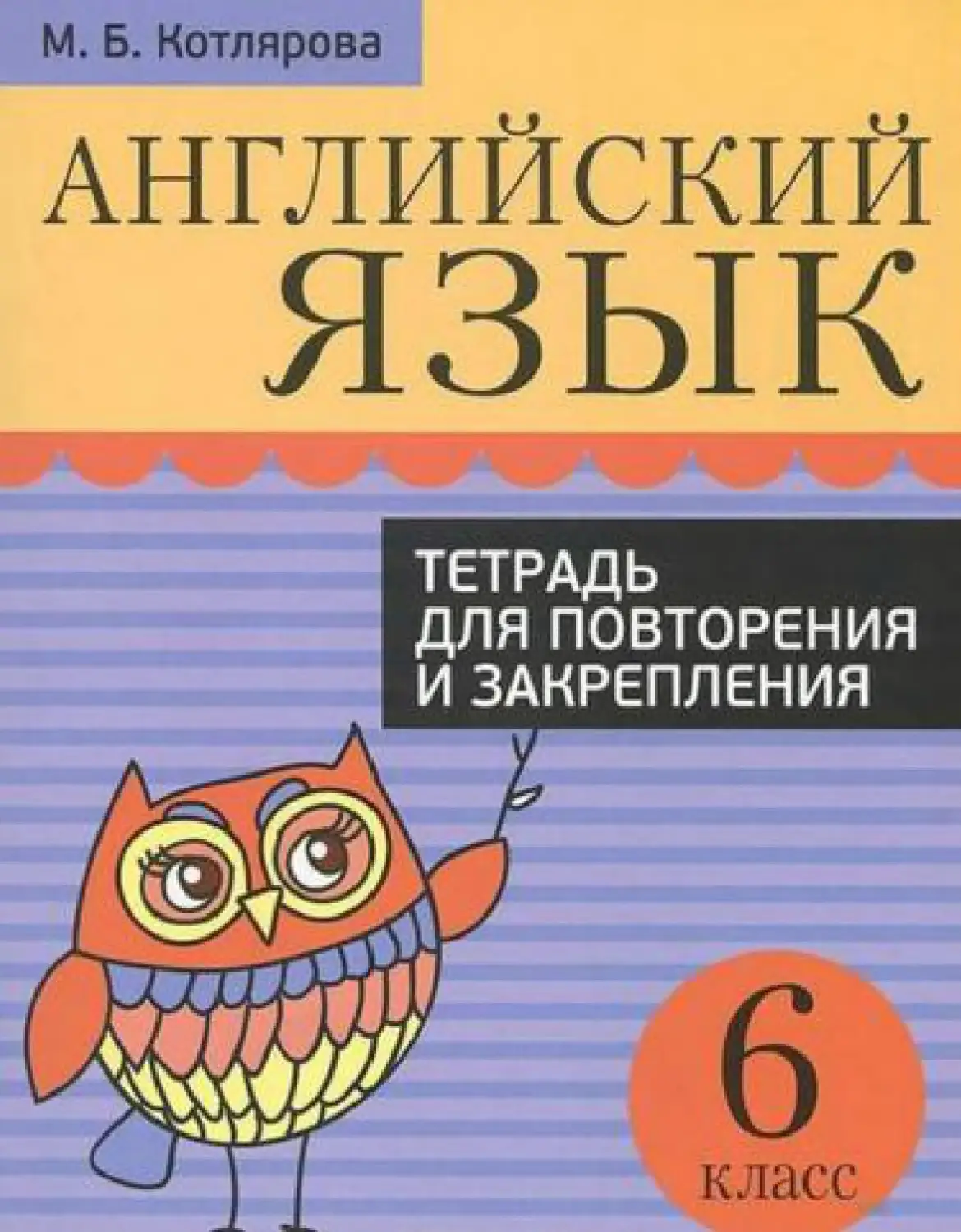
                    М. Б. Котлярова
АНГЛИИСКИИ
ЯЗЫК
ТЕТРАДЬ
ДЛЯ ПОВТОРЕНИЯ
И ЗАКРЕПЛЕНИЯ
Lesson 3. Повторение: the Present Simple Tense (смысловые
глаголы).
10.	Поставь глагол в the Present Simple, употреби: often, usually:
1.	The children usually go to a camp in summer, (to go)
2.	The boy often plays board games, (to play)
3.	You to nice music, (to listen)
4.	The girls (to learn to cook)
5.	Jane in the evening, (to sing)
6.	We on a hike in summer, (to go)
11.	Сделай предложения отрицательными:
1.	1 don’t go fishing fishing in camp, (to go)
2.	She doesn’t read books every day. (to read)
3.	You table tennis every day. (to play)
4.	He noisy games, (to like)
5.	We in the lake in rainy weather, (to swim)
12.	Поставь общий вопрос:
1.	The children spend a lot of time near the lake in summer.
Do the children spend a lot of time near the lake in summer?
2.	We often go on a hike in summer.
3.	My brother and I always go fishing on Sundays.
4.	Dan usually plays board games in the evening.
5.	They often sing songs or tell stories when they sit by the camp fire.
6
Lesson 3. Повторение: the Present Simple Tense (смысловые
глаголы) (продолжение).
13.	Поставь специальный вопрос:
1.	Nick loves playing board games. (What games?)
What games does Nick love playing?
2.	My friends often go to the seaside in summer. (Where?)
Where do my friends often go to in summer?
3.	Ann always watches TV in the evening. (When?)
4.	Tom and Pete go to the lake to fish. (Why?)
5.	We like reading detective stories. (What?)
14.	Поставь глагол в скобках либо в the Present Simple Тense, либо
в the Present Continuous Tense. Подчеркни слова-подсказки.
1.	They go on a picnic every Sunday, (go)
2.	Bob is playing football now, (play)
3.	The children at the moment, (sleep)
4.	She often to the music, (listen)
5.	They right now. (sunbathe)
6.	Tom and I TV every evenin(watch) g.
7.	At the moment I a fairy-tale, (read)
15.	Исправь ошибку:
1.	You plays football with your friends.
2.	Nick always listen to the music.
3.	My friends doesn’t go on hikes.
4.	Where does you usually go on holidays?
7
Lesson 4. Повторение: The Past Simple Tense.
16.	Раскрой скобки. Употреби the Past Simple Tense.
1.	Last summer Dan visited his Granny in the country, (visit)
2.	Nick and Tom went to a summer camp in June, (go)
3.	Ann her holidays in the city, (spend)
4.	She and her friends in the park, (go roller-
skating)
5.	My friends me on a hike last summer, (take)
6.1 songs with my friends by the camp fire, (sing)
17.	Поставь вопросы к предложениям:
1.	Nick visited his friend at summer camp. (Общий. Почему?)
Did Nick visit his friend at summer camp?
Why did Nick visit his friend at summer camp?
2.	We went swimming in summer. (Общий. Когда?)
3.	Bill drew a lot of pictures in the country. (Общий. Сколько?)
4.	They went roller-skating to the park in summer. (Общий. Куда?)
5.	Pete worked in the garden in summer. (Общий. Где?)
8
Lesson 4. Повторение: The Past Simple Tense (продолжение).
18.	Дай отрицательный ответ:
1.	Did you go to a summer camp with your sister?
No, I didn’t go to a summer camp with my sister.
2.	Did you have a picnic at camp?
3.	Did you go fishing to the lake?
4.	Did you visit your Granny yesterday?
19.	Подчеркни правильный вариант:
1.	Kevin doesn’t/didn’t/isn’t go to camp last summer.
2.	You aren’t/don’t/ didn’t like to play board games at camp in sum-
mer.
3.	My friends don’t/didn’t /aren’t go on a trip on holidays.
4.	Girls aren’t/ don’t/ didn’t go mountain climbing last summer.
5.	Ken isn’t/ didn’t/ don’t do sports at camp.
20.	Переведи:
1.	Мы ходили в поход в лагере летом.
2.	Петя ходил на рыбалку на озеро.
3.	Мальчики играли в игры с мячом в лагере.
4.	Мы пели песни у костра.
21.	Исправь ошибку:
1.1 was went to the camp last summer.
2.	The boys didn’t went fishing in summer.
3.	You go roller-skating last August.
4.	Jane cooked tasty food last night?
9
Lesson 5. The Past Simple Tense. Irregular verbs.
22.	Напиши глаголы в the Past Simple Tense:
Go -	read -	bring -	sing -	*
make -	swim -	choose -	give -
23.	Ответь на вопросы. В ответах подчеркни выделенный глагол:
1.	Kate often goes to summer camps. Did she go to a summer camp last
year? - Yes, she went to a summer camp last year
2.	Children usually make a lot of friends in summer camps. Did they
make a lot of friends last summer?
3.	My parents usually choose a summer camp for my sister. Did they
choose a camp for her last year?
4.	Children always bring sweet memories about summer camps. Did
they bring them last year?
24.	Поставь вопрос к выделенному в предложении слову:
1.	Pete went to a summer camp last year. When did Pete go to a sum-
mer camp?
2.	Sally made friends with Kate at camp last summer.
3.	We found a lot of new board games at camp.
4.	The boys went to the river to swim.
5.	The children learnt to do a lot of things themselves at camp in sum-
mer. _____________________________________________________
25.	Исправь ошибку:
1.	Did Nick went to a summer camp last year?
2.	Where the boys went to fish?___________________________
3.	Who did sing songs sitting by a camp fire?
10
Lesson 6. The Future Simple Tense, to be going to.
26.	Напиши краткую форму глагола will: will = ‘11 / will not = won’t
1.1 will play board games. - I’ll play board games.
2. He will not watch TV. -____________________________________
3.1 think it will rain. - I think it__________________________
4. We will not play baseball tomorrow. - We
27. Вырази решение принятое в момент речи:
1.1 think I will visit my friend, (visit)
2. It’s my day off. I to see this new film, I think, (go)
3.1 like this book. I it. (buy)
4. It rains. I for a walk, (not go)
28. Поставь общий вопрос.
1.1 will go shopping. Will you go shopping?
2. We’ll go on a hike next Sunday.
3. We’ll buy some new CDs.
29. Вырази решение что-то сделать принятое раньше:
1.1 am going to play football today, (play)
2.1 my dog myself, (walk)
3. He the mountains, (climb)
4. They letters to their friends(write)
30. Исправь ошибку:
1.1 am going get ready for my exam.
2. Are you going to go travelling in summer?
3.1 think I am going to buy this dress. I like it.
11
Lesson 7. The Future Simple Tense; be going to.
31.	Дай краткий отрицательный ответ:
1.	Will Tom visit Bob tomorrow? - No, he won’t.
2.	Are they going to do sports in summer? - No, they aren’t
3.	Will you meet him tomorrow morning? -
4.	Is Alex going to Minsk tomorrow? -
32.	Вставь will или правильную форму be going to:
1.	What are you doing next weekend? - I visit my
friends.
2.	The weather is fine. - Yes, we go on a picnic.
3.	What would you like to drink? -1 have an orange
juice, please.
4.	What are Sean’s plans for the summer? - He
climb the mountains.
33.	Поставь глагол в скобках в the Future Simple или be going to:
1.	He likes playing the piano. He is going to be a musician, (be)
2.	We to London next summer, (fly)
3.	Don’t worry. I the dog. (walk)
4.	He thinks he French in a year, (learn)
34.	Употреби глаголы из списка в нужной форме: visit, clean, cook,
rain:
1.	Have you got any plans for the evening? - Yes, I
my Granny.
2.	There are dark clouds in the sky. - It this af-
ternoon.
3.	I’m hungry! - OK. I dinner.
4.	The house is a mess! - Don’t worry, mum, I it.
35. Исправь ошибку:
1.1 think I will watch this film yesterday.
2. When are you going to go to England?
3. It will hot in July in Spain.____________________________
12
Lesson 8. The Present Simple, the Past Simple and the Future
Simple Tenses.
36.	Поставь глагол в Present Simple, Past Simple или Future Sim-
ple:
1.	The sun usually shines in the summer, (shine)
2.	1 snowballs with Jim yesterday, (play)
3.	They Christmas tree tomorrow, (decorate)
4.	She on a picnic every Sunday, (go)
5.	We a party two days ago. (have)
37.	Напиши вопрос в Present Simple, Past Simple или Future Sim-
ple:
1.	When (he/leave) for New York? When did he leave for New York?
2.	What (you/do) last night?_____________________________________
3.	Why (she/go) to the seaside every summer?
4.	Who (do the shopping) tomorrow?
38.	Напиши отрицания в Present, Past или Future Simple:
1.	1 think we’ll camp next week.
I think we won’t camp next week.
2.	Karen likes to sing songs near the camp fire.
3.	The girls will spend summer in the country.
4.	Last year Tim bought his first rod.
39.	Исправь ошибку:
1.	He don’t like to stay in the country in summer.
2.	When did he went to climb the mountains?
3.	She will a good singer.____________________________________
4.	They going to learn to play the violin.
13
Lesson 9. The Present Simple, the Present Continuous, the Past
Simple, the Future Simple and be going to:
40.	Раскрой скобки, укажи время:	*
1.	Kevin often goes to a summer camp, (to go) — (the Present Simple)
2.	He usually a lot of things there, (to do)
3.	Tom a letter from his pen-friend 2 days ago. (to get) ___
4.	Karen find a pen-friend in the net. (be going to)
5.	The girls a dog’s shelter tomorrow, (to visit)
6.	Look! The cat milk, (to drink)
41.	Дополни диалоги:
1.	How did you travel in summer? - We travelled by car in summer.
2.	- It’s hot and wet in Spain.
3.	- It will be Tom’s birthday
tomorrow.
4.	- No, Jane doesn ’ t go
to London by bus.
42.	Переведи:
1.	Где ты провел прошлые летние каникулы?
2.	Я не люблю ездить на юг. ________________________________
3.	Следующим летом я поеду в Англию.
4.	Мы собираемся посетить Лондон.
5.	Поезд отправляется в 9.30? ______________________________
43.	Исправь ошибку:
1.	Му parents are going to playing tennis at weekend.
2.	What do they do at the moment?
3.	What did he does at camp? _______________________________
4.	You will go to the seaside in summer?
14
----------UNIT 2. «А Zoo In My Suitcase»-------------------
Lesson 1. «Articles With Geographical Names».
44.	Выбери правильный вариант:
1.	Sam went to Brazil/ the Brazil.
2.	Nile/ the Nile is in Egypt.
3.	Lake Naroch/The Lake Naroch is the biggest lake in Belarus.
4.	My dream is to travel across South America/the South America.
5.	They had a map with them when they climbed Everest/the Everest
6.1 would like to see Indian/the Indian Ocean.
7. There are no high mountains in the United Kingdom/ United King
dom.
45.	Вставь артикль, где необходимо:
1.	John is from England. He is from UK.
2.	Minsk is the capital of Republic of Belarus.
3.	They went to Black Sea last summer.
4.	What language do they speak in USA?
5.	Is Neman in the north of Belarus?
6.	We visited France two years ago.
7.	They went to Alps to ski.
46.	Исправь ошибку:
1.	He is travelling to the Europe by train.
2.	Where is the Japan, Mum?__________________________________
3.	The Lake Baikal is full of wonders.
4.	We went to the Australia two years ago.
5.1 would like to see Atlantic Ocean.
6. Who will go to the Cuba?
7. The Washington is the capital city.
15
Lesson 2. «The Present Perfect Tense» (never/always/just).
47. Поставьте глагол в the Present Perfect. Употребите never, just
или always, где необходимо.
I... (be) to Europe. I have been to Europe
2.	It... (be) my dream to go to Australia.
3.	He ... (be) to China. _________________________________________
4.	Alex ... (come) back from Britain.
5.	It... (be) her dream to visit Spain.
6.	My friend ... (see) the Black Sea.
7.	They ...(visit) Brazil_________________________________________
48. Сделай предложение отрицательным:
1.1 have never been to the USA. (never/ be)
2.	She Big Ben. (never/see)
3.	They France, (never/ visit)
4.	We to the Red Sea. (never/ travel)
5.	You Minsk, (never/leave)
6.	Sam to South America, (never/be)
7.	Nick in the river, (never/ swim)
49.	Исправь ошибку:
1.	Tim have never visited Africa.
2.	John has always wants to go to Russia.
3.	It have always been our dream to travel far.
4.1 has never seen the Volga river.
5.	We have always dream to go to London.
6.	They have ever seen the Pyramids.
7.	It has always be his dream to meet a true friend.
16
Lesson 3. «The Present Perfect Tense» (ever/already/yet).
50. Сделай предложение вопросительным. Употреби ever:
1.1 have been to London. Have you ever been to London?
2. We have been to Italy.________________________________________
3.	1 have seen Lake Baikal. _____________________________________
4.	Tony has been to Brazil. ______________________________________
5.	She has travelled around the world.
6.	They have seen the Atlantic Ocean.
7.	Your friend has visited China.
51. Сделай предложение отрицательным. Замени already на yet:
1.1 have already been to Rome. I haven’t been to Rome yet.
2.1 have already been to London.
3.	We have already seen the Houses of Parliament.
4.	They have already travelled to Scotland.
5.	She has already been to Wales.
6.	My friend has already visited the Tower of London.
7.	Lena has already left for Ireland.
52.	Исправь ошибку:
1.	Tim has yet been to India.___________________________________
2.	Mike has ever travelled far. ______________________________
3.	We haven’t already seen Trafalgar Square.
4.	Have you already visited Scotland?
5.	Has they been to many countries yet?
6.	Tikhon hasn’t been to Paris already.
17
Lesson 4. «The Present Perfect Tense».
53.	Дай полный отрицательный ответ на вопрос:
1.	Have you been to China yet? - No, I haven’t been to China yefr.
2.	Have you travelled to Germany yet? - No,
3.	Has your brother visited the Zoo yet? - No,
4.	Have you seen a bison yet? - No,
5.	Has he travelled by plane yet? - No,
6.	Have they been to Paris yet? - No,
7.	Have they visited the Opera House yet? - No,
54.	Дай полный утвердительный ответ на вопрос:
1.	Have you ever been to Poland? - Yes, I have already been to Poland.
2.	Have you ever travelled by train? - Yes,
3.	Have you ever been to Europe? - Yes,
4.	Have you ever seen the Baltic Sea? - Yes,
5.	Has your friend ever been abroad? - Yes,
6.	Has she ever visited Puscha? - Yes,
7.	Have your family ever seen the Kremlin? - Yes,
55.	Исправь ошибку:
1.1 haven’t been abroad already. _______________________________
2.	They have yet travelled around Europe.
3.	Have you already been to Spain?______________________________
4.	He has ever travelled by plane.______________________________
5.	Already I have seen London.__________________________________
6.	We haven’t already seen the photos.
18
Lesson 5. «The Present Perfect Tense».
56.	Ответь на вопросы. Используй слова once, twice, 4 times:
1.	How many times have you:
- been to Mir Castle? -1 have been 3 times to Mir Castle.
2.	- visited Grodno? -___________________________________
3.	- seen a European bison? -_____________________________
4.	- eaten potato pancakes? -____________________________
5.	- taken a photo with your friend? -
6.	- travelled on foot? -________________________________
7.	- spoken to an Englishman? -
57.	Переведи на английский язык:
1.	Вы когда-нибудь путешествовали на корабле?
2.	Я всегда мечтал поехать во Францию.
3.	Я уже был в Испании и в Италии.
4.	Сколько раз вы летали на самолете?
5.	Они еще не вернулись из путешествия.
6.	Он уже дважды был в Англии.
7.	Вы уже видели этот фотоальбом?
58.	Исправь ошибку:
1.	How many time have you been to Great Britain?
2.	He hasn’t already done his homework.
3.	We have climbed this hill twice times.
4.	They have cooked this soup yet.
5.	Have your friend been to Cuba twice?
6.	Have Greg tasted your pancakes yet?
19
Lesson 6. «Irregular forms of the nouns».
59. Напиши форму множественного числа существительных:
1. deer - deer	8. wolf - wolves	15. mouse - mice
2. species -	9.leaf -	16.foot -
3. fish -	10. life-	17. tooth -
4. bison -	11. shelf -	18. man -
5. sheep -	12. wife -	19. child -
6.trout -	13. half-	20. goose -
7. salmon -	14. scarf -	21. woman -
60.	Подчеркни правильный вариант:
1.	Englishmen/Englishman are Europeans.
2.	The children/The childrens are at school.
3.	Deer/ Deers ran to the forest.
4.	European bisons/ bison live in Puscha.
5.	There are a lot of species/specieses of birds here.
6.	Lakes of Belarus are full of fishes/fish.
7.	Wolfs/Wolves can be dangerous.
61.	Исправь ошибку:
1.	There are four gooses in the yard.
2.	European bisons are not endangered animals now.
3.	Have you ever seen deers in the forest?
4.	Where do sheeps live?
5.	My uncle has caught 3 trouts.
3.	Do cats eat mouses?
20
Lesson 7. «The Present Perfect Tense» (have been/have gone to).
62.	Заполни пропуски have gone или have been:
1.	They have gone to visit their Granny.
2.	John isn’t at home. He to the cinema.
3.	Anna to the library. She left an hour ago.
4.	Nick twice to Minsk.
5.	You can’t see Kate. She to the theatre.
6.	Mike isn’t here at the moment. He to the shop.
7.	They already to this museum.
63.	Выбери правильный вариант:
1.	Granny has gone/has been to the shop. She will come back soon.
2.	The children aren’t at home. They have been/ have gone to the park
3.	Nick hasn’t been/ hasn’t gone to Egypt yet. He is going there this
year.
4.	Sam isn’t at home. He has gone/ has been to the office.
5.	Where have you gone/ have you been, Anna? - I have been/ hav<
gone to the supermarket.
6.	Jane has gone/ has been to China twice.
7.	Have you ever been/ gone to France?
64.	Исправь ошибку:
1.	Mum isn’t at home. She has been to the shop.
2.	Joe has gone to Rome twice.
3.	Where have you gone today?
4.	We have never gone to London.
5.	They have been to ride a bicycle.
6.	You have gone to Paris, haven’t you?
21
Lesson 8. «The Present Perfect Tense» (so far, recently).
65.	Вставь recently или so far:
1.	Have you heard from Nick recently?	*
2.	Everything is going well. We haven’t had any problems
3.	John travels a lot. He has been to 11 countries_____.
4.	She writes books about animals. She has written 5 books
5.	What interesting films have you seen _______________?
6.	How many cakes have you made________________________1
7.	Jane has watered these flowers.
66.	Переведи:
1.	Мы упаковали два чемодана всего.
2.	Мы ходили в театр недавно.
3.	Она убрала всего одну комнату до сих пор.
4.	Секретарь напечатала 10 писем всего.
5.	Сколько стран ты посетил на всего?
6.	Майк побывал в Польше недавно.______________________
7.	Я выгулял собаку недавно.___________________________
67.	Исправь ошибку:
1.	The Smiths have left the house so far.
2.	John has bought a new car yesterday.
3.	My sisters has packed 3 suitcases so far.
4.	They have sent 5 postcards yet._____________________
5.1 have done half of my exercises an hour ago.
6. Mike have called her recently.
Lesson 9. «The Present Perfect Tense» (for results).
68.	Ответь, что ты только что это уже сделал:
1.	Don’t forget to write a letter. - I have already written it.
2.	Don’t forget to pack your suitcase. -
3.	Don’t forget to buy some bread. -
4.	Don’t forget to feed the cat. -______________________________
5.	Remember to walk the dog. - _________________________________
6.	Don’t forget to call Granny. - ______________________________
7.	Remember to visit the doctor. -
69.	Оцени новость. Употреби Congratulations! Well done! Sorry to
hear that.
1.1 have got a good mark. - Well done!
2.1 have bought a new car. -____________________________________
3. We have rescued some birds. -________________________________
4.1 haven’t found my pet yet. - ________________________________
5. We have finished this work. -_________________________________
6. He has found a good job. - ._________________________________
7.1 have made this dress myself. -
70. Исправь ошибку:
1. She have already been twice to Madrid.
2.1 has just finished my report.
3. Judy and her husband has visited 7 countries so far.
4.1 haven’t already seen baby gorillas.
5. Kate has just came back home.
6. We have gone to the exhibition recently.
22
23
Lesson 10. «The Present Perfect Tense» (повторение).
71.	Поставь глагол в скобках в the Present Perfect Tense:
1.	John Belarus only once, (visit)
2.	They a lot of species of wild animals yet. (not/see)
3.	They to the national park, (already/be)
4.	Nick this book. You can take it. ( already/ read)
5.1 a photo of a wild deer, (take)
6. The pupils of our class on a hike, (go)
7. We a mountain yet. (not climb)
72.	Поставь already, ever, never, yet, recently, so far в пропуски:
1.	Have you ever been to Belovezhskaya Puscha?
2.	Have you seen a European bison?
3.	We have given food to our pet.
4.	They have travelled around Europe. They want to do it.
5.	He has been to London 5 times.
6.1 have been to the History Museum.
7. Have you planted a tree?
73.	Исправь ошибку:
1.	They has seen this film. ___________________________________
2.	Have you done already your homework?
3.	Mr. Brown hasn’t never travelled.
4.	Have you see a kangaroo?____________________________________
5.	It have always been my dream to visit the Hermitage.
6.	John has packed his suitcase yet.
24
--------------UNIT 3. «Му Fair Land»---------------------
Lesson 1. «Usage of numerals» (thousand, hundren, million).
74.	Напиши цифры словами:
1.	100 __________________________________________________
2.	1 000_________________________________________________
3.	1 000 000 ____________________________________________
4.	8 000_________________________________________________
5.	200 __________________________________________________
6.	4 000 000 ____________________________________________
75.	Переведи:
1.	Около 10 миллионов человек живут в Беларуси.
2.	Миллионы человек во всем мире любят путешествовать летом.
3.	Территория Беларуси более 200 000 квадратных километров.
4.	Население Минска около 2 000 000 человек.
5.	Расстояние (distance) между этими городами 1 000 километров.
6.	Тысячи птиц улетают осенью в теплые страны.
7.	Он купил 100 тетрадок.
76.	Исправь ошибку:
1.	About 4 millions people live in this city.
2.	The population of Brest is about five hundreds thousand.
3.	Milions of tourists come to our country in summer.
4.	Three hundreds students helped the farmers in autumn.
25
Lesson 2. «Comparisons» (than in comparisons).
77.	Сравни:
1.	Russia and Belarus (large). Russia is larger than Belarus.
2.	Books and newspapers (interesting)
3.	Your bag and your friend’s bag (big)
4.	Cars and trains (fast) _______________________________________
5.	Latvia and Poland (small)_____________________________________
6.	Winter and spring (cold) _____________________________________
7.	The Nile and the Neman (long)_________________________________
78.	Дай полный ответ:
1.	Which is faster: a plane or a train? - A plane is faster than a train.
2.	Which is more comfortable: a bicycle or a car?
3.	Which city is older: London or Moscow?
4.	Which is more interesting: travelling or watching TV?
5.	Which is better: warm weather or cold weather?
6.	Which is smaller: a mouse or a rat?
79.	Исправь ошибку:
1.	The Pacific Ocean is the larger than other oceans.
2.1 get up early than my brother.
3.	The Black Sea is more warmer than the Baltic Sea.
4.	The mountains in Asia are lower than in Australia.
5.	China is more smaller than Russia.
6.	My mother cooks gooder than my father.
26
Lesson 3. «Comparisons and superlatives of adjectives».
80.	Употреби степени сравнения прилагательных данных в скоб-
ках.
1.	The Pacific Ocean is the deepest (deep).
2.	Asia is larger (large) than Europe.
3.	Mount Everest is(high).
4.	The Volga is(long) than the Dnieper.
5.	Minsk is(old) than Moscow.
6.	Maths is(difficult) than History.
7.	This hotel is(expensive) in this town.
81.	Сравни:
1.	The play, the film and the book (interesting)
The play is interesting, the film is more interesting than the play, the
book is the most interesting of them all
2.	The train, the car and the plane (fast)
3.	English, German and Chinese (difficult)
4.	Winter, spring and summer (beautiful)
5.	Lake, sea and ocean (deep)____________
6.	Moscow, Minsk and London (old)
82.	Исправь ошибку:
1.	Winter is more colder than spring.
2.	Lake Baikal is the most deepest lake in the world.
3.	Arm-chairs are most comfortable than chairs.
27
Lesson 3. «Comparisons and superlatives of adjectives»
(продолжение).
83.	Ответь на вопросы:
1.	Which is the longest river in the world? The Nile is the longest
river.
2.	Which is the largest country? ____________________________
3.	Which is the warmest sea? ________________________________
4.	Which is the coldest ocean? ______________________________
5.	Which is the deepest lake?________________________________
6.	Which is the hottest month in Belarus?
7.	Which is the highest mountain in the world?
84.	Переведи:
1.	Этот фильм интереснее, чем тот мультфильм.
2.	Наша машина более удобная, чем их машина.
3.	Эта гостиница самая высокая в городе.
4.	Антарктида - самый холодный континент.
5.	Беларусь - самая красивая страна.
6.	Автобусы медленнее, чем самолеты.
85.	Исправь ошибку:
1.	Lake Baikal is the deeper.___________________________________
2.	The North Sea is the colder than the Red Sea.
3.	What is the most slowest means of transport?
4.	This skyscraper is the higher.______________________________
28
Lesson 4. «The Present Perfect and the Past simple Tenses in
contrast».
86.	Past Simple или Present Perfect. Раскрой скобки:
1.	She me the news, (just/tell)
2.	John for school, (already/leave)
3.	1 him a letter yesterday, (write)
4.	Nick many times, (be abroad)
5.	We this museum 2 days ago. (visit)
6.	They by car last summer, (travel)
7.	He the famous castles, (already/see)
87.	Ответь на вопросы:
1.	Have you ever travelled to foreign countries? - Yes, I have travelled
to foreign countries.
2.	When did you come back?_______________________________________
3.	When did you visit Moscow?____________________________________
4.	Have you made plans for this summer yet?
5.	Have you chosen the place yet?
6.	Where did you travel last summer?
7.	What sights did you see? _____________________________________
88.	Исправь ошибку:
1.	When have you bought this book?
2.	Have you already seen the news?
3.	Where have you stayed last time?
4.1 saw this film already._______________________________________
5.	They just came back from Poland.
29
Lesson 4. «The Present Perfect and the Past simple Tenses in
contrast» (продолжение).
89.	Раскрой скобки:	,
1.	I___________(be) to many countries. I(go) to
Denmark, Germany and Sweden. I(stay) in different
hotels. The weather(be) warm.
2.	Jim___________(just/come) back from Italy. He
(go) there on holidays. He( see) a lot of wonderful
sights there. Jim(already/ make) a beautiful photo
album about his trip.
90.	Переведи:
1.	Ты слышал интересную новость?
2.	Когда ты приехал в лагерь? ________________________
3.	Что ты там делал? _________________________________
4.	С кем ты ездил туда?_______________________________
5.	Сэм научился плавать этим летом.
6.	Он ездил на море в июле.___________________________
7.	Он был там с родителями.___________________________
91.	Исправь ошибку:
1.	They have bought a new bike yesterday.
2.	Kate have learnt to swim.__________________________
3.	We just came home from the park.
4.	Mary already has finished cleaning the room.
5.	He hasn’t been at school yesterday.
6.1 already finished packing my suitcase.
7. Did you feed the cat yet?___________________________
30
Lesson 5. «The Present Perfect and the Past Simple Tenses».
92.	Ответь на вопросы:
1.	What mark have you got for the lesson?
2.	When did you come home from school yesterday?
3.	Where did you go after school?
4.	Who has already visited the museum?
5.	Did you see a lot of interesting things there?
6.	Why have you bought this book?
7.	Have you finished your homework yet?
93.	Раскрой скобки:
1.	Nina to London twice, (be)
2.	She there last autumn, (go)
3.	She the famous sights, (see)
4.	It her dream to go there, (always/be)
5.	Nina Scotland yet. (not/visit)
6.	She plans to go there, (already/ make)
7.	She afraid to travel alone, (never/be)
94.	Исправь ошибку:
1.	We didn’t went to Mir Castle last week.
2.	Did you go to Nesvizh ever?__________________________________
3.	He has just came from Nesvizh.
4.	Has she visited Mir Castle last week?
5.	They have already went there.________________________________
31
Lesson 6. «should /shouldn’t».
95.	Дай совет:
1.	If you visit Minsk, you should go on a city tour.
2.	When you come to Egypt you see the Pyramids.
3.	You____________________________visit English-speaking countries.
4.	If you go to a museum you touch the pictures
with your hands.
5.	When people travel they be attentive.
6.	If you see squirrels in the park you hunt them.
7.	If you come to Belarus, you visit ancient Castles.
96.	Напиши правила для туристов:
1.	leave litter in the forest - Tourists shouldn’t leave litter in the
forest.
2.	drink water from a well;______________________________________
3.	buy souvenirs in the shops; __________________________________
4.	buy souvenirs made of animal’s skin;
5.	listen to the guide carefully;________________________________
6.	stay with the group; _________________________________________
7.	wash hands before meals_______________________________________
97.	Исправь ошибку:
1.	You shouldn’t never visit unknown places.
2.	Tourists should to ask questions.
3.	He shoulds be careful. _________________________________________
4.	You shouldn’t drinks water from the tap.
5.	Tourists should had a first aid kit with them.
6.	You should touch wild animals.
32
Lesson 7. «should /shouldn’t».
98.	Вставь should или shouldn’t:
1.	Tourists shouldn’t pick wild flowers.
2.	You swim in the unknown places.
3.	You help animals in danger.
4.	Tourists make fire in the forest.
5.	Tourists cut down trees in the forest.
6.	You drink water from the river.
7.	Tourists hunt animals in the wild.
99.	Составь список причин, почему стоит посетить Беларусь:
1	.the centre of Europe - You should visit Belarus because it is the cen-
tre of Europe.
2.	a lot of lakes here -________________________________________
3.	full of history - ___________________________________________
4.	people are friendly -________________________________________
5.	nature is beautiful -________________________________________
6.	enjoy national food - _______________________________________
7.	visit national parks - ______________________________________
100.	Исправь ошибку:
1.	We should to go to the museum.
2.	He shouldn’t killing wild animals. .
3.	They should travelled by car there.
4.	Tourists should kept nature clean.
5.	He shoulds travel around the country.
33
--------------UNIT 4. «Tell Me a Story» ---------------------
Lesson 1. «The Past Simple and the Present Simple Tenses»
(повторение).
101.	Раскрой скобки:
1.	He watches TV every day. (to watch)
2.	Did you watch TV yesterday? (to watch)
3.	Yesterday my friend me an interesting story, (to tell)
1.1 when I saw a dog. (not to be afraid)
5. He always the letters, (to answer)
3. You 5 lessons every day? (to have)
7. She the newspaper last night, (to read)
L02. Переведи:
L. Я обычно прихожу домой в 15.30.
2. Наша семья обычно ходит в церковь на пасху.
?. В прошлом году пасха была в мае.
L. Елена всегда смотрит парад._______________________________
>. А что ты делал в пятницу? ________________________________
>. Тихон покупает конфеты каждый день.
Г. Ник ходил в бассейн вчера. _______________________________
103.	Исправь ошибку:
L. I think he live in Grodno. _______________________________
!. We visit Minsk last May. _________________________________
J. Did you learnt the new words yesterday?
L. The boy didn’t understood the rules.
>. He don’t play the piano. _________________________________
>. Anna doesn’t cooks dinner every day.
34
Lesson 2. «The Past Continuous Tense.
104.	Задай общий вопрос:
1.	He was waiting for Mary after classes. Was he waiting for Mary
after classes?
2.	We were having an English lesson at that time yesterday.
3.	She was speaking with her teacher at that moment.
4.	Tom was skiing in the park in the afternoon.
5.	They were watching a football match at 7 p.m.
6.1 was fishing at 6 a.m. yesterday.
105.	Раскрой скобки:
1.	We was going to the cinema at 5 o’clock yesterday, (to go)
2.	Sam in the club at that time, (to train
3.	He a letter at 10 a.m. yesterday, (to write
4.	1 at the blackboard at that moment
(to look)
5.	They basketball at that time yesterday
(to play)
6.	Mother dinner at that time, (not to cook
7.	We the dog at 9 p.m. last night
(not to walk)
106.	Исправь ошибку:
1.	They was going to the theatre at 6 o’clock yesterday.
2.	She was reads the book then.
3.	We were buy a cake at that moment.
4.	Mary were having dinner at 6 p.m.
35
_esson 3. «The Past Continuous Tense.
LO7. Соедини два предложения словами when или while:
L. I was studying. Steve came in. I was studying when Steve came'in.
>. I was writing a letter. The telephone rang.
J. It was raining. I got up. _________________________________
I. She was cooking dinner. Her son came in.
i. She was cooking dinner. He was cleaning the room.
i.	The girls were singing. The boys were learning poems.
'. They were playing chess. I saw them.
08. Раскрой скобки:
. The children were swimming (to swim) in the lake when I saw (to
ее) them.
1.1(to work) in the garden when he(to come)
о see me.
They(to walk) in the park when it(to begin) to rain.
• I(to make) a snowman while they(to skate).
. She(to speak) with the teacher when I(to
ome) up to her.
• We(to clean) the rooms while mum(to
ook) dinner.
09. Исправь ошибки:
. She was walked the dog when she met Nick.
. They playing chess while we playing football.
. I was watching TV when my mother was coming home.
. Jane were speaking with her friend while we were watching TV.
36
Lesson 4. «The Past Continuous Tense and the Past Simple
in contrast».
110.	Задай общий вопрос:
1.	I was learning a poem when you rang me up. Were you learning a
poem when I rang you up?
2.	He spoke English well at school. Did he speak English well at
school?
3.	He was sleeping the whole day yesterday.
4.1 was cleaning my room when Jane came.
5.	They were wearing raincoats when I saw them.
6.	The girl was crying because she fell down.
7.	Kate was talking all morning. ______________________________
111.	Раскрой скобки:
1.	He did his homework yesterday, (to do)
2.	He was doing his homework at 5 p.m. yesterday, (to do)
3.	The boys football yesterday, (to play)
4.	They football the whole evening yesterday, (to play)
5.	Mike in the river last summer, (to swim)
6. He in the swimming-pool all morning, (to swim)
7. While we my dog disappeared, (to talk)
112.	Исправь ошибки:
1.	My sister washed her clothes the whole day yesterday.
2.	We wearing hats and coats at that time.
3.	They was speaking when we saw them.
4.	The girls had dinner when mother came home.
5.	We were walking the dog when we were seeing his bike.
37
Lesson 5. «The Past Continuous Tense and the Past Simple».
113.	Раскрой скобки:
1.1 (to see) Jane in town yesterday but she
(not to see) me.
2.	Nick(to wait) for me at home when I(to come).
3.	We(to walk) along the street when we(to
meet) Jack.
4.	He(not to know) what to do, it was a difficult situa-
tion.
5.	When the teacher(to come), the pupils
(to discuss) the party.
6.	What(you/ to do) at that time yesterday? -1
(to help) mum.
7.	Tom(to run) along the street when I(to see) him.
114.	Переведи:
1.	Мы поливали (to water) цветы, а они сажали (to plant) деревья в
саду. _______________________________________________
2.	Я читал и не видел его. __________________________
3.	Они ужинали, когда я им позвонил.
4.	Вчера весь день шел дождь. _______________________
5.	Мама весь день стирала вчера.
6.	Дэвид сидел на траве и читал книгу.
115.	Исправь ошибку:
1.1 was saw Nick in the yard yesterday.
2. Mike plays football the whole day yesterday.
3. We learning the poem the whole evening yesterday.
i. My mother was cooking and I played.
5. My friends were written and I was reading.
38
Lesson 6. «The Past Continuous Tense and the Past Simple».
116.	Раскрой скобки, подчеркни длительное действие:
1.	Nick and Mike were playing (to play) computer games when father
came (to come) home.
2. Tim	 kitten. 3. Nick			(to ride) his bike when he	(to see) a little
		(to sleep) when the telephone			(to ring).
4. My mum			(to clean) the house when we			(to
arrive). 5. My Granny			(to work) in the garden when it_		(to
start) to rain. 6. Charlie			(to wash) the dishes when he			(to break)
a cup. 7. While Helen_		(to clean) the window, she		_(to see) me.
117.	Составь предложения:
1.	keys/my/once/ lost/I. Once I lost my keys.
2.	when/ rang/ the/ everywhere/ telephone/1/ them/ for/ was looking.
3.	called/I/Granny/my. _______________________________________
4.	was cooking /called/ she/I/dinner/when /her.
5.	the keys/ she/ house/ came to/ helped/ and/ me/ to find/our.
118.	Исправь ошибку:
1.	Long time ago people were living in caves..
2.	What did you do at 5 o’clock yesterday?
3.1 watched an interesting film at that time.
4.	The lesson beginning.______________________________________
5.	Mike went to the cinema when he met Helen.
6.	Kate was ranning when we saw her. __________________________
39
Lesson 7. «The Past Simple and the Future Simple; should».
119.	Дай краткий ответ:
1.	Did you get only good marks at school? - No, I didn’t.
2.	Were you attentive at the lessons?
3.	Did you always help your mother?
4.	Were you naughty at school?
5.	Did you usually go to bed in time?
6.	Will you help your mum to clean the house?
7.	Will you tidy your room on Friday?
120.	Составь предложения. Напиши резолюцию.
1.	not to behave oneself - should behave - will behave
I didn’t behave myself — I should behave well — I will behave well
2.	not help -	should help -	will help
3. not clean -
should clean -
will clean
4.	not do homework - should do -
will do
5.	not know how to cook - should learn- will learn
121.	Исправь ошибку:
1.1 didn’t went to the shop. _________________________________
2. We will be clean our room. ________________________________
3.1 should studied hard.______________________________________
40
------- UNIT 5. «As Busy As a Bee» ----------------------
IT^eson 1. «Some, any, по» (повторение).
1122. Вставь some, any and no:
I went to the New Year party with some friends.
I haven’t seen of my friends during the holidays,
people decorate their houses for Christmas,
yh When I was walking along the empty street I saw cars.
* S. I have never been to foreign country.
jS. Did you invite friends to your house?
7. Kate invited of her classmates to her New Year party.
123. Переведи:
1. Я не получил никаких отметок.
2. Мама попросила меня почистить(рее1) немного картошки.
8. Ник не нашел никаких подарков под елкой.
4. Дед Мороз вручил ему несколько подарков.
5. А ты получил какие-нибудь подарки?
124. Исправь ошибку:
1.1 didn’t see some interesting films on TV.
2.	There weren’t no letters in the post-box for me today.
3.	Our cat doesn’t eat no vegetables.
4.	Some exercises were difficult, so I made any mistakes.
41
Lesson 2. «Somebody/something, anybody/anything,
nobody/nothing».
125.	Вставь somebody, anybody and nobody:
1.	Somebody new came to our school today.
2.	1 haven’t told ____________________________about our secrets.
3.	_____________________must come and help me with this problem.
4.	_____________________can live without a friend: we all need one.
5.	Has_______________________been in the house while we were out?
6.	answered the teacher’s question.
7.	The house looked empty. There was in.
126.	Вставь something, anything and nothing:
1.	Is there anything I can do for you? Just tell me.
2.	Today I have done useful for mum, and she
liked it.
3.	Have you ever heard like this?
4.	I’d like to explain to you.
5.	There’s I can say on this topic. I’ve forgotten
all.
6.1 am sorry to say but there isn’t at all that I can
do for you.
7. There is better than having a cup of hot tea in a cold
winter day.
127. Исправь ошибку:
1. Anybody took my bag. .
2.1 was happy to see anything coming at last to help.
3.1 couldn’t answer the question because I knew anything at all.
4. There is something difficult here, it is easy.
5. We helped mum to do nothing about the house.
42
Lesson 3. «Some, any, no +somebody/something,
anybody/anything, nobody/nothing».
128. Вставь some, any, no или их производные somebody, anybody
и nobody, something, anything и nothing:
1. Did you meet interesting at the party?
2.1 don’t like chocolates, but I ate last night.
3. told me he liked English very much.
4. She can’t remember of what happened to her.
5.1 think you need help with cleaning the room.
6. Is there news from your friend yet?
7. It was a sad story. could help him.
129.	Переведи:
1.	Дома никого нет.
2.	Кто-то позвонил мне вчера вечером.
3.	Никто не знал, как пользоваться этим телефоном.
4.	Почему ты ничего не рассказал мне об этом?
130.	Исправь ошибку:
1.	We can’t hear something.
2.	It was so quiet in the house that mother thought there was nothing
there.
3.	It is nice to spend any weeks out of town.
4.	There is any food left after the party. The fridge is empty.
43
Lesson 4. «Adjectives (-ous; -ful)».
131.	Вставь однокоренное прилагательное:
1.	If they say you are a beauty, it means you are beautiful.
2.	If somebody is of great help, he is h_______.
3.	If there is a big danger, the situation isd______.
4.	If somebody likes adventures, he is a_______.
5.	If something is a mystery, we call it m_______.
6.	If you get a lot of fame, you become f______.
7.	If something keeps continuing, the thing is c_______.
132.	Переведи
1.	Ты должен быть осторожным.
2.	Я думаю, что эта книга полезна.
3.	Шекспир известен тем, что написал много пьес.
4.	Я очень благодарен тебе за помощь.
5.	Страна, которая расположена в горах, называется горной.
6.	Дикие животные могут быть опасны.
7.	Андерсен написал чудесные сказки.
133.	Исправь ошибку:
1.	You did a wonderous job._________________________________
2.	In this book there are numberful pictures.
3.	Things that go on are called continuful.
4.	There were a lot of usefulous plants in Granny’s garden.
>	UNIT 6. «Are You a Foodie?»--------------------------------
Lesson 1. «Countable And Uncountable Nouns» (few/а few,
little/a little)».
134.	Вставь few/a few and little/a little:
1.	Few people nowadays believe that the Earth is flat
2.1 ate meat and potatoes for dinner.
3.1 went with of my friends to McDonald’s.
4.	We ate there only because the taste was poor.
5.	He got up late, drank tea and rushed to school.
6.	You must eat of this soup. It is full of vitamins.
7.of what he says is true.
135.	Переведи:
1.	В рыбе очень мало жира. __________________________________
2.	Немного соли достаточно, чтобы добавить вкуса еде.
3.	Очень мало людей понимают, что такое настоящая дружба.
4.	На дороге было очень мало машин.5. Алекс выпил немного чая
и съел немного конфет.
136.	Исправь ошибку:
1.	There is a few milk left in the bottle.
2.	We were little miles away from home when it started to rain.
3.1 still remember a few of the story you told me.
4. There are a little apples on the plate.
44
45
Lesson 2. «Articles With the Food Products and Dishes».
137.	Вставь the или —:
1.	— Milk comes from cows.
2.	Do you eat bread at breakfast?
3.	milk I drank this morning was very fresh.
4.oranges grow on trees.
5.	They make marmalade from fruit.
6.	potatoes that they grow in Belarus are very tasty.
7.	China is famous for tea.
138. Вставь a/an,, the или —:
1.1 picked apple from the tree.
2.	meal that you cooked for us was very tasty.
3.	You should cook oranges with sugar to make
marmalade.
4.	apple a day keeps the doctor away.
5.	Thank you for pear you gave me.
6.	Apes eat bananas.
7.bananas from this tree are already ripe.
139.	Исправь ошибку:
1.	Italy is famous for pizzas and the pasta.
2.	The British brought the tea to Europe.
3.	We have the breakfast every morning at 7.
4.	Lunch we eat at school is always nice.
5.	Biscuits with the milk- this is what I like best!
46
Wesson 3. «Indefinite Pronouns few/а few, little/a little».
140.	Вставь feu?/a few and little/a little:
1.1 would like a little milk in my coffee.
g. For breakfast I had eggs and bacon.
3.milk is all right for the young and the old.
4. Very rice is grown in Europe.
5.1 don’t like soup, so I ate only.
6. Junk food does good to your body.
7. There are very pupils in this group.
141.	Переведи:
1.	Добавь немного сахара в мой чай.
2.	Я не съем много ягод, всего несколько.
3.	Мало кто знает настоящую разницу между синим и белым вино-
градом.
4.	В холодильнике осталось мало масла.
5.	Хотите немного овсянки?
6.	Я съел немного яблок.
142.	Исправь ошибку:
1.	Many people talk but little have something to say.
2.	You need a little potatoes to make some pancakes.
3.	A few porridge is enough for my breakfast.
4.	This lemon drink is sour. Put a little lumps of sugar in it.
47
Lesson 4. «The Present Simple Passive».
143.	Поставь глагол в скобках в the Present Simple Passive:
1.	Potatoes are grown in Belarus, (grow)
2.	Paella in Spanish restaurants, (serve)
3.	The best vegetables in the market, (buy)
4.	Carrots in a little water, (boil)
5.	Fast food to be unhealthy, (think)
6.	Bananas a lot by apes, (eat)
7.	Dinner by my mother, (cook)
144.	Переведи:
1.	Мне дают зеленый чай каждый день.
2.	В этом магазине продают торты.
3.	Сыр делают из молока.
4.	Чай выращивают в Китае и в Индии.
5.	Драники готовят в Беларуси.
6.	Мармелад не готовят из яиц.
145.	Исправь ошибку:
1.	This salad is cook by my sister.
2.	Sweets is eaten by all children.
3.	Tea is drink a lot by the English.
4.	Pizza are served hot.
5.	Meat is bought mum.
48
UNIT 7. «Bells and Breaks»
Wesson 1. «Глагол have to (вынужденная необходимость;
утвердительная форма».
146.	Замени must на have to:
1.1 must get up early. -1 have to get up early
2.	He must work hard. -_________________________________________
3.	They must wear uniform. -____________________________________
4.	You must come to school on time.-
5.	Jim must go home at once. -__________________________________
6.	She must take the medicine. -________________________________
7.	He must answer a lot of letters. -
147.	Скажи, что они вынуждены делать:
1.1 have broken my pen. Now I have to buy a new one. (buy)
2.1 have lost my English text-book, now I a new
one. (buy)
3.	The room is untidy, now I it. (clean)
4.	They have missed their bus, now they (wait).
5.	He has got a bad mark at maths, now he
hard, (study)
6.1 am very busy, you me. (help)
7. Her hat looks old, she a new one. (buy)
148.	Исправь ошибку:
1.	He have to get up early every day.
2.	Pete must to stay at home because it is very cold.
3.1 has to go to the hospital to visit my aunt.
4.	They have to cooked their meals themselves.
5.	He haves to bring all his textbooks to school.
49
Lesson 2. «Глагол have to (вынужденная необходимость;
отрицательная и вопросительная формы».
149.	Дай полный ответ:
1.	Do you have to get up early? - No, I don’t. I don’t have to get up
early.
2.	Do you have to work hard at your English?
3.	Do you have to stay at school late?
4.	Do you often have to buy new pens?
5.	Do you have to cook your meals?
6.	Does your mother have to wake you up?
150.	Сделай предложение отрицательным:
1.	Jim has to wear glasses. - Jim doesn’t have to wear glasses.
2.	They have to wear warm clothes in winter.
3.	She has to buy a new coat.____________________________________
4.	You have to learn these rules.________________________________
5.	We have to write this text.___________________________________
6.	They have to come here again._________________________________
7.	You have to wait for an hour._________________________________
151.	Исправь ошибку:
1.	Your clothes are nice. You haven’t got to change.
2.	The room is tidy. He don’t have to clean it.
3.	He don’t has to get up early.
4.	Does we have to do our best at school?
5.	Do I has to do my homework every day?
50
|esson 3. «Глагол have to (вынужденная необходимость)».
152.	Составь предложение с have to:
1.	Mike has to learn the school rules.
2.1 get up early.
3.	He come to school on time.
4.	She do homework every day.
5.	We wear school uniform.
6.	You bring all exercise-books.
7.	They read a lot of books
153.	Поставь общий вопрос.
1.	You have to learn the new words. - Do you have to learn the new
words?
2.	They have to read texts. ___________________________________
3.	He has to learn grammar.____________________________________
4.	Jane has to retell the text. _______________________________
5.	You have to make up dialogues.
6.	We have to answer the teacher’s questions.
7.	The pupils have to learn poems.
154.	Исправь ошибку:
1.	Do the boys has to improve their reading skills?
2.	They haven’t to stay after lessons.
3.	He doesn’t have practise speaking English.
4.	You have to asks your teacher for help.
5.	Does you have to wear glasses?
6.1 and Nick has to learn the poem.
51
------- UNIT 8. « World Of Wonders »----
Lesson 1. «Придаточное предложение причины».
155.	Составь предложение:
I like	detective stories	because
I don’t like science fiction
fairy tales
books about animals
love stories
adventure books
they are touching
they are exciting
they are boring
there is magic there
they make me sleepy
they make me think
156.	Ответь на вопросы:
1.	Why do people go the library? - (to take books to read)
People go to the library to take because they want to take books to
read.
2.	Why does your father read newspapers? - (to learn the news)
3.	Why does your friend like fantasy? - (there is magic there)
4.	Why do people need books? - (to pass information)
5.	Why do you like detective stories? - (they are exciting)
157.	Исправь ошибку:
1.	People go to the library because they want to take a new camera.
2.	We like to read adventure books because they are boring.
3.	He studies his textbooks carefully because he want to get a good
mark.
52
^esson 2. «Виды вопросов» (general question):
158.	Поставь общие вопросы с глаголом do:
i.	Му friends often go to the school library.
po my friends often go to the school library?
2.	Nick goes there twice a month.
3.	My friends liked the film very much.
4.	We like to read adventure stories.
5.1 watched a video with the same name.
159.	Поставь общие вопросы c can, be, will и have:
1.	He is going to watch a video tonight. Is he going to watch a video
tonight?
2.	We can ask Ben to bring some exciting books.
3.	Mike and John are fond of detective stories.
4.	They were reading last night.
5.	She will buy «Gulliver’s Travels» .
6.	My father was at the library yesterday.
7.	We have read all the books you borrowed last time.
160.	Исправь ошибку:
1.	Did Alex went to the bookshop yesterday?
2.	Do your friend read a lot of books?
3.	Does he borrows a lot of books?______________________________
4.	Will she brings any detective stories to us?
53
Lesson 3. «Виды вопросов» (alternative question; question to the
subject):
161.	Поставь альтернативные вопросы:
1.	We like to read novels, (short stories)
Do you like to read novels or short stories?
2.	They can bring us some exciting stories, (touching stories)
3.	She will go to the library after lessons, (before lessons)
4.	John wrote a nice article, (a short story)
5.	David always buys books in this shop, (that shop)
6.	You read newspapers every day. (only on Sundays)
162.	Поставь вопрос к подлежащему:
1.	We are fond of reading fairy tales. Who is fond of reading fairy
tales?
2.	Mary brought a photo album to school. Who brought a photo album
to school?
3.	They bought a nice collection of stamps.
4.	We like to read about animals. ______________________________
5.	Pamela Travers wrote «Mary Poppins» .
163.	Исправь ошибку:
1.	Who bring books to you? _____________________________________
2.	Who did took the book back to the library?
3.	Who Nick can reach the highest bookshelf?
4.	Who will buys books for you?_________________________________
5.	Who was the main heroes of the book?
54
Lesson 4. «Виды вопросов» (special questions):
164.	Поставь специальные вопросы:
1.1 like to read books sitting in an armchair.
What do you like to do sitting in an armchair?
Where do you like to read books?
2.1 liked to read fairy tales when I was little.
What?
When ?
3.1 use a library because I want to find something interesting.
What?
Why ?
4. Sherlock Holmes knew the answers to all the questions because he
was attentive. What___________________
______________________________________?
Why	?
165.	Поставь вопрос к выделенному слову:
1.	After school I usually have a rest. When do you usually have a rest?
2.	Birds live in woods, parks and gardens.
2
3.	There were many flowers in our garden last autumn.
2
4.	The girls will stay till 3 p.m. at school because they’ll work in the
library. _____________________________
2
5.	The children wanted to find an adventure book in the shop.
2
166.	Исправь ошибку:
1.	Where did Peter Pan lived?__________
2.	Why the cow became a domestic animal?
3.	Who were at the library yesterday?
55
Lesson 4. «Виды вопросов» (tag questions)+:
167.	Поставь разделительный вопрос:
1.	You didn’t go to school today, did you?
2.	You spend your holidays at home, don’t you?
3.	He doesn’t often go to the library, ?
4.	There is the National Library of Belarus in Minsk,?
5.	Tom Sawyer was a naughty boy?
6.	They have already learnt Pushkin’s poems by heart, ?
7.	Nick will buy tickets to the cinema tomorrow,?
168.	Переведи:
1.	Твой друг ходил в библиотеку вчера, не так ли?
2.	Мы обсудили эту книгу на уроке литературы, не так ли?
3.	Ты не любишь смотреть «ужастики», не так ли?
4.	Ты свободен в воскресенье днем, не так ли?
5.	Джейн не видела мультфильм «Мадагаскар», не так ли?
----------UNIT 9. «Have a Nice Holiday!»-------------------
Lesson 1. «Глаголы likes/dislikes with ing-forms».
170. Заполни пропуски формой глагола с — ing:
1. Му little sister likes playing with dolls, (to play)
2.1 hate books without pictures. (to read)
3.1 like this game very much, (to play)
4. When I am in the country I like in the forest, (to walk)
5. After dinner my family like the telly. (to watch)
6. We all hate too much homework, (to do)
171.	Переведи:
1.	Моя мама любит готовить обеды для нас.
2.	Мне нравится изучать иностранные языки.
3.	Многие ли девочки ненавидят делать покупки?
4.	Многие мальчики любят играть в футбол.
5.	Я не люблю посещать вечеринки, где играет громкая музыка.
6.	Мы много путешествуем, потому что мы любим осматривать
достопримечательности._____________________________________
169.	Исправь ошибку:
1.	Books аге great, isn’t it? _______________________________
2.	Reading does you a lot of good, doesn’t they?
3.	We didn’t enjoy the film, didn’t we?
4.	You can read the book or watch the film, can you?
172.	Исправь ошибку:
1.	We all like doing a lot of homework.
2.	Adventurers love to go on dangerous trips.
3.	Young children enjoy to play with pets.____________._____
4.	He took a lot of pictures, so I think he doesn’t hate to take them.
5.	Tikhon hate making «LEGO».
56
57
Lesson 2. «Too, either».
173.	Заполни пропуски:
1.	You don’t like swimming, and I don’t like it either
2.1 saw my sister’s friend, and you saw him too.
3. We went shopping, and our friends did so.
4.1 can’t hear what you are saying and my friend can’t
5. Nick likes reading and I like it.
174.	Переведи:
1.	Мой брат не знает ее имени, и я не знаю его тоже.
2.	Ты счастлив, и я счастлива тоже.
3.	Он тоже не может прийти.
4.	Она тоже не говорит по-испански.
5.	Ты не хочешь туда идти, и я тоже не пойду.
6.	Она любит читать романы, и я люблю их читать тоже.
175.	Исправь ошибку:
1.	1 don’t like this film, and I don’t like that one also.
2.	You told me the truth, but some lies either.
3.	If he don’t know what to do, you don’t know either.
4.	There are lots of cars in the street and buses either.
5.	Many people like cycling, but I don’t like either.
Lesson 3. «Словообразование» (суффиксы имен прилагатель-
ных).
176.	Заполни пропуски:
1.	This actress is very famous, (fame)
2.	We had a very(enjoy) trip.
3.	Collecting stamps is perhaps not very(excite).
4.	Arriving late is the(use) thing for him to do.
5.	The English lessons are never(bore).
6.	Be(care) because this is a(danger)
crossing.
7.	Kilts are traditionally the(nation) dress of the Scots.
177.	Переведи:
1.	1 am not very hungry, but I am(ужасно) thirsty.
2.	The weather is (чудесная) today.
3.	Stop being(шумным)!
4.	Tell me about your (каждодневных) activities.
5.	Moroccan food is (необычная) for most of us.
6.	Playing chess is a(популярное) pastime.
7.	The ice-creams were(очень вкусное).
178.	Исправь ошибку:
1.	Windy weather is idea for sailing.
2.	The game was interested to watch.
3.	Hunting is an excited sport._________
4.	We saw an amused film on TV last night.
5.	After a busy week I like a quite weekend.
58
59
Lesson 4. «Наречия so, such (so+adj, such+(adj)+noun».
179.	So или such. Заполни пропуски:
1.	These computer games are so popular nowadays.
2.	The two brothers are such nice boys.
3.	She is pretty.
4.1 don’t like music very much.
5.	His English is bad, I can’t understand him at all.
6.	You’ve been kind to me, I’ll never forget.
7.	Shakespeare is an interesting writer!
180.	Переведи:
1.	Английский такой полезный язык, что я хочу выучить его хо-
рошо.
2.	Ты сделал такой красивый снимок Национальной библиотеки!
3.	Футбол так популярен, что все мальчики любят в него играть.
4.	Он такой талантливый музыкант!
5.	Этот пешеходный переход такой опасный!
181.	Исправь ошибку:
1.	Не arrived such late that we missed the train.
2.1 met so nice people there that I want to go there again.
3. My suitcase was such heavy I could not carry it.
4.1 have never read so a book before.
60
IHesson 5. «The Past Simple - the Present Perfect» (повторение)
* 182. Заполни пропуски:
J. Yesterday we (go) for a trip to the country.
2,	So far we (not to see) him.
3.	When you (to be) abroad for the last time?
4.	She (to speak) English since she her childhood.
5.	When she gave me the present I immediately
(to open) it.
6.1 (not to take) the photo yet.
7, While I was cooking pizza my friend(to call).
183.	Переведи:
1.	Гольф всегда был популярен в Шотландии.
2.	Гагарин был первым человеком в космосе.
3.	На прошлой неделе мы навестили бабушку в деревне.
4.	Ты был дома, когда я тебе звонил?
5.	Ты когда-нибудь сделал что-нибудь, чтобы помочь животным?
184.	Исправь ошибку:
1.1 have been on Skype all day yesterday.
2.	While he was talking I have taken his picture.
Did you hear about Byron? He was a romantic poet.
4.	My mother has liked birch-trees very much.
1* ___________________________________________ ______________________
5.	We drank tea and have said ‘good-bye’.
j--------------------------------------------------------------------
61
—-----------------------------ключи---------------------------------------
UNIT 1
Lesson 1
1.	is, is, is, is, is, is, are, are
2.	3)’s ; 4) are; 5) is; 6) are
3.	2) aren’t; 3) isn’t; 4) am not
4.	2) These are my parents. Their names are Lucy and Tom. They are in the moun-
tains.
3)	This is my brother. His name is Nick. He is at the stadium.
4)	Is this your cat? What’s its name? Where is it?
5.	1) Where are they from ?
2)	Jack and I are on holidays.
3)	Jessica isn’t at the seaside.
Lesson 2
6.	2) swimming; 3) sleeping; 4) playing; 5) having; 6) crying; 7) working; 8) flying
7.	2) Are you making a sandcastle? - No, you aren’t making a sandcastle.
3)	Are we going on a picnic? - No, we aren’t going on a picnic.
4)	Is it raining today? - No, it isn’t raining today.
8.	2) are dancing; 3) is playing; 4) are; 5) is
9.	1) We are looking through a holiday photo album.
2)	The children are not playing football tight now.
3)	Is she watching TV now?
Lesson 3
10.	3)You often(usually) listen to nice music.
4)	Girls usually learn to cook.
5)	Jane often(usually) sings in the evening.
6)	We usually go on a hike in summer.
11.3	) You don’t play table tennis every day.
4)	He doesn’t like noisy games.
5)	We don’t swim in the lake in rainy weather.
12.2) Do we often go on a hike in summer?
3)	Do your brother and you always go fishing on Sundays?
4)	Does Dan usually play board games in the evening?
5)	Do they often sing songs or tell stories when they sit by the camp fire?
Lesson 3 (продолжение)
13.3) When does Ann always watch TV?
4)	Why do Tom and Pete go to the lake?
5)	What do we like reading?
14. 3) The children are sleeping at the moment.
4)	She often listens to the music.
5)	They are sunbathing right now.
6)	Tom and I watch TV every evening.
7)	At the moment I am reading a fairy tale.
62
Ц5.1) You play football with your friends.
2)	Nick always listens to the music.
3)	My friends don’t go on hikes.
4)	Where do you usually go on holidays.
Lesson 4
16.	3) Ann spent her holidays in the city.
4)	She and her friends went roller-skating to the park in summer.
5)	My friends took me on a hike last summer.
6)	I sang songs with my friends by the camp fire.
17.	2) Did we go swimming in summer? When did we go swimming?
3)	Did Bill draw a lot of pictures in the country? How many pictures did Bill draw
in the country?
4)	Did they go roller-skating to the park in summer? Where did they go roller-
skating?
5)	Did Peter work in the garden in summer? Where did Peter work in summer?
Lesson 4 (продолжение)
18.	2) - No, we didn’t have a picnic at camp.
3)	- No, we didn’t go fishing to the lake.
4)	- No, we didn’t visit our Granny yesterday.
19.	2) didn’t like; 3) didn’t go; 4) didn’t go; 5) didn’t do
20.1	) We went on a trip at camp in summer.
2)	Pete went fishing to the lake.
3)	The boys played ball games at camp.
4)	We sang songs by the fire.
21.1)	I went to the camp last summer.
2)	The boys didn’t go fishing in summer
3)	You went roller-skating last August.
4)	Did Jane cook tasty food last night?
5)	We worked in the garden in summer.
Lesson 5
22.	Go - went; make- made; read- read; swim - swam; bring - brought; choose -
chose; sing - sang; give - gave
23.	2) Yes, they made a lot of friends last summer.
3)	Yes, my parents chose a camp for my sister last summer.
4)	Yes, the children brought sweet memories about summer camps last year.
24.	2) Where did Sally make friends with Kate last summer?
3)	What new games did we find at camp?
4)	Why did the boys go to the river?
5)	When did the children learn to do a lot of things themselves?
25.1	) Did Nick go to a summer camp last year?
2)	Where did the boys go to fish?
3)	Who sang songs sitting by a camp fire?
Wesson 6
36. 2) He won’t watch TV.
3)	I think it’ll rain.
63
4)	We won’t play baseball tomorrow.
27.	2) I will go to see the new film I think.
3)1’11 buy it.
4)	I won’t go for a walk.
28.	2) Will you go on a hike next Sunday?
3)	Will you buy some new CDs?
29.	2) I am going to walk my dog myself.
3)	He is going to climb the mountains.
4)	They are going to write letters to their friends.
30.1) I am going to get ready for my exam.
2) Are you going to travel in summer?
3) I think I’ll buy this dress. I like it.
Lesson 7
31. 3) No, I won’t. 4) No, he isn’t.
32.1) am going; 2) will go; 3) will; 4) is going to
33. 2) are going to fly; 3) will walk; 4) will learn
34.1) am going to visit; 2) is going to rain; 3) will cook; 4) will clean
35.1	) I think I’ll watch the film tomorrow.
2)	When are you going to England?
3)	It will be hot in July in Spain.
Lesson 8
36. 2) played; 3) will decorate; 4) goes; 5) had; 6) will be rainy
37.2) What did you do last night?
3)	Why does she go to the seaside every summer?
4)	Who will do the shopping tomorrow?
5)	How often do you play computer games?
38. 2) Karen doesn’t like to sing songs near the camp fire.
3)	The girls won’t spend summer in the country.
4)	Last year Tim didn’t buy his first rod.
39.1	) He doesn’t like to stay in the country in summer.
2)	When did he go to climb the mountains?
3)	She will be a good singer.
4)	They are going to learn to play the violin.
Lesson 9
40. 2) does (The Present Simple); 3) got ( the Past Simple); 4) is going to find (b
going to); 5) will visit; 6) is drinking
41. 2) What is the weather like in Spain?
3) Whose birthday will it be tomorrow?
4) Does Jane go to London by bus?
42.1	) Where did you spend last summer holidays?
2)	I don’t like going to the South.
3)	Next summer I will go to England.
4)	We are going to visit London.
5)	Does the train leave at 9.30?
64
5)	the;
6)
7)	the
HK 1) My parents are going to play tennis at week-end.
E 2) What are they doing at the moment?
3) What did he do at camp?
4) Will you go to the seaside in summer?
|>NIT2
Lesson 1.
44.2) the Nile; 3) Lake Naroch; 4) South America; 5) Everest; 6) the Indian Ocean;
7) the United Kingdom.
45.1)-; the
2) -; the
3) the;
4)the;
46.1	) He is travelling to Europe by train.
2)	Where is Japan, mum?
3)	Lake Baikal is full of wonders.
4)	We went to Australia 2 year ago.
5)	I would like to see the Atlantic Ocean.
6)	Who will go Cuba?
7)	Washington is the capital city.
Lesson 2
47.	2) It has always been my dream to go to Australia.
3)	He has never been to China.
4)	Alex has just come back from Britain.
5)	It has always been her dream to visit Spain.
6)	My friends have never seen the Black Sea.
7)	They have never visited Brazil.
48.	2) She has never seen big Ben.
3)	They have never visited France.
4)	We have never travelled to the Red Sea.
5)	You have never left Minsk.
6)	Sam has never been to South America.
7)	Nick has never swum in the river.
49.1	) Tim has never visited Africa.
2)	John has always wanted to go to Russia.
3)	It has always been our dream to travel far.
4)	I have never seen the Volga river.
5)	We have always dreamt to go to London.
6)	They have never seen the Pyramids.
7)	It has always been his dream to meet a true friend.
Lesson 3
50.	2) Have you ever been to Italy?
3)	Have you ever seen Lake Baikal?
4)	Has Tony ever been to Brazil?
5)	Has she ever travelled around the world?
65
6)	Have they ever seen the Atlantic Ocean?
7)	Has your friend ever visited China?
51.	2) I haven’t been to London yet.
3)	We haven’t seen the Houses of Parliament yet.
4)	They haven’t travelled to Scotland yet.
5)	She hasn’t been to Wales yet.
6)	My friend hasn’t visited the Tower of London yet.
7)	Lena hasn’t left for Ireland yet.
52.	1) Tim has already been to India.
2)	Mike has never travelled far.
3)	We haven’t seen Trafalgar Square yet.
4)	Have you visited Scotland yet?
5)	Have they been to many countries yet?
6)	Tikhon hasn’t been to Paris yet.
Lesson 4
53.	2) - No, I haven’t travelled to Germany yet.
3)	- No, my brother hasn’t visited the Zoo yet.
4)	- No, I haven’t seen a bison yet.
5)	— No, he hasn’t travelled by plane yet.
6)	— No, they haven’t been to Paris yet.
7)	- No, they haven’t visited the Opera House yet.
54.	2) Yes, I have already travelled by train.
3)	Yes, I have already been to Europe.
4)	Yes, I have already seen the Baltic Sea.
5)	Yes, my friend has already been abroad.
6)	Yes, she has already visited Puscha.
7)	Yes, my family have already seen the Kremlin.
55.1	) I haven’t been abroad yet.
2)	They have already travelled around Europe.
3)	Have you been to Spain yet?
4)	He has never travelled by plane.
5)	I have already seen London.
6)	We haven’t seen the photos yet.
Lesson 5
56. 2) I have visited Grodno 4 times.
3)	We have seen a European bison twice.
4)	We have eaten potato pancakes 10 times.
5)	I have taken a photo with my friend 5 times.
6)	We have travelled on foot only once.
7)	I have spoken to an Englishman twice.
57.1	) Have you ever travelled by ship?
2)	It has always been my dream to go to France.
3)	I have already been to Spain and Italy.
4)	How many times have you flown by plane?
5)	They haven’t come back from their trip yet.
66
!6) Не has already been to England twice.
7) Have you seen this photo album yet?
p. l)How many times have you been to Great Britain?
2)	He hasn’t done his homework yet.
3)	We have climbed this hill twice.
4)	They have already cooked this soup.
5)	Has your friend been to Cuba twice?
6)	has Greg tasted your pancakes yet?
Lesson 6
59.1) deer; 2) species; 3) fish; 4) bison; 5) sheep; 6) trout; 7) salmon;
8) wolves; 9) leaves; 10) lives; 11) shelves; 12) wives; 13) halves; 14) scarves
15) mice; 16) feet; 17) teeth; 18) men; 19) children; 20) geese; 21) women
60. 2) The children; 3) deer; 4) bison; 5) species; 6) fish; 7) wolves
61.1	) There are four geese in the yard.
2)	European bison are not endangered animals now.
3)	Have you ever seen deer in the forest.
4)	Where do sheep live?
5)	My uncle has caught 3 trout.
6)	Do cats eat mice?
Lesson 7
62.	2) He has gone to the cinema.
3)	Anna has gone to the library.
4)	Nick has been twice to Minsk.
5)	She has gone to the theatre.
6)	He has gone to the shop.
7)	They have already been to this museum.
63.	2) have gone; 3) hasn’t been; 4) has gone; 5) have you been; 6) has been; 7) have
been
64.	1) She has gone to the shop.
2)	Joe has been to Rome twice.
3)	Where have you been today?
4)	We have never been to London.
5)	They have gone to ride a bicycle.
6)	You have been to Paris, haven’t you?
Lesson 8
65.	2) We haven’t had any problems so far.
3)	He has been to 11 countries so far.
4)	She has written 5 books so far.
5)	What interesting films have you seen recently?
6)	How many cakes have you made so far?
7)	Jane has watered these flowers recently.
66.1	) We have packed two suitcases so far.
2)	We have recently been to the theatre.
3)	She has cleaned only one room so far.
4)	The Secretary has typed 10 letters so far.
67
5)	How many countries have you visited so far.
6)	Mike has been to Poland recently.
7)	I have recently taken the dog for a walk.
67.1	) The Smiths have left the house recently.
2)	John has bought a new car recently.
3)	My sisters have packed 3 suitcases so far.
4)	They have sent 5 postcards recently.
5)	I have done half of my exercises so far.
6)	Mike has called her recently.
Lesson 9
68.	2) I have already packed it.
3)	I have already bought some.
4)	I have already fed the cat.
5)	I have already walked the dog.
6)	I have already called her.
7)	I have already visited the doctor.
69.	2) Congratulations!
3)	Well done!
4)	Sorry to hear that.
5)	Well done!
6)	Congratulations!
7)	Well done!
70.1)	She has already been twice to Madrid.
2)1 have just finished my report.
3)	Judy and her husband have visited 7 countries so far.
4)	I haven’t seen baby gorillas yet.
5)	Kate has just come back home.
6)	We have been to the exhibition recently.
Lesson 10
71.1	) has visited; 2) haven’t seen; 3) have already been; 4) has already read; 5) have
taken; 6) have gone; 7) haven’t climbed
72.	2) Have you seen a European bison yet?
3)	We have already given food to out pet.
4)	They have never travelled around Europe.
5)	He has been to London 5 times so far.
6)	I have been to the History Museum recently.
7)	Have you ever planted a tree?
73.1	) They have seen this film.
2)	Have you done your homework yet?
3)	Mr. Brown has never travelled.
4)	Have you seen a Kangaroo?
5)	It has always been my dream to visit the Hermitage.
6)	John has already packed his suitcase.
68
>NIT 3
Lesson 1
74.1) one hundred; 2) one thousand; 3) one million; 4) eight thousand; 5) two hun-
dred; 6) four million
75.1	) About 10 million people live in Belarus.
2)	Millions of people all over the world like to travel.
3)	The territory of Belarus is over two hundred thousand square kilometres.
4)	The population of Minsk is about two million people.
5)	The distance between these two cities is one thousand kilometres.
6)	Thousands of birds fly away to warm countries in autumn.
7)	He has bought one hundred copy-books.
76.1	) About four million people live in this city.
2)	The population of Brest is about five hundred thousand.
3)	Millions of tourists come to our country in summer.
4)	Three hundred students helped the farmers in autumn.
Lesson 2
77.	2) Books are more interesting than newspapers.
3)Your bag is bigger than your friend’s bag.
4)	Cars are faster than trains.
5)	Latvia is smaller than Poland.
6)	Winter is colder than spring.
7)	The Nile is longer than the Neman.
78.	2) A car is more comfortable than a bicycle.
3)	London is older than Moscow.
4)	Travelling is more interesting than watching TV.
5)	Warm weather is better than cold weather.
6)	A mouse is smaller than a rat.
79.1	) The Pacific Ocean is larger than other oceans.
2)	I get up earlier than my brother.
3)	The Black Sea is warmer than the Baltic Sea.
4)	The mountains in Asia are higher than in Australia.
5)	China is small than Russia.
6)	My mother cooks better than my father.
Lesson 3
80.	3) Mount Everest is the highest.
4)	The Volga is longer than the Dnieper.
5)	Minsk is older than Moscow.
6)	Maths is more difficult than History.
7)	This hotel is the most expensive in this town.
81.	2) The train is fast. The car is faster than the train. The plane is the fastest of
them all.
3)	English is difficult. German is more difficult than English. Chinese is the
most difficult.
4)	Winter is beautiful. Spring is more beautiful than winter. Summer is the most
beautiful of them all.
69
5)	The lake is deep. The sea is deeper than the lake. The ocean is the deepest.
6)	Moscow is old. Minsk is older than Moscow.
82.	1) Winter is colder than spring.
2)	Lake Baikal is the deepest lake in the world.
3)	Arm-chairs are more comfortable than chairs.
83.	2) Russia is the largest country in the world.
3)	The Red Sea is the wannest.
4)	The Arctic Ocean is the coldest.
5)	Lake Baikal is the deepest in the world.
6)	July is the hottest month in Belarus.
7)	Mount Everest is the highest in the world.
84.1	) This film is more interesting than that cartoon.
2)	Our car is more comfortable than their car.
3)	This hotel is the highest in the city.
4)	Antarctic is the coldest continent.
5)	Belarus is the most beautiful country.
6)	Buses are slower than planes.
85.1	) Lake Baikal is the deepest.
2)	The North Sea is colder than the Red Sea.
3)	What is the slowest means of transport?
4)	This skyscraper is the highest.
Lesson 4
86.1	) has just told; 2) has already left; 3) wrote; 4) has been abroad;
5)	visited; 6) travelled; 6) has already seen.
87. 2) -1 came back last Friday.
3)	-1 visited Moscow last year.
4)	- Yes, we have already made plans for this summer.
5)	- Yes, we have already chosen the place.
6)	- We travelled around Europe.
7)	- We saw the Vatican.
88.1	) When did you buy this book?
2)	Have you seen the news yet?
3)	Where did you stay last time?
4)	I have already seen this film.
5)	They have just come back from Poland.
89.1) have been; went; stayed; was
2) has just come; went; saw; has already made;
90.1	) Have you heard the interesting news?
2)	When did you come to the camp?
3)	What did you do there?
4)	Who did you go there with?
5)	Sam has learnt to swim this summer.
6)	He went to the seaside in July.
7)	He went there with his parents.
70
91.1	) They bought a new bike yesterday.
2)	Kate has learnt to swim.
3)	We have just come home from the park.
4)	Mary has already finished cleaning the room.
5)	He wasn’t at school yesterday.
6)	I have already finished packing my suitcase.
7)	Have you fed the cat yet?
Lesson 5
92.1	) I have got a «nine» for the lesson.
2)	I came home at 2 p.m. yesterday.
3)	I went to the swimming pool after school.
4)	We have already visited the museum.
5)	We saw a lot of interesting things there.
6)	I have bought this book because there are a lot of pictures there.
7)	Yes, I have.
93.1) has been; 2) went; 3) has seen; 4) has always been, 5) hasn’t visited;
6) has already made; 7) has never been
94 1) We didn’t go to Mir Castle last week.
2)	Have you ever been to Nesvizh?
3)	He has just come from Nesvizh.
4)	Did she visit Mir Castle last week?
5)	They have already been there.
Lesson 6
95.	2) should; 3) should; 4) shouldn’t; 5) should; 6) shouldn’t; 7) should
96.	2) Tourists shouldn’t drink water from a well.
3)	Tourists should buy souvenirs in the shops.
4)	Tourists shouldn’t buy souvenirs made of animal’s skin.
5)	Tourists should listen to the guide carefully.
6)	Tourists should stay with the group.
7)	Tourists should wash hands before meals.
97.	1) You shouldn’t visit unknown places.
2)	Tourists should ask questions.
3)	He should be careful.
4)	You shouldn’t drink water from the tap.
5)	Tourists should have a first aid kit with them.
6)	You shouldn’t touch wild animals.
Lesson 7
98.	2) shouldn’t; 3) should; 4) shouldn’t; 5) shouldn’t; 6) shouldn’t. 7) shouldn’t
99.	2) You should visit Belarus because there are a lot of lakes here.
3)	You should visit Belarus because it is full of history.
4)	You should visit Belarus because people are friendly here.
5)	You should visit Belarus because nature is beautiful here.
6)	You should visit Belarus because you ca n enjoy national food.
7)	You should visit Belarus because you can visit national parks.
71
100.	1) We should go to the museum.
2)	He shouldn’t kill wild animals.
3)	They should travel by car there.
4)	Tourists should keep nature clean.
5)	He should travel around the country.
UNIT 4
Lesson 1
101.	3) told ; 4) was not afraid; 5) answers; 6) Do you have; 7) read
102.	1) I usually come home at 15:30.
2)	Our family usually go to the church at Easter.
3)	Last year the Easter was in May.
4)	Elena always watches parades.
5)	And what did you do on Friday?
6)	Tikhon buys sweets every day.
7)	Nick went to the swimming pool yesterday.
103.	1) I think he lives in Grodno.
2)	We visited Minsk last May.
3)	Did you learn the new words yesterday?
4)	The boy didn’t understand the rules.
5)	He doesn’t play the piano.
6)	Anna doesn’t cook dinner every day.
Lesson 2
104.	2) Were we having an English lesson at that time yesterday?
3)	Was she speaking with her teacher at that moment?
4)	Was Tom skiing in the park in the afternoon?
5)	Were they watching a football match at 7 p.m.?
6)	Were you fishing at 6 a.m. yesterday?
105.	2) was training; 3) was writing; 4) was looking; 5) were playing; 6) wasn’t
cooking; 7) were not walking
106.	1) They were going to the theatre at 6 o’clock yesterday.
2)	She was reading the book then.
3)	We were buying a cake at that moment.
4)	Mary was having dinner at 6 p.m.
Lesson 3
107.	2) I was writing a letter when the telephone rang.
3)	It was raining when I got up.
4)	She was cooking dinner when her son came in.
5)	She was cooking dinner while he was cleaning the room.
6)	The girls were singing songs while the boys were learning poems.
7)	They were playing chess when I saw them.
108.	2) was working; came
3)	were walking; began
4)	was making; were skating
72
5)	was speaking; came
6)	were cleaning; was cooking
109.	1) She was walking the dog when she met Nick.
2)	They were playing chess while we were playing football.
3)	I was watching TV when my mother came home.
4)	Jane was speaking with her friend while we were watching TV.
Lesson 4
110.	3) Was he sleeping the whole day yesterday?
4)	Were you cleaning the room when Jane came?
5)	Were they wearing raincoats when you saw them?
6)	Was the girl crying because she fell down?
7)	Was Kate talking all morning?
111.3)	played
4)	were playing
5)	swam
6)	was swimming
7)	were talking
112.	1) My sister was washing her clothes the whole day yesterday.
2)	We were wearing hats and coats at that time.
3)	They were speaking when we saw them.
4)	The girls were having dinner when mother came home.
5)	We were walking the dog when we saw his bike.
Lesson 5
113.	1) saw; didn’t see
2)	was waiting; came
3)	were walking; met
4)	didn’t know;
5)	came; were discussing
6)	were you doing; was helping
7)	was running; saw
114.	1) We were watering the flowers an d they were planting the trees in the gar-
den.
2)	I was reading and didn’t see him.
3)	They were having dinner when I called them.
4)	It was raining the whole day yesterday.
5)	Mum was washing the whole day yesterday.
6)	David was sitting on the grass and reading a book.
115.	1) I saw Nick in the yard yesterday.
2)	Mike was playing football the whole day yesterday.
3)	We were learning the poem the whole evening yesterday.
4)	My mother was cooking and I was playing.
5)	My friends were writing and I was reading.
Lesson 6
116.	2) was riding; saw
3)	was sleeping; rang
73
4)	was cleaning; arrived
5)	was working; started
6)	was washing; broke
7)	was cleaning; saw
117.	2)1 was looking for them everywhere when the telephone rang.
3)	I called my Granny.
4)	She was cooking dinner when I called her.
5)	She came to our house and helped me to find the keys.
118.	1) Long time ago people lived in caves.
2)	What were you doing at 5 o’clock yesterday?
3)	I was watching an interesting film at that time.
4)	The lesson began.
5)	Mike was going to the cinema when he met Helen.
6)	Kate was running when we saw her.
Lesson 7
119.	(suggested answers)
2)	Yes, I was. 3) Yes, I did. 4) No, I wasn’t. 5) Yes, I did. 6) Yes, I will. 7) No, I
won’t
120.	2) I didn’t help my mum. - I should help her. - I will help her.
3)	I didn’t clean my room. -1 should clean it. -1 will clean my room.
4)	I didn’t always do my homework. - I should do my homework. I will do my
homework.
5)	I didn’t know how to cook. - I should learn how to cook. I will learn how to
cook.
121.	1) I didn’t go to the shop.
2)	We will clean our room.
3)	I should study hard.
UNIT 5
Lesson 1
122.	2) any; 3) some; 4) no; 5) any; 6) any; 7) some
123.	1) I haven’t got any marks.
2)	Mum asked me to peel some potatoes.
3)	Nick hasn’t found any presents under the New Year tree.
4)	Father Frost gave him some presents.
5)	And have you got any presents?
124.	1) I didn’t see any interesting films on TV.
2)	There were no letters in the post-box for me today./There weren’t any letters
in the post-box for me today.
3)	Our cat doesn’t eat any vegetables.
4)	Some exercises were difficult, so I made some mistakes.
Lesson 2
125.	2) anybody; 3) Somebody; 4) Nobody; 5) anybody; 6) Nobody; 7) nobody
126.	2) something; 3) anything; 4) something; 5) nothing; 6) anything; 7) nothing
74
127.	1) Somebody took my bag.
2)	I was happy to see somebody coming at last to help.
3)	I couldn’t answer the question because I knew nothing at all.
4)	There is nothing difficult here, it is easy.
5)	We helped mum to do something about the house.
Lesson 3
128.	1) anybody; 2) some; 3) Somebody; 4) anything; 5) some; 6) any; 7) Nobody/
Nothing
129.	1) There is nobody at home.
2)	Somebody called me in the evening yesterday.
3)	Nobody knew how to use this telephone.
4)	Why didn’t you tell me anything about it?
130.	1) We can’t hear anything.
2)	It was so quiet in the house that mother thought there was nobody there.
3)	It is nice to spend some weeks out of town.
4)	There is no food left after the party. The fridge is empty.
Lesson 4
131.	2) helpful; 3) dangerous; 4) adventurous; 5) mysterious; 6) famous; 7) conti-
nuous
132.	1) You must be careful.
2)	I think this book is useful.
3)	Shakespeare is famous because he wrote a lot of plays.
4)	I am very grateful to you for your help.
5)	The country which is situated in the mountains is called mountainous.
6)	Wild animals can be dangerous.
7)	Andersen wrote wonderful fairy tales.
133.	1) You did a wonderful job.
2)	In this book there are numerous pictures.
3)	Things that go on are called continuous.
4)	There were a lot of useful plants in Granny’s garden.
UNIT 6
Lesson 1
134.	2) a little; a few; 3) a few; 4) a little; 5) a little; 6) a little; 7) Little
135.	1) There is little fat in fish.
2)	A little salt is enough to add taste to a meal.
3)	Few people know what real friendship is.
4)	There were few cars on the road.
5)	Alex drank a little tea and ate a few sweets.
136.	1) There is a little milk in the bottle.
2)	We were a few miles away from home when it started to rain.
3)	I can remember a little of the story you told.
4)	There are a few apples on the plate.
75
Lesson 2
137.	2) —; 3) the; 4) —; 5) — ; 6) The; 7) — .
138.	1) an; 2) The; 3)	; 4) An; 5) the; 6) — ; 7) The
139.	1) Italy is famous for pizzas and pasta.
2)	The British brought tea to Europe.
3)	We have breakfast every morning at 7.
4)	The lunch we eat at school is always nice.
5)	Biscuits with milk - this is what I like best.
Lesson 3
140.	2) a few; 3) A little; 4) little; 5) a little; 6) little; 7) few
141.	1) Add a little sugar to my tea.
2)	I won’t eat many berries, just a few.
3)	Few people know the real difference between blue and white grapes.
4)	There is little butter left in the fridge.
5)	Would you like a little porridge?
6)	I ate a few apples.
7)	There is little salt in this soup.
142.	1) Many people talk but few have something to say.
2)	You need a few potatoes to make some pancakes.
3)	A little porridge is enough for my breakfast.
4)	This leman drink is sour. Put a few lumps of sugar in it.
5)	Would you like a little ice-cream?
Lesson 4
143.	2) is served; 3) are bought; 4) are boiled; 5) is thought; 6) are eaten; 7) is cooked
144.	1) I am given green tea every day.
2)	Cakes are sold in this shop.
3)	Cheese is made from milk.
4)	Tea is grown in China and India.
5)	Potato pancakes are cooked in Belarus.
6)	Marmalade isn’t made from eggs.
7)	Bananas are grown in the North.
145.	1) This salad is cooked by my sister.
2)	Sweets are eaten by all children.
3)	Tea is drunk a lot by the English.
4)	Pizza is served hot.
5)	Meat is bought by mum.
6)	All sorts of vegetables are used to make salads.
UNIT 7
Lesson 1
146.	2) He has to work hard.
3)	They have to wear uniform.
4)	You have to come to school on time.
5)	Jim has to go home at once.
76
6)	She has to take the medicine.
7)	He has to answer a lot of letters.
147.	2) have to buy; 3) have to clean; 4) have to wait; 5) he has to study; 6) have to
help; 7) has to buy.
148.	1) He has to get up early every day.
2)	Pete has to stay at home because it is very cold.
3)	I have to go to the hospital to visit my aunt.
4)	They have to cook their meals themselves.
5)	He has to bring all his textbooks to school.
Lesson 2
149.	2) Yes, I have to work hard at my English.
3)	No, I don’t have to stay at school late.
4)	No, I don’t often have to buy new pens.
5)	Yes, I have to cook my meals.
6)	No, my mother doesn’t have to wake me up.
150.	2) They don’t have to wear warm clothes in winter.
3)	She doesn’t have to buy a new coat.
4)	You don’t have to learn these rules.
5)	We don’t have to write this text,
6)	They don’t have to come here again.
7)	You don’t have to wait for an hour.
151.	1) Your clothes are nice. You don’t have to change.
2)	The room is tidy. He doesn’t have to clean it.
3)	He doesn’t have to get up early.
4)	Do we have to do our best at school?
5)	Do I have to do my homework every day?
Lesson 3
152.	2) have to; 3) has to; 4) has to ; 5) we have to; 6) have to ; 7) have to
153.	2) Do they have to read texts?
3)	Does he have to learn grammar?
4)	Does Jane have to retell the text?
5)	Do you have to make up dialogues?
6)	Do we have to answer the teacher’s questions?
7)	Do the pupils have to learn poems?
154.	1) Do the boys have to improve their reading skills?
2)	They don’t have to stay after lessons.
3)	He doesn’t have to practise speaking English.
4)	You have to ask your teacher for help.
5)	Do you have to wear glasses?
6)	I and Nick have to learn the poem.
UNIT 8
Lesson 1
155.	(suggested answers)
1)	I like detective stories because they make me think.
2)	I don’t like science fiction because they are boring.
77
3)	I like books about animals because they are touching.
4)	I don’t like love stories because they make me sleepy.
5)	I like adventure books because they are exciting.
6)	I like fairy tales because there is magic there.
156.	2) My father reads newspapers because he wants to learn the news.
3)	My friend likes fantasy because there is magic there.
4)	People need books to pass information.
5)	I like detective stories because they are exciting.
157.	1) People go to the library because they want to take a new book.
2)	We like to read adventure books because they are not boring.
3)	He studies his textbooks carefully because he wants to get a good mark.
Lesson 2
158.	2) Does Nick go there twice a month?
3)	Did my friend like the film very much?
4)	Do you like to read adventure stories?
5)	Did you watch a video with the same name?
159.	2) Can we ask Ben to bring any exciting books?
3)	Are Mike and John fond of detective stories?
4)	Were they reading last night?
5)	Will she buy “Gulliver’s Travels”?
6)	Was my father at the library yesterday?
7)	Have you read all the books you borrowed last time?
160.	1) Did Alex go to the bookshop yesterday?
2)	Does your friend read a lot of books?
3)	Does he borrow a lot of books?
4)	Will she bring any detective stories to us?
Lesson 3
161.	2) Can they bring us any exciting or touching stories?
3)	Will she go to the library after lessons or before lessons?
4)	Did John write a nice article or a short story?
5)	Does David always buy books in this or in that shop?
6)	Do you read newspapers every day or only on Sundays?
162.	3) Who bought a nice collection of stamps?
4)	Who likes to read about animals?
5)	Who wrote “Mary Poppins”?
163.	1) Who brings books to you?
2)	Who took the book back to the library?
3)	Who can reach the highest bookshelf?
4)	Who will buy books for you?
5)	Who was the main hero of the book?
Lesson 4
164.	2) What books did you like to read when you were little?
When did you like to read fairy tales?
3)	What do you use to find anything interesting to read?
Why do you use a library?
78
4)	What did Sherlock Holmes know?
Why did Sherlock Holmes know the answers to all the questions?
165. 2) Where do birds live?
3)	When were there many flowers in our garden?
4)	Why will the girls stay at school till 3 p.m.?
5)	What did the children want to find?
166.	1) Where did Peter Pan live?
2)	Why did the cow become a domestic animal?
3)	Who was at the library yesterday?
Lesson 4 (продолжение)
167.	3) does he? 4) isn’t there? 5) wasn’t he? 6) haven’t they? 7) won’t he?
168.	1) Your friend went to the library yesterday, didn’t he?
2)	We have discussed this book at our literature lesson, haven’t we?
3)	You don’t like to watch horror films, do you?
4)	You are free on Sunday, aren’t you?
5)	Jane hasn’t seen the cartoon “Madagascar”, has she?
169.	1) Books are great, aren’t they?
2)	Reading does you a lot of good, doesn’t it?
3)	We didn’t enjoy the film, did we?
4)	You can read the book or watch the film, can’t you?
UNIT 9
Lesson 1
170.	2) reading; 3) playing; 4) walking; 5) watching; 6) doing
171.	1) My mum likes cooking lunch for us.
2)	I like studying foreign languages.
3)	Do many girls hate doing shopping?
4)	A lot of boys like playing football.
5)	I don’t like going to the parties with loud music.
6)	We travel a lot because we like sightseeing.
172.	1) We all don’t like doing a lot of homework.
2)	Adventurers love going on dangerous trips.
3)	Young children enjoy playing with pets.
4)	He took a lot of pictures, so I think he doesn’t hate taking them.
5)	Tikhon hates making “Lego”.
Lesson 2
173.	3) too; 4) either; 5) too
174.	1) My brother doesn’t know her name and I don’t know it either.
2)	You are happy and I am happy too.
3)	He can’t come either.
4)	She doesn’t speak Spanish either.
5)	You don’t want to go there and I won’t go there either.
6)	She likes reading novels and I do too.
175.	1) I don’t like this film and I don’t like that one either.
2)	You told me the truth, but some lies too.
79
3)	If he doesn’t know what to do, you don’t know either.
4)	There are lots of cars in the streets and buses too.
5)	Many people like cycling, but I don’t.
Lesson 3	✓
176.	2) joyful; 3) exciting; 4) usual; 5) boring; 6) careful; dangerous; 7) national
177.	1) awfully; 2) wonderful; 3) noisy; 4) everyday; 5) unusual; 6) popular; 7) deli-
cious
178.	1) Windy weather is ideal for sailing.
2)	The game was interesting to watch.
3)	Hunting is an exciting sport.
4)	We saw an amusing film on TV last night.
5)	After a busy week I like a quiet weekend.
Lesson 4
179.	3) so; 4) such; 5) so; 6) so; 7) such
180.	1) English is such a useful language that I want to know it well.
2)	You have made such a beautiful photo of the National library!
3)	Football is so popular that all boys like playing it.
4)	He is such a talented musician.
5)	This crossing is so dangerous.
181.	1) He arrived so late that we missed the train.
2)	I met such nice people there that I want to go there again.
3)	My suitcase was so heavy I couldn’t carry it.
4)	I have never read such a book before.
Lesson 5
182.	1) went; 2) haven’t seen; 3) were; 4) has spoken; 5) opened; 6) haven’t taken;
7)	called
183.	1) Golf has always been popular in Scotland.
2)	Gagarin was the first man in space.
3)	Last week we visited our Granny in the country.
4)	Were you at home when I called you?
5)	Have you ever done anything to help animals?
184.	1)1 was on Skype all day yesterday.
2)	While he was talking I took his picture.
3)	Have you heard about Byron? He was a romantic poet.
4)	My mother likes birch-trees very much.
5)	We drank tea and said «good-bye».